


Billionaire Ira Rennert Settles Peru Lead Smelter Case for $150 Million
Ira Rennert, the reclusive New York industrialist behind Renco Group, has agreed to pay $150 million to settle long-running claims that a lead smelter his company ran in La Oroya, Peru poisoned local children, according to court filings and plaintiffs’ counsel disclosed on Wednesday. The deal closes one of the most stubborn corporate-liability fights in recent American legal history — a case first filed in 2007 that took nearly two decades to reach a courtroom.
The lawsuit was brought on behalf of more than 1,000 Peruvians, most of them children when the smelter operated, who say lead and other toxins from the La Oroya Metallurgical Complex caused brain damage, developmental delays and lifelong illness. The lead plaintiffs’ attorney, Jerry Schlichter of St. Louis firm Schlichter Bogard, had told a federal jury in U.S. District Court for the Eastern District of Missouri that the operators went to an impoverished mountain town and sharply increased airborne lead. A “bellwether” trial — a test case meant to gauge how juries would treat the larger group — had been underway in front of Judge Catherine Perry when the settlement was reached.
Here is the background. Renco, Rennert’s family holding company, is the parent of St. Louis-based Doe Run Resources. Through a Peruvian subsidiary, Doe Run Peru, it bought the La Oroya smelter in 1997. The plant, which had been operating since 1922 and was run for decades by the Peruvian government, was already one of the most contaminated sites in the world. A 2005 study by Saint Louis University researchers found that roughly nine in ten children near the smelter carried blood-lead levels high enough to cause permanent injury. The plant went idle in 2009 after Doe Run Peru ran out of money during the financial crisis, and it later entered bankruptcy.
Rennert’s side has denied wrongdoing for years. His spokesman, Jim McCarthy, has argued that Doe Run Peru invested more than $300 million to modernize the facility and cut emissions in every category — more, the company says, than Peru’s government did over the previous 75 years. Rennert’s lawyers also fought for years to move the case to Peru and to have it thrown out, losing repeatedly. In 2020, the court sanctioned the defense more than $429,000 for handling discovery “willfully and in bad faith.”
The settlement matters well beyond one billionaire’s checkbook. For multinational companies, it is a reminder that liability for overseas operations can follow them home into U.S. courts, sometimes for decades. Schlichter had warned that a full loss at trial could have exposed Rennert and Renco to penalties topping $1 billion. Settling at $150 million caps that risk while still delivering a large payout to plaintiffs who have waited 18 years — many now adults.
It also lands as the La Oroya site inches back toward life. The complex passed to its worker-creditors after Doe Run Peru’s bankruptcy, and there have been repeated efforts to restart its lead, zinc and copper circuits. A restarted smelter would matter to the regional economy around La Oroya, a town of about 24,000 roughly 100 miles inland from Peru’s coast, where the plant was historically the dominant employer.
For Rennert, the deal adds to a long ledger of legal entanglements built around his leveraged buyouts of natural-resource businesses. In 2017, a federal appeals court ordered him to pay a $213.2 million judgment after a jury found he had drained his magnesium company to help fund a sprawling Hamptons estate. His Sagaponack compound, sometimes called “the house that ate the Hamptons,” has been described as worth $425 million.
Separately, Renco and the Peruvian government remain locked in international arbitration at the Permanent Court of Arbitration in The Hague over who bears responsibility for the cleanup — a dispute the Wednesday settlement does not resolve. Renco originally sought $800 million from Peru, arguing the country’s environmental demands forced the plant into bankruptcy.
The money question now turns to logistics: how the $150 million will be divided among the plaintiffs, and how quickly. For a group of young adults who spent their childhoods near one of the world’s dirtiest smelters, the settlement offers something the courts denied them for almost two decades — a resolution, and a check.
JBizNews Desk | New York
© JBizNews.com All Rights Reserved. Reproduction or distribution without written permission is prohibited.

STAT+: Next-gen CRISPR tools improve editing accuracy in embryos, but also stoke ethical concerns
LONDON — The use of an advanced genome-editing tool in early embryos pulled back the curtain on the role of one of the key genes that orchestrates the first stages of human development, scientists reported Thursday, a research endeavor that both focuses on a basic biological question and heightens the debate about whether such a tool could or should ever be used to make a baby.
The new research, published in the journal Nature, underscored that next-generation genome-editing tools are more precise and less destructive than earlier forms of the revolutionary CRISPR technology, suggesting that embryonic DNA editing might in theory be used clinically one day, either to correct disease-causing mutations or, more thornily, to select for certain features or enhance certain traits. With the new study, scientists have also shown that an embryo can tolerate editing and still develop to the point whereby it could be implanted into a uterus.
Yet the researchers also reported that their use of so-called base editing didn’t result in consistent edits in every cell that made up the early embryos, creating a hodgepodge of altered and unaltered cells — a finding that echoed the results of a similar study reported earlier this month.

STAT+: Democrats press White House on who got special access to Eli Lilly’s new obesity drug
WASHINGTON — Democratic lawmakers have questions about the 79-year-old patient who received special access in April to retatrutide, Eli Lilly’s experimental obesity drug, and are pressing the Trump administration on if the person is the president or another prominent figure.
STAT reported on Tuesday that Eli Lilly and the Food and Drug Administration offered the drug to the patient, who has refractory obesity, obstructive sleep apnea, and pulmonary hypertension, via the FDA’s “compassionate use” program. This pathway gives patients with serious and immediately life-threatening medical issues access to experimental treatments.

STAT+: The China debate gets louder in Washington
Want to stay on top of the science and politics driving biotech today? Sign up to get our biotech newsletter in your inbox.
Hi from BIO! I’m sitting in the frigid media room here next to STAT’s Brittany Trang, who is writing something scintillating about artificial intelligence.
Today, we’ve got Lilly chasing aesthetics with a AI-designed experimental hair loss drug from Absci, see a stark rise in the U.S. health care spending, and consider China’s ever-rising presence in biopharma.

STAT+: FDA’s breakthrough pipeline fills up with generative AI devices
You’re reading the web edition of STAT’s Health Tech newsletter, our guide to how technology is transforming the life sciences. Sign up to get it delivered in your inbox every Tuesday and Thursday.
Good morning health tech readers!
Do health tracking apps and turmeric pills have anything in common? Several times while listening to Planet Money’s very fun and informative episode on dietary supplement regulation I thought to myself, “huh, that sentence could easily apply to wellness products.” Yes, I think about regulation of low-risk medical devices in my free time.

STAT+: Pharmalittle: We’re reading about weight loss drug spending, launch prices for medicines, and much more
Top of the morning to you, and a fine one it is. Clear, blue skies and mild breezes are once again enveloping the Pharmalot campus, where the official mascots are happily snoozing in their respective corners. This gives us an opportunity to fire up the coffee kettle and brew still more cups of stimulation. Our choice today is coconut hazelnut, a refreshing change of pace. As always, you are invited to join us. Meanwhile, here are a few items of interest. Hope you have a meaningful and productive day and, of course, do stay in touch. …
Americans are seeing their doctors, getting hospital procedures, and filling prescriptions more frequently than economists and budget experts anticipated, STAT notes. And weight loss drugs, in particular, have morphed into their own special category of spending and are pushing budgets across the country to their limits. The country spent $5.7 trillion on health care in 2025, a 7.3% increase from 2024, according to the latest government figures published in Health Affairs. That amounted to almost $16,500 per person. Federal officials specifically called out prescription drug spending, which soared more than 11% in 2025.
Drugmakers have found promising new options for one of the most aggressive and hardest-to-treat forms of breast cancer after decades with few breakthroughs, The Wall Street Journal says. Gilead Sciences won Food and Drug Administration approval to sell its drug Trodelvy as a first treatment for newly diagnosed patients with the advanced form of a type of breast cancer known as “triple negative” because it has characteristics that render common treatments ineffective. It is the second such approval in about a month: AstraZeneca and Daiichi Sankyo’s rival drug, Datroway, was approved for a similar group of patients in May.

Another roadblock for DOJ campaign against trans health
Get your daily dose of health and medicine every weekday with STAT’s free newsletter Morning Rounds. Sign up here.
Good morning and happy Thursday. Let’s get right to it.

STAT+: FDA gives generative AI in radiology two breakthrough designation nods
The Food and Drug Administration has granted breakthrough designation to two devices that use generative AI to interpret chest X-rays and draft the radiology reports typically written by human radiologists.
Machine learning systems have long analyzed images like X-rays and CT scans. But more recently, large vision language models have ushered in a new capability. Instead of highlighting a spot for a radiologist to review and write up, generative AI can process the entire image and draft many of its findings for a radiologist to review — a technological advancement that is challenging traditional validation and regulatory frameworks.
In March, one breakthrough designation went to Cognita, a Stanford researcher-founded startup acquired late last year by the large radiology practice Radiology Partners. Radiology AI company Aidoc announced its own breakthrough designation Thursday for a tool called First Read, specifically when it is used to detect and describe four life-threatening findings.

STAT+: Facing a brutal run, battered vaccine makers still see cause for hope
SAN DIEGO — It is an unusual time to be in the vaccine business. But in the view of those gathered here at the BIO international conference this week, it’s not altogether a bleak one.
In fact, some vaccine makers are feeling more optimistic than they were a year ago — considering the circumstances, at least.
In interviews with STAT, they acknowledged that Health Secretary Robert F. Kennedy Jr., a longtime vaccine critic, has brought once-unthinkable disruptions — the cancellation of major mRNA vaccine contracts, the dismantling of universal vaccine recommendations, cuts to government funding for research — and that Washington could deliver more ahead.

Opinion: My adult daughter has Down syndrome. Her life is entirely different from what experts expected
The genetic counselor handed me a tissue.
“Don’t worry, Mrs. Whitten,” she said. “Eighty to ninety percent of people terminate these pregnancies. You can, too.”

Bipartisan bill seeks to allow direct prescribing of methadone for opioid addiction
Two senators are renewing their push to greatly expand access to methadone treatment for opioid addiction.
On Thursday, Sens. Ed Markey (D-Mass.) and Rand Paul (R-Ky.) are introducing an updated version of legislation that would allow doctors who hold board certifications in addiction medicine to prescribe methadone directly to patients for pickup at a pharmacy.

STAT+: Biosecure didn’t stop China’s rise in biotech. Some lawmakers want to do more
WASHINGTON — Last year, Congress passed a bill restricting how U.S. pharmaceutical and biotechnology companies can do business with Chinese firms. Many political leaders don’t seem to be satisfied.
Already, they’re laying the groundwork for additional legislative and regulatory measures to counter the rise of Chinese biopharma companies. And federal health officials are working to make it easier for companies to operate in the U.S.
“The itch has not been entirely scratched,” said Bobby McMillin, partner at Arnold Porter.

Opinion: How a 1976 murder case changed doctor-patient confidentiality
Just before the bicentennial fireworks started, on July 1, 1976, the precedent-setting Tarasoff v. Regents of University of California case redefined patient confidentiality by introducing the concept of “mandated reporting” and codifying the ethical and legal “duty to warn.”
The case centered on the 1969 murder of Tatiana Tarasoff by Prosenjit Poddar, a man she briefly dated, who we might today call a stalker.



STAT+: U.S. health spending rose sharply in 2025, thanks to GLP-1 use and more care
Americans are seeing their doctors, getting hospital procedures, and filling prescriptions more frequently than economists and budget experts anticipated. Weight loss drugs, in particular, have morphed into their own special category of spending and are pushing budgets across the country to their limits.
Combining an increased amount of care with the country’s high baseline of prices has resulted in the health care system taking up more of the economy, new data show — findings that again reflect people’s widespread discontent with how unaffordable health care has become.
The country spent $5.7 trillion on health care in 2025, a 7.3% increase from 2024, according to the latest government figures published in the journal Health Affairs on Wednesday. That amounted to almost $16,500 per person.

STAT+: Eli Lilly dives into hair loss treatments with investment in AI startup Absci
The pharmaceutical giants behind the monumentally successful weight loss drugs Wegovy and Mounjaro have been teasing an expansion into other aesthetic fields like hair loss or skin care.
Now, one of them is making a move, investing in a small startup developing a medication to spur hair growth, and potentially also treat endometriosis.
On Wednesday, Absci announced that it raised $50 million from a group led by Eli Lilly. Lilly brought the lion’s share of the funding, handing over $40 million in exchange for equity in Absci, which is publicly traded on the Nasdaq.

Judge temporarily blocks subpoenas in criminal probe of transgender care at New York hospitals
NEW YORK — A judge temporarily blocked federal prosecutors in Texas from getting access to the medical records of transgender patients treated at New York hospitals on Wednesday, saying they were part of an improper government effort to “demonize and eradicate an entire population of transgender” people.
Judge Katherine Polk Failla ruled a day after hearing oral arguments in Manhattan, calling the government’s pursuit of the most sensitive medical records of a “uniquely vulnerable group” of patients treated over a six-year period to be “most egregious” and unconstitutional.

Centene adds JPMorgan veteran to board

STAT+: A dispatch on AI from BIOtech’s big summer bash
You’re reading the web edition of STAT’s AI Prognosis newsletter, our subscriber-exclusive guide to artificial intelligence in health care and medicine. Sign up to get it delivered in your inbox every Wednesday.
I’m writing to you from a hotel room in San Diego, four hours before this newsletter is scheduled to send.
I’m also still reeling from this absolutely crazy story my colleague Lizzy Lawrence wrote. Imagine STAT executive editor Rick Berke reading of the top of the story out loud to a group of STAT reporters over dinner at a waterfront restaurant, and my jaw dropping as I realize what’s going on.

STAT+: AI wades into a vexing medical mystery: What causes sudden cardiac death?
It is one of the oldest mysteries in medicine: Why do fundamentally healthy people drop dead? Sudden cardiac arrest kills upward of 350,000 people a year in the U.S., a fate that is particularly tragic because it’s preventable with an implantable defibrillator.
The challenge is figuring out who needs one.
A study published in Nature Wednesday uses artificial intelligence to identify those people, and pinpoints a possible reason why they so often evade detection. It reports that a culprit once considered relatively benign — cardiac fibrosis, or scar tissue scattered throughout the heart — is commonly present in people with the highest risk of sudden death.


STAT+: At BIO, a glimpse behind Lilly and Chai’s partnership
Want to stay on top of the science and politics driving biotech today? Sign up to get our biotech newsletter in your inbox.
Good morning. Several of my colleagues are at the BIO conference in San Diego this week (and two of them have dispatches below). Say hi if you see them!
The need-to-know this morning
- Regenxbio said it will apply for accelerated approval for its gene therapy for Duchenne muscular dystrophy, amid industry hopes the FDA is showing renewed openness to rare disease treatments.
Ophthalmology startup catches investors’ attention
Ollin Biosciences has raised $330 company in a Series B round, one of the largest such rounds for a biotech company in the last two years.
STAT+: Pharmalittle: We’re reading about an FDA commissioner candidate, Germany’s plans for drug prices, and more
Top of the morning to you. The middle of the week is upon us and, since you made it this far, why not forge ahead? After all, there is always light at the end of the proverbial tunnel. You never know what you may accomplish. So please join us as we celebrate this notion with a cup or three of delicious stimulation. Our choice today is pistachio. As always, you are welcome to join us. Meanwhile, we have assembled the latest menu of tidbits to help you along. So please dig in. Have a smashing day and please feel free to forward any secrets you come across. Our “in basket” is always open.…
White House policy aide Heidi Overton is among the final candidates being considered by the Trump administration to lead the U.S. Food and Drug Administration, Bloomberg News reports. No final decision has been made, though, and it is unclear whether Overton has the support of U.S. Health and Human Services Secretary Robert F. Kennedy Jr. Overton is a deputy assistant to the president for domestic policy at the White House working on health issues. She previously worked at the think tank America First Policy Institute. Overton is a medical doctor and has a doctorate in clinical investigation from Johns Hopkins University. She also was a White House fellow in the first Trump administration.
Eli Lilly expects to launch its weight loss pill in Europe and the U.K. in the second half of 2026 or early 2027, with the drugmaker targeting the out-of-pocket telehealth market as it has done in the United States, Reuters says. Lilly still plans to pursue public reimbursement from European governments where possible, even as new U.S. drug pricing policies complicate negotiations with health authorities. And the company will do so in ways that are consistent with its interpretation of the Trump administration’s “most-favored nation” framework, which links prices to U.S. net prices adjusted for countries’ income levels.

Justice Department Charges 455 in $6.5 Billion Medicare and Medicaid Fraud Sweep
The U.S. Department of Justice on Tuesday announced one of the largest healthcare fraud crackdowns in American history, charging 455 defendants, including 90 physicians, nurse practitioners, pharmacists, and other licensed medical professionals, in alleged schemes involving more than $6.5 billion in false Medicare and Medicaid claims.
The nationwide operation, known as the 2026 National Health Care Fraud Takedown, spans 56 federal districts and 45 states and territories, with participation from 50 state Medicaid Fraud Control Units, marking the largest coordinated Medicaid enforcement effort ever undertaken by federal authorities.
Announcing the results in Washington, Deputy Attorney General Todd Blanche called the operation a historic effort to protect taxpayers and patients from large-scale healthcare fraud.
Officials said the cases involve a wide range of alleged criminal activity, including fraudulent billing schemes, illegal kickbacks, unnecessary medical procedures, opioid-related offenses, identity theft, and organized efforts to exploit federal healthcare programs.
The sheer scale of the alleged fraud stunned investigators.
According to the Justice Department, the schemes collectively sought to generate more than $6.5 billion in fraudulent claims submitted to Medicare, Medicaid, and other healthcare programs funded by American taxpayers.
Several of the cases involved staggering amounts.
In one Arizona-based investigation, prosecutors allege a healthcare executive orchestrated a scheme involving more than $1 billion in taxpayer-funded reimbursements tied to wound-care products and skin graft treatments. Authorities claim some patients were billed more than $1 million each, while proceeds allegedly funded luxury homes, high-end vehicles, jewelry, and overseas investments.
Federal prosecutors also announced charges against multiple defendants connected to alleged fraudulent billing involving amniotic wound allografts, an area that investigators say became a major source of abuse within Medicare reimbursement programs.
Officials estimate one company alone generated more than $4 billion in Medicare billings through alleged fraudulent activity.
Beyond the criminal charges, federal officials emphasized the direct financial impact on taxpayers.
Healthcare fraud ultimately increases costs throughout the healthcare system, contributing to higher government spending, increased taxpayer burdens, and rising costs borne by beneficiaries.
According to investigators, some of the alleged fraudulent billing was so extensive that it threatened to increase healthcare costs across the Medicare system if left unchecked.
The operation also showcased a growing shift in how healthcare fraud is being investigated.
Federal agencies increasingly rely on advanced data analytics, machine learning, and artificial intelligence systems to identify suspicious billing activity before payments are issued.
Officials said those tools helped prevent more than $4 billion in fraudulent claims from being paid out.
The Centers for Medicare & Medicaid Services (CMS) reported issuing approximately 1,000 payment suspensions during the first half of 2026 alone, representing a dramatic increase compared with prior years.
Authorities also seized more than $182 million in cash and assets, including luxury vehicles, real estate, jewelry, bank accounts, and other property allegedly connected to the schemes.
Among the items seized were a Maserati, luxury watches, and high-value jewelry purchased with proceeds investigators say originated from fraudulent healthcare reimbursements.
Health and Human Services Secretary Robert F. Kennedy Jr. said some defendants allegedly placed profits ahead of patient care by ordering unnecessary tests, prescribing unneeded products, and exploiting vulnerable patients to maximize billing revenue.
CMS Administrator Dr. Mehmet Oz said the agency is increasingly focused on preventing fraud before taxpayer dollars leave the system.
“CMS is done playing catch-up,” Oz said, pointing to new technology-driven enforcement efforts that allow regulators to identify suspicious activity in near real time.
Federal officials say the crackdown reflects a broader shift away from simply recovering stolen funds after fraud occurs and toward preventing fraudulent payments before they are made.
The FBI, HHS Office of Inspector General, CMS, DEA, and numerous state and federal agencies participated in the operation.
FBI Director Kash Patel described the takedown as one of the most significant anti-fraud operations ever conducted, warning healthcare criminals that federal authorities are using increasingly sophisticated technology to track suspicious financial and billing activity.
For ordinary Americans, the stakes extend far beyond the courtroom.
Medicare and Medicaid serve tens of millions of seniors, disabled individuals, and low-income families. Every dollar lost to fraud is a dollar unavailable for legitimate patient care and a cost ultimately borne by taxpayers.
Federal officials say the message from Tuesday’s announcement is clear: healthcare fraud remains one of the government’s highest enforcement priorities, and the use of advanced analytics and AI is making it increasingly difficult for fraud schemes to avoid detection.
JBizNews Desk | New York
© JBizNews.com All Rights Reserved. Reproduction or distribution without written permission is prohibited.




FDA finally analyzed its own youth tobacco data
Get your daily dose of health and medicine every weekday with STAT’s free newsletter Morning Rounds. Sign up here.
Good morning. A lot of people had reactions, comments, and theories regarding Lizzy’s story yesterday on the mystery patient who received retatrutide. What’s undeniable, though, is the strength of Lizzy’s reporting.

STAT+: Wagering on FDA changes, Regenxbio will submit Duchenne gene therapy for approval
Regenxbio said Wednesday it will apply for accelerated approval for its gene therapy for Duchenne muscular dystrophy — just a month after the company said regulators wanted to see another trial and that it would hold off on an application.
The announcement comes as the Food and Drug Administration seemingly reverses course on a slew of drugs it recently rejected or spurned. On Monday, Regenxbio said the FDA agreed to reconsider a Hunter syndrome gene therapy that it rejected just four months ago, when Marty Makary and Vinay Prasad were still at the agency’s helm. Both officials have left the FDA in recent weeks.
Wednesday’s announcement is unusual, however. In a press release, the company gave no indication reviewers had changed their stance on the company’s Duchenne gene therapy.

STAT+: Ophthalmology venture grabs investors’ attention, raises $330 million
A startup developing treatments for eye diseases has raised $330 million from investors as it readies for late-stage testing.
Ollin Biosciences is about to begin a Phase 3 trial of a treatment for both diabetic macular edema and wet age-related macular degeneration. The conditions affect millions of Americans and can lead to vision loss.
Ahead of the trial, Ollin told STAT it had raised the Series B funding from an assortment of established biotech investors, a pension fund, and even crossover investors — a breed of private investors who will take a stake in a company shortly before it moves over to the stock market. TCGX and ARCH Venture Partners co-led the funding round, which was one of the largest Series B rounds for a biotech company in the last two years.

Opinion: How I used public radio to recruit 20,000 participants for a peer-reviewed study on walking breaks
Journalists don’t usually appear in the byline of peer-reviewed scientific papers. But recently, I received an email I’d been waiting on for nearly three years: A prestigious journal had accepted the findings from a study I helped lead with more than 20,000 participants across all 50 states. It was published Tuesday evening in the British Journal of Sports Medicine.
My team at NPR had joined forces with physiologist Keith Diaz’s at Columbia University Medical Center to test his lab findings. Specifically, we invited people to try taking movement breaks every 30 minutes, every hour, or every two hours. Our goal was to test whether short walking breaks, which have been shown to offset some of the damage of our sedentary, screen-bound lives, were actually feasible out in the real world.

Opinion: New human embryo editing advances require tough conversations on ethical boundaries
What if you could precisely change the genome of a pre-implantation human embryo and then safely use that embryo to try to generate a healthier person? It’s a wild idea, but one that technology over the past decade has steadily made a bit less fantastical, at least practically speaking.
But even as CRISPR gene-editing research has advanced, including exciting work reported in a new preprint on base editing of human embryos from geneticist Dieter Egli’s lab at Columbia, the same tough ethical questions remain.

STAT+: What an abandoned heart failure trial says about ‘breakthrough’ devices that don’t reach patients
It wasn’t sure to be a slam dunk. By the time LivaNova launched a pivotal trial for its vagus nerve stimulator to treat heart failure in 2018, similar devices had shown mixed results. But the Food and Drug Administration had designated the device as a breakthrough, a label intended to speed promising technologies to patients with unmet needs: Maybe this would be the device to help heart failure patients when drugs weren’t enough.
Over the last decade, the FDA’s breakthrough device program has helped bring nearly 200 innovative products to the American market. LivaNova’s vagus nerve stimulator, called VITARIA, wasn’t going to be one of them.
With the FDA’s help, LivaNova and its investigators designed an adaptive trial that could help them act fast. The plan was to enroll patients 100 at a time; by judging progress at prespecified checkpoints, the trial could stop early if data looked promising, or dangerous. After enrolling 500 patients — half of the planned max — an independent data and safety monitoring committee in 2022 said the trial should continue: The signals weren’t strong enough to indicate they were at a stopping point.

STAT+: Another big deal, another sign biotech M&A is back
Want to stay on top of the science and politics driving biotech today? Sign up to get our biotech newsletter in your inbox.
Good morning! Pharma companies are on a biotech buying spree, an LSD pill just delivered unusually strong late-stage depression data, and the FDA reverses course of Regenxbio’s treatment.
Also: Today, thousands of industry players (and me!) are gathering in San Diego for BIO to talk deals, science, and whatever comes next. Check out the last item for a jaunt down memory lane about the conference.

STAT+: FDA drops enforcement against Whoop after it tweaks blood pressure feature
The Food and Drug Administration quietly told wearable maker Whoop last week that it would not take further enforcement action over a controversial feature that gives users a reading of their blood pressure.
In July 2025, the agency warned Whoop for releasing its Blood Pressure Insights feature without clearance, saying it was a medical device that required review. “The product is intended to provide a measurement or estimation of a user’s blood pressure, which is inherently associated with the diagnosis of hypo- and hypertension,” the agency wrote.
Whoop argued at the time that the feature could be released without review because it was intended for wellness purposes and not to diagnose or treat a disease. “We won’t let regulatory overreach dictate how people access their own health data,” CEO Will Ahmed wrote at the time.

Justice Department announces hundreds of charges in multibillion-dollar health care fraud crackdown
WASHINGTON — The Justice Department on Tuesday announced criminal charges against 455 people as part of a two-week health care fraud crackdown that officials say involved more than $6.5 billion in false claims submitted to insurers.
Among those charged is a nurse practitioner accused in Texas of billing Medicaid for medically unnecessary wound-care procedures and using the proceeds for fancy jewelry and luxury cars; a mental health company owner who prosecutors say exploited the homeless by billing for crisis stabilization services they did not need; and a hospice owner alleged to have paid kickbacks to a funeral home employee for information about Medicare beneficiaries.

STAT+: Want high-quality generic drugs? One expert has ideas on how consumers can trust their supply
For many years, generic drugs have accounted for roughly 90% of the prescriptions doled out to Americans thanks to their lower cost. Yet reliable supplies have been an issue due to inconsistent quality — more than 60% of the generic shortages have been attributed to quality concerns, according to the U.S. Food and Drug Administration. Numerous manufacturers, many based in India, have been cited for violating manufacturing protocols that led to product recalls and, sometimes, bans on sending drugs to the U.S.
But Kevin Schulman, a professor and deputy director of the Clinical Excellence Research Center at the Stanford University School of Medicine, believes a solution is within reach. Schulman — who has also worked with an independent lab called Valisure that found impurities in some widely used medicines — argues the FDA should encourage testing by independent, accredited laboratories.
We recently spoke with him about the subject. This is an edited version of our conversation.
STAT+: Pharmalittle: We’re reading about another FDA reversal, pharma’s M&A spree and much more
Good morning, everyone, and welcome to another working week. We hope the weekend respite — longer than usual thanks to a holiday on this side of the pond — was relaxing and invigorating. Now, though, that oh-too-familiar routine of meetings, deadlines, and the like has returned with a vengeance. You knew this would happen, yes? To cope, we are relying, as always, on a cuppa stimulation. Our choice today is English breakfast. Feel free to join us. Remember, no prescription is required. Meanwhile, here are a few items of interest. Best of luck accomplishing your goals and we hope you conquer the world. And, of course, do keep in touch …
The U.S. Food and Drug Administration will reconsider approving an experimental gene therapy for a deadly and rare childhood brain disorder that it rejected just four months ago, STAT tells us. The sudden turnaround is the latest in a series of apparent FDA reversals in the past two months, after leaders installed by the Trump administration resigned or were fired. Just last week, UniQure announced it was cleared to submit an application for a Huntington’s disease gene therapy that the agency had previously spurned and that former commissioner Marty Makary appeared to disparage on national television.
The U.S. launched a trade investigation into a German plan to lower its spending on pharmaceutical products, to see whether it is unreasonable or discriminatory, Reuters notes. The probe by the U.S. Trade Representative comes under Section 301 of the Trade Act of 1974 and follows a move by the German Ministry of Health unveiled plans in April for a wide-ranging overhaul of the country’s statutory healthcare system to reduce a looming funding gap by $23 billion. The plan, which would have introduced variable discounts on pharmaceuticals, is being replaced after the pharmaceutical industry expressed opposition to it.

Judge rules government can’t stop SNAP dollars from buying candy and sugary drinks
The federal government can’t block benefits from the nation’s largest food aid program from being used to buy candy, soda and other sugary drinks, a judge ruled.
Monday’s ruling scuttles restrictions now in place or planned for the federally funded and state-run Supplemental Nutrition Assistance Program in 23 states. President Donald Trump’s administration has not said whether it will appeal to a higher court.


MultiCare CEO to retire at end of 2026

STAT+: Exclusive: Mystery man gets experimental GLP-1
You’re reading the web edition of D.C. Diagnosis, STAT’s twice-weekly newsletter about the politics and policy of health and medicine. Sign up here to receive it in your inbox on Tuesdays and Thursdays.
Let’s jump right in with Lizzy’s super interesting scoop about the one-and-only person granted compassionate-use access to an experimental GLP-1. Send news tips and best guesses to John.Wilkerson@statnews.com or John_Wilkerson.07 on Signal.
Why did one man get special access to an experimental GLP-1?
Here’s what we know about the sole person granted special access to Eli Lilly’s experimental obesity drug, thanks to Lizzy Lawrence’s reporting.

HHS has sent drug for Ebola clinical trial
Get your daily dose of health and medicine every weekday with STAT’s free newsletter Morning Rounds. Sign up here.
Good morning. Do you know a science wunderkind? Tell us about them! Nominations for the next class of STAT Wunderkinds are open until the end of the week.

STAT+: OpenEvidence will add FDA-cleared AI to detect heart disease
You’re reading the web edition of STAT’s Health Tech newsletter, our guide to how technology is transforming the life sciences. Sign up to get it delivered in your inbox every Tuesday and Thursday.
Good morning health tech readers!
Back in 2020, STAT named promising young researcher Pierre Elias to our annual list of Wunderkinds. Today, I published a story about his plans to commercialize the AI tool he developed to detect heart disease from EKGs.

STAT+: Lilly’s retatrutide has been offered to a single person via ‘compassionate use’ program
Want to stay on top of the science and politics driving biotech today? Sign up to get our biotech newsletter in your inbox.
Good morning. As you go about your day today, may you have the confidence of Bryan Johnson and the self-awareness of Elizabeth Holmes (or whoever is behind Holmes’ X account).
Lilly granted one person extraordinary access to its next-gen drug
Eli Lilly and the FDA have allowed one person to receive the pharma company’s highly promising obesity candidate through the agency’s “compassionate use” program, my colleague Lizzy Lawrence exclusively reports.
STAT+: Pharmalittle: We’re reading about FDA reforming clinical trials, a Pfizer setback, and much more news
Top of the morning to you. Gray skies are hovering over the Pharmalot campus right now, but our spirits remain sunny, nonetheless. Why? We will trot out a bit of insight from the Morning Mayor, who would say “Every day should be unwrapped like a precious gift.” To celebrate the notion, we are brewing still more cups of stimulation and invite you to join us. Remember, a prescription is not required. Our choice today is orange creme. Meanwhile, here are a few items of interest. Hope you have a smashing day and, of course, do stay in touch. …
Pfizer disclosed that an experimental lung cancer drug it hoped could replace a widely used chemotherapy fell short in a clinical trial, STAT writes. Expectations had been high that the drug, sigvotatug vedotin, could replace docetaxel, a chemotherapy initially approved in 1996. Last year, Pfizer chief executive officer Albert Bourla said on an earnings call the drug “could be a driver of growth later this decade.” The company obtained the drug when it acquired Seagen for $43 billion in 2023. But the drug did not result in a statistically significant improvement in overall survival over docetaxel.
The U.S. Food and Drug Administration announced a pilot program to speed early-stage clinical trials, which it maintained will reduce development timelines by six to 12 months, in hopes of encouraging U.S.-based trials and combating Chinese dominance in the field, STAT tells us. The pilot comes as the agency, through the president’s 2027 fiscal budget, asks Congress to establish a permanent, faster process for the existing Investigational New Drug pathway. Acting FDA Commissioner Kyle Diamantas told reporters that the FDA will issue guidance reaffirming that a single, high-quality Phase 3 trial supported by confirmatory evidence is enough to allow drug approval.
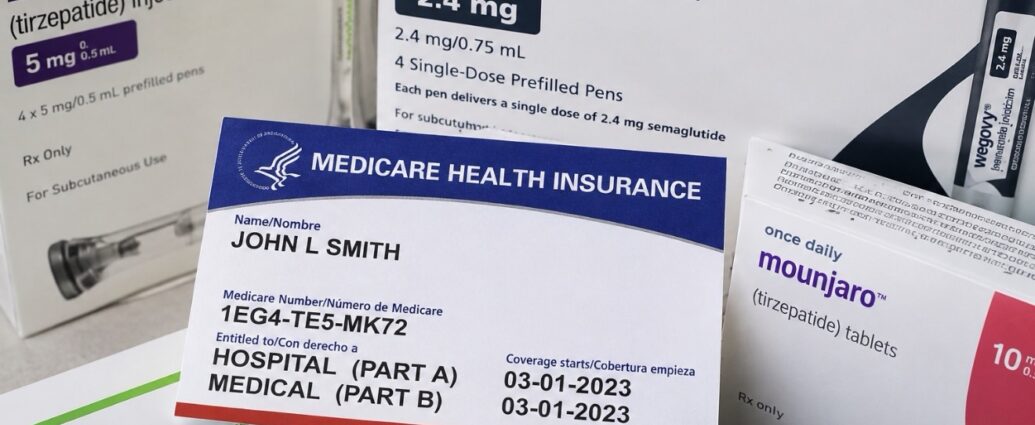
Medicare Will Cover Weight-Loss Drugs for $50 a Month Starting in July
WASHINGTON — For years, the most talked-about weight-loss drugs in America came with a price tag that put them out of reach for many of the people who could use them, including older Americans on Medicare. That is about to change. The Centers for Medicare & Medicaid Services (CMS), the federal agency that runs Medicare, said ahead of a July 1 launch that eligible members of Medicare drug plans will be able to get certain GLP-1 medications for a flat $50 a month.
The program is called the Medicare GLP-1 Bridge, and it runs from July 1, 2026, through the end of 2027.
GLP-1s are the class of drugs that started as diabetes treatments and are now widely used to manage obesity and related conditions. The best-known brands are Wegovy, made by Novo Nordisk, and Zepbound, made by Eli Lilly, along with a newer Eli Lilly pill called Foundayo. At full list price, these drugs can run well over $1,000 a month, which is why cost has been the single biggest barrier for most patients.
Under the Bridge, the $50 charge is the patient’s total out-of-pocket cost for a monthly supply. CMS said that starting July 1, all versions of Wegovy, all versions of the Foundayo pill, and the KwikPen version of Zepbound will be available through the program. A few forms of Zepbound, including single-dose vials and pens, will not be covered.
There is a reason the government had to build a special workaround. By law, Medicare’s Part D drug plans are barred from covering medicines used purely for weight loss. Making that coverage permanent would take an act of Congress. To get around the limit for now, CMS is using its authority to run temporary demonstration programs — which is why the Bridge is time-limited and carries that name.
Not everyone qualifies. A person must be enrolled in a Medicare Part D drug plan, and eligibility is tied to body weight: a body mass index of 35 or higher, or 27 or higher combined with other health conditions. CMS said beneficiaries do not need to sign up or opt in; instead, a doctor submits a prior-authorization request and prescription.
For Eli Lilly and Novo Nordisk, the move opens a large new door. Medicare covers tens of millions of seniors, and even limited access to that group adds a major new wave of demand for two companies already racing each other for the obesity market. It is also a significant new cost for taxpayers, which is part of why the government capped the program’s length rather than making it open-ended.
The Bridge is also part of a wider push to bring obesity-drug prices down. Under separate deals with the Trump administration, Eli Lilly and Novo Nordisk agreed to cut prices, and their new oral pills start around $149 a month for people paying cash.
There is a catch worth understanding. After 2027, coverage is meant to shift to a separate, longer-term program that individual drug plans can choose to join. That follow-on plan has been delayed and remains uncertain, which means seniors who start getting their medication through the Bridge could face changes to their coverage down the road.
For now, the bottom line is simple. Beginning July 1, a class of drugs that has reshaped both the health-care and food industries becomes affordable for millions of older Americans for the first time — at least for the next year and a half.
JBizNews Desk — Washington
© JBizNews.com All Rights Reserved. Reproduction or distribution without written permission is prohibited