



STAT+: Kennedy names interim surgeon general amid vacancies atop health department
WASHINGTON — Health secretary Robert F. Kennedy Jr. has elevated a senior health official to serve as an interim surgeon general until that position is filled by a Senate-confirmed nominee.
Stephanie Haridopolos, a family medicine physician who is currently a senior adviser and chief of staff for the Office of the U.S. Surgeon General, is now the office’s director of health communications, Kennedy told staff in an email sent late Tuesday. According to that email, Assistant Secretary for Health Brian Christine used his “delegation of authority powers” to allow Haridopolos to carry out the duties of surgeon general.
She will “promote [U.S. Surgeon General] public health actions, advisories, and guidance until our next Surgeon General is sworn into office,” Kennedy said.

STAT+: Drugmakers guard IP more tightly amid China competition
Want to stay on top of the science and politics driving biotech today? Sign up to get our biotech newsletter in your inbox.
Good morning. We’ve got some news and commentary from our Breakthrough Summit West to get into today.
The need-to-know this morning
- Parabilis Medicines has filed to go public under the symbol PBLS.
Former FDA chief is hopeful about agency’s new path
Former FDA commissioner David Kessler said he has “great confidence” in Kyle Diamantas, the new interim FDA chief after Marty Makary left the agency.

STAT+: Eli Lilly tops prominent rankings on pharma R&D performance
Here’s one more sign of Eli Lilly’s dominance in the drug industry: It took both top spots in a prominent ranking of pharmaceutical innovators and investors.
The index, produced by U.K.-based IDEA Pharma, ranks drug company laboratories on two different sets of criteria: innovation, which takes into account revenue from new products, new drug approvals, and major drug development events; and invention, which looks at the number of drugs a company has in development, its clinical trials, and its R&D investment, among other factors. IDEA is part of SAI MedPartners, a larger consultancy.
This is the first time that one company — in this case, Lilly — has ranked No. 1 in both categories.

STAT+: Pharmalittle: We’re reading about biotech investors’ mood, a former FDA head’s confidence, and more
Hey there, and happy Wednesday. STAT reporter Andrew Joseph here filling in for Mr. Pharmalot. It’s already been a busy day here at STAT’s London outpost. We hope wherever you are, you can find time to take a break for a snack or a walk. To the news we go. …
For biotech investors, the risks seen with the rise of the Make America Healthy Again movement are fading, the Wall Street Journal says. Robert F. Kennedy Jr., a critic of the industry, is still health secretary, and MAHA still has sway over parts of the American public. But for Wall Street, the political risk of investing in drug companies has been demoted: It now sits well below interest rates, clinical data, and earnings in the hierarchy of concerns. Recent ousters of U.S. Food and Drug Administration officials who were seen as skeptical of the industry have helped the mood.
Even with all that tumult at the FDA, a former commissioner sees an inflection point whereby the agency can now make a turn for the better, STAT brings us. David Kessler, who led the agency from 1990 to 1997 and also worked on Operation Warp Speed during the Covid-19 pandemic, said at STAT’s Breakthrough Summit West on Tuesday that he had high hopes that the FDA’s newly appointed acting commissioner, Kyle Diamantas, will be able to serve as a stabilizing force for the agency. While Diamantas is an attorney and not, like most FDA commissioners, a medical doctor, Kessler said he had “great confidence” in him, adding: “I think he understands the process.”

STAT+: NIH behind in filling top roles, with 15 of 27 institutes led by acting directors
Across the Department of Health and Human Services, top leadership positions are being filled with acting directors. There is no permanent director at the Centers for Disease Control and Prevention or at the Food and Drug Administration. President Trump’s nominee for surgeon general is yet to be confirmed, and HHS’ top spokesperson resigned last week.
The National Institutes of Health may appear to have more stable leadership, with Director Jay Bhattacharya and his deputies holding their positions. But just below the surface, a leadership vacuum has persisted for months, with 15 of the 27 institutes being led by acting directors. The dearth of permanent leadership at the institutes, which oversee research in a specific topic area, means that the institutes are unable to plan long-term projects, or offer reassurances to a research community that is seeing unprecedented changes in federal funding priorities.
“Strong, permanent leadership across NIH is essential to keeping lifesaving medical research moving forward. Institute directors ensure taxpayer dollars are going to the most important science and the most promising research for American families,” said Erika Sward, executive director of United for Cures, a network of patient advocacy groups. “Having experienced directors in these roles provides the stability needed to ensure progress and avoid delays in developing new treatments and cures that millions of patients and families are counting on.”

There’s a leadership vacuum at NIH, too
Get your daily dose of health and medicine every weekday with STAT’s free newsletter Morning Rounds. Sign up here.
Good morning. Here in Boston, yesterday was the hottest spring day in over a century. Feeling really good and normal about that. Across the country, our colleagues in San Francisco hosted an incredible, news-making Summit. Scroll down to catch up.
After Rubio’s critique, WHO defends work on Ebola response
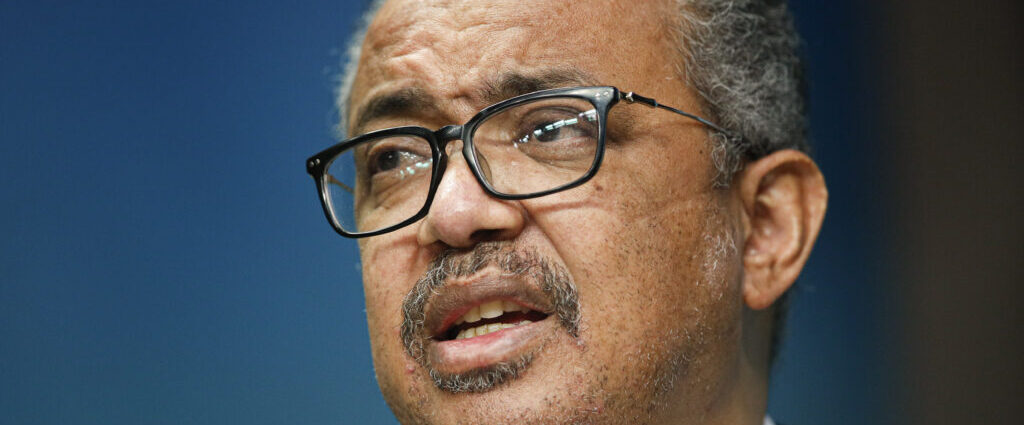
World Health Organization officials on Wednesday mounted a defense of their response to the new and worrisome Ebola outbreak centered in the Democratic Republic of the Congo, after U.S. Secretary of State Marco Rubio said the agency was “a little late” in identifying infections.
WHO authorities stressed that their role is to offer technical and operational help to national health agencies, which have primary responsibility for detecting the spread of diseases under international rules.

STAT+: Senate Democrats propose adding long-term care benefit to Medicare
WASHINGTON — A group of Senate Democrats is proposing that Medicare cover in-home care, which would create the first new benefit in the program since the Part D retail drug benefit more than 20 years ago.
The long-term care proposal is the final piece of a three-part health care plan that senators, led by Ron Wyden (D-Ore.), are using to outline their vision and draw contrasts with Republicans ahead of the midterm elections. Earlier this year, they proposed a plan to lower drug costs and a framework for private health insurance overhaul.
The plan is not detailed, and does not offer cost estimates or address the question of funding. In addition to creating a home care benefit, it calls for spending more to shore up long-term care in Medicaid and creating stricter nursing home staffing standards. It also includes a workforce component aimed at training more long-term care employees and providing them better pay and benefits.

STAT+: OpenEvidence makes its pitch to hospitals. ‘We’re not crazy monsters’
SAN FRANCISCO — OpenEvidence rode the wave of early enthusiasm for large language models by building a free chatbot for doctors. Physicians, especially trainees, have flocked to the platform to help make patient care decisions; the company claims that about 650,000 U.S. physicians use it actively.
In just four years, OpenEvidence has leveraged that popularity into a $12 billion valuation, going directly to clinicians and avoiding health tech’s traditional hospital procurement process. But the company is facing competitive pressures and questions about whether its ad-based business model can continue to propel the company forward.
At the STAT Breakthrough Summit West, OpenEvidence chief technology officer Zachary Ziegler said that while the company has grown by building for individual clinicians, it’s time to aim bigger.

Opinion: The rise of perimenopause misinformation
In recent years, people are increasingly blaming perimenopause for a constellation of symptoms: weight gain, hair loss, brain fog. But does the evidence support this point of view? Who’s profiting from it? And what does it mean for perimenopause to be such a hot topic?
On this episode of the “First Opinion Podcast,” I spoke with Patricia Bencivenga and Adriane Fugh-Berman of the Georgetown University Medical Center’s Pharmed Out project about their research on menopause and perimenopause, and why they’re concerned about women being too quick to blame their hormones.
STAT+: 23andMe offers to connect users’ DNA data with medical records
23andMe plans to give its customers the capacity to import their medical records, allowing what it calls “a 360-degree view of their personal health.” The offering will include an AI-written 23andMe Health Summary, which the company said is in development and will be available to customers participating in its beta testing program.
“We are moving toward a world of dynamic disease risk predictions based on an individual’s most current health data. The goal is to provide better, more personalized insights by bridging the gap between an individual’s DNA and their medical records,” Robin Smith, the 23andMe head of product, said in a statement about the deal.
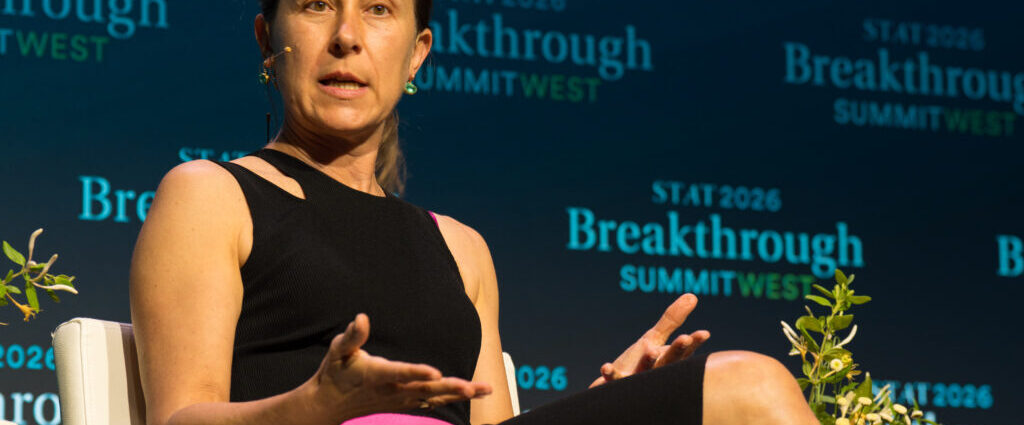
The announcement was made at the STAT 2026 Breakthrough Summit West Tuesday, an annual event focused on the intersection of research in biology and technology. The new functionality will be based on the technology of a startup called HealthEx, which is designed to help users make their medical records more portable.

STAT+: Marc Tessier-Lavigne addresses new book’s allegations about his conduct in Stanford misconduct case
SAN FRANCISCO — Former Stanford President Marc Tessier-Lavigne responded publicly for the first time Tuesday to allegations in a new book that he was forced to resign from the university not only because of flaws in his oversight of scientists but over how he handled the controversy.
At the STAT Breakthrough Summit West, STAT reporter Matthew Herper read aloud three paragraphs from Theo Baker’s book, “How to Rule the World.’’ Tessier-Lavigne sat with hands clasped in his lap as he listened to Baker’s description of the board meeting that led to his ouster.
According to Baker, the board concluded “that Tessier-Lavigne’s admit-nothing, deny-everything approach ‘did not reflect well on him and, by extension, the institution.’” The Stanford investigation, according to unnamed sources in the book, omitted yet another incident that contributed to the university turning on Tessier-Lavigne — a younger, female colleague challenging the conclusions of his work, and him dismissing her. By the end of the meeting, “there was no pro-MTL camp” and the board voted unanimously to replace him, Baker wrote.

Trump’s cuts to foreign aid are undermining the Ebola response, insiders say
WASHINGTON — For years, the United States has poured hundreds of millions of dollars into programs to prevent and control infectious diseases in the Democratic Republic of Congo.
But in the months leading up to a fast-moving Ebola outbreak, the Trump administration slashed aid to the country, leading to a cascade of consequences that likely hampered the detection of the outbreak and the response to it, six people involved in or familiar with the efforts in the region said.


How AI helped treat a newborn’s ultra rare disease. ‘It was almost like a light switch.’
In the first, tenuous weeks of her life, Jorie Kraus and her parents faced her possible death repeatedly. Muscles throughout her tiny body simply didn’t work properly. Her heart. Her legs. Her larynx. Even the involuntary action of breathing was labored, and constantly faltering.
In those panicked days, through a haze of terrible news and incomprehensible instructions, something incredible happened: A long-shot attempt to discover the root cause of her problems identified a widely available, yet previously unknown, treatment.

STAT+: This spine surgery usually costs $1,400. Under No Surprises Act arbitration? $34,000
When health insurers contract with providers, they agree on prices for all kinds of procedures. For a lumbar laminectomy, a common spine surgery for ailments like herniated discs or arthritis, the median price is $1,400.
Out-of-network providers, those that don’t contract with health insurers, are getting 24 times that amount for the same surgery at the median — nearly $34,000 — through the No Surprises Act’s arbitration process. Some are even getting north of $100,000.
The lumbar laminectomy is just one example of the extraordinarily high awards being doled out under the flawed system created by the 2020 law. The law has successfully protected patients from unexpected bills, but it’s also been a major boon for providers. They’re not only securing massive sums when they win, but they’re also prevailing in over 80% of disputes.

STAT+: Virginia governor vetoes legislation to create an advisory panel to lower the cost of prescription drugs
Virginia Gov. Abigail Spanberger has vetoed closely watched legislation to create an advisory panel to lower prescription drug costs, a setback to attempts by lawmakers across the United States to address the rising cost of medicines.
Unlike affordability boards in other states, the Virginia panel would have used Medicare as a benchmark. Rather than start from scratch to identify drugs considered expensive, each year the panel would have targeted the same drugs chosen by Medicare for price negotiations. The board would have also set upper payment limits to create a ceiling on what would be paid.
By doing so, Virginia would have leapfrogged plans by other states that are at varying stages of establishing affordability boards. Of the other nine states that have boards, none is eyeing all of the same drugs chosen annually by Medicare and only four have the authority to set upper payment limits.

STAT+: Canadian medical societies lack sufficient conflict-of-interest policies, study finds
Most Canadian medical societies lack comprehensive policies governing conflicts of interest, and many existing policies are generally fragmented and narrow in scope, according to a new analysis.
Specifically, 35 of 68 medical societies, or 51.5%, did not have policies addressing nine key activities or functions, including clinical practice guidelines, research funding, society journals, continuing medical education and relationships with companies. Some societies also failed to develop policies for society leadership or staff.
The absence of such policies has implications not only for the societies, but also for doctors and patients, the researchers wrote in PLOS One. Societies that limited governance while developing practice guidelines or sponsoring educational programs risk introducing commercial bias into clinical decision-making, and that could affect treatment and care.

STAT+: TrumpRx adds generic drugs
You’re reading the web edition of D.C. Diagnosis, STAT’s twice-weekly newsletter about the politics and policy of health and medicine. Sign up here to receive it in your inbox on Tuesdays and Thursdays.
Would you rather get squeaky cheese curds from your MAHA senator or a fake subpoena and Tylenol from your smartalec Kennedy cousin? What I’d like is some news tips at John.Wilkerson@statnews.com or John_Wilkerson.07 on Signal.
Cassidy lost. Now what?
Sen. Bill Cassidy’s (R-La.) primary loss is a win for MAHA, Chelsea Cirruzzo reports, but it’s just one of multiple changes in dynamics that could either make life easier or more difficult for health secretary Robert F. Kennedy Jr. and the Trump administration.

STAT+: At a time of tumult at FDA, a former commissioner is hopeful it’s on a better path
With the Food and Drug Administration facing upheaval and in the aftermath of a series of high-profile exits, former commissioner David Kessler sees an inflection point whereby the agency can now make a turn for the better.
Kessler told an audience at STAT’s Breakthrough Summit West on Tuesday that he has high hopes that the FDA’s newly appointed acting commissioner, Kyle Diamantas, will be able to serve as a stabilizing force for the agency.
While Diamantas is an attorney and not, like most FDA commissioners, a medical doctor, Kessler said he had “great confidence” in him, adding: “I think he understands the process.”


Ebola Outbreak Triggers U.S. Travel Ban, Reignites Pharma Race Around $32 Billion Economic Risk
The U.S. Centers for Disease Control and Prevention has invoked Title 42 to suspend entry into the United States for non-American travelers who have recently been in the Democratic Republic of Congo, Uganda or South Sudan after the World Health Organization declared an Ebola outbreak in central Africa a “public health emergency of international concern” and one American missionary doctor working in the region tested positive for the virus. The emergency order, signed Monday by Dr. Jay Bhattacharya and effective immediately, marks only the second major use of Title 42 in the modern era following its controversial deployment during the Covid-19 pandemic and has reignited a global scramble for treatments targeting a deadly Ebola strain for which there is currently no approved vaccine or FDA-authorized drug.
The 30-day travel restriction arrives alongside a State Department Level Four advisory warning Americans against all travel to affected regions. The CDC said the immediate risk to the broader U.S. public remains “low,” but officials emphasized that screening measures and restrictions could expand depending on how the outbreak evolves in coming weeks.
The outbreak, formally declared Sunday by WHO Director-General Dr. Tedros Adhanom Ghebreyesus, is being driven by the rare Bundibugyo strain of Ebola and has already killed at least 131 people with more than 500 suspected cases, according to DRC Health Minister Dr. Samuel Roger Kamba. The first known suspected infection reportedly involved a healthcare worker who developed symptoms in late April, suggesting the virus circulated undetected for weeks before authorities identified the outbreak.
An American Christian missionary physician working in northeastern Congo, Dr. Peter Stafford, tested positive for Ebola while serving at a hospital in Bunia, according to international medical charity Serge. Stafford is being transferred to Germany for treatment along with his wife, children and another physician. None of the accompanying family members are currently symptomatic.
What the Outbreak Actually Is — and How Ebola Spreads
Ebola is a viral hemorrhagic fever — a severe disease capable of causing high fever, organ damage, internal bleeding and, in many cases, death. The current outbreak involves the Bundibugyo strain, one of the rarest known Ebola variants and only the third major Bundibugyo outbreak ever recorded globally.
Unlike Covid-19, Ebola is not airborne.
A person cannot contract Ebola simply by sitting near someone on an airplane, sharing a subway ride or being in the same room with an infected person who is not showing symptoms. The virus spreads only through direct contact with bodily fluids — including blood, saliva, vomit, sweat, diarrhea or contaminated medical equipment — from someone who is already visibly ill.
That distinction dramatically limits transmission potential compared with respiratory viruses.
Dr. Dean Blumberg, an infectious-disease specialist cited by CNBC, emphasized that Ebola does not spread during its incubation period, which can last up to 21 days. In practical terms, a person who appears healthy is generally not contagious.
Symptoms initially resemble severe flu-like illness, including fever, headache, muscle aches and fatigue, before progressing in some patients into vomiting, severe diarrhea, bleeding complications and organ failure.
Historically, Bundibugyo outbreaks have carried mortality rates between roughly 25% and 50%, significantly below the far deadlier Zaire strain responsible for the catastrophic 2014-2016 West African epidemic that killed more than 11,000 people.
How This Affects Americans at Home
For the average American household, the immediate health threat remains extremely limited, according to federal health authorities.
The U.S. government’s emergency order blocks entry for most non-U.S. citizens who have recently traveled through the affected countries. American citizens and military personnel remain exempt but are subject to enhanced screening and monitoring procedures.
Travelers from affected regions are being routed through designated U.S. airports equipped with expanded public-health screening capabilities, and hospitals nationwide have reportedly been placed on alert for potential cases involving symptomatic travelers.
A key reason officials remain relatively calm is that Ebola lacks the asymptomatic airborne transmission dynamics that allowed Covid-19 to spread globally at extraordinary speed.
Past Ebola outbreaks produced isolated cases in the United States — including 11 cases during 2014 — but never triggered sustained community transmission.
Still, the outbreak creates a complicated wrinkle for international travel and major events. The Democratic Republic of Congo’s national soccer team is currently scheduled to base operations in Houston during the 2026 FIFA World Cup, raising new questions about screening, logistics and travel restrictions should the outbreak continue expanding.
Where Americans Will Feel the Impact
Most Americans are more likely to feel the effects economically and psychologically rather than medically.
Travel disruptions are already emerging across parts of central and East Africa as airlines reassess routes, governments tighten screening requirements and travelers reconsider plans. Additional quarantine requirements or flight cancellations could follow if cases spread geographically.
Financial markets are also reacting.
Pharmaceutical companies tied to Ebola countermeasures — including Regeneron Pharmaceuticals, Merck & Co., and Johnson & Johnson — are expected to see heightened investor attention as governments evaluate potential stockpiling contracts and emergency procurement activity.
At the same time, travel-sensitive stocks such as airlines, tourism operators and international hospitality firms could face pressure if outbreak fears intensify.
Public-health officials are also battling something harder to quantify: pandemic fatigue and public anxiety.
The phrase “global health emergency” now carries enormous emotional weight after Covid-19, even though experts stress the current Ebola outbreak operates under very different biological conditions.
The $32 Billion Economic Warning
The economic consequences of uncontrolled Ebola outbreaks are not theoretical.
The World Bank estimated the 2014-2016 West African Ebola epidemic caused approximately $32.6 billion in global economic damage through lost GDP, collapsed tourism, disrupted supply chains, labor-market losses and trade interruptions across affected regions.
Those losses extended far beyond healthcare systems themselves.
Past pandemic modeling by economists has repeatedly shown that infectious-disease outbreaks can trigger cascading effects throughout global commerce, transportation, consumer behavior and investment markets — even when outbreaks remain geographically concentrated.
That economic reality helps explain why governments, global-health organizations and philanthropic groups increasingly treat epidemic preparedness as a national-security and economic-stability issue rather than purely a humanitarian one.
The Pharmaceutical Gap
Despite nearly five decades since Ebola was first identified in 1976, the pharmaceutical industry still lacks approved countermeasures for several Ebola strains, including Bundibugyo.
The only FDA-approved Ebola treatment currently available is Inmazeb, developed by Regeneron Pharmaceuticals and approved in 2020. The only FDA-approved Ebola vaccine is Ervebo, manufactured by Merck & Co. A second vaccine developed by Johnson & Johnson has received authorization in Europe.
However, all existing approved therapies target the Zaire Ebola strain — not Bundibugyo.
Animal studies suggest currently approved vaccines may provide limited protection against the strain now spreading in central Africa.
Dr. Paul Offit, director of the Vaccine Education Center at Children’s Hospital of Philadelphia, said several Bundibugyo-specific vaccine candidates remain stuck in early-stage development, including experimental mRNA platforms under study internationally.
The CDC said the federal government is evaluating experimental monoclonal antibody treatments that have shown protective effects in animal testing.
The Broken Economics of Ebola Drug Development
The absence of fully developed Bundibugyo treatments highlights a longstanding market failure inside global pharmaceuticals.
Developing vaccines for rare outbreak diseases is extraordinarily expensive and often commercially unattractive because outbreaks emerge unpredictably and primarily affect lower-income regions with limited purchasing power.
Industry estimates place advanced vaccine-development costs well above $100 million per strain-specific program, while commercial revenue opportunities remain relatively modest outside emergency procurement periods.
That mismatch leaves governments, nonprofits and international coalitions such as CEPI, Gavi, and BARDA heavily responsible for funding much of the world’s epidemic-preparedness infrastructure.
What This Outbreak Changes
The current outbreak is likely to accelerate three major trends.
First, governments are expected to expand emergency stockpiles of existing Ebola vaccines and therapeutics, potentially benefiting Merck, Regeneron and Johnson & Johnson through new procurement contracts.
Second, funding for Bundibugyo-specific vaccine development is expected to increase sharply, particularly through public-private partnerships and international preparedness programs.
Third, investors are likely to revisit pandemic-preparedness companies and rapid-response biotech platforms, including firms focused on mRNA technologies, antiviral therapies and outbreak-response infrastructure.
The broader question facing policymakers and drugmakers now is whether this outbreak finally produces sustained long-term investment into Ebola preparedness — or whether funding once again fades after the headlines disappear.
JBizNews Desk
© JBizNews.com. All rights reserved. This article is original reporting by JBizNews Desk. Unauthorized reproduction or redistribution is strictly prohibited.

STAT+: Dexcom CEO hints at future uses for CGM
You’re reading the web edition of STAT’s Health Tech newsletter, our guide to how technology is transforming the life sciences. Sign up to get it delivered in your inbox every Tuesday and Thursday.
Good morning health tech readers!
I’m in San Francisco for our STAT Breakthrough Summit West, where I’ll be interviewing OpenEvidence CTO Zachary Ziegler. Look forward to seeing some of you out here. Hope the rest of you will tune in online and follow coverage on Statnews.com and social channels like X and Instagram.

STAT+: Pharmalittle: We’re reading about a Supreme Court setback for pharma, TrumpRx expands and much more
Top of the morning to you, and a fine one it is. We can tell because the sun is shining and cool breezes are blowing by the Pharmalot campus, although they may dissipate as temperatures start climbing. Nonetheless, we are celebrating another busy day by firing up the coffee kettle for a cup or two of stimulation. Our choice today is raspberry chocolate. Please feel free to join us. Meanwhile, here is the latest menu of tidbits for you to peruse. We hope you have a simply smashing day and conquer the world, or what’s left of it. And as always, do stay in touch…
The U.S. Supreme Court dealt a major blow to a legal campaign by brand-name pharmaceutical companies against the Medicare drug price negotiation program, STAT tells us. The court declined to take up lawsuits against the program by AstraZeneca, Boehringer Ingelheim, Bristol Myers Squibb, Janssen, Novartis, and Novo Nordisk. The justices did not give a reason for their decision. The rejection was not a surprise. The drugmakers lost their appeals in lower courts, and the Supreme Court typically does not take up cases when there is agreement among lower courts. While this is not necessarily the end of the road for the drug industry, it may make remaining legal challenges more difficult.
The White House announced an expansion of its TrumpRx prescription drug discount platform, adding more than 600 generic drugs to the website, STAT says. The expansion comes via a partnership with entrepreneur Mark Cuban’s Cost Plus Drug Company, as well as Amazon Pharmacy and GoodRx, which both also provide drug savings or low-cost prescription medicines. The partnerships address one of the primary critiques of the TrumpRx platform: that many of the brand-name prescription medications offered were already available as generics for far less. TrumpRx also had far fewer drugs available than Cost Plus and GoodRx.

The latest on Ebola: A travel ban and an old vaccine
Get your daily dose of health and medicine every weekday with STAT’s free newsletter Morning Rounds. Sign up here.
Good morning. STAT’s Breakthrough Summit West is today! It’s not too late to attend virtually. We’ve got a packed agenda including speakers like former FDA commissioner David Kessler, OpenEvidence founder Zachary Ziegler, and 23andMe founder Anne Wojcicki. And, of course, a bunch of my talented STAT colleagues.

Opinion: I’m a heart transplant recipient. I’m haunted by ‘ghost approval’ for medication I need to survive
I’m a heart transplant recipient. The medications I take aren’t optional — they’re what keep my body from rejecting my heart.
So when my transplant team prescribed everolimus (Zortress), it wasn’t a suggestion. It was a medical decision.

Opinion: Britain embraces a Massachusetts experiment on tobacco regulation — just as the state might roll it back
The United Kingdom just adopted a tobacco-free generation law. Retailers can still sell tobacco to existing customers, but they will never be permitted to sell it to anyone born after Jan. 1, 2009.
In Massachusetts, 24 communities already use a similar “nicotine free generation” (NFG) birthdate phaseout of tobacco sales, including cigarettes, vapes, and pouches. What seemed to some an oddball local experiment here has become the leading edge of a public health revolution. Britain adds 69 million people to the 659,000 Massachusetts residents protected by this tobacco endgame.

STAT+: 1 in 8 women drink during pregnancy. Experts dread the consequences
The idea of drinking during pregnancy sounds like a generational punchline: Someone’s grandmother drank beer to fatten her fetus, another had a nightly martini to get a healthy amount of sleep — presumably unthinkable behavior in today’s America.
Yet after precipitous declines in the last 50 years, rates of alcohol use in pregnancy in the U.S. started climbing upward a decade ago. More than 1 in 8 pregnant adults reported drinking in the past month, according to STAT’s analysis of 2024 government data, making alcohol use a more common national phenomenon than gestational diabetes. Of those who drank, a quarter reported having four or more drinks in one sitting — binge drinking — in the prior month.
While rates of alcohol use in pregnancy are lower in the U.S. than those of several peer nations, the effects are all around Americans. Alcohol is the key driver of what are, by some estimates, the nation’s top neurodevelopmental conditions: fetal alcohol spectrum disorders, or FASDs.
The exact prevalence of FASDs is difficult to measure, but the most recent federally funded community studies have found as many as 1 in 20 school-aged children may have a disorder caused by prenatal alcohol exposure. By comparison, about 1 in 31 American children has autism, per recent estimates from the Centers for Disease Control and Prevention.
Not all fetuses exposed to alcohol have birth defects or go on to develop intellectual disabilities, researchers say. But every person born with an FASD was harmed by alcohol specifically. They worry this point is being glossed over as Americans question the conventional medical advice of avoiding all alcohol while pregnant.

STAT+: White House taps Amazon, GoodRx, and Mark Cuban to bolster TrumpRx
WASHINGTON — The White House announced an expansion of its prescription drug discount platform, TrumpRx, on Monday, adding more than 600 generic drugs to the website.
The expansion comes via a partnership with entrepreneur Mark Cuban’s Cost Plus Drug Co, as well as Amazon Pharmacy and GoodRx, which each also provide drug savings or low cost prescription medicines.
“By incorporating this massive catalog of low-cost generics at TrumpRx.Gov, consumers will now have one source to ensure that they’re getting the lowest possible cost on their prescriptions,” President Trump said Monday at a White House event. “They have something that they’ve never had before.”

STAT+: Maryland state affordability board places a price cap on Ozempic
The Maryland Prescription Drug Affordability Board agreed to set an upper payment limit for the Ozempic diabetes treatment, marking the second time that the state panel has taken such a step in recent weeks.
The board, which is designed to function like a state utility commission, will now oversee a process to lower the cost of the type 2 diabetes medicine for the state and local governments by January 2027. At the time, the price will be capped at $274 for a 30-day supply, a move the board estimates will save $5.8 million a year.
The expected cost was benchmarked against the maximum fair price paid by Medicare, said Andrew York, executive director of the Maryland board. Meanwhile, the board is expected to begin acting in 2028 to set upper payment limits on high-cost drugs purchased by all Marylanders in the commercial insurance market as well.

STAT+: Trump’s CMS to allow skimpier plans on ACA exchanges
The Trump administration is opening the floodgates for Affordable Care Act exchanges to feature plans that offer bare-bones coverage and fewer protections, but which have lower monthly premiums.
The Centers for Medicare and Medicaid Services on Friday finalized its proposal from February to pare back the requirements that ACA plans have to meet beginning for 2027, like offering standardized plans and restricting high-deductible, catastrophic plans to a small subset of members.
The changes are aimed at making policies cheaper, in line with President Trump’s affordability agenda, but they also fit within the conservative playbook of loosening market restrictions and consumer protections in favor of offering people the freedom to choose policies that offer less coverage. The obvious drawback, health policy experts say, is that those policies put individuals and families on the hook for potentially massive bills if they actually need care.

With no approved vaccine for Ebola outbreak, experts weigh testing a long shot
The latest Ebola outbreak in the Democratic Republic of the Congo, which was only confirmed to be underway at the end of last week, is already the fourth largest on record. The deadly virus is spreading in a conflict zone where recent Ebola experience has shown containment will be a challenge. There is no vaccine that targets the species of the virus that is spreading there, Bundibugyo.
But there is a tiny bit of scientific evidence that suggests the existing licensed Ebola vaccine, Merck’s Ervebo, might offer some protection against this virus, even though it is designed to target a different species of Ebola, Zaire ebolavirus.

U.S. bans entry from Ebola-affected countries as American patient is identified
In response to a fast-moving Ebola outbreak, the Trump administration has imposed a U.S. entry ban on foreign travelers who have been in the Democratic Republic of the Congo, Uganda, or South Sudan in the past 21 days, according to a new order issued by the Centers for Disease Control and Prevention.
The order comes as confirmation of infection of an American doctor working in the outbreak zone was released. The international Christian missions organization Serge confirmed that Peter Stafford, a physician working at a hospital in Bunia, in northeastern DRC, tested positive for the Bundibugyo ebolavirus variant. Two other doctors working for the charity, including Stafford’s wife, also had exposure to infected patients, but at present both show no symptoms of infection.

STAT+: Supreme Court rejects challenge to Medicare drug price negotiation
WASHINGTON — The Supreme Court on Monday dealt a major blow to the brand drug industry’s legal campaign against the Medicare drug price negotiation program.
The court declined to take up lawsuits against the program by AstraZeneca, Boehringer Ingelheim, Bristol Myers Squibb, Janssen, Novartis, and Novo Nordisk. The justices did not give a reason for their decision.
The rejection was not a surprise. The drugmakers lost their appeals in lower courts, and the Supreme Court typically does not take up cases when there is agreement among lower courts.

STAT+: AstraZeneca picks up FDA approval for hypertension drug
Want to stay on top of the science and politics driving biotech today? Sign up to get our biotech newsletter in your inbox.
Today we’re bringing you a special report: a fascinating look at how China’s growing role in global drug development is deeply dividing the U.S. biotech industry, with executives openly debating whether reliance on Chinese partners is a competitive necessity or a national security risk.
Meanwhile, the FDA’s leadership shakeup has widened, with both CBER and CDER getting new acting directors, among other changes.

STAT+: Why the WakeMed – Atrium Health hospital merger matters
This is the online version of STAT’s weekly email newsletter Health Care Inc. Sign up here.
Thanks for being here! So much to read, including a new series from my colleagues Lev Facher and Isa Cueto. They delved into the perils of alcohol despite its ubiquity in American culture. The opening piece has several passages and quotes that will make you stop and think in a gratifying, educational way. Give it a read, and as always, pour your thoughts and tips my way: bob.herman@statnews.com.
Wide a-Wake(Med)
Most of you reading this do not live in North Carolina. But a hospital system merger in that state that has created local rage has national relevance.



STAT+: Pharmalittle: We’re reading about U.S. biotech’s China problem, a Regeneron flop, and much more
Good morning, everyone, and welcome to another working week. We hope the weekend respite was relaxing and invigorating, because that oh-so familiar routine of online calls, dashing about, and deadlines has predictably returned. But what can you do? The world, such as it is, continues to spin. So why not give it a nudge in a better direction with a delicious cuppa stimulation? Our choice today is English breakfast, an old standby. Please feel free to join us. Meanwhile, we have assembled the latest laundry list of informative items for you to peruse. We hope you have a meaningful and productive journey today and, as always, do keep in touch. …
There’s a schism in America’s drug business and the problem is China, STAT explains. Fledgling startups and pharmaceutical giants alike are addicted to Chinese drugs, filling their pipelines with would-be blockbusters developed at enviable speed and bought on the cheap. They’ve spent some $60 billion on Chinese molecules in the first three months of 2026 alone, according to state figures. That’s on pace to double last year’s total, which was already 10 times larger than the one from 2021. But the question of whether to partner with Chinese firms — or see them as rivals — is tearing biotech apart, pitting peers and partners against one another and souring relationships in an otherwise close-knit corporate community.
President Trump earlier this year bought as much as $680,000 in stock of Eli Lilly as the agencies he oversees undertook an agenda that largely benefited the company, KFF Health News reports. On May 14, the U.S. government released ethics disclosures revealing a list of stock and bond trades made on Trump’s behalf from January to March of this year. The trades for Lilly stand out. That’s because the timing of Trump’s purchases coincides with several favorable government decisions benefiting the drugmaker’s GLP-1 business, including progress toward a long-held goal: qualifying the drugs for reimbursement from Medicare, the government health insurance program primarily serving seniors, when they are prescribed for weight loss.

STAT+: FDA leadership shakeup widens following Makary’s departure
WASHINGTON — The acting director of the Food and Drug Administration’s drug center, Tracy Beth Høeg, is leaving the agency, according to an email obtained by STAT. The news comes days after Commissioner Marty Makary handed in his resignation.
In a post on X Friday night, Høeg wrote, “today I was fired. … I learned so much & leave with no regrets.”
Michael Davis, currently the center’s deputy director, will take over as acting director. The FDA and Høeg did not immediately respond to requests for comment. Reuters and Bloomberg first reported the news.

Texas is opening up a detransition clinic
Get your daily dose of health and medicine every weekday with STAT’s free newsletter Morning Rounds. Sign up here.
Good morning. Glad you’re here. Lots of news dropped over the weekend, so let’s get to it.