


STAT+: Biotech raises $42 million to run Huntington’s disease trial
Gene therapy startup Latus Bio has raised another $42 million to start its first clinical trials, where it will try to sidestep issues that have set back a more advanced competitor.
Latus is moving two treatments through clinical trials this year. The first is for a form of Batten disease called CLN2 disease, a fatal genetic condition that causes seizures, vision loss, and cognitive problems. The company anticipates having initial clinical data by the end of the year.
Now, Latus — founded by Beverly Davidson, chief scientific strategy officer at the Children’s Hospital of Philadelphia — is turning its attention to a second drug candidate, a gene therapy for Huntington’s disease.

Opinion: STAT+: China’s strict new supply chain regulations could create massive problems for Western biopharma companies
A recently published paper delivers a finding that should be well known to every executive in Western pharma: China has gone from accounting for less than 8% of global clinical trials in 2010 to surpassing the United States in annual registered trial volume by 2020, reaching more than 5,000 trials per year in 2024. Eighty-eight percent of that growth, among private-sector sponsors, was driven by domestic Chinese firms, not multinationals relocating R&D.
China is not just a manufacturing base for the West’s drug supply chain. It is now a peer competitor in drug innovation — and it intends to stay that way on its own terms.
Toward that end, on April 7, China’s State Council issued Decree No. 834, the Regulations on Industrial and Supply Chain Security, effective immediately, with no transition period. Its 18 articles give Beijing sweeping new powers to investigate and sanction any foreign company whose commercial decisions are deemed to harm China’s industrial chain security. China’s 15th five-year plan has explicitly designated biotechnology and pharmaceuticals as the centerpiece of its next phase of industrial development. Decree No. 834 is the legal infrastructure through which Beijing intends to protect and leverage that ambition.

Opinion: Are blue zones real? Answering that question is harder than ever
When French geneticist Jean-Francois Deleuze first launched the AGENOMICS study in 2022, he hoped to identify genetic patterns among 1,200 French citizens who’d lived more than 100 years and to compare those to centenarians hailing from one of the world-famous “blue zones.”
Then he started having doubts.

Immigration changes are driving foreign researchers to leave the U.S. — or not come to begin with
The budding scientist had left India for the U.S. for her Ph.D., because as she saw it, no other country offered the same opportunities for researchers. Set to finish her doctorate this summer, she also had a postdoctoral fellowship lined up in America.
Now those plans have changed. New and intrusive burdens for renewing a component of her visa — which required her to make public her social media profiles for U.S. review while she was back in India — caused her to be away from the lab for two months during the crunch time of wrapping up her degree.

Teva Pharmaceuticals Surges To Record Profits, Stock Jumps 12%
Teva Pharmaceutical Industries delivered one of its strongest quarters in years, sending shares of TEVA surging roughly 12% after the company reported first-quarter 2026 results that beat Wall Street expectations on nearly every measure — profits, revenue, and earnings per share.
For millions of Americans who rely on Teva for affordable generic drugs and specialty medicines, the results signal a company that is not just financially recovering but actively growing into a more innovative force in healthcare.
The Numbers
Net income soared 72% to $369 million, up from $214 million in the same period a year earlier, driven by a 25.6% jump in operating income to $652 million.  Earnings per share came in at $0.53, beating the analyst forecast of $0.48 — a positive surprise of more than 10%. 
Total revenue reached $3.98 billion, up 2.3% from $3.89 billion a year ago.  That headline number tells only part of the story. The real engine of growth was Teva’s innovative drug portfolio, which is rapidly shifting the company away from its traditional dependence on generics.
Blockbuster Brands Leading the Way
Teva’s three key innovative brands — AUSTEDO, AJOVY, and UZEDY — collectively grew 41% year over year to $838 million in combined revenue.  Each product is treating conditions that affect everyday people: movement disorders, migraines, and schizophrenia.
AUSTEDO, used to treat chorea associated with Huntington’s disease and tardive dyskinesia, generated $578 million in revenue, up 41% year over year. UZEDY, a long-acting injectable treatment for schizophrenia, posted $63 million in sales — a 62% jump. AJOVY, Teva’s migraine prevention therapy, contributed $196 million, up 35%. 
UZEDY has established itself as the fastest-growing long-acting injectable antipsychotic on the market, with months of therapy up 75% year over year.  For patients managing serious mental illness, that kind of growth reflects real-world adoption — not just Wall Street metrics.
Free cash flow increased 76% year over year, giving the company significantly more financial flexibility heading into the rest of 2026. 
A $700 Million Bet on the Brain
Teva also announced a $700 million acquisition of Emalex Biosciences, aimed at expanding its neurology pipeline.  The deal is set to add an NDA-ready Tourette syndrome therapy to Teva’s neuroscience portfolio, with the transaction expected to close by the third quarter of 2026. 
The move signals that Teva is not content to rest on its generics heritage. Under its “Pivot to Growth” strategy, the company is pushing deeper into specialty medicine — areas where brand loyalty, clinical differentiation, and pricing power are far stronger than in the commodity generics market.
What’s Ahead
Teva maintained its full-year 2026 revenue outlook of $16.4 billion to $16.8 billion.  The company also reaffirmed its ambition to reach a 30% non-GAAP operating margin and approximately $700 million in net savings by 2027.  The board instructed management to begin planning a potential share repurchase program, signaling confidence in the company’s financial trajectory. 
For everyday consumers, the picture is straightforward: the company that makes many of the generic drugs Americans depend on is getting healthier, investing in new treatments, and returning value — all at the same time.
JBizNews Desk
© JBizNews.com. All rights reserved. This article is original reporting by JBizNews Desk. Unauthorized reproduction or redistribution is strictly prohibited.

Federal appeals court blocks mailing of abortion pill mifepristone
A federal appeals court has restricted access to one of the most common means of abortion in the U.S. by blocking the mailing of mifepristone prescriptions.
Friday’s unanimous ruling from a three-judge panel of the New Orleans-based 5th U.S. Circuit Court of Appeals is requiring that the abortion pill be distributed only in person and at clinics, overruling regulations set by the federal Food and Drug Administration.

Opinion: STAT readers on MAHA activists, perimenopause, and diversity in medical school
First Opinion is STAT’s platform for interesting, illuminating, and provocative articles about the life sciences writ large, written by biotech insiders, health care workers, researchers, and others.
To encourage robust, good-faith discussion about issues raised in First Opinion essays, STAT publishes selected Letters to the Editor received in response to them. You can submit a Letter to the Editor here, or find the submission form at the end of any First Opinion essay.

Opinion: What do medical students think about their education?
Below is a lightly edited, AI-generated transcript of the “First Opinion Podcast” interview with Tiffany Onyejiaka and Lauren Rice. Be sure to sign up for the weekly “First Opinion Podcast” on Apple Podcasts, Spotify, or wherever you get your podcasts. Get alerts about each new episode by signing up for the “First Opinion Podcast” newsletter. And don’t forget to sign up for the First Opinion newsletter, delivered every Sunday.
Torie Bosch: Amid the rise of the Make America Healthy Again movement, medical school has become something of a battleground. Health secretary Robert F. Kennedy Jr. and others have argued that future doctors need to better understand nutrition and preventive care. But what do medical students themselves think about that claim?




PFAS is still in some infant formula
Get your daily dose of health and medicine every weekday with STAT’s free newsletter Morning Rounds. Sign up here.
Too much news yesterday, so here’s a link to a late-breaking story that the FDA has chosen Vinay Prasad’s interim successor.

STAT+: Pharmalittle: We’re reading about obesity drugs and a compounding list, an AstraZeneca setback, and more
And so, another working week will soon draw to a close. Not a moment too soon, yes? This is, you may recall, our treasured signal to daydream about weekend plans. Our agenda: promenading with the official mascots, manicuring the Pharmalot grounds, and escorting Mrs. Pharmalot to a supper club. We also hope to find time for yet another listening party, where the rotation will likely include this, this, this, this, this. And what about you? As we like to remind folks, this is a fine time to enjoy the great outdoors. Hiking, strolling, dipping your toe in the water — take your pick. Of course, if the weather fails to cooperate, you could catch up on your reading, binge-watch on the telly, or tidy up around the castle. The possibilities are endless, yes? Well, whatever you do, have a grand time. But be safe. Enjoy, and see you soon….
The U.S. Food and Drug Administration proposed excluding the active ingredients in wildly popular obesity and diabetes drugs from a list of substances that can be used for making certain compounded versions, STAT writes. The agency determined there is no “clinical need” to allow large compounding facilities to make large quantities of medicines from semaglutide, the ingredient in Novo Nordisk’s Wegovy weight loss and Ozempic diabetes treatments, as well as tirzepatide, the ingredient in Eli Lilly’s Mounjaro diabetes drug and Zepbound obesity medicine. The decision singled out these compounders after growing controversy over their role in making weight loss treatments available over the past few years. In explaining its decision — which is a victory for Novo and Lilly and will rework choices for consumers — the FDA explained these compounders no longer meet the legal requirements to market their products.
The FDA named Katherine Szarama as the acting director of the Center for Biologics Evaluation and Research, which regulates vaccines, gene therapies, and the blood supply, STAT notes. She is replacing Vinay Prasad, who left the agency on Thursday after a tumultuous tenure during which he issued a series of controversial decisions on rare disease drugs and vaccines. FDA Commissioner Marty Makary said in March that Prasad would return to the University of California, San Francisco. Szarama joined the FDA at the end of last year to serve as Prasad’s deputy. It is not clear whether Szarama will serve permanently in the role. Government and industry sources previously indicated that Houman Hemmati, an ophthalmologist, biopharma executive, and frequent Fox News contributor, was a top candidate for the role.

STAT+: Axsome wins FDA nod for Alzheimer’s agitation
Want to stay on top of the science and politics driving biotech today? Sign up to get our biotech newsletter in your inbox.
The FDA named Katherine Szarama acting head of CBER as it continues to search for a permanent leader. Julia Vitarello is launching a new effort to scale bespoke medicines after her first startup faltered.
And Matt Herper reflects on the legacy of genomics pioneer J. Craig Venter, whose vision helped shape modern biotech.

Opinion: The psychedelic revolution is leaving behind people of color
Flanked by one of psychedelics’ biggest celebrity cheerleaders, Joe Rogan, and a troupe of MAHA loyalists, President Trump recently signed an executive order aimed at accelerating psychedelic access for clinical research and treatment.
Use of naturally occurring and synthetic hallucinogens traces back to the Neanderthals. Yet these substances have long been a pariah in mainstream medicine, written off as “club drugs” with little to no clinical value (or worse, downright negative effects).

‘Forever chemicals’ in baby formula? Scientists unpack FDA results
The big takeaway from a new government survey of infant formula is that the U.S. supply is largely safe. But experts and health officials say there are still steps that can be taken to make a product consumed by two-thirds of infants in the U.S. even safer.
One noteworthy finding from the Food and Drug Administration’s testing of 312 formula samples concerned per- and polyfluoroalkyl substances, or PFAS, also known as “forever chemicals.” The FDA detected five PFAS in the samples it tested, with the most common one — PFOS — found in half of all samples. Of those samples, the vast majority (95%) contained less than 2.9 parts per trillion (ppt) of PFOS.
What, exactly, does that mean? The FDA analysis doesn’t explain the PFAS results in much detail. But parents are bound to wonder, given that higher levels of exposure to PFAS, man-made chemicals used in products like nonstick cookware and stain-resistant clothing and rugs, have been linked to conditions including higher cholesterol, kidney and testicular cancer, and reduced vaccine efficacy.

STAT+: Her daughter Mila got a bespoke medicine. Now she’s starting a new biotech to make more
ROME — Julia Vitarello, whose daughter Mila eight years ago received a bespoke medicine designed for her particular disease-causing mutation, said this week that she is in the process of starting a new company to try to create these individualized therapies at scale.
Vitarello’s previous effort, called EveryONE Medicines, recently folded in part because new Food and Drug Administration guidance encouraging the development of customized therapies did not go far enough in creating a pathway to satisfy EveryONE’s investors, Vitarello said.
Now Vitarello and collaborators are looking for new funders.

Opinion: America is worrying about fertility again. But it’s not really about families
America is worried about fertility rates — again.
Coverage of the country’s declining birth rate reflects widespread unease: Families are struggling, young adults are delaying or forgoing parenthood, and the future labor force feels uncertain. These concerns are rooted in real social and economic challenges. Childcare is unaffordable, housing is out of reach for many, health care access is precarious, and paid parental leave is still not guaranteed. Only now, as these pressures have produced sustained fertility declines, have calls for expanded material supports gained real political traction.

STAT+: OxyContin maker Purdue Pharma set to dissolve after judge approves its criminal sentence
NEWARK, N.J. — OxyContin maker Purdue Pharma is set to be dissolved and replaced by a company focused on the public good by the week’s end, as a massive legal settlement resolving thousands of lawsuits takes effect.
A federal judge on Tuesday delivered a criminal sentence to the company to resolve a Department of Justice probe — a last necessary step to clear the way for the settlement.
U.S. District Judge Madeline Cox Arleo made her decision after listening to hours of impact statements from people who lost loved ones or struggled with addiction themselves and requested she reject the negotiated sentence. While she didn’t go that far, she said she sympathized with people who bore the brunt of an epidemic linked to more than 900,000 deaths in the U.S. since 1999.

Remembering J. Craig Venter: a relentless scientist who changed biotech — and was all too easily misunderstood
J. Craig Venter, a scientist whose relentless ambition helped turn genetics from an artisanal trade into an industrialized information machine, died Wednesday at 79. The cause was side effects of a cancer treatment.
Along the way, he did things that can only be described as really cool. He raced against a government-funded project to sequence the first human genome, grabbing headlines around the world; traveled the ocean in his sailboat collecting genetic information about sea life; and removed a bacterium’s genome and rebooted the organism with an identical set of genes he and his team had synthesized. He drove fast cars, drank red wine, and pissed people off.

OSHA Issues New Guidance on Heat Stress Protection for Outdoor and Warehouse Workers as Summer Approaches
By JBizNews Desk — April 30, 2026
The Occupational Safety and Health Administration released updated guidance late Wednesday urging small businesses with outdoor or warehouse operations to implement mandatory heat-stress prevention plans ahead of rising summer temperatures, citing increased claims linked to extreme heat events. The after-close advisory, sent to trade associations and small-employer networks, emphasizes paid rest breaks, hydration stations, and training — measures many smaller operators say will add to already elevated labor and insurance costs tracked throughout the day.
For small construction firms, landscapers, delivery services, and warehouse operators, the new expectations could require schedule adjustments or equipment investments at a time when hiring remains cautious and consumer spending is restrained.
Key Requirements in the New Guidance
• Mandatory 15-minute paid rest breaks every two hours when heat index exceeds 90°F.
• Free provision of water, shade structures, and training for supervisors and workers.
• Recommended written heat-illness prevention plans for businesses with 10 or more outdoor employees.
Economists described the guidance as a necessary but costly step for small employers already navigating multiple pressures, with Diane Swonk, chief economist at KPMG, noting that as diesel’s cost advantage erodes amid volatile fuel prices, fleets and small operators are increasingly open to electric alternatives but now face added compliance costs; Heather Long, chief economist at Navy Federal Credit Union, pointed out the ripple effects for everyday workers and businesses as cautious consumer spending weighs on growth; Oliver Allen, senior U.S. economist at Pantheon Macroeconomics, emphasized that this reflects broader trends of regulatory support for worker safety in a high-cost environment; Nicole Bachaud, economist at ZipRecruiter, added that the measures could encourage more selective hiring and training investments; and Gina Bolvin, president of Bolvin Wealth Management Group, advised small-business clients to implement low-cost compliance steps early to avoid larger insurance claims or fines.
Outlook
The OSHA heat-stress guidance arrives as small businesses prepare for another summer of elevated operational demands. For Main Street operators and their workers, the advisory underscores the growing intersection of safety, labor, and cost management. Tomorrow’s small-business labor updates will reveal how quickly employers adapt these recommendations.
JBizNews Desk
© JBizNews.com. All rights reserved. This article is original reporting by JBizNews Desk. Unauthorized reproduction or redistribution is strictly prohibited.

STAT+: Katherine Szarama named acting director of FDA’s vaccines and biologics center
WASHINGTON — The Food and Drug Administration has named Katherine Szarama as the acting director of the Center for Biologics Evaluation and Research, which regulates vaccines, gene therapies, and the blood supply.
A Health and Human Services official confirmed the move, which was first reported by Politico, to STAT.
She is replacing Vinay Prasad, who left the agency on Thursday after a tumultuous tenure during which he issued a series of controversial decisions on rare disease drugs and vaccines. FDA Commissioner Marty Makary said in March that Prasad would return to the University of California San Francisco.

STAT+: In her own words: Surgeon general nominee Nicole Saphier expresses enthusiasm and caution for MAHA
Now that Casey Means is no longer the Trump administration’s choice for Surgeon General, attention is turning to the third nominee for the position.
Nicole Saphier, whose candidacy was announced Thursday, is a licensed physician — unlike Means, whose license lapsed. A radiologist at the Memorial Sloan Kettering Cancer Center, Saphier (pronounced SAA-fire) is director of breast imaging at MSK Monmouth in New Jersey. She may be more widely known as a regular contributor to Fox Business, where she has said that the overwhelming majority of “good research” disputes the notion that vaccines are linked to autism, but has expressed an openness to alternative childhood vaccine schedules.
Saphier has weighed in on many other concerns shared by the Make America Healthy Again movement promoted by health secretary Robert F. Kennedy Jr., agreeing with Kennedy on some but also clearly questioning on others. In her own words, here are her views on vaccines, peptides, Tylenol in pregnancy, dietary guidelines, breast cancer, and also, Casey Means.

STAT+: Hair-raising trial results, and Servier’s M&A wishlist
Why are investors excited about hair loss drugs? Will artificial intelligence make clinical trials run more smoothly? And how does a nonprofit pharma company compete in the M&A arena?
We get into all that and more on this week’s episode of “The Readout LOUD,” STAT’s weekly biotech podcast.
Veradermics CEO Reid Waldman joined us to discuss his company’s data, and why hair loss is such a trendy topic in biotech. Then, Servier Pharmaceuticals CEO David Lee joined us to discuss the company’s acquisition of Day One Biopharmaceuticals. The hosts also discussed the latest news in biotech.

STAT+: FDA wants to exclude weight loss drugs from a compounding list
The Food and Drug Administration has proposed excluding the active ingredients in wildly popular obesity and diabetes drugs from a list of substances that can be used for making certain compounded versions.
The agency determined there is no “clinical need” to allow large compounding facilities to make large quantities of medicines from semaglutide, the ingredient in Novo Nordisk’s Wegovy weight loss and Ozempic diabetes treatments, as well as tirzepatide, the ingredient in Eli Lilly’s Mounjaro diabetes drug and Zepbound obesity medicine.
The decision singled out these compounders, which are known as 503B facilities in regulatory parlance, after growing controversy over their role in making weight loss treatments available over the past few years. In explaining its decision — which is a victory for Novo and Lilly and will rework choices for consumers — the FDA explained these compounders no longer meet the legal requirements to market their products.

Trump drops Casey Means as surgeon general nominee, opts for radiologist Nicole Saphier
WASHINGTON — The Trump administration has dropped its nomination of Casey Means to be the next surgeon general, opting instead for Nicole Saphier, a radiologist and Fox News contributor.
The move represents a blow to Make America Healthy Again movement’s months-long push to get Means confirmed. But Saphier shares some commonalities with the MAHA movement, including an interest in personal wellness and a skepticism of vaccine mandates.

STAT+: As artificial intelligence shows off diagnostic chops, scientists reckon with the way forward
Getting a paper published in Science is a highlight of many researchers’ careers. But for internist and clinical artificial intelligence researcher Adam Rodman, it’s also been a source of some agita.
On Thursday, Rodman and his colleagues published a compilation of experiments, including one using real-world data from a Boston emergency department, that show a large language model from OpenAI can outperform physicians in case-based diagnostic and clinical reasoning evaluations. To Rodman, the paper’s co-senior author, it’s a response to a gauntlet thrown down in Science in 1959. That paper “described how you would know that a clinical decision support system was capable of doing diagnosis better than humans,” he said. “And they can do it.”
But as generative AI tools like chatbots are heavily marketed — both to patients and clinicians — it makes him worried that the science experiments, all based on simulated and historical cases, will be misconstrued as proof of AI’s safety and efficacy when used to treat real patients.

STAT+: DOJ, Elevance spar over access to top exec in Medicare Advantage fraud case
One of the biggest Medicare Advantage fraud cases has hit a snag, with government officials saying they don’t have access to a key witness.
Elevance Health is blocking the deposition of Peter Haytaian, an outgoing executive who previously oversaw the health insurer’s Medicare Advantage plans, Department of Justice attorneys said this week in a letter to a judge. The letter also revealed how Elevance announced Haytaian’s departure right after DOJ first asked to depose him.
The dispute underscores the high stakes of the lawsuit, which the DOJ initiated in 2020. It also adds to the wide-ranging scrutiny facing Elevance’s private Medicare plans for seniors, which generated more than $40 billion of revenue last year.

STAT+: Five-way obesity drug is super effective — in mice
Want to stay on top of the science and politics driving biotech today? Sign up to get our biotech newsletter in your inbox.
Move over, GLP-1s. A preclinical next-gen obesity drug is stacking five mechanisms (in mice). Also, the NIH funding climate is rougher than ever, Novartis is reshoring more of its manufacturing, and another Alzheimer’s program is scuttled.
The need-to-know this morning
- More pharma earnings: Merck, Bristol Myers Squibb and Eli Lilly
- Notable biotech earnings: Alnylam.
- UniQure said it will submit a marketing application for its Huntington’s disease gene therapy to U.K. regulators in the third quarter.
- Craig Venter, scientist, genomic pioneer and entrepreneur, died.
It’s far harder to get an NIH grant these days
The odds of landing an NIH grant have cratered to near-unsustainable levels. Only 13% of applications were funded last year, STAT’s Anil Oza writes, with even top-scoring proposals no longer having good odds. Now, researchers are scrambling to survive in a system that’s become both hypercompetitive and opaque.

STAT+: Democrats go hard on health care affordability
You’re reading the web edition of D.C. Diagnosis, STAT’s twice-weekly newsletter about the politics and policy of health and medicine. Sign up here to receive it in your inbox on Tuesdays and Thursdays.
In the health secretary’s latest podcast, Mike Tyson and RFK Jr. compared their diets in the clink, and Iron Mike blamed prison violence on ultra-processed food. Share news tips and prison experiences at John.Wilkerson@statnews.com or John_Wilkerson.07 on Signal.
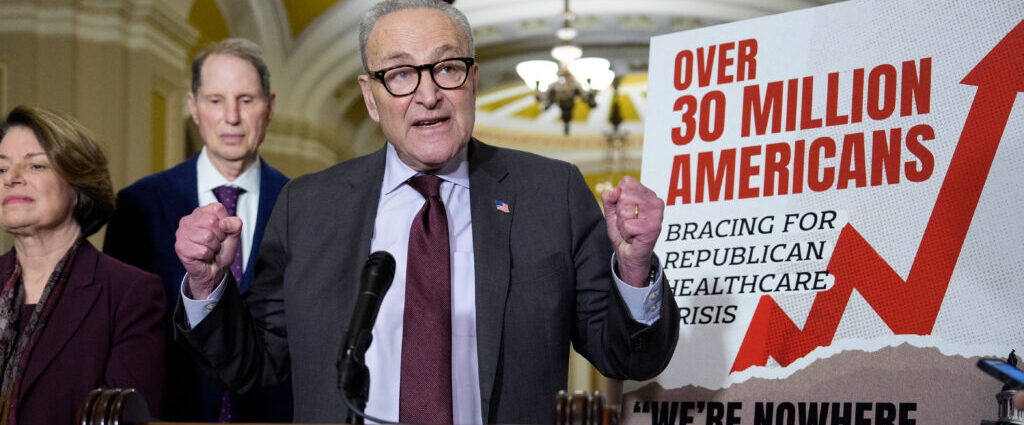
Lower health care costs for everything, everywhere
Senate Minority Leader Chuck Schumer (D-N.Y.) outlined health care policy principles that call for lowering costs for everything, everywhere.

STAT+: Cigna will exit ACA individual markets next year, adding to tumult for patients
Cigna is pulling out of the Affordable Care Act’s individual marketplaces in 2027 to focus on more promising parts of its business, another exit from what’s become a tumultuous piece of the insurance industry.
Executives announced the decision on Cigna’s first quarter earnings call on Thursday, in which the company unveiled better-than-expected financial results, including $1.7 billion in profit, and a bumped-up earnings forecast for the year. Cigna currently has 369,000 ACA members across 11 states, a small portion of its 18.3 million total members.
Brian Evanko, Cigna’s chief operating officer, said on the call that Cigna did not take the decision lightly. He said it was driven by two main factors: Cigna did not see a way to meaningfully grow that business and cutting it would free Cigna to focus on priorities like its Evernorth specialty and care services division, its pharmacy benefits division, and its flagship employer plan business.

STAT+: Hinge has a new FDA-cleared migraine device
You’re reading the web edition of STAT’s Health Tech newsletter, our guide to how technology is transforming the life sciences. Sign up to get it delivered in your inbox every Tuesday and Thursday.
Good morning health tech readers!
Today, updates from large virtual care companies. Plus: A low-tech way to boost cancer screenings.

STAT+: Pharmalittle: We’re reading about a Supreme Court hearing on ‘skinny labels,’ AstraZeneca U.K. expansion, and more
Rise and shine, everyone, another busy day is on the way. Sadly, gray skies are hovering over the Pharmalot campus, but our spirits remain sunny, nonetheless. And why not? As the Morning Mayor suggested to us long ago, “Every day should be unwrapped like a precious gift.” While you tug on the ribbon, we will fire up the trusty kettle for a cuppa elderberry hibiscus. Of course, you are invited to join us. Remember, no prescription is required. This is strictly cash money. Meanwhile, here are a few items of interest. Hope you have a meaningful and productive day and, of course, do stay in touch. …
AstraZeneca will resume expansion of its research and development operations in a Cambridge, U.K. facility, the first such project to be revived following the trade deal with the U.S. that included measures to lift U.K. spending on medicines, The Financial Times writes. Pascal Soriot, AstraZeneca’s chief executive, said on Wednesday that the drugmaker would invest $400 million to complete the Rosalind Franklin building that it put on hold last year, and build a new laboratory in the town of Macclesfield that would use “digital and data tools to advance drug development.” The company was one of several drugmakers that postponed or cancelled U.K. investments over disagreements with the government about increased medicines spending. As part of a trade deal agreed with the Trump administration, the U.K. agreed to lift the thresholds it uses to determine whether medicines are cost-effective for use on the National Health Service.
After months of anticipation, U.S. Supreme Court justices heard arguments about a long-standing tactic used by generic companies to carve out a distinct market for a medicine, and did not appear inclined to alter legal standards for the maneuver, STAT explains. At issue is skinny labeling, which refers to moves by generic companies that seek regulatory approval to market a drug for a specific use, but not other patented uses for which a brand-name medicine is prescribed. For instance, a generic drug could be marketed to treat one type of heart problem but not another. In doing so, the generic company seeks to avoid lawsuits claiming patent infringement. The court heard arguments concerning a case involving Amarin, which markets a drug called Vascepa for treating different heart problems, and Hikma Pharmaceuticals, one of the largest generic manufacturers.

STAT+: What does Akeso’s primo plenary spot say about its survival data?
This is the online version of Adam’s Biotech Scorecard, a subscriber-only newsletter. STAT+ subscribers can sign up here to get it delivered to their inbox.
I’m suffering from spring allergies + a nasty head cold this week. Not fun.
Mystery cloaks an ASCO plenary lung cancer survival result
The runup to next month’s annual meeting of the American Society of Clinical Oncology has started, and a good bit of the Wall Street chatter and speculation is centered on the Akeso-Summit Therapeutics drug ivonescimab.

Smog from wildfires increasingly harmful, data show
Get your daily dose of health and medicine every weekday with STAT’s free newsletter Morning Rounds. Sign up here.
Good morning. If you feel strongly about health care v. healthcare, now’s your chance to weigh in. (We’ve already heard from nearly 100 readers!)

STAT+: New obesity tool aims to predict risk of 18 serious complications
Body mass index has its limitations, but for now it’s the metric medicine often defaults to when predicting weight-related health problems. A new tool promises to better define who’s at risk for obesity complications, based on measures that include BMI but also family history, diet, current illness, and socioeconomic factors culled from medical records.
One aim of the research is to better understand who’s a candidate for an obesity drug, often prescribed based on BMI alone or BMI in combination with another disease. Over time, GLP-1 medications, whose initial target was type 2 diabetes, have revealed their power to ease cardiovascular disease, kidney disease, liver disease, sleep apnea, and osteoarthritis, in addition to promoting significant weight loss. But discerning who’s the best fit for the costly, lifelong treatment has been uncertain.
“We really wanted to have an integrated model that enables us to look at not one, but 18 different obesity-relevant complications,” Claudia Langenberg, co-author of a study about the new model published Thursday in Nature Medicine, said in a media briefing Tuesday. She is director and professor of medicine and population health at Precision Healthcare University Research Institute of Queen Mary University of London.

Opinion: Congress must hold RFK Jr. accountable after hearings
Our former colleagues in Congress recently heard from Health and Human Services Secretary Robert F. Kennedy Jr. for the first time in more than half a year.
Several congressional committees held hearings with Kennedy as they examined the Trump administration’s budget priorities. It was a key opportunity for lawmakers to build on the administration’s significant health policy achievements — and for the most part, they seized it. While Democrats were predictably critical of the secretary’s every move, Republicans wisely pushed back on the administration’s proposal to reduce funding for the National Institutes of Health. And with good reason. Sustained NIH funding underpins the research and development pipeline that makes vaccines possible at a time when voter polling shows Americans want leaders that support vaccine access.

Securing NIH awards is getting more competitive — and confusing
The likelihood of snagging National Institutes of Health grants has plunged to historic lows, forcing frustrated academic researchers to resort to a variety of tactics to try to obtain funding and, in some cases, keep their jobs, according to a nationwide STAT survey and follow-up interviews with respondents.
NIH data show that securing research awards has become more competitive under the second Trump administration than ever before, and more unpredictable. Just 13% of applications were funded in the past fiscal year, and even top-rated proposals aren’t a sure thing.

Opinion: Are international medical graduates taking residency spots from Americans? We did the math
The 2026 Main Residency Match was the largest in the program’s 74-year history. With 48,050 active applicants, 41,482 residency training positions were filled.
Among the celebrations, however, Match Day announcements triggered a surge of posts on X and other social media platforms calling for new restrictions on international medical graduates (IMGs) in the match, claiming that U.S. medical graduates (USMGs) had been displaced. These calls came from a range of voices: anti-immigration commentators and political figures with no medical background as well as physicians channeling workforce frustration into criticism of non-U.S. IMGs. Critics found headshots of incoming residents, posted by programs to celebrate their matches, and recirculated without consent to fuel this narrative. Certain policymakers and social media figures with large followings have amplified these claims and are actively pursuing legislation to restrict visa sponsorship for internationally trained physicians.

HHS appeals ruling that stalled many of Kennedy’s vaccine policy changes
The Department of Justice is appealing a ruling by a federal judge which stalled many of health secretary Robert F. Kennedy Jr.’s changes to federal vaccine policy.
The appeal, filed Wednesday, is the latest twist in the closely watched lawsuit filed by the American Association of Pediatrics along with several other professional organizations and several anonymous women. The plaintiffs argued that in reconstituting a federal vaccine advisory committee and changing the childhood vaccine schedule, Kennedy’s health department violated the Administrative Procedures Act, which governs how federal agencies consider and implement policy changes.

STAT+: Supreme Court justices appear to signal ‘skinny labeling’ can survive
After months of anticipation, Supreme Court justices heard arguments about a long-standing tactic used by generic companies to carve out a distinct market for a medicine, and did not appear inclined to alter legal standards for the maneuver.
At issue is skinny labeling, which refers to moves by generic companies that seek regulatory approval to market a drug for a specific use, but not other patented uses for which a brand-name medicine is prescribed. For instance, a generic drug could be marketed to treat one type of heart problem but not another. In doing so, the generic company seeks to avoid lawsuits claiming patent infringement.
This tactic has been a key tool for generic companies ever since the Hatch-Waxman Act was signed into law more than four decades ago. The law established the mechanisms by which generic drugs can more readily enter the marketplace. And skinny labeling is one way that Congress attempted to foster more competition and benefit consumers.



STAT+: Why conversations around health AI may be evolving beyond hype
You’re reading the web edition of STAT’s AI Prognosis newsletter, our subscriber-exclusive guide to artificial intelligence in health care and medicine. Sign up to get it delivered in your inbox every Wednesday.
My phone blew up while I was on vacation last week: The Associated Press Stylebook announced “health care” should actually be one word, “healthcare.” STAT is still deciding which we should use. Which do you prefer? You can weigh in here.
(Will my newsletters technically be shorter if we switch to “healthcare”? Food for thought.)
Maybe now we can have a real conversation about AI in health care
In his recent video “The People Do Not Yearn for Automation,” The Verge editor-in-chief Nilay Patel explains “software brain” — thinking about the world as a series of databases that are easily manipulated to solve problems — and why that is creating a disconnect between the AI world and everyone else.
The AI world thinks that AI really can solve the world’s ills and thus anti-AI sentiment is just a marketing problem. But people who are trying to slow AI adoption have legitimate concerns about the tradeoffs and performance of the technology that software-brained people are dismissing, he says.