Last December, news broke that the Centers for Disease Control and Prevention had awarded $1.6 million to a Danish vaccine research group to study the effects of the hepatitis B vaccine on infants in the West African nation of Guinea-Bissau. The proposed five-year study compared outcomes between infants vaccinated at birth and those vaccinated at six weeks of age. As a medical student and researcher, I was shocked by the brazen inequity of the trial. 

Randomized controlled trials have already demonstrated superior outcomes when the hepatitis B vaccine is administered at birth. More troubling, however, was the setting of the study. Guinea-Bissau is a highly endemic country for hepatitis B, where vaccination coverage lags behind global averages and roughly 60 percent of the population lives in poverty.

Read the rest…

This post was originally published here. 

Kristine Blanche, an integrative medicine doctor and wife of acting Attorney General Todd Blanche, has been named as a member to one of the advisory councils that provides critical funding recommendations to the National Institutes of Health. Her appointment, to serve on the advisory council to the National Center for Complementary and Integrative Health, is the first of such appointments to be made in over a year.

It’s unclear if Blanche’s selection — which has not been publicized by the NIH — is a sign of a thawing in the pipeline of advisory council appointments. But it’s done little to quiet simmering concerns among the wider research community about whether the Trump administration would attempt to stack councils with ideological allies who will use their positions to advance its political goals.  

It’s “the worst kind of political patronage,” Joshua Gordon, a former director of the National Institute of Mental Health, told STAT. He and others worry the move will erode taxpayers’ trust in how the largest funder of biomedical research in the world spends its $48 billion budget. “It’s clearly meant to contribute to an intentional degradation of confidence in the NIH.”

Continue to STAT+ to read the full story…

This post was originally published here. 

Nancy Cox, who for decades was a global leader in influenza research, has died. Cox headed the influenza team at the Centers for Disease Control and Prevention for 22 years, shepherding it from a branch of 14 people to a division of over 100. She was also director of the World Health Organization’s Collaborating Center for the Surveillance, Epidemiology, and Control of Influenza at the CDC.

Cox died Thursday from glioblastoma, a cancer of the brain. She was 77.

Read the rest…

This post was originally published here. 

Below is a lightly edited, AI-generated transcript of the “First Opinion Podcast” interview with Thomas Goetz. Be sure to sign up for the weekly “First Opinion Podcast” on Apple Podcasts, Spotify, or wherever you get your podcasts. Get alerts about each new episode by signing up for the “First Opinion Podcast” newsletter. And don’t forget to sign up for the First Opinion newsletter, delivered every Sunday.

Torie Bosch: Whether it’s Ambien or Wegovy, ivermectin or fluoride, every drug in your medicine cabinet or advertised on TV has a story behind it. Not just how it came to be, but how it ends up affecting society in unexpected ways, big or small.

Read the rest…

This post was originally published here. 

The Food and Drug Administration will accelerate its review of psychedelic drugs developed by Compass Pathways, the Usona Institute, and Transcend Therapeutics for mental health disorders, as part of the Trump administration’s plan to boost access to the controversial yet promising medications.

The agency will grant priority review vouchers specifically to Compass’ psilocybin product for treatment-resistant depression, Usona’s similar medicine for major depressive disorder, and an MDMA-like treatment for post-traumatic stress disorder from Transcend. 

The FDA identified the medications receiving the vouchers, but not the companies developing them. Compass, Usona, and Transcend confirmed they received vouchers.

Continue to STAT+ to read the full story…

This post was originally published here. 

Utah’s high-profile experiment with using an artificial intelligence system to renew prescriptions without physician oversight is facing its first major challenge as doctors in the state push back.

In a letter published Friday, Utah Medical Licensing Board said it only learned about the pilot program with AI doctor startup Doctronic after it had been launched, and asked the state to halt the program.

“Proceeding with this agreement without consulting the Medical Board potentially places Utah citizens at risk and remains a major concern of the board,” they wrote. “It is the strong recommendation of the Utah Medical Licensing Board that this program be immediately suspended pending further discussion.”

Continue to STAT+ to read the full story…

This post was originally published here. 

Kelonia Therapeutics became the newest biotech takeout target this week. The privately held company, which is developing cell therapies for cancer and autoimmune diseases, will be acquired by Eli Lilly. 

The acquisition is a boon for the small startup, which has subsisted on $60 million over the last five years and previously struggled to stay afloat. (Check out an earlier slide deck and memo on the company here.) Kelonia came within a week of running out of cash three times. Now it’s being bought for $3.2 billion with potential milestone payments that could double that payout.

On this week’s edition of its biotech podcast, “The Readout Loud,” STAT spoke with Bryan Roberts, a partner at VC firm Venrock, which incubated the biotech, to discuss how this small company managed to land a big deal. 

Continue to STAT+ to read the full story…

This post was originally published here. 

Regeneron is in the headlines again: It cut a pricing deal with the Trump administration and won approval for a hearing loss gene therapy. Also, Medicare and the FDA are getting creative with their efforts to speed medical device coverage.

And since it’s totally worth it, sign up for STAT+ between now and Saturday and you’ll get 60% off your first year.

MS drug rejected by FDA gets warmer reception in Europe

From STAT’s Andrew Joseph: A multiple sclerosis drug from Sanofi that was rejected late last year by the FDA found a warmer audience in European regulators, who recommended today that the medicine should be approved.

Continue to STAT+ to read the full story…

This post was originally published here. 

And so, another working week will soon draw to a close. Not a moment too soon, yes? This is, you may recall, our treasured signal to daydream about weekend plans. Our agenda is still shaping up but we expect to drop in at a couple of folkie happenings, promenade with the official mascots, and tidy up around the castle. We also hope to have yet another listening party, where the rotation will likely include this, this, this, this and this. And what about you? This is a fine time to enjoy the great outdoors. Hiking trials, shorelines, and cityscapes await you. This may also be an opportunity to start your spring cleaning, read a good book, or search out someone special. Well, whatever you do, have a grand time. But be safe. Enjoy, and see you soon. …

President Trump heralded a drug-pricing agreement with Regeneron Pharmaceuticals, closing the last of 17 deals initially sought by the White House last year, STAT notes. Regeneron, as part of the private deal, will reduce prices on drugs to Medicaid, provide the Praluent cholesterol medicine on TrumpRx for $225, and invest $27 billion in drug development in the United States. At the same time, Regeneron also announced the U.S. Food and Drug Administration approval of Otarmeni, the first gene therapy to be greenlit under the agency’s new National Priority Voucher program. Last year, Trump sent letters to 17 of the largest pharmaceutical companies, demanding lower prices and kicking off months of intense negotiations. But the deals the administration struck with each firm remain private, and in some cases they may not be finalized. 

The Trump administration issued an order reclassifying state-licensed medical marijuana as a less-dangerous drug, a major policy shift long sought by advocates who said cannabis should never have been treated like heroin by the federal government, the Associated Press explains. The order signed by acting Attorney General Todd Blanche does not legalize marijuana for medical or recreational use under federal law. But it does change the way it is regulated, shifting licensed medical marijuana from Schedule I, which is reserved for drugs without medical use and with high potential for abuse, to the less strictly regulated Schedule III. The move — which STAT described as “a new era in GOP drug policy” — also gives licensed medical marijuana operators a major tax break and eases some barriers to researching cannabis.

Continue to STAT+ to read the full story…

This post was originally published here. 

Should academic journals begin to second guess guest editors? 

That question gained new urgency last week when the British Medical Journal’s publishing group retracted nearly its entire guest-edited special edition of the Journal of Medical Genetics, dedicated to cancer immunotherapies. In the retraction note, the journal writes that it was, in part, because of “compromised peer review in almost all articles.” The notice garnered attention for its scope, but also because it exemplified larger concerns that research integrity advocates have with guest-edited editions, which are also called special issues in some journals. 

Read the rest…

This post was originally published here. 

The past four months have been a whirlwind for Pittsburgh’s journalism landscape. On Jan. 7, the Pittsburgh Post-Gazette, Western Pennsylvania’s largest news organization, announced it would cease publication on May 3 after nearly 240 years. Then, on April 14, just over two weeks before that closure date, the Baltimore-based Venetoulis Institute for Local Journalism said it would acquire the paper’s assets and continue publication.

Like many Pittsburghers, I experienced the emotional rollercoaster of anger, disappointment, hope, and relief tied to these announcements. I grew up in the Pittsburgh area, where I vividly remember running barefoot down my driveway as a child to grab the Post-Gazette. Years later, I interned there as a health and science reporter and have since contributed as a freelancer.

Read the rest…

This post was originally published here. 

President Trump recently signed an executive order which aims to increase access to psychedelic drug treatments. He was joined at the signing by podcaster Joe Rogan, who said he’ ha’d messaged the president about research on the psychedelic ibogaine. 

In this week’s STATus Report, host Alex Hogan chats with STAT Washington correspondent Daniel Payne about what the executive order does and doesn’t do. Hogan also looks at why ibogaine, and psychedelic drugs more broadly, are increasingly being taken seriously for stubbornly hard-to-treat conditions like addiction, depression, and PTSD.

This post was originally published here. 

Since I was 7, my goal has been to become a doctor. But life had other plans. I grew up in a blue-collar family in Levittown, N.Y., in the 1950s and ’60s, so it often felt like the world ended in Jersey. When I landed in Lansing, Mich., to attend Michigan State, I expected the Rocky Mountains to be visible. I ended up getting a degree in nursing, but I always had another goal: to become an M.D.

This year, at the age of nearly 73, my dream will finally come true. Soon after, I will start my residency in family medicine. My perspective on medical school and medicine is unique not only because I attended late in life, but because it came after more than 40 years as a nurse practitioner.

Read the rest…

This post was originally published here. 

How did a biotech company that almost ran out of money three times get acquired for over $3 billion? Will the M&A streak continue? And why are drugmakers working with a telehealth company called Prescribery?

We discuss all that and more on this week’s episode of “The Readout LOUD,” STAT’s weekly biotech podcast. Venture capitalist Bryan Roberts joins us to discuss his firm’s investment in Kelonia Therapeutics, the CAR-T biotech that Eli Lilly just said it would buy for $3.25 billion.

Read the rest…

This post was originally published here. 

The days of “Just Say No,” it seems, are long gone. 

Over the weekend, President Trump signed an executive order to increase the availability of certain psychedelics as treatments for mental health conditions, ordering that $50 million be spent, and that the Food and Drug Administration fast-track reviews to usher in their approval. At one point, the president joked to the motley assembly of administration officials, a former Navy SEAL, and the podcaster Joe Rogan:  “Can I have some, please?” 

On Wednesday, the Trump administration announced it had downgraded medical marijuana from the highest tier of controlled substances, and was pushing the Drug Enforcement Administration to do the same for recreational marijuana.

The president’s lenient tack on some mind-altering drugs ushers in a new world of right-wing drug policy. While the administration has emphasized hardline, militaristic tactics when it comes to fentanyl, its recent actions on “softer” drugs could represent a new era not just for Republican politics but also for American drug policy writ large. 

“With this imminent move, we are now confronted with the most pro-drug administration in our history,” Kevin Sabet, the CEO of the anti-legalization advocacy group Smart Approaches to Marijuana, said in a statement. “Policy is now being dictated by marijuana CEOs, psychedelics investors, and podcasters in active addiction — it is a travesty and injustice to the American people of unprecedented proportions. The marijuana industry is the new Big Tobacco, and President Trump is welcoming them to the homes of families across this country with open arms.”

Continue to STAT+ to read the full story…

This post was originally published here. 

Heart disease and cancer are the leading causes of death in the United States, but it is rare that cancer makes its way to the heart. 

It’s an observation that clinicians have been grateful for, though largely unable to explain. But in a paper published Thursday in Science, researchers propose one potential explanation: The constant pressure that the organ is under from beating thousands of times a day and pushing gallons of blood creates an environment that is hostile to cancers. The study, which was conducted in mice, is preliminary, but outside experts said it points to potential new approaches for cancer treatments. 

Read the rest…

This post was originally published here. 

WASHINGTON — President Trump heralded a drug pricing agreement with Regeneron on Thursday, closing the last of 17 deals initially sought by the White House last year.

Regeneron, as part of the private deal, will reduce prices on drugs to Medicaid, provide cholesterol medicine Praluent on TrumpRx for $225, and invest $27 billion in drug development in the United States.

On the same day, Regeneron also announced Food and Drug Administration approval of Otarmeni, the first gene therapy to be greenlit under the agency’s new National Priority Voucher program. In early trials, the drug provided modest hearing gains for people with a rare type of hearing loss, though its development has received pushback from parts of the Deaf community. Regeneron plans to offer the drug at no cost to American patients. 

Continue to STAT+ to read the full story…

This post was originally published here. 

Rise and shine, everyone, another busy day is on the way. Already, the Pharmalot campus has been bustling as the official mascots have been busy chasing assorted creatures in search of their breakfast. As for us, yes, we are firing up the trusty kettle once again and brewing another cuppa stimulation. Our choice today is Earl Gray. Now, though, the time has come to get still busier. On that note, here are some tidbits. Have a lovely day and do keep in touch. …


As links between pharmaceutical companies and telehealth providers grow, health policy experts and legislators are raising concerns over the large fees that telehealth companies can receive from drugmakers each year, STAT explains. Critics have questioned whether those partnerships break federal laws prohibiting financial kickbacks to induce prescribing, highlighting their potential to promote uncoordinated care and overprescriping of unnecessary, and often expensive, branded medications. The same questions apply to coupons extended for a drug-specific telehealth visit. Drugmakers have long used discount coupons to encourage patients to use their high-cost medications. But coupons can influence not just the out-of-pocket price for the drug, but the cost of consulting with a clinician who can prescribe it. 

U.S. Health and Human Services Secretary Robert F. Kennedy Jr. told ​a Senate hearing on Wednesday that he had nothing to do with a U.S. Food and Drug Administration ‌decision to not approve Replimune’s advanced skin cancer drug, saying it was in the hands of FDA Commissioner Marty Makary, Reuters writes. Earlier this month, the FDA declined ​to approve the drug after taking issue with the company’s reliance on a single‑arm ⁠study for the drug without a control group. In its letter, the FDA said the company must provide data from a well-controlled trial demonstrating adequate evidence of effectiveness. “This decision comes out of FDA, and we trust ​the process there. And I’ve been told by Marty Makary that every panel that looked at that drug unanimously voted against it … because it does not appear to work,” Kennedy said. An op-ed in The Wall Street Journal maintained Kennedy’s comments were not true and cited cancer doctors who have worked on trials of the drug and said it was effective.

Continue to STAT+ to read the full story…

This post was originally published here. 

WASHINGTON — President Donald Trump’s acting attorney general on Thursday signed an order reclassifying state-licensed medical marijuana as a less-dangerous drug, a major policy shift long sought by advocates who said cannabis should never have been treated like heroin by the federal government.

The order signed by Todd Blanche does not legalize marijuana for medical or recreational use under federal law. But it does change the way it’s regulated, shifting licensed medical marijuana from Schedule I — reserved for drugs without medical use and with high potential for abuse — to the less strictly regulated Schedule III. It also gives licensed medical marijuana operators a major tax break and eases some barriers to researching cannabis.

Read the rest…

This post was originally published here. 

You’re reading the web edition of STAT’s Health Tech newsletter, our guide to how technology is transforming the life sciences. Sign up to get it delivered in your inbox every Tuesday and Thursday.

Good morning health tech readers!

After inviting consumers to upload medical records for examination by ChatGPT earlier this year, OpenAI is now making its play for their doctors as well.

Continue to STAT+ to read the full story…

This post was originally published here. 

You’re reading the web edition of D.C. Diagnosis, STAT’s twice-weekly newsletter about the politics and policy of health and medicine. Sign up here to receive it in your inbox on Tuesdays and Thursdays.

Sarah Todd’s MAHA snackdown article includes such merchandising gems as “fibermaxxing” chips, “protein-powered” yogurt, and “longevity” beverages. My generation’s biggest contribution to food marketing was light beer. Send news tips and brand management schemes to John.Wilkerson@statnews.com or John_Wilkerson.07 on Signal.

Losing BALANCE

The Trump administration couldn’t get insurers to provide cheap obesity drugs to seniors through the Medicare pilot BALANCE. So Medicare will now make the drugs available to seniors outside of the Part D drug benefit in another pilot, called Bridge.

Continue to STAT+ to read the full story…

This post was originally published here. 

Legislators in two states have resisted efforts to restrict Prescription Drug Affordability Boards, the controversial panels that are designed to function as rate-setting authorities and place limits on the cost of prescription medicines.

In Virginia, the General Assembly unanimously rejected a move by Gov. Abigail Spanberger (D) to delay a key provision of two bills that would create a board and allow it to place price caps that mirror the negotiated prices paid by Medicare. Spanberger must now either accept or veto the legislation as originally intended.

In Colorado, the House Health and Human Services Committee postponed consideration of a bill that would exempt orphan drugs, which are used to treat rare diseases, from pricing caps that might be pursued by the state board. By delaying action until the end of the legislative session, the bill has effectively died.

Continue to STAT+ to read the full story…

This post was originally published here. 

Executives said consumer fears and aggressive denials from payers fueled declining volumes in the quarter, leading CHS to a $58 million loss. Still, the hospital operator expects volumes to pick up in the back half of the year.

This post was originally published here. 

Federal regulators on Thursday announced a new Medicare coverage pathway for devices deemed breakthroughs by the Food and Drug Administration. The program aims to address longstanding industry complaints that it takes too long for Medicare to pay for innovative technology.

The new Regulatory Alignment for Predictable and Immediate Device coverage pathway, or RAPID, will try to synchronize the FDA’s premarket review process, which determines whether products are safe and effective, and Medicare’s independent process which determines whether paying for devices is reasonable and necessary. The goal is to collect and review enough data before authorization that Medicare can cover the products soon after a product hits the market. It’s the latest effort to speed up patient access to breakthrough devices.

“We’re going to demystify the process by providing a clear signal to device manufacturers of exactly what targets they need to hit to get Medicare coverage,” said Medicare Deputy Administrator John Brooks. “And that’s enormously valuable, if you think about the investment timelines for device manufacturers who are trying to bring life-saving treatments to individuals.”

Continue to STAT+ to read the full story…

This post was originally published here. 

Want to stay on top of the science and politics driving biotech today? Sign up to get our biotech newsletter in your inbox.

A gene therapy for deafness is starting to deliver real-world benefit. Also, ultra-cheap telehealth options are raising concerns about whether easier access to prescription drugs is coming at the expense of patient care. And, in front of Congress, RFK Jr. seems to be striking a different tune on vaccines.

Sanofi research priorities in flux as new CEO logs in 

From my colleague Andrew Joseph: One of the open questions about the future of Sanofi as Belén Garijo takes over as CEO this month is whether the company, which had upped its focus in immunology in recent years only to come up with lackluster results, will rebalance its priorities.

Continue to STAT+ to read the full story…

This post was originally published here. 

On Tuesday, Secretary of Defense Pete Hegseth announced that the men and women who defend our nation will be able to choose whether to be protected from the flu. In his video statement, he said that service members will no longer be required to get the annual influenza vaccine because flu causes “no threat to our military readiness.”

Unfortunately, this is untrue. During the 1918 influenza pandemic, more than 20,000 U.S. service members died and hundreds of thousands were hospitalized. People of military age were among those with the highest death rates during that outbreak, impacting not only their health, but the U.S. economy and military readiness. Historians report that up to 20% of U.S. service members became ill. As a result, the U.S. military began pursuing a flu vaccine to ensure that, in the future, our nation’s defenders would be protected from this threat.

Read the rest…

This post was originally published here. 

This is the online version of Adam’s Biotech Scorecard, a subscriber-only newsletter. STAT+ subscribers can sign up here to get it delivered to their inbox.

I wore my Tottenham Hotspur hoodie while shopping at Market Basket last Sunday. One fellow shopper laughed at me. He must have been an Arsenal fan. But another guy commiserated.

If none of this means anything to you, I’m sorry. My favorite soccer team is circling the drain and I feel sad. 

The promise of a better pan-RAS inhibitor

Erasca has been described as the poor man’s Revolution Medicines. Impoverished doesn’t exactly fit, not with Erasca’s market value nearing $7 billion on the promise of a better pan-RAS inhibitor for pancreatic cancer. But RevMed’s value now tops $30 billion, so you can see why biotech investors are motivated to find the next big thing.

Whether Erasca is worthy of that description will become clearer in May when the company reports initial results from an early stage study of its drug, called ERAS-0015.

“RevMed has been a real pioneer in this space,” Erasca co-founder and CEO Jonathan Lim told me when we spoke on Tuesday. “What a day it was last week seeing their data with 13.2 months of median overall survival. It’s great for patients with pancreatic cancer.”

Continue to STAT+ to read the full story…

This post was originally published here. 

For the moment, Health and Human Services Secretary Robert F. Kennedy Jr. seems quieter and more positive on vaccines than many, us included, ever expected he could be. Public messaging has shifted — at least superficially — toward nutrition, chronic disease, and the Make America Healthy Again agenda. Kennedy even acknowledged in a recent congressional hearing that the measles, mumps, and rubella vaccine is safe and effective “for most people.” 

But this lull in anti-vaccine rhetoric and action should not be mistaken for a durable pivot in federal vaccine policy. It is a cynical, political pause: the eye of a storm shaped more by electoral timing than public health strategy. 

Read the rest…

This post was originally published here. 

The little pink pill recently got a retail boost. Addyi, a drug that treats low libido in premenopausal women, has been on the market for more than a decade after a controversial approval. But in December the Food and Drug Administration expanded its use, approving the daily drug for all women under 65. 

More women than ever now could qualify for the pill — and its maker, Sprout Pharmaceuticals, made it easy for them to find out. On its Instagram account, in Facebook ads, and on its website, Sprout shared how women could get a quick consult for an Addyi prescription: With a special code, PINKPILL, they could get a telehealth visit for just $10. 

Drugmakers have long used discount coupons to encourage patients to use their high-cost medications. Now, coupons can influence not just a drug’s out-of-pocket price, but the cost of consulting with a clinician who can prescribe it. 

For Addyi, those consultations and discounts are managed by a telehealth company called Prescribery — one of several that work with drugmakers to help patients “talk to a doctor now” about their products. “We give them the coupon codes that they can use, and they get to market it to drive additional business,” said Prescribery’s CEO and CFO Ross Pope. “That’s sort of our arrangement, where they’re driving more business, both for them and for us.”

As links between pharmaceutical companies and telehealth providers grow, health policy experts and legislators have sounded alarms. Telehealth companies can receive hundreds of thousands of dollars in pharma fees a year. Critics have questioned whether those partnerships break federal laws prohibiting financial kickbacks to induce prescribing, highlighting their potential to promote uncoordinated care and overprescription of unnecessary, and often expensive, branded medications. 

The same questions, they say, apply to coupons extended for a drug-specific telehealth visit. “These discount structures are one more piece of the same puzzle,” said Daniel Eisenkraft Klein, a postdoctoral fellow at the Program on Regulation, Therapeutics, and Law at Brigham and Women’s Hospital and Harvard Medical School. “It’s this big financial architecture that’s every step of the way designed to move patients toward the specific drug cheaply and quickly.” 

Continue to STAT+ to read the full story…

This post was originally published here. 

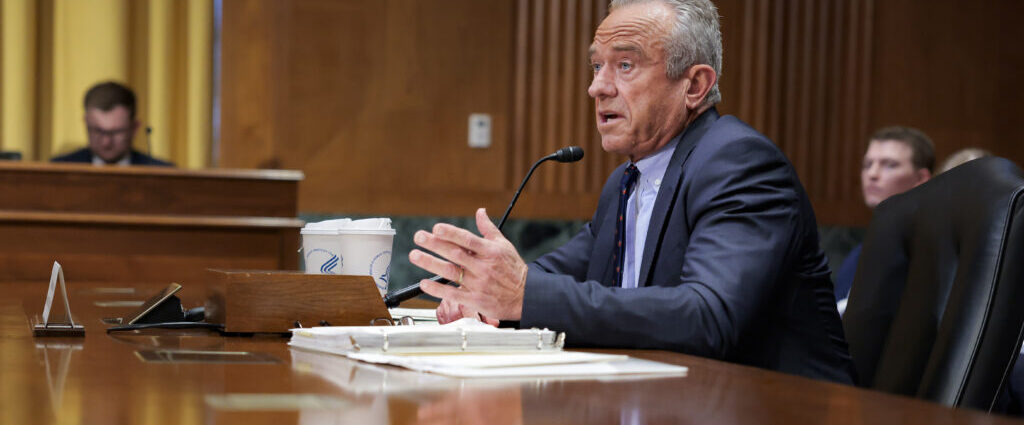
WASHINGTON — Health secretary Robert F. Kennedy Jr. once said there are no vaccines that are safe and effective. On Wednesday, he seemed to have changed his tune.

Across two Senate hearings, Kennedy noted that as health secretary, he funded the development of new vaccines, green-lit new shots for patients, asserted flu vaccines are preventive care, and even urged “every child to get the MMR,” a shot he previously suggested wasn’t safe. Last week, he acknowledged the shot could have saved the life of a child who died of measles.

Kennedy’s agenda continues to make waves across American health care, as his department pursues a broad crackdown on alleged fraud and seeks to upend Americans’ relationship with ultra-processed foods, all after major cuts across health agencies and a reworking of vaccine policy. But the about-face expands to a number of core MAHA issues — chemicals in food and the government’s relationship with industry among them.

It comes as some leaders of the insurgent movement have grown skeptical of the administration they rallied to support, forcing the Trump administration to thread the needle between courting the MAHA base’s ongoing support and dropping MAHA priorities seen as impractical or politically unwise. 

Continue to STAT+ to read the full story…

This post was originally published here. 

A former tobacco industry executive has been appointed to senior leadership at the Centers for Disease Control and Prevention, alarming public health advocates and critics of industry influence on government.

Stephen Sayle, named in March as the CDC’s deputy director for legislative affairs, previously worked at Fontem Ventures, a subsidiary of the British multinational tobacco corporation Imperial Brands. Between 2017 and 2018, he was U.S. vice president of corporate affairs at Fontem, which is focused on non-combustible tobacco products like the e-cigarette brand blu and the oral nicotine pouch brand Zone. 

Read the rest…

This post was originally published here. 

Washington state hospitals say their Medicare patients are waiting two to four times longer in some cases for procedures that are now subject to prior authorization under a new Medicare program. 

The report from U.S. Sen. Maria Cantwell (D-Wash.) is among the first to document alleged patient harm stemming from the Centers for Medicare and Medicaid Services’ new Wasteful and Inappropriate Service Reduction, or WISeR, Model. Cantwell is one of several Democratic members of Congress who have been urging CMS to scrap the program, which launched Jan. 1. 

Cantwell aired her concerns about WISeR to Health and Human Services Secretary Robert F. Kennedy Jr. at a Senate Finance Committee hearing on Wednesday. She said CMS is using AI as a “denial device” and that patients are waiting weeks to get approval for services that previously didn’t require approval. 

Continue to STAT+ to read the full story…

This post was originally published here. 

Health secretary Robert F. Kennedy Jr. testified on Wednesday before the Senate lawmakers who arguably hold the most power in advancing or hindering his Make America Healthy Again agenda. 

The Senate Health, Education, Labor, and Pensions Committee hearing put the secretary face-to-face with Chair Bill Cassidy (R-La.), whose vote to confirm Kennedy last year came with a number of promises on vaccine policy that Kennedy has since blown through.

Read the rest…

This post was originally published here. 

You’re reading the web version of STAT’s popup newsletter, AACR in 30 seconds, your guide to what’s happening at the American Association of Cancer Researchers’ annual meeting.

This is the last edition of our pop-up newsletter. We hope you’ve learned as much as we have. If you’re not already a STAT+ subscriber, consider it! There’s currently a 60% off promotion on annual subscriptions.

In the meantime, thanks for joining us.

Overcoming resistance and RevMed’s next drug?

In case you missed it, Revolution Medicines’ sessions yesterday were jam-packed with conference attendees. While most of the media coverage focused on the daraxonrasib in frontline pancreatic cancer data, the company also revealed some activity in a new compound, RM-055. CEO Mark Goldsmith described it as being part of a new class of “catalytic inhibitors,” since it can slice off a phosphate from GTP-RAS, or the “on” form of RAS, and turn the protein off.

This generated a lot of interest because one of the main ways that cancer develops resistance to RAS inhibitors is by amplifying mutant RAS, basically flooding the cell with the oncoprotein and overwhelming the inhibitor. RM-055, with its catalytic ability to turn multiple mutant RAS proteins off, may be the next step in the arms race against RAS-addicted cancer.

Continue to STAT+ to read the full story…

This post was originally published here. 

Health secretary Robert F. Kennedy Jr. will testify Wednesday before the Senate lawmakers who arguably hold the most power in advancing or hindering his Make America Healthy Again agenda. 

The Senate Health, Education, Labor, and Pensions Committee hearing will also put the secretary face-to-face with Chair Bill Cassidy (R-La.), whose vote to confirm Kennedy last year came with a number of promises on vaccine policy that Kennedy has since blown through.

Read the rest…

This post was originally published here. 

Want to stay on top of the science and politics driving biotech today? Sign up to get our biotech newsletter in your inbox.

Good morning. We’ve got a lot of new data to dig into, so let’s get straight to it.

Medicare delays pilot for covering obesity drugs

One of the key health care accomplishments the Trump administration wanted to claim was securing coverage of obesity drugs for seniors. That plan is now unraveling.

Continue to STAT+ to read the full story…

This post was originally published here. 

After the U.S. launched 988, a new shortened phone number for the national suicide and crisis hotline, suicide deaths among adolescents and young adults dropped 11% compared to projected rates, according to a JAMA study published Wednesday.

Suicide rates have been increasing in the U.S. for decades, especially among young people. Overall, the number of suicide deaths in the U.S. dropped slightly in 2024 from a peak in 2022 — the year that 988 was launched. The new research found even greater improvements when comparing the quarterly rate of suicide deaths among people age 15 to 34 against projections. And the states that saw the biggest increases in answered calls to the lifeline experienced the largest decline in suicide rates. 

Read the rest…

This post was originally published here.