Compass International Holdings (CIH), which owns Compass, Anywhere Real Estate and @properties Christie’s International Real Estate, is taking majority control or 51% of the common equity of a parent company that will indirectly own some Sotheby’s International Realty franchises.

The Robert Reffkin-helmed firm disclosed this ownership change in a document filed with the Securities and Exchange Commission (SEC) last Wednesday.

The parent company entity that indirectly owns some of Sotheby’s International Realty includes parts of Peerage, which is an investor in several Sotheby’s International Realty franchises, including Jameson Sotheby’s, Pacific Sotheby’s and Premier Sotheby’s, as well as several funds managed by TPG Angelo Gordon. The companies said the deal is part of an attempt to rework existing debt tied to the predecessor of the parent company CIH is acquiring. However, the total amount of debt involved has not been disclosed. 

“Sotheby’s International Realty, Inc. became an equity holder in several affiliated Peerage franchisees, reflecting its long‑term confidence in these businesses and their leadership in key markets across the U.S. and Canada,” a CIH spokesperson told HousingWire in an email. Peerage and these brokerages continue to operate independently under their existing leadership and brand, in most cases as part of the Sotheby’s International Realty network.”

As part of the deal, some of the debt owed to Compass will be repaid over 30 months in installments. Additionally, as part of the PUT agreement included in the filing, TPG retains the right to force CIH to buy its ownership stake at any time, by paying a predetermined price in cash. If TPG chooses to exercise that right, CIH is obligated to complete the purchase with no conditions or excuses—regardless of financing, market conditions, or internal issues.

The Sotheby’s International Realty brand is part of Anywhere Real Estate, which CIH acquired earlier this year. 

This post was originally published on here

For years, real estate marketing was viewed as simply a support function responsible for campaigns, promotional materials and brand visibility.  Now, there is a new model that is poised to help brokerages scale successfully.

Today, marketing sits at the center of how brokerages drive agent recruitment, retention and revenue growth. It is no longer a support function; it is a growth engine. 

Marketing shapes brand perception, drives pipeline, influences recruitment and ultimately determines how and how fast a brokerage or proptech company scales. It empowers brokerages to move faster, attract stronger agents and grow market share and profitability.

The organizations pulling ahead today are not doing so because they market better. They are doing so because they have redefined what marketing is responsible for: growth.

But that kind of growth does not happen by accident. It happens when marketing is structured with intention, when brand, performance and agent marketing and experience are distinct, aligned and accountable for real business outcomes.

The traditional brokerage marketing model was built for a time when visibility alone could drive results, and where marketing operated downstream from strategy. That model no longer holds.

What is emerging in its place is a new archetype: the marketing leader who thinks and operates like a Chief Marketing & Growth Officer with company-wide influence, accountability and ownership of the full growth system.

Own the full growth funnel

Historically, brokerage marketing teams were measured by output: brochures, signage and listing campaigns. These are still important, but they no longer differentiate a brand from a growth or expansion standpoint.

The most effective senior marketing leaders today are measured by outcomes. They go beyond marketers. They are builders and operators: close enough to the business to influence how it looks and how it grows. They own the full growth funnel, while helping shape conversations and decisions around recruitment, expansion and investment.

The data reinforces this shift. Research from McKinsey & Company found that companies with marketing embedded in strategic decision-making see 1.4x higher revenue growth, yet only about half of CMOs are meaningfully involved at that level. At the same time, Boston Consulting Group reports that organizations with strong alignment between marketing and sales achieve up to 20% higher revenue growth.

Marketing and recruitment need to be intertwined. Agents evaluate brokerages the same way consumers evaluate brands: through reputation, visibility, authority and, increasingly, the quality of the technology experience. The marketing leader who understands this doesn’t just generate leads; they shape demand for the right agents at the right time.

The brokerages that will outperform over the next decade will be those that give marketing a true seat at the table. Not as a support function, but as a driver of compounding growth.

Lead the digital transformation or be left behind

The Chief Marketing & Growth Officer, or a marketing leader operating with that mandate, should lead digital transformation with the CPO. Not just IT, or in isolation from Product. It should not be viewed as a secondary initiative owned by operations.

Digital transformation is not just about systems. It’s about adoption, experience and behavior at scale, which are all part of marketing-led outcomes.

This is where most brokerages get it wrong. Industry data shows the majority of digital transformations fail because organizations struggle to translate tools into behavioral change and business impact. In SaaS and tech companies, product and marketing are inseparable; real estate is well overdue for the same shift.

Effective marketing leaders partner closely with product and operations to improve and simplify the agent experience. They strip away unnecessary complexity, prioritize what drives progress, and ensure the tools agents rely on actually help them win business.

The issue facing most brokerages and PropTech companies today isn’t access to technology. It is translation: turning capability into behavior, tools into productivity and investment into measurable growth.

Two companies can invest in the same platform and see completely different outcomes if one treats it as a feature and the other treats it as a system. In real estate, that gap is accelerating.

Brokerages are investing heavily in AI, automation and data, but many agents are still operating with fragmented workflows, underutilized tools and inconsistent experiences. The result is not transformation, it’s complexity.

The firms pulling ahead are doing something fundamentally different. They are not asking, “What should we buy next?”  They are asking, “How should we operate differently?”

They are rethinking:

  • How agents generate and convert business
  • How client experiences are designed and delivered
  • How decisions are informed by data, not instinct
  • And how technology supports, not complicates, that process

This is where the CMGO creates a disproportionate advantage. For brokerages, it means driving measurable outcomes such as stronger agent recruitment, higher productivity, improved retention and a more consistent client experience across every touchpoint.

For PropTech companies, it means ensuring that products are not just built, but actually used, adopted and embedded into daily workflows. The gap between product innovation and user adoption is where most value is lost.

The CMGO is uniquely positioned to close that gap because they sit at the intersection of brand (what we promise), product (what we deliver) and experience (how it’s actually used).

They understand how agents build their businesses, how consumers make decisions and how both interact with technology in real-world environments.

More importantly, they own the outcomes tied to it:

  • Recruitment and agent attraction
  • Conversion and productivity
  • Agent sentiment, retention and long-term value
  • Product adoption and customer lifetime value

Without adoption, there is no ROI. Without alignment, there is no scale. And without marketing leadership, there is no system connecting the two.

The modern CMGO operationalizes new tools, partnering with product, sales and operations to ensure that every technology investment translates into a better agent experience, stronger market positioning  and measurable business performance. In SaaS companies, this alignment is expected because product and marketing operate as one system.

Real estate is still evolving into that model. The companies that win will not be the ones that invest the most in technology, but those that align leadership, culture and execution around it.

In the end, digital transformation is not about modernization but about momentum. And momentum is what great marketing leaders are built to create.

Credibility is the new competitive advantage

You have the right tools and agent adoption, now what? Today’s consumers are savvy. Generic marketing claims that once attracted attention are now costing brokerages credibility.

Today’s consumers and agents are more informed, more skeptical, and more reliant on digital signals than ever before. According to Zillow’s 2025 Consumer Housing Trends Report, 37% of buyers and 36% of sellers find their agent through online channels, turning digital presence into a direct revenue driver.

That shift elevates something many organizations still underestimate: credibility. Earned media, reputation, thought leadership and consistency across platforms now carry more weight than controlled messaging. The strongest brands don’t just say they are different; they demonstrate it repeatedly in places they don’t own.

This is where many brokerages get it wrong. They try to appeal to everyone, but credibility comes from clarity, not breadth. The most effective brands understand exactly who they are for and who they are not. They build systems, messaging and agent experiences that reinforce that positioning at every touchpoint.

Brand is no longer just a story; it is a filter. And marketing provides that filter. Over time, that filter compounds,  strengthening culture, improving retention and driving performance.

Measure what actually drives growth

The shift to a CMGO mindset ultimately comes down to accountability. Not for activity, but for impact.

Marketing leaders must operate as builders and operators: close to execution, deeply connected to the business, attuned to market shifts and aligned across recruitment, customer experience, product, operations and technology.

This requires a different measurement framework. The metrics that matter are not vanity metrics, but business metrics such as:

  • Recruitment quality and conversion
  • Agent satisfaction, retention, and productivity
  • Technology adoption and utilization
  • Customer acquisition cost and lifetime value
  • Revenue growth and market share

These are not marketing-adjacent metrics, but marketing-led metrics. When marketing owns them, the entire organization becomes more aligned, more efficient, and more capable of scaling.

The new era of brokerage marketing

We are at an inflection point. Brokerages and PropTech companies can continue to treat marketing as just a support function or they can recognize what it can become. I recommend two sectors: agent marketing and corporate brand and performance marketing.

When a marketing leader operates with a Chief Marketing & Growth Officer mindset — owning how the business attracts, converts and retains agents and clients — the impact is not incremental, it is transformational.

The companies that win in this next era will not be the ones with the biggest budgets or the most tools. They will be the ones with the clearest strategy, the strongest alignment and the leaders capable of connecting brand, product and performance into a single, scalable system.

That is the role of the modern marketing leader. And it is only just beginning.

Lauren Henss is Vice President of Marketing and Strategic Initiatives at FirstTeam.

This column does not necessarily reflect the opinion of HousingWire’s editorial department and its owners. To contact the editor responsible for this piece: tracey@hwmedia.com

This post was originally published on here

The window for Fannie Mae and Freddie Mac to be returned to the private sector “appears to be narrowing,” with a low probability of it happening before the midterms election in November, according to analysts at Keefe, Bruyette & Woods (KBW).

With the Trump administration’s focus having shifted to the Middle East conflict and housing affordability, the topic has become quieter in Washington, D.C., and across the mortgage market in 2026, following early signals of a potential stock offering for the government-sponsored enterprises (GSEs) last year.

“While there have been multiple posts on X about GSE privatization, we think in order for privatization to succeed, the administration needs to take action to address key issues, such as capital levels, the treatment of the government’s senior preferred (stock), and the nature of the implicit guaranty,” the analysts wrote in a report released Monday.

But resolving these issues while maintaining a stable secondary market for mortgage assets will take time. And “if much of the work isn’t done in 2027, it will probably be challenging in 2028 as the administration’s focus shifts to the 2028 presidential election,” the analysts said.

“Given that, we think the window for GSE privatization appears to be narrowing.”

The comments come as the GSEs prepare to release first-quarter 2026 earnings. KBW said net interest income for Fannie and Freddie is projected to rise amid an expected $200 billion increase in their retained portfolios, as announced by Trump in January.

“The GSEs, unlike the Federal Reserve when it was buying agency MBS while conducting quantitative easing, are behaving like other private market participants and buying agency MBS where they see value,” the analysts said.

Overall, KBW lowered its price target from $10 to $8.50 per share for Fannie Mae, and from $9 to $8.50 for Freddie Mac, reflecting a reduced likelihood of privatization.

This post was originally published on here

The MIAMI Association of Realtors (MIAMI) and Broward, Palm Beaches & St. Lucie Realtors (RWorld) and their respective MLSs are merging, creating a single association and MLS that will be the largest local Realtor association in the world and one of the nation’s biggest MLSs, according to an announcement on Monday. 

The merger, effective May 11, 2026, will unify 93,000 members across South Florida and is being positioned by the organizations as the largest and fastest local Realtor and MLS merger in National Association of Realtors (NAR) history, according to the announcement. The combined association is proposed to be called Miami and South Florida Realtors, pending NAR approval.

MIAMI, with 56,000 members, is currently the largest local Realtor association in the U.S., while RWorld, with 37,000 members, is the third largest. The combined 93,000-member body will be larger than 47 state associations, more than double the next largest local association at 43,000 members and about one-third larger than the next largest local association globally, the organizations said.

“Two of the strongest MLS and Realtor organizations in the U.S. are now one, building on South Florida’s momentum as a global real estate powerhouse and shaping the industry’s next frontier,” MIAMI Chairman of the Board Alfredo Pujol said in the announcement. “This is a win for South Florida, our 93,000 collective members and their clients. Our members will have broader, more fluid access to the data, tools and services they need — without the limitations or complexity of multiple memberships.”

Pujol, currently chairman of MIAMI, will serve as the first chairman of the board of the combined association. Katherine Arteta will serve as 2027 chair-elect.

RWorld President Jonathan Dolphus, who will serve as 2026 chair-elect and 2027 chairman of the board for the new organization, said the combination is aimed at streamlining how South Florida real estate professionals access data and services.

“By bringing our organizations together, we are creating a more connected and efficient Association and MLS, one that delivers complete MLS data, expanded access to tools and services and a simpler way for our members to do business,” Dolphus said. He will be the first Black chairman of the board in the history of both MIAMI and RWorld.

The new association will be led by co-CEOs Teresa King Kinney and Dionna Hall, extending more than 60 years of women’s leadership at the organizations. Kinney, who has led MIAMI for 33 years, announced on Feb. 20, 2026, that she will retire at the end of 2026. Hall will remain as CEO of Miami and South Florida Realtors & BeachesMLS in 2027 and beyond.

The associations said that division boards for both legacy organizations will remain in place to preserve existing cultures and local representation. Upon completion of the merger, Evian White De Leon, MIAMI chief operating officer and chief legal counsel, will become COO of the new association and chief of the MIAMI Division. Kim Hansen, RWorld’s COO, will serve as COO of BeachesMLS and chief of the RWorld Division.

According to the announcement, the associations will initially continue to operate their MLSs as separate entities after the merger closes, with plans to fully combine them “in the near future.” Once combined, the Miami and South Florida Realtors Beaches MLS is expected to have about 93,000 subscribers, which would make it the third-largest MLS in the U.S., behind Bright MLS (101,000 subscribers) and California Regional MLS (CRMLS, 99,000 subscribers), based on T3 Sixty’s 2025 MLS rankings.

The resulting Beaches MLS will also be the largest MLS owned by a single Realtor association in the U.S., according to the announcement. The organizations reported that MIAMI and RWorld members closed $69 billion in total real estate volume in 2025.

The merged association will maintain access to both Flexmls and Matrix, giving subscribers two MLS platform options under the same organizational umbrella, according to the announcement.  The combined group says it will offer more than 2,830 educational seminars annually and provide access to more than 300 marketing tools, products and services.

In addition, the new organization will expand on MIAMI’s existing global program, which includes more than 437 signed international agreements with real estate associations worldwide. These partnerships drive referral business and promote South Florida to international buyers, investors, tourists and corporations.

The unified association also has 11 data exchange relationships with some of the largest MLSs in the U.S. and Canada, allowing reciprocal access to each other’s MLS data.

The organization said it will soon launch participation in the Global Data Exchange (GDX), a platform enabling MLSs and real estate organizations across multiple countries to share public listing data. That initiative could further extend South Florida listing exposure to global audiences and deepen inbound referral pipelines.

This article was generated using HousingWire Automation and reviewed by a HousingWire editor before publication. The system helps convert company announcements and industry data into HousingWire-style news coverage.
This post was originally published on here

The MIAMI Association of Realtors (MIAMI) and Broward, Palm Beaches & St. Lucie Realtors (RWorld) and their respective MLSs are merging, creating a single association and MLS that will be the largest local Realtor association in the world and one of the nation’s biggest MLSs, according to an announcement on Monday. 

The merger, effective May 11, 2026, will unify 93,000 members across South Florida and is being positioned by the organizations as the largest and fastest local Realtor and MLS merger in National Association of Realtors (NAR) history, according to the announcement. The combined association is proposed to be called Miami and South Florida Realtors, pending NAR approval.

MIAMI, with 56,000 members, is currently the largest local Realtor association in the U.S., while RWorld, with 37,000 members, is the third largest. The combined 93,000-member body will be larger than 47 state associations, more than double the next largest local association at 43,000 members and about one-third larger than the next largest local association globally, the organizations said.

“Two of the strongest MLS and Realtor organizations in the U.S. are now one, building on South Florida’s momentum as a global real estate powerhouse and shaping the industry’s next frontier,” MIAMI Chairman of the Board Alfredo Pujol said in the announcement. “This is a win for South Florida, our 93,000 collective members and their clients. Our members will have broader, more fluid access to the data, tools and services they need — without the limitations or complexity of multiple memberships.”

Pujol, currently chairman of MIAMI, will serve as the first chairman of the board of the combined association. Katherine Arteta will serve as 2027 chair-elect.

RWorld President Jonathan Dolphus, who will serve as 2026 chair-elect and 2027 chairman of the board for the new organization, said the combination is aimed at streamlining how South Florida real estate professionals access data and services.

“By bringing our organizations together, we are creating a more connected and efficient Association and MLS, one that delivers complete MLS data, expanded access to tools and services and a simpler way for our members to do business,” Dolphus said. He will be the first Black chairman of the board in the history of both MIAMI and RWorld.

The new association will be led by co-CEOs Teresa King Kinney and Dionna Hall, extending more than 60 years of women’s leadership at the organizations. Kinney, who has led MIAMI for 33 years, announced on Feb. 20, 2026, that she will retire at the end of 2026. Hall will remain as CEO of Miami and South Florida Realtors & BeachesMLS in 2027 and beyond.

The associations said that division boards for both legacy organizations will remain in place to preserve existing cultures and local representation. Upon completion of the merger, Evian White De Leon, MIAMI chief operating officer and chief legal counsel, will become COO of the new association and chief of the MIAMI Division. Kim Hansen, RWorld’s COO, will serve as COO of BeachesMLS and chief of the RWorld Division.

According to the announcement, the associations will initially continue to operate their MLSs as separate entities after the merger closes, with plans to fully combine them “in the near future.” Once combined, the Miami and South Florida Realtors Beaches MLS is expected to have about 93,000 subscribers, which would make it the third-largest MLS in the U.S., behind Bright MLS (101,000 subscribers) and California Regional MLS (CRMLS, 99,000 subscribers), based on T3 Sixty’s 2025 MLS rankings.

The resulting Beaches MLS will also be the largest MLS owned by a single Realtor association in the U.S., according to the announcement. The organizations reported that MIAMI and RWorld members closed $69 billion in total real estate volume in 2025.

The merged association will maintain access to both Flexmls and Matrix, giving subscribers two MLS platform options under the same organizational umbrella, according to the announcement.  The combined group says it will offer more than 2,830 educational seminars annually and provide access to more than 300 marketing tools, products and services.

In addition, the new organization will expand on MIAMI’s existing global program, which includes more than 437 signed international agreements with real estate associations worldwide. These partnerships drive referral business and promote South Florida to international buyers, investors, tourists and corporations.

The unified association also has 11 data exchange relationships with some of the largest MLSs in the U.S. and Canada, allowing reciprocal access to each other’s MLS data.

The organization said it will soon launch participation in the Global Data Exchange (GDX), a platform enabling MLSs and real estate organizations across multiple countries to share public listing data. That initiative could further extend South Florida listing exposure to global audiences and deepen inbound referral pipelines.

This article was generated using HousingWire Automation and reviewed by a HousingWire editor before publication. The system helps convert company announcements and industry data into HousingWire-style news coverage.
This post was originally published on here

As the real estate industry grapples with consolidation, margin pressure and shifting consumer expectations, HomeServices of America is rethinking its role — and getting louder about it.

In a recent interview on the RealTrending podcast, CEO Chris Kelly said the company is moving beyond its long-standing identity as a “quiet powerhouse” and evolving into a more active, value-driven parent organization. The shift reflects broader changes across the brokerage landscape, where scale alone is no longer enough and firms are racing to control more of the transaction.

“We are very much evolving … from holding to parent company,” Kelly said, noting that the distinction carries real implications for agents and affiliated businesses. As a parent company, HomeServices is expected to deliver value — not just aggregate it — and to take a more visible role in shaping the industry.

Listen to the podcast

A broader definition of growth

That evolution is influencing how HomeServices thinks about expansion. Rather than focusing solely on acquiring brokerages, Kelly said the company is pursuing a mix of strategies, including M&A, organic growth and investments across the broader real estate ecosystem.

“Our growth strategy could be buying other parts of the ecosystem,” he said, pointing to the company’s investment in a title underwriter as an example of a move that may not grab headlines but plays a critical role in the business model.

The approach reflects a wider industry shift. According to Kelly, real estate is increasingly dividing into two camps: national, full-service ecosystem players and cloud-based, virtual brokerages. Both models can succeed, he said, but companies need to be clear about who they are.

“There’s not any one right path,” Kelly said. “You have to understand who you are and lean into it.”

The race to the consumer

As competition intensifies, firms are also looking to engage consumers earlier in the transaction process — even before they formally enter the housing market.

“The whole concept behind it is how further upstream do I need to go to get to that client?” Kelly said.

That trend is fueling convergence across sectors, with mortgage companies, brokerages and portals all expanding into adjacent businesses. While some firms are built on digital-first strategies, HomeServices is leaning into its existing network of agents and service providers while continuing to invest in digital capabilities.

“We’re all trying to get to the same spot, just coming at it from different angles,” he said.

Local leadership as a competitive edge

Despite the push toward national scale, Kelly emphasized that local leadership remains one of the company’s most important differentiators.

HomeServices maintains a president or CEO-level leader in each of its markets — a structure that may be less efficient but, in Kelly’s view, is essential to culture and agent engagement.

“The one thing that we will not let efficiency interfere with is our local leadership,” he said.

That local focus is especially important as independents and alternative models gain market share. Rather than trying to appeal to every type of agent, Kelly said brokerages should be clear about their value proposition.

“If you pretzel yourself enough, you can appeal to be the brokerage for every kind of agent — and that’s just not reality,” he said.

Profitability through diversification

With margins under pressure across the industry, HomeServices is relying on its multi-line business model to maintain stability.

Kelly compared the approach to a stool: the more legs it has, the sturdier it becomes. Revenue streams from mortgage, title, insurance and other services help balance fluctuations in any one segment.

Brokerage cannot be a loss leader,” he said. “They all have to be able to stand on their own.”

That diversification also allows the company to continue investing in agent services without cutting value — a key consideration in a competitive recruiting environment.

A shifting role for MLSs and portals

Kelly also weighed in on ongoing debates around private listings, portals and the role of MLSs.

HomeServices’ participation in Zillow’s “coming soon” offering, he said, was less about making a strategic shift and more about expanding distribution channels where public marketing is already allowed.

“It was just another distribution channel,” he said.

Looking ahead, Kelly expects MLSs to increasingly function as technology providers rather than rule-setting bodies. Those that adapt to that role, he said, will be best positioned to succeed.

The industry’s biggest risk

For all the structural changes underway, Kelly said the greatest threat to the industry may be internal.

He warned that fragmentation — particularly around listings and data — could create a more difficult experience for consumers and ultimately weaken the role of the agent.

“If I’ve got to go to 20 different websites to find out what’s for sale, that’s a terrible way to go about it,” he said.

Such a scenario could erode the value of buyer representation and open the door for new forms of disruption.

Simplifying the transaction

Ultimately, Kelly said the next phase of growth for HomeServices — and the industry — will center on simplifying the real estate transaction.

He compared the current process to buying a car by sourcing each component separately, calling it unnecessarily complex for consumers.

The goal, he said, is to bring brokerage, mortgage, title and insurance together into a more seamless experience, both in person and digitally.

“We’ve been a really good strip mall,” Kelly said. “We want to make it more of that singular door.”

For an industry navigating rapid change, that focus on integration — without losing the human connection — may define which models endure.

Listen to the podcast

This article was generated using HousingWire Automation and reviewed by a HousingWire editor before publication. The system helps convert company announcements and industry data into HousingWire-style news coverage.

This post was originally published on here

Florida-based Atlantic Avenue Mortgage became the top reverse brokerage firm in the U.S. in 2025, less than four years after its founding, and it sees more room for growth in 2026. 

“We just had our best month ever. We’ve done over $90 million in loan volume in Q1. We expect to certainly be at the top of the broker space. We’re really excited this year,” founder Eric Manley said in a recent interview with HousingWire’s Reverse Mortgage Daily. 

“If the reverse mortgage product had some of these changes that the market has been discussing, it would not only help us, but help others too,” he added. “The more loan originators, the more businesses that offer reverses, the better it is.”

The company, launched in 2022 and now licensed in 35 states, topped the Home Equity Conversion Mortgage (HECM) rankings from Reverse Market Insight with 899 endorsements last year. It also built a staff of more than 70 employees, split between its Florida headquarters and an office in Maryland — including 47 salespeople, according to Manley.

Atlantic Avenue’s production is driven almost entirely by data-powered direct mail, a heavy focus on first-time reverse mortgage borrowers, and a growing share of proprietary products aimed at higher-value homes and more affluent clients.

Manley, who has been in the mortgage industry for a decade, said Atlantic Avenue has already closed more proprietary loans in early 2026 than in all of 2025. It’s leaning on a custom-built CRM system and in-house modeling to refine its targeting and improve conversion rates.

This interview has been edited for length and clarity.

Flávia Nunes: Atlantic Avenue Mortgage became the top reverse mortgage brokerage by HECM endorsements in 2025 after less than four years in business. What is driving this performance?

Eric Manley: I’ve been in the mortgage industry for a little over 10 years. I’ve worked at a lot of bigger mortgage companies, and unfortunately, it becomes a numbers game at some point. We have high retention here at Atlantic Avenue, and it has to do with who we are.

We focus on compliance. More importantly, compliance is trying to treat every interaction – you either enhance the interaction or diminish it with the customer — and take it on the education level.

Atlantic Avenue started a little over three and a half years ago. A few of us moved down to Florida, and now we’re over 70 employees. We have a range of products. We also do some forward mortgages as well, but our focus is the reverse product. That is our sole focus.

FN: What borrowers are you focusing on?

EM: We’re seeing growth across both the traditional, typical reverse mortgage borrower, as well as more affluent borrowers. Many financially strong homeowners now are viewing home equity as part of their retirement strategy.

The reverse mortgage is something that should be used a lot more. It’s an amazing product. There are a lot more people in America who need this product than are using it. The biggest thing that’s sad is when we see older borrowers who have been in the house for 40 or 50 years and, instead of taking out a reverse, they would rather downsize and move to an apartment.

FN: How do you see proprietary products evolving?

EM: We’ve already done more proprietary products this year than in all of last year. We did about 60 to 70 proprietary products last year, and we’re already at around 60 right now. They’re becoming more important, especially for high-value homes and more affluent borrowers. But at the same time, there are additional benefits even for borrowers who aren’t in that situation.

They don’t have the upfront mortgage insurance, which is pretty high. We have the ability to pay off debt, which is huge. The proprietary principal limit factors are, at times, even more competitive than the HECM. Years ago, that wasn’t the case.

There are quite a few times where it still depends on the principal limits for the benefit of the borrower, but you’d be surprised how frequently you’ll see the proprietary loans allow borrowers to get more access to cash. And on top of that, the closing costs are less. From our standpoint, it’s just becoming a more competitive product. There’s a broader reach.

The challenge is education, but we make sure that our team knows the difference between the HECM and the proprietary products. It seems like the secondary market has a better appetite for proprietary products. It’s more flexible as well.

FN: What are your expectations regarding the U.S. Department of Housing and Urban Development (HUD)’s request for information on the HECM and HECM Mortgage-Backed Securities (HMBS) programs?

EM: It’s encouraging that there is an RFI. It shows regulators recognize the importance of the reverse program and are looking for ways to improve it. I know there’s a liquidity side, the efficiency and sustainability side, and looking at some of the articles from the National Reverse Mortgage Lenders Association, probably one of the most important things is the upfront mortgage insurance.

The Mutual Mortgage Insurance Fund is doing very well. Maybe we can reduce the 2% upfront premium and find a better system so that you can put more borrowers into reverse products.

FN: What’s your perspective on some recent broker-lender agreements?

EM: We’ve always had those letter broker agreements. I do think that they’re making some positive steps, and it shows the industry is evolving. There’s better alignment between brokers and lenders. It benefits everyone. That’s always been one of our main focuses at Atlantic Avenue — trying to have the best relationships with third parties. 

But the key to it, even with the agreements there or not, is actually that relationship with them. We have great relationships with our lenders, with the companies, with our AMCs, with our title partners. Regardless of what those agreements say, the most important thing is having that human to human interaction with lenders and really working as a team, even though they’re different companies.

The agreements are great, but they alone aren’t the solution. The long-term success still depends on fair economics between both sides, strong support and product availability.

FN: These agreements are also seen as a way to deal with refinance churning. How are Atlantic Avenue’s originations split between purchase and refis?

EM: The HECM endorsement reports show us as more heavily weighted toward HECM-to-HECM. But last year, over 40% of our loans were what we call FTRs – first-time reverse. We had months last year where over 60% of our business was first-time reverses.

It is something we’re expanding. We’re really honing in on our marketing to continue to grow that out. Probably the most important thing we can do is put as many loans as we can into this space and educate as many people as we can for the first time.

FN: How are you attracting more borrowers, and what is the main source of your leads?

EM: We focus on direct-mail marketing. That’s all we do. We’ve tried web marketing as well, and it’s really hard to qualify. We get a lot of referrals in the South Florida area, but it takes a long time to build out that referral network. We think that data-driven marketing is the way to go. That really separates us.

The biggest room to grow is in the FTR proprietary space, because there are already people who have proprietary loans and people are refinancing them. But one thing we’d like to focus on is growing that pool of affluent first-time reverse borrowers, which is a tough code to crack and has a lot to do with behavioral marketing.

We have tried social media. It’s good to show brand awareness. We’ve done Google ads. The juice is not worth the squeeze, at least for our level. If we were a big lender, we’d probably do it just to keep the brand out there. Unfortunately, you get a lot of people who don’t qualify, and you can educate them, but at the same time I still need to make sure we’re providing our sales floor with qualified leads.

FN: How do you deploy technology, AI and data in your marketing strategy?

EM: We do a lot in-house. We have our own custom-built CRM, which is constantly evolving. And then we have numerous models, different mail strategies and something we update weekly. I think that’s what really separates us, how focused we are on data.

We buy the data from various vendors. We try to buy the best data we can, both property and credit data, and we try to make sure that we’re targeting the people we think have the best chance of qualifying as well as responding. The team we have working on our models understands reverses. It’s really hard to find people who like the reverse space and at the same time want to dedicate a lot of time to figure out how we can build it out.

A lot of companies would do auto dialing. I’m really against auto dialers. It’s not good business. Same with trigger leads. I believe those are done. We’ve never done anything like that. We’ve done manual outbounds at times, but we don’t do this often.

FN: How has Atlantic Avenue performed so far in 2026?

EM: We just had our best month ever. We’ve done over $90 million in loan volume in Q1. We expect to certainly be at the top of the broker space. We’re really excited this year. We certainly expect 2026 to be our best year yet, especially with the pace we’re on.

If the reverse mortgage product had some of these changes that the market has been discussing, it would not only help us, but help others too. The more loan originators, the more businesses that offer reverses, the better it is. Unfortunately, some businesses don’t like the idea of competition. The more competition there is, the better. It raises the standards and requires you to be more educated on the products.

This post was originally published on here

The home inspection industry is undergoing a quiet shift that directly impacts mortgage origination timelines, closing procedures, and lender risk assessment. As the owner of an inspection company, with over 3,000 inspections completed across Texas’s fastest-growing markets, I’m seeing trends that fundamentally reshape how lenders, agents, and buyers approach the inspection phase of the transaction.

Thermal imaging becomes standard, not premium

Five years ago, thermal imaging was a luxury add-on. Today, it’s becoming baseline. Infrared technology reveals what the naked eye cannot: missing insulation, air leakage patterns, moisture intrusion, and hidden electrical hotspots. For mortgage originators, this matters considerably. A complete thermal imaging report reduces post-closing defect claims by identifying issues before funding, which directly protects lender collateral and reduces early payment defaults caused by expensive surprise repairs.

In the Austin-San Antonio I-35 corridor, where rapid new construction dominates, thermal imaging has become necessary for identifying shortcuts in insulation and HVAC installation. Lenders working with new construction clients in Kyle, New Braunfels, and Round Rock increasingly request thermal imaging reports as a condition of commitment. A trend is unlikely to reverse.

Video walkthrough reports are replacing static PDFs

Static inspection reports are becoming vestigial. Buyers and agents increasingly expect video walkthrough reports. narrated, timestamped documentation of every defect with visual evidence. This serves multiple stakeholder interests: buyers see exactly what the inspector saw; agents have defensible documentation for their MLS disclosures; and lenders have video-backed evidence of collateral condition at inspection.

The operational benefit for originators is subtle but significant. When a repair dispute arises post-underwriting, you have video evidence rather than conflicting interpretations of written reports. This reduces loan file friction during quality control and underwriting review.

Bundled services and In-depth due diligence

Buyers and lenders increasingly demand detailed due diligence. Beyond the standard home inspection, commercial clients now routinely request crawl space evaluations, foundation elevation surveys, septic system inspections, WDI/termite reports, and thermal imaging as bundled packages. The in-depth approach reduces the risk of major undisclosed defects that could trigger renegotiation post-inspection or post-closing.

For mortgage originators, the message is clear: thorough, bundled inspection protocols lower overall credit risk. A buyer who knows the true condition of the foundation, HVAC, roof, and septic system is less likely to experience buyer’s remorse or post-closing disputes that impact loan performance.

11-month warranty inspections on new construction

New construction is booming across the Austin market, and so is a new service: 11-month warranty inspections. These occur just before the builder’s one-year warranty expires, allowing homeowners to formally document defects before their recourse period ends. For lenders, this trend is powerful: it encourages buyers to uncover defects during the warranty period rather than walking away from the property or facing legal disputes years later.

The I-35 corridor is experiencing unprecedented growth, and much of that growth is new construction. New homebuyers increasingly understand that an 11-month inspection is not optional, it’s critical self-defense. This service has become standard request in hot markets like Kyle, San Marcos, and Buda.

Closing timelines and inspection pressure

These trends are compressing closing windows. Broad inspections with video reports, thermal imaging, and specialty inspections (foundation, crawl space, septic) require time. Originators who build 7-10 business days into their inspection timeline, rather than the old 3-5 day standard, experience fewer rushed decisions and reduced post-closing disputes.

The bottom line for lenders

Home inspection trends are not cosmetic. They reflect a market-wide recognition that thorough, documented due diligence protects all stakeholders. Originators who incorporate these evolved standards into their loan origination workflows, such as thermal imaging, video reports, and broad defect documentation, are investing in better credit outcomes and reduced post-closing litigation risk.

The inspection phase is no longer a formality. It’s a critical control point for collateral assessment and borrower confidence.

Shawn Patterson is the owner of CenTex Inspection Services.
This column does not necessarily reflect the opinion of HousingWire’s editorial department and its owners. To contact the editor responsible for this piece: zeb@hwmedia.com.

This post was originally published on here

As automation reshapes mortgage operations, the industry’s next challenge is to help borrowers navigate the complex decisions that shape their lives—not just to close the loan faster.  

For the better part of a decade, the mortgage industry has been obsessed with a single metric:  speed. We have poured billions into “Sales Infrastructure”—digital applications and lead generation engines designed to capture consumers in seconds. We built high-performance engines to get borrowers to the starting line, but we often forgot to pave the road to the finish line.  

Every generation inherits a financial system built for someone else. Today, as individuals move toward financial independence, they are immediately confronted with binding commitments — where to live, how to finance transportation, and how much debt is sustainable. These decisions shape the next 20 to 40 years of their lives. Yet the modern financial system treats these as isolated transactions, evaluated independently and explained not at all.  

We don’t have a speed problem; we have a navigation problem. In today’s market, the bottleneck is rarely getting the customer into the funnel; it is navigating the “administrative rot”  that exists between the application and the deed. To move forward, the industry must transition from a sales-distribution model to a Navigation Infrastructure model.  

The administrative rot: Why speed is an illusion  

In a traditional workflow, a “fast” approval is often a hollow victory. A borrower may receive an answer within minutes, but rarely an explanation. Technology has become remarkably good at determining whether a borrower can be approved, but it remains structurally incapable of guiding them through the approval process.  

This is largely because the system rewards execution and throughput rather than restraint or understanding. Efficient file movement is a measure of success. No operational dashboard celebrates the time spent explaining why a decision might be suboptimal — such as qualifying for a 30-year term when a 20-year structure would preserve long-term liquidity — because that time does not monetize cleanly within traditional commission structures.  

As a result, borrowers often mistake access to credit for an endorsement of their decision. They believe they have made an informed choice when, in reality, they have merely complied. This  “administrative rot” is not a failure of ethics, but a failure of system design. The next phase of innovation must focus on a system that works for the person, not just the transaction.  

Navigation infrastructure: The operating system for ownership  

Navigation Infrastructure represents a fundamental shift from reactive data collection to proactive orchestration. It was not conceived as a minor improvement to the application process,  but as a response to a structural absence in finance: the absence of guidance. 

Think of this infrastructure as “Air Traffic Control” for the journey from application to settlement. It does not exist to advise on which products are “best” — an act that would merely recreate old incentive conflicts. Instead, it serves as a guide through the application process itself, ensuring that the borrower navigates on a foundation of verified facts rather than speculation.  

This infrastructure relies on three operational pillars:  

1. Truth as Infrastructure: Establishing financial truth once, directly at the source, and preserving it as a reusable foundation so borrowers don’t have to re-upload the same documents repeatedly.  

2. Middle-Office Orchestration: Automatically identifying what needs to happen next in an application and triggering it instantly to remove human “phone tag”.  

3. Real-Time Connectivity: Using advanced APIs to ensure the lender and the borrower are always looking at the same map, updated in real-time.  

The shift from “search” to “resolution”  

The greatest friction in the current system is that every application resets the process. Every lender rebuilds the same picture from zero, leading to preventable denials and borrower fatigue.  

Navigation Infrastructure solves this by treating financial truth as infrastructure — not paperwork.  By tracking not just “Is this true?” but “When was this verified and how does it age?”, the system introduces an awareness of time into the process. This allows the infrastructure to understand the  reliability of a borrower’s data over time rather than just their point-in-time eligibility.  

The Workflow Impact: 

Consider how these changes the daily reality of a loan file:  

 The Title Hurdle: A rental management judgment typically surfaces days before closing.  In a traditional model, a processor discovers the defect and leaves a voicemail, leaving the file in limbo for 48 hours. In a navigation model, the system identifies the defect and instantly triggers automated outreach for a payoff statement, clearing the hurdle weeks before the scheduled closing.  

 The Verification Loop: Instead of a borrower chasing their employer for a new paystub because a 30-day window expired, the system maintains a “living foundation”. It knows  when employment continuity was last validated and can automatically refresh that truth at  the source, preventing late-stage surprises.  

The transparency dividend  

In the modern financial system, the true status of a transaction is often difficult to observe. A  Navigation Infrastructure addresses this by building “explainability” into the process. 

Every event is source-level, time-stamped, and normalized. This creates an auditable chain of truth that strengthens compliance for lenders and improves transparency for regulators. For the  borrower, this represents a “Transparency Dividend.” Instead of navigating in the dark, they are given a clear view of their verified financial reality and how it aligns with the system’s requirements.  

The human-AI partnership  

This infrastructure does not replace the need for professional judgment. As operational complexity declines through automation, the industry must ask: where should human expertise create the most value?  

The role of the professional is elevated, not diminished. By liberating experts from  administrative tasks such as chasing documents and manual follow-ups, a Navigation  Infrastructure allows them to focus on high-value guidance. The technology handles the logistics of the “last mile” of the transaction, while the human professional remains the ultimate pilot of the ship.  

Conclusion: The new industry standard  

The mortgage industry has spent decades perfecting the process of efficiently producing loans. The next phase of innovation must focus on helping borrowers navigate the complex decisions  that shape decades of their lives.  

Real estate is the largest asset class in the world, yet we have tried to navigate it using fragmented maps and manual labor for too long. A robust Navigation Infrastructure is the missing counterpart to traditional lending—a guide that works for the person, not just the transaction.  

The firms that will dominate the late 2020s are those that stop buying “tools” and start investing  in “infrastructure.” It is time to stop celebrating how fast we can find a problem and start measuring how efficiently we can navigate to a resolution.

Gerald Green is the founder of Veri-Search.
This column does not necessarily reflect the opinion of HousingWire’s editorial department and its owners. To contact the editor responsible for this piece: zeb@hwmedia.com.

This post was originally published on here

A ton of housing data snapped back last week as it should have from the holiday-impacted week before: active inventory, new listings and weekly pending home sales all grew above trend. This usually happens when we have a major holiday the previous week that slows data, but mortgage rates have also fallen and we are almost back below 6.25% again. So, was the growth more of a rebound from Easter or falling mortgage rates? Let’s take a look and find out.

Weekly pending sales

Our weekly pending home sales data provides a week-to-week perspective, though results can be affected by holidays and short-term fluctuations such as Easter weekend. Housing demand snapped back from the previous week’s negative year-over-year print. Was it all about mortgage rates falling? I don’t believe so. We usually do get a rebound from a holiday week, and we weren’t far off from showing growth in the data. So, I am going with more Easter-week snapback than rates.

Weekly pending sales usually take 30-60 days to hit the sales data. Typically, mortgage rates above 6.64% and those breaking over 7% really impact the data negatively. Under 6.25% has been the sweet spot over the past several years, excluding short-term variables.

Weekly pending sales last week over the last two years:

  • 2026: 73,241
  • 2025: 71,775

Mortgage purchase application data

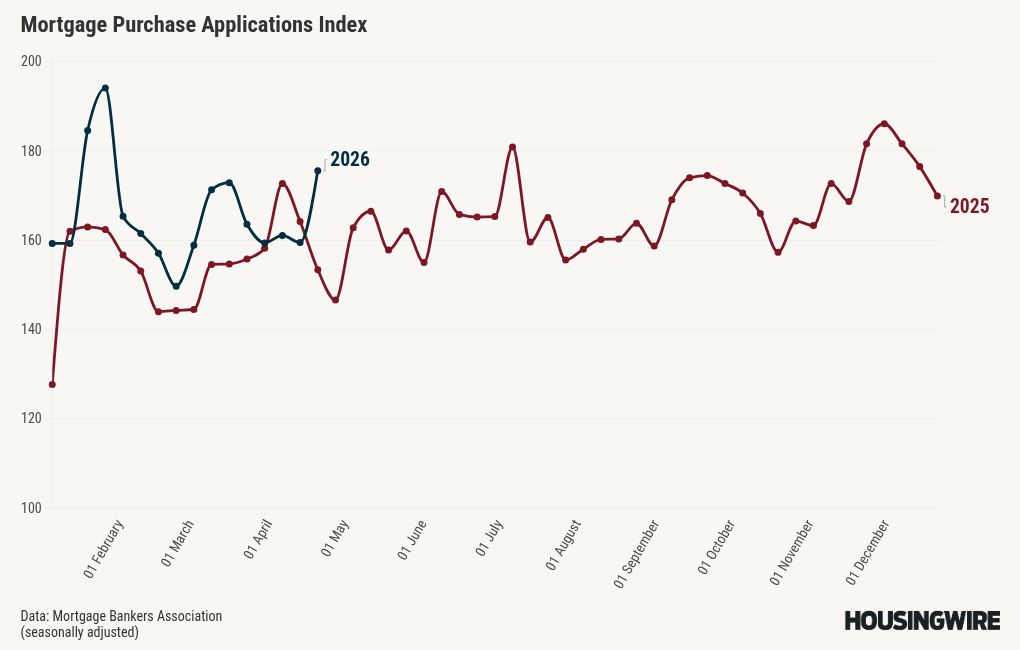
Purchase application data is a forward-looking indicator: growth here leads home sales by roughly 30-90 days. Last week, we saw a 1% week-to-week decline and a 3% year-over-year decline. Higher mortgage rates have impacted this data line, and we aren’t back below 6.25% yet, but this week’s data should be interesting as rates have fallen closer to 6.25%.

For purchase apps, what I really value is at least 12-14 weeks of positive week-to-week data. If we can get that positive week-to-week data to go with year-over-year growth, then we have something cooking. For 2026, we are basically flat on the week-to-week data, while showing positive year-over-year data up until rates rose. 

Here’s 2026 so far:

  • 6 positive week-over-week prints
  • 7 negative week-to-week prints
  • 1 flat week-to-week print
  • 7 weeks of double-digit year-over-year growth
  • 12 weeks of positive year-over-year growth
  • 2 negative year-over-year print

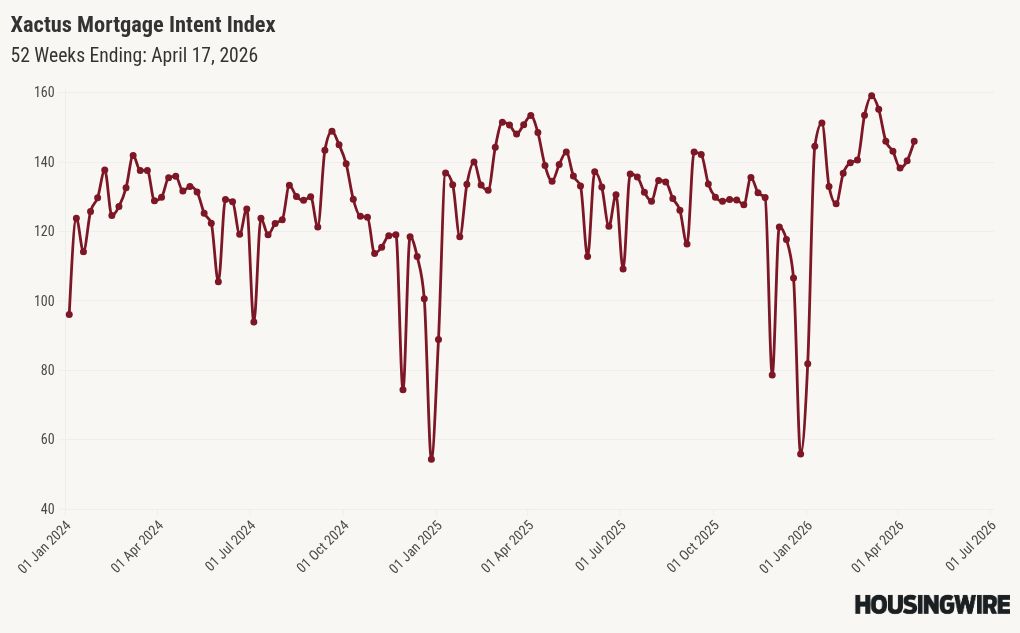
visualization

10-year yield and mortgage rates

In the 2026 HousingWire forecast, I anticipated the following ranges:

  • Mortgage rates between 5.75% and 6.75%
  • The 10-year yield fluctuating between 3.80% and 4.60%

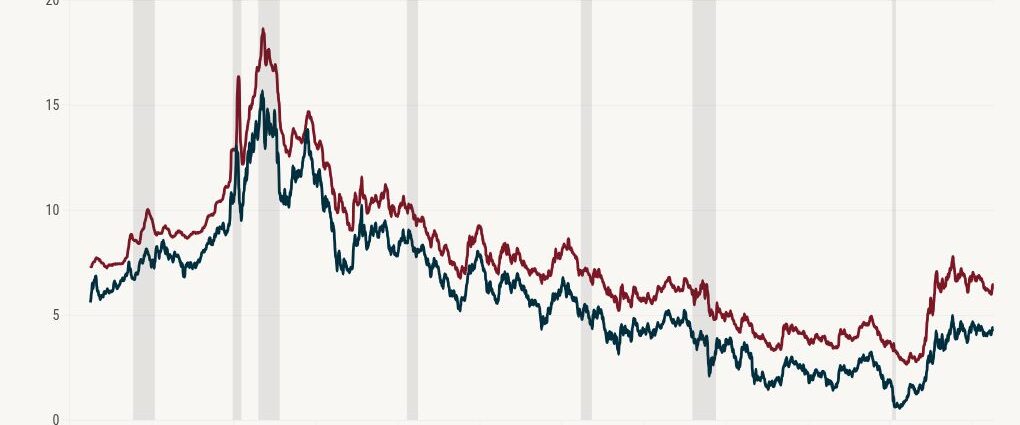
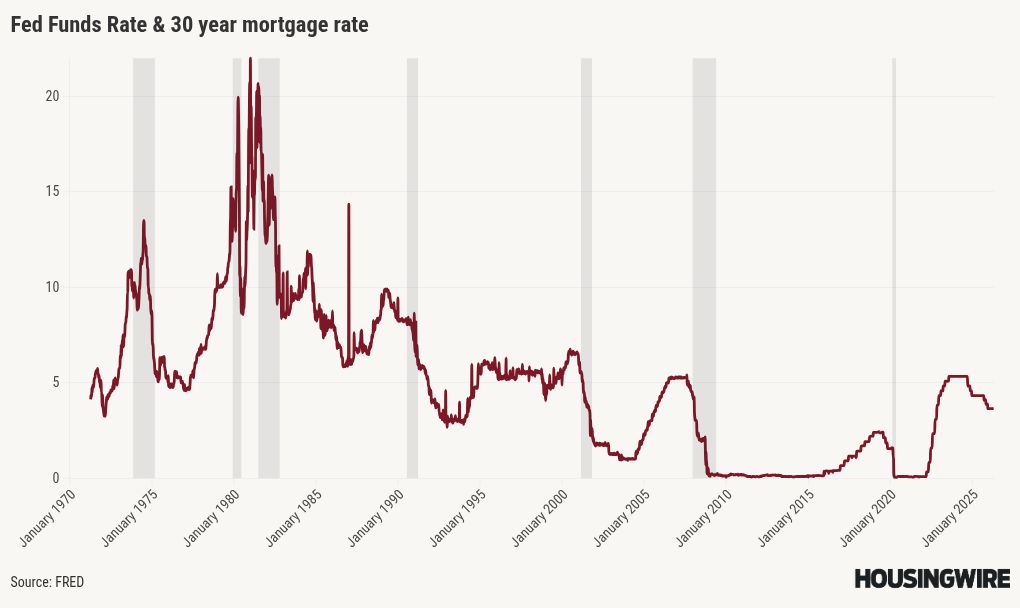
We recently saw a positive move in the 10-year yield and mortgage rates as the bond market has been trying to get ahead of any Iran war deal. Both times we have heard about an end to the Iran conflict, the 10-year yield has gotten back toward 4.24%. Mortgage spreads are also improving, so mortgage rates are closer toward 6.25% now.

We shall see what Monday and this week brings, but for the entire year, we have still stayed within the range I believe we should stay in for 2026 as rates have ranged between 5.98% and 6.64%.

visualization

Mortgage rates ended the week at 6.29% according to Mortgage News Daily and 6.43% according to the Polly rate lock data.

Mortgage spreads

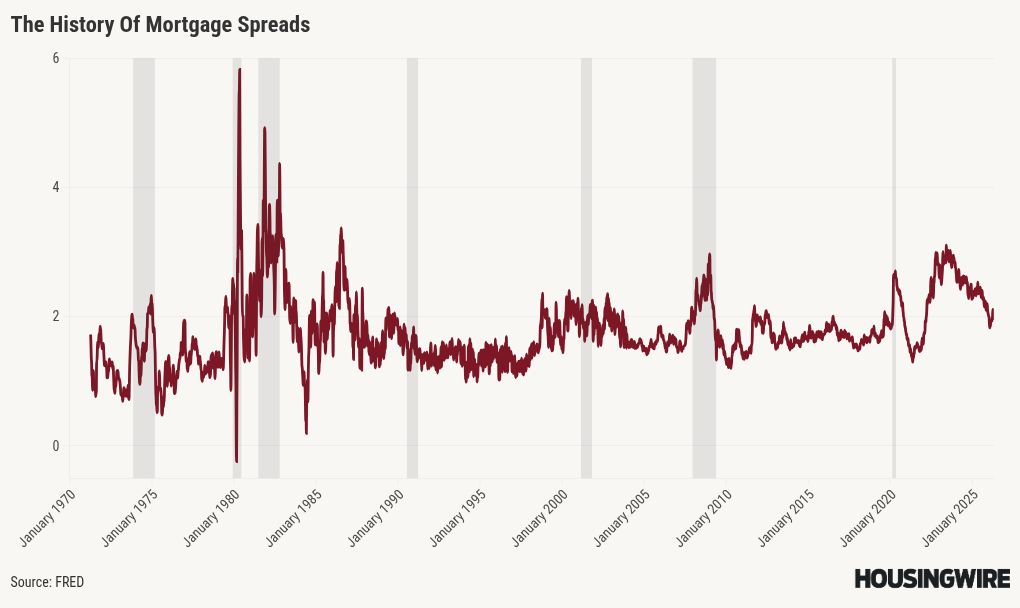
Mortgage spreads remain a positive story for housing in 2026, as mortgage rates would have easily been over 7% in 2023 and 2024, and close to 7% in 2025, given the current 10-year yield level and the worst spread levels back then. The spreads were already deteriorating in February as yields fell, compressing volatility on the downside. The war took the spreads toward 2.11%, but now they are back down to 2%.

visualization

Historically, mortgage spreads have ranged from 1.60% to 1.80%. Last week, spreads closed at 2%, down from 2.05% the week before.

However, I wanted to compare last week’s rates to the worst levels of the spreads over the past three years, given the 10-year yield at its current level.

  • If we had the worst mortgage spread levels of 2023, mortgage rates would be 7.39% today, not 6.29%.
  • If we had the worst levels of 2024, mortgage rates would be 7.02% today.
  • If we had the worst levels of 2025, mortgage rates would be 6.83% today.

Housing inventory

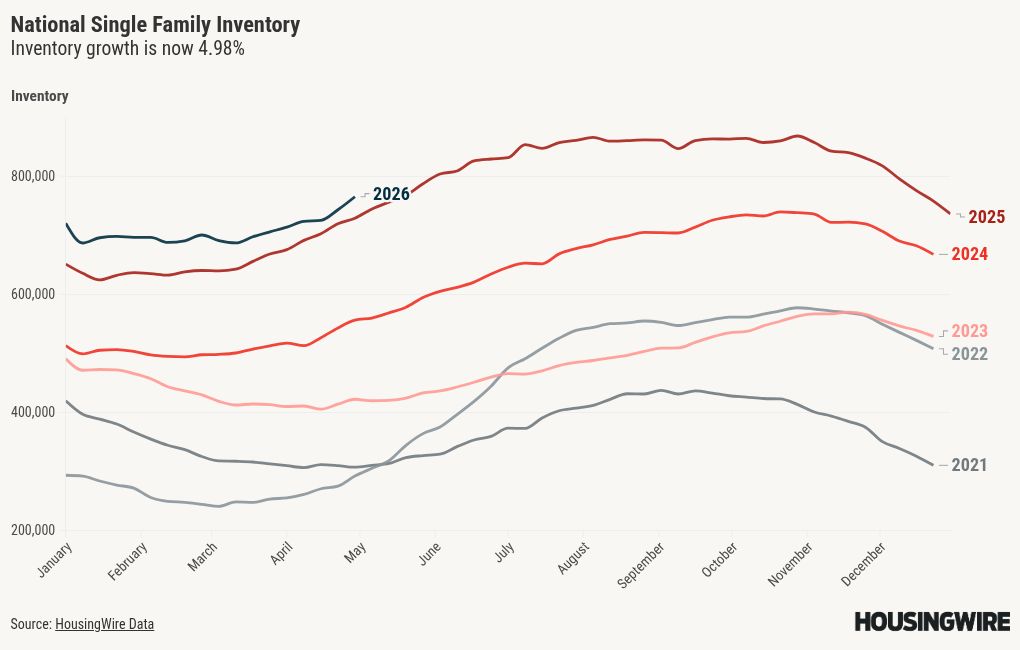
Housing inventory growth was very small two weeks ago, which was impacted by Easter. Now, we have had a solid week of inventory growth, which is the rebound impact, so if you average the two weeks out, the inventory growth story has really stayed the same this year.

We have gone from 33% year-over-year growth in inventory at the highest point in 2025 to 3.21% last week. In the past, inventory growth picked up amid higher mortgage rates, softening demand and rising year-over-year new listings. Even with the Iran conflict pushing rates higher from 5.99% toward 6.64% recently, 2026 has had the lowest rate curve for the housing market to work from since 2022, and rates have not gotten above 7% in a while.

  • Weekly inventory change: (April 10-April 17): Inventory rose from 724,977 to 743,006
  • Same week last year: (April 4-April 11): Inventory rose from  702,436 to 719,403

visualization

New listings

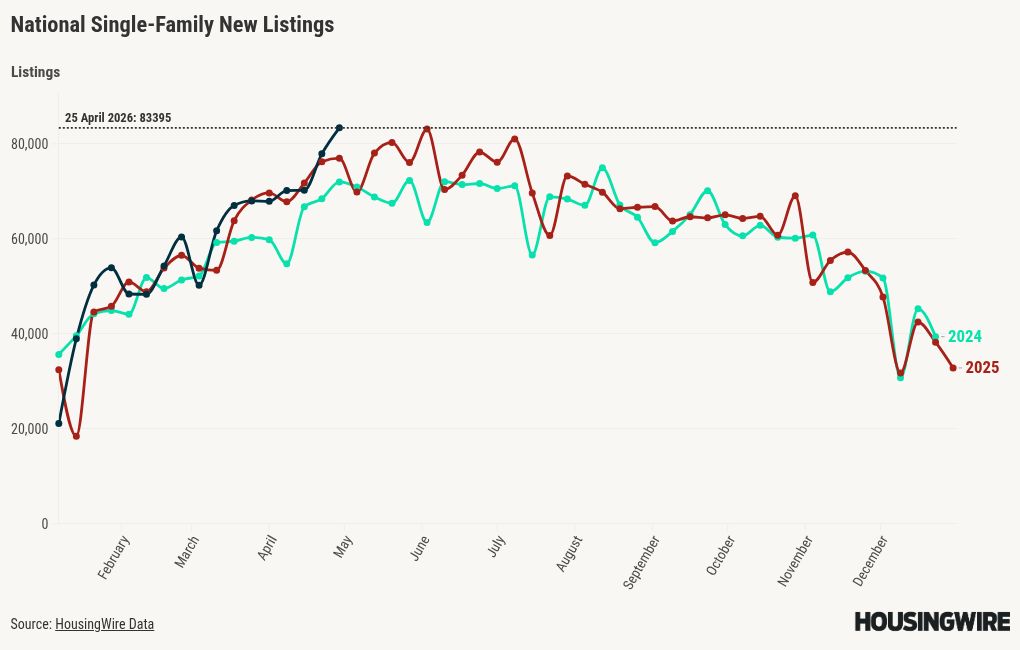
I have been disappointed with the new listings data so far this year, as I was hoping we would see some weeks with new listings ranging from 80,000 to 100,000 during the seasonal peak months, which we would see in a normal year from 2013 to 2019. We should at least get over 80,000 this year, as we did last year, but I’m not sure about growth beyond that.

New listings data had a solid week, rebounding from Easter weekend. And remember, for context on these numbers, during the housing bubble crash, new listings ranged from 250,000 to 400,000 per week for several years.

Here is last week’s new listings data for the past two years:

  • 2026: 77,919
  • 2025: 77,005

visualization

Price-cut percentage

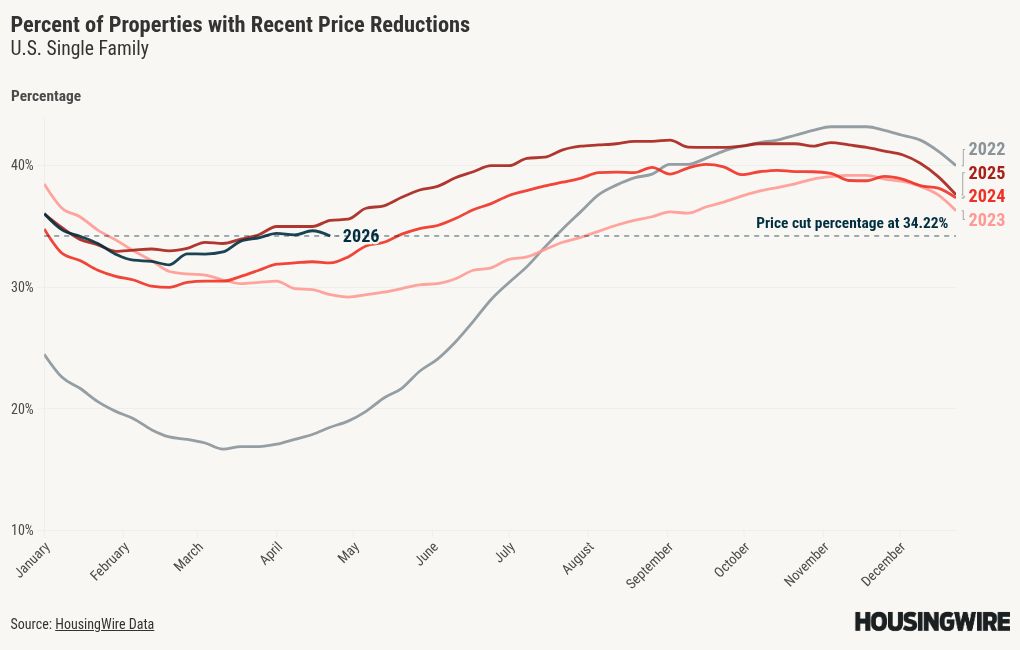
Typically, about one-third of homes undergo price reductions before they sell, reflecting the dynamic nature of the housing market. As mortgage rates and inventory rise together, the percentage of price cuts increases.

In my 2026 home-price forecast, I had a negative 0.62% call for the year nationally. However, mortgage rates were lower than I thought they would be at the start of this year, and the FHFA’s announced purchase of mortgage-backed securities pushed mortgage spreads lower than I expected earlier in the year. I believed we would get toward the 1.80% level later.

The price-cut percentage is slightly lower this year than last, and housing inventory has grown very slowly in 2026. 

The price-cut percentage for last week:

  • 2026: 34.65%
  • 2025: 35%

visualization

The week ahead: Iran, Iran, Iran, retail sales, pending home sales, and more

Of course, the news about the Iran conflict runs the show with the bond market, which impacts housing the most.

This week, we will get our first retail sales report post-oil shock, which could be interesting. Pending home sales from the NAR will also come out. The last two months have been more funky than usual with the NAR pending home sales data; at times when it’s negative, the next month’s existing home sales beat estimates, when it’s positive, the existing home sales miss. So, the recent data has been softer with higher rates. The big story will be any new updates on the news from the Iranian conflict.

This post was originally published on here

For nearly two decades, real estate technology followed a predictable playbook: Build an all-in-one platform that does everything, with the CRM, dialer, transaction management and nurture campaigns all under one roof.

But a quiet reversal is underway. A growing number of agents, teams and brokerages are abandoning general-purpose tools in favor of highly specialized solutions designed to do one thing exceptionally well.

To illustrate this shift, HousingWire sat down with Troy Palmquist, founder of HomeCode Advisors — a peer-driven directory and review platform that helps real estate professionals navigate the fast-growing world of proptech.

Palmquist pointed to a new wave of startups redefining specialization.

“I think Rezora was really the first, the one that kind of made me start really realizing what I was seeing,” he said. “Prospecting can be done 1,000 different ways and much of it can now be automated. With voice and outbound dialing, you have more ability to create specific or niche products that serve the purpose of one type of thing.”

Rezora IO — launched in January — is an artificial intelligence (AI) voice prospecting agent that automatically makes calls, qualifies leads, books meetings and syncs calendars. Company co-founder Aidan Richards said seeing real estate move toward specialized tools was a green flag for product development.

“The whole reason that we built this is there are plenty of companies that offer AI voice agents to make phone calls, but not specifically for real estate agents,” he said. “You can pretty easily and quickly create an AI voice agent, but you have to build it from scratch and test it and deploy it.

“Then on top of that, it’s not going to be able to speak specifically like a Realtor would, handle objections the right way and be personalized for this type of conversation.”

Rezora solved this by building its own large language model trained on more than 60 sales books and thousands of real conversations.

During an alpha test in October 2024, agents saw three times the conversion rate versus manual calling, according to the company.

Specialized tools winning on cost, integration

One concern with specialized tools has always been cost — paying for five niche products instead of one bundled platform.

But Palmquist argues that the math favors specialization, especially when integrations are done right.

“Most of these products aren’t that expensive,” he said. “If you get one listing appointment that you didn’t have because of it, did you get a return in your first 30 days? I’d say yes.”

The key enabler, he said, is open integration.

“The companies that are doing really well and seeing growth right now integrate with everything they can,” Palmquist said. “They go about building with the mindset of, ‘I need to plug into X software so I have the most beneficial product and output for my customer.’”

Richards echoed this philosophy.

“Another goal of ours is to integrate on as many platforms as possible, so adding Rezora to people’s CRMs and to lead generation websites and anywhere that Realtors are already spending time,” he said. “We want it so they don’t also have to sign up for this tool and can continue using it. This is supposed to modify your tech stack and not necessarily add to it.”

‘Amazon for AI voice agents’

What makes this moment different, according to Palmquist, is that many of these specialized tools are genuinely novel.

As for whether larger proptech platforms will simply copy the approach of Rezora and similar specialty tools, Richards is unfazed.

“I’d be surprised if any company really tried to get into this, just because the tech investment and the complexity of the agents is really complicated,” he said. “It’s going to get easier, in a sense, but also, at the same time, we’ve got a pretty substantial headstart in terms of tuning in agents, specifically for real estate.”

The road map, he said, is to become “the Amazon of AI voice agents.”

“It would be where there’s one (agent) for every kind of conversation,” Richards said. “So that means you log on, you pay the regular subscription price, and then it tells you, ‘OK, do you want buyer leads, seller leads, expired listings, open houses, wholesale, circle prospecting? All those are already ready to go.’

“Then, hopefully at that point, we would have been deployed to enough brokerages where they wouldn’t even need to create their own agents, because we can just tweak any of ours a little bit for whatever a Compass wants or whatever an eXp wants.”

For agents tired of bloated dashboards and unused features, the shift toward specialized tools that actually replace — rather than multiply — their tech stack could prove welcome.

This post was originally published on here

While many of the same real estate firms may grace the top echelons of the RealTrends Verified Rankings year after year, that is where, at least for many of these firms, the similarities between them end. From cloud-based to franchise networks, specializations and network approaches the top performing firms include a variety of different business models. HousingWire caught up with the leaders of Sotheby’s International Realty and Keller Williams to find out how their chosen models have contributed to the success of their agents and brokers.

Sotheby’s: synonymous with luxury

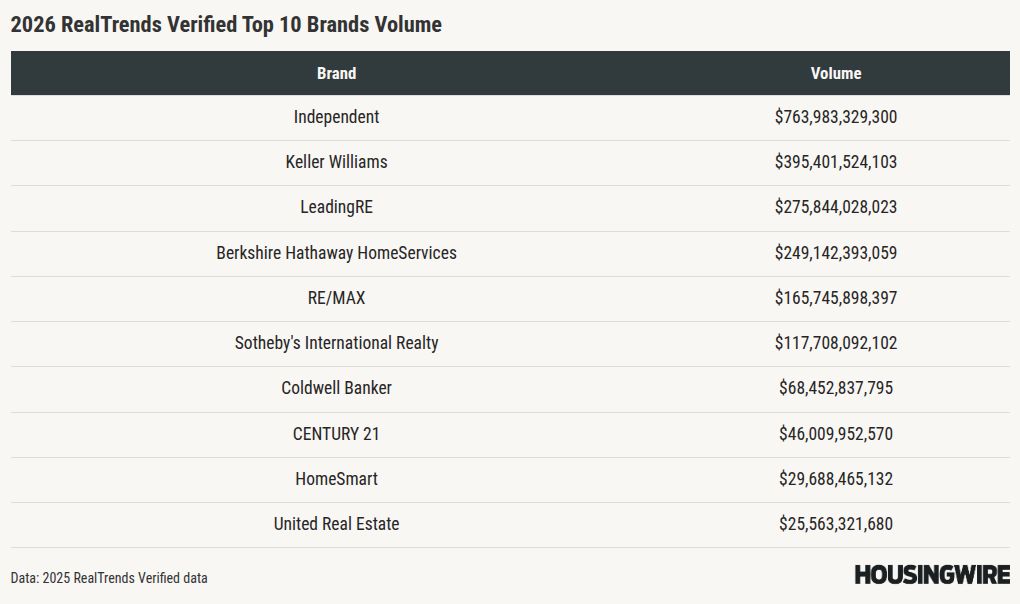
Known for serving luxury clients across the globe, Sotheby’s International Realty claimed the No. 6 spot among the top-performing brands in the 2026 RealTrends Verified Rankings, with agents affiliated with the brand closing $140.316 billion in sales volume in 2025. 

visualization

Phillip White, the brand’s CEO and president attributed his firm’s success to the global interconnectivity his agents have due to Sotheby’s large footprint. 

“Every year, the real estate market becomes more global and our advisors have really capitalized on the flow of referral back and forth,” White said. 

He believes this flow of clients and referrals helped his brand turn out the strong performance it did in 2025, despite overall housing market conditions in the U.S.

“Last year was a really strong year for us, which was somewhat surprising given that the overall market was only up slightly, and we were up almost 10% in just the U.S. alone,” White said. 

He also highlighted the strong focus he and his team have on maintaining a strong identity and service standard across the brand. 

“I always look at things through the eyes of the consumer and our goal has always been to have a seamless experience for that consumer no matter where in the world they are,” he said. “It is very important for a luxury brand to deliver a close to the same experience from one market to the next.”

According to White, luxury real estate consumers expect a certain level of service.

“In the luxury market it, is really important that you are not providing a cookie cutter experience,” he said. “It is a lot more bespoke and tailored to their individual needs.” 

By focusing solely on luxury consumers, White and his team at Sotheby’s have been able to create experiences and a level of service that luxury clients like and can depend upon.

“That’s how we are able to win the trust of the clientele,” White said. “I think our advantage is that we don’t have to be all things to all people. We have our niche, which is luxury, and we are able to do that really well. We continue to refine what we do and we can do that because we are not trying to cater to everybody.” 

White said this has allowed Sotheby’s to perfect certain parts of the real estate business that matter most to luxury clients, helping the brand attract more and more buyers and sellers. 

“We don’t waste our time on things that we are not necessarily going to be the best at,” he said. “We stick to our lane.” 

For Sotheby’s, finding that niche has been a key to success and White believes a similar strategy can work for any brokerage or agent. But when it comes to figuring out which fits you or your firm the best, White said you must figure out what “fits your heart.” 

“Luxury isn’t for everybody and that is ok,” he said. “You have to follow your dream and your passion, whether that be a specific type of real estate or a service you want to provide, but you need to find that segment and then figure out how best to serve it and if you can scale your business in that space.” 

Once those things are in order, the sky, according to White, is the limit. 

Keller Williams is in the people development business

Real estate franchisor Keller Williams yet again came out of the RealTrends Verified Rankings as the No. 1 brand in the nation by both transaction side count (837,323 sides) and sales volume ($383.086 billion), capturing 20.4% of the market share. 

John Clidy, Keller Williams’ vice president of regional growth, attributes this success to the company’s focus on agent training and education

“Training is paramount,” he said. “At KW, whether you are a new agent or a $100 million producer, there is a training program for you. Over the years, there has been a lot of noise and competition, but we have continued to pour into our people, meet them where they are today and help them get where they want to go next. Everyone is doing all kinds of stuff out there to win, but we just keep developing people and keep training.”  

Clidy said he believes the continued success of Keller Williams’ agents shows that this education-focused model is still relevant. Additionally, he believes a franchise brand is uniquely positioned to provide franchisees with independence and the ability to grow their own companies, while still providing them with valuable support. 

“When you speak to independent companies right now, they are nervous about what the future will be. What will be the next lawsuit? Or, how do I recruit and retain agents in the current environment?” he said. “But we teach that through our community and our culture. That really helps us continue to attract and retain agents.” 

He added that franchises also have systems in place showing franchisees and their agents how to operate a successful business, instead of leaving them to their own devices as they work to get their businesses off the ground. 

“A lot of mega agents and independents that aren’t in a franchise model will ask us how we do things because every time they take on a new endeavor, they are reinventing the wheel. They don’t [always] have the systems or technology in place that we can afford to have because of our model,” Clidy said. 

But while Clidy is a major proponent of the franchise model, he believes that any brokerage model can be successful, but that success depends on the agents. 

“The professional agent will always win,” he said. “They are organized, they know what they are doing, their marketing is in place, they understand the market at a high level. If you have all of those elements in place with the support of your brokerage, that’s where you see firms like us and other brands succeed because we’ve been able to build a great brand with a culture of success.” 

Whether it’s luxury branding, agent count, franchise scale or tight-market specialization, the top performers show that success isn’t tied to a single blueprint — it’s built on clarity, consistency and the ability to adapt as the market shifts. The firms that rise to the top aren’t the ones that look the same, but the ones that know exactly who they are and lean into it.

This post was originally published on here

I became a grandma recently, which has been equal parts magical … and also mildly humiliating. Because apparently, everything we did thirty years ago is now wrong. Like, way wrong. I marvel that my daughter survived to age one.

Put the baby on their stomach? Wrong. Kiss that baby on the face? Not yet, Grandma. Add a blanket and a stuffed animal to the crib? Horrors. Let them cry it out for a few minutes? Essentially a felony.

I did manage to bite my tongue before saying “But we did it this way and you turned out ok …” which I’ve learned, is not considered a compelling, data-grounded argument in 2026.

And honestly?  They aren’t wrong.

Today’s parents have more data, more tools, more access to information – and as a result, they are making different, often better decisions. Not because the old ways were foolish or bad … but because we know more now.

So it got me thinking.

If we can see how parenting tactics have evolved with better information and the ability to look back and see what worked well and what didn’t … why do we still make some of the same mistakes in the mortgage industry that we were making back in 1995?

If there’s one thing that becoming a grandma (“Gigi,” for the record) has reinforced for me, it’s that just because something worked in the past, it doesn’t mean it’s still the best way to do it. And yet, we cling to our old habits like comfy security blankets.

Some of that is understandable, as this is a high-stakes business with much on the line, and old habits that have served well over the market cycles are hard to shed. But some of those old ways of thinking may be costing us growth, talent, revenues and relevance. And this market has exposed some of the places where we simply must evolve.

Here are three places where I think we’re still getting it wrong – and one where I think we are finally doing it exactly right.

Over-reliance on top producers instead of building systems

We know the stats: 30% of loan officers are doing 70% of the production, year after year (InGenius). So we chase them, give big signing bonuses, build entire strategies around making sure they are happy and never want to leave us. But this isn’t a growth strategy, it’s a dependency.

Don’t get me wrong. While I might not have originated enough to be listed in the new HousingWire Mortgage Rankings, I was a decent MLO in my own right – and I have a lot of respect and love for the hard work originators do. 

But I will suggest that the best companies out there have shifted to creating repeatable systems and best practices – supported by technology – that create more consistency and raise up better producers across the board. Think playbooks over personalities. I’ve also found that the best of the best top producers are surprisingly generous, and generally willing to help capture their best practices and habits to help lift others around them.

Designing around the company rather than the customer

Every single mortgage company website says they are customer-centric, customer first, customer is numero uno. But then the processes, tech interfaces and communications are built to make sense for the company, internally. But not externally, to that customer to whom each mortgage company has pledged their undying love and affection. 

Today’s consumer has an expectation of an easy-to-understand process that helps build understanding and trust – and when that isn’t delivered, they notice.

Secret shopping results show that the customer experience in mortgage still has a whole lot to be desired. Not to mention the miserable repeat and retention rates that still hover darn close to 18%, according to the MBA. Where is the love, and what to do?

Test out your process, end to end – and not with an internal eye, but purely the view from the prospect or customer seat. Secret shop in earnest. Survey your customers. And most importantly, stare your results in the face, and be relentless about not just removing friction points – but considering the ways you can delight your customer.  

Underestimating the speed of technology adoption … including AI

AI isn’t coming soon – it’s here, and it’s already infiltrating many unexpected nooks and crannies of our personal and professional lives.  

Yet I know a lot of brilliant, experienced mortgage professionals, from the executive suite to the front lines, who are simply overwhelmed trying to keep up.

Last fall, Ruth Porat, president and CIO of Google and Alphabet talked about AI, stating “I think of it as a time where there are two speeds. One is the speed of change, the speed of breakthroughs, the science that we’re seeing, but the other really important part is a slower speed. And that’s the speed of adoption in a truly substantive way so that each one of us can have that economic uplift that AI offers.” 

So well said – the pace of innovation is far faster than the speed at which humans can adopt it, and it doesn’t seem to be slowing down any time soon.

So what are smart lenders doing? Starting small, but starting immediately. They are building internal AI task forces that include participants from each major department – both to watch for unintended consequences, help find adoption best practices, and to create internal champions to help buy-in across the company. They are focusing on applications that support and serve their staff, not replacing them. That day will come and not just in mortgage, but that’s a topic for a different day.  

And … have patience. Many employees are wildly stressed by technology change, particularly AI. Take adequate time to help them understand the why, learn and adopt.

So what are we getting right?

This challenging market that seems never-ending has driven us to question everything. And this is a very good thing. Putting everything on the table and questioning if there is a better way. Pushing back on long held assumptions that things need to be done this way … because it’s always been done this way. Developing an openness to new technologies, new partnerships, new ways of working. A willingness to embrace data and take significant action. Making daily learning and listening a must do, not a sometimes do. 

Attending industry events and not just sitting in the sessions scrolling on our phones, but intentionally bringing meaningful strategic learnings and actions back to the team. Learning from the past and what worked well but actively questioning, seeking out and embracing the new.

So 30 years ago, we did our best with what we knew at the time – and we and our children and our industry amazingly survived. But it turns out that “we’ve always done it this way and survived” isn’t really a great strategy, in parenting or in the mortgage industry. 

A new generation can make different choices, building on what we did in the past, with better information, tools, technology, data and insights. It’s not a rejection of the past, but it is wisely and continually building on it. Growth will come from a willingness to question, tweak, learn, measure, adjust and keep trying. And for us old dogs, being willing to admit that in plenty of cases, the new ways are actually much better.

Even if it means that from time to time, this Grandma will have to keep her parenting opinions to herself.

This post was originally published on here

The U.S. housing market is chronically underbuilt, resulting in a decades-long shortage. Burdensome regulations take part of the blame, but they are not the only cause.

A new report from the Federal Reserve Bank of St. Louis indicates that regulations are just one piece of the puzzle. Labor shortages, land constraints, and rising building, borrowing and material costs are also to blame. These factors can delay approved residential projects or kill them altogether.

The report dives into how America’s housing shortage is decades in the making. Permitting activity reached its peak in the early 1970s at 10.6 building permits per 1,000 people. After a period of volatility in the 1980s and 1990s, permits began to climb, only to crash after the financial crisis of the late 2000s.

There’s been an uptick in permits and authorizations since the Great Recession, but the authors of the report, Manu Garcia and Carlos Garriga, called this an “incomplete recovery.” Single-family permits are at 2.9 per 1,000 people, short of the historic average of 4.1, according to the report. 

“Despite over a decade of recovery, total permits per capita in 2024 stand at 4.3 per 1,000 — still 35% below the 1960-2000 average of 6.6 permits per 1,000. The U.S. is building less housing per person than at almost any point in the postwar era,” the report explains. 

To exemplify the nation’s housing deficit, the report noted that the homeowner vacancy rate was just 0.95% in 2024, the lowest on record and down from a peak of 2.9% in 2008. This rate has since risen to 1.2% but is still well below its historic average. 

Non-regulatory barriers 

Estimates typically put the U.S. housing shortage at between 1.5 million and 4 million homes, although the Fed report offered no figure of its own. Instead, it focused on underlying causes. 

One of these causes is the plummeting household size, which has fallen from roughly 3.4 people in 1960 to just over 2.5 people in 2026. 

Some research indicates that the typical household size could fall even further. The National Association of Realtors2026 Home Buyers and Sellers Generational Trends Report found that 53% of Gen Z buyers — the oldest of whom are approaching 30 years old — bought a home on their own. 

“As average household sizes shrink and the desire for independent living grows, a ‘static’ housing stock effectively becomes a shrinking one,” the Fed report cautioned.

It also pointed to the “leaky pipe” of supply, highlighting barriers to completing construction once a builder or developer obtains a permit. The data indicates a persistent lag as the number of permits issued exceeds the number of completions. 

Getting projects approved, entitled and permitted is just part of the battle. Many projects that make it to this stage can stall for years or even fail to move ahead altogether. 

This issue was particularly pronounced in the years following the COVID-19 pandemic. The number of building permits issued spiked between the second half of 2020 and the start of 2022. Builders and developers secured many permits during this period that have yet to be converted into more new housing units. 

Anyone who’s observed development project timelines and approvals knows that many of these projects died due to high costs. Borrowing costs, temporarily lowered during the pandemic, skyrocketed in 2022 and have since remained elevated. Inflation and supply chain disruptions, combined with a chronic labor shortage in the trades, also made building more expensive.

As housing became more costly to finance and construct, some developers and builders found that the rents or sales prices needed to support these projects weren’t viable. 

“Completions lagged as builders faced unprecedented supply chain disruptions and labor shortages,” the report noted. 

But the authors also noted that per-capita home completions reached 4.77 in 2024, while permits came in at 4.33 — marking the first time since 2010 that permits trailed completions on a per-capita basis.

Local regulations remain a hurdle

The authors additionally highlighted local regulatory barriers to construction, such as zoning restrictions and lengthy approval and permitting timelines. There’s been a wave of state and municipal reforms aimed at streamlining construction, including zoning overhauls and efforts to legalize more attainable housing options, such as single-room occupancy

For example, a recent bill signed into law by Idaho Gov. Brad Little restricted some local limits for starter-home subdivisions while granting local governments more power to implement missing-middle housing plans. 

Additionally, many large cities like Seattle, Austin, Honolulu and Los Angeles have adopted AI to streamline permitting and approval processes, often shortening review periods by days or weeks. 

The findings from the Federal Reserve Bank of St. Louis complement a recent White House report that outlined chronic underbuilding across the nation. That report mainly pointed to overregulation as the main cause of the country’s housing shortage. But it estimated that the real housing deficit was around 10 million single-family homes — much larger than most contemporary estimates. 

This post was originally published on here

Virginia Gov. Abigail Spanberger left in limbo legislation that would let faith-based organizations build affordable housing on their land without rezoning.

Instead of vetoing or signing the Faith in Housing Act, Spanberger recommended changes. The recommendations keep the bill’s core intact but make targeted operational tweaks.

The governor, who has only been in office since January, made improved housing affordability a major campaign theme. Her first legislative push had mixed results. Local governments defeated a proposal to allow multifamily housing by right in many commercially zoned areas.

Since the faith-based bill passed more than a week ago, local governments have pressured the governor to veto it. At the same time, she has heard from pro-housing and faith-based organizations urging her to make it law. The measure would put Virginia among the few states with a “Yes in God’s Backyard” policy that permits faith-based housing development by right.

“The governor’s amendments make some narrow adjustments, and like most legislation, there’s still room for improvement,” Jessica Sarriot, a co-lead organizer for Virginians Organized for Interfaith Community Engagement (VOICE), told HousingWire‘s The Builder’s Daily. “But this creates a strong foundation and we’re ready to move forward.”

Virginia legislators will consider the recommendations when they reconvene April 22. Even if they reject them, Spanberger can still sign the original bill.

Tweaks to the Faith in Housing Act

Spanberger proposed easing the bill’s infrastructure test. She would replace the 500-foot water and sewer rule with a broader service-or-planned-service standard. She also reinforced safeguards by clarifying that projects must follow environmental, historic, siting and archaeological laws and regulations that apply to similar developments.

On building form, Spanberger narrowed height flexibility. She excluded buildings with special-exception height from the tallest-building comparison baseline. Her recommendations would also give historic districts more control by letting existing historic-district regulations set maximum building heights in these areas.

She broadened pro-housing tools for local planners by allowing higher minimum housing densities in revitalization, transit, and small-area or sector-plan districts.

To address process concerns, she proposed streamlining approvals. Qualifying projects would be deemed “substantially in accord” with local comprehensive plans, limiting plan-consistency challenges.

She also reinforced the bill’s implementation focus by urging tax-exempt religious and nonprofit landowners to consult state housing resources when planning affordable housing on their properties.

This post was originally published on here

While the mortgage industry lobbies to reduce credit report costs, the idea of allowing borrowers to use the same file across multiple lenders has slowly emerged.

In this consumer-controlled portable credit report model, borrowers would authorize the use of a single credit report during their mortgage search across different lenders. The concept mirrors tenant screening reports — a reusable, renter-obtained background check shared with multiple landlords, often within a 30-day period.

Mortgage industry proponents say the change would reduce the need for lenders to pull credit reports that ultimately fail to result in closed loan originations while also empowering customers. Credit reporting industry representatives, however, view the model as an open door for fraud and have showed skepticism from the start. 

The Broker Action Coalition (BAC) noted in a February letter to the Federal Housing Finance Agency (FHFA) that consumers have their credit pulled an average of 2.5 times when getting a mortgage. Reducing this to a single pull would effectively lower the aggregate cost of credit reports from roughly $150 to $60 for the consumer, the group said.

“I don’t think it solves all of our problems; it’s more than a Band-Aid solution, though,” Brendan McKay, president of advocacy at the BAC, said in an interview with HousingWire.

“Right now, if a consumer comes to me and says, ‘Hey, I want to get preapproved, but I just had my credit pulled by a lender down the street. Can you just use that credit report I paid for?’ the answer is no, and for no good reason. Either I have to pay $150, or they have to pay $150, to pull a report with the exact same information on it.”

Under the proposal, a borrower would pull and pay for their own credit report, then distribute it with multiple mortgage companies by sharing a credit reference number, McKay said. Lenders would then import the credit report directly into their systems.

“It’s not going to drive down the cost of credit, but it will reduce the number of credit reports that are pulled wastefully,” McKay said. He added that his broker shop spends $30,000 a year on credit reports for mortgages that don’t close.

Under the Fair Credit Reporting Act (FCRA), lenders can currently share borrower credit reports with third parties like investors only if they have a permissible purpose. Lenders often incur additional “secondary use” fees from credit bureaus for each party that accesses the report. They frequently pass these costs to the borrower as part of the application or origination fees.

“When lenders began to reissue a credit report to various lenders through Fannie Mae and the Federal Housing Administration, the reissue fees were put in place,” an executive in the credit reporting industry said. “The bureaus also must post a hard inquiry to every lender whose report is shared. Clearly, they are not going to do that without a revenue game.”

Current context

The portable credit report concept recently emerged when the Consumer Financial Protection Bureau (CFPB), under former Director Rohit Chopra, debated the Personal Financial Data Rights Rule. The rule established an open banking framework, but the bureau vacated it last year. 

Mortgage professionals view the model as an interesting idea but argue it lacks sufficient research and faces a difficult context, making it hard to support. 

“My overarching concern is that adding a new variable into the mix with credit reports, when we are already beginning to explore other variables, could start to become destabilizing for the housing market,” said Taylor Stork, president of the Community Home Lenders of America. “The industry in general needs to figure out how the impact of VantageScore 4.0 and FICO 10T hits the rate sheets.”

There are also questions about operational challenges — for example, how sharing the information with multiple lender would affect credit scores.

“Portable credit reports are a novel and compelling idea with clear potential benefits for the consumer experience,” Stork said. “At the same time, we need more clarity on key operational and risk considerations. For example, the process today includes verifying inquiries to ensure the borrower hasn’t opened new credit across multiple lenders.

“As we evaluate a portable model, a concern might be how those safeguards would work. With that clarity, the industry can better assess the concept.”

Eric Ellman, president of the National Consumer Reporting Association (NCRA), raised concerns about fraud.

“We are obviously very focused on fraud prevention; artificial intelligence and other technology are making it so much harder to fight fraud — and conversely, making it so much easier to commit and perpetuate fraud — that anything that has the capacity to inject more fraud into the system is going to be a significant problem,” Ellman said.

For McKay, portable credit reports would remove a significant financial barrier for consumers facing a challenging path to homeownership. Borrowers are more likely to persist rather than exit the process prematurely when each additional attempt no longer requires another $150 simply to assess eligibility.

“It is time to give consumers meaningful control over their credit reports,” he said. 

This post was originally published on here

Homeowners associations (HOAs) filed 284,933 liens against U.S. homeowners in 2025 — an 8.6% increase from the 262,446 filings in 2024 and the equivalent of roughly one lien recorded every 90 seconds — according to property records compiled by Benutech.

An HOA lien is a legal claim placed on a property when an owner falls behind on assessments, fees or fines. In many states, these liens can be enforced through foreclosure.

The increase in lien activity was not evenly spread across the year. Benutech’s data shows the steepest year-over-year gains in the summer and fall months, when many associations move from delinquency notices to legal enforcement tied to their annual budget and assessment cycles.

June lien filings rose 21% year over year, from 20,737 in 2024 to 25,092 in 2025. December showed a similarly large jump of 19.4%. July remained the busiest month for both years, climbing to 31,710 liens in 2025, up 12.6%.

Florida, Texas, California, Georgia and Arizona together account for more than half of all HOA liens filed nationally, reflecting the dominance of HOA-governed communities in fast-growing Sun Belt markets.

Florida retains top spot for HOA lien volume

Florida continued to lead the nation in HOA lien activity with 49,447 filings in 2025, representing 17.4% of all U.S. HOA liens tracked. That total was up 9.9% from 45,012 in 2024. December 2025 was a particular outlier in Florida, with 34.4% more filings than in December 2024.

Louisiana recorded the most dramatic escalation in HOA lien activity. Statewide filings nearly tripled, rising 178.9% from 2,345 in 2024 to 6,541 in 2025, according to Benutech’s data.

The surge was concentrated in the second half of the year. November 2025 saw 2,062 liens, up 672% annually. October filings rose 295% year over year. The numbers suggest either a change in enforcement behavior or a structural shift in the market for HOA-governed housing in the state’s suburban parishes.

Benutech’s analysis notes that potential drivers include regulatory changes affecting association collections, rapid HOA formation in new subdivisions, and lingering financial pressure in communities hit by recent hurricanes. For lenders and servicers with exposure in Louisiana, the pattern points to a need for closer monitoring of HOA practices and borrower ability to keep up with non-mortgage housing obligations.

Colorado logged 7,679 HOA liens in 2025, up 74% from 4,413 in 2024. Unlike most states, where filings tend to follow predictable seasonal patterns, Colorado’s increases were broad-based and intensified through the back half of the year.

August lien filings in Colorado rose 146% year over year, while September’s figure was up 164% and October’s climbed 152%. With rapid population growth along the Front Range and a large pipeline of new HOA-governed communities, the state’s numbers suggest that rising dues, higher insurance and maintenance costs, and tighter association enforcement are converging.

Maryland’s HOA lien volume increased nearly 30% in 2025, from 12,432 to 16,123 filings. Unlike Louisiana’s spike pattern, Maryland saw consistent month-over-month growth throughout the year. February filings rose 56% over the same month in 2024, March’s figure increased 58%, July’s was up 50% and December’s climbed 56%.

Where HOA liens are falling

Ten states recorded fewer HOA liens in 2025 than in 2024, according to Benutech, offering a counterpoint to the national trend.

Missouri’s decline stands out because of its volume. The state posted 886 fewer liens, a 14.6% drop from a relatively high base. Activity was sharply lower in the first half of 2025 before reversing course later in the year.

New York also saw an 18% decline in HOA lien filings. That could be tied to the state’s governance structure and regulatory framework, including the prevalence of co-ops and stricter rules around common interest communities, which tend to reduce the use and frequency of liens compared with Sun Belt HOA models built around single-family subdivisions.

Benutech attributed the 8.6% national increase — nearly 23,000 additional liens in 2025 — to several overlapping factors. These include growth in HOA-governed communities following post-pandemic construction in Sun Belt states, rising non-mortgage housing costs that have driven up dues, and special assessments and limited exit options for financially strained homeowners locked into low-rate mortgages.

The data also shows filings tend to spike in the second half of the year, reflecting association collection cycles as delinquencies accumulate before advancing to legal action.

This article was generated using HousingWire Automation and reviewed by a HousingWire editor before publication. The system helps convert company announcements and industry data into HousingWire-style news coverage.

This post was originally published on here

Tri Pointe Homes shareholders overwhelmingly voted to approved the previously announced merger with Japanese firm Sumitomo Forestry during a special meeting of stockholders held on Thursday. 

While the deal is not yet finalized, the acquisition is expected to close sometime during the second quarter, according to the initial merger announcement. 

Sumitomo Forestry confirmed the vote in an announcement, and Tri Pointe Homes revealed further details in an 8-K filing with the Securities and Exchange Commission (SEC). The two companies announced the $4.5 billion all-cash acquisition in February.

According to the SEC filing, about 78% of the company’s 85,135,564 shares of common stock were represented in person or by proxy at Thursday’s special meeting. Of the shares that were represented at the meeting, 99.99% voted in favor of a proposition supporting the merger. 

The vote came shortly before the waiting period for the merger — which is mandated under the Hart-Scott-Rodino Antitrust Improvements Act of 1976 — expired at 11:59 p.m. ET on April 16. 

The merger’s completion is still contingent on other conditions set out in the agreement, and the SEC filings did not include an expected closing date. After the merger is complete, Tri Pointe Homes will go private, meaning its scheduled April 23 earnings call for the first quarter of 2026 could be its last as a public firm.

Once the Tri Pointe Homes and Sumitomo Forestry merger is finalized, Japanese companies are expected to account for about 6% of home construction in the U.S. Japanese builders, motivated by a declining domestic population, are increasingly looking to international markets for expansion opportunities. 

Tokyo-based Hajime Construction became the latest Japanese firm to scoop up an American homebuilder after acquiring a 51% equity stake in Utah builder Wright Homes in March. 

This post was originally published on here

A Q1 fraud report from FundingShield found that 43.72% of transactions within a $106.7 billion portfolio were flagged for issues posing significant wire and title fraud risks — with each problematic loan showing 2.2 issues on average.

The report showed closing protection letter (CPL) related discrepancies in 43.49% of transactions, with defects concentrated in borrower data, vesting information, titleholder details and property identifiers.

Wire instruction defects were present in 6.92% of transactions, while licensing irregularities remained at 2.37%.

Despite a 10.86% quarter-over-quarter improvement in CPL issues, FundingShield President Adam Chaudhary said disconnected systems will continue to present challenges.

“It really comes down to disparate systems, inconsistent definitions of what the data is that we’re supposed to be opting into and using, and also the manual nature of data movement,” he said. “There is no single central repository in the title world as to how you generate docs and how the title insurer systems allow and permit those docs. It’s very disjointed on that side of the world.

“Lenders and investors often do not realize there is a lot of trust being placed in title companies to produce and generate those documents, but there’s not a lot of controls around it.”

The solution, Chaudhary said, is getting into the data flow earlier.

“We’re clearing up discrepancies earlier, before you close, not letting that become a post-closing trailing doc issue,” he said.

Agent liability for title company breaches?

The report noted that new federal directives increased pressure on lenders to strengthen data accuracy and vendor oversight — with heightened scrutiny of vendor layer cyber resilience as attacks on title and settlement firms continued to rise.

When asked whether a real estate agent could face regulatory exposure or liability for recommending a title company that later suffers a wire fraud breach, Chaudhary said the legal landscape remains unsettled.

“The biggest source of driving a regulation is if there’s recourse that can actually be collected,” he said. “If you have a regulation that has teeth and penalties and a party can’t be collected against, there’s really no point. It’s all fluff.”

He noted that since the post-crisis era, banks have taken on much of this liability, but the proliferation of independent mortgage bank transactions has shifted some risk.

“There’s still not a hard line, no direct regulation in most states that says that party is responsible on the real estate side or the title side,” said Chaudhary. “If they’re doing consumer-direct activities, that’s a little bit different. But typically, the real estate side is directing it.

“The [real estate professional] is saying, ‘Hey, let’s go open escrow. I know this person, let’s do this transaction in this fashion.’ That gap still exists in terms of where the recourse is for the consumer.”

Chaudhary said consumer protections for real estate fraud could widen in the near-future.

“We do think that there needs to be a baseline element of reasonable levels of diligence,” he said. “We’re seeing the bigger platforms talk about that. On the real estate side, is there some sort of basic check they can do, or validation source they can hit? We think it’s important for that validation source to not be paid for by [real estate professionals] to vet or approve title companies. We don’t think having a pay-for model to be approved like Angie’s List works.

“We think it has to be a diligent system that’s paid for by the parties themselves. So, there’s a fee or something else that gets assessed to access and confirm the parties you’re working with have been validated.”

Embedded solutions expand title access

The report highlighted growth in FundingShield’s TitleKnight and TitleShield offerings as lenders sought standardized, embedded solutions.

Chaudhary clarified that “embedded” does not mean steering borrowers away from independent title agencies.

“When we say embedded, we don’t mean providing access to one title company or one party,” he said. “We mean building in these verification flows and validation flows allowing parties to freely operate using a trusted intelligence layer. We’re an embedded infrastructure layer within the actual production system that’s tying those two disparate worlds together — title and lending worlds.

“It improves the chances for compliant, good standing, properly licensed, high quality producing agents to get the deals and have them go through faster, not the other way around.”

The cost of reputational damage

The report concluded that lenders are increasingly adopting real-time, source-data validation frameworks, with clients seeing return-on-investment (ROI) of up to 400% across 2025.

Chaudhary said the single most cost-effective control for agents is real-time, transaction-level risk remediation.

He broke down the risks into financial, reputational and insurance-related costs — with reputational risk overriding all others.

“When these events happen, the true cost of ROI of not having one of the events versus having one is hard to quantify for most boards until they have one,” Chaudhary said. “It’s Secret Service and FBI involvement in your operations. It’s reinstatement of insurance policies, if you can get them back. In the lending world, can I sell to Fannie and Freddie?”

He added that even if funds are recovered, there are hard dollar costs and considerable time spent rebuilding trust with counterparties and auditors.

“That’s why we think a per transaction, per data change — that our clients can adjust and calibrate the way they want done in real time with traceable and trackable data, leveraging source data — is the way to go.”

This post was originally published on here

Maine Gov. Janet Mills this week signed LD 1901, making Maine the first state to enact comprehensive consumer protections for home equity investments (HEIs), which the new law defines as “shared appreciation mortgage loans.”

The bill, titled “An Act to Regulate Shared Appreciation Agreements Relating to Residential Property,” establishes guardrails around a growing class of home equity-based products that offer cash upfront in exchange for a share of a home’s future value. The law targets features that advocacy groups like the National Consumer Law Center (NCLC) say can lead to large, unpredictable lump-sum payments and forced home sales.

HEI arrangements generally allow homeowners to tap equity with no monthly payments, repaying the provider when the home is sold or refinanced, or when the borrower dies. The payoff amount is tied to the home’s future value, meaning it is unknown when the agreement is signed. According to an NCLC press release, the balloon payments can reach tens or even hundreds of thousands of dollars above the initial cash advance, stripping equity needed for retirement, health care or intergenerational wealth transfers.

“With the signing of this groundbreaking bill, Governor Janet Mills brings transparency and fairness to the home equity investment loan process,” Andrea Bopp Stark, senior attorney at NCLC, said in a statement. “This legislation applies comprehensive boundaries to a complex financial product that is often marketed and sold without regard for the long-term impacts on homeowners.”

The bill was sponsored by Rep. Art Bell (D-Yarmouth.) The Maine Bureau of Consumer Credit Protection, led by Superintendent Linda Conti and principal examiner Ed Myslik, supported the legislation and was actively involved in its development, according to NCLC.

Key provisions of Maine’s HEI law

LD 1901 defines “shared appreciation mortgage loans” as transactions in which a homeowner receives cash upfront in exchange for a future interest in the property’s value, secured by the real estate and payable upon a triggering event such as sale, refinance or death.

The statute’s consumer protections include:

  • Enhanced disclosures that spell out the actual costs and potential future payments associated with the loan
  • Mandatory housing counseling education and legal representation for consumers before they enter into a shared appreciation mortgage
  • Limits on contract terms, including prohibitions on unreasonable restrictions related to renting, occupying or maintaining the property
  • Assignee liability, extending homeowners’ claims and defenses against the original lender to any purchaser or assignee of the loan

Consumer advocates say HEI products are often marketed nationally to older homeowners with significant equity and to consumers with lower credit scores. The structures are typically positioned as alternatives to home equity lines of credit, cash-out refinances or reverse mortgages — but without the same level of regulatory oversight.

What’s happening in other states?

“HEI loans may be marketed as a lifeline to a homeowner in trouble, but they are a trap that siphons away people’s hard-earned equity,” Tom Cox, a Maine attorney, said in NCLC’s announcement. “Thanks to the Maine Legislature and Governor Mills, Mainers will have one less bad financial actor to contend with.”

For lenders, servicers and real estate agents, Maine’s law is an early signal of how states may move to regulate nontraditional equity products that sit outside conventional forward mortgage and reverse mortgage frameworks but function similarly from the homeowner’s perspective.

A key legal decision involving the HEI space was announced in October when a federal appeals court ruled that Unison‘s flagship product met the definitions of a reverse mortgage under Washington state law.

It’s not the only legal battle being waged against San Francisco-based Unison, which faces a class-action suit in California stemming from a complaint by a senior homeowner. The complaint is based on a $97,000 payout in 2017 that allegedly grew to $375,000 after eight years, implying an effective interest rate of nearly 35%.

The company was also recently sued in Colorado. The plaintiffs in that case say they are “trapped” in an agreement that would force them to pay up to $278,000 to terminate the contract after an upfront payout of about $87,000.

Another major HEI company, Hometap, was targeted by the Massachusetts attorney general beginning in February 2025. Late last year, a Suffolk Court Superior Court judge ruled that Hometap’s defense could not rely on arguments that state regulators previously approved or implicitly sanctioned the company’s business model. The case is still in the discovery phase, with a deadline of Oct. 23, 2026, for the parties to submit evidence.

Changes on the horizon?

HEI providers and investors now face state-level requirements in Maine around disclosures, counseling and assignee liability that more closely resemble traditional mortgage rules. That could affect product design, pricing, secondary market appetite and how these agreements are integrated into broader home financing strategies.

Maine’s law also underscores growing regulatory and advocacy attention on equity-stripping risks for older homeowners and equity-rich, cash-poor households. Housing professionals operating in Maine will need to understand the new definitions and compliance obligations when discussing or encountering shared appreciation structures in transactions, refinances or loss-mitigation scenarios.

Stakeholders in other states are urged to watch Maine’s framework as a potential model for future legislation. NCLC said its attorneys have long pressed for stronger oversight of HEI products. The organization provided technical assistance in drafting LD 1901 and testified in support of the bill.

In November, not long after the ruling against Unison in Washington state, Allen Price of BSI Financial Services told HousingWire that secondary market investors are watching these legal proceedings with interest as they could reshape how HEI products are marketed and securitized.

“It’s kind of early to tell with any kind of specificity what the real impact is going to be to [sales] volumes,” Price said. “The disclosures that homeowners are going to get will probably change. In Washington state, if you’re a shared equity originator, you’re going to have to change your disclosures — which may not necessarily mean a whole lot, but that’s more cost. You’ve got more training, more consumer education you have to do.”

This post was originally published on here

On Thursday, Dark Matter Technologies announced the promotion of Vikas Rao from chief technology officer to CEO, with Rao replacing Sean Dugan.

At the same time, the Florida-headquartered company announced layoffs impacting 5% of its workforce. The roles affected were not immediately announced.

Rao, just one day into his new role heading the technology company, sat down with HousingWire and discussed his transition from CTO to CEO. He also clarified the strategy behind the layoffs and shared his focus on market implementation and lowering barriers for new customers. 

Editor’s Note: This interview has been edited for length and clarity

Sarah Wolak: Vikas, you’re officially one day into being the CEO of Dark Matter. What is changing the most for you beyond the title and the scope of the position?

Vikas Rao: As the CTO of Dark Matter. I was very much driving our AI and technology strategy. I’ve also worked in product roles in the past, so I was also deeply involved in our product direction. What changes as I take over as CEO now is also how we take what we’re doing from a product and technology perspective into the market.

One of my core intentions is to lower the barrier to entry for new customers who want to adopt our platform, and really bring a technology and an automation lens to all aspects of the organization. We have 94% adoption of AI within Dark Matter; we’re not just deploying AI for our customers, but within our own organization, we’re using it to write code, to test software … so it’s pervasive.

It’s just how we operate, how we deliver our product innovations to our customers, as well as lowering the barrier of entry for new customers who want to join our customer base. So that’s kind of the shift in how we operate that will be changing as I take over the CEO role.

Wolak: The company previously mentioned that it plans to turn tech investments into stronger commercial performance. Can you talk more about what you mean by that, and what success looks like over the next year or two?

Rao: As I mentioned, we have incredible products, and we’re doubling down on our strategy. We recently unveiled our direction at our Horizon conference to our customer base, and the reception could not have been more positive.

What we’re really doing is kind of shaping where lending is going, and we’re doing that before sometimes our customers are ready for it. We want to lead our customers and the industry where technology’s going, where lending and its paradigm are going to be. By doing so, that naturally translates into growth and expansion.

Our Aiva platform — which is our AI-based document recognition, data extraction, and all of the income asset analysis that happens — is now being embraced by some of the largest lenders on our platform. We think every single lender out there should have it because the ROI on it is undeniable.

We believe in making sure our customers have the best ROI from our product, and the commercial performance and the growth of our company are going to be byproducts of that. So the focus for us is to innovate and help our customers adopt it. It’s very much customer first in everything we do, and everything else is a byproduct of that.

Wolak: I would be remiss if I didn’t ask about the 5% reduction in force or about Sean Dugan. Is he still with Dark Matter or has he transitioned to a different role?

Rao: He has transitioned out of Dark Matter.

Wolak: Can you share which roles specifically were impacted by the reduction in force and why the decision was made? How many people did this impact?

Rao: The reduction in force, fundamentally, is a reflection of how we see the nature of work shifting. I mentioned we are using AI extensively within our own organization, and so for a lot of our people, the nature of work has shifted from doing to reviewing.

Right now, AI is doing the work. Then our developers, etc, come in and see what AI did, and then review and accept it. The reductions were more from a perspective of now, we can do a lot more through automation and AI to develop, test and deliver our products. So the reductions were to kind of mirror the efficiencies we have gained just from an operational perspective as an organization. We’re a little over 1,000 people, so it affected 5% of that.

Wolak: Can you go deeper into how this organizational shift aligns with the priorities of Dark Matter going forward?

Rao: I think the direction of the company, which we unveiled to our customer base at our Horizon conference, remains unchanged. Fundamentally, Empower and Aiva are market-leading solutions that are being used by some of the largest lenders in the country.

Now what we’re doing is embedding agentic experiences into all of these products. So that is a critical priority for Dark Matter; we will be unveiling a lot more of that throughout this year and next year. So that direction remains unchanged, and again, we strongly feel like we have the right team in place to drive that transformation.

The nature of work for us is shifting. Mortgage lending needs to make that same transition.

Wolak: Which products do you feel that Dark Matter customers are getting the strongest ROI from right now?

Rao: Empower is the foundation; automation has been part of it for a long time. I think where our customers are now seeing the most ROI is as they also use our point-of-sale platform and Aiva in conjunction as just one suite. It’s not three different products, and this is what happens when you bolt on products from different companies versus an integrated suite that drives our ROI.

The point of sale is all about customer experience, the borrower who is working with the lender. But the lenders also need to see that ROI from the loan origination with the loan fulfillment perspective, because the cost of origination remains extremely high.

This is where Aiva comes in by automating a lot of what an underwriter would do, dramatically lowering errors and time to underwrite, etc., so that the customer is getting a much better experience, a faster closing experience. And the lender, with the power of Aiva embedded into Empower, is having faster, cheaper loan originations. It’s a winning formula, and that’s kind of where we’re seeing the most ROI for our customers when they deploy this as a holistic suite.

I’m incredibly energized by the mission that we’re on, the team that we have at Dark Matter, and the sense of urgency we feel at bringing to life all of these great innovations that are in the hopper right now.

This post was originally published on here

eXp Realty is the latest defendant to be brought into the Taylor Real Estate Settlement Procedures Act (RESPA) lawsuit filed against Zillow last fall. 

The Glenn Sanford-founded firm was added to the lawsuit through a second amended complaint filed on Wednesday. 

Originally filed in mid-September in U.S. District Court in Seattle, the lawsuit claims that the portal tricks consumers into using agents affiliated with Zillow through its Flex and Premier Agent programs, resulting in inflated home purchase prices.

In December, the lawsuit was consolidated with a second suit known as the Armstrong suit, which was first filed in early November, claiming that Zillow pressures agents in its Premier Agent and Flex lead programs to steer buyers to Zillow Home Loans for their purchase mortgage pre-approval. Allegedly, agents who send more clients to Zillow’s mortgage arm for their pre-approvals received extra or higher-quality leads in exchange.

In a first amended complaint filed in the consolidated lawsuit in early January, the plaintiffs again claimed that Zillow tricks consumers into using agents affiliated with Zillow through its Flex and Premier Agent programs, resulting in inflated home purchase prices. 

In Wednesday’s second amended complaint, eXp is accused of supporting Zillow’s “fraudulent business enterprise” by allegedly steering clients to Zillow Home Loans for their financing needs. 

According to the complaint, eXp posted “at least 10” videos on its official YouTube channel promoting Zillow’s agent referral and lead generation program. Additionally, lead plaintiff Alucard Taylor claims that an eXp agent represented him in the purchase of his home. 

In an emailed statement, an eXp spokesperson told HousingWire that the firm is aware of the filing and that “eXp has been improperly named in this matter.” 

“Should we be drawn into this litigation, we will vigorously defend against these claims which we believe have absolutely no merit,” the spokesperson added.

In addition to eXp and Zillow, the second amended complaint again names The Real Brokerage and two real estate teams, the Nevada-based GK Properties and the Florida-based Frano Team, as defendants and it adds one new named plaintiff, bringing the total number of named plaintiffs to 12. 

Zillow filed a motion to dismiss the lawsuit in February. The listing portal giant has maintained that the claims in the lawsuit “are false and fundamentally mischaracterize” how the firm’s business operates.

This post was originally published on here

The Office of the Comptroller of the Currency (OCC) released its April 2026 enforcement actions on Thursday, which included a consent order against a Chicago-based bank.

The consent order against The Federal Savings Bank of Chicago is tied to alleged violations of Section 5 of the Federal Trade Commission Act, and involve deceptive acts or practices tied to cash-out refinances guaranteed by the U.S. Department of Veterans Affairs (VA). The OCC claims these violations occurred between “at least” 2022 and 2024.

The OCC uses enforcement actions to require banks and institution-affiliated parties to correct deficient practices and address violations. The order states that the bank “neither admits nor denies” the allegations.

The OCC said the conduct involved significant origination fees, higher interest rates and increased monthly payments for borrowers. The office also claims that the bank made misleading statements to customers and sent them deceptive advertisements, which stated the individual had “available funds” and instructed them to contact the bank.

The deceptive statements also allegedly involved employees telling consumers about the terms of VA cash-out refinances and creating the impression that the interest rates or monthly payments would significantly decline within a defined time period.

In reality, the cash-out refinance loans were permanent, fixed-rate mortgages with set monthly payments, and the bank could not guarantee that consumers would be able to refinance into lower rates or payments as represented or implied by employees.

Within 30 days of the order, the bank’s board of directors is required to submit a written progress report to the assistant deputy comptroller. The report is supposed to detail the corrective actions needed to achieve compliance with each article of the order, the specific steps taken to address these requirements, and the results and current status of the corrective actions.

Also within 30 days of completing its review, a restitution consultant must submit a report identifying eligible consumers affected by the misconduct. Within 60 days of receiving the report, the bank must hire the consultant and submit the plan to the assistant deputy comptroller for review and approval.

Within 90 days after the bank pays restitution, the restitution consultant must review whether the bank followed the approved methodology for distributing the payments.

The bank did not respond to HousingWire‘s request for comment at the time of publication.

Aside from the consent order at the Federal Savings Bank of Chicago, the OCC also issued prohibition orders against a former JPMorgan Chase associate banker for embezzling customer funds and a former BMO Bank associate banker for making unauthorized withdrawals from an elderly customer’s account.

The OCC also terminated enforcement actions against CNB Bank & Trust, Generations Bank and a consent order with JPMorgan Chase, according to the release.

This post was originally published on here

The New York State Comptroller Thomas DiNapoli is again taking aim at eXp World Holdings, the parent company of eXp Realty, the largest brokerage in the country by transaction side count. 

On Wednesday, DiNapoli, who is a trustee of the New York State Common Retirement Fund, an eXp World Holdings shareholder, called on investors to block the firm’s attempt to move its place of incorporation from Delaware to Texas

According to Securities and Exchange filings, the New York State Common Retirement Fund holds nearly 27,000 shares of eXp World Holdings. In total, eXp World Holdings has over 300 investors holding nearly 160 million shares in total.

The firm announced its desire to reincorporate in the Lone Star State in late February. Critics of the firm have claimed that eXp is trying to reincorporate to dodge allegations that the company and its executives enabled the drugging and rapes of women attending recruiting events. 

These allegations stem from lawsuits filed against the company in 2023, which accuse two former eXp agents and top recruiters Michael Bjorkman and David Golden of drugging and sexually assaulting women at eXp recruiting events. The plaintiffs have also sought to hold eXp and some of its executives, including CEO and founder Glenn Sanford, liable for the alleged negligent hiring of Bjorkman and Golden. 

eXp has reiterated to HousingWire that the firm “has zero tolerance for abuse, harassment or misconduct of any kind — including by the independent real estate agents who use our services,” and that it believes the claims against Sanford and the firm “are without merit.”

DiNapoli is urging investors to vote against the proposed move at the firm’s annual meeting scheduled for next Friday. 

In an interview with The New York Times, DiNapoli claimed that eXp has shown “an avoidance of corporate responsibility at the highest levels.” 

“They have not taken these allegations seriously, and they’re just packing up their tents and moving somewhere else hoping there will be less scrutiny and less accountability,” he told The Times. 

DiNapoli’s attempt to block the move comes a little over two years after he called for an independent investigation into the culture at eXp, after The Times published an expose on the sexual assault allegations faced by the two former star agents. 

In response to these allegations, two of the firm’s shareholders, the Los Angeles City Employees’ Retirement System and Building Trades Pension Fund of Western Pennsylvania, filed a lawsuit against eXp in October 2024, claiming that the firm’s leaders had breached their fiduciary duties to shareholders by ignoring red flags of alleged sexual misconduct by agents. 

In an emailed statement, an eXp spokesperson told HousingWire that the decision to reincorporate in Texas “was the result of more than a year of deliberation by our Board, including a special committee of independent directors.” 

“The decision reflects the Board’s considered judgment about the long-term operational and governance interests of the company and its shareholders. We do not anticipate the reincorporation will have any impact on existing litigation, as disclosed in our Proxy Statement filed with the SEC on March 9, 2026, which describes in detail the Special Committee process and the Board’s conclusions,” the spokesperson wrote. “Any characterization of the timing as ‘suspect’ misrepresents a lengthy, good-faith process and a misunderstanding of the reincorporation impacts on existing litigation.”

This post was originally published on here

A meaningful shift is underway in residential real estate—and most agents aren’t paying attention yet.

This change isn’t about AI writing listing descriptions or generating social media posts. It isn’t about CRMs or lead generation platforms. Those tools are already widely used and, in many cases, interchangeable.

The next evolution is more tangible: physical, AI-enabled assistants operating inside the home itself—assigned to a single listing from launch to close.

This will not replace skilled real estate agents. It will redefine what full-service actually means.

The hidden stress of selling a home

Real estate professionals tend to focus on negotiations, pricing strategy and marketing exposure as the core challenges of selling a home. Sellers experience something very different.

What they remember most is living in a property that has to remain show-ready at all times.

Laundry can’t stay in the basket. Shoes can’t stay by the door. Pets have to disappear before showings. Meals are reconsidered. Children’s routines are disrupted. And the request always seems to come at the worst possible moment: “Showing in 30 minutes.”

Selling a home isn’t stressful because of the transaction. It’s stressful because sellers lose control of their daily lives while the home is on the market.

That is the problem the next wave of real estate technology will solve.

From static listing to managed environment

Consider what happens when a listing includes a dedicated, on-site assistant responsible for preparing the home before every showing, managing access, monitoring conditions and maintaining a consistent standard of presentation.

Lighting adjusts automatically. Climate is controlled. The property is staged appropriately. Contractor access is coordinated. Marketing materials are maintained. Buyer activity is tracked and feedback is captured in real time.

What used to require constant coordination between agents, sellers and vendors becomes a managed system operating inside the home itself.

The core technology already exists. Smart home systems, identity verification, remote access and automated scheduling are widely trusted and in daily use.

What’s been missing is integration and physical presence.

When that arrives at scale, listings will stop being static assets. They will become actively managed environments.

While the physical assistant layer is still emerging, the underlying behavior is already visible. Buyers are scheduling showings through automated platforms like ShowingTime. Sellers are monitoring their homes remotely through Ring and Nest devices. Access is being controlled digitally and feedback loops are increasingly immediate.

In other words, the industry has already accepted automation at every step—just not yet in a unified, physical form inside the home itself.

A new standard in listing presentations

For years, listing presentations have sounded nearly identical: professional photography, online exposure, email campaigns, and open houses.

These are no longer differentiators. Now consider a different proposition: A listing supported by a system that ensures the home is prepared, monitored, and professionally maintained every day until it sells.

That isn’t marketing. That’s infrastructure.

And infrastructure resets expectations quickly. Professional photography followed this exact path, from premium to standard in a short period of time. The same will happen here.

The first agents and brokerages to adopt this model won’t just improve their service. They will reset what sellers expect from every agent who follows.

The buyer experience improves as well

This shift isn’t just about sellers. Buyer’s agents and buyers prefer homes that are easy to show and ready to purchase.

A consistently prepared property eliminates friction. There are no last-minute surprises, no access issues, and no uncertainty about condition.

Showings become faster, cleaner, and more predictable.

That consistency leads to more showings. More showings lead to more offers. And more offers lead to stronger results.

Solving the scaling problem for listing agents

Most listing agents can manage a limited number of active listings before service begins to slip.

Showings get missed. Feedback is delayed. Contractors fall out of sync. Sellers become anxious. Communication slows.

This is not a skill issue. It’s a capacity issue.

This pressure is already showing up in the numbers. According to the National Association of Realtors, agents are handling more complex transactions with longer days on market and more frequent price adjustments in a normalized market cycle. At the same time, consumers expect faster communication, better presentation, and a more seamless experience.

The gap between what clients expect and what a single agent can operationally deliver continues to widen. Systems—not effort—are what close that gap.

When each listing includes its own operational system, the model changes. The listing no longer depends entirely on the agent’s time and coordination. It begins to manage itself.

The agent shifts from handling logistics to guiding decisions. From coordinating vendors to advising strategy. From reacting to problems to leading outcomes. This is the role sellers believe they are hiring in the first place.

From optional feature to expected standard

Adoption will follow a familiar pattern. At first, this will feel optional. Then it will feel impressive. Then it will become expected.

The industry has seen this before with online listings, digital signatures, and professional media. Once the infrastructure exists, expectations adjust quickly.

Soon, sellers will begin asking a new question during listing interviews: What systems are in place to manage my home while it’s for sale?

As this shift unfolds, brokerages will begin to differentiate based on the systems they deploy.

Some will build proprietary platforms. Others will partner with providers. Luxury brokerages may offer concierge-level systems. Other segments will adopt more streamlined versions.

The distinction will no longer be just about marketing reach or brand. It will be about operational capability.

The next competitive advantage

For decades, agents have competed on marketing. The next competitive advantage will be infrastructure.

Agents who understand this early will position themselves differently—and win accordingly. Because as homes become more intelligent and more responsive, the seller’s question changes: Not just, “How will you market my home?”

But, “How will you manage it while it’s for sale?”

And the agents with a clear, confident answer will win the listing.

Tim and Julie Harris are real estate coaches, bestselling authors and the dynamic voices behind Real Estate Coaching Radio, a daily podcast for real estate professionals. With decades of hands-on experience, they help agents build profitable, sustainable businesses through proven, practical strategies. Listen daily at TimandJulieHarris.com or on your favorite podcast platform.

This column does not necessarily reflect the opinion of HousingWire’s editorial department and its owners.

To contact the editor responsible for this piece: tracey@hwmedia.com

This post was originally published on here

In the wake of the Sitzer-Burnett lawsuit and the National Association of Realtors (NAR) settlement, consumer advocates claimed a major victory. Their long-standing theory — decoupling commissions so buyers pay their own agents — was supposed to lower housing costs and create a more competitive marketplace.

It hasn’t.

In fact, recent analysis from the Consumer Federation of America (CFA) — the very group that championed decoupling — acknowledges a fundamental reality: While a few more sellers are a bit more inquisitive about how commissions are paid and a very select few decline to pay buyer agent commissions, and in most cases sellers are still paying the buyer agents commission.

In addition to that the home prices haven’t come down at all due to this and the transactions are not cheaper. The promised savings for consumers have simply not materialized.

That should prompt some reflection

Instead, we are seeing a familiar pivot. The blame is once again being placed on real estate agents — accused now of failing to negotiate aggressively enough. But this argument conveniently ignores the most obvious force in any housing transaction: the seller’s price. In a market constrained by supply, with persistent demand and high construction costs, the idea that shifting who pays commissions would meaningfully lower home prices was always more theory than reality.

Let’s be clear: the Burnett-Sitzer lawsuit and the resulting NAR settlement are not transformational reforms. They are, at best, a rearranging of the deck chairs on the Titanic, changing the structure of how fees are presented without addressing the underlying economics of the housing market.

Decoupling does not create more housing. It does not reduce land costs, labor shortages or regulatory barriers. It does not make financing cheaper. What it does do is shift costs around in a way that may ultimately disadvantage buyers — particularly first-time and moderate-income households.

For decades, one of the quiet strengths of the existing system was that buyer representation could be financed through the transaction itself. Decoupling risks turning that into an upfront, out-of-pocket expense. For many buyers already struggling with down payments, closing costs and rising interest rates, that additional burden may discourage them from seeking professional representation altogether.

That is not a win for consumers

It is also worth noting emerging unintended consequences. Reports of increased “pocket listings” — properties marketed privately or within limited networks — should concern anyone who cares about transparency and fair access. A fragmented marketplace benefits insiders, not everyday buyers.

Where does this leave us?

The CFA’s own findings undermine their central claim. If decoupling does not lower prices, and early evidence suggests it does not, then what exactly was achieved? Consumers were promised savings. Instead, they are facing a more complex, less transparent system with no clear financial benefit.

This is a classic case of policy driven by theory rather than practice.

Consumer advocates meant well. The goal of reducing costs and improving fairness is one we all share. But good intentions do not guarantee good outcomes. In this case, the push for decoupling may have disrupted a system without delivering the benefits that were promised.

There’s an old saying in public policy: be careful what you ask for.

We would be wise to heed it now.

Joseph Ventrone is the former Vice President of Federal Policy and Industry Relations at the National Association of Realtors (NAR). He serves as a voluntary consultant to NAR, a member of the Arlington County Housing Commission, and President of the North Rosslyn Civic Association. The views expressed are his own.

This column does not necessarily reflect the opinion of HousingWire’s editorial department and its owners.

To contact the editor responsible for this piece: tracey@hwmedia.com

This post was originally published on here

The Mortgage Bankers Association (MBA) on Friday submitted a letter to the Consumer Financial Protection Bureau (CFPB) to support the bureau’s proposed 2026–2030 strategic plan, backing efforts to reduce regulatory burdens while urging the agency to go further in easing mortgage rules that expand credit access.

The draft strategic plan, which the CFPB published for public comment on March 13, outlines the agency’s three primary goals: addressing pressing threats to consumers; reducing what it describes as unwarranted regulatory burdens; and strengthening the agency’s governance and culture. The public feedback submission period ended on Friday.

Under the first goal, “Address Pressing Threats to Consumers,” the bureau said it will focus enforcement and supervision on “tangible” consumer harm, particularly cases involving measurable financial losses.

The goal involves several objectives to combat fraud; protect servicemembers and veterans in the U.S. Department of Veterans Affairs (VA) loan space; and ensure what it calls “fair banking,” including scrutiny of potential “debanking” practices tied to political or ideological factors.

The agency also signaled a shift in enforcement priorities, stating it intends to return money directly to affected consumers rather than relying on fines that feed into its civil penalty fund.

The second goal, “Reduce Unwarranted Regulatory Burdens,” includes several objectives, including the need to “systemically identify and address outdated, unnecessary, or unduly burdensome regulations,” and to “minimize regulatory burden by eliminating duplicative supervision or supervision outside of the CFPB’s authority.”

“MBA agrees with the aim of the strategic plan to concentrate the CFPB’s resources on identifying and addressing pressing threats to consumers, reversing instances of regulatory overreach, and lowering the compliance and liability costs associated with consumer financial products,” Pete Mills, the MBA’s senior vice president of residential policy and strategic industry engagement, said in the letter.

The trade group praised recent CFPB actions that align with these goals, including the rollback of a proposed rule requiring certain nonbank firms to report enforcement orders to a federal registry that became effective in October 2025.

It also backed the bureau’s move away from “regulation by enforcement,” saying it supports limiting enforcement to cases involving clear, measurable consumer harm.

MBA urged the CFPB “to incorporate the Trump administration’s recent executive order on mortgage credit and to ensure any regulatory relief is applied broadly across the market — not limited to smaller banks — so borrowers across all lender types can benefit from lower costs and improved access to credit.”

MBA pressed for adjustments to TRID tolerance thresholds, as well as expanded error-correction provisions and reforms under the Truth in Lending Act and Real Estate Settlement Procedures Act (RESPA), warning that limiting changes to smaller institutions would reduce their impact on costs and access to credit.

The group also called for changes to servicing rules to ease loss mitigation, revisions to loan originator compensation standards, and updates to disclosure and underwriting requirements.

The CFPB has been undergoing major restructuring under the second Trump administration. After former CFPB Director Rohit Chopra was fired from his position and Russell Vought was appointed as acting director, the agency shut down most of its functions and closed its headquarters.

In April 2025, the Trump administration fired 90% of the CFPB’s staff, a move that was challenged in court and temporarily blocked. In August, a federal appeals court panel allowed the firings to proceed, leading to layoffs of about 1,500 employees.

While the agency has not officially been dismantled despite Vought’s announced plans, it has paused most enforcement actions, dropped investigations and started rolling back Biden-era rules.

This post was originally published on here

Redfin is asking Northwest Multiple Listing Service (NWMLS) to revise its rules to allow a formal premarketing phase for listings in the Seattle area, arguing that current policies limit how sellers can test pricing and demand before going fully live on the MLS, according a blog post written by Joe Rath, the head of industry relations at Redfin’s parent company Rocket, on Thursday.

NWMLS’s rules currently do not allow for premarketing, preventing brokers from publicly marketing a home before it appears in the MLS. Redfin says that restriction conflicts with what many of its sellers want: a short “runway” period to gauge interest on a public platform before committing to a full launch.

The request comes ahead of a new Washington state law on private listing networks that takes effect in June. The law will require agents to market homes to the general public and all brokers at the same time. Redfin’s position, according to Rath, is that premarketing is compatible with the statute as long as the listing is publicly available to any buyer or agent, the seller gives informed consent for the premarketing and that brokers have access to the listing information. 

Redfin’s proposal is to create an explicit premarketing status within NWMLS. Under that framework, a listing would be filed with the MLS and visible to all member agents, preserving cooperation, while the seller and listing agent would retain more control over how the property appears publicly and when it transitions to fully active status. 

Across the country, many MLSs have some sort of coming soon status, which may or may not be part of the IDX data feed the MLS sends to sites like Redfin and Zillow, allowing for sellers and their agents to pre-market a property within the MLS prior to the listing going active. 

In the post, Rath noted that large MLSs including Bright MLS, MRED in Chicago, Unlock MLS in Austin, Canopy MLS, Realtracs and MLS PIN have already adopted seller-choice frameworks that incorporate some form of premarketing or coming soon status. Those policies generally aim to balance anti-pocket-listing rules with seller preferences to “test” the market.

“I’ve had sellers who just want a little runway before going fully live. Premarketing gives them that space to test the waters, get feedback, and feel confident in their next move,” Redfin agent Macartney McQuery is quoted as saying in the post.

The post highlighted a Tacoma case in which McQuery used a coming soon listing on Redfin.com for a unique 1800s home with few direct comparables. Redfin argues that the premarketing period allowed the seller to gauge interest and refine timing before listing the property in the MLS.

According to the blog, Redfin leaders have held “productive conversations” with NWMLS leadership, who have signaled a willingness to consider the proposal. Any change would likely require NWMLS to adjust how it defines public marketing and to clarify how its rules align with the new state law.

“Policies that give sellers more flexibility can encourage more homeowners to list, which can help increase inventory and give buyers more options,” Rath wrote in the post.

This post comes after Compass International Holdings (CIH), the parent company of Compass, the Anywhere Brands and @properties Christie’s International Real Estate, along with Rocket-Redfin, penned an open letter urging MLSs to adopt policies that support pre-marketing and phased marketing distribution and to cease penalizing or punishing agents for carrying out “seller-directed marketing plans.” 

The letter came just a few weeks after the companies entered into a mutually exclusive deal to publish Compass coming soon listings on Redfin.

Compass and NWMLS are currently embroiled in a legal battle over NWMLS’s listing policy, which requires listings to be entered into the MLS within 24 hours of the listing being publicly advertised and does not have an exemption for office exclusive properties. Earlier this month, NWMLS filed a counter claim against Compass alleging that the brokerage’s “three-phase marketing program” is a deceptive scheme that hides listing data from the public and violates Washington’s Consumer Protection Act.

This article was written by Brooklee Han and generated with the assistance of HousingWire Automation. It was reviewed by a HousingWire editor before publication. The system helps convert company announcements and industry data into HousingWire-style news coverage.

This post was originally published on here

Title and escrow has long operated under the weight of manual processes and fragmented systems. Now, a new class of technology, agentic AI, is beginning to fundamentally transform how work gets done across the industry, driving greater speed, precision, scale and service.

The next evolution of artificial intelligence, agentic AI, does more than generate content in response to prompts. It understands context, reasons across sources and executes tasks, serving as a proactive teammate to human experts.

Title and escrow is well poised to benefit from agentic AI. The industry depends on document-heavy, strict-timeline workflows that demand accuracy across hundreds of steps. That’s an ideal environment for AI agents to reliably execute repetitive, time-consuming tasks while delivering business-building intelligence.

In fact, it’s already happening. Early adopters in title and escrow are seeing meaningful gains in velocity, efficiency, accuracy and overall operational excellence. An analysis found that Qualia Clear, an agentic AI system built specifically for the title and escrow industry, can reduce the time to process a file by 35% to50%, while enhancing work quality. For firms handling 1,200 transactions annually, that translates to approximately $325,000 in time savings value per year.1

“The firms that embrace agentic AI purpose-built for the title and escrow industry are going to operate faster, cleaner and with better margins,” says Mike Rubin, President of Shaddock National Holdings, the largest collective of independent title insurance agencies in the United States. “The ones that don’t will wake up one day and realize they can’t compete.”

So, how are firms applying the technology today? We answer that here.

Get out of the inbox much faster

With more than 100 emails tied to each transaction, managing the inbox is an operational bottleneck for title and escrow. Agentic AI is reducing that friction, slashing the time industry professionals spend on email.

Agentic systems like Qualia Clear can respond to emails and draft proactive messages. They can also organize inboxes by topics, urgency and new business. Of critical importance, the systems can take action, like opening new orders, as well as extracting key details from messages and attaching that information to the appropriate file.

The upshot is that title and escrow professionals can respond to emails up to three times faster, research shows, while also spending less time managing email and raising the standard of their work. 

“The ability to streamline communication and reduce manual follow-up allows us to focus on the more complex aspects of our files,” says Lindsey Mendoza, Director of Operations at the Law Offices of Elizabeth A. Byrne LLC, a Saratoga Springs, NY-based real estate law firm. “It not only saves us a significant amount of time but also ensures our clients and partners receive timely and consistent updates, which elevates the entire closing experience.”

But email is only one piece of the operational puzzle.

A powerful new operational engine

Another positive impact of agentic AI is the emergence of a new way of managing work that can execute tasks, monitor quality in real time and dynamically orchestrate workflows.

Within platforms like Qualia Clear, specialized AI agents will be able to handle processes such as retrieving property tax data, verifying business entities and helping coordinate with vendors to handle mortgage payoff or HOA information. At the same time, real-time quality assurance flags missing requirements, data mismatches and calculation discrepancies as they occur, which allows teams to resolve issues earlier and avoid downstream problems. 

Workflows themselves are accelerated and enhanced. Agentic AI can trigger tasks automatically based on file conditions or timelines, while firms can embed their own business rules into how work is completed. Intelligent queues help teams prioritize what matters most.

On the analytics side, the right agentic system for title and escrow will surface insights into referral performance, market share and growth opportunities, turning operational data into a launchpad for strategic action.

Importantly, the AI doesn’t remove human expertise. It empowers it. Teams remain in control, serving as expert reviewers with full visibility into every action.

The proof is in real-world results

For some title and escrow firms, these capabilities are already redefining performance benchmarks.

At Washington-based AEGIS Land Title Group, examiner capacity doubled from 10 commitments per day to 20 after instituting an agentic AI platform. At the same time, the firm achieved full file audit coverage, reducing the risk of missed errors.

Then there’s North Carolina-headquartered Thomas & Webber. Client communications had tripled, increasing operational risk and reducing closer capacity. After deploying agentic AI to automate email drafting, file actions and help with accuracy checks, the firm restored capacity to 40 files per month—a 33% increase—and avoided an estimated $117,000 in annual hiring costs.

“AI is changing so rapidly,” says Tiffany Webber, Managing Attorney at Thomas & Webber. “The longer you wait, the firms that have adopted AI will be that much further ahead.”

Meanwhile, The Title Group was looking to reduce risk associated with manual reviews/audits, while improving efficiency and scaling quality control. The Tennessee-based firm implemented an agentic AI system for real-time quality assurance. Files are now audited in seconds rather than hours, and each receives a comprehensive review.

Why a unified platform is pivotal

Realizing the full potential of agentic AI requires more than standalone technology tools. It depends on deep access to industry knowledge and each transaction itself—documents, data fields, workflow status and more—combined with the ability to take action within that environment.

This level of visibility and execution is difficult to achieve across fragmented systems that operate through complex external integrations. It becomes a reality within unified, cloud-based platforms made for title and escrow.

By embedding agentic AI directly into the title production environment, platforms like Qualia Clear can analyze files, initiate actions and maintain context across the full lifecycle of a transaction.

“This combination of industry knowledge, full data access and ability to take action is what enables agentic AI to dramatically elevate how title & escrow work gets done,”

— Charlotte Brown, Vice President of Product & Design at Qualia

Firms that embrace agentic AI now will lead the next era of title and escrow

For decades, title and escrow has relied on human expertise to manage extraordinary complexity under intense pressure. That hasn’t changed. What is changing is the operating layer around that expertise. 
Agentic AI can now take on much of the repetitive, time-intensive work—tracking, analyzing and executing across workflows. The result is more capacity for human judgment, stronger decision-making and a higher standard of execution. The technology is already delivering measurable results. And as underlying AI models like Claude and ChatGPT continue to advance, the capabilities of industry-specific agentic platforms built on them will accelerate in step.

“In 2026, agentic AI will advance faster than any technology the title & escrow industry has ever seen,” says Nate Baker, CEO & Co-Founder, Qualia. “The next year will usher in the most consequential transformation the industry has ever experienced.”

To stay at the forefront of AI in title & escrow, register now to attend Qualia’s 2026 Future of Real Estate Summit, April 27-29, in Austin, TX.

Footnote: 1. Time savings estimates are based on analysis of the 2024 ALTA report, “More than pushing a button: Estimating the time and complexity of clearing title,” which found an average of 22 hours to complete a file. Qualia applied a conservative 30% adjustment, then evaluated time savings based on customer feedback, product data, and internal analysis. Every company’s results will vary based on the current state of their operations and the extent to which they adopt Qualia Clear.

Register Now

This post was originally published on here

The mortgage industry is no longer debating whether AI has a role to play. That part is over. The real conversation now is about what kind of AI can work inside a business where decisions must be documented, policies must be followed, and every workflow may eventually be reviewed by risk, audit, or compliance. That is where AI agents are starting to get attention. 

Unlike basic AI assistants that summarize content or answer questions, AI agents are designed to handle tasks within a workflow. In mortgage, that could mean reviewing incoming documents, identifying missing conditions, checking for data inconsistencies, drafting borrower follow-ups, surfacing exceptions, or recommending next steps to processors and underwriters. The appeal is obvious. These tools can reduce manual effort, improve speed, and help teams focus on the cases that need the most judgment. But in mortgage, speed alone is never enough. If lenders want AI to move from experiment to production, they need to build systems that compliance teams can trust.

AI in mortgage needs structure, not just intelligence

One of the biggest mistakes companies make is treating an AI agent like a smarter version of a bot. That mindset is risky in any regulated industry, but especially in mortgages. A mortgage AI agent should not be a vague digital helper that can do a little bit of everything. It should have a clearly defined job, a narrow operating boundary, and a visible record of what it did and why it did it. AI agents in regulated financial institutions need distinct identities, explicit authority, and full auditability rather than being treated like generic automation running under the hood. 

That same thinking applies directly to lending. If an agent is being used to review asset documents, then its role should be limited to that purpose. If it helps with condition management, then it should stay within that lane. The more specific the task, the easier it becomes to validate performance, define controls, and explain outcomes to stakeholders who are rightly cautious.

Read first, act later

A practical way to build trust is to separate what an agent can read from what it can change. It translates well to mortgage operations. Most agents should be read-focused. They should gather information, compare documents, identify gaps, summarize findings, and recommend actions. A much smaller set of agents should be allowed to write back into systems, update statuses, or trigger workflow changes. Even then, those actions should often remain behind human approval gates. That distinction matters in real lending scenarios.

For example, a read-oriented agent could review an uploaded pay stub, compare it against checklist requirements, and flag that the coverage period appears incomplete. That is helpful and low risk. But changing a milestone, clearing a condition, or sending a customer-facing notice is very different. Once AI starts acting rather than making recommendations, the standard of governance gets much higher.

Lenders that get this right will not try to automate everything at once. They will start by using AI to improve visibility, reduce repetitive review work, and support human decision-making before they expand into controlled action.

Compliance teams need more than an answer

In mortgage, “the model said so” is not a real answer. If an AI agent flags a file, recommends an escalation, or suggests that a loan is ready to move forward, the business needs to understand how it reached that conclusion. Regulated institutions need causal traceability, meaning they must be able to reconstruct what data the agent used, what logic it applied, and how a decision was formed. 

That idea is especially relevant for mortgage lenders. Compliance, QC, capital markets, and servicing teams all care about different things, but they share one expectation: important actions should be explainable. If a loan document was marked insufficient, there should be a reason. If a borrower communication was recommended, there should be a basis. If an exception was surfaced, there should be a trail showing which policy rule, document fact, or workflow signal drove that output.

The best mortgage AI systems will not be the ones that sound smartest. They will be the ones who produce structured, understandable explanations in business language.

Trust is what turns AI into an advantage

The mortgage companies that get the most value from AI will not be the ones that deploy the flashiest demos. They will be the ones who take the time to build useful, bounded, well-governed agents into real workflows. That means starting with specific tasks. It means favoring read and recommend before write and execute. It means giving compliance and risk teams visibility into how outputs are produced. And it means proving performance in stages before expanding autonomy. Mortgage does not need AI agents that look impressive in a product presentation. It needs AI agents that can hold up in operations, in audit, and under compliance review. That is a higher bar. But it is also the bar that matters.

Sandeep Shivam is Head of Touchless Experience Product Suite of Tavant.
This column does not necessarily reflect the opinion of HousingWire’s editorial department and its owners. To contact the editor responsible for this piece: zeb@hwmedia.com.

This post was originally published on here

Republican lawmakers in Kentucky sought to put the state on the housing reform map with sweeping legislation to boost construction and curb rising costs. But the package collapsed in the final hours of the state’s legislative session this week, and housing advocates warn the state’s housing shortage will deepen without swift action.

Kentucky’s failure shows how difficult housing politics remain even as other states manage to pass modest reforms.

“The Kentucky Senate has chosen politics over the people and passivity over good policy,” Heather LeMire, director of conservative advocacy group Americans for Prosperity-Kentucky, said in a statement. “The people of Kentucky deserve a better shot at the American Dream through homeownership.”

The omnibus measure, built around Senate Bill 9, bundled more than eight proposals to expand housing supply, streamline permitting and create new tools for local governments to support development. A conference committee could not bridge divisions between the House and Senate before adjournment, dooming the proposal for the year.

Sen. Robby Mills, who sponsored SB 9, told local reporters that negotiators ran out of time as they struggled over a controversial short-term rental provision that would have blocked cities and counties from heavily restricting short-term rental properties listed on platforms such as Airbnb.

“The Senate and House simply could not agree at the end of the day,” Mills said, calling the short-term rental language “one of the stickier points.”

Some Republicans joined Democrats in opposing that section, reflecting unease over state preemption of local rules.

Fixing a housing crisis falls short

Advocates and lawmakers spent months pushing for a major housing package to address the state’s housing shortage, which a 2024 legislative task force put at 206,000 units, split evenly between rental and owner-occupied homes.

Last year, state lawmakers made a less aggressive attempt with two bills. One would have allowed faith-based organizations to build housing by right on the property they own.

That change has gained favor elsewhere in the country. But the bill did not pass in Kentucky last year because lawmakers worried about preempting local zoning control.

The other bill passed and became law. It allows cities and counties to issue industrial revenue bonds for multifamily projects with at least 48 units by redefining a “building” to include large condominiums, townhouses and apartments. The law also restricts zoning and planning appeals to owners of property that directly borders a site affected by a final decision.

Added language became too much

This year, Kentucky lawmakers chose an omnibus approach. The original SB 9 would have allowed local governments to designate special building zones, lower regulatory barriers and tap new financing tools to kickstart construction in targeted areas.

In the final days of the session, lawmakers added provisions. These included language requiring automatic expungement of dismissed eviction filings, along with protections to keep children from being named in eviction cases that can follow tenants for years. Those measures drew support from tenant advocates, who argued they would prevent minor court actions from becoming long-term barriers to stable housing.

But other parts of the bill raised alarms among some Democratic lawmakers and local officials, who said the package moved too far and too fast in rolling back safeguards and local discretion.

Under one section, local regulators would have had to inspect properties within five days and review building plans within 10 days. If they missed these deadlines, they would have had to issue temporary permits allowing work to begin immediately and refund all application fees.

Critics said that approach could allow projects to move ahead without adequate review and further strain already thin inspection staffs.

This post was originally published on here

Growing up in poverty in Chicago, Realty of America founder and CEO Eddie Garcia, remembers going to the Archdiocese of Chicago on Tuesdays each week as a child to pick up a small box of food for his family. 

“I came from extreme poverty,” Garcia said. “Both of my parents were homeless, living under highway overpasses in Mexico City. We came to America when I was three, and we arrived to a one-bedroom apartment that we shared with 11 people.” 

Gracia said this experience growing up defined who he is now and why he wanted to chase his version of the American dream.

“When I was 16 or 17, I decided that there was no way I was going to repeat the cycle of poverty,” he said. “I wanted to change my life. I believe we are in the greatest country in the world and if you want to chase your version of your American dream, you can do it here because there is fairness. America doesn’t care where you come from.” 

Initially, Garcia believed a law degree was his path to a brighter future, but after meeting a successful real estate agent in his neighborhood, he decided to drop out and pursue a career in the housing industry. 

“Once I got my license, I didn’t sell anything for the first six months. Once I sold something, my broker didn’t pay me,[but] I still realized that I had found a way to make money. I thought that if I could scale it and replicate it, I could become very successful very fast,” Garcia said. “So, I went from 20 homes to 40 homes to 50 homes in a year. In my best year as a single agent, I sold 104 houses.” 

Founding Realty of Chicago

Garcia said he spent the next nearly two decades “married to his business,” founding his first firm Realty of Chicago in 2012.

“A lot of the same people I grew up with saw my success and wanted to become agents, so I told them to get their license and find a brokerage to work at and we could do masterminds. But they all wanted to work with me, so I opened Realty of Chicago,” Garcia said. “We started from zero and grew to about 400 agents doing 12,000 transactions a year.” 

In 2023, Garcia had an idea for his next venture: a national brokerage firm. This led him to approach Houston-based real estate team leader, Mark Dimas. In 2023, Dimas’s team was the No. 1 large team in the country by transaction side count in the RealTrends Verified Rankings

“As I grew Realty of Chicago, I started making friends throughout the country who were building their own businesses and we would mastermind, but I knew that the model I had in Chicago would not scale in some of these other cities,” he said. “Mark Dimas was the first person I spoke with about Realty of America because who better to talk to about my crazy idea than one of the top agents in the U.S.?” 

Launching Realty of America

To Garcia’s surprise, Dimas decided to join him in building Realty of America, a virtual, cloud-based firm which officially launched in September 2024. 

“We made lists of the top-50 agents that we admire, not because they are just great [real estate agents], but because they are great humans and business people. We started reaching out to them and meeting with them,” Garcia said. “We went to a conference in Miami and met with several one-on-one. Then, within two days, we had solidified the starting seven agents we wanted to build the company with.” 

These agents quickly went to work, and in 2025, Realty of America closed 9,374 transaction sides, totaling $3.82 billion in sales volume, according to RealTrends Verified data. This earned the firm the No. 42 rank in the nation for sides and the No. 61 rank for volume in the 2026 RealTrends Verified Rankings in just its first full year of operation. Garcia said the firm currently has over 3,100 agents and is open in 22 markets, with launches in Nashville, Michigan and Puerto Rico expected in the coming weeks. 

Central to Realty of America, according to Garcia, is the firm’s revenue share model, a model which he feels is the future for real estate brokerages. Ultimately, Garcia would like to take the firm public. “We are still a little small, so I’d love to wait until we have 12,000 to 15,000 agents and are debt-free and profitable,” Garcia said. “We have not taken any investor money, and we are not going to until we IPO. We’ve watched some of these other companies before us, and we don’t want to make the same mistakes.”

“I’d love to wait until we have 12,000 to 15,000 agents and are debt-free and profitable,” Garcia said. “We have not taken any investor money and we are not going to until we IPO. We’ve watched some of these other companies before us, and we don’t want to make the same mistakes.”

In addition to the firm’s expansion, Garcia is also proud of the technology Realty of America is developing, having already built its own application, as well as consumer and agent platforms. He said he would like Realty of America to own at least 60% of the technology it uses before he takes the company public, hopefully in the next few years. Garcia said Realty of America was already approached by a sponsor to do an IPO, but he feels the company is still too new to make the jump.

“I think in the next five years, we will see the majority of agents become part of a revenue share model, which means that roughly 160,000 agents will move to revenue share a year, which is a massive opportunity for us,” Garcia said. 

Finding leaders to scale the firm

While attracting agents is certainly a goal, Garcia said he is “uber focused” on finding the right leaders to help him scale the company and reach their goals. 

“We have a great executive team with a lot of people from eXp and Real Brokerage, who helped scale those operations,” Garcia said. “With my business, I don’t want to be the smartest person in the room. I want to get people that are way smarter than me.” 

Garcia’s story is less about a single breakout moment and more about a steady refusal to accept limits — whether in his own life or in the way brokerages operate. As Realty of America scales, its success will hinge on whether that same scrappy, people-first approach can translate across markets without losing its edge.

For now, Garcia is betting that alignment — through leadership, technology and revenue share — will prove more durable than traditional models. And if his track record is any indication, he’s not building for the next quarter, he’s playing the long game.

This post was originally published on here

Real estate commissions for first-time homebuyers have barely budged since the National Association of Realtors’ (NAR) commission lawsuit settlement, while the rising popularity of pocket listings and worsening affordability are creating new access hurdles, according to survey of housing counselors from the Consumer Federation of America and the National Urban League, released Thursday. 

Authored by Sharon Cornelissen, Katie McCann and Ethan Weiland, the study, titled “Escalating Housing Costs, Hidden Listings,” draws on survey responses from 223 housing counselors across 37 states collected in July and August 2025, roughly a year after the business practice changes outlined in NAR’s settlement took effect. Researchers also conducted nine in-depth interviews with housing counselors, who provide individual guidance to first-time homebuyers and educate consumers in homebuyer classes.

The authors claim that their findings offer an early look at how the landmark settlement and shifting brokerage practices are affecting first-time buyers in an already constrained market.

Commissions largely unchanged despite decoupling

Only 7% of counselors surveyed said their first-time homebuying clients are paying lower real estate commissions than a year earlier. A larger share, 36%, disagreed with the belief that commissions have fallen and 28% were neutral, suggesting commission levels have remained stable or edged higher.

The report notes that this aligns with internal data from Redfin, which shows buyer’s agent commissions largely unchanged since NAR’s new rules rolled out in August 2024.

Counselors identified a lack of fee negotiation as a primary reason. Two-thirds of respondents said their clients “never,” “rarely” or only “sometimes” negotiate agent fees. Just 16% said clients negotiate “often” or “always.” In November 2025, a mystery shopped study published by the Consumer Policy Center found that buyer’s agents “make it very difficult for homebuyers to negotiate lower rates,” which may also contribute to the lack of fee negotiations. 

In interviews conducted by the authors, some respondents reported that buyers who try to negotiate commissions risk being labeled “difficult” by agents, which can limit their ability to find representation in tight local markets. That dynamic, the authors argue, points to persistent cultural and structural resistance to price competition in brokerage services even after the settlement.

Buyers more exposed to fees, but deals rarely die over commissions

The survey results suggest responsibility for paying buyer’s agent fees has shifted, at least partially, toward buyers. Just 26% of counselors said sellers “often” or “always” cover the buyer’s agent commission; 53% reported sellers “never,” “rarely” or only “sometimes” pay it.

Still, 47% of counselors said they “never” or “rarely” see a home purchase fail because buyers cannot afford the buyer’s agent commission and receive no seller help. Only 9% said this happens “often” or “always.”

Counselors also reported stepping in to help clients budget for the additional cost, treat buyer-broker fees as part of savings targets and understand the new rules. The data suggest that, to date, the feared widespread exclusion of first-time or low-wealth buyers purely due to buyer-broker commissions has not materialized at scale.

For lenders and real estate brokerages, this implies that while buyer cash-to-close is under more pressure, commission structure changes are not yet a primary driver of fallout. However, the report notes this is an emerging trend that may warrant continued monitoring as consumer awareness and enforcement evolve.

Affordability and inventory dwarf commission concerns

When asked to rank the top challenges facing first-time buyers in 2025, counselors overwhelmingly cited core affordability and supply issues rather than brokerage access, with 88% responding that “saving up for a down payment” is “difficult” or “very difficult” for clients, 73% citing “finding a house that meets their needs” as a major challenge, 70% pointing to paying out-of-pocket costs, 64% highlighting building up credit scores and 50% saying buyers are being outcompeted by other buyers. 

Counselors told researchers that rising home prices, limited stock that can pass inspection in some markets and shrinking down payment assistance were squeezing clients even when they had strong credit or obtained aid. Debt loads from auto and student loans also frequently kept buyers from qualifying for mortgages.

Pocket listings emerge as a fair housing and access risk

The report highlights the growth of pocket or private listings as an emerging concern for first-time buyers and homebuyers of color.

In the survey, 46% of housing counselors said first-time buyers “sometimes,” “often” or “always” struggle with pocket listings. About 31% said their clients “never” or “rarely” experience issues, and 23% answered “don’t know,” which the authors attribute to the relative newness and opacity of the practice.

Pocket listings can keep a portion of inventory within a single firm or network, allowing brokerages to capture both sides of a transaction and reducing visibility for buyers represented by competing firms or searching independently. A recent analysis by Bright MLS cited in the report found that nearly 8% of new listings in February 2025 in its mid-Atlantic footprint started as office exclusives, up from a historical range of 2% to 4%, with some ZIP codes in the Washington, D.C., metro area exceeding 20%.

The brief flags equity concerns, noting prior research that private listings can reinforce segregation and enable discriminatory steering. The National Association of Hispanic Real Estate Professionals (NAHREP) has warned the industry could be on the “cusp of the worst fair housing crisis since the 1960s” if pocket listings expand unchecked.

Housing counselors’ role grows as rules shift

The report also emphasizes the role of the U.S. Department of Housing and Urban Development (HUD)-certified housing counselors as independent advisors. Counselors, who do not earn commissions or origination revenue, work with dozens or hundreds of clients annually, often from early credit-building stages through closing and, in some cases, post-purchase.

The authors argue that as commission structures and listing practices evolve, counselors are serving as key interpreters of new rules for first-time and low-income buyers, developing curriculum on how to select an agent, negotiate compensation and understand contract terms.

According to the report, the continued and stable funding of housing counselors is a consumer protection and market-functioning issue rather than only a social service.

Policy recommendations for data, oversight and counseling

Looking ahead, the study calls for several policy responses targeted at improving transparency and mitigating emerging risks, including things like Federal Housing Finance Agency (FHFA) mandated collection and public reporting of real estate commission data, the monitoring of pocket listings for disparate impact on buyers of color and the funding, training and recognition of housing counselors by HUD. 

NAR did not immediately return HousingWire’s request for comment on the study.

This article was written by Brooklee Han and generated with the assistance of HousingWire Automation. It was reviewed by a HousingWire editor before publication. The system helps convert company announcements and industry data into HousingWire-style news coverage.

This post was originally published on here

The House Financial Services Subcommittee on Financial Institutions held a hearing on Thursday morning examining ways to expand access to credit, with lawmakers also considering several bills aimed at reshaping credit reporting rules and consumer protections.

The hearing, “Promoting Access to Credit for Everyday Americans,” comes as policymakers continue to weigh changes to the credit reporting system amid ongoing debates over consumer access to credit and regulatory oversight of financial institutions.

The conversation focused on a slate of Republican-backed bills to amend the Fair Credit Reporting Act (FCRA), expand the use of alternative data in credit files and tighten controls on complaints filed with the Consumer Financial Protection Bureau (CFPB).

In addition to the hearing, the subcommittee will consider several pieces of legislation related to credit reporting and consumer protections.

Witnesses included Dan Smith, president and CEO of the Consumer Data Industry Association; Rebecca Kuehn, a partner at Hudson Cook; Celia Winslow, president and CEO of the American Financial Services Association; Veneshia Ferdinand, director of compliance policy at Simmons Bank, testifying on behalf of the American Bankers Association; and Chi Chi Wu, director of consumer reporting and data advocacy at the National Consumer Law Center.

Absent from the hearing was French Hill (R-Ark.), chairman of the House Financial Services Committee, who spoke earlier in the week at the Mortgage Bankers Association (MBA)’s National Advocacy Event. Hill did not get into specifics about legislation but instead pushed for advancing smaller, targeted bills with bipartisan support rather than sweeping packages — an approach he argues can help move financial services legislation more effectively through Congress.

Congressman Andy Barr (R-Ky.) opened the hearing by defending the current framework as essential to economic mobility, warning that proposals to exclude certain debts or adopt “positive-only” reporting would erode accuracy.

“A credit reporting system that ignores real obligations is not more fair, it’s simply less accurate,” Barr said. “When accuracy suffers, access to credit suffers with it.”

‘Credit washing’ claims

Barr also pointed to what he described as a surge in duplicative or fraudulent complaints in the CPFB’s database, which are often tied to credit repair firms. He promoted his bill, the Eliminating Fraud in the CFPB Consumer Complaint Database Act (H.R. 7588), which would require consumers to attest to complaints under penalty of perjury and allow institutions to dismiss those deemed illegitimate.

The witnesses echoed concerns about so-called “credit washing,” where mass disputes or false identity theft claims are used to remove accurate negative information. Winslow said bad actors “flood lenders, bureaus and the CFPB complaint database” with form disputes, forcing removals.

“Corrupt that data and the whole system is compromised,” Winslow said, adding that the result is tighter lending standards and higher costs for borrowers.

Ferdinand said lenders rely on complete reports to meet legal obligations. “Removing accurate information … does not eliminate the risk — it just hides it,” she said.

A central point of debate was the FCRA Liability Harmonization Act (H.R. 5775), which would cap damages and limit attorneys fees in credit reporting lawsuits. Supporters, including Smith and Kuehn, said uncapped liability has fueled costly litigation, discouraged data reporting such as rent and utilities, and limited competition.

“The liability risk … is enormous. It’s uncapped and it will put a company out of business overnight,” Smith said.

“The FCRA framework works because it balances consumer protection and access to credit,” Ferdinand said. Kuehn added that large settlements ultimately raise costs for consumers while reducing innovation and credit access.

Democrats and consumer advocates sharply disagreed. Wu said the bills under consideration would “drastically reduce accountability” for errors and make it harder for consumers to seek relief.

“We oppose each of the bills posted today, which all benefit the big three credit bureaus, the most complained-about financial services companies with 5 million complaints to CFPB,” Wu said at the start of her testimony. “Instead of these four giveaway bills, we urge Congress to pass meaningful reform of the credit reporting industry.”

Democrats also criticized changes at the CFPB under Director Russell Vought, arguing the agency has made it harder for consumers to file complaints.

Lawmakers in both parties showed interest in expanding the use of alternative data — such as rent, utility and telecom payments — to help consumers with limited credit histories. Rep. Young Kim (R-Calif.) promoted legislation to incorporate such data, while industry witnesses supported broader reporting but opposed the exclusion of negative information.

Wu warned that including negative rental data could harm vulnerable tenants, arguing any such reporting should be voluntary and limited to positive information.

Members also raised concerns about artificial intelligence, with witnesses noting it could both reduce errors and enable more sophisticated fraud. Smith called AI a “significant risk,” while Winslow said a large share of disputes are already driven by questionable claims.

MBA voices concerns

MBA, in a letter submitted for the record, raised separate concerns about the structure of the credit reporting market. The trade group argued that a lack of competition among the three major credit bureaus — Experian, TransUnion and Equifax — has driven steep cost increases for lenders and borrowers.

MBA said its members have faced credit reporting cost increases of as much as 350% in recent years, along with projected hikes of 40% to 50% in 2026. These costs are passed on to borrowers through higher closing costs. The group attributed the increases in part to the long-standing tri-merge requirement that forces lenders to obtain reports from all three bureaus for mortgages backed by Fannie Mae, Freddie Mac and federal agencies.

“MBA and its members are strong supporters of the welcome focus on pursuing all avenues to improve housing affordability by the Trump administration — and within the individual party caucuses in both the House and Senate,” according to the letter signed by Bill Killmer, the MBA’s senior vice president of legislative and political affairs.

“Given the recent exorbitant price increases cited above, we believe removing the current mortgage tri-merge framework should be a key element on any checklist of affordability initiatives put forth by federal policymakers.”

The group ended its letter by stating that single-file credit reports are already used safely in other consumer lending markets, and that eliminating the tri-merge requirement for most Fannie- and Freddie-backed loans would increase competition, lower closing costs and improve access to homeownership without adding risk.

MBA also pointed to data showing most borrowers have high credit scores, proposing a single-report option for those above 700, while noting that federal housing regulators have previously determined a tri-merge report is not necessary.

This post was originally published on here

Today’s real estate CRM software makes it easy to stay organized, generate, convert and nurture leads on autopilot and automate the tedious but crucial daily tasks that build lasting client relationships. Our team of experienced agents reviewed dozens of real estate CRMs to help you find the best fit.

We chose the best real estate CRMs for 2026 based on their value for money, organization, marketing, lead-nurturing features and scalability to support your growing business. In this update, we review nine CRMs (and one CRM add-on) that leverage the latest technology, including AI, to help you scale your business faster. Let’s get started!

Our picks: The best real estate CRMs for 2026

Logo-Hondros-college

Best value for agents and teams

Follow Up Boss

From $58/month

Jump to details ↓

VISIT

Logo-300x100_The-CE-Shop

Best for AI-powered email marketing on a budget

Lone Wolf Relationships

From $33.25/month

Jump to details ↓

VISIT

CINC logo; a real estate CRM or customer relationship management software

Best for top producing agents and teams

CINC

From $899/month for solo agents, $1500/month for teams

Jump to details ↓

VISIT

Top Producer logo.

Best for experienced buyer agents

Top Producer

From $179/month

Jump to details ↓

VISIT

iHomeFinder logo.

Best for lead gen system + seller leads

iHomeFinder

From $169/month + $250 one-time setup fee

Jump to details ↓

VISIT

rechat-logo

Best for mobile CRM + marketing tools

Rechat.

From ~$35/seat, based on team size + features

Jump to details ↓

VISIT

Perry Real Estate College logo

Best for automated marketing + lead nurturing

Sierra Interactive

From $299.95/month

Jump to details ↓

VISIT

Perry Real Estate College logo

Best for affordable marketing tools

Wise Agent

From $49/month

Jump to details ↓

VISIT

Perry Real Estate College logo

Best budget all-in-one CRM platform

Real Geeks

From $399/month

Jump to details ↓

VISIT

Perry Real Estate College logo

Bonus: Best add-on to supercharge your CRM

Fello

From $165/month

Jump to details ↓

VISIT

Our picks: The best real estate CRMs for 2026

Best value for agents and teams

Follow Up Boss

From $58/month

VISIT

Jump to details ↓

Best for AI-powered email marketing on a budget

Lone Wolf Relationships

From $33.25/month

VISIT

Jump to details ↓

Best for top producing agents and teams

CINC

From $899/month for solo agents, $1500/month for teams

VISIT

Jump to details ↓

Best for experienced buyer agents

Top Producer

From $179/month

VISIT

Jump to details ↓

Best for lead gen system + seller leads

iHomeFinder

From $169/month + $250 one-time setup fee

VISIT

Jump to details ↓

Best for mobile CRM + marketing tools

Rechat.

From ~$35/seat, based on team size + features

VISIT

Jump to details ↓

Best for automated marketing + lead nurturing

Sierra Interactive

From $299.95/month

VISIT

Jump to details ↓

Best for affordable marketing tools

Wise Agent

From $49/month

VISIT

Jump to details ↓

Best budget all-in-one CRM platform

Real Geeks

From $399/month

VISIT

Jump to details ↓

Bonus: Best add-on to supercharge your CRM

Fello

From $165/month

VISIT

Jump to details ↓

Follow Up Boss: Best value for agents and teams

Follow Up Boss logo; a real estate CRM or customer relationship management software

Follow Up Boss (FUB) strikes the ideal balance between powerful features and affordability for solo agents and teams. Instead of piling on unnecessary bells and whistles, it connects seamlessly with over 250 popular real estate tools, making it the central hub for your business. Think of it as an operating system that allows you to control all the real estate software you’re already using with one login.

Beyond integrations, Follow Up Boss delivers powerful built-in tools to keep you organized and close deals faster. Every plan includes access to a vast library of email and text templates crafted by top agents, built-in texting features and advanced automations called Action Plans. These let you combine emails, texts and tasks into personalized follow-up campaigns for different leads.

A built-in dialer with call logging, recording and AI-generated call transcripts is available as a $33 upgrade for the Grow plan, but included with every team plan. Follow Up Boss’s value proposition is clearest for small teams, but its unbeatable combination of features and value makes it a winner for solo agents as well.

Pros & Cons

  • Acts as a central hub to connect and control all your real estate software
  • Drip campaigns (Action Plans) are highly customizable and can include videos
  • Intuitive user interface for speed and efficiency
  • Extensive library of action plans, text and email templates
  • Daily live and on-demand video training for easy onboarding
  • Dialer is a $33 per month upgrade
  • Text messages can only be added to Action Plans via third-party tools
  • No built-in AI features
  • Mobile app has limited functionality

Standout features

  • Integrations with 250+ real estate apps
  • Pre-written email and text templates created by the Follow Up Boss community 
  • Pre-built Action Plans created by the Follow Up Boss community 
  • Smart Lists show daily task reminders for contacts and leads
  • Built-in dialer available ($33 upgrade)
  • Website pixel connects to your IDX website to track properties your lead viewed
  • Team features include lead routing,  leaderboards, AI-powered call recording and transcripts and speed-to-lead analysis

Pricing

  • Free Trial: 14 days
  • Grow: $58 per month
  • Pro: $416 per month for 10 users
  • Platform: $833 per month for 30 users

Visit Follow Up Boss

Lone Wolf Relationships: Best for AI-powered email marketing on a budget

lone-wolf-logo

Lone Wolf Relationships is an intuitive and easy-to-use CRM that includes everything you need (and nothing you don’t) at a significantly lower price than competitors. Both new and experienced agents will find a lot to love here, especially with the inclusion of Gmail and Outlook calendar syncing.

You get intuitive and customizable dashboards, AI-powered email marketing, pre-written email templates and automations that let you create lead campaigns by blending drip emails with scheduled tasks. It also integrates with EZ Texting, allowing you to send one or bulk text messages to your contacts. Lone Wolf Relationships is an excellent choice if you want an AI-powered CRM built for real estate that just works, without breaking the bank.

Pros & Cons

  • Affordable pricing
  • AI-powered email marketing
  • Automations blend email drip campaigns, texting and task reminders
  • Email template library saves time and energy drafting emails
  • Seamlessly integrates with other Lone Wolf software, including CloudCMA, websites, eSignature and transaction management
  • No built-in dialer
  • Limited prebuilt email drip campaigns
  • No direct MLS connection
  • Texting feature only available via EZ Texting

Standout features

  • AI-powered email writing assistant
  • Customizable automation templates
  • Pre-written email templates
  • Texting features available
  • Pre-built automations
  • Contact activity timeline

Pricing

  • Free trial: 14 days
  • Paid yearly: $33.25 per month
  • Paid monthly: $39 per month

Visit Lone Wolf Relationships

CINC: Best for top producing agents and teams

CINC logo; a real estate CRM or customer relationship management software

CINC is an all-in-one real estate CRM platform ideal for top-producing buyer agents, listing agents and teams. The platform features a sophisticated CRM integrated with a lead capture IDX website that utilizes AI to attract, qualify and automatically nurture buyer and seller leads based on their behavior.

CINC’s Autotracks feature handles lead-nurturing automation. Using Autotracks, you can create sophisticated drip campaigns that include automated emails, texts and task reminders based on the lead’s behavior on your website. Although CINC is significantly more expensive than our other top picks, the monthly price includes buyer leads.

Pros & Cons

  • All-in-one CRM, marketing and lead gen platform 
  • Send bulk emails and texts right from the CRM
  • Autotracks campaigns can include text messages and videos
  • Automated outreach and follow-ups based on lead behavior 
  • Sophisticated lead-nurturing automation 
  • Video emails and texts available
  • More expensive than other CRMs (but leads are included in the price)
  • AI-chatbot is a pricey $200 per month upgrade 
  • No AI-powered email or text message writing feature 
  • Sophisticated platform with a steep learning curve and setup time
  • Smaller community than Follow Up Boss

Standout features

  • Sophisticated drip campaign builder (Autotracks)
  • IDX property search website tracks leads’ behavior 
  • AI chatbot trained by real estate agents
  • Built-in email, text and calling features 
  • Home valuation landing pages 
  • Agent and client-facing mobile apps

Pricing

  • Free trial: Not offered
  • Solo agents: starting at $899* per month*
  • Teams: Starting at $1500 per month*

*Leads are included in all CINC pricing plans. The company does not sell its CRM software without done-for-you lead generation.

Check out CINC

This post was originally published on here

A new survey indicates that residential contractors and remodelers began the second quarter on an optimistic note, but economic uncertainty driven by the war in Iran could complicate the picture. 

The Houzz Q2 2026 U.S. Houzz Pro Industry Barometer, a survey conducted between March 17 and April 6, found that construction and design pros expect a mixed spring after a Q1 slowdown. Respondents reported softer activity to start 2026 but entered the second quarter with cautious optimism and leaner backlogs, according to the report. 

The quarterly survey of 989 residential construction and design firms on the Houzz platform found that sentiment is diverging by business type. Design-build firms are signaling a sharp pickup in work, while build-only remodelers expect more modest gains. In the design sector, interior designers are more upbeat than architects.

“After recent activity slowed in the first quarter compared with the end of 2025, construction and design pros are entering Q2 with cautious optimism, particularly in construction, where expectations for new projects are showing early signs of a rebound,” Marine Sargsyan, head of economic research at Houzz, said in a statement.

“At the same time, persistent cost pressures and client hesitation are reshaping how firms compete. We’re seeing pros adapt in real time with construction firms investing in workforce development and more flexible pricing, while design professionals are doubling down on client experience and branding.”

How firms are competing for projects and talent

According to the Houzz survey, most firms are focusing on communication, pricing and workforce development to stay competitive in this environment.

In response to heightened competition over the past three months, 60% of construction pros and 45% of design pros said they have improved client communication. Construction firms are relying more on financial tools to win work, with 42% adjusting pricing or offering promotions, versus 19% of design firms.

Recruiting and retention strategies are also shifting. More than half of construction firms (57%) said they are offering on-the-job training to appeal to younger workers. Design firms are leaning more on academic partnerships, cited by 26% of respondents.

Both sectors reported increased use of social media in recruiting — 35% of construction firms and 36% of design firms — and are highlighting their use of advanced technology, including AI and project management platforms, to attract tech-focused candidates (10% of construction firms and 16% of design firms).

For remodelers and design practices, the barometer suggests that investments in communication, digital tools and training are becoming table stakes in a market where homeowners are more selective and projects are taking longer to convert.

Costs, macro risk and labor weigh on outlook

Rising input costs and a choppy macro backdrop remain the primary headwinds as firms plan for the second quarter. Nearly half of construction businesses (49%) and design firms (45%) cited higher prices for products and materials as a top concern, according to the company’s announcement.

Client hesitation is another drag. More than one-quarter of firms in both sectors reported that homeowners are delaying projects, including 27% of construction companies and 30% of design firms. In construction, 67% of respondents reported facing skilled labor shortages.

Bigger-picture risks are especially acute for design professionals. Roughly 30% of design firms pointed to geopolitical uncertainty (30%) and tariffs (30%) as concerns, compared with 23% and 17% of construction firms, respectively.

Shaky consumer confidence is another issue. According to a survey from the University of Michigan, consumer sentiment fell 11% in March to its lowest level on record, driven primarily by economic shocks resulting from the war in Iran. And Redfin says that 36% of American workers are delaying or canceling big purchases as consumers worry about job security, inflation and high borrowing costs.               

Construction sentiment improves as backlogs ease

The Expected Business Activity Indicator for construction firms, which tracks expectations for project inquiries and new committed projects, rose 3 points to reading of 58 for Q2 2026. Scores above 50 indicate more firms reporting quarter-over-quarter increases than decreases.

The improvement was driven by stronger expectations for new committed projects, which climbed to 59, up 6 points from Q1. Expected project inquiries held steady at 57.

Outlooks diverge sharply by business model:

  • Design-build firms reported a Q2 expected business activity reading of 66, up 10 points from 56 in Q1
  • Build-only remodelers posted an expected activity score of 50, down 5 points from 55, signaling a flatter pipeline

Backlogs in construction continued to normalize from last year’s elevated levels. The Project Backlog Indicator fell to 5.6 weeks at the start of Q2 2026, down from 6.4 weeks a year earlier.

  • Build-only remodelers reported a 4.6-week backlog, down slightly from 4.8 weeks in Q2 2025
  • Design-build remodelers saw a larger decline, to 6.7 weeks from 8.0 weeks a year earlier

Recent activity weakened during the first quarter. The Recent Business Activity Indicator for construction — covering actual project inquiries and new committed projects — declined to 48 in Q1 2026 from 51 in Q4 2025.

  • Project inquiries improved modestly, rising 2 points to 51
  • New committed projects fell 7 points to 45

Among firm types, the recent activity index fell to 50 for build-only remodelers, down from 59, but rose to 46 for design-build firms, up from 43.

For lenders and suppliers focused on the remodeling channel, shrinking backlogs and lower recent activity suggest some easing of capacity constraints alongside softer near-term demand, particularly for smaller, build-only operators.

Design firms see softer Q2 expectations, shorter backlogs

In the architectural and design services sector, expectations for the spring softened slightly and backlogs fell more sharply than in construction.

The Expected Business Activity Indicator for design firms slipped to 60 for Q2 2026, down from 61 in Q1. Expectations for project inquiries eased to 60 from 62, while expectations for new committed projects edged up to 61 from 60.

Sentiment diverged within the sector:

  • Architects’ expected business activity fell to 58, down from 61 in Q1
  • Interior designers’ reading rose to 65, up from 61, signaling stronger demand for interior work.

Design backlogs compressed significantly. The Project Backlog Indicator dropped to 4.0 weeks at the start of Q2 2026, 1.7 weeks shorter than the 5.7 weeks reported a year earlier.

  • Architects’ backlogs fell to 4.0 weeks, down from 6.3 weeks in Q2 2025
  • Interior designers also reported a 4-week backlog, down from 4.8 weeks in Q2 2025

Recent business activity pulled back in Q1. The design sector’s recent activity indicator fell to 48, down from 54 in Q4 2025.

  • Project inquiries dropped to 45, down 9 points
  • New committed projects dipped to 52, down 1 point

Architects reported a sharper slowdown, with recent activity falling from 55 to 45. Interior designers, by contrast, saw recent activity rise from 5o to 53.

Tyler Williams reported and wrote this article with drafting assistance from HousingWire Automation, an editorial tool that helps transform announcements and industry data into HousingWire-style news coverage.

This post was originally published on here

Foreclosure activity accelerated in the first quarter of 2026, with signs of mounting operational pressure for mortgage servicers and downstream vendors, according to ATTOM’s latest U.S. Foreclosure Market Report and insights from industry executives.

While overall foreclosure volumes remain below pre-Great Recession peaks, starts, completions and real estate-owned (REO) inventories are climbing, timelines are shrinking and geographic hot spots — especially in parts of the Sun Belt — are emerging.

The rise is less of a surprise and more a delayed reckoning after several years of aggressive loss mitigation and forbearance programs, executives said.

ATTOM reported that 118,727 properties had a foreclosure filing in Q1 2026, up 6% from the prior quarter and 26% year over year. March alone saw 45,921 properties with filings, 18% higher than February and 28% above March 2025.

Foreclosure starts — an early warning indicator — rose to 82,631 properties in the first quarter, up 7% from Q4 2025 and 20% from a year earlier. Bank repossessions (REOs) climbed even faster, with lenders taking back 14,020 properties in Q1, a 45% annual increase.

“While volumes remain below historical peaks, the continued rise, especially in starts and bank repossessions, suggests financial pressure may be building for some homeowners and could signal shifting housing market dynamics,” Rob Barber, CEO at ATTOM, said in a statement.

According to Donna Schmidt, president and CEO of DLS Servicing, the industry saw five years of very low foreclosure rates due to loss-mitigation policies that allowed borrowers to “kick the can down the road.” 

“The restructuring of loss mitigation that has reduced the number of options offered has revealed this weakness,” Schmidt said. “I expected to see five years of normal foreclosure activity get condensed and forced through the system in the next two years. This is just the start.”   

For servicers, the compressed window of elevated foreclosure activity raises questions about staffing, vendor capacity and compliance controls that were built in a different interest rate and delinquency environment. The operational impact extends well beyond the teams managing legal actions and REO disposition.

“When foreclosures start to rise year over year, servicers feel it first as pipeline pressure,” Mirza Hodzic, managing director and founder of BlackWolf Advisory Group, said in a statement. “The work is not limited to the foreclosure department. It stretches loss mitigation transitions, borrower communications, document processing, and oversight of attorneys and vendors. If capacity and controls do not scale with volume, timelines and borrower experience suffer.”

According to Hodzic, the jump in bank repossessions is a signal that the back end of the process is getting busier too, putting real demand on REO and property related functions like inspections, preservation, title and curative services, and vendor management.

ATTOM found that properties foreclosed in Q1 2026 spent an average of 577 days in the process, down 3% from the prior quarter and 14% year over year. It marked the sixth straight quarter of declining timelines.

Hodzic said that faster resolution is a double-edged sword for servicers operating under higher volume because “when volume rises and timelines tighten at the same time, small gaps become costly fast,” he said. 

Nationally, one in every 1,211 housing units had a foreclosure filing in Q1 2026, according to ATTOM. But activity is far from uniform. States with the highest foreclosure rates were Indiana (one in every 739 housing units), South Carolina (one in every 743 housing units) and Florida (one in every 750 housing units).

“While it is hard to say what is behind the data — it is widely believed that the surge in homeowners’ insurance rates have pushed many people to move out of the Sun Belt,” Schmidt said. “Florida saw a huge surge in home prices during COVID and those gains are being reversed. This just means that borrowers who find that their homes are now unaffordable cannot sell their properties and completely satisfy their liens.” 

This post was originally published on here

The National Association of Real Estate Brokers (NAREB) has launched an eight-city Affordable Homeownership Bus Tour aimed at closing the Black homeownership gap by bringing housing education, lending resources and policy conversations directly into local communities.

The tour, led by NAREB President Ashley Thomas III, will visit Philadelphia; Baltimore; Detroit; Gary, Indiana; Kansas City, Missouri; Memphis; Little Rock and Tulsa over eight days beginning April 25. NAREB said the initiative is part of its national strategy to “Close the Gap” in Black homeownership and respond to widening affordability challenges for first-time buyers.

Black homeownership in the U.S. stands at 44.2%, far below the 75.1% rate for white families, according to NAREB’s 2025 State of Housing in Black America report. Only 33% of Black millennials are homeowners, compared with a 65% homeownership rate for white millennials. The report also cites unprecedented obstacles for Black women seeking to buy homes.

The tour is jointly presented by NAREB and the African American Mayors Association (AAMA) and backed by a coalition of local real estate boards, lenders, housing agencies, elected officials and faith-based organizations. NAREB affiliates including the NAREB Investment Division – Housing Counseling Agency and the Women’s Council of NAREB are also central partners.

NAREB said the eight tour cities were chosen based on localized housing data showing significant gaps between the share of Black residents and the share of mortgage originations to Black borrowers. In each of the eight markets, Black households make up a far higher share of the population than their share of new mortgages.

For example, in Philadelphia, Black residents are 39% of the population but received 28% of 2024 mortgage originations, while in Detroit, 81% of the population is Black, but only 63% of originations were for Black residents. 

According to NAREB, each stop will include programming designed to move renters toward sustainable ownership and protect existing homeownership in Black families. Sessions include a breakdown of renting versus owning, education on Section 8 housing choice vouchers, guidance on clearing title, preventing forced sales and preserving family-owned properties and sessions for NAREB-aligned developers on partnering with cities to deliver affordable, community-focused housing projects.

NAREB said the goal is for attendees to leave each event with actionable information, direct connections to housing professionals and lenders, and clearer next steps toward buying a home or preserving existing ownership.

Thomas framed the tour as a response to the urgency of today’s affordability environment for historically underserved buyers.

“We are committed to transforming the wealth landscape for historically underserved communities, one home at a time,” Thomas said in a statement. “By providing education, practical tools, and access to strategic partnerships, we are equipping families to create and sustain generational wealth through real estate.”

Additional partners in the tour include Alpha Phi Alpha, Delta Theta Sigma, Sigma Zetta, the NAACP, the National Council of Negro Women and the Urban League, according to NAREB.

The tour has also attracted support from national lenders and corporate sponsors that are active in mortgage origination and community investment, including Airbnb, Bank of America, KeyBank, Rate, U.S. Bank and Wells Fargo.

NAREB said more information and sign-up links for the city sessions are available online. The organization frames the initiative as “action and access” — using a short, intensive tour to connect households directly with resources, rather than relying solely on digital or centralized outreach.

This article was generated using HousingWire Automation and reviewed by a HousingWire editor before publication. The system helps convert company announcements and industry data into HousingWire-style news coverage.

This post was originally published on here

Virtual staging — once a simple tool for digitally adding furniture — is rapidly evolving into a powerful and sometimes controversial force in real estate marketing as artificial intelligence (AI) reshapes what’s possible.

To understand where the line is drawn between enhancement and misrepresentation, it helps to start with the people who enforce the rules.

Edward Zorn, vice president and general counsel at California Regional Multiple Listing Service (CRMLS), has been watching this space for years.

“I would draw your attention first to Article 12 of the NAR code of ethics, because that’s the foundational element that is then mimicked and has some very similar rules in every MLS,” he told HousingWire. “The standard is that you shall present a true picture in the advertising, marketing and representation of the listing. So, we call it the true picture standard.”

Industry data shows why virtual staging adoption is accelerating, even as concerns about accuracy grow.

According to the National Association of Realtors (NAR), 83% of buyers’ agents said staging a home made it easier for a buyer to visualize the property as a future home.

Sixty percent of buyers’ agents cited that home staging had an effect on some buyers, but not always, while 26% said that staging had an effect on most buyers’ view of the home.

Among buyers’ agents, having photos (73%), traditional physical staging (57%), videos (48%) and virtual tours (43%) available for their listings was much more or more important to their clients.

The true picture standard in practice

Zorn emphasized that the “true picture” framework applies regardless of how an image was altered.

He cited that agents have been manipulating property photos for decades using telephoto lenses and Photoshop — and offered real world examples of how buyers have used photos as evidence in claims.

In one case, a seller digitally enhanced a fire into a fireplace. The buyer later discovered a $25,000 to $30,000 chimney and flue problem that made a fire impossible.

“The buyer, using the photo as evidence in their claim, said that it was reasonable for the buyer to think that they were buying a home that they can do a fire in, because that was the picture they saw,” Zorn said. They would use that photo to support their misrepresentation or failure to disclose claim.

Another good example is a buyer closes, goes into the garage to try to turn on the really pretty exterior lights, to show the house at night. “Then they call their agent and say, ‘I can’t find the switches. Where do I set the clock for the pretty lights at night?’ [Then they find out] there are no lights. To install lights, maybe that’s $5000 or $6,000 if it’s a big home. These are cases that get settled and you don’t hear anything about after.”

An agent’s perspective

Not every agent embraces virtual staging, even as a marketing tool.

Veronique Perrin — a real estate agent at New York-based Coldwell Banker Warburg — takes a firm stance against it.

“I never use virtual staging for my listings,” she said. “I find that buyers actually resent it and respond very negatively when they feel they were deceived about what is offered. In full transparency, I have a separate staging business, so I include actual staging for free for all my exclusives.”

Perrin has also seen damage caused by misleading photos from the buyer’s side.

“Countless times, when representing buyers, we would get to a listing and wonder whether we were in the right place,” she said. “The misrepresentation is getting out of control. Disclosure about photos being virtually staged is often missing, and some of it is so well done now that you only find out when you walk in.

“Buyers get very frustrated, and I find it counterproductive. Now, I systematically speak with the listing agent before sending a buyer to any listing to make sure the photos match what is offered.”

‘The MLS is not a marketing platform’

Zorn drew a critical distinction between marketing and cooperation.

Multiple listing services, he explained, are broker cooperatives first — not marketing platforms.

“I think that’s an important distinction,” said Zorn. “Those are two very different things. Now we do, in fact, do excellent marketing and excellent distribution in the MLS. We are great at getting good information out there for people to market with, but we can’t lose sight of the fact that we are a broker cooperative.

“Putting up what [a listing] could be if you spent another $50,000, well, that’s great for marketing. That’s terrible for me as a buyer’s agent.”

He recalled a complaint from several years ago involving a Long Beach, Calif., condominium. The listing showed a “stunning view” of the Queen Mary occupying about half the photograph.

But when buyers and their agents walked onto the deck, the Queen Mary was a tiny fraction of that size.

“That’s uncooperative to the buyer’s agent,” Zorn said. “Now the buyer is in a fight with his own agent. They’re mad, saying, ‘Why did we drive all the way out here? I told you to find me something with a great view.’ They’re squinting with binoculars and they can kind of see the Queen Mary.”

Existing Rules, enforcement gaps

Zorn does not believe new laws are needed to address AI-altered listings.

He noted that California recently passed Assembly Bill 723 — requiring real estate agents and brokers to clearly disclose when listing photos are modified by AI or digital editing.

The law mandates that if an image is digitally altered [virtual staging, object removal, etc.], a disclaimer must be added and the original image must be made available.

“We don’t need new regulation or laws,” Zorn said. “We just need to enforce the rules that we have. This standard that I just expressed to you under Article 12 of the (NAR) code of ethics — and that is almost word for word in most MLS rules — works great.

Perrin is less optimistic about enforcement.

“Honestly, I am not sure how you can actually keep up with the bad behavior, especially with the world of AI,” she said. “As for adjusting my practices, again, I only do actual staging for my listings. Most of the time, I use what is there and bring in curated props and artwork, or I’ll do a quick glow up.

“This works especially well in estate situations. There is instant gratification in a coat of paint on old furniture, the use of a staple gun and some cool fabric.”

As Zorn and Perrin both make clear, a feature that looks like a great marketing idea from one side of the transaction can become a genuine problem for the other.

Without consistent enforcement, the gap between listing and reality may only widen.

This post was originally published on here

UWM Holdings Corp. tied its acquisition of Two Harbors Investment Corp. to its stock price, ultimately failing to complete the deal even after adding a cash portion. When CrossCountry Intermediate HoldCo emerged as the seller’s preferred option, UWM suggested potential litigation, according to a public filing by TWO.

UWM revised its original proposal — an exchange ratio of 2.3328 shares of UWMC Class A common stock for each TWO share — twice to save the deal amid a declining stock price. The deal would have marked UWM’s first acquisition.

Analysts had pointed to UWM’s falling stock price as a key factor in the failed acquisition, although the company previously told HousingWire its stock performance has nothing to do with fundamentals. UWM declined to comment on the new information disclosed by TWO. 

Cash backstop

UWM’s initial all-equity proposal implied an $11.94 price based on its Dec. 16 closing price. But when CCM made a $10.70 all-cash proposal on March 17 — approximately twice the book value plus payment of a $25.4 million termination fee to UWM — UWM’s offer equated to paying just $8.54 per share, the filing with the Securities and Exchange Commission states.

CCM stated its proposal “would be a fixed price, all-cash offer with no financing contingencies, meaning that CCM would assume the market risk of fluctuations of TWO’s book value during the period prior to the closing of a transaction,” Two Harbors said in public filing. CCM also delivered a financing commitment letter from a leading national bank for a $2 billion secured loan facility.

UWM’s first revised proposal added a cash backstop. It guaranteed TWO shareholders up to $10.71 per share, with UWM paying cash to cover any shortfall between that amount and the stock consideration based on UWM’s recent average share price. UWM capped the added cash at $2 per share, totaling about $212.8 million.

The TWO board leaned toward accepting the CCM offer. But a third undisclosed bidder, Company A, proposed the acquisition of TWO for $10.75 per share in cash or a stock-for-stock reverse merger where Company A would merge into TWO, giving TWO stockholders a stake of roughly 16.1% in the combined company.

CCM then raised its offer to $10.80. Company A countered with a cash election option allowing up to 25% of Two Harbors’ common shares to be cashed out at $11.09 per share, subject to proration. But Company A lacked draft deal agreements, required significant due diligence, faced a lengthy path to closing and failed to provide enough financial information for TWO to properly value the bid, the seller said.

Meanwhile, UWM submitted a second revised bid, raising its offer to provide a cash-equivalent value of $10.95 per share through a mix of stock and cash. This version removed the cap on total cash consideration.

Breached merger agreement?

Still, the TWO board said the final value remained uncertain because it depended on UWM’s 10-day average stock price before closing rather than the actual closing-day price. Shareholders would need to sell UWM shares in the open market to realize the full cash value. The board also accused UWM of limited engagement regarding potential synergies.

Houlihan Lokey’s analysis showed the implied value often fell below an alternative CCM proposal, including in a March 24, 2026 simulation where the total value was about $10.52 per share ($8.42 in stock plus $2.10 in cash), highlighting variability and potential downside versus the headline price,” TWO said in public filing. 

UWM accused TWO of breaching merger agreement obligations, including non-solicitation and good-faith negotiation terms, the filing states. The wholesale lender warned it could pursue a hostile bid or legal remedies if TWO accepted competing offers. UWM sent TWO a document preservation notice, signaling potential legal claims and requiring records related to the dispute to be retained.

Two Harbors rejected UWM’s allegation. Through its counsel, the company asserted it fully complied with all merger agreement obligations, including vote solicitation, non-solicitation rules, consideration of superior offers and good-faith negotiations. Two Harbors reminded UWM of its own contractual duties and asked UWM to preserve relevant documents.

TWO entered into an agreement with CCM on March 27, 10 days after the initial unsolicited proposal.

In a statement following the deal’s collapse, a UWM spokesperson said the company “presented an offer that is higher in value in every respect including a materially accelerated timing relative to the offer they want to accept.”

“The full context will be made public in due course, allowing both shareholders and the courts to evaluate the facts accordingly,” the spokesperson said.

This post was originally published on here

The Batton homebuyer commission lawsuit plaintiffs have unsurprisingly taken a stand against the National Association of Realtors’ (NAR) decision to settle the homebuyer antitrust claims by opting-in to the Tuccori homebuyer commission lawsuit settlement. 

Due to the settlement, which was announced last Friday, NAR filed a motion to stay the Batton litigation, in which it is a defendant. On Wednesday, the Batton plaintiffs filed a memorandum in opposition to NAR’s motion to stay the Batton lawsuit.

In the filing, the Batton plaintiffs claim that NAR is asking the court to “compel” them “to stand aside while it proceeds with its reverse-auction Tuccori settlement that, if approved, will extinguish a significant portion [but not all] of Plaintiffs’ claims against NAR in this case.”

This is not the first time the Batton plaintiffs have taken issue with a defendant in their litigation opting into the Tuccori settlement. 

In March, the Batton plaintiffs filed a motion for a preliminary injunction seeking to prevent Hanna Holdings from proceeding with its proposed settlement in the Tuccori lawsuit. This came after the Batton plaintiffs filed a motion to intervene in the Tuccori lawsuit and a motion for a preliminary injunction seeking to block Anywhere Real Estate from obtaining preliminary approval for the settlement the firm negotiated in the lawsuit via the opt-in mechanism. 

These motions were denied, but the Batton plaintiffs have also sought to appoint the Tuccori plaintiffs’ attorneys as interim co-lead counsel in the Batton lawsuit. Additionally, despite denying their attempt to block Anywhere’s settlement, the court did allow the Batton proceedings involving Anywhere to continue, denying the firm’s motion to stay the lawsuit despite its pending settlement in the Tuccori lawsuit. 

In this ruling the court wrote that it would be “presumptuous” to treat the “final approval of the settlement and resolution of all claims against Defendant Anywhere as a foregone conclusion” and stay the Batton litigation. The Batton plaintiffs argue that this same argument can apply to NAR’s settlement. Additionally, the plaintiffs note that NAR has not yet filed for preliminary approval of its settlement in the Tuccori lawsuit. 

The Batton plaintiffs also argue that a stay would prejudice them and cause delay, especially if the settlements do not gain final approval. 

The parties are meeting on Thursday for a hearing on the motion. 

In an emailed statement, an NAR spokesperson wrote that the trade group stands by its settlement.

“NAR looks forward to the Tuccori court’s final hearing and approval process,” the spokesperson added. “NAR maintains that the settlement process established by the Tuccori court is fair, reasonable, and in the best interests of the class. NAR intends to vigorously defend the settlement it reached after mediation and negotiations before the court-appointed mediator, Judge James Holderman.” 

This post was originally published on here

Independent mortgage banks (IMBs) and mortgage subsidiaries of chartered banks earned an average profit of $785 on each loan they originated in 2025, up from $443 per loan in 2024, according to the Mortgage Bankers Association (MBA)’s 2025 Annual Mortgage Bankers Performance Report, released Thursday.

MBA reported that the average net production profit reached 21 basis points in 2025, the highest level in four years. That is still less than half the historic average of 45 bps, or $1,031 per loan, since the study began in 2008.

“The average net production profit for IMBs in 2025 reached its highest level in four years at 21 basis points,” said Marina Walsh, the MBA’s vice president of industry analysis. “While profits have improved slightly in recent years, they are still less than half the historical average going back to 2008.

“There was also wide variability between top and bottom performers due to differences in product mix, volume levels, geography and cost efficiencies, among other factors.”

The report shows that profitability improved alongside higher origination volumes and larger average loan sizes, but lenders did not see the typical cost relief that comes when volume rises.

Total production expenses increased to $11,094 per loan in 2025, up from $11,076 in 2024, even as total production revenues rose to $11,879 per loan (compared to $11,520 the year prior).

“Overall annual production volume was up in 2025, while loan balances rose to new study-highs,” Walsh said. “Despite the increase in volume, per-loan production costs were slightly higher than in 2024.

“Historically, when volume picks up, fixed costs are spread over more loans, resulting in a reduction in per-loan costs. However, that was not the case in 2025 as rising wage growth, increases in third-party charges, and reduced application pull-through negatively impacted origination costs. Containing origination costs and increasing efficiencies will remain a differentiator between profitable and unprofitable companies in 2026.”

More firms return to profitability

Including both production and servicing, 78% of firms in the study posted pretax net profits in 2025, up from 68% in 2024 and 36% in 2023. Without the contribution from servicing, just 64% of firms would have been profitable in 2025, underscoring the continued importance of servicing income for IMBs’ overall performance.

Net servicing financial income — which includes servicing operational income, mortgage servicing right (MSR) amortization, and gains and losses on MSR valuations — fell to $89 per loan in 2025, less than one-third of the $301 per-loan figure in 2024. Even with that decline, servicing remained a key lifeline for many lenders as production margins stayed compressed.

Average production volume rose to $2.5 billion per company in 2025, or 7,273 loans, up from $2.1 billion (6,259 loans) in 2024. For repeat participants in the survey, average volume increased to $2.4 billion (7,158 loans) from $2.1 billion (6,290 loans).

The average loan balance for first mortgages reached a study high of $371,965 in 2025, up from $357,631 in 2024. Larger loan sizes can help support per-loan revenue, but they also reflect ongoing affordability challenges for borrowers in many markets.

The refinance share of total originations by dollar volume among IMBs increased to 21% in 2025, up from 16% in 2024. For the broader mortgage market, MBA estimates the refi share climbed to 34% in 2025, a 14-point jump from 2024 and an indication that IMBs continued to skew more toward purchase lending than the overall industry.

Measured in basis points, average production income rose to 21 bps in 2025 compared to 10 bps in 2024. Total production revenues — including fee income, net secondary marketing income and warehouse spread — ticked up 2 bps during the year to 347 bps.

MBA’s data suggests that while the worst of the profitability downturn may be over, IMBs remain under pressure to manage costs and improve efficiency. Rising wage and third-party expenses, coupled with weaker pull-through, are preventing lenders from fully benefiting from higher volumes and growing refi activity.

This article was generated using HousingWire Automation and reviewed by a HousingWire editor before publication. The system helps convert company announcements and industry data into HousingWire-style news coverage.

This post was originally published on here

Three in four homebuyers assume artificial intelligence already plays a role in the homebuying process, but most still want humans making or verifying key decisions, according to a new global survey from property data firm Cotality.

Its AI in Housing 2026 Report, released Thursday, finds that 75% of buyers expect AI to be embedded somewhere in the transaction. They most commonly assume AI is used by property websites (86%), insurers (82%) and lenders (80%), with similar expectations for real estate agents (80%) and brokers (79%).

The report covers buyers in the U.S., Canada, the U.K. and Australia. Cotality surveyed buyers who purchased within the past five years and those who plan to purchase in two to five years. Responses were obtained across the Gen Z, Gen X, millennial and baby boomer cohorts.

The findings arrive as mortgage lenders, real estate brokerages and insurers accelerate deployment of AI in underwriting, lead routing, pricing, risk modeling and marketing. With more than $2 trillion in mortgage originations each year in the U.S., even marginal efficiency gains can materially affect capacity and capital availability for lenders.

Buyer confidence down, AI expectations up

U.S. buyer confidence in navigating the homebuying process has fallen to 72% in 2026, down from 83% in 2025, Cotality reported. The share of U.S. consumers actively saving for a home dropped from 75% to 69% during the same period.

Younger cohorts are more likely to see AI as part of the solution:

  • 50% of Gen Z say AI would increase their confidence in buying a home
  • 40% of millennials say the same
  • 33% of Gen X and 21% of boomers report increased confidence with AI

Gen Z buyers report a particular need for speed from AI-enhanced services, especially for legal assistance (46%) and insurance (39%). In the U.S., buyers under 35 account for 37% of originated loans, underscoring the influence of younger borrowers on product and process expectations.

“Homebuyers want the speed and scale of AI — but not at the expense of certainty,” Amy Gromowski, head of data science at Cotality, said in the report.

Cotality estimates that AI-driven workflows could shorten mortgage processing times by one to three months, potentially allowing lenders to pull forward repayments, recycle capital more efficiently and expand capacity without adding staff.

Trust gap widens despite broad AI adoption

Even as buyers expect AI to be ubiquitous, trust in AI systems has weakened in the U.S. Trust in AI to help find a home fell to 16% in 2026, a 14-point drop from 2025, according to the survey.

Buyers are also drawing firmer lines around where and how AI can be used:

  • 68% say clear AI labeling for property listings and mortgage recommendations is important or essential
  • 37% say such labeling should be mandatory, rising to 61% among baby boomers
  • 46% say it is unacceptable for lenders or insurers to conduct automated AI valuations without prior approval

Tolerance for AI mistakes remains low. Only 22% of Gen Z and 19% of millennials say they are tolerant of AI errors, compared to 11% of Gen X and 9% of boomers. For lending and real estate firms, that suggests limited consumer patience for misfires from AI-driven underwriting, valuation or recommendation systems.

Demand grows for transparency and human checks

Concerns about how AI uses data are also widespread. Nearly two-thirds (64%) of buyers worry that AI may recycle unverified information rather than rely on validated, first-party data.

Generational differences emerge in willingness to act on AI outputs:

  • Only 7% of global Gen Z homebuyers would accept AI-generated information on property risk and its impact on insurance premiums
  • 12% of millennials say they would accept and act on such AI-generated safety information
  • 11% of U.S. buyers and 10% of U.K. buyers say they are comfortable with AI-generated information, compared with 3% in Canada

Despite growing familiarity with digital tools, human expertise still carries more weight at critical decision points. Globally, 48% of buyers consider AI reliable for making fair lending decisions, but U.S. consumers increasingly favor humans:

  • 55% of U.S. buyers prefer working with a person to secure a mortgage, up from 46% last year
  • 66% would rely on human professionals over AI for legal assistance, up from 54% in 2025
  • 56% say they would trust a human expert over AI when assessing natural disaster risk

Buyers are willing to pay for these safeguards. Cotality found that 44% of respondents would pay an additional fee to have a human expert verify AI-generated housing decisions.

“Buyers are not rejecting AI; they are asking for safeguards,” Gromowski said. “They recognize AI’s power to process massive datasets and speed up decisions. But when it comes to the largest financial transaction of their lives, accuracy and accountability are non-negotiable.”

This article was generated using HousingWire Automation and reviewed by a HousingWire editor before publication. The system helps convert company announcements and industry data into HousingWire-style news coverage.

This post was originally published on here

There is a shift happening in real estate and mortgage, and it has less to do with rates or technology than with how companies show up. Branding was once treated as a finishing touch. Today, it is becoming a core part of how brokerages and lenders compete, and that evolution is on full display in the 2025 Exhibit Awards finalist class, presented by MAXA Designs.

Thirty-four companies made the cut across eight real estate categories and, for the first time, a national mortgage track. The expansion signals how quickly the lending side of the industry is rethinking its brand approach. These finalists represent more than strong design. They reflect a broader movement toward brand as an integrated, measurable business function, one that influences everything from lead conversion to long-term client loyalty.

What this year’s finalists reveal

Brand is becoming a performance lever, not a marketing layer. The strongest finalists are not just visually cohesive; their branding carries through every touchpoint, reinforcing trust and improving consistency across the client experience.

The size and scale of the company are no longer a prerequisite for brand strength. Some of the most influential entries are smaller firms that have built intentional, differentiated identities without enterprise budgets.

Leveraging local identity is increasingly proving to be an advantage. Rather than mimicking national brands, top performers are leaning into regional expertise and community presence, creating brands that feel specific and credible. At the same time, the line between real estate and mortgage is beginning to blur. Mortgage companies are adopting the storytelling and experience strategies long used by brokerages. As the transaction becomes more connected, the brands that can deliver a cohesive experience on both sides will have an edge.

Together, these companies are helping define what effective branding looks like in housing today and setting expectations for where the industry is headed next. In a market where products are increasingly commoditized, and technology continues to level the playing field, brand is emerging as one of the few advantages that is both defensible and durable.

The 2025 finalists

The finalists are broken into categories, with the real estate finalists organized into four U.S. regions, with each region split by brokerage size: under 1,000 agents and over 1,000 agents. The mortgage category is national.

West Coast Northeast

Under 1,000 Agents

  • Vanguard Properties
  • Navigate Real Estate
  • Ensemble

Over 1,000 Agents

  • FirstTeam
  • HomeSmart
  • Intero Real Estate Services

Under 1,000 Agents

  • Leading Edge Real Estate
  • Charlesgate
  • BHHS Warren Residential

Over 1,000 Agents

  • Long & Foster Real Estate
  • Real
  • Baird & Warner
Southeast Midwest

Under 1,000 Agents

  • Nest Realty
  • ENRG Realty
  • BHHS Florida Properties Group

Over 1,000 Agents

  • BHHS Georgia Properties
  • The Keyes Company
  • ONE Sotheby’s International Realty

Under 1,000 Agents

  • Madison & Co. Properties
  • Tamara Williams & Company
  • Rêve Realtors

Over 1,000 Agents

  • Epique
Mortgage — National
  • AnnieMac Home Mortgage
  • Key Mortgage
  • Flat Branch Home Loans
  • Sage Home Loans
  • Revolution Mortgage
  • LeaderOne Financial Corporation
  • Movement Mortgage
  • CrossCountry Mortgage

About the Exhibit Awards

The Exhibit Awards are judged by a panel of 10 industry leaders across four areas: storytelling, visual identity, marketing execution and overall client experience. Aesthetics alone are not enough. The brands that made the cut demonstrate consistency across channels, clarity in their value proposition and the ability to translate brand into real engagement.

The awards are not based on popularity or a pay-to-play model.Winners will be announced live at HousingWire’s The Gathering on April 27 in Austin.

Click Here

This post was originally published on here

Mortgage industry leader Sue Woodard has joined HousingWire as a strategic advisor, bringing decades of experience in origination, fintech and lender advisory work to the company’s growth strategy.

Woodard will work with HousingWire’s executive team to help shape content, events and product direction for mortgage and real estate professionals, with a focus on connecting industry leaders to the data, analysis and community they need to make better decisions, faster.

Woodard will continue her work as a Senior Advisor at STRATMOR Group, as well as continuing her own speaking and advisory roles.

Woodard is widely known in the housing industry for her work as a C-suite executive, advisor and board member to lenders and technology companies. Over the course of her career, she has held senior leadership roles spanning production, customer experience and technology innovation, and has advised a range of mortgage and fintech firms on go-to-market and growth strategy.

“Sue has sat in nearly every seat in the mortgage business, from originator to executive to advisor,” said Clayton Collins, CEO at HousingWire. “Her perspective on how housing professionals actually make decisions will help us to continue to focus our content, data and events on the issues that matter most to our audience.”

As a strategic advisor, Woodard will collaborate with HousingWire’s editorial and event teams on initiatives that support executives navigating higher rates, tighter margins and rapid technology change. That includes advising on executive-level programming, thought leadership and ways to better connect housing professionals to the right people, the right ideas and the right next moves.

“I’ve spent my career helping leaders connect the dots between strategy and execution, and that’s exactly what makes this opportunity with HousingWire so compelling.” said Woodard. “I’m excited to work alongside their team to bring forward ideas, insights, people and conversations that help this industry keep moving forward.” 

Woodard’s background includes front-line experience in mortgage origination, leadership roles at mortgage and fintech firms, and extensive speaking and advisory work across the housing finance industry. She is a frequent industry keynote and has been recognized for her contributions to mortgage technology, leadership development and customer experience.

She will be speaking at HousingWire’s The Gathering event April 27-30 in Austin, Texas.

Why this matters for housing professionals:

HousingWire’s addition of a seasoned mortgage executive and advisor reflects rising demand for practical, decision-grade intelligence as lenders and real estate firms work through prolonged affordability challenges, margin compression and shifting regulation. Woodard’s direct experience with both lenders and the tech companies who serve them in creating successful customer journeys and managing change will inform HousingWire’s coverage, content and programming targeted at executives and top producers.

This post was originally published on here

Dark Matter Technologies on Thursday appointed Vikas Rao as CEO, elevating him from the role of chief technology officer as the mortgage technology firm is poised to accelerate its AI-driven strategy and growth plans.

Rao succeeds Sean Dugan and will lead the company’s next phase with a mandate to translate its technology investments into stronger commercial performance, according to a company press release.

As part of the CEO transition, Dark Matter is also adjusting its leadership structure and making targeted organizational changes, including a reduction in force, to align its operating model with strategic priorities. A company spokesperson told HousingWire the layoffs would impact 5% of the firm’s workforce but did not specify what roles they involved. The release said Dark Matter’s product road map, customer commitments and daily operations remain unchanged, and that it continues to operate with the backing of Constellation Software‘s Andromeda Operating Group.

Dark Matter has emphasized product innovation and early adoption of artificial intelligence in mortgage origination. The CEO change comes as lenders and vendors across the mortgage ecosystem are racing to deploy AI and automation to reduce costs, speed decisioning and manage compliance in a volatile mortgage rate environment.

“Dark Matter has built meaningful technology advantages in a market that is being reshaped by AI, automation and a faster pace of change,” Bonnie Wilhelm, CEO of Constellation Software’s Andromeda Operating Group, said in a statement. “This leadership transition reflects a clear decision to align the company with where the market is going and to turn that advantage into sustained growth. Vikas has been at the center of that shift and is the right leader to carry it forward.”

Rao, who became CTO in 2025, said he plans to embed an “AI-first” approach across the organization, from product development to operations and go-to-market execution.

“We are reshaping how we build, operate and go to market to match where the technology is going,” Rao said. “That means embedding an AI-first approach across the entire organization so we can move faster and deliver more effectively. Our clients will feel that pace of innovation. That is the measure that matters most.”

Rao brings more than 15 years of experience in software engineering, product management and mortgage technology leadership. Before joining Dark Matter, he led product strategy at Ellie Mae, where he oversaw the Encompass lending platform along with its developer and partner ecosystems.

For lenders, the move underscores how mortgage technology providers are reorganizing around AI capabilities and margin pressure. Leadership teams with deep product and engineering backgrounds are increasingly being tasked with turning automation gains into commercial outcomes, from lower origination costs to faster cycle times and more efficient secondary market execution.

This round of layoffs is not the first undertaken by Dark Matter in recent years. In May 2025, the company reportedly eliminated an unspecified but “massive” number of jobs across a variety of roles. Former employees told HousingWire at the time that the “abrupt” move was tied to a shaky economy and the company’s bottom line.

This post was originally published on here

Idaho Gov. Brad Little signed into law a sweeping set of housing reforms as lawmakers sought to avoid a piecemeal legislative approach to the state’s housing affordability problem.

The legislation gave local governments more power to implement plans on missing middle housing, but took control away in some zoning.

Like Sun Belt states, Mountain West states such as Idaho saw population booms during the COVID-19 pandemic that overwhelmed housing supply. Remote workers left high-cost states such as California and New York for lower-cost areas, pushing prices higher in the places they landed.

Return‑to‑office policies have pulled workers back to their previous states, driving housing prices lower in cities where new construction surged. Austin, Texas, once a hotspot for price growth, now leads the nation in rent declines and ranks among the top cities for falling home prices as tech talent returns to the coasts.

Hollie Conde, a fellow at think tank Sightline Institute, told The Builder’s Daily that the scenario hasn’t happened in Idaho.

“So far, they have kept their jobs,” Conde said. “It’s come so far that we have people in the legislature that have lived here for five, six years.”

Solving a housing affordability problem

The new population brought big salaries and buying power that drove housing prices beyond what the average Idaho resident could afford.

Mountain West cities led the 2025 Urban Land Institute’s Terwilliger Center Home Attainability Index with percentage increases in home prices, citing data from 2019 to 2023. Boise’s metropolitan area topped the list, Coeur d’Alene, Idaho Falls and Twin Falls in the Top 10.

Last year, state lawmakers created a committee to study state and local land-use regulations and their impact on housing supply. The committee returned with recommendations, many of which are now law.

As is typical in other states, local governments fought the changes and still aren’t happy with the results. Coeur d’Alene city officials called the bills “dumb” and “not very clever” during a public meeting Tuesday, a local newspaper reported.

Manufactured housing — H800

Idaho law now treats manufactured homes, including manufactured duplexes and other multi-dwelling units, similarly to site-built single-family and multifamily housing for siting purposes. It lowers minimum size requirements and clarifies that single-section and smaller units cannot be zoned out.

Cities must allow manufactured single-unit homes wherever they permit single-family housing, while manufactured duplexes are limited to multifamily zones.

Lot splits for ADUs — H707

Subdivision law now includes an administrative path for cities and counties to approve limited lot splits. The property must already have an existing or approved ADU or secondary unit, mainly to enable separate ownership or financing.

The split does not add new dwelling entitlements or density beyond what zoning already allows and is “one and done” for the parent parcel. Each resulting lot must still meet local infrastructure, setback and building requirements.

Single-stair — H706

Changes to the Idaho Building Code Act let local governments approve small apartment buildings with a single interior exit stairway. Those buildings must meet strict life-safety standards and are limited in height, unit count and floor area. They also must have full sprinklers, pressurized two-hour-rated stairs, fire-rated corridors, short exit travel distances and robust smoke and fire detection.

ADUs — S1354

The zoning reform requires cities to allow accessory dwelling (ADUs) units by right as a residential use in many places. It prevents local governments and homeowners’ associations from flatly banning ADUs. The law guarantees at least one ADU per lot in covered jurisdictions.

It also bars local rules that impose hard maximum size caps, but still allows health, safety and infrastructure standards.

Starter homes / small lots — S1352

State law now preempts certain local regulations to protect “starter home subdivisions” on at least four acres. It prevents cities from banning these projects through large minimum lot sizes and other dimensional standards.

The law bars local rules that require lots above a defined minimum size, such as 1,400 square feet, or impose certain setbacks, depths and fees. It also pushes cities to permit smaller lots and higher minimum densities, around 12 units per acre, subject to infrastructure limits, for these starter home projects.

This post was originally published on here

Zillow has signed an agreement with REMAX that makes its Zillow Preview and Zillow Showcase listing products available to REMAX agents nationwide through the REMAX Marketing Studio, according to an announcement on Tuesday. 

Zillow had previously announced REMAX as one of the original firms to sign up for Zillow Preview, its pre-marketing platform for coming soon listings. 

Zillow Showcase is a paid, AI-powered premium listing product designed to boost on-market visibility through richer media and interactive design. According to Zillow, together, the two products create an end-to-end listing marketing workflow focused on generating demand ahead of launch and maximizing engagement once a listing is active.

Zillow framed Preview and Showcase as part of a broader pivot toward helping agents win and convert listings, not just generate buyer leads — a notable shift from the industry’s long emphasis on buyer-side lead volume.

REMAX will integrate Zillow Showcase into its REMAX Marketing Studio platform, giving its more than 145,000 agents access to the product on a per-listing basis. That integration means agents can turn Showcase on as needed without committing to long-term contracts, according to the announcement.

Broker-owners and franchisors can also offer Showcase at scale across their networks. Zillow and REMAX position this as a way to standardize a higher baseline for listing marketing while adding a recruiting and retention lever in a highly competitive brokerage landscape.

“Agents need marketing solutions that can evolve with the shifting landscape and help deliver results for buyers and sellers,” REMAX president and chief growth officer Chris Lim said in the release. Lim said the combination of Preview and Showcase gives REMAX agents “a stronger way to compete from the very first conversation” with clients.

Bobbi Jo Price, vice president of agent sales at Zillow, said the partnership gives REMAX agents something “tangible” to show in listing presentations that differentiates them from competitors.

Showcase adoption has been growing beyond REMAX. The product appeared on 3.7% of new listings on Zillow in the fourth quarter of 2025, up from 1.7% a year earlier, according to Zillow’s Q4 2025 shareholder letter. While that remains a small share of overall listings, the more than twofold year-over-year increase suggests growing demand from agents and sellers for premium presentation, according to Zillow.

This article was generated using HousingWire Automation and reviewed by a HousingWire editor before publication. The system helps convert company announcements and industry data into HousingWire-style news coverage.

This post was originally published on here

A borrower’s age should shape every financing recommendation, yet it is often treated as a secondary detail when a senior wants, or needs, access to a portion of their equity.

Consider that most mortgage advice is built on the assumptions that the borrower will continue working and has time and resources to recover from financial setbacks. Those assumptions break the moment someone retires. And if the assumptions change, the strategy should too.

For example:

  • At age 45, risk is manageable, income is active, time is an asset, and debt can be used strategically. 
  • At age 70, the equation shifts. Income is often fixed, expenses become less predictable, time is limited, and financial setbacks carry more weight because there is less opportunity to recover.

That shift should change the goal of home equity lending. At older ages, it is no longer about maximizing leverage or optimizing interest rates. Rather it is about protecting cash flow, preserving flexibility, and reducing financial pressure. When financing recommendations fail to recognize this reality, loan products can do more harm than good.

Unfortunately, homeowners tend to gravitate to what they know, like HELOCs and cash-out refinances. Maybe they are enticed by newer options like Home Equity Investments that only appear simple and safe. 

The HELOC trap

On the surface, a Home Equity Line of Credit (HELOC) appears flexible. It allows borrowers to access funds as needed rather than taking everything upfront. But it comes with a built-in problem for retirees: required payments. Even during an interest-only period, there is still a monthly obligation, and that obligation can rise if rates increase. Eventually, the loan converts to full repayment, which can create significant payment shock. 

HELOCs are also not fully under the borrower’s control. Lenders can freeze, reduce, or cancel the line. This has happened in past market downturns, often at the exact moment borrowers need funding the most. 

The refinancing game

Refinancing presents a different challenge. It feels straightforward and familiar because many senior homeowners have done it… many times. But a cash-out refinance creates a new mortgage with required monthly principal and interest payments. It resets the loan term and assumes stable, ongoing income. 

That assumption does not always hold in retirement. Instead of reducing financial pressure, a refinance often increases it by introducing a fixed obligation at the wrong stage of life. It also forces the borrower to take a lump sum, which means interest begins accruing on the full amount, whether the funds are needed or not. What worked during earning years can become a burden during retirement.

What about home equity investments? 

Home Equity Investments (HEI) or Home Equity Agreements (HEA) are gaining attention because of how they are marketed. No loan! No interest! No payments! The message is simple, and simplicity is appealing.

But the structure tells a different story. These agreements require the homeowner to give up a significant portion of the home’s future value in exchange for cash today.

The cost is tied, in part, to home appreciation. This can cause the repayment amount to grow significantly. In many cases, the homeowner ends up giving up far more than they anticipated. Because the cost is not labeled as interest, it is ambiguous and easy to underestimate. But from a financial perspective, the outcome often resembles a very expensive form of borrowing.

If a borrower receives funds and later owes much more because of how the agreement is structured, the label does not matter. The outcome does. When the cost is difficult to understand, easy to overlook, and overwhelmingly favors the provider, the product deserves serious scrutiny. In many cases, the math appears predatory.

The reverse mortgage is age-appropriate

When you step back and evaluate the previous options through the lens of age, their limitations become clear. Most mortgage products are designed for borrowers in their working years and then adapted, often poorly, for retirement.

The reverse mortgage stands apart because it was specifically built for this stage of life. At its core, it removes the requirement for monthly principal and interest payments. The borrower must simply occupy and maintain the home and pay all property charges. This  directly addresses one of the biggest challenges in retirement: managing cash flow with limited income.

It also offers a line of credit that behaves very differently from a HELOC. It cannot be frozen or reduced due to market conditions so long as the loan is in good standing. Even more important, it grows over time, increasing the amount of funds available in the future. This turns home equity into an expanding financial resource rather than a static one.

When financing is evaluated through the lens of age, the reverse mortgage shines bright. The best solution is not the one that feels familiar. Rather it is the one that fits the needs and desires of the borrower at their stage of life.

Dan Hultquist is a co-founder of REVERSE plus, and author of “Understanding Reverse” and “Navigating Reverse.”
This column does not necessarily reflect the opinion of HousingWire’s editorial department and its owners. To contact the editor responsible for this piece: zeb@hwmedia.com.

This post was originally published on here

New York Governor Kathy Hochul is reversing course and throwing support behind a proposed annual tax on high-end second homes in New York City.

Hochul, who had previously resisted the measure, now says affluent property owners — particularly those with multimillion-dollar second homes — should help shoulder the burden of growing revenue gaps.

The proposed “pied-à-terre” tax would apply to second homes valued above $5 million, with higher rates for properties exceeding $15 million and $25 million.

Lawmakers estimate it could generate roughly $500 million annually and affect around 13,000 properties.

Urgency for new revenue streams has been heightened by New York City’s looming multi-billion dollar budget shortfall — which was left by Eric Adams’ administration.

Real estate industry groups have pushed back hard on the tax proposal, warning it could weaken the broader economy, reduce construction jobs and depress property values.

Bill Kowalczuk, a real estate broker at Manhattan-based Coldwell Banker Warburg, said the policy would likely cool — but not derail — the top tier of the market.

“It would slightly reduce demand,” he told HousingWire. “The ultra-luxury market is strong due to limited inventory, but a new annual cost will give buyers a reason to pause or negotiate. It doesn’t break the market, but it takes some urgency out, especially for second-home buyers at this price point.”

Kowalczuk noted that second-home buyers make up a significant share of the luxury segment — and their motivations matter when assessing the policy’s impact.

“About 30% to 40% of ultra-luxury buyers are getting second homes and many come from other countries or live in New York part-time,” he said. “While they aren’t all ‘refugees,’ many seek something stable, want to spread out their money and have a place in the city.”

Is pushback overblown?

Rather than abandoning New York upon the new tax being implemented, Kowalczuk expects most wealthy buyers to adjust financially.

“Most will negotiate harder on the price,” he said. “At this level, buyers won’t walk away from New York that easily, but they will absolutely adjust pricing to offset the new costs of ownership. A smaller group may look more seriously at places like Florida, but New York will always hold a unique position domestically and globally.”

Kowalczuk also pushed back on industry warnings of severe economic fallout.

“It’s a fair point, but I believe it is overstated,” he said. “There could be some pressure on values at the very top end and potentially slower new development activity, but the ultra-luxury market is resilient; the numbers seem really large to the average person. But, someone who has a $10M second home won’t see it the same way. It [the market] won’t stop. It may just not move as aggressively as it has lately.”

On why the proposal may gain traction now despite failing in the past, Kowalczuk pointed to shifting political and fiscal realities.

“You now have support at both the state and city levels, and the need for revenue is more immediate,” he said. “The proposal feels more real this time, but it still comes down to the final details and what everyone agrees to.”

Surging demand at the very top — despite uncertainty

Debate comes as the ultra-luxury market shows surprising strength — even amid economic uncertainty and geopolitical instability.

HousingWire Data indicates pending sales in the ultra-luxury single-family segment — defined by a $4.3 million median price — jumped 200% in the most recent weekly period.

At the same time, price cuts dropped to 11.8%, well below the city’s long-term average of 17.9%.

That momentum suggests deep-pocketed buyers are still actively competing for scarce inventory.

Outside the ultra-luxury segment, however, conditions are more mixed.

New listings in the broader luxury market — including condos and townhomes with a $2 million median price — fell 17% to 179 properties. The co-op sector saw an even steeper 26% decline in new listings, pointing to persistent supply constraints.

As New York’s market dynamics and state lawmaker negotiations play out, the proposed tax could provide a revenue solution while also testing one of the world’s most exclusive housing markets.

This post was originally published on here

Artificial intelligence (AI) tools equip real estate agents with unprecedented capabilities. While ChatGPT has become a go-to tool for many of us, there are tons of AI tools for real estate that offer a more efficient, data-driven approach to generating new client leads. From automated chatbots that qualify incoming leads and analytics to predict upcoming sellers, AI saves time and provides endless solutions for real estate professionals.

Since real estate tech changes by the hour these days, we did a deep dive into the most helpful AI tools for real estate agents on the market today. Here’s a list of our favorites (so far!), and we’ll keep updating this guide as helpful new AI tools get on our radar.

At-a-glance: The best AI tools for real estate agents

AI Lead Generation and Nurturing Tools

Logo-iNCOM

Best overall

Top Producer’s Smart Targeting

Jump to details ↓

VISIT

SmartZip logo.

Best for predictive analytics

Smartzip

Jump to details ↓

VISIT

rechat-logo

Best all-in-one solution

Rechat.

Jump to details ↓

VISIT

Fello new logo

Best CRM add-on for lead conversion

Fello

Jump to details ↓

VISIT

Logo Ylopo

Best for AI-powered lead generation + nurturing

Ylopo’s AI voice + text lead nurturing

Jump to details ↓

VISIT

AI Marketing Tools

trolto-logo

Best for AI-powered property marketing

Trolto

Jump to details ↓

VISIT

REimagineHome logo

Best for AI virtual staging + image enhancement

REimagineHome

Jump to details ↓

VISIT

Collov AI logo

Best for affordable AI home staging

Collov AI

Jump to details ↓

VISIT

Logo-Canva

Best for AI design

Canva

Jump to details ↓

VISIT

Scout logo

Best for AI email marketing

Scout

Jump to details ↓

VISIT

AI-Enhanced CRMs

Logo-Lofty

Best for AI chat and CRM

Lofty’s AI Assistant

Jump to details ↓

VISIT

Sierra-Interactive logo; a real estate CRM or customer relationship management software

Best for AI chat and SEO

Real Geeks’ Geek AI & SEO Fast Track

Jump to details ↓

VISIT

Property valuation and market analysis

image_056b0a

Best for AI property valuation reports

HouseCanary

Jump to details ↓

VISIT

Screenshot 2026-02-25 100926

Best for market data

Cotality

Jump to details ↓

VISIT

AI Productivity for agents

ListedKit AI logo.

Best for transaction management

ListedKit AI

Jump to details ↓

VISIT

Sidekick Logo

Best overall AI productivity tool

Sidekick

Jump to details ↓

VISIT

At-a-glance: The best AI tools for real estate agents

AI Lead Generation Tools

Best overall

Top Producer’s Smart Targeting

VISIT

Jump to details ↓

Best for predictive analytics

Smartzip

VISIT

Jump to details ↓

Best all-in-one solution

Rechat.

VISIT

Jump to details ↓

Best CRM add-on for lead conversion

Fello

VISIT

Jump to details ↓

Best for AI-powered lead generation + nurturing

Ylopo

VISIT

Jump to details ↓

AI Marketing Tools

Best for AI-powered listing marketing

Trolto

VISIT

Jump to details ↓

Best for AI virtual staging + image enhancement

REimagineHome

VISIT

Jump to details ↓

Best for affordable AI home staging

Collov AI

VISIT

Jump to details ↓

Best for AI design

Canva

VISIT

Jump to details ↓

Best for AI email marketing

Scout

VISIT

Jump to details ↓

AI-Enhanced CRMs

Best for AI chat and CRM

Lofty’s AI Assistant

VISIT

Jump to details ↓

Best for AI chat and SEO

Real Geeks’ Geek AI & SEO Fast Track

VISIT

Jump to details ↓

Property valuation and market analysis

Best for AI property valuation reports

HouseCanary

VISIT

Jump to details ↓

Best for market data

Cotality

VISIT

Jump to details ↓

AI Productivity for agents

Best for transaction management

ListedKit AI

VISIT

Jump to details ↓

Best overall AI productivity tool

Sidekick

VISIT

Jump to details ↓

AI lead generation tools

AI tools for lead generation use sophisticated algorithms that sift through vast amounts of consumer data, identify potential leads and even predict which prospects are most likely to become active buyers or sellers in the coming months. Using AI tools will streamline your lead generation efforts, helping you focus your time and energy on the most promising prospects.

1. Top Producer’s Smart Targeting

Phone and computer screenshots depicting Top Producer's AI tools for real estate agents

Starting price: $599 per month for CRM + Smart Targeting

AI tool: Smart Targeting predictive analytics

Best features:

  • Includes Top Producer CRM
  • Uses AI to analyze data and market trends to identify likely sellers
  • Personalized marketing campaigns include online ads, email marketing, postcards and handwritten letters
  • Automated lead follow-up 
  • Target zip codes or custom farm areas

Our take on Top Producer’s AI

Adding leading-edge AI lead generation technology to one of the most popular CRMs in history is a match made in heaven. Top Producer’s Smart Targeting uses proprietary AI to identify the top 20% of likely sellers in your farm area and gives you automated marketing tools to reach them. It’s the perfect way to introduce seasoned agents to AI without the intimidation factor.

Visit Top Producer

Top Producer Review

2. Smartzip

smartzip-screenshot

Starting price: ~$500 per month

AI tool: Smart Targeting predictive analytics

Best features:

  • Uses AI to analyze data and market trends to identify likely sellers
  • Smart Targeting product provides targeted, automated marketing
  • Over one billion points of property, behavioral, event and demographic data used in algorithm
  • Predicted 72% of listings last year
  • Landing pages that convert sellers

Our take on Smartzip

Smartzip is one of the first companies to offer AI-powered predictive analytics to find likely sellers. It aggregates hundreds of data points from more than 25 sources and uses its predictive analytics to identify the homeowners most likely to move within the next six to 12 months, maintaining 72% accuracy. Real estate agents using SmartZip gain immediate access to its CRM populated with leads and their data. Agents simply select their desired zip codes and set up automated direct mail marketing tools to reach sellers most likely to transact. It’s an ideal solution for new and experienced listing agents seeking a steady stream of warm seller leads.

Visit Smartzip

Smartzip Review

3. Rechat.

image

Starting price: ~$35 per seat, depending on team size + features

AI tool: Lucy the proactive assistant

Best features:

  • Produces competitive market analyses for client presentation
  • Creates a custom website in seconds
  • Builds marketing content for social media

Our take on Rechat.

Rechat.’s AI tool Lucy is your all-in-one personal assistant directly accessible on your cell phone. The amazing thing about Lucy is that it works behind the scenes to organize and create all the items that generally take up the most time for real estate agents. This includes creating marketing materials for new listings (digital and print), building branded websites and personalizing your communication. Lucy does it all so agents have time for what actually matters: working with clients.

Visit Rechat.

4. Fello

Fello new logo

Starting price: $165 per month

AI tool: Lead scoring, database enrichment, marketing

Best features:

  • Integrates with any CRM
  • AI lead scoring
  • Segmentation and organization of leads in your existing database
  • Enrich database with property records, contact information and ownership verification
  • Custom campaigns to engage potential sellers

Our take on Fello

Fello is a unique add-on tool that works in your CRM to identify, score and convert leads who are most likely to sell their home in the next six months. Primarily focused on converting buyer leads to sellers, Fello also leverages property and market data analysis to target previous owners. Fello starts by analyzing each lead in your database, scoring them based on their likelihood to sell and segmenting them for outreach. Fello’s AI then leverages millions of data points to create hyper-personalized AI-powered marketing campaigns to nurture them until they’re ready to talk to an agent. It’s best suited for agents and teams with large databases who want to drum up listings from “cold” leads.

Visit Fello

5. Ylopo

Logo Ylopo

Starting price: $600 per month

AI Tools: AI text and voice lead nurturing assistants, AI-powered video ads

Best features:

  • AI text and voice lead nurturing assistants 
  • AI-powered video ads for Meta
  • Direct integration with popular CRMs

Our take on Ylopo

Ylopo is an AI-first lead generation and nurturing platform that offers sophisticated AI-powered texting and voice assistants to help you generate, qualify and nurture leads. When a new lead is generated with Ylopo, their AI voice assistant calls on your behalf using an AI-generated voice that is nearly indistinguishable from a human voice. The company also offers leading-edge AI-powered ads that pull listing information and the best photos from your MLS to automatically create high-converting video ads for Meta.

Visit Ylopo

This post was originally published on here

Mortgage industry veteran Jeremy Moreithi has joined Waterstone Mortgage Corp. as branch manager of its office in Ashburn, Virginia, the company announced Wednesday.

Moreithi, who has more than 20 years of mortgage lending experience, will be based in Ashburn but will primarily serve homebuyers in the Greater Washington D.C., Maryland and Virginia metropolitan areas. He is listed in HousingWire‘s Mortgage Rankings with a 2025 volume of $46.4 million across 92 loans while serving with Envoy Mortgage.

In his new role, Moreithi will offer loans backed by WaterStone Bank while using Waterstone Mortgage’s tools, programs and support to work with a wide range of homebuyers. The company said this structure is intended to support more customized financing options for borrowers with varying financial profiles.

“I made the move to Waterstone Mortgage because it represents the next step in elevating how I serve my clients and partners,” Moreithi said in a statement. “The company’s extensive array of programs allows me to provide better solutions tailored to each client’s needs. Most importantly, their full commitment to support ensures I can continue delivering the highest level of service possible.”

Waterstone said the hire aligns with its strategy to grow by adding experienced originators and branch leaders in key markets. Lenders are competing aggressively for seasoned producers in the Mid-Atlantic region as higher mortgage rates and tight inventory pressure lending volumes.

“Having had the privilege of working with Jeremy for over 15 years, I can confidently say his integrity, expertise and client-first mindset are unmatched in our industry,” said Margie Hennessey, vice president of Eastern sales for Waterstone Mortgage. “Beyond being a seasoned mortgage professional, he is a trusted colleague and a great friend whose contributions will undoubtedly elevate our entire organization.”

This article was generated using HousingWire Automation and reviewed by a HousingWire editor before publication. The system helps convert company announcements and industry data into HousingWire-style news coverage.

This post was originally published on here

Williston Financial Group (WFG) announced a series of executive appointments, including Ryan Ozonian taking over as senior director of innovation and AI at MyHome.

In the role, he will guide artificial intelligence (AI) and automation initiatives across the organization — working to integrate new technologies into existing workflows and improve transaction processes.

“Ryan’s appointment reflects the intentional way we have scaled innovation across the WFG family of companies,” said Marty Frame, president of MyHome. “We are not approaching AI as a standalone initiative. We have integrated it into how we operate, how we deliver product and how we create value.

“Ryan will play a critical role in bridging that strategy across our organization, ensuring our investments in AI and automation translate into real, practical impact for our agents, customers and partners and the consumers they serve.”

WFG National Title Insurance announced that Shaun Gonzales has been appointed chief operations officer for direct operations — where he will oversee title and settlement functions.

Gonzales brings more than 25 years of industry experience and previously held senior leadership roles managing multi-state operations.

Noah Blanton will transition to chief growth officer in the coming months — focusing on market expansion and long-term development initiatives. He currently serves as division president in Oregon and has led regional growth efforts.

Josie Hyde will expand her leadership responsibilities to include Oregon in addition to her existing oversight of markets in Washington state.

“These leadership moves reflect who we are as a company and where we’re going,” said CEO Steve Ozonian. “Our focus has never been on being the biggest; it’s on being the best. The strength of this team, and the way we continue to develop and elevate leaders from within, positions us to deliver an even higher level of performance for our clients while continuing to help shape the future of our industry.

[Chairman Patrick Stone] and I are as engaged as ever, and we’re building the bench around us that will allow WFG to keep leading for decades to come.”

Stone added, “From the beginning, we set out to build a company designed for long-term success; one grounded in strong leadership, clear vision and a culture that supports both. What you’re seeing here is a continuation of that vision.” 

This article was generated using HousingWire Automation and reviewed by a HousingWire editor before publication. The system helps convert company announcements and industry data into HousingWire-style news coverage.

This post was originally published on here

Auction.com announced Tuesday that it has appointed President Ali Haralson as co-CEO and a member of its board of directors, formalizing a shared leadership structure with Jason Allnutt at the distressed real estate marketplace.

Haralson, who has served as president since 2021, will lead the company alongside Allnutt, who took on the CEO role in 2018 and will remain on the board.

“Ali is an extraordinary leader, with exceptional market insight and deep industry relationships,” said Jim Carlisle, managing director and head of the technology business solutions investment vertical at THL Partners, which owns a majority stake in Auction.com.

“Her long-standing partnership with Jason makes this co-CEO structure a natural fit, and we’re confident in their joint leadership of Auction.com’s continued growth.”

As president, Haralson’s responsibilities spanned operations, business development, client partnerships and culture initiatives. In the co-CEO role, she will continue to work closely with Allnutt on company strategy, execution and growth, the firm said.

Allnutt will continue to focus on technology and product teams, with an emphasis on tools that improve the buying experience for the platform’s more than 8 million registered users. He will also work to broaden participation in distressed property auctions by more first-time homebuyers and other owner-occupant buyers.

“I’m proud to have Ali formally step into the role of co-CEO within a leadership structure we developed together and have been operating under for some time,” Allnutt said. “Over the past few years, we’ve had the opportunity to test this model while running Auction.com and see it work. We’re confident it’s the most effective way to position our company for continued growth and success in the years ahead.”

Haralson said the co-leadership model has proven effective as the company has scaled and navigated shifting market conditions in the distressed housing space.

“Jason has led the company with vision and resolve over the past decade, and it’s been a privilege to partner with him in that leadership journey,” Haralson said. “Together, we’ve come to value the strength of a co-leadership model, and I truly believe it will continue to serve our buyers, sellers, employees, and board in the years to come.”

The company’s private equity backers also signaled support for the new leadership structure.

“Auction.com has built a leading platform, and we’re proud of the team behind it. We believe Ali and Jason are exactly the right leaders for its next chapter,” said Agha S. Khan, co-head of private equity at Stone Point Capital.

This article was generated using HousingWire Automation and reviewed by a HousingWire editor before publication. The system helps convert company announcements and industry data into HousingWire-style news coverage.

This post was originally published on here

Side has embedded a new suite of AI tools into its proprietary Side App to automate document checks, extract offer details, auto-tag signatures and deliver real-time business reporting for real estate agents and team leaders.

The San Francisco-based brokerage platform announced the launch at Side x Side 2026, its annual community event. The firm said this release targets what Side describes as one of the industry’s largest hidden costs: administrative drag in the transaction process. The new capabilities are built directly into the Side App, which Side said has supported hundreds of thousands of transactions since its 2017 debut. By integrating AI into existing workflows, the company aims to reduce errors, accelerate transaction prep and give leaders clearer visibility into performance.

As part of the launch, Side is rolling our four AI core features: AI document validation, which checks files in real time for missing information and disclosures; AI offer extraction, which scans uploaded offer packages and converts them into structured deal summaries in the Side App; AI auto-tagging, which detects and places signature, initial and date fields across contract packages automatically; and Reporting with AI insights, which uses conversational AI layered over Side’s reporting engine so agents and team leaders can ask plain-language questions about performance, growth and lead trends getting real-time insights and recommendations.

“At Side, we don’t approach AI as a standalone or a hype feature. We are building core transaction workflows with it,” Ryan Smith, chief technology officer at Side, said in the announcement. “The result is a Side App that understands documents, automates agent’s tasks, interprets offers, anticipates compliance needs, and surfaces strategic insights in real time.”

Co-founder and CEO Guy Gal said integrating AI directly into the Side App is intended to compress hours of administrative work into “moments,” freeing agents to spend more time with clients and in their communities.

Side said the tools will help its partner firms operate with more predictability in a market where margins are narrowing and productivity per agent is closely watched. The company said that Side partners who participated in the beta program reported measurable workflow improvements.

“These new AI capabilities represent a major step forward in how Side supports agents and teams,” Jose Medina, co-founder of Chez Realty in Miami, Fla., said in a statement. “From contract preparation to offer analysis, compliance readiness, and business insights, the Side App eliminates the manual friction that slows transactions down.”

In 2025, Side closed 28,894 transaction sides totaling $25.77 billion in sales volume, earning the company the No. 12 and No. 9 ranks for sides and volume, respectively, in the 2026 RealTrends Verified Rankings.

This article was generated using HousingWire Automation and reviewed by a HousingWire editor before publication. The system helps convert company announcements and industry data into HousingWire-style news coverage.

This post was originally published on here

For Stuart Siegel, the conversation around brokerage growth starts with what it isn’t about.

“We focus on growth, not for growth sake,” Siegel said.

Instead of chasing market share or scale for headlines, Siegel said Engel & Völkers is prioritizing a more measured approach — one tied directly to the success of its franchisees.

“Market share, for me, is a function of what every one of our franchisees feels they need to achieve to be successful, not only in their market, but as business owners and operators,” he said.

That philosophy shapes how the company balances expansion with brand consistency. “It’s really an issue of understanding the balance between … headline growth, with growth that creates sustainable profitability, sustainable credibility and sustainable value to the brand,” Siegel said.

Seven brokerages affiliated with Engel & Völkers made the 2026 RealTrends Verified top brokerage list. Utah-based Engel & Völkers Gestalt Group was ranked No. 39 by sales volume.

Positioned to compete with consolidation

As consolidation accelerates across the brokerage landscape, most notably with the Compass/Anywhere acquisition, Siegel sees Engel & Völkers as a deliberate alternative. “We provide an alternative to consolidation,” he said.

Unlike competitors operating under multibrand portfolios, Siegel emphasized the company’s singular structure. “We’re a singular brand with a singular owner. … We’re not hedging against other brands that have come in as part of a consolidation,” he said.

That distinction, he argues, is increasingly resonating with agents and franchisees evaluating their options. “There are those who basically said, ‘I don’t need to be part of this bigger monolith,’” Siegel said.

Targeted global growth

The company’s expansion strategy reflects that same discipline, with growth concentrated in select international markets. “We have been having tremendous success in Mexico … tremendous success in Central America,” Siegel said, highlighting Panama, the Dominican Republic and Costa Rica as key areas of momentum.

Across regions, the focus remains consistent. “Choose your markets carefully, grow, choose who you grow with carefully and protect the overall quality integrity of the brand,” he said.

Consumer-first approach to industry change

Amid ongoing industry shifts — from lawsuits to portal competition and private listings — Siegel says the company is staying grounded in a simple principle: “Follow the needs of the consumer. If you do what’s in the consumer’s best interest, you will not fail,” he said.

That perspective informs his stance on listing strategies.

“Our job is not to sell real estate. Our job is to get it sold,” Siegel said. While acknowledging that some high-profile or unique properties may require a more limited approach, he made clear that broad exposure remains the default.

“Real estate sells through maximum exposure, full stop,” he said.

Reading the luxury market

Operating in the upper-tier segment, Engel & Völkers is seeing signals that extend beyond luxury into the broader housing market. “This is a market that defies prediction and defies definition,” Siegel said.

What stands out most, he added, is a shift in consumer psychology. “The biggest canary in the coal mine is this continually decreasing consumer confidence,” he said. Rather than focusing solely on rates or pricing, Siegel pointed to liquidity concerns as a key driver.

“That means I have to take $200,000 [out of the bank for a down payment] and $200,000 becomes illiquid the moment I close,” he said. “That’s what’s impacting the psychology of the market.”

At the high end, however, activity remains strong — particularly among ultra-wealthy buyers and sellers. “The number of $5 million-plus deals we’re doing [is] really responsible for the vitality of the company,” Siegel said.

Brand stability in uncertain times

Siegel attributes agent retention to a mix of local leadership and consistency at the brand level. “We’re not the bright, shiny object. We know who we are,” he said.

That clarity, he added, becomes even more important during periods of uncertainty. “In times of uncertainty, the consumer moves to brands they recognize,” Siegel said.

Over the next five years, Siegel expects a familiar cycle to play out as consolidation gives way to renewed competition. “After any kind of consolidation, the consolidation breeds competition again,” he said.

For brokerages looking to come out ahead, he pointed to a few defining traits. “The brokers who will win will be passionate, consumer-focused and maintain their brand integrity,” Siegel said.

For Engel & Völkers, that means staying the course. “We don’t aspire to be anything other than the best at selling real estate,” he said.

This post was originally published on here

Homebuilder confidence is now at its lowest level since September 2025 amid rising mortgage rates, economic uncertainty and shaky consumer confidence. 

The National Association of Home Builders (NAHB)/Wells Fargo Housing Market Index (HMI)’s builder confidence gauge remained negative in April, falling four points to a reading of 34. 

The drop in homebuilder confidence comes as builders near the apex of the spring selling season. Builders reported cautious optimism and “green shoots” during the International Builders Show in February, but the conflict with Iran appears to have stalled any momentum, at least for now. 

It’s not only about rising mortgage rates. Higher gas prices and fears over inflation pushed consumer confidence to a record low this month, according to a recent University of Michigan survey. 

Jackson Su, co-managing partner at Bridge Tower Properties and its subsidiary, Westfield Homes, said that his team had an active start to the year and is still seeing conversions and traffic. But rising mortgage rates over the past several weeks have impacted demand as many buyers take a wait-and-see approach. 

“A modest move in rates shows up immediately with buyer behavior and conversion, so that’s the hesitation point for commitment and conversion,” Su told HousingWire’s The Builder’s Daily. 

According to NAHB, current sales conditions fell four points, sales expectations for the next six months dropped seven points, and traffic from prospective buyers declined by three points.

The survey also found that 36% of builders cut prices in April, with an average price reduction of 5%, largely unchanged from prior months. About 60% of builders reported using sales incentives, representing the 13th consecutive month with a share of at least 60%. 

“The year started with hopes for housing momentum growth, but risks with respect to the Iran war, energy costs and declines for consumer confidence have slowed the market,” NAHB Chairman Bill Owens said in a statement. 

Additionally, the BTIG/HomeSphere monthly homebuilder survey of small and midsized homebuilders, released earlier this week, found that demand in March cooled after early-year gains in January and February. More builders reported year-over-year sales declines, consumer traffic ticked down and sales versus internal expectations weakened, the survey indicated.

But in a nation of more than 340 million people, not all markets are created equal. Ken Krivanec, president of Tri Pointe Homes’ Washington and Utah division, told The Builder’s Daily that Utah is performing markedly better than Washington right now. 

In Utah, a high-growth state that Tri Pointe entered less than three years ago, there is still strong demand, Krivanec said. But the Seattle market is more challenged, he explained, with affordability posing a big concern, and layoffs in the tech sector impacting the local economy and housing market. 

Another big issue in the Seattle market is the Trump administration’s homebuying restrictions on individuals with an H-1B visa. Last year, the administration began prohibiting H-1B visa holders from accessing mortgages insured by the Federal Housing Administration (FHA). This policy change has had a noticeable impact in the Seattle area, which has a high concentration of high-income workers with an H-1B visa. 

Tri Pointe’s more established move-up and luxury buyers aren’t immune to economic uncertainty or mortgage rate volatility either. 

“Affordability is a challenge in general. When you look at that, it is the interest rates, but then there’s the consumer confidence, which is something that in Seattle is lower than it is in Utah. And that’s because gas is over $5 a gallon,” Krivanec said. 

This post was originally published on here

The Agency and Realty ONE Group Excel have joined the growing number of real estate entities who have settled the homebuyer commission lawsuit claims via the Tuccori lawsuit opt-in settlement. 

The two firms informed Illinois-based Judge Georgia Alexakis, who is overseeing the Cwynar homebuyer commission lawsuit that they are both defendants in, of their decision to opt-in to the Tuccori settlement in a filing on Tuesday. In the filing they ask Judge Alexakis to stay proceedings in the Cwynar lawsuit pending the approval of their settlements in the Tuccori lawsuit. 

The financial terms of the settlements were not disclosed.

The window to opt-in to the Tuccori settlement closed earlier this week. The settlement is currently still waiting on final approval. 

Late last week, the National Association of Realtors (NAR) announced its decision to settle the homebuyers commission litigation through the opt-in function in the Tuccori settlement. In doing so, NAR joined several other firms including Anywhere Real Estate and Hanna Holdings. However, these settlements have not been without drama. Plaintiffs in the Batton suit, have been pushing back against defendants opting to settle these homebuyer commission lawsuit claims with the Tuccori plaintiffs. 

In March, these plaintiffs sought to block both Anywhere and Hanna Holdings from proceeding with their proposed settlements. 

These motions were denied, but the Batton plaintiffs have also sought to appoint the Tuccori plaintiffs’ attorneys as interim co-lead counsel in the Batton lawsuit. It remains to be seen if the Batton plaintiffs will also pushback against NAR’s choice to opt-in to the Tuccori settlement.

This post was originally published on here

Florida-based AD Mortgage released a study this week that compares the costs of renting and owning a home, with the analysis showing that home equity accumulation often pays more over time versus the alternative of renting and investing a potential down payment in the stock market.

The analysis compared typical city-level home values and rents using Zillow data. It also assumed the use of a standard 30-year fixed-rate mortgage at 6.11%, then projected outcomes over a 10-year period using state-level home price growth and an S&P 500 benchmark return of 10.35% compounded annually.

“Our goal with this study is to provide a clear, data-backed perspective on one of the most important financial decisions consumers face,” Max Slyusarchuk, CEO of AD Mortgage, said in a statement. “By analyzing long-term outcomes, we aim to support more informed conversations between borrowers and mortgage professionals.”

The lender’s study looked at the five most populous cities across all 50 states — 250 cities in total — using home value and rent price data as of March 17, 2026. It assumed that ongoing property taxes, homeowners insurance and maintenance would cost 2.5% of a home’s value annually.

Additionally, future home price growth was projected using the past 10 years of state-level price data from the Federal Housing Finance Agency. For renters, the study assumes any potential down payment was invested in the S&P 500. These total returns were compared to projected home equity accumulated after 10 years of homeownership to determine whether renting or buying was more profitable.

Homeownership was the more profitable choice in all 250 cities in the analysis when assuming a renter reinvested a potential down payment in stocks. And even when assuming a household reinvested both the down payment and any monthly savings from renting, homeownership came out ahead in 199 cities, or nearly 80% of the sample size.

Markets where homeownership wins

Many fast-growing markets in the Sun Belt show a large “equity advantage” for homeowners, even in locations where the monthly cost of owning exceeds that of renting, AD Mortgage found.

Miami topped this list as accumulated equity over 10 years was projected to top $1.043 million, largely tied to estimated home price growth of 149% over that period. The advantage of owning in Miami totals $509,451 after 10 years, even though the monthly cost of owning there ($3,981) is significantly higher than the cost of renting ($2,964).

Three other Florida cities were listed in the top five nationally in terms of having an equity advantage: St. Petersburg ($361,852), Tampa ($340,562) and Orlando ($317,027).

Idaho also ranked highly for owner profitability as Meridian was No. 3 nationally with an equity advantage of $349,590 after 10 years. And the other four cities in the Gem State that were analyzed — Boise, Nampa, Caldwell and Idaho Falls — each had equity advantages of at least $234,000.

Other major cities where homeownership paid off relative to renting included Las Vegas ($222,457 more than renter-investors), Charlotte ($123,308) and Seattle ($90,628).

These markets illustrate the study’s core point: Even when the monthly gap between owning and renting is large and results in negative cash flow for homeowners, long-term home equity growth can dominate the renter-investor path under the stated assumptions.

AD Mortgage also uncovered 26 cities where the monthly cost to own a home was less than renting. Detroit led the way as owning a typical home there costs $799 per month less than renting one. Other major markets that fell into this category include Cleveland ($556 per month less); Baltimore ($407); Birmingham, Alabama ($375); Philadelphia ($143); and Chicago ($125).

“These cities represent the strongest ownership case in the study: markets where buying does not require a monthly affordability sacrifice and still provides the long-term wealth-building benefits of leverage, appreciation, and principal paydown,” the study explained.

Markets where renting and investing wins

In a smaller set of cities — often high-cost or low-growth markets — the renter-investor path outperforms homeownership on a 10-year horizon.

In Los Angeles, for example, even as projected equity accumulation totals more than $1.15 million after 10 years, renters who invest their hypothetical down payment and monthly savings come out ahead by roughly $163,000.

Three other California cities — San Jose, San Diego and San Francisco — also saw long-term advantages for renters ranging from about $169,000 to $449,000.

AD Mortgage singled out low-cost markets in North Dakota where equity disadvantages of $105,000 to $160,000 emerge after 10 years, which are “driven by relatively modest projected price growth versus the assumed equity market returns.” Similar disadvantages for homeowners can also be found in higher-cost markets like Cambridge, Massachusetts; Pearl City, Hawaii; and Arlington, Virginia.

For real estate agents and mortgage loan officers, these markets underscore the importance of aligning home purchase decisions with buyer’s expected holding period, income volatility and risk tolerance, rather than assuming that homeownership will always dominate on a 10-year timeline.

The analysis mentioned multiple “assumptions and limitations” that should be taken into consideration, noting that “these are modeled outcomes under fixed assumptions, not personalized guidance.”

For example, the 6.11% mortgage rate and 10.35% compounded return for stocks that were used for analysis purposes are “static and backward-looking,” the study noted, and “actual results will vary with future rates and market returns.” Similarly, state-level home price appreciation data “may overstate or understate outcomes in individual neighborhoods.”

Full details of the 250 cities analyzed by AD Mortgage are available here.

This post was originally published on here

Mortgage lenders and servicers are facing strict new artificial intelligence (AI) and machine learning guidelines from the government-sponsored enterprises (GSEs) that industry attorneys warn will significantly impact daily operations.

The requirements apply well beyond obvious applications like underwriting engines or credit decisioning models. They extend across multiple business areas and stakeholder touchpoints, creating new liability for companies that fail to follow the rules, they said. 

Fannie Mae issued its AI and machine learning governance standards through a lender letter on April 8, with the rules taking effect in August, 120 days after publication. This follows Freddie Mac‘s own AI requirements that became effective March 3.

In the case of Freddie Mac, companies must implement companywide controls to map, measure and manage AI risks related to bias, security vulnerabilities and performance. Documented roles, responsibilities and escalation paths must support this framework. It applies to any usage, including vendor tools embedded in document processing, fraud detection, quality control, customer communications and other operational workflows.

“Freddie Mac raised the bar on how approved Seller/Servicers govern artificial intelligence and machine learning,” Troy Garris, co-managing partner at Garris Horn LLP, wrote in a blog post. “Section 1302.8 will move beyond basic policy requirements and into a clear expectation: approved mortgage companies must operate an auditable AI governance program.”

Garris advised mortgage leaders to inventory all AI tools across their enterprise. This inventory should document the business purpose, owner, and connection to origination or servicing activities for each tool.

Companies also need governance structures to determine which executive owns AI risk, monitor model performance, assess specific threats and prepare for audits.

“AI governance is not a future compliance project. It is a present-tense operational requirement,” James Brody, a founder and managing partner at Brody Gapp LLP, wrote in a newsletter to clients. 

Brody and his partner, Ron Gapp, wrote in a guide for the new framework that Freddie Mac takes a prescriptive approach by telling companies exactly what to build, while Fannie Mae relies on a principles-based standard.

Under Fannie Mae‘s framework, companies must ensure transparency for personnel with AI responsibilities, incorporate ethical AI characteristics and reflect legal requirements. Lenders must also calibrate risk management to their tolerance levels and designate an owner to review policies at least annually.

Lenders and servicers must also comply with Fannie Mae’s security and business resiliency supplement starting Aug. 12, 2025. This covers cybersecurity controls, 36-hour incident notification and business continuity. Companies must manage vendor AI risks and prepare to disclose their AI governance practices upon request.

Brody and Gapp pointed out that Fannie Mae omits specific requirements for segregation of duties, audits, AI security threats or audit trails — all of which Freddie Mac requires. Consequently, lenders that build to Freddie Mac’s stricter standard will likely satisfy Fannie Mae’s rules.

According to them, every mortgage company must be ready to produce an AI tool inventory, operational documentation, safeguard descriptions and governance records on demand.

This post was originally published on here

Southeast MLS Alliance has expanded its regional data-sharing network with the addition of realMLS, extending coverage into northeast Florida and increasing connectivity across the Southeast.

The alliance — which includes CHS Regional MLS in Charleston, South Carolina; Realtracs in Nashville, Tennessee; Canopy MLS in Charlotte, North Carolina; and Georgia MLS — now represents more than 118,000 subscribers across multiple metropolitan markets.

Leaders said the initiative is designed to provide agents and brokers with greater access to listing data across participating MLS systems, allowing for increased exposure of properties and more referral opportunities across state lines.

Nicole Jensen, CEO of realMLS, said expanding into Florida aligns with the organization’s focus on improving access to data and reducing friction for users.

“This opportunity for realMLS to join the Southeast MLS Alliance aligns with our commitment to transparency, efficiency and better outcomes for agents and the consumers they serve,” she said. “Expanded access to listing data across the Southeast, available directly within the realMLS platform supports our ongoing efforts to eliminate barriers and empower our customers with the information they need to succeed.”

CHS Regional MLS CEO Joseph Cullom said expanding the network increases value for participants across the system.

“The Southeast MLS Alliance was built on the idea that stronger regional connections lead to better outcomes for everyone in the transaction — agents, brokers, and consumers,” he said. “Adding realMLS and the Northeast Florida market to that network is a natural fit.

“Each addition to the Alliance expands the value of membership for every MLS and every professional already part of it.”

This article was generated using HousingWire Automation and reviewed by a HousingWire editor before publication. The system helps convert company announcements and industry data into HousingWire-style news coverage.

This post was originally published on here

The Lubbock Association of Realtors (LAR) is partnering with buy-side technology firm Gitcha to integrate its Buyer Listing Service platform into the association’s multiple listing service (MLS), according to an announcement on Monday. 

The trade group said this partnership gives more than 1,700 members the ability to publish standardized “want-listings” alongside traditional for-sale inventory. The integration will be available to all LAR members through the MLS.

Gitcha’s Buyer Listing Service (BLS) is designed as an MLS workflow tool that lets buyer agents convert active client needs into structured, shareable listings. Those “want-listings” become a new listing segment that sits next to conventional for-sale listings, giving listing agents visibility into real-time, unserved demand. Gitcha positions the tool as a way to standardize buyer representation, reinforce agent cooperation and improve market transparency.

“Agents have long shared buyer needs in private Facebook groups and informal networks, often leading to fragmented cooperation and the rise of exclusive private listing networks that undermine market transparency,” Cade Fowler, executive officer of LAR, said in the announcement. “By integrating Gitcha’s BLS into our MLS, we’re building stronger, direct connections among all of our agent members in a structured environment, empowering them to match buyers and sellers more efficiently while setting a standard for inclusive, data-driven practices.”

Gitcha CEO Dan Cooper said LAR’s leadership viewed the move as an opportunity to move beyond traditional saved-search tools for buyer agents. The company is marketing BLS as a way for MLS organizations to adapt to ongoing industry changes by explicitly documenting buyer-agent activity and value inside the MLS rather than in off-platform channels.

The BLS also ties into Gitcha’s public-facing portal, where licensed agents’ buyer want-listings are displayed in a searchable marketplace. That environment is designed to help surface demand to sellers, builders and investors, and to inform local planning decisions with current buyer-intent data, according to the announcement.

This article was generated using HousingWire Automation and reviewed by a HousingWire editor before publication. The system helps convert company announcements and industry data into HousingWire-style news coverage.

This post was originally published on here

Baby boomers remain the largest share of homebuyers in the U.S. — while first-time buyers have dropped to the lowest level on record, according to the National Association of Realtors (NAR).

Boomers accounted for 42% of all home purchases, unchanged from the prior year, according to the NAR 2026 Homebuyers and Sellers Generational Trends report.

Millennials made up 26% of buyers, down from 29%, while Gen X rose slightly to 25%. Gen Z and the Silent Generation each represented 4% of buyers.

At the same time, first-time buyers accounted for just 21% of all transactions — down from 24% a year earlier and the lowest level since the organization began tracking the data in 1981.

“The housing market remains sharply divided between homeowners with equity and first-time buyers trying to break in — many of whom are younger Millennials,” said NAR Deputy Chief Economist Jessica Lautz. “For many younger households, affordability challenges and limited inventory are still making homeownership difficult to achieve.”

Data takes home transactions into account that were completed between July 2024 and June 2025.

First-time buyers lose ground

The report showed a decline in first-time buyers across nearly all age groups.

Among younger Millennials, 60% were first-time buyers — down from 71% the previous year. Older Millennials also saw a decline, with 33% entering the market for the first time compared with 36% a year earlier.

Shares among older generations remained low. Just 8% of younger Boomers and 4% of older Boomers were first-time buyers, while the Silent Generation dropped to 3%.

Data reflects broader affordability challenges and higher mortgage rates that have made it more difficult for new buyers to enter the market.

Move-up buyers, multigenerational buying

While Millennials lost overall market share, older members of the generation are increasingly purchasing larger homes and leveraging accumulated equity.

Older Millennials reported the highest median household income among all buyer groups at $132,700. They also purchased the largest homes — with a median size of 2,100 square feet — and were less likely to be first-time buyers compared with their younger counterparts.

“Older Millennial buyers are now entering middle age, and with that comes a shift,” Lautz said. “This cohort is now the highest-earning generation of homebuyers, buys the largest homes and is most likely to have children living with them. Those traits were once more commonly associated with Gen X buyers, who are now increasingly looking toward empty-nesting and retirement.”

Multigenerational home purchases declined overall, accounting for 14% of all transactions and down from 17% the previous year.

The trend varied by age group. Younger and older Millennials increased their participation in multigenerational purchases, while Gen X, Boomers and the Silent Generation saw declines.

Common reasons for these purchases included caring for aging parents, reducing housing costs and accommodating adult children returning home.

Gen Z reshapes early homeownership trends

Gen Z buyers — though still a small share of the market — are beginning to influence homeownership patterns.

Among Gen Z buyers, 35% were single women, the highest share among all generations. Another 17% were unmarried couples, also the highest among age groups.

“What stands out about Gen Z is how confidently they’re beginning to define homeownership for themselves,” Lautz said. “They may still be a small share of the market, but they’re already challenging old assumptions about who buys a home and when.

“For many of these buyers, marriage and children are no longer the defining milestones before a home purchase. The driving force is simply the desire to own a home of their own.”

Boomers lead home sellers

Baby Boomers also dominated the selling side of the market, accounting for 55% of all home sellers.

Across all generations, sellers typically remained in their homes for a median of 11 years. Younger Millennials sold after about five years, while older Boomers stayed in their homes for roughly 15 years before selling.

“Baby Boomers are at a point in life when they have the flexibility to move, often with housing equity to help purchase their next home,” Lautz said. “In earlier years, Baby Boomers — like Millennials today — may have moved because of a job change or the need for a larger home.

“Today, many Baby Boomers are embracing choice and moving to be closer to friends and family, to downsize, or to retire and enjoy a work-free lifestyle.”

Agents remain central to transactions

Despite changes in buyer demographics, most transactions continue to involve real estate agents.

Among buyers, 88% purchased their home through an agent and 91% said they would use their agent again or recommend them to others.

On the selling side, 91% of sellers worked with an agent. Homes typically sold for a median of 99% of the final list price.

Older Millennials were the most likely to use an agent when selling, at 92%. Younger Millennial sellers were among the most likely to exceed asking price, with 19% selling for 101% to 110% of list price and 11% selling for more than 110%.

Jonathan Delozier reported and wrote this article with drafting assistance from HousingWire Automation, an editorial tool that helps transform announcements and industry data into HousingWire-style news coverage.

This post was originally published on here

Mortgage applications increased 1.8% from one week earlier, according to data from the Mortgage Bankers Association (MBA)’s weekly mortgage applications survey for the week ending April 10, 2026.

On an unadjusted basis, the index increased 2% compared with the previous week.

The refinance index increased 5% from the previous week and was 15% higher than the same week one year ago.

The seasonally adjusted purchase index, meanwhile, decreased 1% from one week earlier. The unadjusted purchase index was unchanged compared with the previous week and was 3% lower than the same week one year ago.

“Given the evolving situation in the Middle East and its impact on energy and commodity prices, mortgage rates declined last week. The 30-year fixed rate decreased to 6.42%, its lowest level in a month,” said Joel Kan, MBA’s vice president and deputy chief economist.

“This dip in rates helped to support an increase in conventional refinance applications, which had declined for five consecutive weeks. Purchase activity remained subdued as potential homebuyers remained hesitant given the current economic uncertainty, which kept purchase applications below last year’s level for the second consecutive week. Conventional purchase applications were essentially unchanged over the week, while FHA and VA purchase applications declined.”

The refinance share of mortgage activity increased to 45.5% of total applications from 44.3% the previous week. The adjustable-rate mortgage (ARM) share of activity decreased to 8.4% of total applications.

By product, the Federal Housing Administration (FHA) share of total applications decreased to 18.2% from 19.3% the week prior, the U.S. Department of Veterans Affairs (VA) share of total applications decreased to 15.7% from 16.1% the week prior, and the U.S. Department of Agriculture (USDA) share of total applications remained unchanged at 0.5%.

The average contract interest rate for 30-year fixed-rate mortgages with conforming loan balances decreased to 6.42% from 6.51%, and rates for 30-year fixed-rate mortgages with jumbo loan balances decreased to 6.48% from 6.54%.

The average contract interest rate for 30-year fixed-rate mortgages backed by the FHA decreased to 6.14% from 6.22% and rates for 15-year fixed-rate mortgages decreased to 5.85% from 5.90%. The average contract interest rate for 5/1 ARMs increased to 5.63% from 5.60%.

Xactus Mortgage Intent Index

Xactus‘s Mortgage Intent Index — which analyzes aggregated, anonymized credit-pull activity across the Xactus Intelligent Verification Platform — increased week over week by 1.52% to a reading of 140.4. That’s up from last week’s 138.3 reading.

“Intent volumes continue to show a high degree of sensitivity to the rate environment,” said Thomas Lloyd, chief strategy officer for Xactus. “The Xactus Mortgage Intent Index increased approximately 1.5% week over week as mortgage rates eased modestly, reflecting how quickly borrower activity responds to even small rate movements.

visualization

Lloyd said that even though rates are below levels from a year ago, intent is still down “roughly 5.5% compared to the same week last year — marking the fourth consecutive week of year-over-year declines.”

He continued, “In the near term, overall market dynamics will remain closely tied to mortgage interest rate movements.”

This post was originally published on here

Lamacchia Realty has acquired Somerset, Mass.-based Rosewood Realty and its affiliated Rosewood Real Estate School, expanding the brokerage’s footprint and training platform in Bristol County and across Massachusetts, the company announced Monday.

The deal brings Rosewood’s brokerage operation and its real estate licensing school under the Lamacchia Companies umbrella, while Rosewood broker-owner Eric Alberto and 16 agents will join Lamacchia’s Fall River office, according to the announcement.

Rosewood Realty, founded in 2013, has built a presence in Bristol County around community ties, education and a client-first model. Alberto started his real estate career in 2004, became a broker in 2007, and previously worked with Century 21 Anchor and at his own firm, Eric Alberto Realty, before launching Rosewood.

This acquisition deepens Lamacchia Realty’s coverage of Massachusetts’ south coast, adding Rosewood’s Somerset-based team to Lamacchia’s existing Bristol County offices in Easton, Fall River and New Bedford, as well as its East Providence, Rhode Island, location.

In 2025, Lamacchia Realty recorded 5,944 transaction sides, totalling $3.27 billion in sales volume earning it the No. 68 and No. 79 ranks in the nation for sides and volume, respectively, in the 2026 RealTrends Verified Rankings.

“I’m excited to have Rosewood Realty join Lamacchia Realty. Eric has built a great company, and we are thrilled to welcome him and his [real estate professionals],” Jackie Louh, Lamacchia Realty’s chief operating officer, said in the announcement. “We now have a real estate school, with Eric at the forefront of that — we now have an even bigger opportunity to invest in agents at every stage of their careers.”

Alberto said the move will give his agents more tools and support while aligning with his focus on education.

“I couldn’t be more excited to join forces with Anthony and his team at Lamacchia Realty,” Alberto said. “The tools, systems and technology they provide are second to none and will put our agents in a position to grow, succeed and most importantly, better serve their clients. Their dedication to educating agents aligns perfectly with our mission through Rosewood Real Estate School.”

In addition to the brokerage, the acquisition also includes Rosewood Real Estate School, founded in 2019. The school, which offers pre-licensing and continuing education courses, will now operate within Crush It In Real Estate, the training brand owned by Lamacchia Companies.

Alberto will retain an ownership stake in the school and remain its head teacher. Lamacchia Companies plans to expand the school’s reach by adding virtual classes and on-demand video coursework modeled on the Crush It In Real Estate training program that Lamacchia launched more than a decade ago.

By the end of summer 2026, the licensing courses led by Alberto are expected to be available across Massachusetts, according to the announcement.

Lamacchia Companies owner Anthony Lamacchia said having an in-house real estate school is a strategic step for agent recruitment and development.

“There is no doubt that we are all stronger working together than apart,” Lamacchia said. “We will not only grow it in this region but also across Massachusetts and likely beyond.”

Part of a broader acquisition strategy

The Rosewood deal marks Lamacchia Realty’s 14th acquisition in New England in about two and a half years as the company pursues scale across the Northeast and in select Sun Belt markets. Earlier this month, the firm announced its acquisition of Weichert RealtorsBriotti Group, expanding its Connecticut presence with new offices in Waterbury and Wolcott. 

The company said it is also working on acquisitions in South Florida, signaling the growth of its Florida operation. 

The company said it will be “business as usual” for existing Rosewood clients after the acquisition. All current listings and pending sales are expected to continue without interruption, and Lamacchia plans to roll out its lead-generation tools, services, technology and training to the former Rosewood agents in the coming weeks.

This article was written by Brooklee Han and generated with the assistance of HousingWire Automation. It was reviewed by a HousingWire editor before publication. The system helps convert company announcements and industry data into HousingWire-style news coverage.

This post was originally published on here

As Americans file their taxes this week, many are seeing firsthand how housing policy shapes their financial future.

For homeowners, prospective buyers and real estate professionals, this year’s returns reflect the real impact of last year’s tax reform legislation, the One Big Beautiful Bill Act. The takeaway is straightforward. Pro-growth tax policy is delivering results.

That did not happen by accident.

The Trump administration, working with leaders in Congress, made a deliberate decision to prioritize economic growth, small business stability and homeownership. Those choices are now showing up in tangible ways as many Americans are seeing lower tax bills and higher refunds.

Before leading advocacy at the National Association of Realtors, I worked on financial services policy in Congress and at the U.S. Department of the Treasury. I saw how decisions made in Washington translate into outcomes for families and businesses. Today, representing more than a million Realtors, I see those outcomes playing out across housing markets nationwide.

This tax day, the benefits are clear

Homeowners are seeing the continued value of the mortgage interest deduction, which helps make homeownership more attainable and sustainable.

Small business owners, including most real estate professionals, are benefiting from a strengthened and permanent qualified business income deduction.  This big benefit allows them to reinvest in their businesses and their communities.

Families in high-cost states are seeing relief from an increased SALT deduction cap, helping ease their overall tax burden and making homeownership more feasible.

Long-standing tools like 1031 exchanges remain in place, continuing to support property investment, housing turnover and the supply needed to meet demand.

These are not abstract policy ideas. They are real savings and real incentives showing up in tax filings across the country.

They are also the result of sustained advocacy. Realtors have worked with policymakers on both sides of the aisle to protect pro-housing provisions and push for reforms that reflect today’s market. This law builds on that work and delivers one of the most meaningful tax outcomes for real estate in years.

At a time when affordability remains a challenge and the nation continues to face housing supply and inventory shortages, policy certainty matters. It gives buyers confidence, supports investment and helps keep the housing market moving.

Recent NAR polling highlights strong voter support for targeted tax solutions, with 84% backing tax-free savings for down payments, 76% supporting a one-time home sale with no capital gains taxes and majorities favoring expanded capital gains relief and incentives to boost housing supply.

There is more work ahead. Expanding supply and unlocking inventory will require continued focus and smart policymaking.

But this tax day offers a moment to recognize what is working.

When policymakers prioritize housing, support small businesses and focus on long-term growth, the benefits show up where they matter most. In communities, in markets and in the financial futures of American families.

Shannon McGahn is the first female Chief Advocacy Officer for the National Association of REALTORS with an extensive background in financial services and housing policy.

This column does not necessarily reflect the opinion of HousingWire’s editorial department and its owners. To contact the editor responsible for this piece: tracey@hwmedia.com

This post was originally published on here

Culture isn’t something you define once. It’s something you prove every day through what you reward, what you allow, and what you model when no one’s watching.

That distinction matters because most organizations treat culture as a document. They write the values, post them on the wall, and move on. But if culture only exists in a values deck, it doesn’t exist at all. What leaders consistently demonstrate becomes the standard. What they tolerate becomes the norm.

At our organization, we talk about being both a “coach and a player.” That’s not a metaphor, it’s a job description. Leadership isn’t about setting expectations from a distance. It’s about embodying them in real time, especially under pressure, especially when it’s inconvenient.

Hiring is where culture gets tested

Once a leadership standard exists, hiring is where it either holds or quietly erodes.

Most organizations underestimate hiring or treat it as transactional. Building a strong organization requires more than comfort. It requires intentionality. Before you can hire for culture fit, you have to be able to articulate what your culture actually is.

And culture fit isn’t assessed through a single answer. It’s revealed through patterns.

I pay close attention to how candidates talk about their past. Do they take accountability, or do they default to blame? Strong candidates say “I,” not “they.” If everything was someone else’s fault before, it will be again. I also listen to how they talk about previous teams, even difficult ones. How someone speaks about their last team is how they’ll speak about yours.

The questions candidates ask often tell you more than their answers. Strong candidates want to know how decisions get made, how success is measured, and how feedback flows. That curiosity (paired with self-awareness and honesty about both strengths and gaps) is one of the clearest signals of coachability. You learn the most when the script runs out.

Here’s the piece most hiring managers miss: you’re not just evaluating candidates. They’re evaluating you. Every interview is a cultural artifact. It either reinforces what you say you stand for or quietly contradicts it. Even candidates you don’t hire should leave wanting to work for your organization. The interview process is not just an evaluation; it’s a reflection.

You’re not hiring talent. You’re deciding what behaviors you’re willing to scale.

Culture lives in the moments you don’t plan for

Strategy sessions don’t build culture. Neither do values workshops or all-hands decks.

Culture is built in the moments that are easy to overlook: how feedback gets delivered when something goes wrong, how accountability is handled when it’s uncomfortable, how decisions get made under pressure. These repeated behaviors define what a culture actually is.

Feedback is one of the clearest tests. In strong organizations, it’s timely, direct, and rooted in respect. It doesn’t wait for formal reviews. When feedback is handled well, it creates clarity and builds trust. When it’s avoided or rendered useless, it creates confusion and erodes confidence over time. How leaders give and receive feedback shapes how it shows up everywhere else.

The smaller moments matter too. Team lunches, happy hours, or something as simple as a cross-state Secret Santa may seem small, but they create connection. Especially in a distributed organization, these moments help bridge gaps, build relationships, and reinforce that every individual is part of something bigger. Over time, these small investments build trust, strengthen psychological safety and create a culture people genuinely experience.

Culture isn’t a question of whether your organization has one. Every organization does. The only question is whether you’re shaping it with intention or letting it form by default.

Jamie Bridges is Director of People Operations at HousingWire.
This column does not necessarily reflect the opinion of HousingWire’s editorial department and its owners. To contact the editor responsible for this piece: zeb@hwmedia.com.

This post was originally published on here

As interest rates remain elevated compared to historic, pandemic-era lows, many homeowners are rethinking how to access cash without giving up the favorable rates they locked in just a few years ago. For originators, that shift is creating a clear opportunity. Demand for home equity lines of credit (HELOCs) is gaining momentum, as borrowers seek flexible ways to tap into home equity while keeping their existing first mortgages in place.

In today’s market, HELOCs have evolved from a secondary product into a primary revenue driver for originators. From consolidating higher-interest debt to funding renovations and investment opportunities, borrowers are turning to home equity to support longer-term financial goals. 

To better understand how these trends are taking shape in practice, I spoke with Fredrik Megerdichian, President of Icon Mortgage. Together, we explored borrower demand, how HELOCs are being integrated into product strategies, and the overall outlook for activity through 2026.

What’s driving HELOC demand today

The fundamental driver of the HELOC trend is simple: interest rates and record-breaking home equity. With millions of Americans locked into mortgage rates below 4%, refinancing can be a tough sell. Simultaneously, homeowners today hold nearly $35 trillion in total home equity and roughly  $11 trillion in tappable home equity — a staggering figure that represents a level of financial security they’ve never had before.  

For originators, that dynamic is showing up in the types of conversations they’re having with clients, as more borrowers look for ways to access cash without giving up their existing first mortgages. Megerdichian noted that much of that demand is tied to borrowers looking to consolidate higher-interest debt, often using home equity to lower monthly payments and manage more expensive obligations.

At the same time, borrowers are expanding how they use home equity, creating more opportunities for originators to support both near-term needs and longer-term goals. Megerdichian observed this trend toward expansion: “We are seeing a tremendous amount of interest from borrowers to buy more property using those funds and to also renovate,” highlighting how these products are being used as proactive financial tools. In some cases, that extends to major life expenses as well, as borrowers may use home equity to cover large costs that might otherwise require higher-cost financing.

Where HELOCs fit in today’s originator toolkit

For originators, this isn’t a signal to wait for the market to “return” to old patterns. Instead, it’s an invitation to master a different set of tools. As borrower needs continue to shift, HELOCs are providing originators greater flexibility to broaden their offerings and meet a wider range of clients. Rather than relying solely on traditional refinancing, many are using HELOCs to expand their product mix and stay engaged with clients when markets may otherwise be quiet. 

What stands out in practice is how consistently these products are coming up in day-to-day activity. Megerdichian noted that this flexibility is resonating with borrowers and driving consistent interest. “Second liens have become very big part of our everyday transactions,” he said, adding that “every day there’s a call inquiry about these things.”

That steady interest also helps originators address needs that do not always fit neatly within traditional lending standards. HELOCs can be a strong fit for self-employed borrowers, entrepreneurs, and others with more complex financial profiles. When paired with non-QM solutions, they can help expand access to capital for borrowers who may not qualify through traditional banks.

Outlook for HELOC activity through 2026

As we look toward the next 6 to 12 months, the outlook for HELOC activity remains steady, even amid ongoing rate uncertainty. That shift also creates new opportunities for originators to reconnect with past clients and reintroduce lending solutions that may not have made sense in a higher-rate environment.

Megerdichian expects that demand to hold, regardless of marginal rate fluctuations. “If rates do drop, I think it will spark even more demand to borrow,” he explained. Lower rates would decrease the cost of the “draw” on a HELOC, making it even more appealing for homeowners to pull the trigger on those delayed renovations or property investments.

The consensus among industry leaders is that we have moved past the era where the HELOC was a “secondary” or “emergency” option. It has transitioned into a cornerstone of the modern lending landscape, likely to remain a dominant force through 2026 and beyond.

Leading with Value

The rise of the HELOC is a sign of a maturing, equity-rich housing market. Homeowners are no longer looking for the simplest way to get a lower rate; they are looking for the smartest way to manage their total household wealth.

For originators, the opportunity lies in education and proactive outreach. By utilizing second-lien options and non-QM flexibility, you are positioning yourself as a vital resource in a complex economy. The $11 trillion in equity is a massive opportunity, but it requires an originator who knows how to unlock it. Those who embrace this shift today will lead the market tomorrow.

Tom Hutchens is the President of Angel Oak Mortgage Solutions.
This column does not necessarily reflect the opinion of HousingWire’s editorial department and its owners. To contact the editor responsible for this piece: zeb@hwmedia.com.

This post was originally published on here

The American Dream has a math problem. Millions can’t afford homes. Those who can, can’t find them. And many who already own don’t have enough saved to retire. It’s gridlock, compounding and dangerous enough to stifle homeownership as a pathway to stability, wealth creation, and retirement longevity. There’s been no shortage of possible fixes suggested, but they’ve largely existed in silos depending on who’s proposing them. Nothing systemic has materialized. 

What’s needed is a framework spanning the entire ecosystem: housing inventory, buyer access, mortgage structure, lending standards, capital markets, tax policy.

Every element is reliant on the other, which makes implementation incredibly difficult and, perhaps for that reason, more likely to actually work. Of course, some aspects will require deeper policy and legal analysis to validate before it can be implemented, tested, and scaled. 

Where it starts: The lock-in 

Homeowners locked into generationally low pandemic-era rates have no financial reason to move regardless of life circumstances. FHFA‘s National Mortgage Database shows that as of Q4 2025, about 50% of outstanding mortgages carry a rate below 4% with nearly 20% below 3%. Many homeowners also sit on significant equity appreciation that would generate capital gains taxes above existing exclusion thresholds if they sold. For those at/near retirement, both locks are compounded by a third: their home is their primary retirement asset, and current policy makes it nearly impossible to convert it into retirement savings without a severe tax event. 

Here’s what an interdependent framework could look like: 

The trigger: Rate portability & capital gains waiver 

Homeowners can choose one of two options for a predetermined period of time: Option A: sell their home and port the existing rate to the next purchase; Option B: sell their home with capital gains above the existing exclusion waived up to a defined percentage of the sale price, accepting the prevailing interest rate on the next purchase or buying in cash. 

Homeowners will have 120 days to transact before the window expires. If they fail to sell during that time, there’s a 120 day penalty period before the process can be restarted. 

Retirement-age incentives 

Option A Incentive: The window to port an existing rate to the next home purchase extends to 180 days, giving homeowners more time to sell.

Option B Incentive: Sellers receive a higher capital gains waiver, and if those gains are deposited into a qualified retirement account they receive additional favorable tax treatment to convert housing equity into retirement savings without penalty. This acknowledges the reality that a generation of Americans treated their home as their retirement plan and creates a mechanism to actually execute that plan. 

For retirement-age sellers who still carry a mortgage and are purchasing their next home in cash, a third path exists: assumability. Rather than surrendering their existing low rate at closing, they can leave it with the property and allow the buyer to assume it. The buyer inherits the rate and bridges the gap to the purchase price with a second mortgage or cash. For anyone priced out at current rates, stepping into a 2.8% mortgage is a meaningful advantage. Fannie Mae and Freddie Mac notes are technically assumable today, but the policy framework to make it a standard option is what’s missing.

The Self-Sorting Mechanism 

Tranche 1 (Rate Portability): Sellers whose primary barrier is monthly payment shock. Trading a 2.8% rate for a 6% rate is financially prohibitive, so portability is their path forward.

Tranche 2 (Capital Gains Waiver): Sellers sitting on significant appreciation where the capital gains tax hit is the barrier to selling will likely take the waiver. Retirement-age sellers in this tranche automatically receive a higher capital gains waiver, and those who deposit those gains into a qualified retirement account receive an additional tax benefit, converting housing equity directly into retirement savings.

The chain reaction 

1.Downsizer. Many fall into Tranche 2, often with retirement-age incentives. They’ve been in their home for 20 or 30 years with appreciation well above exclusion limits. The capital gains waiver removes the tax barrier and the retirement account provision gives them a reason to act now. They sell and family sized inventory returns to the market. Downsizers purchasing in cash who still carry a low-rate mortgage may also choose the assumability path, passing that rate to the buyer and making their property more competitive in the process. 

2.Upgrader. Many fall into Tranche 1. They bought a starter home three or four years ago at around 3% and haven’t built the kind of equity that makes capital gains the issue. Their problem is rate shock. Portability lets them buy a larger home, whether that’s the one the downsizer just freed up or new construction that was unreachable at current rates. The starter homes they vacate return to the market.

3.First-time buyer. They never touch either rate portability or the capital gains waiver directly, but benefit from both downstream. That’s because as upgraders move out, more starter homes become available at realistic listing prices driven by seller urgency. Some benefit directly from assumability, stepping into a seller’s existing low-rate mortgage rather than financing at current rates. This is who the entire chain reaction is designed to serve.

4.Homebuilder. Upgraders choosing new construction give builders a market for mid-range and upper mid-range homes that has been largely frozen. As starter homes turn over and first time buyers enter the market, builders see sustained demand at lower price points, giving them a stronger business case to build homes that serve the first time buyer. Federal incentives for affordable construction already exist, but are less effective when the broader market isn’t moving. Building more homes adds net new units to housing stock and creates jobs and economic activity in many other areas beyond housing.

5.Institutional investor. For Tranche 1 transactions, the rate spread between the portable rate and the prevailing interest rate gets securitized in a structure similar to how mortgage backed securities already work. The government packages the total expected spread across a pool of portability transactions as a fixed income security. Investors buy at a discount and collect returns over time, subject to the same prepayment and default risks that traditional MBS investors already price for. Institutional capital that was previously buying physical homes now has a familiar, liquid alternative that generates returns without removing a single unit of housing stock. Tranche 2 transactions generate zero rate spread to securitize, further reducing the overall cost of the program. Assumability transactions present no disruption to existing MBS pools. The loan stays exactly as securitized, and at current loan-to-value ratios the credit profile of an assumed loan is generally stronger than it was at origination.

How it gets funded 

Tranche 1’s securitization model mirrors the existing MBS framework facilitated through Ginnie Mae, Fannie Mae, and Freddie Mac. The mechanism isn’t new, only its application is.

Tranche 2 costs the government foregone capital gains tax revenue, but generates zero rate spread. The retirement account provision carries its own cost in foregone revenue, offset to some degree by reduced future pressure on social safety net programs. The self-sorting mechanism means the government isn’t bearing all costs on every transaction. 

Assumability carries no direct cost to the government. The rate stays with the property, the loan stays in the existing pool, and no tax revenue is foregone.

The underwriting layer 

Everything above increases supply and creates pricing pressure that favors buyers. But none of it matters if qualification standards haven’t evolved. If lending guidelines are still built around income documentation models that don’t reflect how people actually work and earn today, the chain reaction stalls at the most critical point. Underwriting reform is what determines whether housing mobility actually translates into ownership.

This framework isn’t a silver bullet, but it might bring enough people to the table to stop talking in silos. Congress should convene a steering committee spanning every industry touched by this framework, hammer out a pilot program with a defined timeline, stand it up where the gridlock is most acute, and then scale it.

Bill Dallas is Chairman of Dallas Capital and Mike Boccio is President of Pragmative Communications.
This column does not necessarily reflect the opinion of HousingWire’s editorial department and its owners. To contact the editor responsible for this piece: zeb@hwmedia.com.

This post was originally published on here

In the male-dominated space of real estate tech companies, 26-year-old Brynn Carmody stands out. 

“It is definitely hard walking into serious spaces like AI and being taken seriously,” Carmody said. “I’m young, I’m a woman and it’s a bootstrapped company, so I don’t have those typical signals people look for, for credibility, but what I do have is a product I actually built and the lived experience as a [real estate] agent that a lot of my competitors in this space don’t have.” 

Carmody’s experience as an agent inspired her to create Her Market Lab (HML), an enterprise AI infrastructure platform designed for individual agents. She officially launched the product on Monday. 

After studying marketing and advertising, Carmody entered the real estate space, first as a marketing and transaction coordinator before getting her real estate license and joining a two person real estate team.

“In that first year I had my license, I implemented systems I had honed as a transaction coordinator, and I drove our gross commission income growth by over $250,000,” Carmody said. “This showed me that systems were the answer to many common brokerage challenges.” 

But with herself as the center point of these systems, Carmody said she quickly found herself burning out. 

“Every follow-up, every piece of content, every listing prep for the team ran through me,” Carmody said. “So, every time deal flow picked up, which is the ultimate goal of everything, our back end and my brain, which was processing all of it, would be in chaos. Content would go dark, leads would slip through the crack — it was just a chaotic mess. I was simultaneously our biggest asset and the source of your biggest bottleneck, and it just burned me out. I had no way to keep up when things got busy.” 

Stepping back from the chaos

This burn out forced Carmody to take a step back and examine the challenge she and thousands of other agents were facing as they work to keep up with not only their business, but also the rapid pace of technology evolution. 

“Everyone was using some version of the same broken tech stack,” Carmody said.

This inspired her to create HML. Built on SaaS platform Go High Level, HML incorporates a smart CRM, email marketing capabilities, a social media publishing platform and a fully integrated AI layer, according to Carmody. 

“The AI layer is like having Claude or ChatGPT inside of your CRM. It has access to all of your business details, data and transactions,” she said. “We also have a brand studio built in, so agents can input their brand voice and the AI will pull from that when responding to leads.” 

In addition, agents can input compliance and regulatory documents to ensure that the response generated by the AI comply with local regulations. 

Building a community

While HML is a tech platform, Carmody is also using it to create a community of agents. 

“Not only are members getting a whole suite of business tools, from their CRM to AI employees, they are also gaining access to a community of [real estate professionals],” she said. “We do a weekly ‘lab’ where I teach them how to actually implement these AI tools into their business.

Carmody acknowledges that the onslaught of AI tools being marketed to agents can be overwhelming and agents don’t have hours to spend testing out new products to figure out what works best for them and their business. So, as part of HML she is earmarking time to research and try new products so she can help agents sort through all of the AI noise. 

“The weekly lab is a point where agents can come together and collaborate and learn from each other, so challenges and implementing new tools can be less overwhelming and more accessible.” 

HML is currently onboarding agents who wish to be beta testers. Agents who sign up before the end of the month will receive a discount on HML. Carmody also acknowledged the risk she is taking by marketing the platform specifically to female real estate professionals. 

“Right from the beginning agents and mentors of mine asked why I would cut out half of my potential audience by marketing specifically to women,” Carmody said. “I feel that real estate is a woman’s business. The numbers show that the majority of Realtors in North America are women. I think we are very relationship-based people, we’re empathetic and able to connect, and I think those are the qualities top agents build their businesses on.” 

Looking ahead, she says her immediate focus is proving that her model works and that there is a need for her product. 

“I want to gather real case studies and show what actually changes for an agent when they have the right infrastructure to build their business,” she said. 

In addition to this, she is currently working on integrating MLS data into the HML platform enabling agents to create and run their own IDX websites and set up listing alerts. In the future, she hopes to expand HML for teams and brokerages and find a way for agents who run ancillary operations like a coaching business to integrate all aspects of their business into the platform. 

“Big picture, I want Her Market Lab to become the default infrastructure for women in real estate, not just one of the options,” Carmody said.

This post was originally published on here

The White House estimates that the U.S. has a housing shortage of 10 million single-family homes, according to the annual Economic Report of the President released on Monday. This shortage is largely a product of overregulation, the report claims.

To combat the housing deficit, White House economists detailed possible regulatory cuts they say could spur new construction. They set their sights on numerous local regulations, in addition to Biden-era federal climate restrictions that allegedly raise housing costs and hinder development.

But the White House’s housing shortage estimate — and its criteria for calculating it — is under dispute. While economists and industry insiders generally believe that the nation needs to build more housing, most estimates place the national housing deficit well short of the 10-million mark. 

How big is America’s housing shortage?

In 2024, Freddie Mac estimated that the housing shortage was 3.7 million units, and earlier this year, Realtor.com similarly pegged the housing supply gap at just over 4 million homes. The National Association of Home Builders (NAHB) estimates a more modest 1.2 million-unit shortage based on 2024 data. 

Brad Case, chief residential economist at Homes.com, told HousingWire‘s The Builder’s Daily that housing shortage estimates can vary depending on the criteria used. He questioned the White House’s housing shortage estimate, as well as its sole emphasis on owner-occupied, single-family housing. 

On the other end of the spectrum, some argue that there is no true housing shortage because everyone, other than those who are experiencing chronic homelessness, finds a place to live, even if these housing situations aren’t ideal. For example, some people may have to live with roommates or with parents for longer than desired.

Case estimates the housing shortage is somewhere between 4 and 5 million homes. But this estimate accounts for all housing types, not just single-family.

“I look at the number of households relative to the number of adults, and that’s what we call the headship rate. And typically, there’s about one housing unit per two adults, so half an adult per housing unit. And I think that there are people who would like to form their own households that aren’t able to because they can’t afford to, right? And that’s what tells me that we have something that can be called a housing shortage,” Case explained. 

Decline in residential construction rates

Between 1983 and 2007, the average number of housing starts per year was about 6,000 homes per 1 million people. Since 2008, the White House says, average starts are running at about half that number, or roughly 3,000 starts per 1 million people. This is the methodology it used to calculate the housing shortage. 

“If homebuilding and the growth of the single-family housing stock had continued at their historical pace instead of falling dramatically after 2008, there would be 10 million or more additional single-family homes today,” the report read. 

But assuming that construction should have continued at the pace seen before the Great Recession isn’t necessarily the right approach, Case argues. 

Residential construction peaked in the early 1970s. In 1972, annual housing starts reached a high point of nearly 2.5 million units, about 1 million more than the levels experienced as of January 2026.

Housing starts generally trended downward after the early 1970s, despite some peaks and valleys, before experiencing a resurgence in the late 1990s into the early 2000s. After the Great Recession, starts dropped precipitously and have not yet fully recovered.

As Case puts it, the decline in housing starts from the early 1970s was at least partially driven by increased local regulations. Many municipalities deliberately favored building larger, more expensive homes, often for adults without children, to maximize property tax revenue while minimizing public service expenses such as schools. 

By the late 1990s, the federal government began easing underwriting standards, supporting low down payment loans and relaxing credit requirements in an effort to make homeownership more accessible. This stimulated additional housing demand, at least for a period. 

“When you stimulate demand for something, there’s going to be a supply response. So there was a supply response, but that was always built on a little bit of an artificial boost in demand for housing,” Case said. “So that’s why there is that blip in the early 2000s that didn’t last. The demand evaporated.”

Federal push to increase supply, cut regulations

The Trump administration has made housing affordability and increased homeownership a top economic priority. In a speech at the World Economic Forum in Davos in January, President Donald Trump exemplified this platform as he declared that “America will not become a nation of renters.”

The Economic Report of the President, drafted by the White House Council of Economic Advisors, set its sights on making homeownership more attainable. Overall, the strategy is to expand housing supply through regulatory reform. The expectation is that increased construction — especially in supply-constrained, high-cost markets — will put downward pressure on prices and improve affordability over time.

The report argues that excessive regulations are a major factor in higher home prices, claiming that government regulations add more than $100,000 in costs to each single-family home. While some regulations are necessary to ensure quality and safety, the report cites numerous local and state rules that it deems counterproductive. 

For example, exclusionary zoning practices that favor single-family housing only — rather than allowing flexibility for accessory dwelling units, duplexes and small multifamily buildings — can restrict density and supply in certain high-demand areas. 

The report also calls for reduced regulatory burdens that directly affect construction costs, such as building codes and heavy impact fees. While maintaining safety standards, it advocates for eliminating duplicative or burdensome rules that do not overtly contribute to health or safety. 

While these regulations are determined on the municipal and state levels, the federal government could decide to tie federal funding to state and local governments to a reduction in certain regulations. The bipartisan 21st Century ROAD to Housing Act, for example, would incentivize municipalities to streamline residential construction by making federal Community Development Block Grant funding contingent on an increase in housing supply. 

At the federal level, the report goes after Biden-era green energy mandates, such as stricter energy-efficiency standards, that Trump’s White House economists believe have increased construction costs. 

Another administration priority is a proposed federal ban on institutional investors that own 350 or more single-family homes from purchasing additional homes. That proposal is one of the provisions in the 21st Century ROAD to Housing Act, which Trump has not yet signed into law. Some detractors worry that the regulation could harm rental supply, but administration officials counter that it could boost homeownership. 

Why aren’t builders just building more?

If the U.S. has an undersupply of millions of homes, why don’t developers and homebuilders just build more housing? After all, an increase in supply would likely reduce home prices and rents, thereby making the American dream of homeownership more attainable.

For homebuilders specifically, the answer is often a business decision, one that they deem necessary. Affordability remains constrained and mortgage rates are still relatively high. These factors, combined with an excess of new-home supply in certain high-growth Sun Belt markets, pushed new-home prices down 2% year over year between December 2024 and December 2025.

At the same time, construction costs and other expenses like labor and land remain high. As a result, homebuilder margins continue to compress, with many public homebuilders reporting a drop of several hundred basis points in gross profit margins over the past year. 

The following are examples of year-over-year declines in gross profit margins, pulled from public homebuilders’ latest earnings reports.

  • KB Home: 15.3%, down from 20.2%. 
  • Smith Douglas Homes: 19.9%, down from 25.5%.
  • Lennar: 15.2%, down from 18.7%
  • Meritage Homes: 16.5%, down from 23.2%

Amid this trend, homebuilders are now faced with a dilemma. For many, if they increase housing starts too much — or at all — it could require concessions on price or incentives that might push margins down even further. This is part of the reason why single-family housing starts fell 7.3% last year

The Trump administration has made housing affordability and fewer regulatory burdens a central pillar of its economic agenda. Not everybody agrees on the specifics of the agenda, but among homebuilders, there is broad consensus on making housing affordability part of the national conversation. 

This post was originally published on here

California lawmakers are weighing yet another tool in the housing toolbox to jumpstart high-rise construction in the state’s largest downtown areas.

Assembly Bill 2074, dubbed the Downtown Revitalization Act, would ease approvals and offer state-backed, low-interest financing near major transit hubs. The bill calls for seeding a loan fund with $500 million.

The bill is moving through the committee gauntlet after passing unanimously in the Housing and Community Development Committee last week.

California lawmakers have passed a slew of bills in recent years to cut red tape and build more housing in a state with long-running affordability problems. Their work has served as one model for other states seeking to solve their own housing affordability challenges.

Gov. Gavin Newsom signed a landmark bill last year to override local zoning authority and allow more density near public transit.

What the bill would do

It would require California’s seven largest and transit-rich cities — Los Angeles, San Diego, San Jose, San Francisco, Sacramento, Oakland and Long Beach — to map regional transit districts. These districts would cover areas in and around their central business areas.

Within the transit districts, the bill sets a baseline building height of 150 feet. At least one-quarter of the land would have to allow towers of 450 feet or more. Projects that meet the bill’s labor and affordability standards would qualify for streamlined approvals. The goal is to cut local permitting delays that can stall dense housing for years.

Authored by Assemblymember Matt Haney, a San Francisco Democrat, the measure is sponsored by California YIMBY and the State Building and Construction Trades Council of California. Haney framed the bill as both a housing and economic development measure. He said it targets urban cores still reeling from the pandemic-era shift to remote work.

“I’ve spoken with city leaders across California and the message is clear: our downtowns are still struggling and need new energy,” Haney said in a statement. “AB 2074 makes that possible by building dense housing where it’s needed most, while creating good-paying jobs in the process.”

A central feature is a Downtown Revitalization Loan Fund to be administered by the California Housing Finance Agency. The revolving fund would provide low-interest loans to qualifying high-rise residential and mixed-use projects that meet state-defined labor and affordability benchmarks. The loans would be repaid at completion to support additional projects.

Closing a funding gap

Proponents say the fund is designed to close persistent capital stack gaps that often make tall buildings in California’s expensive markets financially unfeasible compared with mid-rise construction.

Brian Hanlon, president and CEO of California YIMBY, said the bill is intended to tackle the core structural barriers to building tall in job-rich downtowns.

“For too long, the economics of building high-rise housing in California’s downtowns simply haven’t worked. AB 2074 changes that,” Hanlon said, arguing that it’s “time to build up.”

Supporters say more predictable heights and faster approvals would give developers and lenders more certainty. They say union labor and affordability provisions would ensure projects deliver long-term public benefits.

The bill declares that its standards address a statewide concern and would apply to all eligible cities. That includes charter cities that typically wield broad control over local zoning. California YIMBY describes AB 2074 as part of a wider 2026 housing package. The group says the package aims to revive downtowns and lower construction costs through state intervention in both permitting and finance.

California budget woes

For Haney and the bill’s supporters, seeding the fund is the biggest challenge. California faces recurring budget shortfalls because tax revenues from high-income earners swing sharply. Analysts also blame rising ongoing spending and new cost pressures from federal cuts.

The Legislative Analyst’s Office projected an $18 billion budget deficit for 2026-27 in a report released last November. It warned that California could face large ongoing gaps without structural fixes. But Newsom’s budget, released in January, showed what he described as a manageable deficit of $2.9 billion.

California YIMBY officials note that the $500 million would turn into a revenue-neutral fund as developers pay back the loans with interest.

This post was originally published on here

Mortgage rates and inflation are expected to remain elevated through 2026 as pressures tied to geopolitical tensions keep Federal Reserve rate cuts on hold. That’s according to Mike Fratantoni, chief economist and senior vice president of research and business development at the Mortgage Bankers Association (MBA).

Speaking during an economic outlook session at the MBA’s National Advocacy Conference on Tuesday, Fratantoni said the U.S. economy is marked by “uncertainty along so many dimensions,” with a murky job market and renewed inflation risks shaping the outlook for interest rates and housing.

The labor market, he said, is “neither terribly strong nor terribly weak.” Monthly job growth averaged about 15,000 in 2025 and has risen to roughly 70,000 so far in 2026, although the data remains volatile and subject to revision. The unemployment rate is hovering around 4.3% as of March, with signs of softening.

At the same time, rising oil prices linked to global conflict are pushing inflation higher than previously expected. As a result, Fratantoni said that contrary to MBA’s original forecast of 3.2% inflation, he sees a figure closer to 4% by the end of 2026.

“That’s an inflation event for the United States,” Fratantoni said about the war in Iran, adding that rates could move higher if geopolitical risks intensify.

The MBA also removed expectations for any Federal Reserve rate cuts this year. The federal funds rate is expected to remain in its current range of roughly 3.5% to 3.75%, with little movement anticipated into 2027. Longer-term rates are also expected to hold steady.

On housing supply, Fratantoni pointed to declining effective rents in many markets, especially across the Sun Belt. Slowing population growth, lower fertility rates and tighter immigration are all curbing demand just as supply has increased, he said.

Affordability, however, remains strained. Wage growth is gradually improving affordability, but recent borrowers are more vulnerable and the market is risky, Fratantoni said.

Almost 17% of 2024 vintage Federal Housing Administration (FHA) loans and more than 25% of U.S. Department of Veterans Affairs (VA) loans are now underwater, Fratantoni added, compared with very strong equity positions for borrowers who bought in earlier years.

Delinquencies tell a similar split story. Conventional loan delinquencies are “about as low as they’ve ever been,” he said, while FHA delinquencies have climbed to about 11.5%, driven by changes to loss mitigation and genuine credit deterioration.

When asked at the end of his session whether the war, inflation or debt would have a bigger impact on mortgage rates, Fratantoni answered that the war would have a great impact over the next six months.

“It’s all about oil prices,” he said. “As for inflation, what we showed over the past five years is that this economy is so much more susceptible to inflation than anybody would have guessed. … Think back to the Silicon Valley Bank experience in 2023. People have re-remembered that inflation can jump quickly, and again, that immediately shows up in longer-term yields.”

This post was originally published on here

Brenda Tracy, who reported sexual harassment against former Michigan State University head football coach Mel Tucker, is suing United Wholesale Mortgage (UWM) and CEO Mat Ishbia.

Tracy claims the mortgage lender and its chief executive inserted themselves into a matter that was “none of their business.” UWM called the lawsuit fabricated, stating it “is about money and nothing more.”

According to the complaint filed March 23 in Oakland County, Michigan, Ishbia and UWM treated Tracy not as a “person whose privacy mattered, but as a problem to be managed once her complaint threatened Ishbia’s interest and investments tied to Tucker, the football program and the Michigan State University brand.” 

A UWM spokesperson vehemently denied the allegations.

“Ms. Tracy first sued Coach Tucker, but that case was thrown out of court. She then sued Michigan State, and the University has since filed a motion to dismiss that case as well,” the spokesperson told HousingWire. “Following those failures, her lawyers have filed a new complaint now naming Mat and UWM in an attempt to capitalize on the same unfounded allegations.”

The spokesperson noted the claims rely solely on communications from David Zacks, UWM’s former general counsel who passed away last year.

“That said, David Zacks and Mel Tucker were longtime friends, and their communications were personal in nature and had nothing to do with Mat Ishbia or UWM,” they said.

Tracy said in a social media post that “lawsuits are not just about money. They’re also about injunctive relief, which is what I am seeking.”

Tucker signed a 10-year, $95 million contract as Michigan State’s head football coach in November 2021 — which included $14 million directly contributed by Ishbia, the lawsuit claims. In December 2022, Tracy reported to the university’s Office of Institutional Equity (OIE) that Tucker sexually harassed her in April of that year. MSU terminated Tucker in October 2023 following an investigation in which Tracy participated.

The lawsuit alleges that during the investigation, Tucker’s attorney requested communications with Tracy’s office also be sent to Zacks at his UWM email address.

“Ishbia and UWM had a direct corporate stake in communications sent to or through Zacks because the emails and related electronic records belonged to UWM and were created, received, maintained, or routed through UWM systems while Zacks was serving as UWM’s general counsel,” the complaint states.

The lawsuit alleges Ishbia was interested in the case because he was MSU’s largest single donor at the time. It claims Zacks had no reason to be included in communications other than “keeping Ishbia in the loop,” noting Zacks was never identified on the record as Tucker’s attorney or adviser.

Disclosing confidential OIE information to people outside MSU violates statutory duty and constitutes unlawful action, according to the lawsuit. It alleges the information was used for reputational management and media purposes.

“Between December 2022 and January 2024, OIE staff transmitted emails or attachments concerning plaintiff’s investigation to one or more @uwm.com addresses,” the lawsuit states.

Tracy’s lawsuit includes counts of tortious interference with business expectancy, civil conspiracy, public disclosure of private facts and intentional infliction of emotional distress. The amount in controversy exceeds $25,000.

This post was originally published on here

After the release of the March existing home sales report, which missed estimates, the fact that housing inventory growth is slowing down has caught some people off guard. States like Florida, which some people said would see worse-than-2008 housing inventory increases in 2026, are already negative year over year.

visualization

Even the Dallas-Fort Worth-Arlington metro has negative year-over-year inventory.

visualization

Why is this happening? Slowing inventory growth is more rooted in how housing economics works, which, if properly told, isn’t always an exciting story, just a truthful one. I discussed this topic in today’s episode of the HousingWire Daily podcast and I want to go through the basics here.

Housing inventory is getting back to normal

I wasn’t a fan of the housing market from 2020 to early 2022 because housing inventory reached levels I deemed savagely unhealthy. Record-low levels of listings created massive price inflation that we are still dealing with today. Think about it: We had 3.25%-5% mortgage rates in the decade before COVID, but we never had home-price growth run rampant because inventory was higher then.

Normal inventory, according to the National Association of Realtors, is between 2 and 2.5 million. I think the housing market is perfectly fine as long as we have 1.52-1.93 million total active listings and 4 months plus of supply. This is what we had last year during the peak seasonal inventory period and what we should have this year, just breaking over 1.52 million. Currently, we are at 1.36 million so we should still get above 1.52 million at some point this year. 

visualization

Now, because inventory is getting back to normal, it’s going to take a lot more demand weakness or new listings growth to get inventory growth to really pick up from here. The peak 33% inventory growth rate we had last year was good, but it was working from a lower bar. Also, mortgage rates have been above 6.50% for most of the year.  For all the drama we have had with events in 2026, it’s still the lowest mortgage rate curve for spring in many years. We can all thank a mortgage spread for that!

visualization

As you can see in the chart below, existing home sales have gone nowhere for years, but inventory has grown from record-depressed levels to almost normal again. At this point, we need to see more demand weakness, meaning homes take longer to sell, to have a similar type of growth to what we had in 2025.

Now imagine if mortgage rates were under 5.75%… It would be even harder to get more inventory growth. Even if total inventory is negative this year, we are working from a higher level, keeping prices in check and having wages outgrow home prices again in 2026.

Harder year-over-year comps

A big theme of my work since mid-June of 2025 has been that the housing market has shifted, and it did so after a year of really good inventory growth. The shift is that when rates go lower, it’s harder for inventory to grow, especially in this market when rates drop below 6.64% and head down toward 6%. The comps for 2026 will be very difficult to show much growth until we get toward mid-June.

visualization

New listings data isn’t taking off

New listings data is key to understanding how many people are listing their homes for sale — most of whom go on to buy another home. Since 2020, we haven’t had a normal year of new listings data. It didn’t matter when rates were at 3% or 8%; we never really had a year where the seasonal high period had many weeks where new listings data was running between 80,000 and 100,000.

So far this year, nothing big is happening again. We should get toward 80,000 new listings per week like we did last year, but it’s not going to be a normal year again in 2026.  For some context here, during the housing bubble crash period, new listings data was running between 250,000 -400,000 per week for years.

visualization

Conclusion

When trying to understand inventory, don’t make it complicated. Inventory is up from record-low levels, mortgage rates are lower this year than in previous years, purchase application data is at multi-year highs, new listings data isn’t back to normal yet and we are working from extreme hard comps until mid-June. That’s it. It’s not a sensationalist story, just based on solid data.

This post was originally published on here

Retirement planning has long required navigating many financial risks — from outliving savings to market volatility and rising health care costs.

But new research from the Center for Retirement Research at Boston College finds that uncertainty surrounding federal policy has sharply intensified these challenges since early 2025.

A recent survey of retirees and near-retirees shows growing unease about the future. Concerns about financial security have increased significantly, while confidence in government policy has declined.

Many older Americans are responding defensively by delaying retirement, boosting emergency savings and shifting toward more conservative investments. The survey data builds on earlier findings by examining whether financial advisers can help clients manage that uncertainty. The answer appears complicated.

Policy risk weighs on households

Researchers define “policy risk” not as policy changes themselves, but as unpredictability about future decisions.

Even the possibility of change — such as during a closely contested election — can force households to prepare for multiple outcomes.

Research shows that such uncertainty tends to harm the broader economy — dampening activity, increasing market volatility and reducing investment. At the household level, the authors of the brief said it raises anxiety and can prompt costly precautionary behavior.

For older Americans, the most pressing concerns center on Social Security, Medicare and federal debt. Questions about how policymakers will address projected funding shortfalls — through tax increases, benefit cuts or both — loom large.

Survey data shows these concerns are not abstract. Many respondents reported increased media consumption about economic and policy developments, alongside a significant rise in financial anxiety.

Investor reaction, reverse mortgage perception

Older investors are not standing still.

The survey found that 21% of those still working have postponed retirement. Meanwhile, 28% have increased their emergency savings and one-third have shifted toward more conservative investments.

These actions reflect an effort to guard against uncertainty, although research suggests such defensive moves can carry their own costs.

Overall, the findings suggest that older Americans are keenly aware of increased policy uncertainty and are taking defensive responses, researchers said.

Some financial advisers have argued that part of the solution lies in better integrating housing wealth into retirement planning.

Ryan Ponsford, a veteran financial adviser, said during a February webinar that isolated negative experiences for potential reverse mortgage clients have impeded the process.

“You think your job is hard because you have a product that people have a bad impression of, believe they’ve had a bad experience or have heard bad things about — most of which is untrue,” he said. “But a lot of them have had a bad experience with people in the industry.”

He estimated that roughly 33 million baby boomers who own homes — excluding the wealthiest households — could represent a potential market, with those holding $500,000 to $3 million in assets forming a “sweet spot.”

Speaking last year at the National Reverse Mortgage Lenders Association’s annual meeting, Ponsford shared similar sentiments and pointed to industry barriers that include a lack of education, reputational concerns, and the perception that reverse mortgages are a “loan of last resort,” even as millions of homeowners could potentially benefit.

Jonathan Delozier reported and wrote this article with drafting assistance from HousingWire Automation, an editorial tool that helps transform announcements and industry data into HousingWire-style news coverage.

This post was originally published on here

Bob Broeksmit, president and CEO of the Mortgage Bankers Association (MBA), called on industry members to intensify advocacy efforts on Capitol Hill, outlining a series of next steps as lawmakers weigh key housing and financial policy changes.

Speaking at the MBA‘s National Advocacy Conference on Tuesday in Washington, D.C., Broeksmit said that while this year’s conference involves less uncertainty than last year’s — which was marked by “DOGE cuts,” “Liberation Day” tariffs and a possible global trade war — the association’s advocacy work is far from finished.

Broeksmit reminded the audience about the trade group’s advocacy wins in 2025 and urged members to press Congress to address provisions in the 21st Century ROAD to Housing Act.

“The Senate‘s package, taken as a whole, has the potential to meaningfully improve housing supplies and affordability,” Broeksmit said. “It is rare to see unanimous bipartisan agreement on major legislation, an indication that elected officials clearly recognize voter concerns about rising housing costs and limited availability.”

But Broeksmit added that MBA has “several concerns that must be addressed.” This includes a “drafting error related to Federal Housing Administration (FHA) multifamily loan limits, which would have the effect of lowering them [and] second, a single-family housing investor ban that would ironically restrict the flow of capital into rental housing.”

Broeksmit said the MBA, due to its concerns regarding the potential ban on institutional investors, met with Treasury Secretary Scott Bessent in February and addressed its concerns. Bessent reportedly told Broeksmit that the proposal to ban certain institutional investors in the single-family housing market gained significant traction after polling showed it resonated strongly with the public.

That signal, Broeksmit told his audience, prompted the MBA to assemble a coalition to mitigate potential unintended consequences, particularly for multifamily housing.

“The last thing that we have a real issue with on the ROAD to Housing (Act) is a proposal to divert funds from the FHA Mutual Mortgage Insurance Fund to support foreclosure counseling, not only for FHA borrowers, but for U.S. Department of Veterans Affairs (VA) borrowers and U.S. Department of Agriculture (USDA) borrowers, something that should occur through the normal appropriations process,” Broeksmit said.

An overhaul to credit reporting requirements remains a central priority for the MBA. Broeksmit said the group will continue pushing policymakers to eliminate the tri-merge credit report mandate, arguing that it reduces competition and increases borrowing costs.

“Our goal is to fix the underlying problem, which is a lack of competition in a safe, data-driven manner,” he said, adding that members should advocate for “timely action” from regulators and lawmakers.

On bank capital standards, the MBA plans to submit formal comments on the latest Basel III proposal released by federal regulators, while continuing to push for reforms that better reflect mortgage risk and expand liquidity. Broeksmit said changes to capital treatment for mortgage servicing rights and warehouse lending would “benefit the entire market.”

The group is also engaging with federal agencies on regulatory reforms aimed at easing compliance burdens and expanding access to credit. Broeksmit said recent discussions between MBA’s Residential/Single Family Board of Governors (RESBOG) and the Consumer Financial Protection Bureau (CFPB) signaled openness to adjusting mortgage rules to better support lenders of all sizes.

“We need you to carry the message to Capitol Hill that MBA will work with the White House, federal agencies and industry stakeholders to ensure these reforms are effective, practical and beneficial,” he said.

This post was originally published on here

Veterans United Home Loans, owned by Mortgage Research Center, filed a motion to dismiss a class-action lawsuit that accuses the lender of falsely presenting itself as affiliated with the federal government and steering borrowers toward more costly loans.

The lender argues that the plaintiffs failed to present “any concrete and particularized injury” and to state a claim. Attorneys for the plaintiffs declined to comment.

The original complaint alleges the private, for-profit corporation misled homebuyers into believing it is connected to the U.S. Department of Veterans Affairs (VA). It claims that multiple real estate agents and loan officers say they routinely lose business because borrowers believe they must use Veterans United since it’s part of the VA.

The company was founded and is run by three individuals with no military service records, the original complaint states.

In its motion to dismiss, Veterans United includes two screenshots of its website — one attached to the original complaint and another to the motion itself — demonstrating that its site features a disclaimer stating it is not a federal agency. Notably, the disclaimer in the screenshot attached to the original complaint appears smaller.

The motion to dismiss was filed Monday in the U.S. District Court for the Western District of Missouri by Veterans United Home Loans, Realty Search Solutions (dba Veterans United Realty) and Mortgage Research Center.

The plaintiffs — homeowners who obtained loans from Veterans United between 2022 and 2025 — allege violations of the Real Estate Settlement Procedures Act (RESPA).

They say Veterans United distributes leads to preferred agents who, upon closing a home sale, pay the company roughly 35% of their commission (usually part of 3% of the transaction fee). Agents who do not refer loans back to Veterans United allegedly stop receiving leads. The plaintiffs claim Veterans United loans are more costly and carry higher interest rates compared to what homebuyers could obtain with other lenders

In its motion, Veterans United argued the RESPA rule exempts cooperative brokerage and referral arrangements. The lender claims the plaintiffs failed to plead the statutory requirements for liability — including any referral, thing of value or charge paid by them — and that some plaintiffs extrapolated the one-year limitations period.

The lender also argues the plaintiffs made a copy-and-paste error from other pending cases by claiming quota violations without alleging any actual referral quotas exist.

Additionally, Veterans United pushed back against a claim regarding violations of the Missouri Merchandising Practices Act, noting the transactions occurred outside the state. Regarding a common-law unjust enrichment claim, Veterans United said the plaintiffs do not allege they conferred any benefit on the defendants.

Veterans United argues the plaintiffs seek recovery for conduct covered by a contract and that the claims are based entirely on deficient RESPA allegations. Additionally, the motion notes the plaintiffs sued the wrong entity — Realty Search Solutions instead of Realty Search Solutions Network — and incorrectly labeled Veterans United Realty a “shell company” when the correct firm actually employs hundreds of licensed agents.

Chad Moller, corporate communications manager at Veterans United, told HousingWire in a statement that this “meritless lawsuit gets next to nothing right. It’s filled with nonsensical allegations and cut-and-paste complaints from lawsuits filed against other mortgage lenders — none of which hold up to common sense, let alone legal scrutiny.

“To be crystal clear, Veterans United Home Loans and Veterans United Realty have never held themselves out as the VA or any other government agency. Never.”

Attorneys representing the plaintiffs said they filed claims after speaking with roughly half a dozen real estate agents and loan officers across the country who have firsthand experience with VA home loans.

“First, we believe Veterans United has engaged in blatantly illegal practices that have harmed homebuyers through predatory loan practices,” Steve W. Berman, managing partner and co-founder of Hagens Berman, said in a statement when filing the lawsuit. “Second, Veterans United has sought to deceive our nation’s military servicemembers by masquerading as affiliated with the U.S. Veterans Administration.”

The plaintiffs have until the end of April to respond to the motion to dismiss but the deadline can be extended upon request. The complaint states that the total amount in controversy exceeds $5 million.

Hagens Berman also represents clients in a case involving Rocket Companies, following settlements tied to real estate brokerage commissions that totaled more than $1 billion.

This post was originally published on here

The ceasefire in the Middle East that runs until April 22 has temporarily put the brakes on rising mortgage rates, but returning the cost of a home loan closer to a 6% anytime soon is contingent on a long-term resolution between the U.S. and Iran.

Mortgage News Daily reported Monday that 30-year fixed rates averaged 6.43%, down 4 basis points in the past week. MND rates are based on best-execution pricing from lender rate sheets.

HousingWire’s Mortgage Rates Center, which analyzes locked loans across all borrower credit profiles, showed that 30-year conventional loan rates were at 6.47% on Tuesday, down 5 bps from one week ago. Rates for 30-year mortgages backed by the Federal Housing Administration (FHA) dropped 3 bps during the week to 6.18%, while rates for 30-year jumbo loans rose 4 bps to 6.33%.

Melissa Cohn, regional vice president at William Raveis Mortgage, said in written commentary that the war in Iran is having “far-reaching effects” that include the housing market.

She also noted that last week’s Consumer Price Index data, which showed rising annual inflation of 3.3% in March, and downward revisions to year-end 2025 gross domestic product growth figures, are illustrative of a slowing economy. But these factors aren’t expected to influence the Federal Reserve to cut rates at the end of April.

“Where oil goes is where mortgage rates and the rate of inflation will go,” Cohn said. “So, if this cease-fire actually holds, and they can resolve and end the war and oil prices settle back down, then rates will come back down.”

The CME Group’s FedWatch tool shows that 99.5% of interest rate traders are expecting the Fed to hold rates steady this month. The vast majority of traders anticipate the federal funds rate to stay at its current range of 3.5% to 3.75% through the end of 2026, with the share who predict a cut rising to a peak of only 26% in December.

Housing market response

In this week’s Housing Market Tracker, HousingWire Lead Analyst Logan Mohtashami wrote that softening conditions are most visible in shrinking levels of for-sale inventory. At its peak last year, inventory growth reached 33% year over year, but it slowed to 3.21% as of last week. Figures could move into negative territory in the near future, he added.

But a silver lining is also present in the form of lower mortgage spreads, which dropped from 2.11% to 2.05% over the past week. The difference between the 10-year Treasury rate and the 30-year mortgage rate was significantly higher in each of the past three years, meaning that mortgage rates could be between 6.88% and 7.45% today if the same spreads existed.

Still, prospective homebuyers have significant headwinds in their purchase journey, as indicated by the University of Michigan’s Consumer Sentiment Index for April. The initial index reading of 47.6 for this month was down significantly from March and represented the lowest level in the 70-plus-year history of the survey, according to reporting by The Wall Street Journal.

Data released Tuesday by Optimal Blue showed positive momentum in the mortgage market last month. Rate-lock volume for March was up 13% from February and 26% higher on an annualized basis. The company reported that purchase loans were leading that growth as refinance activity has waned in the face of higher rates.

“Purchase demand is carrying the market forward even as rates move higher,” said Mike Vough, Optimal Blue’s senior vice president of corporate strategy. “That’s a strong sign for the spring market, especially with the refinance share still at 28%, well above where it spent most of 2025.”

But mortgage application data, a leading indicator for closed loans and home sales, continues to trend lower, with the Mortgage Bankers Association’s latest purchase index down 7% year over year without accounting for seasonal adjustments.

“For the spring season to truly break out, instead of just policy announcements, we will need more policy stability,” said Lisa Sturtevant, chief economist for Bright MLS. “Until there is a clearer resolution to the international conflict and energy prices stabilize, both buyers and sellers will likely remain in ‘wait-and-see’ mode.”

This post was originally published on here

Big banks JPMorgan Chase and Wells Fargo saw mortgage volumes decrease more than expected in the first quarter of the year despite a regulatory push to make them more active in the space.

JPMorgan Chase’s origination volume hit $13.7 billion in the first quarter, down 14% from the prior quarter and up 46% from the same period last year. Retail channels drove most of the production, accounting for 63.5% of the total. The bank’s home lending revenues reached $1.23 billion in the first quarter, up 2% year over year.

Similarly, Wells Fargo originated $6.3 billion from January to March, down 16% from the prior quarter but up 43% compared to the same period last year. Total home loan revenue declined 9% year over year to $787 million, according to filings with the Securities and Exchange Commission (SEC).

Mortgage volumes fell by an average of about 15% quarter over quarter at the banks. This came in below the Mortgage Bankers Association‘s estimate of a 6% decline, according to Keefe, Bruyette and Woods (KBW) analysts. But margins increased modestly, they said. 

“Net/net, we’d characterize the quarter as largely in line. While the volumes were a bit light, gain-on-sale (margins) was probably slightly higher than expected,” the KBW analysts said. 

In the servicing business, third-party mortgages serviced by Wells Fargo totaled $386.6 billion, down 3% quarter over quarter as the bank continues to reduce exposure to the business. At JPMorgan Chase, they were down 1% in the same period to $656.4 billion.

Overall, Wells Fargo delivered $5.2 billion in net income, compared to $4.8 billion in the same quarter last year. Chairman and CEO Charlie Scharf told analysts that despite volatile markets, the economy remains resilient.

“Upper-income consumers continue to benefit from elevated equity prices, home equity and cash buffers accumulated earlier in the cycle, allowing discretionary spending to remain firm,” Scharf said. “By contrast, lower-income households are more exposed to higher interest rates and energy prices. Financial markets have absorbed these cross-currents with resilience, but we expect continued volatility driven by geopolitical headlines and outcomes as well as the unfolding impact of higher commodities prices.”

Scharf called the new capital proposals for banks a “constructive step.” He noted that if the proposals remain as written, the bank’s risk-weighted assets could decrease by approximately 7% based on its current balance-sheet composition.

In mid-March, federal bank regulators introduced proposals to overhaul capital rules, impacting how depositories treat mortgage assets. The package included revisions to the Basel III framework for large internationally active banks, changes to the Global Systemically Important Bank surcharge and updates to the U.S. standardized approach. Regulators previously abandoned a broader Basel III proposal introduced in 2023.  

Meanwhile, JPMorgan posted $16.5 billion in net income, compared to $14.6 billion in the same period last year. Chairman and CEO Jamie Dimon attributed U.S. economic resilience to tailwinds such as increased fiscal stimulus, deregulation, AI-driven capital investment and the Federal Reserve‘s asset purchases.

He cited geopolitical tensions, wars, energy price volatility, trade uncertainty, large global fiscal deficits and elevated asset prices as primary risks. And in addressing the new regulatory proposals, Dimon said they will force the bank to hold onto $20 billion more capital “for no good reason.”

“Every company in the world has operational risk, and they artificially create risk-weighted assets which do not exist, and this locks up a lot of capital liquidity for eternity for no good reason,” he said.

This post was originally published on here

Compass is rapidly increasing its residential real estate market share in several large U.S. metros, raising questions about market dominance, double-ending and industry rules, according to a report from the Consumer Policy Center (CPC) released Tuesday

The study, “Compass Expansion: New Data on Market Share and Double-Ending,” analyzed 5,000 recent home sales — 1,000 each in Boston, Washington, D.C., Chicago, Austin and San Diego — and found that Compass controls between 30% and 40% of unit sales in those markets, with even higher shares when measured by dollar volume.

“In four of the five cities, Compass’s share of unit sales is at least four times larger than that of its main competitors and 2.5 times larger in the fifth market,” CPC senior fellow Stephen Brobeck, the report’s author, said in the announcement.

Brobeck said Compass’s share “is not only very large but also much larger than that of major competitors,” adding that the company is becoming “so dominant in some local markets that consumers will feel both pressure and attraction to list and purchase properties through Compass agents.” 

After its acquisition of Anywhere, which closed earlier this year, the CPC’s data shows that Compass has 32.4% market share in Boston, 39.5% in Washington, D.C., 35.0% in Chicago, 29.7% in San Diego and 29.7% in Austin. 

The report links Compass’s growth to its emphasis on private listings and elevated levels of double-ending, where one brokerage represents both sides of a transaction, often through one or two agents at the same firm.

In the first private listing phase of Compass’s three-phased marketing strategy, the CPC said, consumers can only access those private exclusive listings through a Compass agent. That closed access “appears key” to the company’s double-ending rates, the report found. In Washington, D.C., the double-ending rate for Compass prior to its acquisition of Anywhere exceeded 40%, according to CPC.

Compass says report relies on a partial dataset

In an emailed statement, a Compass spokesperson told HousingWire that these statistics “do not reflect the full scope of [Compass’s] business and appear to rely on a partial dataset.”

“Our real estate professionals are expected to act in their clients’ best interests, regardless of which brokerage or agent has written an offer on the property,” the spokesperson added. 

The company has previously stated that the majority of its private exclusive listings that sell off-MLS are co-brokered with a non-Compass agent. The firm has also continued to maintain that all buyers and real estate agents can access Compass’s private exclusive listings by contacting a Compass agent or visiting a brokerage office. 

The report also claims that Compass has a new policy that 10% of the commission an agent receives will be given as a referral fee to another Compass agent if they are the source of the referral, which the CPC believes will result in an increase in double-ended deals. 

Compass responds

In response to this, a Compass spokesperson told HousingWire that “buyer inquiries from listings on Compass.com have always been sent directly to the Compass listing agent, ensuring the real estate professional who earned the seller’s trust and knows the home best is the first to receive the opportunity.”

“In February, we announced a ‘Listing Agent Lead and Referral Program’ that provides Compass agents with added flexibility. They can handle buyer inquiries themselves or refer them to a vetted Compass buyer’s agent and earn a 10% referral fee if the transaction closes within 24 months,” the spokesperson wrote in an email. “This creates a new way for Compass listing agents to generate passive income while maintaining full control over their business.”

Dissecting Compass’s expansion strategy

The report also examines Compass’ expansion strategy, finding that it consists of a combination of acquisitions, partnerships, double-ending, which the report claims it will increase by steering more buyers to Compass agents through its partnership with Rocket-Redfin, and its expansion into ancillary services like mortgage and title. 

Other aspects of Compass’s growth strategy highlighted in the report include acquisitions and partnerships. Examples of this include Compass’s recent acquisition of Anywhere and its partnership with Rocket-Redfin to pre-market the firm’s coming soon listings, while also expanding access to mortgage services for agents and consumers through Rocket’s Preferred Pricing Program. 

“The dream of Compass Chairman and CEO Robert Redkin and other Compass leaders appears to be domination of the most profitable local markets through overwhelming numbers of agents and listings that attract and pressure consumers to list and purchase properties through Compass agents,” the report states. 

These strategic growth moves by Compass have not come without warning, as Compass founder and CEO Robert Reffkin, who now also helms Compass International Holdings (CIH) the parent company that oversees Compass, Anywhere and @properties Christie’s International Real Estate, has touted his goal of holding 30% market share in 30 markets. 

Compass’s growth impact on industry

While the report does raise concerns over how the firm’s market share will impact consumers, it also looks at how the company’s growth may impact the industry. As Compass has grown, it has “challenged, worked around or flouted traditional industry rules,” the CPC report said, pressuring the broader industry — including the National Association of Realtors (NAR), large brokerages and portals such as Zillow — to change policies and practices.

“Instead of inadequate industry rules, increasingly there are no rules effectively governing industry conduct,” Brobeck said in the release.

The report suggests that shifting norms around pocket listings, off-MLS marketing and private listing networks are reshaping how inventory is shared, how buyers find homes and how listing exposure is managed. For agents and teams, this could affect lead flow, referral dynamics and the value of MLS participation in markets where one brokerage controls a large share of listings.

As a result, moving forward, the CPC said Compass’s expansion raises risks for both competitors and consumers. As Compass’s presence grows in local markets, sellers may increasingly gravitate to its brand and distribution, including listings that omit information about days on market and price changes, the report said. Additionally, buyers may feel pressure to work with Compass agents to access private listings.

The report also forecasts that Compass will likely pursue stronger national branding through broad advertising campaigns, similar to recent Super Bowl ads by Rocket and heavy TV spending by large insurance carriers.

But while CPC does see an expansive runway for Compass, the report also identified several challenges that could complicate the firm’s growth trajectory, including the cost and integration challenges of acquisitions, potentially greater cooperation and coordination among rival brokerages, public and private antitrust actions related to alleged market power or exclusionary practices and consumer skepticism over conflicts of interest, transparency and data access. 

This article was written by Brooklee Han and generated with the assistance of HousingWire Automation. It was reviewed by a HousingWire editor before publication. The system helps convert company announcements and industry data into HousingWire-style news coverage.

This post was originally published on here

Shant Banosian doesn’t believe that retail mortgage lenders are at a cost disadvantage when pitted head-to-head against wholesale competitors.

Banosian, the Massachusetts-based originator and president of Chicago-based Rate, pointed to data showing that independent mortgage banks (IMBs) and their retail-heavy presence are responsible for 84% of single-family mortgages in the U.S.

Although wholesale lenders do not carry the overhead costs of the retail branch model, individual brokers do. And retail lenders, he said, compete against the collective wholesale market despite the continued dominance in that arena by United Wholesale Mortgage and Rocket Mortgage.

Banosian also pointed to his company’s large technology investments, which he says have resulted in lower costs and additional savings for borrowers through competitive rates and lower fees. He labels Rate’s model as “relationship-driven,” with the core of the business centered on partnerships rather than consumer-direct outreach.

“There’s nothing more powerful in the entire mortgage industry than those relationships with our consumers, with our partners, like real estate agents and financial advisers,” Banosian said.

It’s these factors that led Rate to place 424 of its loan officers on the inaugural HousingWire Mortgage Rankings, which measured 2025 production and included LOs who did at least 60 loans or $20 million in volume.

Rate’s 424 LOs on the list accounted for $20.64 billion in volume, or nearly $49 million per producer, according to HousingWire’s AI-driven internal data analysis. And Banosian was the country’s second-ranked producer with $638.6 million across 901 loans.

Dissecting the numbers

HousingWire’s analysis found that Rocket Mortgage led the way by a wide margin with 1,729 Top Originators by Loan Amount. Second place went to CrossCountry Mortgage at 743, with JP Mortgage Chase and Mortgage Research Center (dba Veterans United Home Loans) next at 595 and 555, respectively.

Measured by aggregate volume, the top producers at Rocket originated $64.12 billion in 2025, followed by CrossCountry ($35.61 billion), Chase ($29.36 billion), DHI Mortgage ($25.68 billion) and Veterans United ($23.29 billion).

visualization

Heather Lovier, chief operating officer of Rocket Companies, told HousingWire that Rocket’s success in 2025 is attributed to a multifaceted approach — including its mission to help everyone buy a home, brand positioning and strategic investments in AI to enhance efficiency.

“The last five years, more intensely the last three years, being so heavily focused on AI and creating efficiencies for our mortgage bankers … has been a strategic priority, and it’s really starting to pay off, which we saw in 2025,” Lovier said. 

Lovier also said that Rocket’s acquisitions of Mr. Cooper Group and Redfin put more products on the table that were not previously available. Specifically, the acquisition of Redfin’s mortgage arm, Bay Equity, has been a key driver. 

“Purchase is absolutely a main focus for us to continue to drive market share in that facet. And because of our acquisitions, we’ve been able to expand into the market,” she said. “For example, Rocket Local, which has our loan officers out in the market, we have more than doubled the folks there with the Bay Equity acquisition. So we have over 500 folks out in the local markets, helping clients and agents as we continue to expand our reach.”

As for specific products to boost growth for the Detroit-based fintech, Lovier said that the company’s closed-end second-lien product has been a “game changer,” with most of the loans closing in as little as 10 days.

Keeping up the momentum

After taking on the role of company president last year, Banosian said he has focused on teaching LOs to be “rainmakers” and the “CEOs of their business.” Their winning formula, he explained, is platform + people + playbook, with lead generation, scaling and relationship management at the forefront of strategy.

Along with that three-pillar formula, Banosian said it’s crucial to understand that structuring specific deals is an art form, so the LOs who are experts on product guidelines and can explain the benefits to clients will win more business.

“I win deals because I am a professional loan officer. … I’ll win a deal where a competitor could offer the same product — the loan officer just doesn’t know about it or doesn’t know how to articulate it,” he said.

Lovier, meanwhile, expects to see continued heavy investments in AI and in the company’s wholesale arm, Rocket Pro. While the end goal is efficiency and “meeting clients where they are,” the rollout of any offerings is intentional. 

“I think the way that we think about it is, we don’t try to roll out new products or new offerings every single week. We try to limit it to either monthly or quarterly, because you also want to give time for folks to adjust and adapt,” she said.

This post was originally published on here

SERHANT. is expanding into California, opening across Los Angeles, San Diego, Orange County, San Francisco and Tahoe with agents who closed more than $2 billion in sales over the past 12 months, the brokerage announced Tuesday.

The firm said this move marks its largest market launch by sales volume. The company will base its California operations in Beverly Hills.

The California launch follows SERHANT.’s entry into Massachusetts in January and brings the firm’s footprint to 16 states and Washington, D.C. since it began expanding outside New York in 2023. The company now operates in Arizona, California, Connecticut, Florida, Georgia, Maryland, Massachusetts, New Jersey, Nevada, New York, North Carolina, Pennsylvania, Rhode Island, South Carolina, Virginia and Washington, D.C., with more than 2,000 agents and 200 full-time team members.

SERHANT. said it focuses on building around local principals rather than acquiring existing brokerages, emphasizing an “agent-first” model.

“The demand for SERHANT. in California made this move a natural next step,” Ryan Serhant, the company’s founder and CEO, said in the announcement. “Agents today want to stand out, build their brand and plug into a technology platform that drives real growth. That is what we have created. We’re not expanding for the sake of it, we’re expanding because the market is demanding it.”

The firm’s California operations will be led by managing director and principal broker Ezra Leyton, based out of Beverly Hills. Leyton is a 23-year industry veteran with a background in luxury residential and commercial real estate, capital markets and alternative investments. He previously served as executive director and COO of MARQUIS Commercial Properties and executive director, head of North America operations for MARQUIS Capital Management, overseeing multi-billion-dollar portfolios. Over his career, Leyton has sold more than $2.5 billion in residential and commercial properties, recruited and trained more than 300 agents and brokers, and advised institutional clients including Credit Suisse, Pretium Partners, Angelo Gordon, RBS, UBS and Goldman Sachs.

“There is only one brokerage that embodies an experienced-based approach to real estate, which is SERHANT. Our vision and goals align in bringing the very best in residential and commercial real estate investments to our clients across the globe,” Leyton said in a statement.

In Los Angeles, SERHANT. is recruiting a roster of high-volume agents with strong media and luxury credentials. The agents include Ben Belack, who is joining from The Agency and will serve as executive vice president, California; Courtney Poulos, the founder of ACME Real Estate, is joining as a founding member and broker associate and coming to SERHANT. with more than 21 years of experience in the industry; and Patrick Michael, a luxury focused team leader, who is joining as a broker associate and founding member.

In Orange County, SERHANT. is welcoming former Compass-agent and leader of The Annie Clougherty Team, Annie Clougherty, who brings more than 20 years of experience and nearly $1 billion in career sales. Other agents joining the Orange County operation include Todd Davis, Jorge Anzaldi and Greyson Benson who are also joining SERHANT. from Compass under Team Todd; and Brooks Bailey, a former eXp Realty agent who is joining as a founding member.

Malena Boetel and Amber Welch, who are based in San Diego, are also joining SERHANT. from eXp. They are joining as founding members and co-leaders of Exclusive Group. Also based out of San Diego are Manuel Sanchez, who is coming from The Agency, Robyn Flint, who is making the move from The Real Brokerage and is the leader of Dwell Group.

In the San Francisco Bay area, SERHANT. is welcoming Lisa Smith the leader of Smith & Co. from Engel & Völkers; Milana Ostroy, who serves as president of the Women’s Council of Realtors and has over 25 years of experience; Viviana Cherman, a Pleasanton-based agent, who specializing in the Tri-Valley; and Amie Quirarte, who is coming from Chase International Real Estate and join as a founding member and founder of Q Group Tahoe, a boutique team focused on luxury lakefront and high-value residential sales across North Lake Tahoe in California and Nevada.

In 2025, SERHANT. closed $7.13 billion in sales volume, good enough for the N0. 22 rank in the nation in the 2026 RealTrends Verified Rankings.

This article was written by Brooklee Han and generated with the assistance of HousingWire Automation. It was reviewed by a HousingWire editor before publication. The system helps convert company announcements and industry data into HousingWire-style news coverage.

This post was originally published on here

There is a special flavor of exhaustion that only independent contractors know. It is not the regular tired that comes from a long day. It is the deep-space fatigue of being your own boss, HR department, marketing team, IT help desk, billing office, custodian, and emotional support animal. You do not clock out. Then layer on top of that being “on” for hours and hours every day as you shepherd people through one of the most stressful transactions of their lives. You just eventually pass out with your laptop still open and your phone sitting on your chest like a needy toddler.

So let’s talk about self-care and boundaries in a way that does not require lighting sage or screaming affirmations into a mirror. Because for people who work for themselves, self-care is not a luxury. It is plumbing. It keeps the whole system from exploding.

And, unfortunately, it is also harder for you than for almost anyone else.

Why self-care is harder when you work for yourself

Your job demands and resources are wildly misaligned

Employees complain about stress, and that is fair. But independent contractors play on a different difficulty setting. Psychologists have this thing called the Job Demands-Resources model, which is a fancy way of saying burnout happens when the seesaw tips too far in the wrong direction. Who knew it had a name… not me. Now we all do.

Traditional employment: High demands, but also built-in resources. Paid time off. Sick days. A manager. Coworkers to vent to. An IT person who shows up when the printer starts making sounds like a dying goose.

Your world: High demands on top of demands. Emotional labor. Sales calls. Client crises. Financial uncertainty. And your only built-in resource is… you. And coffee. And possibly a second, emergency coffee. With a whiskey neat screaming, “Put me in coach!”

Everything in the structure of independent work pushes you toward burnout unless you actively build rails to keep yourself upright. That imbalance is not a moral failing. It is math.

Your boundaries are basically a suggestion unless you enforce them

Employees get boundaries baked into the job. They have work hours. They have an office. They have a boss who might send a message at 9 p.m., but at least there is the illusion that this is unusual.

You, however, have none of that. What you have is a phone that never sleeps with three backup batteries and a culture that constantly whispers, “If you are not available 24 hours a day, you clearly do not care about your business.”

Independent contractors live in a constant tug-of-war between wanting to be responsive and wanting to lie on the floor in silence for an hour. And since no one protects your time except you, you end up being the worst boss you have ever had. Longer hours, fewer breaks, and a general sense of “I’ll rest when everything is done,” which is adorable because everything is never done.

Your inner manager is often a tyrant with a motivational poster problem

Employees get supervisors. You get self-talk. And for many people who work for themselves, that inner voice is less like a supportive leader and more like a judgmental gym teacher from the 80s yelling, “You could be doing more.”

But here is the catch. All the research on self-compassion shows that people who treat themselves with kindness under stress are more productive, more resilient, and more likely to follow through on their goals. In other words, you would get more done if you stopped talking to yourself like a disappointed parent at a middle school talent show. (One note here, my middle schooler crushes talent shows… just in case she reads this someday)

This mix of structural pressure, fuzzy boundaries, and harsh inner dialogue is a perfect recipe for burnout. Which is why self-care is not optional. It is survival.

Self-care that works in the actual real-life messiness of independent work

Let’s skip the Pinterest version of self-care. No bubble baths unless that is your thing. No “just breathe more” nonsense. Below are moves that real independent contractors can actually implement without quitting their jobs to go herd goats in Iceland.

Put your work hours in writing, even if it feels silly

One of the biggest predictors of burnout is not how many hours you work. It is the fact that you never truly stop working. When you work for yourself, the day has no edges. Your tasks sprawl into the evening, leak into your weekends, and occasionally slide into the moments when you should be sleeping but instead are Googling “how to invoice politely.”

Here is the fix. Write down your work hours. Not the hours you wish you worked. The hours you realistically plan to work. Then add a hard stop time every day, a weekly deep focus block, and a weekly no-work block where even your brain is not allowed to pretend to solve problems.

Will you break these rules sometimes? Sure. But structure is not about perfection. It is about giving your life an outline so your work has somewhere to live that is not inside your skull 24 hours a day.

Treat boundaries as a professional tool instead of a personal failing

People act like boundaries are personality traits. Like some people are naturally good at saying no, and the rest of us are defective golden retrievers who keep fetching the ball no matter how tired we are. Boundaries are a skill, not a temperament.

Here is the mindset shift: a boundary is not a wall to keep people out. It is a guardrail that keeps you from driving off a cliff.

Here is a conversation I have often:

Me: “When is the last time you took a day off?”
Agent: “A few months ago, we went to Hawaii.”
Me: “Did you have an email auto responder on, and did you change your voicemail?”
Agent: “Um… no.”
Me: “So you took the day off but didn’t tell anyone, then got annoyed when they messaged you, called them back anyway, and did it all again 45 minutes later…” Sound familiar?
Agent: “Well, when you put it that way, I haven’t taken a day off in years.”

So maybe try this:

“Fridays are the day I normally take off. Of course, I can jump in if something urgent pops up, but that’s the one day I try to put myself first, so I’m fresh and sharp for you the other six days of the week. If something truly cannot wait, just give me a heads up, and I’ll step in. Otherwise, I’ll hit the ground running Saturday.”

Notice how none of that apologizes for existing.

They will still call you on your day off. But now it sounds like, “Hi… SO sorry to call you on your day off, no rush…” And yes, you will probably still call them back because you’re wired that way. But the difference is you didn’t have to. That is the shift.

Build a tiny daily reset that keeps you human

You do not need a spiritual awakening. You need a reset button. Fifteen minutes. That is it. Two minutes of reading something grounding. Three minutes of quiet. Five minutes of journaling on one question: “What is weighing on me right now?” Five minutes choosing one action that would lighten that weight today.

It is not glamorous. It is maintenance.

For me, it is what I call my “clot walk.” I got a blood clot last year from sitting too much. My career literally tried to kill me (ok, that is a bit hyperbolic, but you get it), so now, a few times a day, I take a quick walk. Five minutes on a bad day, fifteen on a good one. A little outside time, a playlist, or a podcast… it works.

Stop trying to be an island with WiFi

Isolation is one of the most corrosive parts of self-employment. Humans need other humans who get it. Not motivational quotes. Not hustle memes. Real conversation.

So pick one: a weekly check-in with a colleague, a small peer group, or a therapist or coach who will call you out when you start working like a raccoon running on adrenaline and hope.

Independence does not mean isolation. You can be self-employed without being self-contained. Shoot, I do all three… so why pick one?

Create one selfish habit and defend it with unreasonable loyalty

There is nothing noble about sacrificing every minute of your life to your business. It does not make you more committed. It makes you unreliable because eventually you break.

Pick one selfish habit and make it non-negotiable. A daily walk without your phone. Seven to eight hours of sleep. Reading something that has zero business purpose. A workout you actually enjoy. A hobby that reminds you that you are not just a productivity appliance.

One habit. Defended aggressively.

Mine is 20 minutes of reading a day. Somehow, I still feel guilty when I sit down to do it, which is ridiculous because it makes me better at running companies, writing, and everything else I do. It is literally part of the job.

The quiet promise beneath all this

You are the engine of your business. That is the gift and the curse. If the engine breaks, everything stops.

Self-care is not softness. It is a strategy. It is the only insurance policy that actually works. It is the decision to stay human inside a career that can turn you into a machine if you are not careful.

You do not need to overhaul your entire life. You need one boundary. One habit. One moment of structure. One conversation you have been avoiding.

The goal is not perfection. The goal is still liking yourself a year from now.

And that starts with one small step that protects the human doing all the work.

Keith Robinson, Co-CEO for NextHome, Inc. and co-host of the Real Estate Insiders Unfiltered podcast.

This column does not necessarily reflect the opinion of HousingWire’s editorial department and its owners. To contact the editor responsible for this piece: tracey@hwmedia.com

This post was originally published on here

The National Association of Realtors (NAR) has notched another favorable legal outcome.

On Monday, Florida-based U.S. District Court Judge William Dimitrouleas dismissed NAR, as well as 11 Florida associations/MLSs from the lawsuit on the recommendation of Magistrate Judge William Matthewman.

In early March, Judge Dimitrouleas adopted another report by the magistrate judge dismissing Connecticut Association of Realtors (CT Realtors) and Connecticut-based Smart MLS, as well as Arizona-based West and Southeast Realtors of the Valley (WeSERV) from the lawsuit. 

The parties have been dismissed from the suit without prejudice meaning that the plaintiff Jorge Zea could refile his lawsuit. This ruling comes after Zea failed to file any objections to Magistrate Judge Matthewman’s report, which was filed in late March. 

The associations dismissed from the lawsuit are: Beaches MLS; Broward, Palm Beaches & St. Lucie Realtors; Miami Realtors; Orlando Regional Realtor Association; Florida Gulf Coast MLS; Stellar MLS; Space Coast MLS and Space Coast Association of Realtors; RealMLS; Northeast Florida Association of Realtors and Central Panhandle Association of Realtors.

Lawsuit claims a coordinate scheme

Filed in August, the lawsuit claims that the defendants engaged in a “coordinated scheme” to restrict consumer choice and maintain elevated prices, harming his brokerage model.

Zea runs www.snapflatfee.com, a brokerage that charges sellers a listing fee in exchange for limited services. Zea’s firm syndicates listings data to the MLS data feeds and forwards all buyer leads “regardless of their origin” directly to the seller.

According to Zea, buyer’s agents associated with the defendants steer clients away from properties that offer a reduced or nonexistent buyer’s agent commission. In his complaint, he argues that this steering is the result of the NAR and the other defendants not enforcing their own rules. 

The rules in question relate to the mandatory display of a listing broker’s contact information on the listing page in an IDX display; the commission lawsuit mandate for buyer agency agreements; and the prohibition of MLS platforms from allowing users to search or filter results by the name of the listing broker or agent, or by the amount of compensation offered.

By allegedly refusing to enforce these rules, Zea claims that the defendants have competitively disadvantaged his discount-brokerage business.

In his report, Magistrate Judge Matthewman called the complaint “deficiently pled” and recommended it be dismissed. Additionally, the judge highlighted several instances of the cases cited by Zea in his filings not existing and being the result of AI hallucinated law. Due to this, the magistrate judge recommended that the court admonish Zea for this. In his ruling Judge Dimitrouleas adopted this recommendation and admonished the plaintiff  “over his improper use of artificial intelligence and concomitant misrepresentations to the Court.” 

If Zea continues this behavior, the judge wrote that “severe sanctions may be imposed” against him.

In an emailed statement, an NAR spokesperson wrote that the trade organization is pleased with the court’s decision. 

“As we have previously stated, the National Association of Realtors fosters a fair, transparent, and competitive real estate marketplace,” the spokesperson wrote. “Steering is a prohibited practice under NAR policy and the Realtor Code of Ethics. The Code of Ethics is enforced by state and local Realtor associations, and the enforcement of MLS rules are handled by each MLS.”

This ruling comes just days after NAR announced that it has settled the homebuyer commission lawsuit claims by opting into the Tuccori lawsuit settlement.

This post was originally published on here

Mortgage activity remained resilient as purchase demand strengthened, despite interest rates climbing, according to Optimal Blue’s March 2026 Market Advantage report, released on Tuesday.

Total rate-lock volume increased 13% from February and 26% from a year earlier. Purchase activity drove the gains, with purchase lock volume rising 38% month over month and 20% year over year.

Refinance activity was mixed. Cash-out refinance volume rose 9% from February and 21% from March 2025, while rate-and-term refinance volume fell 34% month over month but remained more than 66% higher than a year ago. Refinance share accounted for 28% of total production in March, down from earlier in the year but still above 2025 levels.

“Purchase demand is carrying the market forward even as rates move higher,” said Mike Vough, senior vice president of corporate strategy at Optimal Blue. “That’s a strong sign for the spring market, especially with refinance share still at 28%, well above where it spent most of 2025.”

Mortgage rates increased across all major loan types during the month

Optimal Blue’s 30-year conforming fixed rate index rose 45 bps to 6.35%. Jumbo rates climbed 41 bps, U.S. Department of Veterans Affairs (VA) rates rose 44 bps and Federal Housing Administration (FHA) rates increased 21 bps.

The 10-year Treasury yield ended March at 4.30%, up 33 bps, while the spread between the 10-year Treasury and the 30-year mortgage rate widened to 205 bps.

On the secondary market side, execution trends shifted modestly. Best-efforts-to-mandatory spreads tightened for 30-year products, while agency cash window executions increased by 100 bps and securitization activity eased. Mortgage servicing rights (MSR) values rose 6 bps as higher rates dampened refinance expectations.

“In a higher-rate environment, lenders have to be more deliberate about how they execute and where they find value,” Vough said. “We saw some movement toward the cash window in March, but the more telling signal was MSRs moving higher as refinance expectations came down. That’s the market adjusting to a higher-rate backdrop.”

Purchase loans picked up

Purchase loans accounted for just over 71% of total volume in March, reflecting seasonal momentum as the spring homebuying season picked up. Conforming loans made up just over half of total volume, while FHA and non-conforming loans each represented 18%. VA loans accounted for 13% and USDA loans held steady at 1%.

Adjustable-rate mortgage (ARM) usage reached 12% of total production, marking the highest level since October 2022, Optimal Blue said.

Planned unit development (PUD) share, often seen as a proxy for new construction, rose to 28% of total volume, though it remained below year-ago levels.

Pricing trends showed some tightening in execution spreads. Best-efforts-to-mandatory spreads declined by 3 bps for conventional 30-year loans and 5 bps for government 30-year loans, while the spread for conforming 15-year loans increased by 7 bps. The share of loans sold at the highest price tier slipped to 79%, while loans in the lowest tier declined to 4%.

In loan delivery channels, agency mortgage-backed securities accounted for 41% of hedged executions, down slightly from the prior month. Meanwhile, sales through the agency cash window increased to 28%.

Borrower profiles remained relatively stable. First-time homebuyers represented 46% of conforming purchase locks and more than 70% of FHA volume, while VA first-time buyer share held near 46%. Debt-to-income ratios edged lower for FHA and VA loans and held steady for conforming loans, all below year-ago levels. The average purchase FICO score was 732.

Loan sizes remained elevated. The average loan amount dipped to just over $401,000 from $404,586 in February but stayed well above levels seen a year earlier. The average loan-to-value ratio was 81.32%. Regional differences persisted, with average loan amounts ranging from $888,536 in the San Francisco area to $306,283 in Indianapolis, and loan-to-value ratios spanning from 69.88% in the Bay Area to 89.47% in San Antonio.

This post was originally published on here

If you’re a Realtor or loan officer advising today’s homebuyer, your role has never been more important, or more misunderstood. Many buyers are sitting on the sidelines with the same belief: “I’m going to wait until interest rates come down.” On the surface, that sounds reasonable. But as professionals, it’s our responsibility to help clients understand that real estate decisions are not made on rates alone, they are made on the total market dynamic. When we fail to properly consult, we’re not protecting the client, we’re allowing them to make a partial decision based on incomplete information.

Right now, the market is offering something buyers haven’t had in years: LEVERAGE. Inventory has increased, sellers are more flexible, and concessions such as closing-cost assistance and rate buydowns are back on the table. Just a few years ago, buyers had lower rates, but they had almost no negotiating power. They were overpaying, competing in bidding wars, and waiving protections just to secure a home. Today, while rates are higher, the ability to negotiate price, terms, and incentives can often outweigh the difference in interest rate. This is where strong consultation matters, helping buyers understand that price, terms, and timing work together, not in isolation.

We also have to educate clients on what happens when they try to “time the market.” Why? Historically, when rates drop, demand increases. More buyers enter the market, competition rises, and prices follow. The same buyer waiting for a lower rate may end up paying more for the home and competing under pressure. On the other hand, a buyer who purchases today can often secure a better deal and refinance later if rates improve. As advisors, we must shift the conversation from “waiting for perfect” to “making the best move in the current market.”

Another critical factor that often gets overlooked is equity and opportunity cost. Every month a buyer waits is another month they are not building wealth through homeownership. Instead, they are continuing to rent, contributing to someone else’s equity rather than their own. Our job is to help them see beyond the interest rate and understand the long-term financial impact of their decisions. Homeownership is not just a purchase, it’s a wealth-building strategy, and time in the market often matters more than timing the market.

This is where the real skill of a Realtor or Loan Officer comes into play. As Ben Affleck famously said in the movie The Boiler Room, “There is no such thing as a no-sale call. A sale is made on every call you make. Either you sell the client some stock, or he sells you a reason he can’t buy it. Either way, a sale is made. The only question is, who’s gonna close? You or him?” In our world, that doesn’t mean pushing a client into a deal. It means having the clarity, confidence, and conviction to properly educate them, so they don’t unknowingly sell themselves on hesitation, fear, or incomplete information.

The truth is, there is no perfect market. There are only different market conditions, each with its own pros and cons. As professionals, we must guide our clients to see that today’s market offers real opportunities, options, and negotiating power that may not exist when interest rates eventually decline. The goal is not to “sell” them a house, it’s to help them make an informed, strategic decision that positions them to win both now and in the future.

Bobby Bryant is the CEO of homehub.
This column does not necessarily reflect the opinion of HousingWire’s editorial department and its owners. To contact the editor responsible for this piece: zeb@hwmedia.com.

This post was originally published on here

Real estate valuations have customarily leaned heavily on historical data as one of the most important factors used to determine the appraised value of homes. This data includes comparable transactions and cap rates from prior years, along with historical real estate market data. However, there are a few areas that the past-anchored valuation system fails to build into the appraisals, leaving an appraisal gap that is becoming difficult to ignore in 2026. For lenders, this creates a problem when appraisals fall short of the initial estimated property value, or exceed it, and loans need to be restructured as a result. 

Major climate events

An important lesson that has been discovered more recently in the real estate industry is that not all properties in climate-impacted or high-volatility markets fit standard comps. This means that the insurance industry has had to make adjustments around forward-looking models that factor in major climate events like flooding and wildfires. As a result of recent climate incidents, many insurers have pulled out of high-risk markets, and transaction volume has dwindled. As a result, appraisers are left using fewer, older comps that are outdated and don’t reflect the current market conditions. This has all culminated in significant appraisal gaps in these areas. 

The AVM issue

The latest technology in real estate has pushed lenders towards Automated Valuation Models (AVMs) as a faster appraisal tool. However, AVMs are another factor contributing to the 2026 appraisal gap problem. While these models help lenders speed up their loan processing, the accuracy of AVMs is not flawless when the underlying data is sparse or outdated. To help combat this, regulations were put in place in October 2025, which require lenders to use quality control standards for AVMs being used in credit decisions.  

Fewer comparable properties 

For several years, mortgage rates have been elevated and constraining the market. This has meant that comp volume has been lower than pre-pandemic times. Less transaction data means less data for appraisals. It also means that the appraisal data is a little less accurate, increasing the likelihood of an appraisal gap. As rates slowly start coming down and the market shifts into a more active space, this is a natural solution to this problem. However, as with most things in real estate, the correction will take time. 

Geographic impact

According to the NAR, one of the defining factors impacting the market in 2026 is geographic shifts. Markets with newer homes are slowing down in areas that were once bustling, while other markets are strengthening. When it comes to a national appraisal model, there’s no way to account for all these local nuances, so geography has become one of the most important variables in the appraisal gap equation.  

While appraisal gaps are nothing new, 2026 is showing us a different version of them. Traditionally, appraisals would come in below the contract price in busy markets, but in 2026, appraisals are coming in higher than the contract price. In fact, statistics show that only around 10% of home appraisals are below the asking price. While the gap may be going in a different direction, the result is still the same, inaccurate valuations leave both lenders and borrowers with a problem to solve. 

How originators can weather the appraisal storm

The effect of appraisal gaps on loans is longer lock-up periods, more extensions, more renegotiations, and ultimately a higher rate of deals falling through. To stay ahead of this, originators need to consider a few solutions for managing appraisal gaps as the second quarter of 2026 begins. 

Start by building the appraisal gap into the loan structure from the beginning. Deals should factor in all the risks associated with appraisals. Whether that’s through insurance or a higher down payment, an appraisal gap needs to be accounted for, and building that into the loan structure early on provides both lender and borrower with a safety net. Developing an internal appraisal risk score can also be useful to sort deals into low, medium, and high appraisal risk off the bat. 

Environmental due diligence needs to improve, which means that climate checks may need to be done manually to rule out any errors. Along with this, there should be a shift to a more forward-planning climate risk analysis of each property. Climate risk data needs to be a standard part of the loan origination process, so that lenders can make better decisions upfront on how loans should work in high-risk zones. Geography can be used as an early signal for climate risk and to plan accordingly, because the appraisal most likely won’t be factoring that all in. 

Hybrid valuation workflows make the most sense in 2026, with AVMs still coming in useful when paired with a wider dataset. The goal is to flag the high-risk properties as soon as possible and make sure to implement the right structures to mitigate any potential appraisal gap. 

Climate volatility, geographic divergence, thin comp pools, and the limits of automated modeling have all landed at the same time. The appraisal gap in 2026 reflects an older version of the market, and a pivot is required. Lenders who build the appraisal risk at the front end of their loan process will be better prepared for future gaps. 


Kirill Bensonoff is the CEO and Co-Founder of New Silver Lending
.
This column does not necessarily reflect the opinion of HousingWire’s editorial department and its owners. To contact the editor responsible for this piece: zeb@hwmedia.com.

This post was originally published on here

New York has joined the growing list of states exploring legislation designed to govern the use of private listing networks for residential real estate listings. 

In mid-March, Assemblywoman Michaelle Solages introduced the “Fair and Transparent Real Estate Listings Act,” which has since been referred to the committee on judiciary. 

If passed, the bill would require real estate professionals to publicly advertise or market a residential property they list on platforms accessible to the general public. 

The bill defines a private listing network as a system or platform operated on behalf of a brokerage, franchise, MLS or group of licensees that restricts access to some or all listing information to a definite subset of brokers, licensees or buyers and that is not “broadly accessible” to the general public and all licensees representing the prospective buyers. 

According to the bill, within one calendar day of the start date of a written listing agreement, a listing agent must publicly advertise or market the listing for sale in or on a publication, platform or website “that is broadly accessible to the general public and any real estate licensees representing prospective buyers and shall not satisfy this requirement by advertising or marketing solely through a private listing network or other restricted-access platform.” 

Seller can give informed, written direction

Under the bill, listings could be non-publicly marketed if the seller “gives informed, written direction after receiving a standardized state disclosure that clearly explains the risks and tradeoffs of withholding a listing from public marketing.” Additionally, the bill allows the listing agent to restrict public marketing if the seller has a “bona fide private, safety or similar need” where any public marketing would be “reasonably likely” endanger their health or safety. Even with this carve out, the seller must still give written consent to the agent to not publicly market the property.

If a seller wishes to not publicly market their home, the listing may only be shared with “individual, identified prospective buyers or their agents on a case-by-case basis consistent with applicable fair housing and anti-discrimination laws.” 

While the bill would require a seller to sign a disclosure enabling their listing agent to not publicly market their property, the proposed disclosure provides sellers with a right to change their mind, stating that at “any time” they may provide written notice to their agent directing the agent to publicly advertise the property. 

A spokesperson for the New York State Association of Realtors (NYSAR) told HousingWire that it does not have a position on the bill as it is currently drafted. 

“Generally, we are supportive of the principal goals of the legislation to ensure visibility of real estate listings to the public while at the same time preserving consumer choice regarding the marketing of their property,” the spokesperson wrote in an email. “We are in conversations with industry partners regarding the legislation and potential amendments, and we will be conveying NYSAR’s perspective to state lawmakers and the Governor’s office.”

Last month, Washington Governor Bob Furgeson signed a bill into law banning the exclusive marketing of listings to select groups of buyers. This came roughly four months after Wisconsin Governor Anthony Evers signed a bill into law making the public marketing of a property the accepted default. The law is slated to go into effect on January 1, 2027. In addition to these two laws, there are bills pending in Illinois, Connecticut and Hawaii seeking to regulate private listing networks.

This post was originally published on here

A potent mix of global instability and financial anxiety is supercharging demand for New York City’s priciest homes — even as broader luxury segments grapple with stubborn inventory shortages.

HousingWire Data shows pending sales in the ultra-luxury single-family market — defined by a $4.3 million median price — surged 200% in the latest weekly period.

At the same time, price reductions among those high-end properties have fallen to 11.8% — well below the historical New York City average of 17.9%.

“The luxury market now is very undersupplied and extremely busy,” said Ian Slater, founder of Manhattan-based Trove Partners at Compass. “[I’ve been] busier than I have been in a long time. I think more people and more wealthy people are nervous about the stock market and volatility.

“I think they’re wanting to put their money into hard assets. So, real estate is obviously like a great hedge against that.”

Slater said he is seeing an increased number of families relocating from Dubai, which experienced an enormous post-COVID market surge as wealthy individuals fled London and New York.

He has shown listings recently to two families living in Dubai who now want to move to New York — and move quickly.

“Theoretically, you think that people are nervous and don’t want to make big decisions and don’t want to pull the trigger,” said Slater. “But real estate is a hard asset, and because of the general safety and stability of New York, a New York apartment or house seems like a pretty good option.”

On domestic political unrest, Slater said clients have grown somewhat numb.

“There’s less reactivity to things that he [the President] says than there used to be.”

Supply constraints impeding demand

While demand signals are positive in the highest price tier, the broader luxury market shows a more nuanced picture.

New listings in the multi-family luxury segment — condos and townhomes at a $2 million median — dropped 17% to 179 properties. The co-op market saw a 26% decline in new listings.

“We have a serious supply problem for things at the high end, up at the top of the market that are renovated, a very serious problem,” Slater said. “I have a lot of clients who want to move that don’t want to renovate. They want something bigger because they’ve got significantly wealthier in the past five years, and we don’t have a significant amount of people selling.”

Slater described an environment where ultra-wealthy owners are collecting real estate as opposed to selling one property and reintroducing another to the market.

“My entire inbox is frequently brokers looking for inventory, and people calling me and asking me if I have anything off market or coming up,” he said. “Buyers are looking at the market and not really finding anything that they like.”

Renovation-ready properties a hidden value

For buyers willing to look beyond turnkey offerings, Slater said opportunities exist in homes needing renovation — a segment many wealthy purchasers still avoid due to lingering fears about costs and timelines.

“I just left a client looking at townhouses,” he said. “I’m looking at things that I think are priced about 20% under where they should be, because they are in need of renovation. The length of time on the market has gotten very extensive for those things.”

The other overlooked opportunity, he said, lies outside Manhattan’s hottest enclaves — the Upper East Side, Upper West Side, West Village, Tribeca and Brownstone Brooklyn.

“If anyone is willing to look outside of these types of super-hot neighborhoods, you’re going to find better deals and a lot more optionality,” said Slater.

Local election drama fades

Concerns about New York City’s election of Mayor Zohran Mamdani drew concern from some wealthy buyers last fall — but those have largely receded, Slater said.

“I have personally only lost one deal because of fear of the mayor,” he said. “There was a lot of talk around him more in the summer. New York is this giant beast. It’s very hard to change it. So, even the wealthiest of the wealthy, who you think would be the most sensitive to anti-business rhetoric, they have to be here.

“Their [limited partnerships] are here. Their analysts are here. The talent is here. The schools are here. That’s not changing under the mayor. The reality of New York isn’t changing.”

All in all, the Big Apple’s biggest real estate clients seem to be doubling down, sometimes renovating where others won’t and showing that New York real estate remains a rain-or-shine powerhouse.

This post was originally published on here

A potent mix of global instability and financial anxiety is supercharging demand for New York City’s priciest homes — even as broader luxury segments grapple with stubborn inventory shortages.

HousingWire Data shows pending sales in the ultra-luxury single-family market — defined by a $4.3 million median price — surged 200% in the latest weekly period.

At the same time, price reductions among those high-end properties have fallen to 11.8% — well below the historical New York City average of 17.9%.

“The luxury market now is very undersupplied and extremely busy,” said Ian Slater, founder of Manhattan-based Trove Partners at Compass. “[I’ve been] busier than I have been in a long time. I think more people and more wealthy people are nervous about the stock market and volatility.

“I think they’re wanting to put their money into hard assets. So, real estate is obviously like a great hedge against that.”

Slater said he is seeing an increased number of families relocating from Dubai, which experienced an enormous post-COVID market surge as wealthy individuals fled London and New York.

He has shown listings recently to two families living in Dubai who now want to move to New York — and move quickly.

“Theoretically, you think that people are nervous and don’t want to make big decisions and don’t want to pull the trigger,” said Slater. “But real estate is a hard asset, and because of the general safety and stability of New York, a New York apartment or house seems like a pretty good option.”

On domestic political unrest, Slater said clients have grown somewhat numb.

“There’s less reactivity to things that he [the President] says than there used to be.”

Supply constraints impeding demand

While demand signals are positive in the highest price tier, the broader luxury market shows a more nuanced picture.

New listings in the multi-family luxury segment — condos and townhomes at a $2 million median — dropped 17% to 179 properties. The co-op market saw a 26% decline in new listings.

“We have a serious supply problem for things at the high end, up at the top of the market that are renovated, a very serious problem,” Slater said. “I have a lot of clients who want to move that don’t want to renovate. They want something bigger because they’ve got significantly wealthier in the past five years, and we don’t have a significant amount of people selling.”

Slater described an environment where ultra-wealthy owners are collecting real estate as opposed to selling one property and reintroducing another to the market.

“My entire inbox is frequently brokers looking for inventory, and people calling me and asking me if I have anything off market or coming up,” he said. “Buyers are looking at the market and not really finding anything that they like.”

Renovation-ready properties a hidden value

For buyers willing to look beyond turnkey offerings, Slater said opportunities exist in homes needing renovation — a segment many wealthy purchasers still avoid due to lingering fears about costs and timelines.

“I just left a client looking at townhouses,” he said. “I’m looking at things that I think are priced about 20% under where they should be, because they are in need of renovation. The length of time on the market has gotten very extensive for those things.”

The other overlooked opportunity, he said, lies outside Manhattan’s hottest enclaves — the Upper East Side, Upper West Side, West Village, Tribeca and Brownstone Brooklyn.

“If anyone is willing to look outside of these types of super-hot neighborhoods, you’re going to find better deals and a lot more optionality,” said Slater.

Local election drama fades

Concerns about New York City’s election of Mayor Zohran Mamdani drew concern from some wealthy buyers last fall — but those have largely receded, Slater said.

“I have personally only lost one deal because of fear of the mayor,” he said. “There was a lot of talk around him more in the summer. New York is this giant beast. It’s very hard to change it. So, even the wealthiest of the wealthy, who you think would be the most sensitive to anti-business rhetoric, they have to be here.

“Their [limited partnerships] are here. Their analysts are here. The talent is here. The schools are here. That’s not changing under the mayor. The reality of New York isn’t changing.”

All in all, the Big Apple’s biggest real estate clients seem to be doubling down, sometimes renovating where others won’t and showing that New York real estate remains a rain-or-shine powerhouse.

This post was originally published on here

Georgia lawmakers left the state’s main construction incentive for affordable housing untouched this year. And they offered no new relief from rising property tax valuations on apartments that rely on the Low-Income Housing Tax Credit (LIHTC) program.

Senate Bill 476 served as a centerpiece of a Republican push to finance income tax cuts. The bill would have reduced the state credit from a full match of the federal LIHTC to 50% for new projects starting in 2027. It would also have imposed a future sunset date.

Georgia’s program ranks among the most generous in the country. Many states offer their own versions of a match with the federal LIHTC program, often focusing on preserving existing affordable housing rather than building more.

Demand for affordable housing runs so strongly that some programs have closed their application process because they reached capacity. The Minnesota Housing Finance Agency, for example, closed its application process hours after opening it in February because it received more applications than available slots.

Michigan Gov. Gretchen Whitmer has proposed creating a state housing tax credit program this year to address affordable housing. Kansas lawmakers, however, decided last year to phase out that state’s program three years after launching it, saying the hit to tax revenue was much larger than expected.

The Georgia Senate passed its bill in February as one revenue offset to reducing personal and business income taxes. Leaders folded it into a larger tax package, which never cleared the House before adjournment this month.

Housing advocates and developers warned that the LIHTC proposal would chill the construction of affordable apartments. They said it would sharply cut the amount of equity that projects can raise.

Business groups also raised concerns about changing the rules midstream for a program many local governments use to support new rental housing. With the package dead for the year, the state credit remains a one-to-one match with the federal program. It continues without a legislated end date.

Constitutional push

At the same time, lawmakers revived a proposal to amend the state constitution. The change would allow LIHTC properties to be treated as a distinct class for property tax purposes.

The measure, House Resolution 1392, returned after an earlier version cleared committee two years ago but never reached a floor vote. Sponsors billed it as a way to stabilize assessments for rent-restricted projects.

The renewed push followed years of fights over how assessors value income-restricted apartments. It also arrived amid efforts to scale back the tax credit that finances much of Georgia’s affordable rental stock.

In several counties, assessments on LIHTC properties have spiked. In some cases, tax bills rival or exceed a property’s annual revenue. That result occurs when tax credits are effectively treated as income despite court rulings against that approach.

For developers, the outcome keeps the front-end financing tool stable but leaves a key operating cost unchecked. Higher assessments threaten project feasibility and long-term affordability.

Lawmakers in both chambers signaled they may revisit LIHTC funding levels and property tax treatment in a future session. The stance sets up another fight over how Georgia balances cheaper rents with lower taxes.

This post was originally published on here

In an industry that is not known for bold marketing, Taylor Morrison is looking to set itself apart with an out-of-the-box collaboration featuring Liquid Death.

The homebuilder and popular beverage company recently announced that they are collaborating to give away a Taylor Morrison house to one lucky winner. 

To garner headlines and attention, the prize home will be equipped with a 1,000-gallon tank that will deliver Liquid Death soda-flavored sparkling water from every water fixture and faucet. It will have about a three-day supply of Liquid Death water. After that, the property’s plumbing will return to normal. 

In an interview with The Builder’s Daily, Taylor Morrison‘s Chief Marketing Officer Stephanie McCarty says that the campaign, which kicked off on March 31, generated over 3,500 leads in the first 24 hours alone. Although the announcement came out on the eve of April Fool’s Day, the campaign is real — and it’s earned Taylor Morrison exposure in places where homebuilders rarely get attention. 

A mutually beneficial partnership

The collaboration between the two companies began when McCarty and Mike Cessario, founder and CEO at Liquid Death, shared the stage at the Pacific Coast Builders Conference last summer. 

There, the two executives discussed what makes great marketing in the modern age. After the panel, they brainstormed ways that Taylor Morrison and Liquid Death could collaborate. After some back and forth, the idea for the free home giveaway was born. 

McCarty presented the concept to the executives as more than just a fun idea, but also as an investment that will yield dividends, and more importantly, leads. Contestants can earn one entry into the giveaway contest for every can of Liquid Death they purchase. Meanwhile, every participant who tours a Taylor Morrison community can earn five entries. 

“If I know I’m going to get the brand lift in awareness, how do I get the lead generation to get the organization excited? That’s where the sweepstakes came in,” McCarty explained. 

The contest will carry on until June 30. After that, one lucky winner will win a free, roughly $355,000 home in either the Indianapolis, Orlando or Houston markets. 

The collaboration is an unlikely pairing, but it works. For Taylor Morrison, the opportunity to leverage Liquid Death’s following and fan base is invaluable. They are one of the most followed beverage companies on social media, with more than 7 million followers on Instagram alone. 

“They are a premium product. They’re not the cheapest water; people seek them out. They have built a billion-dollar brand in less than five years, and their target demographic is squarely within ours,” McCarty explained. 

Exposure in unexpected places

Liquid Death sells its drinks in a variety of retailers, like Target, Walmart, convenience stores and grocery stores. The marketing initiative with Taylor Morrison is now displayed prominently in many of those locations.

“This is a lead generator. It is also going to lift our brand awareness and put us into the culture in a more relevant way. It’s going to give us brand exposure and advertising in locations that I couldn’t, regardless of how much it costs, otherwise be in,” McCarty said. “Tell me the last time you saw a homebuilder advertised in a grocery store.”

The campaign doesn’t end there. The two companies jointly created a 60-second hero commercial and a 30-second ad to run on TV. To give the initiative another boost, Taylor Morrison stocked model homes with Liquid Death and added QR code displays for entries. The team also emailed all leads who haven’t visited to encourage them to tour a community.

The timing of the announcement was intentionally aligned with the onset of the spring selling season, a pivotal selling period for homebuilders. It’s become increasingly difficult to get prospective buyers to show up, but thousands will provide their information if they think they could win a free house. 

McCarty hopes that the idea will lead to more creative marketing campaigns in the homebuilding industry, which isn’t known for out-of-the-box marketing concepts.

“People think of resale before they think of new home construction. We are trying to flip that script and be known, be culturally relevant and be part of conversations where it’s not very expected,” McCarty said. “I hope, at least for me, when we prove out the success, and we attribute future sales and all the momentum, it just leads to more disruptive, bold, innovative marketing. Because man, our industry needs it.”

This post was originally published on here

Americans ages 60 and older filed 201,266 complaints with the FBI’s Internet Crime Complaint Center (IC3) in 2025. And they reported losses totaling $7.75 billion — a 59% increase over the prior year, according to the agency’s annual report.

The average loss per senior victim was $38,500, with more than 12,400 older complainants losing more than $100,000 each. Investment fraud — much of it involving cryptocurrency and fake trading platforms — inflicted the heaviest financial toll on seniors, with reported losses of $3.52 billion in 2025.

Tech and customer support scams ranked second among older victims at $1.04 billion, followed by confidence and romance scams at $584 million, the report explained.

“The scammers typically initiate contact through text messages, social media sites, advertisements, or dating applications and then quickly move the conversation to a messaging platform,” the report said. “Often, the victims are introduced to investment groups representing themselves to be knowledgeable industry insiders offering guidance on trading or investing in cryptocurrency or gold.”

Business email compromises — schemes that frequently target seniors closing on home sales — cost older victims $568 million across 4,566 complaints.

California saw the largest number of senior complaints at 22,157, followed by Florida with 17,147 and Texas with 14,410. California seniors also led in losses by dollar volume at $1.4 billion.

AI powers ‘grandparent scams’

Artificial intelligence (AI) is giving traditional elder fraud new and dangerous sophistication.

The IC3 received more than 3,100 complaints from seniors referencing AI in 2025 — with losses exceeding $352 million.

Voice cloning can also be used to request wire payment in so-called “grandparent” or “distress” scams, in which voice cloning technology is used to mimic the sound of a loved one in distress. Victims claimed losses of more than $5 million in 2025 tied to distress scams.

Data also shows this scam model evolving to mimic other family members or close friends in different types of emergency scenarios.

Seniors filed 42,271 complaints amounting to losses of $4.35 billion involving cryptocurrency in 2025.

Cryptocurrency ATMs and kiosks were a particular vulnerability. Victims 60 and older reported 6,188 such incidents, losing $257.5 million — a 58% increase in losses from 2024.

The FBI said that scammers increasingly direct seniors to physical crypto kiosks, where cash can be converted to digital currency and sent instantly to overseas fraud rings.

To compound problems, the report added that criminals are now impersonating government officials and fake law firms to approach seniors who have already lost money — offering bogus recovery services for an upfront fee.

Seniors reported $540 million in losses to recovery scams in 2025.

Fighting back

The FBI’s Recovery Asset Team froze $32.9 million of the reported $65.4 million in elder fraud cases initiated through the Financial Fraud Kill Chain in 2025.

Officials recommend that older adults and their families take several immediate steps, including;

  • Enabling multifactor authentication on all financial accounts
  • Never sending cryptocurrency to someone met only online
  • Verifying any urgent request for money by calling the alleged family member directly using a known phone number — not the number provided in the suspicious message.

Seniors who have lost money to any cyber-enabled scam are urged to file a complaint at ic3.gov, regardless of the amount.

Jonathan Delozier reported and wrote this article with drafting assistance from HousingWire Automation, an editorial tool that helps transform announcements and industry data into HousingWire-style news coverage.

This post was originally published on here

First America Homes, the homebuilding division of Texas real estate developer The Signorelli Co., has hired homebuilding executive David Assid as division president for the Houston region, the company announced.

Assid will oversee operations across the builder’s communities in the Greater Houston area. He brings more than 37 years of homebuilding experience and joins the firm as it looks to expand in one of the most competitive housing markets in Texas and the U.S. In his new role, Assid will focus on broadening First America Homes’ product offerings and strengthening the company’s position in central Houston communities and established submarkets.

Most recently, Assid served as Houston division president for Chesmar Homes. Before that, he spent 24 years with Toll Brothers, moving from project management roles in Dallas-Fort Worth to senior executive leadership in Houston, including division president. At Toll Brothers, he oversaw significant growth in the Houston division and helped expand the company’s portfolio.

Earlier in his career, he held key roles at General Homes and Huntington Homes, managing construction across multiple communities and leading teams delivering luxury home projects in Dallas-Fort Worth. His career has included positions as construction manager, project manager, senior project manager, division vice president and division president.

“We’re excited to welcome David to First America Homes; I don’t think we could have found a more perfect leader for our ambitious plans for this dynamic market,” John Winniford, president of First America Homes, said in a statement. “David brings an abundance of industry knowledge and experience in the Houston MSA. These intangibles will serve us well as we pursue enhancing brand awareness and increasing market share.”

First America Homes builds in major Texas markets, including Houston, San Antonio and Dallas-Fort Worth. The builder was recently ranked as the 64th-largest private homebuilder in the U.S. and is recognized in the Builder 100 rankings. The company has constructed more than 4,450 homes across Texas and is in expansion mode, having recently opened a Dallas-Fort Worth office and acquired lot positions in the Austin area.

“As a privately owned company, First America Homes is a business driven by strong values and a focus on what matters most – delivering quality products and helping buyers achieve their dream of homeownership,” Assid said. “I am excited to contribute to its growth and success.”

First America Homes leverages The Signorelli Co.’s master-planned development platform. The company currently has 30 active communities and 15 additional communities planned.

The Woodlands, Texas-based developer currently has 13 master-planned communities in development, including Austin Point, a 4,700-acre residential and mixed-use project in Fort Bend County. Valley Ranch, a 1,400-acre community in northeast Montgomery County, includes more than 2,000 single-family and 1,000 multifamily homes, with additional single-family neighborhoods underway.

This post was originally published on here

Closing more deals in 2026 means using multiple lead generation methods, not just relying solely on your sphere of influence and networking to build your pipeline. Lead generation companies find qualified real estate leads actively buying and selling now — using the latest tech, like artificial intelligence (AI) and predictive analytics. These companies will do most of the heavy lifting to get leads straight to your inbox.

We pinpointed the top real estate lead generation companies for 2026 based on their cost, software features, the lead quality and whether those leads are exclusive to you. We’ll review eight exceptional real estate lead generation companies that can supercharge your lead generation efforts and get you to the closing table faster (and more often).

Our picks: The 8 top real estate lead generation companies for 2026

Logo-AgentFire-2

Best for full-service marketing suite + exclusive leads

Market Leader

From $189

Jump to details ↓

VISIT

Logo-AgentFire-2

Best for seller leads

Smartzip

From $500

Jump to details ↓

VISIT

Logo-AgentFire-2

Best for geo-targeted lead generation

CINC

From $899

Jump to details ↓

VISIT

Logo-AgentFire-2

Best for buyer leads based on location

Zillow

From $20

Jump to details ↓

VISIT

Best affordable, all-in-one lead generation platform

Real Geeks

From $399

Jump to details ↓

VISIT

ylopo

Best for AI-powered lead generation & conversion

Ylopo

From $395

Jump to details ↓

VISIT

Logo-AgentFire-2

Best for affordable à la carte seller leads

REDX

From $60

Jump to details ↓

VISIT

Logo-sold-com

Best for pay-at-closing lead gen

Sold.com

From $0

Jump to details ↓

VISIT

Our picks: The 8 top real estate lead generation companies for 2026

Best for full-service marketing suite + exclusive leads

Market Leader

From $189

VISIT

Jump to details ↓

Best for seller leads

SmartZip

From $500

VISIT

Jump to details ↓

Best for geo-targeted lead generation

CINC

From $899

VISIT

Jump to details ↓

Best for buyer leads based on location

Zillow

From $20

VISIT

Jump to details ↓

Best affordable, all-in-one lead generation platform

Real Geeks

From $399

VISIT

Jump to details ↓

Best for AI-powered lead generation & conversion

Ylopo

From $395

VISIT

Jump to details ↓

Best for affordable à la carte seller leads

REDX

From $60

VISIT

Jump to details ↓

Best for pay-at-closing lead gen

Sold.com

From $0

VISIT

Jump to details ↓

Market Leader: Best for full-service marketing suite + exclusive real estate leads

Market Leader logo: a real estate CRM solution

From $189

As its name suggests, Market Leader is known for offering a complete marketing suite with features like email, print and SMS marketing tools, lead capture forms and a built-in lead management CRM. The real estate lead generation company provides in-house advertising experts who send buyer and seller leads exclusively to you, streamlining lead management and marketing efforts.

Market Leader is a strong option for real estate professionals seeking lead generation and marketing solutions in one platform. Its full marketing suite and real estate lead exclusivity set it apart, although it would stand out even more if it offered a concierge service and a free trial option. Users have praised its efficient CRM capabilities but noted challenges with lead responsiveness in some cases.

Features

  • Automated workflow
  • Social media integration
  • Customizable reports
  • Network Boost: generates affordable leads through social media ad campaigns
  • HouseValues: helps you get seller leads from a desired ZIP code
  • Leads Direct: helps run pay-per-click advertising campaigns

Exclusivity: Yes

Trial period: No

Contract requirements: Six-month minimum

Pros & Cons

  • Guaranteed number of leads each month
  • Automated email and SMS marketing and lead nurturing
  • Built-in lead management CRM
  • Lead capture forms
  • Exclusive real estate leads
  • Full marketing suite
  • Lead responsiveness can be an issue
  • Does not offer a concierge service
  • Limited analytics
  • No free trial period

Pricing

  • Professional for Agents: $189 per month
  • Professional for Teams: $329 per month plus additional per-user charges
  • Network Boost: 30 leads per month for $300 per month

Visit Market Leader

Market Leader Review

Smartzip: Best for seller leads

Logo-Smartzip

Smartzip uses predictive analytics to identify likely sellers six to 12 months in advance, offering a first-mover advantage in tight inventory markets. The company provides robust marketing and nurturing tools, including pay-per-click (PPC) ads, home valuation landing pages, email and direct mail campaigns, a comparative market analysis tool and more. Marketing campaigns are personalized for each lead and feature your personal branding to stay top of mind.
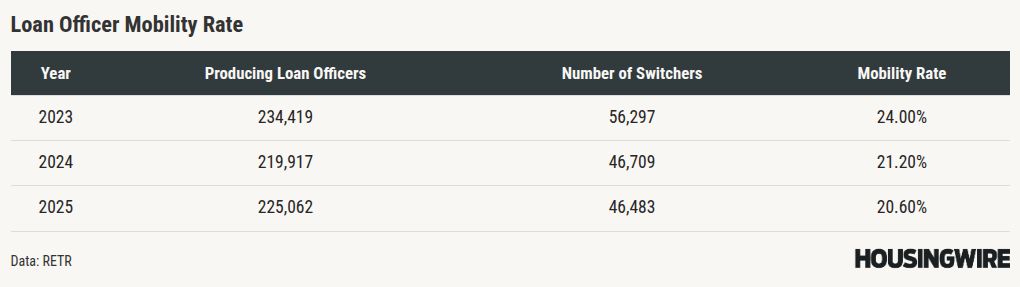
Smartzip primarily benefits experienced listing agents, yet any agent willing to nurture seller leads can thrive with this platform. To generate real estate leads, Smartzip employs a proprietary predictive analytics algorithm that sifts through consumer data from credit card companies, market data from the Multiple Listing Service (MLS) and other demographic information.

Real estate agents using Smartzip gain immediate access to its CRM, which is populated with leads and their associated data. This dashboard displays a list of property owners in the agent’s target area, based on the client’s likelihood of selling within the next 18 months. Armed with this data, agents can use the included automated marketing tools to market directly to sellers who are most likely to transact.

Features

  • Predictive analytics
  • Smart CRM
  • Direct mail campaigns
  • Automated email marketing
  • Home valuation landing pages
  • CMA tool
  • CheckIn app
  • Local trend reports

Exclusivity: No

Trial period: No

Contract requirements: Annual contract is required

Pros & Cons

  • Predictive analytics targets likely sellers with high accuracy
  • Comprehensive marketing and nurturing tools
  • Marketing campaigns are personalized with leads’ home valuation data
  • System can nurture leads from any source, not just leads from Smartzip
  • Design quality of marketing materials
  • Automated home valuations
  • Leads are not exclusive and are generally top-of-funnel
  • Not recommended for new agents; relatively pricey
  • Nurture times can be long

Pricing

Starting at $500 per month, with an average monthly spend of $1,000.

Visit Smartzip

Smartzip Review

CINC: Best for geo-targeted lead generation

CINC logo; a real estate CRM or customer relationship management software

CINC is an all-in-one lead generation platform that combines sophisticated paid advertising, IDX websites and an AI-powered CRM to generate and nurture leads. CINC’s advertising team excels at targeting leads in micro-niches such as neighborhoods, school districts and even specific property types, including waterfront homes or golf communities. Upgrades include cash offer ads and Google Local Service Ads (LSAs) to generate high and mid-funnel seller leads.

CINC is an ideal choice for productive agents and teams who work in competitive geographic or property-type niches and want automated systems to engage and nurture leads. Entry-level pricing is higher than other lead generation companies, but unlike its competitors, CINC includes buyer leads in its pricing.

Features

  • Sophisticated geographic and property-type lead targeting 
  • Integrated IDX website and CRM 
  • AI-powered chatbot trained by top-producing agents 
  • Mobile app 
  • Referral network 
  • 3-line auto dialer available

Exclusivity: Yes

Trial period: No

Contract requirements: 6 months

Pros & Cons

  • Targets leads in dozens of geographic and home-type niches
  • Sophisticated IDX website and CRM
  • Highly skilled PPC advertising team leverages data from 50,000 agents and teams
  • Fully automated lead nurturing powered by AI
  • Industry-leading training and support
  • Starting price is higher than competing platforms
  • IDX websites have limited customization options
  • Sold as an all-in-one platform – cannot purchase leads or software separately
  • CINC AI chatbot is a $200 per month upgrade

Pricing

CINC’s pricing starts at $899 per month for solo agents and $1500 per month for teams (includes buyer leads). Pricing can vary widely based on the market and property type niche. Software and lead generation services are not sold separately.

Visit CINC

Zillow Premier Agent: Best for buyer leads based on location

Logo-Zillow-Premier-Agent-2

As a major player in the real estate industry, Zillow is hard to overlook. Zillow dominates Google search results, driving over 230 million page views per month, nearly double the traffic of Realtor.com. Its market dominance makes it a top choice for consumers searching for properties. That’s good news for agents and brokers looking to attract real estate leads.

Zillow Premier Agent (ZPA) is Zillow’s paid advertising program that connects agents to buyer leads. Zillow Premier Agent offers enhanced visibility for its members on Zillow’s platforms, giving ZPA agents priority placement in property listings and exclusive access to real estate leads. The platform’s high traffic volume, effectiveness and straightforward CRM make it a top choice for lead generation. If you want to cast a large net of lead generation, Zillow Premier Agent can help you reach more real estate leads in your area.

Features

  • Automatic lead placement in Zillow’s CRM
  • Priority status when claiming properties on Zillow
  • Ease of automating follow-ups for lead conversion
  • Direct integrations with most real estate CRMs

Exclusivity: No

Trial period: No

Contract requirements: Vary

Pros & Cons

  • Agent’s profile is displayed on every listing their leads visit on Zillow
  • Leads are sent via phone calls, emails and tour requests
  • Excellent for building brand awareness
  • CRM monitors leads’ behavior on Zillow, providing actionable insights for follow-up
  • Lacks robust lead follow-up tools
  • Leads aren’t necessarily qualified or exclusive
  • Price per lead can be higher than other companies
  • Leads are not exclusive

Pricing

Zillow’s pricing depends on the ZIP code and home price, ranging from around $20 to $60 per lead. Unfortunately, Zillow isn’t very transparent about the cost of leads through their Zillow Premier Agent program. It depends mainly on your market.

Visit Zillow Premier Agent

This post was originally published on here

Seattle-based Friday Harbor, an AI-powered mortgage underwriting platform, has hired two mortgage industry veterans, naming Kate Schilling as director of sales and Melina Stayton as customer success manager, the company announced Monday.

Schilling brings more than 13 years of mortgage experience to the newly created sales role. Stayton adds nearly 15 years of banking and mortgage experience on the customer success side, where she will work directly with lender clients using Friday Harbor’s technology.

Their hirings come as lenders are under pressure to cut fulfillment costs, improve loan quality and adopt AI tools without disrupting already strained operations. Pre-underwriting platforms like Friday Harbor aim to help lenders automate income and asset review earlier in the process, which can shorten cycle times and reduce repurchase risk.

Schilling joins Friday Harbor from Dark Matter Technologies, where she served as a senior account executive supporting mid-market banks, credit unions and independent mortgage banks, according to a press release. In that role, she sold and supported mortgage technology solutions across a broad range of lender sizes and channels.

Before Dark Matter, Schilling was a mortgage originator at CrossCountry Mortgage, giving her firsthand experience with retail production and borrower-facing workflows. She also spent more than six years at National MI as a regional team leader and account executive, serving more than 100 lender clients and working directly with capital markets and operations teams on mortgage insurance execution.

Schilling began her mortgage career as a loan processor at a regional independent mortgage bank in New England. She is based in Boston and holds a bachelor’s degree in English from North Carolina State University and an MBA from Louisiana State University at Shreveport.

Stayton joins Friday Harbor as customer success manager after nearly 15 years in banking and mortgage, including a decade at Evergreen Home Loans. She started there as a loan officer assistant before moving into operations leadership.

Most recently, Stayton was a production operations supervisor, where she helped lead companywide technology implementations, managed point-of-sale and CRM platforms, and worked to align sales and operations teams during process and system changes.

Her background as a licensed loan originator gives her direct experience with borrower interactions and pipeline management, which the company said will support adoption and change management for lender clients using Friday Harbor’s AI tools. Stayton holds a bachelor’s degree in history from Western Washington University and lives in Port Orchard, Washington.

This article was generated using HousingWire Automation and reviewed by a HousingWire editor before publication. The system helps convert company announcements and industry data into HousingWire-style news coverage.

This post was originally published on here

REMAX Premier announced that Sharon Rizzo — a Chicago real estate professional with more than four decades of experience — has joined the firm’s new Lake Forest, Illinois, office along with her team, The Rizzo Group.

Rizzo has been recognized as a Chicago Association of Realtors Golden Eagle Award recipient after closing more than $114 million in residential sales in a single year as a sole agent.

“Joining REMAX Premier and the luxury North Shore offices allows us to elevate the level of service and exposure we provide our clients,” she said. “The strength of the REMAX brand, combined with REMAX Premier’s leadership and collaborative culture, creates an exceptional platform for our team and the clients we serve.”

Her team reported more than $25 million in volume on last year’s RealTrends Verified rankings.

“Sharon’s career speaks for itself,” said Janice Corley, founder and CEO of REMAX Premier. “Her depth of experience and long-standing relationships across the market align seamlessly with our luxury North Shore offices. As we continue expanding our presence on the North Shore and beyond, Sharon and The Rizzo Group represent the caliber of professionals we seek to attract.”

As a sales manager for condominium conversions in Chicago’s Gold Coast, Rizzo oversaw six major high-rise residential projects — including Lake Point Tower.

Earlier in her career, she worked as a medical reporter and on-air broadcaster for NBC News and later served as a national spokesperson for two divisions of the Big Three automakers.

In addition to her brokerage work, Rizzo and her daughter, Realtor Kimberly Rizzo, co-developed the nationally presented seminar “Building Wealth Through Real Estate,” which highlights real estate as a long-term investment strategy.

The Rizzo Group will operate out of REMAX Premier’s Lake Forest office effective immediately — continuing its focus on luxury homes, investment properties and development opportunities across Chicago and the North Shore.

This article was generated using HousingWire Automation and reviewed by a HousingWire editor before publication. The system helps convert company announcements and industry data into HousingWire-style news coverage.

This post was originally published on here

Denver-based Mortgage Cadence on Monday announced the appointment of industry veteran Joe Zeibert as chief revenue officer, tasking him to align sales, customer success and go-to-market strategies as the company expands under new ownership.

The move comes as Mortgage Cadence, now part of PartnerOne, pushes to grow adoption of its Mortgage Cadence Platform (MCP) and related tools in a market where lenders are under pressure to cut costs, boost pull-through rates and cautiously implement artificial intelligence (AI) while staying compliant.

Zeibert, who has more than 20 years of experience across banking, fintech and mortgage technology, previously held leadership roles at Anchor Loans, FICO, Nomis Solutions, Ally Financial and Bank of America, according to a press release. His background spans pricing, credit and capital markets strategy, as well as deployment of analytics and automation to improve lender performance.

“What makes Joe’s addition especially meaningful is his rare blend of deep technology expertise and authentic lender perspective,” Mortgage Cadence CEO Mike Detwiler said in a statement. “He understands that growth doesn’t come from selling more, it comes from serving customers better.”

Zeibert said the role is a continuation of work that began during the financial crisis of the late 2000s, when he saw both “strengths and shortcomings” in mortgage origination.

“This inspired me to believe there was a better way to manufacture mortgages, and I committed myself to helping the industry evolve,” Zeibert said. “My goal is to create greater efficiency for lenders while ultimately improving outcomes for consumers.”

As CRO, Zeibert will work across Mortgage Cadence’s sales, customer success and delivery teams to deepen existing relationships and open new ones, with an emphasis on helping lenders extract more value from MCP through connected, collaborative engagement. This includes guidance on how lenders use automation and analytics to streamline workflows, reduce manual touches and support compliance.

The company said Zeibert will support the continued evolution of MCP and its surrounding ecosystem, with a focus on intelligent automation, operational efficiency and “human-in-the-loop” innovation that keeps loan officers and operations staff in control of AI-enabled processes.

“Joe understands that our success is directly tied to our customers’ success,” Detwiler said. “His role is not just about growth, it’s about ensuring we continue to deliver on our promise to serve while innovating the future.”

Zeibert’s hiring underscores how loan origination system (LOS) and mortgage tech providers are reorganizing around revenue operations and customer success as lenders demand clear, measurable return on investment from technology contracts signed during the post-pandemic refinance boom.

With volumes still below peak levels and origination costs elevated, vendors are being pushed to prove that automation, integrations and AI can translate into turn-time reductions, better secondary market execution and improved borrower experience.

For lenders evaluating or already using MCP, Zeibert’s mandate suggests Mortgage Cadence plans tighter alignment between its sales promises and live production outcomes, as well as potentially more structured programs involving implementation, optimization and ongoing value realization.

This post was originally published on here

U.S. homebuilders reported that sales softened in March compared to February amid economic volatility and a spike in mortgage rates, according to the BTIG/HomeSphere monthly homebuilder survey.

Demand cooled after early-year gains, the survey of small and midsized homebuilders found. In March, 35% of builders reported year-over-year sales declines, up from 23% in February. At the same time, 34% saw higher sales, only slightly better than 32% in February.

Consumer traffic softened more clearly too as 33% of builders reported higher year-over-year traffic, down from 43% in February, while 35% reported lower traffic versus 18% the prior month.

At the same time, sales versus internal expectations weakened. In March, 26% of builders said sales were better than expected (down from 33% in February), and 26% said sales were worse (up from 22% in February), bringing the “better-minus-worse” spread to 0 from +11.

For traffic, 24% of builders viewed results as better than expected (down from 40% in February), while 21% saw traffic as worse (up from 11%), taking the corresponding spread down to +3 compared to +29 in February.

Fewer builders raised their base prices in March. According to the report, 17% of builders increased some, most or all base prices, down from 19% in February. More reported cutting prices, with 23% lowering some, most or all base prices versus 21% in February.

The use of incentives also moved higher. In March, 24% of respondents increased some, most or all incentives, up from 18% in February. About 6% decreased incentives, and 59% kept them unchanged, similar to last month.

Commentary from participants also turned more cautious. Builders in multiple regions cited the conflict in Iran, rising gas prices and reaccelerating mortgage rates as near-term headwinds on buyer urgency and confidence. These macroeconomic pressures appear to be amplifying ongoing affordability and inventory challenges just as the industry enters the peak spring selling window.

For homebuilders, the March reading suggests the early-year improvement in demand is fragile. Higher borrowing and energy costs are pushing some buyers to the sidelines, forcing many builders to lean harder on incentives and selective price adjustments to protect absorption and backlog quality heading into the heart of the selling season.

Tyler Williams reported and wrote this article with drafting assistance from HousingWire Automation, an editorial tool that helps transform announcements and industry data into HousingWire-style news coverage.

This post was originally published on here

Hedge fund and activist CoStar Group investor Third Point has sold its shares of the Andy Florance-helmed firm. This news was first reported by Reuters and confirmed to HousingWire.

Third Point CEO Daniel Loeb informed investors of his firm’s decision to sell its shares in CoStar in a letter on Friday. 

​​The size of Third Point’s stake in CoStar remains unknown, but the hedge fund was ranked among CoStar Group’s 15 biggest investors.

Third Point did not immediately return HousingWire’s request for comment on its decision to divest its shares of CoStar Group. 

In an emailed statement, a CoStar Group spokesperson wrote that the company is “focused on executing our proven playbook to build on our momentum as we enter our next chapter of margin expansion and profitable growth. 

“We look forward to continuing to engage with stockholders as we continue to unlock the tremendous value of our digital ecosystem,” the spokesperson added. 

This move comes roughly two and a half months after Third Point sent a letter to CoStar’s board of directors calling on the firm to replace the majority of the board with “more qualified directors,” refocus on the firm’s core commercial real estate business and consider “strategic alternatives” for Homes.com, including shuttering or selling the platform. 

In response, CoStar has said that divesting Homes.com would cause the firm and its investors “irreparable harm.”

This letter came nearly a year after Third Point called on CoStar to embark on a journey of “meaningful self-help” and forcing the company to shake up its board. 

“So little progress has been made that we are convinced the Company never intended to do any of the things we discussed when we entered into the agreement,” Third Point wrote in its letter earlier this year. 

In January, CoStar provided investors with an update on financial and corporate governance initiatives for 2026, much of which they said was the result of a “robust review” of the company by the Capital Allocation Committee. While the update painted a fairly rosy picture for the firm as a whole in 2026, with estimated 18% year-over-year revenue growth to between $3.78 and $3.82 billion and a net income of $175 million to $215 million for the year, things did not look quite as strong for CoStar’s Homes.com. 

Although Homes.com has recorded a 337% increase in subscribers since Q1 2024, according to CoStar, the firm said it does not expect Homes.com to attain positive adjusted EBITDA until 2030. 

While CoStar Group is no longer facing activist investor pressure from Third Point, investor D.E. Shaw has also called on CoStar to divest Homes.com.

This post was originally published on here

After rising in February, existing home sales slowed again in March, according to data released Monday by the National Association of Realtors (NAR). 

Existing home sales fell 3.6% month-over-month in March to a seasonally adjusted annual rate of 3.98 million. Year-over-year this represents a 1.0% decline and the slowest pace of March home sales since 2009. 

According to NAR’s chief economist Lawrence Yun, lower consumer confidence and softer job growth are to blame for the decline in sales pace. 

As the pace of home sales slowed, inventory had the chance to accumulate, rising 3.0% from a month prior, finishing March with 1.36 million units for sale, representing a 4.1 months’ supply at the current sales pace. Compared to a year prior, inventory was up 2.3% in March.

“Inventory remains a major constraint on the market,” Yun said in a statement. “The inventory-to-sales ratio, or supply-to-demand ratio, is below historical norms. An additional 300,000 to 500,000 homes for sale would help bring the market closer to normal conditions and allow consumers to make purchase decisions without feeling rushed.”

Yun attributed the 1.4% annual increase in the median existing home sales price, which hit $408,800 in March, to the constrained inventory. This increase represents the 33rd consecutive month of annual price increases. 

While the pace of home sales slowed in March, the median time on market for properties declined month-over-month dropping from 47 days in February to 41 days in March. Annually, this is up 11 days from the 36 days recorded in March 2025. The share of first time homebuyers remained flat on a yearly basis, but declined two percentage points to 32% in March, while the share of all cash transactions also fell on a monthly basis, dropping from 31% a month ago to 27% in March, up from 26% in March 2025. 

Regionally, the sales pace for existing homes fell month-over-month in all four regions, with the Northeast (430,000 units) recording the largest decline at 8.5%, followed by the Midwest (-4.2% for a sales pace of 920,000 units ), the South (-3.1% for a sales pace of 1.86 million units) and the West (-1.3% for a sales pace of 770,000 units). On an annual basis, existing home sales were down in the Northeast (12.2%) and the Midwest (3.2%), but up in the South (2.2%) and the West (1.3%).

visualization

Additionally, while housing affordability improved on an annual basis in March, with NAR’s Housing Affordability Index rising nearly 10-points from a year prior, the index fell on a monthly basis, dropping to 117.5 in February to 113.7 in March. 

“The momentum of the spring market remains fragile,” Lisa Sturtevant, the chief economist at Bright MLS, said in a statement. “The ongoing conflict with Iran continues to create significant geopolitical uncertainty and is a primary driver of volatile mortgage rates and higher gas prices. A resolution to the conflict will help support a rebound in the housing market. However, if uncertainty, higher prices and mortgage rates persist, this could be a very slow spring.” 

With March’s data largely reflecting home sales that went under contract in January and February, prior to the conflict in Iran escalating, industry leaders expect to see further declines in the coming months. 

“Heading into 2026, the housing market had real momentum — mortgage rates were easing, affordability was improving and sidelined buyers were starting to reengage, keeping March activity relatively steady. Since then, the market has naturally become more deliberate, with some buyers and sellers pausing amid uncertainty while others move forward based on life-driven needs like job relocations, growing families and estate decisions,” Kamini Lane, the CEO and president of Coldwell Banker Realty, said in a statement.

‘The data reflects a market that’s becoming more thoughtful, not stalled. We’re seeing a shift from broad-based urgency to more intentional, life-driven decisions and for buyers and sellers ready to move, that often creates opportunity in moments when others hesitate and can be an advantage when conditions stabilize even more in the months ahead,” she adds.

In addition to the slower existing home sales pace, NAR also announced that it had revised its 2026 housing forecast downward, with the trade group now expecting existing home sales to rise 4.0% annually. The trade group also said it expects new home sales to now remain flat in 2026, down from its initial estimate of a 5.0% yearly gain. Despite these downward revisions, NAR said it still expects home sale prices to rise 4.0% in 2026. 

“Mortgage rates have been rising, and that has led us to trim our home sales outlook for the year,” said Yun. “Even with a more modest pace of sales growth, home prices continue to steadily increase due to minimal inventory growth.”

This post was originally published on here

The Jackson Arnett Group, a top-producing luxury real estate team in Rancho Santa Fe, has joined Douglas Elliman Realty in Rancho Santa Fe and North County coastal San Diego after more than seven years at Compass, the brokerage announced Monday.

Led by Delorine Jackson and Ian Arnett, who both serve clients along side agent Bayley Bachiero, the team will be based in Douglas Elliman’s Del Mar office, overseen by Dan Tomasi, executive manager of sales for San Diego, according to the company announcement.

In 2024, The Jackson Arnett Group closed 17 transaction sides totally over $52 million in sales volume, according to RealTrends Verified data. This performance earned the small team the No. 188 rank in the state for sales volume in the 2025 RealTrends Verified Rankings.

Douglas Elliman said the team’s move will deepen its footprint in Rancho Santa Fe and along the North County coastal corridor, two of Southern California’s highest-priced and supply-constrained luxury markets.

“We are thrilled to welcome Delorine, Ian and Bayley to the Douglas Elliman family,” Michael Liebowitz, president and CEO of Douglas Elliman Inc., said in the announcement. “Their extraordinary track record, deep roots in Rancho Santa Fe and North County San Diego, and commitment to excellence align perfectly with our vision of empowering elite agents to deliver unmatched service in California’s premier luxury markets.”

Jackson, a longtime Rancho Santa Fe resident, brings more than 20 years of experience as a luxury real estate advisor and entrepreneur. Her background includes commercial property investments focused on revitalizing Rancho Santa Fe’s downtown village, tying the team’s business strategy directly to local economic development.

“After more than two decades building our business in Rancho Santa Fe and North County Coastal San Diego, this move to Douglas Elliman represents the next meaningful chapter for our team and our clients,” Jackson said in a statement.

Arnett, a native of the greater San Diego region, has been a licensed real estate agent for more than 27 years. He is known for pairing local market knowledge with a design-forward, ROI-focused approach to listings, helping clients increase equity through targeted upgrades, floor-plan changes and cost-effective improvements.

“Joining Douglas Elliman is a strategic and exciting step forward for our team,” Arnett said in a statement. “This move will enhance our ability to maximize opportunities for buyers and sellers — from strategic property enhancements to publicizing high-end transactions — all while maintaining the personal, integrity-driven service our clients have come to expect.”

“Delorine, Ian and Bayley’s unique blend of market mastery, entrepreneurial spirit and community impact provide unlimited opportunities for buyers and sellers across San Diego’s high-end residential sector,” Bill Begert, the chief operations officer of brokerage, Western Region, Douglas Elliman, said in a statement. “The addition of the Jackson Arnett Group underscores Elliman’s unwavering commitment to supporting top-producing teams.”

This article was written by Brooklee Han and generated with the assistance of HousingWire Automation. It was reviewed by a HousingWire editor before publication. The system helps convert company announcements and industry data into HousingWire-style news coverage.

This post was originally published on here

RealTrends Verified’s 2026 brokerage rankings reveal clear momentum for technology-fueled challengers, with The Real Brokerage and LPT Realty again emerging as significant movers.

The Real Brokerage, led by CEO Tamir Poleg, held steady at No. 5 by sales volume with $65.2 billion.

But the company’s more notable achievement came in transaction sides, where it jumped to No. 5 — overtaking Hanna Holdings — and led all brokerages with a 40,749 yearly side gain.

Meanwhile, LPT Realty, headed by founder and CEO Robert Palmer, delivered one of the breakout performances of the rankings.

The firm vaulted from No. 10 to No. 7 in transaction sides — increasing its total to 61,04 and ranking third nationally with a 24,672 increase.

Poleg: ‘Agents follow value’ — not sign-on bonuses

For Poleg, Real’s sustained growth comes down to a single bet; agents will pay for tools that actually work.

“Real is the only brokerage that managed to grow so substantially in 2025 and 2024 as well, while we actually increased our pricing and increased our fees three times in the past three years,” he told HousingWire. “Typically, in times like these, brokerages cut fees and add a lot of concession and promotions, but we did exactly the opposite.”

That strategy, he argued, proves that agents follow value — not the lowest price, sign-on bonuses or recruiting checks.

“We just believe that the model by itself is very attractive,” Poleg said, pointing to Real’s proprietary platform reZEN as the technological backbone of that value proposition.

“reZEN consists of multiple features and products for agents, but essentially it’s like an operating system for an agent business,” Poleg said. “It gives full visibility into the agent’s business and finances on our platform. It’s been a huge, huge driver and we keep adding more layers to reZEN.

Roughly 18 months ago, Real added Real Wallet — allowing agents to open checking accounts, access lines of credit and more.

The results have been striking, Poleg said.  

“We have over 7,000 agents right now banking with us on the wallet,” Poleg said. “Their churn is about 80% lower compared to agents that are not on the wallet.”

That retention metric has helped keep revenue churn at its lowest level in five years.

“We are determined to think very long term,” Poleg said. “That means investing in technology that will give our agents an unfair advantage in the next five or 10 years. We are thinking about profitability, but at the same time, we put a lot of resources into tech development.

“In 2026, our [research and development] budget has increased, but we were able to both grow significantly, lower our operating expenses per transaction, and invest heavily in technology, all three together, which is outstanding.”

When asked about the risk of a growth plateau — a common concern for rapidly expanding firms — Poleg dismissed the idea.

“If you look at the past three years, we were able to add anywhere between 5,000 to 10,000 agents on an annual basis for three years in a row,” he said. “I think that that trajectory will continue. What’s happening right now is a paradigm shift in real estate. Agents are migrating from traditional models such as Keller Williams or Century 21 to newer models like Real and even LPT and eXp.

“Agents today are looking for something else. They’re looking for more freedom, more flexibility, more technology and just a brokerage that is a platform for them to grow their businesses on — rather than a brokerage that you join and you actually build somebody else’s business.”

Palmer: Meeting agents where they are

For LPT Realty’s Palmer, the secret to his firm’s rapid ascent — from No. 10 to No. 7 in transaction sides — is rooted in a philosophy of individualized support rather than a one-size-fits-all model.

“A big part of what we did is we built models that meet agents where they are,” Palmer said. “Instead of trying to force them to be something for us, we try to meet them where they are in their career.”

That approach centers on what Palmer calls an “individual definition of success.”

“Whether that’s an agent selling three, four or five houses a year, or a team leader who wants to build a 2,000-unit-a-year team, we’ve got a plan and infrastructure here at LPT to help them grow and achieve that definition of success,” he said. “I think that’s probably been our single biggest differentiator.”

On compensation, Palmer pushed back against the notion that agent-friendly cap models necessarily hurt brokerage margins.

“When people think about the cap model, if you look at the other publicly traded cloud models, having too many high producing agents is actually more damaging to your margin than our model is,” he said. ”We have lots of high-producing agents. I think we’re submitting 600-plus agents and teams for [RealTrends Verified’s rankings] this year.

“We also didn’t leave the smaller agent behind. We didn’t leave the agent who’s just getting going behind. It’s really helped us balance out the business.”

Recruiting, Palmer said, has been driven by productivity — not just headcount.

“You’ll see in our rankings there, our transaction count grew faster than our agent count,” he said. “Agents continue to become more productive as they get on the platform.”

On the question of a potential growth plateau, Palmer shared similar sentiments to his counterpart at The Real Brokerage.

“We’re the fastest brokerage to ever reach the top 10 — the fastest brokerage to ever reach No. 7,” he said. “But we’ve actually been pretty judicious about the growth. We’re focused geographically and a dominant force in the state of Florida. We’re the number one brokerage by agent count and transaction count in Central Florida, where we originally launched.

“We’ve got dominant agent counts and transaction counts in California and Texas, but there’s still a lot of room for us to grow.”

As for commission compression following the NAR settlements, Palmer said LPT’s average price point in the high $300,000s insulates the firm.

“We’re very much helping the average first-time homebuyer, the average American buy a home,” he said. “We’re not specializing in multi-million-dollar properties, which is where I think you see the most commission compression. The nature of our cap and our flat fee means that we’re really in a great position to [hit financial goals] and still give the agent plenty of room to succeed if there is a little bit of commission compression.

“But I can tell you to date, we haven’t seen any commission compression happening across our business.”

Steve Murray: Plateaus hard to avoid

Longtime industry expert Steve Murray — senior advisor for HousingWire and founder of RealTrends and RTC Consulting — offered a dose of perspective for Real and LPT.

“They still have room to grow, but the big factor is when you’re the new guy and you have a different model,” he said. “When you’re using equity in your business as a means to recruit agents, sooner or later, you run out of equity, as Compass found out. Sooner or later, you can’t just keep offering your stock to agents and teams.”

On the question of a growth ceiling, Murray was unequivocal.

“Every firm I’ve ever noted in my years of doing this — they use various means to grow rapidly — and every one of them seems to hit a plateau of some kind,” he said. “Then it becomes harder to keep growing at that rate, because there’s always new forms of competition offered out there.

“At their current levels of production, [Real and LPT] would need to quadruple in size to be doing enough transactions to break through to the top three.”

Even if a slower growth period comes for one of or both companies, Murray said what Real and LPT have achieved demands respect and acknowledgement.

“At one time, REMAX was the new guy on the block,” he said. “At another time, Keller Williams was the new guy on the block. eXp was the new kid with the new model and new offerings. They all grew extraordinarily rapidly. Then they all seemed to hit a certain level, and they’ve all kind of plateaued. It’s just the nature of our industry and the way it works.

“Still, [Real and LPT] should be proud of what they’ve achieved, and I’m greatly respectful of what they’ve accomplished.”

This post was originally published on here

Over the past year, consolidation has consumed the real estate industry, with many questioning if mid-sized regional independent firms would be able to survive, let alone contend in this emerging environment dominated by national monoliths like eXp Realty and Compass International Holdings. The 2026 RealTrends Verified Rankings, however, make these concerns seem irrelevant. 

Independent brokerages accounted for 28.79% of market share in this year’s rankings, which are based off of 2025 production, up from 26.98% last year.

This is exemplified by the impressive jump made by LeadingRE, a network of independent real estate firms, leaping from the No. 5 brand in 2025 to the No. 2 brand by transaction sides and increasing its market share to 11.08%, up from 8.93%.

Included in LeadingRE’s network are many top-producing brokerages including Hanna Holdings, which ranked No. 6 by both sides and volume, William Raveis Real Estate, John L. Scott Real Estate, Brown Harris Stevens, The Keyes Company/Illustrated Properties, Baird & Warner and First Team Real Estate. In total, the LeadingRE network closed 462,910.4 transaction sides totaling $275.844 billion in sales volume in 2025.

Private independent firms prove they can compete against public companies

“While many people think the model of a privately owned independent brokerage is destined for the dustbin, the data seems to say otherwise,” Steve Murray, the co-founder of RealTrends Consulting, said. “Anybody who says that a privately owned independent, local, regional brand can’t compete, doesn’t know what they’re talking about.”

Kate Reisinger, the chief operating officer of LeadingRE, shared a similar sentiment. 

“Over the past few years, the industry has gone through so much change — market shifts, consolidation, the evolution of the business model — and in that environment, independent firms have navigated the complexity with laser sharp focus, determination and optimism,” Reisinger said. 

Hyperlocal equals consumer trust

Resinger, in part, attributes the success of these companies to their local nature.

“These are firms that are so entrenched in their communities. They are hyper-local, and that allows them to stay close to their agents and clients,” Reisinger said. “In a time of so much change and uncertainty, not only in our industry but also in national news, consumers are craving very clear direction, assurance, expertise and trust. Those are all strengths of these independent companies, in part because they are so deeply embedded in their communities. We have companies in our network that are over 100 years old. They aren’t just operating in a market; they helped build the community.”

For Murray, the strong performance by independent firms in 2025, exemplified by the LeadingRE Network, illustrates that a firm with a good leader, no matter if they are a large national company or a regional independent firm, will be successful. 

“As long as this business is still mostly about the ability to recruit and develop and retain good agents, any good leader of a brokerage company, whether they’re with a brand or they’re independent, has an equal opportunity to compete and grow,” Murray said. “Since RealTrends started ranking brokerages, we’ve consistently said that the data shows that by far, the most important characteristic of a successful growing brokerage company is the leadership — not the tech and not the brand.”

Attracting talent

The strong ability of many of LeadingRE’s broker-owners to attract talent and grow was reflected in the many M&A deals conducted by LeadingRE firms in 2025. Notable acquisitions in 2025 include Baird & Warner’s acquisition of Dream Town, Lamacchia Realty’s acquisition of Tirrell Realty, Portside Real Estate Group’s merger with Swan Agency Real Estate and Howard Hanna’s entrance into New York City with its acquisition of Elegran Real Estate

“It is clear that leading independents have been actively engaged in acquisitions as a means of growth,” Murray said. 

While many leading independent firms have been acquired over the past few years, including Compass’s acquisition of Latter & Blum, Murray said independents have a way of “regenerating.” 

“Even with the acquisitions, independents continue to be leading companies in many markets,” Murray said. 

Reisinger attributes this to leaders being able to identify and capitalize on opportunities.

“Independents are able to be nimble and they can make decisions quickly, says Reisinger. “With large homogenized brands, decision making often takes longer and sometimes the choices made do not always reflect the realities or priorities of the local market or culture,” she said. “Independent firms are adapting in real time and changing and evolving with change. Rather than being disrupted by it, many of our firms are using it as an opportunity to strengthen their position.”

While Reisinger acknowledges that consolidation continues to be the norm right now in the real estate industry, she still believes that there will continue to be opportunities for independents to succeed. 

“We are seeing a bifurcation in the market right now,” Reisinger said. “On one side are large scale organizations and on the other are hyper-local, highly focused firms that, according to the data, are outperforming the market. That is where we lean in, continuing to inspire trust in our markets and demonstrate our expertise because we perform best when we capitalize on those strengths.”

This post was originally published on here

The housing market doesn’t turn all at once.

But over the past decade, one pattern has shown up again and again: Housing cycles tend to unfold in a recognizable sequence, and the earliest signals appear when pricing behavior and buyer response start to diverge.

That’s the real playbook for navigating today’s housing market.

Housing cycles tend to follow a sequence

Looking back across the past 10 years — from post-recession recovery to pandemic acceleration to today’s more fragmented market — the same pattern tends to repeat.

Demand builds. Sellers push pricing. Buyers begin to push back. The market resets. Then recovery begins again, often unevenly.

Not perfectly. Not on a fixed timeline. But consistently enough to matter.

The signals that matter most

Across markets, three signals are defining how housing is actually behaving right now: pricing behavior, market response and friction.

Pricing behavior: where sellers are pushing

List prices show where sellers want the market to go.

Right now, median list prices are near $440,000, while roughly one-third of listings are cutting price. At the same time, buyers are accepting prices below asking, creating a clear 9% gap between seller intent and market reality.

This is not a collapsing market. It is a market negotiating.

Market response: whether buyers are following

The next question is whether buyers are actually agreeing.

Demand remains functional, but uneven. Well-priced homes are still selling in 63 days, while overpriced homes are sitting significantly longer — pushing the average to 121 days. That 58-day spread is what defines today’s two-speed market.

Friction: where expectations start to break

This is where markets turn.

Withdrawals now account for 22% of weekly activity, and deal fallout continues to show up across markets — clear signs that transactions are failing to close at initial expectations.

That pressure is what eventually forces pricing to adjust.

How housing cycles actually unfold

Across cycles, housing markets tend to follow the same sequence: Sellers push prices higher, buyers initially keep pace, and then acceptance begins to weaken. Price cuts rise, deals stall and the market resets.

The key insight is that markets do not turn when prices fall. They turn when pricing and buyer behavior fall out of sync.

This has played out repeatedly in recent cycles. In 2022, markets like Phoenix made it clear. Sellers continued pushing prices even as buyer follow-through weakened, and the gap between asking and accepted prices widened into double digits before the market reset.

What this cycle looks like now

Today’s data points to a market in negotiation, not one moving in lockstep.

With price cuts hovering around one-third of listings and a meaningful gap between asking and accepted prices, today’s market looks very different from the unprecedented acceleration of 2021 and the challenging recalibration of 2023.

That view aligns with Logan Mohtashami’s latest weekly Housing Market Tracker, which shows inventory growth slowing sharply, new listings still constrained and demand soft but not broken. Mortgage rates below 7% are keeping the market functional, even as momentum remains capped.

In other words, supply is no longer expanding the way it was, but demand has not fully rolled over either. That leaves housing in a market-by-market balancing act, not a clean national upswing.

The real story is local

Markets diverge before they turn.

Some metros reaccelerate earlier. Others show stress sooner through wider pricing gaps, more price cuts or slower conversion. That divergence is not noise. It is often the signal.

Local markets tend to turn before national averages do, making them the earliest read on where the cycle is heading.

What to watch next

The next phase of this cycle will likely be determined by one thing: whether pricing and buyer behavior move back into alignment — or further apart.

If the gap between asking and accepted prices widens, it would signal more friction ahead, with additional pressure on sellers and a higher likelihood of price adjustments.

If that gap narrows, it would suggest buyer acceptance is strengthening and that the market may be stabilizing or beginning to reaccelerate in select areas.

The signal will not come from price alone. It will come from whether buyers are actually following.

Takeaway: Watch the gap, not just the price

Pricing shows intent. It tells you where sellers want the market to go.

Buyer behavior shows acceptance. It confirms whether the market is actually following.

Price cuts and deal fallout show friction. They signal when expectations are breaking.

The earliest signals are local. Market shifts tend to show up in specific metros before they appear in national data.

The bottom line

Over the past 10 years, housing cycles have been defined by behavior.

Sellers push. Buyers respond. When the two fall out of sync, the market has to adjust.

That is the signal to watch.

To track real-time pricing, demand and market signals at the national, metro and ZIP-code level, explore HousingWire Intelligence. For deeper context on rates, demand signals and the macro backdrop shaping housing activity, read HousingWire’s Housing Market Tracker weekly analysis.

HousingWire used HousingWire Data to source this story. This article is based on single-family residence data through April 10, 2026. For enterprise clients looking to license the same market data at a larger scale, visit HousingWire Data.

This post was originally published on here

As consolidation reshapes the mortgage landscape, Bayview Asset Management’s acquisition of Guild Mortgage is emerging as a case study in how to scale without disruption, particularly in the often-misunderstood reverse mortgage space.

In a conversation with HousingWire‘s Reverse Mortgage Daily, Jim Cory, managing director of reverse mortgages at Guild Mortgage and co-chair of the board for the National Reverse Mortgage Lenders Association (NRMLA), shared details on how the transition has unfolded, why the deal is viewed as a “massive net positive,” and how broader shifts like product innovation and growing participation by large independent mortgage banks are redefining the trajectory of reverse mortgage lending.

Editor’s note: This interview has been edited for length and clarity.

Sarah Wolak: Has Bayview’s acquisition changed or enhanced Guild’s reverse division?

Jim Cory: The acquisition went very smoothly. Bayview basically said, “We want Guild to run as Guild” and kept all the management in place. So as far as that goes, it’s the same group overall at Guild, including on the reverse side.

Bayview is excellent at developing products, and we see this as a benefit. It brings a lot of capital to the table, so we’ll see what changes happen going forward, but we’re seeing this as a massive net positive.

Wolak: That’s interesting, since acquisitions can involve companies deciding to clear house and start from scratch. How has the transition been?

Cory: Not easy, but it hasn’t been disruptive. That’s the best way to put it. It’s a massive net positive.

Wolak: Shifting to the state of reverse, many stories over the past few months have centered on concerns about the Home Equity Conversion Mortgage (HECM) program. Are there any concerns or emerging trends that you’re noticing?

Cory: I’d point to no concerns; I see the reverse business being stronger than ever. I see two major trends going on, though. One is the development of new products. People look at HECM and say there aren’t as many being made and it doesn’t seem like it’s growing.

But what is growing is the sheer number of products, and usage is really taking off. It’s easy to find HECM numbers but much harder to track proprietary reverse products or loans being sold as retirement mortgage solutions. We’re seeing a significant increase in the usage of reverse mortgages and retirement loan strategies. It’s very healthy.

The second trend is the inclusion of large forward independent mortgage bankers, like Guild. All the major IMBs not just sell reverse but have thriving reverse departments. They’re doing things like underwriting and funding their own reverses, and really growing in the space.

Wolak: Are there specific strategies that are gaining traction?

Cory: One of the latest is second-mortgage strategies — whether it’s a HELOC or a HELOAN. It could be a reverse, meaning no payment and age-based, or something similar to a reverse.

Also, when people express concern about HECM, I think some of the concern is when you only look at HECMs. I look at it differently. I’m thankful the current administration wants more proprietary lending. It’s not necessarily less FHA, but it’s a better balance between FHA and proprietary lending. That’s exactly what we’re seeing and it’s a good thing for the industry.

Wolak: Does the growth of larger lenders in the space help address stigmas and preconceived notions borrowers have about reverse mortgages?

Cory: Yes. We’re seeing a lot of growth, and it goes hand in hand with product. At Guild, the goal isn’t just to sell reverse. It’s to present an option to someone. If someone is purchasing or looking for a cash-out refi, we’ll give them multiple options. If they’re an elderly American, we’ll present reverse or reverse-like products. 

Wolak: What is most critical heading into 2026 from a policy standpoint, particularly through your work with NRMLA?

Cory: As co-chair of NRMLA, I’d say a lot of this stems from HUD’s request for information last year. NRMLA answered the RFI, a lot of other groups did too, and many of the answers seemed to be the same. 

Changes are needed to the mortgage insurance premium structure, especially the upfront MIP, which has stayed the same while lending amounts have declined due to higher rates. People are paying more upfront for less. There’s probably a better structure out there.

NRMLA also reinforced the importance of counseling. There’s been some turbulence in that area, and we think that counseling with HECMs and reverse mortgages overall, all of the different products require the borrower to be counseled. We think that is just absolutely important — and for a protected class, that’s really needed.

NRMLA also talked about indexing to the Secured Overnight Financing Rate (SOFR) instead of the Constant Maturity Treasury (CMT). We also mentioned servicing reform: HUD is currently in the servicing business due to loan assignments, and NRMLA offered HUD a way to get out of the servicing business and keep that servicing with the servicer, which would be less disruptive for the client and would alleviate some of those concerns.

Modernizing the second appraisal process is also a big one. On the forward side, you use a collateral underwriter, which analyzes the appraisal and has a couple of different things that basically forces a lender to do, at a minimum, running some automated valuation models (AVMs) and compare it with the collateral underwriter score.

It could involve a desk review. It could involve a second appraisal, but we find that a second physical appraisal is unnecessary, and is really disruptive and confusing for our senior clients.

Wolak: What’s the justification for the second appraisal process?

Cory: The original goal was to address overvaluation. The simplest solution was to require a second appraisal. Well, the confusion is now the borrower has two different appraisers come to their house. What if they have totally different opinions of the value? What if they have different opinions as to what repairs are required? It just causes concern and confusion for everyone involved. 

We did not recommend eliminating it but modernizing it to be similar to the forward side. For example, using a collateral underwriter score or a desk review instead of a second full appraisal.

Wolak: Are there other areas where reverse could be modernized?

Cory: Modernizing financial assessment. For example, you can’t pay off unsecured debt at closing to help a borrower qualify, which we do all day, every day on the forward side. It’s a key component of mortgage lending and it’s not allowed for HECMs.

In fact, in the 2017 HECM Final Rule, it said the FHA commissioner has the authority to allow the payoff of unsecured debt as a mandatory obligation paid at closing, and they never chose to do it. It’s unclear why that isn’t allowed.

The concern has been that borrowers might run debt back up. I don’t like that argument, because they could do the same thing on the forward side — and on the forward side, they’ve got a payment to make.

In reality, reverse borrowers often improve their credit. They get the reverse mortgage, they get cash at closing and they start paying down debt. They get rid of high-interest credit card debt. They pay off high-interest installment debt.

This post was originally published on here

You’re experienced. You’ve closed deals, navigated tough transactions and built a book of business. But your production hasn’t meaningfully changed.

One month is strong, the next is quiet. No matter how many hours you put in, it’s hard to build consistent momentum.

This is where a lot of agents stall.

According to the National Association of REALTORS®, agents with six to 15 years of experience close a median of 11 transactions per year. Those with 16+ years close 10. After years in the business, most agents aren’t scaling. They’re maintaining.

This article breaks down how to move past it, with a practical development plan built for agents who already know the basics but need a more intentional path forward. You’ll get a diagnostic framework, a way to reset your production math, a 90-day skill plan and a weekly operating system to tie it all together.

Step 1: Diagnose why you’re stuck

Before you build anything, you need to know which kind of plateau you’re dealing with. Not all stalls look the same.

Most plateaus fall into one of four categories. The key is identifying which one you’re in so you can stop guessing and start solving the right problem.

Lead generation plateau

This shows up when your pipeline feels unpredictable. You might have strong months followed by uncomfortable gaps, which usually means your lead flow isn’t consistent or diversified.

Ask yourself:

  • Is my pipeline consistently full, or am I scrambling every other month?
  • Are my leads coming from just one or two sources, with no backup plan?
  • Have I stopped actively prospecting because I feel like referrals should be coming in by now?

If this sounds familiar, the issue isn’t effort. It’s that your lead generation isn’t systemized. You’re relying on momentum instead of creating it.

Conversion plateau

You’re getting opportunities, but they’re not turning into closed deals at the rate they should. This is where a lot of experienced agents get stuck because they assume experience alone should carry the conversation.

Ask yourself:

  • Do my leads go quiet after the first call or showing?
  • Is my appointment-to-contract ratio flat or declining?
  • Am I losing listings at the presentation stage more often than I’d like to admit?

This usually points to gaps in follow-up, messaging or how you’re guiding clients through decisions. Small improvements here can have a massive impact on your income.

Positioning and brand plateau

This is less about what you do and more about how you’re perceived. If your brand isn’t clear, you’re competing on effort instead of authority.

Ask yourself:

  • Do people in my housing market know what I specialize in, or am I “just a real estate agent”?
  • Is my online presence doing any heavy lifting, or is it just sitting there looking dated?
  • Am I getting passed over for agents who seem less experienced but more visible?

When your positioning and brand are unclear, you end up chasing business instead of attracting it.

Skill and confidence plateau

This one is subtle but powerful. You’re experienced, but there are certain moments where you hesitate, avoid or play it safe.

Ask yourself:

  • Do I hesitate in pricing conversations or negotiations?
  • Am I avoiding certain deal types because they feel uncertain?
  • When was the last time I intentionally practiced a skill outside of an actual transaction?

At this stage, growth comes from refinement, not repetition. If you’re only practicing during live deals, you’re limiting how far you can improve.

Get reinspired by completing Colibri Real Estate’s Real Estate Leadership and Career Achievement (RELCA) Certification. The certification includes courses on strategy, as well as practical tools to help you break through a plateau.

Step 2: Reset your production math

A lot of agents stay busy but don’t have a clear target they’re working toward. They know they want to make more money, but they’re not tracking the numbers that get them there.

The fix is to get specific. When you understand your numbers, you can reverse-engineer your income goal into clear, weekly activity targets you can control. Here’s the framework:

  • Set your annual income goal: Define exactly how much you want to earn this year.
  • Calculate your average commission per transaction: Use your realistic average, not a best-case deal.
  • Determine the number of transactions needed: Divide your income goal by your average commission.
  • Identify your listings-to-buyers ratio: Focus on the side of the business that’s most efficient for your market and skill set.
  • Know your appointment-to-close conversion rate: Understand how many appointments it takes for you to secure a signed client.
  • Establish weekly activity targets: Work backward to determine how many appointments and conversations you need each week.

In short, flat production isn’t a bad market problem. It’s a plan problem.

If your goal is $120,000 and your average commission is $10,000, you need 12 closes to reach that goal. If half your business comes from listings and your listing-to-close rate is 60%, that means you need about 10 listing appointments per year, roughly one every five weeks. Every week you don’t hit that number, the math starts catching up to you.

Step 3: Build a 90-day skill acceleration plan

Here’s where most real estate agents get it wrong. They mistake being busy for developing. Showing 12 houses a week is activity; refining your listing presentation after every appointment is growth.

This 90-day plan focuses on leveraging skills because those are the ones that multiply results without multiplying hours.

Month 1: Listing mastery

Listings are the engine of a scalable real estate business. If you’re not consistently winning them, everything else is harder and more expensive.

  • Tighten up your listing presentation so it follows a clear, repeatable flow that you can deliver without notes.
  • Get sharper with your pricing strategy and how you walk through your CMA, so sellers trust your numbers before you even leave the room.
  • Level up how you handle the most common objections you hear, especially the ones that tend to throw you off.
  • Practice your full presentation out loud at least once a week. (Yes, actually out loud. It makes a difference.)

The goal isn’t perfection. It’s confidence built through repetition.

Month 2: Conversion optimization

Getting leads isn’t the finish line. Month two is about turning more of what you already have into signed contracts.

  • Develop a buyer consult script that builds trust fast and sets clear expectations upfront.
  • Build a follow-up cadence that doesn’t rely on your memory. (Your CRM doesn’t forget.)
  • Create a lead nurture sequence for the people who aren’t ready yet but will be in 60 to 90 days.
  • Practice negotiation scenarios, especially multiple offer situations and post-inspection conversations.

The typical REALTOR® earns only 20% of business from repeat clients and 21% from referrals, according to NAR data. That number climbs to 41% repeat business for agents with 16 or more years of experience. The gap isn’t time. It’s a system.

Month 3: Market authority

Month three is about planting the seeds that make the next six to twelve months easier. This is how you become the name people say when someone asks, “Do you know a good agent?”

  • Define a niche, whether that’s a neighborhood, price point or buyer type, and commit to it.
  • Show up consistently with local content: a monthly market update, a community newsletter or a social post that’s actually useful.
  • Build at least three referral partnerships with complementary professionals like lenders, attorneys or financial advisors.
  • Get visible in your community beyond your business profile.

This isn’t overnight work, but it’s what separates agents who hustle from month to month from agents who’ve built a business that generates business.

Weekly operating system for growth

One of the fastest ways to stay stuck is to have no structure to your week. Here’s a schedule built for agents serious about breaking through.

  • Two days, prospecting intensity: Spend two days on focused prospecting. Use dedicated time blocks for lead generation, outbound calls, database touches and neighborhood outreach.
  • One day, listing presentation improvement: Dedicate one day to improving your listing presentation by reviewing your last appointment, identifying one area to refine and practicing it before the next one.
  • One day, relationship expansion: Use one day to expand relationships by meeting with a referral partner, following up with past clients or getting involved in your community to build visibility.
  • One skill deep-dive block: Schedule one skill deep-dive session each week, such as completing a course module, joining a coaching call or participating in a role-play exercise.
  • One metrics review session: Hold one metrics review session where you analyze your numbers, compare them to your production goals and adjust what isn’t working.

This isn’t rigid. But agents who operate with a repeatable weekly structure consistently outperform agents who wing it.

How continuing education can be a growth lever (not just a requirement)

Most agents treat continuing education as a requirement to maintain their licenses. The agents who continue to grow treat it as a way to upgrade how they operate.

One option designed specifically for this stage is Colibri Real Estate’s Real Estate Leadership and Career Achievement (RELCA) Certification. It focuses less on transaction basics and more on how to build a more structured, scalable business.

The program includes:

  • Four self-paced courses (eight hours total) focused on business strategy and growth 
  • A set of practical tools, including business planning and career mapping resources
  • Applied assignments to translate concepts into your day-to-day operations
  • A certification exam and a credential upon completion
  • Ongoing access to the material for continued reference

The curriculum centers on defining a revenue model, setting measurable benchmarks, evaluating broker licensure decisions and building systems that support long-term growth rather than short-term production.

For agents who feel stuck despite experience, this type of structured development can provide a clearer path forward. It’s available free with Colibri Real Estate’s Pro or Premier CE Membership, or at a discounted rate for individual purchase with your CE membership.

Choose a CE Membership Package

This post was originally published on here

Mortgage servicers and their partners need dashboards for speed and transparency.

Interactive dashboards are a practical application of business intelligence (BI) technology, designed to make data accessible and actionable for day-to-day decisions. Microsoft Power BI and similar platforms allow users to filter, drill, and visualize data in an interactive way. Many leading dashboard platforms also offer emerging AI-driven capabilities that support faster insight discovery. 

As these tools continue to evolve, interactive dashboards are transforming how mortgage servicing teams access data and make decisions. This reporting format is quickly becoming a strategic requirement for transparency, compliance, and agility.

How interactive dashboards replace static mortgage reports

Traditional monthly or quarterly reports require teams to comb through data, export to spreadsheets, and build analyses manually. That process is time-consuming and introduces delays between data generation and action. Interactive dashboards flip that model. Users can filter, drill, export, and analyze instantly within a secure environment.

This shift replaces clunky manual work with real-time data access and enables fast responses to emerging issues. Decisions that once took days or weeks can now occur within minutes or hours.

Why mortgage servicers need real-time dashboard access

It is not just internal stakeholders who benefit. Lenders, servicers, and investors rely on comprehensive and timely reporting from their third-party partners. When this data is delivered through dashboards rather than static reports, users gain the ability to self-serve instead of being dependent on reporting cycles or turnaround times.

That autonomy is vital in today’s servicing environment, where loan-level information, such as delinquency triggers, insurance status, or catastrophe risk, can shift rapidly. Dashboards also help identify emerging risk trends and operational constraints quickly, supporting proactive decision-making during high-impact events. When third-party partners provide interactive, granular access, servicers can act quickly rather than rely on delayed updates that can limit responsiveness and heighten oversight risk.

How dashboards support regulatory transparency and compliance

This need for speed is more than convenience. It reflects broader regulatory and investor expectations. Agency programs like Freddie Mac’s Clarity Data Intelligence, introduced several years ago, have set the tone for transparency expectations. It established centralized access to loan-level credit risk transfer (CRT), mortgage-backed securities (MBS), and performance data, creating a baseline that servicers are expected to match. 

At the same time, regulators are tightening servicer obligations. The Consumer Financial Protection Bureau (CFPB) has proposed amending Regulation X to begin a loss mitigation review cycle as soon as a borrower requests assistance, requiring servicers to communicate decisions promptly and provide procedural safeguards. While the final rule has not been published, the proposal signals a clear expectation for timely communication. Interactive dashboards help meet these expectations by surfacing status updates in real time and reducing bottlenecks.

Data-driven culture: Empowerment speeds actions

Many firms acknowledge the value of BI and analytics. By 2025, over 78 percent of global enterprises had implemented at least one BI platform, and 65 percent of those were cloud-based. Self-service BI adoption grew 31 percent year-over-year. These figures are drawn from a 2024–2026 global analytics report compiling verified BI adoption and market data. 

While these figures reflect broader BI adoption, interactive dashboards are the practical, user-facing layer that turns this data into actionable insights for day-to-day decisions. Industry research shows that 81 percent of banks and insurers name generative AI and analytics among their top technology priorities. This matters because teams with dashboard access spend less time searching for data and more time acting on it. This helps organizations respond faster and make informed decisions with confidence.

Best practices for implementing interactive dashboards

The goal is not simply to deploy dashboards. It is to embed clarity and consistency across processes. 

Dashboards require discipline, including:

  • Clear definitions for key metrics
  • Automating alerts for exceptions
  • Mapping inputs back to source systems
  • Ensuring calculation rules are consistent and trusted across all reporting

This discipline turns dashboards into living systems of record rather than polished interfaces with stale or mismatched data.

The next step for servicing leaders

For mortgage servicers already using dashboards, the question is refinement: Is the data timely, consistent, and actionable? Are partners providing data access with similar rigor, or are they still delivering static reports with delayed updates?

For firms considering their first platform, now is the moment to invest strategically. Interactive dashboards are not just a tech trend. They are the infrastructure for fast, confident decision-making internally and across extended servicing ecosystems. Companies that embrace them with discipline will gain operational freedom and build stronger partnerships. Companies that delay will remain stuck in slow cycles and outdated visibility.

Jennah Morgan is Senior Director of Business Technology Strategy at National General Lender Services.
This column does not necessarily reflect the opinion of HousingWire’s editorial department and its owners. To contact the editor responsible for this piece: zeb@hwmedia.com.

This post was originally published on here

Is housing inventory about to go negative? Since mid-June 2025 I’ve been writing that housing market dynamics have shifted, which we could already see in our HousingWire data while it might take other sources six to nine months to show that.

This shift should create some negative year-over-year inventory in 2026 and if the Iran war didn’t happen, we might have already seen this happen. The first three months of 2026 has shown the lowest mortgage rate curve for several years — which has been one big driver of inventory growth slowing down.

A lot of this also has to do with very hard year-over-year comps as inventory growth was good last year but — very similar to 2023 — when rates get toward 6%, the growth rate of inventory just doesn’t grow as fast as it does when rates are above 7%. This Housing Market Tracker also shows the impact of the Easter holiday, but still, the growth rate of inventory is slowing down enough to possibly get negative national year-over-year data soon like we have seen in some specific parts of the U.S.

Housing inventory

Inventory is seeing its traditional seasonal increase and while we are on the verge of going negative over last year, inventory is in a much healthier spot than the COVID years. Easter weekend had some impact on last week’s data, but the growth rate is really running  into hard comps until mid-June.

We have gone from 33% year-over-year growth in inventory at the highest point in 2025, to 3.21% last week. In the past, inventory growth picked up amid higher mortgage rates, softening demand and rising year-over-year new listings. Even with the Iran conflict pushing rates higher from 5.99% toward 6.64% recently, 2026 has had the lowest rate curve for the housing market to work from since 2022 and rates have not gotten above 7% in a while. 

  • Weekly inventory change: (April 3-April 10): Inventory rose from 723,460 to 724,977
  • Same week last year: (April 4-April 11): Inventory rose from 691,173 to 702,436

New listings

I have been disappointed with the new listing data so far this year as I was hoping we would get some weeks where new listings ranged between 80,000-100,000 during the seasonal peak months, which would be what we would see in a normal year.

Last week new listings were again negative year over year. I can attribute some of that data to the Easter holiday but it’s still been a disappointing year with new listings as it looks very hard to get the range I wanted. For context, during the housing bubble crash, new listings ranged from 250,000 to 400,000 per week for several years.

Here is last week’s new listings data for the past two years:

  • 2026: 70,244
  • 2025: 76,271

visualization

Price-cut percentage

Typically, about one-third of homes undergo price reductions before they sell, reflecting the dynamic nature of the housing market. As mortgage rates and inventory rise together, the percentage of price cuts increases.

In my 2026 home-price forecast, I had a negative 0.62% call for the year nationally. However, mortgage rates were lower than I thought they would be at the start of this year and the FHFA’s announced purchase of mortgage-backed securities pushed mortgage spreads lower than I expected.

I believed we would see that improvement later on in the year. Spreads are higher than that level today due to the Iran conflict so if there was no Iran conflict my forecast would have been incorrect. Now, if rates head higher and stay higher for longer, I do have a shot at my call being more correct. Still, the percentage of price cuts is below this time last year.

The price-cut percentage for last week:

  • 2026: 34.30%
  • 2025: 35%

visualization

10-year yield and mortgage rates

In the 2026 HousingWire forecast, I anticipated the following ranges:

  • Mortgage rates between 5.75% and 6.75%
  • The 10-year yield fluctuating between 3.80% and 4.60%

Last week saw the 10-year get as low as 4.23% due to the ceasefire news, but ended the week at 4.32% as we all wait to see if a ceasefire can hold. Even amid higher oil prices, the 10-year yield didn’t reach its yearly high last week, holding mostly steady with news about the ceasefire and hotter inflation data. Mortgage rates didn’t budge too much this week as they started at 6.43% and ended the week at 6.39%.

visualization

Mortgage spreads

Mortgage spreads remain a positive story for housing in 2026, as mortgage rates would have easily been over 7% in 2023 and 2024 and close to 7% in 2025, with the current 10-year yield level and the worst spread levels. The spreads were already getting worse in February as yields fell, compressing volatility on the downside, and then got even worse due to the war, but now have moved slightly lower again. As you can see below, we are still at better levels than the past two years.

visualization

Historically, mortgage spreads have ranged from 1.60% to 1.80%. Last week, spreads closed at 2.05%, down from 2.11% the week prior.

However, I wanted to compare last week’s rates to the worst levels of the spreads over the past three years, with the 10-year yield at its current level.

  • If we had the worst mortgage spread levels of 2023, mortgage rates would be 7.45% today, not 6.39%.
  • If we had the worst levels of 2024, mortgage rates would be 7.08% today.
  • If we had the worst levels of 2025, mortgage rates would be 6.88% today.

Weekly pending sales

Our weekly pending home sales data provides a week-to-week perspective, though results can be affected by holidays and short-term fluctuations such as Easter weekend. Housing demand has slowed down with higher rates and last week we were down week to week and year over year. Again, some of this has to do with Easter weekend, so I am very interested to see next weekend’s data.

Weekly pending sales usually take 30-60 days to hit the sales data. Typically, mortgage rates above 6.64% and breaking over 7% really impact the data. Under 6.25% has been the sweet spot over the past several years, excluding short-term variables.

Weekly pending sales last week over the last two years:

  • 2026: 68,864
  • 2025: 71,632

visualization

Mortgage purchase application data

Purchase application data is a forward-looking indicator: growth here leads home sales by roughly 30-90 days. Last week, we saw week-to-week growth of 1% but purchase apps were down 7% year over year. So, higher mortgage rates are impacting this data but nothing too dramatic so far. We did have a hard year-over-year comp to work with, so again it will be interesting to see next weekend’s data.

For purchase apps, what I really value is at least 12-14 weeks of positive week-to-week data. If we can get that positive week-to-week data to go with year-over-year growth, then we have something cooking. For 2026, every week has shown positive year-over-year growth, but that growth rate has slowed for the last two weeks. 

Here’s 2026 so far:

  • 6 positive week-over-week prints
  • 6 negative week-to-week prints
  • 1 flat week-to-week print
  • 7 weeks of double-digit year-over-year growth
  • 12 weeks of positive year-over-year growth
  • 1 negative year over year print

visualization

The week ahead: Iran, plus inflation, Fed speeches and existing home sales

Monday morning we will all be waiting to see what happens with the ceasefire and whether there is a plan to end this conflict and gets ships moving again.

We will also have an existing home sales report on Monday and PPI inflation data and Fed speeches during the week. Again, I stress, it’s all about Iran right now. Once we can get this conflict behind us we can move back to a normal economic discussion that is not so much tied to this war.

This post was originally published on here

America’s workers are clinging to their jobs at a decade-low quit rate of 2%, driven by fear rather than fulfillment, new data shows.

The research from Economist Enterprise surveyed 2,063 full-time employed Americans ages 18 to 62 across industries, including energy, manufacturing, media, financial services and government.

It found that 62% of workers now prioritize long-term job security over seeking new opportunities.

Thirty percent said they’ve stopped looking for new jobs over the past five years because of security concerns — rising t0 35% in financial services and insurance and 34% in manufacturing.

Government workers reported the lowest rate at 23%.

“America’s workers are prioritizing job stability and a strong benefits package, signaling a shift in how workers weigh risk versus reward in today’s competitive labor market,” said Matt Terry, who led the research at Economist Enterprise. “This cautious approach reflects a broader trend; workers are increasingly valuing predictability over advancement, which could have lasting implications for career growth and economic mobility.”

Retirement a moving target

Workers now expect to retire nearly four years later than they had planned.

Among those anticipating working past their ideal retirement age, only 20% cite job satisfaction as the reason. Instead, rising living costs (47%) and health care expenses (41%) — the latter jumping to 50% among low-income workers — drive the delay.

Lower-income workers expect to retire roughly six years later than desired. Even Gen Z, many of whom just entered the workforce full time, anticipate a five-year delay.

Financial services and insurance workers face the longest expected delay at 5.1 years, followed by manufacturing at 4.5 years.

Government workers report the smallest gap at 2.9 years.

Raiding savings and delaying life decisions

About one-third of workers (35%) have taken hardship withdrawals or loans from retirement accounts, with rates highest in financial services and insurance (44%) and manufacturing (41%) and lowest among government workers (23%).

Thirty percent said they have cut back retirement savings, rising to 36% among high-income workers.

Seventy-three percent have postponed buying a home or car — hitting 82% among millennials — while 43% have delayed or skipped medical care, including 51% in manufacturing and financial services.

One in four workers (25%) have postponed having children.

“The data in this report should give every employer pause. When workers feel financially insecure, they delay retirement, and that has real costs – both administrative and financial — for organizations carrying expensive, experienced employees who are ready to move on but don’t believe they can afford to,” said Brendan McCarthy, head of Nuveen Retirement Investing, which supported research in the report.

“Employers have more power to change that than they might realize…At a time when employees are craving stability and certainty, employers can stand out as an employer of choice by delivering a more modern approach to benefits that can help employees navigate key life milestones with more confidence.”

Senior housing wealth dips slightly

Separately, housing wealth among homeowners aged 62 and older declined less than 1% in the fourth quarter of 2025 to $14.62 trillion, according to the latest National Reverse Mortgage Lenders Association (NRMLA)/RiskSpan Reverse Mortgage Market Index.

The 0.83% drop was driven by an approximate $100 billion decrease in home values — partially offset by a $21.8 billion rise in mortgage debt held by older homeowners.

“While we saw a modest dip in housing wealth at the end of 2025, the overall level of home equity among older Americans remains historically strong,” said Steve Irwin, president of NRMLA. “For many retirees, housing wealth continues to be a critical component of financial security and retirement planning.

“Even in a moderating market, reverse mortgages remain a valuable tool to help seniors access that equity and meet their evolving financial needs.”

This article was written by Jonathan Delozier and generated with the assistance of HousingWire Automation. It was reviewed by a HousingWire editor before publication. The system helps convert company announcements and industry data into HousingWire-style news coverage.

This post was originally published on here

Century 21 Circle — ranked among Century 21’s top 10 companies globally — has entered the Michigan market by bringing on the Sparta-based Kelley Real Estate Group.

Company leaders said the move reflects trends across Midwest markets surrounding Lake Michigan, where relocation patterns, second homebuyers and client referrals increasingly cross state lines.

“This isn’t just growth for us — it’s momentum,” said Melissa Archer-Wirtz, CEO of Century 21 Circle. “We’re very deliberate about where we go and who we partner with, and Michigan has always been part of the bigger picture. We’re building a dominant Midwest presence, and the Kelley Real Estate Group brings the kind of credibility and local strength that aligns with how we’re scaling. We’re expanding with purpose — and we’re not done.

“We’re seeing more clients and agents operating across state lines, especially within neighboring Midwest markets. Expanding into Michigan allows us to better support that movement and stay connected to the communities we serve.”

Century 21 Circle now operates with roughly 1,000 agents across nearly 40 offices in Illinois, Indiana, Florida and Michigan — with about $1.6 billion in annual sales volume.

The firm earned top-200 placement nationally for volume on last year’s RealTrends Verified rankings while also ranking just outside the top 100 for sides.

Felicia Kelley, Kyle Kelley and Rachael Austin also join Century 21 Circle as part of the expansion.

“The Kelley Real Estate Group has always been rooted in relationships, community, and doing what’s right for our clients,” Felicia Kelley said. “Joining Century 21 Circle allows us to expand on that foundation with the support of a globally recognized brand, innovative tools, and a leadership team that truly aligns with our vision for growth.”

This article was generated using HousingWire Automation and reviewed by a HousingWire editor before publication. The system helps convert company announcements and industry data into HousingWire-style news coverage.

This post was originally published on here

After painful delays following last fall’s government shutdown, labor market data is finally back on a consistent pace. Last week we filled in hiring, quits and layoffs from the BLS JOLTS report for February, plus unemployment numbers for March and the latest initial claims for the first week of April. Taken together, they help illustrate how the labor market drives the housing market in 2026, where housing is solid and where the risks are. 

The most surprising aspect of the 2026 labor market is that unemployment has stayed consistently low. The unemployment rate(U3) actually declined in March to only 4.3%. The weekly initial claims data jumped a little higher in the first week of April, and remains very low from historical standards. So based on the early initial claims data, the unemployment rate for April doesn’t look like it’s heading dramatically.

visualization

This matters because when unemployment moves dramatically higher, it creates a negative cycle of distressed mortgage borrowers. When you lose your job and can’t pay your mortgage, you may be forced to sell your house or go into foreclosure. Inventory, especially distressed inventory, rises.

One important insight about unemployment and distressed inventory: it typically takes nine to 12 months after the spike in unemployment before distressed inventory shows up on the market. Since unemployment is low now, distress is low. If unemployment were to climb later in the year, this is 2027 inventory, or perhaps even 2028. We’ve been on the watch for rising unemployment and distressed inventory for nearly five years now. It’s still nowhere in the system. 

If your housing market hypothesis assumes that the market will crash this year because people are losing their jobs, the data really does not support that hypothesis now. Americans by and large are employed. That data just does not seem to be changing quickly. 

By the way — when I talk about the employment data, one criticism I frequently hear is that the unemployment rate is “wrong” because everyone is driving Ubers now. I call this the “Uber excuse.” Yet the data refutes that hypothesis too. The number of people working part-time for economic reasons is also pretty low, as is the data for involuntary part-time work. The “Uber excuse” is not supported in the data. 

The cracks in the labor market

Unemployment is low, but that doesn’t mean the labor market is on solid footing. The total number of jobs created in the country has been very weak since the new administration took over. Tariffs and immigration policy are heavy burdens for businesses. We can see this burden in the Non-farm Payrolls report. 

Fortunately, in March, a pleasantly big payroll gain came as a rebound of February’s giant loss. 2025 was an anemic year for job growth across the country. 

But even more so than job creation, the housing market’s big challenge with jobs is that companies are not hiring. As a result, even though few people are unemployed, it’s really hard to get a job. People who lost jobs are taking longer to find a new one. If you have a job, you don’t want to leave. Unemployment is low, layoffs are low, quits are low and hiring is low.

It’s this last one, hiring, that matters for the real estate industry. 

I’ve said the hiring rate is the key macroeconomic stat that I’m watching in 2026 to learn if the housing market can finally grow. Unfortunately, the hiring data appears to be actually getting worse. Hiring is slowing, not improving. The hiring rate for March came in at just 3.1%, which is as low as the worst of the COVID shut-down period and nearly as bad as the depths of the Great Financial Crisis. 

visualization

Why does hiring matter more than unemployment in 2026? Because relocation-for-work is one of the primary drivers of home-purchase activity. We move for new jobs, we move to growth cities to find new jobs, we move up when we get new jobs. 

And we’re not getting new jobs in 2026. Until the hiring rate turns around, we should expect restricted growth on home sales. 

Why is hiring so low and what would turn it around? Hiring is low because we hired so many people during the pandemic. It’s low because high interest rates make it difficult for companies to expand. The heavy tariff and immigration policies make it very difficult for many businesses to grow. Low hiring is probably also related to AI (though the hard data for this hypothesis is elusive, first-hand experience sure seems like it’s related). 

How hiring could improve

To get hiring moving again, we need some of these trends to change. Perhaps the Fed helps later in the year. The administration has shown some willingness to reverse some of the most draconian damaging policies. Maybe AI productivity gains shift from contraction to expansion momentum. Keep your eyes on the hiring rate to know whether any of those are in the cards.

One last bright spot for housing in the labor data is related to incomes and wage growth. For many years, home prices rose faster than incomes and affordability got worse. Over the last few years, incomes have been rising at a 3-4% annual pace where home prices are flat or even negative. Every day with this trend means affordability slowly improves, and that’s a good thing.

Here’s how it all wraps together. As long as hiring remains weak, home sales will remain restricted. But since unemployment is still pretty rare, the distressed cycle is unlikely, probably until at least 2028. Meanwhile affordability slowly improves with income increases. 

Keep your eyes on the hiring rate rather than unemployment this year. 

This post was originally published on here

For Virginia state Sen. Jeremy McPike, the third attempt was the charm for a bill that lets municipalities rezone to encourage affordable housing. It just took a new governor.

Gov. Abigail Spanberger signed into law this week a measure giving every city and county in Virginia the authority to adopt an affordable housing program, marking a major shift in how local governments can use zoning to boost supply. Previously, only a handful of Northern Virginia home rule jurisdictions had the tool.

Like many states, Virginia lawmakers have tried to ease a housing affordability crisis by lowering regulatory barriers that drive up construction costs. They also have leaned on local governments to build more affordable housing through incentives or mandates.

Running on a campaign of improved housing affordability in general helped Spanberger win the governor’s race in November. McPike told HousingWire‘s The Builder’s Daily that for the first time in a year, economic development professionals around the state have cited housing affordability challenges as a major risk for recruiting and retaining employers.

“It’s very much on the minds of the electorate,” he said.

Third time is a charm

McPike introduced the legislation in the two previous years, and it passed with bipartisan support. Former Gov. Glenn Youngkin vetoed the bills both times.

Spanberger signed the legislation along with a slew of other housing-related bills as part of her agenda to improve affordability across the state.

“Virginians deserve results when it comes to contending with the high cost of living,” the governor said in a statement.

Shortly after winning in November, she outlined an agenda focused on making housing more affordable across the state.

McPike’s legislation was paired with a companion House bill sponsored by Del. Rae Cousins that passed the General Assembly with bipartisan support earlier this year.

Spanberger is also in the final throes of deciding how to handle McPike’s other bill that, by contrast, would preempt local zoning. That bill would let faith-based organizations build affordable housing on property they own without needing zoning changes.

“On one hand, you have to get tightened up and on the other give” power to local governments to address affordability, McPike said.

McPike noted that both bills passed with bipartisan support, and that helps with the Faith in Housing bill too.

Localities gain flexible zoning tools as builders warn of higher costs

The new law authorizes localities to offer developers optional increases in density in exchange for providing moderately priced housing, a form of voluntary inclusionary zoning.

Local governments also may use a mix of tools, including lot size reductions, dimensional or form modifications, higher floor area ratios, accessory dwelling unit allowances, and the option for builders to pay into a local housing trust fund instead of constructing units on-site.

Before adopting a program, a locality must establish an advisory committee that includes residents, developers, real estate professionals, finance experts and affordable housing advocates to help design and oversee the ordinance.

The Virginia Association of Counties supported the bill, saying the stakeholder panel will “help to craft successful programs at the local level” and that the expanded authority has already proven effective in jurisdictions that currently use it. But the organization opposes the faith-based housing bill because it preempts local authority.

Environmental and smart-growth advocates also backed the bill, calling it a key part of a housing and transit agenda that aims to steer more mixed-income development to walkable, transit-served areas.

Home builders and development groups raised concerns that expanding inclusionary tools could add costs to market-rate projects or discourage construction, particularly of so-called “missing middle” housing types.

The Home Builders Association of Virginia opposed the measure during the session, arguing that mandatory or quasi-mandatory affordability requirements could function as a de facto tax on new units and slow production.

This post was originally published on here

A newly filed class-action lawsuit accuses home equity investment (HEI) company Unison of misleading homeowners and structuring its products in ways that leave customers with far less equity than expected.

The complaint, filed April 6 in the U.S. District Court for the District of Colorado by plaintiffs Katharine and Charles Kane, alleges that Unison and affiliated entities deceptively market their home equity agreements as a simple, debt-free alternative to loans.

At the heart of the lawsuit, the Kanes are challenging Unison’s core product, which provides homeowners with an upfront cash payment in exchange for a share of the home’s future value, alleging that they are “trapped” in the agreement.

“As of March 31, 2026, Unison estimates the Kanes will owe up to $278,618 to terminate the contract, when they were advanced just over $87,000 after fees at the start of their agreement,” the suit says.

According to the lawsuit, Unison offers homeowners an upfront cash payment in exchange for a share of the home’s future value. The company promotes the product as having “no debt,” “no interest” and no monthly payments, while positioning itself as a “partner” that shares in both gains and losses.

The plaintiffs argue that these claims are misleading and that the product creates debt.

“The Unison transaction is a residential mortgage loan because it provides homeowners an upfront payment that at least most of the time, the homeowner will have to repay to Unison,” the suit claims.

The lawsuit contends the agreements function as loans that ultimately require repayment of the initial cash amount plus what amounts to interest, often through a large lump-sum payment at the end of the term. In many cases, the filing alleges, homeowners must sell their homes to satisfy the obligation.

“Homeowners will almost certainly be required to repay every penny they receive, plus interest in the form of a significant lump sum balloon payment,” the complaint states.

The suit also alleges that Unison structures its agreements to maximize its own returns while limiting risk. Among the practices cited are discounting a home’s initial value, requiring homeowners to cover all property-related costs during the agreement term, and maintaining control over the appraisal process that determines the home’s final value.

As a result, the plaintiffs claim, homeowners may walk away from a home sale with little remaining equity despite years of ownership.

The complaint seeks class-action status on behalf of similarly situated homeowners and includes claims that the company’s practices are deceptive and unfair.

The case comes at a time when home equity investment companies are increasingly under scrutiny for what the lawsuit calls “a deceptive” practice.

“In recent years, institutional and high-net-worth investors have been seeking a piece of that pie for themselves in ways that are increasingly deceptive and unfair to homeowners,” the suit reads.

This isn’t Unison’s first time in the legal hot seat. A separate lawsuit, filed in September in the Superior Court of California for the County of San Francisco, alleges that Unison uses predatory equity-sharing contracts that function as unlicensed, high-interest mortgages disguised as investment partnerships.

Lead plaintiff Patricia Gout, an 80-year-old retiree, said she received $97,256 from Unison in 2017 for home repairs and medical expenses but later learned she owed nearly $375,000, an effective interest rate of about 34.5%.

Other challenges against the company include a Ninth Circuit Court of Appeals ruling in Olson v. Unison that found its product functioned as a reverse mortgage under Washington state law and involved deceptive marketing practices.

Although Unison settled that case in October 2025, it also faces a separate lawsuit from the National Association of Consumer Advocates alleging the company misrepresents its product as a no-debt home equity option.

Other companies in the space are under scrutiny as well. Hometap was sued in Massachusetts, where Attorney General Andrea Joy Campbell argued the company’s product violates state usury laws.

Unison, founded in the early 2000s, created its business model to give investors exposure to the U.S. home equity market without requiring them to directly own property.

Neither Unison nor the plaintiffs’ legal team responded to HousingWire‘s requests for comment at the time of publication.

This post was originally published on here

Amid the growing presence of Japanese capital in American homebuilding, Osaka-based Hankyu Hanshin Properties Corp. (HHP), a leading Japanese developer, recently expanded its operations in the United States via a joint venture with Dallas-based Bridge Tower Homes.

The two parties announced a joint venture in January, and earlier this month, they broke ground on the joint venture’s (JV) inaugural development, a 97-lot community in Corinth, TX, a suburb of Dallas.

HHP already had a multifamily footprint in the United States, but the deal with Bridge Tower marked the company’s first-ever single-family residential venture in the states. The partnership will cover multiple projects and will focus on for-sale communities throughout the state of Texas.

“Japanese real estate companies tend to bring patient, long-term capital, which is exactly what development and homebuilding require. They’re not looking for a quick exit, which makes them natural partners for Bridge Tower, where we’re focused on building our platform rather than turning deals,” Jackson Su, co-managing partner at Bridge Tower Group, told The Builder’s Daily.

HHP’s parent company, Hankyu Hanshin Holdings, has a market cap of more than $7 billion, with a focus on residential, commercial and hospitality properties. Elsewhere, the company has international operations in Vietnam, Thailand, Indonesia, the Philippines, Malaysia, Singapore, Australia and Canada.

Like many Japanese developers, HHP has increasingly expanded internationally, including into the United States, as population growth domestically dips. Japan’s population peaked around 2010 and has steadily dropped in the years since.

This trend, combined with lower borrowing costs in Japan, has led to a significant uptick in investment in the American homebuilding market. After Sumitomo Forestry announced a $4.5 billion deal to acquire Tri Pointe Homes in February, Japanese firms now control an estimated six percent of new home construction in the United States.

“Japan’s domestic real estate market is facing real headwinds: declining population, slowing housing starts and flattening economic growth. For major firms with capital to deploy, looking internationally is a necessity. The U.S. Sun Belt is a natural place to deploy capital. Population growth, household formation, and sustained housing demand are fundamentals that simply don’t exist at scale in Japan right now,” Su explained.

For HHP, their JV with Bridge Tower Homes partners them with a well-established builder that has operated in Texas since 2013.

“We’re vertically integrated. The full residential life cycle, from entitlement, development, construction and sales, goes through Bridge Tower homes. We can control quality, timeline and cost end-to-end. For any international partner entering a new market, this reduces execution risk significantly,” Su explained.

Currently, Bridge Tower Group, the parent company of Bridge Tower Homes, in conjunction with its subsidiary Westfield Homes, delivers a mixture of for-sale and build-to-rent communities.

The JV will bring an infusion of capital that will enable the builder to leverage HHP’s scale to grow its operations in its core markets of Dallas, San Antonio and Houston. According to Su, Bridge Tower delivers about 400 homes a year, but they have the ability to triple that capacity now that HHP is on board as a capital partner.

This post was originally published on here

The FBI’s Internet Crime Complaint Center (IC3) received 1,008,597 complaints of cyber-enabled crime in 2025, with reported losses surpassing $20.8 billion — a 26% increase from the previous year.

Real estate fraud alone accounted for 12,368 complaints and $275.1 million in losses, showing a continued and growing threat for housing professionals and their clients.

Business email compromises — a scheme frequently targeting home closings and wire transfers — ranked second in total losses at $3.04 billion across 24,768 complaints.

Criminals are rapidly adopting artificial intelligence (AI) to enhance the credibility of their schemes. And IC3 received more than 22,000 complaints referencing AI in 2025, with adjusted losses exceeding $893 million.

“Chat generators can quickly create official-sounding emails mimicking a company’s CEO or other officials,” the report explained. “These emails can contain phishing links or directions to wire funds. Voice cloning can also be used to request wire payment.”

Investment scams — many leveraging AI-generated videos and deepfake endorsements from celebrities or trusted figures — produced the largest share of losses at $8.64 billion.

Confidence and romance scams, which often lead victims to liquidate assets or tap retirement funds, resulted in $929 million in losses.

Elder fraud a growing crisis

Complainants ages 60 and older filed 201,266 reports in 2025 — a 37% increase from 2024 — with losses of $7.75 billion, up 59% year over year.

More than 12,400 seniors reported losing at least $100,000 each.

Cryptocurrency remained the transaction method of choice for fraudsters. The report recorded 181,565 complaints with a crypto nexus — a 21% increase — and $11.36 billion in losses.

Scams often begin through text messages or dating apps before moving to encrypted messaging platforms.

The FBI’s Operation Level Up — launched in January 2024 to identify crypto investment fraud victims — has reportedly prevented more than $500 million in potential losses.

In 2025 alone, the operation notified 3,780 victims, and 78% were unaware they were being scammed.

“(The program) stopped a victim from cashing out $750,000 from his 401K,” the report states. (It also) stopped a victim from selling her house to invest $500,000.”

Protecting real estate transactions

For real estate agents and brokers, the IC3’s Financial Fraud Kill Chain offers a critical lifeline.

The recovery team initiated 3,900 incidents in 2025, freezing $679 million of $1.16 billion in attempted thefts — a 58% success rate.

One case detailed in the report involved a Missouri senior citizen attempting to close on a property.

The victim received a compromised email from a fraudulent title company with wire instructions for more than $1.3 million. The FBI froze the recipient’s account and later discovered the same account was targeted by a city government office in Oregon for a separate $6 million wire — which was also stopped.

The FBI urges anyone who discovers a fraudulent transfer to contact their financial institution immediately and file a complaint at ic3.gov

This article was written by Jonathan Delozier and generated with the assistance of HousingWire Automation. It was reviewed by a HousingWire editor before publication. The system helps convert company announcements and industry data into HousingWire-style news coverage.

This post was originally published on here

With more companies signing on to pre-marketing platforms, it appears that the new trend of pre-marketing listings is here to stay, at least for the moment. While the notion of a coming soon listing is nothing new, with numerous MLSs across the country offering some variation of this status, more and more listing portals and brokerages seem to be looking for ways to get those coming soon properties in front of more prospective buyers. 
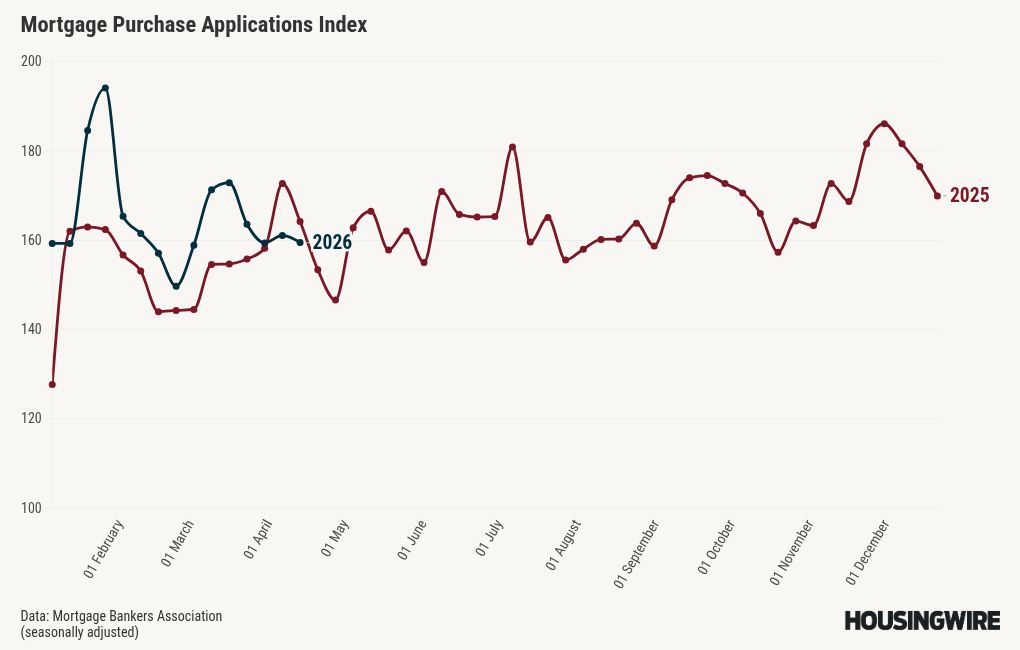
The various products and programs launched so far have generated their fair share of conversation and confusion in the industry, so HousingWire has broken down three of the main programs announced so far to provide some clarity. 

Compass-Rocket-Redfin

Announced in late-February, the agreement between Compass International Holdings (CIH) and Rocket-Redfin to exclusively display Compass’s coming soon listings on Redfin was the first of these pre-marketing programs to hit the industry. The deal is mutually exclusive, meaning that Redfin cannot display the coming soon listings of other brokerages, and Compass cannot display its coming soon listings on other portals beyond its own brokerage website. 

Syndication of these coming soon listings began in mid-March with just Compass listings; however, CIH has said the program would expand to other brands in its portfolio in the coming months. Additionally, CIH said it is also exploring an experience like that on Compass.com, which gives consumers visibility into the number of Private Exclusives available in their area that would debut at a later date. 

As part of the program, Compass’s coming soon listings receive prime search result placement on Redfin, and days on market and price history are not displayed. While any Compass coming soon is eligible for display, sellers must consent to their coming soon listings being displayed on Redfin. In addition, in contrast to some of the other programs, coming soon listings can be pre-marketed on Redfin for as long as the seller would like.

According to Compass, the listing agent’s contact information will appear with the listing, and if a consumer submits a Contact Agent form on a Compass coming soon listing on Redfin, the lead will be routed first to the listing agent of record. That agent then has 24 hours to claim the buyer lead. If the lead remains unclaimed, it will be sent to an agent in the Compass Leads Program. Compass has also claimed that the program will create new opportunities for its agents to receive buyer leads directly from Redfin.com and Rocket.

The agreement also has a mortgage component, which is unique to this pre-marketing program, as the firms announced that CIH listings that close through Rocket-Redfin will be eligible for Rocket’s preferred pricing bundle, which the companies have said could result in up to $6,000 in closing cost savings to the consumer.

Zillow Preview

Announced in mid-March, Zillow Preview was the next portal pre-marketing product to hit the market, with syndicated coming soon listings hitting Zillow Preview this month. Like Compass’s arrangement with Rocket-Redfin, coming soon listings can only appear on Zillow Preview with a seller’s consent, but unlike the Compass agreement, coming soon listings displayed in Zillow Preview must follow local MLS rules. This means that if a listing cannot be publicly advertised for more than 24 hours before going active in the MLS, then the coming soon period can only be 24 hours. 

Additionally, with Zillow Preview, sellers can choose to display the number of days a listing has been on Zillow. However, if a seller chooses to display days in Zillow during the Preview, once the listing goes active in the MLS, the number of days the listing was in Preview will carry over, adding to its overall days on Zillow count. Zillow has also announced that statistics like saves and views also get carried over when a listing swaps from Preview to active.

The program is currently only available to agents at brokerages that partner with Zillow. So far, 58 brokerages and franchisors, including Side, United Real Estate, Keller Williams, REMAX, SERHANT., HomeServices of America, The Keyes Family of Companies and Engel & Völkers, have signed exclusive agreements with Zillow. Under these agreements, firms cannot display their coming soon listings on any other listing portal. However, Zillow has noted that some MLSs that offer a coming soon status syndicate those listings via IDX or VOW feeds, and Zillow will continue to display these listings regardless of whether the brokerage is part of Zillow Preview.

Listings displayed in Zillow Preview will have a contact agent button that will direct the consumer to the listing agent. If that consumer ends up working with the listing agent to purchase any property, including that listing, Zillow will not charge the listing agent for the buyer lead. The company has stated that any lead a listing agent receives from a Zillow Preview listing is always free. Listings will also have a “schedule a tour” button, allowing consumers to schedule a tour of the property for when it becomes an active listing. When a buyer requests a tour, the buyer is put in contact with an agent who is a Zillow partner agent. If that buyer then ultimately works with that agent, the agent will be charged what they normally are for a buyer lead, but the listing agent that the buyer initially selected to tour will receive 10% of the buyer agent’s overall commission.

Zillow has clarified that this will be made possible by the company slashing its cut of the buyer agent’s commission. So instead of keeping the entire 35% referral fee, it will only keep 25%, with the other 10% of the buyer’s agent commission going to the listing agent, whose listing initially put the buyer in contact with the agent.

“We’ve made a lot of noise in the past year about listing transparency and how sellers benefit from broad exposure, and buyers deserve equal access to inventory and shouldn’t be forced to work with a particular brokerage to get access to inventory,” Errol Samuelson, the chief industry development officer at Zillow, told HousingWire in mid-March. “So, the idea of the preview is to provide exposure to these pre-active listings to everybody. We think it is a continuation of our work for transparency.” 

eXp Realty signs non-exclusive deals

While Zillow Preview and Compass’s Rocket deal have generated the most buzz, eXp Realty, the nation’s largest firm by transaction side count, also announced plans to pre-market coming soon listings in late-March. In order to pre-market these listings, eXp Realty signed non-exclusive deals with Realtor.com, Homes.com and ComeHome.com, which is HouseCanary’s real estate portal that has partnered with Google to showcase listings in Google search results in select markets. As these are all non-exclusive agreements, eXp has said any portal may choose to receive eXp’s coming soon listings on equal terms, pending local MLS rules and the seller’s authorization. Additionally, the portals have issued their own statements welcoming other brokerages to join their programs.

Syndication of eXp’s listings, which will be up to the seller’s discretion, is slated to begin on April 15. Additionally, like Zillow Preview, the coming soon period for all listings is subject to local MLS rules and guidelines. 

Leo Pareja, the CEO of eXp Realty, told HousingWire in March that these agreements are a positive for consumers as they provide sellers with a broader listing exposure and they get coming soon listings in front of more consumers. His desire to get eXp’s listings in front of the widest audience possible is why Pareja said his company did not enter into an exclusive syndication agreement with just one portal.

“I am inviting any national portal that is willing to accept my feed on a non-exclusive basis to enter into a syndication deal because, in my opinion, the listings should be everywhere at the same time,” Pareja said. 

However, Pareja argues that the only reason eXp has had to sign these deals is because not all MLSs include coming soon listings in the IDX feeds they syndicate to portals and other sites. 

“If all the MLSs would just include the coming soon status listings in their IDX feeds and syndicate it to all the portals, then this would be a non-issue and none of us would have to do this,” Pareja said. “I believe that part of the MLS’s role is to make sure that they are listening to their customers. I believe in the MLS system, and I think I have been one of the loudest advocates for having a third party that is agnostic making rules. I think it is super important in order for us to have collaboration as an industry, but if something is going in a certain direction, I’d prefer all of it to exist at the MLS input level and then we wouldn’t have to figure out how to do it ourselves.”

This post was originally published on here

New American Funding (NAF) expanded its Midwest footprint with the launch of One Goal Mortgage powered by NAF, a new branch serving the Omaha, Nebraska, metro area and southwest Iowa, the company announced this week.

The move gives the California-based independent mortgage lender its first physical branch presence in Nebraska. The One Goal Mortgage team joined NAF in early 2026 and will operate alongside existing teams in Glenwood and Council Bluffs, Iowa.

The branch is led by producing area sales manager Rachel Pierce, who brings 17 years of mortgage industry experience. She and her team, which collectively has more than 50 additional years of mortgage expertise, focus on purchase, refinance and renovation financing through relationships with real estate agents, homebuilders and financial advisers across the region.

HousingWire Mortgage Rankings data shows that Pierce did $52.7 million in mortgages, with an average loan size of $256,000 across 206 units.

“After nearly a decade with my previous company, I spent more than 16 months carefully evaluating where I wanted to take the next chapter of my career and my team,” Pierce said in a statement. “New American Funding stood out for its unwavering commitment to championing the originator, investing in forward-thinking technology, and building a culture centered on teamwork and a high level of support.”

One Goal Mortgage offers conventional and government loan programs, as well as nonqualified mortgage (non-QM) and specialty products for borrowers with complex financial profiles, according to a press release. The team also has access to new-construction financing, medical professional loan programs and NAF Cash, an affiliated company that allows buyers to make cash-backed offers in competitive markets.

Pierce is joined by home mortgage advisers Meggan Jensen and Kelli Lichty; loan officer assistants Krystal Ameson, Amanda Shannon and Kolin Brace; senior processor Elisha Konecky; and production assistant Sammie Pierce.

Greg Griffin, regional manager of strategic growth and retention at New American Funding, said the hire fits into a broader regional growth strategy.

“New American Funding’s Midwest region is excited to welcome One Goal Mortgage Powered by New American Funding to our growing family,” Griffin said. “Led by Rachel Pierce, the team brings strong leadership, energy, and a clear commitment to excellence that aligns perfectly with New American Funding’s vision. The first time I met Rachel and her team, I knew they were the missing link.”

NAF reportedly services more than 277,000 customers representing $72 billion in unpaid principal balance and operates more than 300 locations nationwide. According to data from Inside Mortgage Finance, the company ranked No. 29 nationally with $16.33 billion in volume in 2025.

The company has announced multiple leadership changes at the regional level in the past year.

In October, it hired Nathan Ballentine, formerly of Wachovia/Wells Fargo and Movement Mortgage, as regional vice president in South Carolina. In August, Tim Sorenson joined NAF to head up lending and recruiting efforts in the Southwest, having previously served for eight years at Rate. And in July, Tony Blodgett and Andy Pettola were promoted to regional retail business managers, overseeing more than 270 branches and a sales force of nearly 1,400 loan officers and branch managers.

This post was originally published on here

The National Association of Realtors (NAR) agreed to a proposed settlement that would resolve nationwide homebuyer commission lawsuit claims in the Tuccori homebuyer lawsuit.

The agreement, announced Friday and subject to court approval, is structured as an opt-in component of the Tuccori master settlement. The opt-in window for the Tuccori master settlement closes next week. NAR was not a defendant in the Tuccori lawsuit.

NAR said it will contribute $52.25 million to a settlement fund over multiple years. The deal requires continued compliance with the business practice changes NAR agreed to in its settlement of the home seller commission lawsuit claims in the Sitzer/Burnett lawsuit. It does not impose additional business practice changes beyond those already in place, the trade group said.

NAR also said it will seek a stay in the Batton homebuyer commission case, in which it is a defendant, because its Tuccori settlement is intended to release the claims asserted in Batton.

According to NAR, its settlement in Tuccori protects state and local Realtor associations, regardless of whether they operate multiple listing services (MLSs). It also covers Realtor-owned MLSs, non-Realtor-owned MLSs and real estate brokerages with a Realtor as principal that have not previously settled or been named in similar litigation. These parties must meet specified eligibility criteria, including compliance with NAR rules and policies and not asserting claims contrary to the settlement.

NAR characterized the Tuccori deal as providing a broader level of protection and release than any of its prior settlements. By resolving these homebuyer claims through a single, nationwide structure, the trade group aims to reduce uncertainty and potential financial exposure for associations, MLSs and brokerages that opt in.

“In NAR’s 2026-2028 Strategic Plan, we committed to the industry that we would protect and advance the legal interest of Realtors. This settlement is a part of our efforts to fulfill that commitment and will promote a more resilient industry,” NAR CEO Nykia Wright said in a statement.

“This outcome, which provides a broader level of protection and release for the industry than has been secured in any previous NAR settlement, is a result of NAR’s new legal team’s diligent approach to addressing legal risk and reinforces our commitment to delivering greater value and stability for our members, so they can remain focused on their clients and getting to their next transaction.”

General counsel Jon Waclawski framed the agreement as part of the trade group’s more “deliberate and strategic” legal posture under its Strategic Plan.

“We sought this settlement to secure meaningful protections for our members and the industry. We moved decisively to resolve these claims in a way that avoids significant potential liability and positions NAR more effectively going forward, ensuring our members can continue unlocking the American Dream for generations to come,” Waclawski said.

NAR said the agreement is the latest in a series of favorable legal outcomes under its revamped legal leadership. These include the dismissal of multiple antitrust cases in the past nine months, most recently including the Hardy and DeYoung lawsuits.

Plaintiffs in the Batton suit have been pushing back against defendants opting to settle these homebuyer commission lawsuit claims with the Tuccori plaintiffs.

In March, the Batton plaintiffs filed a motion for a preliminary injunction seeking to prevent Hanna Holdings from proceeding with its proposed settlement in the Tuccori lawsuit. This came after the Batton plaintiffs filed a motion to intervene in the Tuccori lawsuit and a motion for a preliminary injunction seeking to block Anywhere Real Estate from obtaining preliminary approval for the settlement the firm negotiated in the Tuccori suit via the opt-in mechanism. 

These motions were denied, but the Batton plaintiffs have also sought to appoint the Tuccori plaintiffs’ attorneys as interim co-lead counsel in the Batton lawsuit. 

It remains to be seen if the Batton plaintiffs will also pushback against NAR’s choice to opt-in to the Tuccori settlement, which comes a little over two years after NAR announced its settlement in the Sitzer/Burnett lawsuit.

This article was written by Brooklee Han and generated with the assistance of HousingWire Automation. It was reviewed by a HousingWire editor before publication. The system helps convert company announcements and industry data into HousingWire-style news coverage.

This post was originally published on here

Earlier this week, Rocktop Technologies announced the formation of Rocktop Digital, a new business focused on digitizing and tokenizing mortgage and private credit assets. As part of the launch, Brett Benson was promoted to CEO of Rocktop Digital.

Benson, the former co-president of Rocktop Technologies, is stepping into his new role with the mindset that the next phase of mortgage innovation may not be about better loans, but better infrastructure.

Just days after the announcement, Benson sat down with HousingWire to outline how the new business is designed to rebuild the “plumbing” of the market, targeting the systems that govern how assets move rather than the assets themselves.

Editor’s note: This interview has been edited for length and clarity

Sarah Wolak: First, congratulations on the new role. You previously held a role at Rocktop Technologies, so what has the transition been like to CEO of Rocktop Digital?

Brett Benson: Just for background context, I kind of grew up on the trade desk. I started my career on the capital markets side. I worked at some big data companies for a period of time, both CoreLogic and Black Knight. For the last 11 years, I’ve been president and chief investment officer at Rocktop Technologies.

The transition here is a little bit of a fork. Rocktop Technologies is focused on some of the generative AI applications and data and documents, as well as automating some of the processes attached to default servicing and some of the trade operational pieces and capital markets.

For me, this is a little bit more of an infrastructure play. We’re more focused on the rails and kind of working on the plumbing of the industry, if you will, so things that would move assets and make the portability and transferability of assets more efficient. That becomes the Rocktop Digital play, as opposed to Rocktop Technologies, which is really focused on the asset itself and how to apply newer technologies to make an asset more efficient.

Wolak: You’ve described this as “rebuilding-the-market architecture.” What do you mean by that? Is something fundamentally broken?

Benson: Yeah, I’ll give an analogy first. So, for example, the DTC [Depository Trust Co.] in the ’70s really focused on the digitization of what were equity trades at that point. There were a lot of paper-driven functions, much like the mortgage industry, a lot of inefficiency in the ecosystem in terms of dealing with paper or manual tasks.

The DTC worked toward the digitization of assets and creating a more trusted, validated digital asset. Then, in 1999, the [Depository Trust & Clearing Corp.] created the clearing corporation that allowed for the transfer or trading of those assets.

We think about it the same way: The mortgage industry is 30 to 50 years behind other tradable assets. It’s not dissimilar from those paper-driven functions and manual tasks of, how do you validate an asset?

There are lots of redundant diligence and certification and recertification of the collateral pieces themselves. What we’re trying to do is create a more efficient system — fix the plumbing. How do you fix the rails on which all of this happens? And how do you create a trusted asset, taking into account some of the privacy pieces? Technology is now allowing for that at scale.

Wolak: What else is different now that makes it viable for Rocktop Technologies to have this new business and to go forward with that confidently?

Benson: It’s almost a separate company that we’re running here — you’ll also hear it called the registry. That function is trying to get ahead of how assets are transferred, and I know that you asked why now. … What we’ve found is that technology has reached a point where even manual tasks done by humans can now be done at a much faster rate and a much more proficient rate. We see errors in human calculations and in dealing with manually extracted data from documents.

It’s the combination of AI functions that are allowing for really the smart kind of technical, technological applications that create validation of assets, and then the blockchain pieces allow you to create an auditable record behind that. That’s how you create trust and the ability to move assets faster.

There’s a lot of inefficiency in the system, and the industry is naturally resistant to change. There are a lot of people making money on that inefficiency. … But now the technology is not only becoming faster, it’s also better, and that’s where we feel like costs can be lifted from the system, which ultimately gets passed through to borrowers and investors.

Wolak: You brought up the element of trust here. What are the biggest regulatory or trust-related hurdles?

Benson: Naturally, there are custody functions. MERS has fought for what is, and there’s case law behind, how to create digital assets. That’s one example where the change to a digital representation of ownership and enforceability of an asset has already started to hit a tipping point. The concept isn’t new, but it’s not well-trusted, and I think it hasn’t been easy for the system to adopt this type of thing. 

A low point in my career was when we were trading a set of assets that had eNotes attached, and we actually had to print out the notes themselves so the financing partner would accept them.

But we are seeing movement. Fannie Mae is moving toward acceptance of crypto for down payments. We’re seeing things in the industry that are moving toward a trusted digital infrastructure.

AI functions have changed even in the past quarter. … It’s become the tipping point. One enables the other: When the AI can validate assets, certify them and create trusted layers, then put them on-chain, you create an immutable, auditable asset. When you have a validated, immutable asset that can be consistently updated with validated information, then you have an asset that becomes more tradable.

And frankly, you’re raising the value of the asset because you’re taking out the uncertainty of the asset.

Wolak: Where do you think the largest impact lies: a specific group of borrowers, investors or someone else?

Benson: It’s a great question. The progression starts with operational improvements. When you release inefficiencies and costs from the system, that ultimately gets passed through to the borrower or the investor.

In either case, it’s what we call the “golden rule” — those who have the gold make the rules. So we see a lot of capital markets that will influence this first, which ultimately gets passed through to the borrower.

In terms of who benefits first, it’s probably the operational functions [through Rocktop Technologies
and Rocktop Digital]. The operational functions really sit with the servicers, lenders, and how loans are transferred. These inefficiencies are embedded in servicing costs and processes, especially with rising delinquencies.

We first see the benefits of this tech in operations, then those benefits pass through to borrowers and capital markets. We need the capital markets to push the adoption piece because they are the ones driving the functions. But ultimately, the goal is really to pass it to the borrowers.

Wolak: How do you ensure the “source of truth” is accurate and trustworthy once assets are tokenized?

Benson: There is essentially a game of telephone happening in the industry. You have the lender, third-party document holders, the servicers — and that becomes the source of truth that then passes through to the investors.

Rocktop Technologies is addressing that by going to the source of truth and creating validation layers. How do you ingest both structured data and unstructured data, so data and documents, and create using AI, to marry up or validate all that data? And then you think about how do you create both the transparency and the portability of an asset?

That’s where Rocktop Digital comes in, by creating an asset that moves easily and has validation layers already on top of it in real time. Technology has gotten to a point where we can do this at scale and at a speed that has never been done before, with trust.

Wolak: What operational challenges have you faced in building this?

Benson: We at Rocktop Technologies embraced AI almost 10 years ago. But, again, we live in an industry that has just as much fight against change or lobbying against change. So there are natural adoption hurdles and headwinds against change.

But what we’re seeing now is that the technology is changing so fast and becoming so proficient. There is a mindset change — much like equities decades ago — and there’s a need for adoption of technology to create efficiencies. And it allows more to become accessible. What I mean by that is, we’re seeing the retail side, they’ve never been able to invest in mortgages, but having a trusted, portable asset with transparency and allowing for efficiency actually brings new capital into the game.

So it raises the bar for the institutional investor … while bringing in new capital players to the market, which creates more fluidity and more liquidity.

This post was originally published on here

A vacant land transaction in Maryland nearly became the latest victim of deepfake fraud last week when artificial intelligence (AI) was used to impersonate the property owner during a live video session.

That roughly $100,000 deepfake fraud attempt was stopped by identity verification and transaction security platform Proof during a remote notarization, the company said.

The incident highlights a continued vulnerability in real estate transactions, particularly those involving out-of-state sellers or vacant land where in-person verification is impossible.

“Real estate fraud isn’t always a high-volume issue, but it’s an incredibly high-impact issue,” Proof CEO and co-founder Pat Kinsel told HousingWire. “A lot of title companies will say, ‘It hasn’t happened to me,’ and then when it does happen to them, it’s devastating.

“I know a title agent that had a million-dollar loss, and they ended up having to personally cover this.”

Tech-enabled fraud reached $13.7 billion in 2024, according to the FBI’s Internet Crime Complaint Center. Meanwhile, deepfake-related scams are rising quickly — jumping 40% year-over-year, per Entrust’s 2026 Identity Fraud Report.

How deepfakes evade human detection

In a demonstration, Kurt Ernst, product manager at Proof, showed how easily commercially available software can create convincing deepfake videos.

Ernst placed a deepfake face over his own in real time, noting the setup took just 15 minutes using off-the-shelf technology.

“I don’t have a supercomputer sitting in my closet here running the latest in video drivers,” Ernst said. “We set this up very quickly. It’s using commercial, off-the-shelf software that you can get, or your fraudsters, your friendly neighborhood fraudsters, can get as well.”

A recent study by Deloitte estimated fraud losses tied to AI-generated deepfakes could reach billions annually, with financial services and real estate among the most exposed sectors.

Ernst also cited common flaws in deepfake videos, including hand warping when crossing the face, imperfections in facial hair rendering and inconsistencies in mouth movement.

“You can see how there’s warping there. You can see my face over my fingers,” he said. “These different types of technologies are terrible with fingers and hands, and they’ll look kind of creepy.”

Proof’s technology flagged the deepfake video as fraudulent within seconds during the demonstration.

The system scans video frames in real time while also analyzing device information, location data and email addresses, Ernst added.

Multilayered detection approach

The Maryland transaction involved a vacant lot where the seller claimed to be local but, as often is the case, was operating elsewhere.

“They don’t always have the exact details on their ID correctly,” Ernst said of scammers. “Their email address — that’s a classic one. You can spin up a new email address in five seconds. So their email address will have never been seen by anyone.”

Detection systems can flag suspicious transactions and red flags autonomously.

“We can say, ‘We think this one needs to be reviewed,’ even if the notary doesn’t see it,” Ernst said. “That can happen almost instantaneously.”

Best practices for professionals

Kinsel recommended that real estate teams and title offices add identity verification at every step of the transaction process — and even across avenues once thought to be relics of the past.

“It’s been proven that fraud is returning to paper channels,” Kinsel said. “You can provide a better customer experience and a more secure experience by actually securing the credential.”

The company has invested in deepfake detection for four years — training models on synthetic videos created from monitoring the dark web and platforms like Telegram.

“It’s going to be an endless battle, but we think it’s really core to our mission as a company,” Kinsel said.

Proof’s long-term strategy in staying ahead of evolving fraud technology involves persistent digital identities secured by cryptographic keys, he added.  

“Every single time that someone is enrolled or the identity is verified represents the opportunity for fraud,” Kinsel said. “Every single time when you go from the Realtor to the title company, to the mortgage lender, these handoffs are an opportunity for someone to steal your identity.”

This post was originally published on here

A new report released on April 6 found that community lenders could play a larger role in attracting institutional investment for climate and infrastructure projects, despite longstanding concerns around risk, scale and liquidity.

The report, “Bridging Institutional Capital and Community Climate Investments,” published by Ceres and the Justice Climate Fund, argues that community-based financing institutions offer a viable pathway for investors seeking stable returns while supporting local economic resilience.

Community lenders, including community banks, credit unions and green banks, have historically been underutilized by institutional investors due to perceived constraints such as small loan sizes, limited aggregation mechanisms and a lack of standardized reporting, the report said.

In a conversation with HousingWire, Holly Li, program director, Ceres Accelerator for Sustainable Capital Markets, Net Zero Finance, as well as an author of the report, said that there is a strong desire from both the institutional investor side and the community development financial institution (CDFI) side to work together.

“What we are seeing is a mismatch between institutional capital and community-scale investment,” Li said. “The projects are there, and the performance of community projects is very strong, but investors need scale, they need liquidity, they need standardized products. They also need to understand the CDFI market a little bit more.”

Steven Rothstein, chief program officer at Ceres, agrees with Li. “I think there is a lot of interest, but there needs to be more knowledge on both sides; Big institutional investors don’t always know who all the local CDFIs are or who to reach out to.”

At the same time, demand for financing in underserved communities is rising, particularly for housing, small businesses, infrastructure and climate resilience projects. These investments can help mitigate risks tied to extreme weather events such as flooding, wildfires and drought, while also generating long-term returns.

Researchers found that institutional investors are primarily seeking competitive risk-adjusted returns, predictable cash flows, diversification and clear exit pathways. Community lenders, the report said, can meet many of those expectations by offering asset-backed loans, historically low default rates and access to public incentives and co-investment opportunities.

“I think the question is, what is stopping the investors from working with CDFI? One thing that we hear over and over again is perceived risk, because a lot of CDFIs don’t have standardized rate ratings and they have very limited reporting capacity, so the risk of their projects is often misunderstood,” Li said.

To bridge the gap between investor expectations and current market barriers, the report outlines four primary strategies. Both Rothstein and Li said that solutions like aggregation products and securitization can bridge these gaps.

The first strategy involves traditional financing tools such as insured deposits, certificates of deposit and promissory notes, which offer stable, predictable returns and are widely understood by investors. The second strategy focuses on innovative financing models, including loan securitization, equity-equivalent investments and loan participation structures.

A third approach highlights the use of first-loss or low-cost capital, typically provided by philanthropic or public entities, to absorb early losses and reduce risk for private investors. Such structures are designed to attract additional capital into sectors like clean energy, affordable housing and community development.

The final strategy emphasizes cross-sector collaborations between community lenders, corporations and philanthropic organizations, which the report says could form partnerships that support broader economic goals such as workforce development, infrastructure improvements and job creation.

“I think all financial institutions, CDFIs, credit unions, banks…need to do this. And if you look at the largest banks, they’re all investing enormous amounts in New Energy,” Rothstein said. “And in fact, in the last year, those large banks made more fees on the new and emerging and green energy than they did on the fossil fuel. So that’s a growing area, but the CDFIs know their communities, so they understand the needs better.”

The report concludes that the gap between institutional capital and community investment is narrowing as new financial structures emerge, offering investors a way to achieve both financial returns and measurable climate and social impact.

This post was originally published on here

Douglas Elliman has joined the growing list of firms settling the homebuyer commission lawsuits via the opt-in settlement in the Tuccori homebuyer commission lawsuit

The firm notified the court in the Lutz homebuyer commission lawsuit, in which it is a defendant, of its settlement on Thursday. According to the filing, the opt-in period for the Tuccori settlement closes on Monday. 

The terms and financial conditions of the settlement were not released. 

Douglas Elliman’s settlement announcement comes as the homebuyer plaintiffs in the Batton lawsuit have sought to prevent other brokerage defendants from settling the homebuyer claims via the Tuccori suit opt-in settlement. So far, the Batton plaintiffs have been denied in their efforts to intervene in the Tuccori lawsuit. 

But the Batton plaintiffs and the Lutz plaintiffs are jointly seeking to appoint the Tuccori plaintiffs’ counsel as co-lead counsel in their lawsuits. According to the notice filed by Douglas Elliman earlier this week, the company opposes this motion because it “improperly seeks to prevent the non-released, non-enjoined buyer-side putative class and Defendants from participating in the court-approved opt-in settlement procedure in Tuccori.” 

Other firms who have opted into the Tuccori settlement include Anywhere Real Estate and Hanna Holdings

Douglas Elliman did not immediately return HousingWire’s request for comment. 

This post was originally published on here

Nearly 60 brokerages and franchisors have now joined Zillow Preview, giving agents and sellers a way to publicly market pre‑MLS listings on Zillow and Trulia. Zillow announced Friday that 28 additional firms have signed on to offer Zillow Preview to their agents, signaling growing broker adoption of pre-marketing coming soon listings.

The latest participants include The Keyes Family of Companies, 8z Real Estate, Russell Real Estate Services, Seven Gables Real Estate, NorthGroup Real Estate, Homes of Idaho, DeLex Realty, Home Grown Group Realty, JohnHart Real Estate, Nest Realty, Realty Masters, Beverly & Company, Newport & Company, W Real Estate, Thrive Real Estate Group, KOMAR, Bella Realty Group, ICON Realty Experts, Queenston Realty, Libertas Real Estate, The Advantage Group, ROI Real Estate, Lamica Realty, Intege Realty, Arizona Proper Real Estate, Grace Hagerty Real Estate Inc, Real Estate Fixed and iad Real Estate.

These firms join over two dozen other brokerages and franchisors, including Side, United Real Estate, REMAX, HomeServices of America, Keller Williams and SERHANT., whose coming soon listings are already live on Zillow Preview.

Under the Zillow Preview program, listings can appear publicly on Zillow and Trulia before going active in the MLS, with visibility to any consumer with a phone or computer. The company has said that listing agents and sellers can use the pre‑market period to test pricing, gauge interest and build a pipeline of showings before the official go‑live date. Buyers can discover, save and share upcoming listings, connect directly with the listing agent or schedule tours with an agent of their choice.

“Pre-market listings belong in the daylight — giving sellers the broadest possible exposure and giving all buyers access without the requirement to get past a registration wall or work with one particular brokerage,” Errol Samuelson, chief industry development officer at Zillow, said in a statement. “Our research is clear: the best outcomes for sellers come from the broadest competition among buyers.”

Unlike many private networks, Zillow Preview does not require consumers to work with a specific brokerage to see or inquire about a home. Zillow says buyers are never locked into any one firm to access the inventory, a key distinction as regulators and plaintiffs in ongoing commission litigation have questioned practices that may limit consumer choice.

“For 100 years, The Keyes Company has thrived by asking one question: What do consumers need right now, and how do we deliver it?” Mike Pappas, the CEO of The Keyes Family of Companies, said in a statement. “Zillow Preview gives sellers and their agents a new choice: the ability to start marketing early while still reaching the broadest possible audience.”

Other brokerage leaders share a similar view, with Ryan Carter, the president and CEO of 8z Real Estate, stating that he and his firm appreciate that Zillow Preview aligns with their beleif that “buyers and sellers are best served by an open, transparent market.”

“By making pre-market listings publicly visible to everyone, not just a select network, we are giving our sellers the broad exposure they deserve and giving buyers access to more homes,” Carter said in a statement.

According to the company, Zillow Preview is designed to operate within local MLS rules while giving brokerages more flexibility in how they time and stage the marketing of listings. Participation is at the brokerage level; individual agents can then choose, with their sellers, whether to use it as part of their listing strategy.

Zillow first announced Zillow Preview in mid-March, just weeks after Compass, which now owns Anywhere and @properties Christie’s International Real Estate, announced an exclusive deal with Rocket Companies and Redfin to showcase its coming soon listings during its Q4 2025 earnings call.

In late March, eXp Realty announced non-exclusive pre-marketing deals with Realtor.com, Homes.com and ComeHome.com, which is HouseCanary’s real estate portal that has partnered with Google to showcase listings in Google search results in select markets, to syndicate its coming soon listings.

This article was written by Brooklee Han and generated with the assistance of HousingWire Automation. It was reviewed by a HousingWire editor before publication. The system helps convert company announcements and industry data into HousingWire-style news coverage.

This post was originally published on here

Inflation hit its highest rate in nearly two years, according to data released Friday by the U.S. Bureau of Labor Statistics (BLS).

According to the Consumer Price Index (CPI) the inflation index for all items jumped 3.3% in March, up from the 2.4% annual increase recorded in February. Month over month, the all-items index rose 0.9% in March, up from a 0.3% increase a month prior. This is the largest monthly increase in nearly four years. 

The biggest contributor to the all-items index’s monthly increase was the energy index, which rose 10.9% in March, led by a 21.2% increase in the index for gasoline. According to the release, the gasoline index’s increase accounted for roughly 75% of the all-items index’s monthly increase.

The index for shelter also rose month over month in March, jumping 0.3%, as the owners’ equivalent rent also rose 0.3%. The index for food, however, remained unchanged. 

Due to this, the index for all items, less food and energy (aka core inflation), rose 0.2% from the month prior in March.

On an annual basis, the core items index was up 2.6%, up slightly from the 2.5% increase reported in February, as the index for energy was up 12.5% year over year in March and the food index was up 2.7% annually. The index for gasoline reported an 18.9% annual increase in March. Year over year, the shelter index rose 3%, with the owner’s equivalent of rent rising 3.1% annually. 

According to economists, the March inflation data combined with the resilience shown by the labor market in the March jobs report effectively removes the possibility of a Federal Reserve rate cut in the near future. Additionally, falling consumer sentiment and rising mortgage rates are expecting to impact the spring homebuying season.

“Higher inflation has impacted the housing market in a couple of ways. Mortgage rates, which fell briefly below 6% in February, rose for five weeks in a row before declining slightly this week. Higher rates erode buyers’ purchasing power and stall progress toward greater affordability,” Lisa Sturtevant, chief economist at Bright MLS, said in a statement.

“The spring housing market is currently caught in a crosscurrent of conflicting signals. Although inventory is rising seasonally, a tug-of-war has emerged between increased choice and decreased confidence. Both buyers and sellers are acting with extreme caution, waiting for lower rates, more stable inflation and more certainty.”

This post was originally published on here

The housing market remains in flux, setting the stage for this year’s RealTrends Verified rankings.

Inventory has improved but remains constrained, affordability continues to pressure buyers and brokerages are still adjusting to new policies around private listings. In turn, firms are rethinking how they recruit, retain and support agents — and the rankings offer a clear look at which strategies are gaining traction.

That dynamic is reflected in the 2026 RealTrends Verified brokerage rankings, based on 2025 production. It tells a familiar story at the top — and a much more interesting one just beneath it.

A total of 1,267 firms met RealTrends Verified standards this year, with each closing at least 500 transaction sides or $350 million in sales volume. Together, these brokerages accounted for $2.24 trillion in volume and 3.94 million transactions, underscoring just how concentrated production remains among the industry’s top performers.

“RealTrends Verified exists to set the standard — and this year’s growth underscores the value of a consistent benchmark,” Caroline Scanlon, director of RealTrends Verified, said in a statement. “When the market moves, the industry needs a trusted way to see who’s gaining share and who’s building on a real scale.”

The ‘fab four’ aren’t going anywhere — yet

At the top of the brokerage rankings, stability reigns.

Compass, prior to its acquisition of Anywhere, once again led all firms in sales volume at $262.2 billion, while eXp Realty retained its hold on the No. 1 spot for transaction sides with 343,091. Anywhere Advisors and HomeServices of America rounded out the top four across both metrics.

It’s a continuation of a trend that has defined the rankings for several years now: scale begets scale. The largest brokerages are not just holding their positions — they’re reinforcing them.

But if the top four feel locked in, the gap behind them is starting to narrow.

visualization

The Real Brokerage is no longer a disruptor — it’s a contender

The Real Brokerage, headed by CEO Tamir Poleg, continues to gain traction among the industry’s top firms.

The company held steady at No. 5 by sales volume at $65.2 billion, but more notably moved up to No. 5 by transaction sides, overtaking Hanna Holdings. That dual top-five position signals a shift: Real is no longer just growing fast — it’s now competing directly with legacy players on both scale and productivity.

That mirrors what was seen last year, when Real posted triple-digit growth and began climbing the rankings in earnest. This year’s data confirms that momentum wasn’t a one-off.

visualization

LPT Realty’s leap signals a new kind of growth engine

Continuing on last year’s theme, if there’s a breakout story in this year’s rankings, it’s Robert Palmer‘s LPT Realty.

The firm jumped from No. 10 to No. 7 in transaction sides, increasing its total to 61,041 sides. That kind of movement in a single year is rare at this scale and it reinforces a broader trend: Brokerage models built around flexibility, agent economics and rapid recruiting are still gaining traction.

LPT isn’t alone. Across the rankings, newer and nimble firms continue to climb, even as the very top remains relatively unchanged.

The middle of the top 10 is where the action is

While the top four brokerages by volume remained unchanged, the middle of the rankings saw subtle but meaningful shifts.

Hanna Holdings moved up to No. 6 by volume, while Douglas Elliman slipped to No. 7. Peerage Realty Partners entered the top 10, replacing United Real Estate.

These aren’t dramatic shakeups, but they do point to increased competition, where small gains in sides or volume can translate into meaningful rank changes.

Brands are reshuffling — and LeadingRE is surging

Keller Williams remains the clear No. 1 brand by both sides and volume. But beneath it, the hierarchy is shifting.

LeadingRE, a network of independent real estate firms, made the biggest leap, jumping from No. 5 to No. 2 by transaction sides and increasing its market share to 11.08%, up from 8.93%.

Meanwhile, Coldwell Banker and REMAX both slipped in the rankings and lost share.

That reshuffling signals a more competitive landscape — one where the gap beneath Keller Williams is tightening, and no single challenger has a firm grip on the No. 2 spot.

visualization

Independents are quietly taking share

One of the most important shifts in this year’s data is the continued rise of independent brokerages.

Independents accounted for 28.79% of market share this year, up from 26.98% last year.

That growth is showing up everywhere: Compass (pre-Anywhere acquisition), eXp Realty, The Real Brokerage, LPT Realty, Redfin and Side are all operating outside traditional franchise structures. And many of them are gaining ground.

The implication is clear. The industry isn’t abandoning brands, but it is increasingly embracing models that offer flexibility in compensation, technology and operations.

This year’s RealTrends Verified rankings show an industry defined by two competing forces: stability at the top and disruption just below it.

The largest brokerages continue to dominate, but the fastest-growing companies are steadily reshaping the leaderboard. The power structure isn’t breaking, but it is bending.

This post was originally published on here

The housing market remains in flux, setting the stage for this year’s RealTrends Verified rankings.

Inventory has improved but remains constrained, affordability continues to pressure buyers and brokerages are still adjusting to new policies around private listings. In turn, firms are rethinking how they recruit, retain and support agents — and the rankings offer a clear look at which strategies are gaining traction.

That dynamic is reflected in the 2026 RealTrends Verified brokerage rankings, based on 2025 production. It tells a familiar story at the top — and a much more interesting one just beneath it.

A total of 1,267 firms met RealTrends Verified standards this year, with each closing at least 500 transaction sides or $350 million in sales volume. Together, these brokerages accounted for $2.24 trillion in volume and 3.94 million transactions, underscoring just how concentrated production remains among the industry’s top performers.

“RealTrends Verified exists to set the standard — and this year’s growth underscores the value of a consistent benchmark,” Caroline Scanlon, director of RealTrends Verified, said in a statement. “When the market moves, the industry needs a trusted way to see who’s gaining share and who’s building on a real scale.”

The ‘fab four’ aren’t going anywhere — yet

At the top of the brokerage rankings, stability reigns.

Compass, prior to its acquisition of Anywhere, once again led all firms in sales volume at $262.2 billion, while eXp Realty retained its hold on the No. 1 spot for transaction sides with 343,091. Anywhere Advisors and HomeServices of America rounded out the top four across both metrics.

It’s a continuation of a trend that has defined the rankings for several years now: scale begets scale. The largest brokerages are not just holding their positions — they’re reinforcing them.

But if the top four feel locked in, the gap behind them is starting to narrow.

visualization

The Real Brokerage is no longer a disruptor — it’s a contender

The Real Brokerage, headed by CEO Tamir Poleg, continues to gain traction among the industry’s top firms.

The company held steady at No. 5 by sales volume at $65.2 billion, but more notably moved up to No. 5 by transaction sides, overtaking Hanna Holdings. That dual top-five position signals a shift: Real is no longer just growing fast — it’s now competing directly with legacy players on both scale and productivity.

That mirrors what was seen last year, when Real posted triple-digit growth and began climbing the rankings in earnest. This year’s data confirms that momentum wasn’t a one-off.

visualization

LPT Realty’s leap signals a new kind of growth engine

Continuing on last year’s theme, if there’s a breakout story in this year’s rankings, it’s Robert Palmer‘s LPT Realty.

The firm jumped from No. 10 to No. 7 in transaction sides, increasing its total to 61,041 sides. That kind of movement in a single year is rare at this scale and it reinforces a broader trend: Brokerage models built around flexibility, agent economics and rapid recruiting are still gaining traction.

LPT isn’t alone. Across the rankings, newer and nimble firms continue to climb, even as the very top remains relatively unchanged.

The middle of the top 10 is where the action is

While the top four brokerages by volume remained unchanged, the middle of the rankings saw subtle but meaningful shifts.

Hanna Holdings moved up to No. 6 by volume, while Douglas Elliman slipped to No. 7. Peerage Realty Partners entered the top 10, replacing United Real Estate.

These aren’t dramatic shakeups, but they do point to increased competition, where small gains in sides or volume can translate into meaningful rank changes.

Brands are reshuffling — and LeadingRE is surging

Keller Williams remains the clear No. 1 brand by both sides and volume. But beneath it, the hierarchy is shifting.

LeadingRE, a network of independent real estate firms, made the biggest leap, jumping from No. 5 to No. 2 by transaction sides and increasing its market share to 11.08%, up from 8.93%.

Meanwhile, Coldwell Banker and REMAX both slipped in the rankings and lost share.

That reshuffling signals a more competitive landscape — one where the gap beneath Keller Williams is tightening, and no single challenger has a firm grip on the No. 2 spot.

visualization

Independents are quietly taking share

One of the most important shifts in this year’s data is the continued rise of independent brokerages.

Independents accounted for 28.79% of market share this year, up from 26.98% last year.

That growth is showing up everywhere: Compass (pre-Anywhere acquisition), eXp Realty, The Real Brokerage, LPT Realty, Redfin and Side are all operating outside traditional franchise structures. And many of them are gaining ground.

The implication is clear. The industry isn’t abandoning brands, but it is increasingly embracing models that offer flexibility in compensation, technology and operations.

This year’s RealTrends Verified rankings show an industry defined by two competing forces: stability at the top and disruption just below it.

The largest brokerages continue to dominate, but the fastest-growing companies are steadily reshaping the leaderboard. The power structure isn’t breaking, but it is bending.

This post was originally published on here

The conversation around artificial intelligence has largely defaulted to one of two extremes: AI as an existential threat to human work, or AI as a magic button that solves every operational problem automatically. In practice, neither framing holds up. The organizations gaining the most ground right now are those that have moved past the debate entirely and are focused on something more concrete: how to pair human expertise with AI capability in ways that produce real, usable solutions faster than traditional development cycles allow.

This is not a philosophical argument. It is a practical one, and the evidence is accumulating.

The hidden cost of how we’ve always built things

For decades, the process of turning a problem into a working solution followed a familiar path: define the problem, gather stakeholders, write specs, build a roadmap, wireframe the product, review, revise, and eventually, often months later, begin development. Each step was necessary, given the constraints of the time. But those constraints have changed, and the process largely hasn’t.

The result is a development cycle that burns time and organizational bandwidth before a single line of functional code is written. In fast-moving markets where competitive advantage can hinge on speed, this is no longer just inefficient. It is a liability.

A different model: Problem to prototype

What is emerging in practice, and what teams actively working at the intersection of AI and real-world operations are experiencing firsthand, is a fundamentally compressed workflow. Instead of beginning with weeks of spec development and roadmapping, practitioners are bringing their domain expertise directly into conversation with AI tools and moving to functional prototypes almost immediately.

The process works roughly like this: a subject matter expert articulates the problem and frames a possible solution. AI handles what would previously have required a room full of engineers and product managers and two weeks at a whiteboard: the architecture, the roadmap structure, the sequencing of development tasks. From there, AI-assisted coding tools translate that structure into working code. What remains is iteration, refinement, and deployment.

The human contribution in this model is irreplaceable: domain knowledge, problem framing, and judgment about what actually needs to be solved. AI does not identify the right problems. It accelerates the path from problem to solution once a knowledgeable person has clearly framed the challenge.

What this looks like in real operations

Consider sales productivity, a challenge that exists in virtually every industry, including real estate and title. A field representative spending long days meeting with clients faces a real and persistent problem: accurately capturing the details of each interaction in a form that managers and leadership can act on. The traditional solution involves CRM systems that require sitting down, logging in, and manually entering data; a task that rarely happens in real time and creates downstream gaps in visibility.
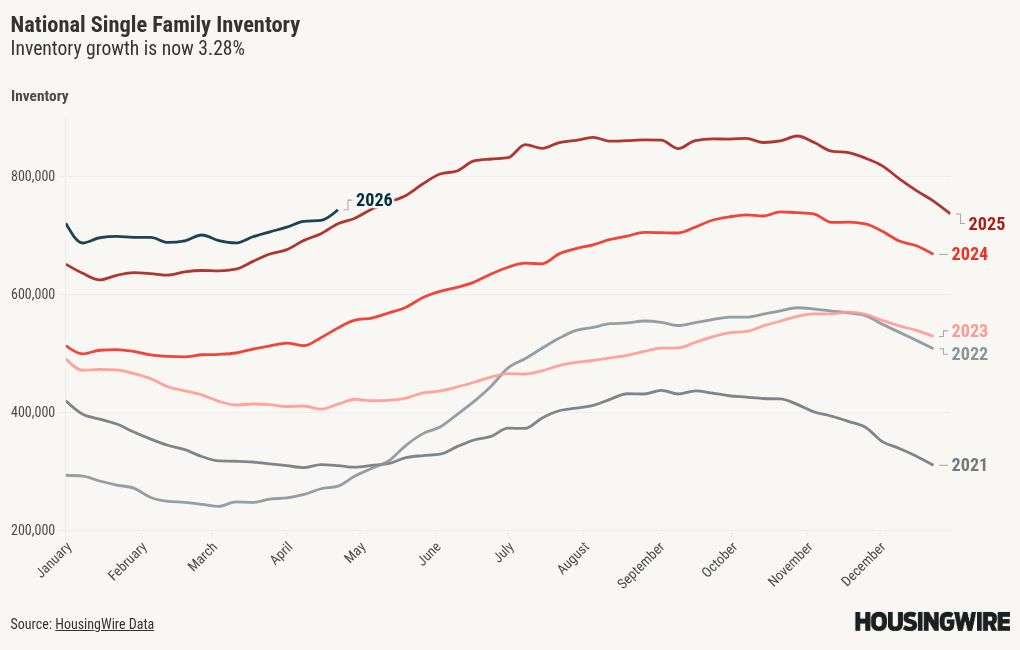
Using the human-AI partnership model, the solution takes shape quickly, starting with just a plain-language description of the problem. The need is described, the solution framed, and AI handles the architecture and development structure from there.

WFG recently developed a prototype to address a persistent pain point for its sales team. Field reps spending long days meeting with clients struggled to capture interaction details accurately and in real time; the kind of data managers need to coach effectively, and leadership needs to track activity. In the prototype, a field rep records notes conversationally throughout their day without needing to log in to CRM or park to complete data entry. AI synthesizes those notes, scores each interaction based on tone and context, and delivers a concise report with recommended next steps, giving managers real-time visibility into field activity without waiting for manual input.

The same approach has already been put into production. WFG built and deployed an AI-powered OKR tracking tool that ingests regular inputs from reps and managers, scores progress against established goals, and delivers leadership a clear, accurate summary of where each team member stands, along with recommended next steps to help them meet their objectives fully. What previously required manual cross-referencing and follow-up calls now happens automatically. That tool is live and in active use today.

In a traditional development environment, building either of these capabilities might take months of spec development, road-mapping, and testing. Using AI-assisted prototyping, both went from problem statement to working product in a matter of days.

The same principle applies to goal tracking and performance management, an area where data often exists, but synthesis is the bottleneck. Executives and managers typically receive reports that require manual cross-referencing against stated objectives. An AI-assisted solution built from a clear articulation of the problem can ingest that data automatically, score progress against established metrics, and surface a concise, actionable summary, eliminating hours of manual review and enabling faster course corrections.

Neither of these examples requires exotic technology or large development teams. What they require is human expertise in determining which problem is worth solving, combined with AI’s ability to rapidly architect and build the solution.

Why partnership, not replacement

The “AI will replace human workers” narrative overlooks an important aspect of how the most effective implementations actually work. AI is extraordinarily capable at pattern recognition, code generation, synthesis, and structure. It is not capable of knowing which problems are worth solving, understanding the organizational and market context in which solutions will live, or exercising the kind of judgment that comes from years of experience in a specific industry.

In the title and real estate sectors specifically, that domain expertise is deep and consequential. Compliance requirements, transaction complexity, agent relationships, and the high-stakes nature of the product mean that the humans closest to these workflows bring knowledge that no model can independently possess. What AI changes is how efficiently that expertise can be translated into operational solutions.
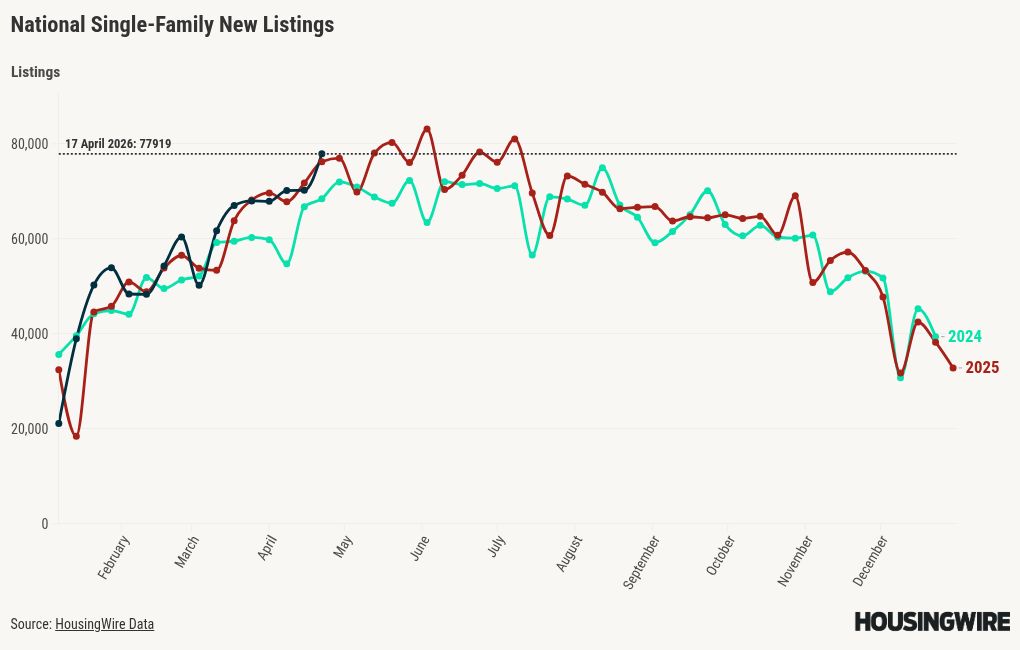
The professionals and teams who will define the next chapter of this industry recognize that the combination — human expertise driving AI capability — is where the compounding advantage lies. Not in automating humans out of the process, but in removing the friction between expertise and execution.
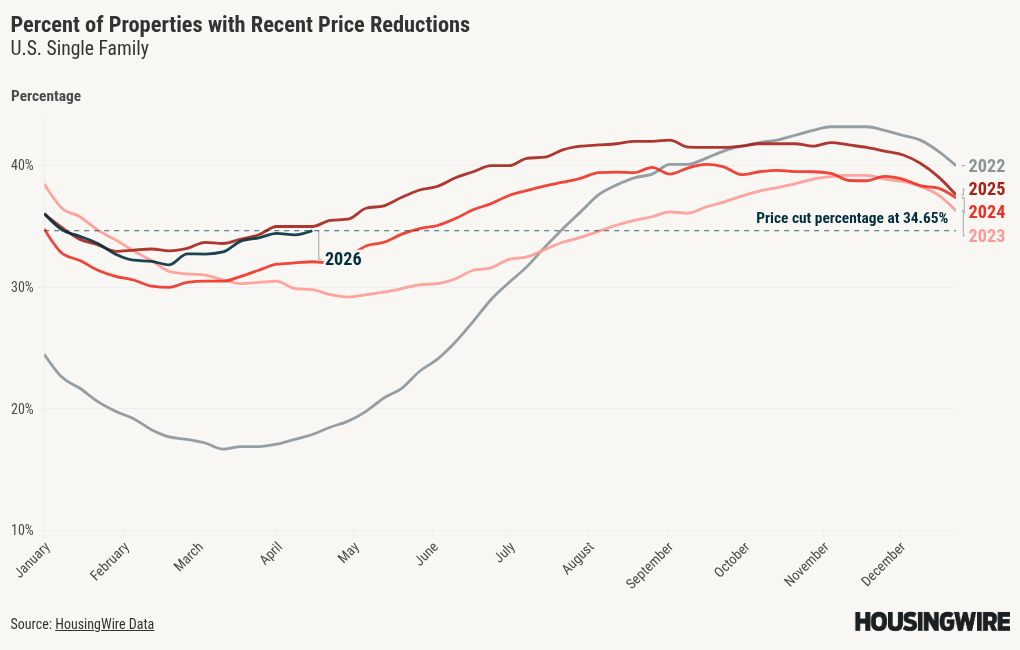
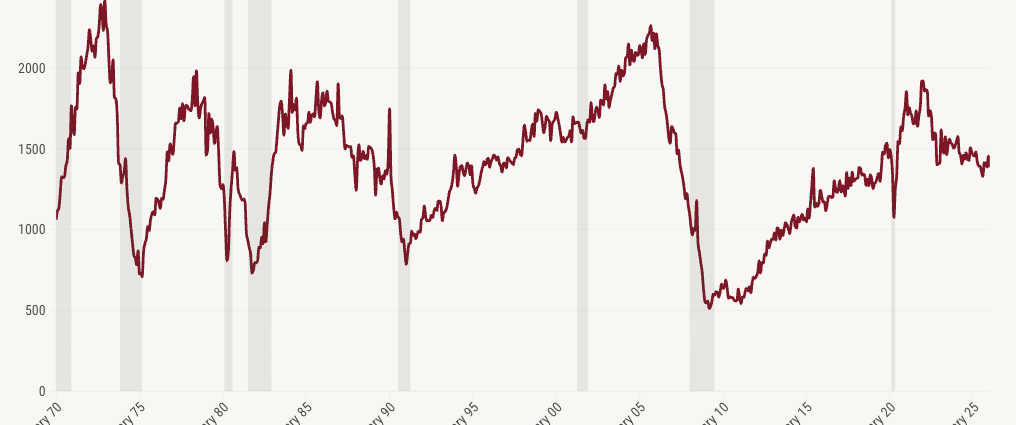
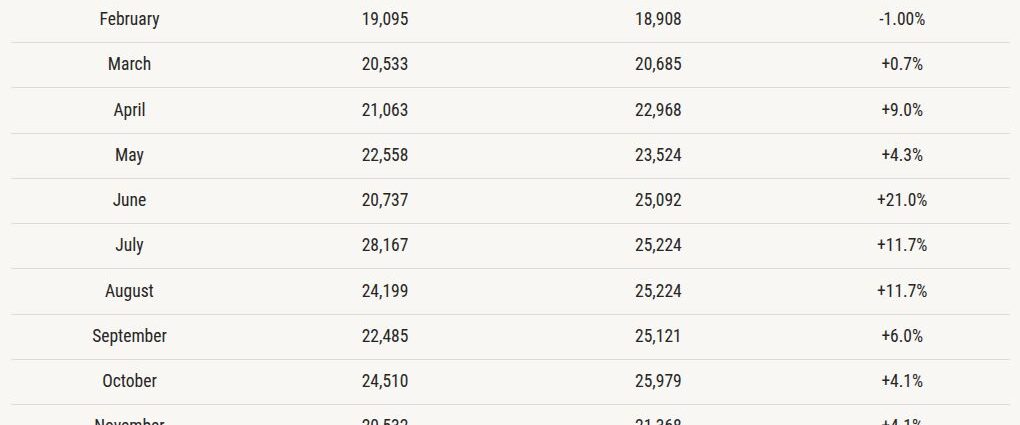
The practical takeaway

For industry leaders evaluating their own AI strategy, the most actionable question is not “what can AI do?” It is “where is expertise already present in our organization, and what is slowing the translation of that expertise into solutions?” The gaps in that answer are where the human-AI partnership model delivers disproportionate value.

The organizations building that discipline now, and establishing the internal capability to move from problem articulation to working prototype without the traditional overhead of the development cycle, are compressing timelines in ways that compound over time. The competitive distance between those organizations and those still building the traditional way is only going to grow from here.

Ryan Ozonian is Senior Director of Innovation and AI at Williston Financial Group (WFG). 
This column does not necessarily reflect the opinion of HousingWire’s editorial department and its owners. To contact the editor responsible for this piece: zeb@hwmedia.com.

This post was originally published on here

A new appraisal management platform is aiming to upend the traditional role of appraisal management companies (AMCs) by allowing mortgage lenders to oversee the process internally while maintaining regulatory compliance.

The platform, known as PAM, or Private Asset & Management Group LLC, is designed as a web-based system that enables lenders to manage appraisal workflows without relying on third-party AMCs.

David Cedar, president of PAM and a licensed appraiser, claims that the platform restores lender control over a process that he says has long been outsourced at the expense of both borrowers and appraisers.

Under the PAM system, lenders build and manage their own networks of vetted appraisers based on geographic competency and professional qualifications. The platform then automates the rotation of assignments to ensure independence and compliance with appraisal regulations, including Appraiser Independence Requirements (AIR).

“The platform … assigns the appraisals, it rotates the appraisers. It gives the lender control over using appraisers they want to use, not who the AMC is choosing for them,” Cedar said in a conversation with HousingWire.

Each transaction is tracked and documented within the system, providing what the company describes as full transparency and auditability. The platform also integrates with popular loan origination systems like Encompass to streamline workflows.

Cedar said that PAM, which launched at the end of 2025, can reduce costs for borrowers by eliminating AMC-related markups. The estimated savings range from 25% to 40% on appraisal fees, allowing appraisers to receive more equitable compensation while giving lenders greater oversight of appraisal quality and compliance.

“AMCs are charging ridiculous prices. … It’s overkill. It’s gouging. And there’s no regulation and there’s no transparency,” Cedar said.

PAM operates under a lender-managed, direct-engagement structure that the company says is compliant in all 50 states. It is offered at no cost to lenders or appraisers, according to its developers.

“Our flat fee is transparent and one time per order of $99 instead of an AMC charging $300, $400, $500 or even more,” Cedar confirmed. “We absorb the cost of the software, so the lender pays nothing. We also absorb the cost for the appraiser.”

The platform enters a market where some lenders have raised concerns about the traditional AMC model, citing issues related to cost, transparency and control over the appraisal process. Proponents of lender-managed alternatives say such platforms could offer a more efficient and transparent approach, though broader adoption and industry response remain to be seen.

This post was originally published on here

Virginia Gov. Abigail Spanberger has until Monday to sign or veto legislation that would make her state one of the few that allow faith-based organizations to build affordable housing on their properties by overriding local zoning limits.

Spanberger faces pressure from local governments and a small but vocal group of civic organizations to veto the bill, extending the fight after they failed to stop it in the state’s General Assembly.

If she signs the bill, the Commonwealth will join California and Florida in enacting so-called “yes in God’s backyard” (YIGBY) legislation that preempts local zoning control. For Spanberger, the law would be the most consequential affordable housing initiative to advance in her first months in office.

Losing on the broader affordable housing agenda

Shortly after taking office, she presented a housing agenda to improve housing affordability, but the marquee piece ran into a legislative buzzsaw. Lawmakers killed a proposal to allow by-right multifamily and mixed-use projects in many commercially zoned areas.

Lawmakers, however, passed proposals focused on subsidies and preservation of affordable housing.

The YIGBY bill sponsored by state Sen. Jeremy McPike moved on a separate track from the governor’s core housing agenda. Its advocates are mounting their own pressure campaign to persuade the governor to sign it into law.

“We are hopeful, and we are still waiting,” Jessica Sarriot, a co-lead organizer for Virginians Organized for Interfaith Community Engagement (VOICE), told The Builder’s Daily.

Voice, a nonpartisan coalition of Northern Virginia faith-based and community organizations, has pushed for the change for several years.

“I feel pretty confident that she will sign this because I think it fits so neatly within her affordability agenda,” Sarriott said. “It can be something that she really celebrates making forward motion on and it’s packed with bipartisan support.”

A Commonwealth housing solution

Virginia continues to face growing housing affordability pressures. Spanberger won on a platform that emphasized improving affordability.

HousingForward Virginia estimates that faith-based organizations control more than 74,000 acres statewide, creating a large potential supply of land for affordable housing.

The Faith in Housing bill would let churches and certain tax-exempt groups build affordable housing on land they already own without local rezoning. The legislation requires at least 60% of units to remain income-restricted for decades and keeps most new housing taxable.

Next steps for Spanberger

The governor has more options than just signing or vetoing, but they could become complicated.

Spanberger could issue a conditional veto and ask the General Assembly to approve amendments, according to Sarriot. The veto becomes official if lawmakers do not approve the changes.

She could also submit her own amendments for lawmakers to vote on. Sarriot said that whether they approve the amendments, the governor could still sign the original bill.

The governor has limited time to act on the bill because she faces a stack of other measures awaiting her decision.

There is precedent for a governor vetoing a housing bill and later signing it into law after changes.

Last year, Connecticut Gov. Ned Lamont vetoed a bill he initially supported. The legislation would have preempted local zoning authority to encourage missing-middle housing but faced pressure from suburban communities that did not want to lose control. Lamont later followed through on a promise for a special session to craft a compromise and then signed the revised bill.

This post was originally published on here

After being acquired by mortgage lender Lower in May 2025, executives at real estate listing portal Movoto said they hoped to use Lower’s network to connect more consumers with top local real estate agents and mortgage professionals.

This vision — which was first explained to HousingWire by John Berkowitz, former Movoto CEO and current president of real estate at Lower — appears to have started coming to fruition after the firm officially launched Movoto Advantage last week. 

Lower describes Movoto Advantage as a limited-access, subscription-based program that connects high-performing real estate agents with motivated home buyers and sellers through real-time live transfers.

The company said it initially began rolling out the program, which operates within Lower’s Movoto real estate marketplace, in late 2025. The program targets independent agents who rank near the top in their markets by transaction volume and have a history of closing deals, strong client service and consistent responsiveness.

Lower vets agents who apply to the program and it limits the number of participating agents, routing consumers to just one agent in a given market. Additionally, Movoto Advantage is integrated with Lower’s lending platform through Lower Connect, which pairs consumers and agents with Lower loan officers for fast preapproval and support through closing.

HousingWire recently caught up with Berkowitz to discuss how Movoto Advantage and Lower are looking to compete in the increasingly competitive listing portal and lead referral space. 

This interview has been edited for length and clarity. 

Brooklee Han: Last year when we spoke, you outlined how you were hoping to leverage Lower’s network to help both housing professionals and consumers. Based on my understanding of the product, Movoto Advantage seems to closely align with this goal. Tell me more about the creation of the product and what challenges you’re hoping it will solve.

John Berkowitz: I think Movoto Advantage is filling a gap in the market and it is going to create more wins for agents, consumers and our mortgage partners.

Going back, Movoto was one of the first to launch a solution specifically for real estate teams with Movoto Pro+. Teams have unique models and they need unique products that fit their needs. Pro+ was one of the first to adjust the typical referral model and blend it with the hybrid lead model for teams. That launched in 2023. And now we have hundreds of teams on it, and over time we have seen some of our competitors roll out their own solutions for teams.

But not all agents aspire to grow massive real estate teams or be part of a team. Instead, they want to have their own brand and their own business, so in talking with them, we realized there was a gap in the market for products like Pro+ geared toward individual top agents.

The origin of Advantage was their needs, and one of the biggest needs they have is certainty. In a short sales cycle, they don’t have the time to pitch to a consumer why they are better than the six other agents the same platform connected them to. And a lot of those agents want to find a way to bring mortgage into their business without setting up their own joint venture or becoming dual licensed

This program provides agents with certainty because they know they are the only one we are connecting a given consumer with, and it allows them to have a mortgage partner in a regulatory compliant way.

Han: As I understand it, there is a vetting process for agents to be part of the program. Can you tell me more about this process and what Lower is looking for in a Movoto Advantage agent? 

Berkowitz: I proudly say we’re not interested in partnering with tourist agents. I have no problem with agents coming and going, but when we meet consumers, we are making a promise of selecting the right professional for them — and we believe that means that this will be a person who has a track record of success.

We are looking at historical transactions and volume, and we are looking for high response rates to make sure that when we introduce the agent to a consumer, that leads to the consumer successfully transacting. 

Han: There are so many different referral and lead generation platforms and programs out there. What do you think sets Movoto Advantage apart? 

Berkowitz: We are going to give agents certainty. We are not going to sign up every agent in the market. We are limiting this because a key part of the program is giving the agents consistency of introductions.

A lot of agents will sign up for a lead service, and then that service signs up everyone else in their market and they no longer get leads. So we provide them with the certainty that they will receive leads, allowing them to plan and build their business around it. 

Additionally, we are not giving them cold leads — these are warm transfers. We are really working on setting agents up for success by explaining to consumers why they are the right agent for them in their market. And we are making sure that when we transfer an agent a lead, that consumer is ready, willing and able to go buy or sell a home.

This means that we are not delivering them the vast majority of leads we have, because we are not trying to just deliver leads. We are trying to create warm relationships between a consumer that came to us to meet an expert and a professional that wants to serve them. So I think we set ourselves apart with that consistency of lead flow, met with the high quality of the consumers we are introducing them to. 

Han: The mortgage component of this is also interesting as we are currently seeing others work to integrate mortgages — including Zillow Home Loans and the Compass-Rocket-Redfin agreement. Can you tell me more about the mortgage component, and how this reflects the goal you mentioned last year for fostering connections between local mortgage professionals, agents and consumers?

Berkowitz: The simple answer is that what I told you about last year, we’ve done it and we’ve done it a lot faster than I thought. You’ll remember that a big difference between us and our competitors is local mortgage, retail, boots on the ground. Our top teams have told us that they want their mortgage professionals to be local — that’s a key part of our strategy. A top-performing agent is going to want the same thing, so we are really leaning into finding the best way to connect those agents with a great local loan officer

It is really just pulling on that thread of taking these consumers that are anonymously searching online and figuring out exactly what they need — and then, at the right time, live transferring them to local professionals and creating that connection with a local agent and loan officer. 

Agents really care about mortgages because most buyers require some sort of financing, so they need high-quality mortgage professionals to work with and help solve problems for their consumers. This also allows agents to reduce some of their costs in a regulatory compliant way because they can do a lead sharing agreement, which is what we have enabled here.

We are really trying to make it easier for consumers, agents and LOs to work together and connect. We are putting them on joint text and creating those relationships. So far, agents say this is working really well because they then have less manual work and it makes everything smoother for everyone. 

Han: It is no secret that there has been quite a bit of drama in the real estate portal and referral service space over the past year, but Movoto has managed to stay out of the fray. I’d love to hear some of your thoughts on the recent chaos.

Berkowitz: I think we’ve done a very good job of being Switzerland and just staying focused on our North Star, which is the consumer. Our goal is to provide them with accurate data and knowledgeable professionals. With agents, we really lean into appreciating the role they play in the transactions and providing them with the tools they need to serve those consumers even better. 

There are a lot of narratives out there now about how different initiatives are better for consumers or agents. But I think, for example, if you look at the evidence, there is no rational argument to say that private listings are good for consumers.

What I do see is CEOs doing what is best for their shareholders, which is fine, because that is who they answer to. But it also creates this opportunity for private companies to innovate, listen to their customers, and create the products and experiences they really want. I think it is really a competitive advantage for us right now to be a private company that doesn’t need big public narratives to rationalize things, because we are literally just doing what our customers are asking for.

Han: As we have discussed, last year when we spoke, you laid out this vision of where the company is now. If we talk again a year from now, what are you hoping to see for Lower and Movoto?

Berkowitz: I think we are just getting on this path of integrating the consumer, agent and LO. And I think you are going to see more products come out around these same themes that provide upfront value to consumers, earning their trust, and then bringing in a real estate agent and loan officer in a way that really works for them to build a relationship and make it economically viable for them, while also enabling them to add more value. We have been pulling on that thread since the day Lower and Movoto came together.

This post was originally published on here

Surge, a partner intelligence platform for wholesale mortgage lenders, has been acquired by New Cheval Holdings as the wholesale channel faces tighter scrutiny on broker oversight and market share pressure from retail and direct-to-consumer lenders.

The transaction brings dedicated ownership and institutional backing to a platform used by wholesale lenders that are regularly ranked among the top 25 in the country, according to the company’s announcement.

As part of the deal, Jimmy Gillespie has been named CEO of Surge. Gillespie has a background in private equity and management consulting, and he’s joining Surge with a mandate to deepen customer relationships and accelerate growth. He replaces founder-led management as the company formalizes its next phase of expansion.

“Surge has a strong platform, a talented team, and customers who depend on it every day,” Gillespie said in a statement. “I’m focused on making sure we continue to earn that trust as we grow.”

Surge serves wholesale lenders through two integrated products, Partner 360 Alliance and Partner 360 Sales.

Alliance manages broker and correspondent counterparty risk and onboarding for licensed and nonlicensed partners, from application and e-signing through renewals, continuous licensing monitoring and audit-ready reporting.

Partner 360 Sales is designed for sales and account management teams, providing a live view of a lender’s wholesale network with Nationwide Multistate Licensing System (NMLS)-based market intelligence, loan officer-level production data, job change alerts, territory management tools and competitor visibility across the market.

Surge said the platform supports more than 10,000 active broker relationships and has not failed a compliance audit to date.

“Surge has helped us go from entering data to actually using it,” Pavle Lozevski, senior sales force technical lead at V.I.P. Mortgage said in a statement.

Surge co-founder Matt Hawkins said the company was launched to address practical pain points in wholesale lender-broker relationships, including fragmented broker onboarding processes and limited line of sight into broker production and movement.

“Surge was built to solve a real problem for wholesale lenders and the team delivered a platform that does exactly that,” Hawkins said. “I’m proud of what we built and confident it’s in the right hands.”

David Casti, who has led product and customer operations at Surge since 2022, will remain as chief operating officer, providing continuity for existing clients.

Wholesale lenders have faced heightened expectations from regulators and investors around broker due diligence, ongoing monitoring and fair lending oversight since the pandemic-era refi boom ended and volumes declined. At the same time, many lenders are trying to grow or defend market share in the third-party origination channel without adding large headcount to operations or sales management.

Tools that centralize broker compliance, onboarding and production visibility are increasingly viewed as core infrastructure rather than “nice to have” software. Consolidation in this niche signals that institutional investors see durable demand for technology that can support counterparty risk management and give account executives a clearer picture of where to deploy their time and pricing levers.

For lenders already running on Salesforce or modern customer relationship management stacks, platforms like Surge’s Partner 360 Alliance and Partner 360 Sales may offer a way to standardize broker data, reduce manual spreadsheet work and create audit-ready trails for warehouse lenders, investors and regulators.

This post was originally published on here

loanDepot announced Thursday that it has formed a strategic partnership with Figure Technology Solutions to power a new “express-path” home loan product through loanDepot’s mello platform.

Under the agreement, loanDepot will integrate Figure’s proprietary credit and loan underwriting engine into its mello technology stack and point-of-sale system. The integration is designed to allow loanDepot to offer a suite of faster-closing, express-path products, starting with the 5×5 HomeLoan, according to a press release.

The 5×5 HomeLoan is structured to deliver approvals in as little as five minutes and funding in as few as five days. The product can be used to access home equity and will be available for refinances and purchase transactions, effectively giving borrowers an option comparable to cash offers on speed and certainty of close.

loanDepot, a national retail lender that recently rejoined the wholesale channel, will roll out the 5×5 HomeLoan in all 50 states. The product will be distributed through the company’s sales force of nearly 1,800 licensed loan officers, who collectively hold about 12,500 state licenses.

The partnership ties Figure’s blockchain-based infrastructure and automated underwriting capabilities to loanDepot’s existing proprietary tech stack and diversified distribution channels. Figure has focused on using blockchain rails and automated underwriting to compress cycle times and lower fulfillment costs, particularly in home equity and consumer credit.

“loanDepot already has the most differentiated customer acquisition and retention business model in the marketplace today, with a world-class brand and the only at-scale diversified channel strategy in the industry,” Anthony Hsieh, the company’s founder and CEO, said in a statement.

“Our partnership with Figure builds on these unique assets and provides a meaningful strategic lever for our business, allowing us to help more customers, close more loans, materially reduce the cost to produce, and deliver profitable market share growth. Further, it positions us to introduce new and innovative products that expand the way we will meet the needs of borrowers in the future.”

This article was generated using HousingWire Automation and reviewed by a HousingWire editor before publication. The system helps convert company announcements and industry data into HousingWire-style news coverage.

This post was originally published on here

On Thursday, the National Association of Home Builders (NAHB) released its NAHB/Westlake Royal Remodeling Market Index (RMI) for the first quarter of 2026. The index reading of 62 was down two points from the previous quarter but remains firmly in positive territory.

The NAHB/Westlake Royal RMI asks remodelers to rate five aspects of the remodeling market as “good,” “fair” or “poor.” Each component is scored from 0 to 100, with a reading above 50 signaling that more remodelers view conditions as good than poor. All RMI results are seasonally adjusted.

The Current Conditions Index is based on three components: the current market for large remodeling projects, moderately sized projects and small projects. The Future Indicators Index averages two components: the current pace of leads and inquiries, and the existing backlog of remodeling work.

The overall RMI is the average of the Current Conditions Index and the Future Indicators Index, with any score above 50 indicating that more remodelers see market conditions as good than poor.

“Remodeler sentiment remained generally positive in the first quarter, as it was at the end of last year, even as many remodelers are still working to manage their customers’ cost expectations,” Elliott Pike, chair of the NAHB Remodelers Council, said in a statement. “Only a relatively small share report homeowners putting projects on hold due to economic and political uncertainty.”

“Ongoing positive remodeler sentiment is consistent with the NAHB outlook, given an aging housing stock and the lock-in effect of elevated mortgage rates keeping owners in their homes,” NAHB chief economist Robert Dietz said. “In the first quarter, remodelers reported that 21% of their projects were associated with home improvements made shortly after a purchase, while only 4% were for homeowners’ projects to ready a home for sale.”

The Current Conditions Index averaged 70, slipping one point from the prior quarter. All three components stayed well above 50: The measure of large remodeling projects ($50,000 or more) fell two points to 67; moderate projects (at least $20,000 but less than $50,000) declined two points to 69; and small projects (under $20,000) rose one point to 74.

The Future Indicators Index averaged 54, down two points from the previous quarter. The measure of the current rate of leads and inquiries eased one point to 53, while the component tracking the backlog of remodeling jobs decreased three points to 55.

Remodelers remain more confident than homebuilders

Remodelers remain more positive than homebuilders, NAHB data indicates. According to the latest NAHB/Wells Fargo Housing Market Index (HMI), builder confidence remained subpar in March with a reading of 38. 

National Kitchen & Bath Association (NKBA) President and CEO Bill Darcy told The Builder’s Daily in February that remodelers feel more confident than their homebuilding counterparts in 2026. Luxury projects, Darcy said, are expected to be the main driver of growth in the remodeling industry for the remainder of the year. 

According to NAHB, the average age of a home increased from 31 years in 2006 to 41 years in 2023. This trend correlates with a rise in home improvement projects. Additionally, thanks to the post-pandemic increase in home prices, homeowners now hold substantial home equity, giving them more financial capacity to take on these projects. 

Tyler Williams reported and wrote this article with drafting assistance from HousingWire Automation, an editorial tool that helps transform announcements and industry data into HousingWire-style news coverage.

This post was originally published on here

New View Advisors this week released its Proprietary Reverse Mortgage Production Index for the first quarter of 2026, with the data showing that private-label loan products have grown to new heights.

The quarterly index provides an estimated dollar volume for newly originated proprietary reverse mortgages in the U.S. The company reported that from January through March, proprietary loan production totaled $953 million. This was up from $730 million in the prior quarter and more than double the volume of $470 million in Q1 2025.

The 30.6% gain in quarterly volume propelled the private-label market past the federally insured Home Equity Conversion Mortgage (HECM) market for the first time, New View reported. HECM volume for Q1 2026 was estimated at $875 million

For March alone, private-label originations totaled $344 million, compared to $260 million for the HECM market.

The index was sourced using data from public and private sources, including publicly available financial statements, rating agency reports and other sources related to securitizations.

New View noted that in its previous quarterly report, the proprietary loan share of the reverse mortgage market grew from 30% at the end of 2024 to 45% at the end of 2025. At the end of March, that share stood at 52%, with private-label loans benefiting from additional liquidity in the secondary market.

The company estimated that at the current pace, proprietary loan growth could propel industrywide volumes past $7 billion or $8 billion in 2026 — even without growth for traditional products.

HECM endorsements in 2025 were relatively flat, according to data compiled by Reverse Market Insight (RMI). And the top three U.S. lenders — Mutual of Omaha Mortgage, Finance of America and Longbridge Financial — maintained their control by accounting for 55.8% of the market. That was down slightly from 57.4% in 2024.

HECM business saw growth in March, RMI reported this week, up 16.3% from February to a total of 2,117 endorsements. But that figure was still less than any month since August 2025.

“We still don’t have comprehensive data there, but what we can piece together looks like the growth in unit volume has been almost entirely in the proprietary products for several years, particularly when we exclude the HECM refinance waves from 2018-2022,” RMI explained in commentary.

Lenders are moving to incorporate more technology for the origination of private-label reverse mortgages. Last week, REVERSE plus announced that it had integrated proprietary programs from Smartfi Home Loans into its ANALYZER Pro platform. The move is designed to give loan officers and brokers the ability to model HECM and proprietary loan scenarios in a single system, offering improved education for senior borrowers.

“Proprietary reverse mortgages represent a large portion of the senior home equity lending landscape,” Kim Smith, senior vice president of wholesale at Smartfi, said in a statement at the time. “Making our programs available within ANALYZER Pro gives originators a practical, hands-on way to learn our offerings and better understand how our Choice proprietary loan option can uniquely meet the needs of borrowers.”

Rising consumer demand and wider availability for private-label options also come at a time when the U.S. Department of Housing and Urban Development (HUD) and the Federal Housing Administration (FHA) are exploring ways to make HECM products and their accompanying secondary market liquidity more competitive.

The agencies held a comment period that ended in January and generated numerous responses from originators, servicers, trade groups and other stakeholders. While no decisions have been announced based on that feedback, it’s a storyline for the industry to follow closely in 2026.

“The HECM and HMBS programs do not inhibit the private sector. On the contrary, they provide a benchmark ‘target’ for private lenders to attain and exceed,” Andrew Draper, a reverse mortgage specialist at Community First National Bank, wrote in response to a question listed on HUD’s request for information.

“By establishing a federally backed standard, HUD encourages private sector innovation to provide specialized, competitive products that supplement the government’s baseline.”

This post was originally published on here

A federal judge has denied eXp Realty’s request to dismiss a fraud claim brought by four women who say the company lied about investigating their allegations of sexual assault by two former agents.

U.S. District Court Judge André Birotte Jr. ruled this week that the fraudulent misrepresentation claim could move forward — including allegations that eXp Realty and its parent company eXp World Holdings made false statements to keep plaintiffs from leaving the firm.

The lawsuit — originally filed in February 2023 — centers on claims that suspended eXp agent David Golden and now-former agent Michael Bjorkman violated federal sex trafficking laws. The women say the men drugged and sexually assaulted them at company events.

A third agent, Brent Gove, has also been named as having allegedly participated in or ignored the offenses.

During the three-year span of the lawsuit, eXp and its founder Glenn Sanford faced allegations of negligent hiring. But these claims against Sanford and the company were ultimately dismissed.

Plaintiffs claim they reported assaults to company leadership — including the general counsel and the director of agent compliance. But behind the scenes, the women say executives had already chosen not to investigate.

Their claims cite evidence uncovered during discovery, including communications between Bjorkman and Cory Haggard, eXp’s senior vice president of agent compliance, stating that “no investigation would be occurring.”

Judge rejects company’s arguments

In its motion to dismiss, eXp argued the women failed to meet the legal standard for fraud.

The company noted that it took written statements from the plaintiffs, spoke with legal counsel, offered to speak to witnesses and held meetings with its agent compliance committee.

eXp has also argued the plaintiffs “made no allegation” that any of the executives deposed were speaking on behalf of the company when they made their statements.

The company has since separated itself from both Bjorkman and Golden and claims it acted “as soon as the accusers brought (incidents) to our attention.”

But Birotte was not persuaded. He found that the women had sufficiently alleged “misrepresentations by members of eXp Defendants’ leadership teams,” including specific false statements about an ongoing investigation and the company’s severed ties with Bjorkman.

“Plaintiffs alleged they originally reported the sexual assaults because of the Policies and Procedures but the misrepresentations did not start there,” Birotte wrote. “Rather, each alleged several separate misrepresentations by members of the eXp leadership team throughout the course of the purported investigation.”

Case moves forward

The judge also rejected eXp’s argument that the fraud claim was barred by the economic loss rule, which prevents plaintiffs from repackaging a breach of contract as a tort claim.

“As the alleged tort is not based in a violation of a breach of contract the economic loss rule does not apply,” Birotte wrote.

The court granted eXp’s request to extend fact discovery by 60 days and ordered both sides to submit a new proposed schedule within 14 days.

This post was originally published on here

Blitz Permits Inc. (Blitz AI), a Florida-based developer of artificial intelligence (AI)-powered automated plan review technology, recently announced a strategic partnership with CityView, a provider of community development and permitting software for local governments. 

The companies will roll out a next-generation permitting and plan review experience, starting with a joint implementation in the City of Naples, Florida.

The partnership pairs CityView’s end-to-end permitting platform with Blitz AI’s compliance automation engine, allowing municipalities to shorten review timelines, standardize decisions, and increase transparency for residents and developers.

Demonstrating its focus on smart growth and modern governance, the City of Naples is deploying Blitz AI’s automated plan review technology integrated with its CityView permitting system to speed residential and commercial building plan reviews.

The Blitz AI platform is trained on the Florida Building Code and local ordinances to evaluate building plans in minutes, flag potential noncompliance and generate detailed review reports with red lines on drawings. City staff can then dedicate more time to community priorities while developers and residents gain a faster, more predictable permitting experience through CityView.

Modernizing municipal plan review

The integration of Blitz AI’s compliance platform with CityView’s permitting system is expected to reshape how Naples conducts development reviews by:

  • Accelerating review times and cutting wait periods so projects move forward more quickly for applicants and reviewers.
  • Improving accuracy and surfacing potential compliance gaps early to reduce costly revisions and construction delays.
  • Increasing transparency and delivering clear, consistent feedback that supports a more predictable development process.

The project supports Naples’ broader strategy to use technology to upgrade service delivery, strengthen public transparency and guide high-quality growth that aligns with the city’s coastal character. 

Leadership perspectives

“We’re proud that the City of Naples is the first in Florida to partner with Blitz AI to provide greater automation, efficiency and consistency in our residential and commercial building plan reviews and permit processing. This groundbreaking initiative marks a significant milestone in our commitment to innovation, efficiency, and service excellence,” Mayor Teresa Heitmann said in a statement.

“Naples is setting the standard by combining advanced technology with a human-centered approach. We look forward to realizing better outcomes for developers and residents alike, positioning our city at the forefront of modern municipal governance.”

“Naples is demonstrating how thoughtful AI innovation in development review can enhance both efficiency and public service,” said Arjun Choudhary, CEO of Blitz AI. “This technology was created to bring clarity and speed to permitting, and it’s great to see it supporting a community that holds itself to such high standards.”

Steve Favalaro, vice president of sales and marketing for CityView, added that “our partnership with Blitz AI represents the future of municipal permitting—where automation and human expertise work hand-in-hand. Naples is the perfect community to lead this transformation.”

A wave of AI-driven reforms nationwide

With growing demands on local governments to simplify the residential review process, more states and municipalities are adopting AI tools to speed up the permitting and building plan reviews. 

California, for example, launched an AI software last year to help the City of Los Angeles and Los Angeles County speed up the approval process for rebuilding permits following the Eaton and Palisades fires

Many large municipalities recently announced similar AI partnerships. Seattle and neighboring Bellevue, for example, integrated AI into their development application reviews last year. Other large cities, such as Austin; Honolulu; Miami; and Louisville, Kentucky, have followed suit. 

This post was originally published on here

Luvene Realty Group, a nine-person real estate team led by Shauny Luvene, has moved to Compass from Keller Williams and will be based out of Compass’s Bayside office in the Milwaukee metro area, the company announced on Thursday.

The move comes as Compass International Holdings executives focus on integrating Anywhere Brands and onboarding agents at those firms into the Compass technology platform. Compass said the group was attracted by the firm’s technology platform and collaborative culture.

“Joining Compass is a pivotal step in our mission to elevate the real estate experience in Milwaukee,” Luvene said a statement. “The combination of the technology at Compass and our team’s deep-seated passion for this community will allow us to serve our clients and our industry with even greater impact.

“It’s bigger than real estate — we will improve the health, wealth and overall quality of life by building a more equitable future for the Milwaukee metro area.”

Luvene is a Milwaukee native with roughly a decade of experience in automotive sales and finance before entering real estate. In addition to her real estate team, Luvene also serves as a leader with For The Culture, a nonprofit that aims to build community and support for Black real estate professionals through education, advocacy and collaboration, the announcement explained.

Beyond traditional brokerage work, the Luvene Realty Group has built a following through its “Behind the Sold Sign” podcast, which offers what the team describes as an unfiltered look at the real estate business and practical education for buyers and sellers navigating the Milwaukee market.

The team of nine agents positions itself as full-service, handling listings, buyer representation and strategic marketing across the Milwaukee area and it serves both first-time and experienced home buyers and sellers.

In 2024, Luvene Realty Group closed 106.4 transaction sides totaling $21.26 million in sales volume, according to RealTrends Verified data. This earned the medium-sized team the No. 20 and No. 30 positions in the state for sides and sales volume, respectively, in the 2025 RealTrends Verified Rankings.

This article was written by Brooklee Han and generated with the assistance of HousingWire Automation. It was reviewed by a HousingWire editor before publication. The system helps convert company announcements and industry data into HousingWire-style news coverage.

This post was originally published on here

Collov AI, a tech-driven home design platform, has launched an AI-powered design agent and 360-degree panorama tool aimed at helping real estate agents enhance visuals for listings and create immersive tours in seconds, the company announced last week.

The San Francisco-based artificial intelligence platform said the expansion equips more than 20,000 U.S. real estate agents with automated virtual staging and tour capabilities as digital-first home search becomes the norm. Most homebuyers now start their search online and expect more than static photos, pushing agents to upgrade listing content while managing time and marketing budgets.

According to a press release, the Collov AI Design Agent introduces a single workflow for environmental and object-level edits to listing photos. Agents can generate seasonal changes, sky enhancements and virtual twilight, and can remove vehicles or clutter while adding furniture, landscaping and material upgrades.

The goal is to let agents fine-tune images quickly to highlight property features and align with buyer expectations without outsourcing every change to a third-party editor.

Since launching in beta, more than 70% of Collov-associated agents have used the AI Design Agent, according to the company.

“In the past, I would be using the standard AI virtual staging, but I found myself making additional edits to get it just the way I wanted,” Brian Andalora, a California-based designer and branch marketing manager with The Mark Johnson Team, said in a statement.

“When I was told to try Collov AI Design Agent and be very specific, giving ‘do not’ instructions to avoid altering an image, and state exactly what I want the image to have, it puts out exactly what I want with no needed changes.”

Andalora said he has used the tool to add landscaping, pavers, water features and fire pits to exterior shots. He described the level of control as a step up from earlier virtual staging approaches.

Alongside the design agent, Collov AI is also rolling out its 360 Panorama feature, which turns listing assets into interactive tours that allow buyers to navigate rooms and view spaces from multiple angles. The company positions the feature as a lower-cost alternative to traditional 3D tour providers, with pricing starting at about $7 per room versus an estimated $300 to $1,000 per home for many full-home 3D offerings.

“We are seeing AI shift from a novelty to an operational layer within real estate marketing,” Xiao Zhang, CEO of Collov AI, said in a statement. “Agents are under pressure to deliver high-quality digital listings while managing time and cost. By combining automation with immersive presentation, we are forging new ways for professionals to modernize how they prepare and showcase properties in a competitive market.”

Collov AI said it has more than 1 million users across 100-plus countries and is used by agents and major brokerage brands including Side, Keller Williams, Sotheby’s International Realty, Compass and REMAX.

As demand grows for digital listing content, Collov said it plans to continue developing AI tools that streamline marketing tasks across the life cycle of a listing, from initial photo prep to ongoing refreshes and seasonal adjustments.

This post was originally published on here

Mortgage credit availability increased in March, reaching its highest level since August 2022, as lenders modestly eased standards across conventional and government loan programs. That’s according to the Mortgage Credit Availability Index (MCAI) released Thursday by the Mortgage Bankers Association (MBA).

The MCAI, which analyzes data from ICE Mortgage Technology, rose 1.1% to a reading of 108.3 in March. The index was benchmarked to 100 in March 2012. A lower MCAI reading signals tighter credit, while a higher reading points to looser lending standards.

The Government MCAI, which includes Federal Housing Administration (FHA), U.S. Department of Veterans Affairs (VA) and U.S. Department of Agriculture (USDA) loan programs, led the monthly gains with an increase of 1.7%, while the Conventional MCAI increased 0.6%.

Within the conventional segment, the Jumbo MCAI climbed 0.8% and the Conforming MCAI was up 0.2%, MBA reported.

“Credit availability increased modestly in March to its highest level since August 2022, with growth across all loan types. Despite the increase, overall credit supply is still closer to the lower end of its historical range,” Joel Kan, MBA’s vice president and deputy chief economist, said in a statement.

“Although March was volatile for mortgage rates and they moved higher over the month, there was growth in streamline refinance programs for lower credit score borrowers. Additionally, the jumbo index increased for the third consecutive month, driven by greater availability of non-QM loan programs.”

The MCAI is the only standardized quantitative index focused solely on mortgage credit availability, according to the MBA. It is calculated using several factors tied to borrower eligibility, including credit score, loan type and loan-to-value ratio.

Underwriting criteria from more than 95 lenders and investors are combined using data provided by ICE Mortgage Technology and a proprietary MBA formula to generate a single summary measure of credit availability at a point in time.

This article was generated using HousingWire Automation and reviewed by a HousingWire editor before publication. The system helps convert company announcements and industry data into HousingWire-style news coverage.

This post was originally published on here

KB Home (NYSE: KBH), one of the largest and most recognized homebuilders in the U.S., said it will move its corporate headquarters from Los Angeles to the Phoenix metro area.

Starting in spring 2027, KB Home will base its new headquarters in Tempe, Arizona, consolidating executive leadership and key corporate teams in a more central market that is expected to reduce the company’s cost structure over time. The Phoenix metro area offers a business-friendly environment that the company expects will improve efficiency and support long-term profitability.

“This move brings our teams together in a more collaborative environment, and Phoenix is the right place to do it,” said Robert McGibney, president and chief executive officer of KB Home. “It positions KB Home to operate more effectively and supports the next phase of our growth.”

The headquarters will be at Hayden Ferry Lakeside in Tempe, with convenient access to major transportation corridors and Phoenix Sky Harbor International Airport. The site builds on KB Home’s existing presence in the region, including key corporate functions and leadership already located in Phoenix, and creates a more geographically central and accessible hub within the company’s nationwide footprint.

KB Home will keep a substantial footprint in California through its six operating divisions. The builder has delivered tens of thousands of homes across the state over the years and remains committed to serving California buyers, with more than 100 communities now open statewide.

This post was originally published on here

Florida-based AD Mortgage on Thursday announced the launch of Quick Pricer Pro, an advanced version of its existing Quick Pricer tool, now available at no cost to mortgage brokers through the company’s AIM Partner Portal.

Built as an AIM-native solution, Quick Pricer Pro pulls partner-specific data directly into the pricing workflow. This allows brokers to see product options aligned with their individual configurations, including channels and other partner-level inputs.

The new tool is designed to complement the original Quick Pricer, which is focused on quickly surfacing a single eligible product. Quick Pricer Pro instead offers a more flexible and customizable view of AD Mortgage’s loan options, with filters and scenarios that support more complex loan structuring.

“Quick Pricer Pro reflects our continued investment in technology that empowers our partners to work more efficiently and with greater precision,” Max Slyusarchuk, CEO of AD Mortgage, said in a statement.

According to the company, Quick Pricer Pro adds several capabilities intended to streamline and personalize the pricing process for wholesale broker partners, including tailored pricing driven by AIM-integrated data, personalized results based on partner profiles, scenario functionality and mortgage insurance calculations for both government and conventional loans.

The new scenarios feature lets users store frequently used filter combinations and reapply them across loans. For brokers dealing with multiple investors, products and borrower types in a single day, reusable scenarios can cut down on repetitive data entry and help standardize how pricing is run inside a shop.

AD Mortgage said Quick Pricer Pro is available immediately to its broker partners through the AIM Partner Portal.

This article was generated using HousingWire Automation and reviewed by a HousingWire editor before publication. The system helps convert company announcements and industry data into HousingWire-style news coverage.

This post was originally published on here

About 60% of parents have provided or plan to provide financial help so their child can buy a home, according to survey results released Thursday by Veterans United Home Loans. This underscores how family wealth is increasingly shaping access to homeownership.

The poll of 400 veterans, active service members and civilians found that 59% of parents have already helped or intend to help with their child’s home purchase in the next three years. That support is even more common among veterans as 68% reported helping or planning to help, compared with 49% of civilians, according to Veterans United.

The findings reflect a housing market in which high prices, elevated mortgage rates and tight inventory are making it harder for many first-time buyers to qualify for financing or save for upfront costs without family assistance.

“For many families, helping a child buy a home has become less of an optional gesture and more of a practical response to today’s affordability challenges,” Chris Birk, vice president of mortgage insight at Veterans United, said in a statement.

“Parents want to give their children a stronger footing, whether that means helping them bridge upfront costs, qualify for financing or start building wealth through homeownership.”

Down payment help leads the list

Down payment assistance was the No. 1 reason for stepping in, cited by 43% of respondents. Another 37% said they want to help their child qualify for a mortgage, while 33% pointed to covering closing costs.

These responses point directly at two of the biggest barriers for first-time buyers: amassing enough cash upfront and meeting lender underwriting standards in an environment of higher rates and tighter budgets.

Parental motivations are not limited to the transaction itself. One-third said they want to help their child build equity and long-term wealth. Another 27% want to reduce their child’s monthly mortgage payment, and 25% said they aim to help their child afford a home in a better neighborhood or school district.

For mortgage lenders and real estate agents, this underscores the importance of clearly documenting gift funds, explaining down payment options and educating both generations on how parental support interacts with requirements for conventional and government loan programs.

How families are structuring support

Parents reported a mix of strategies for helping their children buy a home, with direct cash playing a central role:

  • 33% have provided or plan to provide a specific down payment contribution
  • 30% reported giving a separate cash gift
  • 27% said they would help with closing costs
  • 27% are allowing their child to live at home to save money before buying
  • 25% are paying for initial furnishings or improvements
  • 23% are covering moving expenses

In many cases, there is no expectation of repayment. Among parents who have helped or plan to help, 57% said the assistance is a gift. Another 20% said it is a loan and 23% described it as a combination of both.

That mix of support types has direct implications for underwriting. Lenders must verify whether funds are gifts or loans, determine if any private loans create additional debt obligations, and ensure co-signers meet program guidelines. Clear communication with all parties around documentation and sourcing of funds is critical to keeping transactions on track.

Big dollar amounts, bigger commitments

The financial commitments involved are often substantial, the survey found.

  • 30% of parents said they have provided or expect to provide between $25,000 and $49,999
  • 23% expect to contribute between $50,000 and $99,999
  • 12% anticipate providing between $100,000 and $199,999
  • Smaller shares reported plans to provide even larger sums

Parents are drawing from a variety of sources to fund that help:

  • 65% said they are using checking or cash accounts
  • 50% reported tapping investment accounts
  • 35% reported the use of home equity through a HELOC, cash-out refinance or property sale
  • 32% said they are using retirement accounts
  • 27% pointed to inheritance or trust funds

About one in five parents (18%) said they have co-signed on a mortgage with their child or plan to do so. Another 17% said they have bought a home outright for their child or expect to, while 17% said they have made or will make a private loan directly to their child.

These structures can expand borrowing capacity but also introduce risk for older adults who may be nearing retirement. For housing professionals, this trend raises planning and compliance questions: how co-signing affects debt-to-income ratios, what happens if a child cannot make payments, and how intergenerational wealth transfers intersect with tax and estate planning.

“At the end of the day, this is about families working together to navigate a challenging market,” Birk said. “For parents who are in a position to help, it can be a powerful way to open the door to homeownership sooner and set their children up with a stronger financial foundation for the future.”

This article was generated using HousingWire Automation and reviewed by a HousingWire editor before publication. The system helps convert company announcements and industry data into HousingWire-style news coverage.

This post was originally published on here

GTIS Partners and Hovnanian Enterprises have closed a $200 million joint venture to develop, build and sell homes in a seven-community, for-sale portfolio spread across five states, the companies announced on Wednesday. 

The structure pairs $150 million of equity from GTIS investment vehicles with $50 million from Hovnanian, or 25% of the equity capital. Total build-out costs are projected at about $545 million, supporting an estimated $617 million in home value. 

The portfolio includes approximately 907 homes remaining at closing. The communities span a range of product types that mirror current demand patterns many builders are seeing: active adult single-family homes, market-rate single-family homes, townhomes (including affordable units) and low-rise condominiums.

All of the recapitalized projects are under construction, and most have already moved beyond the critical land development phase. All but one community are actively selling, which may help de-risk the forward pipeline compared with new-start land positions. At closing, 125 homes were sold but not yet closed, representing about $82 million of revenue in backlog. That backlog gives both partners clearer visibility into achievable home prices, absorption pace and construction costs at a time when rate volatility and build-cost inflation remain key concerns for homebuilders.

With this transaction, the GTIS-Hovnanian homebuilding joint venture platform now represents about $8 billion in total home value, according to the announcement. The companies first announced a homebuilding joint venture in 2010, and have since agreed to a series of additional joint ventures and partnerships aimed at acquiring and developing residential communities. 

“Our first transaction with Hovnanian was actually in the context of the global financial crisis, when we recapitalized a homebuilding company called Town and Country. We sold off the lots, work-in-progress inventory and single homes to a very successful exit,” Peter Ciganik, Partner at GTIS Partners, told The Builder’s Daily.

The timing of the expanded GTIS partnership underscores a strategic linkage in Hovnanian’s current operating model. With more than $900 million in outstanding debt and a growing reliance on land banking and joint venture structures, the company has been steadily shifting toward capital-light approaches to sustain growth while preserving liquidity.

This latest $200 million infusion – bringing the total GTIS-backed portfolio to $1.5 billion – signals not just continued confidence from a long-time partner, but a growing reliance on third-party capital to fund land acquisition and development.

In a market defined by tighter margins and uneven demand, the move reflects both discipline and necessity in how Hovnanian manages risk and pursues scale.

For builders watching capital markets, the deal highlights ongoing institutional appetite for for-sale residential exposure, particularly in infill or advancing communities where horizontal risk has largely been taken out and vertical construction is underway. Structured capital and JV equity have become more important for public and private builders seeking to scale while managing balance sheet leverage and lot risk.

“This portfolio represents a mix of product types, price points and geographic diversity across seven communities, many of which are follow-on investments to communities we have previously partnered on with Hovnanian,” Ed McDowell, partner and head of U.S. acquisitions for GTIS Partners, said in a statement. “Because most of the communities are already well into development, we have a clear understanding of current home prices, how quickly homes are selling and the costs to build them. This gives us confidence that the investment will deliver strong, risk-adjusted returns.”

McDowell said the firms’ prior joint ventures give GTIS line of sight into execution risk and buyer demand across different housing cycles, a key factor as builders weigh how aggressively to invest in lots and specs ahead of the 2025 selling season.

“We are excited to enter this new joint venture with GTIS, building on our longstanding partnership and history of successful collaborations through various housing cycles,” Ara Hovnanian, chairman and CEO of Hovnanian Enterprises, said. “GTIS brings valuable industry experience and a steady, long-term perspective, making them the perfect partner as we continue to expand and diversify our homebuilding portfolio.”

Tyler Williams reported and wrote this article with drafting assistance from HousingWire Automation, an editorial tool that helps transform announcements and industry data into HousingWire-style news coverage.

This post was originally published on here

Convergence, when it comes to the $945 billion spent annually on planning, developing, building and maintaining places for people to live and flourish in the U.S., does not occur by chance.

A scientific fact that – to date – has not run afoul of pseudoscience claims to the contrary: Our homes 100% entwine with our health and well-being outcomes as a lifelong double helix, forming a close, causal, three-dimensional shape of creation, longevity and quality.

Investment professional and residential developer Colby Cox, like many master-planned community visionaries before him – and hopefully many after – plants that factual reality into the soil below and releases it into the air around the places that become his carefully envisioned neighborhoods.

Cox’s community model is a grand vision, quite literally. Regarding his latest Milton, Delaware, master plan, The Granary, the “grand” aspect that guides the specific direction of his design for the 451-acre, 15-year project is his grandparents, their grandparents, and his grandchildren.

In a market filled with noise-driven anxiety and uncertainty, homes and neighborhoods that offer timeless balance, sanctuary, simplicity, and strong connections among people present a compelling case for differentiation and positioning.

It’s specifically how to make those timeless dimensions structural and how to make them pencil financially and sustain themselves economically – what to do and what not to do – that speaking and listening to Colby Cox offers a doorway of insight.

Housing – writ large – and the business and livelihood of making homes and neighborhoods for people from scratch is, many will tell you, equal parts science and art. From deep below the surface of the ground to high, high in the clouds above a new community, that double-helix of home and health outcomes is a constant presence, whether a developer contemplates or intends it or not.

Colby Cox, founder and CEO of Convergence Communities, practices a kind of residential development that makes those factors intentional, and through the years has become a student of and a pioneer of and a skin-in-the-game investor in a kind of neighborhood development that would be the envy of many who call themselves “placemakers.”

For Cox, each new master plan is part learning lab, part canvas and part homage to the acres and natural features, down to the blade of grass and grain of sand, in which the community inhabits.

That intentional homage and that art – including its use of negative space that shapes, shares edges, and defines boundaries with built environments – have become essential operational elements of a Convergence Communities residential development.

Beyond New Urbanism, but not without it

The Granary, now entering its Phase One grand opening in Milton, arrives as both a continuation and a departure.

In many ways, Cox’s work echoes the timeless ideas of Jane Jacobs – her belief that lively places come not from top-down planning, but from the detailed, lived interactions of people, streets, and shared spaces. It also reflects the formal discipline and human-scale design principles promoted by Andrés Duany and the New Urbanist movement: walkability, proximity, and mixed-use development.

But Cox is pushing beyond both.

“This has really been about 25 years trying to crack the code on this,” he says. “The idea is to create a place where people naturally feel that it’s normal to slow down and truly feel part of a community.”

Where New Urbanism focused on physical form—streets, blocks, porches—Cox is attempting to operationalize something less tangible: how people feel, behave, and connect upon arrival.

“Great design… doesn’t create connection and community on its own,” he says. “It helps, but it’s not the key factor.”

A framework built on connection, not just a lot layout

At full buildout, The Granary will feature 1,350 residences, 60,000 square feet of commercial space, approximately 110 acres of protected open space, and 55 acres of parks — a scale that firmly places it among significant master-planned developments.

Its organizing principle, however, is not density or land efficiency.

It is connection.

Cox describes a framework centered on “connection, community, nature, and spirit,” a progression that mirrors his own evolution as a developer – from design, to sustainability, to culture, and ultimately to human experience.

“In this community… I emphasized focusing on the three pillars of connection, community, nature, and spirit,” he says.

That philosophy renders in the real-world in precise, repeatable decisions:

  • A five-minute walk structure across neighborhoods
  • Homes within two blocks of shared green space
  • Distributed, neighborhood-scale amenities
  • Quiet “pause points” for reflection and stillness

Equally important are the decisions to exclude conventional features.

“We never do anything like… gates or anything that creates perceptible separation,” Cox says.

And perhaps most tellingly:

“We are not developing the waterfront… The most important thing here is that everyone has access to this.”

For developers trained to maximize lot premiums, that choice signals a different calculus – one that prioritizes shared value over private exclusivity.

Aligning builders, pricing, and long-term intent

Execution at The Granary blends production scale with design control through partnerships with D.R. Horton and DRB Homes, alongside custom and niche product.

Cox’s approach to those relationships reflects the same long-view discipline.

“We offered them a very reasonable price for the lots,” he says. “I knew I could have charged more… but it would just continue to drive the price point higher.”

Instead, the strategy is alignment across time.

“Our mutual goal is to stay partners… everyone is looking at phase one with the same perspective as they are at phase eight.”

For a 10-phase, 15-year development, that alignment is not philosophical, not abstract, nor touchy-feely – it is financial. After all, it’s a business.

The economic reality: cost pressure meets conviction

And Cox is clear-eyed about the macro environment in which The Granary is launching.

“Over the last seven years, we’ve seen more than a 100% increase in development costs,” he says.

Infrastructure costs have more than doubled. Government-related fees alone can add $30,000 to $50,000 per home, increasing the total costs passed directly to buyers to $60,000 to $85,000.

“That’s an insane equation to try to balance,” he says.

And yet, The Granary proceeds—not as a reaction to short-term market conditions, but as a long-term thesis.

“We can’t completely defy the laws of economics,” Cox says, “but we can do a lot of things that… may not make us the most money.”

The buyer: choosing meaning over optimization

Cox is equally explicit about the demand side.

“My hope is that it’s somebody who’s seeking… a more intentional life,” he says.

This is not a community optimized for the transactional buyer.

“There are a hundred options out there… if all they care about is the best price per square foot,” he says.

Instead, The Granary is aimed at households willing to trade pure economic efficiency for:

  • connection to place
  • participation in community
  • a sense of belonging and contribution

At the same time, Cox is attempting to maintain some accessibility through a variety of product types and internally developed offerings that may not fit conventional builder models.

A generational horizon as a business strategy

If there is a single throughline that defines Cox’s approach, it is time.

Not quarter to quarter. Not phase to phase.

But generation to generation.

“In 150 years, hopefully, they still look good,” he says. “My grandchildren can visit that place and be like, ‘Wow, granddad developed this project. This is pretty cool.’”

That forward-looking sentiment is not abstract for Cox. It is rooted in a deeply personal, backward-looking reality.

He is a fourth-generation Miltonian, developing land that has been in his family for decades—ground tied to a lineage that includes a great-grandfather who built a regional canning enterprise and a grandfather who expanded it into a vertically integrated agricultural operation.

In that context, The Granary is not simply a new master-planned community. It is a continuation of a family presence on the land—one that has already moved through cycles of use, obsolescence, reinvention, and return.

That continuity sharpens the stakes of every decision.

Where many developers underwrite to a hold period or exit horizon, Cox is working within a timeline that stretches both backward and forward – one that connects inherited stewardship with future accountability.

The result is a development philosophy that treats land less as inventory and more as legacy – less as a financial instrument and more as a long-duration asset whose value is measured not only in returns, but in relevance.

“I’ve worked on projects driven purely by economics… that was a disaster,” Cox says.

Today, profit remains necessary—but not primary.

“To survive, we need to generate a profit. But profit is not the primary reason for choosing a project.”

A test case for what comes next

For homebuilding leaders, The Granary amounts to potentially more than a new community launch.

Rather, it’s a proof case in positioning, differentiation, and evolving value in a world whose steady state is full of static, warp-speed change and no end of reasons to feel on edge.

Can a development model rooted in connection, nature, and long-term value compete in a market defined by:

  • rising costs
  • capital constraints
  • volatile consumer confidence

Can principles whose ideas and project models trace back to Jane Jacobs and Andrés Duany be extended to address not just how communities are built, but how they are felt and how they are lived?

And perhaps most critically:

Can a values-driven approach to development – one that deliberately sacrifices certain near-term economic advantages – still deliver durable financial performance?

Cox is placing a long-duration bet that the answer is yes.

The Granary will evolve in its double helix of home and health as a use case for how far that conviction can carry.

This post was originally published on here

Spring selling seasons – in fondly remembered, more stable eras – carry a kind of heady predictability. A rising tide. A sense of momentum. Good problems to have. A shared directional bet.

That’s not this market. Spring hasn’t sprung.

What should be a national surge is instead a patchwork – some markets are thriving, others are stagnant, and some are declining. Any color-coded market map shows conditions from resilient to fragile.

New March data from Wolfe Research’s Private Homebuilder Survey offers a timely snapshot of just how contradictory this moment is. Orders jumped sharply month-over-month – well above typical seasonal patterns – suggesting underlying demand is still very much alive, even in the face of higher mortgage rates and geopolitical uncertainty.

But that resilience comes with caveats: the gain appears to reflect a catch-up from a slower start to the year, incentives have climbed to their highest levels since tracking began, and most builders expect rising rates to pressure sales pace more than margins in the months ahead, even as land prices stubbornly refuse to reset.

Bottom line, it’s a market that humbles both ends: those who ignore risk and those who predict disaster. For homebuilding leaders, the truth sits uncomfortably – and productively – in between. Spring selling is what it is. Many of the nation’s homebuilding business leaders aren’t lying when they say they’ve been here before.

It’s a moment that requires both realism and resolve. Builders have faced similar, if not identical, challenges. Even recently, they endured COVID, navigated supply chain disruptions, labor shortages, and inflation shocks. Over the past few years, many have strengthened their balance sheets, adjusted land strategies, and developed operational resilience for volatility.

But the next challenge is different.

It’s not survival today, this minute, but it is existential ultimately. It’s timing.

Specifically, it’s a structural land disconnect. And it’s homebuying customers’ mindsets.

The risk ahead: land prices vs. future reality

The biggest strategic exposure for many homebuilders now isn’t 2026. It’s 2027 and 2028. It’s the land being bought – or not bought – today at price levels that may or may not align with what buyers will be willing or able to pay two to three years from now.

That’s where today’s uncertainty becomes tomorrow’s margin compression – or worse.

Dwight Sandlin, co-founder and chairman of Birmingham, Alabama-based Signature Homes, doesn’t sugarcoat the situation and its wall of worry:

“The ultimate problem was the hyperbolic land prices and public’s continuously driving up prices to grow market share. That will take some time to adjust land prices.”

That’s the source of disquiet, particularly for privately capitalized homebuilders, that sits beneath today’s operations and planning.

Builders can manage through “bumpy, choppy, iffy, lumpy, fickle, and volatile” conditions in the near term – but their real test is whether they’re underwriting land decisions against a future that is fundamentally harder, and likely less rational, to predict.

Not to mention, harder to afford.

The “new norm” is not temporary

Sandlin’s perspective – whose livelihood in homebuilding goes back to his early 30s in 1988 and reaches a milestone in 1999, when he and Jonathan Belcher partnered to launch Signature Homes – has this throughline:

If you’re waiting for rescue – from the Fed, from Animal Spirits, from any external force – stop waiting.

“The cavalry is not coming!”

Sandlin’s unvarnished take, based on what he can infer from current conditions, is as follows: Mortgage rates in the 6% range. Limited likelihood of meaningful policy intervention. A structural affordability gap driven by a 40%+ home price surge during the sub-3% rate era. This is not a cyclical blip.

Sandlin calls it as it is, a reset:

“My perception of the market conditions is that high rates, a tougher go for consumer households, and little likelihood of a Fed tailwind are the new norm.”

And that “new norm” comes with constraints that won’t ease easily:

  • A large share of homeowners are locked into sub-4% mortgages, freezing resale supply
  • Income levels lag far behind affordability thresholds
  • Municipal resistance to density and lower-cost housing options
  • Capital markets recalibrating risk, potentially reshaping mortgage structures

Still, in Sandlin’s mind, it would be wrong to conclude that demand has vanished. Rather, it’s constrained, selective, and increasingly emotional rather than purely financial.

What outliers already know

In this context, many builders have reined in new production until they see pace – the number of new home orders per community per month – stand up on their own without massive, margin-squeezing incentives and price concessions.

Sandlin isn’t.

Nor are a canny, nimble, lean and opportunistic group of operators who’ve spent the past five years building capabilities and adaptability – not merely chasing volume.

Signature Homes is one of those outliers.

In 2025, in a high-rate, affordability-constrained environment, here’s Dwight Sandlin’s report card on his team’s performance:

  • Closings: 528
  • Revenue: $427 million
  • Gross margin: 33.6%
  • EBITDA: 24.8%
  • Inventory turns: ~3x

Notably, he points out:

“We had a record year of profits. Our volume was slightly down but our EBITDA was 23.1… Our turn is 3x.”

That’s the financial and operational performance of an outlier. Operators in this performance vanguard may be rare, but there are more of them around the nation than fully appreciated. Volume and performance are not equivalent.

And in this market, volume may not even be the primary goal. The mirage may appear to be a “strike price,” a golden asking price that sets a floor from which to build a consistent, sustainable order pace. The real goal, Sandlin would argue, is a “strike value.” This is where a builder learns and replicates the home design, location, and neighborhood appeal that sparks homebuying consumers’ emotional resolve to purchase a home for one driving reason: that home is the next chapter of their life.

The five non-negotiables

Sandlin’s framework for navigating this environment is deceptively simple.

Five non-negotiables:

  • Customer-driven
  • Market research
  • Community design
  • Speed
  • Post-close survey

Each one is operational. Measurable. Embedded.

None are theoretical. None are abstract. None are anything but doable, now, and repeatedly.

1. Market research is not a department. It’s the DNA.

Sandlin is unequivocal:

“Market research is the FIRST order of business in homebuilding. Nothing is more important than knowing there is a market for what you build.”

And importantly, market research is not outsourced.

“We do not use consultants… they only review the numbers but do not understand the why.”

Instead, his team:

  • Mines MLS data over a two-year period to identify the “fat part of the market”
  • Drives competing communities physically
  • Studies resale transactions to understand positioning
  • Updates market conditions monthly

And perhaps most critically:

“If we see that we cannot meet or exceed the market with our product – we simply do not go forward to buy the land.”

In a cycle where land risk is the biggest forward exposure, that discipline is everything.

2. Data Is not a dashboard. It’s a control system

Sandlin’s operational rigor borders on unapologetically relentless.

“If a builder does not have real time information, they cannot manage their business.”

Weekly, monthly, quarterly reporting cascades across the organization:

  • Cost variances
  • Cycle time tracking
  • Quality metrics
  • Warranty feedback loops
  • Sales vs. pro forma
  • Customer satisfaction scores
  • Traffic and conversion ratios

Every home is measured. Every variance explained.

And one report stands above the rest:

“The most important report… is VPOs… because it tells management if builder is in control of his homes.”

This is not about data accumulation.

It’s about accountability.

3. Speed Is Strategy

Three years ago, Signature Homes set out to shorten its construction cycle time, and they’ve since dialed back the build cycle from 135 days to 100 days. The result of end-to-end, start-to-completion velocity:

  • 20%+ increase in closings
  • Fewer production staff required
  • Material gross margin contribution from incremental volume

Speed equates to efficiency, but that’s not all. It provides operational and strategic flexibility and agility. It builds in bandwidth to respond to what a customer may want, need, or consider a non-negotiable. It allows a builder to adapt faster to shifts in demand, manage cash flow more tightly, and reduce exposure to cost volatility.

4. Every home must earn its right to exist

In today’s market, Sandlin is clear:

“Every home has to have a unique selling proposition.”

Homes that don’t sell?

They’re pulled from the company’s floorplan library. They’re reworked from the inside out. They’re reintroduced only when they can compete.

This is a profound shift from prior cycles, where product lines could linger longer without constant revalidation. Today, the buyer decides quickly what works and what doesn’t.

And decisively.

Housing’s emotional economy

One of Sandlin’s most important insights – reflected in your earlier reporting – is that homebuying in this cycle is less rational than ever. Higher rates have changed the math. Uncertainty’s done a number on the psychology. Decisions to buy – and buy now – need to clear a higher emotional bar. Builders who are still “selling logic” and transactions are losing. Builders who are nurturing desire – and trust –win.

That’s where Signature’s referral engine comes into play:

  • 40%–50% referral rates
  • Multi-generational customer pipelines
  • Continuous Net Promoter Score tracking across the build journey

Trust is not a warm-and-fuzzy metric. It’s a transformational core business value-creator. It’s a growth engine.

The discipline of facing reality

Sandlin doesn’t pretend the market is easy. In fact, he’s explicit about the structural challenges:

“Sales are softening… second quarter is way down,” he told us. “We do expect GMs to suffer… we have been living in artificially high GMs.”

Realistic clarity gives his optimism credibility. It’s not optimism rooted in hope. It’s based on agency, accountability, resolve, and an unquenchable fire in the belly.

“The market will reward the efficient builders that meet demand where it actually lies,” he said.

Homebuilders take note

For every private builder executive – whether you’re leaning bullish or bearish – the takeaway is not about copying Signature Homes. It’s about recognizing what’s within your control. This is not a market that rewards:

  • Passive land accumulation
  • Static product lines
  • Lagging data systems
  • Top-down decision bottlenecks

It rewards:

  • Precision in market positioning
  • Real-time operational visibility
  • Speed and adaptability
  • Customer-centric execution
  • Cultural alignment and accountability

And critically, a willingness to act – decisively – without waiting for a crystal ball or an external tailwind that may never come.

Builders carry the burden

Sandlin doesn’t pull punches: “I am of the opinion that the burden will not lie with government but with homebuilders.”

That’s the core truth of this moment. There is no cavalry. No policy fix arriving in time. No rate environment that suddenly unlocks affordability. What there are are operators. Those who’ve seen it, done it, stepped up and dug deep. What there are are teams. What there are are systems, choices, and decisions.

And a kind of inimitable character among homebuilders to execute them consistently.

Seen, heard, understood

For builders looking at this market and feeling uncertain, pressured or stretched – the point here is not that everything is fine. It’s that you’re among co-strivers. This is hard, and it’s supposed to be. There are no shortcuts. But it’s also navigable.

The companies that prepared – five years ago, three years ago, even 18 months ago – are proving what’s possible. They’re buying sales. They’re paying for growth. They’re keeping the engines running and resilient.

It’s nothing like Spring Selling perfection. It’s not immunity from all the volatility and uncertainty. It’s the nature of resilience. And for those willing to lean into the discipline, the data, the customer, and the craft of building homes that matter –  there is still a path forward.

Not a smooth one. But a real one.

This post was originally published on here

Picture this: a real estate investor has spent months trying to source the perfect fix and flip deal. The numbers work, the timing is right, and they’re ready to move, now they just need a lender to take them across the finish line. They find a lender offering slightly lower rates, which is appealing on the surface, but the closing time is 30 days. By then the deal will be snapped up by another investor. Then they find a lender with slightly higher rates, who can close in 6 days and hand over same-day pre-approval. It’s an easy choice. The investor goes with the faster lender to guarantee the deal.

The same decision is being made by investors in every market, on deals of every size. In today’s competitive real estate market, speed and certainty have become a currency that borrowers are often willing to trade a better rate for.

What real estate investors actually want in 2026

According to PwC’s Consumer Lending Experience Radar, online applications have moved from a competitive advantage to an industry standard. While human interaction still matters at certain points in the process, a digital loan experience is now a requirement for any lender who wants to stay in the game. 

Speed and certainty are overtaking discounts as the winning differentiators, and real estate investors simply want things done faster. For investors doing business in a highly competitive real estate market with fluctuating interest rates, the risk is real. Good real estate deals receive multiple offers within days, rates can climb at any time, and pre-approval is an important way to show sellers that they’re serious. Being able to move quickly on deals not only increases an investor’s chances of landing a good deal, it also saves time and money, making sure that months of deal sourcing and analysis don’t go to waste because someone else got there first. 

Outside of real estate, this trend is playing out across a number of industries. Amazon’s introduction of 1-hour and 3-hour delivery options this year is a prime example, a clear signal that consumer expectations around speed are only moving in one direction.

How lenders are adapting to the need for speed

One of the biggest buzzwords, and most important developments, in real estate lending today is AI, particularly when it comes to underwriting. It’s becoming the cornerstone on which lenders are building their speed, closing loans in days rather than weeks. In a traditional underwriting setup, collecting documents, verifying financials, and assessing a property’s condition can easily take weeks. Each file gets manually reviewed: leases, rent rolls, income statements and expense logs. However, AI underwriting now automates much of that heavy lifting. Documents are extracted and organized instantly, risk models run in the background, and preliminary assessments come back in minutes rather than after a third follow-up email.

In a highly competitive origination space, where new lenders seem to arrive every few months with shiny new offerings, operational efficiency has become the new currency. Minimizing repetitive tasks like document review, identity verification, and income and employment checks, and leaning into automation is a sure-fire way to reduce costs and speed up origination in a big way.

Investors who can make decisions within hours are in a far better position to capitalize on real estate deals than those who take days to line up pre-approval and commit. In today’s fast-moving markets, that gap is often the difference between winning and losing a deal. However, a key element to remember is that while real estate investors want fast financing, they also want certainty. Lenders who promise a closing timeline need to deliver on this, every time. 

According to the J.D Power Mortgage Satisfaction Survey, lenders who adopted a more advisory-style relationship with investors, saw higher customer satisfaction scores and increased trust. In other words, speed can win an investor’s first deal, but delivering consistently and communicating well is what turns that into a long-term relationship.

The new rules of lending

The days of advertising low rates and expecting borrowers to come running are gone. Speed is now a baseline expectation that borrowers and real estate investors have in 2026. Which means that fast financing is no longer something that sets lenders apart, it’s now the price of entry. 

The lenders who are getting ahead are using technology to create fast, digital-first processes, with genuine support that leads to longer term relationships. This combination builds trust, provides capital at a rate that investors need it and keeps borrowers coming back. 

The lesson for lenders is to invest in technology to get rid of bottlenecks, compress investor timelines and make sure to provide an investor with what they need as soon as possible, to create relationships that last longer than 2026. 


Kirill Bensonoff is the CEO & Co-Founder of New Silver Lending.

This column does not necessarily reflect the opinion of HousingWire’s editorial department and its owners. To contact the editor responsible for this piece: zeb@hwmedia.com.

This post was originally published on here

Tri Pointe Homes recently announced the launch of LivingWell, a new wellness concept that expands on its LivingSmart program. The initiative is part of a multilayered strategy to enhance mental and physical health through innovative design focused on performance and human-centered approaches. 

The builder started construction on a roughly 7,700-square-foot model home in Utah that will be the first to showcase the LivingWell concept. It will then be introduced to the other homes in The Pavilions at Holladay Hills, a six-lot, upscale community near Salt Lake City featuring semi-custom homes ranging from 4,600 to 7,800 square feet.               

In an interview with The Builder’s Daily, Ken Krivanec, president of Tri Pointe Homes’ Washington and Utah division, said that the property was the “maiden voyage” for LivingWell, which could expand to other communities across the country in the future. Many of Tri Pointe’s buyers, who tend to be more established and affluent, see a home not only as a financial investment but also as an investment in their physical and mental well-being. 

The news comes about a year after Tri Pointe Homes broke ground on its first community in Utah, following its 2023 announcement of an expansion into the state.  

Combining high performance and design

The LivingWell brand builds on Tri Pointe’s LivingSmart initiative introduced in 2022. LivingSmart focuses on eco-friendly, high-performance home structure and systems features that conserve energy, reduce water use and improve indoor air quality as well as room air comfort. 

LivingSmart, Krivanec explained, focuses on five principles: energy, smart health, smart home, smart water and earth smart. The concept effectively adds value to the home itself, a feature LivingWell includes. 

The homes at The Pavilions at Holladay Hills will feature advanced framing, duct sealing, upgraded insulation and energy systems that will achieve a HERS score of 59, indicating a highly energy-efficient home. Enhanced air quality is provided by a heat-recovery ventilator system, MERV 13 filtration, low-VOC materials, and a whole-home humidifier. 

LivingWell expands on those features to also focus on how a home feels, with design elements that include abundant natural light, smooth flow between rooms, and a seamless connection between indoor and outdoor spaces. There will be quiet zones and restorative bathrooms to create spaces perfect for reflection and relaxation, as well as areas designed for flexible living, including a carriage house above the garage. 

Celebrity designer Bobby Berk, an Emmy-winning TV host, spearheaded the interior design project. 

“I think LivingWell distinguishes itself by viewing wellness through a whole-home design lens, rather than limiting it to a single room or amenity or aesthetic layer,” Krivanec said. 

A key feature of the LivingWell concept is connecting with nature and focusing on designing beautiful outdoor spaces. The Pavilions at Holladay Hills, located next to the Wasatch Mountains, are likely to attract buyers who want to feel connected to the local landscape. 

The outdoor gathering areas will have a courtyard layout with edible gardens, orchard plantings, and pollinator-friendly landscaping. 

“I think that LivingWell is about nature, and it’s about the buyer wanting nature as part of their buying decision,” Krivanec said. “That meant that we had to look at the outdoors, we had to look at the indoors, and we had to look at everything that went into this home.”

In February, Japanese builder Sumitomo Forestry announced that it had acquired Tri Pointe Homes in a blockbuster $4.5 billion all-cash deal. Sumitomo Forestry, the envy of many of its American peers, has spent years pursuing wellness initiatives in Japan through eco-friendly homes and design. 

The builder promotes healthy living in its Japanese homes by using wood-based construction, taking advantage of timber’s natural insulation and calming aesthetics to support mental and physical well-being. 

Tri Pointe’s growth in Utah

Tri Pointe Homes officially announced its expansion into Utah in 2023 and soon started building its operations in the state. Last year, the builder broke ground on about 139-lot The Crossings at Lake Creek in Heber City. Two more communities, Aspire at Holladay Hills and Polaris at Terraine, both in Salt Lake County, are also available for sale now, and another community is scheduled to grand-open in about two weeks. More projects are expected to follow. 

Krivanec, who is originally from Utah, said that expanding into the state made a lot of sense for Tri Pointe Homes. The state has a thriving, diverse, and growing economy. Utah’s population growth rate is also among the highest in the nation, increasing by 8.2% between 2020 and 2025, rivaling the population gains in states like Texas and South Carolina. 

“We evaluated this market and decided it’s a place we want to be. It was one of the top markets for job creation, and had been for several years, and that trend is expected to continue,” Krivanec explained, highlighting the state’s diverse economy.

This post was originally published on here

A battle has brewed over residential lot sizes in Texas after Gov. Greg Abbott signed a law last year reducing them in the state’s biggest cities.

Since the law didn’t apply statewide, Montgomery County, which abuts Houston, is trying again to increase its lot sizes after doing so last March.

County planners say the increase this time is needed to correct a clerical error in the size approved in March 2025.

Bigger lots mean bigger, higher-priced houses that price out first-time buyers. They also mean fewer new homes when the market needs more supply, as well as constraining homebuilders from optimizing their land purchases with greater density.

County leaders are moving ahead with the bigger lot rules even after state lawmakers acknowledged last year that smaller lot sizes increase affordability and supply.

The county is drawing sharp opposition from Ellison Development, which has built several attainable housing communities in the county and has more under way. Three years ago, the company sold its affordable housing company, ASGi Homes, to D.R. Horton.

Bill Ellison, the company’s managing member, told The Builder’s Daily that the communities are filled with working-class, first-time homebuyers.

“100% they do not want working-class people out there,” Ellison said.

A public hearing is set for tomorrow morning. That may be just the beginning of the fight.

Spirit of the law

Abbott signed Senate Bill 15 into law to reduce minimum lot sizes to 3,000 square feet. That figure represented a compromise. Lawmakers originally sought 1,400 square feet, modeling what Houston has permitted since the 1990s. It is still a large reduction from typical lot sizes of 5,000 to 7,500 square feet.

The law, however, limits its ordinance to cities of 50,000 or more people in counties with a population of 300,000 or more.

Montgomery County’s population is pushing 800,000. No city within the county has 150,000 people.

“Montgomery County sits just outside the reach of Texas’s recent small-lot reform bill and is using that gap to push in the opposite direction,” Sam Hooper, the Austin-based legislative counsel for Institute for Justice, told The Builder’s Daily.

While SB 15 does not apply, Ellison said that state legislation passed in 2007 does. That law prohibits commissioner courts from regulating the number of residential lots that can be built per acre of land.

State Rep. Cecil Bell introduced legislation last year that would have added prohibitions on regulating minimum lot size, minimum lot width and depth, and building setbacks, or on imposing any regulation that limits density or development.

The bill failed twice in the House.

Bigger lots to get bigger

Last March, the Montgomery County Commissioners Court approved a code change to require 40-foot-wide lots. The county’s director of engineering services later sent the court a long list of corrections for clerical errors in development regulations. The memo crossed out 40 and replaced it with 50, which would set lot sizes at about 7,500 square feet.

The bigger lot size could more than double the price of owner-occupied housing in the county, Ellison said. Ellison has built some 800 homes on 30-foot-wide lots and has another 3,000 lots under development.

Those homes sell for about $150,000. Prices would double, or more, on bigger lots, Ellison said, which would eliminate many prospective first-time working-class homebuyers.

“A 50-foot minimum lot width is a significant constraint that limits the feasibility of smaller, more attainable homes,” Hooper said.

County leaders, however, view the increase in lot size as a path toward bigger homes that can generate more property tax revenue from higher-value properties.

Scott Finfer, a Texas homebuilder formerly with KB Home, told The Builder’s Daily that many local governments believe bigger lot sizes equate to higher quality and greater property tax revenue.

“They’re trying to create a relationship that doesn’t exist,” Finfer said.

This post was originally published on here

Recruiting Insight has released a new strategic guide, “Real Estate Personas and Avatars,” designed to help brokerage leaders diagnose agent motivations and tailor recruiting pitches to specific career stages, the company announced Monday.

The framework, built from findings in the firm’s 2026 Agent Migration Report, organizes real estate agents into 11 core personas and introduces a quantitative “Ideal Agent Scorecard” for evaluating candidate fit on a 1–35 scale.

“Recruiting is not about convincing people; it is about diagnosing them,” Mark Johnson, managing partner at Recruiting Insight, said in a statement. “Most recruiters fail because they sell the brokerage instead of solving the agent’s specific ‘3 a.m. nightmare.’ This guide moves leadership away from collecting names and toward building a high-performance culture through clarity.”

The guide is structured as a reference library for brokerage leaders and recruiters. It is meant to shift recruiting conversations from generic value propositions to persona-based problem solving — a key need in a market where broker profitability is under pressure and the cost of a mis-hire has risen with higher lead costs and shifting commission structures.

For brokerage leaders, the distinction underscores the need for separate recruiting and retention narratives for early-career agents versus established producers. New agents are influenced by training and structure; veterans are more likely to move for leverage, lifestyle and platform support.

For brokerage recruiters, the personas are intended to serve as diagnostic shortcuts that connect an agent’s career stage and pain point to an appropriate offer — for example, aligning a high-burnout top producer with leverage and staffing solutions, or pairing a digital native with credibility-building tools and mentorship.

To move recruiters from theory to implementation, the guide introduces a Persona Architect workshop. The workshop walks leadership teams through building local “avatars” based on the 11 personas and their own market data, then designing offers and scripts around those avatars.

The release also includes an Ideal Agent Scorecard, a 1–35 point scoring tool that evaluates candidates across five dimensions: production fit, coachability, tech alignment, cultural pillars and friction level. According to Recruiting Insight’s announcement, the scorecard categories are: The Ideal Match (30-35), The Project (22-29) and The Anti-Persona (below 22). For brokerage owners, a quantitative tool like this can support more disciplined growth at a time when many firms are reassessing agent count, productivity thresholds and cultural standards in response to commission litigation, margin compression and changing lead economics.

This article was generated using HousingWire Automation and reviewed by a HousingWire editor before publication. The system helps convert company announcements and industry data into HousingWire-style news coverage.

This post was originally published on here

FNF Family of Companies has hired nine experienced professionals across its New England agency operations during the first quarter of 2026, adding senior underwriting and sales capacity in Massachusetts and the broader region, according to an announcement earlier this week. The additions, announced by the company, are intended to strengthen underwriting support, agency relations and commercial capabilities at a time when title insurers are competing for fewer transactions and more complex files in a high-rate environment.

“Each of these hires brings a depth of industry knowledge, leadership and client-focused expertise that elevates our organization,” Rich Cannan, executive vice president and divisional manager of FNF, said in a statement. “Their combined experience strengthens our ability to support agents in Massachusetts and across New England, and we are thrilled to welcome them to the FNF family.”

The new hires include James Bilodeau Jr., Esq., who has been named senior vice president and New England sales manager. Bilodeau has more than 30 years of experience in agency relations, legal practice and regional sales leadership. He most recently served as vice president and Massachusetts state manager for a regional underwriter.

As lenders and real estate agents navigate a slower purchase market, large underwriters have increasingly leaned on regional sales managers to deepen relationships with independent title agents and law firms, a key channel for purchase and refinance work when volumes recover. FNF also added several senior underwriters covering Massachusetts and the broader Northeast.

Melanie Kido, Esq., is also joining the firm as vice president and Northeast underwriting counsel for Connecticut, Massachusetts, Maine, New Hampshire, Rhode Island and Vermont. She has more than 20 years of experience underwriting residential and complex commercial transactions and has held senior underwriting roles with both regional and national underwriters, most recently as vice president and Massachusetts state counsel.

Also coming to FNF is Nicole A. Cox, Esq., who has been hired as vice president and senior underwriting counsel for Massachusetts. Cox brings more than 20 years of residential and commercial real estate experience. She previously served as title counsel for a regional underwriter and spent more than a decade in private practice, including ownership of The Law Offices of Nicole A. Cox P.C. She is a member of the Real Estate Bar Association.

Additional hires include Tucker Dulong, Esq., who was named vice president and northern New England agency counsel for Connecticut, Maine, New Hampshire, Rhode Island and Vermont; Mark Corbett as commercial underwriting counsel for Massachusetts; Karen A. Adamski, Esq. as assistant vice president and underwriting counsel for Massachusetts; Nichole Barros has joined as an associate underwriter for Massachusetts; Madlene Dell’Anno as vice president and agency representative for Massachusetts; and Monique E. Bourget joins as assistant vice president and agency onboarding manager for Massachusetts.

For real estate attorneys, title agents and lenders operating in New England, FNF’s hires signal continued competition among major underwriters to capture market share through local expertise rather than pricing alone. Expanded underwriting benches can shorten response times on complex commercial deals and multi-state transactions, while dedicated onboarding roles are designed to smooth agency transitions and technology integrations.

This article was generated using HousingWire Automation and reviewed by a HousingWire editor before publication. The system helps convert company announcements and industry data into HousingWire-style news coverage.

This post was originally published on here

Visibility used to win. Now it’s just noise.

For the past 20 years, real estate agents have been told the same thing: build your personal brand. Post consistently. Shoot video. Be everywhere. The belief was simple — if people saw you often enough, they would eventually do business with you.

And for a while, that worked.

But the environment that made that strategy effective has changed, and it’s changed fast. What used to create an advantage is now widely available to everyone. And when that happens, it stops being an advantage.

The uncomfortable truth is that personal branding only worked because very few agents were doing it well — or at all. If you were one of the few consistently creating content, you stood out. Consumers interpreted visibility as competence. If they kept seeing you, they assumed you must be successful.

That wasn’t because the strategy was particularly sophisticated. It was because it was rare. AI has now removed that rarity.

Today, any agent can generate market updates, listing videos, email campaigns and social media content in minutes. The effort, skill and consistency that once separated top performers from everyone else have largely been automated. And when the barrier to entry disappears, so does the differentiation.

This is where many agents are misreading the moment

They are still asking how to be more visible, when the real question has shifted to something far more important: who can actually deliver the best result?

When everyone can look like an expert, consumers stop using visibility as a shortcut for decision-making. They start looking for evidence of capability instead.

We’ve seen this pattern play out in other industries. When something becomes easier to produce, it loses its signaling power. Luxury goods lose their exclusivity. Premiums shrink. Differentiation moves elsewhere. Real estate marketing is following that same path.

The industry has already experienced a version of this shift once before. There was a time when brokerage brands carried significant weight. Being affiliated with companies like Coldwell Banker or REMAX automatically signaled credibility to consumers.

Then platforms like Zillow changed how people found agents. Consumers stopped relying on brand recognition and started selecting agents based on availability, proximity and responsiveness. The power shifted away from the brokerage.

Now it’s shifting again — this time away from the individual agent’s brand

What’s different about this moment is where the consumer journey begins. Increasingly, clients are not starting with “Who should I hire?” They’re starting with “What should I do?” And AI is beginning to answer that question before an agent ever enters the conversation.

By the time a seller or buyer reaches out, they may already have a pricing expectation, a timing strategy and a list of recommended next steps. In that environment, the agent is no longer the initial source of guidance. They are being evaluated based on how well they validate or improve upon a plan that already exists.

This is why simply producing more content — especially video — is no longer the solution. There was a time when video signaled effort and expertise because it was difficult to produce consistently. Today, it signals something much more basic: participation.

Consumers haven’t lowered their expectations just because content is easier to create. If anything, they’ve raised them. They still want accurate pricing, strong negotiation, access to buyers and a smooth, predictable transaction. Those outcomes have always mattered. What’s changed is that branding alone is no longer enough to imply them.

The agents who will win in this next phase are not the ones who are most visible. They are the ones who are most effective. They build predictable pipelines. They develop repeatable listing systems. They stay in close contact with their databases. They understand pricing deeply and negotiate with confidence.

In other words, they focus on execution.

Personal branding isn’t gone. It still plays a role. But it is no longer the strategy. It is no longer the moat. It is simply part of the baseline expectation of being in business.

AI didn’t eliminate opportunity. It eliminated easy differentiation. And that changes everything.

Because from this point forward, the agents who stand out won’t be the ones who are seen the most. They’ll be the ones who consistently deliver the best results — whether anyone is watching or not.

Tim Harris and Julie Harris are nationally recognized real estate coaches, top-ranked podcasters and the founders of Harris Real Estate Coaching. They have coached tens of thousands of agents on how to build profitable, sustainable real estate businesses.

This column does not necessarily reflect the opinion of HousingWire’s editorial department and its owners.

To contact the editor responsible for this piece: tracey@hwmedia.com

This post was originally published on here

Rocktop Technologies has launched Rocktop Digital, a new business focused on digitizing and tokenizing mortgage and private credit assets to modernize how the assets are financed, owned and traded, the company announced Wednesday.

As part of the launch, Dallas-based Rocktop Technologies promoted Brett Benson, previously its co-president, to CEO of Rocktop Digital. The move formalizes a dedicated leadership structure around blockchain-enabled innovation and reflects the firm’s push to build digital market infrastructure for credit assets.

Rocktop Technologies provides AI-driven data and document intelligence tools that convert unstructured loan files into validated, analytics-ready digital asset records for mortgage and private credit investors. That “source of truth” data is intended to undergird Rocktop Digital’s work on the “rails” that move assets. These include digital asset creation, tokenization and fractionalization of loans, counterparty governance tools, digital registries and updated settlement mechanisms.

“Rocktop has always believed that trusted data is the foundation of functioning capital markets,” Jason Pinson, CEO of Rocktop Technologies, said in a statement. “With Rocktop Digital, we are taking the next step — transforming validated assets into portable digital instruments that can move more efficiently between investors. Brett has played a central role in shaping this vision, and we are excited to see him lead Rocktop Digital as its CEO.”

Benson said the new unit will focus on connecting the firm’s AI-based asset validation capabilities with blockchain-based ownership structures.

“We are entering a period where AI-driven asset validation and blockchain-based ownership structures can work together to fundamentally improve market infrastructure,” Benson said. “Our goal is to connect trusted asset intelligence with programmable digital rails that reduce friction, expand investor participation and unlock liquidity across the mortgage and private credit markets.”

The launch comes as the mortgage industry wrestles with aging infrastructure for transferring and financing loans, even as institutional demand for mortgage and private credit assets remains strong. Many secondary market processes — from due diligence and onboarding to custodial documentation and settlement — still rely on fragmented systems and manual workflows that slow execution and add cost.

At the same time, capital markets and regulators are exploring tokenization of real-world assets, including mortgage-backed securities and whole loans, as a way to increase transparency, enable fractional ownership and open products to a broader investor base.

For lenders, servicers and secondary market investors, tokenization and digital registries could eventually support faster whole loan sales, more granular risk transfer structures and new financing channels as long as compliance, investor protections and data standards are maintained.

Rocktop is positioning its combination of AI-powered document intelligence and digital asset infrastructure as a way to support that shift. By starting with validated loan-level data and documents, then layering programmable ownership and settlement tools on top, the firm is aiming at a future state where mortgage and private credit assets can move more like other digitized financial instruments.

The company said its broader vision is to rebuild market architecture rather than make incremental process changes, creating a more transparent and accessible ecosystem for credit investors. Rocktop Technologies and Rocktop Digital will operate as complementary businesses — one focused on asset intelligence, the other on digital infrastructure and execution.

Rocktop Technologies describes itself as a “solutions-as-a-service” firm that combines clean data and documents, domain-trained AI and specialist teams with decades of mortgage asset management, investment and servicing experience.

This article was generated using HousingWire Automation and reviewed by a HousingWire editor before publication. The system helps convert company announcements and industry data into HousingWire-style news coverage.

This post was originally published on here

Artificial intelligence is not only changing the way people search for and find information online, but it is also changing how they are searching for products and services, including their new home. Founded in 2006, Zillow has witnessed the housing industry develop from its early embrace of the internet to now entering the uncharted territory of an AI-first ecosystem. 

HousingWire recently caught up with Zillow’s chief industry development officer Errol Samuelson, who has been with the firm since 2014, to discuss how Zillow is adapting to the emerging AI-first world. 

This interview has been edited for brevity and clarity.

Brooklee Han: It seems like more and more people are turning to LLMs like ChatGPT for their search queries these days. How is Zillow adapting to the new ways consumers are searching for information and services? 

Errol Samuelson: What we are seeing broadly in technology now is that, whether you are doing a Google search or going directly to an LLM interface, consumers are now asking free-form questions. They are not dropping in keywords and then looking to receive 25 blue links as search results.

We are seeing this with people becoming more accustomed to [phrasing search] like, ‘I need a home with an office space because I work from home a few days a week, but also within 30 minutes of my office because I still go in a few days.’ Those are the kinds of conversations that, in the past, they would have with a human are now coming before they get to the city name, bed, bath and price part of the search. 

One of the things we are doing is enabling consumers to talk to the AI to figure out what they can afford and then using that, along with other [personal] factors, we can show them homes that match their lifestyle and budget needs. 

This isn’t just slapping an LLM on top of a listings database. To make the AI component more valuable, we are making sure that it has access to contextual information, like conversations the consumer is having with a Zillow-affiliated agent, allowing the AI to then suggest properties that are relevant to that consumer. The more context you can provide, the more personal and helpful the AI becomes. 

The other thing about Zillow’s AI that is unique is that the AI connects to the agent tools we supply. If you were to use a horizontal AI that does web crawling, it may find you properties for sale that meet your needs, but if you were then to ask if you can tour one of them, that is where a horizontal AI hits a wall and may suggest you call a local agent.

Because we have backend software components with our AI, we can actually use agentic AI to then go take action. So, if you tell it that you would like to see the property, it connects with our ShowingTime platform, and it can tell you when the property is available to be toured.

Additionally, since it also has that context, it can tell you if other properties in that same neighborhood are also available for tours around the same time or even if they have an open house scheduled. 

BH: As AI becomes more prevalent in home search, some organizations and individuals have raised concerns about potential fair housing issues. How is Zillow working to avoid any of these issues? 

Samuelson: Guardrails are super important. We put a lot of work into making sure that the responses and interactions that happen with the AI are appropriate by fair housing standards. We also released an open source fair housing model that the industry can use to ensure that conversations with AI are appropriate, but we do feel that there are some areas where advice is better provided by a human than by a machine. When our AI runs across these [situations] it will give consumers some things to consider, but tell them that they need to talk to a person about this. 

BH: There are constantly stories popping up about consumers using AI to sell or buy a home. What are your thoughts on this conversation that AI is going to replace real estate agents? 

Samuelson: There is this trope that AI is basically going to replace almost any profession, but what I think the AI actually does is it takes care of a lot of the low value work. It also helps the consumer be better informed and prepared for when they do work with the agent. Then, the agent gets to do the things they are good at that the AI can’t do like, judgement, negotiations, creativity and offering empathy and support. Buying a house is stressful, but by using AI, the agent is more available to help consumers navigate those very human emotions. 

Over the past five years, as this technology has emerged, we’ve seen that more consumers on both sides of the transaction use real estate agents. So, as we have seen more technology, the demand for the human in the loop is actually increasing, not decreasing. 

BH: There are so many AI tools popping up on the market. How do you feel Zillow’s longevity and experience in the industry will help it navigate this highly competitive and ever-evolving space?

Samuelson: There are definitely a few factors here, but one of the biggest is that we have been working with AI for a long time. Eight years ago, the Zestimate was incorporating neural networks and AI models, and we’ve had machine learning for a long time. We immediately doubled that work when we started some of these new models coming out back in 2017 and 2018. So, we have a lot of embedded in-house experience with AI, which is an advantage for us. 

The other thing is that we didn’t simply take an LLM or an AI model and slap it on our existing product. Instead, we tried to do exactly what we did with mobile, when we realized that mobile was going to be the way people use computing in the future. So, we completely turned the company on its head and went mobile-first. We are doing that now with AI and approaching things with an AI-first mindset and then looking at what that implies for the functionality that we want to provide to consumers and agents in the future. 

BH: As you just mentioned, Zillow has been around for a lot of technology innovation and integration in real estate, experiencing and learning many lessons over the firm’s 20 year history. What are some of those lessons the firm has learned in the past that you are working to apply to this latest technology evolution? 

Samuelson: The company was founded by the same people who created Expedia. They were looking to find ways to make information that was hard to access more accessible to consumers. With real estate, you couldn’t easily find out what your neighbor’s house had sold for, or what the approximate value of your home was, so the company was founded on this idea of transparency and that is still a core part of our ethos.

We have better transparency in the U.S. in real estate than anywhere else in the world and it makes for a more liquid market, which means it is easier to sell and price your home. That liquidity has led to a higher rate of homeownership in the U.S. and homeownership leads to building wealth, so a lot of good things come from transparency. We are deeply committed to maintaining transparency, cooperation and a level playing field for everyone in the country.

There are those in the industry right now who would like to turn back the clock and hide listings, price information, addresses, etc., and I think that is dangerous. Based on my time at Zillow, I firmly believe that we need to ensure that there is information transparency, so that is one big lesson. 

The second is that you have to start with the consumer and work backwards because it leads to better outcomes for everyone involved. Before mobile, before the internet, good agents have always worked hard to understand what their consumer needs and then provide that for them.

I think there is a tendency to create products or experiences from the inside out — working from the goal of closing a deal or getting another listing — and that doesn’t always result in as good of an outcome as starting from the outside and working in to the agent or broker. 

Finally, I think our industry tends to be a bit ‘wait-and-see’ when it comes to technology. We saw that with the advent of the internet and putting listings online, and we are seeing that now with [the] fear around AI. What we’ve seen with the internet, then mobile and now AI, is that each phase has an increasingly faster adoption curve. I don’t think the wait-and-see strategy is going to work with AI.

Zillow has a history of embracing technology and I think that lack of fear in adopting technology appropriately is definitely going to help us. 

This post was originally published on here

REMAX Fine Properties and REMAX Solutions have merged to form a single brokerage operating across Arizona — combining more than 400 agents and 10 offices statewide.

The unified company will operate under the REMAX Fine Properties name with offices in Avondale, Flagstaff Glendale, Munds Park, Peoria Pinetop, Scottsdale, Gilbert and Tucson.

Jamie Wong will continue to lead the combined brokerage as managing partner and broker-owner.

“We’re thrilled to bring together two powerhouse brokerages into one unified organization,” said Wong. “Our agents consistently outperform the market, and now — with REMAX Solutions joining the REMAX Fine Properties family — we’re elevating what’s possible for our teams and our clients across Arizona.”

REMAX Fine properties reported annual volume of $1.4 billion on last year’s RealTrends Verified rankings while REMAX Solutions came in at nearly $352 million.

Dan Porter will take on a role as managing partner and advisor.

“This merger opens the door to more opportunities for our agents and helps us build a more powerful foundation for long-term growth,” he said. “Combining our teams, leadership talent, and resources positions us to deliver even greater value to both our agents and clients.”

The combined brokerage ranks among the larger real estate operations in Arizona based on agent count and geographic reach.

This article was generated using HousingWire Automation and reviewed by a HousingWire editor before publication. The system helps convert company announcements and industry data into HousingWire-style news coverage.

This post was originally published on here

Philadelphia-based RenoFi announced Wednesday that it has hired Brandon Silvia as executive vice president and national production leader, moving to the renovation financing platform from top-10 U.S. mortgage lender Rate.

Silvia will oversee all sales and production operations nationwide, with a mandate to scale volume, grow RenoFi’s originator network and boost adoption of its artificial intelligence (AI)-enabled renovation lending platform.

He previously served as senior vice president of national branch partnerships and strategic growth at Rate, where he built and led mortgage teams that produced “billions per year” in originations, according to a RenoFi press release.

“RenoFi is building the most compelling platform in renovation finance while aggressively competing in the traditional mortgage space,” Silvia said in a statement. “For the retail originator, RenoFi presents the best option for true origination growth and referral source diversification.”

At RenoFi, Silvia is expected to recruit top-producing mortgage loan originators across the country and drive “billions in net new production volume” through the company’s renovation and mortgage products, AI agents and underwriting platform in 2026 and beyond, the company said.

Justin Goldman, co-founder and CEO of RenoFi, said Silvia’s track record in building scalable sales organizations and recruiting talent is central to the firm’s next growth stage.

“Brandon is exactly the type of leader we look for at RenoFi, strategic, operationally excellent, and relentlessly focused on execution,” Goldman said. “As we continue to expand our platform, lender network and national footprint, Brandon’s leadership will be instrumental in helping us reach tens of thousands of homeowners across the country.”

The addition of Silvia comes a month after the company closed a $22 million Series B funding round led by Fifth Wall, along with participation from Progressive Insurance and other new investors. The funding brought RenoFi’s total capital raised to $65 million.

This week, a report from New York-based Block Renovation found that homeowners continue to renovate for improved living conditions and flexibility rather than higher resale values. The report also noted that multigenerational households and demand for accessory dwelling units (ADUs) are on the rise, despite persistent inflation and higher interest rates that can limit budgets.

Silvia will lead RenoFi’s national sales organization, production operations and growth initiatives, working with lender partners, embedded finance platforms and internal leadership to increase AI adoption, improve conversion rates and expand in key markets.

RenoFi is part of a growing segment of lenders and fintechs targeting renovation-specific financing as existing-home inventory remains tight and higher mortgage rates discourage moves. Renovation loans tied to after-repair value can give originators a way to win business from equity-light homeowners who would otherwise be shut out of large projects.

For retail loan officers, RenoFi is pitching itself as a way to add specialized renovation products on top of standard mortgage offerings. A national production leader with a large retail background signals that the company wants to compete more directly with traditional mortgage lenders for purchase and refinance business, not just one-off renovation transactions.

RenoFi, founded in 2018, has created what it calls the first renovation home equity line of credit that uses a home’s after-repair value rather than current value. The company says it has helped finance more than $2 billion in renovations and operates in 48 states through a network of credit union and lender partners.

Neil Pierson reported and wrote this article with drafting assistance from HousingWire Automation, an editorial tool that helps transform announcements and industry data into HousingWire-style news coverage.

This post was originally published on here

The housing market update still looks relatively stable on the surface.

Inventory rose to 723,460 single-family homes in the week ending April 3, while 34.44% of listings had price cuts and the weekly absorption rate came in at 10.49%.

At the national level, the baseline is still holding. As HousingWire Lead Analyst Logan Mohtashami noted in his latest Housing Market Tracker, “higher mortgage rates are impacting the data, but nothing too negative yet.”

But beneath that stability, regional performance is pulling further apart, and that divergence is starting to affect how deals get done.

Weekly pending sales slipped to 70,676 from 72,191 a year earlier, while purchase application growth slowed to 1% year over year. Total pending sales remain higher than last year, signaling a market where demand is still present, but harder to convert.

Data signal of the week: Demand is holding, but conversion is starting to slip

The national numbers still point to a market that is holding, but the underlying signals are beginning to change.

Pending sales dipped year over year, purchase application growth slowed to 1%, and relist rates are rising across key metros.

That suggests demand has not disappeared, but more deals are beginning to stall before close. The gap between activity and execution is where this market is starting to shift.

Higher rates are pressuring demand, but not equally

Higher mortgage rates are beginning to weigh on housing activity, but the impact is not showing up evenly across the country.

Mortgage rates ended the week at 6.45%, with recent highs near 6.64%. Purchase application growth has slowed for two consecutive weeks, and weekly pending sales posted a small year-over-year decline.

What matters now is not just where demand is slowing, but where it is still converting efficiently versus where friction is building between contract and close.

Northeast markets are still moving quickly

The Northeast continues to post some of the strongest demand metrics in the country despite elevated home prices.

Massachusetts posted a 19.0% weekly absorption rate, while Connecticut reached 20.1%. In the Boston metro, absorption hit 21.4% with a median price above $1 million. Price cuts remain well below the national average.

Key takeaway: Pricing power remains intact, and transactions are moving cleanly. Buyers should expect continued competition with limited room to negotiate.

The Midwest is pairing affordability with momentum

Midwestern markets are benefiting from relative affordability, helping sustain demand even as financing costs rise.

Michigan, Illinois and Ohio are benefiting from relative affordability, helping sustain demand even as financing costs rise. Metros like Chicago and Detroit are posting strong absorption rates of 25.9% and 29.5%, respectively, well above national levels. At the same time, relist rates remain elevated in some areas, signaling friction in deal completion.

Key takeaway: Volume is outperforming, but conversion is less certain. Teams should watch contract fallout and timelines closely, not just demand.

The Sun Belt is showing the clearest signs of strain

The Sun Belt is showing the clearest signs of strain

The sharpest reset is happening across large parts of the Sun Belt, particularly in Florida and Arizona.

Florida posted a 43.6% price-cut rate and a 34.1% withdrawal rate statewide, with some metros seeing price cuts near or above 50%. Arizona is showing similar trends, with nearly half of listings in Phoenix and Tucson taking cuts. Texas remains mixed, with elevated price cuts across major metros.

Key takeaway: Pricing is becoming a speed decision, not just a value decision. Sellers who adjust faster are more likely to convert, while buyers are gaining leverage.

The West is holding up, but selectively

Western markets remain uneven, with coastal metros holding pricing power better than inland areas.

California’s major metros continue to post mid-teen absorption rates and elevated price points, while inland markets show higher withdrawal activity. In Colorado and the Pacific Northwest, rising price cuts point to more selective demand.

Key takeaway: Performance is diverging within regions, making market-level strategy more important than broad regional trends.

Where the pressure and momentum are showing up

The fastest-moving markets are concentrated in the Northeast and Midwest, while the highest levels of price pressure and withdrawals are centered in Florida and Arizona.

Transaction stress, measured by relist rates, is elevated across several metros, including Nashville, Houston, Chicago and Atlanta, pointing to growing friction in the transaction process, not just shifts in demand.

The takeaway

National trends set direction, but misreading your local market is now the biggest risk.

For leadership:

The market is fragmenting at the metro level, with widening performance gaps. Growth is concentrating in affordability-driven markets and among top operators. National benchmarks still set the baseline, but local data is increasingly driving day-to-day decisions. The edge is going to teams that can read and react to local shifts faster.

For operators:

  • Track conversion, not just demand
  • Watch fallout rates and contract timelines closely
  • Treat price cuts as a competitive signal
  • Focus on absorption, not just inventory levels
  • Reset pricing and pipeline expectations to local conditions

Why this matters now

The housing market is not just fragmenting. It is changing how it moves.

Demand can still look stable at the top line while becoming harder to convert underneath. Pricing power can shift faster than national data reflects. And two markets can move in opposite directions at the same time.

For housing professionals, the advantage now comes from identifying early signs of friction and velocity at the local level before they show up in the averages.

The teams that outperform won’t just follow the national trend — they’ll use local signals to act before it shows up in the averages.

That’s where the market is moving — and where the advantage is now.

For deeper context on rates, demand signals and the macro backdrop shaping housing activity, read HousingWire’s Housing Market Tracker weekly analysis. To track real-time data in national and local markets, get access to HousingWire Intelligence. HousingWire used HousingWire Data to source this story. This article is based on single-family residence data through April 3, 2026. For enterprise clients looking to license the same market data at a larger scale, visit HW Data.

This post was originally published on here

New broker-lender agreements are reshaping how reverse mortgage companies work together while taking aim at one of the industry’s most persistent problems: churning.

But the agreements come with caveats. They are only one piece of the broker-lender relationship and they are heavily tilted toward addressing refinance issues at a time when the industry desperately needs to grow purchase volume. And they won’t fundamentally change how brokerages run their businesses, mortgage brokers told HousingWire.

These agreements have been created to address tension between retail and wholesale operations at multichannel lenders. To ease that friction, lenders like Mutual of Omaha Mortgage and Longbridge Financial have rolled out programs designed to protect broker partners’ loan pipelines.

In general, the programs work by preventing lenders’ retail teams from contacting borrowers who are already in a broker’s active pipeline, automatically routing these customers back to their original advisers. They also monitor common refinance intent signals — such as payoff requests — and add the brokerage firm’s contact information to borrowers’ statements.

These moves have extra weight now that a new trigger leads law is in place, meaning far fewer companies will know when a credit pull occurs. 

“They are making some positive steps and it shows the industry is evolving. There’s better alignment between brokers and lenders. It benefits everyone,” said Eric Manley, founder of Florida-based Atlantic Avenue Mortgage, the nation’s top reverse brokerage firm in 2025 as measured by Home Equity Conversion Mortgage (HECM) endorsements.

Still, Manley stressed that no contract can replace the fundamentals. Regardless of what the agreements say, the most important thing is working as a team through human-to-human interaction with lenders.

“The agreements are great, but they alone aren’t the solution. The long-term success still depends on fair economics between them both, strong support and product availability,” Manley said.

Going after the ‘bottom feeders’

Loren Riddick, national director of reverse lending for NEXA Lending, sees these agreements less as a business-model shift and more as a weapon against churning — the practice of convincing homeowners to repeatedly refinance their HECM loans under misleading pretenses.

NEXA’s model, Riddick said, is built around loan officer autonomy. The company works with 15 different investors and lets its originators choose freely among them.

“NEXA, because of its DNA, is all about choice, freedom for the loan officer. It’s a very entrepreneurial model. We have 15 different investors. NEXA allows its loan officers to work with whatever investor that they choose. There is no hard line,” Riddick said.

Where the agreements matter most, he said, is in curbing lenders he labels as “bottom feeders” — those who ignore the National Reverse Mortgage Lenders Association‘s recommended waiting periods and begin marketing to borrowers the moment a loan closes.

“It takes a true professional to make sure that client not only gets the best experience, but that they also get the most informed decision possible,” Riddick said. “If you don’t have those protections in place, then unfortunately, you have situations where those relationships that have been forged over time, hard work, sometimes over months and years, can’t be preserved.”

Broker protections are good for borrowers and industry professionals alike — and Riddick said he hopes more companies adopt them.

Deeper structural challenge

Shain Urwin, national reverse mortgage director for broker C2 Financial, said the agreements create a “two-way street” between brokers and lenders, signaling that brokers now have “lenders to have our backs.”

But he pointed to a fundamental limitation: “Unfortunately, most of this is for refinances.” The industry, he said, cannot survive on refinance activity alone and needs to attract new borrowers — particularly affluent clients.

Urwin, who personally pushed the industry toward these contracts, said C2 parted ways with major lenders that refused to put agreements in place. Today, every investor the firm works with has one. 

He’s particularly enthusiastic about being alerted when a client pays off a loan or attempts to refinance — more so than having C2’s name on borrower statements, since he’s “not staffed” to handle a flood of inbound calls.

As for whether the agreements guarantee that borrowers will stay with a given lender, Urwin called it a “loose understanding.” 

“No. 1, it’s impossible to police — I couldn’t make it happen, and it could even be a violation. You’d be into steering,” Urwin said. “As a partnership, you’re trying to do what you can to protect each other. That’s the whole point of it. But not at the client’s detriment, at the client’s benefit.”

This post was originally published on here

United Wholesale Mortgage (UWM) is offering a new 50-basis-point pricing incentive on purchase loans this week, one piece of a wider set of rate specials the lender is using to support broker volume in a competitive spring market.

The program, called Purchase Boost 50, provides the pricing incentive on purchase loans locked between April 8 and April 14. It’s available on conventional and government loans for primary residences, second homes and investment properties across all terms.

There are some caveats. It requires a minimum 700 FICO score and does not apply to bank-statement loans, Investor Flex (debt-service-coverage ratio loans), home equity lines of credit, jumbo loans, one-time-close new construction, CalHFA or Home Sweet Texas programs.

The offer is limited to purchase transactions and cannot be combined with UWM’s Control Your Price basis-point credits. But the promotion can be combined with UWM’s existing $600 appraisal credit for purchases. Where eligibility overlaps, borrowers can receive both the 50-bps pricing improvement and an appraisal credit on a single transaction, the company explained.

The incentive activity is unfolding as UWM works to maintain its position at the top of the origination market. An analysis of 2025 Home Mortgage Disclosure Act (HMDA) data by Polygon Research found that UWM ranked first by origination volume with $164.3 billion but trailed Rocket Mortgage by loan count, with 422,120 loans for UWM versus Rocket’s 429,332. 

Competitors are also using scale and strategic moves to protect market share.

Rocket expanded its footprint in 2025 through acquisitions of Redfin and Mr. Cooper Group. CrossCountry Mortgage has built a builder-focused division, expanded its nonagency platform and recently outbid UWM to acquire Two Harbors Investment Corp., a real estate investment trust with a sizable servicing portfolio.

Flávia Furlan Nunes reported and wrote this article with drafting assistance from HousingWire Automation, an editorial tool that helps transform announcements and industry data into HousingWire-style news coverage.

This post was originally published on here

Rancho Mission Viejo has tapped Trumark Homes, Lennar and Shea Homes to build 232 homes in the final all-age phase of the Village of Rienda, effectively capping new market-rate supply at the Orange County master plan until 2027, according to a company announcement.

The move comes after Rienda logged sales of more than 1,500 homes since opening in April 2022, a strong clip given affordability pressure in Southern California and rising horizontal and entitlement costs. For builders and developers, the new phase signals how Rancho Mission Viejo is sequencing its remaining residential acreage, its positioning around wellness and schools, and how it is managing scarcity as it nears build-out of this village.

Program: three builders, three product bands

The last Rienda release concentrates on three all-age neighborhoods scheduled to grand open in fall 2026:

  • Sunflower by Trumark Homes: Duplex and single-family homes, 2 to 4 bedrooms, 2.5 to 3.5 baths, with garages and optional loft/bonus space, at 1,568 to 2,357 square feet.
  • Indigo by Lennar: Two-story single-family detached homes, 3 to 4 bedrooms, 2.5 to 3 baths, at 2,006 to 2,427 square feet.
  • Primrose by Shea Homes: Two-story single-family detached homes, 4 to 5 bedrooms, 3.5 to 4.5 baths, at 2,491 to 3,009 square feet.

All three lines are squarely in the family move-up band for South Orange County, with attached/duplex product at the low end, smaller-lot SFD in the middle, and larger 4-5 bedroom homes at the top. The mix gives the master developer flexibility to hit multiple price points while protecting values across the existing 1,500-plus households already in place.

“The release of these new all-age neighborhoods reflects the continued enthusiasm for Rienda and represents one of the final opportunities to live in this exceptional village,” said Jim Holas, vice president of community development for Rancho Mission Viejo.

Why this matters for builders and residential developers

For a strategic-builder audience, Rienda’s last 232 homes are less about raw volume and more about:

  • Scarcity and pricing power: With no additional market-rate phases planned at Rancho Mission Viejo until 2027, the master developer is deliberately narrowing new supply. That sets up participating builders for firmer pricing and absorption, and reinforces the project’s positioning as a premium, wellness-forward community rather than a volume play.
  • Controlled builder roster: The choice to keep Trumark, Lennar and Shea in the mix underscores a curated builder bench with regional scale, access to capital and experience operating in a high-regulatory, high-cost environment. It’s a model that favors a small, stable set of partners over broad diversification.
  • Wellness and open space as core land-use strategy: With approximately 17,000 of 23,000 acres ultimately preserved as The Nature Reserve at Rancho Mission Viejo, the land plan leans hard into conservation, trail systems and climate resilience. For developers studying “intentional wellness” as a differentiator, this is a large-scale case study in trading gross lot yield for long-term place value and pricing.
  • Education and park adjacency as demand anchors: The new homes will sit near the planned Rienda School and Rienda Park, both timed to open in the 2026–2027 window. The co-location of housing, a 1,600-student school and a 6-acre park is a deliberate move to hard-wire daily trip patterns into the master plan, supporting walkability claims and reinforcing demand among families.

Amenity and wellness positioning

Rancho Mission Viejo has been highlighted by the Global Wellness Institute as one of the largest intentional wellness real estate developments globally. Wellness programming at The Ranch includes:

  • Direct access to preserved open space via The Nature Reserve at Rancho Mission Viejo
  • Walkability and trail connectivity across villages
  • Intergenerational living with both all-age and 55+ (Gavilán) neighborhoods
  • Community farms and a resident programming calendar focused on outdoor and social activity
  • Climate resilience and wildfire adaptation strategies embedded in planning and operations

For master plan sponsors, this is notable as the wellness narrative moves from amenity marketing to land-use structure: more permanent open space, tighter integration of schools and parks, and programming that extends beyond the sales window. That approach appears to be translating into sales velocity: more than 1,500 homes have been placed since 2022 in a challenging mortgage-rate environment.

School and park as value infrastructure

Rienda’s final phase will be tied closely to two pieces of social infrastructure:

  • Rienda School: Targeted for completion in fall 2027, the school is planned for up to 1,600 students, with flexible classrooms, state-of-the-art technology, and an Innovation Center oriented around S.T.E.A.M. curriculum. Additional performing arts, outdoor learning and support spaces are included.
  • Rienda Park: A 6-acre park with shared access to the school, including two tot lots, a shade structure, barbeques, picnic tables, a lawn area, restrooms, a youth soccer field, a youth softball field and a trail connection.

This integration of school and park is increasingly a requirement in entitlement negotiations in high-barrier coastal markets. For developers, it also becomes a long-term demand stabilizer, supporting future phases and resale values even as interest rates and macro conditions shift.

Builder perspectives and product strategy

Trumark, Lennar and Shea each framed their new neighborhoods in terms of fit with The Ranch’s long-term positioning rather than one-off product launches.

“Lotus and Sapphire in the Village of Rienda have really resonated with new homebuyers, and we welcome the opportunity to create a larger array of opportunities with the addition of Sunflower at Rienda,” said Richard Douglass, Southern California division president at Trumark Homes. “We are proud to contribute to Rancho Mission Viejo’s legacy in creating one of Southern California’s most distinct and thoughtfully designed master-planned communities.”

“Lennar is delighted to introduce a new neighborhood to complement the unparalleled lifestyle at Rancho Mission Viejo: Indigo – offering two-story single-family detached homes with a wide range of flexible spaces such as bonus rooms and lofts,” said John Lavender, Lennar California Coastal division president. “These expansive homes, with three to four bedrooms, blend modern comfort with easy access to the trails, gathering spaces and experiences that distinguish living in Rienda at Rancho Mission Viejo.”

“Shea Homes is excited to announce its new neighborhood, Primrose, within the Village of Rienda at Rancho Mission Viejo. Building here has always felt like home for us, and this moment reflects our continued commitment to The Ranch—a place where our communities have long been welcomed by homebuyers who value thoughtful design, modern living, and a deep connection to the land,” said Karen Ellerman, vice president of sales and marketing at Shea Homes.

Together, the three programs offer a case study in coordinated segmentation within a master plan: smaller attached and detached homes for entry and early move-up buyers, more square footage and bedroom count for growing families, and an ecosystem of amenities and schools to justify premium pricing in a constrained market.

Macro and regional context

The Village of Rienda sits less than 5 miles from downtown San Juan Capistrano and within a 15-minute drive of San Clemente and Doheny State Beach, with access to employment and retail centers in Ladera Ranch, Mission Viejo, Rancho Santa Margarita and Irvine.

At full build-out, approximately 75% of the 23,000-acre Rancho Mission Viejo will remain in permanent open space, ranching and farming, with the remaining 6,000 acres accommodating residential and mixed-use development. The master-planned community has been under continuous O’Neill/Moiso/Avery family stewardship since 1882, giving the sponsor a long time horizon that allows it to modulate release pace and land absorption as cycles shift.

For builders and developers watching entitlement cycles in coastal California, Rienda’s final all-age phase is another signal that large, entitled master plans with long-dated land control and embedded open space are scarce assets. How Rancho Mission Viejo manages this last tranche of supply before the next wave in 2027 will be worth tracking for lessons in pricing discipline, amenity investment and builder mix in a high-cost, high-demand market.

This post was originally published on here

The Washington State Department of Financial Institutions (DFI) filed a statement of charges against multichannel mortgage lender Newrez, alleging repeated servicing violations between 2021 and 2026. It seeks a fine of about $4 million and broad consumer remediation.

DFI said the action, announced Monday, follows an in-depth investigation of more than 125 consumer complaints involving the large nonbank servicer. The agency said it found “significant deficient business practices” that allegedly harmed Washington borrowers.

In a statement given to HousingWire, a Newrez spokesperson said the company was not given prior notice of the charges and intends to contest the enforcement action.

According to DFI, Newrez allegedly engaged in unfair or deceptive practices that affected 29 Washington consumers by failing to mediate in good faith during foreclosure proceedings, by providing misleading or inaccurate information, and by responding to concerns in an untimely manner.

In addition, the company allegedly onboarded new loans incorrectly, leading to errors with private mortgage insurance and inaccurate credit reporting; applied mortgage payments incorrectly; and improperly serviced escrow accounts — for example, by force-placing insurance when borrowers already had coverage.

It also allegedly provided inaccurate mortgage statements and failed to timely respond to the department’s investigation of consumer complaints.

“Washington homeowners rely on licensed mortgage servicers to correctly service their loans, and we will hold companies accountable when they put consumers at risk of losing their homes or when they financially harm consumers,” DFI Director Charlie Clark said in a statement.

DFI is seeking an order requiring Newrez to stop violating the law, fix all consumer issues and pay a fine of $4,175,000. It alleges violations of Washington’s Consumer Loan Act.

The Newrez spokesperson said the action came without warning or normal engagement.

“We value our regulatory relationships, and the surprise nature of this announcement is disappointing,” the spokesperson said. “Newrez takes its obligations to our customers and investors very seriously and is committed to operating in compliance with all applicable state and federal laws.

“While we are still reviewing the specifics of each claim, we fundamentally disagree with the state’s charges and the way our practices have been characterized and intend to vigorously contest the action and its allegations.”

Newrez has the right to request a hearing to contest DFI’s charges.

Flávia Furlan Nunes reported and wrote this article with drafting assistance from HousingWire Automation, an editorial tool that helps transform announcements and industry data into HousingWire-style news coverage.

This post was originally published on here

The Financial Crimes Enforcement Network (FinCEN) has issued a proposed rule to reform how financial institutions build anti-money laundering (AML) and countering the financing of terrorism (CFT) programs under the Bank Secrecy Act.

FinCEN said proposed changes aim to reduce the compliance burden by “promoting risk-based and reasonably designed programs” — and create greater consistency in how banks are evaluated for effectiveness.

“For too long, Washington has asked financial institutions to measure success by the volume of paperwork rather than their ability to stop illicit finance threats,” said Secretary of the Treasury Scott Bessent. “Our proposal restores common sense with a focus on keeping bad actors out of the financial system, not burying America’s banks in more red tape.”

The proposed rule would refocus compliance obligations on perceived effectiveness by distinguishing between program design failures and implementation deficiencies, officials said.

“It reinforces Treasury’s belief that financial institutions are best positioned to identify and evaluate their own illicit finance risks,” FinCEN stated.

Expectations for independent testing and audit functions would be clarified — which FinCEN said will “[ensure that] examiners do not substitute their subjective judgment in place of financial institutions’ risk-based and reasonably designed AML/CFT programs.”

FinCEN would also play a more central role in AML/CFT supervision, including through a new notice and consultation framework with federal banking supervisors regarding significant supervisory actions.

The rule would revise FinCEN’s regulations to reflect changes from the Anti-Money Laundering Act of 2020 — and fully replace a prior proposed rule published July 3, 2024, which FinCEN is withdrawing.

Watchdog raises concerns

Government watchdog nonprofit Transparency International U.S. said it welcomed FinCEN’s action but found shortcomings.

“The proposal, if finalized as proposed, would also make it harder for regulators to step in when banks and other financial institutions have weak AML controls, suggesting that serious action would usually be reserved for especially large or widespread failures,” the organization stated. “It also misses a chance to more clearly focus on corruption-related money laundering, and backs away from some of the clearer risk-assessment features in the prior, 2024 version of the rule.

“[That includes] more explicit attention to intermediaries and other professional ‘enablers’ of money laundering and corruption, which are often key warning signs in bribery, kleptocracy, sanctions evasion and other complex dirty money schemes.”

Public comment will be accepted for 60 days after the proposal is published in the Federal Register in the coming days.

Judge strikes down title insurance rule

In a separate action, a federal judge in Texas in March vacated FinCEN’s AML rule that required title insurance companies to report details of millions of residential real estate transactions.

U.S. District Judge Jeremy Kernodle of the Eastern District of Texas ruled that FinCEN exceeded its statutory authority. The rule — which took effect March 1 — mandated reporting for any non-financed residential real estate transfer where ownership was held by an entity or trust, with no geographic or price threshold.

Kernodle noted that by FinCEN’s own estimates the rule would have covered between 800,000 and 850,000 transfers annually at a compliance cost of up to $690 million.

He rejected FinCEN’s argument that existing law independently authorized the rule and allowed the agency to require financial institutions to “maintain appropriate procedures, including the collection and reporting of certain information.”

The decision vacated the rule entirely, restoring the status quo that existed before the regulation took effect.

Jonathan Delozier reported and wrote this article with drafting assistance from HousingWire Automation, an editorial tool that helps transform announcements and industry data into HousingWire-style news coverage.

This post was originally published on here

Better Home & Finance Holding Co., the parent of digital lender Better.com, has taken steps to improve its balance sheet, including a stock offering and the planned sale of its U.K.-based bank.

“Our decision to raise capital, simplify our international footprint, and reduce costs will position the company to act decisively on high-conviction growth opportunities without reliance on the equity capital markets for the foreseeable future,” CEO Vishal Garg said in a statement.

The company on Wednesday announced it plans to raise about $69 million in gross proceeds before underwriting discounts, commissions and offering expenses via a public offering of Class A common stock. Better intends to use the net proceeds for growth capital and general corporate purposes, and it will terminate its at-the-market equity program after the deal closes.

Initially, the company is offering 1.875 million shares of its Class A common stock, but underwriters have a 30-day option to purchase up to an additional 281,250 shares to cover over-allotments. The offering price reflects a roughly 3.9% discount to its 30-day volume-weighted average price as of April 7, 2026.

The offering is expected to close Thursday. BTIG and Cantor are acting as joint bookrunning managers for the offering.

Better also said it has classified its U.K.-based bank as held for sale effective in the first quarter and has launched an active sale process, part of what it described as an effort to simplify its international footprint.

On the expense side, the company announced at least $25 million in annualized cost reductions beginning in the second quarter of 2026. Management said the cuts stem from a review of the company’s cost structure as its AI-driven Tinman platform scales and handles a greater share of loan volume.

Better reported preliminary funded loan volume of $1.64 billion for the first quarter of 2026, above prior guidance of $1.40 billion to $1.55 billion. The company said funded loan volume increased 89% year over year, with March funded loan volume reaching $671 million.

As a result of these actions, Better expects to have an estimated cash and cash equivalents balance of $130 million, including $24 million held at its U.K.-based bank. In the fourth quarter of 2025, the total was $99.8 million. The firm said it does not anticipate the need to raise additional capital for the foreseeable future.

The company said it has a clear line of sight to its target of adjusted EBITDA breakeven by the end of the third quarter of 2026. Better reported an adjusted EBITDA loss of $24 million in the fourth quarter of 2025, compared to a loss of approximately $59 million in the fourth quarter of 2024.

Flávia Furlan Nunes reported and wrote this article with drafting assistance from HousingWire Automation, an editorial tool that helps transform announcements and industry data into HousingWire-style news coverage.

This post was originally published on here

Mortgage applications decreased 0.8% from one week earlier, according to data from the Mortgage Bankers Association (MBA)’s weekly mortgage applications survey for the week ending April 3. 

On an unadjusted basis, the index decreased 1% compared with the previous week.

The refinance index decreased 3% from the previous week and was 4% lower than the same week one year ago. The seasonally adjusted purchase index increased 1% from one week earlier. The unadjusted purchase index increased 1% compared with the previous week and was 7% lower than the same week one year ago. 

“Higher mortgage rates and continued economic uncertainty weighed down on mortgage applications again last week,” Joel Kan, MBA’s vice president and deputy chief economist, said in a statement. “While mortgage rates saw a slight reprieve, with the 30-year fixed rate decreasing to 6.51%, many potential refinance borrowers have been frozen out by the sharp increase over the past month. The pace of refinance applications was at its lowest level since December 2025.

“Overall purchase activity has also been adversely impacted by current conditions — purchase applications were 7% lower on a year-over year basis, the first annual decline since January 2025,” he added. “However, certain loan types and geographic segments are faring better than others because of lower rates on ARM and FHA loans, as well as growing housing inventory in some local markets. Applications for FHA purchase applications were up 5% over the week, supported by the FHA mortgage rate being about 30 basis points lower than the conventional mortgage rate.” 

The refinance share of mortgage activity decreased to 44.3% of total applications, down from 45.3% the previous week. The adjustable-rate mortgage (ARM) share of activity increased to 8.6% of total applications. 

The Federal Housing Administration (FHA) share of total applications decreased to 19.3%, down from 19.5% the week prior. The U.S. Department of Veterans Affairs (VA) share remained unchanged at 16.1%, as did the U.S. Department of Agriculture (USDA) share at 0.5%.

The average contract interest rate for 30-year fixed-rate mortgages with conforming loan balances ($832,750 or less) decreased to 6.51%, down 6 basis points from a week earlier. The average rate for 30-year fixed mortgages with jumbo loan balances decreased 5 bps to 6.54%.

The average rate for 30-year fixed mortgages backed by the FHA decreased 3 bps to 6.22%, while the average rate for 5/1 ARMs decreased 7 bps to 5.60%.

Meanwhile, 15-year fixed-rate mortgages bucked the trend as rates rose 1 bps to 5.90%.

Xactus Mortgage Intent Index

Xactus‘s Mortgage Intent Index — which analyzes aggregated, anonymized credit-pull activity across the Xactus Intelligent Verification Platform — declined to 138.3, down from last week’s reading of 143.1.

“The market continues to soften amid economic uncertainty and elevated interest rates,” said Thomas Lloyd, chief strategy officer for Xactus. “Mortgage intent declined 3.35% week over week and is nearly 10% below the same period last year.”

Lloyd said that despite this pullback, earlier index performance “suggests underlying demand remains, with many borrowers paused in anticipation of lower rates and greater geopolitical stability.”

This post was originally published on here

More than 52,000 homes in Florida and Arizona have slashed asking prices as the once-red-hot Sunbelt market faces its most significant correction since the post-2008 recovery.

Roughly 45% of all listings in Arizona and 44% in Florida now carry price reductions — far exceeding the 34.4% national average, according to HousingWire Data.

Arizona leads nationally with 44.6% of listings cutting prices with Florida following closely at 43.6%.

Combined, the two states represent $119 billion in real estate inventory under significant pricing pressure with 52,206 homes actively reduced.

“The reason we’re seeing such big price cuts in some areas is that they’re pricing on old hopes almost of what the house is worth,” said Dyan Pithers, co-founder of Coldwell Banker-affiliated The Pithers Group in Tampa, Fla. “A lot of agents will just say, ‘Okay, we can try it at your number for a little while and then we can go to the more realistic number,’ which is not great for the market. Typically, you lose initial market momentum.”

Florida’s price reduction rate accelerated 0.60 percentage points for the week ending April 3 — rising from 38.6% eight weeks ago to 43.6% today.

More than 40,000 Florida homes have taken cuts with median days on market reaching 77, well above the 63-day national average.

Tampa-St. Petersburg-Clearwater leads the nation’s metros with 48.7% of listings reduced representing $5 billion in affected inventory.

North Port-Bradenton-Sarasota follows at 48.6% with Punta Gorda at 47.2% and Naples-Marco Island at 46.5%. Florida claims 13 of the top 25 spots nationally for price reductions.

Pithers cautioned against painting the entire state with a broad brush.

“On the ground here [in Tampa] it doesn’t feel like that,” she said. “In certain areas, homes are flying off the market in a couple of days in multiple bids, especially if they’re priced right and presented well. There are other markets where inventory is flush, but you can’t take a number and generalize it across the Tampa Bay market. The micro market is very specific.”

Anthony Askowitz — broker at REMAX Advance Realty in Miami — said price reduction data reflects a natural market transition rather than a crisis.

“This is all part of adjusting to the market shift from a quickly appreciating market to a slowly appreciating market,” he said. “It’s about staying ahead of the market shifts by positioning the listing in the market to its best advantage rather than following it down with multiple price adjustments.”

Miami stands apart from hard-hit metros

While Tampa and Sarasota show nearly 49% price cuts, Miami-Fort Lauderdale remains a relative outlier at 36.8% with $11.6 billion in active inventory.

Askowitz said south Florida operates under different dynamics.

“Tampa and Sarasota are very different and don’t tend to attract as many international buyers as Miami,” he said. “Much of what we are seeing in price reductions are for listings that were speculating on double-digit increases we saw all through last year.

“The sales prices are still inching up year-over-year, but nowhere near what we had been seeing.”

Chris Wands — founder of Miami-based The Wands Team at Douglas Elliman — agreed that Florida resists simple characterization.

“The key point is that Florida isn’t a single market,” he said. “In markets seeing more price cuts, you’re dealing with higher inventory and more rate-sensitive buyers, so the pricing strategy has to be more aggressive upfront. Miami benefits from international demand, a stronger luxury segment and buyers who are less sensitive to financing conditions.”

Phoenix No. 1 in price cut affected inventory

Arizona’s price reduction rate has climbed 4.2 percentage points over eight weeks to 44.6%.

The Phoenix-Mesa-Glendale metro shows 47.6% of listings with price cuts, representing $9.3 billion in inventory under pressure — the most in the nation.

Christy Walker, broker-owner of REMAX Signature in Phoenix, said the data reflects a correction rather than a collapse.

“Many sellers initially priced based on peak comparables or headlines rather than current absorption rates,” she said. “Timing has also become a critical factor. Many listings came on in January when optimism was high and interest rates were at some of the lowest levels we’ve seen in the past few years.

“As rates have risen, buyer purchasing power has tightened. For sellers who are motivated to move, pricing has to adjust with those shifts in real time.”

Arizona’s median home price sits at $499,950 with 27,141 active homes on the market.

Importance of absorption rates

Florida’s 77-day median days on market has sparked questions about when sellers finally accept the need for reductions.

Cape Coral stands on the extreme end 119 days with price cuts accelerating 1% weekly.

Askowitz said agents should focus on absorption rates rather than arbitrary timelines.

“It isn’t days on market that matters so much as it is absorption rate, the ratio of inventory to sales,” he said. “This is specific to type of property, price range and specific geographic area. Meaning, if you have four homes on the market in Coral Gables under $800,000 and there are nine homes in that price range sold in six months, you have 2.7 months of inventory.

“But for the 70 homes in Coral Gables over $5 million, 31 sold in the last 6 months — meaning you have 13.5 months of inventory. The higher priced the property, the fewer buyers there are and the longer it takes to sell. This translates to a much more critical pricing strategy for those who ‘need’ to sell.’”

Wands downplayed the seven-day gap between Florida and the national average.

“A seven-day difference, in my purview, isn’t particularly significant,” he said. “I’d even say it’s well within a normal range. What’s fundamentally changed is the pace of the market, not the health of it. Buyers are taking more time. They’re more analytical and that naturally extends to days on market.

“In most cases, if a property isn’t generating meaningful activity within the first 45 to 60 days, that’s when you start having a serious pricing conversation.”

In the Phoenix metro, only 2.4% of listings have raised prices while nearly half have taken cuts. Walker said the first two weeks determine a listing’s fate.

“In today’s market, the first two weeks are critical because that’s when a listing receives the highest level of attention from active buyers,” she said. “If a home isn’t generating strong showings or offers during that window, it’s typically a sign the price isn’t aligned with current buyer expectations.

“The conversation has shifted from ‘wait and see’ to ‘respond and stay ahead of the market.’ Strong listing agents aren’t relying on arbitrary timelines like 30 days. They’re monitoring conditions weekly and making proactive adjustments to protect momentum.”

Seller realism remains key

Pithers said the gap between seller expectations and market reality stems largely from less than optimal service from listing agents.

“If an agent is not a heavy listing agent or doesn’t do a very high volume of business, they may also be confused as to where the market’s going,” she said. “They may be as a less experienced agent — more willing to go with a seller price.

“The biggest thing we’re seeing is sellers not being realistic about where the market is today and the inability of listing agents to be strong enough to convince them.”

Askowitz stressed the importance of understanding each seller’s specific situation.

“Conversations are had with sellers at listing appointments to show that they want to be positioned correctly up front, so when buyers compare the property to the competition, they are the best buy, rather than making the others look better,” he said. “Expectations are also set for how long it will take to sell. Two months on the market is still much faster than the 6 months it has taken in years past.

“Is there an urgency to sell or can the seller wait for some of the inventory to be absorbed? It is important to know whether another property was sold and their property was rejected, or nothing else sold.”

With nearly half of all listings cutting prices across two Sunbelt giants, sellers are facing a hard truth in many instances; price aggressively upfront or chase the market down later.

This post was originally published on here

AI is shifting negotiating power from lenders to borrowers at scale. The institutions that restructure their workflows and tools to meet that reality will grow. The ones that don’t will feel it in pull-through rates before they understand why.

For most of mortgage’s recent history, information asymmetry was a structural advantage. Most borrowers didn’t know what they didn’t know about pricing, programs, or what their credit profile actually entitled them to. That advantage is eroding faster than most executives have accounted for in their strategic plans.

Generative AI has given consumers a research partner that is always available and increasingly fluent in mortgage. A JD Power survey from July 2025 found that 20% of consumers have already used AI for loan or mortgage research—and 59% are using it at least occasionally for banking and financial services. A Menlo Ventures study shows adoption growing across all generations, with particularly strong use among households earning more than $100K a year. These are not marginal borrowers. They are your highest-value prospects, arriving at the point of sale better prepared than ever before.

The institutions watching this as a cultural curiosity are making a strategic error. This is a structural shift in borrower behavior with significant competitive implications.

What happened to other industries is instructive

Zillow didn’t eliminate real estate brokerages. It eliminated the version of a brokerage whose primary value was information access. The firms that thrived repositioned around execution, interpretation, and service complexity. The ones that failed to pivot lost ground steadily and largely didn’t understand why until the migration was well underway.

Online travel agencies did the same to the legacy travel industry. Comparison shopping became default behavior almost overnight. Standard transactions got commoditized, and firms that had built their business on volume without differentiation got squeezed.

Mortgage faces an analogous reset, with one important distinction – information asymmetry has historically been a larger share of the value proposition here than in either of those industries. That makes the exposure greater and the need to adapt more urgent.

The silent attrition problem

The most significant near-term risk isn’t the borrower who actively pushes back on an offer. It’s the borrower who leaves without a word.

When a borrower arrives having modeled their scenarios with AI — knowing what their credit score entitles them to, what rates are available, and what a fair deal looks like —they are evaluating the loan officer and their offer against a baseline they brought with them. If they sense that they could be doing better, they will simply move on to the next lender.

We are starting to see this in client production data – loan officers who proactively produce a credit optimization plan close at materially higher rates than those who don’t. The explanation is not that credit optimization improves every outcome. It’s that borrowers who don’t receive a plan are more likely to shop—and the borrowers most likely to shop are also the most creditworthy, the most financially sophisticated, and the most valuable.

The deals being lost are not appearing in your pipeline as lost deals. They are appearing as top of funnel prospects that quietly slip away. That’s what makes the problem easy to underestimate.

Stakes are high for borrowers . . . and your pipeline

The financial stakes for a borrower in a relatively high interest rate environment are not insignificant. On a $500,000 purchase with 10% down, the difference between a 689 and a 740 credit score represents $301 less per month, $3,612 per year, nearly $39,512 over a decade. An AI-informed borrower has likely done their homework.  If your loan officers are not producing plans that help borrowers reach a target score, you can be sure that their competition will be.

Scale the above situation across your annual pipeline. Even modest improvements in pipeline pull-through among mid-to-high credit borrowers will compound quickly. On the other hand, steady attrition among your most creditworthy prospects will have portfolio-level consequences that could be difficult to reverse as referral relationships shift to the competition.

The limits of AI and a potential compliance exposure 

There is a version of this story where lenders conclude that borrowers doing their own AI research is simply a new normal to accommodate. That conclusion misses the more actionable insight.

Generative AI is probabilistic and has real limitations when it comes to specific recommendations. While it is helping to educate borrowers on credit basics and model mortgage pricing scenarios, it is not equipped (or designed) to give detailed guidance.  To be clear, generative AI cannot analyze a specific borrower’s file and produce account-specific guidance with a quantified probability of reaching a target score within a defined timeline.

More importantly, the moment a loan officer uploads a credit report to a general-purpose AI system, your institution has a compliance and liability exposure that many legal and risk teams have not yet fully mapped. Sensitive personal financial data entering a large language model without clear policies creates regulatory risk that is difficult to quantify and even harder to remediate after the fact.

The opportunity for mortgage lenders lies in the gap between what AI can tell a borrower in general terms and implementing a secure, purpose-built and highly accurate platform that can be used to produce clear steps to achieving a target score. 

The strategic question for leadership

The question for C-suite leaders is not whether borrower sophistication is increasing. It is. The question is whether your organization’s systems, training, and workflows are built for a more empowered borrower that is looking for precision and execution.

Data consistently shows that roughly 70% of all borrowers can improve their score by at least 20 points in 30 days. That is not a niche population—it is the majority of your pipeline. Treating optimization as a reactive intervention for borrowers who don’t qualify, rather than a standard offering at every client engagement, is a structural inefficiency that will compound over time.

The institutions that will grow in this environment are those that invest in the infrastructure to deliver certainty: documented improvement plans, quantified timelines, tracked milestones, and a borrower experience that delivers on their expectations. That infrastructure will deliver returns through improved pull through rates as your team significantly reduces comparison shopping —borrowers that are immediately presented with specific, credible plans from your loan officers have little incentive to shop.

The window for differentiation is open, but not indefinitely

The borrowers coming through your door next year will be better informed than the ones your team is closing now. Lenders who build the workflows to meet that reality today will establish a reputation for execution, expand referral relationships and form a durable competitive advantage.

The ones who simply train loan officers to sound more informed will find that borrowers are not easily impressed by fluency in concepts they already understand. What the AI informed borrower is looking for is execution. The institutions that meet borrowers where they are and deliver will earn their business. The ones that don’t will lose it quietly, as their pipelines migrate to those focused on execution.

Mike Darne is the VP of Marketing at CreditExpert.
This column does not necessarily reflect the opinion of HousingWire’s editorial department and its owners. To contact the editor responsible for this piece: zeb@hwmedia.com.

This post was originally published on here

Even though homebuying conditions have improved, the real estate investors closest to distressed housing are increasingly pessimistic about where home prices are headed next. That’s according to Auction.com‘s 2026 Buyer Outlook Report that was released Wednesday.

The report is based on a survey of more than 400 Auction.com buyers in the first quarter of 2026. It revealed that local community developers, who are the primary buyers at distressed property auctions, are more bearish on home prices and rents for 2026 than at any point in the past five years. This comes even as they report the best affordability in years across many local markets.

The report also found that 43% of investors who buy distressed properties at auction expect home prices in their local markets to decline this year. That is the highest share since Auction.com began the survey in 2022.

A record 31% of respondents also expect rents to fall in 2026, signaling that investors in the distressed segment anticipate continued pressure on both sides of the housing ledger.

While 59% of buyers still plan to increase their purchases this year, that is the lowest share since 2023, when 54% expected to buy more, according to the announcement.

image001

“Local community developers buying at auction expect a slow-motion housing correction to continue in 2026,” Jason Allnutt, CEO of Auction.com, said in a statement. “The silver lining is they are also reporting improved affordability in an increasing number of local markets.”

Affordability improves, but buyers still see more downside

Despite the bearish outlook, only 36% of surveyed buyers described their local markets as overvalued heading into 2026, a record low for the report. That suggests more markets are now pricing in recent corrections and are the most affordable they have been in five years for these investors.

Even so, many buyers foresee additional softening this year, indicating they believe “the market has more to give back” on prices before reaching a durable floor. That dynamic could influence credit risk assumptions, loss severity expectations and bidding strategies for distressed assets.

Expectations for price declines are not evenly distributed across the country. The Central region was the most pessimistic, with 50% of buyers expecting prices to fall in 2026. By contrast, the Northeast was the least bearish, with 37% expecting price decreases.

Across all regions, 40% of buyers expect a modest price increase of up to 5% in 2026, while just 17% expect prices to rise more than 5%. That share is down from 20% in 2025 and is the lowest level since the survey launched in 2022.

For mortgage originators and servicers, this split outlook — modest national increases but regional downside risk in the Central, Southeast and West — underscores the importance of localized valuation, collateral and disposition strategies, especially for nonperforming and real estate-owned (REO) portfolios.

Investors also expect rent growth to cool, with some regions bracing for outright declines. Southeast buyers were most likely to expect decreasing rents (42%), followed by those in the West (38%). Central (28%) and Northeast (27%) buyers were closely aligned in terms of expectations for falling rents.

Overall, 58% of buyers anticipate modest rent increases of 1% to 5% in 2026, while only 11% expect rents to rise more than 5% — a record low for the survey.

These expectations point to a more constrained revenue environment for single-family rental operators and fix-and-flip investors, particularly in high-supply or high-foreclosure pockets of the Southeast and West. Underwriting that assumes double-digit rent growth in these markets will likely face more scrutiny.

Despite increased caution on prices and rents, most distressed buyers still plan to grow their portfolios this year, with strong regional differences. Nearly three-quarters of buyers in the Southeast (73%) expect to increase their property purchases in 2026, the highest share of any region.

In the West, 58% expect to buy more, followed by 57% in the Northeast and 55% in the Central region.

Several Southeast states are also seeing sharp increases in foreclosure auction volume, which is expanding the pool of distressed inventory. According to Auction.com’s Q4 2025 Auction Market Dispatch, foreclosure auction volume rose sharply in Florida (up 176% year over year), South Carolina (up 153%) and Georgia (up 140%).

This article was generated using HousingWire Automation and reviewed by a HousingWire editor before publication. The system helps convert company announcements and industry data into HousingWire-style news coverage.

This post was originally published on here

True Footage has raised a $40 million Series C round led by Cox Enterprises’ Socium Ventures that will fund expansion of its staff appraiser model and its data and analytics platform for lenders and consumers.

True Footage launched in 2021 with a thesis that appraisal quality and turn times could be improved by combining W-2 staff appraisers with standardized data collection and software rather than relying on traditional appraisal management company (AMC) models.

“The appraisal process was too subjective. There wasn’t enough data in the analysis, and that was a huge pain point for the lending community,” True Footage Founder John Liss said in an interview with HousingWire. “The more I looked into how to capture data in the transaction and how to capture it correctly, I kept reading more and more about the appraisal industry at the time.”

Liss said the company has completed “millions of appraisals” over the last four years through a combination of its staff appraisal firm and software products. That data now underpins True Footage’s hallmark platform, TrueTracks, which feeds analytics back to appraisers as they complete assignments.

According to Liss, the model is designed to tighten some of the most judgment-heavy parts of the valuation process, including time adjustments, market analysis, comparable selection and feature adjustments.

“When you think about things that are important in the appraisal, like the time adjustments and market analysis, comp selection, the feature adjustments — like what’s a pool worth in Highland Park [Texas] versus in Keller versus in Waxahachie — we’re able to make those determinations, and the result is a much better appraisal,” he said.

Positioning for appraisal modernization

The raise comes as the appraisal industry faces what Liss described as the most consequential period since the mid-2000s, driven by appraisal modernization efforts and rapid advances in AI.

Liss pointed to the Uniform Appraisal Dataset (UAD) 3.6 update, which will be mandated starting Nov. 2, 2026 for conventional loans, as a key turning point. The update is designed to standardize appraisal data in a more structured format and reduce unstructured free text, which makes automation easier and more reliable for lenders, the GSEs and technology vendors.

“3.6 is obviously a game-changer in November, and the standardization of data in a more structured capacity versus the more kind of free text that we see today makes automation easier and more reliable,” Liss said. “However, our position is that you still need a human in the loop, and that’s an essential part of the process.”

Liss argued that as modernization accelerates, the core differentiator among valuation providers will be analytics and evidence, not just speed.

“We are entering a world where I don’t think turn time is going to be a major issue,” he said. “The differentiating factor in the appraisal industry is going to be all about the analytics and the data and evidence that appraisers have available to them in the transaction process.”

Scaling a staff appraiser model

True Footage was founded around an “anti-AMC” model built on W-2 staff appraisers supported by proprietary software. The new capital will help the company grow that staff appraiser footprint while pushing more work through its platform.

“We already have more than 20% of all appraisals flowing through our platform, whether it’s on the software or in our staff appraisal firm,” Liss said. “Our plan is to grow aggressively our staff appraisal firm, and then all of them are using a proprietary version of our hallmark product, TrueTracks.”

The goal, he said, is twofold: make appraisers more productive and raise the quality and consistency of reports.

“I don’t think appraisals should be $600,” Liss said. “But I think that the top-performing appraisers who embrace technology should be able to produce the lion’s share of the valuations in the industry.”

That stance aligns with a broader industry debate over how far to push appraisal waivers, hybrids and automated valuations while still managing risk in a volatile rate and home-price environment. For lenders, modernization has typically meant balancing cost and turn time savings against repurchase risk and fair housing scrutiny.

Why this matters for housing professionals

The Series C funding and True Footage’s roadmap illustrate how fast the appraisal landscape is shifting from document production to data and analytics. For mortgage lenders, that shift will influence vendor selection, underwriting workflows and how appraisal risk is evaluated as UAD 3.6 and other modernization initiatives take hold.

For appraisers, the company’s W-2 model and productivity tools signal one vision of the profession’s future: fewer, more tech-enabled appraisers handling a greater share of the volume with heavier reliance on models and structured data, but still maintaining a “human in the loop” to sign off on valuations.

“It feels like it’s actually time,” Liss said of modernization efforts after several “false starts” and slow adoption in past years. “I think that the next kind of 12 to 24 months is going to be like the most critical time in the appraisal industry since 2005, and we’re excited to be on the front lines.”

This post was originally published on here

California lawmakers have been at the forefront of zoning reforms to increase housing supply and affordability.

New legislation filed Tuesday would put the state on the path to joining single-stair reform that other states and cities have already adopted.

Assemblymember Alex Lee’s newly filed bill proposes increasing housing construction by reforming California’s building code to allow mid-rise apartment buildings with a single staircase.

Under Assembly Bill 2252, the Department of Housing and Community Development must propose building standards for multifamily residential buildings up to six stories with one stairway.

Doubling the height to six stories has been a common approach nationally. Washington, D.C., council members are one step away from final approval to relax building codes for six-story midrise buildings. Colorado, Texas, Montana and New Hampshire are among the states that have made the switch.

The Assembly Committee on Housing and Community Development will hear AB 2252 on April 22.

Another step in affordability

California lawmakers have enacted sweeping zoning reforms over the past several years to boost housing construction and ease persistent affordability pressures statewide. Dozens of state pre-emption bills have overridden local barriers to legalize accessory dwelling units, missing-middle housing, and denser infill development near transit.

Lee’s proposal targets a longstanding rule that requires two exit stairways in apartment buildings taller than three stories. Supporters say the requirement prevents developers from building efficient mid-rise housing on small urban lots, even as modern fire-prevention technology has improved safety.

“Stairway requirements can have a profound effect on what does and does not get built in our neighborhoods,” Lee said in a statement. “By unlocking previously undevelopable properties, AB 2252 will bring much-needed multifamily housing to our urban neighborhoods.”

Advocates say single-staircase buildings could reduce construction costs by 6% to 13%, according to a Pew Research Center analysis. They say changes could open the door to more compact housing and flexible unit layouts.

Building momentum

Momentum for single-stair reform has grown nationwide. Seven states passed similar legislation in 2025.

Culver City recently became the first California municipality to legalize six-story single-stair apartments. Other California cities, including San Jose and San Francisco, are studying potential reforms.

In New York City and Seattle, Pew Research showed that fire fatality rates in modern single-stair buildings are similar to those in dual-stair structures. Pew researchers also concluded that adding a second stairway wouldn’t have prevented the fire deaths recorded over 12 years in those cities.

Dallas council members chose to go taller. The city’s new code, adopted last year, allows single stairways up to eight stories.

Supporters say eliminating the second stair could make many small and irregularly shaped lots easier to develop, particularly near job centers where housing demand is highest.

Critics, including some building safety officials, say cities should proceed with caution until statewide standards are set. They argue that evacuation time and accessibility must remain priorities as housing density increases.

This post was originally published on here

The use of artificial intelligence in residential contracting is still in its early stages, with only a minority of contractors fully integrating AI into their workflows.

That said, interest in leveraging new technologies is steadily increasing across the industry.

That was one of the main findings from ServiceTitan’s 2026 Residential State of the Trades report released on Tuesday. The report surveyed over 1,000 residential contractors to gather insights on how they view the market and are integrating AI. 

About 25% of residential contractors are using AI in a meaningful way, the report concluded. 

Angie Snow, Principal Industry Advisor at ServiceTitan, told The Builder’s Daily that many of the remaining 75% of contractors that haven’t yet embedded AI into their workflows are giving it a look, even if they haven’t fully adopted it. 

“They’re experimenting, but they don’t really fully have it embedded in their workflows. And I think that’s where that 25% stands out. I think because AI is still so new for all of us, there’s a lot of opportunity to embed AI fully into our work and really start streamlining it with what we’re doing,” Snow said. 

The report concluded that nearly half of contractors lack trust in AI, indicating that there is still a lot of hesitancy and skepticism about the latest technology. 

The highly fragmented nature of residential contracting, with many small or individual operators, is also a factor in the industry’s resistance to adopting AI more comprehensively. 

For example, the Harvard University Joint Center for Housing Studies estimates that over half of residential remodeling businesses with payrolls generate less than $250,000 in annual revenue. 

Smaller operators often have a more difficult time adopting the latest technology. However, Snow, a former HVAC and plumbing contractor, said that small contractors often benefit the most from technology. 

“As a smaller company, you’re wearing a lot of hats. You’re working in the financials, HR and admin. You’re doing the accounting and the marketing. You’re doing all of it, which is where I think this is such a huge opportunity, especially for small contractors, to really start adopting AI. I think it can really help them streamline a lot of what they’re doing, and help them scale and grow,” she said. 

According to the report, labor and overhead, the skilled labor shortage and increasing material prices are the three most cited business risks for 2026.  53% of contractors are prioritizing existing customers, compared with 31 percent focused on acquiring new ones.

“We have to spend a lot of money to get a lot of leads and to get the phone to ring,” Snow explained. 

The report also concluded that 73% of customers cite clear, upfront pricing as a primary reason for choosing a contractor, suggesting that companies that don’t offer it may miss out on attracting clients.   

AI in residential contracting

ServiceTitan is one of many companies that offer AI and software solutions for residential contracting companies. The company offers a cloud-based software platform that acts as a CRM, scheduling, invoicing, marketing and dispatching tool for residential and commercial contractors.

ServiceTitan, Snow says, recently developed a new AI assistant called Atlas, which acts like a built-in sidekick that helps users generate reports, analyze metrics and navigate the ServiceTitan platform more effectively. 

The Home Depot also recently expanded its pro digital platform, which has AI-driven estimating and project-management tools for contractors. 

Select companies in the industry have also developed their own technology. For example, West Shore Home, a large remodeling company with national reach, developed its proprietary Scan-to-Plan technology, which enables its team to offer 3D digital visualizations of projects for customers. 

SAPOS™, another proprietary West Shore Home technology, uses AI agents to automate project scheduling at the point of sale. It does so by analyzing inventory, installer availability and permitting requirements. Most jobs can be scheduled automatically, which enhances customer certainty and frees up employees’ time. 

This post was originally published on here

A U.S. housing market crash remains extremely unlikely in 2026 even as the war in Iran strains buyer psychology, according to Logan Mohtashami, lead economic analyst for HousingWire.

The conflict with Iran has sent mortgage rates higher over the last five weeks, from a low of 5.99% to a high of 6.64%.

Weekly pending home sales last week reached 70,676, down from 72,191 during the same week in 2025 — and a six-week streak of year-over-year growth ended with a small decline.

“The interesting aspect is, with all these crazy headlines, it’s been the best housing demand in multiple years in terms of purchase application data and weekly pending sales,” Mohtashami said Tuesday. “Part of that is just mortgage rates are starting with the lowest rate curve post-2022.”

Purchase application data showed year-over-year growth slow from 5% to 1% last week with a week-to-week decline of 3%.

Every week in 2026 has shown positive year-over-year growth, but that trend has slowed for the last two weeks.

The missing crash ingredient

Mohtashami cited that nominal home price declines nationally are historically rare.

Excluding the 2007-2011 period, the U.S. has never had a year where home prices fell even 1% nationally.

The key missing ingredient in 2026 is distressed sellers, Mohtashami said.

During the housing bubble crash, new listings ranged from 250,000 to 400,000 per week for multiple years — roughly four to six times higher than modern totals.

“We don’t have any history in U.S. economics, going back 84 years, to show that nominal home prices crash with sellers not stressed,” Mohtashami said. “A lot of times, if they’re not getting the price they want, they take their homes off the market.”

Even if mortgage rates cross 7%, he argued, a crash would not follow.

“We’ve had rates between 6% and 8% for three years now,” Mohtashami said. “Even when they went to 7.5% and 8%, you can have a price cut percentage increase, but you don’t have distressed sellers,” he said. “And that’s always been the key.”

Mortgage spreads offer cushion

Mortgage spreads – the difference between mortgage rates and the 10-year Treasury yield – remain a positive story for housing in 2026.

Historically, spreads have ranged from 1.60% to 1.80%. Last week, spreads closed at 2.11%.

Mohtashami has recently cited that if the worst mortgage spread levels of 2023 were in place today, mortgage rates would be 7.45% instead of 6.45%.

Asked whether the market could withstand a worst case scenario — where the Iran conflict worsens, mortgage spreads widen back to 2023 levels and the 10-year yield rises above 4.60%, Mohtashami pointed to historical precedent.

“Even if that happens, [you have to look at] the history of home prices,” he said. “Mortgage rates went to 18% in 1980. Home prices didn’t crash. Home prices rose faster in the late 70s than during COVID. We just don’t have history for big nominal home price crashes unless there’s distressed sellers, regardless of where mortgage rates are.

“The 1980s housing market really reminds me of this. Back then, home prices escalated out of control, but mortgage rates went to 18% and then home sales cracked. Even during the crash of that period, when mortgage rates went from eight to 13%, home prices didn’t fall.”

Market ‘atrophying’ rather than crashing

Housing inventory is rising seasonally but growth has slowed dramatically — from 33% year-over-year at the peak in 2025 to just 4.67% last week.

The price-cut percentage stands at 34.44% compared with 35% a year ago.

Mohtashami agreed that a more accurate description for the current market could be stagnation or “atrophy” — not crash — as real incomes slowly catch up to home prices.

“That’s kind of what’s happened the last two years with home price growth has slowing down,” he said. “Incomes have risen faster than home price growth, so housing affordability got a little bit better just on its own. It’s a very, very slow slog for improvement.”

The housing market “is not like the stock market” where prices can rise or fall 20% to 40% in minutes, he warned.

“This is a long, drawn-out process. The history of home prices going back to 1942 to 2026 is very slow and methodical on the downside,” Mohtashami said. “That’s why it’s really rare to even have home prices fall 1% nationally.

“You would need to think calamity, and our data lines will pick it up first. If we saw stress in housing, the new listings and the data will take off very aggressively, very fast.”

This post was originally published on here

First American Title Insurance Co. and First American Mortgage Solutions LLC have filed a federal lawsuit against Novad Management Consulting LLC, alleging breach of contract and seeking to secure more than $1.6 million in disputed payments tied to reverse mortgage services.

The complaint, filed March 30 in the U.S. District Court for the District of Maryland, asks the court to issue a writ of attachment against Novad’s bank accounts or, alternatively, grant injunctive relief to prevent the company from moving or dissipating assets while arbitration proceedings are pending.

First American alleges Novad failed to pay for lien release and related services performed in 2022 under a master services agreement tied to Novad’s contract with the U.S. Department of Housing and Urban Development (HUD).

The lawsuit comes as Novad is already under scrutiny from the Consumer Financial Protection Bureau (CFPB), which in 2024 ordered the company to pay roughly $11.5 million in restitution to borrowers and barred it from reverse mortgage servicing after finding it engaged in deceptive practices.

First American claims that Novad attributed its nonpayment to a dispute with HUD and said it would pay once it recovered funds from that litigation. The plaintiffs claim they agreed to delay collection efforts based on those assurances.

However, the complaint alleges that Novad later settled with HUD in September 2025 and received payment by early 2026 but did not inform First American and stopped responding to communications.

First American says Novad failed to disclose the 2024 enforcement action, along with its subsequent settlement with HUD, while assuring it would repay outstanding debts, a claim that now underpins its effort to secure more than $1.6 million through arbitration and the courts.

According to the complaint, Novad stopped making payments in February 2023 and has not disputed the outstanding balance, which exceeded $1 million as of September 2023. With accrued interest, the total amount sought has grown to $1,628,573.38.

“Despite repeated inquiries from First American in late 2025 and early 2026, Novad has refused to respond, concealed its settlement with HUD, concealed the payments it received from HUD, and has otherwise concealed its assets from First American,” the suit states.

The lawsuit further claims Novad “fraudulently induced” First American to forbear collection while concealing both the HUD settlement and its financial condition, raising concerns that the company could move or hide assets.

Neither First American nor Novad immediately responded to requests for comment from HousingWire‘s Reverse Mortgage Daily.

The plaintiffs have initiated arbitration through the American Arbitration Association, as required under their contract, and say they expect to obtain an award for the full amount. The federal lawsuit seeks to preserve Novad’s assets in the meantime to ensure any eventual judgment can be collected.

This post was originally published on here

DataTrace has released a new white paper examining how artificial intelligence (AI) is reshaping title workflows and where trusted data infrastructure remains essential.

The paper, “Title Search Automation: Reality, Risk, and Responsibility of AI,” finds that while AI can improve speed and workflow efficiency, accurate title search and decisioning still depend on normalized data, title plant infrastructure and validation processes developed over decades.

AI alone cannot meet the industry’s standards for accuracy, consistency and reliability, the company said.

“Insurable title requires much more than access — it requires trusted data infrastructure and human expertise to simplify complex information. Only when that foundation of credible, verified data is in place can AI truly perform at the level the industry demands,” said Annette Cotton, chief data officer at DataTrace. “We’re at the forefront of deploying AI to help the industry move faster, but speed without accuracy does not meet the standard for insurable title.

“The real question is whether the underlying data is complete, connected and validated well enough to support confident, defensible decisions.”

Among the paper’s key findings:

  • AI outputs are only as reliable as the quality, structure and context of the data environment in which they operate
  • Public jurisdictional and court records provide an essential public index of recorded transactions but function as a system of notice and do not validate the accuracy, completeness or legal validity of recorded documents needed for insurable decisioning
  • Title plants transform disparate public records into reconciled, property-centric, decision-ready data sets, providing a more complete property-level analysis compared with public records alone
  • Title agents, real estate attorneys and title underwriters remain essential to interpreting data, resolving inconsistencies and addressing off-record risks that impact insurability and ownership rights
  • State-by-state regulatory frameworks introduce legal and compliance requirements beyond the reach of AI and automation solutions
  • Long-tail title risk often stems from common data inconsistencies repeated across millions of transactions over time, making risk systemic, not driven by edge cases

When applied across millions of residential real estate transactions annually, even small inconsistencies — when left unvalidated — can have meaningful impact.

A 1% variance in data accuracy applied to 5 million transactions — similar to the long-run annual total existing home sales in the U.S. — could create up to 50,000 instances of inaccurate title, the paper said.

Authors added that these issues do not emerge immediately but instead surface over a five- to 10-year period as properties are refinanced, sold or litigated.

“There is no mechanism for AI alone to deliver complete, accurate and insurable title from public records, because the record itself is not complete or verified,” Cotton added. “That’s why the future of insurable title is not AI by itself, but AI powered by structured, validated data and combined with human expertise that simplifies these complex inputs into actionable information.”

DataTrace delivers normalized datasets across more than 1,850 U.S. jurisdictions to support title production and automation.

This article was generated using HousingWire Automation and reviewed by a HousingWire editor before publication. The system helps convert company announcements and industry data into HousingWire-style news coverage.

This post was originally published on here

Mortgage rates have soared in the past month, but market participants appeared to take a wait-and-see approach this week as they contemplate further price increases for home loans.

On Monday, Mortgage News Daily reported that 30-year fixed rates averaged 6.43%, down 4 basis points in the past week. MND rates are based on best-execution pricing from lender rate sheets.

HousingWire’s Mortgage Rates Center on Tuesday showed that rates for 30-year conforming loans averaged 6.52%, up 7 bps from one week ago. That figure is also up 38 bps after bottoming out at 6.14% in early March.

Rates for 30-year loans through the Federal Housing Administration (FHA) were up 4 bps during the week to 6.21%, while 30-year jumbo loan rates added 7 bps to average 6.29%. HousingWire Data analyzed locked loan rates across all borrower credit profiles.

The market faces the potential of further interest rate volatility due to the ongoing war in Iran, with President Donald Trump imposing a Tuesday deadline of 8 pm ET for Iran to reopen the Strait of Hormuz or face further consequences.

Dimon sounds a warning

A key U.S. banking leader weighed in this week on the larger topic of geopolitics and the prospect of greater economic turmoil as the conflicts in Iran and Ukraine wear on.

In a letter to shareholders, JPMorganChase CEO Jamie Dimon wrote that “war is the realm of uncertainty,” anticipating that the impacts will stretch far beyond those directly involved.

“Nations that are heavily dependent upon imported energy are already seeing the effects. And it’s not just energy, it’s commodity products that are byproducts of oil and gas, like fertilizer and helium.”

Rising oil prices stemming from shortages could filter further into the global economy. A Bloomberg survey of economists, released in advance of Friday’s Consumer Price Index (CPI) data for March, found that inflation is expected to rise 1%, the largest gain for a single month since 2022. Core inflation, which excludes food and energy prices, is expected to rise 0.3% on a monthly basis.

Rising risk has also spurred feedback from monetary policymakers like Beth Hammack, president of the Federal Reserve Bank of Cleveland.

Hammack, who is a voting member of the Federal Open Market Committee (FOMC) in 2026, told The Associated Press this week that she will press for no changes to benchmark interest rates “for quite some time” — and also cautioned that an increase in the federal funds rate is not out of the question.

The Fed has not raised rates since July 2023, when a 25-bps hike brought the target range to 5.25% to 5.5%. A total of six cuts since then has reduced rates by 175 bps.

“I can foresee scenarios where we would need to reduce rates … if the labor market deteriorates significantly,” Hammack said. “Or I could see where we might need to raise rates if inflation stays persistently above our target.”

Positive news arrived last week in the form of a surprising jobs report, with U.S. employers adding 178,000 jobs in March. HousingWire Lead Analyst Logan Mohtashami believes that “the Fed will be totally fine with the jobs data as long as jobless claims and the unemployment rate are low. Which means they won’t be cutting rates aggressively anytime soon.”

Status check for housing

This week’s HousingWire Housing Market Tracker showed that buyer and seller activity is subdued in the wake of higher rates. Weekly pending home sales and new listings were down on a yearly basis, while purchase mortgage application growth declined from 5% to 1% year over year.

According to Lisa Sturtevant, chief economist for Bright MLS, “The spring housing market is in a holding pattern right now” due to rate uncertainty. Consumers who were seriously considering a home purchase if rates fell below 6% are particularly impacted, she said.

“The volatility in rates will keep more prospective home sellers in their homes, particularly those with a sub-3% mortgage rate. And buyers are having to do new math to see how much they can afford with rates now close to 6.5%,” Sturtevant said.

Ryan O’Malley, head of portfolio management at Ducenta Squared Asset Management, shared a rosier outlook in prepared remarks.

“Mortgage rates have eased about 15 basis points over the past two weeks, largely reflecting a pullback in rate volatility as geopolitical risks begin to stabilize,” he said.

“We’re also seeing mortgage spreads tighten, a sign that investors are getting more comfortable stepping back into the space. For borrowers, that’s translating into slightly lower financing costs, but the bigger story is that markets are starting to price in less upside risk to inflation and rates from here.”

In his letter to Chase shareholders, Dimon touched on proposed changes to capital requirements that, if enacted, could spur more bank activity in mortgages and potentially lower rates resulting from added competition.

Dimon said Chase had “mixed” reactions to the revised proposals for Basel III and the Global Systemically Important Banks (GSIB). He added that “excessive rules” for mortgage originators, servicers and secondary market participants have deterred banks through increased costs.

“Mortgage regulatory reform alone would make the mortgage business far safer and generate an additional 500,000 mortgages a year,” he wrote. “Local zoning requirements often limit affordable housing and make it much more expensive. In addition, there are many examples of excellent public/private affordable housing programs, which only need to be replicated.”

This post was originally published on here

Let me be straight with you.

A research report is floating around out there from the University of Georgia, and some people in our industry are using it to make the case that private listings, homes sold off the MLS without full public exposure, actually get sellers a better price.

The report is 56 pages long. It is loaded with terms like “coarsened exact matching,” “hedonic price equations,” and “quasi-natural experiments.” I have been in real estate for over 40 years, and I will tell you honestly; I needed my AI to translate it for me.

So that is exactly what I did. I fed the whole thing to my AI, had it walk me through what the researchers actually found, and then asked it to flag every place where the report’s headline number does not tell the full story.

What I found surprised me. Not because the research is bad; it is actually pretty sophisticated. What surprised me is how much the report itself contradicts the conclusion people are drawing from it.

Here is what I mean.

First, what does the report actually claim?

The researchers looked at over 700,000 home sales in the Dallas and Fort Worth area over a 20-year period. They identified homes that were sold privately, meaning the deal was done before the home ever went on the MLS, and compared those sale prices to homes that went through the normal MLS process.

Their finding: the private sales commanded about a 1.7% higher price on average.

On a $300,000 home, that is roughly $5,100.

Sounds like good news for private listings, right? Here is where it gets interesting.

Six problems with that headline number

Problem #1: That premium does not exist anymore

What the report claims:

Private listings get sellers more money.

The report’s exact words: “The CCP succeeded in eroding the economic value of the pocket sale entirely… the net premium falls to roughly 0.9 percent… statistically indistinguishable from zero.”

Here’s what that actually means:

Buried deep in the report is a finding that changes everything. After the National Association of REALTORS® implemented the Clear Cooperation Policy in May 2020, which requires listings to hit the MLS within one business day of public marketing, the researchers re-ran their numbers.

The 1.7% advantage? Gone. The report’s own authors say it dropped to a level that, in statistical language, is “indistinguishable from zero.” That means they cannot prove any advantage exists at all after 2020.

And remember; that was before Zillow banned private listings from its platform. Before a federal court upheld Zillow’s right to do so in February 2026. The window that made private listings occasionally work has been closing fast, and this report’s data did not even catch the full effect.

Problem #2: The report says most smart sellers already choose the MLS

What the report claims:

Private listings are a better strategy, especially for higher-end homes.

The report’s exact words: “The average luxury seller prefers the broad exposure of the MLS, likely to maximize the pool of bidders for unique assets.”

Here’s what that actually means:

Here is something the report found that almost nobody is talking about. When the researchers looked at who actually uses private listings, it turns out the more expensive the home, the less likely sellers are to go private.

Sellers with the most money on the line, the ones who can afford to be strategic, are choosing full MLS exposure. The private listing approach is more common at the lower end of the market.

If private listings were truly superior, would not the sellers with the highest stakes be using them most? The data says they are not.

Problem #3: The report only counted the success stories

What the report claims:

The data proves private listings outperform the MLS.

Here’s what that actually means:

This is the one my AI called “survivorship bias,” and once you understand it, you cannot unsee it.

Think of it this way: If you walked into a casino and only interviewed the people who won money, you would walk out thinking gambling is a great investment. The report only measured private listings that successfully closed as private sales. It has no way to count the sellers who tried the private route, found no takers, and then came back to the MLS with a stigmatized listing and less negotiating power than when they started.

Those sellers end up in the MLS column, pulling that average down. Not because the MLS failed them, but because the private listing experiment failed them first.

Problem #4: We don’t actually know how those buyers found the home

What the report claims:

Private listings connect sellers with qualified buyers without the MLS.

The report’s exact words: “By leveraging brokerage networks to pre-match properties with qualified buyers, agents calibrate the transaction price more effectively.”

Here’s what that actually means:

Here is a question the report cannot answer. When a so-called private listing sold to a buyer represented by an outside agent from a completely different brokerage, how did that agent know the home was available?

Did the listing agent quietly call 20 buyer’s agents and say ‘I’ve got something coming, bring your clients’? Was that really a private sale; or was it informal pre-marketing that happened to close before hitting the MLS?

The report has no way to tell the difference. The MLS data just shows the deal closed with zero days on market. What happened before that, how many agents were called and how many buyers knew, is completely invisible.

Here’s the kicker. If those private sales were actually generating interest by tapping into agent networks, that is not a private listing strategy. That is a Coming Soon strategy. Which is exactly what I have been teaching agents to do, combined with full MLS exposure.

Problem #5: Dallas and Fort Worth in a 20-year boom is not every market

What the report claims:

This research applies to sellers everywhere.

Here’s what that actually means:

Every single transaction in this study happened in one of the hottest, fastest-growing metro areas in America, during one of the longest sustained seller’s markets in modern history.

What happens to private listing premiums in a balanced market? In a buyer’s market? In markets with normal inventory? The report cannot tell us. Neither can anyone using this study to justify pulling homes off the MLS in your market today.

Problem #6: This report has not been checked by other researchers yet

What the report claims:

Academic research confirms private listings produce better outcomes.

Here’s what that actually means:

I want to be fair here. The research methods are genuinely impressive. But on every single page of this document, there is a watermark that reads: “This preprint research paper has not been peer reviewed.”

That means no independent academic experts have yet examined the math, tested the methods, or verified the conclusions. It is a working paper; a draft. Citing it as definitive proof of anything is getting ahead of the science.

What the researchers are warning us about

The most important thing in this entire report might be the last page. After 55 pages of complex analysis, here is what the researchers wrote about where the private listing market is actually heading: They said, in their own words, that the strategy is being regulated away by both policy and private platforms.

It is a little like a doctor publishing research that a certain medication worked well in the 1990s, then adding a footnote at the end that the medication was pulled from the market in 2020. The headline sounds promising. The footnote tells you the real story.

The scientists who built the case for private listings ended their own study by telling us the case no longer holds.

That is worth knowing before anyone uses this report to justify pulling your seller’s home off the MLS.

The bottom line for you and your sellers

I am not writing this to pile on any company or any agent who has used private listings. I am writing it because your sellers deserve the full story; not a headline lifted from a 56-page academic report that most people will never read past the abstract.

When you read the whole thing, here is what the data actually tells us:

The historical premium was real, but it is gone.   The researchers confirmed it disappeared after regulatory changes took effect. And those changes have only intensified since the data was collected.   The sellers with the most to lose already choose the MLS. The report’s own selection data shows that. Sophisticated sellers vote with their feet toward full exposure.   Maximum ethical exposure is still the standard. Not because it is a rule. Because the evidence, read carefully and completely, supports it.

Your job is to serve your sellers with honesty and strategy. That means giving them the full picture, even when the full picture is more complicated than a single statistic.

Especially then.

Darryl Davis, CSP, has spoken to, trained, and coached more than 600,000 real estate professionals around the globe. He is a bestselling author for McGraw-Hill Publishing, and his book, How to Become a Power Agent in Real Estate, tops Amazon’s charts for most sold book to real estate agents.

This column does not necessarily reflect the opinion of HousingWire’s editorial department and its owners.

To contact the editor responsible for this piece: tracey@hwmedia.com

This post was originally published on here

The Real Brokerage Inc. added Arizona real estate leader Randy Anaya and his 65-agent team, Equity Realty Group, expanding the company’s footprint in Phoenix’s Southwest Valley, the company announced.

Equity Realty Group, founded in 2009 as an independent brokerage, is known across Avondale, Goodyear, Buckeye, Litchfield Park and Tolleson for its bilingual services and relationship-based business model. The team closes about 420 home sales a year, totaling $191 million in sales volume, according to the announcement.

The move gives Real a larger presence in one of metro Phoenix’s more affordable growth corridors, an area that has drawn both first-time buyers and investors in recent years as buyers have been priced out of Phoenix’s urban core. For competing brokerages and teams, the deal underscores the pressure to align with technology-focused platforms that promise lower overhead, revenue share and equity incentives while still supporting local culture and lead generation.

“The industry is shifting, and I believe technology-based brokerages represent the future,” Anaya said in the announcement. “Real has built a business model that is proving successful at scale and creating meaningful opportunities for agents. Just as important, their values mirror ours, which made Real the best fit for our team.”

Anaya earned his real estate license shortly after high school, following in the footsteps of his father, who was recognized as Arizona’s first Hispanic broker. He built Equity Realty Group around faith, family and the idea that both agents and clients should be treated like family, the company said.

Jason Cassity, Real’s chief growth officer, framed the partnership as a values and market fit play rather than just a headcount gain.

“Randy has built an impressive organization. His leadership, deep market knowledge and commitment to serving families across the Southwest Valley align perfectly with Real’s values. We’re excited to welcome Randy and the entire Equity Realty Group as they continue to scale, now powered by our platform,” Cassity said.

For Real, which reported more than 33,000 agents across all 50 U.S. states and Canada, adding a mid-sized, high-production team in Phoenix fits a broader industry pattern: national, cloud-based brokerages using stock, revenue share and tech stacks to attract independent broker-owners who may be squeezed by commission lawsuits, margin compression and shifting lead costs.

For agents in markets like Phoenix, the decision calculus increasingly centers on platform economics and support. A 65-agent team producing roughly $191 million annually can gain leverage on technology, marketing and compliance by plugging into a national brokerage, while potentially trading some brand independence. On the flip side, existing Real agents in the Southwest Valley gain access to a bilingual, locally entrenched team that already has systems and community relationships in place.

Real describes itself as a “real estate experience company” that is integrating brokerage, mortgage and closing services into a single, tech-enabled platform. For housing professionals, the combination of end-to-end services with team-based expansion suggests continued consolidation around a few large, virtual-first brokerages with the capital and technology to support bundled services and cross-selling.

The company cautioned that statements about agent growth and expected home sales volume are forward-looking and subject to risks, including real estate market slowdowns, economic downturns and Real’s ability to attract and retain agents, as disclosed in its Canadian securities filings.

Why it matters for housing professionals

For team leaders and independent brokers, Anaya’s move highlights a live strategic question: stay independent and absorb rising costs for technology, compliance and lead generation, or join a scaled, tech-based platform to share those costs and tap into additional income streams. For lenders, title companies and other vendors, Real’s growing presence in the Southwest Valley signals where partner coverage and recruiting efforts may need to shift as more production concentrates under national, virtual brokerages.

This article was generated using HousingWire Automation and reviewed by a HousingWire editor before publication. The system helps convert company announcements and industry data into HousingWire-style news coverage.

This post was originally published on here

Adam Boyd will join Rate as president of consumer lending, the company announced on Tuesday, as the fintech lender looks to expand beyond its core mortgage business into a broader consumer lending platform.

Boyd, a veteran financial services executive, brings more than 25 years of experience building and scaling consumer lending businesses, according to the company announcement.

Most recently, Boyd led Citizens’ home equity business, transforming it into the largest home equity originator in the United States. He also rebuilt Citizens’ credit card platform, launching a full suite of products, including a card recognized by Money.com as Best New Credit Card.

At Rate, Boyd will oversee the growth of the firm’s consumer lending products and services beyond mortgage, with a mandate to build a broader ecosystem that delivers a more connected, transparent and technology-enabled experience for customers.

“Adam is a proven operator and a builder,” said Victor Ciardelli, CEO of Rate. “He has successfully done this at scale, taking businesses and turning them into market leaders by focusing on the customer and leveraging technology to best serve the customer. Adam is a critical hire for us and will play a key role in building a broader platform that serves our customers across more of their financial lives.”

Rate, which rebranded from Guaranteed Rate in 2024, said that Boyd’s hiring comes as consumer expectations shift toward integrated, digital-first experiences that tie together lending, budgeting and wellness tools.

Rate said it is extending its capabilities into adjacent lending categories with the goal of delivering a simpler, more connected experience across a customer’s financial journey.

The company added that Boyd’s appointment reflects its continued investment in building a more expansive, technology-driven financial and personal wellness platform.

“I’m joining Rate at an important moment in time,” Boyd said. “The company has already built a strong foundation in technology and execution, and there’s a real opportunity to expand beyond mortgage into a broader consumer lending platform. The industry is at an inflection point, and the companies that combine technology and data with a deep understanding of the customer will win.”

For lenders, real estate agents and fintech partners, Rate’s strategy signals potential for more bundled offerings that connect mortgage with follow-on products such as home equity, personal loans or cards, creating additional touch points after closing and new referral or partnership opportunities.

The company said Boyd will be central to that evolution, charged with scaling Rate’s consumer lending platform and aligning it with the firm’s broader vision of connecting financial and personal well-being.

This article was generated using HousingWire Automation and reviewed by a HousingWire editor before publication. The system helps convert company announcements and industry data into HousingWire-style news coverage.

This post was originally published on here

At Rocket Pro‘s Ignite 26 event in February, the company told its business partners that it would have a “Power Play” announcement on the first Tuesday of every month. The company is following through with that promise by announcing several incentives with the purpose of “tripling down” on purchase lending.

Following a February announcement of a three-year partnership between Rocket Pro — the wholesale lending arm of Rocket Mortgage — and Compass, Rocket Pro’s first Power Play involves the increase of its purchase credit to 60 basis points.

This can be stacked with an existing 40-bps incentive tied to transactions involving agents affiliated with Compass International Holdings brands, which include Compass, Coldwell Banker, Century 21 and Sotheby’s International Realty, among others.

Combined, the incentives create a potential 100-bps pricing advantage for brokers working with these agents, a move designed to help them compete more aggressively for home purchase deals.

In a conversation with HousingWire ahead of the announcement, Katie Fisher (formerly Sweeney), executive vice president of strategy and broker advocacy at Rocket Pro, said the incentives are part of a broader effort to provide brokers with “all the tools, all the services, all the incentives” needed to compete during the spring and summer homebuying seasons.

“Back in February at Ignite, we made a couple of commitments to the broker community,” Fisher said. “One, that we were going to double down on our commitment to them. … And our second commitment was that we were going to do everything that we could to enable their success in a purchase market.”

In addition to pricing changes, Rocket Pro is introducing tools intended to help brokers identify and expand agent relationships.

A feature within its Navigate platform is described as a “ChatGPT built exclusively for loan officers.” It will allow brokers to surface agents they’ve worked with over the past three years and generate suggested outreach, while a separate integration with Model Match is designed to identify new potential agent partners.

“Navigate is for the agents that you know and you want to work with again; Model Match is for the agents that you want to meet and get to know. And we’re going to help you do both,” Fisher said. “So we really want to make sure we’re not just giving price, but we’re giving all of the tools, trying to create a smarter and stronger way to start the purchase season.”

The company is also rolling out a suite of marketing and sales materials — including a partner playbook, presentations and social media assets — to help brokers convert these relationships into closed loans. Fisher credited Austin Niemiec‘s return to lead Rocket Pro as a catalyst for the incentives.

“We just want to empower the broker community to be as successful as possible. Compass is an avenue to do that. … Pricing incentives are a way to do that. Product variability is a way to do that,” Fisher said.

This post was originally published on here

Rechat has launched AI Memo, a conversation intelligence tool that captures, transcribes and structures client conversations from in-person meetings or dictated voice memos.

The tool is now available to all Rechat users at no additional cost.

AI Memo is powered by Rechat’s AI assistant, Lucy — with an embedded coaching layer called Lucy Insight that analyzes each conversation and offers guidance on follow-up communications, positioning and missed opportunities.

“Real estate does not happen at a desk and it does not happen in neatly scheduled meetings,” Shayan Hamidi, founder and CEO of Rechat, said in a statement. “It happens in kitchens, in cars, after showings, and between appointments. AI Memo was built for that reality.

“Whether an agent records a meeting or simply talks through what just happened, Rechat turns it into structured memory, actionable follow up, and real coaching.”

Rechat cited research showing that people forget 50% of what was said in a conversation within an hour — and 70% by the next morning.

“Research shows people speak three times faster than they type,” said Emil Sedgh, chief technology officer at Rechat. “AI Memo’s voice dictation puts that speed to work after showings, open houses, and any conversation that never happens on a screen.”

AI Memo is native to Rechat — meaning notes are automatically connected to the right contact, deal and marketing record without copying and pasting.

Key features include two capture modes — live recording with client permission or dictated voice memo — plus structured output with a summary, key takeaways and suggested next steps rather than a full transcript.

“The agents who win client relationships aren’t the ones with better memory,” said Audie Chamberlain, vice president of strategic growth and communications at Rechat. “They’re the ones with better systems. AI Memo is that system, and because it lives inside Rechat, there’s nothing new to learn, no new app to download, and no additional cost. You turn it on, and every conversation from that point forward has a record.”

Administrators can enable AI Memo for their brokerage through Rechat’s settings. No additional subscription, upgrade or setup is required.

This article was generated using HousingWire Automation and reviewed by a HousingWire editor before publication. The system helps convert company announcements and industry data into HousingWire-style news coverage.

This post was originally published on here

Mike Detwiler is returning to the company he co-founded more than two decades ago, stepping back in as CEO of Mortgage Cadence with a focus on reshaping mortgage origination through artificial intelligence and modern technology.

Mortgage Cadence announced Detwiler’s return Tuesday and he joined HousingWire CEO Clayton Collins on this episode of the Power House podcast to discuss his vision.

The news comes just days after private equity firm PartnerOne completed its acquisition of Mortgage Cadence, a move that was announced in October 2025.

“I’m thrilled to announce that I’m back as CEO of Mortgage Cadence,” Detwiler said during his conversation with Collins. “I had absolutely no idea in my wildest dreams that this was going to be an opportunity that was presented to me, but the stars aligned, so to speak.”

Detwiler co-founded Mortgage Cadence in 1999, building the platform during the early days of internet-enabled lending technology and acting as the company’s CEO. He later sold the company to Accenture in 2013 and, after departing from Accenture in 2015, went on to invest in and lead multiple housing and technology firms, including Class Valuation.

Addressing a fragmented mortgage ecosystem

Reflecting on the company’s origins, Detwiler said the idea for Mortgage Cadence emerged from seeing how fragmented the mortgage ecosystem was.

“We had customers [who] had multiple offices, but they weren’t connected. From a technological perspective, we found ourselves writing reports and reporting databases and reporting tools and creating extracts and workflow engines, and we realized, wow, most [of the] industry is very disconnected, but it seems like the mortgage lending business is very disconnected,” he said.

At the time, Detwiler brought a manufacturing background rather than mortgage experience.

“I viewed everything through the lens of manufacturing,” he said. “We started talking about how we’re manufacturing mortgages.”

That concept, he said, still hasn’t been fully realized across the industry.

“If you haven’t figured out how to deploy your team members to better manufacture a mortgage, how are you going to deploy agents to manufacture a mortgage?” he said, referring to the growing interest in AI-driven “agentic” systems.

A changed landscape

Detwiler returns to a mortgage technology sector that has evolved significantly, with new competitors and changing expectations around loan origination systems.

“The landscape has changed,” he said. “There’s always going to be new entrants coming in that are going to disrupt the players that are already in the space.”

He added that legacy providers like Mortgage Cadence face pressure to innovate or risk losing relevance.

“If we don’t fundamentally change and deliver on the manufacturing of the mortgage in the way that it should be done, we will be disrupted,” he said. “We will be dismantled. We will no longer be a player.”

Mortgage Cadence, now backed by PartnerOne, is aligned with his vision for growth through both technological innovation and expansion, Detwiler said, adding that mergers and acquisitions will play a role in the company’s strategy.

“They’re very much about empowering leaders and bringing support to leaders to help them succeed,” he said. “You can expect Mortgage Cadence to grow both organically … as well as growing inorganically through M&A.”

Detwiler said he looks forward to working with the backing of PartnerOne and to “empower” his team as best as he can, taking lessons from roles he’s held since being the CEO the first go around.

“Before, that [was] 30-year-old Mike Detwiler … this is the 50-year-old Mike Detwiler,” he said. “We’re different. We think differently…I feel like everything that I didn’t have back then, I have now. The ability to manufacture a mortgage and do data analytics in a way that’s never been able to be done before — I have that now.”

This post was originally published on here

U.S. homeowners continue to move forward with renovation projects despite persistent affordability challenges, prioritizing functionality and flexibility over resale value, according to a new report from Block Renovation.

The company’s “How America Renovates 2026” report — which is based on an online survey of 1,059 U.S. homeowners conducted between Feb. 19 and March 4, 2026 — found that 42% of homeowners say economic conditions, such as inflation and elevated interest rates, have influenced their renovation plans.

Despite the barriers, most are choosing to proceed. About 38% of respondents said they would absorb higher costs and stay on track, compared with 9% who would scale back projects and 8% who would pause them.

Renovations are largely being funded out of pocket, with 70% of projects financed through personal savings, underscoring what the report describes as a disciplined approach to home improvement spending.

Functionality is the primary driver behind renovation activity, with 68% of homeowners saying they are renovating to make their homes more livable, reflecting broader shifts in household composition.

Block Renovation CEO Julie Kheyfets said in an interview with HousingWire that the lock-in effect is driving homeowners to renovate their homes to meet their changing needs.

“Certainly, mortgage rates influence the market, and they determine how much people can move and buy new homes, which they renovate,” she said. “But another thing that’s a real secular factor, separate from mortgage rates, is just the shortage of housing supply in the country. It’s really challenging to build new homes in the United States. A lot of that is regulatory red tape.”

“A lot of people are priced out of buying a new home, not just because of mortgage rates, but also just because there’s not enough inventory … so what that means is more people have to renovate, especially as their families evolve,” Kheyfets added.

As a result, more than one in five respondents reported living in multigenerational households with two or more adult generations under one roof. “Four times as many Americans live in multigenerational households today as did 50 years ago,” Kheyfets said.

That shift is also fueling interest in accessory dwelling units (ADUs), with 17% of homeowners saying they are considering or actively planning to build an ADU. Of these respondents, 39% indicated the space would be used to support family care, such as housing relatives or caregivers.

Kheyfets said the reasons for having an ADU range from adult children not being able to afford their own homes or homeowners renting out the unit for extra income. These are more realistic goals given that state legislatures are beginning to override local regulations that made ADUs previously inaccessible to many homeowners.

While affordability remains a concern, the report found that trust has emerged as the biggest barrier to renovation. Thirty percent of respondents cited finding a reliable contractor as a key challenge, surpassing the 24% who pointed to high costs.

As a result, Block Renovation has created a vetted contractor network.

“This is a stranger you’re bringing into your home. They’re making your home a construction site. They’re around your kids, they’re around your family, and they’re in your home for months at a time,” Kheyfets said.

“We maintain a vetted network of contractors, and we vet them upfront. We only accept 7% of contractors who apply. … We also manage the network actively on an ongoing basis, so we can see all the work that they do [and] the quality of work. We can see how responsive and professional they are with our homeowners, and that also gives those contractors a strong incentive to do great work to receive more projects.”

Aside from finding trustworthy professionals, 20% of survey respondents said uncertainty around project pricing creates hesitation early in the process. Many are turning to artificial intelligence to get an accurate quote or assessment as nearly one-quarter of homeowners reported using AI tools, up from 9% a year earlier.

Adoption is particularly high among millennials, with 42% reporting usage. Among those who use AI, 84% said the tools influenced at least one renovation decision — most commonly in design, layout planning and cost estimation.

“For homeowners today, renovating is about adapting the home to real life,” Kheyfets said in a statement. “Americans are renovating to create more flexible, functional living arrangements, and they are increasingly turning to AI to manage the process.”

This post was originally published on here

For decades, mortgage underwriting has followed the same basic structure: verify income, review credit, apply ratios, and make a decision.

The tools have improved. The thinking largely hasn’t.

Automated systems like Desktop Underwriter and Loan Product Advisor can process loans faster than ever. But they still rely on a core assumption: if income can be documented, it can be trusted.

That assumption is increasingly insufficient.

Because in modern lending, the real question isn’t whether income exists. It’s whether income holds up over time.

And today’s system isn’t built to answer that.


The blind spot: Income amount vs. income behavior

Mortgage underwriting remains fundamentally document-driven.

W-2s, tax returns, pay stubs, and bank statements confirm that income occurred. But they say very little about how that income behaves.

Consider two borrowers earning $200,000:

  • One has stable, biweekly salary deposits, strong reserves, and consistent cash flow 
  • The other has irregular deposits, volatile income, and minimal liquidity 

Same income. Very different risk.

Yet the system often treats them as equivalent because it validates the amount rather than the behavior.

Research following the 2008 financial crisis consistently found that payment shocks, income volatility, and liquidity constraints are key drivers of mortgage default — often more predictive than initial income levels alone (Federal Reserve, CFPB).

That gap between what underwriting measures and what actually drives risk remains unresolved.


The industry has the data — but not the model.

Over the last decade, lenders have gained access to something far more powerful than documents: financial behavior.

Through payroll integrations, asset verification, and cash-flow data, lenders can now observe:

  • Deposit frequency and consistency 
  • Income volatility and seasonality 
  • Liquidity and reserve buffers 
  • Cash-flow gaps and stress periods 

This is often described as “cash-flow underwriting.”

But most implementations stop at visibility.

They show the data — but don’t structure it into something a lender can decisively act on.

More data alone didn’t fix underwriting because the constraint isn’t access.

Its interpretation.


Why this matters now

This limitation is becoming more visible as borrower income profiles evolve.

Self-employed borrowers, gig workers, and commission-based earners now represent a growing share of the market. At the same time, lenders face increasing pressure to balance access with loan quality and repurchase risk.

Traditional documentation struggles in both directions:

  • It can overstate strength for unstable income 
  • And understate strength for variable but well-supported income 

That creates inefficiency — and missed opportunity.


The shift: Verification first, not last

In most workflows today, income verification happens late — after documents are collected, reviewed, and conditioned.

That creates friction at the worst possible moment.

A verification-first model flips the sequence.

Instead of starting with borrower-provided documents, lenders begin with independently verified data:

  • Payroll records 
  • Tax transcripts 
  • Employment data 
  • Asset and deposit flows 

This establishes a verified financial baseline before underwriting begins.

Importantly, this approach does not replace existing frameworks such as ATR/QM or AUS decisioning. It strengthens them.

The difference is that the “reasonable determination” of repayment ability is based on structured, validated data rather than fragmented documentation.

What enters underwriting is no longer just a file.

It’s a decision-ready dataset.


From verification to decision signals

Verification alone isn’t enough. It has to translate into signals that improve decision-making.

A durability-based framework produces three:

1. Verification strength
How consistently is income confirmed across independent sources?
Aligned payroll, deposits, and tax data increase confidence. Gaps reduce it.

2. Income stability
How predictable is income over time?
Regular deposits within a narrow range indicate stability. Irregular timing or concentration suggests volatility.

3. Cash-flow alignment
Does reported income translate into sustainable financial behavior?
Strong reserves and consistent balances indicate alignment. Frequent low-balance periods signal potential stress.

This moves underwriting away from interpretation — and toward evidence.


What income durability looks like in practice

Two borrowers. Same qualifying income: $120,000.

Borrower A

  • Salaried, biweekly income 
  • Deposits consistent within a narrow range 
  • Maintains 4–6 months of reserves 
  • No meaningful cash-flow gaps 

Durability profile: High
Income is predictable, repeatable, and supported by liquidity.

Borrower B

  • Self-employed consultant 
  • Income arrives in large but irregular deposits 
  • Earnings concentrated in certain months 
  • Limited reserves between cycles 
  • Periodic near-zero balances 

Durability profile: Moderate to weak
Income exists — but it is uneven and more exposed to disruption.

Under traditional underwriting, both borrowers may qualify similarly.

Under a durability-aware model, they do not.

Because durability answers the forward-looking question that underwriting is meant to address:

Will this income continue to support repayment over time?


Where this changes outcomes

This shift is not theoretical. It shows up quickly in both operations and performance.

In practice, lenders see:

  • Earlier detection of income volatility and liquidity stress 
  • Fewer late-stage conditions and resubmissions 
  • Reduced file rework and underwriting friction 
  • Clearer differentiation between similar borrowers 
  • More confident approvals, particularly for nontraditional income 

Just as important, this approach can expand access.

It does not penalize variable income — it distinguishes between:

  • Income that is variable but supported 
  • Income that is variable and fragile 

Many borrowers with nontraditional income are stronger than their documents suggest. The difference is whether variability is backed by consistency and liquidity.


Implementation: Evolution, not disruption

This is not a system replacement. It is an analytical layer.

Verification-first models integrate through existing payroll, VOI, and asset data providers. Outputs feed into current LOS and AUS workflows as structured inputs.

Underwriters still underwrite.

But they do so with:

  • Pre-validated data 
  • Clear confidence signals 
  • Reduced ambiguity 

The shift is not regulatory.

It is analytical.


The bottom line

Mortgage lending ultimately comes down to one question:

Can the borrower repay the loan over time?

Answering that requires more than confirming that income exists. It requires understanding how income behaves under real-world conditions.

In the next cycle, the competitive edge in mortgage lending will not come from faster decisions alone — it will come from better ones.

And that starts with understanding not just whether income is verified, but whether it is durable.

Gerald Green is the CEO of Veri-Search.
This column does not necessarily reflect the opinion of HousingWire’s editorial department and its owners. To contact the editor responsible for this piece: zeb@hwmedia.com.

This post was originally published on here

The cost problem lenders can’t automate away

Mortgage lenders have spent years investing in automation, yet one metric continues to resist improvement: cost per loan.

New tools promise faster processing, better decisioning and improved borrower experiences. For many lenders, however, those gains have been offset by growing operational complexity that is harder to see but just as impactful. Workflows have become more fragmented, creating a hidden layer of cost that slows production, increases rework and limits the impact of automation.

According to Steve Butler, CEO of TRUE, that cost has a name: the interoperability tax.

Why mortgage workflows move backward instead of forward

In most industries, production follows a predictable path. Inputs move forward, decisions are made and outputs are delivered; however, mortgage lending doesn’t behave that way. Loans frequently move backward in the process, especially when underwriting identifies missing or inconsistent information. Instead of progressing toward a decision, files are sent back to processors or borrowers to correct or supplement data.

That dynamic fundamentally changes how efficiency works in mortgage operations. “Decisioning is what mortgage is all about,” Butler said. “And it only happens when all the data is in a good place.” When that data isn’t complete or consistent, the entire workflow stalls. What should be forward momentum becomes a cycle of correction.

The interoperability tax, explained through everyday workflows

The interoperability tax becomes most visible in routine tasks such as document handling.

Consider a bank statement. Once submitted, it does not move through a single system. Instead, it passes through multiple tools, each responsible for a specific function. One system captures and classifies the document. Another evaluates it for fraud. A third extracts and analyzes the data for underwriting purposes.

Each step is necessary, but they rarely function as a unified workflow. “You’ve got at least three tools,” Butler said. “They all need data… and they’re probably going to be specialized UIs.”

Because these systems are not seamlessly connected, employees must fill in the gaps. Data is re-entered, verified or reconciled across platforms. Over time, this creates inefficiencies that are difficult to eliminate and even harder to scale.

The result is not just slower processing, but an operational structure that depends on specialized knowledge of each tool.

Why more automation hasn’t solved the problem

Many lenders assume manual work exists because automation is missing. In reality, much of that work happens between automated systems, not within them. Even with multiple tools in place, workflows still rely on human intervention to connect processes, validate inconsistencies and manage handoffs. This is why technology investments often fail to reduce cost per loan.

“[Lenders] tell me, ‘We spent all this money on technology, and we’re not lowering our cost per loan,’” Butler said. “The issue is . . . they just have this new department of specialists.”

Instead of eliminating work, fragmented automation redistributes it — often in ways that are harder to scale.

The real gap: Getting the data right first

At the center of the issue is data integrity. When lenders push loans downstream before validating core data, they increase the likelihood of rework. Inconsistent borrower information, outdated documents or incomplete records force teams to revisit earlier steps, breaking the flow of the process. “Garbage in, garbage out,” Butler said.

A more effective approach is to ensure that data is accurate, consistent and aligned before it reaches underwriting. This includes confirming that borrower information matches across documents and that all required conditions have been met.  “When you have a 360-degree view of the data . . . the chances of going backwards are a lot less,” he said. By addressing data quality early, lenders can reduce the number of times a loan must be revisited later.

How offshore review adds friction to the interoperability tax

Another layer of the interoperability tax comes from how data is reviewed. In many workflows, documents are routed through offshore teams for validation and correction before moving forward. While intended to ensure accuracy, this introduces delays and breaks the continuity of the process. “Lenders have to go through the experience of the data having to be reviewed and corrected offshore,” Butler said. “There’s a lag then . .. and that’s part of the interoperability tax.”

When validation happens outside the core workflow, data is no longer updated in real time. New or conflicting information may not be flagged immediately, increasing the likelihood of rework later in the process. “You’ve lost the idea of continuous and in real time if it has to go somewhere for review and come back later,” he said. Keeping validation within the workflow allows lenders to maintain momentum and reduce delays that drive up the cost per loan.

How AI is changing the shape of mortgage work

Artificial intelligence is beginning to reshape how mortgage workflows operate by handling many of the tasks that traditionally create bottlenecks. Rather than replacing human roles, AI functions as a background layer that continuously processes documents, validates data and applies rules.

This allows processors and underwriters to focus on decision-making instead of data cleanup.  “They’re not getting replaced, but they’re getting hugely productive,” he said. With fewer inconsistencies and cleaner data entering each stage, loans require fewer touches. That reduction directly impacts both cycle times and cost per loan.

The workflow becomes more predictable, and teams spend less time reacting to issues that could have been prevented earlier.

From fragmented tools to unified workflows

Lenders that are seeing meaningful improvements are moving away from disconnected tools and toward unified workflow environments.

In these environments, data flows across systems without interruption, and users operate within a consistent interface. This reduces the need for manual handoffs and eliminates many inefficiencies caused by fragmented processes. “The productivity of the processor goes up three to four times,” Butler said.

That increase in productivity translates directly into cost savings. Many lenders see reductions of $150 to $250 per loan in early-stage processing alone, with additional improvements across the rest of the lifecycle.

As workflows become more connected, they begin to resemble a true production line, where each step builds on the last without unnecessary interruption.

Rethinking scale in a more efficient system

As workflows become more efficient, the role of loan originators and ops teams evolves. Rather than spending time on document management and error correction, teams can focus on higher-value activities such as borrower engagement and pipeline growth.

“I think you see top-line growth before you see staff reductions,” Butler said.

In this model, technology doesn’t replace people — it amplifies their capacity. Loan officers can handle more volume. Processors can move files faster. And organizations can scale without adding proportional overhead.

Efficiency starts with interoperability

The mortgage industry’s cost challenges are not rooted in a lack of technology. They stem from how that technology is connected. Fragmented systems, inconsistent data and disjointed workflows have created an environment in which automation alone cannot deliver its full value.

The next phase of efficiency will come from interoperability. Lenders that align their data, workflows and user experiences into a cohesive system will be better positioned to reduce costs and improve performance. “I’d look for a single platform… with a common data layer and a common UI,” Butler said.

In a market defined by tight margins and rising complexity, solving for workflow is no longer optional. It is a requirement for scale.

Click Here

This post was originally published on here

While numerous firms in the residential off-site construction space push the limits of innovation, one company is distinguishing itself through a deeply localized approach to expansion across North America.

Massachusetts-based Reframe Systems is betting that its microfactory concept, which relies on relatively small facilities in different markets, can deliver housing more efficiently. These microfactories can be operational within a few months and at a fraction of the cost of a traditional factory. Using this approach, the company says it can construct housing quickly and react to demand with agility. 

Founded in 2022 by former Amazon Robotics executives, Reframe Systems is close to completing its first full-scale microfactory in Massachusetts. Building on that momentum, executives are also in talks to bring their innovative building concept to markets across the country. 

The journey from Amazon to Reframe Systems

Before co-founding Reframe Systems in 2022 with Aaron Small, Head of Operations, and Felipe Polido, Head of Tech, CEO Vikas Enti worked at Amazon Robotics for more than a decade, alongside his cofounders. While there, he and his team developed mobile robots and software to make Amazon’s warehousing and e-commerce operations more efficient. 

Towards the end of his time at Amazon, Enti’s work aided Amazon’s shift away from relying solely on huge one-million-square-foot fulfillment centers to a hybrid strategy that also utilizes micro facilities. 

That experience, Enti explained, laid the groundwork for Reframe System’s innovative microfactory concept.

“My team jokes that I went from shipping small boxes to shipping big boxes,” Enti joked. 

The microfactory concept

Reframe Systems currently has a prototype-scale, 16,000-square-foot facility in Massachusetts, but its first full-scale microfactory facility in the Boston area is set to deliver during Q3 of this year. 

The typical microfactory will be roughly 50,000 to 65,000 square feet, about equivalent to the size of a garden center at The Home Depot. A facility of that size can produce up to about 250 single-family homes or roughly 500,000 square feet per year using modular and panelized construction methods.

In the future, Reframe Systems envisions microfactories in markets across the country, rather than a single large centralized facility. This strategy allows for a localized approach, with factories within about an hour of most job sites, thereby reducing logistical bottlenecks and shipping costs.               

One of the main benefits of the microfactory concept is that it can be operational quickly and at a relatively low upfront capital cost. According to Enti, the microfactory under construction in Massachusetts will cost about $5 million in equipment, far less than many competing factories of a similar size.      

Cost savings come from replacing complex, expensive automation with streamlined robotic systems powered by machine vision and simple material flows. It also simplifies operations with vertical panel handling and modular workflows that require less space, equipment and capital investment. 

Because the microfactory relies on compact, decoupled robotic work cells rather than massive conveyor-based setups, the facility can also be deployed and scaled much faster than traditional facilities. The microfactory can be operational in about 100 days, allowing Reframe Systems to react quickly to demand in new markets. 

For now, the Reframe Systems factory automates about 20% of the construction process, but the company sees a path to automating about 65% of tasks in the near future. Today, robots autonomously frame and assemble panels that serve as the building blocks of each module, with all internal systems installed and finished on-site at the factory. 

Reframe Systems’ growth trajectory

Reframe Systems has built eight housing units in total. Most are in Massachusetts, but two are on their way to the Los Angeles area as part of the Altadena rebuild. Those units, a bungalow and an ADU, will be set on site later this month. 

The company delivered its first home in 2024 and completed seven units in 2025. This year, Reframe Systems expects to deliver a total of 48 units, mostly in the Boston area. That includes a 12-unit single-family development and a five-story multifamily building that is set to break ground by Q4. 

If all goes according to plan, the company could deliver about 200 units next year, primarily in New England, utilizing the new factory. The pilot program in California is ongoing, and the team is in discussions for a pair of other potential pilot programs elsewhere. 

Ultimately, the idea is to have microfactories in various markets throughout North America. Over the next several years, the company’s focus will be on markets where the cost of construction exceeds $300 per square foot. 

To that end, there’s been quite a bit of interest in areas on the coasts, as well as certain pockets in Colorado and Utah. This interest has already translated into action, as Reframe Systems just signed its first joint venture agreement with a developer in Vancouver, British Columbia. 

There aren’t yet exact timelines for when facilities in Vancouver or Southern California will be built, but there is clearly momentum in those markets. As Enti explained, ”demand must precede capacity” before any new microfactory is built. 

“Typically, our developers are willing to commit to a multi-year off-take. So that gives us the base load demand to be able to then respond with the factory, knowing that the factory is going to be profitable with that demand curve,” he said. 

Last year, Reframe Systems raised $20 million in Series A funding, co-led by Eclipse and VoLo Earth Ventures. As the company expands its geographic reach and scales, the overarching goal is to substantially lower production costs by 2030 so that the Reframe Systems model becomes more widespread. 

“Our goal is that, by that point in time, our cost curves will have come down to less than $100 a square foot, which then allows us to be a viable solution, even for production builders and in the Sun Belt. Our stated goal is to be able to open up the production builder market. Today, we’re very focused on infill housing and high-cost markets, where we also get points for being fast,” he explained. 

The future of off-site construction

The off-site construction niche has attracted significant investment and attention in recent years, but it hasn’t yet become a growing market. According to data from the National Association of Home Builders, only 3% of single-family homes delivered in 2024 used modular or panelized/pre-cut construction methods. 

So, what needs to change for off-site construction methods to gain more market share? Enti described Reframe System’s mass customization capabilities as a competitive edge that others in the industry should take note of. The company’s system is adaptable for multifamily housing, single-family homes, townhomes, ADUs and disaster-relief housing. 

“Broadly, from a capability standpoint, we need off-site companies to further embrace the fact that this is a mass customization problem and not a mass production problem. Something like that requires folks to move away from assembly lines and think more about matrix manufacturing and distributed work cells,” Enti explained.

On the policy side, Enti notes, there are some strong tailwinds. Government authorities are allowing third parties to handle not just factory inspections but also local permits and approvals, which would make permitting far more predictable. Federal policies such as the Road to Housing Act are also enabling more suitable financing approaches for factory-built housing. 

This post was originally published on here

Loan officer Jason Smith, a U.S. Navy veteran who spent five years as an air traffic controller, entered the mortgage business 21 years ago.

Reflecting on the similarities between the two careers, he said that he “didn’t have that epiphany until years later that you have to be in control of the situation, be authoritative and be confident.”

After deploying these traits in the mortgage space, Smith became one of the top LOs for Federal Housing Administration (FHA) loans by dollar amount in 2025, according to the inaugural edition of the HousingWire Mortgage Rankings. The rankings highlight originators with deep expertise in FHA programs and a strong ability to serve a broad range of qualified borrowers.

“The FHA manual is probably about 12 inches thick. All I did in the military was read guidelines. I figured out that the key to the city, especially in a tough market and on harder deals others don’t want, is knowing the guidelines,” Smith, an Arizona-based originator for CrossCountry Mortgage, said in an interview with HousingWire.

Martin Medve also followed a path from the military to mortgages. He graduated from the U.S. Naval Academy in the mid-1980s with a bachelor’s degree in math and flew as a Navy carrier pilot. He now splits his time between working as a commercial airline pilot and serving as a senior broker at Trident Home Loans.

“Word of mouth is where we’re getting most of our business,” Medve told HousingWire. “About 80% of our loans are VA loans, 90% of our borrowers are veterans, and a large number of our loans come from referrals from family and friends. Fathers are referring to their sons, and as they go into the military, their squadron mates are referring to us across the board.”

Medve, who is based in Florida, is among the country’s top LOs by dollar amount for U.S. Department of Veterans Affairs (VA) loans, reflecting a focus on supporting veterans and active-duty service members.

visualization

These LOs go beyond the bread and butter of conventional loans. They dig deeply into borrower files to find ways to qualify clients for a mortgage. They build networks of real estate agents to help them thrive, and they are willing to teach these agents the specifics of FHA and VA programs. Some rely on strong communities.

These LOs have thrived even as the rules have been rewritten.

In March 2025, for example, the FHA issued new guidance limiting loan eligibility to U.S. citizens and permanent residents, aligning with President Donald Trump’s broader policy agenda. In the VA space, 2025 was marked by a push to restore a partial claim program intended to help thousands of struggling borrowers.

Smith and Medve both argue that well-structured FHA and VA loans can compete with conventional financing. LOs say they can often win on speed and pricing while qualifying borrowers at higher debt-to-income ratios. But in some cases, their home purchase offers still aren’t accepted because real estate agents and sellers don’t fully understand the products.

Tacticians in a tougher market

About 30% of Smith’s FHA files, he said, are turndowns from local brokers or lenders that involved missing a simple guideline or lacking understanding of a gray area.

“That’s the unfortunate part of where our industry has shifted a bit — more toward sales and ‘cheapest is best,’” Smith said.

Now that the housing market has gotten tougher, agents need tacticians who know how to get things done, he added. If a loan officer can bring an agent one or two more closings and extra income in a market like this, that LO becomes more valuable than someone who only handles easy deals.

Smith said 95% of his clients are Hispanic borrowers. He’s the kind of social media-driven LO who pushes out educational content for borrowers and runs classes to train real estate agents, who are the source of most of his leads. “Too many lenders overlook the agents who don’t know a lot,” he said.

This year has started strong for Smith. His team averaged about 380 applications per month in the fourth quarter of 2025. But during the first quarter of 2026, they are at roughly 560 applications a month — an increase of nearly 50%. Smith closed 75 transactions himself in March. In his Arizona market, there is now more than six months of inventory, creating what he calls a “true buyer’s market.”

“A lot of times, I get my offers accepted over conventional,” Smith said. “I think it’s more about communication. People still want to work with the right person. And the pricing is better on FHA too. You can often need fewer concessions than a conventional buyer, especially when some conventional buyers don’t have a lot of money in the bank.”

‘One-to-one approach’

For Medve, while other LOs on the team lean on a more real estate agent-centric model, he has taken a broader approach by tapping military forums and charitable events. “We connect with our peers very well, so it’s one-to-one for me,” he added. 

Medve said Trident, founded in 2007, does not advertise, which helps keep margins and pricing lower while focusing on volume. The company is heavily staffed to maintain high-touch customer service, with more than 100 people on the team.

Trident also structures its operation differently from many shops. The company audits every loan before it closes, which Medve said helps avoid post-closing conditions or problems with VA loans moving to servicers. Most loan officers are not making 200 basis points and many have other jobs. Operations staff handles most of the “busy work,” while LOs focus on compliance, quoting rates, taking applications and walking borrowers through terms.

He noted that Trident did not lay off employees when COVID hit. Instead, Medve and co-owner Tim Moor used their airline salaries to keep everyone on payroll. “It’s a little bit of a sacrifice to do that in the downturns,” Medve said. “But when things turn up, you can handle a tremendous number of loans.”

In 2025, most of Trident’s volume came from purchase loans. Last year, the company offered an affordability program built around a 2-1 buydown, which helped to qualify borrowers with newer jobs who needed more payment flexibility early in the loan term.

Looking at how 2026 is unfolding, Medve is clear about his expectations.

“I’ll easily do 1,000 to 1,250 loans this year,” he said. “We’ve done as much in the first three months as we did the entire year last year. We went from 68 loans in January to 150, and we’ve seen year-over-year growth of about 30% per quarter. Tim and I are both retiring from the airlines this year, so we’ll have more time to focus on the business and enjoy life.”

This post was originally published on here

Americasa, a division of Nationwide Mortgage Bankers (NMB), has promoted Yasser Valdes Herrera to president.

Since December 2023, he has been based in Miami and has served as vice president of Americasa, a Spanish-language mortgage platform helping the Hispanic community achieve homeownership.

“Yasser has such an incredible drive and understands that our business is rooted in the success of those around us, including our loan officers and the customers that look to us to educate and inform along their pathway to homeownership,” said Richard Steinberg, founder and chairman of NMB. “We are proud of his leadership and are thrilled to name him as President of Americasa.”

As president, Herrera will continue to lead the company’s team of mortgage originators and oversee the loan origination process from application to closing.

He first joined the company in 2022 as a loan officer before being promoted to producing sales manager.

After training to become an industrial engineer in Cuba, Herrera immigrated to the U.S. in 2013. Within six months of securing a job at a Miami car dealership, he rose to be that company’s top salesman.

“Nationwide Mortgage Bankers and Americasa are an amazing mortgage industry leader and partner that has not only enabled my success but also allowed our company’s team of mortgage bankers to thrive,” Herrera said in a statement. “Customers in the Spanish language community know that the Americasa brand stands for quality, education and vigorous consumer advocacy.”

Headquartered in Miami, Americasa has expanded with additional offices across Florida in Fort Myers and Doral as well as Houston; West Hartford, Connecticut; and East Islip, New York.

Hispanics added a net gain of 441,000 homeowner households in 2025, the largest single-year increase since the U.S. Census Bureau began collecting the data in 1975.

Without Hispanic buyers, the total number of U.S. homeowners would have declined by 125,000 households last year, according to the National Association of Hispanic Real Estate Professionals (NAHREP).

The homeownership rate for Hispanic households was about 48.7% in the fourth quarter of 2025.

This article was generated using HousingWire Automation and reviewed by a HousingWire editor before publication. The system helps convert company announcements and industry data into HousingWire-style news coverage.

This post was originally published on here

Click n’ Close announced its appointment of Delores Lopez as chief operating officer, effective Monday.

In this role, Lopez will lead operations, drive scalable growth initiatives and implement operational strategy across the organization — reporting to company President Ian Kimball.

“I’m pleased to welcome Delores to Click n’ Close,” said Kimball. “Her deep operational expertise and proven leadership across multiple functions will be instrumental as we continue to scale the business, strengthen our platform and support our partners and borrowers with greater efficiency and consistency.”

Lopez will also focus on supporting long-term growth and optimizing performance across Click n’ Close’s national footprint as the company continues to expand.

She joins the company as it builds on down payment assistance programs and One-Time Close construction lending while expanding its reach across wholesale, correspondent and consumer direct.

Lopez most recently served as executive vice president of mortgage operations at Titan Bank — where she played a key role in building and scaling the bank’s correspondent channel while guiding operations across the full loan life cycle.

Prior to that, Lopez spent more than a decade at Supreme Lending — including as chief enterprise risk officer — helping shape risk culture and strengthen quality and compliance practices.

This article was generated using HousingWire Automation and reviewed by a HousingWire editor before publication. The system helps convert company announcements and industry data into HousingWire-style news coverage.

This post was originally published on here

A growing number of private sector employers have quietly begun offering workers a benefit that helps them live closer to the office at a price they can afford.

As housing costs soar, it has been policymakers nationwide who’ve hogged the headlines, zeroing in on zoning reform and regulatory rollbacks as fixes for America’s housing affordability crisis.

But they’re not the only ones whose interests square with the nation’s mismatch in access to an attainable supply of housing options for more working households.

Employer-assisted housing remains far from a mainstream benefit.

Surveys suggest only a small share of companies offer any direct housing help, and many of those that do are universities, hospitals or public-sector employers. Private-sector human resource professionals are watching closely but moving cautiously, weighing the cost of housing subsidies against other priorities such as health care and retirement plans.

Even with an increase in housing supply, workers chasing affordable homes may still commute an hour or more to their jobs. They accept a manageable rent or mortgage but endure a “drive-’til-you-qualify” punishing commute, particularly in high-cost cities such as Los Angeles.

“Housing affordability has gone from being a private, kind of personal, family, household issue to now it’s a workforce issue,” George Fatheree, founder and CEO of ORO, a tech startup that helps companies manage housing as an employee benefit, told The Builder’s Daily. “When you’ve got employees who are coming and they’re stressed because 45% of their monthly paycheck is going to pay rent, and they’re broke, and it’s a crowded space, they are not showing up and doing their best work.”

When employers decide to step in

Unlike government-backed programs that match employer dollars, some companies fund housing help entirely on their own. Fannie Mae was an early adopter, launching an employer-assisted housing benefit in 1991 that offered first-time homebuyers on its staff a loan for down payment and closing costs, forgiven over time as long as the employee stayed with the company.

More recently, national employers such as Amazon and Walmart have experimented with down payment help, rent support and other housing benefits as part of broader efforts to recruit and retain workers in expensive regions.

These private programs typically mirror public employee-assistance models but cut the government out of the equation. In a common design, the employer offers a second mortgage or soft loan that covers part of the down payment, then forgives a portion of the balance each year the worker remains employed. Other companies opt for lump-sum grants at closing, security-deposit assistance for renters or recurring stipends meant to close the gap between wages and local housing costs.

Do the programs work?

Brian, an engineer at an L.A. aerospace company (he didn’t want to disclose his full name and employer because of a confidentiality agreement), told The Builder’s Daily that he liked working for his employer but was commuting a long distance. He started a job search after eight years at the company because he needed to earn more to buy a house he could afford. In L.A., that meant a job outside the city.

He simply wanted to spend more time with his family and less time commuting.

When ORO became a partner with his company, Brian decided to try the assistance program. After his selection, his employer helped him buy a triplex. The company showed flexibility on the purchase, even though multifamily housing was not part of the original program.

He and his family live in one unit and rent out the other two. The triplex sits about three miles from his job.

“I go home during my lunch time,” Brian said.

For advocates, the case is simple

Advocates say the logic of the private sector model is straightforward. If zoning reform eventually produces more housing but workers still cannot live near their jobs, employers will continue to struggle with turnover, absenteeism and staffing shortages.

A housing benefit, they argue, can be more targeted and immediate than waiting for new construction to reach moderate-income workers.

“The reality is, having affordability has become so tough that it’s impacting the talent you hire and keep and the folks who are coming in,” Fatheree said.

The programs vary in generosity. Some offer just a few thousand dollars toward closing costs or a modest rent stipend. Others, often in sectors that compete aggressively for talent, go further. Benefits of $10,000 to $20,000 in forgivable assistance are not uncommon in more robust offerings, especially when employers seek to anchor workers in specific neighborhoods near large campuses or downtown offices.

The model is not without its challenges and sources of worry. Some raise concerns about power dynamics when a person’s boss effectively becomes their housing provider. Labor advocates warn that employer-owned or master-leased housing can resemble a “company town 2.0” if tenants fear that losing a job could also mean losing their home. Best practices, experts say, include avoiding mandatory on-site residence and separating tenancy rights from employment status.

Despite those concerns, interest appears to be growing as employers confront rising housing costs that eat into wages and fuel worker unrest. Housing programs now appear alongside student loan repayment and tuition assistance on the list of nontraditional corporate benefits.

For housing advocates, employer-assisted housing is no substitute for large-scale production of new homes or reforms that allow more apartments near jobs and transit.

However, in a moment when “affordable” often means “far away,” they see assistance programs as one of the few tools that can immediately shrink the distance between where people live and where they work.

This post was originally published on here

Mortgage delinquency rates are increasing modestly from historic low points as declining cure rates push more borrowers into serious distress, even as affordability has improved on a year-over-year basis, according to Intercontinental Exchange (ICE)’s April 2026 Mortgage Monitor.

The report, which draws on ICE’s McDash loan-level database and home price index, shows the national delinquency rate reached 3.72% in February, up 7 basis points from January. This was driven by seasonal increases in both early- and late-stage delinquencies. The rate is up 20 bps from a year earlier but remains slightly below pre-pandemic levels.

The number of borrowers with a single payment past due increased by 43,000, while loans at least 90 days past due but not in foreclosure increased by 17,000.

More notably, serious distress is climbing. About 878,000 loans are now either 90-plus day past due or in foreclosure. That’s up 25% — or roughly 175,000 loans — over the past four months to mark the highest level since mid-2018 outside of pandemic-era disruptions.

Government-backed loans are driving much of that increase. Federal Housing Administration (FHA) mortgages account for more than 80% of the recent rise, with seriously delinquent FHA loan volumes up more than 40% over that period.

While default activity has been trending gradually higher, ICE attributed the recent jump in serious delinquencies more to weakening recoveries than to a surge in new defaults.

Cure rates, or the share of delinquent borrowers who return to current status, have fallen more than 40% since the third quarter of 2025 and roughly 70% among the FHA loan population, marking a return to pre-pandemic norms.

At the same time, the 90-day default rate is up 13% from two years ago, indicating a gradual upward trend in borrower distress.

Foreclosure activity remains below pre-pandemic levels but is rising on an annual basis. February saw 35,000 foreclosure starts, down 16% from January but up 6% from a year earlier and still 19% below 2019 levels.

Forbearance trends may be contributing to the shift. The share of seriously delinquent loans in forbearance rose late last year and has begun to ease as borrowers reach the end of their initial three-month plans. How these borrowers perform as they exit forbearance will be a key indicator of default risk through 2026, ICE said.

Rates and affordability

Mortgage rates have been volatile in recent weeks amid geopolitical and inflation concerns.

The 30-year conforming rate fell below 6% in late February for the first time since early 2023 but has since climbed roughly 40 basis points, reducing refinance incentives and trimming some affordability gains from early 2026.

The number of borrowers with a financial incentive to refinance has dropped 60% from recent peaks, reversing gains seen in late 2025 and early 2026. Even so, affordability has improved compared with a year ago. At a 6.35% rate, the monthly principal and interest payment on an average-priced home is about $2,169, up 4% from February but down 3% from March 2025.

That payment now represents 28.9% of median household income, down from 30.8% a year earlier but still well above long-run norms.

Across markets, affordability has improved in 99 of the 100 largest U.S. metros over the past year. New Haven, Connecticut, is the lone exception, requiring 0.2 percentage points more of household income than in March 2025.

Meanwhile, many markets in California and other high-cost coastal regions remain significantly stretched relative to historical averages.

Borrowers remain highly cost-sensitive. ICE survey data show 75% rank securing the lowest interest rate as their top priority, yet roughly 80% consider only one or two lenders when shopping for a lender.

Inventory and housing supply

Housing inventory continues to recover but remains below pre-pandemic levels, with notable regional divides. Active listings were up 8% year over year in February, the slowest growth in more than two years, and still about 11% below 2017–2019 averages.

Supply remains particularly constrained in the Northeast. Markets like Hartford and Bridgeport, Connecticut, continue to face inventory deficits of roughly 78% compared with pre-pandemic norms.

New listings are also limited, running about 16% below historical averages. Survey data show 62% of homeowners have no plans to sell anytime soon, with older homeowners especially unlikely to list.

ICE data suggest inventory is likely to recover gradually rather than surge at a specific mortgage rate threshold, as homeowners with below-market rates remain reluctant to move.

Home price growth, meanwhile, remains subdued but is showing early signs of stabilization.

Annual home price growth measured 0.4% in early March, reflecting soft conditions over the past year. On a monthly basis, however, prices have posted their strongest gains in nearly a year, with most markets showing some degree of firming.

The Midwest and Northeast are seeing stronger price appreciation, while parts of the South and West continue to experience softer or declining prices.

Single-family homes continue to outperform condominiums, with prices up 0.74% year over year compared with a 2.1% decline for condos.

Looking ahead, ICE said borrower behavior during the spring homebuying season will be critical in determining whether recent price stabilization can be sustained.

This article was generated using HousingWire Automation and reviewed by a HousingWire editor before publication. The system helps convert company announcements and industry data into HousingWire-style news coverage.

This post was originally published on here

Coldwell Banker Reliable Real Estate — formerly the largest Coldwell Banker franchise affiliate in New York City — has launched a new independent brokerage, MYNY.

The company is now in its 20th year in business, with 18 of those spent under the Coldwell Banker banner.

Office locations include Brooklyn, Manhattan and Long Island and a service net covering all five boroughs, Long Island and the Hamptons.

Going independent comes as brokerages respond to consolidation among major firms, evolving compensation structures and increasing demand for marketing and technology support.

“After 18 years in a franchise system, we made the decision to build something that actually works for New York,” said Joseph Hamdan, principal of MYNY.

MYNY — short for MY New York — said it will focus on agent development, local market expertise and modern marketing while providing agents with access to leadership, training and resources.

The brokerage has expanded its reach through Leading Real Estate Companies of the World, a global network of more than 550 firms and 135,000 sales associates across 70 countries.

“We’re shaping the company to better reflect how this market works, and to give serious agents a platform that fits how they operate,” Hamdan added.

This article was generated using HousingWire Automation and reviewed by a HousingWire editor before publication. The system helps convert company announcements and industry data into HousingWire-style news coverage.

This post was originally published on here

Redding, California-based Reverse Focus announced April 3 that it has entered into a definitive agreement to acquire Apiro Marketing as it looks to expand beyond reverse mortgages and deepen its marketing and content offerings for the broader U.S. mortgage industry.

Reverse Focus operates a marketing software platform for reverse mortgage originators, and it publishes industry news and analysis on HECMWorld.com. The firm says its platform supports more than 20% of all reverse mortgage transactions in the marketplace, according to company materials.

Apiro Marketing, founded about a decade ago by Australian entrepreneur Andrew Montesi under The Montesi Co., provides brand, digital marketing and growth services to professional services firms, including mortgage, real estate investment and financial services companies.

As part of the acquisition, Montesi will lead strategy and growth initiatives at Reverse Focus, including a redesign of ReverseFocus.com. The combined operation will offer integrated software and marketing solutions alongside expanded mortgage industry content on HECMWorld.com.

“This partnership is a big win for Reverse Focus and also the mortgage industry, as we significantly expand our offering by bringing Andrew and his team of experienced marketers and content producers officially on board, building on the relationship that we have already developed with Apiro over the last few years,” Reverse Focus CEO Eric Hiatt said in a statement.

Hiatt said Montesi brings more than 20 years of marketing, media and business growth experience, with much of it tied to mortgage and property-related businesses and small-business owners. That background, Hiatt said, is intended to deliver “instant value” to reverse mortgage originators while Reverse Focus looks to expand into the forward mortgage market and adjacent sectors.

Shannon Hicks, co-founder of Reverse Focus and editor in chief of HECMWorld, said the deal is expected to extend the reach of the company’s media arm.

“Andrew’s expertise, along with the Apiro team, will expand the reach of HECMWorld while continuing to deliver valuable insights to reverse mortgage professionals,” Hicks said.

Montesi framed the acquisition as a way to consolidate prior project-based work between the two firms into a single growth strategy.

“It is a great honor to be joining Reverse Focus, having already built great relationships with Eric and the team, and now formally uniting around a shared vision for the future,” Montesi said. “This partnership enables us to add enormous instant value to existing and new Reverse Focus clients and HECM World advertisers, while also bolstering our suite of services and support for existing Apiro clients.”

The deal underscores how reverse mortgage technology and marketing providers are repositioning for a more competitive, lower-volume market across all mortgage products. As lenders and originators look to squeeze more production out of fewer leads, bundled offerings that combine customer relationship management (CRM) and marketing automation with content production and strategic advisory work are becoming more common.

For reverse mortgage originators, the move signals that one of the sector’s key software and media players aims to broaden its focus beyond Home Equity Conversion Mortgages (HECMs) to serve a wider range of mortgage professionals. That could translate into new tools, campaigns and educational content that align reverse with forward mortgage practices, as well as more integrated marketing options for lenders and brokers that operate across product lines.

Consolidation of niche marketing agencies into established mortgage tech platforms also reflects a broader industry trend as firms are trying to centralize vendor relationships, reduce overhead and improve data consistency across marketing channels. Housing professionals evaluating vendors may see more combined software-as-a-service pitches like this as marketing, content and technology continue to converge.

This article was generated using HousingWire Automation and reviewed by a HousingWire editor before publication. The system helps convert company announcements and industry data into HousingWire-style news coverage.

This post was originally published on here

The largest U.S. mortgage lenders retained significant market share in 2025, with the top 10 institutions accounting for roughly 23.5% of all originations. That’s according to an analysis of Home Mortgage Disclosure Act (HMDA) data released by Polygon Research.

Data published by the Consumer Financial Protection Bureau (CFPB) shows Rocket Mortgage and United Wholesale Mortgage (UWM) leading the market by loan count.

Rocket Mortgage originated 429,332 loans during the year, narrowly ahead of UWM at 422,120. The two lenders remain far ahead of the rest of the field as CrossCountry Mortgage (CCM) held third place with 125,099 loans.

PennyMac Loan Services took fourth place with 100,816 and JPMorgan Chase took fifth place with 94,243. They were followed by loanDepot, Bank of America, Guild Mortgage, Veterans United Home Loans/Mortgage Research Center and Navy Federal Credit Union.

The 2025 data points to a growing mortgage market alongside continued consolidation among lenders. Total originations rose 10.1% by loan count and 17.8% by dollar volume compared to 2024, while the number of active lenders declined year over year.

The average loan size reached $352,553 in 2025. The average property value was $610,409 and the average applicant income was $195,022. The average interest rate for the year was 6.781%.

By dollar volume, UWM ranked first with $164.3 billion in originations, outpacing Rocket at $116.2 billion. JPMorgan Chase placed third at $66.3 billion.

The next tier of lenders by volume included CCM at $49.1 billion, Wells Fargo at $48.2 billion and Bank of America at $37.3 billion. PennyMac, US Bank, Rate and Mortgage Research Center rounded out the top 10.

The rankings highlight a market in which a small group of large lenders continues to dominate production, even as thousands of smaller institutions remain active. While overall origination activity increased in 2025, the number of reporting lenders declined year over year, pointing to ongoing consolidation across the mortgage sector.

The top dogs

The top three originators based on loan count all experienced advancements in tech, expansions and talent throughout 2025.

In July, Rocket Companies completed a $1.75 billion all-stock acquisition of real estate brokerage Redfin, and in October, it completed its acquisition of Mr. Cooper Group for $14.2 billion.

As part of the deals, Mr. Cooper CEO Jay Bray became president and CEO of subsidiary Rocket Mortgage, and Redfin CEO Glenn Kelman announced his departure at the start of 2026. The company also announced a companywide layoff in July 2025 and offered voluntary separation packages to select employees in March 2026.

Other longtime Rocket employees like Mike Fawaz and Dan Sogorka announced their departures from the Detroit-based company.

But the company’s operations were not at the forefront during Rocket’s full-year 2025 earnings call.

“2025 was where Rocket demonstrated who we are. We acquired Redfin. We acquired Mr. Cooper. We executed and delivered against our goals in every quarter,” CEO Varun Krishna said during the company’s earnings call. “We grew market share to 5.5% in Q4, up from 3.8% the year prior. This is no coincidence. It is the result of strategy and disciplined execution.”

Several tech moves and product announcements, including the introduction of debt-service-coverage ratio (DSCR) and bridge loans, also characterized Rocket’s 2025 business activity.

UWM, meanwhile, announced its own mergers and acquisitions plans just before the end of 2025. In December, United Holding Corp., the parent company of UWM, announced an all-stock deal to acquire real estate investment trust Two Harbors Investment Corp. for $1.3 billion to bring servicing in-house.

That deal, however, fell through after Two Harbors terminated the agreement and instead agreed to be acquired by rival CrossCountry Intermediate HoldCo in an all-cash deal valued at $10.80 per share. The deal would have been UWM’s first acquisition in company history.

UWM’s 2025 was otherwise categorized by multiple incentive programs, including a partnership with Bilt that allows UWM customers to earn Bilt Points each time they make an on-time payment. The company also relaunched its 1% down payment program, Conventional 1% Down, in June 2025 and launched a suite of AI tools ahead of its annual UWM LIVE! event.

CrossCountry continued its upward trajectory following its fourth-place ranking for 2024. The company announced an expanded partnership with digital banking platform Blend and brought on key executives like Brian Covey to drive recruiting efforts.

CrossCountry’s parent also partnered with a fund backed by Ares Alternative Credit and Hildene Capital Management to grow its nonagency mortgage asset management business. The deal included $1 billion in equity commitments, supporting about $20 billion in new investments for CCM’s non-QM platform.

The Ohio-headquartered lender is coming in hot at the start of 2026, not only by usurping UWM’s deal for Two Harbors but also by launching a dedicated builder division to capture purchase share.

This post was originally published on here

History doesn’t repeat itself, but it frequently rhymes. In the years before the 2008 mortgage crisis, financial “innovations” promised to unlock homeownership for millions. Each new product was marketed as pro-consumer and pro-efficiency, yet each gradually eroded the information needed by the people downstream who were pricing risk. The crisis produced a generation of regulatory reform premised on one simple lesson: when the information underlying credit decisions is distorted, manipulated or concealed, the consequences don’t stay contained to the transaction where the distortion occurred.

Today’s innovation is seller choice in the form of private listings: homes that are marketed extensively before they ever appear on a Multiple Listing Service (MLS), and seemingly with the express purpose of hiding days on market and price drop information. Much of the debate has centered on market fairness and fair housing concerns. But there’s a more systemic problem: what private listings do to the mortgage data infrastructure that sits underneath every transaction.

The landscape is shifting

For generations, MLSs were the central repository of residential market activity, built on mandatory participation and standardized data. While its compulsory nature often rankled agents, the result has been a reliable record used by appraisers, Fannie Mae, Freddie Mac, FHA, the FHFA, and every automated valuation model (AVM) feeding the mortgage origination process. Antitrust law accommodates this arrangement because the cooperative produced something no single firm could produce alone: a standardized, honest market record with data integrity.

The landscape shifted following Sitzer/Burnett and NAR’s subsequent retreat from MLS policy enforcement, which collectively accelerated the breakdown of longstanding cooperation norms. Private listings, once a marginal slice of transactions, have quickly become more prominent. By Q1 2025, Compass – the SoftBank-backed, NYSE-listed brokerage that became the largest in the country following its recent merger with Anywhere – reported that 48.2% of its listings nationally started as private exclusives, nearly 19,400 homes in a single quarter.

No one has championed this model more aggressively than Compass CEO Robert Reffkin. Compass has argued in op-eds, court filings and marketing copy that days on market and price reduction history are “negative insights” and “killers of value.” Lead paint might be considered a killer of home value too, but manipulating the fact of its existence isn’t a marketing choice – it’s concealment. It’s a naturally attractive strategy to sellers, but it deprives everyone else downstream of crucial data.

Price drops and time on market are vital for accurate appraisals

These aren’t arbitrary concepts invented by MLSs. FHFA’s Uniform Appraisal Dataset requires that days on market be considered for every GSE-backed appraisal. GSE standards require appraisers to reconcile a property’s full listing and price-drop trajectory against the broader market’s exposure time, treating these metrics as key evidence of what a home is truly worth.

Days on market and price reduction history are the market’s observable record of exposure: how long a property took to find a buyer at a given price. A home marketed privately for 60 days with multiple price reductions, then placed on the MLS and sold immediately, appears to have sold in one day at full list price. The selling price provides a comparable number, but exposure time provides the context needed to interpret it. The data isn’t just missing from the system, it’s replaced by a signal that suggests the opposite. That laundered sale record becomes a comparable that appraisers are required to draw from, influencing valuations that feed directly into lending decisions and the pricing of mortgage credit.

A niche model now goes mainstream

Until recently, there was reason to think the private listing regime might just be an outlier. There was initial resistance to most listings marketed outside the MLS, but that resistance collapsed quickly. Major portals and large brokerages are now converging on pre‑market products where de facto public listings are paired with suppression of market exposure data during the preview window, with that suppression explicitly marketed as a benefit to sellers. Within the space of a few months, what was once a niche model is quickly becoming mainstream.

Private listings have always had a legitimate place for those who need privacy or discretion, such as domestic violence survivors or executives and public officials with security concerns. “Coming Soon” listings with a reasonable time restriction, or legitimate in-office exclusives, can serve the seller that truly needs extra time. Most MLS policies accommodate those scenarios.

What’s now being sold is intentional suppression of pre-marketing data. This is not merely a disclosure issue at the transaction level; it’s a mortgage integrity issue at the system level.

We have already learned what happens when the information underlying mortgage credit decisions is compromised at scale. The question is whether regulators and industry leaders act before the data is degraded enough to matter, or whether the “liar loans” of the 2000s give way to a more sophisticated and invisible form of data corruption that’s only noticed once it’s too late.

Anthony V. Mannino, Esq. is the CEO of Dual Mind Strategies.

This column does not necessarily reflect the opinion of HousingWire’s editorial department and its owners.

To contact the editor responsible for this piece: tracey@hwmedia.com

This post was originally published on here

Tradeweb is looking to expand its footprint into the residential private credit sector. But it didn’t have to build from scratch since it found a partner: Maxex.

Tradeweb, an operator of electronic trading platforms, moves over $3 trillion a day across the fixed-income landscape and commands roughly 80% of the agency mortgage-backed securities (MBS) market. However, the platform lacked exposure to non-agency loans.

Enter Maxex, a digital mortgage exchange built for this market. In early February, Tradeweb announced a strategic investment in and finalized a commercial partnership with Maxex. Financial terms of the transaction were not disclosed.

“Today, the top mortgage originators in the United States are directly connected to Tradeweb – that’s where they’re going every day to sell their agency, TBA, spec pool business, on a forward basis.,” Tom Pearce, Maxex CEO and founder, said in an exclusive interview with HousingWire. “We’ll be able to have on that same landing page where they’re selling their agency, the Maxex icon right there for non-agency.”

The integration is already underway, starting with what Pearce calls the “lowest-hanging fruit”: bulk trading capabilities. Slated to roll out in the second or third quarter, the integration provides an easier technological bridge before the companies tackle the greater complexities of flow execution.

For Tradeweb, the partnership unlocks a highly sought-after asset class for its 3,200 global institutional clients across 85 countries, offering them an efficient way to acquire loans and express a view on credit through the Maxex platform. Furthermore, the partnership will extend Tradeweb’s direct pricing down to roughly 1,500 smaller mortgage originators who previously had to rely on intermediaries and regional broker-dealers to access the market.

Pearce said the ultimate goal is for Maxex, which is tracking to hit $10 billion in trading volume, to compress the time it takes to move a loan from the closing table to an investor. In the interview below, Pearce also discusses the origins of the deal, the ongoing integration process and what this alliance means for the future of the private credit market.

Flávia Nunes: What does the Tradeweb deal mean for Maxex?

Tom Pearce: First of all, we weren’t looking for them. They came to us. When I founded the company 10 years-plus ago, the thesis was to build this independent market utility for the mortgage industry. But a lot of people would say: ‘What do you really want to be when you grow up?’ And it was: ‘We want to be the Tradeweb 3.0 for the residential loan marketplace.’ We’ve always thought about Tradeweb or MarketAxess as interesting models that we wanted to replicate. 

Matter of fact, the group that invested in Maxex, back in 2021, when JPMorgan invested, is the same group that led the consortium investments at JPMorgan into Tradeweb, which basically had ownership from across the dealer community. That’s also a thesis shared by JPMorgan, as where they wanted to see Maxex evolve.

FN: Why did Tradeweb come to Maxex?

TP: They are trading over $3 trillion a day across the fixed-income landscape. They actually hold about 80% of the agency MBS, the TBA markets, and the spec pool markets, which is the predominant way that originators hedge themselves and sell their forward production. They don’t have any non-agency or whole loan exposure. 

Part of what we’ve built is a proven network that’s taken us years to build: this trusted, conflict-free market utility for the mortgage market, and we’ve managed to get over 450 of the market’s leading participants, including every major dealer, plus the Blackstones of the world and other insurance and private credit all trading under the same contractual framework, using identical reps and warranties guidelines through the exchange.

They were looking for a battle-tested piece of infrastructure, platform, network that they could come in and lean into because they already had the agency market covered. Now we’re the non-agency market, which happens to be the largest, the fastest growing component, of the overall mortgage market.

FN: What is the size of this opportunity for Maxex?

TP: They have 3,200 global institutional clients in 85 countries around the planet. If you’re in credit, asset management, risk management, if you’re a broker-dealer, anywhere in the world, you come in every day and you log into two places: Bloomberg and Tradeweb. For us, being able to have that connectivity where everybody’s on everybody’s desktop is a powerful and transformative event, not only for Maxex but also for the mortgage market. We’re a liquidity provider who has facilitated over 270 private label mortgage-backed securities transactions.

FN: How will the connection with the Tradeweb platform work?

TP: Today, the top mortgage originators in the United States are directly connected to Tradeweb – that’s where they’re going every day to sell their agency, TBA, spec pool business, on a forward basis. We’ll be able to have on that same landing page where they’re selling their agency, the Maxex icon right there for non-agency. Assuming they’re signing up with us and the clearinghouse as Maxex, they can also sell non-agency production. It gives access to that same cohort of investors and originators, and one-stop shopping for both agency and non-agency in one place. That’s very powerful.

FN: How do you see this integration amid turbulence in the private credit market?

TP: If you look at private credit in general, it’s bifurcated into two places: corporate private credit and residential private credit. The $2.2 trillion corporate private credit market, alternative lending, has got some big headlines going on right now… What that’s done is it’s caused a tremendous amount of stress within the corporate private credit world.

That other $4.6 trillion residential private credit, that’s where we play, and the component of the residential private credit market, which is everything that doesn’t go to the GSEs, that’s performing phenomenally well. The credit fundamentals within the U.S. housing market are strong. There’s nothing subprime about anything that we do. If you want to do subprime mortgages today, you go to Ginnie Mae. They’re the king of subprime. What we do, we think of in the non-QM and non-agency markets, is traditional bank portfolio lending paper that is traded through our platform.

FN: How is the supply-demand balance in the platform right now?

TP: We have way more demand. A lot of that supply-demand imbalance is, if you call each mortgage in the United States that’s originated a widget, the widget manufacturing — for a lot of macroeconomic issues, between interest rates, the cost of housing, rental homes — there’s just not a ton of underlying widgets or supply of new mortgages being manufactured and put out in the secondary markets at the present time. 

That’s a function of the fact that a lot of people are still in a loan with a coupon below 4%. People are staying in their houses longer, not moving around. At Maxex, there are imbalances there, but there’s a lot of pent-up demand, that once rates come down, or other events may occur, we are ideally positioned to help provide liquidity to that originator ecosystem.

FN: Looking ahead, what is your long-term vision for this partnership?

TP: JP Morgan and Tradeweb are now our board of directors – they look at mortgages as the last frontier of a major large market. It’s the largest credit market in the world, the residential private credit market. Yet it had never been put on the centralized exchange until Maxex. A lot of what we’re doing with Tradeweb is about compressing the period of time between when a loan is closed with a borrower at the closing table, and when it can be sold to an investor or securitized, and compressing that time frame – we call it the velocity of capital. 

The faster we can do that through the exchange and trade with the different processes and technology, what that’s going to result in is better pricing, and it will ultimately help homeowners in the United States get access to mortgages at a lower cost.

FN: To what extent will this increased velocity of capital ultimately benefit borrowers?

TP: The folks that are in the moving business – packaging up, securitizing and selling loans, generally speaking – can only turn in their books somewhere between three and five times a year. Actually, in the best case four times a year for the most efficient ones that we know. That’s because you have to deal with a servicing transfer, custodial review process, third-party due diligence and loan audit. Loans can only be turned over during that period.

Let’s just say, in a 90-day period the loan is sitting on somebody’s balance sheet while it’s getting fixed or getting all of the pay. If we can take that time and cut it in half to 45 days, suddenly, on that same allocation of capital, instead of trying to look four times a year, we can return eight times a year. On the same capital, the return on equity for the dealer community and the folks out there is compressed, and they no longer have that carrying and hedging cost for that period, which translates into more competitive pricing.

FN: What volume is Maxex currently trading, and does the platform deploy its own capital in these transactions?

TP: We are tracking to do roughly $10 billion in volume on the platform, and we think we’ll double that in the next year. We hope to. We think we’ll just keep doubling it every year. We’re not just one buyer. We represent the aggregate liquidity and aggregate buying power of all of the buyers who are on our platform. 

We don’t take any market risk. We don’t take any hedging risk. We never buy a loan without it already being pre sold at a pre-determined price settlement date, and we don’t ever buy anything at one price with the intent of ever marketing it up at a higher price. We are the buyer of the loan from the seller and the simultaneous seller of the loan to the buyer, but before we buy it from the seller, it’s already pre-determined. We completely de-risk that process. We’re a pure technology company. We’re not an aggregator.

This post was originally published on here

There’s a reason the best brands in the world don’t just launch products. Instead, they use sophisticated pre-marketing strategies that thoughtfully control when and how a product enters the market. 

In retail, one of the most effective of these strategies is the drop: a product released at a specific moment – often for a limited time – to intentionally create buzz, urgency and demand.

There’s a wide range of businesses that engineer ‘drops,’ from luxury brands such as Balenciaga, Hermes and Rolex, to mainstream companies like Apple and Chipotle. 

It allows a brand to control the sales process, build mystique and create demand for future releases. And if pre-marketing is used to sell everything from burritos to iPhones to six-figure handbags, why not real estate? In fact, similar strategies have powered home sales for decades.

Since our founding in 2000, long before multi-phased marketing of listings became a headline issue, we were applying this approach at @properties Christie’s International Real Estate, first in new construction sales, where it helped us maximize absorption and pricing, and later in existing-home sales, through pre-market strategies. 

For us, the approach was never about limiting access. It was about introducing a listing in a more controlled manner to build demand, refine pricing and de-risk the sale before a full public offering. And it consistently yielded great results for our clients.

A test of who gets to define how real estate works

That’s why the recent debate over pre-market listings wasn’t just a dispute between two big industry players. It was a test of who gets to define how real estate works: the free market (practitioners and their clients), or platforms.

Zillow’s attempt to ban listings that weren’t immediately listed on Zillow (even when they were shared in the MLS for all real estate professionals to see) was a push to standardize behavior across an industry that has never been one-size-fits-all. It challenged discretion, consumer choice and agents’ ability to fulfill their fiduciary duties. It reduced strategy to compliance and tried to shift the center of gravity away from the agent-client relationship.

The market didn’t buy it. Agents kept advising clients based on what was in their clients’ best interests, and sellers continued to ask for flexibility given their own unique situations. Meanwhile, buyers, despite all the rhetoric, continued to value early access to listings.

Then came the inflection point. Compass International Holdings’ partnership with Redfin demonstrated that seller choice and consumer visibility were not mutually exclusive. 

The move forced Zillow to confront a simple reality: demand for this approach wasn’t going away. Their reversal, not only dropping the ban of pre-market listings that didn’t appear on Zillow first but also embracing pre-market listings through their own program, was a recognition that the market should determine the system, not the other way around.

Will MLSs come around?

Now that the industry’s largest portal has come to terms with this, it’s time to see if MLSs will too. The market has made it clear that phased exposure is both valued and effective. Listing policies should reflect that and not restrict it. 

In the meantime, Zillow’s recent acknowledgment is a win for agents. It reinforces our role as trusted advisors and validates the idea that how you bring a home to market is every bit as important as where buyers see it – something we’ve known for a very long time. 

It’s also a win for consumers, not in the abstract, but in practice. More options. Better execution. Less risk.

Lastly, the industry has sent a powerful message about control: control over data and intellectual property, control over best practices, and ultimately control over the agent-client relationship.

If we, as agents, hand that control to platforms, we become participants in someone else’s business model. If we maintain it, we continue to evolve as professionals, creating value in complex, high-stakes transactions.

That’s a win for all of us.

Thad Wong is Co-CEO of @properties and Christie’s International Real Estate, part of the Compass International Holdings (NYSE:COMP) family of brands. 

This column does not necessarily reflect the opinion of HousingWire’s editorial department and its owners. To contact the editor responsible for this piece: tracey@hwmedia.com.

This post was originally published on here

Elly Johnson has spent than 40 years in the mortgage industry, with the bulk of that time centered on reverse mortgages. That level of experience gives her the unique ability to train others on various aspects of the federal Home Equity Conversion Mortgage (HECM) and a growing array of proprietary loan products.

Johnson, who’s based in the Atlanta area, serves as the president of All Reverse Pro, a consultancy that helps originators, servicers and other companies with a range of tasks. She also influences the industry through her work as a board member with the National Reverse Mortgage Lenders Association (NRMLA).

Johnson recently spoke with HousingWire’s Reverse Mortgage Daily in a wide-ranging interview that touched on potential changes to the HECM and HECM Mortgage-Backed Securities (HMBS) programs; the challenges that companies face as they look to integrate reverse products into a forward-centric loan stack; and the compliance hurdles that remain even at a time when enforcement actions are grabbing fewer headlines.

Editor’s note: This interview has been edited for clarity and length.

Neil Pierson: Let’s start by talking about your background in mortgage banking and then turn to how you got into consulting.

Elly Johnson: My career in the mortgage industry spans over four decades, which has given me a comprehensive ground-up view of how housing finance has evolved. Over time, with all of my work in the reverse mortgage space, I recognized a critical need for specialized knowledge in this sector. This led me to establish my consulting firm.

As a sole proprietor, I work very closely with professionals in the reverse mortgage space to help them navigate operational complexities, ensure compliance and build sustainable practices within this highly specific market. Looking back, if we want to talk about some of the things that have changed over time, the reverse mortgage industry has made tremendous strides, particularly in consumer protection and portfolio stability.

I think two of the most significant issues we have successfully addressed are borrower sustainability and spousal protections. Implementation of financial assessment was what I consider a watershed moment and ensured borrowers actually have the capacity to maintain their property charges, which drastically reduced tax and insurance default rates.

While we’ve secured a much safer product for consumers, there’s still vital work to be done, in my opinion. In my role as chair of the NRMLA HUD Issues Committee, a primary focus remains on regulatory clarity and streamlining operations. We are continuously working with HUD to refine HECM guidelines so they’re more adaptable to current economic realities and liquidity challenges.

Pierson: RMD has spoken to several people about the potential improvements to the HECM and HMBS programs. Everybody has cited the principal limit factors and upfront mortgage insurance premium as hurdles. There’s even been suggestions to simplify the programs and potentially remove the borrower counseling requirements. What are people telling you about these proposals?

Johnson: I’d say the recent HUD request for information (RFI) couldn’t have come at a more critical time. Through my consulting work at All Reverse Pro and discussions on the NRMLA HUD Issues Committee, the feedback from lenders, servicers and issuers has been remarkably consistent. The industry is currently facing dual challenges — severe liquidity constraints on the secondary market side and restrictive barriers to entry on the consumer side.

The absolute primary pain point many issuers are facing, I think, is liquidity. Under the current rules, when HECM balances reach 98% of the maximum claim amount (MCA), issuers are obligated to buy them out of the Ginnie Mae pools. This buyout requirement places an immense, often unsustainable strain on their capital.

Furthermore, on the originations side, clients repeatedly tell me that while senior interest remains high, borrowers are experiencing sticker shock. The flat upfront mortgage insurance premium (MIP) represents a significant hurdle for them. And with today’s conservative principal limit factors, many seniors simply cannot access enough of their equity to meet their needs or make the loan mathematically viable for them.

Pierson: Specific to the HMBS 2.0 proposal, is there anything you can share? It looked like it was nearing the finish line at the end of the Biden administration, but now it’s been put on hold.

Johnson: Not specifically, other than just to say that NRMLA and the executive committee are currently working on some responses to Ginnie and the Federal Housing Administration (FHA) around that. But I can’t really give you many details on that at this time.

Pierson: In your consultancy, you help lenders scale up or implement new reverse mortgage programs. Are there many traditional forward mortgage lenders looking to expand into this space, and how would they go about doing that?

Johnson: The demographic data is undeniable and scaling up to meet this demand is a strategic conversation I have daily through All Reverse Pro. My firm actively partners with forward lenders to assess their operational readiness for this anticipated volume.

Preparing for this shift isn’t just about aggressively adding headcount; it’s about building compliant, efficient workflows and robust back-end infrastructures that can absorb growth while maintaining a high standard of care that this specific demographic requires. Forward lenders, in my opinion, should absolutely be exploring the reverse space, but their eagerness needs to be paired with careful preparation. Tapping into record levels of senior home equity should be a natural product extension to serve aging clients holistically.

In my opinion, a reverse division cannot simply be bolted on to an existing forward mortgage operation. If there’s one thing I’ve learned in my four decades in the mortgage field, it’s the operational pitfalls of treating a HECM like a traditional refinance. It requires dedicated leadership, specialized processing and customized compliance frameworks to succeed.

The biggest challenge in training new professionals, especially those transitioning from the forward side, is facilitating a complete paradigm shift. Traditional mortgage focuses heavily on debt to income and paying down a balance. A reverse mortgage is just that, a mortgage, but it’s fundamentally a cash-flow and retirement planning tool. The regulatory environment is incredibly specific.

The nuances of HUD guidelines like financial assessment and consumer safeguards has a steep learning curve, so effective training has to go far beyond software origination mechanics. It requires instilling a deep financial acumen, if you will, and empathy for the senior borrower.

Pierson: There are technology challenges between the forward and reverse channels. At the 2025 NRMLA Annual Convention in Minneapolis, Reverse Market Insight (RMI) explained the new tool they’ve introduced to help people coming over from the forward side. The technology is very disparate, right?

Johnson: Yes, crossing over into reverse mortgages certainly comes with its challenges for forward lenders — it can feel like learning a completely different language. But there is a tremendous amount of innovation happening right now to bridge that exact gap.

Take AI, for example. I know it’s the buzzword everyone is talking about, but it’s actually being put to highly practical use in our industry in a few key ways. A prime example of this lender-focused innovation is the new platform from REVERSE Plus. They’ve developed software specifically designed to remove the friction for forward loan officers looking to add reverse products to their portfolios.

Instead of just handing you a complex calculator, their software suite focuses heavily on training and comprehension before execution. It represents a major shift in the industry: moving away from just running calculations, and toward actually empowering you with the knowledge and vocabulary needed to confidently delve into the product.

Pierson: You do a lot of work around risk management and compliance. With reverse mortgage issues that might be handled by the Consumer Financial Protection Bureau, for example, the CFPB’s staff is obviously much smaller than it used to be and there’s been a recentered focus away from enforcement of regulations. What do your client discussions in that area focus on at present?

Johnson: Through my daily work with All Reverse Pro, I see lenders and servicers who are consistently zeroing in on a few critical risk management areas on the servicing side, because the Home Equity Conversion Mortgage is a life cycle product. The risk profile is unique.

I constantly emphasize that improving customer service actually begins long before the loan reaches the servicing phase. We’re pushing the industry to set highly realistic expectations at the origination level about what happens after the loan closes. Borrowers need to clearly understand that their servicer might change. They need to understand how to read their annual statements and the critical importance of returning their annual occupancy certificates.

Through NRMLA, we’re actively rolling out enhanced training for originators, focusing specifically on the transition from onboarding to maturity, so the handoff to servicing is seamless and that borrowers never feel abandoned. Some other primary focal points are managing property charge defaults, specifically taxes and insurance, and ensuring the flawless execution around trigger events like the borrower’s passing. Properly handling nonborrowing spouse transitions, managing life expectancy set-asides (LESAs) and delivering accurate, timely payoff statements are some of the areas where I see companies actively tightening their internal controls to help mitigate risk.

Adapting in this environment requires far more than reactive compliance. And it’s abundantly clear that the CFPB’s updated examination procedures demand extreme proactivity on the lenders’ and servicers’ part. To thrive in this shifting environment, companies have to build incredibly robust compliance management systems to ensure that their staffing models can genuinely support the complex, high-touch needs of the aging demographic they’re serving.

This post was originally published on here

Though I’ve never taken a marketing class, I remember fellow students quoting the famous Philip Kotler, who said that marketing is “the creation of demand.”  Simplistic to be sure, but a useful shorthand for that many-splendored thing that many of us do for a living.  We market to create demand, which enables us to sell our products and services.  A neat formulation. 

In recalling that, I realized what is broken in the “marketing” of Housing. We are doing a poor job of creating demand. 

Here, a digression is warranted.

Out for drinks with two well-heeled early-thirty-somethings, we got to talking about housing. In the course of the conversation, it turns out that both were renting apartments and that neither had any plans or desire to buy a house. Both sought ease and freedom over homeownership.  Both sought flexibility, mobility, and the appurtenances that come with high disposable income. 

I myself am drawn like a moth to the flame of freedom, and might do it differently if I could do it again.  I’ve been lucky that the house my wife and I bought in 2005 has appreciated, but owning it has come at a real cost- high mortgage payments, jitters when it went down in value for years, and anticipation of high costs when things, well, break down.  The costs of maintenance are high, and the pressure of “lock-in” is real.  Still, I found myself wanting to lecture on both the financial importance of homeownership and the idea that generational wealth must be built. Neither person has kids or wants kids, and, as such, the latter idea wasn’t particularly moving to them. Homeownership represented restriction to them, not freedom.

In housing, we assume that people want to own and our marketing presupposes this desire.  We talk endlessly of our rates, easy processes, and great brands and reputations.  But we market using a sort of “after the fact” methodology, forgetting Kotler’s basic premise that if we were marketing well, we’d be creating demand, not simply assuming it exists. The presupposition that demand exists or is natural is a bad one and simply does not apply to a vast swath of people for whom the “American Dream” lies elsewhere.

In a complex world, with many life narratives possible, and with a growing consciousness of living life in ways different than the cookie-cutter, post-War halcyon zone, Housing is more of a metonym than a true desire.  Sure, millennials will say they see homeownership as a distant dream, but I’m increasingly convinced that here, “homeownership” is a metaphor for financial success and stability, not about the house itself. When millennials say they can’t imagine a path to homeownership, they are really saying that they cannot imagine a path to financial freedom. The house is incidental. 

If we’ve missed one mark in “housing marketing,” it is this- we make a set of assumptions that all people are alike in their desires, and forget the basics- that as with all things, demand has to be created not just presupposed. 

That pivot is essential if we are to work to convince those who can afford homeownership but choose to avoid it that homeownership has untold advantages. Marketers must make assumptions but not stick to them rigidly in the face of massive changes in the desires, dreams, and decisions of an ever-changing population.  

Romi Mahajan is the CEO of ExoFusion.
This column does not necessarily reflect the opinion of HousingWire’s editorial department and its owners. To contact the editor responsible for this piece: zeb@hwmedia.com.

This post was originally published on here

War-time economics have, of course, sent gas prices skyrocketing, but have also pushed mortgage rates higher over the last five weeks, from a low of 5.99% to a high of 6.64%. Rates have fallen a bit recently, but higher rates have slowed some of the housing data down.

In the past, mortgage rates above 7% would have dampened the data, but we still haven’t broken above 6.64% in 2026. Let’s take a look at this weekend’s Housing Market Tracker data to get a sense of where we are at, since we are on day 36 of this conflict with Iran.

Weekly pending sales

Our weekly pending home sales data provides a week-to-week perspective, though results can be affected by holidays and short-term fluctuations. Until last week, we had a streak of six weeks in a row showing year-over-year growth, but even though week-to-week data grew last week, the streak of positive weekly year-over-year growth ended with a small decline. We had some year-over-year decline data earlier in the year, but most of that was due to the epic snowstorm.

Weekly pending sales usually take 30-60 days to hit the sales data. Typically, mortgage rates above 6.64% and breaking over 7% really impact the data. Under 6.25% has been the sweet spot over the past several years, excluding short-term variables.

Weekly pending sales last week over the last two years:

  • 2026: 70, 676
  • 2025: 72,191

Total pending sales

I don’t traditionally show our total pending sales data, as it’s more of a moving average and doesn’t capture the week-by-week volatility I like to track with our weekly pending sales. With that said, as you can see below, total pending sales data still shows clear growth compared to 2025, as most of our weekly data in 2026 has been positive year-over-year.

A big theme of my work this year is that housing data hasn’t been that exciting, as rate volatility was very low early in the year, but it is now starting to pick up due to the length of the Iran conflict.

Total  pending sales last week over the last two years:

  • 2026: 380,914 
  • 2025: 367,777

visualization

Mortgage purchase application data

Purchase application data is a forward-looking indicator: growth here leads home sales by roughly 30-90 days. Last week, we saw year-over-year growth slow from 5% to 1% with a week-to-week decline of 3%. So, higher mortgage rates are impacting this data line a bit more clearly, but nothing too negative yet. 

For this data line, what I really value is at least 12-14 weeks of positive week-to-week data. If we can get that positive week-to-week data to go with year-over-year growth, then we have something cooking. For 2026, every week has shown positive year-over-year growth, but that growth rate has slowed for the last two weeks. 

Here’s 2026 so far:

  • 5 positive week-over-week prints
  • 6 negative week-to-week prints
  • 1 flat week-to-week print
  • 7 weeks of double-digit year-over-year growth
  • 12 weeks of positive year-over-year growth

visualization

10-year yield and mortgage rates

In the 2026 HousingWire forecast, I anticipated the following ranges:

  • Mortgage rates between 5.75% and 6.75%
  • The 10-year yield fluctuating between 3.80% and 4.60%

When the Iran conflict started, I talked about how I would be shocked if it continued past March 21 because of the economic implications of war, including higher energy and input costs, especially in a mid-term year. The longer the conflict goes on, the more problematic it becomes not only for our economy but for the world. Remember, tankers are very big, slow-moving ships, so you can’t flip a switch for speed here.

Two Fridays ago, I wrote about how the 10-year yield was starting to diverge from the oil trade, meaning oil prices were heading higher, but the 10-year yield wasn’t following along. Last week was another example of that, as oil prices rose after Trump’s very hawkish address to the nation. However, the 10-year yield never rose above 4.48%, the year’s high so far, during trading hours. I believe the 10-year yield is trying to get ahead of the deal because it isn’t so tied to the supply of oil but more to Fed policy.

visualization

Mortgage rates ended the week at 6.45%, according to Mortgage News Daily, and Polly’s mortgage rate lock data shows a weekend rate of 6.51%.

Mortgage spreads

Mortgage spreads remain a positive story for housing in 2026, as mortgage rates would have easily been over 7% in 2023, 2024 and close to 7% in 2025, with the worst levels of the spreads. However, the spreads, which were getting worse in February as yields fell, compressing volatility on the downside, are now heading even higher with this war. But even now, as you can see below, we are still at better levels than the past two years.

visualization

Historically, mortgage spreads have ranged from 1.60% to 1.80%. Last week, spreads closed at 2.11%. 

However, I wanted to compare last week’s rates to the worst levels of the spreads over the past three years, with the 10-year yield at its current level.

  • If we had the worst mortgage spread levels in 2023, mortgage rates would be 7.45% today, not 6.45%.
  • If we had the worst levels of 2024, mortgage rates would be 7.07% today.
  • If we had the worst levels of 2025, mortgage rates would be 6.88% today.

Housing inventory

The seasonal increase in housing inventory is now in full swing. That said, the growth rate of inventory has really slowed from last year’s peak levels. However, we are far from the unhealthy levels seen in 2021, 2022, and 2023, which is a huge positive for housing.

We have gone from 33% year-over-year growth in inventory at the highest point in 2025, to 4.67% last week. In the past, inventory growth picked up amid higher rates, softening demand and rising year-over-year new listings. 

  • Weekly inventory change: (March 28- April 3): Inventory rose from 713,549 to 723,460
  • Same week last year: (March 29 -April 4): Inventory rose from 675,557 to 691,173

visualization

New listings

I have been disappointed with the new listing data this year. New listings had a slow week and was negative year over year. We should get new listings above 80,000 per week during the seasonal peak months, which would be on the low end of the number we would see in a normal period.

I am hoping for the new listings data to range between 80,000 and 100,000 per week during the seasonal peak periods, as it did from 2013 to 2019. However, it’s looking less and less likely that this will occur. For context, during the housing bubble crash, new listings ranged from 250,000 to 400,000 per week for several years.

Here is last week’s new listings data for the past two years:

  • 2026: 70,191
  • 2025: 71,777

visualization

Price-cut percentage

Typically, about one-third of homes undergo price reductions before they sell, reflecting the dynamic nature of the housing market. As mortgage rates and inventory rise together, the percentage of price cuts increases.

In my 2026 home-price forecast, I had a negative 0.62% call for the year nationally. However, mortgage rates were lower than I thought they would be at the start of the year, and the FHFA’s announced purchase of mortgage-backed securities pushed mortgage spreads lower than I expected. I believed we would see that improvement later on in the year; spreads are higher than that level today due to the conflict. 

So, before the conflict started, my forecast for 2026 turned out to be wrong. Now, if rates head higher and stay higher for longer, I do have a shot at my call being more correct. Still, the percentage of price cuts is below last year at this time.

The price-cut percentage for last week:

  • 2026: 34.44%
  • 2025: 35%

visualization

The week ahead: Iran, Iran, Iran, inflation and existing home sales

Of course, as always, the conflict with Iran will be the main theme until this conflict ends; we can’t break out of the short, medium and long-term implications of this conflict to the economy until that happens. We do have inflation data and existing home sales coming out this week, along with some other reports, but the Iran conflict is still front and center after we gave Iran another 48 hours to make a deal or else.

This post was originally published on here

As crazy as this may sound, the jobs data in 2026 has improved from the levels of 2025. That’s how low the bar was this year for growth and today’s jobs report reaffirmed that. Now, with a bar so low we can all trip over it, context is key.

Over the last six months of job creation, we averaged 15,000 jobs per month, but year-to-date, we are averaging 68,300 jobs per month. I know, I know, that doesn’t sound like a lot, but for the Federal Reserve, that is good enough to keep slowly heading toward neutral policy. With the Iran conflict still ongoing and inflation above target, this is the kind of jobs report that will keep the Fed on hold for now in terms of lowering the Fed funds rate while the conflict goes on.

So, let’s take a look at the jobs report.

From BLS: Total nonfarm payroll employment increased by 178,000 in March, and the unemployment rate changed little at 4.3 percent, the U.S. Bureau of Labor Statistics reported today. Job gains occurred in health care, in construction, and in transportation and warehousing. Federal government employment continued to decline.

We saw growth in multiple sectors, which is what you want to see in the jobs report, and which we haven’t seen over the past year. If we can get reports like this and still carry over 60,000 plus jobs per month, the Fed will be totally fine with the jobs data as long as jobless claims and the unemployment rate are low. Which means they won’t be cutting rates aggressively anytime soon.

Of course, as the labor force grows more slowly and fewer people are looking for work, the unemployment rate can stay lower for longer, even with job growth slower than in previous years. However, so far in 2026, job growth has been better than last year.

visualization

Key labor sector

One of the key recessionary labor data lines that I track with economic cycles — residential construction labor — picked up just a tad in this report, but is off the recent highs. However, as you can see, it’s not a clear breakdown lower as we have seen in other cycles, where it was very apparent. Usually if you are going into a recession, this sector tends to lose jobs aggressively, so it’s one I keep an eye on. 

visualization

Specialty contract labor data has also stopped declining.

visualization

So much of the job growth over the last year has come from healthcare and social assistance jobs that it’s nice to see a jobs report with some breadth. However, I need to see two things to take this trend seriously. No. 1: No big negative job revisions in the future. We didn’t see that in this report, which was good. No. 2: Growth in the construction and manufacturing sectors. If that can continue, it would be a plus and a divergence from the labor reports in 2025.

Conclusion

I know this jobs week felt different because of the conflict in Iran and all the world drama we are dealing with. In fact, on today’s episode of the HousingWire Daily podcast, I discuss whether higher oil prices could take us into a recession. But looking at today’s report, the jobless claims data is still very low, and the labor market isn’t breaking as it has in every other economic cycle we have witnessed post WWII.

So, for now, the labor data is doing slightly better in 2026 than in 2025, although the Iran conflict is taking control of the economic headlines these days.

This post was originally published on here