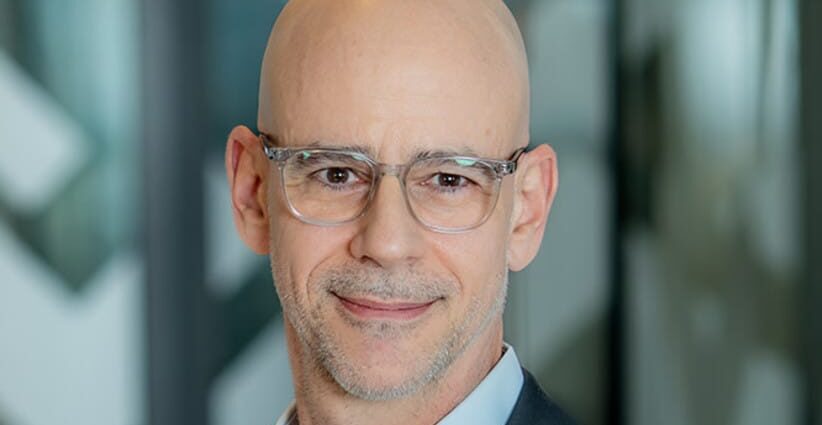
For many people, the Orthodox Union is synonymous with the small “OU” symbol found on millions of kosher products. But  Executive Vice President and Chief Operating Officer Rabbi Josh Joseph says that’s only one piece of the organization’s story.

“The OU is very well known for its kashrus with 1.5 million products worldwide,” Joseph told The Jerusalem Post on Monday. “It is a huge part of what we do, and we’re a nonprofit. But that money goes back into the community and into all of our actions and activities and programs and projects.”

Founded in 1898 as an umbrella organization for Orthodox synagogues, the OU initially focused on representing Jewish communal interests. Kosher certification was added in 1916 and has since become its most recognizable function, but far from its only one.

Some of the OU’s most well-known projects outside of kashrut are NCSY (the international youth movement), Yachad (the National Jewish Council for Disabilities) and JLIC (Jewish Learning Initiative on Campus). It also runs a Daf Yomi initiative, with 10,000 plus people learning the Talmud daily.

Then there are other subsets that don’t necessarily have the OU’s name on them.

The Teach Coalition, for example, is a grassroots organization that fights for equitable government funding, security resources, and affordable tuition.

“When it comes down to it, it’s about support, and it’s about relationships and growing those relationships externally, but also within the community,” Joseph told the Post.

Of course, in many ways, the nature of the OU’s advocacy and relationships has shifted since October 7th.

“Absolutely yes there’s challenges. Yes, there’s antisemitism around the world. In America. And yes, there’s challenges in Israel. But that also means that Hashem is asking each one of us what our role is in fixing it instead of just sitting back.”

Joseph says one of the OU’s values is being solution-oriented.

“You can point things out, you can complain. But then what are you going to do about it? What’s next? How are you going to try and make it better?”

On October 6th, 2023, there were 304 Jewish Student Unions (JSUs) in US public schools. And “really overnight, without doing any recruitment, it went from 300 to well over 500 clubs across the country,” Joseph told the Post.

What he found interesting was that the JSUs were not interested in asking the OU to come to the schools and talk about combatting antisemitism.

“They told us: ‘We want to know what it means to be Jewish. What does it mean to have a Jewish identity? What does it mean to be proud of your Judaism? Give us some content. Give us some context. Give us some something that’s genuine and that’s authentic and that’s content rich.'”

“So there is a moment of opportunity right now at every stage for us to talk about Torah, Torah concepts. It’s not necessarily about making people orthodox, but to share thousands upon thousands of years of godly ideas with the entire Jewish world.”

“What we find inside is a spark. And if we can connect that spark to God and to inspiration and to spirituality, then we have a chance to light the world on fire.”

Combating the divide

Joseph noted that the relationship between American orthodoxy and Israel is changing, but nevertheless remains at the heart of US Jewry.

“What happens in Israel really matters to us in America and certainly in the Orthodox circles. When a member of Knesset might do something or say something that gets our politicians all riled up, there’s no separation.

“We are one community. And yet there is a divide that we need to keep working on.”

In order to combat this divide, the OU organizes many trips to Israel for people of all ages; “In both directions, we can learn about each other, and we can talk to each other face to face.”

Joseph doesn’t agree with the idea that Jews worldwide must be unified. He says a little fraction is okay.

“We can disagree as long as we can do that agreeably. There are different pathways, but we’re all ending up at the same place.”

In terms of combatting antisemitism, Jospeh says what works best is one-on-one conversations.  

“It’s going to somebody and saying, come visit the Holy Land with me, and then coming to Israel and taking them to the Valley of Elah and showing them where Goliath stood and where David stood. That’s a different conversation than I’m going to take you to Nova. Both are important. Both have a role, and some people might need to see one and some people might see others, and some people might need to see both.”

When it comes to political antisemitism, Joseph stressed the importance of thanking supporters instead of just criticizing opposition.

“There were 104 Democrats who voted for the Massie Amendment. But there were also 98 Democrats who voted against it. Did anybody reach out and say thank you?”

“Nathan Diamond from the OU put out an action order to not the 104, but also to thank the 98 for standing up.”

“It’s very hard to go one-on-one, especially when there are maybe 15 million Jews, but the more we can have some of those engagements, I think the better shot we have,” he concluded.


This post was originally published on here. 

Americans are increasingly sacrificing their retirement security to keep up with the rising cost of everyday life, according to newly released research from NFP, part of Aon, along with additional retirement surveys from Schroders and other financial institutions. Together, the findings paint a troubling picture: for millions of households, long-term financial planning is giving way to immediate survival as housing, healthcare, transportation, insurance and grocery bills consume a growing share of monthly income. 

The trend is no longer limited to lower-income households. Middle-income families, professionals, and even higher earners are increasingly reporting that retirement contributions have become one of the first budget items to be reduced when expenses rise.

According to the latest research, 46% of working adults say they are either deprioritizing or unable to save for retirement because everyday expenses now take precedence. Nearly three-quarters report they are off track in reaching their retirement goals, while many acknowledge they have delayed increasing contributions despite continued employment. 

The financial pressures extend beyond simply contributing less. Another survey found that 27% of workers have either reduced contributions to employer-sponsored retirement plans or borrowed from those accounts to cover emergency expenses, debt payments or other financial obligations. One-third reported carrying more credit-card debt than retirement savings, highlighting the difficult tradeoffs many households now face. 

For years, financial advisers have encouraged workers to consistently contribute to retirement accounts, emphasizing that time in the market often matters more than attempting to perfectly time investments. Missing even a few years of contributions can significantly reduce retirement balances because workers lose not only their deposits but also years of compounded investment growth.

Instead, many Americans now find themselves balancing competing priorities.

Mortgage payments remain elevated in many parts of the country. Property taxes and homeowners insurance have increased substantially in numerous markets. Rent remains historically high in many metropolitan areas. Auto insurance premiums have climbed sharply, while healthcare costs continue to consume larger portions of household budgets. Even groceries and utilities remain noticeably more expensive than just a few years ago.

Those cumulative expenses are forcing difficult financial decisions every month.

The problem has become increasingly apparent despite relatively strong labor markets. Having a job no longer automatically translates into the ability to build long-term wealth if nearly every paycheck is already committed to current expenses.

Recent retirement surveys also show growing concern about the future itself. Americans now estimate they need approximately $1.2 million to retire comfortably, yet more than half expect they will retire with less than $500,000, and many expect substantially less than that. 

Confidence has also weakened.

Gallup’s latest research found that while most current retirees report living comfortably, less than half of Americans who have not yet retired believe they will have enough money to do the same, reflecting one of the largest expectation gaps recorded in more than two decades. 

Among Americans age 50 and older, financial concerns continue to intensify. AARP found that 69% believe prices are rising faster than their income, while 60% worry about having enough money to last throughout retirement. For those still working, many have accumulated relatively modest retirement savings despite approaching retirement age. 

Ironically, these concerns are emerging during a period when stock markets have generally remained elevated.

Many workers simply do not have enough discretionary income available to fully benefit from long-term market gains because they have been forced to reduce or suspend retirement contributions altogether.

Financial professionals warn that the longer these interruptions continue, the harder they become to recover from. Workers who stop contributing for several years often must save substantially more later in life to reach the same retirement income goals.

The challenge becomes even greater as Americans continue living longer, increasing the number of years retirement savings may need to support.

For policymakers, employers and financial planners, the data suggest that retirement security is becoming less about investment performance and increasingly about household affordability.

If everyday living expenses continue to outpace wage growth for many families, retirement saving may remain one of the first financial goals postponed—potentially leaving millions of Americans with significantly smaller nest eggs than they once expected.

JBizNews Desk | New York

© 2026 JBizNews.com. All Rights Reserved. Reproduction or distribution without written permission is prohibited.

Los Angeles Dodgers superstar Mookie Betts has already influenced young players with his play over the years, and now they will be able to wear his glove.

Betts’ glove company, LGND, announced Monday a landmark partnership with Perfect Game, the world’s largest youth baseball and softball platform and scouting service, naming its glove the official glove of Perfect Game. The partnership will officially launch on July 27.

Betts told FOX Business that “it means a lot” that Perfect Game believed in him and his company.

CLICK HERE FOR MORE SPORTS COVERAGE ON FOXBUSINESS.COM

“It means a lot, man. It shows the belief that they have in my team, me, myself and the team, and what they have obviously, I think it’s really going to affect the young people coming up, cause they can show their personalities,” Betts told FOX Business in a recent interview.  

“They can look and see that hopefully, one day all the big league guys that have the different models and they can aspire to be them.”

Perfect Game Chairman Rick Thurman said the partnership is everything that represents what the youth baseball company is trying to be. 

“This partnership represents everything Perfect Game strives to deliver to athletes, which is access, authenticity and products shaped by the needs of players,” Thurman said in a news release. 

WORLD SERIES CHAMPION MOOKIE BETTS SAYS ATHLETES SHOULDN’T BE SEEN AS POLITICAL FIGURES: ‘WE GO OUT AND PLAY’

“Mookie is one of the most accomplished and respected players in baseball, but beyond that, he understands what young athletes value. LGND was built with those athletes in mind, and we believe this will redefine expectations for baseball equipment partnerships.”

The launch features premium glove lines, both of which were developed with player performance and feedback in mind. 

The “Mook Series” features Betts’ signature stamped in the palm, his game-worn colorway and the iconic 50 Tri-Star logo embroidered on the thumb, giving players an authentic connection to a future Hall of Famer.

GET FOX BUSINESS ON THE GO BY CLICKING HERE

The “MVRK Series” delivers the same premium Japanese leather construction and craftsmanship in a collection designed for players who want professional-level performance with distinctive styling and versatility across multiple positions.

Betts said he has been using the glove all year and said the integrity of the glove has held up. His goal with LGND is to allow young kids to express themselves through a glove, while also ensuring it is well-crafted.

Betts is a four-time World Series champion, American League MVP winner, an eight-time All-Star, a seven-time Silver Slugger and a six-time Gold Glove winner. 

Follow Fox News Digital’s sports coverage on X, and subscribe to the Fox News Sports Huddle newsletter.

This post was originally published here. 

Multiple teenage girls and young women in Iran have reportedly died by suicide or in honor killings after their photos were published on a Telegram channel alongside accusations regarding their sexual conduct, according to Iranian media reports and legal organizations.

Over the past week, two girls in Lorestan province ended their lives after their photos were leaked on the Telegram channel. The Iranian newspaper Sharq reported that several others also attempted suicide after having their photos published without consent.

Weeks earlier, a 16-year-old girl and a 20-year-old woman were also reported to have ended their lives in two separate incidents linked to claims published about them on the Telegram channel. However, an informed source told IranWire that the photo used of the young woman was “just an ordinary photo, not even a private one, taken directly from her Instagram page.”

One of the two 16-year-old girls, identified as “Esma,” was buried in the Khazar Cemetery without a reception ceremony and in the presence of only a few friends and relatives, against local customs, according to the legal advocacy network Dadbaan.

Women across the provinces of Lorestan, Kermanshah, and West Azerbaijan have experienced extortion attempts connected to the channel, according to reports. The channel’s administrators reportedly demanded payment in exchange for removing posts.

In addition to the suicides and suicide attempts, Sharq reported at least one case of honor killing linked to the channel’s actions. Defense attorney Fereshteh Tabanian said online that a young girl had been killed by her father in connection with a post made about her.

IranWire also reported that one woman lost her job, another was expelled from her home by her husband, and another had her engagement called off as a result of the channel.

Reports link Telegram channel to suicides and honor killing

“From a criminological perspective, this case illustrates how the combination of cyber violence, social stigma, and cultural pressures related to the concept of ‘honor’ can inflict severe psychological harm on victims, especially teenagers. Preventing the recurrence of such incidents requires not only criminal prosecution of the offenders but also strengthening psychological support for victims, digital literacy education, and combating victim-blaming culture,” Dadbaan published in a statement.

IranWire, citing an informed source, claimed that student groups affiliated with universities in Khorramabad and Borujerd were targeted by the channel. The situation escalated, however, as “some individuals began sending in photos of other people’s daughters and sons out of personal grudges and enmity, accompanied by highly offensive and immoral captions.”

The channel initially claimed to be “punishing the regime’s parastous (honeytraps),” but has largely targeted those labeled “enemies of the state” as well as pro-regime figures, according to IranWire.

Activists warn misogyny-fueled abuse campaign

Samaneh Sawadi, a lawyer and gender equality activist based in the United Kingdom, told DW Persian that “this is a cybercrime and a violation of women’s privacy, but those who committed such an act knew in what context and culture they were doing it. They took advantage of the misogynistic atmosphere and touched on parts of the culture that could have led some of those women to a point where some of them were willing to lose their lives, and some were forced to delete social networks and leave cyberspace.”

“When society does not think that the presence of women is fundamentally sinful, it will not resort to such tactics to eliminate them. We can certainly report them, but then another channel will emerge. We need to see in what context these channels are created; in a context where the family considers the daughter and niece as its own personal property and sees her body, face, and social presence as its own, and turns her decision to have a profile into a tool and says, ‘I will not allow you to do this,’” she added.

Police arrest three suspects, search for fourth continues

Some reports have claimed that despite promises from the police and judiciary, no action has been taken to remove the Telegram channels or follow up on numerous complaints filed in connection with the account. However, the Lorestan prosecutor’s office reported that three of the channel’s operators were identified and arrested by police, while an ongoing search remains underway for a fourth suspect.

This post was originally published on here. 

Five members of the Council for Higher Education (CHE) resigned on Monday in protest over legislation expanding gender-segregated academic studies, warning that the law constituted “unprecedented interference” in the council’s independence and could lead to the exclusion of women from Israeli academia.

According to Israeli media reports, four of the members submitted a joint resignation letter to President Isaac Herzog and Education Minister Yoav Kisch, who serves as chairman of the council. A fifth member, Moshe Vigdor, resigned in a separate letter.

The four signatories were Hebrew University chemistry Prof. Edit Tshuva, a former deputy chairwoman of the council; Technion Prof. Marcelle Machluf of the Faculty of Biotechnology and Food Engineering; Ben-Gurion University computer science Prof. Jihad El-Sana; and Prof. Lia Laor of the Levinsky-Wingate Academic College. Vigdor is CEO of the Mandel Foundation Israel, a former director-general of the CHE, and served on the council as a public representative.

CHE members cite threat to academic independence

“Approval of the law concerning gender segregation in advanced-degree studies in academia constitutes unprecedented interference in the independence of the Council for Higher Education,” the four wrote.

The intention to advance separate study programs was expected to severely harm the fundamental values on which Israel’s higher education system was based, including “academic freedom, equality, excellence and pluralism,” they said.

The amendment represented a substantive change in the nature of Israeli higher education and could lead to the exclusion of women as students, researchers and faculty members, they warned. It could also harm academic standards, public trust in the system and the international standing of Israeli academia.

“In these circumstances, we cannot continue to serve as members of the council and thereby grant legitimacy to steps that contradict the values for which we were asked to serve,” they wrote, announcing their immediate resignations.

Vigdor said separately that the legislation had undermined the council’s ability to bear responsibility for academic standards, equality, academic freedom and diversity.

“The law will grant state legitimacy to the exclusion of women in academia, and subsequently in additional public spaces,” he wrote, per reports.

“In the situation that has been created, in which the Council for Higher Education may become a rubber stamp for measures that contradict its scientific and ethical foundations, I cannot lend a hand to this – not through my voice and not through my silence.”

Vigdor stressed that his decision was not political, saying he had served as a public representative for approximately a decade out of a belief that a strong, free, equal and excellent academic system was a central component of Israel’s national resilience. Reports of the resignations said they were submitted one day before the council was due to hold its first discussion on implementing the legislation.

Knesset expands legal basis for gender-segregated programs

The Knesset approved the amendment to the Student Rights Law in a 52-43 vote early Thursday. Sponsored by Otzma Yehudit MK Limor Son Har-Melech, it expressly permits the CHE to approve separate programs for men and women in bachelor’s, master’s and doctoral studies.

At institutions that otherwise teach men and women together, separation is limited to classrooms, and enrollment must be voluntary. The legislation also states that operating separate institutions or programs for religious reasons will not, in itself, be considered discrimination. Son Har-Melech has argued that the legislation expands freedom of choice and allows religious students to pursue advanced degrees without abandoning their way of life.

High Court petition challenges new law

Six haredi women and 10 academics petitioned the High Court of Justice against the law hours after it passed, asking the court to strike it down or interpret it narrowly.

The petitioners argued that the amendment dismantled the safeguards on which the High Court relied when it upheld the council’s previous, limited framework for gender-segregated studies in 2021. That framework was restricted primarily to haredi students studying for bachelor’s degrees, limited separation to classrooms, and prohibited the exclusion of female lecturers.

The Council for Higher Education has yet to issue a response.

This post was originally published on here. 

Israel’s Foreign Ministry has received 45 reports of antisemitic incidents against Israelis abroad since July 2025, the ministry revealed in its new “Map of Distress.”

According to ministry officials, this is a record number of antisemitic incidents. It included physical assaults, fights, spitting, verbal abuse, denial of service, and expulsion from hotels, cafes and restaurants.

“Over the past year we have seen a phenomenon we had never encountered on this scale before: Israelis contacting us after experiencing antisemitic incidents while abroad,” said Deputy Director-General for Consular Affairs Eli Yifrah.

“In several countries, there were reports of Israelis being identified because of their nationality or visible Israeli symbols and becoming targets of harassment, threats and even physical attacks.”

Alongside the 45 cases of antisemitic incidents, there were 384 cases involving missing persons or loss of contact, 292 arrests of Israeli citizens, 196 Israelis hospitalized abroad, 149 rescue operations from dangerous areas and 23 Israelis involved in natural disasters.

The countries with the highest number of cases where assistance was provided were the United Arab Emirates (615 incidents), Thailand (347 incidents), Greece (206), the US (202) and Italy (181).

Data collected from TravIL app

Overall, consular systems processed nearly 200,000 cases during the first half of 2026. This included the sensitive task of arranging the return of 846 deceased Israelis for burial in Israel, most of whom were from New York and Paris.

The newly released data follows the successful launch of the TravIL emergency app two weeks ago.

The Foreign Ministry said the figures demonstrate exactly why the app is needed. TravIL was developed to help prevent these situations and provide critical assistance during emergencies.

The app includes a secure digital document vault where travelers can store copies of their passport, helping speed up the replacement process and reducing bureaucracy. It also has a location-based emergency button that instantly transmits your GPS coordinates directly to the ministry’s Situation Room in Jerusalem.

“The Foreign Ministry’s consular network continues to operate around the clock, 24 hours a day, through Israel’s missions worldwide, providing assistance and services to Israeli citizens in a wide range of routine and emergency situations,” Yifrah said.

He told Israeli media that the increase in consular activity reflects both the growing number of Israelis traveling abroad and the complex security situation since the outbreak of the Swords of Iron War.

This post was originally published on here. 

One of Rhode Island’s most-wanted fugitives — a former doctor convicted of sexual assault but on the run for 20 years — appears to have been living a secret life as a biotech executive. 

Ronald Fischer, 70, was arrested last week by federal and Rhode Island authorities after they tracked and boarded a 56-foot sailboat cruising off the coast of New Jersey. The former anesthesiologist disappeared in 2005 while on trial for first-degree sexual assault.

The boat was registered under the name Richard Graydon, an alias used by Fischer, U.S. Marshals said. That is the same name as a doctor and seasoned drug development executive hired last March by Immix Biopharma, a Los Angeles-based biotech company, as its new chief medical officer.

Continue to STAT+ to read the full story…

This post was originally published here. 

NEWARK, Calif. — According to an official Form 8-K filed with the U.S. Securities and Exchange Commission on July 14, 2026, Lucid Group Inc. stated that reports suggesting the electric vehicle manufacturer was considering Chapter 11 bankruptcy protection or a take-private transaction are “completely false,” adding that the company has sufficient liquidity to fund operations well into next year and has not established any special board committee to evaluate those scenarios.

The filing came after one of the most volatile trading sessions in the company’s history, with Lucid shares plunging more than 50% intraday before recovering part of those losses following the company’s public response. Multiple trading halts were triggered as volatility intensified throughout the session.

The company acknowledged that it has retained AlixPartners, a globally recognized restructuring and operational advisory firm, but emphasized that the engagement is focused solely on improving execution, strengthening operations and positioning the company for long-term growth.

Lucid said AlixPartners has not recommended bankruptcy to management or the Board of Directors and is not evaluating any Chapter 11 filing or privatization strategy. The company further stated that no special committee has been formed to pursue those options.

The clarification followed widespread market speculation that intensified after reports claimed advisers were reviewing strategic alternatives for the luxury electric vehicle manufacturer. Investors reacted swiftly, producing one of the largest single-day declines in the company’s history before Lucid publicly responded.

Although the bankruptcy rumors were rejected, the company continues to face significant operational and financial challenges that have weighed on investor confidence.

Lucid remains in the middle of a broad corporate restructuring under recently appointed Chief Executive Officer Silvio Napoli, who assumed leadership earlier this summer. The company has reduced approximately 18% of its U.S. workforce, streamlined senior management, eliminated executive positions and continues implementing cost-reduction initiatives designed to improve efficiency while supporting future vehicle production.

The automaker has also been managing slower-than-expected demand across the broader electric vehicle market while dealing with production and supplier challenges affecting its Gravity SUV, its newest vehicle expected to play a major role in future revenue growth. Those production issues previously prompted Lucid to suspend its 2026 production outlook as management evaluates manufacturing capacity and supply-chain performance.

Despite those headwinds, Lucid maintains the backing of Saudi Arabia’s Public Investment Fund, which remains the company’s majority shareholder and has continued supporting the automaker through multiple capital raises over recent years.

Lucid reiterated that its liquidity position remains sufficient to support operations well into next year based on resources previously disclosed in its quarterly filings, while management continues focusing on operational improvements rather than financial restructuring.

The sharp market reaction underscores how sensitive investors remain to questions surrounding liquidity and profitability across the electric vehicle sector. Rising interest rates, slowing consumer demand, aggressive pricing competition and continued cash burn have placed increasing pressure on EV manufacturers attempting to scale production while achieving sustainable profitability.

For shareholders, suppliers and industry observers, Lucid’s SEC filing provides the company’s clearest response yet that bankruptcy and privatization are not under consideration. Instead, management says its immediate priorities remain improving manufacturing execution, strengthening operations and positioning the company to capitalize on its proprietary technology and future product lineup.

While Lucid continues to face meaningful business challenges common throughout the EV industry, the company maintains that its current restructuring efforts are designed to improve operational performance rather than prepare for a bankruptcy filing or sale of the business.

JBizNews Desk | Newark, California

© JBizNews.com All Rights Reserved. Reproduction or distribution without written permission is prohibited.

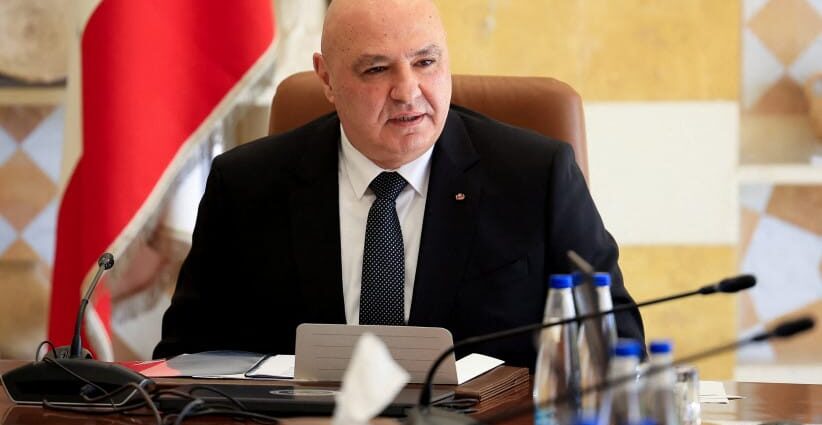
A pilot program under which Lebanese Armed Forces (LAF) troops will enter designated areas in southern Lebanon to verify they have been cleared of Hezbollah operatives and weapons is expected to begin in the near future, two sources familiar with the matter told The Jerusalem Post on Monday.

Later on Monday, the US State Department confirmed that pilot zone operations began in three southern Lebanon villages ” in accordance with the Trilateral Framework and under the auspices of the Military Coordination Group for Lebanon.”

The State Department said that the operations began in the villages of  Froun, Srifa, and Zawtar al-Gharbiya.

The development follows last week’s meeting in Rome between the Israeli and Lebanese delegations, led by Israeli Ambassador to the US Yechiel Leiter and Lebanese Ambassador to the United States Nada Hamadeh Mouawad, under the auspices of senior US administration officials.

An Israeli official said after last week’s talks that the sides had reached an agreement on the two designated pilot areas. 

The official added that the discussions were constructive and further reinforced the understanding that Israel and Lebanon agree on the need to disarm Hezbollah.

“The pilot areas will serve as a test of Lebanon’s ability to exercise its sovereignty in practice by implementing the agreed-upon conditions through the Lebanese Armed Forces, under the supervision of [the United States],” the official said.

Rubio, Aoun discuss implementing trilateral framework, Hezbollah disarmament

US Secretary of State Marco Rubio and Lebanese President Joseph Aoun discussed the implementation of the trilateral framework agreement between the US, Lebanon, and Israel during Aoun’s visit to Washington on Sunday.  

Aoun, according to a statement released by his office on X/Twitter, emphasized to Rubio the necessity for Lebanon and the US to remain in alignment regarding the implementation of the framework, specifically regarding the withdrawal of Israeli troops from designated pilot zones in southern Lebanon.

He also highlighted the importance of US support in strengthening the Lebanese military and investment in improving Lebanese energy, communications, and transportation infrastructure.

According to Aoun’s office, Rubio asserted that full Lebanese sovereignty “can only be achieved by a Lebanese decision issued by the Lebanese constitutional institutions.

Goldie Katz contributed to this report.

This post was originally published on here. 

The Kurdistan Freedom Party (PAK) accused Iran of using white phosphorus in a drone attack on one of its bases on Sunday.

Iran has carried out numerous deadly attacks targeting Kurdish Iranian dissident groups. Many of these groups have bases and posts in the Kurdistan Region of Northern Iraq because they have been forced to leave Iran due to the oppression from the regime. PAK is one of the groups.

On Sunday, the PAK said that a drone attack carried out early in the morning had targeted a base of the PAK’s Kurdistan National Army (SMK). This is their unit of fighters.

“The Islamic Republic of Iran used munitions containing white phosphorus,” the group said. PAK is one of at least six different Kurdish Iranian opposition groups that are part of a coalition against the regime.

The other groups include PDKI, PJAK, two branches of the Komala party and a group called Khabat. PAK played a key role in the battle against ISIS. Their Kurdish Peshmerga fighters helped repel ISIS attacks on numerous front lines between 2014 and 2019.

A grave violation of international humanitarian law

On Sunday, the group said that, “based on eyewitness observations, medical examinations of nine wounded Peshmerga fighters, and the extensive fires caused at the targeted site, the munitions employed in the drone attack are believed to have contained white phosphorus.”

Hussein Yazdanpanah, the president of the PAK and also General Commander of the SMK, put out the statement. “This act is not only a grave crime but also a clear violation of the fundamental principles of international humanitarian law.

The use of munitions that inflict severe incendiary effects and cause widespread harm to people and the environment is incompatible with humanitarian principles and the international legal obligations of states,” the statement noted.

The World Health Organization noted that “white phosphorus is a chemical waxy solid substance typically appearing yellowish or colorless, and some have described its odor as resembling garlic.”

It noted that “it is often used by militaries to illuminate battlefields, to generate a smokescreen and as an incendiary. Once ignited, white phosphorus is very difficult to extinguish. It sticks to surfaces like skin and clothing.”

The PAK said that this crime should be addressed by the international community. “We call upon the Secretary-General of the United Nations, the United Nations Security Council, the United Nations Human Rights Council, the International Committee of the Red Cross, and all relevant international institutions to take the necessary legal measures to hold the Islamic Republic of Iran accountable,” he added.

He also called on the local authorities of the Kurdistan Region to protect the “security, rights, and environment of their citizens against Iran’s military aggression and cross-border attacks.”

The KRG does not have air defenses against drone attacks. In the last months, the Iranians and Iranian-backed militias have carried out more than 900 attacks on the region. This has resulted in destruction and death.

Nine Kurdish militants killed last week

In some cases, the US, which has a large consulate in Erbil and forces in the region, has been able to shoot down drones and missile threats. Over the last week, at least nine other Kurdish Iranian dissidents were killed in an Iranian attack on the Komala party in the KRG.

The PAK noted that “silence in the face of the use of prohibited weapons only paves the way for the repetition of such dangerous crimes. Defending human dignity, protecting civilians, and upholding international humanitarian law are shared responsibilities of all states and international institutions.”

Why is white phosphorus controversial?

White phosphorus is considered a controversial weapon, and its use has been reduced over the years by many militaries.

The WHO noted that “the use of white phosphorus may violate Protocol III (on the use of incendiary weapons) of the Convention on Certain Conventional Weapons (CCCW) in one specific instance: if it is used, on purpose, as an incendiary weapon directly against humans in a civilian setting.”

It can be used by militaries legally to illuminate a battlefield. “To establish an illegal use under the CCCW, an investigation into the intent behind the use of white phosphorus would be needed,” the WHO noted.

On July 20, Iran continued its attacks on Kurdish groups. “Iran launched fresh missile and drone strikes on bases belonging to the Iranian Kurdish opposition group Komala in the Kurdistan Region early Monday, the party said on Monday, just a day after nine of its members killed in an earlier attack were laid to rest,” Rudaw media noted.

“Amjad Hussein Panahi, head of communications for the group, said missiles struck the group’s headquarters in Alana valley in Erbil’s Choman district shortly after midnight before two drones targeted another base in Surdash camp near Sulaimani about an hour later.”

Regarding the attack on the PAK, the Hengaw Organization for Human Rights said it “expressed grave concern over reports that the Islamic Republic of Iran used prohibited chemical-incendiary munitions in the Kurdistan Region.

Hengaw called on the United Nations and the International Committee of the Red Cross to establish an independent international fact-finding mission to conduct an on-site investigation, examine those injured in the attack, and determine whether prohibited weapons were used.”

Hengaw is a human rights group that often focuses on Kurdish rights in Iran and abuses in Kurdish areas.

This post was originally published on here. 

Get your daily dose of health and medicine every weekday with STAT’s free newsletter Morning Rounds. Sign up here.

Good morning. Yesterday’s game wasn’t the most exciting, but luckily the third place game on Saturday had all the drama I’d hoped for. Before replaying the highlights, catch up on a bunch of news below. 

Read the rest…

This post was originally published here. 

Good morning, everyone, and welcome to another working week. We hope the weekend respite was relaxing and invigorating because that oh-too-familiar routine of meetings, deadlines, and the like has returned with a vengeance. You knew this would happen, yes? To cope, we are relying, as always, on cups of stimulation. Our choice today is laced with traces of cocoa. Feel free to join us. Remember, no prescription is required. Meanwhile, here are some tidbits to help you along. Best of luck accomplishing your goals today and, of course, do keep in touch. …

Novo Nordisk, maker of Ozempic and Wegovy, lists the telehealth company LifeMD on its website as a provider that offers “legitimate medicine sourcing and patient support” for people seeking GLP-1 drugs. But some former employees describe LifeMD differently, as a company that has sought to maximize the volume of prescriptions it doles out at the expense of patient safety, STAT reports. Former workers told STAT that providers were pressed to expedite their work to a pace that was not clinically responsible, with two of them saying providers at times were expected to review the cases of 25 people per hour based only on electronic forms the patients filled out — the equivalent of spending about two minutes on each case.

A recent audit of Iowa Medicaid records revealed how pharmacy benefit managers are using complicated and sophisticated approaches for handling prescription drug claims that ultimately overcharge taxpayers, a finding that underscores controversy surrounding these crucial middlemen in the pharmaceutical supply chain, STAT explains. The audit found that one large pharmacy benefit manager appeared to have made more than $100 million by adjusting the amount of money paid to pharmacies without passing some of the savings back to managed care plans working on behalf of the state, according to Iowa officials. The review scrutinized records from 2019 through 2021.

Continue to STAT+ to read the full story…

This post was originally published here. 

According to trading activity across the Nasdaq, the Philadelphia Semiconductor Index, and major global exchanges on Friday, July 17, investors continued selling artificial intelligence and semiconductor stocks for a third consecutive session despite strong corporate earnings and robust demand for AI infrastructure. The broad retreat reflects a sharp shift in investor sentiment as markets begin questioning whether the enormous capital being invested in artificial intelligence will generate returns quickly enough to justify record valuations. The sell-off has spread from the United States into Asia and Europe, making it one of the largest synchronized declines in AI-related equities this year.

Unlike previous technology corrections that were triggered by weak earnings or slowing demand, this week’s decline comes despite continued evidence that AI spending remains exceptionally strong. Companies throughout the semiconductor supply chain continue reporting healthy order books, expanding manufacturing capacity and investing billions of dollars to meet expected demand for advanced chips powering data centers, cloud computing and generative artificial intelligence.

Instead, investors are increasingly reassessing how much future growth has already been priced into technology stocks after one of the strongest AI-driven rallies in market history.

The selling accelerated after several semiconductor companies reported strong financial results that nevertheless failed to excite investors. Even companies exceeding earnings expectations found themselves under pressure as markets focused less on current performance and more on whether future revenue growth can continue matching the extraordinary pace investors have come to expect.

Adding to market uncertainty was the introduction of a major new open-source artificial intelligence model from China, reinforcing investor concerns that global competition could accelerate faster than anticipated and potentially reduce the enormous computing requirements many analysts previously projected. Some investors now believe the next generation of AI models may become more efficient, requiring fewer high-end processors than originally expected and potentially slowing the pace of future hardware spending.

Profit-taking has also become an important factor.

Many semiconductor companies entered July trading at or near historic highs following months of extraordinary gains fueled by enthusiasm surrounding artificial intelligence. With valuations stretched across much of the sector, institutional investors have increasingly chosen to lock in profits rather than wait for additional catalysts. Analysts noted that market expectations had become so elevated that even outstanding earnings reports were no longer sufficient to push many technology shares higher.

The weakness has spread well beyond individual companies.

The Philadelphia Semiconductor Index has now fallen sharply from its recent record high, while major semiconductor manufacturers across the United States, Taiwan and Japan have all experienced significant declines during the past several trading sessions. The pullback has weighed heavily on broader technology indexes because chipmakers represent some of the largest components of modern equity portfolios.

For businesses, however, the market correction does not necessarily signal weaker demand for artificial intelligence.

Corporate investment in AI infrastructure remains substantial as companies continue deploying generative AI across customer service, cybersecurity, healthcare, financial services, manufacturing and logistics. Cloud providers are still investing billions of dollars in expanding data-center capacity, while enterprises continue integrating AI into daily operations to improve productivity and reduce costs.

That distinction has become increasingly important.

Wall Street is no longer debating whether artificial intelligence will transform business. Instead, investors are debating how quickly companies developing the technology will convert massive capital expenditures into sustained profitability. Markets appear to be shifting from rewarding AI exposure alone to demanding stronger financial returns, clearer monetization strategies and disciplined spending.

Geopolitical developments have added another layer of uncertainty. Rising tensions in the Middle East, combined with higher energy prices, have encouraged investors to rotate toward more defensive sectors while reducing exposure to higher-growth technology companies. At the same time, growing competition between the United States and China in artificial intelligence continues influencing investor expectations for the global semiconductor industry.

Attention now turns to the next wave of technology earnings, where investors will closely examine executive commentary on AI spending, customer demand and future capital investment. Those reports could determine whether this week’s decline represents a temporary correction following an extraordinary rally or the beginning of a broader reassessment of artificial intelligence valuations across global markets.

JBizNews Desk | New York

© JBizNews.com All Rights Reserved. Reproduction or distribution without written permission is prohibited.

Walmart announced Monday, July 20, 2026, that it is expanding price reductions across thousands of products, extending discounts on groceries, household essentials, health and beauty products, seasonal merchandise, and back-to-school supplies as consumers remain focused on managing everyday expenses. The retailer said the latest savings initiative is aimed at helping customers navigate higher living costs while remaining competitive during one of the busiest shopping periods of the year.

The announcement comes as retailers across the country compete aggressively for shoppers who have become increasingly price conscious. While inflation has moderated compared with recent years, many American families continue to face elevated costs for housing, insurance, utilities, and groceries, making value-oriented shopping a top priority.

Walmart said customers will find lower prices on a broad range of products, including fresh food, beverages, snacks, cleaning supplies, laundry detergent, paper products, toiletries, baby items, toys, outdoor recreation equipment, and summer seasonal merchandise. The company is also increasing promotions on school supplies, backpacks, electronics, and dorm essentials as the back-to-school shopping season begins.

Industry analysts say major retailers are relying more heavily on promotional pricing to maintain customer traffic as consumers become increasingly selective about discretionary purchases. Shoppers are comparing prices more frequently and looking for greater value, particularly on everyday necessities.

Retail sales have remained relatively resilient, supported by steady employment and wage growth, but consumer behavior has shifted noticeably toward discount retailers and warehouse clubs. Large chains with strong purchasing power have been able to negotiate lower supplier costs and use those savings to attract customers with competitive pricing.

For consumers, the latest price reductions provide an opportunity to lower household expenses during the summer shopping season. Families preparing for the upcoming school year may particularly benefit from expanded discounts on school supplies and children’s apparel, while savings on groceries and household necessities could help offset continued pressure from higher housing and utility costs.

Retail experts expect promotional activity to remain elevated through the remainder of the summer and into the fall as retailers compete for consumer spending ahead of the holiday shopping season.


JBizNews Desk | Bentonville, Arkansas

© JBizNews.com All Rights Reserved. Reproduction or distribution without written permission is prohibited.

Andy Burnham becomes Britain’s seventh prime minister in a decade on Monday, promising to “rewire” the nation to focus more clearly on issues people care about, such as a cost-of-living crisis and poorly performing services.

His Labour Party colleague, outgoing premier Keir Starmer, made his farewell speech outside 10 Downing Street, telling supporters that “my work is done” and that he was leaving with “good grace” and a “smile.”

After he formally tenders his resignation to King Charles, the monarch will receive Burnham to ask him to be prime minister.

Then the hard work begins for the 56-year-old who, as mayor of Greater Manchester, earned the nickname ‘King of the North’.

Once he has unveiled his cabinet – already the subject of much debate in the governing Labour Party – he will have to tackle a long list of problems ranging from anemic economic growth to a cost-of-living crisis and underperforming utility firms.

Burnham to lay out new government path

Starmer, who was ousted by his Labour lawmakers about a month ago, said his work as prime minister was “the privilege of my life” and that, as he passed the baton to Burnham, “I wish him every success.”

“He has my full support,” Starmer said.

Within an hour or so, Burnham was set to take his place in front of Number 10 with a speech setting out a path for “a more stable and responsible politics,” his office said in a statement.

Presenting his appointment as a moment of “reflection,” he planned to say it was time to be honest about Britain’s challenges, and that only political stability could deliver improvements.

On Friday, Burnham described his election to become Labour leader as “the most significant change moment in our politics for 40 years.”

He promised to radically change the political system to quickly raise living standards and help a country hungry for change become one where “life is more affordable, and all people and places are lifted from where they are now.”

He directed that message at Labour lawmakers, who see him as one of the few politicians capable of tackling the threat from veteran Brexit campaigner Nigel Farage’s populist Reform UK – something they doubted the unpopular Starmer could do.

Burnham urged Labour to ignore speculation

Burnham’s first challenge will be the appointment of his cabinet team and especially his finance minister. Friction in this crucial partnership at the heart of government has led to the downfall of previous administrations.

An early frontrunner for the position, energy security and net zero minister Ed Miliband, has been the object of some hostile briefing, and interior minister Shabana Mahmood now appears to be the favorite for the job.

Burnham urged his party on Friday to ignore “speculation” and said he had not yet decided on his team.

His early policy decisions will also face scrutiny.

On Sunday, plans were scrapped for all employees to be required to hold a digital identity document, a scheme designed to tackle illegal migration but deemed a “fiasco” by a cross-party committee of lawmakers.

More attention will be paid to decisions on taxation and spending, oil and gas, and underperforming utility companies, for which Burnham wants stronger public control.

Thames Water, Britain’s largest water company, is weighed down by debt and under fire for frequent sewage leaks.

On Sunday, Deputy Labour Leader Lucy Powell, Burnham’s ally, suggested Thames Water could be brought under “special measures,” meaning it would operate under government control.

“He wants to refocus and reprioritize the government’s resources, the government’s attention onto his priorities of tackling the cost of living, really rewiring the way the country, the economy works,” she told Sky News.

This post was originally published on here. 

A police officer was indicted in Haifa District Court on Sunday on allegations that he used confidential police databases to obtain women’s personal details and subjected them and their relatives to a years-long campaign of sexual harassment, threats, and extortion through fake WhatsApp accounts.

The 15-count indictment filed by the Justice Ministry’s Police Investigation Department names 28-year-old Samer Sheikh of Abu Snan, who served in the traffic division of the police’s Yarkon district.

He is charged with offenses including extortion by threats, sexual harassment, threats, impersonation, invasion of privacy, fraud, causing an indecent act, fraud, and breach of trust.

According to the indictment, Sheikh carried a police tablet connected to internal databases even when he was not on duty and, from 2022 until his arrest, repeatedly used it to retrieve the personal information of numerous women. He allegedly stored screenshots of the information on his personal devices and used it to contact women and members of their families.

Prosecutors said Sheikh created a series of fictitious WhatsApp accounts through which he posed as different people, at times presenting himself as a man and at others using the name and photograph of one of the women.

Police officer secretly records intimate video calls

The indictment describes 14 main complainants, as well as relatives and friends who were allegedly contacted as part of the scheme.

In one of the central counts, Sheikh is accused of secretly recording intimate video calls with a woman with whom he had previously been in a relationship. He later allegedly threatened to distribute the recordings unless she participated in further sexually explicit video calls.

To reinforce the threats, prosecutors said, Sheikh used an intimate image of the woman as the profile photograph of a fictitious account and sent sexual material involving her to her brother and fiancé.

In another count, Sheikh allegedly threatened to publish intimate photographs and videos of a woman unless she performed sexual acts during video calls. The woman ultimately sent him sexually explicit videos in response to the threats, according to the indictment.

Officer continued harassing women after they rejected him

Other counts allege that Sheikh repeatedly sent women unwanted sexual propositions and sexually explicit material, falsely told relatives that women appeared in pornographic videos, and threatened to harm their reputations or distribute intimate content if they did not comply with his demands.

In several cases, he allegedly continued contacting the women after they rejected him, blocked his numbers, or threatened to report him to the police.

The final count focuses on the alleged abuse of his position as a police officer. Prosecutors said Sheikh unlawfully accessed police systems to facilitate the sexual and other offenses described in the indictment, constituting fraud and breach of trust by a public servant.

This post was originally published on here. 

Israel will have its first dedicated home for Israeli startups based in New York, after Hakibbutz launched its NYC operations on Monday, aiming to become a hub for the hundreds of Israeli companies operating in the Big Apple.

Created in collaboration with Israeli Mapped in NY, the project already includes the cybersecurity company Zafran Security, according to their release, while additional companies are expected to join in the coming months.

“We didn’t want to build just another office space. We wanted to create a place that people and companies genuinely want to be part of,” said Amir Wolner, Founder and CEO of Hakibbutz.

“The model we’ve built in Israel is based on the understanding that in an era when people can work from almost anywhere, a workplace is no longer defined only by its offices, but by the people around you and the value created through those connections,” he added.

The project also announced its roadmap, which will include several events throughout the year to attract new startups and help Israeli entrepreneurs expand their operations into New York.

Some 470 startups in one city

The main house will be located in Chelsea, one of Manhattan’s leading technology and innovation districts, with the organizer saying they designed the site to become a central gathering place for founders, startups, venture capital firms, investors, corporations, and other key players.

According to Israeli Mapped in NY, 470 Israeli startups currently operate in New York City, alongside venture capital firms, investors, multinational corporations, and thousands of professionals.

“When we realized that New York had become a major hub for Israeli technology companies, we knew it was the right place to bring what we do best,” added Wolner, who has already opened similar sites with Hakibbutz over the last several years.

‘It’s time to have a home in NYC,’ Guy Franklin, founder of Israeli Mapped in NY

Guy Franklin, founder of Israeli Mapped in NY, added, “When I first started mapping the Israeli tech ecosystem in New York, there were only 56 Israeli startups here. Today there are nearly 470. This isn’t just growth in the number of companies; it’s the maturation of an entire industry. Once you have nearly 470 Israeli startups in New York, it’s time they have a home.”

“Our goal is that no Israeli company arriving in New York should have to start from scratch. Instead, they should be able to immediately connect with a network of founders, investors, customers, and business partners,” he explained.

“Our vision is for Hakibbutz NYC to become the place every Israeli CEO operating in New York, every founder visiting the city, every venture capital firm looking for Israeli innovation, and every American corporation seeking to work with Israeli startups knows they should visit.”

This post was originally published on here. 

Australian synagogues have been forced to cancel services and divert funds in order to cover security costs, Jewish community representatives told the Royal Commission on Monday.

The fifth Hearing Block, which began on Monday, focuses on Jewish security concerns.

Counsel assisting Richard Lancaster told the commission that synagogues have canceled Friday night services because they “couldn’t afford to pay a guard, and felt that they could not discharge their duty of care to congregants without one.”

“The commission has received submissions from very many synagogues around Australia,” said Lancaster. “A constant theme is the organizational time, energy, and money that has to be committed to security.”

“This underscores the difficulty that members of the Jewish community presently face: if they close themselves off for security reasons, they may be unfairly criticized as deliberately insular, but without the barriers they wish they did not need, they may be left unduly exposed.”

Lancaster then said that this is a burden which no other religious community in the country has to contend with, just to attend school or a religious service.

Community Security Group warns of increased incidents since October 7

ACO, a senior figure from the Community Security Group (CSG) Victoria, told the commission of increased incident reports since October 7, and how volunteer hours have increased as a result.

ACO estimated that more than 113,700 hours were given by volunteer security guards and administrative staff in 2025.

“The pressure has been immense on all of our staff and volunteers,” ACO said.

Witness ACS, another CSG member, told the commission that being a security worker takes a psychological toll.

“I quite quickly became desensitized to the impact. And even to this day, I’ll see something that is objectively shocking, yet not have the visceral response that I should have.”

“Because we are adapting to that degrading environment, it’s much, much easier to overlook that growing burden on volunteers, on financial resources, and on the quality of Jewish way of life,” ACS said.

ACS said they have contributed approximately 8400 hours to CSG in the last five years, including 3500 documented volunteer hours and 1500 hours of unpaid work.

“Long term it’s not sustainable. It’s not sustainable for anyone to be working essentially two full-time jobs at once, especially given the risks associated with working Jewish communal security.”

Former Australian A-G urges government to restrict synagogue protests

Former attorney-general Mark Dreyfus urged the government to impose restrictions on protests outside synagogues, in line with the current imposition on protests around abortion clinics in Victoria.

“It’s time to consider whether we need some similar restriction on protest activity outside synagogues, on protest activity outside schools, and Jewish places of gathering,” he told the commission.

“Not to ban political protest, but rather to protect Jews,” he said, adding that protests are often “cover for some worse activity, for violence, for some actual physical threat to those places or people.”

This post was originally published on here. 

Yemen’s Iran-backed Houthis on Monday declared a naval blockade against Saudi Arabia effective immediately, their military spokesperson said in a televised speech.

The militant group announced “a maritime embargo against the criminal Saudi enemy, based on the equation of ‘an eye for an eye’ effective immediately upon the issuance of this statement.”

The Houthis said the blockade was in response to Saudi Arabia’s alleged continued “unjust and oppressive siege on our dear people for nearly 12 years, plundering our resources and imposing a comprehensive blockade on our ports and airports by land, sea, and air.”

Houthis fired missiles at Saudi Arabia last week

The group fired missiles at Saudi ​Arabia last week after accusing the kingdom of bombing an airport under their control, breaking a four-year truce in the conflict between ‌the kingdom and the Iran-backed group.

The strikes ​were the first claimed by the Houthis against Saudi Arabia since an informal truce went into effect in March 2022 following Houthi attacks on ​Saudi energy infrastructure.

This post was originally published on here. 

Mediators have passed Iran a proposal to de-escalate the war with the US that would offer a 10-day ceasefire to find ways to revive an interim deal reached last month, a senior Iranian official told Reuters on Monday.

Iranian Foreign Ministry Spokesman Esmaeil Baghaei confirmed at a press conference on Sunday that mediators had proposed new ideas for a peace process. 

“The principle of the matter is clear: mediators are working and trying to prevent tension from escalating,” he said. “While our armed forces are responding with strength and power and destroying the source and origin of American aggression, diplomacy also knows its duties well and spares no effort.”

He emphasized the dual roles diplomacy and defense played in the Iranian strategy, describing both as indispensable.

This is a developing story. Tzvi Jasper contributed to this report.

This post was originally published on here. 

Iran’s Islamic Revolutionary Guards Corps thanked the “Honorable people and mujahid soldiers (those who struggle for jihad) of Jordan,” claiming it was provided with intelligence that supported recent attacks on the US military, the IRGC-affiliated Fars News Agency reported on Monday morning.

“Honorable people and mujahid soldiers of Jordan, with thanks for your sincere cooperation and precise information that enabled the accurate targeting of Islamic fighters and the destruction of 20 warehouses housing the positions of the child-killing American army forces in the Al-Azraq region and the killing of dozens of American terrorist forces,” the IRGC released in a statement, alleging to have received “intelligence” on the US’s C17 transport aircraft and P8 command-and-control aircraft.

The IRGC claimed on Monday to have damaged the crafts in attacks on Jordan’s Aqaba Airport, which notably came after Amman denied having evacuated the airport and seaport.

The IRGC’S claim came after a July 15 message pushed by the Revolutionary Guards to the Muslim civilians of Jordan and Kuwait. “We expect you not to miss any opportunity to destroy the aggressive American institutions and to liberate the Islamic lands from the bases of the American occupiers,” the IRGC published.

Though the IRGC bragged that the strikes were facilitated by information provided by Jordanian civilians, seemingly an attempt at indicating support for Tehran in the current war, Professor Ronen Yitzhak, an expert on Jordan from the Moshe Dayan Center for Middle Eastern and African Studies, told The Jerusalem Post on Monday that the Islamic Republic has no real support base in Jordan.

Iran long aimed to destabilize Jordan, overthrow authorities

Iran has long aimed to overthrow the Jordanian authorities and destabilize the country, he noted. Its militias have used Jordan to smuggle weapons and arms, and carry out infiltration operations to support Palestinian terrorist groups.

Despite its efforts, Yitzhak stressed that Iran “finds it difficult to operate effectively in Jordan” for several reasons. Firstly, Jordan lacks a sizeable Shi’ite population, making up less than 2% of the population, according to the Alibaba International Center.

“Shi’ism is not legitimized and therefore is not recognized in the country. Therefore, Iran has no support,” Yitzhak commented.

Secondly, Yitzhak noted that public opinion surveys in Jordan have shown consistent hostility toward Iran.

Overwhelming majority of Jordanians see Iran as a competitor or enemy

The Amman-based research organization the Politics and Society Institute found in April, based on a review of 363,300 public online posts about the war, that while the majority are against the current war, they have not expressed support for Iran.

A June study by the Fikra Forum, an initiative of the Washington Institute for Near East Policy, found “the overwhelming majority” of Jordanians perceived Iran as either a competitor (45%) or an enemy (42%).

Finally, Yitzhak stressed that “Jordanian intelligence is considered the best Arab intelligence in the Middle East” and, given that Amman maintains intelligence ties with Western intelligence agencies including the Mossad, “it succeeds in thwarting terrorist threats or organizations of hostile elements in the country,” including espionage attempts.

This post was originally published on here. 

A new study from the Department of Health and Human Services shows that policies in President Donald Trump’s first administration helped lower some patients’ insulin costs below $35 for a 30-day supply.

FOX Business obtained a copy of the new report set to be released as early as Monday. It shows the executive orders signed by Trump in his first term helped push the price of insulin lower.

Trump signed four executive orders aimed at lowering costs of the life-saving treatment on July 24, 2020. The first ordered federally qualified health centers to pass along discounts received by drugmakers, instead of pocketing the benefit. The second allowed state health plans to import “safe” insulin and create a pathway for personal importation waivers at authorized pharmacies. The third banned secret deals with healthcare middlemen so drug manufacturing discounts go directly to customers. The fourth mandated that U.S. consumers pay the lowest price paid by other countries and opened the door for Medicare to negotiate terms of insulin payments.

A chart tracking the commercial and Medicare cost of insulin doses shows the policies contributed and almost immediately started lowering the cost of the medication. In fact, well before former President Joe Biden signed the Inflation Reduction Act into law in 2022, the price of a 30-day dose had fallen well below $35. The Act placed a cap on insulin at $35, and the former president often took credit for lowering the cost of the medications.

“While Joe Biden tried taking credit for $35 insulin, the data is clear: this was President Trump’s success alone, and the second Trump administration continues to harness competition and consumer empowerment with TrumpRx to deliver more relief for everyday Americans,” White House senior deputy press secretary Kush Desai said in a statement.

Adam Gluck, the head of U.S. corporate affairs at Sanofi, said during an announcement of $35 insulin doses in September 2025 that “We will continue to work with policymakers and stakeholders across the healthcare system on additional sustainable, long-term solutions to improve access to medicines.”

Novo Nordisk, in January 2024, said: “Novo Nordisk recognizes that some patients find it difficult to pay for healthcare, including insulin. As such, the Company remains committed to reducing the burden of out-of-pocket costs, helping transform the complex pricing system, and fostering better pricing predictability.”

The Trump administration believes the introduction of TrumpRx.gov and use of its tariff policies will further reduce the cost of insulin in the future.

This post was originally published here. 

According to the U.S. Supreme Court and subsequent proceedings before the U.S. Court of International Trade, emergency tariffs imposed under the International Emergency Economic Powers Act (IEEPA) were ruled unlawful, ending the government’s authority to continue collecting those duties. Months later, however, many businesses that paid the tariffs are still awaiting refunds, leaving billions of dollars tied up while federal agencies work through the legal and administrative process.

For importers, manufacturers and distributors, the delay has become more than a legal dispute. It is a cash-flow issue affecting working capital, inventory purchases and investment decisions across multiple industries.

The Supreme Court’s ruling concluded that the IEEPA does not authorize a president to impose broad-based tariffs. While the decision halted the collection of those duties, it did not establish an automatic refund process for businesses that had already paid them.

That responsibility shifted to the U.S. Court of International Trade, which has been overseeing how refunds should be administered. Early court actions directed U.S. Customs and Border Protection to begin developing a process for returning improperly collected duties, but implementation has taken longer than many businesses expected as legal questions and administrative procedures continue to be resolved.

The result is an unusual situation.

Thousands of companies paid tariffs that were later found to lack legal authority, yet many have not recovered those funds. For some importers, the amounts involved represent millions of dollars that otherwise could have been used to purchase inventory, expand operations, hire employees or reduce borrowing.

Small and mid-sized businesses have been particularly affected.

Unlike large multinational corporations with dedicated trade counsel and stronger balance sheets, many smaller importers rely heavily on available cash to finance shipments. Delayed refunds effectively leave those businesses financing money that courts have determined should no longer have been collected.

The uncertainty also complicates financial planning.

Companies must determine whether to recognize potential refunds as future assets while continuing to manage day-to-day operating expenses without knowing when those funds will actually be returned.

The Supreme Court’s decision, however, did not eliminate tariffs as a broader trade policy tool.

While the IEEPA authority was rejected, other statutory authorities remain available to the executive branch. Tariffs imposed under Section 232 of the Trade Expansion Act of 1962, covering products determined to affect national security, and Section 301 of the Trade Act of 1974, addressing unfair trade practices, continue to serve as the principal mechanisms for imposing import duties.

Those authorities remain active across multiple industries, including steel, aluminum and other strategically important products.

For businesses, the practical consequence is straightforward.

Although one category of tariffs has been invalidated, tariffs themselves have not disappeared. Importers must continue monitoring evolving trade policy while separately pursuing refunds for duties collected under the authority that the Supreme Court struck down.

Trade attorneys advise companies to maintain complete documentation of every affected import entry, duty payment and customs filing while the refund process continues. Businesses that cannot readily document their claims may face longer delays once refunds begin moving through the administrative system.

The case also illustrates how trade policy increasingly influences business planning.

Tariffs affect not only import costs but pricing, supplier relationships, inventory management and long-term capital investment. Sudden changes in trade policy can reshape purchasing decisions across industries ranging from manufacturing and construction to consumer goods and retail.

For executives, the current situation reinforces the importance of monitoring legal developments alongside economic policy. Court decisions can significantly alter the cost of doing business, but administrative implementation often takes considerably longer than the legal ruling itself.

Many companies now find themselves in precisely that position—having won an important legal victory while continuing to wait for its financial benefits.

Until refund procedures are finalized and payments begin flowing, billions of dollars that businesses believe should be returned will remain tied up in the federal administrative process.

For importers, the most immediate priority is ensuring their records are complete and their claims are ready when the government completes the refund mechanism. Businesses that prepare now are likely to be in a stronger position once the process formally begins.

The Supreme Court settled the legal question.

The financial question—when businesses will actually receive their money—remains unanswered.

JBizNews Desk | Washington

© JBizNews.com All Rights Reserved. Reproduction or distribution without written permission is prohibited

As businesses prepare for another week of technology and artificial intelligence developments on Monday, July 20, 2026, a growing dispute between Alphabet’s Google and Apple and the European Union is escalating into one of the most consequential regulatory battles in the AI era. At issue is whether smartphone operating systems must give competing AI assistants the same deep access currently enjoyed by Google’s Gemini and Apple’s Siri, a decision that could reshape how billions of consumers interact with artificial intelligence. The European Commission’s latest decisions under the Digital Markets Act (DMA) require Google to provide rival AI assistants and search providers greater access to Android while expanding data-sharing obligations designed to increase competition. 

The European Union argues that consumers should be free to choose whichever AI assistant they prefer without being limited by the smartphone manufacturer. Under the Commission’s interoperability requirements, qualifying competitors could eventually perform many of the same functions as Google’s own AI assistant on Android devices, including handling voice commands, launching applications and completing everyday tasks, subject to security and privacy safeguards. Google has until July 2027 to implement many of the required Android interoperability changes, while search data-sharing obligations begin earlier in January 2027. 

Google has strongly criticized the measures, arguing that opening deeper access to third-party AI assistants could increase cybersecurity and privacy risks while reducing its ability to protect users from malicious applications. The company maintains that it should retain the ability to evaluate competitors before granting access to sensitive system functions and user data. European regulators respond that only qualifying companies meeting strict security standards will receive access and that stronger competition will ultimately benefit consumers through greater innovation and choice. 

Apple finds itself in a different but related dispute. The company has delayed the European rollout of several advanced Apple Intelligence features, including its next-generation Siri experience, arguing that complying with the DMA’s interoperability requirements raises significant privacy and security concerns. European officials reject that explanation, maintaining the rules are intended to promote competition rather than weaken user protections. Earlier this month, EU Technology Commissioner Henna Virkkunen described discussions with Apple Chief Executive Tim Cook as constructive but confirmed that the Commission expects compliance with existing law. 

For businesses, the outcome extends far beyond smartphones. AI assistants are increasingly becoming the gateway to search, scheduling, shopping, travel bookings, customer service and enterprise software. Companies developing AI products—including OpenAI, Anthropic and Perplexity—could gain broader access to mobile users if interoperability rules expand the role of third-party assistants across major smartphone platforms. At the same time, Google and Apple risk losing part of the competitive advantage created by controlling the operating systems powering billions of devices worldwide. 

The dispute also reflects Europe’s broader effort to reduce dependence on a handful of dominant technology companies while encouraging a more competitive AI ecosystem. European regulators believe requiring large platform operators to share certain capabilities can lower barriers for new entrants and accelerate innovation. Google and Apple counter that forced interoperability may reduce product quality, slow innovation and expose users to additional security vulnerabilities. 

Investors are watching closely because artificial intelligence is expected to become one of the largest long-term drivers of technology spending. Decisions affecting mobile operating systems, AI assistants and search platforms could influence future revenue opportunities across software, cloud computing, digital advertising and consumer electronics. Any significant change to how consumers access AI services may alter competitive dynamics throughout the technology sector for years to come. 

While implementation deadlines remain months away, the confrontation underscores a broader reality: regulators are no longer focused solely on search engines and app stores. Increasingly, they are turning their attention to artificial intelligence, positioning AI assistants as the next major battleground between governments seeking greater competition and technology companies seeking to preserve tightly integrated ecosystems.

JBizNews Desk | Brussels

© JBizNews.com All Rights Reserved. Reproduction or distribution without written permission is prohibited.

Iranian attacks have wounded dozens of American soldiers in Jordan over the last week, but only a few were announced by the United States Central Command (CENTCOM), The New York Times reported on Monday.

The Iranian strikes also damaged several helicopters, several anonymous US officials revealed.

One official told the NYT that CENTCOM is not obligated to reveal information about wounded soldiers, particularly when the soldiers are expected to quickly return to duty, and when doing so could give Iran a tactical advantage in targeting future attacks.

A separate source noted that the US would not share information that could “help Iran zero in on its deadly ballistic missiles and drone attacks in Jordan and other bases in the Middle East.”

This same reasoning is why CENTCOM has stopped confirming how many Iranian targets it has struck each day.

The Trump administration has also failed to report the cost of weapons used against Iran, and how the regime has retained and rebuilt its current missile capabilities, according to the NYT.

Wounded soldiers claim injuries worse than designated

Last month, wounded US soldiers also told CBS that their injuries were more severe than had been designated by US Defense Secretary Pete Hegseth.

Sergeant First Class Cory Hicks was one of the dozens hurt in the strike in Kuwait that killed six soldiers. He suffered severe shrapnel wounds and underwent emergency surgeries in Kuwait. A US Army official had told his wife that his injuries were “minor,” he told CBS.

CBS cited Hicks as saying that he “absolutely” believed that the Pentagon has tried to downplay the incident. 

Shir Perets and Danya Saperstein contributed to this report.

This post was originally published on here. 

Watch this episode without interruptions.

When Dr. Harel Menashri pushed the Shin Bet to take computers seriously in the 1990s, the agency, which was built around Arabic-speaking case officers, dismissed the subject as “mumbo jumbo.”

Speaking with the Jerusalem Post senior military analyst Yonah Jeremy Bob, Menashri recalled the demonstration that changed officials’ minds. Menashri, a founder of the Shin Bet’s cyber arm who spent 25 years in the service and now heads the cyber program at the Holon Institute of Technology, used a “tiny Trojan” taken from the internet. He said it could have caused Hiroshima-scale damage, killing nearly everyone in the Haifa Bay area.

Three decades later, his warnings have only grown more urgent. Menashri explained how malicious code can kill by manipulating SCADA sensors. SCADA is a system of software and hardware that allows industries to monitor and control utilities and industrial equipment from a central location.

By manipulating SCADA, malicious code can alter the pressure in a gas pipeline and cause an explosion. By hijacking railway signaling, it can derail a freight train carrying chemicals in central Tel Aviv.

Iran, Menashri said, is world-class at weaponizing known vulnerabilities within hours, long before anyone installs a patch, a software update designed to fix a security vulnerability or flaw. AI has shortened that timeline even further, with models now capable of carrying out intrusions from beginning to end.

Cyberspace still has no binding international law, he said, while one word is deliberately missing from the debate: ethics.

Menashri directed his sharpest criticism at Jerusalem, arguing that “China is not Israel’s friend.” He warned that Chinese companies are legally required to provide the government with data and source code, while Chinese vehicles used by hundreds of Israeli defense officials may transmit information to China. 

The Haifa Port dispute reflected similar concerns. The US opposeed a Chinese company operationg the new terminal because of its proximity to sensitive naval facilities.

According to Menashri, interventions by Trump’s former national security adviser John Bolton, and former US secretary of state Mike Pompeo were needed to bring the issue to Prime Minister Benjamin Netanyahu’s attention.

An oversight body established afterward, Menashri said, remains riddled with loopholes.

Officials who raised the alarm were told that the issue was economic, rather than related to security, and were shown the door, he said.

This article is part of a special cyber installment with Yonah Jeremy Bob. See the previous episode here.

This post was originally published on here. 

Years of war, instability, weak governance, and public policy failures have left 15.4 million Yemenis without access to clean water and 17.4 million without adequate sanitation and hygiene, creating conditions for preventable public health crises, according to a newly published report by the Sana’a Center and the Arab Reform Initiative.

Access to water in one of the world’s most water-scarce countries has become even more critical as the region has descended into a new war, in which critical infrastructure such as desalination plants have become targets.

Those most affected by water inequality in Yemen are women, marginalized groups, those in rural communities, and those internally displaced by the conflict. While these communities bear the burden of the crisis, the report noted that influential individuals and businesses have been allowed to exploit a lack of governance to deplete the country’s finite resources.

“The findings suggest that water injustice in Yemen is not only about scarcity but also about power, regulation failure, and unequal distribution,” the report noted.

“Marginalized populations – including women, displaced communities, small farmers, and internally displaced people (IDPs) – bear disproportionate burdens in access, cost, and quality of water. Conversely, influential actors and commercial interests often benefit from weak enforcement, unsanctioned drilling, and the monopolization of water sources.”

Heavy metals, oil pollute water sources

Unable to afford the cost of water from tankers, which do not always contain safe drinking water, many are forced to consume water from wadis, which in many cases include pollutants like oil and heavy metals thanks to nearby oil operations.

The report noted that this issue was recorded particularly in the areas of Al-Aliyah and Sah, meaning the issue persists in both Houthi and government-controlled areas of Yemen.

Until the 1970s, water resources were used fairly sustainably across Yemen, but new public policy was introduced that saw the encouragement of ground extraction, which, largely thanks to a lack of oversight, led to aquifer depletion. Though legislation started to address this issue in the 90s’ and early 2000s, lack of oversight meant changes were limited.

Already damaged by public policy failings, the issue has only been worsened by the outbreak of the 2014 civil war, which saw 40% of the country’s water infrastructure damaged.

The country’s instability prompted several international donors and organizations to withdraw, leaving local organizations to fill the gaps despite often lacking the expertise or resources to do so effectively. As a result, many were discredited by public officials.

As of 2024, 81 national NGOs were working on water-related issues in Yemen, along with tribal and religious leaders. Just short of three-quarters of the organizations were formed from 2012 to 2025, which the report said coincided with the decline in formal state institutions following the 2011 popular uprising. 

This post was originally published on here. 

According to multiple published reports, DeepSeek is seeking to raise new capital at a valuation exceeding $70 billion, following rapid revenue growth that has reportedly approached $500 million annually. If completed, the financing would rank among the largest private funding rounds in artificial intelligence and underscore the extraordinary valuations investors are assigning to companies developing next-generation AI models. More importantly for businesses, it signals that competition in artificial intelligence is becoming increasingly global, with China accelerating investment across the entire AI ecosystem.

The reported fundraising effort represents far more than another venture capital headline.

A valuation exceeding $70 billion on approximately $500 million in annual revenue implies investors are placing enormous value not on current earnings, but on DeepSeek’s future ability to compete against leading American AI developers. It reflects expectations that demand for advanced artificial intelligence will continue expanding across nearly every industry, from finance and healthcare to manufacturing, logistics and software development.

The reported financing also illustrates how China’s AI strategy differs from that of many Silicon Valley companies.

Rather than focusing solely on software models, China has invested heavily across the broader technology supply chain, including semiconductors, memory, cloud infrastructure and research. Industry reports indicate China’s National Integrated Circuit Industry Investment Fund, commonly known as the “Big Fund,” has backed numerous companies supporting domestic semiconductor development, helping reduce dependence on foreign technology.

For businesses, the implications are significant.

Artificial intelligence is rapidly becoming a global competitive market rather than one dominated by a handful of American technology companies. As additional well-funded developers enter the market, competition is likely to accelerate innovation while placing downward pressure on pricing for AI services.

That trend is already becoming visible.

Over the past year, AI providers have repeatedly reduced pricing for model access while expanding capabilities. Businesses today can deploy AI-powered customer service, document analysis, coding assistance and workflow automation at costs that would have been substantially higher only a year ago.

Competition—not regulation—is increasingly driving those price reductions.

DeepSeek has attracted international attention by demonstrating that advanced AI models can be developed at substantially lower costs than many analysts previously believed. Whether those cost estimates ultimately prove sustainable, the company’s emergence has forced competitors to reconsider development expenses, infrastructure investments and pricing strategies.

Meanwhile, China’s broader AI sector continues advancing.

Several Chinese developers have introduced increasingly capable large language models while domestic semiconductor manufacturers continue expanding production capacity. Together, those developments suggest China is attempting to build an integrated AI ecosystem spanning chips, cloud infrastructure and foundation models.

That does not necessarily mean Chinese companies will dominate enterprise AI.

Many Western businesses remain subject to regulatory requirements governing data privacy, cybersecurity and procurement that favor domestic or allied technology providers. Financial institutions, healthcare organizations and government contractors, in particular, often face restrictions limiting where sensitive information may be processed.

Nevertheless, Chinese competition influences the market regardless of which models businesses ultimately deploy.

When additional companies introduce capable AI systems at lower prices, competitors typically respond by improving performance, reducing costs or introducing new features. Businesses purchasing AI services benefit from that competitive environment even if they never directly use Chinese-developed models.

The reported valuation also highlights the extraordinary expectations surrounding artificial intelligence more broadly.

Private investors continue assigning valuations that reflect anticipated future market leadership rather than current financial performance. Similar dynamics characterized earlier technology revolutions, including internet infrastructure, cloud computing and mobile software.

Whether today’s valuations ultimately prove justified will depend on sustained revenue growth, commercial adoption and the ability of AI developers to convert technical leadership into durable businesses.

For executives evaluating AI investments, the practical lesson is not whether DeepSeek reaches a $70 billion valuation.

It is that the competitive landscape continues expanding beyond traditional U.S. technology leaders. Procurement decisions increasingly require comparing capabilities, compliance, pricing and long-term vendor stability across a global marketplace rather than a domestic one.

Businesses should also recognize that pricing for AI services is unlikely to remain static. As more competitors introduce enterprise-grade models, organizations deploying artificial intelligence today may benefit from lower costs, improved performance and broader choices over the coming year.

The race to develop advanced AI is no longer defined solely by Silicon Valley.

It has become an international competition attracting billions of dollars in private capital, state-supported investment and strategic corporate spending. DeepSeek’s reported fundraising effort is the latest indication that investors believe the next phase of AI growth will be fought on a global stage—and they are willing to commit enormous sums to participate.

JBizNews Desk | New York

    © JBizNews.com All Rights Reserved. Reproduction or distribution without written permission is prohibited.

    It’s officially a trend. For the third time in nine months, a pharma company has announced that it is assembling the largest AI supercomputer in the life sciences industry. This time, it is Bristol Myers Squibb. 

    When the company began its partnership with NVIDIA three years ago with a smaller computing cluster, it was focusing on simpler problems with individual AI tools, like protein structure prediction. But “we actually consumed all the space we had,” said Greg Meyers, chief digital & technology officer at BMS.

    Adding extra computing power is necessary for the company now that it’s “become more convinced” that computationally hungry foundation models can give the company valuable insight into how its drug candidates interact with both the body and with disease, Meyers said in an interview with STAT. He mentioned oncology and neurodegeneration as examples of areas where BMS has developed such models.

    Continue to STAT+ to read the full story…

    This post was originally published here. 

    Defense and energy stocks are expected to command investor attention when U.S. markets open Monday after Brent crude oil climbed above $90 per barrel, reflecting growing concern that the expanding conflict in the Middle East could disrupt global energy supplies. The move follows another weekend of U.S. and Iranian military strikes, increased security concerns surrounding the Strait of Hormuz, and sharply reduced commercial tanker traffic through the world’s most important oil shipping lane.

    The energy market has become the primary driver of investor sentiment heading into the new trading week. Brent crude gained more than 3% during overnight trading to exceed $90 per barrel, while U.S. benchmark West Texas Intermediate crude also advanced sharply. Traders are increasingly pricing in the possibility that continued military operations could interrupt exports from the Persian Gulf, even if no major oil facilities have yet been taken offline.

    The Strait of Hormuz remains at the center of market concerns. Approximately one-fifth of global oil consumption normally passes through the narrow waterway connecting the Persian Gulf with international markets. Although shipping has not stopped entirely, fewer commercial tankers are entering the region as vessel operators evaluate security risks and insurance costs continue climbing.

    That backdrop is expected to place major energy producers among Monday’s market leaders. Companies involved in crude oil production and oilfield services generally benefit from sustained increases in commodity prices, particularly when higher prices are driven by supply concerns rather than weakening demand. Investors will be closely watching shares of major integrated producers and exploration companies to gauge whether markets expect elevated oil prices to persist.

    Defense manufacturers are also likely to remain in focus as investors anticipate the possibility of increased military procurement if regional tensions continue escalating. Historically, prolonged geopolitical conflicts have supported companies involved in aircraft, missile systems, naval construction, communications equipment and defense technology as governments replenish inventories and expand procurement programs.

    Not every sector stands to benefit from higher oil prices. Airlines, trucking companies, logistics providers, chemical manufacturers and other transportation-intensive industries often experience margin pressure when fuel costs rise. If crude remains above $90 for an extended period, businesses throughout the global economy could face higher operating costs, increasing concerns that inflation may prove more persistent than many economists previously expected.

    Wall Street will also be balancing geopolitical developments against a busy corporate earnings calendar. Several major companies are scheduled to report quarterly results this week, providing investors with updated guidance on consumer spending, business investment and profit expectations. Those reports may determine whether earnings can offset concerns over rising energy prices and growing geopolitical uncertainty.

    For financial markets, the biggest variable remains the flow of oil through the Strait of Hormuz. Even without a formal closure, reduced tanker traffic and higher shipping insurance costs can tighten supplies and support higher crude prices. Additional attacks affecting commercial shipping or regional energy infrastructure would likely add further upward pressure on oil while reinforcing demand for traditional defensive sectors.

    Monday’s trading session is therefore expected to begin with investors closely monitoring headlines from the Middle East. Energy producers and defense contractors could remain among the strongest-performing industries if tensions continue rising, while transportation and other fuel-sensitive sectors may face renewed pressure. Until the security situation stabilizes, geopolitical developments are expected to remain one of the dominant forces shaping global financial markets.

    JBizNews Desk | New York

    © JBizNews.com All Rights Reserved. Reproduction or distribution without written permission is prohibited.

    The average U.S. gasoline price rose above $4 per gallon on July 20 as fighting between the United States and Iran continued to restrict oil shipments through the Strait of Hormuz.
    The nationwide average price of regular gasoline reached $4.003 per gallon, according to the American Automobile Association, after standing just below the politically sensitive threshold on July 19.
    “Instability along the Strait of Hormuz is contributing to the increase at the pump,” the association said in a recent note.
    The last time the national average stood at $4 or higher was June 17, when it was about $4.02 per gallon.
    Brent crude futures were down by 16 cents, or 0.2 percent, at $87.94 per barrel by 5:22 a.m. ET after hitting $91.42, the highest level since June 11. …

    This post was originally published here. 

    Verizon announced Thursday, July 16, that it will eliminate approximately 3,000 jobs while transferring hundreds of its company-owned retail stores to franchise operators as part of a sweeping restructuring designed to reduce costs and reshape its retail business.

    The company said it will sell 274 corporate-owned retail locations, leaving Verizon with approximately 1,000 company-operated stores after the transition takes effect on August 16. The restructuring will affect roughly 3,000 employees, including approximately 2,500 retail workers and 500 corporate employees. 

    The stores themselves are not closing.

    Instead, Verizon will transfer ownership to authorized franchise operators, who are expected to continue operating the locations under the Verizon brand. The company said many retail employees may receive offers to remain at their existing stores under the new ownership structure, similar to previous store divestitures.

    The move marks another major step in Verizon’s effort to simplify operations under Chief Executive Officer Dan Schulman, who has launched an aggressive turnaround strategy focused on reducing expenses while investing more heavily in customer experience, network upgrades and digital services. 

    Verizon has faced intense competition in the U.S. wireless market as rivals continue competing aggressively for new subscribers through promotional pricing, bundled services and expanded fiber offerings.

    Company executives believe operating fewer corporate-owned stores while relying more heavily on authorized retailers will lower operating costs without significantly reducing customer access to in-person sales and service.

    The restructuring follows additional workforce reductions announced earlier this year and a much larger round of layoffs completed late last year as Verizon accelerated efforts to improve profitability and streamline operations.

    The company has also simplified wireless plans, introduced new loyalty programs and expanded artificial intelligence across portions of its customer service operations in an effort to improve efficiency while reducing long-term operating expenses.

    Industry analysts say the strategy reflects changing consumer behavior, with more customers purchasing smartphones, activating wireless service and resolving account issues online rather than visiting physical retail stores.

    For customers, Verizon says the transition should result in little disruption. The divested stores will continue operating as authorized Verizon retailers, selling devices, activating service and providing customer support.

    For employees, however, the announcement represents another significant workforce reduction as one of America’s largest telecommunications companies continues reshaping its business model amid slower subscriber growth and increasing competitive pressure.

    Verizon is scheduled to report its second-quarter financial results later this month, when investors are expected to receive additional details regarding the restructuring and its expected financial impact. 

    JBizNews Desk | New York

    © JBizNews.com All Rights Reserved. Reproduction or distribution without written permission is prohibited.

    Finance of America (FOA) continues to be one of the main faces of the reverse mortgage industry. Last year, FOA was No. 2 nationally for Home Equity Conversion Mortgage (HECM) endorsements, and the publicly traded company will look to build on a strong first quarter when it releases its second-quarter earnings report on Aug. 4.

    Graham Fleming has been with the Texas-based lender for nearly 13 years, and his stint as CEO began in 2023 during a pivotal moment following FOA’s acquisition of American Advisors Group (AAG). Through the first six months of 2026, the company has jumped to the top of the HECM leaderboard with nearly 2,500 endorsements.

    Fleming sat down recently for an in-depth discussion with HousingWire’s Reverse Mortgage Daily (RMD). The conversation covered multiple topics, including the growing array of reverse mortgage products, FOA’s partnerships that aim to broaden senior access to home equity solutions and its recent acquisition of Onity Mortgage assets.

    Editor’s note: This interview has been edited for length and clarity.

    Neil Pierson: Let’s start by talking about the broader reverse mortgage industry since everyone is aware that HECM production remains slow. At Finance of America, endorsements are actually down year over year. What do you think the obstacles are to create more demand for this program?

    Graham Fleming: Obstacle, I think, is the wrong word. Obviously, we’re the largest originator and the largest servicer of proprietary loans as well as HECM loans. Our goal at Finance of America is to provide choice to the consumer.

    We launched our proprietary product back in back in 2019, so we’ve been doing this for quite some time. Over the years, we’ve seen HECM production wane, and we’ve seen it grow. So we don’t really see it as an obstacle. It’s more about consumer choice and what’s best for the consumer. Does a HECM product suit their needs? Does a prop loan suit their needs?

    Obviously, with the way rates went in 2021, there’s a lot of seniors now that are locked into low-rate, first-lien mortgages. In the last few years, we’ve reintroduced a second-lien reverse mortgage. So for us, it’s about providing choice to the consumer and providing them the loan that best suits their individual need. It’s not a question of one versus the other.

    Pierson: When talking about proprietary loans, historically speaking, these have been considered jumbo loans. But some people say they’ve seen demand for the products down to a couple hundred thousand dollars. Does there need to be a mindset change in the industry around presenting these loans as options to people with lower home values?

    Fleming: From our perspective, we don’t quite go that low. When it comes to a first-lien prop versus a first-lien HECM, some borrowers would prefer a lower HECM rate with lower proceeds. Some would prefer a higher rate and higher proceeds with a prop loan.

    The second-lien product — where you can now retain your low-rate, first-lien mortgage and still access the equity in your home without taking on a new payment — we think that has tremendous value when you look at the amount of home equity that’s being extracted in the conventional mortgage world. We just launched in four new states with HomeSafe Second. This is about choice for the consumer and ultimately allowing them to access the equity in their home.

    As we all know, the country’s getting older. There’s a retirement shortfall. Consumers have a massive amount of home equity, which has been well publicized. For us, it’s about education and choice to the consumer. I don’t want to say it’s a race to the bottom when it comes to credit standards, but ultimately, we’re here to provide the best product to the consumer.

    Pierson: FOA has made some hires in the past year, bringing in a new chief marketing officer and three new personnel related to that team. How is the work going so far to increase FOA’s visibility in the marketplace? The messaging around reverse mortgages still seems to be lacking and there’s a need for education in general, correct?

    Fleming: Yeah, it’s obviously a work in progress. We continue to focus on awareness of the products. The benefits of reverse mortgages and how they can help in retirement is one pillar. Even the forward mortgage professionals, while there’s an increasing awareness of the product, it’s not fully baked into their mindset that if a borrower’s over 62, they should always consider a reverse mortgage if they’re looking to get equity out of their home.

    The industry will continue to invest in the digital experience to make this transaction as seamless and as modern as possible for the consumer. You’ll see us continue pushing out more information into the marketplace — both to consumers and B2B with other mortgage partners — so they can do away with these myths that people have had about reverse mortgages.

    Obviously, we moved away from Tom Selleck to focus on the FOA brand, but we’re currently in all distribution channels — print, TV, streaming, digital. Ultimately, we look at how the return on investment performs in each of these channels, but you’ll continue to see us invest in marketing over the coming years.

    Our goal is to bring this product mainstream. As seniors turn 62, one of the first considerations they should have is, “I think I should take out a reverse mortgage to help me in my retirement.”

    Pierson: Last year, FOA launched a partnership with Better for senior HELOCs and reverse mortgages. What have you been able to accomplish with them so far?

    Fleming: Through our marketing campaigns, we have a pretty broad funnel for anybody over the age of 55 looking for a reverse mortgage. Obviously, there’s a cohort that comes in that’s looking for a home equity line of credit. So we decided we would partner with Better, primarily because of their technology and speed through Tinman.

    We have built the technology where, if a senior comes into our funnel and they’re looking for a HELOC, we can partner with Better to provide that. It’s a quick process and it’s also an evolution. For FOA, we continue to add new states and we would love to be considered the lender of choice for seniors who want to extract home equity, whether that’s with a HECM, a proprietary second lien or a HELOC.

    Pierson: You mentioned product availability by state. There are now roughly 30 states that allow proprietary reverse mortgages, but there’s still work to do to fill in the gaps. Are you doing any work around that as a company?

    Fleming: We’re constantly working with the regulators on the state level. We’re constantly clarifying, educating, whatever phrase you would you prefer to use. And we’re constantly approaching states that may have prohibitions on reverse mortgages and explaining the benefits of the program to the regulators, so they understand how this product is beneficial to the senior demographic. The regulatory environment is a slow process, but we continue to work on expanding access nationwide on these products.

    Pierson: Your company also received a $2.5 billion commitment last year from Blue Owl Capital. What have you been able to do with that infusion of capital?

    Fleming: Let me just clarify the commitment: Blue Owl contributed $50 million of equity to Finance of America, and in conjunction with that, they committed to acquiring $2.5 billion of product in a whole loan format from FOA. This is an option that we have to deliver these loans to Blue Owl — there’s no mandatory commitment and there’s no time frame for commitment.

    But we are very pleased to have Blue Owl as an equity partner. We think it speaks a lot to the interest in the reverse segment, the fact that they’re willing to make an equity commitment to us and acquire the product that we’re generating.

    We probably did our first proprietary securitization back in 2020, and we’ve been doing so pretty much on a quarterly basis for the last six years. I think there’s a tremendous amount of education in the secondary market with the bond buyers of these products, so you know somebody who’s just coming into this market is overcoming some of that (lack of knowledge). But we have a very robust set of investors that have partnered with the company for a number of years.

    Pierson: Let’s discuss your recent acquisition of assets from Onity Mortgage. You didn’t receive initial approval from Ginnie Mae, so you had to reduce the size of the transaction. Can you talk about the work to get the deal over the finish line and what it will do for FOA going forward?

    Fleming: First of all, we have an excellent reputation with Ginnie Mae, being the largest HECM servicer in the space, and we obviously want transactions in front of them. In conjunction with Ginnie and Onity, we modified that transaction.

    We pretty much acquired the newer portions of their book, and as an expert subservicer in the space, Onity retained some of the legacy book, which at the end of the day was a transaction that we all enjoy. We’re glad to have closed this on June 30, and we’re excited to transfer those loans into our portfolio, which I think takes place at the end of July.

    We hired about 13 people — originators and operations staff — from Onity into FOA as part of this transaction. We’ve diversified our subservicing platform with Celink and now Onity, which we think is good for FOA and good for the industry. We’ll be able to come up with best-in-class service across both agreements, which will be good for consumers.

    Lastly, we also partnered with Onity to offer our second-lien product to their forward portfolio. To the extent that they have seniors in their servicing portfolio looking to access equity, we’re partnering with Onity to offer our second-lien product to those customers. All around, we think this is a win-win for both companies.

    Pierson: The industry is still awaiting a response from the Department of Housing and Urban Development (HUD) after its request for information on the HECM and HMBS programs. What is your company doing with either HUD or the National Reverse Mortgage Lenders Association (NRMLA) to make these programs better and drive demand?

    Fleming: Obviously, we’ve provided a letter to HUD, and we provided our comments to NRMLA. On the servicing side, are there way to modernize the process and make it more efficient? With the assignment of loans to HUD, is there a way to introduce HMBS 2.0 to provide more liquidity on HECM buyouts?

    We think all of the suggestions we made to HUD and all the suggestions that NRMLA made would be beneficial to the program. At this point, we’re just waiting on feedback. We don’t have any timeline from HUD on a response. We don’t know where they are in the consideration of those suggestions.

    I’m not going to make any more commitments about timing (on HMBS 2.0) because I obviously got that one completely incorrect. But we are optimistic.

    This post was originally published on here. 

    For decades, the standard play for wealthy out-of-state transplants was to head straight for the high-octane flash of Florida’s East Coast. But as California’s housing affordability challenges, homelessness and proposals for higher taxes have pushed some families to a state of constant “high alert,” a secondary corporate and residential gold rush is quietly emerging along the Gulf Coast.

    Driven by an I-75 corridor stretching from Tampa to Marco Island, Hollywood elites and high-net-worth families are trading the challenges of major West Coast cities for what transplants describe as a “smaller, safer Beverly Hills,” helping fuel a multibillion-dollar real estate boom in historically quiet retirement havens.

    “This is actually very, very common, especially the younger that the family is. I think that the older the demographic gets, they are coming specifically for one reason, and that’s either retirement or to be close to family. But when you have a younger family… or someone that just graduated college, they are looking for lots of different life transitions to happen, wherever that is. So they are not just looking for where they’re familiar with vacationing and what that kind of lifestyle is, they want to know what it’s like to live there,” Compass agent and Naples native Madeline Tracy told Fox News Digital.

    Her clients, longtime Los Angeles actors Philip Levens and Carolyn Stotesbery, recently purchased a home in Naples after spending more than two decades in California.

    SILICON VALLEY ELITE DROP RECORD WEALTH TO BUILD FLORIDA’S NEW ‘TECH CAPITAL’

    “I flew into Tampa, St. Pete, Sarasota, went all the way down the coast and I kept saying, ‘No, this isn’t where I would want to live.’ And I was actually getting a little depressed thinking, okay, well, maybe this side of Florida isn’t what we need,” Levens recalled. “I remember I drove to downtown Naples, and then I took a right there that goes to the dead ends of the beach. I got out of the car… I called my wife and I said, ‘This is where we’re going to live.’”

    “He was FaceTiming me from the beach,” Stotesbery said, “and he just had a sparkle in his eye, and showed me the beach and the city, and loved the architecture and the colors, and it just really called to us.”

    “Tampa down to Naples is a unique corridor because it gives you, in that two-and-a-half-hour geographical drive that you would have… you have both culture, you have the arts there, but you’re able to settle in a more quaint community that isn’t as urbanized as it may be on the East Coast,” Kolter Urban Senior Vice President Ed Jahn told Fox News Digital.

    The Gulf Coast migration could soon see an extra boost as newly-minted millionaires from tech IPOs like SpaceX — and eventually Anthropic and OpenAI — move their capital and residencies to tax-friendly Florida, finding more price flexibility along the state’s western coastline as markets like Miami become oversaturated.

    For Levens and Stotesbery, their move is fueled by what they describe as a desire to escape concerns about public safety and city governance in major metropolitan areas such as Los Angeles.

    “The first thing I notice is there’s no homeless people in homeless tents, [homeless] cities and garbage,” Levens said. “When you come from a city that is not well-run, like Los Angeles, you immediately notice the difference, and just everything seems to work.”

    “I was walking my daughter in the stroller in Los Angeles and there was a homeless man like lying on the ground while I was strolling past,” Stotesbery said. “It just really kept my nervous system on high alert, and so when we came here, just the entire vibe of the city made us feel just more at ease and peaceful.”

    Naples has transformed significantly over the last 15 years from a quiet retirement town with agricultural remnants into an elite luxury destination that now attracts premier global brands. Upon his first visit, Levens said it reminded him of Beverly Hills.

    CALIFORNIA EXODUS 2.0: HOW SPACEX, TECH IPOs COULD TRIGGER THE NEXT MASSIVE WEALTH FLIGHT TO FLORIDA

    “Downtown Naples has a very similar architectural style to Beverly Hills. That struck me right [away], I saw that immediately. But also, Beverly Hills is a very clean, safe area, but it’s still surrounded by Los Angeles. And so you don’t have that here. You have swamps or… the ocean,” he explained. “So Naples as a whole is much safer than Beverly Hills, and it’s cleaner, too.”

    “When I was five years old, okay, Waterside Shops was not Waterside Shops. It was a strip mall with a Victoria’s Secret in it, and next to the CVS was a chicken farm. So it has so drastically changed over time with just the commercial aspect of it really building up,” Tracy added. “They do have this exclusivity feel, but also this extension of feeling like, oh, this feels like home, this feels something familiar where I just came from that you can’t get [anywhere] else.”

    “The East Coast did seem quite hustle-and-bustle for us and our family,” Stotesbery also noted. “Peacefulness was a big part of what I valued for my daughters growing up and our children in general… If we wanna go off for a weekend to Miami, like we can go off for a weekend to Miami or to Delray or the East Coast, have a date night over there, bring in grandma, watch the kids. But what do we want for our overall experience day to day?”

    The wave of liquid capital emanating from recent gains in the technology sector, private-company liquidity events and financial markets has lowered the average age of luxury buyers, creating a younger class of affluent primary residents. This trend has benefited developers like Kolter Urban, which has more than $3.2 billion invested in active Gulf Coast developments.

    “These buyers that are in the financial markets, whether they’re in cryptocurrency… or private equity, that group of buyer wants flexibility, wants convenience. And the urban condo high-rise lifestyle that is centered in great walkability areas, such as Sarasota, St. Pete, Tampa, down in Naples, offers them that,” Jahn said.

    According to the local real estate professionals and recent transplants, overcoming the hesitation to relocate often leads to a ripple effect: Once a household makes the move, friends and colleagues in higher-tax states frequently express interest in following suit.

    “Focus on the lifestyle, not the house. You can make a house into a home by changing the floors, by changing whatever you want. But it’s so, so important that you do what Carolyn and Philip did and come down, experience the neighborhoods,” Tracy encouraged.

    GET FOX BUSINESS ON THE GO BY CLICKING HERE

    “It’s a big move from California to here. It’s 3,000 miles and there’s a lot of things your friends say, ‘Why? How can you leave?’” Levens said. “So it’s a difficult move, but I would say just do it… Fortune smiles on the bold. Just make the move and things will fall into place the way you need them to.”

    “There’s always a reason to talk yourself out of something like this,” Stotesbery said. “But when you decide, ‘I want to change, I want a new lifestyle, this isn’t working for me anymore,’ and you stop procrastinating and move past that fear and that anxiety, it’s so worth it.”

    READ MORE FROM FOX BUSINESS

    This post was originally published here. 

    The Federal Reserve’s internal debate over interest rates has become increasingly public ahead of its July 28–29 Federal Open Market Committee (FOMC) meeting, following recent remarks by Federal Reserve Chair Kevin Warsh and several voting policymakers that highlight growing disagreement over whether inflation remains stubborn enough to justify another rate increase. The widening divide comes as financial markets closely watch for any shift in monetary policy that could affect borrowing costs, business investment, consumer spending, and financial markets.

    The increasingly visible disagreement marks one of the most closely watched policy debates since Warsh assumed the chairmanship earlier this year. While previous Federal Reserve leaders often sought to present a unified message before major policy meetings, several senior officials have openly expressed differing views on inflation, employment, and the appropriate direction of interest rates.

    During recent public appearances before Congress and international policymakers, Warsh acknowledged the disagreement by describing it as a “family fight,” while deliberately avoiding any indication of how he intends to vote at the upcoming meeting. The chairman has repeatedly emphasized that the Federal Reserve should avoid providing excessive forward guidance, arguing policymakers should respond to incoming economic data rather than commit markets to future actions.

    The Federal Reserve currently maintains its benchmark federal funds rate in a target range of 3.50% to 3.75%, following several years of aggressive tightening designed to bring inflation back toward the central bank’s 2% objective.

    Although inflation has eased substantially from its post-pandemic highs, several policymakers argue price pressures remain elevated enough to warrant additional restraint. Rising energy costs, continued strength in portions of the labor market, expanding investment in artificial intelligence infrastructure, and lingering supply-chain disruptions have all been cited as factors that could slow further progress toward the Fed’s inflation target.

    Among the most vocal advocates for maintaining a restrictive policy stance is Dallas Federal Reserve President Lorie Logan, who recently argued that “modestly higher” interest rates may still be necessary if inflation fails to continue moderating. Other policymakers have similarly warned that declaring victory over inflation too soon could require even more aggressive action later.

    Several officials have also pointed to rapidly growing electricity demand from AI data centers, ongoing geopolitical uncertainty affecting global energy markets, and tariff-related price pressures as developments that deserve continued monitoring before considering any future rate reductions.

    Not every policymaker shares that assessment.

    New York Federal Reserve President John Williams has continued expressing confidence that inflation will gradually decline as housing costs moderate and labor market conditions normalize. Other officials have similarly argued that maintaining current interest rates for a longer period may provide sufficient restraint without risking unnecessary damage to employment or economic growth.

    Recent economic data have contributed to the debate.

    While inflation remains above the Federal Reserve’s long-term objective, several recent reports suggest price growth has continued slowing compared with previous years. At the same time, unemployment has remained relatively low, consumer spending has shown resilience, and business investment has continued expanding despite elevated borrowing costs.

    That combination has complicated the policy outlook.

    For businesses, every quarter-point movement in interest rates affects financing costs for expansion projects, commercial real estate, equipment purchases, and inventory financing. Consumers likewise feel the impact through mortgage rates, automobile loans, credit cards, and other forms of borrowing.

    Financial markets have responded by continuously adjusting expectations for future Federal Reserve actions. Investors increasingly recognize that policymakers remain divided over whether inflation has been sufficiently contained or whether additional tightening could still become necessary later this year.

    The outcome of the July meeting will therefore extend well beyond Wall Street. Any change in interest-rate policy would influence corporate borrowing, hiring decisions, consumer confidence, housing activity, and the overall pace of economic growth heading into the second half of the year.

    Whether the committee ultimately votes unanimously or produces formal dissents, the Federal Reserve’s unusually public policy debate underscores the uncertainty surrounding the U.S. economy. With inflation continuing to ease but remaining above target, policymakers face the difficult challenge of balancing price stability against maintaining the economic expansion that has so far remained remarkably resilient.

    JBizNews Desk | Washington, D.C.

    © JBizNews.com All Rights Reserved. Reproduction or distribution without written permission is prohibited.

    Mediators between Iran and the United States have proposed new ideas, Iranian Foreign Ministry Spokesman Esmaeil Baghaei confirmed at a press conference on Sunday.

    “The principle of the matter is clear: mediators are working and trying to prevent tension from escalating,” Baghaei explained. 

    On the other hand, Baghaei said, Iran was also determined to continue “stopping the crimes” of the US.

    “While our armed forces are responding with strength and power and destroying the source and origin of American aggression, diplomacy also knows its duties well and spares no effort.”

    He emphasized the dual roles diplomacy and defense played in the Iranian strategy, describing both as indispensable.

    “To imagine that diplomacy is the negation of defense or that defense is incompatible with diplomacy is not at all correct logic,” he explained. “The goal is to protect Iran‘s national interests; sometimes with the means of defense, sometimes with the means of diplomacy, and sometimes by using both simultaneously.”

    Memorandum of Understanding unambiguous, Iran claims

    Baghaei also denied claims that the Memorandum of Understanding between Iran and the US was ambiguous in any way.

    “The text of the memorandum of understanding is a short text and has 14 paragraphs. Read the text; which paragraph is ambiguous?” he retorted. “The text is completely clear, and there is no excuse for the US to break the agreement. Just as we have never seen anywhere before that the American side has announced that it has resumed attacks against Iran due to a mistake or difference in interpretation of the text. Therefore, making such a claim has no valid basis.”

    This post was originally published on here. 

    The extension of mandatory IDF service approved by the Knesset last week will not solve the military’s growing manpower shortage, Maj.-Gen. Dado Bar Kalifa, head of the IDF Personnel Directorate, said in a letter sent to service members and commanders on Friday.

    Bar Kalifa wrote that the extension of mandatory service approved by the Knesset plenum on Thursday “does not eliminate the need to expand the pool of draftees.”

    According to Bar Kalifa, Israel’s operational needs require legislation to create an effective conscription law, as well as an additional extension of mandatory service to enable a broader force buildup.

    He also referred to Israel’s wartime reality, writing: “The IDF has been at war for about three years and is carrying out its missions, thanks to you, the male and female service members, with determination and professionalism, and is achieving exceptional operational results. The state of war requires extraordinary physical and mental strength.”

    The Knesset plenum approved on Thursday, in its second and third readings, a bill extending mandatory IDF service to 32 months under a temporary order.

    Measure passed amid controversial debate over equality in IDF service

    The measure passed by a vote of 43-12 amid public debate over equality in military service and includes an economic compensation mechanism for soldiers whose service will be retroactively extended.

    Under the approved law, the reduction of mandatory service to 30 months, which had been scheduled to apply to soldiers drafted in July 2024, will now apply only to those drafted in June 2029. The bill’s explanatory notes state that the extension is needed immediately to enable the IDF to meet its operational goals and security requirements.

    Despite the law’s passage, IDF representatives told the Knesset Foreign Affairs and Defense Committee that the additional service time is insufficient and that the military is facing a shortage of approximately 12,000 soldiers, including 7,500 combat troops.

    IDF Chief of Staff Maj.-Gen. Eyal Zamir recently presented cabinet ministers with what he described as a grim assessment, calling for mandatory service to be extended to 36 months and warning the political leadership: “I am raising 12 red flags; the army will collapse into itself.”

    Senior officers said the extension is urgently needed to ease the burden on the overstretched reserve system and allow regular units to resume training.

    This post was originally published on here. 

    Pandemics like the great influenza of 1918-1919 and Covid-19 are often viewed and treated as health care challenges. That view, however, is far too narrow. They should be viewed and combated as threats to national security, too.

    Why treat pandemics as national security threats? Because that’s what they are. Framing the danger this way would inform and motivate reforms that strengthen our pandemic defenses and reduce the devastation pandemics inflict.

    Read the rest…

    This post was originally published here. 

    A recent audit of state Medicaid records revealed how pharmacy benefit managers are using complicated and sophisticated approaches for handling prescription drug claims that ultimately overcharge taxpayers, a finding that underscores controversy surrounding these crucial middlemen in the pharmaceutical supply chain.

    The audit of Iowa’s state Medicaid program found that one large pharmacy benefit manager appeared to have made more than $100 million by adjusting the amount of money paid to pharmacies without passing some of the savings back to managed care plans working on behalf of the state, according to Iowa officials. The review scrutinized records from 2019 through 2021.

    The overall conclusion was similar to audit results conducted in a few other states, but in this instance, the auditors identified what amounted to creative accounting maneuvers, which not only made it possible to obscure the flow of money but evade prohibitions on a controversial pricing practice that is now outlawed in Iowa and some other states.

    Continue to STAT+ to read the full story…

    This post was originally published here. 

    Novo Nordisk, maker of Ozempic and Wegovy, lists the telehealth company LifeMD on its website as a provider that offers “legitimate medicine sourcing and patient support” for people seeking GLP-1 drugs. But some former employees describe LifeMD differently, as a company that has sought to maximize the volume of prescriptions it doles out at the expense of patient safety.

    Former workers told STAT that providers were pressed to expedite their work to a pace that was not clinically responsible, with two of them saying providers at times were expected to review the cases of 25 people per hour based only on electronic forms the patients filled out — the equivalent of spending about two minutes on each case.

    The company also discouraged providers from asking what they felt were medically relevant questions to patients, so that they don’t “delay care,” former employees said.

    Continue to STAT+ to read the full story…

    This post was originally published here. 

    I remember standing outside an exam room, phone vibrating in my breast pocket, when the coroner’s call came through. I hadn’t wanted to believe the neighbor’s frantic text about a body bag removed from my husband’s condo, but the medical examiner’s office on my caller ID was unmistakable. I answered, and sounds fell out of my mouth into the phone: “Hello, this is Dr. Hardison.”

    I am an emergency physician living in the U.S., and we had one of the top commercial health insurance plans. When my husband, Randy, became suicidal for the first time in his life, I thought I could find him the best care, our insurance would pay for it, and he would get better. Only one of those three things actually happened.

    Read the rest…

    This post was originally published here. 

    According to a Worker Adjustment and Retraining Notification (WARN) filing and company statements released as Samsung Electronics America prepares for another week of operations on Monday, July 20, 2026, the company is restructuring its U.S. consumer electronics business, affecting 739 positions in Englewood Cliffs, New Jersey, while additional workforce reductions have occurred in Plano, Texas, as the company relocates its U.S. headquarters to Texas. Samsung said many affected employees have been offered relocation opportunities, while others have left the company as part of the transition. 

    The restructuring marks one of the largest corporate workforce changes announced in New Jersey this year and reflects a broader shift inside Samsung as the company concentrates more resources on businesses tied to artificial intelligence, advanced semiconductors and enterprise technology while confronting weaker performance in portions of its consumer electronics operations.

    Samsung Electronics America, which oversees the company’s U.S. sales and marketing operations for televisions, mobile devices, displays and home appliances, has been headquartered in Englewood Cliffs for decades. The relocation to Texas is intended to place more teams within a growing technology and AI ecosystem while improving collaboration across business units.

    Company officials emphasized that the organizational changes should not be viewed as a broad global restructuring. Instead, Samsung said the relocation process required changes in staffing because not every employee could relocate, while certain functions were consolidated or reorganized to better align with the company’s long-term priorities. Employees who accepted relocation offers are expected to continue with Samsung in Texas, while others were separated from the company.

    The move also illustrates how rapidly the economics of the technology industry are changing. Samsung’s semiconductor business has benefited from soaring demand for advanced memory chips used in artificial intelligence servers and high-performance computing systems. By contrast, consumer electronics manufacturers continue facing slower sales growth, pricing pressure and higher component costs, creating a widening gap between Samsung’s fastest-growing and slowest-growing divisions. 

    Industry analysts have noted that the company is increasingly directing investment toward AI infrastructure, advanced chip manufacturing and enterprise technologies as global demand shifts away from traditional consumer hardware. The transition mirrors broader trends across the technology sector, where companies have reduced staffing in mature businesses while increasing spending on artificial intelligence, cloud computing and data-center infrastructure.

    The relocation is particularly notable because Samsung celebrated the opening of its new Englewood Cliffs offices less than a year ago, underscoring how quickly strategic priorities can change in today’s technology market. The New Jersey operation has long served as Samsung’s primary U.S. consumer electronics headquarters, employing approximately 1,200 people before the announced workforce changes. 

    For New Jersey, the announcement represents another reminder of the growing competition among states for major corporate headquarters. Texas has continued attracting technology companies through lower business costs, significant investment in semiconductor manufacturing and expanding AI infrastructure, encouraging several large corporations to relocate or expand operations there over the past several years.

    Despite the workforce reductions, Samsung remains one of the world’s largest technology companies, with extensive U.S. operations spanning consumer electronics, semiconductor manufacturing, research and development and business services. The company indicated that its semiconductor operations are not part of this restructuring and continue to represent a strategic growth area supported by rising global demand for artificial intelligence hardware.

    Investors will likely view the restructuring as part of Samsung’s broader effort to streamline operations while redirecting resources toward faster-growing, higher-margin businesses. Although workforce reductions can create near-term disruption, the company appears focused on strengthening its competitive position in industries expected to drive technology investment for years to come.

    For employees, however, the announcement marks a significant transition, as many face relocation decisions while others begin searching for new opportunities during a period of continuing change throughout the global technology sector.

    JBizNews Desk | New Jersey

    © JBizNews.com All Rights Reserved. Reproduction or distribution without written permission is prohibited.

    Supporters of India’s youth-led “cockroach” movement were caned by police on Monday as they sought to march on parliament in the capital, New Delhi, despite authorities denying permission for the protest.

    The months-old movement and the planned protest are seen as the biggest public challenge to Prime Minister Narendra Modi in his third term in office, drawing millions of supporters on social media before broadening its appeal.

    A police decision to forcibly move hunger-striking activist Sonam Wangchuk to hospital on Saturday has galvanized the movement, with thousands of supporters arriving through the night at the protest site of Jantar Mantar in the heart of New Delhi for the march on the opening day of parliament’s monsoon session.

    Delhi police held meetings with Cockroach Janta Party (CJP) members, but no consensus had yet been reached, Sachin Sharma, Delhi’s Deputy Commissioner of Police, told Reuters.

    “The protest site has already run out of space, and this can lead to an untoward situation,” he said, adding that there were around 10,000 protesters on Monday morning.

    Scores of police, security deployed to parliament area

    Scores of police and paramilitary security personnel were also deployed at the site, threatening a standoff close to parliament if the march goes ahead.

    Television visuals showed police caning some protesters in a heavily barricaded area.

    Protesters say that security personnel also fired tear gas shells to disperse supporters as they attempted to march to parliament. Reuters journalists in the area heard blasts but could not see shells being fired.

    “Government is now bent on violence and firing tear gas shells on peaceful protestors!” the Cockroach Janta Party movement said in a post on X/Twitter.

    Delhi Police denied any use of force and said the “protest is being handled professionally.”

    Protesters chanted slogans as they arrived peacefully in a rainy central Delhi.

    “Quit, quit,” they chanted. “Dharmendra Pradhan quit,” “Narendra Modi quit,” they chanted in Hindi, referring to the education minister as well as the prime minister.

    “The administration is trying to open talks with the government… They have come very late, but we have opened our hearts and said that we are willing to talk to them,” Saurav Das, chief CJP spokesperson, told the ANI news agency.

    The CJP movement began after national medical school entrance test papers were leaked in May, affecting more than 2 million students as it forced them to sit the test a second time.

    “All these leaders in power are illiterate, and I am here to protest because we do not want question papers to leak,” said Adi Nathan, 21, a student from Meerut city, about 100 km (62 miles) from the capital. “This should come to an end.”

    Mohammed Tabrez, 22, a student preparing for competitive examinations that allow students admission into professional courses or jobs, said he had come from Amroha in Uttar Pradesh state, about 165 km (103 miles) away.

    “We want this corruption to end,” he said. “We want all the frauds in paper leaks, in competitive examinations to end, and this is the reason I have come here.”

    Activist sets terms to end his fast

    The CJP initially drew support largely online, amassing 22 million followers on Instagram within days, but has since drawn support from some opposition parties.

    CJP founder Abhijeet Dipke and his supporters began a sit-in last month seeking the resignation of Pradhan. Wangchuk joined them on June 28, launching an indefinite hunger strike at the site.

    In a handwritten note from the hospital posted on his X account on Monday, Wangchuk said he would end his fast if the government took responsibility for recent failures in the education system and for paper leaks, or if CJP protesters were allowed to reach parliament and lawmakers assured them they would take up the issues.

    He said he would also end the hunger strike if lawmakers and leaders of various parties met him in hospital and gave him the same assurances since his health did not allow him to march on parliament.

    The rise of the CJP reflects frustrations among young Indians over issues like high youth unemployment and frequent examination paper ​leaks, analysts say.

    Unemployment in 2025 stood at 3.1% among those aged 15 and above, government data show, but was 9.9% among those aged 15 to 29. In urban areas, it was 13.6%, and 8.3% in rural regions.

    This post was originally published on here. 

    National Security Minister Itamar Ben-Gvir has continued to disregard the principle that the police must remain independent of political influence, despite a court-backed framework designed to prevent precisely that conduct, the Attorney-General’s Office told the High Court of Justice on Monday.

    “There remain gaps – significant gaps – concerning the core principle of police independence from ministerial influence,” the update from the Attorney-General’s Office reads.

    The update was filed in petitions seeking to compel Prime Minister Benjamin Netanyahu to dismiss Ben-Gvir. After ordering Netanyahu in February to justify keeping him in office, the court stopped short of ordering Ben-Gvir’s removal in April and instead gave a principles-based framework governing his involvement in police matters binding force, imposed interim restrictions, and ordered the parties to negotiate more detailed procedures.

    This is a developing story. 

    This post was originally published on here. 

    Two Palestinians were arrested in a joint operation by the Israel Police, Border Patrol, and IDF on Monday, on suspicion of having ignited the fire at the Gilad Farm in Samaria on Saturday.

    The fire damaged dozens of structures and vehicles and led to the injury of several people, including two firefighters.

    Army Radio noted that the two suspects were alleged to have thrown a cigarette out of the window of their vehicle while driving on Highway 55, and that there was no evidence or direct suspicion of the incident having been an intentional case of arson.

    “The community thanks the security forces and the police for the rapid action that led to the arrest,” the Gilad Farm committee stated after the arrest. 

    “We demand that the law enforcement authorities fully investigate, act decisively, and impose the most severe penalties provided for by law on those responsible for this criminal act. This is terrorism, and this incident should be treated as terrorism.”

    Ben-Gvir congratulates police on arrest

    National Security Minister Itamar Ben-Gvir also responded, congratulating the police force for the arrest.

    “Anyone who sets fires, harms residents, and tries to terrorize should know that the security forces will pursue them, reach them, and bring them to justice,” he announced. “This is the policy, and we will continue to act decisively against anyone who seeks to harm the security of Israeli citizens.”

    On Saturday, The Jerusalem Post reported that a preliminary investigation showed the fire at the farm had started due to a cigarette butt thrown on the side of the road.

    The fire at Gilad Farm led to the mass evacuation of residents and police blocking part of Highway 55 before firefighters eventually brought that blaze under control.

    Two firefighters were moderately and lightly injured, and several residents were treated for smoke inhalation, Ynet reported.

    Miri Sela-Eitam, Ruby Sadikman, Alon Hachmon, and Moshe Cohen contributed to this report.

    This post was originally published on here. 

    Hamas has repeatedly attacked food distribution points in the Gaza Strip, hijacking aid and threatening locals, Palestinians told The Telegraph in a report published on Saturday.

    In one instance, according to one anonymous Gazan civilian, armed Hamas terrorists had been waiting near a shelter containing displaced women, children, and elderly people, when a group of men asked them to move away so that the shelter would not become a target.

    “The group left, only to return with greater numbers. They stormed the shelter and opened fire, causing panic and terror among the women and children, and proceeded to arrest several people.”

    The source also told the Telegraph that the Hamas terrorists had refused to release the civilians they’d arrested until they were compensated for the ammunition they had expended – around NIS 24,500.

    Another source said that Hamas had been smuggling various goods inside trucks belonging to aid organizations, as well as commercial ones, in order to generate funds.

    “While the exact method of concealment remains unclear, it is believed that these items are often loaded at warehouses in the countries of origin, while merchants bribe officials to include illicit goods during the packing process,” the source told the Telegraph.

    Hamas attacks WFP humanitarian aid site

    Last week, Hamas terrorists invaded the warehouse at the Abu Rashid food distribution point in Jabalia, operated by the World Food Programme (WFP), and assaulted two drivers who were delivering humanitarian supplies, according to the UN.

    Asserting that he “strongly” condemned the incident,  United Nations Deputy Special Coordinator for the Middle East Peace Process Dr. Ramiz Alakbarov acknowledged there was a “dangerous pattern of intimidation, violence and obstruction, including smuggling attempts, targeting and abusing humanitarian operations” being carried out by the “de facto authorities.”

    Though Hamas went unnamed in the statement, Alakbarov labeled Israel’s expansive control of the territory as a major threat to humanitarian supplies in the Palestinian territory.

    Danielle Greyman-Kennard contributed to this report.

    This post was originally published on here. 

    According to Google’s public announcements, Gemini 3.5 Flash became available following Google I/O, while Gemini 3.5 Pro has yet to receive a general release despite months of industry anticipation. The prolonged delay has become more than another postponed technology launch—it is a reminder that businesses should base purchasing and deployment decisions on official product releases rather than expectations built from unofficial timelines. 

    When Google introduced the Gemini 3.5 family at its annual developer conference in May, executives positioned the Pro version as the company’s next flagship reasoning model while releasing Flash first. At the event, CEO Sundar Pichai indicated that Pro would follow later, but Google never publicly committed to a specific general availability date. 

    Over the following weeks, however, July 17 emerged throughout the artificial intelligence industry as the expected launch date. Software developers, enterprise customers, analysts and technology publications increasingly referenced the date as companies planned product rollouts, procurement decisions and AI integration projects.

    The unusual aspect of the story is that Google never officially confirmed that date.

    Instead, the expected launch spread through industry reporting, enterprise discussions and developer planning, eventually becoming accepted as conventional wisdom despite the absence of a formal Google announcement. As July 17 arrived without a release, the AI industry found itself reacting to the disappearance of a deadline that had never actually been established by the company.

    Recent reporting indicates Google delayed Gemini 3.5 Pro because the model had not yet achieved internal performance objectives, particularly in coding and other enterprise capabilities that customers increasingly expect from frontier AI systems. Google has acknowledged that testing continues with partners while declining to discuss specific launch timing. 

    For businesses, the implications extend beyond one product launch.

    Enterprise technology projects increasingly depend on foundation models for software development, customer service, document analysis and workflow automation. Many organizations evaluate infrastructure, budgets and staffing months before deploying new AI platforms. When unofficial release expectations become accepted as fact, companies risk delaying projects or making investment decisions around products that are not yet commercially available.

    The episode reinforces a procurement principle that has existed long before artificial intelligence.

    A product roadmap is not a contract.

    Businesses should evaluate vendors based on published specifications, documented pricing, available APIs and production-ready services rather than anticipated capabilities discussed through industry leaks or analyst expectations.

    Meanwhile, competition in artificial intelligence has continued moving rapidly.

    While Google refined Gemini 3.5 Pro, rival developers introduced new frontier models, expanded enterprise offerings and intensified competition across coding, reasoning and business productivity applications. Every delayed launch gives competitors additional opportunities to strengthen customer relationships and capture enterprise workloads.

    That does not diminish Google’s broader competitive position.

    The company continues to possess one of the world’s largest AI distribution networks through Google Search, Workspace, Android, Cloud and Vertex AI. Millions of businesses already rely on Google’s infrastructure, creating significant long-term advantages regardless of the timing of any individual model release.

    But enterprise customers ultimately purchase products that can be deployed—not products that are expected to arrive.

    Organizations evaluating AI platforms require documented pricing, service-level commitments, technical support, compliance information and production availability before integrating models into critical business operations.

    The Gemini episode illustrates how quickly expectations can become perceived commitments in today’s AI marketplace. A release date discussed across the technology industry became influential enough to shape procurement conversations despite never appearing in an official Google announcement.

    That lesson extends well beyond artificial intelligence.

    As technology companies compete to announce future capabilities earlier in the development cycle, businesses must distinguish between confirmed commercial offerings and anticipated products still undergoing testing.

    For executives making technology investments, the practical approach remains straightforward: build strategies around products that vendors have officially released—not around products the market assumes will soon arrive.

    Google’s Gemini 3.5 Pro may ultimately prove to be one of the industry’s strongest AI models when it reaches general availability. Until Google publishes official release information, pricing and technical documentation, however, businesses should view it as an upcoming technology rather than an operational dependency.

    The most revealing aspect of the past several weeks was not simply that a flagship AI model was delayed.

    It was that an entire industry organized itself around a launch date the company itself never officially announced. 

    JBizNews Desk | New York

    © JBizNews.com All Rights Reserved. Reproduction or distribution without written permission is prohibited.

    The United States completed its ninth consecutive evening of strikes on Monday morning, US Central Command (CENTCOM) stated in a post to X/Twitter. 

    “CENTCOM assets targeted Iranian military command centers, air defense and coastal surveillance sites, maritime capabilities, missile and drone launch sites, and communications networks to further diminish Iran’s ability to attack commercial vessels and civilian mariners transiting the Strait of Hormuz,” they said.

    The statement concluded that US forces were acting at the direction of the commander in chief to hold Iran accountable and remained highly vigilant, focused, lethal, and ready to respond.

    Iranian media reported explosions heard in the cities of Tabriz, Chabahar, Konarak, Bandar Mahshahr, and Bandar Imam Khomeini. 

    Iran retaliates against Gulf States 

    This marks the ninth consecutive night of US strikes against Iran. Iran has been retaliating by targeting US bases and other infrastructure in neighboring countries. 

    Earlier on Sunday night, the Kuwait military announced it was intercepting multiple hostile drones. Additionally, sirens were sounded in Kuwait. 

    The US embassy in Manama said on Monday it had information suggesting Iran may seek to target unspecified locations in central Manama and urged Americans in Bahrain to remain vigilant.

    The Iranian Revolutionary Guard Corps claimed two tankers were blown up and immobilized trying to pass through the “unsafe” southern route of the strait Monday morning, Reuters reported. They alleged that the US military encouraged the tankers to travel through that route. 

    Reuters could not immediately verify the incident. The statement gave no details on the vessels’ names, flags, crews, or any casualties.

    The IRGC warned that oil, gas, and petrochemical shipments through the Strait of Hormuz would remain at risk as long as US regional operations continue.

    The IRGC also has claimed it targeted US aircraft at Jordan’s Aqaba airport with ballistic missiles. 

    Vessel reported on fire near Oman’s Kumzar, UKMTO says

    The United Kingdom Maritime Trade Operations agency said it had received a report of an incident 8 nautical miles (14.8 km) northwest of Oman’s Kumzar, where information from a verified source indicated that a vessel was on fire.

    UKMTO said the cause of the fire had not been verified.

    Retuers contributed to this report.

    This post was originally published on here. 

    US Vice President JD Vance and his wife, Usha, welcomed their fourth child, a boy, on Sunday.

    Vance said the baby, Alec Neel Vance, was born on Sunday at Walter Reed National Military Medical Center in Bethesda, Maryland.

    “Usha and the baby are happy and healthy, and our kids are overjoyed to meet their little brother,” Vance wrote in a post on his X/Twitter account.

    Happy, healthy, overjoyed

    Vance, an Ohio native, and Usha, the daughter of Indian immigrants, met while attending Yale Law School, where they graduated in 2013.

    Their first son, Ewan, was born in 2017, followed by another son, Vivek, in 2020. The couple’s daughter, Mirabel, was born in 2021.

    This post was originally published on here. 

    Ten people, including a suspect, were wounded in a mass shooting that erupted early on Sunday in a busy commercial district near downtown Tucson, Arizona, police said.

    Police officers on routine foot patrol rushed toward the sound of gunfire at about 2 a.m. local time and encountered a suspect, to whom they gave “repeated commands” and then shot, according to Tucson Police Department spokesperson Frank Magos.

    The officers rendered first aid to the suspected gunman, and he was transported to a local hospital with life-threatening wounds, Magos told reporters in a briefing near the scene.

    Nine other people were wounded, apparently before police arrived on the scene, and they were taken to hospitals in critical condition, many of them with gunshots to their extremities, Magos said. All the victims were adults, and no police officers were injured, he said.

    Police offered no official details on what may have precipitated the gun violence, which occurred amid large numbers of people out on the street for the night. “It’s very vibrant here, very lively crowd,” Magos said.

    Shooting grew from confrontation, ended in at least nine people being shot

    The shooting grew out of a confrontation between two groups of people known to each other, and bystanders were struck by gunfire, local television station KGUN-TV, an ABC affiliate, reported, citing police sources.

    “A shooter recklessly began shooting in a crowded area, striking nine people before being stopped by a Tucson Police officer,” Mayor Regina Romero said in a statement quoted by KGUN. “All victims were stabilized and taken to the hospital where we are hopeful they will all recover,” she added.

    Sunday’s incident in Tucson, the second-most populous city in Arizona, brought the number of US mass shootings to 257 so far this year, according to the Gun Violence Archive, an online database of shootings collected from law enforcement, media and other sources on a daily basis. The archive defines a mass shooting as an incident of gun violence with at least four victims injured or killed.

    This post was originally published on here. 

    The Jerusalem Post will once again convene its annual Diplomatic Conference on Thursday, October 8, 2026, at the Friends of Zion Museum in Jerusalem.

    The gathering, recognized as one of Israel’s most prominent policy events, brings together ambassadors, diplomats, ministers, parliamentarians, military attachés, business leaders, and thought leaders. With nearly 200 members of the diplomatic corps stationed in Israel expected to attend, the gathering will serve as a high-level forum for discussion of the country’s most urgent challenges and opportunities.

    The Diplomatic Conference, which is widely recognized as Israel’s premier stage for global dialogue, will focus on critical political, economic, and security issues facing Israel, the Middle East, and the wider world. Prominent participants taking part in these discussions this year include Foreign Minister Gideon Sa’ar, Jerusalem Mayor Moshe Lion, Head of the Political-Military Bureau at the Ministry of Defense Itamar Graff, and Major General (res.) Amikam Norkin. The speakers will highlight Israel’s innovation and resilience, explore avenues for international cooperation, and address the importance of strengthening diplomatic ties and partnerships that extend beyond the region. The event also provides a unique opportunity to connect the international diplomatic community in Israel with leading figures from government, business, and civil society.

    Over the years, the Jerusalem Post conferences have attracted some of the most influential voices in global affairs. Previous speakers have included former US Vice-President Mike Pence, United States Ambassador to Israel Mike Huckabee, Israel President Isaac Herzog, Prime Minister Benjamin Netanyahu, Knesset Speaker Amir Ohana, Jerusalem Mayor Moshe Lion, former US Secretary of State Mike Pompeo, Morocco’s Ambassador to the UN Omar Hilale, former UK Prime Minister Tony Blair, US Assistant Secretary of Defense Dana Stroul, Iranian Crown Prince Reza Pahlavi, New York Governor Kathy Hochul, and New York City Mayor Eric Adams.

    The conference will be broadcast live on The Jerusalem Post website and will receive extensive exposure across the group’s media platforms, reaching approximately 30 million unique website visitors per month, 1.5 million Facebook followers, more than 800,000 followers on X, and approximately 200,000 newsletter subscribers.

    As in previous years, the conference is expected to open with the participation of the U.S. Ambassador with the participation of the President of Israel, and will serve as a leading platform for international dialogue, strengthening ties between Israel and the global community, and fostering collaborations to address the shared challenges of the years ahead.

    This post was originally published on here. 

    Massive wooden beams charred by the fire that destroyed Jerusalem and the First Temple were unearthed during a recent dig at the Jerusalem Walls National Park in the City of David, the Israel Antiquities Authority (IAA) announced on Monday morning.

    The First Temple, built by the biblical King Solomon, was destroyed in 586 BCE by Nebuchadnezzar II, the second king of the Neo-Babylonian Empire. 

    IAA and Tel Aviv University archaeologists discovered the burnt beams inside a building that had collapsed in the fire.

    “The beams appear to have served as the roof of an inner courtyard in a building from the First Temple period,” noted IAA Excavation Director Efrat Bocher.

    What had likely preserved the beams for 2,600 years, explained Bocher, was plaster that had melted off the building’s walls, sealing the wood beneath it.

    Beams offer significant research potential

    Dr. Johanna Regev of the IAA, who is studying the beams, highlighted the rarity of such a discovery. 

    “It is very rare in Israel to find wood with such a large number of growth rings,” said Regev. “Here, in the City of David, we found thick beams with many rings, offering significant research potential, with more growth rings enabling higher dating resolution.”

    “Until now we could date finds within a range of hundreds of years. Now we can attain much greater precision, narrowing the dating range down to as little as ten years.”

    The excavation directors note that Jerusalem’s returning residents, as they began to rebuild the city, probably made a deliberate decision to preserve the memory of the destruction by leaving behind remains that tell the story of the catastrophe.

    “The concept of a landscape of memory is familiar from many cultures around the world,” explained Dr. Yiftah Shalev, who directs the excavation on behalf of the IAA alongside Professor Yuval Gadot of Tel Aviv University. 

    According to Shalev, “preserving memory is a human need, seeking to preserve what once existed. Here we see it in its clearest form: a deliberate choice to leave ruins in place as a testament to the destruction and build the new layer over them.”

    Evidence of the city’s ancient past

    “We are just before Tisha B’Av,” added Bocher. “This discovery makes you feel that you are witnessing the very moment of destruction, the moment when it all happened. It’s deeply moving.”

    “Jerusalem’s soil continues to provide tangible evidence of the city’s ancient past,” said Heritage Minister Amichai Eliyahu on the discovery. “The wooden beams burned in the destruction of the First Temple stand as a powerful reminder of the Jewish people’s presence in Jerusalem some 2,600 years ago.”

    “On the eve of Tisha B’Av, this discovery underscores that our connection to Jerusalem is rooted not only in faith, but also in history, archaeology, and collective memory. It is our responsibility to continue uncovering, preserving, and passing this heritage on to future generations.”

    This post was originally published on here. 

    Several former and current employees of Israel’s Tax Authority were arrested on Monday on suspicion of accepting bribes, Israel Police announced.

    Investigating Lahav 433 forces carried out four arrests at the suspects’ homes and offices.

    According to the police, the arrested suspects were thought to have granted around NIS 80 million in illegal tax returns in exchange for the bribes.

    Three of the suspects were former employees, while one had still been serving as an assessement team coordinator in Petah Tikva at the time of their arrest.

    Lahav 433 questions Shas MK for misconduct

    Last week, Shas MK Haim Biton was questioned by Lahav 433 as part of supplementary investigative proceedings into his alleged misconduct and use of public funds to finance a haredi (ultra-Orthodox) newspaper.

    He is suspected of using funds from the Ma’ayan HaChinuch HaTorani education network to finance a private Shas-affiliated newspaper while serving as the network’s director general about seven years ago.

    The case has been handled by Lahav 443 over the past year and is expected to be transferred soon to the state attorney and attorney general for a decision on whether to file an indictment in the affair.

    Efrat Forsher contributed to this report.

    This post was originally published on here. 

    Over 70 mayors and council leaders from across Israel filed a petition on Wednesday condemning the haredi (ultra-Orthodox) draft exemption bill.

    “Studying Torah is an important value in the Jewish people, but no less important than that is the value of preserving and defending the land,” the petition stated.

    “Many of our residents are proving that it is possible to both study Torah and serve the state in the IDF and the security forces. The legislation that was approved in the last few days is a serious blow to national resilience and the cohesion of Israeli society. It should not have come into the world, and certainly not at this complex time, and in light of the challenges that the State of Israel is facing at this time and the challenges that we will be required to face in the future.”

    Among the petition’s signatories were Idan Greenbaum, head of the Jordan Valley Regional Council; Haim Bibas, mayor of Modi’in and chairman of the Federation of Local Authorities; Shay Hajaj, head of the Merhavim Regional Council and chairman of the Federation of Regional Councils;  and the mayors of several major cities, including Herzliya, Ramat Hasharon, Kfar Saba, and more.

    Last week, the Knesset plenum passed the contentious bill to temporarily freeze arrests of haredi draft evaders, a measure expected to remain in effect for at least six months, with 58 lawmakers voting in favor and 54 against.

    The passage of the bill in its final readings comes following severe legal warnings that the legislation is unbalanced and will not increase haredi enlistment amid the IDF’s severe manpower shortage, as well as outrage from bereaved families and reservists.

    High Court freezes haredi draft law

    The next day, the High Court of Justice temporarily froze the law, with Justice Ofer Grosskopf issuing a provisional order suspending the law’s entry into force until further notice.

    Grosskopf also issued a conditional order requiring the Knesset and government to explain why the law should not be struck down.

    Keshet Neev and Sarah Ben-Nun contributed to this report.

    This post was originally published on here. 

    The United States is still open to a diplomatic solution with Iran, US Secretary of State Marco Rubio told reporters on Sunday night.

    “It has to be real,” he explained. “It has to be a deal that they’re willing to live by.

    “Look, Iran, a week ago, was supposed to put out a statement saying that the Straits of Hormuz would be open, that they would no longer attack shipping. And instead of doing that, they attacked three ships. I think that was last Friday or Saturday. So, I mean, their behavior has to change in order for ours to change.”

    Rubio also stated that there was a “growing split” in Iran between the more militant extremists who continue to attack the US and other countries and those who are concerned with Iran’s economy.

    “If the guys that want to do something productive for Iran win and take control of that system or take control of the negotiations, that’ll be a very positive development,” he said.

    One of the reasons Iran’s economy was struggling was because it had funneled so much of its funds to proxy terror organizations, Rubio stated.

    “Every penny that this regime there gets, be it through sanctions relief or through the oil they’re able to get out, they invested in Hezbollah. They invested in Hamas. They spent billions of dollars supporting militias in Iraq, Hezbollah, and Hamas. They should be spending billions of dollars supporting the people of Iran. They should be spending billions of dollars building their country.”

    US providing international service in Strait of Hormuz, Rubio says

    According to Rubio, while the conflict with Iran was ongoing and they continued blocking the Strait of Hormuz, the United States would take on ” the burden of protecting global shipping.”

    “So we are basically providing the service of protecting these ships on behalf of the world,” he said. “We’re the only ones doing anything about it.” 

    As such, Rubio explained, US President Donald Trump wanted other countries to “step forward and provide at least financial assistance for the cost of providing this very valuable service.”

    “The world has to decide whether or not it’s going to allow an international waterway to be under the control of a country like this,” he said, referring to Iran, “which is completely illegal, unlawful, and unacceptable.”

    This post was originally published on here. 

    The Food and Drug Administration said Sunday that a Taylor Farms lettuce sample initially reported as positive for Cyclospora should be considered a false positive following an additional laboratory review.

    “Due to the complexity in detection of Cyclospora, FDA laboratory experts re-reviewed the sample results and have concluded that the finding does not represent true amplification and should be considered a false positive,” the agency said.

    The FDA said no product samples had produced a confirmed positive result for Cyclospora as of Sunday.

    TAYLOR FARMS LETTUCE SAMPLE TESTS POSITIVE FOR CYCLOSPORA AS RECALL EXPANDS

    Taylor Fresh Foods said the FDA informed the company that the initial result was incorrect.

    “To be clear, at this moment, FDA has not identified a single positive product test result for Cyclospora,” the company said in a statement.

    TAYLOR FARMS PREPARING RECALL, DENIES BRANDED SALADS TIED TO OUTBREAK

    Taylor Fresh Foods also said the FDA apologized to the company over the erroneous result. The FDA did not include an apology in the agency language provided with the story.

    The FDA said it notified Taylor Farms of the revised finding and continues to work with the company and its Taylor Farms de Mexico operation to ensure products implicated in the investigation have been removed from the market. The agency and its state partners are continuing to collect and analyze product samples.

    Taylor Farms initiated a voluntary recall of iceberg lettuce sourced from central Mexico on July 17 after federal investigators traced lettuce served at certain Taco Bell restaurants to Taylor Farms de Mexico. The recall includes iceberg lettuce distributed to retail stores, restaurants and other food-service customers.

    “Based on initial information provided by health officials, in an abundance of caution, we completed a voluntary recall of iceberg lettuce from central Mexico,” the statement continued. “Recalled product was limited to iceberg lettuce grown and processed in central Mexico. All other Taylor Farms products, including all Taylor Farms brand products available for purchase, are not involved in the recall.”

    This comes after the FDA said on Saturday that a sample of shredded iceberg lettuce supplied by Taylor Farms tested positive for Cyclospora, which has sickened thousands of people across the U.S.

    GET FOX BUSINESS ON THE GO BY CLICKING HERE

    Cyclosporiasis has been linked to shredded iceberg lettuce at Taco Bell restaurants in Indiana, Kentucky, Michigan, Ohio and West Virginia, leading to around 100 hospitalizations so far, according to the Centers for Disease Control and Prevention. No deaths have been reported.

    This post was originally published here. 

    Ryanair reported on Monday, July 20, that first-quarter after-tax profit declined 34% to €538 million from €820 million a year earlier, as lower ticket prices and higher fuel expenses offset another quarter of record passenger growth. The airline carried 61.3 million passengers, a 6% increase from the same period last year, but average fares fell by 6%, pressuring earnings despite continued demand for European travel.

    The results underscore a changing environment for Europe’s airline industry. While consumers continue to fly in record numbers, intense competition among low-cost carriers has kept ticket prices under pressure. At the same time, elevated energy prices and higher operating costs have reduced profit margins across the sector, forcing airlines to carefully balance pricing with profitability.

    Total quarterly revenue rose modestly to €4.38 billion, supported by increased passenger traffic and continued growth in ancillary revenue from baggage fees, seat selection, onboard sales, and other services. However, operating costs climbed faster than revenue, driven primarily by higher fuel expenses, airport charges, maintenance costs, and inflation across the airline’s network.

    Fuel remained one of the largest factors affecting earnings. Although Ryanair continues to hedge much of its fuel exposure, higher prices on unhedged purchases significantly increased costs during the quarter. Continued instability in global energy markets has added uncertainty for airlines worldwide as geopolitical tensions continue to influence oil prices.

    Chief Executive Michael O’Leary said summer demand remains healthy, although customers continue to book flights later than in previous years. He noted that fares during the current quarter are still trending slightly below last year’s levels, making it difficult to predict full-year profitability until the peak summer travel season is complete.

    Despite the decline in earnings, Ryanair continues to maintain one of the industry’s strongest financial positions. Its low-cost operating model, young fleet, and disciplined expense management have enabled the airline to remain profitable while many competitors continue facing financial pressure. The company also expects additional aircraft deliveries to support future expansion across Europe as manufacturing delays gradually ease.

    Industry analysts say the quarter illustrates that passenger demand alone no longer guarantees stronger airline profits. Travelers remain price-sensitive, and carriers have increasingly relied on discounted fares to maintain high load factors. At the same time, rising labor, maintenance, and fuel expenses continue squeezing operating margins throughout the aviation sector.

    Looking ahead, Ryanair expects passenger traffic to continue growing during the current fiscal year but declined to issue formal full-year profit guidance, citing uncertainty surrounding airfare trends, fuel costs, geopolitical developments, and broader economic conditions.

    For businesses, the report reflects broader trends affecting the travel industry. Airlines continue benefiting from strong leisure travel, but corporate travel remains mixed, while higher operating costs are forcing carriers to pursue additional efficiencies and expand higher-margin ancillary services. Investors will now focus on summer booking trends and fuel prices as key indicators of airline profitability during the remainder of the year.

    JBizNews Desk | Dublin

    © JBizNews.com All Rights Reserved. Reproduction or distribution without written permission is prohibited.

    The proposed appointment carries a business and diplomatic dimension as Orthodox Jewish entrepreneur Benjamin Landa awaits Senate confirmation as the next U.S. ambassador to Hungary.

    BUDAPEST — Hungarian Prime Minister Péter Magyar said Sunday, July 19, 2026, that he would ask Jewish chess grandmaster Judit Polgár to accept his nomination for president, potentially placing one of Hungary’s most internationally recognized figures in the country’s highest ceremonial office during a major political and economic transition. Polgár has not yet accepted the nomination, and Hungary’s Parliament must elect the next president before she can take office. 

    Magyar said he planned to meet with Polgár on Monday and ask whether she was prepared to serve until Hungary adopts a planned new constitution, or for a maximum term of five years. He described her as a figure associated with talent, perseverance and national unity rather than partisan politics.

    The nomination follows the early departure of President Tamás Sulyok, whose term was ended through a constitutional amendment approved by Magyar’s governing Tisza party. Parliament Speaker Ágnes Forsthoffer is expected to serve temporarily as head of state while lawmakers prepare to elect a permanent successor. 

    Magyar’s party holds a two-thirds parliamentary majority following its April election victory, giving its preferred candidate a strong path to election. Polgár, however, had not publicly confirmed as of Monday morning that she would accept the nomination.

    Polgár, 49, is widely regarded as the greatest female chess player in history. She became a grandmaster at 15, rose into the world’s top 10 and remained the highest-ranked female player for more than two decades. Her official biography describes her as an educator and global ambassador who now promotes strategic thinking and learning through the Judit Polgár Foundation. 

    Born into a Hungarian Jewish family, Polgár also carries deep historical significance in a country whose Jewish population was devastated during the Holocaust. Members of her family were murdered, and her grandmother survived Auschwitz. Her possible election would therefore carry meaning beyond chess or party politics, particularly for Jewish communities in Hungary, Europe and the United States. 

    A Presidency With a Business Role

    Although Hungary’s presidency is largely ceremonial, the head of state represents the country at diplomatic meetings, international conferences and official visits. That gives the office an indirect but important role in strengthening commercial relationships and presenting Hungary to investors, multinational companies and foreign governments.

    Polgár’s international reputation could become an economic asset for Hungary. She has spent decades representing the country across Europe, Asia and the United States, building a public identity associated with discipline, education, competition and strategic decision-making.

    Her foundation and global chess programs have also connected education with problem-solving and leadership development—qualities increasingly emphasized by employers and technology companies as artificial intelligence changes the workplace.

    For Hungary, which has sought foreign investment in automotive manufacturing, battery production, technology, logistics and advanced industry, an internationally respected president could strengthen the country’s visibility without tying its investment message directly to party politics.

    Polgár has little conventional political experience, but that may be part of her appeal. Her reputation was built through performance and international recognition rather than government service, potentially allowing her to engage business and diplomatic audiences as a nonpartisan national representative.

    A Jewish Connection Across the Atlantic

    The potential appointment also comes as President Donald Trump’s nominee for U.S. ambassador to Hungary, Benjamin Landa, awaits Senate confirmation.

    Landa is an Orthodox Jewish businessman and philanthropist from New York who built his career in the nursing-home and long-term-care industry. He is the son of a Holocaust survivor and has supported Jewish, religious and charitable organizations in the United States and Israel. 

    The U.S. Senate currently lists Landa’s nomination to become ambassador extraordinary and plenipotentiary to Hungary as pending before the Senate Foreign Relations Committee. He cannot formally assume the position unless the Senate confirms him and he is subsequently sworn in. 

    If Landa is confirmed and sworn in, and Polgár accepts the nomination and is elected by Hungary’s Parliament, two prominent Jewish figures would occupy highly visible positions in the relationship between Washington and Budapest: Polgár as Hungary’s head of state and Landa as the United States’ chief diplomatic representative in the country.

    They would not hold equivalent offices—Polgár would represent Hungary as president, while Landa would represent the United States as ambassador—but the pairing would still mark a historically notable moment in bilateral relations.

    It could also provide an unusual bridge between diplomacy, business and Jewish communal engagement. Landa would arrive with private-sector and philanthropic experience, while Polgár would bring international stature, educational leadership and one of Hungary’s most recognizable global identities.

    For now, both developments remain unfinished. Polgár must agree to become a candidate and win the parliamentary vote, while Landa must secure Senate confirmation before taking up the ambassadorial post.

    JBizNews Desk | Budapest

    © JBizNews.com All Rights Reserved. Reproduction or distribution without written permission is prohibited

    Asian markets began the week on mixed footing Monday as investors reacted to Brent crude climbing above $90 per barrel, renewed military tensions in the Middle East and growing concerns that disruptions in the Strait of Hormuz could fuel another wave of global inflation. Energy-related shares attracted buyers across the region, but performance varied sharply between South Korea, India and China as investors weighed each country’s exposure to higher oil prices.

    South Korea was among the region’s stronger performers, with the Kospi supported by gains in semiconductor, technology and export-oriented companies. Investors also remained focused on recent government efforts to make the won easier for foreign investors to trade and to improve access to the country’s financial markets.

    The stronger equity performance came despite South Korea’s heavy dependence on imported energy. The country imports nearly all the crude oil it consumes, leaving its economy particularly exposed when global oil prices rise sharply. Refiners, airlines, transportation companies and petrochemical producers are likely to face increased pressure if crude remains above $90 for an extended period.

    South Korean defense companies also moved into focus as investors assessed the possibility of increased regional and international military spending. The country has become a major exporter of weapons systems, armored vehicles, aircraft and ammunition, giving its defense sector greater exposure to rising global security demand.

    India’s markets showed relative resilience, with benchmark indexes holding steadier than several other Asian markets despite the oil surge. Financial companies, infrastructure stocks and domestic consumer businesses helped support trading, while energy-intensive industries faced greater caution.

    Higher crude prices remain one of the largest external risks for the Indian economy. India imports most of its oil requirements, meaning a prolonged rise in prices can increase the country’s import bill, weaken the rupee and place additional pressure on inflation. More expensive fuel can also raise transportation, manufacturing and food-distribution costs across the economy.

    Investors are watching whether the rise in oil could complicate the Reserve Bank of India’s policy outlook. If energy costs begin feeding into broader inflation, expectations for lower interest rates could be delayed, affecting borrowing costs for households and businesses.

    Indian refiners and major energy companies remained closely watched as traders assessed the impact of changing crude prices and possible disruptions to shipments from the Middle East. Companies with domestic production exposure could benefit from stronger prices, while refiners may face more complicated margin pressures depending on government pricing policies and the cost of imported crude.

    China’s equity markets traded more cautiously as investors balanced higher energy prices against continued concerns about domestic economic growth. Transportation, industrial and manufacturing shares came under pressure, while major oil producers and energy-related companies performed more strongly.

    China is one of the world’s largest oil importers and receives a significant share of its energy supplies from the Middle East. Any prolonged disruption to shipping through the Strait of Hormuz could raise costs for Chinese refiners, manufacturers and exporters while increasing pressure on already-sensitive consumer and industrial demand.

    The market reaction also reflected broader uncertainty surrounding China’s property sector, private-sector confidence and household spending. Higher oil prices add another challenge for companies already dealing with weak pricing power and softer domestic demand.

    Across Asia, the surge in crude remained the dominant market driver. Brent moved above $90 per barrel after another weekend of military escalation increased concern about the security of commercial shipping and regional energy infrastructure.

    The Strait of Hormuz remains the most important risk point. Roughly one-fifth of global oil consumption normally passes through the narrow waterway, making even a partial slowdown in tanker traffic capable of tightening supply and raising shipping and insurance costs.

    Investors are now watching whether Monday’s mixed performance develops into a broader defensive rotation. Energy and defense companies could continue attracting demand, while airlines, shipping companies, manufacturers and consumer businesses may face increasing pressure if fuel costs remain elevated.

    For South Korea, India and China, the central question is whether the oil surge proves temporary or develops into a longer-lasting economic shock. Each market entered Monday with different internal strengths, but all three remain heavily exposed to imported energy and the consequences of a prolonged Middle East conflict.

    JBizNews Desk | Singapore

    © JBizNews.com All Rights Reserved. Reproduction or distribution without written permission is prohibited.

    President Donald Trump on Sunday praised Giant Eagle for lowering prices on more than 300 frequently purchased products through Labor Day.

    The grocery chain launched the seasonal promotion on July 9, reducing prices by an average of 10% on products that include proteins, produce and summer snacks.

    Trump said the grocery chain will be cutting prices “by a lot.”

    “Wonderful news! I have just been informed that Giant Eagle, a GREAT American Grocery Company, will be lowering Prices, by a lot, across more than 300 products this Summer, through Labor Day, to help hardworking American families,” Trump wrote on Truth Social.

    MAJOR GROCERY CHAIN BEATS WALMART, ALDI IN PRICE WAR AS SHOPPERS HUNT FOR CHECKOUT RELIEF

    Giant Eagle’s promotion comes after Walmart and Sam’s Club announced earlier in July that they would lower prices on thousands of products nationwide this summer “to help customers and members make the most of the season while spending less on the products they need, want and love most.”

    The discounted Walmart and Sam’s Club products include ground beef, beverages, household essentials, apparel and toys.

    “Giant Eagle, like Walmart, is stepping up in a big and bold way to answer my call to lower costs for working families,” Trump said on Sunday.

    “We will continue to bring Prices DOWN, just like Oil, Gas, Eggs, and Prescription Drugs, all of which are dropping FAST after the disaster we inherited from Sleepy Joe Biden,” he continued.

    Trump called on other grocery chains to follow Giant Eagle and Walmart by reducing prices.

    MORE AMERICANS ARE RELYING ON CREDIT CARDS TO BUY GROCERIES, NEW STUDY FINDS

    “Other Grocery Chains must immediately follow the lead of these absolute Patriots at Giant Eagle and Walmart,” he said. “Together, we will make America stronger and more affordable than ever before, and get rid of the stench and Inflation perpetrated on us by the Dumocrats and the Sleepy Joe Biden Administration!”

    GET FOX BUSINESS ON THE GO BY CLICKING HERE

    FOX Business reached out to Giant Eagle for comment.

    This post was originally published here. 

    WASHINGTON — The U.S. Food and Drug Administration said late Sunday, July 19, 2026, that a laboratory finding linking Cyclospora to a sample of shredded iceberg lettuce supplied by Taylor Farms de Mexico was a false positive after additional review by agency scientists. The FDA said there are now no confirmed positive product samples for Cyclospora, but the multistate foodborne illness investigation remains active.

    The announcement reverses an update the FDA issued one day earlier, when the agency reported that a sample had tested positive for the parasite. After conducting additional laboratory analysis, FDA experts concluded the original result “does not represent true amplification” and should not be considered a valid positive test.

    The revised finding removes what had appeared to be direct laboratory confirmation linking the recalled lettuce to the outbreak. However, federal officials emphasized that the investigation has not changed. The FDA said epidemiological evidence and product traceback continue to indicate that shredded iceberg lettuce supplied by Taylor Farms de Mexico remains the likely source of the illnesses.

    The outbreak has been associated with Taco Bell restaurants in Indiana, Kentucky, Michigan, Ohio and West Virginia. Health officials continue working to identify the precise point where contamination may have occurred.

    Taylor Farms said it was notified by the FDA that the laboratory result had been incorrectly interpreted. The company welcomed the revised finding, noting there is currently no confirmed product sample that has tested positive for Cyclospora. Taylor Farms also said it continues cooperating fully with regulators.

    The voluntary recall announced on July 17 remains in effect. It includes certain iceberg lettuce products sourced from central Mexico, including some retail and food-service products distributed across multiple states. The FDA continues advising consumers not to eat recalled products and businesses not to serve or sell them.

    Cyclospora is a microscopic parasite that causes an intestinal illness known as cyclosporiasis. Symptoms typically include prolonged diarrhea, stomach cramps, nausea, fatigue and dehydration. While most people recover with appropriate treatment, the illness can be more severe for older adults and those with weakened immune systems.

    Foodborne illness investigations often rely on several forms of evidence, including laboratory testing, patient interviews and product tracing. Even though the FDA has withdrawn the laboratory finding, officials said the epidemiological and traceback evidence supporting the recall remains unchanged while investigators continue collecting additional samples.

    The agency said it will provide further public updates as additional information becomes available.

    JBizNews Desk | Washington

    © JBizNews.com All Rights Reserved. Reproduction or distribution without written permission is prohibited.

    Washington says Tehran is seeking to turn one of the world’s most important energy corridors into a tool of economic and diplomatic pressure.

    WASHINGTON — U.S. Secretary of State Marco Rubio said late Sunday, July 19, 2026, that Iran is attempting to use the Strait of Hormuz as leverage against the world, arguing that Tehran hopes growing economic pressure on global energy markets will persuade other nations to influence Washington. Rubio made the remarks before departing for the Association of Southeast Asian Nations (ASEAN) foreign ministers’ meetings in Manila, where regional security and the Middle East conflict are expected to be among the top agenda items.

    “It’s clear that Iran, at least some people in Iran, want to control the straits and hold that as leverage against the world,” Rubio said.

    The comments come as international concern continues to grow over shipping disruptions through the Strait of Hormuz, the narrow waterway connecting the Persian Gulf to global markets. Roughly one-fifth of the world’s seaborne oil and a significant share of global liquefied natural gas exports normally pass through the passage, making it one of the most strategically important maritime routes in the world economy.

    Washington has increasingly framed freedom of navigation through Hormuz as an international economic issue rather than solely a regional security matter. U.S. officials argue that any sustained disruption threatens not only energy-producing nations in the Gulf but also importing economies across Asia, Europe and beyond.

    Commercial shipping through the area has slowed in recent days as the conflict has intensified. Tanker operators have become increasingly cautious about entering the Gulf, while marine insurance premiums and freight costs have climbed as security risks increase. Energy markets have responded with higher crude prices amid concerns that prolonged disruptions could tighten global supplies.

    Iran has repeatedly warned that continued military pressure could affect navigation through the strait. While Tehran has not formally declared the waterway closed, attacks on regional infrastructure and commercial shipping have raised fears that the conflict could significantly disrupt one of the world’s busiest energy corridors.

    Rubio’s remarks suggest the administration believes Tehran is attempting to use those economic risks as diplomatic leverage. By increasing uncertainty over global oil and natural gas supplies, U.S. officials argue Iran hopes governments dependent on Gulf energy exports will pressure Washington to reduce military operations or offer political concessions.

    The implications extend well beyond the Middle East. Major Asian economies including China, India, Japan and South Korea depend heavily on Gulf oil, while Qatar’s liquefied natural gas exports are critical for customers across both Asia and Europe. Even countries that import little Middle Eastern oil could experience higher transportation costs, inflationary pressure and increased prices for fuel and manufactured goods if shipping disruptions persist.

    Although several Gulf producers have alternative export routes, including pipelines that bypass Hormuz, those systems cannot replace the full volume normally transported through the strait. Iraq, Kuwait and Qatar remain particularly dependent on maritime exports through the passage, leaving global markets highly sensitive to any prolonged interruption.

    Rubio’s comments also underscore a broader U.S. diplomatic strategy ahead of meetings with Indo-Pacific allies. Washington is encouraging partner nations to view open navigation through Hormuz as a shared international interest rather than a dispute confined to the United States and Iran. Administration officials argue that allowing any country to use a critical international shipping lane as political leverage would create a dangerous precedent for global commerce.

    Financial markets continue to closely monitor developments in the Gulf. Energy traders remain focused on tanker traffic, insurance rates and export volumes, recognizing that even limited disruptions can quickly affect oil prices, transportation costs and inflation expectations worldwide.

    As diplomatic efforts continue alongside military tensions, the Strait of Hormuz remains one of the world’s most closely watched economic flashpoints. Rubio’s warning reflects growing concern in Washington that the conflict is evolving beyond a regional confrontation into a challenge with potentially far-reaching consequences for international trade and global energy security.

    JBizNews Desk | Washington

    © JBizNews.com All Rights Reserved. Reproduction or distribution without written permission is prohibited.

    The latest shipping data and maritime security advisories show commercial traffic through the Strait of Hormuz has slowed sharply following renewed attacks on vessels and escalating military operations in the Gulf, raising fresh concerns over global energy supplies as financial markets prepare to open Monday, July 20. The Strait carries roughly one-fifth of the world’s seaborne oil trade, making any disruption a closely watched risk for investors, energy companies and governments. 

    The slowdown reflects more than temporary caution. Shipping companies have reduced voyages through the waterway, some vessels have switched off public tracking systems for security reasons, and operators are increasingly reassessing whether the risks outweigh the financial rewards of continuing normal transit. Tanker traffic has fallen to its lowest level in nearly two months, according to shipping data, underscoring growing concern across the maritime industry. 

    For global markets, the immediate issue is not whether the Strait closes entirely but whether fewer ships moving through it begin tightening oil supplies. Even modest reductions in exports can increase volatility in crude prices, insurance costs and freight rates, ultimately filtering through to gasoline, diesel, aviation fuel and consumer prices worldwide. 

    Energy traders will be watching crude futures closely when electronic trading resumes Sunday evening. Oil prices have already climbed as geopolitical tensions intensified, reflecting concern that additional attacks could further disrupt exports from one of the world’s most important energy corridors. 

    The consequences extend well beyond the energy sector. Airlines, shipping companies and logistics firms typically face higher operating costs when fuel prices rise. Manufacturers dependent on imported raw materials can also experience increased transportation expenses, while retailers may ultimately pass higher freight costs on to consumers. At the same time, higher energy prices can complicate inflation trends that central banks have been trying to contain.

    Investors will also be monitoring defense companies, which historically attract increased attention during periods of heightened geopolitical uncertainty, while energy producers often benefit from stronger crude prices. Conversely, transportation, travel and consumer discretionary companies can come under pressure if investors believe higher fuel costs will reduce profits or weaken consumer spending.

    Another growing concern is marine insurance. As attacks on commercial shipping increase, insurers often raise premiums for vessels entering high-risk waters. Those additional costs become part of the overall expense of moving oil and other commodities, adding another layer of inflationary pressure throughout global supply chains.

    Although the Strait of Hormuz remains open, recent developments demonstrate how quickly market sentiment can shift. Even without a formal blockade, reduced shipping activity, rerouted cargoes and increased security precautions can tighten available supplies enough to influence global commodity prices.

    For Wall Street, Monday’s opening will likely reflect how investors judge the balance between geopolitical risk and corporate fundamentals. If tensions stabilize, markets may recover some recent losses. However, any additional attacks on commercial vessels or critical energy infrastructure before the opening bell could trigger another move toward safe-haven assets such as gold and U.S. Treasury securities while supporting higher oil prices.

    The broader economic impact will depend on whether current disruptions remain temporary or develop into a longer-lasting constraint on global energy flows. For now, the Strait of Hormuz has once again become one of the world’s most closely watched economic chokepoints, reminding investors that geopolitical events can rapidly reshape market expectations.

    JBizNews Desk | New York

    © JBizNews.com All Rights Reserved. Reproduction or distribution without written permission is prohibited.

    The headlines of recent days have been filled with airstrikes, missile interceptions, and military communiqués. The United States has continued its campaign against Iranian military targets, Israel remains engaged on multiple fronts, and Hezbollah’s infrastructure in southern Lebanon is still being dismantled.

    Together, these developments have created a strategic opening that would have seemed unimaginable only a few years ago.

    The IDF, working alongside an American administration willing to confront Tehran directly, have shown that Israel and its allies can strike their enemies effectively. Iran’s military capabilities have been degraded, Hezbollah has suffered significant setbacks, and Hamas has lost much of the infrastructure that enabled the October 7 massacre.

    These are real achievements, but they are not yet victory.

    Military campaigns can destroy launchers, command centers, and weapons stockpiles. They cannot, by themselves, create a durable security reality. History is filled with wars won on the battlefield and squandered through strategic drift. Israel has learned that lesson more than once.

    Converting military achievements into lasting security gains

    The challenge now is to convert military achievements into lasting security gains.

    That begins with defining victory. Any definition of victory must also include the return of every hostage, living and dead, from Gaza. It must allow displaced Israelis to return home securely, with confidence that the threats across their borders have been removed. It must also ensure that the sacrifices of Israel’s soldiers produce a safer country rather than another temporary pause before the next war.

    If Iran rebuilds its missile industry within a few years, the current operations will have achieved only a temporary reprieve. If Hezbollah returns to southern Lebanon under the cover of another unenforced international arrangement, residents of Kiryat Shmona, Metula, and Shlomi will remain under threat. If Hamas is weakened but Gaza again becomes fertile ground for an extremist army, Israel will have postponed the danger rather than removed it.

    These questions should already be shaping decisions in Jerusalem and Washington.

    Lebanon offers the clearest warning. For nearly two decades, UN Security Council Resolution 1701 was supposed to keep Hezbollah away from Israel’s border. Instead, Hezbollah built a vast missile arsenal, embedded military infrastructure inside civilian villages, and turned southern Lebanon into Iran’s forward operating base.

    Israel cannot repeat that mistake. Any future arrangement must be judged by its enforcement mechanisms and by Israel’s ability to prevent Hezbollah from rebuilding. Diplomatic promises have value only when backed by surveillance, consequences, and credible military power.

    The same clarity is required regarding Iran. Tehran is vulnerable, although deterrence is never permanent. Iran’s leaders have repeatedly shown that they are willing to absorb setbacks when they believe time remains on their side.

    The objective must therefore be broader than punishment. Iran must be prevented from restoring its missile, drone, and nuclear capabilities. That requires sustained Israeli military readiness, intelligence cooperation, economic pressure, strict verification, and clear consequences for renewed rearmament.

    Coordination with Washington essential for cementing survival

    Coordination with Washington is essential. Israel must also retain the freedom and capability to act whenever its security requires it. The US is Israel’s most important ally, but no Israeli government can outsource the country’s defense or place its survival in the hands of shifting international commitments.

    Gaza also requires a defined outcome. Victory means preventing Hamas, or any successor organization committed to Israel’s destruction, from rebuilding military control. Any governing alternative must deny terrorist groups weapons, territory, and the ability to threaten Israeli communities. Reconstruction cannot become another mechanism for rearmament.

    The current conflict has also deepened the alignment between Israel, the US, and pragmatic Arab states that see Iran as a common threat. That cooperation should become permanent. Integrated missile defense, intelligence sharing, and coordinated deterrence can form the basis of a regional security architecture capable of confronting Iran and its proxies over the long term.

    Israel has spent years responding to crises. This moment offers an opportunity to shape the region.

    The soldiers of the IDF have created a strategic opening. The task of Israel’s political leadership is to ensure that their achievements are not exchanged for vague promises, temporary quiet, or another unenforced agreement.

    Winning the war is indispensable. Preventing Iran, Hezbollah, and Hamas from rebuilding is the harder task and the true measure of victory.

    This post was originally published on here. 

    State Employees Union Chairman Ofir Alkalay objected to Tax Authority workers returning to Bnei Brak until their safety is guaranteed, Ynet reported on Sunday.

    Tax Authority Director Shay Aharonovich met with Bnei Brak Mayor Hanoch Zeibert at the mayor’s office on Thursday afternoon to discuss the latest attack on Tax Authority workers. Following the meeting, the Tax Authority announced that operations in the city would resume.

    Mayor Zeibert, who had initially refrained from publicly condemning the attacks, issued his first statement on the incident following the meeting.

    “There is no place for violence in the city of Torah and Hasidism, whose ways are ways of pleasantness,” he said. “Public employees, including Tax Authority employees, carry out their work faithfully in Bnei Brak, just as they do in every city in the country.”

    The meeting was also attended by Senior Deputy Director for Customer Service David Rotenberg, Senior Deputy Director for Assessment and Auditing Ruby Botbol, and Municipal Director General Rabbi Yisrael Ehrenstein.

    Employee Union representatives were not at the meeting

    Alkalay said union representatives were not present at the meeting and expressed doubt that the assurances would guarantee workers’ safety.

    “A publicized meeting with the mayor still does not guarantee the safety of Tax Authority employees,” he said. “Unfortunately, no discussion was held with the employees’ representatives on the matter, and another attack could take place as soon as tomorrow. 

    Alkalay said employees would not return to work in Bnei Brak until clear measures were put in place to ensure their safety while carrying out their duties.

    Tax Authority employees were violently assaulted by a mob in Bnei Brak’s Kiryat Vizhnitz neighborhood numbering in the hundreds on the afternoon of July 16 while carrying out enforcement activities in the city.

    Aharonovich sent a sharply worded letter to Mayor Zeibert the following day, ordering the suspension of war damage claim processing in the city until Bnei Brak’s leadership publicly and unequivocally condemned the attacks.

    Thursday’s attack on employees was deliberate

    In its reporting, Ynet obtained messages revealing that Thursday’s attack was not a spontaneous incident but rather a deliberate act by residents against Tax Authority employees. 

    As the employees entered the neighborhood, Hasidic residents received a recorded warning via a telephone hotline: “Unwanted guests are walking around.”

    Another message said: “To manage the campaign in the neighborhood, yeshiva students who can come urgently are needed. Unwanted guests are currently walking around Kiryat Melech Rav. The public is asked not to cooperate and not to answer questions. From good to good.”

    The Employees Union said the Tax Authority’s decision to resume services following the meeting was unacceptable and that employees would not return to Bnei Brak for the time being.

    This post was originally published on here. 

    Sanitation officials have distributed hundreds of traps to combat the infestation of rats and mice in communities near the Gaza Strip, although the method does not seem to be enough. 

    Residents have reported finding droppings near children’s beds and even incidents where injured residents needed to be hospitalized for proper treatment. 

    Motke Hai, a maintenance worker at a kibbutz near the Gaza border, described traveling through the kibbutz and removing “traps packed with these rodents.”

    “It is simply terrible,” he said. 

    Hai thinks the rodents are coming from inside the Gaza Strip, citing soldiers who said camps and bases have been infested. 

    Rainy winter, excavation contribute to rising rat population

    Some have put forth the theory that the rodents have emerged from their burrows for two main reasons: an especially rainy winter and the extensive excavation work happening inside the Gaza Strip. 

    Rodent infestations have risen in the past during excavations in Israel as well, specifically in Jerusalem and the Tel Aviv area, where the rodent population seemed to grow as the excavation work for the light rail systems operated. 

    Additionally, efforts by the authorities to address hazards in areas beyond the border are extremely limited, and the border barriers pose little threat to the small pests. 

    From the fields, the rodents spread to the communities where they can reproduce undisturbed. 

    Both families in the communities and sanitation workers said that while there had been incidents of multiple rats being found in homes, the rate of this rise in infestation hadn’t been seen in decades. 

    The Eshkol Regional Council, whose communities have been affected by the rodent population growth, said that measures were being taken to combat the problem. 

    The Health Ministry said that the responsibility for addressing the infestation lies with the Environmental Protection Ministry. 

    This post was originally published on here. 

    Brent crude oil climbed above $90 per barrel on Sunday after renewed military attacks across the Middle East heightened fears that one of the world’s most critical oil shipping routes could face prolonged disruption. The move came as fighting between the United States and Iran intensified, commercial tanker traffic through the Strait of Hormuz slowed sharply, and energy traders priced in a greater risk of supply interruptions affecting global oil markets.

    The rally marks another significant escalation for energy markets. Brent crude, the international benchmark, rose more than 3% during trading, while U.S. benchmark West Texas Intermediate also posted strong gains. Investors have shifted their focus from global demand to the growing possibility that military conflict could interrupt the steady flow of crude from the Persian Gulf.

    At the center of those concerns is the Strait of Hormuz. The narrow waterway serves as the primary export route for crude oil produced by Saudi Arabia, Iraq, Kuwait, the United Arab Emirates, Qatar and Iran. Roughly one-fifth of the world’s daily oil supply normally passes through the strait, making it the single most important chokepoint in global energy trade.

    Although the waterway has not been officially closed, shipping companies have become increasingly cautious. Tanker operators have reduced voyages through the Gulf, insurance costs have climbed, and vessel owners are carefully evaluating the security risks before entering the region. Even without a complete shutdown, reduced shipping capacity can tighten supplies and push prices higher.

    Energy analysts say the market is now adding a sizeable geopolitical risk premium to every barrel of oil. Traders are no longer reacting only to current production levels but also to the possibility that export terminals, pipelines or commercial tankers could become targets if the conflict expands.

    The effects extend well beyond oil producers. Airlines, trucking companies, manufacturers and chemical producers all depend heavily on stable fuel prices. Higher crude costs eventually work their way through the economy as transportation expenses increase, production costs rise and businesses pass those increases on to consumers.

    American motorists could begin feeling the impact within weeks if crude prices remain elevated. Retail gasoline prices generally follow wholesale oil markets with a delay, meaning sustained prices above $90 per barrel would likely place upward pressure on fuel prices during the peak summer travel season. Diesel prices, which affect freight transportation and logistics, could also continue rising if the conflict persists.

    Financial markets are closely monitoring whether the disruption becomes temporary or develops into a longer-term supply problem. Oil inventories in many consuming nations remain relatively healthy, helping cushion immediate shortages. However, if tanker traffic through the Strait of Hormuz continues to slow or additional energy infrastructure is damaged, the market could tighten quickly.

    Several market analysts believe volatility will remain high until there is greater clarity over the military situation. Every announcement involving attacks, shipping advisories or diplomatic developments has the potential to move oil prices sharply in either direction. While prices could retreat rapidly if tensions ease, further escalation could send crude significantly higher.

    For businesses, the latest rally serves as another reminder that geopolitical events remain one of the largest variables affecting energy costs. Companies dependent on transportation, manufacturing and international shipping are closely watching developments as they assess fuel expenses, supply chains and pricing strategies for the months ahead.

    For now, the global oil market is trading on uncertainty. Until commercial shipping through the Strait of Hormuz returns to normal and regional tensions subside, energy markets are expected to remain highly sensitive to every new development in the Gulf.

    JBizNews Desk | New York

    © JBizNews.com All Rights Reserved. Reproduction or distribution without written permission is prohibited.

    The economic calendar is lighter than the previous week, but fresh employment, wage, investment, housing and business-activity reports will arrive as earnings season accelerates.

    Investors will receive a concentrated series of labor, housing, investment and corporate reports during the week beginning Monday, July 20, 2026, providing a new look at the U.S. economy before the Federal Reserve meets at the end of the month.

    Unlike the previous week, which included the Consumer Price Index, Producer Price Index, retail sales and housing starts, this week does not contain a new nationwide inflation report or monthly employment report. Instead, the calendar focuses on state labor conditions, wages, international investment, unemployment claims, business activity and new-home sales.

    The first major government releases arrive Tuesday.

    At 8:30 a.m. Eastern on Tuesday, July 21, the Bureau of Economic Analysis is scheduled to publish its report on Direct Investment by Country and Industry for 2025. The report will provide updated information on foreign investment in the United States and U.S. investment abroad, including where companies are placing capital and which industries are attracting cross-border investment.

    The figures may not normally move the entire stock market, but they arrive at a time when governments and businesses are paying close attention to domestic manufacturing, supply-chain security, energy investment, semiconductor production and competition for artificial-intelligence infrastructure.

    At 10 a.m. Tuesday, the Bureau of Labor Statistics will release two reports.

    The first is State Employment and Unemployment for June 2026, which will show how job growth and unemployment conditions differed across the states. National employment figures can conceal significant regional differences, particularly when certain states are benefiting from construction, technology or energy investment while others face weakness in manufacturing or government employment.

    The second Tuesday release covers usual weekly earnings of wage and salary workers for the second quarter of 2026. That report will offer another measure of household earning power at a time when higher fuel, housing and service costs continue to affect consumer budgets.

    The wage figures will be important because nominal pay growth does not automatically translate into stronger purchasing power. Investors will compare earnings trends with the latest inflation readings to determine whether households are gaining or losing ground after changes in living costs.

    On Wednesday, July 22, the Bureau of Labor Statistics is scheduled to publish State Job Openings and Labor Turnover data for 2025 at 10 a.m. Eastern. The release will provide a broader state-level picture of hiring demand, job openings, quits and worker turnover.

    Because it is an annual report rather than the primary monthly national job-openings release, it may have limited immediate effect on interest-rate expectations. It can still provide useful evidence about which regions faced the strongest worker shortages and where labor demand weakened.

    Weekly unemployment-insurance claims are expected Thursday through the regular federal reporting process. Claims have become an increasingly important near-term measure because they can identify labor-market deterioration before it appears clearly in the monthly employment report.

    A sharp increase would strengthen concerns that employers are beginning to cut workers more aggressively. A stable reading would support the view that the labor market is cooling without collapsing.

    Friday brings one of the week’s most important housing reports.

    The U.S. Census Bureau is scheduled to release New Residential Sales for June 2026 at 10 a.m. Eastern on Friday, July 24. The report will measure sales of newly built single-family homes, along with inventory, selling prices and the estimated supply of homes available at the current sales pace.

    The release follows the Census Bureau’s July 17 report showing that the seasonally adjusted annual rate of housing starts stood at 1.367 million units in June. New-home sales will help show whether builders are successfully converting construction activity into purchases.

    Housing remains highly sensitive to mortgage rates. Builders can use incentives, smaller floor plans and financing assistance to support demand, but affordability continues to depend heavily on borrowing costs, household income and land and construction expenses.

    Business-activity surveys expected near the end of the week will provide additional information about manufacturing and service-sector conditions. These privately produced purchasing-managers surveys are watched because they are released quickly and can signal changes in new orders, employment, prices and business confidence before many government reports become available.

    The economic figures will compete for attention with a heavy corporate earnings calendar.

    Alphabet, Tesla and IBM report Wednesday, followed by Intel on Thursday. Reports are also expected during the week from major companies across the automotive, telecommunications, industrial, financial, restaurant and energy industries.

    That makes corporate guidance nearly as important as the official economic data. Investors will be listening for statements about customer demand, hiring, capital spending, tariffs, energy costs and the effect of interest rates.

    Technology companies will face questions about whether extraordinary spending on artificial-intelligence infrastructure is producing sufficient revenue. Automakers will be judged on pricing, financing conditions and consumer demand. Industrial companies can provide evidence about factory activity and business investment, while telecommunications groups may reveal whether household demand remains stable.

    The Federal Reserve’s next policy meeting is scheduled for July 28 and July 29, so this week represents one of the final complete batches of information available before that decision. The government will not release its advance estimate of second-quarter gross domestic product or June personal-income and spending data until July 30, one day after the meeting concludes.

    That timing means policymakers will enter the meeting without those two major reports. Markets may therefore react more strongly than usual to the information available this week, particularly unemployment claims, wage indicators, business surveys, housing figures and corporate commentary.

    The calendar is not dominated by one blockbuster government report. Its importance comes from the combined picture. If labor conditions remain stable, home sales improve and corporate guidance holds up, investors may conclude that the economy continues to expand despite geopolitical and inflation pressures.

    If claims rise, business activity weakens and companies begin cutting their outlooks, the same calendar could reinforce concerns that high borrowing costs and rising energy expenses are beginning to weigh more heavily on growth.

    JBizNews Desk | Washington

    © JBizNews.com All Rights Reserved. Reproduction or distribution without written permission is prohibited.

    Investors enter the week watching oil prices, Middle East developments and a major round of corporate earnings after technology shares led Friday’s market decline.

    Wall Street will reopen Monday, July 20, 2026, with investors confronting two competing forces: a widening earnings season that could restore confidence in corporate growth and renewed geopolitical pressure that threatens to keep oil prices, inflation concerns and market volatility elevated.

    The immediate starting point is Friday’s selloff. The S&P 500 closed down 1% at 7,475.69, the Dow Jones Industrial Average fell 406.55 points to 52,146.42, and the Nasdaq Composite dropped 1.4% to 25,520.24. For the full week, the S&P 500 lost 1.6%, the Dow declined 0.9% and the Nasdaq fell 2.9%, with technology and artificial-intelligence-related shares absorbing the heaviest pressure.

    Monday’s opening direction will first be shaped by trading in stock-index, oil, gold and Treasury futures before the opening bell. Futures markets reopen Sunday evening, giving investors their first opportunity to react to developments that occurred after Friday’s close.

    The most immediate uncertainty remains the conflict involving the United States and Iran, particularly its effect on energy infrastructure, shipping routes and the broader oil market. Any additional attack affecting production facilities, export terminals or transportation through the Middle East could push crude prices higher and pressure equities before regular trading begins.

    A calmer geopolitical weekend could produce the opposite reaction, particularly among technology and consumer stocks that were sold heavily last week. Still, the market is unlikely to treat the conflict as resolved simply because no major escalation occurs before Monday morning. Investors are now placing a higher risk premium on energy supplies, transportation costs and the possibility that expensive fuel could slow progress against inflation.

    That creates a difficult backdrop for the Federal Reserve, which is scheduled to hold its next policy meeting on July 28 and July 29. The central bank will not announce a rate decision this week, but investors will continue adjusting expectations for that meeting as they evaluate energy prices, corporate earnings and the latest labor and housing figures.

    The market will also be assessing whether Friday’s decline was a temporary pullback or the beginning of a broader shift away from high-valued technology stocks. The Nasdaq suffered the steepest weekly loss among the three major indexes, reflecting concern that expectations surrounding artificial intelligence, semiconductor demand and future corporate spending may have moved faster than near-term profits.

    This week’s earnings schedule will provide an important test.

    Alphabet and Tesla are both scheduled to report second-quarter results after the market closes Wednesday, July 22. Alphabet’s conference call is set for 4:30 p.m. Eastern, while Tesla plans to begin its question-and-answer webcast at 5:30 p.m. Eastern.

    Those two reports could influence the direction of the broader market because they touch several of the most closely followed investment themes: artificial intelligence, digital advertising, cloud computing, electric vehicles, energy storage and corporate capital spending.

    For Alphabet, investors will be watching whether spending on data centers and artificial-intelligence infrastructure is translating into stronger cloud revenue and durable earnings growth. The company’s capital requirements are also becoming increasingly important as technology groups compete for computing capacity, electricity and advanced chips.

    Tesla enters its report after announcing that it delivered more than 480,000 vehicles during the second quarter and deployed 13.5 gigawatt-hours of energy-storage products. The market will be looking beyond deliveries to vehicle pricing, profit margins, manufacturing costs and management’s outlook.

    IBM will also report Wednesday, with its earnings announcement scheduled for 5 p.m. Eastern. Intel follows Thursday, July 23, after the closing bell. Intel’s results will be closely examined for evidence about demand for personal computers, data-center processors, manufacturing progress and the company’s effort to rebuild its position in advanced semiconductor production.

    The setup suggests Monday may be less about a single economic report and more about positioning for what comes later in the week. Portfolio managers may reduce exposure to companies reporting earnings, move toward energy and defensive sectors, or use any rebound to adjust positions after Friday’s technology selloff.

    Financial, energy, healthcare and industrial shares could attract buyers seeking alternatives to expensive technology names. At the same time, a sharp decline in oil or an easing of geopolitical tensions could quickly restore interest in growth stocks.

    Investors should not assume that Monday’s opening move will hold throughout the session. Markets facing both geopolitical headlines and major earnings reports can reverse rapidly as traders move between risk reduction and bargain hunting.

    The week begins with Wall Street under pressure but not without potential support. Corporate earnings remain strong enough to keep buyers engaged, while the approaching Federal Reserve meeting gives every new economic signal added importance. Monday’s opening will show whether investors are prepared to buy last week’s decline or whether war risks and concerns over technology valuations have started a more defensive phase.

    JBizNews Desk | New York

    © JBizNews.com All Rights Reserved. Reproduction or distribution without written permission is prohibited.

    Visa announced on Thursday that it is launching the Visa Stablecoin Platform, an enterprise system that lets banks, fintechs, and crypto firms issue, hold, move, and redeem dollar-backed digital tokens inside Visa’s own payment and treasury infrastructure. Rubail Birwadker, Visa’s global head of growth, said the point is not giving institutions access to stablecoins — it is making stablecoins work inside the money-movement systems those institutions already run.

    That distinction is the entire product. Banks have been able to touch stablecoins for years. What they have not been able to do is plug them into existing treasury settlement without building blockchain plumbing from scratch.

    What the platform actually does

    The platform, which Visa refers to as VSP, gives clients a single environment to mint, burn, hold, transfer, and redeem stablecoins. It includes a Wallet-as-a-Service stack for institutions that do not have wallet infrastructure, along with connections for those that already do. Clients link bank accounts and configure who inside the organization can initiate or authorize a transaction.

    Visa built controls into it that look more like a bank compliance department than a crypto exchange: dual-approval workflows, audit logs, and transfer allow lists. The stablecoin flows connect to Visa’s existing network, risk, and fraud systems rather than sitting beside them.

    The platform launches with Open USD, a dollar-backed token introduced roughly two weeks ago by Open Standard, a newly formed consortium of financial firms. It is rolling out to a select group of beta customers first, and Visa said feedback from those deployments will shape broader availability.

    The scale is the story

    Visa settles roughly $15 trillion in payment volume a year. Its network reaches about 15,000 financial institutions and more than 200 million merchants. The company already processes several billion dollars in stablecoin settlement.

    Put those numbers next to the stablecoin market and the significance becomes clear. A payment network that touches a fifth of global card commerce just built a front door for blockchain settlement and handed the key to every bank on its network.

    Why merchants care

    For a merchant, the appeal of a stablecoin is not ideology. It is that the money arrives instantly and costs almost nothing to move. Card settlement takes days and carries interchange. A stablecoin transfer settles in seconds on a blockchain, which also produces a clear, tamper-resistant record of the transaction — useful for reconciliation, disputes, and audits.

    That matters most to businesses with thin margins and slow cash conversion. A restaurant group waiting three days for card settlement, an importer paying a supplier across a border, a payroll processor moving money on a Friday afternoon — those are the use cases that make instant settlement worth the switching cost.

    The competitive fallout

    Circle shares fell about 5% on the announcement. Visa’s decision to launch with Open USD rather than an established token put a well-capitalized rival directly into a market Circle has largely defined.

    Visa stock rose 1.9% on a day when the broader market fell. The company’s market capitalization stands near $687.53 billion.

    Where this fits

    Visa’s stablecoin work is not new. The company has been settling in stablecoins and connecting them to card rails for some time. What changed Thursday is the direction: instead of Visa using stablecoins on behalf of clients, clients now use stablecoins through Visa.

    The broader shift is what Birwadker was pointing at. Stablecoins spent their first several years as a trading instrument — a way to park value between crypto positions. Their growth over the past year has come from payments, cross-border transfers, and settlement, which is a different business with different customers and very different regulatory expectations.

    Banks, payment networks, and regulators have all had to decide whether to build compliant paths into that business or watch it develop outside their reach. Visa has now made its choice, and it made it at a scale that pressures everyone else on the network to follow.

    Visa reports fiscal third-quarter results on July 28.

    JBizNews Desk | New York

    © JBizNews.com All Rights Reserved. Reproduction or distribution without written permission is prohibited.

    China is reportedly tightening restrictions on AI companion chatbots as the country grapples with a shrinking population and record-low birthrate.

    New rules that went into effect Wednesday prohibit chatbots from encouraging emotional dependence or forming virtual romantic or familial relationships with minors. Companies must also contact a guardian or emergency contact if a user faces a life-threatening crisis, according to the Cyberspace Administration of China.

    The regulations have already prompted Alibaba and TikTok parent ByteDance to disable certain chatbot features, The Wall Street Journal reported.

    NEW YORK’S AI DATA CENTER PAUSE SPARKS WARNINGS US COULD LOSE GROUND TO CHINA

    Beijing is reportedly concerned that AI companions could discourage people from pursuing real-world relationships.

    “They don’t like the idea of a large portion of their population being in deep emotional relationships with chatbots that could take them out of the marriage market,” Matt Sheehan, a senior fellow at the Carnegie Endowment for International Peace, told The Wall Street Journal.

    Officials also fear addiction, dependency and other social problems, according to Sheehan.

    “They want to encourage people to be in actual, real-world relationships,” Sheehan added. “Could we imagine a future where, three or four years from now, 15 million Chinese women say that their partner is a chatbot, and therefore they’re not having kids?”

    AI COULD UNLEASH ‘SINGLE GREATEST PRODUCTIVITY REVOLUTION’ IF WASHINGTON AVOIDS OVERREACH: REPORT

    The new rules require AI companion chatbots to pass a government review before being released to the public. The government will also have more authority to shut down services they consider unsafe, the outlet reported.

    China’s restrictions go further than similar laws in California and New York.

    Those two states require chatbots to remind users that they are not human and direct people that are experiencing a crisis to support services.

    The crackdown comes as China faces a worsening demographic crisis. The country’s population declined in 2025 for the fourth consecutive year, while its birthrate fell to a record low, according to The Wall Street Journal.

    DIMON URGES CALM OVER FEAR ABOUT AI’S IMPACT ON JOBS: ‘STOP BEING BREATHLESS OVER IT’

    GET FOX BUSINESS ON THE GO BY CLICKING HERE

    At the same time, Beijing is also seeking to expand its influence over the future of artificial intelligence worldwide.

    At a major technology conference in Shanghai on Friday, Chinese President Xi Jinping promoted open-source AI and pledged to help developing countries build their capabilities. Xi also warned that unequal access to AI could create “new historical injustices,” according to Reuters.

    Reuters contributed to this report.

    This post was originally published here

    Two pro-Palestinian NGOs have filed a First Amendment lawsuit targeting the Trump administration’s sanctions against the International Criminal Court.

    Democracy for the Arab World Now (DAWN) and the Taxpayer Alliance Against Genocide (TAAG) filed the lawsuit in the federal court in Manhattan last week. They claim that Executive Order 14203, issued in February 2025, violates Americans’ constitutional right to engage in Palestinian-related human rights advocacy.

    EO 14203 declares that certain actions by the ICC pose a threat to US national security and foreign policy, particularly investigations involving US personnel and allies such as Israel. The order authorizes the US government to impose financial sanctions (such as asset freezes) and visa restrictions on foreign individuals who directly participate in or materially assist ICC investigations, arrests, or prosecutions of US personnel or “protected persons,” which include certain officials of US allies, including Israel.

    ICC’s arrest warrants for Israeli Prime Minister Benjamin Netanyahu

    The order specifically cites the ICC’s arrest warrants for Prime Minister Benjamin Netanyahu and former defense minister Yoav Gallant as an example of what it describes as the court’s “illegitimate and baseless actions.”

    Under EO 14203, the Trump administration has sanctioned ICC prosecutors and judges, as well as pro-Palestinian NGOs like al-Haq, al-Mezan, and the Palestinian Center for Human Rights.

    DAWN and TAAG said the order is based on false claims that the ICC lacks jurisdiction over crimes committed by US and Israeli nationals and that those countries “strictly adhere to the laws of war.”

    They also said the sanctions unconstitutionally restrict Americans from seeking justice for Palestine at the ICC and working with human rights defenders designated solely for calling on the ICC to investigate Israeli and American nationals.

    The lawsuit argues that the sanctions violate the First Amendment both by limiting what Americans can say to an international tribunal or to foreign advocates, as well as by limiting their ability to associate with the sanctioned parties. It further seeks a court order barring the administration from using the EO to prevent US citizens from supporting investigations into “US and Israeli abuses, and from working with sanctioned human rights defenders.”

    “The Trump administration is using the blunt instrument of economic sanctions not only to punish human rights defenders but to police the political expression of millions of Americans,” said Omar Shakir, executive director of DAWN, adding that the government is “violating the constitutional rights of American citizens in order to shield officials of a foreign government who have committed a genocide.”

    “The US government has the largest megaphone in the world, and it is perfectly capable of pleading its case, or Israel’s,” said Joseph Pace of J. Pace Law, PLLC, plaintiffs’ counsel. “What it cannot do is bar Americans from sharing a contrary perspective with the ICC, much less criminalize contact with non-American human rights defenders whose only ‘misdeed’ was calling for justice for US and Israeli crimes.

    Tarik Kanaana, president of TAAG, said, “With this executive order, [President Donald] Trump has put himself and those in the US government above the law, shielding them from any accountability for their roles in the genocide in Palestine and Lebanon and for war crimes around the globe funded by US taxpayers.

    “As US taxpayers, we have the right to hold our government accountable for how it uses this public resource. That right cannot be taken away.”

    ‘A confession with a case number’

    Mark Goldfeder, CEO and director of the National Jewish Advocacy Center, tore apart the lawsuit, arguing that DAWN and TAAG are putting forward a civil case and not a federal one.

    He stated that, to sue in federal court, one generally has to show they have suffered a real injury. Goldfeder argued that nobody has prosecuted DAWN, fined them, or threatened them. Instead, DAWN says in the lawsuit that they stopped doing certain activities because they were afraid they might get sanctioned. Goldfeder argued that this is self-censorship, not actual government action.

    “The Supreme Court has seen this show before,” he wrote in the National Review. “In Clapper v. Amnesty International, human rights lawyers claimed the mere prospect of government surveillance had forced them to change how they worked, and the Court answered that plaintiffs ‘cannot manufacture standing’ by injuring themselves over hypothetical future harm.”

    Goldfeder also called the lawsuit “a confession with a case number,” writing that the plaintiffs practically admit they’re doing exactly what the EO prohibits. In the lawsuit, the groups say that they have supplied evidence, coordinated messaging, and offered legal training to ICC personnel, which Goldfeder says is like telling the court they are engaging in the very conduct the sanctions were designed to stop.

    “The lawsuit practically writes its own motion to dismiss,” he said.

    This post was originally published on here. 

    Residents of Saudi Arabia, Bahrain, and Jordan criticized Iranian aggression and called on the US and Israel to act in interviews with N12 published on Sunday. 

    The latest US strikes on Iran have raised tensions in neighboring countries as Iran retaliated with strikes on US bases in the region and threatened to target infrastructure in Gulf states. 

    “Since Iran resumed launching missiles over the past week, the situation in Bahrain has been extremely tense,” Bahraini author and activist Fatima Al Harbi told N12. 

    “There is great concern about the escalation, because every additional missile or attack could affect the lives of innocent people in Bahrain and the Gulf states, as well as critical facilities, in a way that could harm Bahrain’s economic situation,” she said, but added that the Bahraini people were not just afraid. 

    “Of course, there is great anger among the Bahraini people toward Iran, and all Bahrainis stand united behind Bahrain’s wise leadership, whether by volunteering for public service in every field or through prayers against our enemies,” she said. 

    Iran will not succeed in defeating Israel but will harm region, former Saudi general says

    Former Saudi general Abdullah bin Ghanem Al-Qahtani criticized the Iranian regime’s actions and emphasized the importance of a response. 

    “What Iran is doing in the region and against the region is extremely dangerous. All of its actions are directed against the region, its stability, its future, and the future of coming generations. This is a dangerous act that cannot be met with silence, and it cannot simply be allowed to pass without extremely serious consequences, when it is directed against everything in the region,” he said to N12.

    Al Qahtani explained that “Iran will not succeed in defeating Israel, fighting it, or harming it as it expects or claims it will, but it has certainly harmed the entire region.”

    Unfortunately, as Jordanian journalist Mustafa Zouati explained to N12, while Israel would attack back if attacked, not every Gulf state can afford to. 

    “Jordan cannot take a firm and clear position in this war because of the political and economic consequences that could result. Jordan is a country that cannot bear such consequences, and it does not have the ability to adopt a hostile position, either toward Iran or toward the American side,” he said. 

    According to Al Harbi, while diplomatic efforts continue to try preventing escalation, “it is also important for US military activity to continue as long as the Iranian threat to our countries has not yet been removed.” 

    Al Qahtani also called on Israel to take action to resolve conflicts within the region. 

    “Israel must resolve the Palestinian issue. The United States must assist all the countries of the region so that terrorism does not return and so that Iran or any other party no longer has excuses,” he told N12. 

    “The reasonable people in Israel must quickly resolve the existing problems between themselves and the Arab countries. There are already Arab plans ready for implementation, but it seems Benjamin Netanyahu does not want peace at this stage, or at least not a peace that would ensure the security and stability of everyone,” he added. 

    This post was originally published on here. 

    Hungarian Prime Minister Péter Magyar announced on X on Sunday that he plans to ask chess grandmaster Judit Polgár to serve as the country’s next president.

    “Judit Polgár’s name has been synonymous with talent and perseverance for decades,” Magyar said in his post. 

    He highlighted Judit Polgár’s illustrious and trailblazing chess career, noting that she is a five-time Chess Olympiad champion and international grandmaster whose story was featured in the 2026 Netflix documentary Queen of Chess.

    Her early success included helping Hungary win the women’s competition at the 1988 Chess Olympiad alongside her sisters, Zsuzsa, known as Susan, and Zsófia, known as Sofia, as well as Ildikó Mádl, ending years of Soviet dominance.

    Polgár went on to compete primarily against men, breaking into the absolute world top 10 and becoming the only woman to surpass the 2700 rating threshold associated with the “Super GM” distinction.

    The greatest female chess player of all time

    Widely regarded as the greatest female chess player in history, she led the women’s world rankings for an uninterrupted 26 years. In one of the most memorable victories of her career, she defeated chess legend Garry Kasparov in September 2022.

    In August 2015, then-President János Áder awarded Polgár the Order of Saint Stephen, Hungary’s highest state honor, which recognizes individuals whose talent, determination, and perseverance have brought about meaningful change and helped shape society and the nation.

    Polgár was born into a Jewish family in Budapest whose history was deeply affected by the Holocaust, with several relatives murdered and her paternal grandparents surviving Auschwitz. Her family has maintained close ties to Israel, where her sister Sofia and their parents later settled.

    Sulyok: the amendment weakens the rule of law

    Current President Tamas Sulyok signed a constitutional amendment passed by Magyar’s ruling party, Tisza, that ended the president’s term immediatley, Reuters said Saturday.

    The legislation formed part of Magyar’s broader effort to weaken the power structures built under former Prime Minister Viktor Orban. Magyar said voters had given him a clear mandate to pursue those changes after his landslide election victory over the right-wing leader in April.

    Sulyok said he had to sign the law because it met Hungary’s legal requirements, but warned that it had weakened the rule of law. “The seventeenth amendment to the Constitution has marked a watershed in Hungary’s constitutional democracy,” he said, adding that it had set a dangerous precedent.

    Orban also criticized the reforms, saying, “Tyranny is no longer a threat but reality. If this could be done to the President, tomorrow, no one will be safe.” Fidesz has faced several senior resignations and declining public support since losing the April election.

    The amendment set term limits for lawmakers to 12 years, for Constitutional Court judges to retire at 70

    The amendment also limits lawmakers to 12 years in office and requires Constitutional Court judges to retire at 70, forcing the court’s current president, Orban ally Peter Polt, to step down.

    Parliament Speaker Agnes Forsthoffer would assume the role of interim president from Monday until the next president is chosen.

    “Judit Polgár’s career to date has always been about achievement,” Magyar said. “The recognition surrounding her is not due to political affiliations or connections, but to her exceptional talent, diligence, unparalleled resilience, and integrity.”

    “Personally, I would consider it a tremendous honor if she accepts the invitation,” Magyar concluded.
    Jerusalem Post Staff and Reuters contributed to this report.

    This post was originally published on here. 

    Ferran Torres scored in the 106th minute to lift Spain to their second World Cup title with a 1-0 win in extra time over gutsy, 10-man Argentina in Sunday’s final.

    Torres’ deserved winner came 16 years and eight days after Andres Iniesta also scored in extra time to lift the Spaniards to their first World Championship with a 1-0 victory over the Netherlands.

    It came on La Roja’s 20th shot on the contest against a defending champion Argentina that failed to manage any to that point and struggled to wrest possession away from their superior Iberian opponents.

    That was true at even strength and became more difficult when the Albiceleste’s numbers were reduced when Enzo Fernandez’s late challenge of Pau Cubarsi left referee Slavko Vincic no choice but to produce a second caution just before the end of normal time.

    Spain remain the only nation ever to win a European Championship and World Cup in successive tournaments, having now done so a second time. They are also the first World Cup champion ever to concede only once across an entire tournament.

    Lionel Messi the second player to feature in three World Cup finals

    Lionel Messi’s Argentina failed to earn a title for the first time in three major tournaments, having also captured the 2021 and 2024 Copa Americas either side of their 2022 World Cup triumph.

    The 39-year-old, eight-time Ballon d’Or winner Messi finished the competition with eight goals and four assists, but had little time on the ball until Spain finally took the lead and never seriously looked like lifting his side to another great moment as he has so many times in the last two World Cup cycles.

    Emi Martinez made 11 saves for the Albiceleste, who fell short in their bid to be the first consecutive World Cup champions since Brazil won the 1958 and 1962 titles.

    What had felt so difficult for the first 105 minutes suddenly looked easy after 37 seconds of play in the second period of extra time.

    Pedro Porro curled in an outswinging cross from the left to the back post, Nico Williams won the header and nodded it back into space, and Torres hammered a half-volley at last past the flailing Martinez. It was his only goal of the tournament, making him the seventh player to score during a tournament in which his side never trailed.

    This post was originally published on here. 

    According to the National Association of Realtors’ 2026 Home Buyers and Sellers Generational Trends report, older Americans are not downsizing at the pace economists and housing analysts long expected. Instead, many retirees are purchasing homes nearly as large as the ones they leave behind, reshaping housing inventory, consumer spending and the residential real estate market. For businesses, the trend means demand is increasingly being driven by equity-rich repeat buyers rather than first-time homeowners.

    For years, housing economists predicted a “silver tsunami” as millions of baby boomers entered retirement and sold large suburban homes in favor of smaller properties, condominiums or retirement communities. That wave was expected to unlock inventory for younger families while easing pressure on home prices.

    It has not happened.

    The Realtors’ report shows buyers between ages 61 and 79 accounted for 42% of all home purchases, matching the previous year, while representing 55% of home sellers. Yet only 16% of buyers ages 71 to 79 reported purchasing specifically to move into a smaller home. Among younger boomers between ages 61 and 70, the figure was even lower at 11%.

    The overwhelming majority of older Americans moved for reasons other than downsizing.

    The size of the homes they purchased reinforces the point.

    Among boomers in their sixties, the average home purchased was nearly the same size as the home they sold. Buyers in their seventies reduced living space only modestly—roughly the equivalent of one bedroom. Rather than dramatically shrinking their housing footprint, most retirees simply relocated.

    Lifestyle has become a stronger motivator than economics.

    The Realtors’ survey found proximity to family and friends ranked among the leading reasons older Americans purchased another home. Many retirees are relocating closer to children and grandchildren while still wanting enough space to accommodate visiting family, home offices, hobbies and aging comfortably.

    Financial strength also explains why these buyers remain so competitive.

    The National Association of Realtors’ latest buyer profile found repeat buyers now account for nearly four out of every five home purchases. The typical repeat buyer made a substantially larger down payment than first-time buyers, while nearly one-third paid entirely in cash.

    Those buyers are also older than ever.

    The median age of repeat buyers has climbed into the early sixties, reflecting decades of accumulated home equity and rising property values. Many homeowners who purchased houses years ago now possess significant wealth that can be transferred directly into another home without depending heavily on mortgage financing.

    Cash buyers enjoy significant advantages in competitive markets.

    Without financing contingencies or concerns over fluctuating interest rates, they can move quickly, present stronger offers and compete successfully for larger homes that might otherwise attract younger families.

    Meanwhile, much of the housing inventory economists expected to return to the market remains occupied.

    Research by Redfin indicates empty-nest baby boomers continue owning a disproportionately large share of the nation’s larger homes, while many also hold mortgages that have been completely paid off. With little financial pressure to move, many homeowners simply remain where they are.

    Even those considering downsizing frequently encounter another obstacle.

    In many communities, smaller homes are nearly as expensive as larger properties once homeowners account for brokerage commissions, moving expenses, homeowners association fees and taxes. After decades of appreciation, selling a longtime residence can also generate significant capital gains, reducing the financial incentive to move into a smaller home.

    As a result, many retirees conclude that remaining in place—or purchasing another similarly sized home in a lower-cost market—makes greater financial sense than downsizing.

    The implications extend well beyond residential real estate.

    Older buyers purchasing larger homes generally spend more on remodeling, furniture, appliances, landscaping, home maintenance and professional services than first-time buyers purchasing starter homes.

    For contractors, home improvement retailers, interior designers, landscapers and suppliers throughout the New York metropolitan region, equity-rich retirees have become an increasingly valuable customer base.

    At the same time, the trend creates challenges for employers.

    The median age of first-time homebuyers has climbed to record levels as affordability pressures continue delaying homeownership. Businesses attempting to recruit younger workers increasingly compete in markets where employees struggle to purchase homes near their jobs.

    Housing affordability has therefore become more than a residential real estate issue.

    It increasingly affects workforce recruitment, employee retention and regional economic competitiveness.

    For builders, developers and policymakers, the lesson is becoming increasingly clear.

    The long-anticipated downsizing wave has not materialized because many retirees simply are not looking for dramatically smaller homes. They are seeking different locations, newer properties and lifestyles that remain compatible with extended family living and long-term retirement.

    That shift is quietly reshaping America’s housing market.

    Instead of releasing millions of larger homes back into inventory, many retirees are purchasing another large home—often with cash—and leaving economists to reconsider assumptions that have guided housing forecasts for years.

    JBizNews Desk | New York

    © JBizNews.com All Rights Reserved. Reproduction or distribution without written permission is prohibited.

    According to second-quarter earnings releases filed this week with the U.S. Securities and Exchange Commission (SEC) and official corporate financial statements, Corporate America continues to deliver stronger-than-expected financial results despite market volatility, elevated interest rates, tariff uncertainty and growing investor scrutiny of artificial intelligence spending. The latest earnings underscore an important trend often overlooked by daily market swings: while Wall Street has become increasingly selective, many of America’s largest companies continue to generate healthy profits, invest in growth and maintain confidence in the broader economy.

    Although headlines in recent weeks have focused on sharp declines in high-profile technology stocks and concerns over trade policy, earnings reports from financial institutions, industrial manufacturers, healthcare providers and other major employers paint a more balanced picture. The economy continues to expand, consumer spending remains relatively stable and businesses across multiple industries are demonstrating an ability to adapt to changing economic conditions.

    One of the clearest themes emerging this earnings season is that investors are no longer rewarding companies simply for beating quarterly expectations. Instead, markets are placing greater emphasis on long-term profitability, capital allocation, operating efficiency and management’s outlook for future growth. Companies producing consistent cash flow and disciplined financial performance are increasingly separating themselves from businesses whose valuations rely primarily on future expectations.

    The nation’s largest financial institutions offered early evidence of that resilience. JPMorgan Chase, Bank of America, Goldman Sachs, Citigroup and Wells Fargo all reported solid quarterly earnings, supported by continued lending activity, investment banking, trading revenue and relatively healthy consumer spending. While some institutions saw their share prices fluctuate following their announcements, the underlying results reflected a banking sector that remains profitable despite higher borrowing costs and slowing loan growth.

    For businesses, strong banking performance carries significance beyond Wall Street. Healthy financial institutions generally translate into greater access to credit, stronger capital markets and improved financing opportunities for companies seeking to expand, invest or hire. Although lending standards remain tighter than in previous years, banks continue to demonstrate that the financial system remains fundamentally sound.

    Industrial manufacturers also contributed to the positive earnings picture. GE Aerospace reported strong growth in revenue, operating profit and new orders while raising its full-year financial guidance. Demand for commercial aircraft engines and maintenance services remained robust as airlines continue expanding operations and addressing large maintenance backlogs created during the pandemic years.

    The company’s results also highlight broader strength throughout the American manufacturing sector. Aerospace production supports thousands of suppliers, precision manufacturers, logistics providers and engineering firms across the United States. Continued investment in aircraft production and maintenance reflects confidence in long-term travel demand and industrial activity.

    Healthcare delivered another encouraging signal. UnitedHealth Group reported quarterly results that exceeded many analysts’ expectations while reaffirming confidence in its long-term business outlook. Despite continued pressure from rising medical costs and regulatory changes, the company demonstrated that disciplined operations and diversified healthcare services continue to produce stable earnings.

    The broader healthcare sector remains one of the nation’s largest employers, making its financial health particularly important to the overall economy. Stable earnings among healthcare providers help support employment, investment in medical technology and continued expansion of healthcare services across the country.

    Transportation, insurance and diversified industrial companies also reported generally resilient results. While individual businesses continue facing higher labor costs, insurance expenses, supply-chain adjustments and tariff-related pricing pressure, many companies have successfully offset those challenges through productivity improvements, selective price increases and tighter expense management.

    Tariffs remain one of the most closely watched issues during this earnings season. Executives across numerous industries acknowledged higher import costs but emphasized that many businesses have diversified suppliers, renegotiated contracts and adjusted inventory strategies to minimize disruptions. Larger corporations often possess greater flexibility to absorb temporary increases, while smaller businesses continue searching for ways to protect margins without significantly raising prices for customers.

    Another important trend emerging from earnings calls is continued investment in technology and automation. Rather than dramatically reducing spending in response to economic uncertainty, many corporations continue investing in artificial intelligence, cybersecurity, digital infrastructure and manufacturing automation. Executives increasingly view these investments as essential for improving productivity, reducing long-term operating costs and remaining competitive in rapidly changing industries.

    At the same time, investors are becoming more disciplined when evaluating those expenditures. Companies are now expected to demonstrate measurable returns on technology investments rather than simply announcing ambitious artificial intelligence initiatives. Markets increasingly reward execution over promises.

    For employers, the earnings season also offers encouraging signs. Despite isolated layoffs within parts of the technology sector, widespread workforce reductions have not become the dominant strategy for preserving profitability. Many companies instead continue hiring selectively while focusing on productivity improvements, employee retention and operational efficiency.

    Consumer demand has also remained more resilient than many economists expected earlier this year. While households continue facing higher costs for housing, insurance and certain imported goods, spending on travel, healthcare, financial services and many discretionary categories has remained relatively stable, supporting corporate revenue growth across numerous industries.

    The earnings reports also reinforce an important distinction between stock market performance and economic performance. Individual share prices may fluctuate sharply based on investor expectations, interest-rate forecasts or sector rotations, but those movements do not always reflect the underlying health of American businesses. This quarter’s results suggest that many companies continue generating strong profits even as investors become increasingly selective about valuations.

    Looking ahead, businesses will continue monitoring tariff developments, Federal Reserve policy, consumer spending and geopolitical risks. Nevertheless, the early earnings season indicates that much of Corporate America has entered the second half of the year from a position of financial strength rather than weakness.

    For business owners, investors and employers alike, the broader takeaway is becoming increasingly clear. While financial markets continue adjusting to changing economic conditions, Corporate America has thus far demonstrated an ability to adapt, protect profitability and continue investing for future growth. That resilience may ultimately prove to be one of the most significant economic stories of 2026.

    JBizNews Desk | New York

    © JBizNews.com All Rights Reserved. Reproduction or distribution without written permission is prohibited

    The U.S. Bureau of Labor Statistics reported Friday, July 17, that prices paid for goods imported into the United States unexpectedly rose again in June, providing fresh evidence that tariff costs are continuing to move through American supply chains even as broader consumer inflation temporarily cooled. The Import Price Index increased 0.3% in June after rising a revised 1.7% in May, while import prices stood 7.1% higher than one year earlier, the largest annual increase since August 2022. The figures place manufacturers, retailers, distributors and small businesses under renewed pressure to either absorb higher costs or pass them on to customers.

    The increase was especially significant because economists had expected import prices to decline. Lower fuel and food costs were not enough to offset higher prices for capital equipment, consumer products and other goods entering the country. Excluding food and fuel, import prices rose 0.4% during June and 4.6% from a year earlier, showing that the pressure has spread beyond volatile energy markets.

    The latest data strengthens the connection between tariffs and the prices American businesses are paying at the border. Tariffs are collected from the U.S. importer when merchandise enters the country, meaning the immediate financial obligation generally falls on the American company receiving the goods rather than the foreign government or producer.

    Businesses then have several choices, none of them painless. They can absorb the additional cost and accept lower margins, negotiate lower prices from overseas suppliers, shift production or sourcing to another country, redesign products to use different materials, or raise prices for wholesalers, retailers and consumers.

    Many companies are using a combination of those strategies.

    Large corporations with substantial purchasing power may be able to pressure suppliers, spread costs across product lines or move production between countries. Small businesses typically have fewer options. They often purchase in smaller quantities, maintain less inventory, have weaker negotiating leverage and lack the resources needed to rebuild a supply chain quickly.

    The Federal Reserve has estimated that tariffs implemented through November 2025 raised core goods prices substantially through early 2026 and accounted for the excess inflation in that category compared with pre-pandemic trends. The analysis found that tariffs also added to the broader core inflation measure, illustrating how duties imposed at the border can eventually reach household budgets.

    The effect does not always appear immediately. Many businesses purchase goods months in advance, operate under fixed contracts or carry inventories acquired before a tariff takes effect. That can delay price increases until lower-cost inventory is depleted and new shipments begin arriving with higher duty bills.

    That lag is one reason tariff-related price pressure can continue long after the original policy announcement. Businesses may initially protect customers by absorbing the cost, only to raise prices later when margins become unsustainable.

    Recent regional business surveys from the Federal Reserve Bank of New York found that many companies are still planning additional tariff-related price increases. Manufacturers and service firms reported that they had already absorbed a large share of the added costs, but many expected consumers to shoulder a greater portion over time.

    Retailers and manufacturers have been among the most exposed sectors because of their reliance on imported merchandise, components, machinery and packaging. Businesses selling furniture, electronics, clothing, footwear, household goods, tools and industrial equipment are particularly sensitive to changes in import duties.

    The impact extends well beyond finished products displayed on store shelves.

    A U.S. manufacturer may import motors, circuit boards, steel parts, chemicals, specialized machinery or packaging materials used to produce an American-made product. Tariffs on those inputs can raise the cost of domestic production, weakening the manufacturer’s ability to compete with foreign companies that may source similar materials at lower prices.

    Capital-goods prices rose 0.4% in June, partly reflecting strong demand for technology equipment as companies continue spending heavily on artificial intelligence, data centers and automation. Consumer-goods import prices excluding automobiles also increased 0.3%, creating potential pressure on retail prices later this year.

    Imported fuel prices fell modestly during June after surging in May, but they remained more than 44% above their level one year earlier. That remains a major concern for transportation, logistics, agriculture, construction and manufacturing companies because energy costs affect nearly every stage of the supply chain.

    Companies are also paying more to manage uncertainty itself.

    Importers are hiring customs specialists, reviewing product classifications, renegotiating supplier agreements and maintaining larger inventories to protect against sudden policy changes. Some businesses have accelerated shipments ahead of expected tariff increases, contributing to a sharp rise in container imports during June.

    Bringing goods into the country early may temporarily protect a company from a future duty, but it creates other costs. Businesses must finance the additional inventory, pay for warehouse space and accept the risk that demand will weaken before the goods are sold.

    Tariffs are not the only factor affecting import prices. Currency movements, shipping expenses, commodity prices, global demand and geopolitical disruptions also influence what companies pay. However, the continued rise in nonfuel import costs shows that pricing pressure is becoming increasingly broad.

    The development also complicates the outlook for the Federal Reserve. Consumer inflation fell during June as gasoline prices declined, but higher import costs could begin appearing in retail prices during the coming months. That could make it more difficult for policymakers to determine whether the inflation slowdown is durable.

    For businesses, the central question is no longer whether tariffs carry a cost. It is who will ultimately pay it.

    Companies have absorbed a substantial portion so far, protecting customers while reducing profitability. But as higher-cost inventory replaces older goods and additional tariffs take effect, more businesses are likely to raise prices, reduce discounts, shrink product offerings or delay investment.

    The next several months will show how quickly those increases reach consumers. Friday’s import-price report suggests that the pressure is already building at the beginning of the supply chain.

    JBizNews Desk | Washington

    © JBizNews.com All Rights Reserved. Reproduction or distribution without written permission is prohibited.

    Dollar Tree plans to close dozens of stores nationwide this year while continuing to expand its overall footprint.

    The Chesapeake, Virginia-based company said in its first-quarter earnings report, released May 28, that it expects to close about 75 stores during fiscal 2026. It did not say which locations will shut their doors.

    At the same time, Dollar Tree plans to open roughly 400 new stores this year, meaning its total store count is expected to grow.

    DOLLAR TREE MAKES AN UPSCALE PLAY TO FUEL SALES

    The retailer opened 113 stores during the first quarter, bringing its total footprint to 9,382 locations across the United States and Canada as of May 2.

    Dollar Tree also converted or added about 630 stores to its multi-price format during the quarter. About 5,900 locations now sell products at various price points.

    CEO Mike Creedon said the company is focused on improving its stores, expanding its product selection and strengthening its relationship with customers.

    CONSUMERS SHOULDN’T EXPECT PRICES TO FALL ANYTIME SOON, TOP ECONOMIST WARNS

    “As we celebrate our 40th anniversary in 2026, we are encouraged by the progress we are seeing across the business and remain focused on making thoughtful investments in our stores, assortment and customer experience — building Dollar Tree to last for decades to come,” Creedon said in a statement.

    The growth comes as the discount retailer increasingly opens stores in more affluent areas in an effort to attract higher-income shoppers who tend to spend more per visit.

    AMERICANS GROW MORE PESSIMISTIC ABOUT FINANCES AS RENT AND FOOD COST FEARS SURGE, FED SAYS

    A February analysis by Bloomberg News found that 49% of new Dollar Tree stores opened in the last six years were located in wealthier parts of metro areas around the country, up from just 41% in the preceding six years.

    GET FOX BUSINESS ON THE GO BY CLICKING HERE

    Dollar Tree could not immediately be reached by FOX Business for comment.

    FOX Business’ Eric Revell contributed to this report.

    This post was originally published here. 

    A situational assessment led by Transportation Minister Miri Regev is set to be held at Ben-Gurion Airport on Monday regarding the arrival of dozens of additional US Air Force refueling aircraft, N12 News reported on Sunday.

    The meeting will be attended by the ministry’s director-general, as well as representatives of the Israel Airports Authority and Civil Aviation Authority, N12 reported.

    Ben-Gurion Airport is expected to handle over 500,000 passengers this week alone, according to N12, with the large number of US aircraft on the field expected to cause mass flight cancellations.

    Ben-Gurion Airport is considered a safer location than the bases around the Middle East already struck by Iran, the report noted, with many of the planes arriving from such bases, though some aircraft will arrive directly from the US.

    Dozens of US refueling aircraft are already set to be deployed at multiple IAF bases, as well as Ramon Airport near Eilat in the South.

    According to the report, there is little space available for US aircraft at Israeli air force bases, meaning the Transportation Ministry will not be able to prevent the planes from landing at Ben-Gurion upon arrival.

    The Jerusalem Post reached out to the Transportation Ministry for comment.

    US-Israeli coordination to naturally tighten

    A senior security official said earlier on Sunday that coordination between the US and Israeli militaries will naturally tighten as further US forces arrive in the region.

    Also on Sunday, an IAF source told Walla that 14 US refueling aircraft arrived in Israel over the weekend amid the escalation in the US-Iran conflict.

    In addition to refueling aircraft, the US military is deploying F-35 aircraft from the UK and F-15 aircraft from Germany to the Middle East, including specialized aircraft designed to suppress enemy air defenses and radar systems.

    Amir Bohbot contributed to this report.

    This post was originally published on here. 

    A US service member was killed in northern Iraq on Saturday during the controlled detonation of a downed Iranian explosive drone, US Central Command (CENTCOM) confirmed on Sunday

    A second service member was wounded in the blast and received medical treatment for minor injuries.

    CENTCOM also announced that unidentified remains were located after a thorough search of a site in Jordan where an Iranian strike killed two US service members on Friday. 

    Four additional service members were injured during the incident, and one was declared missing. 

    CENTCOM stated that an examination process has been initiated to verify the identity of the remains.

    The identities of the service members who were killed and additional information have not been released out of respect for their families during the notification process, CENTCOM stated.

    Trump says death of US service members is a ‘shame’

    US President Donald Trump described the deaths of the service members as a “shame,” defending the recently renewed US-Iran hostilities during a phone call with the New York Post on Saturday.

    He told the New York Post that the service members “died because they don’t want to see Iran have a nuclear weapon and they don’t want to see the Middle East blown up.”

    Trump added that he planned to contact the families of the service members, stating that he “always” does.

    This post was originally published on here. 

    The housing market has held its own this year — even with higher inflation, higher oil prices, higher mortgage rates, and crazy headlines about AI taking all the jobs. But mortgage rates are right at a key level now and with the Iran conflict entering its 2.0 stage, can housing hold up? 

    Today’s tracker will give us a look at data that shows a slight slowdown from the previous trend, as mortgage rates stayed above 6.64% most of last week. Just remember that going out for the rest of the year, we will be working with harder year-over-year comps as the housing market shifted last year in mid-June.

    10-year yield and mortgage rates

    In the 2026 HousingWire forecast, I anticipated the following ranges:

    • Mortgage rates between 5.75% and 6.75%
    • The 10-year yield fluctuating between 3.80% and 4.60%

    All year, mortgage rates and the 10-year yield have stuck within my forecast channel, even with the Iran conflict as a major new variable in the equation. However, the Federal Reserve doesn’t like it when oil prices are up, and yet doesn’t care to comment much when they’re down. 

    The housing market in the past few years has not done well when mortgage rates get above 6.64%. If this renewed conflict continues to escalate, look for the Federal Reserve hawks — who were very vocal last week — to get louder about this event. Mortgage rates behaved well this week considering the conflict news and hawkish Fed statements, but still, we are near the peak of the forecast on both bond yields and mortgage rates, and this weekend so far has been filled with many negative headlines.

    Mortgage spreads

    One thing is for sure this year: our entire housing discussion would have been different if mortgage spreads didn’t improve this year. 2023 spreads would have had us near 8% rates right now, and 2024 and 2025 spreads would have us over 7% most of the year, so hug a mortgage spread folks.

    In the past few years, housing would have already slowed down because housing demand doesn’t do well with rates over 7%. Then we would all have to wait for rates to get below 6.64% before sales started to improve.

    chart visualization

    Historically, mortgage spreads have ranged from 1.60% to 1.80%. Last week, spreads were at 1.97%, up from 1.95% the week before.

    Let’s compare last week’s mortgage rates to where they would have been over the last three years, given the 10-year yield’s current level:

    • If we had the worst mortgage spread levels of 2023, mortgage rates would be 7.77% today, not 6.63%.
    • If we had the worst levels of 2024, mortgage rates would be 7.40% today. 
    • If we had the worst levels of 2025, mortgage rates would be 7.20% today.

    Weekly pending sales

    Our pending home sales data provides a week-to-week perspective, though results can be affected by holidays and short-term fluctuations. This weekly pending sales data typically takes 30-60 days to be reflected in the sales data. 

    We had the traditional Fourth of July weekend hit to the data two weeks ago, and the traditional rebound last week. However, the demand was slightly negative year over year. Mortgage rates spent most of last week above 6.64%. Remember, the year-over-year comps will be more difficult now as the housing market shifted last year in mid-June. We need to keep an eye on this going out if rates stay here or go higher. 

    Here are the pending sales for last week over the last two years:

    • 2026: 66,654
    • 2025: 66,680

    chart visualization

    Mortgage purchase application data

    Purchase application data typically sees a week-to-week decline during this calendar week every year, so the negative 7% week-to-week wasn’t a surprise in the data, but it was also negative year over year — not by much at 2%, but still negative. The comps year over year will be more challenging as soon we will enter a time when rates were lower last year versus this year. This last week was only the third negative print of the year. 

    Here are the stats on purchase apps so far in 2026:

    • 11 positive week-to-week prints
    • 14 negative week-to-week prints
    • 2 flat week-to-week prints
    • 10 weeks of double-digit year-over-year growth
    • 24 weeks of positive year-over-year growth
    • 3 negative year-over-year prints

    chart visualization

    Housing inventory

    Housing inventory has slowed a lot since mid-June 2025; most of the weeks in the past two months have been negative year over year, only slightly though. Two weeks ago we had the traditional decline in inventory because of the Fourth of July, and we got the traditional rebound this week. Also with this data line, the year-over-year comps will get easier to show growth as the housing market shifted last year at this time as demand picked up.

    • Weekly inventory change:(July 10-July 17): Inventory rose from 844,011 to 859,359
    • Same week last year: (July 5-July 12): Inventory rose from 846,843 to 856,731

    chart visualization

    New listings

    The seasonal decline in new listings has arrived. Traditionally, there would be 80,000-100,000 new listings during the seasonal peak weeks, but we’ve only cracked above 80,000 four times this year and never in back-to-back weeks. Still, new listing data for 2025 and 2026 are better than in 2023 and 2024. That has been a new positive for the housing market as most home sellers are buyers as well. 

    Some context for those who believe that the new listings data resembles the housing bubble years: new listings during that time ranged from 250,000 to 400,000 per week for several years.

    Here is last week’s new listings data for the past two years:

    • 2026: 74,250
    • 2025:  73,270

    chart visualization

    Price-cut percentage

    Typically, about one-third of homes undergo price reductions before they sell, reflecting the dynamic nature of the housing market. For the most part, price-cut percentages this year have been lower than last year. This is a by-product of inventory growth slowing down and, in some weeks, the data being negative year over year. 

    In my 2026 home-price forecast, I had a negative 0.62% call for the year nationally. Home-price growth really isn’t going anywhere this year, but the percentage of price cuts has been lower year over year for most of 2026. My forecast of negative -0.62% might be hard to achieve, as most of the home price indexes are showing price growth between 1%-2%.

    The price-cut percentage for last week:

    • 2026: 40.21%
    • 2025: 41%

    chart visualization

    The week ahead: Iran conflict, bond auctions and new home sales

    We are back to watching the Iran conflict, as oil prices are back up and there doesn’t seem to be any plans as of now to get another version of the deal done. We have had a lot of news on the conflict since Friday so we will wait until Monday to see the results. One thing that’s different now is that the conflict is happening during market hours, not just on weekends. We will also have new home sales and bond auctions this week, but once again the conflict will take center stage. 

    This post was originally published on here. 

    The Israel Innovation Authority (IIA) announced on Sunday a new fund to support research and development of marine-focused energy solutions, with an initial NIS 6 million invested in what the IIA calls “Blue-Tech Energies.”

    The investment was made by the IIA in colaboration with the Energy and Infrastructure Ministry in a push to “promote a new generation of Israeli innovations in renewable energy technologies for the marine environment,” the statement by the IIA said.

    The objective is to invest in projects focused on offshore renewable energy generation and artificial intelligence-powered marine energy management systems.

    The initiative consists of NIS 6 million in investments, NIS 3 million of which will be drawn from the Israel Citizens Fund of the Energy Ministry.

    “Israel benefits from a unique combination of scientific excellence, entrepreneurship, and a world-class technology industry, and this new call for proposals is designed to harness those strengths to develop a new generation of marine energy technologies,” said Dror Bin, CEO of the Israel Innovation Authority.

    “Through our collaboration with the Energy and Infrastructure Ministry, we seek to transform high-quality research into applied innovation, strengthen collaboration between academia and industry, and reinforce Israel’s position as one of the world’s leading nations in the development of advanced energy solutions,” he added.

    Perfect development ecosystem

    According to the IIA, the project will fund applied research that advances the sustainable development of Israel’s marine environment while enabling the development and commercialization of innovative Blue-Tech Energy technologies as part of Israel’s broader energy and climate objectives.

    “We are working to harness our marine resources to develop green, clean energy solutions that will strengthen our energy security and expand the use of renewable energy,” said Energy and Infrastructure Minister Eli Cohen.

    “We will continue investing in groundbreaking Israeli innovation and increasing clean energy production for the benefit of the health of Israel’s citizens and to reinforce the country’s energy security,” he added.

    The program will be available to any company or research center developing technologies in this sector, with another key objective of improving collaboration among academia, industry, and the government.

    “We receive true treasures from the sea, and now we are giving back through marine research and the development of innovative technologies. I am grateful for the opportunity to contribute to the people of Israel,” said MK Nissim Vaturi (Likud), Chairman of the Committee for Oversight of the Israeli Citizens’ Fund.

    This post was originally published on here. 

    The U.S. Department of Agriculture (USDA) on Friday, July 17, 2026, formally began implementing new federal requirements that will reshape portions of the Supplemental Nutrition Assistance Program (SNAP), launching the first phase of a nationwide rollout that will affect eligibility reviews, work requirements, and program administration across all 50 states over the coming months. State agencies are now beginning the process of updating their systems and notifying recipients as they prepare to comply with the new federal law.

    The action marks one of the most significant updates to the country’s largest nutrition assistance program in years. While many current recipients will not see immediate changes to their monthly benefits, millions of households could eventually encounter revised eligibility standards, additional documentation requirements, or new work-related obligations depending on their individual circumstances and the timeline adopted by their state.

    SNAP remains one of the federal government’s largest domestic assistance programs, serving more than 40 million Americans every month. The program provides electronic monthly benefits that can be used to purchase eligible food items at supermarkets, grocery stores, warehouse clubs, neighborhood markets, convenience stores, and participating online retailers. For many working families, seniors, disabled Americans, veterans, and households facing temporary financial hardship, SNAP represents an essential part of the monthly household budget.

    Although the program is federally funded, each state administers SNAP independently under USDA oversight. That means implementation of the new requirements will not occur simultaneously nationwide. Instead, state human services agencies are now beginning what is expected to be a months-long process of updating computer systems, retraining caseworkers, revising application procedures, modifying eligibility software, and notifying recipients before any individual benefit determinations change.

    Among the most significant provisions are expanded work requirements affecting certain able-bodied adults, revised eligibility review procedures, updated reporting requirements, and changes to exemptions that apply to qualifying veterans, caregivers, individuals with documented medical conditions, and other protected categories established under federal law. States must also strengthen periodic eligibility reviews to ensure recipients continue meeting applicable federal standards.

    Federal officials have said the objective is to improve workforce participation while preserving assistance for households that remain eligible under the law. USDA guidance instructs state agencies to provide recipients with appropriate notice before benefits are reduced, suspended, or terminated because of the new requirements.

    For consumers currently enrolled in SNAP, experts emphasize that there is no reason to panic. Most households will not experience an immediate interruption in benefits simply because implementation has begun. Instead, recipients should carefully review any correspondence received from their state agency, respond promptly to requests for documentation, and ensure their mailing address, telephone number, and email information remain current.

    State agencies are expected to contact affected households directly if additional information, employment verification, income documentation, or household updates become necessary. Missing a response deadline could delay benefits or require a recipient to re-establish eligibility through additional review.

    The changes also carry significant implications for retailers throughout the country. SNAP generates well over $100 billion in annual food purchases, making it an important source of consumer spending for supermarkets, independent grocery stores, warehouse clubs, discount retailers, neighborhood markets, and rural food providers. Even relatively small shifts in enrollment or benefit levels can influence purchasing patterns across local economies.

    Large grocery chains have historically monitored federal SNAP policy closely because benefit distributions often correspond with higher consumer spending at the beginning of each month. Smaller independent retailers serving lower-income communities may also experience changes depending on how implementation affects local enrollment.

    State governments now face the administrative challenge of balancing federal compliance with uninterrupted service for millions of recipients. Human services departments must revise policy manuals, update online application systems, train eligibility specialists, modify automated verification systems, and coordinate with retailers before every aspect of the federal law is fully implemented.

    Consumer organizations are also urging recipients to ignore rumors circulating on social media regarding immediate benefit cancellations or widespread automatic disqualifications. Most eligibility decisions will continue to be made on an individual basis, taking into account household income, family composition, employment status, disability status, and other factors required under federal law.

    For many households, the practical impact of today’s announcement will simply be increased communication from their state SNAP office over the coming months. Officials recommend opening every government notice immediately, attending any scheduled interviews, submitting requested paperwork before deadlines, and relying only on official state or federal information rather than unofficial online sources.

    The rollout that began Friday represents the opening stage of what is expected to become a lengthy nationwide implementation process. Additional guidance from USDA is anticipated as states continue adapting their systems and incorporating the new federal requirements into day-to-day administration of the nation’s largest food assistance program.

    JBizNews Desk | Washington

    © JBizNews.com All Rights Reserved. Reproduction or distribution without written permission is prohibited.

    The Likud Constitution Committee convened on Sunday and voted to grant Prime Minister Benjamin Netanyahu’s authority to determine eight slots within the first 30 spots on the party list ahead of the upcoming elections. 

    The committee also decided that in the event of wartime, defined as escalation on the home front, Netanyahu could appoint the members of a selection committee that would determine the party’s candidate list, instead of holding primaries. 

    Likud Central Committee members are expected to vote on the newly approved proposal on Tuesday.

    Cancellation of primaries or reservation of slots for Netanyahu marks a significant shift in the party’s system for holding primaries.

    For years, Likud has prided itself on conducting primaries in which its over 100,000 registered members are eligible to vote for the Knesset list.

    The meeting on Sunday came after the committee approved last week’s controversial changes to the primary system that were also expected to grant Netanyahu authority to determine eight reserved slots on the party list.

    The eight reserved slots were drawn from within the party’s first 31 positions on the list.

    After the decision was made, the Likud Central Committee, which consists of thousands of party activists, was set to vote on the changes last week on Thursday.

    Lod District Court issues injunction against Likud

    However, shortly ahead of the vote, the Lod District Court issued an injunction against the changes following a petition against the party.

    The renewed meeting in the Constitution Committee on Sunday was attended by Netanyahu to reconvene on changing the primary system.

    Ahead of the meeting, Netanayhau met with the Likud local authority heads.

    Amid the tensions, the committee also decided last week to postpone the primaries from August 8 to August 17.

    The proposal to change the primaries system has drawn internal opposition from senior Likud figures, including Construction and Housing Minister Haim Katz and MK David Bitan, who have objected to the changes.

    There has been fierce internal objection to canceling the Likud primaries. 

    Netanyahu reportedly has held several meetings with Katz ahead of the meetings, seeking to bridge disagreements over the primary system.

    The first vote on the primaries had been postponed multiple times, prompting reports that Netanyahu was working to secure internal support for changing the system.

    There have also been reports that Netanyahu has threatened to leave Likud if the proposed changes are not advanced.

    Some of the reserved slots could reportedly go to figures such as Foreign Minister Gideon Sa’ar and former finance minister Moshe Kahlon.

    There have been objections from MKs within the party, who oppose changing the primary process, as it could cause those who would otherwise score highly in the primaries to fall further down the list.

    A fierce critic of changing the system has been MK Tally Gotliv, who is viewed as a candidate who would receive broad support from registered party members.

    Gotliv released a video last week claiming that Justice Minister Yariv Levin and Defense Minister Israel Katz were working behind the scenes to cancel the primaries to secure a high slot from Netanyahu.

    Most Israeli political parties do not hold primaries

    Parties are not required to hold primaries in Israel, and only a few do so.

    The Likud primaries are expected to be highly competitive. Likud currently has around 40 ministers and MKs serving in the government and Knesset, but recent polls project the party winning only about 25 seats, leaving many at risk of losing their places on the party’s Knesset list.

    There have been MKs in the party who have also expressed support for changing the system so that Netanyahu could secure the slots, such as MK Amit Halevi. He has stated that it is most important to do whatever is necessary to best help the party succeed in the elections.

    Democrats Party leader Yair Golan warned against changing the system of the primaries in the event of a security situation.

    He stated that the change should be “a red flag tonight for every democratic Israeli citizen, because the same decision could be made just as easily regarding the general elections once he [Netanyahu] realizes he will be defeated in them.”

    “I suggest that the Central Elections Committee, the Supreme Court, and the president keep a close eye on the situation,” Golan added.

    The debate on how to hold the Likud primaries comes ahead of the general elections, which are set to take place on October 27.

    This post was originally published on here. 

    Egypt had enough to argue about without inventing a conspiracy.

    Its World Cup run ended in a 3-2 loss to Argentina after Egypt had led 2-0. A goal by Mostafa Ziko was ruled out after a video assistant referee (VAR) review, and Egypt complained about the officiating. Fans argued about the referee, the late collapse, and whether FIFA’s system had failed.

    That is soccer.

    Then the explanation moved somewhere else.

    In parts of Arabic-language media and online discourse, Egypt had not simply lost to Argentina. It had lost to FIFA, Zionism, Israel, the referee, Lionel Messi, Argentinian President Javier Milei, Prime Minister Benjamin Netanyahu, and a hidden system built to keep Egypt out. 

    One Egyptian commentator made the claim openly: Egypt had lost to “Zionism, the referee, FIFA, and Argentina.”

    That was not match analysis. It was the oldest conspiracy theory in a new stadium – a new version of the mutating virus that is antisemitism.

    The old claim has always found new hosts: banks, media, governments, wars. Now Jews, or “Zionists,” control the game. The institution changes. The accusation survives.

    Egypt’s anger was not imaginary. Referees, VAR, FIFA, and Israel can be criticized. None of that is the problem.


    The problem begins when criticism turns into a control story. A disputed call becomes Zionism. A referee becomes the system. A soccer loss becomes proof that Jews still run the world from behind the curtain.

    That leap is visible in Arabic online reactions around the match. One post said “forces of evil and Zionism” had moved against Egypt. Another framed the game not as Egypt vs Argentina but as Egypt vs FIFA, the referee, Freemasonry, and Zionism, with a repeated caption saying the calls had rescued “Messi and his Zionist team.” 

    This is not a complaint about VAR. It is a claim of hidden agency.

    The mutation was not confined to Arabic. Bassem Youssef, the Egyptian American comedian with a large English-speaking audience, did not enter this debate cold. He had already faced public accusations over comments about Jews and Israel, and had been challenged on air for floating an Israel-related conspiracy claim. 

    After Egypt-Argentina, he pushed the frame outward. One post said the match crisis taught children “what Zionism means,” and that this generation would witness the Zionists’ expulsion from Palestine and from North and South America, “just as they were expelled multiple times from Europe.” 

    Another circulated the claim that referee Francois Letexier was Jewish, even though X/Twitter’s community context said no credible record supported it.

    That is the mechanism: a referee controversy becomes a lesson in Zionism. A claim about the referee’s Jewishness becomes relevant to the result. The expulsion of Jews from Europe becomes sports commentary. The language shifts. The structure stays the same.

    Egypt-Argentina did not create that vocabulary. It activated it.

    Dangerous shortcuts

    The World Cup had already been pulled into the Gaza war and the politics around Israel. Arabic posts tied the tournament to Palestinian flags, Israeli flags, FIFA double standards, US President Donald Trump’s relationship with FIFA, and earlier VAR controversies. 

    A viral Al Jazeera Arabic post put it bluntly: the world was watching the World Cup while Gaza was bleeding. The tournament was bound to the war before a whistle blew in this match. Days later, Egypt-Argentina arrived inside that atmosphere.

    That matters because the conspiracy did not have to begin with antisemitism. It could have begun with a real sense of injustice. The antisemitic turn came when the bad call, or the bad system, became evidence of Jewish control.

    This is the old shortcut: pain gets a false author. Humiliation becomes evidence. The harder question – what actually happened – is replaced by the easier one: who secretly did this to us.

    That shortcut is dangerous for Jews and Israel because they become the hidden hand behind every defeat. It is also dangerous for Arab societies because failure no longer has to be studied. If Zionism controls the referee, FIFA, Argentina, Messi, Milei, Netanyahu, and the world around them, then nothing has to be learned. The loss was not soccer. It was another scene in a permanent cosmic plot.

    That is not resistance. It is a surrender to the oldest excuse.

    This was not “the Arab world” speaking with one voice. Some Arabic coverage stayed inside the real question: refereeing, VAR, and whether Egypt had been treated fairly. The problem surfaced when soccer anger became a story of Jewish control.

    That makes it harder to dismiss. The issue is not that every Arab fan believes Jews control soccer. The issue is that the script remains available and useful. It can be pulled into war, politics, media, and now sport. It starts with the answer already chosen.

    The scapegoat arrives before the facts.

    Egypt deserved a serious argument after Argentina. The players deserved one. VAR may deserve one, too.

    A bad call can explain a match.

    It should not become proof that Jews control the beautiful game.

    Dr. Omar Mohammed, the historian known as “Mosul Eye,” is director of the Antisemitism Research Initiative and a Senior Research Fellow at the Program on Extremism at The George Washington University, and teaches at Sciences Po. A former UNESCO senior consultant, he holds a Ph.D. from EHESS in Paris, France.

    Asher Stern is a researcher at the Program on Extremism at The George Washington University. Before joining the Program on Extremism, Stern served as project manager and researcher at the International Institute for Counter Terrorism, where he directed applied counterterrorism analysis focused on extremist networks, radicalization dynamics, and emerging threat ecosystems. He led structured analytical projects, developed threat assessments, mapped network relationships, and built open-source monitoring frameworks used to track organizational activity and mobilization indicators. Stern holds an MA in International Relations from the Hebrew University of Jerusalem and a BA in Government, Strategy, and Diplomacy from Reichman University.

    This post was originally published on here. 

    The Middle East has a long history of wars of attrition. It now appears that the Trump administration is prepared for a war of attrition with the Iranian regime.

    The evidence for this is that we have now seen several rounds of fighting. The first round was in June 2025, when the US supported Israeli strikes on Iran. The second round began in February 2026 with US and Israeli strikes, and now there is a third round.

    Why are wars of attrition so common in the Middle East?

    While some people think back to the 1967 Six-Day War and the US-led Gulf War in 1991 as examples of decisive victories in which enemies were defeated quickly, the Middle East has also seen its share of long, seemingly endless wars.

    For instance, the Iran-Iraq War of 1980-1988 was a very long conflict in which huge numbers of people were killed. Iraq and Iran used missiles to attack each other’s cities, and Iraq also used poison gas. It was a brutal, vicious war in which infantry slogged through trenches, with fighting more reminiscent of the First World War than the Second.

    That is one example of a war of attrition, but there are many more.

    Another example is the fighting that took place after the 1967 Six-Day War. While Israel had vanquished the Egyptian, Syrian, and Jordanian forces in 1967, the aftermath of that conflict saw continued fighting along the Suez Canal with Egypt. This became known as the War of Attrition.

    The conflict is often forgotten today, but it was important at the time. Several years later, in 1973, Egypt and Syria launched a surprise attack on Israel in what became known as the Yom Kippur War.

    There have been many other long conflicts in the Middle East. Another example is what followed the US invasion of Iraq in 2003. The US quickly toppled Saddam Hussein’s regime, but an insurgency soon emerged. That insurgency grew, eventually leading to the US troop surge in 2007, in which Washington sent additional forces and sought to break the back of the insurgency by working with Sunni Arab Awakening councils and other groups.

    Israel has also faced repeated and prolonged conflicts. There were numerous rounds of fighting in Gaza in 2009, 2012, 2014, and 2021, followed by the war that began with the October 7, 2023, attacks.

    There were also other conflicts that Israel fought, including the long conflict in Lebanon. The Lebanese Civil War began in 1975 and continued until 1990, following the 1989 Taif Agreement, which was reached with Saudi Arabia’s support. Israel intervened in Lebanon in 1978 and again in 1982. Israeli forces then maintained a presence in southern Lebanon until 2000.

    Which side can sustain repeated rounds of conflict?

    There are many other examples. Somalia’s state breakdown in the 1990s led to a long-running conflict that remains unresolved. Israel recognized Somaliland because it has become an independent state due to Somalia becoming a failed state. In addition, in Libya and Yemen, there have been civil wars. North and South Yemen fought wars in the 1960s and 1970s. Later, the Houthi rebels tried to take over Aden after advancing from Sana’a. A Saudi Arabia-led intervention in 2015 stopped the Houthis, but Yemen is still divided. In addition, Libya fractured into several parts after 2011. Today there is some chance at reconciliation. In addition, Libya and Chad fought a long conflict in the 1980s. In addition, there was the Ogadan war between Somalia and Ethiopia, and the Ethiopia-Eritrea war.

    The history of the Middle East and the wider region of North Africa, Afghanistan and the Sahel therefore shows that rapid military victories do not always occur; nor do they lead to decisive political outcomes. A military can win a battle or destroy an enemy’s capabilities, only to find itself confronting another round of fighting for months or years later.

    This may be the challenge now facing the United States and Israel as they confront Iran. If the current conflict is becoming a war of attrition, then the key question is not simply who can carry out the most effective strikes. The question is which side can sustain repeated rounds of conflict, absorb the costs, and ultimately translate military pressure into a lasting political and strategic outcome.

    This post was originally published on here. 

    October 7 did more than expose an intelligence failure; it exposed the exhaustion of Israel’s security doctrine. 

    The IDF had become exceptionally capable at surveillance, interception, and precision strikes, yet increasingly organized around a static proposition: watch the borders, absorb the opening blow, mobilize, and rely on air power and missile defense to restore control.

    That proposition failed. Sensors became substitutes for presence. Fences became deterrence. Missile defense, indispensable as it is, began to masquerade as strategy. The result was a force tactically sophisticated but strategically reactive.

    Israel has gradually adopted the logic of a fortress: defend the center, harden the perimeter, and intercept whatever penetrates it. 

    But a fortress cedes the initiative to the besieger. It allows adversaries to choose the timing, direction, and intensity of pressure while Israel bears the recurring cost of defending every border, population center, and piece of critical infrastructure. 

    The answer is not simply to reinforce the fortress. It is to break its logic by fighting along the exposed edges of the systems constructed to encircle Israel.

    Yet Israel’s post-October 7 debate has produced remarkably little doctrinal ambition. There are arguments over commissions of inquiry, force size, procurement, and responsibility. 

    There has been no comparably serious proposal for how Israel should fight in a region transformed by drones, precision missiles, proxy armies, maritime coercion, and the emergence of Turkey as an increasingly hostile regional power.

    Israel does not merely need a larger version of the prewar IDF. It needs a new operational instrument: a Tzahal Expeditionary Command (TEC).

    TEC would fill the dangerous gap between special operations and full-scale divisional war. It would be a permanent joint command built to deploy a limited but powerful force beyond Israel’s immediate borders, sustain it under fire, integrate naval, air, intelligence, cyber, and ground capabilities, and impose strategic disruption without requiring occupation or total war.

    Its purpose would not be imperial expansion. Israel lacks both the scale and the interest for that. Instead, TEC would restore the principle that once stood at the center of Israeli doctrine: the battlefield must be displaced away from the Israeli home front, and the enemy must be forced to defend what it values.

    TEC would fight on the edges of the threat rather than remain trapped at its center. It would target the peripheral ports, islands, supply routes, launch areas, command nodes, and maritime corridors that allow adversaries to concentrate pressure against Israel from a distance. 

    By forcing those systems to defend their own extremities, TEC would fracture the siege architecture before it could close around Israel.

    Today, Israel’s adversaries can impose pressure cheaply. Iran operates through distant proxies. The Houthis threaten maritime commerce. Hezbollah and other armed networks exploit civilian terrain. Turkey is building naval power around its “Blue Homeland” doctrine, deepening its influence in Syria and treating rivalry with Israel as a structural feature of the regional order.

    President Recep Tayyip Erdogan’s rhetoric has become openly accusatory, while Washington is again considering advanced weapons sales to Ankara, including the F-35. Israel cannot construct its security around the assumption that American diplomacy will permanently restrain Turkish power.

    TEC would answer this challenge through regional maneuver.

    It would possess organic sea lift, drones, electronic warfare, mobile air defense, precision fires, engineering, intelligence, and logistics. It would train to operate from ships, temporary airfields, islands, and allied territory. 

    Its units would be modular rather than massive, capable of assembling mission-specific task forces for several days or weeks and then withdrawing before tactical success becomes strategic entanglement.

    The command’s principal target would not be enemy territory as such, but enemy systems: ports, missile corridors, drone infrastructure, command nodes, maritime chokepoints, and logistical hubs. 

    Israel’s current doctrine too often waits for missiles to arrive and then attempts to intercept them at enormous cost. TEC would create the capacity to attack the architecture that launches, supplies, and finances the pressure.

    Test of seriousness

    Kharg Island offers a useful test of seriousness. 

    Kharg is Iran’s principal oil-export hub, handling roughly 90% of its crude exports. The question is not whether Israel should casually invade and occupy an Iranian island. That would be strategically reckless. 

    The harder and more revealing question is whether Israel could, during a major regional war, isolate Kharg, temporarily secure critical facilities, and transfer responsibility to an American-led coalition.

    At present, the honest answer is probably no. Israel could strike Kharg, but striking is not the same as controlling an operational outcome. Such a mission would demand maritime access, protected logistics, engineering, air and missile defense, intelligence fusion, coalition interoperability, and the ability to sustain a force far from home. Those are precisely the capabilities TEC would be designed to create.

    The value of the Kharg scenario is therefore not that it should become policy, but that it exposes the limits of Israel’s existing force structure. A country able only to destroy distant targets remains dependent on others to shape what follows. A country able to seize, secure, transfer, and withdraw possesses a far more consequential form of strategic leverage.

    The same logic applies closer to home in the Eastern Mediterranean. TEC would give military substance to Israel’s developing alignment with Greece and Cyprus, whose leaders committed in December 2025 to expanding cooperation on regional security, resilience, maritime affairs, and critical infrastructure. 

    Joint exercises and declarations are not deterrence unless they can generate operational facts.

    Deployable Israeli battalions able to reinforce threatened positions, protect energy infrastructure, secure sea lanes, conduct evacuation operations, and integrate with American and regional forces would make that partnership militarily credible.

    This would provide a necessary deterrence layer against Turkey without turning it into a predetermined enemy. Deterrence is not a declaration of war. It is the creation of options that convince a rival that coercion will fail and escalation will carry costs.

    Turkey’s expanding navy, defense industry, geographic depth, and position inside NATO give it advantages Israel cannot answer through rhetoric or air power alone. 

    TEC would complicate Turkish planning by demonstrating that attempts to compress Israel behind its borders could be answered along Turkey’s own extended maritime and logistical edges, in cooperation with Greece, Cyprus, the United States, and other regional partners.

    Building such a command would require uncomfortable choices. The navy would have to become more than a defensive service protecting coastlines and gas platforms. 

    Logistics would need to be treated as a combat arm. The IDF would require greater sea lift, transport aircraft, mobile air defenses, unmanned systems, hardened supply networks, and personnel trained for sustained operations beyond familiar terrain.

    Israel would also need clear political rules governing limited interventions, coalition warfare, transfer of responsibility, and withdrawal. An expeditionary capability without political discipline would invite strategic overreach.

    The proposal will be attacked as too ambitious for a small state. That objection has things backward: Israel’s small size is precisely why it cannot afford to absorb war indefinitely on its own territory. Geographic narrowness demands operational reach.

    October 7 demonstrated the bankruptcy of a doctrine built around warning, walls, and interception. Israel now faces a region in which Iran can regenerate, Turkey can project power, and maritime routes can be disrupted by actors thousands of kilometers away.

    The answer is not another layer on the fence, more helicopters, or another tank division. It is the capacity to move, sustain, disrupt, and withdraw.

    Israel does not need an expeditionary command because it seeks distant wars. It needs one because distant wars have already adapted to how to reach Israel.

    This article draws on the author’s broader proposal for the Tzahal Expeditionary Command, published in the latest edition of the INSS journal.

    This post was originally published on here. 

    Hours after shrapnel from an Iranian ballistic missile, which had been fired at Jordan, ultimately landed in Israel just north of Eilat, IDF Chief of Staff Lt.-Gen. Eyal Zamir threatened the Islamic Republic with a potential harsh counterstrike if the regime gets any closer to the Jewish state.

    Speaking to IDF commanders in the West Bank, he said, “next to the continuous fighting against terror in Judea and Samaria, we are closely following the developments with Iran and maintaining a high level of readiness.”

    “We followed the attack on the area around Aqaba [Jordan] today, and our air defense apparatus is ready to defend the citizens of Israel,” added Zamir. “We are ready to immediately return to war, and we will act with great power against anyone who harms us.” 

    IDF sources told The Jerusalem Post that the Sunday attack had finally shifted the IDF close to war footing after weeks when Israel has felt outside of the primarily US-Iran conflict.

    Earlier on Sunday afternoon, the IDF’s Iron Dome was used to shoot down fragments of an Iranian ballistic missile fired at Jordan near the border with Israel after the US Aegis anti-missile system had already been used to shoot down the primary missile warhead.

    IDF Chief of Staff Lt.-Gen. Eyal Zamir speaks to IDF commanders in the West Bank, July 19, 2026. (credit: IDF Spokesperson’s Unit)

    As a result, interceptor fragments fell in an open area near, but not in, Eilat, and there were no casualties or damage caused, the IDF confirmed.

    Until now, despite the ongoing lower-grade aerial exchanges between the US and Arab allies on one side, versus Iran on the other side, no aerial threats from the Islamic Republic had come near Israel in over three months.

    No immediate sign of counterattack

    Even this latest move was clearly aimed at Jordan, and not Israel, and there was no immediate sign that Jerusalem would respond with a counterattack.

    However, minutes before the interception, the IDF issued a warning to southern areas near the border with Jordan that residents in that area should be ready to enter safe areas should fragments fall in Israel.

    Jerusalem Post Staff and Reuters contributed to this report.

    This post was originally published on here. 

    US President Donald Trump is leaning toward further escalation with Iran, according to statements by several Israeli and American officials on Sunday.

    “It appears President Trump is preparing to expand the campaign against Iran,” one official told The Jerusalem Post. “The remaining questions are ‘how much’ and ‘when.’ He understands that, barring an unexpected development, the chances of a diplomatic solution is now virtually nonexistent.” 

    However, another official cautioned that Trump has changed course “at the last minute” before, noting that his position could still shift.

    Israel’s current assessment is that Iran will refrain from launching attacks against Israel as long as the United States does not significantly escalate its military campaign against Tehran.

    Regarding the possibility of Israel joining the strikes on Iran, two Israeli officials told the Post that it could happen under three scenarios: if Iran launches attacks against Israel, if Israeli intelligence detects that Iran is preparing to launch missiles or drones at Israel, or if Trump formally requests Israeli participation in the operation.

    Netanyahu hints at escalation

    During a meeting of the Likud Constitution Committee, Prime Minister Benjamin Netanyahu hinted that an escalation could occur in the coming days.

    “I support holding the primaries, but there is a possibility that we could face an exceptional security situation that would make it difficult to hold campaign events,” said Netanyahu. “It could coincide with election day or occur beforehand, making it difficult to conduct the vote.”

    This post was originally published on here. 

    A new haredi (ultra-Orthodox) political party, named “Haredi Public,” was launched on Sunday ahead of the upcoming elections, with the stated goal of securing a spot in the Knesset to bridge the “disconnect” between the haredi population and existing political leadership.

    The party has demanded that a representative from their ranks be included on the lists of the two haredi parties in the Knesset – United Torah Judaism and Shas.

    The party stated that the demand stems from “a growing understanding that the challenges facing the haredi sector have become a genuine threat to the future of the haredi public in Israel.”

    The faction will be led by Moti Leitner, deputy mayor of Beit Shemesh, who stated he has been continuing negotiations with senior haredi party officials over the demand for representation in the Knesset.

    It noted that more than NIS 2 million has been invested in the new campaign so far.

    The party launched a large-scale advertising campaign on Sunday at the entrances to and exits from major haredi cities, focusing on Bnei Brak, Jerusalem, and Elad.

    New haredi party calls to address arrests of draft dodgers

    It calls to address the issue of arrests of haredi draft evaders who study in Yeshiva.

    It also calls to address “deep poverty within haredi society, and dropout rates among haredi youth.”

    The faction noted that unless the haredi parties – Shas and United Torah Judaism – accept its demand for representation, the campaign will intensify, and its leaders will continue raising funds to expand it.

    Leitner explained that he believed the “Torah world is under an unprecedented attack, and tens of thousands of yeshiva students and kolel scholars have become targets.”

    The current haredi parties in the Knesset include the Sephardic Shas Party and the Ashkenazi United Torah Judaism Party, which is a joint list made up of Degel Hatorah and Agudat Yisrael.

    Haredi parties advance legislation against enlistment amid IDF manpower crisis

    The haredi parties have continuously encouraged the coalition to advance legislation that would not increase haredi enlistment.

    The IDF has repeatedly warned of an urgent manpower shortage after more than two years of war.

    A series of legislation was advanced by the haredi parties – with government backing – ahead of the Knesset’s recess before the elections, which critics argue encourages draft evasion, even amid the IDF’s severe manpower crisis.

    Legislation had also been passed last week to enshrine Torah study in the country’s Basic Law, which is expected to open the ability for Yeshiva students to receive state benefits.

    The haredi parties had boycotted coalition voting when legislation they were seeking to advance was stalled.

    Prime Minister Benjamin Netanyahu’s ruling Likud party has relied on the haredi parties as key coalition partners for years.

    Elections are scheduled to take place on October 27.

    This post was originally published on here. 

    Last week produced two separate stories that, at first glance, had little to do with one another.

    One played out in Washington. The other unfolded in New York.

    In Washington, 103 House Democrats – 48% of the caucus – voted in favor of a House amendment to eliminate all US military aid to Israel. Another 10 abstained.

    Rep. Pat Ryan (D-New York) immediately followed that vote by declaring on X/Twitter that he no longer wanted support from the American Israel Public Affairs Committee.

    By Friday, AIPAC obliged, quietly removing fundraising links for Ryan and 14 other representatives it had previously endorsed for reelection in November who backed the amendment.

    Meanwhile, in New York, Mayor Zohran Mamdani reiterated in a New York Times interview on Saturday a campaign pledge that Prime Minister Benjamin Netanyahu should be arrested if he comes to the city in September for the annual UN General Assembly.

    Different actors. Different arenas. Yet both stories point to the same underlying development: The political incentives surrounding Israel inside significant parts of today’s Democratic Party are changing dramatically.

    The real story is not that there are more anti-Israel Democrats. That has been evident for years. Nor is it that nearly half of the Democratic caucus favors ending military aid to Israel, including seven of the House’s 20 Jewish Democrats.

    Rather, it is that positions which only recently carried political risk now increasingly carry political reward.

    Political incentives are simple. Politicians ask themselves whether supporting Israel helps them raise money, strengthens their standing within the party, protects them from primary challenges, and improves their chances in the general election.

    For decades, the answer to those questions was overwhelmingly yes. Supporting Israel was widely viewed – as an AIPAC motto once succinctly put it – as both good policy and good politics.

    Increasingly, however, that calculation is changing – at least in progressive Democratic districts.

    Opposing Netanyahu, and by extension distancing oneself from Israel, energizes activists. Breaking publicly with AIPAC earns progressive credibility. Calling for an end to military aid helps establish progressive bona fides. Remaining closely aligned with Israel, by contrast, can invite a well-funded primary challenge from the Left.

    Ryan receives nearly $800,000 from AIPAC, yet spurns support

    Ryan’s conduct illustrates the point.

    According to a Washington Examiner report, Ryan has received nearly $800,000 in campaign contributions through AIPAC since 2022. Yet after voting to eliminate military aid, he didn’t simply cast his vote and move on. He announced that he no longer wanted AIPAC’s support and later said he intended to return the money.

    Whether Ryan ultimately returns the money is largely irrelevant. His message was directed less at AIPAC than at progressive Democratic activists. It was intended to demonstrate that he was willing to break publicly with AIPAC and end military aid to Israel, and that – even though he represents a district where Jews make up roughly 10% of the electorate, including the Satmar village of Kiryas Joel – he sees little political downside in doing so.

    Mamdani’s comments belong in the same category. He undoubtedly knows that, as mayor of New York City, he has no authority to arrest Netanyahu.

    Like Ryan’s declaration, his statement functions primarily as political theater. It signals ideological alignment with his core constituency and reflects a calculation that – even though his electorate is even more heavily Jewish than Ryan’s – there is little political cost to taking such a position. On the contrary, he appears to believe it is politically advantageous.

    That is why former US ambassador to Israel Dan Shapiro’s response on X to Mamdani’s statement missed the mark.

    Any attempt to arrest Netanyahu would merely strengthen the prime minister politically back home, Shapiro argued.

    “A message to Mayor Mamdani: Netanyahu is fighting for his political life,” he wrote. “Many Israelis are sick of him and hope to vote him out. The only possible outcome of a fruitless attempt to arrest him in NYC would be to give him a political boost at home.”

    That may well be true. But Shapiro was viewing the issue through the prism of Israeli politics.

    Mamdani is looking through an entirely different prism: domestic American politics. His audience is not Israeli voters deciding Netanyahu’s future, but rather progressive Democrats who will determine his own fate and how far he travels in national Democratic Party politics.

    The same applies to Ryan.

    Mamdani doubles down after winning office

    Neither politician apologized for taking a position many Democrats once would have considered politically toxic. Ryan advertised it. Mamdani doubled down on it after winning office rather than moderating his rhetoric.

    Both are experienced politicians with a finely tuned sense of their public’s mood. Their actions show that in growing parts of the Democratic Party, distancing oneself from Israel is now believed to be an electoral asset, not a liability.

    That is part of a much broader transformation.

    Israel is less a foreign-policy issue in America these days and more a marker of political identity inside the Democratic Party. Supporting Israel increasingly identifies a politician with the party establishment. Demonstrating distance from Israel increasingly establishes progressive credibility.

    As the comedian Bill Maher quipped last year, anti-Israel politics has become today’s Che Guevara T-shirt.

    Attacking Netanyahu earns applause. Rejecting AIPAC wins admiration in progressive circles. Voting against military aid carries relatively little political cost in some deep-blue districts and may even yield political rewards.

    None of last week’s events changed US policy toward Israel.

    Mamdani cannot arrest Netanyahu. Ryan is not setting American foreign policy. The amendment to eliminate military aid lost by an overwhelming margin and had no realistic chance of passing. While 48% of the Democrats voted for the measure, 72% of the 435-member House thought otherwise and voted against it.

    But that misses the larger point: Political theater often foreshadows political change.

    In the midst of the 2020 Democratic primary campaign, candidate Bernie Sanders’s decision to boycott the upcoming AIPAC policy conference was widely dismissed as little more than electioneering, with limited broader political significance. At the time, attending the conference was almost obligatory for politicians with national ambitions.

    Today, one suspects that many Democratic lawmakers would make the opposite calculation.

    That is why last week’s developments matter.

    Not because they alter American policy today, but because they reveal what many Democratic politicians now believe their voters want. And when enough politicians reach that conclusion, policy eventually follows.

    This post was originally published on here. 

    The University of Michigan Surveys of Consumers reported Friday that its preliminary Consumer Sentiment Index climbed to 54.4 in July from 49.5 in June, marking the highest reading since February as lower gasoline prices and easing inflation expectations briefly improved Americans’ outlook. But the survey largely captured consumer attitudes before fuel prices began climbing again following renewed tensions in the Middle East, raising questions about whether the improvement can be sustained. 

    At first glance, the report appeared encouraging.

    The nearly 10% monthly increase exceeded economists’ expectations and represented the second consecutive month of meaningful improvement in consumer confidence. Respondents across nearly every demographic group reported feeling somewhat better about economic conditions than they had just weeks earlier, while expectations for inflation over the coming year eased from 4.6% to 4.2%. 

    Yet the headline masks a more complicated reality.

    The survey was conducted between June 23 and July 13, with most interviews completed before the recent escalation involving the United States and Iran pushed oil and gasoline prices sharply higher. As a result, the improved sentiment largely reflects a period when fuel prices were temporarily declining rather than the conditions consumers now face. 

    Even after July’s improvement, consumer sentiment remains approximately 12% below where it stood one year ago.

    That means Americans may feel somewhat less pessimistic than they did earlier this summer, but confidence remains historically weak. Households continue reporting concerns about the overall cost of living, affordability and future purchasing power despite modest improvements in recent inflation data. 

    The relationship between gasoline prices and consumer confidence remains especially important.

    Fuel prices affect nearly every household directly and often shape consumers’ perception of the broader economy more quickly than other economic indicators. When prices at the pump decline, consumers generally report greater confidence. When they rise again, that improvement often disappears just as quickly.

    That relationship now faces a significant test.

    Following renewed geopolitical tensions in the Middle East, gasoline prices have moved higher after several weeks of decline. Analysts caution that if fuel prices continue rising through the remainder of the summer, the improvement recorded in July’s survey could prove temporary rather than the beginning of a sustained recovery in consumer confidence. 

    The broader economic picture remains mixed.

    Recent economic data continues to show an economy that is slowing but not contracting. Inflation has moderated compared with earlier in the year, while employment remains relatively resilient. Consumer spending has also continued, although households have become increasingly selective in discretionary purchases as elevated prices continue weighing on budgets.

    For retailers, restaurants and service businesses, that distinction matters.

    Consumers may still spend on necessities while delaying optional purchases, larger household projects and entertainment. Businesses entering the important back-to-school and fall shopping season therefore face an environment where overall spending may remain positive but become increasingly value-driven.

    For companies operating throughout the Tri-State region, understanding that shift becomes critical for inventory planning and pricing decisions. Businesses that rely on discretionary consumer spending may experience greater volatility if fuel prices remain elevated and household budgets tighten further.

    Inflation expectations also remain above levels that prevailed before energy prices surged earlier this year.

    Although consumers now expect somewhat slower price increases than they did last month, expectations remain elevated enough to influence future purchasing decisions. Persistent inflation expectations can affect everything from wage negotiations to major household purchases, making consumer psychology an important component of overall economic performance. 

    Looking ahead, economists will closely watch the final July consumer sentiment reading as well as upcoming inflation, employment and retail spending reports to determine whether July’s improvement reflects a genuine shift in confidence or simply a temporary response to lower gasoline prices that has already begun to reverse.

    For now, the latest survey offers both optimism and caution.

    Consumer sentiment improved meaningfully during a brief window of easing fuel prices, but the conditions that helped produce that improvement have already changed. With gasoline prices climbing again and geopolitical uncertainty continuing to pressure energy markets, the durability of July’s rebound may ultimately depend less on how consumers felt during the survey period and more on what they encounter each time they fill their tanks.

    JBizNews Desk | New York

    © JBizNews.com All Rights Reserved. Reproduction or distribution without written permission is prohibited.

    Iran’s regime is rapidly increasing its attacks on the Kingdom of Jordan. On Sunday, the Iranians targeted the southern Jordanian city of Aqaba. Iran also killed US soldiers in Jordan.

    These attacks appear to be more deadly and more extreme than Iran’s attacks in the past. It is not that this is the first time that Iran has attacked Jordan, but that Iran appears to be trying to terrorize the kingdom as well as the US forces that are there.

    What is the reason for Iran’s latest shift in focus?

    Iran has always decided that when it is attacked, it will strike across the region. Iran has carved out a front line of thousands of miles that stretches from the coast of Lebanon through Iraq and Jordan to the Persian Gulf, and from there to the Gulf of Oman.

    This is how the Iranian regime operates; it is how Iran seeks to terrorize the Middle East. Iran is sending a message: every time it is attacked, it will not only strike back at one or two places, but the United States and friendly partner countries in the region will have to prepare for attacks across these thousands of miles of front line. It is likely this reasoning that informs the Iranian leadership’s thinking regarding the strikes on the Kingdom of Jordan.

    It should be recalled that Jordan has been a Western ally throughout its existence. It was founded as a British Mandate territory. The kings of Jordan have a lineage that stretches back to what is now Saudi Arabia. In the time of Lawrence of Arabia, the family of the current rulers of Jordan worked with the British against the Ottoman Empire during the First World War.

    After the First World War, they built a state in which British officers played a key role in managing and drilling the Jordanian army, at that time called the Arab Legion, to become a competent fighting force. The Jordanians also fought Israel in the 1948 war, Israel’s War of Independence. However, the Kingdom of Jordan maintained quiet ties with Israel until the two countries signed a peace deal in 1994.

    As such, the kingdom has not only had relations with Israel for many years, but it has also been a key friend of the West. It has worked with the United Kingdom throughout its existence, including when the kingdom faced threats from Nasser-era officers in the 1950s and Palestinian terrorist groups in the 1960s and 1970s.

    Jordan is always in the crosshairs of any potential regional conflagration

    Currently, the Kingdom of Jordan occupies a complex place in the Middle East. It is situated between Israel, Iraq, Syria, and the Gulf. This would seem to put it in a strategically advantageous position because it could play a strategic role. However, the Kingdom of Jordan has always seemed to shy away from playing this outsized role. In fact, the kingdom has often felt that it might be threatened by its larger neighbors or any spillover from conflict.

    Jordan hosted hundreds of thousands of Syrian refugees during the Syrian Civil War. Many of these Syrians had family or clan connections to Jordan. In addition, Jordan, as a monarchy, always worked closely with the Gulf monarchies. However, the Kingdom of Jordan also balanced these relationships by maintaining ties with Saddam Hussein’s Iraqi regime.

    When the US invaded Iraq, Jordan was always concerned that there might be spillover from the insurgency or extremist groups into the kingdom. In fact, the kingdom was threatened by extremist groups, not only from Iraq, but also by Al-Qaeda, ISIS, and others. Therefore, the kingdom has always been very careful to manage its affairs and try not to get involved in regional conflicts, having seen the results of them over the years.

    The Kingdom of Jordan cannot always avoid these conflicts, and the recent Iranian attacks have illustrated this challenge. The Iranians are ostensibly targeting US forces in Jordan. It is not the first time Iran has done this: the Iranian-backed proxy group Kata’ib Hezbollah attacked a post called Tower 22 in northeastern Jordan in January 2024, killing three Americans.

    For this reason, Jordan is always in the crosshairs of any potential regional conflagration. The current Iran war, which began on February 28, 2026, with US and Israeli strikes on Iran, is no exception. Iran has sought to spread the conflict all over the region and create numerous new front lines.

    One of these front lines is in Jordan. Iran appears to believe it has a right to attack US forces there, such as at Tower 22, and potentially strike at the kingdom itself to send a message that Jordan should not host American troops.

    Jordan is not the only place where Iran is trying to send this message. It is also doing so through attacks on Kuwait, Bahrain, the UAE, Saudi Arabia, Oman, and especially the Kurdistan Region of northern Iraq. Iran has carried out hundreds of attacks in Iraq, particularly targeting Kurdish Iranian opposition groups with bases and facilities in the Kurdish region.

    Iran also recently claimed to target a US garrison in Syria. This garrison, located at Al-Tanf, apparently no longer exists and was evacuated back in February. However, the Iranian regime claimed to target it primarily to show it could strike inside Syria. While it is not entirely clear if the Iranians actually carried out the attack, the messaging is what is important: Iran is trying to put Syria on notice that it can strike there as well using long-range precision ballistic missiles, drones, or other weapons.

    This should be a major concern for Jordan because these Iranian-backed militias, which are part of the Popular Mobilization Forces in Iraq, exist in large numbers, especially in Iraq’s Anbar Province. These groups have positioned themselves close to both the Jordanian and Syrian borders.

    Indeed, it appears these groups were behind a recent smuggling attempt in which missiles and drones were hidden inside a tanker truck to move them to Syria via the Al-Tanf border crossing. The Syrians busted the smuggling attempt, and the Iranians subsequently claimed to target the Al-Tanf area under the guise of targeting Americans, but they were in fact sending a broader message.

    This post was originally published on here. 

    History – particularly Jewish history – does not exist in a vacuum; it is neither random nor capricious. The Sages teach that no event – certainly no major episode in Jewish history, and certainly not regarding Israel – occurs by happenstance. They illustrate this by rearranging the letters of mikreh, accidental, to form the words rak me’Hashem, strictly from God.

    Unquestionably, one of the epochal dates in Jewish history is the upcoming Tisha (9th) B’Av.

    Beginning with the episode of the spies, the meraglim – wherein the nation faltered in its initial mission to conquer Israel – the day would be indelibly marked as one of continuous tragedy.

    The destruction of both Temples would be linked to this ignominious “9/11” (Av is the 11th month in the Hebrew calendar), as were the final blow against Israel’s independence inflicted by the Romans at Betar, the expulsion of Jews from England in 1290, and the start of the Inquisition.

    The rabbis wax poetic in assigning a litany of reasons that Jerusalem was leveled and the Temple destroyed. The Talmud in Shabbat quotes numerous sages: Abaye said: Jerusalem was destroyed only because people desecrated the Shabbat in it; Rabbi Abahu said it was linked to our deficiency in prayer; Rav Hamnuna said it resulted from the neglect of proper education for the children; Ulla said Jerusalem was destroyed only because people had no shame before each other; Rabbi Hanina said it occurred because people did not rebuke one another; Rabbi Yehuda said it happened because Torah scholars were disparaged.

    Still other sources say that we judged others too harshly, failed to give them the benefit of the doubt, or failed to properly bless the study of Torah.

    Perhaps the most famous indictment comes from Yoma, which cites the cardinal sins of adultery, immorality, and murder as responsible for the First Temple’s demise, while blaming sin’at hinam – baseless hatred – for the Second Temple’s destruction.

    The little things

    I want to suggest that while all of the above “big” reasons for these global catastrophes express the need to mend our ways and require us to make major changes in our behavior, there are other, seemingly “little,” things that we can more easily do to evoke God’s mercy and engender a reversal of the misfortune.

    Susie and I recently returned from an extended tour of the Far East. Almost from the moment we arrived, we recognized subtle, yet powerful practices that positively affect those societies; practices that, alas, are rare – if not conspicuously absent – in our own country.

    In Singapore, for example, laws are strictly adhered to. Drivers respect road signs, waiting patiently to move until the light turns green, and signal at all turns; they rarely, if ever, honk their horns. Certainly, you will never, ever see a motorized vehicle on a sidewalk, endangering the life and limb of pedestrians.

    The streets are spotless; no one discards litter at will. In fact, there are no wastebaskets on the sidewalks; people will carry their trash for hours before finally discarding it at home. Spitting is punishable by law, and gum is neither sold in the country nor allowed to be brought in by tourists, lest it lead to dirtying the pavement.

    In Japan, there is a concerted effort to respect the other person’s space. There is no eating on the streets, nor are there public displays of affection, such as hugging or kissing. Clothes, too, are modest; no outlandish or overly revealing clothes are worn in public.

    There, the sounds of silence prevail: No one speaks in elevators; no one talks above a whisper in buses or on trains. Phones are on silent mode in all public places.

    Tipping at restaurants in Japan and Korea is not only unnecessary; it can be considered an insult to the waiter, as it relegates him or her to the status of a servant rather than an employee carrying out his or her task diligently and in a dignified manner. In fact, a waitress may even chase after a customer, assuming the money was inadvertently left behind on the table by mistake.

    Similarly, taxi drivers expect no added recompense for their services.

    In Thailand, passersby will not ignore you; they will smile and bow their heads to anyone they see, placing their hands together to offer their blessings. Often, they will say “Kop kun,” thank you, even if you did nothing special for them.

    All of this left a deep impression on me. How often are we, here in Israel, besieged by noise pollution? The honking cars, the screaming of parents at their children down the block, the yelling across a crowded restaurant or music concert to a friend. Do I really need to hear the guy next to me on the sherut mini-bus discussing the latest results from his urologist, or the teenager detailing her latest crush? Are people so hard of hearing that all their phone conversations must be on speaker mode? Does every inane TikTok video need to be shared?

    And why must I deftly dodge electric bikes and motorcycles as I walk down the sidewalk, not daring to look at the scenery lest I be bowled over by a careless, crazed biker?

    ‘Kavod’ and ‘tzniut’

    We have two Hebrew words that address all these situations: kavod and tzniut.

    Kavod is the honor we must show to others, in the assumption that they want the same amount of consideration that we want for ourselves.

    It is the honor that we give to the law when we abide by its rules, because all of us will want the law to protect us if and when it becomes necessary.

    It is the honor we show to our city, because it reflects on all those who live there.

    It is the honor we show our neighbors when we protect their property, as we hope they would do for us.

    Tzniut has become associated with modest clothing, but it is much, much more than that.

    Tzniut is respecting others’ space and maintaining peace and serenity – rather than engaging in cacophony and commotion – in open spaces.

    Tzniut is the act of humbling ourselves by not believing that we are somehow better than others and so we can do whatever we like in their presence.

    Every time we let the other person in the conversation finish his or her idea – without bursting in on them every few seconds – we signal that they have value, too, and that their point of view must be heard, even if ours must wait a bit.

    These are the so-called little things that add up to a lot, the tiny “pieces of white” that erase the black habits that can darken our society.

    If we want – really want – to rebuild the Beit Hamikdash (Sanctuary), then we must begin in our own dalet amot, our own small spaces, in the stores, the synagogues, and on the streets. It starts with us.

    The writer is director of the Jewish Outreach Center of Ra’anana. rabbistewart@gmail.com

    This post was originally published on here. 

    We are living through an extraordinarily complex moment in Jewish history. The past three years have brought a mixture of triumph and tragedy, miracles and heartbreak. 

    Nine months ago, we celebrated the release of hostages and allowed ourselves a measure of hope. Since then, we have ridden the emotional swings of a war whose end remains frustratingly out of sight.

    And now we approach Tisha B’Av and confront its perennial challenge: How do we mourn authentically?

    Mourning Tisha B’Av in the era of the State of Israel is deeply complex. Genuine mourning must be internal rather than performative. Reciting kinot and observing the day’s rituals are not enough unless they awaken a deeper sense of loss.

    Yet we are living through one of the most remarkable periods in Jewish history. Even amid war, uncertainty, and sacrifice, we have witnessed extraordinary renewal. 

    We have returned to our land, rebuilt Jewish sovereignty, and watched generations of dreams come to life. Even if the road has been difficult, we recognize that we are living through a chapter of Jewish history.

    How, then, do we mourn the destruction of the Temple while also witnessing the unfolding of Jewish redemption?

    A modern dilemma

    This question has surfaced repeatedly over the past several decades in the debate surrounding the liturgy of Tisha B’Av. In the Amidah (the silent prayer), we recite “Nachem,” which describes Jerusalem as “desolate, in ruins, bereft of her children, with her head covered in shame.”

    At first glance, that description hardly reflects Jerusalem today. Her head is no longer covered in shame but crowned by a flourishing skyline. She is no longer bereft of her children. Jerusalem’s real estate market reminds us that Jews are returning to the city in remarkable numbers.

    For this reason, some have proposed modifying the wording of Nachem, while most insist that our liturgy should remain unchanged. Whatever one’s position in that halachic debate, it raises a broader question: How do we mourn Jerusalem while witnessing such extraordinary renewal?

    The most recent tragedy

    One natural response is to allow October 7 and the painful months that followed to shape our experience of Tisha B’Av. 

    Those horrific hours and the months of war, loss, anxiety, and sacrifice have transformed Jewish life. For many of us, they provide the most immediate gateway into the emotions of Tisha B’Av.

    Yet to focus solely on October 7 feels too narrow. As devastating as those events have been, they cannot exhaust the meaning of Tisha B’Av. Doing so risks reducing a day that spans thousands of years of Jewish history to the pain of a single generation. Tisha B’Av asks us to mourn not only our latest tragedy but the deeper fractures of Jewish history.

    The long arc of Jewish history

    One answer is to make Tisha B’Av a day to revisit Jewish history. It is a day to retrace its arc, reflect on our mission, and contemplate the price we have paid for representing God in this world. 

    Tisha B’Av asks us not merely to mourn isolated tragedies but to absorb the sweep of Jewish history and the suffering that has accompanied our covenant.

    It was never meant to unfold this way. History was meant to reach its destination in the year 2448. We were redeemed from Egypt, sustained by open miracles in the desert, and brought to the threshold of the Land of Israel. 

    We were meant to enter the land, build a temple, and create a society that would reveal God’s presence to the world. Instead, through failures and betrayals, history was diverted from its intended course. 

    We were exiled from our land and forced to pursue our mission from foreign shores. It was never an ideal setting for fulfilling our destiny.

    That long exile exacted a terrible price. We endured persecution, discrimination, expulsions, and massacres. We were driven from Christian Europe and humiliated throughout much of the Muslim world. Again and again we built communities, only to watch them collapse in violence and hatred.

    It is tempting to view those centuries as nothing more than a painful parenthesis in Jewish history, especially now that we have returned to our homeland. 

    Tisha B’Av asks us to step out of our own moment of Jewish renewal and identify with the struggles, sacrifices, and hopes of those who carried the Jewish story through its darkest chapters.

    But Tisha B’Av asks more of us than simply identifying with their suffering. It asks us to admire the extraordinary courage and quiet defiance with which they endured the impossible conditions of exile. 

    They refused to disappear into the woodwork of history. Against overwhelming odds, they built communities, preserved Torah, and safeguarded our identity. Without their faith and resilience, the Jewish people might not have survived.

    We owe those generations one day each year to step into their world. To see Jewish history through their eyes, to appreciate the courage with which they preserved our people, and to recognize that without their resilience we might not be here today. Tisha B’Av is our annual encounter with the generations who carried the Jewish story when it seemed it might end.

    Rabbi Akiva’s smile

    Yet if we are honestly retracing the long arc of Jewish history, we cannot stop with the suffering. We must also recognize the extraordinary moment in which we have been privileged to live.

    The Talmud describes Rabbi Akiva walking through Jerusalem’s ruins after the destruction of the Temple. Jerusalem lay in ruins. His colleagues wept over the devastation. Rabbi Akiva shared their grief, yet he smiled. 

    He understood that Jewish history unfolds differently from the history of every other nation. The disproportionate destruction Rome inflicted upon the Jewish people, compared to the fate of other nations, fulfilled the prophecies but also convinced him that Jewish history would not follow the normal course of history. 

    If our destruction had been so disproportionate, our redemption would be equally disproportionate. If the first half of the story had unfolded, so too would the second.

    Rabbi Akiva is speaking to us, granting us permission to smile, even on Tisha B’Av. That smile does not erase the centuries of suffering or diminish the trail of tears. It should never distract from mourning. Yet, if Tisha B’Av is a day to retrace the odyssey of Jewish history, we must reflect not only on destruction but also upon our astonishing restoration. Honest mourning requires us to remember both.

    Rabbi Akiva smiled because he believed redemption would come. We smile because we have begun to witness it.

    An unfinished redemption

    And finally, Tisha B’Av carries a unique resonance precisely because we are living through an era of Jewish renewal. 

    For the first time in 2,000 years, we sense that history is once again moving toward its intended destination. We have been privileged not merely to witness redemption but to participate in its unfolding.

    Yet redemption remains unfinished. Every day we pray that our eyes should behold God’s return to Zion. Will we merit to witness that moment in our own lifetime or will it occur after our eyes close? 

    We stand closer than any generation in centuries, yet so much of what we yearn for still lies beyond our reach. Precisely because we have come so far, we feel even more acutely how much is still missing. That, too, is part of the sadness of Tisha B’Av. 

    The writer is a rabbi and educator at Yeshivat Har Etzion (Gush) in Israel. His latest book, Reclaiming Redemption, Vol. II: Faith, Identity, Peoplehood, and the Storms of War, is available at mtaraginbooks.com

    This post was originally published on here. 

    The FIFA 2026 World Cup affected Israeli consumers’ habits, as food delivery orders surged by 20% during match hours, with daily orders rising by an average of 7% compared to the month prior to the tournament, according to data released by the food delivery company Wolt last week.

    Family pizza orders surged by 35% during the period, the most of any product. At the same time, burger orders increased by 27% compared to the pre-World Cup period, while ice cream orders increased by 44%.

    Shawarma, sushi, and pad thai remained among the most popular delivery dishes ordered during the tournament. 

    The Argentina-Egypt match saw the highest number of orders during the entire period, with about 57% placed before the round-of-16 match and 43% during the match. 

    The World Cup quarterfinal between Spain and Belgium ranked second, with the semifinal between Argentina and England third by sheer number of orders.

    Wolt data shows last-minute orders, surges

    Wolt’s data analysis showed that although Israelis start scanning the site for orders an hour and a half before kickoff, the largest number of orders comes in just two minutes before the start of a given match. 

    Snack orders rose by a significant margin, up to 40%, while plastic cutlery increased by about 26%.

    Tel Aviv led the country in the total number of orders, though Eilat ordered more in later periods of the game.

    This post was originally published on here. 

    The U.S. Energy Information Administration (EIA) reported this week that U.S. gasoline inventories continued to decline while NYMEX gasoline futures climbed above $3.30 per gallon on Friday, signaling renewed pressure on fuel markets during the peak summer driving season. Combined with rising geopolitical tensions, tightening global fuel supplies and historically low domestic gasoline stockpiles, the latest government and market data point to increasing pressure on consumers and businesses as retail gasoline prices move back toward $4 per gallon nationwide.

    The recent rise marks a sharp reversal from the brief period of lower fuel prices earlier this summer. Gasoline futures settled near their highest levels since late May after gaining more than 10% over the past month and more than 50% compared with the same period last year. Retail prices have followed the same direction, erasing much of the relief motorists experienced only weeks ago.

    While crude oil prices have strengthened alongside renewed military activity involving the United States and Iran, the larger problem is no longer simply the cost of crude oil. The growing shortage lies in the availability of finished gasoline.

    Government inventory data shows U.S. gasoline stockpiles have fallen to their lowest seasonal level since 2012, leaving approximately 14 million barrels below the five-year average for this time of year. During the busiest travel season of the year, those inventories provide very little cushion should additional disruptions occur.

    Several developments have contributed to the tightening supply picture simultaneously.

    Renewed instability surrounding the Strait of Hormuz, continued attacks affecting energy infrastructure, uncertainty involving global shipping routes and ongoing disruptions to portions of Russia’s refining network have all added new pressure to international fuel markets. Every interruption increases concerns that refined fuel supplies could tighten further before inventories have an opportunity to recover.

    At the same time, refining economics continue favoring products other than gasoline.

    Many U.S. refineries have directed greater production toward diesel fuel and jet fuel, both of which currently generate stronger profit margins. Strong international demand has also encouraged record exports of refined petroleum products, further reducing the amount of gasoline available for domestic markets. Although refineries continue operating at high utilization rates, the mix of products being produced has contributed to slower rebuilding of gasoline inventories.

    That imbalance is reflected in the gasoline crack spread, the industry measure of refining profitability.

    The spread has climbed to roughly $59 per barrel, its highest level in more than four years. A widening crack spread generally signals that gasoline itself—not crude oil—is becoming increasingly scarce. Even if crude production remains adequate, gasoline prices can continue climbing when refining capacity and inventories remain constrained.

    For businesses across the Tri-State region, higher gasoline prices reach far beyond the fuel pump.

    Every delivery truck, contractor vehicle, service van and commercial fleet immediately absorbs higher operating expenses. Transportation companies eventually pass those additional costs through the supply chain, increasing freight charges that ultimately affect wholesalers, retailers and consumers alike.

    Distribution centers serving New York, New Jersey and Connecticut are particularly sensitive because virtually every product delivered to stores requires multiple stages of transportation before reaching consumers. Higher fuel costs gradually work their way into pricing across numerous industries.

    The impact eventually reaches household budgets as well.

    When families spend more filling their gas tanks, discretionary spending typically declines. Restaurant visits, entertainment, apparel purchases, home improvement projects and other optional spending often become the first categories consumers reduce. Large consumer companies have recently acknowledged that rising fuel costs are once again weighing on purchasing behavior as households become increasingly selective about where they spend their money.

    The current market also highlights an important distinction between crude oil prices and gasoline prices.

    Even if global crude supplies stabilize, gasoline prices may remain elevated until refining capacity, inventory levels and distribution networks return to more balanced conditions. Additional crude production alone cannot immediately resolve shortages of refined gasoline if inventories remain historically tight.

    Looking ahead, several factors will determine whether pump prices continue climbing through the remainder of the summer. Markets will closely monitor developments involving the Middle East, the security of shipping through the Strait of Hormuz, refinery production levels, gasoline inventory reports released by the EIA, and the potential for hurricanes to disrupt refining operations along the U.S. Gulf Coast during the peak of hurricane season.

    For now, the numbers tell a straightforward story.

    With gasoline inventories sitting near fourteen-year seasonal lows, refining margins at multi-year highs, and geopolitical risks continuing to threaten global energy supplies, the gasoline market remains unusually vulnerable. Unless inventories begin rebuilding quickly or geopolitical tensions ease, motorists and businesses should expect continued volatility—and potentially higher prices—through the remainder of the summer driving season.

    JBizNews Desk | New York

    © JBizNews.com All Rights Reserved. Reproduction or distribution without written permission is prohibited.

    Americans bought fewer groceries in June than they did a year ago — not fewer dollars’ worth, fewer actual things. Grocery units, meaning individual items sold, fell 1.8% in June from a year earlier, a sharp reversal from the 0.1% year-over-year growth recorded in June 2025.

    That single number is the most honest read on the American household available right now, and it is worse than the price data suggests.

    For four years, the grocery business has been carried by inflation. Volumes were soft, but prices climbed enough to keep overall sales growing, and the industry could tell itself that shoppers were still shoppers. That arrangement has now broken. Prices continue to rise roughly 2% to 3% year-over-year, but that inflation cushion is no longer enough to keep overall sales growing.  The math has flipped: people are paying more per item and going home with less in the bag.

    The pressure did not arrive from one direction. Grocery prices sit roughly 33% above where they were in 2019, and fuel costs have spiked.  On top of that, many lower-income households have cut back after reduced SNAP benefits and tighter program eligibility.  A family absorbing all three at once does not write a letter to anyone. It puts the second package of chicken back.

    What should worry the industry is who is trimming. This is not confined to households living check to check. Even upper-income consumers are looking at a large enough absolute dollar change that they start to feel sticker shock and begin shopping around,  according to Bain’s retail practice. When the shopper who never checked the unit price starts checking the unit price, the behavior tends to stick well past the conditions that caused it.

    The suppliers have noticed. PepsiCo spent February cutting prices — Lay’s, Doritos, Cheetos and Tostitos all came down 15% — on the theory that cheaper snacks would bring volume back. It didn’t take. On the company’s July 9 call, chief executive Ramon Laguarta told investors the consumer was “worse than what we had anticipated,”  and put the blame not on his own shelf price but on the gas pump. Executives also pointed to lower effective pricing, meaning the company leaned harder on promotions as shoppers grew more price sensitive.

    That is a company discovering that its problem is not its product. It is the $70 that left the household budget before anyone got to the snack aisle.

    The retailers are running the same play. Walmart announced summer price cuts on beef, ice cream and other items, including products from PepsiCo, Coca-Cola and its own Great Value private label,  and retailers including Walmart and Kroger have leaned into price cuts and value promotions to pull shoppers in.  Grocers have been pushing suppliers to bring prices down  — which means the squeeze is now traveling backward up the chain, from the shopper to the store to the manufacturer.

    For the tri-state independent grocer, the read is more pointed than it is for Walmart. A national chain can eat margin on beef for a quarter to hold traffic. A single-store operator in Brooklyn or Passaic cannot. When the shopper’s basket shrinks by two items, the store’s fixed costs do not shrink by anything, and the categories that get cut first — the impulse buy, the premium cut, the second box of cereal — are the categories carrying the margin.

    There is also a signal here about what the summer’s price relief actually bought. Headline inflation cooled in June, and grocery inflation ran near 3% for the twelve months through June. Those are numbers a policymaker can stand behind. They are also numbers that describe the rate of change, not the level. A shopper does not experience 3%. A shopper experiences 33% above 2019, permanently, every Sunday, and adjusts accordingly.

    The industry has spent two years waiting for the consumer to normalize. June suggests the consumer already has — just not to the baseline anyone was hoping for. The new normal is a smaller cart.

    Watch the back-to-school window. It is the next real test of whether households have decided this is a temporary squeeze or a permanent budget, and unlike a snack purchase, it is not optional.

    JBizNews Desk | New York

    © JBizNews.com All Rights Reserved. Reproduction or distribution without written permission is prohibited.

    US Secretary of State Marco Rubio and Lebanese President Joseph Aoun discussed the implementation of the trilateral framework agreement between the US, Lebanon, and Israel during Aoun’s visit to Washington on Sunday.  

    Rubio commended Aoun and the Lebanese government for their “determined effort to reclaim Lebanon’s sovereignty, disarm Hezbollah and dismantle its terrorist infrastructure, and move towards peace,” US State Department Spokesperson Tommy Pigott said.

    Rubio also reaffirmed the US’s commitment to supporting Lebanon in implementing the terms of the trilateral framework and to the government’s efforts to secure a better future for the Lebanese people.

    This is a developing story.

    This post was originally published on here. 

    A commemorative plaque honoring a couple recognized as Righteous Among the Nations and their daughter, who saved a child during the Vel’ d’Hiv Roundup, was vandalized in central Paris last week.

    The plaque, which honors Arsene et Angele Richard and their daughter Marcelle for saving the life of 13-year-old Edmond Rajchman, was broken down the middle and is now missing most of the words.

    Paris Mayor Emmanuel Gregoire condemned the incident on Friday, saying “At a time when antisemitism is growing every day in our society, and on the eve of the weekend commemorating the Vel’ d’Hiv Roundup, I want to reaffirm my unwavering support for the Jewish community.”

    ‘Their memory remains undiminished’

    “Paris is, and will remain, a city that stands against all forms of hatred,” he wrote.

    “The fight against antisemitism will always remain an absolute priority of my political commitment,” he added.

    “To attack the Righteous is to desecrate the entire universe,” said Alice Rufo, deputy defense minister. “The plaque will be restored. Their memory remains undiminished. In the face of antisemitism, in all its forms, the Republic will not yield an inch.”

    What was the Vel’ d’Hiv Roundup?

    The Vel’ d’Hiv Roundup, which took place on 16 and 17 July 1942, involved the mass arrest of 13,152 Jewish men, women and children (4,115 total) in Paris by French police. Most of the captives in Paris were taken to the Velodrome d’Hiver (Vel d’Hiv) in the 15th Arrondissement of Paris, near the Eiffel Tower.

    The Jewish prisoners were kept in the Velodrome for five days, with no toilet, washing facilities or fresh air. Some were driven to take their own lives, and many were shot.

    It was the largest roundup of Jews carried out in France during World War II. The number from the roundup alone represents more than a quarter of the 42,000 Jews deported from France to Auschwitz in 1942. The arrests were carried out with the assistance of 9,000 French police officers and gendarmes on the orders of the Vichy government.

    “Faced with a criminal regime that sought to erase our national motto, the Righteous ensured its meaning and strength were preserved,” Gregoire wrote following the commemorative ceremony on Sunday. “They leave us with the ongoing imperative to combat all forms of hatred, racism, and antisemitism.”

    The Paris Police said the “duty of remembrance is also the responsibility of pursuing with force and determination the struggle against all expressions of hatred.”

    It called the destruction of the plaque “an unspeakable act” and said the police are working hard to identify the perpetrator or perpetrators “in order to bring them before the justice system.” 

    This post was originally published on here. 

    For decades, Richard Trank helped tell some of the most important stories in Jewish history.

    As the Oscar-winning documentary filmmaker behind The Long Way Home and a long-time creative force at the Simon Wiesenthal Center, Trank chronicled the Holocaust, the birth of Israel, Zionism, and the lives of leaders from Theodor Herzl to Shimon Peres before making aliyah in 2025.

    Yet despite spending much of his professional life documenting Israel’s story, he started his work from afar in Los Angeles.

    A family shaped by Jewish survival

    Born and raised in southern California, a son to first-generation immigrants, Trank grew up in the shadow of the Holocaust, though his childhood looked much like that of any other California kid.

    His father, originally from Slovakia, escaped Europe just before the Nazi occupation of Czechoslovakia. One of his earliest Zionist memories was of an uncle making his way to Mandatory Palestine with the Hashomer Hatza’ir youth movement and helping build a kibbutz.

    His mother, the child of Yiddish actors from Kyiv and Odesa who came to South Africa as Hitler was taking power in Germany, immigrated from Cape Town to Los Angeles in the early 1950’s.

    One surviving uncle’s experience would later inspire The Long Way Home, the film that won Trank his Oscar in 1998. The documentary examined not only how Holocaust survivors endured the war, but how they rebuilt their lives afterward.

    “I always wanted to tell the story of what happened after ‘they lived happily ever after,’” he said. “Because, in reality, that wasn’t necessarily the case.”

    Discovering the power of Jewish storytelling

    Although Richard Trank grew up in a community outside of LA, largely surrounded by non-Jewish peers, some of his most formative experiences came during summers spent at Camp Hess Kramer, a Jewish camp in Malibu.

    “It was the only time of the year where, for a month or so, I was around all Jewish kids,” he recalled.

    For Trank, those summers provided something he could not easily find elsewhere: a sense of belonging to a larger Jewish story in which Israel was central. Looking back, he sees them as an early connection to Israel long before he would begin making films about the Jewish state.

    After high school, Trank attended the University of California, Berkeley, where he studied drama and history. Initially, he envisioned a career writing plays before turning to short stories and eventually enrolling in a graduate writing program at the University of Southern California. His goal was simple: to make a living as a writer.

    Instead, he found his way into radio journalism.

    A chance encounter would change everything.

    At the time, activists connected to the Simon Wiesenthal Center were campaigning to remove statutes of limitations for Nazi war criminals in Germany and supporting efforts to identify and deport suspected Nazi perpetrators who had entered the United States. Trank became acquainted with several of the organization’s leaders and was fascinated by their work.

    Recognizing the power of radio as a communication tool, they asked him to create a nationally syndicated Jewish public affairs program.

    “I thought I would do it for a year or so,” Trank said.

    Instead, it became a relationship that lasted more than three decades, one that would repeatedly bring him to Israel and immerse him in the story of the Jewish state.

    One of the first projects was Echoes That Remain, a documentary about life in the pre-war shtetl, narrated by Martin Landau, directed by Arnold Schwartzman, the filmmaker who directed Genocide for the Wiesenthal Center and became a mentor to Trank.

    Working alongside Schwartzman, Trank helped produce Liberation, a sweeping documentary chronicling the Allied liberation of Europe and the concentration camps. Narrated by Sir Ben Kingsley, it became the first production by a new division of the Wiesenthal Center, Moriah Films, dedicated to producing original documentaries about Jewish history and culture.

    Those early projects laid the foundation for what would become one of the most influential careers in Jewish documentary filmmaking, eventually leading to films about Holocaust survivors, the founding of Israel, Zionism, and some of the most consequential figures in modern Jewish history, including The Long Way Home, narrated by Morgan Freeman, which won Trank his Oscar and along with Genocide, became the Wiesenthal Center’s second.

    “I discussed it with Rabbi Marvin Hier, who founded the Wiesenthal Center… How do we tell the story without then getting involved with the intricacies of the Israeli-Arab conflict? That’s when we decided to open the film when the camps were liberated and close it when the State was declared,” he said.

    The Oscar-winning film became the official documentary marking Israel’s 50th anniversary in 1998, a moment Trank described as deeply personal.

    “It meant the world to me,” he said.

    Discovering Zionism through Israel’s founding visionaries

    As Trank’s career evolved, his focus increasingly shifted from Holocaust history to the story of Israel itself. What began as an interest in the aftermath of Jewish survival became a deeper exploration of the individuals whose ideas and leadership shaped the modern Jewish state.

    “I loved making those movies because the history is fascinating,” Trank said. “It enabled me to be here in Israel a lot and become enmeshed in its story. I also began to see how many Jews outside Israel don’t really understand or appreciate that history. So, I felt like I was contributing something to change that.”

    That conviction inspired a trilogy of sorts, films examining three of the most influential figures in modern Jewish history: Theodor Herzl, David Ben-Gurion, and Shimon Peres.

    For Trank, the journey began with Herzl.

    Surprisingly, despite Herzl’s towering place in Jewish history, no major documentary had been devoted entirely to the father of modern political Zionism. Trank set out to change that. Narrated by Ben Kingsley and featuring dramatic readings by Christoph Waltz, the film sought to introduce audiences to the man behind the movement.

    The timing was significant. Trank had become increasingly concerned by efforts to distance people from the word “Zionism,” which was beginning to carry negative connotations in many circles.

    “I thought it was insane,” he recalled. “One thing I learned from The Long Way Home was that the largest groups of Jews who survived the camps were people who had something to believe in – communists, religious Jews, and especially Zionists.”

    To Trank, Zionism was not a slogan but a source of hope. It represented the belief that the Jewish people could reclaim agency over their future after centuries of persecution. Having seen how that belief sustained members of his own family and countless Holocaust survivors, he wanted audiences to understand what the term originally meant.

    “How could you simply dismiss this word,” he asked, “when it helped people like my family survive?”

    The film exceeded expectations. Released in 2012, it resonated with audiences around the world and introduced many viewers to Herzl’s own writings rather than contemporary interpretations of his legacy. Trank said people often emerged from the film with a completely different perspective on both Herzl and the Zionist movement. The movie’s premiere took place at the Tribeca Film Festival, one of the major film festivals on the international circuit.

    The production itself revealed unexpected connections. During recording sessions, Christoph Waltz astonished the filmmakers by revealing that his children were Jewish and that his grandparents, actors in Vienna, had actually performed in plays written by Herzl decades earlier and staged at Vienna’s Burgtheater. For Trank, it was yet another reminder of how deeply intertwined Jewish history remains with broader European history.

    One of the recurring voices in the documentary was Shimon Peres, whose reflections helped connect Herzl’s 19th-century vision to the realities of modern Israel. Peres had written a volume, The Imaginary Voyage, based on a dream in which he guides Herzl through contemporary Israel, showing him what had become of his vision. Trank found the concept profoundly moving and used Peres’s reflections to frame portions of the film.

    As work on the Herzl film concluded, Trank turned his attention to another giant of Israeli history: David Ben-Gurion. He began researching a documentary on Israel’s founding prime minister, viewing Ben-Gurion as the practical architect who transformed Herzl’s dream into political reality.

    But while production on the Ben-Gurion film was starting, something unexpected happened.

    In December 2015, Trank traveled to the Peres Center in Jaffa to interview Shimon Peres, then 92, about Ben-Gurion. Peres was uniquely positioned to discuss him; he was one of the last living leaders who had worked alongside Israel’s founding prime minister.

    During the visit, members of Peres’s staff posed a simple question: Why not make a film about Peres himself?

    For Trank, the suggestion was irresistible.

    “I would love nothing more than to make a film about Shimon Peres,” he remembered telling them.

    When they raised the idea with Peres, the former president responded with characteristic modesty.

    “Who would go see such a movie?” Peres joked.

    Trank and Wiesenthal Center founder Rabbi Hier assured him there was a big audience for such a project.

    “We convinced him to make the film,” Trank explained. “We told him it would be our greatest honor.”

    The Ben-Gurion documentary was placed on hold. Instead, Trank embarked on what would become one of the most meaningful experiences of his career.

    For eight months, he traveled from Los Angeles to Israel roughly once a month, spending one to two weeks at a time with Peres. The interviews ranged far beyond politics. Between takes, the two men discussed family, Jewish history, Israel’s future, and Peres’s lifelong belief in optimism and innovation.

    “We finished our principal interviews around his 93rd birthday,” Trank recalled.

    The plan was to accompany Peres on a lecture tour to China and continue filming. But just weeks later, before Rosh Hashanah, Peres suffered a stroke and died.

    Overnight, the documentary changed from a biography into a tribute.

    The resulting film, Never Stop Dreaming, became one of the definitive cinematic portraits of Peres’s life and legacy. Narrated by George Clooney and featuring interviews with world leaders including Barack Obama, Bill Clinton, George W. Bush, and Tony Blair, the documentary offered an intimate portrait of one of Israel’s last founding statesmen. 

    Netflix acquired the film and made it a Netflix Original. It is one of the most popular documentaries on the streaming platform around the world and in Israel.

    Looking back, Trank sees Herzl, Ben-Gurion, and Peres as three chapters of the same story. Herzl articulated the dream. Ben-Gurion built the state. Peres spent his life carrying that vision into the future.

    From visitor to citizen

    Although Trank often said that Israel was the only place outside America where he could imagine living, aliyah remained more of a dream than a possibility. His career and his children were in Los Angeles.

    Nevertheless, the idea never disappeared.

    But things changed in 2025. After more than three decades at the Simon Wiesenthal Center, Trank’s long career there came to an end. His 93-year-old mother had also passed away. His children were established in their careers and living on their own. For the first time, he had the freedom to ask a new question: What comes next?

    He started by creating his own independent production company, Sea Point Films and Media. And he began looking for projects to develop and produce, stories like the ones he had been writing and directing for years. 

    As he was considering which project to start work on first, he and his partner decided to spend an extended period living in Israel. Trank wanted to see if it was realistic to work from Israel and also to experience everyday life in the Jewish state.

    “Every time she and I came here, there was always a sadness when we knew we had to leave,” Trank recalled. “This time, very soon after we arrived, we knew that we could easily work and live in a place we had only dreamed about.”

    They made aliyah on October 8, 2025, the day the last hostages were released from Gaza.

    This post was originally published on here. 

    Plus, the CIA operative who helped the U.A.E. score an AI win, and Lionel Messi’s history with Spain.

    This post was originally published here. 

    For many Orthodox Jews, a typical winter weekday begins early: head to synagogue, gather in a minyan for morning prayers, then rush off to work. 

    Orthodox Jewish groups say a bill that would make daylight saving time permanent could upend that routine by pushing winter sunrises, and the earliest permissible time for some prayers, an hour later.

    Agudath Israel of America is among the groups urging the Senate to reject legislation that would make daylight saving time permanent nationwide, arguing that the change would create both public safety risks and significant challenges for Orthodox Jewish religious life.

    The House passed the Sunshine Protection Act on Tuesday by a wide bipartisan margin. In a statement issued after the vote, Agudath Israel said it understood the appeal of ending the twice-yearly clock changes but opposed making daylight saving time permanent.

    The Orthodox advocacy organization warned that permanent daylight saving time would push winter sunrises past 9 a.m. in some parts of the country, forcing many children to travel to school before dawn. It also said the later sunrise would make it difficult for observant Jews to attend morning synagogue services and still arrive at work or school on time, because Jewish law prohibits reciting key morning prayers before prescribed times tied to sunrise.

    “The extension of DST will create an extreme hardship on observant Jews,” the organization said. “It would be extraordinarily difficult, if not impossible, to arrive on time for a job and will affect the start time of our schools.”

    The Orthodox Jewish Chamber of Commerce argues that permanent Daylight Saving Time creates a workplace inclusion issue because many observant Orthodox Jews cannot begin their required morning prayers before the halachically permitted time, which is based on sunrise rather than the clock. If permanent Daylight Saving Time were adopted, winter sunrises would occur an hour later by the clock, delaying the earliest permissible time for Shacharit and making it difficult for those who pray with a minyan to complete services and commute to work before a standard 9:00 a.m. start. Unlike many other scheduling conflicts, this is tied to fixed religious requirements that cannot simply be moved earlier.

    The Chamber contends that the result would force many observant employees to choose between arriving late to work, missing communal prayer, or compromising their religious observance, creating unnecessary barriers to maintaining a traditional 9-to-5 work schedule and fully participating in the workforce

    Religious organizations come out against measure

    The Orthodox Union and the Coalition for Jewish Values have also come out against the measure. 

    In a column for Chabad.org that didn’t take a position on the bill, Menachem Posner also wrote that the change would present a challenge in parts of the country for morning minyan, the 10-person prayer quorum. But he also noted an upside to the extension of daylight saving: a later start time for Shabbat on short winter Fridays. 

    Shabbat begins at sundown, which during the winter can fall before 4:00 p.m. in parts of the country. “With DST, however, this will be shifted one hour later, so that even on the darkest day of winter, Jews will have one more hour to prepare for Shabbat,” Posner wrote.

    Orthodox parties in Israel have also made an issue of changes to the daylight saving calendar. In 2011, Prime Minister Benjamin Netanyahu’s cabinet unanimously approved extending daylight saving time until the first Sunday after Oct. 1, despite objections from haredi parties. The change brought Israel’s clock closer to European practice while still acknowledging Orthodox concerns about morning prayer and a later start time to Yom Kippur that they argued would make the fast more difficult.  

    This week Agudath Israel also pointed to the brief U.S. experiment with year-round daylight saving time during the 1970s energy crisis, when Congress repealed the policy after widespread public dissatisfaction over dark winter mornings.

    The organization said it hoped the Senate would weigh the broader consequences of permanent daylight saving time, including alternatives such as permanent standard time or retaining the current system of seasonal clock changes.

    This post was originally published on here.