


Battlefield dominance will belong to the side that owns the operating layer – opinion
Much of today’s defense-tech debate focuses on visible platforms: drones, loitering munitions, interceptors, lasers, autonomous vessels, and robotic systems. Each new system attracts headlines, procurement attention, and investor capital. Yet a deeper competition is taking shape in the digital layer that connects these systems into a battlefield network. The next defense-tech race is for the operating system of the battlefield.
A military operating system is the architecture that connects sensors, shooters, satellites, drones, AI models, data, compute, and command-and-control into one adaptive ecosystem. Its value is measured by operational learning: how quickly the force can understand what happened, update the network, and integrate new capabilities.
This matters because the battlefield is filled with sensors and effectors. Some are expensive and exquisite. Others are cheap, disposable, and deployed in large numbers. The harder problem is turning that density into coherent action.
A drone that sees a target creates value only if its data can be trusted, transmitted, fused with other sources, processed at the edge or in secure infrastructure, and translated into a decision that a commander can use. The platform is the visible element. The operating layer determines whether the network behaves like a collection of assets or like a force.
Ukraine has become one of the clearest examples. According to Reuters, Ukraine is already using AI across drone operations, combat planning, and the analysis of Russian missile-attack data.
Danylo Tsvok, the head of Ukraine’s Defense AI Center, described the next phase as a “war of operating systems,” in which advantage will go to the system that holds more data, understands it better and can propose operational solutions faster. Ukraine has also opened controlled access to battlefield datasets for allies seeking to train drone AI software, turning annotated combat data into a strategic resource. Battlefield data is now a weapons-development asset.
The United States is moving in the same direction through procurement. In June 2026, the US Army selected Anduril, working with Palantir, to lead the common data layer baseline for its Next Generation Command and Control initiative.
The architecture centers on an edge-to-cloud data mesh using Anduril’s Lattice and Palantir’s Foundry, with additional tools for data registries, transformation, and federation. This is the practical language of the battlefield operating system: common data, software deployment, edge connectivity, integration, and continuous access to operational information.
The Atlantic Council’s Commission on Software-Defined Warfare gives this trend a useful name. Its work argues that armed forces need to adopt modern software practices across existing and future systems. NATO’s testing of uncrewed and counter-uncrewed systems in Latvia points to the same operational challenge: faster experimentation, validation, and adoption across domains.
For investors, this shift changes the logic of defense technology. A drone, sensor, or interceptor is a product. An operating layer can become a platform. Every new sensor connected to the network increases its value. Every engagement creates data that can improve models, tactics, and interfaces. Every software update can upgrade multiple systems at once. The most strategic defense-tech companies may be those building autonomy stacks, data platforms, simulation environments, secure edge computing, and modular command systems.
Production lines, supply chains, cost-effective mass, and ruggedized systems remain decisive. The emerging advantage will belong to those who connect hardware, software, and operational learning into one repeatable cycle.
For Israel, the question is immediate. Israel has deep operational experience, strong defense engineering, and a fast-growing defense-tech startup ecosystem. The IDF’s establishment of the Alumot unit under the C4I and Cyber Defense Directorate, focused on AI and information-processing capabilities for frontline forces, shows that the direction is already understood.

Israeli startups are moving in the same direction. Kela, for example, has been described as developing an open and modular software platform designed to integrate commercial technologies such as AI models, sensors, and edge devices into existing military systems. Defense-tech companies working with Israel’s Directorate of Defense Research and Development (MAFAT) raised more than $1 billion in exits and funding in the past year, according to Israel’s Defense Ministry.
This momentum is significant, and it now needs discipline. Israel’s strength has always included operational improvisation: reservists, engineers, commanders, and technologists solving urgent problems under pressure. That culture is a national asset. It saves lives. It produces capabilities faster than formal processes often allow. The next phase requires converting wartime creativity into durable architecture.
Improvisation is not architecture. A bridge built under fire can solve an immediate operational need, yet the national system still requires common interfaces, data standards, cybersecurity rules, testing environments, and procurement models that reward interoperability. Without that discipline, every major program builds its own stack, and the broader force remains fragmented.
Procurement has to change. Defense acquisition traditionally knows how to buy platforms: a vehicle, a radar, a missile, a communication system, a command post. Software-defined warfare evolves through feedback loops. It requires continuous updates, operational testing, red-teaming, integration with legacy systems, and close contact between users and developers. A procurement system that treats software as a one-time delivery will struggle to support a learning battlefield.
Governance matters as much as speed. As AI moves deeper into command-and-control, military organizations need traceability, validation, auditability, escalation procedures, and clear human responsibility. Human control cannot be reduced to a slogan. Commanders will need systems they can understand, challenge, and supervise under pressure. The operating layer must be built with accountability from the beginning.
Israel should treat the battlefield operating layer as a strategic national capability. That means government-owned interfaces where necessary, open architectures where possible, secured data foundations, edge computers suited for classified and disconnected environments, and simulation environments that allow rapid testing before operational deployment. It also means backing horizontal players alongside vertical platform companies.
The strategic risk is that Israel continues to produce excellent defense platforms while others define the operating layer that connects them. In defense, as in civilian technology, the integration layer shapes who can innovate, who can scale, and who controls the pace of change.
Israel has the talent, the urgency, and the operational experience to lead this field. The decision now is whether to organize those strengths into a common architecture.

Israel extends ban on flights to Dubai as foreign airlines continue to avoid Middle East
Israel has extended the ban on flights to Dubai until the end of October, as many international airlines continue to suspend operations or reduce service to the United Arab Emirates (UAE) due to the security situation in the Middle East.
The extension comes amid concerns over escalation between Iran and the US, which continues to affect aviation activity in the Middle East.
While Israeli airlines still cannot operate direct flights to Dubai, local carriers such as flydubai and Etihad continue to operate most of their flight routes. However, they are also advising passengers to check their flight status before arriving at the airport, as route changes and congestion may cause delays.
Foreign airlines avoid multiple Middle Eastern countries
Israeli airlines are not the only carriers still waiting to return to normal operations. Many international airlines have extended the suspension of flights to the UAE, including Lufthansa, British Airways and Cathay Pacific.
The European Union Aviation Safety Agency (EASA) continues to recommend that airlines avoid flying through the airspace of Iran, Iraq, and Lebanon until at least the end of August. Although there is currently no recommendation to avoid flying over the UAE itself, many airlines continue to conduct independent risk assessments and route around certain areas, which extends flight times and sometimes leads to delays in both direct and connecting flights.
Passengers planning to fly to Dubai or travel through it in the near future are advised to follow airline updates even after completing check-in, to confirm the status of any connecting flights and to arrive at the airport earlier than usual.
Aviation industry officials stress that schedules may still change at short notice depending on security developments in the region.

Iran’s mystery flight to Yemen: What do we know about the planes landing in Sana’a? – explainer
The attack on Sana’a International Airport during the attempted landing of an Iranian Mahan Air flight on Monday came as the Houthis grew increasingly emboldened in their violations of international law, according to statements by Yemen’s Saudi-backed government and international representatives at the United Nations Security Council on Monday.
The flight on Monday, which made international headlines after it prompted strikes on Sana’a, was eventually able to land in the Houthi-controlled Hodeida International Airport. It was notably not the first Iranian aircraft to visit the war-afflicted country in recent weeks. Officials condemned a seemingly connected Iranian flight in early July which is understood to have transported a group of Houthi representatives to Tehran, where they held high-level meetings during the days-long funeral procession of Ali Khamenei.
President Dr. Rashad Muhammad al-Alimi, chairman of the Presidential Leadership Council of Yemen, noted last week that an Iranian Revolutionary Guard aircraft had turned off its tracking system over Yemeni airspace, according to reports in Yemen’s state Saba News Agency. While investigations are ongoing into the craft’s cargo, Alimi said that initial information suggests the flight was carrying persons and equipment beneficial to the terrorist group.
According to Alimi, those aboard the vessel included military and security personnel, Iranian experts specializing in drones and missile system development, electronic and communications equipment, and technologies with potential applications in command and control systems, as well as Yemeni personnel who had undergone security training in Iran.
Though the Houthis initially claimed that the visit was humanitarian in nature, Alimi said that the use of a Mahan Air aircraft, owned by the Mol-al-Movahedin Foundation, a widely sanctioned economic entity linked to the Islamic Revolutionary Guard Corps, and the aircraft’s behavior suggested otherwise.
“The indicators are not limited to the nature of the passengers and cargo. Frequent interruptions in the aircraft’s tracking signals were detected while it was crossing Yemeni airspace, a behavior that contradicts the militias’ claims that it was a humanitarian flight. This necessitates an independent international investigation to uncover the circumstances and objectives,” he said.
UN special envoy calls for de-escalation
Addressing the Monday flight from Mahan Air, UN chief’s Special Envoy for Yemen Hans Grundberg asserted at the United Nations Security Council meeting that there needed to be swift de-escalation.
The Houthis fired missiles at Saudi Arabia after accusing the kingdom of bombing an airport under their control on Monday, breaking a four-year truce in the conflict between the kingdom and the Iran-aligned group.
Though Yemen’s Defense Ministry claimed responsibility for the strike on Monday, announcing that its armed forces had targeted the runway at Sana’a Airport to prevent an Iranian plane from landing, the Houthis have threatened to escalate the conflict beyond Yemen’s territory. The group issued a threat against airlines flying over Saudi airspace until the “siege” on Sana’a Airport was lifted.
🎥 ورود خلبان محاصرهشکن به فرودگاه امام
هواپیمای ایرانی که محاصره یمن را در میان بمباران فرودگاه الحدیده شکست، به تهران بازگشت و در فرودگاه امام به زمین نشست و خلبان و تیم پرواز آن وارد سالن فرودگاه شدند. https://t.co/kRlkyD7muN pic.twitter.com/Xb0qbctmRx
— خبرگزاری فارس (@FarsNews_Agency) July 13, 2026
Two US officials told Axios that Saudi Crown Prince Mohammed Bin Salman received US President Donald Trump’s support for military action against the Houthis.
Yemen ambassador warns Iranian flights are dangerous precedent
Yemen’s Ambassador Abdullah Ali Fadhel Al-Saad, who requested the UNSC meeting, said the recent Iranian flights constituted “a real test” of the principles of sovereignty and non-interference, arguing that the unauthorized flight constituted an “extremely dangerous precedent.”
“We are dealing here with a deliberate attempt to impose a fait accompli,” he warned.
US representative to the UN Tammy Bruce acknowledged that the Iranian flight on July 3 had been purposed with transporting Islamic Revolutionary Guard Corps personnel, including drone and missile experts in support of Houthi terrorism, Russian representative Ambassador Anna Evstigneeva claimed that the use of the Houthi-controlled airport remained essential for humanitarian operations.
The Russian representative, while acknowledging that the flight should have been coordinated beforehand, disregarded concerns and told the council that the flight was “strictly humanitarian.”
Notably, the Houthis detained an aircraft belonging to the International Committee of the Red Cross, according to one of the country’s ministers during the alleged Iranian humanitarian flight standoff on Monday.
Bruce noted that the Houthis’ leadership celebrated the flight as a “successful evasion” of international efforts to isolate them.
Yemen expert Inbal Nissim-Louvton, from the Open University and the Moshe Dayan Center at Tel Aviv University, told The Jerusalem Post that the fact that two Iranian flights were able to land in Houthi territory was a major development and that strikes would not be adequate in deterring further escalation and future violations.
Asserting that she wasn’t sure that the violation was something the Saudis could accept, and definitely not a situation that Israel could, Nissim-Louvton noted that the issue extends to the larger civil conflict in Yemen and was part of a wider narrative employed by the Houthis to achieve its own goals.
Houthi media in recent months has aired a number of documentaries and visuals blaming Saudi Arabia for Yemen’s ongoing financial crisis, depicting it as a foreign force depriving Yemen of access to its own natural resources in partnership with the US and Israel, she explained. The media campaign highlights how the Houthis are directing blame for absent civil servant salaries toward Riyadh rather than absorbing responsibility themselves.
The attacks on Saudi Arabia, she continued, are at least partially in response to the Houthis’ own domestic troubles. Nissim-Louvton noted that Saudi Arabia has previously paid off some of the Houthi civil servant debt, out of a desire to keep things quiet, and that was at least part of the reason behind the attack now.
“The Saudis said they were willing to pay the salaries of civil servants, but through a mechanism that would ensure the money went directly to their bank accounts, or that they received it in a way that the Houthis would not be able to get hold of the funds. The Houthis did not agree to that,” she reasoned. “This is still something ongoing, but there were many times when the Saudis eventually did pay in some form and were able to keep the Houthis quiet enough to allow Saudi Arabia to promote its own issues, including projects under MBS’s Vision 2030 and other initiatives. Some of those projects had to be delayed because they were unable to proceed. The Saudis have to remember that if they return to Yemen and renew the civil war, it will probably cost them much more than paying the salaries of those civil servants.”
Outside of domestic troubles, the Houthis have the capacity to escalate the Hormuz crisis by restricting the Bab al-Mandab Strait. A return to civil war now would likely mean involving regional actors, escalating the existing war, she said, adding more weight to Houthi demands at the negotiation table.

Horn of Africa growing increasingly important in Middle East power plays – analysis
The Horn of Africa is becoming an increasingly important extension of Middle Eastern strategy as governments on opposite shores of the Red Sea deepen their involvement through military agreements, port investments, energy projects, diplomatic recognition, and political alliances.
Egypt’s new maritime cooperation memorandum with Somalia is one part of that transformation. Turkey has built an extensive military, economic, and institutional presence in Somalia while retaining strong ties with Ethiopia. Saudi Arabia is expanding its defense and maritime relationship with Mogadishu, while the United Arab Emirates has invested heavily in ports and logistics, most visibly at Berbera in Somaliland.
Israel’s recognition of Somaliland has added a diplomatic dimension with potential security implications because of Somaliland’s position on the Gulf of Aden. Sudan, meanwhile, offers the clearest warning of how external competition can deepen instability when it becomes entangled with a domestic war.
This emerging regional order cannot be divided neatly into two blocs. The same governments may cooperate to protect maritime navigation, compete for ports and influence, and take opposing positions on Somalia’s territorial integrity or Sudan’s civil war. African governments are also pursuing their own interests, using external partnerships to secure investment, infrastructure, military assistance, and diplomatic support.
“The Horn of Africa has emerged as one of the most strategically significant regions in contemporary international politics,” Dr. Aly Tarek Metwally, a political affairs and regional security analyst, told The Media Line. “Positioned at the intersection of Africa, the Middle East, and the Indian Ocean, the region has become a focal point where maritime security, international trade, geopolitical competition, and regional diplomacy increasingly converge.”
Shiri Fein-Grossman, CEO of the Israel-Africa Relations Institute and former head of regional affairs at Israel’s National Security Council, said the region now attracts powers pursuing a broad mix of security, economic and diplomatic interests.
“The Horn of Africa has become one of the principal intersections between African, Middle Eastern and global geopolitics,” Fein-Grossman told The Media Line. “Turkey, the UAE, Saudi Arabia, Egypt, Qatar, Iran, and Israel all have growing interests in the region, alongside China, the United States, the European Union, and others.”
Those interests range from maritime security and trade to energy, infrastructure, food security, and diplomacy.
A connected Red Sea arena
Ships traveling between the Indian Ocean and the Mediterranean must pass through the Bab-el-Mandeb Strait and continue toward the Suez Canal. The route is vital to global commerce but has become increasingly vulnerable to war, piracy, and attacks originating from Yemen.
Middle Eastern involvement in the Horn is not new. Egypt, Saudi Arabia, the UAE, and Turkey have maintained relationships there for years. What has changed is the scale of their activity and the degree to which events in the Middle East now shape alignments on the African side of the Red Sea.
“Developments in the Horn of Africa can no longer be viewed in isolation from the wider strategic environment of the Red Sea and the Middle East,” Metwally said. “They form part of an interconnected regional security landscape in which stability, economic prosperity and international navigation are mutually dependent.”
That interconnected map includes stronger Egyptian-Somali relations, Ethiopia’s search for maritime access, Turkey’s presence in both Somalia and Ethiopia, Israel’s growing interest in the Red Sea and expanded Gulf involvement.
Metwally said that competition need not be the region’s only organizing principle. The same developments could support a cooperative security framework based on international law, mutual respect and shared responsibility.
Israel and Somaliland
Israel’s recognition of Somaliland is a significant recent change to the region’s diplomatic landscape.
On December 26, 2025, Israel became the first, and currently only United Nations member state to formally recognize Somaliland as an independent and sovereign state. Somalia rejected the decision as an attack on its sovereignty, while Egypt, Turkey, Djibouti, and the African Union reaffirmed their support for Somalia’s territorial integrity.
Somaliland has governed itself since 1991 and maintains its own institutions, security forces, and political system. Somalia continues to regard the territory as an integral part of the country.
For Israel, geography is central to the emerging relationship. Somaliland’s coastline faces the Gulf of Aden opposite Yemen and lies near the Bab-el-Mandeb Strait, placing the relationship squarely within Israel’s concerns over Red Sea shipping and the threat posed by the Houthis.

“Israel’s recognition of Somaliland should be understood as the convergence of diplomatic, security and economic considerations,” Fein-Grossman said. She pointed to Somaliland’s relative stability, functioning institutions, and interest in long-term international partnerships.
“At the same time, its location on the Gulf of Aden, opposite Yemen and adjacent to the Bab-el-Mandeb, gives it exceptional strategic importance,” she said.
Somaliland’s defense minister said in June that Israel was helping train some police and military personnel, while denying that the sides were negotiating an Israeli base. Somaliland has also promoted potential cooperation in agriculture, water, renewable energy, healthcare, and technology.
Fein-Grossman said the Houthi threat had become more prominent in Israeli strategic calculations after attacks on commercial shipping and direct threats from Yemen, but cautioned against viewing recognition only through a military lens.
She also described an affinity between two societies that have struggled for security, international legitimacy, and national development under difficult conditions.
Egypt views the issue from a different starting point: the defense of Somalia’s internationally recognized borders.
“Central to Egypt’s regional policy is its unwavering commitment to the principles of territorial integrity and respect for the sovereignty of states,” Metwally said, describing those principles as pillars of both the UN Charter and the Constitutive Act of the African Union.
The dispute reflects the central divide over Somaliland. Israel views its stability and institutions as grounds for recognition and cooperation. Somalia, Egypt, and most African Union members see unilateral recognition as a threat to Somali sovereignty and the wider principle of territorial integrity.
Fein-Grossman said Israel should manage those disagreements through sustained dialogue with Cairo, Riyadh and Abu Dhabi rather than expect regional actors to adopt a common view.
Berbera and the UAE’s port network
Israel’s relationship with Somaliland is developing alongside a much older Emirati presence centered on Berbera.
Dubai-based DP World, an Emirati multinational logistics company, has committed up to $442 million in a phased plan to develop Berbera Port, an associated economic zone and a transport corridor intended to connect the Somaliland coast with Ethiopia and the wider Horn.
The investment gives the UAE a long-term commercial position near one of the world’s most important shipping routes. It also strengthens Somaliland’s economic relevance despite its limited diplomatic recognition.
For landlocked Ethiopia, Berbera offers a potential alternative to its heavy dependence on Djibouti. For the UAE, the port is part of a logistics network linking the Gulf, East Africa, and the Indian Ocean. For Somaliland, it provides revenue, jobs, and a platform for attracting additional investment.
“Berbera has the potential to become one of the Horn of Africa’s most important logistics and commercial gateways, serving not only Somaliland but also landlocked Ethiopia and the wider region,” Fein-Grossman said.
Emirati investment and Israeli recognition do not necessarily represent a coordinated policy. The UAE has not formally recognized Somaliland. Still, its investments have strengthened the territory’s commercial position and increased Berbera’s relevance to Israeli calculations involving Red Sea security and maritime trade.
The arrangement also shows that outside governments do not always work exclusively through internationally recognized central authorities. The UAE has cultivated direct ties with Somaliland and other regional administrations, while Egypt, Turkey and Saudi Arabia have placed greater emphasis on Somalia’s federal government.
Egypt and Somalia deepen cooperation
Somalia’s cabinet approved a maritime memorandum with Egypt on July 9 covering transport, ports and the development of Somali maritime infrastructure.
The agreement follows a broader expansion of bilateral relations, including defense cooperation and Egypt’s proposed participation in African Union peace-support efforts in Somalia.
Cairo regards the Red Sea and the Bab-el-Mandeb as a strategic continuation of the Suez Canal. Its policy is also shaped by its long-running dispute with Ethiopia over the Grand Ethiopian Renaissance Dam and its opposition to actions that could weaken Somalia’s territorial integrity.

“For Egypt, engagement in the Horn of Africa is not driven by aspirations for regional influence but by an enduring commitment to safeguarding regional stability,” Metwally said, adding that Cairo has consistently viewed the Horn of Africa and the Red Sea as a natural extension of its strategic environment.
He described secure navigation through the Suez Canal and stability at Bab-el-Mandeb as components of both Egyptian national security and the global economy.
The memorandum, he said, goes beyond technical port cooperation. It forms part of a strategic partnership intended to strengthen Somali institutions, maritime security and economic development.
Egypt’s security role is also tied to the African Union’s operations and to cooperation with Somalia’s federal government. Metwally characterized that involvement as part of Egypt’s long-standing participation in collective African peacekeeping rather than a unilateral military deployment.
The relationship is nevertheless viewed partly through the prism of Ethiopia’s January 2024 memorandum with Somaliland, which triggered a sharp dispute with Mogadishu. Turkey later mediated between Ethiopia and Somalia through the Ankara Declaration. Both governments reaffirmed respect for sovereignty and agreed to pursue arrangements that could provide Ethiopia with access to the sea under Somali sovereign authority.
Metwally said Egypt’s closer relationship with Somalia should not be interpreted solely as an effort to counter Ethiopia. Cairo, he said, continues to advocate negotiations and international law as the proper framework for resolving regional disputes.
Turkey works with both Mogadishu and Addis Ababa
Turkey has built one of the most extensive Middle Eastern presences in the Horn.
Its relationship with Somalia began with humanitarian assistance and expanded into defense, infrastructure, education, healthcare, aviation, trade, and energy. Turkey operates a major military training facility in Mogadishu and signed a defense and economic cooperation agreement with Somalia in 2024 that includes maritime-security assistance.
At the same time, Ankara has preserved substantial political and economic ties with Ethiopia. Its ability to work with both governments enabled it to mediate after the Somaliland agreement caused a rupture between them.
“Turkey is one of the most significant external actors in the Horn of Africa, but its engagement should be understood within the context of a much broader, decades-long Africa strategy,” Fein-Grossman said.
Through the Turkish Cooperation and Coordination Agency, the Maarif Foundation, Turkish Airlines, the Presidency of Religious Affairs, business associations, and an expanding diplomatic network, Ankara has built relationships extending beyond military or government-to-government contacts.
Its mediation between Somalia and Ethiopia also reflects an ambition not merely to participate in regional affairs, but to shape them.
Saudi Arabia expands its Somali partnership
Saudi Arabia has accelerated its own engagement with Somalia.
The two countries signed a military cooperation agreement in Riyadh on Feb. 9, 2026, followed later that month by a separate agreement covering maritime transport and port development.
Saudi interests are driven by Somalia’s location opposite the Arabian Peninsula, the need to protect Red Sea shipping and concerns about instability spreading from Yemen and the wider Horn.
Riyadh has also supported Somalia’s territorial integrity, placing it closer to Egypt and Turkey than to Israel on the Somaliland dispute.
Fein-Grossman cautioned against portraying Saudi or Egyptian engagement as a response to Israel. Both countries, she said, have operated in the Red Sea and the Horn for decades because of geography, trade, food security and regional politics.
Metwally said Saudi and Emirati investments in logistics, food security, and maritime infrastructure demonstrate the growing interdependence of Gulf and Red Sea security, even when the two states pursue different political relationships.
Sudan shows the dangers
Sudan represents the most destructive example of Middle Eastern interests becoming entangled with a domestic conflict.
Egypt and Saudi Arabia are widely regarded as closer to the Sudanese Armed Forces. The UAE has repeatedly been accused by United Nations experts and American lawmakers of supporting the rival Rapid Support Forces (RSF). Abu Dhabi denies backing the RSF or either side in the war.
Those differences have become part of a wider Saudi-Emirati rivalry extending across Yemen, Somalia and the Red Sea, although both Gulf governments continue to participate in diplomatic efforts seeking an end to Sudan’s war.
“The experience of Sudan offers an important lesson for the wider region,” Metwally said. “Local conflicts can become considerably more complex when regional rivalries overlap with domestic political crises.”
Preventing external competition from reinforcing internal divisions, he said, is one of the central challenges facing African and Middle Eastern policymakers.
African governments are not passive
Describing the Horn solely as a contest among foreign powers risks reducing Somalia, Somaliland, Ethiopia, and Sudan to passive arenas.
Somalia is diversifying its economic and security partnerships while defending its territorial claims. Ethiopia is seeking alternatives to its dependence on Djibouti for maritime trade. Somaliland is using Berbera, its political institutions, and its strategic location to seek recognition and investment.
“African governments are not passive participants in this process,” Fein-Grossman said. “They actively shape the strategic environment, diversify their partnerships and choose the relationships that best advance their national interests.”
She also warned that discussions of ports, bases, and strategic rivalry often overlook the people whose futures are most affected.
“The people of Somaliland, like people across Africa, seek peace, opportunity, education, healthcare, investment, and the ability to build a better future for the next generation,” she said.
Metwally similarly argued that international partnerships can support development, security, and stronger institutions only when they preserve local ownership and sovereign decision-making.
Middle Eastern involvement can bring port infrastructure, investment, military training, energy development, and diplomatic mediation. It can also sharpen sovereignty disputes, deepen internal conflicts, and force African governments to navigate rival alignments.
Egypt’s agreement with Somalia, Israel’s recognition of Somaliland, Turkey’s position between Mogadishu and Addis Ababa, Saudi Arabia’s expanding partnership with Somalia, and the UAE’s investment in Berbera are not isolated developments. They are part of a strategic realignment stretching from the Suez Canal and the Arabian Peninsula to Bab-el-Mandeb, the Gulf of Aden, and the Indian Ocean.
Whether that space develops through cooperative security or competing spheres of influence will depend not only on the ambitions of Middle Eastern governments but also on the ability of African states and societies to retain control over the decisions that shape their future.

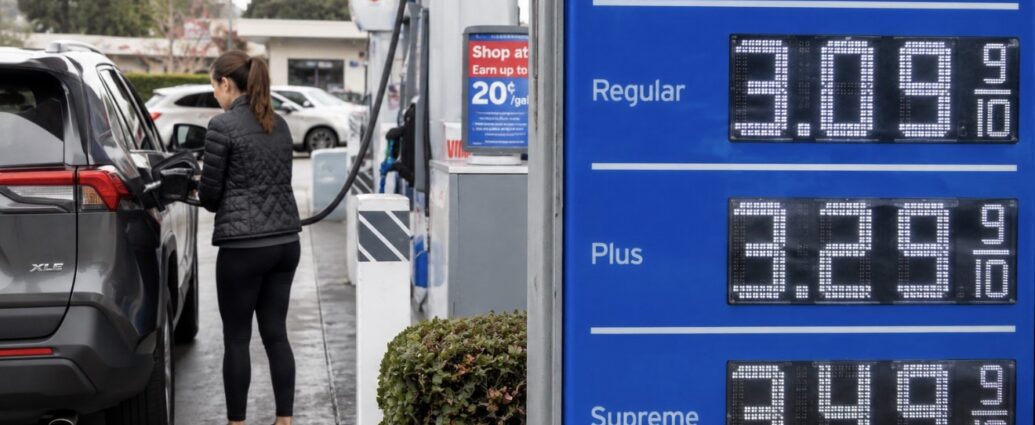
Gas Prices Climb Back Above $3 as Trump Reinstates Iran Blockade
Drivers got a fresh jolt at the pump on Monday after President Donald Trump announced he was reinstating a naval blockade on Iranian shipping through the Strait of Hormuz, a move he laid out in a post on Truth Social that pushed oil and gasoline prices sharply higher just as the summer driving season peaks. Trump said the United States would now be known as “The Guardian of the Hormuz Strait” and would charge a 20% fee on all cargo passing through the waterway, reigniting fears of a supply squeeze that lands straight in household budgets.
U.S. gasoline futures rose above $3.10 a gallon on Monday, up more than 5% on the day, after briefly dipping toward $2.98 in the prior session. Crude did the heavy lifting. West Texas Intermediate jumped more than 8% to around $77 a barrel, its highest in about a month, while Brent crude climbed toward $79. At the retail level, the national average for regular unleaded sits near $3.86 a gallon, according to AAA — well off the $4.56 peak hit over Memorial Day weekend, but climbing again after weeks of relief.
That relief had come after Trump signed a memorandum of understanding with Iran on June 18 to end the conflict and reopen Hormuz, which sent Brent below $70 by July 1. The renewed fighting has reversed part of that drop. Adding to the pressure, Ukraine intensified drone attacks on Russia’s energy infrastructure over the weekend, and Moscow has banned gasoline exports after refinery outages cut its fuel output to roughly 65% of seasonal norms.
The terms Trump laid out carry real weight for the oil trade. At the prices he described, a 20% transit fee would run roughly $32 million for a single supertanker, far above the up-to-$2 million charges Iran previously imposed. For the roughly 20% of the world’s seaborne oil that moves through Hormuz, even the threat of disruption commands a premium. OPEC trimmed its 2026 oil demand growth forecast to 800,000 barrels a day, and tanker traffic through the strait has slowed sharply.
The consumer math is simple and unwelcome. Higher pump prices act like a tax on every household, leaving less to spend on groceries, dining, and back-to-school shopping. Analysts at the Stanford Institute for Economic Policy Research estimated earlier this year that a sustained spike could add hundreds of dollars in transportation costs to the average family’s annual budget. “Even if the war ends tomorrow, gasoline prices are not going down to where they were before the war, at least not in the short term,” said Ryan Cummings, the institute’s chief of staff, pointing to the collision with peak summer demand.
Diesel is the quieter threat. Because nearly everything Americans buy moves by truck, a rise in diesel filters into the price of food and consumer goods weeks later, keeping grocery and delivery costs elevated even after crude cools. Airlines, delivery firms, and rideshare drivers all feel the same pinch.
The U.S. Energy Information Administration still expects prices to ease later in the year. In its July Short-Term Energy Outlook, the agency forecast retail gasoline would average just under $3.80 a gallon in the third quarter, down about 41 cents from the spring, as global supply grows and refiners lift output. But that forecast rests on the assumption that Hormuz stays open and the conflict stays contained — assumptions Monday’s escalation called into question. The agency also noted that stubbornly low gasoline inventories are keeping wholesale margins high, which can offset some of the benefit consumers would otherwise see from cheaper crude.
The timing matters for the inflation picture, too. The Bureau of Labor Statistics reports June consumer prices on Tuesday, and economists expect the month to show a rare decline driven almost entirely by the earlier drop in gasoline. Monday’s rebound means that relief may prove short-lived when the July figures arrive.
Retailers are already bracing. Grocery chains squeezed by cautious shoppers now face customers with even less room in their budgets, and fuel-sensitive businesses from airlines to freight haulers watch every uptick in crude. For families planning late-summer road trips, the message from the market on Monday was clear: budget for more at the pump, and hope the self-declared guardians of the strait can keep the oil moving.
JBizNews Desk | New York
© JBizNews.com All Rights Reserved. Reproduction or distribution without written permission is prohibited.

Why Ramsey financial expert says there’s ‘no magic age’ to claim Social Security
As anxiety mounts over the projected 2032 depletion of the Social Security Old-Age and Survivors Insurance (OASI) Trust Fund, a viral online trend is urging Americans to claim their retirement benefits as early as age 62.
But personal finance expert and Ramsey Solutions personality George Kamel is pushing back on the internet hysteria, telling Fox News Digital that the panic mirrors the “toilet paper rush during COVID,” and warning that filing early out of fear locks in a permanent “pay cut, not freedom.”
“These headlines are classic fearmongering, and they are not based in reality. There’s a lot of context left out,” Kamel said. “When you see, ‘Depletion 2032 [for] Social Security,’ it’s like the toilet paper rush during COVID. Everyone’s like, ‘I gotta go to the store and let’s clear the shelves, there’s not gonna be any left for me.’”
“The truth is, that fund was surplus from pre-funding for the baby boomer generation and to smooth out bumps along the way. So this does not mean Social Security is going to go away. A worst-case scenario is a 22% cut in monthly benefits. So that’s a far cry from it going to zero and bankrupting,” he continued.
OPINION: AMERICAN’S RETIREMENT SYSTEM IS BROKEN. TRUMP MAY HAVE FOUND A BOLD FIX
After the Social Security Administration released its 2026 Trustees Report — which confirmed that the federal retirement safety net is less than seven years away from reserve depletion — financial advisor and author Suze Orman called early claiming “bad advice,” warning that it will lock retirees into a permanent 30% reduction in monthly benefits that cannot be undone.
Kamel agreed with the emotional danger of claiming Social Security early, but he critiqued the rigid “always-wait” rule.
“She’s right that there is a lot of emotion here, and fear is a bad reason to go grab it at 62. Now, where we might disagree is that you should always wait… There’s a lot of factors that come into play of deciding when to take Social Security. And it really depends on your life, your health, your income, your family situation,” he explained.
“You’re better off talking to a doctor than looking at a government chart at average life expectancies to make this choice,” he added. “So there is no magic age, it’s not always 62, it’s not always 70. That’s a headline, not a plan.”
Breaking down the math even further, Kamel argued that the government treats your full retirement age at 67 as the 100% baseline benefit. Claiming five years early, at 62, forces you to accept a permanent 30% pay cut for the rest of your life. However, if you delay claiming until age 70, the system rewards your patience with a permanent 24% increase in benefits.
“The truth is, if you need to take it at 62, you probably aren’t doing great with your retirement overall. And if you can wait till 70, you likely didn’t really need it in the first place. So it’s kind of a catch-22 even making this decision, but it is personal,” he said. “And the math assumes that $1 at 95 is the same as $1 at 65, and that you live long enough. And that’s just not the case.”
“I’m not a fan of relying on a government program to fund your life forever. That’s a scary thought,” Kamel added. “And so early claiming is not control. It’s really just a 30% smaller check forever. So it’s a pay cut, it’s not freedom.”
As the 2032 insolvency deadline approaches, many Americans assume a worst-case scenario is inevitable if gridlock continues in Washington. But Kamel said the panic overlooks how the federal government has handled similar fiscal cliffs in the past. Rather than letting the system go bankrupt, he predicts Capitol Hill will pull from its old playbook.
“Seventy million Americans rely on a Social Security payment coming in. And so when you think about that… they’re gonna vote with their wallet. So the chances of any politician deciding to cut this down is going to cost them big time,” he said. “What will likely happen is what happened in 1983… The trust fund is running out and they made several small tweaks, not one sweeping change, in order to help this out.”
“I think the same thing will be true – they might adjust the cost of living adjustment. They might change the full retirement age from 67 to 68 or 69. They might increase the payroll taxes from 6.2% to 6.5%. And so these incremental changes can help it. I don’t see a world where, in 2032, we’re all going, ‘Where’s our money? We’re all gonna retire broke.'”
GET FOX BUSINESS ON THE GO BY CLICKING HERE
Ultimately, Kamel emphasizes that true financial peace doesn’t come from trying to outsmart a shifting government timeline. Instead of obsessing over what Washington will do to the safety net, he argued that the smartest move Americans can make is to shift their focus entirely to what they can control in their own households.
“You are your best shot at a great retirement. It’s not the government’s job, it’s not Washington’s job, it’s not a headline, it’s not a trust fund date. You control the controllables, and one of those things is creating your own nest egg… There is hope out there. But it’s not in the hands of [the] White House, it’s in yours.”









Netanyahu seeking electoral stalemate, new elections to stay in power, former adviser says
Prime Minister Benjamin Netanyahu is focusing his efforts on preventing the opposition bloc from reaching 61 seats and unseating him in the coming election, former communications adviser to Netanyahu, Avi Bushinsky, told 103FM on Tuesday.
“Netanyahu’s goal is one thing. If we ignore for a second Filber’s polls, in which Netanyahu gets something like 80 to 90 seats, depending on which day you wake up, then the goal is really to ensure a political tie in order to get to another election, or maybe reach ideal conditions, and then of course as long as there is a political tie you are the sitting prime minister and under the best conditions, namely a transitional government, then there is not even a Knesset on your back,” he said.
Bushinsky stated he didn’t believe there would be room in the upcoming Knesset for all the smaller parties being formed, noting that when Benny Gantz and Dedi Simchi talked about joint leadership, they could barely cross the electoral threshold.
“There are more cardinal problems here. To come and say, ‘We will unite,’ ‘We will join,’ ‘We will do’ and ‘a broad national [front],’ there is a fundamental problem here in the State of Israel, the story of October 7, a state commission of inquiry, and so on, but right now there is something much bigger, which is where we are headed, and that is the issue of enlistment,” he said.
“I do not think that if by some miracle two or three MKs come together and form a centrist party, that will move the country. In my assessment, no such midstream party will be formed. Not one of [Gilad] Erdan and [Yu;o] Edelstein, and not one of [Chili] Trooper. I think he, Trooper, expects to find himself with [Gadi] Eisenkot,” he concluded.
Creation of Trooper, Hendel’s new party, Yesodot Yisrael, is not ‘major breakthrough’
In the same interview, Roy Kuncol, who decided last week to leave the Reservists Party, addressed the formation of Chili Tropper and Yoaz Hendel’s new party, Yesodot Yisrael, and said he saw no major breakthrough there.
“Without referring to the personal issues between them, on the political level, it is impossible to understand this split. Two people who ultimately say the same thing, are in the same political space, and want to do the same political thing, there is no reason in the world to see them as two different forces, two parties. I analyze this as part of issues of ego and grievances, or that [Diaspora Affairs Minister Amichai] Chikli is trying to move within the political space to another place,” Kuncol said.
“That is fine, legitimate, okay, but public trust in their political space is very low, not because people do not want it, but because it is hard to launch something new in Israeli politics. To spread this into even more shards of parties is a huge mistake. The game in politics is about joining forces, not splitting apart,” he emphasized.

When disaster strikes, Netanyahu will once again avoid responsibility, like on Oct. 7 – opinion
“Whoever makes the decisions concerning these laws will bear responsibility,” Channel 12 military analyst Nir Dvori said yesterday. “They will not be able to say, ‘I was not aware, I did not know.’”
That is wrong. Even if disaster strikes, government leaders will say that no one told them, no one woke them in the middle of the night, and no one warned them.
I know this because that is what already happened. The October 7 massacre took place nearly three years ago. Afterward, politicians dodged all accountability with brazen audacity and without a single ounce of conscience or responsibility in their bodies. They said they did not know, that no one had told them.
Even though they were told, warned, and alerted.
IDF chief of staff Herzi Halevi pleaded with them to listen to him, and Prime Minister Benjamin Netanyahu refused. Senior security officials wanted to meet with Netanyahu together to highlight the severity of the situation, and he refused. Coalition members refused to listen to military representatives who came to the Knesset. Military intelligence sent three warning letters to the prime minister, who dismissed them with contempt.
Political leaders were warned on Oct. 7, claimed it was an ‘exaggeration’
When Yinon Magal asked Netanyahu about the warning of a multi-front war, he said that “there is a great deal of exaggeration.” The head of the Shin Bet (Israel Security Agency) personally warned him about war, but he did not listen. Avigdor Liberman warned him. Yair Lapid warned him. Gadi Eisenkot warned him. And he did nothing. Netanyahu put on his rose-colored glasses, and the government continued sailing like the Titanic toward the iceberg.
All the commentators, not only Dvori, believe that after all of these warnings, the government will no longer be able to dodge accountability. I say that they will. These politicians have a metaphorical laundry machine that washes away responsibility while simultaneously smearing others and shifting the blame onto them.
We can see it. It is here, rattling away without pause, constructing indictments and conspiracy theories against everyone, except for those who are actually responsible. Except for Mr. Security, who held the wheel and determined policy for a generation.
Current government may have skewed priorities
This month, I mark 40 years of working in journalism. I never believed we would reach this point, when an elected government defects from its responsibilities to the people and becomes a “government of the bloc,” attacking the state itself. This is an immune system failure, an autoimmune attack by the body against itself. It is a sustained, powerful attack, devoid of restraint or shame.
Look at all the lackeys surrounding Netanyahu, who leads this gang, and ask: what has happened to these people? How can a nonentity like Boaz Bismuth, who has done nothing in his life other than blather and flatter, attack the chief of staff over his warning letter and claim that it was sent too late, even though he knows that representatives of that same chief of staff sat before the Foreign Affairs and Defense Committee with all the warnings, all the data, and all the red flags?
Look at Defense Minister Israel Katz, the low-skilled political operator who abandons the IDF to fade and falter, while prioritizing the interests of party members over those of reservists and combat soldiers.
Look at Likud as a whole. At the politicians who continue fighting over reserved slots, favors, and the spoils of government while the country falls apart and the public watches in despair.
There was once such a thing as shame. People did not take pride in this kind of conduct conduct. They were afraid to leave their homes or be seen in public. Today, even that is gone. They are proud of themselves. They carry their lies with honor and their disgrace with pride. They believe that nothing can ever shake them. Just as they believed on the eve of October 7, 2023.

Palo Alto Networks CEO Says AI Costs Must Fall 90% Before Enterprises Can Scale Adoption
Artificial intelligence may be transforming nearly every industry, but one of the technology sector’s most influential cybersecurity executives says the economics still do not work for most businesses. Nikesh Arora, chairman and chief executive of Palo Alto Networks, told CNBC that the cost of running AI must fall by roughly 90 percent over the next two years before companies can afford to deploy it broadly across their organizations. While the technology itself continues to improve rapidly, Arora argued that today’s pricing remains the biggest obstacle preventing AI from moving beyond pilot projects and into everyday enterprise operations.
Speaking on CNBC’s Squawk on the Street, Arora focused on the cost of AI “tokens,” the units companies pay for every prompt submitted and every response generated by an AI model. Although token prices have fallen significantly over the past two years, he said they remain too expensive for organizations looking to deploy AI across thousands of employees and millions of daily interactions.
His comments came just moments after OpenAI Chief Executive Sam Altman appeared on the same program and said the company’s newest model delivers 54 percent greater efficiency on agentic coding tasks. Arora praised the improvement but made clear it is only an early step.
“I think 54% is a good start,” Arora said. “I think we probably need another turn at it.”
He estimated that AI costs need to decline dramatically again over the next two years before most chief information officers will feel comfortable approving company-wide deployments.
The challenge, according to Arora, is not a lack of demand.
“Demand continues to be infinite,” he said, noting that businesses are eager to adopt AI but continue to face two major constraints: limited computing capacity and high operating costs. Every AI request carries a measurable cost, making large-scale deployments difficult to justify under current budgets.
For business leaders, the issue is becoming increasingly important. While executives continue investing heavily in AI, many companies are placing limits on employee usage, steering workers toward lower-cost models, or testing open-source alternatives to control expenses. The conversation has shifted from whether AI works to whether organizations can afford to use it at scale.
Arora is not the only technology executive questioning today’s pricing model. Earlier this week, Palantir Technologies Chief Executive Alex Karp criticized the per-token pricing structure used by OpenAI and Anthropic, telling CNBC that “something has gone completely wrong.” Karp argued that open-weight AI models could eventually provide enterprises with a significantly more affordable alternative while reducing dependence on expensive proprietary systems.
The debate comes as AI providers continue competing aggressively on both performance and price.
The differences are already visible across the industry’s leading models. SpaceXAI’s Grok 4.5, introduced on July 8, is priced at $2 per million input tokens and $6 per million output tokens. OpenAI’s GPT-5.6 ranges from $1 to $10 per million input tokens and $6 to $45 per million output tokens, depending on the service tier. Anthropic’s Fable 5 is priced at $10 per million input tokens and $50 per million output tokens. For organizations processing millions of AI requests every day, those differences can quickly add up to millions of dollars in annual operating costs.
The discussion is particularly significant for Palo Alto Networks, whose future growth is increasingly tied to artificial intelligence. The cybersecurity company protects AI infrastructure, secures enterprise deployments, and embeds AI throughout its own product portfolio, meaning broader AI adoption would likely expand demand for its security offerings.
The company’s financial results reflect that momentum. In results reported June 2 for the quarter ended April 30, Palo Alto Networks generated $3.0 billion in revenue, up 31 percent from a year earlier, including $388 million from the recently acquired CyberArk and Chronosphere businesses. Next-generation security annual recurring revenue climbed 60 percent to $8.1 billion, while remaining performance obligations reached $18.4 billion, highlighting continued customer investment in AI security.
The rapid expansion has also increased expenses. Palo Alto Networks reported a GAAP net loss of $177 million, compared with a $262 million profit during the same period a year earlier, primarily due to acquisition-related costs and stock-based compensation. On a non-GAAP basis, however, net income increased to $684 million, or 85 cents per share. Chief Financial Officer Dipak Golechha said the company remains ahead of its integration plans and continues targeting a 40 percent adjusted free cash flow margin by fiscal 2028.
Despite the current pricing challenges, Arora remains optimistic that the economics will eventually improve.
“All these things will rationalize over time,” he told CNBC.
If that happens, enterprises are expected to accelerate AI adoption across virtually every business function—from customer service and software development to finance, legal, human resources, and cybersecurity. For Palo Alto Networks, cheaper AI would not represent a threat but an opportunity, creating more AI-powered systems that require protection and expanding the market for the security technologies it sells.
JBizNews Desk | New York
© JBizNews.com All Rights Reserved. Reproduction or distribution without written permission is prohibited.

FDA authorized Zyn nicotine pouches without knowing what they were made of, says former agency scientist
Four years into the U.S. Food and Drug Administration’s review of Zyn nicotine pouches, and not long before the agency approved them for sale, an FDA toxicologist ran some informal tests in her kitchen that led her to question whether the agency truly understood the addictive product it was about to green-light.
Christy Leppanen worked for the FDA’s Center for Tobacco Products, where she led a project examining the potential for microplastics exposure. A scientist who had worked on an environmental assessment of Zyn had repeatedly told her that the nicotine pouches melt in the mouth. But during a public health conference in late 2024, Leppanen said, she talked to an academic who reinforced her understanding that they don’t.


‘Know your place’: Gotliv calls for IDF chief Zamir’s dismissal after his criticism of draft law
MK Tally Gotliv (Likud) called for the firing of IDF Chief of Staff Eyal Zamir on Tuesday over the warning letter he sent about a severe shortage of 17,000 soldiers in the IDF.
“Chief of Staff Eyal Zamir, I suggest you know your place!! Know your place!!” she wrote in a post on X/Twitter. “I am of course not threatening, because I have no authority in my hands. But your disgraceful letter from yesterday requires your dismissal.”
She added, “You dared to step onto the political field and, in doing so, weaken the morale of our soldiers and the citizens of Israel, like the last opposition MK. I would fire you without hesitation. The sooner, the better.”
הרמטכ״ל אייל זמיר אני מציעה לך דע את מקומך!! דע את מקומך!! אינני מאיימת כמובן כי אין לי שום סמכות ביד. אך מכתבך החרפתי מאתמול מחייב את פיטוריך.
העזת לרדת למגרש הפוליטי ולהחליש תוך כך את מורל חיילנו ואזרחי ישראל כאחרון חברי הכנסת מהאופוזיציה. אני הייתי מפטרת אותך ללא היסוס. ויפה…— טלי גוטליב (@TallyGotliv) July 14, 2026
MK Osher Shekalim (Likud) also sharply attacked the chief of staff. In an interview with 103FM on Tuesday, Shekalim argued that Zamir’s involvement in the issue of the draft law went beyond his authority and, in his view, harmed proper administration.
“The chief of staff should be the number one soldier and nothing else,” Shekalim said. “He is not supposed to be a lawmaker, and he is not supposed to set policy. He can say his piece to the prime minister behind closed doors and not take it outside. He got very confused, and it is a shame that he said it. This is part of the things we need to fix to restore proper administration.”
IDF chief of staff should be removed from position, MK says
When asked whether the chief of staff should be removed from his post because of the letter, the MK responded firmly: “When the chief of staff speaks like that and attacks lawmakers, in my view he cannot continue in his position. I am not saying that in this case, but in proper administration that is how it should have been. I have immense respect for Eyal Zamir for everything he does, but with all due respect, we have gotten a bit confused.”
“More than ever, we need to learn the lesson of October 7: that the army should deal with being an army. I want Zamir to come and tell me how many terrorists he knows how to eliminate according to the political echelon’s plans, and nothing else. I do not want him dealing with policy, implications and the scepters of values,” Shekalim added.
When asked whether the government is ignoring the chief of staff’s warning out of a desire to preserve its political survival, Shekalim rejected the claim outright. “Nonsense. What political survival? The Knesset is dissolving. I agree with him that we need soldiers and we are working exactly for that,” he said.
“I support everyone enlisting, and I am working for equality, but I want us to do it by agreement and with love. I want to embrace our haredi [ultra-Orthodox] brothers and not reject them.”
According to him, the army’s conduct reflects a broader structural problem. “This confusion led to the events of October 7, when the command echelon thought it was running the country. When the status of elected officials drops in the eyes of the executive echelon, it has consequences. We saw that information was hidden from the political echelon and that they are trying to educate us. I want there to be order here, that if he has comments for the political echelon, he knows how to do it behind closed doors and not take it to the media.”
Shekalim supports Netanyahu on need to refresh Likud list
Later in the interview, Shekalim addressed the clash between MK David Bitan and Prime Minister Benjamin Netanyahu over the issue of entrenchments on the party’s list. “I support backing the prime minister on the need to refresh the list,” he said.
At the same time, he criticized the scope of the planned entrenchments. “There is a matter of proportions. I oppose the original demand that spoke about 10 or 11 entrenchments, and even what was settled now with eight changes,” he said. “There are many hardworking MKs.”
Speaking about his last Knesset term, Shekalim said, “I am considered one of the prime minister’s confidants, and we did amazing work that does not always reach the media. I submitted about 50 bills, of which four were enacted into law. With all due respect to all kinds of stars and glamorous people, I want, in the end, for the elected officials to be attentive to the public and come from it, not for some star to come who will not give a return.”
Gibraltar names airport for Jewish political trailblazer who was first-ever mayor, chief minister
The Government of Gibraltar announced last week that Gibraltar International Airport will be renamed after Sir Joshua Hassan, the first mayor and chief minister of the British territory, and a member of the Jewish community, who died in 1997.
The airport will be renamed Joshua Hassan Gibraltar International Airport, the local government confirmed.
The current Chief Minister, Fabian Picardo, referred to Hassan as the “Father of the Gibraltarians and one of the towering figures in our history.”
“His leadership and lifelong service to Gibraltar helped shape the modern Gibraltar we know today,” the government’s statement added.
Renaming the airport will “serve as a lasting tribute” to Hassan’s “extraordinary contribution to Gibraltar and to generations of Gibraltarians,” the government added.

Daughter, fmr. Jerusalem deputy mayor: ‘Beautiful, fitting tribute’
Hassan’s daughter, former Jerusalem deputy mayor Fleur Hassan-Nahoum, noted that her father was one of the “most prominent Jewish public servants in the modern Commonwealth.”
“It is a beautiful and fitting tribute to a man who dedicated his life to advance the freedoms and rights of the Gibraltarian people,” she added.
“For world Jewry, this recognition extends far beyond the naming of a public building. It is an acknowledgment of a life dedicated to principle, public service, and the belief that leadership is measured not by personal ambition, but by commitment to one’s community,” she said.
“As a proud member of Gibraltar’s centuries-old Jewish community, Hassan never viewed his Jewish identity as separate from his public duty. Rather, the values that shaped his life – justice, responsibility, compassion, and service – were values deeply rooted in his heritage and reflected throughout his remarkable career,” she stated.
“His election as Gibraltar’s first chief minister, together with his distinguished legal career, broke barriers at a time when few Jews held senior political office on the international stage. His achievements became a source of pride not only for Gibraltar but for Jewish communities around the world,” she stated.
“For Jewish communities across the world, the dedication of Sir Joshua Hassan Airport is a powerful reminder of the contribution that Jewish leaders have made to democratic life, public service, and nation-building. It celebrates a legacy that belongs not only to Gibraltar, but also to the wider Jewish story of resilience, leadership, and service,” she concluded.

Marlene Hassan, Joshua’s daughter who also served as a Gibraltar MP from 2015 until 2023, also commented on the honor given to her father’s legacy.
“The decision to name Gibraltar’s airport in his honor ensures that his legacy will remain part of the territory’s future for generations to come. It stands as a lasting tribute to a statesman whose vision helped shape the British Gibraltar of today and whose example continues to inspire those who believe that leadership is founded on integrity, courage, and service,” she said.
Sir Joshua Abraham ‘Salvador’ Hassan, Gibraltar’s first-ever mayor, chief minister
Hassan served as the first-ever mayor of the British territory from 1955 until 1969 and as the first-ever chief minister from 1964 until 1969.
He also held the post of chief minister from 1972 until 1987, and is nicknamed “Salvador” (savior) within the territory.

Peace in Ukraine is unlikely to be reached before winter, Polish PM says
Polish Prime Minister Donald Tusk said on Tuesday it seemed very unlikely that peace in Ukraine would be reached soon, and he expected Russia to extend the conflict at least until the winter.
He said he had discussed the situation with NATO Secretary-General Mark Rutte and Ukrainian President Volodymyr Zelensky.
“At this point, it seems unlikely that a ceasefire or peace agreement will be reached in the near future, given the rigid stance of Russia and Putin,” Tusk told journalists in Paris.
“Everyone expects an escalation of actions from Russia at this time, and it’s quite likely that Russia will want to prolong this war at least until the winter.”
Tusk said Poland would host military exercises with French and British troops in the autumn so that they can be prepared to ensure security for Ukraine and the region after a peace agreement or ceasefire is eventually reached.
Poland is joined by others in preparing to protect Ukraine
“These will be exercises that prepare the entire coalition (of the willing) gathered today in Paris for such real security guarantees for Ukraine, but also for the region,” he said.




Goldman Sachs Pitches Big Investors on Financing Their Own Private Funds
Goldman Sachs is marketing a new investment strategy that would allow some of the world’s largest institutional investors to earn returns from financing their own private-equity and private-credit funds, highlighting the continued evolution of one of Wall Street’s fastest-growing businesses.
According to people familiar with the discussions, Goldman is approaching large pension funds, sovereign wealth funds, endowments, and insurance companies with a structure that would allow them to participate in the lucrative market for capital-call financing, an area traditionally dominated by major global banks.
Capital-call facilities—also known as subscription credit lines—have become a critical part of the private investment industry. Private-equity funds typically do not collect all committed capital from investors immediately. Instead, investors provide money only when acquisitions or investments are ready to close. To bridge that timing gap, banks provide short-term loans secured by investors’ capital commitments.
For years, institutions such as Goldman Sachs have earned steady fees and relatively low-risk returns by providing this financing.
The firm’s latest proposal would allow institutional investors to participate directly in that lending, effectively earning interest on financing provided to funds in which they already invest.
Supporters say the structure creates an additional source of yield without requiring investors to move into unfamiliar asset classes. Because subscription credit facilities are backed by legally binding capital commitments from large institutional investors, they have historically experienced very low default rates compared with many other lending categories.
The strategy also reflects a broader transformation taking place across private markets.
Rather than simply holding loans on their own balance sheets, major investment banks increasingly originate financing, package portions of those exposures, and distribute them to outside investors. Doing so frees regulatory capital while allowing banks to continue expanding lending activities.
Goldman has been particularly active in this market. Over the past two years, the firm has completed several transactions transferring portions of subscription-line exposure to institutional investors while continuing to originate new facilities for private-equity sponsors.
Private markets themselves continue growing rapidly. Assets managed by private-equity, private-credit, and infrastructure funds have expanded significantly over the past decade as institutional investors search for higher returns outside traditional public stock and bond markets.
That growth has fueled rising demand for subscription financing.
Large buyout firms increasingly rely on capital-call facilities to complete acquisitions quickly, improve operational flexibility, and simplify cash management. The loans are typically repaid once investors fulfill scheduled capital calls.
Institutional investors are also searching for stable sources of income at a time when traditional fixed-income markets remain volatile.
Subscription-credit financing offers relatively short maturities, historically strong repayment performance, and exposure to highly rated institutional borrowers rather than individual consumers or speculative companies.
Still, some market observers urge caution.
As private-credit markets continue expanding, regulators and analysts have warned that increasing financial complexity can make risks harder to identify during periods of economic stress. While subscription facilities have historically performed well, critics argue that greater interconnectedness between banks, private funds, and institutional investors deserves careful monitoring.
Goldman executives have previously acknowledged that private-credit markets warrant continued attention, particularly as economic conditions evolve and higher interest rates affect leveraged companies.
For the bank, however, the strategy represents another step in repositioning itself as both a lender and an arranger of sophisticated financing solutions rather than simply a balance-sheet provider.
For investors, it offers access to an asset class that has historically generated attractive risk-adjusted returns while remaining largely unavailable outside institutional markets.
Whether large investors embrace the strategy on a broad scale remains to be seen.
If demand proves strong, the model could further reshape how private markets finance acquisitions, deepen institutional participation in fund lending, and reinforce Wall Street’s shift toward distributing—not simply holding—financial risk.
As private capital continues expanding globally, Goldman Sachs’ latest proposal underscores how rapidly the financial infrastructure supporting those markets is evolving, creating new opportunities for investors while further blurring the line between lenders and fund owners.
JBizNews Desk | New York
© JBizNews.com All Rights Reserved. Reproduction or distribution without written permission is prohibited.

Robinhood Plans First Bond Backed by Its Credit Card Bills
Robinhood Markets is preparing to enter the asset-backed bond market for the first time, seeking investors for a transaction backed by balances from its growing consumer credit-card business. The planned offering marks another step in the company’s transformation from a commission-free trading app into a broader financial services provider.
According to people familiar with the matter, Robinhood is marketing at least $400 million in asset-backed securities tied to receivables from its branded credit cards, with the transaction potentially increasing to approximately $500 million depending on investor demand. Wells Fargo and Barclays are leading the offering.
The deal represents Robinhood’s first securitization backed by credit-card receivables, a financing method commonly used by major banks and card issuers. Under the structure, payments made by credit-card customers are pooled together and used to support bonds sold to institutional investors, providing lenders with additional capital to expand their lending operations.
Robinhood launched its premium Gold Card to deepen relationships with customers beyond investing, offering cash-back rewards and other benefits aimed at higher-spending consumers. The company has steadily expanded the card program as part of a broader strategy that now includes retirement accounts, cash management services, and banking-style financial products.
The securitization illustrates how rapidly Robinhood’s business model has evolved. While the company initially built its reputation around commission-free stock trading, recent years have seen management push aggressively into recurring financial services designed to reduce dependence on trading activity, which can fluctuate significantly with market conditions.
Asset-backed securities have long been a staple of consumer finance. Major financial institutions routinely package credit-card receivables, auto loans, and other consumer debt into bonds that are sold to pension funds, insurance companies, and other institutional investors seeking relatively predictable income streams.
The market has remained active throughout 2026. Financial institutions have issued billions of dollars in credit-card-backed securities as consumer spending has remained resilient despite elevated interest rates. Robinhood’s offering is substantially smaller than transactions completed by established issuers but represents an important milestone for the company’s expanding lending business.
For investors, the bonds provide exposure to consumer credit performance. Returns depend largely on customers continuing to make timely credit-card payments. Strong repayment performance generally supports higher bond values, while rising delinquencies can increase risk and reduce investor demand.
Consumer credit conditions remain mixed. Although household spending has held up well, financial institutions continue monitoring rising delinquency rates among certain borrower groups, particularly as higher interest rates and inflation pressure some household budgets.
Robinhood views the credit-card business as an opportunity to build deeper customer relationships while generating more stable revenue than trading alone. Cardholders interact with the company daily through purchases rather than only when buying or selling investments, potentially increasing long-term customer loyalty.
The offering also reflects a broader trend across financial technology companies. Many fintech firms that initially focused on payments or investing have expanded into traditional banking services, lending, and consumer credit as they seek additional revenue sources and stronger customer engagement.
Industry analysts say access to the securitization market provides companies like Robinhood with a lower-cost funding source that can support continued growth without relying solely on corporate capital. Successfully completing the transaction could pave the way for additional offerings as the credit-card portfolio expands.
The bond sale is expected to attract institutional investors looking for highly rated consumer-credit assets, though final pricing will depend on market conditions and investor appetite at the time of issuance.
For Robinhood, the transaction represents more than just a financing exercise. It signals the company’s continued evolution into a diversified financial institution, using traditional Wall Street funding techniques to support products aimed at everyday consumers.
JBizNews Desk | New York
© JBizNews.com All Rights Reserved. Reproduction or distribution without written permission is prohibited.


STAT+: Drug metabolism AI competition results show that bigger may not always be better
In 2020, the CASP competition vaulted AlphaFold to prominence and a Nobel Prize. But the era of people being impressed by an artificial intelligence model correctly predicting the structure of a protein — once a challenge many experts didn’t think would be solved in their lifetime — is over. Now drug developers want AI that can solve their big problems, like discerning whether the body is going to attack a drug candidate and render it useless.
One such example is the pregnane X receptor, or PXR. When activated, PXR increases the production of an enzyme that specifically breaks down foreign organic molecules — such as drug molecules — so the body can dispose of them. The specific enzyme that PXR regulates can metabolize approximately 50% of all marketed drugs.
Most drug development campaigns only discover whether candidates trip this sensor late in the game, forcing drug developers to go back to the drawing board. But if an AI model could reliably predict whether a given drug candidate will activate the PXR receptor, it could fix a lot of problems that present hurdles for new potential drugs, including the drug exiting the body too fast or creating drug–drug interactions.

12 ideas for tackling the U.S. alcohol epidemic
Alcohol kills more than 178,000 Americans each year. It doesn’t have to.
Drinking’s deadly toll in the U.S. is the result of decades of policy decisions, industry influence, and cultural inertia, as STAT shows in its investigative series, The Deadliest Drug. The U.S. has not made a concerted effort to reduce heavy drinking since Prohibition ended nearly a century ago.

STAT+: 10 charts that explain America’s hidden alcohol epidemic
“The Deadliest Drug,” a multipart series by STAT, spotlights an epidemic hidden in plain sight: excessive alcohol use. Alcohol kills more Americans each year than all illicit drugs combined, and yet health officials, industry leaders, and the public rarely focus on it. STAT reporters Isabella Cueto and Lev Facher examined the epidemic’s human cost and the complex causes — from personal to political — of the most harmful substance use crisis in the U.S. STAT data editor J. Emory Parker amplified many of the findings in data-rich charts.
These charts capture the toll, emerging risks, shifting usage, and economic stakes of America’s relationship to alcohol.
1. Alcohol-related emergency department visits nearly doubled in the U.S. between 2003 and 2022
Drinking-related adverse events, including emergency room visits, have soared in recent decades. American emergency rooms recorded roughly 5.4 million visits due to alcohol in 2022, and in many states, alcohol-related hospitalizations dwarf those stemming from other substances, like opioids.

Opinion: It looks like your doctor and talks like your doctor. But it’s not your doctor
Imagine a patient who arrives at her doctor’s clinic furious. She shows her doctor a video of him — white coat, plausible exam room, familiar cadence — endorsing an over-the-counter hormone supplement for menopausal symptoms, dismissing standard therapies as “pharma scams,” and offering a discount code.
But the physician never recorded that message. Someone built a deepfake from online recordings, including interviews, webinars, and patient-facing videos, and used the synthetic likeness to sell an unregulated product. This scenario is no longer hypothetical. Investigations have documented AI-generated videos impersonating specific clinicians whom they name to promote supplements and other dubious treatments on major platforms.

From AI curiosity to operational transformation: Michael Vandi on how mortgage lending’s relationship with AI is evolving
AI in mortgage lending has evolved rapidly over the past two years, shifting from curiosity and experimentation to enterprise-wide operational transformation. Michael Vandi, founder and CEO of Addy AI, has spent the past several years working with mortgage lenders as mortgage AI adoption has evolved from experimentation to enterprise AI mortgage implementation.
Vandi saw firsthand how AI in mortgage lending emerged as one of the industry’s earliest and most consistent technology shifts. He shares why lenders embraced the technology so quickly, how AI conversations have shifted from experimentation to implementation and why trust, more than the technology itself, is becoming the defining factor in successful mortgage AI adoption.
HousingWire: Mortgage professionals were among the earliest adopters of AI. Looking back, why was the industry such a natural fit?
Michael Vandi: When we first looked at our users, mortgage wasn’t actually the largest group using the product, but it stood out because of how consistently people used it. Other industries, like e-commerce, had very different use cases from one business to the next. Mortgage was different.
The products are largely the same across lenders. Everyone is working with similar loan products and workflows, which has made it much easier to identify recurring problems that AI can solve. That consistency made it feel like an enterprise opportunity where we could go very deep, rather than trying to build something that worked a little differently for every customer.
That’s what convinced us to focus on mortgage and eventually build a team with deep mortgage expertise alongside the AI expertise.
HW: How have conversations with lenders changed over the past two years?
MV: They’ve changed dramatically. Early on, the conversations were mostly, “AI is cool. Let’s see what it can do.” Lenders were reading about companies using AI and felt like they needed an AI strategy because everyone else was talking about it.
Now the conversations are much more operational. Lenders come in with a clear understanding of the workflows they want to improve. They’ll say they have a certain number of processors, handle a certain loan volume and believe parts of that process can be automated.
The challenge isn’t recognizing the opportunity anymore. It’s implementation. As mortgage AI adoption has matured, lenders are focused less on whether to use AI and more on how to deploy it successfully within existing workflows.
That’s how engagements often expand. A lender might come to us wanting AI to validate closing documents, but once those agents are in place, they realize the same technology can scrub files, validate pre-underwritten loans and automate other steps throughout the workflow.
HW: You’ve described mortgage AI adoption as a trust curve rather than a learning curve. What do you mean by that?
MV: The learning curve really isn’t the issue. Our experience has been that people can learn to use AI tools very quickly. In many cases, they’re easier to use than traditional mortgage software.
What changes over time is trust. At first, users want to verify everything the AI does. They’ll let AI complete the first pass, but they’ll carefully review every recommendation before moving forward. As they continue using it on live files and see it deliver reliable results, they begin to trust it with more responsibility.
That’s why I think AI adoption is really a trust curve. The technology isn’t difficult to learn. Organizations gradually become comfortable relying on it as it consistently proves itself.
HW: As lenders expand AI across their organizations, what separates companies that make real progress from those that stay stuck in pilot projects?
MV: The organizations making progress are approaching AI through operational workflows instead of treating it as a standalone technology. The lenders we’re working with already have a thesis about where automation can create value. They know the problems they’re trying to solve. Once AI demonstrates success in one part of the process, they’re willing to extend it into adjacent workflows.
We’ve seen lenders begin with one operational workflow, such as document validation, then expand AI into adjacent processes like file review and pre-underwriting once confidence grows. Instead of deploying AI for a single task, they began to consider how AI in mortgage lending could improve the entire loan lifecycle.
HW: Looking ahead, how do you see AI reshaping mortgage operations over the next few years?
MV: AI is already changing how we work internally, and I think the same shift is coming to mortgage. Instead of AI helping with individual tasks, organizations are beginning to hand over entire responsibilities to AI agents. That changes how people think about work and where they spend their time.
We’re already seeing operational efficiency create new opportunities. We’ve seen lenders become significantly more efficient in loan operations, enabling them to launch new loan products much faster than before. Work that traditionally took months, or even years, can now move much more quickly because operational bottlenecks have been removed.
Mortgage is also a very people-driven business. Many experienced underwriters have spent decades in the industry, and it’s fascinating to watch them discover what AI can do. The technology isn’t replacing their expertise, but it is changing how those roles operate and how responsibilities are shared between people and AI.

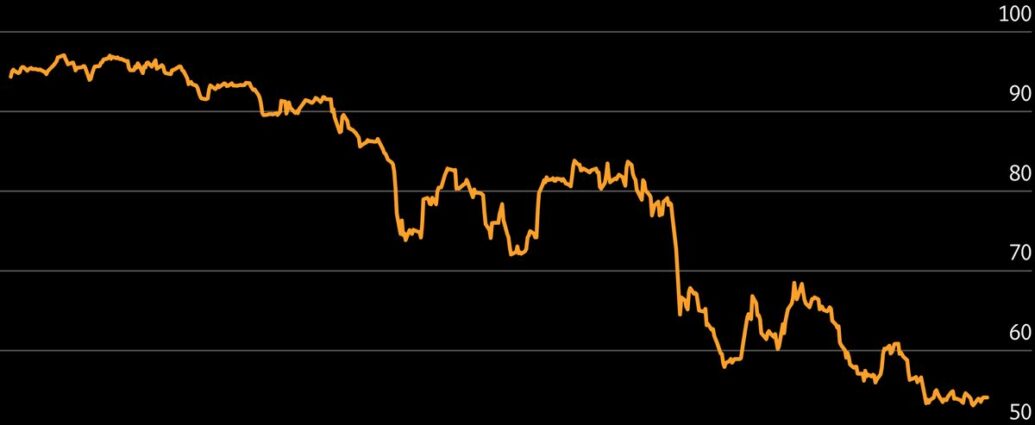
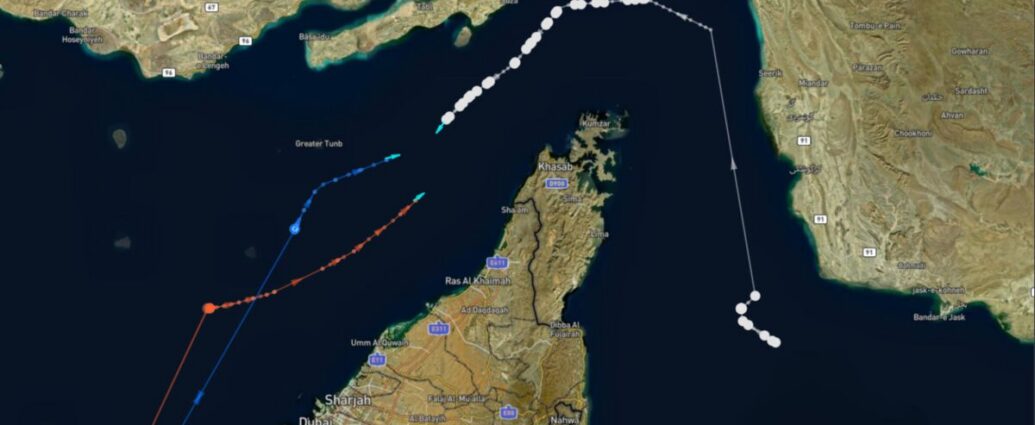





Taiwan’s Rescue Fund Books 80% Gain After Blunting Trump’s Tariff Shock
On Monday, July 13, Taiwan’s Ministry of Finance said the island’s National Financial Stabilization Fund had fully exited a nine-month rescue of the local stock market with a profit of about 80%, one of the most successful government market interventions in recent memory. The fund spent NT$12.25 billion, or roughly $380 million, buying shares from April 9, 2025, until it began winding down its position on January 12, 2026, and walked away with a realized gain of NT$9.86 billion, the ministry said in a statement issued late Monday.
The story begins with panic. In early April 2025, the Trump administration announced sweeping “reciprocal” tariffs on trading partners, hitting Taiwan with a proposed 32% rate. When Taipei’s market reopened after a long holiday weekend, the benchmark TAIEX index cratered, plunging 9.7% in a single session to close near 19,232, its steepest one-day fall ever. Over the following days it kept sliding toward roughly 17,000, erasing enormous amounts of household and pension wealth and threatening a broader loss of confidence.
That is when the government stepped in. The National Financial Stabilization Fund, a NT$500 billion pool created in 2000 to defend the market against sudden external shocks, was authorized to start buying. It marked the fund’s ninth intervention since its founding, and it would become the longest on record. The buying campaign ran 279 days, surpassing the 275-day stretch set during the 2020 pandemic crash.
The payoff was dramatic. Rather than merely slowing the decline, the intervention coincided with a full reversal. The TAIEX climbed off its April lows and, powered by global demand for artificial-intelligence hardware, went on to set fresh record highs. The index first pushed above the 30,000 mark in early January 2026 and touched an intraday peak of 30,681.99 on January 12, the very day the fund announced it would stand down. For all of last year, the TAIEX rose 25.73%.
By deciding to leave, the fund’s managers signaled confidence that Taiwan’s market could stand on its own. “With market mechanisms functioning normally, there is no longer a need for the stabilization mission,” the fund’s committee said, adding that it would keep watching global and domestic conditions and could return if new risks appeared. Since that withdrawal in January, the TAIEX has climbed roughly another 16%, evidence that pulling the government’s support did not knock the market off balance.
The financial result stands out because state rescue efforts often lose money, or at best break even, buying high in a crisis and selling into a fragile recovery. Taiwan did the opposite. It deployed capital into a genuine panic, held through the rebound, and sold into strength. The profit now flows to the state treasury, on top of a securities transaction tax that is swelling as daily turnover on Taipei’s main board runs above NT$600 billion this year.
The tariff fight that started the whole episode has since cooled. Through negotiation, Taiwan saw its proposed U.S. tariff cut from the original 32% to 20%, easing some of the pressure on the island’s export-driven economy. Taipei has avoided retaliation, instead offering to lower its own barriers and invest more heavily in the United States. President Lai Ching-te directed officials early on to open what one security official called “strategic communication” with Washington rather than trade blows.
For Taiwan, the stakes run deeper than any single quarter of market moves. The island is home to TSMC, the world’s most important maker of advanced chips, and its stock market has become a proxy for global confidence in the AI supply chain. A disorderly crash risked spooking foreign investors and denting the credibility of the market that underwrites Taiwan’s most strategic industry.
The intervention also carries a lesson for other governments weighing how to respond to tariff-driven volatility. The fund did not try to fight the tariffs themselves or prop up the currency indefinitely. It targeted a specific, acute panic in equities, committed real money, and then got out of the way once private buyers returned. Officials elsewhere facing similar shocks may study the playbook.
There is a note of caution buried in the celebration. A profitable rescue can tempt policymakers to intervene sooner and more often, blurring the line between a rare emergency backstop and a routine crutch. In April 2026, notably, the same fund declined to step back in despite fresh volatility tied to conflict in the Middle East, choosing to let normal trading absorb the swings. For now, Taiwan can point to a rescue that steadied its market, protected its savers, and handed taxpayers a rare windfall.
JBizNews Desk | Taipei
© JBizNews.com All Rights Reserved. Reproduction or distribution without written permission is prohibited.



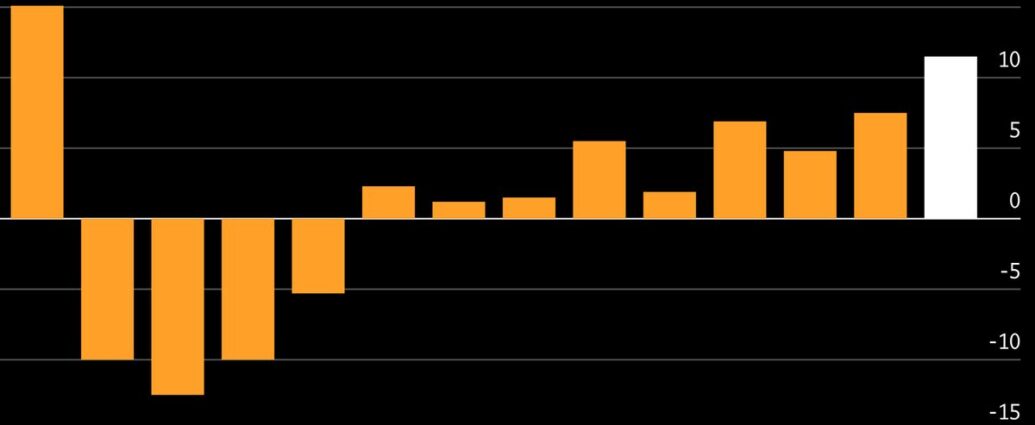




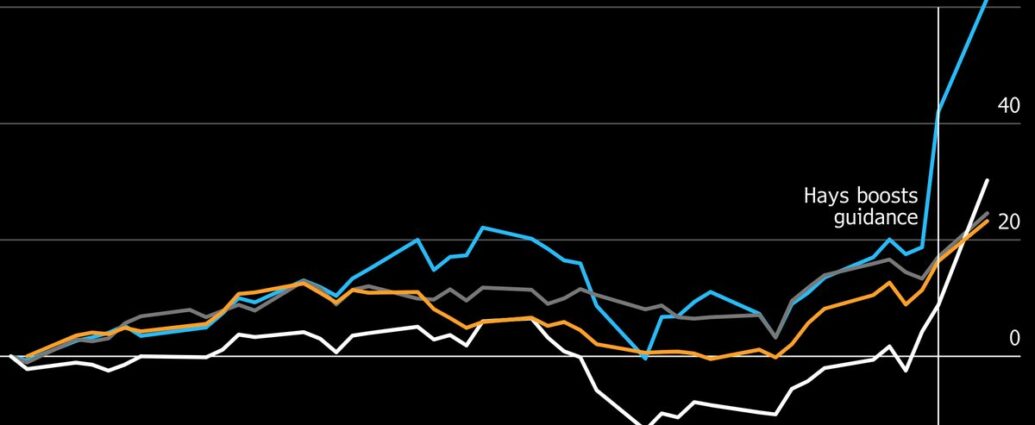
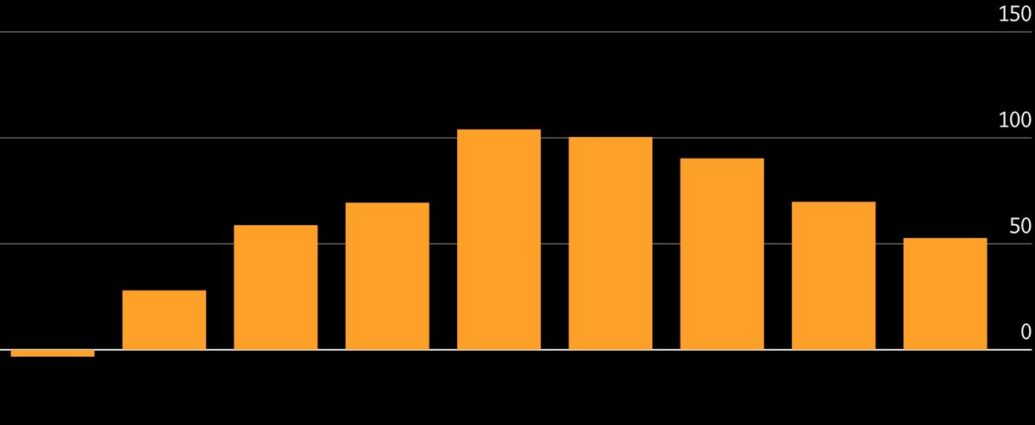

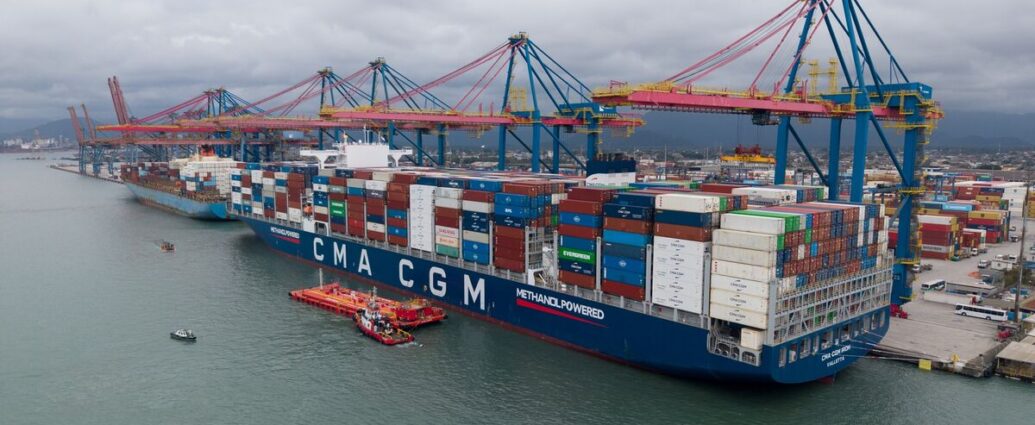


Workflow Before Technology: Why mortgage transformation starts with governance, not AI
Mortgage lenders continue to invest in AI, automation and digital transformation despite ongoing cost pressures. Yet many organizations still struggle to achieve the returns they expected.
Larry Bailey, CEO of Mortgage Workflow Partners, said the problem isn’t the technology itself. It’s that lenders often implement new tools before fully understanding the workflows those tools are meant to improve.
In this conversation, Bailey explains why mortgage workflow governance has become a critical competitive advantage, how institutional knowledge can create hidden operational risks and why lenders should map their processes before purchasing their next technology solution.
Technology only succeeds when workflow comes first
HousingWire: Many mortgage companies have continued to invest heavily in technology despite growing budget pressures. Why do so many transformation efforts struggle to deliver results, and what role does workflow governance play in closing that gap?
Larry Bailey: Companies often assume their technology projects are succeeding because they’ve implemented new tools, but implementation isn’t the same as achieving meaningful mortgage AI ROI. Five years later, the mortgage industry is still largely document-centric. If lenders don’t fully understand their workflows and no one truly owns them, new technology simply gets layered onto inefficient processes.
The companies that succeed establish best-practice workflows first, then align technology to support those processes. Without documented ownership and governance, projects lose direction and fail to produce the operational improvements leaders expect.
The biggest blind spots are often invisible
HW: You often say you solve problems clients don’t yet realize they have. What blind spots do you uncover most often?
LB: One of the biggest is what I call the “threshold problem,” which is the gap between what two parties know about themselves versus what they understand about each other. Whether it’s lenders working with technology vendors or departments working internally, decisions are often made with incomplete information.
That’s why discovery is so important. Organizations need to slow down long enough to understand what they’re trying to accomplish, verify that a solution actually solves the problem and evaluate how it fits into existing workflows. Too many companies skip those steps and end up implementing technology based on assumptions rather than evidence.
Institutional knowledge is one of a lender’s greatest assets
HW: As organizations become more cautious about spending, how should leaders distinguish between costs they can cut and knowledge they can’t afford to lose?
LB: Institutional knowledge is irreplaceable. We’re currently documenting workflows for a large lender in which only a handful of employees possess critical operational knowledge. If those people disappeared tomorrow, the business would face enormous disruption.
The challenge is that most organizations lack visibility into how work actually moves through the company. Once workflows are documented and maintained, everyone understands how loans progress, responsibilities become clearer and operational risk declines.
That’s one reason I developed WorkflowCoach . Existing process-mapping tools document today’s workflow, but they don’t effectively model future-state workflows after new technology is introduced. Before adopting any solution, lenders should be able to see exactly what changes and whether those changes truly create value.
Technology doesn’t fix broken processes
HW: Your new book argues that workflow should come before technology. How does that challenge traditional digital transformation?
LB: Companies have historically assumed better technology will solve their problems. I compare it to buying a fitness watch. The watch doesn’t improve your health. Better habits do. The technology simply helps you measure progress.
Mortgage companies have spent years buying better technology, yet many still aren’t achieving the financial improvements they expected. That’s why I created Mortgage Workflow Partners around the idea of Workflow Before Technology®. First, determine what you’re trying to accomplish, then identify technology that makes good workflows even better.
Always ask “why?”
HW: You’ve said your team often succeeds by asking different questions. What separates organizations that solve root causes instead of symptoms?
LB: I always encourage people to think like a curious five-year-old and keep asking “why?”
Companies frequently buy technology because they’ve always done things a certain way without questioning whether the process still makes sense. For example, many lenders continue collecting documents when much of that information can now be obtained directly from verified data sources.
Rather than asking how to process documents faster, organizations should ask why they’re collecting those documents in the first place. Once you understand the purpose behind every step, you can build better workflows that reduce unnecessary work and improve the borrower experience.
Keeping workflows aligned with reality
HW: Where do you see the biggest disconnect between how organizations design processes and how employees actually perform them?
LB: Usually, they’re miles apart. The longer a workflow goes without being reviewed, the wider that gap becomes.
During workflow alignment assessments, we often discover employees created better workarounds years ago, but management never updated the documentation. New employees are trained using procedures that no longer reflect reality, so experienced workers become the unofficial trainers.
That’s where workflow governance breaks down. Companies may have SOPs and training manuals, but they lack living workflows that clearly define how work should be done. Those workflows also need continuous updates whenever vendors, systems or business processes change. Most lenders simply don’t have that discipline today.
Preparing for the next phase of transformation
HW: Looking ahead, how should mortgage workflow governance, operational expertise and technology work together?
LB: Ideally, every department owns and continuously updates its portion of the workflow so leadership always has an accurate picture of how the business operates.
With WorkflowCoach, we can document a client’s current workflow, analyze a new technology platform and then model exactly what the future-state workflow will look like. We can identify where steps disappear, where automation occurs and where new tasks are introduced before implementation begins.
Technology shouldn’t be evaluated because it’s new or inexpensive. Organizations should ask whether it improves workflow, produces measurable mortgage AI ROI and benefits the business as a whole.
Reducing costs starts with understanding the workflow
HW: Is there anything else leaders should be thinking about?
LB: Many lenders say the cost of doing business is too high, but few understand exactly where those costs come from. Instead of focusing only on new technology or cutting expenses, they should start by examining their workflows and using loan-level accounting to see where money is being lost. Hidden costs often show up in post-closing, defect cures, lender credits and concessions, where inefficiencies quietly reduce profits.
Lenders also tend to make operational changes, like adding mortgage AI automation or combining teams, without considering how those decisions affect the overall workflow. Other industries routinely measure the impact of these changes before making them, but mortgage lending rarely does. Until lenders understand how work actually moves through their organizations, they’ll continue to solve the wrong problem.
Click Here

SK Hynix Sinks 15% in Seoul Days After Record Nasdaq Debut
Shares of SK Hynix posted their worst single-day drop in nearly two decades on Monday, tumbling 15.4% in Seoul, according to trading data from LSEG, just one session after the South Korean chipmaker completed the largest American depositary receipt debut in history on the Nasdaq. The plunge marked the stock’s steepest fall on record and cooled, at least for a day, one of the hottest trades in global markets.
The sell-off came just three trading days after SK Hynix raised more than $26 billion by selling American depositary receipts priced at $149 each — a landmark listing that gave U.S. investors a direct way to bet on the artificial-intelligence memory boom. The receipts, which trade under the ticker SKHY, opened 14% above the offer price at $170 on Friday and closed their first day at $168. By Monday, those same U.S.-listed shares had dropped 7.9% to $154.70 in early trading.
The reversal rippled across Asia. SK Hynix, together with larger rival Samsung Electronics, dragged South Korea’s Kospi down roughly 9%, forcing a 20-minute trading halt. The damage spread to Wall Street’s chip names as well. Micron Technology fell 6.4%, SanDisk dropped 8.4%, and Western Digital lost 6.8%, while the Philadelphia Semiconductor Index shed 3.6%.
Analysts framed the drop as profit-taking rather than a collapse in the underlying story. SK Hynix shares had more than tripled in Seoul this year and climbed roughly sevenfold over the past 12 months, pushing the company past a $1 trillion market value for the first time earlier this month. After a run that steep, some pullback was expected. Phil Blancato, president and chief executive of Ladenburg Thalmann Asset Management, said there was clearly a component of profit-taking, but he did not see it as the end of the rally, pointing to strong demand stretching into late 2027 and early 2028. Daniel Yoo, global strategist at Yuanta Securities, said investors are confused about where memory demand and a fair price will settle.
Others were more cautious about the broader AI trade. Lorraine Tan, a director at Morningstar, said that even as AI adoption accelerates, the ability to turn it into profit remains uncertain, and that profitability for key players such as OpenAI appears to be under pressure. She noted that AI spending is increasingly funded by debt or equity, raising questions about how long the current pace can hold.
The stakes are enormous for SK Hynix, the world’s leading maker of high-bandwidth memory, the ultra-fast stacked chips that sit alongside Nvidia’s AI accelerators. The company controls roughly 60% of that market — the largest share of any supplier — and serves as Nvidia’s lead memory partner. That position has produced extraordinary numbers: first-quarter revenue topped ₩52 trillion with an operating margin above 70%.
Company leadership pushed back on fears that the boom is fading. Chief Executive Kwak Noh-jung said the memory industry is heading toward its most severe supply shortage in 2027, forecasting that demand will keep outstripping the company’s ability to produce chips well into the next decade.
Government support is adding fuel. South Korean President Lee Jae Myung reiterated Monday that his government would speed up projects to build new chip factories, part of a national program valued at more than $518 billion that Samsung and SK Hynix are anchoring. SK Hynix is also expanding in the United States, building a $4 billion production facility in Indiana and growing its Solidigm unit near Sacramento, California.
For everyday investors, Monday’s swing is a reminder of how much air is packed into AI-linked stocks. The memory names have delivered spectacular gains, but they now move violently on shifts in sentiment, and a single day of position-trimming was enough to wipe billions off the largest chip debut ever staged. The deeper question — whether the world truly needs as many AI servers, and as much memory, as current prices assume — remains unanswered. Until it is, shares like SK Hynix are likely to keep swinging hard in both directions, carrying rivals and the broader chip complex with them.
JBizNews Desk | New York
© JBizNews.com All Rights Reserved. Reproduction or distribution without written permission is prohibited.
Elie Wiesel’s son rejects Rahm Emanuel’s ‘pariah’ verdict on Israel
Watch this episode without interruptions.
Listen wherever you get your podcasts.
Elisha Wiesel was seven when he pointed at the photograph above his father’s typewriter, a black-and-white house in Sighet, Romania, and asked why he had no grandparents.
He read Night at eleven and mostly went back to baseball. What broke it open came at twenty-one, retracing his father’s steps through Sighet, Auschwitz, and Paris, watching Elie Wiesel hear people who weren’t there, “almost as though he had a radio in his head that nobody else could hear.”
Two things hit at once: pride in a man he had spent his teenage years mistaking for a victim, and fury at the aunt he never had, his father’s murdered little sister, the one who was supposed to spoil him.
Wiesel won’t speak for the dead: “There are very few privileges to being dead. One of them is we shouldn’t put words in the mouths of the dead.” What he will do is describe what he watched for ten thousand hours, a man who fought antisemitism by living Jewish values in public, and who, when his teenage son demanded he choose between humanist and Jew, said: “You’re asking me to split something smaller than the atom.”
The son’s fight is uglier and narrower. He called it a war over language, argues the word “genocide” is being hollowed out, says Holocaust museums have a duty to say so, and has sharp words for Rahm Emanuel’s recent Tel Aviv speech and for a UN that once cut his Holocaust Remembrance Day remarks from seven minutes to three when it learned he’d mention the Uyghurs.
The surprise is how much of it is about joy. Raised at a table where suffering did the talking, he has deliberately given his own kids the other half, the singing, the learning. He describes 3,500 years of Jewish history like gravity: for years it pressed down on him, then it moved above him and began to lift.

Five arrested after 100 Hasidim enter Palestinian village of Kifl Haris to visit graves
Some 100 Breslov Hasidim entered the Palestinian village of Kifl Haris on Monday night to protest the lack of access to the graves of Yehoshua Ben Nun and Caleb Ben Yefuna, according to Israel Police.
The Hasidim, followers of convicted sex offender Eliezer Berland, claim that Palestinian residents threw stones at them, injuring two, according to N12.
The two declined to be transported to the hospital, fearing arrest for draft evasion, N12 wrote.
Police and IDF forces were called to the scene, but those involved had already left the area by the time they arrived. Forces found damaged Palestinian vehicles and stones at the scene, the Police stated.
An investigation was opened, revealing the identities of several individuals involved. Five suspects, Jerusalem residents between 16 and 20 years old, were arrested near the Hizma crossing.
Hasidim break into Joseph’s Tomb
This comes months after dozens of Breslov Hasidim broke into Joseph’s Tomb in Nablus, barricading themselves inside after crossing into Palestinian-controlled territory without IDF coordination in March.
Nablus is classified as Area A, under the security control of the Palestinian Authority.
Efrat Forsher contributed to this report.

Health Ministry report reveals long wait times for MRI, surgeries at hospitals and clinics
The Health Ministry published two reports on wait times for MRI examinations and 19 types of planned surgeries in public hospitals, noting that many factors beyond the requested service affect wait times.
The reported data shows that how long a patient waits in a clinic or hospital depends not only on the type of test or surgery, but also on the health insurance company they belong to, their area of residence, and the hospital where they will be treated.
In 2025, half of patients underwent an MRI scan within 35 days of their physician’s referral, while the other half waited longer. A quarter of patients waited more than 80 days, and the average waiting time stood at 55.1 days.
The results varied across insurance providers, with Clalit recording the longest average time, 63.7 days. The average was 50.6 days in Maccabi, 46.4 days in Leumit, and 35.5 days in Meuhedet.
There were also differences within the process itself, with Leumit holding the longest time period between physician referral and insurance approval for an MRI, 19 days. On the other end of the spectrum, Maccabi averaged just one day before approval.
From the time the appointment was scheduled at the health institute until the scan was performed, the longest average was recorded at Maccabi, 45.9 days. Meuhedet recorded 44.7 days, Clalit 38.2 days, and Leumit 35.5 days.
After the scan, Meuhedet members waited an average of 10.8 days for the reading, Maccabi members 10 days, Leumit members 9.8 days, and Clalit members 8.5 days.
Age and type of scan also affected the wait. Among children aged 14 and younger, half waited up to 42 days from referral to the scan, and a quarter waited more than 95 days. Among those 65 and older, half waited up to 39 days and a quarter more than 85 days.
For breast scans, half of the women waited up to 43 days and a quarter more than 105 days. For abdominal and pelvic scans, half waited up to 46 days and a quarter more than 99 days, compared with 27 days for musculoskeletal scans.
The second Health Ministry report focused on surgical procedures
The second report deals with planned surgeries performed in 2024 at 28 public hospitals. The findings showed that for cataract surgery, half of patients waited up to 202 days at Carmel, compared with just 22 days at Laniado. At Ziv and Shamir, the wait was 27 days, and at Barzilai, 31 days.
For hernia repair, the wait was 114 days at Carmel, 112 days at Beilinson, and 106 days at Emek Medical Center. The shortest wait was at Barzilai, at 13 days, followed by Bnei Zion and Ziv, at 26 days.
Among common pediatric surgeries, month-long waits were revealed. For myringotomies, which are ear tube surgeries, 129-day delays were recorded at Soroka, 118 days at Carmel, and 111 days at Hadassah Mount Scopus and Hadassah Ein Kerem. At Ichilov, half of the patients waited seven days, at the Northern Medical Center 30 days, and at Rambam 40 days.
For tonsil and adenoid surgery, 154-day waits were recorded at the Galilee Medical Center, 130 days at Emek and 117 days at Hadassah Mount Scopus, compared with seven days at Ichilov, 15 days at Hillel Yaffe and 28 days at the Northern Medical Center.
The national waiting time for a septoplasty stood at 89 days, and nearly half of patients waited more than three months. At Hadassah Ein Kerem, 260 days were recorded, at the Galilee Medical Center 250 days, and at Kaplan 198 days. The shortest wait was recorded at the Northern Medical Center, 35 days, and at Ziv, 36 days.
Large gaps were also discovered for orthopedic surgeries. For knee replacements at Soroka, the wait time was 166 days, 108 days at Emek, and 98 days at Carmel. Ziv had the shortest wait, 14 days, followed by Hasharon with 35 days and Wolfson with 36 days.
For hip replacements, half of the patients waited 135 days at Soroka, 104 days at Meir, and 101 days at Laniado, compared with 20 days at Ziv, 29 days at Wolfson, and 34 days at Beilinson.
For thyroid removal, patients waited 123 days at Emek, 114 days at Meir, and 106 days at Beilinson. The shortest times were at Hillel Yaffe at 16 days, Hadassah Ein Kerem at 29 days, and Wolfson at 30 days.
For prostate removal, 104 days were recorded at Carmel, 90 days at Emek, and 88 days at Sheba, compared with 18 days at Shamir, 23 days at Wolfson, and 28 days at the Galilee Medical Center.
Israel is ahead on waiting times compared to OECD countries
Compared with the developed OECD countries, the Health Ministry says Israel is relatively well positioned on waiting times for several major operations.
For example, for cataract surgery, the waiting time in Israel stands at 50 days, compared with an OECD average of 68 days, and the share of people waiting more than 90 days is lower in Israel.
For prostate removal, the waiting time in Israel is 50 days compared with 61 days in the OECD, and for hysterectomy, 43 days compared to 69 days.
The gap is also notable in orthopedic surgery: For hip replacement, the waiting time in Israel stands at 57 days compared with 110 days in OECD countries, and for knee replacement, 70 days compared with 199 days.
The share waiting more than three months is also lower in Israel in all five procedures examined: 23.6% compared with 36% for prostate removal, 23.7% compared with 44% for hysterectomy, 32.2% compared with 54% for hip replacement and 37.2% compared with 63% for knee replacement.
Going forward, the Health Ministry plans to expand the measurement to include the time from the doctor’s decision until surgery.

Coming full circle: Luxury watch belonging to Chabad rebbes found by hasidic children in Lyubavichi
A remarkable discovery was made during a Jewish summer camp in Russia, when children digging in the historic courtyard of the town where the Chabad movement began uncovered a rare pocket watch and old coins.
Russia’s chief rabbi described the find as “evidence of the triumph of the spirit.”
While thousands of children across Russia are spending their summer vacation at recreational camps, a group of campers from Moscow’s Gan Israel camp had an extraordinary experience this week.
During an educational visit to the town of Lyubavichi, the birthplace of the Chabad Hasidic movement, the children took part in an archaeological preservation project in the historic courtyard where the dynasty’s rebbes once lived and worked, and where the renowned Tomchei Temimim yeshiva was established.
During the excavation, a genuine treasure was suddenly uncovered: a rare and luxurious pocket watch that had been buried in the ground for decades, alongside old ruble coins.
The items were transferred for examination to Rabbi Gabriel Gordon, director of the local Chabad House.
Following an initial inspection, Gordon said that, given the watch’s high quality and elaborate craftsmanship, there was a strong possibility that it had belonged to a member of one of the rebbes’ families who lived at the site.
The discovery sparked an outburst of joy and spontaneous dancing among the children and the staff accompanying them.
From red necktie to symbol of a new generation
The moving discovery came alongside a visit by Russia’s chief rabbi, Rabbi Berel Lazar, to the main summer camp outside Moscow.
During his meeting with the children, Lazar received a gift carrying profound symbolic significance: an original, 100-year-old red Pioneer necktie. The necktie had been worn by members of youth movements under the communist regime, during a period in which systematic attempts were made to erase Jewish tradition.
Beside it was a green necktie, the symbol of the modern Hasidic summer camp.
“This opposite that,” the organizers said, emphasizing the message of the triumph of the Jewish spirit over historical attempts at repression.
“Our greatest success as a community is seeing how we take care of the next generation,” Lazar told the campers, the overwhelming majority of whom are children of Chabad emissaries serving in remote Russian cities, where they are often the only Jewish representatives in their communities.
Tradition that crosses borders
Chabad’s summer camp project in Russia, operated by hundreds of rabbis and emissaries, has in recent years grown into an extensive network focused on education and community building.
Alongside the Moscow camp, additional programs operate throughout the country, including a girls’ camp in the city of Nizhny, directed by Rebbetzin Frady Lerman.
For the children, who come from the most remote corners of the Russian Federation, the experience is far more than a vacation. It provides an opportunity for social connection and spiritual renewal ahead of the school year.
When the children return home in several weeks, they will take with them not only memories of summer camp, but also a sense of connection to the distinguished Jewish history of the Lyubavitch family. The watch discovered in the ground has now become the most vivid and moving testimony to that history.

More than 260,000 people evacuated as Typhoon Bavi brings severe floods to mainland China
The most powerful storm to strike mainland China this year forced more than 260,000 people to evacuate their homes in northeastern Liaoning province, as Typhoon Bavi brought intense flooding.
Heavy rain is expected to persist through Tuesday, with extreme downpours in some areas, authorities said as Bavi draws vast amounts of tropical moisture northward, creating a sustained flow of humid air into northern China.
In Shenyang, Liaoning’s provincial capital, a lighthouse severed its high-voltage power line and began drifting through floodwaters along main roads and crossing under a bridge, according to videos posted on Chinese social media.
All schools and training institutions have been ordered to suspend classes, while transport services have been largely disrupted in northeastern cities including in Shenyang and Jilin.
Bavi, covering an area the size of France, formed in the Pacific Ocean 13 days ago. Its structure remained largely intact on Monday even after making landfall in eastern China on Saturday night, making it the longest-lasting tropical cyclone in the Asia-Pacific region this year.
260,000 people evacuated, more intense rainfall expected
Its longevity is largely due to its unusually well-preserved warm core, Chinese meteorologists say, allowing Bavi to retain much of its moisture as it churns north towards the Korean peninsula. Intense rainfall is expected when Bavi, currently classified as a tropical storm, slows further and starts to release all the moisture that it has been holding.

Chinese-American seismologist detained in China after North Korea nuclear test study publication
A Chinese-born American seismologist who has published US-funded work on detecting North Korean nuclear tests has been detained in China for nearly two years and faces trial on spying charges, according to his wife, US lawmakers and two hostage advocacy groups.
The case of Youlin Chen, reported here for the first time, adds an irritant to the tense relationship between the nuclear-armed rivals and comes as US President Donald Trump seeks to keep the relationship steady following last year’s trade war.
US Secretary of State Marco Rubio on March 19 designated Chen, 54, as “wrongfully detained,” making his release a top US priority. The Trump administration has withheld a public announcement to allow space for high-level diplomacy aimed at securing his freedom, according to his wife, Yufang Rong.
A US source familiar with Chen’s case said the administration was “focused on gaining his release from his unjustifiable detention.” The source spoke on condition of anonymity to discuss sensitive diplomatic talks.
Chen, who became a US citizen in 2011 and lives in Boston, Massachusetts, is the only American currently held in China designated as wrongfully detained, according to his wife and hostage advocates.
Rong said she has been told by the White House and the State Department that during a state visit to Beijing in May, Trump raised her husband’s detention with Chinese leader Xi Jinping, who promised to look into it. Xi’s government, however, has taken no action, she said.
The US source did not directly confirm that Trump discussed Chen with Xi. But the source said the pair have a “very good personal relationship. This is one of many facets in the US-China relationship. No one issue is defining.”
In a Reuters interview, Rong expressed concern that Beijing has decided even before putting Chen on trial to find him guilty of espionage, a crime that in China carries a possible sentence of up to life in prison or even the death penalty for cases deemed especially grave.
“I believe they will convict him no matter what and the trial will be behind closed doors,” said Rong, who is also a seismologist but does not collaborate on her husband’s work.
At least 12 Americans held unjustly in China
The Foley Foundation, a hostage advocacy organization that has been tracking Chen’s case, believes that Chen is among at least 12 Americans unjustly held in China, including people under exit bans, said Elizabeth Richards, the group’s director of hostage advocacy.
“President Trump has been clear that he wants every American detained abroad to return home, and he has reunited over 100 individuals with their families since taking office this term,” said deputy White House press secretary Anna Kelly.

The Office of the US Special Presidential Envoy for Hostage Affairs and the Chinese embassy did not immediately respond to requests for comment.
US embassy officials have visited Chen several times, but Chinese officials are always present, preventing him from speaking freely, said Rong. She retained a Chinese lawyer, but he was allowed to see Chen only after he had been detained for more than 13 months.
Chinese officials have interrogated her husband more than 100 times about his work on the seismographic signatures of North Korean nuclear tests, said Rong.
Eric Lebson, a former US national security official whose hostage advocacy organization, Global Reach, is advising the family, said he believes China wants to use Chen’s expertise to improve its ability to conceal underground nuclear weapons tests through a technique called decoupling.
Lebson said a similar concern was expressed by nuclear testing experts consulted by his group.
US accuses China of hiding nuclear tests
The Trump administration in February accused China of trying to mask a low-yield underground nuclear test blast on June 22, 2020, using the technique in which a device is detonated inside a large underground chamber to reduce the magnitude of the shock waves it produces.
China, which like the US has signed but not ratified the 1996 Comprehensive Nuclear-Test-Ban Treaty, denies conducting the test.
Lebson said that Chen is employed by a US government contractor and has never had a US security clearance or performed classified work.
His research on seismic waves from North Korean test blasts has been funded by the State Department and the Air Force Research Laboratory, said Lebson. He added that it was done in collaboration with Chinese academics, it used publicly available Chinese data and is viewable on the internet.
A December 2020 paper by Chen, reviewed by Reuters, examined the magnitude of North Korea’s six known nuclear test blasts and ways to distinguish their seismic signatures from those of earthquakes.
The cover page states that the paper was written for the State Department’s arms control bureau and “approved for public release.”
Human-rights groups have argued that under China’s state-secrets law, Chinese authorities retain broad powers to retroactively classify public data, such as official statistics, as national security secrets, potentially implicating anyone who possessed or shared previously open-source information.
Chen was arrested by Chinese state security officers on November 5, 2024, at Beijing International Airport as he prepared to fly home to Boston after visiting family and lecturing on his work at two universities, according to Rong and Lebson.
Chinese-American detainee sees harsh conditions, wife says
At the beginning of his detention, said Rong, Chen was subjected to “harsh conditions,” including being forced to sit all day on a hard stool without being allowed to stand, read or exercise, and was unable to obtain medications for his diabetes and other health problems.
Since then, she said, it has been difficult to learn the conditions of his confinement, but she added that he has lost 30 to 40 pounds, is given insufficient food with little protein, fruits or vegetables, and receives only poor-quality medications.
He was charged with espionage on May 1, 2025, but has not yet stood trial. The case will likely come up again during a visit that Trump has said Xi will make to Washington in September.
US Senator Ed Markey, a Massachusetts Democrat who led two other senators in a December 17, 2025, letter urging Rubio to designate Chen as wrongfully detained, said he was “deeply concerned about Dr. Chen’s safety and wellbeing.”
“It is my hope that increased attention on his unjust detention will force the Chinese government to do the right thing and release Dr. Chen,” Markey said in a statement.

Israeli think tank urges tougher measures against Turkish consulate, limiting diplomatic presence
A new policy paper published by the Jerusalem Center for Applied Policy called on the Israeli government to take a series of steps to reduce the Turkish consulate’s activity in Jerusalem and limit the status of its representatives.
Among the recommendations are revoking diplomatic benefits, canceling work visas, restricting freedom of movement in Israel, removing immunity from diplomatic vehicles, and reexamining the activity of Turkish institutions operating in the city.
The paper, written by retired ambassador Ran Yishai, who heads the center’s research division, includes 10 policy recommendations. According to the author, their purpose is to reduce what he defines as hostile Turkish influence in Jerusalem and strengthen the implementation of Israeli sovereignty in the city.
At the center of the document is the claim that the Turkish consulate in Jerusalem does not function as an authorized representative office to the State of Israel, but rather as a body operating mainly with the Palestinian Authority. For that reason, the paper argues, there is no justification for Israel to continue granting its representatives the full range of benefits normally extended in diplomatic relations between states.
Yishai says that for years Israel allowed the Turkish consulate to operate in Jerusalem in a manner that went beyond its official status. In his view, the consulate serves as a central hub in Ankara’s policy in the city and acts in a way that denies Israeli sovereignty over Jerusalem.
“For years Turkey has undermined Israel’s sovereignty, while Israel turned a blind eye,” Yishai said. “The Turkish consulate in Jerusalem is the locomotive driving Turkey’s hostile policy toward Israel in the city, one that denies Israeli sovereignty in Jerusalem and seeks to restore Turkey to a leading status in the city.”
He added, “For decades Israel has allowed the consulate to operate in Jerusalem as if it were an embassy to the Palestinian Authority. That situation must end.”
JCAP recommends Israel deny Turkish embassy diplomatic privileges
One of the main recommendations is to deny diplomatic privileges to representatives who are not accredited to the State of Israel. The paper proposes canceling their work visas, limiting their movement within Israel, and removing the immunity granted to the vehicles they use.
The document also recommends canceling reserved parking spaces allocated to the mission, stripping tax exemptions, and reviewing the property tax exemption granted to buildings used by the Turkish consulate in Jerusalem.
Further recommendations concern the activities of Turkish bodies operating in the city under the consulate’s patronage or with its support. Among other things, the paper calls for a review of the activities of the Turkish cultural center Yunus Emre and the work of the Turkish aid agency TIKA. The Jerusalem Center for Applied Policy also wants allegations of illegal construction on compounds linked to these bodies examined. According to the recommendations, if violations or construction offenses are found, the authorities should issue orders and exercise their enforcement powers.
Another issue raised by the paper is the situation in which diplomatic staff officially accredited to the State of Israel simultaneously hold positions within the Turkish consulate in Jerusalem. The paper’s authors recommend ending this dual role, which they say blurs the distinction between the Turkish embassy accredited to Israel and the representative office operating with the Palestinians.
The document presents Ankara with a diplomatic alternative: if Turkey wants to maintain a full diplomatic presence in Jerusalem, it should move its embassy in Israel to the city, as the US did in 2018. In that case, it would have to close the consulate that operates with the Palestinian Authority, the paper argues.
Turkey, Israel face diplomatic tensions
The recommendations reflect a tougher line toward Turkey’s activity in Jerusalem, against the backdrop of tense relations between the two countries and Israeli criticism of Ankara’s involvement in east Jerusalem and its support for Palestinian bodies in the city.
The Jerusalem Center for Applied Policy says Israel has for years limited itself to protests and statements, while refraining from using the administrative, legal, and diplomatic tools at its disposal. It is now calling on the government to move from a policy of restraint to one of active enforcement.
According to the center’s staff, the goal is not necessarily to bring about the immediate closure of the consulate, but to change the rules under which it operates and make clear that a foreign mission operating in Jerusalem cannot enjoy Israeli benefits while at the same time acting in a way that does not recognize Israeli sovereignty in the city.
The paper is not binding on the Foreign Ministry or on other authorities. Still, it offers a range of practical steps that could be implemented gradually, from revoking individual privileges to a fundamental change in the status of the Turkish mission in Jerusalem.
The paper concludes that after years of restraint, Israel must set clear limits on foreign diplomatic activity in its capital. The message its authors seek to establish is simple: anyone who wants to operate in Jerusalem as a full diplomatic mission must do so while recognizing the sovereignty of the State of Israel in the city.

AI explains: Why wasn’t Clavicular arrested upon entry to Israel after singing ‘Heil Hitler?’
American influencer Braden Peters, known online as Clavicular, has stirred controversy in recent days after visiting Israel, with many asking why he was even allowed to enter the country after making several public antisemitic remarks.
Artificial intelligence was used to determine if Clavicular’s mere presence in Israel constituted a crime, or if Ben-Gurion Airport was right in allowing him to enter the state.
Peters was seen at Tel Aviv clubs during his visit and was also photographed speaking with Prime Minister’s adviser Topaz Luk, who said the meeting was coincidental and that Peters apologized to him for the antisemitic remark attributed to him. Other reports claimed Peters was removed from a beach club after a person accompanying him filmed customers, confronted them and refused to stop.
The uproar is tied to a video filmed in January 2026 at the Vendôme club in Miami Beach. In the video, Peters and other influencers, among them Nick Fuentes, Andrew and Tristan Tate and Sneako, are seen singing and cheering while the song “Heil Hitler” by rapper Ye, formerly Kanye West, was played. One participant was filmed giving a Nazi salute. After the video was published, the club said the incident was unacceptable, fired employees and barred those involved from the venue.
According to the reports, Peters did not initially distance himself from the incident and even said he was not sorry and would do it again. Luk, by contrast, said after meeting him in Tel Aviv that Peters apologized for the antisemitic remark. It was not reported that Peters sang the song, gave a Nazi salute, or publicly expressed support for Nazi crimes during his visit to Israel.
Why was he not arrested in the United States?
According to the artificial intelligence models, Peters was not arrested after the Miami video because of the broad protections the First Amendment grants to free speech in the US. There is no general offense of “hate speech” in the US, and even racist, antisemitic, or Nazi expressions may be protected as long as they do not amount to a real threat, unlawful harassment, or direct incitement to immediate illegal action.
Under a test set by the US Supreme Court in Brandenburg v. Ohio, a person may be punished for incitement only when the speech is intended to bring about immediate unlawful action, and there is a likelihood that the action will in fact occur.
A shocking remark or singing a Nazi song is not enough on its own to meet that strict test.
The law could be different if the expression includes a real threat against a specific person, an immediate call for violence, assault, disorder, or words aimed directly at a person that could lead to a violent confrontation. But the reports about the Miami incident do not indicate that the authorities determined the singing itself crossed the American criminal threshold.
Unlike countries such as Germany and Austria, Israel does not currently have a sweeping criminal ban on all use of Nazi symbols, all Nazi salutes or the mere utterance of the words “Heil Hitler.” Israel does have other, more targeted laws that may apply depending on the content of the remarks, the speaker’s intent and the circumstances in which they were made.
Section 3 of the Law for Prevention of Holocaust Denial states that a person who publishes, orally or in writing, words of praise, sympathy or identification with acts committed during Nazi rule, when these are crimes against the Jewish people or crimes against humanity, faces up to five years in prison. The law does not prohibit every mention of Hitler or every performance of a song with Nazi content, but requires a connection between the publication and praise, sympathy or identification with the crimes themselves.
That means singing “Heil Hitler” may serve as evidence of sympathy with Nazism, but it does not by itself guarantee a conviction. Investigators and prosecutors would have to examine the lyrics, the participants’ behavior, what was said before and after, any salutes made, the place, the audience and the explanations given by those involved.
The claim that it was done “as a joke” does not provide automatic immunity, but it is one of the circumstances a court may consider. There is a difference between presenting a clip in a report, a performance or a historical discussion, and a celebratory song meant to express admiration for Hitler or identification with the extermination of Jews.
Can Israel investigate an act carried out in Miami?
In an unusual case, the answer is yes, at least in principle. Section 13 of the Penal Law states that Israel’s criminal laws may also apply to a foreign offense that constitutes an offense under the Law for Prevention of Holocaust Denial. In other words, even a person who is not an Israeli citizen and who carried out abroad an act that could be considered in Israel as a publication of sympathy for Nazi crimes may, in legal terms, be investigated and prosecuted in Israel.
However, the theoretical possibility does not make the process automatic. Section 9 of the Penal Law states that prosecution for a foreign offense may be brought only by the attorney general or with her written consent, and only if she finds that there is public interest in doing so. The Law for Prevention of Holocaust Denial itself also requires the attorney general’s consent for filing an indictment.
The authorities would need to prove that the filmed act indeed meets the precise definition in Israeli law, that the video is authentic, that Peters was aware of the song’s content, and that his conduct expressed praise for or identification with Nazi crimes, rather than mere provocation, taunting, or participation in an event. The very fact that the behavior arouses public revulsion is not enough in criminal law.
Even when there is suspicion of an offense, arrest is not an automatic response. Under Israel’s arrest laws, there is usually a need for reasonable suspicion of an offense and a separate ground for arrest, such as danger to the public, concern about obstructing the investigation, tampering with evidence or flight from justice. Even when there is a ground for arrest, authorities must examine whether the purpose of the investigation can be achieved in a less restrictive way.
Therefore, even if the Miami video had been reviewed, it would not have meant Peters had to be arrested immediately upon landing in Israel. The authorities could have summoned him for questioning, taken his testimony, examined the videos, or sought conditions that would prevent him from leaving the country, depending on the evidence and the specific concern.
Why was he allowed to enter Israel? Entry into Israel by a tourist is not an absolute right. The Entry into Israel Law grants the interior minister and the Population and Immigration Authority broad discretion over visas, denials of entry, and cancellations of residency permits. An ETA-IL approval allows a tourist to come to border control, but does not guarantee entry into the country.
However, there is no provision in the law stating that anyone who has previously expressed antisemitic views or sung a Nazi song abroad will automatically be blocked from entering Israel. Refusing entry or canceling a stay requires an administrative decision by the authorized bodies, based on information and considerations such as public safety, state security, the purpose of the visit and the visitor’s conduct.
As of now, it has not been reported that Israeli police opened an investigation against Peters over the Miami video, that the attorney general was asked to approve criminal proceedings, or that the Population and Immigration Authority decided to cancel his visa. The only report about his removal from a place in Israel concerned his being thrown out of a private club after, according to the owners, he and a companion filmed customers and provoked confrontations.
Had Peters sung in Israel a song praising Hitler, given a Nazi salute, and expressed identification with the murder of Jews, that could have justified opening an investigation on suspicion of publishing sympathy for Nazi crimes. If the remarks had included a call to harm Jews or another group because of their origin, suspicion of incitement to racism could also have been examined.
If the singing had taken place in a club, in the street or at a memorial site and led to a confrontation, threats or public disorder, police could also have intervened under offenses related to public order. In such a case, removing him from the place, detaining him or arresting him would depend not only on the words of the song, but also on his conduct and the danger created at the scene.


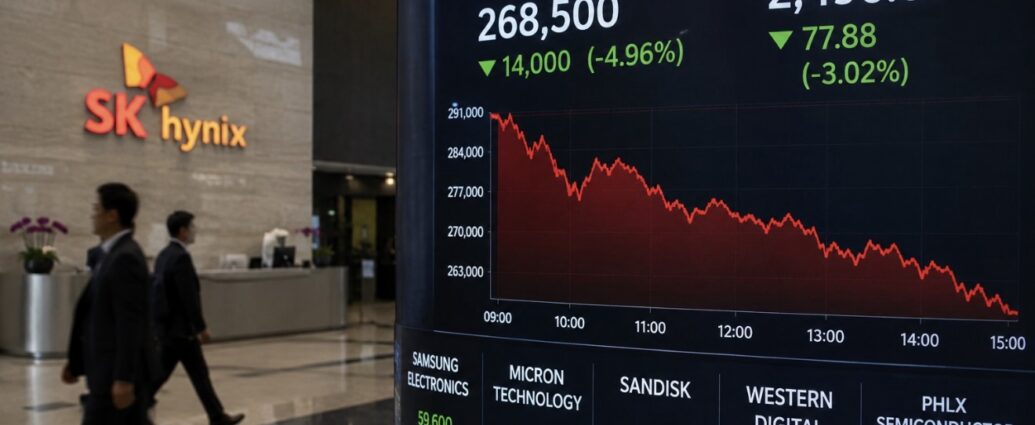
SK Hynix Drops Again in Seoul as the Global Memory Chip Rally Cracks
On Tuesday, July 14, shares of SK Hynix fell nearly 5% on the Korea Exchange, deepening a selloff that began the day before, when the chipmaker recorded its worst single session in history. The trigger, according to trading data from the exchange and a widely circulated research note from brokerage Korea Investment & Securities, was a growing fear among investors that this year’s blistering rally in memory-chip stocks had run far ahead of what the underlying business can deliver.
The damage on Monday was severe. SK Hynix closed down 15.4% in Seoul, its steepest drop on record, just three trading days after a celebrated debut on the Nasdaq in New York. The plunge dragged the country’s benchmark Kospi index down roughly 9% and forced a brief, market-wide halt in trading. Rival Samsung Electronics, which along with SK Hynix dominates the Korean market, fell close to 11%. Foreign investors sold about 1.7 trillion won, or roughly $1.1 billion, of Korean shares in a single day, with SK Hynix accounting for most of the selling.
By Tuesday the bleeding had not stopped. The additional 5% slide wiped out an early gain of as much as 4.6%, and the Kospi slipped another 3%. In two sessions, SK Hynix and Samsung each shed at least 30% from the record highs they set only last month. SK Hynix’s market value dropped to about $875 billion, pushing it back out of the elite group of companies worth more than a trillion dollars, a threshold it had crossed less than two months earlier.
The immediate spark was a report from Korea Investment & Securities warning that SK Hynix’s operating profit for the latest quarter could come in about 8% below what the market expected. The brokerage pointed to the company’s heavy reliance on high-bandwidth memory, the specialized chips that sit alongside Nvidia’s artificial-intelligence processors. Prices for that memory are still climbing, the report noted, but more slowly than the sky-high forecasts baked into the stock.
For all the drama, several market watchers described the drop as a healthy purge rather than a warning of collapse. Chan H. Lee, managing partner at Seoul-based Petra Capital Management, called it profit-taking and a classic “sell-the-news” reaction to the Wall Street listing rather than any real change in the company’s outlook. Daniel Yoo, global strategist at Yuanta Securities, put it more bluntly, saying investors are simply confused about where memory demand and a fair share price actually sit now that the same company trades in two countries at once.
That confusion is real money. SK Hynix’s American shares represent one-tenth of a Seoul share, and at Monday’s close they traded at a premium of about 25% to the Korean price, tempting traders to bet on the gap closing. In Hong Kong, a leveraged fund that aims to double SK Hynix’s daily move lost more than a third of its value in one day.
The selling rippled straight into American memory names. Micron Technology fell about 6.4%, Sandisk dropped 8.4%, and Western Digital lost 6.8%, while the broad Philadelphia Semiconductor Index gave up 3.6%. The message was simple: when the biggest supplier of AI memory sneezes, the whole chip aisle catches cold.
Underneath the panic, the business itself is booming. SK Hynix reported that operating profit jumped 405% from a year earlier in the first quarter of 2026, with revenue up 198%, powered by an ongoing shortage of memory as AI companies race to build data centers. That is exactly why the pullback matters to ordinary readers. Memory chips are the raw material of the AI economy, and their price feeds into the cost of everything from cloud computing bills to the servers behind popular chatbots.
Korea’s government is treating the buildout as a national priority. On Monday, President Lee Jae Myung repeated a pledge to speed up hundreds of billions of dollars in new chip-factory projects planned by Samsung and SK Hynix, a reminder that Seoul sees these two companies as pillars of the entire economy.
For now, the question hanging over the market is whether the two-day rout was a pause or a top. The companies are minting record profits, yet their stocks just proved how quickly a crowded bet can unwind. Investors who piled into the AI trade are learning that even the strongest story can be priced for perfection, and that perfection rarely survives contact with a single downbeat forecast.
JBizNews Desk | Seoul
© JBizNews.com All Rights Reserved. Reproduction or distribution without written permission is prohibited.


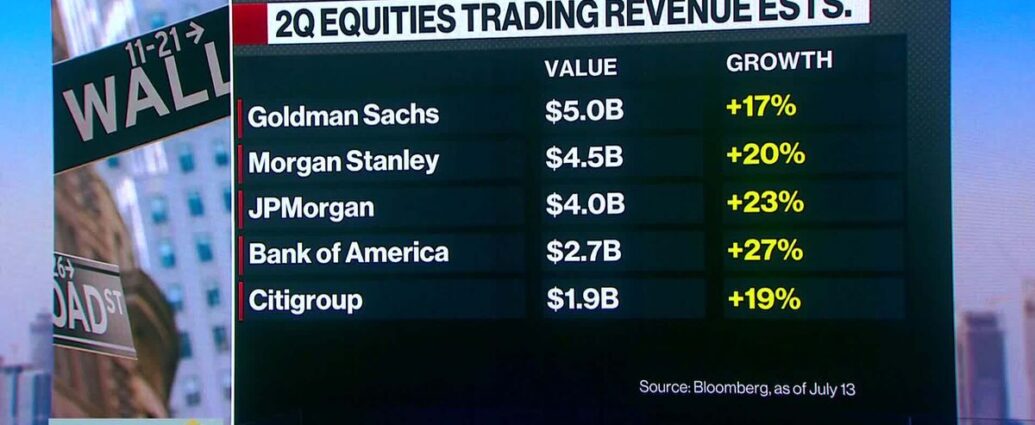

Oil Advances Above $85 on Hormuz Tensions
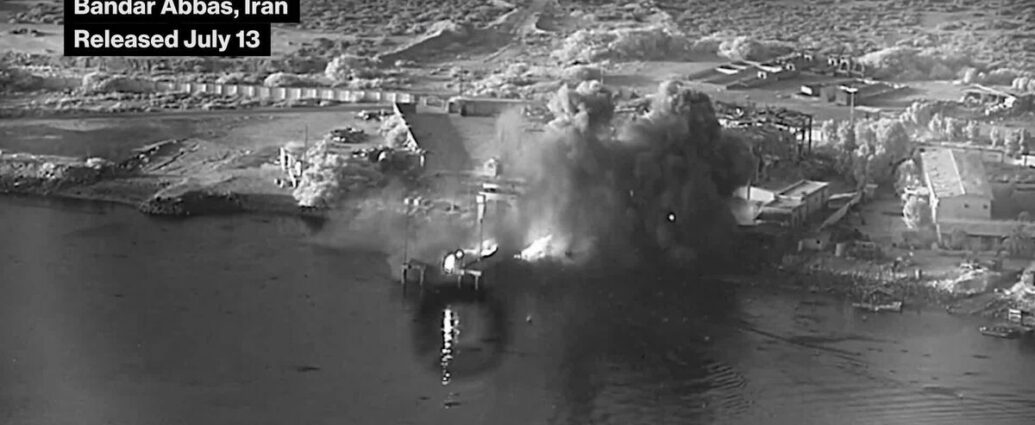







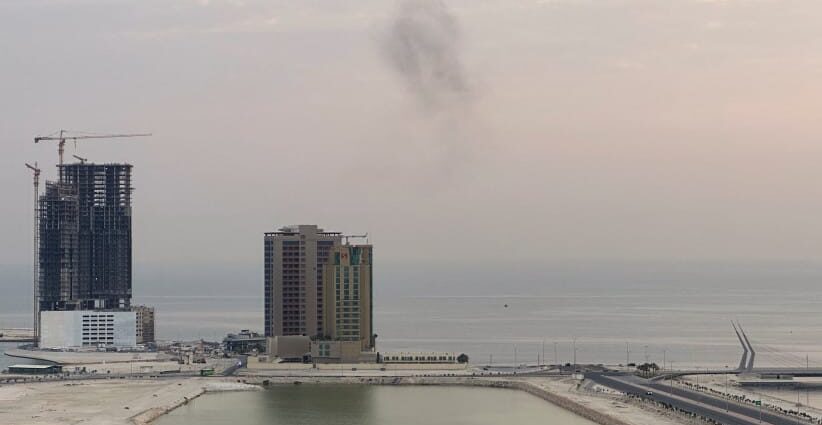
One killed as Iran strikes UAE, UK tankers in Strait of Hormuz, targets US base in Jordan
Two national tankers were targeted by two Iranian cruise missiles in the southern lane of the Strait of Hormuz in Omani territorial waters, killing one Indian crew member and wounding eight others, including four seriously, the UAE‘s Defense Ministry said early on Tuesday.
Six of the wounded were Indian nationals, and two were Ukrainian nationals, the ministry said.
The UAE’s Defense Ministry said two tankers, the Mombasa and Al Bahiyah, were damaged after fires broke out on board. The fires were brought under control on both ships, the ministry added.
It also condemned the attack as a serious breach of international law and said the UAE retained its full right to respond and take all necessary measures to protect its sovereignty and security, adding that it is on “high alert and fully prepared to deal with any threats.”
UKMTO reports struck tankers
In a separate incident, the United Kingdom Maritime Trade Operations agency (UKMTO) said in a post on X/Twitter that it received a report of an incident northeast of Qalhat, in Oman.
A tanker was struck by an “unknown projectile,” according to UKMTO, which added that no crew members were injured in the incident.
UKMTO WARNING 085-26 – ATTACK
Click here to view the full warning ⤵️https://t.co/rcdh4TaPa7#MaritimeSecurity #MarSec pic.twitter.com/tVjWdLcAq9
— UKMTO Operations Centre (@UK_MTO) July 13, 2026
US President Donald Trump said on Monday that the US was reinstating its blockade of Iranian shipping in the Gulf and would ensure the strait remains open.
“We’re going to keep the strait, and we’ll probably run it. We’ll become the guardian of the strait. Maybe we’ll call it the guardian angel of the strait. And we should be reimbursed for that,” Trump said.
Iran’s top joint military command said the US had no role in determining the future of the waterway and would not be allowed to intervene.
Iran’s Revolutionary Guards say two supertankers hit, disabled in Strait of Hormuz, local media reports
Iran’s Islamic Revolutionary Guard Corps (IRGC) on Tuesday took responsibility for striking the two “offending supertankers” that were hit and disabled in the Strait of Hormuz after the ships ignored warnings, turned off navigation systems and attempted to pass through “a mined route,” Iranian media reported citing a statement from the Guards.
The Guards, in its statement to Iranian media, said the US was “inciting vessels to use an illegal route” and that cooperation with the “aggressor enemy” would result in damage, delays in reopening the strait and a global energy crisis.
Iran claims damage in Bahrain, Kuwait
Additionally, Bahrain’s interior ministry reported that sirens sounded in Bahrain on Tuesday morning. The media adviser to Bahrain’s King said that “Bahraini air defenses have intercepted and destroyed Iranian aerial attacks.”
The Patriot radar, the US Navy’s Fifth Fleet air-control radar, and the C-RAM (Counter-Rocket, Artillery, and Mortar) early-warning radar system were destroyed in the strikes, the IRGC claimed.
Iranian state media also reported on Tuesday that Iranian drones had struck critical infrastructure at US military bases in Kuwait.
CENTCOM Spokesman Captain Tim Hawkins said the Iranian claims, which alleged having damaged communication systems and ammunition depots, were “lies.”
IRGC strikes US air base in Jordan
The IRGC confirmed it targeted a US air base in Jordan with ballistic missiles on Tuesday in a statement published by Fars News, calling on the Jordanian people to dismantle American bases in their country.
“You know very well that not only do we not have any enmity with your country, but we also love you, the noble people, who understand the pain and oppression of the Palestinian people more than any other nation,” the statement said.
Reuters contributed to this report.

Police arrest 14 connected to West Bank smuggling network
Fourteen suspects have been arrested after police uncovered a smuggling network suspected of being used to manufacture explosive devices for terrorist organizations in the West Bank on Monday.
A joint operation between Border Police, IDF intelligence units, and the Shin Bet (Israel Security Agency) exposed a network suspected of smuggling dual-use materials for terrorist organizations, according to a statement from the Israel Police spokesperson.
The covert operation, which was led by the Border Police Investigations Division and the Tax Authority, took place over several months.
It was launched in response to a rising threat of explosive devices in the West Bank, which had caused injuries and fatalities in the IDF and Border Police forces, the statement explained.
The investigation found that an Israeli citizen, working with several Palestinians, allegedly smuggled millions of shekels worth of dual-use materials into the West Bank.
At least 175 kg of explosive materials seized
The suspects didn’t fully report the resulting income to tax authorities, and the materials allegedly reached terrorist organizations who used them to manufacture explosive devices.
Eight suspects involved in the affair were initially arrested. During the overt phase of the operation, six additional suspects were arrested.
During the operation, approximately 175 kg of materials suspected of being used to manufacture explosive devices were seized.
The investigation is ongoing, and further arrests are expected depending on developments.

China’s Crude Imports Sink to Near Ten-Year Low as Gulf War Bites
On Tuesday, July 14, China’s General Administration of Customs reported that the country’s crude-oil imports collapsed in June to their lowest level in nearly a decade, a striking retreat for the world’s largest oil buyer and a sign of how deeply the war in the Persian Gulf has scrambled global energy trade. Purchases fell 41% from a year earlier to 29.27 million tons, the least since October 2016, according to the customs data. The figure came in 12% below May, which had itself been the weakest month in eight years.
The plunge reflects a rare mix of forces hitting at once. The most immediate is the ongoing conflict between the United States and Iran, which has choked shipping through the Strait of Hormuz, the narrow waterway that normally carries about a fifth of the world’s seaborne oil. With Gulf barrels harder and costlier to obtain, Chinese refiners have leaned on other tools rather than chase expensive replacement cargoes.
Those tools have been on full display for months. According to shipping analysts at Kpler, China has drawn down oil held in its refineries and commercial tanks, trimmed how much crude its plants process, and cut exports of finished fuels, all to stretch existing supplies. At the same time, Beijing has kept adding barrels to its strategic petroleum reserve during the war, a bet that today’s disruption could last. The result is a country consuming from storage instead of buying fresh imports at war-inflated prices.
The geography of the shortfall tells the story. Data cited by the American Petroleum Institute showed that Chinese imports from Iraq and Kuwait fell essentially to zero in May, because both nations rely almost entirely on export routes that pass through the Strait of Hormuz. Saudi Arabia and the United Arab Emirates, which can move some oil through pipelines that bypass the chokepoint, managed to keep a portion of their crude flowing to Chinese ports. Even so, the overall decline was steep, with seaborne arrivals running far below the levels seen before the fighting began.
The backdrop is a market once again on edge. West Texas Intermediate traded near $78 a barrel this week after rallying 9.4% on Monday, while Brent closed above $83, according to market data compiled Tuesday. The jump followed a statement from President Donald Trump that the United States would reimpose a blockade on Iranian ships crossing the Strait of Hormuz and demand payment for other cargo moving through the waterway, a levy he pegged at 20% of a shipment’s value, or roughly $30 million for a fully loaded supertanker. U.S. forces launched a third night of strikes on Iran, raising the risk of a longer disruption.
For years, the oil market ran on a simple assumption: whatever shock hit global supply, China’s near-bottomless appetite would eventually soak up the excess and steady prices. June’s numbers show that assumption fracturing. Rather than scrambling for every available barrel, Beijing has let its imports fall sharply and ridden out the storm on inventories. That restraint has quietly helped cap oil prices, since the world’s biggest buyer is not competing aggressively for scarce cargoes.
There is a longer-running force underneath the war disruption, too. China’s rapid shift to electric vehicles is steadily eroding demand for gasoline, with new-car sales overwhelmingly electric. Analysts increasingly argue that even after the Gulf conflict eases and Iranian barrels return to the market, Chinese imports may never climb back to the peaks above 11.6 million barrels a day averaged in 2025. In other words, part of what looks like a temporary war shock may turn out to be a permanent change in how much oil the country needs.
For businesses far from the Gulf, the stakes are concrete. China’s buying decisions ripple through the price every refiner, airline, trucking firm, and factory pays for fuel. When the largest importer pulls back, it eases some of the upward pressure that war and the Strait of Hormuz would otherwise put on prices at the pump and on shipping invoices. OPEC, for its part, recently trimmed its 2026 forecast for global oil-demand growth to about 800,000 barrels a day, a nod to softer appetite from the very market that once seemed unstoppable.
The near-term picture remains hostage to the fighting. Early tracking data suggest July imports may tick up modestly from June as tanker traffic through the strait slowly normalizes, though volumes would still sit around 41% below year-ago levels. Until the conflict resolves, China looks content to buy less, lean on its reserves, and wait, a posture that is reshaping oil markets well beyond any single battlefield.
JBizNews Desk | Beijing
© JBizNews.com All Rights Reserved. Reproduction or distribution without written permission is prohibited.




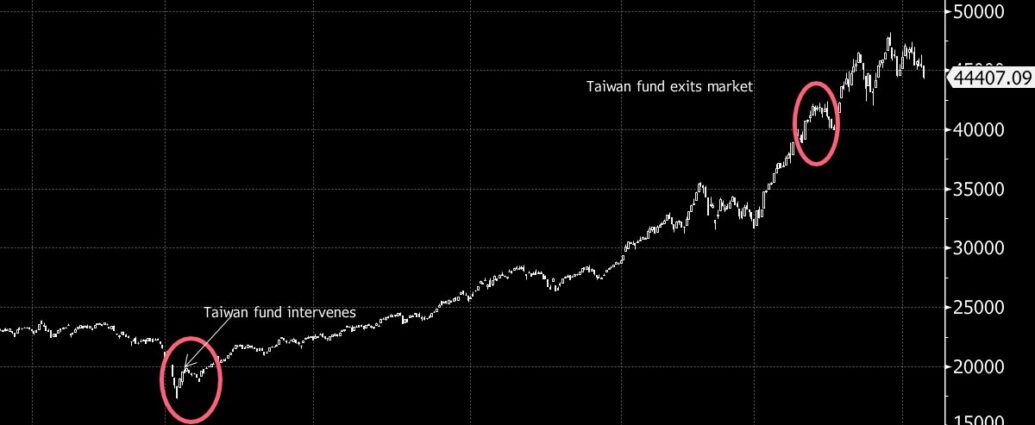

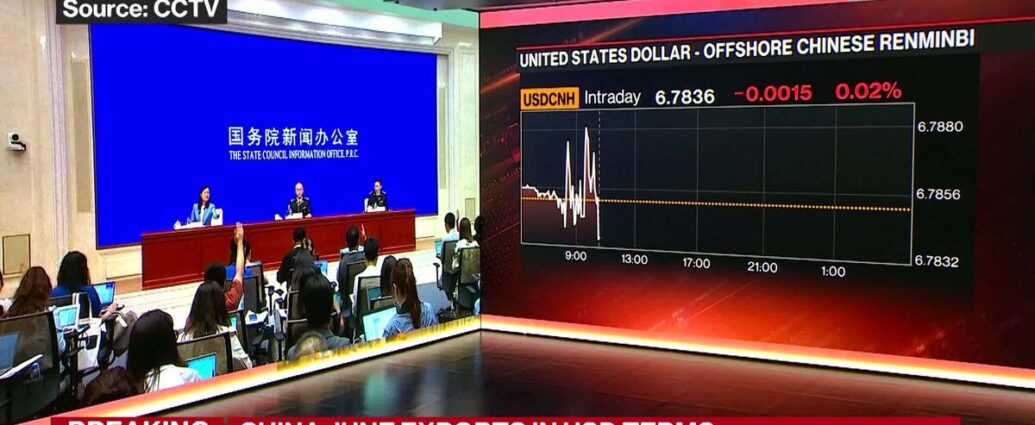
CENTCOM completes wave of Iran strikes following Trump’s vow to ‘hit Iran hard’
The US has “completed the latest wave of strikes against Iran” early Tuesday morning, US Central Command (CENTCOM) announced in a post on X/Twitter.
“During the five-hour mission, CENTCOM forces employed precision munitions against Iranian coastal defense systems, missile and drone sites, and maritime capabilities.”
CENTCOM added that “More than 50,000 US service members are currently deployed across the Middle East. American forces remain vigilant, lethal, and ready.”
On Monday evening, US President Donald Trump had vowed that the US would “hit Iran hard tonight and tomorrow,” in a radio interview on the Hugh Hewitt show.
“We’re going to hit them very hard tonight, and we’re going to hit them hard tomorrow. And there’s not a damn thing they can do about it. They have nothing,” he said.
— U.S. Central Command (@CENTCOM) July 14, 2026
Shortly after Trump’s interview, CENTCOM announced on X that “US Central Command began launching the third consecutive night of strikes against Iran, at the Commander in Chief’s direction.”
Trump says US could target Iranian nuclear sites
Iranian semi-official news agency Mehr News reported explosions in southern Iranian cities of Kish Island, Sirik Island, Qeshm Island, Bushehr, and Bandar Abbas.
Several areas in southwestern Iranian city of Omidiyeh were hit by US projectiles, Mehr reported.
Speaking about Iran’s nuclear power, Trump explained that Pickaxe Mountain, a highly fortified nuclear site one mile south of the Natanz nuclear complex in Iran, “could be the target of a nice, big, fat, shot.”
He added that Iran “is not doing well with its nuclear situation. Every time we hear about it, we blow it up. But we’ll probably give Pickaxe a shot relatively soon.”
Pickaxe Mountain is a heavily fortified site that hosts two deeply buried tunnel complexes that experts assess as beyond the reach of the most powerful bunker-buster bombs in the US arsenal.
Trump also said that “the Memorandum of Understanding (MoU) was a test, and Tehran didn’t honor it,” adding that current US military action in Iran could last for two to three weeks.
Despite the escalation, Trump claimed a deal could still be reached, saying “they have been stalling for 47 years, but I still think an agreement is possible.”
The president said that he “was not interested in answering” a question about whether Israel will intervene in the strikes tonight. He added that he has a good relationship with Prime Minister Benjamin Netanyahu, and stated that without the US, “Israel would not be around today.”
Reuters contributed to this report.

A second failure? Israel’s delay of an October 7 investigation is unacceptable – editorial
Every new document about Hamas’s preparations for the October 7 massacre makes the same question harder to escape: How did Israel fail to see what was being built in front of it?
The latest revelations about Hamas leader Yahya Sinwar’s plan are horrifying – not only because of what they show about Hamas, but also because of what they show about Israel’s failure to understand the enemy it was facing.
According to newly revealed documents, Hamas contemplated an invasion force of up to 10,000 fighters against more than 200 southern communities and IDF outposts. The actual invasion involved about 5,600 attackers across several waves, according to the report.
That is almost unbearable to absorb. October 7 was the worst massacre of Jews since the Holocaust: More than 1,200 people were murdered, and 251 were taken hostage.
And yet, according to these documents, Hamas had imagined something even larger, and that is the scale of the failure that must be understood. If what happened on October 7 was not the upper limit of Hamas’s planning, but rather the scale it managed to execute, then Israel owes itself something much deeper than what it is currently getting.
For nearly three years, Israelis have been asked to live with the consequences of the October 7 massacre without being given a full national accounting of how it happened. There have been internal military inquiries, State Comptroller’s Reports, arguments in court, political proposals in the Knesset, and repeated promises that the time for a broader reckoning will come later.
But later has become both a policy and a shield, a way of ensuring that responsibility is postponed until it is blurred. That is unacceptable.
Oct. 7 involved widespread failures
The failures of October 7 were not limited to one unit, a command post, an intelligence assessment, the border fence, or a ministerial decision. They involved intelligence assumptions, political policy, military deployment, deterrence doctrine, border defense, and the relationship between the political echelon and the security establishment.
No single internal probe can answer all of that. The High Court of Justice already has made clear the depth of the problem. More than two and a half years after the massacre, no appropriate mechanism had been established to investigate the disaster and draw lessons from it.
The High Court limited the state comptroller’s ability to examine some of the most central questions surrounding the October 7 massacre, including Israel’s Hamas policy, Gaza border defense, intelligence handling, and the conduct of the political, military, and Shin Bet (Israel Security Agency) leadership during the terrorist attack.
That ruling only strengthened the case for a state commission of inquiry. This is a basic obligation of the state to its citizens and one that everyone deserves.
A state commission of inquiry is about establishing facts, identifying failures, assigning responsibility where responsibility belongs, and ensuring that Israel does not enter the next war with the same illusions that led it into the last disaster.
This is precisely why the current political maneuvering around an alternative inquiry framework is so troubling. An investigation into October 7 cannot be born inside the same political battlefield it is meant to examine. A commission whose composition is shaped by politicians cannot command the gravity of an independent state commission established under the existing legal framework.
Israel is now heading into an election season. On October 27, citizens will go to the polls, more than three years after the deadliest day in Jewish history since the Holocaust. Parties will campaign on security, leadership, unity, responsibility, hostages, war, religion, cost of living, and power.
But before politicians ask the public for another mandate, the public is entitled to ask them a simpler question: How can you ask to govern again before the state has properly investigated how its representatives failed so catastrophically last time?
Oct. 7 investigation must be priority of next gov’t
If a state commission of inquiry is not established before the election, then establishing one must be among the first acts of the next government. Immediately.
The October 7 massacre was a terrorist invasion by Hamas. It also was a collapse of Israel’s most basic promise to its citizens: that the state would protect them.
Hamas planned, prepared, deceived, and struck. Israel must now investigate, learn, repair, and take responsibility. Anything less would be a second failure.
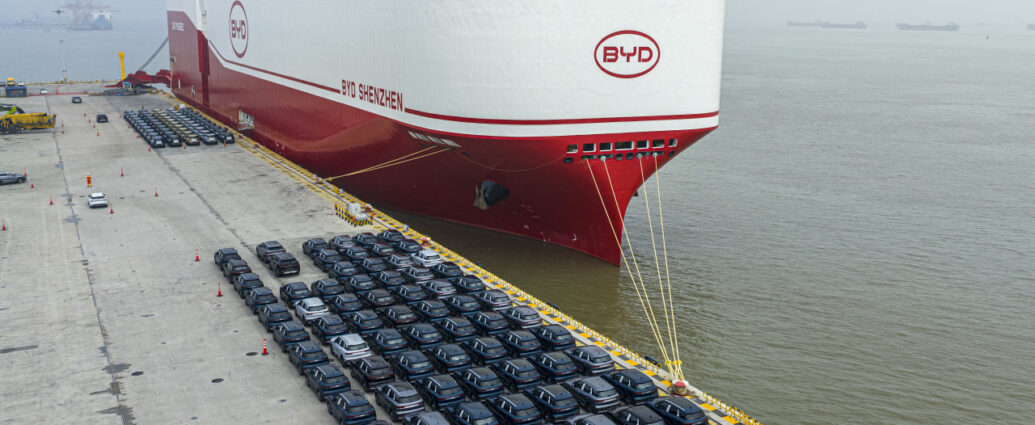




Protesters block Jerusalem roads, target light rail construction site
Haredi (ultra-Orthodox) protesters blocked roads and tried to damage the light rail construction site on Bar Ilan Street and near Zaks Junction in Jerusalem on Monday night, Israel police announced.
When the gathering became riotous, police on the scene declared it a public disturbance and instructed the protesters to clear the road. After the protesters failed to comply, police began using crowd dispersal measures to restore public order.
Additionally, police received reports of traffic disruptions caused by roadblocks and deliberately set fires in areas adjacent to the road. Officers arrived at the scene to restore public safety.
Haredi protesters disrupt light rail construction, block traffic
On Sunday, protesters disrupted light rail construction and blocked traffic on the street, according to Israeli police.
Video footage seen by The Jerusalem Post appears to show several haredi (ultra-Orthodox) protesters loitering on the tracks and preventing construction crews from working.
The incidents come following weeks of protests aimed at blocking light rail construction on the street, a major route that runs through a heavily haredi neighborhood.
Haredi protesters have cumulatively caused over NIS 400 million in damage to the Jerusalem light rail’s unfinished Green Line since construction began about six years ago, an N12 report revealed.

Syria’s parliament opens with quiet break from Assad era
Syria’s newly formed People’s Assembly on Sunday elected constitutional law scholar Dr. Abdul Hamid al-Awak as speaker, while Mustafa Moussa and Dr. Madona Suhail Bashara were elected deputy speakers during the legislature’s first session since the fall of former President Bashar Assad, marking the launch of Syria’s first legislative body in the country’s transitional period.
The session, attended by Syrian President Ahmed al-Sharaa, saw 206 lawmakers take the constitutional oath before electing the assembly’s leadership and forming a temporary legal committee to oversee parliamentary procedures.
The 210-seat legislature consists of 140 elected members and 70 members appointed by the president. Four seats remain vacant—three allocated to Suwayda province, where elections could not be held, and one representing Idlib following the death of a member.
Al-Awak, originally from Hasakah province, is regarded as one of the most prominent legal figures to emerge during Syria’s transitional period. A constitutional law professor and former judge who defected from the previous government, he chaired the committee that drafted Syria’s constitutional declaration governing the transition.
A prominent advocate of the separation of powers and stronger parliamentary oversight, al-Awak drew attention as an architect of Syria’s transitional constitutional framework who is now leading the country’s first post-Assad legislature.
Yet what drew the greatest attention among Syrians was not the election of the assembly’s leadership or President al-Sharaa’s address, but what was absent from the opening session.
For the first time in decades, the president delivered his speech without the prolonged applause that had traditionally accompanied the arrival of former presidents Hafez Assad and Bashar Assad at parliamentary sessions. Many Syrians viewed the absence of applause as a symbolic indication of an emerging political culture inside the legislature.
The session also featured several symbolic firsts, including the presence of the first Kurdish woman and the first veiled woman to serve under the assembly’s dome, while Bashara’s election as second deputy speaker placed a woman in one of the new legislature’s highest leadership positions.
In a post on X following the session, al-Sharaa described the launch of the People’s Assembly as “an important national milestone” toward strengthening consultation, responsibility, and institution-building based on dialogue, competence, and the rule of law.
For more than five decades, Syria’s parliament was closely associated with public displays of loyalty to the president. During the presidencies of Hafez and Bashar Assad, parliamentary sessions routinely began with lawmakers standing and applauding for extended periods before the president addressed the chamber, often followed by speeches praising his leadership and endorsing government policies.
Legislature criticized for lacking independence from president
Throughout those years, opposition figures, researchers, and human rights organizations frequently criticized the legislature for lacking independence, arguing that it largely approved government legislation without exercising meaningful oversight or facilitating substantive parliamentary debate.
Against that backdrop, many Syrians viewed the absence of applause during Sunday’s session as more than a procedural change, seeing it instead as a symbolic attempt to redefine the relationship between the presidency and the legislature.
The moment quickly became one of the most discussed scenes on Syrian social media. While many users described it as a symbolic break from the parliamentary traditions of the Assad era, others argued that the new assembly should ultimately be judged by its legislative performance rather than its opening ceremony.
Bashar al-Hawi, a member of parliament representing Aleppo province, said the symbolism of the opening session was deliberate rather than spontaneous.
“The absence of applause was not accidental,” al-Hawi told The Media Line. “It reflected a firm conviction that parliament should be a legislative institution where there is no place for glorification or applause for the president. We wanted the first session to present an image different from what Syrians had become accustomed to over past decades.”
He added that the new legislature seeks to regain public confidence by genuinely representing Syrians, noting that many of its members “came from among the people and lived through the same hardships experienced by Syrians during the war.”
Regarding female representation, al-Hawi acknowledged that greater balance is still needed but stressed that the women who entered parliament did so on merit rather than as a symbolic gesture, expressing confidence that they would play an active role in the coming period.
Meanwhile, Nour al-Din Ismail, editor-in-chief of the Syrian state-run newspaper Al-Thawra, said the assembly’s first session contained several unfamiliar features in Syria’s parliamentary life, including the way proceedings were managed, the election of the leadership, and the absence of applause for the president.
However, he cautioned that these developments remain largely symbolic unless they evolve into lasting institutional practices.
“The success of any parliament is not measured by its inaugural session,” Ismail told The Media Line, “but by the legislation it passes, its ability to hold the government accountable, encourage genuine debate, and represent diverse social interests.”
Real difference lies in independence, authority
He added that the real difference from previous legislatures would depend on the assembly’s independence and authority.
“If parliament succeeds in becoming a platform for public debate, legislation, and government oversight,” he said, “it will have broken with the model of previous parliaments, which were often criticized for merely endorsing government decisions rather than shaping them.”
Under Syria’s constitutional declaration, the People’s Assembly will exercise legislative and oversight powers throughout the transitional period until a permanent constitution is adopted and new parliamentary elections are held.
The inaugural session also drew international attention. Claudio Cordone, the UN Deputy Special Envoy for Syria, welcomed the opening of the People’s Assembly, describing it as “a pivotal milestone” in the country’s political transition. He said the parliament would play a vital role in passing urgently needed legislation during this critical phase and reaffirmed the United Nations’ readiness to provide the necessary support.
Meanwhile, Turkish Ambassador to Syria Nuh Yılmaz congratulated the Syrian people on the launch of the assembly, saying the country had waited decades to restore popular sovereignty after years of sacrifice.

Keren Hayesod appoints Ambassador Eli Vered Hazan as next World Chairman
Ambassador Eli Vered Hazan was appointed the Next World Chairman of Keren Hayesod, the organization announced in a statement on Monday.
Hazan serves as Israel’s Ambassador to Singapore and was previously Vice President for Public Diplomacy at the Jerusalem Institute of Justice. He “played a key role in strengthening Israel’s international relations and deepening ties with leaders and Jewish communities around the world,” Keren Hayesod said.
Hazan will succeed Sam Grundwerg, who has led Keren Hayesod over the past eight years. “Eli brings impressive public leadership experience and years of service to the State of Israel and the Jewish people, and I have no doubt he will lead Keren Hayesod successfully,” said Grundwerg.
He added that “it has been a privilege to lead this organization over the past eight years, and I am proud of what we have achieved-especially in strengthening ties with Jewish communities and Christian friends of Israel, while significantly increasing our fundraising results.”
The organization, established in 1920, aims to strengthen Israeli society, promote Aliyah, and enrich the Jewish Diaspora, according to its website.
Its new chairman was selected following a “thorough and extensive process,” according to the organization, and was “subject to formal approvals by various bodies of the World Zionist Organization and Keren Hayesod.”
Appointment is a ‘great honor,’ says Hazan
Hazan called the appointment a “great honor,” adding that he “appreciates the confidence in me expressed by Keren Hayesod’s leadership.”
He also thanked Grundwerg for his “outstanding leadership,” and says he “looks forward to building on this strong foundation for the benefit of the people of Israel.”
Bruce Leboff, Chairman of the Board of Trustees of Keren Hayesod, congratulated Hazan for his new role, saying he holds “exceptional diplomatic experience, profound commitment to the Jewish people and the State of Israel, and a strong record of leadership and professional excellence.”
He also thanked Grundwerg for having led Keren Hayesod “through one of the most challenging periods in Israel’s history with tremendous dedication and unprecedented accomplishment.”

Former US Vice President Mike Pence denounces alleged arson of Israeli flag in his Indiana hometown
Former Vice President Mike Pence has weighed in against antisemitism after officials in his Indiana town say a costly fire may have been caused by arson to an Israeli flag displayed on a local barn.
The alleged arson broke out early Friday morning, damaging a historic home in Zionsville, Indiana, where Pence lives, and causing an estimated $150,000 in damages, according to the Zionsville Police Department.
Zionsville Mayor John Stehr said during a press conference on Friday that officials believed the fire began when an individual set fire to an Israeli flag that had been displayed outside the building alongside an American flag.
The town later announced that the FBI had joined the investigation and that officials were examining whether the arson “may have been motivated by bias” but said no determination had been made.
“Absolutely despicable,” Pence tweeted on Sunday. “There can be no tolerance in America for Antisemitism or political acts of violence, and it is heartbreaking to see in our adopted hometown of Zionsville, Indiana. We thank God no one was hurt and urge anyone with information to contact law enforcement.”
Pence has long cast himself as a staunch supporter of Israel, including after the October 7, 2023, Hamas attacks on Israel, and has also repeatedly spoken out against antisemitism in the conservative movement and beyond.
Zionsville’s Jewish community held a rally condemning the flag being burnt
Republican Indiana Sen. Jim Banks also condemned the alleged arson in a post on X Saturday. “Antisemitism will not be tolerated. Not in Zionsville. Not in Indiana. Not anywhere,” Banks wrote. “Thank you to the federal, state, and local officials working to bring the perpetrators of this despicable arson attack to justice.”
On Sunday, the Jewish community in central Indiana hosted a rally condemning the alleged arson attack, chanting, “We will stand up,” according to local outlet Fox 59. While Zionsville does not have a large Jewish community of its own, other suburbs of Indianapolis have significant Jewish populations, and Zionsville is also the longtime home of a Reform movement summer camp, the Goldman Union Camp Institute, which is in session now.
“The founding fathers founded a country where we have the ability to resolve differences among each other; we don’t do it by firebombing homes,” rally organizer David Schiller told Fox 59. “It’s inexcusable and unacceptable.”
The Zionsville Police Department did not respond to an inquiry from the Jewish Telegraphic Agency about the status of the investigation on Monday.

Trump sends Congress formal notice that Iran conflict has resumed
US President Donald Trump has sent Congress formal notification that hostilities against Iran resumed on July 7, a letter his administration sees as opening a new 60-day window to use the military in the region without congressional approval.
“I directed this military action consistent with my responsibility to protect Americans and United States’ national security and foreign policy interests,” Trump said in the letter, dated July 10, and seen by Reuters on Monday.
The letter outlines Trump’s actions, including ordering a two-week ceasefire on April 7, which was extended, as well as his administration’s efforts to achieve a diplomatic solution to the conflict.
The United States began attacking Iran on February 28, alongside Israel.
Trump described the memorandum of understanding he signed with Iran on June 17, and said that Iran had violated it by attacking commercial vessels transiting the Strait of Hormuz, prompting him to order renewed strikes on the Islamic Republic.
As the conflict intensified, Trump said on Monday the US was reinstating its blockade of Iranian shipping in the Gulf and would ensure the Strait of Hormuz stays open.
The US Constitution says that only Congress, not the president, has the power to declare war. However, US presidents have long claimed the right to order shorter military engagements without lawmakers’ approval to preserve US security.
Trump acts according to War Powers Act
The War Powers Act requires the president to inform Congress within 48 hours of initiating hostilities, and says military action begun without Congress’ approval must be terminated within 60 days.
With Iran, the first 60-day deadline was May 1, but the Republican president said it did not apply because he declared the hostilities had been terminated by the ceasefire, even as attacks continued and US forces blockaded Iranian ports.
Democrats and Republican opponents of the ongoing war said the administration was misinterpreting the law.
“The president can’t just wish away months of war he said would last only four to six weeks,” a senior House of Representatives Democratic aide said, commenting on condition of anonymity.
Additionally, the Senate and House both passed a resolution last month directing Trump to withdraw US forces from hostilities with Iran, despite his fellow Republicans’ slim majorities in both chambers.
The votes reflected growing concern about the months-long conflict.
Trump lashed out after the vote, accusing those who voted in favor of providing “comfort” to Iran and making his job “more difficult.”



PEN America president resigns after report warns of threats to Jewish, Israeli authors
The president of PEN America resigned over the weekend in protest of a report on boycotts targeting Jewish and Israeli authors, part of yet another round of internal division over Israel at the literary free-speech institution.
Dinaw Mengestu, an Ethiopian-American novelist and Bard College professor, told The Atlantic he was stepping down because he believed the PEN report, “A Silent Moratorium,” failed to defend the free-speech rights of participants in the movement to boycott Israel.
“It’s the First Amendment that allows all of us to engage in boycotts, not PEN America,” Mengestu told the publication. “PEN America as a free expression organization is supposed to defend that right.”
The author did not respond to multiple Jewish Telegraphic Agency requests for comment, but in an Instagram post Monday alluded to an interest in creating a new organization to rival the prominent nonprofit, which defends the free expression rights other writers.
In response to an interview request, PEN sent a statement to JTA saying it was “grateful” for Mengestu’s leadership and would “respect” his decision. The statement also alluded to PEN’s own past turmoil: “We tell hard stories, in politically challenging moments, about writers from a range of perspectives, even when it’s uncomfortable for us given our own recent history.”
The PEN report said Jewish and Israeli writers feel ‘shut out’ of the literary world
In its report, published on its blog, PEN described “Jewish and Israeli writers who feel that the mainstream literary world is increasingly shutting them out because of their identity, nationality, or views.” Interview subjects include several Israel critics, as well as literary agents who assert that they face more difficulties signing Jewish authors after the Oct. 7, 2023, Hamas attack on Israel and amid the subsequent war in Gaza. The report also repeatedly cited a JTA report about a 2024 viral list of “Zionist” authors to boycott.
Among other details, PEN’s report revealed that Israeli novelist Etgar Keret and public radio host Ira Glass had cancelled a planned live event in Australia over fears of threats and protest.
“This silencing and exclusion of writers is a threat to what PEN America is fundamentally committed to defending: a culture of free expression for all,” according to the report.
In addition to the report, PEN also altered its institutional policy toward cultural boycotts, which the organization has long opposed. Although its report on Jewish authors asserted that boycotts “threaten the free expression rights” of their targets, the revised guidelines say that the group will also defend the right of writers to participate in boycotts.
Menegstu resigned as a result of the report on Jewish and Israeli writers
Mengestu’s resignation comes at a perilous moment for Jews facing cultural boycotts, both within the standard-bearers of PEN and elsewhere. PEN’s Jewish former longtime CEO stepped down in 2024 following months of blowback from rank-and-file authors who felt the organization was insufficiently critical of Israel and caused PEN to cancel a festival for global authors.
Since the leadership change, PEN leadership has published and retracted a condemnation of a boycott effort trained at an Israeli comedian and also published a report cataloguing Israel’s “cultural destruction in Gaza.”
Mengestu had assumed the role of board president in 2025. But PEN’s report about Jewish and Israeli writers on Thursday, he wrote, “makes clear that [change] will not happen.”
The Anti-Defamation League said it was “deeply troubled” by Mengestu’s resignation Monday. “Freedom of expression means opposing efforts to boycott, silence, or exclude writers because of their identity or nationality,” the organization tweeted, saying that the author’s decision to leave PEN over his objections to the report on Jewish authors “sends a chilling message.” Jewish authors also objected.
“Imagine running a free expression org and resigning because it refuses to blacklist authors based on their nationality,” the author David Zweig wrote on X, musing whether Mengestu would object to boycotting authors from his birth country: “Ethiopia doesn’t exactly have a good human rights record.”
Responses to Mengestu’s resignation
In response to The Atlantic’s story that quoted sources from inside PEN who were critical of his resignation, Mengestu wrote a lengthy Instagram post Monday in which he stated, “This piece is about trying to suppress constitutionally protected speech,” criticized past PEN reports critical of the BDS movement, and added, “What PEN America fails to understand is that boycott is a form of dialogue.”
He announced his intention to “help make something better,” receiving affirmative comments from notable authors including Viet Thanh Nguyen, Angela Flournoy, Jewish pro-Palestinian novelist Jess Row and Pulitzer Prize-winner Benjamin Moser, author of a forthcoming history of Jewish anti-Zionism.
Other Jewish authors on the left were among those defending Mengestu’s decision to step down.
“Dinaw is one hundred percent correct that this kind of fake victim propaganda can be used to support anti-Boycott legislation which violates the First Amendment and is everywhere as popular support for Palestinians grows,” author Sarah Schulman wrote on Facebook. Calling PEN’s blog about Jews “one of those fake anti-semitism pieces,” Schulman added, “If PEN wants to survive, they have to get out of the Israel/Zionism business.”

Inflation Report Tuesday May Show First Monthly Price Drop in Two Years
The government is set to deliver a rare piece of good news on prices this week, but economists are warning families not to get comfortable. The Bureau of Labor Statistics releases its June Consumer Price Index on Tuesday, and forecasters expect it to show consumer prices fell from the previous month — the first monthly decline in two years and only the third since the pandemic. Nearly all of that drop, analysts say, comes down to one thing: gasoline.
Prices at the pump tumbled in June after President Donald Trump signed a memorandum of understanding with Iran in mid-June, easing fears over Middle East oil supplies and sending crude sharply lower. Pooja Sriram, an economist at Barclays, forecasts headline inflation cooled to 3.8% for the year through June, down from 4.2% in May, with prices falling about 0.18% on the month, driven by an estimated 10% drop in retail gasoline. That would mark a welcome retreat from May’s reading, which at 4.2% was the highest since April 2023.
The relief, though, is narrow. Strip out volatile energy and the picture looks far less encouraging. Sriram expects core inflation, which excludes food and fuel, to have accelerated slightly to 0.26% on the month, led by rising service costs. Core inflation was already running warm before the conflict and climbed every month through May, when it hit 2.9% annually.
That distinction matters because services inflation is the stubborn kind. When the price of a haircut, a doctor’s visit, a vet appointment, or a car repair rises, it rarely falls back. Those costs tend to move in one direction, and because labor is the biggest expense for service businesses, they cool slowly. Economist Claudia Sahm has noted that businesses are also still passing along the cost of tariffs, pushing goods prices higher even as energy provides temporary cover.
There are fresh sources of pressure building, too. Memory and storage chip prices are surging as data centers absorb supply for artificial-intelligence systems, and the effects are reaching consumers. Apple recently said it would raise prices on its iPad and Mac lines, citing the climbing cost of memory chips. Abiel Reinhart, a senior economist at JPMorgan, estimates that each 10% increase in AI-related hardware costs adds roughly 0.1% to consumer inflation. Software is following: Microsoft raised personal Office 365 prices 43% in February, its first increase in a decade, after adding its Copilot AI assistant.
The report also arrives at a delicate moment for the timing of the gasoline relief. The June decline reflects a drop in oil prices that has since partly reversed. Over the weekend, Trump declared the Iran agreement effectively over and announced a renewed blockade on shipping through the Strait of Hormuz, sending crude and gasoline climbing again on Monday. That means the favorable June figures may look dated almost as soon as they are published, with July’s numbers likely to reflect the rebound.
All of it lands on the desk of the country’s new central banker. Fed Chair Kevin Warsh, sworn in on May 22, delivers his first congressional testimony this week, appearing before the House Financial Services Committee on Tuesday and the Senate Banking Committee on Wednesday. The Federal Reserve has held its benchmark rate between 3.50% and 3.75% for four straight meetings, and minutes from its June meeting showed some officials open to resuming rate hikes if inflation proves sticky. Lawmakers are expected to press Warsh on how he reads the mixed signals — cooling headline prices, warm underlying inflation, and a fresh energy shock.
For households, the practical stakes are straightforward. A softer inflation reading would ease pressure on the Fed and, eventually, on borrowing costs for mortgages, car loans, and credit cards. But a hot core figure could keep rates higher for longer and revive talk of hikes, a scenario that would raise the cost of every kind of consumer debt.
The consumer sentiment data due Friday from the University of Michigan will offer an early read on how families are absorbing all of this. For now, the message from economists is measured: enjoy the gasoline-driven dip in Tuesday’s headline number, but watch the core figure underneath it. That is where the true state of the family budget shows through — and where the relief is proving hardest to find.
JBizNews Desk | New York
© JBizNews.com All Rights Reserved. Reproduction or distribution without written permission is prohibited.
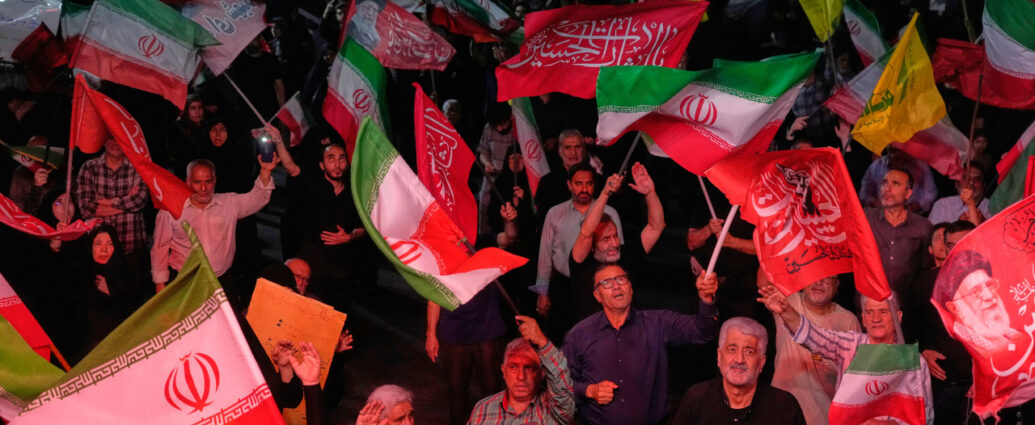


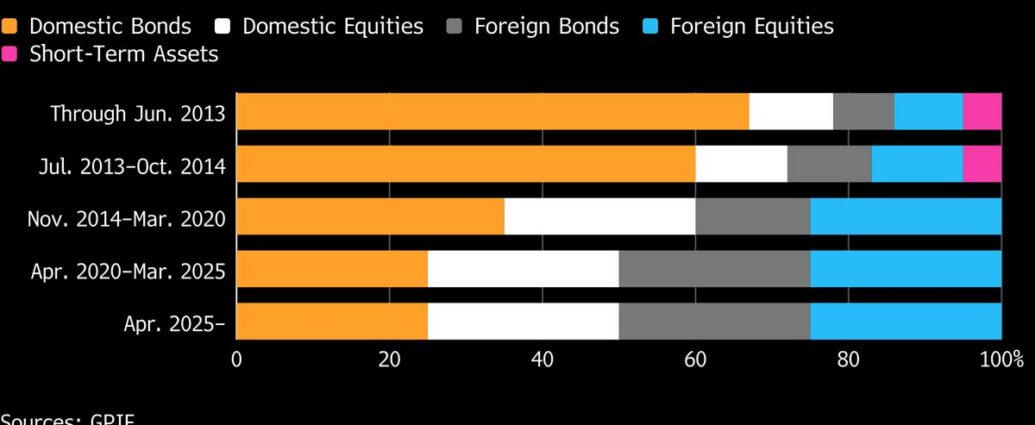


FDA Approves At-Home Starting Dose for Eisai and Biogen Alzheimer’s Drug
The U.S. Food and Drug Administration approved an at-home starting dose Monday for the Alzheimer’s treatment developed by Eisai and Biogen, allowing some patients to begin therapy using injections administered by themselves or a caregiver instead of starting exclusively through clinic-based intravenous infusions. The approval was reported on July 13, 2026, and represents another significant step toward moving complex Alzheimer’s treatment closer to the patient’s home. (Reuters)
The decision expands the potential role of Leqembi, known generically as lecanemab, in treating people with early Alzheimer’s disease. The drug is intended for patients with mild cognitive impairment or mild dementia who have confirmed amyloid buildup in the brain. It works by targeting and removing amyloid plaques, one of the biological features associated with Alzheimer’s disease. (Wikipedia)
Until now, patients beginning treatment typically faced regular visits to hospitals or infusion centers. Those appointments can be particularly difficult for older patients and their families, especially when travel, mobility limitations, caregiver schedules and access to specialized medical centers are involved.
The new approval allows qualifying patients to begin treatment through injections delivered at home by the patient or a caregiver. That could reduce some of the logistical burden connected to starting therapy and potentially broaden access for people who live far from major treatment centers. The exact treatment plan will still depend on a physician’s evaluation, diagnosis, monitoring requirements and the patient’s medical condition.
Investors responded positively to the announcement. Shares of Biogen rose approximately 4.5% in afternoon trading Monday, reflecting expectations that a more convenient starting option could help expand use of the treatment. (Reuters)
Leqembi was first granted accelerated approval by the FDA in January 2023 and later received traditional approval in July of that year. Clinical testing found that the treatment slowed cognitive and functional decline in patients with early Alzheimer’s disease compared with a placebo, although it does not cure the disease or reverse damage that has already occurred. (Wikipedia)
The treatment also carries significant risks. Anti-amyloid drugs such as Leqembi can cause brain swelling and bleeding, conditions commonly grouped under the term amyloid-related imaging abnormalities. Patients generally require medical screening and continued monitoring, including brain imaging, to identify complications. Treatment decisions therefore remain highly individualized and must be made with a qualified physician.
The FDA had already approved Leqembi Iqlik, a self-injectable form of the drug, for maintenance dosing in August 2025. That earlier authorization allowed patients who had completed an initial course of intravenous treatment to continue weekly maintenance doses at home using an autoinjector. Monday’s action goes further by allowing some patients to begin therapy through an at-home injection regimen. (Time)
The shift reflects a wider trend in healthcare toward home-based treatment. Drugmakers increasingly are developing injectable versions of medicines that previously required hospital or clinic visits. For patients, the changes can mean fewer appointments and greater flexibility. For healthcare systems, they may reduce pressure on infusion centers and specialized facilities.
For Eisai and Biogen, convenience has become an important part of the commercial strategy surrounding Leqembi. The drug’s initial U.S. rollout was slower than some analysts expected, partly because patients needed diagnostic testing, repeated infusions, specialized monitoring and insurance authorization. Treatment capacity also varied significantly among hospitals and clinics. (Financial Times)
An at-home starting option could remove one obstacle, but it will not eliminate the need for medical oversight. Patients still must receive an appropriate diagnosis, be evaluated for treatment risks and undergo monitoring throughout therapy. Cost and insurance coverage will also remain important questions for families considering treatment.
Alzheimer’s disease affects millions of Americans and progressively damages memory, reasoning and the ability to perform everyday tasks. For decades, available medicines primarily treated symptoms rather than the underlying disease process. Leqembi and competing treatments represent a newer class designed to slow progression by targeting amyloid in the brain.
The benefits remain modest, and debate continues among physicians and researchers about the drugs’ effectiveness, risks and cost. Still, the FDA’s latest approval gives patients and caregivers another treatment option and moves Alzheimer’s care further toward the home.
For families already coping with the practical and emotional burden of the disease, reducing the number of required clinic visits could be meaningful. The approval also shows how pharmaceutical companies are increasingly competing not only on whether a treatment works, but also on how easily patients can receive it.
JBizNews Desk | Washington, D.C.
© JBizNews.com All Rights Reserved. Reproduction or Distribution without Written Permission is Prohibited.

Trump Restarts Iran Blockade and Demands 20% Toll on Hormuz Cargo
President Donald Trump declared Monday that the United States would reinstate a naval blockade of Iranian shipping through the Strait of Hormuz and impose a 20% toll on all other cargo transiting the strategic waterway, a dramatic escalation that places Washington at the center of one of the world’s most critical energy corridors. In a post on Truth Social and later comments to Fox News, Trump said the United States would become “The Guardian of the Hormuz Strait” and should be “reimbursed, at the rate of 20% on all cargo shipped,” for protecting commercial traffic.
The announcement represents a sharp reversal from the ceasefire agreement reached only weeks ago. The United States and Iran had agreed in mid-June to reopen the Strait of Hormuz following months of conflict, but that arrangement has now unraveled. The administration formally notified Congress under the War Powers Resolution that U.S. military operations against Iran had resumed, while American forces launched another round of strikes against Iranian targets. Iran’s Islamic Revolutionary Guard Corps responded by announcing retaliatory attacks against military facilities in Bahrain, Jordan, Kuwait, and Oman.
The Strait of Hormuz remains one of the world’s most strategically important waterways, carrying roughly 20% of global seaborne oil and liquefied natural gas exports. Any disruption immediately reverberates throughout global energy markets because producers in Saudi Arabia, the United Arab Emirates, Kuwait, Iraq, and Qatar depend heavily on the narrow shipping lane to reach international customers.
Trump’s proposal would fundamentally change how traffic moves through the strait. Rather than Iran attempting to charge transit fees, as it previously threatened, the president argued the United States should collect compensation for providing naval security.
“We’re going to keep the Strait, and we’ll probably run it,” Trump said. “We’ll become the guardian of the Strait. And we should be reimbursed for that.”
Financial markets reacted immediately. West Texas Intermediate crude oil climbed sharply as traders priced in the possibility of prolonged disruptions to global energy supplies, while gasoline futures also moved higher. Analysts noted that a 20% transit charge on commercial cargo could add millions of dollars to the cost of transporting oil aboard large tankers, expenses that would ultimately flow through to refiners, businesses, and consumers worldwide.
The proposal raises significant legal and diplomatic questions. International maritime law generally protects the right of transit passage through international straits used for global navigation. Whether the United States could legally impose and collect such a toll would almost certainly become the subject of international legal challenges and diplomatic disputes.
Operational questions also remain unanswered. The administration has not explained how tolls would be collected, which vessels would be subject to payment, whether allied naval forces would participate, or how ships refusing payment would be handled. Maintaining a continuous naval presence sufficient to enforce both a blockade and a toll would require substantial military resources.
The economic implications extend well beyond oil. The Strait of Hormuz also serves as a critical shipping route for petrochemicals, liquefied natural gas, manufactured goods, and other commercial cargo moving between Asia, Europe, and the Middle East. Higher transportation costs could ripple through global supply chains, increasing prices for businesses and consumers alike.
Energy-importing nations are watching developments closely. Countries heavily dependent on Gulf oil supplies could face rising import costs if shipping insurance premiums, freight charges, and security risks continue increasing. Markets remain particularly sensitive because global oil inventories are already relatively tight.
For the Gulf states themselves, the stakes are exceptionally high. Continued military activity threatens both energy infrastructure and commercial shipping throughout the region, while prolonged instability could discourage investment and disrupt export revenues that remain central to many Middle Eastern economies.
Whether the administration ultimately implements the proposed toll remains uncertain. Congressional reaction, international diplomacy, military developments, and global market responses will all influence how the strategy evolves in the coming weeks.
For now, the announcement marks one of the most significant changes to U.S. policy in the Persian Gulf in years, placing the world’s most important energy chokepoint once again at the center of international attention—and potentially reshaping global shipping, energy prices, and geopolitical tensions far beyond the region.
JBizNews Desk | New York
© JBizNews.com All Rights Reserved. Reproduction or distribution without written permission is prohibited.




Wall Street Braces for Big Bank Earnings as JPMorgan Kicks Off a High-Stakes Week
America’s largest banks will launch second-quarter earnings season on Tuesday, with JPMorgan Chase, Bank of America, Citigroup and Wells Fargo all reporting before the opening bell. The results arrive alongside fresh inflation data, making it one of the most closely watched weeks of the quarter for investors.
Wall Street expects the banking sector to post another solid quarter, supported by resilient consumer spending, strong trading activity and gradually improving loan demand. According to Zacks Investment Research, second-quarter earnings for the financial sector are projected to increase approximately 12.5% on 8.1% higher revenue compared with a year earlier, making financial companies one of the largest contributors to expected S&P 500 earnings growth.
As the nation’s largest bank, JPMorgan Chase is widely viewed as the tone-setter for earnings season. Analysts expect the bank to report earnings of roughly $5.49 per share on approximately $48.7 billion in revenue after posting stronger-than-expected first-quarter results earlier this year. Investors will closely watch comments from Chairman and Chief Executive Jamie Dimon, whose outlook on the economy often influences markets well beyond the banking industry.
Bank of America is expected to report earnings of about $1.13 per share on nearly $30.8 billion in revenue, while Citigroup is projected to earn approximately $2.71 per share on around $23.7 billion in revenue. Later in the week, attention shifts to Goldman Sachs and Morgan Stanley, where analysts expect investment banking and trading operations to remain major drivers of profits.
The reports come at a critical time for financial markets. Investors will receive the latest Consumer Price Index (CPI) on the same day the first major banks report, providing fresh insight into inflation just as the Federal Reserve under Chair Kevin Warsh continues signaling that interest rates may remain elevated for longer than previously expected.
Higher interest rates have generally benefited banks by widening net interest margins, the difference between what banks earn on loans and pay on deposits. However, investors are increasingly focused on whether loan growth can continue while borrowing costs remain high.
Trading revenue is expected to remain another bright spot after volatile markets generated increased client activity during the quarter. Analysts also expect executives to provide updates on merger activity, commercial real estate exposure, consumer credit quality and demand for both consumer and business loans.
Despite strong expectations, Wall Street believes much of the good news may already be reflected in bank share prices.
The SPDR S&P Bank ETF has climbed roughly 12% this year and trades near record highs. Evercore analyst Glenn Schorr recently cautioned that investors could respond with a classic “sell the news” reaction even if earnings exceed estimates because expectations have risen significantly over recent months.
Options markets also point to unusually large expected stock moves following earnings. Traders are pricing in one-day swings of approximately 6% for Goldman Sachs, 5.5% for both Citigroup and Wells Fargo, 4.5% for Bank of America, and 4.4% for JPMorgan, reflecting elevated uncertainty despite generally positive forecasts.
The earnings reports also arrive against a mixed economic backdrop. While consumer spending has remained relatively healthy, recent employment data showed slower job creation, and inflation continues to influence expectations for future Federal Reserve policy. Investors will be listening carefully for any signs that consumers are beginning to pull back or that businesses are becoming more cautious.
Management commentary may ultimately prove more important than the quarterly numbers themselves. Executives’ views on loan demand, deposit growth, credit quality and the broader economy will help shape expectations for both the banking industry and the overall U.S. economy during the second half of the year.
With bank stocks already trading near record levels, simply beating Wall Street estimates may not be enough. Investors are likely to reward companies that raise guidance while punishing even minor disappointments, setting the stage for what could be one of the most market-moving earnings weeks of the year.
JBizNews Desk | New York
© JBizNews.com All Rights Reserved.



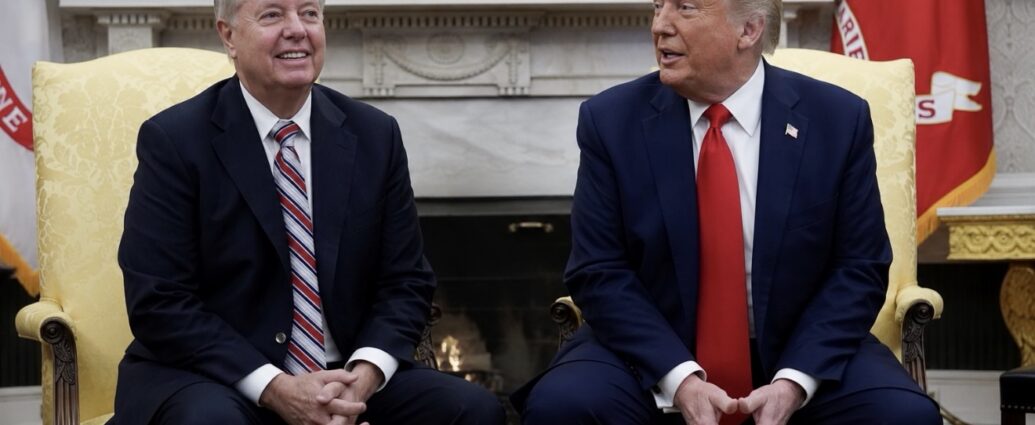
Trump Backs Graham’s Russia Sanctions Bill With 500% Tariff on Oil Buyers
President Donald Trump will support passage of a bipartisan Russia sanctions package spearheaded by the late Senator Lindsey Graham, a White House official confirmed Monday, clearing a major obstacle for legislation that could reshape global energy trade by targeting the countries that buy Russian oil. The endorsement comes days after Graham’s sudden death and marks a reversal for Trump, who had previously resisted the bill while seeking greater presidential discretion over sanctions policy.
The measure, known as the Sanctioning Russia Act, was first introduced by Senator Lindsey Graham of South Carolina and Senator Richard Blumenthal of Connecticut. Its centerpiece is a 500% tariff on imports from countries that continue purchasing Russian oil, natural gas, petroleum products, or uranium. The objective is to reduce the Kremlin’s energy revenues by forcing buyers to choose between access to the U.S. market or discounted Russian energy.
Momentum accelerated after negotiations between the White House and congressional sponsors. Senators Graham, Blumenthal, Jeanne Shaheen, and Roger Wicker announced they had reached an agreement on revisions acceptable to the administration. Speaking in Kyiv before his passing, Graham described the legislation as one of the most significant efforts of his Senate career.
Following Graham’s death, support intensified on Capitol Hill.
“On Friday, Senators Graham, Blumenthal, Wicker and I announced White House support for our Russia sanctions legislation to help finally achieve peace for Ukraine, which Lindsey described as one of his most consequential efforts,” Senator Jeanne Shaheen said Monday.
The legislation already enjoys broad bipartisan backing, with roughly 85 Senate co-sponsors, enough to potentially overcome procedural hurdles. Senate leadership had delayed consideration while President Trump pursued diplomatic negotiations with Russian President Vladimir Putin, but that strategy has increasingly given way to tougher economic pressure.
The proposed tariff would dramatically affect global energy markets. Countries continuing to import Russian crude—including some of Moscow’s largest remaining customers—could face prohibitive costs when exporting goods to the United States. Analysts say the measure would effectively force importers to diversify away from Russian supplies or risk losing competitiveness in one of the world’s largest consumer markets.
The bill also grants the president flexibility in implementation. The White House negotiated language allowing exemptions or waivers for countries deemed strategically important or actively supporting Ukraine. That authority addressed one of Trump’s primary concerns about preserving executive discretion in foreign policy.
Energy markets are watching closely. Oil prices have already moved higher amid renewed instability in the Middle East and concerns over shipping through the Strait of Hormuz. Additional restrictions on Russian energy exports could tighten global supply even further, placing upward pressure on crude oil, gasoline, diesel, and other fuel prices worldwide.
Beyond oil, the legislation covers Russian uranium exports, another strategically important commodity used by nuclear power plants in several countries. Expanding sanctions beyond crude broadens the potential economic impact while increasing pressure on Moscow’s export revenues.
Business leaders are also evaluating how secondary tariffs could affect international supply chains. Companies importing products from nations that continue buying Russian energy could ultimately face higher costs if those countries become subject to the proposed tariff regime.
Supporters argue the legislation would significantly weaken Russia’s ability to finance its war in Ukraine without requiring additional direct U.S. military involvement. Critics caution that global energy markets remain fragile and warn that any major disruption could contribute to higher inflation by increasing transportation and manufacturing costs.
The White House has not indicated when President Trump would begin exercising the tariff authority if Congress approves the legislation. Much will depend on implementation rules, negotiations with allied governments, and how foreign buyers respond before penalties take effect.
For now, the president’s endorsement transforms what had been a stalled proposal into legislation with a realistic path toward passage. If enacted, the measure would represent one of the most aggressive economic actions taken against Russia since the invasion of Ukraine, extending pressure well beyond Moscow to the nations that continue financing its energy exports.
JBizNews Desk | New York
© JBizNews.com All Rights Reserved. Reproduction or distribution without written permission is prohibited.



China’s CXMT Builds Memory Chip Business Despite U.S. Export Controls
ChangXin Memory Technologies (CXMT) is rapidly emerging as one of China’s most important semiconductor companies, expanding its memory-chip business despite years of U.S. export restrictions designed to limit Beijing’s access to advanced technology.
The Chinese memory-chip manufacturer is preparing what is expected to become one of the country’s largest stock offerings of the year while simultaneously investing billions of dollars to expand production of advanced DRAM memory used in artificial intelligence servers, personal computers and mobile devices.
According to the company’s initial public offering prospectus and regulatory filings released Thursday, July 9, CXMT plans to use proceeds from its planned Shanghai STAR Market listing to increase production capacity, develop next-generation DRAM technology and expand research into high-bandwidth memory chips that power AI systems.
The company reported first-quarter revenue of approximately 50.8 billion yuan, more than seven times higher than a year earlier, driven by rising memory-chip prices, increased production and stronger demand from AI-related industries. Industry estimates place the company’s valuation at more than $100 billion.
CXMT’s rapid rise comes despite extensive U.S. export controls intended to slow China’s semiconductor development.
Unable to purchase the most advanced extreme ultraviolet (EUV) lithography equipment from Dutch manufacturer ASML, the company instead built its manufacturing process around older deep ultraviolet (DUV) technology while steadily improving its engineering capabilities.
That strategy has allowed CXMT to produce competitive DDR5 and LPDDR5X memory chips used in many consumer electronics and computing devices.
Industry analysts say the company has focused on building a largely domestic semiconductor supply chain, reducing dependence on foreign equipment and suppliers that could become unavailable because of future sanctions.
The company also remains at the center of an ongoing geopolitical debate.
Earlier this year, the U.S. Department of Defense designated CXMT as a military-linked Chinese company under the National Defense Authorization Act. At the same time, reports indicate U.S. officials have discussed adding the company to the Commerce Department’s Entity List, which would impose additional export restrictions on American technology sales.
Despite those discussions, the company has continued expanding production while benefiting from surging global demand for memory chips.
The worldwide AI boom has significantly tightened memory supplies as leading manufacturers including Samsung Electronics, SK Hynix and Micron Technology prioritize higher-margin AI and data-center products.
Research firm TrendForce expects DRAM contract prices to continue rising, creating additional opportunities for competitors able to supply memory products at lower prices.
CXMT has increasingly positioned itself as that alternative.
Backed by substantial government support, the company has been able to offer memory chips at competitive prices, attracting attention from computer manufacturers seeking additional suppliers amid persistent shortages.
Several global electronics companies have reportedly evaluated or begun testing CXMT memory products for devices sold outside the United States.
The company’s expansion has also renewed concerns among Western policymakers about long-term dependence on Chinese semiconductor manufacturing.
Critics argue that if Chinese companies capture a growing share of global memory production, Western technology firms could eventually become more reliant on suppliers operating under Beijing’s industrial policies.
Others point to allegations involving intellectual property.
Previous investigations in South Korea examined whether former semiconductor employees improperly transferred proprietary technology connected to memory-chip manufacturing. Those allegations have added another layer of scrutiny to CXMT’s rapid growth, although the company continues to deny wrongdoing.
Even so, industry analysts acknowledge that CXMT still trails market leaders in the most advanced memory technologies.
Samsung Electronics, SK Hynix and Micron Technology continue to dominate the highest-performance segments used in AI accelerators and advanced servers.
Nevertheless, CXMT’s expanding production capacity, government backing and lower-cost manufacturing are allowing it to steadily gain market share in mainstream memory products.
For businesses, the company’s rise highlights how quickly global semiconductor competition continues to evolve. As AI demand drives unprecedented investment across the chip industry, memory has become one of the world’s most strategically important technologies.
Whether additional U.S. restrictions ultimately slow CXMT’s expansion remains uncertain. What is clear is that the company has become a major new competitor in the global memory market, demonstrating that China’s semiconductor industry continues to advance despite ongoing export controls.
JBizNews Desk | Hefei, China
© JBizNews.com All Rights Reserved. Reproduction or Distribution without Written Permission is Prohibited.

Oil prices surge more than 3% as US-Iran strikes fuel Hormuz fear
The price of oil jumped more than 3% on Monday as renewed military strikes between the United States and Iran raised fresh concerns about the movement of energy supplies through the Strait of Hormuz, a major route for global oil and gas shipments.
Brent crude futures gained $2.39, or 3.14%, to $78.40 at 1321 GMT. US West Texas Intermediate crude rose $2.17, or 3.04%, to $73.58 a barrel. Both contracts had climbed more than 4% earlier in the session.
During peacetime, around 20% of the world’s oil and gas is transported through the Strait of Hormuz, making disruptions to shipping a key concern for energy markets.
“The focus will remain on the number of inbound tankers as a lower number could impact production, so currently we see a risk premium and a disruption risk supporting prices,” UBS analyst Giovanni Staunovo said.
‘Iran does not control’ Strait of Hormuz, CENTCOM says
US Central Command (CENTCOM) said it completed a wave of strikes against dozens of targets in Iran using precision munitions. The military said the operation was intended to limit Tehran’s ability to carry out attacks in the Strait of Hormuz.
CENTCOM said the targets included Iranian air defense and coastal radar systems, missile and drone sites, and small boats.
“The Strait of Hormuz is a vital maritime corridor for global trade. Iran does not control it,” CENTCOM said.
Iran, however, maintains that it exercises full control over the Strait of Hormuz. Tehran claims the waterway is Iranian sovereign territory and says foreign commercial and military vessels must obtain explicit permission and authorization from the Islamic Revolutionary Guard Corps before passing through it.




Wheat Climbs Near $6.35 a Bushel as Ukraine’s Drone War Clouds Russia’s Grain Exports
Wheat futures climbed again Friday as traders prepared for two closely watched U.S. Department of Agriculture (USDA) reports while continuing to monitor Ukraine’s expanding drone campaign targeting Russian energy and logistics infrastructure around the Black Sea.
In early Chicago trading, September soft red winter wheat rose about 13 cents to nearly $6.33 per bushel, while Kansas City hard red winter wheat gained roughly 16 cents, approaching $6.70 per bushel. The widening premium for hard wheat—a key ingredient in bread flour—highlighted growing concern over tightening supplies of higher-quality milling wheat.
Lowest U.S. Wheat Acreage in More Than a Century
The rally has been driven by both domestic and international developments.
The USDA’s June 30 Acreage Report estimated U.S. wheat plantings at 42.74 million acres, the smallest area recorded since the department began tracking the crop in 1919.
Markets are now awaiting Friday’s Crop Production Report and World Agricultural Supply and Demand Estimates (WASDE). According to a Wall Street Journal survey of analysts, U.S. wheat production is expected to total approximately 1.52 billion bushels, down from 1.56 billion bushels projected in June and potentially the smallest harvest since 1970.
Persistent drought across the Southern Plains has significantly reduced this year’s hard red winter wheat crop, tightening supplies of premium milling wheat.
Ukraine’s Drone Campaign Adds Global Risk
At the same time, geopolitical concerns continue supporting wheat prices.
Ukraine’s military reported additional long-range drone strikes overnight targeting Russian refineries and infrastructure connected to the Sea of Azov, extending attacks that have increasingly affected Russia’s energy sector.
Officials in Kyiv have estimated substantial disruptions to portions of Russia’s refining capacity, while Western officials have also noted growing impacts on fuel production and logistics.
Although the attacks have primarily targeted energy infrastructure, they have also increased concerns surrounding Russian Black Sea export operations.
Russia Remains the World’s Largest Wheat Exporter
One of the market’s biggest concerns centers on Novorossiysk, Russia’s largest grain export terminal.
The Black Sea port handles roughly 20% of Russia’s grain exports, including large volumes of wheat shipped to buyers across North Africa, the Middle East and Asia.
Previous drone attacks near the port have prompted sharp market reactions even without confirmed disruptions to grain shipments.
Commodity traders note that perceived risks to Russian exports can quickly ripple through global wheat markets and, over time, influence the cost of flour, bread and other grain-based foods worldwide.
Large Global Harvest Limits the Rally
Despite rising geopolitical tensions, several factors continue limiting wheat’s upside.
Russian agricultural analysts continue projecting a large domestic harvest this season, with consultancy SovEcon recently increasing its Russian export forecast to 46.5 million metric tons.
Russia has already begun harvesting across multiple regions, with production running ahead of last year in several growing areas.
Australia is also expected to produce another strong wheat crop, helping offset tighter U.S. supplies.
Those large global harvests have repeatedly slowed wheat rallies as buyers remain confident adequate world supplies will remain available.
Volatility Likely to Continue
Analysts say wheat prices are currently balancing two competing forces: historically tight U.S. production and abundant export supplies from other major producers.
Much of this week’s advance also reflected short covering, as traders who had previously bet on lower prices bought back positions amid deteriorating U.S. crop prospects and rising geopolitical tensions.
For food manufacturers, grain processors, bakers and grocery retailers, the outlook points to continued volatility rather than a sustained one-directional trend.
Friday’s USDA reports are expected to provide the next major catalyst for grain markets, but developments surrounding the Black Sea conflict are likely to remain an important driver of global wheat prices throughout the summer shipping season.
JBizNews Desk | New York
© JBizNews.com All Rights Reserved. Reproduction or distribution without written permission is prohibited.

LARRY KUDLOW: Lindsey Graham would be smacking Iran even harder right now
Senator Lindsey Graham was a great American patriot. He was a freedom fighter. He was a throwback to an older Republican party that shunned isolationism and understood that America must never retreat from its friends, its allies, or the cause of freedom.
He was a great friend of Israel at a time when far too many in American politics are turning away from Israel. And even retreating to a hateful bigoted antisemitism, that is plaguing the socialist leaning Democratic party today, and even I say with regret, infiltrating some extreme elements in the GOP.
On this and most things regarding foreign policy, Graham knew the difference between right and wrong, good and evil. He passed away Saturday. But he would not have been happy with the events that transpired Sunday in the Middle East.
Here’s how President Trump, a dear friend of Lindsey Graham’s, reported to Fox & Friends this morning: “So something that nobody knows. Yesterday they had an 11-hour meeting. Everything’s 11 hours with these guys. You know, you can’t settle one sentence in one hour and one minute. It should be one minute. And everything was agreed to yesterday.”
Mr. Trump added: “And they leave the room and they call back and they say we had to make a couple of changes. They got to make changes. We’re not going to make changes. Always changes. They just, you know, they’re professional negotiators. That’s all they are. I don’t even call them good at it. They haven’t gotten anything from me.”
If I understand the chronology here, yesterday meaning Sunday, according to Mr. Trump, there was an 11-hour meeting with Iran of course, and everything was agreed to. Presumably that means opening up the Hormuz Strait, and denuclearizing Iran, and moving the enriched Uranium out of that country. Then, the Iranians walk out of the room shortly after, call back and say we have to make some changes.
The next thing you know — we’re still on yesterday, Sunday — the Iranians hit an oil tanker in the Strait, and then proceeded to bomb Oman, Bahrain, Jordan, Kuwait, Qatar, and the United Arab Emirates. Six of our Gulf allies.
Presumably these decisions were made within an hour or two, after this 11-hour meeting agreement that turned out to be a complete lie. Which of course that’s what the Iranians do, they lie. It’s the nature of their immoral, gruesome, barbaric, Nazi-like regime.
Now, in response to that, as I understand the chronology here, reported by Mr. Trump, the commander-in-chief has decided the United States will become the guardian of the Strait of Hormuz, and restore the naval blockade on Iranian ports for Iranian ships. And later today, Mr. Trump posted on Truth Social that he will be making a Speech to the Nation on Thursday at 9 p.m. Eastern. Somehow it seems that the American response to Iran’s warfare escalation should be greater. Now we may hear about that Thursday evening, but not tonight.
And by the way, in addition to Iran’s repeated violation of the ceasefire, and the memorandum of understanding, by bombing oil tankers and our Gulf state allies and American military bases, our satellite pictures have discovered that Iran appears to be using the roughly $5 billion worth of oil sales given to them prematurely, to rebuild their nuclear installations at Pickaxe and Parchin Mountains.
To be sure, we bombed them heavily in recent days. And that’s important. And to be sure when you cross a red line with Mr. Trump, you will pay for it. Yet I would think the late Senator Graham would want even bigger strikes at Iran right now, this evening.
And perhaps those bigger strikes are in fact coming. I hope so. I knew Lindsey down through the years. I loved his wickedly hilarious sense of humor. And the good work he did as the budget chairman on one, big, beautiful bill last year.
By the way Senator Ron Johnson, a free market supply-sider, may well become the next Senate budget chairman. Wouldn’t that be something. Graham also defended Justice Brett Kavanaugh during his September 2018 Supreme Court confirmation hearings. He was not really an economic guy, and I never agreed with him and his gang of eight bipartisan attempts to solve immigration, or climate change, or other domestic matters. Yet when it came to defending America, and our allies, and the freedom that has made this the greatest country in the history of history, my hat’s off to the late senator, Lindsey Graham.

Why is the Mossad-Ahmadinejad meeting’s dirty laundry being aired now? – Analysis
Between foreign reports, public confirmation by former head of the Military Intelligence Directorate Tamir Hayman, and The Jerusalem Post’s own Western sources, it has been known now for some time that the Mossad sought to replace supreme leader Ali Khamenei with former president Mahmoud Ahmadinejad.
The New York Times had previous, more speculative reports on the issue, which were eventually confirmed by Hayman to the Public Broadcasting Service. That created space for the Post to receive confirmation, although Israeli journalists often cannot publish all that they know.
Hayman had told PBS: “Regarding Ahmadinejad, there was a sequence of special operations, very, very unique that was supposed to happen. And Ahmadinejad was a part of that sequence. The rest of the operations are not fully disclosed to the public, except for the Kurdish invasion.”
Questioned why the plan to replace Khamenei with Ahmadinejad had failed, Hayman replied: “Because the centerpiece of all the sequence should have been set off with the Kurdish invasion. According to what was published, [Turkish President Recep Tayyip] Erdogan, who really considered the Kurds as a strategic threat to the stability of Turkey, convinced [US President Donald] Trump that it was a bad idea to give the Kurds a state. Backing the Kurds goes against the interest of Turkey, and I think that had something to do with the decision of Trump to cancel this operation.”
Hayman has been used before to grandfather in sensitive information about Iran, which Israeli authorities had previously kept under wraps, according to foreign reports. They include the 2022 public admission by Hayman of a concrete role played by Israeli intelligence in the assassination of Qasem Soleimani, commander of the Islamic Revolutionary Guard Corps’ Quds Force.
Mossad’s Ahmadinejad recruit attempt involved striking residence, evacuating him
But the latest exposure by the Times of the tactics used by the Mossad to recruit Ahmadinejad, including its picking him up mid-war under the cover of an attack around his residence, and his walking away from the operation after being unhappy about the circumstances of the war, has not come from Israeli sources.
Whether the leaking of the story is revenge for the Israeli leak of its attempt to assist Trump in avoiding his aircraft being targeted by Iranians, or to push back against Israel’s opposing Trump’s sale of F-35s to Turkey, or whether the leak occurred earlier, to otherwise humble Israel and put it in its place as it tries to pressure the US to take a harder stance on Iran, the leaker’s message to Israel and the Mossad is clear: We don’t trust you, so back off.
Leakers seek to silence Israel on Iran
The Trump administration, or parts of it, still has close ties to top Israeli officials. However, many of these Israeli officials, including some from the political echelon and the Mossad, have made enemies since the Iran war fell off a cliff. They have alienated US Vice President JD Vance, many of the non-generals in the Pentagon, probably some in the CIA, and certainly anyone affiliated with former National Intelligence director Tulsi Gabbard or special envoys Jared Kushner or Steve Witkoff with their inflated expectations.
There are also, doubtless, Turkish officials who helped block the move and are happy to share whatever they know.
While Israeli defense officials can make a viable argument for the latest war having worked out for some of Israel’s interests, pushing off the nuclear and ballistic-missile threats and weakening the Iranian military for years, the Trump administration and the United States increasingly see it as a failure.
The economic harm to the US has been devastating, the political harm to Trump will be lasting, and nearly five months after starting the war, there still is not a stable situation in the Strait of Hormuz, the basic nuclear-weapons goals are nowhere close to getting nailed down, although those goals still very well may be reached at some later point if Trump has the patience to see them through.
Clandestine funds sent to aides, Ahmadinejad-Mossad meetings leaked
So, while for the Times and the average reader of spy novels, the latest leaks about wild meetings with Israeli officials and Mossad agents in Guatemala, Hungary, and elsewhere, with Ahmadinejad managing to lose his minders multiple times, and clandestine funds being sent to his aides, are spellbinding and mind-twistingly fun reading, for the leakers, this is all about slam-dunking the Mossad and Israel into silence.
Look at how far your fancy tricks and plots did not get you when it really mattered in bringing about regime change, the leakers are telling their Israeli counterparts. Stop talking about regime change, and stop trying to rock the boat with Iran and with Lebanon, they are saying. Remember that we are your last friend in the world, Vance himself said in a far more public fashion.
All of this means that while it is exciting to hear how the Mossad got as far as it did in recruiting Ahmadinejad, once Israel’s greatest hater, a man who many times called to wipe Israel off the map and went out of his way to host Holocaust-denial conferences, the end of this story for Israel is not a good one like it was with Soleimani and other operations.
The end and purpose of this latest story for the American public is to seal into its consciousness that, however brilliant the Mossad may be with its exploding beepers and other operations, at the higher-stakes geopolitical level that the US and Iran are now playing, it should remain on the sidelines with Israel.

Why the Houthis and Saudi Arabia may come to blows – analysis
The Iranian-backed Houthis appear to be seeking a new conflict with Saudi Arabia. This comes after they claimed that Riyadh targeted Sana’a airport in Yemen, an area the Houthis control. This is the second incident in two weeks in which the Houthis claimed they would retaliate if Saudi Arabia prevented flights from Iran. The Houthis are seeking to open an air bridge to Iran. The goal is for them to show they can break the “siege” on Sana’a. If they bring in planes, then they could also bring in weapons.
The Houthis have been clear that they might retaliate if Riyadh tries to prevent planes from landing. The Houthis claimed on July 13 that they targeted the southern Abha Airport in Saudi Arabia. They have targeted Saudi Arabia many times over the last decade since Saudi Arabia intervened in Yemen in 2015 in support of the Yemeni government. Over the last several years, there has been a de-escalation and a kind of ceasefire in Yemen. This reduced Houthi attacks on Saudi Arabia in recent years. However, the Houthis appear intent on returning to the conflict.
The Houthis attacked Israel numerous times after the Hamas attack on October 7, 2023. They increased their attacks in 2025 as other elements of the Iranian-backed axis weakened. They have so far refrained from picking a fight with Riyadh. The Houthis were likely pleased to see Saudi Arabia distracted with a controversy with the UAE over control of a part of Yemen in December 2025. The UAE has backed the Southern Transitional Council in Aden in Yemen. The UAE and Saudi Arabia were partners in 2015, but over time their interests diverged. Their interests also diverge in Somalia and Sudan in the Horn of Africa.
More than meets the eye
As such, there is a lot more going on than may meet the eye. The Houthis have been biding their time amidst the Iran war. Between 2023 and 2025, they carried out attacks in the Red Sea. They stopped the attacks with the October ceasefire in Gaza. The Houthis had claimed to be backing Gaza. In recent weeks tensions grew. An Iranian envoy to the Houthis appeared in public again in Yemen. Other pieces have fallen into place with the US strikes in the Strait of Hormuz and Israel’s increased role in the Red Sea. Israel recognized Somaliland, for instance.
After the July 3 incident at Sana’a airport and also the Houthi Deputy Foreign Minister, Abdulwahid Abu Ras, meeting in the Houthi capital of Sanaa with the Iranian Ambassador to the militia, Ali Mohammad Rezaei; it was clear that a rising crisis was emerging. July 13 began with many open-source intelligence accounts tracking IRM1199, a flight bound for Sana’a. The Flight left Iran and flew over Oman on its way. This flight was said to be operated by Mahan Air.
The Houthis claimed that Saudi Arabia targeted the airport so the plane could not land. It apparently diverted to Hodeidah airport, which is also controlled by the Houthis.”In a flagrant and brazen act of aggression, the criminal Saudi enemy has targeted Sana’a Intl Airport with a series of airstrikes, thereby ending the de-escalation phase and bearing the consequences of its aggression,” the Houthis said. Other reports noted that it was the Yemen government, backed by the Saudis, that had carried out the attacks. This meant Saudi Arabia was not directly responsible. The Houthis disagree and are blaming Riyadh.
An X/Twitter account claiming to represent Sanaa airport noted that “Mahan Airlines is just one of dozens of airlines that have been approached to operate flights to and from Sana’a International Airport, as part of the airport’s reopening and the expansion of travel options for citizens. Sana’a Airport needs to open up to all airlines serving passengers, not to continue its siege under political slogans.”
An article in Al-Ain provided some insights. It noted that the officially internationally recognized Yemeni government had carried out the strikes on the airport. The government described the strike as a defensive measure designed to protect Yemen’s sovereignty and stop unauthorized flights that it says violate the country’s airspace.
Houthis cite truce violations
The Houthis claim the attacks are a violation of a UN-brokered truce of 2022. Although fighting has continued in parts of Yemen, the strike on Sana’a airport marked one of the most direct confrontations over Iranian support for the Houthis in recent months.
Now the Yemen government of President Rashad al-Alimi has said the Houthis were attempting to change things by receiving Iranian flights despite Yemen’s government objections. It’s worth noting that the Houthis have been in rebellion in Yemen for more than a decade. Yemen’s government said that they won’t let the Houthis serve Iran’s regional interests. Al-Alimi emphasized that the government would not allow aircraft to violate Yemeni airspace and announced the creation of a crisis management team to coordinate military, diplomatic, legal, and media responses, Al-Ain noted.
On July 3, an Iranian aircraft carried a Houthi delegation from Sana’a to Tehran for the funeral of former Iranian Supreme Leader Ali Khamenei. On July 7, another Iranian aircraft reportedly landed at Hodeidah Airport hours after the strike on Sana’a. The United Nations expressed concern over the latest escalation.
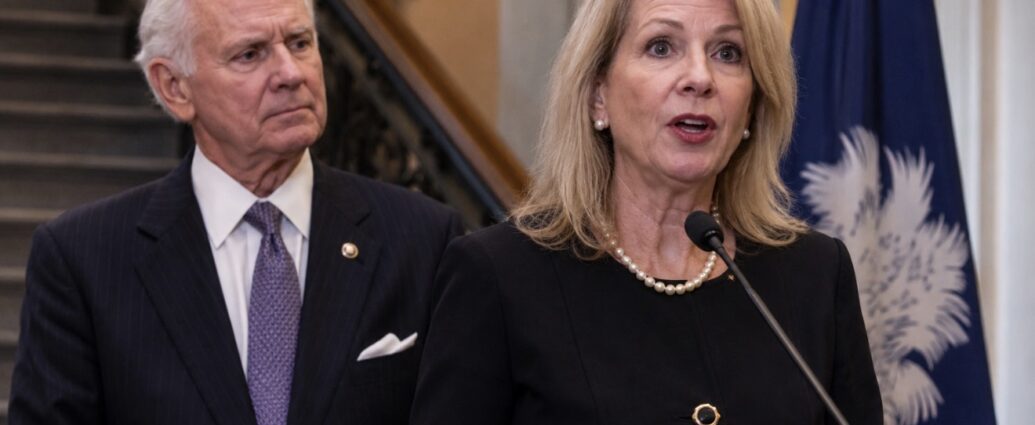
McMaster Appoints Lindsey Graham’s Sister to Finish His Senate Term
South Carolina Governor Henry McMaster announced Monday that he had appointed Darline Graham Nordone, the younger sister of the late Senator Lindsey Graham, to fill her brother’s seat in the United States Senate, telling reporters at a news conference at the State House in Columbia that it was his “duty and honor” to name a temporary replacement. The move came just two days after Graham, a Republican who represented South Carolina for more than two decades, died suddenly Saturday at the age of 71.
Nordone, 62, has never held elected office. When she is sworn in—expected Wednesday, according to a person familiar with the process—she will become the first woman ever to represent South Carolina in the Senate. She will serve only through the end of her brother’s current term, which expires January 3, 2027.
“Lindsey has always been there for me, and now I will be there for him,” she said at the news conference, standing beside McMaster. “It is such a privilege to get to finish some of his important work.”
The appointment carries weight far beyond South Carolina. Graham’s death had trimmed the Republican Senate majority, and filling the vacancy quickly restores the party’s 53-47 edge in the chamber. That margin matters for President Donald Trump’s economic agenda, where every vote counts on tax measures, spending bills, tariffs, and the steady stream of executive and judicial confirmations moving through the Senate. The math had grown tighter still with Senator Mitch McConnell of Kentucky recovering after a fall and a bout of pneumonia, leaving party leaders eager to secure every reliable vote.
Trump personally pushed for the appointment. In a post on Truth Social Monday morning, the president said he had recommended Graham’s “wonderful sister” to McMaster, calling it “a fabulous tribute to Lindsey, who loved her dearly.” Within hours, Senator Tim Scott, the South Carolina Republican who chairs the National Republican Senatorial Committee, endorsed the selection, saying no one better understood Graham’s love for family, state, and country. Senate Majority Leader John Thune added that he looked forward to welcoming her “soon.”
For Nordone, the role marks a dramatic shift from a life largely outside politics. A graduate of the College of Charleston, she lives in Lexington, South Carolina, with her husband, Larry Nordone, and their two daughters. She has served as a commissioner on the South Carolina Commission for the Blind, helping oversee programs that support employment and independent living for blind and visually impaired residents.
Her bond with her brother was forged through family tragedy. After both parents died within 15 months of each other, Lindsey Graham became her legal guardian when he was 22 and she was just 13, raising his younger sister while beginning what would become a decades-long legal and political career.
The appointment answers only the immediate question of filling the Senate vacancy. Because Graham was seeking reelection when he died, South Carolina will hold a special Republican primary on August 11 to determine the party’s nominee for the November election. The winner will serve a full six-year Senate term beginning in January, and Nordone has not indicated whether she intends to run.
Several prominent Republicans are already considering campaigns. Representatives Nancy Mace and Ralph Norman have both been mentioned as potential candidates, while Representative Joe Wilson announced he would remain in the House, citing the importance of preserving the Republican majority.
Graham died Saturday evening at his Washington residence shortly after returning from a trip to Ukraine, where he met with President Volodymyr Zelenskyy. Preliminary findings from the District of Columbia medical examiner indicated that he died from an aortic dissection caused by advanced hardening of the arteries. His passing ended more than two decades of Senate service and left a significant void in both South Carolina politics and national Republican leadership.
Closing the announcement, Nordone spoke directly to her late brother.
“To Lindsey, I miss you more than I can even put into words,” she said. “But I’m going to do this. I got it.”
JBizNews Desk | Columbia, S.C.
© JBizNews.com All Rights Reserved. Reproduction or distribution without written permission is prohibited.




Opinion | From Canada to Detroit to Trump


Beta Flies the First Missions in Trump’s Air-Taxi Pilot, Hauling Transplant Organs Across State Lines
Electric-aircraft maker Beta Technologies said Friday, July 10, that it completed the first operational flights in the federal government’s electric air-taxi pilot program, using its all-electric plane to carry manufactured transplant organs between airports in Maryland and Virginia. The announcement came in a company release quoting founder and chief executive Kyle Clark, who framed the trips as proof that everyday medical deliveries can move by electric flight at far lower cost.
The flights, which totaled about 275 nautical miles, moved organs produced by United Therapeutics, a longtime Beta customer that has for years looked for faster ways to transport organs intended for human transplant. “Today’s successful missions set the stage for routine medical applications through electric flight at a much lower cost nationwide,” Clark said. The trips were flown with Beta’s ALIA aircraft, the conventional-takeoff model that lands like a regular plane rather than lifting off vertically.
The mission marks the real-world start of a program the industry has been waiting on since the spring. President Donald Trump created the effort through an executive order last year, and the Department of Transportation and Federal Aviation Administration announced the first project selections in March. The three-year initiative spans eight projects across 26 states and lets companies fly aircraft that have not yet earned full FAA certification, gathering the operational data regulators need to write permanent rules. Officials had said flights would begin this summer; Beta’s Friday missions are the first to actually get off the ground.
Beta is the most active participant by a wide margin, selected for seven of the eight projects — more than any competitor. That reach is central to the business case Clark has pitched to investors. When the selections were announced, he said the program would let Beta begin aircraft operations a full year earlier than planned, and the stock jumped nearly 12% that day. The company’s projects range from medical equipment runs across Vermont’s Lake Champlain to cargo and offshore energy flights along the Gulf Coast to a dozen operational concepts with the Port Authority of New York and New Jersey, including one based at a Manhattan heliport.
For the broader industry, the practical appeal is the chance to fly commercially useful missions before certification, which has proven slow and expensive to obtain. Beta’s own eVTOL aircraft — the vertical-takeoff model most people picture when they hear “flying taxi” — is not expected to be certified until 2028. Its conventional-takeoff plane is on track for 2027. The pilot program effectively lets the company build a track record and a customer base in the gap, moving cargo, medical supplies and eventually passengers while the paperwork catches up.
The financial backdrop is far less cheerful than the flight footage. Beta shares have lost roughly half their value since the company’s initial public offering in November, which raised about $1.1 billion. The pain is industry-wide: rivals Joby Aviation and Archer Aviation are each down more than a third this year, and the United Kingdom’s Vertical Aerospace has shed 68% of its value. Appetite for the sector has cooled as investors wait for revenue to catch up with the promises, and some companies are tangled in court battles that have pushed timelines further out.
Revenue remains thin for now. Beta earned $35.6 million last year, with government contracts and United Therapeutics historically accounting for nearly all of it. The company has been working to broaden that base — selling its electric motors to other aircraft makers, including a roughly $1 billion motor deal with Eve Air Mobility, and installing charging stations at airports around the country. Customers such as UPS and Air New Zealand have placed firm orders for nearly 300 aircraft worth more than $1 billion, with options for hundreds more, but those deliveries depend on the same certification milestones still years away.
The organ-transport flights point to where the near-term money most likely sits: not glamorous downtown air taxis, but quiet, high-value cargo runs where speed and cost genuinely matter. Hospitals and organ networks operate on tight clocks, and a cheaper, cleaner way to move a transplant across a metro area is a concrete business, not a concept video. Whether that early revenue arrives fast enough to steady Beta’s share price — and the sector’s — is the open question. Friday’s flights answered a different one: after years of promises, the aircraft are finally carrying real cargo for real customers under a federal program built to get them there.
JBizNews Desk | Burlington, Vt. © JBizNews.com All Rights Reserved. Reproduction or distribution without written permission is prohibited.

Feds warn banks on lending to unauthorized workers
The Trump administration on Monday released guidance from several financial regulators reminding banks and credit unions about the credit risks posed by lending to borrowers who aren’t authorized to work in the U.S.
The guidance said that borrowers who aren’t legally eligible to work in the U.S. pose an elevated credit risk because there’s greater uncertainty about their ability to generate income, maintain employment and remain financially stable.
It was issued by the Office of the Comptroller of the Currency, the Federal Deposit Insurance Corporation and the National Credit Union Administration, with the agencies urging financial institutions to identify, measure, monitor and control these risks through safe underwriting practices that take it into account.
“President Trump has made restoring integrity to America’s financial system a priority, and Secretary Bessent has provided strong leadership in ensuring that federal financial policy reflects that objective,” Comptroller of the Currency Jonathan Gould told FOX Business in an exclusive statement. “Americans expect their banking system to support lawful business, not facilitate money laundering, or risks associated with criminal illegal immigration.”
TRUMP ADMIN TO TELL BANKS IMMIGRATION STATUS MAY BE CONSIDERED IN MORTGAGE, CREDIT DECISIONS
The comptroller added that the guidance is based on existing requirements that financial institutions must abide by in their dealings with customers and that a prospective borrower’s work authorization should be part of those considerations.
“Banks already have a responsibility to know their customers and appropriately manage risk. Our interagency guidance reinforces that obligation by making clear that institutions should account for the safety and soundness, compliance, and credit risks associated with serving individuals who are not authorized to work in the United States,” Gould explained.
TRUMP EYES BANK CITIZENSHIP CHECKS AMID IMMIGRATION CRACKDOWN: REPORTS
The agencies’ announcement notes that the Consumer Financial Protection Bureau (CFPB) issued a guidance in June that informed financial institutions that they may consider a consumer’s ability to legally work and earn income in the U.S. when making lending decisions around things like mortgage and credit card applications.
CFPB’s guidance explained that the lack of legal authorization to work in the U.S. could lead to changes in a borrower’s income, citing an example in which a credit applicant may be subject to deportation.
It added that information can be derived from a direct inquiry or the consumer’s use of “atypical identification methods, such as an Individual Taxpayer Identification Number (ITIN), typically issued to taxpayers… who lack proof of legal residency.”
BIDEN-ERA ILLEGAL IMMIGRATION DROVE UP HOUSING COSTS, FED ECONOMISTS FIND
The guidance also follows the release of a working paper by the Federal Reserve Bank of Dallas, which the authors noted was a preliminary draft circulated for professional comment, which found that the influx of illegal immigrants between 2021 and 2024 significantly increased housing demand while boosting employment and having little measurable effect on wages.
The Fed economists estimated that unauthorized immigrant worker flows accounted for about 30% of employment growth, roughly 30% of home-price growth and about 20% of rent growth in the average metro area between March 2021 and March 2024.
GET FOX BUSINESS ON THE GO BY CLICKING HERE
However, they emphasized that the estimates apply to the average metro area studied and don’t suggest immigration was the sole driver of rising housing costs nationwide.
FOX Business’ Amanda Macias contributed to this report.

South Carolina Governor appoints sister of Lindsey Graham as interim senator
Darline Graham Nordone, sister of the late US Republican Senator Lindsey Graham, was appointed on Monday by South Carolina Governor Henry McMaster to serve the remainder of Graham’s term, which ends in early January.
“Today, under the law, it’s my duty and honor to name someone to serve in the place of this irresistible man, this irreplaceable man, this extraordinary man, for the remainder of his term,” McMaster, also Republican, said at a news conference. “Lindsey took care of his little sister in years long departed. It’s my honor to ask his little sister Darline Graham to finish his work for him now.”
Graham Nordone thanked McMaster during a news conference for selecting her. “It is such an honor. Lindsey has always been there for me, and now I will be there for him,” she said.
US President Donald Trump had recommended Graham Nordone to serve as the state’s interim senator, calling the appointment “a fabulous tribute” to the longtime Republican lawmaker in a post on Truth Social.
“I recommended, to Governor Henry McMaster, Lindsey Graham’s wonderful sister, Darline, to serve as interim Senator from the Great State of South Carolina. This would be a fabulous tribute to Lindsey, who loved her dearly!,” the President said in his Truth post.
Graham, one of Trump’s closest allies in the Senate, died over the weekend after a brief illness. Trump has repeatedly paid tribute to the South Carolina Republican, praising his longtime ally’s service and urging McMaster to appoint Nordone as his interim replacement.
According to the Associated Press, a person familiar with the appointment process said that an interim senator would be sworn in on Wednesday, and that Senator Tim Scott, who had spoken with Graham’s sister multiple times since his passing, would be present at the announcement.
CBS News cited sources saying that McMaster will indeed tap Nordone to fill the seat at a conference scheduled for 4 p.m. on Monday.
A special election will be held next month to pick a new GOP nominee to fill Graham’s seat.
Graham, who had been seeking re-election for his fifth term, left a void in South Carolina’s Senate seats, with Republicans from the state finding themselves clambering for the suddenly empty position.
Higher home-care spending by states linked to greater aging-in-place outcomes
Older adults with difficulty living independently are more likely to remain in their homes when states devote a larger share of long-term care spending to home- and community-based services, according to a new study.
Researchers examined whether state investments in home- and community-based services — known as HCBS — were associated with changes in where older adults lived, including whether they moved, lived with adult children or entered group housing settings.
The study, published by JAMA Health Forum, analyzed data from 7.35 million older adults using U.S. Census Bureau American Community Survey records from 2009 through 2021.
The findings suggest that expanding access to in-home assistance may help older adults avoid unwanted moves and maintain greater independence.
“Most older adults prefer to remain in their own homes and communities,” researchers wrote. “[They want to] remain autonomous, maintain community-based social ties, and avoid the negative stigma associated with institutional living, (ie, aging in place).
“However, changes in cognitive and functional status during the aging process are associated with an increased risk of dementia and relocating and entering institutional care or living with adult children. These risks may be mitigated through high-quality long-term care.”
Greater HCBS investment tied to fewer residential changes
Among older adults with independent living difficulties, a 20-percentage-point increase in a state’s share of long-term services and support spending directed toward HCBS was associated with a 2.6-percentage-point lower likelihood of living in group quarters, such as institutional or other congregate settings.
The same increase was linked to an 0.8-percentage-point decrease in living with adult children, a 1-percentage-point increase in remaining in the same residence, and lower rates of both in-state and out-of-state moves.
Researchers said the results indicate that stronger HCBS systems may reduce the need for older adults with functional limitations to relocate for care or depend as heavily on family members for housing support.
The study also found some evidence that expanded HCBS availability may increase Medicaid enrollment among some older adults, but researchers described the effect as modest and inconsistent across analyses.
While public programs play a major role in supporting aging in place, many older adults and families also rely on personal resources to pay for modifications and services that allow someone to remain safely at home.
For homeowners with significant equity, reverse mortgages can be one option to help fund aging-in-place expenses, including home accessibility improvements, in-home care costs and other long-term support needs.
Policy focus shifts toward community-based care
The researchers said the findings support continued investment in HCBS programs, workforce development and broader access to noninstitutional care.
The study’s authors noted that the U.S. population is aging rapidly, with older adults expected to make up a growing share of the population in coming decades.
As demand for long-term care rises, policymakers face increasing pressure to expand options that allow people to receive assistance outside nursing homes and other institutional settings.
The researchers concluded that HCBS investments may provide benefits beyond direct services by helping older adults maintain residential stability while reducing disruptions for families and caregivers.
This article was written by Jonathan Delozier and generated with the assistance of HousingWire Automation. It was reviewed by a HousingWire editor before publication.


Netflix Weighs Live Channels and Bundles as Viewer Engagement Slips
Netflix is considering one of its biggest strategic shifts since pioneering video streaming, exploring the addition of always-on live channels and subscription bundles with competing streaming services as it looks to increase viewer engagement and strengthen its advertising business.
According to reports from people familiar with internal discussions, Netflix executives are evaluating several initiatives designed to keep subscribers watching longer as competition across the streaming industry intensifies.
Engagement Matters More Than Subscribers
Although Netflix continues to maintain one of the industry’s lowest cancellation rates, executives are increasingly focused on viewer engagement—how much time subscribers spend watching content.
Higher engagement not only reduces customer churn but also increases advertising opportunities on Netflix’s rapidly growing ad-supported subscription tier.
According to Nielsen, Netflix accounted for approximately 7.8% of all U.S. television viewing in April, but executives are reportedly concerned about declining engagement between seasons of original programming and growing competition for consumers’ attention.
A Return to Live Television?
One proposal under consideration would introduce live streaming channels organized by categories such as comedy, drama, documentaries and family programming.
Unlike Netflix’s traditional on-demand model, these channels would continuously broadcast scheduled programming, resembling traditional cable television while giving viewers something to watch immediately without searching through menus.
The format would also create additional opportunities for live advertising and sponsored programming.
Bundling Rival Streaming Services
Netflix is also reportedly evaluating whether to offer subscriptions to competing streaming platforms directly through its own application.
Companies including NBCUniversal’s Peacock have reportedly been discussed as potential partners.
Such a move would represent a major philosophical shift for Netflix, which historically positioned itself as an alternative to traditional television rather than a distributor for competitors.
The approach would resemble strategies already used by Amazon Prime Video and Apple TV, both of which sell subscriptions to third-party streaming services through their own platforms.
Building a Broader Entertainment Platform
Netflix has already expanded well beyond movies and television series.
Over the past several years, the company has introduced live sports programming, gaming, short-form video, live comedy events, and partnerships with digital content creators.
The latest discussions suggest Netflix increasingly views itself as a comprehensive entertainment platform rather than simply a streaming service.
Advertising Drives the Strategy
Industry analysts say the initiatives are closely tied to Netflix’s expanding advertising business.
The longer viewers remain inside the Netflix ecosystem, the more advertising inventory the company can sell and the more valuable its ad-supported subscription tier becomes.
As streaming competition continues to intensify, executives appear increasingly willing to rethink long-standing business models in order to maintain growth.
Whether live channels and bundled subscriptions ultimately become permanent features remains uncertain, but the discussions underscore how even the world’s largest streaming platform continues adapting to changing consumer viewing habits.
JBizNews Desk | New York
© JBizNews.com All Rights Reserved. Reproduction or distribution without written permission is prohibited.





Why homebuyers are racing to this Pennsylvania port city
Homebuyers searching for a bargain have made a Pennsylvania port city one of the hottest housing markets in the country.
Erie, Pennsylvania, is situated on Lake Erie and is the home of Pennsylvania’s only Great Lakes port and the community’s affordability and quality of life have helped vault it up the rankings of Realtor.com’s hottest housing markets.
The June edition of the hottest housing markets report ranked Erie second in the country, trailing only Hartford, Connecticut, which topped the list for the second consecutive month. The report gauges demand based on unique views per property on the Realtor.com platform, along with the pace of the market based on the number of days a listing remains active online.
In June, Erie attracted 3.3 times the national average number of viewers per property, while the average listing was sold in just 29 days – the same as Hartford and six days faster than a year ago. By contrast, the median U.S. home was on the market for 53 days before being sold in June.
THE OVERLOOKED OBSTACLE KEEPING AMERICA FROM BUILDING THE HOMES IT NEEDS
“The hotness in Erie is largely fueled by significant inventory scarcity,” said Realtor.com senior economist Hannah Jones.
“While other markets have seen some progress in inventory availability, Erie continues to see falling levels of for-sale listings. As a result, the market continues to heat up relative to the rest of the country,” she said.
HOUSING AFFORDABILITY TO IMPROVE AS HOME PRICE GROWTH COOLS, REALTOR.COM FORECASTS
Erie, which has a population of about 91,000, has a median listing price of $239,000 – a level that’s about $200,000 lower than the national median and is roughly half of Hartford’s.
That made Erie the second most affordable city in the country among the 20 hottest housing markets, behind only Binghamton, New York, which had a median home price of $227,000 last month.
“For buyers looking to be in the Great Lakes region, Erie may be top of the list with appealing quality-of-life amenities and widespread affordability.”
WHY AMERICANS ARE FLOCKING TO THIS FLORIDA RETIREMENT HOT SPOT
Realtor’s report noted that the Northeast and Midwest continue to dominate the top 20 hottest housing market rankings, with 16 of the high-demand communities being located in the Northeast.
Nationally, median list prices declined 2.5% year over year in June, and pending home sales moved higher for the seventh straight month.
GET FOX BUSINESS ON THE GO BY CLICKING HERE
“That combination of falling prices and rising contract signings signals that sellers are meeting buyers where they are,” Jones said. “Sellers who are pricing realistically are being rewarded with engagement.”

Art Falcone on launching AmeriCraft Homes and building hospitality-driven communities
Art Falcone — a prominent real estate developer with more than 40 years of experience in developing single-family, multifamily, hospitality, mixed-use and retail properties — recently launched a new homebuilding venture, AmeriCraft Homes.
Falcone’s decision to launch a new homebuilding company during a down cycle reflects the contrarian strategy that has defined his career.
“Historically, in my career, for anybody that followed it, I’ve always been a contrarian investor. So when things are not good, that’s when I like to be going into a business and restarting. I’ve been doing that for the last 45 years pretty consistently. When I was in the fast-food business, the hotel business, or any type of business, I’ve always been that way,” Falcone said in an interview with HousingWire‘s TBD.
But the timing of the new venture wasn’t a mere coincidence. Falcone founded AmeriCraft Homes as Encore Capital Management, which he co-founded, began to wind down its homebuilding pipeline.
Instead of laying off a team of seasoned professionals, Falcone offered his employees positions at AmeriCraft Homes and spent the past year preparing for the new company’s launch.
Falcone — who is best known for developing Miami WorldCenter in downtown Miami, the Margaritaville Resort Orlando, Encore Resort at Reunion in Orlando and a host of other residential, retail and hospitality-driven projects — is no stranger to homebuilding. Most prominently, he sold a prior homebuilding venture, Transeastern Properties, and its affiliated land company for $1.6 billion in 2005.
Leveraging Falcone’s hospitality and resort development experience, AmeriCraft Homes aims to bring a hospitality-inspired, resort-style living experience to residential communities, a strategy Falcone said addresses an underserved segment of the market.
“Art’s been a trendsetter, a placemaker for so many years in his career, and that’s really what the path is for us as a company,” said Mark Bines, president of AmeriCraft Homes.
Hospitality-driven approach to homebuilding
AmeriCraft Homes initially launched with operations in Florida, North Carolina and South Carolina, with plans to ultimately expand to other Sun Belt states. Some communities will feature condominiums, while others will have a single-family focus.
Every community will feature an extensive lineup of resort-style amenities, but because each market has its own buyer profiles and characteristics, the builder doesn’t plan to take a one-size-fits-all approach.
“We’re all about the placemaking, so depending on where we are and where we see the need, will determine the amenity package that we we would put in place,” Bines said.
For example, one of the company’s first projects, Lumara Norman Village in Mooresville, North Carolina (a suburb of Charlotte), will feature more traditional residential amenities like a clubhouse and pickleball courts. Meanwhile, Aurora at Epperson Ranch, a townhome community set to be located just north of Tampa, will have access to the 7.5-acre, man-made Epperson Lagoon.
Another inaugural AmeriCraft Homes project — the Margaritaville Vacation Residences Myrtle Beach in Myrtle Beach, South Carolina — will feature 271 vacation condominiums. Residents will have access to a large resort-style pool with private cabanas, a tiki-style Chickee Hut bar, an on-site restaurant, a gym and close access to the beach.
For AmeriCraft Homes, the goal is to build communities with a wide array of amenities tailored to local needs and preferences. Some of these will be branded communities, including the partnership with Margaritaville and a license deal with Nicklaus Companies to develop golf communities.
“Our intention is to do more branded types of communities where it makes sense,” Falcone explained.
Falcone pointed to his decades of experience across various companies and teams — spanning large-scale golf course communities of roughly 1,500 to 2,500 homes, master-planned lagoon communities with retail, and thousands of residential units and hospitality and hotel operations — as a differentiating factor.
That combination, he argued, means that few competitors have the same pedigree in building highly amenitized communities. Just as importantly, this gives the company the flexibility to either meet existing market demand or act as a market maker in areas where Falcone believes that demand for these highly amenitized communities exists.
“We’re used to doing resort rental homes with hotels. So there are not a lot of companies that have the pedigree and understanding of what it takes to do highly amenitized communities, or an understanding of what’s important to people today and what people are willing to pay for those amenities,” Falcone said.
Focus on attainable luxury
For AmeriCraft Homes, the goal is to go after the “attainable luxury” segment of the market. The amenities play into this approach, but so does the design of each home. The idea is to be the next step up from a traditional production homebuilder, blending a mix of production homebuilding and semi-custom building.
This approach, Bines said, aims for a higher-end, less cookie-cutter feel through extensive personalization options. As an example, he cited lockout basements being added to some North Carolina lots, an uncommon feature that sets the community apart. He also pointed to premium finishes like wet bars, dry bars and club rooms as details that appeal to buyers of larger homes.
“Attainable luxury is really where we’re looking to be. There are a lot of people who want nice things in a house,” Bines said.
Bines said that many of the homes will also be designed to accommodate the growing need for multigenerational living, which comes down to floor plans. This includes features like ensuite layouts that separate a second owner’s suite or larger bedroom from the rest of the house — effectively creating an in-law suite for a family member living with them.
Scaling into a large regional builder
The goal is to ultimately scale AmeriCraft Homes into a large regional builder operating throughout the Sun Belt.
The focus on a higher-income buyer profile and a differentiated product mix gives Falcone confidence that the newly formed homebuilding venture will succeed. The recently launched Margaritaville Myrtle Beach has already secured more than 40 prebuy contracts, with an expected pace of eight to 10 sales a month going forward.
Falcone also pointed to some of the firm’s Orlando residential communities as proof of the model. Margaritaville sold roughly 800 homes in three years, while Bear’s Den, a luxury community with homes starting around $1.5 million, posted a slower sales pace of about two homes per month.
But combining different product types within the same market, Falcone said, helps spread overhead costs, allowing slower-selling luxury communities to remain financially viable.
“Obviously, we have our work cut out for us in the first three states first. As we all know in our business, you have to have revenue and you have to have scale, right? But you also have to have margin. We’re we’re not targeting a lower-margin type of product, like first-time home homebuyers,” Falcone said, while explaining that expansion decisions are driven by whether projected home deliveries can efficiently absorb regional overhead costs.




Dow Falls 138, S&P and Nasdaq Slide as Trump Blockade Sends Oil Surging
Wall Street closed lower on Monday after President Donald Trump announced he was reinstating a naval blockade on Iranian shipping through the Strait of Hormuz, a move he laid out in a post on Truth Social that sent crude oil prices sharply higher and drove investors out of technology stocks. Trump said the United States would from now on be known as “The Guardian of the Hormuz Strait” and would collect a 20% fee on cargo moving through the waterway, reigniting fears of a wider supply shock more than four months into the U.S.-Iran conflict that began in late February.
The Dow Jones Industrial Average fell 138.37 points, or 0.26%, to close at 52,498.64. The S&P 500 dropped 0.79% to 7,515.34, and the tech-heavy Nasdaq Composite sank 1.55% to 25,873.18. Semiconductors led the retreat, while energy shares drew buyers as oil rallied — a continuation of the rotation out of high-flying tech names that has run through much of the summer.
The geopolitical backdrop dominated trading. U.S. Central Command said it carried out its fourth strike in a week against Iran on Sunday, retaliation for an Iranian attack on a Cyprus-flagged container ship, while Tehran declared the strait closed “until further notice” — a claim Washington rejected. Iran struck back at U.S. allies across the region, including reported attacks on Kuwait, Jordan, and Qatar. At the terms Trump laid out, a 20% transit fee would run roughly $32 million for a single supertanker, far above the up-to-$2 million charges Iran had previously imposed. OPEC, meanwhile, trimmed its 2026 oil demand growth forecast to 800,000 barrels a day.
Market movers
Chip stocks set the tone. Shares of SK Hynix tumbled about 9% after a brokerage report suggested the memory maker could fall short of its quarterly profit estimates — a sharp reversal from last week, when the stock soared following its debut on U.S. exchanges. The selling spread to Micron Technology, Seagate Technology, and Sandisk, and reached European names including ASML, Infineon Technologies, and STMicroelectronics. In South Korea, Samsung Electronics slid 10.7%.
Not every call was bearish. Citi raised its price target on Apple to $365 from $315, with analyst Asiya Merchant writing that the company’s pricing power and loyal customer base should offset margin pressure and limit any demand weakness. The new target implies about 16% upside, and Merchant pointed to the iPhone 18 launch in September as a potential catalyst. Apple, which reports earnings July 30, has gained 18% this year. Biogen rose about 5% after Truist upgraded the stock, citing optimism over the drugmaker’s Alzheimer’s pipeline.
On the earnings season ahead, Sam Stovall, chief investment strategist at CFRA Research, said second-quarter S&P 500 earnings per share are expected to climb 20.9% from a year earlier, well above the 11.6% average quarterly gain since 2009. He noted the index’s forward price-to-earnings ratio stood at 21.3 times at the end of June, a premium to its 10-year average that leaves little room for disappointment.
Commodities and volatility
Crude was the day’s biggest story. West Texas Intermediate jumped more than 8% to around $77 a barrel, its highest in about a month, while Brent crude climbed toward $79. Tanker traffic through Hormuz — a chokepoint for roughly a fifth of the world’s seaborne oil — remained sharply reduced, with maritime trackers reporting only a handful of crossings in recent days. Gold slipped, falling about 1.8% to roughly $4,015 an ounce as the dollar firmed, and the 10-year Treasury yield held near 4.60%. Airlines and other fuel-sensitive shares came under renewed pressure as investors weighed the risk that higher energy costs feed back into inflation.
Attention now turns to key inflation data due later this week and the opening wave of second-quarter corporate results, which will test whether earnings can justify valuations that have climbed alongside this year’s AI-driven rally. Under Fed Chair Kevin Warsh, the central bank has held a hawkish line, and traders are watching for any signal on rates as oil’s renewed climb complicates the inflation picture heading into the back half of 2026.
JBizNews Desk | New York © JBizNews.com All Rights Reserved. Reproduction or distribution without written permission is prohibited.


IDF detains Israeli civilians in Golan Heights who attempted to cross into Syria
The IDF detained several Israeli civilians in the Golan Heights on Monday after they attempted to cross into Syrian terrority, the military said.
The Israelis were then transferred to the Israel Police for further handling, according to the IDF.
The military emphasized that illegal border crossings are dangerous and a “serious offense,” noting that it expects Israeli law enforcement to prevent such incidents in the future.
The incident follows similar occurrences on Wednesday and Thursday when right-wing “HaBashan Pioneers” movement activists attempted to cross the border in promotion of the establishment of a Jewish settlement in the area.
On July 5, about 100 such activists crossed into the Syrian side of Mount Hermon and were subsequently detained by the IDF.
Activists accuse IDF of ‘severe violence’
In that case, the activists accused the military of using “severe violence” to detain them.
They added that the IDF confiscated their phones, despite their “complete passivity.”
The movement claims its actions come amid attempted attacks by Syrian terrorists against northern Israeli communities.
“The events appear to be part of a slow but consistent deterioration and erosion of Israeli control in these areas by the terrorists and the hostile population in the area,” said HaBashan.
Eli Ashkenazi contributed to this report.

Democratic senators demand Pentagon release findings on Iran school strike probe
Democratic senators led by Kirsten Gillibrand called on Monday for President Donald Trump’s administration to disclose within the next week the findings from a US military investigation into a February 28 strike at a girls’ school in Iran.
Reuters first reported on March 5 that an initial, internal US military investigation showed US forces were likely responsible for the fatal strike in Minab on the opening day of the war with Iran.
The group of more than two dozen US senators, including the top Democrat on the Senate Armed Services Committee, Jack Reed, requested the US military finalize its investigation, brief Congress and present a plan to ensure such a mistake does not happen again.
“There is no justification for withholding an unclassified accounting of what happened, what went wrong, and what the Department is doing to prevent recurrence,” the letter said.
Asked for comment, a Pentagon official told Reuters: “The investigation is ongoing. We do not have any updates to announce at this time.”
Senators seek release of investigation findings
The strike killed more than 175 children and teachers, Iranian officials say. The lawmakers’ letter notes that would make it the US military’s largest civilian casualty incident since 1991, when it mistakenly bombed a shelter in Iraq, killing more than 400 civilians.
Archived copies of the Iranian school’s official website show the school is adjacent to a compound operated by the Islamic Revolutionary Guard Corps, the military force that reports to Iran’s supreme leader.
Reuters, citing sources familiar with the matter, has reported that US officials responsible for creating targeting packages appeared to have used out-of-date intelligence.
US Admiral Brad Cooper, head of Central Command, which is directing the war effort, testified in May that the investigation was “complex” given that the school was located on an active Iranian cruise missile base.
Trump, however, has cast doubt on whether the US military will ever know what happened given the amount of military activity at the start of the war.
“Somebody said it was our missile, maybe it wasn’t our missile, but I have seen nothing to lead me to believe it was,” Trump remarked on June 24, adding: “I don’t think it was us.”
Iranian officials have pointed to the strike on the school as a US war crime. The US has said it never intentionally targets civilians.
Investigation centers on deadly school strike
In the letter, the lawmakers ask Cooper and US Defense Secretary Pete Hegseth to submit an unclassified version of the findings to Congress and the US public. They also ask for a prevention and remediation plan “that identifies the specific corrective actions the Department will take to ensure this does not happen again.”
“The United States military has a legal and moral obligation to take all feasible precautions to prevent civilian harm,” the letter said.
“When a US strike kills civilians, the Department owes Congress, the American people, and the victims’ families a clear accounting of what happened and a credible plan to prevent future failures.”
Cable issues force a second shutdown at new Hydro-Quebec line supplying New York City electricity
A $6 billion hydroelectric power line that can supply up to 20% of New York City’s electricity has been shut down for the second time this month because of a cable issue, the electric company Hydro-Québec said on Monday.
“Teams working around the clock have identified a cable issue at a location on the US portion of the transmission line,” said Hydro-Québec, which developed the 1,250-megawatt transmission line with Blackstone Inc.
The current cable issue with the power line Champlain Hudson Power Express, which operated during New York City’s recent heat wave, is unrelated to a shutdown that happened on July 1, Hydro-Quebec said.
This is a developing story.

Real Brokerage and REMAX set Aug 14 merger votes
Shareholders at both The Real Brokerage and REMAX will convene virtually on August 14 to vote on the proposed merger between the two firms, creating the Real REMAX Group.
According to documents filed with the Securities and Exchange Commission late last week, Real’s shareholders will vote on the arrangement of the deal, while REMAX shareholders will vote on the merger as well as share issuance tied to REMAX’s acquisition of REMAX co-founder Dave Liniger’s investment firm RIHI Inc, which he and his family used to hold shares in REMAX.
In addition to gaining shareholder approval, the merger still needs to clear regulatory and court approvals it is subject to under provincial law in British Columbia, Canada.
According to the initial terms of the deal published in April, when the merger was announced, Real shareholders would own over 60% of the combined company, while former REMAX shareholders would own roughly 40%.
The terms of the deal outlined in the recent SEC filings show that Real shareholders would go through a 10-for-1 share consolidation and receive shares in the new holding company, while REMAX Class A stockholders may choose either stock in the new company or $13.80 per share in cash. Between $60 million and $80 million in cash has been allotted to be paid to REMAX stockholders, with a requirement to meet the $60 million minimum.
If the deal closes, the new holding company is expected to trade on the Nasdaq under Real’s current symbol REAX. The firms had previously announced that they expect the deal to close sometime in the second half of 2026.
Kogevinas Group joins Sotheby’s International Realty in Montecito
The Kogevinas Group has left Berkshire Hathaway HomeServices to join Sotheby’s International Realty – Montecito Brokerage, according to an announcement on Monday.
Led by Nancy Kogevinas, the seven-member team was recognized as the No. 36 small team in the nation and the No. 13 small team in California in the 2026 RealTrends Verified rankings, based on 2025 production. The group closed $265.5 million in sales volume in 2025 and 44 transaction sides, according to RealTrends Verified data.
Over more than three decades in real estate, Kogevinas and her team have represented buyers and sellers across Southern California, from Montecito and Santa Barbara to Los Angeles, Ojai and Santa Ynez.
“Sotheby’s International Realty’s rich heritage, global leadership, and unwavering commitment to excellence have established it as one of the world’s premier luxury brands,” Kogevinas said in a statement.
The team includes Nancy Kogevinas, founder and managing partner; Linos Kogevinas, partner and broker associate; Alex Kogevinas, partner and real estate advisor; Bella Fredericks, partner and real estate advisor; Olivia Ruest, partner and real estate advisor; Charlotte Mueller, marketing director; and Ella Colby, operations manager.
So far in 2026, the team has closed more than $161 million in sales volume, including six transactions above $10 million, according to the release.
“The Kogevinas Group has built an exceptional reputation through decades of market knowledge, trusted client relationships, and consistent results,” Philip White, president and CEO of Sotheby’s International Realty, said in the announcement. “Their expertise strengthens our presence on California’s Central Coast and further expands the depth of experience available across our global network.”
The Kogevinas Group will be based out of Sotheby’s International Realty – Montecito Brokerage, part of the company’s Southern California operations.
This article was written by Brooklee Han and generated with the assistance of HousingWire Automation, then reviewed by a HousingWire editor before publication.
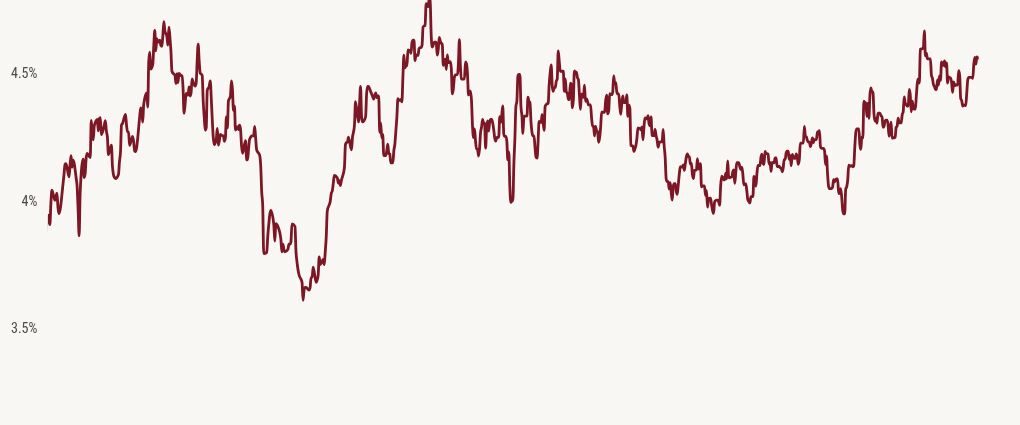
Can mortgage rates survive hawkish Fed talk during inflation week?
It’s inflation week and the continuation of the Iran conflict has complicated how the 10-year yield and mortgage rates may react to the inflation data. Even though oil prices have fallen sharply, many Fed hawks haven’t said anything positive about that change. In fact, some have even gotten more hawkish, believing lower oil prices can be inflationary because people can spend more.
So what will be the key drivers during this inflation week, with the conflict still a big question in the market? Let’s take a look.
Key insights on the Fed and inflation
I have written extensively on some of the recent Fed statements after oil prices fell, noting it doesn’t seem like they care much about that data. Certain Fed members even made higher oil prices a big part of a new hawkish stance, saying elevated oil and food prices would make it harder for inflation to fall. But now that oil prices are down, some of those same Fed members have said that lower oil prices can keep inflation up by spurring more demand.
Here are some recent statements from the Fed, and be mindful that this was said after oil prices had fallen.
Today, Fed Governor Christopher Waller, formerly a big dove, said this in a speech at the New York Association for Business Economics:
- “A rate hike should be on the table if this week’s inflation data come in hot.”
- “Inflation becomes like pornography. I can’t define it…[but] I know it when I see it. That’s not how central bankers should think about inflation.”
Those statement are on top of comments Waller made last week at a conference in Rome:
- “So I was willing to tolerate a longer movement back toward 2% target based on the labor market. But … those risks have completely flipped around now. The labor market seems to be stabilizing in the U.S., and inflation’s been taking off. So then that changes how you might want to think about policy.”
Cleveland Fed President Beth Hammack said this on CNBC June 30:
- “If consumer data holds up, Fed policy may not be restrictive enough.”
- “Inflation is still too high, Fed may need to consider rate hikes.”
- “Job market is right around full employment, growth looks good.”
Minneapolis Fed President Neil Kashkari said this at the Aspen Ideas Festival on June 26:
- “I have penciled in one rate hike in 2026.”
We also learned from New York Fed President John Williams, a dove, what he needs to see on inflation data to warrant a rate hike. Basically, he said that as long as core inflation is pricing 0.2% on a month-to-month basis, we should be fine; anything more than that needs a response https://www.wsj.com/economy/central-banking/warshs-first-big-call-whether-to-undo-last-years-cuts-cdcdb367?st=KZAonB&reflink=desktopwebshare_permalink
In short, whatever headline improvement we get from the fall in oil prices might now move the needle with the doves, as long as the month-to-month prints are running above 0.2%. This type of repricing of Fed policy is really showing itself with the 10-year yield as the conflict has dragged on.
Core inflation, not headline inflation, is what matters here. I know it’s confusing; the Fed made the conflict with Iran the basis of their hawkish stance and now they’re running away from falling oil prices, which will really benefit headline inflation. We will see headlines move around year-over-year data, as in the chart below, but the Fed is more focused on month-to-month core prints.

Conflict still brewing
Even though oil prices have fallen sharply, the conflict is still pushing yields higher; it did so last week, and this Monday morning the 10-year yield was still at 4.60%. We simply can’t continue to have a lack of clarity here forever; at some point, something needs to be done to make this drama end, or the bond market, even with lower oil prices, will still go higher with more conflict headlines.
If the bond market had acted differently, we would be having another conversation altogether. However, a hawkish Fed, inflation above target and the conflict still going on have pushed yields higher recently.
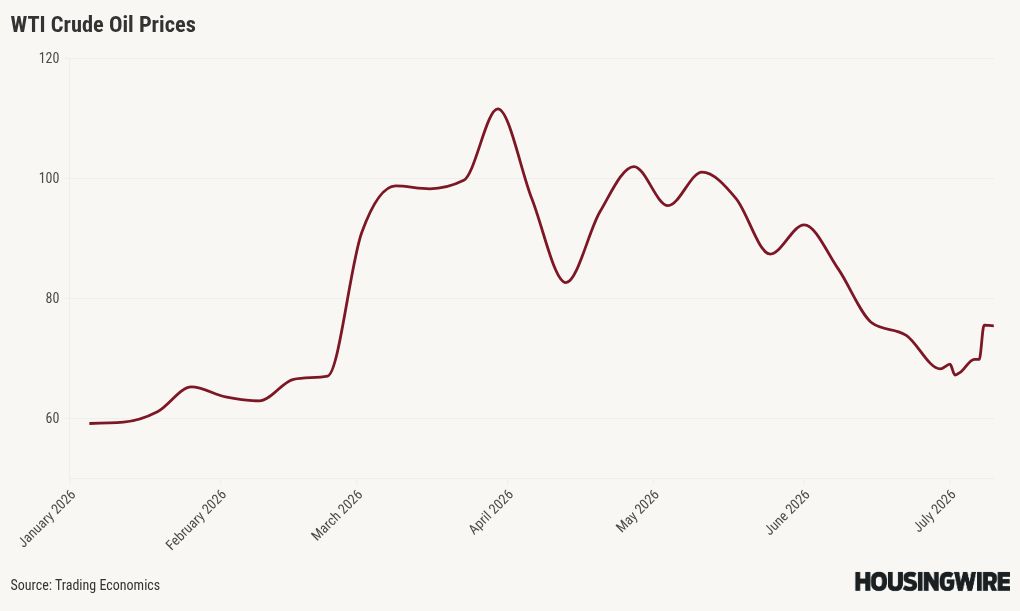
Conclusion
For this week, we can hope for some better news on the conflict and keep an eye out on core inflation data month to month. Even though we might see some better headline inflation numbers now with oil prices lower, a lot of Fed members simply don’t care about that, and until they say otherwise, we need to take that seriously. Let’s keep an eye out on that month-to-month core inflation prints this month as we get the Fed meeting at the end of the month.

One Late Student Loan Payment Could Cost Borrowers Thousands Under New RAP Plan
Federal student loan borrowers who sign up for the government’s new Repayment Assistance Plan (RAP) stand to lose two of its most valuable protections the moment they miss a due date, even by a single day, according to loan specialists and U.S. Department of Education rules that took effect this month. Higher-education expert Mark Kantrowitz warned this weekend that a payment even one day late under the plan “will cost you” in benefits that otherwise save borrowers money.
RAP, which became available on July 1, is the newest income-driven repayment option created under the FY2025 reconciliation law signed a year ago. Monthly payments range from 1% to 10% of a borrower’s adjusted gross income, rising with earnings, and any remaining balance is forgiven after 30 years. Nearly 46,000 borrowers have already applied, according to Nicholas Kent, a senior U.S. Department of Education official, who announced the figure on X earlier this month.
The appeal of the plan rests on two features designed to stop loan balances from growing, and both depend on making payments on time. The first is an interest waiver that erases any monthly interest not covered by a borrower’s payment, preventing balances from increasing. The second is a matching principal benefit. If an on-time payment reduces principal by less than $50, the government contributes enough to bring that reduction up to $50. Rich Williams, a former deputy assistant secretary at the department and now an executive at loan-guidance firm Summer, said both benefits disappear for any month a payment arrives late.
What makes RAP particularly strict is how quickly the penalty applies. Kantrowitz noted that older income-driven repayment plans generally include a grace period before a payment is officially considered late, but RAP offers no such cushion. A late payment also does not count toward loan forgiveness under either RAP’s 30-year forgiveness schedule or the Public Service Loan Forgiveness program, which cancels eligible debt after 120 qualifying payments. Borrowers still receive the plan’s $50 monthly credit per dependent, even if a payment is late, but they lose both the interest waiver and the principal-matching benefit.
There is another potential pitfall. Williams cautioned that borrowers who pay more than the required monthly amount could unintentionally place their loans into “pay ahead” status. That designation may also prevent them from receiving the interest waiver and matching principal benefit. His recommendation is simple: pay exactly the amount due and make sure it arrives on time.
To help borrowers avoid missing payments, the department is encouraging automatic payments by offering an incentive. Enrolling in autopay reduces a borrower’s interest rate by 1 percentage point through June 30, 2028. Borrowers whose income declines are also encouraged to contact their loan servicer promptly so monthly payments can be recalculated before financial hardship leads to missed payments.
The issue reaches beyond individual borrowers. The Federal Reserve Bank of New York reported that nearly 10% of federal student loan balances were 90 days or more delinquent at the end of 2025. Rising delinquencies can damage credit scores and increase borrowing costs for mortgages, auto loans and credit cards.
RAP also replaces a far more generous repayment structure for many borrowers. Unlike the previous SAVE plan, RAP requires a minimum monthly payment of $10, with no option for a $0 payment. Consumer advocates, including the Institute for College Access and Success, argue the new system requires borrowers to pay more over a longer period while eliminating several hardship protections. The administration has defended the approach, arguing that even modest monthly payments help borrowers stay engaged with their loan servicers and reduce the likelihood of long-term default.
For the roughly 40 million Americans with federal student loans, the lesson from financial experts is straightforward: under RAP, paying on time is no longer just important—it is essential. Missing a due date by even a single day can eliminate benefits designed to reduce balances and accelerate repayment.
Borrowers considering the switch are encouraged to compare available repayment options through the federal student aid website before enrolling, as repayment history earned under RAP cannot later be transferred to another plan to shorten the path toward loan forgiveness.
JBizNews Desk | New York
© JBizNews.com All Rights Reserved. Reproduction or distribution without written permission is prohibited.

Developing Leader Spotlight: Opening Doors for the Next Generation
Michael Tait has built his commercial real estate career around relationships – and now he’s using those relationships to help open doors for the next generation of industry leaders. Tait, a recipient of the 2025 Developing Leaders Award, successfully revived the mentorship program of CREDA Maryland, which had previously struggled to get off the ground. Through his strategic vision and concerted efforts, Tait created a new structure for the program that has facilitated frequent meetings and long-lasting relationships between mentors and mentees.
In his role as a leasing representative with St. John Properties, Tait is responsible for the leasing efforts of an office and flex portfolio totaling more than 2.6 million square feet of space. He manages all facets of the leasing process from conducting tours, proposals and lease negotiations to collaborating with in-house design, interior construction and property management.
Tait is an active member of the CREDA Maryland chapter, including serving as a chapter board member and Developing Leaders chair. He is also a board member of both the Army Alliance and the Touchdown Club of Annapolis.
CREDA asked this passionate and driven young leader about his path to commercial real estate and his work with his chapter.
CREDA: Can you talk about a project or initiative you’re particularly proud of and what you learned from it?
Tait: One project that I’m particularly proud of is re-starting CREDA Maryland’s mentorship program. I’ve been fortunate enough to have a few wonderful mentors and coaches throughout my life and career, and I want to give back to those coming up in the industry. I believe strongly that to be successful, not only in this industry but overall, you need to have strong mentors who are invested in your success. If we’re able to open the door to new relationships between industry veterans and young Developing Leaders, that will not only help those involved but also the local CRE industry as a whole.
CREDA: How do you continue to grow and develop as a leader?
Tait: As a leader, I believe staying curious and asking “why” is key to growth. I actively listen and ask thoughtful questions to gain deeper insights and diverse perspectives. This approach clarifies challenges, fosters collaboration and sparks creative solutions. It keeps me adaptable and committed to evolving as a leader.
CREDA: What motivated you to get involved in commercial real estate?
Tait: With my mother working in the legal department for a national real estate investment trust, my uncle in property management and my aunt handling lease administration, commercial real estate was undoubtedly in my DNA. Despite earning a degree in kinesiology with dreams of training athletes, I quickly pivoted to CRE when I realized my talents in sales and developing relationships would take me further. While the path was slightly circuitous, I firmly believe I made the right decision and never looked back.
What is one piece of practical advice you would give to Developing Leaders who are just starting out in their careers?
Tait: My biggest piece of advice would be to find a good mentor (whether in your organization or outside), that you’re able to be open with, while receiving their honest and constructive feedback. This person should be someone who celebrates the wins while helping work through challenging times – and there will be both.
CREDA: What is something you’re passionate about?
Tait: I’m very passionate about hockey – it’s been a huge part of my life. I’ve played since I was a few years old and coached for a few years after I finished playing. I am a huge fan of the Washington Capitals.
Read more about the 2025 Developing Leaders Award winners in Development magazine. Recipients of the 2026 Developing Leaders Award will be announced this summer.


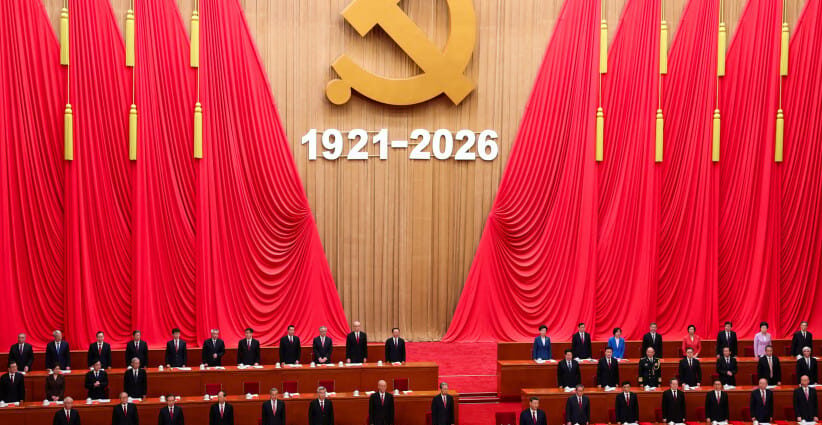
China’s missile test shows the defense‑tech race is now about networks, not platforms – opinion
At 12:01 p.m. Beijing time on July 6, 2026, a Chinese strategic nuclear-powered submarine launched a long-range ballistic missile carrying a dummy warhead toward designated international waters in the South Pacific.
According to China’s official account, the missile landed accurately within the designated maritime area. Beijing described the launch as a routine element of its annual military training, conducted safely and in accordance with international law. Yet the precise launch location, flight path, impact coordinates, range, missile type, and submarine class were not publicly disclosed.
Those omissions are important. They are also part of the story.
The United States said it received only a few hours’ notice and insufficient technical information before the launch. Washington argued that the notification fell considerably short of the standards observed by the other recognized nuclear-weapon states. Australia, New Zealand, Japan, and Taiwan also expressed concern about the launch, its limited transparency and its potential effect on regional stability.
The missile carried a dummy rather than a nuclear warhead. Nevertheless, the platform and the capability being demonstrated were inherently strategic. Analysts believe the launch may have involved a Type 094 ballistic-missile submarine and either a JL-2 or the more advanced JL-3 submarine-launched ballistic missile.
The exact configuration has not been officially confirmed. If it was a JL-3, its estimated range of up to approximately 10,000 kilometers would represent a major increase in China’s ability to hold distant targets at risk while operating closer to protected Chinese waters.
The political timing was equally striking. On the same day, Australian Prime Minister Anthony Albanese and Fijian Prime Minister Sitiveni Rabuka signed the Ocean of Peace Alliance in Suva. The agreement established Fiji’s first formal mutual-defense alliance and committed Australia and Fiji to assist one another if either were attacked.
There is no publicly established evidence that China timed the missile test as a direct response to the agreement. Still, the concurrence of the two events captured the changing strategic character of the Pacific: China demonstrating a survivable, sea-based strategic capability while American partners were strengthening their regional network of formal security commitments.
The launch was therefore far more than another weapons test. It was a visible marker of the transition from an international system in which American military predominance was largely assumed to an era of sustained strategic competition between the United States and China.
No longer just about land
That competition is not limited to ships, missiles, or territorial disputes. It extends across the foundations of 21st-century power: artificial intelligence, advanced semiconductors, computing infrastructure, space systems, energy, autonomous platforms, industrial capacity, and secure supply chains.
For decades after the Cold War, the United States possessed a combination of advantages unmatched by any competitor: the world’s most capable military, a global network of bases, leading technology companies, deep capital markets, a powerful research ecosystem, and an extraordinary ability to project force across continents and oceans.

China has spent more than two decades constructing a long-term strategy to narrow those gaps and, in several fields, to change the terms of competition altogether.
The People’s Liberation Army Navy is now the world’s largest navy by number of battle-force ships. The Pentagon projected that it would reach approximately 395 ships by 2025 and 435 by 2030, not including dozens of smaller missile-armed patrol craft.
The significance lies not only in fleet size but also in the industrial system behind it: China possesses enormous commercial and military shipbuilding capacity and can construct naval platforms at a scale that the United States and many of its allies currently struggle to match.
China has also developed a dense network of land-based ballistic and cruise missiles, anti-ship systems, hypersonic weapons, space-based sensors, cyber capabilities, electronic warfare systems, and increasingly sophisticated unmanned platforms.
The objective is not simply to replicate the American force structure.
It is to constrain it.
Rather than competing only platform against platform, Beijing has developed an integrated military architecture designed to threaten forward bases, complicate carrier operations, disrupt command networks, and limit an adversary’s freedom of action across the Western Pacific.
This approach is commonly associated with anti-access and area-denial. But its contemporary form is broader: it combines long-range precision strike, surveillance, space, cyber, electronic warfare, and artificial intelligence into a single operational problem for the United States and its allies.
Principal testing ground
The Indo-Pacific has become the principal testing ground for this emerging balance.
China has intensified military activity around Taiwan, including large-scale air and naval exercises, simulated blockade operations and increasingly frequent crossings of previously observed informal boundaries. It has expanded coast guard and maritime militia operations in the South China Sea, pressured the Philippines and other regional claimants, operated carrier groups beyond the First Island Chain and increased naval cooperation and joint patrols with Russia.
The July 6 submarine launch added a nuclear dimension to this pattern.
For decades, the strategic deterrence of the major nuclear powers has rested on the Nuclear Triad: land-based missiles, strategic bombers, and ballistic-missile submarines. Each component serves a different function, but the sea-based element is especially important because of its survivability.
A ballistic-missile submarine hidden beneath the ocean is difficult to locate and destroy. It can preserve a country’s ability to retaliate even if its land-based forces and command infrastructure are attacked. That credible second-strike capability is one of the foundations of stable nuclear deterrence.
China has historically maintained a smaller nuclear force than either the United States or Russia and formally retains a no-first-use policy. However, the scale and sophistication of its nuclear modernization are changing rapidly. The Pentagon assessed that China had more than 600 operational nuclear warheads by mid-2024 and remained on track to exceed 1,000 by 2030.
China is simultaneously expanding its land-based missile silos, mobile launchers, bomber capabilities, and sea-based forces. The July 6 launch should therefore be understood as part of the maturation of a more credible and survivable Chinese Nuclear Triad, not merely as the test of an isolated missile.
Yet the larger strategic lesson extends beyond nuclear weapons and beyond China.
National power in the emerging era will not be measured only by the number or sophistication of military platforms available on the first day of a conflict. It will also be measured by a country’s capacity to absorb shocks, protect critical infrastructure, replenish inventories, secure supply chains, update software, learn from operational experience, and produce improved capabilities throughout a prolonged confrontation.
Strategic resilience
The war in Ukraine exposed this reality with unusual clarity. Precision-guided weapons, artillery ammunition, air-defense interceptors, drones, sensors, and electronic-warfare systems have been consumed at rates that challenged assumptions built during decades of limited wars. Systems that took years to develop and stockpile could be depleted in weeks or months.
The relevant question is therefore no longer only which side possesses the superior weapon at the beginning of a conflict.
The more consequential question is which side can learn, adapt, and manufacture faster by day 100, day 500, and beyond.
This is the essence of strategic resilience.

It also leads to a concept that should become increasingly central to Western security policy: Joint Resilience.
Traditional alliances have often been measured through treaties, troop deployments, military bases, and weapons sales. These remain essential, but they are no longer sufficient. Future alliances must also be capable of creating shared strategic depth before a crisis begins.
Joint resilience means trusted and diversified supply chains, interoperable digital architectures, shared research and development, co-production of critical systems, distributed manufacturing, common data standards, resilient communications, cyber cooperation, and the rapid integration of artificial intelligence and autonomous systems.
It means moving from a relationship based primarily on transferring completed products to one based on jointly creating, producing, maintaining, and continually improving capabilities.
This is where alliances become a distinctive strategic advantage for the United States.
China possesses immense scale, industrial discipline, and a rapidly modernizing military. But the United States possesses something that cannot be measured solely in ships, missiles, or factories: an extensive network of allies and partners across Europe, the Indo-Pacific, and the Middle East.
The strategic value of that network is not automatic. It must be activated, modernized, and connected. Allies must become more than diplomatic supporters or customers. They should contribute to a resilient, distributed ecosystem of technology, production, intelligence, and operational learning.
Back to Israel
This brings us to Israel.
During the 23 years in which I had the privilege of participating in the development of defense capabilities for the State of Israel, I repeatedly learned that lasting military advantage is never created by technology alone.
It is created by people, trust, shared responsibility, and the ability to build enduring partnerships.
Many of Israel’s most important capabilities were strengthened through deep cooperation with the United States. That relationship has never been based solely on transactions or immediate operational requirements. At its strongest, it has rested on shared values, mutual confidence, and a genuine understanding that each country contributes to the security and resilience of the other.
Israel is geographically small, but its security environment has produced a distinctive innovation model. Operational users, engineers, researchers, defense organizations, and private companies operate within unusually short feedback loops. Battlefield needs can be translated into technological requirements, prototypes, and operational systems with exceptional speed.
Israeli innovation was not born from comfort. It was born from necessity.
In an era in which adaptation speed is becoming a defining measure of national power, that experience is a strategic asset not only for Israel, but for the broader alliance system of the free world.
The United States brings unmatched global reach, industrial depth, resources, research capacity, and scale. Israel brings operational urgency, agility, technological creativity, and the ability to transform emerging problems into deployable solutions.
The next stage of the US-Israel relationship should therefore extend beyond traditional security assistance, procurement, and bilateral development programs. It should become a model of joint resilience: shared development, reciprocal production capacity, protected supply chains, common technological infrastructure, and the ability to accelerate solutions across both defense ecosystems.
China’s submarine-launched missile test in the Pacific was a reminder that the future strategic order is already taking shape.
It will not be determined solely by which country builds the largest fleet, the longest-range missile, or the most advanced individual platform.
It will be determined by which nations can combine technological superiority with industrial endurance, which can learn and adapt under pressure, and which can transform networks of trusted partners into real strategic power.
In this new era, alliances are not merely relationships between nations.
They are a fundamental pillar of deterrence.
IMF Signals It Will Weigh In on Fed’s Communication Overhaul
The International Monetary Fund said Thursday that it plans to engage with the Federal Reserve as the U.S. central bank reviews how it communicates monetary policy, a process that could significantly reshape how financial markets interpret future interest-rate decisions.
Speaking during a media briefing, IMF spokesperson Julie Kozack said forward guidance has been an effective policy tool, particularly when interest rates were near zero, but added that it is appropriate for central banks to reassess their communication strategies as economic conditions evolve.
Her comments followed remarks made a day earlier by Petya Koeva Brooks, Deputy Director of the IMF’s Research Department, who said the organization is closely monitoring the Federal Reserve’s review and expects to engage with policymakers over the coming months. Brooks emphasized that clear communication remains essential for helping markets understand how central banks evaluate economic developments and respond to changing conditions.
At the center of the discussion is Federal Reserve Chairman Kevin Warsh, who has moved quickly since taking office in May to reduce the Federal Reserve’s reliance on detailed forward guidance. During his first policy meeting, Warsh supported a shorter post-meeting statement that removed several references to the likely direction of future interest rates. Speaking last week at the European Central Bank’s annual conference in Sintra, Portugal, Warsh argued that central banks should respond to actual economic conditions rather than making commitments based on forecasts that may quickly become outdated.
Warsh’s position reflects a broader shift among global central bankers. European Central Bank President Christine Lagarde, Bank of England Governor Andrew Bailey, and Bank of Canada Governor Tiff Macklem all expressed reservations about extensive forward guidance during the same conference. Former IMF Chief Economist Pierre-Olivier Gourinchas has also argued that central banks should move away from rigid policy commitments that limit their ability to respond to rapidly changing economic conditions.
The debate extends well beyond central banking circles because forward guidance has become one of the most influential tools shaping financial markets. By signaling likely future interest-rate decisions, the Federal Reserve influences everything from mortgage rates and business borrowing costs to corporate investment decisions and stock valuations. Less guidance means investors, lenders and businesses must rely more heavily on incoming economic data rather than central bank projections.
For businesses, the shift presents both opportunities and challenges. Greater flexibility allows policymakers to respond more quickly when economic conditions change unexpectedly. At the same time, reduced predictability can make long-term planning more difficult for companies making major investments, financing expansion projects or evaluating hiring decisions.
The IMF’s decision to closely follow the Federal Reserve’s review highlights the global significance of the discussion. Changes in how the world’s most influential central bank communicates policy could ultimately influence communication strategies adopted by other central banks around the world, affecting financial markets far beyond the United States.
As inflation, interest rates and geopolitical uncertainty continue shaping the global economy, investors will be watching closely to see whether the Federal Reserve fundamentally changes how it communicates monetary policy—and how markets adapt if the era of detailed forward guidance begins to fade.
JBizNews Desk | Washington
© JBizNews.com All Rights Reserved. Reproduction or distribution without written permission is prohibited.

Knesset passes contentious haredi-backed bill to enshrine Torah study in Israel’s Basic Law
The Knesset’s plenum passed on Monday the contentious legislation advanced by the haredi (ultra-Orthodox) parties that will enshrine Torah study as a fundamental value in the country’s Basic Law.
The bill passed in its final readings with 63 lawmakers in favor and 52 against.
Critics argue the Basic Law: Torah Study bill encourages draft evasion and changes the status of yeshiva students who do not serve, enabling them to continue receiving state benefits even amid the IDF’s severe manpower shortage.
Its passage comes after weeks of threats from haredi party leaders to boycott coalition voting and disrupt the legislative agenda in an attempt to pressure Prime Minister Benjamin Netanyahu’s coalition to rapidly advance a series of haredi-backed bills.
The bill states that “Torah study is a fundamental value in the heritage of the Jewish people and in the State of Israel.” Israel does not have a constitution. Instead, it has a series of Knesset-legislated basic laws on various subjects that hold a high legal status.
Opposition leader Yair Lapid and a group of other opposition party leaders signed a letter ahead of the vote calling on coalition Knesset members to “act responsibly and not vote in favor of legislation that would severely harm the IDF during wartime, in defiance of the dramatic warning issued by the IDF chief of staff.”
“The shameful role of those who support the draft-evasion law will remain forever before the eyes of the citizens of Israel who serve in the military and participate in the workforce,” the letter said.
Coalition blitzing to pass legislation before Knesset recess
The bill is part of the coalition’s legislative blitz to pass its legislation during the Knesset’s last week before it goes into recess ahead of the elections.
The agenda has been packed with contentious bills, such as the bill to weaken the role of the attorney-general, along with legislation for a sweeping reform of Israel’s broadcasting sector.
Haredi parties have boycotted votes on coalition legislation when their bills were not advancing quickly enough.
The Torah Study bill had previously called for “creating a balance” in Torah study as a fundamental value, leading to severe legal warnings.
That clause threatened to stall the bill’s progress before it was removed after a coalition agreement with the haredi parties last week.
Both coalition and opposition lawmakers have warned that even with the change to the wording, the essence of the law has not been altered.
The Israel Democracy Institute (IDI) warned that a concern remains that “elevating Torah study to constitutional status could be used as a basis to justify future attempts to exempt haredim from the IDF and to continue funding yeshivas and subsidies for haredi draft evaders, as well as [for] education institutions that do not teach the core curriculum.”
The Torah study bill is part of a series of haredi-backed bills being advanced, amid numerous reports of agreements between the haredi parties and Netanyahu.
There had also previously been contentious wording in the bill’s proposal that equated those who study Torah with those who serve in the IDF. This comparison has since been removed from the legislation’s new draft.
Critics argued that the legislation could implicitly allow the comparison despite the change in wording.
Coalition members publicly opposed legislation
Lawmakers in Netanyahu’s coalition have publicly opposed the legislation and voted against it.
Netanyahu arrived at the plenum last month to vote in favor of the legislation when it passed its first reading.
The haredi parties have continuously encouraged the coalition to advance legislation that would not increase haredi enlistment. The IDF has repeatedly warned of an urgent manpower shortage after more than two years of war.
In April, the High Court of Justice ordered that the state take concrete steps to revoke key financial benefits from draft evaders and move toward criminal enforcement against haredi men who evade military service.
In March, IDF Chief of Staff Lt.-Gen. Eyal Zamir said the IDF could soon collapse if no solution was found for the manpower shortage.
Separate legislation has been advanced that would temporarily freeze the arrests of haredi draft evaders.
The bill to freeze such arrests is set to be voted on in the Knesset plenum in its final second and third readings after a week of marathon committee meetings on the matter.
Zamir warned on Monday that the bill to freeze the arrest of draft evaders would harm recruitment and create serious security risks for the IDF, penning a letter to Defense Minister Israel Katz on the matter.

Renewed US blockade on Iranian ports in Strait of Hormuz closer pushes region closer to open war
CENTCOM on Monday night renewed its counter-blockade on Iran at the Strait of Hormuz following several days of conflict between the US and the Islamic Republic over freedom of travel through the waterway.
Tehran had attacked a number of US-allied ships last week.
Initially, the US undertook limited targeted counterstrikes at Iranian assets around Hormuz to convince Iran to back down.
However, each time the US struck the Islamic regime, Tehran also attacked US bases and allies across the region, from Kuwait to Jordan to Bahrain.
Eventually, US President Donald Trump ordered CENTCOM to “resume blockading maritime traffic entering and exiting Iranian ports on July 14 at 4 p.m. ET.”
CENTCOM redirects 140 ships, disables nine
“CENTCOM forces will enforce the blockade against vessels transiting to or from Iranian ports and coastal areas. The US military continues to support traffic flow through regional waters for all vessels not violating the blockade,” said the US military.
Next, CENTCOM stated that, “The resumption of the US blockade against Iran follows the initial implementation from April 13 to June 18. CENTCOM forces redirected more than 140 compliant vessels, disabled nine non-compliant ships, and allowed over 50 commercial vessels supporting humanitarian aid to pass through the blockade during the two-month period.”
“All mariners are advised to monitor Notice to Mariners broadcasts and contact US naval forces on bridge-to-bridge channel 16 when operating in the Gulf of Oman and Strait of Hormuz approaches,” said CENTCOM.
It was unclear whether the reinstituted blockade will lead to a return to open war between the parties, to an extended period of “chicken” in which both sides blockade the other to see which side blinks first from the economic harm they are suffering, or whether both sides will shortly return to negotiations over both fully opening Hormuz and addressing Iran’s nuclear weapons program.

Getting to the heart of the Ro Khanna incident – analysis
Both the IDF and members of US Representative Ro Khanna‘s entourage released additional information on Monday about the incident last week in which he was detained (his entourage and their vehicle were prevented from traveling) for around an hour during a visit to the West Bank.
According to both on- and off-the-record information, extensive questioning of both sides and newly released video evidence, this picture that emerges is in some ways less worrying than the original reports, but in some ways shows what a quagmire Israel has tangled itself in in parts of the West Bank and in its crashing levels of support in the US.
It seems in the end that the Jewish settlers who stopped Khanna’s vehicle from leaving the area it was in did believe that he had traveled illegally into a closed military zone.
But this point does not really work in Israel’s favor.
Khanna had said his group’s van was surrounded by settlers wielding M-4 rifles, while touring Khirbet Zanuta – whose Palestinian residents were forcibly displaced by settler raids in December 2024.
In the end, it turned out that the area was no longer a closed zone, and even when it was, it probably had been so to keep vigilante settlers away from harassing the Palestinians there, not to prevent a prominent US Congressman from touring the site.
However, Khanna did not do himself any favors here either.
Khanna did not coordinate with IDF
He did not coordinate his travel through the area with the IDF, such that not only was there no official protection for him, but IDF officials also did not know he was in the area to give special instructions to soldiers should they by chance encounter him.
But this also does not really help Israel, as vigilante settlers do not have the right to take the law into their own hands and detain people.
Maybe they could report the incident to the police, as they did, and even keep an eye on someone suspicious, but not detain them.
What follows next is a series of confusing and incompetent actions, which somewhat gets Israel off the hook of accusations of deliberate harassment, but does not entirely help since Israelis are in charge in the area, and so responsible for messes.
The settlers reported a suspicious car in a closed area to the police; the police reported it to the IDF, which sent some young soldiers to check out the situation.
Soldiers did not actively remove settlers
Contrary to original IDF reports, the IDF soldiers did not really actively try to move the settlers out of the area, as they viewed them as having helped them and the police locate a suspicious car.
As far as the soldiers were concerned, they were babysitting the suspicious car temporarily until the police showed up to handle the situation.
However, since it in the end was not even a closed zone, the soldiers had no right to keep Khanna until police arrived.
Moreover, at one point, Nadav Weiman, who was with Khanna, approached the soldiers and informed them that Khanna was with the entourage and that the entourage had spoken to the police headquarters, which had said the soldiers should let Khanna leave.
Not only did the soldiers not let Khanna leave, but one of them asked Weiman whether he was an official in Breaking the Silence (he is), as if ready to punish Khanna to get back at Weiman for being a member of a group many in the IDF dislike.
The soldiers said they would wait for a police official to show up physically before letting Khanna go.
This part of the standoff went on for either 20 or 40 minutes, depending on which side you ask.
Eventually, a police official arrived, and minutes earlier, the settlers had run from the scene, as if to signal they understood they should not have been there.
The IDF has said it identified at least one settler, who was an IDF officer off duty and is “clarifying” with him regarding his role – something which sounds like a small censure, but not major disciplinary actions.
What the soldiers could have done, once they heard a senior US official was there, was to call the police headquarters themselves if they did not believe Weiman, instead of making Khanna wait until a police official arrived.
Or they could have just let them go, given that Khanna was a senior US official and, other than driving into an area that might have been questionable, appeared to pose no threat.
Going forward, Israel would need to ensure that settler vigilantes cannot detain third parties outside of their specific village security zone, and to prosecute settlers who take the law into their own hands, well-intentioned or not. Also, IDF soldiers would need to be ready to treat US officials and other Western diplomats as the VIPs that they are, not leaving them sitting and detained for an hour out of a failure to understand the situation.
This is important not only as a matter of competence, but to avoid falling into the trap of future visitors who may seek to set up Israeli soldiers for a fall so as to embarrass Israel in the global sphere.
What the ROAD to Housing Act means for agents, homebuyers
The 21st Century ROAD to Housing Act is now the law of the land after President Donald Trump allowed a constitutional deadline to pass without signing or vetoing the bipartisan legislation.
Legislation — widely regarded as the most comprehensive federal housing package in decades — cleared the Senate on an 85-5 vote and passed the House on a 358-32 vote before reaching Trump’s desk.
Trump had previously canceled a planned bill signing ceremony and later announced he would not sign the legislation as part of a protest tied to the stalled SAVE America Act, an unrelated elections proposal.
Bill provisions are intended to address the nation’s housing affordability crisis by encouraging more housing production, reducing regulatory barriers, expanding financing opportunities and increasing access to homeownership.
Supporters from both parties said the legislation becoming law marks a significant milestone.
“With or without the president’s signature, the Road to Housing Act becoming law is a win for Virginians and families across the country,” said Sen. Mark Warner, D-Va. “As housing prices reach near-record highs, this bipartisan legislation will deliver real relief to veterans, renters, first-time homebuyers and rural residents in Virginia and across the country.”
Rep. Mike Flood, R-Neb., who helped lead the legislation in the House, called the measure a major bipartisan accomplishment.
“I am thrilled that the ’21st Century ROAD to Housing Act’ is now officially law,” Flood said. “While the journey was long and, at times, delicate, we arrived at the right outcome with a meaningful bipartisan housing bill that slashes red tape, lowers housing costs and helps put the American dream of homeownership within reach for more hardworking families.
“Simply put: This is legislation that the American people can be proud of.”
What the law does
The legislation targets one of the biggest drivers of high housing costs — a shortage of available homes.
Its provisions include streamlining portions of the federal review process for qualifying housing developments, promoting manufactured and modular housing, creating an FHA small-dollar mortgage pilot program, increasing FHA multifamily loan limits and authorizing additional housing and community development initiatives.
The law also includes measures designed to limit certain future purchases of single-family homes by large institutional investors.
“The president had every opportunity to sign this bipartisan bill into law, and he refused to, but the housing affordability crisis cannot wait,” Warner added. “This landmark law will boost the housing supply while lowering costs, protect veterans and renters and prevent housing in rural areas from being bought up by corporate investors.
“With the passage of this legislation, American families are one step closer to affording a place to call home.”
Why it matters for real estate agents
For real estate agents, the legislation could improve market conditions over time by increasing housing inventory and creating more opportunities for buyers and sellers.
Many markets have struggled with historically low inventory — limiting transaction volume and making it more difficult for buyers to find homes. If the law succeeds in encouraging additional construction, agents could eventually benefit from more listings, stronger buyer activity and a healthier balance between supply and demand.
The National Association of Realtors (NAR) said the legislation reflects years of advocacy focused on expanding housing opportunities.
“This law combines nearly 50 carefully negotiated measures to increase housing supply, improve affordability, expand access to homeownership, strengthen housing finance and support veterans,” NAR said. “For Realtors, this law is more than a legislative victory. It shows what sustained advocacy and bipartisan leadership can accomplish to expand housing opportunities and strengthen communities nationwide.”
The FHA small-dollar mortgage pilot could also expand financing opportunities for lower-priced homes — potentially bringing more first-time buyers into the market.
Meanwhile, provisions supporting manufactured and modular housing could create additional inventory options for consumers who have been priced out of traditional single-family homes, experts say.
What it means for brokerages
Brokerages also stand to benefit if the legislation succeeds in increasing housing production.
More available homes generally translate into more transactions, benefiting residential brokerages as well as affiliated mortgage, title and settlement businesses.
Firms with strong relationships in the new-construction sector could see additional opportunities if builders respond by accelerating development.
The law’s provisions affecting institutional investors may also modestly reduce competition for some single-family homes — although the impact is expected to vary because investor ownership remains concentrated in certain metropolitan markets.
What homebuyers should know
For homebuyers, the legislation is designed to improve affordability over the long term rather than provide immediate financial assistance.
Any increase in available homes is expected to occur gradually as developments move through the construction pipeline.
Buyers should not expect an immediate drop in home prices or a sudden increase in inventory, but the law could eventually expand choices through additional housing production, manufactured housing options and improved financing for lower-cost homes.
The American Land Title Association (ALTA) welcomed the legislation becoming law, saying it represents an important step toward expanding homeownership opportunities.
ALTA CEO Chris Morton said, “This is a big win for the American people. Homeownership is one of the most important ways families build stability, security and generational wealth — and the 21st Century ROAD to Housing Act is an important step toward helping more Americans achieve that dream.”
While the law is unlikely to solve the nation’s housing affordability crisis on its own, it represents one of the most significant federal housing reforms in decades and could reshape residential real estate markets over the coming years.
This article was written by Jonathan Delozier and generated with the assistance of HousingWire Automation. It was reviewed by a HousingWire editor before publication.
NAR guidance clarifies office exclusive listings, MLS rules
The National Association of Realtors (NAR) released updated guidance last week clarifying how office-exclusive listings and pre-marketing options must operate within multiple listing services, reinforcing brokers’ duties to follow local MLS rules and the Clear Cooperation Policy.
The resource, titled “Office Exclusive Listings / Pre-Marketing Guidance,” is aimed at helping agents and brokers explain listing choices to sellers and stay compliant with MLS submission and marketing rules, according to the document.
In the guidance, NAR reiterated that an office-exclusive listing is an option a seller can choose when they want their property listed with limited exposure and no public marketing.
Under the guidance, an office-exclusive listing is filed with the MLS, shared only with agents within the listing firm, as allowed by the listing contract, is not publicly marketed and is not disseminated to MLS participants and subscribers outside the listing firm.
NAR emphasizes that the choice to use this option “belongs entirely to the seller” and must be based on the seller’s best interests, which can include health, safety, privacy or other factors that outweigh the benefits of broad market exposure and broker cooperation through the MLS.
Pre-marketing options tied to local MLS rules
The guidance also addresses pre-marketing listing options such as “Coming Soon” statuses and delayed marketing exempt listings (DMELs). These options may give sellers and listing brokers more flexibility around timing and exposure, but they must operate within MLS rules.
According to NAR, local pre-marketing options, where offered, must comply with local MLS rules, including submission requirements and deadlines and follow the seller’s informed instructions. Sample use cases cited in the document include early marketing strategies, managing property preparation timelines, generating interest before a full launch and limiting exposure before full launch.
Unlike true office exclusives, many pre-marketing statuses are still considered on-market or partially on-market. NAR notes that when a listing is already filed with the MLS and available to other participants and subscribers, the listing brokerage is in compliance, even if exposure is limited or delayed under a local status.
The guidance points out that some states, including Wisconsin, Washington and Connecticut, have enacted laws or regulatory requirements that affect pre-marketing practices. NAR urges brokers to consult state law and licensing authorities in addition to MLS rules.
Broker responsibilities: informed choice and disclosure
Before using an office-exclusive listing or a pre-marketing option, NAR says listing brokers must explain all listing options to the seller, including how each aligns with the seller’s goals, marketing strategy and best interests; secure the seller’s informed instructions; and complete required disclosures for office-exclusive and delayed marketing exempt listings.
The required disclosures must disclose the professional relationship between the MLS participant and the seller, acknowledge that the seller understands the MLS benefits they are waiving or delaying, such as broad and immediate exposure and confirm that the seller’s decision that their listing will not be publicly marketed and disseminated by the MLS (office exclusive) or will not have immediate public marketing through IDX and syndication (delayed marketing).
NAR’s guidance notes that local MLSs may impose additional disclosure requirements for “Coming Soon” and other pre-marketing options.
Clear Cooperation: when public marketing triggers MLS submission
The guidance includes a compliance checklist tied to the Clear Cooperation Policy (CCP), which requires MLS participants to submit a listing to the MLS within one business day of public marketing.
If a listing is an office exclusive, NAR’s guidance outlines two scenarios as to when the listing must be submitted to the MLS. This includes if the listing is publicly marketed or if the listing broker wants to tell an outside broker or agent in a way that is not one-to-one, broker-to-broker communication.
Even if the listing broker does market it through one-to-one, broker-to-broker communication, they must obtain a disclosure ensuring that the receiving broker does not market or show the property. Any marketing or showing that reaches beyond true one-to-one contact could trigger Clear Cooperation requirements, NAR said.
Previous NAR guidance outlines one-to-one, broker-to-broker communication as directly telling one other agent or broker either verbally or in writing about a listing.
MLS, VOWs and enforcement
The document also restates NAR’s position on the MLS as a “pro-competitive, pro-consumer” system that benefits buyers, sellers and brokers through transparency and cooperation.
On virtual office websites (VOWs), NAR says that to support cooperation, fair housing and transparency — and based on prior discussions with the U.S. Department of Justice (DOJ) — all active listings in an MLS must be available through a VOW data feed.
MLSs have discretion to define “active” versus “non-active” listings, but NAR stresses that statuses must accurately represent the property’s availability. Some MLSs treat listings as non-active or off-market if the property cannot be shown, is not tracking days on market or does not have a list price.
Local MLSs are responsible for enforcing their own rules, including Clear Cooperation, and for evaluating potential violations and sanctions. Participants are expected to understand and explain those rules to clients, according to NAR.
This guidance comes as various industry players roll out pre-marketing products and others look to explore private listing networks.
This article was written by Brooklee Han and generated with the assistance of HousingWire Automation, then reviewed by a HousingWire editor before publication.

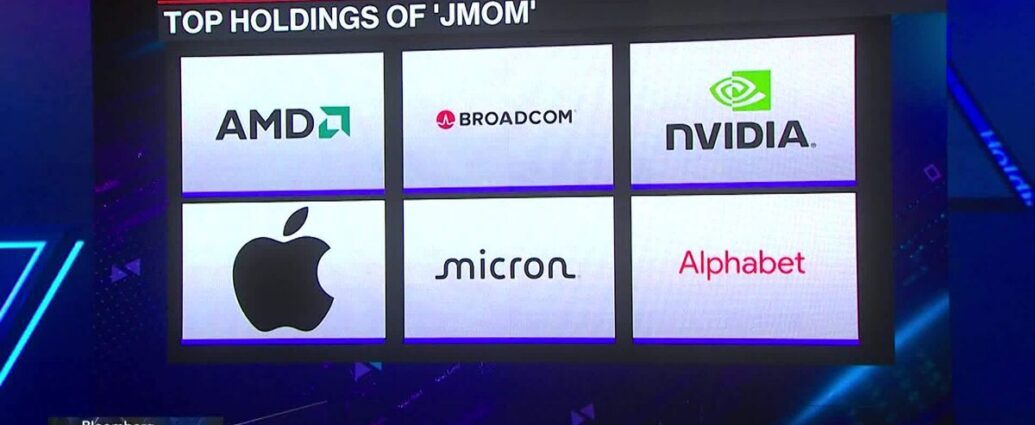
SBA Doubles Financing Limit to $10 Million for Small Businesses
Small businesses can now access up to $10 million in government-backed financing after the U.S. Small Business Administration changed its lending rules to allow qualified borrowers to combine its two flagship loan programs for the first time at their full limits.
The change, announced by SBA Administrator Kelly Loeffler and effective July 4, allows eligible businesses to obtain up to $5 million through the SBA’s 7(a) Loan Program and another $5 million through the 504 Loan Program, doubling the previous combined financing limit.
The policy change represents the largest financing expansion in the agency’s history and is designed to help growing businesses invest in facilities, equipment, working capital and expansion projects.
Under previous SBA rules, businesses were generally limited to $5 million in total borrowing across both programs.
For example, a company with an existing $3 million 7(a) loan could borrow only an additional $2 million through the 504 program.
The new policy removes that combined cap.
Qualified borrowers may now use the full financing available under each program simultaneously, creating access to as much as $10 million in total SBA-backed capital.
Although both loans remain separate and subject to individual underwriting requirements, the expanded flexibility allows businesses to finance larger growth projects while maintaining favorable government-backed lending terms.
Each program serves a different purpose.
The 7(a) Loan Program provides flexible financing that businesses can use for working capital, inventory, equipment purchases, real estate acquisitions, refinancing and general business expansion.
The 504 Loan Program, by contrast, focuses specifically on long-term investments such as owner-occupied commercial real estate, manufacturing facilities and major equipment purchases through Certified Development Companies.
Using both programs together allows businesses to finance real estate and fixed assets while preserving working capital for payroll, inventory and day-to-day operations.
Administrator Kelly Loeffler said SBA loan limits had remained unchanged for more than a decade despite significant increases in construction costs, equipment prices and business expansion needs.
She said the higher financing limits will help entrepreneurs create jobs, expand production and strengthen American manufacturing.
Manufacturers receive additional advantages under the revised policy.
Businesses in the manufacturing sector remain eligible for multiple 504 loans tied to separate expansion projects while also qualifying for the new $5 million 7(a) financing limit.
The SBA also announced temporary fee reductions through September 30 for certain manufacturing loans, including waived guaranty fees on qualifying 7(a) loans and reduced fees on eligible 504 financing.
The policy is expected to benefit capital-intensive industries including manufacturing, construction, logistics, food production and energy, where expansion projects often require significant investments in both facilities and operating capital.
Banks and Certified Development Companies are also expected to benefit from increased lending opportunities as more businesses qualify for larger government-backed financing packages.
Because SBA guarantees reduce lender risk, borrowers often receive more favorable interest rates and repayment terms than comparable conventional commercial loans.
Business owners should note that qualifying for the maximum financing remains subject to SBA eligibility requirements, lender underwriting standards, project qualifications and repayment capacity.
The new limits do not guarantee approval but significantly expand the financing available to eligible businesses.
For companies planning major expansion projects, the policy creates substantially greater access to affordable capital while allowing owners to keep more cash available for daily operations.
As interest rates remain elevated and commercial borrowing costs continue challenging many businesses, the expanded SBA lending authority provides entrepreneurs with one of the largest increases in federally backed financing opportunities in the agency’s history.
JBizNews Desk | Washington
© JBizNews.com All Rights Reserved. Reproduction or Distribution without Written Permission is Prohibited.

According to the CEO of Volkswagen, the automaker is considering 50, 000 more job cuts
.
CEO Oliver Blume stated in a letter released by Reuters that further cuts are necessary because Volkswagen is operating at a 20 % cost risk in comparison to its rivals and the carmaker recently announced plans to cut 50, 000 work across the business, including at its subsidiaries Porsche and Audi.
That circumstance, according to the memo, would result in a” conceptual deduction” of another 50, 000 work across Volkswagen’s global footprint, properly refuting earlier claims that Ford was weighing up to 100, 000 work cuts.
According to Reuters, Blume stated in the memo that” we are presently evaluating across all brands, companies, and locations how many changes are actually necessary and feasible.”
Ford RECALLS AN ABOVE 50 000 Automobiles FOR SERIOUS ENGINE FIRE RISK FROM FAULTY WIRING.
Ford, the largest manufacturer in Europe, has experienced lower profits as a result of higher price prices, fierce competition in China, and increased costs for European factories that are under pressure to improve.
Blume recently suggested that neglected factories could be used for the security industry or to create Chinese Ford models in Europe. In the memo, he stated that he favors “intelligent solutions” over the closure of facilities.
UBER PARTNERS WITH Foreign TECH GIANT TO DRIVE OUT DRIVERLESS VEHICLES OVER MANY GLOBAL Areas
He stated in the letter that Emden, Hanover, Zwickau, and Neckarsulm’s aggressive use cases are still unable to be confirmed for the company’s tenets in the 2030s.
Employees have enraged the company’s management to clarify its reform plans, which Blume presented to the agency’s leaders on Thursday.
Definitely DISCLOSED OF US MARKET AS A PERSONAL RESOURCE OF CHINA-LINKED Attached VEHICLES
According to sources with knowledge of the situation, work representatives on the committee reportedly blocked proposals that included work cuts and the potential shutdown of four factories.
Volkswagen’s statement following the meeting with stakeholders did not address work cuts or plant closures, but rather that it had plans to gradually decrease production and reduce its lineup.
Clicking HERE WILL GET FOX BUSINESS ON THE GO.
In his message to employees, Blume stated that it is natural that some problems still need to be discussed and evaluated because not everything has been planned out down to the last detail. There will undoubtedly be more discussions where we will work hard to find the best alternatives.
This report was written by Reuters.
This post was originally published here



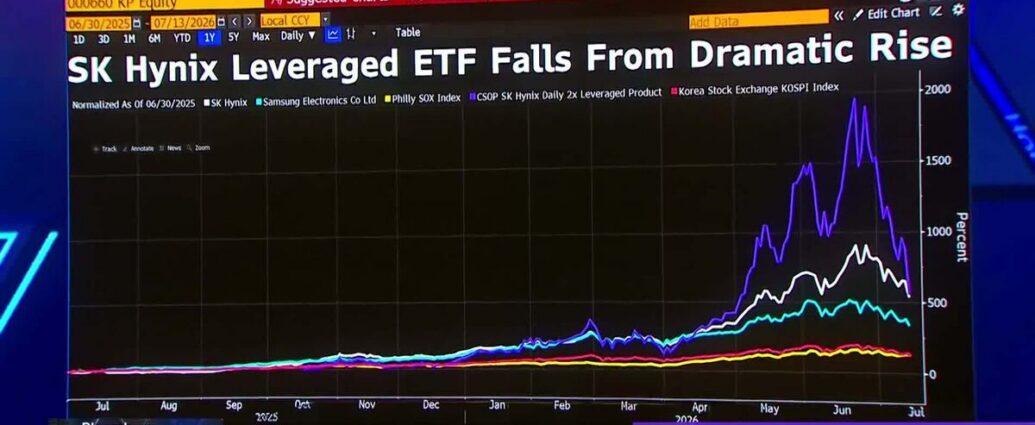




No Driver, No Ticket: Police Struggle to Make Robotaxis Obey the Road
As of July 1, California police finally have a way to hold driverless cars accountable when they break traffic laws, closing a loophole that had left officers staring into empty driver’s seats with no one to ticket. Under Assembly Bill 1777, authored by Assemblymember Phil Ting and backed by a sweeping set of California Department of Motor Vehicles regulations, officers can now issue “notices of noncompliance” to the companies that operate autonomous vehicles, rather than to a human driver who isn’t there. The manufacturer must then report each notice to the DMV. It is the most concrete answer yet to a problem that has embarrassed and frustrated law enforcement across the country: how do you enforce the rules of the road on a car with no one behind the wheel?
The absurdity of the old system was on full display last year in San Bruno, California, where officers pulled over a Waymo for an illegal U-turn only to find no driver to cite. The department joked on social media that its citation books “don’t have a box for ‘robot.’” But other incidents have been far from funny. A Waymo ran a red light in front of an officer in Phoenix. Another failed to stop for a school bus in Atlanta. In January, a Waymo struck a child near a Santa Monica elementary school during morning drop-off, prompting a federal investigation by the National Highway Traffic Safety Administration. And during a blackout in San Francisco before Christmas, stalled Waymo vehicles clogged city streets and blocked first responders.
For police and fire departments, the operational headache went beyond tickets. Officers had no clear way to move a driverless car parked in the middle of an active emergency, and no person to give an order to. The new DMV rules try to fix that. Companies must now respond to first-responder calls within 30 seconds. Local officials can draw a digital “geofence” around a disaster or crime scene, and once that order is sent, the operator is legally required to make the vehicle detour or leave within two minutes. Remote operators, the people who monitor and sometimes steer these cars from afar, must now be licensed and permitted. Companies also have to report far more data on immobilizations, hard-braking events, and collisions.
The business stakes for the autonomous-vehicle industry are real. Waymo, owned by Google parent Alphabet, runs roughly 1,000 driverless vehicles in the San Francisco Bay Area alone and is among the companies most exposed to the new framework. The cars have already piled up about $65,000 in parking tickets, a bill that will grow now that moving violations are on the table. More significant than the fines is the enforcement leverage: the DMV can restrict a company’s fleet size, speed, and operating territory, or suspend and revoke permits outright, if a manufacturer racks up violations or ignores emergency directives. For a business racing to expand city by city, that regulatory power is a direct threat to the growth story investors are counting on.
The companies are pushing back on parts of the plan. In comments on an earlier draft, Waymo objected to publicly disclosing the noncompliance notices it receives, saying it wanted to protect confidential business information. That tension, between public accountability and corporate secrecy, is likely to define the next phase of the fight as regulators in other states watch California for a model. The law also leaves a notable gap: while it spells out how citations are issued, it does not set specific fines or criminal penalties for companies that pile up repeated notices, leaving the ultimate financial consequences unclear.
Public wariness gives the crackdown its political fuel. A recent Pew Research Center survey found that only 5% of Americans have ever ridden in a driverless car, while 71% said they would feel uncomfortable doing so and just 7% called themselves very comfortable with the idea. Fresh controversies keep the technology in the spotlight. This week, police in San Mateo, California, detained two teenagers after a Waymo disabled itself and alerted authorities to suspected trouble inside, reigniting a separate debate over how much these camera-covered vehicles surveil the people around them.
For now, California has handed police a tool they lacked, and handed the robotaxi industry a new set of costs and constraints to manage. Whether a notice mailed to a corporate office carries the same weight as a ticket handed to a driver is the question the next year of enforcement will answer. As more cities welcome driverless fleets, the pressure to make the machines follow the same rules as everyone else is only going to build.
JBizNews Desk | New York © JBizNews.com All Rights Reserved. Reproduction or distribution without written permission is prohibited.


Israel’s elections trigger mad dash for scarce plane tickets for Israelis abroad
After several months in which it seemed possible that elections would be called earlier, Israel now has a date for its voters to head to the polls to pick a new government.
The Knesset House Committee on Sunday affirmed an election date of Oct. 27, the latest allowed by law, following months of political maneuvering by both the opposition and the governing coalition to force an early collapse of the government.
The determination puts Prime Minister Benjamin Netanyahu’s government on track to be the first to complete a full term in more than half a century, with the Knesset set to disperse on July 17.
The timeline means that the intense final weeks of campaigning will overlap with the three-year anniversary of the Oct. 7, 2023, attack on Israel that is looming large over the race, particularly for Netanyahu, who was in charge at the time.
It also means that Israelis living abroad – who number more than ever before – now know when they must be in Israel if they wish to vote. Unusually, Israeli law does not allow for absentee voting except in a narrow number of situations, meaning that almost anyone with an Israeli passport who lives outside of Israel must travel back to cast a ballot.
In past elections, Israelis abroad have faced tough decisions about whether to fly home to vote – most recently in 2022, when Israel had a fifth round of elections in four years.
This time around, there are even greater pressures. A record number of Israelis have moved abroad in recent years, with 70,000 leaving in 2025 alone, resulting in an unusual net migration loss for Israel. Flights, meanwhile, are historically expensive, owing to cancellations by foreign carriers amid war-induced uncertainty. At the same time, the stakes of the election are high, with analysts and politicians of all ideologies warning that Israel’s democracy is at an inflection point.
Polls show opposition in lead
Netanyahu and his supporters say reelecting him is the only way to keep Israelis and Jews around the world safe, while a wide range of opposition parties say only they can safeguard the country’s future, For now polls suggest that the opposition has a majority of voters’ support – though it’s not clear which bloc will have the necessary votes to form a government and, within the opposition bloc, which parties will command
Recent polls have shown a new party formed by Gadi Eisenkot, a former army chief whose son was killed during the Gaza war, leading among the opposition and rivaling Netanyahu’s own Likud party in its share of voters. A joint party led by the former prime ministers Naftali Bennett and Yair Lapid also has support from significant numbers of voters, as does a left-wing party led by the retired army general Yair Golan. Parties will hold primary elections in the coming weeks.
Some initiatives are already underway to help Israelis abroad get home for the election. The AID Coalition is collecting information from interested Israelis with the goal of potentially chartering flights to boost the number of people who can make the trip – though each voter will bear his or her full costs.
‘Don’t let distance silence your voice’
“Don’t let distance silence your voice,” the group tweeted on Sunday, after the election date was announced.
Meanwhile, Israeli academics have scheduled a slew of conferences in the days before the election across dozens of fields. Israeli Science and Academia Week says it “seeks to leverage the arrival of thousands of Israeli researchers from abroad to Israel during the Knesset election period to create professional meetings, encourage research collaborations, reveal new academic opportunities, and strengthen the international status of Israeli academia.”
It may also have the effect of enabling Israeli academics working abroad to get their institutions to subsidize their travel and permit them leave during the school year.
Israelis posting to social media are already noting a spike in ticket prices just ahead of Oct. 27. But many are also sharing screenshots of their ticket receipts that show the number of days until their trips – and the election.
“My entire feed is full of screenshots of flight tickets to Israel for election day. People spending money, taking time off, and coming specifically just to vote,” tweeted Avi Edelson, an anti-government activist whose LinkedIn account identifies him as working at El Al, Israel’s main airline. “It reminds me how much people care about the future of this country.”