A senior member of the Houthi political bureau, Mohammed al-Farah, warned on Monday that Yemen’s armed forces are prepared to close the Bab el-Mandeb Strait — the Red Sea’s southern gateway — if Saudi Arabia keeps striking Yemeni territory, a step he said would drive crude to $200 a barrel. Al-Farah, in remarks carried by Iran’s Press TV, said that if conditions worsen, Bab el-Mandeb and the Strait of Hormuz would be shut together in what he called an operational alliance. He said Washington had erred by pushing the Saudi government toward new aggression against Yemen, tying the threat directly to Saudi airstrikes on Sanaa International Airport.

The signal matters because Hormuz is already choked off. Iran’s Islamic Revolutionary Guard Corps has declared the Gulf waterway closed until Washington halts its strikes, and tanker traffic has collapsed — fewer than twenty ships crossed on Monday. Bab el-Mandeb is the second lock on the same door. It is roughly 26 kilometers across at its narrowest, links the Red Sea to the Gulf of Aden, and carries about 12% of global maritime trade. Hormuz carries roughly a fifth of the world’s seaborne oil and gas. Iran cannot reach Bab el-Mandeb itself. The Houthis can, and have.

The price is already moving

Brent climbed to $86.35 a barrel on Tuesday, up 3.66% in a single session and up 3.82% over the past month. West Texas Intermediate opened Tuesday at $78.08, with Brent opening at $83.11 before running higher through the day. The move followed President Donald Trump’s announcement that the United States would reimpose a naval blockade on Iranian vessels using Hormuz, alongside a proposal to charge a 20% fee on other cargo moving through the chokepoint — a toll that would have run roughly $32 million for a single supertanker against the $2 million Iran previously charged. Trump dropped the toll idea within a day. OPEC cut its 2026 oil demand growth forecast to 800,000 barrels per day.

What the analysts are saying

Fawaz Gerges, a Middle East scholar, told Reuters that Tehran is prepared to go the distance, and that threatening both chokepoints at once turns a bilateral fight with Washington into a challenge against the sea lanes carrying global energy trade.

Andreas Krieg, a senior lecturer at King’s College London’s School of Security Studies, called the Houthi threat a second break-glass option for Iran after Hormuz — one Tehran would use only if the IRGC concluded that full-scale war had become unavoidable. He cautioned that deeper American strikes on Iranian infrastructure could trigger exactly that, stacking a Red Sea shutdown on top of the damage Hormuz has already done.

Abdulaziz Sager, chairman of the Gulf Research Center, said Gulf governments increasingly believe diplomacy with Tehran has run out of room. He added that both a victorious Iran and a defeated Iran carry costs for the region, and that many Gulf states may find the second more tolerable. Sager said the Houthis retain the capability to disrupt Bab el-Mandeb but are unlikely to move without direction from Tehran — and that any attempt would likely draw a heavy U.S. response aimed at degrading the group. Dennis Ross, a former U.S. Middle East negotiator, framed Washington’s problem as changing Iran’s calculus enough to produce not just talks but a workable arrangement.

The cost already built into cargo

Businesses do not have to wait for a formal closure. The Red Sea has been functionally expensive for two years. Oil moving through Bab el-Mandeb fell from 8.8 million barrels a day to roughly 4 million during the Houthi campaign, and about $1 trillion in goods normally passes through the corridor each year. The U.S. Defense Intelligence Agency found the attacks cut Red Sea container traffic by 90% between December 2023 and February 2024, affecting 29 energy and shipping companies across 65 countries and adding roughly 11,000 nautical miles, ten days, and about $1 million in fuel to every diverted voyage.

Most major carriers — Maersk, Hapag-Lloyd, MSC, and CMA CGM — still route the bulk of Asia-to-Europe traffic around the Cape of Good Hope, adding 10 to 14 days and a 25% to 30% premium. Suez Canal throughput remains down 50% to 60% from 2024 levels. A war-risk endorsement for Red Sea transit runs 0.5% to 1.0% of cargo value, and the Red Sea premium alone adds $800 to $1,500 to a 40-foot container moving from China to the U.S. East Coast.

The timing is unkind. The Suez Canal Authority’s new temporary surcharges take effect Wednesday, raising crude tanker fees from 25% to 37% and more than doubling dry bulk surcharges from 10% to 22%. Carriers will not absorb that. It arrives on shippers’ invoices as war-risk and peak-season surcharges.

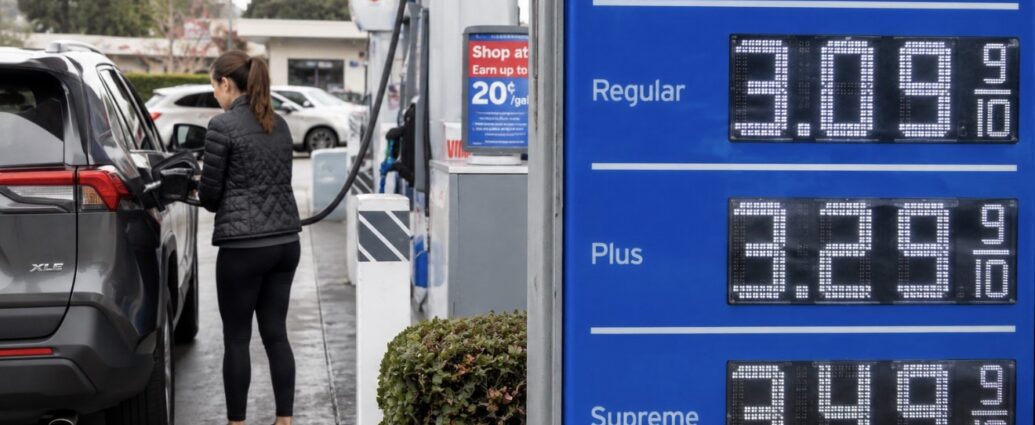
For American importers, distributors, and small manufacturers, the exposure is fuel and freight. Every dollar Brent gains feeds bunker costs, which reprice into ocean rates within days through bunker adjustment factors. Diesel follows crude, and diesel sets the floor under trucking, food distribution, and construction. A second closed chokepoint would not stay a Middle East story. It would show up in landed cost, pump prices, and fourth-quarter margins.

Whether the order comes from Tehran is now the only question that matters.

JBizNews Desk | New York

© JBizNews.com All Rights Reserved. Reproduction or distribution without written permission is prohibited.


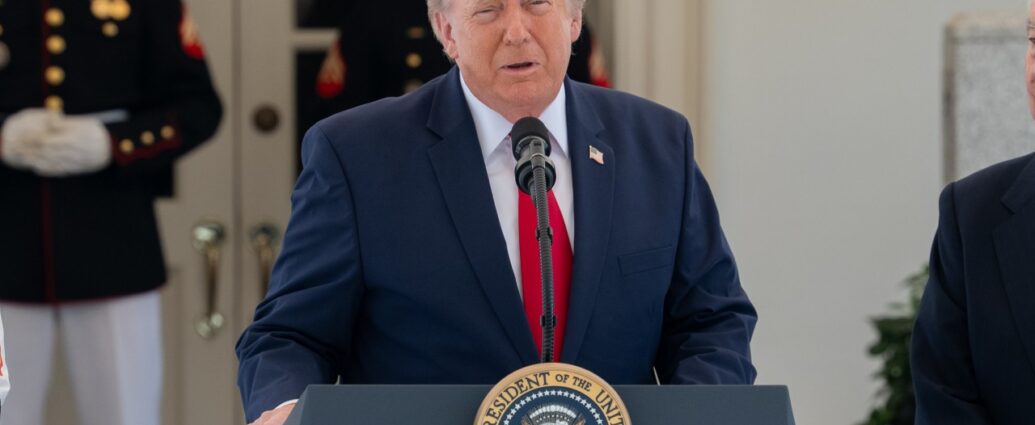
President Donald Trump announced Tuesday, July 14, that he is abandoning the proposed 20% “United States Reimbursement Fee” on cargo transiting the Strait of Hormuz, reversing the policy roughly one day after first unveiling it.

In a post on Truth Social, Trump said the cargo fee would instead be replaced by major trade and investment agreements that Gulf nations have pledged to make in the United States. The reversal came approximately 25 hours after the administration first announced the levy.

Trump said the decision followed conversations with leaders across the Middle East and described the expected investments as “massive,” although no financial commitments or participating countries were identified.

Blockade Remains in Effect

While the cargo fee has been withdrawn, the broader U.S. naval blockade targeting Iran remains unchanged.

The blockade formally took effect Tuesday at 4:00 p.m. Eastern Time, with U.S. Central Command (CENTCOM) confirming that American forces will continue enforcing restrictions on vessels traveling to or from Iranian ports and coastal areas.

Trump said the Strait of Hormuz remains open to international shipping except for vessels connected to Iran.

He credited Secretary of Defense Pete Hegseth, Joint Chiefs Chairman Gen. Dan Caine, CENTCOM Commander Adm. Brad Cooper, and U.S. military personnel for executing the operation.

Why the White House Changed Course

Speaking during a White House meeting with Iraqi Prime Minister Ali al-Zaidi, Trump said leaders from Saudi Arabia, the United Arab Emirates, Qatar, Bahrain, and Kuwait urged him to pursue investment agreements instead of imposing transit charges.

Asked why he reversed the policy, Trump said he preferred investment commitments over charging fees and added that he does not believe any nation should impose tolls on ships using the Strait of Hormuz.

The remark represented a significant departure from his position only one day earlier, when he argued the United States should be reimbursed for protecting one of the world’s most important shipping lanes.

No details accompanied the announcement.

Trump did not identify participating governments or specify investment amounts.

According to Bloomberg, citing an unnamed Gulf government source, at least one regional government told Washington it had made no new investment commitments in exchange for the policy reversal.

What the Proposed Fee Would Have Cost

Under Monday’s proposal, the United States would have charged a 20% reimbursement fee on cargo passing through the Strait of Hormuz as compensation for providing maritime security.

At current oil prices, the charge could have exceeded $32 million for a fully loaded supertanker, dramatically exceeding transit fees Iran had previously discussed, which were estimated at roughly $2 million per voyage.

Administration officials had not publicly determined which federal agency would collect the payments, with both the Treasury Department and Department of Energy reportedly under consideration.

Global Opposition

The proposal immediately drew criticism from governments, shipping companies and international organizations.

International Maritime Organization Secretary-General Arsenio Dominguez stated that international law provides no legal basis for mandatory transit fees through international straits.

Earlier this summer, Secretary of State Marco Rubio similarly stated that no nation has the legal authority to impose tolls on vessels transiting international waterways.

Major shipping companies and industry organizations quickly voiced opposition.

Hapag-Lloyd called the proposal fundamentally inconsistent with international shipping principles.

Industry groups including BIMCO and the European Community Shipowners’ Associations also rejected the concept.

In May, Chevron Chief Executive Officer Mike Wirth warned that allowing one country to impose transit charges could establish a precedent encouraging similar fees along strategic waterways worldwide.

Iran also responded.

Foreign Minister Abbas Araghchi suggested the proposed U.S. fee was excessive while indicating Iran would establish what he described as fairer transit charges if necessary.

Meanwhile, Oman, a longtime U.S. regional partner, called on all parties to respect international maritime law.

Oil Markets Remain Elevated

Although the cargo fee has been withdrawn, energy markets remain focused on the broader military situation.

On Monday, West Texas Intermediate crude climbed 9.4% to $78.14 per barrel, while Brent crude rose 9.6% to $83.30, marking the strongest one-day increase since 2020.

Brent futures briefly climbed as high as $85.92 Tuesday before giving back part of the gains following Trump’s announcement.

Fuel prices continue responding.

GasBuddy analyst Patrick De Haan said the national average gasoline price could approach $4 per gallon within one to two weeks as higher wholesale costs work through retail markets.

Shipping Disruptions Continue

Despite the policy reversal, commercial shipping remains severely disrupted.

According to Kpler, only 10 verified vessel crossings occurred on July 13, down from 16 the previous day.

Windward AI tracked only five overnight crossings, reflecting continued caution among commercial operators.

Approximately 230 loaded oil tankers remain inside the Persian Gulf awaiting safe passage.

Before hostilities intensified earlier this year, roughly one-quarter of global seaborne oil trade and approximately 20% of worldwide liquefied natural gas shipments moved through the Strait of Hormuz each day.

What Comes Next

Marine insurers remain cautious despite the elimination of the proposed cargo fee.

Ben Stone, head of marine hull insurance at Aon, said underwriters continue requiring an extended period of stability before reducing war-risk premiums.

Saul Kavonic, head of energy research at MST Financial, warned that continued Iranian efforts to influence shipping through the Strait could keep commercial traffic well below pre-conflict levels.

Rory Johnston, founder of Commodity Context, said global oil inventories that previously cushioned supply disruptions have now been significantly reduced, leaving markets more vulnerable to future interruptions.

For businesses, refiners and consumers, the immediate outcome is mixed.

The proposed U.S. transit fee has disappeared.

The naval blockade, elevated insurance costs, shipping delays and geopolitical risk premiums have not.

JBizNews Desk | Washington

© JBizNews.com All Rights Reserved. Reproduction or distribution without written permission is prohibited.
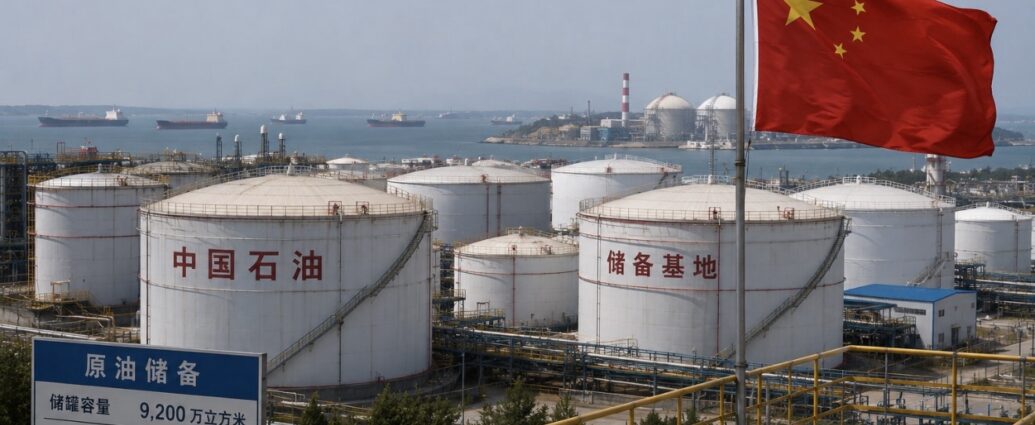
The International Energy Agency reported in its July 2026 Oil Market Report that China pulled roughly 41 million barrels out of its crude inventories during June, one of the largest monthly draws the agency has on record, and that global observed oil stocks rose for the first time in four months as tankers finally cleared the Gulf. Chinese customs data released Tuesday confirmed the other half of the story: crude imports fell to about 6.4 million barrels per day in June, the lowest level in nearly a decade and down roughly 29% from a year earlier.

Put those two numbers together and you get the single most important fact in the oil market right now. The world’s biggest crude buyer stopped buying — and nothing broke.

For four months, traders assumed the closure of the Strait of Hormuz would send prices to records. It did not. Prices spiked, then fell back. Brent averaged $85 a barrel in June, down $22 from May, according to the U.S. Energy Information Administration, and briefly dropped below $70 on July 1, roughly where it sat before the war began on February 28. On Wednesday, with U.S. forces striking Iranian coastal targets and Washington reinstating its naval blockade of Iranian ports, WTI for August delivery traded near $80.14, up about 1%, while September Brent rose to about $85.77.

The reason the ceiling held is sitting in Chinese tanks.

How Beijing built the buffer

The EIA estimates China spent much of 2025 quietly absorbing roughly 900,000 barrels per day into strategic and commercial storage, buying whenever prices dipped. By the time the war started, analysts estimate the country held somewhere between 1.2 billion and 1.3 billion barrels across commercial tanks and government reserves. The exact figure is a state secret. So are Beijing’s plans for it.

That stockpile turned into a shock absorber. Kpler, the cargo-tracking firm, estimated Chinese seaborne imports fell to about 6.78 million barrels per day in late May, against a 2025 average of 10.66 million. Refinery runs, however, fell far less — roughly 13.1 million barrels per day, down only 1.8 million year over year. The gap came out of storage. Kpler calculated in May that Chinese refiners still held more than 300 million barrels in refinery tanks alone, enough to cover the shortfall for another 60 to 75 days without buying a single extra cargo.

Beijing also protected its government reserves while letting commercial tanks drain. Strategic petroleum reserves grew by 8 million barrels after the conflict began even as refinery inventories fell by 15 million.

What it did to sellers

China’s absence rewrote pricing across Asia. With Chinese refiners out of the bidding, Gulf cargoes went looking for buyers in Europe, India and the rest of Asia. Saudi Aramco cut the price of its flagship Arab Light to Asian customers by $4 a barrel for June-loading cargoes, another $6 for July and a further $11 for August — leaving the grade at a $1.50 discount to the Oman-Dubai benchmark.

Iran got hit hardest. Chinese buyers, suddenly spoiled for choice, walked away from Iranian barrels and took discounted Iraqi, Emirati and Saudi crude instead. Privately owned Shenghong Petrochemical bought roughly 12 million barrels of Gulf crude for July arrival once prices came down. Iranian imports into China are expected to fall to about 556,000 barrels per day in July, the lowest since early 2023, while an estimated 30 million to 34.5 million barrels of Iranian crude float offshore near Southeast Asia waiting for someone to want it.

The IEA said total Gulf oil exports jumped by 6.5 million barrels per day in June to 16.1 million — still far below the 24 million average before the war — with crude and condensate accounting for 85% of the recovery.

The part that matters for business

For decades the answer to “who fixes an oil shock” was Saudi Arabia and its spare production capacity. Traders watched Riyadh. Now they have to watch Chinese tank levels, which nobody publishes.

That changes the risk calculus for anyone who buys fuel — trucking fleets, airlines, chemical makers, manufacturers. The relief in crude prices is not proof the war stopped mattering. It is proof that one buyer chose to sit out, and that buyer’s tanks are finite. Kpler and Vortexa both estimate China has removed about 4 million barrels per day from its normal purchases since late February. When Beijing comes back to restock — and it will — that demand returns to a market that is still short of supply.

The EIA expects global inventories to keep falling by 2.2 million barrels per day in the third quarter. The next rally may not start in Hormuz. It may start the day Chinese refiners pick up the phone.

JBizNews Desk | New York © JBizNews.com All Rights Reserved. Reproduction or distribution without written permission is prohibited.
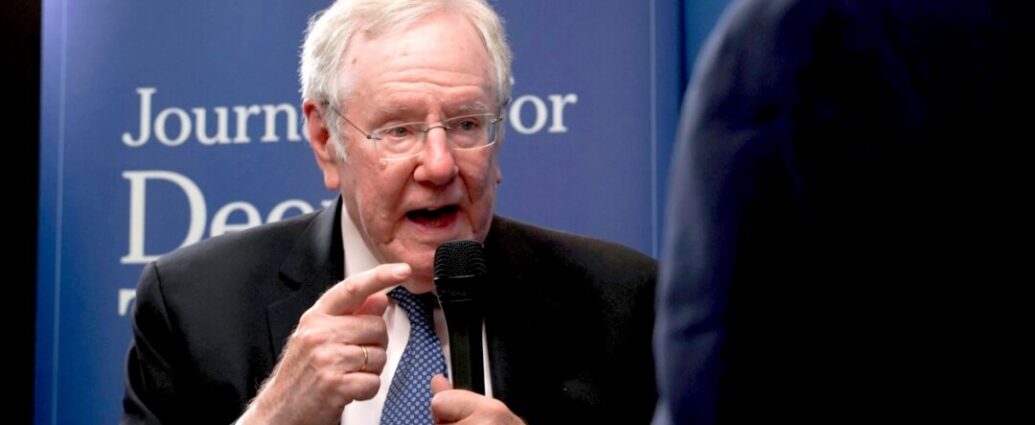
LAS VEGAS—Steve Forbes, CEO of the Forbes magazine and publishing company, knows the American economy has problems.
The cost of living is rising, housing affordability is an issue, as is the national debt and inflation.
Forbes says he knows who is to blame and he knows who can remedy the issues. Forbes says the best thing the government can do is to stabilize the dollar and let the free market do its work.
Forbes spoke with The Epoch Times senior editor and “American Thought Leaders” host Jan Jakielek at FreedomFest 2026 in Las Vegas on July 11.
Forbes discussed current economic issues, the role of the Federal Reserve, and how the United States should deal with the potential complications in Taiwan and Iran….

This post was originally published here. 

A group of 26 Meta employees sued the tech giant over accusations that it used AI-powered software to choose people for mass layoffs, disproportionately targeting workers with disabilities or those who took medical, parental or family leave.

The lawsuit, filed in federal court in Oakland, California, on Monday, alleges that the company relied on factors such as internal AI systems, keystroke and activity-monitoring data, AI token-usage dashboards and algorithmically assisted performance rankings when making job cuts earlier this year.

Many of these factors “by design, cannot be accumulated by an employee who is on protected medical or family leave, or whose output is reduced by a disability,” the lawsuit reads, adding that the company did not factor in protected leave when taking employees’ scores into account and “did not pause the system for the individualized, leave- and accommodation-neutral review that the law requires.”

The plaintiffs are among the 8,000 employees, or about 10% of its workforce, who Meta said in May would be impacted by layoffs, and they were told their jobs would be eliminated starting July 22.

FOUR STATES SEEKING $1.4 TRILLION IN PENALTIES IN CHILD SOCIAL MEDIA ADDICTION TRIAL, META SAYS

They claim that Meta violated state and federal laws — including the Family and Medical Leave Act, the Americans with Disabilities Act, the Pregnancy Discrimination Act and the Pregnant Workers Fairness Act — that prohibit discrimination or retaliation against workers who take medical leave, have disabilities or are pregnant.

The workers also say the company failed to test its AI systems for bias, which they allege violated newly adopted laws in California and New York City.

The plaintiffs, who come from six states, including California and New York, as well as Washington, D.C., are seeking a preliminary ruling from the court to block Meta from completing the layoffs while they pursue their claims in private arbitration.

The employees argue that Meta’s agreements require employees to arbitrate workplace disputes individually, but do not apply to requests for temporary relief.

They said the lawsuit asks just to preserve the status quo and keep them employed pending arbitration.

“Once these terminations are finalized, the harm to Plaintiffs cannot be undone by money damages alone,” the lawsuit reads, citing the loss of employer-subsidized health coverage during pregnancy, postpartum recovery and active medical treatment.

Meta has pushed back on the allegations outlined in the lawsuit, saying that it does not use AI when determining who to cut from its workforce.

“These claims lack merit and are not based on facts. Workforce management and organizational decisions were and are made by people, not AI,” a Meta spokesperson told Fox Business.

META SHUTS DOWN AI TOOL AFTER BACKLASH OVER PUBLIC INSTAGRAM ACCOUNTS

GET FOX BUSINESS ON THE GO BY CLICKING HERE

About half of the plaintiffs had taken leave for caregiving or pregnancy-related reasons.

Eight employees are women who had taken maternity or pregnancy-related leave, four are men who had taken parental leave and one is a woman who had taken leave to take care of a family member and later bereavement leave.

The plaintiffs argued that Meta’s “algorithmically assisted selection process, by systematically recording such absences as reduced performance, falls more heavily on women than on men” because women disproportionately take pregnancy and caregiving leave.

This post was originally published here. 

Five of Europe’s biggest defense companies have agreed to build the continent’s first homegrown system for shooting down long-range ballistic missiles in space, a direct response to the kind of weapons Russia has been firing at Ukraine. Airbus Defence and Space, Destinus, MBDA Deutschland, Safran Electronics & Defense, and Thales signed a Letter of Intent in Paris to establish the Bliksem EXO Consortium, the group announced this week. The signing took place at the inaugural meeting of a new anti-ballistic coalition on Monday, in the presence of Rob Jetten, Prime Minister of the Netherlands.

The system, called Bliksem EXO, is meant to detect, track and destroy medium- and intermediate-range ballistic missiles above the atmosphere by slamming an interceptor straight into them at high speed, without an explosive warhead — a technique known as hit-to-kill. The companies say it is aimed at threats including Russia’s Oreshnik-class missiles, which can carry separating and maneuvering re-entry vehicles that make them hard to stop.

Who does what

The consortium splits the work along each company’s strengths. Destinus serves as Consortium Lead and Prime, handling overall system integration and the Exo-atmospheric Kill Vehicle. MBDA Deutschland builds the interceptor booster, launcher and canister. Safran Electronics & Defense supplies the kill vehicle’s seeker and its guidance and navigation controls. Airbus Defence and Space provides command, control and battle management, and Thales delivers the radar and sensor chain, from early warning to fire control.

Mikhail Kokorich, Chief Executive Officer of Destinus, said Europe already has strong lower-layer defenses but still lacks its own upper-layer shield against medium- and intermediate-range missiles, a gap Bliksem EXO is designed to close. He said joint engineering will begin in August 2026, with a test of the kill vehicle in space planned for 2027. Thomas Gottschild, Managing Director of MBDA Deutschland, called the agreement an important step toward strengthening Europe’s collective defense.

The deal is a starting gun, not a signed contract. Under the Letter of Intent, the parties intend to reach a binding Consortium Agreement within three months, and the document creates no obligation to buy, supply or fund the system. The program is designed to plug into NATO’s Integrated Air and Missile Defence and to strengthen the European Sky Shield Initiative by filling its missing upper layer.

Why Europe is moving now

The push reflects a hard lesson from the war in Ukraine. Ten countries — Denmark, France, Germany, Italy, the Netherlands, Norway, Spain, Sweden, the United Kingdom and Ukraine — met in Paris to launch what they call the Integrated Anti-Ballistic Missile Coalition, an effort to build a cheaper alternative to the American Patriot system. The Patriot remains the workhorse against ballistic missiles, but its interceptors cost millions of dollars each and production cannot keep up with global demand.

Volodymyr Zelenskyy, Ukraine’s president, told reporters that Kyiv often runs short of the missiles needed to knock down ballistic targets, which is why it joined the effort. French President Emmanuel Macron framed the program as a way to protect Ukraine and build up Europe’s own defense industry. Notably absent were Poland, the Baltic states, Finland and the United States.

What it means for the business

For investors, the deal lands in the middle of the strongest run European defense stocks have seen in years. Companies from Rheinmetall to BAE Systems, Leonardo, Thales and Saab have piled up orders since Russia’s 2022 invasion, and McKinsey estimates European NATO core defense spending has doubled since 2019 and could reach roughly 800 billion euros by the end of the decade as members work toward NATO’s benchmark of 3.5% of GDP.

Of the five partners, three trade publicly: Airbus, Safran (SAF.PA) and Thales (HO.PA). MBDA is a joint venture, and Destinus is privately held, so the immediate market read runs through the listed names. Analysts have stayed constructive on Safran: Citi recently lifted its price target to 315 euros from 305 euros with a Neutral rating, while Jefferies analyst Chloe Lemarie raised her target to 330 euros from 310 euros and kept a Hold. Thales shares traded near 216 euros in late June, down in the mid-single digits for the year despite the broader defense rally.

The bigger prize is the pipeline. A working European interceptor would give governments a home-built option they do not have to buy from Washington, and the firms that build the radars, boosters and kill vehicles stand to book years of orders if the coalition turns intent into contracts. The first real test comes within three months, when the partners are due to sign a binding agreement.

JBizNews Desk | New York © JBizNews.com All Rights Reserved. Reproduction or distribution without written permission is prohibited.

Subaru is recalling more than half a million SUVs due to an incorrect weight limit label that could lead drivers to unintentionally overload their vehicles and increase the risk of a crash, federal safety regulators announced.

The recall impacts an estimated 541,237 vehicles that fail to meet federal motor vehicle safety standards, according to a July 13 notice from the National Highway Traffic Safety Administration (NHTSA).

The affected vehicles include certain 2019–2026 Ascent models, 2025–2026 Foresters, 2025–2026 Forester Hybrids and 2026 Crosstrek Hybrids.

HONDA RECALLS MORE THAN 880,000 VEHICLES OVER REAR SUSPENSION FAILURE RISK

According to regulators, the safety certification sticker displays an incorrect gross axle weight rating (GAWR) for the rear axle.

“An incorrect GAWR label may lead to an overloaded vehicle, increasing the risk of a crash,” the NHTSA warning stated. 

If drivers rely on the incorrect figures, they could unintentionally overload their vehicles with too much cargo or passengers, putting dangerous strain on the tires and suspension, officials said. 

MORE THAN 550,000 KOBALT YARD TOOLS RECALLED OVER BATTERY FIRE HAZARD

The agency first alerted Subaru in May regarding the stated weight numbers on the rear axle label. After an internal review of its calculations, Subaru decided to conduct a safety recall in late June, officials said.

No crashes or injuries have been reported with respect to the labeling error. 

Subaru is expected to mail notification letters to affected owners beginning Aug. 25.

Owners will receive a second letter containing a corrected weight sticker free of charge, along with instructions on how to easily paste it over the incorrect label.

Owners who prefer not to apply the sticker themselves can take their vehicle to an authorized Subaru dealer, where a technician will install it free of charge.

Customers seeking additional information can call Subaru Customer Service at 1-844-373-6614 and refer to recall code WRH-26. 

GET FOX BUSINESS ON THE GO BY CLICKING HERE

People can also call the NHTSA vehicle safety hotline at 1-888-327-4236, or check their VIN online at nhtsa.gov.

Subaru of America did not immediately respond to FOX Business’ request for comment.

This post was originally published here. 

Yemen’s Houthi movement fired ballistic missiles and drones at Saudi Arabia on Monday and threatened a wider campaign, an escalation that has revived fears of disruption to Red Sea shipping and Gulf oil flows just as markets are already on edge over the U.S.-Iran war.

The flare-up began, according to Yemen’s internationally recognized government, when its forces bombed the runway at Sanaa International Airport on Monday to stop an Iranian aircraft from landing. The plane was carrying a Houthi delegation returning from Tehran, where it had attended the funeral of the late Iranian supreme leader. The Houthis blamed Saudi Arabia for the strike, and their military spokesman, Yahya Saree, called it “blatant aggression” and declared an end to a period of de-escalation. Houthi political official Mohammed al-Bukhaiti said the group would impose a “siege” on Saudi Arabia in response and warned that the attacks would not go unpunished.

Within hours, the Houthis said they had targeted Abha International Airport in southwestern Saudi Arabia, warned aviation companies to avoid Saudi airspace, and threatened to strike King Khalid International Airport in Riyadh. Saudi state media said the kingdom’s air defenses intercepted the incoming missiles. The U.S. State Department said it was monitoring the situation closely and reaffirmed Washington’s partnership with Riyadh, saying it stands with Saudi Arabia against Iranian-backed attacks. Hans Grundberg, the United Nations Special Envoy for Yemen, warned of the danger of escalation and said his office remained in contact with all parties.

The business concern centers on oil and global shipping.

A Houthi political bureau member, Muhammad Al-Farah, warned that continued fighting could drag the Bab al-Mandab Strait into the same type of disruption now surrounding the Strait of Hormuz, claiming oil prices could climb toward $200 per barrel. While that figure represents a political warning rather than a market forecast, the strategic importance of the region is undeniable. The Bab al-Mandab serves as one of the world’s most critical shipping chokepoints, linking the Red Sea with the Gulf of Aden and ultimately the Suez Canal.

Renewed attacks also raise concerns over Saudi Arabia’s East-West Pipeline, which transports crude oil from the kingdom’s eastern oil fields to export terminals on the Red Sea. The pipeline was designed specifically to provide an alternative route should the Strait of Hormuz become inaccessible. Any credible threat to that infrastructure would add another layer of uncertainty to already strained global energy markets.

Until now, the Houthis had largely remained on the sidelines of this year’s broader U.S.-Iran conflict. Unlike the widespread commercial shipping attacks seen during 2023 and 2024, which forced vessels to reroute around Africa and sharply increased freight costs, the group had limited its activity to relatively isolated missile launches without reopening a sustained campaign against international shipping.

That restraint may now be weakening.

If the Red Sea once again becomes a conflict zone while tensions continue around the Strait of Hormuz, two of the world’s most important energy corridors could face simultaneous disruption. Such a scenario would significantly increase shipping costs, insurance premiums and transit times for cargo traveling between Asia, Europe and North America.

The economic impact would extend far beyond the Middle East. Shipping companies would likely divert vessels around the Cape of Good Hope, adding thousands of miles to many voyages. Longer transit times increase fuel consumption, reduce vessel availability and drive higher freight rates that ultimately filter into consumer prices worldwide. Higher oil prices would also raise transportation costs across industries, contributing to inflation and placing additional pressure on businesses already coping with elevated borrowing costs.

The immediate question for energy markets is whether the latest exchange develops into a sustained military campaign or remains limited retaliation. Diplomatic efforts continue, but the fragile truce that largely contained Yemen’s conflict since 2022 appears increasingly strained.

For investors and businesses alike, attention is once again turning toward the Red Sea. With the Strait of Hormuz already under close scrutiny, any renewed disruption at Bab al-Mandab would threaten another critical artery of global commerce, reinforcing concerns that geopolitical tensions could continue driving volatility across energy, shipping and financial markets.

JBizNews Desk | New York

© JBizNews.com All Rights Reserved. Reproduction or distribution without written permission is prohibited.
The Trade Fraud Task Force, launched by the Justice Department and Department of Homeland Security in August 2025, has recovered or charged more than $1 billion in civil and criminal recoveries, penalties, forfeitures, and charged losses in less than a year, the DOJ said Tuesday.
The milestone reflects the federal government’s increased focus on using criminal prosecutions and civil enforcement under the False Claims Act to combat customs and trade fraud, the DOJ said in a statement.
“For too long, fraud actors have viewed customs violations as a mere surcharge or cost of doing business,” said Assistant Attorney General Colin McDonald of the Justice Department’s National Fraud Enforcement Division, in a press release. …

This post was originally published here. 

The U.S. Food and Drug Administration approved a new bladder cancer treatment from Pfizer and Astellas Pharma on Friday, clearing the way for the first therapy of its kind and handing the two drugmakers a fresh growth driver in one of oncology’s most competitive markets.

According to the FDA and a joint announcement from the companies dated Friday, July 10, the agency approved Padcev (enfortumab vedotin) together with Merck’s Keytruda, or its newer under-the-skin version Keytruda Qlex, as treatment given both before and after surgery for adults with muscle-invasive bladder cancer. The approval covers use as neoadjuvant therapy before surgery followed by adjuvant treatment after cystectomy, the operation to remove the bladder.

What makes the decision notable is that it is the first platinum-free regimen approved for these patients regardless of whether they can tolerate cisplatin-based chemotherapy. Cisplatin, a decades-old platinum chemotherapy, remains an effective treatment but is too toxic for many patients. The latest approval expands an earlier November 2025 authorization that had been limited to cisplatin-ineligible patients, extending the regimen to all eligible surgical patients with muscle-invasive bladder cancer.

Padcev is an antibody-drug conjugate designed to target the Nectin-4 protein found on bladder cancer cells while delivering chemotherapy directly into the tumor. Keytruda, meanwhile, is an immune checkpoint inhibitor that helps the body’s immune system recognize and attack cancer cells. Together, the drugs offer physicians an alternative approach aimed at reducing the chance the disease returns after surgery.

The FDA based its decision on results from the Phase 3 EV-304, also known as KEYNOTE-B15, clinical trial. According to the companies, patients receiving the combination therapy experienced nearly a 50 percent reduction in the risk of recurrence, progression or death, while the risk of death declined by approximately 35 percent compared with patients receiving the previous standard of care.

Executives at both companies described the approval as a significant milestone for bladder cancer treatment.

Aamir Malik, Pfizer’s Chief U.S. Commercial Officer, said the decision marks an important advance for patients facing one of the most difficult forms of bladder cancer, noting that the regimen has already become an established standard for advanced disease and can now move into earlier-stage treatment where physicians are aiming for a cure.

Moitreyee Chatterjee-Kishore, Senior Vice President and Head of Oncology Development at Astellas, said the approval broadens access to a therapy that has already demonstrated meaningful clinical benefit and now offers physicians another option during the critical treatment period surrounding surgery.

Beyond its medical importance, the approval carries major commercial significance.

Pfizer acquired Padcev through its $43 billion acquisition of Seagen, completed in late 2023. At the time, the company described antibody-drug conjugates as one of the fastest-growing areas in cancer treatment and viewed Padcev as one of Seagen’s crown jewels. Expanding the medicine into earlier-stage bladder cancer substantially enlarges its potential patient population and helps Pfizer replace revenue lost from declining COVID-related products and expiring patents.

For Merck, the decision extends the reach of Keytruda, the world’s best-selling prescription medicine, while simultaneously introducing physicians to the company’s newer Keytruda Qlex formulation ahead of Keytruda’s eventual patent expiration later this decade.

Muscle-invasive bladder cancer remains among the deadliest forms of bladder cancer, with recurrence rates remaining high even after surgery. Until now, many patients unable to receive cisplatin chemotherapy had limited treatment alternatives before and after surgery. The new approval gives physicians another evidence-based option designed to improve long-term outcomes without requiring platinum chemotherapy.

For investors, the decision highlights the continued value of major pharmaceutical acquisitions and the industry’s strategy of expanding existing blockbuster medicines into additional indications rather than relying solely on entirely new drug discoveries. Every successful label expansion potentially extends billions of dollars in future revenue while improving patient care.

The approval also reinforces the growing role antibody-drug conjugates are expected to play across oncology over the coming decade, with many analysts viewing the technology as one of the industry’s most promising areas for future cancer treatment.

JBizNews Desk | New York

© JBizNews.com All Rights Reserved. Reproduction or distribution without written permission is prohibited.

Warren Buffett said on Tuesday he has stopped donating money to the Gates Foundation, following revelations about interactions between the Microsoft co-founder and philanthropist Bill Gates and the late sex offender Jeffrey Epstein.

Buffett said he is donating about $6 billion of Berkshire Hathaway stock, comprising 12 million Class B shares, in his annual mid-year donation to four family foundations overseen by his daughter Susie and sons Howard and Peter.

The 95-year-old Berkshire chairman did not mention the Gates Foundation, which has received more than $47 billion of the conglomerate’s stock since Buffett in 2006 made what he called an irrevocable pledge to donate shares throughout his lifetime. Buffett’s donation was more than $4.5 billion last year.

“Of course, mortality is unpredictable, but my remaining shares will be donated to the four foundations one way or the other by December 31, 2034,” Buffett said in a statement.

The Gates Foundation did not immediately respond to requests for comment. Berkshire did not immediately respond to requests for additional comment.

Gates claims to regret ties to Epstein

Bill Gates has seen his reputation tarnished following the US Department of Justice’s release of files about Epstein in February.

These included photos of Gates posing with the financier, and with women whose faces were redacted. Emails also showed communications between Epstein and the foundation’s staff.

In June, Gates told Congress he “did not fully understand ​the extent” of Epstein’s crimes when he associated with the financier, including in meetings focused on possible philanthropy.

Gates, 70, has not been accused of crimes. He has repeatedly expressed regret for having anything to do with Epstein, has denied spending time with victims of Epstein’s sexual abuse, and has said he never witnessed criminal conduct by Epstein.

Buffett’s donations to family charities

Buffett has donated well over half his Berkshire stock since he began giving away his fortune in 2006.

He owned close to 14% of Berkshire’s stock before the latest donations, and was worth $147 billion according to Forbes magazine.

Buffett is donating 9 million Class B shares of Berkshire to the Susan Thompson Buffett Foundation, and 1 million shares to each of the Howard G. Buffett Foundation, Sherwood Foundation, and NoVo Foundation.

He said his goal is for the grants to increase annually, and for grants to the Susan Thompson Buffett Foundation to grow somewhat faster.

Susie Buffett leads the Susan Thompson Buffett Foundation, which funds reproductive health. It is named for her mother, who was Warren Buffett’s first wife.

The Sherwood Foundation supports Nebraska nonprofits and early childhood education. The Howard G. Buffett Foundation focuses on global hunger, combating human trafficking, and mitigating conflicts. The NoVo Foundation has initiatives focused on marginalized girls and women, and on indigenous communities.

This post was originally published on here. 

Indian Prime Minister Narendra Modi wrapped a three-nation tour on July 12, returning to New Delhi after sealing a string of energy, defense and critical-minerals agreements across Indonesia, Australia and New Zealand, according to joint statements and remarks from Modi and the host leaders. The trip, which ran July 6 to 12, was designed to deepen India’s economic and strategic ties across the Indo-Pacific and to diversify supply chains away from a heavy reliance on China.

The centerpiece came in Melbourne on July 9, where Modi and Australian Prime Minister Anthony Albanese finalized a deal allowing Australian uranium exports to India for its civilian nuclear program, concluded under the 2015 bilateral nuclear cooperation agreement. Australia holds roughly 28 percent of the world’s uranium reserves, and the supply supports India’s target of 100 gigawatts of nuclear power capacity by 2047. For Australia, the arrangement opens a long-term market while reducing dependence on China, its largest trading partner.

The two governments went well beyond uranium. They launched an India-Australia Critical Minerals Corridor to build resilient supply chains for the metals underpinning clean energy and manufacturing, and an India-Australia Defence Innovation Corridor covering defense startups, shipbuilding and maintenance. Albanese and Modi agreed to advance a bilateral investment treaty, endorsed a trilateral technology partnership with Canada, and cleared a temporary space-tracking terminal on the Cocos (Keeling) Islands to support India’s Gaganyaan human spaceflight program. On the commercial side, AustralianSuper, the country’s largest pension fund, said it would invest an additional A$500 million, about $347 million, in India’s National Investment and Infrastructure Fund. Two-way goods and services trade reached A$54.4 billion, or roughly $37.7 billion, in 2024-25, making India Australia’s fifth-largest trading partner, and Modi used a Melbourne business forum to press Australian investors to back Indian roads, ports, railways, low-carbon aluminium and green hydrogen.

The tour opened in Indonesia, where Modi met President Prabowo Subianto and signed agreements spanning agriculture and defense, headlined by a roughly $200 million deal for the BrahMos supersonic cruise missile system and a strategic port-development pact. The defense sale marks a notable expansion of India’s arms-export ambitions. Indonesia is a major supplier of coal and palm oil to India and holds some of the world’s largest nickel reserves, a key input for electric-vehicle batteries, while its position along the Malacca Strait makes it central to India’s maritime strategy. The two countries had elevated ties to a comprehensive strategic partnership in 2018.

In the final leg, Modi became the first Indian prime minister to visit New Zealand in four decades, and he and Prime Minister Christopher Luxon elevated the relationship to a strategic partnership. The visit built on a free-trade agreement the two signed in April that eliminates tariffs on 95 percent of goods New Zealand exports to India and carries a roughly $20 billion investment commitment, alongside cooperation on agricultural technology, food processing and dairy. India is the world’s largest milk producer and New Zealand among its leading dairy exporters, a sensitivity the deal was structured to manage.

The agreements landed against a tense security backdrop. China tested a nuclear-capable ballistic missile in the Pacific the day before Modi arrived in Indonesia, drawing protests and renewed concern over Beijing’s military reach. The deals also reflect a broader push by Indo-Pacific nations to shoulder more of the region’s security and economic load as Washington presses partners to do more and questions linger over the durability of U.S. engagement. Australia and Fiji signed a defense pact this month dubbed the “Ocean of Peace,” Fiji’s first formal security alliance, with New Zealand signaling it would join. India, Australia and Japan already coordinate with the United States through the Quad grouping.

Energy security ran through the entire itinerary. As Modi courted Pacific partners, Foreign Minister S. Jaishankar fanned out across four Gulf states to lock in oil and gas supplies following the U.S.-Iran memorandum of understanding, a reminder of how exposed India remains to Middle East disruption after the Iran war rattled crude markets. The uranium, nickel and critical-minerals arrangements are aimed squarely at cutting that vulnerability, though India still depends on China for the rare earths and machinery central to its manufacturing goals.

For India, the challenge now shifts from signing to executing. The bilateral investment treaty with Australia, the build-out of the minerals corridor and the flow of promised capital will determine whether the tour translates into durable commercial pipelines rather than headline commitments. As global manufacturers hunt for a China-plus-one base, New Delhi is betting that secured energy, diversified minerals and fresh investment treaties can position India as the region’s next major production hub.

JBizNews Desk | New Delhi © JBizNews.com All Rights Reserved. Reproduction or distribution without written permission is prohibited.

California Attorney General Rob Bonta announced Monday that a coalition of 12 states had filed suit in federal court to block Paramount Skydance Corporation’s roughly $110 billion acquisition of Warner Bros. Discovery, arguing the deal would raise prices, reduce the number of movies reaching theaters, and diminish the quality and variety of film and television available to consumers nationwide.

The complaint, filed in the U.S. District Court for the Northern District of California in Sacramento, alleges the merger violates Section 7 of the Clayton Act, the federal law prohibiting acquisitions that are likely to substantially lessen competition.

Bonta, who is leading the coalition, framed the lawsuit as a fight over an industry that touches nearly every American household. He argued that combining two of Hollywood’s five major film distributors would harm movie theaters, basic cable distributors, and consumers by reducing competition and limiting entertainment choices.

According to the complaint, the merged company would control nearly one-third of theatrical film distribution and roughly one-third of all basic cable programming in the United States.

Joining California in the lawsuit are Arizona, Colorado, Connecticut, Massachusetts, Minnesota, Nevada, New Jersey, New Mexico, New York, Oregon, and Washington. The coalition has asked the companies not to close the transaction until the litigation concludes and warned that, if necessary, it will seek a temporary restraining order preventing the merger from being completed.

The legal challenge comes despite federal approval. In June, the U.S. Department of Justice cleared the transaction without requiring divestitures or other conditions, concluding the merger was unlikely to substantially harm competition. The states’ lawsuit reflects the increasingly active role state attorneys general have taken in challenging major corporate mergers even after receiving federal approval.

Paramount sharply criticized the lawsuit.

A company spokesperson said the states’ arguments misinterpret antitrust law and would ultimately benefit Netflix rather than consumers. Netflix had previously explored its own acquisition of Warner Bros. Discovery before Paramount reached its agreement.

The company argued that preventing the merger would strengthen already dominant streaming platforms while delaying investments needed to compete in an industry rapidly changing because of technology and shifting consumer habits. Paramount said it intends to defend the transaction vigorously.

Financially, the stakes are enormous.

Paramount has repeatedly said it expects the acquisition to close during the third quarter, with chief executive David Ellison recently telling investors the company remained on schedule for a September closing.

However, the merger agreement contains a significant financial penalty if completion extends beyond September 30. Under the agreement, Paramount must pay Warner Bros. Discovery shareholders an additional 25 cents per share each quarter the transaction remains pending—an amount estimated at approximately $650 million every three months until the merger closes.

The combined company would reshape the entertainment landscape.

It would unite Paramount Pictures, the CBS television network, and cable brands including MTV, BET, and Nickelodeon with Warner Bros., CNN, TNT, Discovery, and the HBO Max streaming platform. The companies also plan to combine Paramount+ and HBO Max, creating one of the world’s largest streaming services.

The states argue that such scale would allow the merged company to demand higher prices from movie theaters, cable providers, and streaming customers while reducing incentives to produce diverse programming. According to the complaint, only four major studios would control more than 85 percent of wide theatrical film releases if the merger proceeds.

Ellison has sought to address those concerns by pledging the combined company would continue releasing approximately 30 theatrical films annually. State attorneys general dismissed that commitment as unenforceable, arguing it would not prevent reduced investment, fewer productions, or diminished competition.

The dispute has also fueled broader tensions within Hollywood.

According to Semafor, advisers close to Ellison have discussed the possibility of moving some company operations outside California in response to the state’s legal challenge. Meanwhile, more than 1,000 entertainment industry professionals, along with elected officials across California and Los Angeles, have expressed concerns that consolidation could lead to fewer productions and additional job losses.

For consumers, little changes immediately.

If the states prevail, the largest proposed merger in Hollywood history could be blocked. If Paramount succeeds, the entertainment industry will gain another media giant with significant influence across theatrical releases, broadcast television, cable networks, and streaming—reshaping the competitive landscape for years to come.

JBizNews Desk | New York
© JBizNews.com All Rights Reserved. Reproduction or distribution without written permission is prohibited.

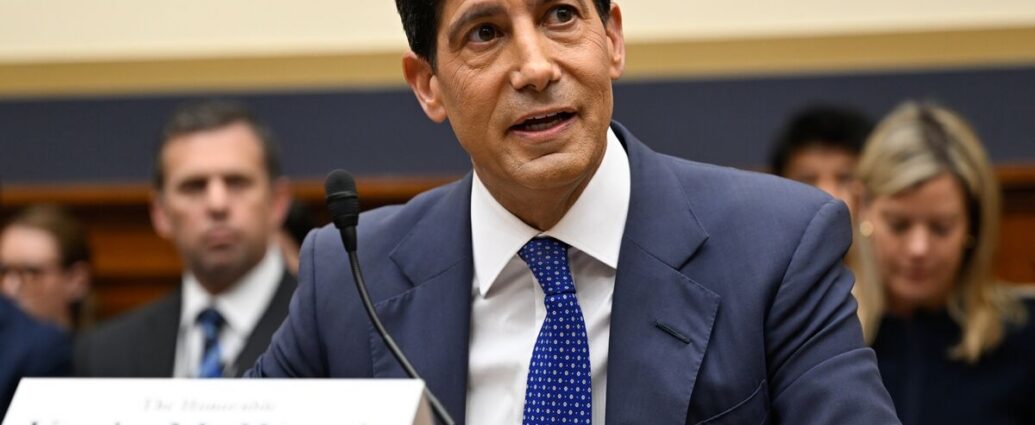
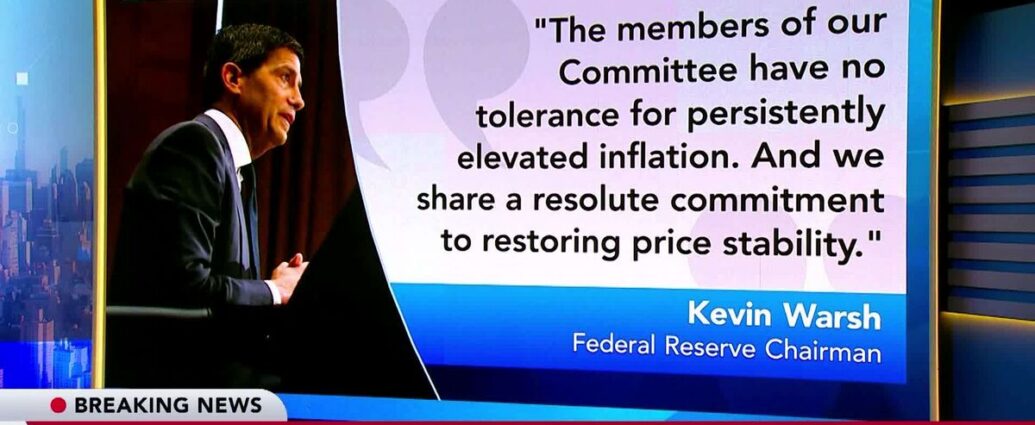
The sun was shining on the Fed chairman, Kevin Warsh, today as he gave his first Congressional monetary report on a day when the consumer price index unexpectedly fell for the first time in six years. And that takes a near-term Fed rate hike off the table.

As Mr. Warsh said, it’s too soon to declare “mission accomplished,” but he vowed to defeat inflation and get monetary policy right during his appearance before the House Financial Services Committee. As he put it: “The 63 months of inflation above target has been an unfair burden. It has been a tax on the American people and businesses. We plan on getting rid of that tax if that means we need a regime change in policy and we need new consideration of practices, some of which have been working, some of which haven’t, that’s what we aim to do”

The new Fed chairman has been in office only two months, but energy, precious metals, and farm commodity prices have already started trending lower. Mr. Warsh intends to be a reformer at the central bank, and has commissioned a number of high-level task forces that will report later in the year on “regime change,” as he puts it. 

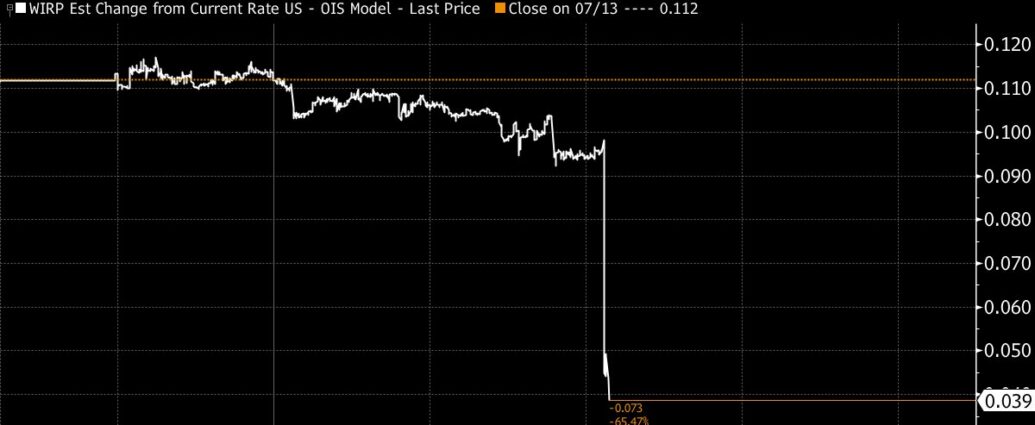
Yet one thing he understands better than his predecessor is that inflation is a monetary policy issue caused by bad choices and a lack of resolve to restore price stability and presumably restore the 2 percent target. Futures markets took at least one Fed rate hike off the table after the benign CPI report. There’s still another rate hike priced in perhaps some time this autumn, but I doubt it.

When you look at the core numbers excluding food and energy, which is what many Fed officials are focused on, the monthly numbers are coming down steadily, and even the 12-month change is only 2.6 percent. The topline number for all items was lower in May than in April, and in June it actually fell by four-tenths of one percent.

Of course energy overall and gasoline in particular drove the index down. But it’s also noteworthy that goods prices have been nearly flat for a year, excluding food and energy. The much-heralded tariff inflation which would have shown up in goods prices really never came to pass, or if it did, was only momentarily.

Meanwhile the topline also dropped by 1.1 percent in June. Services were flat in June. New and used car prices were down. And Mr. Warsh is right to tell the public that the job of price stability is not yet complete. Yet he also knows that when he credibly gets back to 2 percent or less inflation, then interest rates will come down of their own weight and they will stay down.

What’s more, he painted an optimistic picture of the economy with particular reference to booming business investment. In other words, he again is arguing that you can have strong economic growth with low inflation. And he stuck to his guns on the positive impact of all manner of advanced tech investment, from AI through quantum computing, space, and who knows what else. You know what? When you listen to Mr. Warsh and see what the early results are — even a Fed chairman can have his cake and eat it too.

This post was originally published here. 

Homebuyers in 70 percent of America’s top housing markets could have the upper hand this summer, according to a July 14 report from Redfin.
The national real estate brokerage found that 33 out of the 47 metro regions it analyzed were buyer’s markets in June, with nearly half a million, or 48.5 percent, more home sellers than buyers. Sellers outnumbered buyers nearly two to one in places such as Miami, Nashville, and large portions of Texas.
“The biggest hurdle for Americans looking to buy a home is affordability, but those with the budget to move now—even in the face of record-high home prices and stubbornly high mortgage rates—have the power,” Redfin senior economist Asad Khan said in the report….

This post was originally published here. 

United Airlines on Tuesday unveiled a new economy offering on its new Airbus A321XLR aircraft that will give passengers some extra elbow room access to a shared table across an open middle seat.

United said the new Economy Plus offering will be available for bookings starting later this year, with the feature expected to be included on all 50 of the A321XLR jets it ordered from Airbus. It added that it’s exploring ways to offer seats like these on other aircraft in its fleet in the future.

The company said in its announcement that it expects it will be the only airline offering this seating option, which builds off the recent announcement of the United Relax Row that will debut in early 2027 and feature multiple rows of seats on the Boeing 787 and 777 wide-body aircraft that convert into a couch.

DELTA ROLLS OUT CHEAPER FIRST-CLASS, BUSINESS FARES WITH FEWER PERKS: ‘MORE WAYS TO CHOOSE’

“We’re investing nose-to-tail across our fleet and giving customers choice and value in every cabin,” said Andrew Nocella, United’s chief commercial officer. 

“The XLR is our newest aircraft and not only offers all-aisle access lie-flat seats in United Polaris but now also includes seats in Economy Plus with extra leg and elbow room.”

UNITED MUST FACE LAWSUIT OVER ‘WINDOW SEATS’ THAT DON’T HAVE WINDOWS, JUDGE RULES

Each United XLR will have large, custom-designed tables that stretch from armrest to armrest over the vacant middle seats, giving the passengers seated in the window and aisle seats more space to stretch out. 

The table is permanently fixed and will have a soft leather-like cover and two indentations for cups. The extra space with the vacant middle seat is in addition to the three additional inches of legroom offered in Economy Plus seats on the aircraft.

United plans to start using the A321XLR on domestic flights this fall and for international short- to medium-haul routes starting by early 2027.

DELTA CEO ED BASTIAN SAYS AIRLINE FARES WILL STAY ELEVATED EVEN IF JET FUEL PRICES FALL

The Airbus A321XLR has 32 premium seats — 16 more than the Boeing 757s it will be replacing in the United fleet — including the new United Polaris suite that has all-aisle access.

All seats have a large 4K OLED screen with Bluetooth connectivity, with screen sizes ranging from 19 inches in the Polaris suites to 16 inches in United Premium Plus and 13 inches in United Economy.

CLICK HERE TO GET FOX BUSINESS ON THE GO

Additionally, all passengers have access to larger overhead bins that have space for roll aboard bags and a snack bar in the rear of the economy cabin. It will also operate with five flight attendants on most transatlantic flights as the 757 did.

This post was originally published here. 

Olive Garden is bringing back its fan-favorite “Never Ending Pasta Pass,” the company announced this week.

Consumers can nab one of the 10,000 passes for $100, plus tax, on July 16 at 2 p.m. ET. Passholders are able to receive 13 weeks of unlimited pasta, sauces and protein toppings in addition to the chain’s unlimited soup or salad and breadsticks.

The product debuted in 2014 and was last offered in 2019.

OLIVE GARDEN PLANS NATIONWIDE ROLLOUT OF LIGHTER PORTIONS MENU FOLLOWING SUCCESSFUL TESTING

“Bringing it back felt like the right way to recognize the loyalty of so many guests who have kept it top of mind all these years,” said Jaime Bunker, Olive Garden’s senior vice president of marketing.

The promotion will only last until all 10,000 passes are claimed. The Never-Ending Pasta Pass isn’t available for redemption with to-go orders, but its in-restaurant redemptions are unlimited.

Olive Garden’s corporate parent, Darden Restaurants, in late June forecast full-year profit below Wall Street estimates and reported lower-than-expected fourth-quarter sales, as higher input costs and increased marketing expenses weighed on margins amid persistent inflationary pressures.

The company, which also owns restaurants Cheddar’s Scratch Kitchen and Chuy’s among others, now expects annual earnings per share from continuing operations between $11.10 and $11.35, below an expectation of $11.40 per share, according to data compiled by LSEG.

It expects annual same-restaurant sales to grow 2.5% to 3.5%, the midpoint of which is above analysts’ estimates of 2.81%.

GET FOX BUSINESS ON THE GO BY CLICKING HERE

Darden reported overall sales of $3.72 billion for the fourth quarter ended May 31, missing analysts’ estimate of $3.73 billion.

Its total operating costs and expenses rose 10.7% to $3.20 billion in the fourth quarter from the prior year.

Reuters contributed to this report.

This post was originally published here. 

New York Gov. Kathy Hochul on Tuesday issued the nation’s first statewide temporary ban on new AI data centers in a sweeping move critics have long warned could drive tech investment and jobs out of New York.

The moratorium, which the Democrat signed as an executive order, will remain in effect for up to one year as demand for massive data centers has surged across the state.

Hochul said the initiative would require large data centers to shoulder more of the infrastructure costs they create and is intended to protect New Yorkers from rising utility bills and other financial risks associated with the industry’s rapid expansion. 

“As data center development threatens to hike up utility bills, deplete our natural resources and create uncertainty for New Yorkers, it’s my responsibility to take action and lead,” Hochul said during Tuesday’s signing and news conference announcing the moratorium. 

META EXPANDS LOUISIANA DATA CENTER IN $50B AI PUSH, BOOSTING RURAL COMMUNITY

Critics have long warned the move could divert billions in AI infrastructure investment to competing states, depriving New York communities of construction jobs, tax revenue and the type of land deals that have recently generated windfalls for rural landowners in places like Pennsylvania. 

“Gov. Hochul’s statewide moratorium on data centers will ensure that those investments, jobs and economic activity flow elsewhere rather than to New York,” Dan Diorio, executive vice president of state policy and government affairs for the Data Center Coalition, said in a statement to Data Center Knowledge. 

Under Hochul’s plan, future data center developers would be required to either generate their own electricity or pay higher rates to avoid shifting the cost of major grid upgrades onto residents.

The state is also proposing a fund that would require developers to help finance upgrades to New York’s aging electric grid, invest in clean energy projects or contribute to an insurance pool intended to protect consumers.

In addition, Hochul is pursuing legislation to repeal sales tax exemptions for large data centers.

AMAZON ANNOUNCES $20B INVESTMENT IN RURAL PENNSYLVANIA FOR AI DATA CENTERS

Local governments will also receive a state-developed playbook designed to help communities negotiate with technology companies seeking to build nearby.

However, the announcement comes as some communities have reportedly profited from the AI infrastructure boom.

According to The Wall Street Journal, 96 Pennsylvania households collectively received more than $500 million after selling roughly 17,000 acres of rural land to QTS, a data center developer owned by Blackstone. The families sold their land for an average of about $330,000 per acre, receiving roughly $5.5 million each on average.

During the one-year moratorium, New York will prepare a Generic Environmental Impact Statement (GEIS) to establish statewide standards for future AI data center development.

The study will examine issues including electricity demand, impacts on the power grid, water use and quality, air quality and other potential environmental impacts of the construction.

CLICK HERE TO GET FOX BUSINESS ON THE GO

Once completed, new AI data centers would be required to comply with those statewide environmental and community standards before receiving approval.

While the review is underway, the state will not issue new discretionary environmental permits for covered data center projects.

The Data Center Coalition did not immediately respond to FOX Business’ request for comment.

This post was originally published here. 

According to the U.S. Bureau of Labor Statistics, inflation cooled more than expected in June, providing businesses, consumers and financial markets with one of the strongest signs this year that price pressures may be easing. The Consumer Price Index (CPI) declined 0.4% on a seasonally adjusted basis during June while annual inflation slowed to 3.5%, down from 4.2% in May. The report, released Tuesday, July 14, immediately shifted expectations on Wall Street, with investors betting the Federal Reserve may have more flexibility on interest rates as inflation moves closer to its long-term target.

The June report represents an important milestone for the U.S. economy after businesses spent much of the past two years navigating elevated borrowing costs, rising wages, higher insurance premiums and persistent inflation. While prices remain well above pre-pandemic levels across many sectors, June’s data suggests inflationary pressures are continuing to moderate faster than many economists had anticipated.

According to the Bureau of Labor Statistics, the largest contributor to June’s improvement came from energy prices. The energy index declined 5.7% during the month, led by a sharp drop in gasoline prices that more than offset continued increases in several service categories. At the same time, core inflation, which excludes the more volatile food and energy categories and is closely monitored by the Federal Reserve, remained unchanged during June and slowed to 2.6% over the past twelve months.

For America’s business community, the report could have far-reaching implications beyond today’s market reaction.

Lower inflation reduces pressure on businesses facing higher operating expenses and could eventually translate into more favorable financing conditions. Companies that delayed expansion plans because of elevated borrowing costs may begin reassessing investments if inflation continues trending lower and interest rates stabilize. Small businesses, which have generally been more sensitive to higher financing costs than larger corporations, stand to benefit the most if credit conditions improve during the second half of the year.

Consumers could also see modest relief if the trend continues. Slower inflation generally improves purchasing power, allowing households to spend more freely on discretionary goods and services. That, in turn, benefits retailers, restaurants, travel companies and many other sectors dependent on consumer spending.

Financial markets welcomed the report almost immediately.

Major stock indexes advanced while U.S. Treasury yields moved lower as traders reduced expectations that the Federal Reserve would need to implement another interest-rate increase in the near future. Investors have spent much of this year closely watching every inflation report for clues about future monetary policy, making Tuesday’s release one of the most significant economic reports of the summer.

Even with the encouraging data, economists caution against assuming inflation has been fully defeated.

Housing costs continue to represent one of the largest contributors to overall consumer expenses, while many service-related prices remain elevated. In addition, renewed geopolitical uncertainty in the Middle East has already begun pushing energy prices higher again following June’s temporary decline. Any sustained increase in oil prices could quickly work its way through transportation, manufacturing, shipping and consumer goods, reversing some of the recent progress.

For the Federal Reserve, the report provides another encouraging data point but is unlikely to end its cautious approach. Policymakers have repeatedly stated they want greater confidence that inflation is moving sustainably toward their long-term 2% objective before making significant changes to monetary policy. Future employment reports, consumer spending data and additional inflation releases will all play an important role before the central bank’s next policy decisions.

For business leaders, however, the latest inflation numbers offer something that has been in short supply over the past several years—greater economic certainty. Companies making hiring decisions, capital investments and expansion plans generally benefit from a more stable pricing environment, allowing executives to forecast costs with greater confidence.

Attention now turns to corporate earnings season, where executives from some of America’s largest companies are expected to discuss consumer demand, pricing power and their outlook for the remainder of 2026. Those results, combined with upcoming inflation and employment reports, will help determine whether June marks the beginning of a sustained easing in inflation or simply a temporary pause in an otherwise uneven economic recovery.

JBizNews Desk | Washington

© JBizNews.com All Rights Reserved. Reproduction or distribution without written permission is prohibited.

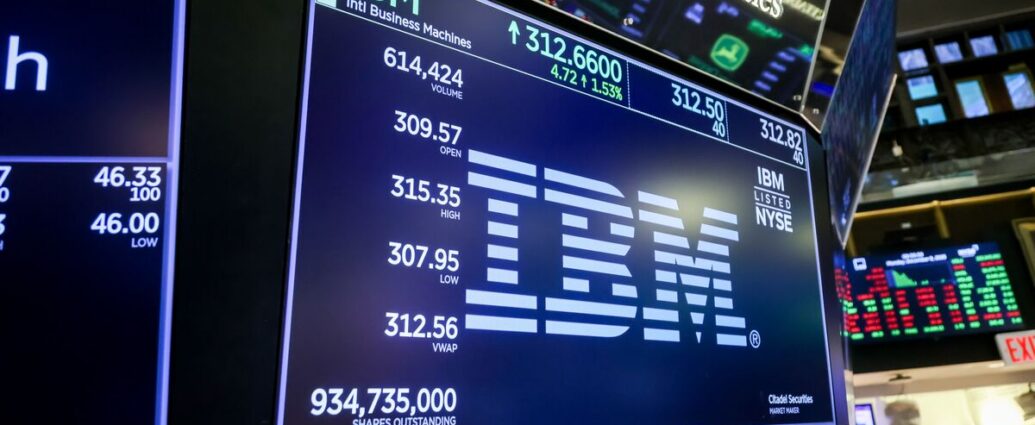
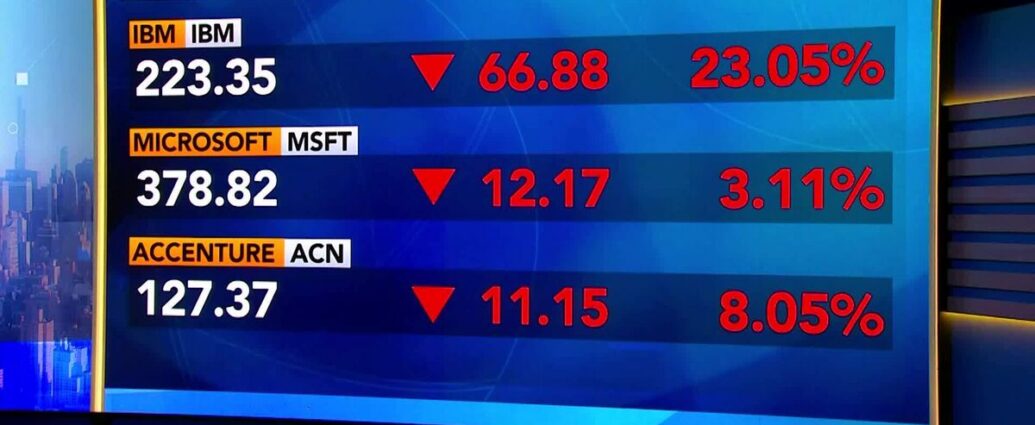
Stocks rallied Tuesday after fresh inflation data came in cooler than expected, boosting hopes that the Federal Reserve is nearing the end of its rate-hiking campaign. Technology and semiconductor shares led the advance, lifting the Nasdaq sharply higher despite IBM’s stunning 25% plunge following a disappointing profit warning. Easing oil prices later in the session also helped improve investor sentiment, although markets continued to weigh geopolitical risks and the opening of second-quarter earnings season.

The Bureau of Labor Statistics reported Tuesday that the Consumer Price Index fell a seasonally adjusted 0.4% in June, its largest monthly decline in more than six years, bringing the annual inflation rate down to 3.5%, below the 3.8% economists had expected. Core inflation, which excludes food and energy, was unchanged from May, putting the annual rate at 2.6%, also cooler than forecast. The report marked one of the clearest signs yet that inflationary pressures continue to ease, strengthening investor confidence that borrowing costs may soon stabilize. While traders still have one quarter-point Federal Reserve rate hike priced in later this year, Tuesday’s report eased concerns that policymakers may need to become more aggressive. Fed Chair Kevin Warsh testified before Congress during the session, while the 10-year Treasury yield rose to about 4.62%.

Where the indexes finished

The Nasdaq Composite led the market higher, climbing 0.9% to close at 26,107.01, fueled by a broad rebound in semiconductor shares. The S&P 500 gained 0.38% to finish at 7,543.59, while the Dow Jones Industrial Average added just 9.63 points, or 0.02%, to close at 52,508.27. The blue-chip average spent most of the session under pressure as weakness in one major component largely offset gains elsewhere. Only 10 of the Dow’s 30 members finished in positive territory.

Market movers

The day’s biggest story was IBM, which plunged about 25% after warning that preliminary second-quarter profit would fall short because of soft demand across its software and infrastructure businesses. Chief Executive Arvind Krishna said that during the final weeks of June, customers shifted spending toward servers, storage and memory in an effort to secure supply before anticipated price increases, while several large deals slipped into future quarters. The selloff alone was enough to keep the Dow pinned near breakeven despite strength across much of the broader market.

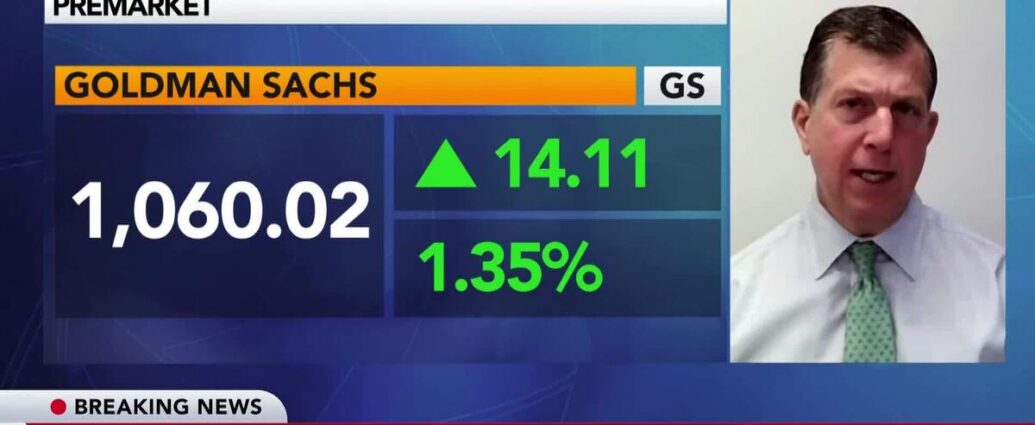
Corporate earnings otherwise painted a mixed picture. Although the nation’s largest banks largely exceeded Wall Street expectations, investors used the strong results to lock in profits after an extended rally in financial stocks, underscoring how elevated expectations can outweigh solid quarterly performance. Goldman Sachs surged 7.95% and, as the largest component in the price-weighted Dow, provided most of the index’s positive contribution. JPMorgan Chase fell about 2.5% despite reporting its strongest quarterly profit on record, while Wells Fargo slipped roughly 2% and Bank of America eased 0.8% even after both topped analysts’ estimates.

Semiconductor stocks provided the market’s strongest tailwind. The VanEck Semiconductor ETF climbed 2.5% as the sector rebounded from Monday’s selloff, with memory-chip makers SK Hynix and Micron among the session’s leaders. Tower Semiconductor jumped about 11% after unveiling a $3 billion expansion of advanced chip manufacturing in Japan, while CleanSpark surged roughly 15% after signing a data-center lease valued at up to $11.6 billion. On the downside, HCA Healthcare fell 9.2% and Virtu Financial lost 6.2%.

Wall Street analysts also remained active throughout the day. Citi raised its price target on Apple to $365 from $315, with analyst Asiya Merchant citing continued pricing power and expectations surrounding the upcoming iPhone 18. Truist initiated coverage of Cameco with a Buy rating, Evercore ISI launched coverage of SpaceX at Outperform, and UBS upgraded FuelCell Energy to Buy with a $27 price target. Not every call was positive, however. Mizuho downgraded Circle to Underperform with a $50 target, while JPMorgan cut Progressive to Neutral.

Commodities and volatility

Oil retreated from its session highs after a notable policy reversal. President Donald Trump abandoned his proposal that ships pay a 20% fee to transit the Strait of Hormuz, saying on social media that the idea would instead be replaced by expanded trade and investment agreements with Gulf nations. West Texas Intermediate crude still gained 1.82% to settle at $79.56 a barrel, while Brent crude rose 1.98% to $84.95, though both contracts finished well below their intraday peaks. Gold climbed about 2.2% to roughly $4,095 an ounce as investors sought safety, while the CBOE Volatility Index, Wall Street’s closely watched fear gauge, edged lower.

The takeaway for readers

Tuesday’s trading underscored a market increasingly focused on improving inflation rather than isolated corporate disappointments. Cooler price data offered welcome relief for consumers and businesses alike while reinforcing hopes that the Federal Reserve may be approaching the end of its tightening cycle. At the same time, IBM’s warning highlighted how rapidly corporate technology spending continues to shift toward AI-ready infrastructure, creating clear winners in semiconductors and advanced hardware while pressuring companies slower to adapt.

Investors now turn their attention to the next wave of corporate earnings, additional inflation reports, and future Federal Reserve guidance. If corporate profits remain resilient and inflation continues to moderate, markets could have room to extend their rally. However, elevated energy prices, geopolitical uncertainty surrounding the Middle East, and the path of interest rates remain key risks that could keep volatility elevated through the remainder of the quarter.

JBizNews Desk | New York
© JBizNews.com All Rights Reserved. Reproduction or distribution without written permission is prohibited.

A decade after Three World Trade Center opened in Lower Manhattan, one of its largest remaining vacant spaces has finally found a tenant. Glasshouse, one of New York City’s best-known luxury event and hospitality companies, has signed a lease for 66,436 square feet across three floors of the tower, marking one of the most significant leasing transactions in Lower Manhattan this year and another sign that demand for premier office and event space continues to strengthen.

The lease, announced Monday, July 13, 2026, fills the building’s podium-level event space that had remained vacant since the tower opened in 2018. The deal gives Glasshouse its first flagship location in Downtown Manhattan and adds momentum to the continuing revival of New York City’s commercial real estate market.

Owned by Silverstein Properties, Three World Trade Center is one of the centerpiece office towers rebuilt at the World Trade Center following the September 11 attacks. Standing approximately 1,079 feet tall with 80 stories, the building is already home to major corporate tenants including GroupM, McKinsey & Company, Kantar, and Hudson River Trading.

While office leasing has steadily improved over the past two years, large podium spaces designed for conferences, banquets and special events have proven more difficult to fill. Glasshouse’s decision to lease the property represents a major milestone for the tower and removes one of its last high-profile vacancies.

According to leasing details released Monday, Glasshouse will occupy three floors and develop a premier event venue capable of hosting corporate conferences, galas, product launches, weddings and large-scale private functions. The company expects the venue to accommodate up to 2,000 guests, making it one of the largest event spaces in Lower Manhattan.

The expansion reflects growing confidence in New York City’s recovery as corporations continue bringing employees back to the office while increasing demand for in-person meetings, networking events and conferences.

Commercial real estate analysts say companies increasingly want modern buildings with premium amenities rather than older office inventory. Buildings located near major transportation hubs, restaurants and hotels have generally outperformed much of the broader office market, with the World Trade Center campus benefiting from direct access to multiple subway lines, PATH trains and regional transportation.

The transaction also highlights the continued strength of the hospitality and events industry. After several years of pandemic-related disruptions, corporate travel, conventions and private events have steadily rebounded across New York City, supporting demand for flexible, high-capacity venues.

For Silverstein Properties, landing Glasshouse represents another important achievement in completing the long-term redevelopment of the World Trade Center campus. The developer has spent more than two decades rebuilding the site into one of the world’s premier business districts, attracting financial firms, technology companies, media organizations and professional services firms.

The lease follows several other high-profile commercial real estate announcements in Manhattan this year, including continued construction on Two World Trade Center, which will become American Express’s future global headquarters, and ongoing work on Citadel’s planned headquarters at 350 Park Avenue. Together, those projects underscore renewed confidence in premium Manhattan office assets despite broader challenges facing parts of the office market.

Industry experts note that while older Class B and Class C office buildings continue to struggle with higher vacancy rates, demand for newly constructed Class A towers remains considerably stronger. Companies are increasingly consolidating operations into fewer, higher-quality buildings that offer modern workspaces, advanced technology infrastructure and amenities designed to attract employees back to the office.

Glasshouse’s investment also reflects confidence in Lower Manhattan’s evolution beyond its traditional financial services base. The neighborhood has become increasingly diversified, attracting technology firms, media companies, hospitality operators and residential development while remaining one of the city’s most important business centers.

As construction cranes continue reshaping portions of Manhattan’s skyline and leasing activity accelerates across premium buildings, Monday’s announcement offers another indication that investors and businesses remain willing to commit significant capital to New York City’s long-term future.

For the city’s commercial real estate sector, filling one of Lower Manhattan’s most prominent remaining vacancies represents more than a single lease—it signals continued momentum in one of the nation’s most closely watched office markets.

JBizNews Desk | New York

© JBizNews.com All Rights Reserved. Reproduction or Distribution without Written Permission is Prohibited.

The Department of Homeland Security has revived plans to convert a large warehouse in Roxbury, New Jersey, into an Immigration and Customs Enforcement (ICE) detention center, reversing a decision announced just weeks ago and reigniting a legal battle with state and local officials.

In a filing submitted Friday to the U.S. District Court for the District of New Jersey, DHS informed the court that it intends to move forward with evaluating and retrofitting the vacant warehouse as part of the federal government’s expanding immigration detention system.

The announcement surprised New Jersey officials after the agency had previously indicated it was abandoning the proposal. Governor Mikie Sherrill had announced earlier this month that DHS appeared to be withdrawing from the project following an earlier court filing. Friday’s notice makes clear the federal government is once again pursuing the facility.

The property is a 470,000-square-foot warehouse located in Roxbury Township, approximately 50 miles west of New York City. The federal government purchased the site earlier this year for approximately $129 million as part of a nationwide effort to expand immigration detention capacity.

According to court documents, the proposed facility could temporarily house as many as 1,500 detainees awaiting immigration proceedings or transfer to other facilities. Federal plans also estimate the project could create roughly 1,000 jobs once operational, including detention officers, administrative staff, healthcare workers, and support personnel.

The Roxbury project is part of a broader expansion by the Trump administration to significantly increase detention capacity nationwide. Federal officials have sought additional facilities across multiple states to accommodate expanded immigration enforcement operations.

State and local officials remain firmly opposed.

New Jersey Attorney General Jennifer Davenport, Governor Mikie Sherrill, and Roxbury Township officials have argued that DHS failed to complete required environmental reviews before moving forward with the project. Their lawsuit contends the conversion could affect local infrastructure, wastewater systems, emergency services, and surrounding neighborhoods without sufficient analysis.

The unusual coalition opposing the project includes both Democratic state leaders and Republican officials in Roxbury Township, reflecting concerns that extend beyond immigration policy itself to questions involving zoning, environmental review, and local control.

Earlier court agreements allowed DHS to perform only limited preliminary work—including fencing, security cameras, and site maintenance—while broader environmental issues remained unresolved. Friday’s filing indicates the department now intends to proceed further with evaluating the warehouse for detention operations.

The dispute highlights the growing tension between federal immigration priorities and local governments that object to hosting detention facilities.

Supporters argue expanded detention capacity is necessary to enforce immigration laws efficiently and reduce overcrowding elsewhere in the system. Opponents contend large detention facilities place significant burdens on surrounding communities while raising humanitarian and environmental concerns.

The warehouse itself occupies a strategically located industrial site with highway access, making it attractive from a logistical standpoint for federal transportation and processing operations.

The legal battle is expected to intensify in the coming weeks.

State officials have already indicated they will immediately seek additional court intervention if DHS begins significant construction or conversion work before completing environmental reviews required under federal and state law.

Environmental compliance remains one of the central legal questions. Courts will likely determine whether DHS satisfied requirements under environmental statutes before converting the warehouse into a detention center.

For Roxbury Township, the project carries both economic opportunities and community concerns. While hundreds of permanent jobs could accompany the facility, many residents worry about increased traffic, public safety demands, and changes to the character of the surrounding area.

The renewed federal filing means a project many believed had been shelved is once again moving forward, setting up another round of courtroom challenges that will likely determine whether the New Jersey warehouse ultimately becomes one of the country’s newest ICE detention centers.

JBizNews Desk | New York
© JBizNews.com All Rights Reserved. Reproduction or distribution without written permission is prohibited.

California Attorney General Rob Bonta believes Paramount’s planned takeover of Warner Bros. Discovery (WBD) is simply “an illegal merger,” as he appears to be on a crusade to prevent it from happening. 

Paramount CEO David Ellison is seeking to acquire WBD in a $111 billion deal expected to close during the third quarter of this year. But the mega-merger has irked critics who fear combining two major Hollywood studios would hurt the industry while giving too much power to Ellison’s Paramount.

Bonta on Monday led a group of 12 state attorneys general in filing a lawsuit challenging the merger, claiming it would “lead to higher prices, lower quality, and less content for film and television, harming movie theaters, basic cable distributors, and ultimately, audiences on every sofa and movie theater seat in the U.S.” 

PARAMOUNT ADVISERS PUSH FOR CALIFORNIA EXIT AS STATE SUES TO BLOCK WARNER BROS DISCOVERY MERGER: REPORT

The lawsuit, filed in the U.S. District for the Northern District of California, claims that the merger violates Section 7 of the Clayton Act, which holds that mergers that may substantially lessen competition or tend to create a monopoly are illegal. 

“We determined that law was being broken with respect to the three markets, when it comes to wide-release theatrical films, their distribution, the distribution of top-grossing films, blockbusters … and also with respect to the licensing of cable channels to cable distributors,” Bonta said on Matthew Belloni’s “The Town” podcast. 

“It’s our duty to analyze the different markets and make a decision based on each about whether antitrust law is violated or not,” he continued.

Bonta said he feels there is a very “strong case” in the three markets defined in the lawsuit. He said consolidation in those areas gives a small number of people too power when it comes to dictating terms to movie theaters and cable providers, which could drive up prices while reducing quality.  

CHRISTIANE AMANPOUR POINTS TO ‘HEMORRHAGING’ AT CBS TO WARN OF DAVID ELLISON’S POTENTIAL TAKEOVER AT CNN

“This is about affordability and this is about everyday people’s ability to enjoy and experience some of the joys of life, a movie, a TV series, at home, through cable or satellite … at a movie theater for a night out. This merger will make that experience — the quality — less. Make it eroded, make the price higher,” Bonta said. 

Belloni asked why streaming giants that also produce movies and television shows, such as Netflix, Apple and Amazon weren’t mentioned in the lawsuit, as Paramount has suggested the merger would put the company in a better position to compete with streaming giants. Belloni noted that 48 percent of viewing in America occurred on streaming services last month compared to 22 percent for cable channels. 

“We looked at all the impacts … and the streaming market is different, and the cable market is different than the theatrical release market, and each one has its own independent analysis and where we landed was three clean markets where the impact of the merger is presumptively illegal based on a clear threshold that the law has defined,” Bonta said. 

Paramount stated in a Monday press release that the “practical effect of this lawsuit is to shield those dominant streaming platforms like Netflix and technology companies from much-needed competition while preventing the significant benefits this transaction will deliver for consumers, creators, workers, and the broader Hollywood economy.”

After Belloni read the statement aloud, Bonta said it was “painful to hear,” and dismissed the notion that Paramount is “helping” consumers or workers. 

“It’s self-serving, and it’s just not true,” Bonta said, adding that he will not allow a company to do “illegal things” from an antitrust perspective just to compete with streaming giants. 

PARAMOUNT, SKYDANCE COMPLETE $8 BILLION MERGER AS FCC CONTINUES CBS PROBE

Bonta was then asked about a Semafor report that Ellison could potentially move Paramount of California if the state continues to hold up the merger. 

“To threaten a state that is simply doing its job in enforcing the law here, it felt like a somewhat desperate, last-ditch effort to blackmail the states into allowing an illegal merger to go through. And that’s just not going to happen,” Bonta said. 

Paramount fired back shortly after the complaint was filed, saying the lawsuit “reflects a fundamentally flawed application of the antitrust laws and is wrong on both the facts and the law.”

“We will vigorously defend the transaction and demonstrate that this challenge is inconsistent with sound competition policy and the competitive realities of the media marketplace. Delaying this transaction will only harm entertainment workers who have already suffered over recent years as technology has disrupted their livelihood and cost California tens of thousands of entertainment jobs,” a Paramount spokesperson said in a statement to Fox News Digital.

“The combination of Paramount and WBD will create a stronger, well-capitalized, creative-first media company that is better positioned to compete with companies like Netflix that have come to dominate the industry for audiences, premium content, and creative talent,” the spokesperson continued. “Put simply, any attempt to block this transaction undermines the very principles antitrust law is designed to promote: more competition, more choice for consumers, and more opportunities for creators and workers.”

The Paramount spokesperson said the company will “continue to fight against any attempt to derail” the historic deal.  

READ MORE FROM FOX BUSINESS

Ellison, the son of billionaire Oracle co-founder Larry Ellison, took control of Paramount last year when Skydance Media and Paramount Global completed an $8 billion merger. Adding WBD to his portfolio would make the younger Ellison one of Hollywood’s most powerful people.

The Justice Department (DOJ) on Friday announced it has closed its antitrust investigation into Paramount Skydance’s proposed acquisition of WBD, concluding the transaction is not likely to harm competition or American consumers. However, state attorneys general retain independent authority under antitrust laws, and the DOJ’s decision does not itself prevent additional legal challenges to the proposed transaction.

This post was originally published here. 

A shortage of memory chips for smartphones due to chip manufacturers shifting priorities to support the artificial intelligence (AI) boom led to the lowest level of global smartphone shipments in the past 13 years, a new report stated.
Shipments of smartphones in the second quarter fell 11 percent year over year, noted Counterpoint Research’s preliminary market monitor report released on July 13.
With prices for smartphone DRAM (working memory) and NAND (storage memory) continuing to rise as chipmakers prioritize AI data center customers over consumer electronics, smartphone manufacturers have been forced to pass on higher costs to customers, Counterpoint said.
Price hikes have been especially prominent in entry- and mid-tier devices, which account for the majority of smartphones sold worldwide, said Shilpi Jain, Counterpoint senior analyst….

This post was originally published here. 

A federal appeals court on Monday revived more than 500 lawsuits against Kenvue, the maker of Tylenol, ruling that a lower court improperly excluded expert testimony offered by families who allege the pain reliever, when taken during pregnancy, contributed to autism spectrum disorder and attention-deficit/hyperactivity disorder in their children.

The decision by the 2nd U.S. Circuit Court of Appeals in Manhattan overturns a December 2024 ruling by U.S. District Judge Denise Cote, who had dismissed the cases after finding the plaintiffs’ scientific experts failed to meet the legal standard for admissible testimony. The appellate court ruled that portions of that testimony should instead be heard by a jury, reopening litigation that had appeared effectively over.

Importantly, the appeals court did not conclude that Tylenol causes autism or ADHD. Instead, the judges ruled only that several expert witnesses used sufficiently accepted scientific methods to allow their opinions to be presented in court.

Writing for the three-judge panel, Circuit Judge Guido Calabresi said three of the plaintiffs’ experts relied on methodologies accepted within the scientific community and offered “acceptable interpretations of scientific evidence where scientists may, and in fact do, disagree.” The panel agreed with the district court’s exclusion of two additional experts but concluded that excluding all five went too far.

The lawsuits allege that prolonged prenatal exposure to acetaminophen—the active ingredient in Tylenol—increases the likelihood that children later develop autism or ADHD. Plaintiffs contend consumers should have received stronger warning labels advising pregnant women of the alleged risks.

Kenvue strongly disputed those claims following Monday’s ruling.

“The overwhelming weight of credible scientific evidence continues to support the safety of acetaminophen when used as directed,” the company said in a statement. It added that the appellate ruling “does not change the science” and that it intends to continue defending the litigation.

Johnson & Johnson, which manufactured Tylenol for decades before spinning off Kenvue in 2023, has consistently maintained that extensive medical research has not established a causal relationship between appropriate acetaminophen use during pregnancy and autism or ADHD.

The financial implications are significant.

The revived litigation potentially exposes Kenvue to hundreds—and possibly thousands—of additional lawsuits nationwide. Investors reacted cautiously, sending the company’s shares modestly lower Monday as analysts reassessed potential legal liabilities.

The ruling also introduces new uncertainty for Kimberly-Clark, which announced plans to acquire Kenvue in a transaction valued at more than $40 billion. While Kimberly-Clark previously indicated it had evaluated outstanding litigation risks during its due diligence, the revived lawsuits may complicate that assessment as the acquisition moves toward completion.

The underlying scientific debate remains highly contested.

Several observational studies have suggested an association between prenatal acetaminophen exposure and developmental disorders. However, many medical organizations and researchers emphasize that association does not prove causation, noting that factors such as genetics, maternal illness, fever during pregnancy, environmental influences, and study limitations make it difficult to establish direct cause and effect.

Major health organizations continue advising pregnant women to consult their physicians before taking any medication, including acetaminophen, and generally recommend using the lowest effective dose for the shortest necessary period when treatment is medically appropriate.

The appellate ruling now returns the cases to Judge Denise Cote for additional proceedings. The district court will determine how the litigation moves forward, including renewed challenges to expert testimony and whether representative cases proceed toward trial.

Legal experts say Monday’s decision highlights the critical role expert scientific testimony plays in pharmaceutical litigation. Rather than resolving the underlying medical dispute, the appeals court determined that competing scientific opinions deserve to be weighed by juries instead of being dismissed before trial.

For Kenvue, the decision revives one of the company’s largest remaining legal challenges just as it seeks to complete a transformational merger. For the families bringing the lawsuits, it represents another opportunity to present their claims in court.

The litigation is expected to continue for years before any final resolution is reached.

This article discusses ongoing litigation. The court did not determine that acetaminophen causes autism or ADHD. Individuals with questions regarding medication use during pregnancy should consult their healthcare provider.

JBizNews Desk | New York
© JBizNews.com All Rights Reserved. Reproduction or distribution without written permission is prohibited.

International Business Machines Corporation stunned investors on Tuesday, July 14, after releasing preliminary second-quarter results that fell short of Wall Street expectations, triggering one of the company’s steepest single-day stock declines in decades and raising new questions about how the artificial intelligence boom is reshaping corporate technology spending.

According to IBM’s preliminary second-quarter financial update, the company expects revenue of approximately $17.2 billion, representing about 1% year-over-year growth, with adjusted earnings of roughly $2.93 per share. Both figures fell below Wall Street expectations, where analysts had forecast revenue of approximately $17.86 billion and adjusted earnings of $3.01 per share.

The disappointing update sent IBM shares down approximately 25%, making it one of the biggest drags on the Dow Jones Industrial Average. Because the Dow is price-weighted, IBM’s large share price amplified its impact on the broader index.

While investors initially focused on the weaker-than-expected numbers, executives pointed to a more significant trend affecting the entire technology sector.

Chief Executive Officer Arvind Krishna said many corporate customers have redirected technology budgets toward building artificial intelligence infrastructure, delaying purchases of traditional software, consulting services and some infrastructure projects.

Companies worldwide are investing billions of dollars to build AI capabilities. Those investments include advanced processors, high-speed networking equipment, memory, storage systems, power infrastructure and data centers capable of supporting increasingly complex AI models.

That spending is creating winners and losers throughout the technology industry.

Manufacturers of AI chips, servers and networking equipment continue benefiting from unprecedented demand. At the same time, businesses with finite technology budgets are delaying or scaling back other projects to finance those investments.

IBM said that shift contributed to weaker-than-expected performance in parts of its software and infrastructure businesses.

The company also acknowledged that several large customer transactions expected to close during the quarter were delayed, reducing reported revenue.

IBM’s infrastructure division is expected to decline approximately 7% from a year earlier, reflecting slower demand for certain legacy technology products and delayed enterprise spending.

The results highlight how quickly artificial intelligence is changing corporate priorities.

Many businesses now view AI infrastructure as a strategic necessity rather than an optional investment. Instead of spreading technology spending evenly across software, consulting and hardware, companies are concentrating capital on the computing power needed to develop and deploy AI systems.

That shift can temporarily pressure companies whose products are purchased later in the technology investment cycle.

IBM has spent years repositioning itself around hybrid cloud computing, artificial intelligence and enterprise software following its acquisition of Red Hat. The company’s strategy centers on helping businesses integrate AI into existing operations while managing complex information technology environments.

Krishna maintained that long-term demand for IBM’s software and consulting capabilities remains strong, arguing that customers will ultimately require those services once foundational AI infrastructure is in place.

Investors, however, remain focused on near-term execution.

Analysts will closely examine IBM’s full earnings report later this month for updated guidance, detailed segment performance and management’s outlook for the remainder of 2026.

They will also watch whether delayed customer transactions close during future quarters or reflect deeper weakness in corporate technology spending.

The implications extend well beyond IBM.

The technology sector has become increasingly dependent on artificial intelligence investment as a driver of growth. If businesses continue redirecting budgets toward hardware, data centers and computing infrastructure, software companies throughout the industry could experience similar near-term pressure.

Conversely, companies supplying processors, networking equipment, memory, electrical infrastructure and data-center construction may continue benefiting from elevated demand.

For business leaders, IBM’s announcement illustrates a broader reality.

Artificial intelligence is not simply another software upgrade. Organizations are making substantial investments in physical infrastructure, specialized hardware, cybersecurity, cloud capacity and skilled personnel before realizing the productivity gains AI promises to deliver.

Those investments can delay other technology initiatives, even within financially healthy companies.

IBM’s preliminary results therefore represent more than an earnings disappointment.

They provide one of the clearest indications yet that the artificial intelligence revolution is fundamentally changing how corporations allocate technology budgets, rewarding businesses positioned to build AI infrastructure while challenging those waiting for the next phase of enterprise adoption.

JBizNews Desk | Armonk, New York

© JBizNews.com All Rights Reserved. Reproduction or distribution without written permission is prohibited.

Meta Platforms is bringing more artificial intelligence directly into the photos billions of people share every day. The company announced an expanded rollout of AI-powered image editing and generation tools across Facebook, Instagram, and WhatsApp, allowing users to transform backgrounds, modify images with text prompts, and create new visual content without leaving Meta’s apps.

The move represents another major step in Meta’s effort to weave generative AI into its family of social platforms. Rather than requiring separate editing software, users can now make sophisticated changes to photos using simple written instructions, such as replacing backgrounds, changing artistic styles, removing objects, or enhancing images with a few taps.

Meta says the features are designed to make creative editing accessible to everyday users rather than professional designers. The AI tools leverage the company’s latest Llama models and are being integrated directly into existing sharing workflows so edited images can be posted immediately across Facebook, Instagram, and WhatsApp.

The rollout comes as competition among technology giants intensifies. OpenAI, Google, Adobe, and Microsoft have all expanded AI-powered creative tools over the past year, turning image generation into one of the fastest-growing areas of consumer artificial intelligence. Meta’s advantage lies in distribution: more than three billion people already use at least one of its apps every day.

For content creators and small businesses, the new tools could reduce both cost and production time. Marketing graphics, product photos, promotional images, and social media posts that once required design software or outside contractors can increasingly be created within a smartphone app in minutes.

The expansion also reflects Meta’s broader AI strategy. Rather than positioning artificial intelligence as a standalone product, the company is embedding AI throughout its ecosystem—from search and messaging to advertising, recommendations, and creative tools. Executives believe seamless integration will encourage wider adoption than requiring users to download separate AI applications.

Businesses stand to benefit as well. Small companies using Facebook and Instagram to market products can quickly generate seasonal promotions, customize images for different audiences, and create multiple advertising variations without specialized design expertise. That capability could prove particularly valuable for entrepreneurs and local businesses operating with limited marketing budgets.

The growing sophistication of AI-generated imagery also raises new questions around transparency and authenticity. Meta has expanded its labeling efforts for AI-generated content while continuing to invest in systems designed to identify manipulated media. The company says balancing creative freedom with transparency remains a priority as generative AI becomes more widely available.

Industry analysts view AI-powered creative tools as another important battleground in the race to attract and retain users. As social media platforms evolve beyond simple communication into full creative ecosystems, companies increasingly compete on how quickly users can create, edit, and share content.

For consumers, the appeal is convenience. Complex photo editing that once required professional software can now be accomplished through natural-language prompts on a mobile device. Whether creating vacation memories, family photos, business promotions, or artistic images, AI is rapidly lowering the technical barriers to producing polished visual content.

As generative AI becomes a standard feature across major technology platforms, the distinction between capturing a photo and creating one continues to blur. Meta’s latest rollout signals that AI-powered creativity is no longer an experimental feature—it is becoming part of everyday digital communication for billions of users.

JBizNews Desk | New York
© JBizNews.com All Rights Reserved. Reproduction or distribution without written permission is prohibited.

U.S. inflation slowed significantly in June, offering welcome relief to American households and reducing immediate pressure on the Federal Reserve to raise interest rates. According to consumer-price data released by the U.S. Bureau of Labor Statistics on Tuesday, July 14, the Consumer Price Index increased 3.5% from a year earlier, down sharply from the 4.2% annual rate recorded in May.

Consumer prices declined 0.4% from the previous month, marking the largest monthly decrease since the early months of the pandemic.

Core inflation, which excludes the frequently volatile categories of food and energy, was unchanged during June and increased 2.6% from a year earlier. The core reading provided evidence that the improvement extended beyond gasoline, although inflation remains above the Federal Reserve’s longer-term objective.

The report was considerably better than economists had expected.

Forecasters had generally anticipated that annual inflation would remain closer to 3.8%, while core prices were expected to rise during the month. Instead, the data showed a broader easing of inflationary pressure across several consumer categories.

Falling energy prices played the largest role.

The energy index declined approximately 5.7% in June, reversing a substantial increase during May. Gasoline prices fell as a temporary easing of hostilities involving the United States and Iran reduced fears of severe disruptions to global energy supplies.

Consumers also experienced lower prices in several other categories, including used vehicles, apparel, medical care, hotels and automobile insurance.

Shelter costs continued rising, but the pace reportedly slowed to its weakest level in several years. Housing remains one of the most important components of consumer inflation because rent and homeowners’ equivalent rent account for a large share of the Consumer Price Index.

The June figures immediately affected financial markets.

Investors substantially reduced expectations that the Federal Reserve would raise interest rates at its upcoming July policy meeting. Before the report, futures markets had assigned a meaningful possibility to another increase. Following the release, the perceived likelihood of an immediate move fell sharply.

Treasury yields declined as investors anticipated that the central bank could afford to wait for additional economic data before tightening policy again.

The improved inflation report, however, came with a major warning.

June’s decline reflected a period when oil and gasoline prices were falling. Since then, renewed military hostilities involving the United States and Iran have pushed crude-oil prices higher again, with oil trading above $80 per barrel during Tuesday’s session.

The renewed increase threatens to reverse part of the relief captured in the June report.

Higher crude prices generally take time to reach consumers. Refineries, distributors and gasoline stations must work through inventories purchased at earlier prices before the full effect appears at the pump.

If oil remains elevated, households could face higher gasoline prices during the second half of July and into August.

The impact could eventually extend far beyond motorists.

Airlines purchase enormous quantities of jet fuel. Trucking companies depend on diesel. Manufacturers use petroleum in chemicals, plastics, packaging and industrial processes. Farmers rely on fuel to operate equipment and transport agricultural products.

As those expenses rise, businesses often attempt to pass at least part of the additional cost to customers.

That means an energy shock can increase the price of airfare, groceries, deliveries, building materials and manufactured products, even when the underlying demand for those goods has not changed.

The inflation report therefore offers a picture of what the economy looked like during a temporary period of falling energy prices—not necessarily what consumers will experience during the months ahead.

Federal Reserve officials must now decide how much weight to place on the June improvement.

The central bank generally focuses more heavily on persistent inflation than on temporary changes in gasoline prices. The unchanged monthly core reading is therefore encouraging because it suggests underlying pressures also moderated.

Nevertheless, annual core inflation of 2.6% remains above the Federal Reserve’s 2% target, and policymakers may want to see several additional months of favorable data before concluding that inflation is under control.

The Fed must also consider the continuing strength of the broader economy.

Major banks reported robust consumer activity, expanding loans and renewed corporate dealmaking during the second quarter. Businesses continue investing heavily in artificial-intelligence infrastructure, data centers and advanced technology.

A strong economy is generally positive, but continued demand can make inflation more difficult to eliminate. Companies may retain greater pricing power when customers continue spending, while strong investment can increase competition for workers, equipment, electricity and construction materials.

The Federal Reserve therefore faces two opposing risks.

Raising interest rates too aggressively could increase borrowing costs for homeowners, consumers and small businesses and eventually weaken employment. Waiting too long could allow renewed energy inflation to spread throughout the economy and become more persistent.

For consumers, the June report provides genuine relief, but it does not mean that prices have returned to their previous levels.

A lower inflation rate means prices are rising more slowly. It does not reverse the large cumulative increases households have absorbed over recent years.

Many families continue paying substantially more for housing, food, insurance, healthcare and other necessities than they did before the recent inflation surge.

Businesses face similar pressure.

Companies must determine whether June’s lower costs represent a lasting trend or a brief pause before another increase in transportation and energy expenses. That uncertainty makes pricing, hiring and investment decisions more difficult.

The next several weeks will be critical.

Consumers and policymakers will watch gasoline prices, crude-oil markets, shipping conditions near the Strait of Hormuz and future government inflation reports for evidence of whether June marked the beginning of sustained improvement.

For now, the economic message is mixed but important.

Inflation cooled much faster than expected during June, but renewed instability in global energy markets could quickly test whether that progress can endure.

JBizNews Desk | Washington

© JBizNews.com All Rights Reserved. Reproduction or distribution without written permission is prohibited.

President Donald Trump on Tuesday announced that he will replace a 20% fee on commercial shipping moving through the Strait of Hormuz with “Trade and Investment Deals” that Gulf nations will be making in the United States.

Trump said the move came as the movement of oil and natural gas supplies has eased along the waterway, a vital, narrow commercial shipping point currently being contested by Washington and Tehran.

“Oil is flowing like never before, thanks to the awesome Power of the United States Military,” Trump wrote on Truth Social. “The Strait of Hormuz is open to ALL Ship traffic except for Iran — and that is because of their lying, violent, malicious leadership, which is taking them down the path of TOTAL DESTRUCTION.”

OIL PRICES FLUCTUATE AS TRUMP’S IRAN DEAL COULD FULLY REOPEN STRAIT OF HORMUZ

However, Trump said he would reinstate a blockade on Iran.

“We will therefore have a FULL Blockade, but only on Ships coming to and from Iranian ports, or carrying anything have to do with Iranian cargo,” he added. “Based on highly productive conversations with Middle East leadership, I have decided to replace the 20% United States Reimbursement Fee with Trade and Investment Deals that the various Gulf States will be making into the United States.”

Trump’s announcement comes amid Iran’s push to assert control over the strait. Tehran has claimed sovereign authority over the territory, despite the strait historically being considered a free-to-use international waterway.

During Tuesday’s meeting with Iraqi Prime Minister Ali al-Zaidi, Trump said he spoke with Gulf state leaders, who all said they would like to invest in the U.S. “at record amounts.”

OIL PRICES PLUNGE TO LOWEST LEVELS SINCE EARLY MARCH AFTER TRUMP SIGNS IRAN DEAL

“And this way there’s no fee,” he told reporters in the Oval Office. “I don’t like the concept of a fee, but at the same time, it’s not fair that we’re protecting this strait for the entire world, for China and everyone.”

“I don’t mind protecting it for anybody. But it’s unfair that we’re not in somehow compensated. And we’ve been doing this for many years,” he added. “They’re investing and they’re getting a return on their money, and it’s good, but they’re going to be making massive investments into the United States and I like that much better.”

Over the weekend, U.S. and Iranian forces exchanged missile and drone attacks as Tehran again claimed to have control over the strait.

On Monday, the U.S. launched strikes against Iranian military sites. By Tuesday, Trump said Iran had been “very much destabilized.”

GET FOX BUSINESS ON THE GO BY CLICKING HERE

“I think what we’ve done to Iran is we’ve taken away almost all of their military capability.”

“I gave them a chance. I wanted to give them a chance at making a deal. You know, we had a deal two days ago. It was done. And then all of a sudden, they couldn’t do it,” he said. “They didn’t like something about the deal. They couldn’t do it. And they shot first. And that was a big mistake that they shot first because we have been knocking the hell out of them.”

This post was originally published here. 

The name brands that once ruled America’s grocery carts are losing ground to the cheaper products sitting right beside them on the shelf. According to the Private Label Manufacturers Association, store-brand sales grew nearly three times as fast as national brands last year — 3.3% versus 1.2% — as households squeezed by years of food inflation trade down to save money. What was once a fallback for the budget-conscious has become a mainstream choice, and it is reshaping how grocers and food companies do business.

The shift is rooted in a stretched consumer. Food prices rose 3.1% over the year through May, according to the Bureau of Labor Statistics, on top of years of accumulated increases that have left the typical cart far more expensive than before the pandemic. With the personal savings rate down to 3% in May from 4.5% a year earlier, per the Bureau of Economic Analysis, shoppers have less cushion and more reason to scrutinize every price tag.

They are responding by changing how they shop. Roughly a third of consumers report buying fewer groceries overall, and three in four say they have altered their behavior because of higher prices, according to the 2026 Consumer Expenditures Study from Progressive Grocer. The most common tactics are cutting impulse purchases, clipping coupons, and reaching for private-label alternatives — moves that add up across a monthly food budget.

For grocers, store brands are more than a defensive play; they are a profit engine. Retailer-owned labels typically carry higher margins than national brands because there is no middleman marketing budget to fund, and they build loyalty that keeps shoppers coming back to a particular chain. That is why companies such as Walmart and Kroger have leaned into value positioning and price rollbacks, using their own brands to protect traffic and market share against discounters.

The quality gap that once made shoppers wary has narrowed. Private-label products increasingly match national brands on taste and packaging, and in some categories — from premium olive oil to specialty snacks — store brands now compete at the high end rather than only on price. That evolution has made trading down feel less like a sacrifice and more like a smart choice, accelerating the shift even among higher-income households.

The national brands are feeling the pressure. Packaged-food makers have responded by emphasizing affordability through promotions, smaller price increases, and value-sized packaging, wary of pushing customers permanently toward cheaper rivals. The mood among executives is cautious. “I don’t see how anything will change until the disposable income of the consumer goes up or cost starts to go down in a big way,” said Dirk Van de Put, chief executive of Mondelez International, summing up an industry bracing for a value-focused shopper who may not return to old habits soon.

Different generations are driving the trend in different ways. Millennials and Gen Z are more likely than older shoppers to spend heavily per grocery trip, with millennials spending about $20 more per visit than boomers, according to Progressive Grocer. But younger shoppers are also the most willing to experiment with store brands, meaning the private-label surge may prove durable as their buying power grows.

Technology is adding a new dimension to the competition. Grocers and brands are increasingly turning to artificial intelligence to personalize deals and reach shoppers before they enter the store, a tool that was a major theme at industry events this year. For private label, that means retailers can promote their own products with precision, steering budget-conscious customers toward the higher-margin items on their shelves.

The forces behind the shift show little sign of easing. Gas prices are climbing again on the renewed Middle East conflict, threatening to drain more discretionary income, and food costs remain sensitive to oil through transportation and packaging. Every dollar diverted to the gas tank is a dollar that makes the store brand look more appealing than the premium label.

For shoppers, the rise of private label is a rare bright spot in a hard stretch, offering real savings without a steep drop in quality. For the food industry, it is a lasting change in the balance of power on the grocery shelf — one that rewards the retailers who own the brands and pressures the manufacturers who once set the terms. As long as budgets stay tight, the store brand is likely to keep winning the cart.

JBizNews Desk | New York
© JBizNews.com All Rights Reserved. Reproduction or distribution without written permission is prohibited.
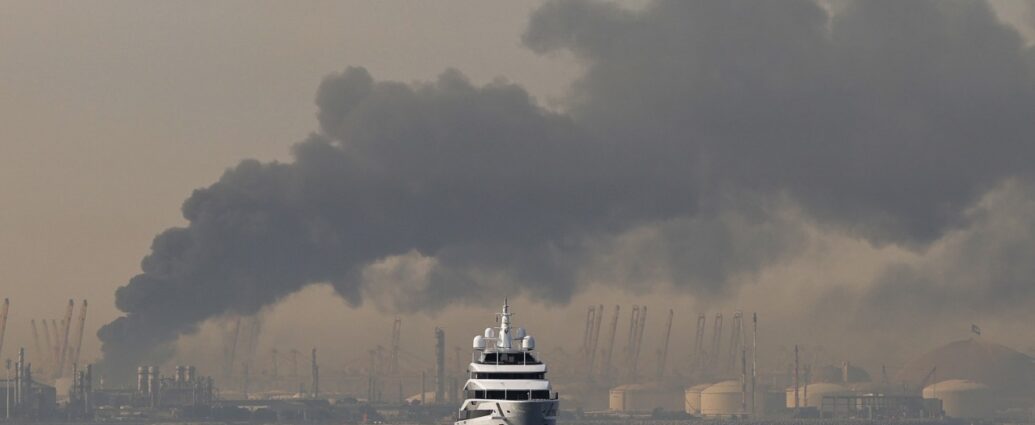
America’s largest banks delivered stronger-than-expected second-quarter results on Tuesday, July 14, offering fresh evidence that consumers, businesses and financial markets remain resilient. According to earnings releases and regulatory filings issued by JPMorgan Chase & Co., Bank of America Corporation, Citigroup Inc. and Wells Fargo & Company, the banks benefited from robust trading activity, renewed corporate dealmaking, expanding loan balances and generally stable credit conditions.

The results provide an important window into the condition of the American economy. Large banks serve millions of households, small businesses, major corporations and investors, allowing their quarterly reports to reveal changes in borrowing, spending, investing and financial confidence.

JPMorgan Chase & Co., the nation’s largest bank by assets, led the group with another exceptionally profitable quarter.

Excluding a one-time gain related to the sale of Visa shares, JPMorgan generated approximately $16.9 billion in net income, or $6.14 per share. The bank reported approximately $57.3 billion in revenue, exceeding Wall Street expectations.

Including the Visa-related gain, JPMorgan’s reported profit was considerably higher. The adjusted figures, however, provide a clearer comparison of the bank’s underlying business performance.

JPMorgan’s Wall Street divisions delivered especially strong results. Total markets revenue increased approximately 35%, while equities markets revenue surged 86% to about $6 billion as market volatility drove heavier client activity.

The bank’s investment-banking fees rose 30% to approximately $3.3 billion, their highest level since 2021. The increase reflected a resurgence in mergers, acquisitions, initial public offerings and other corporate financing transactions.

Those results suggest that major companies are again becoming more willing to pursue acquisitions, raise capital and make long-term investments after elevated borrowing costs and economic uncertainty had slowed dealmaking.

JPMorgan Chief Executive Officer Jamie Dimon acknowledged the strength of current economic conditions while warning that significant risks remain. He pointed to geopolitical instability, persistent inflation, rising sovereign debt and elevated asset valuations as issues that could eventually disrupt markets or economic growth.

Bank of America Corporation also reported substantially higher earnings.

The Charlotte-based bank generated $9.1 billion in net income, an increase of approximately 27% from the same period a year earlier. Earnings reached $1.21 per share, compared with 90 cents per share in the prior-year quarter.

Revenue rose 15% to $31.6 billion, supported by gains across consumer banking, lending, trading and corporate finance.

Bank of America’s sales and trading revenue increased approximately 33% to $7.16 billion, while equities trading revenue climbed nearly 70%. The figures reflected increased client activity across financial markets.

The bank also benefited from the return of corporate transactions. Investment-banking fees rose approximately 50% to $1.15 billion. That replaces the incorrect $2.1 billion figure contained in the earlier version of this article.

Net interest income, which measures the difference between what a bank earns from loans and investments and what it pays depositors, increased approximately 9% to $16.2 billion.

Average loans and leases also expanded, indicating continued borrowing by consumers and businesses despite elevated interest rates.

Bank of America Chief Executive Officer Brian Moynihan said the economy remained supported by consumer activity, business investment and increased corporate spending on technology and artificial-intelligence infrastructure.

Citigroup Inc. reported its highest quarterly revenue in approximately a decade.

Revenue increased 14% to $24.8 billion, while net income jumped 45% to $5.8 billion, or $3.15 per diluted share.

Citigroup’s investment-banking revenue rose 44% to $1.55 billion, reflecting the revival in mergers, acquisitions and stock offerings. Equities trading revenue increased 45%, while net interest income and wealth-management revenue also advanced.

The performance provided further evidence that Citigroup Chief Executive Officer Jane Fraser’s multi-year restructuring effort is producing stronger financial results. The company has worked to simplify its international operations, reduce management layers and strengthen internal controls while investing in businesses offering greater growth potential.

Citigroup executives said part of the additional revenue would be reinvested into technology, risk management and future growth. The bank’s stock reaction also reflected investor concerns about valuation following its strong advance, rather than only concern about higher spending.

Wells Fargo & Company reported $6.4 billion in second-quarter net income, or $2 per diluted share, compared with approximately $5.5 billion a year earlier. Revenue rose approximately 9% to $22.6 billion.

The bank’s markets revenue increased 24% to approximately $2.21 billion.

Wells Fargo’s investment-banking fees rose 35% to $939 million. The previous version incorrectly described the increase as 20%. That figure applied to the bank’s broader Banking segment revenue, not specifically to investment-banking fees.

Loan balances also expanded as Wells Fargo continued deploying capital following the removal of regulatory restrictions that had limited the bank’s growth for years.

Wells Fargo Chief Executive Officer Charlie Scharf said the bank was benefiting from favorable economic and market conditions but remained disciplined about where it expanded. He also cautioned that unusually strong conditions would not necessarily continue indefinitely.

Taken together, the four reports present a broadly positive economic picture.

Consumers continue using credit, maintaining deposits and meeting most financial obligations. Businesses are borrowing and investing. Corporations are returning to mergers, acquisitions and public offerings. Investors remain active across stock, bond and currency markets.

The results do not mean the economy is free of risk.

Trading operations can benefit from volatility even when geopolitical conflict creates uncertainty for households and businesses. Higher interest rates can increase bank income while simultaneously making mortgages, credit cards and commercial loans more expensive.

Bank executives are also watching inflation, geopolitical instability, federal debt, elevated asset values and the possibility that interest rates will remain high.

Nevertheless, the strength was not isolated to one company or one business division. It extended across trading, lending, investment banking, wealth management and consumer finance.

The banking sector traditionally opens quarterly earnings season. Investors will now examine results from technology, industrial, healthcare, energy and consumer companies to determine whether the same momentum extends across the broader corporate economy.

For now, the message from America’s largest banks is consistent: business activity remains strong, corporate dealmaking has returned, credit conditions remain stable and the U.S. economy continues to demonstrate resilience despite substantial domestic and global risks.

JBizNews Desk | New York

© JBizNews.com All Rights Reserved. Reproduction or distribution without written permission is prohibited.
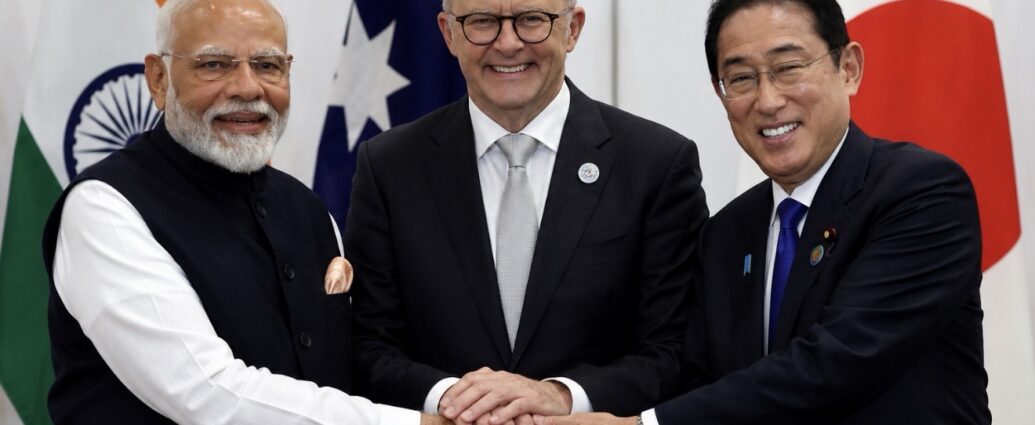
Americans are borrowing more while saving less, leaving many households with a thinner financial cushion despite steady consumer spending. According to the latest Federal Reserve Bank of New York Quarterly Report on Household Debt and Credit, total U.S. household debt climbed to $18.8 trillion during the first quarter of 2026, increasing $18 billion from the previous quarter and remaining near record levels.

Mortgage debt continues to account for the largest share of household borrowing. Outstanding mortgage balances increased by $21 billion to $13.19 trillion, while auto loans climbed to $1.69 trillion and home-equity lines of credit rose to $446 billion. Credit card balances declined seasonally by $25 billion following the holiday shopping period but still remained 5.9% higher than a year earlier.

At the same time, Americans are setting aside less money for emergencies. Federal data shows the personal savings rate has fallen to roughly 4%, down sharply from 6.2% two years ago, as inflation, housing costs, insurance, and other everyday expenses continue consuming a larger share of household income.

The overall numbers remain relatively stable, but economists say they mask growing differences among consumers.

According to the New York Fed, approximately 4.8% of outstanding household debt was in some stage of delinquency during the first quarter, little changed from the previous quarter. However, researchers noted that most of the financial stress remains concentrated among lower-income and subprime borrowers.

“A subset of consumers, primarily subprime borrowers, has driven most of the increase in delinquencies, while prime borrowers have experienced only marginal deterioration,” New York Fed researchers wrote in the report.

That split reflects what economists increasingly describe as a K-shaped economy, where higher-income households continue building wealth while lower-income families face greater financial pressure. Earlier research by the New York Fed found many lower-income households have already reduced spending on discretionary purchases, including gasoline and entertainment, while relying more heavily on revolving credit to manage everyday expenses.

The cost of carrying debt has also become substantially more expensive. According to Federal Reserve data, the average interest rate on credit cards carrying balances now exceeds 22%, remaining near multi-decade highs. At those rates, even relatively modest balances can become difficult to repay as interest charges accumulate each month.

Student loan borrowers are facing renewed challenges as well. Outstanding student debt totaled approximately $1.66 trillion, while the share of loans at least 90 days delinquent rose to 10.3%, reflecting the continued return to repayment following the expiration of pandemic-era relief programs.

Economists caution that headline consumer spending can sometimes give a misleading picture of household finances. Americans have continued spending at healthy levels, but some families are increasingly relying on financing or carrying balances longer to maintain those spending patterns.

The broader concern is resilience. If employment weakens or inflation accelerates again, households with limited savings and high-interest debt may have little room to absorb another financial shock. Rising gasoline prices and elevated borrowing costs could place additional pressure on already stretched family budgets during the second half of the year.

For now, overall household finances remain relatively stable, particularly among higher-income borrowers. But the latest debt figures suggest that financial stress is gradually building beneath the surface, especially for families with lower incomes or significant revolving debt.

Financial counselors generally recommend building even a modest emergency fund, paying down high-interest credit card balances whenever possible, and avoiding unnecessary borrowing while interest rates remain elevated. Those steps can help provide additional flexibility if economic conditions become more challenging later this year.

This article discusses household finances generally and is not financial advice. Individuals experiencing financial hardship may wish to consult a qualified nonprofit credit counselor.

JBizNews Desk | New York
© JBizNews.com All Rights Reserved. Reproduction or distribution without written permission is prohibited.

New York became the first state in the nation on Tuesday to impose a temporary moratorium on the construction of large new data centers, which require immense power to fuel artificial intelligence tools. Gov. Kathy Hochul announced a one-year pause on new data centers that consume 50 megawatts or more of power to give officials time to develop measures to protect New Yorkers and the environment following concerns raised by communities about the environmental impacts and rising energy costs stemming from the facilities.

The New York State legislature passed the Responsible Data Center Development Act last month, which goes further than the order announced by the governor on Tuesday. The bill calls for a one-year pause on permits for new hyperscale data centers over 20 megawatts.

Officials told the New York Times that the governor had issued the order “for the sake of expediency” but that she would continue to review the legislation.

“AI has changed the way we work, learn, communicate, and do business. It has also sparked a heated debate over the rapid construction of massive energy-guzzling infrastructure that is needed to power the industry,” Hochul said. “These hyperscale data centers consume enormous amounts of power, truly threatening to outpace our grid’s capacity and driving up costs for ratepayers.”

“I refuse to let those costs be passed onto New Yorkers, who already pay too much for utility bills. These data centers require millions of gallons of water, straining local supplies, and drive up our carbon footprint,” she added. “Progress shouldn’t arrive with a higher utility bill, depleted water supply, or noise pollution. We have no choice but to address these challenges created by these massive facilities.”

During the moratorium, the state’s Department of Environmental Conservation will not issue discretionary permits for projects whose applications have not already been deemed complete, according to Reuters.

Instead, Hochul has directed state officials to prepare a Generic Environmental Impact Statement to establish consistent standards for future data centers and assess the potential environmental impacts of their construction and operation across New York.

The move comes as communities across the country have pushed back against similar projects. According to Reuters, only one in three Americans approves of the rapid pace of data center construction, and a majority oppose building one in their own community. The opposition is bipartisan, with a recent Gallup poll indicating that both Democrats and Republicans express concerns about data center development.

Several state legislatures have also introduced bills aimed at limiting the impact of data centers on electricity costs and the environment.

In March, the Seminole Nation approved a moratorium on data center development on tribal land in Oklahoma. The following month, the Maine Legislature passed what would have been the country’s first statewide moratorium on data centers, but the measure was vetoed by Gov. Janet Mills, according to the New York Times.

Moratoriums have been proposed in nearly a dozen other states, but none have gone as far as New York, which is now the only state in the country to impose a statewide moratorium on large new data centers.

Supporters of new data centers argue they would boost job growth and help prevent China from advancing its lead in the competitive artificial intelligence industry.

President Donald Trump, who has expressed broad support for the facilities, has sought to address concerns over their energy demands by securing commitments from technology companies to cover their own energy costs, according to the Times.

Other Democratic governors, including Gretchen Whitmer of Michigan and Gavin Newsom of California, have also expressed support for data centers, citing their potential to drive economic growth in states facing “deindustrialization.”

Carlo A. Scissura, president and CEO of the New York Building Congress, said that while the data center industry requires “guardrails,” the moratorium is the “wrong tool” for addressing concerns.

Instead, he said the issue requires targeted regulation rather than a statewide pause. He also disputed Hochul’s argument that New Yorkers would bear the burden of higher energy costs, saying the evidence “points the other way.”

“Grid modernization costs don’t disappear when data centers do,” Scissura said. “They shift onto everyday New Yorkers, who will shoulder a larger share of infrastructure modernization.”

“And then there are the jobs—tens of thousands of them. When projects go to other states, the work goes with them, and so, often, do the workers,” he added.

Earlier this year, Hochul required data centers to either generate their own power by building on sites with existing power infrastructure or pay a premium to purchase electricity from the grid. Those rules are slated to take effect within the next year.

As of May, more than 12 gigawatts of large energy-consuming facilities, including data centers, were slated to connect to New York’s power grid, according to Reuters.

While New York has the eighth-most expensive residential electricity rates in the country, which has limited data center growth compared with states like Texas and Ohio, the state has continued to attract interest from server warehouses.

After the moratorium is lifted, communities will be able to negotiate directly with tech companies over new projects. The state will provide guidelines to help local governments seek concessions from developers, including investments in local infrastructure and commitments to using union labor.

RELATED:

The post New York imposes nation’s first one-year ban on new large data centers first appeared on 6sqft.

This post was originally published here. 

Destinus, MBDA, Safran, Airbus and Thales said they had signed a letter of intent to establish a consortium for the development of the Bliksem EXO system to strike down ballistic missiles, which can travel at hypersonic speeds above the atmosphere.

This post was originally published here. 

Three small businesses in Washington’s L’Enfant Plaza have filed suit against the U.S. Department of Housing and Urban Development (HUD) and HUD Secretary Scott Turner, seeking to block the agency’s relocation of its headquarters to Alexandria, Virginia.

The lawsuit argues the move violates federal law requiring Cabinet-level agencies to remain in the nation’s capital and contends HUD failed to follow proper administrative procedures before relocating thousands of employees outside the District of Columbia.

Businesses Say Revenue Has Already Declined

The plaintiffs—two restaurants and a party-supply business located near HUD’s longtime headquarters—say they have already experienced a sharp decline in business as federal employees have relocated.

According to court filings, Brown Bag, a fast-casual restaurant serving the neighborhood for more than a decade, reported its revenue during April and May fell approximately 20% compared with the same period last year.

The businesses argue that losing thousands of daily federal workers threatens their long-term viability and could permanently reshape the local economy surrounding L’Enfant Plaza.

A Move Years in the Making

HUD announced plans to relocate its headquarters in 2025, selecting the former National Science Foundation headquarters in Alexandria, Virginia, as its new home.

Most of the agency’s approximately 3,000 headquarters employees completed the move earlier this year.

Federal officials have argued the relocation will reduce long-term operating expenses while replacing the aging Robert C. Weaver Federal Building, which has served as HUD headquarters since 1968.

Cost Savings at the Center of the Debate

HUD estimates the Weaver Building would require more than $609 million in repairs to remain operational and says relocating the department will ultimately save taxpayers hundreds of millions of dollars.

The lawsuit disputes those figures, arguing the government’s repair estimates significantly exceed previous projections and questioning whether the relocation delivers the savings officials have promised.

Court filings also point to relocation expenses totaling nearly $70 million, including costs associated with moving the National Science Foundation from the Alexandria campus.

Congressional and Union Scrutiny Continues

The relocation remains under review by the Government Accountability Office (GAO) following requests from several members of Congress.

Meanwhile, AFGE Local 476, the union representing approximately 2,500 HUD headquarters employees, has opposed the move, arguing Congress never authorized the relocation and raising concerns about employee working conditions at the new facility.

Employees have reported early technology and infrastructure challenges following the transition, while union surveys found a large majority opposed leaving Washington.

Broader Impact on Downtown Washington

Beyond the legal issues, the case highlights the broader economic impact major federal relocations can have on surrounding businesses.

Restaurants, coffee shops, retailers and service providers throughout downtown Washington depend heavily on daily traffic generated by federal workers. The departure of a major Cabinet agency removes thousands of customers from the neighborhood, adding to challenges already facing downtown commercial districts as office occupancy continues to evolve.

The plaintiffs are asking the court to halt the relocation and require HUD to maintain its headquarters in Washington while the legal challenge proceeds.

The outcome could influence future efforts to relocate other federal agencies outside the District of Columbia.

JBizNews Desk | Washington
© JBizNews.com All Rights Reserved. Reproduction or distribution without written permission is prohibited.

Best Buy issued a recall on two models of Insignia gas range stoves after a report that the stoves can be activated by accidental contact with knobs, according to the U.S. Consumer Product Safety Commission. 

The Chinese-manufactured Insignia Front Control Gas Ranges received the recall on Thursday. The recall affected 3,820 units sold in the U.S. 

The recall affects two models of the Insignia Front Control Gas Ranges: the models NS-RGFGSS1 and NS-RGFCGS2. 

“The recalled ranges are stainless steel with five front-knobs on the oven with the ‘Insignia’ label on the bottom of the oven door,” the recall reads.

BEST BUY’S MEMBERSHIP PROGRAM: HOW TO LEVEL UP YOUR TECH SHOPPING EXPERIENCE

Consumers are advised to stop using the product immediately and visit Best Buy’s website to receive a free set of gas knob covers.

“Consumers are cautioned to keep children and pets away from the knobs, to check the range knobs to ensure they are off before leaving home or going to bed, and not to leave objects on the range when the range is not in use,” according to the Safety Commission.

MILLIONS OF PRESCRIPTION EYE DROPS RECALLED NATIONWIDE OVER CONTAMINATION CONCERNS

Despite the recall, no injuries have been reported from use of the Insignia ovens.

Best Buy has been selling the in-house Insignia ovens since 2020, and they can retail from anywhere between $280 and $1,470.

CLICK HERE TO GET FOX BUSINESS ON THE GO

FOX Business contacted Best Buy for comment. 

This post was originally published here. 

President Donald Trump said Tuesday the United States would abandon a proposed 20% transit fee on commercial cargo moving through the Strait of Hormuz and instead pursue expanded trade and investment agreements with Gulf nations. The policy reversal eased immediate concerns over sharply higher shipping costs through one of the world’s most important energy corridors, causing oil prices to retreat from earlier session highs while remaining elevated as geopolitical tensions continued across the Middle East.

Brent Crude, the international benchmark, briefly traded above $87 per barrel before retreating to approximately $84.17. West Texas Intermediate Crude, the U.S. benchmark, also gave back part of its gains, trading near $78.79 per barrel. Although prices pulled back, crude remained higher for the day as traders continued to monitor military tensions involving the United States and Iran.

The proposed 20% transit fee had been viewed as a way for the United States to recover part of the cost of protecting commercial vessels navigating one of the world’s busiest energy shipping lanes. The proposal immediately raised questions throughout the shipping industry regarding how the fee would be collected, which cargoes would be subject to the charge, and whether such a policy could be implemented under international maritime law.

According to Trump, discussions with Middle Eastern leaders led to an alternative approach centered on expanding trade and investment partnerships rather than imposing additional costs on global shipping. While the administration did not immediately disclose which countries would participate or the value of the proposed investments, markets viewed the decision as reducing a significant near-term risk to global commerce.

The Strait of Hormuz remains one of the world’s most strategically important waterways, connecting the Persian Gulf with the Gulf of Oman and the open sea. Nearly one-fifth of the world’s seaborne crude oil exports pass through the narrow passage, making any disruption to shipping a major concern for energy markets, businesses, and consumers worldwide.

Had the proposed fee been implemented, shipping costs would likely have increased substantially for crude oil, liquefied natural gas, and other cargo moving through the region. Those additional expenses could ultimately have been passed along to refiners, manufacturers, transportation companies, utilities, retailers, and consumers through higher fuel and product prices.

While the withdrawal of the proposed fee removed one immediate concern, broader geopolitical risks remain. Ongoing military activity and attacks on commercial shipping have already caused some tanker operators to alter routes, delay sailings, or wait for improved security conditions before entering the region.

The impact extends well beyond energy producers. Higher crude prices increase operating costs for airlines, trucking companies, delivery services, manufacturers, agricultural producers, and retailers. Rising marine insurance premiums and freight charges also increase the cost of transporting food, chemicals, machinery, and consumer products between Asia, the Middle East, Europe, and North America.

Businesses operating on thin profit margins may eventually face difficult decisions if energy prices remain elevated. Some companies may absorb higher transportation costs temporarily, while others could pass those increases to customers through higher prices or postpone expansion and hiring plans until market conditions stabilize.

Energy prices also remain a key component of the inflation outlook. Sustained increases in oil prices can raise transportation and manufacturing costs throughout the economy, complicating efforts by central banks to keep inflation under control. Financial markets will continue monitoring developments in the Middle East for any signs that could affect future energy supplies or interest-rate expectations.

For businesses, the administration’s decision removes one immediate uncertainty surrounding international shipping costs. However, the world’s most critical energy corridor remains vulnerable to geopolitical developments, leaving oil markets highly sensitive to any escalation that could threaten the uninterrupted flow of global energy supplies.

Oil’s retreat from earlier highs reflected relief that the proposed transit fee would not move forward. At the same time, prices remained supported by continuing concerns over regional security, underscoring the importance of the Strait of Hormuz to the global economy and international energy markets.

JBizNews Desk | Washington, D.C.

© JBizNews.com All Rights Reserved. Reproduction or distribution without written permission is prohibited.

One of America’s most popular fast-food chains is under scrutiny as federal and state health officials investigate whether Taco Bell locations may be connected to a rapidly growing cyclosporiasis outbreak.

Federal and state health agencies are investigating whether Taco Bell locations may have contributed to a widespread outbreak of cyclosporiasis, a gastrointestinal illness caused by a microscopic parasite, according to two anonymous sources familiar with the investigation who spoke to The Washington Post.

In recent days, multiple local and national news outlets reported that signs appeared at Detroit-area Taco Bell restaurants notifying customers that the locations could not serve lettuce, cilantro onions, pico de gallo or guacamole because of “a national recall.”

TACO BELL RAMPS UP VOICE A.I. USE ACROSS NEARLY 900 DRIVE-THRUS

Neither Taco Bell, its parent company Yum! Brands, the U.S. Food and Drug Administration, nor the Department of Health and Human Services immediately responded to Fox News Digital’s request for comment.

The FDA has not announced a recall involving Taco Bell, and its website does not include any public notice mentioning Taco Bell in connection with the outbreak.

Cyclosporiasis cases are rising across America, with more than 2,600 cases reported in Michigan. This is the largest outbreak of its kind in Michigan’s history and one of the country’s largest in years, according to the Associated Press.

A press release from the Michigan Department of Health and Human Services said Monday: “While the investigation is ongoing, current results point to lettuce or salad greens as a potential source for this outbreak, although other food items cannot be completely ruled out. No specific type of produce, grower or supplier has been identified as the source.”

The parasitic infection can cause weeks of watery, “explosive” diarrhea. The source of the outbreak has not been identified, and no deaths have been reported.

GET FOX BUSINESS ON THE GO BY CLICKING HERE

Taco Bell is a subsidiary of Yum! Brands Inc., based in Louisville, Kentucky. Yum! Brands also owns KFC, Pizza Hut and The Habit Burger & Grill.

Taco Bell operates more than 8,700 locations worldwide, according to its website, and serves more than 40 million customers each week in the United States.

READ MORE FROM FOX BUSINESS

Fox News’ Angelica Stabile contributed to this report.

This post was originally published here. 

The Knesset plenum passed on Tuesday the contentious bill that will temporarily freeze the arrests of haredi (ultra-Orthodox) draft evaders, with 58 lawmakers voting in favor and 54 against.

The passage of the bill in its final readings comes following severe legal warnings that the legislation is unbalanced, along with outcry from bereaved families and IDF veterans, amid the IDF’s severe manpower shortage. 

The plenum broke into clashes when Prime Minister Benjamin Netanyahu arrived ahead of the vote.

As Netanyahu entered the plenum, opposition lawmakers repeatedly shouted “disgrace” and “get out.” The prime minister left the chamber shortly afterward and did not return for the vote.

The legislation’s passage also comes after IDF Chief of Staff Lt.-Gen. Eyal Zamir warned on Monday that implementing such a law would create an array of national security problems. 

He stated that he opposes the bill’s implementation “completely and unequivocally.”

Among the issues raised by Zamir was that such a law would decrease recruitment both from the haredi community and from the general Israeli population by delegitimizing the idea of the IDF as the “nation’s army” in which everyone is equally obligated to serve.

Eyal Zamir warns IDF could soon collapse due to manpower shortage

Zamir has warned in recent months that the IDF could soon collapse if no solution is found for the manpower shortage.

The bill proposes a temporary halt on draft evader arrests to remain in effect from the date the law is published until November 30.

The Israel Democracy Institute (IDI) has noted that the proposal could remain in effect beyond its stated expiration date because of the upcoming elections, which are scheduled for October 27.

Temporary legislation passed shortly before an election, which is due to expire during the election period, is automatically extended by roughly four months, as the Knesset does not function normally during that time. 

As a result, the arrangement is likely to remain in force for at least six months.

Ahead of the vote, Knesset Legal Adviser Sagit Afik asked lawmakers to declare whether they have family members classified as draft evaders; haredi MKs whose relatives could benefit from the legislation may have a conflict of interest.

The haredi parties – Shas and United Torah Judaism – both provided lists of the lawmakers who had relatives classified as draft evaders.

The disclosure statement provided by the United Torah Judaism Party included the names of seven members of the party’s list.

This sparked outrage among opposition lawmakers in the plenum, who demanded that haredi MKs disclose exactly how many of their relatives had been classified as draft evaders.

A group of MKs from within Netanyahu’s coaltion voted against the bill, including MK Dan Illouz (Likud), MK Yuli Edelstein (Likud), and Deputy Foreign Minister Sharren Haskel (New-Hope United Right).

Haskel resigned from her position as deputy foreign minister immediately after the bill passed.

Defense Minister Israel Katz arrived at the plenum to vote in favor.

It had been unclear whether the Religious Zionist Party, led by Finance Minister Bezalel Smotrich, would support the bill.

Reported tensions between Smotrich’s party and the haredi parties

There had been reported tensions between Smotrich’s party and the haredi parties over which bills to advance first on the legislative agenda amid the coalition’s legislative blitz to pass its legislation during the Knesset’s last week before it goes into recess ahead of the elections.

Lawmakers from the Religious Zionist Party ultimatly voted in favor.

There had been earlier reports that an agreement was reached after negotiations, with both sides agreeing to support each other’s legislation in the plenum.

The bill’s proposal defines a yeshiva student as someone who studies Torah at a yeshiva regularly, for no less than 45 hours per week, or in a kollel for no less than 40 hours per week.

The proposal also stipulates that the defense minister will be responsible for compiling the list of yeshivas that would be relevant,  according to criteria that will be established in regulations.

The government has presented its stance that the freeze of arrests would be beneficial, arguing that arresting yeshiva students who evade military service has undermined efforts to encourage broader enlistment among haredi men.

Opponents and the Knesset’s legal advisor have argued that the bill is unbalanced largely because it only calls for halting the arrests of draft evaders without including any sanctions on them.

The Knesset’s legal advisory warned in its opinion on Sunday that the legislation could effectively exempt haredim from IDF service, failing to advance “equality in sharing the burden.”

Afik also warned the panel ahead of the vote that the legislative process undertaken to advance the bill was an improper part of “an improper legislative process.”

A plenum session and a vote on a bill to freeze arrests of haredi draft evaders at the assembly hall of the Knesset, the Israeli parliament in Jerusalem, July 14, 2026.  (credit: CHAIM GOLDBERG/FLASH90)

Bill undergone significant changes from first reading

Critics argue that the bill has undergone significant changes from the version that passed its first reading years ago, following dozens of committee discussions that reshaped its original framework in the Foreign Affairs and Defense Committee.

“Out of this long and complex legislative process, one small section was taken, and everything else was deleted. In my view, this raises a claim far more serious than merely a ‘new subject,’” Afik said.

The Knesset legal advisor added that even though she was told there was a time constraint to pass the bill before the Knesset recess, she said that “a lack of time cannot justify an improper legislative process.”

The bill is part of a series of haredi-backed bills being advanced, amid numerous reports of agreements between the haredi parties and Prime Minister Benjamin Netanyahu to advance coalition legislation.

Haredi parties had boycotted votes on coalition legislation when their bills were not advancing quickly enough.

The plenum agenda this week has been packed with controversial coaltion bills, such as the bill to weaken the role of the attorney-general, along with legislation for a sweeping reform of Israel’s broadcasting sector.

The Knesset plenum also passed on Monday the contentious legislation advanced by the haredi parties that will enshrine Torah study as a fundamental value in the country’s Basic Law.

Critics argue the Basic Law: Torah Study bill encourages draft evasion and changes the status of yeshiva students who do not serve, enabling them to continue receiving state benefits even amid the IDF’s severe manpower shortage.

The IDF has repeatedly warned of an urgent manpower shortage after more than two years of war.

In April, the High Court of Justice ordered that the state take concrete steps to revoke key financial benefits from draft evaders and to move toward criminal enforcement against haredi men who evade military service.

Immediately after the bill’s passage, multiple petitions were sent to the High Court of Justice against the legislation, calling for it to be struck down.

The petitions were filed by the Movement for Quality Government in Israel, along with the opposition parties Yesh Atid and Yisrael Beytenu. 

The Movement for Quality Government stated that “the coalition removed its final mask today and made it clear, loudly and unequivocally, that it discriminates between one person’s blood and another’s.”

Yisrael Beytenu leader MK Avigdor Liberman also condemned the legislation, calling it “one of the most shameful and irresponsible laws Israel has seen since its establishment.

Yonah Jeremy Bob contributed to this report. 

This post was originally published on here. 

The Knesset Security Cabinet, together with Prime Minister Benjamin Netanyahu, approved a budget proposal of NIS 1.3 million to establish new Israeli settlements in the West Bank on Tuesday. 

According to the decision, 34 new settlements will be established in the near future – nine in the Samaria region, seven in the Binyamin region, four in the Hebron area, seven in the Jordan Valley, six in the Gush Etzion area, and one in the Megilot Regional Council area. 

This will bring the total number of West Bank settlements established under the current government to 103.

The budget was approved in June, but the details of the plan to build new settlements were only made available to the public on Tuesday. 

National Missions Minister Orit Strock, Construction and Housing Minister Haim Katz, and Finance Minister Bezalel Smotrich submitted the proposal. 

Smotrich celebrated the announcement and pushed for more settlements. 

“We have made sure that… the establishment of new settlements in Judea and Samaria will not remain on paper, but will take shape and be implemented on the ground.”

“We are passing one budget decision after another,” Smotrich said. “Budget for roads, for infrastructure, and now also for buildings and caravans.”

“We will be moving forward with many more settlements this summer,” the finance minister predicted. “There is a huge demand for it.”

Budget approval marks ‘historic’ leap in West Bank Jewish settlement growth 

Orit Strock echoed Smotrich’s sentiments, emphasizing the sheer size of the projected building project. “There has never been a Zionist settlement decision of this magnitude in the entire history of [the State of Israel].”

“Investing in settlement [of the West Bank] strengthens our hold throughout Israel and secures our future,” Katz said. “The approved budget will allow us to begin development, establish neighborhoods, and lay infrastructure that will allow families to move in as soon as possible.”

“The Construction and Housing Ministry will work to remove barriers and accelerate the process, so that new settlements can quickly go from the planning phase to reality,” Katz added. 

Anna Barsky and Avi Ashkenazi contributed to this report.

This post was originally published on here. 

The Rewild Festival, an Irish music festival, prevented an IDF veteran from attending, festival organizers confirmed on Saturday.

Organizers of the festival, which was held between July 10-12, said they “became aware that a former member of the Israeli Occupation Forces (IOF) was hoping to attend the festival as a paying guest.”

IOF is a term often used by anti-Zionist and left-wing activists aiming to delegitimize the IDF.

“Rewild stands in solidarity with the Palestinian people and is committed to fostering a safe, welcoming, and inclusive space for our community,” the statement published on the festival’s social media read.

“In line with these values, current or former members of the IOF are not welcome at Rewild and will not be permitted to participate in the festival, and that was made clear. He [the IDF veteran] will NOT be in attendance,” the statement concluded.

Festival-goers attend the Rewild Festival in Ireland; illustrative. (credit: Rewild Festival)

Israel activists condemn festival’s decision

Several activists and organizations denounced the Rewild Festival’s decision to prevent the IDF veteran from attending.

This included Alan Shatter, who served as the Irish defense and justice minister from 2011 to 2014, and was a member of the Irish parliament from 1981-2002 and from 2007-2016.

“A ‘safe, welcoming & inclusive space’ should be enjoyed by all attending a festival. That was denied to the 1,200 slaughtered… by Hamas on Oct 7 at the Nova Music festival & those raped, sexually assaulted, the mutilated dead, the injured & abducted,” he wrote on X/Twitter.

Shatter also named 22-year-old Irish-Israeli dual citizen Kim Damti, who was murdered at the festival, as among those slaughtered.

“Rewild promoting hate,” he stated.

The Campaign Against Antisemitism (CAA) also denounced the festival for having “so-called inclusive spaces [that] are only inclusive for some.”

“According to its website, Rewild claims to be ‘a space where everyone can come together,’ but apparently that excludes any Israeli who performed their obligatory national service,” CAA added.

“Conscription is compulsory in Israel, so this ban seems to simply be xenophobia masquerading as progressivism,” CAA said.

Israeli-Arab activist Yoseph Haddad also denounced the festival for “decorating its statement with Palestinian flags and noting that they stand in solidarity with Palestinians.”

“How symbolic it is that a music festival is standing with the Palestinians against Israel, when less than three years ago, a music festival in Israel was massacred by the same Palestinians!” he wrote, referring to Nova.

This post was originally published on here. 

Watch this episode without interruptions.

Listen wherever you get your podcasts.

Gadi Taub grew up in a valley in Jerusalem, in a house he can almost see from the studio window: a spot bounded by the Hebrew University, the Israel Museum and the Knesset. “The triangle of academia, art and politics,” he called it. His father was secretary of the Bank of Israel and later head of the Securities Authority. His mother spent her life reading Alterman and warning anyone who would listen that postmodernism would take down Western culture, and that post-Zionism was its Israeli vanguard.

In other words, he came from the heart of the Labor establishment. He has spent the last two decades leaving it.

Taub, today one of the most cited intellectuals on the Israeli Right, told me the story he says explains where he started. The morning after the 1977 election, he came out of his room to find his mother packing food for a school trip. She told him Menachem Begin had won. “I sat down and cried,” he said. He was 12. “I didn’t know anything about politics, but I understood from my parents that this was the end of the world.”

Years later he interviewed Yuli Tamir, a founder of Peace Now and a former education minister, on his podcast. She mentioned, in passing, that she and her boyfriend had spent that election night at his parents’ house. There were no exit polls, the buses had stopped running, and they stayed over. He had no memory of it. “Look where Yuli is and where I am,” he said. “You see how intimate the circles are.”

The classroom as a lab

His father was Palmah, and lost half a hand in the War of Independence. From him, Taub says, he inherited a suspicion of the well-intentioned. “Beware of do-gooders,” his father used to say, in English. Being moralistic, in that house, was not the same thing as being moral. “It’s often a pose, and the pose comes at the expense of actual morality.”

That instinct shows up in how he teaches. He tells his students, on the first day, that he is there to offend them, and that anyone who fails to feel offended is welcome to come to office hours so he can take care of it personally. No one, he says, begins a question in his class with “as a woman,” “as an Ethiopian,” “as a Jew.” “You are here as a student. This is not therapy.”

He teaches postmodernism, which he considers poison. “But we are in a lab, so we don’t die from it here.” He starts by showing why Foucault is seductive, why people were willing to die for Marxism. “Critical thinking is not just bashing everything. You first have to get inside something and see what’s in it. If you don’t see what’s in it, you don’t understand it, because it’s never only cerebral. You have to understand the passion.”

He says he does not grade opinions, and that his exams often ask students to make the strongest case on both sides, well enough that the grader cannot tell where the student’s heart was. He also says right-wing students increasingly arrive in his classroom feeling that their grades depend on their politics, and that they are often right. When his department held a conference on the judicial reform, the two faculty members who supported it were not invited to speak. A student complained. Nobody listened.

The long turn

The shift, Taub insists, was gradual. He was never on the radical Left. “All the way to Peace Now, but not further.” He supported Oslo. Then buses exploded. Then Rabin was assassinated. Then Ehud Barak went to Camp David in 2000 and offered more than his own voters would have countenanced, and Arafat said no.

“That was the moment,” he said. “Why would they not take a state, even if they wanted the whole thing? Why not start with a state? And I understood: it isn’t about peace, or coexistence, or even self-determination. We had imagined them in our own image.”

He became a unilateralist, like most of the Israeli center: leave, separate, keep a Jewish majority. Then the rockets kept coming from Gaza. Then the Second Lebanon War showed that interception can be saturated, that the rockets are cheap and the interceptors expensive, and that the whole thing is an economic war of attrition. Then came the Arab Spring, and Arab nation-states collapsed one after another.

“If nationalism isn’t a workable principle of political order in the Arab world,” he asked, “how are we supposed to trust a new nation called the Palestinians to become a stabilizing element in this region?” The region, in his telling, is political lava, and it can spill over the ridge. Nine miles separate the foot of Samaria from the beach where much of the population and most of the national assets sit. Hence the Jordan Valley. Hence, in his view, no withdrawal.

October 7, he says, closed the argument. “The Left said Gaza would be Singapore. The Right said it would be Hamastan, in those words, before Hamas even took over. Who was right?” The public, he believes, absorbed the shock and reached the same conclusion, which is why, in his reading, left-wing candidates are now campaigning as though they are on the Right.

Netanyahu, with reservations

Taub is not a courtier. He listed the failures: the judicial system Netanyahu neglected until it came to bite him, the Negev, the Galilee, illegal weapons and murder in the Arab sector. Itamar Ben-Gvir, the man responsible for internal security, he dismissed as “a lot of noise and not enough substance,” someone who should have started confiscating weapons village by village and did not.

He also rejects the idea that the judicial overhaul was Netanyahu’s project. It came from the base, he said, and Netanyahu read the room when Yariv Levin, the man identified with it, came second in the Likud primaries.

But when it comes to the vote, he says, the question is narrower than the scandal sheet. The war with Iran is not over. “If we are left alone, without American support, facing a wounded hyena that will try to buy a bomb, who is the best leader to handle that?” His answer: “We had Ben-Gurion, and we have Netanyahu. If you find someone of that caliber, I’ll probably vote for him.”

He was contemptuous of the former general now telling Israelis that Israel must win, noting that the same man opposed going into Rafah. Had Israel listened, Taub said, Nasrallah would be alive with his arsenal intact, Assad would be in Damascus, and Iran would be closer to a bomb.

‘A license to fabricate’

On the press, Taub does not bother with the symmetry that both sides are biased. True, he says, and trivial.

What happened to the Israeli Left’s media, in his account, is that postmodern epistemology married moral certainty and produced a license to invent. “They see their job as educating the public, not informing it.” Once you believe you know the morally necessary conclusion, you administer the right dose of facts and factoids until the public gets there.

His illustration is Channel 12‘s Sde Teiman video, which he calls a blood libel. The footage, he said, was narrated to tell you what you were seeing, and pixelated in the middle so you would imagine what was behind it, and there was nothing behind it. “On the Right there’s sloppy journalism, mistakes, sometimes lies. But it’s shameful to lie. On the Left, if you lie for a good cause, you’re not forgiven, you’re a hero.”

He knows the cost. He wrote in Haaretz, years before it became conventional wisdom, that the bribery charge in the Netanyahu trial would not stand. Colleagues at the paper called for his column to be shut down for spreading fake news. Eventually, he was let go.

God, and the story

Taub is not religious and does not pretend to be. He was critical of political theology, he said, because bringing God into an argument ends the argument. “You can’t argue against God.”

But he does not sneer. He envies the religious for what he learned from an anthropologist, Clifford Geertz: that religion preserves a sense of meaning without having to answer the question of meaning. If your son is killed in a war, there is still a guarantee that it means something. He cannot get there himself. “After the Holocaust, I can’t see that there could be any plan behind this.” Belief, he said, is not something you argue your way into. “And I despise people who think religion is dark and retrograde and something we should have outgrown.”

What worries him is not observance but the story. A Judaism reduced to vague ethnicity and a nice talk show, he said, will melt away. And the same goes for the state. Ben-Gurion was militantly secular, “and he read the Bible. His Hebrew was the most biblical of any politician. He knew chapter and verse.” The draft Declaration of Independence called it the eternal Book of Books. “Because he understood that without preserving the Jewish story, there is no Jewish people.”

We ran out of time, and I told him I had a dozen more questions. He said he would come back. As he stood up, I teased him about being one of those Jerusalemites who moved to Tel Aviv.

“I am from Jerusalem,” he said. “I teach in Jerusalem.” He paused. “Now it feels like slightly hostile territory. But I’ll manage.”

This post was originally published on here. 

US President Donald Trump said on Monday that the United States would charge 20% on cargoes for use of the Strait of Hormuz after a ceasefire with Iran broke down amid a dispute over Tehran’s efforts to maintain control over the strategic waterway.

Iran shut down the 21-mile-wide strait that was the main route for a fifth of world oil supplies and other vital goods, including fertilizers, when the US and Israel attacked it on February 28, causing a global energy shock.

This is why it matters, how Trump’s and Iran’s stances differ, and how it affects the rest of the world:

As recently as June 25, US Secretary of State Marco Rubio said when meeting Gulf states and in response to Iran’s demand for fees that “no country on Earth has the right to charge for the use of international waterways” and that fees for shipping would never be part of any deal.

But Trump has previously mooted the possibility of the US charging tolls if the deal with Iran were to break down.

“There ​will be NO TOLLS in the ​Hormuz Strait for 60 days during the Cease Fire Period, and there ​will be NO TOLLS ​after the 60 day period has expired, ‌unless ⁠they are imposed by and for the United States of America, should the deal not ​be ​completed, for ⁠services rendered as the Guardian Angel to ​the countries of the ​Middle ⁠East for purposes of both past, present, and future reimbursement ⁠of ​costs,” he wrote in a social media post on June 20.

With the ceasefire in tatters, he now appears to have reverted to his earlier stance.

“The USA will be, from this point forward, known as ‘THE GUARDIAN OF THE HORMUZ STRAIT’, but as such, and as a matter of FAIRNESS, will be reimbursed, at the rate of 20% on all cargo shipped,” he said in a social media post on Monday.

Trump has not explained how such charges would be imposed nor what legal authority he could use to demand them for passage.

How is Trump’s toll demand different from Iran’s?

Iran has made its lasting control over the Strait, whose waters it shares with Oman, its main priority in negotiations, seeing it as its strongest strategic lever with the outside world and the best guarantee of its security against future attacks.

It believes Washington had accepted this in the wording of last month’s interim deal, which said Iran “will make arrangements using its best efforts for the safe passage of commercial vessels with no charge for 60 days only.”

Drone view of oil tanker HELGA berthed at one of Iraq's southern offshore oil terminals near Basra as it prepares to load crude oil, becoming the second vessel to arrive since the closure of the Strait of Hormuz, April 24, 2026. (credit: REUTERS/Mohammed Aty/File Photo)

However, the US interpreted that language to mean only that Iran should facilitate safe passage for vessels and not impose restrictions backed by force.

During the war, Tehran set up the Persian Gulf Strait Authority that it says any vessel passing through the waterway must coordinate with, and it insists ships should only transit near the Iranian shoreline. It has targeted vessels trying to pass along the Omani shore that did not seek its permission.

It has said it may eventually charge passage fees but has not detailed what they would be.

What was the toll situation like before the war?

The Strait comprises the territorial waters of Iran and Oman, with the maritime boundary running along the middle.

The UNCLOS maritime convention governing international sea law says states bordering straits cannot demand payment simply for permission to pass through.

However, they can impose limited fees for specific services such as piloting, tugging or port services, though these may not be levied more heavily on vessels from any particular countries.

Neither Iran nor the United States is a signatory to UNCLOS, but it is widely regarded as international law, and the Strait of Hormuz is recognized as an international strait.

In 1968, Iran and Oman agreed on a traffic scheme with the International Maritime Organization under which major vessels would use sea lanes along the middle of the Strait. Iranian mine-laying during the war has now made such passage unsafe according to the IMO.

Would other countries accept imposition of fees in Hormuz?

No such unilateral move to demand fees to traverse a strait has been made in modern history, shipping industry officials said.

Oman has held dialogue with Iran on the issue. It issued guidance last month for vessels transiting the Strait through its water that did not require any fees.

Gulf states, whose main access to the high seas for their vital energy exports lies through the Strait, are particularly concerned about fees.

Major consumers of Gulf energy products and fertilizers may also be alarmed, especially by Trump’s proposal for a 20% surcharge on cargoes. That could push up global oil prices significantly.

Iran vows to maintain control of Strait ‘under any circumstance’

This comes as a member of Iran’s National Security Commission, in an interview with the Iranian semi-official news agency Tasnim on Tuesday, vowed that Iran will resist external influence over the waterway’s future.

“We will not lose the Strait of Hormuz under any circumstances; even if a difficult war is ahead, we will resist there,” he stated.

The National Security Commission member also claimed that the US will not have the ability to compete with Iran in that arena, “despite all of Trump’s fantasies.”

This post was originally published on here. 

US President Donald Trump wants Gulf states to reimburse the United States for the protection provided to them amid ongoing Iranian attacks, the president told reporters in the Oval Office on Monday.

“I want to be reimbursed because we’re protecting a very rich portion of the world. We’re spending money, so… we are going to be reimbursed for protection,” Trump told reporters.

The US doesn’t “need” those countries because “we have more oil than any other country in the world,” he asserted. “We’re protecting all of them, and we’ve done a very effective job.”

Trump previously said Washington would become the “guardian of the Hormuz Strait,” protecting the vital waterway, responsible for a fifth of global oil and liquefied natural gas, in exchange for a reimbursement rate of 20%. The plan was adapted on Tuesday evening to instead focus on investment deals.

Though potentially lucrative, Professor Chuck Freilich warned The Jerusalem Post that Trump’s “absurd demand” validated Tehran’s own demands for fees in Hormuz.

Iran’s FM Araghchi mocks Trump 20% demand, Tehran jockeys for Hormuz control

“Those Investments will be MASSIVE but, at the same time, extraordinarily good for them, and their future,” Trump wrote on social media. “As everyone is aware, we have the largest Dollar Investment into the United States, of any Country in History, but these new Investments will make that Number even larger, and we will see Factories, Plants, and Equipment pour into the United States at Historic levels, which will create additional millions of High Paying AMERICAN Jobs! America is WINNING again, winning like never before.

Though potentially lucrative, Professor Chuck Freilich warned The Jerusalem Post that Trump’s initial “absurd demand” validated Tehran’s own demands for fees in Hormuz.

Iran’s Foreign Minister Abbas Araghchi had earlier mocked Trump’s demand for 20% fees for crossing the Strait of Hormuz, seemingly positioning Tehran as the preferred administrators.

“POTUS is absolutely right. Whoever provides secure and safe passage of commercial vessels through the Strait of Hormuz should be compensated for this service,” Araghchi wrote on social media. “Iran has always been the GUARDIAN of the Strait and will remain so FOREVER.”

Asked what Trump’s motives could be, Frieilich said that “money is his primary motivation in life; he thinks only in monetary terms.”

Though the financial demand on Gulf states may be a new development, Dr. Yoel Guzansky, the head of the Gulf Research Field at the Institute for National Security Studies, said that it was likely something Gulf states expected from Trump, who has built his identity on being a businessman.

“Trump, he is transactional, always looking for where the money is. He’s a businessman, he admits it, and he’s not ashamed of it; he’s proud of it, and the Gulf States understood that from the beginning,” Guzansky commented.

Asked how Gulf states would justify the cost of US protection, given that Washington’s military presence in the region has itself been cited by Iran as a justification for attacks, Guzansky responded that the security benefits of hosting US forces ultimately outweigh the risks and would likely tip the balance in favor of maintaining an American presence.

Without America’s presence in the region, Guzansky argued that many Gulf states would have been conquered by Iran, or at least subjected to Iranian attempts. “There’s a price to pay for US bases in the Gulf, but one cannot live without them because the threat of Iran is still there,” he asserted.

Though perhaps expected, Dr Kristian Alexander, a geopolitical analyst based in Dubai, told The Post that Gulf states would be uncomfortable with the relationship being reduced to “transactional” exchanges of protection for payment.

A gap in trust and expectations

“From the Gulf perspective, the relationship has never been one-sided. Gulf states host U.S. military bases, provide critical logistical infrastructure, facilitate intelligence cooperation, purchase substantial quantities of American defense equipment, and contribute to regional stability in ways that directly support U.S. strategic interests. They are therefore likely to argue that they already shoulder a significant share of the burden associated with the regional security architecture,” he argued.

Guzansky, however, contended that the problem would not be paying for America’s protection; the issue would lie with what that protection would look like.

“I think they expect more from the US, not just from this administration, but from the US as a whole, to do more for their defense than it has done so far during this war,” he commented. “There is a lot of disappointment in the Gulf with US strategy toward Iran and with the way the US conducted itself during the war. So yes, there is a transactional element, but the question is: what do we get in return? I think there is a gap between what the US understands as protection and what the Gulf states understand as protection.”

That gap in trust and expectations has largely contributed to the continued dialogue held between Gulf states and Iran, he continued, asserting that the talks and financial involvements were “not because they love Iran” but out of “fear.” Aware that the US “can’t wait to leave the Gulf,” the states are less likely to throw their full weight behind any US efforts, even as they build deeper military ties, because they need to maintain some level of appeasement because the US, while capable, cannot be fully relied upon.

Alexander suggested that the need to balance relations with the US and Iran would also create some difficulty in paying for protection.

“Gulf capitals have spent the past several years pursuing a strategy of strategic de-escalation with Iran. The GCC as a whole has increasingly prioritized crisis management over confrontation. Against that backdrop, rhetoric emphasizing ‘protection’ against Iran could complicate these carefully managed diplomatic efforts by reinforcing Tehran’s long-standing narrative that Gulf states are facilitating American pressure against Iran,” he argued.

Many of the Gulf states pushed for the conflict with Iran to be resolved through diplomacy, particularly Qatar and Oman, and the efforts eventually materialized in a failed Memorandum of Understanding that offered no real resolution to the Hormuz crisis and gifted Iran what many experts see as a financial lifeline.

“The US is the strongest military power in the world, but it faces many constraints on how it can use that power. The political will, if you may, was not there. So the Gulf states will do everything possible to strengthen their relations with the US, maintain a continued dialogue with Iran, and strengthen their own militaries. This is hedging, doing several things in parallel because none of these options is perfect. You hedge your bets, as you would with financial risks,” he explained.

Asked about Trump’s motivation in Washington receiving some kind of financial gain for its continued involvement, especially given that the war lacks popularity, Guzansky said he wasn’t sure, but it was possible that a continued military presence in the region would be “easier to sell as a business transaction.”

“There is a lot of opposition in the US, especially within the Republican Party, to what is called the ‘long war’ and foreign intervention. This is what I was referring to earlier, the pressure on Trump to step back, move away from the war, and cut his losses. But it is very difficult when the Strait of Hormuz is at stake, and the stakes are high. So would it be easier to sell this as a business transaction? Perhaps to some in the Republican Party, maybe. I really don’t know; I would only be guessing,” he concluded.

YouGov reported in March that only 28% of Americans strongly or somewhat support the war with Iran, while 59% oppose it. A slight majority of Republican voters (62%) supported the action, though that number fell to 33% when it came to non-Trump-supporting Republicans.

Alexander suggested that the payments might have more “mixed results” than anticipated.

“On one hand, they (the request for payments) reinforce US deterrence by signaling continued American willingness to secure the Strait of Hormuz,” he admitted.

“On the other, they could strengthen Iranian messaging that Washington’s military presence is driven as much by economic and commercial interests as by regional security. Tehran will almost certainly seek to exploit such statements in its information campaign, portraying the United States as treating Gulf security as a revenue-generating enterprise rather than a collective security commitment.”

This post was originally published on here. 

The US needs to accelerate the pace of military strikes and target additional senior Iranian officials to push towards a resolution of the conflict, Beni Sabti, an Iran researcher at the Institute for National Security Studies (INSS), said. 

In an interview with 103FM, Sabti stated that the escalation in the Strait of Hormuz is not bringing Iran closer to surrender. He described a combative leadership, despite severe blows and mounting domestic hardship, and argued that military pressure is pushing Tehran to intensify the confrontation. 

“An Iranian member of parliament tweeted, ‘We need to immediately obtain a nuclear bomb to protect our assets in the Strait of Hormuz,'” Sabti said. “This is the Iranian hubris and mindset, ‘They are pressing us even more? No problem, we will run even faster toward the nuclear bomb.’ They are definitely not going to give up.”

According to Sabti, the regime’s very survival gives the leadership a sense of victory. The central power mechanisms continue to function. 

“Because the few survived, just like Hamas, they are in a place where as long as two Revolutionary Guard generals are still standing, the regime is still standing,” he said. 

Sabti advocates for the US to deepen military strikes. 

“As long as they are not going back into central Iran and eliminating more senior officials there, this round can keep going and going. The Iranians even enjoy this situation; they keep operating in an emergency mode,” he stated.

Sabti also addressed the new leadership, saying that this state of emergency serves the current Supreme Leader, Mojtaba Khamenei, and pointing out the difference between him and his father, the former supreme leader. 

“His father still used to talk about the economic situation or praise the Iranian national team at the World Cup. Mojtaba only talks about war. This is the best possible situation for the new regime; you keep it in emergency mode and give it life.”

Sabti compared the current regime to Hamas, saying that the choice was to prioritize the war over the concerns of the Iranian people. 

“We also asked this about Sinwar when he saw the buildings collapsing in Gaza, and he kept fighting. The image of him throwing away the stick at the last moment, that is suicide,” he said. “Instead of coming to their senses and saying, ‘I will save what I can,’ they keep going.”

Public unrest grows in Iran

The public is dealing with economic pressure, power outages and deep frustration. 

“These days there are small protests in Iran. Yesterday they used tear gas on them, something that had not happened since January. There is a lot of economic tension and frustration, including surprise power outages for almost the entire day,” he said. 

“In my opinion, the Iranians will not sit at home for long. Their internal argument is good for us,” he added. 

Iran is avoiding direct fire at Israel for now, Sabti explained, explaining that Iran is aware that Israel is waiting for an attack. 

Report of Ahmadinejad acting as Mossad agent ‘nonsense,’ Sabti says

Sabti addressed a report that former Iranian president Mahmoud Ahmadinejad had acted as a Mossad agent.

“In my opinion, that is nonsense. There is a difference between a meeting to establish contact and feel things out, and a person enlisting for you. It is possible there were attempts to lure him to Budapest, to show him respect, and to establish contact. But from there to turning him into an agent, I have a problem with that,” he said.

Additionally, Sabti expressed doubt over the possibility that Ahmadinejad operated without the knowledge of those around him. 

“We speak arrogantly about the Israeli side, but what about his bodyguards? Do you think someone sends Ahmadinejad alone? Aren’t there 10 ideologues of the regime around him? It is a little naive to think that way. If he were a Zionist agent, he would not be wandering around Iran now,” Sabti said. 

This post was originally published on here. 

Having choked off shipping through the Strait of Hormuz, Iran is now signaling it could play its most dangerous card yet: using their Yemeni proxy organization, the Houthis, to shut the Bab el-Mandeb gateway to the Red Sea, opening a new front against Washington and putting two of the world’s most vital energy arteries at risk.

As US strikes deepen inside Iran and Houthi attacks escalate in tandem, analysts say Tehran is widening the conflict and seeking to increase pressure on Washington by extending the threat to global trade and energy supplies beyond the Gulf.

Iran has already demonstrated the power of its most valuable strategic asset by disrupting traffic through Hormuz. Now it appears ready to open a second pressure point at Bab el-Mandeb, the narrow waterway linking the Red Sea to the Gulf of Aden through which Saudi oil exports and a substantial share of global shipping pass.

A senior Yemeni official warned on Monday that the country’s armed forces were prepared to close the Bab el-Mandeb Strait – a move he said could send oil prices soaring to $200 a barrel – if Saudi Arabia continued to attack Yemen, according to a report on Iran’s state-owned Press TV website.

Mohammed al-Farah, a member of the Houthis’ political bureau of Ansarullah, claimed Washington was inciting Saudi Arabia to strike Yemen and that such a provocation would never be in the interest of the United States.

“If the current situation aggravates, the Bab el-Mandeb Strait and the Strait of Hormuz will be closed in an operational alliance. Oil prices would then skyrocket to $200 a barrel in a dreadful shock,” he warned.

If Hormuz is Tehran’s strongest strategic lever, Bab el-Mandeb may be its last major reserve, analysts said.

“Iran is willing to go all the way,” Middle East scholar Fawaz Gerges told Reuters. He said Tehran was showing Washington it could threaten both chokepoints simultaneously, transforming the conflict from a bilateral confrontation into a challenge to the sea lanes underpinning global energy trade.

“Now (Tehran) is escalating both near and wide. The message is that not only Hormuz, but Bab al-Mandab, is at risk.”

Relentless rise in tensions outweighs risk of return to all-out war

The danger, analysts say, is less an immediate return to all-out war than a slow but relentless “mission creep” in which each side raises the stakes without crossing into direct confrontation.

As the conflict spreads from the Gulf to the Red Sea, the growing threat to trade and energy supplies could also increase pressure on Washington and Tehran to return to negotiations before the world’s two most important oil chokepoints become the conflict’s defining battleground.

Dennis Ross, a former US Middle East peace negotiator, said from Washington’s point of view, “the issue is, how do you change the Iranian calculus to the point where they’re ready, again, to talk, but not just to talk, but actually to work out an arrangement that is … acceptable.”

Houthi history of attacks on commercial shipping

The Houthis have already shown they can choke global commerce through the Bab el-Mandeb. After the Gaza war erupted in October 2023, the Iran-backed terrorist group launched attacks on commercial shipping in the Red Sea, claiming it was targeting vessels linked to Israel in support of Palestinian terrorist organization Hamas.

The campaign forced major shipping companies to reroute vessels around southern Africa, raising transport costs, and prompted US and British airstrikes as well as a multinational naval mission to protect shipping.

Andreas Krieg, a senior lecturer at King’s College London’s School of Security Studies, described the latest Houthi threat as “another nuclear option” for Iran after Hormuz – one it would deploy only if the Islamic Revolutionary Guard Corps (IRGC) concluded that a return to all-out war had become unavoidable.

But he warned that if Washington intensified strikes on Iran’s critical infrastructure, Tehran could respond by using its Yemeni allies to close Bab el-Mandeb, compounding the economic shock already caused by the Strait of Hormuz.

Abdulaziz Sager, chairman of the Saudi-based Gulf Research Center, said Gulf states increasingly believe diplomacy with Iran has reached its limits, despite the high cost that any wider confrontation would impose on the region.

“Both a victorious Iran and a defeated Iran carry consequences for the region,” said Sager, adding that “many Gulf states may consider the costs of the latter to be more acceptable if they lead to a more stable regional security environment.”

He said the Houthis retain the capability to disrupt navigation through Bab el-Mandeb but are unlikely to escalate without clear direction from Tehran. Any Houthi attempt to threaten shipping, he added, could trigger a broader military response from the United States and its partners aimed at significantly degrading the group’s capabilities.

The war, which began in late February, has destabilized the Gulf and spread across the region, with Iran attacking US bases in multiple countries.

This post was originally published on here. 

After more than a year of squabbling, a group of AIDS activists obtained an R&D agreement that was at the heart of a settlement between the U.S. government and Gilead Sciences over patents for HIV prevention drugs. But in their view, the deal shows the Biden administration missed a “historic” opportunity to invest in — and expand access to — HIV prevention tools.

As noted previously, the settlement resolved a lawsuit that was filed six years ago by the previous Trump administration after the Centers for Disease Control and Prevention maintained that Gilead infringed on its patent rights. The agency had helped fund academic research that later formed the basis for two Gilead HIV pills, Truvada and Descovy.

The administration had alleged that Gilead ignored the contributions by CDC scientists, exaggerated its own role in developing HIV prevention drugs, and refused to sign a licensing agreement despite “multiple attempts” at reaching a deal after unfairly reaping hundreds of millions of dollars from research funded by taxpayers.

Continue to STAT+ to read the full story…

This post was originally published here. 

The Ebola outbreak in eastern Congo “continues to outpace the response efforts,” the World Health Organization’s emergencies chief said on Tuesday after returning from a trip to Bunia, in Ituri province, which is one of the worst hit areas.

“Perhaps the most alarming finding is that many of the newly reported deaths are people who died in their communities without ever reaching a health facility and without receiving care,” Chikwe Ihekweazu said. “And as of today, 80% of new cases are outside our contact lists and so are coming to us from unknown chains of transmission.”

Read the rest…

This post was originally published here. 

This is the year artificial intelligence has emerged in the public square as a full-fledged bogeyman.

College grads boo commencement speakers who invoke AI as the modern equivalent of “plastics,” the career advice given to Dustin Hoffman’s character in the 1967 film “The Graduate.” Workers recoil when companies wield it as a cost-cutting, job-slashing sword. Even a wary Pope Leo XIV warns against the fusion of AI into nuclear war-fighting systems.

So this month’s low-key unveiling of Claude Science, an app that adapts Anthropic’s large language model for biopharma research labs, was a timely reminder that AI still has the potential to do more than reduce corporate head counts and endanger civilization.

Continue to STAT+ to read the full story…

This post was originally published here. 

Many American families are struggling to make ends meet on their incomes alone and have resorted to credit cards, payday loans, and Buy Now Pay Later (BNPL) options for groceries, according to nonprofit research center Urban Institute.
The findings are based on a survey of 18-to 64-year-old working-age adults conducted in December 2025. About 8.7 percent of adults said they used a credit card for groceries and were unable to make the minimum payment, up from 7.1 percent in 2023, the Urban Institute said in a July 13 report. This suggests “worsening financial distress” among families.
Almost one in 10 used BNPL to pay for groceries, out of which more than a third missed a timely repayment last year….

This post was originally published here. 

Toyota is bringing one of America’s best-selling pickup trucks back to the United States. The Japanese automaker announced it will invest $3.6 billion to shift most production of its popular Tacoma pickup from Tijuana, Mexico, to its manufacturing campus in San Antonio, Texas, a move expected to create more than 2,000 American jobs while significantly expanding U.S. production capacity.

The investment will add a second assembly line to Toyota’s San Antonio facility, nearly doubling the plant to approximately 5 million square feet and increasing annual production capacity from about 200,000 vehicles to roughly 350,000 by 2030. The transition is expected to take several years, while some Tacoma production will continue at Toyota’s Guanajuato, Mexico, facility. The Texas plant already assembles the Toyota Tundra and Toyota Sequoia.

“Toyota’s continued investment in North America is a testament to our confidence in the region’s workforce, innovation and long-term growth potential,” said Ted Ogawa, Chief Executive Officer of Toyota Motor North America.

The announcement comes amid a changing trade environment that has encouraged manufacturers to expand U.S. production. Increased tariffs on imported vehicles and metals have altered the economics of North American manufacturing, prompting several automakers to reassess where they build their highest-volume models.

For Toyota, the Tacoma represents one of its strongest-performing vehicles. The midsize pickup sold 274,638 units in 2025 after sales surged 42%, and another 143,828 trucks were delivered during the first half of 2026, putting the model on pace for another exceptionally strong year. Producing more Tacomas alongside the Tundra and Sequoia in Texas allows Toyota to leverage shared manufacturing operations while reducing exposure to potential tariff-related costs.

The investment also represents a significant boost for American manufacturing employment. Once fully operational, the expanded San Antonio facility is expected to employ roughly 6,000 workers directly, while supporting thousands of additional supplier and logistics jobs throughout Texas and neighboring states.

Consumers could also benefit. Building more Tacomas in the United States may help Toyota manage production costs and reduce some of the pricing pressures associated with imported vehicles. The 2026 Toyota Tacoma currently starts around $34,190, including destination charges, while higher-performance TRD Pro models approach $66,000.

The decision highlights a broader reshoring trend occurring throughout the automotive industry. For decades, manufacturers expanded production in Mexico to take advantage of lower labor costs and regional trade agreements. As trade policies evolve and supply-chain resilience becomes a greater priority, more companies are investing in domestic manufacturing capacity.

Ironically, Toyota moved much of its Tacoma production from Texas to Mexico just over six years ago. Today’s announcement effectively reverses that decision, illustrating how rapidly trade policy and manufacturing economics can shift.

Beyond vehicle production, the economic impact extends throughout the supply chain. Auto assembly plants generate demand for steel, plastics, electronics, transportation, warehousing, and hundreds of component suppliers, creating multiplier effects that support regional economies for years after expansion projects are completed.

For Texas, the announcement further strengthens its position as one of North America’s largest automotive manufacturing hubs. For Toyota, it reinforces the company’s long-term commitment to producing vehicles closer to the customers who buy them.

As manufacturers continue adapting to changing trade policies and evolving consumer demand, Toyota’s decision underscores a growing trend: companies are increasingly viewing American production not only as a response to tariffs but as a long-term investment in supply-chain stability and domestic manufacturing.

JBizNews Desk | New York
© JBizNews.com All Rights Reserved. Reproduction or distribution without written permission is prohibited.

WASHINGTON — July 13, 2026 — The U.S. Department of Health and Human Services (HHS) has launched a sweeping national initiative to accelerate artificial intelligence innovation for Lyme disease, Alpha-gal syndrome (AGS), Long COVID, and other invisible illnesses, committing up to $2.5 million across multiple innovation challenges and a nationwide call to action designed to speed diagnosis, improve care, and transform federal open data into real-world healthcare solutions for millions of Americans.

At the center of the initiative is the TOPx HHS Tech Sprint for AI and Invisible Illness, a national innovation challenge offering up to $2 million in cash prizes, including a $1 million grand prize, in collaboration with the National Institutes of Health (NIH), the LymeX Innovation Accelerator, and the Federal CDO Council. Team Mobilization (Phase 1) submissions are due July 15, 2026.

As part of the initiative, HHS has appointed Duvi Honig, Founder and Chief Executive Officer of the Orthodox Jewish Chamber of Commerce, to serve on the competition’s evaluation panel, joining leaders from government, healthcare, technology, academia, research, and innovation to help evaluate submissions and advance the next generation of AI-powered healthcare solutions.

“It is an extraordinary honor to be appointed by Secretary Robert F. Kennedy Jr. to serve on the evaluation panel for this groundbreaking national initiative,” Honig said. “I look forward to working closely with Secretary Kennedy, HHS, NIH and leaders across government, academia, healthcare and technology to help usher in a new era of AI-driven innovation for American healthcare. Together, we have an opportunity to help shape the future of health technology in the United States, modernize our healthcare system, and advance innovations that improve patient outcomes across the Department of Health and Human Services. This includes accelerating earlier diagnoses, improving care for Lyme disease and other invisible illnesses, and developing solutions that will improve—and save—lives for generations to come.”


A National Call to Innovate

The U.S. Department of Health and Human Services (HHS) unveiled a sweeping plan to combat Lyme disease and advance treatment for millions of Americans living with Lyme disease, Alpha-gal syndrome (AGS, the “meat allergy”), Long COVID, and other complex chronic conditions that are often invisible illnesses.

As part of this effort, HHS launched up to $2.5 million across three TOPx and LymeX innovation challenges and a national call to action. Together, these digital innovation efforts will accelerate diagnosis, improve care, and transform federal open data into real-world solutions that improve health outcomes.


The TOPx Challenge

The TOPx HHS Tech Sprint for AI and Invisible Illness is a national innovation challenge and prize competition offering up to $2,000,000 in cash prizes, conducted in collaboration with the National Institutes of Health (NIH), the LymeX Innovation Accelerator, and the Federal CDO Council.

Challenge Question

How might we use U.S. Open Data and AI to turn fragmented signals into trusted insights, so people living with Lyme disease, Long COVID, and other complex chronic conditions are believed earlier, diagnosed faster, and supported with care that works?


How It Works

Inspired by the U.S. Census Bureau’s Opportunity Project (TOP) model, TOPx is a fast-paced technology sprint that brings together government, industry, academia, nonprofits, and the public to build digital-first solutions using open data and artificial intelligence.

The effort advances the President’s Management Agenda priority to deliver secure, digital-first services built for real people while eliminating data silos across government and advancing HHS priorities.

Participants will compete for up to $2,000,000 in prizes by using U.S. Open Data and AI to develop tools and insights that address the following focus areas.


TOPx Focus Areas

Lyme Innovation

No one should suffer years of uncertainty from a preventable tick-borne infection. How might we use U.S. Open Data and AI to detect Lyme disease earlier, diagnose faster, coordinate care, and improve patient outcomes?

Invisible Illness

What we don’t measure, we don’t treat—and women are disproportionately affected. How might we use U.S. Open Data and AI to make invisible illness visible, accelerate diagnosis, improve care, and create meaningful real-world impact?

Cost of Illness

Patients and families carry the burden in silence. How might we use U.S. Open Data and AI to quantify the full healthcare, economic, workplace, and family impact of chronic illness, making those costs visible, measurable, and impossible to ignore?


Who Should Participate

The competition is open to eligible U.S.-based:

  • AI developers
  • Software engineers
  • Researchers
  • Designers
  • Physicians and clinicians
  • Entrepreneurs
  • Students
  • Universities
  • Patient advocates
  • Innovators across the public and private sectors

Team Mobilization (Phase 1) submissions are due July 15, 2026.


Expected Impact

HHS expects the sprint to catalyze dozens of practical tools, prototypes, and AI-enabled solutions within months—not years.

Participants may develop solutions that:

  • Improve recognition of invisible illnesses, including Long COVID and other infection-associated chronic conditions and illnesses (IACCIs).
  • Detect Lyme disease and other tick-borne diseases earlier.
  • Support faster diagnosis, improved care coordination, and more informed clinical decision-making.
  • Make the human and economic burden of chronic illness more visible, measurable, and actionable.

Learn More and Participate

Enter the Challenge:
https://invisibleillness.crowdicity.com/hubbub/communitypage/23464

HHS Evaluation Panel Appointees:
https://invisibleillness.crowdicity.com/hubbub/communitypage/23498

Official HHS Announcement:
https://www.hhs.gov/press-room/hhs-unveils-plan-to-combat-lyme-disease.html

The TOPx HHS Tech Sprint is led by the U.S. Department of Health and Human Services, in collaboration with the NIH Office of Research on Women’s Health, the LymeX Innovation Accelerator, and the Federal CDO Council’s Data-Driven Government Working Group.

For additional information about the challenge, contact:

LymeInnovation@hhs.gov

Americans spent freely in June, and a major sporting event helped fuel the surge. According to the Bank of America Institute, the bank’s research arm that tracks spending across its millions of customers, total credit and debit card spending per household rose about 6.3% from a year earlier in June, one of the strongest readings in more than four years. The bank titled its latest Consumer Checkpoint report “Consumers Hit the Back of the Net,” a nod to the soccer tournament that appears to have loosened wallets across the country.

The FIFA World Cup 2026, hosted across North America, showed up clearly in the data. The Bank of America Institute found notably stronger spending growth in host cities than in other U.S. metropolitan areas, particularly at restaurants, bars, and other food-service businesses as fans gathered to watch matches. Early Prime Day promotions and other summer retail events also contributed to the midyear spending surge.

Perhaps the most encouraging finding was where the growth originated. The bank reported a “notable convergence” in wages and spending across income groups, with lower-income households experiencing stronger after-tax wage growth than middle-income households during June. For much of the past two years, economists have described the economy as “K-shaped,” where higher-income consumers continued spending while lower-income families struggled. June’s figures suggest that gap narrowed, at least temporarily.

The gains were concentrated in discretionary purchases rather than necessities. Travel, tourism, restaurants, and entertainment all posted healthy growth, while spending on essential categories such as rent and utilities moderated compared with last year. That distinction is important because discretionary purchases typically remain strong only when consumers feel reasonably confident about their finances and employment prospects.

The health of household balance sheets also appeared relatively stable. The Bank of America Institute found little evidence that consumers were relying heavily on new borrowing to finance higher spending. Although the personal savings rate has declined, overall savings balances remain elevated compared with historical levels, and tax-refund deposits provided additional support for many households earlier this year.

The report did, however, identify one area worth monitoring. The share of customers making only minimum monthly payments on their credit cards continued to rise, suggesting that while overall consumer finances remain healthy, financial pressure is building for some households. Economists note that headline spending figures can often mask increasing stress among lower-income families and those carrying revolving debt.

The report carries significant weight because it is based on actual transaction data from millions of Bank of America customers, providing one of the earliest real-time snapshots of consumer behavior before many official government reports become available. Retailers, investors, and policymakers closely monitor the findings because consumer spending accounts for roughly two-thirds of U.S. economic activity.

Whether June’s momentum continues remains an open question. The institute noted that spending benefited from several temporary catalysts, including the FIFA World Cup and early summer retail promotions. Those one-time boosts may not be repeated during the second half of the year, making the strength of the labor market increasingly important.

That labor picture has already shown signs of slowing. The June employment report indicated the economy added just 57,000 jobs, below economists’ expectations, while the unemployment rate edged down to 4.2% largely because fewer people participated in the labor force. Should hiring weaken further, the spending resilience seen in June could face a tougher test.

For now, however, the numbers portray an American consumer who continues to spend despite higher prices and elevated interest rates. Strong wage growth, stable household finances, and major national events combined to support another solid month for the economy. Whether that confidence survives rising gasoline prices, persistent inflation, and a softer job market will help determine the strength of consumer spending through the remainder of 2026.

JBizNews Desk | New York
© JBizNews.com All Rights Reserved. Reproduction or distribution without written permission is prohibited.

Hospitals and health systems recorded 18 transactions in the second quarter after a lull in dealmaking early last year as providers look to partner up to bolster their finances.

This post was originally published here. 

In a 25-foot-wide brick Italianate townhouse on a coveted Brooklyn Heights block, this two-bedroom co-op at 60 Pierrepont Street illustrates the charm of the historic neighborhood. Asking $1,795,000, the home is framed by pre-war elegance preserved through a comprehensive renovation, elevated further by a 500-square-foot south-facing terrace that offers a rare opportunity for real outdoor living.

Step into a large living room framed by elegant moldings and amber-toned hardwood floors. Highlights include a wood-burning fireplace with a gray marble surround and built-in shelving. There’s enough space here for formal dining as well.

Adjacent to the living room is a renovated kitchen designed in the modern farmhouse style. Clean, timeless millwork and warm wood highlight ample storage and work space.

From the living and dining space, step outside onto the home’s most fabulous feature: a south-facing terrace of nearly 500 square feet. This oversized outdoor oasis is perfect for evening drinks, morning coffee, and al fresco dining. Outdoor plumbing provides convenience for creative gardening.

Opposite the indoor-outdoor living zones are the home’s larger primary bedroom, a smaller chamber, and a renovated bath. A washer and dryer add to daily convenience.

In addition to the undeniable charm of Pierrepont Street, the Brooklyn Heights Promenade and the restaurants, cafés, and shops of Montague Street are just steps away. It’s also a block from Cadman Plaza and the 2 and 3 subway lines.

[Listing details: 60 Pierrepont Street #3 at CityRealty]

[At The Corcoran Group by Nick Andreassi, Jessica Lynch and Juan Benitez]

RELATED: 

The post Throw garden parties all summer long at this $1.8M Brooklyn Heights co-op first appeared on 6sqft.

This post was originally published here. 

Federal Reserve Chair Kevin Warsh on Tuesday told House lawmakers that the central bank’s policymakers have “no tolerance for persistently elevated inflation” in his first testimony as Fed chief.

Warsh said in his prepared testimony for the House Financial Services Committee that concerns about inflation influenced the Fed’s decision to hold the benchmark federal funds rate steady at a range of 3.5% to 3.75% at the Fed’s June meeting.

“The Fed’s number one objective is to get monetary policy right – or as near to it as we possibly can. That is our clear and constant aim, the star we steer by,” he said. “And if we get policy right – and we will – the inflation surge of the last five years will be a thing of the past.”

“My colleagues and I recognize that high inflation has been an undue burden on American households and businesses. While monthly price fluctuations are inevitable – especially in an unsettled world – underlying inflation over longer time horizons is determined largely by monetary policy,” Warsh said.

“The members of our Committee have no tolerance for persistently elevated inflation. And we share a resolute commitment to restoring price stability,” he added.

FED POLICYMAKERS’ INFLATION WORRIES WEIGHED ON RATE CUT OUTLOOK AT WARSH’S FIRST MEETING

Warsh was asked about how he would respond if President Donald Trump targeted him or other policymakers in an effort to influence interest rate policy, and the chairman emphasized the Fed is an independent central bank – which the Supreme Court recently affirmed.

“The Supreme Court said that the Federal Reserve and the conduct of monetary policy is independent. To the extent there were questions about it, the Court answered those questions,” Warsh said, adding he would continue to do his job if the president were to attempt to fire him.

Warsh went on to say that his goal for the Fed “is for there to be no politics. To the extent there’s politics there, we’re going to get rid of them.” 

This is a developing story. Please check back for updates on Warsh’s testimony.

This post was originally published here. 

According to Reuters, the U.S. Bureau of Labor Statistics, LSEG and company earnings reports, July 14, 2026 — U.S. stocks opened mixed Tuesday after a cooler-than-expected June inflation report boosted technology shares, while rising oil prices tied to renewed U.S.-Iran tensions and disappointing corporate news kept broader market gains in check.

The Consumer Price Index declined 0.4% in June, bringing the annual inflation rate to 3.5%, below economists’ expectations of 3.8%. Core inflation, which excludes food and energy, remained unchanged from May, with the annual rate holding at 2.6%, also coming in below forecasts. The report eased concerns that inflation was accelerating again and strengthened hopes that price pressures continue to moderate.

The inflation data helped fuel buying in technology stocks, although investors remained cautious ahead of testimony from Federal Reserve Chair Kevin Warsh, who is scheduled to appear before the House Financial Services Committee later Tuesday. Markets are looking for additional guidance on the Federal Reserve’s outlook for interest rates after recent comments from policymakers suggested inflation risks have not completely disappeared.

Where the Indexes Stood

Shortly after the opening bell, the Nasdaq Composite climbed about 0.7% to roughly 26,073, led by gains in large-cap technology shares. The Dow Jones Industrial Average slipped to around 52,472, while the S&P 500 traded near unchanged as investors balanced encouraging inflation data against higher oil prices and a busy earnings calendar.

Monday’s session ended lower across the board. The S&P 500 closed at 7,515.34, down 0.79%. The Nasdaq Composite finished at 25,873.18, down 1.55%, while the Dow Jones Industrial Average lost 138.37 points, or 0.26%, to close at 52,498.64.

Market Movers

Bank earnings dominated Tuesday morning trading.

Goldman Sachs surged after reporting earnings of $20.98 per share, well above analysts’ expectations of $14.48 per share, while revenue of $20.34 billion also exceeded estimates. Shares climbed roughly 8% in early trading.

JPMorgan Chase reported earnings and revenue above Wall Street forecasts but still fell approximately 2.5% as investors took profits following the strong results.

Wells Fargo gained more than 1% after beating expectations, while Bank of America slipped about 0.8% despite reporting better-than-expected quarterly results. Citigroup also reported quarterly earnings as investors continued evaluating the health of the banking sector.

The biggest drag on the Dow was International Business Machines (IBM). Shares plunged nearly 22% after the company warned preliminary second-quarter results would fall below expectations. The decline alone erased roughly 425 points from the Dow’s price-weighted index.

Elsewhere, HCA Healthcare fell 9.2%, while Virtu Financial lost 6.2%. Semiconductor-related stocks outperformed, with Applied Materials rising 5.3%, Teradyne gaining 4.9%, and Monolithic Power Systems advancing 4.5%.

Wall Street analysts also issued several notable rating changes. Citigroup raised its price target on Apple to $365 from $315, citing the company’s pricing power and the expected launch of the iPhone 18. Evercore ISI initiated coverage of SpaceX with an Outperform rating and a $230 price target, while Jefferies upgraded Shopify to Buy and reiterated its Buy rating on Amazon.

Commodities and Markets

Energy markets remained a major focus.

Oil prices continued climbing after Brent crude recorded its biggest single-day gain in years on Monday, rising 9.6% to settle at $83.80 per barrel. The rally followed a third consecutive night of U.S. military strikes against Iran and attacks involving commercial tankers in the Strait of Hormuz, one of the world’s most important energy shipping routes.

President Donald Trump announced that the United States would reinstate a blockade of Iranian shipping beginning Tuesday afternoon, adding another layer of uncertainty to global energy markets.

Safe-haven assets also benefited from the geopolitical uncertainty. Gold climbed about 2.1% to approximately $4,089 per ounce, while the CBOE Volatility Index (VIX), Wall Street’s widely followed fear gauge, eased to around 16.5.

The Takeaway

Tuesday’s market open highlighted the competing forces driving Wall Street. A cooler inflation report provided investors with renewed confidence that price pressures continue to ease, supporting technology stocks and improving expectations for future Federal Reserve policy. At the same time, rising oil prices, escalating geopolitical tensions in the Middle East, and mixed corporate earnings reminded investors that significant risks remain.

For businesses, lower inflation offers hope for improving financing conditions and stronger consumer demand. However, sustained increases in energy prices could raise transportation, manufacturing, and operating costs, offsetting some of those gains. Investors will closely monitor Federal Reserve Chair Kevin Warsh’s testimony, additional bank earnings, and developments in the Strait of Hormuz for direction as trading continues.

JBizNews Desk | New York

© JBizNews.com All Rights Reserved. Reproduction or distribution without written permission is prohibited.

Want to stay on top of the science and politics driving biotech today? Sign up to get our biotech newsletter in your inbox.

The need-to-know this morning

  • AstraZeneca is spending $600 million upfront to pick up global rights for the lung cancer drug Zegfrovy from the Chinese firm Dizal Pharmaceutical Co. The drug, an EGFR inhibitor, is approved in the U.S. and China for patients with a type of advanced or metastatic non-small cell lung cancer that has certain mutations, and is under review by regulatory agencies as a first-line therapy. AstraZeneca said the drug fit with its other products for EGFR-mutated lung cancer.

Akero team, backed by Fairmount, launches new immunology company

The former executive team of Akero Therapeutics, recently sold to Novo Nordisk, has partnered with the investment firm Fairmount, one of the sector’s most prolific company creators, to launch a publicly traded biotech centered around a long-acting immunology drug plucked from a Chinese firm. 

The new company, called Avere Therapeutics, is led by Andrew Cheng, Kitty Yale, and William White, the team that ran Akero Therapeutics and developed a drug for the fatty liver disease MASH that was sold to Novo for $5 billion. Now, they will work to develop an oral IL-23 targeted drug for psoriasis, ulcerative colitis, and other immunological conditions.

Continue to STAT+ to read the full story…

This post was originally published here. 

Jeanette Cutler moved to Baird & Warner as chief marketing officer from Beam Suntory, where she served as global vice president of brand and capability.

The Chicago-based brokerage announced her appointment on Monday, saying she will oversee strategic marketing, brand, communications and growth programs for the 170-year-old, family-owned firm.

Cutler brings experience from the consumer packaged goods and luxury sectors, most recently at Beam Suntory, where she worked across a portfolio of internationally recognized spirits brands. Her background includes developing brand platforms intended to support both revenue growth and customer engagement.

At Baird & Warner, she is charged with aligning brand positioning and business performance for the company and its nearly 2,700 broker associates and staff in 30 offices, according to the announcement. Her remit covers marketing, communications and brand development, with a mandate to partner with leadership to support agent productivity and reinforce the firm’s market share in Chicagoland.

“Jeanette is an accomplished marketing leader with expertise in brand strategy, communications and operations that will be a tremendous asset as we continue to grow and innovate,” Steve Baird, president and CEO of Baird & Warner, said in the announcement. “She has a proven track record of building brands, driving business results and creating connections that resonate with consumers.”

Cutler said she was attracted to Baird & Warner’s independent ownership and emphasis on agent support.

“Baird & Warner occupies a unique position as Chicago’s premier independent real estate brokerage,” Cutler said. “I was drawn to the company’s culture of independence and focus on agent-first support through innovation to create better experiences and outcomes for agents and consumers.”

Her hire follows two other leadership moves this year: In May, the company named sixth-generation family member Lucy Baird chief stewardship officer and vice chair of the board, and elevated Laura Ellis to chief revenue officer.

This article was generated using HousingWire Automation and reviewed by a HousingWire editor before publication.

This post was originally published on here. 

A bipartisan housing package that includes a proposal by Sen. Raphael Warnock (D-Ga.) to limit large private equity firms and institutional investors from expanding their single-family home portfolios has become law after President Donald Trump neither signed nor vetoed the legislation within the constitutionally required 10-day window.

The 21st Century ROAD to Housing Act took effect July 11 without the president’s signature. Warnock’s office described the measure as the most significant federal housing package in a generation.

“I hear from Georgians across the state who have been clamoring for action from Washington on the affordable housing crisis, and this legislation is proof that when we center the people instead of the politics, we can get good policy done,” Warnock said in a statement. “I’m proud to have contributed to increasing our nation’s housing supply and lowering costs for hardworking Georgia families.”

The law prohibits large institutional investors that own or control at least 350 single-family homes from purchasing additional properties. The prohibition applies broadly to acquisitions — including purchases, transfers, mergers and bulk acquisitions — but does not require companies to sell homes they owned before the law took effect.

The legislation includes several exceptions. Institutional investors may continue to acquire newly constructed homes through build-to-rent developments; substantially rehabilitated homes through renovate-to-rent programs; homes purchased as part of qualifying lease-to-own and homeownership initiatives; properties acquired through foreclosure or other loss-mitigation activities; certain age-restricted housing communities; and transactions involving homes already owned by other institutional investors under specified conditions.

The new law addresses a January executive order issued by Trump that directs federal agencies to limit the role of large institutional investors in the single-family housing market. While the executive order focused on restricting the use of federal housing programs and called for legislation to codify the policy, the ROAD Act package establishes statutory limits on future purchases by covered institutional investors.

The broader housing legislation also includes provisions to increase housing supply; reform rural housing programs; encourage local governments and financial institutions to invest more in housing construction; provide grants and forgivable loans for home repairs and weatherizations; and penalize local governments that fail to meet housing goals.

The housing package also incorporates Warnock’s Appraisal Modernization Act, a measure intended to improve fairness in the home appraisal process.

The law comes as lawmakers and housing advocates continue to debate the role of institutional investors in the housing market. According to Warnock’s office, corporate investors own more than 72,000 single-family rental homes in the Atlanta metro area — more than one in four such properties in the region — and have expanded their presence into other parts of Georgia.

Warnock has argued that large private equity firms have made it more difficult for first-time and other prospective homebuyers to compete by purchasing homes in bulk and treating housing as an investment asset rather than as a place for families to live.

This post was originally published on here. 

June’s CPI inflation report was one of the biggest misses in history! What a crazy week, and it’s only Tuesday. So far we’ve had an escalation of the Iran conflict, oil prices are back over $80, the Federal Reserve hawks have been talking about a July rate hike and now the inflation report was an epic miss to the downside. 

Let’s take an in-depth look at the inflation report and why a July rate hike should now be off the table.

From BLS:  The Consumer Price Index for All Urban Consumers (CPI-U) decreased 0.4 percent on a seasonally adjusted basis in June after rising 0.5 percent in May, the U.S. Bureau of Labor Statistics reported today. This decline in the all-items index was the largest 1-month decrease since April 2020, when it fell 0.8 percent. Over the last 12 months, the all-items index increased by 3.5 percent before seasonal adjustment. 

Now the 12-month inflation data is still above the 2% target level for sure. Fed Chairman Kevin Warsh said this in prepared testimony to Congress today: “If we get policy right—and we will—the inflation surge of the last five years will be a thing of the past.”

With this statement, it would appear that future rate hikes are still on the table, but the July rate hike is off. Headline inflation is running at 3.5%, but that is working off oil prices, which, as we all know, can be wild. Core 12-month inflation is closer to the Fed’s target.

But is this the reason the July rate hike is off the table? No.

Month-to-month inflation data matters more

Yesterday I wrote about inflation week and what the Fed’s looking at, and it was the topic of today’s episode of the HousingWire Daily podcast as well. In the past few days, the Fed told everyone that month-to-month data matters more now and that a July rate hike would be on the table if inflation worsens. Well, the month-to-month inflation data was flat.

chart visualization

If we are to take the Federal Reserve at their word, the July rate hike should be off the table.

Conclusion

Now, I know the conflict is picking up and oil prices have gone above $80 again this morning. I expect some Fed officials to say negative things about oil prices if this continues, because they did earlier in the year. Interestingly, they didn’t say anything positive about oil prices falling; in fact, Cleveland Fed President Beth Hammack said this might be bad for inflation because people have more money to spend. This might be one reason why the 10-year yield isn’t much lower today given the inflation news, only trading at 4.57%. 

For now, the July rate hike is off the table and we have to take the economics headlines one day at a time. The conflict will continue to be an issue for the bond market and for the Fed until it’s resolved.

This post was originally published on here. 

America’s grocers are doing something they have avoided for much of the past two years: cutting prices. Facing customers who have pared back spending to cope with stubborn costs, chains are rolling back shelf prices and leaning hard on value to keep shoppers coming through the door. The shift, underway across the industry this summer, reflects a consumer who is stretched thin — and government data explains why.

Food prices rose 3.1% over the year through May, according to the Bureau of Labor Statistics, with grocery prices up 2.7% and restaurant prices up 3.5%. Those increases sit atop years of accumulated inflation that has left the average cart far more expensive than before the pandemic. At the same time, the Bureau of Economic Analysis reported the personal savings rate fell to 3% in May, down from 4.5% a year earlier, a sign that households have less cushion to absorb rising bills.

The squeeze has several sources at once. Higher food costs, reductions in federal food-stamp programs, elevated gas prices tied to the conflict with Iran, and even the rise of weight-loss medications that curb appetite have combined to push shoppers to buy less. The result is an industry that has struggled for roughly 18 months as volumes soften, and retailers are now responding with the bluntest tool they have: lower prices.

Large chains are leading the retreat. Walmart and Kroger have deployed price rollbacks and value positioning to protect store traffic and market share, betting that winning the trip matters more than the margin on any single item. Packaged-food makers are following suit, emphasizing affordability through promotions and smaller price increases rather than risk losing budget-conscious buyers to cheaper rivals.

Those rivals are increasingly the stores’ own brands. Private-label sales grew nearly three times as fast as national brands last year — 3.3% versus 1.2%, according to the Private Label Manufacturers Association — as shoppers swapped name brands for cheaper alternatives that now rival them on quality. Roughly a third of consumers report buying fewer groceries overall, and three in four say they have changed their shopping behavior because of higher prices, cutting impulse buys, clipping coupons, and hunting for deals.

The mood among the companies that stock those shelves is cautious. “I don’t see how anything will change until the disposable income of the consumer goes up or cost starts to go down in a big way,” said Dirk Van de Put, chief executive of Mondelez International, capturing a sentiment widely shared across the packaged-goods industry. His comment underscores the bind for brands: with customers unwilling to absorb more increases, growth now depends on either fatter paychecks or genuinely lower costs, neither of which is guaranteed.

Government policy is adding to the confusion at checkout. A proposed cut to the fruit-and-vegetable allowance in the Special Supplemental Nutrition Program for Women, Infants and Children, known as WIC, could reshape what lower-income families can buy, while state-by-state restrictions on using food benefits for soda and candy have created a patchwork of rules. A federal judge blocked an earlier federal attempt to impose such limits, prompting individual states to write their own — leaving retailers to sort out the differences register by register.

For grocers, the price cuts are a defensive bet with real risk. Every rollback trims margins that were already thin, and chains are wagering that higher volumes and loyal traffic will make up the difference. Some are turning to technology to sharpen the pitch, with artificial-intelligence tools increasingly used to personalize deals and reach shoppers before they ever enter the store.

Whether the strategy works depends on forces outside any grocer’s control. If gas prices keep climbing on the renewed Middle East conflict, the discretionary income shoppers might have spent on a nicer cut of meat or an extra bag of snacks will instead go into the tank. And with the personal savings rate already near multiyear lows, there is little room for error in the family budget.

The takeaway for consumers is a rare bit of good news in a hard stretch: the deals are getting better because stores need them to. For the industry, the harder truth is that lower prices are less a strategy than a necessity, forced by a shopper who has finally reached the limit of what she is willing to pay.

JBizNews Desk | New York
© JBizNews.com All Rights Reserved. Reproduction or distribution without written permission is prohibited.

Shares of IBM were down more than 23% when the market opened on Tuesday, raising fresh questions about whether companies are seeing enough near-term returns from artificial intelligence spending.

It is shaping up to be the worst day for IBM in decades, as its second-quarter earnings results showed profit and revenue missed analysts’ forecasts.

In a letter to investors on Tuesday, CEO Arvind Krishna said IBM’s Z mainframe business — its large enterprise computing systems boasting advanced AI capabilities — lagged behind the company’s outlook. The flagship product is the z17, described as a “transaction processing powerhouse.”

“Given this was the strongest start to a mainframe program in our history, we expected Infrastructure revenue to decline low-single digits for the year, beginning this quarter,” Krishna wrote. “What played out was worse than our expectations, driven by a shortfall in our Z performance and the associated software stack, primarily in Transaction Processing.”

IBM CEO WARNS WASHINGTON MUST FIND ‘GOLDILOCKS’ MIDDLE GROUND ON AI REGULATIONS

The IBM z17 is a mainframe that has been pitched as something that can instantly detect fraud when a customer swipes their credit card.

“Every time you swipe your credit card, check your bank balance, make a stock transaction or use an ATM, that transaction is likely running through an IBM Z. With AI embedded directly on the platform, IBM’s new z17… enables clients to detect fraud in real time without moving their data,” according to IBM’s website.

Krishna said IBM’s shortfall was largely caused by weakness in this software and infrastructure business as clients prioritized spending on hardware to insulate themselves from further price jumps.

IBM’S NEW AI TOOL LETS MASTERS FANS SEARCH OVER 50 YEARS OF TOURNAMENT HISTORY

“In the last few weeks of June, we saw clients shift their quarterly capex spend toward servers, storage, and memory purchases to secure supply-constrained infrastructure ahead of expected price increases,” Krishna wrote. 

“This dynamic impacted client buying patterns. While we anticipated some supply chain related impact in our expectations, we did not anticipate the magnitude of the capex reprioritization,” he continued.

IBM posted adjusted earnings of $2.93 per share on $17.2 billion in revenue, missing Wall Street estimates of $3.01 per share and $17.86 billion in revenue, according to CNBC.

Maria Bartiromo, host of FOX Business’ “Mornings with Maria,” pointed out on Tuesday that IBM’s slide is having a ripple effect on the tech sector.

“The biggest drag on the Dow Industrials this morning is IBM. This is the worst day so far that we’ve ever seen for IBM,” Bartiromo said. “This unexpected warning this morning sent a shockwave through the tech sector, causing software names to sell off; ServiceNow, Salesforce, Microsoft, all down.”

Other tech firms trading lower this morning include Arm Holdings, Oracle, and Apple.

This post was originally published here. 

More than 1,000 days have passed since October 7, and I want to use this moment to invite you to a repulsive but necessary thought experiment. Imagine October 7 happens again. Yes, with all its horrors, its terror, its dead. Everything repeats. And now I want to ask: In that case, would the government be responsible?

This is the point where half the country will probably snort in contempt: “What does that have to do with anything? What are you trying to prove?” Bear with me. What this thought experiment is designed to expose are two deep failures: one serious, the other catastrophic.

The first failure is that every argument put forward to explain why the government and its head bear no responsibility for October 7 is, in practice, an infinitely reusable argument. No matter how many times October 7 happens, the same excuses work again and again. This time it will be the current IDF chief of staff, Lt.-Gen. Eyal Zamir, who failed to warn in time. Next time it will be whoever replaces him.

Because the public cannot be exposed to all the raw intelligence, what happens here is exactly what Hannah Arendt described as the most effective way to kill truth: turning it into opinion. And when everything becomes a matter of opinion, on the second or third October 7, every citizen assigns blame purely according to their political tribe.

The need for a functioning system of accountability

The second failure, the catastrophic one, goes to the foundation of democratic governance itself. A state can survive only when there is a functioning system of accountability, in which leadership is genuinely answerable to the people. In Israel, that accountability has been completely distorted.

In the classical republican tradition, corruption means preferring private gain over the common good. In Israel today, the prevailing logic has become: If something is not criminal, it is acceptable. That distortion has seeped deep into politics.

“What is right is what the people want,” where “the people” translates in practice to a coalition majority. The current logic runs: Since there is no political alternative and the public keeps voting for the same leadership, that leadership must be fine, and therefore October 7 is not its responsibility and certainly not its fault. The ballot box has been transformed from a tool of civic oversight into a machine for laundering guilt.

The real problem is that leadership needs the concept of guilt in order to correct itself. In a healthy democracy, we would work hard to ensure that public representatives and security chiefs who fail in their duties are forced to genuinely reckon with that failure before anything else. But in Israel today, guilt has vanished.

The relationship between the public and its representatives

Subordinating morality to electoral outcomes has produced a society where anything not criminal is acceptable, and anything that cannot be translated into votes simply does not exist. Even if 27 more October 7s were to occur, the art of deflecting responsibility would go on clearing everyone who deserves to be held to account.

Supporters of the current coalition will argue, not without reason: “What do you want from us? There is no other right-wing, security-minded alternative to vote for.” Without entering that political debate, I will say only this: Contrary to what many believe, casting a ballot is probably the least significant civic act available to a citizen.

What actually matters is the ongoing relationship between the public and its representatives: the daily demand for accountability, the refusal to let failure disappear into the news cycle. If representatives were forced to come to the public first with a genuine reckoning, and only then did citizens vote according to their own preferences, we would be in far better shape.

In the current situation, where each side rallies reflexively to protect its own leader, the arrogance is not even concealed. And accountability is dead.

The writer is the CEO of the Ribo Center.

This post was originally published on here. 

The New York Times publication on Monday of meticulously detailed Mossad plans to recruit, pick up, and prepare former Iranian president Mahmoud Ahmadinejad to take over the Islamic Republic from the current regime raised a new question: Was the Ahmadinejad plan a success or a failure?

Between foreign reports, public confirmation by former head of Military Intelligence Tamir Hayman, and The Jerusalem Post’s own Western sources, it has been known now for some time that the Mossad sought to replace Ayatollah Ali Khamenei with Mahmoud Ahmadinejad.

The New York Times had previous, more speculative reports on the issue which were eventually confirmed by Hayman to the PBS network, and which created the space for the Post to receive confirmation, though Israeli journalists often cannot publish all that they know.

From the perspective of the end of the story, with Ahmadinejad under house arrest, the details of the plan blown out into the open, likely by American sources seeking to block future Israeli adventurism (as they see it) with regime change in Iran, and the Islamic Revolutionary Guard Corps still firmly in control of the country – the plot was an abject failure, clouding other recent successes.

But from an Israeli perspective, if the US had acted differently, everything might have gone differently.

Hayman had told PBS, “Regarding Ahmadinejad, there was a sequence of special operations, very, very unique that was supposed to happen. And Ahmadinejad was a part of that sequence. The rest of the operations are not fully disclosed to the public, except for the Kurdish invasion.”      

Questioned why the plan to replace Khamenei with Ahmadinejad failed, Hayman replied: “Because the centerpiece of all the sequence should have been started with the Kurdish invasion. According to what was published is that Erdogan, who really considered the Kurdish as a strategic threat to the stability of Turkey, convinced Trump that it’s a bad idea to give the Kurds a state. And backing the Kurds goes against the interest of Turkey. And I think that had something to do with the decision of Trump to cancel this operation.”

US was originator of using Kurds to topple Iran’s regime

Sources close to former Mossad chief David Barnea previously told the Post that in many ways, the US was the originator of the idea of toppling the Islamic regime by using the Kurds to initiate an internal ground thrust. In fact, in 2003, the Americans had already used the Kurds in joint operations to help bring down Saddam Hussein in Iraq.

These sources emphasized that many of the same Kurds involved in that historic ground operation and who entered Baghdad – including Massoud Barzani, the first man who entered Hussein’s palace – were the ones who Israel was hoping to activate against Iran’s Islamic regime.

Both the Iraqi and Iranian Kurds have significant fighting capabilities, without additional training beyond what they had already received, according to sources. Utilizing the Kurds in the 2026 war would have saved the US from deploying and endangering its own ground forces.
In that respect, Israeli sources viewed this concept as something that should be even easier to swallow for Washington.

Stunningly, Israel was prepared to provide the Kurds not only with a no-fly zone, but with continuous aerial firepower to help them advance against any Iranian force that would have tried to assemble to block their path forward.

Weapons that the Kurds received both from the US and the Mossad – many of which were “re-tasked” after the IDF captured the arms from Hamas in Gaza or from Hezbollah in Lebanon, and training the Kurds received from Israelis, enabled the fighters to be fully ready to go.

There is a debate regarding whether US President Donald Trump was convinced to veto the operation by some of his own top officials, or by Turkish President Recep Tayyip Erdogan.

Even within Israel, some officials doubted that such an operation would work. 

But Mossad officials and sources close to Barnea said that most of the agencies’ operations require faith, and that the spymasters have already pulled off a long list of operations that have boggled the imagination.

Although CIA director John Ratcliff has been reported as having taken a strong position against the Kurdish intervention, Mossad sources have said that he never told Israelis that he was against it. 

Furthermore, they note the public reports that the CIA provided the Kurds with weapons, meaning that the American clandestine agency acted in ways that could have helped the operation happen.

Israeli sources have accused American officials within the White House of leaking the plan to Erdogan to help the Turkish president get to Trump in time to stop the operation before it could be rolled out.

It is also noteworthy that during the war, the IDF started to bomb the Iranian regime and Basij forces in the Kurdish areas, as the IDF publicized. 

However, while the IDF later said that 100% of “critical” and “essential” targets had been struck, the Post has learned that possibly only around 10% of the targets to help the Kurds strike the Iranian regime forces were actually hit.

These targets were not included in the broader operation numbers, because they were considered part of a separate stage of the war that never fully kicked in. In this plan, about eight million Kurds, and many other minorities such as the Sunnis and the Baluchis, could have been brought into the regime-toppling effort, like an avalanche.

US President Donald Trump meets with Volodymyr Zelenskyy, President of Ukraine (Not Shown) for bilateral talks at Beştepe Presidential Compound during the NATO Summit on July 08, 2026 in Ankara, Turkey. (credit: Win McNamee/Getty Images)

No strikes on Iran’s heart, energy sector complicated plan

Another piece of the plan which Trump vetoed was Israeli strikes on the heart of Iran’s and the regime’s energy sector and remaining economic power.

Trump allowed Israel a bit of leeway in this area, but then slammed the door shut in the most public way possible.

What would have happened with Ahmadinejad if the Kurds had been allowed to go forward, the IDF had struck the other 90% of targets related to the Kurdish operation, and the air force had been allowed to take out more of the regime’s energy sector and power?

The New York Times leaves the impression that Ahmadinejad was unhappy with the operation to spring him from his home and that he broke with his Israeli recruiters over that and the overall state of the war.

But what if the overall state of the war had gone differently if all of the Israeli plans had been allowed to go forward?

Might Ahmadinejad himself have stayed on plan against the Iranian regime?

If so, then the entire saga has a different look.

It would mean that the Mossad pulled off one of the most brilliant recruiting approaches in history, turning Israel’s once greatest enemy against his own regime.

It would mean that the agency secured Ahmadinejad physically at the precise moment necessary to utilize him to help overthrow the Islamic regime.

It would mean that the agency may have only failed in the sense that Trump did not allow its full plans to play out, leaving its biggest failure not that Ahmadinejad and the rest might not have worked, but that it did not see that Trump would scrap key large parts of the program.

Until top Israeli and American officials come forward on the record, some of this will remain a mystery.

But rushing to judgment in the meantime about whether the Ahmadinejad plan was a success or failure may be premature.

This post was originally published on here. 

We do not honor Theodor Herzl and Ze’ev Jabotinsky by placing wreaths in their memory. We honor them by asking whether the Jewish people still dare to live by what they taught.

Herzl died on July 3, 1904, having given his life to a people that did not yet fully understand him. Jabotinsky is remembered days later on 29 Tamuz, the date Israel set aside to honor his life and vision. 

Their memorial days arrive together like a warning. Not because they were the same man. They were not. Not because they offered the same politics. They did not. But because both understood the same truth before comfortable Jews were ready to admit it.

Jewish survival cannot depend on the goodwill of others.

That was the Zionist rupture. That was the scandal. That was why so many Jews thought Herzl was a dreamer and Jabotinsky was a madman. Herzl looked at Europe and saw that emancipation had not solved the Jewish question; it had only dressed it in better clothes. Jabotinsky looked at Jewish vulnerability and understood that pity was not protection, sympathy was not security, and moral innocence would not stop those determined to destroy us.

They were not prophets because they predicted every detail. They were prophets because they understood the pattern before polite society was willing to see it.

We are living through another moment in which that pattern is impossible to ignore. For decades, much of the Jewish world allowed itself to believe that Diaspora security had become stable, elite acceptance was permanent, Holocaust memory would restrain civilized societies, Israel’s strength would be respected, and antisemitism could be managed through education, alliances, statements, and better public relations.

October 7 shattered that illusion.

In major Jewish population centers, the clock has been pushed backward. Jews who were told they were fully at home now gauge how visible they can be. Jewish students weigh the cost of speaking. Synagogues require guards. Israeli restaurants become targets. Zionism becomes a slur. 

Governments that once spoke endlessly about Jewish safety now reward Palestinian statehood, even as the wounds of massacre, hostages, and more than two years of war remain central to Jewish trauma. This is not only rising antisemitism. It is the reversal of Jewish leverage.

Herzl would have recognized it. 

Jabotinsky would have recognized it faster.

Herzl did not ask Europe to love the Jews. He asked Jews to stop outsourcing their future to Europe. His genius was not merely that he dreamed of a state. Dreamers are not rare. His genius was that he understood Jewish dignity required instruments: congresses, diplomacy, capital, law, land, institutions, and sovereignty. 

In The Jewish State, published in 1896 as a modern solution to the Jewish question, Herzl made a claim polite Jews did not want to hear: the Jewish problem was political, and therefore the answer had to be political.

That is why Herzl still matters. He did not sentimentalize Jewish suffering; he organized it. He took Jewish humiliation and turned it into a program. He took the scattered anxieties of a people and turned them into a congress. He took the dream of return and dragged it out of prayer and into statecraft.

Herzl gave Jewish longing an address.

The Zionist answer to history

Jabotinsky gave Jewish longing a spine.

He did not teach Jews to worship force. That is the lazy caricature. He taught Jews that weakness does not become moral because it is Jewish. A people that cannot defend itself becomes an object of negotiation by others. A people that cannot say no will eventually be told where it may live, what it may call itself, how visible it may be, and whether its grief is politically convenient.

Jabotinsky understood deterrence not as cruelty, but as mercy toward one’s own people. He understood that Jewish life could not depend on the conscience of hostile majorities. He understood that dignity without strength becomes theater. He understood that a Jew who cannot defend his body will eventually be asked to apologize for having one.

That is the part of Jewish power the modern Jewish world still struggles to say aloud.

We are comfortable with Jewish memory. We are comfortable with Jewish grief. We are comfortable with Jewish achievement, philanthropy, trauma, and moral witness. But Jewish power still embarrasses too many Jews. 

We want Israel to rescue us, but resent the hardness required for rescue. We want governments to protect us, but shrink from building the leverage that makes protection politically unavoidable. We want the world to understand us, while Herzl and Jabotinsky taught that a people that needs to be understood before it is safe is already in danger.

Power is not a sin.

Power is not domination. It is not brutality. It is not the worship of force. Power is the ability of a people to make its survival non-negotiable.

That is the Zionist answer to history.

Herzl gave that answer instruments. Jabotinsky gave it discipline. Herzl taught Jews that sympathy was not a strategy. Jabotinsky taught Jews that security was not a favor. Together, they shattered the most dangerous Jewish illusion: that goodness alone could protect us.

Goodness is not enough. Memory is not enough. Victimhood is not enough. Being right is not enough. The world does not reward Jews for being innocent. It respects Jews when Jewish innocence is backed by Jewish power.

That lesson cannot remain trapped inside Zionist history. It must shape Jewish life now: not only in Israel, but across the Diaspora. Not an army in every community. Not paranoia. Not domination. But a civic, cultural, political, and physical seriousness that forms Jews before the crisis arrives.

Herzl and Jabotinsky did not give us a museum of Zionism. They gave us a doctrine of Jewish adulthood.

A child begs to be protected. An adult builds power.

A frightened community asks why the world has abandoned it. A serious community makes abandonment costly.

A weak people pleads for sympathy. A sovereign people builds instruments. A proud people builds spine.

That is what they taught. That is what we forgot.

So yes, place the wreaths. Say the prayers. Mark the dates. Quote the speeches. Teach their names to children. But do not turn Herzl and Jabotinsky into marble men whose lessons are too dangerous to live by.

Herzl did not die so Jews could become better beggars. Jabotinsky did not die so Jews could become better victims. They left us a doctrine: build power, wield it with discipline, and never apologize for surviving.

That is not extremism.

That is Zionism.

The author is founder and CEO of The Israel Innovation Fund (TIIF). His upcoming book is titled What Is Zionism?: Why Never Again Is Not Enough.

This post was originally published on here. 

Prime Minister Benjamin Netanyahu warned Iran on Tuesday against launching future attacks on Israel, saying Tehran would face a far harsher response than in previous confrontations.

“Do not count on there being quiet if you attack us,” Netanyahu said while speaking at the Negev Conference in Dimona. “Nor will it be a repeat of what happened before. It will be much worse.”

Netanyahu also said Hezbollah now has only 7% to 8% of the missiles it possessed at the start of the war.

Prime Minister Benjamin Netanyahu addresses the Negev Conference in Dimona on July 14, 2026 (CREDIT: OMER MIRAN/GPO)

Rebuilding Gaza border region

Netanyahu also spoke about the rehabilitation of the Gaza border communities, saying the number of residents has already surpassed the prewar figure.

“You can see it in Gaza. The Tekuma region is growing faster than anywhere else in the country.”

Turning to developments in Dimona, Netanyahu said he was working to eliminate the country’s geographic and economic periphery.

“You cannot find an available apartment in Dimona. Before we came to power, there were many empty apartments in the city with cockroaches.”

Notably, Netanyahu’s remarks received little applause in Dimona, a city with a strong Likud base.

This post was originally published on here. 

Iraq’s Prime Minister Ali al Zaidi arrived in Washington on Monday for a long-anticipated visit. The new prime minister is seeking to increase ties with the US.

Iraq is at another crossroads today as the Iraqi leader is trying to rein in Iranian-backed militias and also manage the withdrawal of US forces who are in Iraq as part of the war on ISIS.

The US had withdrawn from Iraq in 2011 but returned in 2014 to help Iraq fight ISIS. The US also has an important presence in the Kurdistan Region of Iraq.

Iraq is already a kind of frontline between the US and Iran. After the US and Israel began strikes on Iran on February 28, the Iranians operationalized militias in Iraq.

Those groups carried out hundreds of attacks on US diplomatic facilities and other sites. Kataib Hezbollah, one of the militias, kidnapped US journalist Shelly Kittelson.

Zaidi meets with US Special Envoy Tom Barrack

She was released after a week of being held. Kataib Hezbollah is the same militia that kidnapped researcher Elizabeth Tsurkov in March 2023. She was only released in September 2025.

According to a list of Zaidi’s meetings in Washington, he will remain in the American capital until Saturday. On Tuesday, the Iraqi Prime Minister’s Office said that “Prime Minister Mr. Ali Falih Al-Zaidi received, yesterday evening Monday Baghdad time, at his residence in the US capital Washington, the US President’s Special Envoy to Iraq, Mr. Tom Barrack.”

Barrack has played a key role as the US envoy to Syria and ambassador to Turkey. He also recently became envoy to Iraq, uniting his roles with Syria. This is important because it means he is the point person for US policy on these two key countries.

Victoria J. Taylor, Director of the Iraq Initiative at the Atlantic Council and Former Deputy Assistant Secretary for Iraq and Iran at the US Department of State, noted on X/Twitter that “Iraqi Prime Minister Ali al-Zaidi arrives in Washington this week in a true test: Can he convince the Trump administration that the partnership with Baghdad is still worth the effort? My new article on the tough equation he faces between disarming the militias and pleasing Washington without provoking Tehran.”

Iraq’s PMO said that “during the meeting, prospects for joint cooperation between Iraq and the United States of America were discussed. The meeting also witnessed a review of the course of economic relations between the two countries, the developments it has seen over the recent period, and ways to expand areas of cooperation and partnership.”

The office also said, “The meeting addressed developments in the regional situation, the importance of supporting efforts aimed at enhancing security and stability and reducing levels of tension, and the pivotal role that Iraq can play in bringing viewpoints closer together and contributing to de-escalating the situation at the regional level.”

Amberin Zaman, writing at Al-Monitor, noted that “on first foreign trip, Iraqi PM Zaidi woos Trump but Iran casts long shadow.” She notes that “Iraq’s new prime minister is in Washington promising business deals and closer ties with the United States, but convincing the Trump administration he can rein in Iran-backed militias may prove his toughest challenge.”

Efforts to restore pipelines through Middle East, Iraq, Syria

Her article notes a few key issues that will be spotlighted during the visit. “Zaidi, a former entrepreneur, is expected to announce a host of deals, many of them linked to energy, as part of a business-first agenda meant to diversify US-Iraqi ties beyond their primarily security-driven focus, administration sources speaking on background told Al-Monitor.”

There is an effort to restore a pipeline from Kirkuk, Iraq, to Syria.

In addition, she adds, “security, however, remains the Trump administration’s top priority with Baghdad, above all the disarming and disbanding of Iran-backed militias.

The groups, which were formed in 2014 initially to fight the Islamic State, repeatedly attacked US military installations inside Iraq as well as targets across the Gulf during the latest Iran conflict.”

Meanwhile, expert Ali Al-Mikdam noted on X that “Washington views the trip as an opportunity to redefine the framework of its relationship with Baghdad, with reducing Iranian influence and curbing armed factions at the top of its agenda. Iraq, meanwhile, seeks to establish a stable strategic partnership that safeguards its security and economic interests.”

He adds that “the outcome of this visit will not only shape the future of Baghdad–Washington relations but could also redefine Iraq’s regional position in the period ahead. Yet its success will ultimately depend on domestic political will.”

The pro-Iran Islamic Resistance in Iraq (IRI) slammed the Iraqi premier’s visit to Washington. Meanwhile, Rudaw media in Erbil in the Kurdistan region of northern Iraq noted that “Iraqi Prime Minister Ali al-Zaidi commenced his high-profile visit to the United States on Monday, where he is scheduled to meet with senior US officials, including President Donald Trump.”

It is not clear if and when that meeting will happen. Zaidi is accompanied on his trip by a variety of media outlets, including Rudaw.

This post was originally published on here. 

The IDF announced on Tuesday that Col. “G.” will become the first woman in Israeli Air Force history to be promoted to the rank of brigadier-general.

G. has commanded the Uvda Air Force base since May 2024 until now, and her next post will be to serve in the strategically crucial role of Air Force attaché in Washington, where critical decisions about the two countries’ aerial cooperation are taken on a daily basis.

At 42 years old, G. had already broken new ground as the first female base chief in Air Force history.

In 2019, G. became the first woman to command an Air Force squadron, managing the Nachshon intelligence-collection squadron.

One prior woman had risen to the rank of brigadier-general in the IDF Ground Forces, before being transferred to a post within the Air Force, but G. is the first woman to be promoted up the ranks by the Air Force to this rank.

G. achieves third highest rank in IDF

A brigadier-general is the third-highest rank in the Israeli military, with fewer than 20 Maj.-Gens. serving in the IDF General Staff, and the only Lt.-Gen. being the IDF chief himself. 

There have been three female major-generals: the current Head of the Military Court of Appeals, Orli Markman; Orna Barbivai, who served as the head of the manpower directorate; and Yifat Tomer-Yerushalmi, who served as the Military Advocate-General.

There are other female brigadier-generals, such as Brig.-Gen. Yael Grosman in the C4I and Cyber Defense Directorate, but they are still few and far between, and earning that rank in the Air Force is considered especially difficult.

Zamir announces additional appointments

Additional appointments made by IDF Chief of Staff, Lt.-Gen. Eyal Zamir at the same time included promoting Brig.-Gen. Omer Cohen to take command of the 91st Division.

Cohen had recently been in a senior desk job at IDF headquarters after having served for much of the war as the chief of the IDF Commando Brigade.

Brig.-Gen. Beni Aharon was promoted from commanding the 146th Division to commanding the more prominent 36th Division. Prior to this, Aharon had led one of the key armored commands for much of the war.

Next, Brig.-Gen. Oren Simcha was promoted to take charge of the Southern Command’s 162nd Division.

In addition, Brig.-Gen. “Y.” was appointed to the number two post in the Air Force, potentially setting him up as a future Air Force chief following Maj.-Gen. Omer Tischler, who just took office in May.

It is still undecided what will follow next for outgoing 36th Division commander Brig.-Gen. Yiftach Norkin, outgoing 91st Division commander Brig.-Gen. Yuval Gez, and outgoing 162nd Division commander Brig.-Gen. Sagiv Dahan. 

There were also many other appointments at the rank of brigadier-general and colonel.

This post was originally published on here. 

Robin Rossmann will become chief financial officer of CoStar Group Inc. on July 31, 2026, moving into the role from his current post as managing director for Europe, the company announced on Monday.

Rossmann succeeds CFO Christian Lown, who is leaving to pursue an opportunity outside the company’s industry, the firm said in the announcement. CoStar said Lown’s departure was not related to any disagreement over its operations, policies or practices.

As CFO, Rossmann will lead CoStar’s global finance organization, overseeing financial and operational performance, capital allocation, financial planning and investor engagement, according to the announcement. He will report to founder and CEO Andy Florance.

Over the past two years, Rossmann has overseen a significant reset of CoStar’s European operations. The company said he eliminated about $51 million in costs — roughly 25% of its European cost structure — while still delivering double-digit revenue growth and launching CoStar in France.

Rossmann joined STR in 2016 to lead its businesses across EMEA, Asia Pacific and Latin America and became part of CoStar Group when it acquired STR in 2019. Over roughly a decade with STR and CoStar, he has helped launch products in global markets, execute and integrate acquisitions, scale international operations and drive strategic initiatives.

“Robin is a rare executive who combines deep financial expertise with proven operating leadership and a demonstrated ability to dramatically reduce costs while accelerating growth,” Florance said in the release, adding that Rossmann has delivered “strong organic revenue growth” and expanded margins across CoStar’s international businesses.

Rossmann, a chartered accountant, previously spent 13 years at Deloitte as a senior director advising global public and private real estate and hospitality companies in the United States, the United Kingdom and other markets. His work there included financial assurance, internal controls and risk management, due diligence, capital markets, debt advisory, valuation and investment appraisal.

“I look forward to partnering with Andy, our leadership team and our employees to drive disciplined capital allocation, enhance operational efficiency, expand margins and support continued profitable growth while delivering long-term value for our shareholders,” Rossmann said.

Florance thanked Lown for his service on behalf of the board and the company.

“We appreciate his service and wish him continued success in his future endeavors,” he added.

This article was generated using HousingWire Automation and reviewed by a HousingWire editor before publication.

This post was originally published on here. 

Inflation slowed in June amid a now-defunct Middle East ceasefire, casting doubt on a potential Federal Reserve rate hike next week.

The June Consumer Price Index (CPI) fell 0.4% on a seasonally adjusted basis, following a 0.5% rise in May, according to the U.S. Bureau of Labor Statistics. That was the largest month-over-month decline since April 2020, driven mainly by a 9.7% drop in gas prices when an agreement for a ceasefire in the U.S.-Iran conflict was signed.

First American senior economist Sam Williamson, however, noted that the bigger story was core inflation.

“Stripping out the volatile food and energy categories, core CPI held flat—its weakest reading since May 2020—as prices fell for auto insurance, apparel, and used cars,” Williamson said in a statement. “Even shelter, long the most stubborn component, cooled to a 0.1% gain, its smallest since January 2021.”

Before seasonal adjustments, inflation stood at 3.5% year-over-year in June, down from 4.2% in May, though it remains above the Fed’s 2% target.

Following the CPI data, monetary policy watchers increasingly believe the Fed will once again leave benchmark rates unchanged at their July meeting. This marks a sharp pivot from just one day ago when expectations for a rate hike were rising. As of Tuesday morning, the CME Group FedWatch Tool showed an 85.6% probability that rates will stay in the 3.50%-3.75% range, up from 58.3% on Monday.

“Still, one soft reading does not settle the inflation question, especially with the Fed’s preferred inflation gauge (PCE) still running hot,” Realtor.com senior economist Jake Krimmel said in a statement. “Two data points from May to June don’t constitute a trend for the FOMC. Fed Governor Christopher Waller said yesterday policymakers would need to see a sustained series of cooler readings, especially in core, before concluding elevated inflation is truly behind us.”

For the housing market, falling inflation — combined with a drop in Treasury yields — removes a source of upward pressure on mortgage rates in the near term. Krimmel noted that mortgage rates have hovered around 6.5% for nearly two months.

Williamson added that the data suggests rates aren’t likely headed higher in the near term. “That’s not the catalyst the housing market needs, but it’s one less headwind for a recovery still searching for momentum,” he said.

Looking forward, economists warn that conditions could change rapidly. Renewed hostilities between the U.S. and Iran have already eroded the interim agreement signed in June. On Monday, President Donald Trump said the U.S. would probably take over the Strait of Hormuz, following his declaration last week that the initial ceasefire agreement was over.

“With the Middle East ceasefire fragile and energy prices historically volatile, the durability of today’s relief will depend on whether core inflation keeps cooling in the months ahead, not just this one,” Krimmel said.

This article was written by Flávia Furlan Nunes and generated with the assistance of HousingWire Automation, then reviewed by a HousingWire editor before publication.

This post was originally published on here. 

The monthly bills that quietly drain American bank accounts are creeping higher again, and the companies behind them are betting customers will keep paying. Netflix, the industry leader with more than 300 million members, raised prices in March for the second time in just over a year, pushing its standard ad-free plan to around $20 a month — more than double the cost of its ad-supported tier at roughly $9. The move, confirmed in the company’s own pricing and financial filings, is the clearest signal yet of where the subscription economy is headed: pay more, or accept ads.

The increases are spreading across the streaming landscape. Disney+ raised its ad-supported plan to $11.99 and its premium no-ads tier to $18.99, while its bundle with Hulu and HBO Max climbed to nearly $33 a month. Peacock pushed its premium plans up $3 each, and Apple TV raised its monthly price to $12.99, the third increase since the service launched. Paramount+ lifted U.S. prices in January. For a household juggling three or four services, the increases add up to real money.

The financial strain is measurable. According to Deloitte’s March Digital Media Trends report, average household spending on streaming has held around $69 a month, but 61% of consumers say they would cancel a service if its price rose by just $5. That threshold explains why companies are shifting strategy rather than simply charging more. About 68% of subscribers now use ad-supported tiers, and over the past two years roughly 71% of new subscriber growth came from those cheaper, ad-filled plans, according to subscription tracker Antenna.

The logic is what one industry executive called “a double payday.” Because ads are sold based on how much people watch, a heavy viewer on a cheap ad-supported plan can generate more revenue than a light viewer paying full price. “It’s a double payday,” said Kevin Krim, chief executive of ad-measurement firm EDO, describing why streamers now prize engagement as much as the monthly fee. The result, critics note, is that streaming increasingly resembles the cable bundle it was supposed to replace: rising prices, more ads, and a confusing thicket of tiers.

Software is following the same path, and here the driver is artificial intelligence. Microsoft raised the price of its personal Office 365 subscription by 43% in February — and 30% for the family plan — after keeping prices flat for roughly a decade. The reason was Copilot, the AI assistant the company folded into the service. It was the first time many households had seen their word-processing and spreadsheet subscription jump in years, and it reflects a broader industry move to bake AI features into products and charge for them.

For consumers, the pattern is the same whether the product is a movie or a memo. Companies add a feature — ads that lower the sticker price, or AI tools that raise it — and the monthly cost of digital life inches upward. Because these are recurring charges billed automatically, they are easy to overlook and easy to accumulate. A few dollars here and there across streaming, music, storage, and software can quietly become one of the larger discretionary lines in a family budget.

The squeeze lands at a difficult moment. With the personal savings rate near multiyear lows and gas prices climbing again on the renewed Middle East conflict, households have less room to absorb even small increases. That helps explain why cancellation is rising as a tool: subscribers increasingly sign up for a single show, watch it, and cancel, or rotate services month to month to keep costs down.

Consumer advocates suggest a periodic audit — listing every recurring charge, canceling what goes unused, and taking advantage of ad-supported tiers or annual plans that can lower the effective monthly rate. The streaming and software companies are counting on inertia, the tendency of subscribers to keep paying for services they barely use.

The bigger picture is a digital economy steadily raising the cost of participation. Between AI features on the software side and advertising on the entertainment side, the companies have found new ways to grow revenue from the same customers. For households, the challenge is keeping track of it all — and deciding, service by service, what is still worth the price.

JBizNews Desk | New York
© JBizNews.com All Rights Reserved. Reproduction or distribution without written permission is prohibited.

LONDON — An experimental Alzheimer’s drug from Biogen, designed with a novel approach, slowed patients’ cognitive decline in a mid-stage trial at roughly comparable rates as approved medicines, new data that bolstered the company’s case to move the treatment into a Phase 3 trial.

Although experts will wait to see the pivotal trial data before making their final assessments of the drug, called diranersen, the results from the Phase 2 trial, if backed up in the larger study, could rekindle the debate about how strong trial results have to be to signify that a drug can offer meaningful benefits for patients and caregivers. 

Still, Alzheimer’s specialists said they believed the drug was having an effect on disease progression given that different doses of diranersen led to improvements in patient performance on a number of tests compared to placebo. The drug also demonstrated an ability to lower the levels of a protein called tau, which forms toxic tangles in the brain and is associated with memory loss and the onset of other symptoms of Alzheimer’s. 

Continue to STAT+ to read the full story…

This post was originally published here. 

Rise and shine, everyone, another busy day is on the way. However, this is also shaping up as a beautiful day, despite forecasts predicting rising heat. The skies are tranquil, birds are chirping, and the official mascots are chasing creatures on the Pharmalot campus. This calls for celebration with a cup of stimulation. After all, staying cool on a hot day calls for a hot drink. So we are opening a new package of pecan pie for the occasion. What is upon us right now, however, is our ever-growing to-do list. Sound familiar? So here are some items of interest. Have a great day, everyone. …

A U.S. appeals court revived a lawsuit brought by Teva Pharmaceuticals that accuses Eli Lilly of breaching ​an agreement allowing Teva to market a generic ‌version of Lilly’s osteoporosis drug Forteo, Reuters says. The court reversed a lower court decision that found the deal expired before Lilly allegedly broke it. Lilly sued Teva in 2016 for patent infringement, but the companies ​settled in 2018 with a deal that allowed Teva to launch its generic in 2019, just before the relevant Lilly patents expired. The U.S. ​Food and Drug Administration separately granted Lilly three more years of exclusivity in 2020. Teva launched its generic in 2023 and sued Lilly ‌in ⁠2024, arguing that Lilly’s new exclusivity period unlawfully delayed its launch.

A large-scale trial has been launched, with $100 million in backing, to explore whether lifestyle changes coupled with GLP-1 agonists or similar therapies can reduce the risk of dementia, Pharmaphorum conveys. The three-year PROTECT-Cog study, announced at the 2026 Alzheimer’s Association International Congress in London, is drawing on earlier study results showing that lifestyle changes can help improve memory, thinking, and overall cognitive function. The study will enroll older adults who are at increased risk for cognitive decline and compare two structured lifestyle-change programs — one intensive and the other a slightly less rigid version — with and without drug treatment.

Continue to STAT+ to read the full story…

This post was originally published here. 

Get your daily dose of health and medicine every weekday with STAT’s free newsletter Morning Rounds. Sign up here.

Good morning. I’m a little in awe of all the great reporting that STAT published while I was out of office, including Bob Herman’s excellent series and Rose Broderick’s heartbreaking dispatch on family caregivers. And in July, no less! Help me catch up or just say hi: theresa.gaffney@statnews.com

Read the rest…

This post was originally published here. 

The government is expected on Tuesday to discuss diverting some NIS 568 million from the five-year plan for developing Israel’s Arab society to fund Shin Bet (Israel Security Agency) activity and the work of the police and other enforcement bodies against organized crime.

Ahead of the discussion, the Mossawa Center for the Rights of Arab Citizens appealed to Prime Minister Benjamin Netanyahu and Attorney-General Gali Baharav-Miara, demanding that the move be stopped. It said it is considering legal action if the proposal is approved.

The proposal now on the government’s table has broader significance than the amount alone suggests. If approved, it would signal a shift in the government’s priorities toward Arab society: Resources intended for economic development, employment, and narrowing gaps would instead be directed to enforcement, intelligence, and security activity against criminal organizations.

The budget is to be taken from government decision 550, which was approved in 2021 to reduce economic and social gaps between Arab society and the rest of the population. The plan includes budgets for employment, vocational training, education, transportation, infrastructure, industrial zones, and strengthening local authorities.

According to a statement from Cabinet Secretary Yossi Fuchs, the combined budget allocated to the Shin Bet and the police will amount to about NIS 567 million.

The sum now being brought for approval differs from the amounts mentioned in recent weeks. Earlier, amounts ranging from NIS 1 billion to NIS 1.3 billion were discussed, and an internal government document examined the possibility of diverting up to NIS 1.4 billion from the five-year plan’s budgets. The proposal to be discussed now is smaller in scope and stands at about NIS 568 million.

The money is intended to finance expanded intelligence and enforcement capabilities against criminal organizations, weapons smuggling, arms trafficking, extortion, and criminal takeovers of tenders and local authorities. The plan also includes strengthening intelligence units, expanding Lahav 433 operations, and developing technological tools to deal with criminal organizations.

The Shin Bet inclusion could help solve criminal cases in Arab society

National Security Minister Itamar Ben-Gvir and Social Equality Minister May Golan are presenting the inclusion of the Shin Bet in the move as a necessary step in light of the number of people murdered and the low rate of solved cases in Arab society.

Government sources clarify that the service is not supposed to replace the police in investigating routine criminal offenses and that its activity will focus mainly on weapons smuggling, criminal organizations, and incidents with a security connection. So far, the full scope of the powers to be exercised and the exact division of the budget among the Shin Bet, the police, and other bodies have not been made public.

In the urgent letter, Mossawa argued that the government seeks to finance the fight against crime with funds intended to address the social and economic conditions that allow it to spread.

According to Salem Abbasi, head of the socioeconomic unit at the center, diverting budgets intended to address long-standing discrimination undermines the principle of equality, the binding status of decision 550, and the social and economic goals set out in it.

“The decision will lead to widening gaps, weakening prevention mechanisms, and deepening the structural conditions that fuel crime and violence,” Abbasi wrote.

In his view, cutting employment, training, and development programs could increase idleness, weaken local authorities, and reduce the options open to young people exposed to the influence of criminal organizations.

One of the central claims in Mossawa’s appeal concerns an alternative funding source. According to information that the center says it received from the National Security Ministry, there is a remaining budget balance of about NIS 750 million under government decision 549, the dedicated plan to fight crime and violence in Arab society. The center argues that these funds could cover enforcement needs without cutting into the civilian development budget designed to narrow gaps.

Another claim concerns the way the proposal was advanced. According to the letter, on June 14, acting Prime Minister’s Office Director-General Drorit Steinmetz committed that the discussion on diverting the budgets would take place only in the final quarter of the 2026 budget year.

Mossawa says this created a legitimate expectation among government ministries, authorities, and the bodies implementing the programs. According to the center, the discussion was ultimately moved to an earlier date without sufficient professional discussion, without a corrective, reasoned decision, and in violation of the timetable presented to the relevant parties.

“The government’s conduct is tainted by bad faith, extreme unreasonableness, and arbitrary governance, alongside ultra vires action, breach of a governmental promise, and harm to the right to equality,” said Suha Salman Musa, co-director of Mossawa. “The attempt to harm the budgets of decision 550 is dangerous, unequal, and irresponsible.”

The government justifies the move, among other things, by saying that a large portion of the budgets under plan 550 has not yet been implemented. Documents prepared ahead of the discussion argue that execution rates are below plan and that part of the money can be diverted without harming essential projects. Professional officials reject that conclusion and stress that, in infrastructure and development projects, years can pass between budget approval, the signing of commitments, and payment.

Social organizations and professionals are also criticizing the portrayal of the budgets as unused funds. Data from the Knesset Research and Information Center show that, by the end of 2024, billions of shekels had been allocated under decision 550, but many projects involve an inherent gap between allocation, commitment, and payment.

Money that has not yet been transferred in practice may already be earmarked for tenders, planning, or works in the implementation stage, and diverting it could delay or cancel them.

Shin Bet enters the realm of police responsibility

Beyond the budget debate, there is also a dispute over expanding the Shin Bet’s activity into a field that until now was under police responsibility.

The Shin Bet Law assigns the service the task of thwarting terrorism, espionage, and threats to state security, and its inclusion in the fight against civilian crime raises legal and public questions. The government says the Shin Bet’s activity will be limited to cases with a security connection, mainly in the areas of weapons smuggling and criminal organizations.

Critics of the move fear an expansion in the use of the service’s intelligence tools against Israeli citizens and a blurring of the line between security activity and criminal enforcement.

The government discussion concerns the budget transfer, but approval of the proposal is not expected to end the dispute. Mossawa has already said it is considering petitioning the courts, and any possible legal proceedings would center on the legality of the diversion, the government’s priorities, and the scope of the Shin Bet’s authority in the fight against crime in Arab society.

This post was originally published on here. 

A long-term development plan aimed at turning the Galilee into a major center of innovation, employment and community growth was presented last week at a gathering of business leaders and American Jewish community figures in New York.

The meeting, hosted by Erel Margalit at Margalit Startup City in SoHo, focused on building an economy in northern Israel that can attract companies, entrepreneurs, investment and young families following nearly three years of war and disruption.

The strategy, led by Margalit Startup City Galil, combines technology, research, academia, advanced agriculture, local business development, education and culture.

“The day after begins now,” said Margalit, founder and executive chairman of Jerusalem Venture Partners and Margalit Startup City.

“If we simply restore the Galilee to what it was before the war, we haven’t solved the problem. We need to create new growth engines, high-quality jobs and opportunities that will encourage people to build their future in the region.”

From wartime disruption to regional growth

The initiative began before the outbreak of the war, when Margalit promoted the creation of an innovation-based economy connecting research institutions, universities and industry in northern Israel.

More than a decade ago, he began advancing plans for a technology incubator in Kiryat Shmona, with a focus on food technology, advanced agriculture and climate technology.

The war placed that model under severe pressure. Northern communities were evacuated, businesses closed, start-ups moved their operations elsewhere and entrepreneurs, researchers and students were dispersed across Israel.

Margalit Startup City Galil subsequently worked with the Israel Innovation Authority, MIGAL Galilee Research Institute, Tel-Hai University and JNF-USA to keep the region’s innovation ecosystem operating.

Companies that relocated received mentorship, operational support, assistance applying for grants and investment, and introductions to strategic partners and international markets, according to the organizers.

Education, leadership and community programs also continued during the war in an effort to maintain connections between residents, businesses and regional institutions.

According to figures presented at the New York meeting, 32 start-ups have returned to the Galilee. More than 100 start-ups had operated in the region before the war.

start-ups secure grants and create jobs

Participants were told that the Galilee innovation center has evaluated more than 150 start-ups from the Galilee and Golan Heights in recent years.

Companies supported by the center have created more than 50 jobs and received approximately $3 million in grants from the Israel Innovation Authority. The initiative also connects entrepreneurs with mentors, investors and industry experts.

Dr. Noam Yosef, CEO of Gaia, the Galilee Innovation Center established by Margalit Startup City, JVP and MIGAL with support from the Israel Innovation Authority, said the goal was to create companies rooted in the region.

“Over the past several years, together with the Israel Innovation Authority and partners from industry, academia and the investment community, we’ve built an infrastructure that enables entrepreneurs and technology companies to grow from within the region,” Yosef said.

“Even during the war, we continued supporting companies, raising resources, connecting founders with investors and strategic partners, and opening doors to new markets.”

Yosef said the center was seeking to develop internationally competitive companies in food-tech, advanced agriculture and climate technology.

start-ups operating within the ecosystem include YoEgg, WonderVeggies, DYGO and Greeneye Technology.

The New York gathering included Ilan Kaufthal of the Russell Berrie Foundation, along with representatives of JNF-USA and UJA-Federation of New York, organizations that have supported development projects in the Galilee.

Margalit also invited executives from American technology, cybersecurity, software and industrial companies. Organizers said they hoped the executives would provide professional expertise, international connections and investment opportunities.

“These leaders bring decades of experience building companies, developing breakthrough technologies, creating international partnerships and scaling organizations,” Margalit said.

“Our goal is to channel that experience into building the next generation of growth in the Galilee.”

Local businesses, education and culture

The development plan also includes small and medium-sized businesses, including manufacturers, farmers, restaurants, retailers and family-owned companies.

Participants discussed expanding Galilocals, an initiative established to strengthen local businesses throughout northern Israel and connect them with customers and new markets.

Community programs are another component of the strategy. More than 55,000 children and teenagers have participated in educational, leadership and volunteer programs operated by the nonprofit Bakehila across 27 communities and 75 schools, according to figures presented at the meeting.

Galiladies, another regional program, works to develop women’s leadership and connect women with entrepreneurship, business and civic initiatives.

Jacqui Schneider, vice chair of Women for Israel at JNF-USA, said the projects offered grounds for optimism about the region’s future.

“We’re proud to support the extensive work being led by the center for the benefit of the entire region,” Schneider said. “The initiatives already underway and those now taking shape give us real optimism about the future of the Galilee.”

The meeting also featured plans for StartArt, a performing arts and cultural center intended to serve Galilee residents.

Or Nadav Argov, director of strategic partnerships at Gaia and Margalit Startup City Galil, said cultural institutions would play an important role in encouraging younger residents to remain in the region.

“We believe real regional growth happens when, alongside the companies being built here, local residents are given opportunities to develop skills, build networks and become active partners in the region’s economic, social and cultural future,” Argov said.

“Creating a regional performing arts and cultural center is the next step in that vision. It will be a significant addition for Galilee residents and especially for the younger generation choosing to build their future there.”

Schneider said attracting families and businesses would require investment in both technology and community infrastructure.

“Our mission is to strengthen and develop northern Israel by creating communities that attract young families, businesses and jobs,” she said. “Investing in people and communities is just as important as investing in technology.”

This post was originally published on here. 

Iran attacked two UAE supertanker vessels in the recent round of Iranian-US fighting. According to The National, the attack killed one sailor and injured eight people. The UAE is outraged, and other Gulf countries are lining up to back Abu Dhabi.

The killing comes after days of US airstrikes on Iran and Iranian attacks across the region. Iran began this round with attacks on vessels in the Gulf on July 6-7.

“The UAE Ministry of Defense said early on Tuesday that the Mombasa and Al Bahyah were struck by two Iranian cruise missiles in the south of the strait,” The National noted. “The targeting resulted in the death of one crew member of the tanker Mombasa, of Indian nationality, and the injury of eight others, including four serious injuries,” the ministry said. The two ships; Al Bahyah and Mombasa B “sustained significant damage in the attacks.” Iran also attacked the GFS Galaxy, a Cypriot-flagged vessel, on Saturday.

According to Al-Ain News in the UAE, the attack has also angered India. New Delhi summoned the Iranian ambassador after an Indian citizen was killed in Iran’s attacks. The Indian citizen was one of 30 Indian citizens out of 46 crew members on the two ships that were attacked. 

Gulf solidarity is now emerging in an even larger way than before. While some countries want an agreement that will end the fighting, they are also outraged by Iran’s new attacks. Iran has purposely caused a crisis since July 6 and 7. Iran is seeking to prevent vessels from traveling the southern route through the Strait of Hormuz near Oman. Iran wants to impose a fee system on ships, which would create an international crisis at similar maritime chokepoints.

Al-Ain media in the UAE noted that after the attacks, “strong messages of solidarity were conveyed through strongly worded Gulf condemnations of an aggressive Iranian attack targeting two Emirati oil tankers in the Strait of Hormuz.”

The Gulf Cooperation Council (GCC) countries affirmed their solidarity with the United Arab Emirates and their support for all measures the UAE has taken to protect its security, sovereignty, and the safety of its facilities and vital interests.

Abu Dhabi defends right to respond to Iran attacks

The GCC is calling on the UN to do something and seek to deter Iran. “The UAE Ministry of Defense announced early Tuesday that the two national tankers, Mombasa and Al Bahia, were targeted by two Iranian cruise missiles in the southern passage of the Strait of Hormuz in Omani territorial waters,” Al-Ain noted. “An Iranian attack resulted in the death of one crew member of the tanker (Mombasa) of Indian nationality, and the injury of eight, including four whose injuries were described as serious (six of Indian nationality, and two of Ukrainian nationality),” it added.

Abu Dhabi is saying it has a right to respond to the Iranian attacks. “The UAE Ministry of Foreign Affairs explained in a statement that this aggressive Iranian attack constitutes a flagrant violation of Security Council Resolution 2817, which stressed freedom of navigation and rejected targeting commercial vessels or disrupting international maritime routes,” the report said. “In another statement, the UAE Ministry of Defense stated that the country reserves its full right to respond to this escalation and to take all necessary measures to protect its territory, its people and residents, in order to preserve its sovereignty, security and stability and protect its national interests and capabilities.”

The GCC called the latest attack a “terrorist attack on the two Emirati oil tankers represents a blatant violation and a serious breach of the principles of international law and the rules of freedom of maritime navigation.” Now the GCC says it “stands united with the United Arab Emirates and supports all measures it takes to protect its security, sovereignty, and the safety of its facilities and vital interests.”

Bahrain expresses full support for UAE

Bahrain also said it is supporting the UAE with full solidarity. Bahrain, Kuwait, Oman, Jordan, and Qatar are some of the countries Iran has attacked in the last week. The Kingdom of Bahrain expressed its “strong condemnation and denunciation of the Iranian terrorist attack,” considering it “a dangerous escalation that threatens regional security and stability, and a grave violation of the provisions of international law, the United Nations Convention on the Law of the Sea, and Security Council Resolution No. (2817).”

Qatar also issued a statement describing the “serious violation of the safety of international navigation, a direct threat to the security of global energy supplies, and a clear and explicit breach of the rules of international law.” Back on July 7, Iran attacked a Qatari LNG vessel, which helped kick off this latest round of US responses. The US has increased airstrikes over the last few days.

It is clear that the UAE wants a full-court press in terms of condemnation. The killing of crew is a red line, and there will need to be more responses now. It remains to be seen if the UAE will carry out retaliatory strikes. The US is also striking Iran. Iran does not appear ready to climb down yet. 

This post was originally published on here. 

Some people are just hard to like. You see them coming, and you hope you can avoid them. Sen. Lindsey Graham was not that person. 

The opposite was true of Graham. Being around him was like being around a true friend, and that’s exactly what he was to me for over 20 years.

I last communicated with Graham just a few days before I received the message on Sunday morning that he had died. It took me a while to process that message. He was always so full of life that somehow the word “death” and Graham didn’t belong in the same sentence.

For those who don’t know, Graham grew up in the same kind of Southern poverty I did, but he faced some very tough challenges beyond just lack of money. His parents owned a bar and pool hall, and Graham worked cleaning it up after closing hours.

Within 15 months, both his parents died. Graham was 21 and left with the responsibility of either taking care of his little sister or standing by as she was declared an orphan and put into a foster home. He enlisted in the United States Air Force so he would have a paycheck and be able to support her, and legally adopted her to keep her from being put in foster care.

He could have complained and whined as to how unfair life was. He didn’t. He worked – hard. He took care of his little sister as she grew up and watched her find her own success.

Graham completed college and law school, became an officer in the air force, where he served in the reserves for 33 years, and completed his military service as a colonel. He was elected to the US House of Representatives and then to the US Senate. 

He went from cleaning a bar to becoming one of the most respected and effective senators on Capitol Hill. He didn’t talk about the American Dream – he lived it and demonstrated it.

He loved Israel. He loved Israel because he loved America and understood that the partnership between the US and Israel was an incredible benefit to both nations and to freedom. He often said that Israel’s enemies are America’s enemies. He was right. 

His critics called him a warmonger. Nonsense! He didn’t love war, but he knew that nations built on hate and death like Iran were a threat to freedom and peace everywhere. His view was that strength is more likely to bring peace than weakness and capitulation. He was right again.

On several occasions, when I would be in Israel with a group of American pilgrims seeing the Holy Land, I’d see Graham at the David Citadel Hotel or somewhere in Jerusalem. He was usually with his best friends, former senators John McCain and Joe Lieberman, or as McCain’s daughter Meghan called them, “The three amigos.”

Heart for the world

Graham had a sense of humor that was contagious, engaging, and disarming. If there was one thing I loved about him, it was that he took his work and the issues of the world seriously, but he never took himself that seriously. 

Unlike many political figures I’ve known, he didn’t elbow his way to every microphone or jump in front of every camera to be seen or heard. He was great on TV for sure, but his real work was behind the scenes, working the room and winning over fellow Republicans and reluctant Democrats alike.

He was willing to do what he believed was right, even if it made some in his own Republican party livid. Yet despite those who unfairly labeled him a “RINO” (Republican in Name Only) and sought to defeat him, the people of his beloved South Carolina continued to reelect him. 

He had a heart for the world, but he also always had time for kids who wanted to snap a photo with him or a veteran who wanted to ask his help. His love and patience with people extended to those who were just like he was growing up. 

He never forgot where he came from or who he was. He was never ashamed of where he’d been because he could be grateful for where he’d come and where he was going.

America lost a true statesman. Israel lost one of its best friends and strongest defenders. South Carolina lost a very effective and compassionate senator. And I lost a dear personal friend.

But instead of being filled with sadness, I will rejoice and celebrate the life of one who left an indelible mark on us all. And as the Book of Psalms said, “Weeping may last for the night, but joy comes in the morning.” Good night, my friend. I’ll see you in the morning!

The writer is the US ambassador to Israel.

This post was originally published on here. 

The Czech Republic is in talks with Israeli firms to buy a number of air defense systems, Czech Foreign Minister Petr Macinka said on Tuesday.

During a press conference with Foreign Minister Gideon Sa’ar, Macinka said the Czechs were looking at the Spyder, Arrow, and other defense systems.

“Regarding the Spyder, yes, we are discussing we’re discussing air defense systems with Israel because these systems are technologically on top,” Macinka said when asked about buying Israeli defense systems.

This is a developing story.

This post was originally published on here. 

Prime Minister Benjamin Netanyahu bears full responsibility for an “absurd” Iran strategy built around the assassination of Iranian Supreme Leader Ali Khamenei, former senior defense official and Iran nuclear expert Avner Vilan said in an interview with 103FM on Tuesday.

Speaking with Or Heller and Amichai Attali, Vilan praised the Mossad’s reported ability to reach former Iranian president Mahmoud Ahmadinejad but questioned the strategic purpose of attempting to recruit him.

“They managed to reach him, and they managed to speak with him. Operationally, that is impressive,” Vilan said. “But we need to stop being dazzled by it and ask ourselves: What was it for?”

Vilan described Israel’s broader plan as “absurd,” arguing that its goals were disconnected from the situation on the ground.

“Full responsibility for this lies with Benjamin Netanyahu, who decided to go to war with Khamenei’s assassination as an objective,” Vilan said. “He took a risk, and in my view, it was an absurd risk.”

“It did not correspond with reality,” he continued. “It failed miserably, and we are paying the price for it now.”

Ahmadinejad was an unlikely intelligence target

Despite his criticism of the broader strategy, Vilan said the Mossad’s reported ability to establish contact with Ahmadinejad was extraordinary.

“Even by the standards of espionage operations, this is unusual,” he said. “You do not recruit a country’s president every day, certainly not the president of Iran.”

Vilan said Ahmadinejad’s position as an outsider within the Iranian establishment may have made him more approachable than other senior figures.

“But you need to understand who this man is,” he said. “He was always something of an outsider, a kind of troll. Even when he was president, he was not the most powerful man in Iran.”

Vilan said this may explain why the Mossad was able to reach Ahmadinejad rather than other prominent Iranian officials.

Contact does not mean complete allegiance

Vilan cautioned that intelligence recruitment is rarely straightforward and that contact with a foreign intelligence agency does not necessarily mean that a source has fully changed sides.

“In these situations, it is not as though you wake up one morning and suddenly become a committed Zionist,” he said. “He met with the Mossad chief, but there is a spectrum. You can meet and do certain things, but that does not mean you are 100% on our side.”

“These matters are always complicated,” Vilan added. “There is ego, and there are other considerations. I do not know what Ahmadinejad wanted, but the fact is that he did not go all the way with it.”

This post was originally published on here. 

By now you have seen the headlines. Kelley Blue Book, the name your parents trusted when they shopped for a used car, has entered residential real estate, and the reaction across our industry was instant and familiar. Here comes another outside company trying to take over our business.

I understand the reflex. For two decades we have watched tech firms, portals and iBuyers march into our world, each promising efficiency while quietly angling to slip between us and the client. Bracing for impact is fair. But take a breath and look again, because I read this one very differently. Kelley Blue Book Homes is not the threat it appears to be. I think it may be one of the better things to happen to working agents in a long time.

Why this is not a company coming for your commission

Start with the model, because the model tells you everything. Kelley Blue Book Homes routes seller leads to agents who pay a monthly membership and clear a quality bar, screened on real performance, not just a signup. In early test markets, more than 17% of homeowners who got a price report listed within 90 days, so these are high-intent sellers, not tire-kickers. Read that carefully. The company is not replacing you. It is handing motivated sellers to you.

This is not a new creature. It is a familiar one in a fresh coat of paint. Agents have paid into portal lead programs for years. A company builds consumer traffic, then sells professionals access to it. Kelley Blue Book is doing the same thing, with one twist that favors you. Instead of surrendering a slice of your commission after a closing, you pay a flat fee up front.

Zillow’s real weapon was never the website. It was one word.

Here is something I have taught for years. Every dominant company owns one distinction nobody else can touch. Not 10 features. One. They plant a flag on a single hill in the consumer’s mind and defend it.

Zillow’s hill was the answer to a question every homeowner eventually asks. What is my home worth? Zillow branded that answer and named it the Zestimate. That word became the most valuable corner lot in the consumer’s mind, and Zillow has held the deed for close to 20 years. Everything else it sells, the leads, the advertising, the agent programs, sits in a house built on that lot. And the foot traffic is staggering. Zillow draws over 230 million page views a month, close to double Realtor.com, most beginning with someone typing their own address to see that number.

Here is what agents miss. Competitors have thrown enormous money at that hill and bounced off. Homes.com spent a fortune, Super Bowl ads and all, and Realtor.com has fought hard too, yet neither dislodged the trusted number. You cannot beat a brand’s core distinction by copying it. You have to already own a stronger version somewhere else.

Why Kelley Blue Book can do what no one else could

Which is exactly what Kelley Blue Book walks in holding. Ask who owned trusted pricing authority in the American mind before Zillow existed. It was Kelley Blue Book. For generations, when people wanted to know what something was worth, they reached for the Blue Book. That was cars, but the mental muscle is already built, and it does not reset when the asset changes. Kelley Blue Book is not asking people to believe something new, only to extend a trust they have carried their whole lives from one thing to another. That is a short walk no other portal can make, because none of them owned that ground to begin with.

And on accuracy, they are not arriving empty-handed. Let me be straight, because you deserve the real picture. Zillow itself publishes that its Zestimate for off-market homes, the number a homeowner sees when just checking, carries a national median error of roughly 7%. On a $500,000 home, that is a $35,000 miss in either direction. Kelley Blue Book Homes says its process is built to land within 3% of the sale price.

That 3% is Kelley Blue Book’s own early claim, and the two numbers are not measured the same way, so hold it loosely. But it is believable for a reason. The off-market Zestimate is passive. Nobody asks the homeowner anything. The Kelley Blue Book number comes after the owner submits photos, confirms condition, and flags renovations, then passes a quality check. It is a more involved number by design, aimed straight at the one spot Zillow has held unchallenged.

Powerfact: A monopoly on the consumer’s trust is worth more than any single feature. The day that monopoly cracks is the day the company holding it has to start treating the rest of us better.

Why a working agent should quietly root for this

Here is the payoff, and it is why I am not worried. For nearly 20 years Zillow has held a monopoly on the number consumers care about most, and monopolies do not have to bend. They set the terms and change the rules on the agents who depend on them, because those agents have nowhere else to go. Competition rewrites that math. The moment Zillow faces a real rival for that trusted-number space, a rival with an older, stronger claim to pricing authority, it can no longer take that ground for granted. A company that loses its monopoly gets more flexible, not less. That is not a threat to us. That is leverage sliding, for once, toward the professional.

So no, this is not the barbarian at the gate. It is the first credible challenger to a brand that has held too much power over our industry for far too long, and we should welcome it in.

What agents can do

None of this changes the job. Whether a seller quotes a Zestimate or a Blue Book number, they arrive anchored to a figure a machine handed them, often one they nudged upward with flattering photos. Do not argue with the number. Guide the person holding it.

1.    Thank the number instead of fighting it. The homeowner did their homework, and telling them they are wrong makes you the opponent. Treat the estimate as a starting point, then be the person who turns a starting point into a strategy.

2.   Show them what the algorithm cannot see. No model has walked their street, stood in their kitchen, or weighed the buyer psychology in their price bracket this month. That is where your market analysis, your read on condition, and your sense of timing earn their place.

3.   Trade the role of price-teller for the role of strategist. Anyone can hand a seller a number now. Fewer can build the plan that reaches it. Make your value the plan and the guidance, because that is the part no tool has learned to replace.

Serve, don’t sell. Coach, don’t close.

A machine can hand a homeowner a number in 24 hours. It still cannot sit at their kitchen table and help them make the biggest financial decision of their life.

Darryl Davis, CSP, is a national real estate speaker, coach, and the bestselling author of the McGraw-Hill book How to Become a Power Agent in Real Estate. He is the founder of the POWER AGENT® Program, a coaching community that gives agents 600-plus done-for-you tools, scripts and strategies to list more, serve better, and grow with confidence. Start a free trial or join a weekly coaching webinar at DarrylSpeaks.com.

This column does not necessarily reflect the opinion of HousingWire’s editorial department and its owners.

To contact the editor responsible for this piece: tracey@hwmedia.com

This post was originally published on here. 

The cost of taking a vacation continues to climb, but airlines say travelers are changing when they fly just as much as where they go. Higher fuel prices, strong demand, and shifting travel habits are producing one of the most expensive summer travel seasons in years while simultaneously reshaping the traditional airline calendar. Carriers are responding by extending popular international routes well beyond the summer months, betting that Americans increasingly prefer traveling during cooler, less crowded shoulder seasons.

According to the Bureau of Labor Statistics, airline fares rose 20.7% over the year through April, part of a broader increase in travel expenses. Travel-booking platform Points Path found domestic airfare up roughly 15% for trips between June and September, while international fares climbed approximately 12%. Rising oil prices following renewed tensions in the Middle East have only added pressure, with jet fuel remaining one of airlines’ largest operating expenses.

“Summer 2026 is shaping up to be one of the pricier travel seasons we’ve seen in recent years,” said Julian Kheel, chief executive of Points Path. Award tickets purchased with airline miles have become more expensive as well, increasing about 18% on domestic routes as demand continues to outpace available seats.

Despite higher prices, airlines report that demand remains exceptionally strong. Delta Air Lines recently posted record quarterly revenue, reflecting travelers’ continued willingness to spend on vacations even as airfare, hotels, rental cars, and dining all become more expensive. Carriers have also increased baggage fees and other ancillary charges, meaning the total cost of a family vacation often extends well beyond the advertised ticket price.

Rather than simply accepting crowded summer schedules, many travelers are choosing to fly during the spring, fall, and even winter months. Airlines have responded by expanding schedules that once ended in late summer. American Airlines now begins New York-to-Edinburgh service in March, United Airlines has extended Newark-to-Palermo flights into December, and Delta Air Lines will continue Minneapolis-to-Rome service into January.

Industry executives say the distinction between peak season and offseason continues to fade.

“We’ve seen this massive creep of the seasons,” said Patrick Quayle, Senior Vice President of Global Network Planning at United Airlines. “The shoulder season is blending into the full season.”

Climate is becoming a major factor. Record-breaking European heat waves, overcrowded tourist destinations, and higher hotel prices have encouraged many travelers to visit in spring or autumn instead of July and August. Flexible work arrangements have also allowed more Americans to travel outside traditional school vacation periods.

Delta President Peter Carter said airlines are even changing maintenance schedules to accommodate the shift.

“We are now doing more maintenance in the summertime because we want to save those planes for the fall,” Carter said, noting the company’s goal is to flatten seasonal demand and generate more consistent revenue throughout the year.

The trend benefits more than airlines. Hotels, restaurants, museums, tour operators, and local businesses all gain when visitors arrive throughout the year instead of overwhelming destinations during only a few peak months. More balanced demand also allows destinations to better manage staffing, transportation, and infrastructure.

Travel experts still see opportunities for bargain hunters. Mid-to-late August typically brings lower domestic fares as summer demand begins easing, while shoulder-season travel during September, October, and early spring often delivers lower prices, smaller crowds, and more comfortable weather. Premium international cabins have also experienced smaller price increases than economy seating, creating unexpected value for some travelers.

The outlook, however, remains tied to energy markets. The International Air Transport Association estimates elevated jet-fuel prices could reduce global airline profits by roughly $100 billion this year if oil remains elevated. Industry leaders acknowledge that sustained fuel costs will almost certainly translate into higher ticket prices.

For travelers, the message is increasingly clear: flexibility has become one of the most valuable ways to save money. As airlines continue rewriting the calendar, Americans willing to travel outside traditional vacation periods may find not only lower fares but a far more enjoyable travel experience.

JBizNews Desk | New York
© JBizNews.com All Rights Reserved. Reproduction or distribution without written permission is prohibited.

othing more than expected in June, customer inflation decreased.

Additional information may be added to this story regarding the CPI inflation report from June 2026.

Due to the impact of the Iran War on electricity prices throughout the business, inflation decreased in June after it had risen in earlier times.

The consumer price index ( CPI), a broad gauge of how much everyday items like gasoline, groceries, and rent cost, decreased by 0.4 % on a monthly basis in June and increased by 3.5 % from a year ago, according to the Bureau of Labor Statistics ( BLS ). The monthly reduction was the largest since April 2020, when it was only 0.8 % lower.

The economists polled by LSEG, who had predicted a decline of 0.1 % per month and a 3.8 % increase from the same period last year, were less optimistic about those figures. The report’s May edition’s 4.2 % annual increase and 0.5 % monthly increase both show a cooling trend.

The so-called core prices, which exclude volatile gasoline and grocery prices to better understand price growth trends, are unchanged from a month ago and up 2.6 % from last year. These figures fell short of what economists polled by LSEG had predicted, with monthly increases of 0.2 % and 2.8 % from the same period last year.

Most U.S. households are currently under serious financial pressure because of higher prices, which means they are now required to pay more for basic necessities like food and rent. Lower-income Americans have a harder time getting prices because they typically spend more of their already stretched payments on necessities and have less room to keep.

The energy stock’s largest quarterly decline since April 2020 is 5.7 % higher than it did a year ago, making it the largest quarterly drop since April 2020. More than offset increases in the indexes for food and housing, the electricity catalog, according to BLS, was the main factor in the decline in headline prices.

Gas prices increased by 26.7 % from the same month last year and by 9.7 % from the same month last year. Electricity prices increased by 4 % from a year ago to 1 % per month. Prices for utility gas services increased by 3 % from the previous year to$ 0.5 % in June.

This post was originally published here

An Israel Navy delegation, led by the navy’s deputy chief, R.-Adm. Guy Levy, participated in events marking 250 years of US independence, the IDF confirmed on Monday.

Levy was accompanied by the Israel Navy Attaché to Washington, a Naval Captain (colonel-equivalent)-ranked officer, identified as “R,” as well as other officers.

As part of the visit, the delegation met with senior US Navy officials, including the Secretary of the Navy Hung Cao, Chief of Naval Operations Admiral Daryl Caudle, Superintendent of the Naval Academy in Annapolis, Maryland, Marine Corps Lt.-Gen. Michael J. Borgschulte, and other navy officials.

Israel Navy delegation meets with other global partners at US anniversary event

The Israeli delegation also held meetings with senior naval officials from other countries, including Germany, Cyprus, India, Greece, Argentina, Sweden, Denmark, South Korea, Morocco, Italy, Japan, the Netherlands, Romania, Norway, and Finland, the IDF noted.

These meetings enabled the Israeli and American navies to “build and advance operational dialogue, deepen professional discussions, and further strengthen the ongoing partnerships between the navies,” the military said.

Israel Navy Deputy Chief R.-Adm. Guy Levy (L) meets with Superintendent of the Naval Academy in Annapolis, Maryland, Marine Corps Lt.-Gen. Michael J. Borgschulte (R), published July 13, 2026. (credit: IDF SPOKESPERSON'S UNIT)

The delegation’s visit to the naval academy was conducted in order to further promote the navies’ cadet exchange program, the IDF stated.

“The visit highlighted the deep and long-standing partnership between the Israel Navy and US Navy, based on shared values, professional cooperation, and a mutual commitment to maintaining maritime security stability in the region,” the military wrote.

It also “contributed to deepening ties and strengthening cooperation between the Israel Navy and senior navy officials from around the world,” it added.

This post was originally published on here. 

The defendants in the Bild case will respond to the charges against them on December 15, more than two years after the original indictment was filed, the Tel Aviv District Court ruled Tuesday.

The hearing was the first since the indictment was amended last month to add senior Prime Minister Benjamin Netanyahu adviser Yonatan Urich as a defendant alongside former Prime Minister’s Office spokesman Eli Feldstein and IDF reservist Ari Rosenfeld.

It was also the first time Urich and Feldstein had met since they were confronted by police during the April 2025 investigation. Rosenfeld was also present in court.

Nearly two years after Feldstein and Rosenfeld were indicted in November 2024, the defendants have yet to formally respond to the charges, and their accounts have not yet been heard in court.

Defense lawyers argued Tuesday that they could not respond to the amended indictment while significant investigative material from the overlapping Qatargate affair had still not been transferred to them.

The prosecution told the court that the Qatargate investigation had not yet been completed, despite previous indications that it had concluded, but said it was “nearing completion.”

The prosecution nevertheless asked for the defendants to respond to the indictment Tuesday. Defense lawyers said that was impossible before they received and examined the outstanding evidence.

Rosenfeld’s attorney, Uri Korb, asked the court to dismiss the indictment, citing alleged investigative failures and the failure to provide the defense with the full case materials.

Feldstein’s attorney, Oded Saboray, argued that Feldstein and Rosenfeld had also been denied the right to a hearing before the amended indictment was filed.

Saboray said the defense contacted the prosecution in June and asked to present its arguments, but the request was rejected within a day.

“They should invite us to a hearing, hear our arguments and decide,” he told the court. “Why are we being discriminated against? Why was Yonatan Urich invited to a hearing and we were not? We were deprived of a right that the legislature found to be fundamental.”

Urich underwent a pre-indictment hearing before he was added to the case. Feldstein and Rosenfeld had already been indicted, but their lawyers argue that the changes to the prosecution’s case entitled them to present arguments before the amended indictment was filed.

The court ultimately scheduled the defendants’ response for December 15.

Classified military documents transferred to German paper

The case centers on allegations that highly classified Military Intelligence material was removed from IDF systems and passed to Feldstein before the German newspaper Bild published its contents.

According to the indictment, Rosenfeld began transferring classified material to Feldstein in June 2024, believing that information produced by the military was not reaching Netanyahu.

The material included a document concerning Hamas’s approach to negotiations over the release of the hostages.

After the military censor barred its publication in Israel, prosecutors allege that Feldstein worked with Urich and others to have its contents published abroad.

Bild published the report on September 6, 2024, days after the IDF recovered the bodies of six hostages murdered by Hamas in a tunnel in Rafah: Hersh Goldberg-Polin, Eden Yerushalmi, Ori Danino, Alexander Lobanov, Carmel Gat, and Almog Sarusi.

Their deaths prompted mass protests and renewed public pressure on the government to reach a hostage deal.

The Bild report purported to describe a Hamas strategy of prolonging negotiations and exerting psychological pressure on the families of the hostages and the Israeli public.

Prosecutors allege that Feldstein and Urich sought to use the document to influence the public debate following the hostages’ deaths, including by directing responsibility for the stalled negotiations toward Hamas and away from criticism of the government.

According to the amended indictment, Urich knew that the material came from a classified military source and had been barred from publication in Israel.

He allegedly connected Feldstein with political strategist Israel Einhorn, who had contacts at Bild, and later worked with Feldstein to amplify the report in the Israeli media.

After the article was published, Urich allegedly wrote to Feldstein that “the boss is happy.” Prosecutors say the two also drafted a statement for Netanyahu referring to the report’s contents.

Urich is charged with providing secret information with intent to harm state security, providing and possessing secret information, and destroying evidence.

Feldstein is charged with providing secret information with intent to harm state security, possessing secret information and obstruction of justice. Rosenfeld faces five counts of providing secret information, as well as charges of obstruction of justice and theft by an authorized person.

All three deny wrongdoing.

Feldstein claims Netanyahu knew of ‘Bild’ leak

The case returned to the center of public attention in December 2025, when Feldstein gave a three-part interview to journalist Omri Assenheim and described what he said had taken place inside the Prime Minister’s Office.

Feldstein claimed that Netanyahu knew about the classified document and the effort to have it published in Bild, and that Urich knew where the information had come from and why it could not be published in Israel.

Netanyahu and his office denied Feldstein’s claims. Urich has also denied wrongdoing.

The interview renewed scrutiny of senior figures in Netanyahu’s office and prompted further investigative steps. Among Feldstein’s allegations was that Netanyahu’s chief of staff, Tzachi Braverman, summoned him to a late-night meeting at the Kirya military headquarters and told him that an emerging security investigation into the leak could be stopped.

Police later questioned Braverman under caution, confronted him with Feldstein, and sought unaired material from the interview. Braverman denied attempting to interfere with the investigation.

This post was originally published on here. 

The Iranian regime-backed “Explosive Media” Lego AI-generated propaganda channel published a video claiming that the regime was behind the death of US senator Lindsey Graham on Sunday.

The video, which was removed from the propaganda’s X/Twitter page but remains on Telegram, where it is captioned “SUDDEN ILLNESS. Lindsey Graham is Dead! Iran Lego is ready 🙂 Who’s next?” and has been viewed by The Jerusalem Post, shows Graham at home, before being scared of a shadowy, cloaked figure, dying of a heart attack.

The video then shows Graham being taken away in an ambulance, before the medic is seen ticking the name “Lindsey” off a checklist. The name “Laura” appears next on the list.

American right-wing activist and self-described Zionist Laura Loomer wrote on X that she believes this is a death threat aimed at her.

According to Loomer, the propaganda channel also published a subsequent video titled “Bullseye Loomer,” which she stated reinforces the Islamic Revolutionary Guard Corps’ death threats towards her. Loomer directly blames the IRGC as responsible for the production of the “Explosive Media” videos.

Meanwhile, the propaganda channel downplayed the effect of Loomer removing death threat videos from X, by writing on Telegram that “They removed this video after 1.9M views and locked our X account. But I don’t think that’s going to bring Lindsey back to life.”

“Explosive Media” on Monday also threatened other pro-Trump and pro-Israel political commentators, including Mark Levin, Miriam Adelson, Randy Fine, and Ben Shapiro, creating Lego figures for each of them.

Propaganda channel operator admits Iran regime is ‘client’

“Mr Explosive,” who runs the propaganda outlet, spoke to the BBC during the height of operations Roaring Lion and Epic Fury, confirming that the “regime is a client.”

A major motif of the channel’s propaganda has been to blame Israel and the US for the strike on a girls’ school in Minab that the regime claims killed 156.

The channel was banned by YouTube in April, a spokesperson for the video hosting site told Agence France-Presse at the time.

This post was originally published on here. 

Prime Minister Benjamin Netanyahu selectively pursues security-leak investigations when disclosures harm him politically, while allowing highly classified information that serves his interests to be released, journalist Ronen Bergman alleged in an interview with 103FM on Monday,

Speaking with Ron Kofman and Prof. Aryeh Eldad, Bergman also addressed a New York Times report that the Mossad had attempted to recruit former Iranian president Mahmoud Ahmadinejad.

Eldad asked whether publishing details of the alleged intelligence effort served Israel’s security interests, beyond the public’s right to know.

“The report in The New York Times is based on European, Iranian, and American sources,” Bergman said. “These materials are being published as part of the coverage of the issue.”

“I do not think the American sources received censorship approval, but today I read a separate investigation in Haaretz saying that the entire report had been submitted to the censor for approval,” he added. “In other words, it was approved.”

Bergman defends publication of intelligence reporting

“This is a military, intelligence, and political situation that failed,” Bergman said. “The role of the press is to shine a light on the dark corners and ask how we became entangled in this affair.”

Bergman then criticized what he described as the large number of alleged security leaks originating from the Prime Minister’s Office.

“One hand is leaking, and that same hand is ordering the investigation,” he said. “Prime Minister Benjamin Netanyahu himself, or through his mouthpieces, releases and leaks enormous quantities of security information classified at the highest levels.”

Netanyahu lacks blanket declassification authority, Bergman says

Bergman rejected the claim that Netanyahu has the right to disclose sensitive information independently and without consultation.

“Netanyahu has appropriated an authority that he does not have under the law, the authority to declassify any information,” Bergman said. “He has decided that he possesses absolute authority, like the philosopher’s stone that turns lead into diamonds.”

“Every time he sees a classified document, he thinks he can touch it with a magic wand and turn it into an unclassified document,” he added. “That is illegal.”

‘An attempt to intimidate journalists’

Bergman alleged that efforts were being made to frighten journalists and deter them from carrying out their work.

“There is a hand operating here that is trying to intimidate journalists and discourage them from doing their jobs, so that, God forbid, they do not publish what the prime minister does not want published,” he said.

“Channel 12 has a report concerning classified information that was never broadcast,” Bergman continued. “On the other hand, Channel 14 constantly publishes enormous quantities of information. Yaakov Bardugo boasted that he had revealed the date of the strike in Iran.”

“There is no genuine desire here to investigate leaks,” Bergman concluded. “There is a political desire by the prime minister to enlist the security and law-enforcement systems to silence those who uncover information that others do not want exposed.”

This post was originally published on here. 

Several countries summoned their Iranian ambassadors on Tuesday in the wake of Iran’s recent strikes on vessels in the Strait of Hormuz and hostile escalation across the region.

India summoned Iran’s representatives in Delhi after Iran had struck two ships carrying a total of 30 Indian sailors, the External Affairs Ministry announced.

Of those 30, one Indian was killed, and another 10 were wounded in the attacks.

“We strongly condemn these attacks and acts of violence targeting seafarers and disrupting free and safe navigation through international waterways like the Strait of Hormuz,” the ministry stated.

“We also reiterate our deep concern on account of the resumption of attacks and escalation of hostilities in the West-Asian region and call for immediate cessation of violence and a return to dialogue and diplomacy in the interests of peace, security and stability in the region.”

New Zealand summons Iranian ambassador

New Zealand also summoned its Iranian ambassador, the Foreign Affairs and Trade Ministry (MFAT) announced on X/Twitter.

“Today MFAT called in the Iranian Ambassador to convey New Zealand’s serious concerns regarding recent escalation in the Strait of Hormuz and across the Gulf region,” the ministry wrote. 

“We urged immediate de-escalation and a return to diplomacy, and reiterated our condemnation of the Islamic Revolutionary Guard Corps’ destabilizing activities, including beyond the Middle East.”

This post was originally published on here. 

Despite the ongoing construction of a new border security fence between Israel and Jordan, local residents are fearful that a Jordanian attack could face little in the way of defenses, N12 News reported on Tuesday.

Central Arava Regional Council Head Meir Tzur pointed out the vulnerability presented by the current wire-fence setup.

“There’s nothing behind it,” he explained to N12. “There’s no problem crossing this twisted fence either. Here, for example, it’s completely open. There are no indicative measures on the fence. Any citizen can cross, they don’t even have to jump because it’s torn down.”

The border was also seldom patrolled by IDF forces, Tzus stated. “You can just walk into Jordan.”

“We really want the Israeli army to be stationed on the border line, and not just with remote technology,” he added. “We are afraid of this technology. Every Israeli knows that what starts with a small breach may eventually lead to a failure. A fence alone or technology is not the absolute solution.”

From across the border, a steady stream of illegal entrants and smuggled goods has flowed into Israel over the years, local residents stated, including illegal weapons.

One military source told N12 that the IDF catches around 50% of the smuggled weapons and goods. “If they succeed in smuggling weapons, they can also succeed in smuggling a terrorist.”

IDF building high-tech security fence along Jordan border

In January, The Jerusalem Post learned that the IDF‘s new security fence with Jordan could be completed as early as the start of 2028.

An announcement said that the fence, which will include a variety of cutting-edge sensors and will cost tens of millions of shekels, would begin construction in “a number of months,” but did not set a formal end date.

Defense sources have also made clear that Israel has escalated proactive intelligence collection missions on the border and will not rely solely on the fence, though the fence is expected to be a major boon for securing the Jordanian border.

Yonah Jeremy Bob contributed to this report.

This post was originally published on here. 

Turkish naval ships made a visit to Syria’s Latakia port on Monday, according to Turkish government media, the first since the beginning of Syria’s civil war.

The visit comes on the heels of Turkey hosting a major NATO summit, which Syria’s President Ahmed al-Sharaa attended.

Turkey is a close ally of the new government in Damascus. This has concerned Israel because Jerusalem sees Turkey as a rising threat in the region. Because of this, the naval visit could have wider ramifications.

Turkey is a major naval power in the Eastern Mediterranean and has further increased its naval role in the last decade. It has used the navy to push claims to what it calls a “Blue Homeland,” essentially a large Turkish sphere of influence stretching far beyond Turkey’s borders, across the Greek islands to the center of the Mediterranean.

The visit of the Turkish vessels is symbolic in other ways. It shows how Ankara will support Syria at sea.

Israel strikes Syrian navy

Israel carried out strikes on Syria’s navy when the Assad regime fell. The goal by Jerusalem was to deny the new government an air force and navy. Now that Syria has support from the US, and also many NATO countries, it is likely Syria will want to revive its navy.

This is also important for Syria because of its offshore economic zone. Syria wants to develop offshore energy blocks in deals with Western and other energy companies. This could mean that Chevron, Qatari companies, and other companies may jump at opportunities. Reuters recently said that Total was exploring an offshore contract.

Turkey’s Daily Sabah noted that “Latakia, where the frigate anchored at, also carries significance for Turkey as a major hub in the Eastern Mediterranean where Turkish interests are abundant. Turkey has been vigilant against Israel-Greek Cypriot cooperation in the region and seeks to defend the rights of Turkish Cypriots in the divided island, especially in terms of maritime borders where Greek Cypriots seek to exploit hydrocarbon resources unilaterally.”

The Eastern Mediterranean is increasingly important. Turkey signed a deal with Libya in 2019 that appeared to bolster Ankara’s claims to a maritime area between Turkey and Libya, potentially conflicting with Greece’s claims. Turkey also used various navigational warnings to harass Greece back in 2020. In recent years, Turkey has ratcheted down this harassment, but it is still clear that Ankara wants to show off its strength in the region.

Israel looking to expand naval capabilities

Israel has bolstered its navy in the last decade as well. The new Sa’ar 6 corvettes began to enter service in 2020, and Israel has increasingly partnered with the Greek and Cypriot militaries in various exercises.

There is increased desire in Jerusalem to expand Israel’s naval capabilities. For instance, Israel HaYom wrote on June 10 that “the Hellenic Navy teaches Israel one hard lesson: how to read Turkish pressure through islands, straits, air-sea seams, and escalation thresholds. Israeli-Greek-Cypriot cooperation already follows that logic. Not all of it is public. It should not be.”

The US and Israel are also cooperating closely. This includes close work with US Central Command. In addition, the Israeli navy sent a delegation recently to the US to mark 250 years of US Independence.

“The delegation held meetings with the Chief of Naval Operations of the US Navy, the Secretary of the Navy, senior US Navy officials, and senior officials from navies of various countries, in order to build and advance operational dialogue, deepen professional discussions, and further strengthen the ongoing partnerships between the navies,” the Israel Defense Forces noted. 

This post was originally published on here. 

Closinglock has released payoff statement retrieval and verification capabilities within its escrow management platform, allowing title and settlement teams to request mortgage payoff statements, receive verification and obtain insurance coverage within a single workflow.

The company said the new functionality is designed to reduce delays and errors associated with the payoff process.

Closinglock said payoff statements and verifications can now be returned within its platform and integrated into title production software systems, including SoftPro, RamQuest, Resware and Settlor.

“The handoff between verification and execution is where the real risk has always lived, not the request itself. Closing that gap means connecting the entire process, from request to insured outcome, which is exactly what we’ve built,” said Ben Brooks, vice president of product at Closinglock.

Once a request is submitted, Closinglock automatically contacts the lender or mortgage servicer, retrieves the payoff statement, verifies the information and returns it to the title team.

Leaders said a process that traditionally can take up to 75 minutes can now be initiated in under a minute.

The new capability is the latest expansion of Closinglock’s escrow management platform.

“Payoff retrieval is one piece of a much bigger problem,” said Andy White, CEO of Closinglock. “Every step in a closing where money changes hands, from the first deposit to the final wire, should be verified, insured, and connected. That’s how money should move in real estate and that’s what we’re building.”

Closinglock said its platform has protected more than $600 billion across 2 million transactions, with no reported losses from fraud.

The company said the payoff retrieval and verification release is the first step toward an end-to-end lender payoff workflow that will connect seller authorization, retrieval, verification, review, approval and wire execution within a single process.

This article was generated using HousingWire Automation and reviewed by a HousingWire editor before publication.

This post was originally published on here. 

American shoppers are paying more than ever for beef, and the government’s latest data shows little relief ahead. In its June Food Price Outlook, the U.S. Department of Agriculture’s Economic Research Service reported that farm-level cattle prices rose 5.4% from April to May and stood 16.9% higher than a year earlier, driven by a shrinking national herd that has left ranchers with fewer animals to sell. The agency now expects cattle prices to climb 13.9% across 2026, a forecast that points to steep grocery bills at the meat counter well into the fall.

The pressure is already moving down the supply chain. Wholesale beef prices rose 2.3% from April to May and were 15.9% higher than a year earlier, according to the Economic Research Service. That gap between soaring cattle costs and the prices stamped on packages of ground chuck and ribeye is the tension grocers and restaurants are now managing every day.

The root cause is a cyclical contraction that has been building for years. Drought, high feed costs, and thin profit margins pushed ranchers to cull their herds, and the USDA has tracked cattle inventories falling to some of their lowest levels in decades. Rebuilding a herd takes time — a rancher who keeps a heifer to breed rather than sell is betting on prices two and three years out — so supply stays tight even as demand holds firm.

And demand has held firm. Despite record shelf prices, Americans have kept buying steak and burgers, a resilience that has surprised analysts who expected sticker shock to finally crack grocery carts. Grilling season, strong restaurant traffic, and the cultural pull of beef have all kept plates full even as budgets tighten elsewhere.

The broader food picture offers some cushion. The all-items food index rose 3.1% over the year through May, according to the Bureau of Labor Statistics, with grocery prices up 2.7% and restaurant prices up 3.5%. The USDA predicts all food prices will rise 3.2% in 2026, roughly in line with recent history. But those averages mask sharp swings underneath: while beef and veal prices actually slipped 1.3% at retail from April to May, poultry rose 1.3%, pork gained 1.0%, and fish and seafood climbed 1.2% — a reminder that protein costs are broadly elevated, not just at the beef case.

For grocers, the beef surge is a merchandising headache. Retailers such as Walmart and Kroger have leaned on price rollbacks and private-label options to protect traffic, absorbing some cost increases rather than passing every penny to shoppers who have grown quick to trade down. Butchers and meat departments are steering customers toward cheaper cuts and ground blends, while promotions increasingly build around chicken and pork as lower-cost alternatives.

Restaurants face the same squeeze from the other side. Steakhouses and burger chains that built their menus around beef must decide whether to raise prices, shrink portions, or eat the margin hit. Menu inflation for food away from home is forecast to run 3.6% this year, faster than its two-decade average, as operators pass along both higher beef costs and stubborn labor expenses.

The consumer response is showing up in the data. A growing share of shoppers report buying less meat, hunting for deals, and shifting toward store brands, part of a wider belt-tightening as the personal savings rate has fallen and higher gas prices eat into disposable income. For many families, beef is quietly becoming an occasional purchase rather than a weekly staple.

The outlook depends on the herd. The USDA cautioned that its cattle-price forecast carries an unusually wide range — anywhere from a 6% to a 23% increase this year — reflecting how much hinges on weather, feed costs, and whether ranchers begin holding back animals to rebuild. Until that rebuilding gains traction, tight supplies are likely to keep beef expensive.

For now, the message at the meat counter is one shoppers know well: the cookout still happens, but it costs more than it used to, and the government’s own numbers suggest that math won’t change soon.

JBizNews Desk | New York
© JBizNews.com All Rights Reserved. Reproduction or distribution without written permission is prohibited.

Saudi Arabia’s newest airline, Riyadh Air, is studying an order for as many as 30 additional Boeing 787 Dreamliners, according to industry sources cited Monday, a move that would deepen the kingdom’s push to turn itself into a global travel hub and hand Boeing a fresh vote of confidence. An announcement could come as soon as the Farnborough International Airshow, which opens July 20, though the sources cautioned that talks were still ongoing. Riyadh Air and Boeing declined to comment.

The airline is weighing an order for between 25 and 30 aircraft, and the deal would largely convert existing options into firm commitments rather than create an entirely new purchase. Riyadh Air agreed in 2023 to buy 39 Boeing 787-9s, with options for another 33 jets. Exercising 25 to 30 of those options would lift its firm Dreamliner count to between 64 and 69 aircraft, leaving as few as eight options on the table.

The timing is notable. Riyadh Air only began flying commercially in June, launching its first route from the Saudi capital to London Heathrow with a Boeing 787-9. Chief Executive Tony Douglas, who previously ran Etihad Airways from 2018 to 2022, said at launch that deliveries would grow the fleet to eight aircraft by the end of July and allow the carrier to serve 22 destinations by March 2027. Converting options now would give the airline the metal it needs to hit far more ambitious targets.

Those targets are steep. Riyadh Air is owned by Saudi Arabia’s sovereign Public Investment Fund and was established in 2023 as the kingdom’s second national carrier alongside flag airline Saudia. It aims to serve more than 100 destinations by 2030. The airline is a centerpiece of Crown Prince Mohammed bin Salman’s Vision 2030 plan to diversify the economy away from oil, an effort that also targets 330 million annual passengers across the country by the end of the decade.

Boeing would welcome the business. The American planemaker has spent recent years working to rebuild airline and investor confidence after a stretch of production and safety setbacks, and a firm Gulf order would strengthen its widebody backlog and support thousands of U.S. manufacturing jobs tied to the Dreamliner program. Large orders from cash-rich Gulf carriers have become some of the most closely watched prizes in commercial aviation, and both Boeing and Europe’s Airbus have competed aggressively for them.

Riyadh Air has spread its bets between the two manufacturers so far. Alongside its Boeing Dreamliners, the carrier ordered 60 Airbus A321neo family narrowbody jets in 2024 and signed a firm agreement for 25 Airbus A350-1000 widebody aircraft at the Paris Air Show in June 2025. A move to concentrate more widebody flying on the 787 would give Boeing an edge on fleet commonality as the airline scales up.

The potential order is part of a broader Saudi buying spree. Flag carrier Saudia has separately been in early talks with both Boeing and Airbus over a possible purchase of at least 150 narrowbody and widebody jets, which would rank as its largest order ever. Together, the two airlines represent one of the biggest sources of new aircraft demand anywhere in the world, and manufacturers are racing to lock in the business.

For Boeing, the business implications reach well beyond a single airline. Every firm Dreamliner commitment adds to a production pipeline that feeds suppliers, engine makers, and financing partners across the United States and Europe. A Gulf order announced on the world stage at Farnborough would also send a signal to other carriers that confidence in the 787 program is intact.

For Saudi Arabia, the calculation is about far more than airplanes. Aviation and tourism sit at the heart of the kingdom’s plan to remake its economy, and a fast-growing airline with a modern widebody fleet is central to drawing tens of millions of new visitors. Whether the order lands at Farnborough or later, the direction is clear: the Gulf is spending heavily to buy its way into the front rank of global aviation, and the world’s two dominant planemakers are the ones collecting the checks.

JBizNews Desk | New York
© JBizNews.com All Rights Reserved. Reproduction or distribution without written permission is prohibited.

A Princess Cruises crew member died after going overboard from a ship that departed Fort Lauderdale, Fla., over the weekend, the company confirmed Monday, following a search-and-rescue operation off the coast of Cancún.

The crew member went overboard while the Regal Princess was sailing near Mexico’s Caribbean coast, prompting a search involving the ship’s crew, Mexican maritime authorities and the nearby Carnival Jubilee. Princess Cruises later confirmed the crew member had died.

“Our heartfelt condolences go out to the crew’s family and friends during this difficult time,” Princess Cruises said in a statement to Fox News Digital. “Grief support services are being offered to guests and crew members affected by this event.”

COAST GUARD PAUSES SEARCH AFTER CREW MEMBER FALLS OVERBOARD FROM NORWEGIAN CRUISE SHIP

The cruise line also thanked local authorities and the crew of the Carnival Jubilee for helping with the search.

The Regal Princess departed Port Everglades in Fort Lauderdale on Saturday for a seven-day Western Caribbean cruise with stops planned in Mexico, Belize and Honduras.

Passenger David Jimenez told CBS News Miami that the captain announced a crew member had gone overboard as the ship headed toward Cozumel, prompting an immediate search of the surrounding waters.

CARNIVAL BEGINS BUILDING RECORD-BREAKING DESTINY CRUISE SHIP THAT BOOSTS NUMBER OF OCEAN-FACING BALCONY CABINS

“At times the ship slowed down and went in circles. Then they would come back and circle again,” Jimenez said. He added that the search lasted about eight hours before the cruise line told passengers the crew member had died.

Princess Cruises has not publicly identified the crew member.

GET FOX BUSINESS ON THE GO BY CLICKING HERE

The incident also forced the ship to postpone its scheduled stop in Cozumel, which the cruise line said is now scheduled for Thursday.

The company said the Regal Princess has resumed its voyage and left the waters off Cancún. Its next scheduled stop is Belize before it returns to Florida on Saturday as planned.

This post was originally published here. 

American shoppers opened their wallets for one of the biggest online sales events in history, but a closer look at how they paid reveals a consumer stretching to make it work. According to Adobe Analytics, which tracks online transactions across roughly a trillion visits to U.S. retail sites, spending during Amazon’s four-day Prime Day event from June 23 to June 26 reached $26.4 billion, a 9.3% jump from last year and a new record. The total edged past Adobe’s own forecast and helped reshape the summer shopping season.

The record-breaking event also provides an early glimpse into consumer spending ahead of this week’s closely watched U.S. Census Bureau retail sales report. Economists expect June retail sales to remain solid, supported by major promotional events, continued online shopping growth, and spending tied to the FIFA World Cup. Together, those trends suggest consumers remain willing to spend, but are becoming increasingly selective about when and how they make purchases.

The scale of Prime Day was striking. The single largest day, the event’s opening Tuesday, generated $8.3 billion in U.S. online spending, the biggest e-commerce day of 2026 to that point. For comparison, Americans spent about $32.4 billion across the entire Thanksgiving, Black Friday, and Cyber Monday shopping stretch in 2025, meaning a single midsummer promotion now rivals the traditional holiday shopping season. Amazon moved the event into late June this year, while overlapping promotions from Walmart, Target, and other retailers helped pull forward billions of dollars in consumer purchases.

But the headline number tells only part of the story.

A growing share of shoppers relied on “buy now, pay later” financing to complete their purchases. Adobe found installment plans accounted for 6.6% of all online orders during the event—roughly $2.1 billion in spending—with buy-now-pay-later purchases increasing 9.5% from a year earlier. The figures suggest consumers are still buying, but increasingly managing cash flow by spreading payments over time rather than paying upfront.

What shoppers bought also reflected careful planning. Demand centered on larger-ticket items including electronics, appliances, home improvement products, furniture, and tools—categories where promotional discounts create meaningful savings. Adobe reported purchases of the most expensive products increased 19% above the year’s average, while premium electronics purchases jumped 51%, suggesting many households delayed purchases until major discounts arrived.

Discounts remained competitive across most categories. Electronics averaged approximately 24% off list prices, apparel also averaged 24%, appliances around 16%, while toy discounts climbed to approximately 20%. Analysts at Telsey Advisory Group found nearly 40% of retailers were more promotional than during last year’s event, as merchants fought aggressively for market share.

Mobile shopping reached another milestone. Smartphones accounted for 54.2% of all online purchases during Prime Day, representing roughly $14.2 billion in sales and marking the highest share ever recorded. Combined with financing options available directly through checkout, retailers have made purchasing faster and easier than ever before.

The event also arrives as broader online commerce continues expanding. Adobe projects total U.S. e-commerce sales will exceed $301 billion during the second quarter, marking the first time online spending has topped $300 billion outside the traditional holiday shopping period.

Attention now shifts to Thursday’s U.S. Census Bureau retail sales report, one of the government’s most closely watched indicators of consumer health. Retail sales reached $763.7 billion in May, and economists expect another solid reading for June, supported by Prime Day, World Cup-related spending, and continued online demand. Analysts will closely watch the report’s “control group,” which strips out volatile categories to provide a clearer picture of underlying consumer demand.

For retailers, the combined data paints a mixed picture. Consumers remain remarkably resilient despite higher prices and elevated interest rates, but they are increasingly waiting for major sales events, comparing prices carefully, and relying more on installment financing to complete purchases.

For households, Prime Day reinforced two realities. Significant bargains remain available for shoppers willing to wait for major promotions, particularly on expensive items. At the same time, the growing reliance on buy-now-pay-later financing underscores the importance of careful budgeting, as missed installment payments can trigger fees and affect credit scores.

As summer increasingly rivals the holidays as a major shopping season, retailers have successfully created another powerful spending event. Whether consumers can maintain that pace through the second half of the year will depend largely on inflation, employment, and how much room remains in the family budget.

JBizNews Desk | New York
© JBizNews.com All Rights Reserved. Reproduction or distribution without written permission is prohibited.

The United States strengthened its position as the world’s largest oil producer in 2025, pumping a record 13.6 million barrels of crude oil per day, according to a July 9 report from the U.S. Energy Information Administration (EIA). The production figure, which includes lease condensate, surpassed the previous U.S. and global record of 13.2 million barrels per day set in 2024 and extended America’s lead over every other oil-producing nation as advances in shale drilling continued to reshape global energy markets.

The milestone underscores how dramatically the United States has transformed from a major oil importer into the world’s dominant producer over the past decade. Since overtaking Russia in 2018, American producers have consistently increased output through improved drilling technology, longer horizontal wells, and greater operational efficiency, allowing companies to extract more oil while operating fewer drilling rigs.

The production gap over America’s closest competitors widened again last year.

According to the EIA, Russia remained the world’s second-largest producer at 9.9 million barrels per day, while Saudi Arabia ranked third at 9.6 million barrels per day, up from 9.2 million as OPEC+ gradually unwound voluntary production cuts. Canada held fourth place with approximately 5 million barrels per day.

The United States produced roughly 40 percent more crude oil than either Russia or Saudi Arabia.

Perhaps even more notable was how efficiently that production was achieved.

American crude output increased by roughly 350,000 barrels per day, or about 3 percent, despite a 5 percent decline in active drilling rigs and slightly fewer wells being completed. The EIA credited improvements in drilling productivity across major shale regions, particularly the Permian Basin, where operators continue extracting more oil from every new well.

The Permian Basin, spanning western Texas and southeastern New Mexico, remained the country’s largest producing region, accounting for approximately 48 percent of total U.S. crude production. Output there climbed 280,000 barrels per day to 6.6 million barrels daily, reinforcing its role as the engine of America’s energy expansion.

Despite lower oil prices, drilling remained profitable.

West Texas Intermediate (WTI) crude averaged $65 per barrel during 2025, down from $77 the previous year, but still comfortably above the estimated $61 to $62 per barrel breakeven levels reported by producers operating in the Permian Basin, according to the Federal Reserve Bank of Dallas.

Record production also translated into record exports.

In a separate July 8 report, the EIA said U.S. crude oil exports averaged 5.6 million barrels per day in April, setting another all-time high and exceeding the previous record established in December 2023 by 21 percent. Exports of refined petroleum products—including gasoline, diesel fuel, and jet fuel—also reached their highest level since December 2024.

The export surge came as conflict during the U.S.–Iran war disrupted shipping through the Strait of Hormuz, prompting many international buyers to seek additional supplies from the United States. During the height of the conflict, Brent crude briefly traded above $126 per barrel before retreating. It closed near $76 per barrel on July 10.

Looking ahead, the EIA expects U.S. oil production to remain near record territory.

The agency forecasts average output of approximately 13.7 million barrels per day in 2026 before climbing to 14.2 million barrels per day in 2027. It also projects WTI crude prices averaging roughly $88 per barrel this year as global markets tighten.

The production gains coincide with renewed efforts by the Trump administration to expand domestic energy development.

In November 2025, the administration approved additional offshore lease sales off Alaska, Florida, and California. In March, the Department of the Interior conducted the first lease sale in the National Petroleum Reserve–Alaska since 2019. Interior Secretary Doug Burgum said the auction demonstrated what responsible energy development can accomplish when aligned with America’s long-term national energy needs.

Most recently, on July 7, the Justice Department moved to reverse Biden-era leasing restrictions covering portions of the Arctic National Wildlife Refuge, with Deputy Attorney General Todd Blanche describing the previous limitations as unreasonable and unlawful.

Environmental groups remain opposed.

Mike Scott, oil and gas campaign manager for the Sierra Club, argued that expanded drilling in the Arctic would permanently damage one of America’s last untouched wilderness regions while doing little to address long-term energy needs.

For businesses and consumers, however, rising U.S. production provides a larger domestic energy supply, strengthens America’s position as one of the world’s most important exporters, and offers refiners greater access to competitively priced crude oil. As geopolitical tensions continue affecting global energy markets, the United States appears positioned to remain the world’s swing supplier while maintaining its lead in global oil production.

JBizNews Desk | Washington
© JBizNews.com All Rights Reserved. Reproduction or distribution without written permission is prohibited.

Defense Minister Israel Katz submitted a presidential pardon request on behalf of Elor Azaria on Tuesday, 10 years after the infamous Hebron shooting that cast a spotlight on the IDF’s code of ethics and exposed deep divisions in Israeli society.

Azaria was convicted on January 4, 2017, of manslaughter for shooting an incapacitated Palestinian man, Abdel Fattah al-Sharif, one year prior, on March 24, 2016. Al-Sharif and another Palestinian had carried out a stabbing attack against an IDF soldier and were shot by troops, leaving al-Sharif wounded on the ground before Azaria shot him in the head.

Katz’s letter, submitted to President Isaac Herzog, is a formal recommendation. The request itself comes from Azaria, and is specifically to expunge his criminal record; he has been out of prison since 2018.

Herzog said he would need to wait to receive additional recommendations before proceeding with the request.

“After receiving all opinions, the President will weigh the request responsibly and with due seriousness,” the president stated.

In 2017, he was charged with manslaughter and conduct unbecoming, and was sentenced to 18 months in prison. However, his sentence was commuted in September 2017 to 14 months by then-IDF chief of staff and current primary opposition candidate, Gadi Eisenkot.  

Then-defense minister and current Yisrael Beytenu head Avigdor Liberman then submitted a pardon recommendation. Then-president Reuven Rivlin declined it in November of 2017, explaining that such a move would harm the resilience of both the IDF and the State of Israel as a whole. 

Rivlin said at the time that he thought “an additional lightening of your sentence would harm the resilience of the IDF and the State of Israel. The IDF’s values… are the core foundation of the strength of the IDF,” and have helped Israel “in the just struggle for our right to a safe, national home, and in building a robust society.”

Katz: Resilience claim ‘ceased to be relevant with the passage of time’

Katz wrote on Tuesday that the resilience claim “ceased to be relevant with the passage of time,” especially given the fact that Azaria already served his sentence, and the request now is only to shorten the time in which his criminal record was to be erased.

A military parole board later trimmed his sentence by a third, and he was officially released on May 10, 2018, after serving nine of the 14-month sentence.

Another request was submitted in 2022 but was never fully actualized. Now, four years later, comes the third pardon request by Azaria. 

Katz noted that in his letter, Azaria highlighted the passage of time and requested that his criminal record on the issue be wiped because it is making it difficult for him to integrate smoothly into society and into the workforce.

The IDF‘s position, Katz wrote, is contrary to his, and is that Azaria’s request should not be honored. The military added that its position was formulated after consultation with three military entities: the military prosecution, the manpower directorate and the chief of staff; it was then transferred to the defense ministry. 

The defense minister made several arguments as to why the request should be accepted. 

He explained that the killing happened over a decade ago, Azaria already served his time, and that what is being requested here is quite simple: To shorten the time period until the criminal record is clean. 

He also spoke to Azaria’s character, writing that he was an outstanding soldier and that he had no criminal record prior to this incident. He noted as well what he described as the complex conditions of the incident itself, where the slain terrorist stabbed and injured two of Azaria’s friends.

“The incident took place when Azaria was a young soldier in highly intense and stressful conditions, in a complex security situation,” wrote Katz.

Defense Minister Israel Katz attends the Muni Expo 2026 conference in Tel Aviv, on June 24, 2026 (credit: AVSHALOM SASSONI/FLASH90)

Azaria’s clean record initially led to lighter sentence

In fact, when the original military court had sentenced him back in 2017, it said that his clean prior record and the stress of the operational situation had indeed led to a lighter sentence.

The Defense Minister added in his letter that the media exposure that followed for Azaria and his family “demanded from them a very high price,” like psychological and emotional issues. 

“His face and the minute details of the incident have become something that is widely known in the public,” Katz wrote, adding that unlike “many” other instances, “where a person could serve their time and return to their anonymity and build their life back,” Azaria cannot do that. 

“It is unreasonable that, a decade later, [Azaria] continues to pay too heavy of a price… one that is preventing him from working and earning a living in a respectable way,” Katz wrote.

This post was originally published on here. 

Iran’s Foreign Ministry on Tuesday condemned Britain’s decision to designate the Islamic Revolutionary Guard Corps as a terror group and security threat, calling the move “unjustified” and “irresponsible.”

The ministry claimed that the IRGC was an official part of Iran’s armed forces and accused Britain of violating international law by targeting a state institution.

Britain on Monday banned support for the IRGC and a linked group under new powers aimed at preventing foreign states from using proxies for activities such as surveillance and sabotage.

Iran, which is at war with the United States and Israel, has previously denied using proxies.

Far Left politicians condemn decision, while Burnham, Pahlavi publicly state praise

Anti-Zionist British MP Zarah Sultana also condemned the decision, writing on X/Twitter “What about the genocidal Israeli Defence Forces?” in reaction to the announcement.

Far Left politician George Galloway, also heavily critical of Israel throughout his career, denounced Home Secretary Shabana Mahmood’s announcement that supporting the IRGC would be punishable by 14 years in prison by stating that it infringes on free speech.

“As far as I’m aware – as a UK legislator across five decades – this is the first time I have been explicitly told that I can go to prison literally for my opinion. For those of you cheering, remember, it will be your opinion next,” Galloway wrote on X.

However, MP Andy Burnham, the presumptive incoming prime minister, praised the decision as “good,” adding that “Supporting a group linked to death threats and attacks here in the UK, doing the dirty work of Iran and Russia, should absolutely be against the law.”

Iranian Crown Prince Reza Pahlavi also praised the decision, saying that he welcomed the move to “designate the IRGC as a state threat to national security, involved in threats to life and intimidation.”

“This is an important and welcome move by [Prime Minister] Keir Starmer and reflects the growing threat from the regime in Iran to UK citizens and interests. I hope the UK and other Western governments will go one step further and back the Iranian people’s fight for freedom,” Pahlavi added.

“There can be no peace as long as this regime survives,” he wrote.

New UK bill allows state-backed groups to be designated security threats

Britain‘s existing legislation of the Terrorism Act 2000, which provides for the proscription of terror groups, did not extend to state-backed groups. The new bill amends the National Security Act 2023, enabling the designation of state-backed groups (which is identical to proscription, although legally different).

Mahmood concluded that there is sufficient evidence to reasonably believe all three organizations are engaged in foreign power threat activity and that designating them is necessary to protect the UK’s safety and national interests.

Mathilda Heller contributed to this report.

This post was originally published on here. 

Israel and Lebanon will open another round of direct talks in Rome on Tuesday, at the US Embassy and with American mediation, in an effort to move the political understandings reached in Washington to the implementation stage, first and foremost the pilot project in southern Lebanon.

The two-day meeting will focus on implementing the framework agreement signed on June 26. Under the agreement, Israel is expected to withdraw gradually from two defined areas in southern Lebanon and hand them over to Lebanese Army control. The Lebanese Army would then be required to deploy forces there, dismantle Hezbollah infrastructure, and prevent the organization from reestablishing a military presence.

If the move succeeds, it could be expanded to other areas and lead to a broader Israeli withdrawal.

Despite the agreement’s reference to two pilot areas, practical preparations are currently focused on the first. An American official said in recent days that an IDF withdrawal from the area could begin within days, but did not provide a date, map, or binding timetable.

Planning for the second area has not yet been completed, and it remains unclear whether it would be activated immediately after the first stage. Israel insists that any further step must depend on the results in the first area. Lebanon, meanwhile, notes that the transfer of both areas is already included in the agreement and says implementation should not become an open-ended process.

The pilot also has a civilian dimension. Under the framework agreement, the transfer of territory is expected to be accompanied by the reconstruction of villages and the gradual, safe return of displaced residents.

The US administration wants to determine whether the Lebanese Army can hold the territory and restore civilian life without allowing Hezbollah to exploit its welfare, reconstruction, and funding mechanisms to reestablish its grip on the area.

Details of IDF withdrawal, Lebanese responsibility remain disputed

As the talks begin, the pilot has not yet been launched. The IDF has not completed its withdrawal from the first pilot area, the Lebanese Army has not assumed full responsibility there, and no agreed public timetable has been set.

The boundaries of the areas, the identity of the Lebanese units that will be deployed there, and the criteria for determining whether Hezbollah has been removed remain disputed.

The choice of territory has itself become a point of contention. Lebanon is demanding that the pilot areas include locations with a real Israeli presence, so that implementation would amount to a withdrawal that can be presented as a diplomatic achievement.

Israel prefers to begin with limited areas where responsibility can be transferred in a controlled manner, and the security risk can be reduced.

In Beirut, the pilot is being presented as the first step toward an Israeli withdrawal from southern Lebanon. In Israel, it is being treated first and foremost as a test of the Lebanese Army’s capabilities, without any advance commitment to further withdrawals.

In recent days, an American military delegation held talks with the Lebanese Army in Beirut to establish the operational mechanism for activating the first area. The Americans want to synchronize the IDF withdrawal with the Lebanese Army’s entry so that the territory is not left without a force capable of preventing Hezbollah from returning.

Even after the Beirut discussions, no date was given for the start of implementation.

The operational work is expected to be carried out through a US-led military coordination group that will maintain contact with the IDF and the Lebanese Army and oversee the transfer of the territory.

The framework agreement includes a classified security annex intended to define deployment and monitoring arrangements, but its full contents have not been published.

IDF convoy enters southern Lebanon from northern Israel, June 29. (credit: FLASH90)

It remains unclear whether the US will have the authority to rule in cases where Lebanon claims it has met its obligations while Israel maintains that Hezbollah operatives or infrastructure remain on the ground.

Israel demanding proof of Lebanese Army’s ability to fight Hezbollah

The main dispute concerns the order of the steps. Lebanon is demanding that the IDF withdraw first, arguing that the Lebanese Army cannot enter an area where Israeli forces remain deployed.

Israel is demanding proof that the Lebanese Army can locate weapons, dismantle tunnels, positions, and depots, and prevent Hezbollah operatives from returning before it withdraws.

The American outline is intended to narrow the gap through a coordinated move. The US would confirm that the Lebanese force is ready to deploy, the IDF would withdraw according to an agreed timetable, and the Lebanese Army would enter the area immediately.

The sides have not yet agreed on the conditions that must be met before US approval is granted, or whether Israel will be bound by Washington’s determination that the area is ready for transfer.

Israel is not satisfied with the deployment of Lebanese soldiers alone. It is demanding effective and sustained control on the ground, including preventing the entry of armed elements not subordinate to the state, collecting weapons, dismantling underground infrastructure, and blocking Hezbollah operatives from returning in civilian guise.

Israel is also seeking US oversight of the units deployed in the area and of how their missions are carried out.

Under the proposal being discussed, Lebanese soldiers deployed in the pilot areas would undergo American training and vetting to ensure they are not linked to Hezbollah.

US Secretary of State Marco Rubio said Washington was prepared to help strengthen the Lebanese Army’s ability to hold the territory, but he did not publicly confirm all the details of the screening mechanism. In Israel, the composition of the units entering the area is regarded as a central condition for any withdrawal agreement.

Another unresolved question is who will determine whether the pilot has succeeded. The sides have not agreed whether a Lebanese Army declaration that the area has been cleared will be sufficient, whether US Central Command will be authorized to decide, or whether Israel will be able to delay the withdrawal on the grounds that infrastructure or operatives remain.

The IDF’s right to act after the area is transferred, in the event of a violation, has also not been settled.

Even the term “dismantling Hezbollah infrastructure” has not yet been defined in operational terms. It is unclear whether the Lebanese Army will be required only to seize visible weapons and dismantle positions, or whether it will also have to search private homes, expose underground infrastructure, and arrest operatives.

Another sensitive question concerns Hezbollah members living in the area and how they can be allowed to return as civilians while being prevented from renewing military activity.

There is also no agreement on the meaning of the pilot itself. In Israel, it is seen as a limited move that can be halted if it does not meet its goals. Each area would be transferred separately, and only if the Lebanese Army proves that it can prevent Hezbollah’s return would another withdrawal be considered.

In Beirut, the pilot is being presented as the beginning of a gradual process intended to end with a full Israeli withdrawal and the restoration of Lebanese sovereignty over the entire south.

That difference may allow progress in the first stage, but it is expected to resurface immediately afterward. Israel is not committing in advance to additional withdrawals, while Lebanon is not prepared to accept an Israeli presence without an end date.

The dispute is further sharpened by Israel’s intention to continue holding a security strip near the border even after the pilots are activated, as long as Hezbollah remains armed and continues to pose a threat.

From Israel’s perspective, the pilot areas are part of a broader security concept. In Lebanon, there are concerns that keeping the strip under IDF control will give the Israeli presence a permanent character, even if certain areas are transferred to the Lebanese Army.

Lebanon threatens not to participate in talks until Israel’s withdrawal

Lebanon threatened last week not to participate in the Rome round unless Israel first withdrew from the two pilot areas. It later backed away from that demand after the arrival of the American military delegation in Beirut and a pledge to advance the activation of the first area.

Beirut ultimately decided to attend the talks, but the Lebanese delegation is expected to demand a binding timetable and refuse to settle for another general statement about progress.

Hezbollah’s fierce opposition to the agreement looms over the talks. The organization, which was not involved in the negotiations, rejects the demand that it disarm and has warned against any attempt by the Lebanese government to impose the understandings.

President Joseph Aoun and Prime Minister Nawaf Salam will have to decide whether the state is prepared to deploy its army in the south and act against Hezbollah’s military apparatus.

Lebanon's President Joseph Aoun addresses the 80th United Nations General Assembly at UN headquarters in New York, US, September 23, 2025. (credit: REUTERS/EDUARDO MUNOZ)

Hezbollah argues that making an Israeli withdrawal conditional on the dismantling of its weapons gives Israel justification to remain on Lebanese territory. The terrorist organization and its allies have warned that any attempt to disarm it by force could trigger internal conflict.

The government in Beirut presents the agreement as an opportunity to restore state control over weapons and security decision-making. The pilot is therefore also part of the internal struggle over the balance of power between state institutions and Hezbollah.

The difficulties are not limited to operational issues. The framework agreement may require approval by the Lebanese government and possibly parliament, where Hezbollah and its allies have the power to delay implementation.

A technical agreement in Rome will not end the political battle in Beirut over the organization’s disarmament. No timetable has yet been published for the completion of Lebanon’s ratification process.

The broader agreement includes a US commitment to help raise funds for Lebanon’s reconstruction. At the signing ceremony, Washington announced $100 million in humanitarian aid.

The administration views reconstruction and the return of residents as a means of strengthening Lebanese state institutions and reducing southern residents’ dependence on Hezbollah’s civilian systems.

The link between reconstruction and disarmament is also disputed. Lebanon wants work to begin and residents to return immediately after the IDF withdrawal.

Israel wants to ensure that reconstruction funds and the returning population are not used to rebuild Hezbollah’s military infrastructure. Civilian and financial oversight mechanisms are therefore expected to play a major role in the arrangement.

Israel will seek in Rome to block any commitment to an automatic withdrawal sequence. Its position is that each area must be examined separately and that only the results of the first stage should determine whether it is possible to proceed to the next.

Lebanon will demand that the pilot serve as the starting point for a process ending with a full Israeli withdrawal and the restoration of sovereignty over the south.

The framework agreement is intended to serve as the basis for a broader process, including an end to the state of war between Israel and Lebanon, mutual recognition of their right to exist in peace, and continued negotiations toward a comprehensive settlement.

It also addresses the return of detainees and bodies and includes a commitment to refrain from hostile steps in legal and diplomatic arenas. At this stage, those broader goals depend on the ability to carry out an orderly transfer of the first area in southern Lebanon.

By the end of the round, it should become clear whether the sides have succeeded in setting a date for activating the first pilot, defining its boundaries, and agreeing on a mechanism to supervise the dismantling of Hezbollah infrastructure.

Another announcement that activation will begin within days, without a map or an agreed sequence of steps, will not constitute meaningful progress. As long as those three issues remain unresolved, the framework agreement will struggle to move from paper to implementation.

This post was originally published on here. 

Lebanon and Israel resumed talks on Tuesday in the Italian capital, with Beirut hoping for progress towards securing an Israeli withdrawal from south Lebanon under a US-brokered deal, although expectations for swift progress were low.

US-led diplomacy has emerged since Hezbollah and Israel returned to war on March 2 amid the wider regional conflict, moving forward despite strong objections from the Iran-backed group, which believes only Iranian pressure on Washington can secure an end to the war and Israeli withdrawal.

Iran demanded an end to the war in Lebanon as part of its interim deal with Washington signed last month, but the agreement has been shaken over the last week by renewed US-Iranian hostilities in the Gulf.

Israel’s ​military is occupying what it describes as a “buffer zone” about 10 km (6 miles) into Lebanon along the entire length of the Israeli border. Israeli officials say the zone ‌is ⁠necessary to protect northern Israeli communities from attacks launched by Hezbollah.

A meeting in Washington on June 26 produced an agreement that called for an end to the Lebanon conflict, the disarmament of militant groups – an apparent reference to Hezbollah – as well as the deployment of Lebanese troops to the south and the progressive withdrawal of Israeli forces.

Hezbollah rejects disarmament, IDF remains in southern Lebanon

But deadly Israeli strikes have continued, and Hezbollah has rejected the agreement as well as efforts to disarm it. Israel, meanwhile, has said its troops would remain in southern Lebanon as long as Hezbollah remained armed.

Lebanese and Israeli officials will meet at the US embassy in Rome on Tuesday and Wednesday to set out how to implement the framework deal, Lebanese officials told Reuters. One of the officials said moving the talks to Rome would make it easier for both countries’ delegations to consult their governments for guidance as they negotiated.

Italian Foreign Minister Antonio Tajani said on Monday that Italy had offered to host the talks to continue work towards a genuine ceasefire in Lebanon.

“We are also very pleased that Rome can serve as the venue for these meetings. In this way, our capital becomes a capital of peace,” Tajani said ahead of a European Union meeting in Brussels on Monday.

 Pilot zones on the table

In comments published by his office on Monday, Lebanese President Joseph Aoun said he hoped the Rome meeting would yield “tangible and practical steps on the ground” to implement the agreement and that it would see Israel begin its troop pull-out so that the Lebanese army could deploy to the south.

One of the Lebanese officials said the country’s delegation to Tuesday’s talks would seek the gradual and sequential withdrawal of Israeli troops “one zone after another,” referring to the “pilot zone” project under which Hezbollah would disarm, Israeli forces would withdraw and Lebanese troops would deploy area by area in southern Lebanon.

The June 26 agreement said two zones had been identified as a starting point. A US official said last week that the US military’s Central Command (CENTCOM) was coordinating with both Lebanon and Israel to launch the pilot zones. A US military delegation was in Lebanon at the weekend to discuss the plan in detail with Lebanon’s army, sources told Reuters.

Israel’s military has forced the local Lebanese population from their homes and carried out controlled explosions of entire villages. It says it is destroying infrastructure, including underground tunnels, used by Hezbollah.

More than 4,000 Lebanese have been killed and more than a million displaced by Israel’s campaign in Lebanon since March, according to Lebanon’s health ministry. The toll does not say how many combatants may be among the dead, and Hezbollah has not disclosed figures on its war dead. Reuters reported on May 3 that several thousand Hezbollah fighters had been killed.

At least 32 Israeli soldiers ​and four Israeli civilians have ​been killed by Hezbollah, most ⁠of them in southern Lebanon since the latest fighting erupted.

This post was originally published on here. 

Confidence among America’s small businesses improved in June as business owners expressed greater optimism about future economic conditions despite continuing concerns over inflation, labor availability, and financing costs, according to the National Federation of Independent Business (NFIB). The organization’s monthly Small Business Economic Trends report, released on Tuesday, July 14, showed the Small Business Optimism Index increased 2.1 points to 97.4 in June from 95.3 in May, outperforming economists’ expectations and moving closer to the survey’s 52-year average of 98.0.

The June report marked the strongest reading since February and suggested sentiment on Main Street is beginning to recover after several months of subdued confidence. Although optimism remains below its long-term historical average, the improvement reflects growing confidence among owners that business conditions may strengthen during the second half of the year.

According to the NFIB, expectations for improved business conditions and stronger real sales contributed most to June’s increase in the optimism index. Those components showed the largest monthly gains in the survey and helped offset continued concerns surrounding inflation, labor shortages, and elevated borrowing costs.

NFIB Chief Economist Bill Dunkelberg said lower fuel prices provided some relief during June and noted that owners have become more optimistic about business conditions over the next six months. At the same time, he cautioned that high interest rates and modest economic growth continue causing many owners to remain cautious about hiring and capital investment decisions.

Hiring continues to present one of the biggest challenges facing small businesses nationwide. The survey found that a seasonally adjusted 32% of owners reported job openings they could not fill, an increase of three percentage points from May, underscoring the continuing shortage of qualified workers across many industries.

Many employers continue reporting difficulty finding applicants with the necessary experience and skills, particularly in construction, manufacturing, healthcare, transportation, hospitality, and skilled trades. Labor shortages have forced some businesses to delay expansion plans, reduce operating hours, or absorb additional costs to retain existing employees.

The NFIB survey remains one of the nation’s most closely watched indicators of Main Street economic conditions because small businesses account for approximately half of private-sector employment in the United States. Economists often view changes in small-business confidence as an early indicator of future hiring, capital investment, and consumer spending before broader government economic reports are released.

While confidence improved in June, the survey indicates many owners continue navigating a challenging operating environment. Elevated financing costs, persistent inflationary pressures, and uncertainty surrounding future interest-rate policy continue weighing on long-term planning, even as expectations for future business activity become more positive.

The report also comes ahead of several closely watched economic releases this week, including new U.S. inflation data and earnings reports from major financial institutions, both of which could shape expectations for future Federal Reserve monetary policy.

Overall, the June NFIB report paints a picture of cautious optimism across America’s small-business sector. Business owners are becoming more confident that conditions may improve during the months ahead, driven largely by stronger expectations for future business activity and sales. At the same time, ongoing labor shortages and higher financing costs remain significant challenges that could influence hiring and investment decisions throughout the remainder of 2026.

Primary Sources: National Federation of Independent Business (NFIB) Small Business Economic Trends Report, released July 14, 2026.

JBizNews Desk | Washington, D.C.
© JBizNews.com All Rights Reserved. Reproduction or distribution without written permission is prohibited.

The most powerful person in American economic policy steps into the spotlight this week, and millions of households have a stake in what he says. Federal Reserve Chair Kevin Warsh, sworn in on May 22, delivers his first semiannual testimony to Congress, appearing before the House Financial Services Committee on Tuesday and the Senate Banking Committee on Wednesday. Lawmakers will press him on the question that touches every family budget: with inflation still elevated and oil prices climbing again, will the central bank raise interest rates, hold steady, or cut?

The stakes are personal. The Federal Reserve’s benchmark rate, which sits between 3.50% and 3.75% after four straight meetings without a change, sets the tone for the cost of mortgages, car loans, credit cards, and savings accounts. When the Fed holds rates high, borrowing stays expensive; when it signals cuts, relief eventually flows to consumers. Warsh’s words on Tuesday could move that calculation for anyone carrying debt or hoping to buy a home.

He arrives at a fraught moment. Inflation ran at 4.2% over the year through May, according to the Bureau of Labor Statistics, the highest since April 2023. The June reading, due Tuesday just as Warsh begins testifying, is expected to show some cooling thanks to a sharp drop in gasoline prices last month. But that relief is already reversing: over the weekend, President Donald Trump declared the June agreement with Iran effectively over and announced a renewed blockade on shipping through the Strait of Hormuz, sending oil and gas prices climbing again on Monday.

That collision — cooling headline inflation on one side, a fresh energy shock on the other — is exactly the bind Warsh must explain. Minutes from the Fed’s June meeting, released earlier this month, showed that some officials were open to resuming interest-rate hikes if inflation proved stubborn, a hawkish signal that unsettled investors. Warsh himself has described inflation as still “too high,” and lawmakers will want to know what would push him to act.

Complicating the picture is the labor market. The June jobs report showed the economy added just 57,000 positions, well below the roughly 115,000 economists expected, with prior months revised down. The unemployment rate ticked down to 4.2%, but partly because people left the workforce rather than because hiring surged. A weakening job market would normally argue for lower rates to support growth, while sticky inflation argues for keeping them high — a tension Warsh has to navigate in full public view.

His approach adds another layer of uncertainty. Warsh has long been skeptical of the forward guidance his predecessors used to telegraph their intentions, preferring to keep markets guessing rather than commit to a path. That means investors and consumers may get fewer clear signals about where rates are headed, placing extra weight on the tone and nuance of his testimony.

Beyond rates, lawmakers are expected to raise a range of consumer-facing issues. The AI investment boom, which is driving up the price of memory chips and consumer electronics, may come up as a new inflationary force. Questions about cryptocurrency and bank regulation are also likely, along with how Warsh intends to supervise the financial system. Each carries indirect consequences for households, from the safety of their deposits to the cost of the gadgets they buy.

For ordinary Americans, the practical translation is straightforward. If Warsh signals that inflation remains the Fed’s top worry, borrowing costs are likely to stay high or even rise, keeping mortgage and credit-card rates elevated through the fall. If he emphasizes the softening job market, it could open the door to eventual cuts that would ease those costs. Either way, the answers will shape the price of buying a car, refinancing a home, or carrying a balance for months to come.

The final piece arrives Friday, when the University of Michigan releases its preliminary July reading on consumer sentiment, offering an early look at how families are feeling amid the crosscurrents. Together with the inflation data and Warsh’s testimony, it will complete a week that could set the direction of the everyday economy — and reveal how the new man at the Fed plans to steer it.

This article discusses economic conditions broadly; it isn’t financial advice, and readers weighing major borrowing or savings decisions may want to consult a qualified financial professional.

JBizNews Desk | New York
© JBizNews.com All Rights Reserved. Reproduction or distribution without written permission is prohibited.

Israel Police announced a shooting incident at a Japanika restaurant in Herzliya on Tuesday, in the latest of a series of attacks targeting the chain.

A fire had also broken out at a Japanika branch in Netanya after a stolen IDF grenade was thrown at the restaurant, Israel Police said in a statement earlier on Tuesday morning.

A preliminary investigation by the police suggested that the incident is criminal in nature, the latest in an ongoing string of attacks stemming from a dispute between criminals.

In the span of a few hours, police announced two grenade explosions, a pipe bomb attack, and an attempted arson. Three of the incidents targeted branches of the Japanika restaurant chain, owned by businessman and Beitar Jerusalem owner Barak Abramov.

None of the incidents had any reported casualties.

Dan District investigators are collecting security camera footage, forensic findings, and evidence from all the scenes, and are now checking whether the three attacks on Japanika branches were carried out by the same people. At the same time, the investigation into a grenade explosion at a residential building in Or Yehuda is continuing, and it is still unclear whether it is connected to the other incidents.

Democrats party leader Yair Golan blamed National Security Minister Itamar Ben-Gvir for the string of attacks, saying that he was an “unfit and failed minister.”

“We said this would happen,” he posted on X/Twitter. “When Ben-Gvir abandoned the fight against crime in Arab society, we warned that the violence wouldn’t stay there – it would spill over into every street in Israel. And that’s exactly what’s happening.”

Fragmentation grenades thrown

Earlier on Monday, four fragmentation grenades were thrown at buildings in separate episodes. 

An explosion was heard in Herzliya after a suspicious object was thrown at a building, according to a statement by the Israel Police.

Police were dispatched to an intersection in central Herzliya after the incident. There were no injuries, but minor property damage has been reported.

The incident is suspected to be criminal in nature.

This post was originally published on here. 

Up to 50,000 flight tickets may be canceled during July following an American decision to freeze the evacuation of its refuelers stationed at Ben-Gurion Airport, Israel Airports Authority (IAA) warned on Thursday. 

IAA director-general Sharon Kedmi released a letter expressing concern over the decision. “This delay has immediate and serious operational consequences,” he stated. 

Transportation Ministry Director-General Moshe Ben Zaken also said additional US refueling aircraft would not be permitted to land at the airport. Israeli air traffic control had reportedly been instructed not to approve any further US refuelers for landing in Israel.

“Citizens cannot be harmed; the Defense Ministry must find solutions,” Ben Zaken said. 

In addition to the freeze, four additional US refuelers landed at Ben-Gurion Airport recently, N12 reported, adding that the planes came from Gulf countries which have recently come under Iranian attack. 

US refueling aircraft reduces airport to one-third capacity

In May, the IAA reported that Ben-Gurion Airport was operating at one-third of its capacity due to the presence of the US refueling aircraft. 

Kedmi stated on KAN’s Reshet Bet radio station that 70% of activities at the airport are restricted due to the space and resources occupied by US military operations. 

“We are only utilizing one-third of the airport’s operational capacity,” he said. 

Kedmi added that in the past several months, the IAA has suffered a loss of 700 million shekels (approximately $248 million), and that this figure could escalate to billions if the situation continues. 

Anna Barsky contributed to this report. 

This post was originally published on here. 

Plus, Lindsey Graham’s sister to fill his Senate seat, and how China’s Xi Jinping now manages Russia’s Vladimir Putin.

This post was originally published here. 

Global mergers and acquisitions reached a record $3.16 trillion during the first six months of 2026, driven by an unprecedented wave of multibillion-dollar takeovers as companies raced to gain scale in an increasingly competitive global economy. According to a July 8 report from Mergermarket, the deal-tracking arm of ION, worldwide M&A value jumped 44 percent from $2.19 trillion during the same period last year, marking the strongest opening half ever recorded despite a slight decline in the total number of transactions.

Rather than a broad-based surge in acquisitions, the record reflected the growing dominance of massive corporate combinations. Total deal count slipped to 21,340 from 21,978 a year earlier, underscoring that fewer—but significantly larger—transactions fueled the market’s expansion.

“The quest for scale has pushed M&A into gigadeal territory,” said Lucinda Guthrie, head of Mergermarket.

The first half produced 48 megadeals valued at more than $10 billion, another record. Together those transactions were worth $1.32 trillion, accounting for 42 percent of all announced global M&A activity. Six transactions exceeded $50 billion, prompting Mergermarket to describe the current environment as the beginning of a new “gigadeal” era. Those six transactions alone represented 16 percent of all global deal value.

Momentum accelerated throughout the spring. Three of the five largest acquisitions were announced in May, helping the month set its own record with $664 billion in announced transactions.

Technology remained the dominant sector for the tenth consecutive quarter, with deal value soaring 76 percent from a year earlier. The surge was led by OpenAI’s $122 billion funding round, one of the largest capital raises ever completed by a private technology company.

Artificial intelligence also reshaped activity in other industries. Utilities and energy reached a record $328 billion across 177 transactions as companies moved aggressively to secure electricity generation, transmission assets, and data-center infrastructure needed to support expanding AI operations.

Among the headline transactions were McCormick’s $42.7 billion acquisition of Unilever’s foods business and SpaceX’s $60 billion agreement to acquire AI coding startup Cursor, highlighting the continuing convergence of consumer products, infrastructure, and artificial intelligence.

Corporate buyers—not private equity firms—continued to dominate the market.

Strategic acquirers accounted for 76 percent of global M&A activity, while financial sponsors remained constrained by elevated borrowing costs and a difficult fundraising environment. Mergermarket reported private equity investment declined 6 percent to $333.2 billion from $354.5 billion a year earlier, although sponsor exits increased 7 percent to $386.7 billion as firms returned capital to investors.

Ivan Farman, co-head of global mergers and acquisitions at Bank of America, said the growing preference for very large deals reflects a practical reality inside corporate boardrooms.

Companies increasingly believe that completing a mid-sized acquisition often requires nearly as much executive time, legal work, financing, and regulatory effort as completing a much larger transaction, making transformational acquisitions more attractive when the right opportunity becomes available.

The strength was not evenly distributed across every segment of the market.

Mitch Berlin, vice chair of EY Americas, recently said chief executives continue viewing acquisitions as one of the fastest ways to reposition businesses around artificial intelligence despite ongoing trade uncertainty. He expects strategic deal activity to remain strong while private equity continues taking a more cautious approach.

That caution was evident in the middle market. Transactions valued between $250 million and $1 billion increased 16 percent year over year to $404 billion, but activity slowed compared with the second half of 2025.

North America remained the center of global dealmaking, generating $1.78 trillion, or 56 percent of worldwide transaction value, representing a 66 percent increase and the strongest first half ever recorded for the region.

Europe, the Middle East and Africa posted an even larger percentage increase, climbing 87 percent to $847.5 billion, the best opening half since 2007.

Asia-Pacific moved in the opposite direction, with activity falling 24 percent to $474.1 billion as weaker Chinese dealmaking weighed on the region.

The surge also produced another busy period for Wall Street’s advisory firms. Goldman Sachs, JPMorgan, and Morgan Stanley topped the global league tables, with each advising on more than $500 billion worth of announced transactions during the first half.

With the report covering activity through July 1, the second half of 2026 will determine whether corporations can maintain the pace. For now, the message from boardrooms is clear: companies continue betting that greater scale, stronger balance sheets, and artificial intelligence-driven growth outweigh economic uncertainty, keeping the global merger boom firmly intact.

JBizNews Desk | New York
© JBizNews.com All Rights Reserved. Reproduction or distribution without written permission is prohibited.

Much of today’s defense-tech debate focuses on visible platforms: drones, loitering munitions, interceptors, lasers, autonomous vessels, and robotic systems. Each new system attracts headlines, procurement attention, and investor capital. Yet a deeper competition is taking shape in the digital layer that connects these systems into a battlefield network. The next defense-tech race is for the operating system of the battlefield.

A military operating system is the architecture that connects sensors, shooters, satellites, drones, AI models, data, compute, and command-and-control into one adaptive ecosystem. Its value is measured by operational learning: how quickly the force can understand what happened, update the network, and integrate new capabilities.

This matters because the battlefield is filled with sensors and effectors. Some are expensive and exquisite. Others are cheap, disposable, and deployed in large numbers. The harder problem is turning that density into coherent action. 

A drone that sees a target creates value only if its data can be trusted, transmitted, fused with other sources, processed at the edge or in secure infrastructure, and translated into a decision that a commander can use. The platform is the visible element. The operating layer determines whether the network behaves like a collection of assets or like a force.

Ukraine has become one of the clearest examples. According to Reuters, Ukraine is already using AI across drone operations, combat planning, and the analysis of Russian missile-attack data. 

Danylo Tsvok, the head of Ukraine’s Defense AI Center, described the next phase as a “war of operating systems,” in which advantage will go to the system that holds more data, understands it better and can propose operational solutions faster. Ukraine has also opened controlled access to battlefield datasets for allies seeking to train drone AI software, turning annotated combat data into a strategic resource. Battlefield data is now a weapons-development asset.

The United States is moving in the same direction through procurement. In June 2026, the US Army selected Anduril, working with Palantir, to lead the common data layer baseline for its Next Generation Command and Control initiative. 

The architecture centers on an edge-to-cloud data mesh using Anduril’s Lattice and Palantir’s Foundry, with additional tools for data registries, transformation, and federation. This is the practical language of the battlefield operating system: common data, software deployment, edge connectivity, integration, and continuous access to operational information.

The Atlantic Council’s Commission on Software-Defined Warfare gives this trend a useful name. Its work argues that armed forces need to adopt modern software practices across existing and future systems. NATO’s testing of uncrewed and counter-uncrewed systems in Latvia points to the same operational challenge: faster experimentation, validation, and adoption across domains.

For investors, this shift changes the logic of defense technology. A drone, sensor, or interceptor is a product. An operating layer can become a platform. Every new sensor connected to the network increases its value. Every engagement creates data that can improve models, tactics, and interfaces. Every software update can upgrade multiple systems at once. The most strategic defense-tech companies may be those building autonomy stacks, data platforms, simulation environments, secure edge computing, and modular command systems.

Production lines, supply chains, cost-effective mass, and ruggedized systems remain decisive. The emerging advantage will belong to those who connect hardware, software, and operational learning into one repeatable cycle.

For Israel, the question is immediate. Israel has deep operational experience, strong defense engineering, and a fast-growing defense-tech startup ecosystem. The IDF’s establishment of the Alumot unit under the C4I and Cyber Defense Directorate, focused on AI and information-processing capabilities for frontline forces, shows that the direction is already understood. 

Soldiers from the C4i Cyber Defense Directorate. (credit: IDF SPOKESPERSON'S UNIT)

Israeli startups are moving in the same direction. Kela, for example, has been described as developing an open and modular software platform designed to integrate commercial technologies such as AI models, sensors, and edge devices into existing military systems. Defense-tech companies working with Israel’s Directorate of Defense Research and Development (MAFAT) raised more than $1 billion in exits and funding in the past year, according to Israel’s Defense Ministry.

This momentum is significant, and it now needs discipline. Israel’s strength has always included operational improvisation: reservists, engineers, commanders, and technologists solving urgent problems under pressure. That culture is a national asset. It saves lives. It produces capabilities faster than formal processes often allow. The next phase requires converting wartime creativity into durable architecture.

Improvisation is not architecture. A bridge built under fire can solve an immediate operational need, yet the national system still requires common interfaces, data standards, cybersecurity rules, testing environments, and procurement models that reward interoperability. Without that discipline, every major program builds its own stack, and the broader force remains fragmented.

Procurement has to change. Defense acquisition traditionally knows how to buy platforms: a vehicle, a radar, a missile, a communication system, a command post. Software-defined warfare evolves through feedback loops. It requires continuous updates, operational testing, red-teaming, integration with legacy systems, and close contact between users and developers. A procurement system that treats software as a one-time delivery will struggle to support a learning battlefield.

Governance matters as much as speed. As AI moves deeper into command-and-control, military organizations need traceability, validation, auditability, escalation procedures, and clear human responsibility. Human control cannot be reduced to a slogan. Commanders will need systems they can understand, challenge, and supervise under pressure. The operating layer must be built with accountability from the beginning.

Israel should treat the battlefield operating layer as a strategic national capability. That means government-owned interfaces where necessary, open architectures where possible, secured data foundations, edge computers suited for classified and disconnected environments, and simulation environments that allow rapid testing before operational deployment. It also means backing horizontal players alongside vertical platform companies.

The strategic risk is that Israel continues to produce excellent defense platforms while others define the operating layer that connects them. In defense, as in civilian technology, the integration layer shapes who can innovate, who can scale, and who controls the pace of change.

Israel has the talent, the urgency, and the operational experience to lead this field. The decision now is whether to organize those strengths into a common architecture.  

This post was originally published on here. 

Israel has extended the ban on flights to Dubai until the end of October, as many international airlines continue to suspend operations or reduce service to the United Arab Emirates (UAE) due to the security situation in the Middle East. 

The extension comes amid concerns over escalation between Iran and the US, which continues to affect aviation activity in the Middle East. 

While Israeli airlines still cannot operate direct flights to Dubai, local carriers such as flydubai and Etihad continue to operate most of their flight routes. However, they are also advising passengers to check their flight status before arriving at the airport, as route changes and congestion may cause delays. 

Foreign airlines avoid multiple Middle Eastern countries

Israeli airlines are not the only carriers still waiting to return to normal operations. Many international airlines have extended the suspension of flights to the UAE, including Lufthansa, British Airways and Cathay Pacific. 

The European Union Aviation Safety Agency (EASA) continues to recommend that airlines avoid flying through the airspace of Iran, Iraq, and Lebanon until at least the end of August. Although there is currently no recommendation to avoid flying over the UAE itself, many airlines continue to conduct independent risk assessments and route around certain areas, which extends flight times and sometimes leads to delays in both direct and connecting flights. 

Passengers planning to fly to Dubai or travel through it in the near future are advised to follow airline updates even after completing check-in, to confirm the status of any connecting flights and to arrive at the airport earlier than usual. 

Aviation industry officials stress that schedules may still change at short notice depending on security developments in the region. 

This post was originally published on here. 

The attack on Sana’a International Airport during the attempted landing of an Iranian Mahan Air flight on Monday came as the Houthis grew increasingly emboldened in their violations of international law, according to statements by Yemen’s Saudi-backed government and international representatives at the United Nations Security Council on Monday.

The flight on Monday, which made international headlines after it prompted strikes on Sana’a, was eventually able to land in the Houthi-controlled Hodeida International Airport. It was notably not the first Iranian aircraft to visit the war-afflicted country in recent weeks. Officials condemned a seemingly connected Iranian flight in early July which is understood to have transported a group of Houthi representatives to Tehran, where they held high-level meetings during the days-long funeral procession of Ali Khamenei.

President Dr. Rashad Muhammad al-Alimi, chairman of the Presidential Leadership Council of Yemen, noted last week that an Iranian Revolutionary Guard aircraft had turned off its tracking system over Yemeni airspace, according to reports in Yemen’s state Saba News Agency. While investigations are ongoing into the craft’s cargo, Alimi said that initial information suggests the flight was carrying persons and equipment beneficial to the terrorist group.

According to Alimi, those aboard the vessel included military and security personnel, Iranian experts specializing in drones and missile system development, electronic and communications equipment, and technologies with potential applications in command and control systems, as well as Yemeni personnel who had undergone security training in Iran.

Though the Houthis initially claimed that the visit was humanitarian in nature, Alimi said that the use of a Mahan Air aircraft, owned by the Mol-al-Movahedin Foundation, a widely sanctioned economic entity linked to the Islamic Revolutionary Guard Corps, and the aircraft’s behavior suggested otherwise.

“The indicators are not limited to the nature of the passengers and cargo. Frequent interruptions in the aircraft’s tracking signals were detected while it was crossing Yemeni airspace, a behavior that contradicts the militias’ claims that it was a humanitarian flight. This necessitates an independent international investigation to uncover the circumstances and objectives,” he said.

UN special envoy calls for de-escalation

Addressing the Monday flight from Mahan Air, UN chief’s Special Envoy for Yemen Hans Grundberg asserted at the United Nations Security Council meeting that there needed to be swift de-escalation.

The Houthis fired missiles at Saudi Arabia after accusing the kingdom of bombing an airport under their control on Monday, breaking a four-year truce in the conflict between the kingdom and the Iran-aligned group.

Though Yemen’s Defense Ministry claimed responsibility for the strike on Monday, announcing that its armed forces had targeted the runway at Sana’a Airport to prevent an Iranian plane from landing, the Houthis have threatened to escalate the conflict beyond Yemen’s territory. The group issued a threat against airlines flying over Saudi airspace until the “siege” on Sana’a Airport was lifted.

Two US officials told Axios that Saudi Crown Prince Mohammed Bin Salman received US President Donald Trump’s support for military action against the Houthis.

Yemen ambassador warns Iranian flights are dangerous precedent

Yemen’s Ambassador Abdullah Ali Fadhel Al-Saad, who requested the UNSC meeting, said the recent Iranian flights constituted “a real test” of the principles of sovereignty and non-interference, arguing that the unauthorized flight constituted an “extremely dangerous precedent.”

“We are dealing here with a deliberate attempt to impose a fait accompli,” he warned.

US representative to the UN Tammy Bruce acknowledged that the Iranian flight on July 3 had been purposed with transporting Islamic Revolutionary Guard Corps personnel, including drone and missile experts in support of Houthi terrorism, Russian representative Ambassador Anna Evstigneeva claimed that the use of the Houthi-controlled airport remained essential for humanitarian operations.

The Russian representative, while acknowledging that the flight should have been coordinated beforehand, disregarded concerns and told the council that the flight was “strictly humanitarian.”

Notably, the Houthis detained an aircraft belonging to the International Committee of the Red Cross, according to one of the country’s ministers during the alleged Iranian humanitarian flight standoff on Monday. 

Bruce noted that the Houthis’ leadership celebrated the flight as a “successful evasion” of international efforts to isolate them.

Yemen expert Inbal Nissim-Louvton, from the Open University and the Moshe Dayan Center at Tel Aviv University, told The Jerusalem Post that the fact that two Iranian flights were able to land in Houthi territory was a major development and that strikes would not be adequate in deterring further escalation and future violations.

Asserting that she wasn’t sure that the violation was something the Saudis could accept, and definitely not a situation that Israel could, Nissim-Louvton noted that the issue extends to the larger civil conflict in Yemen and was part of a wider narrative employed by the Houthis to achieve its own goals.

Houthi media in recent months has aired a number of documentaries and visuals blaming Saudi Arabia for Yemen’s ongoing financial crisis, depicting it as a foreign force depriving Yemen of access to its own natural resources in partnership with the US and Israel, she explained. The media campaign highlights how the Houthis are directing blame for absent civil servant salaries toward Riyadh rather than absorbing responsibility themselves.

The attacks on Saudi Arabia, she continued, are at least partially in response to the Houthis’ own domestic troubles. Nissim-Louvton noted that Saudi Arabia has previously paid off some of the Houthi civil servant debt, out of a desire to keep things quiet, and that was at least part of the reason behind the attack now.

“The Saudis said they were willing to pay the salaries of civil servants, but through a mechanism that would ensure the money went directly to their bank accounts, or that they received it in a way that the Houthis would not be able to get hold of the funds. The Houthis did not agree to that,” she reasoned. “This is still something ongoing, but there were many times when the Saudis eventually did pay in some form and were able to keep the Houthis quiet enough to allow Saudi Arabia to promote its own issues, including projects under MBS’s Vision 2030 and other initiatives. Some of those projects had to be delayed because they were unable to proceed. The Saudis have to remember that if they return to Yemen and renew the civil war, it will probably cost them much more than paying the salaries of those civil servants.”

Outside of domestic troubles, the Houthis have the capacity to escalate the Hormuz crisis by restricting the Bab al-Mandab Strait. A return to civil war now would likely mean involving regional actors, escalating the existing war, she said, adding more weight to Houthi demands at the negotiation table. 

This post was originally published on here. 

The Horn of Africa is becoming an increasingly important extension of Middle Eastern strategy as governments on opposite shores of the Red Sea deepen their involvement through military agreements, port investments, energy projects, diplomatic recognition, and political alliances.

Egypt’s new maritime cooperation memorandum with Somalia is one part of that transformation. Turkey has built an extensive military, economic, and institutional presence in Somalia while retaining strong ties with Ethiopia. Saudi Arabia is expanding its defense and maritime relationship with Mogadishu, while the United Arab Emirates has invested heavily in ports and logistics, most visibly at Berbera in Somaliland.

Israel’s recognition of Somaliland has added a diplomatic dimension with potential security implications because of Somaliland’s position on the Gulf of Aden. Sudan, meanwhile, offers the clearest warning of how external competition can deepen instability when it becomes entangled with a domestic war.

This emerging regional order cannot be divided neatly into two blocs. The same governments may cooperate to protect maritime navigation, compete for ports and influence, and take opposing positions on Somalia’s territorial integrity or Sudan’s civil war. African governments are also pursuing their own interests, using external partnerships to secure investment, infrastructure, military assistance, and diplomatic support.

“The Horn of Africa has emerged as one of the most strategically significant regions in contemporary international politics,” Dr. Aly Tarek Metwally, a political affairs and regional security analyst, told The Media Line. “Positioned at the intersection of Africa, the Middle East, and the Indian Ocean, the region has become a focal point where maritime security, international trade, geopolitical competition, and regional diplomacy increasingly converge.”

Shiri Fein-Grossman, CEO of the Israel-Africa Relations Institute and former head of regional affairs at Israel’s National Security Council, said the region now attracts powers pursuing a broad mix of security, economic and diplomatic interests.

“The Horn of Africa has become one of the principal intersections between African, Middle Eastern and global geopolitics,” Fein-Grossman told The Media Line. “Turkey, the UAE, Saudi Arabia, Egypt, Qatar, Iran, and Israel all have growing interests in the region, alongside China, the United States, the European Union, and others.”

Those interests range from maritime security and trade to energy, infrastructure, food security, and diplomacy.

A connected Red Sea arena

Ships traveling between the Indian Ocean and the Mediterranean must pass through the Bab-el-Mandeb Strait and continue toward the Suez Canal. The route is vital to global commerce but has become increasingly vulnerable to war, piracy, and attacks originating from Yemen.

Middle Eastern involvement in the Horn is not new. Egypt, Saudi Arabia, the UAE, and Turkey have maintained relationships there for years. What has changed is the scale of their activity and the degree to which events in the Middle East now shape alignments on the African side of the Red Sea.

“Developments in the Horn of Africa can no longer be viewed in isolation from the wider strategic environment of the Red Sea and the Middle East,” Metwally said. “They form part of an interconnected regional security landscape in which stability, economic prosperity and international navigation are mutually dependent.”

That interconnected map includes stronger Egyptian-Somali relations, Ethiopia’s search for maritime access, Turkey’s presence in both Somalia and Ethiopia, Israel’s growing interest in the Red Sea and expanded Gulf involvement.

Metwally said that competition need not be the region’s only organizing principle. The same developments could support a cooperative security framework based on international law, mutual respect and shared responsibility.

Israel and Somaliland

Israel’s recognition of Somaliland is a significant recent change to the region’s diplomatic landscape.

On December 26, 2025, Israel became the first, and currently only United Nations member state to formally recognize Somaliland as an independent and sovereign state. Somalia rejected the decision as an attack on its sovereignty, while Egypt, Turkey, Djibouti, and the African Union reaffirmed their support for Somalia’s territorial integrity.

Somaliland has governed itself since 1991 and maintains its own institutions, security forces, and political system. Somalia continues to regard the territory as an integral part of the country.

For Israel, geography is central to the emerging relationship. Somaliland’s coastline faces the Gulf of Aden opposite Yemen and lies near the Bab-el-Mandeb Strait, placing the relationship squarely within Israel’s concerns over Red Sea shipping and the threat posed by the Houthis.

THE ‘CORDELIA MOON’ oil tanker bursts into flames after being hit in a Houthi missile attack off Yemen’s Hodeidah Port.  (credit: Houthi Military Media/Reuters)

“Israel’s recognition of Somaliland should be understood as the convergence of diplomatic, security and economic considerations,” Fein-Grossman said. She pointed to Somaliland’s relative stability, functioning institutions, and interest in long-term international partnerships.

“At the same time, its location on the Gulf of Aden, opposite Yemen and adjacent to the Bab-el-Mandeb, gives it exceptional strategic importance,” she said.

Somaliland’s defense minister said in June that Israel was helping train some police and military personnel, while denying that the sides were negotiating an Israeli base. Somaliland has also promoted potential cooperation in agriculture, water, renewable energy, healthcare, and technology.

Fein-Grossman said the Houthi threat had become more prominent in Israeli strategic calculations after attacks on commercial shipping and direct threats from Yemen, but cautioned against viewing recognition only through a military lens.

She also described an affinity between two societies that have struggled for security, international legitimacy, and national development under difficult conditions.

Egypt views the issue from a different starting point: the defense of Somalia’s internationally recognized borders.

“Central to Egypt’s regional policy is its unwavering commitment to the principles of territorial integrity and respect for the sovereignty of states,” Metwally said, describing those principles as pillars of both the UN Charter and the Constitutive Act of the African Union.

The dispute reflects the central divide over Somaliland. Israel views its stability and institutions as grounds for recognition and cooperation. Somalia, Egypt, and most African Union members see unilateral recognition as a threat to Somali sovereignty and the wider principle of territorial integrity.

Fein-Grossman said Israel should manage those disagreements through sustained dialogue with Cairo, Riyadh and Abu Dhabi rather than expect regional actors to adopt a common view.

Berbera and the UAE’s port network

Israel’s relationship with Somaliland is developing alongside a much older Emirati presence centered on Berbera.

Dubai-based DP World, an Emirati multinational logistics company, has committed up to $442 million in a phased plan to develop Berbera Port, an associated economic zone and a transport corridor intended to connect the Somaliland coast with Ethiopia and the wider Horn.

The investment gives the UAE a long-term commercial position near one of the world’s most important shipping routes. It also strengthens Somaliland’s economic relevance despite its limited diplomatic recognition.

For landlocked Ethiopia, Berbera offers a potential alternative to its heavy dependence on Djibouti. For the UAE, the port is part of a logistics network linking the Gulf, East Africa, and the Indian Ocean. For Somaliland, it provides revenue, jobs, and a platform for attracting additional investment.

“Berbera has the potential to become one of the Horn of Africa’s most important logistics and commercial gateways, serving not only Somaliland but also landlocked Ethiopia and the wider region,” Fein-Grossman said.

Emirati investment and Israeli recognition do not necessarily represent a coordinated policy. The UAE has not formally recognized Somaliland. Still, its investments have strengthened the territory’s commercial position and increased Berbera’s relevance to Israeli calculations involving Red Sea security and maritime trade.

The arrangement also shows that outside governments do not always work exclusively through internationally recognized central authorities. The UAE has cultivated direct ties with Somaliland and other regional administrations, while Egypt, Turkey and Saudi Arabia have placed greater emphasis on Somalia’s federal government.

Egypt and Somalia deepen cooperation

Somalia’s cabinet approved a maritime memorandum with Egypt on July 9 covering transport, ports and the development of Somali maritime infrastructure.

The agreement follows a broader expansion of bilateral relations, including defense cooperation and Egypt’s proposed participation in African Union peace-support efforts in Somalia.

Cairo regards the Red Sea and the Bab-el-Mandeb as a strategic continuation of the Suez Canal. Its policy is also shaped by its long-running dispute with Ethiopia over the Grand Ethiopian Renaissance Dam and its opposition to actions that could weaken Somalia’s territorial integrity.

Military personnel stand guard on the day of Egyptian Prime Minister Mostafa Madbouly's visit to the Rafah border crossing between Egypt and the Gaza Strip, amid the ongoing conflict between Israel and Palestinian Islamist group Hamas, in Rafah, Egypt, October 31, 2023. (credit: REUTERS/MOHAMED ABD EL GHANY)

“For Egypt, engagement in the Horn of Africa is not driven by aspirations for regional influence but by an enduring commitment to safeguarding regional stability,” Metwally said, adding that Cairo has consistently viewed the Horn of Africa and the Red Sea as a natural extension of its strategic environment.

He described secure navigation through the Suez Canal and stability at Bab-el-Mandeb as components of both Egyptian national security and the global economy.

The memorandum, he said, goes beyond technical port cooperation. It forms part of a strategic partnership intended to strengthen Somali institutions, maritime security and economic development.

Egypt’s security role is also tied to the African Union’s operations and to cooperation with Somalia’s federal government. Metwally characterized that involvement as part of Egypt’s long-standing participation in collective African peacekeeping rather than a unilateral military deployment.

The relationship is nevertheless viewed partly through the prism of Ethiopia’s January 2024 memorandum with Somaliland, which triggered a sharp dispute with Mogadishu. Turkey later mediated between Ethiopia and Somalia through the Ankara Declaration. Both governments reaffirmed respect for sovereignty and agreed to pursue arrangements that could provide Ethiopia with access to the sea under Somali sovereign authority.

Metwally said Egypt’s closer relationship with Somalia should not be interpreted solely as an effort to counter Ethiopia. Cairo, he said, continues to advocate negotiations and international law as the proper framework for resolving regional disputes.

Turkey works with both Mogadishu and Addis Ababa

Turkey has built one of the most extensive Middle Eastern presences in the Horn.

Its relationship with Somalia began with humanitarian assistance and expanded into defense, infrastructure, education, healthcare, aviation, trade, and energy. Turkey operates a major military training facility in Mogadishu and signed a defense and economic cooperation agreement with Somalia in 2024 that includes maritime-security assistance.

At the same time, Ankara has preserved substantial political and economic ties with Ethiopia. Its ability to work with both governments enabled it to mediate after the Somaliland agreement caused a rupture between them.

“Turkey is one of the most significant external actors in the Horn of Africa, but its engagement should be understood within the context of a much broader, decades-long Africa strategy,” Fein-Grossman said.

Through the Turkish Cooperation and Coordination Agency, the Maarif Foundation, Turkish Airlines, the Presidency of Religious Affairs, business associations, and an expanding diplomatic network, Ankara has built relationships extending beyond military or government-to-government contacts.

Its mediation between Somalia and Ethiopia also reflects an ambition not merely to participate in regional affairs, but to shape them.

Saudi Arabia expands its Somali partnership

Saudi Arabia has accelerated its own engagement with Somalia.

The two countries signed a military cooperation agreement in Riyadh on Feb. 9, 2026, followed later that month by a separate agreement covering maritime transport and port development.

Saudi interests are driven by Somalia’s location opposite the Arabian Peninsula, the need to protect Red Sea shipping and concerns about instability spreading from Yemen and the wider Horn.

Riyadh has also supported Somalia’s territorial integrity, placing it closer to Egypt and Turkey than to Israel on the Somaliland dispute.

Fein-Grossman cautioned against portraying Saudi or Egyptian engagement as a response to Israel. Both countries, she said, have operated in the Red Sea and the Horn for decades because of geography, trade, food security and regional politics.

Metwally said Saudi and Emirati investments in logistics, food security, and maritime infrastructure demonstrate the growing interdependence of Gulf and Red Sea security, even when the two states pursue different political relationships.

Sudan shows the dangers

Sudan represents the most destructive example of Middle Eastern interests becoming entangled with a domestic conflict.

Egypt and Saudi Arabia are widely regarded as closer to the Sudanese Armed Forces. The UAE has repeatedly been accused by United Nations experts and American lawmakers of supporting the rival Rapid Support Forces (RSF). Abu Dhabi denies backing the RSF or either side in the war.

Those differences have become part of a wider Saudi-Emirati rivalry extending across Yemen, Somalia and the Red Sea, although both Gulf governments continue to participate in diplomatic efforts seeking an end to Sudan’s war.

“The experience of Sudan offers an important lesson for the wider region,” Metwally said. “Local conflicts can become considerably more complex when regional rivalries overlap with domestic political crises.”

Preventing external competition from reinforcing internal divisions, he said, is one of the central challenges facing African and Middle Eastern policymakers.

African governments are not passive

Describing the Horn solely as a contest among foreign powers risks reducing Somalia, Somaliland, Ethiopia, and Sudan to passive arenas.

Somalia is diversifying its economic and security partnerships while defending its territorial claims. Ethiopia is seeking alternatives to its dependence on Djibouti for maritime trade. Somaliland is using Berbera, its political institutions, and its strategic location to seek recognition and investment.

“African governments are not passive participants in this process,” Fein-Grossman said. “They actively shape the strategic environment, diversify their partnerships and choose the relationships that best advance their national interests.”

She also warned that discussions of ports, bases, and strategic rivalry often overlook the people whose futures are most affected.

“The people of Somaliland, like people across Africa, seek peace, opportunity, education, healthcare, investment, and the ability to build a better future for the next generation,” she said.

Metwally similarly argued that international partnerships can support development, security, and stronger institutions only when they preserve local ownership and sovereign decision-making.

Middle Eastern involvement can bring port infrastructure, investment, military training, energy development, and diplomatic mediation. It can also sharpen sovereignty disputes, deepen internal conflicts, and force African governments to navigate rival alignments.

Egypt’s agreement with Somalia, Israel’s recognition of Somaliland, Turkey’s position between Mogadishu and Addis Ababa, Saudi Arabia’s expanding partnership with Somalia, and the UAE’s investment in Berbera are not isolated developments. They are part of a strategic realignment stretching from the Suez Canal and the Arabian Peninsula to Bab-el-Mandeb, the Gulf of Aden, and the Indian Ocean.

Whether that space develops through cooperative security or competing spheres of influence will depend not only on the ambitions of Middle Eastern governments but also on the ability of African states and societies to retain control over the decisions that shape their future.

This post was originally published on here. 

Plus, data-center builders are racing to offload stakes worth billions, and the superrich are snapping up neighboring properties to create private compounds.

This post was originally published here. 

Drivers got a fresh jolt at the pump on Monday after President Donald Trump announced he was reinstating a naval blockade on Iranian shipping through the Strait of Hormuz, a move he laid out in a post on Truth Social that pushed oil and gasoline prices sharply higher just as the summer driving season peaks. Trump said the United States would now be known as “The Guardian of the Hormuz Strait” and would charge a 20% fee on all cargo passing through the waterway, reigniting fears of a supply squeeze that lands straight in household budgets.

U.S. gasoline futures rose above $3.10 a gallon on Monday, up more than 5% on the day, after briefly dipping toward $2.98 in the prior session. Crude did the heavy lifting. West Texas Intermediate jumped more than 8% to around $77 a barrel, its highest in about a month, while Brent crude climbed toward $79. At the retail level, the national average for regular unleaded sits near $3.86 a gallon, according to AAA — well off the $4.56 peak hit over Memorial Day weekend, but climbing again after weeks of relief.

That relief had come after Trump signed a memorandum of understanding with Iran on June 18 to end the conflict and reopen Hormuz, which sent Brent below $70 by July 1. The renewed fighting has reversed part of that drop. Adding to the pressure, Ukraine intensified drone attacks on Russia’s energy infrastructure over the weekend, and Moscow has banned gasoline exports after refinery outages cut its fuel output to roughly 65% of seasonal norms.

The terms Trump laid out carry real weight for the oil trade. At the prices he described, a 20% transit fee would run roughly $32 million for a single supertanker, far above the up-to-$2 million charges Iran previously imposed. For the roughly 20% of the world’s seaborne oil that moves through Hormuz, even the threat of disruption commands a premium. OPEC trimmed its 2026 oil demand growth forecast to 800,000 barrels a day, and tanker traffic through the strait has slowed sharply.

The consumer math is simple and unwelcome. Higher pump prices act like a tax on every household, leaving less to spend on groceries, dining, and back-to-school shopping. Analysts at the Stanford Institute for Economic Policy Research estimated earlier this year that a sustained spike could add hundreds of dollars in transportation costs to the average family’s annual budget. “Even if the war ends tomorrow, gasoline prices are not going down to where they were before the war, at least not in the short term,” said Ryan Cummings, the institute’s chief of staff, pointing to the collision with peak summer demand.

Diesel is the quieter threat. Because nearly everything Americans buy moves by truck, a rise in diesel filters into the price of food and consumer goods weeks later, keeping grocery and delivery costs elevated even after crude cools. Airlines, delivery firms, and rideshare drivers all feel the same pinch.

The U.S. Energy Information Administration still expects prices to ease later in the year. In its July Short-Term Energy Outlook, the agency forecast retail gasoline would average just under $3.80 a gallon in the third quarter, down about 41 cents from the spring, as global supply grows and refiners lift output. But that forecast rests on the assumption that Hormuz stays open and the conflict stays contained — assumptions Monday’s escalation called into question. The agency also noted that stubbornly low gasoline inventories are keeping wholesale margins high, which can offset some of the benefit consumers would otherwise see from cheaper crude.

The timing matters for the inflation picture, too. The Bureau of Labor Statistics reports June consumer prices on Tuesday, and economists expect the month to show a rare decline driven almost entirely by the earlier drop in gasoline. Monday’s rebound means that relief may prove short-lived when the July figures arrive.

Retailers are already bracing. Grocery chains squeezed by cautious shoppers now face customers with even less room in their budgets, and fuel-sensitive businesses from airlines to freight haulers watch every uptick in crude. For families planning late-summer road trips, the message from the market on Monday was clear: budget for more at the pump, and hope the self-declared guardians of the strait can keep the oil moving.

JBizNews Desk | New York
© JBizNews.com All Rights Reserved. Reproduction or distribution without written permission is prohibited.

As anxiety mounts over the projected 2032 depletion of the Social Security Old-Age and Survivors Insurance (OASI) Trust Fund, a viral online trend is urging Americans to claim their retirement benefits as early as age 62.

But personal finance expert and Ramsey Solutions personality George Kamel is pushing back on the internet hysteria, telling Fox News Digital that the panic mirrors the “toilet paper rush during COVID,” and warning that filing early out of fear locks in a permanent “pay cut, not freedom.”

“These headlines are classic fearmongering, and they are not based in reality. There’s a lot of context left out,” Kamel said. “When you see, ‘Depletion 2032 [for] Social Security,’ it’s like the toilet paper rush during COVID. Everyone’s like, ‘I gotta go to the store and let’s clear the shelves, there’s not gonna be any left for me.’”

“The truth is, that fund was surplus from pre-funding for the baby boomer generation and to smooth out bumps along the way. So this does not mean Social Security is going to go away. A worst-case scenario is a 22% cut in monthly benefits. So that’s a far cry from it going to zero and bankrupting,” he continued.

OPINION: AMERICAN’S RETIREMENT SYSTEM IS BROKEN. TRUMP MAY HAVE FOUND A BOLD FIX

After the Social Security Administration released its 2026 Trustees Report — which confirmed that the federal retirement safety net is less than seven years away from reserve depletion — financial advisor and author Suze Orman called early claiming “bad advice,” warning that it will lock retirees into a permanent 30% reduction in monthly benefits that cannot be undone.

Kamel agreed with the emotional danger of claiming Social Security early, but he critiqued the rigid “always-wait” rule.

“She’s right that there is a lot of emotion here, and fear is a bad reason to go grab it at 62. Now, where we might disagree is that you should always wait… There’s a lot of factors that come into play of deciding when to take Social Security. And it really depends on your life, your health, your income, your family situation,” he explained.
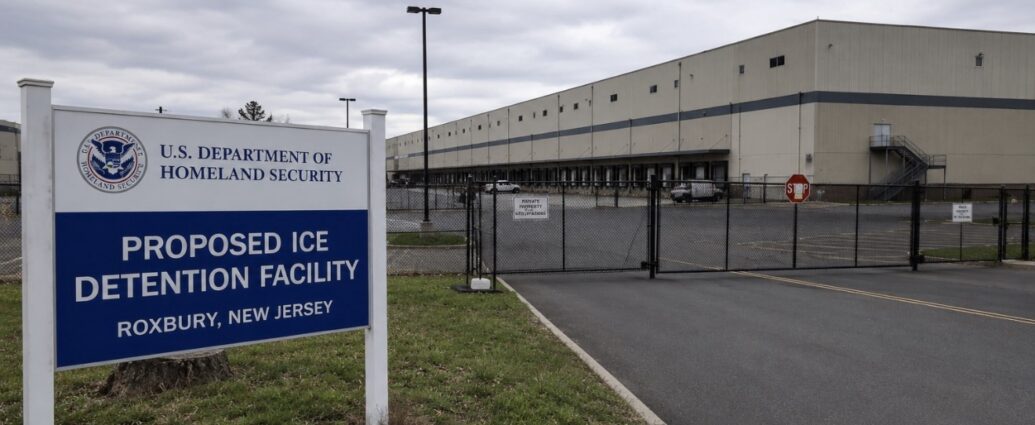
“You’re better off talking to a doctor than looking at a government chart at average life expectancies to make this choice,” he added. “So there is no magic age, it’s not always 62, it’s not always 70. That’s a headline, not a plan.”
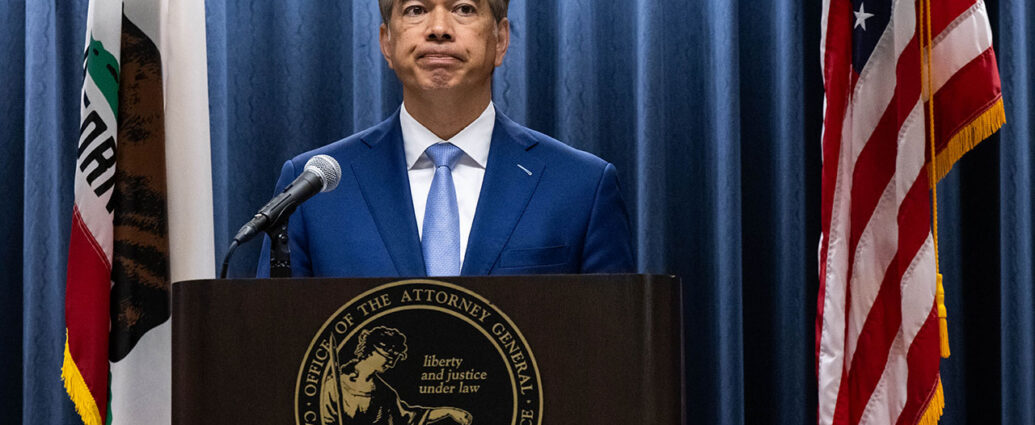
Breaking down the math even further, Kamel argued that the government treats your full retirement age at 67 as the 100% baseline benefit. Claiming five years early, at 62, forces you to accept a permanent 30% pay cut for the rest of your life. However, if you delay claiming until age 70, the system rewards your patience with a permanent 24% increase in benefits.

“The truth is, if you need to take it at 62, you probably aren’t doing great with your retirement overall. And if you can wait till 70, you likely didn’t really need it in the first place. So it’s kind of a catch-22 even making this decision, but it is personal,” he said. “And the math assumes that $1 at 95 is the same as $1 at 65, and that you live long enough. And that’s just not the case.”

“I’m not a fan of relying on a government program to fund your life forever. That’s a scary thought,” Kamel added. “And so early claiming is not control. It’s really just a 30% smaller check forever. So it’s a pay cut, it’s not freedom.”

As the 2032 insolvency deadline approaches, many Americans assume a worst-case scenario is inevitable if gridlock continues in Washington. But Kamel said the panic overlooks how the federal government has handled similar fiscal cliffs in the past. Rather than letting the system go bankrupt, he predicts Capitol Hill will pull from its old playbook.

“Seventy million Americans rely on a Social Security payment coming in. And so when you think about that… they’re gonna vote with their wallet. So the chances of any politician deciding to cut this down is going to cost them big time,” he said. “What will likely happen is what happened in 1983… The trust fund is running out and they made several small tweaks, not one sweeping change, in order to help this out.”

“I think the same thing will be true – they might adjust the cost of living adjustment. They might change the full retirement age from 67 to 68 or 69. They might increase the payroll taxes from 6.2% to 6.5%. And so these incremental changes can help it. I don’t see a world where, in 2032, we’re all going, ‘Where’s our money? We’re all gonna retire broke.'”

GET FOX BUSINESS ON THE GO BY CLICKING HERE

Ultimately, Kamel emphasizes that true financial peace doesn’t come from trying to outsmart a shifting government timeline. Instead of obsessing over what Washington will do to the safety net, he argued that the smartest move Americans can make is to shift their focus entirely to what they can control in their own households.

“You are your best shot at a great retirement. It’s not the government’s job, it’s not Washington’s job, it’s not a headline, it’s not a trust fund date. You control the controllables, and one of those things is creating your own nest egg… There is hope out there. But it’s not in the hands of [the] White House, it’s in yours.”

READ MORE FROM FOX BUSINESS

This post was originally published here.