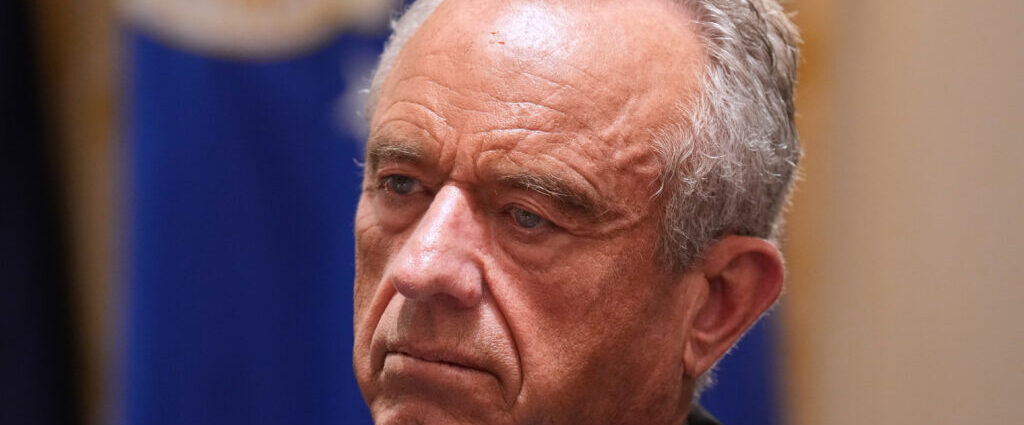
The Trump administration said Wednesday it will shut down a Kentucky organ donation group accused of continuing plans for organ retrieval from some patients who unexpectedly showed signs of life.

While those surgeries were canceled, the cases made headlines several years ago, prompting a spike in people around the country revoking their organ donor registrations.

Read the rest…

This post was originally published here. 

Want to stay on top of the science and politics driving biotech today? Sign up to get our biotech newsletter in your inbox.

Again, a child dies in a gene therapy trial in China, and STAT has exclusive details. Also, we have encouraging fecal pill results for peanut allergy, and see biotech investor Greg Verdine notch a series of wins.

In other news, it’s been hot out! My backyard tortoise, Philbert, has been most irascible and taken to his fainting couch (cardboard box).

Continue to STAT+ to read the full story…

This post was originally published here. 

Finance of America Companies Inc. (FOA) grew its reverse mortgage and home equity funding volume 21% year over year in the second quarter of 2026, even as non-cash fair value marks in its portfolio business drove a net loss of $29 million from April through June.

The Texas-based lender on Tuesday reported $730 million in funded volume for the quarter ending June 30, up from $602 million during the same period in 2025, according to the company’s earnings release. First-half 2026 volume reached $1.33 billion, up 14% from $1.16 billion in H1 2025.

FOA reported $0.10 in basic earnings per share, or $1 million in net income attributable to Class A common shareholders for the quarter. On a diluted basis, the company posted a loss of $1.28 per share, or a $29 million net loss for the period, reflecting the impact of non-cash fair value adjustments in its portfolio.

On an adjusted basis, the company reported $0.84 in earnings per share, or $19 million in adjusted net income, a 53% year-over-year improvement. Adjusted EBITDA totaled $35 million for the quarter and $79 million for the first half of 2026.

“The second quarter of 2026 reinforced what we’ve been communicating over the past several quarters: that the operational improvements and investments we have made are now translating into a stronger, more scalable business,” CEO Graham Fleming said in a statement. He cited strengthening demand, improved conversion and sales productivity, and growth in proprietary products serving older homeowners.

Performance by segment

FOA’s retirement solutions segment, which originates reverse mortgages and other home equity products, continued to drive growth. Second-quarter funded volume in the segment rose 21% year over year to $730 million.

Total revenue in retirement solutions increased 19% from a year earlier to $74 million, with revenue margins holding near 10.1%, the company reported. Pretax income for the segment was $10 million for the quarter, flat compared to a year earlier, while adjusted net income was $15 million, also in line with Q2 2025.

For the first half of 2026, the segment’s pretax income grew 43% year over year to $20 million, while adjusted net income increased 21% to $29 million.

The company’s portfolio management segment — which earns net interest income and fair value changes on portfolio assets including securitized reverse mortgage collateral — reported a sharp swing driven by valuation marks. The pretax loss was $26 million in Q2 2026, compared with a profit of $108 million in Q2 2025 and a $36 million profit in Q1 2026.

The company attributed the segment’s quarterly loss primarily to negative non-cash fair value adjustments on retained interests in securitizations, which were partially offset by higher accreted yield on residual interests.

Despite the quarterly loss, year-to-date adjusted net income in portfolio management improved 24% to $46 million, up from $37 million in the first half of 2025. Total segment revenue for the quarter fell to $1 million, compared to $130 million in Q2 2025.

Balance-sheet and servicing growth

As of June 30, Finance of America reported $85 million in cash and cash equivalents, up 85% from $46 million a year earlier but down from $108 million at the end of March. The company said strong cash generation from originations and capital markets activities funded most of its recently completed acquisition of Onity Mortgage Corp.‘s servicing portfolio of Home Equity Conversion Mortgages (HECMs).

Total assets rose 24% year over year to $37.3 billion, driven largely by securitized loans held for investment tied to HECM and other nonrecourse obligations, which increased 25% to $36 billion. Assets under management in the portfolio management segment climbed 24% year over year to $37 billion.

Total equity stood at $407 million at the end of Q2 2026, down from $473 million a year earlier. Equity attributable to common stock was $297 million, equating to book value of $33.20 per common share. Tangible equity totaled $246 million, or $13.31 per share, the company said.

Leaders on Onity asset purchase, overall performance

During a Q&A segment at the end of Tuesday’s earnings call, company leaders offered insights into the acquisition of HECM assets and reverse mortgage personnel from Onity, which closed July 1.

“Perhaps the clearest demonstration of our execution this quarter was the strength of our cash generation, allowing us to invest in strategic growth and strengthen the balance sheet,” Fleming said. “The Onity transaction … represents more than the acquisition of servicing assets. It diversifies our servicing footprint, broadens the population of homeowners we can serve, and creates additional opportunities to introduce our proprietary solutions.“

Fleming previously told HousingWire‘s Reverse Mortgage Daily that the transaction included 13 staff members from Onity across originations and operations. He told investors and analysts during Tuesday’s earnings call that the assets had a book value of about $70 million and “we’ll expect to earn yields in the mid-teens.”

“We hired about 13 people — originators and operations staff — from Onity into FOA as part of this transaction,” Fleming said. “We’ve diversified our subservicing platform with Celink and now Onity, which we think is good for FOA and good for the industry. We’ll be able to come up with best-in-class service across both agreements, which will be good for consumers.”

FOA President Kristen Sieffert also weighed in on the growing opportunity to serve senior homeowners across the country, who not only are sitting on nearly $15 trillion in equity but also represent the majority of today’s buyers and sellers.

“Last quarter, I said we were reaching an inflection point in the platform. The second quarter gives us greater confidence in that view,” Sieffert said. “Historically, growth depended more heavily on generating additional top-of-funnel opportunities. Now we’re demonstrating our ability to generate more production from the pipeline we already have.”

She also touched on the rising demand for private-label reverse mortgages and the implications for secondary market investors.

“We’ve seen growing demand for proprietary products recently, mostly as a function of the proprietary products offering better cash flow to the consumer. … Whatever is best suited for the customer is where that demand lands, and right now that’s with the proprietary channel,” Sieffert said.

“The market opportunity ahead of us is still large and underpenetrated, but the real story this quarter is conviction. We’re building a stronger, more valuable business, not simply a bigger one.”

This article was written by Neil Pierson and generated with the assistance of HousingWire Automation, then reviewed by a HousingWire editor before publication.

This post was originally published on here. 

Tamerlan Amshukov, 26, and Alina Kushnirenko, 24, were indicted on Thursday for allegedly carrying out a months-long series of surveillance and intelligence-gathering missions for Iranian agents in exchange for cryptocurrency.

The Tel Aviv District Attorney’s Office charged Amshukov with contact with a foreign agent and 16 counts of providing information that could benefit the enemy. Kushnirenko was charged with eight counts of providing such information.

Prosecutors asked the Tel Aviv District Court to keep the couple in custody until the conclusion of the proceedings against them. They were arrested on July 12 following a joint Shin Bet (Israel Security Agency) and Israel Police investigation.

According to the indictment, Amshukov was first approached via Telegram in late 2025 by a profile calling itself “Rafael,” which offered to pay him to visit and film a restaurant in Ashdod. Kushnirenko allegedly warned him that the approach could be connected to terrorist activity, and the assignment was not carried out.

About four months later, another Telegram profile, using the name “Aslan,” offered Amshukov a commission to withdraw money and deliver the cash to another person. He did not carry out that assignment but continued communicating with the profile, prosecutors said.

 An illustration of a cyber hacker and the Iranian flag. (credit: PX Media/Shutterstock)

“Aslan” later allegedly offered to pay Amshukov to conduct surveillance, film addresses, and track individuals whose photographs would be sent to him. The assignments were carried out for “Aslan” and another person calling himself “David,” with payments transferred in cryptocurrency.

Amshukov allegedly accepted the offer and recruited Kushnirenko to assist him. Prosecutors said the pair carried out the assignments between April and July, knowing – or deliberately ignoring the possibility – that they were working for an Iranian agent or another hostile organization.

The couple allegedly filmed residential targets in Ashdod, Beersheba, Haifa, and Kadima-Tzoran, documenting the buildings or homes, their surroundings, and the routes leading to them.

The targets included a Beersheba apartment building where an employee of a defense facility lived, as well as a private home in Kadima-Tzoran belonging to a member of the security services. The indictment said the defendants were sent photographs of the people they were asked to locate but did not know their identities.

At several locations, the handler instructed them to return and repeat the filming because he was dissatisfied with the footage.

Suspects sent to film mall emergency exits, Eilat port

The couple was also allegedly sent to Ramat Aviv Mall in Tel Aviv to document its emergency exits and identify an area not covered by security cameras. Prosecutors said they filmed part of a staircase between the mall’s first and second floors after determining that it did not appear to be under camera surveillance.

In late June, the pair traveled to Eilat, where they allegedly filmed the promenade, coastline, port area, and ships they believed were military vessels. During the journey, Amshukov also filmed a security installation near Dimona without knowing its purpose and sent the footage to the handler.

The handler later instructed the pair to approach a closed military port and photograph ships, telling Amshukov to take a panoramic photograph of a naval base. Amshukov reached the area but left without completing the assignment because he became afraid, according to the indictment.

After complaining about the quality of the footage, the handler allegedly transferred $1,200 for Amshukov to purchase a new phone with a higher-quality camera. Kushnirenko allegedly helped configure the phone before the pair returned to the Eilat promenade and port area and sent additional recordings.

Amshukov was later sent to Mount Herzl in Jerusalem, where prosecutors said he filmed the entrance, surrounding area, access roads, and IDF soldiers. He returned the following day and allegedly filmed additional parts of the site, including the Herzl Museum.

The handler also proposed assignments that were not completed, including renting an apartment in Haifa and installing a camera overlooking building entrances, finding someone to retrieve a package arriving by sea, transferring money, and recruiting taxi drivers to carry out missions.

Suspected spies received over $4,400 in cryptocurrency

Prosecutors said the defendants received approximately $4,450 in cryptocurrency, while a further $2,300 remained unpaid. They were arrested before carrying out another alleged assignment in Beersheba.

In the detention request, prosecutors said both defendants admitted carrying out the assignments. They initially denied knowing that they were working for Iran but later acknowledged that they had understood this during the Eilat mission and had continued performing tasks, according to the state.

The prosecution said its evidence included material extracted from their phones, videos, and photographs, cryptocurrency-wallet records, communications data, and security-camera footage. Amshukov allegedly deleted most of his correspondence with the handler from his personal phone.

This post was originally published on here. 

The US Air Force has begun relocating some of its aerial refueling aircraft that had been stationed at Ben-Gurion Airport in recent weeks, amid ongoing security developments, N12 reported on Thursday.

The move comes after Transportation Minister Miri Regev pressed Israeli security officials to clear the refueling aircraft from the airport in order to ensure normal operations during one of Ben-Gurion‘s busiest travel periods.

More than 2.6 million passengers are expected to pass through Ben-Gurion Airport during August, making it one of the airport’s busiest months since the October 7 massacre.

A Boeing KC-46A Pegasus sits on the tarmac at Boeing facilities at Boeing Field in this aerial photo in Seattle, Washington, U.S. (credit: REUTERS/LINDSEY WASSON)

Hundreds of thousands of travelers expected in Ben-Gurion

Airport authorities expect an average of approximately 100,000 passengers to travel through Ben-Gurion each day throughout the month. Thursdays are forecast to be the busiest days of the week, while Monday, August 17, is expected to be the single busiest day of the month.

The relocation of the US tanker aircraft is intended to free valuable parking and operational space at the airport as airlines continue to handle increased passenger volumes during the summer travel season.

The report did not specify how many aircraft were relocated or where they were transferred.

This post was originally published on here. 

Watch this episode without interruptions.

Listen wherever you get your podcasts.

Six weeks after the US and Iran signed a memorandum of understanding, the deal survives mostly as a rumor about itself.

Talks resume, then they don’t. Strikes land while both sides insist the framework holds. On this week’s Deep Dive episode, host Jacob Laznik argues the story has quietly changed subject, and the people it was supposed to be about have dropped out of it.

His guest, journalist and Iran analyst Jonathan Harounoff, spent two years at the UN: after the December protests began and the killing started, it took the Secretary-General two to three weeks to say anything. In Gaza or Lebanon, he says, it would have taken hours.

Laznik’s sharpest question is an arithmetic one. Empty water reserves, rationed power, talk of moving the capital, then two rounds of war. How is this regime physically still standing? Harounoff’s answer is the reason to watch. The math does add up, he argues, because the Islamic Republic spent decades funneling everything into this moment. And its single greatest asset right now is that it isn’t a democracy.

It doesn’t answer to polling, fuel prices, or midterms. Israel and the US do. It can’t win a conventional war, so it plans to out-suffer them, with the Strait of Hormuz as the lever.

With Israel voting October 27, Iran isn’t cracking the top ten campaign issues. Harounoff’s diagnosis isn’t indifference but access, which is why 15% of the views on everything he posts come from inside Iran. Then he closes on the detail that lingers: the people who pressed him hardest for continued strikes on the Islamic Republic weren’t officials or analysts.

They were Iranians at Nowruz parties in Brooklyn, approaching him one after another to urge it. The people with the most to lose were the most insistent. 

This post was originally published on here. 

Five months into the US war with Iran, Americans who expect the Middle East to slide toward chaos outnumber those who see the war bringing more stability by three to one, according to a new Reuters/Ipsos poll.

The six-day poll concluded on Monday, as US President Donald Trump again backed away from threatened “massive attacks” on Iran, underscoring uncertainty surrounding a conflict he initially predicted would bring a swift victory.

Fifty percent of poll respondents sai they thought US military action in Iran would destabilize the Middle East over the next year, about three times the 17% who said the war would lead to more stability in the region. Another 16% said stability would stay about the same and 17% said they were unsure or didn’t answer the question.

Americans were also pessimistic about gasoline prices, which have risen as Iran has choked off traffic through the Strait of Hormuz, a vital route for global oil supplies. Some 58% said they expected gas prices to worsen, while just 15% expected them to improve.

Respondents held similarly grim views about the Russian invasion of Ukraine, with a majority fearing it will get worse over the next few years, and also raising concerns about new conflicts arising elsewhere on the world stage.

Residents look at a burned car at a site of a Russian missile strike, amid Russia's attack on Ukraine, in Kyiv region, Ukraine August 1, 2026.  (credit: Anatolii Stepanov/ REUTERS)

Political risks for Trump, other Republicans

The findings underscore the political risks for Trump and his fellow Republicans as they seek to defend narrow congressional majorities in November’s midterm elections.

Trump returned to office in January 2025 vowing to avoid “stupid wars”, a message that resonated with voters weary of the two decades of war that followed the September 11, 2001, al Qaeda attacks.

Republicans, in contrast with their general support for Trump, were sharply divided on how they see his war with Iran playing out. While 80% of Republicans approve of Trump’s performance as president and 66% back his handling of Iran, fewer than half – 41% – think stability in the Middle East will get better over the next year as a result of the war.

The war has led to Iranian missile and drone attacks against neighboring countries and commercial shipping, and sparked new fighting in Lebanon, which has reduced in intensity since a US-brokered truce. The Iran-backed Houthis in Yemen have also threatened Saudi shipping transiting the Bab al-Mandab chokepoint at the southern end of the Red Sea.

David Schenker, who served as the State Department’s top Middle East official during Trump’s first term, said the economic effects could persist even if the fighting ended quickly. But he said it was not certain the war would result in a more unstable Middle East, arguing that US and Israeli attacks had significantly weakened Iran’s military capabilities and the regional proxy network.

“I don’t think there’s an understanding of the nature of the degradation of Iran’s capabilities, which is significant,” said Schenker, now with the Washington Institute for Near East Policy.

The war, which Trump launched with Israel in late February, has cost US taxpayers at least $37.5 billion, killed 18 US service members and killed thousands of Iranians.

The war with Iran proves unpopular among most Americans

Just 35% of Americans approve of the war. Asked which political party has a better approach to handling war and terrorism, registered voters picked Democrats over Republicans – 37% to 36% – the first time Democrats led since Reuters/Ipsos polling began posing the question in December 2024, when Republicans led 39% to 28%. The poll also showed voters now see Democrats as better able to manage the economy for the first time in about a decade.

“This war was unpopular the day it started, and it’s gotten more unpopular since,” said Justin Logan, director of defense and foreign policy studies at the Cato Institute, a Washington think tank.

Logan said Trump faced a difficult tradeoff: He has set ambitious goals for the conflict – destroying Iran’s missile capabilities and preventing it from ever obtaining a nuclear weapon – while seeking to limit US casualties and the political costs that could come with them.

 US President Donald Trump answers questions from the media after signing an executive order, in the Oval Office at the White House in Washington, DC, US, August 3, 2026 (credit: REUTERS/EVELYN HOCKSTEIN)

“That incoherence, or rudderlessness, in the conduct of the war is causing more problems for the president,” Logan said.

Americans are about Ukraine and China

The poll found that Americans also have significant concerns that wars underway will get worse and that new wars will break out. Some 58% said they were concerned the Russia-Ukraine war, in which Washington and European allies have supported Kyiv with weapons and intelligence, could get worse.

Another 55% said they worried about China engaging in conflict with Taiwan while 48% were concerned a war could break out between Russia and a European country other than Ukraine. Some 37% worried the US would go to war over Greenland.

The Reuters/Ipsos poll was conducted online, gathering responses from 4,505 US adults nationwide. It had a margin of error of 2 percentage points.

This post was originally published on here. 

The Israel Fire and Rescue Authority responded to a fire that sparked near the Beit Dror settlement in the West Bank on Thursday, in addition to a number of other fires in the region.

The blaze began in an open area and spread toward the settlement due to the wind. 

Firefighters established a defensive line around the houses in the settlement, and additional teams arrived on the scene to assist. 

Police were able to direct traffic away from areas affected by the fire.

A short time later, police from the city of Ariel were called to direct traffic following a vehicle fire on Highway 5 in the Samaria region of the West Bank. The fire spread to an open area beyond the highway, police added. The highway was briefly closed to traffic, but opened up soon after. 

This is a developing story.

This post was originally published on here. 

Israel will focus its development efforts on quantum computing and physical artificial intelligence, with the objective of becoming a leading nation in both areas, the Prime Minister’s Office National AI Directorate and the Finance Ministry Accountant General’s Department announced on Tuesday.

According to the release, the focus will be on developing a “locally produced quantum computer” under the newly released “Project Nexus,” while also investing in physical AI solutions that enable the use of AI in real-life situations.

The announcement is centered around “Government Decision 4255” and the national AI strategy, which will work as the inaugural projects of the National AI Directorate.

“Government Decision 4255 aims to secure Israel’s place at the forefront of global AI. Our role is to accelerate the advancement of AI in Israel, which is why we are transitioning swiftly and professionally from defining vision and strategy to practical implementation on the ground, together with all government partners,” said Brig.-Gen. (Res.) Erez Eskel, Director of the National AI Directorate.

“The steps we are launching now are a central phase in securing our sovereign infrastructure while continuing to focus our efforts on the State of Israel’s comparative advantages for long-term global leadership,” he added.

An artificial diamond for quantum sensory technology  is displayed in June 2025 at the  quantum technology fair World of Quantum.  (credit: Angelika Warmuth/Reuters)

“The close collaboration between the Accountant General’s Department and the National Directorate enables us to translate government decisions into practical, contractual mechanisms that will establish the required infrastructure on the ground,” pointed out Senior Finance Ministry Deputy Accountant General for Innovation and Technology Evyatar Peretz.

The announcement also detailed that a Request for Information (RFI) will be published to “advance the establishment of Israeli sovereignty in foundational models, promote Israeli leadership, map market capabilities, and examine measures to maximize the State of Israel’s comparative advantages.”

“The steps we are leading today, from quantum computing to Physical AI and foundational models, provide the industry and the economy with the necessary foundation to lower barriers, ensure technological sovereignty, and make global breakthroughs,” Peretz said.

Quantum computing is still the main priority

Quantum computing has been one of the government’s main concerns since 2018, with several programs aiming to push Israel among the five leading nations in the world in this field.

Some of them showed results, such as the first domestically built quantum computer, using advanced superconducting technology, revealed in 2024, or the recent team-up between Israel’s quantum computing startup Qedma and IBM to create a device capable of surpassing the performance of the world’s most powerful supercomputer.

This last experiment was conducted by IBM on a quantum chip that it developed using superconducting technology, which contains 72 physical qubits – different units that allow different calculations to be performed simultaneously.

Physical AI is gaining strength

Another priority of the government is centered on physical AI, which can be seen in action with drones that don’t require a pilot to reach their targets, or systems capable of organizing the energy usage of companies to save money on electricity.

Arik Feingold, chairman and president of Commit, told The Jerusalem Post back in June that the next milestone the Israel Innovation Authority needs to set will be the development of these types of technologies.

“This is where our comparative advantage in planning, creativity, and integration truly shines,” he explained.

“If we steer the Innovation Authority toward encouraging deep-tech solutions that bridge AI with field operations, manufacturing, and industry, we will ensure the resilience of our ecosystem during these challenging times and also the next growth engines for the Israeli economy,” he added.

Yonah Jeremy Bob and Assaf Gilead/Globes/TNS contributed to this report.

This post was originally published on here. 

For commuters trying to fit more movement into a packed day, the Moovit app has introduced a route option that adds walking without extending travel time. 

The app is no longer just about getting users from point A to point B – it’s about helping them incorporate more walking along the way. The addition was inspired by academic research showing that commuters can build more walking into their daily routine without necessarily extending their travel time.

The study, conducted by Prof. Jonathan Rabinowitz, a wellness researcher at Bar-Ilan University, suggests that for thousands of public transportation users, the simple act of getting off one stop earlier or taking a different route could add meaningful physical activity to their daily routine. 

When choosing a route in the app, users can select the “Steps” feature to prioritize itineraries that include more walking. 

The idea came to Rabinowitz when a family member recovering from an injury noticed that by getting off public transportation earlier, or by walking between connections instead of waiting for a second bus, the commute could be shortened. 

Moovit will allow people to wlak more without affecting the time it takes to arrive. (credit: SHUTTERSTOCK)

Life becomes increasingly sedentary

In recent years, life has become increasingly sedentary. Many people spend hours each day sitting at desks, in cars, or on public transportation. In addition, long working hours often limit the time left available for physical activity. This lack of movement has been linked to a higher risk of heart disease, type 2 diabetes, obesity, certain cancers, and premature death.

 Lack of physical activity has also been connected to poorer mental health and reduced overall well-being. Walking is one of the simplest and most accessible forms of exercise, offering an effective, cheap, and readily available exercise option. Regular walking helps improve cardiovascular health, strengthens muscles and bones, supports weight management, reduces stress and anxiety, and has been shown to lower the risk of chronic disease.  

“It reduces the chances of dying young,” Rabinowitz told The Media Line. “The more you walk, the better it is for you.”  

According to Rabinowitz, the debate over the number of steps recommended daily is unnecessary: “Just get out there and walk,” he said.  

Dr. Eyal Ginesin, an orthopedic surgeon and sports injury specialist at Clalit Health Services, sees the consequences of a sedentary lifestyle in his clinics every day. 

“The main complaints are lower back pain and leg pain,” Ginesin told The Media Line. “Prolonged sitting shortens the muscles, especially the hip flexors and the hamstrings, which are critical to walking.” 

“Muscles that don’t move do not get the nourishment they need,” Ginesin added.  

Because it requires no special equipment or training, incorporating more walking into everyday routines – such as during a daily commute – can be an effective way for people to become more active without making major changes to their schedules. 

“In our wellness lab, we try to find changes that people can make in their daily lives by focusing on biohacking for everyone,” Rabinowitz explained. “Sometimes these are small changes that anybody can make to their daily lives.” 

Making simple changes to help your health

Biohacking refers to making simple, science-backed changes to daily habits to improve physical and mental well-being. While the term is often associated with expensive gadgets or extreme self-optimization, Rabinowitz’s approach focuses on practical, accessible interventions – small adjustments that fit into everyday routines and can have a meaningful impact on long-term health. 

“Almost all of the complaints due to sedentary lifestyle are reversible,” said Ginesin. “Our bodies are meant to be active.”  

The main advantage, according to Rabinowitz, is that people who incorporated walking into their commute could still reach their destinations on time. 

“Increasing the amount of walking by a kilometer and a half or so, actually resulted in greater efficiency,” he said. “Oftentimes, fewer transfers opened up additional transportation possibilities.” He noted that some commuters could walk to a train – often a faster option – rather than take buses that involved less walking. 

The popular 10,000-step benchmark is not a universal medical requirement, and health guidelines generally emphasize the total amount and intensity of physical activity rather than a single step count.

The World Health Organization recommends that adults engage in 150 to 300 minutes of moderate-intensity aerobic activity per week, or an equivalent amount of vigorous activity, while also limiting sedentary time. For desk-bound workers and long-distance commuters, walking as part of a regular transit trip may offer a practical way to increase daily movement. 

This post was originally published on here. 

Nearly three years after the October 7 Hamas attack, Israel’s national debate has been trapped in an exhausting and polarizing loop: how to address severe military manpower shortages while resolving the long-running dispute over military service for the Haredi community. Despite mounting Supreme Court intervention, economic sanctions, mass draft notices, and fierce political rhetoric, the country remains no closer to a functional or sustainable outcome.

Haredim, often called ultra-Orthodox Jews, are a religiously observant Jewish community for whom full-time Torah study, the study of Judaism’s foundational religious texts and traditions, holds exceptional religious and cultural importance. For decades, many Haredi men studying full-time in yeshivas (religious academies) received deferments from Israel’s compulsory military service.

Perhaps the most overlooked reason for the ongoing stalemate is simple. The public and judicial debate has consistently framed the issue as a rigid, zero-sum struggle between legal equality and the continuation of these deferments. In doing so, policymakers, legal authorities, and commentators systematically overlook the primary defining value of Haredi society: the foundational, non-negotiable role of full-time Torah study. As long as state mechanisms fail to understand and respect this core reality, even the most aggressive pressure will produce social friction rather than a durable contribution to national security.

To understand why legal coercion consistently backfires, one must look beyond Israel’s immediate political arena to the global Haredi community. Whether in Jerusalem, Lakewood, London, or New York, the fundamental defining value of the Haredi world, and the key distinction between it and other observant Jewish communities, is the absolute centrality of immersion in Torah study during a young person’s formative years. For Haredi society, intensive study in yeshivas between the ages of 14 and 22 is not an academic pursuit, a vocational stepping stone, or a social convenience. It is the spiritual pulse of Jewish continuity, the moral anchor of the community, and an irreplaceable value.

While dedication to Torah study has defined the Jewish people throughout history, the intensity of the modern yeshiva ecosystem took on a distinct historical dimension following the Holocaust. Faced with the near-total destruction of European Jewry and its great centers of learning, alongside the rapid onset of secularization and modernity, the rebuilt yeshiva world was designed as a vital strategy for identity preservation and spiritual resilience.

A haredi (ultra-Orthodox) anti-draft protester holds a banner preferring death over drafting to the IDF, April 12, 2026. (credit: MARC ISRAEL SELLEM/THE JERUSALEM POST)

This historic revival was built upon a tacitly recognized duality: while one part of the Jewish people established physical sovereignty and military defense, another dedicated itself to rebuilding the decimated spiritual infrastructure of the Jewish world. Both missions were understood to be essential for the survival of the Jewish people.

Over the decades, as a result of this foundational commitment, the State of Israel evolved into one of the world’s foremost centers of Jewish learning, drawing tens of thousands of young men and women from around the world each year to immerse themselves in Torah study and Jewish heritage in Israel.

Haredi values lead to record volunteer numbers

Crucially, this intensive religious education does not exist in a vacuum; it profoundly reinforces values of altruism, social responsibility, and human empathy. Far from being disengaged from the welfare of the broader public, Haredi society has developed an extraordinary culture of volunteerism and mutual aid, reflected both in individual participation rates and in institutional social innovation.

On an individual level, Haredi adults volunteer at strikingly high rates. According to a comparison of Israeli government data and OECD figures, 34.3% volunteer at least once a month, about twice the OECD average of 17%, and higher than Finland’s 28.6%, the highest rate recorded among OECD countries.

Beyond individual participation, Haredi society has effectively become a “Start-Up Nation” for social innovation, founding dozens of pioneering civil society organizations. These include landmark institutions like Yad Sarah, which revolutionized community medicine and home care across Israel; United Hatzalah, which developed groundbreaking, fast-response medical models now emulated across the Jewish world and globally; Matnat Chaim, which made Israel the world leader in altruistic living kidney donations per capita and recently entered the Guinness World Records; alongside dozens of other specialized charitable networks.

The current friction surrounding military service is therefore not driven by a refusal to contribute, a lack of civic responsibility, or a fear of personal risk. The argument that Haredi men are unwilling to risk their lives for their fellow citizens is flatly disproved by facts. On October 7, while the fighting was still underway, Haredi volunteers from emergency organizations such as United Hatzalah and ZAKA rushed into active combat zones without military protection, risking their lives to rescue the wounded and recover the dead with dignity.

Resistance to military service stems from fear of assimilation, losing autonomy 

Resistance to military service stems not from a fear of danger, but from a deep-seated resistance to externally imposed cultural assimilation, social engineering, and the dismantling of educational and cultural autonomy. When legal systems pursue a uniform approach without sufficient practical accommodation, they push an entire community into self-defense rather than partnership.

Recognizing this distinction is not an argument against military service. It is a prerequisite for designing policies that can actually succeed.

Instead of relying on rigid legal confrontation that achieves neither equality nor operational readiness, Israel’s leadership must adopt a strategy that respects social reality. Demanding total, immediate compliance from full-time yeshiva students who view their study as a sacred historical obligation merely guarantees perpetual gridlock.

Israel’s security establishment cannot afford the luxury of prioritizing legal arguments over strategic success. A resilient, forward-looking national defense strategy must accommodate the reality of a diverse society.

A durable national compromise must begin not by asking how to weaken the world of full-time Torah study, but by asking how to preserve it while expanding meaningful avenues of national contribution.

Real progress will not come through economic warfare or legal threats. It will come when Israel’s leadership recognizes that protecting full-time Torah study and strengthening national security are not mutually exclusive goals; they are the two foundational pillars upon which the Jewish state was rebuilt. By establishing protected, adapted frameworks for those not engaged in full-time study, while simultaneously guaranteeing the continuity and dignity of the yeshiva world, Israel can build an inclusive security ecosystem capable of meeting the monumental challenges ahead.

Eli Paley is the publisher of the Mishpacha international media group and the founder and chairman of The Institute for Strategy and Haredi Policy.

This post was originally published on here. 

Professional sports teams and leagues have gotten in bed with sports gambling websites, and now, perhaps the most famous sports team in the entire world has gone another step.

The New York Yankees and Polymarket announced Thursday a deal in which the site has become the team’s official prediction market partner for the rest of the season.

“We are excited to begin a relationship with Polymarket — Major League Baseball’s prediction market partner,” Yankees SVP of partnerships Michael Tusiani said in a release. “Through signage and fan experience opportunities, we look forward to elevating Polymarket’s brand awareness both at Yankee Stadium and across our fan base.”

CLICK HERE FOR MORE SPORTS COVERAGE ON FOXBUSINESS.COM

“We are proud to become an Official Prediction Market Partner of the New York Yankees. Yankees fans are among the most active on our platform and passionate in sports, and Yankee Stadium is a natural home for Polymarket, where the questions driving our markets come to life throughout the season,” Polymarket’s president of sports business development Ari Borod said.

Polymarket will have a presence both at Yankee Stadium and on Yankees broadcasts on the YES Network and Amazon Prime Video. As part of the sponsorship package, Polymarket purchased tickets to premium hospitality areas and suites.

MLB PLAYER ADLEY RUTSCHMAN’S RED SOX TRADE RUINED ‘SPIDER-MAN’ MOVIE PLANS WITH ORIOLES TEAMMATES

Exclusive fan experiences, including an outfield catch for children, Kids Run the Bases, and lineup card delivery experiences.

The Yankees are just the second team in North America’s four major sports leagues to have a deal with Polymarket, joining the NHL’s New York Rangers. Polymarket is also Major League Baseball’s exclusive Prediction Market Exchange partner and is also the National Hockey League’s official prediction market partner.

GET FOX BUSINESS ON THE GO BY CLICKING HERE

For what it’s worth, Polymarket gives the Yankees a 97% chance of missing the postseason. The team has struggled offensively without Aaron Judge (Giancarlo Stanton and Cody Bellinger have also hit the shelf), but the pitching has been dynamic, and trade deadline reinforcements figure to help out down the stretch as the team seeks its first World Series since 2009.

This post was originally published here. 

Booking Holdings told investors this week that elevated airfares and thinned-out flight schedules will keep weighing on international travel through the third quarter, even as the online travel giant beat expectations across every major line of its second-quarter results.

The Norwalk, Connecticut company said its outlook assumes the indirect effects of the Middle East conflict — higher flight ticket prices, reduced flight capacity on certain routes, and softer long-haul international demand — will persist through the current quarter. It continues to expect pressure on inbound travel to the region, while demand from travelers booking within the Middle East has largely returned to normal.

Chief Executive Glenn Fogel said travel demand held up remarkably well even with airfares and capacity constraints pressing on long-haul routes, and the numbers back that up — the drag is showing up in where people go, not whether they go.

The Quarter Itself Was Strong

Adjusted earnings came in at $2.54 a share against consensus near $2.43 to $2.45, with revenue up 8.1% year over year to $7.35 billion, ahead of the $7.19 billion analysts expected. Adjusted EBITDA reached roughly $2.6 billion, a 9% increase, and adjusted earnings per share climbed 15%, helped by buybacks that pulled the share count down 6%.

Shareholders got the largest quarterly return in company history. Booking sent back $4.1 billion in the quarter, including $3.7 billion in repurchases, bringing first-half buybacks to $7.4 billion. The board also declared a quarterly dividend of $0.42 a share, payable September 30 to holders of record on September 11, with $14.5 billion still authorized for repurchases as of June 30.

Management raised the target for annual savings from its transformation program to $650 million from $550 million, with most of the additional $100 million expected to land in 2027.

Domestic Holds, International Sags

The split in the results is the real story for anyone watching consumer travel spending.

Domestic room nights grew at high-single-digit rates worldwide, while international room nights rose only slightly under continued pressure on long-haul trips. The U.S. market posted high-single-digit growth; Europe, Asia and the rest of the world each grew at mid-single-digit rates.

That is a familiar pattern when airfares spike. Travelers do not cancel the trip — they shorten the flight. Weekend drives, regional hops and domestic hotel stays absorb demand that would otherwise have gone transatlantic or transpacific.

Booking trimmed its full-year gross bookings outlook, attributing the change mainly to weaker growth in flight ticket sales. For the full year, the company still projects gross bookings, revenue and adjusted EBITDA to grow at high-single-digit rates on a reported basis, with adjusted earnings per share rising in the low-to-mid-teens. On a constant-currency basis, management said the outlook matches its original plan despite months of conflict-related disruption.

Fares May Not Come Back Down

The airfare pressure Booking is describing is not solely a war-driven phenomenon, and that matters for how long the drag lasts.

Carriers are still flying tighter schedules than before the pandemic in some markets — fewer routes, reduced frequency, and in certain cases aircraft or staffing limits — while leaning harder on dynamic pricing that adjusts fares in real time. Airlines are also releasing fewer discounted seats and holding the lowest fare classes for shorter windows, so the cheap inventory sells out faster.

The structural shift runs deeper still. Delta has told investors that cheaper fuel will not necessarily translate into cheaper tickets, citing premium demand, tighter capacity and shrinking budget competition. Ultra-low-cost carriers have pulled roughly 30% of their capacity out of the industry, leaving fewer inexpensive seats and giving the largest airlines room to hold fares where they are.

For Booking, that means the headwind may outlast the conflict that triggered it.

AI in the Cost Line

One bright spot came from the company’s technology spending. Booking reported a double-digit reduction in customer service cost per booking from its AI initiatives, along with improved developer productivity, while customer satisfaction scores held up. Management also flagged ongoing search-engine pressure across consumer internet as a headwind to direct traffic, though it represents a small share of overall room nights.

The company’s mobile app share reached the high 50% range on a trailing twelve-month basis, up from the mid-50s a year earlier.

Shares traded around $194 this week, within a 52-week range of $150.14 to $231.80.

JBizNews Desk | New York

© JBizNews.com All Rights Reserved. Reproduction or distribution without written permission is prohibited.

You’re reading the web edition of STAT’s Health Tech newsletter, our guide to how technology is transforming the life sciences. Sign up to get it delivered in your inbox every Tuesday and Thursday.

Good morning health tech readers!

Today, a story about tech companies and regulators rubbing elbows. Plus: Checking in on ACCESS, one month in.

Continue to STAT+ to read the full story…

This post was originally published here. 

Good morning, everyone, and how are you today? We are just fine, thank you. Although gray skies are enveloping the Pharmalot campus, our spirits remain sunny. After all, as the Morning Mayor taught us: “Every new day should be unwrapped like a precious gift.” So go ahead and tug on the ribbon. While you do, we will indulge with another cup of needed stimulation. Our choice today is maple bourbon. Meanwhile, here are some items of interest. Hope your day goes well …

In a move that seemed out of reach just six months ago, the Food and Drug Administration approved Moderna’s influenza vaccine for older adults, the first licensed flu shot made using messenger RNA technology, STAT says. In February, Vinay Prasad, the FDA’s head of biologics at the time, overturned the recommendation of career staff and issued a rare “refusal to file” notice” to the company, saying the agency would not review the vaccine based on available data. A week later, after Moderna disclosed the decision as well as its own displeasure over the agency position, Prasad’s decision was reversed. He left the FDA at the end of April.

The FDA approved a novel type of treatment for narcolepsy made by Takeda, backing a drug class that scientists hope can transform the treatment of sleep disorders and potentially address a broad range of neurologic conditions, STAT writes. The twice-a-day pill, an orexin receptor agonist that will be marketed as Orzeyful, is likely to be very appealing to patients. Current therapies, stimulants and sodium oxybates, carry risk of misuse, and patients still feel sleepy while taking them. Since the orexin system not only regulates the cycle of sleeping and waking but may also boost attentiveness and cognition, the broader goal for drugmakers is to test the treatments in various neuropsychiatric conditions in which patients feel sleepy and fatigued.

Continue to STAT+ to read the full story…

This post was originally published here. 

WASHINGTON — A Senate committee voted Thursday to hold Anthony Fauci, who declined to answer questions in a hearing last week about his role in the lead-up and response to the Covid-19 pandemic, in contempt of Congress in a party-line vote, 8-7. 

Now the matter will go before the entire Senate, where the vote would be subject to the filibuster. If the Senate votes to hold Fauci in contempt, it will be up to the Department of Justice to decide whether to prosecute him.

Read the rest…

This post was originally published here. 

When Spencer Lucker saw the notification that Michigan’s Democratic Senate primary had been called for Abdul El-Sayed, a progressive who spent much of his campaign attacking AIPAC and Israel, it felt like a gut punch.

“I have a really hard time grasping that this is the Democratic Party that I’ve always supported and been a part of,” said Lucker, a 38-year-old Huntington Woods, Michigan, resident who backed US Rep. Haley Stevens in the primary.

As Lucker absorbed the results Wednesday following an election night that saw Sayed eke out a win against Stevens by 48.5% to 47.5%, he said the narrow margin offered a small measure of assurance even as it did little to ease his concerns about the nominee.

“There is some relief and hope in however many people voted for her,” Lucker said. “But the margin doesn’t matter in the end.”

Sayed’s unexpectedly narrow margin – polls had shown him with a commanding lead in the days before the primary – has allowed some of his critics to tout a silver lining, with Jewish leaders saying the close result proves that many Michigan voters do not embrace his anti-Israel politics.

The packed hall of the AIPAC 2018 conference  (credit: REUTERS)

Jewish leaders reject claims of an anti-Israel mandate

“The lesson from Tuesday’s results is twofold: There is clearly strong anti-establishment energy this cycle, but no one should count pro-Israel Democrats out,” said Brian Romick, the president of the Democratic Majority for Israel PAC. “While Sayed’s razor-thin victory in Michigan is disappointing, it was hardly the sweeping triumph he predicted or a mandate for his views.”

Halie Soifer, the CEO of the Jewish Democratic Council of America, which backed Stevens, said in a statement, “While we are disappointed in the final result of the Michigan Senate race, the razor-thin margin isn’t the resounding win for the far-left that was predicted.”

Now, as Sayed is set to face off against Republican Mike Rogers, a former congressman, in November, the debate has turned to whether his narrow margin of victory on Tuesday portends a Democratic loss in a crucial battleground state.

While recent polling conducted prior to Tuesday’s primary showed Rogers with a slight lead over Sayed, Josh Pasek, a professor of communication and media and political science at the University of Michigan, cautioned against reading the primary margin as a measure of Sayed’s general election prospects.

“I mean, disappointment matters. It hits enthusiasm for people who support one candidate versus another,” said Pasek, who is Jewish and has previously been involved in Democratic politics. “But the real question is how does the party, how do the candidates, and how do the supporters, respond to whatever happens next?”

Since his victory, Sayed has drawn endorsements from Stevens as well as Senate Minority Leader Chuck Schumer, who had backed her in the primary. Former Vice President Kamala Harris also sent a plea to donors on Wednesday asking them to help fund Sayed’s general election campaign.

Throughout the race, Sayed drew criticism from many Jewish Democrats over his attacks on AIPAC spending, his relationship with the anti-Israel streamer Hasan Piker and his remarks following the attack on Temple Israel in the Detroit suburb of West Bloomfield in March. While Sayed condemned the attack, his statement also discussed Israel’s war in Lebanon, where the attacker’s brother was killed.

Sayed faces pressure to rebuild ties with Jewish voters

Now, the new Democratic nominee is signaling that he is looking to build bridges with Jewish Democrats in the state. In his victory speech, Sayed made a direct appeal to Jewish voters, saying that his “commitment to Jewish safety is the same commitment that I have to the safety of my own daughters.”

For Jessica “Decky” Alexander, the Michigan Jewish Democratic Caucus chair, the strong showing for Stevens underscored that Sayed would need to build a “much more diverse coalition” ahead of November, including with Jewish constituents.

“I was more worried that we wouldn’t be at the table, so I think we’re at the table,” Alexander said. “I know that feels strange, but I feel in some ways we’re part of this story and part of this narrative. So I actually feel kind of relieved.”

Michigan’s Jewish Democrats now face a question that has loomed throughout the bitter primary: whether those who were deeply alienated by Sayed’s rhetoric can ultimately support him in November.

Lucker said he knows he won’t be able to bring himself to cast a vote for Sayed. But he said he was unsure if he would be prepared to vote for Rogers instead given his stances on social issues.

“I am a firm believer that we should not vote against our own interests, and I feel like a vote for him is a vote against the interests of me as a Jewish community leader as well as a Jewish father,” Lucker said of the Democratic nominee. “At the same time, I don’t know if I can vote for Mike Rogers either, again, as a father of a young girl, as a husband, as the son of gay moms.”

Elizabeth Dizik, a 42-year-old Jewish voter from Lathrup Village, a suburb of Detroit, is eyeing a different path.

Dizik said Sayed disqualified himself from her vote with his response to the attack on Temple Israel.

“As a Jewish Democrat with small children, I feel like our Democratic candidate does not value the safety of my children, which means that he is not a candidate that is representative of all of Michigan,” Dizik said. “I think his rhetoric is really dangerous, and I’m incredibly disappointed and sad that that rhetoric is being normalized amongst the party.”

At this point, Dizik said she was “more likely to cast a vote for Rogers than I am to abstain from voting.”

But while Jewish Democrats mull their choices in November, Pasek said he did not believe most Jewish Democrats who were alienated by Sayed would ultimately vote Republican, though some might instead sit out the general election.

“There are people who definitely decide not to vote. That’s much more common than crossing the aisle in practice,” he said, later adding, “Voters who have voted for the same party for a long time have a really hard time leaving that party.”

But Pasek said the Michigan Senate race was unusual in ways that could break the mold. “This got more heated than a lot of primaries on some issues that are going to be a little harder to reconcile, particularly when we’re talking about the Jewish and Arab communities,” he said, adding that Sayed’s next moves on the campaign trail are crucial.

“If Sayed wants to not alienate a bunch of people who are going to end up not voting, I think he’s got to do some serious outreach and to figure out how to build bridges,” Pasek said. “It’s going to be a bit of a challenge because what has come up so far seems like a pretty big gap.”

Sayed urged to reach out to Jewish Democrats

Some Jewish Democratic leaders are already calling for Sayed to take that step.

“He absolutely needs to do some outreach in the Jewish community,” said Adam Duberstein, a Jewish City Councilmember in Clawson, Michigan, and the co-chair of outreach for the Michigan Democratic Jewish Caucus, which backed Stevens.

The Michigan Democratic Jewish Caucus has not yet decided whether it will back Sayed for the general election, Duberstein said, citing a “diversity of opinion” within the group.

Alexander said the group was far off from making any determination.

“My sense is he’d seek it for sure. He sought our endorsement for the primary, but for us as a caucus, I think we’d have to figure out: What would we need to hear from him and his campaign?” Alexander said.

Duberstein said he had heard a wide range of reactions since Sayed’s victory, including from Jewish Democrats considering abstaining, voting for Rogers or supporting a third-party candidate. But he said those reactions also offered an opportunity for Sayed.

“People are trying to understand, how do we forge forward and work together so that Jewish Democrats can help to keep a Democrat in the seat,” Duberstein said. “I’m hoping that he takes an opportunity to get to know our community.”

Alexander said that, despite the “harmful” rhetoric employed during the primary, she hoped Jewish Democrats would resist retreating from the party.

“I am nervous that a lot of people are either going to not vote or vote for Rogers,” Alexander said. “Those are easy things. The harder thing for us all to do would be to actually talk and connect and converse, and it’s going to be harder, but that’s what we have to do.”

As his caucus decides how it will move forward, Duberstein said he believed the results of the primary, and the near-tie between Sayed and Stevens, reflected a wider question facing Democrats.

“What it means is that there’s still some questions about the direction of the Democratic Party, not just in the state of Michigan, but nationally. What direction should we go, and how big of a tent are we?” Duberstein said. “How do the Sayed fans and fans of Congresswoman Stevens sit down at the end of the day and make some calls about how they want the party to move forward and how they want it to look.”

For Jewish voters like Lucker, the question is whether they can still find a place in that tent.

“I am not a single-issue voter, or never have been, and so that is where I really feel politically homeless,” Lucker said. “Does either party really care about me, my family, and my community? I’m not convinced either do.”

This post was originally published on here. 

Progressive candidates continue to rack up wins in primary elections across the United States, propelled by a new left-wing media ecosystem allowing them to build a national profile on their own terms – and sidestep the traditional gatekeepers of the Democratic establishment.

For Pennsylvania state Representative Chris Rabb, a Democratic socialist who recently prevailed in a congressional primary against a more moderate rival, appearances on programs like “The Majority Report with Sam Seder” and “Breaking Points” played a key role in his political breakthrough.

“It helps me increase my visibility, validation, and ability to raise money,” said Rabb, describing it as “a Venn diagram of success.”

This fast-growing world of left-wing websites, podcasters, YouTube hosts and livestreamers – many of whom blend opinion journalism and activism – affords candidates a sympathetic space to sharpen their message and mobilize grassroots support. But it also risks deepening the fissures in the Democratic Party, analysts say, and alienating moderates in the coalition.

On Tuesday, progressive Abdul El-Sayed eked out a victory in Michigan’s Democratic Senate primary against Haley Stevens, the preferred candidate of the party establishment.

 Influencer and left-wing political commentator Hasan Piker speaks during a campaign rally for Wisconsin Gubernatorial candidate Francesca Hong on August 2, 2026 in Milwaukee, Wisconsin. (credit: JOSHUA LOTT/GETTY IMAGES)

Left-wing media helps candidates bypass party gatekeepers

El-Sayed, a former state health official and a rising star in left-wing media, was massively outspent in television advertising – funded by tens of millions of dollars from pro-Israel and other outside groups – but still managed to win in a swing state carried by Republican President Donald Trump in 2024.

New media entrepreneurs say they are filling a void in mainstream political coverage and providing a platform for candidates with views that have long been underrepresented in Washington. They include advocacy for universal healthcare, abolishing ICE and cutting off military aid to Israel.

“There is an audience and a demand and a hunger for different viewpoints,” said Mehdi Hasan, a former MSNBC host who launched his own news organization, Zeteo, in 2024.

“The same energy that enabled us to be a success as a media entity has enabled a lot of political candidates to be successes.”

Podcasts build audiences and campaign momentum

The American left has long had its own constellation of shows and publications. But as the reach of, and trust in, traditional media declines and consumers look elsewhere for news, independent content creators are becoming political kingmakers.

While much smaller and less well-funded than right-wing media, the left’s growing network of podcasters, streamers, and digital publishers is becoming an increasingly important force in Democratic politics, shaping primary campaigns, fundraising, and activist organizing.

Zeteo has 700,000 Substack subscribers, up 50% from a year ago. “The Majority Report with Sam Seder” has more than 2 million subscribers on YouTube, and roughly 75% of listeners are under age 55.

Progressive commentator and activist Hasan Piker has more than 3 million followers on Twitch.

For campaign strategists, the appeal of this new media environment is simple. Their candidates can have long, in-depth conversations on policy issues – the kind seldom seen on cable news – engage directly with voters and generate clips that can be blasted across social platforms.

“I think we help create early enthusiasm,” said Sam Seder. “Our audience in particular has a lot of activists and a lot of people who run activist organizations, and I know we have a lot of legislative staffer types.”

Candidates often move through the same circuit of shows and creators, allowing audiences to discover them through trusted ideological allies, said Jesse Lehrich, a Democratic operative and co-host of the political podcast “Nobody Knows Anything.”

In turn, rising stars on the left help emerging media figures build their brands.

“It’s interconnected,” said Hasan. “I don’t think one is necessarily leading the other.”

Progressive media’s influence could deepen Democratic divisions

Most of the left-wing media personalities that have risen to prominence in recent years are unapologetic partisans.

“Breaking Points” co-host Krystal Ball took part in a livestreamed August fundraiser for El-Sayed and other progressive candidates in Michigan.

Piker canvassed last week for Francesca Hong, who is vying to be the first democratic socialist governor of Wisconsin, and took part in El-Sayed’s election night party in Detroit.

“The work is only beginning,” he posted to X/Twitter as the last votes trickled in on Tuesday night.

Piker has voiced support for Hamas, used the word “cracker” to refer to white people, and said that “America deserved 9/11,” a comment he later described as “inappropriate.” He did not respond to a Reuters request for comment.

He has built a deeply devoted following on his daily Twitch streams, where he hosts free-floating discussions about hot-button issues – similar to Joe Rogan, the influential right-leaning podcaster who endorsed Trump in 2024.

For Seder, the goal of “Majority Report” is less about persuading swing voters than educating and energizing those already in their corner.

“We may be preaching to the choir, but the choir is then going out and preaching to the independents,” he said.

Hans Noel, a professor of government at Georgetown University, said these creators and outlets “energize voters who find the party’s platform too lukewarm or uninspiring.”

“At the same time,” he added, “factional voices are not always interested in compromise,” which could pose a problem for candidates like El-Sayed as they seek to win over more moderate Democrats in the general election.

Progressive podcasters move into politics

Jennifer Welch and Angie “Pumps” Sullivan, friends from Oklahoma City, started the “I’ve Had It” podcast in 2022 – a venue to vent about all the things that annoyed them, from the antics of reality stars to their own misbehaving children.

It wasn’t until the 2024 presidential campaign that they began to talk about politics, savaging Trump in typically irreverent terms.

Soon they were interviewing Democratic presidential hopeful Kamala Harris and attending the party convention in Chicago.

Their show now has more than 5.2 million subscribers and followers across YouTube, Facebook, Instagram, and TikTok.

Listeners “are coming to us to get news and to get our opinion on the news,” Welch told Reuters.

El-Sayed appeared on the podcast twice, and Welch endorsed him on air, a decision she described as a “layup.”

“I think that the Democratic base is so much further than what the establishment realizes,” she said, “and I think candidates like Abdul are the future of the Democratic Party if we are to be an opposition party.”

This post was originally published on here. 

Israel launched a national program to recruit Jewish educators from North America and place them in Israeli schools as the country confronts a growing shortage of qualified teachers.

The National Educators Aliyah Program, announced by Nefesh B’Nefesh in partnership with the Education Ministry and the Aliyah and Integration Ministry, will provide prospective immigrants with assistance in obtaining professional recognition, completing licensing requirements, and finding employment before they arrive in Israel.

The initiative is expected to begin during the 2026-2027 academic year and aims to place its first group of immigrant teachers in Israeli classrooms for the 2027-2028 school year.

Israel has faced persistent teacher shortages, particularly in English, mathematics, and science.

According to the organizations behind the program, the shortages are especially severe in the country’s central regions, while thousands of educators already employed by the school system lack full certification or teach subjects outside their areas of expertise.

The launch event for the National Program for the Immigration of Teachers to Israel, a joint venture of the Ministry of Education, the Ministry of Aliyah and Absorption and the ''Nefesh B'Nefesh'' organization. August 5, 2026. (credit: MARC ISRAEL SELLEM)

‘A national, Zionist, educational initiative’

“The teacher shortage is one of the greatest challenges facing Israel’s education system, and we are committed to addressing it with every tool at our disposal,” Education Minister Yoav Kisch said.

Kisch described the project as part of a wider effort to expand Israel’s teaching workforce and direct qualified educators toward the subjects and regions where shortages are most acute.

“This is a national, Zionist, and educational initiative that strengthens our education system, brings exceptional talent into our classrooms, and reflects our commitment to ensuring that every student in Israel receives the best education possible,” he said.

Under the current system, immigrant educators often begin applying for recognition of their degrees, teaching credentials, and professional experience only after moving to Israel.

The new program will allow candidates to start those processes in North America, reducing the time between their arrival and entry into the Israeli workforce.

The Education Ministry will map vacancies according to subject, professional skills, school district, and geographic region.

A centralized database will then be used to match candidates with schools and educational networks seeking teachers with their qualifications.

Dedicated educator aliyah fairs are planned across North America during 2026 and 2027. Candidates will be able to meet Israeli education officials, examine potential job opportunities, receive guidance on professional licensing, and begin the recognition process for their academic degrees and teaching certificates.

The program will also hold webinars, information sessions, and smaller community meetings.

Support will continue after the educators move to Israel. Participants are expected to receive help with job placement, required coursework and certification, classroom-level Hebrew, and professional mentoring from experienced immigrant teachers.

Their families will also have access to an accompanying support network.

Emphasis on English-language teaching

The initiative will initially emphasize English-language teaching, while seeking qualified educators in other subjects where Israel’s schools face staffing gaps.

Aliyah and Integration Minister Ofir Sofer said the program was designed to allow teachers to enter their profession soon after arriving.

“When the government removes barriers, actively facilitates professional licensing and credential recognition, and supports new immigrants as they transition into the workforce, the results speak for themselves,” Sofer said.

The educators program is based on the International Medical Aliyah Program, which Nefesh B’Nefesh launched in 2024 with several government ministries and the Jewish Agency.

According to Nefesh B’Nefesh, the medical initiative has helped more than 1,000 physicians immigrate to Israel and enter the healthcare system over the past two years.

Tony Gelbart, co-founder and chairman of Nefesh B’Nefesh, said the organization believed the medical program’s model could be used to address shortages in other essential professions.

“This new initiative connects the mission of aliyah with one of the country’s most significant national priorities, strengthening the education system,” he said.

The organizers said they hope to identify hundreds of potential educators during the program’s first stage. Sofer said the government would eventually seek to expand the initiative to additional Jewish communities outside North America.

This post was originally published on here. 

Palo Alto Networks on Thursday began trading on the Tel Aviv Stock Exchange’s flagship equity indices, Tel Aviv-35 and Tel Aviv-125, which represent a new step in the company’s growing investment in the Israeli market.

Palo Alto Networks is a US-based cybersecurity firm founded by Israeli entrepreneur Nir Zuk, which is currently dual-listed in both the American stock market and the TASE.

“Our mission at Palo Alto Networks is to be the natural partner in information security and protect our digital lifestyle. Our secondary listing on the Tel Aviv Stock Exchange reflects our confidence in Israeli talent and innovation, which are at the forefront of the world. We are proud to officially join the exchange’s flagship indices,” said the company in a statement.

“As an organization that employs thousands of excellent professionals in Israel, we are proud to be part of the local technology ecosystem. This milestone reinforces our long-term commitment to continue investing in Israel, expanding our presence here, and deepening our partnership with the Israeli innovation community, as part of shaping the future of cyber,” it added.

According to Calcalist, Palo Alto Networks’ weight in the indices will be capped at 1.25% until November, 2.5% until February of 2027, and 5% after that date, mainly to comply with TASE’s regulations regarding double-listed companies.

Part of an electronic board displaying market data is seen at the Tel Aviv Stock Exchange. (credit: AMIR COHEN/REUTERS)

The Israeli finance outlet also reported that the move is expected to create NIS 800 million in Exchange-Traded Funds (ETFs) demand, while the main ETFs operating in these indices are expected to execute some NIS 7 billion in order to adjust their holdings.

Palo Alto Networks becomes TASE’s most valuable company

Palo Alto Networks has been TASE’s most valuable company since it was listed on the stock exchange back in February, with its valuation representing 25% of the total value of the exchange.

The cybersecurity giant Palo Alto Networks decided to become a dual-listed company -with stocks also available on NASDAQ- as part of its acquisition of the Israeli cybersecurity platform CyberArk.

The listing will also honor CyberArk, with Palo Alto Networks using the ticker CYBR on the TASE listing instead of its Nasdaq ticker PANW.

“Building on CyberArk’s heritage and Israel’s position as a global cybersecurity powerhouse, Palo Alto Networks announces its intent to pursue a secondary listing on the Tel Aviv Stock Exchange (TASE),” the company said in a statement.

According to Globes Israel, the total deal to acquire CyberArk was worth $21.5 billion, with Palo Alto paying $45 per share of CyberArk and 22005 shares of PANW to stockholders of the Israeli company.

This post was originally published on here. 

Hamas urges Palestinians to target leading figures in the Israeli-backed armed groups in the Gaza Strip.

The terror organization’s special security unit, Rada Force, which is responsible for addressing internal threats – specifically suspected collaborators with Israel – stated that the solution to dismantling what it described as “collaborator gangs” is to eliminate their top members.

“We say to all members of the collaborator gangs that assassinating senior collaborators in these groups will be your salvation before us and before your people,” the Rada Force said in a statement.

As part of Hamas’s attempts to crack down on armed militias in the strip, the force stated on Thursday that “with the assistance of residents, it apprehended a Palestinian closely linked to senior militia collaborators,” and added that his weapons and money were confiscated.

It expressed appreciation for what it called the public’s sense of national and ethical responsibility, urging Gaza residents to immediately report any suspicious behavior or the whereabouts of “wanted collaborators.”

Hamas terrorists look on as they escort members of the Red Cross towards an area within the so-called ''yellow line'' to which Israeli troops withdrew under the ceasefire in Gaza City November 12, 2025. (credit: REUTERS/DAWOUD ABU ALKAS)

Hamas agrees to hand over heavy weapons as part of phase two of peace agreement, sees militas as a threat

The call to assassinate figures in the armed militias follows the announcement of a roadmap for advancing to the second phase of the Gaza ceasefire.

According to the deal, Hamas claims it agreed to hand over its heavy weapons to the Palestinian technocratic committee, the transitional governing body, which is expected to administer the Gaza Strip under the Board of Peace’s plan for post-war Gaza.

Although the deal includes the terror organization’s demand to dissolve the anti-Hamas armed militias and stipulates that their members will not be integrated into the security and police services under the new arrangements for Gaza, sources in Gaza said that Hamas remains concerned about their continued presence.

“Despite the militias not having public popularity, Hamas still sees them as a threat to its rule,” one Palestinian source told The Jerusalem Post. “Hamas is trying to prevent them from becoming stronger.”

Another Palestinian from Gaza said that “it shows that Hamas is worried” and is seeking ways to isolate militia leaders and strip them of public support.

“Hamas wants to make them look bad in the eyes of the people,” he said. “They use manipulation, now telling members of these armed groups, ‘come to us, we’ll embrace you and take care of you,’” he added.

Gaza force officials offer pardons to pro-Israel militamen to press forward with peace plan

The Rada Force claimed in the statement that it offers a pardon to pro-Israel militiamen who repent, making it possible for them to leave these groups and return to Gaza society.

“We consider the current circumstances a golden opportunity to end the phenomenon of the collaborator gangs, which have represented a black mark in the history of our people’s struggle,” the statement read.

“Despite the security situation, we continue to attach great importance to bringing back those who have been misled and rescuing them from the mire of betrayal,” it stated.

The force claimed it is handling requests from families to resolve the cases of their sons who have joined the “collaborator gangs,” especially those who express regret and wish to return to “the right path.”

Three days ago, a source in the Rada Force stated that Hamas has addressed the cases of 17 individuals linked to collaborator militias.

“We reaffirm that the idea of these militias was dead from the outset,” the Rada source said. “The occupation will not protect them, and the coming days will prove it. We renew our call to all gang members to come back to the embrace of their people before it is too late.”

These escalatory statements come at a time of heightened hostility between the two sides.

In response to Hamas’s apparent agreement to store its weapons, a key militia figure in Gaza told the Post over the past weekend that he “does not believe Hamas will disarm” and said that “the deal will not happen.”

Since armed groups supported by Israel were established in the Gaza Strip to combat Hamas following the October 7 massacre that triggered the war in Gaza, Hamas has constantly sought to delegitimize these militias, with frequent clashes taking place.

This post was originally published on here. 

The Byzantine-era church in Nahariya that had been hit by a Hezbollah rocket in April has reopened to the public, the Israel Antiquities Authority (IAA) announced in a Monday night social media post.

In the months since, teams from the Nahariya municipality had worked to restore the damaged structure so that visitors would be able to return and visit the site, the IAA said.

The church, rediscovered by the municipality in 1964, is home to a colorful mosaic floor dating to roughly 550 CE. Originally destroyed by the Persians in 614 CE, it was painstakingly restored by the IAA over the course of two years, and officially opened to the public in 2022.

At the time, the IAA had shared with The Jerusalem Post that only the site’s modern, protective structure had been damaged in the strike.

An on-site assessment conducted by a team of archaeologists and conservators from the IAA, along with representatives from the local municipality and the Israel Tax Authority, showed that while the mosaic floor was covered in debris from the damaged protective structure, it had not been damaged itself.

The Byzantine-era church in Nahariya whose protective structure was damaged by a Hezbollah rocket, photo taken in April 2026. (credit: EMIL ALADJEM/ISRAEL ANTIQUITIES AUTHORITY, YOLI SCHWARTZ/ISRAEL ANTIQUITIES AUTHORITY)

Mosaic depicts colorful animals, symbols of Christianity

Signs of the mosaic’s original destruction at the hands of the Persians can still be seen, as it is stained black and white in places, and large amounts of molten lead were found at the site.

The mosaic itself stretches over more than 500 square meters, and is richly decorated in greens, reds, yellows, browns, whites, and blacks.

It has over 100 medallions, of which 87 survived, depicting scenes of daily life, including animals, humans, hunting scenes, grapes, pomegranates and symbols of Christianity.

In the center of the floor is a stunning rosette with an optical three-dimensional illusion, which has survived the centuries almost in its entirety.

“From the decorations of the basilica, we see that the person who built it was very wealthy and invested a lot of money to build it,” IAA regional director Kamil Sari explained in 2022, adding that an inscription in old Greek indicates the church was built by the archbishop of Tyre, modern day Sidon, Lebanon.

The church complex had been built on the remains of an earlier temple from 4,500 years ago.

Judith Sudilovsky contributed to this story.

This post was originally published on here. 

New York City Mayor Zohran Mamdani’s taxpayer-funded grocery store proposal is reigniting debate over whether government-run businesses can compete over the long term without relying on public subsidies.

Barstool Sports founder Dave Portnoy joined FOX Business’ Stuart Varney on “Varney & Co.” to weigh in on Mamdani’s proposal, which has sparked debate over whether taxpayer-funded grocery stores could reduce food costs for consumers while remaining financially sustainable.

Portnoy said he was initially confused by reports about how shoppers would access the stores, noting that earlier discussions appeared to suggest some type of membership card would be required.

“This is crazy to let… anybody go,” Portnoy said.

While critical of the proposal, Portnoy predicted the stores could appear successful during their early months because of significant public funding.

MAMDANI’S TAX ROLL BLUNDER WILL BACKFIRE ON EVERYDAY NEW YORKERS AS BUYERS HEAD SOUTH, DEVELOPER WARNS

“I think this is going to be very successful, this grocery store, in the short term,” he said. “If you’re gonna put… some astronomical amount of money into this, I think it’s gonna sorta be a mirage.”

Portnoy argued that heavy taxpayer subsidies could temporarily mask the true economics of operating a grocery business.

“I think taxpayers will make this work and he’s gonna look how great communism, socialism is,” Portnoy said, adding that the program should not be judged on its first several months.

Instead, he said the real test would come years later, when the operation would have to sustain itself.

KEN GRIFFIN’S NYC SKYSCRAPER MOVES FORWARD DESPITE FEUD WITH MAYOR ZOHRAN MAMDANI

“Talk to me in two years, talk to me three years when you’re running an actual business and have to maintain it,” Portnoy said. “That’s when it’s gonna be hard.”

Because of that, Portnoy characterized the proposal as “kind of a publicity stunt,” arguing that its early performance would not necessarily reflect its long-term viability.

GET FOX BUSINESS ON THE GO BY CLICKING HERE

This post was originally published here. 

OpenAI and its subsidiary Statsig agreed Tuesday to pay $3.2 million and change how they recruit for certain technology jobs after the Justice Department alleged that their hiring process favored foreign workers while making it harder for Americans to apply.

The settlement covers fewer than 10 positions, but the size of the penalty turns the case into a warning for companies using the federal permanent-labor-certification process to sponsor employees for green cards. Employers must demonstrate that qualified U.S. workers are not available, and the government said OpenAI and Statsig instead created barriers that discouraged domestic applicants.

According to the Justice Department, some positions were not posted on the companies’ public career websites, applicants were required to submit paper applications rather than use the electronic process available for ordinary openings, and certain jobs were advertised through late-night radio announcements.

OpenAI denied wrongdoing but agreed to pay $1.2 million in civil penalties and establish a $2 million back-pay fund for U.S. workers who may have been affected. The company must also post qualifying positions publicly, accept electronic applications, revise its employment policies, train staff and submit to federal monitoring.

The financial cost is modest for OpenAI, but the compliance implications extend across the technology industry. Companies cannot treat federally required recruitment as a technical exercise designed only to preserve sponsorship for an existing employee. The hiring process must give American applicants a genuine opportunity to find the position, apply through practical channels and receive fair consideration.

The settlement also raises the risk for employers whose immigration recruitment differs sharply from their normal hiring practices. Requiring mailed applications for sponsored positions while accepting digital résumés for comparable jobs can itself draw scrutiny, particularly when the role is not displayed where the company ordinarily advertises vacancies.

The case arrives as Washington increases pressure on companies accused of using immigration programs to bypass American workers. For businesses that rely on foreign talent, the message is not that sponsorship must stop, but that every step used to establish a shortage of qualified domestic applicants must withstand government review.

JBizNews Desk | Wall Street

© JBizNews.com All Rights Reserved.
Reproduction or distribution without written permission is prohibited.

By Julia Parker – JBizNews Desk

AUSTIN, Texas — Elon Musk said Space Exploration Technologies Corp. can outperform rivals in building artificial-intelligence data centers by applying the engineering discipline it used to develop reusable rockets, a claim that raises competitive stakes in a market where compute capacity has become a critical business constraint.

Musk said SpaceX’s rocket engineers give the company an advantage as technology groups, cloud providers and AI startups race to secure chips, power, cooling systems and real estate for large-scale computing sites. “It’s like the Yankees playing a little league team,” Musk said, describing the gap he sees between SpaceX’s technical staff and competing data-center builders.

The remarks matter because AI infrastructure has become one of the largest capital-spending battlegrounds in technology. Companies developing large language models need massive clusters of graphics processors, while corporate customers are pressing vendors for faster, cheaper and more reliable access to AI services.

SpaceX is privately held and does not disclose detailed capital expenditure plans for data centers. Musk’s comments did not include a construction timetable, customer commitments or spending targets. Still, his remarks signal that one of the world’s most valuable private companies may seek a bigger role in the physical infrastructure supporting AI.

The competitive field is already crowded. Microsoft Corp., Amazon.com Inc., Alphabet Inc. and Meta Platforms Inc. are spending heavily on data centers to support cloud computing and AI products. Oracle Corp. and CoreWeave Inc. have also expanded aggressively as demand for AI computing has outstripped available supply in some markets.

Musk’s advantage, if it materializes, would rest on execution rather than software alone. Data centers require rapid project management, complex electrical systems, heat-management expertise and tight coordination with utilities and chip suppliers. Those are areas where Musk argues SpaceX’s experience in rockets, manufacturing and mission-critical operations can translate into lower costs and faster buildouts.

Power availability remains one of the biggest constraints for the sector. AI data centers can require hundreds of megawatts of electricity, forcing operators to negotiate grid connections, backup generation and long-term energy contracts. Delays in power infrastructure can slow projects even when companies have secured land and chips.

SpaceX’s possible push also connects to Musk’s broader AI ambitions. His AI company, xAI, has been expanding computing capacity to train and operate its Grok chatbot, while Musk’s other businesses rely increasingly on AI systems for automation, robotics, satellites and vehicles. Greater control over data-center construction could reduce dependence on third-party cloud providers.

For investors, Musk’s comments add another variable to the AI infrastructure trade. Publicly listed suppliers of chips, servers, networking gear, power equipment and cooling systems have benefited from the rapid buildout. A new large-scale entrant with in-house engineering could intensify competition among data-center operators while supporting demand across the supply chain.

The statement also highlights the strategic value of engineering talent in an industry often viewed through the lens of chip shortages. Musk is betting that execution speed will be as important as access to processors from companies such as Nvidia Corp., whose graphics chips remain central to advanced AI training and inference.

Business customers may benefit if additional capacity lowers computing costs or reduces wait times for AI services. But without disclosed budgets, locations or commercial agreements, the financial impact remains difficult to measure.

For now, Musk’s remarks amount to a competitive warning: SpaceX intends to bring rocket-industry operating standards to one of the most capital-intensive corners of the technology market.

JBizNews Desk | Austin, Texas

© JBizNews.com All Rights Reserved. Reproduction or distribution without written permission is prohibited.

Once in a while, a scientific paper poses a question that we already know the answer to. That’s the case with a new study in Nature Medicine titled, “Is AI actually improving healthcare?”

Yes, it is. This much we know. The study also offers a big caveat: “In many cases, we do not know.” So many AI tools are so new that it’s still unclear whether they improve patient outcomes.

This distinction is essential. In health care, we have a tendency to treat AI as a monolith — a single, mysterious force. But asking “Is AI actually improving health care?” is a bit like asking “Do lasers improve surgery?” In the hands of a skilled surgeon using a validated tool, they allow for lifesaving precision; in an unproven setting, the question of efficacy is still open.

Continue to STAT+ to read the full story…

This post was originally published here. 

Get your daily dose of health and medicine every weekday with STAT’s free newsletter Morning Rounds. Sign up here.

Good morning and happy Thursday. FYI: The newsletter is taking a summer break next week, which means today is the last time you’ll hear from me until the 17th. (Rose will still be in your inbox tomorrow with the end-of-week news.) Talk soon! 

Read the rest…

This post was originally published here. 

On Wednesday, the Food and Drug Administration’s approved mFlusiva, the first mRNA seasonal influenza vaccine ever licensed in this country. In June the agency’s own advisory committee voted unanimously that its benefits outweigh its risks in adults 50 to 64, then unanimously again for adults 65 and older. Nine independent experts, appointed by this government, could not produce a single vote against it.

Wednesday was also an anniversary. On Aug. 5, 2025, the Department of Health and Human Services killed 22 mRNA vaccine development projects worth roughly $500 million and ordered a halt to federal investment in the platform.

Read the rest…

This post was originally published here. 

Ohio congressman Max Miller will run for reelection in November despite facing domestic abuse allegations from his ex-wife, the representative told CNN in an interview on Tuesday.

In past months, Miller has faced scrutiny after claims of domestic abuse made by his ex-wife, Emily Moreno, surfaced in media reports. In May, Miller sued Moreno for defamation, claiming she made “false, malicious, and defamatory statements” about him.

Moreno has accused Miller of holding a gun to her head, as well as fracturing their two-year-old daughter’s collarbone. Other reported incidents include one when Miller allegedly threw Moreno against a wall. These allegations appeared in police records reviewed by news agencies.

In a post to X/Twitter on Sunday, Miller rejected Moreno’s accusations.

“I have never abused our daughter,” he said, framing the allegations as made as part of a battle for custody over their daughter. Additionally, he released a series of documents from his divorce and custody cases, which he said supported his version of events.

Senator Bernie Moreno. (credit: Office of the US Senator Bernie Moreno)

Miller ‘fails to meet’ standard for politicians, Moreno’s father says

That same day, Moreno’s father, Ohio Senator Bernie Moreno said that the process had been “brutal beyond comprehension” for Moreno, and that “if there’s any minimum standard for being a public official… [Miller] fails to meet that [standard].

In another post to X on Tuesday, Miller said he would file for an ethics investigation into himself.

“I have absolutely nothing to hide,” he wrote. Later that day, the House Ethics Committee said it had opened an investigation into the allegations. 

US President Donald Trump called Miller a “good person” when asked about the situation.

“I know Max. He’s a good person. I mean, I always thought he was a very good person. And I’m going to let the families figure that out,” Trump said. Miller previously worked on Trump’s first two election campaigns.

Behind the scenes, however, the White House wants Miller to let go of his seat at the end of this term, POLITICO reported citing several anonymous sources.

Miller said he would keep his reelection bid going n a Tuesday interview with CNN.

“No one has told me to get off the ballot, and that’s because they know I can win this seat,” he said. Republican colleagues of his have largely refused to call for his withdrawal, with House Speaker Mike Johnson arguing that the ethics investigation should be completed before any decision is made.

“We always withhold judgment on this, whether it’s Republicans or Democrats,” Johnson told POLITICO.

Should he change his mind, Miller would need to withdraw from the race by August 10, per Ohio’s election rules.

This post was originally published on here. 

As the dust settles after Tuesday’s primary election, Michigan Democrats are facing the massive challenge of uniting their party after the ugly and caustic intraparty fight between Haley Stevens and Abdul El-Sayed. 

El-Sayed, a former public health official from Ann Arbor, won Tuesday’s contest by 1 percentage point, 48.5% of the vote to 47.5% for four-term US Rep. Stevens of Birmingham to vie against Republican nominee Mike Rogers in the fall, according to unofficial results. 

Even before the polls opened Tuesday, Democratic leaders in the state were wringing their hands about some backers of the losing candidate threatening to sit out the November election rather than vote for El-Sayed, potentially depressing turnout in the battleground state at a moment that Democrats need to hold Michigan to retake the Senate majority.

Both El-Sayed and Stevens, during their campaigns, pledged to support the eventual nominee and help them fight to defeat Rogers in November’s election. But bringing along Stevens’ followers could be a delicate and perhaps difficult task, particularly among some Jewish Democrats and Black voters, leaders in those communities said. 

Party figures stressed this week that it will take deliberate outreach, listening and time to get Democrats united behind El-Sayed after the finger-pointing and divisions of the past year, including character attacks, demonization and mocking by surrogates and “bros” in an intensely online race.

Abdul El-Sayed, winner of the Michigan US, Democratic Senate primary, waits with Curtis Hertel, Chair of the Michigan Democratic Party, before a press conference in Detroit, Michigan, US August 5, 2026.  (credit: REUTERS/REBECCA COOK)

“The reason I support the ticket is because we are at a historic moment in our country as it relates to protecting our democracy and putting the brakes on the corruption of Donald Trump,” said former US Sen. Debbie Stabenow, a Lansing Democrat who backed Stevens for Senate.

“We have to keep that in mind. (The primary) was very contentious in so many ways and extremely divisive. But the fact it was so close says that people on both sides should be respectful of people’s opinions and positions,” Stabenow added.

“If we are going to unify, if we are going to beat Mike Rogers, people have to be willing to listen to each other, and to be tolerant and respectful and really focus on the big goal. Not their emotions. … This should not be a moment of bravado and back-slapping and crowing. This needs to be a moment of humility to understand that we don’t win this seat unless people are able to be respectful and understand each other.”

But Michigan state Rep. Noah Arbit of West Bloomfield Township, who represents large swaths of Stevens’ congressional district in Oakland County, said El-Sayed will have a lot of work to do after clinching the nomination, and that he should not take the votes of Jewish Democrats as a given.

‘El-Sayed’s comments on Jews alarming’

“I’m Jewish, and some of the things (El-Sayed) has said, even setting aside his policies relating to Israel … but the way he talks about Jewish power, influence, money, et cetera, is incredibly alarming and dangerous and threatening,” Arbit said.

Arbit’s district is anchored by West Bloomfield Township and the cities of Orchard Lake, Keego Harbor, Sylvan Lake, and parts of Commerce and Bloomfield townships and contains a large Jewish population.

“I’m going to need to see a real soul-searching from the candidate, if he should prevail, before he would be able to earn my vote and, frankly, the votes of my constituents, particularly in the Jewish community,” Arbit said Tuesday.

“I have grave concerns about his ability, should he win, to unite this party and be the nominee that the Democrats need.”

One veteran Michigan Democratic leader contends the path to unifying the party lies with the cost of gas, groceries and Trump’s track record in office. 

“Remember what’s at stake in November. We need to remember all of the horrific things that have happened in the last two years,” said US Rep. Debbie Dingell, an Ann Arbor Democrat who remained neutral in the Stevens and El-Sayed race. “That’s how we unite.”

Unity event set for Friday

The Michigan Democratic Party has scheduled a unity event Friday in Detroit with headliner former Transportation Secretary Pete Buttigieg, a potential 2028 presidential hopeful, and the newly minted statewide Democratic nominees. Stabenow said she plans to attend.

“Frankly, whoever wins, what they do to reach out to the other side in this primary will be important,” said Chris DeWitt, a Democratic strategist who wasn’t involved in the Senate primary contest.

“If not handled correctly, that unity event on Friday could turn into a real s— show.”

At his election night party in Detroit, El-Sayed delivered a message of building bridges with Stevens supporters and coming together to defeat Rogers.

“We’ve got 13 weeks to beat Mike Rogers. And however we might feel about the campaign we’ve just come through, I want you to understand that it pales in comparison to the cynicism, in comparison to the corporatism, in comparison to the lies that Mike Rogers and Donald Trump are going to tell,” El-Sayed said.

He added: “However much we might disagree with our Democratic opponent, there is so much more that unites us than divides us.

“To all of our supporters here tonight, watching on TV tomorrow, we begin to mend fences. Whatever happens tonight, we have a responsibility to assure that we unite.”

El-Sayed also advised his supporters not to gloat if he were to come away with the win.

“Always magnanimity in victory. So if your instinct is to be like, ‘I told you’ – nope. Let’s come together to build a movement that’s even bigger, that’s even stronger, that’s even more powerful, that reaches into the very depths of this state, that reminds us of the best of who we are and who we can be.”

Another influential voice in the race, former Senate candidate Mallory McMorrow of Royal Oak, immediately endorsed El-Sayed after the first race call early Wednesday and joined him at his victory speech several hours later in front of the Spirit of Detroit statue outside Detroit’s city hall. McMorrow dropped out of the Senate primary on July 5.

“We need all of you, all of us, to stay in this fight every minute going forward,” McMorrow said. “Because I can promise you that today Mike Rogers and Donald Trump are looking at Michigan and they’re hoping these family fights we had, the disagreements within the Democratic party, are the fights we’re going to retain through November.”

‘We have to do the work’

Former US Rep. Andy Levin, a Bloomfield Township Democrat who supported El-Sayed, suggested that fears that Democrats are too fractured to unite behind the nominee have been overstated, saying most of Stevens’ supporters “will come over fine.”

“But we have to do the work. Abdul will do the work of reaching out. I feel confident we can do that,” Levin told The Detroit News.

The unity mission could be hardest among some of Stevens’ supporters in the Jewish community and the Black community. Some Black voters are wary of El-Sayed’s early involvement in the 2024 uncommitted effort to oppose President Joe Biden over the war in Gaza, arguing it dampened enthusiasm for Kamala Harris, America’s first African American vice president, even though El-Sayed endorsed her soon after she declared her candidacy to replace Biden on the ticket. 

“Black people have a right to be pissed off about the uncommitted stuff. There’s going to need to be some healing, big time,” said Keith Williams, chair of the Michigan Democratic Party’s Black Caucus. 

“And don’t just think that Black folks will fall in line. They need to talk to us.”

In the Jewish community, some Democrats have worried publicly about El-Sayed’s fierce criticism of US support for Israel and the “corrupting” influence of the pro-Israel lobby coming at a time of increased antisemitism within the far left of the party.  

El-Sayed has repeatedly stressed that he loves and respects Judaism and the Jewish people and that his criticism is specific to AIPAC – the American Israel Public Affairs Committee – and the Israeli government.

“Judaism and the Jewish people are a light unto the world – a beautiful faith, a beautiful people. The contributions they’ve made to this country alone are staggering,” El-Sayed said Sunday on MS NOW. “I’m looking forward to standing with the Jewish community against antisemitism. After all, antisemitism and Islamophobia are one and the same, and we need to take them on.”

But the American Jewish Committee, a Washington, D.C.-based nonprofit that doesn’t endorse political candidates, called El-Sayed’s victory a “deeply troubling reflection of the growing mainstreaming of divisive rhetoric and exclusionary politics in America.”

“Of particular concern to the Jewish community is El-Sayed’s portrayal of supporters of Israel as illegitimate and morally corrupt, while simultaneously demonizing Israel itself,” the AJC said in a Wednesday statement.

Some Jewish voters express concern

Several voters Tuesday said they would have to overcome considerable hurdles to vote for El-Sayed in the November election.

Oak Park residents David and Maia Snider, who voted for Stevens, said they have “a lot of issues” with El-Sayed and didn’t want to cast a vote for someone they didn’t trust to represent them.

“I voted for Haley Stevens,” said David, a self-described moderate Democrat. “She’s our (congressional) representative, and I’ve liked her a lot. If Abdul El-Sayed wins the primary, I probably will end up voting for the Republican.”

More: El-Sayed rides huge turnout to Senate victory, but did it set a record?

Maia said she wasn’t sure she’d immediately decide to vote for Rogers, but instead would wait to see how the next few months develop.

“We’re going to see what happens in the next couple of months in other states at the national level and make a call based on what seems best at that time,” Maia said. “I don’t think we can commit now. … I might choose not to vote in that specific case.”

Outside a polling station at Norup Elementary School in Oak Park on Tuesday, a pair of voters debated whether El-Sayed would protect them from antisemitism if he won, given his rhetoric about Israel and AIPAC.

Avi DuBois, 37, was concerned that an El-Sayed victory could hurt the Michigan Jewish community and render Michigan a dangerous place for Jews.

“I’m scared of antisemitism being empowered and encouraged and inflamed,” DuBois said. “I’m scared of making a safe place for that to happen, for antisemitism to fester.”

Allan Brill, a 77-year-old Oak Park resident who is Jewish, spent time volunteering for the El-Sayed campaign and said he was frustrated with his neighbors’ and family members’ perceptions that Stevens was the only candidate that they could feel comfortable with.

Brill said the idea that El-Sayed “hates Jewish people” is “propaganda” spread by the American Israel Public Affairs Committee. Brill, who lost family in the Holocaust, said El-Sayed was right to express concern about the Palestinian lives lost in the Gaza war and the billions of dollars spent by the US government for weapons for Israel.

Brill added that he didn’t like the idea of AIPAC spending so much on a primary to try to defeat El-Sayed.

“The whole idea of spending millions of dollars to buy a senator is objectionable,” he said. “No one should support a candidate who is bought off.”

Isabella Collins, a 20-year-old Jewish college student at Western Michigan University, wore an “I voted” sticker on her white shirt at Stevens’ primary election party at Hotel Saint Regis in Detroit.

“I voted for her because, as a Jewish college student, I feel much safer with her representing our state rather than the competitor,” Collins said of El-Sayed. “I like her views and her actions on Israel.”

Collins said she wanted Stevens to work more on protections for Jewish students. “I think there’s a lot of work to be done still. I still find myself, like, just hiding my necklace and little things like that,” she said.

Levin, a former synagogue president, acknowledged that El-Sayed likely won’t win over single-issue Democratic voters prioritizing unconditional US support for Israel, but he said they don’t represent the Jewish community writ large.

“That’s only some of the Jews. They do not represent all Jews or the majority of Jews,” Levin said. “There was such a robust Jews for Abdul effort. They’re deeply committed to Abdul as a candidate, who they find inspiring and who will stand up for human rights.”

Eric Weissman, 53, of West Bloomfield said he identifies as an independent but leans more conservative. He added he was concerned about rising ideas in the Democratic Party he didn’t agree with, and he worried they could damage the party.

“There are certain ideological movements that I think make absolutely no sense,” Weissman said. “But they’re here. And one of two on the Democrat side are for it.”

Hamtramck resident Sarah Tarian, 39, a volunteer and donor to El-Sayed’s campaign, said she believes he will be able to unite the party in Michigan.

She praised his “positive energy” and “down-to-earth demeanor,” drawing a parallel to her experience with Barack Obama’s presidential campaign.

“He can unite people and bridge rifts,” Tarian said.

She cited an example when El-Sayed interacted with someone during the campaign who said they were not going to vote for him. But after discussing his health care policies, the person became a supporter.

“He is the kind of person,” Tarian said, “who can reach across and find common ground.”

This post was originally published on here. 

US President Donald Trump has repeatedly spoken with the chairman of the Federal Reserve in recent months, violating a precedent meant to insulate central bankers from the political cycle, the Wall Street Journal reported. 

According to sources familiar with the situation, Trump calls the chairman, Kevin Warsh, in sporadic bursts. Sometimes he calls several times in a week, and other times he is radio silent for weeks. 

Though it’s unclear whether Trump and Warsh have directly discussed monetary policy, the president reportedly seeks advice on heavily politicized issues, including how the war with Iran and artificial intelligence will impact the economy.

Warsh has only been on the job for a little over two months after he replaced former Fed chair Jerome Powell in May. 

Presidents historically meet with Federal Reserve chairmen from time to time, though recent decades have seen the sessions taking place in more formal settings, often arranged in advance. The official nature of the meetings is to avoid projecting an image of presidential influence on national rates.

US President Donald Trump looks on on the day he makes an announcement on Freedom Haulers, an initiative to open pathways for military veterans to become commercial truck drivers, during an event at the White House in Washington, DC, US, July 30, 2026.  (credit: Kylie Cooper/Reuters)

However, Trump frequently sidesteps formal communication channels, often making calls to world leaders and executives from his personal cellphone. Barack Obama and Bill Clinton both exemplified presidents who typically avoided putting pressure on the Federal Reserve. 

As such, Federal Reserve chairmen are meant to serve 14-year terms in order to outlast any one sitting president and retain public confidence in the security of the economy.

The 1951 Post-Accord precedent and the Federal Reserve Act both dictate the importance of keeping presidential goings-on and Fed monetary policy separate. 

Trump’s relationship with Warsh revives Fed independence concerns

At Warsh’s swearing-in ceremony earlier this year, Trump publicly stated that he wanted the chairman to be “totally independent.” He now sees Warsh as a valued economic adviser, sources say. 

“Don’t look at me, don’t look at anybody. Just do your own thing and do a great job,” he added, in reference to the chairman.

This is a walk-back from claims he made in December, hailing himself as a “smart voice that should be listened to” when he told the Wall Street Journal that he wanted the Fed to consult with him going forward. 

Just last Wednesday, the president called Warsh a “brilliant guy,” despite Warsh’s lack of initiative in enacting the rate cuts Trump has been desperately pushing for. 

Warsh indicated in a press conference following the Fed’s decision to leave rates unchanged that he would be more inclined to increase rates in response to stiffening inflation – in direct opposition to Trump’s wishes. 

This contestation is the same thing that led to many clashes between the president and Powell. At the time, Trump criticized the former chairman for declining to cut rates and not cutting them significantly enough when he eventually took action.

The president repeatedly threatened to fire Powell, even though the Federal Reserve Act says a president can only remove a Fed governor for neglect of duty, not policy disagreement. 

This post was originally published on here. 

Visa signed a definitive agreement on Monday to acquire Tel Aviv-based anti-fraud company BioCatch for $2.4 billion in cash, adding the Israeli firm to its network of cybersecurity, risk-management and payment-security solutions.

BioCatch serves more than 350 financial institutions in 21 countries, protecting 760 million users and 1.8 billion devices. Its artificial intelligence and machine-learning systems analyze more than 3,000 anonymized data points to identify suspicious activity, supporting the wider use of AI-based fraud prevention in digital payments.

“Account takeovers and scams cost the global economy over $1 trillion annually, and AI is enabling these attacks at unprecedented scale,” said Andrew Torre, president of value-added services, Visa.

“BioCatch will help our clients stop fraud before it reaches the point of payment. This acquisition is part of our strategy to help clients prevent cyber threats upstream while continuing to protect transactions as they occur, building trust into every transaction,” he added.

Visa said it has invested more than $13 billion in technology and infrastructure over the past five years to protect the payments ecosystem. The deal also reflects growing demand for real-time fraud detection across financial services.

Visa adquired Israeli anti-fraud firm BioCatch for $2.4 billion. (credit: SCREENSHOT/LINKEDIN)

The transaction is expected to close by the end of Visa’s fiscal second quarter of 2027, subject to regulatory approvals and other customary closing conditions. The planned purchase follows a year of record Israeli cybersecurity exits and other major transactions, including Google’s acquisition of Wiz.

BioCatch seeks to strengthen trust in digital banking

“Real-time insights into customer intent continue to grow increasingly essential for institutions to establish trust within digital banking sessions,” BioCatch CEO Gadi Mazor said.

“For more than a decade, we’ve demonstrated behavior’s unique ability to distinguish the criminal from the legitimate. In the last couple of years, we’ve shown how real-time intelligence-sharing networks between our customers can amplify the power of our behavioral intelligence further still,” he added.

“Together with Visa, we’re even better positioned to advance our mission of making the world a safer place to transact and protect consumers from financial crime.”

This post was originally published on here. 

The United States intervened to limit Israel’s response to a deadly incident in southern Lebanon in which two IDF reservists were killed in an explosion near Majdal Zoun, Lebanese outlet Nidaa Al-Watan reported on Thursday.

Citing Lebanese political and official sources, the outlet reported that Washington moved to contain a potential escalation between Israel and Hezbollah that could have derailed ceasefire negotiations in Rome.

According to the report, Israel sought to launch a wider attack on Hezbollah following the Majdal Zoun incident, which occurred on Wednesday afternoon, but the proposed response was blocked by the United States.

The “decisive” American intervention “saved the third day of negotiations in Rome,” the Nidaa Al-Watan report added.

IDF Maj. (res.) Harel Birenstock and Master-Sgt. (res.) Tamir Vaknin were killed, and four other soldiers were seriously wounded, during an operation in the southern Lebanese village of Majdal Zoun, an area that had not yet been inspected by the IDF and is not included in the pilot zones established under the trilateral agreement between Israel, the United States, and Lebanon.

The troops were killed after entering a booby-trapped building, where an explosive device detonated upon their entry, causing part of the structure to collapse.

Representations of the Israeli and Lebanese flags at a memorial near the Israel-Lebanon border, after Israel and Lebanon signed a framework agreement following US-mediated talks, as the town of Metula, Israel, appears in the distance, June 27, 2026; illustrative. (credit: AMIR COHEN/REUTERS)

Katz questions IDF tactics after deadly Hezbollah booby-trap kills two soldiers in Lebanon

Separately, Walla reported on Thursday that upon learning of the deadly incident in southern Lebanon, Defense Minister Israel Katz questioned why soldiers entered the booby-trapped building.

Katz asked why troops had entered the structure and requested that operational directives be reinforced in line with his policy, emphasizing the destruction of terrorist infrastructure rather than entering such buildings.

Northern Command is continuing to investigate the incident, in which combat forces from the 55th Reserve Paratroopers Brigade entered the booby-trapped building.

The investigation is examining why Israeli forces entered the structure and whether it carried out the required clearance procedures for terrorists and explosive devices, including the use of an Oketz canine unit, a ground robot, a drone, a thermobaric charge inside the building, or tank shell fire.

IDF concerned Hezbollah may attempt to booby-trap more buildings

During the height of the guerrilla fighting in Gaza, Hamas planted rear-view and street cameras inside selected buildings, monitored IDF troop movements from command centers, and detonated explosive devices once soldiers entered in order to collapse the structures on top of them.

The IDF is now concerned that Hezbollah may attempt to booby-trap additional buildings in villages under Israeli operational control in southern Lebanon as part of efforts to derail negotiations between Israel and Lebanon, which the military believes run counter to the strategic interests of Hezbollah and Iran.

IDF soldiers have located and dismantled thousands of Hezbollah infrastructure sites during months of operations in southern Lebanon, the military said on Thursday.

The sites included command posts, operational and observation positions, launch sites, underground infrastructure, and large quantities of weapons, according to the IDF.

The military said Hezbollah had spent years entrenching itself in villages across southern Lebanon, embedding military infrastructure within civilian areas and turning them into bases for its operations. It accused the terrorist group of exploiting the local population and endangering Lebanese civilians.

The announcement came as the IDF carried out strikes near Mansouri in southern Lebanon, targeting what it said were Hezbollah weapons-storage facilities and command centers in response to the deaths of the two reservists.

This post was originally published on here. 

The US Senate panel investigating Dr. Anthony Fauci has obtained copied material from an iPhone he used while leading the US response to the COVID-19 pandemic, potentially giving lawmakers access to additional records concerning his conduct in government, The Wall Street Journal reported on Thursday.

The Department of Health and Human Services transferred the material to the Senate Homeland Security Permanent Subcommittee on Investigations, chaired by Republican Sen. Ron Johnson of Wisconsin.

A spokeswoman for Johnson said Fauci used the phone while serving as director of the National Institute of Allergy and Infectious Diseases. It was not immediately clear what records the copied material contained or when investigators would begin reviewing them.

The disclosure came days after HHS transferred copies of Fauci’s pandemic-era journals to Congress and subsequently made them public. Johnson and Republican Sen. Rand Paul of Kentucky have increased pressure on Fauci to provide information about pandemic health measures, federally supported coronavirus research, and the origins of COVID-19.

Paul and Johnson have also received millions of additional pages of Fauci-related material from government servers, according to people familiar with the matter, and are seeking further records. At least four Republican-led states have launched separate investigations involving Fauci.

 Dr. Anthony Fauci (credit: STEFANI REYNOLDS/POOL VIA REUTERS)

Senate continues grilling Fauci over response to COVID-19

The latest transfer coincides with a Senate Homeland Security and Governmental Affairs Committee meeting scheduled for 8:30 a.m. Thursday in Washington, during which senators are expected to vote on whether to hold Fauci in contempt of Congress. Paul, who chairs the committee, released the contempt resolution on Tuesday.

Fauci declined to answer more than 100 questions when he appeared before the committee under subpoena on July 29, repeatedly invoking his Fifth Amendment right against self-incrimination.

He accused Paul of having an “unhinged obsession” with him and said the senator was attempting to elicit statements that could support Paul’s previous calls for him to be imprisoned.

Fauci also told the committee that he had testified before or briefed Congress more than 200 times during nearly four decades as the country’s leading infectious disease official.

Paul has argued that Fauci should not be permitted to invoke the Fifth Amendment because former US president Joe Biden granted him a broad pardon shortly before leaving office in January 2025.

Biden said at the time that the pardon was intended to protect Fauci from “unjustified and politically motivated prosecutions.” It covered potential federal offenses committed between 2014 and January 19, 2025, but did not apply to conduct occurring after it was issued.

Fauci’s attorneys have argued that the pardon does not eliminate every form of possible legal exposure. It does not prevent state prosecutions or protect Fauci from potential allegations involving testimony delivered after the pardon.

The dispute could test unsettled questions about whether Congress may compel testimony from someone who has received a presidential pardon. Paul has said the committee intends to send its contempt recommendation directly to the US Attorney’s Office in Washington if the resolution passes, although contempt referrals have traditionally gone before the full Senate.

A Justice Department investigation or prosecution would not be automatic. Prosecutors would still have to establish that Fauci willfully refused to answer questions he was legally required to address and overcome his claim that responding could expose him to criminal liability.

Long-running clash over Wuhan research

Paul and Fauci have repeatedly clashed over whether research supported by the National Institutes of Health and conducted through the US-based EcoHealth Alliance at the Wuhan Institute of Virology amounted to gain-of-function research.

Gain-of-function is a broad term that can refer to experiments that alter organisms to study how their characteristics or behavior may change. The controversy has focused particularly on research that could make pathogens more transmissible or harmful.

Paul has accused Fauci of misleading Congress by denying that NIH funded gain-of-function research in Wuhan and has alleged that US-supported studies may have played a role in the pandemic.

Fauci has denied misleading lawmakers. He has maintained that the research cited by Paul did not fall under the US government’s regulatory definition of gain-of-function research and has rejected allegations that he attempted to conceal the origins of COVID-19.

The precise origin of COVID-19 remains unresolved. A declassified US intelligence assessment concluded that both natural transmission from an infected animal and a laboratory-associated incident were plausible explanations.

Four US intelligence agencies and the National Intelligence Council assessed with low confidence that natural exposure was the most likely cause. Another intelligence agency favored a laboratory-associated incident with moderate confidence, while several agencies did not reach a conclusion.

The assessment also concluded that the virus was not developed as a biological weapon and that most intelligence analysts believed it was probably not genetically engineered. It said additional information about the earliest cases in China would be required to reach a more definitive conclusion.

The FBI has favored a laboratory origin, while the CIA announced in January 2025 that it considered a lab-related incident more likely, although it expressed low confidence in that assessment. China has repeatedly rejected claims that the pandemic began with a leak from a Wuhan laboratory.

Paul released 1,141 pages of Fauci’s journals shortly before the July hearing, arguing that they undermined the account given by federal health officials during the pandemic.

A representative for Fauci said the entries were consistent with his public statements at the time. Fauci has said he remained open to both a laboratory accident and natural transmission as possible explanations and had raised concerns early in the pandemic about China’s transparency.

Fauci’s role in the pandemic response

Fauci served as NIAID director for 38 years under Republican and Democratic administrations and became one of the most prominent figures in the US response to COVID-19.

During Trump’s first administration, Fauci at times publicly contradicted the president and called for greater caution as the virus spread. His support for masks, social distancing, vaccines, and other public-health measures made him a target of Trump supporters and conservative critics.

Supporters have argued that Fauci and other health officials issued recommendations based on limited and rapidly changing evidence about a new virus. Critics have blamed pandemic authorities for prolonged restrictions, school closures, vaccine mandates, and inconsistent public messaging.

Fauci remained in government during the first years of the Biden administration before retiring in 2022.

HHS is now led by Secretary Robert F. Kennedy Jr., a longstanding Fauci critic who published a book in 2021 accusing him of close ties to pharmaceutical companies and of disregarding civil liberties.

A lawyer representing Fauci did not immediately respond to The Wall Street Journal’s request for comment regarding the iPhone material.

This post was originally published on here. 

After a near-existential brush with legislative uncertainty, recent earnings calls from AMH and Invitation Homes offer a glimpse into how the two largest public single-family rental operators expect the market to fare now that the policy questions are settled.

Following the removal of provisions in the 21st Century ROAD to Housing Act that largely froze capital flows into the build-to-rent (BTR) industry and could have severely damaged their business models, executives at both companies said investor interest and deal activity are returning, but at a cautious pace.

Executives at AMH and Invitation Homes now view the new bill as supportive of their existing business models and growth strategies. However, perhaps the biggest industry impact, they say, may be felt by smaller institutional investors that lack the scale, capital access and operating capabilities of the sector leaders.

AMH and Invitation Homes: two differing paths to growth

First, it’s important to understand how AMH and Invitation Homes compare and contrast in their respective strategies. Although both are positioned to benefit from a reopening of capital markets, their differing approaches to growth, acquisitions and development reveal two distinct business and operational strategies. 

AMH was founded in 2012, and in its early years, it initially purchased many homes through the MLS. However, that has changed over the last several years. The company now primarily grows through its in-house development program, launched in 2017, supplemented by partnerships with homebuilders and selective acquisitions of newly constructed rental communities.

AMH has been actively selling off its older homes acquired in the earlier years to free up capital and align the company’s operations with its changing strategy. Over the last two quarters, AMH sold off 1,318 of these homes, up from 786 during the same period in 2025. This uptick in dispositions of “non-core assets” reflects AMH’s ongoing effort to recycle and rotate capital from older, scattered-site homes into newer, purpose-built rental communities.

Invitation Homes, on the other hand, acts predominantly as an acquirer rather than a developer. The company typically acquires single-family rental inventory by purchasing purpose-built BTR communities or entering into forward-purchase agreements with builders. However, Invitation Homes hasn’t utilized forward-purchase commitments as much lately. Rather, it has favored discounted, nearly complete builder inventory that can be acquired within 60–90 days at more attractive returns.

Most of these are bulk purchases, but Invitation Homes does acquire some scattered-site single-family rental inventory. The scattered-site strategy will continue following the passage of ROAD, as the legislation still permits partnerships with homebuilders to acquire newly constructed scattered-site homes. 

The operator also works on the lending side, offering debt and construction financing programs to support BTR developers. Invitation Homes also provides third-party property and asset management services for single-family rental home portfolios. 

However, Invitation Homes recently entered the development arena following the $89 million acquisition of ResiBuilt in January. The acquisition gives the company an in-house development and general contracting platform that management expects to expand over time.

Going forward, AMH’s growth strategy now focuses on internally developed communities, while Invitation Homes continues its historical reliance on acquisitions and builder partnerships, although the ResiBuilt acquisition signals a gradual expansion into in-house development.

How quickly is capital flowing back into BTR?

From Invitation Homes’ perspective, deal flow was quite stagnant during the first half of the year, largely due to legislative uncertainty. Now that the housing bill has passed, more sellers are coming to market, creating opportunities for operators like Invitation Homes. 

However, that doesn’t mean that capital came back to the market all at once. It will likely take a little while to make up for lost time. 

“For the first six months of the year, things were really quiet just because people were waiting to see where the legislation turned out. Now that the act has been passed, we’re seeing capital start to open up again and start to test the waters and see where the market is,” Invitation Homes CIO Scott Eisen said during a Q2 2026 earnings call on July 30.

Invitation Homes President and CEO Dallas Tanner added: “It definitely froze capital. I don’t want to give the impression that capital is thawed, but it’s starting to poke its eyes up and sort of say, ‘Okay, how can we participate in this sector? How could we be meaningfully committed to creating new supply?’”

Since Invitation Homes bought ResiBuilt shortly before the legislative uncertainty began, contributions from the in-house development program didn’t come as quickly as anticipated. While the long-term development strategy remains intact, near-term disruptions arose at a time when Invitation Homes had just begun to integrate ResiBuilt. 

“Projects that were in flight continued, but there were a number of projects that were scheduled to start in the first half that were delayed, and in some cases even canceled. We’re going to have a little bit of a shortfall that we want to try to overcome there. The good news is the team is doing a really great job of refilling that pipeline now that the uncertainty overhang has been removed,” Invitation Homes CFO Jon Olsen said. 

Invitation Homes’ lending business has also picked up over the last few weeks since the passage of the 21st Century ROAD to Housing Act. 

“Similar to what we’re seeing on the acquisition side, since clarity has been realized, there’s a lot more interest and inbound activity,” Olsen explained. 

AMH executives echoed a similar sentiment: while deal activity is now returning to BTR, the industry is still playing catch-up. 

“There were a couple of deals that closed in January, and then it really was in a little bit of a wait-and-see. Post-legislation, we’ve seen a little bit more activity. There are some deals that are coming. We’re talking to some owners,” AMH CEO Bryan Smith said on the company’s Q2 2026 earnings call on July 31. 

How ROAD may impact smaller operators and spur consolidation

From the perspective of AMH, the final version of ROAD protects the company’s core business of expanding through its AMH Development Program and consolidating single-family rental portfolios. 

“On the other hand, it affects the growth opportunities for some of the other smaller companies that are relying on MLS purchases. These additional regulations are going to make that more difficult,” Smith explained. 

Essentially, Smith argued that the final version of the legislation could make it harder for smaller operators that rely on buying individual homes through the MLS. As a result, some may choose to sell their portfolios, potentially creating acquisition opportunities for larger, scaled operators such as AMH and Invitation Homes. This would mirror the consolidation taking place in for-sale homebuilding. 

These potentially impacted firms are the “in-betweener” companies that own more than 350 homes but lack the scale and capital access of the major institutional operators. 

Invitation Homes also expects increased consolidation as smaller, capital-constrained operators seek partners or buyers. This would create opportunities for larger players to gain more market share. 

“We believe there’ll be an evolution here where you’ll see more consolidation. Particularly, you’ll see a lot more of it around BTR,” Tanner added. 

In a recent LinkedIn post, rental economist Jay Parsons noted that while the final version protects much of the build-to-rent market, “less-than-ideal edge cases” remain for smaller institutional owners, potentially limiting their ability to sell BTR assets to larger institutional buyers.

That dynamic, Parsons argued, could further widen the gap between scaled operators with deep capital resources and smaller firms seeking strategic partners or an exit strategy.

Fee-building opportunities

Both AMH and Invitation Homes, through their development programs, see an opportunity in fee building, which is when a developer hires a builder to manage the construction process for a set fee. The opportunity is especially relevant now, as both AMH and Invitation Homes are now involved in homebuilding. 

The recent legislation may also result in a greater reliance on new construction for rental housing, potentially creating more demand for experienced single-family rental developers.

“Fee building is going to continue to be a big part of our strategy going forward. That is a very accretive, profitable business, and the ResiBuilt team is exceptionally good at that,” Olsen said. 

The near-term outlook for BTR

Now that the earlier policy threat has been defused, Invitation Homes expects market fundamentals to improve as new housing supply moderates and supply becomes more balanced in oversupplied markets. 

This includes Sun Belt markets such as San Antonio, Austin, Dallas-Fort Worth and Phoenix, which all experienced negative rent growth over the past year due to a glut of new supply. Although some excess supply remains, particularly in the Sun Belt, Invitation Homes executives believe that the trend is moving in the right direction.

AMH expects rent growth to remain moderate for the rest of the year, with blended rent growth in the low-2% range, new lease growth roughly flat and occupancy remaining strong at high-95% levels for the full year. 

Lincoln Palmer, COO at AMH, pointed to improving supply conditions as a factor that will position the company’s portfolio for healthier performance heading into next year.

“We’re seeing this demand set against a modestly improving supply picture. That’s encouraging given what we were hoping for at the beginning of the year,” Palmer said, adding that he’s observed “just a little bit better supply, and the same foot traffic competing for lower inventory.”

This post was originally published on here. 

Renewable fuels have stopped costing American refiners money and started making it. Valero Energy’s Renewable Diesel segment delivered $717 million in operating income in the second quarter, reversing a $79 million loss in the same quarter a year earlier, while its Ethanol segment posted $318 million against $54 million. Renewable diesel margin climbed to $879 million from $54 million, and operating income per gallon sold swung to $2.06 from a loss of 32 cents.

That is a complete inversion of the business as it stood two years ago, when the same category was the line item refiners apologized for on earnings calls.

The Mandate Did It

The turn is regulatory, not technological. Federal blending requirements set a volume of renewable fuel that must enter the national fuel supply, and refiners who blend more than their obligation can sell the resulting compliance credits to those who blend less. When the required volumes rise, the credits get scarce and the price rises with them.

D4 credits cover biodiesel and renewable diesel; D6 credits cover corn ethanol. Their prices have climbed more than 80 percent this year to over $2 each. Roughly 2.02 billion credits were generated under the standard in May, up nearly 4 percent year over year, with 9.66 billion generated across the first five months of 2026.

The mechanism cuts both ways for the industry. Refiners with blending capacity earn on the credits. Refiners without it buy them at whatever the market demands. Forty small refinery exemption petitions remain pending at the EPA, and how those are resolved will determine how much obligated volume actually gets enforced.

The Wider Recovery

Valero is not alone. HF Sinclair’s renewable diesel operation posted a $133 million profit in the first quarter after a $17 million loss a year earlier, and Phillips 66 sharply narrowed losses in its renewable fuels division. Phillips 66 reports second-quarter results today, with consensus estimates around $7.68 per share against a far weaker year-ago quarter.

The contrast with 2024 is stark. Chevron idled two Midwest biodiesel plants that year over poor market conditions, and Vertex Energy halted renewable diesel production at its Mobile, Alabama refinery to return to conventional fuels. Capacity built during the expansion of the early 2020s ran into demand that never materialized at the volumes projected, and the writedowns followed.

What changed is not that demand caught up on its own. It is that the government wrote a floor under it.

The War Complicates The Picture

Diesel prices have risen 46 percent since the war with Iran began, and with supplies tight, conventional diesel currently offers stronger short-term returns than expanding renewable output. A refiner with flexible processing capacity has a live choice each month between maximizing conventional diesel at war-inflated prices and running renewable feedstock for credit revenue.

That choice caps how far the renewable recovery can run. The mandate guarantees a minimum, not a ceiling, and if conventional margins stay where the conflict has pushed them, production is likely to sit near the compliance floor rather than climbing well above it.

Feedstock costs are the other constraint. Strong demand for soybean oil combined with reduced soy crushing capacity could push feedstock prices higher, which would discourage biodiesel and renewable diesel production. Renewable diesel economics are essentially a spread between feedstock in and credit-inclusive product value out, and the input side is exposed to an agricultural market with its own weather and trade risks.

What It Means Locally

For tri-state readers, the credit market is not abstract. New York City’s bioheat law steps up the biodiesel content required in heating oil over the coming years, and heating oil distributors serving the five boroughs and surrounding counties buy into blends whose cost tracks the same D4 credit market now trading above $2. Credit prices that have risen more than 80 percent this year flow through to what building owners pay next heating season.

Regional fuel distributors with blending capability sit on the favorable side of that trade. Those buying finished blended product do not.

Valero produced $5.6 billion in operating cash flow for the quarter and returned $2.6 billion to shareholders while holding its roughly $2 billion capital spending plan for 2026. The company guided to about 335 million gallons of renewable diesel sales in the third quarter. That is a business generating cash, not a business being rebuilt — and the difference between those two descriptions is the whole story.

JBizNews Desk | Houston

© JBizNews.com All Rights Reserved. Reproduction or distribution without written permission is prohibited.

Microsoft, Meta, Oracle, Amazon and Alphabet have committed approximately $1.09 trillion to future lease payments, largely for data centers still under construction or not yet operational.

The obligations are disclosed in regulatory filings but generally do not appear as lease liabilities until the facilities are ready for use. That means the financial scale of the AI buildout is far larger than standard balance-sheet figures suggest.

The five companies currently report about $285 billion in recognized lease liabilities. Their pending commitments are nearly four times that amount.

Microsoft leads with approximately $329.1 billion, followed by Meta at nearly $279 billion, Oracle at roughly $260 billion, Amazon at $137.2 billion and Alphabet at $85.2 billion.

The commitments extend beyond annual capital spending. Many run for 15 years or longer, locking companies into payments even if AI demand slows, technology changes or major customers reduce spending.

The structure allows technology companies to expand faster without paying the full cost of each data center upfront. Developers secure land, electricity and construction financing, while Big Tech signs long-term leases for the finished capacity.

Oracle carries the clearest risk. Its pending lease commitments are nearly seven times its recognized lease liabilities, while the company already has substantial debt and negative free cash flow from infrastructure spending.

Microsoft, Amazon and Alphabet have stronger balance sheets, but their commitments still show that the AI race is increasingly being financed through long-term contracts rather than only cash spending.

Meta faces a different challenge because much of its infrastructure supports its own advertising and AI products rather than a large public-cloud business. Its returns therefore depend heavily on internal revenue growth.

The commercial case remains strong. Cloud revenue continues rising rapidly, and Amazon, Microsoft and Google have all said customer demand exceeds available computing capacity.

The danger is that companies are making decade-long commitments based on assumptions that AI use will keep growing at extraordinary rates.

More efficient models, cheaper chips, electricity shortages or slower corporate adoption could reduce demand while lease payments remain fixed.

The $1.09 trillion total does not represent hidden misconduct. It shows how accounting rules and financing structures can delay when major obligations appear on company balance sheets.

Big Tech is no longer experimenting with artificial intelligence. It is signing contracts that assume the boom will continue well into the next decade.

If demand holds, the leases will support one of the largest infrastructure expansions in corporate history. If it does not, they could become the AI boom’s most expensive legacy.

JBizNews Desk | New York

© JBizNews.com All Rights Reserved. Reproduction or distribution without written permission is prohibited.

This story first appeared in Adam’s Biotech Scorecard, a subscriber-only newsletter. STAT+ subscribers can sign up here to get it delivered to their inbox.

Later this month, Tenax Therapeutics will report results from a Phase 3 study evaluating an oral treatment for a type of heart failure associated with high blood pressure in the lungs. The study outcome might be one of the biggest binary stock events remaining on the biotech docket this year. Tenax’s stock price could double or more if the study hits, or sink to cash levels if it fails.

Adding to the fun is the crapshoot nature of the study readout. This is a complicated disease, the proposed mechanism by which Tenax’s drug might work is unproven, and data from a prior study were mixed. Lastly, Tenax’s entire future rests on this one drug and indication. It has no fallback plan.

Continue to STAT+ to read the full story…

This post was originally published here. 

By Julia Parker – JBizNews Desk

WASHINGTON — The White House on Wednesday reviewed an artificial-intelligence model evaluation framework with OpenAI, Anthropic, Microsoft and other technology companies but did not release the document publicly, leaving businesses, investors and compliance teams without clarity on standards that could shape AI deployment and risk controls.

The decision keeps a key piece of federal AI oversight out of public view at a time when companies are spending heavily to build, buy and integrate generative AI tools into customer service, software development, cybersecurity and back-office operations. It was not immediately clear why the administration chose not to publish the framework.

The framework is expected to influence how advanced AI models are evaluated for safety, reliability, misuse and security risks before broader commercial use. For enterprise buyers, the absence of public guidance complicates vendor reviews, contract negotiations and internal governance policies as boards demand stronger controls around AI systems.

The closed-door review also comes after security concerns involving leading AI developers have heightened public and corporate scrutiny of model safeguards. Recent incidents have reinforced questions about whether AI companies can protect sensitive research, prevent misuse and provide customers with sufficient assurances before models are embedded in critical workflows.

AI developers have argued that government standards can help create a more predictable market, provided rules do not slow innovation or disadvantage U.S. companies against foreign rivals. OpenAI Chief Executive Sam Altman told a U.S. Senate hearing in 2023, “If this technology goes wrong, it can go quite wrong.”

For technology companies, federal evaluation standards could affect product release schedules, compliance spending and liability exposure. Large cloud and software providers also face growing pressure from corporate clients to demonstrate that AI services meet clear benchmarks for data security, accuracy and resilience.

The lack of a public framework could benefit companies already inside the policy discussions, while leaving smaller AI developers and enterprise customers uncertain about future requirements. That gap matters for procurement teams that must compare models across vendors and for investors trying to assess which companies are best positioned for regulation.

The National Institute of Standards and Technology has previously released voluntary AI risk-management guidance, but the latest framework reviewed by the administration appears aimed at more specific model evaluations. Public release would allow banks, insurers, manufacturers, health-care companies and other regulated industries to align internal controls with federal expectations.


Without publication, companies may continue relying on a patchwork of vendor claims, private audits and internal testing. That raises costs for businesses adopting AI because each customer may need to conduct its own due diligence rather than benchmark vendors against a common federal standard.

The administration has sought to balance AI safety with the economic importance of maintaining U.S. leadership in the sector. AI investment has become a major driver of cloud demand, semiconductor sales and software spending, making any federal testing regime important for capital allocation across the technology industry.

No immediate operational changes were announced by the companies following the review. The next issue for businesses is whether the White House will publish the framework, revise it after industry feedback or keep it confidential as part of a government-led evaluation process.

JBizNews Desk | Washington

© JBizNews.com All Rights Reserved. Reproduction or distribution without written permission is prohibited.

A 20-year-old resident of Muqeible in the Gilboa region, Ayman Jaramna, was seriously injured and subsequently killed by gunfire early Thursday morning, according to Israeli media reports.

According to a statement from Magen David Adom (MDA), medics received a report of a young man wounded in a shooting at around 6:00 a.m. 

Paramedics reportedly provided him with medical treatment for multiple gunshot wounds at the scene before evacuating him to HaEmek Hospital in Afula in critical condition. 

Jaramna was pronounced dead upon arrival at the hospital.

Police have yet to state any additional information regarding the investigation into the circumstances of the shooting.

 Israel Police during operation in Israel's North to thwart murder attempts, April 27, 2025. (Ilustrative) (credit: ISRAEL POLICE)

Israel’s Arab sector sees two murders in 24 hours  

On Wednesday, a 57-year-old resident of Tira was shot dead in Tayibeh. MDA teams who responded to the scene found the man with multiple gunshot wounds and no signs of life.

He was pronounced dead at the scene. 

Initial reports suggest that the victim was discovered shot inside his vehicle.

Officers from the Tayibe police station in the Sharon district have opened an investigation into the shooting‘s circumstances and are searching for suspects involved in the attack.

Investigators currently believe the killing was most likely linked to an ongoing blood feud.

The victim’s partner, Susan Abd al-Qader Bashara, a social activist in Tira and a former candidate for the city council on the “Youth of the Future” list, was also shot dead while sitting in her vehicle approximately a year and a half ago.

Since the beginning of the year, a reported 158 people have been murdered in the Arab community amid a high crime wave.

This post was originally published on here. 

A group of Israeli settlers reportedly set fire to several Palestinian residents’ homes in the village of Tuba in the West Bank on Wednesday, according to an IDF statement on the incident released on Thursday.

The IDF and local police rushed to the area following a report of an arson attack on several homes.

Upon their arrival, police officers searched the area and found burned buildings, graffiti, and destroyed property. 

The suspects fled before the IDF and police arrived at the scene.

According to a Haaretz report, some six Palestinians were wounded in the attack, including four children aged 5, 6, 8 and 10, as well as a 35-year-old woman and a 22-year-old man. 

Several homes in the village were burned.

 Israeli security forces guard tour groups in the West Bank city of Hebron, June 28, 2025 (credit: WISAM HASHLAMOUN/FLASH90)

The IDF later condemned the attack in its statement.

“The IDF strongly condemns such incidents, including harming residents, including women and children. The IDF expects law enforcement agencies to bring the suspects to justice.”

Settlers set fire to Palestinian vehicles

On Tuesday, Palestinians reported that Israeli settlers had set fire to vehicles and property in the villages of Talfit and Jalud, located near Nablus, according to Haaretz.

In one of the villages, graffiti reading “Revenge” and “Avi, go home” was spray-painted, seemingly targeting Central Command Chief Maj.-Gen. Avi Bluth. 

This incident followed the controversy surrounding Defense Minister Israel Katz’s announcement of his intention to dismiss Bluth.

However, Katz reversed his decision on Wednesday after meeting with settlement leaders.

This post was originally published on here. 

Greg Verdine is having a very good year. 

The scientist-turned-biotech entrepreneur has been basking in the knowledge that the science he had tried to propel forward nearly 15 years ago may have changed the landscape for pancreatic cancer patients.

His more recent ventures are taking off. One, Parabilis Medicines, went public in June in one of the industry’s largest IPOs in recent years. The other, LifeMine, has raised $263 million, it announced Thursday, enough to advance a drug that Verdine believes could make organ transplants more viable and potentially help people with autoimmune conditions. 

Continue to STAT+ to read the full story…

This post was originally published here. 

Goldman Sachs is spending roughly $700 million on a Dallas campus that will become its largest office in the country outside Manhattan, the clearest physical marker yet of a financial buildout that Texas officials are betting can pull real business away from New York.

The 800,000-square-foot complex, still under construction on a site ringed by highways, office towers and a sports arena, is slated to open in 2028 with room to eventually employ more than 5,000 workers. Local officials and the bankers they have recruited have taken to calling the district “Y’all Street.”

Aasem Khalil, the Goldman partner who runs the Dallas office, describes the campus as sitting at the center of that district and notes that JPMorgan Chase and Morgan Stanley — both New York-headquartered — either have Dallas offices or are weighing them. Khalil, a lifelong New Yorker, relocated for the firm a decade ago.

The economics behind the move are straightforward, and they have shifted. Wall Street firms have staffed offices outside New York for decades to hold down costs on back-office functions; Goldman first opened in Dallas in 1968. What has changed is the client base. Banks now have reason to place senior producers in Texas because the companies and wealthy families they want to serve are moving there. Texas holds more Fortune 500 headquarters than any other state, ahead of both California and New York, and it is the fastest-growing state in the country, with North Texas on pace to hit 9 million residents next year.

For New York, the honest read is that this is expansion rather than exodus. Khalil called the region’s growth the natural evolution of the industry and said he does not see it as zero-sum. Goldman is not pulling back from New York, and most other firms adding Texas capacity are doing so alongside their existing operations rather than in place of them.

The competitive pressure is real anyway, and it now has an institution attached to it. The Texas Stock Exchange marked the completion of its full production trading rollout with a bell ceremony at its Dallas headquarters on July 31, capping a phased launch of all national market system symbols on its platform. The exchange built a custom order-matching engine in 18 months and opened with more than 50 member firms, the widest day-one participation for an exchange launch in fifty years. Its backers raised $275 million, which the exchange says is the largest sum ever assembled to start a national exchange.

The Dallas-based venture is the first major new American stock exchange in decades and is aiming squarely at corporate listings currently held by the New York Stock Exchange and Nasdaq. Its investors include BlackRock, Goldman Sachs and Charles Schwab. Corporate listings are slated to begin later this year, with initial public offerings starting in 2027. The exchange frames its market as the “Boom Belt” — Texas and the broader South — which it pegs at $8.9 trillion in annualized output, larger than any national economy other than the United States itself.

Chairman and Chief Executive James H. Lee has framed the effort as reversing a long decline in the number of American public companies by lowering the cost of going and staying public, saying real competition for U.S. corporate listings has finally arrived.

Its permanent home will be the Bank of America Tower in Uptown Dallas, set to be the tallest building in that submarket when finished, housing executive offices, a broadcast studio and a Texas business museum. Both the New York Stock Exchange and Nasdaq have already opened their own Texas operations to accommodate dual listings.

That last detail is the tell. The incumbent exchanges did not wait to see whether the Texas challenge would materialize; they planted flags there themselves.

For business owners in the tri-state area, the practical consequences run in a few directions. Companies weighing where to place regional operations now have a credible capital-markets ecosystem in Dallas rather than just cheaper square footage. Firms considering a public listing in 2027 or later will have a third venue competing for their business, which tends to press listing fees downward regardless of which exchange wins. And commercial landlords in Manhattan face a leasing market where the marginal expansion decision by a major bank increasingly lands in Texas.

Ray Perryman, who heads the Waco-based research firm The Perryman Group, argues that geography still matters even in an electronic market, because investors tend to trade the companies nearest them — and Texas has both a fast-growing investor base and the Fortune 500 headquarters to supply the listings.

Whether that translates into New York losing ground or simply sharing it is the open question. The construction cranes in Dallas are not waiting for the answer.

JBizNews Desk | Dallas

© JBizNews.com All Rights Reserved.
Reproduction or distribution without written permission is prohibited.

US Sen. John Fetterman, in perhaps the most in-depth and toughest interview he has faced in recent memory, defended his unwavering support for Israel and his harsh criticisms of fellow Democrats when pressed by Jon Stewart in a podcast episode released Wednesday. 

The liberal comedian and political commentator repeatedly accused Fetterman (D., Pa.) of “caricaturing” the left wing of his party and the debate around Israel’s handling of the war in Gaza.

“Jewish community and Israel are not the same thing, brother man. They’re not – that is not the same thing,” Stewart, who is Jewish, said at one point as Fetterman described his full-throated support for the war as being because of “the Jewish community.” 

Asked repeatedly about the United States’ moral obligations about backing the Israeli strikes that have led to the deaths of tens of thousands of Palestinian civilians, Fetterman stood firm.

Fetterman and John Stewart discuss Israel-Hamas War, Netanyahu in podcast interview

He said – as he often has since the Oct. 7, 2023, attack by Hamas that sparked the conflict – that it was necessary to go after Hamas leaders. The killing of civilians was “terrible” and “collateral” damage but not a genocide, Fetterman said.

Stewart continued to press – questioning why Fetterman was standing so firmly behind a foreign ally that was “dehumanizing” and slowly killing another population.

“I don’t understand how you have no criticisms over their actions, over their increasingly messianic, ultra-right-wing government that seems to think relentless war is, like, that you can bomb people out of resistance,” Stewart said.

Fetterman’s passionate defense of Israel sparks tense showdown

The roughly 75-minute interview, on “The Weekly Show with Jon Stewart”, came a week after Fetterman once again met with Prime Minister Benjamin Netanyahu in Washington.

Many other elected Democrats have distanced themselves from the Israeli government and criticized its tactics. Fetterman has acknowledged his position has hurt him politically. In the interview with Stewart, he echoed previous comments – which have also become evident in public polls – that he has lost the support of his former Democratic base as his and his party’s stances diverged.

“I’m aware that if I happen to disagree with the party line, there’s a price to pay,” Fetterman said. “There are a lot of stories of how I’ve become increasingly more unpopular with Democrats in my state. And I’m aware of it. But these were all very specific choices. … I would rather have people know what I happen to believe.”

Stewart asked Fetterman several times about how he has voiced those disagreements.

He said the senator has focused far more on arguing with his own party in a way that has further hurt its brand. And he has broken from the party’s ranks as Democrats try to use even an inkling of leverage that could impact Republicans’ agenda as the GOP controls both Congress and the White House, Stewart said.

He pointed to issues like immigration enforcement reforms, which Democrats tried to enact by holding out support for a spending bill earlier this year. Fetterman said he supported the reforms but would not go along with letting part of the government shut down as a strategic move.

Stewart also pressed Fetterman on how his approach to President Donald Trump has softened as he has ramped up the criticism of his own party.

“You called President Donald Trump a jagoff in 2016,” Stewart said, prompting Fetterman to say that he put the phrase on shirts and sold them.

“You put it on a shirt. And now you’ve been very complimentary to him. And if your concern with Graham Platner is you didn’t think he was very nice to women, you’re ignoring an awful lot of evidence for the current president about his relationship with women,” Stewart said, referencing Fetterman’s attacks on the Maine Democrat who dropped out after facing allegations of sexual assault.

“So my point is, there seems like there’s a way to go about this that embraces, as you said, the 90% of things that you agree with, and try and utilize that energy to reform a party that has a worse public image than herpes in terms of getting things done. This feels like it’s playing into the hands of Republican caricatures.”

Fetterman pushed back, saying he was trying to stop “extreme” elements of his party in a way that would lead to better success in battleground elections – like in Pennsylvania – after Democratic losses in 2024.

“We keep losing, and now we keep returning back to some of the extreme things,” Fetterman said. “That’s not a caricature. That is a fair assessment of where we are with these kind of things.”

Stewart, noting that former vice president Kamala Harris was not the most progressive Democratic option in 2024, rejected the idea that the party lost because of far-left views. In an extended conversation about capitalism and socialism, he also encouraged Fetterman to embrace new ideas presented by democratic socialist candidates whom Fetterman, like many Republicans, refers to as communists.

Fetterman, who frequently appears on Fox News but has not appeared on more liberal programs like Stewart’s “Daily Show”, described himself as a longtime fan of Stewart and said he believed the interview was “very fair.”

At the end of the podcast, after Fetterman left, Stewart said he “wasn’t sure what to think” and was “weirdly thrown off right now.”

“I feel like we all just got out of one of those movies. Do you know those movies where it’s like … there was a weirdly traumatizing scene in the movie,” Stewart said. “And now we’re all just, like, ‘Do you guys, um, do you want to go get something? I guess I’m just going to go get a slice and maybe go home.'”

This post was originally published on here. 

A body in an advanced state of decomposition was found in an open area near the Yarkon Interchange on Thursday morning during police searches for Eldar Dayan, a 23-year-old Dimona resident who has been missing for nearly three weeks.

Police stressed that the identification process had not been completed and that they could not confirm the identity of the deceased. The body was transferred to the L. Greenberg Institute of Forensic Medicine at Abu Kabir for identification and an examination of the circumstances of death.

The discovery came one day after orders were issued to transfer the investigation from the Dimona Police Station in the Southern District to the Sharon District Central Unit. Police said the transfer was made after the search operations and investigative avenues pursued by the Dimona station had been exhausted.

Dayan’s mother arrived at the scene later on Thursday, pleading to police to “take her to the child” and allow her to see the remains for identification purposes.

Eldar's mother arrived at the scene and started pleading with police to let her see the body and identify it.  (credit: AVSHALOM SASSONI)

Body found in Petah Tikvah after missing person search for Eldar Dayan stretches into third week

Thursday’s searches were led by the Sharon Central Unit together with Petah Tikva police, Border Police officers, and volunteers.

Dayan’s family said it learned that a body had been found through media reports rather than directly from police. Attorney Sapir Pardo, who represents the family, criticized the handling of the notification and said the family was waiting for the forensic examination before drawing any conclusions. In its statement, police did not address the family’s criticism.

Dayan traveled to central Israel with two friends in mid-July. Police initially appealed for information after saying he had last been seen near Tel Aviv’s Yarkon Park on July 17.

Surveillance footage released later showed him at a gas station in the Petah Tikva area on July 18, shortly before contact with him was lost.

Before he disappeared, Dayan sent messages to his girlfriend indicating that there had been some kind of disturbance. His phone was subsequently switched off, and his family said he had not contacted them or his girlfriend since.

Investigators later located a damaged vehicle abandoned near a Petah Tikva gas station. The vehicle had a broken windshield, and blood traces were found inside. Police examined whether it had been involved in a vehicle incident following an altercation involving Dayan and his companions.

Two of Dayan’s friends were arrested last week after investigators said they had given conflicting accounts. Their detention was extended on suspicion of involvement in a suspected hit-and-run incident and obstruction of the investigation. 

This post was originally published on here. 

In a decision carrying significant diplomatic as well as legal implications, Italy’s Council of State has ordered “Aeroporti di Roma” (ADR) to replace the Israeli consortium responsible for the counter-drone protection system at Rome Fiumicino Airport with the Italian electronic warfare company ELT (Elettronica S.p.A.).

According to the Italian newspaper Il Messaggero, the ruling effectively removes two Israeli defense companies – Altintech and Rafael Advanced Defense Systems, the manufacturer of Israel’s renowned Iron Dome air defense system – from one of Italy’s most strategically important civilian infrastructure projects. The decision could attract attention well beyond the procurement dispute, as it affects a high-profile Israeli defense presence in a major European airport.

A ruling was overturned in a May 2024 ruling by the Regional Administrative Court of Lazio, which had previously upheld the award of the contract to the Israeli consortium. ADR has now been given 60 days to finalize a contract with ELT.

The court also ordered that the case file be transmitted to the Rome Public Prosecutor’s Office, which will evaluate whether criminal investigations are warranted regarding the procurement process.

The logo of Rafael Advanced Defense Systems is pictured at Eurosatory in Villepinte, near Paris, France June 13, 2022 (credit: SHUTTERSTOCK)

How the Italian court justified replacing the Israeli consortium

Central to the judgment is the classification of the radar installed at Fiumicino (Rome International Airport).

Technical experts from Italy’s Defense Ministry concluded that the system qualifies as military equipment, citing its technical characteristics, its classification under the International Traffic in Arms Regulations, and its registration in Italy’s national registry of military equipment. According to the ruling, the necessary authorizations for importing and operating such military material were not in place.

ADR has maintained that the radar is a dual-use system already employed at other European airports and for protecting major public events. The airport operator stated it will fully comply with the ruling while ensuring that airport security and counter-drone operations continue uninterrupted. 

This post was originally published on here. 

Yinon Eliya Levi, 33, was indicted on Thursday for reckless homicide in the killing of Palestinian activist Awdah Hathaleen during a confrontation in the South Hebron Hills village of Umm al-Khair last July.

The Southern District Attorney’s Office filed the indictment with the Beersheba District Court, alleging that Levi fired toward an area where villagers, including children, were gathered after ordering an excavator to clear an unauthorized route across private land.

This is a developing story.

This post was originally published on here. 

The US Treasury Department removed an Iraqi IRGC-linked airline from its Office of Foreign Assets Control (OFAC) list of Specially Designated Nationals (SDN) on Wednesday.

Two aircraft operated by the airline were also covered by the sanctions, and were delisted Wednesday. CEO Basheer Abdulkadhim Alwan Al-Shabbani, however, remains sanctioned, with the State Department claiming he still has ties to the IRGC.

A Treasury Department official said that the removal of sanctions was not indicative of a shift in US policy towards Iran or the IRGC, or negotiations to end the conflict in the Middle East.

The removal of Fly Baghdad Airlines Co. (FBA), Iraq Express and two Boeing 737 aircraft from the Treasury’s Specially Designated Nationals list was part of the Office of Foreign Assets Control’s process to reconsider sanctions after behavior changes, the official said.

The official stressed that the US could reimpose sanctions on the airline at any time.

Members of special IRGC forces attend a rally marking the annual Quds Day, or Jerusalem Day, on the last Friday of the holy month of Ramadan in Tehran, Iran, April 29, 2022. (credit: MAJID ASGARIPOUR/WANA (WEST ASIA NEWS AGENCY) VIA REUTERS)

Separately Fly Baghdad remains banned from the EU, placed on the EU Air Safety List by the European Commission placed it.

Airline had ties to IRGC, transporting weapons and personnel

The airline, Fly Baghdad, along with its CEO had been under US sanctions since 2024. At the time, the department said the airline supported IRGC operations through transporting weapons and personnel. These weapons included ballistic missiles, rifles, and other tools of war, according to a press release.

OFAC maintains enforces sanctions against several categories of foreign individuals and entities. The SDN list covers “individuals and companies owned or controlled by, or acting for or on behalf of, targeted countries” as well as “individuals, groups and entities… designated under programs that are not country-specific,” according to OFAC.

Targeted individuals or groups have their assets blocked and US entities are banned from doing business with them. Those sanctioned as part of the SDN list can petition for removal.

The Treasury Department has listed IRGC-related groups as recently as late July.

This post was originally published on here. 

US President Donald Trump did not know about the extreme munitions shortage that is threatening to limit US military options in Iran, the Washington Post reported on Wednesday, citing a source.

According to the source, Trump confronted US Defense Secretary Pete Hegseth at Camp David on Friday, saying that he thought the munitions issue “had been fixed,” and that he felt he had been misled, the report added.

This missile shortage may have been part of the reason that Trump decided not to launch what he described as “the biggest attack since World War II,” on Iran over the weekend, the report cited the source as saying.

White House Press Secretary Karoline Leavitt rejected the report as false in a post to X/Twitter on Wednesday evening.

“This literally never happened,” she wrote.

“This B.S. story was shopped to many outlets by someone clearly out to disparage the Secretary, for whatever reason. Unfortunately for them, the President loves the Secretary and thinks he’s doing a tremendous job.”

Munitions seen near a B1 bomber at RAF Fairford, England, July 24, 2026 (credit: Matthew Horwood/Getty Images)

The US Army has used up “virtually all” of its stockpile of highly accurate long-range missiles during its five-month war with Iran, according to a Reuters report on Tuesday.

These long-range munitions allow the military to carry out accurate strikes from a safe distance, playing a crucial role in the US-Iran conflict.

Ukraine feels interceptor shortage after US rejected license

The Washington Post found that in the first month of the conflict with Iran, the US had fired more than 850 Tomahawk cruise missiles and over 1,000 Terminal High Altitude Area Defense (THAD) missiles, and used at least 1,300 tactical ballistic missiles.

When asked for comment on the stockpile data, the White House issued a statement from Trump, saying the US had “far more munitions than anyone in the world” and “far more than we need,” Reuters reported.

“Our defense companies are, at this moment, making more munitions than they have ever made before, in addition to expanding their plants and equipment at record levels,” Trump said.

The munitions shortage has an impact beyond the US-Iran conflict. The Army Tactical Missile Systems (ATACMs) stockpile, a short-range missile also in demand by Ukraine, is drained to the extent that there’s basically none left, Reuters reported.

Additionally, between February and July the US had used around 65% of its Patriot interceptors, leaving the country unwilling to supply Ukraine with the much needed defense system.

At times, the interceptor shortage caused by US use of munitions during the Iran conflict has been deadly in Ukraine.

Although in early July President Trump had offered to give Ukraine the license to make Patriot interceptors, last week he denied the claim that the US had agreed to “give away” the technology.

On Wednesday, following a deadly Russian attack on Kyiv, Ukrainian President Voldymr Zelenskyy said that the shortage of interceptor missiles “encourages Russia to launch such attacks that take human lives,” the BBC reported.

“Every single day,” Zelenskyy said, “the lives of people here in Ukraine depend on the decisiveness of our partners in Europe and America.”

This post was originally published on here. 

Budget Australian airline Jetstar will begin charging passengers for storing carry-on bags in the overhead compartments as part of an overhaul of the airline’s cabin baggage policy.

The new policy will take effect in February 2027, costing travelers between $18 and $37, depending on the route, to stow large bags on a one-way flight.

Bags stowed in the lockers can weigh up to 22 pounds and will no longer be weighed by airline staff before boarding, removing the current 15-pound limit. This pre-purchase “Priority Carry-on” option also includes early boarding access.

Passengers will still be allowed to stow smaller bags such as a purse, laptop bag or backpack that falls within specified measurements under the seat in front of them at no charge.

AIRBUS JET COMPLETES 24-HOUR FLIGHT IN PUSH FOR WORLD’S LONGEST COMMERCIAL ROUTE

Fees for baggage, excess luggage, seat selection and priority boarding make up a growing share of revenue for budget airlines. The charges have sparked criticism from some consumer groups, arguing that advertised base fares do not reflect the true cost of travel.

Jetstar’s policy shift comes after passengers and airline staff described having bags weighed at the gate and struggling to find room in overhead lockers as one of the most stressful parts of the airport experience, the company said in a statement.

The airline said the change would cut down on frustrations at boarding gates.

“By giving customers an underseat bag with the option to add Priority Carry-on, we can make better use of overhead locker space, streamline boarding and help more flights depart on time,” Jetstar CEO Stephanie Tully said in a statement, adding that the change would ensure customers only paid for what they needed.

“You only pay for what you need — traveling with less means paying less, and you can always add more if you need,” she said.

It is now the latest low-cost carrier to introduce a payment requirement for carry-on bags, as budget airlines in the U.S. and Europe often charge passengers to use the overhead compartments.

Just like other carriers around the world, Australian and New Zealand airlines already charge for checked luggage, seat selection and some dining and in-flight entertainment options, but Jetstar’s latest announcement makes it the first to charge for overhead lockers.

RYANAIR PASSENGER RECOUNTS BEING PARTLY SUCKED OUT AIRPLANE WINDOW: ‘I AM LUCKY’

GET FOX BUSINESS ON THE GO BY CLICKING HERE

Australian opposition Sen. Bridget McKenzie said on social media that the new changes amounted to a “cash grab.”

Federal Transport Minister Catherine King said airlines should disclose any additional charges to passengers when they purchase their tickets to avoid any “surprises” at the airport.

“Jetstar claim this change is to keep fares affordable. It will be up to them to demonstrate that to passengers,” King said in a statement.

Reuters contributed to this report.

This post was originally published here. 

By Julia Parker – JBizNews Desk

ST. LOUIS — The St. Louis region is advancing a data-center development pipeline valued at about $25 billion, positioning the metro area to compete for artificial-intelligence infrastructure investment that could reshape electricity demand, construction activity, land values and regional economic development priorities.

The push puts St. Louis into a national race for facilities that power AI models, cloud computing and enterprise data storage. For business owners and investors, the stakes extend beyond technology: data centers require major utility upgrades, large construction workforces, tax incentives, fiber connectivity and long-term power contracts.

Regional economic-development officials are marketing the area’s central location, industrial land, freight network and power availability as advantages for operators seeking alternatives to more constrained coastal markets. The projects under discussion include large-scale campuses that could require hundreds of megawatts of electricity, placing Ameren Corporation and other infrastructure providers at the center of the region’s growth strategy.

The investment figure does not mean all projects are fully financed or guaranteed to be built. Data-center developments typically move in phases, with final construction dependent on power interconnection agreements, local approvals, customer commitments and capital-market conditions. Still, the size of the pipeline signals that St. Louis is no longer treating AI infrastructure as a secondary economic-development category.

AI demand has triggered one of the largest capital-spending cycles in the technology sector. Microsoft Corporation, Amazon.com Inc., Alphabet Inc. and Meta Platforms Inc. have committed tens of billions of dollars to cloud and AI infrastructure as corporate customers move more computing workloads to advanced data centers.

At a White House event in January announcing the Stargate AI infrastructure initiative, Sam Altman, chief executive of OpenAI, said, “I think this will be the most important project of this era.” The comment underscored how power, land and data-center capacity have become strategic assets in the AI economy.

For St. Louis, the opportunity is both economic and operational. Data-center construction can generate substantial short-term employment for electricians, engineers, equipment suppliers, concrete contractors and building trades. Once operational, the facilities typically employ fewer workers than factories but can add significant property-tax value and attract suppliers tied to energy, cooling systems, cybersecurity and network infrastructure.

The tradeoff is pressure on the electric grid. Large AI data centers can consume as much power as small cities, forcing utilities and regulators to consider who pays for transmission upgrades, substations and generation capacity. If costs are shifted too broadly, manufacturers, hospitals and small businesses could face higher utility bills.

That makes regulation a key factor. The Missouri Public Service Commission and the Illinois Commerce Commission oversee utility investment and rate cases in the region. Their decisions will influence how quickly power can be delivered to new campuses and how much of the cost is borne by data-center operators versus existing customers.

Water use and local land planning are also likely to draw scrutiny. Some data centers rely on water-intensive cooling systems, though newer designs can reduce consumption. Local governments weighing incentives will face pressure to show that projects deliver measurable tax revenue, job creation and infrastructure benefits.

The competitive landscape is tightening. States including Texas, Ohio, Georgia, Virginia and Arizona have already drawn large data-center commitments, often helped by cheap land, favorable tax treatment and available power. St. Louis is trying to enter that tier before the next wave of AI capacity is locked into other markets.

Investors will watch whether announced interest converts into binding commitments. The most important indicators will be signed power agreements, zoning approvals, utility capital plans and construction starts. Without those milestones, the $25 billion figure remains a pipeline rather than an economic impact.

For now, the region’s message is clear: St. Louis wants to compete for the physical backbone of AI, not just the software and services built on top of it.

JBizNews Desk | St. Louis

© JBizNews.com All Rights Reserved. Reproduction or distribution without written permission is prohibited.

Two IDF reservists were killed and four others were seriously wounded after an explosive device detonated inside a booby-trapped house during a combat mission in southern Lebanon on Wednesday, the military announced Thursday.

Maj. (res.) Harel Birenstock, 34, from Efrat, was a company commander in Battalion 2855 of the 55th Reserve Paratroopers Brigade, while M.-Sgt. (res.) Tamir Vaknin, 33, from Eilat, served as a combat soldier in the same battalion. 

Birenstock was married and a father to four, including a six-month-old baby.

Rambam Medical Center said on Thursday morning that the conditions of the four injured reservists were serious.

Birenstock and Vaknin were killed during a search operation in Majdal Zoun in southern Lebanon that had not previously been inspected by the IDF, after Hezbollah fighters pulled back from the town back in March.

The squad entered a booby-trapped house, where an explosive device detonated upon their entry, causing part of the building to collapse. Troops rushed to assist the reservists trapped beneath the rubble, and Birenstock and Vaknin were evacuated along with four other reservists who were wounded to varying degrees.

Israeli soldiers are seen inside southern Lebanon as seen from the Israeli side of the border, July 26, 2026 (credit: AYAL MARGOLIN/FLASH90)

The IDF called the explosion a “blatant violation” of the ceasefire, and struck weapon storage sites and command centers in southern Lebanon, while also issuing evacuation warnings to the town of Mansouri. The Lebanese health ministry said on Wednesday one person was killed and 12 others were wounded in an Israeli strike on the southern town of Tibnin, about 25 kilometers from Mansouri. 

The exchange took place as the latest round of talks between Israel and Lebanon continued in Rome, after the two countries agreed in June to a US-brokered security arrangement intended to ease hostilities along the border.

The last time an IDF soldier was killed in Lebanon was on June 28, a little over a month ago, when Capt. David Hazzut, 21, from Ashkelon, was killed in an encounter with a Hezbollah fighter. 

Birenstock’s funeral is scheduled to begin at the Mount Herzl Military Cemetery in Jerusalem at noon. Vaknin’s is scheduled for Thursday evening at the military cemetery in Eilat. 

Katz: ‘Birenstock, Vaknin were dedicated to reserve duty’

Defense Minister Israel Katz wrote, “On behalf of the entire defense establishment, I extend my deepest condolences to the families.”

He added: “Harel and Tamir left behind families and full lives, yet they dedicated themselves to reserve duty with commitment, devotion, and a profound sense of mission. They fell while working for the security of the State of Israel and its residents in the North.”

He also expressed support for the families during this difficult time and wished a speedy recovery to the four wounded reservists.

The Eilat Municipality described Vaknin as “one of the finest sons of the city of Eilat.”

“Tamir, of blessed memory, was a hero of Israel, the salt of the earth, who fought bravely to defend the State of Israel. May his memory be a blessing,” the statement read.

Gush Etzion Regional Council head Yaron Rosenthal also eulogized Birenstock.

“We mourn the loss of Harel, who grew up in Gush Etzion and made his home here. I send my condolences to his parents, wife, children, brother, sisters, and entire family,” he said. 

Having served as a paratrooper himself, he extended his thoughts to the brigade, which had “suffered a heavy blow today.”

“Though I am here in the hills of Gush Etzion, my heart is with you in the mountains of Lebanon,” Rosenthal added.

Sarah Ben-Nun and Reuters contributed to this report. 

This post was originally published on here. 

Health and Human Services Secretary Robert F. Kennedy Jr. stated he does not have a gag reflex, proclaiming he will “literally eat anything” in an interview with USA Today on Tuesday.

“I will eat anything, and I love experimenting with foods,” he said, noting that he’ll eat “even stuff I find on the street, you know, street vendors cooking.”

Kennedy noted that his own diet largely consists of “meat and fermented foods,” and stated that he enjoys “a bite of the meat… a bite of the sauerkraut.”

“That is kind of the prescribed perfect way of eating it. You know, I don’t do that perfectly every time, but I try,” he said.

During the interview, Kennedy also shared he felt “a lot of pressure” as he’s been assisting members of Trump’s cabinet on their own weight loss journeys through his beef and sauerkraut diet.

Democratic presidential candidate Robert F. Kennedy Jr. waves to the audience after delivering a foreign policy speech at St. Anselm College in Manchester, New Hampshire, U.S., June 20, 2023. (credit: REUTERS/BRIAN SNYDER)

Kennedy launches new ‘The Real Food Show’ to promote healthy eating

The interview was intended to promote Kennedy’s new YouTube cooking program, The Real Food Show, which will “make healthy, affordable cooking simple and accessible for every American,” according to the show’s official website.

The show aims to teach viewers how to cook food according to the Dietary Guidelines for Americans as part of US President Donald Trump’s Make America Healthy Again plan.

The first episode, featuring Chef Andrew Gruel, teaches viewers how to prepare salmon cakes with apple, white beans and greens salad using “simple, everyday ingredients that fit almost any budget.”

This post was originally published on here. 

Elimination of measles in the United States in 2000 was a landmark public health achievement. Twenty-five years later, the country has already reported more cases this year than it did in all of 2025, a stark reminder that public health victories can be reversed.

In mid-August, colleagues and I will review the evidence and decide whether the U.S. has maintained measles elimination. In many ways, our roles bookend that history. Several of these colleagues helped lead the national effort that ended endemic measles transmission in 2000. And I now chair the committee that must determine whether that hard‑won status still holds — or whether the country is on the verge of losing it. 

Read the rest…

This post was originally published here. 

Shipping traffic through the Strait of Hormuz and the Bab-el-Mandeb Strait, the key maritime chokepoints in the Gulf, reduced significantly on Wednesday from the previous day, shipping data showed.

Just two vessels transited the Strait of Hormuz, including a Panama-flagged coal-laden carrier entering the waterway and another commodity Marshall Islands-flagged vessel exiting, shipping data from Kpler showed, down from eight vessels a day earlier.

Roughly 130 to 140 ships would typically transit the waterway before the US-Israeli war with Iran began on February 28, and Iran responded by closing the strait.

In the Bab el-Mandeb, only one commodity vessel, a Bahamas-flagged dry bulk carrier, crossed the strait on Wednesday, Kpler data showed, down from 20 the previous day.

Yemen’s Iran-aligned Houthis said on Wednesday they had launched a missile attack on a Saudi oil tanker off the coast of the kingdom’s Red Sea port city of Yanbu and another missile attack on a Saudi oil tanker in the Gulf of Aden.

HOUTHI TERRORISTS carry weapons as they stand near the site of Israeli airstrikes in Sanaa, Yemen, in September. (credit: KHALED ABDULLAH/REUTERS)

Houthis blocked Saudi Arabia from Red Sea

There was no confirmation from Saudi Arabia on either incident.

The Houthis have imposed a naval blockade on Saudi Arabia in the Red Sea since last month in response to what they described as a Saudi siege on Yemen, an allegation Riyadh has denied.

This post was originally published on here. 

Ariel Bibas, who was abducted by Hamas at age 4 and murdered in captivity along with his mother and younger brother, would have celebrated his seventh birthday on Wednesday, as his father marked the occasion with an emotional public message remembering the son he lost. 

Born on Aug. 5, 2019, Ariel was kidnapped from Kibbutz Nir Oz during the Oct. 7, 2023, Hamas attack, along with his mother, Shiri, and baby brother, Kfir.

The three later became among the most recognizable symbols of the hostage crisis because of their bright red hair, with the color orange adopted around the world in solidarity with the Bibas family. 

Their father, Yarden Bibas, was abducted separately during the attack and released from captivity in February 2025. He is the only surviving member of the immediate family. 

 Ariel Bibas with his friend Yoav.  (credit: Via Maariv)

Yarden Bibas remembers his son Ariel on what would have been his seventh birthday

On what would have been Ariel’s seventh birthday, Yarden published a message addressed to his son. 

“Instead of celebrating your birthday, instead of going with Mom to buy things for your birthday party, I’m sitting here beside you … In the only place where I feel closest to you,” he wrote. 

He described the passage of time as offering no relief from the family’s loss. 

“Time isn’t doing its thing, and the days aren’t becoming any easier. The longing grows stronger day by day, and the feelings of loneliness and absence only intensify.” 

Yarden wrote that ordinary life now feels empty without his wife and children. 

“Everything enjoyable feels empty and hollow. In everything I do, I can’t help but think about you and how it could have been so much more enjoyable with all of you!” 

Remembering the birthday celebrations they once shared, he wrote: “Chuki, I can’t lift you up in your birthday chair, and I also don’t get to see you excitedly open all the presents you would have received.” 

He ended by expressing hope that Ariel was being celebrated in heaven. 

“But I hope that up in heaven they’re lifting you up and celebrating your birthday! I’m sure Mom arranged the most beautiful birthday she could for you, just like we did for you at the kibbutz every year.” 

Memorial tributes from organizations including the American Jewish Committee also commemorated Ariel’s birthday, remembering the young life cut short by his captivity and murder. 

This post was originally published on here. 

US President Donald Trump accused Michigan Democratic Senate nominee Abdul El-Sayed of hating Israel and Jewish people during a speech in Las Vegas on Wednesday.

“He doesn’t love Israel. He doesn’t love Jewish people. He hates them. He hates them with a passion that burns in his heart, and there’s not a fricking thing he can do about it,” Trump said.

The 41-year-old candidate was said to have condemned antisemitism and claimed that criticism of Israel’s activity in Gaza and its presence in the West Bank should not be equated with antisemitism, though he’s repeatedly spoken out against Israel. 

“I don’t want to fund a foreign military that does genocide, apartheid, or has taken us to a war we don’t need to fight,” Sayed said in an interview with CNN on Wednesday. He attempted to center the conversation on Michigan policy, though he did not shy from answering the Israel questions head-on. 

“I believe our responsibility, though, more than anything else, is to use our tax money here in Michigan to provide healthcare in Michigan, in schools in Michigan, and roads in Michigan rather than to send it to a foreign government that might use it in the form of bombs and tanks to destroy infrastructure in schools and hospitals there,” he added. 

U.S. President Donald Trump delivers remarks during an event at Red Rock Casino Resort and Spa on August 05, 2026 in Las Vegas, Nevada. (credit: CHIP SOMODEVILLA/GETTY IMAGES)

He went on to confirm that he’s against the Iron Dome, claiming he doesn’t see a difference between offensive and defensive weapons. 

“I am against it, in large part because I just don’t understand why anybody thinks it’s the right thing to do to send our tax dollars abroad, to fund foreign militaries when our own kids barely get to go to schools that are functional,” Sayed said. 

Voters unhappy with Iran war, economy

Trump’s comments against Sayed came one day after the candidate won Michigan’s Democratic Senate primary, which means he’ll face off against Trump-backed Republican Mike Rogers in November.

The president appeared in Las Vegas after the White House pushed him to highlight the success of progressive candidates as the voters indicate frustration with Trump’s economy and military action in the war with Iran.

A Reuters poll found that only one in three Americans support the US military’s strikes against Iran, though Trump supporters at the Las Vegas event were open to giving the president more time to resolve the war.

“We want to wrap it up as soon as possible, not just to save American lives and get our gas prices down, but we have the midterms coming up,” said Francine Moshkovsky, a retired Veterans Affairs physician from Las Vegas.

Sayed echoed these anti-war sentiments as he called for an end to US military assistance to Israel during his campaign, along with pushes for universal healthcare and abolishing ICE.

Trump’s initial reaction to Sayed’s victory

On Wednesday, Trump called Sayed’s victory “great news for the Republican Party” in a Truth Social post following Stevens’ defeat.

“El-Sayed, a Communist loser who hates Jews and Israel, is the projected winner in his race with the Socialist [Stevens],” Trump wrote. “As usual, the polls were way off on this one. She was not expected to do nearly as well as she did. Now, the Democrats’ crazy policies will only get worse!”

However, New York City Mayor Zohran Mamdani praised El-Sayed and predicted that he can win in swing-state Michigan.

“To win this race … is a testament to what he ran on and also how he ran the campaign,” Mamdani told reporters at a City Hall press conference. “That’s the kind of work it’s going to take to ensure we are winning in November. So kudos to him.”

Mamdani noted that El-Sayed overcame a flood of $60 million in spending by the American Israel Public Affairs Committee that backed rival Rep. Haley Stevens. He wound up winning by a narrower-than-expected margin of about 1%.

The 34-year-old mayor said there’s no reason El-Sayed cannot win a general election in a purple Rust Belt state with the same message of affordability that resonated in the Big Apple.

“He was able to prevail with a focus on a cost-of-living crisis,” Mamdani said.

“The message of money out of politics, money in your pocket, Medicare for All is something even New Yorkers can relate to.”

Jerusalem Post Staff contributed to this report. 

This post was originally published on here. 

Zillow reported record second-quarter revenue but slipped into a loss after booking a $36 million restructuring charge tied to this week’s layoffs, illustrating how workforce reductions can temporarily weigh on earnings even when the underlying business is growing.

The Seattle-based real estate company generated $772 million in revenue during the quarter, an 18% increase from a year ago. Net income, however, swung to a $4 million loss from a $2 million profit in the same period last year after the company recorded severance and related costs for cutting more than 500 employees, or about 7% of its workforce.

The restructuring is not yet complete. Zillow expects total layoff-related costs of $59 million to $64 million, meaning another $23 million to $28 million is expected to be recognized during the third quarter.

Operationally, the business continued to outperform the broader housing market. Revenue from Zillow’s for-sale business rose 14% to $549 million, residential revenue increased 7% to $465 million, mortgage revenue surged 75% to $84 million, and rental revenue climbed 31% to $209 million. Company executives said Zillow continued gaining market share despite a sluggish U.S. housing market.

For the first six months of the year, Zillow remained profitable, reporting $42 million in net income compared with $10 million during the same period last year, highlighting that the quarterly loss was driven primarily by one-time restructuring expenses.

Chief Executive Jeremy Wacksman said the layoffs were intended to create a leaner organization better positioned for long-term growth in a challenging housing environment. The company previously eliminated about 200 positions earlier this year as part of its annual performance review process.

One area investors continue to watch is user traffic. Average monthly unique users declined 3% to 220 million, while total visits also fell 3% to 2.3 billion. Despite lower traffic, Zillow generated higher revenue through improved monetization of its platform.

The company also faces an upcoming legal challenge. Zillow and Redfin are scheduled to go to trial later this month in an antitrust lawsuit brought by the Federal Trade Commission and five state attorneys general concerning a rental listings agreement. Zillow spent $10 million on litigation during the second quarter and has incurred $26 million in related legal expenses so far this year.

Excluding restructuring, litigation and certain other one-time expenses, Zillow reported adjusted net income of $118 million, underscoring the difference between its reported accounting results and its underlying operating performance.

For investors, the key question is whether the company’s workforce reductions and cost savings will position Zillow for stronger profitability if the U.S. housing market begins to recover.

JBizNews Desk

© JBizNews.com — All Rights Reserved. Reproduction or distribution without written permission is prohibited.

A recent global IDC study of mortgage lenders revealed that 30% of lenders took more than four weeks to close a mortgage and that 53% of processes in underwriting and decisioning were manual. Borrowers expect faster approvals and simpler digital journeys, while lenders look for AI-led origination and fraud controls, yet friction persists in achieving efficient, compliant and secure underwriting with AI.

Speed with transparency is critical. Without it, automation can create borrower confusion, compliance risk and reputational exposure. The next phase of AI adoption in mortgage lending should be measured not just by how much work can be automated, but by how well borrowers understand the choices they make. Lenders must explain, audit and govern such choices with confidence.

Borrower trust is a design issue

Mortgage decisions are high-stakes, emotional and financially significant, and borrowers look for confidence, clarity and guidance beyond the loan itself. Lenders must look beyond closing a sale to ask, “Does my client trust me?” 

That means asking relevant questions, having deeper conversations beyond rates and payments and educating borrowers as expert strategists. Transparency and accountability should operate as design principles, not just compliance requirements, and AI must be embedded into this trust mosaic.

AI’s accuracy, speed and consistency are strong starting points for building trust. By eliminating the fatigue of document review, income verification, fraud detection, borrower segmentation, pricing support, servicing workflows and quality checks, AI helps lenders earn borrower confidence. 

Once confidence is earned, explainability must follow. Borrowers should understand why something happened and who is accountable, and lenders should frame AI transparency around “decision confidence” for both model accuracy and process fairness.

What transparent AI looks like in the mortgage journey

AI-led document intelligence and automation can support the mortgage lifecycle end to end. In application and pre-qualification, AI can personalize prompts, recommend next steps, pre-check documents and assess completeness. At each step, borrowers should see what data is collected, why it is needed and how they can correct or update it.

In document collection and verification, transparent design shows borrowers what was extracted, what needs confirmation and what will be manually reviewed. This keeps them informed about how errors can affect their journey. In underwriting support, AI should provide audit trails showing how it assists risk assessment, exception detection and prioritization, so human teams can clearly explain the primary factors influencing decisions.

Fraud detection workflows should distinguish between suspicious activity and borrower mistakes. False positives that hurt borrower experience must be minimized, and any additional checks should be communicated clearly, respectfully and specifically. 

Post-close AI that flags inconsistencies, missing documents or risk signals must be governed with the same discipline as front-end AI, including documented rules, exception handling, human oversight and measurable accuracy. Whenever chatbots or AI assistants are used in servicing, clear disclosure and an easy escalation path to a human should be part of the design.

Five transparency choices for borrower trust

Borrower transparency is only as strong as the intelligence layer behind it. Mortgage firms need AI systems that connect data, explain outputs, monitor risk and support human judgment at the moments that matter. This intelligence layer stands as a control point between enterprise data and AI models, managing inputs, interactions, outputs and audit trails.

Lenders should commit to five key transparency choices.

  1. The “disclosure choice,” where borrowers are told in plain language that AI is being used and how it delivers value. 
  2. The “data choice,” which discloses what borrower data is used and lets borrowers correct inaccuracies, backed by knowledge graphs and data lineage. 
  3. The “human review choice,” which defines when human review is required before AI-assisted decisions affect the borrower.
  4. The “explanation choice,” which requires lenders to explain the reasoning behind every decision, delay, document request, pricing action and fraud check in plain language. 
  5. The “contestability choice,” which empowers borrowers to challenge or supplement information when an AI-assisted workflow creates an adverse or confusing outcome.

Strong governance behind the borrower experience

Borrower trust requires seamless engagement between front-facing experience and back-office governance. While the borrower only sees the interface, real trust is created through consistent data, explainable models, embedded governance and auditable intelligence. Key governance components include model inventory, risk-tiering of AI use cases, data quality and lineage, explainability standards, fair-lending and bias testing, human-in-the-loop controls, vendor oversight, audit trails, ongoing monitoring and behavioral analytics.

Lenders must avoid “black box” thinking about vendor solutions and take responsibility for understanding model behavior and exception handling. Transparency should not be buried in policy language; timely explanations, useful next steps and access to human support must shape the borrower’s experience. Sensitive matters such as denials, pricing concerns, fraud flags and servicing disputes should not be over-automated, as they demand human supervision. AI’s impact should be measured not only by efficiency gains but also by borrower understanding, complaint trends, exception resolution, false positives and model drift.

Borrower trust is built by trusted data, explainable intelligence, responsible governance and human accountability. Lenders that design AI transparency into the borrower journey will be better positioned to adopt automation without weakening trust.

Prem Naveen is SVP of data, AI & analytics at Mastek.
This column does not necessarily reflect the opinion of HousingWire’s editorial department and its owners. To contact the editor responsible for this piece: zeb@hwmedia.com. 

This post was originally published on here. 

On July 11, the 21st Century ROAD to Housing Act became law without President Trump’s signature. 

The legislation focuses on expanding supply, modernizing housing programs and reducing barriers that have historically slowed development. It’s an important move toward increasing the number of homes we build.

But as important as new construction is, another question deserves equal attention: What happens to the housing we already have?

Preservation is becoming as urgent as new construction

Across the country, much of the existing workforce housing stock is aging. Many of these communities were built decades ago and now require significant reinvestment to remain safe, efficient and financially viable. The nation’s rental housing is now older than at any point on record, with a median age of 45 years, according to Harvard’s Joint Center for Housing Studies. 

At the same time, owners face rising insurance costs, heavier regulatory requirements, higher borrowing costs and slowing rent growth in many markets. Building new housing is critical, but preservation is equally important.

From where I sit, working on transactions that routinely blend private capital with federal, state and local housing programs, I’ve come to believe that America faces not only a housing problem but a capital structure problem. 

The problem may be the model, not the asset

The multifamily industry has traditionally approached workforce housing through the lens of real estate cycles: acquire an asset, improve operations, create value then refinance or sell and return capital to investors within a defined holding period. Up until recently, that model has worked for many.

But workforce housing is beginning to reveal the limitations of that approach. The recent wind-down of S2 Capital’s inaugural investment fund offers a highly visible, shiver-down-the-spine example. The outcome should not be read as evidence that workforce housing is fundamentally flawed or uninvestable. 

Rather, it illustrates what can happen when aging housing assets are underwritten on assumptions that depend heavily on rent growth, favorable capital markets and a timely exit. When interest rates rose and rent growth moderated, combined with the rollback of many favorable local housing regulations, most of those assumptions became impossible to achieve.

The deeper lesson is that the value proposition in workforce housing is fundamentally different from what many investors initially assume. When I discuss multifamily performance, I’m often struck by how quickly the conversation centers on execution. Were rents overestimated? Was leverage too aggressive? Were expenses underestimated? Those questions matter, but they sidestep the larger question: What if the asset itself was never suited to the investment model being applied to it?

Preservation requires real capital, not cosmetic upgrades

A 60-year-old apartment community serving working families does not simply need cosmetic renovations and operational efficiencies. In most cases, it requires substantial investment in roofs, mechanical systems, electrical infrastructure, life-safety improvements, technological upgrades, energy efficiency, water systems and climate adaptation. Unlike many “upgrade” plays, these are not short-term tactics designed to maximize a sale price; they are long-term investments intended to extend the useful life of the property for decades.

According to Enterprise Community Partners, small and medium multifamily properties account for more than half of the nation’s affordable housing stock, and preserving these assets is often more cost-effective than replacing them through new construction. 

That efficiency matters more each year: Over the past decade, the number of units renting for less than $1,000 has fallen by roughly seven million. If preservation is both economically efficient and socially necessary to maintain affordability, the question becomes whether existing capital structures are adequately designed to support it.

The scale of the challenge becomes even clearer through the lens of public housing. In its 2023 Physical Needs Assessment, the New York City Housing Authority estimated roughly $78.3 billion in capital needs across more than 161,000 apartments over the next two decades. The underlying issue here is familiar throughout the housing ecosystem: Aging stock requires ongoing reinvestment in the systems that let communities function safely. 

And at some point, we must acknowledge an uncomfortable reality: Workforce housing is an asset class that more closely resembles traditional infrastructure, yet we still finance much of it like a real estate cycle. 

Build as real estate, then hold as infrastructure

We would never expect a bridge, a water system, an energy facility or a transportation network to justify its existence primarily through a five-year liquidation event. These assets are financed, maintained and evaluated on their ability to provide reliable service over long periods. The returns can often rival those of fixed-income equities, with significantly less volatility. Workforce housing shares many of those characteristics.

This is not merely an analogy. In a recent analysis, CBRE Investment Management argues that affordable and social housing has a “two-phase life”: development is a classic real estate exercise, lasting perhaps five years through site assembly, delivery and lease-up. 

But once stabilized, the asset’s core function becomes infrastructure: a 50-to-75-year service providing safe, affordable homes. Their prescription, “build as real estate; hold as infrastructure,” matches asset risk to the right investor profile and lowers the system’s weighted cost of capital. 

Policy is carving out a distinct channel for preservation

Private capital remains essential to solving the nation’s housing challenges. But preservation-oriented workforce housing increasingly requires a broader framework for capital formation. Every day, housing professionals assemble capital stacks that blend agency financing, tax credits, municipal incentives, state programs, private capital, community development funding and mission-oriented investment. 

These structures exist because no single source of capital can realistically address the preservation challenge alone. Policy is beginning to recognize the distinction: Since 2024, the Federal Housing Finance Agency has excluded workforce housing loans from Fannie Mae and Freddie Mac’s volume caps specifically to expand support for preservation—a tacit acknowledgment that this stock warrants its own financing channel.

The larger point is that workforce housing demands closer alignment of capital with clear expectations. Different sources of capital can pursue different objectives while still supporting the same long-term asset. The future of workforce housing may depend on recognizing that the preservation of housing has more in common with infrastructure than with many traditional real estate investments. These are essential assets, capable of generating long-term value for communities and investors alike.

Victoria Gousse is Principal and Chief Investment Officer at A. Walker & Co.
This column does not necessarily reflect the opinion of HousingWire’s editorial department and its owners. To contact the editor responsible for this piece: zeb@hwmedia.com. 

This post was originally published on here. 

Today’s homebuyers are exploring communities, comparing floor plans and evaluating builders long before they speak with a sales professional. That shift has turned the builder website from a digital brochure into one of the most important touchpoints in the buying journey.

“The builder’s website has really become the first model home,” said Marcin Tomaszczyk, Marketing Strategist at New Home Star.

Like a physical model, a builder’s website helps buyers imagine what life in a community could look like. But an effective builder website strategy goes further. It gives buyers the information and tools they need to evaluate their options while capturing behavioral insights that help marketing and sales teams understand which prospects are moving closer to a purchase.

For builders, the website creates a useful digital homebuyer experience that turns interest into qualified leads.

Driving leads beyond website traffic

Traffic can show whether buyers are finding a builder online, but it does not reveal whether those visitors are likely to purchase. A high-performing website tracks more meaningful behavior, including the communities and floor plans a prospect explores, the pages revisited and the time spent reviewing pricing or available inventory.

When this behavioral data connects to a customer relationship management (CRM) platform, builders can more effectively distinguish casual visitors from prospects who demonstrate genuine purchase intent. A buyer who briefly visits a homepage is sending a different signal than someone who returns several times, reviews available homes and uses a mortgage calculator.

Recognizing that difference allows sales teams to prioritize outreach and begin conversations with greater context. It also helps builders determine which pages, campaigns and interactive tools generate qualified homebuyer leads rather than simply producing clicks.

Creating a useful online buyer experience

A strong homebuyer digital experience must work wherever buyers begin their search, particularly on mobile devices. Floor plans, interactive maps and inquiry forms may look polished on a desktop but can be frustrating if buyers cannot easily navigate them on a smaller screen.

Mobile usability should shape the website from the beginning. Buyers should be able to view available homes, compare plans, explore maps and complete forms across devices and browsers without encountering technical barriers.

The quality of the content matters as much as the technology. Floor plans, pricing and photography remain foundational, but buyers are not choosing a structure alone. They are evaluating where and how they want to live.

Community pages can provide information about schools, healthcare, recreation, transportation, major employers and neighborhood amenities. Builders can also explain the purchase and construction process, including financing, design selections, closing and warranty service.

This information reduces uncertainty around what may be an unfamiliar process. It can also strengthen organic search visibility by answering the specific questions buyers ask when researching a community or market. The goal is not to overwhelm buyers with content, but to organize useful answers around their needs while keeping the path toward engagement clear.

Measuring what moves buyers forward

The most effective connected builder websites are never truly finished. They operate as evolving business assets that teams continually test and improve based on buyer behavior. Visit-to-lead conversion rate provides more useful insight than traffic alone because it measures how effectively the website turns anonymous visitors into identifiable prospects. Builders should also evaluate engagement on high-intent pages such as quick move-in inventory, pricing, site maps, floor plans and appointment-scheduling tools.

Lead-to-appointment conversion is another important measure. It shows whether the website is attracting buyers who are sufficiently interested and qualified to schedule a conversation or tour. Cost per acquisition then connects marketing investment to contracted buyers, helping builders understand which channels and experiences drive actual sales.

A/B testing can support ongoing improvement, but changes should be measured against appointments, lead quality and sales, not clicks alone.

Connecting marketing, technology and sales

A cohesive buyer journey requires alignment across marketing, technology and sales. Marketing establishes expectations by presenting accurate information about homes, pricing and communities. Technology connects digital behavior with the CRM. Sales uses that context to provide relevant follow-up.

“Marketing creates the promise, technology serves as the bridge and sales delivers on that promise,” Tomaszczyk said.

When those functions are connected, sales professionals can see which source brought a prospect to the website, which communities and plans the buyer explored and whether that person engaged with previous campaigns.

That visibility changes the opening conversation. Instead of asking a broad question about what the buyer wants, a sales professional can reference a floor plan the prospect viewed and offer a relevant video, an availability update or a model home tour. The interaction becomes a continuation of the buyer’s research rather than generic lead follow-up.

Alignment also protects the consistency of the experience. Outdated pricing, conflicting inventory information or sales outreach that ignores previous activity can quickly erode confidence. Connected systems help ensure that the experience presented online carries through to the sales conversation.

Turning the website into an operating platform

Builders are increasingly using their websites to support business operations, not merely display marketing content. Buyers may be able to schedule appointments, reserve home sites, submit deposits or begin preliminary contract steps online. Interactive floor plans and digital design centers can help them explore structural options, compare finishes and understand how selections may affect price.

Dynamic content can adapt website pages, emails, recommendations and calls to action based on a visitor’s location, interests or previous behavior. The objective is to present more relevant information while adding useful context to the prospect’s CRM profile.

Integrations with CRM and enterprise resource planning systems can also keep inventory and pricing accurate across the builder website and third-party real estate platforms. When a home is sold or a price changes internally, connected systems can distribute that information across consumer-facing channels.

These capabilities turn the website into a more active part of the builder’s sales and operational infrastructure. They give buyers greater transparency and control while allowing sales professionals to focus on the questions, decisions and personal guidance that still require human expertise.

Preparing for a more digital buying journey

The homebuying process may not become entirely self-service, but buyers will continue to expect greater transparency, personalization and control online. Builders that treat their websites as static marketing projects risk creating a disconnect between how consumers research homes and how sales teams respond.

A strong builder website strategy closes that gap. By connecting useful content and buyer behavior insights with marketing, sales and operational systems, builders can identify purchase intent earlier, generate more qualified homebuyer leads and give sales teams the context needed for more relevant follow-up. The result is not simply a better website, but a more cohesive path from initial interest to contract.

Click Here

This post was originally published on here. 

An artificial intelligence data center does not draw electricity in a steady stream. It gulps. When thousands of chips start a training run at the same instant, demand spikes; when the run pauses, it collapses. Those swings can trip generators and trigger penalty charges from the local utility. The fix SpaceX is buying is a wall of industrial batteries that sits between the grid and the computers, absorbing power when the machines ease off and releasing it the moment they surge — and it is buying those batteries from Tesla.SpaceX spent $295 million on Tesla Megapack battery units in the second quarter, bringing its total for the year to $329 million, according to the company’s latest earnings filing. First-quarter purchases had come to just $34 million, meaning procurement accelerated sharply over the spring.The batteries are going into the Colossus data centers in the Greater Memphis area.

Elon Musk is chief executive and largest shareholder of SpaceX while also running Tesla, and his AI venture xAI merged into SpaceX earlier this year, after xAI itself acquired the social platform X in 2025. That corporate reshuffling is why a rocket company is now one of Tesla’s larger energy customers.

The relationship predates the merger. xAI had already bought $430 million worth of Megapacks for its facilities before becoming part of SpaceX — which means the appetite for storage did not appear out of nowhere when the two companies combined. It simply moved onto a bigger balance sheet.

What the hardware actually does

Megapacks are built for utility-scale and commercial installations, and Tesla’s newer Megablock design bundles four Megapacks around a single transformer. They use lithium-ion cells and are marketed as blackout insurance, storing energy from any source — gas, solar, wind — and releasing it on demand. Each unit holds up to 3.9 megawatt-hours and can discharge up to 1.9 megawatts.

For a facility packed with high-performance chips, the units do two jobs at once. They deliver near-instant backup if the outside supply fails, and they smooth the demand curve of training and running AI models, flattening the spikes that would otherwise strain the local utility or overwhelm on-site generators — lowering operating costs while keeping performance steady.

The Memphis power problem

The battery purchases sit alongside a messier power story on the ground. At the Colossus and Colossus 2 sites in Greater Memphis, the company has also installed and operated dozens of natural gas-burning turbines to generate its own electricity. Emissions and noise from those turbines have drawn an uproar from residents and helped feed a broader national backlash against data center developers. Reporting on the filing noted that the turbine fleet has included unpermitted units at a Mississippi location near the Colossus campus.

Batteries do not replace generation — they only shift it in time. But they reduce how often the loudest, dirtiest equipment has to fire up to catch a momentary spike, which is one reason storage has become standard equipment on new AI campuses rather than an optional extra.

A related-party arrangement

Musk’s automaker and his aerospace venture have a long track record of transactions with one another, sharing resources and personnel. The Megapack orders are the largest recent example, but not the only one: the same filing disclosed $131 million spent on Tesla Cybertrucks at retail price as of December 2025.

For Tesla, the orders land in the part of the business investors have been watching most closely. Energy storage has become the company’s fastest-growing segment, and a captive buyer building out AI capacity is a reliable source of volume. It is also a competitive market. Rival makers of grid-scale storage systems include China’s Sungrow, BYD and CATL, Korea’s LG, and Fluence in the United States, according to research from Wood Mackenzie.

The takeaway for American business

The numbers point to something broader than one company’s shopping list. Power availability has become the binding constraint on AI expansion — arguably more binding than chip supply, since a data center with computers and no firm electricity is an expensive warehouse. Companies that can secure generation, storage and grid interconnection are the ones able to build.

That is opening a substantial domestic manufacturing opportunity in batteries, transformers, turbines and switchgear, and it is putting pressure on utilities and regulators to move faster on interconnection queues. It is also producing real friction in the communities that host these campuses, as Memphis is demonstrating. Both trends are likely to intensify through the rest of the year.

JBizNews Desk | New York

© JBizNews.com All Rights Reserved. Reproduction or distribution without written permission is prohibited.

A federal judge has ruled that a license from Washington does not put a prediction market above Utah law. Kalshi sells contracts that pay out if customers correctly predict outcomes such as sporting events or elections, arguing they are federally regulated financial products. Utah says they are gambling. The court sided with Utah.

U.S. District Judge Robert J. Shelby granted summary judgment to the state Tuesday, rejecting the lawsuit Kalshi filed against Utah in February and ordering the case closed. Shelby found that federal commodities law does not override Utah’s anti-gambling statutes, writing that enforcing state gambling laws does not interfere with the Commodity Futures Trading Commission’s authority to regulate derivatives, prevent market manipulation or protect traders.

The dispute began after Utah lawmakers passed HB243, defining proposition betting as gambling. Proposition bets involve predicting specific events within a game—such as which player scores first or whether a team leads at halftime—rather than simply picking the winner. Kalshi sued before the bill became law, arguing its event contracts are federally regulated derivatives under the Commodity Exchange Act and therefore fall exclusively under CFTC oversight.

New York-based Kalshi operates a marketplace where users buy and sell contracts tied to future events. Those contracts clear through a CFTC-registered exchange, which has been central to the company’s argument that its business falls under federal financial regulation rather than state gambling laws.

Utah Attorney General Derek Brown said the state is now evaluating its next steps.

“At this point of the game, we’re simply looking at what our options are and I would say that everything’s on the table.”

Brown told FOX 13 News that Utah intends to enforce state law against Kalshi while determining the most appropriate path forward. For now, Utah residents can still access the platforms, though Brown acknowledged the dispute could ultimately reach the U.S. Supreme Court.

Kalshi said it disagrees with the ruling and plans to appeal, maintaining that prediction markets are regulated by the federal government rather than a patchwork of state gambling laws. The broader legal battle remains unsettled as courts across the country continue to issue conflicting rulings over whether prediction markets are financial products or sports betting in another form.

The scoreboard nationally remains divided. Courts in Maryland, Nevada, Ohio, New York and Wisconsin have ruled against Kalshi in similar disputes, while judges elsewhere have temporarily blocked state enforcement efforts. Kentucky’s attorney general has separately sued Kalshi, Polymarket and distribution partners Coinbase, Robinhood and Webull, alleging they operate unlicensed sports betting businesses outside state consumer protections and gaming tax laws.

Utah also received support from an unexpected ally. The American Gaming Association, representing the licensed casino and sportsbook industry, backed the state’s position despite Utah prohibiting all forms of legal gambling. The association argues prediction markets divert billions of dollars in wagering from regulated sportsbooks while avoiding licensing requirements, consumer safeguards and state tax obligations.

The financial stakes are enormous. Prediction market trading volume reached a record $50.59 billion in July, with Kalshi accounting for roughly 74.5% of that activity. The company raised $1 billion in May at a $22 billion valuation, and reports later indicated it was exploring another funding round that could value the company near $40 billion.

Utah itself represents only a small market because the state has never legalized gambling. But the ruling carries significance far beyond its borders. It gives other state attorneys general a detailed federal court opinion supporting their argument that a federal exchange license does not automatically preempt state gambling laws. If appellate courts ultimately agree, Kalshi’s business could become increasingly dependent on individual state approvals, reshaping both its national expansion strategy and the valuation investors are willing to assign to the company.

JBizNews Desk | Salt Lake City

© JBizNews.com All Rights Reserved. Reproduction or distribution without written permission is prohibited.

Every solar panel and every computer chip starts out as the same thing: silicon refined to a purity so extreme that only a handful of factories on earth can make it. That material is called polysilicon, and China makes almost all of it. The Trump administration is about to make it much harder to sell the Chinese version cheaply in the United States.

The plan, expected to be announced as soon as Thursday, pairs a 15% tariff on products made from polysilicon with a set of price floors covering polysilicon itself along with wafers, cells and finished solar modules. Four people familiar with the matter described the package, which comes as a presidential proclamation closing out a year-long national security investigation run by the Commerce Department.

The price floor is the part with real teeth. A tariff adds a percentage on top of whatever an importer paid. A minimum import price does something different — it sets a legal floor beneath which the imported goods simply cannot be sold in the U.S. market at all. If Chinese producers cut their prices, the floor does not move. That closes the door on the tactic American producers have complained about for fifteen years: flooding the market at prices below what it costs anyone to manufacture.

Two American plants, one enormous competitor

The reason Washington is acting is a lopsided number. Chinese manufacturers turn out roughly 93.5% of the world’s polysilicon, leaving the United States with essentially two domestic producers — Hemlock Semiconductor in Hemlock, Michigan, and Wacker Chemie’s plant in Charleston, Tennessee. Hemlock is a joint venture between Corning and Japan’s Shin-Etsu Handotai; Wacker is based in Munich. Between them they supply the raw feedstock underneath every chip and every panel built on American soil.

China accounts for more than 80% of manufacturing capacity across the major stages of solar panel production, according to the International Energy Agency, and nine of the world’s ten largest polysilicon producers are Chinese.

Beijing has not been shy about protecting its own side of the trade. In January, China extended anti-dumping duties on solar-grade polysilicon from the U.S. and South Korea for another five years, with American producers facing rates between 53.3% and 57%.

The catch for solar builders

The administration is trying to help two industries that want opposite things. Polysilicon makers want import prices high. The solar developers and chip buyers who purchase the finished product want them low — and demand is surging because of data center construction.

Industry groups representing solar developers and semiconductor buyers have told the administration that tariffs could raise the cost of solar power plants and push up prices on everything from consumer electronics to automobiles. Roth Capital estimates the price floor could add about ten cents per watt to imported solar cells.

There is a release valve built in. Two of the sources said importers that invest in American wafer and cell production will be able to offset the costs of the new trade protections — a structure designed to convert the tariff bill into domestic factory construction rather than simply higher prices.

Investors read the news as good for the American names. Corning rose as much as 10%, First Solar gained 8% and SolarEdge Technologies added 8% after the plan was reported.

How it got here

The Commerce Department’s Bureau of Industry and Security opened the formal investigation on July 14, 2025, examining the national security effects of imports of polysilicon and its derivatives, including wafers, cells and modules. The probe runs under Section 232 of the Trade Expansion Act of 1962, the same statute used for steel and aluminum, which lets the president restrict imports found to threaten national security and permits remedies including tariffs, quotas and minimum prices.Both Hemlock and Wacker make semiconductor-grade material, the higher-specification product, and preserving that capability is the more consequential of the two goals the policy serves.

Solar volume is what keeps those plants running; chips are what makes them strategic.

China has objected. A spokesperson for China’s Embassy in Washington called on the U.S. to “stop the Section 232 tariff measures as soon as possible” and settle the dispute through dialogue between equals.The Commerce Department and the White House did not immediately respond to requests for comment.

The larger point is that polysilicon has quietly become a chokepoint. It sits at the front of two supply chains the country cannot do without, and one nation controls nearly all of it. Thursday’s proclamation is Washington’s attempt to buy its two remaining plants enough room to stay in business.

JBizNews Desk | Washington

© JBizNews.com All Rights Reserved. Reproduction or distribution without written permission is prohibited.

New Mexico sued the US Department of Justice on Wednesday for access to unredacted files on Jeffrey Epstein, alleging the federal agency was stonewalling the state’s investigation into the late sex offender by refusing to provide the documents.

The lawsuit escalates a politically charged dispute over the US agency’s Epstein files, an issue that has dogged the Trump administration.

The Democratic-run state reopened its Epstein investigation in February and requested unredacted US DOJ files to identify visitors and staff at Zorro Ranch, a property owned by Epstein near Stanley, New Mexico, who allegedly took part in crimes or witnessed them.

The US Department of Justice has said it provided some files but was prevented from supplying other material due to privacy protections.

“Federal inaction does not merely stall the investigation; it prolongs and compounds the suffering of survivors,” the New Mexico lawsuit argued, requesting that the US District Court for the District of Columbia compel acting US Attorney General Todd Blanche to release the requested files.

Zorro Ranch, one of the properties of financier Jeffrey Epstein, is seen in an aerial view near Stanley, New Mexico, July 15, 2019. (credit: REUTERS/Drone Base)

New Mexico says withheld files are blocking Epstein investigation

In response to the lawsuit, the US DOJ said that under the Epstein Files Transparency Act and protective court orders, it was neither required nor permitted to disclose victim-identifying information.

“New Mexico has provided no lawful basis to justify such sweeping disclosures,” a spokesperson said in a statement.

Over five months into the state investigation, New Mexico Attorney General Raul Torrez has yet to announce any results.

In a call with reporters, Torrez said the state was devoting a “substantial” amount of resources to the probe, but declined to give further information.

“We haven’t charged someone because we need to see those files before we charge someone,” Torrez said.

State commission identifies dozens of potential Epstein victims

Also on Wednesday, New Mexico legislators released an interim report on their so-called Truth Commission probe, an independent investigation into Epstein.

Evidence to date shows Epstein abused at least five women and girls at Zorro Ranch between 1996 and 2012, the report said. The commission has counted at least 30 other individuals who potentially were abused in New Mexico. Some may be witnesses to abuse, others may be facilitators of abuse, and some may be both, the report said.

Of the first 20 subpoenas issued by the commission to entities ranging from law enforcement departments to a Santa Fe scientific institute, over 100,000 records have been returned, commission Chair Andrea Romero said in a presentation.

Seven subpoenas were refused or ignored, among them a request to the Federal Aviation Administration for Epstein’s flight records and a subpoena to the US Attorney’s Office for the Southern District of New York for evidence New Mexico investigators handed over to them in 2019 that has never been returned, Romero said.

New Mexico authorities claim that the US DOJ reneged ​on a ⁠2019 deal under which the state agreed to halt its Epstein probe and hand over evidence to the federal agency in return for continued information sharing on alleged survivors and crimes. Torrez has said the state investigation faces considerable obstacles, including the ​decades that have elapsed since Epstein’s alleged crimes, the disappearance of evidence after the ranch was sold in 2023 and possible ​jurisdictional issues surrounding any potential prosecutions.

This post was originally published on here. 

A collection of 18 tombs and numerous artifacts were unearthed during archaeological excavations ahead of construction of a visitor’s center in Egypt’s ancient city of Marina El Alamein, the Egyptian Tourism and Antiquities Ministry announced in early July.

Marina El Alamein, which flourished between the Hellenistic period until the Byzantine era, is located on Egypt’s northwestern coast, about 100 kilometers west of Alexandria. It is believed to be the city of Leukaspis mentioned by the Greek geographer Strabo.

The site was discovered in 1986 during construction work in the Marina area. Since then, extensive archaeological excavations and studies have uncovered one of the best preserved ancient coastal cities in Egypt.

Of the 18 tombs discovered in July, 11 are carved entirely into the rock, a style of tomb known as a hypogeum, explained Mohamed Abdel Badie, head of the Egyptian Antiquities Sector at the Supreme Council of Antiquities, while the other seven are made of limestone aboveground.

Some of the tombs are also very well preserved, with chamber entrances sealed by stone slabs that had not been opened since ancient times.

Ancient tombs discovered at Egypt's coastal city of Marina El Alamin, August 4, 2026. (credit: EGYPTIAN TOURISM AND ANTIQUITIES MINISTRY)

Eman Abdel Khalek, leader of the archaeological mission, added that a 2.5 meter long granite sarcophagus had been uncovered with its original lid still in place. 

The skeletal remains found inside are currently being studied.

Khalek added that a collection of 24 “golden tongue” pieces were found inside the mouths of some of those interred, including one shaped like the Eye of Horus, an important protective symbol in ancient Egyptian belief.

Several surface burials and a well, believed to have been reused for burial purposes, were also uncovered in the area surrounding the tomb. 

These finds are an example of the continued influence of ancient Egyptian traditions on funerary architecture during the Ptolemaic and Roman periods, according to the ministry. 

Collection of assorted ancient artifacts uncovered at site

A collection of artifacts was also discovered, included complete and partially-complete pottery vessels, amphorae, oil lamps, plates, limestone altars and basins, as well as a number of architectural elements associated with the tombs.

The most notable discovery, according to Central Administration for Lower Egypt Antiquities Head Hisham Hussein, was a limestone altar used to present offerings, featuring an ancient Egyptian funerary “false door” facade.

An unfinished statue of the Greek goddess Aphrodite, a limestone gravestone depicting a seated man holding a bird, and a number of glass tear bottles were also found at the site, as well as the remains of a plaster sphinx statue.

Unfinished statue of the Greek goddess Aphrodite (L), remains of a plaster sphinx (R) found at the ancient city of f Marina El Alamin in Egypt, August 4, 2026. (credit: EGYPTIAN TOURISM AND ANTIQUITIES MINISTRY)

Dr. Hisham El-Leithy, Secretary-General of Egypt’s Supreme Council of Antiquities said that the ministry is working to turn Marina El Alamein into a formal tourist site, which will include a visitor center, roads and pedestrian paths, a museum storage facility, administrative headquarters, and an open air theater.

Construction and development work are expected to be completed during the first half of 2027, according to Leithy.

Previously undiscovered ancient Egyptian tomb found at Theban necropolis

Two weeks ago, Egypt’s Tourism and Antiquities Ministry announced that archaeologists had unearthed a previously undiscovered tomb during excavations at the Theban necropolis located on the west bank of the Nile.

The tomb, dating back to the Ramesside period, was unearthed in the lower Sheikh Abdel-Qarna area by a Dutch archaeological mission led by Dr. Karina van den Hoven of Leiden University.

Inscriptions found within the tomb bear the name of its owner, “Paser,” as well as wall paintings depicted Paser worshipping the shrines of several deities. Additional paintings portray Paser and his wife standing before an altar.

What further intrigued archaeologists was the tomb’s layout, which followed the traditional style of Thebes’s private tombs during the New Kingdom period, according to Abdel-Badie, as it consisted of an outer courtyard, an inverted “T” shaped chapel carved into the rock, and burial chambers hidden below the surface.

Abdel-Badie added that the tomb’s courtyard contained several architectural elements that have been preserved in good condition, including a mudbrick platform with a niche in its center designed to hold a funerary stela, as well as a staircase flanked on both sides by ramps leading to the tomb’s entrance.

This post was originally published on here. 

An explosion was heard across northern Tel Aviv in the early hours on Thursday, after a suspected fragmentation grenade was thrown at a residential tower in the upscale Park Tzameret neighborhood, according to Hebrew media reports. 

The blast was audible throughout the surrounding area, including Ramat Gan, and reportedly damaged the building’s entrance.

“It was loud, but it did not sound like an impact or a grenade,” a local resident told Ynet. “Although it wasn’t close to me, I still heard it clearly.”

No injuries were reported following the explosion. 

The Tel Aviv District police stated they have opened an investigation into the incident. The police stated that officers believe the incident has a criminal background.

This is a developing story.

This post was originally published on here. 

By Julia Parker – JBizNews Desk

NEW YORK — A lockup affecting roughly one billion SpaceX shares is set to expire Thursday, creating a major test of investor demand for the Elon Musk-led company after index providers moved quickly to add the newly listed stock to retirement-linked benchmarks. The unlock matters because it could increase available supply just as millions of 401(k) accounts have gained exposure through passive funds.

Wall Street analysts and fund managers are watching for whether early holders, employees or private investors use the expiration to sell shares. Large lockup expirations can pressure newly listed companies by expanding the tradable float, but investor concern has been muted because passive demand has already absorbed a meaningful portion of the stock.

Four index providers added SpaceX to benchmarks within 25 days of its listing, accelerating purchases by funds that track those indexes. That placed the company into a wide range of retirement products, including target-date funds and other vehicles commonly held in 401(k) plans.

The speed of inclusion has helped stabilize sentiment around the unlock. Index-linked buying can create a durable ownership base because passive funds generally buy to match benchmarks rather than to trade around short-term price movements.

D.A. Davidson analyst Gil Luria said investors remain reluctant to bet against Musk’s ability to manage market expectations. “You never bet against Elon,” Luria said.

For business owners and investors, the key question is whether the additional shares lead to short-term volatility or deepen liquidity in one of the market’s most closely watched growth names. A larger public float can make it easier for institutions to build positions, but it can also expose the stock to selling pressure if insiders move aggressively to monetize holdings.

SpaceX’s rapid entry into retirement portfolios also highlights the growing influence of index providers over household investment exposure. When a company is added quickly to widely followed benchmarks, retirement savers may become shareholders even if they never directly choose the stock.

That dynamic can benefit high-profile companies by creating automatic demand from passive managers. It also raises concentration questions for retirement investors whose portfolios increasingly reflect the largest and fastest-growing benchmark constituents.

Market participants said trading volume around Thursday’s unlock will be an important signal for near-term appetite. A limited wave of selling would reinforce the view that existing holders remain confident, while heavier selling could pressure the shares and test recent index-driven support.

For SpaceX, the unlock comes as investors assess how much of Musk’s premium remains attached to the company’s public valuation. For retirement funds and other institutional holders, the issue is more practical: whether the stock can absorb new supply without disrupting portfolios that only recently added exposure.

JBizNews Desk | New York

© JBizNews.com All Rights Reserved. Reproduction or distribution without written permission is prohibited.

By Julia Parker – JBizNews Desk

NEW YORK — Global markets rallied after U.S. President Donald Trump said Washington and Tehran were making progress in renewed talks, lifting hopes for an agreement tied to the Strait of Hormuz. The development matters for investors, oil producers, airlines, manufacturers and shippers because any reduction in Gulf tensions could ease energy-price risk and freight uncertainty.

Trump said the United States and Iran were having “very good discussions” as negotiations resumed, while also warning that Tehran faced a “last chance” to reach an agreement. The comments helped shift market attention from geopolitical disruption toward the possibility of restored confidence in one of the world’s most important energy corridors.

The Strait of Hormuz is a key passage for crude oil and liquefied natural gas shipments from the Gulf. A sustained disruption would raise costs across fuel, chemicals, aviation and freight markets, while also threatening to revive inflation pressures that companies and central banks have spent the past two years trying to contain.

For business owners, the talks matter less as diplomacy and more as input-cost risk. Fuel is embedded in delivery charges, airline tickets, trucking rates, agricultural costs and consumer goods pricing. A credible path toward keeping the waterway open would reduce the risk premium facing companies that depend on global shipping and energy-intensive operations.

Investors treated Trump’s remarks as a sign that the worst-case scenario may be less imminent. Equity markets tend to respond positively when geopolitical risk recedes, particularly if lower energy volatility improves the earnings outlook for transportation, retail, industrial and consumer companies. Oil-sensitive sectors can move sharply on even modest changes in perceived supply risk.

The market reaction also reflects how little margin companies have for another energy shock. Many executives are already managing higher borrowing costs, wage pressure and cautious consumer demand. A spike in crude or shipping insurance costs would threaten margins for businesses unable to pass increases on to customers.

Energy companies face a more mixed calculation. Producers can benefit from higher prices during supply scares, but prolonged instability can complicate export logistics, increase security costs and disrupt long-term customer contracts. Refiners, utilities and fuel distributors are more exposed to volatility in crude and product markets.

Shipping and insurance firms are also central to the financial impact. Even without a full closure, heightened risk near the Gulf can raise war-risk premiums, reroute vessels, slow deliveries and increase working-capital needs for companies waiting on inventory. Those costs often move through supply chains before appearing in consumer prices.

The talks remain politically fragile, and markets could reverse if negotiations stall or if military tensions rise. Traders will watch for concrete steps on shipping access, sanctions, nuclear limits or enforcement mechanisms rather than relying solely on public remarks.

For now, the market response shows that investors are placing significant value on any signal of de-escalation. In a global economy still sensitive to inflation and logistics costs, progress between Washington and Tehran could have consequences well beyond the energy market.

JBizNews Desk | New York

© JBizNews.com All Rights Reserved. Reproduction or distribution without written permission is prohibited.

Investors are turning to artificial intelligence (AI) tools for guidance on their finances and investments, though they remain skeptical of its output and continue to lean on human advice ahead of key decisions, new data shows.

A new study by Gallup conducted in partnership with Edward Jones found that about three-quarters of Americans have sought financial guidance from at least once source in the last year.

Among those U.S. adults who have done so, 73% used their own internet research, while 35% talked to family members, 32% sought out professional financial advisors, 26% leaned on news or social media, and 23% talked to their friends. Another 18% sought financial guidance from AI tools like ChatGPT and Claude, among others.

The level of confidence in the advice they received varies widely based on the source – 79% of American adults had at least some confidence in financial advisors, with about one-quarter having a great deal of confidence. By contrast, less than three in 10 have at least some confidence in AI for financial guidance, with just 3% saying they have a great deal of confidence.

AMERICANS’ 401(K) BALANCES HIT RECORD LEVELS IN 2025

David Chubak, head of wealth management at Edward Jones, told FOX Business that what the research “reaffirms to us is that when it comes to the conversation of consequence, to making a real-life decision, people aren’t ready to trust AI as the decision maker for them, as the counselor.”

“Rather, they are still relying on their financial advisor as their trusted human partner to help them think through the process, the experience of that decision.”

“AI, as we see it, plays an important role in some of the discovery and approach to people improving their finances. When it comes to improving their financial fulfillment, people still believe inherently in the importance of a human, trust relationship,” he added.

WHAT ARE THE INVESTMENT OPTIONS FOR TRUMP ACCOUNTS?

Chubak said that AI searches for financial guidance often involve the use of what he called “tactical” questions involving things like getting information about 401(k) retirement plans, 529 education savings accounts or the recently-launched Trump Accounts.

He said that individuals are generally not spending as much time with AI tools when it comes to addressing things like the purpose of their personal financial planning and the anxieties they may have about that.

MOST 401(K) SAVERS MAY BE SHORT-CHANGING THEMSELVES, DATA SHOWS

“There, they’re going to the advisor to have that conversation, to unroot what the real question is that they’re trying to solve and then try to solve it with them,” Chubak said.

He added that the more tactical or discovery-oriented interactions with AI tools can “really help them identify when they need an advisor,” as well as to help them “sharpen where the focus areas that they want to go are, so that the advisor can really hone in on the most impactful opportunities.”

GET FOX BUSINESS ON THE GO BY CLICKING HERE

This post was originally published here. 

The government approved a flu vaccine on Wednesday that is made in a fundamentally different way than every flu shot before it. Instead of growing influenza virus in chicken eggs over roughly six months and then killing it to make a shot, Moderna’s vaccine delivers a set of genetic instructions that tell the body to build the flu protein itself — the same approach the company used for its COVID-19 vaccines. The body then learns to recognize that protein and fight the real virus.

The Food and Drug Administration approved the vaccine, called mFLUSIVA, for all adults 50 years and older. It is the first licensed flu shot in the United States made with messenger RNA technology.

The practical advantage is speed. Every year, manufacturers must guess months in advance which flu strains will circulate, then commit to a long production run. A genetic-instruction vaccine can be reformulated far faster, which means a closer match to the strains actually making people sick.

In late-stage testing, the shot was roughly 27% more effective than a standard flu vaccine. The trial enrolled 40,805 adults across 11 countries, comparing the vaccine against both standard-dose and high-dose flu shots already on the market.

For Moderna, the approval is a significant commercial win. The company called it its fourth approved product in the United States, and chief executive Stéphane Bancel described the vaccine as “an important new option for America’s seniors.” Moderna expects supply at select U.S. retailers in the coming weeks, alongside its COVID-19 and RSV vaccines for the 2026–2027 respiratory virus season.

A Reversal at the Agency

Getting here was not routine. The FDA initially refused to review Moderna’s application this year, then reversed course a week later. Agency officials said they wanted more data because Moderna had compared its vaccine against a standard flu shot in adults 65 and older, even though federal guidelines call for a high-dose vaccine in that age group. Moderna has said the FDA previously signed off on the trial design.The FDA’s independent vaccine advisory committee then voted unanimously in June to recommend approval.

Moderna also presented data in adults 65 and older comparing its shot against Fluzone High-Dose, showing stronger antibody responses at both one month and six months — the basis for how the agency handled the older age group.

That split shows up in the approval itself. Adults 50 to 64 received a traditional approval. Adults 65 and older received an accelerated approval, conditioned on Moderna running an additional clinical trial in that older group.

The Politics Around It

The approval lands in an unusually hostile policy environment for the technology. The Department of Health and Human Services canceled 22 projects worth about $500 million focused on mRNA vaccine development in August 2025, with Secretary Robert F. Kennedy Jr. asserting — against the available evidence — that such vaccines do not protect effectively against respiratory infections like COVID and flu. The agency’s former top vaccine regulator declined to review the Moderna application, and the shot is expected to draw pushback from the health secretary’s allies.

That matters for business reasons, not just political ones. Whether insurers cover the vaccine at no cost, and whether pharmacies stock it in volume, depends heavily on federal advisory recommendations — the step that comes after approval. A shot that clears the FDA but never gets a firm recommendation can end up as an out-of-pocket product that most people never encounter at the counter.

The market it enters is large. Influenza killed between 23,000 and 78,000 people in the United States during the 2025–26 season, according to CDC estimates.

What Patients Should Expect

Reported side effects include pain, tenderness and swollen lymph nodes at the injection site, along with fatigue, headache, muscle or joint pain, nausea or vomiting, and fever. Advisory panelists noted those reactions occurred at higher rates than with comparison vaccines and stressed that clear communication about the side effect profile will matter for uptake, given public skepticism toward mRNA technology.

Competitors are close behind. Pfizer has mRNA-based flu vaccines in development, and a combined COVID-and-flu shot from Moderna was approved in Europe earlier this year. Moderna’s flu vaccine is also under regulatory review in the European Union, Canada and Australia.

For older Americans this fall, the choice at the pharmacy counter will simply be a new box on the shelf. Whether it becomes the default flu shot — or a niche option for those willing to pay — will be decided in Washington, not in the lab.

JBizNews Desk | New York

© JBizNews.com All Rights Reserved. Reproduction or distribution without written permission is prohibited.

As one walks among the burial plots of Zionist leaders on Jerusalem’s Mount Herzl, one finds remarkably few rabbis. The mountain is populated instead by presidents, prime ministers, military commanders and political leaders whose decisions transformed the Zionist movement from aspiration into reality.

Wednesday’s reburial of Theodor Herzl’s grandparents, Shimon Leib and Rivka Herzl, beside their grandson enriches that history.

Their arrival in Jerusalem reminds us that while the institutions of the Jewish state were largely built by secular political leadership, many of the ideas that sustained Zionism were cultivated much earlier, within Jewish homes, communities and places of worship.

History often remembers the individual who stands at the center of great events, but is less generous to those who shaped the environment in which those individuals were formed.

Shimon Leib Herzl occupied no prominent political office nor addressed the First Zionist Congress. He did not negotiate with emperors or draft political programs. He was the gabbai of the synagogue in Zemun (then part of the Habsburg Empire, now in Serbia) where Rabbi Yehuda Alkalai, one of the earliest advocates of Jewish national restoration, served as rabbi.

Israel buried the remains of Shimon (Leib) and Rivka Herzl, grandparents of the late Theodor Herzl, in Mount Herzl. (credit: MARC ISRAEL SELLEM)

The roots of political Zionism

Decades before political Zionism emerged as an organized movement, Alkalai was arguing that the Jewish return to the Land of Israel should become an active national endeavor rather than remain solely the subject of prayer and messianic hope.

No historian can state with certainty how much influence those ideas exerted on the young Theodor Herzl. Intellectual history is rarely so straightforward. Yet it is equally difficult to dismiss the importance of family and upbringing, along with the transmission of values across generations.

Ideas seldom appear fully formed. They are discussed at home, reinforced by example and passed, often almost imperceptibly, from grandparents to parents and from parents to children.

President Isaac Herzog captured that thought with particular eloquence during yesterday’s ceremony. “Dreams are not passed down through written inheritance,” he observed. “They are passed around the Shabbat table… in the stories a grandfather tells his grandson.”

It was a reflection on the manner in which Jewish continuity itself has survived across centuries of exile and upheaval. As Herzog suggested, the decisive moments in history are frequently preceded by countless ordinary conversations that no historian ever records.

Prime Minister Benjamin Netanyahu approached the occasion from a similar perspective, describing “Judaism as the basis of Zionism” and saying that the home of Herzl’s grandparents had provided “the roots from which the trunk, branches and fruit later grew.” Whether expressed in religious or national terms, both speeches recognized that political Zionism did not emerge in isolation from the generations that preceded it.

There is a lesson to be learned, particularly for Jewish communities outside Israel.

Herzl is frequently portrayed as the assimilated Viennese journalist whose encounter with the Dreyfus Affair awakened him to Jewish nationalism. There is truth in that account, but it is incomplete.

Herzl undoubtedly lived within the assimilated society of fin-de-siecle Vienna, yet assimilation did not erase family memory or inherited identity. Before he became the author of Der Judenstaat, he was a grandson, and before he articulated a political program, he belonged to a family whose Jewish consciousness had been shaped by previous generations.

A responsibility passed between generations

Jewish history has endured because each generation accepted responsibility for transmitting our languages, memories, and traditions to the next. That responsibility remains no less significant today, particularly at a time when many Diaspora communities are confronting unprecedented challenges to Jewish confidence and identity.

World Zionist Organization Chairman Yaakov Hagoel told The Jerusalem Post that Herzl had left “two wills”: one concerning his family, and another that “you and I fulfill every day, every hour” through the continuing work of building the State of Israel.

This extends beyond the physical return of Herzl’s grandparents to Jerusalem. The work of Zionism was never intended to conclude with the establishment of the state but requires every generation to renew its commitment to the ideals, identity and sense of purpose that made the state possible in the first place. It is one of the beautiful things about seeing proud, Zionist communities throughout the Diaspora.

The graves on Mount Herzl commemorate those who helped build modern Israel. Wednesday’s ceremony reminds us that, before Zionism became a program for national revival, it was an inheritance passed from one Jewish generation to the next.

This post was originally published on here. 

This story discusses suicide. If you or someone you know is having thoughts of suicide, please contact the National Suicide Prevention Lifeline at 988 or 1-800-273-TALK (8255).

TikTok said Wednesday that a moderator error delayed the removal of a livestream appearing to show celebrity blogger Perez Hilton engaging in self-harm.

Law enforcement responded to Hilton’s Miami home Tuesday evening after the livestream prompted multiple emergency calls.

The Miami-Dade Sheriff’s Office confirmed that he had been “safely recovered and transported by Miami-Dade Fire Rescue to a local hospital, where he is receiving medical attention.”

A TikTok spokesperson told FOX Business the livestream was flagged within minutes, but a moderator error delayed its removal.

EXPERT WARNS OF MASSIVE RECKONING FOR SOCIAL MEDIA COMPANIES: ‘GIANT CASE OF KARMA’

TikTok said it immediately alerted law enforcement and that the livestream violated the platform’s Community Guidelines.

Several subsequent livestreams were also removed within 90 seconds and Hilton’s account was banned, according to TikTok.

A source familiar with the situation told Fox News Digital that Hilton was placed under Florida’s Baker Act for an involuntary psychiatric evaluation and “had wounds and cuts all over the place.” Under Florida law, the Baker Act allows someone experiencing a mental health crisis to be transported to a designated receiving facility for an emergency psychiatric evaluation that generally lasts up to 72 hours.

“He’s alive,” the source added. “He has superficial cuts all over the body.”

TRUMP CABINET JOINS TIKTOK AFTER DOJ CLEARS PLATFORM FOR FEDERAL USE: ‘MAJORITY-OWNED BY AMERICAN INVESTORS’

Hilton’s family and team released a statement regarding his hospitalization earlier Wednesday.

“Many of you have reached out with concern for Perez, and we are incredibly grateful for the overwhelming outpouring of love, support, and prayers,” the statement read. “We can confirm that Perez is receiving medical care, and our family’s focus right now is on his well-being. We kindly ask that you respect Perez’s privacy, as well as the privacy of his family, during this difficult time.”

“If and when we are able to share any updates, we will do so with everyone as soon as we can,” the statement concluded. “Thank you for your compassion, understanding, and continued support.”

MYSPACE SEEKING A REVIVAL AS ITS OWNERS PLAN COMEBACK EFFORT FOR ONCE-POPULAR SOCIAL MEDIA PLATFORM

The Miami-Dade Sheriff’s Office said its Crisis Response Unit and licensed mental health professionals responded to the scene to provide support and resources to Hilton’s family.

A sheriff’s office spokesperson said deputies received multiple calls Tuesday evening regarding an individual “livestreaming acts of self-harm on social media.”

“Deputies quickly located the individual’s residence, where they spoke with family members on scene, and confirmed he was alone inside,” the spokesperson said.

“In many incidents involving a person experiencing a mental health crisis or actively harming themselves, deputies prioritize de-escalation by creating time, distance, and opportunities for communication,” the statement continued. “Unless there is an immediate threat to others, slowing the situation and utilizing crisis intervention techniques can reduce the likelihood of a suicide-by-cop encounter and minimize the risk of injury to the individual, deputies, and the public.”

GET FOX BUSINESS ON THE GO BY CLICKING HERE

Hilton, whose legal name is Mario Armando Lavandeira Jr., rose to prominence after launching his celebrity gossip website in 2004 and later became one of the internet’s best-known entertainment commentators.

Fox News Digital’s Christina Dugan Ramirez contributed to this report.

This post was originally published here. 

Uber will commit more than $10 billion to autonomous vehicles over the next several years, the company told investors Wednesday, the largest capital pledge in its history and a decisive break from the asset-light model that built the business.

The spending will consist largely of equity investments in autonomous-driving partners and balance-sheet support for fleet operations and vehicle commitments, a structure that puts Uber’s own capital behind cars it does not currently own. Chief Executive Dara Khosrowshahi described the outlay as an effort to build one of the most valuable positions in the autonomous vehicle ecosystem as the sector moves from proving the technology to selling rides at scale. The company did not attach a specific timeline to the spending.

Wall Street’s reaction was cool. Shares fell 4.8% after Uber guided to adjusted third-quarter profit of 84 to 88 cents a share, short of the 89 cents analysts had modeled.

The Business Model Is Changing

For fifteen years Uber’s central advantage was that it owned almost nothing. Drivers supplied the cars, the fuel, the insurance and the maintenance. That arrangement is what made the company scalable, and it is what a $10 billion vehicle commitment begins to unwind.

The shift pulls Uber toward an owns-more, funds-more posture — buying stakes in partners and helping finance vehicles and fleets. That makes the business meaningfully more capital-intensive, tying up cash and shifting the day-to-day operating risk of running cars onto Uber’s books.

Roughly $7.5 billion of the total is directed at fleet purchases, with more than $2.5 billion going into equity stakes in autonomous vehicle developers and manufacturers. The stated goal is robotaxi service in at least 15 cities by the end of 2026, expanding to 28 cities by 2028.

The company is not betting on a fully driverless network. Uber is pursuing a hybrid fleet in which riders may get an autonomous vehicle on one trip and a human driver on the next, depending on availability, route complexity and city — a structure it argues is more reliable than an all-robot approach.

The Waymo Problem

The announcement arrives at an awkward moment for Uber’s most visible partnership. Waymo, Alphabet’s self-driving unit, has reportedly told Uber it intends to end their exclusive arrangement in Atlanta and Austin by early 2028 — a report that pushed Uber shares to their lowest level in over a year.

Khosrowshahi waved off the reports on the analyst call, saying he expects the two companies to keep operating together in both cities while Uber deepens ties with other developers.

That diversification is already well underway. In March, Uber agreed to invest up to $1.25 billion in Rivian, starting with $300 million and funding the balance through 2031 as the automaker hits autonomy milestones, with deployment of 10,000 fully autonomous R2 vehicles beginning in 2028. The agreement carries an option for 40,000 additional vehicles in 2030, with initial launches in San Francisco and Miami and a target of 25 cities by 2031.

Uber has also partnered with Nuro and Lucid, with Nuro’s Lucid Gravity robotaxis slated for driverless testing in California, and its fleet plans lean on Nvidia’s DRIVE platform.

The Numbers Underneath

The operating business is not the problem. Second-quarter gross bookings rose 24% to $58.02 billion, beating expectations, helped by World Cup travel demand. Uber guided third-quarter gross bookings to a range of $58.25 billion to $60.25 billion against consensus near $59.21 billion, and warned that currency movement will shave about a percentage point off reported bookings growth after boosting it for four straight quarters.

What investors are weighing is where the cash goes. The scrutiny is sharper because Uber agreed last month to a $14.8 billion acquisition of Delivery Hero, leaving the company absorbing a major food-delivery integration and a multibillion-dollar vehicle program at the same time.

One shareholder analyst, Adam Ballantyne of Cambiar Investors, said the $10 billion figure matched his own expectations, arguing Uber will need billions over the next four to five years to support autonomous partners as they scale.

The strategic logic is defensible. Uber counts more than 200 million monthly active platform customers and roughly 10 million active vehicles, and if driverless rides can be delivered at prices and wait times comparable to competitors, the demand side is already built. The question is whether a company that spent its entire existence avoiding vehicle ownership can absorb the balance-sheet weight of becoming a fleet operator.

JBizNews Desk | New York

© JBizNews.com All Rights Reserved. Reproduction or distribution without written permission is prohibited.

By Julia Parker – JBizNews Desk

WASHINGTON — A proposed arrangement over traffic through the Strait of Hormuz is taking shape in Iran-Oman talks, raising stakes for oil buyers, shipowners, insurers and investors exposed to Gulf energy flows. The discussions matter because any shift in control over vessels entering the waterway could affect crude shipments, freight costs and risk premiums across global energy markets.

Iran has said it reached an agreement with Oman over the strategic shipping route, while the structure under discussion would give Tehran authority over inbound traffic into the Gulf. President Donald Trump said a deal “could happen,” signaling that Washington sees room for diplomacy even as the terms remain sensitive for energy-importing economies and U.S. allies in the region.

The Strait of Hormuz links the Persian Gulf with the Gulf of Oman and the Arabian Sea. It is one of the world’s most important oil chokepoints, carrying a large share of seaborne crude and fuel exports from Gulf producers. Even limited changes to operating rules can influence tanker scheduling, insurance pricing and refinery supply planning.

For energy markets, the commercial issue is not only whether the route remains open. A deal that gives Iran a formal role over inbound vessel traffic could require shipping companies and charterers to reassess compliance procedures, documentation, routing and security costs. Those expenses can filter into freight rates and, eventually, fuel prices paid by industrial users and consumers.

Oil traders are likely to focus on whether the arrangement reduces the risk of disruption or creates new uncertainty over enforcement. A clearer framework could calm markets if it lowers the threat of miscalculation in the waterway. But a system viewed as expanding Iran’s operational leverage could keep a geopolitical premium embedded in crude prices.

The proposal also matters for companies with exposure to sanctions rules. Banks, commodity traders and marine insurers already scrutinize cargo ownership, vessel histories and counterparties tied to Gulf shipments. Any arrangement involving Iranian control of inbound traffic would place additional attention on compliance with restrictions overseen by the U.S. Treasury Department and other Western authorities.

Shipping executives typically price geopolitical risk quickly because tankers must secure war-risk cover, port access and financing before loading or discharging cargoes. A perception of higher risk can raise voyage costs even when physical flows are not interrupted. That is especially important for refiners in Asia and Europe that rely on predictable Gulf crude supplies.

Oman has served as a mediator in regional diplomacy, and its role could help provide a channel between Tehran and other governments. Still, the commercial effect will depend on the final terms, including how inbound traffic is monitored, whether international shipping lanes remain freely navigable and how disputes are handled.

For investors, the talks add another variable to an energy market already shaped by production policy, demand concerns and geopolitical supply risk. A credible agreement that keeps vessels moving could ease volatility. A deal that leaves operators uncertain about control, inspection or compliance could do the opposite.

Companies with Gulf exposure are likely to wait for formal terms before changing operations. Until then, the Strait of Hormuz remains a key risk point for corporate fuel buyers, airlines, logistics groups and manufacturers whose costs rise when energy markets price in the possibility of disruption.

JBizNews Desk | Washington
© JBizNews.com All Rights Reserved. Reproduction or distribution without written permission is prohibited.

Gold shot higher Wednesday for a simple reason: traders now believe the Strait of Hormuz may reopen, and if oil starts moving through that waterway again, fuel prices come down, inflation cools, and the Federal Reserve has less reason to keep raising interest rates. Gold pays no interest, so anything that lowers the odds of a rate hike makes it more attractive to hold. Spot gold traded near $4,244 an ounce after the close Wednesday, up 4.11% on the session, while spot silver stood at $61.88, up 4.16% — putting bullion at its strongest level in roughly seven weeks and delivering its biggest one-day gain since early February.

The catalyst came out of the Gulf. Iran said it had reached an agreement with Oman on a proposed shipping route through the Strait of Hormuz, a potential step toward reopening the critical waterway for energy supplies. A joint statement from Tehran and Muscat is under review and in final drafting, Iranian Foreign Ministry spokesman Esmail Baghaei told reporters Wednesday, adding that a deal would be struck if certain third parties do not obstruct the process.

The mechanics under discussion are unusual. Ships would enter the Persian Gulf through an Iranian-controlled route and exit through a route controlled by Oman, with service fees charged for security and protecting the maritime environment, two regional officials said. That fee structure is where Washington and Tehran remain far apart. The U.S. has said it is strongly opposed to any arrangement that would see Iran charge fees for passage. Gulf states and the United States hold that navigation must remain free under the UN Convention on the Law of the Sea, while Tehran insists it holds sovereign control of the waterway.

President Trump kept expectations alive Tuesday evening. Asked by reporters traveling with him in California whether an announcement was imminent, he said, “It could happen. Tomorrow or the next day,” adding that a lot of progress had been made.

There is still no signed deal. Iranian state media reported that the agreement would not immediately reopen the strait, and that any reopening depends on a change in U.S. behavior — specifically an end to the American naval blockade of Iran’s ports. U.S. Central Command said the blockade, restarted July 14, has now redirected 48 vessels. Iranian and Omani negotiators have finalized a draft and await approval from Iran’s Supreme Leader, two regional officials said, describing the arrangement as a temporary fix.

Why this matters for American wallets: the strait once carried a fifth of the world’s oil and natural gas, and its closure has pushed up the price of fuel and basic goods far beyond the region. Every signal that the chokepoint may reopen pulls crude lower. Brent slipped toward $78 a barrel Wednesday and West Texas Intermediate traded near $74, after falling more than 10% over the previous two sessions.

Cheaper oil feeds directly into the interest-rate math. Markets are now fully pricing in a single U.S. rate increase by year-end, down from two as recently as last week. The probability of a September hike has slipped to about 57% from 67% a day earlier, according to the CME FedWatch Tool.

Wednesday’s labor data pushed in the same direction. July private payrolls rose by 44,000, well below the 75,000 consensus and down from a revised 95,000 in June, while annual pay growth for workers staying in their jobs held at 4.4%. A softer job market gives the Fed less cause to tighten.

Currency moves added another leg to the rally. A coordinated U.S.-Japan yen-buying operation pushed the dollar down from above 163 yen to below 160, easing one source of global currency stress. A weaker dollar makes gold cheaper for buyers outside the United States.

The context worth keeping in mind is how far bullion had fallen first. Gold has dropped by about a fifth since the U.S.-Iran war began in late February — an unusual pattern for a metal normally bought during conflict. Energy prices spiked after the war broke out, stoking expectations of elevated inflation and higher-for-longer interest rates, which subjected non-yielding assets like gold to heavy selling. Wednesday’s surge was that trade unwinding, not a fresh flight to safety.

The Fed itself remains split. Officials left policy unchanged for the fifth consecutive meeting last week, though three dissenters favored a hike. Kansas City Fed President Jeff Schmid has suggested higher rates may still be needed to ensure price stability, while Philadelphia Fed President Anna Paulson said she remains open-minded, citing conflicting signals on whether policy is restrictive enough.

Friday’s July employment report is the next test. If hiring comes in weak alongside a Hormuz agreement, the case for further tightening thins considerably — and gold’s floor rises with it. If the deal collapses over fees or the blockade, the metal gives back much of this week’s gain.

JBizNews Desk | New York

© JBizNews.com All Rights Reserved. Reproduction or distribution without written permission is prohibited.

In a move that seemed out of reach just six months ago, the Food and Drug Administration approved Moderna’s influenza vaccine for older adults on Wednesday, the first licensed flu shot made using messenger RNA technology.

In February, Vinay Prasad, the FDA’s head of biologics at the time, overturned the recommendation of career staff and issued a rare “refusal-to-file” notice to the company, saying the agency wouldn’t review the vaccine based on the available data package. A week later — after Moderna disclosed the FDA’s decision as well as its own displeasure over the agency’s position — Prasad’s decision was reversed. He left the FDA at the end of April.

Read the rest…

This post was originally published here. 

A nationwide recall has been issued for dog and horse medication after fiberglass was found floating in injection vials.

American Regent, Inc. announced that select lots of Adequan Canine Injection and Adequan i.m. Injection joint medication are affected by the recall.

The recall includes two lots of Adequan Canine Injection, which is used to treat joint dysfunction in dogs, and two lots of Adequan i.m. Injection, which is for treating joint dysfunction and lameness in horses.

SOME OLDER FORD VEHICLES POSE ‘UNREASONABLE’ SAFETY RISKS, REGULATORS WARN

Both products are clear and colorless to slightly yellow solutions administered by intramuscular injection.

The company said the glass fibers were found during routine testing.

American Regent, Inc. said it has not received any reports of an injury related to the recall.

POPULAR WALMART NUT BUTTER RECALLED AFTER TESTING DETECTS SALMONELLA

Consumers are urged to stop using the recalled product lots and to throw them away or return them to the manufacturer. Consumers should also contact a veterinarian if their pets have experienced any problems that may be linked to using the medication.

“The administration of an intramuscular injectable product containing particulate matter, such as glass fibers, may result in local irritation, swelling, inflammation, injection site pain, infection, or abscesses,” the company said in its recall notice.

CLICK HERE TO GET FOX BUSINESS ON THE GO

Veterinary hospitals, distributors and retailers are also instructed to return any unused product to the manufacturer or discard the item.

“American Regent, Inc. is committed to the safety of patients who rely on its products and is taking this precautionary action to protect public health,” the company said.

This post was originally published here. 

Thousands of retail buyers who spent the past several years purchasing what they believed were pre-IPO stakes in Elon Musk’s rocket company are discovering, nearly two months after the listing, that the shares they thought they owned are not theirs to sell — and in some cases never existed at all.

SpaceX completed its initial public offering in June 2026, with Class A shares beginning trading on June 12 under the ticker SPCX. As that happened, a wave of retail investors learned that their “SpaceX shares” were in fact positions in special purpose vehicles — layered financial structures sitting between the buyer and the actual equity. The distinction was academic while the stock was climbing. It stopped being academic the moment the money was supposed to arrive.

The mechanics are unforgiving. Because demand for SpaceX allocations ran so hot in recent years, investors in one vehicle would occasionally form a new vehicle out of their own position, producing ownership chains stacked four or five layers deep. The first-layer vehicle gets 30 days to distribute stock to its investors, meaning the tier below it may wait another 30 days, and the tier below that longer still. Nearly a dozen vehicle managers and secondary-market investors told TechCrunch that backers in the lower tiers might find they own fewer shares than they believed — or none.One investor flagged more than $500 million in transactions where discrepancies in post-listing exposure were anticipated.

Many buyers inside these structures had no clarity on what they held, how many shares their position translated into, or when they might see value.

The industry saw this coming and moved in different directions. Anthropic and Anduril both announced in recent months that they were disallowing multi-layer vehicles outright. Anthropic went further, declaring that unauthorized transfers into such structures are void — a warning that any vehicle without confirmed board-approved transfer authorization carries the same exposure. One Los Angeles buyer who put $150,000 into a SpaceX vehicle on the Hiive marketplace, plus $45,000 into xAI that was later folded into the position, watched the stake reach $750,000 on paper by early July. It remains locked, with the platform still working out when that ends. He noted that most buyers never asked which kind of exposure they were getting, and pointed to the fee stacking — roughly 5% to 10% off the top plus 20% to 30% of eventual profit at each layer, on top of what the investor already paid to get in.

Securities lawyers are now circling. Firms are advising that investors who bought a SpaceX-related product through a broker or advisor may be able to pursue losses through FINRA arbitration, and that the listing did not resolve the underlying questions — it simply made it easier for buyers to discover they did not receive what they were promised. Some expected publicly traded SPCX stock and instead got a cash distribution, continued ownership in a private fund, or fewer shares than anticipated. Separately, investors across the country have been targeted by schemes falsely promising access to the shares, and have lost real money.

The timing could hardly be worse. SpaceX shares sank 13.6% Wednesday after the company disclosed that second-quarter capital expenditures jumped sixfold to $18.4 billion, the bulk of it directed toward artificial intelligence — clouding an otherwise expectation-beating quarter. The stock had closed just above $125 on Tuesday, already below its $135 offering price, and Musk moved his $1 trillion annual revenue target forward to 2030 from 2031 in an effort to steady nerves. Shares are down by roughly half from the June peak of $225.

Thursday brings the next pressure point. The first lockup expiration falls on Aug. 6, when up to roughly 911.5 million insider shares become eligible for trading — against a public float currently below 280.1 million shares. Short interest has moved accordingly: about 40 million shares were sold short on June 23, and little more than a month later that position had grown more than fivefold.

For the vehicle investors still waiting in line, the arithmetic is brutal. The insiders who hold shares directly get first access to the exits. The buyers three and four layers down will receive whatever reaches them, after fees, at whatever price the market has settled on by then — if anything reaches them at all.

JBizNews Desk | New York

© JBizNews.com All Rights Reserved. Reproduction or distribution without written permission is prohibited.

A Boston startup is launching what it says is the first at-home tick test available to U.S. consumers, giving families, hikers and pet owners a way to check within minutes whether a removed tick carries the bacteria that causes Lyme disease.

LymeAlert, founded by physician associate Erin Dawicki along with Michelle Ewy and Brenda Ong, begins shipping its $50 test kits this month. Rather than testing the person who was bitten, the kit analyzes the tick itself. Users place the tick into a sealed chamber, crush it using a built-in mechanism, add a processing solution and insert a test strip. Results are available in about 15 to 30 minutes, with a color change indicating whether Borrelia burgdorferi, the bacterium responsible for Lyme disease, is detected.

The company is targeting one of the biggest challenges in Lyme disease: time. Physicians may recommend a preventive dose of doxycycline within 72 hours of certain high-risk tick bites, making quick information valuable while medical decisions are still possible.

The market opportunity is substantial, particularly across the Northeast and Mid-Atlantic. An estimated 31 million Americans are bitten by ticks each year, while roughly 476,000 people receive treatment for Lyme disease annually. New York, New Jersey and Connecticut remain among the nation’s highest-risk states. Earlier this year, the Centers for Disease Control and Prevention reported that emergency department visits related to tick-borne illnesses reached their highest level since 2017.

Beyond the testing kit, LymeAlert is building a broader technology platform. Its companion smartphone app verifies test-strip results, directs users toward medical or veterinary care when appropriate, and anonymously maps where infected ticks are being found. The company plans to make aggregated hotspot information publicly available through the app, potentially creating one of the country’s largest real-time datasets on infected tick activity.

The startup emerged from the Massachusetts Institute of Technology’s Sloan School of Management and has attracted backing from Bay Area Lyme Ventures, an impact fund focused on tick-borne disease technologies. Initial sales will be made through the company’s website, selected REI stores in Massachusetts and New Hampshire, and independent pet retailers, with veterinary pilots already underway.

The launch also enters an area of ongoing medical debate. The CDC does not recommend relying on tick testing alone because a positive result does not mean a person was infected, while a negative result cannot rule out disease if another infected tick was involved. Health experts continue to advise that anyone with concerns after a tick bite should consult a healthcare provider, regardless of the test outcome.

For consumers, the product represents a new source of information rather than a diagnosis. For investors and the healthcare industry, LymeAlert’s larger opportunity may lie in building a nationwide surveillance platform that tracks where disease-carrying ticks are spreading as climate and habitat changes continue to expand their range.

JBizNews Desk | New York

© JBizNews.com — All Rights Reserved. Reproduction or distribution without written permission is prohibited.

The US Senate on Wednesday confirmed Dr. Erica Schwartz as director of the US Centers for Disease Control and Prevention (CDC), handing the Trump administration a rare win after repeated failed attempts to fill top health posts.

Schwartz, US President Donald Trump‘s third pick to run the Centers for Disease Control and Prevention, was confirmed 51-44. She will be the first permanent CDC director since Susan Monarez, Trump’s second pick, was fired by Health Secretary Robert F. Kennedy Jr. last year after less than a month over a clash on vaccine policy.

Her confirmation follows months of leadership turmoil at the CDC, which has lacked a permanent leader for all but a month of Trump’s second term.

Schwartz inherits an agency confronting the worst US measles resurgence in three decades, driven by falling childhood immunization rates, an international Ebola outbreak in the Democratic Republic of the Congo and Uganda, and the largest US foodborne illness outbreak in recent years.

Exterior of the Center for Disease Control (CDC) headquarters is seen on October 13, 2014 in Atlanta, Georgia. (credit: Jessica McGowan/Getty Images)

Schwartz nominated after position as Trump’s first-term deputy surgeon general 

Trump nominated Schwartz, his first-term deputy surgeon general, in April.

The 54-year-old is a board-certified preventive medicine physician who served as the US Coast Guard’s chief medical officer from 2015 to 2019. She holds a medical degree from Brown University and a law degree from the University of Maryland.

This post was originally published on here. 

Walgreens is continuing to close underperforming stores in 2026, although the pharmacy chain is reportedly planning fewer closures than previously projected.

The company is expected to close fewer than 100 stores in 2026, down from earlier internal projections of roughly 700, Inc. reported.

Walgreens announced in October 2024 that it intended to shutter approximately 1,200 underperforming stores over three years as part of a broader turnaround effort. 

At the time, the company said it expected to close about 500 stores during fiscal 2025, primarily targeting locations that were generating negative cash flow, according to Reuters.

WALGREENS TO CLOSE CHICAGO STORE AFTER LOSING OVER $1M DUE TO RAMPANT THEFT, FALLING SALES

The closure strategy was reportedly scaled back after Walgreens went private in 2025, according to Inc.

Walgreens continues to operate thousands of stores across the U.S. and remains one of the country’s largest pharmacy chains.

CVS OFFERS NEW PHARMACY OPTION FOR PET OWNERS

The company confirmed to USA Today that the following locations have recently closed or are scheduled to close. The closures were previously reported by Inc., local news outlets or Walgreens’ website:

One of the Chicago closures highlights the financial and operational pressures behind some of the company’s decisions.

CVS, WALGREENS PULL BACK COVID VACCINES IN MORE THAN A DOZEN STATES FOLLOWING NEW GUIDELINES

Walgreens announced earlier this year it was closing its location near 86th Street and Cottage Grove Avenue in Chicago’s Chatham neighborhood after the location struggled with declining prescription sales and elevated levels of theft.

GET FOX BUSINESS ON THE GO BY CLICKING HERE

“I’m here today because we’re closing the store at 86th and Cottage Grove. But I just want to make sure everyone understands closing stores [is] not our goal. This is the last resort,” Walgreens regional Vice President Reginald Johnson said in May, according to FOX 32 Chicago.

Walgreens could not immediately be reached by FOX Business for comment.

FOX Business’ Eric Revell contributed to this report.

This post was originally published here. 

The IDF “will not relent until we bring every person who played a part in the [October 7] massacre to justice,” IDF Chief of General Staff, Eyal Zamir said on Wednesday while conducting an operational assessment in the Gaza Strip.

“We are implementing the security strategy we defined, not only here, but along all of the State of Israel’s borders,” Zamir explained. The strategy places the IDF at the front, in order to protect communities and their residents.

The IDF chief also thanked the IDF’s Southern Command, expressing appreciation for units operating in the Gaza area who have maintained a “sustained offensive approach,” and continuously act “to protect the residents of the communities near the Gaza Strip.”

He spoke about recent operations that have targeted and killed Nukhba and October 7 terrorists, explaining that the pursuit of everyone involved in the October 7 massacre “is a permanent and ongoing mission that the command is carrying out with great success.”

Speaking on August 5, 2026, the day that would have been Ariel Bibas’ seventh birthday, Zamir said that “The images from the communities, the Bibas family, the surveillance soldiers, and all the victims of the October 7th massacre are before our eyes every day.”

IDF Chief of Staff Lt.-Gen Eyal Zamir meets with soldiers in southern Lebanon, July 4, 2026. (credit: IDF SPOKESPERSON'S UNIT)

IDF military action in the Gaza Strip

Zamir also provided some insight into IDF operations in the Gaza Strip, “We have struck Hamas, significantly weakened it, and fundamentally changed the security reality.”

“The IDF will continue to operate proactively and according to the principle we established, to remove threats and, in every situation, protect the communities and their residents and safeguard their security.”

Over the weekend the IDF carried out a series of strikes in the Gaza strip, killing several Hamas and Palestinian Islamic Jihad (PIJ) terrorists, including Mahmoud Fatair, a commander in the PIJ’s Central Gaza Brigade who infiltrated Israel on October 7 and took part in holding Rom Braslavski hostage.

However, operations in Gaza aren’t alone, emphasized Zamir.

“The Gaza front is part of a multi-front effort. Last week I met with the troops in southern Lebanon, and here I see the same spirit. A spirit of initiative, determination, and commitment to the mission,” Zamir said.

“It is this spirit that enables us to continue implementing the principle we established and to maintain the initiative in our hands,” he added.

“We will not allow a threat to emerge on our borders like the one we experienced during the October 7 massacre.”

This post was originally published on here. 

By Julia Parker – JBizNews Desk

NEW YORK — Barnes & Noble is pushing deeper into a store-led turnaround under Chief Executive James Daunt, giving local booksellers more authority over inventory and displays while moving away from publisher-paid shelf placement. The strategy matters for publishers, authors and retailers because the largest U.S. bookstore chain is betting better in-store discovery can defend sales against Amazon.com and revive big-box bookselling.

The shift marks a sharp break from the standardized layouts and co-op advertising arrangements that long defined the chain. Under those deals, publishers paid for prominent placement, giving national marketing budgets heavy influence over what customers saw on front tables and endcaps.

Daunt has instead sought to make each store operate more like an independent bookstore, with managers tailoring selection to local demand. “Bookshops need to be places of discovery, and not just transactional places,” Daunt has said in public remarks on his bookselling approach.

For Barnes & Noble, the operational bet is that local control can improve inventory productivity, reduce unsold stock and make stores more appealing to repeat customers. The approach also shifts accountability to store-level booksellers, who are expected to know regional tastes and respond faster than a centralized buying system.

The change is important for publishers because it weakens a reliable, paid route to front-of-store visibility. Large publishing houses with marketing budgets can no longer count as heavily on chainwide promotional placement, while smaller publishers and authors may gain shelf opportunities if local stores believe their titles will sell.

Barnes & Noble remains privately held, limiting public visibility into its financial results. But the company’s strategy has drawn attention across retail because physical bookstores were widely expected to keep losing ground to online shopping, e-books and discount-driven competitors.

Daunt, who previously led Waterstones in the United Kingdom, was brought in after Elliott Investment Management acquired Barnes & Noble in 2019. His playbook has emphasized store autonomy, tighter merchandising discipline and less reliance on corporate templates.

The business risk is execution. Local curation depends on trained staff, disciplined buying and store managers who can balance community taste with national bestsellers. A decentralized model can also make inventory management more complex across a large chain.

For landlords and shopping-center operators, Barnes & Noble’s revival effort carries broader retail significance. Bookstores can serve as traffic anchors in suburban centers and mixed-use developments, particularly as some department stores and specialty chains reduce their footprints.

The competitive backdrop remains challenging. Amazon continues to dominate online book sales with aggressive pricing, rapid delivery and a deep catalog. Barnes & Noble’s answer is to make the store experience harder to replicate online: browsing, staff recommendations, events and neighborhood-specific assortments.

That puts the chain’s future less on scale alone and more on whether each location can act like a credible local bookseller. If the model holds, Barnes & Noble could give publishers a stronger physical retail channel while offering other legacy retailers a case study in using store-level expertise to compete with e-commerce.

JBizNews Desk | New York

© JBizNews.com All Rights Reserved. Reproduction or distribution without written permission is prohibited.

Google is remaking the leadership of its artificial intelligence operation, and losing the engineer who built much of its technical foundation in the process. The company said Wednesday that chief scientist Jeff Dean is leaving after 27 years to co-found Discovery Loop, a startup aimed at automating scientific and engineering research, and that Google will participate as a founding investor and cloud partner.

The announcement came through a memo from Alphabet chief executive Sundar Pichai posted to the company’s blog, and it reordered the top of Google’s AI structure in a single stroke. Demis Hassabis, chief executive of Google DeepMind, is stepping out of that role to become chairman of the unit and chief scientist of Alphabet, while continuing to run Isomorphic Labs, the company’s AI drug discovery arm. Koray Kavukcuoglu, DeepMind’s chief technology officer, is being elevated to senior vice president and will take charge of Gemini model development. Kavukcuoglu will report directly to Pichai and oversee frontier AI research, the Gemini app and Google’s AI developer platforms.

Investors did not take it quietly. Alphabet shares fell to a session low of down 5.4% following reports of the shakeup. The stock touched $381.81 before the news broke and bottomed at $355.16 afterward, later steadying near $360.71 against Tuesday’s close of $375.35 — a swing that erased close to $190 billion in market value.

Four Departures, Not One

Dean is not going alone, and that is what turned an executive exit into a market event. Joining him are Sanjay Ghemawat, a Google senior fellow; Oriol Vinyals, a vice president at DeepMind; and Quoc Le, a co-founder of Google Brain. Discovery Loop’s own site describes the four as including three of the most-cited researchers in AI and two of the most-cited in distributed systems, with work spanning Google Search, Google Translate, MapReduce, BigTable, Spanner, TensorFlow, TPUs, AlphaFold and Gemini.Dean was Google’s 30th employee and had served as chief scientist since the 2023 merger of Google Brain and DeepMind.

He is 58, and told University of Washington computer science graduates in June that he had first caught the startup itch in 1999, when Google had 20 people and offices above what is now a T-Mobile store in Palo Alto.“After an incredible 27-year run, Jeff Dean is at a moment where he wants to try something new, and we’re excited to support him in that,” Pichai wrote

, adding that the pair would work on speeding up discoveries in machine learning, science and engineering.

What Discovery Loop Is Building

The new company is a public benefit corporation — a for-profit structure whose directors must weigh a stated mission alongside returns. The plan starts narrow: automating machine learning research and testing the tools on itself first, with medicine, solar energy and cybersecurity to follow. Radical Ventures and Khosla Ventures are co-leading the seed round, which has not closed; the startup declined to disclose a valuation. Dean said the name reflects the notion that the cycle of forming a hypothesis, running an experiment and evaluating results can be handed to machines. “Particularly in a lot of domains, you can fully computerize that whole loop,” he said.Ghemawat said the group wanted infrastructure built to different requirements than what Google maintains for its consumer and advertising products.

A Pattern Google Cannot Afford

The timing lands on top of an already difficult stretch for Google’s research bench. Alphabet stock fell as much as 7% in late June after Noam Shazeer, a co-lead on the Gemini models, left for OpenAI and Nobel laureate John Jumper departed DeepMind for Anthropic within days of each other. Both OpenAI and Anthropic are approaching public offerings and can offer pre-IPO equity that a publicly traded Alphabet cannot structurally match.

For shareholders, the arrangement cuts two ways. Because Discovery Loop remains tied to Alphabet through investment and cloud computing, the startup could become a significant Google Cloud customer and an investment asset whose technologies might eventually be licensed or acquired — meaning the departure creates real retention concerns while also handing Alphabet a stake in an ambitious effort to automate discovery.The reshuffle comes as Google races OpenAI and Anthropic on frontier models while pouring capital into the infrastructure its cloud division needs to serve customers.

Kavukcuoglu now owns Gemini’s next chapter, Hassabis moves to long-range strategy, and the engineer who built the plumbing underneath all of it is starting over — with Google’s money behind him.

JBizNews Desk | Mountain View, California

© JBizNews.com All Rights Reserved. Reproduction or distribution without written permission is prohibited.

The Trump administration’s agreement to finance Alaska’s Ambler Mining District while taking an ownership stake in the company developing it is creating a model that could reshape how Washington supports strategic industries. Instead of simply approving a project, the federal government is positioning itself to profit from it.

The framework was established in October 2025 when the U.S. Department of War, using Title III of the Defense Production Act, agreed to invest $35.6 million in Trilogy Metals in exchange for an initial 10% ownership stake, with warrants that could increase its position if key milestones are met. The transaction’s closing deadline was extended from May 31 to July 31, 2026, to allow completion of final documentation. 

At the center of the agreement is the Ambler Access Project, a proposed 211-mile industrial road connecting the mineral-rich Ambler Mining District to Alaska’s Dalton Highway. The district contains one of America’s largest undeveloped deposits of copper, zinc, lead, cobalt and silver—minerals considered critical for defense manufacturing, electric grids and advanced technologies—but currently lacks road access. 

What makes the arrangement unusual is the government’s dual role. Washington is both a financial investor and one of the principal authorities overseeing permits that determine whether the project proceeds. That combination of regulatory authority and financial interest has attracted close attention from lawyers, investors and mining executives because it represents a significant departure from traditional federal permitting.

The investment also provides Washington with meaningful influence over Trilogy Metals. Beyond its equity position, the agreement allows the Department of War to appoint an independent director to Trilogy’s board for three years. The company also faces restrictions on taking on more than $1 billion in third-party borrowings without federal approval through early 2029. South32, Trilogy’s joint venture partner, agreed to sell millions of shares to the government while granting a long-term option to acquire additional shares once the Ambler road is completed. 

That structure creates an incentive rarely seen in modern American infrastructure policy. If the road is built, the government’s investment becomes substantially more valuable. In effect, Washington’s financial return is tied directly to the success of a project whose regulatory future it also helps shape.

Ambler appears to be part of a broader strategy rather than a one-time transaction. The administration has expanded direct federal participation in critical mineral projects, including investments involving MP Materials, while proposing a multibillion-dollar critical minerals reserve intended to strengthen domestic supply chains and reduce dependence on foreign producers. Interior Secretary Doug Burgum has also suggested the federal government could invest directly in construction of the Ambler Access Road itself. 

Investors have responded enthusiastically. Trilogy Metals shares surged more than 200% after the original announcement, and additional permitting milestones later pushed the stock higher. The market has effectively treated federal participation as a powerful de-risking event, assigning higher valuations to companies receiving direct government backing. 

Federal permitting has continued moving forward. The Arctic Project received FAST-41 status after a Clean Water Act permit application was filed with the U.S. Army Corps of Engineers, establishing an accelerated and more transparent federal review process. Congress has also reauthorized the Defense Production Act, preserving the legal authority supporting the government’s strategic investment program. 

The proposal continues to face significant opposition. Environmental organizations and many Indigenous communities argue the road would disrupt migration routes used by the Western Arctic Caribou Herd while affecting subsistence hunting and fishing across northwest Alaska. Those objections remain unresolved and could continue to generate legal challenges as permitting advances. 

For businesses well beyond the mining sector, the broader significance may lie in the precedent rather than the project itself. If the Ambler model proves successful, Washington could increasingly pair regulatory approvals with direct equity investments in industries such as energy, semiconductors, pharmaceuticals, ports and other sectors considered strategically important. The government would no longer act solely as regulator or lender—it would become a shareholder.

JBizNews Desk | Washington

© JBizNews.com All Rights Reserved. Reproduction or distribution without written permission is prohibited.

Now look, it may wind up being a huge gift to the GOP come November. But the far-left socialist, antisemitic, anti-American Democrats had a field day yesterday in carrying these Michigan primaries. Of course, the leader is this Dr. Abdul El-Sayed, who won his Senate race by a cat’s whisker, but he won it. He didn’t get any black votes, I don’t think. He didn’t get any brown votes. He didn’t get any working-class votes. Yet he beat a regular Democrat who was backed by Senator Chuck Schumer and Governor Gretchen Whitmer.

So the El-Sayed Democrats, they’re really no different than the Mamdani Democrats or the Bernie Sanders Democrats or the AOC Democrats. It is interesting politically how fast the socialists have taken over in the last couple of years. And the issues are very familiar and very bad for America. 

It’s big government socialism. It’s this Medicare for all, which is really a euphemism, not simply for government control of healthcare, but frankly for government control of the entire economy. Hence the flirtation, not just with socialism, but really with communism. To be sure, it means vast tax increases, the destruction and liquidation of wealth. The destruction of success, the end to individual initiative, the end-to-work incentives, open borders, anti-cops, anti-ICE. 

This crowd, by the way, would raise taxes beyond your wildest dreams. They have no family values. There’s no community, there’s no tradition. Some of them want to abolish the Thanksgiving Day holiday. All they can talk about is transgenderism, and then there’s Palestine. Oh, Palestine. Antisemitism is perhaps the driving animating force behind this entire socialist movement. 

The biggest issue in the Michigan Senate race seems to be the hatred of Israel, which levers off the anti-semitism of Mayor Zohran Mamdani of New York, and it is catching on with all the socialists.

Our friend Ben Domenech now calls the Democrats the party of Commie ISIS. Well put. Now, on the other hand, this is a great Republican opportunity if the GOP can seize it. The problem here is we’re in a booming economy. 

All cylinders, manufacturing, technology, consumers, businesses, a roaring stock market today, another record. Trump Accounts are the most popular thing going, but no one seems to know it according to the best polls. I’m talking about likely voters here, from ace Republican pollster, John McLaughlin, among the best in the business, not registered, not adults, actual likely voters who participated in the last elections. 

For the McLaughin poll he asked, is the economy worse or better? Are you listening? Some 56 percent say worse, 37 percent say better. And then he goes on. Are the Trump tax cuts of last year good enough to improve the economy? Only 26 percent said yes. Boy, that sounds like a messaging problem, but you know what, it’s a policy problem too.

Today, in the paper, an old Reagan hand, my pal, Bruce Thompson — and this was copied by the Committee to Unleash Prosperity Hotline — he notes that Americans pay more in taxes than they spend on food. Clothing and housing, that’s right. As of last year, Americans paid $8.192 trillion in federal, state, and local taxes, and spent $7.388 trillion on food, clothes and housing.

All right, that is not affordability. And I think that’s got people down. They should be up, but they’re not. Yet, the Republican Congress… Has completely bungled the budget. There’s just a couple of days left. No pro-growth tax cuts, no strong communication of the economic successes and the boom, no reform of the spending cuts.

To help solve the affordability issue, people want more money in their pockets. It’s an old Republican theme and for some reason Republicans in Congress and the White House have forgotten it

Today, I just saw the vice president talked about $56 billion of waste fraud. Why isn’t that in the budget? Times 10 years, that would be $560 billion of spending cuts from waste, fraud and corruption. Why isn’t that in the budget? Anyway, if the GOP doesn’t wake up, if the GOP doesn’t start to develop some policies, and if the GOP doesn’t start to develop some significant messaging, then they may bungle not just the midterm election, but they may bungle the whole battle with this Democratic Socialism. And I can’t think of anything worse for America.

This post was originally published here. 

UWM Holdings Corp. is pairing the announcement of a record $2.05 billion strategic capital partnership with its second-quarter 2026 results, which show the nation’s largest mortgage lender is still leaning into growth despite higher leverage and moving into the red.

In an internal memo to employees reviewed by HousingWire, chairman, president and CEO Mat Ishbia told staff that UWM has “just finalized the largest capital raise in mortgage industry history, totaling more than $2 billion.” 

Ishbia said he is personally investing through the Ishbia family’s new vehicle, SFS Group Capital, alongside Oaktree Capital Management, and calls the transaction “a powerful endorsement from both me and one of the world’s premier investment firms.” 

The move comes as UWM lost its bid to acquire Two Harbors Investment Corp. to CrossCountry Mortgage (CCM), when its leverage was pointed out as an issue by analysts. Ishbia framed the investment as giving UWM “even more strength to keep investing in our people, technology, innovation and the opportunities ahead.”

The public announcement of the capital raise was released on Wednesday in conjunction with UWM’s second-quarter 2026 earnings. The company is also announcing a suspension of its common dividend “to prioritize debt reduction and balance-sheet strength.”

Second quarter earnings 

UWM reported loan origination volume of $39.7 billion in Q2, flat year over year and down from $44.9 billion in the first quarter. Total gain-on-sale margin was at 133 basis points, up from 123 bps in the first quarter and 113 bps in the second quarter of 2025

Despite stable volume and a higher gain-on-sale margin, UWM reported a net loss of $451.9 million for the quarter, compared with a profit of $170.4 million in the first quarter and $314.5 million in the second quarter of 2025. 

“We saw a net loss of $451.9 million primarily driven by a unique hedge-related event tied to the anticipated Two Harbors MSR transaction. It was a quarter-specific mark-to-market impact and does not reflect the underlying strength of UWM’s core business,” a UWM spokesperson said.

On the servicing side, UWM’s MSR portfolio unpaid principal balance grew to $247.6 billion with a weighted average coupon of 5.93%, up from $229.5 billion and 5.90% as of March 31. UWM ended the second quarter with roughly $1.3 billion in available liquidity, including $498.4 million in cash and available borrowing capacity under secured and unsecured credit lines.

The earnings release shows equity nearly halved to $985.3 million over the past year and non-funding leverage more than tripling to 6.13 times, explaining why UWM moved to raise permanent capital, suspend the dividend and prioritize deleveraging.

Strategic moves 

UWM is bringing in $1.65 billion of preferred equity at closing from the Ishbia family and Oaktree, with an additional $400 million targeted through a rights offering for Class A shareholders, if needed. Investors will receive warrants in connection with the transaction, further linking returns to future performance.

The company will suspend its quarterly common dividend and focus on debt reduction and balance-sheet strength, with a stated goal of using earnings and manageable leverage to pay down the preferred equity over time.

Proceeds will be used on “balance sheet fortification, including repayment of existing debt, repayment of MSR financing facilities and support for general corporate purposes.”

UWM’s board has also agreed to add an Oaktree representative and has given the firm the right to nominate one additional independent director, adding a large institutional credit investor to its governance mix.

“We are thrilled to partner with Mat and the UWM team at a pivotal time for the mortgage industry,” Nick Basso, co-Head of North America for Oaktree’s Global Opportunities Group, said a statement.

“Mat has built an exceptional business, and Oaktree’s commitment reflects our conviction in UWM’s differentiated platform, market leadership and long-term growth potential. We look forward to leveraging our experience in the mortgage sector and serving as a strategic partner to the Company and its stakeholders.”

J.P. Morgan Securities LLC is serving as financial adviser to UWMC in connection with the transaction and Wells Fargo Securities is serving as financial adviser to Oaktree.

This article was written by Flávia Furlan Nunes and generated with the assistance of HousingWire Automation, then reviewed by a HousingWire editor before publication.

This post was originally published on here.