

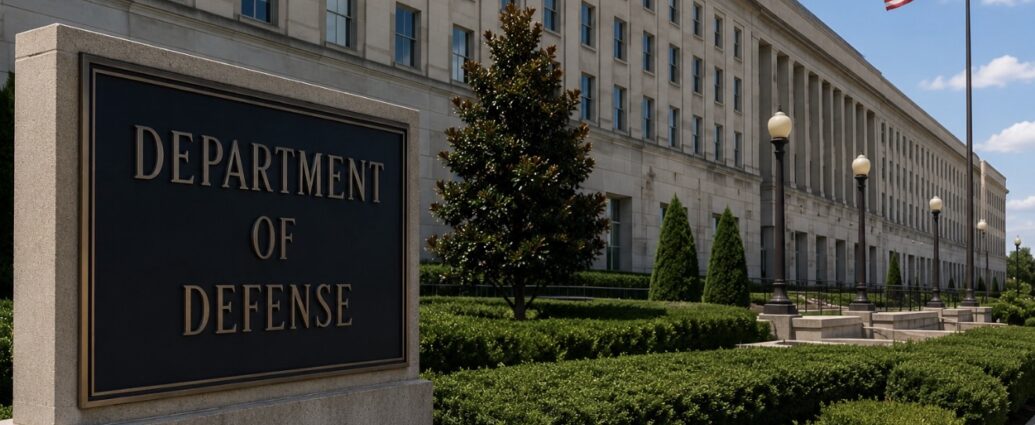
Pentagon Awards Oracle Nearly $7 Billion Contract as Company Issues Major Security Update
WASHINGTON, July 24, 2026 — The Pentagon awarded Oracle an enterprise software agreement worth as much as $6.99 billion over 10 years, consolidating software licenses and services across the military, Coast Guard and intelligence community under one government-wide purchasing arrangement.
The agreement includes a five-year base period with an option for another five years. It was negotiated through the Department of the Navy and represents the Pentagon’s first direct enterprise agreement with Oracle.
Defense officials estimate the consolidated contract will save taxpayers at least $441 million by eliminating overlapping agreements, standardizing prices and providing a clearer view of how Oracle products are used across agencies.
The contract covers Oracle’s on-premises software portfolio rather than functioning solely as a cloud-computing agreement. It is intended to bring licenses, maintenance and support services that had been purchased separately by military branches and intelligence organizations into a single structure.
The deal strengthens Oracle’s government position while accelerating a broader Pentagon effort to use its purchasing power against rising software costs.
The agreement follows a separate Pentagon consolidation contract with Microsoft worth as much as $9.69 billion. Together, the awards show how the federal government is moving away from thousands of smaller technology contracts toward department-wide agreements with major vendors.
That approach can produce lower prices and simpler management. It may also make it harder for smaller software providers and resellers to compete when purchasing authority is concentrated in a limited number of enormous contracts.
Oracle’s government win came as the company also released its July Critical Patch Update, addressing vulnerabilities across databases, enterprise applications and other software products.
The company’s advisory includes 72 new security patches for Oracle Database products, along with additional updates covering other parts of its software portfolio. Oracle recommends that customers apply the patches promptly because attackers have previously attempted to exploit vulnerabilities for which fixes were already available.
The timing is particularly important for government agencies, hospitals, banks and large corporations that use Oracle databases to operate essential systems.
A software agreement establishes the commercial terms for using and maintaining the products, but it does not remove the responsibility of individual organizations to install security fixes, test them and ensure that legacy systems remain protected.
For Oracle, the contract provides long-term revenue visibility and reinforces the company’s position as a critical supplier of database and enterprise software. Its cloud business is growing rapidly, but traditional licenses and support relationships remain deeply embedded across government and corporate technology systems.
Oracle shares traded lower Friday morning despite the award, reflecting a broader technology selloff and investor concerns about the cost of AI data-center expansion.
The Pentagon’s next test will be whether the agreement delivers the projected savings and whether agencies can standardize their software use without creating new dependence on a single vendor.
JBizNews Desk | Washington
© JBizNews.com All Rights Reserved. Reproduction or distribution without written permission is prohibited.



Dave Portnoy says USA Today writer belongs in ‘insane asylum’ over Caitlin Clark-Emmett Till comparison
Dave Portnoy called for the firing of a USA Today columnist who compared WNBA star Caitlin Clark to the 1955 lynching of Emmett Till, arguing the writer belongs in an “insane asylum” for the piece.
Speaking on “Varney & Co.,” the Barstool Sports founder ripped into columnist Nancy Armour, declaring her comparison between Indiana Fever star Clark and the murder of Black teen Emmett Till the “craziest thing” he’s seen in more than two decades of sports media.
“We’ve got to put her in a straightjacket. You’ve got to find the nearest institution. You’ve gotta put this author away and throw away the key,” Portnoy said Friday.
“Firing isn’t really far enough. You gotta put her in an insane asylum. You gotta lock her up. And people who say, ‘Hey, Dave, that’s too far’—that’s nothing compared to what she just wrote,” he later added.
TRUMP ADMINISTRATION UNVEILS NEW TARIFFS ON 60 TRADING PARTNERS AS TEMPORARY DUTIES EXPIRE
Armour wrote that some of Clark’s supporters have interpreted her disputes with referees as a White woman who needs protection, then taken it out on other players on the court. Clark has been a frequent topic of discussion after facing physical play during games.
The author wrote that there is a “White nationalist element” to the dispute, and later added that, “it shouldn’t need reminding this country has an awful history of Black people being harmed, even killed, in the name of ‘defending’ white women.”
The writer then said the WNBA’s All-Star Game was being held in Chicago, where Emmett Till lived. Emmett Till was a 14-year-old Black boy who was abducted and lynched in Mississippi in 1955 after a White woman accused him of making advances toward her. The tragedy became a major catalyst for the modern civil rights movement.
IBM CEO ADDRESSES WALL STREET TECH PANIC AFTER DELAYED ENTERPRISE SOFTWARE DEALS SURGE BACK
“I’ve been doing Barstool 24 years. I’m 49 years old. That’s the craziest thing I’ve ever seen in my life. The absolute craziest thing. To somehow equate the civil rights movement and Caitlin Clark arguing whether she got fouled or not,” Portnoy said. “It is pure insanity.”
Portnoy called for the firing of not only Armour, but also other members of the editorial staff involved with the article.
CATHIE WOOD SAYS BATTERED SPACEX COULD BECOME ‘MOST IMPORTANT COMPANY IN GLOBAL HISTORY’
“I do think she should be fired. I think the editor who allowed this to be published should be fired,” he said, later adding that not every story should be anchored around racial disputes.
“If you go looking for race under every single blank, every cover, you can make anything about race,” Portnoy said.
GET FOX BUSINESS ON THE GO BY CLICKING HERE
Armour apologized for making the connection in her article in a statement posted Thursday on social media: “In my recent column, I made an inartful comparison with the murder of Emmett Till. I intended to connect the issues the WNBA is currently facing with its All-Star Game being hosted in Till’s hometown of Chicago,” she said, adding, “I obviously did not provide enough context for that.”
Armour also noted that she stands by the assertion that perceived threats toward White women are weaponized against Black Americans but added that she sincerely regrets that her “lack of appropriate context is overshadowing that important conversation and the action that needs to be taken by the WNBA to address it directly — for the benefit of all players.”

Netanyahu orders West Bank crackdown after two Israelis killed in terror shooting amid clashes
Prime Minister Benjamin Netanyahu on Friday ordered a sweeping crackdown across the West Bank, including increased troop deployments, new checkpoints, and expanded counterterrorism operations, after two Israelis were killed in a shooting near Gilad Farm.
According to the IDF, a group of Israeli civilians had illegally crossed into Palestinian Authority-controlled territory while hiking in the area, leading to a confrontation with local Palestinians. The military said Palestinians began throwing rocks before one of them opened fire.
The two Israelis killed were later identified as 32-year-old Master Sergeant (Res.) Benayahu Melet, a member of Gilad Farm’s emergency response squad who was killed after rushing to aid the hikers, and 27-year-old IDF Maj. Yuval Ezra, an artillery battery commander.
Following the attack, Prime Minister Benjamin Netanyahu, Defense Minister Israel Katz, and IDF Chief of Staff Lt.-Gen. Eyal Zamir held a security assessment to discuss Israel’s response, the Prime Minister’s Office said.
“We will act strongly against terrorists and their proxies, and we will not allow terrorism in Judea and Samaria to raise its head,” Netanyahu said.
Netanyahu and Katz later announced five immediate measures: demolishing the home of the suspected attacker; expanding counterterrorism operations in villages described as “hotbeds of terror,” including seizing weapons and revoking work permits, reinforcing IDF deployments across the West Bank, establishing additional checkpoints, and accelerating the authorization of existing farms and the establishment of new ones.
The two also stressed that security forces must be allowed to operate “freely and with full force” against terrorism without interference.
Shin Bet chief warns Israelis not to ‘take the law into their own hands’
Shin Bet Director David Zini visited the scene and held a situational assessment with agency and IDF commanders, describing the attack as “grave and painful.”
“We are working tirelessly, shoulder to shoulder with the commanders of the Central Command and the division, as well as IDF commanders and soldiers, to thwart terrorism in the sector,” Zini said.
At the same time, he urged Israelis not to retaliate independently following the clashes in the area.
“I call on the public not to take the law into their own hands and to place their trust in the IDF and the Shin Bet, whose purpose and duty are to protect them,” he said.
James Genn contributed to this report.

Intel’s Sales Jump 25%, but Investors Demand a Profitable AI Turnaround
SANTA CLARA, Calif., July 24, 2026 — Intel reported second-quarter revenue of $16.1 billion, a 25% increase from a year earlier, as demand for processors used in data centers and artificial-intelligence systems delivered the company’s strongest sales growth in more than 15 years.
The chipmaker said non-GAAP earnings reached 42 cents a share, while its Data Center and AI division generated approximately $6.3 billion in revenue, up 59% from the same quarter last year.
Intel forecast third-quarter revenue of $15.8 billion to $16.8 billion and adjusted earnings of approximately 38 cents a share.
The results demonstrate that the AI infrastructure boom is spreading beyond companies selling the most advanced graphics processors.
Data centers also require traditional central processing units, custom chips, networking products, memory, packaging systems and enormous amounts of electrical and cooling infrastructure. Intel remains a major supplier in several of those markets.
Its traditional personal-computer chip business grew approximately 13%, while Intel Foundry revenue rose 31% to roughly $5.8 billion.
The challenge is no longer proving that Intel can sell more chips. It is proving that the growth can produce durable profits.
Intel reported a GAAP loss of $2.16 a share, reflecting restructuring and other charges. Its foundry business also remains deeply unprofitable as the company spends heavily to build manufacturing capacity capable of competing with Taiwan Semiconductor Manufacturing Co.
The company plans more than $20 billion in capital spending during 2026 and expects investment to increase substantially in 2027. Those commitments give Intel the ability to expand production if demand remains strong, but they also increase the financial consequences if major customers do not materialize.
Intel is positioning its future around a combination of processors, contract manufacturing, advanced chip packaging and custom semiconductor designs. That gives the company several ways to participate in AI spending, even if it does not displace Nvidia in the accelerator market.
The company has also been working to restore manufacturing discipline after years of delays allowed overseas competitors to take the lead in advanced semiconductor production.
Its planned 14A manufacturing process is expected to reach large-scale production in 2028. Winning outside customers before then will be critical because factories become more economical as additional clients spread the enormous cost of equipment and research across more chips.
Intel shares initially rose following the earnings release but traded lower Friday morning as the broader technology sector weakened. The reversal reflected high expectations already built into a stock that had risen sharply during 2026.
Investors will now focus on whether data-center demand remains strong through the second half of the year, whether Intel can narrow foundry losses and whether its higher capital budget produces binding customer commitments.
JBizNews Desk | Santa Clara
© JBizNews.com All Rights Reserved. Reproduction or distribution without written permission is prohibited.


Europe’s Heat Waves Fuel Rash of Wildfires

Treasury Adds New Barrier Against Federal Payments to the Deceased
WASHINGTON — Federal agencies now have another safeguard designed to prevent government payments from being issued after a recipient has died.
The Treasury Department said it successfully implemented a new check using death information before certain federal payments are released, expanding an effort to reduce improper spending and recover money that would otherwise be difficult to retrieve.
Government programs make billions of payments each year through retirement, disability, benefit and assistance systems. Delays in updating death records can allow money to continue reaching an account after the intended recipient is no longer living.
Some payments are returned when financial institutions identify the death. Others may be withdrawn by relatives, caregivers or individuals with access to the account, creating costly investigations and recovery proceedings.
The new safeguard is intended to stop more of those transactions before the money leaves the government.
Preventing an improper payment is considerably cheaper than trying to recover it later.
The change also affects banks and federal contractors responsible for processing payments. More accurate records can reduce disputes over whether a financial institution should return funds and how much money remains available in an account.
No national death database is perfect, and timing remains a challenge. Agencies receive information from states and other sources on different schedules, creating a risk that a legitimate payment could be delayed when records are incorrect or belong to another person with a similar identity.
Treasury will therefore need to balance fraud prevention with safeguards for living beneficiaries who depend on federal payments for basic expenses.
The broader issue extends beyond deceased recipients. Improper payments can result from identity theft, administrative mistakes, outdated eligibility information or organized fraud.
The new system addresses one defined weakness. Its effectiveness will depend on how quickly death records are updated and whether agencies consistently use the information before approving payments.
JBizNews Desk | Washington
© JBizNews.com All Rights Reserved. Reproduction or distribution without written permission is prohibited.

STAT+: Fatal gene-editing trial in China raises ethics and oversight questions
Want to stay on top of the science and politics driving biotech today? Sign up to get our biotech newsletter in your inbox.
Today, a win for RFK Jr., as an FDA panel narrowly voted in favor of allowing compounding pharmacies to produce certain unregulated peptides. Also, in heart-wrenching detail, Science writes of the six-year-old girl who died in China after receiving an experimental, brain-directed CRISPR therapy.
The Readout’s taking a summer break next week, so we’ll see you in August!




Markets Open Mixed as Oil Retreats but Technology Shares Stay Under Pressure
NEW YORK, July 24, 2026 — U.S. stocks opened mixed Friday as easing oil prices offered some relief to businesses and consumers, while technology shares remained under pressure from concerns over the enormous cost of building artificial-intelligence infrastructure.
As of approximately 9:45 a.m. Eastern Time, the Dow Jones Industrial Average was up about 0.1%, the S&P 500 was nearly flat with a gain of roughly 0.1%, and the Nasdaq Composite was down approximately 0.4%. Market-tracking funds showed the same split, with the Dow and S&P 500 slightly higher and the technology-heavy Nasdaq lower.
The early moves followed a difficult Thursday session. The Dow closed down 434.77 points, or 0.83%, at 51,711.65. The S&P 500 dropped 49.39 points, or 0.66%, to 7,408.30, while the Nasdaq Composite fell 382.55 points, or 1.50%, to 25,137.69.
Oil prices pulled back after Brent crude briefly rose above $102 a barrel Thursday. Brent was trading near $98 Friday morning, while the United States Oil Fund fell approximately 1.4% shortly after the opening bell.
The decline provided limited relief to airlines, trucking companies, manufacturers and retailers that had been confronting another potential surge in transportation and production expenses.
Oil is retreating, but it remains high enough to keep inflation and interest-rate risks firmly in the market.
Long-term Treasury bonds strengthened modestly, suggesting some of Thursday’s pressure on government borrowing costs had eased. The iShares 20+ Year Treasury Bond ETF was up approximately 0.2% in early trading.
Technology remained the weakest part of the market. Investors are increasingly separating companies already generating meaningful AI revenue from those committing tens of billions of dollars to data centers, chips and power infrastructure without a clear timetable for returns.
Oracle shares fell approximately 1.2% despite receiving a Pentagon software agreement worth nearly $7 billion. Intel also traded lower after an initial premarket rally, even though the chipmaker reported its strongest revenue growth in more than 15 years.
The mixed reaction demonstrates how demanding technology valuations have become. Strong revenue, large contracts and higher spending plans may no longer be enough unless companies can also show how quickly those investments will translate into sustained earnings and cash flow.
Markets were also absorbing new U.S. tariffs on imports from 60 trading partners, Treasury’s latest foreign-exchange review and the European Central Bank’s decision to pause its interest-rate increases.
Investors will now watch oil prices, tariff implementation and additional corporate earnings for direction. The Federal Reserve’s policy meeting next week will provide the next major test, particularly if energy and import costs continue to threaten renewed inflation.
JBizNews Desk | Wall Street
© JBizNews.com All Rights Reserved. Reproduction or distribution without written permission is prohibited.

CMS appeals Clover MA stars lawsuit


Albertsons warns of softer grocery demand as consumers pull back
Albertsons lowered its fiscal 2026 sales and earnings outlook Thursday after weaker grocery demand and a more cautious consumer weighed on its first-quarter performance.
The grocery chain now expects identical sales to decline between 0.5% and 1.5% for the full fiscal year, compared with its previous forecast of flat sales to 1% growth.
Albertsons also cut its adjusted earnings forecast to between $1.75 and $1.85 per share, down from its prior range of $2.22 to $2.32. Adjusted EBITDA is now expected to range from $3.55 billion to $3.625 billion, compared with its earlier forecast of $3.85 billion to $3.925 billion.
Identical sales fell 0.8% during the quarter ended June 20, while net sales and other revenue edged up 0.2% to $24.94 billion, helped by higher fuel sales. Digital sales increased 13%, although the company said its core grocery business faced mounting pressure from softer industry unit trends.
MAJOR GROCERY CHAIN BEATS WALMART, ALDI IN PRICE WAR AS SHOPPERS HUNT FOR CHECKOUT RELIEF
“In the first quarter, our digital and pharmacy businesses continued to deliver strong growth, while core grocery faced increasing pressure from softer industry unit trends and a more cautious consumer,” CEO Susan Morris said in the company’s earnings release.
Albertsons said it is accelerating investments aimed at strengthening its customer value proposition and improving the shopping experience before anticipated productivity benefits take hold.
“We are choosing to accelerate investments in our customer value proposition and the customer experience ahead of expected productivity benefits because we believe these actions will improve our growth trajectory, strengthen our competitive position, and create long-term shareholder value,” Morris said.
As part of that effort, Albertsons announced an operating realignment called ACI Edge. The company consolidated its 11 divisions into four regions and placed center-store merchandising under a single enterprise team.
Albertsons said the restructuring is intended to accelerate decision-making, improve local execution and bring category management, supplier relationships and merchandising strategy under a more centralized structure.
First-quarter net income fell to $84.7 million, or 17 cents per share, from $236.4 million, or 41 cents per share, a year earlier. Adjusted earnings declined to 42 cents per share from 55 cents.
Gross margin narrowed to 26.6% from 27.1%. Albertsons attributed some of the pressure to higher delivery and handling expenses associated with digital growth, along with higher fuel costs.
Separately, Albertsons said Chief Financial Officer Sharon McCollam plans to retire later this year. McCollam will remain in her current role until a successor is named and will then serve in an advisory capacity through Feb. 27, 2027, to assist with the transition.
CLICK HERE TO GET FOX BUSINESS ON THE GO
Albertsons operated 2,240 stores across 35 states and the District of Columbia as of June 20.

Warehouse Vacancy Near Major U.S. Ports Tightens as New Industrial Construction Slows
NEW YORK — Thursday, July 23, 2026: Demand for warehouse space near major U.S. ports remains resilient even as industrial construction slows, tightening vacancy rates in key logistics markets and supporting lease prices despite broader economic uncertainty. New commercial real estate data released this week points to continued strength in distribution hubs serving importers, manufacturers and e-commerce companies.
According to new market reports from CBRE and Cushman & Wakefield, developers have pulled back on speculative warehouse construction as higher financing costs and rising building expenses weigh on new projects. At the same time, tenant demand has remained relatively stable, particularly for modern distribution facilities located near ports, interstate highways and population centers.
The slowdown in new supply is beginning to rebalance the industrial real estate market after several years of record warehouse construction. While vacancy rates have edged higher in some inland markets where significant new inventory recently came online, logistics facilities surrounding major seaports continue to experience stronger occupancy as companies prioritize efficient supply chain operations.
Importers and retailers are increasingly seeking strategically located warehouse space to shorten delivery times and reduce transportation costs. Third-party logistics providers, food distributors and manufacturers also continue expanding regional distribution networks to improve inventory management and protect against future supply chain disruptions.
The industrial property sector remains one of commercial real estate’s strongest-performing asset classes. Unlike office buildings, warehouses continue benefiting from long-term structural trends including e-commerce growth, domestic manufacturing investment and supply chain diversification.
For investors, constrained new construction could provide additional support for rental growth over the coming year if demand remains stable. Developers, however, continue facing higher borrowing costs and increased insurance and labor expenses that have made many projects financially challenging to launch.
Market participants will monitor leasing activity, construction starts and port cargo volumes through the remainder of 2026. If industrial development continues slowing while demand remains healthy, warehouse owners near the nation’s largest ports could see tighter market conditions and continued pricing power into next year.
JBizNews Desk | Wall Street
© JBizNews.com All Rights Reserved. Reproduction or distribution without written permission is prohibited.

IDF kills terrorist who fatally shot two Israelis, wounded three others in West Bank
At least one Israeli was killed, two others were seriously wounded, and at least two others were lightly wounded in a shooting near Gilad Farm, a settlement located southwest of Nablus in the northern West Bank, on Friday morning.
A number of Israelis were hiking in the area when they were attacked by Palestinians who encountered them, the IDF confirmed.

The murdered Israeli was identified as 32-year-old Benayahu Melet, a member of Gilad Farm’s emergency response squad who was killed after attempting to aid hikers under assault by Palestinians.
He leaves behind a wife and two daughters, aged 13 and 12, respectively.
The IDF conducted a manhunt for the terrorist, locating and killing him after the shooting incident.

The head of Gilad Farm’s emergency response squad responded to the incident, along with other squad members. At approximately 8:20 a.m., reports were received of a gunshot wound after Palestinians stole the weapon of the emergency response squad chief and fired at the Israelis, Walla learned.
The IDF seized and returned the stolen weapon after killing the terrorist.

“The hike left Mount Bracha in the early morning when a group of approximately 60 hikers, including two guards armed with rifles, and several others with pistols, set off,” a member of the group told Walla.
“On the way, we stopped at a spring close to Sela Ridge. At around 7:05 a.m., the first incident occured when several Arabs from the village began trying to get us to leave by throwing rocks and attacking us with clubs,” they said.
“One of the hikers was injured in the face. We retreated and began walking towards Gilad Farm,” the group member added.
“At 8:05 a.m., the second clash occurred. Dozens of Arabs from the village began throwing stones at us. Arabs began surrounding the group from three sides, and at this point, two of the armed Israelis opened fire in self-defense,” they said.
“The Arabs continued to advance and surround the group, which was trying to descend the mountain. At this point, the number of Arabs in the area had already reached hundreds,” they continued.
“A few minutes later, a military jeep arrived at the scene. Two minutes later, two members of Gilad Farm’s emergency response squad arrived. They tried to repel the Arab crowd by firing a few shots in the air, but to no avail,” the witness said.
אנחנו מפרסמים כעת תיעוד מהרגעים הראשונים של הפיגוע בשומרון היום:
ניתן לראות את קבוצת המטיילים היהודים, בהם ילדים (לפי גורמי ביטחון – היו שם כ-30 ישראלים בערך), עומדים בפאתי הכפר הפלסטיני שאליו הגיעו לטייל, ובמרכז התיעוד – העימות שהתפתח בין עשרות פלסטינים מהכפר שיצאו לעבר… pic.twitter.com/GqM64H21sU
— דורון קדוש | Doron Kadosh (@Doron_Kadosh) July 24, 2026
“Unarmed civilians also tried to help defend the group, but soldiers pushed them back. During the rush, one of the Arabs, a sheikh from the village, grabbed the gun of one of the emergency response squad members and fired,” they stated.
Magen David Adom paramedics responded to the scene to treat the wounded. “We treated a 25-year-old man who suffered a gunshot wound to his upper body, but remained conscious,” a paramedic said.
“We provided him with medical treatment and evacuated him to be transported to a military helicopter in order to be evacuated to the hospital. He was in a stable condition,” the paramedic noted.
“Later, I assisted an IDF medical team, and together we provided medical treatment to a critically wounded, unconscious man, who suffered gunshot wounds to his body. After prolonged resuscitation efforts, we were forced to declare him dead,” the paramedic said.
Two of the wounded were evacuated to Sourasky Medical Center’s Ichilov Hospital, Tel Aviv, a hospital spokesperson confirmed.
One of the two is in critical condition, while the other suffered serious wounds, the spokesperson noted. United Hatzalah noted that the man in critical condition is approximately 30 years old, while the one with serious wounds is approximately 25 years old.
Two other Israelis were treated at the scene with minor wounds, United Hatzalah added
Netanyahu, Katz, Zamir hold meeting to discuss response to recurring terror threat in West Bank
Prime Minister Benjamin Netanyahu, Defense Minister Israel Katz, and IDF Chief of Staff Lt.-Gen. Eyal Zamir held a discussion on ways to respond to the attack, the Prime Minister’s Office confirmed on Friday.

“We will act strongly against terrorists and their proxies, and we will not allow terrorism in Judea and Samaria to raise its head,” Netanyahu said.
Netanyahu and Katz issued a statement on Friday afternoon, issuing five orders.
Firstly, to demolish the house of the terrorist responsible for the shooting near Tell village that killed Melet. Secondly, to take strong counterterrorism steps in villages that are “hotbeds of terror,” including by collecting weapons, revoking work permits, and more.
Thirdly, by reinforcing IDF deployment throughout the West Bank. Fourth, by establishing checkpoints, and fifth, by accelerating the regulation of farms and establishing new farms.
Netanyahu and Katz emphasized that security forces, including the IDF, must be allowed to act freely and with full force against terrorism, and to refrain from any action that could harm their activities or divert them from their “central mission” of protecting Israeli citizens and defeating terrorism.
This incident follows two stabbing attacks on Thursday, thereby marking the third terror attack in the West Bank within a 24-hour period.
As such, Zamir held a situational assessment with IDF Central Command Chief Maj.-Gen. Avi Bluth and Operations Directorate Chief Maj.-Gen. Itzik Cohen.
Zamir ordered the mobilization of IDF reinforcements to help secure the area and prevent copycat terror attacks, the military confirmed.
This includes a company from the Nahal Brigade’s Reconnaissance Battalion, two companies from the General Staff’s Infantry Regiment, and two companies from the IDF’s Commando Training School, The Jerusalem Post learned.
Two other battalions have been added to the regional patrols over the past two weeks, and a Commando company was also added last weekend, the Post learned.
According to military officials, the attacks came after a tense period marked by a high volume of security warnings. At the same time, a series of fires that burned large swaths of land intensified friction between Israelis and Palestinians in the West Bank, particularly around the farming outposts. The IDF is now concerned that additional attacks targeting Israeli soldiers and civilians could follow.
At the same time, footage published on Friday showed a large group of settlers, many of them masked, running toward the village of Jit. The incident occurred only hours after the attack at Gilad Farm in the West Bank.
Additionally, Walla has learned that a broad operational campaign is expected to begin across all regional brigades in the coming hours. The activity will focus on arresting wanted suspects and individuals sought for questioning, as well as conducting operations in known friction points. The main effort will center on the city of Nablus and the wider Samaria region.
According to security officials, Thursday’s attack, in which Itamar Cohen, who is considered a prominent figure in the area, was seriously wounded, could trigger acts of nationalist crime against Palestinians. The IDF, Border Police, and Israel Police are preparing for that possibility as well.
At least one person was injured in a rock-throwing incident on Friday near Gilad Farm following reports of hundreds of settlers marching throughout the West Bank’s Areas A and B.
Herzog, Ben-Gvir, Smotrich, other Israeli leaders react to terror attack
“We must stand united and resolute, and must not allow terror to prevail,” President Isaac Herzog said.
“The heart breaks upon hearing the news of Melet’s death,” he added.
“The cities and villages of the murderers in Judea and Samaria are to be judged like Beit Hanun in the Gaza Strip,” National Security Minister Itamar Ben-Gvir said.
“I am on my way to meet Netanyahu for a meeting where I will demand that the IDF be ordered to use air power and D9 bulldozers to erase the homes of terrorists and their supporters, and to exact from the terrorists the price they deserve,” he added.
“For every Jew who is murdered, the enemy must absorb the loss of lands and homes. This is the language spokes in the Middle East, and the time has come to speak it in Judea and Samaria, just as we did in the Gaza Strip,” he stated.
Finance Minister and Religious Zionist Party leader Bezalel Smotrich also responded.
“A tough morning. I send my heartfelt condolences to the family of the murdered, pray for the recovery of the wounded in the attack, and embrace the residents and hikers,” he said.
“We will not normalize the erosion of deterrence and the brazenness of our enemies in recent weeks against the pioneers of settlement and the farms. I demand that the IDF act with an iron fist against the village of the murderers and its surroundings and restore governance and deterrence,” he added.
“The people of the farms and the heroic settlement pioneers are the defensive wall of the State of Israel. We will continue to strengthen and honor them for their steadfast stand for our existence in the Land of Israel against Arab terrorism,” he stated.
“Palestinian terrorism will not achieve its goal; we will continue to deepen our hold on our land – the land of Israel,” Foreign Minister Gideon Sa’ar said.
“The incident is still ongoing. There are still people in danger. Terror will not break us. The response must be offensive: We must relentlessly pursue the terrorists and strike terrorism with full force. At the same time, we must continue to build, develop, and strengthen the communities in Samaria. Anyone who tries to harm us should know that they will be met with a stronger and larger Samaria,” Samaria Regional Council Head Yossi Dagan said.
“I demand that the government launch a large-scale military operation against the Palestinian Authority and Hamas, who are trying to ignite a wave of terrorism here. We’ve seen it over the past week. We expect the government and the military leadership to carry out a major operation, a real military campaign, in Samaria, here near Gilad Farm, to make it clear that Israel has changed the rules of the game and will not tolerate a wave of terrorism,” Dagan added.
“Attack after attack. Our hearts are with our brothers at Gilad Farm on this difficult morning,” former prime minister Naftali Bennett said.
“Sending heartfelt condolences to the family of the murdered, and praying for the recovery of the wounded. The entire people of Israel stand with the IDF and the security forces in their war against the murderers and their senders. The terror must be eradicated with an iron fist,” Bennett added.
“Combating terrorism requires a systematic security policy, enforcement, and harsh strikes against anyone who attempts to harm Israeli citizens,” former IDF chief Gadi Eisenkot said.
“I trust in the security forces in their pursuit of the terrorist and wish strength to the residents of the area at this difficult time,” he continued, adding that he shares in the grief of the murdered Israeli’s family and wishes for a speedy recovery to the wounded.
“The shocking attack this morning, which joins yesterday’s attack and the wave of fires and repeated arsons, illustrates that these are not isolated incidents but planned and ongoing terrorism,” Mateh Binyamin Regional Council Head Israel Ganz said.
“The area is literally burning,” he stated.
“The wave of arsons, attempted attacks and the ongoing incitement by the Palestinian Authority are part of a single campaign aimed at harming the settlement and the citizens of Israel,” he added.
“Judea and Samaria is not a secondary arena. It is a central front of the State of Israel, and the policy here must change accordingly, by launching a broad operation against the centers of terror, exacting a heavy price from anyone involved in terrorism or incitement, and stopping treating these attacks as routine,” Ganz said.
“We pray for the full recovery of the wounded and wish strength to the security forces, IDF, and pioneering farmers who stand on the front lines and protect Israeli citizens with their bodies every day,” he stated.
Far Right MK blames IDF for failing to stop terror attack
Otzma Yehudit MK Limor Son Har-Melech blamed the IDF for allowing the incident to happen.
“The weakness” of IDF Central Command Chief Maj.-Gen. Avi Bluth, and Judea and Samaria Division Chief Brig.-Gen. Kobi Heller with regard to defending West Bank residents “has cost us in precious blood,” she wrote on X.
“The message to soldiers has gotten through, and in recent events, many of them are afraid to respond with determination,” she added.
“While Bluth and Heller are waging a stubborn battle against pioneering Jews [settlers], deploying IDF soldiers despite all our warnings, the Arab enemy is lifting its head and intensifying the terror. Another October 7 is at the door. You have been warned,” she stated.
“A group of Jewish hikers, who set out every Friday to hike in Judea and Samaria, has become a target of terror today,” Yisrael Beytenu leader and former defense minister Avigdor Liberman said.
“This is a loss of control. A normal country does not accept a reality in which its citizens go out to hike in their own land, and terrorists open fire on them,” he added.
“Against terror, there is no room for hesitation, stammering, or tolerance. Terror understands only strength, determination, and an iron fist!” he stated, sending condolences to the family of the murdered Israeli and wishing a speedy recovery to the wounded.
Several Palestinians killed, wounded at scene, Ramallah’s Health Ministry claims
At least four Palestinians were killed by the IDF and four others wounded at the scene, including three in critical condition, the Palestinian Health Ministry claimed. The IDF has not commented on this at the time of writing.
Essam Saifi, a local leader in the Palestinian Fatah party from the area, told Reuters in a phone call that about 25 to 30 Jewish settlers initially attacked the area and tried to break into two houses there. The residents came out to confront them, and the settlers opened fire, Saifi said.
Half an hour later, Saifi said, the Israelis returned and attacked the western part of the town, striking a minor with a weapon. This caused chaos, and then the Israeli military arrived and started shooting, along with the settlers, Saifi told Reuters.
Amir Bohbot, Efrat Forsher, and Reuters contributed to this report.

US, Ukraine pushing to bring Russia back to negotiating table, hopeful for partial ceasefire
Ukraine and the United States are pushing the Kremlin into a new round of peace talks, after Kyiv continued its long-range strikes on Russian infrastructure.
According to the Kyiv Independent, Ukraine and the US are hoping that the shift in the war could force Russia back to the negotiating table.
One US official told the Kyiv Independent that the White House thinks that Russian President Vladimir Putin may now be more willing to accept at least a partial aerial ceasefire, after Russia has been bombarded with strikes near Moscow and St. Petersburg.
Ukrainian President Volodymyr Zelensky spoke with US envoys Steve Witkoff and Jared Kushner earlier this week.
A source with knowledge of the conversation told the Kyiv Independent that the pair told Zelensky that Washington is revising the framework for negotiations. Once that is completed, Kyiv and Washington will closely coordinate on proposals before they are presented to Moscow.
Trump, Zelensky to meet in Washington as Witkoff, Kushner head to Moscow
The two US envoys are expected to head to Moscow in late July or early August to continue discussions.
Notably, Zelensky is set to meet with US President Donald Trump next week to attend former US senator Lindsay Graham’s funeral. The pair of leaders are expected to discuss developments in peace talks as well as updates on the frontlines of the nearly four-year-old war.
Zelensky said on Thursday that a trilateral meeting between the US, Ukraine, and Zelensky could happen as early as the fall.
“I think there will be a trilateral meeting then. Of course, we need to do all this by the fall. I think we need to work hard on this. If it were up to us, it would be in July. But not everything depends on us,” Zelensky said.
On Thursday, US Secretary of State Marco Rubio said that the US would need new ideas to begin peace talks between Russia and Ukraine.
“If, when peace comes, it’ll be because of some new idea and some new concepts, and we’re prepared to offer some of those in the right setting and form if the opportunity presents itself and the conditions are right,” Rubio said. “We’re prepared to play that role in a positive way.”
“I think it is a very bloody war,” he added. “I think both sides should have an incentive to bring it to an end. That’s been the challenge: an end that both sides can accept, and we’ve tried, and we’ll continue to try to see if we can find a middle ground that brings this about.”
Ukraine, US push for partial peace deal
On Friday, the Kremlin doubled down and asserted that any new US proposals would need to be “acceptable” for Russia.
Moscow has repeatedly demanded that the US stop supplying weapons to Ukraine, and walk back its positions to be closer to the “Alaska Understandings.”
The “Alaska Understandings” are what the Kremlin asserts is a series of agreements reached last summer during Putin’s meeting with Trump in Alaska.
Notably, the “understandings” involve the US pressuring Ukraine to relinquish control of the Donbas region. Kyiv has repeatedly stated that would be a nonstarter.
Russia, for its part, has refused to participate in talks in countries it views as neutral.
The tides seem to be turning to a certain extent in the war, but officials who spoke to the Kyiv Independent believe both Kyiv and Moscow have reasons to pursue a partial ceasefire.
Although it can now produce Patriot missiles, Ukraine is still running low on interceptor munitions, and Russia’s threadbare air defenses have left it increasingly more open to attacks.
However, Ukrainian officials believe that Russia is unlikely to end the war full stop. As such, Ukrainian and US officials believe that a partial ceasefire, which has been floated before, seems like the most realistic option.
Reuters contributed to this report.

Germany’s Merz picks first woman chief of staff in shake-up before state elections
German Chancellor Friedrich Merz named German Health Minister Nina Warken as his new chief of staff on Friday, as part of a reshuffle intended to inject momentum into his unpopular government before difficult state elections in September.
Merz also said more changes were to come. Two sources familiar with the matter said he was set to replace his transport minister, but that will take longer as Merz’s pick pulled out after initially agreeing to take the role.
Warken will be the first woman to hold her new post, an important position that serves as a node between the chancellery, ministries and lawmakers at a time when Merz is pushing reforms to revive Europe’s largest economy.
The reset follows the abrupt resignation of conservative party heavyweight Jens Spahn as parliamentary faction chief, in a row over his decision to have a surrogate baby despite his party’s staunch opposition to surrogacy.
Merz is under pressure to deliver after a testing first year in office. He trails in opinion polls to the far-right Alternative for Germany and faces the prospect of the AfD gaining power for the first time at state level in September.
Economic growth has struggled to revive, with Germany’s vaunted export-driven economy under threat from rising costs at home and competition abroad. Global tariff ructions and the energy shock from the Iran war are also hobbling growth.
“We are a reform-oriented government, and we intend to continue demonstrating that,” Merz told reporters in Berlin, promising to “hit the ground running” when parliament reconvenes after a summer recess.
Merz had picked Warken, 47, to oversee health reforms to rein in soaring healthcare costs, a job that will now fall to another party heavyweight, Carsten Linnemann.
Warken is “assertive and well-versed in security policy” and “a tough negotiator,” Merz said.
Merz popularity sinks, AFD takes lead
Merz is set to replace German Transport Minister Patrick Schnieder amid frustration over the state of Germany’s rail network and crumbling infrastructure, two sources said, with train delays now a national topic of conversation.
Political analyst Oliver Lembcke said Merz, 70, was looking to project strength while making his government and party look younger and more female.
“However, he must be careful not to bungle the process,” he added, saying Merz had to avoid drawing out the reshuffle for too long. “Anyone who wavers here quickly squanders their authority, and the chancellor cannot afford any further loss of authority,” he said.
The train drivers’ union cautioned against blaming the rail network’s problems on an individual, saying policy makers had for years failed to provide clear goals, binding mandates or consistent management.
“Germany does not need further political reshuffles, but rather determination, expertise, and reliability,” it said.
Merz’s outgoing chief of staff, Thorsten Frei, will succeed Spahn as head of the CDU/CSU faction in parliament.
Merz said he would make further changes to his cabinet but declined to give further details, adding that these would take more time.
Merz’s popularity is at an all-time low, according to a RTL/ntv Trendbarometer poll this week, with only 14% of respondents satisfied with his performance compared to 85% dissatisfied.
The AfD tops national polls at 26%, ahead of the conservatives at 22%, before elections in the eastern states of Saxony-Anhalt and Mecklenburg-Vorpommern in September that the AfD hopes will help pave the way for national success.
Congress didn’t create the private listings problem. We did.
On July 22, the House Judiciary Subcommittee on the Administrative State, Regulatory Reform, and Antitrust sent letters to Compass and to Midwest Real Estate Data. Both letters ask for a briefing on private listing networks and on the data partnership the two companies announced in April. The subcommittee wants those briefings scheduled by 10 a.m. on August 5.
That is the news. Here is the part worth sitting with.
The subcommittee is asking a fair question. It wants to understand what happens to competition, and to buyers, when a real share of the homes for sale in a market are visible to some agents and invisible to everybody else. That is a reasonable thing for a lawmaker to wonder about.
It is also a question this industry has been asked, in one form or another, since 2020. We had every chance to answer it ourselves. We did not. And now the answer is going to get written by people who do not sit in our meetings.
Nobody gets to call this partisan
Look at the last seven months. In December, Senators Elizabeth Warren and Ron Wyden wrote to the Justice Department and the Federal Trade Commission asking them to closely scrutinize the Compass acquisition of Anywhere. In May, Zillow took Compass and MRED to federal court in Chicago.
On July 1, a coalition of eight consumer, housing, and civil rights groups led by the Consumer Federation of America asked the FTC and DOJ to open an investigation. Three weeks after that, the House letters went out.
The December letter came from two Democratic senators. The July letter was signed by a Republican subcommittee chairman.
So let us put one idea to bed right now. There is no political shelter here. Nobody is riding this out until the other party takes the gavel. When people who agree on almost nothing start asking the same question about your industry, the question is not the problem.
We wrote a rule and left a door in it
Here is what stings. We saw this coming and we half fixed it.
The Clear Cooperation Policy was the right instinct. If you market a home publicly, put it in the MLS so every buyer’s agent can see it. Simple. Defensible. Easy to explain to a homeowner at a kitchen table.
Then we left the edges undefined. Coming Soon stayed. Office exclusives stayed. And nobody wrote clean rules about how long a listing could sit in either one, or whether a buyer working with an outside agent could get through the door while it did. Bright MLS looked at its own market and found that 47% of office exclusives moved through Coming Soon status.
Put a ‘No Parking’ sign on the block, then add “Except For Loading” underneath it. Now look out the window. Everybody on that street is loading.
That is not a scandal. That is what happens when you write a rule with a door in it and then decline to say how wide the door is. People walk through doors. That is what doors are for.
Every MLS did the sensible thing. Together it added up to nothing.
The second failure is harder to point at, because no single decision looks wrong.
Over the past year, MLSs have negotiated with the largest brokerage in the country one at a time. Every one of those conversations was rational from where that MLS was sitting. You have members to keep. You have listing volume to protect. You have a board asking why the MLS down the road cut a deal and you did not.
But an industry where every MLS negotiates alone against a single national counterparty is not an industry with a standard. It is a patchwork. And a patchwork is exactly what invites somebody with subpoena power to come define the terms for you.
To be fair, people did try. In May, CMLS and NAR both wrote to the Justice Department and the FTC, responding to a request for public comment on how competitors are allowed to work together. Both made the case that the MLS system is good for competition. Both were right. But making the case for the system is not the same as fixing the rule inside it, and the rule inside it is what everybody is fighting about.
What an outside rule looks like
Here is the practical problem with letting Washington settle this, and it is not a knock on Congress.
A rule written in Washington has to work in Manhattan and in Muncie on the same morning. It has to work in a market with 90,000 agents and a market with 900. Federal rules are blunt because they have to be. That is not a flaw in the people writing them. It is the nature of the instrument.
A rule written by MLSs can be tailored. It can account for a home that genuinely is not ready to show. It can account for a seller with a real privacy need. It can tell the difference between a two-week Coming Soon window and a listing that quietly sells inside one brokerage and never sees daylight. We can draw those lines with a scalpel. Legislation draws them with an axe, and then everybody lives with the cut for 20 years.
The window that is still open
None of this is over. The subcommittee asked for a briefing, not a bill. That is a meaningful difference and it is the whole opportunity.
Three things would change the conversation, and none of them require anyone’s permission.
One standard, defined the same way everywhere. That does not mean one national MLS. A single national system would hand the keys to whoever has the most agents, and local control is the thing worth protecting here. It means a standard every MLS can adopt for itself. What counts as public marketing. How long a listing may sit pre-market. Whether a buyer working with an outside agent can get in the door during that window. Written plainly, enforced the same in every market, with real consequences for ignoring it.
Disclosure the seller actually sees. Before a homeowner signs anything with a private or pre-market phase, they should see both columns. The benefits are real: more privacy, one point of contact. The trade offs are real too, like a lower price. A seller who sees both sides and still chooses a private start has made a choice. A seller who only sees one side got a pitch.
MLSs should be setting the standards together as one voice. This is the piece nobody has tried, and it is the one that matters most. Right now, a national brokerage sits down with nearly 500 MLSs separately, and every one of those conversations starts from zero. If the MLSs built the standard together first, and each one adopted and enforced it at home, there would be very little left to negotiate. Nobody gives up local control to do that. They just have to agree on the rule before the meeting instead of during it. That is not a fantasy. It is a meeting somebody has to call. That is not a wish list. It is a to-do list, and the deadline on it is being set by somebody else now.
We spent years arguing about whether private listings are good for sellers. That argument was never going to end in a conference room, and it is not ending in one now. It is moving to a hearing room. The only question left is whether we walk in with a standard of our own, or wait to be handed one.
Darryl Davis, CSP, is a real estate speaker, coach, and bestselling McGraw-Hill author who has trained more than 600,000 agents over 40 years in the business. His research on private listings was cited in the House Judiciary Subcommittee’s July 22, 2026 letter to Compass. He is based in Wading River, NY. www.DarrylSpeaks.com
This column does not necessarily reflect the opinion of HousingWire’s editorial department and its owners.
To contact the editor responsible for this piece: tracey@hwmedia.com
How to handle the top producer comparison from sellers
At some point in nearly every listing appointment, a seller raises the comparison: Why hire you rather than the top producer in the market? Most agents experience the question as a threat. It is more useful to read it as a signal that the seller has not yet been given a real basis for the decision, and that you are about to provide one.
Begin by recognizing that the core tools of the business are commoditized.
Every licensed agent in the market has access to the same MLS, portals, signage and broadly the same marketing channels. When the inputs are identical and publicly available, they stop being a meaningful point of differentiation.
The seller comparing two agents on tools is comparing them on a variable that, in practice, does not vary. The real differences lie in judgment, execution and the relationship, which is exactly where a prepared professional should steer the conversation.
Preparation, not improvisation, is what lets you answer the comparison credibly.
If you anticipate that a specific high-volume competitor may come up, audit their public production data in the MLS before the appointment. The figures worth examining are the ratio of listings taken to listings sold, the average days on market, the list-price-to-sale-price ratio, and the average sale price.
High volume frequently conceals soft spots in one or more of those measures and knowing them lets you respond with facts rather than defensiveness. This is not a license to disparage a competitor, which tends to diminish the agent who does it. It is simply the difference between walking in informed and walking in hopeful.
The strongest position reframes the decision from scale to fit.
Once tools are off the table, the question becomes which professional will manage the transaction with more competence and attention, and which one the seller actually trusts. An agent who has spent 90 minutes building rapport at the kitchen table holds a real advantage on exactly that axis, provided they name it directly rather than hoping the seller notices on their own.
The move is to acknowledge the competitor’s size honestly, then redirect to competence, availability, and connection, the factors that genuinely shape how a sale turns out.
The data confirms that trust, not size, drives the hiring decision.
According to the National Association of Realtors, roughly two-thirds of sellers hire an agent they were referred to or had previously worked with. Sellers are predominantly choosing familiarity and confidence, not the largest market-share figure.
An agent who frames the appointment as a question of trust and fit is therefore competing on the dimension that actually determines who gets hired, while an agent who tries to win a volume contest is competing on the one dimension where the biggest name will usually prevail.
In a commodity category, the professional becomes the brand.
When the product looks the same from every provider, people default to the relationship and the perceived reliability of the person delivering it. That principle is why competence, communication, and trust are not soft skills in this market but the actual basis of competition, and why the agents who invest in them tend to take share as conditions normalize.
I developed that broader argument about skill as the real differentiator in a recent column on HousingWire.
Scale introduces a tradeoff that quietly favors the attentive agent.
High personal volume is frequently delivered through leverage, meaning assistants, junior team members, and automated systems handle much of the day-to-day contact. For some sellers that is perfectly acceptable; for many it is not what they believe they are buying.
An agent who personally manages the file can position that difference factually and without disparagement, framing the choice as one between a brand operated at scale and a professional delivering the service directly. In a relationship-driven decision, the direct service often carries more weight than the larger production figure.
Anticipate the comparison rather than reacting to it.
The agents who handle this objection best are rarely improvising in the moment. They have decided in advance how they will respond and have the competitor’s numbers ready before the question is even asked. Treating the comparison as a predictable part of the appointment, rather than an ambush, changes the entire dynamic, because preparation itself reads as competence, and competence is precisely what the seller is at the table to assess.
Treat the top-producer question as your opening and you convert a seller’s doubt into a clear, trust-based reason to choose you. Treat it as a verdict, and you concede the listing on the only ground where the bigger name was ever going to win.
Darryl Davis, CSP, is a national speaker, real estate coach, and the bestselling author of How to Become a Power Agent in Real Estate. Don’t miss this month’s free webinar series at PowerAgentWebinar.com. Through his POWER AGENT® Coaching Program, he helps real estate professionals build thriving businesses and lives at the Next Level®. Learn more at darrylspeaks.com.
This column does not necessarily reflect the opinion of HousingWire’s editorial department and its owners.
To contact the editor responsible for this piece: tracey@hwmedia.com

STAT+: Pharmalittle: We’re reading about an FDA panel and peptides, a Merck license for an HIV pill, and more
And so, another working week will soon draw to a close. Not a moment too soon, yes? This is, you may recall, our treasured signal to daydream about weekend plans. Our agenda is still in the works, but we do plan to promenade extensively with the official mascots, stroll the supermarket aisles, and spend time with the Pharmalot ancestor. We also hope to hold yet another listening party, where the rotation will likely include this, this, this, this and this. And what about you? The possibilities are endless — you could stop by your favorite restaurant, curl up with a good book, hang with your best friend, or take a long drive to nowhere. Well, whatever you do, have a grand time. But be safe. Enjoy, and see you soon. …
In a win for peptide proponents and for U.S. Health and Human Services Secretary Robert F. Kennedy Jr., an advisory panel to the U.S. Food and Drug Administration recommended compounding pharmacies be allowed to make the drugs BPC-157, KPV, TB-500, and MOTS-c., STAT says The FDA panel will vote on additional compounds on Friday. The votes are not binding, so the FDA will decide whether to lift restrictions and make them more accessible to people who have been turning to the little-researched but popular drugs. The vote reflects tensions between FDA staff, who recommended against lifting restrictions on the peptides because of safety and efficacy concerns, and the panel, which critics have said was “stacked” by Kennedy with people who stand to benefit from broader peptide access.
People with diabetes who use a popular long-acting insulin pen made by Sanofi have had to become pharmacy scouts in recent weeks as they encounter supply issues, STAT explains. The Lantus Solostar pen containing 3 milliliters of insulin glargine has been running low for several weeks because of increased demand “driven by broader market dynamics,” according to Sanofi. The issue is not technically considered a shortage by the FDA, but patients are having trouble finding the medication. While some diabetes patients have had luck finding the medication at small independent pharmacies or their hospital pharmacy, large pharmacies like CVS and Walgreens are coming up dry.

Roomvu launches AI-powered recruiting content for brokerages
Roomvu has launched a new recruiting content platform designed to help real estate brokerages, teams and agencies automate agent recruitment through AI-generated video and social media content.
The company said the new offering enables brokerages to create and automatically publish branded recruiting videos and posts that highlight their culture, values and recruiting message without requiring ongoing manual content creation.
“Recruiting runs on consistency that most leaders simply can’t sustain by hand,” said Roomvu CEO Sam Mehrbod. “With Roomvu, a brokerage’s recruiting message becomes branded videos that creates, schedules and posts itself — so the story that attracts agents is always working, even when the leadership team is busy running the business.”
The platform allows brokerages to convert existing recruiting articles or web pages into branded videos using Roomvu’s News2Video technology.
Content can then be automatically scheduled and posted across connected social media platforms while also being shared by agents throughout the brokerage.
Roomvu said the new recruiting tools are intended to help brokerages maintain a consistent recruiting presence while reducing the time required from leadership teams.
EXIT Strategy Realty, part of the EXIT Realty network, uses the platform to create branded recruiting content.
“Everything we put out has to live in the DNA of our brand and #ProjectX,” said EXIT Strategy Realty CEO Nick Libert. “Roomvu lets me create content that’s authentically ours and get it out consistently and that’s become part of how we attract and grow agents.”
The recruiting content platform is available immediately for brokerages, teams and agencies.
This article was generated using HousingWire Automation and reviewed by a HousingWire editor before publication.


Small Businesses Delay Hiring as Labor Costs Continue to Climb
Hiring has become a tougher calculation for many small businesses this summer. Owners who spent the past two years competing for workers are now taking a more cautious approach, choosing to increase productivity with existing staff rather than immediately adding to payrolls as wages, healthcare and insurance costs continue to rise.
Fresh survey results released Thursday by the National Federation of Independent Business (NFIB) show labor quality and labor costs remain among the most significant challenges facing small employers. While job openings remain elevated across many industries, fewer businesses say they plan to expand hiring in the months ahead as operating expenses continue to pressure profit margins.
The shift does not necessarily signal weakening demand. Many restaurants, manufacturers, retailers and service providers say customer traffic has remained steady, but owners are becoming more selective about when they create new positions. Some businesses are investing in scheduling software, automation and artificial intelligence tools that allow existing employees to handle larger workloads without sacrificing customer service.
Wage growth has moderated from the rapid pace seen immediately after the pandemic, yet compensation remains well above historical averages in many sectors. At the same time, employers continue absorbing higher health insurance premiums, workers’ compensation expenses and other benefit costs that extend well beyond hourly pay.
Lenders and accountants say that dynamic is reshaping business planning. Instead of budgeting primarily for expansion, more owners are focusing on protecting cash flow, improving operational efficiency and preserving flexibility should economic conditions change later this year.
The hiring slowdown is uneven across the economy. Healthcare providers, skilled trades, transportation companies and specialized manufacturing firms continue reporting difficulty filling experienced positions, while some office-related industries have seen recruiting become less competitive than a year ago.
For small business owners, the challenge has become balancing growth opportunities against rising employment costs. The companies finding that balance are increasingly relying on technology, employee retention and operational improvements rather than simply expanding headcount—a strategy that is beginning to reshape how many Main Street businesses plan for the years ahead.
JBizNews Desk | Wall Street
© JBizNews.com All Rights Reserved. Reproduction or distribution without written permission is prohibited.


Could Iran invade Kuwait? New threats raise fears of wider Middle East war
The confrontation between the United States and Iran is increasingly becoming a conflict without a clearly contained battlefield.
What began as an escalation centered on direct US-Iran military exchanges and the strategic struggle over the Strait of Hormuz is now generating pressure across a much wider geographical space. Gulf states have faced attacks and threats against critical infrastructure. The possibility of US operations against Iranian territory has expanded beyond air strikes to discussions surrounding Kharg Island and potential cooperation with Kurdish and other anti-regime forces. Iranian warnings have, in turn, raised the possibility of retaliation extending to Kuwait and potentially Bahrain.
A source inside Iran told The Media Line that Tehran is threatening to invade Kuwait if the US undertakes a ground operation backed by Kurdish forces. The report echoes a threat by Ahmad Bakhshayesh Ardestani, a member of parliament’s National Security Committee, last week that “If the United States puts boots on the ground in Iran, we may also launch ground attacks on Kuwait and Bahrain.”
Meanwhile, the Houthis have added another layer of instability around Bab-el-Mandeb by targeting Saudi-linked shipping, placing pressure on one of the principal maritime alternatives available to Riyadh as the crisis around Hormuz continues.
Israel, which has remained outside the latest phase of the direct US-Iran confrontation, is also watching events closely. The reopening of public shelters in several municipalities on Thursday does not indicate that an Iranian attack is imminent, but it does reflect concern that a further escalation between Washington and Tehran could once again bring Israel directly into the conflict.
Is a ground war likely?
Taken together, these developments do not yet demonstrate that a regional ground war is imminent. But they raise a consequential question: whether the growing number of military options now being discussed could eventually create an escalation that neither Washington nor Tehran initially intended.
The distinction is important because a conventional US invasion of Iran, a limited seizure of an island such as Kharg, a special-forces operation and a campaign relying on Kurdish or other local forces would each represent fundamentally different forms of military intervention.
John Keith King, founder of Q Advisory, cautioned against interpreting the existence of such options as evidence that the White House has already decided to open a ground front.
“These possibilities must be taken seriously, but contingency planning should not be confused with a presidential decision to begin a ground war,” King told The Media Line. “The Pentagon plans for multiple options, including limited island seizures, special-operations missions and support for indigenous forces.”
For King, the operational indicators required for a substantial ground operation have not yet been publicly demonstrated.
“I have not seen publicly verifiable evidence of the integrated command arrangements, protected staging areas, sustained logistics and US air-support commitments that would indicate an imminent operation,” he said. In his view, a Kurdish ground component would be more plausible than a conventional American invasion, but that would still require extensive US support, he added.
The distinction between planning and execution remains central to understanding the current phase of the war.
Large militaries routinely prepare multiple scenarios. But once one side begins to believe that contingency planning reflects a decision to pursue regime destruction or territorial occupation, the political meaning of military preparations can change rapidly.
From Tehran’s perspective, that danger is particularly significant. Mohammed Ali Ghanamizadeh Fallahi, a Middle East researcher based in Tehran, argued that the pattern of American strikes in southern Iran should already be viewed within the context of possible preparations for a wider operation.
“The most important issue is that the US attacks on southern Iran, according to the footage released by CENTCOM [United States Central Command], are not primarily aimed at military targets or even important infrastructure,” he told The Media Line. Ghanamizadeh Fallahi said that in his opinion, the type of target selection shows that the US is waging a psychological war against the people of the southern regions, so that if a ground attack is carried out, these areas would already be depopulated and the defenses reduced.
His interpretation of American intentions is an assessment rather than an independently established US strategy. But it highlights one of the central risks of the current confrontation: Washington may consider its actions part of a coercive military campaign, while Tehran increasingly interprets the same actions as possible preparations for a much broader attack.
Ghanamizadeh Fallahi also questioned whether a southern ground operation would be strategically sustainable. “The plan to attack through southern Iran is not very wise or practical, because American equipment is not suitable for the climate of the Iranian islands,” he said, adding that other forces of the resistance axis may also be able to cut off American forces.
He argued that the history of previous ground wars fought by the US would also weigh heavily on any decision to move beyond air and maritime operations, especially against an opponent with significant experience in ground and guerrilla warfare, and remembering its own experiences from Vietnam, Iraq and Afghanistan. “This makes a ground attack against Iran difficult, even from different fronts, unless it inflames internal protests in Iran and disrupts Iranian national unity,” he said.

The possible effects of Kurdish involvement
It is precisely that possibility—the combination of external military pressure and internal instability—that has made the Kurdish and ethnic-minority question increasingly relevant to speculation surrounding the next phase of the conflict.
Iran is not ethnically homogeneous, and several communities have longstanding political grievances with the central government. Kurdish armed organizations operating from northern Iraq have previously confronted Tehran, while Baluch areas in southeastern Iran have also experienced persistent instability.
A strategy based on such groups could theoretically allow Washington to create pressure inside Iran without immediately deploying large numbers of American ground forces. Yet such a strategy would carry risks that extend far beyond the battlefield.
King said Kurdish forces could provide Washington with several tactical opportunities.
“Washington might hope that Iranian Kurdish forces could divert the Islamic Revolutionary Guard Corps, disrupt supply routes, collect intelligence, secure territory or encourage broader opposition to Tehran,” he said.
But tactical pressure and strategic success are not the same thing.
“The danger is that this could transform a conflict over Iran’s nuclear, missile and maritime behavior into an ethnic and territorial war,” King said. “Iranian nationalism could strengthen the government rather than weaken it, while Tehran could retaliate directly against Iraqi Kurdistan. Turkey, Baghdad and neighboring states would also fear separatist spillover.”
In that scenario, an effort intended to weaken the Iranian state could instead strengthen nationalist support for Tehran while simultaneously creating new tensions across Iraq and Turkey. “Kurdish forces could create tactical pressure, but they are unlikely by themselves to produce controlled regime change or a stable postwar settlement,” King said.
Kobi Michael, an analyst and researcher at the Institute for National Security Studies and the Misgav Institute, also believes Kurdish involvement could become relevant if the confrontation continues to expand.
“The Kurds might play a role, but it depends on the developments,” Michael said, noting that many Kurds are interested in achieving increased autonomy.
He also pointed to other minorities with unresolved grievances against Tehran, suggesting that a broader internal front could eventually emerge even without a single, centrally coordinated military operation.
But any attempt to introduce Kurdish armed groups into the confrontation would immediately affect relations with Turkey.
The Kurdish question remains one of Ankara’s most sensitive national-security concerns, particularly because any significant Kurdish territorial or political gains in Iran or Iraq could have implications for Turkey’s own Kurdish population.
Michael acknowledged that Turkish opposition would be substantial but argued that Ankara would not necessarily be able to prevent Kurdish groups from acting if they believed the regional conflict had created a historic opportunity.
Ghanamizadeh Fallahi presented a sharply different view from Tehran.
“They are counting on the Kurds inside Iran, but this is wrong,” he said. “The Kurds in Iran are not going to tie themselves to them.”, he added. He also suggested that Iran and Turkey could find overlapping interests in containing Kurdish separatist forces.
The disagreement reflects a larger uncertainty surrounding any strategy based on Iran’s internal divisions. Ethnic grievances exist, but that does not automatically translate into support for a foreign military intervention. Nor does opposition to Tehran necessarily imply a willingness to participate in a campaign that could fragment the country.
The pivotal role of Kharg Island
The possibility of a more limited US territorial operation, particularly against Kharg Island, presents a different strategic calculation.
Kharg is important because of its role in Iran’s oil-export system. Seizing or neutralizing the island could theoretically deprive Tehran of a major economic asset while giving Washington additional bargaining power.
But an operation that appears limited geographically could still produce region-wide consequences. “Seizing Kharg Island could deprive Tehran of its principal oil-export hub and give Washington a powerful bargaining asset,” King said. “It would not necessarily provide decisive leverage.”
The difficulty would not simply be capturing territory. “Capturing an island is different from holding it against missiles, drones, mines, small boats and attacks launched from the nearby Iranian coast,” King said. “Iran could damage or destroy its own facilities rather than permit the United States to operate them,” he asserted.
The strategic problem for Washington is therefore not only whether it could seize Kharg, but what would follow.
An island operation could create a new military commitment requiring constant protection while simultaneously giving Tehran justification to widen its retaliation against American forces and Gulf infrastructure. “Tehran could also retaliate against Gulf oil terminals, desalination facilities, ports, US bases and commercial shipping,” King said.
Such retaliation would place the Gulf states in an increasingly difficult position.
Many Gulf governments have spent years attempting to maintain security relationships with Washington while simultaneously preserving channels with Tehran. But as military operations increasingly affect civilian infrastructure, energy exports, and maritime routes, the space for strategic hedging becomes narrower.
Could Iran invade Kuwait or Bahrain?
The most extreme version of this dilemma emerged with Iranian warnings that a US ground operation could trigger an Iranian response involving Kuwait and potentially Bahrain. The feasibility of a conventional Iranian invasion remains deeply disputed.
Willian I., an advisor at the US Department of State, expressed skepticism about Iran’s ability to take Kuwait while acknowledging the broader uncertainty surrounding the conflict.
“Iran doesn’t have the capacity to take Kuwait. … It’s not impossible, but I don’t think it’s something that’s going to happen right now,” he told The Media Line.
King similarly described a conventional Iranian occupation of Kuwait or Bahrain as militarily improbable. “Iran has no direct land border with Kuwait, meaning its forces would have to cross Iraqi territory or conduct a highly exposed amphibious operation,” he said. “Bahrain is an island hosting the headquarters of the US Fifth Fleet, making an Iranian occupation attempt even more difficult.”
But the distinction between occupation and a limited operation is crucial. Iran would not necessarily need to capture and hold an entire Gulf state to create a major strategic shock.
“Missile and drone attacks, sabotage, infiltrations, attacks by aligned groups or a limited raid intended to capture American personnel are considerably more plausible,” King said.
“If Tehran believed the survival of the state was at stake, it might accept extraordinary losses to attempt such an operation, but occupying either country would be beyond Iran’s realistic conventional capacity.”, he added.
Michael also considered a conventional invasion unlikely but warned that Tehran could become less predictable if it believed the regime itself faced an existential threat.
“They will do whatever they can do. They are not going to surrender, at least when it comes to this regime,” Michael said.
“Until the end, I don’t see any surrender of this regime. And therefore, they will try even to use ground forces. But the probability that they will be succeeding in doing that is very low when it comes to Kuwait and to Bahrain,” he added.
For Michael, an operation conducted through Iraqi militias would also face significant obstacles.
“It’s not an idea that you push a button and then in three seconds you have the Iraqi militias in Kuwait,” he said. “It’s a logistical effort. It is something that takes time, something that creates a lot of noises for the intelligence to monitor it,”, he added.
A large militia mobilization would have to cross Iraqi territory, potentially encounter opposition from Baghdad and expose itself to extensive American and regional intelligence surveillance.
Yet the former Bahraini diplomat interviewed for this article, who requested that his identity and current affiliation remain undisclosed, argued that the danger should not be evaluated exclusively through the lens of conventional invasion.
“The main aim could be to seize US bases, capture hostages, or just conduct temporary operations and withdraw,” he told The Media Line, while stressing that he was not a military expert and could not assess whether Iran or its allies had the capacity to conduct such an operation.
His assessment points toward a broader characteristic of the conflict: limited actions can generate strategic consequences disproportionate to their military scale.
A raid on a military installation, the capture of American personnel or a temporary incursion into a Gulf state could force Washington to respond rapidly even if Tehran had no intention of permanently occupying territory.
King warned that the threshold for such a regional escalation could be crossed quickly.
A high-casualty strike, an attempted seizure of a US installation or a ground incursion could bring American retaliation within hours and place the broader Gulf security architecture under pressure.
Not every Gulf state would necessarily choose to join offensive operations, but as bases, intelligence facilities, air defenses and logistical networks across the Gulf became part of the conflict, remaining outside the war could become increasingly difficult.
For the former Bahraini diplomat, the deeper question is therefore whether the current confrontation could ultimately expose structural limits in the Gulf’s dependence on American deterrence.
“In my view, if the United States continues to escalate militarily but is unable to achieve a decisive strategic outcome against Iran and its allies through military operations alone, the Gulf states—including Bahrain—may eventually, and unfortunately, find themselves compelled to pursue a new regional security arrangement that accommodates Iran as an established stakeholder in the Gulf’s security architecture,” he said.
“Such a development would not necessarily reflect a political preference, but rather a pragmatic adaptation to a changing regional balance of power,” he added.
The Strait of Hormuz as a strategic weapon
For Washington, allowing Iran to maintain the ability to disrupt one of the world’s most strategically important maritime corridors carries both economic and geopolitical costs.
For Tehran, the ability to threaten Hormuz represents one of its most important instruments of leverage against a militarily superior opponent.
The former Bahraini diplomat argued that the conflict has already demonstrated how difficult it is for conventional military superiority to completely neutralize asymmetric pressure.
“Despite its overwhelming military superiority, the United States appears unable to guarantee complete and economically sustainable control over the Strait of Hormuz, while Iran has demonstrated that relatively low-cost asymmetric capabilities can repeatedly disrupt the Strait,” he said.
“In this sense, the Strait of Hormuz has effectively become a strategic weapon in its own right—a geopolitical asset whose ability to disrupt global energy markets rivals the strategic impact traditionally associated with far more sophisticated military capabilities,” he added.
Michael reached a similar conclusion regarding the strategic value Iran assigns to the waterway.
“The current regime will never give up on the control of Hormuz because this is the ultimate and maybe the only strategic leverage that they have over the US,” he said.
This creates what Michael described as a strategic impasse.
Washington cannot easily end its campaign while appearing to accept continued Iranian pressure over Hormuz. Tehran, meanwhile, has little incentive to surrender one of the few instruments capable of imposing substantial economic costs far beyond the immediate battlefield.
The Houthis block Saudi Arabia’s alternate route
The Houthis’ attacks against Saudi-linked tankers around Bab-el-Mandeb carry particular significance because the Red Sea represents an essential alternative route for Saudi Arabia at a time of instability around the Persian Gulf.
If Hormuz and Bab-el-Mandeb come under simultaneous pressure, Riyadh faces a strategic problem that extends beyond individual attacks on ships.
The issue becomes whether alternative export routes can genuinely provide protection when multiple maritime chokepoints are exposed to different but interconnected conflicts.
Michael, however, cautioned against treating the Houthis as actors who simply execute Iranian orders.
“They are not a classical Iranian proxy,” he said. “It is true that they support the Iranians. It’s true that they are willing and they are ready to be part of the resistance axis and to do some things that might help Iran. But they have their interests, they have their agenda, they have their aspirations,” he added.
The distinction is important.
A regional escalation does not require every actor to operate under a single command. Iran, the Houthis, Iraqi militias and other armed groups can pursue distinct interests while their actions simultaneously increase pressure on the same regional security architecture.
This makes de-escalation harder because resolving one confrontation does not necessarily neutralize the others.
Ghanamizadeh Fallahi also framed the current confrontation as part of a larger struggle over the future of the American role in the Middle East.
“You know, both Iran and the United States want the withdrawal of the US military presence from the Middle East, but the United States wants this withdrawal to end with the absorption of Iran into its new economic ecosystem,” he said.
“If the United States initiates a ground operation and fails, the Middle East will be over for Trump forever,” he added.
His assessment reflects a broader Iranian argument that a failed American ground campaign would have consequences beyond Iran, potentially weakening US deterrence and accelerating the wider erosion of Washington’s regional position.
From another perspective, however, precisely that reputational question could make disengagement more difficult for Washington.
If the United States has made freedom of navigation and control of escalation around Hormuz a central objective, ending the confrontation without achieving a visible strategic result could carry high political costs.
The result is a conflict in which both sides may recognize the dangers of escalation yet believe that backing down carries unacceptable consequences.
Could Israel Get Involved?
Although it has been absent from the latest phase of direct American-Iranian exchanges, the reopening of shelters in several Israeli municipalities has renewed speculation over whether it could soon find itself involved again.
The shelter decisions alone should not be interpreted as proof of an imminent Iranian attack. Municipal authorities have strong reasons to prepare for contingencies when ballistic-missile warning times are limited.
King said the significance of the measures would increase only if they were accompanied by broader national military preparations.
“A local shelter decision is not, by itself, proof that Israel has intelligence of an imminent Iranian strike,” he said.
“The assessment would become more serious if Israel’s Home Front Command changed national guidance, reserve and air-defense deployments increased, American-Israeli military coordination intensified, or multiple municipalities simultaneously took similar measures,” he added.
Yet the possibility of renewed Israeli intervention cannot be separated from the wider trajectory of the war.
Michael believes that Israel is increasingly likely to find itself drawn back into the confrontation, but he also identified a significant difference between Israeli and American strategic priorities.
“If we are talking about probabilities, there is a higher probability that Israel will find itself involved,” Michael said. “I think that this is not in the Israeli interest currently. I think that Israel prefers that the Americans will do what they have to do,” he added.
The problem, he argued, is that Washington’s immediate focus and Israel’s strategic objectives are not necessarily identical.
“Israel is interested in other issues. Hormuz is not an Israeli issue,” Michael said. “Israel is interested in eliminating, first, the nuclear capabilities of Iran, secondly, the ballistic missiles, thirdly, all the idea of the proxies,” he added.
This creates two very different paths toward Israeli involvement.
Iran could attack Israel directly, forcing Jerusalem to respond and potentially giving the Israeli military greater freedom to pursue its own strategic priorities.
Alternatively, Washington could ask Israel to join an American-led operation whose principal objective remains different from Israel’s own.
In the second scenario, Israel could find itself assuming substantial military risks in support of American objectives while gaining less freedom to determine when and how the campaign ends.
The danger is that any of the current fronts could trigger another.
A US move against Kharg Island could prompt attacks against Gulf oil, water and military infrastructure.
An attempt to mobilize Kurdish or Baluch forces could transform an interstate war into an ethnic and territorial conflict inside Iran while creating new tensions with Turkey and Iraq.
An Iranian raid against Kuwait, Bahrain, or an American military installation could trigger a rapid US response even without any realistic Iranian ability to permanently occupy territory.
Continued Houthi pressure around Bab-el-Mandeb could reduce Saudi Arabia’s ability to compensate for disruption in Hormuz.
And a renewed Iranian attack on Israel could return the Israeli military to the center of a war whose objectives have already expanded well beyond the confrontation that initially brought Washington and Tehran into direct conflict.
For King, the central danger remains that military pressure is interpreted differently on each side.
“The central danger is miscalculation,” he said. “Washington may believe additional pressure will force negotiations, while Tehran may interpret the same pressure as preparation for regime destruction,” he added.
“Once either side adopts the second interpretation, military decisions will be driven by survival rather than bargaining, and the conflict could become region-wide with very little warning,” he added.
For now, there is still no publicly established evidence that Washington has decided to launch a large-scale ground invasion of Iran.
But that may no longer be the only relevant threshold.
The more significant question is whether increasingly discussed territorial options—an island seizure, a special operation, support for Kurdish or other armed groups, or limited Iranian operations against neighboring states—could gradually move from contingency planning into action as both sides search for new forms of leverage.
The conflict is therefore becoming dangerous not only because Washington or Tehran may deliberately choose a wider war, but because each successive attempt to increase pressure reduces the space available for the other side to absorb the attack without responding.
Hormuz, Bab-el-Mandeb, Gulf infrastructure, Iran’s internal ethnic divisions, the future of the American military presence and the possibility of renewed Israeli involvement are no longer entirely separate questions.
They are increasingly becoming different fronts of the same strategic confrontation.
And the closer those fronts come to intersecting, the more difficult it becomes to distinguish between coercion designed to force an agreement and escalation that makes an agreement impossible.

Middle Israel: How ‘The Odyssey’ echoes the Jewish story of homecoming – opinion
Slouching in a Jerusalem multiplex’s deep, red chairs, the audience watching Christoper Nolan’s blockbuster The Odyssey was shaken violently, as the 4D seats tried to help us feel what Odysseus and his men felt after Poseidon sparked the storm that only Odysseus survived.
This veteran film buff had never been to such a screening, and his recommendation is to avoid it. If a movie is bad, no external pyrotechnics will save it; if it’s good, it won’t need such non-filmic help. And Nolan’s rendition of Homer’s epic is more than just good, as the $250 million it has grossed in hardly two weeks attests.
Yes, its anachronisms are numerous, and often glaring. Homer and his contemporaries didn’t say “civilization”; they did not call their era the Bronze Age; and they never crowned a black queen, as Nolan did by casting Lupita Nyong’o as Helen of Troy, ignoring not only ancient Greece’s conditions and norms, but also the latter’s textual description as “white armed.”
The debate about the film’s historical value is thus valid. Claiming that the Trojan War was about trade routes is a thought taken not from Homer, but from the current nightly news. And attaching to Odysseus a guilt trip over having cheated Troy with his wooden-horse trick is about as realistic as a remorseful Donald Trump losing sleep over his election-fraud canards.
Even so, the film is compelling, and that is where its significance lies. In an age when literature is elbowed daily by the soundbite, the emoji, and the tweet, Nolan’s creation will familiarize tens of millions with one of Western civilization’s foundational works.
For this to be achieved, Nolan’s mastery of his medium and his ability to shift its story to a contemporary audience could not suffice. Homer’s own talent was equally crucial, as was the power of his narrative, a story whose energy survived the passage of some 3,000 years.
Written roughly in the time of Isaiah, this work had nothing to do with the Jews. Its narrative, however, sure is relevant to the Jews, as their own narrative comes under assault.
The Odyssey and the Jewish homecoming
The Odyssey is powerful because it is a story of homecoming. Anyone who has ever followed a departed lover, relative, friend, or role model’s journey to the unknown will be captured by its plot.
As children raised by Holocaust survivors, we begged to be told stories about “the war,” not because we had any idea what those stories really told, much less what they meant, but because those travails were supposed to be great stories.
Our hopes to debrief the survivors around us were repeatedly dashed, but we knew enough to understand that their stories contained any odyssey’s three parts: calamity, survival, victory. Decades later, while piecing together those untold stories, we realized they were, like The Odyssey, tales of homecoming.
The homecoming tale’s combination of misfortune, struggle, and poetic justice is why millions, over the centuries, loved reading The Odyssey. When they read how the hero’s ship got wrecked, how he grappled with longing for his wife Penelope while in Calypso’s captivity, how he and his men were trapped by the one-eyed Cyclops, or how they navigated their ship between the multi-headed monster Scylla and the sucking whirlpool Charybdis – readers were gripped by the adventure, and drawn to read on to the story’s rewarding end.
All this suspense, pace, and overarching destination survived the ancient poem’s latest adaptation, despite its toying with Homer’s narrative and with his era’s knowledge, lingo, and norms. And if Homer’s narrative survived time’s transitions – so will ours.
The Jewish people’s story as The Odyssey’s inversion.
Yes, Jewish mythology has a cross-desert journey checkered with supernatural events, a story about a mighty giant struck in the middle of his forehead, and homecoming tales, like Jacob’s journey to Iraq and back.
However, Judaism’s foundational story, as philosopher Michael Waltzer observed in Exodus and Revolution (1986), is not The Odyssey’s cyclical route but the linear route of the Exodus, whose participants depart not in the hope of returning to their journey’s point of origin, but while sworn to never see it again.
In this story, the unknown is even more ominous than in Homer’s tale, because its Israelite heroes’ encounter with their journey’s horrors is not the result of a journey from the wilderness to the homeland, but of a deliberate departure to the wilderness from the land where they were born.
Still, the Israelites’ successors, the Jews, do have a story about a cyclical journey’s departure from, and resolve to return, home.
The quest to return home, which in the Homerian tale was the story of one man, is in Jewish history the story of an entire nation. And what for Odysseus lasted one decade has been the Jewish experience for centuries. And the actual return, which in his case lasted hardly two weeks from his reemergence in Ithaca, has been the Jewish story for nearly 150 years, and may take another 150 years until this homecoming tale finally reaches its end.
The Jewish people’s return to their ancient land, then, has the same makings of a powerful story that made The Odyssey the classic that it is. The only difference is that the Jewish story’s factuality is much clearer, and that its third part is unfolding against the world’s eyes.
Now, like the suitors who tried to wrest Odysseus’s wife, land, and crown, and when faced with Odysseus challenged his narrative, insisting he had died and his adventures were myth – the Jewish odyssey’s discontents are doing the same thing, claiming that what the Jews endured while abroad never happened, and that the Jewish nation is long dead.
Psychologically, it’s an understandable reception for an absentee assumed dead. Politically, it’s a recipe for defeat. Ask Homer.
www.MiddleIsrael.net
The writer, a Hartman Institute fellow, is the author of the bestseller, The Jewish March of Folly (Yedioth Books 2026), now available in English on Amazon.

Defense Ministry, FIDF to establish new brain injury rehabilitation center for wounded soldiers
The Defense Ministry and the Friends of the Israeli Defense Forces (FIDF) earlier this month signed an agreement to establish a modern rehabilitation center for army veterans with traumatic brain injuries.
The agreement comes days after the Israeli government approved an overhaul of the rehabilitation system for wounded IDF soldiers.
Since October 7, over 26,000 wounded IDF soldiers and security personnel have needed treatment, according to the Defense Ministry.
Of them, over 300 soldiers who have sustained traumatic brain injuries, with roughly a third needing more intensive and long-term care, which this rehabilitation center is designed to provide.
The new facility, encompassing 2,560-square-meters, will replace the older Beit Marguza facility in Jaffa, which was built in 1973 and does not meet modern accessibility standards. It is expected to accommodate roughly 60 veterans.
It will be located in Tel Aviv, serving as the only center in Israel dedicated exclusively to the rehabilitation of IDF veterans with brain trauma. It is expected to be completed in 2030.
The center will offer both short-term and long-term recovery treatements through rehabilitation services, including occupational therapy, social work, and cognitive rehabilitation.
The center will also have several outdoor spaces, balconies, and a rooftop terrace for community programming, as well as dedicated parking and protected spaces.
Brain injuries: Traumatic, invisible wounds
The FIDF, a non-profit organization whose mission is to support Israeli soldiers, has committed $10 million of the $24 million required to complete the project. Permits have already been approved, and the project’s final preparations ahead of construction are underway.
“Our responsibility to Israel’s wounded veterans does not end when they leave the battlefield. Traumatic brain injuries are often described as invisible wounds because their effects extend far beyond physical symptoms,” said FIDF CEO Maj.-Gen. (res.) Nadav Padan.
“Veterans living with severe brain injuries frequently face long-term neurological, cognitive, emotional, and behavioral challenges that require sustained, specialized intervention.”
He added that the new center will address these needs with an “integrated rehabilitation model that combines therapeutic, educational, vocational and social services under one roof.”
The center will provide veterans with the “comprehensive care, dignity, and long-term support they deserve while ensuring Israel is prepared to meet the rehabilitation challenges of today and the future.”
“The new rehabilitation center marks a milestone in the care provided to Israel’s most severely wounded veterans,” said Ronit Senderovitch, Head of Clinical Social Services at the Defense Ministry’s Rehabilitation Department. “The center will unite world-leading treatments and technologies under one roof, in a modern, accessible, and dignified setting.”
“Ensuring these individuals receive the finest possible care on their path back to life and community is both a national and moral obligation.”

Canada to consider retaliating against latest Trump tariffs, Carney says
Canada will do whatever it takes to defend itself in a trade war with the United States, including possible retaliatory measures, Prime Minister Mark Carney told a meeting of provincial premiers on Thursday after the US announced new tariffs.
US President Donald Trump announced on Monday new 50% tariffs on a variety of Canadian products to take effect on August 19.
“We are intensifying our trade negotiations with the United States and will not hesitate to defend our interests if we have to,” Carney told the meeting in Charlottetown, Prince Edward Island, describing the new US measures as unwarranted.
“Everything’s on the table if there’s no agreement,” he said, speaking of potential countermeasures without providing specifics.
Trump and Carney agreed this week to intensify bilateral trade talks. This is occurring against the backdrop of Trump’s decision on July 1 not to extend the United States-Mexico-Canada Agreement trade pact for another 16 years, leaving it in force but requiring annual reviews.
The US is negotiating with Canada and Mexico in separate tracks, and Washington has said it is making more progress with Mexico. That raises the risk that the US might seek to force concessions on Canada that Mexico agrees to.
Carney said his government wanted to reach a comprehensive deal rather than agreements covering individual trade sectors.
While Carney said he and provincial leaders were united, the 10 provinces are split over how to react. Alberta and Saskatchewan, which export crude oil and potash respectively to the United States, have ruled out export curbs or duties to increase pressure on Washington.
Ontario Premier Doug Ford called for Canada to match the US tariffs, “dollar for dollar,” while acknowledging Carney was in a difficult position.
“One day, the prime minister is with him side by side, and the next thing, President Trump turns on him like a rabid dog,” Ford said.
British Columbia Premier David Eby suggested his province could cut US access to its critical minerals exports, which include copper, zinc and aluminum.
“If the prime minister calls British Columbia and says he needs support with some big sticks to have conversations at the table, then we will be there,” he said.
US aims for interim trade deals with Canada, Mexico by year-end
US Trade Representative Jamieson Greer said on Wednesday he hoped to strike some interim trade deals with Mexico and Canada this year while tackling thornier changes to the US-Mexico-Canada Agreement in 2027, his strongest signal yet that the pact will not be renewed this year.
“I would love to have by the end of the year at least some arrangements; one with Canada, one with Mexico,” Greer told a Senate Finance Committee hearing.
He said issues such as tighter rules of origin for autos and labor and environmental regulations could require more time and discussion “including with Congress in the following year.”
Greer’s comments left little doubt that a full renegotiation of the six-year-old US-Mexico-Canada Agreement will bleed into next year, prolonging business and investment uncertainty that Canada and Mexico have been seeking to ease.
Mexico’s Economy Ministry declined to comment on Greer’s remarks.
Gabriel Brunet, a spokesperson for Dominic LeBlanc, Canadian minister responsible for US-Canada trade, said the minister spoke with Greer on Tuesday after Carney and Trump agreed to intensify trade talks.
“We look forward to further engagement on addressing outstanding issues with the US to the mutual benefit of our citizens,” he said.
Greer said the US is “moving with all due speed” on the potential interim agreements, adding that he wanted to have options for Trump, Mexican President Claudia Sheinbaum and Canadian Prime Minister Mark Carney to consider by the end of the year. He did not provide specifics on what the agreements could look like.
“Greer’s testimony confirms that the United States is no longer aiming for a clean USMCA renewal this year,” said Michael Camunez, chief executive of Monarch Global Strategies, which advises firms doing business in Mexico.
“The likely outcome is an interim political agreement that keeps negotiations moving but leaves the hardest issues — and much of the investment uncertainty — unresolved.”
Tariff relief sought
USMCA and its predecessor, the North American Free Trade Agreement, have defined North America’s economy for 32 years, underpinning nearly $1.6 trillion in once-duty-free regional trade, with Mexico and Canada sending the vast majority of their exports to the United States.
But US President Donald Trump last year fundamentally altered the trade pact by imposing “Section 232” national security tariffs of 25% on autos and 50% on steel and aluminum from Mexico and Canada — duties from which they are now seeking relief.
Luis de la Calle, a former Mexican trade official, said that for an interim agreement with Mexico, “a good place to start is elimination of the 232 duties.”
The relationship between Canadian and US officials has been tense in recent months, with Trump announcing a 50% tariff on some $20 billion in Canadian goods, including beer, dairy and hockey sticks, this week to punish Ottawa for retaliating against Trump’s autos and metals tariffs.
Greer arrived in Mexico City on Tuesday to join bilateral talks with Mexico on potential USMCA revisions. Canada has been excluded from the negotiations, raising the risk that it will be forced to accept terms agreed by Mexico.
The Trump administration is demanding that Mexico raise the level of regional content in North American-built cars to qualify for preferential trade access, part of an effort to incentivize more production in the US and North America and restrict Chinese-origin content in vehicles.
While Mexico broadly agrees with these goals, it differs on how to achieve them and has first sought reductions in US tariffs on autos, steel and aluminum.
Trump threatens to terminate pact
Trump has been sharply critical of the US-Mexico-Canada Agreement that he signed into force in 2020, often threatening to terminate the pact due to persistent US trade deficits with Mexico and Canada.
On July 1, Trump chose not to renew the agreement, a decision that triggers a 10-year countdown to its expiration unless all three countries agree to renew it with changes.
Greer told senators that for Trump to agree to an interim trade deal with Mexico, some non-trade disputes may need to also be resolved, including US demands that Mexico tighten border security and improve compliance with a 1944 Rio Grande River treaty to supply Texas farmers with irrigation water.
“The president is going to have a hard time agreeing to renewal or even revisions if Mexico isn’t playing ball in all areas, and the water treaty is one of them,” Greer said.

A new, separate outbreak of the diarrhea-causing parasite
Get your daily dose of health and medicine every weekday with STAT’s free newsletter Morning Rounds. Sign up here.
Yesterday, my friend who lives in the Bay Area told me that I should be asking people about their peptide “stack,” which is where someone takes multiple peptides for presumably greater health benefit.



US Imposes Forced Labor Tariffs, Drawing Pushback From Trading Partners
The tariffs took effect on July 24 after temporary 10 percent global tariffs expired at midnight. The Trump administration said the new measures rely on Section 301 of the Trade Act of 1974, which it is using to address forced labor concerns.
European Union foreign policy chief Kaja Kallas challenged the decision.
“You can’t say that for the European Union,” Kallas said on July 24 during ASEAN meetings in Manila. “If you compare our labor laws to the ones of the United States, I mean, we have paid vacations, we have very good labor conditions for our employees, so it’s not really grounded.”…

Businesses Brace for Higher Borrowing Costs as Corporate Bankruptcy Filings Stay Elevated
Companies that spent years relying on cheap debt are discovering that refinancing has become one of the biggest financial hurdles of 2026. While the broader U.S. economy has remained resilient, a growing number of businesses are still struggling with higher interest expenses, slowing revenue growth and tighter credit conditions, keeping corporate bankruptcy filings well above pre-pandemic norms.
Fresh data released Thursday by S&P Global Market Intelligence shows U.S. corporate bankruptcy filings remain elevated this year, particularly among smaller and highly leveraged companies. Although the pace has moderated from some of last year’s peaks, restructuring professionals say many businesses continue to face pressure as loans arranged during the low-rate era come due.
The strain is most visible in sectors with thin profit margins or heavy borrowing needs. Retailers, healthcare providers, transportation companies, restaurants and commercial real estate firms continue accounting for a significant share of new restructuring activity. Many companies are finding that refinancing existing debt now comes with substantially higher interest costs, forcing management teams to cut expenses, sell assets or renegotiate with lenders.
Banks have generally maintained conservative lending standards, while private credit firms have stepped in to finance businesses unable to secure traditional loans. Even so, lenders have become increasingly selective, focusing on companies with stable cash flow and stronger balance sheets.
The trend is also affecting suppliers, landlords and employees. Corporate restructurings often delay payments throughout supply chains, reduce capital investment and increase uncertainty for businesses that depend on financially stressed customers.
Economists note that bankruptcy activity remains far below levels typically associated with a severe recession, reflecting continued consumer spending and a relatively healthy labor market. Even so, elevated financing costs are likely to keep financial stress concentrated among businesses carrying large debt loads.
Investors will continue watching upcoming earnings reports, commercial lending data and Federal Reserve policy signals for clues about whether borrowing conditions begin easing later this year. Until financing costs move meaningfully lower, restructuring experts expect bankruptcy filings to remain above long-term historical averages as companies continue adjusting to a higher-rate environment.
JBizNews Desk | Wall Street
© JBizNews.com All Rights Reserved. Reproduction or distribution without written permission is prohibited.

Iran repairing missile bases, sites bombed by US, Israel faster than previously anticipated – WSJ
Iran has managed to rebuild infrastructure damaged in US and Israeli airstrikes faster than expected, the Wall Street Journal reported on Thursday, citing satellite imagery of several Iranian military sites.
In one instance, the Wall Street Journal noted that satellite imagery from Planet Labs in March showed two tunnel entrances to a reported Iranian missile base, and the adjoining access road that had been damaged by airstrikes near Kangavar in western Iran.
According to the Wall Street Journal, satellite imagery accessed through Airbus weeks later showed freshly excavated entrances and a paved road where the destruction had been.
In another case, the Wall Street Journal quoted an Israeli military official saying that Iran had succeeded in repairing a bridge that had been destroyed days prior.
Planet Labs satellite images, dated to the beginning of July, also showed partial reconstruction efforts at a shipyard in the port of Bandar Anzali on the Caspian Sea, a site affiliated with the Islamic Revolutionary Guard Corps (IRGC).
In March, the IDF announced it had struck several Iranian naval targets in the Caspian Sea, including a major Iranian Navy port, at which dozens of ships were destroyed.
Prominently among the destroyed vessels were four missile ships equipped with air defenses and anti-submarine missiles, as well as a corvette warship.
“They refilled their stockpiles,” the Wall Street Journal quoted former IDF air defense chief Brig.-Gen. Ran Kochav as saying. “They have very impressive industrialization and reconstruction capabilities.”
He added that Iran’s rapid recovery is “consistent with skills Iran demonstrated in rebuilding its infrastructure and missile stockpile after the 12-day Israel-Iran war last June.”
Israel and the US had often only succeeded in collapsing the surface-level entrances to Iran’s missile bases rather than fully destroying them, the Wall Street Journal reported, meaning that Iran’s weapons stores had been left untouched and waiting to be dug up.
Additional satellite imagery from Planet Labs of an Iranian missile base in Dezful, a city in southwestern Iran, that had been struck by Israel in June 2025 and in March 2026, showed that the base’s entrances had been buried.
However, footage from Airbus three months later reportedly showed Iran already excavating multiple tunnel entrances at the site.
Satellite footage from another Iranian base in Kermanshah showed similar activity.
Images from the beginning of June showed construction and rebuilding efforts already underway, after the site had been struck at the start of Operations Epic Fury and Roaring Lion.
More recently, images from Planet Labs have shown partial reconstruction efforts taking place at Raja Shimi Industries near Tehran, according to a report from King’s College London, according to the Wall Street Journal.
Raja Shimi Industries is reportedly involved in producing missile parts.
Jim Lamson, a visiting research fellow at King’s College London and former Central Intelligence Agency analyst who wrote the report, was quoted by the Wall Street Journal as saying that facilities that make more advanced missile parts, like carbon fiber, could take Iran months or years to rebuild.
However, Lansom noted that it is possible Iran could have stockpiled such components at underground facilities to use in the short term.
Iran moved thousands of uranium centrifuges into fortified Pickaxe Mountain
Iran transferred thousands of uranium enrichment centrifuges to underground facilities deep inside Natanz’s Pickaxe Mountain last fall, the Wall Street Journal reported on Monday, citing Israeli and US officials.
The centrifuges were transferred to the mountain following the 12-day war in June 2025.
During the war, American and Israeli strikes pummeled three of Iran’s main nuclear sites, in an operation the US called “Midnight Hammer.”
US and Israeli officials noted that the transfer of sensitive equipment inside the mountain increases concerns that Tehran is working to ensure continued uranium enrichment, even in the event of a large-scale military attack on its soil.
Pickaxe Mountain is located south of the Natanz nuclear complex, the site of two of Iran’s uranium enrichment plants bombed in June 2025.
Tzvi Jasper and Idan Kweller contributed to this report.
‘I want to kill you’: Man threatens, hits MK Moshe Tur-Paz’s aide in Ramat Gan
A man in Ramat Gan, near Tel Aviv, admitted on video to threatening to kill an aide of Yesh Atid MK Moshe Tur-Paz on Friday.
Tur-Paz was in the area with political aides before the confrontation with the man, who was videotaped wearing a kippah.
In an initial video seen by The Jerusalem Post, the man appears to shout from several meters away, saying that he wants to “kill you,” before a woman is heard responding, “You want to kill me?”
The man appears to admit to it once questioned on video seen by the Post.
“They’re making problems here, cursing,” the man said. “I’m cursing?” the threatened woman asked, to which he responded, “Yes.”
“I do not want to talk to you,” he said, before being chastised and told, “Then do not talk to her.”
“I am not talking to her,” he insisted.
“They want to… There’s an MK here, and I see them coming for some response. Get out of here; I do not want to talk to you,” he said.
Man appears to smack phone after realizing he is being recorded
Noticing that he was being recorded, he appears to become angry and shouts, “Get rid of the phone!” before reaching out and smacking it.
A nearby police officer comes over to escort him away and talk to him, with the phone-holder alleging to the police officer that he just assaulted him.

‘Land for arms’: Can Israel finally make a peace deal with Lebanon work?
Historically, Lebanon is the land where the best-laid plans go to die.
Israel has repeatedly convinced itself that it has finally found the formula for stability to its North. In the early years of the state, many believed Lebanon – as the forward-looking “Switzerland of the Middle East” – would become the first Arab state to make peace with Israel. In the 1980s, prime minister Menachem Begin believed president Bashir Gemayel could deliver that peace. Later, Israel concluded that a security zone in southern Lebanon would ensure lasting quiet.
None of those assumptions survived contact with Lebanon’s reality. Again and again, it has proven wrong those convinced they had finally found the formula for stability.
Israelis, therefore, have good reason to greet with skepticism the launch this week of a pilot program under which the IDF withdraws from villages in southern Lebanon, the Lebanese Armed Forces (LAF) move in, clear out Hezbollah, and gradually reassert Beirut’s sovereignty.
History is not the only reason for caution. After all, this is the Middle East, where powerful regional and outside forces with conflicting interests lurk seemingly around every corner, intent on tripping up any progress.
‘Land for arms’
Nevertheless, what happened this week was a tiny – but potentially significant – step forward.
On Tuesday, Lebanese army troops deployed in the town of Zawtar al-Gharbiyeh in the Nabatieh region after the IDF withdrew from the area. It was the first of several pilot zones Israel is to evacuate under a framework agreement reached with Lebanon under American auspices in late June.
What makes that agreement potentially historic is that it goes well beyond another temporary ceasefire. A product of five rounds of the first direct political negotiations between Israel and Lebanon in more than 40 years, it establishes a permanent security framework by explicitly linking Israeli withdrawal to Hezbollah’s disarmament.
Call it land for arms.
That linkage is what distinguishes this initiative from nearly every previous attempt to stabilize southern Lebanon.
Earlier efforts focused primarily on changing Israel’s behavior – persuading it to withdraw, relying on international peacekeepers, or assuming that time itself would somehow calm the border.
This framework instead seeks to change Lebanon’s behavior by making Israeli withdrawal contingent on Hezbollah’s removal. Whether that formula succeeds remains to be seen, but it represents a fundamentally different framework.
Under the agreement, Israel will withdraw from territory it captured to establish a buffer zone only after Hezbollah has been verifiably removed from those areas. In accepting that formula, the Lebanese government has effectively acknowledged for the first time that Hezbollah’s weapons are the principal obstacle to a full Israeli withdrawal.
Trump calls deal great agreement
That commitment was reinforced publicly on Tuesday when Lebanese President Joseph Aoun met US President Donald Trump at the White House. Trump described the arrangement as “a great agreement” and said Israel was already “in the process” of redeploying its forces.
Even more significant were Aoun’s own remarks. Asked about criticism from Parliament Speaker Nabih Berri, who termed the agreement “sedition,” Aoun dismissed suggestions that the agreement required parliamentary approval, saying it was a constitutional prerogative of the presidency and declaring simply, “We are committed to it.”
Another important innovation is that this time the United States – not the notoriously ineffective UNIFIL – is responsible for overseeing implementation and verification.
The agreement is significant for another reason. It shifted the Israeli-Lebanese conflict from the border and southern Lebanon into a question of who controls the Lebanese state.
Will Lebanon emerge as a normal, sovereign, Western-backed state exercising an exclusive monopoly over military force? Or will it remain subordinate to Hezbollah, whose independent arsenal and Iranian patronage have long eclipsed the authority of the state?
The agreement, in effect, forces Lebanon to decide what kind of country it wants to become. And here there have been several encouraging developments that Israel would be wise to encourage.
Hezbollah weakened
Unlike previous rounds of diplomacy, this initiative comes after Hezbollah has suffered major military, political, and financial setbacks. The organization has by no means disappeared, but it can no longer dictate Lebanon’s national agenda as it did in the past.
That weakening – as well as the weakening of Iran – helped create the political conditions that brought to power both a president and a prime minister who appear genuinely committed to restoring the state’s sovereignty at Hezbollah’s expense.
Desire, however, is one thing. Ability is another.
The central question now is not whether Beirut wants to disarm Hezbollah. It is whether it has the will, the ability – or both – to do so.
It is precisely Israel’s skepticism that Aoun can translate those intentions into reality that explains Jerusalem’s caution.
Aoun himself implicitly acknowledged the tremendous challenge during his White House meeting with Trump. He said he had asked the American president for only two things: continued political backing and support for the Lebanese Armed Forces, which he described as “the backbone of security and stability.”
Without a strong Lebanese army, he warned, “everything will collapse,” recalling that when the army disintegrated in 1975, militias filled the vacuum and southern Lebanon became a launching pad for Palestinian attacks against Israel.
Trump responded with an unusually strong public endorsement. “I fully trust the LAF. I fully trust the leadership of the LAF,” he said. He also praised the agreement with Israel as “a great step forward.”
That public vote of confidence matters. Unlike previous Lebanon initiatives, Washington has invested significant political capital in the current process and in trying to establish the LAF as the country’s sole legitimate military authority, replacing Hezbollah rather than coexisting alongside it.
But there is still a significant gap between Washington’s confidence and the realities on the ground. The LAF may, as Aoun said alongside Trump, be the country’s most respected national institution, but it is not currently equipped or financed to wage a sustained campaign against an organization as well entrenched and with as much firepower as Hezbollah.
LAF Commander Gen. Rodolphe Haykal has warned that the army lacks the resources needed to implement such a mission, while years of economic collapse have left its soldiers poorly paid and the institution heavily dependent on foreign support. He warned that attempting to forcibly dismantle Hezbollah, a Shi’a terror group, could place an enormous strain on the army itself – which is made up of Sunni, Christian and Shi’a soldiers – and risk reopening Lebanon’s internal sectarian fault lines.

Agreement places US in charge of verification
For Jerusalem, however, the strategic value of this framework lies not just in its text, but in its architecture. Unlike previous diplomatic attempts that collapsed under the weight of weak international coalitions unwilling to confront Hezbollah, this agreement intentionally positions the US – not France or UN-led peacekeepers – in charge of the verification mechanism.
Israel has long viewed Paris with deep suspicion when it comes to Lebanon, seeing French policy as overly accommodating toward Hezbollah’s political wing. This is to say nothing of the distrust engendered by what Jerusalem views as France’s one-sided policies when it comes to the Palestinians.
By contrast, this framework is Washington-centric and will utilize US Central Command (CENTCOM) to actively verify that Hezbollah has been removed from an area before Israel moves out. In Israel’s eyes, American oversight means that a failure by the LAF to clear out a missile cache will actually carry diplomatic and financial consequences, rather than being buried in a routine UNIFIL complaint file.
Yet even the best American verification mechanism cannot compensate for a Lebanese army that lacks the resources to carry out the mission. And this is where the plan hits a wall.
While some envisioned Saudi Arabia stepping in to help bankroll the plan and fund the LAF, Riyadh’s actual contribution has been confined to low-cost diplomatic theater. A decade after choking off a landmark $3 billion defense grant to Lebanon due to Hezbollah’s dominance, the Saudis are now offering more diplomatic cover than hard cash.
Crown Prince Mohammed bin Salman (MBS) provided some economic help on June 11 by lifting a five-year trade ban, and even phoned Aoun on the eve of his White House trip to endorse the plan. But none of that substitutes for actually writing checks, and the Saudis have pointedly not opened up their wallets to pay LAF soldiers’ salaries or buy new military hardware.
That is why Israeli skepticism persists. The question is not whether Aoun wants to strengthen the Lebanese state. It is whether the army – the state’s principal instrument of power – is strong enough and has enough money to carry out the task.
There are, therefore, ample reasons to be skeptical. But there are also a few reasons to be cautiously optimistic: a substantially weakened Hezbollah and Iran, a Lebanese leadership publicly acknowledging that Hezbollah’s weapons are the problem, an American administration deeply invested in the agreement’s success, and an Israeli withdrawal explicitly conditioned on Hezbollah’s removal.
Whether those new realities will finally overcome Lebanon’s long history of frustrating even the best-laid plans remains to be seen. But by pulling out of Zawtar al-Gharbiyeh on Tuesday, Israel signaled that despite all the reasons for doubt, it believes this framework is worth putting to the test.

Has Israel been sidelined as the new regional order is being written? – opinion
The US-Israel relationship has rarely been stronger militarily – even if at the same time, it currently seems strained politically.
On the one hand, ask almost any senior IDF officer – from the chief of staff down – and they will tell you that cooperation with the United States military, particularly the United States Central Command (CENTCOM), has never been closer.
The American military presence in Israel is unprecedented, with personnel deployed at Air Force bases and other locations across the country.
Discussions are already underway about turning parts of this deployment into a more permanent presence, one that would include joint analysis of enemies and targets, enhanced intelligence sharing, and expanded training in Israel and neighboring countries alongside American and other allied militaries.
Yet, while at the operational level, the relationship between both countries is extraordinarily close, at the political level a very different picture is emerging.
It is no secret that Prime Minister Benjamin Netanyahu and his government have limited influence over decision-making in Washington right now, particularly when it comes to Iran.
While the US is attacking Iran every night, Israel has been ordered to sit on the sidelines. It has not even been invited to join the operation in the Strait of Hormuz, even as the US openly calls on other nations to do so.
And then there were Vice President JD Vance’s comments this week on Joe Rogan’s podcast – specifically his accusations that Israel has been running a campaign against him personally to pressure the US into widening the war with Iran.
This can only be described as a Joint Direct Attack Munition (JDAM)-like precision strike against the foundations of the US-Israel alliance.
These were not the comments of a fringe commentator or an isolationist member of Congress. They came from the vice president of the United States, a leading contender to inherit the MAGA movement and potentially the presidency itself.
Then there was President Donald Trump’s apparent decision to move ahead with the sale of the fifth-generation F-35 to Turkey, which would make it only the second country in the region, after Israel, to operate the stealth aircraft.
Add to that Wednesday night’s signing of an agreement on a civilian nuclear program with Saudi Arabia – initially announced without connection to the Abraham Accords, something Trump later clarified was in fact connected – and it is hard to escape the conclusion that Israel has, at least for the moment, been pushed somewhat to the side.
The F-35 sale to Turkey will directly challenge Israel’s qualitative military edge. It is possible that Ankara will receive a modified version of the aircraft with capabilities slightly inferior to those of the Israeli fleet.
It is also possible that Israel will be compensated with technological upgrades, new weapons systems, or other capabilities designed to preserve its advantage.
But none of that changes the broader strategic reality. Turkey is a dominant power in the region whose leader has a close relationship with Trump.
The Saudi agreement is no less consequential. A civilian nuclear program was originally supposed to be one of Washington’s primary cards for drawing Riyadh into a normalization agreement with Israel. Even though Trump has said that it is connected to the Abraham Accords, time will tell. For now, Saudi Arabia is saying that it will not normalize relations as long as Israel remains in a state of conflict in Gaza.
Could something more be happening beneath the surface, beyond what the public – and perhaps even many government officials – currently know?
Of course. The Abraham Accords themselves were known to only a small number of people before their announcement in August 2020. It is possible that the Saudi nuclear agreement is one piece of a broader process that will eventually lead to normalization with Israel.
But as of now, there is no indication that this is the case.
Even if such a process were underway, it is difficult to imagine what Israel’s contribution could currently be. The idea that this government, particularly in the run-up to the upcoming election, could meaningfully advance a political process with the Palestinians is detached from political reality.
Netanyahu cannot afford to make any serious concessions at the same time that he is fighting for his political survival.
Any move that could be portrayed as a concession to the Palestinians runs the risk of alienating even his most loyal and dedicated followers.
Add to the mix recent meetings Trump has had with Arab leaders while refusing to schedule a meeting with Netanyahu (it is possible that something will change on that front next week, now that the funeral plans for the late Sen. Lindsey Graham have been announced).
This week, President Joseph Aoun became the first Lebanese head of state to visit the White House in almost two decades. The week before, Trump hosted Iraq’s new prime minister, Ali al-Zaidi.
Earlier this month, Trump met with Ahmed al-Sharaa, the former al-Qaeda jihadist who now serves as president of Syria, on the sidelines of the NATO summit in Ankara.
Taken individually, each meeting can be explained. Viewed together, they begin to form a pattern, one that does not include Israel.
Israel’s victories, others’ diplomacy
Ironically, though, while Israel might be left out of the room, the fact that cannot be ignored is that many of the regional changes that these leaders are discussing with Trump would not have come about had it not been for Israel.
Zaidi is working closely with the US to weaken and dismantle Iranian-backed militias in Iraq. Sharaa would almost certainly not have come to power had Israel not devastated the Iranian axis and, in particular, Hezbollah.
Aoun would not be treated as a regional leader worthy of presidential attention had Israel not dramatically weakened Hezbollah and created an opening for the Lebanese state to begin asserting itself.
That opening has now led to a new pilot program under which the IDF has started withdrawing from several villages in southern Lebanon and allowing the Lebanese Armed Forces to try to take control and prevent Hezbollah from returning.
Over the last three years, Israel weakened Iran, shattered Hezbollah, helped bring about the collapse of the Assad regime in Syria, struck the Houthis in Yemen, and severely degraded Hamas in Gaza.
The scale of the transformation is difficult to overstate.
Which raises the obvious question: How is it that Israel, after paying such a tremendous price and doing so much to transform the region, now appears to be sidelined from some of the diplomacy and strategic planning that this transformation has made possible?
Whether it is the emerging American relationships with Lebanon and Iraq, negotiations over Iran, the Saudi nuclear agreement, Turkey’s return to the F-35 program, or even the future of Gaza, Israel increasingly appears to be watching others shape the regional order.
The answer is not that Israel has suddenly become militarily irrelevant. The unprecedented cooperation with CENTCOM proves the opposite.
Instead, the problem appears to be political. After a meeting this week between representatives of the Board of Peace and Netanyahu, it became strikingly clear to its members that almost nothing significant will move forward while Israel remains in an election cycle.
Of all the unresolved issues, Gaza is the most politically explosive for Netanyahu.
Any step – even something as limited as allowing caravans into Gaza to provide temporary shelter for displaced civilians – risks being framed by his coalition partners and political rivals as a concession.
Ahead of an election, Netanyahu will not take that risk.
Israel, therefore, finds itself in a deeply troubling position. Its soldiers have created new opportunities across the Middle East, but its political leadership is having trouble converting those achievements into formidable strategic gains.
Military power can weaken enemies, destroy infrastructure, and open diplomatic doors. It cannot, by itself, decide what lies on the other side.
That requires political initiative, creativity, and a government capable of looking beyond the next election. Without this, Israel risks discovering that it fought the wars, paid the price, and transformed the region – only for others to write the new Middle East without it.
The writer is a co-founder of the MEAD Summit, a senior fellow at the Jewish People Policy Institute, and the former editor-in-chief of The Jerusalem Post. His latest book (with Amir Bohbot), While Israel Slept, is a bestseller in the United States.
New York outflows reshape housing demand in Texas and Florida
New York City is not dead. Dead cities do not command global capital, fill Broadway theaters or charge $28 for a cocktail with three ingredients and a story. But the version of New York that anchored American economic gravity for much of the last century is weakening.
What is changing is not the city’s brand. It is the quality of its tax base, the age and composition of its population, and the willingness of middle- and upper-income households to keep paying the admission price.
The numbers increasingly look less like a temporary post-pandemic wobble and more like a structural transfer of people, income, and future household formation toward the South. Texas and Florida are the primary beneficiaries. Texas is attracting the engine: working-age adults, employers, young families, and college-educated households. Florida is attracting the leather interior: retirees, high earners, business-sale proceeds, and mobile wealth.
New York still has the title. Texas and Florida have the car.
The real problem is tax-base quality
New York can still produce population-growth headlines, particularly when international migration offsets domestic departures. But that can obscure the more important question: Who is leaving, who is arriving, and what do they contribute to the city’s long-term fiscal structure? Between 2019 and 2023, people leaving New York City earned tens of billions of dollars more than those moving in. One widely cited estimate places the income gap at $68 billion.
That is not merely population churn. It is an erosion in earning power.
A city can withstand the loss of some wealthy residents. New York has been replacing rich people since the Dutch were charging dock fees. The danger is broad-based attrition among upper-middle-income families, business owners, professionals, and aspirational households. Those groups do more than pay income taxes. They buy homes, support businesses, enroll children in schools, hire workers and absorb a disproportionate share of public costs.
When they leave, the city does not lose one taxpayer. It loses an economic ecosystem.
That matters in a jurisdiction whose fiscal model depends heavily on a narrow band of high earners. The subway may still be crowded, and Times Square may still be blinking, but neither proves that the people financing the pension system still live nearby.
New York’s housing market helps people leave
New York’s housing shortage is severe but not evenly distributed. The city can produce luxury towers and exceedingly small apartments. What it struggles to produce is attainable, family scale housing for households that earn too much for subsidies and too little to treat a $4,000 monthly rent as background noise. That is the population most likely to compare alternatives.
A young professional may tolerate a small apartment for access to New York’s career network. A couple with two children begins asking harder questions about bedrooms, schools, taxes, commuting and whether storing a stroller in the bathtub amounts to urban sophistication.
The answer often points outward.
Public school enrollment has fallen sharply from pre-pandemic levels, reflecting demographic change, private school enrollment, homeschooling, and family migration. Whatever the allocation, the signal is difficult to miss: Fewer families are committing to the city for the long term. That matters because children are leading indicators of future housing demand. Families buy more space, stay longer, and create durable neighborhood institutions. Lose the children, and the city loses both current stability and future taxpayers. From a land-investment perspective, school-age population is not a sentimental statistic. It is demand with a backpack.
Texas is importing the engine
Texas is capturing the most economically productive part of the migration cycle: younger adults in their prime household-forming and working years.
The state has added millions of residents since 2020 and is one of the nation’s largest absolute population gainers. Recent migration analyses place Texas at or near the top for net domestic inflows, with many newcomers arriving in their early 30s, often college-educated and ready to enter the housing market.
Retirees can bring wealth, but working-age families bring wages, children, home purchases, business formation and decades of consumption. They do not merely arrive with luggage. They arrive with amortization schedules. Texas also offers something many coastal markets no longer can: a physical path to growth.
Dallas/Fort Worth, Houston, Austin and San Antonio still have developable corridors, expanding utility systems, regional employment centers, and homebuilders capable of delivering housing at scale. Land is not cheap, infrastructure is not effortless, and entitlement is not always a church picnic. But a plausible route from population growth to housing supply does exist.
Demand without supply creates political conflict and rising costs. Demand with a development pipeline creates communities, tax revenue and investable cash flow. Texas has its challenges, including property taxes, infrastructure pressure, and local resistance to growth. Texans are perfectly capable of welcoming 400,000 new residents and then acting surprised when traffic increases.
Nonetheless, the state’s operating model leans toward expansion rather than the preservation of scarcity.
Florida is capturing the balance sheet
Florida’s migration story is different. The state attracts retirees, high-income households, entrepreneurs and residents converting business equity or investment assets into a lower-tax lifestyle. It has repeatedly ranked among the largest gainers of adjusted gross income through interstate migration, with New York serving as a major donor market.
If Texas is importing the engine, Florida is importing the fuel tank, the leather seats, and the owner’s manual.
Many Florida newcomers may be older, but they often arrive with substantial assets, liquidity, and spending power. They buy homes, consume services, invest locally and bring capital subject to indirect taxation even without a personal state income tax. Florida’s challenges are real: insurance costs, climate exposure, congestion and infrastructure demands. Sunshine is free; ensuring the roof beneath it is not.
Still, Florida’s value proposition is still compelling enough to attract households that can choose where to live. Migration is an economic vote, and households with portable income and wealth have been voting with moving trucks.
The South has something more valuable than momentum
The broader South also has a demographic advantage that other regions cannot replicate quickly: a more resilient youth population. While much of the country is aging and losing children, the South has performed better, with Texas, Florida, the Carolinas and Tennessee leading among family migration destinations.
For residential land, this is the central investment argument. Investing in land is not a wager on interest rates, builder sentiment or the next quarterly absorption report. It is a long-duration claim on future households. The relevant questions are straightforward:
- Where will adults between 25 and 44 form families?
- Where can those families afford homes with enough space?
- Where will policy, infrastructure, and capital allow supply to meet demand?
On those measures, Texas and Florida enjoy structural advantages.
Why master-planned communities fit the trade
Master-planned communities are well suited to this shift because their life cycles match the duration of migration and family formation.
A well positioned community can evolve over 15 to 30 years, serving first time buyers, move-up households, renters, empty nesters and active adults as the market matures. It can coordinate roads, utilities, schools, amenities and builder programs in a way fragmented infill rarely can.
In Texas and Florida, master-planned communities sit at the intersection of three advantages: developable land, continued household inflows and builders organized to build and market new-home communities at scale. That does not make every project attractive. Bad land in a growth market is still bad land. A drainage problem does not become an investment thesis because someone put “Sun Belt” on the cover page.
But the macro tailwind does have its advantages.
In New York and similar coastal markets, the ingredients needed for large scale housing development, land assembly, entitlement clarity, infrastructure finance and political support are often constrained, expensive, or opposed. Capital investors must assume more friction for less demographic upside. That is not a moral judgment. It is underwriting.
The capital allocation conclusion
This is not an argument that New York disappears. It will remain a global center for finance, media, tourism, culture and certain high-value industries. But a city can remain important while becoming less dominant, less affordable, older, and more fiscally fragile. Texas and Florida do not need to replace New York in every category. They only need to offer a better economic bargain to enough employers, families and investors for enough years.
That process is already underway.
For long-duration residential capital, the strategy is increasingly clear: Treat constrained coastal markets as selective, opportunistic investments, and treat Texas, Florida and the broader southern growth corridor as the core demographic position.
New York built the car. Texas is taking the engine, and Florida is taking the balance sheet. Meanwhile the Northeast is still arguing over parking regulations. The future is not waiting for the debate to end. It is already buying land.




US agency drops bid to force Penn to provide list of Jewish employees in antisemitism probe
The US Equal Employment Opportunity Commission on Thursday abandoned efforts to force the University of Pennsylvania to turn over names and contact information for Jewish faculty and students, backing away from a legal dispute that had become a flashpoint in the Trump administration’s antisemitism investigation of the Ivy League school.
The agency told a federal appeals court that it would drop a subpoena issued last year and that Penn in turn would end its appeal of a judge’s ruling requiring compliance.
Withdrawing the subpoena does not mean the commission has dropped its broader investigation into Penn, and the agency could still take legal action against the school.
The investigation is part of broader efforts by Republican President Donald Trump’s administration to target schools and universities that it claims promote “woke” ideologies, including criticism of Israel and support for transgender rights.
Penn said in a statement that none of the personal contact information sought by the subpoena had been disclosed and that it remained committed to battling antisemitism and other forms of discrimination.
An EEOC spokesperson declined to comment.
Penn appealed the court order
The commission sued last year to enforce the subpoena, claiming Penn had refused to hand over discrimination complaints by Jewish employees, a list of members of Jewish-related campus groups and the names of employees in the school’s Jewish Studies program.
Without that information, the agency said, it could not contact employees exposed to antisemitic conduct and determine whether the university’s response was adequate.
Penn said it provided nearly 900 pages of documents to the EEOC and offered to notify employees about the investigation, but declined to provide personal information sought by the agency, citing confidentiality concerns.
US District Judge Gerald Pappert in Philadelphia had in March ordered the university to comply with the EEOC subpoena, though he later paused his decision while Penn appealed.
Pappert said the subpoena was directly related to the EEOC’s obligation to investigate complaints of discrimination filed by workers.

US Treasury sanctions Turkish, British-based Muslim Brotherhood, Hamas financial networks
The US Treasury Department’s Office of Foreign Assets Control (OFAC) designated a senior UK-based Egyptian Muslim Brotherhood official, along with three other individuals and three entities that provided material support to Hamas terrorists, OFAC confirmed on Thursday.
Two of the entities are “sham charities tied to the Muslim Brotherhood that funneled substantial funding to Hamas’s military wing,” the Izzadin al-Qassam Brigades, OFAC stated.
This happened “even as the terrorist organization continues to obstruct a peaceful resolution in Gaza,” OFAC added.
These sanctions expose a “multi-layered typology in which Muslim Brotherhood affiliates and Hamas-directed front organizations operate transnational fundraising channels, using charitable facades and underground banking networks to move and disguise funds across jurisdictions,” OFAC said.
The Egyptian Muslim Brotherhood official was identified as Mahmoud al-Abyari, the secretary-general of the Muslim Brotherhood General Secretariat, who OFAC said has a “long history of senior leadership roles within the Muslim Brotherhood.”

Abyari also supported fundraising for Filistin Vakfi and Hayat Yolu, which OFAC had already sanctioned for their ties to Hamas. He also worked with Muslim Brotherhood groups to support and provide financial assistance to Hamas, OFAC noted.
OFAC also highlighted Seven Spikes Global, which it says is an alias for the Indonesia-based Tujah Bulah Global. This organization was created by Hamas to “fundraise and provide revenue” for Hamas’s military wing, OFAC said.
It also highlighted the Gaza-based Madad Palestine Charitable Society, which was also created as a front to raise funds for Hamas’s military wing.
Turkish entity sanctioned for running underground banking service for Hamas
Another newly-sanctioned entity is the Turkey-based El-Kahira for General Trading, which transferred hundreds of thousands of dollars for Hamas funds, OFAC said.
Turkey-based Khuldun Khamis Zakaria Alden, the owner of El-Kahira, as well as Turkey-based shareholder Zaid Issam Ahmed al-Jebouri, and Abdullah Issam Ahmad al-Jebouri, also a shareholder in El-Kahira, were also sanctioned by OFAC.
The organization provides underground banking services, servicing both fiat and cryptocurrencies, to Sweden-based organized crime groups, such as the Foxtrot Network, OFAC said.
Zaid and Abdallah al-Jebouri also provided underground banking services for another organized criminal group, OFAC added.
“The Trump administration will relentlessly pursue terrorists, and those who finance them,” Treasury Secretary Scott Bessent said.
“Whether operating under the guise of charities, businesses, or underground financial networks, those who enable Hamas will be exposed, sanctioned, and held accountable,” Bessent added.
Smotrich advances new Samaria settlement after attack near Derech Avraham Farm
Finance Minister Bezalel Smotrich on Thursday instructed officials to accelerate the establishment of the planned settlement of Shalem in Samaria following the stabbing and suspected arson attack that took place several hours earlier near the Derech Avraham Farm.
At the same time, Smotrich directed the Civil Administration to map what he described as illegal Palestinian structures in the area and advance enforcement and demolition proceedings against them, saying the measures were intended to strengthen “governance and security in the area.”
The settlement of Shalem, which was approved by the security cabinet, is planned for the area between Elon Moreh, Beit Furik and Beit Dajan, near the farm where the attack occurred.
Derech Avraham Farm currently serves as an initial settlement outpost in the area, and the new directive is intended to advance its transformation into a formally recognized and planned community.
The move gives the cabinet’s decision immediate practical significance. Rather than leaving approval of the settlement at the declarative and planning stages, Smotrich is seeking to shorten the timetable and begin preparing the infrastructure required to commence construction.

At this stage, however, no date has been announced for construction to begin, nor have officials published the number of families expected to live there or the budget that will be allocated to the project.
Terrorists stab farmer attempting to extinguish fire on West Bank farm
The directive followed an attack in which Itamar Cohen, 51, one of the founders of the agricultural farm network in Judea and Samaria, arrived to help extinguish a fire that had broken out near Derech Avraham Farm and was stabbed.
Cohen was seriously wounded and evacuated for medical treatment. According to security officials, two Palestinians stabbed him in his upper body before they were shot dead at the scene by an Israeli civilian.
IDF troops and Israel Police launched an investigation and conducted searches in the area while examining the possibility that the fire had been deliberately set to lure residents or emergency responders to the scene. The suspected connection between the fire and the attack is still under investigation.
The planned settlement of Shalem is part of a broader government initiative to establish new communities and legalize existing settlement points in Judea and Samaria.
Under the cabinet decision, a series of settlements and outposts were approved, including sites that had previously been evacuated in northern Samaria. Some of the locations are designated as new settlements, while others are farms, neighborhoods, or outposts that the government seeks to grant independent and official status to.
From a strategic standpoint, Shalem’s location is considered particularly significant. The settlement is expected to expand the Israeli presence east of Nablus, create territorial continuity between existing settlement points, and strengthen control over roads and open areas in the region.
Supporters of the initiative argue that settlement in the area is necessary both for security reasons and to prevent what they describe as Palestinian encroachment on land.
Could the settlement cause further fragmentation?
Opponents, however, argue that establishing the settlement would further fragment the area and reduce Palestinian territorial continuity between nearby villages. They contend that using the attack as grounds for accelerating the establishment of a new settlement turns a specific security response into a long-term political initiative.
The simultaneous decision to advance the demolition of what Smotrich described as illegal Palestinian structures illustrates his effort to link the response to the attack with changes to the civilian reality on the ground. The move is presented not merely as a reactive measure but as an attempt to expand Israel’s presence in the area through settlement, planning and enforcement.
Despite the announcement, establishing a new settlement requires a series of additional procedures, including land allocation, approval of planning schemes, construction of access roads, connection to infrastructure and the establishment of security facilities.
While the directive may accelerate the initial stages of the process, the transition from cabinet approval to a permanent community remains dependent on professional, legal and budgetary approvals.

One in three startups at Google’s cybersecurity forum are Israeli, organizers announce
From the 33 startups chosen to participate in Google’s Gemini Startup Forum: Cybersecurity, one-third of them are Israeli, the cyber giant announced on Wednesday.
In total, eight startups were fully developed in Israel, while another three are currently led by Israeli entrepreneurs.
Already known as a global cybersecurity powerhouse, Israel further reinforces its position at the forefront of cybersecurity innovation, especially in a field increasingly dominated by artificial intelligence.
This is reflected in the composition of the Tel Aviv Stock Exchange, which has approximately 25% of its total market capitalization invested in cybersecurity companies.
What is Google’s Gemini Startup Forum: Cybersecurity?
The companies were selected to participate in Google’s Gemini Startup Forum: Cybersecurity, an event that will enable them to work with Google’s top experts to develop new autonomous defense solutions.
Other participating companies are from the United States, France, Saudi Arabia, Ireland, the United Kingdom, Sweden, Poland, and Spain.
Participants will gain direct access to Google’s most advanced AI infrastructure, language models, and cloud tools, while working closely with experts from Google Cloud, Google DeepMind, and Wiz to build autonomous defense systems capable of handling complex threats.
“The goal of the forum is to accelerate the development of AI-based cybersecurity companies,” Google said in a statement. “The selected startups will be granted direct access to Google’s most advanced infrastructure, tools and language models.”
The 11 startups that will participate in Google’s program
The startups selected specialized in five different areas in the field of cybersecurity: Control and management of AI agents; security and vulnerability management; cloud, network, and infrastructure security; data protection; and SOC automation and offensive security.
Capsule Security is one of the participants, offering a platform that provides real-time protection and behavioral monitoring for autonomous AI agents. Onyx Security, also from the same area of expertise, offers a central control plane for discovering, managing, and monitoring autonomous AI agents in organizations. Alt Security has developed a platform that uses AI agents in the process of intelligence collection and cross-referencing security vulnerabilities to identify critical business risks.
Two companies operate in cloud, network, and infrastructure security, with Native serving as a central security system for companies operating across multiple cloud providers, while QIZ Security manages encryption assets and regulatory requirements, offering a unified panel.
In terms of offensive security, the selected startup is Meta Security, a company that uses AI to decrease the amount of false positives detected by existing security systems.
The three companies led by Israeli entrepreneurs but not based in Israel are Bold Security, Jazz, and ORION Security, all working in data protection and endpoint security.
The prominence of Israeli companies in the cohort indicates that the country’s cybersecurity ecosystem remains at the top. The ecosystem has long been fueled by elite military technology units, a dense network of experienced entrepreneurs, and a culture that encourages rapid experimentation.
Defense strategies that once relied on manual monitoring, static rules, and human‑driven response are rapidly giving way to systems powered by autonomous AI agents. The selection of so many Israeli companies for Google’s new program shows that Israel is not merely adapting to the AI‑security revolution, but it is helping shape it.

Trump returns to White House correspondents’ dinner after April attack halted gala
US President Donald Trump will address the White House Correspondents’ Association at a rescheduled dinner on Friday, nearly three months after a shooting at the Washington Hilton hotel interrupted the event.
The black-tie gathering of journalists, politicians and administration officials was called off on April 25 after a man tried to force his way through a security checkpoint and fired a shotgun outside the ballroom where Trump and members of his cabinet were taking their seats.
The suspect, Cole Allen, pleaded not guilty in May to charges including attempting to assassinate the president.
The dinner has been moved to the Waldorf Astoria hotel and will take place under heightened security.
Secret Service Director Sean Curran told reporters Wednesday that an advance team was implementing a comprehensive security plan at the hotel.
“We do expect bad people to show up,” Curran said. “It’s just a reality of where we are, but we’re treating it no differently than any other site that the president goes to.”
Shooting shows necessity of White House ballroom
Trump has said the shooting in April showed the need for a $400 million ballroom being built at the White House, saying that holding such events there would increase the president’s security.
Friday’s dinner will honor Secret Service officer Victor Gonzales, who was shot at a security checkpoint outside the ballroom in April and credited with stopping the attack. He was wearing a protective vest and was the only person injured that night. Washington Hilton staff who assisted guests will also be recognized, the WHCA said.
The gala, an annual fixture on Washington’s calendar for more than a century, raises money for journalism scholarships and celebrates the First Amendment to the US Constitution, which protects freedom of speech and the press. Trump is scheduled to deliver remarks, and mentalist Oz Pearlman will provide entertainment.
The April incident occurred during Trump’s first presidential appearance at the correspondents’ dinner. He had boycotted the event in his previous years in office.
Trump has frequently clashed with the news media, suing multiple outlets, denouncing unfavorable coverage as “fake news” and criticizing journalists by name. His administration has barred the Associated Press from the White House press pool and restricted some journalists’ access to the Pentagon, among other measures.
Trump threatens to revoke network licenses
Last week, Trump threatened to revoke the licenses of TV networks that did not air his prime-time speech about election security, which included claims about foreign election interference that contradicted a US intelligence assessment.
The White House has defended its measures, saying the administration seeks to protect sensitive information, improve security and increase accountability for what it calls biased media organizations.
Even as Trump has escalated his actions against the media, he has provided reporters with more direct access than recent presidents, taking questions during open-ended public appearances and regularly speaking with journalists by phone.
Several hundred veteran journalists, along with eight professional journalism organizations, have signed a letter urging the WHCA to use the dinner to condemn what they called Trump’s attacks on the First Amendment.
WHCA President Weijia Jiang said the event “will be a statement that violence has no place in American life and a free press will not be intimidated into silence.”

Hillel files, then withdraws, brief supporting Harvard’s campus antisemitism fight against Trump
In the span of a few hours, Hillel International filed, then withdrew, an amicus brief supporting Harvard University in its ongoing legal battle with the Trump administration over campus antisemitism enforcement procedures.
A representative for the Hillel parent organization told the Jewish Telegraphic Agency the original 22-page brief filed on Wednesday “was filed without having gone through our internal review process.” They did not elaborate further.
The whiplash further complicated institutional Jewish efforts to address campus antisemitism while sounding an alarm about some of the government’s aggressive enforcement mechanisms.
In its since-withdrawn brief, Hillel had argued that Harvard has improved in its response to antisemitism, also asserting that the Trump administration’s moves to defund the school “do not help Jewish students or improve the campus climate.”
“To the contrary, they disproportionately impact the very Jewish students and Jewish researchers the government purportedly seeks to help,” the brief continued. It followed Harvard’s own brief in the case, which centers on federal efforts to cite antisemitism as grounds to freeze more than $2 billion in US Health and Human Services contracts and grants.
Hillel withdraws amicus brief backing Harvard against Trump
Jewish legacy groups have sought to straddle their demands for a crackdown on campus antisemitism with concerns that the Trump administration’s threats of massive cuts could harm research and students.
The brief had been signed by Mark Rotenberg, Hillel International’s general counsel and head of its Campus Climate Initiative, as well as by attorney David Zimmer. Neither Rotenberg nor Zimmer immediately returned requests for comment.
Harvard Hillel, which is independent from Hillel International, told JTA in a statement that it had nothing to do with either the decision to file or withdraw the brief.
“We hope that this dispute between Harvard and our government soon comes to a resolution that safeguards the rights of Harvard’s Jewish students and faculty, strengthens the university’s academic mission, and advances the preeminence of American research and industry,” a Harvard Hillel spokesperson said.
Hillel’s defense of Harvard in the case had immediately proved controversial. Shabbos Kestenbaum, a Jewish Harvard alum turned conservative campus activist, had castigated Hillel for the brief and urged Jews to stop donating to the organization on social media Wednesday evening, shortly before the group announced it was withdrawing the brief.
“I encourage Jewish donors to pull their funding and support from Hillel and instead support organizations that positively impact the Jewish future,” Kestenbaum wrote on Facebook in response to the amicus brief. “It’s clear that Hillel does not want to reform.”
Kestenbaum later told JTA, “It’s increasingly obvious to any donor who wants to have an honest conversation with American Jewish students that a significant amount of the Jewish establishment is failing in that mission.”
He also had harsh words for Harvard Hillel, accusing the organization of having discouraged an undergraduate student from flying an Israeli flag, among other allegations.
In response, a Harvard Hillel representative did not address Kestenbaum’s specific allegations. The representative told JTA that the organization “decisively improves the lives of Jewish students, and Harvard as a whole. For anyone who cares about defeating antisemitism at Harvard — there is no better allocation of your resources than supporting Harvard Hillel.”

My Word: Political name of the game – opinion
I have a confession to make. I am terrible with names. I might remember that someone has a biblical name, but whether it’s Rachel or Rebecca escapes me, and Shlomo and Shmuel are at similar risk of being switched.
Lately a new difficulty has emerged. Party names. Just as I had politicians’ names almost under control, they began switching lists, and the parties themselves changing names with alacrity. When parties have buzzwords rather than platforms, MKs can hop between them, seeking the best opportunities in a place they can temporarily call home.
And since many of the party names are generic, one-size-fits-all, it is hard to keep up even for those who don’t suffer from the niche memory lapse.
As Israel gears up for the October 27 general election, I can name another challenge to keeping up: mergers.
This might explain why Israelis often opt to call a party simply after its leader rather than by its official name. Hence, the focus is on “Bibi,” “Eisenkot,” “Ben-Gvir,” “Smotrich,” “Liberman,” and so on.
Take Naftali Bennett as an example. Bennett led a range of parties from Habayit Hayehudi, the New Right, and Yamina. Forgive me if I’ve forgotten any others. Ahead of this election, he registered a party imaginatively called Bennett 2026. It has since formed an alliance with Yair Lapid’s Yesh Atid to collectively become known (even more imaginatively) as Beyachad (“Together”).
They make an effort to distinguish their party from Gadi Eisenkot’s “Yashar!” (Straight!), which is currently leading in many polls.
What’s in a name? My free advice to Israeli political strategists: take into account how a name like “Yashar” (Straight!) translates into other languages and cultures, and avoid letters that trip off the Hebrew-speaker’s tongue but trip up foreign newscasters, like the guttural “ch” in Beyachad.
Yoaz Hendel is another serial party hopper. Note, by the way, that it’s Hendel, not Handel. He entered the Knesset on the Telem list – then part of Benny Gantz’s Blue-and-White party that later morphed into the Israel Resilience Party before becoming the National Unity Party but switched back to Blue-and-White after Eisenkot deserted. (No wonder I get confused.)
Hendel then founded Derech Eretz, which was aligned with Gideon Sa’ar’s New Hope (Sa’ar has since realigned with the Likud – for now.) Then Hendel ran with Zionist Spirit (part of Yamina under Ayelet Shaked after Bennett jumped ship). Last year, he formed The Reservists party (Hamiluimnikim), which has since joined with Hilli Tropper in an alliance temporarily known as Yesodot Yisrael (Foundations of Israel). Whether the party and name are solid remains to be seen.
This week, Yair Golan’s Democrats party held primaries with an impressive turnout of more than 85% of the party members. It elected a list that reflects its merger of Labor and Meretz, which didn’t pass the electoral threshold four years ago. To its credit, the party has a relatively clear, left-wing agenda. It’s called “Democrats,” after all.
The death of old party identities
Poignantly, nothing remains of the Labor party of old. Mind you, that party was created from different mergers and was always rife with rivalries, including between Yitzhak Rabin and Shimon Peres. Ehud Barak renamed a Labor alliance “One Israel,” and current President Isaac Herzog led Labor/One Israel in an alliance with Tzipi Livni (who’s been through too many parties to name here) as the Zionist Union.
Looking at the UK, where Labour is now led by Andy Burnham, and the direction of the US Democratic party, it is clear that many politicians are willing to make a name for themselves by blackening Israel’s name.
Even Golan, at the head of the Democrats list, is not immune. (I might black out on names, but I haven’t forgotten Golan blood-libeling Israeli soldiers at the height of the Gaza War, saying: “A sane country does not kill babies as a hobby.” A sane political leader and former deputy chief of staff should know better than to shoot his mouth off, let alone with poisonous lies.)
Among the Democrats’s top 10 are Omri Ronen and Moshe Radman, who were prominent in the mass protests over the government’s planned judicial reform (including calling for refusal to serve in the army, or to use the laundered name: refusing to volunteer) and later in the mass demonstrations calling for the immediate release of the hostages held by Hamas, which transitioned into anti-government protests.
Radman, by the way, adopted his mother’s maiden name to become Radman Abutbul on social media, apparently in an attempt to show his Moroccan-Sephardi roots and break the Ashkenazi stereotype attached to many of the protest movement leaders.
British and American Jews aren’t the only ones wondering where their longstanding political homes have gone. The uncertainty crosses the political spectrum in Israel, too. Like the demise of Labor, there has been an erosion in the political identity of what was once known as the National Religious sector – the old National Religious Party (Mafdal) was taken over and changed by Bennett; today’s Religious Zionists under Bezalel Smotrich are the same in name only.
The Likud’s name roughly translates as “United,” the result of several mergers. (Its full name is Likud: A National-Liberal Movement.) Led by Benjamin Netanyahu, it is less united than its name implies (and less liberal, for that matter). Netanyahu is trying to change the way the list is drawn up to give him a greater say in who gets the leading spots, and to reduce the presence of rabble rouser MKs like Tali Gotliv, who have a following within parts of the party but who do not go down well with the general public.
It’s not yet clear which (if any) Arab parties will run together on a joint list; their platforms range from Communist to Islamist. The number one issue for the Arab sector is intra-communal violence. The vast majority of homicide victims in Israel are Arab citizens murdered by other Arab citizens, often in self-perpetuating revenge killings.
Then, of course, there are the haredi (ultra-Orthodox) parties. The last-minute legislation of the outgoing Knesset contains obvious efforts to keep them as partners in a future Likud-led government. This includes the Basic Law anchoring the importance of Torah studies, and a law temporarily banning the arrest and prosecution of ultra-Orthodox men evading military draft.
Shas leader Arye Deri, incidentally, resumed the use of his middle name Makhlouf as a reminder of his Moroccan Jewish heritage. This week, a new party named “Haredi Public,” was announced ahead of the elections.
There are so many small parties that it’s impossible to name them all. Some of them are led by very capable people with a strong record, but if they don’t pass the electoral threshold (3.25% of valid votes), their ballots will be wasted.
It sometimes seems that politics has become more a ratings war than a campaign over real life-and-death issues. Following the October 7, 2023, Hamas-led invasion and mega-atrocity, and the subsequent war on multiple fronts, security and diplomacy should be high on the list of issues.
And whichever party leads the government, it will have to address the need for some measure of judicial reform. If the High Court almost routinely overrules appointments and legislation not to its liking, it is not strengthening democracy but weakening it.
Above all, the country needs electoral reform – but it’s almost an impossible mission.
Israeli politics is about blocs – loosely named: “Only Bibi” or “Anyone but Bibi.” The prime minister is not automatically the leader of the party that gains the largest number of votes, but rather the person who can present to the president the likelihood of a stable coalition – usually a collection of parties amounting to at least 61 seats out of the 120-member Knesset.
This leads to political bartering both before and after an election, and places a disproportionate amount of power in the hands of the smaller parties. And it will be extremely difficult – despite various campaign promises and name-calling – to create a majority bloc without either the Arab parties or the haredi parties.
The challenge is not only to create a coalition, but to maintain it. But in Israeli politics, anything goes – you name it.

STAT+: Merck strikes voluntary licensing deals in poor countries for an experimental HIV prevention pill
Amid rising concern over efforts to contain HIV, Merck has reached voluntary licensing deals with seven companies to make generic versions of an experimental, once-a-month prevention pill in 129 low- and middle-income countries.
The agreements will allow the manufacturers — three of which are based in Africa and four in India — to sell generic versions to both public and private buyers, which is designed to ensure the medicine becomes available to the widest possible population. Moreover, the deals are royalty free, which makes it easier for the generic companies to predict costs.
The timing of the announcement is notable because Merck is striking these deals while its medicine, known as alimatravir, is currently undergoing a pair of late-stage clinical trials. By doing so now, the company believes it will help the generic makers plan for wide-scale production and the necessary steps to receive regulatory approvals around the world.






Parashat Va’ethanan: The positive within the negative
At the Giving of the Torah, we received the Ten Commandments. In many synagogues, the Tablets of the Ten Commandments are displayed above the Holy Ark, leading many to assume that they constitute the very foundation of Judaism, while the rest of the commandments were added only at a later stage.
Our Sages, however, taught that the entire Torah was given to Moses at Sinai and during the 40 days that followed that momentous revelation.
Accordingly, the Ten Commandments are not an independent list of fundamental principles, but, rather, the nucleus from which the entire Torah unfolds – its genetic code.
This idea was articulated explicitly by Rabbi Saadia Gaon, who devoted an entire work to demonstrating how all 613 commandments are encompassed within the Ten Commandments.
All 613 commandments are included within the Ten Commandments
Likewise, Rashi (on Exodus 24:12), one of the greatest commentators on the Torah, wrote: “All six hundred and thirteen commandments are included within the Ten Commandments.”
This understanding also influenced Jewish law. The Talmud relates that during the Temple period, the kohanim would recite the passage of the Ten Commandments as part of the daily Temple service. When the Sages later considered incorporating this reading into the public prayers, they ultimately abolished the practice, out of concern that heretics would claim that only the Ten Commandments were divinely revealed, while the rest of the Torah consisted merely of later rabbinic enactments.
Rashi (Berachot 12a) explains: “So that the unlearned should not say: ‘The rest of the Torah is not true. You see, they recite only what the Holy One, blessed be He, spoke and they heard directly from Him at Sinai.’”
From this, we can appreciate how important it was to the Sages to emphasize that the Torah is a single, indivisible whole, rather than a collection of commandments of varying significance.
This concept becomes especially clear when we compare the two places in the Torah where the Ten Commandments appear: first in parashat Yitro in the Book of Exodus, and again here in parashat Va’ethanan.
At first glance, the second version appears to be a simple repetition. Yet the Torah commentators point to numerous differences between the two texts. These are not different commandments; rather, Moses reveals additional layers that were already embedded within the revelation at Sinai.
One striking example concerns the commandment of Shabbat.
‘Remember’ positive obligations on shabbat
In parashat Yitro, the Torah commands: “Remember the Sabbath day to keep it holy” (Exodus 20:8).
In parashat Va’ethanan, however, it states: “Observe the Sabbath day to keep it holy” (Deuteronomy 5:12).
In the language of the Sages, “Remember” refers to the positive obligations of Shabbat – honoring it, delighting in it, and making it a day of joy, rest, and spiritual elevation. “Observe,” by contrast, refers to the prohibitions of Shabbat – refraining from all forms of labor as defined by Jewish law.
The Sages therefore taught: “‘Remember’ and ‘Observe’ were spoken in a single utterance – something that the mouth cannot speak and the ear cannot hear” (Rosh Hashanah 27a).
In other words, at Mount Sinai the two commands were delivered simultaneously – both the obligation to remember Shabbat and the obligation to observe it. The people heard them in a miraculous manner that transcended the limitations of human language.
THIS RAISES an important question: Why was it necessary for these commandments to be delivered in such an extraordinary way? Why were they not stated separately, as so many other commandments were?
This question speaks directly to the modern human experience.
Many people today are naturally drawn to the idea of Shabbat as a day of rest – a pause from life’s relentless pace, a time for family, friends, and emotional renewal. In that sense, they readily embrace the concept of “Remember.”
But when it comes to “Observe” – the system of restrictions that limits what one may do – resistance often arises. Why shouldn’t each person simply decide for themselves what constitutes rest?
The answer lies in the fact that the Jewish people was commanded through a single divine utterance that contained both ideas together. This teaches us that “Remember” and “Observe” are not two alternative approaches, but one inseparable system. Refraining from labor is not an end in itself; it is the condition that enables a person to truly step away from the demands of ordinary life.
According to the Torah’s perspective, the Creator, who knows human nature, understands that genuine inner rest cannot be achieved merely by stopping work. It requires creating a sacred space in which the practical concerns of everyday life no longer demand our attention. Shabbat is not merely a day for physical recovery; it is also intended for spiritual renewal – and that dimension can be attained only when both aspects are observed together.
For this reason, “Remember” and “Observe” were spoken in one utterance. In the Torah’s vision, Shabbat is not a coincidental combination of rest and restrictions. Rather, it is a unified reality in which delight and boundaries, freedom and discipline, come together to create a complete human experience.
The true essence of Shabbat cannot be understood when these two dimensions are separated.
The writer is rabbi of the Western Wall and holy sites.

Parashat Va’ethanan: Behind the curtain
In his final address to the Jewish people, Moses repeatedly warns against the lure of the pagan cultures awaiting us in the Land of Israel.
For 40 years we lived in the isolation of the desert, sheltered from the powerful religious influences of the ancient world. Yet even there, we twice fell into the worship of idols. Just weeks after hearing God’s voice at Sinai, we fashioned the Golden Calf. Four decades later, our encounter with the Midianites drew many into the worship of Peor.
Moses could only imagine how much greater the danger would be, once we settled among the local Canaanite nations, surrounded by temples, carved images, and pagan rituals.
For the modern reader, however, Moses’ fear raises an obvious question: what made idolatry so attractive in the first place? We live in a modern world shaped by science, technology, and reason. The lure of idolatry seems almost incomprehensible. Who, in their right mind, would bow before a statue of wood or stone?
This view is deeply anachronistic. The ancient world was far less predictable and secure than our own. People lived at the mercy of drought, famine, disease, war, and natural disasters. Their survival depended on forces they could neither control nor fully understand.
It was only natural to seek the favor of higher powers believed to govern these forces. The sun and stars regulated the seasons, while the sea inspired both awe and terror. Nature appeared to possess mysterious and overwhelming power. The idols were not worshiped as gods in themselves, but as tangible representations of these unseen forces.
Once we step into the world of the ancients, the appeal of idolatry no longer seems so mysterious.
The mystery of Peor
This explains most forms of pagan worship. The worship of Peor, however, stands apart, defying ordinary explanation. Its adherents expressed their devotion by defecating before the idol. How could one of the most private and undignified human acts possibly be transformed into an expression of reverence?
Yet the cult of Peor exerted a powerful attraction. Twenty-four thousand Jews perished after being drawn into its seductive worship. Whatever lay behind this bizarre ritual, it possessed an extraordinary power to captivate thousands of people.
My Rebbe, Harav Yehuda Amital, explained that the underlying ethos of Peor was the belief that everything natural is holy precisely because it is natural.
Defecation was chosen not because the act itself expressed reverence, but because it served as the ultimate expression of this philosophy. By elevating one of the most private and undignified human functions into an act of worship, Peor proclaimed – through deliberate hyperbole – that every aspect of nature is inherently sacred. Every living organism must eliminate waste; it is indispensable to life. By defecating before their idol, the worshippers of Peor were declaring that whatever is natural is, by definition, holy.
Judaism flatly rejects this notion. The fact that we possess a natural impulse or inclination does not mean it should be expressed whenever it arises. God gave us a moral will and a system of mitzvot to guide us in discerning which desires should be cultivated and which should be restrained. Something is not holy merely because it is natural. It becomes holy only when it is elevated through mitzvot and the service of God.
The curtain falls
But Peor’s philosophy carried a second implication as well. If every aspect of nature is equally holy simply because it is natural, then nothing deserves concealment. Privacy itself becomes meaningless. The distinction between the public and the private collapses.
Certain aspects of life – and surely everyone would agree that the elimination of bodily waste is one of them – belong behind the curtain, not on public display. Every healthy society distinguishes between the “front stage” and the “back stage,” between what is shared publicly and what remains personal and private. Once an act is performed before an audience, we inevitably become aware not only of the experience itself but also of how it is being perceived. We begin, even subtly, to perform as well as to live. Experiences that should simply be lived become performances. That is precisely why some parts of life belong behind the curtain.
Parashat Va’ethanan highlights the importance of these boundaries. It recounts the awe-inspiring moment of the Giving of the Torah at Mount Sinai, where the mountain was surrounded by firm boundaries and the people were instructed to remain at a distance. The holiness of the moment demanded separation rather than unrestricted access.
The same pattern appeared in the Sanctuary. The Holy of Holies stood behind a curtain, and entry was permitted only to the high priest, and only once each year. The Torah repeatedly surrounds its holiest moments and holiest places with boundaries.
Publicity for all
Modern culture has gradually eroded many of these boundaries, making far more of life public than previous generations would have imagined. This shift did not occur overnight, nor can it be attributed to any single cause. It emerged through a series of cultural developments that steadily expanded the public sphere.
The rise of modern individualism encouraged people to place greater value on expressing their authentic inner selves. Increasingly, self-expression came to be viewed as a moral virtue, often taking precedence over conformity to inherited social norms.
Modern psychology, particularly the influence of Freud, deepened our understanding of the human psyche and highlighted the value of speaking openly about thoughts and emotions that had previously remained hidden.
This development brought enormous benefits, fostering greater emotional awareness and helping remove the stigma surrounding many forms of personal struggle. At the same time, it also encouraged a culture in which openness itself increasingly became an ideal. The assumption gradually took hold that openness is almost always healthier than concealment.
Mass media introduced another shift. The emergence of celebrity culture blurred the line between achievement and publicity, creating a fascination not only with the accomplishments of public figures.
Reality television pushed that boundary even further, transforming private relationships and family life into entertainment.
Social media completed the process by giving everyone a stage. Increasingly, experiences seem incomplete until they are shared, and publicity has become the natural setting for much of modern life.
Tzniut, recovering forgotten instinct
The curtain has fallen, and with it something precious has quietly slipped away. We have lost the ability to leave parts of life behind the curtain, untouched by the gaze of others. The spirit of Peor is still alive. We have forgotten that not every part of life is meant for public view.
Recovering that forgotten instinct is one of the deepest meanings of tzniut.
This trait of tzniut is often misunderstood. It is not limited to women, nor is it confined to standards of dress.
At its core, tzniut is the ability to distinguish between the public and the private, and to recognize that not every part of life belongs on display. Some of our deepest experiences derive their meaning precisely because they are reserved for a private realm shared only with those to whom they truly belong.
The more we preserve that private space, the richer and more profound those experiences become. When everything is made public, even life’s most meaningful moments can lose their intimacy and depth.
The Torah’s vision of holiness differs fundamentally from that of Peor. Holiness is not created by exposing everything. It is created by knowing what belongs behind the curtain.
At Sinai, the people were instructed to remain outside the boundary. In the Sanctuary, the holiest place stood behind a curtain.
Tzniut is the determination to preserve those boundaries in a world that increasingly erases them.
The writer is a rabbi and educator at Yeshivat Har Etzion (Gush). His latest book, Reclaiming Redemption, Vol. II: Faith, Identity, Peoplehood, and the Storms of War, is available at mtaraginbooks.com.

France sends boats, orders evacuation of tourist hotspot Cap Ferret as wildfires continue to rage
French authorities ordered on Friday the total evacuation of the Cap Ferret peninsula, a tourism hotspot on the Atlantic Coast, sending boats to remove people from an area threatened by a major wildfire.
The order for a total evacuation of the area, which is home to many valuable properties and is currently full of tourists enjoying their summer vacations in camp sites and rental homes, underlined the severity of the fire.
French President Emmanuel Macron said he had requested help from the European Union as the country’s battle against wildfires intensifies.
“France has requested the activation of the European Union’s civil protection mechanism. We will soon be able to count on reinforcements from two Croatian Canadair aircraft, two Portuguese Air Tractor planes, as well as two heavy Black Hawk helicopters from the Czech Republic and Slovakia,” wrote Macron on X on Friday.
Sophie Brocas, the prefect for the Nouvelle Aquitaine region, said on Friday that evacuees from the Cap Ferret peninsula could leave from piers in four villages in the area between 7 a.m. and 10 a.m. local time.
All those still present in those villages must leave either on the boats or by the only road linking the area with the mainland, she added.
The fire has already devastated 8,700 hectares and is still raging.
France hit hard by summer’s heatwaves
Across Europe, three heatwaves in succession this season have intensified drought, strained water supplies and left vegetation tinder-dry, helping wildfires scorch more land already this year than the annual average of the past two decades. The heat has also been blamed for thousands of deaths.
France has been particularly hard hit, with the intense heat pressuring its capacity to handle the situation.
“Our security forces are engaged in a genuine battle against the wildfires,” French Interior Minister Laurent Nunez said on Thursday evening. “The nation stands with you.”
Second wildfire ignites near Biscarosse
The pressure on fire departments in southwestern France has been increased by another wildfire that began on Thursday afternoon near Biscarosse, just 40 kilometers south of Cap Ferret.
That fire, which is still not under control, has devastated 2,500 hectares, the prefect for the Landes area, Gilles Clavreul, said in a statement.
“Winds are blowing, and the situation remains highly dynamic and unfavorable,” he said.
More than 23,000 people were evacuated from the Biscarosse district, mainly in campsites and homes and a children’s summer camp and a residential care home for the elderly were also evacuated.
He asked farmers to contribute with water tanks.

Spain declares national emergency as wildfires near Madrid, Avila force thousands to evacuate
The Spanish government on Thursday night declared a national emergency after a series of wildfires threatened communities near Madrid and in the neighbouring province of Avila, forcing more than 10,000 people to evacuate as firefighters struggled to contain the blazes.
The Spanish Interior Ministry said the decision was taken because of the simultaneous outbreak of several fires, adverse weather conditions and the need to mobilise extensive resources from different public administrations, increasing the complexity of firefighting and civil protection efforts.
Spain and much of southern Europe face increasingly severe wildfire seasons that scientists have linked to climate change. Experts say abundant vegetation growth following unusually heavy spring rainfall has dried out in extreme summer heat, creating fuel for rapidly spreading fires.
The regional government of Madrid requested assistance, describing the situation as one of “extreme gravity”. It said active fires in Villa del Prado, San Martin de Valdeiglesias and Almorox, in neighbouring Castile-La Mancha, had the potential to advance beyond current extinguishing capacity.
It also warned that the wildfire in Burgohondo, Avila, could reach the Madrid region in the coming hours due to weather conditions.
Over 10,000 people evacuated
More than 10,000 people have been evacuated from Villa del Prado, San Martin de Valdeiglesias, Pelayos de la Presa and Aldea del Fresno, according to the regional government.
Under Spain’s National Civil Protection System law, the declaration places the emergency under the direct authority of the interior minister, who is responsible for coordinating the response. Authorities said it was the first such declaration linked to a wildfire.
More than 270 emergency personnel and 40 ground units have been deployed in the affected areas, alongside several Military Emergency Unit (UME) contingents.
More than 100,000 hectares have burned in Spain so far this year, roughly equivalent to the country’s average annual burned area over the past decade. Thirteen people have died, making 2026 one of the deadliest wildfire seasons in decades.
Israeli cybersecurity firm reaches deal with US giant over sharing technology, systems
Israeli cybersecurity firm Pentera announced on Wednesday a deal with Recorded Future to integrate their technologies, with a demonstration expected at the Black Hat 2026 conference.
Recorded Future, one of the world’s largest threat intelligence companies, will allow Pantera to use its platform to showcase its artificial intelligence system to validate threats in real time.
Called Continuous Threat Exposure Management (CTEM), it integrates Recorded Future’s capacity to detect threats with Pantera’s system to validate them, offering a “single autonomous operational flow in alignment.”
The new system will be showcased on August 6 in Las Vegas, during Black Hat 2026’s panel on “Threat Intel Just Got Teeth: TLPT Goes Live.”
“This partnership connects threat intelligence and security validation in a way the market has been missing,” said Amitai Ratzon, CEO of Pentera.
“Recorded Future customers already understand which threats are relevant to them. Pentera turns that intelligence into proactive security validation testing, including a fast cycle of surgical remediation steps, leading to measurable risk reduction,” he added.
Integrating into the new cybersecurity era
The integration of both systems aims to align current cybersecurity systems with global regulations, including the EU’s Digital Operational Resilience Act (DORA) and TIBER-EU.
The company explained that these frameworks emphasize validating defenses against real adversary behavior rather than abstract vulnerability lists.
“This integration with Pentera unlocks the next level. Automated validation helps determine whether those threats are exploitable in a given environment. That’s the future of operationalized intelligence,” said Jamie Zajac, Chief Product Officer at Recorded Future.
“The companies will demonstrate how integrating live threat intelligence with automated validation helps organizations continuously test their defenses against the latest attacker activity,” read a company statement.

Merchant ship hijacked off Yemen now held by Somali pirates, residents say
A merchant ship hijacked in Yemeni waters in the Gulf of Aden last week is now being held by Somali pirates, two residents of Somalia’s semi-autonomous Puntland region told Reuters on Thursday.
The ship, the MT Asana, is a Tanzanian-flagged fuel and chemical tanker.
One of the residents who spoke to Reuters described himself as a former pirate. He said there were 20 crew members on board the MT Asana, including eight from Germany and 10 from the Philippines.
Germany’s Foreign Ministry said it did not comment on abductions of German nationals overseas as a matter of principle.
The other resident of Caluula in Puntland saw pirates transporting food to the hijacked ship.
UKMTO confirms hijacking account
United Kingdom Maritime Trade Operations said last week that a vessel boarded by unauthorized personnel in the Gulf of Aden had been maneuvered into Somali waters, classifying it as a hijack.
Somali pirates caused havoc in the waters off the Horn of Africa nation’s long coastline between 2008 and 2018. After a lull, pirate activity started to pick up again in late 2023.

US Trade Chief Pushes for Interim Canada, Mexico Deals by Year’s End
“I would love to have by the end of the year at least some arrangements—one with Canada, one with Mexico,” Greer said.
The statement represented the clearest signal yet that a clean renewal of the six-year-old pact is unlikely to happen in 2026. Greer underscored that issues such as tighter rules of origin for automobiles and stronger labor and environmental rules would require more time, “including with Congress in the following year.”…


US Sets 2027 Sugar Import Quotas Under WTO Commitments
The quotas are part of long-standing U.S. agreements made under a World Trade Organization (WTO) agreement.
The quotas fill the period from Oct. 1, 2026, through Sept. 30, 2027. They allow foreign suppliers to ship set volumes of sugar into the United States at lower duty rates. Any shipments above those volumes, however, are required to pay higher tariffs.
On July 14, the Agriculture Department’s Foreign Agricultural Service established the in-quota quantity for raw cane sugar at 1,117,195 metric tons raw value, matching the minimum the United States agreed to allocate as part of WTO rules. USTR allocated 1,061,202 metric tons of that total among 39 countries and territories, with the remaining 55,993 metric tons to be assigned ahead of the Oct. 1 deadline, when raw cane, refined including specialty, and sugar-containing products may begin entering under the new quotas….

STAT+: White House offers its science blueprint: More AI, less life sciences
For 18 months, the Trump administration has been accused by science advocates of shredding a social contract between academic researchers and the federal government that made the United States the world’s most powerful engine of discovery. Now it’s proposing a way to rebuild American science.
Taking inspiration from “Science — The Endless Frontier,” a 1945 manifesto that became the blueprint for the rise of American research universities, Trump’s science adviser, Michael Kratsios, this week put forth his version of such a report. Called “Science: A New Golden Age” and drafted by the White House Office of Science and Technology Policy, it calls for shifting hundreds of billions of research dollars from universities to industry, primarily tech and artificial intelligence companies.
The report acknowledges problems scientists have long attempted to grapple with, but advocates and scientists expressed concern that the report’s espoused goal of improving science is being undermined by other administration actions, chiefly the grievances expressed by President Trump and his aides against immigration, universities, and programs that they deem as promoting diversity, equity, and inclusion.

Senate advances MAHA-friendly bill for food warning labels and junk food ad bans
Amid debates over whether the political influence of the Make America Healthy Again movement is on the wane, a new bill advanced in the Senate on Wednesday shows that concerns over ultra-processed food continue to upend the usual partisan stances in Washington.
The bill, which would ban junk food advertisements targeted to children and require the Food and Drug Administration to put strong warning labels on ultra-processed foods high in sugar, salt, and saturated fat, was proposed by Sen. Bernie Sanders (I-Vt.).

Opinion: The U.S. pharmaceutical supply chain problem is not about China
In 2025, there were 216 active drug shortages in the U.S., impacting Americans’ access to lifesaving medications. The resilience of our pharmaceuticals supply chains has been increasingly framed as a national security issue, including by the White House — and rightly so, as Covid-19 magnified the massive costs of a health system ill-equipped to care for its population.
But this national security framing has heavily skewed toward a U.S.-China competition lens, distracting from the real root causes of our pharmaceuticals supply chain vulnerabilities: inadequate regulation of an industry that tends to prioritize profit over America’s health.

Opinion: I may be one of the last middle-class medical students who could afford to become a doctor
Every so often, I catch myself wondering, what if I had applied to medical school just two years later?
As another class of medical students matriculates, that question has become harder to ignore.
4 expert tips to help originators win in today’s market
Account executives are in a unique position in the mortgage industry. On any given day, they’re helping originators navigate complex borrower scenarios, troubleshoot loan challenges, identify new opportunities and stay informed about product trends. Because they work with dozens of loan officers across different markets, they have a front-row seat to the strategies that are helping originators succeed.
Today’s market continues to present challenges, but conversations between account executives and originators are increasingly centered on opportunities rather than obstacles. Borrowers are adjusting to a higher-rate environment, homeowners are sitting on historic amounts of equity and non-QM lending continues to play a growing role in helping originators serve borrowers who fall outside traditional agency guidelines.
To learn more, I sat down with Eric Olson and Stacy Flanigan, two experienced senior account executives at Angel Oak Mortgage Solutions. Based on what they’re hearing from originators every day, they shared four strategies to adapt their approach and continue growing their business.
1. Shift the conversation from rates to success in the current market
A takeaway that stood out was that conversations have shifted away from waiting for rates to fall and toward finding success in the current market. Olson noted that many originators still feel the pressure of a difficult lending environment, but the nature of those discussions has changed significantly:
“A lot of what I’ve done is become the account executive counselor, either calming them down or creating a narrative around what’s working for others. It’s become much more educational,” he said.
Much of Olson’s role today involves helping brokers stay focused on the activities they can control, whether that’s refining marketing strategies, rethinking borrower outreach or exploring new product opportunities. In any case, he said, the emphasis is increasingly on generating business rather than waiting for market conditions to improve.
Flanigan shared a similar observation: “You need to build relationships. You need to educate your borrowers,” she said.
The most successful loan officers right now focus on borrower education, relationship-building and expanding their product expertise, Flanigan said. Rather than leading conversations with frustration, they’re helping borrowers understand long-term financial goals and the value of homeownership.
2. Expand beyond traditional lending opportunities
When discussing opportunity, both account executives pointed to non-QM lending and home equity products as areas of significant growth. “The HELOC would be my very first number one answer,” Flanigan said.
Flanigan shared that many homeowners who secured low mortgage rates during the COVID-era have little interest in refinancing their first lien but still want access to the equity they’ve built over the past several years. Home equity products can help borrowers consolidate debt, fund home improvements, invest in additional properties or pursue other financial goals without replacing their existing mortgage.
Flanigan also highlighted self-employed borrowers as a significant growth opportunity. “The self-employed borrowers are everywhere,” she said. As entrepreneurship and small-business formation continue to grow, originators who understand bank statement lending and other alternative financing solutions are often better positioned to serve borrowers who may not fit traditional agency guidelines.
That growing demand has helped fuel broader adoption of non-QM lending across the industry.
“It’s almost non-QM or bust,” Olson said. He noted that conversations around non-QM have evolved considerably over the past several years. “A couple of years ago, it was teaching originators what non-QM is. Now they’ve had to learn it and study it.”
What was once viewed as a niche product category has become an important part of many originators’ businesses. As borrowers’ financial situations become more diverse, loan officers are increasingly looking beyond traditional financing options to help clients achieve their goals.
3. Treat your account executive as a strategic partner
In a market where every loan counts, both Olson and Flanigan emphasized that lender relationships have become increasingly important. Account executives have always played a role in helping originators work through loan scenarios and product guidelines, but today’s environment requires deeper collaboration.
“A quick no is the best yes,” Olson said. For Olson, transparency and responsiveness are more valuable than ever. Originators can’t afford to spend time pursuing deals that ultimately have no path to closing. Honest feedback and clear communication allow loan officers to spend more time focused on viable opportunities and less time chasing dead ends.
Flanigan echoed that sentiment, noting that the strongest lender-originator partnerships extend far beyond individual transactions. “It’s no longer a transactional environment,” she said. “You’ve got to cultivate that relationship. You’ve got to build that trust.”
That trust is particularly important as originators work to expand into products and borrower segments that may be less familiar. Whether it’s helping structure a bank statement loan, evaluating a second lien opportunity or educating referral partners on non-QM solutions, account executives can serve as an extension of the originator’s team.
“Lean on your AEs. That’s what we’re here for,” Flanigan said.
The best lender relationships are built on ongoing communication, education and a shared commitment to solving problems. In many cases, account executives are well-positioned to identify opportunities, share best practices from across the industry and help originators uncover solutions they may not have considered on their own.
4. Focus on what you can control
Despite ongoing market challenges, both account executives expressed optimism about originators who continue to grow their businesses.
“Focus on what you can control,” Flanigan said. She believes successful originators are investing in the areas that drive long-term growth, including referral relationships, borrower education, and specialized product expertise. “Target your niche borrower,” Flanigan said.
Whether it’s self-employed borrowers, real estate investors or homeowners looking to leverage their equity, originators who develop expertise within a specific segment are often better positioned to stand out in a competitive market.
Relationship-building remains equally important. “Don’t treat it like a transactional deal. Treat it like you’re doing a loan for your family member,” Flanigan said.
Olson echoed that sentiment, noting that top producers are focused on meeting borrowers where they are and expanding their knowledge across a wider range of loan products. He also sees a new generation of originators entering the business with a fresh perspective, focused less on comparing today’s market to previous cycles and more on identifying opportunities within the current environment.
Commitment to education, adaptability and relationship-building are the qualities helping originators generate business today while positioning themselves for long-term success.
Looking ahead
One theme that consistently surfaced throughout these conversations was that the most successful originators are not trying to do it alone.
Whether they’re expanding into non-QM lending, helping borrowers tap into home equity or developing expertise within a specific niche, top producers are leveraging the resources around them to uncover new opportunities and better serve their clients.
That includes their account executives.
Too often, the AE relationship is viewed primarily through the lens of products and pricing. In reality, the best account executives can serve as strategic partners, offering market insight and real-world perspective drawn from conversations with originators across the country.
Tom Hutchens, President of Angel Oak Mortgage Solutions
This column does not necessarily reflect the opinion of HousingWire’s editorial department and its owners. To contact the editor responsible for this piece: zeb@hwmedia.com.


After third attack in 24 hours, leaders call on IDF to respond to West Bank terror with ‘iron fist’
Israeli lawmakers and leaders called for the IDF to respond to the Friday morning terror attack in Gilad Farm, which killed one and seriously wounded two others, “with an iron fist.”
“A tough morning. I send my heartfelt condolences to the family of the murdered, pray for the recovery of the wounded in the attack, and embrace the residents and hikers,” Finance Minister Bezalel Smotrich said in a post to X/Twitter on Friday morning.
“We will not normalize the erosion of deterrence and the brazenness of our enemies in recent weeks against the pioneers of settlement and the farms. I demand that the IDF act with an iron fist against the village of the murderers and its surroundings and restore governance and deterrence,” he added.
“The people of the farms and the heroic settlement pioneers are the defensive wall of the State of Israel. We will continue to strengthen and honor them for their steadfast stand for our existence in the Land of Israel against Arab terrorism.”
“Attack after attack. Our hearts are with our brothers at Gilad Farm on this difficult morning,” echoed former prime minister Naftali Bennett in his own statement following the attack.
“Sending heartfelt condolences to the family of the murdered, and praying for the recovery of the wounded. The entire people of Israel stand with the IDF and the security forces in their war against the murderers and their senders. The terror must be eradicated with an iron fist,” Bennett added.
“The cities and villages of the murderers in Judea and Samaria will be judged the same as Beit Hanun in Gaza,” said National Security Minister Itamar Ben-Gvir, adding that he is on his way to meet with Prime Minister Benjamin Netanyahu and will “demand that the IDF be ordered to erase from the air and through D9 [bulldozers] the homes of terrorists and their supporters, and to collect from the terrorists the price they deserve.”
“For every Jew who is murdered – the enemy must absorb the loss of lands and homes.”
“This is the language spoken in the Middle East, and as we spoke it in Gaza, it is time to speak it in Judea and Samaria as well,” he said.
Terror will not break us, Dagan says
Samaria Regional Council Head Yossi Dagan added that the incident is still ongoing.
“The incident is still ongoing. There are still people in danger. Terror will not break us,” Dagan said. “The response must be offensive: We must relentlessly pursue the terrorists and strike terrorism with full force.”
“At the same time, we must continue to build, develop, and strengthen the communities in Samaria. Anyone who tries to harm us should know that they will be met with a stronger and larger Samaria.”
“I demand that the government launch a large-scale military operation against the Palestinian Authority and Hamas, who are trying to ignite a wave of terrorism here. We’ve seen it over the past week. We expect the government and the military leadership to carry out a major operation, a real military campaign, in Samaria, here near Gilad Farm, to make it clear that Israel has changed the rules of the game and will not tolerate a wave of terrorism,” he added.
Area is ‘burning’
“The shocking attack this morning, which joins yesterday’s attack and the wave of fires and repeated arsons, illustrates that these are not isolated incidents but planned and ongoing terrorism,” Mateh Binyamin Regional Council Head Israel Ganz said.
“The area is literally burning,” he stated. “The wave of arsons, attempted attacks and the ongoing incitement by the Palestinian Authority are part of a single campaign aimed at harming the settlement and the citizens of Israel.”
“Judea and Samaria is not a secondary arena. It is a central front of the State of Israel, and the policy here must change accordingly, by launching a broad operation against the centers of terror, exacting a heavy price from anyone involved in terrorism or incitement, and stopping treating these attacks as routine,” Ganz said.
“We pray for the full recovery of the wounded and wish strength to the security forces, IDF, and pioneering farmers who stand on the front lines and protect Israeli citizens with their bodies every day,” he stated.
The homeownership rate isn’t what you think
Adult children who live at home don’t get added onto their parents’ mortgage or deed. But that’s how they’re often treated when we rely on the most commonly reported measure of homeownership. We’re proposing an alternative that shines a light on millions of Americans routinely glossed over in the nation’s homeownership conversation.
The homeownership rate in the United States is commonly reported to be 65%. But this is actually the “owner-occupancy rate.” It tells us how many housing units are occupied by an owner. That measure has its uses, but doesn’t actually tell us how many adults own a home. To better reflect the share of adults who are homeowners, we offer the “homeowners-to-population ratio,” or the “HPOP.” Using this new measure, the U.S. homeownership rate is 53%.
To calculate the HPOP, first we count the number of homeowners by adding up the number of adults identified as the head of an owner-occupied household as well as any spouses or unmarried partners who live with them. Then we divide that number by the total adult population. i.e., people ages 18 and over.
What are the strengths of this approach? Here are a few.
It focuses on people instead of houses
We developed this metric as part of our work to better understand economic conditions, which include homeownership. The HPOP categorizes adults more precisely than the owner-occupancy rate because many adults who live with homeowners aren’t accurately captured by the standard “renter” or “homeowner” category.
We found that 13.9% of adults in the United States live in owner-occupied homes but are likely not owners themselves, even though the owner-occupancy rate would count them as such. In other words, about one in seven of the nation’s adults are misrepresented in the most-cited statistic on homeownership.
They could be older parents living with their homeowning adult children; other relatives, such as siblings or cousins; or other unrelated adults, such as friends or roommates. Many likely are contributing in some way to the household’s finances, like the adult child who is buying the household groceries, but are not considered “renters” under the formal definition used for measurement.
Calculations of the owner-occupancy rate also leave out people who are living in group quarters such as college dormitories, nursing homes and correctional facilities. Our calculations of the HPOP include those groups, who make up about 3% of the difference in who owns a home between the two approaches.
It offers better demographic information
The HPOP can better measure homeownership statistics for specific demographic groups. This is primarily because the HPOP includes the individual characteristics of all adults, while owner-occupancy will only use the characteristics of the “head of household.”
For example, the owner-occupancy rate for households headed by adults under age 35 was 37% in 2024. Using the HPOP, which accounts for the full range of adult living situations, we find a substantially lower number: Only 22% of adults under 35 own their homes. This large drop is primarily because as many adults under 35 live with their homeowning parents as are homeowners themselves.
Switching from the owner-occupancy rate to the HPOP also captures changes in the way people live over time. For example, the HPOP for adults over 70 climbed upward as more older adults chose to age in place. Their HPOP increased by 5 percentage points in total from 2006-2024. In contrast, the owner-occupancy rate among older adults increased by just 1 percentage point.
It surfaces new state-level insights
Finally, the HPOP paints a different picture of how homeownership varies among states. Every state has a lower HPOP rate than its owner-occupancy rate. But the change tends to be bigger in places where housing is more expensive relative to local incomes. The inverse relationship between housing prices and homeownership may be stronger than the owner-occupancy rate suggests.
For example, in California and Utah, states with high home prices, the HPOP is almost 15 percentage points below the owner-occupancy rate. Meanwhile, in states with low housing costs, such as North and South Dakota, the HPOP is less than 6 percentage points lower than owner-occupancy.
The right measure for more policy conversations
The traditional occupancy-based homeownership rate is helpful in certain cases. For example, it tells us about how housing stock is being used. And a government may need to know what share of its housing is owner-occupied for policy considerations related to property taxes. While using the HPOP recognizes that fewer adults own homes than we may have thought and changes our understanding of homeownership for some subgroups, it is important to note that it does not greatly alter our understanding of nationwide trends. For example, compared to 2006, just prior to the housing crash, both the HPOP and owner-occupancy rates for the United States have declined by 2 percentage points.
But we’d suggest the HPOP provides a person-centered homeownership measure better suited to most policy conversations. Instead of relying on the statistic that two-thirds of homes are owner-occupied, we can instead show that about one-half of adults own their home.
Erik Hembre and Benjamin Horowitz work for the Community Development and Engagement Division at the Federal Reserve Bank of Minneapolis. The views expressed do not represent those of the Federal Reserve Bank of Minneapolis or the Federal Reserve System.
This column does not necessarily reflect the opinion of HousingWire’s editorial department and its owners. To contact the editor responsible for this piece: zeb@hwmedia.com.
AI makes anyone visible. Authority is the new scarcity.
Some of the most visible people in this industry aren’t the most qualified; they’re just the best at being seen, and generative AI has made being seen easier than it’s ever been before. Anyone can produce a week’s worth of content in an afternoon, which means the feeds are louder than ever, and the people filling them aren’t necessarily the ones with the most to offer.
The distance between being good at your work and being known for it has never been wider, and right now it’s the talented, under-marketed professional losing ground to someone with half the experience and twice the visibility.
The problem with the AI content machine
AI has handed every loan officer and real estate agent the exact same content machine. Every generic market update, bland rate explainer, listing description and carousel graphic is generated in seconds and blasted across every platform, many times word for word from one profile to the next. And it all sounds the same for a structural reason.
Chatbots don’t think; they predict. They study an enormous body of existing writing and, word by word, reach for the most probable next one, and the most probable word is almost always the most common. Average goes in, average comes out. Ask an AI for a take on the market, and it hands you the middle of every take that came before it.
For years, showing up consistently online was itself a signal of competence, because it took real effort, and effort was scarce. That signal is gone. When everyone can publish constantly and sound convincing, the audience stops reading and starts judging. The verdict is instant and merciless. If it feels AI-generated, it’s slop, and the person who posted it doesn’t know enough to do better. The danger now isn’t just being invisible. It’s publishing your way into the slop pile, next to people who never knew anything to begin with.
The rising value of a point of view
Buyers run their own research through the same machine, so by the time they reach out, they’re already holding the rate ranges, loan comparisons, timelines and checklists. Everything a loan officer used to lead with – the value of simply knowing more than the client did – is sitting in the borrower’s browser before the first conversation ever happens. What they’re evaluating now isn’t whether you have the information; it’s whether they trust how you think, how you lead, how you navigate.
This is where the people who only built visibility start to run out of room. A point of view is the perspective only you have. It’s the decision you made when it was unpopular, and you were right. It’s the lesson you learned saving a file at nine o’clock on a Friday night, after everyone else had already written it off. You earn it by doing the work, living the experience. A machine can’t manufacture it, and a competitor can’t copy it off your feed.
And buyers can tell the difference, even when they can’t name it. In less than a year, US buyers’ trust in AI to help them find a home fell from 30% to 16%, and the share who want a human to secure their mortgage climbed to 55%, up nine points in a year.
The trust people are pulling away from the machine is looking for somewhere to land, and it lands on people. They’re reaching for what AI can’t replicate: a real person who has done this a hundred times and will tell them the truth, even when the truth isn’t what they want to hear.
The psychology of building trust
This is how the brain is built to work. Decades of behavioral research show that people don’t reason their way to trust, they feel it first and explain it later. The brain runs on fast, automatic judgments, and a familiar, credible name registers as safe before the slower, rational mind ever weighs in.
Psychologists call it cognitive fluency: The easier someone is to recognize and process, the more we trust them, whether or not that trust is earned. The first strong impression sets the frame for everything after it, and through what researchers call the halo effect, a single clear signal of expertise becomes a verdict on the whole person.
Every one of those mechanisms rewards the same thing: a clear, recognizable identity, built on purpose, over time. AI content provides none of those trust markers, because there’s no one behind it to recognize.
When professional-looking content is infinite and free, what’s left worth anything is the substance underneath it, and that substance has a structure. The professionals who win from here will be the ones who hold a clear position on who they serve and what they believe, who express a genuine point of view the market recognizes as their own, and who carry a visible body of proof that they’ve actually lived.
Position, point of view and proof. That’s authority, and it’s the one thing the borrower can’t generate for themselves from their chatbot. What they’re missing is judgment: a real read on their specific situation, an honest answer about whether this is the right move at the right time.
That’s the originator whose referral partners vouch for her before the intro call, because she’s said something true and specific for years. It’s the agent whose read on a neighborhood is the one everyone else quotes. It’s the lender who repeats one honest thing so consistently that the market knows him on sight. None of them are racing to call back first, because the borrower arrived with their decision already made.
Winning the new visibility game
If you’ve felt invisible lately, outposted and outspent by people who know less than you do, stay with me here. The shift is actually moving in your favor. By making the cheap content free, AI stripped it of its value and left only what it was never able to produce: your judgment, your track record, the clients you carried through the most important financial day of their lives. You’ve been building those your entire career. They were always the real asset. Now they’re the only one that counts.
AI made everyone visible, and that turned out to be the easy part. What’s scarce now is everything that visibility was always supposed to prove: that you genuinely know what you’re doing, and that the right people know it, too.
So build the position only you can hold, say the thing only you can say, and let the proof tell the story.
Stephanie Armstrong is the Founder and CEO of Moxie Creative Studios
This column does not necessarily reflect the opinion of HousingWire’s editorial department and its owners. To contact the editor responsible for this piece: zeb@hwmedia.com.

AI spending spree hits $600b as Oracle fires 21,000 employees to fund boom
The global race for dominance in artificial intelligence is turning into one of the most expensive and turbulent corporate competitions in history.
Tech giants Amazon, Microsoft, Alphabet, and Meta are expected to spend about $600 billion on AI infrastructure during 2026.
This unprecedented spending spree is eroding cash flows and placing heavy pressure on companies to prove that massive investments in chips, servers, and data centers will ultimately yield profits. Yet alongside the grand promises, the operational and human toll is beginning to mount.
One company that took one of the industry’s biggest bets is Oracle.
The software giant became a primary provider of AI computing power after signing a massive $300 billion contract with OpenAI. However, constructing the data centers required to fulfill the agreement caused a severe cash squeeze.
Oracle slashes 13% of workforce
To fund the rapid expansion, Oracle took aggressive efficiency measures and enacted a sweeping wave of layoffs. By the end of fiscal year 2026, the company’s workforce was slashed by about 21,000 employees, a decline of roughly 13%, from 162,000 to 141,000 workers. The deep cuts followed an operational restructuring driven in part by the internal adoption of AI technologies.
Now it appears that the complex financial situation in which Oracle finds itself is endangering one of its flagship projects. The company is involved in planning a massive, nearly one-gigawatt data center in Port Washington, Wisconsin, meant to supply computing power for the OpenAI contract.
However, the Public Service Commission of Wisconsin refused to ease financial collateral requirements, which are designed to ensure that private electricity consumers are not forced to absorb costs in the event of the facility’s failure or closure.
Under local regulations for large consumers, a data center operator whose S&P credit rating drops below A- is required to provide collateral covering the electrical infrastructure built for it.
When the requirements were reviewed, Oracle’s rating stood at BBB and was subsequently downgraded to BBB-. The rating agency attributed the downgrade to heavy AI spending and uncertainty regarding the ability to generate profits from it.
As a result, Oracle is now required to provide cash collateral or a letter of credit in the astronomical sum of over $7 billion just to connect the building to the power grid, a setup whose ongoing maintenance will cost the company more than $100 million annually.
Oracle petitioned the court against the requirement, arguing that these financing costs would deter future investment in the state, while emphasizing its commitment to the project, which carries an estimated value of about $15 billion.
Regulators, on the other hand, remained firm in their stance, clarifying that existing customers should not subsidize data centers. This issue is not limited to Wisconsin: At least 24 US states have already approved special rates, minimum conditions, exit penalties, and collateral requirements for heavy electricity consumers.

Minnesota man gets life in prison for assassinating Democratic lawmaker Melissa Hortman
The Minnesota man who pleaded guilty to assassinating a top Democratic lawmaker and attempting to murder another was sentenced to life in federal prison on Thursday, 13 months after he disguised himself as a police officer and attacked the legislators at their homes.
Vance Boelter, 59, was given consecutive life sentences plus 40 years by US District Court Judge John Tunheim in Minneapolis. He pleaded guilty to six counts in June, including murder, part of an agreement with prosecutors that allowed him to avoid a potential death sentence.
“Political violence is an attack not only on its immediate victims, but also on our communities, our democratic institutions, and the rule of law,” Acting US Attorney Todd Blanche said in a statement.
Boelter, wearing a silicone mask, donned a police uniform and drove an SUV with a license plate that read, “Police,” as he carried out the late-night shootings on June 14, 2025.
After ringing the doorbell and gaining entry, Boelter fatally shot Melissa Hortman, the top Democrat in the Minnesota House of Representatives, and her husband Mark in their home. Earlier, he also shot and wounded state Senator John Hoffman and his wife Yvette at their home a few miles away.
Visited homes of two additional lawmakers
He also visited the homes of two other lawmakers that night, authorities said, but no one answered the door at one house and Boelter left the other home when a police officer, believing him to be a fellow officer, approached his car.
Investigators found a list of more than 45 Minnesota officials in his car. Law enforcement captured Boelter two days later after the largest manhunt in state history.
The shootings highlighted the spike in political violence that has hit the US in recent years.
During Thursday’s sentencing, victims and family members spoke emotionally about the toll Boelter’s crimes had taken, according to the Minneapolis Star Tribune.
“I miss my mom, I miss my dad,” the daughter of the Hortmans, Sophie Hortman, said through tears. “I miss believing in the goodness of humanity.”
Boelter pleads guilty
Mark Hortman’s father, J. Carroll Hortman, criticized the government for agreeing to a plea deal, the newspaper reported. Hortman also said he tried to appeal to Blanche but was blown off.
Asked to comment, a Justice Department spokesperson said in a statement that the US attorney general always considers the views of victims’ families when determining whether to seek the death penalty in specific cases.
“But even when capital punishment may appear to be the just sentence, significant legal or evidentiary obstacles may leave no legally sustainable basis to seek it,” the statement said, without specifying whether such obstacles existed in the Boelter case.
After Boelter pleaded guilty in June, the US Attorney in Minnesota, Daniel Rosen, told reporters, “This case as charged was certainly death penalty eligible, and we would have prevailed in that ultimately in the courts. But the truth is, when you have a defendant that is prepared to plead guilty … to ensure that he never sees freedom again in his entire life, that was an opportunity that we just could not pass up.”
Boelter briefly apologized in court before he was sentenced.
“To every person I have caused loss, pain, heartache, confusion, sadness, shame, or loneliness, I am truly sorry,” he said, according to the Star Tribune.

UN human rights chief Volker Turk faces pushback in bid for second term
United Nations Human Rights chief Volker Turk, an outspoken critic of Russia’s war in Ukraine and Israel’s conduct in Gaza, faces opposition from both countries to a second four-year term ahead of a potentially contentious vote on Friday, diplomats told Reuters.
Turk, a lawyer who has worked for the United Nations for decades in major offices such as Geneva and field locations including Kosovo, ends his first four-year term in October.
UN Secretary-General Antonio Guterres, who has worked closely with Turk in the past and who steps down in December, has proposed another term for the Austrian until 2030.
However, Russia has submitted a counter-proposal to extend his term by just over two months, until the end of 2026, according to a copy seen by Reuters. Three diplomats said Israel also opposed a four-year extension and that Washington had raised doubts, turning what had been expected to be a consensus-backed reappointment into a contentious vote.
Others have also privately questioned another full term, saying the matter should instead be determined by Guterres‘ successor. “It’s up to the next SG,” one diplomat said.
Asked to comment, Russia’s UN mission in New York agreed.
“Mr. Turk’s reappointment for four years deprives the new Secretary-General of the opportunity to make his/her own choice for such an important post for a long period,” it said. “It is an arbitrary idea given the sensitivity of the human rights architecture and its role in the United Nations in general.”
The mission said the view was shared by “many” UN states and added: “We’ll see tomorrow how many of them will be ready to openly state their position without fear of reprisals.”
Since the vote is in the UN General Assembly, the veto powers held by Russia and the other four permanent members of the UN Security Council, China, the United States, Britain and France, do not apply.
Israel’s mission and the US State Department did not immediately respond to requests for comment.
When asked about his reappointment earlier this week, a spokesperson for Turk’s office, Thameen Al-Kheetan, declined comment, adding: “I believe the High Commissioner is ready to serve.”
Defender of freedoms
The high commissioner, a post created in 1993, plays a critical role in speaking out against the backsliding of freedoms at a time when autocracies are gaining influence at the expense of democracy.
Some early critics of Turk’s appointment had assumed he would adopt a quieter approach. Instead, he has repeatedly criticized governments ranging from Russia and Israel to the United States.
He has accused Russia of severe violations of human rights and international humanitarian law since its 2022 full-scale invasion of Ukraine, allegations Moscow denies.
He has called for investigations into deaths in US immigration custody and denounced hostilities between the United States and Iran. Washington has defended its standard of care in custody.
Turk has also condemned Israel’s “mass killing” in Gaza, although some, including his own staff, regret he did not denounce a genocide there, allegations Israel categorically denies.
The Russian mission rejected as “tunnel vision” suggestions that Moscow was opposing a four-year extension because of Turk’s criticism of Russia’s actions in Ukraine. It said its considerations included the wish to preserve the UN’s institutional integrity and respect procedures.
African backing
Diplomats said Guterres has been consulting governments for months about the proposal – a process meant to garner consensus and ward off last-minute surprises, like Russia’s motion.
Turk enjoys strong backing from European states and many Latin American ones, they said. A diplomatic memo from the African Union seen by Reuters showed “no objection” to the proposed four-year reappointment.
There are no other known candidates for the position being considered.
“The Secretary-General is following the resolution and following the rules,” UN spokesperson Stephane Dujarric said in New York on Thursday.
“I will add, of course, that the Secretary-General has very much appreciated the work that Volker Turk has done in his term as High Commissioner for Human Rights.”

Mother of St.-Sgt. Oron Shaul, fallen soldier whose remains were held by Hamas, passes away
Zehava Shaul, mother of St.-Sgt. Oron Shaul, a fallen soldier whose remains were held by Hamas for a decade, has passed away, the Jordan Valley Regional Council said on Friday morning.
“Zehava was a dear and noble woman, who fought for over 10 years to return her son Oron to a burial in Israel,” the council eulogized her in its statement. “The council embraces the family at this time and bows its head in her memory.”
Zehava will be buried in Poria Illit, located near the Kinneret in northern Israel, beside her husband Herzl and son, Oron.
On July 20, 2014, Oron, 20, entered the Shejaia neighborhood near Gaza City in an armored personnel carrier with six other soldiers. The APC was struck by a Kornet anti-tank missile fired by Hamas, killing all those inside.
Oron’s remains were recovered from the Gaza Strip by the IDF and Shin Bet (Israel Security Agency) in January 2025.
“Michal and I were privileged to accompany Zahava and the Shaul family over the years, up to the painful and earth-shattering moment when Oron was laid to rest, after more than ten years of waiting, pain, and longing,” President Isaac Herzog shared in a post on X.
“Zahava’s figure will be etched in the heart of the nation as a mother who never for a moment gave up on her son, and as a symbol of perseverance and hope even in the most difficult moments. May her memory be a blessing.”
קיבלנו בצער עמוק את הידיעה על פטירתה של זהבה שאול ז״ל – אם אמיצה, נחושה ומעוררת השראה, שהקדישה יותר מעשור למאבק בלתי מתפשר להשבת בנה, סמל ראשון אורון שאול ז״ל, לקבר ישראל.
מיכל ואני זכינו ללוות את זהבה ומשפחת שאול לאורך השנים, עד הרגע הכואב והמטלטל שבו הובא אורון למנוחת עולמים,… pic.twitter.com/nVUOpHnaji
— יצחק הרצוג Isaac Herzog (@Isaac_Herzog) July 24, 2026
Oron’s remains returned in secret operation
The secret operation, which involved Shayetet 13 and other special forces, was carried out overnight, somewhere in northern Gaza, and announced just before the Israel-Hamas ceasefire had taken effect.
Oron was laid to rest on January 20, 2025.
“I am in shock,” Zehava had said during a press conference following the return of Oron’s remains. “I’ve been waiting for Oron for 10 and a half years. And believe me, I didn’t believe I would see this moment.”
Prime Minister Benjamin Netanyahu commented on the operation after it was cleared for publication, saying, “In a special operation conducted by the Shin Bet and the IDF just before the ceasefire took effect, we successfully brought back to Israel the body of Golani Brigade soldier Oron Shaul, of blessed memory.
“I extend my heartfelt embrace to the Shaul family and express my deepest gratitude to the Shin Bet and IDF forces for their unwavering courage and determination.
Yonah Jeremy Bob contributed to this report.
Modernization delays are becoming competitive liabilities
Something significant is already reshaping mortgage lending and servicing, and the data is beginning to bring into focus what many lending professionals have been experiencing firsthand.
A recent nationwide survey of lending professionals across banking, mortgage lending and fintech reveals an industry that overwhelmingly understands the need to modernize its mortgage origination, servicing and compliance technology infrastructure, yet continues to struggle with execution. While 76.5% of respondents describe modernization as either extremely urgent or very urgent, only 8.7% report having fully completed a platform migration.
The findings reveal a widening gap between awareness and execution. Mortgage lenders and servicers recognize that aging systems create operational inefficiencies, increase compliance exposure and limit their ability to adapt to changing market conditions. Yet many remain constrained by the costs, complexity and resource requirements associated with modernization.
Mortgage lending has reached a turning point
The survey suggests the industry has largely moved beyond debating whether modernization is necessary and is now facing the “how” challenge.
Nearly nine in ten respondents (87%) report that their organizations are engaged in some form of migration effort. However, more than half still operate primarily on legacy technology platforms, while only 10.6% report operating in a fully cloud-based environment.
For mortgage lenders and servicers, the window to modernize without operational disruption is narrowing. Digital mortgage experiences, evolving mortgage fraud schemes, growing borrower expectations and increasing integration requirements with credit bureaus, appraisal networks, POS mortgage platforms and verification tools are placing new demands on lending infrastructure.
The industry understands where it needs to go, but many organizations are still working through how to get there.
Legacy systems are becoming growth constraints
The survey also found that operational efficiency is the leading driver behind modernization initiatives, cited by 64.8% of respondents. Legacy technology limitations followed at 38.6%, while 30.8% cited the need to support new products and services such as non-QM loans, HELOC expansion and digital-first mortgage products.
These findings reflect a broader shift in how lenders view technology. Modernization is no longer primarily about reducing costs; it is increasingly about enabling growth and improving borrower experience.
Furthermore, as mortgage lending becomes more connected, lenders must integrate with POS origination platforms, automated underwriting systems (AUS), income verification tools, mortgage servicing platforms and emerging AI-driven credit decisioning technologies. Not surprisingly, API connectivity emerged as the most important modernization capability identified in the survey, while 67.8% of respondents rated third-party integrations as either very important or critical.
In many cases, legacy platforms are no longer simply outdated. They are preventing innovation and slowing loan production cycles, borrower conversion and secondary market efficiency.
The industry is stuck, not resistant
One of the survey’s most revealing findings is that very few organizations are delaying modernization because they believe their current systems are working well. In fact, only 5.3% cited confidence in their existing platform as a reason for postponing migration.
Instead, the primary barriers are limited internal resources (31.6%), cost constraints (28.6%) and concerns about operational disruption (15.6%).
The problem is often compounded by escalating maintenance demands that are consuming the very resources required to modernize. One-third of respondents reported spending between 80% and 100% of their technology resources maintaining existing systems, while another 40.9% spend between 60% and 80%.
Organizations understand the need to modernize. Many simply lack the time, personnel or budget necessary to execute large-scale transformation projects while maintaining uninterrupted mortgage origination and servicing operations.
Compliance and security gaps are creating immediate exposure
Compliance emerged as the most frequently cited operational challenge in the survey, identified by 35.4% of respondents. Additionally, 23.2% pointed to calculation accuracy as the area of their platform most in need of modernization.
The survey also revealed that 31% of organizations require six months or longer to implement a new product or regulatory change, while 12.7% report timelines exceeding one year. As mortgage regulations continue to evolve across CFPB guidance, investor requirements, and GSE updates, those delays can create meaningful operational and compliance risk.
Cybersecurity concerns are rapidly escalating the cost of inaction. Nearly 30% of respondents identified security risks as a significant challenge, while 30.2% said a security incident would be the event most likely to trigger a modernization initiative.
Taken together, the findings suggest that aging infrastructure is creating exposure across multiple fronts, from calculation accuracy and regulatory responsiveness to cybersecurity preparedness and audit readiness.
Lenders want guidance, not just technology
Perhaps the most important finding in the survey centers on what organizations say they need most.
Nearly two-thirds of respondents (64.6%) identified hands-on migration support as the most valuable resource for modernization efforts, far exceeding demand for technical guidance or compliance validation.
The message is clear: Most mortgage lenders understand why modernization is necessary. The greater challenge is determining how to execute it successfully while maintaining continuous loan origination, servicing and compliance operations.
The cost of waiting is not neutral; it creates competitive risk
The survey results point to a broader conclusion: Mortgage lending has reached a point where modernization is becoming a business imperative rather than a technology initiative.
Organizations recognize the urgency. They understand the risks associated with aging infrastructure and the opportunities created by modern platforms. Yet many remain constrained by limited resources and competing priorities.
The gap is no longer one of awareness. It is execution under time pressure.
The lenders that successfully close that gap will be better positioned to support borrowers, manage risk, adopt emerging technologies and compete in an increasingly digital mortgage marketplace. Organizations that delay risk falling behind competitors that are already improving speed, compliance responsiveness and partner integration capabilities across the mortgage ecosystem.
Tim Yalich is Vice President of Business Development for Carleton.
This column does not necessarily reflect the opinion of HousingWire’s editorial department and its owners. To contact the editor responsible for this piece: zeb@hwmedia.com.

Treasury’s Shift Toward Short-Term Borrowing Could Make Higher Interest Rates More Expensive
NEW YORK, July 24, 2026 — The U.S. Treasury is relying more heavily on short-term borrowing to help finance the federal government, a strategy that offers flexibility today but could become more expensive if interest rates remain high. Treasury increased its issuance of short-term Treasury bills this month as borrowing needs continued to rise, a move that has drawn growing attention from bond market analysts.
Why does that matter?
Because when the government borrows more on a short-term basis, it has to refinance that debt more often. If interest rates stay elevated—or move higher—the government could end up paying more to borrow money in the future.
Those higher borrowing costs don’t stay inside Washington. Over time, they can influence the broader economy by adding pressure to government finances and contributing to higher borrowing costs throughout the financial system, affecting everything from business loans to mortgages and other forms of credit.
Treasury bills remain popular with investors because they are considered among the safest short-term investments available. Strong demand from money market funds has allowed the Treasury to increase bill issuance while meeting the government’s growing financing needs. Analysts say the approach provides flexibility, but it also leaves the government more exposed to future changes in interest rates because the debt must be rolled over more frequently.
For businesses, investors and consumers, the story isn’t really about Treasury bills.
It’s about the cost of money.
When the federal government pays more to borrow, that can eventually ripple through the economy, influencing borrowing costs for businesses, families and investors alike. That’s why Wall Street watches Treasury financing decisions so closely—even when they don’t make the front page.
JBizNews Desk | Wall Street
© JBizNews.com. All Rights Reserved. Reproduction or distribution without written permission is prohibited.

US continues strikes against Iran, maintains Hormuz remains open to all despite recent attacks
US forces completed the 13th night of attacks against Iran early Friday morning, US Central Command (CENTCOM) announced in a post on X/Twitter.
The strikes “targeted Iranian military command centers, drone storage facilities, communication networks, coastal surveillance sites, and maritime capabilities to further diminish the threat Iran poses to civilian mariners and commercial vessels transiting the Strait of Hormuz,” it said in the post.
CENTCOM also confirmed that the strait remains open for transit “despite recent attacks from Iran’s Islamic Revolutionary Guard Corps,” and that “commercial vessels continue to freely navigate with US military support.”
Earlier on Friday, CENTCOM had announced in a post on X strikes “aimed to hold Iran accountable and diminish threats from the Islamic Revolutionary Guard Corps to commercial shipping.”
U.S. forces started another night of strikes against Iranian military targets at 6:45 p.m. ET today. This is the 13th consecutive night of strikes aimed to hold Iran accountable and diminish threats from the Islamic Revolutionary Guard Corps to commercial shipping.
— U.S. Central Command (@CENTCOM) July 23, 2026
Meanwhile, Iranian air defenses were activated in the capital city of Tehran Friday morning to counter the US’s “hostile threat,” Iran’s semi-official Nour News reported.
Explosions sound across Iran
The Iranian coastal cities of Konarak and Jask, as well as cities in western, central, and southern Iran, reported explosions, according to Iran’s state media outlet, Islamic Republic of Iran Broadcasting (IRIB).
Earlier, explosions were reported near Mesen, a village on the southern coast of Qeshm, in the Strait of Hormuz, and south of the Larak and Hengam Islands, according to Iranian media.
IRGC-affiliated Tasnim News Agency had said the explosions were caused by American missiles.
Iranian media also reported explosions in Ahvaz, a city in southern Iran, and in an area west of Bandar Abbas, a port city occupying a strategic position in the Strait of Hormuz.
At least two people were injured in the strike, Iran’s official news agency reported, citing a senior official from Hormozgan Province.
Also on Friday, IRIB said in a post on X/Twitter that an American Tomahawk missile had been intercepted and destroyed over the central Iranian city of Kahnuj. CENTCOM has not responded to the claims.
An American Tomahawk missile was intercepted and destroyed over Kahnuj pic.twitter.com/bqS7nc0a3S
— IRIB (Islamic Republic of Iran Broadcasting) (@iribnews_irib) July 23, 2026
More than 50,000 US military service members are currently operating across the Middle East, according to CENTCOM.



Editor’s Notes: Germany’s ‘good Jews’ thought they were safe, New York should pay attention
On Tuesday night, the mayor of New York posted a two-minute video to explain that he cannot arrest Benjamin Netanyahu.
He had been promising to arrest him since December 2024. At some point, the city’s lawyers told him what any first-year law student could have told him, and so he made a video. That was the news in it. The other hundred seconds were the reason he bothered.
Israel was targeting neonatal care centers. It was starving countless people. It was gunning down hundreds of aid workers and journalists. Americans were paying for the bombs that do the killing. Netanyahu was the architect of a horrific genocide, a war criminal, not welcome in New York City. Washington should arrest him instead.
October 7 did not come up. There is only one “bad” country outside the United States, and it’s Israel. Not China. Not the Islamic Republic of Iran. Not North Korea. Only Israel.
By Wednesday morning, Zohran Mamdani was at City Hall suggesting New Yorkers go protest Netanyahu at the United Nations in September. Protest, he said, is one of the bedrocks of this city. He also said he is committed to representing all New Yorkers, whether they agree with him or not.
The UJA-Federation, which does not usually talk this way, opened its statement with “Shame on you.” The Orthodox Union said the video “endangers Jewish New Yorkers” and that the mayor peddles “lies and misinformation that risk inciting further violence against Jews.” Gadi Eisenkot, who has spent his political career trying to get Netanyahu out of office, called it “pure antisemitism, with no basis in fact.”
Eight months ago, 33% of Jewish voters in the city put him there.
That number is what sent me into the German archives. Jews backing a movement that hates them is not a new story. I wanted to know how close the match was.
More of it matched than I wanted. Some of it does not match at all.
Max Naumann
Max Naumann was not a crank. Berlin attorney. Captain in the Bavarian Army. Iron Cross First and Second Class, 15 months at the front. When he founded the Association of German National Jews in 1921, respectable people signed up, including the chief editor of one of Germany’s biggest daily papers. The Encyclopaedia Judaica notes he had money behind him, from established quarters of German Jewry.
His theory was that antisemitism is a reaction. Germans were not born hating Jews. They were reacting to things Jews did. To the Eastern European Jews showing up with foreign manners. To Zionists saying out loud that their loyalty was somewhere else. To Jewish writers who made fun of German patriotism. Take away the provocation and the hatred goes with it.
Everything else follows from that. If Jews cause it, Jews can stop it. Naumann wrote it out in his first bulletin in September 1921: Every decent antisemite admits decent Jews exist but calls them exceptions, and he will stop being an antisemite once we prove “we are not a handful of deserters but an army.”
What matches
Start with the theory, which is still in business. Plenty of Jews say the same thing today, only about Zionism. Deal with Israel and the hatred goes away. That is Naumann’s argument, with the nouns swapped. Part of why it survives is that it is comforting. It leaves the Jew something to do.
Then there is where the danger lives, which is always in other Jews. His enemies were the Ostjuden and the Zionists. He accused Eastern Jews of profiteering from the war and wanted their assets confiscated. Different names now. Same trick. And the person making the accusation is never in the group he is pointing at.

He went after his own community’s defense organizations. His whole career was built on attacking the Centralverein, the body that existed to fight antisemitism, and predicting it would collapse. You can hear that argument today from the Left and the Right, sometimes in the same week.
He built a rival. The Verband tried to set up a counter-organization to the Reichsvertretung, German Jewry’s representative body, on the grounds that the Reichsvertretung had Zionists in it. We have a whole field of those now.
He fought Jewish solidarity across borders. His association campaigned against the international boycott of German goods and attacked a world Jewish conference for having no standing to speak on behalf of nationally reliable German Jews. “Jews elsewhere do not speak for us” is not a new sentence.
He said the reports were exaggerated. The Verband published a manifesto claiming Jews in Germany were being fairly treated, and Naumann told foreign reporters the violence was temporary excess, rather than policy. That position was tested in 1935, and the results were published.
He recruited students. The youth wing, the Schwarzes Fähnlein, had about 400 members by 1932 and made approaches to the Hitler Youth. Hans-Joachim Schoeps was 24 when he started his own group of nationalist Jewish students in 1933 and wrote that “National Socialism saves Germany from destruction.” He also demanded the “absolutely necessary separation of Germans and un-German Jews.”
I keep returning to this: As the evidence deteriorated, the theory gained traction. Naumann’s monthly reported a circulation of 5,000 in 1926. By 1935, it was 15,000. In between, Germany passed the Nuremberg Laws.
Then there is how it ended. On November 18, 1935, Reinhard Heydrich, one of the main architects of the Final Solution, signed the order dissolving Naumann’s association for attitudes hostile to the state. The Gestapo picked him up the same day and took him to Columbia-Haus, the concentration camp in Berlin-Tempelhof. The historian Niels Tim Dickhaut writes that in that cell Naumann broke the lenses of his glasses and tried to cut himself with the pieces. They let him out five weeks later, disbarred, 60 years old, unemployable. He was looking into escaping to Britain, a country he had spent his whole career attacking for sponsoring Zionism, when cancer got to him first. Plenty of his followers ended up in the camps.
Fourteen years of proving he was the right kind of Jew. The order that shut him down did not have a paragraph for him.
What does not match?
Three things.
The destruction of the Jews was the Nazi platform. Printed, distributed, available to anyone who wanted to read it. Neither American party has anything like that. What we have is tolerated fringes, imported conspiracy language, and taboos that used to hold and no longer do. Bad enough. Not the same category.
There was no Jewish state in 1933, so there was no such thing as legitimate criticism of one. An enormous amount of argument about Israeli policy – including discussions this paper runs every week – has no Weimar equivalent and does not accommodate anyone.
And the third one gives no comfort at all. Naumann’s association topped at around 7,000 people out of half a million German Jews. That is 1.4%, and every serious Jewish body in Germany treated them as an embarrassment. The Jews who thought accommodation would work in Weimar were a fringe that the community rejected. So no, we are not where they were. In Germany, this was a fringe. Here, it is a third of the community.
The part still open
Naumann’s one defense, if he has one, is that nothing and no one ever told him. There was no notification. There was no single morning when the evidence appeared in a form he could not talk his way around. He had to work it out himself. He got it wrong, and by the time he knew, the Gestapo was at the door.
The 33% do not get that defense.
Nothing was hidden before the vote. The record was the campaign, which appeared on every front page in the city for six months. They voted 33 days after two Jews were murdered at a synagogue in Manchester on Yom Kippur, and six weeks before 15 were shot dead at a Hanukkah party on Bondi Beach in Australia. Since then, notification has arrived monthly, in Mamdani’s own voice. An executive order on day one, revoking the city’s adoption of the international definition of antisemitism. Describing AIPAC as “monsters” moving dark money. And this week, using the office of the mayor to call the elected leader of the Jewish state a war criminal – with October 7 left out of the story.
Nobody has to work anything out anymore. The question is whether a single one of them will say they were wrong.
Most will not, and Naumann is the reason to expect that. His real lesson has nothing to do with Nazis. When you have an explanation for why you are safe, you do not give it up. Usually someone takes it from you.
Two things are worth building while we wait. Community security of the kind the British have in the Community Security Trust (CST) and nobody had on a beach in Sydney in December. And an exit that exists as infrastructure and not as a slogan.
It does not matter because the bill does not go to the Upper West Side. It goes to the man donning a kippah on the subway and to the kids outside the school in Crown Heights who were not asked and who will not be asked next time either.

US Coast Guard rescues 11 people after seaplane crashes in Washington state, injuring four
The US Coast Guard said on Thursday that a Kenmore Air seaplane in Washington state with 11 people on board made an emergency landing near Sucia Island before catching fire, but everyone on the plane was accounted for after a rescue operation.
Kenmore Air, the largest US seaplane airline, said a de Havilland DHC-3 Otter plane that departed from Lake Union, Seattle, was involved in an accident in Shallow Bay near Sucia Island at about 5:15 p.m.
An image released by the Coast Guard showed the seaplane on fire in the water at the crash site.
Sucia Island is in Washington state’s San Juan Islands located north of Seattle near the Canadian border.
The Coast Guard and Canadian and local responders launched multiple assets to assist with the rescue, the Coast Guard said.
Four injured individuals transported to hospital
“Several patients are being transported to local hospitals for medical evaluation and treatment,” it added.
Kenmore Air said there were 10 passengers and one pilot on board. Two injured passengers were transported to medical facilities in Bellingham and another two injured passengers were transported to Orcas Island for evaluation and treatment, the airline said.
“Kenmore Air is fully cooperating with the investigating authorities, and we will continue providing verified information as it becomes available,” CEO David Gudgel said in a statement.
Founded in 1946, Kenmore Air flies more than 90,000 passengers annually on scheduled, scenic and charter flights, according to its website.

Court rejects Trump administration’s bid to re-detain pro-Palestinian Georgetown scholar
A US appeals court on Thursday rejected an effort by US President Donald Trump‘s administration to allow immigration authorities to re-detain a Georgetown University scholar who had advocated for Palestinian rights and opposed the Israel-Hamas War.
A 2-1 panel of the Richmond, Virginia-based 4th US Circuit Court of Appeals ruled that federal immigration law did not bar a lower-court judge from ordering Badar Khan Suri released after hearing his claims that his detention violated his due process and free speech rights under the US Constitution.
The Indian citizen had been arrested by immigration authorities in March 2025 as the Trump administration pursued a campaign to detain and deport foreign nationals who had engaged in pro-Palestinian activism on their college campuses.
Two other federal appeals courts have recently overturned decisions by lower-court judges that had led to the release of pro-Palestinian campus activists who had attended Columbia University, Mahmoud Khalil and Mohsen Mahdawi.
But the 4th Circuit panel disagreed with those courts’ conclusions that immigration law stripped lower-court judges of jurisdiction to hear a case like Suri’s, saying nothing prevented a judge from hearing a challenge to someone’s allegedly unconstitutional detention even if it related to deportation proceedings pending before the immigration courts.
“Whether the Government has chosen to detain Suri to punish his speech and associations and to chill and deter future speech, and whether it constitutionally may do so, are different questions from whether the Government has and may seek to remove Suri because of his speech and associations,” US Circuit Judge DeAndrea Benjamin wrote for the court.
Both judges in the majority were appointed by Democratic presidents. US Circuit Judge J. Harvie Wilkinson III, an appointee of Republican US president Ronald Reagan, dissented, calling the ruling “a loss for the immigration system Congress carefully designed.”
The US Department of Homeland Security, which oversees US Immigration and Customs Enforcement, did not respond to a request for comment.
Suri resided in Virginia at time of arrest
“Today reaffirms my faith that an independent judiciary remains the truest guardian of liberty, due process, and the rule of law,” Suri said in a statement.
Suri at the time of his arrest had resided in Virginia with his wife, a Palestinian US citizen. He is a postdoctoral fellow at Georgetown’s Alwaleed Bin Talal Center for Muslim-Christian Understanding, part of the Jesuit university’s School of Foreign Service.
After ICE took him into custody, he was moved to Texas, where he was freed in May 2025 after US District Judge Patricia Tolliver Giles ordered him released on the grounds that he was likely to succeed in proving his arrest was in retaliation for his constitutionally protected speech.

Netanyahu’s Likud falls to lowest position since June 2025 as Eisenkot reaches new heights – poll
Prime Minister Benjamin Netanyahu’s Likud has polled at its lowest since June 2025, reaching just 20 seats, according to a Maariv poll published Friday.
By contrast, Yashar, led by former IDF chief of staff Gadi Eisenkot, gained one seat, reaching a record high of 23, opening a three-seat lead over Likud.
The poll also found that former prime minister Naftali Bennett’s Together gained one seat to reach 17, while Yisrael Beytenu also rose by one seat to 10.
Yair Golan’s Democrats remained unchanged at 11 seats following the party’s primaries.
Within the coalition, Itamar Ben-Gvir’s Otzma Yehudit gained one seat, reaching eight, matching haredi parties, Shas and United Torah Judaism, both of which remained unchanged. Bezalel Smotrich’s Religious Zionist Party also gained one seat, rising to five.
As a result of the shifts, the opposition bloc lost one seat but retained a majority of 61 seats. Overall, Netanyahu’s coalition strengthened to 49 seats, while the Arab parties remained stable with 10 seats.
Yesodot Israel, the party led by Chili Tropper and Yoaz Hendel, failed to cross the electoral threshold this week, receiving only 2.9% of the vote. Balad also remained below the threshold with 1.7%, as did Benny Gantz’s Blue and White with 1.6%.
Did Bennett, Lapid’s decision to merge alter voting intentions?
The poll also examined how current Together voters intended to vote before the Bennett-Yair Lapid alliance was formed. Of the party’s projected 17 seats, 10 come from people who already intended to vote for Naftali Bennett in the 2026 election, five from Yesh Atid voters, and two from voters who had planned to support other parties before the alliance was established.
The survey further found that nearly half of voters from the Zionist opposition parties, 46%, believe Bennett and Lapid should continue running together despite the alliance’s standing in the polls. Thirty-one percent said they should part ways, while 23% said they did not know.
A majority of Zionist opposition voters, 57%, also believe Tropper and Hendel should join one of the existing parties. Nineteen percent said they should continue running independently, while 24% were undecided.
According to the poll, if Tropper and Hendel were to join Yashar, the party would rise to 27 seats, equivalent to the combined strength of the parties running separately, further widening its lead over Likud.
Such a move would come at the expense of Together, which would fall to 14 seats, but it would not alter the balance between the blocs: the Zionist opposition would retain 61 seats, Netanyahu’s coalition would hold 49, and the Arab parties would remain at 10.
Bennett leads Netanyahu as most suitable prime minister candidate, poll finds
The Maariv poll also found that Bennett leads Netanyahu in suitability for prime minister, with 45% support compared with Netanyahu’s 42%.
The gap is virtually unchanged from the previous poll conducted at the beginning of July. Eisenkot leads Netanyahu by six percentage points, 46% to 40%, a two-point narrowing from the previous survey. In a head-to-head comparison between Eisenkot and Bennett, the gap also remained largely unchanged, with Eisenkot receiving 38% support and Bennett 23%.
The poll by Lazar Research, headed by Dr. Menachem Lazar, in cooperation with the Panele4ALL online panel. The poll was conducted on July 22-23 among 500 respondents representing a representative sample of Israel’s adult population aged 18 and over, including both Jewish and Arab respondents. The maximum margin of sampling error was 4.4%.

Sirens sound in Bahrain as Iran completes second week of strikes against Gulf States
Sirens sounded across Bahrain, the country’s Interior Ministry announced on Friday morning, urging citizens to remain calm and head to the nearest shelter.
The attack follows Iran’s overnight strikes against Kuwait and US military infrastructure in Jordan.
Iran’s army quickly took responsibility for the strikes, reportedly having targeted the fuel tanks, warehouses, and accomidations of the United States’s Sheikh Issa base in Bahrain using drones, according to Iran’s semi-official news outlet ISNA.
Further, ISNA reported that the earlier strikes in Jordan had targeted US Air Force infrastructure at the American Al-Azraq base.
This is a developing story.

Malaysia amb. to US summoned by State Department over country’s Israel policy
Malaysia’s ambassador to the United States was summoned by the US State Department to explain Kuala Lumpur’s position on Israel, state media reported, citing the country’s foreign minister.
Malaysian Foreign Minister Mohamad Hasan said that Malaysian Ambassador Muhammad Shahrul Ikram Yaakob told the US State Department that Malaysia’s longstanding policy of not recognising Israel was not new.
“It has always been Malaysia’s policy. Our immigration policy does not recognise the State of Israel or the Zionist regime. This has long been our position.”
“There was an individual with dual citizenship, the US and Israel, who entered Malaysia using his US passport. However, subsequent checks revealed that he also held Israeli citizenship, and we asked him to leave,” Bernama cited Mohamad as saying late on Thursday.
Reuters has sought comment from the US embassy in Malaysia.
Dispute triggered by alleged inclusion of Israelis in ‘digital nomad’ community
The row was triggered after Network School, the “digital nomad” community founded in Malaysia by US investor Balaji Srinivasan, came under scrutiny after social media users alleged that it included participants from Israel.
Malaysia does not have diplomatic ties with Israel and is known to be a staunch supporter of the Palestinian cause.
An immigration probe into the Network School followed, and authorities found that all its participants had valid travel documents. However, it was eventually shut down by authorities on Tuesday.
Eight US congressmen later sent a letter to US Secretary of State Marco Rubio expressing outrage over Malaysian Prime Minister Anwar Ibrahim’s plan to track down and immediately deport any Israeli citizens found in Malaysia.
They urged the US State Department to review US security and economic ties with Malaysia.
They also called on the US State Department to cut off funding for the International Military Education and Training programme, which provides professional US training for Malaysian military personnel, unless the decision is reversed within 15 days.
Oldest copy of Homer’s Odyssey in book form joins Christopher Nolan’s film press tour
The earliest surviving example of Homer’s Odyssey in book form joined the cast of Christopher Nolan’s cinematic adaptation of the Greek epic on their press junket ahead of the film’s release.
The Manchester Odyssey dates back to the third century BCE in Egypt, around the time scrolls went out of fashion and “bound” books became more popular.
It was copied down in the form of a codex, using folded sheets of parchment to create pages. The book numbers, carefully copied down by an ancient Egyptian scribe, are still visible on the parchment.
The surviving fragments include sections from Books 12-15 and Books 18-24.
Books 12-15 detail Odysseus’s journey past Scylla and Charybdis, Poseidon’s rage at the Phaeacians for aiding Odysseus, his arrival in Ithaca, and Telemachus’s return from Sparta.
Books 18-24 tell of Odysseus’s arrival at the palace, his plot with Telemachus to disarm the suitors, Penelope’s test, and the final reveal.
The John Rylands Library, which houses the manuscript, pointed out that the fragments bear evidence of a second ancient reader contributing to the text, going through to correct mistakes and add in missing text.
Preserving The Manchester Odyssey
Conservation of The Manchester Odyssey, however, did not begin with John Rylands Library.
In 1900, Lord Balcarres, who at the time owned The Manchester Odyssey, had written to his librarian after noticing that the center of the manuscript had “nearly all rotted away from damp,” according to the library.
To prevent further deterioration of this priceless artifact, each surviving page was placed between two sheets of glass.
Today, The John Rylands Library’s Collection Care team, alongside colleagues from the University of Manchester, is continuing to study and preserve the surviving fragments.
Using high-resolution digital imaging, researchers can document the manuscript’s text and surface features, as well as any damage to the parchment that needs to be repaired, while reducing the need to handle the copy itself.
Parts of the codex are also being recorded using Factum Foundation’s Selene photometric stereo system.
Conservation of The Manchester Odyssey is funded in part by the UK’s National Manuscripts Conservation Trust (NMCT).
Nolan’s The Odyssey opened in theaters on Friday, July 17.
It features Matt Damon as Odysseus, Anne Hathaway as Penelope, Tom Holland as Telemachus and Zendaya as Athena.
Now that the junket has ended, the parchment manuscript has returned to its display at The John Rylands Library at the University of Manchester.

Corporate America Is Stockpiling Cash as Executives Prepare for a More Uncertain Economy
For many of America’s largest companies, the focus has shifted from aggressive expansion to financial flexibility. Rather than rushing into acquisitions or major capital projects, finance chiefs are building larger cash reserves as higher borrowing costs, geopolitical tensions and an uneven economic outlook make preserving liquidity a strategic priority.
New corporate filings and second-quarter earnings reports released Thursday show a growing number of publicly traded companies are ending the quarter with stronger cash positions than a year ago. While many businesses continue investing in artificial intelligence, manufacturing and automation, executives are increasingly emphasizing balance-sheet strength over riskier expansion plans.
The trend spans multiple industries. Technology companies continue generating substantial free cash flow, industrial manufacturers are slowing discretionary spending, and consumer-facing businesses are holding additional liquidity as they monitor household spending patterns. Companies with large debt maturities over the next several years are also seeking to reduce refinancing risk while interest rates remain elevated.
Corporate treasurers say holding more cash provides greater flexibility should acquisition opportunities emerge or economic conditions deteriorate. It also allows businesses to finance investments internally rather than relying on increasingly expensive debt markets.
The shift comes after several years in which historically low interest rates encouraged companies to borrow aggressively. Today, many management teams are taking a more conservative approach, prioritizing debt reduction, selective share repurchases and disciplined capital spending over large-scale expansion.
For investors, stronger corporate balance sheets may provide a buffer against future economic shocks, though some analysts caution that excess cash can also weigh on returns if companies struggle to deploy capital productively.
Attention now turns to the remainder of earnings season, where investors will continue scrutinizing corporate guidance for signs that executives are becoming more confident about growth—or preparing for a slower business environment heading into 2027.
JBizNews Desk | Wall Street
© JBizNews.com All Rights Reserved. Reproduction or distribution without written permission is prohibited.

Jordan, Kuwait activate air defenses as Iran targets US airbase in region, Iranian media says
Sirens sounded in Jordan’s capital city of Amman on Friday morning, Iran’s semi-official Tasnim News Agency reported.
Tasnim said that the sirens were triggered by an Iranian missile attack on a US military base in Jordan, claiming that the attack targeted the Muwaffaq Salti Air Base, a key hub for US military activities.
On Thursday evening, sirens sounded in Kuwait, according to reports from state news agency KUNA.
The Kuwaiti army reported that the country’s air defense systems were intercepting “hostile Iranian drone threats.”
Local sources said that Iran had launched drone and missile attacks at the Al-Salem airbase in Kuwait, Tasnim reported.
The Al-Salem base is primarily used by the Kuwait and US Air Forces, and is a major operational and logistical hub for US forces in the region.
IRGC- affiliated Tasnim News Agency reported that the base’s Patriot air defense systems had been activated.
Iraq, Kuwait border crossing targeted
Earlier on Thursday, the Kuwaiti Army announced it was intercepting Iranian hostile drone and missile threats in its airspace on Thursday.
“The General Staff of the Army notes that if explosion sounds are heard, they are the result of air defense systems intercepting the hostile attacks,” said the Kuwaiti military in a statement.
Additionally, a border crossing between Kuwait and Iraq was targeted by drones, said Kuwait’s military in a post on X/Twitter, citing Defense Ministry Spokesperson Brig.-Gen. Saud Abdulaziz Al-Otaibi.
“The Abdali border crossing was subjected, this evening, to repeated targeting by hostile drones, which resulted in material damage, with no human injuries recorded,” said the post.

Hormuz tanker crossings slip to lowest in more than two months, data shows
The number of tankers crossing the Strait of Hormuz fell to just one on Thursday, the lowest level since May 7, according to shiptracking data, amid ongoing shipping risks in the Middle East and as oil prices surged back to $100 a barrel.
Only one tanker crossed the Strait of Hormuz on July 23, compared with three the day earlier, data from analytics firm Kpler showed.
Very large crude carrier New Giant, loaded with 2 million barrels of Iraqi Basrah crude, exited the strait on Thursday and is due to arrive at China’s Rizhao port by mid-August.
No ships entered the Strait of Hormuz on July 23.
The US military said late on Thursday that it had completed a 13th consecutive night of strikes on Iran.
Bab el-Mandeb crossings increase
Meanwhile, at the Bab el-Mandeb strait, commodity tanker crossings totaled 32 on July 23, up from 26 the day before, Kpler data showed.
Of those crossings, 14 tankers were going into the Red Sea, and 18 were exiting the strait into the Gulf of Aden.
Out of the 18 tankers exiting Bab el-Mandeb, nine were carrying crude oil, including two loaded Chinese supertankers bound for China.
Separately, the clean tanker Torm Innovation, loaded with around 500,000 barrels of naphtha bound for Asia, has made a slight turn for the Suez Canal exit instead of a typical Bab el-Mandeb exit, Kpler and LSEG shiptracking data showed.
Rerouting ships via the Suez Canal to Asia instead of via the Bab el-Mandeb Strait could make the voyage nearly three times as long, regional trade sources said.
Saudi Aramco 2222.SE has started offering additional crude cargoes loading at Egypt’s Mediterranean port of Sidi Kerir as a workaround for loading at its Red Sea ports.

Trump administration unveils new tariffs on 60 trading partners as temporary duties expire
The Trump administration is set to impose new tariffs of 10% and 12.5% on imports from 60 trading partners beginning Friday as a temporary global tariff expires.
The move comes after the Supreme Court in February struck down President Donald Trump‘s “reciprocal” tariffs of 10% to 50% that were imposed last year. In response, Trump implemented a temporary 10% global tariff under Section 122 of the Trade Act of 1974 that expires at 12:01 a.m. ET Friday.
The Office of the U.S. Trade Representative announced Thursday that the new tariffs, imposed under Section 301 of the Trade Act of 1974, will take effect immediately after the temporary duties expire.
Canada, Mexico, India and the United Kingdom are among the trading partners that will face a 10% tariff.
TRUMP UNVEILS PHASED TARIFFS ON GENERIC DRUGS TO BOOST US PRODUCTION
Taiwan and the European Union, meanwhile, are slated to face a 12.5% tariff.
“The United States has had a forced labor import ban for nearly a century, and rigorously enforces it; it’s well past time for our trading partners to do the same,” U.S. Trade Representative Jamieson Greer said in a news release.
A senior administration official told Reuters the new tariffs are not intended to replace the expiring global duties despite taking effect at the same time.
TRUMP ADMINISTRATION WARNS EU’S $1B FINE AGAINST GOOGLE THREATENS US-EUROPEAN TRADE RELATIONSHIP
The official argued that the United States enforces bans on goods made with forced labor more aggressively than any other country, putting American businesses at a competitive disadvantage.
Many products will be exempt from the tariffs, including oil and gas, fertilizer, certain food products and goods already subject to Section 232 national security tariffs, including automobiles, steel, aluminum and copper.
The announcement follows a series of new trade actions unveiled by the Trump administration this week.
WHAT ARE THE MAIN STICKING POINTS IN THE TRUMP ADMIN’S TRADE NEGOTIATIONS WITH CANADA, MEXICO?
On Tuesday, Trump announced imported generic drugs would remain tariff-free for two years before facing steep new duties, saying the move is intended to encourage pharmaceutical companies to manufacture more medicines in the United States.
On Monday, Trump also announced a 50% tariff on certain Canadian imports, citing what officials described as trade “discrimination” against American businesses.
GET FOX BUSINESS ON THE GO BY CLICKING HERE
Those duties are scheduled to take effect Aug. 19 under the Tariff Act of 1930 and apply to a range of Canadian imports, including certain food products, apparel, synthetic materials and industrial goods.
FOX Business’ Brittany Miller and Bonny Chu, along with Reuters, contributed to this report.
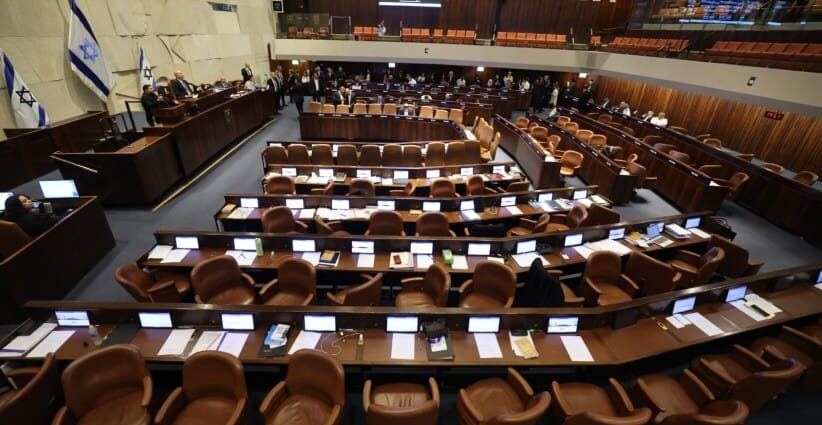
We deserve better: Three years after October 7, Israel still waits for an investigation – editorial
Nearly three years after the October 7 massacre, Israelis are still waiting for one of the most basic obligations the outgoing government owes its citizens: A full, independent investigation into the worst security failure in the country’s history.
On Wednesday, Prime Minister Benjamin Netanyahu’s government informed the High Court of Justice that it will not be able to complete legislation establishing its proposed political commission to investigate the failures surrounding Hamas’s October 7 massacre.
In response to petitions challenging its failure to establish the probe, the government said the legislation would instead be completed after the October 27 elections. Further attacking the judiciary, it also argued that “it is not appropriate for the court to rule on the matter or intervene in it.”
The government’s explanation for the delay should be unacceptable to every Israeli.
Much has been argued – both in the Knesset and on Israel’s streets – over whether a political commission or a state commission of inquiry is the appropriate mechanism. The coalition has repeatedly opposed a state commission, standing firmly behind its objections to an independent inquiry.
Its first argument has been that it is impractical and inappropriate to investigate the events surrounding October 7 while Israel remains at war. The second is that Chief Justice Isaac Amit is not viewed as legitimate by many members of the coalition, raising concerns that any commission he appoints would lack public confidence among a significant segment of the public.
‘Scheduling constraints’ prevented Oct. 7 probe legislation finalization
Even if the government’s objections to a state commission are genuine, they still do not explain why it failed to follow through on its own proposal for a political probe – one specifically designed to address those concerns by replacing Supreme Court appointments to the committee with members selected through a Knesset-led process.
According to the government’s response to the High Court, the legislation could not be finalized because of “scheduling constraints.”
That justification is nothing short of insulting.
Members of this government have spent nearly three years hearing the pleas of bereaved families demanding a commission of inquiry. They have heard them inside the Knesset. They have heard them outside their homes and offices, where grieving relatives have stood for months demanding answers, accountability, and transparency.
Some of those Israelis lost sons, daughters, spouses, parents, and friends on October 7. Others fought for up to 505 days until their loved ones returned from Hamas captivity. All have carried an unimaginable burden while waiting for the state to confront its own failures.
Responding to those families by citing legislative scheduling conflicts is a slap in the face.
The explanation becomes even harder to accept when viewed alongside the coalition’s legislative blitz carried out during the Knesset’s final weeks before its dissolution.
In those weeks, the coalition found time to pass legislation it considered politically essential: A bill preventing the enforcement of draft orders against ultra-Orthodox yeshiva students, legislation enshrining Torah study as a fundamental value in Israel’s Basic Law, a bill restructuring the powers of the attorney-general, and sweeping reforms to Israel’s broadcasting sector.
In passing said bills, the government demonstrated that when legislation is considered urgent by the prime minister, it can move with remarkable speed.
Israel’s top officials replaced since October 7 – except for political echelon
All of Israel’s top security officials in charge on October 7 have since been replaced, some by figures considered close to the prime minister. Eyal Zamir succeeded Herzi Halevi as IDF chief in March 2025, Ronen Bar was replaced by Shin Bet (Israeli Security Agency) director David Zini three months later, and Netanyahu’s former military secretary, Roman Gofman, succeeded David Barnea as Mossad chief last month.
Yet, the one level of leadership that has not been subjected to meaningful scrutiny is the political echelon itself.
The victims of October 7 deserve better. The bereaved families deserve better. And every Israeli deserves a government that views the need to uncover the truth behind the country’s darkest day as a national obligation rather than a political inconvenience.
Israelis have waited long enough for answers. In this upcoming election campaign, every candidate hoping to form the next government must make clear that establishing a probe into October 7 is their highest priority.

Jerusalem cafe became symbol of secular defiance, until Israelis learned it’s run by Jews for Jesus
Jerusalem’s premier soccer team made an unusual announcement last week: It would give a new cafe free advertising on players’ uniforms for the coming season.
Cafe Basimta was facing harassment from haredi Orthodox protesters who wanted it to close on Shabbat, and Hapoel Jerusalem said it wanted to send the message that Jerusalem is “an open and diverse city, where there is room for everyone.”
But on Tuesday, Hapoel Jerusalem reversed course and retracted the offer, after learning via an inquiry from the Jewish Telegraphic Agency that Cafe Basimta is an official project of Jews for Jesus.
“Our original intention was simply to support a small business that was being denied its freedom of operation, and we still believe in that principle,” club spokesperson Matan Avrina told JTA. “However, we also realized that this specific story is more complex than we initially knew.”
For the secular Israelis who have flocked to Cafe Basimta in response to the protests, too, the revelation of the cafe’s ties to a Christian missionary organization is complicating what had seemed like a simple skirmish in the city’s culture war over businesses open on the Jewish day of rest.
Jerusalem deputy mayor’s response
“I don’t know if it changes my desire to drink their coffee, but it definitely complicates things,” Gabriel, an American studying in Jerusalem for the year, told JTA on Saturday from the cafe’s long line after learning about the Jews for Jesus connection, as protesters yelled. “It’s one layer deeper than I thought.”
Others say the cafe’s Christian character is irrelevant to their defense of Cafe Basimta.
“I understand they hate Jews for Jesus, and I understand what they hate them for,” said Jerusalem’s deputy mayor Adir Schwartz, who is a prominent defender of the city’s secular sector, in an interview. “My father was a rabbi abroad, and I get that they feel they are protecting Jewish continuity.But this is about belonging in our shared city.”
Yoel Ben David, the cafe’s operator as well as Jews for Jesus’ top official in Jerusalem, says the twin culture wars have been good for business.
“Even though financially, it’s great, me and the staff, we don’t love it,” he told JTA from his cafe on Saturday. “We’d all love it to just chill out.”
The secular vs haredi culture war is complicated by new revelations
At first, the tensions over Cafe Basimta seemed straightforward: In a city where 46% of Jews are haredi, or ultra-Orthodox, and only 13% identify as secular, the inverse of Israel as a whole, here was a rare cafe willing to flout religious authorities and open on Shabbat. A handful of such cafes dot the city, but others have given up on Shabbat hours in the past over pressure from religious authorities.
Cafe Basimta, which means “cafe in the alley,” opened at the end of May in the Nahlaot neighborhood of central Jerusalem. The name refers to the neighborhood’s 19th century stone dwellings toppling into one another along tiny streets. Decades ago a center of the city’s bohemian culture, Nahlaot is now increasingly haredi and there are few if any establishments open on Shabbat.
On July 4, the first Saturday it drew protesters, dozens of haredi demonstrators, many of them reportedly minors, descended on the cafe in four separate waves, surrounding it, banging on its windows and overturning tables, according to cafe staff and footage circulated online.
At the time, the cafe’s ties to Jews for Jesus were not public. That changed in early July, when Or LeAchim, a haredi anti-missionary organization that helps Jews leave missionary groups and cults, exposed the connections and began organizing protests against Cafe Basimta.
Haredi anti-missionary organization has launched acampaign against the cafe
The group has placed pashkevils, or public billboards, denouncing the cafe in the neighborhood. “The missionary-messianic influence operates all the more forcefully by winning over hearts through food and drink,” the placards say in Hebrew. “And as if that were not enough, they added sin upon crime and began operating the place on the holy Sabbath, with disgraceful Sabbath desecration in the heart of the holy city.”
The revelations surprised and deterred some who had been inclined to support the cafe. But they did not change the tenor of the demonstrations, which remain focused on Basimta’s Shabbat operations.
“People went to demonstrate because it was open on Shabbos. They did not know that it was a missionary place. The demonstration was not useful for us,” said Binyamin Klugger, who works with Or LeAchim as well as other anti-missionary groups, and who was concerned the aggression of the Haredi protesters would undercut his message about the cafe’s evangelizing mission. He added, “People that continue to demonstrate are really not knowing that it is a missionary place.”
During Saturday’s demonstration, cries of “Shabbos!” echoed off the stone alleyways as the line of Israelis waiting for cold coffees stretched into the courtyard.
Israeli police stepped in to cordon off the protesters, preventing them from approaching the cafe. Some secular Israelis yelled back, with a handful at one point breaking into “Shalom Aleichem,” the hymn traditionally sung at the Shabbat table.
Residents stared down at the altercations from their balconies, the screams shattering an otherwise quiet Shabbat morning. Yael Levy, who moved to Israel from California and lives in the building directly beside Cafe Basimta, was handing out cookies to build goodwill.
“It’s very sad, especially during the Three Weeks,” she said, referring to the mourning period between the 17th of Tammuz and Tisha B’Av, when Jews commemorate the destruction of both Temples, a destruction rabbinic tradition attributes to baseless hatred among Jews. “This is just bad energy during a time that calls for positive energy.”
Cafe owner says proselytizing is not their main goal
Outside, a long line of coffee fiends waited their turn to choose from an extensive drinks menu, as Ben David greeted customers and monitored the demonstration.
There were no visible signs of the cafe’s affiliation with Jews for Jesus. But Ben David confirmed that the organization owns the building and the cafe, which joins a growing network of similar outposts across the country. He said he is aiming to strike a balance between missionary work and just offering a pleasant place to work or meet.
“Everyone accuses us of that,” Ben David said about proselytizing. “The Jesus goal is not completely out, but it’s not front and center.”
Jews for Jesus is a flagship organization of the diffuse movement of Messianic Judaism, which believes in the divinity of Jesus while claiming to practice Judaism, an overlap that no denomination across the Jewish world accepts as compatible. While hard numbers about how many Israelis hold Messianic beliefs are scarce, both Messianic leaders and their critics believe the number is growing. Last year, one of the two Israeli embassy workers killed in an attack outside the Capital Jewish Museum in Washington, DC, came from an Israeli Messianic family.
In 2024, Jews for Jesus appointed a member with an Israeli background as its CEO for the first time, and the Israeli branch of the global organization took in roughly $6 million in revenue that year, supporting a local staff of 60. On its website, it solicits donations for its Israel work, including, in one December 2025 appeal, $225,000 to launch a coffee shop and ministry center in Haifa, which it called a “welcoming space where Israelis can encounter the hope of Yeshua,” the Hebrew name for Jesus.
Ben David has worked with Jews for Jesus for more than two decades. He was born in Israel and came to believe in the divinity of Jesus as a young adult, together with his wife, around the time of his stint in the army, where he served as an Orthodox rabbi. He has a master’s degree from a Messianic seminary and once helmed training for missionary staff in Israel, according to Jews for Jesus’ website, which says he “now leads our work in Jerusalem, bringing the gospel back to the city where he first believed.”
Missionary activity: legal, but widely unpopular
Missionary activity is not illegal in Israel, with the exception of proselytizing to minors without their parents’ consent and offering religious conversions in exchange for a material gift. But many Israelis believe that it is, in a reflection of the deep cultural norms in Jewish communities.
Or LeAchim says it is planning a future protest that will focus more squarely on Cafe Basimta’s missionary ambitions.
“We are planning to hold a massive protest there soon — involving thousands of people — on a weekday,” said Rabbi Binyamin Vulcan, the group’s head of counter-missionary activities. “In the meantime, we are trying to get the place shut down through the municipality.”
Ben David said Jews for Jesus, anticipating such a response, bought Basimta’s building instead of renting it from a landlord who could be susceptible to a pressure campaign. At the same time, he insisted he didn’t understand the uproar.
“If Jesus is the Jewish Messiah,” Ben David said, “what could be more Jewish than believing in Jesus?” As for the missionary label, he insists the cafe is about more than just theology: “We don’t put crosses in our espresso,” he said.
Klugger said he is mystified about why the same secular Jerusalemites who are uncomfortable with the growing haredi character of the city are willing to buy coffee from someone who wants them to stop being Jewish altogether.
“If you don’t want haredim influencing your children,” he said, “you also can’t want missionaries influencing your children.”
Some Shabbat customers, meanwhile, say they have heard the warnings and aren’t swayed — for them, who owns the cafe is beside the point.
“I’m not going to convert because of the coffee, unless it’s really good coffee, then maybe,” said Lior Stern, who drove from the Tel Aviv area to support the cafe after hearing about the protests. “It could be Buddhist, it could be Muslim, it could be Jewish, it could be Christian. That’s not the point. The point is freedom.”



SpaceX Bets on Starship, Begins Turning Away Falcon Launch Customers
WASHINGTON, Thursday, July 23, 2026 — SpaceX has begun turning away some customers seeking future launches on its workhorse Falcon 9 rocket as the company accelerates its transition to Starship, marking one of the clearest signs yet that Elon Musk intends for the next-generation vehicle to become the backbone of the company’s launch business. People familiar with the company’s plans said SpaceX is no longer accepting certain Falcon launch reservations beyond 2028 and has also slowed production of some non-reusable Falcon components.
For businesses that rely on launching satellites, the shift could reshape the commercial space industry over the next several years. Falcon 9 has become the world’s dominant commercial launch vehicle because of its proven reliability and predictable pricing. If customers are increasingly directed toward Starship before it has established a comparable operational record, satellite operators may face difficult decisions about launch timing, risk and fleet planning.
The move highlights just how aggressively SpaceX is betting its future on Starship.
The fully reusable rocket is designed to carry dramatically larger payloads than Falcon 9 while reducing launch costs over time. Musk has repeatedly described Starship as essential not only for expanding the Starlink satellite network but also for lunar missions, Mars exploration and eventually deploying large-scale infrastructure in orbit.
Yet that future is still under development.
Starship remains in its flight-test program and has not yet achieved the operational consistency of Falcon 9. Earlier this month, SpaceX scrubbed another Starship launch attempt after multiple Raptor engines failed to ignite properly during the countdown, underscoring the technical hurdles that remain before the vehicle enters routine commercial service.
That creates a balancing act for the industry.
On one hand, satellite operators want access to Starship’s unprecedented lift capacity, which could allow larger satellites, multiple spacecraft and entirely new business models. On the other, many customers also value the certainty that Falcon has delivered through years of successful launches.
Falcon 9 has become one of the most active launch systems ever built, completing dozens of missions annually with an exceptionally strong reliability record. That reputation has helped SpaceX dominate the global commercial launch market and secure government contracts from NASA, the Pentagon and international customers.
The company’s reported decision to stop accepting some long-term Falcon reservations suggests executives believe Starship will eventually replace much of that business rather than operate alongside Falcon indefinitely.
For the broader space economy, the implications extend well beyond rockets.
Satellite manufacturers, insurers, telecommunications companies, Earth-observation firms and governments all build long-term plans around launch availability. Any significant transition between launch systems can affect production schedules, financing decisions and insurance costs.
Investors are also watching closely because Starship represents one of the largest technology bets in SpaceX’s history. While Falcon generates steady commercial revenue today, Starship is expected to unlock entirely new markets if it succeeds, including massive satellite deployments, deep-space logistics and lower-cost cargo transportation.
Industry observers note that replacing Falcon before Starship reaches full operational maturity would represent an unusually ambitious transition for a company already leading the global launch market.
What happens next may determine the pace of the commercial space industry’s next decade.
If Starship successfully completes its remaining flight-test milestones and enters reliable commercial service, SpaceX could further widen its lead over competitors by offering capabilities no other launch provider currently matches.
If development takes longer than expected, however, customers may continue relying on Falcon while evaluating alternative launch providers for critical missions.
For now, SpaceX appears committed to shifting its business toward Starship—even if that means limiting future access to the rocket that helped transform the commercial space industry.
JBizNews Desk | Washington
© JBizNews.com All Rights Reserved. Reproduction or distribution without written permission is prohibited.


Iran Is Rebuilding Faster Than Expected After U.S.-Israeli Strikes
Satellite imagery reviewed Thursday, July 23, 2026, shows Iran rapidly repairing missile-base access roads, tunnel entrances, ports and weapons-production sites damaged during the U.S. and Israeli air campaign, raising doubts about how long the strikes can suppress Tehran’s military capabilities.
The rebuilding does not mean Iran has fully restored what it lost. Advanced machinery, air defenses and specialized missile-production equipment may take months to replace. But the speed of visible repairs suggests Iran can reopen key locations quickly enough to keep operating while forcing the United States and Israel to decide whether to strike the same sites again.
Destroying a facility once is not the same as keeping it disabled.
Near Kangavar in western Iran, March imagery showed airstrikes had damaged two tunnel entrances and an access road serving an underground missile complex. Within weeks, newer images showed a paved road leading toward freshly excavated entrances, indicating that Iran had restored access to part of the site.
At Bandar Anzali on the Caspian Sea, early July imagery showed reconstruction at a shipyard and port connected to the Islamic Revolutionary Guard Corps. Israel had previously said it struck warships, a command center and repair facilities there to disrupt a supply route between Iran and Russia.
Separate high-resolution images released this month showed significant repair activity at Taleghan 2 inside the Parchin military complex. Workers cleared debris, covered penetration holes, brought in cranes and reinforced parts of the hardened facility with concrete and rebar, according to the Institute for Science and International Security. The institute cautioned that visible reconstruction does not prove the site is operational.
That distinction matters. Satellite images can show roads, construction equipment and repaired entrances, but they cannot reveal whether machinery inside a tunnel works or how many missiles remain underground.
Still, Iran does not need to restore every damaged facility to create a strategic and economic problem.
A partly rebuilt missile network can still keep energy markets, shipping companies and governments under pressure.
Continued Iranian missile and drone attacks show that Tehran retained launchers, weapons and underground storage after the strikes. Israeli military estimates cited in current reporting say roughly 200 of Iran’s estimated 470 ballistic-missile launchers were destroyed and another 80 became unusable after tunnel entrances were struck. Iran’s continuing attacks indicate that the surviving network remains substantial.
For businesses, the concern reaches well beyond the battlefield. The longer Iran can absorb attacks and continue threatening the Strait of Hormuz, the longer companies face higher fuel prices, shipping insurance costs, rerouting expenses and supply-chain delays.
The cost imbalance is also difficult to ignore. Iran can clear rubble or repave a road far more cheaply than the United States and Israel can deploy aircraft, interceptors and precision-guided weapons to destroy it again. If repaired sites require repeated strikes, the campaign becomes a contest of endurance rather than a one-time effort.
Iran prepared for that contest over decades. Sanctions pushed the country to develop domestic supply chains, disperse production, stockpile parts and bury important military infrastructure underground. Those capabilities now appear to be helping Tehran repair visible damage while preserving enough capacity to continue fighting.
The air campaign still produced meaningful results. It destroyed equipment, interrupted production and forced Iran to spend money and manpower rebuilding instead of expanding. Some sensitive nuclear facilities also remain damaged or inaccessible, showing that Iran’s recovery is uneven rather than complete.
The unanswered question is whether the disruption lasts long enough to change Iran’s behavior.
Washington and Jerusalem now face a harder decision: repeatedly strike repaired facilities, tighten restrictions on replacement equipment and industrial components, or pursue an enforceable agreement that limits reconstruction and permits outside monitoring.
Iran appears to be betting that it can rebuild faster than its adversaries can sustain the pressure.
The effectiveness of the campaign will ultimately be measured not by how much was destroyed, but by how long Iran is prevented from putting it back into service.
JBizNews Desk | Jerusalem
© JBizNews.com All Rights Reserved. Reproduction or distribution without written permission is prohibited.

Attacker yells ‘Allahu Akbar,’ stabs two in potential Manhattan antisemitic hate crime
Two men, one of whom was visibly Jewish, were stabbed outside an Orthodox Jewish synagogue in Manhattan on Thursday.
Eyewitnesses allege that the suspect shouted “Allahu Akbar” during the incident, the Anti-Defamation League said in a post on X/Twitter.
Our security partners on the ground have told us that two men, at least one visibly Jewish, were attacked on the Upper West Side of NYC by a man who witnesses allege yelled “Allahu Akbar.” This horrific incident took place just after a prayer service on the somber Jewish holiday…
— ADL New York / New Jersey (@ADL_NYNJ) July 23, 2026
The police reported that a man, 57, was stabbed in the back by the suspect, and that a second man, 50, was stabbed in the chest.
Local police said that one of the victims is Asian, and the other is Jewish, CBS reported.
Investigators are reviewing whether the incident was a hate crime.
American politicians responded to Manhattan attack
“I have been briefed on today’s horrifying stabbings on the Upper West Side, where an Asian man and a Jewish man were attacked,” New York Mayor, Zohran Mamdani said in a post on X.
“According to witness and victim statements, the perpetrator yelled ‘Allahu Akbar’ during both attacks. I am relieved that both victims are in stable condition.”
I have been briefed on today’s horrifying stabbings on the Upper West Side, where an Asian man and a Jewish man were attacked. According to witness and victim statements, the perpetrator yelled “Allahu Akbar” during both attacks. I am relieved that both victims are in stable… https://t.co/0LSGtvPojx
— Mayor Zohran Kwame Mamdani (@NYCMayor) July 23, 2026
“The NYPD’s initial investigation suggests that mental health may have been a factor. They are also evaluating these stabbings as potential hate crimes,” he added.
New York Governor Kathy Hochul also responded to the attack in a post on X, saying she was “Disgusted by what appears to be another senseless attack on New Yorkers simply because they’re Jewish.”
Disgusted by what appears to be another senseless attack on New Yorkers simply because they’re Jewish.
The strength of New York has always been our ability to live together across every faith and background.
Anyone who tries to tear that apart will be met with the full force… https://t.co/jGw3VqCxCI
— Governor Kathy Hochul (@GovKathyHochul) July 23, 2026
“The strength of New York has always been our ability to live together across every faith and background,” she said.
Hochul added that “Our hearts are also with the second victim. Asian New Yorkers, like Jewish New Yorkers, have endured waves of hate-fueled violence in recent years. Hate rarely stops with one group.”
Israeli officials reacted to stabbings
Israel’s Ambassador to the UN, Danny Danon, held New York Mayor Zohran Mamdani responsible for the attack in Manhattan.
In a post on X, Danon said “Zohran Mamdani, your incitement is putting Jewish lives in danger in New York, home to the largest Jewish community outside Israel.”
Zohran Mamdani, your incitement is putting Jewish lives in danger in New York, home to the largest Jewish community outside Israel.
You have spent months fueling hatred, demonizing Israel and legitimizing hostility toward Jews. Now take responsibility for the consequences.… pic.twitter.com/WrgfQdMD4C
— Danny Danon 🇮🇱 דני דנון (@dannydanon) July 23, 2026
“You have spent months fueling hatred, demonizing Israel and legitimizing hostility toward Jews. Now take responsibility for the consequences,” he added.
“Stop the incitement. Before more people get hurt.”

Walmart recalls over 16,000 dressers that violate federal safety law due to potentially deadly hazard
Federal safety regulators have recalled more than 16,800 fabric dressers sold through Walmart.com after determining the units fail to meet mandatory federal stability standards designed to prevent tip-over accidents involving children.
The Consumer Product Safety Commission (CPSC) announced Thursday that about 16,809 EnHomee 9-Drawer Fabric Dressers are being recalled because they are unstable if not anchored to a wall, creating tip-over and entrapment hazards that could result in serious injury or death to children.
The agency said the dressers violate the mandatory federal safety standard for clothing storage units required under the STURDY Act, a law enacted to help prevent furniture tip-over incidents involving children.
JAGUAR LAND ROVER RECALLS MORE THAN 15,000 VEHICLES OVER VISIBILITY-LIMITING DEFECT
The recalled dressers were sold on Walmart.com by third-party seller Raybee-Direct between September 2023 and March 2026 for about $80. They were available in white, brown, gray and black and feature nine fabric drawers supported by a metal frame. Only units ordered before March 30, 2026, are included in the recall.
The CPSC said no injuries or incidents related to the recalled dressers have been reported.
Consumers should stop using the dressers immediately if they are not anchored to a wall and move them to an area that children cannot access, according to the agency.
TARGET, KROGER, MEIJER FRUIT PURÉE POUCHES RECALLED OVER PLASTIC RISK: FDA
Consumers can contact Raybee-Direct for instructions on determining whether their dresser is included in the recall and how to dispose of it to receive a full refund.
To complete the refund process, consumers must submit a photo showing the dresser has been disposed of.
The recalled dressers were manufactured in China by Xuzhou Mingquanhe Household Co., Ltd. and imported by Changsha Yiman Keji Youxian Gongsi, doing business as Raybee-Direct.
CLICK HERE TO GET FOX BUSINESS ON THE GO
Consumers seeking additional information can contact Raybee-Direct by emailing RaybeeRecall@outlook.com.
FOX Business has reached out to Walmart and Raybee-Direct for comment.

Global Container Shipping Rates Rise as Red Sea Risks Continue to Reshape Trade Routes
LONDON — Thursday, July 23, 2026: Global container shipping rates continued climbing this week as persistent security threats in the Red Sea forced ocean carriers to maintain costly diversions around southern Africa, extending transit times and tightening vessel capacity on key trade lanes. New freight market data released Thursday shows transportation costs remain well above historical norms despite easing from their wartime peaks earlier this year.
The latest indexes from Drewry’s World Container Index and Freightos Baltic Index indicate that while rates have moderated from the record spikes seen during the height of shipping disruptions, carriers continue charging premiums as vessels avoid the Suez Canal. Routing ships around the Cape of Good Hope adds roughly one to two weeks to many Asia-Europe voyages, increasing fuel consumption, labor costs and equipment shortages.
For importers, the higher shipping costs are filtering into inventory planning ahead of the holiday retail season. Companies dependent on overseas manufacturing—including retailers, electronics distributors, furniture suppliers and industrial manufacturers—are adjusting purchasing schedules to account for longer transit times and higher freight expenses.
The ongoing disruptions have also altered the competitive landscape for global ports. East Coast U.S. ports handling cargo through the Suez Canal have experienced shifting traffic patterns, while some West Coast ports continue benefiting from importers seeking more predictable Pacific shipping routes. Logistics providers say businesses are increasingly diversifying supply chains rather than relying on a single transportation corridor.
Shipping companies have generally benefited from the market conditions. Longer voyage distances reduce available vessel capacity, supporting freight rates even as new container ships continue entering the global fleet. At the same time, insurers have maintained elevated war-risk premiums for vessels operating near conflict zones, adding another layer of cost for global trade.
Economists continue monitoring freight costs because shipping prices often serve as a leading indicator for future goods inflation. Although transportation represents only one component of retail pricing, sustained increases in ocean freight can eventually affect the cost of imported consumer products, machinery and raw materials.
Market participants will continue watching security conditions in the Red Sea, global port congestion and upcoming trade volumes as retailers accelerate inventory purchases for the year-end shopping season. Until normal transit through the Suez Canal resumes on a sustained basis, businesses should expect freight markets to remain more volatile than before the regional conflict.
JBizNews Desk | Wall Street
© JBizNews.com All Rights Reserved. Reproduction or distribution without written permission is prohibited.



Iran avoiding strikes on Israel over fear of Hezbollah’s collapse, former intelligence officer says
Iran is refraining from striking Israel partially due to fears of Hezbollah’s collapse in Lebanon if fighting resumes with Israel, according to retired military Lt.-Col. (res.) Or Horowitz, a senior fellow at the Jewish People Policy Institute (JPPI) and former head of the military intelligence Hezbollah desk.
The US State Department announced earlier this week that activity had begun in three “pilot zones” in Lebanon, in the villages of Froun, Srifa, and Zawtar al-Gharbiya. According to the American announcement, the move is being carried out under the tripartite framework between the US, Israel, and Lebanon, and under the auspices of the military coordination group established to implement the understandings.
Horowitz argued that he is seeing a significant weakening of the Hezbollah terrorist organization.
“A historic change is taking shape in Lebanon. Hezbollah is in a weaker state than ever before, Horowitz said. “On the other side, there is a brave president; he wants to end the hostility once and for all. At the end of the day, he is a politician; he wants to avoid a civil war and being murdered himself, and despite that, he is making very brave moves.”
He then analyzed the expansion of Lebanese Army activity in the area alongside Hezbollah’s weakening.
“We are seeing the Lebanese Army, which in the past did nothing; its activity against Hezbollah was absolutely zero, and now that is changing,” said Horowitz. “Alongside very deep American involvement, they are affecting both the motivation and the capabilities.
“Hezbollah, in my view, has been dramatically weakened,” he continued. “It still exists; we have seen tragic fatalities, but I remind you that this is an organization that once dreamed of destroying the State of Israel, and now it is a pale shadow of those capabilities. The organization is an Iranian organization that operates according to Iranian interests, and in this case that is not an Israeli cliché. It really is subordinate.”
Horowitz: Lebanese Army gradually strengthening as Hezbollah weakens
He further explained that, in his view, the Lebanese Army is gradually strengthening.
“I think the Lebanese Army has the motivation, and now it needs to be given the tools gradually, while Hezbollah is being weakened, to carry out these actions,” he said. “This pilot is the first case in which the Lebanese Army will be tested. I think that, for the first time in years, there is an opportunity for deep change in Lebanon.
“In my opinion, if we act correctly and America remains involved, I think we will be able to see results,” he added. “In a gradual process, in light of the organization’s historic weakening, I think it is possible.”
Iran fears Hezbollah’s collapse, deterred by IDF
Later, he spoke about Iranian involvement in Lebanon and said Iran is deterred by Israel’s strength and fears Hezbollah’s collapse if fighting resumes.
“One of the reasons Iran is not firing at Israel is its desire not to restart the confrontation between Israel and Hezbollah, explained Horowitz. “Hezbollah is in a difficult military state everywhere there is friction with IDF troops. I think Iran and Hezbollah understand that as well.
“The question here is what happens from the moment Iran becomes involved, whether Hezbollah enters the campaign or perhaps does not,” Horowitz continued. “That is basically its watershed line, because I think that if Hezbollah enters for the third time in the service of non-Lebanese interests, it is really putting itself in a hole it will find difficult to get out of.”
“At the end of the day, the Lebanese Army understands that it is facing a strong militia,” he stressed. “We need to gradually allow the Lebanese Army to expand its activity against Hezbollah, but it should be understood that its ability to enter a full confrontation with Hezbollah would mean a civil war in Lebanon. From what I can tell, there is at least no motivation or desire for that in Lebanon’s leadership.”



More than 1.5 million dozen egg cartons recalled over possible salmonella contamination
More than 1.5 million dozen shell eggs sold in six states have been voluntarily recalled over potential salmonella contamination, federal regulators announced Wednesday.
The U.S. Food and Drug Administration (FDA) said Midwest Poultry Services initiated the voluntary recall, affecting 1,589,577 dozen cartons of white shell eggs and brown cage-free shell eggs.
Officials said the recalled products were sold under several brands, including Kroger, Brookshire’s, Country Morning, Simple Truth, and Sunups, as well as various bulk Grade A and Grade AA eggs.
The eggs were ultimately distributed to retail and food service customers in Texas, Oklahoma, Arkansas, Louisiana, New Mexico and Mississippi, as well as other smaller retail outlets, according to the FDA.
The affected products were produced at two farms in Texas, according to the FDA.
Officials said the issue was discovered during routine environmental testing. No illnesses have been reported in connection with the eggs.
“When we learned of a possible issue with egg safety, we began diverting eggs to a breaking plant where they would be pasteurized to kill any foodborne pathogens,” Midwest Poultry Services told FOX Business in a statement on Thursday.
“We also began a robust internal investigation and initiated testing protocols to identify potential sources of SE,” the company added, referring to Salmonella Enteritidis.
“Producing safe, quality food for those who eat our eggs is our highest priority, and this voluntary investigation and recall demonstrates that commitment.”
TARGET, KROGER, MEIJER FRUIT PURÉE POUCHES RECALLED OVER PLASTIC RISK: FDA
The recall includes various carton sizes and egg counts.
Consumers can identify affected products by the codes printed on the side of the carton. The eggs were packed and distributed between June 6 and July 3, with sell-by or best-by dates ranging from July 20 through Aug. 17.
The affected cartons also bear plant code P-1950 or 840962 with a Julian Date between 157 and 184.
Consumers who purchased the recalled eggs should not eat them and should return them to the place of purchase for a full refund.
According to the FDA, salmonella can cause serious and sometimes fatal infections in young children, older adults, frail individuals and people with weakened immune systems.
Healthy people infected with salmonella may experience fever, diarrhea that may be bloody, nausea, vomiting and abdominal pain.
In rare and severe cases, the bacteria can enter the bloodstream and cause more serious illnesses, including arterial infections, infected aneurysms, endocarditis and arthritis.
CLICK HERE TO GET FOX BUSINESS ON THE GO
Consumers with questions can contact Midwest Poultry Services’ consumer helpline at 574-405-9531, available Monday through Friday from 8 a.m. to 4:30 p.m. EST, or email recallassistance@mpseggs.com.

ECB Holds Interest Rates Steady as Global Trade Risks Cloud Economic Outlook
The European Central Bank left its benchmark interest rates unchanged Thursday, extending a pause in its policy cycle as officials weigh easing inflation against growing uncertainty surrounding global trade and slowing economic activity. The decision keeps borrowing costs steady across the 20-country eurozone while policymakers assess the potential impact of new U.S. tariff actions and weaker international demand.
Markets had broadly expected the ECB to stand pat after inflation moved closer to the central bank’s target in recent months. Rather than signaling an immediate shift toward lower rates, policymakers emphasized that future decisions will remain driven by incoming economic data and evolving risks to growth.
For American businesses, the decision reaches well beyond Europe. The European Union remains one of the United States’ largest trading partners, and stable European borrowing costs influence everything from multinational investment decisions and corporate financing to demand for U.S. exports. Companies with operations on both sides of the Atlantic are also closely watching how Europe’s economy responds to rising geopolitical tensions and the prospect of expanded tariffs.
Financial markets viewed the announcement as another sign that the world’s major central banks are becoming increasingly cautious. While inflation has cooled from the multi-decade highs that triggered aggressive rate increases over the past several years, central bankers remain concerned that higher energy prices, trade disruptions and supply-chain risks could reignite price pressures before inflation is fully contained.
The ECB’s decision also comes as investors prepare for next week’s Federal Reserve meeting, where U.S. policymakers are expected to evaluate similar challenges. Together, the two central banks shape global borrowing conditions that affect mortgage rates, corporate debt markets, international investment flows and foreign exchange markets.
With inflation no longer accelerating but economic growth still uneven, policymakers on both sides of the Atlantic appear increasingly focused on avoiding policy mistakes that could either reignite inflation or unnecessarily slow the global economy.
JBizNews Desk | Wall Street
© JBizNews.com All Rights Reserved. Reproduction or distribution without written permission is prohibited.

Trump’s New Tariffs Could Change What American Businesses Pay for Imports Starting Tomorrow
WASHINGTON, Thursday, July 23, 2026 — If your business imports products from overseas—or if you own a store, manufacture goods, or simply buy everyday products—today’s trade decision could eventually affect your costs. The Office of the U.S. Trade Representative (USTR) announced new tariffs on imports from 60 major trading partners after completing a months-long investigation into whether those countries failed to stop goods made with forced labor from entering global supply chains. The new duties replace the temporary worldwide tariff program that expires Friday.
For most readers, the obvious question is: What changed today?
Until now, many businesses had been operating under temporary global tariffs. Beginning Friday, those tariffs are being replaced with a new system built under Section 301 of the Trade Act of 1974, giving the administration a new legal foundation after earlier tariffs faced court challenges. Countries that have adopted or agreed to enforce bans on forced-labor imports generally will face a 10% tariff, while those that have not will generally face 12.5%. The program covers America’s 60 largest trading partners, representing more than 99% of U.S. imports.
For business owners, this is more than another Washington policy announcement.
If your company imports inventory, machinery, components, electronics, clothing, furniture, building materials or thousands of other products from overseas, your landed costs could increase depending on where those goods originate. Some businesses may absorb those higher costs, while others may renegotiate supplier contracts, shift production to different countries, or eventually raise prices.
Consumers may not notice changes immediately.
Many retailers already have inventory sitting in U.S. warehouses, and companies often spread higher costs across multiple product lines instead of raising prices overnight. But if manufacturers cannot find alternative suppliers or absorb the additional expense, some imported goods could gradually become more expensive over the coming months.
The administration says the objective extends beyond tariffs themselves.
USTR concluded that many trading partners failed to adequately prohibit or enforce bans on imports produced with forced labor, creating what it describes as both a human-rights concern and an unfair competitive advantage over American workers and manufacturers. The investigation included public hearings, consultations with dozens of governments and thousands of public comments before today’s final action.
Not every product will be affected.
The administration exempted several categories, including products already covered by national-security tariffs, certain raw materials, informational materials, donations, accompanied baggage and selected goods where imposing tariffs could disrupt domestic supply or broader economic activity.
Today’s announcement also sends a message to America’s trading partners.
Countries that strengthen their forced-labor enforcement laws and demonstrate meaningful compliance could qualify for the lower tariff rate or other favorable treatment in the future. In other words, the tariffs are intended not only to generate trade pressure but also to encourage governments to tighten labor enforcement and improve supply-chain transparency.
For importers, the next few days will matter just as much as today’s announcement.
Companies are now waiting for implementation guidance from USTR and U.S. Customs and Border Protection detailing exactly which products are covered, when the duties become effective, how exemptions will work, and what documentation businesses will need to remain compliant.
For many American businesses, today’s decision marks another reminder that global sourcing strategies are becoming as important as pricing strategies. Where products are made—and how they are made—is increasingly becoming a competitive business issue rather than simply a purchasing decision.
JBizNews Desk | Wall Street
© JBizNews.com All Rights Reserved. Reproduction or distribution without written permission is prohibited.

U.S. apartment demand hits a high mark as pipeline slows
The U.S. apartment market posted its strongest quarter in nearly two years, as renter demand outpaced a shrinking construction pipeline, commercial real estate firm Cushman & Wakefield reported.
Apartment demand continues to show resilience, although the broader economy did not do renters any obvious favors. Job growth stayed weak, and fewer people have been moving to the U.S., or being born here, than in prior years.
Renters filled 124,600 more units than they vacated during the second quarter – the fifth-busiest stretch for apartment leasing in almost 25 years, Cushman’s report showed. That volume added up to an 8% jump from the same time last year. Apartment vacancy nationally dropped below 9% for the first time in two years.
Over the past full year, renters absorbed more apartments than were delivered for the first time since early 2022, suggesting that a glut of empty units may have reached its apex.
Construction pipeline continues to slow
Skyrocketing interest rates and construction costs dampened new development and construction, which peaked in 2022. Cushman shows that only 88,000 new apartments were finished during the quarter – the slowest Q2 since 2022, and down 27% from a year earlier. Now, only 3.5% of the existing apartment stock is under construction, half of its level at the 2023 peak and the lowest share since 2013.
Meanwhile, another “leading indicator” proxy for pre-shovel-ready multifamily development, the Architecture Billing Index, suggests continuing sluggishness in new ground-up apartment projects. “Architecture firms remain mired in one of the longest-running downturns in the 30-plus year history of the ABI, which now stretches to 41 months without a majority of firms reporting billings growth.”
Consequently, rents nudged up 1.5% year-over-year, a modest but real pickup from 1.1% the previous quarter and the first sign of rents accelerating in about a year.
“Pricing power lags the occupancy recovery, so while rent growth remains below long-term norms, recent trends suggest the market is beginning to recover,” the report noted.
Housing reform impact on rents
The apartment market’s performance cuts across competing and complementary housing narratives. Housing advocates and free-market supporters push legislative reforms to increase housing supply to lower prices. Other advocates see rent control as the solution for affordability despite research showing it harms the supply side.
Debate over rent stabilization early this year centered on a rent-control measure that landed on the November ballot in Massachusetts. The state’s top court ended that move on a technicality. But the debate raged on when a New York City board recently froze rent increases for rent-stabilized units.
Most of the construction burst – developed and financed before 2020 – came during COVID-19, notably in Sun Belt states. Rent growth hit double digits in Florida, prompting Gov. Ron DeSantis to push the Live Local Act, aimed at making workforce housing more plentiful and affordable.
Still, much of the new construction served the higher end of the market. Industry economists contend that more at the higher end means older apartments become less pricey as renters move up.
In his second-quarter analysis, Carl Whitaker, chief economist at apartment analytics firm RealPage, wrote that Class A rents rose 1.6% while Class C rents fell 2.5%, the 11th consecutive quarter of declines.
“Class B is seeing its performance bend more heavily towards Class A than Class C,” he added.
Austin sets the reform bar
Economists and pro-housing groups present Austin as the chief example of how housing reform can effectively catalyze supply that lowers prices. Cushman’s report shows another quarterly rent rate decline. Prices fell by 1.2%.
Austin still has more than 15,000 apartment units in the construction pipeline, which equates to 4.6% of inventory. The Texas capital‘s new development pipeline is the fourth highest of the 90 metropolitan areas Cushman tracks. New York City, Dallas and Charlotte, North Carolina, are the top three.
For perspective, Austin’s pipeline equates to 4.6% of the market’s total institutional-grade units, higher than Dallas’s 3.3%. Dallas has a larger inventory of 50-unit and larger institutional-grade units, nearly 905,000, than New York City.
Meanwhile, in California, where state-level housing reform has been the order of the day, construction is still a relative trickle, and rent growth is reaching pandemic levels seen in Florida before the construction pipeline boomed.
San Francisco’s rents rose 13%, and San Jose rose 7%, both leading the nation in rent growth.
The slowdown in construction in once-oversupplied cities like Charleston and Colorado Springs is showing an impact on rent prices. Both markets saw rents tick higher in the second quarter.
“There’s no doubt that the nation still has work to do before returning to more normal levels of revenue growth,” Whitaker wrote.
He added that the key uncertainty for the rest of 2026 is whether the market can avoid a repeat of last year’s slide. Rents dropped 2.0% in the final six months of 2025. That was the sharpest such decline since the early 2000s.
Tenant retention has been a bright spot and is still improving. Whitaker wrote that higher retention “suggests demand is sticky and that householders are not ‘doubling up.’”

IDF is ready and prepared for fighting with Iran to resume, Arabic spokesperson Waweya says
The IDF is fully prepared for a return to combat with Iran, IDF Arabic language spokesperson Lt. Col. Ella Waweya said in an interview on Thursday night, N12 reported.
During an interview with Al-Arabiya, Waweya was asked about preparations for potential combat with Iran.
She explained that “The IDF is in a state of full readiness and preparedness; both offensive and defensive,” N12 reported.
“We do not wait for missiles to fall or for the enemy to knock on our door before getting ready,” she added.
“October 7th taught the most important lesson: policies of containment, waiting for the first strike, or relying on passive deterrence are no longer acceptable.”
Defense officials met Thursday
This comes shortly after Defense Minister Israel Katz warned Iran that any attack on Israel would draw a devastating response, following a high-level security consultation attended by Israel’s senior military and defense leadership.
“We are preparing for every possibility. If Iran attacks Israel, it will suffer a crushing blow,” Katz said.
The meeting brought together the officials responsible for Israel’s offensive capabilities, air defenses, military intelligence, and civilian preparedness. Katz did not disclose whether the consultation followed a specific warning or intelligence alert.
Ynet reported that assessments among Western intelligence agencies suggest Iran may seek to draw Israel into a confrontation and could even choose to act first.

Oil settles over $100 as Houthi attacks intensify Middle East supply risks
Oil prices settled above $100 on Thursday for the first time since May after Yemen’s Houthis said they attacked two Saudi oil tankers in the Red Sea, causing further global supply disruptions following a near-halt in trade through the Strait of Hormuz.
Brent futures finished up $6.62, or 7%, at $100.69 a barrel, marking their highest close since May 22. The global crude oil benchmark’s price is now nearly 40% higher than when the war in Iran began in February, with almost all of the gains coming this month.
US West Texas Intermediate crude CLc1 closed up $5.36, or 6.2%, to settle at $92.19 a barrel, the highest close since June 4.
“With the possibility of a ground war seemingly increasing by the day, and tanker traffic restricted through two of the most active chokepoints in the world, crude oil is suddenly positioning itself to within striking distance of the four-year high of $126.41, with the global economy drawing down so fast it will eventually be running on fumes,” said Bob Yawger, director of energy futures at Mizuho.
Saudi tankers attacked
Yemen’s Houthis have opened a new front in the Iran war by targeting vessels carrying Saudi oil in the Bab el-Mandeb Strait after stating they would impose a naval blockade on shipments from Saudi Arabia. The Houthi militia attacked two Saudi Arabian oil tankers in a military operation, the group said on Thursday, with the Saudi Arabian state news agency, SPA, later confirming that one of the two vessels was ablaze after an assault while sailing in the Red Sea. SPA did not say who attacked the vessel.
“The escalation compounds the near-halt in Hormuz traffic and the sharp reduction in Iranian exports, intensifying concerns over near-term global availability,” Gelber and Associates wrote in a note.
Analysts estimate that the Strait of Hormuz and Bab el-Mandeb carry the equivalent of roughly a quarter of the world’s oil supply.
Still, following the attacks, two Chinese supertankers carrying a combined 4 million barrels of Saudi Arabian oil managed to exit the Red Sea via the Bab el-Mandeb Strait on Thursday, shipping data showed.
Goldman Sachs said Brent might exceed $120 a barrel in the fourth quarter and average $100 next year if the strait remains disrupted through 2027, with further upside if the Bab el-Mandeb Strait and Suez Canal also suffer persistent disruption.
Iran’s Revolutionary Guards said an oil tanker caught fire after an explosion while attempting to follow a mined route in the southern area of the strait near the coast of Oman and that two others had turned back.
The Guards said the strait was under their control and “completely closed” while US actions continued in the region, warning that no tanker would be allowed to enter or leave without coordination with Iran.
US President Donald Trump promised “major military punishment” for Iran and its Houthi allies.
Hormuz traffic stalls
Iranian strikes on vessels crossing the strait have resulted in a drop in non-Iranian oil tankers traversing the waterway, and the reintroduction of a US naval blockade targeting Iranian ports likely has resulted in Iranian oil loadings falling to zero from 1.5 million to 2 million barrels per day at the start of the month, Giovanni Staunovo, a UBS analyst, said.
As a result of fewer shipments exiting the strait, loading activity within the Gulf has fallen to 2.5 million bpd over the past seven days, compared with 6 million bpd over the past 30 days, Staunovo added.
To shore up supplies, seven core OPEC+ members — Saudi Arabia, Russia, Iraq, Kuwait, Algeria, Kazakhstan and Oman — are likely, when they meet on August 2, to increase their output target by about 188,000 barrels per day for September, three sources told Reuters, even as the war hinders some of the group’s members from pumping more.
Century Communities leans on operations as strategy in Q2 2026
“A rose is a rose is a rose,” according to a 1913 poem Gertrude Stein wrote, called Sacred Emily.
In our more earthbound sphere of residential development, investment and construction, a tacit belief is common, but misleading.
Peal back a layer or two, and it is clear. A homebuilder is not a homebuilder is not a homebuilder, with all due respect to Ms. Stein. The homebuilding industry’s largest public companies are beginning to separate themselves not simply by performance, geographical nuance, and capital stack variations, but by philosophy.
Lennar continues to shape-shift around a land-light model designed to improve capital efficiency. D.R. Horton stays stalwart in its disciplined returns and operational consistency and discipline. KB Home continues re-channel the build-to-order DNA that has differentiated its business and consumer reputation for so long, while PulteGroup is pivoting as nimbly as a national enterprise can in that direction as well.
Century Communities is charting a different course, as it has been wont to do.
Its Q2 2026 earnings call was notable less for what management announced than for how management described the business. Executive Chair Dale Francescon never suggested Century was reinventing itself. Chief Executive Officer Rob Francescon never pointed to one initiative that would transform operating performance. Chief Financial Officer Scott Dixon described financial results that reflected sundry operational improvements working together rather than a single big change.
The company delivered 2,506 homes during the second quarter, exceeding its own guidance while generating a 20% adjusted homebuilding gross margin, up 30 basis points from the first quarter. Orders rose 3% from a year earlier and 10% sequentially. Selling communities reached a company-record 330, and book value per share climbed to another company record at $90.24.
Those results matter because they did not come from a single catalyst. Throughout the earnings call, management described a business that is trying to improve every part of its operating system at once.
Construction costs are falling. Cycle times continue to improve. Spec inventory remains tightly managed. Mortgage products are expanding affordability. Land investment continues despite an uncertain market. Community count keeps growing.
None of those developments, by themselves, would define Century’s strategy. Together, they begin to explain why the company continues to produce relatively stable operating performance while many builders are still searching for the right balance between pace, pricing and profitability.
Dale Francescon: Build the business for the next cycle
Dale Francescon approached the quarter from the perspective of someone thinking less about the next ninety days than the next several years.
“We delivered strong second quarter results despite continued headwinds from macro challenges and weak consumer sentiment,” he said. The improvement, he noted, reflected stronger sales pace, disciplined management of incentives and costs, continued expense control and another quarter of book-value growth.
His comments quickly moved beyond quarterly performance.
Century’s land acquisition and development program, he said, set up to support approximately 10% annual delivery growth once housing demand returns to more normal levels.
That observation captures a crucial difference between Century and several of its larger competitors.
Much of the industry’s conversation over the past year has centered on structural change. Lennar has been building out its land-light strategy. PulteGroup has devoted increasing attention to its return toward build-to-order. Other builders continue adjusting product mix, speculative inventory or capital deployment to fit a slower market.
Century’s discussion sounded different.
Rather than describing a company changing direction, Dale Francescon described one continuing to invest while steadily improving execution inside the existing business model.
That approach requires confidence not only in future housing demand but also in the organization’s ability to execute consistently while conditions are still difficult.
The quarter offered several examples of that confidence.
Century increased selling communities by 11% from a year earlier, continuing to invest in future deliveries despite an affordability environment that stays challenging. The company also continued buying back shares below book value while maintaining its dividend and preserving flexibility to continue investing in land.
Taken individually, none of those decisions appears particularly bold.
Collectively, they suggest management believes the current environment is an opportunity to strengthen Century’s competitive position rather than simply preserve margins until conditions improve.
Rob Francescon: Operations become the strategy
If Dale Francescon spent the earnings call discussing where Century is headed, Rob Francescon explained how the company intends to get there.
His comments rarely lingered on any single operating metric. Instead, he described an organization whose various operating disciplines reinforce one another.
“Our net orders of 2,615 homes increased 3% year-over-year and 10% sequentially,” he said. “The majority of this increase [was] driven by improved absorption rates.”
Better sales pace gave Century room to modestly reduce incentives from the first quarter. At the same time, construction costs moved lower, cycle times improved and inventory remained under control. One analyst asked whether Century’s reported 5% sequential reduction in direct construction costs primarily reflected easing commodity prices.
Rob Francescon’s answer pointed elsewhere.
“We’re very pleased with the 5% reduction in directs on a quarter-over-quarter basis,” he said. “That’s based on an initiative that we started company-wide with our team members at the end of last year, beginning of this year that started to roll through the closings in Q2.”
Commodity markets move in cycles. Operating improvements can become permanent.
Century’s average cycle time fell to a company-record 112 calendar days during the quarter. Faster cycle times lower carrying costs, improve capital efficiency and allow communities to respond more quickly as market conditions change. Spec inventory tells a similar story.
Century finished the quarter with roughly three completed speculative homes per community, a level that gives sales teams immediate product without allowing finished inventory to accumulate beyond management’s comfort level. Rob Francescon noted that roughly half to 60% of completed specs sold during the same quarter they were completed, allowing Century to support availability without creating unnecessary balance-sheet risk.
Mortgage operations have become another operating lever.
Adjustable-rate mortgages accounted for nearly 35% of Century’s mortgage originations during the quarter, continuing a steady increase from less than 5% one year ago.
Rob Francescon said buyers have become increasingly receptive to ARMs because many households recognize they are unlikely to remain in the same mortgage for decades. Rather than relying exclusively on deeper incentives or added price reductions, Century is giving buyers another way to improve affordability.
What emerges from Rob Francescon’s comments is not a collection of unrelated operating initiatives. It is an operating discipline built around continual refinement. Every improvement may appear incremental.
The cumulative effect
Scott Dixon’s part of the earnings call completed the picture.
Where Dale Francescon focused on the enterprise and Rob Francescon on execution, Dixon explained how those operating decisions were beginning to show up in Century’s financial performance.
“We are effectively balancing pace and price and controlling our costs and inventory levels,” Dixon said. “We have bought back over 3% of our shares outstanding to date at a significant discount to book value, while continuing to position Century for future growth.”
That balancing act has become one of the defining challenges for every large public builder.
Push too hard for volume and margins compress. Protect margins too aggressively and absorptions suffer. Pull back on land investment and future community count begins to erode. Continue investing too aggressively and returns come under pressure if demand weakens further.
Century’s second-quarter results suggest management believes those goals do not have to be mutually exclusive.
The company reaffirmed its full-year outlook for deliveries while continuing to invest between $1 billion and $1.2 billion in land acquisition and development. At the same time, Century repurchased approximately $20 million of stock during the quarter, taking advantage of a share price that management believes undervalues the business relative to book value.
That combination reflects a capital allocation strategy built around agility and optionality. Defensiveness did not enter the talk-track. The same philosophy surfaced during the discussion of land.
Century ended the quarter with more than 60,000 owned and controlled lots. Rather than committing itself to a fixed acquisition pace regardless of market conditions, management emphasized that land spending can move higher if demand strengthens or lower if conditions deteriorate, without materially disrupting the company’s longer-term growth plans.
Optionality stands now as a non-negotiable asset.
Common goals, different ways of reaching them
The companies that entered this cycle with healthy balance sheets and disciplined land positions now have the ability to accelerate, pause or redirect investment as local markets evolve. Companies without that flexibility increasingly find themselves reacting to market conditions instead of shaping their own operating plans.
Regional commentary reinforced that theme. Texas remains Century’s largest growth platform, although Rob Francescon made clear the state is hardly one uniform housing market. Houston continues producing strong results in the company’s entry-level business. San Antonio is still another healthy market. Austin appears to be improving after an extended slowdown. Dallas, by contrast, remains more of a long-term investment where Century is still building scale.
Rather than applying one national strategy, management appears increasingly willing to allocate capital differently depending on local demand, competitive conditions and the maturity of each division. That nimbleness has become increasingly important as housing markets continue moving on different timetables across the country.
Century has been and continues to be a maverick among its peers. Its leadership does not fret that one strategic decision will separate the company from its competitors. Instead, Dale Francescon, Rob Francescon and Scott Dixon each described a business that expects competitive advantage to come from making hundreds of operating decisions a little better every quarter.
That is hard. That is who they are and who they have been.
A rose by any other name is still a rose.

Iraqi Prime Minister Ali al-Zaidi arrives in Iran to meet with President Masoud Pezeshkian
Iraq’s Prime Minister Ali al-Zaidi arrived in Iran on Thursday to meet with Iranian President Masoud Pezeshkian, and is expected to focus on regional security issues, trade, and energy supplies, according to Iraqi media.
Zaidi’s visit also comes more than a week after he met with US President Donald Trump on July 14.
Iraq’s Prime Minister’s Office noted on Thursday that the Iraqi leader had received an official reception ceremony at Saadabad Palace in the Iranian capital of Tehran.
“Welcoming His Excellency was the president of the Islamic Republic of Iran, Mr. Masoud Pezeshkian,” Iraq’s Prime Minister’s Office stated. “During the ceremony, the national anthems of both countries were played, and the guard of honor was inspected.”
Zaidi’s office added that, after arriving in Tehran, Zaidi had held a bilateral meeting with Pezeshkian.
Iran-Iraq meeting will discuss bilateral cooperation, Iraqi PM says
“Today, we head to Tehran on an official visit, during which we will meet with senior officials in the Islamic Republic of Iran to discuss files of common interest, bilateral cooperation, and consultation on regional issues and efforts aimed at consolidating security and stability in the region,” Zaidi said in a comment posted on X/Twitter.
Today, we are heading to Tehran on an official visit. We will meet with senior officials of the Islamic Republic of Iran to discuss issues of mutual interest, bilateral cooperation, regional developments, and ongoing efforts to consolidate security and stability across the…
— علي فالح الزيدي (@AliFalihAlzaidy) July 23, 2026
The Iraqi prime minister also noted that “Iraq and Iran are bound together by historical and civilizational ties, geographical borders, and shared interests, which impose a continuation of work in the spirit of dialogue, cooperation, and mutual respect, thereby enhancing sustainable development and prosperity for the peoples of both countries, and contributing to support for security and stability at the regional and international levels.”
Iraq’s prime minister has been seeking out closer ties with the US and US companies. He has also vowed to rein in militias in Iraq. Iranian-backed militias in Iraq are sanctioned by the US as terrorist groups, and Iran has used them to carry out attacks in Iraq and around the region. Iran and its militias have carried out more than 1,000 attacks in Iraq since February.
Iraqi prime minister lacked political experience prior to election
Zaidi became Iraq’s prime minister earlier this year after months of haggling in Iraq in the wake of elections in November 2025. A businessman and political newcomer, Zaidi had not previously held elected office. He was the chairman of Al-Janoob Islamic Bank, and his background in banking, business and investment made him different from many other candidates. During that election, the US had opposed Nouri al-Maliki, a former prime minister, returning to office.
Zaidi’s rise followed Iraq’s November 2025 parliamentary elections, after which the Shi’ite Coordination Framework remained the dominant parliamentary bloc. Months of negotiations followed over the premiership.
On April 27, Iraq’s new President Nizar Amedi formally designated Zaidi to form a government. Parliament voted on Zaidi and 14 members of his cabinet on May 14, when he took the constitutional oath and became prime minister.

Deckers’ Sales Growth Slows in First Quarter

Mortgage rates hit highest level in nearly a year
Mortgage rates rose again this week and reached the highest level in nearly a year, mortgage buyer Freddie Mac said on Thursday.
Freddie Mac’s latest Primary Mortgage Market Survey showed the average interest rate on the benchmark 30-year fixed mortgage rose to 6.58% this week, up from 6.55% last week.
This week’s reading is the highest in about 11 months, as the 30-year fixed mortgage rate was last at 6.58% on Aug. 21, 2025. At this time a year ago, the rate was 6.74%.
HOUSING AFFORDABILITY TO IMPROVE AS HOME PRICE GROWTH COOLS, REALTOR.COM FORECASTS
“The 30-year fixed-rate mortgage averaged 6.58% this week,” said Freddie Mac chief economist Sam Khater.
“As market conditions continue to evolve, borrowers should remember that shopping around for a mortgage rate can make a meaningful difference, potentially saving them thousands over the loan’s lifetime,” Khater added.
The average rate on a 15-year fixed mortgage also moved higher to 5.96%, up from 5.93% last week. A year ago, the 15-year fixed mortgage had an average rate of 5.87%.
STARTER HOME AFFORDABILITY IS CRAWLING BACK. THESE REGIONS ARE BEST FOR FIRST-TIME BUYERS
Mortgage rates are affected by several factors, including the Federal Reserve and geopolitics. Though mortgage rates are not directly affected by the Fed’s interest rate decisions, they closely track the 10-year Treasury yield. The 10-year yield rose slightly to 4.699% as of Thursday afternoon.
“While mortgage rates remain elevated, homebuyers may be better served focusing on the full cost of homeownership rather than trying to guess where rates will be a few months from now,” said Jeff DerGurahian, chief investment officer and head economist at LoanDepot.
“The tug-of-war between inflation and the renewed conflict between the U.S. and Iran is reflected in today’s rates, as higher oil prices raise concerns that elevated energy costs could filter into future inflation readings,” DerGurahian added.
RECORD DECLINE IN HOME ASKING PRICES OFFERS BUYERS AN AFFORDABILITY BOOST
The latest mortgage data comes as conditions in the housing market have improved somewhat for buyers, many of whom have been on the sidelines as tight inventory has supported higher home prices and mortgage rates have held relatively steady.
Realtor.com recently released a midyear update to its 2026 housing market forecast that estimates home price growth will slow to 1.2% this year, a rate that’s slower than the original forecast for the year and is below the current pace of inflation. That means home prices would be effectively declining in real, inflation-adjusted terms.
This post was originally published here

Natural Gas Prices Rise as Summer Heat Drives Record U.S. Electricity Demand
NEW YORK — Thursday, July 23, 2026: U.S. natural gas prices moved higher Thursday as persistent summer heat boosted electricity demand across much of the country, increasing fuel consumption by power plants and tightening near-term supply expectations. Energy traders are also closely watching storage levels ahead of the next federal inventory report, with weather remaining the dominant driver of the market.
Forecasts calling for above-normal temperatures across large portions of the Midwest, South and Northeast have lifted demand for air conditioning, pushing electric utilities to burn more natural gas to meet peak power needs. Gas-fired generation continues to supply the largest share of U.S. electricity production during periods of elevated demand.
The market is also awaiting the latest weekly underground storage report from the U.S. Energy Information Administration (EIA). Inventory injections remain an important indicator of whether supplies are being rebuilt quickly enough ahead of the winter heating season. Smaller-than-expected storage builds generally support prices, while larger injections can ease concerns about future supply.
For businesses, higher natural gas prices affect more than utility bills. Manufacturers, chemical producers, fertilizer companies, food processors and many industrial facilities rely on natural gas as both an energy source and a production input. Rising fuel costs can increase operating expenses and eventually filter through to consumer prices.
Electric utilities continue balancing growing demand with expanding renewable generation, but natural gas remains the grid’s primary backup fuel when solar and wind production fluctuates. That role has made weather forecasts increasingly influential in short-term gas trading.
Energy analysts say hurricane season will also remain a key market risk over the coming months. Storms affecting Gulf Coast production, processing facilities or liquefied natural gas export terminals could quickly tighten supplies and increase price volatility.
Investors will be watching upcoming storage data, weather forecasts and LNG export activity for signs of where prices may head through the remainder of the summer. Continued extreme heat combined with strong export demand could keep natural gas markets supported even as domestic production remains near record levels.
JBizNews Desk | Wall Street
© JBizNews.com All Rights Reserved. Reproduction or distribution without written permission is prohibited.

Opinion | The ICC Is No Judicial Superhero






LARRY KUDLOW: GOP needs a swag-worthy message on draining swamp, slashing middle-class taxes for growth
There’s no question that the Congressional Democrats and their socialist/communist DSA allies want to block every single item that President Trump is trying to get through Congress. It’s Trump derangement syndrome. They’re opposed to military spending for peace through strength, and opposed to supplemental spending on the Iran war.
They’re completely blind to the fact that their Joe Biden-Barack Obama big government socialism has sprung millions of fraudulent and corrupt and criminal leaks in these bloated Medicaid, hospice, Obamacare, SNAP food stamps, and other programs. So much so that RFK Jr. cut off $1 billion in California and Minnesota. Yet that’s just the tip of the iceberg.
And if they ever retake Congress, the Democrats will double up on their government takeover of the economy. Bet on it. They’ll raise taxes on wealth and income across the board, so that all of America looks like high-tax blue states such as California or New York. They’re opposed to data centers and the AI revolution, thereby boosting Communist China in the AI race, and robbing working-class jobs like welders, electricians, carpenters, plumbers, and other trades people. Working folks. They’d rob those jobs.
Democrats are gonna try to shut the government down on September 30. And if they ever retake Congress, they’ll jump to impeach Mr. Trump again. And they’re opposed to the voter ID SAVE America Act because all along they’re hoping that 15 million illegals who crossed the border under President Biden will figure out how to get drivers licenses in order to vote.
We already saw 6,600 noncitizens registered to vote in New Jersey. The governor said it was a software glitch. Sure it was. Blame the motor vehicle agency. Sure, that’s all there was, right? So all that said, what might happen under Democrat-socialist-communist rule? The regrettable fact remains that the Republicans are not showing any swag or rizz, shorthand for swagger or charisma, when it comes to communicating a clear message and showing folks why it’s important to keep the GOP Congress, and what they are going do if re-elected.
Senator John Thune, the majority leader, said today the Senate lacks votes for the $95 billion House budget resolution. To quote him, “as I’ve said before you got to get to 50, and I can’t count to 50 right now on a budget resolution.”
Meanwhile, Karoline Leavitt said the president’s patience with Mr. Thune and Republicans is running low. In remarks to the press, she explained: “Look, the president spoke about this directly yesterday. His patience is running out. He wants to see as much of the Save America passed as possible by the August recess. He knows that’s what the American people want to see passed.”
This is what I was talking about last evening. And the night before that. Yet the kind of rizz and aura I’m talking about is a Big Bang leadership appeal to win. Let’s cut $500 billion out of waste, fraud, abuse, and corruption — that was the Government Services Administration’s number. That was Elon Musk’s number. And the public clamors for draining the D.C. swamp.
Free enterprise means smaller government. And then let’s give middle class taxpayers a break so they don’t pay tax on Mr. Biden’s vast inflation. Now look, tax-free tips and overtime were great ideas from the one big beautiful bill along with 100 percent bonus depreciation, which has spurred such an enormous business investment boom.
All that was great, but now to help working folks this year, the GOP needs to inflation index capital gains, and raise the cap gains exemption on the sale of a home to perhaps up to $2 million. That will help those empty nester families that don’t need the big house they’ve owned for 30 years, while the inflation rate has gone up by some 108 percent.
Those are swag messages. Those are rizz messages. Instead of saying “I lack the votes,” let’s say “We’re going to win and here’s how, and we’re gonna strut this message in full public view between now and the midterm election.”

Reverse mortgage market faces challenging second half of 2026
Industry professionals expect the reverse mortgage market to remain challenging throughout the second half of 2026 as elevated mortgage rates and affordability pressures continue to limit how much equity older homeowners can access.
Shain Urwin, the national reverse mortgage director for C2 Financial and a board member of the National Reverse Mortgage Lenders Association (NRMLA), said the current lending environment is among the most difficult he has seen, despite record levels of home equity among many seniors.
“We’re probably in one of the most difficult lending environments I’ve ever seen,” Urwin said. “The average American is having a very hard time surviving, and that’s not making front-page news.”
Urwin is cautious about the final half of this year. “I would say the second half of 2026 will probably be more difficult to access equity, and I would think that 2026 would probably go down as one of the toughest lending years we’ve ever seen.”
While demand has stabilized compared to last year, reverse professionals don’t expect borrowing conditions to improve anytime soon. Instead, the Home Equity Conversion Mortgage (HECM) market is expected to simply remain “steady.”
“I think we’re going to remain level,” said Kristy Osborn, a mortgage equity planner at Fairway Independent Mortgage Corp. “Relative to 2024, we’re starting to see borrowers come back around. We did have a lag last year simply due to the rate, and that impacts our older homeowners because that’s part of the consideration of how much equity they can actually tap into.”
The industry’s outlook reflects a market that has stabilized but remains constrained. According to recent data from Reverse Market Insight, the top 100 Home Equity Conversion Mortgage (HECM) retail lenders originated 2,064 loans in June, up 6% from May but down over 8% from June 2025’s count of 2,244 loans. Earlier this year, analysts attributed softer HECM volume in part to growing competition from proprietary reverse mortgage products.
Rose Krieger, a senior home loan specialist with Churchill Mortgage, said demand often exceeds eligibility.
“I do see where some lenders are not as optimistic about it, for the reason that you have to have quite a bit of equity in your home to do a reverse mortgage,” she said. “You want to have at the very least 60% or more, if possible, equity in your home for a reverse to be worth it, because they’re very conservative loans.”
Today’s borrower profile
While limited equity keeps some homeowners from qualifying, professionals say today’s reverse mortgage borrowers generally fall into two groups: retirees seeking immediate financial relief and wealthier homeowners using home equity as part of a broader retirement strategy.
“I see borrowers across the entire spectrum,” Osborn said. “Some come to me because there’s a need and maybe they need some immediate cash-flow relief, but I talk with others who are financially comfortable and they’re looking at incorporating that home equity into their overall retirement strategy.”
Urwin said inflation and rising living costs have changed many conversations with borrowers.
“Many people’s retirement plan is, ‘I hope I die before then,’ and that’s really not a great retirement plan…they’re not able to survive on the rising cost of inflation,” he said.
Economic concerns are infiltrating the conversations that Urwin is having with clients, especially since today’s borrowers are living longer.
“There are 77 million baby boomers…this generation is having a really hard time right now. Many of them are living on Social Security alone. Maybe have a small pension. Those that thought they could retire are considering going back to work.”
The possibilities of running out of retirement money, returning to work, and a borrower’s long-term needs are increasingly being factored into today’s conversations, Osborn said.
“A big conversation that we’re seeing is how are we funding long-term care needs? That home equity can play a role in that, and it’s not just a financial distress product; it’s also about using that housing wealth intentionally so that we have greater flexibility in retirement,” she said. “They all come with different nuances…in some instances the HECM is going to be what fits what that older adult needs, and in some instances that proprietary product is going to be better. At the end of the day, it’s their decision.”
Other borrowers are looking for long-term guidance when weighing their options, Krieger said. “Sometimes we speak with borrowers, and they just don’t have the equity in their home yet. A lot of what we do is helping them create a plan to get to where they need to be to do a reverse mortgage.”
A shift in acceptance
As borrower interest evolves, professionals also say attitudes among financial planners and other advisers continue to shift.
“They’re opening their eyes to how this product can really fit into that overall retirement picture,” Osborn said. “It’s not just a financial distress product. It’s also about using that housing wealth intentionally so that [they] have greater flexibility in retirement.”
Urwin agrees. “We’re seeing more affluent buyers with very little mortgages or no mortgages opening up HECM lines, and then we’re seeing a lot of proprietary loans,” he said. “Financial advisors, CPAs, attorneys are saying, ‘This is a great tool so you don’t have to spend down your investments.’”
Still, misconceptions about the product have continued throughout 2026.
“I think there’s more information out there today, but I don’t think it’s helping,” Osborn said. “The biggest misconception that surprises me when I talk with consumers is the fact that they really think the bank is going to own their home.”
Krieger added, “These programs have been restructured, but from what I’ve heard, they weren’t very friendly to the borrower. Now there are a lot of checks and balances, and these are government loans, so they do their due diligence on their side and require counseling for the borrowers themselves.”
Eyes on the future
Heading into the final months of 2026, Urwin, Osborn and Krieger are each paying close attention to interest rates, home prices and potential policy changes.
Urwin said NRMLA continues to advocate for changes to the HECM program. He pointed to three main pressure points that NRMLA is eyeing to change: the 2% upfront mortgage insurance premium (MIP), the current 3% HECM floor rate, and second appraisal requirements that can derail deals.
“To me, to see a change, it’s going to take those things in tandem,” he said.
Osborn said she is focused on mortgage-rate movements because timing can significantly affect how much equity borrowers are able to access.
“If I’m talking to someone now, reverse mortgage rates for the FHA product only change every week, and for the proprietary products they’ll go sometimes months and not change,” she said. “We want to keep our finger on the pulse of that to make sure that an interested borrower is triggering that loan at the right time.”

Likud MK Saada reveals possibility of upcoming Israeli attack on Iran in Channel 14 interview
MK Moshe Saada (Likud) said on Thursday that “an attack against Iran is approaching,” during an interview with Channel 14 News.
Saada’s comments were made against the backdrop of growing tensions between the United States and Iran, and assessments that an escalation could occur in the coming days.
During the interview, while discussing Iran and the possibility of further escalation, Saada said, “We all know that we are approaching an attack on Iran, perhaps even as early as this weekend; those are the assessments.”
The channel quickly presented the remarks under the headline, “MK Moshe Saada’s slip of the tongue.” However, this was not the first time Saada had publicly addressed the possibility of an imminent attack.
Over the past week, he suggested on several occasions that, in his assessment, military action could take place within days. His remarks therefore appeared to be deliberate rather than an accidental disclosure.
At the same time, Channel 13 News reporter Michael Shemesh reported that Prime Minister Benjamin Netanyahu’s office was furious over Saada’s comments on Channel 14. According to the report, the Prime Minister’s Office viewed the remarks seriously.
Saada claims he was referring to US attack
Saada responded, “I suggest that everyone listen to the full interview and discover that I was speaking about an attack by Trump and the United States.”
Saada’s remarks come amid heightened sensitivity surrounding any public discussion of security matters, particularly at a time when regional tensions are at their peak.
It remains to be seen whether the anger in the Prime Minister’s Office will result in practical measures, whether Saada’s remarks will prompt broader public or political criticism, and whether they harmed state security.

US FDA says it is investigating another cyclosporiasis outbreak
The US FDA has said it is investigating a new outbreak of cyclosporiasis, with 72 cases tied to an as-yet-unidentified source.
The agency’s announcement on Wednesday adds to the growing number of cyclosporiasis cases reported across the US Midwest, including Michigan and four other states.
The Food and Drug Administration said it has initiated a traceback to identify the source of the latest outbreak.
Cyclosporiasis is an intestinal illness caused by the Cyclospora parasite. People can become infected after eating or drinking contaminated food or water, and symptoms can include diarrhea, stomach cramps, nausea, and fatigue.
The CDC has identified 4,173 laboratory-confirmed, domestically acquired cyclosporiasis cases in the United States since May 1 and is investigating more than 7,400 additional reported infections that have yet to be laboratory confirmed, many of them in Michigan and Ohio. The figures come as Michigan has reported 7,171 cases so far this year, while Ohio has also recorded a sharp rise in infections.
Taylor Farms recalls lettuce sourced from central Mexico
Regulators have linked the broader spread in the Midwest, the largest foodborne illness outbreak in the US in recent years, to a Taylor Farms plant in Mexico.
On July 17, Taylor Farms recalled iceberg lettuce sourced from central Mexico. The recall includes lettuce sold in retail stores, served in restaurants and distributed to food service customers.
However, Mexico said on Tuesday there was no evidence yet to suggest that lettuce sourced from it caused the outbreak in the US
The outbreak has also affected restaurant operators. Shares of Yum Brands fell nearly 10% last week after reports linked Taco Bell to the spread of the illness, although analysts have said the impact on the chain’s sales is unlikely to cause lasting damage. Taco Bell has since stopped using lettuce supplied by Taylor Farms.
Cyclospora infections typically spike in the US during the spring and summer months as warmer climates help the parasite thrive, often leading to multistate investigations by health authorities.