At six years old, Hila Mukdasi was captivated by her parents’ Israeli folk dance sessions. As she sat on the sidelines, the only child in the room, she was mesmerized by the movement and energy around her.

“I started dancing thanks to my parents. I was six years old. My parents are still dancing. They took me once to their session because there was no babysitter. I was sitting there, and I was looking at the people. I was fascinated. I don’t remember exactly what I felt, but I wanted to go every week,” Mukdasi told In Jerusalem.

What began as childhood fascination became a lifelong passion. Mukdasi learned the dances by watching others before eventually joining in. Over time, she noticed a gap: most Israeli folk dance groups were dominated by adults, with few young participants.

That realization planted the seed for something bigger.

While studying Sociology-Anthropology and Linguistics at the Hebrew University of Jerusalem, Mukdasi introduced Israeli folk dance to her peers. The response surprised her.

Young Israelis and olim dance together during a Komuna session. (credit: Hila Mukdasi)

“We didn’t dance new songs. We danced old dances, such as ‘Tsadik katamar,’ different horas, and some line dances we used to do in kindergarten. And people were flying in the air. They were so enthusiastic about that. They loved it,” she said.

The birth of Komuna

Encouraged by this enthusiasm, Mukdasi created a dedicated space for young dancers – the first of its kind in Israel and abroad. While still a student, she began organizing weekly sessions, renting a venue and inviting friends. Her goal was simple: a place where young people could relieve stress, socialize, and connect to Israeli culture through dance.

The name Komuna – a blend of community and lanua (movement) – was coined in conversation with her mother. It also echoes the phrase Kumu Lanua (get up and dance), reflecting both action and collective spirit.

“I wanted to create something unique that would continue living without me. Something bigger than a regular dance session. You come to Komuna. You come to us. You come to what we create – together,” said Mukdasi.

Within a year, Komuna gained national attention. Mukdasi received the Taglit Hashana (Discovery of the Year) award from the Culture and Sport Ministry in 2018. She later appeared in media interviews, including Channel 12.

“They gave it to me because I founded a creative way to bring young people into Israeli folk dance culture. No one had succeeded in doing this before. It’s something new. Completely new. And it’s a contribution to culture because a new generation is joining,” Mukdasi affirmed.

In 2024, she received the Contribution to Society award in the presence of President Isaac Herzog. She was also chosen from among thousands of alumni to join the Hebrew University’s Influential Young Leaders Team; the university personally called her to inform her.

From passion to profession

What began as a grassroots initiative quickly became a full-time endeavor as Komuna expanded and Mukdasi learned to manage logistics, branding, and community-building.

“No one teaches you how to do this. No one taught me logistics, music equipment, contracts, or how to build a brand and lead a community. It all appeared along the way. I learned a lot about people, culture, and myself.”

Today, Komuna operates in cities across Israel, including Jerusalem, Tel Aviv, and Haifa, as well as in Hebrew classes for new immigrants. It offers weekly dance classes, social events, volunteering, and trips.

Participants include secular and religious Israelis, native-born citizens, and olim. For many newcomers, it combines language learning with cultural immersion through movement and music.

I met Hila at Ulpan Etzion in the capital, where I studied after making aliyah four years ago. It was there that I was first introduced to Israeli folk dance. Once a week, Hila ran classes at the ulpan, which I attended with friends.

Although I was (and still am) uncoordinated and found the dances challenging, I remember enjoying them very much. The atmosphere was always lively and fun, and the sessions were highly interactive. Hila was incredibly patient, often repeating the steps until we got them right.

I also appreciated that the class was mainly in Hebrew, which exposed me to the language in a natural setting and deepened my understanding of Israeli culture. I still remember many of the songs.

After leaving ulpan, I attended a few classes in Jerusalem, though I haven’t been in a while. Several friends still go regularly, and Komuna has become an important part of their life in Israel. They’ve built new friendships and a community of both Israelis and olim.

Chaim, 31, who made aliyah from Mexico six years ago, also discovered Israeli dancing while he was at Ulpan Etzion. Despite having never learned formal dance before, Komuna quickly became a central part of his life. At one point, he was dancing up to six times a week in various cities. 

After moving to Tel Aviv, he became deeply involved in Komuna, attending regularly and later teaching in both its Tel Aviv and Jerusalem sessions.

Talking to In Jerusalem, he described dancing as “the biggest part of my life,” and said that the Komuna participants “became my friends… my whole community.” He added that “rikudei am (Israeli folk dancing) actually opened the doors for me to enter Israeli society,” helping him build a social circle of both olim and Israelis.

Deborah Brown, who made aliyah from the United States three and a half years ago, quickly found a sense of belonging at Komuna. She recalled arriving at her first session in Tel Aviv “with no idea what I was walking into,” staying until the very end, and that “I basically haven’t missed a week since.” 

What began as a continuation of her love for Israeli dancing became central to her life, offering both joy and community.

She described Komuna as her “happy place.” 

“It’s my comfort,” she said. “The people feel like a second family.” Through dancing, she has built deep connections with a diverse group, noting that “We form really meaningful connections just by dancing together before we’ve even said a few words [to each other].”

Dance, community, and social impact

For Mukdasi, Komuna is more than dance; it is a cultural education tool. Olim learn Hebrew through lyrics and instruction while engaging with Israeli traditions and shared cultural space.

She described Komuna as a space for growth, connection, and belonging.

“I believe in communities. It’s a place for people to grow, express themselves, feel belonging, and realize their potential.”

This philosophy extends into social action. Komuna members have organized volunteering initiatives during crises, including support for soldiers, NGOs, and bereaved families. 

Mukdasi has also run events for mothers who lost sons in the IDF and workshops for cancer survivors.

Participants say these efforts deepen the emotional significance of the community, turning it into more than a social outlet. For many, it becomes a space of solidarity and mutual support in difficult times.

Beyond volunteering, Komuna has helped participants form lasting friendships and expand their social networks, strengthening the sense of belonging Mukdasi envisioned.

Expanding horizons

Komuna has grown internationally over the past nine years, and since the age of 21, Mukdasi has been invited to run Israeli folk dance workshops abroad – in Europe, the United States, Australia, and beyond. 

She now also mentors organizations seeking to adopt her model.

Her long-term vision is to build a global network of independent Israeli folk dance communities led by trained instructors.

“I want to pass on my knowledge and experience to the next generation – to be an anchor for young people and give them confidence. We are here for something bigger than ourselves, and we want to keep it alive,” she said, adding that “our culture is beautiful and valuable. It’s really important to preserve it as part of our Israeli Identity, living here on this special land.”

Despite its success, she acknowledges the emotional weight of sustaining it: “It’s a baby. You can’t leave it.”

This Friday, Komuna will celebrate its ninth anniversary with a daytime summer celebration, bringing together members from across the country to mark nearly a decade of building community through Israeli folk dance.

A vision for the future

Mukdasi continues to expand Komuna and plans to train new instructors and document her methodology for international use.

She draws inspiration from participants themselves.

“I find strength in people who fulfill their dreams, and in Komuna members who share how much it means to them. It’s important for me to stay grounded and keep my inner peace, faith in the path, and optimism, despite the challenges,” she shared.

From a childhood fascination to a cultural movement, Mukdasi has helped transform Israeli folk dance into a living, evolving form of identity and community.


This post was originally published on here. 

The UN Secretary-General António Guterres arrived in Syria on Saturday, in an important visit that Damascus sees as transformative. It comes in the wake of Syria signing a new pipeline deal to link Iraq to the port of Baniyas and also comes after Syria’s president met US President Donald Trump.

“I have just arrived in Damascus for a visit of solidarity,” Guterres said. “My message is clear: The UN stands with Syria at this pivotal moment, and I appeal to the international community to spare no effort to support the people of Syria as well.”

Syrian state media SANA noted that Syria’s “Foreign and Expatriates Minister Asaad Hassan al-Shaibani and UN Secretary-General António Guterres pledged to deepen cooperation between Syria and the United Nations during talks in Damascus on Saturday, with reconstruction, recovery and Syria’s sovereignty dominating discussions.”

Syrian state media also noted that the UN leader spoke at “a joint press conference at Tishreen Palace following an expanded meeting attended by Minister of Social Affairs and Labor Hind Kabawat, Minister of Emergency and Disaster Management Raed al-Saleh, Central Bank Governor Safwan Raslan and Syria’s Permanent Representative to the United Nations Ibrahim Olabi.”

This is the first visit by a UN chief in 17 years. Syria was in a civil war from 2011 to 2024. Syria hopes to see UN and also IMF and other support for reconstruction and for Syria’s return to the international community. The US and others have worked to end sanctions on Syria. Syria is also working to re-establish air connections with numerous countries and commercial carriers.

Syria's President Ahmed al-Sharaa (R) and Syrian officials receive UN Secretary-General Antonio Guterres (3rd R) at the People's Palace in Damascus on July 25, 2026 (credit: Bakr ALKASEM / AFP via Getty Images)

Syria prioritizes reconstruction as millions immigrate to the country

Around 3.5 million Syrians have returned to the country, Syria’s state media noted. “The government’s priority is rebuilding the country through legislative reforms while calling for the removal of all remaining restrictions that hinder reconstruction,” the SANA report said. “Al-Shaibani also said Syria had established a strategic model for peace by consolidating the state’s monopoly on the use of force and stressed that Israeli violations of Syrian territory pose a direct threat to regional security.”

“Syria is creating opportunities for everyone and laying the foundations for a better future for all Syrians,” Guterres said. “The United Nations looks forward to cooperating with Syria in all areas and with the international community to support its future and prosperity,” Guterres added.

Syria’s President Ahmed al Shara’a discussed Syria-UN cooperation as well. The UN was quick to begin to work with the new authorities in Damascus after the Assad regime fell. UN Special Envoy for Syria Geir Pedersen and UN Under-Secretary-General for Humanitarian Affairs and Emergency Relief Coordinator Tom Fletcher visited Damascus in December 2024.

The news of the UN visit comes as Aleppo has said it is moving forward with restoration work on the UNESCO-listed Old City. Abdul Hamid Dahna, director of the Old City Directorate in Aleppo Governorate, told Syria’s Al-Ikhbariya TV “that restoration work is underway on five historic markets and several landmark buildings damaged during years of war.”

Aleppo restoration plan targets historic markets and schools

SANA further noted on the Aleppo restoration that “the projects, scheduled under the 2025-2026 restoration plan, include the rehabilitation of the Al-Attarin, Al-Battiya, Al-Sarmatiya, Istanbul and Al-Joukh markets. Crews are also clearing debris, reopening access routes and stabilizing damaged heritage structures, including the Shadbakhtiya and Halawiya schools. Restoration of the Halawiya School is expected to begin in 2027.”

According to the report, the “Old City Directorate is working with the Directorate of Antiquities and Museums to ensure restoration complies with internationally recognized conservation principles while safeguarding the city’s historic character. Encouraging residents to return to the Old City remains a priority, he said, describing their presence as essential to restoring the area’s vitality.”

The UN visit and Aleppo restoration are symbols of Syria’s return to the international community and its focus on reconstruction. Meanwhile, a new pipeline is supposed to connect Iraq to the port of Baniyas in Syria. “The United States has begun importing fuel oil of Iraqi origin shipped through Syria for the first time, according to shipping data and two sources familiar with the operations, as Iraq expands a Mediterranean export route established after disruptions to Gulf trade routes earlier this year,” Reuters added.

In other news, Syria is also working to merge a large university, called Rojava University in eastern Syria, into Syria’s state institutions. In addition, Syria has graduated 1,000 new air force cadets. Also last week, Syria’s Interior Minister Anas Khattab received Iraqi Chargé d’Affaires Jubeir Shallal Aqab to discuss cooperation. 

This post was originally published on here. 

An altruistic kidney donation brought together a survivor of a deadly terrorist attack and the brother of the man who saved his life, in a coincidence discovered shortly before the transplant, Clalit Health Services announced on Thursday.

Yonatan Rom decided to participate in an Israeli paired kidney exchange program as an anonymous donor about a year ago. Ahead of the transplant he was matched for, Rom decided to meet the recipient at Clalit-Beilinson Hospital. 

In the initial conversation between Rom and Reuven Tam, the two discovered that Rom was a teacher at a pre-military academy when a terrorist attacked 24 years ago. Beyond that, however, Reuven Tam’s brother, Eyal Tam, was the emergency response squad commander who ended the incident. 

“Your brother saved my life 24 years ago, and today I am saving yours with my kidney,” Rom told Tam after they traced their connection.

“None of this was planned,” he went on. “Eyal stopped the terrorist and ended the massacre. I arrived at the scene in my car, the terrorist opened fire on us, and only minutes later Eyal arrived and neutralized him.”

 Beilinson Hospital (credit: COURTESY BEILINSON HOSPITAL)

‘A new chance at life’ 24 years post-terror attack

Now, Rom has a chance to return the favor. “We feel wonderful. I want to thank Yonatan for giving me a new chance at life. We hope to remain friends for the rest of our lives,” Tam said ahead of his transplant.

During the height of the second intifada in 2002, a terrorist infiltrated the academy in the Israeli community of Atzmona in the Gaza Strip’s Gush Katif region, killing five students and injuring 21 more. 

Had Eyal Tam not been on the scene and acted as quickly as he did, many more people likely would’ve died, the Clalit press release said. Rom is echoing that same notion of selflessness with his donation. 

“Altruistic kidney donors truly embody the meaning of altruism. They make an extraordinary decision to save the life of someone they have never met,” said Dr. Eviatar Nesher, Director of the Transplant Department at Clalit-Beilinson Hospital. He went on to commend the exchange as an “almost unbelievable full circle.”

Clalit-Beilinson Hospital does over 200 kidney transplants a year, and Rom could’ve been matched with any number of other recipients. 

“What are the chances that, out of all the donors and recipients, these two people would be brought together, the recipient whose brother had once saved the donor’s life during a terrorist attack?” Anat Briger, Transplant Coordinator at Clalit-Beilinson Hospital, said. 

This post was originally published on here. 

US President Donald Trump has not yet made a final decision on whether to launch a major strike against Iran, sources familiar with the administration’s decision-making process told The Jerusalem Post.

As the president said on Friday, the United States is continuing diplomatic talks with Tehran while keeping the military option fully prepared.

“We’re locked and loaded,” Trump said, adding that Washington could escalate its military campaign “to a much higher level” if necessary, but that his preferred option remains a negotiated agreement.

He also said Iran appears to be taking the talks more seriously than before, while reiterating that the administration’s bottom line remains unchanged: “They cannot have a nuclear weapon.”

This is also true for “regular daily attacks” that we got used to.

US President Donald Trump speaks to the media as he departs for Dover, Delaware, to attend the dignified transfer of US Army service members killed in Jordan and Iraq, July 22, 2026 (credit: REUTERS/EVELYN HOCKSTEIN)

In Israel, a proposal was submitted to the government on Saturday stating that “there is a high probability that an attack on the civilian population will occur.”

With the possibility of an Iranian attack, the proposal asked to extend the special situation in the Home Front Command until August 11th.

First interruption of strikes against Iran in two weeks

The order marked the first interruption in nearly two weeks of sustained US military operations against Iranian targets. During the previous 13 days, Trump had approved strike plans presented by military officials each afternoon, with the attacks generally carried out within hours, Axios reported earlier on Saturday.

Trump received another proposed strike plan on Friday but declined to authorize it, instead instructing the military not to launch new attacks, two sources familiar with the decision told Axios.

It remained unclear whether the pause was limited to Friday or represented the beginning of a longer suspension. The US military remained capable of resuming strikes on relatively short notice and continued drawing up plans for a possible return to major combat operations, the report said.

Trump had not ordered the military to begin preparations for such a broader campaign, despite publicly saying that the US remained ready to intensify its operations. On Friday, he said the United States was “locked and loaded” but was continuing to communicate with Tehran.

Trump favors diplomacy but keeps military options open

Shortly after issuing the order to hold fire, Trump told reporters at the White House that he retained the option of continuing or escalating the attacks, including “knocking out everything they have.”

He nevertheless said he believed the “smarter strategy” was to reach an agreement with Iran.

“We’re talking to [the Iranians] right now. I think they’re getting more and more serious as the days go by. We’re locked and loaded and ready to go, but we’re talking to them,” Trump said.

The president later appeared more cautious about the prospects for an immediate breakthrough. Speaking at the White House Correspondents’ Association dinner on Friday, Trump said he did not believe Iran was ready to reach an agreement at that stage, “but I’m willing to listen.”

The decision followed a campaign of US strikes against Iranian military targets, including missile sites, drone infrastructure, radar installations, naval assets and coastal defenses near the Strait of Hormuz. US officials said the operations were intended to reduce Iran’s ability to threaten commercial shipping in the strategic waterway.

Trump’s directive came several hours after an Omani delegation arrived in Tehran for talks aimed at reaching a new arrangement for reopening the Strait of Hormuz.

Two regional sources familiar with the negotiations told Axios that progress had been made and that Oman and Iran could reach an agreement over the weekend. Earlier Iranian-Omani negotiations focused on maritime traffic and possible mechanisms for securing shipping through the strait.

Any proposed agreement would still require Trump’s approval, leaving the future of the military campaign dependent on both the diplomatic negotiations and the president’s assessment of the deal.

The pause reflected Trump’s willingness to provide additional space for diplomacy, according to the report. It also suggested that the administration believed the current scale of attacks had reached the limit of what it could achieve without a return to significantly broader combat operations.

Questions have continued to surround the possible next phase of the US campaign, including whether Washington will maintain limited strikes near the strait, pursue a negotiated maritime arrangement or expand its attacks deeper into Iran.

The White House did not respond to Axios’s request for comment.

This post was originally published on here. 

North Korea is underequipped in intelligence gathering, lacking an international web of spies and tools such as a global satellite network.

This post was originally published here. 

The Wall Street Journal recently revealed that Israel is spending roughly $50 million on an American influence campaign involving artificial-intelligence-generated text messages, conservative media, online influencers, and former Trump campaign manager Brad Parscale. 

According to the report, millions of Americans have received messages from seemingly friendly senders named “Emma” or “Sarah,” asking for their opinions about Israel, Iran, and global security. 

This story was published only a matter of days after Vice President JD Vance accused some Israeli officials of attempting to manipulate American opinion in order to keep the Iran conflict going and frustrate US diplomacy via influence campaigns in America. 

Israel is right to spend serious money defending itself on the cognitive battlefield. The failure is not the size of the investment. 

The failure is both that we didn’t expose those detractors running campaigns in America twisting the truth against Israel and that we treated an existential national-security responsibility as a marketing challenge that can be outsourced to advertising agencies, political consultants, and algorithms.

Fifty million dollars can buy messages, impressions, consultants, and data. As the famous Beatles song suggests, “money can’t buy you love.” 

What our government forgot is that it also cannot buy you trust in a short-term campaign. Without trust, the campaign risks becoming another missile fired at Israel’s own legitimacy.
The accompanying cartoon captures the problem. 

In an American town square, people happily drink apparently pure water while polished robots assure them, “We just want to explain Israel to you.” 

But beneath the ground, the information pipes have been fed by Qatar, Iran, China, and Russia for decades. Nearby, hostile operatives pour accusations of “genocide,” “war crimes,” and “death to the IDF” into the public reservoir.

The drinkers see the sparkling fountain. They do not see who is influencing the content of the pipes.
This is how cognitive warfare operates. The objective is not simply to persuade someone to accept one false allegation. 

It is to influence the entire information environment through which that person interprets every subsequent event. Once the water supply is contaminated, offering the public an explanation is not a winning strategy.

Israel’s enemies understood this long ago. Qatar did not merely purchase advertisements promoting its agenda. It invested for decades in media, universities, research institutions, political relationships, and cultural influence. 

Iran, China, and Russia do not separate intelligence, diplomacy, information operations, cyber activity, and national strategy into unrelated assignments. They construct ecosystems intended to shape what societies see, whom they trust, and which political choices become acceptable.

Israel, by contrast, repeatedly behaves as if its problem is insufficient explanation (i.e. hasbara – public diplomacy). 

When hostility rises, we produce another video, hire another spokesperson, launch another campaign, and count another million impressions. We measure how many people saw our content, not whether legislation changed, a university acted, a false legal allegation was defeated, or an ally maintained political support.

That is a communications activity. It is not strategic influence.

From hasbara to strategic influence

The new campaign does contain important innovations. Israel has correctly identified younger Americans – including younger conservatives – as a critical audience.

It recognizes that artificial intelligence and search engines are becoming gateways through which people understand history and current affairs. It is collecting audience data, producing content at scale, and attempting to compete in environments Israel neglected for too long.

Foreign Minister Gideon Sa’ar is also correct that public diplomacy must be funded as seriously as jets, bombs, and missile interceptors. 

The latest Pew data explain why: 60% of American adults view Israel unfavorably, as do 57% of Republicans between 18 and 49. 

This is no longer only a problem on the progressive Left. It has reached the emerging generation of the Republican Right and is weakening what was once a broadly bipartisan alliance.

But responding to an existential threat through a collection of commercial contracts creates a dangerous contradiction. If the cognitive war is truly a war, where is the war cabinet? 

Where is the national intelligence assessment? Where is the chain of command integrating the Prime Minister’s Office, Foreign Ministry, intelligence community, IDF, Diaspora Affairs Ministry, and Israel’s diplomatic missions?
 
Who defines the strategic objectives, tests the messages, examines unintended consequences, and measures policy outcomes?

Most importantly, who is accountable if the strategy fails?
The IDF would never outsource the defense of Israel’s airspace to mercenaries and then evaluate them by counting how many interceptor videos received views. 

Yet Israel has placed significant elements of its defense against cognitive missiles in the hands of advertising firms, foreign consultants, and politically connected intermediaries.

These contractors may be talented. Parscale understands political data and digital targeting. Media firms understand distribution. Influencers understand their audiences. But none of them is responsible for the national security of Israel or the safety of Jewish communities worldwide. 

Ultimately there are four major failures with the campaign that need addressing:
 anonymity instead of authenticity;
 impressions instead of policy impact;
 contractors instead of an integrated national command;
 persuasion without policy feedback.

The reported use of AI personas presents an additional danger. A recipient who believes she is communicating with a person named Emma, only to discover an automated system connected to a foreign government campaign, is unlikely to feel better about Israel. 

She will feel manipulated. The tactic can validate the very allegation Israel’s adversaries promote: that support for Israel is manufactured through concealed influence rather than earned through truth and shared values.

In cognitive warfare, credibility is ammunition. Once expended, it is extremely difficult to replace. Israel needs a permanent cognitive-security directorate operating under a national-security authority. 

It must research the networks contaminating the information supply, expose their funding and methods, communicate through credible and properly disclosed messengers, receive continuous feedback, and connect that feedback to policy decisions. 

Its measurements must move beyond clicks and impressions to consequences: votes, regulations, diplomatic decisions, prosecutions, university policies, media corrections, and durable changes in public attitudes.

This command must also be capable of telling Israel’s political and military leaders when the problem is not merely how a policy is explained but how it is understood and experienced. 

Public diplomacy cannot succeed if it functions only as the final packaging department for decisions already made. Strategic influence requires communication to be considered before, during, and after policy formation.

Israel is not facing an eighth “front” that can be addressed with occasional public relations. 

It is fighting an all-out war – one that affects its freedom of military action, diplomatic alliances, legal legitimacy, economic relationships, and the physical security of Jews around the world.

The government deserves credit for finally putting serious resources into this battle. But purchasing reach is not the same as building influence, and neither is it the same as earning trust.

Israel does not need more robots to build trust and legitimacy. It needs to defend the reservoir, expose those poisoning it, and take responsibility for the entire system – from the source of the information to its ultimate effect on policy.

The national security of Israel and the Jewish people is too important to outsource.

This post was originally published on here. 

I didn’t want to leave Israel. Not now when the world hates us. Not when there are endless flight delays, and no one knows what tomorrow might bring. 

Especially not to go to Greece – a country that deported its Jews to Auschwitz in World War II. On my last trip to Athens, in a sadly empty Jewish Museum, I learned that the once robust Jewish population in Greece of about 75,000 had dwindled to approximately 5,000 Jews. 

But my American son was coming into Crete, ironically to decompress from a tour of Poland and Auschwitz, so my husband and I decided to meet him there. Traveling along with a plane load full of Israelis, watching some of the younger ones rudely cutting lines and behaving badly, it suddenly occurred to me – we are all ambassadors. 

No matter where we travel, whether or not we are “identifiably” Israeli or Jewish, whether we accept the job or not, each and every one of us is a representative – and it is important to be aware of it.

“F*** the IDF” said graffiti on an electrical box as I trudged up one of Crete’s many uphill streets. “F*** Zionists” was blasted across a billboard near the airport. “Free Palestine” messages decorated the other side of the road. 

A father carrying his child on his back arrives at the fifth station of Mount Fuji after their climb in Fujiyoshida, Yamanashi prefecture on July 23, 2026.  (credit: Yuichi Yamazaki/ AFP via Getty Images)

‘I was reminded of my identity everywhere I went’

Although I only saw three instances of graffiti in my 48 hours in Crete, I was reminded of my identity everywhere I went and with everyone I spoke to, as a representative of my people.

Israelis can be raucous, outspoken, and loud, and like most, they are ready to party, especially on vacation, but now, more than ever, I felt compelled to rein it in and remember – we are, each and every one of us, ambassadors for a greater cause. 

Whether on line at an airport, checking in to a hotel, walking on narrow crowded sidewalks within a rush of other tourists, or enjoying a spa treatment, travelers should be keenly aware of the “tourist tightrope” we tread. We are being observed, judged, and measured – as a tourist, but more importantly as an Israeli. 

That means even if you don’t do it at home, put garbage in the bin, clean up after yourself, and exercise good manners everywhere and with everyone – even when people seem impolite to us.

My kippah-wearing husband and son were gazing out at the beautiful sunset over the Mediterranean when they were approached by a gentleman from Denmark. They exchanged pleasantries, and he asked where my family was from. My husband acknowledged that he was from Israel. 

“Some members of my family have big problems with what we are seeing on the news about Israel,” the tourist said. “We saw a story about a Palestinian family that had been living in their home for 45 years and got dragged out of their house by the IDF. It seemed so tragic.”

My husband asked for context – was the family in a legal habitat? Was it brought to a court of law? The Danish man didn’t know. My son, who is a lawyer in the US, spoke about different laws that may govern disputed residential habitats. Together, they explained that watching footage, most likely taken by advocacy groups with a particular agenda, doesn’t necessarily reflect the entire story – and can be easily taken out of context.

The gentleman listened attentively. No one lost their temper or raised their voice.

Then he told my family that when Israel was attacked in 1967, he was a medic in the Danish army. He said he was so moved by his feelings for Israel that he was ready to go and help defend the country. Fortunately for everybody, that war ended quickly and victoriously, but he regretted never getting the chance to assist Israel.

“The television and social media are set-ups for bias,” was my husband’s takeaway from the encounter. “I believe most people are open-minded, as this man was. I may not have convinced him to change his mind, but perhaps the next time he watches TV, he might realize there is another side to the story.”

“People in Greece respect our tourists,” Maria, a massage therapist at the Intercontinental Hotel, told me. “Crete goes dark in the winter, and we work hard to please people during the summer tourist season. I’ve met lots of Israelis, and we hear things about Israel. Meeting nice ones who talk to us helps us understand the situation better.

“I can’t imagine living with sirens and missiles,” she added. “Running for shelter along with my two-and-a-half-year-old daughter would be a terrifying experience.”

My revelation from the short trip was twofold.

First, I realized that even in these uncertain times, when I dread traveling, every Israeli must understand the responsibility of carrying Israel’s message to the world.

Second, traveling enables us to learn, grow, and connect with people we would never meet otherwise. 

While it pulls us far out of our comfort zones in so many ways, it also allows us to accomplish far more, both for ourselves and for Israel, than we ever could from behind our keyboards.

This post was originally published on here. 

Sally Reidman, founder and president of Reidman College of Complementary and Integrative Medicine, received the Sylvan Adams Nefesh B’Nefesh Bonei Zion Prize in 2023 for her achievements in education.

How did her life lead up to this prestigious moment?

Born in Pennsylvania in 1949 to Holocaust survivors, Sally grew up with her mother in California and studied psychology at California State University.

She founded Reidman College in1987, and it is now recognized as Israel’s largest institute of its kind. Today, more than 4,000 students are enrolled in the college’s five vocational schools: Traditional Chinese Medicine, Natural Medicine, Somatic Therapies, Holistic Psychotherapy, and Holistic Coaching.

The college has four campuses, with its main campus in Tel Aviv and branches in Jerusalem, Haifa, and Beersheba.

Leah Hakimian at the college. (credit: YOSSI ZWECKER)

The Magazine recently sat down with Sally in her Tel Aviv office.

What influenced you to make aliyah?

I didn’t go to a Jewish school or belong to a Jewish youth group. Still, over the years, my mom would tell me how much she wanted me to go to Israel and that she would pay for the ticket. 

One day, an Israeli friend – my only Israeli friend at the time – told me she was going to Israel to visit her dying grandmother. That was the trigger. 

When the plane landed and my feet touched the ground, I became very emotional and started to cry. I ended up staying for two months, returned to California to wrap things up, and then made aliyah in 1983. 

I had no money, only one distant relative in Israel, and no idea what I was going to do. I just knew I was meant to be here. I was a spiritual seeker and felt that here I could be a channel for love and light.

How did you get started and what do you recommend to new olim who want to succeed here professionally?

Since childhood, I have been used to hard work. I came to Ashdod with my massage table and initially lived in an absorption center. I would take the table with me on the bus as I traveled to work in three different places. 

After 18 months, I moved to a small apartment in Tel Aviv and rented space in a gym for my practice. Eventually, I was running a small school, which later became Reidman College. 

My advice to new olim is to work hard, love what you do, become good at it, and be passionate. Although I’m not religious, I am spiritual and have always had a connection to God. I believe God brings me what I need.

Was Reidman your family name?

It was the name of my former husband. We were married for less than four years, had no children, and divorced before I moved to Israel. 

How would you sum up the mission of Reidman College?

We believe in the advancement of natural medicine by working side by side with conventional medicine through integration and cooperation.

At one time, natural medicine was considered alternative medicine. Today, the proper terms are “complementary” and “integrative” medicine.

The goal of natural medicine is to identify the underlying cause of a condition and promote long-term wellness, often reducing reliance on pharmaceutical drugs.

Natural medicine, therapy, various courses

How does the religious community relate to natural medicine?

In general, the religious community is very supportive of natural medicine. In Jerusalem, we have separate courses for men and for women. Because the demand is so great, we’re planning a dedicated wing at our Jerusalem campus.

Do you have courses in English?

The college is launching an English-language program of massage therapy, to include holistic Swedish massage and basic medical massage.

What advice would you give someone looking for a massage therapist?

Make sure your therapist is insured. Insurance companies will not insure someone who does not have a certificate from an accredited school. 

Beyond credentials, there are the personal qualities: attention, intention, and love. We want therapists who give us their full attention, whose intentions are clear, and who genuinely love their work. 

Does AI have any effect on your profession?

As AI takes over more and more professions, the idea of a career in therapy is becoming increasingly popular. Ours is a profession that AI is unlikely to replace. In fact, it is one of the fastest-growing professions. 

In a Jerusalem Post article published in May, Rabbi Dr. Jonathan Lieberman wrote: ‘We need more therapists.’ What’s your view?

I totally agree. Especially since Oct. 7, the need has become desperate. That’s one reason our college continues to grow.

Not everyone comes here simply to find a job. Some want to raise healthier families. Some come to heal themselves. We also have many hi-tech professionals who work with computers all day and come to us to unwind and interact with other like-minded people.

In a 2026 message for Valentine’s Day in the ‘Algemeiner Journal,’ you wrote: ‘It is known that people with pets to care for and receive love from them live longer and are happier than most others. Dogs, in particular, are renowned for giving unconditional love.’ Would you add anything?

It may not be accidental that the Hebrew word for dog is ‘kelev.’ Lev means “heart.”

Your closing thoughts?

At Reidman, we focus on helping you become the best you, so that you, in turn, can give to others. As we heal ourselves, we help heal the planet.

Sally Reidman
From Los Angeles to Ashdod, 1983

This post was originally published on here. 

The fuel most Americans never think about could become the Iran conflict’s biggest economic consequence. While gasoline prices grab headlines, diesel quietly powers the trucks, farms, freight trains and heavy equipment that keep the U.S. economy moving.

From the groceries on supermarket shelves to the Amazon package on your doorstep and the materials used to build new homes, diesel is embedded in nearly every step of the supply chain. As prices rise, businesses face higher transportation costs that economists say often ripple through the economy, pushing up the cost of everyday goods.

Diesel prices, which averaged $3.56 a gallon in January 2025, have climbed to $5.13 following the Iran conflict, according to the U.S. Energy Information Administration.

A fully loaded semi-truck typically gets just 6 to 7 miles per gallon of diesel, according to Department of Energy data. Filling its roughly 250-gallon tanks can cost more than $1,280 at today’s prices.

BBQ LOVERS BEWARE: MIDDLE EAST CONFLICT MIGHT DISRUPT YOUR SUMMER PLANS THIS YEAR

“We all focus on gasoline because, ultimately, we’re consumers and pump prices are very visible. But what we don’t think about is the price of diesel, which is the workhorse fuel for the U.S. economy and especially for key sectors,” Bernard Yaros, lead U.S. economist for Oxford Economics, told Fox News Digital.

“From an inflationary perspective, I’m very concerned about the recent rise in diesel prices as it pertains to the cost of food or grocery store prices,” Yaros said.

“Take the food industry, for instance. Diesel powers the irrigation pumps, the tractors in the field and the trucks that bring food from the farm to your local grocery store. It’s part of every layer of food production in the U.S.”

‘KEEP A LOW PROFILE’: STATE DEPARTMENT WARNS AMERICANS OVERSEAS THEY COULD BE TARGETED

An energy industry source, who requested anonymity because they were not authorized to speak publicly, said the recent diesel surge shows how geopolitical conflicts can quickly filter into the broader economy.

“The great majority of the price movement that you’ve seen in diesel markets over the last five months has been the direct result of the conflict in Iran and specifically the closure of the Strait of Hormuz,” the source told Fox News Digital.

The Strait of Hormuz, a narrow waterway between Iran, Oman and the United Arab Emirates, is one of the world’s most important energy chokepoints. Roughly 20 million barrels of oil pass through it each day, and disruptions can quickly tighten fuel supplies and drive diesel prices higher.

WHY THE STRAIT OF HORMUZ MATTERS AS TRUMP ISSUES FRESH ULTIMATUM TO IRAN

Even if tensions in the Middle East ease, diesel prices may not quickly return to pre-conflict levels.

“Refineries don’t process crude instantaneously,” the source said. “A lot of times what you’re filling up your car with today was refined a week and a half ago and was produced two months before that.”

That lag means higher diesel costs can continue working their way through the economy even after crude oil prices stabilize, leaving consumers to pay more for groceries, deliveries and other everyday goods long after the headlines from the Middle East begin to fade.

This post was originally published here. 

Ambassador to the United Nations Danny Danon denounced New York City Mayor Zohran Mamdani’s recent anti-Israel and anti-Netanyahu rhetoric, as well as the recent attack on Jews on Manhattan’s Upper West Side, during an appearance Friday on Larry Kudlow’s Fox Business program.

On Wednesday, Mamdani admitted in a video statement released by the mayor’s office that his administration does not have the authority to enforce the International Criminal Court’s arrest warrant against Prime Minister Benjamin Netanyahu.

Calls for Netanyahu’s arrest and rhetoric vilifying Israel featured prominently throughout Mamdani’s election campaign and have continued since he entered City Hall.

Danon said Mamdani’s claims that he intends to arrest Netanyahu are baseless and amount to an attempt to distract from his own failures.

“He cannot arrest anyone. He’s a clown. He knows that. It is baseless.” Danon said. “He wants to get attention, and so he speaks about Prime Minister Netanyahu.”

New York City Mayor Zohran Mamdani speaks about Israeli Prime Minister Benjamin Netanyahu at an unknown location, in this still image taken from handout video released July 21, 2026. (credit: NYC Mayor's Office via Youtube/Handout via REUTERS)

Danon warns anti-Israel rhetoric has dangerous consequences

“It’s a game, it’s a show. But it is a dangerous game,” the Ambassador continued. “Because look what happened yesterday. A few hours after he spread another video against Israel. Against the Jewish communities. Jews were attacked on the Upper West Side.”

Danon was referring to an incident where two men were stabbed in broad daylight on Manhattan’s Upper West Side on Thursday afternoon, according to police.

The suspect, Raul Morales, 51, allegedly shouted “Allahu Akbar” before the attack. He then continued down the block, passing a synagogue while shouting “Justice for Islam” and “Allahu Akbar.”

Morales appeared before a judge late Friday night and was charged with two counts of attempted murder in the second degree as a hate crime, one count of assault in the first degree as a hate crime, one count of assault in the second degree as a hate crime, and one count of attempted assault in the first degree as a hate crime, according to the Manhattan District Attorney’s Office.

He remains in custody without bail, while the two victims of the attack are expected to make a full recovery.

Are the United Nations worth it?

Kudlow also asked Ambassador Danon about the United Nations and the current narrative that it’s not accomplishing the functions it was founded to do.

“We spend a lot of money on it. Does it do more harm than good?” he asked Danon. 

“Absolutely,” the ambassador responded, adding that Israel and the US have to work together to reform the UN. 

Goldie Katz, Jerusalem Post staff, contributed to this article.

This post was originally published on here. 

The Iranian-backed Houthis in Yemen are escalating attacks on Saudi Arabia. In response, the Saudi-led coalition against the Houthis has responded with strikes. This is part of an escalation that has continued throughout July.

The Saudis don’t want Iran to open up an air bridge to the Houthi capital in Sana’a in Yemen, fearing the Iranians are transporting weapons and advisors.

The Houthis have claimed that unless the Saudi-led “blockade” is ended, they will attack Saudi Arabian ships transiting the Bab el-Mandeb Strait. This essentially means the Houthis are trying to shut down a key transit point the same way Iran has done with the Strait of Hormuz.

The Houthis threatened on Saturday to escalate attacks on Saudi Arabia amid renewed tensions between the two sides.

Al-Masirah, the Houthi-run media in Yemen, reported on their intentions. Reports quoted Mahdi al-Mashat, the Houthi chairman of the Supreme Political Council, the executive body of the Houthis, as threatening Saudi Arabia. Houthi authorities accused Saudi Arabia of attacking Sana’a Airport and sites in Hodeidah, claiming that the strikes would lead to retaliation.

FILE PHOTO: Vehicles move along a road as smoke billows from Saudi Aramco's Ras Tanura oil refinery after a reported Iranian drone strike, amid the U.S.-Israel conflict with Iran, in Ras Tanura, Saudi Arabia, March 2, 2026. (credit: REUTERS/STRINGER/FILE PHOTO)

Houthis announce naval blockade targeting Saudi Arabia

The Houthis said, according to Al-Masirah, they had carried out two operations against Saudi targets, including an attack using missiles and drones against Aramco facilities in Yanbu. They claimed the strikes achieved their objectives. The group also announced that a naval blockade targeting Saudi Arabia would remain in effect.

Houthi officials portrayed the escalation as a response to what they describe as a Saudi blockade and violations of Yemeni sovereignty. The group warned that it could expand its military operations based on what it called a policy of “blockade for blockade” and “escalation for escalation.”

The statements signal a potential return to direct Houthi-Saudi confrontation after several years of relative de-escalation and ceasefire.

The threats come as the internationally recognized Yemeni government and the Saudi-backed coalition appear to be willing to respond and increase pressure on the Houthis. Yemeni pro-government state television reported that airstrikes targeted Houthi reinforcements and military infrastructure in Marib and Al-Jawf. The strikes reportedly hit missile launch platforms, a Katyusha rocket launch site and weapons depots in several districts.

Yemeni government strikes Houthi missile and drone sites

Al-Ain media in the UAE noted that Yemeni government military officials said government aircraft carried out strikes against Houthi missile and drone launch sites and weapons storage facilities. The attacks were described as among the first offensive air operations conducted by the Yemeni government against the Houthis. Reports also claimed that several Houthi personnel, including missile-launch experts, were killed.

The strikes reportedly extended to areas close to the front lines in Al-Jawf, raising questions about whether the operations could precede a broader ground offensive. Al-Ain also noted that the strikes came shortly after Saudi-led coalition aircraft struck Houthi military targets in Hodeidah province following renewed threats to commercial shipping in the Red Sea.

The Saudi-led coalition said the strikes focused on Houthi military capabilities linked to attacks on shipping and stressed that Hodeidah port itself was not targeted. Saudi Arabia had previously reported that an oil tanker belonging to a Saudi company was attacked in the Red Sea.

The developments illustrate how rapidly the confrontation could expand. The Houthis have announced a maritime “blockade” targeting Saudi Arabia at the same time that shipping through the Strait of Hormuz has been disrupted by the wider conflict between Iran and the United States. This potentially links renewed fighting in Yemen to the broader regional confrontation involving Iran, Gulf states and critical maritime trade routes.

After years of relative calm following the UN-brokered truce of 2022, the combination of Houthi missile and drone attacks, strikes on shipping and renewed government and coalition air operations means Yemen is entering a new phase of conflict.

This post was originally published on here. 

“Miluim [IDF reserve duty] is like being on an emotional roller coaster,” was how Esther described the last few years of her husband being at war. “A rollercoaster that you forget that you’re on, but you wake up right before the drop and try to breathe through it and not vomit.”

Esther, 36, was born in New York but moved to Israel in 2005, aged 15, as part of an immersive high school program called Naale. Following this, she did two years of national service in the Gaza border area, and then began a degree in glass and ceramic design at Bezalel QAcademy of Arts and Design in Jerusalem. While working at Artza, the company of Itai, the brother of Jerusalem Post photojournalist Chen Schimmel, she met her husband Yonah, who is Itai’s friend.

Esther and Yonah began their life in Tel Aviv and were 26 weeks pregnant with their first daughter, Hallel, when war broke out on October 7.

“There was a siren, and we jumped out of bed and went into the hallway. But we had no reason to think that it was a big deal, and my husband said he was going to get ready to go to the synagogue,” she said.

As he was getting ready, his phone rang. The two knew immediately that it was the army, as no one else would call on Shabbat.

STILL IN UNIFORM, Yonah holds his daughter Hallel close in the hallway of their Ra’anana home – a fleeting embrace suspended between deployments. ‘This has been going on for such a long time already,’ Esther says of the rhythm of departures shaping Hallel’s short life so far.  (credit: Chen G. Schimmel/The Jerusalem Post)

“He said, ‘I’m getting called in.’ And I told him, ‘Absolutely not. Do not answer your phone. If it’s that important, they’ll reach you after Shabbat.’”

Yonah left for synagogue. While he was on his way back, there was a second siren, and Esther headed to the shelter alone.

“I remember thinking that that was the moment I became a mom. Even though I hadn’t given birth.”

October 7 felt different

Esther told the Post that she had lived through previous wars in Israel, but October 7 felt different. “I was shaking. I didn’t know what happened in the South, but I was terrified for my baby. I was reacting in a way that I’d never experienced.”

When Yonah returned from synagogue, he answered a second call from his reserve unit. It was only then that Esther learned Hamas had infiltrated southern Israel.

“Yonah told me that Hamas had broken into Israel, that they infiltrated the South. At that point, we had just heard that about 70 people had been killed. We heard about Nova [Supernova music festival massacre]. We didn’t know yet that they [terrorists] were in the kibbutzim. I just broke down crying. I was sobbing hysterically, I couldn’t breathe, I was so terrified for him.”

Once she collected herself, Esther asked her husband a question that shocked him: “Do you have a will?”

“I told him, if something happens, I don’t care about our stuff. I need to know what happens to me. If something happens to you and they can’t find your body, how long do I have to wait before I’m considered not married anymore? I do not want to be an agunah.”

“He replied: ‘I cannot wrap my head around that. We’re not discussing this. I’m alive, I’m fine.’”

Feelings of anxiety and guilt

On Saturday evening, Yonah was called up to serve with his unit: 551 [the elite paratrooper reservist unit]. Esther left to stay with her in-laws in order not to be alone.

“I was just having anxiety attack after anxiety attack; it was constant. At some point, Yonah called me and said, ‘I need to have a real conversation with you. I understand that it’s really scary for you and that you have no control over your hormones, and it’s a wild situation that you’re pregnant and I’m here. But I need you to be my rock. I need to be able to talk to you about what I’m going through and where I’m going. So you need to figure out what you need to do in order to become my support system because that’s what I need right now in order to survive.’”

Esther said she felt guilty.

“My initial reaction was that I felt selfish because he was going through something so much more scary and existential. He was going to be physically going into one of the most dangerous war zones in the world.”

Fears started to run through her head: What if Yonah never got to meet their baby? What if she had to give birth in a bomb shelter, alone, without him?

Around this time, Esther’s aunt in the US called and suggested she come to stay with her and recuperate. While Esther immediately refused to abandon her husband, Yonah felt differently: “He said, ‘Whatever you need to do, you have to do because I need you mentally stable.’”

A friend helped Esther secure a seat on an evacuation flight to Poland, from where she flew to her aunt in Florida for several weeks until she felt able to return home.

“We had gone through Operation Protective Edge [in 2014], so when Yonah told me he was going to Gaza, I figured he would be home in 10-14 days. I knew I had to be home when he came home for the first time.”

On returning to Israel, Esther started volunteering. One day, she got a message on her phone from an unknown number. Yonah had written her a letter inside Gaza, and someone had driven it out into Israel, taken a picture, and a commander had texted it to her.

“It was like 21st-century snail mail. I had to physically write a response, send it to them, and then they printed it and took it to Yonah.”

A few days later, Yonah came out of Gaza and the two reunited for the first time in a month.

“This was the start of nearly three years of him going in and out,” she recalled.

In late December 2023, one of the men from Yonah’s unit was killed, and another one was severely injured, and this led to the unit being released from reserves at the start of January.

At this point, for the first time since October 7, the two were back in their apartment in Tel Aviv, which Esther said was “surreal.” After three months of seeing each other for a day here, a day there, they were suddenly living together again.

An overloaded hospital and a traumatic birth

At 35 weeks pregnant, Esther began having contractions, which ultimately persisted for three weeks. At 4 a.m. one morning, when she was 38 weeks pregnant, she went into labor.

When the couple arrived at Ichilov Hospital, they were met with an overloaded maternity unit, as the hospital had absorbed all the patients evacuated from the North and South.

“I was told that there were women who were more urgent, and that I was not far enough along to get a bed.’”

“It was pouring rain. I actively labored for 15 hours, eight of which I was standing at the front of the hospital.”

Esther stopped relaying her birth story at this point because of the extreme trauma of what happened next.

What followed was a six-month recovery. She couldn’t be alone with her baby until Hallel was four months old because she physically could not hold her. Esther ended up having reparative surgery two months after Hallel was born.

Having moved to Ra’anana after the birth, Esther thankfully had the help of her in-laws, who, to this day, have been above-and-beyond in the way they have shown up, she said. “It was the most responsible decision we’ve ever made. We wanted to stay in Tel Aviv, but our reality just didn’t allow for it.”

Because she was so incapacitated during this time, Yonah took over a large amount of what new mothers do, and as a result, Hallel became extremely bonded to her father, something that remains today.

Yonah’s next round of reserve duty was when Hallel was five months old.

At that point, Esther was more capable but “still not 100%” and had someone coming and helping her every day. Yonah agreed to go for half of the time he was called up for, doing one and a half months instead of three.

“We tried to video call Yonah, and Hallel couldn’t understand the concept that she couldn’t reach him through the computer. I have never seen her scream like that; she was terrified, she couldn’t process why she couldn’t touch him.”

They did not attempt a video call again.

Twenty-one months after Hallel was born, Esther gave birth to their second baby, Mia.

While she was pregnant with Mia, the first Iran war broke out. Esther said that was the first time she began to see miluim in a negative light.

“I was seven months pregnant running to the mamad [safe room] with a one and a half year old while Yonah was called in. Until this point, I understood miluim, but suddenly it felt pointless. I needed him more at home than the army did on the Jordanian border.”

Thankfully, the second birth experience was “incredible” and not in any way comparable to the first. Yonah was home, having just finished another round of two months in the army.

Motherhood in a time of war, with a husband fighting, is no walk in the park. Esther said that the two have survived it by “making a game plan” and being practical.

“For me, as the mother, it’s been about trying to find things that would help me through those really tough moments. You have to enter into this superhuman space; people don’t see the small, tiny things that happen day to day, which actually take an exceedingly huge amount of internal resources and power.”

Additionally, she said that there’s a societal expectation that wives and partners of men in miluim be okay because they must be used to it. “There is an expectation that you have to be this strong home front, and that you shouldn’t complain about it. There used to be more sympathy, but it’s not like what it used to be.

“It’s not that people don’t care. It’s that they just want life to be normal again, which I completely understand. This has been going on for such a long time already. It’s uncomfortable to think about war, and that there are families for whom life is just not normal on a regular basis.”

Just because people like her don’t ask for help as much anymore doesn’t mean they don’t need it, she said.

“If you know someone who’s going through it, just check in and get a cup of coffee with them. To just be there for these people is huge.”

The need to not be alone, to have a distraction, is especially true for Esther in the moments right before Yonah leaves. She spoke of the process of being photographed by the Post for “HER,” which happened to be on the day of Yonah going to miluim.

“You can see it in the pictures. I can’t stop crying. And then there’s the picture where Yonah is walking out the door, and I’m holding Hallel and my eyes are half closed. That’s me gathering myself. I cry, get it out of my system, and then I’m done.”

After he walked out the door, the family had a little dance party.

“I guess part of our distraction, part of our survival kit, is putting on music and having a dance.”

Esther said that if she had to sum up having a husband in miluim, she would compare it to being on a roller coaster.

“When you’re on a roller coaster, there’s the climb, and then there’s the crazy part, and then there’s the plateau. There’s the climb to the miluim, and then there’s the drop of him leaving, and then the crazy twists and turns when we are figuring out how we navigate this: How do we breathe through this? And then it’s over, and we can breathe. And then it happens all over again.”

What helps them through the twists and turns?

“We find a rhythm. I think it comes down to communication – really good communication. We get really frustrated with each other, but we try to talk about it as much as possible.”

However, she said, sometimes these important conversations get cut short.

“He leaves while we’re working through an issue, and we have to continue it via whatever limited communication we have this time or wait until he’s home again.”

There’s also a palpable tension in the air when he’s gone, she added.

“I think it’s the weight of his absence and fear that he’s not coming back. It’s just a big rip in our equilibrium when he’s gone.”

During the time Yonah is away, Esther said, she has to function for the girls, but the fear is constantly hanging over her. Often, her imagination has gotten the best of her, and more than once she found herself thinking sounds in the hallway were someone from the army coming to knock on the door and tell her of her husband’s death.

Hallel is now old enough to understand that he leaves again and again but not why. In the beginning, it didn’t seem to affect her, but as time has passed, she has become more and more clingy, throws tantrums, and gets upset. Now that Yonah is home, Hallel constantly checks in on where he is.

“I’ve caught her walking around saying, ‘Abba is home. He’s just working.’”

All this being said, Esther spoke glowingly about her husband. “He’s just a very empathetic, kind person,” she said, adding that he is “100% committed to being her partner and the best father he can be.”

“He’s done the work and is very in tune with himself and knows what he is capable of giving to his family, to miluim, to his work. I love that he is connected to himself in that way.”

Looking back, Esther said, she is proud of herself.

“I am most proud of the fact that I had two kids in this crazy, insane time. I went back for a second. I’m really proud of myself for going through the process – I think it was the bravest thing I’ve ever done.”

This post was originally published on here. 

Ellen Monique Chits, a 56-year-old Dutch Christian whose grandfather and great-grandparents were recognized as Righteous Among the Nations, spent the last two years seeking permanent residency in Israel after the Interior Ministry rejected her application.

Her attorney argued that the rejection conflicts with a Population and Immigration Authority procedure and a January 2026 District Court ruling that he says extended eligibility to grandchildren of Righteous Among the Nations regardless of age.

Chits has visited Israel repeatedly over the years. Following the October 7 massacre, she returned for extended stays to help Israelis affected by the war. She is currently living in Haifa and studying Hebrew at the University of Haifa.

Chits is the granddaughter of Frederik Jan Kerkhof and the great-granddaughter of Jan Kerkhof and Klaartje Kerkhof-van de Waal. All three were recognized as Righteous Among the Nations after risking their lives to save Jews in the Nazi-occupied Netherlands.

The Kerkhof family protected two Jewish brothers who were being persecuted by the Nazis, hiding them in the attic of the family home before helping them move to other hiding places.

Chits is currently living in Israel and learning Hebrew. (credit: Courtesy)

A bond with Israel deepens

In an interview with Walla, Chits described her connection to Israel as a love story that developed gradually, long before she knew she might be eligible to apply for legal status in the country.

She said she first learned about her family’s rescue efforts in 1998, when her grandfather was recognized as Righteous Among the Nations, but did not attach particular significance to the story at the time.

The family’s history became meaningful to her only after she began visiting Israel in 2018, motivated by curiosity and a desire to see the places she had grown up hearing about in biblical stories.

During a visit to Yad Vashem, she said, she quickly found extensive documentation of what her grandfather and his parents had done, saw their names engraved at the site, and learned about the recognition they had received.

Chits then began researching her family’s history and collecting testimony from relatives. She said she felt great pride in a legacy of “selfless love” toward the Jewish people.

Since then, she has developed a strong emotional bond with Israel, she said. She has visited about 10 times, sometimes staying for weeks and sometimes for months, and has felt a “magnetic force” drawing her back each time.

Chits was visiting Jerusalem as a tourist on October 7, 2023. When the war began, she said, she did not want to flee but instead felt compelled to remain and help.

“Sometimes you just have to do the right thing, and you get the opportunity to do the right thing,” she said.

Chits asked her employer to allow her to remain in Israel and help during the war, but the director of the hospital where she worked refused, forcing her to return to the Netherlands.

She continued supporting Israel from there, helping recruit Dutch volunteers for agricultural work, soup kitchens, transportation, and other assistance programs. She also helped about 50 Dutch people find volunteer placements in Israel.

Chits eventually resigned from her position as a healthcare manager and returned to Israel several times to volunteer. Her work included agricultural harvesting, preparing food for people in need, assisting older adults, and volunteering with OneFamily, which supports families affected by terrorism and war.

She now hopes to integrate into Israeli society and find work in the country.

Chits said her connection to Israel comes from two sources: her faith in the God of Israel and long familiarity with biblical stories, as well as a deep identification with the Jewish people and the suffering they have experienced through war and terrorism.

She said she feels “at home” in Israel, believes she has a duty to help people in distress, and views her actions as a natural continuation of the values she was raised with as a descendant of a Righteous Among the Nations.

“Sometimes you just have to do the right thing, and you get the opportunity to do the right thing, and on October 7 I felt I needed to stay here because it was the right thing to do,” she said.

“I did not know what it meant and what the consequences would be. But then people told me I really could stay, and it felt so right to continue in the path of my grandfather, who did the right thing. It may cost me; I have no idea. But what matters most to me is doing the right thing. That is what I will do, and I will not give up. It is that simple.”

Application rejected over age restriction

During that visit, Chits learned that the Population and Immigration Authority had a procedure governing residency permits for the children and grandchildren of Righteous Among the Nations. The English-language version of the government website also appeared to state that grandchildren were eligible.

On that basis, Chits applied for legal status in Israel in July 2024.

Despite submitting all the requested documents, the Population and Immigration Authority rejected her application in November 2024 because she was not a minor.

The authority maintained that, following an update to the procedure in May 2022, eligibility among grandchildren of Righteous Among the Nations was limited to minors. The rejection letter also instructed Chits to leave Israel by January 2, 2025.

Chits filed an internal appeal with the Population and Immigration Authority, which was rejected on November 28, 2024.

She then contacted attorney Yehoshua Pex of the Decker, Pex, Levi law firm, who filed an appeal on her behalf with the Jerusalem Appeals Tribunal.

The appeal asked the tribunal to order the Population and Immigration Authority to grant Chits legal status under the Righteous Among the Nations procedure or, alternatively, to grant her status on humanitarian grounds.

It argued that the Interior Ministry’s position was formalistic, rigid, and failed to consider the purpose of the procedure.

According to Pex, the procedure was not intended to be merely a technical mechanism, but an expression of Israel’s recognition and appreciation of Righteous Among the Nations and their descendants.

“Righteous Among the Nations acted during the Holocaust. Even if a Righteous Among the Nations was very young at the end of World War II, by now he would be 100 or more. Therefore, the requirement that his grandchildren be minors is a requirement that can hardly ever be met, and so this limitation in the procedure drains it of all content.”

Pex also argued that the English-language information published on the government website was incomplete or misleading because it did not clearly state the age restriction.

The authority knew Chits’s age from the beginning of the process, he said, but nevertheless continued asking her to submit additional documents despite knowing that she was not a minor.

The Appeals Tribunal rejected the appeal.

In January 2026, however, the District Court ruled in a similar case that the procedure for obtaining legal status would apply to the children and grandchildren of a Righteous Among the Nations regardless of age, according to Pex.

Following the ruling, Pex submitted a renewed application for legal status on Chits’s behalf. Despite repeated inquiries, he said, the Interior Ministry has not provided a substantive response.

“Ellen Monique Chits is not asking for preferential treatment,” Pex emphasized. “She is asking that her request be examined under the procedure that was designed precisely for cases like this, descendants of Righteous Among the Nations who seek to tie their fate to the State of Israel.”

Chits said her case was not solely a personal matter, but an issue of principle that could affect other children and grandchildren of Righteous Among the Nations.

The number of potential applicants appears to be limited. As of last year, only about 165 people were known to have applied to live in Israel under the procedure, and just 61 had completed the process of obtaining Israeli residency.

“This is a unique procedure formulated for Righteous Among the Nations, their children and grandchildren,” the Population and Immigration Authority told Walla in response. “Within this framework, each request is examined according to its unique circumstances, and comparison is irrelevant. In this case, the applicant previously submitted a request, but because she did not meet the procedural requirements, it was refused. That refusal was upheld in a court ruling. She has now submitted another request, and the request will be examined in accordance with the procedure.”

This post was originally published on here. 

More than 70 terror suspects from the West Bank were arrested Saturday morning following overnight operations, according to an IDF statement.

The wide-scale operation comes after two Israelis, including an IDF officer, were killed and several others were lightly to seriously wounded in a terror shooting near Gilad Farm, a settlement located southwest of Nablus in the northern West Bank, on Friday morning.

The Samaria Brigade, in cooperation with the IDF, Shin Bet, and Border Police, completed a brigade operation in the village of Tell, where the terrorist who carried out Friday’s shooting attack lived. 

The Nahal Reconnaissance Unit, members of the Menashe Brigade, the Binyamin Brigade, the Ephraim Brigade, and Duvdevan took part in making arrests and conducted additional questioning.

Additionally, Duvdevan special operations troops arrested a terrorist who intended to carry out an attack and a Hamas-affiliated wanted suspect during operations in the Tulkarm area.

Security forces arrest dozens in West Bank operations

Menashe Brigade forces searched more than 300 locations and arrested Hamas-affiliated suspects and terrorists who had been pursuing bomb attacks.

Binyamin Brigade forces arrested approximately 20 suspects involved in advancing terrorist plots, throwing Molotov cocktails, and trafficking weapons.

All the suspects were transferred to security forces for further questioning.

James Genn contributed to this report.

This post was originally published on here. 

There are beach towns that spend decades trying to reinvent themselves. Netanya has never really bothered. It remains gloriously itself: a Mediterranean city where French Jewish families fill the promenade in summer, older Israelis argue loudly over coffee by the sea, and sunsets arrive each evening like a carefully staged performance.

Inside this distinctly Israeli collage sits David’s Harp Netanya, a hotel that understands something many modern luxury properties have forgotten: hospitality is not about impressing everyone. It is about understanding your guests deeply and making them feel at ease.

The first surprise is the size. All 168 rooms are genuine suites, with living rooms, balconies, and sometimes two bedrooms.

The standard suites measure approximately 50 sq.m., while the family suites are approximately 70 sq.m. In an age when hotel rooms increasingly resemble compact airplane cabins, the spaciousness here feels almost rebellious. Families can unpack comfortably without turning the vacation into an elaborate game of suitcase Tetris.

General manager Shay Greenboim explains that the building was originally designed as an apartment hotel. David’s Harp feels less like a transient hotel and more like a seaside holiday residence where people actually settle in for a few days.

ONE OF the dining rooms also serves as a venue for bar mitzva celebrations and ‘Shabbat Hatan’ weekends.  (credit: Jacob Maor)

Realities of modern Israel: shelters and security are woven seamlessly into the hotel. 

The realities of modern Israel are present too. Every floor includes two shelter rooms, a quietly reassuring feature. Here, security feels naturally integrated into daily hospitality, much as it is woven into Israeli life itself.

The hotel belongs to businessman Shmuel Smadja, founder of Sarel Tourism, a company specializing in Evangelical Christian tourism from the US. Over the years, he expanded into transportation and accommodation, gradually building the

David’s Harp brand, which now includes a property near Capernaum and plans for Jerusalem.

Three years ago, the hotel left the Ramada brand behind after a major renovation reportedly costing around NIS 20 million. But the more interesting transformation was conceptual rather than cosmetic.

David’s Harp imported the “all-inclusive” concept, usually associated with Eilat or Greek island resorts, onto Netanya’s quieter shoreline.

Around the biggest pool in Netanya, pizzas emerge continuously from the stone oven. Children run around clutching fluorescent slushies while adults drift toward the beer taps. Snacks appear endlessly, as though governed by an unwritten Jewish grandmother rule forbidding anyone from staying hungry for more than a few minutes.

Yet the hotel’s real identity is not abundance. It is specificity. This is unapologetically a hotel built also around the religious Jewish traveler.

Orthodox considerations built into every detail of the hotel experience

Many hotels claim to accommodate Orthodox guests, often by simply adding a Sabbath elevator as an afterthought. Here, the understanding goes much deeper. The synagogue alone tells the story. Unlike the improvised prayer rooms found in many Israeli hotels, this is a substantial and dignified space with a proper ark, Torah scrolls, separate seating, and thick carpeting. It feels less like a converted conference room and more like a genuine communal center.

Then there are the smaller details that reveal genuine cultural fluency rather than marketing strategy: prayer schedules sign near the reception desk, notices about Kriat Shema times, warnings about motion sensors during Shabbat. Most secular guests would barely notice them. For Orthodox travelers, they signal something meaningful: someone here anticipated our needs before we arrived.

By the weekend, the hotel settles into a distinctly Israeli rhythm. Bar mitzvahs, Shabbat celebrations, children racing through corridors in damp pool towels, and French accents blending with Hebrew over crowded buffet breakfasts. Many of the guests return time and again for family celebrations, perhaps because there is a rare sense of generosity here. Not only in the abundance of the food, but in the spirit of hospitality.

Then evening arrives. From the balconies, the Mediterranean turns slowly from gold to copper to deep blue. The sea breeze drifts softly into the suites, and even the usually frantic energy of Israeli family vacations seems, briefly, to exhale.

There are shinier hotels in Israel. Trendier ones too. Hotels with curated playlists and cocktail menus full of self-importance.

David’s Harp is not trying to be any of those things. Instead, it succeeds at something far rarer: making its guests feel genuinely understood.

The author is the creator of the JewishTraveler blog

This post was originally published on here. 

Moldova is a destination that rewards travelers who enjoy discovering places before the crowds arrive. It’s a country where monastic traditions, deep Jewish history, world-class wine culture, and modern café life exist side by side, often within the same afternoon.

Spend a few days beyond the boulevards of Chisinau, and you quickly realize Moldova is less about famous landmarks and more about atmosphere, encounters, and stories that linger long after the journey ends.

One of the most striking places to begin is the vast Jewish cemetery complex on the outskirts of the capital, which doubles as an open-air museum. Ornate headstones stand beside more modest family graves. Among them are the dilapidated graves of the 45 victims of the 1903 Kishinev pogrom and a grave with a propeller belonging to an airman who is believed to have died in either Korea or Kazan. There are rumors of KGB involvement in the downing of the plane.

Hidden within the cemetery grounds is a crumbling prayer hall, which is due to be stabilized with financial assistance from the US Embassy, and a genizah, which contains four Torah scrolls desecrated during the pogrom, and the grave of Rabbi Yehuda Leib Tsirelson, former chief Rabbi of Bessarabia, executed by the Nazis in 1941.

Jewish heritage remains woven throughout the country. Before the Holocaust, Moldova was home to large and vibrant Jewish communities, and traces of that history remain visible in synagogues, cemeteries, memorials, and family stories. Today, Jewish life in Chisinau is modest but increasingly visible again. Spending Shabbat with the local Chabad community, on the appropriately named Chabad Lubavitch Street, offers visitors a very different perspective on Moldova. Conversations over dinner move naturally between local traditions, family histories, and hopes for Moldova’s future. The warmth of the welcome leaves a lasting impression.

THE ENTRANCE to the genizah crypt where four Torah scrolls damaged in the Kishinev pogrom are buried. (credit: @MarkDavidPod   )

Exploring Old Orhei’s landscapes and spiritual heritage

Outside the capital, the landscape changes dramatically around Orhei, one of Moldova’s most important historic and spiritual sites. The drive itself is part of the experience, winding through rolling green hills and limestone cliffs. Nearby is a stunning cave restaurant complex called Epoca di Piatra, where traditional Moldovan food is served inside atmospheric stone chambers carved into the hillside. It feels almost theatrical.

The nearby Belvedere Point offers one of Moldova’s defining panoramas. Fields, cliffs, and the curving Raut River stretch into the distance, creating scenery that feels far removed from the rush of modern Europe. Not far away lies the Old Orhei Monastery itself, partially built into the rock. The walk up is memorable not only for the scenery but for the goats casually wandering along the path, grazing as visitors pass. At the monastery, silence is taken seriously. The sole monk is known for quietly hushing tourists throughout the day, preserving the calm atmosphere of a site that remains an active place of worship rather than simply a tourist attraction. Look out for a Hebrew inscription in the chapel.

Back in Chisinau, the city feels youthful and energetic, particularly during festival season. Throughout the warmer months, street concerts, wine festivals, and cultural events fill the parks and public squares. It’s Eurovision final weekend, with a family music festival and a drone festival in the central parks. The city comes alive in the evening as Moldova anticipates a great performance from local rapper and singer-songwriter Satoshi.

For everyday life, few places capture the spirit of the city better than the Central Market. The noise, color, and smell can feel overwhelming at first, but a wander through the myriad stalls reveals everything from homemade cheese and pickles to household tools and herbal remedies. Vendors proudly offer samples, often insisting visitors try local pastries or wine.
Modern Chisinau also has its quirks. One evening can easily involve drinking in a cat café, surrounded by sleeping felines providing a calm break from the bustling streets. It perfectly reflects the city’s slightly eccentric but welcoming personality. A two-minute walk leads to a chandelier in the middle of a park above a pop-up outdoor café, a people watcher’s paradise.

Moldova’s wine industry blends tradition and kosher production

Wine, however, remains Moldova’s defining experience. At Carlevana, the story of Moldova’s wine industry comes vividly to life. Once a state-run producer, the winery later moved into private ownership and has since expanded internationally. Today, kosher production represents around 15% of its output, with exports heading to Israel, the US, and beyond.

The winery balances tradition with experimentation. An orange kosher wine is being developed using white grapes left with their skins for more than 40 days, creating deeper flavors and hues. Visitors can also learn about the mevushal process, in which wine destined for kosher production is heated after being transferred to a juice facility in Orhei. Deep underground are collections of mature wines, including carefully preserved kosher vintages. Elsewhere in the tunnels are reminders of another era: an old passageway to a hidden sauna and a fascinating exhibition of vintage wine artifacts.

There is a plethora of wineries to visit in Moldova. Château Vartely is another great example of the region’s booming wine tourism. The modern complex pairs curated tasting experiences of its award-winning vintages with distinct gastronomy. For tourists looking to extend their stay, the estate features picturesque, stone-crafted guest villas, cementing its status as a premier Eastern European getaway.

No Moldovan wine experience is complete without visiting the legendary underground city of Milestii Mici. The scale is extraordinary. According to the Guinness World Records certificate displayed at the winery, the cellars contain more than 1.5 million bottles stored across 55 km. of underground galleries carved from former limestone mines. The first bottles were stored in 1968, and new vintages continue to be added every year. Driving through the tunnels in golf carts feels surreal, with underground streets named after grape varieties stretching endlessly beneath the earth.

PART OF the kosher selection at the Carlevana Winery. (credit: @MarkDavidPod   )

A hugely popular attraction in Moldova is a journey to the Transnistrian region.  For many travelers, the journey begins with uncertainty. Leaving Chisinau behind, the road east towards the Dniester River gradually feels like stepping backwards in time. Checkpoint formalities are calm but noticeably different from elsewhere in Europe, and within an hour the atmosphere changes completely. Monumental architecture, hammer-and-sickle imagery, and vast boulevards dominate the landscape.

Locally, many people prefer the name “Pridnestrovie,” while “Transnistria” remains the term most international visitors recognize.

Hotel Russia in Tiraspol is a classic-era property whose imposing exterior contrasts with warm hospitality. Internet access can be patchy and international roaming unreliable, so downloading maps and information in advance is highly recommended.

Money is another curiosity. The region uses its own currency, the rouble, complete with colorful banknotes and unusual plastic coins that have become collectors’ items. International credit cards are not universally accepted, so carrying Moldovan lei or euros to exchange is wise.

The most authentic culinary immersion in the region lies in the stolovaya, the traditional canteen-style eateries that still form part of daily life. Diners slide trays along metal rails, choosing from steaming soups, buttery mashed potatoes, meat patties, and glasses of sweet kompot. A full meal at Stolovka USSR costs very little, yet offers a genuine glimpse into the rhythms of local life, all washed down with a selection of nostalgic Soviet style beer and soft drinks.

Bender Fortress reveals centuries of imperial history

History looms large in nearby Bender, also known as Bendery. The great fortress overlooking the Dniester has passed between Ottoman, Russian and imperial powers for centuries. Inside its walls are monuments linked to military victories and figures including Sultan Suleiman the Magnificent, Stephen the Great, and King Charles XII of Sweden. From the ramparts, the strategic importance of the site becomes instantly clear.

Back in Tiraspol, the atmosphere remains distinctive. Lenin statues still stand proudly, wide avenues are lined with memorials, and public spaces retain an unmistakably old-world character. Catherine the Great Park offers a softer side of the city, with families strolling beneath trees while children play around fountains and statues celebrating the city’s imperial heritage. At the bustling Green Market, traders sell fresh produce, cheeses, pickles, and homemade preserves, providing a vivid glimpse into everyday life.

One of the most fascinating local institutions is Sheriff. The name appears everywhere, on supermarkets, petrol stations, soccer shirts, and even bottles of brandy. The conglomerate dominates much of commercial life, and visitors quickly realize they encounter it almost constantly.

No visit is complete without tasting the products of Tiraspol’s celebrated Kvint distillery. Its specialty is Divin, an excellent brandy-style spirit produced throughout the former Soviet world. Tours reveal aging cellars and decades of winemaking tradition. Some bottles are also produced with kosher certification for export markets, another reminder of the region’s long Jewish connections and continuing trade with Israel.

For souvenir hunters, nostalgia dominates the shelves: Medals, military caps, and retro memorabilia sit alongside locally produced chocolates and spirits. Leaving town by bus provides one final reminder that comfort is not always the priority here, the ride was decidedly spartan but it somehow felt entirely fitting. Even more surreal is being followed and filmed by a local television crew, curious about Israeli visitors exploring their rarely seen corner of Europe.

The Transnistrian region may occupy only a narrow strip of land along the Dniester, but it delivers an experience unlike anywhere else in Europe: part living museum, part functioning dominion, and wholly unforgettable.

Moldova may not yet dominate European travel brochures, but that is precisely its appeal. It remains authentic, affordable, and full of unexpected experiences, where monasteries, Jewish heritage, kosher wineries, and underground wine cities all somehow fit naturally together.

Mark and David were assisted by the National Tourism Office of Moldova (moldova.travel/en/) and Visit Pridnestrovie (pridnestrovie-tourism.com/en/). The authors host The Jerusalem Post Podcast Travel Edition jpost.com/podcast/travel-edition.

This post was originally published on here. 

Last week, at the end of our Shabbat services in Jerusalem, the blessing over the wine that precedes kiddush was interrupted by a frightening announcement. A six-year-old girl who had come to synagogue with her grandparents was missing.

We all froze.

No one was going home. All plans were canceled as we prepared to begin searching.

Thankfully, the little girl was located within minutes. She was playing quietly on an upper floor of the building.

But those minutes were frightening enough. It was everyone’s nightmare, not only that of the parents and grandparents.

Prime Minister Benjamin Netanyahu, MK Tsega Melaku meet with the family of the missing young girl Haymanut Kasau, Monday, January 5, 2026. (credit: PRIME MINISTER'S OFFICE)

Last Shabbat marked 874 days since her disappearance.

I am sure I was not the only one thinking of Haymanut Kasau, the nine-year-old girl who disappeared in Safed on February 25, 2024.

Last Shabbat marked 874 days since her disappearance.

While Israeli hostages were being held by Hamas in Gaza, I checked my phone for news every hour, every time I woke during the night, and first thing every morning. The only jewelry I wore was a gold dog tag to which I had attached tiny gold birds flying free. My car bore yellow ribbons. I wore a yellow hat. My nails were polished yellow, with a hostage ribbon painted on them, so that I would never forget.

But I do not remember Haymanut Kasau in the same way.

Do you?

Her name, Haymanut, means “faith.” But, dad Tesfai Kasau, 54, told me that at home, they call her “tiger,” because she stands strong for what she believes. She is deeply religious, he says.

The adorable third-grader with a good sense of humor and flashing wide smile is athletic and graceful, chosen by the teacher to go to advanced dance lessons. She would dote on her younger siblings, carrying her sister’s backpack to school for her every day.

That ghastly February 25 started off happily. Haymanut’s class at the Shevet Sofer School in Hatzor Haglilit went on a class trip. That afternoon, a farewell party was taking place at the absorption center for several families who were moving to apartments.

Haymanut and her friends handed out leaflets for a candidate in the local elections inside the large building. According to reports, she delivered a leaflet to a family living on the minus seven floor.

“We never felt threatened inside the absorption center,” her dad said.

Security footage later showed her returning to the entrance of the absorption center at 7:25 p.m.

That was the last confirmed sighting of Haymanut Kasau.

Then she was gone.

If she is alive, Haymanut should be preparing to celebrate her bat mitzvah.

Her older sister, Yeros Kasau, 19, has become the family spokesperson. She believes Haymanut is alive. Yeros says she sees her sister in dreams and asks who took her away.

Haymanut does not answer.

Parents Banchi and Tesfai came to Israel from Ethiopia in 2020, when Haymanut was about six. The Jewish Agency placed them in the absorption center on Tzahal Street in Safed.

Recently, another child, their sixth, was born to the family. Her parents named their baby daughter Tzenat, which means “strength” in Amharic. Some translate it as “resilience.”

At 10 p.m. on the night Haymanut disappeared, the Safed police were notified.

1,800 volunteers joined searches, rescue units hunted

Police officers, volunteer searchers, and rescue units hunted for her in the city and throughout the Meron region. Some 1,800 volunteers reportedly joined the searches during the first week.

No physical evidence has been found. Nor has there been a ransom demand or any communication from a kidnapper.

No one has reported a confirmed sighting of her since February 25.

The police officially classify Haymanut as a missing child. Her family insists that she was kidnapped.

They say Haymanut was not a girl who would wander away by herself. She is responsible and reliable, attached to her home and family.

“She’s afraid of the dark,” Yeros has said.

Havdalah was at 6:05 in Safed on the night before she disappeared.

Police say there is not enough evidence to classify her as a kidnapping victim or hostage.

The Knesset Immigration, Absorption, and Diaspora Affairs Committee has held numerous hearings on the case. There are continuing questions about how her disappearance has been defined and whether the Shin Bet (Israel Security Agency) should have become involved sooner.

There have been unsubstantiated reports of people seeing her. There have also been unsubstantiated theories about cults that abduct children.

Her dad is sure she was kidnapped. Because of the elections, there were more strangers than usual who came through the building. Maybe someone was dressed up as a religious Jew.

Could police have searched harder during the first critical hours? Would the case have received more attention if Haymanut had come from a long-established Israeli family whose parents spoke fluent Hebrew? Should a helicopter have been used immediately? Should every home in the neighborhood have been searched?

There are so many questions, but no answers.

“Even the families of the hostages had someone they could blame,” Yeros says. “We don’t have any answers.”

Yeros herself is a National Service volunteer at Mishkan HaRe’iyah in Jerusalem, an organization that helps disadvantaged people obtain eyeglasses and hearing aids. She works with elderly people, soldiers, and others in need. In June, Yeros received an award for excellence in National Service at a ceremony attended by President Isaac Herzog. The commendation noted that despite her family’s nearly impossible circumstances, she continued reaching out to help others.

Also in June, relatives of Israelis who had been held hostage in Gaza joined Haymanut’s family and supporters in a march and rally in Tel Aviv.

In December 2025, the investigation was transferred from the Safed police and the Northern District to Lahav 433, the national police unit that handles serious and complex crimes.

There appeared to be a possible breakthrough when a man was suspected of attempting to kidnap a girl who had reportedly known Haymanut. Once again, however, the trail led to a dead end. No evidence linked him to Haymanut’s disappearance.

In February 2026, the attorney-general authorized the Shin Bet to assist the police investigation.

“We want the Shin Bet to take this on,” says dad Tesfai. “They have the most information. When we contact the police, they tell us they are ‘working on her case,’ but we haven’t received any significant updates.”

The Aliyah and Integration Ministry and the Jewish Agency have since launched a new billboard and digital campaign.

Still, there has been no breakthrough.

A reward of NIS 1 million has been offered for information leading to Haymanut’s return.

Banchi and Tesfai Kasau and their children continue to live at the absorption center, even though they have obtained housing elsewhere. If Haymanut’s captors decide to release her, the family wants to be there when she knocks on the door.

Haymanut, pronounced approximately HIGH-mah-note, may be an unfamiliar name to people who do not speak Amharic.

But it is a name all of us need to know.

One of the family’s greatest fears is that the Israeli public and press have lost interest in Haymanut’s story.

Please share this column.

Someone in this small country must have seen something. Someone must know what happened to Haymanut over the past two years and five months.

Let us bring her home.

Let us celebrate her bat mitzvah, together.

The family suggests forwarding tips to the Shin Bet. They are also reaching out to all Israelis in the campaign to find Haymanut. For information and contributions: 055-664-8091. 

The writer is the Israel director of public relations at Hadassah, the Women’s Zionist Organization of America. Her latest book is A Daughter of Many Mothers. 

This post was originally published on here. 

Six people have been held in custody and are expected to face charges over a foiled attack earlier this month that allegedly targeted a synagogue in the Paris suburb of Sarcelles, the French anti-terrorism prosecutor said on Saturday.

The six suspects, whose identities were not disclosed, were arrested after about 300 people were evacuated from Sarcelles on July 12 when a suspicious vehicle was found near the synagogue.

The prosecutor said that the plot was linked to Islamic extremism.

This is a developing story.

This post was originally published on here. 

Thirty-five people were killed and 30 injured in a collision between two passenger buses on the Deir al-Zor-to-Damascus road, a health ministry official told state news agency SANA on Saturday.

The collision involved a bus carrying members of the Internal Security Forces and a civilian passenger bus, SANA reported, citing the interior ministry.

Defense Ministry helicopters helped evacuate the injured and recover the bodies, transporting them from Palmyra airport to a military hospital in Homs, SANA said.

Foreign Minister Asaad al-Shaibani offered condolences to the families of those killed and wished the injured a swift recovery.

This is a developing story.

This post was originally published on here. 

Earlier this week, on Wednesday the eve of Tisha B’Av (the day of Jewish national mourning for the destruction of Jerusalem and its Temples and 2,000 subsequent years of exile from Israel), I ascended the Temple Mount, Har HaBayit.

It was an opportunity to pray at the most sacred site in the world for Jews, to mourn the many misfortunes of Jewish history, and to rejoice in the slow but inevitable Jewish return to makom haShechinah, the apex of God’s presence in the Land of Israel – a whirlwind mix of emotions.

I discovered a massive improvement in opportunities for Jewish/Israeli visitation of the site as compared to my previous journeys in 2022 and opportunities for yet more Jewish/Israeli rootedness on the holy mount. More on this below.

But first, I had to answer for myself these questions: Is it permissible under halacha (Jewish law) to ascend the Temple Mount, given the religious holiness of the site and the ritual impurity imputed by Orthodox Jewish tradition to all people in our day? 

Even if this is possible, am I worthy of making this pilgrimage? Is the ascent to the Temple Mount worthwhile and necessary? And might it be recklessly provocative from a diplomatic perspective?

My answers to these four questions: Yes, perhaps, definitely, and defiantly no.

Jews gather for prayer at the Western Wall during Tisha B'Av on July 22, 2026. (credit: MARC ISRAEL SELLEM/THE JERUSALEM POST)

Permissible: After four years of study with scholars, I am convinced that it is possible today to walk around the outskirts of the expansive Temple Mount plaza without transgressing Torah law – after appropriate ritual and devotional preparation and under the strict guidance of Torah sages.

(You avoid the raised platform on which the Dome of the Rock rests and adjacent sections, because, according to halachic literature and modern research, this is where the First and Second Temples and their courtyards were located.)

My guide this week was Rabbi Elisha Wolfson, who has published a comprehensive volume on the matter and who leads a Torah study session on the Mount every day. He calls himself head of the Har HaBayit Kollel.

Leading figures that not only permit but mandate such visits include rabbis Avi Gisser, Dov Lior, Eliezer Melamed, Elyakim Levanon, Re’em Ha’Cohen, Shabtai Rappaport, Tamir Granot, Tzfania Drori, Yaakov Medan, Yehuda Shlush, Yitzhak Shilat, Yuval Cherlow, and Ze’ev Weitman.

Meritorious: I am less sure of my personal worthiness in approaching the Divine Presence on the Mount. 

But in daring to do so, I am relying on the merits of my illustrious ancestors and saintly sons (all long-serving Israeli soldiers and yeshiva-trained scholars of upstanding character). 

Their virtues, and the sacrifices of so many Israelis in recent wars, give me confidence that the Heavens are smiling on a reclamation of the Temple Mount, approving of every demonstration of increased Jewish devotion.

Worthwhile: Properly conducted, a visit to the Temple Mount can be an awe-inspiring experience. Theological anxiety and religious exhilaration pulse through the territory and concentrate the mind. 

The visit is an opportunity to focus one’s thoughts on the truly important things in life and to swiftly convey them to the Almighty.

(Of course, one can and should attempt to pierce the Heavens when supplicating in any synagogue and communing in any prayer quorum, anywhere. But believe me, the prayer experience on Har HaBayit is powerfully different. In Jewish thought, the gates of Heaven, the most direct pathway to the Divine Throne, are directly above the Temple Mount.)

The wonderful news here is that in recent years it has become possible for Jews to actually pray on Har HaBayit and to quietly sing, dance, and study Torah. There are even several abbreviated prayer services held twice a day on the Mount with a pickup halachic quorum (minyan).

Israeli police on the Temple Mount now allow Jews to bow in prayer too, even to prostrate themselves face down on the ground with full extension of the arms and legs – which was the prayer practice in ancient Temple times.

Over the centuries, genuflecting in this way (known as kri-ah and hishtachava-ya) has fallen out of use at Jewish places of worship worldwide. It is a ritual unique to the Temple Mount, reintroduced in our times.

This was new, strange, and even scary for me. Full-scale prostration in prayer is a position of vulnerability and self-abnegation. And yet it was so uplifting.

From restricted access to renewed presence

Necessary: None of this was possible four years ago when I first visited the Mount as part of a tour guide study group. (I highly recommend the intensive course of study about Har HaBayit open to any adult run by an organization called Capot HaManool, The Open Gate.)

Then, Jews had only limited visitation rights and were ushered in tiny groups by very nervous police in and out of the Mount as swiftly as possible. Prayer was forbidden, and religious garb like kippot and tzitzit was inadvisable.

Back then, the (Jerusalem) Wakf Islamic religious trust and other radical Islamic movements had rigged the Mount into a base of terror. 

Visiting Jews faced periodic “outbursts” of harassment and rock-throwing, Jewish worshipers experienced violence while praying at the Western Wall below, and several terrorist attacks involving live ammunition were launched from within the Muslim shrines on the Mount.

The flags of ISIS, Hamas, and Turkey also flew brazenly on the Temple Mount, while wildcat Wakf construction projects on and beneath the Mount willfully destroyed centuries of Jewish archaeological treasures.

Today, thanks to determined police and intelligence operations, the Temple Mount is calm. The radical Islamic gangs have been run off the reserve.
 
And by showing up to visit in ever-growing numbers, the Jewish/Israeli public has pushed the Israeli government to assert its sovereign control and to facilitate partial, restrained expressions of Jewish prayer.

Indeed, I found the atmosphere on the Temple Mount to be relaxed, even festive. The scent in the air was spiritual, not political. The police presence was significant but laid back and supportive.

I visited for almost two hours alongside several large groups of Israeli men, women, and children (even babies in strollers) – and there was not a whiff of protest in any direction. 

No Jews violated the rules (which, alas, still ban Jewish prayer books and the Bible from the Mount), and no Muslims said boo.

We brushed past a large group of Muslim schoolgirls (and their female teachers) in full hijabs in the plaza adjacent to the Aqsa Mosque, peacefully. 

No feathers were ruffled; no hard feelings were vented. The Arab/Islamic and Israeli/Jewish populations tolerated – or at least ignored – one other.

So no, I don’t think that Jewish visitation and prayer rights on Har HaBayit are recklessly provocative. They need not be a political flashpoint. 

In fact, I think that it is time to lay out a new diplomatic initiative for the establishment of a synagogue to solidify Jewish/Israeli rights on Har HaBayit, hopefully through dialogue and even a regional consensus.

You see, one of the things you learn when visiting the Temple Mount – something unknown to most people – is that there is plenty of room up there and loads of undeveloped and even desolate sections of land on the vast Temple Mount plaza.

A Jewish house of prayer could easily be built in the southeast or northeast precincts of the Mount without interfering in any way with Muslim shrines and prayer practices.

Several leading religious figures such as Rabbi Shmuel Eliyahu of Safed are now backing this suggestion (which I first made in this newspaper 12 years ago).

Space-sharing and time-sharing arrangements can calmly be crafted, such as those in place at Ma’arat HaMachpela, the Tomb of the Patriarchs, and the Matriarchs in Hebron.

Again, nobody needs to feel threatened by the presence of Jewish petitioners tucked away in a corner of the holy Mount – unless your opposition to Jewish visitation and prayer stems from wholesale denial of indigenous Jewish rights in Jerusalem and the Land of Israel.

On the way out of the Temple Mount plaza, I tore my shirt in sorrow for the destroyed First and Second Temples that once stood on the site – just as a Jewish mourner does upon the death of a close relative.

This tearing in grief and my earlier prostration in prayer – both of which are called “kri-ah” in Hebrew (although spelled differently) – were formidable bookends of a compelling visit to the Temple Mount.

The writer is the managing senior fellow at the Jerusalem-based Misgav Institute for National Security & Zionist Strategy. The views expressed here are his own. His diplomatic, defense, political, and Jewish world columns over the past 30 years are at davidmweinberg.com.

This post was originally published on here. 

On Thursday, Tisha B’Av, Jews around the world sat on low chairs and read ancient poems of mourning.

Many of these lamentations describe the obvious horrors of Jewish history: cities destroyed, communities massacred, families scattered, and sacred places burned.

But one of the most striking poems focuses on something less dramatic: it mourns the disappearance of the 24 priestly divisions that once took turns serving in the Temple in Jerusalem.

At first sight, this seems an unlikely subject for grief. Why mourn an ancient rota? Why write poetry about which group was responsible for the service in a particular week?

The answer is that the poem is not really mourning an administrative system. It is mourning a culture of responsibility.

Remains of the magnificent 2000-year-old building recently excavated and due to be opened to the public (credit: MARC ISRAEL SELLEM/THE JERUSALEM POST)

The Temple did not function only through great moments of religious drama. Most of its work was routine. The lamps had to be prepared. The offerings had to be brought. The incense had to be burned. The doors had to be opened. The music had to be sung.

Somebody had to turn up.

Somebody had to be on duty.

Each priestly family knew that there would be a week when responsibility belonged to them. They could not assume that somebody else would do it. They could not applaud the importance of the Temple in theory while remaining absent in practice.

This is a deeply relevant message for modern Israel.

A country is sustained by people who take their turn. Soldiers stand guard while the rest of us sleep. Doctors and nurses work through the night. Teachers enter classrooms each morning. Volunteers deliver food, visit the bereaved, and support families whose lives have been turned upside down.

Society depends less on speeches than on shifts.

It depends on people who arrive, often without recognition, and do what needs to be done.

But the poem does not simply mourn the collapse of this system. It asks why it collapsed.

Its answer is uncomfortable.

The destruction was not only caused by foreign armies. Something had already begun to disintegrate within Jewish society. People retained the appearance of religion while losing its moral substance. 

There were rituals, but also hypocrisy. There were sacred buildings, but also corruption. There were public declarations of faith, but not always honesty, justice, or compassion.

One line is particularly haunting. It describes people who “covered earthenware with silver, a shining exterior over an empty core.”

That phrase could have been written about our own age.

We live in a culture of covering. We cover weak ideas with sophisticated language. We cover institutional failure with public relations. We cover moral emptiness with impressive branding. We cover selfishness with slogans about principle.

The silver is polished. The object beneath it remains worthless.

This temptation is not confined to religion. It affects every part of public life.

Politicians speak of unity while thriving on division. Businesses speak of values while mistreating employees. Public figures speak of responsibility while blaming everyone but themselves. Institutions publish mission statements that bear little resemblance to their internal culture.

We have become experts in presentation.

Asking the real questions

The ancient lamentation asks a more difficult question: What lies underneath?

Religious communities must ask it. Is faith expressed only through dress, language, and public observance, or does it produce humility, honesty, and concern for others?

Secular institutions must ask it, too. Is liberal language matched by tolerance for those who think differently? Is concern for human dignity applied consistently, or only when it is politically convenient?

The State of Israel must ask it.

We speak constantly about being a Jewish and democratic state. Those words are themselves a kind of silver. They are precious, but only if there is something real beneath them.

A Jewish state cannot be defined only by symbols, ceremonies, and a public calendar. It must also be judged by how it treats the weak, the elderly, the immigrant, the bereaved, and the stranger. It must be judged by whether public service is genuinely understood as service.

A democratic state cannot be defined only by elections. It must also be judged by respect for institutions, restraint in the use of power, honesty in public debate, and the willingness to recognize the legitimacy of those with whom we disagree.

The gap between what we say and what we are is where societies begin to rot.

This was the warning of the ancient prophets. Sacred buildings cannot compensate for an unsacred society. Ceremonies cannot conceal cruelty. Religious language cannot transform dishonesty into virtue.

The poem’s power lies in its refusal to let us blame only others.

Tisha B’Av naturally directs our attention towards those who destroyed Jerusalem. Jewish history contains no shortage of enemies, persecutors, and murderers. Their responsibility must never be minimized.

But national maturity requires more than the ability to identify the crimes of others. It requires the courage to examine ourselves.

That is not victim blaming. It is responsibility.

Blame asks: Who caused this?

Responsibility asks: What can we now change?

Perhaps this is why the forgotten priestly rota is such a powerful symbol. Every division knew when its week had arrived. At that moment, it was no longer enough to admire the service or speak about its importance. They had to take their place.

That is the question facing Israeli society now.

Whose turn is it to lower the temperature of public debate?

Whose turn is it to listen rather than shout?

Whose turn is it to place national responsibility above political advantage?

Whose turn is it to care for the families carrying unbearable burdens?

Whose turn is it to stop polishing the silver and examine what lies underneath?

The answer is that it is our turn.

The poem ends with a longing for the “sweet fragrance” of the Temple service to return.

A fragrance cannot be contained. It spreads beyond the place where it begins. But the same is true of a bad smell. A moral stench cannot be sealed inside a parliament, an institution, a religious community, or a private office. 

Corruption, hypocrisy, and contempt seep outwards. They enter the language of society, weaken trust, and gradually become normal.

Fragrance therefore matters. The character of a society is carried in the atmosphere it creates.

A healthy society should possess a moral fragrance. Its values should be detectable not only in its speeches and symbols, but in its streets, offices, schools, hospitals, and homes. 

Conversely, when there is dishonesty or moral decay beneath the polished surface, others will eventually smell it. No amount of silver can disguise it forever.

Yesterday we mourned what was destroyed.

Today, the task of rebuilding begins.

Not by pretending to be what we are not. Not by covering what is worthless with silver. But by making the inside worthy of the outside.

By becoming what we claim to be.

And by taking our turn.

The writer is a rabbi and physician. He writes and teaches on Jewish ethics, leadership, and resilience. His work appears on rabbidrjonathanlieberman.substack.com and youtube.com. @rabbidrjonathanlieberman.

This post was originally published on here. 

Artificial intelligence is reshaping the hiring process, but for many recent graduates, it is also creating new frustrations. As employers increasingly rely on automated screening tools to sort through thousands of applications, job seekers say they worry qualified candidates are being filtered out before a hiring manager ever sees their resume.

Marist graduate Samantha Kehler joined FOX Business’ Maria Bartiromo on “Mornings with Maria” to discuss how AI has changed her search for work and why she believes automated hiring systems have made breaking into today’s job market even more difficult.

“I’ve tried to definitely do a little bit of training,” Kehler said on learning AI. “It definitely helped me understand how to work the AI in your favor rather than just getting kind of a short answer from AI and really using it to not just answer my questions, but to help me with research and synthesize information faster.”

DIMON URGES CALM OVER FEAR ABOUT AI’S IMPACT ON JOBS: ‘STOP BEING BREATHLESS OVER IT’

While AI can help applicants tailor resumes and conduct research, many companies now use applicant tracking systems to scan resumes for keywords before they ever reach a recruiter. That shift has fueled concerns among job seekers that the hiring process is becoming less personal.

“I know that AI is pretty much the one who is reading my application,” Kehler said. “I don’t feel like my resume and my cover letters are being read by human eyes… I know I’m just getting filtered out if I don’t have a specific keyword.”

INSIDE THE AI BOOM: A TALENT CHIEF’S PLAYBOOK FOR WINNING IN THE JOB MARKET

Kehler added that receiving rejection emails “at two in the morning” reinforces her belief that automated systems are increasingly driving the hiring process, leaving many applicants wondering whether they ever had a chance to make a human first impression.

This post was originally published here. 

Stealers Wheel’s 1973 hit “Stuck in the Middle with You” could well become the theme song for today’s middle-income, first-time home buyers who don’t qualify for affordable housing programs yet cannot afford market-rate homes.
The household income required to purchase a starter home, currently priced under $350,000 in the United States, has surged more than 80 percent to $78,000 from $43,000 in 2019, according to a July 20 report from Realtor.com.
By contrast, the median household income was $83,730 in 2024, representing an increase of under 22 percent from $68,703 in 2019, according to the latest Census Bureau estimates.
This gap in growth between home prices and household incomes has made it increasingly difficult for even middle-income households to own a home, real estate professionals, economists, and recent research say….

This post was originally published here. 

Ukraine’s forces struck a Russian warship and vessels used for transporting Iran-linked military cargo in the Caspian Sea, President Volodymyr Zelensky said on Saturday.

“We also achieved very strong results with long‑range strikes in the Caspian Sea – including vessels used in military cargo shipments involving Iran,” he said on X.

Zelensky did not provide additional details.

This is a developing story.

This post was originally published on here. 

Several months ago, I, like many others, bought into the hockey show hype, and since then, my social media feed slowly shifted to… real hockey.

Before I knew it, I found myself on the edge of my seat following actual National Hockey League games, learning about stats and trades, and for the first time in my life, I was kind of enjoying watching a sport.

So when I learned that Israel has its own hockey league, I knew what I had to do.

The Jerusalem Post was going to the boy aquarium, and I was going to get us there.

I’ll admit, I was quite nervous to meet Isaac Levy, a prominent figure in Israel’s hockey scene and the captain of the Jerusalem Capitals, but Levy – and the entire Israel Elite Hockey League – welcomed me with open arms as their newest fan.

Jerusalem Capitals playing against the Ashdod Dolphins. (credit: Israel Elite Hockey League)

The craziest thing is: the hockey is good. Like, it’s really good

Despite going hard on the ice, Israel’s greatest hockey players are all good friends when off it, and Levy actually rooms with Maverick Cortes, a defenseman for Tel Aviv’s team, the aptly-named Hockey Club Tel Aviv, who joined us for a quick chat before the season began.

After the pair confirmed they had not seen Heated Rivalry – though they did share their respect for anything that encourages diversity in sports – the two explained how they ended up in Israel.

“I was born in Israel but grew up in Canada,” Levy said. “When I was about 15, I was recruited to play for Israel’s national team because I have dual citizenship. I’ve played for Israel ever since, from the U18s all the way to the senior national team for more than 20 years.”

“I grew up in Denver, Colorado,” Cortes added. “I always heard about Israel growing up, went to Jewish school, had my bar mitzvah here, and loved it. A few years later, I was scrolling through Instagram and found the league. I thought, ‘This is perfect.’ It combines hockey with my connection to Israel.”

Cortes and Levy are prime examples of the people that the league is looking for: high-level players from abroad with a connection to Israel, combining a love of both the game and the country.

Levy took his love for both Israel and hockey to another level, finding love here and working alongside his brother to open Ashdod’s Blue Ice Arena, where the southern division competes.

The league was formed about five years ago, and has already grown from four teams to eight, with a northern and southern division.

The craziest thing is: The hockey is good. Like, it’s really good.

Like a tournament, with a giant trophy and bragging rights

Israel’s hockey season is more like a tournament, with games happening one after the other until one can be crowned the winner, complete with a giant trophy and bragging rights in the group chat.

The Jerusalem Post’s breaking news desk was honored to be invited to the opening game, to watch Jerusalem’s Capitals – for whom we were practically contractually obligated to cheer – take on the Ashdod Dolphins.

I’ll admit, this was the first time I’ve ever watched a sports game of any kind in my adult life, and I could not believe how much fun it was. Unlike with major league sports, Israel’s players have more than just respect for each other; there’s real love there.

Each pass, save, and goal was met with cheers and hugs as if they’d won the Stanley Cup. 

Our group was on the edge of our seats the whole time as the teams went into a first, and then a second overtime. Seriously, we hadn’t realized sports could have such drama. 

A sudden death shootout? With knives taped to their feet? Immediately obsessed.

In the end, Ashdod clinched it, but we didn’t leave with any real feelings of loss. Sure, we were a little upset that our home team had lost, but even in defeat, our group was already making plans to come back – or at least catch a livestream.

What struck me most, though, was that as the final buzzer neared, we saw players from other teams watching from the sidelines, on their feet, cheering for their friends on both sides of the ice.

By the end of the night, no one seemed to care for whom they were supposed to be rooting. It was the kind of thing that made it obvious this isn’t a league built on rivalries – heated or otherwise – so much as it’s built on camaraderie, and people who genuinely love the game and love each other.

Our trip to the boy aquarium was better than we could’ve imagined, proving that you can find genuine, ice-taped-knives-and-all sports drama right here at home. Consider me a Capitals fan for life – shootout losses and all.

This post was originally published on here. 

Romania said on Saturday that it had shot down a second drone breaching national airspace in as many days over a sparsely populated area near the border with Ukraine.

The first drone, which Romanian prosecutors investigating the fragments said was Russian, was shot down by the NATO state on Friday, the first time it has done so after dozens of airspace breaches.

President Nicusor Dan took to social media to say the second drone had been shot down at 8:30 a.m. (0530 GMT), 10 km (6 miles) west of Sfantu Gheorghe in the Danube Delta.

The defense ministry said the airspace breach had been spotted by radar at 8:22 a.m., and two F-16 fighter jets had been scrambled.

It did not specify the origin of Saturday’s drone; prosecutors said the drone downed on Friday had been Russian.

An Iranian Shahed Drone is displayed by the United Against Nuclear Iran at the Conservative Political Action Conference (CPAC) annual meeting in National Harbor, Maryland, U.S., February 22, 2025. (credit: REUTERS/BRIAN SNYDER)

Russian drones breach Romanian airspace around 30 times, Romania says

Romania, which shares a 650-km (400-mile) land border with Ukraine, said Russian drones had breached its airspace around 30 times since Moscow began attacking Ukrainian ports across the Danube River after its full-scale invasion of Ukraine in 2022.

In May, a Russian drone crashed into an apartment building in the southeast Romanian town of Galati, near the Ukrainian border, injuring two people. It was the first time a strike had hit a densely populated area in a NATO country and caused injuries during the Ukraine war.

On Friday, General Gheorghita Vlad, the Romanian army’s chief of staff, said Russian attacks on the region around the Ukrainian port of Odesa had increased ahead of the harvest season, further pressuring key energy and trade routes in the Black Sea.

This post was originally published on here. 

“Dana,” a 42-year-old mother of three young children, sat across from me and tried to describe something she couldn’t quite name. “I’m functioning,” she said. “But I’m not myself. I can’t make simple decisions. I forget things. My brain feels stuck.” She wasn’t depressed. She wasn’t anxious. She was profoundly overloaded.

For months, she had been carrying her children’s emotional needs, her husband’s reserve duty of more than 100 days, her own demanding job, and the constant background noise of alerts and national uncertainty.

On the outside, she was still going through the motions of daily life, showing up for every responsibility. But internally, she felt constantly unfocused, exhausted, and deeply disconnected from herself. This wasn’t the post-viral brain fog of an illness; this was the direct result of a nervous system under attack.

Dana’s complaints are a textbook example of Continuous Traumatic Stress (CTS). When a threat remains ongoing with no clear “post-trauma” period, the brain stays locked in a high-arousal state. This actively compromises the prefrontal cortex, leading to forgetfulness, distractibility, emotional volatility, and a general feeling of being mentally disconnected.

Data from the Myers-JDC-Brookdale Institute Israel national longitudinal survey (2024) confirms the scale of this reality, finding that roughly 19% of the public has experienced significant functional impairment directly due to the prolonged war. This is not a personal failure; it is a predictable, physiological response to collective, long-term stress. 

 Woman stands on rocks at the coastline on January 18, 2018 in El Medano, Tenerife, Spain. (credit: EyesWideOpen/Getty Images)

When seniors fear the worst

“Yitzhak,” an 82-year-old grandfather living alone, came to me recently with a troubling question: “Do you think this is the beginning of Alzheimer’s?” He had been misplacing items, forgetting names, and losing track of conversations – lapses that terrified him.

But as we spoke, it became clear that Yitzhak was carrying the heavy emotional weight of his grandson’s combat duty, overwhelmed with the daily news and fears about the future. Yitzhak’s lapses were not early dementia (a fact his family doctor confirmed before referring him to me); rather, they were the physical effects of prolonged, constant worry.

Studies in the Journal of Alzheimer’s Disease (Sindi et al., 2017) show that stress-related cognitive changes can closely resemble early dementia, especially in older adults. When the nervous system is overloaded, even healthy brains, and particularly aging ones, struggle to keep information, recall names, and maintain focus.

I reassured Yitzhak that while his fears were deeply understandable, his mind was not failing him; rather, his nervous system was showing the natural, temporary strain of carrying a heavy emotional burden.

From the bottom up: healing through the body

At first, Dana tried Cognitive-Behavioral Therapy (CBT) to help identify and reframe the thoughts making her feel anxious. But she found that trying to “think differently” couldn’t release the physical tension locking up her body. Her stomach remained knotted, she began suffering from migraines, and she found herself growing short-tempered with her children.

Her brain was simply too overwhelmed for “top-down” cognitive tools. In other words, instead of changing her thoughts, she needed to physically calm her nervous system, “bottom-up.”

So, I changed direction in my work with Dana and spoke to her about somatic regulation. This clinical approach posits that physical activity rather than conscious thinking calms the nervous system. When the body finally calms, cortisol levels drop, allowing the prefrontal cortex to come back on and restore cognitive clarity.

Dana returned to swimming, a practice she had abandoned years earlier. In the water, her mind finally quieted. The rhythmic movement calmed her nervous system, while the physical pressure of the water reduced her body’s physiological alertness. She also returned to Israeli dancing, a passion from her youth. 

Yitzhak found similar relief by joining a neighborhood Tai Chi beginners’ class. Its slow, deliberate movements acted as a powerful grounding technique, masterfully redirecting his attention away from the persistent news cycle and directing it into physical balance, posture, and deep, restorative breathing.

Furthermore, joining a class with other seniors was powerfully helpful. Research has shown that individuals who maintain social connections show significantly less cognitive decline than those navigating stress in isolation (Psychiatry Research 2019). When isolated, older individuals are far more vulnerable to accelerated cognitive decline and severe functional impairment under the weight of chronic wartime stress.

The people of Israel are not losing their inherent abilities. They are living through extraordinary, unprecedented circumstances, and their brains are responding exactly as human brains are wired to respond under prolonged threat.

The road forward demands that we trade self-criticism for self-compassion. Our minds are not failing us; they are doing their best to protect us. By taking small, consistent, body-based steps, we can gently guide our nervous systems back to a state of safety. And, we can move toward finding the path back to ourselves. 

The writer is a psychotherapist with over 40 years of experience helping individuals, couples, and families cope with stress, trauma, and the emotional impact of crisis and war. Many of his clients are olim. He sees clients in his Ra’anana clinic and online. drmikegropper@gmail.com 

This post was originally published on here. 

UN Secretary-General Antonio Guterres arrived in Damascus on Saturday for the first trip to Syria by a serving United Nations chief since 2009, before the start of a civil war that killed hundreds of thousands and displaced millions.

“The United Nations stands with Syria at this pivotal moment,” Guterres said in a post on X on arriving for what he described as a “visit of solidarity.” He appealed to the international community to “spare no effort” to support the Syrian people.

Syrian President Ahmed al Sharaa received Guterres at the presidential palace in Damascus, state news agency SANA said.

Sharaa, the former head of al Qaeda’s affiliate in Syria, was until November 2025 under terrorism-related sanctions imposed by the UN Security Council.

Guterres’ visit is another milestone for Syria since rebels ousted president Bashar al-Assad in late 2024, ending the war that began in 2011 and launching a transitional period steered by an Islamist-led leadership.

Syria's President Ahmed al-Sharaa (R) receives UN Secretary-General Antonio Guterres at the People's Palace in Damascus on July 25, 2026. (credit: BAKR ALKASEM/AFP via Getty Images)

At the time, Guterres described “the end of the Syrian dictatorship” under Assad as a sign of hope for the region.

The UN chief will also meet Foreign Minister Asaad al-Shaibani, other government officials and representatives of Syrian civil society, UN spokesperson Stephane Dujarric said on Tuesday.

Syria returns to global stage

Guterres will underline that the country has an opportunity “not only to recover from conflict, but also to lay the foundations for a future for Syria that will be more stable, more inclusive, and more prosperous for all Syrians,” Dujarric said.

Guterres is expected to be in Damascus for several days, but the full schedule of his visit has not been released by his office.

He is visiting just weeks after two bombs exploded near a hotel in Damascus where French President Emmanuel Macron spent the night, overshadowing the first visit to Syria by a European Union head of state since Assad was toppled.

Sharaa’s government is seeking to rebuild Syria’s international ties and economy after nearly 14 years of war and decades of isolation under Assad family rule.

The transition has been marred by two major episodes of sectarian bloodshed that have tested Sharaa’s repeated pledges to protect Syria’s religious minorities.

Nearly 1,500 Alawites, the sect that Assad is from, were killed in Syria’s coastal region last year by government-aligned factions, and hundreds of Syrians from the Druze minority were killed months later in the south.

Guterres expressed alarm over both bouts of violence and has called for accountability.

Sharaa, who broke ties with al Qaeda in 2016, led an alliance of Islamist rebel factions that ousted Assad in a lightning offensive in December 2024.

Since taking power, his government has sought to re-establish Syria’s diplomatic ties to expand beyond Assad’s longtime allies, Russia and Iran.

Last year, Sharaa became the first Syrian president since 1967 to take part in the UN General Assembly in New York.

The United States has lifted most sweeping sanctions on Syria, and US President Donald Trump informed Sharaa earlier this month that he intended to remove Syria from Washington’s list of state sponsors of terrorism.

Guterres is expected to address Syria’s new parliament on Monday and will visit a UN peacekeeping force that has maintained a buffer zone between Israeli and Syrian forces for decades, Dujarric said.

Israeli troops have occupied new areas in southern Syria after Assad was ousted. Damascus has demanded they withdraw and return to a 1974 disengagement agreement.

This post was originally published on here. 

‘You look pregnant,” my daughter Merav joked upon seeing my belly when my T-shirt rode up during a session of YouTube home yoga.

“That’s exactly how I feel sometimes,” I replied, even though I have no idea what it feels like to be pregnant. But my abdomen was bloated, round, and surprisingly shiny. It made it hard to walk and breathe, as it impinged on my diaphragm. 

The bloating had come on too quickly to simply be a matter of overeating. Plus, I still had the same emaciated visage I left the hospital with a year ago – everywhere but my belly, that is. 

My gastroenterologist tapped around my tummy using his fingers like a contractor inspecting a wall to see if it’s solid or hollow.

“I can’t tell if it’s distended from gas or fluid,” he told me. “If it’s gas, then I think you may have a small bowel obstruction as a result of your Crohn’s disease. Get a CT tonight. You may need emergency surgery, too.” 

A team of doctors discuss mental health (Illustrative) (credit: INGIMAGE)

Could be lumphoma, or heart, or kidney, or liver disease

He printed out a referral to the ER.

“And if it’s fluid?” I asked.

“Could be your lymphoma is back.” 

My face fell. 

“Or heart, kidney, or liver disease.”

Small comfort.

By sheer coincidence, I had a PET CT scheduled for the next day. That would tell whether it was cancer or an obstruction.

I went for the scan as planned, but the weekend was coming up, and my mind was spinning like our 30-year-old Maytag washer.

The choices in front of me were both rotten: surgery or cancer. An operation would be annoying, but it would probably resolve the issue fairly quickly. But with my chronically low platelets, my blood doesn’t clot well. 

“You could die on the table,” my wife, Jody, said, giving voice to my worst-case monologue. (There’s a workaround: I could be given platelets via IV an hour before and during the operation.)

But if the cancer was back, would I even agree to do more treatment? This last year, which was supposed to be a “good” one with my lymphoma finally in remission, has been plagued with so many side effects, the thought of piling on more from additional cancer treatment that might not even work was not particularly appealing.

I was mired in limbo land, convinced I had only days, weeks, or maybe morphine-mediated months left to live. I stopped exercising – what was the point? For the next week, I barely left the house.

Jody asked me to write down my passwords for her. “Just in case.”

Ouch.

Life in limbo contradicts our Western “hurry up” culture, where waiting is greeted more with impatience than equanimity. 

A report from the American Psychological Association, conducted during the COVID-19 pandemic, dovetails with my present-day experience. It found that 32% of Americans struggled to make even basic decisions, like what to wear, when everything feels uncertain. Some 49% said they found it impossible to plan for their futures. 

Living in limbo imposes “a regimen of constant risk assessment,” notes Arthur Evans Jr., the APA’s chief executive officer. “Operating amid so much uncertainty compounds a general state of mental exhaustion.”

People who have been in similar situations report putting off social engagements, sometimes avoiding communication entirely because they don’t know what to tell people when they’re invariably asked, “How are you?” or tell you with glee, “You look good!”

Living in the grip of “When will the other shoe drop?” is not something human beings are wired well to handle.

On Sunday, after the weekend, I went back to my GI with the CD from the PET. He couldn’t tell if it was cancer, but he did say it wasn’t gas and I wasn’t obstructed. Probably “ascites,” the “abnormal buildup of excess fluid in the peritoneal cavity.” 

Lymphoma was still on the table.

My hematologist assured me she’d look at the PET results before Wednesday, when she could discuss it during her weekly team meeting – reasonable from her end, but it just prolonged my torturous downward spiraling thoughts.

Redemption came at 9 pm by email. The PET CT was clear: There was no recurrence of cancer.  

She then added, reassuringly, “I told you that if we could get rid of your lymphoma, I would fix everything else.”

A month later, after many additional tests – including several ultrasounds and an MRCP (an MRI of my abdomen), I did a second PET CT. Maybe there was something developing that hadn’t been there previously.

The answer, blessedly, was once again no lymphoma.

I next had a total of 5.5 liters of fluid drained from my belly via a needle and collection bag. That pointed more definitively to “portal hypertension” emanating from the liver.

My next step is a “transjugular liver biopsy,” where a tube, camera, and snippers are introduced via an artery in my neck, then threaded through the heart all the way to the intended organ, during which they’ll take an internal biopsy and measure any pressure that might be pushing fluid out of my blood vessels. This kind of procedure is much safer for someone like me than accessing the liver by surgery.

Scheduling the biopsy took another three weeks, during which time I was still bloated, low on energy, and getting a bit panicked as our family vacation overseas was just a few weeks away. I needed answers now and – if a final diagnosis could be made – treatment. 

As the delays mounted, I found myself wanting to assign blame. Did my GI really have to play the cancer card with someone like me who gravitates toward dire?

In the meantime, limbo land reigns supreme.

My hematologist used to point out to her colleagues when I’d come to Hadassah-University Medical Center for checkups that I was her “walking miracle.”

I think a better description now might be her “moseying mystery.”

The writer’s book, Totaled: The Billion-Dollar Crash of the Startup that Took on Big Auto, Big Oil and the World, was published earlier this year as an audiobook. It is available on Amazon and other online booksellers in print, eBook, and Audible formats.

brianblum.com

This post was originally published on here. 

An air defense system operated by Greek military personnel in Saudi Arabia intercepted two ballistic missiles launched from Yemen on Saturday targeting oil refineries in Yanbu, Greek security sources told Reuters.

Saudi Civil Defense had issued an emergency alert in Yanbu to warn residents of danger.

“The attack was launched with two ballistic missiles and targeted the refineries in Yanbu,” one of the sources said, adding that the missiles had been launched from Yemen.

A second source confirmed the interception of the missiles.

Greece has deployed a US-made Patriot air defense battery, operated by Greek personnel, in Saudi Arabia since 2021 under an agreement to help protect the kingdom’s energy infrastructure. Saturday’s interception was the second time that Greek personnel had operated the system.

A ship off the port of Aden, where traffic remained steady after the Iran-aligned Houthis said their forces had carried out missile and drone strikes on Saudi oil tankers, in Aden, Yemen, July 23, 2026.  (credit: REUTERS/STRINGER)

Saudi-led coalition carries out strikes on Houthi military sites

This comes after the Saudi-led coalition in Yemen said it had carried out strikes on Houthi military sites in Yemen’s Hodeidah governorate on Friday, saying the sites were used to threaten commercial shipping. 

The Houthi-affiliated Al Masirah TV said Saudi strikes hit facilities belonging to the state telecommunications corporation in Hodeidah city. The broadcaster also said Saudi forces targeted Kamaran Island, off Yemen’s western coast.

In a statement, Turki al-Malki, a spokesman for the Saudi-led coalition in Yemen, said on Saturday that Hodeidah port had not been targeted and that all Yemeni ports, including Hodeidah, Ras Issa and Salif, remained open to maritime navigation and were receiving commercial ships.

Houthi spokesman Mohammed Abdul Salam accused Saudi Arabia of continuing a siege of Yemen and stated that despite statements about defending Yemen’s sovereignty, Saudi Arabia is adopting the same method that he said Israel uses in its wars, Iran International reported on Saturday. 

The Houthis also declared that Saudi Arabia has turned itself into an open enemy of Yemen. 

No strikes reported in Bahrain, Jordan, Kuwait

CENTCOM made no announcements of new strikes against Iran on Friday night or early Saturday morning, after announcing strikes for 13 consecutive nights. 

Additionally, no strikes or sirens appeared to have been reported by Bahrain, Jordan, or Kuwait overnight. The three countries are ones Iran has targeted in retaliation for US strikes, and contain US military bases. 

This post was originally published on here. 

Mazyar Maximilien Jazani was six months old when his father was arrested by the SAVAK, the shah’s security services, seven when his father was killed in custody, and 13 when the Islamic Republic’s pursuit of his mother forced the family to flee Iran.

Now an Iranian-French lawyer living in Europe, Jazani has taken a step that would once have seemed almost inconceivable: He has publicly endorsed Crown Prince Reza Pahlavi, the son of the monarch his father fought to overthrow, and joined the legal work surrounding Pahlavi’s movement for political change in Iran.

For Jazani, this represents a rejection of the ideological inheritance that has divided Iran’s opposition for nearly half a century, without denying the abuses committed under the previous monarchy or the circumstances of his father’s death.

Jazani’s father, Bijan Jazani, was one of the leading theorists of Iran’s revolutionary Left. Born in 1938, he emerged from the socialist wing of the National Front associated with former prime minister Mohammad Mossadegh.

Although the Organization of Iranian People’s Fedai Guerrillas later claimed his legacy, it was founded in 1971 by other Marxist militants, including Masoud Ahmadzadeh and Amir Parviz Pouyan, whose conception of guerrilla warfare differed from Jazani’s.

According to Mazyar, only a small remaining faction of the organization adopted Jazani’s theories in 1977, nearly six years after its founding.

BIJAN JAZANI, a leading theorist of Iran’s revolutionary Left, was killed in custody during the Pahlavi dynasty era in 1975. Nearly half a century later, his son, Mazyar Maximilien, has publicly backed exiled Crown Prince Reza Pahlavi, calling for a reconciliation without erasing the past. (credit: Wikimedia Commons)

Bijan Jazani assassinated among political prisoners

Arrested in 1968 and sentenced to 15 years in prison, Bijan Jazani was killed alongside another reported eight political prisoners near Tehran’s Evin Prison on April 19, 1975. 

The authorities said the men had been shot while attempting to escape. Their deaths have since been widely regarded as extrajudicial executions carried out by SAVAK personnel.

“There is no other word for this,” Jazani told The Jerusalem Post. “They were assassinated.”

Jazani said his father was nearing the end of his sentence when he and his fellow prisoners were taken from Evin Prison and killed.

“My father was arrested when I was only six months old,” he said. “I was seven years old when he was killed without any due process while he was serving his 15-year prison sentence.”

The killing created a legacy that Mazyar Jazani would carry throughout his childhood. Within several years, the revolution that his father’s few remaining followers had welcomed had produced another system of persecution.

Jazani was around 13 when the Islamic Republic truly consolidated its power in 1981, two years after the revolution, and began eliminating political forces that would not submit to the clerical state.

His mother, a political activist who had participated in the early struggle against compulsory veiling, became one of those targeted.

The first major women’s demonstrations against the new order took place only weeks after Ayatollah Ruhollah Khomeini returned to Iran in February 1979. 

Jazani recalled that the authorities initially retreated from their attempt to impose the hijab, only to return with an expanding campaign against women, secular activists, leftists, and other opponents.

When prosecutors sought his mother, he said, they detained members of the extended family in an attempt to force her to surrender.

“They arrested many of our cousins, members of our family, my aunt, many people, for the sole purpose of forcing my mother to deliver herself to death,” he explained.

The relatives were eventually released after the authorities learned that Jazani’s mother and her children had escaped to France.

He arrived unable to speak French. English had been his second language at Tehran’s Alborz High School, so he quickly immersed himself in French literature and philosophy before entering law school. 

His encounters with France’s legal system also left him dissatisfied.

As a young lawyer, Jazani volunteered to represent defendants who could not afford legal assistance. He became increasingly disturbed by what he viewed as the imbalance between the powers of investigating judges and the limited ability of defense lawyers to challenge the prosecution’s case.

He recollected seeing prosecutors and judges discuss cases privately before hearings and encountering defendants whose attempts to present exculpatory witnesses had been restricted.

“If I am defending an innocent person, I cannot promise that he will be found not guilty,” he told the Post, recalling this period. “But I should at least be able to ensure that the jury or the judge hears the truth.”

Jazani later participated in efforts to reform French criminal procedure, including proposing that defense lawyers be granted greater power to request investigative measures. 

One of his proposals had entered French law before, he said, only to be reversed by a subsequent government. He eventually left criminal litigation and built a practice advising musicians, composers, producers, and other figures in the arts.

The choice, he said, reflected a personal insistence on understanding where his clients’ money came from and whether he could ethically contribute to their work.

“I do not judge other lawyers,” he stressed. “The defense is a fundamental right. It was only my personal choice.”

A warning from prison

In an open and wide-ranging discussion with the Post, Jazani rejected the idea that 50 years on, his father’s politics could be reduced to Soviet-aligned communism or blind hostility toward the monarchy.

Bijan Jazani was a Marxist, his son said, but also a nationalist and patriot, as proven by his defense memorandum during his trial before the special military court, which convicted him.

More importantly, he had identified the danger posed by political Islam before many others on the Iranian Left were willing to acknowledge it. His writings have proven to be prophetic.

While in prison, Bijan Jazani wrote a short work addressing the attempted marriage of Marxism and Islam. The text warned that accommodating religious revolutionaries could strengthen the clerical forces seeking to dominate the opposition. 

It was smuggled out of prison, his son said, but some left-wing activists initially declined to publish it because they feared criticism of political Islam would divide the anti-shah movement, spearheaded from abroad by Khomeini, who was in exile at the time.

“He drew the attention of his comrades to the danger of political Islam,” Jazani said. “It was a very short book, but it became very well known in Iran.”

Bijan Jazani’s warning proved prescient. Much of the Iranian Left supported Khomeini, with factions of the Tudeh Party and the Fedai organization backing the Islamic Republic even as it constructed the institutions that would later imprison and execute leftists.

Mazyar Jazani’s criticism remains scathing about those decisions.

One of the factors that helped sway part of the Left to clerical rule, beyond a mutual anti-shah feeling, was Cold War politics, which trapped them in notions of “anti-imperialism.”

Because of this, many also adopted hostility toward Israel because of its alliance with the United States, Jazani explained, allowing geopolitical ideologies to take precedence over the nature of the regime emerging inside Iran.

A small group of Marxists, based on an analysis of Karl Marx’s pamphlet, The Eighteenth Brumaire of Louis Bonaparte, advocated that the central conflict was no longer capitalism against socialism or anti-imperialism, Jazani said. 

Instead, they believed it was a struggle against a new clerical caste that was consolidating political and economic power for itself.

“The problem was the caste of ayatollahs – the clerical caste,” he said. “An oligarchy of mullahs, a kleptocracy.”

Jazani nevertheless disputed the claim that the Iranian Left was the decisive force that brought Khomeini to power. 

He placed greater responsibility on Western governments that viewed political Islam as a barrier against Soviet expansion and tolerated Islamist organizations while repressing communists. 

As evidence, Jazani highlighted that Khomeini was hosted in France in Neauphle-le-Château while in exile.

Further, in the Guadeloupe Conference of January 1979, former French president Valéry Giscard d’Estaing, US president Jimmy Carter, and British prime minister James Callaghan, along with former West German chancellor Helmut Schmidt, agreed to accept the shah’s downfall, proven by their initial continued working relationship with the ayatollahs in the early days of the Islamic Republic.

What the Left did after the monarchy’s fall was “despicable,” Jazani said, but it was not the determining factor in Khomeini’s rise.

“The Left in Iran was a problem,” he said. “But the determining factor was the fear of communism and the belief that Islam could be used as a solution against it.”

That strategy, he argued, failed to understand that communist and Islamist totalitarianism could find common cause against democracy, individual freedom, and the rule of law.

“It was not worthwhile to create the monster of Islamism to combat an enemy that was communism,” he said. “That was the great mistake of the 20th century.”

The photograph of Pahlavi

Jazani’s own movement toward Reza Pahlavi did not happen through monarchist nostalgia.

For years, he told the Post, the Iranian opposition lacked an alternative capable of attracting broad support inside the country.

Successive protest movements – the Green Movement, the gasoline protests, and Woman, Life, Freedom – helped create the foundations for a larger national uprising. Nevertheless, none persuaded him to devote himself fully to an organized political project.

That changed following the mass killing of protesters in Iran in January of this year, when an estimated 30,000 to 40,000 people were shot by the regime. Human rights groups have documented massacres across the country, including the executions of wounded protesters lying in hospital beds.

Overcome by reports and testimonies emerging from the country, Jazani joined a demonstration outside the Iranian embassy in Lisbon carrying a photograph of Pahlavi.
“I couldn’t do anything,” he said. “So I went with the photograph of the crown prince.”

The image attracted immediate attention because of his family heritage and who Jazani is. An interview he gave at the protest was seen by people close to Pahlavi, and contact followed. Eventually, Jazani was invited to meet him.

“It was an honor and a pleasure,” he said of the meeting. “When you meet Pahlavi, he is somebody very human and simple, and very smart. You see the light of intelligence in his eyes.”

“He is not somebody who lies,” Jazani said. “He speaks his mind and does what he says.”

The meeting carried an historical irony. Pahlavi’s father had ruled the state whose security apparatus imprisoned and killed Bijan Jazani. The son of that prisoner was now offering his support to the former monarch’s son.

“A revolution needs two conditions to succeed,” he told the exiled royal at their meeting. 

“The first, which is necessary, is that the people need to reject the government. The second, which is sufficient, is that rulers must no longer be able to govern,” Jazani continued.

“Here, the people did not see this as just a fight over the hijab or gasoline prices,” he noted. “Here, they say, ‘We don’t want the regime at all. We don’t want it. We don’t want the Islamic Republic. So what do we want instead? We want Crown Prince Reza Pahlavi, who has spent all these years working and presenting his vision.’”

Yet Jazani does not view his endorsement as approval of every act committed during Shah Mohammad Reza’s reign. 

Instead, he distinguishes between the monarchy’s historical record and Reza Pahlavi’s stated commitment to secular government, individual rights, territorial integrity, and the Iranian people’s right to choose their political system.

“[Pahlavi] insisted again that he is not seeking to be king,” Jazani said. “He is fighting for the Iranian people to have the right to decide, in a free election, what kind of government they want.”

“Republic or kingdom – it does not matter,” he emphasized. “Only the people should choose the form of government.”

Jazani personally favors a parliamentary kingdom. Iran’s history, geographic scale, and diverse population, he argued, make a politically neutral king preferable to a powerful elected presidency that could again be captured by an ideological movement.

He pointed to Turkey under Recep Tayyip Erdogan as an example of an elected leader using republican institutions to advance Islamism.

In Jazani’s preferred system, executive authority would rest largely with an elected prime minister, while a king would serve as a constitutional arbiter. 

A bicameral legislature, including a senate representing Iran’s regions, would provide an additional restraint on temporary political majorities.

“We need checks and balances everywhere,” he said. “In legislative power, in judicial power, and in executive power.”

He acknowledged that any such model would have to be approved by the Iranians themselves.

Following any future fall of the Islamic Republic, those responsible for killings, torture, rape, corruption, and other crimes must be arrested and tried, Jazani said, his legal background shining through. 

But their trials must demonstrate the values of the system replacing the regime rather than reproduce its methods.

“There will be justice, but there will be no death penalty, no executions,” he said. “Everyone involved in the crimes of the Islamic Republic who is captured will be judged, but no death penalty.”

His father was killed outside the law by the previous state, and his mother was pursued by the state that replaced it. Jazani’s response is not to demand retaliatory justice against either camp, but to insist that the next system bind itself to legal restraint.

“We want the rule of law,” he said.

Israel’s role

Jazani was unusually direct about the assistance he believes Israel can provide to those seeking to overthrow the Islamic Republic.

He has met Israel’s ambassador in Lisbon and said many Iranians viewed Israeli action against the regime as support for the Iranian people rather than hostility toward Iran.

“If we even have Israel alone continuing to support us, that would be a very good help,” he told the Post, while insisting that the Iranian movement would continue regardless of what foreign governments decided.

“With or without external help, we will continue our fight,” he said. “The question is the human cost and duration of this fight.”

“The regime is a zombie,” he added. “If we have Israel’s and America’s help, it can reduce the human cost and make it faster.”

Jazani’s public meeting with Pahlavi attracted more than a million views online, with messages of support from Iranians in Iran to the world quickly following. It also produced attacks from people accusing the son of an alleged Fedai leader of betraying his father’s cause.

Jazani dismissed much of that criticism as an effort by the Islamic Republic and its online network to preserve old divisions within the opposition. The regime, he said, understands the danger posed when Iranians from incompatible historical traditions begin standing together.

“They recognize the danger embedded in this kind of meeting,” he said.

For Jazani, there is no conflict in supporting Reza Pahlavi. Nor does preserving his father’s memory require remaining bound to every ideology and alliance that existed in the 1960s and 1970s.

His father’s generation fought over monarchy, Marxism, nationalism, imperialism, and revolution, while many failed to recognize that the clerical movement gathering around Khomeini intended to destroy them all.

“Whatever somebody believed yesterday does not matter,” he said during his meeting with Pahlavi. “What matters is what they choose today.”

For Mazyar Maximilien Jazani, that choice is clear. He believes there will be a future Iran built around a secular government, individual freedoms of religion and politics, and a democratic decision on Iran’s future. These will be accompanied by the legal safeguards denied to both his mother and father.

This post was originally published on here. 

A 65-year-old man was seriously injured this week after being brutally attacked for wearing an Israeli flag pin in the town of Hochberg, near the city of Würzburg in the German state of Bavaria.

According to a statement from German police and prosecutors, the suspected attacker is a 20-year-old Syrian citizen. He has been arrested and is being held on suspicion of attempted murder, with investigators examining whether antisemitic and anti-Israeli motives were behind the attack.

According to the authorities, the incident occurred during the night between Sunday and Monday.

The suspect noticed the Israeli flag pin the man was wearing, approached him, and an argument ensued. At one point, the attacker struck the victim in the face, knocked him to the ground, and continued kicking him in the head and upper body even after he had fallen.

The victim managed to try to escape, but the attacker chased him and continued beating him until police officers who were nearby subdued and arrested the suspect. The victim was taken to the hospital suffering, among other injuries, a fractured vertebra and severe trauma.

New Israeli ambassador to Germany Ron Prosor (credit: COURTESY FOREIGN MINISTRY)

Israel’s ambassador to Germany, Ron Prosor, strongly condemned the attack. German media quoted a statement released by the Israeli Embassy in Berlin, in which Prosor said, “How many Palestinian flags do you see every day in every city? Dozens. They can be displayed openly anywhere. But one small Israeli flag puts lives at risk. In 2026. In Germany.”

“This is not only an attack on one individual, but on the values upon which democratic society is built. Anyone who attacks a person simply for wearing an Israeli flag pin is attacking not only a Jew or an Israeli – they are attacking Germany itself,” he added.

Protests erupt against antisemitic violence in Würzburg

On Friday, a protest rally titled Against Antisemitic Violence was held in central Würzburg.

Participants expressed solidarity with the victim of the attack, called for determined action against antisemitism, and announced a fundraising campaign to support him. The rally’s organizers emphasized that the attack is not an isolated incident but rather a reflection of escalating violence against Jews and supporters of Israel in Germany.

The Federal Association of Departments for Research and Information on Antisemitism reported last month that it documented 8,725 antisemitic incidents in Germany during 2025 – an average of 24 antisemitic incidents every day of the year, totaling 24 incidents per day across all 365 days.

The published report shows that the number of incidents has risen steadily since the October 7, 2023 massacre and continues to affect the lives of Jews in Germany.

Compared with 2022, the number of incidents has more than tripled. Israel-related antisemitism accounted for approximately two-thirds (68%) of all recorded incidents.

This post was originally published on here. 

NEW YORK — Apple reclaimed the title of the world’s most valuable publicly traded company Monday after a sharp semiconductor selloff erased hundreds of billions of dollars from Nvidia’s market value, as investors reacted to reports that China is preparing to ship domestically produced lithography machines for the first time.

Apple shares rose about 1% to a record close, lifting the company’s market capitalization to roughly $4.94 trillion. Nvidia, whose shares fell more than 5%, finished the session valued at about $4.83 trillion, marking the first time Apple has held the top spot since April 2025.

The changing rankings tell a broader story than a single day’s trading. Apple has gained more than 22% so far in 2026, making it the strongest performer among the Magnificent Seven technology companies, while Nvidia’s remarkable run that began in June 2025 encountered its sharpest setback in months.

Much of Monday’s selling traced back thousands of miles away—to an industrial facility in Shanghai.

According to multiple industry reports, a state-backed Chinese company has begun manufacturing immersion deep ultraviolet (DUV) lithography machines, equipment used to print circuit patterns onto semiconductor wafers. Deliveries are expected to begin later this year to major Chinese chipmakers including Semiconductor Manufacturing International Corp. (SMIC), Hua Hong Semiconductor and ChangXin Memory Technologies.

Industry reports identify the manufacturer as Shanghai Yuliangsheng Technology, a startup with reported ties to Huawei and semiconductor equipment maker SiCarrier. The company has reportedly been testing its equipment at SMIC since September 2025. Initial production is expected to support 28-nanometer chips using single-exposure technology, while engineers believe advanced multi-patterning techniques could eventually allow production approaching 7-nanometer and potentially even 5-nanometer chips, although yields remain below those achieved with the most advanced Western systems.

For years, U.S. and Dutch export restrictions prevented China from purchasing ASML’s most advanced lithography equipment, forcing Chinese manufacturers to rely heavily on imported older-generation DUV machines. A viable domestic alternative—even one that initially produces only modest volumes—could gradually reshape that market by reducing China’s dependence on foreign suppliers while creating additional competitive pressure throughout the semiconductor equipment industry.

Markets quickly shifted from optimism to caution.

Nvidia suffered its steepest one-day decline since February 2026. Shares of ASML dropped more than 7%, while Applied Materials, Lam Research, KLA, AMD and Micron also posted significant losses. The Philadelphia Semiconductor Index fell for a third consecutive session as investors reassessed the longer-term implications of China’s expanding semiconductor capabilities.

The reversal came after what had initially been a positive start to the trading day. Semiconductor stocks opened higher following easing geopolitical tensions in the Middle East and reports that Nvidia was discussing financing support for a massive OpenAI data center initiative. Momentum reversed rapidly once news of China’s lithography progress spread through the market.

Apple’s rise has been driven by a very different strategy. Rather than dramatically increasing capital expenditures alongside many of its technology peers, the company has reduced spending over the past three quarters while emphasizing operating discipline and capital efficiency. What many investors previously viewed as caution is increasingly being rewarded as financial strength.

Even so, Apple is not insulated from broader supply-chain pressures. The company recently raised prices on several Mac and iPad models amid the global memory shortage, underscoring how tight semiconductor supply continues to affect hardware manufacturers worldwide.

For businesses across New York, New Jersey and the broader tri-state region, the story extends well beyond Wall Street.

Electronics distributors, manufacturers, IT providers and retailers should watch developments in China’s semiconductor ecosystem closely. Growing domestic production of both memory chips and manufacturing equipment could eventually help stabilize component availability and reduce hardware costs over the next several years. That potential relief, however, is unlikely to arrive in the immediate future as supply constraints continue to work through global markets.

Attention now shifts to Washington, where the Federal Reserve is expected to announce its latest interest-rate decision Wednesday. For businesses financing inventory, equipment purchases or expansion plans, borrowing costs may have a far more immediate impact than which technology company currently holds the world’s highest market valuation.

Whether Apple retains its lead may ultimately matter less than the broader competitive shift now underway. As China steadily expands its semiconductor manufacturing capabilities, global supply chains, investment strategies and technology leadership are entering a new phase that businesses across every sector will be watching closely.

JBizNews Desk | New York

© JBizNews.com All Rights Reserved. Reproduction or distribution without written permission is prohibited

Nineteenth-century American essayist Ralph Waldo Emerson once said: “Nature always wears the colors of the spirit.” British actress Audrey Hepburn, who was a passionate, lifelong gardener, said: “To plant a garden is to believe in tomorrow.”

Both were on target.

Pregnant women who live in greener neighborhoods may have lower levels of long-term stress, according to a new study led by researchers from Bar-Ilan University’s Azrieli Faculty of Medicine in Safed. 

Colleagues at Tel Aviv University, the Hebrew University of Jerusalem, the Helen Schneider Hospital for Women at the Rabin Medical Center-Beilinson Campus in Petah Tikva, and the Alfred Wegener Institute in Bremerhaven, Germany, collaborated on the research.

Grass, trees, plants linked to brain’s production of less cortisol, cortisone

They found that greater exposure to residential greenery during pregnancy was associated with lower levels of cortisol and cortisone – two key stress hormones that can affect both maternal and fetal health.

Their research has been published in the journal Environmental Epidemiology under the title “Satellite and ground-level residential greenness and hair steroid hormones during pregnancy.”

Unlike stress hormones measured in blood, saliva, or urine, which reflect stress over minutes or hours, hormones measured in hair provide a profile of stress hormones accumulated over several months. 

By analyzing hair samples from hundreds of pregnant women, the researchers were able to assess chronic stress levels during the second trimester of pregnancy. Higher levels during pregnancy are linked with an increased risk of complications that negatively impact the health of the mother or the fetus.

The team found that women living in greener environments during their second trimester had significantly lower concentrations of cortisol and cortisone in their hair.

Their findings were consistent across several measures of residential greenery and across different distances near participants’ homes. “Our findings suggest that exposure to greenery around the home is associated with reduced chronic stress hormones during pregnancy,” said Sohini Bhattacharya, a doctoral candidate in her fourth year at medical school who comes from a green suburb of Calcutta, India. 

“This is important because prolonged exposure to elevated stress hormones can negatively affect both the mother and the developing fetus.”

The current study builds on earlier research by the same team, which found an association between residential greenness and lower hair cortisol levels during the first trimester of pregnancy. 

The new study expands those findings by examining additional hormones, later stages of pregnancy, and more detailed measures of greenery.

Researchers collected hair samples and analyzed hormone levels using advanced laboratory techniques from 385 pregnant women recruited from the Helen Schneider Hospital, who had no pregnancy complications in the past and lived in the Petah Tikva area.

Assuming an average hair growth of one centimeter per month, the hair representing the second trimester (14 to 27 weeks’ gestational age) was cut, weighed, cleaned, placed on aluminum foil, and kept in paper envelopes for analysis.

To estimate exposure to greenery, the team measured vegetation around participants’ homes using satellite imagery and the widely used Normalized Difference Vegetation Index. 

They then applied a novel method based on Google Street View images. Both methods pointed to the same conclusion: women living in greener surroundings had lower long-term stress hormone levels.

Asked why the team’s study was based on both satellite images and Google Street View, Bhattacharya explained that “other studies were only satellite-based, so the researchers had only a bird’s-eye view from above. But we used the street view so we could see images in real time and identify various types of greenery.”

One of the study’s most unexpected findings emerged from the street-level analysis. Women living in areas with a higher percentage of grass around their homes had notably lower cortisol and cortisone levels than women living in less grassy environments.

The two stress hormones play important roles in regulating metabolism, immune function, sleep cycles, and maintaining pregnancy – but prolonged elevation of these hormones can be harmful.

Previous studies suggested that exposure to natural environments may reduce stress but mostly relied on self-reported measures or short-term biological indicators. Few studies have examined long-term stress using hair samples, and even fewer have focused specifically on pregnant women.

SOHINI BHATTACHARYA (credit: Courtesy)

‘The more grass, the lower the women’s stress hormones’

“I saw there were a lot of influences on health in pregnant women, and I find greenness very interesting,” Bhattacharya told The Jerusalem Post in an interview. 

Asked what surprised her among the results, she noted that the positive effect of seeing and walking near grass was not expected. 

“The more grass, the lower the women’s stress hormones. It can also improve their sleep quality, so it’s holistic.”

The team measured both cortisol and cortisone rather than cortisol alone, because “during pregnancy, natural cortisol levels naturally increase to support fetal organ maturation and growth. 

“The body actively converts much of this active cortisol into inactive cortisone to protect the developing baby from excessive stress hormone exposure. Too much is harmful to a fetus,” Bhattacharya explained.

Cortisol, which is biologically active and circulates in the mother’s blood, is converted into cortisone in a pregnant woman, and this is one of the most crucial mechanisms for protecting a developing baby – acting like a protective shield. 

This cortisol is converted into cortisone, which is biologically inactive and prevents the cortisol from reaching the fetus in harmful amounts.

The team analyzed the women’s hair – a strand just three centimeters long – and not saliva, urine, or blood, because these samples reflect their hormonal status for just a few hours before they’re tested, but as hair grows for years, it reflects its chronic hormonal status, she continued.

If a pregnant woman lives in a neighborhood with little greenery, it’s recommended that she walk daily in a park or forest or at least see grass – or she can grow plants on her balcony. 

Her physician should recommend this, noted Bhattacharya. But the study did not investigate the “ideal dose” – how many minutes per day or hours per week that pregnant women should be in green spaces.

“If city planners and local authorities seek cost-effective ways to improve public health and well-being, they should plant more green spaces – a task that is relatively inexpensive to carry out – to reduce stress,” she said.

The findings come at a time when many populations, including those in Israel, are experiencing increased stress due to ongoing conflict, climate change, and rapid urbanization.

PROF. KEREN AGAY-SHAY (credit: RAMI ZARNEGAR)

The study’s lead researcher, Bar-Ilan University medical faculty member Prof. Keren Agay-Shay, concluded that their findings “support efforts to preserve and expand green spaces and greenness in residential neighborhoods. 

“As cities continue to grow around the world, integrating trees, grass, and other vegetation into urban environments may provide a simple and accessible strategy for improving public health.”

The results “highlight the importance of integrating natural environments into public health strategies, particularly for vulnerable populations,” Agay-Shay added.

This post was originally published on here. 

Experts have found that addictions are common and increasing – not only to alcohol and tobacco, but also to gambling, buying useless goods online, constant scrolling on social media, gaming, and workaholism. 

Now there is also an addictive behavior involving the craving to undergo cosmetic procedures to look better. Those who constantly use social media – looking at “perfect” female faces and bodies and comparing themselves with these images – are at a higher risk.

As these procedures become increasingly normalized around the world, a new study conducted by researchers at the Hebrew University of Jerusalem (HUJI) suggests that, for some women, repeated treatments may become addiction-like rather than being aimed at looking somewhat better.

The procedures performed in the study were surgical, such as liposuction to remove abdominal fat, face and head procedures like facelifts, body and buttock lifts, and nonsurgical procedures like the injection of botulinum toxin to minimize wrinkles.

The study found that one in five women who had undergone cosmetic procedures met the threshold for moderate-to-severe risk of addictive cosmetic procedure use, with low body esteem and problematic social media use emerging as the strongest risk factors.

THE ISRAEL CENTER for Addiction and Mental Health at Hebrew University. (credit: DUDI LAZAR)

The study was led by Dr. Vera Skvirsky, together with Dr. Uri Lifshin, Dr. Dvora Shmulewitz, and Prof. Mario Mikulincer from HUJI’s psychology department and the Israel Center for Addiction and Mental Health. 

It was published in the Journal of Health Psychology under the title “Prevalence of addictive use of cosmetic procedures and risk factors among Israeli [Jewish] women.”

While examining “Addictive Cosmetic Procedures Use” (ACPU) among the women, the researchers listed 11 items assessing indicators/symptoms, including “I wanted to cut down on or stop having cosmetic procedures, but I couldn’t.” 

They computed a total score for each participant by summing up answers to the 11 items, dividing the responses into mild (one to three procedures), moderate, (four or five), and severe (six and over) ACPU.

The researchers surveyed 1,614 women between the ages of 25 and 71, making it one of the largest investigations to date into the psychological patterns associated with repeated cosmetic treatments. 

Self-esteem, body image tied to addictive patterns of cosmetic procedure use

The findings point to a phenomenon that the team said deserves “greater attention from both clinicians and the public.”

Among women who had undergone cosmetic procedures, 20% met the threshold for moderate-to-severe risk of addictive cosmetic procedure use during their lifetime; more than 15% reported symptoms that were addictive within the past year.

Across the full sample, nearly 9% of the women showed moderate-to-severe signs of problematic cosmetic procedure use. The researchers adapted an assessment tool originally based on criteria published in the Diagnostic and Statistical Manual of Mental Disorders for substance-related disorders.

Participants were asked questions typically associated with addiction, including whether they had unsuccessfully tried to stop undergoing cosmetic procedures, felt compelled to continue despite negative consequences, or experienced cravings related to treatments.

Previous research has linked cosmetic procedures to body-image concerns and body dysmorphic disorder – when one can’t stop thinking about perceived defects or flaws in their appearance that appear minor or can’t be seen by others. 

But this study goes further by examining whether repeated cosmetic treatments can, in some cases, resemble a behavioral addiction.

Unlike earlier research that focused on patients at cosmetic clinics, this one surveyed women from the general population and found that addiction-like patterns were most strongly associated with the combination of low body esteem and problematic social media use.

While cosmetic procedures are often linked with confidence and self-expression, the researchers found that repeated engagement may also coincide with vulnerabilities tied to body image and digital behavior. 

Women with lower body esteem were much more likely to report addictive patterns of cosmetic procedure use, especially when paired with high levels of problematic social media use. 

Participants who reported problematic or excessive social media behavior were especially vulnerable if they also struggled with dissatisfaction about their appearance.

The researchers also observed smaller links between addictive cosmetic procedure use and attitudes that gave priorities to traditional gender roles, valued distinct physical traits in partners, or perceived women’s rights advancements as a societal resource threat. 

The women studied also had difficulty trusting, relying on, or feeling emotionally safe with others and had more negative attitudes toward aging – although those relationships were less consistent once multiple factors were analyzed together, they said.

Cosmetic surgeries on the rise worldwide 

THE FINDINGS were published at a time of a significant increase in cosmetic procedures, including plastic surgery, around the world. 

According to international estimates cited in the paper, cosmetic interventions worldwide rose by roughly 40% between 2019 and 2023.

Skvirsky, who has advanced degrees in clinical social work from Bar-Ilan University and whose research interests include addiction, mental health, and risk-taking behaviors, was careful not to state that women who undergo many such procedures are “addicted.” 

Instead, she designates it as “addictive behavior.” There are strict definitions of addiction in the American Psychiatric Association’s Diagnostic and Statistical Manual of Mental Disorders, and undergoing numerous aesthetic treatments is not on the list.

Skvirsky told The Jerusalem Post in an interview that “addiction is the chronic neurological and psychological condition (a state of dependency), while addictive behavior is the specific action or process that a person repeatedly engages in to achieve pleasure or relieve distress.” 

Thus, addiction is the disease and the state of the brain; addictive behavior is the symptom.

She and her team stressed that the study does not claim that cosmetic procedures are inherently harmful but that in some cases, repeated engagement may take on characteristics similar to behavioral addictions already recognized in mental health research.

“Cosmetic procedures have become very normalized in many societies, and for many people, they may be a positive experience,” Skvirsky said. 

“But our findings suggest that for a meaningful minority, the behavior may begin to resemble other compulsive patterns we see in addiction research, especially when low body esteem and problematic social media use are involved,” she noted. 

“We wanted to understand the psychological factors.”

DR. VERA SKVIRSKY (credit: Noga Shadmi)

The researchers cautioned that the study was cross-sectional – that it couldn’t determine cause and effect. 

It remains unclear whether problematic social media use contributes to addictive cosmetic behavior, whether cosmetic procedures themselves influence body image and online engagement, or whether other psychological factors drive both.

Skvirsky conceded that the study, which the team worked on for a year and a half, was preliminary, “so there are many more questions and factors that we want to study in the future.”

“These include whether men also had such addictive behaviors; whether some treatments were more addictive than others; which social media had the most influence; whether some women suffered from body dysmorphic disorder; whether women younger than 25 and older than 71 also seek many treatments; and whether women who suffer from anxiety or depression are at greater risk,” she said.

The team also didn’t look into the possibility that young religious women sought treatments to raise their chances of finding a marital match, whether the phenomenon exists to a similar extent abroad, and whether ACPU can be treated or prevented.

This post was originally published on here. 

US President Donald Trump said US Senate Minority Leader Chuck Schumer has “turned Palestinian,” amid remarks at the White House Correspondents’ Association dinner on Saturday.

“This was a man who was 100% for Israel,” said Trump. “But now he’s a great, proud Palestinian.”

“I’m going to send him a beautiful Palestinian outfit tomorrow so he can greet Bibi Netanyahu when he comes to town next week,” he added. 

The president further poked fun at the press and honored the Secret Service for protecting him, returning to the event celebrating press freedom after a shooting forced the suspension of the original event in April.

Trump, whose administration has often been at odds with the press, started his speech by mostly going along with the warm and relaxed tenor of the evening, alternately mixing friendly jokes with pointed criticism of what he calls the “fake news media.”

US President Donald Trump wears a ''Trump 2028'' cap as he delivers remarks at the White House Correspondents' Association (WHCA) Dinner at the Waldorf Astoria hotel in Washington, DC, US, July 24, 2026. (credit: REUTERS/JONATHAN ERNST)

But he also could not resist taking cracks at his political adversaries in the press and show business, singling out journalists such as Don Lemon and Lawrence O’Donnell, politicians like Chris Christie and Adam Schiff, and celebrities including Bruce Springsteen and Jane Fonda for personal attacks.

Trump suggested he was going easy on the press after he had planned fiercer criticism last time around. “This place is really the largest group of Trump derangement syndrome people ever put together at one time,” he said. “I suspect some of you are lucky that our last dinner was cut short because… I was going to go after you.”

Trump attends event following previous boycotts

This year’s dual events marked Trump’s first presidential appearance at the correspondents’ dinner. He had boycotted the event during his previous years in office, though he promised to return next year.

Press freedom advocates have criticized the Trump administration over lawsuits it has filed against media organizations, restrictions on some journalists’ access, and threats of action against broadcasters. He rejects the criticism, saying his administration is promoting accountability and addressing bias.

The black-tie gathering of journalists, politicians and administration officials at the Washington Hilton hotel was called off on April 25 after a man tried to force his way through a security checkpoint and fired a shotgun outside the ballroom where Trump and members of his cabinet were taking their seats.

The suspect, Cole Allen, pleaded not guilty in May to charges including attempting to assassinate the president.

The dinner was moved to a smaller venue at the Waldorf Astoria hotel under heightened security, and one of the first messages of the night was defiance in the face of the assault.

“Tonight, our message is this: We are back. We will not be intimidated. We refuse to let an act of violence have the final word,” said the outgoing president of the White House Correspondents’ Association, Weijia Jiang of CBS News.

‘We do not yield to political violence’

Trump later said, “We do not yield to political violence… No deranged loser with a gun will ever change that.”

The event also honored Secret Service officer Victor Gonzales, who was shot at a security checkpoint outside the ballroom in April and is credited with stopping the attack, and the Washington Hilton staff who assisted guests. Gonzales was wearing a protective vest and was the only person wounded that night.

The gala – an annual fixture on Washington’s calendar for more than a century – raises money for journalism scholarships and celebrates press freedoms as guaranteed by the First Amendment of the US Constitution.

It normally features a comedian who pokes fun at the president and the press, but this year’s entertainment came from mentalist Oz Pearlman.

Trump punctuated his speech with a few jokes, telling journalists, “I know it was not easy finding shoes to go along with your bulletproof vest, which many people didn’t want to wear because they’d rather die than look 20 pounds heavier.”

Jerusalem Post Staff contributed to this report.

This post was originally published on here. 

Over 200 kilograms of drugs were discovered hidden in a plant nursery in Hod Hasharon on Tuesday after an undercover operation carried out by the Kfar Saba Police’s Special Crime Unit exposed a large-scale drug trafficking network.

Officers raided the nursery and discovered a concealed warehouse serving as a distribution center for the network.

During the search, police seized a massive quantity of marijuana and hashish, totaling over 200 kilograms.

A significant portion of the drugs had been hidden inside various food products, including chocolate bars, cookies, and candy, all packaged and prepared for immediate distribution.

During the operation, four suspects, residents of central Israel, were arrested. Police brought them before the court, which granted a request based on the findings of the investigation to extend the detention of the suspects until Monday.

Israel Police car (credit: YOSSI ALONI/MAARIV)

Ongoing crackdown on drug trafficking, distribution

In late June, police in Haifa similarly confiscated seven kilograms of cannabis products during a raid on an apartment suspected to have been used for drug production and distribution. 

Both raids were part of law enforcement efforts to crack down on drug trafficking and distribution networks across Israel.

Yoav Etiel contributed to this report.

This post was originally published on here. 

Threats from Iran-backed terrorist proxies are behind US President Donald Trump’s decision to switch aircraft as he departed from a NATO summit in Turkey earlier in July, rather than flying home in the new Qatari-gifted Air Force One he arrived in, according to The New York Times on Friday.

The NYT, citing several anonymous sources familiar with the matter, said that Trump was urged to change aircraft by the Secret Service following identification of a credible threat by US intelligence.

Some Trump administration officials reportedly received only partial briefing on the threat and were told that the change in aircraft was made out of precaution due to the general threat of Iran, according to the NYT. Some key members of Congress were also not fully briefed on details of the threat.

According to the report, the Iranian proxies intended to target the president and would have targeted any aircraft he boarded, rather than specifically targeting the new Air Force One.

A senior Trump administration official told the NYT that he was confident in the US government’s ability to protect the president, noting Trump’s previous comments on Iranian efforts to assassinate him.

US President Donald Trump gestures as he disembarks the new Qatari-gifted Air Force One, while he arrives at John F. Kennedy International Airport in New York City, US, July 17, 2026. (credit: REUTERS/Evan Vucci)

The White House did not respond to a NYT request for comment.

The report comes following Trump’s comments on Monday regarding pending security upgrades for the Qatari-gifted aircraft.

Trump says aircraft change was ‘for old time’s sake’

“It has a lot of capability,” said Trump. “But as I understand it, in about a month or so, they’re gonna send it to have it be maxed out… It’ll take about a month.”

At the time, Trump said his decision to switch to an older Air Force One aircraft for his flight from Turkey to the UK was done “for old time’s sake.”

Notably, the US president stopped in the UK on his way back to the US, where he switched back to traveling in the new Air Force One.

The new aircraft, refitted by defense contractor L3Harris Technologies, is meant to serve as a temporary replacement as Boeing struggles to deliver two purpose-built 747-8s under a $3.9 billion fixed-price contract signed in 2018.

Reuters contributed to this report.

This post was originally published on here. 

The US Treasury Department‘s Office of Foreign Assets Control (OFAC) sanctioned four individuals and nine entities tied to an Iranian financial evasion network on Friday, according to a press release on the department’s website.

The network, run by Iran-linked financier Babak Zanjani, enabled the Islamic regime to evade sanctions and pursue actions that destabilize the region, OFAC stated.

In addition, the network also provided support to Iran’s Islamic Revolutionary Guard Corps (IRGC) through Zanjani’s digital asset companies, such as Zedcex and Zedxion, the department said.

Revenue methods used by Zanjani to finance the regime included financial services, gold and precious gem production, digital asset trading, and major transportation and infrastructure projects, the Treasury said.

Zanjani had previously been found guilty of embezzlement in an Iranian court in 2016, a charge for which he was sentenced to death, the statement noted, with his sentence commuted in 2024.

US Treasury Secretary Scott Bessent walks off Air Force One after accompanying President Donald Trump on a trip on July 22, 2026 at Joint Base Andrews, Maryland. (credit: KEVIN DIETSCH/GETTY IMAGES)

His 2025 reemergence as a financier for Tehran was described by the Treasury Department as a demonstration of “the lengths to which Iranian state-affiliated elites will go to preserve access to the international financial system so that they can enrich themselves, even as they mismanage the Iranian economy.”

According to the department, the sanctions are part of a broader effort enacted through Executive Order 13902, which targets Iranian financial, petroleum, and petrochemical sectors to prevent the funding of the regime’s nuclear, missile, and terror activities.

Sanctions to ‘further pressure’ Iran after regional attacks

The department emphasized that the new sanctions would “further pressure” Iran following its recent drone and missile attacks on countries across the Middle East, as well as ships transiting the Strait of Hormuz.

“The Iranian regime continues to pay a steep economic price for its reckless behavior, with the rial plunging to another record low and inflation up massively,” said US Treasury Secretary Scott Bessent. “Under President Trump’s leadership, Treasury will continue cutting off economic access for corrupt Iranian regime elites, along with their financiers and facilitators.”

‘World’s leading state sponsor of terror’

The statement included a call for governments and financial institutions worldwide to avoid engaging with Zanjani or his network, as well as other networks connected to Iran.

“The Iranian regime is the world’s leading state sponsor of terror, and for more than 40 years has used the IRGC to foment instability in the region and beyond. We will continue to expose and disrupt networks that provide the regime and its proxies with the resources they use to undermine US national security interests,” the statement concluded.

This post was originally published on here. 

Yaki Dayan, the former Israeli consul in Los Angeles, warned that the US-Saudi Arabia civilian nuclear agreement could spark a regional arms race and argued that US President Donald Trump is trapped in an escalating confrontation with Iran with no clear exit strategy during an interview with 103FM on Thursday.

“This has been in the works for quite a few months,” Dayan told 103FM’s Barak Seri and Eli Ohana. 

“Trump wants to close as many deals as possible for as much money as possible. I assume this does not include normalization; otherwise, we would already know about it. As for the agreement itself, we need to see it, and it will be submitted for approval in the coming days.”

US-Saudi deal differs from UAE deal, Dayan says

“The difference between the agreement signed with the United Arab Emirates in 2009 and this one is that the Emirates cannot carry out uranium enrichment independently. What the Saudis received is essentially a two-year trial period, after which the Americans may allow Saudi Arabia to enrich uranium on its own territory. If not, there is a ten-year veto period, after which the Saudis can reopen the issue,” he explained regarding the reported terms of the agreement.

Dayan also argued that Trump’s economic motivations are once again influencing US policy, stating that “Trump is getting tens of billions of dollars in return for this deal. American companies will receive tens of billions of dollars, and from his perspective, it’s ultimately a business matter. What’s the biggest problem here? Even if Congress does not approve this agreement, the president can veto Congress’s rejection, and then Congress would need a two-thirds majority.”

US President Donald Trump gestures as he disembarks the new Qatari-gifted Air Force One, while he arrives at John F. Kennedy International Airport in New York City, US, July 17, 2026. (credit: REUTERS/Evan Vucci)

“It’s clear there is no two-thirds majority for anything in Congress today. The Democrats oppose it. Even if Congress does not approve it, the president has veto power, and it would take a two-thirds majority to override the president’s veto.” He further warned: “If the Saudis receive independent enrichment capability, the Turks will come and say, ‘We want it too,’ and the Egyptians will say the same.”

Trump’s promise about war with Iran not fulfilled

Dayan then analyzed the situation in Iran from his perspective, saying that “Trump entered this war with one promise to the American people: ‘I’m going to make sure Iran no longer has a nuclear program.’ We know that mission has not been completed.”

“Right now, we’re engaged in a campaign to reopen the Strait of Hormuz. Trump is saying, ‘Hold me back,’ because he wants the Qataris to come today and say that the Iranians are prepared to reopen Hormuz,” Dayan continued.

Dayan claimed that Trump is “not willing to return to the deal proposed by the Qataris and the Pakistanis – a ten-day ceasefire during which they would ensure the Strait of Hormuz was reopened.”

“He’s already been through that. Therefore, if the Qataris come today or tomorrow and say the Iranians are ready to reopen it, then yes. If not, Trump is caught in an escalation trap,” he added.

“The escalation trap means the following: Trump would prefer to bring this situation to a controlled conclusion,” Dayan said. “This war is, to put it mildly, unpopular in the United States. Oil prices are rising again, and the midterm elections are getting closer.”

“Trump’s political advisers are shouting, as are Republicans around him, that they’re going to lose the House of Representatives and the Senate if they don’t focus on the cost of living and if the entire public discussion revolves around the campaign against Iran. We’ll lose,” he asserted.

“That’s why he’s in an escalation trap – because he currently has no way out. Before he can deal with Iran’s nuclear program, he first has to reopen the Strait of Hormuz,” Dayan concluded.

This post was originally published on here. 

“When I was growing up, I would see movies about young people, and I didn’t find myself in them,” said Sharon Angelhart, whose debut feature film, Cuz You’re Ugly, started screening in theaters throughout Israel on Thursday.

The director/screenwriter said that with her movie, she was trying to make a film that “was what I would have wanted to see when I was growing up in Jerusalem and searching for who I was.”

The movie is dark but also very sharp and funny, as it tells the story of Avigail (Riki Reif Sinai), a young soldier who is delighted when her commander recommends her for officer’s training, but who has more than her share of problems. She’s heavy and does not have a boyfriend, while her gorgeous younger sister, Naomi (Or Avinoam), gets a lot of attention and does not know how to deal with it.

There is no one around to help either sister: Their mother (Yael Abecassis) is depressed and spends most of her time in bed, and their father (Yossi Marshek) is busy with his new life and family. When Naomi gets pregnant, her sister is the only one who will help her, but doing so forces Avigail to make choices that jeopardize her own future.

The story of the close, fraught relationship between the sisters and Avigail’s search for a better life brings to mind the phrase “falling through the cracks.” These sisters have grown up on their own, too quickly in some ways, but in others, they are still just kids.

DIRECTOR SHARON ANGELHART (credit: Nadav Yerushalmi)

Movie wins awards for acting

While there have been a number of movies about at-risk youth in Israeli cinema in recent years, Cuz You’re Ugly is especially moving and memorable, and the characters and many scenes remained vivid in my mind a full year after I saw the film at its debut at the Jerusalem Film Festival in 2025. 

Part of what makes the movie work so well is the natural and appealing performances by the two lead actresses. Sinai won the Best Actress Award at the Jerusalem Film Festival, and Avinoam, who also starred in Dani Rosenberg’s Of Dogs and Men, won the Ophir Award for Best Supporting Actress. Not surprisingly, the movie also took the Ophir Award for Best Casting.

The first movie by most directors is usually autobiographical, and Angelhart said that while the movie was not the story of her life, it deals with issues that are close to her heart.

“I was in conflict with myself, and with my body. All the time, I was trying to understand the world… It was hard for me to be part of any framework, like high school, and out of what I went through, I created the character of Avigail. 

“On one hand, she always tries to do well… She wants someone to notice her; on the other, her dealings with authority and order and social hierarchies are complicated, and she gets herself into trouble,” she said.

Avigail finds the army freeing in certain ways. “In the army, it’s the first time that someone sees her as the equal of everyone else. No one knows her story, her family and its troubles, so she can reinvent herself… Her army commander sees something in her that she hasn’t seen in herself.”

But her family problems get in her way, and her complex relationship with her sister comes to the forefront. “They love each other, they hate each other, they are disgusted with each other, they are protective – they’re sisters,” she said. 

“There are a lot of laughs between them, but there is also pain. It’s very clear who helps whom and who depends on whom, and as I have grown up, I have seen that there is often this dynamic in families; there are moments that are lots of fun, and suddenly there is this parallel hurt.”

She credits her “brilliant” actresses with bringing this dynamic to life. Sinai was just 22 and Avinoam 18 when they filmed the movie. “They brought a complexity to their roles that surprised me. I was lucky that they are at least 10 years ahead of their ages in maturity, and they brought it to their roles… 

“As a director, I [tried to] foster genuine intimacy between them. We would sit and talk about life. We would each talk about our families, about love, about life. You hear lots of funny stories, and say, ‘Yes, that happened to me, too.’”

The goal is to be ‘body neutral’

Angelhart said that she had many issues with her own body image, and noted that she was often asked about the casting of plus-size Sinai in the lead role. “It’s a funny thing that if you have a fat heroine, you have to explain why. If you have a heroine who is the size 38-40, no one asks you why,” she said, explaining that Sinai gave her permission to refer to her as “fat.”

“Your body is like your family; you don’t choose it, but you get used to it, and sometimes you don’t get used to it. I decided to bring a heroine who is full-bodied, and it’s very cinematic; I enjoyed filming her body. 

“You can understand when you see her that for a girl like this, everything is more complicated… She is all different things, and she’s not a victim. Often, when you see a heavier actress, she is the best friend of the heroine, or an outcast. She can’t be horny; she can’t go up to guys and flirt with them… But this is the actress, this is her body, and this is who she is.”

For Angelhart, “The goal is not to be ‘body positive.’ It’s to be body neutral.”

Much of the movie was filmed in Jerusalem’s Gilo neighborhood, where the director grew up, and it shows a side of the city rarely seen in films, not the iconic images of the Old City, or the ultra-Orthodox enclaves, but an ordinary neighborhood where poor and rich often live close to each other.

“I always knew my first film would be set in Jerusalem, you know, to go back to the place where you grew up, to film at the shopping mall.

“Gilo is so cinematic; it’s between Beit Jala and Beit Tzafafa, it seems so far from the center of town, but it’s not really,” she said, speaking of her admiration for the Brutalist-style architecture by architects such as Arieh Sharon, which she featured in the movie.

Angelhart said she got into directing by chance. At first, she wanted to be an actress and began attending the Charles Smith Arts High School (better known as Omanuyot) in Jerusalem. “But they kicked me out of the acting track. It was hard. I was full of energy; I had a big mouth. They didn’t know what to do with me, so they put me in the film track. And that’s where I found myself.” 

She had always been interested in writing, and at 12 was already at work on what she calls “slice-of-life stories,” like Cuz You’re Ugly, and she went on to study at the Sam Spiegel Film School. 

“Cinema is in my nature,” she mused. “I’m glad they kicked me out of the acting track.”

This post was originally published on here. 

On Standby has taken off, so to speak, showing on Yes TV Drama and Yes VOD, and it tells the story of Sagit (Gitit Fisher), a depressed security officer at the airport who feels stuck in every aspect of her life, and what happens to her when everything begins to change.

If you have ever wondered whether the airport personnel who tell you to take off your belt and put your laptop on the tray are jealous of you for going away, now you know that at least the fictional Sagit is. She is in her 30s and single, living with her father, but she finally joins a creative writing workshop and writes a piece about how she loathes people she doesn’t know. In a burst of honesty, she turns her attitude back on herself, showing how she has feelings of insecurity and vulnerability. Writing this is a breakthrough for her, and reading it out loud to her group is an even bigger one.

Sagit’s father (Tzahi Grad) is a gifted magician who is in his own kind of rut, teaching little kids and playing at senior centers, until he is asked to go on the road with Tislam, a real band that is very successful. You might expect that she would be happy for him, but she can’t quite manage that, and feels abandoned, knowing that it is absurd since she is in her 30s. She heads off to stay with her mother (Sarit Elad Vino), but it’s not any better for her there. Her mother has a successful career and is judgmental in ways that her slacker father isn’t, and she does not find the warm home base she craves.

But more change is coming, even if she is not ready for it. Her handsome but dictatorial supervisor (Aury Albi) shows up at her writing class and, before she knows it, they have formed a strong bond that may or may not be leading to a real romance, which is the last thing the cynical, pessimistic Sagit thinks she wants.

This is the kind of dramedy that seems to work best on the small screen, and Sagit is such an appealing character, and Fisher plays her so well, bringing out her sharp edges but always showing us the vulnerability she is hiding. 

Fisher created the series with Johnathan Gurfinkel and also wrote the script.

‘INTO THE BLUE’: Turn off your mind and watch this summer adventure featuring gorgeous landscapes and beautiful actors.  (credit: COURTESY OF YES)

Alona Sa’ar shines as side character

Alona Sa’ar, who played the lead in Dismissed, is a real gem here as a young woman in Sagit’s writing group. In one memorable scene, she reads a piece about her struggles with her weight and says that when she heard her mother talking about diets as a child, she thought they were something wonderful and mystical, and claims, tongue-in-cheek, that diet is derived from a Greek word that means, “First change yourself and then people will love you.”

The seven-episode series goes deeper and is more interesting than the standard ugly-duckling transformation story, and I would not be surprised if it gets remade abroad.

A Letter to David re-release

Tom Shoval made a feature film, Youth, in 2013, starring twin brothers who had never acted, David Cunio and Eitan Cunio. They made a splash in the well-regarded drama about two teens who kidnap a wealthy classmate to pay their parents’ debts, but they chose not to pursue acting careers. 

Shoval went back to the behind-the-scenes footage from that movie when David Cunio and another brother, Ariel Cunio, were kidnapped by Hamas on October 7, 2023, from Kibbutz Nir Oz, and he made a moving documentary about David and his family, A Letter to David, which was screened around the world. 

David and Ariel were released in October 2025 after 738 days in captivity, and Shoval re-edited the film to spotlight their release. The newly expanded film can be seen on Hot 8, and the moving conclusion shows David and Ariel watching the movie at a screening in Berlin with their families. Later, it has David and Eitan recreating a scene from Youth. Not only are the two young men older now, but their eyes speak volumes about what they have endured: David in Gaza, and Eitan, who barely escaped the terrorists, worrying about him at home. The simple scene is typical of Shoval’s understated but masterful filmmaking, and it says more than words could have.

There’s a certain kind of summer movie that you crave at this time of the year, where you can turn off your mind and watch some kind of action-adventure or rom-com in gorgeous landscapes with beautiful actors. If that’s what you are looking for, there are a few options. One is Into the Blue on Netflix, which is really the prototype of this kind of movie. Made 20 years ago – they seem to be churning out fewer movies like this lately for some reason – it stars Jessica Alba, Scott Caan (James Caan’s son), and some other good-looking people in a story of divers in the Bahamas who find a plane underwater that seems to have crashed recently and is filled with corpses and kilos of drugs shrink-wrapped so they are not even damp. Because they have spent their lives at the gym or on the beach, the main quartet has apparently never seen another movie, and they do not know – as all regular moviegoers do – that all hell will break loose if they try to make some money out of this. But the eye candy is the thing here, and it’s the perfect movie to watch on your staycation.

Another good option for mid-summer viewing is The Devil Wears Prada 2, which becomes available to stream on Disney+ on July 29. It is already available to buy on Apple TV+ and will be available to rent on the streamer on August 11. It’s the sequel to the original, beloved film about a serious girl who goes to work at a thinly veiled version of Vogue magazine, and it brings back the quartet of lead actors, Anne Hathaway as the heroine, Stanley Tucci as her mentor, Emily Blunt as her rival, and, most sublimely, Meryl Streep as the boss from hell, who nevertheless is a genius as an editor. 

The fun of the movie is watching them all trying to make their way in the digital age. While it lacks the freshness of the original and a few of the plot turns are clunky, it’s undeniably fun. You can also brush up on the first film on Apple TV+ and Disney+.

Yet another entertaining choice is a new documentary about the group, Earth, Wind & Fire, called Earth, Wind & Fire: To Be Celestial vs That’s the Weight of the World, which will be shown on Yes Docu on July 28 and will also be available on Yes VOD and Sting TV.

It’s a loving tribute to the band whose music combined so many styles, including funk, pop, gospel, soul, disco, Latin, and Afro-pop, creating such classic hits as “September,” “Shining Star,” and “Boogie Wonderland,” and a portrait of the group’s frontman, Maurice White. 

“You were thinking they’re coming from Africa – or outer space,” notes one commentator, while another describes their unique sound as “Jesus-less gospel music.” This comprehensive documentary will be best appreciated by fans of the group, and I wish it had included a few more tunes played from beginning to end.

This post was originally published on here. 

Throughout his two-decade-long career as a state lawmaker in Maine, Troy Jackson built his political brand around labor and economic issues.

But as the former logger and state Senate president now seeks a seat in the US Senate, Jackson has begun staking out positions on something new – Israel. 

Facing one of the Democratic Party’s most divisive issues, Jackson has embraced the label “genocide” to describe Israel’s war in Gaza and called for an end to US military aid to Israel.

“This is unconscionable. Anybody with eyes and a heart knows the Israeli government is committing genocide in Gaza. It has to end, and we as Americans have the power to end it,” Jackson wrote in a post on X/Twitter on July 9, responding to reports of a Palestinian aid worker killed by Israeli strikes. “When I’m in the US Senate, I’ll never vote in favor of US taxpayer-funded military aid to Israel.”

A week later, Jackson also inveighed against AIPAC, the pro-Israel lobby that has become a frequent target of progressives. 

Graham Platner and Troy Jackson (R), who is running to replace Platner as the Democratic nominee for the U.S. Senate, stand together during a “Fighting Oligarchy” tour stop at the Collins Center for the Arts on the University of Maine campus on May 24, 2026, in Orono, Maine. (credit: JOE RAEDLE/GETTY IMAGES)

“I pledge to lead for Maine voters by rejecting attempts to buy influence through unlimited personal wealth and dark money,” Jackson wrote in a post on X. “That means rejecting all money from corporate PACs, AIPAC, and lobbyists from Big Oil and Big Pharma.”

For some Jews in Maine, Jackson’s emergence has prompted unease. Some worry that his embrace of the term “genocide” reflects a troubling shift in Democratic primaries across the country that many Jews have found alienating. Other Maine Jews, while somewhat hesitant, see the longtime Democrat as a pragmatic choice to represent the state and say they prefer him over Platner.

Jackson likely to secure Democratic nomination

Jackson’s newfound efforts to speak out forcefully on Israel come as he is likely to secure the Democratic nomination Saturday to take on Republican Sen. Susan Collins in a high-profile race that could determine control of the Senate. 

His policy statements and comments about Israel have mirrored the broader evolution of the race since the collapse of Graham Platner’s campaign earlier this month. Platner, a staunch critic of Israel, bowed out of the race earlier this month following a sexual assault allegation that he has since denied.

In the days that followed, some of the Democratic candidates who emerged to replace Platner but then dropped out, including Shenna Bellows and Jordan Wood, also began using the term “genocide” for the first time.

Jackson’s campaign did not respond to a Jewish Telegraphic Agency request for comment about his views on Israel.

For some Jews in Maine, Jackson’s sudden emphasis on Israel has raised questions about whether his positions reflect a deeply held conviction or an effort to win over Platner’s supporters.

“I do think that his rhetoric on Israel has been kind of like a ‘pick me’ appeal to the perception of what the Platner base is feeling about the whole thing,” said Brian Kresge, president of Congregation Beth Israel in Bangor, who said he largely votes for Democrats. “I don’t know whether it’s a closely held position because it’s not something he said much about during the gubernatorial race (Jackson came in third place in the governor’s race). It’s not something I’ve ever heard him talk about in his other forays in politics.”

Rabbi Bill Siemers, the leader of Beth Israel, Maine’s oldest active synagogue, said that he had found “no evidence” in Jackson’s “social media or in his talks that this was an issue for him before very recently, and it’s clear to me and to others that he brought this up so he could be the Senate nominee.”

“Now we know where we are. We know where we stand, that this, at least in the upper levels of the Maine Democratic Party, this is a requirement, and that’s not good,” Siemers said, referring to the label of genocide. 

“I don’t think Jews want to have to go to the polls and vote on the basis of that, but they will,” he added. 

Jackson’s rhetoric on Gaza earned praise from Our Revolution, the group formed by Vermont Sen. Bernie Sanders to advance the progressive movement. Jackson has won endorsements from both Sanders and Our Revolution, as well as left-wing streamer Hasan Piker, California Rep. Ro Khanna and Maine’s Democratic Socialists of America chapter.

“Troy Jackson doesn’t do word salad. He calls a genocide a genocide and says he’ll never vote for taxpayer-funded military aid to fund it,” the group wrote in a Facebook post earlier this month. “That’s what Maine voters delivered a historic win for on June 9; what other contender in Maine will actually say it?”

Jackson’s early life, political career

Jackson, 58, is a fifth-generation logger from northern Maine and first entered politics in 1998 by leading a logging blockade along the Maine-Canada border to protest corporations hiring low-wage foreign workers. In 2000, he launched an unsuccessful Republican bid for the state House before later winning a seat two years later as an independent. 

He ran again for re-election in 2004 as a Democrat and won, kicking off a two-decade-long career in state politics where he maintained strong union ties and progressive views. Jackson also once voiced opposition to same-sex marriage and abortion, both positions he has since reversed.

In 2024, at the Maine State Democratic Convention, Jackson, who served as convention chairman, reportedly attempted to quiet down a small group of pro-Palestinian protesters who called Maine Rep. Jared Golden a “war criminal” during a video celebrating the Jewish congressman.

“I believe in the ability of people to demonstrate and protest,” Jackson said amid the outburst. “There is a time for that.”

Earlier this year, Jackson came in third place in the state’s Democratic primary for governor. During his campaign, he pledged not to take “dark money,” but did not specifically reject AIPAC, which typically spends in federal races.

During Platner’s campaign, Jackson campaigned alongside him and endorsed his candidacy until Platner was accused of sexual assault. Following the allegation, he joined other progressive leaders in calling for Platner to drop out.

Going into Saturday’s nominating convention, Kresge said that there was still a “palpable sense of relief” among the local Jewish community that Platner, whose Nazi-linked tattoo had sparked outcry among Jewish Mainers, was out of the race.

“Troy Jackson may sound alike on a lot of these issues, but he’s not burdened by – well, he is burdened by some accusations and stuff – but he’s not burdened by a Reddit history,” Kresge said. “He has an actual political resume to run on.”

While some Jewish Mainers questioned Jackson’s recent rhetoric on Israel, others said his long record in local government offered some assurances.

“I don’t know Troy Jackson, but I think having a resume to fall back on, and having been in the position where he’s had to make compromises and understand the difference between spouting a popular slogan versus getting things done, I think is a small measure of comfort,” said Matt Tzuker, a Jewish resident of Portland.

Maine State Rep. Laurie Osher, who is Jewish and said she was ready to vote for Jackson, said that she hoped that Jackson would be able to “keep up the momentum” that Platner had gained during his campaign.

“He’s got my vote because I have worked with him,” Osher said. “For every moment that I found him doing something I didn’t think was great, he was also open to me telling him why I didn’t think it was great, and I saw him do better.”

This post was originally published on here. 

US intelligence agencies believe Iran’s new Supreme Leader Mojtaba Khamenei is even more interested in acquiring a nuclear weapon than his father and predecessor was, according to a Friday New York Times report citing officials briefed on the information.

The intelligence agencies believe that the killing of former supreme leader Ayatollah Ali Khamenei during the opening days of the US and Israel’s military operations against Iran in February intensified Tehran’s nuclear ambitions. 

Officials noted that much of the information regarding Khamenei’s views came from before the start of the war, as the new supreme leader has been in hiding since he was injured in the strike that killed his father.

The officials, according to the NYT report, also stated that his communication with other Iranian officials has been limited as he avoids public appearances for fear of being targeted in further airstrikes.

While intelligence agencies assessed that Iran has not made moves to restart nuclear enrichment and weapons development, steps have been taken to preserve nuclear assets damaged by US and Israeli strikes.

Iranians stand next to a symbol of a Kheibar missile as they take part in a rally  in support of the country’s Supreme Leader Mojtaba Khamenei and commemorate Eid al-Ghadir in Tehran in June. (credit: AFP VIA GETTY IMAGES)

If Iran had moved to repair the damage and restart enrichment immediately after the strikes, their nuclear progress may only have been set back by six months, according to the assessments. 

Part of the effort to preserve remaining nuclear assets included moving centrifuges to the heavily fortified underground complex of Pickaxe Mountain, US officials said, potentially allowing Iran to maintain access to equipment needed to enrich uranium and build a nuclear weapon.

New supreme leader drops predecessor’s facade of hesitation

While the former supreme leader publicly denied that he was pursuing a nuclear weapon, Iranian efforts to build its nuclear capabilities did continue.

US Intelligence officials, citing public statements and conversations intercepted before the war, asserted that Khamenei did not put forth the same facade of hesitancy and was interested in furthering enrichment and weapons programs. 

According to the NYT, US officials at the end of the Biden administration believed Iran was looking into developing a crude form of nuclear weapons.

The new supreme leader, officials stated, is looking instead to support the development of a thermonuclear warhead that could be placed on a long-range missile.

US officials noted that Iranian officials who previously argued that a nuclear weapon would be the only deterrent to US or Israeli strikes may now have strengthened their positions under the new supreme leader.

This post was originally published on here. 

Experts have unlocked secrets hidden for two centuries in a chart made for Indian Ocean seafarers, shedding new light on an indigenous system of navigation in the Red Sea and Gulf of Aden that predates more modern instrument-based methods.

The Kachchhi/Gujarati chart, one of the most detailed surviving indigenous navigational charts from the Indian Ocean tradition, has been part of the Royal Geographical Society’s collection for 189 years. 

The document, dated to the late 18th or early 19th century, is illustrated with images of ships and religious buildings. It depicts more than 180 islands, along with reefs, landmarks and flags. 

Of the 180, 66 are written in Devanagari, the alphabet used for Sanskrit, Hindi, and other Indian languages – and before today, have never been properly identified.

The chart was acquired in 1835 by Alexander Burnes, a lieutenant in the East India Company service and assistant to the British Resident in Kachchh, who obtained it from an unnamed sea captain before donating it to the Royal Geographical Society.

Researchers at University of Exeter with the Indian, Kachchhi/Gujarati, document, July 24, 2026. (credit: University of Exeter)

Identifying 66 locations for first time

The chart was subsequently examined by scholars in 1947, 1987, 2002, 2012 and 2022, yet its navigational function remained largely overlooked throughout. Roughly half of its Devanagari names were left unidentified or unlocated, with even more lacking precise coordinates.

However, researchers from the University of Exeter have for the first time, been able to identify the names of places and astronomical data inscribed on the chart, establishing latitude readings and sailing directions that demonstrate a far more sophisticated document than previously understood.

Using this new data, researchers have been able to create a projection of the chart that presents the information spatially, similar in fashion to modern maps.

Coordinates for all 66 previously unidentified locations on the chart have been established, said the researchers, who have successfully produced improved transcriptions of the Devanagari script.

The study also determined that the chart’s 29 rhumb lines served three distinct navigational purposes: establishing the principal trend of a coastline, indicating a direction of travel across open water, and, in at least two instances, marking safe passage into and out of port.

Professor John Cooper of the University of Exeter’s Institute of Arab and Islamic Studies, who led the research, said the chart reflected a navigational tradition fundamentally different from modern cartography.

“Today we are used to maps and charts that project space mathematically and to scale, making regions of the world visually familiar and accessible to us in a very particular way,” Cooper said. “Although this chart doesn’t look accurate to our way of thinking, it allowed seafarers with the necessary experience and knowledge of stellar navigation to negotiate some of the harshest and most challenging waters in the world.”

“All the required information was packed into a very portable scroll just 25 centimeters wide.”

“This is a rich and effective navigational reference work,” he added, noting that the chart’s various elements each carried practical significance. “Its stellar information allowed sailors to know their latitude and set sailing directions.”

“Its many place names and topographical information enabled them to locate themselves precisely; its religious buildings suggest the navigator’s Muslim faith; and its flags suggest nodes of political and fiscal action.”

Not only for general navigational use

Further, Cooper noted that the chart was not designed for general use but for those with “specific local navigational knowledge.” 

“Although rich, the inscribed information would not be enough to enable people uninitiated in regional seafaring traditions to navigate safely,” he said. “But for those who knew, it functioned as a handy reference at sea, fulfilling a mnemonic role. Its scroll format allowed it to be opened partially, showing only the relevant section, with the rest rolled away. It stored and handled easily on board ship.”

Dr. Katherine Parker, the Royal Geographical Society’s Cartographic Collections Manager, said that the findings underscore the value of revisiting historical records and artifacts armed with contemporary tools.

“Re-examining our collections is an ongoing process that allows researchers to apply new methods, technologies and perspectives, uncovering the meanings and utility that these remarkable artefacts held for the people who created them centuries ago,” Parker said. “We have been delighted to work alongside the team to bring a greater understanding of the navigational, geographical and cultural value of this chart, as well as the cartographic skill and knowledge of its creators, into focus.”

This post was originally published on here. 

Oren Pesso, a Tel Aviv performance artist and the frontman of the avant-garde musical group Jilber and the Cats, opened his performance on Friday at HaTanacha Park in Tel Aviv with a difficult question. 

“Do you want the heat or the war? You have to pick one,” he called out to the crowd, before beginning to sing alongside his bandmate daughter, both of them wearing cat ears as part of their regular costumes.

Israel is notching its highest temperatures of the summer, with the mercury reaching 112 degrees in Tel Aviv earlier this week. At the same time, hostilities between the United States and Iran have been heating up and, after several weeks in which Iran has targeted multiple other Middle East countries, the war could soon reach Israel once again.

In anticipation of potential strikes, several Israeli cities have reopened their municipal bomb shelters, which have been closed since shortly after the US-brokered ceasefire on June 17. So far, Israel’s Home Front Command, which tells civilians how to stay safe in moments of crisis, has not issued any specific new instructions. 

Prime Minister Benjamin Netanyahu said on Friday that he would travel to the United States on Monday ahead of a meeting with US President Donald Trump, prompting speculation that the threat of an Iranian strike was receding.

Oren Pesso sings with his daughter Renee and his avant-garde musical ensemble, Jilber and the Cats, in Tel Aviv, July 24, 2026. (credit: Theia Chatelle)

The United States and Iran resumed their conflict two weeks ago. The US Central Command completed its 13th consecutive night of strikes on Iran overnight Thursday, and Iran retaliated Friday morning, launching drones at US military targets in Bahrain, Kuwait and Jordan.

Exactly why Israel has not yet been ensnared in the renewed exchange of fire is not clear, but both Iran and the United States have reasons to keep Israel out, even as Israeli officials emphasize that they do not think the war curbed the Iranian nuclear threat. Iran knows that targeting Israel would escalate the conflict, andTrump is trying to sustain his Iran campaign amid dwindling public support for Israel.

Israelis in limbo pending potential Iran conflict 

For Israelis, the situation has yielded a state of suspended animation, akin to the eve of the war in February. 

Now, Tehran has announced that if the United States expands its strikes on the country, it will retaliate against Israel. With additional American strikes expected, and a likely Iranian response designed to exact a higher price for each round of tit-for-tat escalation, Israeli analysts and officials are increasingly speculating that Israel will be drawn back into the fighting.

“I really felt like it was going to happen on Tisha B’Av,” Dorit, who declined to give her last name, told JTA at the performance, referring to the Jewish day of communal mourning that this year landed on Thursday. “It’s the worst day, the worst luck, so why not shoot a missile at us then?”

Pesso, the performance artist, who lives in the suburb of Bat Yam, said that because his apartment has a mamad, the reinforced safe room required in newer Israeli construction, he feels relatively secure in the case of resumed fighting. But he summed up the feeling of many of the Israelis who spoke with JTA when he said, “We’re really just sick of it. I get that they hate us and want the Jewish state gone, but the idea of another round of missiles coming, it’s just too much.”

Mamads, too, only provide so much protection, Pesso pointed out. Miming an explosion with his hands, he said, “If a missile hits here, we go boom too. Not much it can do.”

He is not wrong. Unlike the shorter-range rockets that Hezbollah has fired at Israel, the far more powerful ballistic missiles Iran launched during the last round of fighting can destroy a mamad outright, as happened in a June 2025 strike on Beersheba, when a direct hit on an apartment building killed four people sheltering in their safe rooms and injured at least 22 others.

Added to the danger this time is Iran’s increased use of cluster munitions, which scatter dozens of submunitions over a wide radius and have indiscriminately hit civilian population centers in Israel. Of the two dozen Israeli civilians killed in Iranian strikes since February, 10 were killed by cluster submunitions.

Exact figures on the toll of Iranian strikes on Israel during the last round of fighting are difficult to know, in part because of restrictions imposed by Israel’s military censor, but at least 28 Israelis were killed and more than 4,000 injured.

Just last week, that toll grew. Michael Katz, an 82-year-old Haifa resident critically wounded in one of the largest attacks on Israel during the war, an April 5 missile strike on his apartment building that also killed four members of one family, succumbed to his wounds at the city’s Rambam Hospital.

IDF at ‘maximum readiness’ for war with Iran

This week the IDF moved from high alert to “maximum readiness,” and the municipalities of Ramat Gan and Karmiel opened all of their public shelters in anticipation of incoming fire from Iran, even as the Home Front Command’s guidelines for civilians remained unchanged.

If the price of oil is any marker of how financial markets rate the odds of renewed fighting, Brent crude settled above $100 a barrel on Thursday for the first time since May, after Iran’s Houthi allies in Yemen declared a blockade and attacked Saudi tankers near the Bab el-Mandeb Strait.

The defense establishment is speaking loudly. “If Iran attacks Israel, it will suffer a crushing blow,” Defense Minister Israel Katz warned Thursday after a security assessment with the IDF’s top brass. Municipal officials, meanwhile, are quietly preparing for war. In the space between the two, life goes on as normal.

Gideon Alon, 49, who was visiting Tel Aviv on Friday from a kibbutz near Akko in Israel’s north, said, “I am far from a pacifist. We need to end this now, and it is obvious they don’t want peace, so ma la’asot — what can you do?”

He worries about his family and the impact of the war on his children. “This time it could be easier, since school is out for the summer,” he said. “During the last round they missed so much class.”

His wife, a family doctor in Haifa, carries most of the family’s worry, he added. “But it feels like we have been having this conversation for months,” he said. “I don’t know what to think, or when it will happen. But when it does, it does.”

Either way, they are prepared. Living just 7.5 miles from the border with Lebanon, the war “never really ended for us,” he said. The family mamad remains ready for use as it was on the last day of the fighting with Hezbollah, before Israel signed a separate ceasefire with Lebanon in that war on June 26.

Back in Tel Aviv, as is the case on even the hottest days of the summer, the beaches were packed on Friday evening. Israel’s Meteorological Service warned of heavy heat stress for most of the week, the hottest of the summer so far.

Sarah Cohen, 25, who lives in Yafo and moved to Israel from France, is emblematic of Tel Aviv’s carefree atmosphere. She spoke with JTA on her way to Maaravi Beach, the southernmost stretch of sand before the official start of Jaffa.

“I’m not really focused on what’s happening with that,” she said of the war.

Surf conditions on Friday were some of the best of the summer, with swells climbing to nearly six feet, uncharacteristic for the calm Mediterranean beach scene.

Cohen ran into the surf at Maaravi, where dozens of other surfers were doing their best to catch the waves, and waved back. Still no missiles overhead, for now.

This post was originally published on here. 

When Jamie Isaacson received an application in his mailbox earlier this month to help choose the Maine Democratic Party’s next US Senate nominee at Saturday’s nominating convention, he wasn’t interested.

If accepted as a delegate, Isaacson, a 72-year-old Jewish Portland resident, would have joined 601 Maine Democrats at the party’s convention in Bangor to select a replacement for Graham Platner, the staunch Israel critic who bowed out of the race earlier this month following sexual assault allegations, which he has denied.

Instead, Isaacson sat it out, vowing not to have anything to do with the party that had chosen Platner as its nominee in the first place.

“I thought it wasn’t worth my time, to be honest with you,” Isaacson told the Jewish Telegraphic Agency. “I mean, we’ve been blindsided by the Democratic Party here and nationally, and I’ve been a Democrat my whole life. I don’t know what I am right now, and I just feel really let down and don’t feel a part of that party anymore.”

Isaacson’s decision reflected one end of a spectrum across Maine’s Jewish community. Platner’s collapse has prompted reactions ranging from anger at the Democratic Party to renewed engagement with the unusual delegate process that will lead to his replacement.

Jamie Isaacson, a resident of Portland, Maine. (credit: Courtesy of Jamie Isaacson)

Isaacson said he had been “relieved” when Platner dropped out of the race, though he, like many Jews, believed other scandals, including his Nazi-linked tattoo, that had rocked his campaign prior to the final allegations should have disqualified him.

“I think that people in Maine would have voted for the devil rather than voting for Susan Collins – Democrats, I mean,” Isaacson said, referring to the incumbent Republican senator who is seeking her sixth term. “I can’t believe that Platner went as far as he could with all the unelectable problems that he had, like his tattoo and a dozen other things, but people were just very forgiving and didn’t care.”

Maine’s 19,000-strong Jewish community

The Democratic primary race has reverberated through Maine’s small Jewish community. The state has roughly 19,000 Jews across 10,600 households, with the population highly concentrated in and around Portland, according to the 2024 Maine Jewish Community Study, conducted by Brandeis University in partnership with the Jewish Community Alliance of Southern Maine.

The study found that nearly 70% of Maine Jews identify as liberal or very liberal, and 42% describe themselves as minimally involved in Jewish life.

While Platner’s exit has left some Jewish Democrats relieved, it has also forced them to quickly assess Troy Jackson, a former logger and state Senate president who is believed to have already secured the support of a majority of the delegates and is expected to become the party’s nominee Saturday.

While Jackson has adopted some of Platner’s stances on Israel, including a pledge to end the “genocide in Gaza” and allow “no US tax dollars to Israel’s military” on his campaign website, some Jewish voters say they know little about his stances on Israel.

“This is really literally the first time I’ve ever heard Troy Jackson mention this, so I think he’s taken a position because it’s of interest to voters,” Amy Fried, a professor emerita of political science at the University of Maine, told JTA. Fried was selected as an alternate delegate for the convention, meaning she will serve as a delegate if one drops out.

Fried, who did not campaign for Platner, said that she believed Jackson would be “open-minded and listen to people who talk to him about how at least some American Jews feel about threats to American Jews and about Israel.”

Shenna Bellows, Nirav Shah, Jordan Wood drop out, support Jackson

Jackson’s path to the Democratic nomination has accelerated rapidly. The contest began to thin out last week when Shenna Bellows, Nirav Shah and Jordan Wood ended their efforts and threw their support behind Jackson after his campaign said it had secured the backing of 481 delegates.

Then, of the three remaining candidates challenging Jackson, two, David Costello and Dan Kleban, ended their bids, leaving only Saundra Pelletier, a women’s health pharmaceutical CEO, as Jackson’s opponent on Saturday.

“Thank you, Maine,” Jackson wrote in a Facebook post announcing his gains. “Our campaign has always been powered by ordinary Mainers – not corporate PACs or wealthy special interests, but neighbors organizing neighbors because they believe we deserve better.”

Pelletier said in a statement Tuesday confirming her intention to stay in the race, “I respect the delegates far too much to accept that the decision has already been made for them. Voters from every corner of Maine signed their names to send me to the convention because they want a choice, not a coronation.”

Another Jewish Portland resident, Karli Efron, who applied to be a delegate but was not selected, said that while Jackson’s campaign appeared less “problematic” than Platner’s, she wanted to “learn more about his campaign” before supporting him.

“I’m just glad it’s not Graham Platner,” said Efron, who belongs to Congregation Bet Ha’am, a Reform synagogue in South Portland. “To be honest, I feel like I will have an easier time going to my voting booth to make a decision this election than I would have if it had been Graham Platner.”

For other Jewish Mainers heading to the convention Saturday, Jackson was an easy choice.

“Platner’s progressive populist politics proved to be incredibly popular with voters who were turning out for his events and canvasses in record numbers, and obviously scandals and lack of vetting brought down his campaign,” said Lila Kohrman, a 33-year-old Jewish Portland resident. “But that doesn’t change the fact that Mainers very strongly supported the Platner campaign’s politics, and I’m excited to see Troy Jackson’s campaign embrace those same political positions as he takes the nomination.”

Kohrman, who works for a climate activism nonprofit and supported Platner during his campaign, also said that she aligned with Jackson’s messaging around Israel.

“Troy Jackson will not support sending our tax dollars to fund a genocide, and I believe that is the politically and morally correct position to take in 2026,” Kohrman said.

Kohrman said she hoped Jewish voters who were skeptical of Jackson would weigh his other policy stances.

“I really hope that people who are stuck on any one single issue, as some Jewish voters may be stuck on support for Israel, will not let any single issue stop them from supporting a campaign for a candidate who actually would stand to improve the lives of millions of people in the United States and abroad,” Kohrman said.

Ronna Lugosch, a 71-year-old Jewish grandmother and delegate from Round Pond, Maine, had canvassed for Platner and said that she was not deterred by the scandals that had marred his campaign.

“I don’t think the guy’s a Nazi. I just don’t buy that. I think it was a stupid tattoo, but it was done on a drunken night, and I believe that,” said Lugosch, a jewelry business owner. She added that she liked Platner because “he was one of the first people that came out, at least in this group of candidates, who said that Gaza was a genocide, and I totally agree with him.”

In her application to apply as a delegate in Lincoln County, Lugosch wrote that she would support a candidate who “believes that Gaza is a genocide, that we should abolish ICE, takes no AIPAC money, and wants money out of politics.”

She said she had felt spurred to include her Jewish identity and stance on the war in Gaza in the application because she wanted “people to understand that because you’re Jewish doesn’t mean you necessarily support genocide.”

Looking to Saturday, Lugosch said it was important to begin organizing for Jackson because of concerns the Republican Party might call into question the nominating process.

“There is an expectation that the Republicans will question this or bring it to court,” Lugosch said. “So that being said, we know that we need to be there Saturday, and we must vote for Troy Jackson.”

This post was originally published on here. 

MAGA firebrand Laura Loomer, who is warring with anti-Israel figures on the right, is invoking her Judaism as she pulls an about-face on a former hobbyhorse of hers: Ukraine.

Loomer interviewed Ukrainian President Volodymyr Zelensky on a visit to the country this week, asking him about his Jewish identity and the country’s antisemitism policies. She also sat down with influential rabbi Moshe Azman as Ukraine’s punishing war with Russia drags into its fourth year. 

In a series of tweets, she apologized for her past assertions that Ukraine is “full of Nazi sympathizers,” and that Zelensky was “a self-hating Nazi Jew.”

“I admit it, I fell for Russian propaganda,” Loomer, who wields considerable influence with US President Donald Trump, wrote Friday after sharing “a lovely Kosher dinner” with Azman’s family. She also visited a historic Kyiv monastery recently shelled by Russian drones and invited Zelensky to make his case for why supporting Ukraine was “America First.”

Loomer’s Jewish Ukraine tour comes as the American right is splintering, largely between pro- and anti-Israel factions – pitting the likes of Loomer and Jewish pundit Ben Shapiro against those aligned with pundit Tucker Carlson. 

Laura Loomer arrives at Philadelphia International Airport on The Trump Organization's plane ahead of the presidential debate, Sept. 10, 2024. (credit: Julia Beverly/Getty Images)

Military aid to Ukraine has served as a tension point between the hawks and isolationists since Russia’s invasion in 2022. The two issues have become increasingly intertwined, with the right’s loudest anti-Israel voices opposing the US-Israel war against Iran and also projecting weariness around supporting Ukraine. 

US Vice President JD Vance, whose language on Israel and Jewish issues has alarmed some Jewish leaders, took credit for halting US aid to Ukraine earlier this year. Vance’s associate Carlson, who has recently turned on Trump and broken with the Republican Party, conducted a softball interview with Russian President Vladimir Putin in 2024. The US Senate will vote on a new joint Russia-Iran sanctions bill next week.

US attempting to end Russia-Ukraine war on better Ukrainian terms

Trump himself exhibited closeness with Putin during his first term and, together with Vance, chastised Zelensky during a White House meeting last year. But his administration has recently indicated a willingness to try to end the war on terms more favorable to Ukraine, and the two leaders are scheduled to meet at the White House next week.

Loomer, too, formerly exhibited pro-Russia tendencies, including writing for the Russian-owned English-language outlet Russia Today. More recently, she has feuded with other right-wing media figures, including Carlson, Candace Owens and Joe Rogan, often citing her pro-Israel views as the reason for the falling-out.

Unlike a growing number of pundits on the right, she has also continued to cheer on the war with Iran even as its support has sunk across party lines and other commentators have sought to cast blame onto Israel.

Loomer has also used inflammatory rhetoric toward Muslims, calling on Trump to pass “a Muslim Ban as it was intended to be” after New York City Mayor Zohran Mamdani called Israeli Prime Minister Benjamin Netanyahu a “war criminal” earlier this week. 

In her interview with Zelensky, filmed at the Ukrainian presidential palace and released in full on Friday, Loomer tried to play partisan politics. She unsuccessfully urged him to call Trump the best president in history and told him that his 2024 visit to a Pennsylvania munitions factory alongside Democratic Gov. Josh Shapiro was “one of the reasons why a lot of Americans came to dislike you.”

Loomer sought a Jewish connection with the president, telling him, “I’m Jewish, you’re Jewish. We share that in common.” Zelensky, who rarely publicly comments on his Jewish heritage, highlighted that Ukraine earlier this year passed a law criminalizing antisemitism.

“It’s illegal: antisemitism. We did it during my presidency,” he said. The new law, a strengthening of a 2021 law, institutes fines and possible prison terms for those found guilty of hatred or discrimination on the basis of Jewish identity. 

Zelensky, who has long enjoyed largely unqualified support among Democrats and liberal Americans, praised Loomer’s visit and change of heart. He, Azman and other Ukrainian figures who met with Loomer have sought to cultivate increased favor with Trump during a particularly uncertain phase of the war. 

Loomer told the president her main goal was to counter “Russian propaganda” she believed was prominent among American podcasters, including allegations of links between Ukraine’s military and Naziism.

“I really opposed sending my taxpayer dollars to Ukraine because I really believed that you had an army, the Azov Battalion, full of Nazis,” she told Zelensky, referencing an infamous Ukrainian military wing that has continued to attract scrutiny, both before and after the 2022 invasion, for its links to neo-Nazis and other extremists. 

Zelensky: ‘We are not Nazis’

“We are not Nazis,” Zelensky told her, later urging her to visit Babyn Yar, the memorial to the “Holocaust by bullets” perpetrated by Nazis on Ukrainian soil with the help of local collaborators in 1941. In 2022, shortly after the invasion, a Russian bombing near the memorial prompted Zelensky to make an appeal to the global Jewish community for support.

Loomer, who is notorious for credulously reporting explosive allegations against her political enemies, said she accepted Ukraine’s claims to now be Nazi-free. One of the deciding factors, she said, was meeting with Azman, the Chabad-affiliated rabbi who holds the disputed title of chief rabbi of Ukraine and whose son was killed in battle with Russia in 2024. 

“The Rabbi told me his dead Jewish son didn’t fight alongside Nazis,” Loomer tweeted, adding, “I can assure Americans that Jews are safer in Ukraine than they are in Mamdani’s New York City!”

Most diaspora Jews and Jewish organizations have backed Ukraine since the invasion and have decried Putin’s initial assertion that his invasion was intended to “denazify” the country. Loomer has now joined their ranks, hoping to marry that support to her own ideological identity as a Jewish right-winger in an era where the president she has long championed is losing some influence.

“We won’t have Trump forever,” she wrote Tuesday, “and the axis of evil is moving fast.”

This post was originally published on here. 

Stock markets closed another volatile week in the red, as investor sentiment soured on the very theme that has pushed markets to record highs: artificial intelligence (AI).
Attention shifted from earnings and revenue beats to the soaring cost of AI capital spending, casting doubts about future free cash flow—what analysts often call the “milk of Wall Street,” since it ultimately funds the dividends and buybacks that drive equity prices.
Higher oil prices and bond yields added pressure to the broader market.
For the week, the Dow Jones Industrial Average edged 0.38 percent lower, closing at 51,947. The S&P 500 dropped 0.61 percent to 7,411, near its weekly low touched on July 24. The Nasdaq Composite fared far worse, down 2.13 percent. The Russell 2000 fell 1 percent. The Chicago Board Options Exchange Volatility Index closed the week at 18.58, down 1 percent….

This post was originally published here. 

A New York-based coffee company is recalling some of its cold brew drinks sold in New York and New Jersey because of a risk of botulism, according to the U.S. Food and Drug Administration.

The Brooklyn Roasting Company issued the recall this month for 2.5 gallon bags of pasteurized cold brew concentrate after finding that room temperature storage could lead to the growth of Clostridium botulinum toxin formation.

The affected products were distributed between April 1 and June 20, and they include best by dates between June 3 and Sept. 30.

CYCLOSPORA OUTBREAK: IS IT STILL SAFE TO EAT AT RESTAURANTS? HERE’S WHAT TO KNOW

Botulism is a rare condition caused by a toxin that attacks the body’s nerves, which can be fatal.

Symptoms of foodborne botulism usually start 12 to 36 hours later and include trouble swallowing, dry mouth, blurred vision, drooping eyelids, upset stomach, trouble breathing and paralysis.

Anyone experiencing botulism symptoms is urged to go to the emergency room immediately.

SCIENTISTS USED ELECTRICITY ON COFFEE AND DISCOVERED WHAT MAKES IT TASTE GOOD

There have been no reports of illnesses caused by the cold brew products.

The Brooklyn Roasting Company sells its products at its cafés, other coffee shops, gourmet grocery stores, independent markets and online, according to The Patch.

The company didn’t specify where the affected cold brew had been distributed.

The Brooklyn Roasting Company did not immediately respond to FOX Business’ request for comment.

This post was originally published here. 

US President Donald Trump said that the United States is “locked and loaded” to increase its strikes on Iran, though he has not yet made a final decision, during a press conference at the White House on Friday.

“We’re locked and loaded and ready to go, but we’re talking to them,” said Trump in response to a reporter’s question on the subject. “We’ll see what comes of it.” 

“I think they are getting more serious as days go by for maybe obvious reasons,” he added. “But we are talking to them right now. We’ll see.”

Trump noted that the US had several “exit strategies” for its war with Iran, including a “military exit,” which would involve a continuation of its strikes on the Islamic regime, with the potential of a “heavier dose.”

He added that there was a “smarter strategy,” in which Iran would make a deal.

“They want to make a deal,” said Trump. “I just don’t think they’re ready yet.”

They want to be the tough guys,” Trump continued. “As we speak, we are talking to them.”

Trump: Iran caused Saudi hesitation to join Abraham Accords

When asked if targeting Iranian power plants would constitute a war crime, the US president declined to answer.

Trump initially began discussing Iran following a reporter’s question on the US-Saudi nuclear deal, which, according to Trump, now hinges on Saudi Arabia joining thr Abraham Accords.

The president said that Iran was a primary reason for Saudi hesitancy to join the Accords, but things would be different now that the “problem” of the regime was “disappearing day by day.”

He described Iran as “the bully of the Middle East,” saying that they “are not going to be that much of a bully anymore.”

Trump added that Iran has “no navy, no air force, no anti-aircraft, no radar, no nothing.”

President Trump emphasized the significance of the “iron wall” created by the US blockade against Iran in the Strait of Hormuz.

He noted the situation as “not very complex,” hinging simply on the US demand that Iran “cannot have a nuclear weapon.”

Trump ‘not in a hurry’ on Iran

“If they have even the thought of a nuclear weapon, we would just continue to go, but at much higher levels,” Trump said, noting that he is “not in a hurry.”

“We’ve taken out their first level of leadership,” noted Trump. “We’ve taken out their second level of leadership. We’ve taken out their third level, and we’re negotiating with the rest.”

Trump concluded by stressing that Israel “would not be around anymore” if he had not been reelected, saying the Jewish state would have been “hit by a nuclear weapon.”

“If I wasn’t here, there would be no Israel,” he concluded. “And there would probably be no Middle East.”

This post was originally published on here. 

Charles Kushner, the US Ambassador to France and father of Jared Kushner, announced that he is leaving New York and relocating to Florida due to the “antisemitism” of New York City Mayor Zohran Mamdani and his wife, Rama Duwaji. 

“I don’t want to pay taxes and live in a city with a blatantly antisemitic mayor and his antisemitic wife. I also don’t want to live in a city with the people who voted for him,” Kushner said in a Thursday interview with the New York Post.

According to Kushner, his decision is driven less by Mamdani’s socialist policies than by what he characterized as hostility toward Jews and Israel. 

Among the examples he cited were Mamdani’s refusal to participate in the Israel Day Parade, his call to arrest Prime Minister Benjamin Netanyahu on war crimes charges, his support for Columbia University protesters whom Kushner said celebrated the Hamas attack, and statements by Mamdani’s wife that he claimed praised the events of October 7.

Kushner added that he has no respect for people who, in his words, “celebrate murder, rape and brutality.”

“I speak with many people who hold political views different from my own, and I respect their opinions. But I don’t respect anyone who celebrates murder, rape and cruelty,” he said.

Later in the interview, Kushner also criticized Mamdani’s economic message. He referred to a video in which Mamdani criticized billionaire Ken Griffin while promoting a tax on owners of luxury properties who do not reside in the city on a permanent basis.

“Ken Griffin worked hard to earn all that money. He took a lot of risks to earn it. That’s what America stands for,” Kushner said.

Kushner to maintain ties with New York

Despite his planned move to Florida, Kushner said he does not intend to sever his ties with New York entirely. He will keep his apartment in the city and continue paying the new tax, but expressed concern that Mamdani’s tenure could damage New York.

“If there’s one person who can destroy New York or bring it down, it’s this mayor,” he said.

Kushner, a veteran real estate developer who built one of the best-known family real estate companies in the United States, was convicted in 2004 on tax evasion, witness tampering and illegal campaign contribution charges. He was later pardoned by US President Donald Trump. His eldest son, Jared Kushner, served as a senior White House adviser during Trump’s first administration and is married to Trump’s daughter, Ivanka Trump.

This post was originally published on here. 

Every summer, for four days, the picturesque Gush Etzion community of Alon Shvut becomes Israel’s capital of Bible study, as thousands of Bible buffs converge to explore and expand their knowledge of the Bible at “Yemei Iyun B’Tanakh,” the Bible Study Days, which is sponsored by Herzog College on the campus it shares with Yeshivat Har Etzion.

The event, founded initially 33 years ago by Rabbi Yoel Bin-Nun and others as a summer professional development program for teachers, has grown into a major annual gathering that is open to the public. According to Herzog representatives, this year 5,000 people participated in 160 lectures that were delivered in Hebrew, English, French, and Russian.

Of particular interest to attendees this year was the English lecture track on “Politics and Elections in Tanakh,” which focused on episodes in the Bible that addressed politics and electoral issues.

On Sunday, July 12, Prof. Mira Morgenstern, Rabbi Menachem Leibtag, Rabbi Alex Israel, Rabbi Reuven Spolter, and Rabbi Nathaniel Helfgot addressed the issues of conflict resolution, Jewish redemption, clashes between politics and religion, and who rules in a Jewish and democratic state.

The following day, Rabbi Doron Perez, executive chairman of the Mizrachi World movement and the president of the World Zionist Organization, discussed Machiavellian politics and the Jewish ideals of political discourse.

Twenty lectures curated by Rabbi Reuven Spolter

The timing of the subject was especially appropriate, given that official television and radio election advertisements will begin in mid-October and culminate in the election on October 27.

The English-language track of lectures, consisting of 20 lectures, was curated by Rabbi Reuven Spolter from Herzog College’s Global Jewish teacher education division.

“Tanakh is not just a record of the past,” he said. “It is a guide for understanding the questions we face today.

“These English-language tracks were designed to help participants engage with enduring biblical ideas that speak directly to contemporary Jewish life.

“One track explored what Tanakh can teach us about power, leadership, politics, and the responsibilities of a Jewish state, while the other examined how Tanakh serves as the foundation of our prayers.

“Our goal was not to advocate for particular political positions, but to create a space where participants could wrestle with complex issues through the lens of Tanakh and discover how its teachings continue to shape Jewish thought, values, and identity.”

Spolter’s lecture on why King David was not allowed to build the Temple in Jerusalem focused on whether Jews are proud or embarrassed by warriors with blood on their hands.

“We find a fascinating dichotomy between the way Jews in Israel see the importance of defending our land, and how Jews living outside Israel understand our existence. Modern Orthodox Jews in the Diaspora ask: ‘How should Jews use power?’ whereas religious Zionists wonder: How should Jews preserve and exercise power?

“The ‘church and state’ combination of Jewish exercising power and interpreting Torah law makes many Jews living outside of Israel feel uncomfortable. Some even consider it to be dangerous.

“This could be why the rabbis minimized the importance of King David and left him out of the central Amida prayer, and why the author of the biblical book of Chronicles chose to highlight David’s warrior character as the reason he was prevented from building the Temple in Jerusalem.”

One of the most moving lectures on politics and the Bible was delivered by Rabbi Doron Perez, who, at the outset of his presentation, noted that in recent years there has been greater emphasis on Bible study in the Jewish world.

“As we gradually return to Jewish sovereignty and the fullness of Jewish civilization,” he said, “we have the tremendous privilege of slowly returning to the grandeur of the sweep of Jewish life….

“Tanakh, through biblical prophecy, provides the sweep of Jewish life – the macro view of what Jewish civilization is about, of living with the collective return to the Land of Israel with all of its tremendous opportunities and challenges.”

Perez contrasted two models of political leadership – the point of view espoused by Machiavelli, which views gaining, retaining, and exercising power as the overriding objective, with that of King David.

“There is one end that Machiavelli justifies – getting into power, maintaining power, and exercising power.” The Machiavellian model, he explained, permits deception, manipulation, and the destruction of political rivals when these serve that goal.

This, he said, is not the Jewish ideal of politics. “Somebody said, ‘I expect my politicians to lie to me.’ Do we? Is that what it’s come to? Somebody says, ‘I expect them to look me in the face and lie to me.’ Really? Is that what we expect from our leaders?”

By contrast, Davidic politics, modeled on King David, said Perez, regards political authority as a form of service and responsibility.

King David accepted responsibility for his failures and refused to eliminate political opponents such as King Saul, even when doing so might have been justified or politically advantageous. Moreover, he took full responsibility for his improprieties.

Political goal of a Jewish leader is not power, but unity

The political goal of a Jewish leader, Perez suggested, is not about power. Rather, it is to act as a unifier.

“The aim of a Jewish leader is to bring together the tribes of Israel, bring together the different ideologies of Israel, and weave them into one cohesive people.

“King David believed that the success of the Jewish people would be not how strong he was, but to what extent he could represent all of them and bring them together.”

Perez developed the theme further, relating it to the death of his son Daniel on October 7 and the eventual return of his body for burial.

“We may indeed be the smallest nation in the world, but we are the largest family. Our greatest advantage we have as a people is we really are so small. We’re not a nation of 15 million people. We’re a family of a few million family members.”

Jewish identity, he said, rests on the concept of mishpaha – family. This explains the extraordinary lengths Israel will go to in order to recover hostages: Israelis see them not merely as fellow citizens but as brothers and sisters.

According to Perez, the biblical ideal is not domination but partnership. Man and woman were originally created as two sides of a single being – equal in worth and intended to become one. The subsequent statement that the man would rule over the woman describes a curse resulting from sin rather than an ideal social arrangement. Human beings should work to overcome relationships based on control, beginning within marriage and the family.

Perez then applied this idea to contemporary Israeli politics. Political opponents within Israel must not be treated as enemies; Israel’s enemies are Hamas and others who seek the country’s destruction. The right, left, religious, and secular communities may disagree profoundly, but each has something to contribute to the Jewish collective.

Calling for a broad national-unity government – a “government of healing” – capable of representing the country’s mainstream Zionist consensus, Perez said that major questions, including military or national service and the allocation of state resources, cannot be resolved through coercion by a narrow partisan majority.

Genuine reform must be “revolutionary in its goals but evolutionary in its implementation,” grounded in broad agreement, fairness, and national priorities.

Neither families nor nations can be healed through power struggles, he concluded. Lasting change will occur only through responsibility, consensus, and recognition that unity – not victory over one’s internal opponents – is the true purpose of Jewish leadership.

While the lectures on politics and elections in Tanakh offered no endorsements of particular candidates or parties, they did provide insight into the Jewish perspective on the relationship between politics and religion – and how the two can best work together.

This post was originally published on here. 

The Saudi-led coalition in Yemen said it carried out strikes on Houthi military sites in Yemen’s Hodeidah governorate on Friday, saying the sites were used to threaten commercial shipping.

The Houthi-affiliated Al Masirah TV said Saudi strikes hit facilities belonging to the state telecommunications corporation in Hodeidah city. The broadcaster also said Saudi forces targeted Kamaran Island, off Yemen’s western coast.

In a statement, Turki al-Malki, a spokesman for the Saudi-led coalition in Yemen, said on Saturday that Hodeidah port had not been targeted and that all Yemeni ports, including Hodeidah, Ras Issa and Salif, remained open to maritime navigation and were receiving commercial ships.

The Saudi coalition said it would continue taking necessary measures to protect its ships and Saudi Arabia’s interests, and would respond “uncompromisingly” if the Houthis continued what it described as hostile actions.

Yemen’s Houthi-run foreign ministry said on Friday that the strikes marked the start of a phase of “escalation for escalation” and held Saudi Arabia responsible for any resulting developments.

Saudi Arabia fought a seven-year war in Yemen starting in 2015 after the Iran-aligned Houthi movement seized the capital and drove the internationally recognized government from power.

A truce in 2022 halted most major fighting in a conflict that killed hundreds of thousands of people through violence, hunger and disease.

Houthi attack on Saudi airport undermines truce

But the truce has been undermined by Houthi targeting of a Saudi airport on July 13 and the announcement of a naval blockade of the kingdom, enforced by attacks on Saudi tankers which the Houthis said they carried out on Thursday.

The Houthis said the airport attack responded to a Saudi attack on an airport under their control and that the naval blockade was a response to a Saudi siege on Yemen, which Saudi Arabia has denied.

A Saudi vessel, NCC MASA, sustained minor hull damage from an attack in the Red Sea on Friday, Saudi state news agency SPA reported, citing a Transport General Authority official source. The vessel continued on its way to its destination after checks confirmed that the ship and its crew were safe, SPA said.

Reuters could not immediately verify the reports.

This post was originally published on here. 

Every generation has its superpowers.

They dominate the headlines, shape world events, and project an aura of invincibility. Their leaders appear untouchable, their militaries unstoppable, and their influence seemingly permanent.

History, however, tells a different story.

That is one of the central messages of the haftarah for the Shabbat immediately after Tisha B’Av, which is known as Shabbat Nachamu (Isaiah 40:1-26). Although its opening words, “Comfort, comfort my people,” are among the most beloved in Tanach, the prophet quickly turns to a broader lesson: the insignificance of even the greatest earthly powers when measured against the Almighty.

Isaiah declares, “Behold, the nations are as a drop from a bucket, and are regarded as the dust on the scales… All the nations are as nothing before Him” (Isaiah 40:15,17).

Throughout history, mankind regarded military might as the ultimate force

It is a powerful statement.

Throughout history, mankind has instinctively regarded political and military might as the ultimate force shaping human affairs. Kings built vast empires. Generals marched across continents. Rulers imagined they could bend history to their will.

Isaiah exposes that belief for what it is: an illusion.

Compared with the creator of heaven and earth, even the mightiest nation is no more substantial than a single drop of water clinging to the side of an emptied bucket.

Speaking of earthly rulers, Isaiah continues, “Scarcely are they planted, scarcely are they sown … when He blows upon them, and they wither, and the storm carries them away like stubble” (Isaiah 40:24).

How many leaders believed their power would never end?

Pharaoh enslaved the Israelites and defied God, only to see his army drown in the Red Sea. Sennacherib surrounded Jerusalem with one of the greatest armies of the ancient world, boasting that no one could save the city. Yet his campaign collapsed overnight.

Nebuchadnezzar conquered Jerusalem, Titus destroyed the Second Temple, and Hadrian sought to erase Judea from the map. Each believed he had written the final chapter of Jewish history.

Instead, they became chapters in someone else’s story. Our story.

The same pattern has repeated itself in modern times. The Soviet Union once appeared destined to dominate much of the globe indefinitely. Nazi Germany proclaimed a “Thousand-Year Reich” that barely survived 12 years.

Power is rarely as permanent as it appears.

That is why Isaiah asks, “To whom, then, will you liken me?” (Isaiah 40:25).

The question is not merely theological. It is profoundly practical.

Human beings are naturally drawn to visible displays of strength. We are tempted to believe that those who possess wealth, armies, or political influence determine the course of history. We judge reality by today’s headlines rather than by the sweep of eternity.

Isaiah challenges us to adopt a different perspective.

The Jewish people have heard such predictions before

The one who “sits above the circle of the earth” (Isaiah 40:22) is the true author of history. Nations rise and fall only because He permits them to do so. Their success is temporary; His sovereignty is eternal.

This message has special relevance in our own day.

The Middle East remains turbulent. Hostile regimes from Iran to Yemen threaten Israel. Great powers compete for influence, and commentators confidently predict how history will unfold.

But the Jewish people have heard such predictions before.

For thousands of years, every generation has witnessed kingdoms that appeared permanent and enemies who seemed invincible. Yet Abraham’s descendants remain, while many of those mighty civilizations survive only as ruins and museum exhibits.

That does not mean Israel can ignore military preparedness or diplomacy. The Jewish state must remain vigilant, strong, and ready to defend itself.

But Isaiah reminds us that military strength alone is never the ultimate guarantor of Jewish survival.

Our ancestors did not outlast Egypt, Assyria, Babylonia, Greece, and Rome because they possessed greater armies. They endured because they were sustained by something infinitely more powerful: their faith and the covenant between God and Israel.

Perhaps that is why this message appears on Shabbat Nachamu.

True consolation comes from recognizing that no matter how intimidating current events may seem, they unfold under the watchful eye of the master of the universe.

The empires of the day may dominate the evening news, but they do not control history.

The human rulers of this world will eventually pass from the stage. Their monuments will crumble, their victories will fade, and their names will become footnotes.

But God remains forever.

And that is a source of comfort no empire can ever take away.

This post was originally published on here. 

OAKLAND, Calif., July 24, 2026 — PG&E reported higher second-quarter earnings as investment in California’s electric and natural-gas systems continued lifting the utility’s financial results.

Income available to common shareholders rose to $733 million, or 33 cents a share, from $521 million, or 24 cents a share, a year earlier. Core earnings increased to $920 million, or 40 cents a share.

The company reaffirmed its full-year core earnings forecast of $1.64 to $1.66 a share.

Utilities generate much of their earnings by investing in infrastructure approved by regulators and recovering those costs over time through customer rates. PG&E has been spending heavily on wildfire prevention, grid reliability and equipment needed to support growing electricity demand.

That demand is being pushed by electric vehicles, data centers, building electrification and population growth in certain parts of the state.

The investment can strengthen the system and reduce the risk of outages or fires, but it also raises a difficult affordability question: how much of the cost should customers be expected to carry through their monthly bills?

Every improvement to the grid eventually becomes part of the rate debate.

PG&E remains under particular scrutiny because of the wildfires previously linked to its equipment. The company must show regulators, investors and customers that new spending is reducing risk rather than simply expanding its base for future earnings.

Higher core profit reflected customer capital investment and operating savings, while wildfire-related costs remained outside the company’s measure of ongoing earnings.

California businesses are especially sensitive to electricity rates because energy costs can influence where manufacturers, warehouses and technology companies choose to expand. Households face the same pressure as more transportation and heating moves onto the electric grid.

PG&E’s reaffirmed outlook shows the company remains on its financial plan. The larger test will be whether it can continue rebuilding infrastructure while keeping customer bills from rising faster than businesses and families can absorb.

JBizNews Desk | Oakland

© JBizNews.com All Rights Reserved. Reproduction or distribution without written permission is prohibited.

Member states of the International Criminal Court (ICC) on Friday voted to dismiss Karim Khan as prosecutor following allegations of sexual misconduct, two diplomatic sources told Reuters.

According to the sources, speaking on condition of anonymity to discuss a sensitive matter, 82 of the court’s 125 member states voted in favor of the prosecutor’s removal.

Khan, 56, denied any wrongdoing and his lawyers have called the decision by the court’s governing body that led to Friday’s vote unlawful, procedurally unfair and unsupported by evidence.

Israeli Ambassador to the United Nations Danny Danon said that in voting to dismiss Khan, the international community rejected Khan’s decision “to scapegoat Israel in an attempt to divert from his own misconduct.”

“Karim Khan believed that by launching a political witch hunt against Israel and issuing a politically motivated arrest warrant against Prime Minister Netanyahu, the world would ignore the grave sexual misconduct allegations against him. He was wrong,” Danon said.

“Those who attempt to prosecute Israel will not escape accountability. They will also lose the trust of the international community. The attacks against Israel, which were intended to distract from his disgraceful conduct, did not save Karim Khan, and they will not help [New York City Mayor] Zohran Mamdani either,” he added.

Venezuela notifies UN of withdrawal from ICC

Venezuela has formally notified the United Nations of its “irrevocable” decision to withdraw from the International Criminal Court, Foreign Minister Felix Plasencia said on Friday.

The government justified the move by alleging a “geographical bias” within the court, claiming it disproportionately targets nations in the Global South, specifically across Africa and Latin America, Plasencia said in a post on X.

Rubio decries ‘lunatics’ at court

During a visit to the Philippines on Thursday, US Secretary of State Marco Rubio said there were “lunatics and crazies involved in the ICC,” and there was no way any US political or military officials would ever go on trial at the court, reiterating previous criticism.

The US, which is also not a member, has already imposed sanctions on 11 ICC judges and prosecutors, including Khan, citing ⁠the ICC’s ​arrest warrants against Prime Minister Benjamin Netanyahu and former defense minister Yoav Gallant, ​and a past probe into US troops in Afghanistan.

Officials from the court’s governing body have said Khan should be dismissed because he committed serious misconduct by having an inappropriate ​sexual relationship with a junior staff member, according to documents seen by Reuters.

For Khan to be fired, an absolute majority of at least 63 of the court’s 125 member states had to agree in the secret ballot held at a meeting at the UN headquarters in New York.

France said on Thursday it would vote in favor of the removal of Khan, who has been suspended since June, after being on voluntary leave since May 2025 while awaiting the outcome of the internal investigation.

The Netherlands, which hosts the court in The Hague, has also said it would support his dismissal.

 Election process begins 

Khan’s accuser, a junior ICC staffer, spoke publicly for the first time last week in an interview with CNN in which she repeated her allegations that the prosecutor had a non-consensual sexual relationship with her.

Lawyers for Khan told Reuters he denied “any sexual relationship of any kind” with the staff member.

Khan’s firing immediately triggers the election process for a new ICC prosecutor who is not expected to be voted in before next year.

Any active ICC warrants will remain in place because only ICC judges have the authority to withdraw warrants.

This post was originally published on here. 

The US Embassy in Jerusalem warned that due to “heightened tensions in the Middle East,” US citizens should be prepared for possible flight cancellations, airspace closures, and other travel disruptions on Friday in a post to X/Twitter. 

Anyone planning to travel from Ben-Gurion or Haifa Airport is advised to check their flight status with their airline and airport.

This is a developing story. 

This post was originally published on here. 

President Donald Trump says his administration will open a formal investigation into the European Union’s trade practices, threatening new tariffs over billions of dollars in fines leveled against U.S. tech companies.
In a Truth Social post on Friday, Trump said the investigation would begin “immediately” under Section 301 of the Trade Act of 1974, which allows the president to protect U.S. businesses against unfair trade practices with tariffs and sanctions.
He accused the EU of “robbing” U.S. companies and, in turn, American taxpayers.
“The European Union is at it again and, as usual, taking direct aim at GREAT American Companies!” Trump wrote, referring to European enforcement actions over recent years against Google, Apple, Meta, and Amazon….

This post was originally published here. 

WASHINGTON, July 24, 2026 — The Treasury Department’s Financial Crimes Enforcement Network issued an alert warning banks and financial institutions about fraud schemes targeting federal student-aid programs.

The alert is intended to help financial firms identify suspicious payments, stolen identities and accounts used to receive or move fraudulently obtained education funds.

Student-aid fraud can involve identity theft, fake enrollments, fabricated schools or organized networks opening accounts to collect government payments.

The immediate victim may be the government, but the financial damage can follow a student for years.

A stolen identity used to apply for education aid can affect credit files, tax records and future eligibility for legitimate assistance.

Banks are expected to monitor transactions and file suspicious-activity reports when account behavior appears connected to fraud or money laundering.

The warning also matters to colleges and education-technology companies that verify enrollment, process payments or handle student information.

Federal programs have become increasingly attractive to fraud networks because applications and payments are often completed digitally.

FinCEN’s alert does not create a new criminal law, but it gives financial institutions additional indicators to use when screening transactions.

Banks, payment companies and schools will now need to review their controls as federal agencies increase enforcement around education-related fraud.

JBizNews Desk | Washington

© JBizNews.com All Rights Reserved. Reproduction or distribution without written permission is prohibited.

The artificial intelligence (AI) race is intensifying as developers push for increasingly capable AI tools and companies race to deploy AI tools to take advantage of its efficiency gains and reap financial benefits – but a new report warns companies lack sufficient governance for AI tools.

This week saw a high-profile incident involving AI, in which an internal test of AI models by ChatGPT-maker OpenAI resulted in the models exploiting a software flaw, escaping containment and hacking into Hugging Face, which operates a platform for developers to collaborate on code for AI models, to cheat on a cybersecurity evaluation.

While the two companies contained the incident, it demonstrated the rapidly growing capabilities of AI models to go beyond their guardrails and pose cybersecurity threats, with leaders from both companies noting the significance of what occurred.

EqualAI CEO Miriam Vogel, whose organization released a white paper on AI governance and deployment this week, told FOX Business, “Innovation is going at an unprecedented pace; the problem is governance is not matching that pace.”

“What we want to make sure people recognize from this incident is, across the board, we need to have stronger expectations in place if we’re going to start to build trust and ensure these systems deserve our trust,” she said.

OPENAI CO-FOUNDER WARNS AI MODELS ARE BECOMING HARDER TO CONTROL AFTER ITS MODEL HACKED ANOTHER FIRM

Vogel noted that most consumers’ touchpoints with AI are through companies that have deployed some sort of AI solution. She added that the World Economic Forum found fewer than 1% of companies have strong governance in place for AI systems, while McKinsey found last year that fewer than a third of companies have any AI governance in place.

“I think too many people are assuming it’s someone else’s problem, you know, that it’s the developer’s problem or just not understanding that this is their problem,” she said.

“While this is, in this instance, an issue for a development company, a lot of where this is playing out and will continue to play out is with the deployer – is with the healthcare, finance, social media, infrastructure – all the other ways [companies are] using agentic AI,” Vogel said.

She said that courts are increasingly applying liability to companies that have deployed agentic AI for work with customers or businesses, rather than the company that developed the underlying AI model or tool.

“A lot of this becomes the liability of the person who had the last touch on it, whose data is involved, whose customer is involved. They are often the one who owns the liability,” Vogel added.

ANTHROPIC CALLS FOR INDUSTRY-WIDE AI SAFETY STANDARDS TO KEEP MODELS FROM WREAKING HAVOC

“While good governance takes a while to really put in a solid foundation, the best practices are really aligned with the leading organizations who care about this work across the world. They’ve all come to this independently, and there is really a lot of consensus on what the best practices are,” Vogel said.

“The other thing that’s good news is most of this is not rocket science, it’s leadership and good governance just applied to AI,” Vogel said.

EqualAI sees five main areas for companies to take into account when establishing governance around agentic AI. Those include having visibility into what AI tools are being used across organizations, as leaders may not understand their firm’s AI footprint and what opportunities or risks that may present; as well as accountability across leadership levels and divisions of a company.

Operationalizing AI principles is another component – which Vogel said entails bringing principles laid out in documents like a PDF into practice in terms of things like communicating about problems that arise, and is dependent on internal trust that there is shared accountability in the organization.

WHITE HOUSE MONITORING INCIDENT AFTER OPENAI MODELS ESCAPED CONTAINMENT AND HACKED HUGGING FACE SYSTEMS

Another aspect of AI governance is ensuring there are feedback loops that can be leveraged on a recurring basis as AI tools and models iterate and improve to stay ahead of issues like model drift. This can take the form of having a plan and cadence for routine testing.

AI literacy is the fifth pillar of the overarching AI governance framework Vogel suggested, which she linked to “increasing distrust of AI” and sees contributing to fears overshadowing enthusiasm about AI tools in the public’s perception.

“I think that squarely lands not only on the overall governance infrastructure that’s lacking in most organizations, but this fundamental piece of AI governance which is AI literacy,” Vogel explained. “Most people don’t know that they’re using AI, they don’t want to use AI, don’t know how to use it.”

GET FOX BUSINESS ON THE GO BY CLICKING HERE

“AI literacy is just a key variable in making sure people understand how to use it, that they know how to avoid risks because they don’t want to cause harm or bring a liability for themselves or their organization,” she said. “Making sure that your workforce and your consumers understand how you’re using AI, how you will not be using AI, and how it can benefit them is a key variable.”

This post was originally published here

Nvidia, Microsoft, Meta and more than 20 other technology companies are urging U.S. policymakers not to broadly restrict open-weight artificial intelligence (AI) models, saying the technology is critical to maintaining America’s leadership in the global AI race.

In a joint letter released Friday, the companies argued that open AI models accelerate innovation, strengthen cybersecurity and help ensure the U.S. remains competitive as countries race to develop increasingly powerful AI systems.

“Our AI leadership will be judged not by one frontier AI model, but by whether the United States builds a strong, open ecosystem that diffuses into every sector,” the signatories wrote.

The industry’s public appeal comes as the Trump administration weighs its approach to open-AI models after senior officials raised concerns about Chinese AI developer Moonshot AI and its open-weight Kimi K3 model.

WHITE HOUSE MONITORING INCIDENT AFTER OPENAI MODELS ESCAPED CONTAINMENT AND HACKED HUGGING FACE SYSTEMS

On Wednesday, White House Office of Science and Technology Policy Director Michael Kratsios accused Moonshot of developing Kimi K3 by distilling Anthropic’s Fable 5 model. Distillation, a technique that trains a smaller AI model using the outputs of a more advanced one, has become a flashpoint in the race to develop cutting-edge artificial intelligence.

Treasury Secretary Scott Bessent also suggested this week that the United States could sanction companies found to have improperly used distillation to appropriate intellectual property.

While defending open AI development, the coalition acknowledged that companies found to have illegally extracted value from proprietary models should face consequences.

“Unlawful efforts to extract value from closed models raise legitimate concerns,” the letter states. “Those concerns should be addressed through targeted legal and commercial frameworks rather than sweeping restrictions on techniques that play an important role in AI innovation.”

OPENAI CO-FOUNDER WARNS AI MODELS ARE BECOMING HARDER TO CONTROL AFTER ITS MODEL HACKED ANOTHER FIRM

Open-weight AI models allow developers to download and customize a model’s underlying parameters, making them more accessible than proprietary systems maintained by companies that keep their models closed.

Nvidia CEO Jensen Huang amplified the effort Friday in his first-ever post on X.

“For my first post, I’m sharing a letter @NVIDIA signed on why open models matter,” Huang wrote.

“AI will transform every industry, power every company, and be built by every country.”

“Open models strengthen safety and cybersecurity, accelerate innovation and diffusion, and enable sovereignty.”

The letter was signed by Nvidia, Microsoft, Meta, Dell Technologies, IBM, Palantir, Hugging Face, Mozilla, Mistral, Andreessen Horowitz, Y Combinator and other technology companies, startups and organizations.

Notably absent were OpenAI and Anthropic, two of the leading developers of proprietary frontier AI models. Google and Elon Musk’s xAI also did not sign the statement.

CLICK HERE TO GET FOX BUSINESS ON THE GO

The industry’s coordinated push highlights a growing divide over how policymakers should balance national security and intellectual property concerns with efforts to keep the U.S. competitive in artificial intelligence as China ramps up investment in advanced AI systems.

Nvidia, Anthropic and the White House Office of Science and Technology Policy did not immediately respond to FOX Business’ requests for comment.

This post was originally published here. 

Paramount agreed to delay its pending Warner Bros. Discovery merger until next year in order for the lawsuit brought by several state attorneys general to play out in court, according to a Friday filing.

The merger was put on hold earlier this week after a judge granted a temporary restraining order that initially put a 14-day pause on the multibillion-dollar deal with the lawsuit led by California Attorney General Rob Bonta pending.

“Today’s agreement is a significant win because the result is exactly what we have sought from the outset: a direct path to a trial based on the evidence,” a spokesperson for Paramount said in a statement to Fox News Digital. “This is the fastest and clearest way to prove that this transaction is good for competition, good for consumers, and good for creators, a conclusion dozens of competition authorities around the world have already reached.” 

“Plaintiffs’ market definitions bear no relationship to the realities of today’s marketplace and cannot withstand scrutiny. We look forward to proving our case at trial,” the spokesperson added.

PARAMOUNT-WBD MERGER ON HOLD AFTER JUDGE GRANTS TEMPORARY RESTRAINING ORDER

“Our argument against this illegal merger is straightforward: When too few corporations have too much power in markets central to American life, it makes things more expensive, and it makes things worse,” Bonta told Fox News Digital. “Today’s agreement is great news for audiences, movie theaters, and the many people who write, build, and create the art, news, and entertainment so many of us enjoy. We are eager to continue to make our case in court and celebrate another tremendous win in our effort to ensure this unlawful merger never sees the light of day.

Paramount CEO David Ellison is seeking to acquire WBD in a $111 billion deal that was expected to close during the third quarter of this year, but Bonta is leading a group of 12 state attorneys general who filed a lawsuit challenging the merger. The lawsuit claims the megadeal would “lead to higher prices, lower quality, and less content for film and television, harming movie theaters, basic cable distributors, and ultimately, audiences on every sofa and movie theater seat in the U.S.”  

PARAMOUNT ADVISERS PUSH FOR CALIFORNIA EXIT AS STATE SUES TO BLOCK WARNER BROS DISCOVERY MERGER: REPORT

The lawsuit, filed in the U.S. District for the Northern District of California, claims that the merger violates Section 7 of the Clayton Act, which holds that mergers that may substantially lessen competition or tend to create a monopoly are illegal. Both sides argued their case last week but Judge Araceli Martínez-Olguín waited until Monday to temporarily delay the merger. 

The merger, which was set to close this year, is now being delayed until at least June 2027.

PARAMOUNT ADVISERS PUSH FOR CALIFORNIA EXIT AS STATE SUES TO BLOCK WARNER BROS DISCOVERY MERGER: REPORT

Paramount’s bid to buy Warner Bros. Discovery would be a historic deal merging two major Hollywood studios under one corporate umbrella as well as all of their television networks, including CBS and CNN. Critics of the deal believe such a merger would crush the entertainment industry and lead to mass layoffs — some have also been vocal against Ellison and his billionaire father Larry Ellison, who is heavily financing the deal and a close ally to President Donald Trump. 

Liberal critics in particular also claim that, as a result of the deal, CNN would be given a MAGA-bent to its coverage and it would be run by current CBS News editor-in-chief Bari Weiss, who has been harshly criticized by some media liberals. The Paramount CEO has previously assured that CNN would maintain editorial independence following the merger.

This deal would follow Ellison’s $8 billion purchase of Paramount, merging the studio with Skydance Media.

CLICK HERE TO GET THE FOX NEWS APP 

Fox News’ Brian Flood contributed to this report. 

This post was originally published here. 

Coldwell Banker Warburg is folding into Compass. Both Compass and the Coldwell Banker brand are owned by Compass International Holdings. 

The former New York-based Coldwell Banker franchise will now operate as Warburg at Compass, according to a Compass spokesperson.  

“We’re excited that Warburg’s agents are joining Compass’ New York City operations,” the Compass spokesperson wrote in an email. “Our focus is on providing these professionals with the enhanced resources and opportunities for collaboration to help them deliver even greater value to their clients.”

The brokerage has not set out a timeline for Coldwell Banker Warburg’s transition. 

This move comes almost eight months after Compass closed its acquisition of Coldwell Banker’s former parent company Anywhere Real Estate. 

This post was originally published on here. 

WASHINGTON, July 24, 2026 — The Treasury Department imposed additional sanctions Friday targeting the international business network associated with Iranian financier Babak Zanjani, expanding restrictions on companies and individuals accused of helping move or conceal Iranian funds.

Sanctions can freeze property under U.S. jurisdiction and generally prevent American companies and financial institutions from conducting business with designated parties.

The practical reach extends well beyond the named targets. Global banks, shipping companies, insurers and commodity traders frequently avoid transactions that could expose them to U.S. penalties.

A Treasury designation can cut a company off from international commerce even when it has no direct operations in the United States.

Businesses handling oil, shipping, payments or trade finance must review counterparties and beneficial ownership structures to ensure they are not indirectly dealing with sanctioned entities.

The action comes as conflict in the Middle East has increased scrutiny of Iranian energy sales and financial networks.

Treasury has repeatedly used sanctions to target intermediaries accused of helping Iran move oil revenue or access the international financial system.

The latest designations may complicate shipping and payment arrangements in markets already strained by higher insurance costs and disrupted trade routes.

Companies with exposure to the region will now need to update compliance systems and determine whether any customers, vessels or financial intermediaries are connected to the sanctioned network.

JBizNews Desk | Washington

© JBizNews.com All Rights Reserved. Reproduction or distribution without written permission is prohibited.

NEW YORK — Morgan Stanley says SpaceX shares falling to $100 would effectively value the company’s artificial intelligence ambitions at little or nothing, arguing the recent selloff has become disconnected from the long-term business it believes investors are buying.

In a research note released Friday, Morgan Stanley analyst Adam Jonas reiterated his bullish stance on SpaceX, saying many investors are focused on the upcoming IPO lockup expiration and the recent decline in the stock, while overlooking what the firm sees as the company’s biggest long-term opportunity: artificial intelligence. 

The firm’s analysis comes after SpaceX shares fell sharply from their post-IPO highs amid repeated Starship launch delays, concerns about valuation and expectations that millions of additional shares could enter the market once lockup restrictions expire. 

Morgan Stanley argues that if the stock were to trade at $100 per share, investors would be assigning virtually no value to SpaceX’s AI business, despite the company’s expanding investments across launch services, Starlink connectivity and artificial intelligence.

For investors, the debate has shifted beyond rockets. The question is whether SpaceX ultimately becomes one of the world’s largest AI infrastructure companies.

Jonas continues to rate the stock Overweight and maintains a $300 price target, saying the market is underestimating how AI could transform the company’s economics over the next decade. The firm’s investment thesis increasingly centers on Starship enabling massive deployments of computing infrastructure in orbit while leveraging Starlink’s global communications network to support AI-driven services. 

Not everyone on Wall Street agrees.

Morningstar continues to argue the shares remain significantly overvalued, saying investors are already pricing in highly optimistic assumptions about Starship, AI commercialization and future profitability. Other analysts caution that execution risks remain substantial and that meaningful financial returns from SpaceX’s AI strategy could take years to materialize. 

Recent volatility reflects those competing views. The stock has come under pressure following multiple Starship delays and growing concern over insider selling once IPO lockup restrictions expire, even as several major investment banks have maintained positive ratings. 

The next major test for investors may not be another earnings report, but whether SpaceX can convince the market that its AI vision is becoming a commercial business rather than a distant promise.


JBizNews Desk | Wall Street

© JBizNews.com. All Rights Reserved. Reproduction or distribution without written permission is prohibited

A South Korean court ordered billionaire SK Group Chairman Chey Tae-won to pay his former wife more than $640 million in a divorce settlement that could force him to sell assets, borrow money or pledge shares as collateral.

The Seoul High Court ruled Friday that Chey must pay Roh Soh-yeong 944 billion won (about $645 million), marking the largest divorce asset award in South Korean history. It’s been dubbed the so-called “divorce of the century.”

The payout is substantially lower than the 1.38 trillion (about $935 million) won awarded by an appeals court in 2024, but the revised judgment has renewed investor scrutiny of Chey’s holdings and how he could finance the payment.

Analysts said Chey may need to sell assets or borrow against his shares, though they do not expect the award to threaten his control of SK Group.

RELATIONSHIP EXPERT CHALLENGES ONE OF AMERICA’S ASSUMPTIONS ABOUT DIVORCE

Chey owns a 17.9% stake in SK Inc., the conglomerate’s holding company, and has an estimated fortune of $5.4 billion, according to Forbes.

The court ordered Chey to make the payment in cash rather than transfer stock, citing the importance of his shares to maintaining control of the conglomerate.

Shares of SK Inc. closed 3.8% lower Friday, while SK Hynix fell 8.3% in Seoul trading following the ruling.

SK Group’s profile has risen sharply during the artificial intelligence boom through SK Hynix, a major supplier of high-bandwidth memory chips used with Nvidia’s AI processors.

Judges awarded Roh one-third of the couple’s marital property after finding that she contributed to preserving and increasing the family’s wealth during the marriage.

The ruling followed a South Korean Supreme Court decision rejecting claims that alleged financial support from Roh’s father, former President Roh Tae-woo, should be included in the asset calculation.

CLICK HERE TO GET FOX BUSINESS ON THE GO

Either side may appeal the ruling, potentially sending the property-division dispute back to the Supreme Court.

Reuters contributed to this report.

This post was originally published here. 

Social Security’s looming insolvency in under a decade could be delayed by a change to how the annual cost-of-living adjustment (COLA) is calculated, with a new analysis finding that it could cut the entitlement program’s 75-year fiscal shortfall in half.

The nonpartisan Committee for a Responsible Federal Budget (CRFB) proposed a COLA cap that would limit the dollar amount of the annual increase in Social Security benefits received by those with higher benefit amounts. That proposal was similar to a flat-rate COLA proposed by one of the think tank’s co-chairs, former Rep. Tim Penny, when he was in Congress in 1987.

The flat-rate COLA would pay all Social Security beneficiaries the same COLA, which would be set at the COLA received by a beneficiary at the 20th percentile of the benefit range – a move that effectively combined a COLA cap with a COLA floor at that level.

CRFB asked the Urban Institute’s Karen Smith to estimate how a flat-rate COLA set at the 20th percentile and 30th percentile beneficiary would impact Social Security’s solvency and benefits. The analysis found that a flat-rate COLA at the 20th percentile would close 50% of Social Security’s 75-year shortfall compared to her baseline, while at the 30th percentile it would close about 40%.

SOCIAL SECURITY RECIPIENTS COULD SEE BIGGER COST-OF-LIVING ADJUSTMENT IN 2027, NEW FORECAST SAYS

The flat-rate COLA would be relatively progressive – slowing the growth in benefits the most for those with the highest lifetime earnings and with the most income in retirement.

If set at the 20th percentile, the bottom fifth of lifetime earners would see benefits decline by just 3% in 2065, compared with 19% for the top fifth of earners. For a flat-rate COLA at the 30th percentile, it would boost the bottom quintile’s benefit by 1% while the top fifth would see benefits decline 17%.

Both a 20th or 30th percentile flat-rate COLA would boost Social Security benefits for the lowest quintile by 13% to 14%.

TRUMP LOOKING ‘VERY STRONGLY’ AT AUSTRALIA-STYLE RETIREMENT SYSTEM: ‘TAKING THAT, MAKING IT SHARPER’

A flat-rate COLA at the 20th percentile would delay the insolvency of Social Security’s main trust funds by two years – though CRFB noted that if it were combined with other policies, such as its employer compensation tax proposal, it could keep the merged trust funds solvent for 75 years close to it.

Looking back, if Congress had adopted a flat-rate COLA back in 1987 when it was proposed by Penny, CRFB’s estimates suggest it would have achieved 75-year solvency at the time, delaying insolvency to 2071.

It also would’ve covered about three-quarters of the solvency gap through 2100, giving policymakers time to make other gradual reforms to Social Security to address the remaining gap.

NEW BIPARTISAN PLAN SEEKS TO PREVENT SOCIAL SECURITY BENEFIT CUTS BEFORE TRUST FUND DEPLETION

The most recent estimates put the insolvency of Social Security in 2032, when benefits would be subject to an automatic cut of 22% to match incoming tax revenue after trust funds are tapped out. That would amount to a $16,900 cut in annual benefits for a medium-income, dual-earning couple starting in 2033.

The fast-approaching insolvency of the trust funds and the implications for American retirees should compel policymakers to pursue reforms to shore up the program’s finances as soon as possible, CRFB argued.

“One of the biggest takeaways of this particular solution is that it is a stark reminder of the real cost of waiting to save Social Security,” CRFB president Maya MacGuineas told FOX Business.

“Adopting a flat-rate COLA back when Congressman Penny proposed the idea would have achieved solvency through 2071, nearly half a century from now, and would have done so by protecting lower-income beneficiaries and reducing old-age poverty; now, that same plan would only delay insolvency another two years,” she explained.

GET FOX BUSINESS ON THE GO BY CLICKING HERE

“The good news is there are plenty of options out there that, when combined, can save Social Security from abrupt across-the-board cuts in just six years. But taking options off the table and waiting until the last minute leaves fewer and fewer ways to make the math work,” MacGuineas added.

This post was originally published here. 

WASHINGTON — A Food and Drug Administration advisory panel recommended on Friday that compounding pharmacies be allowed to manufacture the peptides epitalon and semax, but narrowly voted to recommend against manufacturing emideltide. 

The votes, which followed the panel’s decision on Thursday to recommend allowing pharmacies to make four other peptides, bring health secretary Robert F. Kennedy Jr. one step closer to his mission of making these unapproved compounds more available for Americans. Peptides, which are short-chain amino acids, have become increasingly popular in the U.S., driven by endorsements from social media influencers.

Read the rest…

This post was originally published here. 

I spent nearly a decade leading FDA’s Center for Food Safety and Applied Nutrition. That role convinced me that food safety and nutrition are interdependent in so many ways, and if we want to make our population healthier, we need to support both.

Over the past few weeks, record numbers of cases of cyclosporiasis have driven that message home broadly, including to consumers. FDA is currently investigating six cyclospora outbreaks, only one of which is currently linked to shredded iceberg lettuce.

Read the rest…

This post was originally published here. 

The primaries for the Democrats’ Knesset list marked the party’s defining moment since Yair Golan assumed its leadership in May 2024. 

Of the party’s 112,000 members, a figure that has doubled since 2022, 86% took part in the vote, which for the first time was conducted entirely online rather than at physical polling stations. 

The exceptionally high turnout reflects the renewed mobilization of Israel’s left-wing camp and demonstrates the party’s organizational revival.

To Golan’s credit, he inherited a political party on the verge of collapse after his predecessor, Merav Michaeli, had led Labor to an electoral disaster in the 2022 election, when it secured only four seats. 

At the time, Golan was virtually the only senior politician prepared to assume responsibility for what had become one of the least attractive political assets in Israeli politics. Poll after poll suggested that Labor might fail to cross the electoral threshold. 

Nevertheless, he set out to reunite Labor with Meretz and restore the movement to political relevance. On that central promise, he delivered. 

Current polling indicates that the Democrats could win around ten seats in the 2026 election, two more than Labor and Meretz would have won had they contested the 2022 election on a joint ticket.

Despite these achievements, the composition of the party’s candidate list illustrates how far it has drifted from the Israeli mainstream. Meretz has long been associated with the far Left of the political spectrum. 

Yet many veteran Labor supporters have undoubtedly been astonished to witness the political movement that founded the State of Israel transformed into a party increasingly identified with the far Left. 

They remember a very different Labor Party, one whose leading candidates included Yitzhak Rabin, Shimon Peres, Ehud Barak, Shlomo Ben-Ami, Matan Vilnai, and Isaac Herzog, politicians firmly rooted in the Israeli mainstream. 

Since the September 2019 election, and particularly following Michaeli’s victory in the leadership primaries ahead of the 2021 election, Labor’s parliamentary list has become increasingly dominated by candidates associated with the ideological Left. 

The candidate list for the 2026 election suggests that this transformation has now reached its culmination.

The top three positions are occupied by incumbent Knesset members Naama Lazimi, Efrat Rayten, and Gilad Kariv. 

In fourth place is Yair Fink, a veteran Labor activist who has proudly stated that he raised more than one million shekels for the residents of the Palestinian village of Huwara, from which numerous terrorist attacks have originated. 

Fifth is attorney Gaby Lasky, a former Meretz MK who has represented, among others, Palestinians convicted of assaulting IDF soldiers, incitement, and stone-throwing offenses. 

Sixth is Omri Ronen, one of the founders of Brothers in Arms, who publicly called for military refusal and was subsequently dismissed from reserve duty.

In seventh place is former Meretz MK Michal Rozin, and eighth is another prominent Kaplan protest activist, Moshe Radman, who declared during one demonstration that “if we survived Hitler, we will survive [Prime Minister Benjamin] Netanyahu as well.”

In conclusion, the Democrats’ candidate list embodies a fusion of the Kaplan protest movement and the far Left that bears little resemblance to the Labor Party of its formative decades. 

It is therefore unsurprising that the list is dominated by Kaplan protest activists and figures from the ideological Left, many of whom have made highly controversial public statements in recent years. 

After all, the party’s chairman has himself repeatedly attracted controversy. 

Beyond his well-known remarks as deputy chief of staff, in which he argued that he identified developments in Israel reminiscent of processes that occurred in Germany before the rise of Nazism, Golan became one of the most prominent retired generals to support civil disobedience and military refusal during the protests against the Netanyahu government’s judicial reform. 

He subsequently continued to advocate widespread civil disobedience. The culmination came during the war, when, in May 2025, he declared that “a sane country does not kill babies as a hobby.”

As the old saying goes: like leader, like followers.

The writer is a lecturer and research fellow at the University of South Wales, UK. Author of Collapse: Israeli Labor Party 1992-2024.

This post was originally published on here. 

Viktor Orbán was Hungary’s version of Prime Minister Benjamin Netanyahu – a leader who pitted “the people” against “the elites,” the experts, and when necessary, the facts. 

He persuaded the gullible to despise the courts and the institutional gatekeepers that protect their rights – the whole populist catastrophe. After nearly 20 cumulative years in power, many Hungarians could scarcely imagine the day he’d no longer be there.

Eventually, however, the opposition united behind an effective campaigner, Péter Magyar, who successfully channeled public exhaustion with corruption and poor governance. Three months before the election, polls showed Orbán trailing by some 20 points. He continued his campaign of falsehoods, but otherwise behaved like a conventional politician.

When he lost, in April, just as the polls had predicted, he conceded defeat and quietly went home. The new government immediately began dismantling the damage Orbán had inflicted, to cheers. A happy ending.

Can anyone realistically imagine such a scenario unfolding in Israel?

Today, Netanyahu’s bloc trails by roughly 20 seats – a similar gap. (Do not be confused; the Arab parties have always belonged to the anti-Likud camp.) The odious legislation pushed through in recent weeks has hurt Netanyahu politically, yet he appears oblivious.

Something doesn’t add up. Is this brilliant politician tired and unwell? Will he simply accept defeat? Almost nobody expects that. While opinions differ widely over how far he would be willing to go to avoid an “Orbán scenario” – the gentlemanly option is not one most Israelis associate with Netanyahu. 

The baseline expectation is an all-out campaign against a “change government” dependent on Arab parties. As reasonable as that may sound to many Israelis, it’s worth recalling that with the sole exception of the unusual 2006 election following Ariel Sharon’s incapacitation, the Israeli Center-Left has never reached 61 seats – not even in Yitzhak Rabin’s 1992 victory – without passive Arab party support. It would be equivalent to Likud winning a majority without religious parties; an unprecedented sensation.

Expect efforts to disqualify Arab parties on the grounds that they are insufficiently Zionist. (Are the haredim Zionist? Not exactly. Is such a requirement democratic? Certainly not.) This spectacle repeats itself almost every election cycle, and each time the Supreme Court overturns the Central Elections Committee’s decision. It would also provide yet another opportunity to incite against the Supreme Court. 

Expect more familiar ideas to arise: surveillance cameras around polling stations in Arab towns, efforts to intimidate voters, and attempts at suppression. Make no mistake: Netanyahu’s greatest advantage would come if Arab citizens simply stayed home altogether.

This could become turbocharged if the opposition wins but still falls short of 61 seats without Arab parties – a plausible scenario. Netanyahu would relentlessly attack Gadi Eisenkot while goading Avigdor Liberman into not supporting a “minority government.” Simultaneously, of course, he’d likely try to lure Arab parties into his coalition, as he tried to do with Ra’am in 2021. Hypocrisy is not a problem.

The next rung on the escalation ladder would resemble US President Donald Trump’s response to losing the 2020 US election: full-scale assault on the count. Expect an avalanche of false fraud allegations flooding the courts, with focus on Arab communities and opposition strongholds.

The objective would be undermining the incoming government’s legitimacy so severely that Netanyahu might remain at the head of a caretaker government – or even force the creation of a national unity government. Led by him, naturally.

So far, so unsportsmanlike, but nothing really new. But if matters escalated toward something resembling January 6, 2021 – when a mob of Trump supporters stormed the US Capitol, leading to several deaths – it would take on a criminal character. Yet if it worked for Trump, why not here? They’d hope to prevent the Knesset vote confirming the new government – the equivalent of blocking Congressional certification of the Electoral College.

From there we arrive at a possibility that’s both shocking and strangely common in public discourse: a manufactured security crisis with multiple goals. One would be shifting public opinion.

Imagine Hamas laying down its arms, or the Iranian regime collapsing as a consequence of Israeli military action. Such developments might appear legitimate until one recognizes that the government gambled with Israeli lives in a bid for political gain. Still, national interests may be served, however cynical the path.

Another benefit would be diverting public attention from the past weeks’ legislative blitz that most Israelis oppose – foremost among them the laws shielding ultra-Orthodox men from military service (plus laws encouraging gender segregation in higher education, weakening the media, weakening the rule of law, and more). A crisis could return the campaign to the security arena where Netanyahu’s offenses against Zionism are, in the eyes of some, less glaring.

Staying on high alert

At the farthest end of the spectrum lies a crisis so profound that elections themselves might be postponed, consistent with principles outlined last month by the Supreme Court’s Noam Sohlberg. The first condition he identified was a situation in which free and fair elections simply cannot be conducted.

In this context, it is worth recalling May 2021, when violent clashes erupted between Jews and Arabs, fueled by murky provocations by Arab criminals. The immediate political consequence was that Naftali Bennett abandoned his initial effort to join Yair Lapid in forming a change government supported by Ra’am, returning the mandate to Netanyahu. A benefit, if short-lived (Bezalel Smotrich scuttled a deal with Ra’am).

I write this knowing I’ll be accused of hysteria, but it would take only a wink for organized crime groups currently flourishing within Arab society to carry out terrorist attacks capable of igniting the streets and mobilizing Itamar Ben-Gvir’s armed supporters. It is not difficult to imagine weeks of Jewish-Arab riots across the country – a crisis fitting perfectly the conditions Sohlberg described.

Yes – though many suspect Netanyahu might launch a war to improve his electoral prospects, few believe he would deliberately ignite a full-scale internal Intifada.

Amichai Eliyahu of Otzma Yehudit recently dismissed such speculation in a radio interview as “mean-spirited and stupid.” Moments later, MK Efrat Rayten argued that “with Netanyahu, anything can happen,” because the national interest means nothing to him.

Who’s right? It doesn’t strike me as far-fetched to believe this government might seek to prevent genuinely fair elections. One need not literally falsify vote counts but just manufacture chaos, creating circumstances in which frightened voters flock back to the governing camp or conclude that voting has become pointless.

And yes, widespread Jewish-Arab violence could fundamentally reshape the climate. It could radicalize Jewish voters, drive wavering voters back toward the Right, and render cooperation with Arab parties politically toxic. It would be irresponsible to claim, without evidence, that Netanyahu is planning to provoke such violence. But it would be foolish to pretend there are no cynical political actors who could benefit from chaos.

What’s undeniable is that few expect Netanyahu to simply march into the political abyss, as Orbán did. Perhaps some other path will emerge – a resignation, a desperate last-minute plea bargain. Either way, Israel’s democratic camp must remain on high alert. So must the president. Let us not be naive.

The writer is the former Cairo-based Middle East editor and London-based Europe/Africa editor of the Associated Press, the former chairman of the Foreign Press Association in Jerusalem, and the author of two books.

This post was originally published on here. 

For generations, real estate has been the primary vehicle for building intergenerational wealth in America.

But for older adults and Black homeowners, that vehicle has also made them a target, says Scott Kohanowski, general counsel at the Center for NYC Neighborhoods.

New York City recently established a Deed Theft Prevention Office, building on longstanding community-based efforts like the Homeowner Protection Program that help residents identify, prevent and respond to deed theft before they lose their homes.

Kohanowski sat down with HousingWire to explain why deed theft disproportionately targets older adults and Black homeowners, the red flags homeowners should watch for and what other cities can learn from New York’s approach.

Editor’s note: This interview has been edited for length and clarity.

Jonathan Delozier: Is deed theft getting worse or is public awareness finally catching up to the full extent of the problem?

Scott Kohanowski: I think this has always existed, and I think real estate empires have been built on deed theft, scam and predation that’s been targeting distressed communities, especially. I don’t know if it’s increasing, but I think we’re probably noticing it a lot more because there’s been so much attention brought to it. Also, especially in a place like New York, we have a lot [of] public resources and a lot [of] support from the state attorney general’s office. Because there are a lot resources, there are a lot of people working in this area, and they’re identifying the scams that are happening and generally raising that awareness.

Delozier: Your work has shown that older adults and Black homeowners are disproportionately targeted. What makes those demographics particularly vulnerable and what systemic factors allow these scams to keep happening?

Kohanowski: Well, generally, for seniors, it’s diminishing capacity, and it’s also that there’s so much wealth that a lot of the seniors are sitting on, especially in a place like New York City, where we have through-the-roof market values. Seniors are generally seen as an easy target, especially if they don’t have the resources or they don’t have somebody who’s helping them manage their affairs. As they get older, it just becomes harder and harder to keep on top of things and know who to trust.

For historically Black communities, Black Americans, Black homeowners and new Americans, immigrants — a lot of those demographics don’t have access to information and legal resources and the things that help folks protect their homes and protect their assets. You can trace a direct line back to post-Civil War Reconstruction, then Jim Crow, then the Great Migration north, and then before the Fair Housing Act, we had these discriminatory lending laws and ownership laws and restrictive covenants that disproportionately affected African Americans and excluded them from a lot of the protections that we now have.

Those families or individuals who were able to acquire properties at that time had artificially depressed property values because of these restrictive covenants and redlining practices. But then once we had the Fair Housing Act, a lot of these areas that were historically artificially depressed in value — in places like New York — those areas have rapidly gentrified. It’s not uncommon to have a Harlem brownstone that’s now worth $5 million and there may not be any mortgage on that property at all because a great grandmother wasn’t able to get a mortgage. Fast forward 30 or 40 years, and you have a very high value property with a ton of equity. A lot of the scammers and predators see that as an opportunity to mine wealth out of those communities and to strip that equity and appropriate that equity.

Delozier: For real estate agents and title agents who are often the last line of defense before property changes hands, what are some under-the-radar warning signs they should be looking out for?

Kohanowski: For that side of the industry, it’s making sure that they’re not rubber stamping a lot of these sketchy transactions. You’ll see it where you’ll be in a closing room and you have what we call “potted plant lawyers” — the ones that are supposedly representing the victim but they’re really in cahoots with the perpetrators. You see that with the foreclosure rescue scams all over the place.

Even the title companies and the real estate agents — if they’re not communicating directly with the principal, the main person, the homeowner or the home purchaser — they should double verify everything because you see deeds being forged. You see the foreclosure rescue scams where people are being told one thing, a bait and switch type thing, and they’re being told to sign documents that they don’t understand. Just make sure that whoever is giving up their rights or selling something or signing something actually knows what it is that they’re signing.

Delozier: With the New York City Deed Theft Prevention Office and the Homeowner Protection Program, what elements have been most effective and what could realistically be replicated in other states or areas?

Kohanowski: New York and New York City have developed, over time, some robust protections for homeowners — not just in terms of foreclosure or inherited property — but what we’re talking about right now with deed theft and real property fraud and schemes, scams and predation. There hasn’t been, in New York City, a centralized agency or office that addresses all the various forms of deed theft. So that’s really a great development; that there is a single office now that coordinates efforts across different law enforcement agencies and civil legal service organizations.

The New York State Office of Attorney General has been active in this area. We’ve partnered with Letitia James and people in her office. They started convening, maybe five years ago, a deed theft task force that brought together different law enforcement agents and agencies in the city and civil legal service organizations to share resources and information about what they’re seeing on the ground. But it was not so much public facing. Having an office now that is public facing, that is in the communities, that people can go to directly, is great.

Delozier: How is deed theft affecting heirs’ property transactions?

Kohanowski: Heirs’ property is a really hot topic right now nationally in the home preservation circles because I think it accounts for a large part of wealth that’s held in homes, especially in Black communities. It’s something that I think has been happening for a long time. We originally saw it happening in places like the Gullah Geechee Islands and the South Carolina coast, but we saw the same practices transplanted into New York City. You’d have Grandma’s house up in Harlem, a brownstone worth $5 million, and she passed away 20 or 30 years ago and nobody’s handled the estate. You might have three or four family members living in that house and 20 heirs who own a part of that property automatically, by operation of law.

We’ve done some research, and we’ve seen how much wealth has been lost due to those practices. A lot of the work we’re doing now is getting that information out to homeowners and to heirs, and getting people to take estate planning seriously, and just to be aware of what their rights are and the values that we’re talking about. There’s so much wealth there to be mined.

Delozier: Data fragmentation seems to be a big enabler of deed theft and all forms of real estate fraud. Could there be a realistic expectation in the next 10 years to have some sort of national deed database, or does that seem unlikely given how low-tech some jurisdictions are?

Kohanowski: New York City is great because all of our land records are public, online and freely searchable, and that helps us as advocates working in this area. But all that information is local, and every municipality or every local clerk might have a different system. New York has 50-plus counties and every county has a slightly different variation on how to look at land records and how to trace title. I don’t know if that’s something that can even happen at a national level because it’s so local. But maybe AI could help.

Part of the problem too is that we see the predation happening largely to homeowners who are already in distress — they might be in foreclosure, behind on their property taxes or need home repairs. New York City for the longest time, and every municipality does this — if somebody’s behind on their property taxes, they can foreclose on that home, but they also release that information publicly. It’s basically giving a target list for the predators and scammers. The same for foreclosure filings — you see people pouring through the foreclosure records because those are the targets for foreclosure rescue scams.

This post was originally published on here. 

Investors closed out one of the more unsettled weeks of the summer with a split tape Friday, as a sharp retreat in crude oil steadied blue chips while chip stocks kept the Nasdaq underwater.

The S&P 500 finished at 7,411.98, up 3.68 points or 0.05%. The Dow Jones Industrial Average added 235.37 points, or 0.46%, to 51,947.02, while the Nasdaq Composite fell 161.87 points, or 0.64%, to 24,975.82. The Russell 2000 slipped 0.29% to 2,931.73, the VIX settled at 18.83 and gold closed at $4,056.90.

Measured against last Friday’s finish, the week belonged to the sellers. The S&P 500 gave up roughly 0.6%, the Nasdaq shed about 2.1%, and the Dow eased around 0.4% — a second consecutive weekly loss for the S&P and Nasdaq and a third straight down week for the Dow.

The week’s turning point

Thursday was the damage. The Dow dropped 506.93 points, the S&P 500 fell 1.21% and the Nasdaq slid 2.15%, dragged down by a 7% decline in Alphabet and a 14% drop in Tesla following their quarterly reports. Both companies posted negative free cash flow for the second quarter.

The problem was not the top line. Alphabet reported earnings of $9.11 per share on revenue of $103.62 billion, well ahead of expectations — but the stock weighed on the market after the company lifted its 2026 capital expenditure forecast to $195–$205 billion from $180–$190 billion, intensifying concerns about how much the hyperscalers are spending to build out AI capacity. That spending question has become the dominant argument on the Street, and it swamped an otherwise decent earnings beat.

Microsoft, Meta, Amazon and Oracle all fell between 3% and 5% on the session.

Market movers

Friday’s leadership flipped. Apple jumped about 3%, doing most of the work behind the Dow’s advance, while semiconductors stayed under pressure. A gauge of chip firms sank 4.4% and the Nasdaq 100 fell 1.1%.

Intel was the standout casualty of an apparent good report. The chipmaker guided quarterly profit and revenue above Wall Street estimates and laid out plans to raise spending over the next two years — and the stock sold off anyway, finishing the session down close to 8%. The pattern was consistent all week: beat the number, announce heavier capital spending, get punished.

Elsewhere, SpaceX shares dropped to an all-time low as investors continued to reassess the company’s valuation following last month’s IPO. SK Hynix fell 3.5% in Seoul after reports that the chipmaker had fully used up its 2.5% cap on converting Seoul-listed shares into U.S. depositary receipts during its $26.5 billion American offering, halting the arbitrage that had been narrowing a premium of as much as 51%.

Commodities

Energy drove the entire week’s mood. Brent settled above $100 a barrel Thursday for the first time since May, rising 7% after Iran-aligned Houthi forces said they struck two Saudi oil tankers in the Red Sea. The Houthis had declared a naval blockade of Saudi Arabia earlier in the week, targeting the pipeline route Riyadh has been using to work around the closure of the Strait of Hormuz.

Brent then fell 3.3% Friday to the mid-$90s, after reports that Pakistan, backed by China, was seeking to revive negotiations between Washington and Tehran. Even with the pullback, Brent booked a weekly gain of roughly 10% and West Texas Intermediate advanced about 9% — the largest weekly moves for both benchmarks since May.

Adding to the supply picture, Kazakhstan’s energy ministry said producers temporarily curtailed output after suspected drone attacks forced the closure of the country’s main Black Sea export terminal.

Trade and policy

The new tariff regime landed Friday morning. Sixty trading partners now face duties of 10% to 12.5%, taking effect at 12:01 a.m. ET as the administration’s temporary 10% blanket tariff expired. Those partners account for 99.4% of U.S. imports. The measures were issued under Section 301 of the Trade Act of 1974 and are premised on inadequate enforcement of forced-labor import bans. Canada, Mexico, India, the United Kingdom, Indonesia, Malaysia and Bangladesh are among those at 10%; China and 37 others face 12.5%. The European Union rejected the forced-labor characterization outright.

On the data side, U.S. services activity accelerated in July, helped by World Cup and holiday spending, while manufacturing growth slowed to its weakest pace since March. Initial jobless claims for the week ending July 18 came in at 187,000, down 22,000, with the four-week average falling to 207,500.

The week ahead

The calendar is heavy. The Federal Reserve meets Wednesday, with markets pricing roughly a one-in-three chance of a rate hike, up from 12% a week earlier per CME’s FedWatch tool, and PCE inflation data follows the day after the decision. Microsoft, Meta and Apple all report. And the month closes out heading into what has historically been the weakest three-month stretch of the year for the S&P 500.

Oil and the Fed will set the tone. Everything else is commentary.

JBizNews Desk | WalI Street

© JBizNews.com All Rights Reserved. Reproduction or distribution without written permission is prohibited.

WASHINGTON, July 24, 2026 — U.S. and European financial regulators issued a joint statement Friday following their latest regulatory forum, continuing efforts to coordinate oversight of banking, capital markets, digital assets and emerging financial technology.

The Treasury Department and European Commission lead the recurring talks, with participation from financial regulators on both sides of the Atlantic.

The discussions come as banks and investment firms operate increasingly across borders while facing different capital, reporting and consumer-protection requirements.

Regulatory differences can become a hidden cost for every company doing business internationally.

When rules conflict, financial firms may need separate systems, legal teams and products for each market. Greater coordination can reduce those costs while making it easier for regulators to identify risks that move between countries.

Artificial intelligence and digital assets have added urgency to the talks. Financial institutions are adopting AI for fraud detection, customer service and trading, while regulators remain concerned about cybersecurity, transparency and market stability.

The forum does not create binding law, but it can influence future regulations and how agencies supervise multinational institutions.

Businesses will watch for progress on bank capital standards, market access, digital-asset oversight and cross-border data requirements.

The next step will be whether the discussions translate into compatible rules rather than another layer of regulatory commitments.

JBizNews Desk | Washington

© JBizNews.com All Rights Reserved. Reproduction or distribution without written permission is prohibited.

WASHINGTON — The U.S. House of Representatives this week overwhelmingly approved legislation to extend federal funding for Lyme disease research and prevention, advancing one of the nation’s most significant public health initiatives for tick-borne illnesses to the Senate.

The measure, H.R. 4348, known as the Kay Hagan Tick Act Reauthorization, was sponsored by Rep. Chris Smith (R-N.J.) and would authorize $150 million over five years for Lyme disease and other tick-borne disease programs administered by the Centers for Disease Control and Prevention (CDC).

The House approval marks another step in an effort that has drawn bipartisan backing as Lyme disease continues to spread across the United States, particularly in the Northeast, where cases remain among the highest in the country.

For patients, researchers and public health officials, the bill represents an effort to strengthen early detection, improve research, and better coordinate responses before outbreaks worsen.

If enacted, the legislation would continue funding for the CDC’s regional Centers of Excellence, which study vector-borne illnesses, train public health specialists, improve surveillance, and develop strategies to prevent and identify tick-borne diseases.

The proposal also would provide additional support to states facing elevated risks of Lyme disease and other tick-borne illnesses, allowing them to work more closely with federal agencies to identify outbreaks faster and improve public health responses.

New Jersey remains one of the states most affected. According to figures cited by Rep. Smith from the New Jersey Department of Health, the state recorded 6,098 vector-borne disease cases in 2025, including 5,211 confirmed Lyme disease cases.

The legislation arrives as health officials continue to warn that warmer temperatures, expanding tick habitats, and increased outdoor activity have contributed to a growing number of infections across much of the country.

Rep. Smith said he intends to continue working to move the legislation through the Senate and ultimately to the president’s desk.

The Senate will now determine whether the bipartisan House momentum carries through to final passage, a decision closely watched by patients, physicians, researchers and advocacy organizations seeking expanded federal support for Lyme disease research and prevention.


JBizNews Desk | Washington

© JBizNews.com. All Rights Reserved. Reproduction or distribution without written permission is prohibited.

WASHINGTON, July 24, 2026 — The Justice Department has restored a targeted merger-review process designed to reduce the burden on companies while allowing antitrust investigators to focus more quickly on the parts of a proposed transaction that may harm competition.

The Antitrust Division said Thursday that it will again use targeted “Second Request” investigations under the Hart-Scott-Rodino Act.

Companies involved in large mergers are generally required to notify federal antitrust regulators before closing. Regulators can then demand extensive documents and information when a transaction raises competitive concerns.

Under the restored process, investigators and merging companies may enter into timing agreements that prioritize the materials most likely to answer the government’s central questions.

For businesses, the change could mean faster decisions without necessarily producing weaker enforcement.

Traditional Second Requests can be expensive and time-consuming because companies may need to collect and review millions of documents. A narrower initial process may help resolve some investigations before full compliance becomes necessary.

The Justice Department also published a model timing agreement intended to provide greater certainty about how the process will operate.

The change could affect acquisition timelines, financing arrangements and the cost of completing large transactions.

Companies should not assume that targeted reviews guarantee approval. Transactions presenting serious competition concerns may still face full investigations, settlement demands or litigation.

JBizNews Desk | Washington

© JBizNews.com All Rights Reserved. Reproduction or distribution without written permission is prohibited.

New York City has begun alerting pied-à-terre owners about a potential surcharge, marking the first step toward implementing the city’s new tax on non-primary luxury homes. Mayor Zohran Mamdani and Department of Finance (DOF) Commissioner Richard Lee this week announced that the city has started notifying property owners by mail that they may be subject to the new tax. The annual tax, approved in May, applies to one- to three-family homes, condominiums, and co-ops valued at $5 million or more whose owners maintain a separate primary residence.

“When I came into office, I made clear that our City would need long-term solutions to our city’s long-term fiscal challenges,” Mamdani said. “On Tax Day earlier this year, I promised that we would tax the rich, and with our new pied-à-terre tax, that is exactly what we have done.”

“Today is the first step in implementing this tax and collecting critical revenue to fund our parks, schools and libraries. We will diligently implement this law and ensure that we collect what working New Yorkers—and this city—deserve.”

For property tax years 2026-2027 and 2027-2028, the surcharge will apply as follows:

Courtesy of NYC Department of Finance

First proposed by Gov. Kathy Hochul in April, the tax fulfills one of Mamdani’s key campaign pledges to raise taxes on wealthy New Yorkers. The governor said the surcharge could generate at least $500 million in annual city revenue. The reversal came as the city grappled with a multibillion-dollar budget gap.

An April report from city Comptroller Mark Levine found that the tax could generate up to $500 million annually, but several factors could reduce the final revenue. The comptroller’s analysis identified several factors, including exemptions for rented units and “behavioral responses” to the tax, that could reduce annual revenue to between $340 million and $380 million.

With notices now going out to owners, along with a new dedicated city website detailing guidelines and exemptions, the tax is moving forward.

The DOF site features frequently asked questions, an eligibility tool, detailed guidance, and instructions for submitting documentation.

According to Bloomberg, the city will notify pied-à-terre owners in a letter what they owe by August 30. The appeal period for owners to contest the tax will be just 30 days.

The Mamdani administration has also funded 13 new positions within DOF to administer the program and assist property owners, along with 11 additional positions at the Office of Administrative Tax Appeals to handle administration of the surcharge.

Additionally, DOF has prepared extensive resources to help property owners navigate the surcharge and appeals process. Customer service representatives and 311 operators have been trained to answer questions, while a secure online account allows owners to protect sensitive information, upload documentation, and track their submissions.

The department has also created a dedicated team to review inquiries and supporting documents, along with specially trained staff to handle complex or unique cases. Internal review procedures have also been established to ensure determinations are made consistently.

“The Mamdani administration and DOF are committed to implementing the new non-primary residence property surcharge fairly and efficiently,” Lee said. “As implementation continues, we will ensure the process is carried out transparently and with careful consideration at every step.”

More information about the pied-à-terre tax, including eligibility requirements, documentation instructions, and how to file an appeal, can be found here.

RELATED:

The post NYC begins notifying pied-à-terre owners about new tax first appeared on 6sqft.

This post was originally published here. 

If you do not build it, they cannot come. If you cannot permit it, you cannot build it, and they cannot come.

NVR Q2 2026 results offer a sharp counterpoint to the strategic shifts now underway across public homebuilding. Lennar has boldly reset its enterprise around a more asset-light on-demand land investment structure. D.R. Horton continues to use inventory, incentives and local scale to protect sales pace. PulteGroup and KB Home are leaning into build-to-order and disciplined personalization as they work to restore margins. Century Communities is improving several operating levers at once while continuing to expand its community base.

NVR, partly because it survived a near-death experience in another turbulent and uncertain housing cycle more than three decades ago, pioneered a good deal of what these companies have set about to do in the past 24 months to capitalize on opportunities in the next 24.

For decades since its restructuring and resurrection, NVR has controlled land through options, limited owned land exposure, built primarily after securing a buyer and returned excess cash through aggressive share repurchases. The model has reliably set an industry standard for the strongest returns on invested capital and made NVR, our No. 4-ranked organization in the HousingWire Homebuilder Rankings, one of homebuilding’s pre-eminent operating performers.

Still, the Q2 2026 performance reveals clues about how and when the model comes under pressure.

New orders increased 9% from a year earlier to 5,885 homes, while the cancellation rate improved to 15% from 17%. Backlog grew 9% to 10,998 homes and reached $4.99 billion, up 5%. Those numbers point to stronger underlying demand than the company’s earnings decline might suggest.

The punchline is that NVR paid for that pace through price and margin.

The average price of new orders fell 5% to $437,100. Closings fell an even greater 8%, and their average price dropped 3% to $450,700. Homebuilding revenue dropped 11% to $2.28 billion, while gross margin narrowed to 19.2% from 21.5%. Higher lot costs, affordability-driven pricing pressure and $21.7 million of contract-land deposit impairments all weighed on profitability.

Net income fell 29% and diluted earnings per share declined 23%, even after continued share repurchases reduced the diluted share count by 8% from the prior-year quarter.

The quarter fits the pace-versus-margin pattern visible across the sector. The notable difference is how NVR produced the pace.

D.R. Horton and Lennar have leaned heavily on ready-to-occupy homes, mortgage-rate buydowns and other incentives to move buyers through communities quickly. Century Communities has kept approximately three finished specs per community while using lower construction costs and adjustable-rate mortgages to support affordability. PulteGroup and KB Home are emphasizing build-to-order partly because it reduces speculative inventory and allows product and option revenue to support margins.

NVR has stuck to that model. Its operating system centers on selling the home before committing most of the construction capital. That limits inventory risk and reinforces the land-light strategy, but it can become a sales disadvantage when competing builders have finished or near-finished homes available at heavily discounted prices.

Wolfe Research analyst Trevor Allinson zeroes in on that issue. NVR’s build-to-order model, he argues, faces pressure in the current environment because competitors can offer immediate occupancy and aggressive discounts without asking buyers to wait through a construction cycle.

NVR nevertheless generated order growth above expectations, suggesting buyers will accept that wait when price, product and location remain compelling. The company’s 5% reduction in order price also shows that build-to-order does not insulate a builder from the affordability problem. NVR protected volume by resetting price even though its balance sheet and low land exposure gave it less need than most peers to chase closings.

Margin stability minus the impairment charge

NVR’s reported margin decline looks severe compared with last year, however a quarter-to-quarter trend focus sends a clearer and more constructive signal.

Allinson noted that, subtracting land impairments, gross margin improved from Q1, like the stabilization D.R. Horton and PulteGroup have reported. Wolfe believes NVR’s trade concessions may be sufficient to offset at least part of the continued increase in finished lot costs. Accounting for those factors, NVR’s 19.2% reported margin takes on a more benign look.

Century Communities produced a 20% adjusted gross margin after lowering incentives and direct construction costs. Horton and Pulte also signaled that margins may be finding a near-term floor. NVR’s result supports the same conclusion, but with less help from speculative inventory turnover or mortgage incentives.

A fresh wave of global turbulence, policy impacts and fear could make short work of that new-found stability. Typically, NVR buys lumber in the spot market, and Wolfe estimates that lumber-price changes typically take four to five months to reach its income statement. Higher lumber costs could become a period-to-period margin headwind during the second half. Which means NVR may need still more concessions from trades and suppliers to hold the current level.

SG&A surfaces another risk

Q2 homebuilding SG&A expense was flat in dollars at approximately $151 million even as revenue fell 11%. The resulting ratio rose to 6.6% from 5.9% a year earlier.

Wolfe expects expenses to increase later in 2026 because NVR’s historical four-year equity-compensation cycle is coming due.

NVR runs with an SG&A structure that is the envy of its peers. Century Communities, for example, reported SG&A equal to 14.2% of home sales revenue as it supported a broader geographic platform and record community count. NVR’s lower expense load reflects deep local density and scale, limited corporate complexity and a military-precision operating model its leaders and managers have spent decades refining.

The challenge is that low SG&A cannot fully offset lower prices, rising lot costs and fewer settlements.

The community-count constraint

Community growth stands out as the thorniest question in NVR’s outlook.

Average active communities increased 4% year over year and 2% sequentially to 442. That total falls below the 450-level reached during the second half of 2025 and below NVR’s pre-pandemic peak.

Prying back the nuanced reasons for lackluster growth, the root cause not an issue of a shortage of controlled land.

NVR controlled 184,400 lots at quarter-end, up from 171,400 a year earlier. Wolfe notes that the controlled-lot position has increased 76% since Q4 2019 even as municipal delays and bedeviling approval processes have prevented a comparable rise in selling communities.

This is where NVR contrasts most sharply with Century Communities. Century ended the quarter with a company-record 330 communities, up 11% year over year, and is investing to support approximately 10% annual delivery growth when demand improves. NVR has more communities, deeper local market share and a far larger controlled lot pipeline, but it struggles on the permitting and zoning front to convert that pipeline into openings.

NVR has added staff to support development and community activation. Any acceleration would give the company a welcome boost in order and revenue growth beyond higher absorption or lower prices.

Until then, the business is stuck with having to extract more productivity from a frustratingly static geographic footprint.

A proven model, not an invulnerable one

NVR is second to none as the industry’s clearest and most capable working business model of how land-light homebuilding can produce superior returns, low leverage and durable cash generation.

Its second quarter did not undermine that model. Orders rose, cancellations improved, backlog expanded and underlying margins showed signs of stabilizing.

The results, however, did expose the tradeoffs.

Build-to-order limits inventory risk but can cede homebuyer urgency to spec-heavy competitors. Land options protect capital but cannot erase higher finished-lot costs or municipal delays. Low SG&A supports earnings, but a fixed expense base still deleverages when revenue falls. Share repurchases lift per-share results, but NVR’s cash balance declined to $1.1 billion from $1.7 billion a year earlier and $2.6 billion at the end of 2024, potentially reducing the scale of future buybacks.

NVR stands as one of its public peers’ strongest enterprises. Why? It has followed and flourished with the same disciplined system through several cycles.

The present market is testing a different capability: whether that system can create enough sales pace and community growth without giving up the margin and capital advantages that made it the industry’s land-light standard.

This post was originally published on here. 

Berkshire Hathaway has completed its acquisition of Taylor Morrison Home Corp. in a cash deal that values the Arizona-based homebuilder at about $6.8 billion in equity and $8.5 billion in enterprise value, the companies announced on Friday. The companies announced the proposed acquisition in late May 2026. 

Under the transaction, Berkshire paid $72.50 per Taylor Morrison common share in cash, according to the announcement. The deal adds one of the industry’s larger publicly traded builders to Berkshire’s existing homebuilding platform Clayton Properties Group.

Taylor Morrison, headquartered in Scottsdale, Arizona, will continue to be led by CEO Sheryl Palmer. She will oversee integration of Taylor Morrison’s brands — including Esplanade, Yardly and Taylor Morrison Home Funding — with Berkshire’s Clayton Properties Group, a collection of 15 regional and local site-built homebuilders.

Combined, Taylor Morrison and Clayton Properties Group delivered nearly 23,000 site-built home closings in 2025, operate in 21 states and 52 housing markets, and serve more than 700 communities nationally, the companies said. That footprint positions the unit as the fourth-largest homebuilding operation in the United States.

In 2025, Taylor Morrison reported revenue of $7.76 billion and delivered 12,997 homes across 21 markets in 12 states. The builder operated 341 active selling communities and employed about 3,000 full-time team members, according to company data released with the deal announcement.

Greg Abel, CEO of Berkshire Hathaway, said in the announcement that Taylor Morrison will lead Berkshire’s strategy for a unified site-built homebuilding operation. Berkshire already owns Clayton Homes, one of the country’s largest factory-built housing companies, alongside Clayton Properties Group’s site-built platform.

Palmer said the combination with Berkshire and Clayton’s regional builders will expand Taylor Morrison’s scale and reach while maintaining local expertise. 

“The scale and reach we gain by unifying with Berkshire and Clayton’s 15 site-built homebuilders is transformative. We’ll now serve more customers, in more markets, with more choices—while maintaining the specialized local expertise that has made us successful,” Palmer wrote in a post on LinkedIn. “Opportunities like this come along once in a lifetime. I have never been more excited about the future of Taylor Morrison.”

Goldman Sachs & Co. and Moelis & Co. served as financial advisors to Taylor Morrison. Simpson Thacher & Bartlett was legal advisor, with Mayer Brown as financial services regulatory counsel. Gibson, Dunn & Crutcher and Baker McKenzie advised Berkshire, according to the announcement.

This article was written by Brooklee Han and generated with the assistance of HousingWire Automation, then reviewed by a HousingWire editor before publication.

This post was originally published on here. 

New mortgage default activity remained stable in June, with new defaults among Federal Housing Administration (FHA) borrowers falling 15% from a year earlier, marking the largest annual decline in more than four years.

That’s according to Intercontinental Exchange’s (ICE) latest First Look Mortgage Performance report, which observed that overall mortgage performance remained strong during the month, although delinquencies ticked higher on a seasonal basis.

“Early-stage delinquencies remain subdued, and while serious delinquencies including foreclosures have reached pre-pandemic levels, new default activity has leveled off in recent months — a positive sign,” Andy Walden, head of mortgage and housing market research at ICE, said in a statement. “New FHA defaults, which have been a focal point of market attention, were down 15% year over year in June. These trends are encouraging, even as the market continues to warrant close monitoring.”

The report found that the overall delinquency rate remained well below pre-pandemic levels, at 3.55% compared to the 4.16% pre-pandemic benchmark in June 2019.

Serious delinquencies, meaning loans 90 or more days past due but not in foreclosure, declined to 570,000, their lowest level in six months, continuing an improvement that began in March.

Improvements in early-stage mortgage performance

ICE also reported improvements in early-stage mortgage performance, with fewer borrowers rolling into both 30-day and 60-day delinquency on both a monthly and annual basis.

The active foreclosure inventory rate increased to 0.53% in June, the highest level in six years. Foreclosure starts reached a six-year high, while foreclosure sales rose 16% from a year earlier, though they remained 46% below pre-pandemic levels. The number of properties that are 30 or more days past due, but not in foreclosure, increased from the previous month to 1,961,000 properties.

President of ICE Mortgage Technology Bob Hart said elevated homeowner equity continues to help many distressed borrowers avoid foreclosure despite the increase in early foreclosure activity.

“High levels of homeowner equity continue to strengthen the market and help many distressed borrowers avoid foreclosure,” Hart said. “Still, early foreclosure activity bears watching, making timely data and proven servicing tools more important than ever. ICE’s McDash loan-level performance data is relied upon by many of the industry’s leading participants to monitor portfolio performance and model default risk, while our Loss Mitigation solution helps servicers improve borrower outcomes by executing workout strategies more efficiently while supporting compliance.”

Mortgage prepayment speeds slowed in June, the report found. The single-month mortality rate fell to 0.77%, a five-month low, as mortgage rates remained elevated, although prepayment activity was still above year-ago levels.

As of June 30, ICE estimated there were 1.96 million properties at least 30 days delinquent but not in foreclosure and 292,000 properties in foreclosure pre-sale inventory, bringing the total number of non-current loans to approximately 2.25 million.

This article was generated using HousingWire Automation and reviewed by a HousingWire editor before publication.

This post was originally published on here. 

NASHVILLE, Tenn., July 24, 2026 — HCA Healthcare reported an 8.7% increase in second-quarter revenue Friday as rising patient demand continued to lift the nation’s largest publicly traded hospital operator, even as labor and operating costs remained elevated.

Revenue reached $20.23 billion, up from $18.61 billion a year earlier. Net income attributable to HCA increased 2.8% to $1.70 billion, while diluted earnings rose 11.6% to $7.62 a share.

Adjusted earnings before interest, taxes, depreciation and amortization increased 4.6% to $4.03 billion.

The results were consistent with the preliminary figures HCA released earlier in July, reducing the likelihood of a major surprise for investors. The stronger revenue still provides a broader signal about healthcare spending, hospital admissions and the financial pressure facing employers and insurers.

Higher hospital revenue eventually moves through insurance premiums, employer health plans and household medical bills.

Cash generated from operations fell to $2.34 billion from $4.21 billion a year earlier, a reminder that stronger earnings do not always translate into the same level of immediate cash generation.

HCA’s scale gives it greater purchasing and staffing flexibility than smaller hospital systems, but it also makes the company an important indicator of nationwide medical utilization.

Investors will now focus on patient volumes, wage expenses and whether reimbursement increases can continue to offset higher costs during the second half of the year.

JBizNews Desk | Nashville

© JBizNews.com All Rights Reserved. Reproduction or distribution without written permission is prohibited.

Shares in the Magnificent 7 tech stocks have slumped this week amid investors’ concerns about massive spending by hyperscalers on artificial intelligence infrastructure amid uncertainty about the global economy due to the resumption of hostilities in the Iran war.

The so-called Magnificent Seven tech stocks experienced their biggest one-day drop in over a year on Thursday, with Bloomberg reporting that an index of the group fell 4.8% and erased about $787 billion in market value – the steepest single day decline since April 2025.

The report noted that as of Thursday’s close, the Mag Seven index was down about 11% from the record high it reached in late May, with about $2 trillion in market cap wiped out.

As of Friday morning, six of the Mag Seven stocks were down over the last five days of trading, with Tesla down over 19%, while shares in Google parent Alphabet (-8.5%), Amazon (-6.3%), Meta (-6%), Microsoft (-1.3%) and Apple (-0.4%) were also down. By contrast, Nvidia shares are up about 1.9% in the last five days.

TESLA TOUTS 380,000 UNSUPERVISED ROBOTAXI MILES WITH ‘ZERO NOTABLE INCIDENTS’

Tech stocks’ slide steepened after Alphabet and Tesla released their earnings report after Wednesday’s trading session, with both companies reporting large capital expenditures this year.

Alphabet announced plans to spend about $200 billion on capex this year, up from a prior estimate of $190 billion, with the higher spending on AI data centers and infrastructure contributing to the company’s quarterly cash flow turning for the first time since Google went public, per Bloomberg’s report.

“Alphabet’s higher investment outlook helps reinforce our view that the AI infrastructure buildout remains a durable theme,” said Edward Jones senior analyst Brian Therien. “However, the negative share-price reaction may indicate that investors are becoming more focused on returns generated on AI-related investments.”

GOOGLE LAUNCHES GLOBAL STUDY OF MILLIONS OF AI CHATS TO UNDERSTAND HOW PEOPLE USE ARTIFICIAL INTELLIGENCE

Tesla’s profits came in well below the estimates of Wall Street analysts amid a ramp up in spending, with CEO Elon Musk saying on the company’s earnings call that 2026 will be a “massive capex year” and that the company “should be spending on capex as fast as we can – spend as fast as we can without it being too wasteful.”

The company’s spending aims to enhance its AI capabilities as well as boosting production of Optimus humanoid robots, as well as robotaxis and autonomous vehicles.

ELON MUSK LOSES TRILLIONAIRE STATUS AFTER TECH SELL-OFF ERASES BILLIONS FROM FORTUNE

Ryan Lee, senior vice president of product and strategy at Direxion, said in a note that, “While Tesla continues to invest heavily in AI and robotics, monetization remains the central concern following the earnings miss.”

“Tesla has become the physical AI story, with the potential to bring artificial intelligence into consumers’ everyday lives through autonomous vehicles and robotics. The question is how quickly those investments can begin supporting the valuation,” Lee added.

GET FOX BUSINESS ON THE GO BY CLICKING HERE

This post was originally published on this site.

Bahrain and Kuwait secretly sent fighter jets to attack targets inside Iran, marking their first direct retaliatory action against Tehran, the Wall Street Journal reported on Friday. 

According to sources familiar with the details, the airstrikes, carried out earlier this month, targeted drone and missile storage facilities, among other military sites.

Sources familiar with the matter told WSJ the two Gulf states have relatively small air forces equipped with US and European aircraft, but were unwilling to allow Tehran to continue attacking them without a response.

Countries such as Oman and Qatar have for years pursued a balanced policy between Iran and the West and have shown little willingness to confront Tehran directly, people familiar with the details shared with WSJ.

According to the report, Saudi Arabia joined the United Arab Emirates in strikes against Iran at an earlier stage of the war, but is now reassessing its position.

UAE provided intelligence on the targets and defensive air cover for the strikes

The report also claimed that the United Arab Emirates, which attacked Iran several times at the beginning of the war, provided intelligence on the targets and defensive air cover for the strikes, a sign of emerging Arab cooperation against Iran, according to the sources.

This post was originally published on here. 

The October 7 massacre fundamentally changed Israel’s perception of security. What had long been viewed as an extreme scenario became a brutal and painful reality. Thousands of Hamas terrorists infiltrated communities in southern Israel, murdering residents, taking hostages, and destroying entire communities.

Since then, it has become clear that Israel cannot rely on outdated assumptions or security concepts that have not been reexamined. Against this backdrop, a study by retired lieutenant-colonel and attorney Maurice Hirsch deserves particular attention. It warns of the potential threat posed by the Palestinian Authority’s security forces.

The study raises serious questions. How did a limited police force, originally intended to maintain public order under the Oslo Accords, become a much larger security apparatus?

Findings of the study

According to the study, the force now includes more than 70,000 security personnel equipped with tens of thousands of weapons. They receive training in areas including urban warfare, parachuting, diving, and other military activities.

The study asks whether such a force continues to serve its original purpose or whether its growth requires Israel to reassess the threat it may pose.

One of the study’s most striking comparisons is with the Hamas attack on October 7. Thousands of terrorists infiltrated Israel that day. The force that penetrated the farthest reached the Ofakim area, about 22 kilometers from the Gaza Strip.

By comparison, the distance from Kalkilya to Israel’s coastal plain is only about 14 km. That area includes Kfar Saba, Ra’anana, Hod Hasharon, Herzliya, industrial zones, and critical national infrastructure.

The significance is clear. Central Israel has almost no strategic depth, and any unusual incident could escalate with extraordinary speed.

This does not mean that the Palestinian Authority has decided to launch an attack against Israel. However, every responsible security establishment examines not only intentions but also capabilities.

Intentions can change overnight. Military capabilities built over many years remain in place. This is one of the central lessons Israel has drawn from the events of October 7.

Israel’s political and security leadership has also significantly changed its approach to the threat over the past year. Defense Minister Israel Katz regularly conducts security assessments and meetings concerning emerging threats in the West Bank.

Lessons of October 7

Learning the lessons of October 7 requires a fundamental change in thinking. For years, many believed that economic interests and security coordination would be enough to prevent escalation.

Similar arguments were made about Hamas. It was said that the organization was focused on governing the Gaza Strip and was not interested in a broad confrontation. Reality proved otherwise.

Therefore, even when security coordination with the Palestinian Authority continues, Israel must constantly evaluate the potential risks.

A scenario in which hundreds or thousands of armed men infiltrate central Israel from the West Bank cannot be dismissed simply because it appears extreme. The role of the security establishment is to prepare even for scenarios that may be unlikely but could have devastating consequences.

Should such an event occur, the response time would be extremely limited. The potential damage to civilians, transportation routes, and national infrastructure could be severe.

At the same time, it is important to distinguish between a security warning and a definitive conclusion. The existence of a large security force does not, by itself, prove an intention to launch an attack.

That is precisely why close intelligence oversight, continuous monitoring, and a professional assessment of force structures, weapons, and training are essential. A responsible country does not wait until a threat materializes.

Israel must also continue strengthening the defense of communities along the seam line. It must expand early warning capabilities, improve physical barriers, reinforce local emergency response teams, and ensure that the IDF, police, and other security agencies can respond quickly to any scenario.

There is no room for complacency in the new security reality.

Hirsch’s study is not necessarily a prediction, but it raises questions that a responsible country cannot ignore. Following the national trauma of October 7, Israel has an obligation to reexamine every basic assumption, every military buildup, and every potential threat.

It is better to confront a warning in time than to explain afterward why it was ignored.

The most important lesson of October 7 is simple. A country cannot base its security on the hope that the other side will always choose restraint.

Security is built on intelligence, preparedness, deterrence, and clear-eyed thinking. If Hirsch’s study helps ensure that decision-makers continue examining reality without outdated assumptions or illusions, it will already have played an important role in protecting the citizens of Israel.

The writer is CEO of Radios 100FM, an honorary consul and deputy dean of the Consular Diplomatic Corps, president of the Israeli Radio Communications Association, and a former news monitor for Israel Army Radio and television correspondent for NBC.

This post was originally published on here. 

Equity Union Real Estate has expanded into Nevada, marking the independent brokerage’s first market outside California as it continues its national growth strategy.

The company recently was named the fastest-growing brokerage, by five year transaction side percentage, in the country on the 2026 RealTrends Verified GameChangers list.

The southern Nevada operation will be led by Jason Lindstrom as regional director, overseeing Southern Nevada and California’s Coachella Valley, while Melissa Dominguez-Martin will serve as managing and compliance broker for Nevada.

“Our expansion into Nevada is an incredibly exciting moment for Equity Union,” said Harma Hartouni, CEO of Equity Union Real Estate. “We’ve built this company with a commitment to empowering agents, delivering exceptional client experiences and growing intentionally. Southern Nevada is a dynamic and rapidly evolving market, and Jason Lindstrom is exactly the kind of proven leader we want representing the Equity Union brand as we continue expanding nationally.”

Lindstrom brings more than 26 years of real estate experience, including leadership roles across Utah, Colorado, California, Nevada and Virginia. A U.S. Army veteran, he has worked in brokerage growth, recruiting, coaching and operations.

“Equity Union has created something rare in this industry — a brokerage that genuinely prioritizes people, culture, innovation and agent success,” Lindstrom said. “The opportunity to lead Equity Union’s expansion into Nevada in addition to growing Coachella Valley is incredibly meaningful to me.”

Dominguez-Martin has more than 24 years of industry experience and previously specialized in REO, HUD and short-sale transactions before founding the Dominguez-Martin Group.

“Joining Equity Union represents an exciting opportunity to help build something exceptional in Nevada,” Dominguez-Martin said. “The company’s commitment to collaboration, innovation, and agent success aligns perfectly with my own philosophy.”

According to the company, the Nevada expansion will emphasize an agent-first culture, in-house marketing and technology support, legal and operational resources, coaching and mentorship and an organic growth strategy without mergers or acquisitions.

In addition to leading the Nevada expansion, Lindstrom will help oversee Equity Union’s Coachella Valley region, which includes more than 270 agents and closed more than $1.2 billion in sales volume in 2025, according to the company.

This article was generated using HousingWire Automation and reviewed by a HousingWire editor before publication.

This post was originally published on here. 

New York City subway riders on the 1, 2, and 3 subway lines are in for commute headaches over the next five weekends. The Metropolitan Transportation Authority on Tuesday announced that switch replacement work will suspend 1 trains south of 14th Street, 2 trains south of 34th Street, and all 3 train service from Friday nights through 5 a.m. Mondays through August 24. The service disruptions begin Friday, July 24, at around 9:30 p.m.

For the duration of the five weekends, 1 trains will be suspended between 14th Street and South Ferry, while 2 trains will operate between Eastchester-Dyre Avenue and 34th Street-Penn Station. During this time, 2 trains will also replace 5 train service between East 180th Street and Eastchester-Dyre Avenue.

Additionally, 5 trains will operate between Wakefield-241st Street and Flatbush Avenue-Brooklyn College, running express along the Lexington Avenue line in Manhattan and making local stops in Brooklyn.

The 3 train will not run, with service suspended between Harlem-148th Street and New Lots Avenue. The 4 train will replace 3 train service between Crown Heights-Utica Avenue and New Lots Avenue every weekend.

Switch replacement work has become increasingly common throughout the subway system as the MTA works to modernize its aging infrastructure. In January, similar work began on the 4 and 5 lines to replace 37-year-old switches, causing major service disruptions.

“We’re replacing antiquated switches to reduce delays, improve service reliability and deliver a smoother ride,” NYC Transit President Demetrius Crichlow said.

“As one of the oldest and largest systems in the world, we are constantly upgrading infrastructure to keep New York moving and we appreciate riders’ patience as we perform this necessary upgrade,” he added.

Council Member Christopher Marte, who represents Lower Manhattan, told Gothamist that his office received only three weeks’ notice of the service changes and did not receive a briefing from the MTA.

“Had we been notified earlier, we could have helped spread the word and given our constituents more time to plan,” Marte said, according to Gothamist. “The MTA needs to communicate more consistently with City Council offices when major service changes affect the communities we represent.”

However, MTA spokesperson Eugene Resnick told Gothamist that the agency had notified community boards and elected officials, including Marte’s office, of the service changes on June 22.

RELATED:

The post 1, 2, and 3 subway riders to face five weekends of service disruptions first appeared on 6sqft.

This post was originally published here. 

OpenAI co-founder and president Greg Brockman said at an event that AI models are becoming so advanced and multi-faceted that engineers are struggling to monitor and control them.

Brockman, while speaking at a private OpenAI media roundtable in New York City this week, addressed a recent incident where one of the company’s AI models broke out of what was supposed to be a secure sandbox and hacked into Hugging Face, an online platform for AI learning.

The model believed Hugging Face had solutions that could allow it to cheat on an assessment it had been given, according to OpenAI.

“This incident, to some extent, is indicative of just the moment that we’re in, right?” Brockman said, according to Fortune. “Sometimes it’s hard to lose track of any one dimension that [the AI models are] actually very capable at.”

ANTHROPIC CALLS FOR INDUSTRY-WIDE AI SAFETY STANDARDS TO KEEP MODELS FROM WREAKING HAVOC

Brockman said the model’s ability to target Hugging Face underscored how good OpenAI’s products are at cybersecurity tasks.

“Can we be in a world where defenders are able to spend 10 times as much compute defending and making sure every single piece of software that we have is fully secure relative to anyone else?” Brockman said, according to Fortune.

Brockman said OpenAI is taking the breach “very seriously.”

However, OpenAI has also used the event to pitch its own models for their cybersecurity prowess. As part of that, the company has asked potential clients to apply for a “trusted partner” status to get access to these models.

GOOGLE LAUNCHES STUDY OF MILLIONS OF AI CHATS TO UNDERSTAND HOW PEOPLE USE ARTIFICIAL INTELLIGENCE

“We encourage other defenders to apply for trusted access⁠ and experiment with these models now to translate these capabilities into better prevention, faster detection, and more effective incident response,” OpenAI wrote in a blog post.

While at the event in New York, Brockman also addressed questions about the Trump administration considering a ban on Chinese-made AI models. Axios reported on this potential policy earlier this week. 

“AI is something that is very important to democratize,” Brockman said, before saying having access to more models is a good thing. He did not explicitly say whether he’d support a ban on AI model made by companies based in China.

Per FEC filings, Brockman has become one of the biggest donors to President Donald Trump’s political movement, last year giving $12.5 million to MAGA Inc., a Trump-aligned Super PAC.

LOCK DOWN YOUR CHATGPT ACCOUNT BEFORE THE NEXT AI ATTACK

Brockman said he has not been in conversation with any Trump officials about a blanket ban on Chinese AI.

“For any model, it’s not really about who creates it,” he said. “How do you evaluate a model? How do you think about its safety? How do you think about its use cases? How do you understand its alignment?”

The Trump administration is weighing a ban after Beijing-based Moonshot AI released its Kimi K3 model, Axios reported.

The model may be able to equal the performance of the best models from American firms OpenAI and Anthropic, but at a fraction of the cost.

Michael Kratsios, a science advisor to the president, publicly accused Moonshot of using American AI companies’ models to train their own, thereby infringing on their intellectual property rights.

“We have information that Moonshot AI distilled Anthropic’s Fable for the development of its K3 model,” Kratsios wrote in a social media post on Wednesday. “Large-scale, covert industrial distillation aimed at stealing proprietary U.S. technology and undermining American research is unacceptable.”

The U.S. government’s concerns about Chinese AI models is not necessarily shared by everyone in the AI industry, including Brockman and Nvidia CEO Jensen Huang.

Huang this week called the latest AI models to come out of China “excellent” and said that they “should be used.”

This post was originally published here

While nearly one in four homes across the United States are located in areas susceptible to severe weather conditions, many homebuyers are still seeking out properties in these high-risk regions, a July Realtor.com report found.
The organization’s data show that 23.1 percent of America’s homes—with an estimated $11.2 trillion in value—are currently situated in areas prone to natural disasters.
The report indicates that, despite the likelihood of flooding, wildfires, or extreme windstorms in some areas, homebuyer demand remains strong, often driven by lower list prices than in nearby lower-risk areas.
“Price is still the biggest motivator for a lot of home shoppers, even in places where climate risk is well known,” Realtor.com economist Jiayi Xu said in the report….

This post was originally published here. 

Eurozone business activity rose for the first time in 4 months, according to an S&P Global survey released on Friday.
The eurozone private sector returned to growth in July, it said, adding that data from its Purchasing Managers’ Index (PMI) had risen from 50.0 to 51.9 this month.
A PMI below 50 indicates that the manufacturing sector is in contraction.
S&P Global said that despite inflationary pressures easing (but remaining pronounced), a “higher output reflected a renewed increase in new orders, with staffing levels also up accordingly.”
Economies in France and Germany have been hit amid the war in the Middle East….

This post was originally published here. 

A mainstay in the Carolinas will keep its sense of familiarity while also getting a modern-day makeover.

The NFL’s Carolina Panthers have reached a long-term agreement with Bank of America to extend one of the NFL’s longest stadium naming rights deals.

Along with fan-focused enhancements and an increase in private investments, the long-term plan is worth more than $1.3 billion.

CLICK HERE FOR MORE SPORTS COVERAGE ON FOXBUSINESS.COM

The agreement will keep the stadium known as “The Bank” for the foreseeable future, and renovations will be underway at the 30-year-old venue.

“The long-term extension with Bank of America reflects the strength of our partnership and our shared commitment to the Carolinas,” said David Tepper, owner and chairman of Tepper Sports & Entertainment, which owns the Panthers. “For over three decades, Bank of America Stadium has helped create lasting memories for our fans, and we’re excited for them to see what’s ahead. Our goal is to create experiences that enhance the passion and energy of the region while transforming this corridor into a weekend destination for world-class sports, entertainment and community events.”

Bank of America Chair and CEO Brian Moynihan added, “Over the years, Bank of America’s partnership with the Carolina Panthers has become one of the most enduring in professional sports. With nearly 20,000 teammates and a local history dating back to 1874, our ties to Charlotte run deep, and so does our commitment to its continued growth. The extension recognizes Bank of America Stadium’s important role of attracting millions of visitors, driving economic opportunity and showcasing Charlotte and the Carolinas.”

SAQUON BARKLEY TACKLING STREAMING MAZE AS NFL KEEPS GROWING WORLDWIDE: ‘I’M ALL ABOUT EYES’

After initially opening in 1996 as Ericsson Stadium for the Swedish telecom company LM Ericsson, Bank of America purchased the naming rights in 2004 under a 20-plus-year deal.

The relationship between Bank of America and the Panthers dates back to the team’s founding in the early 1990s, when former Bank of America CEO Hugh McColl played a key role in helping the Carolinas secure an NFL expansion franchise. That shared history laid the foundation for a partnership that has helped shape countless moments for fans while maintaining a longstanding commitment to community impact.

Renovations to the stadium will include expanded indoor-outdoor gathering spaces across all levels, a 500-level social patio with sweeping views of Uptown Charlotte, larger and more dynamic scoreboards and displays, upgraded seating options, premium offerings, and technology designed to create a more connected and personalized experience.

GET FOX BUSINESS ON THE GO BY CLICKING HERE

Renderings also reveal an elevated vision for the stadium exterior, with upgraded materials and a signature illuminated crown that will become part of the Queen City skyline. Design details will draw inspiration from the people, places and landscapes of the Carolinas, creating spaces that feel authentic to the region.

The Panthers won the NFC South this past season before narrowly missing out on a huge upset against the Los Angeles Rams on their own home field. Quarterback Bryce Young is entering his fourth season, and the Panthers will look to make the playoffs in back-to-back seasons for the first time since making it each season from 2013 to 2015.

This post was originally published here. 

New White House data obtained by FOX Business shows that Americans have saved more than $700 million on prescription medications using TrumpRx.gov and most-favored-nation pricing.

More than 800 brand-name and generic medications from the 17 largest pharmaceutical companies can be found on the website with transparent pricing.

Praluent, a powerful cholesterol medication, will be added to TrumpRx.gov on Friday. The drug helps reduce the risk of stroke and heart attack for patients.

US SHOULDERS DISPROPORTIONATE COST OF NEW MEDICATIONS, REPORT FINDS

The medication was jointly developed by Regeneron Pharmaceuticals and Sanofi. Regeneron handles distribution and sales in the U.S. and Sanofi handles the responsibilities for the rest of the world.

The retail price of Praluent, before adding it to the most-favored-nation pricing, was $537 for a one-month supply. The new price is now 60% off at $225 for a one-month supply.

MERCK, SANOFI ARE LATEST COMPANIES TO ADD MEDICATIONS TO TRUMPRX

“TrumpRx.gov is a historic game changer for American patients, and this innovative initiative reflects how President Trump hasn’t been afraid to think outside the box to lower prescription drug prices,” said White House spokesman Kush Desai. “The addition of Praluent, a powerful cholesterol medication, is another win for TrumpRx, and the Trump administration remains focused on delivering even more savings for the American people.”

BRISTOL MYERS SQUIBB ADDING 3 MEDICATIONS ON TRUMPRX

Pharmaceutical companies that enter into the Trump administration’s most-favored-nation pricing agreements and commit to expanding U.S. manufacturing can avoid future 100% tariffs on imported medications.

Adding 100% tariffs on medications starts Aug. 1, 2028, rising to 200% a year after that.

GET FOX BUSINESS ON THE GO BY CLICKING HERE

This post was originally published here. 

New home sales posted a modest increase in June but were down from a year earlier, while prices also fell year over year, further suggesting that the 2026 spring selling season fell short of expectations. 

According to newly released U.S. Census Bureau data, single-family new home sales ticked up 1.6% between May and June. However, at a seasonally adjusted annual rate of 628,000, new home sales in June fell 5.6% compared to the year prior. 

New construction home prices last month also took a hit. The median sales price of new houses sold in June 2026 was $398,300, the lowest level recorded since July of last year. That figure is down 3.3% from May’s $412,000 adjusted sales figures and 2.7% below the June 2025 median of $409,200.

Builders continue to use price discounts and incentives to sell inventory, particularly in an affordability-constrained environment marked by persistently elevated mortgage rates. 

First American Deputy Chief Economist Odeta Kushi also noted that builders, in response to affordability constraints, continue to construct smaller and cheaper homes. The National Association of Home Builders (NAHB) reported that the average new single-family home size has generally been falling since 2015. During Q3 2025, the median single-family home was 2,176 square feet, in comparison to over 2,600 square feet a decade earlier. 

Kushi claimed that although incentives and price cuts drove much of the price decline, a shift toward smaller homes may have also contributed.

“More than half of June sales were below $400,000, up from 47 percent a year earlier, while nearly one-quarter were below $300,000, compared with 16 percent last June. Builders are constructing and selling smaller, lower-priced homes that better align with what buyers can afford in today’s rate environment,” Kushi said in a provided statement. 

Those below-$300,000 new homes come with a caveat, according to Robert Dietz, Senior VP and chief economist at NAHB.

”That price point is generally only achievable in markets with lower development and construction costs, particularly with respect to lower state and local regulatory costs,” Dietz said.

Meanwhile, new-home inventory in June fell from May levels, but remained high by historical standards. The seasonally adjusted estimate of new houses for sale at the end of June 2026 was 485,000, according to the latest data release. 

That is 0.2% below the revised May estimate of 486,000 and 3.2% below the June 2025 level of 501,000. At the current sales pace, that inventory represents 9.3 months of supply. Roughly six months is often viewed as a more balanced level. 

The June months’ supply was 1.1% lower than May’s 9.4 months but 3.3% higher than the 9.0 months recorded in June 2025, signaling that supply remains elevated even as the number of homes for sale has drifted down compared to a year ago. 

Calculated Risk economics analyst Bill McBride unpacks the heavy lift builders have ahead of them to normalize supply vs. order demand balances. He writes:

The inventory of completed homes for sale (red) – at 118 thousand – is almost quadruple the record low of 31 thousand in February 2022. This is close to the recent peak of 128 in January 2026, and well above the normal level of completed homes for sale.

The inventory of homes under construction (blue) at 252 thousand is high but is 21% below the cycle peak. The inventory of homes “not started” is at 113 thousand and is at an all-time high.

Zeroing in on regional activity, the South continues to dominate the market, as the region accounted for roughly 66% of all new home sales over the last year. Meanwhile, 16.5% of sales took place in the West, 13% in the Midwest, and only 4.5% in the Northeast. 

Wrapping up the spring selling season

Many homebuilders entered the 2026 spring selling season with cautious optimism after reporting green shoots in the final months of 2025 and the early weeks of 2026. However, geopolitical uncertainty, namely the conflict in Iran, added an unforeseen challenge and layer of uncertainty. 

As mortgage rates and the price of oil increased, consumer sentiment went the other way. According to the University of Michigan Survey of Consumers, consumer sentiment was at 56.6 in February. Sentiment progressively eroded over the spring selling season, landing at 53.3 in March, 49.8 in April and 44.8 in May. That figure rose to a five-month high of 54.4 in July, but economists warn that a reignited conflict in Iran could erase those gains. 

Many — but not all — homebuilders reported that the spring selling season was choppy, with some weeks or months notably stronger or weaker than the next. The Census data may lend some credence to those observations. 

In March, new home sales increased 3.3% year over year, but the median price fell 6.2% to $387,400, as builders reported using incentives to account for slower-than-expected demand. 

In April, new home sales fell 6.2% from March and 11.3% year over year. However, the median price climbed to $422,500, an 8% increase from March and a 2.2% gain from a year earlier, suggesting builders may have focused more on protecting prices than maintaining sales pace during the month. 

In May, new home prices were up 2% from essentially flat year-over-year, while sales were down 7.3% from April and 6.8% year over year. 

“Step back from the single month, and a pattern has emerged. Through the first half of 2026, builders have sold fewer new homes than in any comparable stretch since 2017. The year-to-date pace is running below every year from 2018 through 2025,” Zillow Senior Economist Orphe Divounguy said in a statement.

According to Divounguy, weak household formation is a major contributor to this slowdown in sales. At the same time, excess inventory, expensive mortgage-rate buydowns and rising construction and land costs are squeezing builders, leading to more delayed projects as single-family permits, starts and homes under construction remain relatively weak.

“More young adults and would-be first-time buyers are staying put, doubling up or sharing a home rather than striking out on their own. After the burst of moves during the pandemic, mobility has slowed sharply. When fewer people form new households, fewer new homes sell,” Divounguy said.

This post was originally published on here. 

WASHINGTON, July 24, 2026 — The Treasury Department found that no major U.S. trading partner manipulated its currency for an unfair competitive advantage during the four quarters through December 2025, but it kept China and nine other economies under heightened monitoring.

China, Japan, South Korea, Taiwan, Thailand, Singapore, Vietnam, Germany, Ireland and Switzerland remain on Treasury’s Monitoring List, according to the department’s semiannual foreign-exchange report delivered to Congress on July 23.

The review covered economies responsible for nearly 80% of U.S. trade in goods and services.

Treasury examines countries using measures that include their trade balance with the United States, overall current-account surplus and the scale and persistence of intervention in foreign-exchange markets.

A country’s placement on the list does not mean Treasury has formally determined that it manipulated its currency. It signals that the government believes the economy’s policies or external balances require continued scrutiny.

Currency policy can alter the price of imported goods just as directly as a tariff.

When a foreign currency weakens against the dollar, products from that country become cheaper for American buyers, while U.S.-made goods become more expensive for customers abroad. That can benefit American importers and consumers but create additional pressure on domestic manufacturers and exporters.

Treasury again highlighted China’s limited transparency around its foreign-exchange activity. Beijing does not disclose currency intervention with the same frequency and detail as many other large economies, making it harder for markets and governments to determine whether state institutions are influencing the renminbi.

The department warned that it could consider a future manipulation finding if evidence showed China was intervening to prevent its currency from strengthening.

The review arrives as U.S. trade policy is becoming more aggressive. New tariffs took effect Friday on imports from 60 trading partners, including China, the European Union, Japan, South Korea and India.

Tariffs and exchange rates can partially offset one another. A tariff raises the dollar cost of imports, while depreciation in the exporting country’s currency can make those same goods cheaper.

That interaction will be watched closely by manufacturers, retailers and agricultural exporters. A business may face a new tariff on imported components while simultaneously receiving some relief because the supplier’s currency has weakened.

Treasury’s findings can also influence diplomatic negotiations. Monitoring-list placement gives Washington a formal basis to press foreign governments for greater transparency, reduced intervention or changes in economic policy.

The next report will assess whether the new tariff system, changing capital flows and energy-market disruptions produce more significant currency intervention during 2026.

JBizNews Desk | Washington

© JBizNews.com All Rights Reserved. Reproduction or distribution without written permission is prohibited.

Some Amazon Prime customers have days remaining to file claims for refunds of up to $51 under the company’s $2.5 billion settlement with the Federal Trade Commission.

Claims must be submitted by July 27, 2026, through the official settlement website. The deadline applies to eligible consumers who have not already received an automatic payment.

Amazon agreed in September 2025 to place $1.5 billion into a consumer refund fund and pay a separate $1 billion civil penalty. The company did not admit wrongdoing in agreeing to the settlement.

The FTC alleged that Amazon enrolled consumers in Prime without obtaining informed consent and made the subscription difficult to cancel. The settlement requires changes to the company’s enrollment and cancellation processes, including clearer disclosures and an easier way for customers to decline or cancel Prime.

POPULAR TEETHING TOY SOLD ON AMAZON FOR YEARS RECALLED OVER CHOKING HAZARD FOR CHILDREN

To qualify for the claims process, consumers must be U.S. Amazon Prime customers who signed up through one of the enrollment flows challenged by the FTC, or unsuccessfully tried to cancel online, between June 23, 2019, and June 23, 2025.

The challenged enrollment flows include Amazon’s universal Prime decision page, shipping selection page, single-page checkout and Prime Video enrollment process. Amazon will determine whether a customer enrolled through one of those flows.

Eligible consumers must have used more than three but fewer than 10 Prime benefits during any 12-month period of Prime enrollment and must not have already received an automatic refund.

Consumers filing a claim must confirm that they either enrolled unintentionally or tried and failed to cancel through Amazon’s online process.

Approved claimants may be reimbursed for Prime membership fees, up to $51. Submitting a claim does not guarantee payment.

Payments can be issued by check, PayPal or Venmo. The FTC said Amazon expects to distribute claims-process payments in late 2026, but a specific mailing date has not been announced.

The agency is also warning consumers about refund scams. Neither the FTC nor Amazon will require a payment to release a settlement refund, and consumers should be wary of anyone promising guaranteed approval or special access.

CLICK HERE TO GET FOX BUSINESS ON THE GO

Claims can be filed at SubscriptionMembershipSettlement.com. Questions can be sent to admin@SubscriptionMembershipSettlement.com.

This post was originally published here. 

Four-year-old Yuval Kogan was found Friday afternoon more than 24 hours after he went missing from Hofit Beach, Ashkelon, on Thursday morning, according to a video posted to social media Friday. 

Kogan was found by two horse riders who were part of the search. He was found awake and is in stable condition. 

“After many hours of frantic, non-stop searches for 4-year-old Yuval Kogan, who was last seen yesterday afternoon, the missing person was located a short time ago on Nitzanim Beach, safe and sound,” said the Missing Persons Unit in the Southern Region. 

Four-year-old Yuval Kogan, found by two horse riders as part of a larger search. July 24, 2026. (Section 27a of the Copyright Act/Via Maariv)

Volunteer teams from ZAKA Missing Persons Unit cooperated with Israel Police, emergency forces, and rescue workers, using all of the organization’s search and rescue equipment to locate Kogan. 

Israel Police officers conduct search for a missing child near Hofit Beach, Ashkelon, July 23, 2026. (credit: ISRAEL POLICE)

Hundreds of police officers and volunteers searched for Kogan. The search was conducted throughout the night and day by air, sea and land, with technological resources and rescue teams deployed in an effort to find him.

How did 4-year-old Yuval Kogan go missing?

After the report of his disappearance was received, police dispatched helicopters, the Marine Police Unit, divers, the municipal rescue unit and additional emergency responders to the scene. Search efforts are focused along the shoreline and the surrounding areas.

Authorities searched from the northern coast of the city of Ashkelon to the settlement of Nitzanim.

As the hours passed before riders discovered him, concerns about Kogan’s fate grew. 

“Almost 24 hours have passed since my son was lost. I beg anyone who can come help, any possible rescuers, I’m asking everyone to come,” Kogan’s mother, Dina, told Walla on Friday before her child was found. “I’m worried. I’m afraid it could be a kidnapping.”

President Isaac Herzog spoke with Dina Kogan on the phone, expressing his deep concern, issuing support for the family, and confirming that he is in contact with Police Commissioner Daniel Levy and Shin Bet Director David Zini with regard to any updates on the search.

This post was originally published on here. 

Iran rejected on Thursday a ceasefire proposal from US President Donald Trump carried to Tehran by Iraqi Prime Minister Ali al-Zaidi, The New York Times reported on Thursday, citing Iranian and Iraqi officials. 

This came following Trump’s remarks that he was considering a “massive attack; bigger than ever before.” 

Zaidi’s traveled to Iran with a delegation of senior Iraqi officials and met with Iranian President Masoud Pezeshkian; the country’s top negotiator, Brig. Gen. Mohammad Bagher Ghalibaf; and Foreign Minister Abbas Araghchi, said the NYT, citing local media. 

The meeting came shortly following Zaidi’s meeting with Trump in Washington, DC. 

Tehran not interested in temporary deal, officials say

Iranian officials said the proposal was the only offer on the table, although its details remain unclear, the NYT reported. The officials, however, made it clear that Tehran was not interested in a temporary deal that failed to answer the question of who would control the Strait of Hormuz. 

Iran and neighboring Iraq share economic, political, and security interests and have close ties, Araghchi told state television. The visit was significant given the region’s current circumstances, the NYT cited him as saying. 

The prime minister shared his “insights and impressions” from the meeting with Iranian officials, Araghchi told local media, the report said. He added that the problem is not finding mediators but rather “America’s outlook, which is illogical, greedy, and controlling.”

Iran’s armed forces were anticipating and preparing for escalated attacks against the US if Trump carried out his threats to strike Tehran and other critical infrastructure, two Iranian officials said, according to the report. 

According to the officials, if Trump does increase his attacks, Tehran will expand the fight regionally, including with strikes on Tel Aviv and asking Yemen’s Iranian-backed Houthis to close the strategic Red Sea waterway of Bab al-Mandab, the NYT said.

This post was originally published on here. 

Palestinian terror is straight-up terror, and murder is straight-up murder.

The majority of the Palestinian terror attacks on Jews in the last few days have fit that statement with nothing needing to be added afterward.

What happened on Friday was different.

On Friday, according to the IDF, a group of settlers illegally crossed into Palestinian Authority areas without coordinating with them.

From similar prior incidents in recent years, this was not merely an innocent hike, even if most of the hikers were innocent, but an intentional ploy to try to drum up some kind of an incident and an altercation.

Unclear sequence of events preceded deadly West Bank clash

What happened next is still hazy.

But from IDF sources and open-source video footage, it appears that at some point, nearby Palestinian villagers started to throw rocks and otherwise confront some of the settlers.

No one has a right to throw rocks at people simply because they have trespassed on one’s land.

But then again, Jewish settlers in Palestinian areas are not just your average accidental trespassers, but part of a movement to try to seize disputed West Bank land and destabilize the Palestinian Authority.

Still, rock throwing is obviously illegal and potentially dangerous, though it does not seem that any of the Jewish settlers were harmed at this stage.

It is unclear if the Jewish settlers could have just retreated back to their land or if they were cut off from doing so.

If they could have retreated, then they should have, and if they were cut off from doing so, then at some stage they would have had self-defense rights even if they were trespassing.

In any event, video footage shows some of the Jewish settlers pushing, kicking, and threatening some of the Palestinians with a gun.

Without the full picture, it is unclear whether this was entirely self-defense or whether some of these actions were violent, illegal actions by the Jewish settlers.

At some point, there is a scuffle, and one of the Palestinians steals the gun from the settler and murders him.

Questions remain over whether further killings were justified self-defense

Murder is murder, and so bringing that Palestinian to justice, preferably by trial, but if he was killed resisting arrest or in a chaotic scene in which it appeared he might kill more settlers, then his death would be justified.

In the chaos that followed, several other Jews and Palestinians were wounded, and there are reports that four more Palestinians were killed.

It is unclear whether these killings were justified self-defense or themselves murder.

The government’s response has been to crack down on the villages which supported the incident.

This is the classic Israeli response after a classic terror incident and is usually effective in finding others who knew about and maybe harbored the terrorists in question.

But it is unclear if that is what happened here.

If what happened here is that the Jewish settlers were trespassing illegally and many of the Palestinians were just trying to get them off their land and one of the Palestinians perpetrated murder, then who else really needs to be cracked down on?

Conversely, if there were a group of other Palestinians who also tried to wound and murder the settlers, more than just light rock throwing to scare them off, then maybe cracking down on the villages is appropriate.

Afterward, there were reports that Jewish settlers are attacking unrelated Palestinian villages.

Israel must prosecute violent Jewish extremists as well

Will those Jewish criminals be brought to justice or escape it as has occurred in the majority of cases in recent years?

This broader picture cannot be ignored.

The IDF, Shin Bet, and police are failing (or not being successful a sufficient amount of the time, even as they try sometimes) to prevent violent Jewish extremists from attacking Palestinians – IDF Central Command Chief Maj. Gen. Avi Bluth has repeatedly and publicly admitted this, including last week.

Palestinian terror should be crushed – full stop.

But Jewish violent and trespass actions also need to be prosecuted and crushed, or as the IDF says repeatedly, the price will not only be Palestinian victims, but also more Jewish victims, and more bleeding of support for Israel on all issues in the US and anywhere else the Jewish state still has some allies.

This post was originally published on here. 

Prime Minister Benjamin Netanyahu will fly to Washington, DC, on Monday and meet with US President Donald Trump at the president’s invitation, the Prime Minister’s Office said in a statement on Friday.

Netanyahu will also attend the funeral of Senator Lindsey Graham, whom the statement described as “a friend of Israel.”

The statement added that journalists will not be permitted to accompany the prime minister aboard his official aircraft, Wing of Zion. Journalists traveling independently are required to register through a link provided by the PMO, although registration “does not constitute approval to participate.”

Netanyahu announced last week that he was postponing his trip to Washington after the senator’s funeral was rescheduled.

The visit will mark Netanyahu’s first official trip to Washington since the start of the Iran war. His most recent visit was in February

United States renews strikes on Iran

Friday marks two weeks since the United States renewed its strikes on Iran. Shipping through the Strait of Hormuz has been severely restricted.

The Islamic Revolutionary Guard Corps has responded to the US attacks by targeting US assets in Bahrain, Saudi Arabia, and Jordan.

Amichai Stein and Jerusalem Post Staff contributed to this report.

This post was originally published on here. 

A Romanian F-16 fighter jet shot down a drone that had entered its airspace on Friday, authorities said, the first time the NATO member state has done so following dozens of such incursions.

Later that day, NATO Air Command confirmed that a drone was shot down by allied fighters under NATO command and control in Romanian airspace.

NATO said an investigation was ongoing and that the alliance is in close contact with Romanian authorities.

Airspace breaches on NATO’s eastern flank have fueled concerns that the alliance’s borders are at risk as war rages between Russia and Ukraine.

Drone infiltrates Romanian airspace

The Romanian army’s chief of staff told a news conference that Bucharest had not yet identified the drone’s origin or purpose and that an investigation was underway.

However, Chief of Staff General Gheorghita Vlad said it appeared to be a Shahed – the Iran-designed attack drones used by Russia against Ukraine.

“Visually, the pilots reported the drone looked to be a Shahed type,” he said, adding it was too soon to draw conclusions.

Earlier in the day, an army source told Reuters: “There is an ongoing investigation to determine the origin of the drone. But in this part of the world it is Russia that is the attacker.”

Earlier, President Nicusor Dan wrote on social media platform X that a Romanian pilot had shot down the drone at about 11 a.m. after it entered the country’s airspace.

“The area was uninhabited, so the pilot was able to shoot without any risk. Currently, teams of the relevant institutions are investigating the area to come up with all the details about the incident,” Dan wrote.

The Romanian Defense Ministry said the drone was shot down near the town of Padina in Buzau county in the east of the country.

It said two Romanian F-16 jets and two Italian Eurofighter Typhoons based in Romania had been scrambled in response to the incursion, adding the drone was first detected by radars at 9:30 a.m. around 20 km. east of Sulina on the Black Sea coast.

Fragments of the drone fell on a wheat field but caused no damage or injuries, the Buzau county prefect told reporters.

Romania, which shares a 650-km (400-mile) land border with Ukraine, has reported multiple breaches of its airspace by Russian drones since Moscow began attacking Ukrainian ports across the Danube River following its full-scale invasion in 2022.

General Vlad said Russian attacks against Ukraine’s Odesa region had increased ahead of the harvest season, further pressuring key energy and trade routes in the Black Sea.

In late May, a drone crashed into an apartment building in the town of Galati, near the Ukrainian border, injuring two people, the first time a strike had hit a densely populated area in a NATO country and caused injuries during the Ukraine war.


This post was originally published on here. 

Miami Realtors + RWorld has completed its second merger in just over two months, joining with Martin County Realtors of the Treasure Coast to create a single association and multiple listing (MLS) service spanning five counties in southeast Florida.

The merger expands the organization to approximately 94,000 members across Miami-Dade, Broward, Palm Beach, Martin and St. Lucie counties while strengthening its position as the nation’s third-largest MLS, leaders said.

“The merger that created Miami Realtors + RWorld is about building the strongest possible organization for our future,” said Dionna Hall, co-CEO of Miami Realtors + RWorld, who will become the organization’s sole CEO in 2027. “The addition of Martin County Realtors of the Treasure Coast reinforces that vision and demonstrates the value of creating an organization that delivers more data, more innovation, stronger advocacy and greater opportunities than any one association could provide alone.”

The merger creates what the association describes as the most complete South Florida MLS dataset and completes the unification of the Treasure Coast marketplace within the regional MLS network.

Miami Realtors merged with Broward, Palm Beaches & St. Lucie Realtors (RWorld) in April.

“From Miami-Dade to St. Lucie, a nearly 120-mile real estate corridor, we are one,” said Teresa King Kinney, co-CEO of Miami Realtors + RWorld. “We are honored to welcome Martin County Realtors of the Treasure Coast and their outstanding leadership, professionals and programs.”

Founded in 1926, Martin County Realtors of the Treasure Coast brings nearly a century of member service to the combined organization, including its weekly Market Watch program.

“Our members have spoken with overwhelming support for a future built on greater opportunity,” said Janet O’Brien, CEO of Martin County Realtors of the Treasure Coast. “This merger honors the proud legacy of Martin County Realtors of the Treasure Coast while providing our members with expanded resources, enhanced services and a stronger regional presence.”

The combined organization now serves nearly 7 million residents through 15 offices across Southeast Florida.

Members of the merged association gain access to the region’s combined MLS dataset, both Flexmls and Matrix platforms, free IDX feeds from MIAMI MLS and BeachesMLS and more than 2,800 educational programs annually.

Benefits also include more than 300 products and services, 300-plus global partnerships, free Supra access, more than 11 data-sharing partnerships and expanded advocacy representing roughly 93,600 Realtors.

This article was generated using HousingWire Automation and reviewed by a HousingWire editor before publication.

This post was originally published on here. 

WASHINGTON, July 24, 2026 — The Pentagon awarded Oracle an enterprise software agreement worth as much as $6.99 billion over 10 years, consolidating software licenses and services across the military, Coast Guard and intelligence community under one government-wide purchasing arrangement.

The agreement includes a five-year base period with an option for another five years. It was negotiated through the Department of the Navy and represents the Pentagon’s first direct enterprise agreement with Oracle.

Defense officials estimate the consolidated contract will save taxpayers at least $441 million by eliminating overlapping agreements, standardizing prices and providing a clearer view of how Oracle products are used across agencies.

The contract covers Oracle’s on-premises software portfolio rather than functioning solely as a cloud-computing agreement. It is intended to bring licenses, maintenance and support services that had been purchased separately by military branches and intelligence organizations into a single structure.

The deal strengthens Oracle’s government position while accelerating a broader Pentagon effort to use its purchasing power against rising software costs.

The agreement follows a separate Pentagon consolidation contract with Microsoft worth as much as $9.69 billion. Together, the awards show how the federal government is moving away from thousands of smaller technology contracts toward department-wide agreements with major vendors.

That approach can produce lower prices and simpler management. It may also make it harder for smaller software providers and resellers to compete when purchasing authority is concentrated in a limited number of enormous contracts.

Oracle’s government win came as the company also released its July Critical Patch Update, addressing vulnerabilities across databases, enterprise applications and other software products.

The company’s advisory includes 72 new security patches for Oracle Database products, along with additional updates covering other parts of its software portfolio. Oracle recommends that customers apply the patches promptly because attackers have previously attempted to exploit vulnerabilities for which fixes were already available.

The timing is particularly important for government agencies, hospitals, banks and large corporations that use Oracle databases to operate essential systems.

A software agreement establishes the commercial terms for using and maintaining the products, but it does not remove the responsibility of individual organizations to install security fixes, test them and ensure that legacy systems remain protected.

For Oracle, the contract provides long-term revenue visibility and reinforces the company’s position as a critical supplier of database and enterprise software. Its cloud business is growing rapidly, but traditional licenses and support relationships remain deeply embedded across government and corporate technology systems.

Oracle shares traded lower Friday morning despite the award, reflecting a broader technology selloff and investor concerns about the cost of AI data-center expansion.

The Pentagon’s next test will be whether the agreement delivers the projected savings and whether agencies can standardize their software use without creating new dependence on a single vendor.

JBizNews Desk | Washington

© JBizNews.com All Rights Reserved. Reproduction or distribution without written permission is prohibited.

Dave Portnoy called for the firing of a USA Today columnist who compared WNBA star Caitlin Clark to the 1955 lynching of Emmett Till, arguing the writer belongs in an “insane asylum” for the piece.

Speaking on “Varney & Co.,” the Barstool Sports founder ripped into columnist Nancy Armour, declaring her comparison between Indiana Fever star Clark and the murder of Black teen Emmett Till the “craziest thing” he’s seen in more than two decades of sports media.

“We’ve got to put her in a straightjacket. You’ve got to find the nearest institution. You’ve gotta put this author away and throw away the key,” Portnoy said Friday. 

“Firing isn’t really far enough. You gotta put her in an insane asylum. You gotta lock her up. And people who say, ‘Hey, Dave, that’s too far’—that’s nothing compared to what she just wrote,” he later added.

TRUMP ADMINISTRATION UNVEILS NEW TARIFFS ON 60 TRADING PARTNERS AS TEMPORARY DUTIES EXPIRE

Armour wrote that some of Clark’s supporters have interpreted her disputes with referees as a White woman who needs protection, then taken it out on other players on the court. Clark has been a frequent topic of discussion after facing physical play during games.

The author wrote that there is a “White nationalist element” to the dispute, and later added that, “it shouldn’t need reminding this country has an awful history of Black people being harmed, even killed, in the name of ‘defending’ white women.”

The writer then said the WNBA’s All-Star Game was being held in Chicago, where Emmett Till lived. Emmett Till was a 14-year-old Black boy who was abducted and lynched in Mississippi in 1955 after a White woman accused him of making advances toward her. The tragedy became a major catalyst for the modern civil rights movement.

IBM CEO ADDRESSES WALL STREET TECH PANIC AFTER DELAYED ENTERPRISE SOFTWARE DEALS SURGE BACK

“I’ve been doing Barstool 24 years. I’m 49 years old. That’s the craziest thing I’ve ever seen in my life. The absolute craziest thing. To somehow equate the civil rights movement and Caitlin Clark arguing whether she got fouled or not,” Portnoy said. “It is pure insanity.” 

Portnoy called for the firing of not only Armour, but also other members of the editorial staff involved with the article.

CATHIE WOOD SAYS BATTERED SPACEX COULD BECOME ‘MOST IMPORTANT COMPANY IN GLOBAL HISTORY’

“I do think she should be fired. I think the editor who allowed this to be published should be fired,” he said, later adding that not every story should be anchored around racial disputes. 

“If you go looking for race under every single blank, every cover, you can make anything about race,” Portnoy said. 

GET FOX BUSINESS ON THE GO BY CLICKING HERE

Armour apologized for making the connection in her article in a statement posted Thursday on social media: “In my recent column, I made an inartful comparison with the murder of Emmett Till. I intended to connect the issues the WNBA is currently facing with its All-Star Game being hosted in Till’s hometown of Chicago,” she said, adding, “I obviously did not provide enough context for that.”

Armour also noted that she stands by the assertion that perceived threats toward White women are weaponized against Black Americans but added that she sincerely regrets that her “lack of appropriate context is overshadowing that important conversation and the action that needs to be taken by the WNBA to address it directly — for the benefit of all players.”

This post was originally published here. 

Prime Minister Benjamin Netanyahu on Friday ordered a sweeping crackdown across the West Bank, including increased troop deployments, new checkpoints, and expanded counterterrorism operations, after two Israelis were killed in a shooting near Gilad Farm.

According to the IDF, a group of Israeli civilians had illegally crossed into Palestinian Authority-controlled territory while hiking in the area, leading to a confrontation with local Palestinians. The military said Palestinians began throwing rocks before one of them opened fire.

The two Israelis killed were later identified as 32-year-old Master Sergeant (Res.) Benayahu Melet, a member of Gilad Farm’s emergency response squad who was killed after rushing to aid the hikers, and 27-year-old IDF Maj. Yuval Ezra, an artillery battery commander.

Following the attack, Prime Minister Benjamin Netanyahu, Defense Minister Israel Katz, and IDF Chief of Staff Lt.-Gen. Eyal Zamir held a security assessment to discuss Israel’s response, the Prime Minister’s Office said.

“We will act strongly against terrorists and their proxies, and we will not allow terrorism in Judea and Samaria to raise its head,” Netanyahu said.

Netanyahu and Katz later announced five immediate measures: demolishing the home of the suspected attacker; expanding counterterrorism operations in villages described as “hotbeds of terror,” including seizing weapons and revoking work permits, reinforcing IDF deployments across the West Bank, establishing additional checkpoints, and accelerating the authorization of existing farms and the establishment of new ones.

The two also stressed that security forces must be allowed to operate “freely and with full force” against terrorism without interference.

Shin Bet chief warns Israelis not to ‘take the law into their own hands’

Shin Bet Director David Zini visited the scene and held a situational assessment with agency and IDF commanders, describing the attack as “grave and painful.”

“We are working tirelessly, shoulder to shoulder with the commanders of the Central Command and the division, as well as IDF commanders and soldiers, to thwart terrorism in the sector,” Zini said.

At the same time, he urged Israelis not to retaliate independently following the clashes in the area.

“I call on the public not to take the law into their own hands and to place their trust in the IDF and the Shin Bet, whose purpose and duty are to protect them,” he said.

James Genn contributed to this report.

This post was originally published on here. 

SANTA CLARA, Calif., July 24, 2026 — Intel reported second-quarter revenue of $16.1 billion, a 25% increase from a year earlier, as demand for processors used in data centers and artificial-intelligence systems delivered the company’s strongest sales growth in more than 15 years.

The chipmaker said non-GAAP earnings reached 42 cents a share, while its Data Center and AI division generated approximately $6.3 billion in revenue, up 59% from the same quarter last year.

Intel forecast third-quarter revenue of $15.8 billion to $16.8 billion and adjusted earnings of approximately 38 cents a share.

The results demonstrate that the AI infrastructure boom is spreading beyond companies selling the most advanced graphics processors.

Data centers also require traditional central processing units, custom chips, networking products, memory, packaging systems and enormous amounts of electrical and cooling infrastructure. Intel remains a major supplier in several of those markets.

Its traditional personal-computer chip business grew approximately 13%, while Intel Foundry revenue rose 31% to roughly $5.8 billion.

The challenge is no longer proving that Intel can sell more chips. It is proving that the growth can produce durable profits.

Intel reported a GAAP loss of $2.16 a share, reflecting restructuring and other charges. Its foundry business also remains deeply unprofitable as the company spends heavily to build manufacturing capacity capable of competing with Taiwan Semiconductor Manufacturing Co.

The company plans more than $20 billion in capital spending during 2026 and expects investment to increase substantially in 2027. Those commitments give Intel the ability to expand production if demand remains strong, but they also increase the financial consequences if major customers do not materialize.

Intel is positioning its future around a combination of processors, contract manufacturing, advanced chip packaging and custom semiconductor designs. That gives the company several ways to participate in AI spending, even if it does not displace Nvidia in the accelerator market.

The company has also been working to restore manufacturing discipline after years of delays allowed overseas competitors to take the lead in advanced semiconductor production.

Its planned 14A manufacturing process is expected to reach large-scale production in 2028. Winning outside customers before then will be critical because factories become more economical as additional clients spread the enormous cost of equipment and research across more chips.

Intel shares initially rose following the earnings release but traded lower Friday morning as the broader technology sector weakened. The reversal reflected high expectations already built into a stock that had risen sharply during 2026.

Investors will now focus on whether data-center demand remains strong through the second half of the year, whether Intel can narrow foundry losses and whether its higher capital budget produces binding customer commitments.

JBizNews Desk | Santa Clara

© JBizNews.com All Rights Reserved. Reproduction or distribution without written permission is prohibited.

WASHINGTON — Federal agencies now have another safeguard designed to prevent government payments from being issued after a recipient has died.

The Treasury Department said it successfully implemented a new check using death information before certain federal payments are released, expanding an effort to reduce improper spending and recover money that would otherwise be difficult to retrieve.

Government programs make billions of payments each year through retirement, disability, benefit and assistance systems. Delays in updating death records can allow money to continue reaching an account after the intended recipient is no longer living.

Some payments are returned when financial institutions identify the death. Others may be withdrawn by relatives, caregivers or individuals with access to the account, creating costly investigations and recovery proceedings.

The new safeguard is intended to stop more of those transactions before the money leaves the government.

Preventing an improper payment is considerably cheaper than trying to recover it later.

The change also affects banks and federal contractors responsible for processing payments. More accurate records can reduce disputes over whether a financial institution should return funds and how much money remains available in an account.

No national death database is perfect, and timing remains a challenge. Agencies receive information from states and other sources on different schedules, creating a risk that a legitimate payment could be delayed when records are incorrect or belong to another person with a similar identity.

Treasury will therefore need to balance fraud prevention with safeguards for living beneficiaries who depend on federal payments for basic expenses.

The broader issue extends beyond deceased recipients. Improper payments can result from identity theft, administrative mistakes, outdated eligibility information or organized fraud.

The new system addresses one defined weakness. Its effectiveness will depend on how quickly death records are updated and whether agencies consistently use the information before approving payments.

JBizNews Desk | Washington

© JBizNews.com All Rights Reserved. Reproduction or distribution without written permission is prohibited.

Want to stay on top of the science and politics driving biotech today? Sign up to get our biotech newsletter in your inbox.

Today, a win for RFK Jr., as an FDA panel narrowly voted in favor of allowing compounding pharmacies to produce certain unregulated peptides. Also, in heart-wrenching detail, Science writes of the six-year-old girl who died in China after receiving an experimental, brain-directed CRISPR therapy.

The Readout’s taking a summer break next week, so we’ll see you in August!

Continue to STAT+ to read the full story…

This post was originally published here. 

NEW YORK, July 24, 2026 — U.S. stocks opened mixed Friday as easing oil prices offered some relief to businesses and consumers, while technology shares remained under pressure from concerns over the enormous cost of building artificial-intelligence infrastructure.

As of approximately 9:45 a.m. Eastern Time, the Dow Jones Industrial Average was up about 0.1%, the S&P 500 was nearly flat with a gain of roughly 0.1%, and the Nasdaq Composite was down approximately 0.4%. Market-tracking funds showed the same split, with the Dow and S&P 500 slightly higher and the technology-heavy Nasdaq lower.

The early moves followed a difficult Thursday session. The Dow closed down 434.77 points, or 0.83%, at 51,711.65. The S&P 500 dropped 49.39 points, or 0.66%, to 7,408.30, while the Nasdaq Composite fell 382.55 points, or 1.50%, to 25,137.69.

Oil prices pulled back after Brent crude briefly rose above $102 a barrel Thursday. Brent was trading near $98 Friday morning, while the United States Oil Fund fell approximately 1.4% shortly after the opening bell.

The decline provided limited relief to airlines, trucking companies, manufacturers and retailers that had been confronting another potential surge in transportation and production expenses.

Oil is retreating, but it remains high enough to keep inflation and interest-rate risks firmly in the market.

Long-term Treasury bonds strengthened modestly, suggesting some of Thursday’s pressure on government borrowing costs had eased. The iShares 20+ Year Treasury Bond ETF was up approximately 0.2% in early trading.

Technology remained the weakest part of the market. Investors are increasingly separating companies already generating meaningful AI revenue from those committing tens of billions of dollars to data centers, chips and power infrastructure without a clear timetable for returns.

Oracle shares fell approximately 1.2% despite receiving a Pentagon software agreement worth nearly $7 billion. Intel also traded lower after an initial premarket rally, even though the chipmaker reported its strongest revenue growth in more than 15 years.

The mixed reaction demonstrates how demanding technology valuations have become. Strong revenue, large contracts and higher spending plans may no longer be enough unless companies can also show how quickly those investments will translate into sustained earnings and cash flow.

Markets were also absorbing new U.S. tariffs on imports from 60 trading partners, Treasury’s latest foreign-exchange review and the European Central Bank’s decision to pause its interest-rate increases.

Investors will now watch oil prices, tariff implementation and additional corporate earnings for direction. The Federal Reserve’s policy meeting next week will provide the next major test, particularly if energy and import costs continue to threaten renewed inflation.

JBizNews Desk | Wall Street

© JBizNews.com All Rights Reserved. Reproduction or distribution without written permission is prohibited.

Tuesday’s appeal is the latest development in Clover’s legal saga to get the CMS to recalculate its Medicare Advantage star ratings.

This post was originally published here. 

Providers and payers initiated 16% more disputes in the second half of 2025 compared with the first half, according to new federal data. But arbiters are closing challenges more quickly and tackling a backlog of disputes.

This post was originally published here. 

Uninsured patients, largely those who dropped Affordable Care Act plans, are hitting for-profit hospital operator Community Health Systems’ bottom line harder than anticipated.

This post was originally published here. 

Albertsons lowered its fiscal 2026 sales and earnings outlook Thursday after weaker grocery demand and a more cautious consumer weighed on its first-quarter performance.

The grocery chain now expects identical sales to decline between 0.5% and 1.5% for the full fiscal year, compared with its previous forecast of flat sales to 1% growth.

Albertsons also cut its adjusted earnings forecast to between $1.75 and $1.85 per share, down from its prior range of $2.22 to $2.32. Adjusted EBITDA is now expected to range from $3.55 billion to $3.625 billion, compared with its earlier forecast of $3.85 billion to $3.925 billion.

Identical sales fell 0.8% during the quarter ended June 20, while net sales and other revenue edged up 0.2% to $24.94 billion, helped by higher fuel sales. Digital sales increased 13%, although the company said its core grocery business faced mounting pressure from softer industry unit trends.

MAJOR GROCERY CHAIN BEATS WALMART, ALDI IN PRICE WAR AS SHOPPERS HUNT FOR CHECKOUT RELIEF

“In the first quarter, our digital and pharmacy businesses continued to deliver strong growth, while core grocery faced increasing pressure from softer industry unit trends and a more cautious consumer,” CEO Susan Morris said in the company’s earnings release.

Albertsons said it is accelerating investments aimed at strengthening its customer value proposition and improving the shopping experience before anticipated productivity benefits take hold.

“We are choosing to accelerate investments in our customer value proposition and the customer experience ahead of expected productivity benefits because we believe these actions will improve our growth trajectory, strengthen our competitive position, and create long-term shareholder value,” Morris said.

As part of that effort, Albertsons announced an operating realignment called ACI Edge. The company consolidated its 11 divisions into four regions and placed center-store merchandising under a single enterprise team.

Albertsons said the restructuring is intended to accelerate decision-making, improve local execution and bring category management, supplier relationships and merchandising strategy under a more centralized structure.

First-quarter net income fell to $84.7 million, or 17 cents per share, from $236.4 million, or 41 cents per share, a year earlier. Adjusted earnings declined to 42 cents per share from 55 cents.

Gross margin narrowed to 26.6% from 27.1%. Albertsons attributed some of the pressure to higher delivery and handling expenses associated with digital growth, along with higher fuel costs.

Separately, Albertsons said Chief Financial Officer Sharon McCollam plans to retire later this year. McCollam will remain in her current role until a successor is named and will then serve in an advisory capacity through Feb. 27, 2027, to assist with the transition.

CLICK HERE TO GET FOX BUSINESS ON THE GO

Albertsons operated 2,240 stores across 35 states and the District of Columbia as of June 20.

This post was originally published here. 

NEW YORK — Thursday, July 23, 2026: Demand for warehouse space near major U.S. ports remains resilient even as industrial construction slows, tightening vacancy rates in key logistics markets and supporting lease prices despite broader economic uncertainty. New commercial real estate data released this week points to continued strength in distribution hubs serving importers, manufacturers and e-commerce companies.

According to new market reports from CBRE and Cushman & Wakefield, developers have pulled back on speculative warehouse construction as higher financing costs and rising building expenses weigh on new projects. At the same time, tenant demand has remained relatively stable, particularly for modern distribution facilities located near ports, interstate highways and population centers.

The slowdown in new supply is beginning to rebalance the industrial real estate market after several years of record warehouse construction. While vacancy rates have edged higher in some inland markets where significant new inventory recently came online, logistics facilities surrounding major seaports continue to experience stronger occupancy as companies prioritize efficient supply chain operations.

Importers and retailers are increasingly seeking strategically located warehouse space to shorten delivery times and reduce transportation costs. Third-party logistics providers, food distributors and manufacturers also continue expanding regional distribution networks to improve inventory management and protect against future supply chain disruptions.

The industrial property sector remains one of commercial real estate’s strongest-performing asset classes. Unlike office buildings, warehouses continue benefiting from long-term structural trends including e-commerce growth, domestic manufacturing investment and supply chain diversification.

For investors, constrained new construction could provide additional support for rental growth over the coming year if demand remains stable. Developers, however, continue facing higher borrowing costs and increased insurance and labor expenses that have made many projects financially challenging to launch.

Market participants will monitor leasing activity, construction starts and port cargo volumes through the remainder of 2026. If industrial development continues slowing while demand remains healthy, warehouse owners near the nation’s largest ports could see tighter market conditions and continued pricing power into next year.

JBizNews Desk | Wall Street

© JBizNews.com All Rights Reserved. Reproduction or distribution without written permission is prohibited.

At least one Israeli was killed, two others were seriously wounded, and at least two others were lightly wounded in a shooting near Gilad Farm, a settlement located southwest of Nablus in the northern West Bank, on Friday morning.

A number of Israelis were hiking in the area when they were attacked by Palestinians who encountered them, the IDF confirmed.

Benayahu Melet, a member of Gilad Farm's emergency response squad, who was killed by a Palestinian terrorist, July 24, 2026. (credit: COURTESY MELET FAMILY)

The murdered Israeli was identified as 32-year-old Benayahu Melet, a member of Gilad Farm’s emergency response squad who was killed after attempting to aid hikers under assault by Palestinians.

He leaves behind a wife and two daughters, aged 13 and 12, respectively.

The IDF conducted a manhunt for the terrorist, locating and killing him after the shooting incident.

IDF soldiers conduct a manhunt for a terrorist who shot Israeli hikers in the West Bank, July 24, 2026. (credit: IDF SPOKESPERSON'S UNIT)

The head of Gilad Farm’s emergency response squad responded to the incident, along with other squad members. At approximately 8:20 a.m., reports were received of a gunshot wound after Palestinians stole the weapon of the emergency response squad chief and fired at the Israelis, Walla learned.

The IDF seized and returned the stolen weapon after killing the terrorist.

Magen David Adom paramedics respond to a shooting near Gilad Farm, West Bank, July 24, 2026. (credit: MAGEN DAVID ADOM)

“The hike left Mount Bracha in the early morning when a group of approximately 60 hikers, including two guards armed with rifles, and several others with pistols, set off,” a member of the group told Walla.

“On the way, we stopped at a spring close to Sela Ridge. At around 7:05 a.m., the first incident occured when several Arabs from the village began trying to get us to leave by throwing rocks and attacking us with clubs,” they said.

“One of the hikers was injured in the face. We retreated and began walking towards Gilad Farm,” the group member added.

“At 8:05 a.m., the second clash occurred. Dozens of Arabs from the village began throwing stones at us. Arabs began surrounding the group from three sides, and at this point, two of the armed Israelis opened fire in self-defense,” they said.

“The Arabs continued to advance and surround the group, which was trying to descend the mountain. At this point, the number of Arabs in the area had already reached hundreds,” they continued.

“A few minutes later, a military jeep arrived at the scene. Two minutes later, two members of Gilad Farm’s emergency response squad arrived. They tried to repel the Arab crowd by firing a few shots in the air, but to no avail,” the witness said.

“Unarmed civilians also tried to help defend the group, but soldiers pushed them back. During the rush, one of the Arabs, a sheikh from the village, grabbed the gun of one of the emergency response squad members and fired,” they stated.

Magen David Adom paramedics responded to the scene to treat the wounded. “We treated a 25-year-old man who suffered a gunshot wound to his upper body, but remained conscious,” a paramedic said.

“We provided him with medical treatment and evacuated him to be transported to a military helicopter in order to be evacuated to the hospital. He was in a stable condition,” the paramedic noted.

“Later, I assisted an IDF medical team, and together we provided medical treatment to a critically wounded, unconscious man, who suffered gunshot wounds to his body. After prolonged resuscitation efforts, we were forced to declare him dead,” the paramedic said.

Two of the wounded were evacuated to Sourasky Medical Center’s Ichilov Hospital, Tel Aviv, a hospital spokesperson confirmed.

One of the two is in critical condition, while the other suffered serious wounds, the spokesperson noted. United Hatzalah noted that the man in critical condition is approximately 30 years old, while the one with serious wounds is approximately 25 years old.

Two other Israelis were treated at the scene with minor wounds, United Hatzalah added

Netanyahu, Katz, Zamir hold meeting to discuss response to recurring terror threat in West Bank

Prime Minister Benjamin Netanyahu, Defense Minister Israel Katz, and IDF Chief of Staff Lt.-Gen. Eyal Zamir held a discussion on ways to respond to the attack, the Prime Minister’s Office confirmed on Friday.

(From R-L) Prime Minister Benjamin Netanyahu, National Security Council head Shmuel Ben-Ezra, military secretary Maj.-Gen. Guy Markizeno, IDF chief Lt.-Gen. Eyal Zamir, IDF Intelligence head Maj.-Gen. Shlomi Binder, Defense Minister Israel Katz, and Shin Bet head David Zini consult, July 24, 2026. (credit: KOBI GIDEON/PMO)

“We will act strongly against terrorists and their proxies, and we will not allow terrorism in Judea and Samaria to raise its head,” Netanyahu said.

Netanyahu and Katz issued a statement on Friday afternoon, issuing five orders.

Firstly, to demolish the house of the terrorist responsible for the shooting near Tell village that killed Melet. Secondly, to take strong counterterrorism steps in villages that are “hotbeds of terror,” including by collecting weapons, revoking work permits, and more.

Thirdly, by reinforcing IDF deployment throughout the West Bank. Fourth, by establishing checkpoints, and fifth, by accelerating the regulation of farms and establishing new farms.

Netanyahu and Katz emphasized that security forces, including the IDF, must be allowed to act freely and with full force against terrorism, and to refrain from any action that could harm their activities or divert them from their “central mission” of protecting Israeli citizens and defeating terrorism.

This incident follows two stabbing attacks on Thursday, thereby marking the third terror attack in the West Bank within a 24-hour period.

As such, Zamir held a situational assessment with IDF Central Command Chief Maj.-Gen. Avi Bluth and Operations Directorate Chief Maj.-Gen. Itzik Cohen.

Zamir ordered the mobilization of IDF reinforcements to help secure the area and prevent copycat terror attacks, the military confirmed.

This includes a company from the Nahal Brigade’s Reconnaissance Battalion, two companies from the General Staff’s Infantry Regiment, and two companies from the IDF’s Commando Training School, The Jerusalem Post learned.

Two other battalions have been added to the regional patrols over the past two weeks, and a Commando company was also added last weekend, the Post learned.

According to military officials, the attacks came after a tense period marked by a high volume of security warnings. At the same time, a series of fires that burned large swaths of land intensified friction between Israelis and Palestinians in the West Bank, particularly around the farming outposts. The IDF is now concerned that additional attacks targeting Israeli soldiers and civilians could follow.

At the same time, footage published on Friday showed a large group of settlers, many of them masked, running toward the village of Jit. The incident occurred only hours after the attack at Gilad Farm in the West Bank.

Additionally, Walla has learned that a broad operational campaign is expected to begin across all regional brigades in the coming hours. The activity will focus on arresting wanted suspects and individuals sought for questioning, as well as conducting operations in known friction points. The main effort will center on the city of Nablus and the wider Samaria region.

According to security officials, Thursday’s attack, in which Itamar Cohen, who is considered a prominent figure in the area, was seriously wounded, could trigger acts of nationalist crime against Palestinians. The IDF, Border Police, and Israel Police are preparing for that possibility as well.

At least one person was injured in a rock-throwing incident on Friday near Gilad Farm following reports of hundreds of settlers marching throughout the West Bank’s Areas A and B.

Herzog, Ben-Gvir, Smotrich, other Israeli leaders react to terror attack

“We must stand united and resolute, and must not allow terror to prevail,” President Isaac Herzog said.

“The heart breaks upon hearing the news of Melet’s death,” he added.

“The cities and villages of the murderers in Judea and Samaria are to be judged like Beit Hanun in the Gaza Strip,” National Security Minister Itamar Ben-Gvir said.

“I am on my way to meet Netanyahu for a meeting where I will demand that the IDF be ordered to use air power and D9 bulldozers to erase the homes of terrorists and their supporters, and to exact from the terrorists the price they deserve,” he added.

“For every Jew who is murdered, the enemy must absorb the loss of lands and homes. This is the language spokes in the Middle East, and the time has come to speak it in Judea and Samaria, just as we did in the Gaza Strip,” he stated.

Finance Minister and Religious Zionist Party leader Bezalel Smotrich also responded.

“A tough morning. I send my heartfelt condolences to the family of the murdered, pray for the recovery of the wounded in the attack, and embrace the residents and hikers,” he said.

“We will not normalize the erosion of deterrence and the brazenness of our enemies in recent weeks against the pioneers of settlement and the farms. I demand that the IDF act with an iron fist against the village of the murderers and its surroundings and restore governance and deterrence,” he added.

“The people of the farms and the heroic settlement pioneers are the defensive wall of the State of Israel. We will continue to strengthen and honor them for their steadfast stand for our existence in the Land of Israel against Arab terrorism,” he stated.

“Palestinian terrorism will not achieve its goal; we will continue to deepen our hold on our land – the land of Israel,” Foreign Minister Gideon Sa’ar said.

“The incident is still ongoing. There are still people in danger. Terror will not break us. The response must be offensive: We must relentlessly pursue the terrorists and strike terrorism with full force. At the same time, we must continue to build, develop, and strengthen the communities in Samaria. Anyone who tries to harm us should know that they will be met with a stronger and larger Samaria,” Samaria Regional Council Head Yossi Dagan said.

“I demand that the government launch a large-scale military operation against the Palestinian Authority and Hamas, who are trying to ignite a wave of terrorism here. We’ve seen it over the past week. We expect the government and the military leadership to carry out a major operation, a real military campaign, in Samaria, here near Gilad Farm, to make it clear that Israel has changed the rules of the game and will not tolerate a wave of terrorism,” Dagan added.

“Attack after attack. Our hearts are with our brothers at Gilad Farm on this difficult morning,” former prime minister Naftali Bennett said.

“Sending heartfelt condolences to the family of the murdered, and praying for the recovery of the wounded. The entire people of Israel stand with the IDF and the security forces in their war against the murderers and their senders. The terror must be eradicated with an iron fist,” Bennett added.

“Combating terrorism requires a systematic security policy, enforcement, and harsh strikes against anyone who attempts to harm Israeli citizens,” former IDF chief Gadi Eisenkot said.

“I trust in the security forces in their pursuit of the terrorist and wish strength to the residents of the area at this difficult time,” he continued, adding that he shares in the grief of the murdered Israeli’s family and wishes for a speedy recovery to the wounded.

“The shocking attack this morning, which joins yesterday’s attack and the wave of fires and repeated arsons, illustrates that these are not isolated incidents but planned and ongoing terrorism,” Mateh Binyamin Regional Council Head Israel Ganz said.

“The area is literally burning,” he stated.

“The wave of arsons, attempted attacks and the ongoing incitement by the Palestinian Authority are part of a single campaign aimed at harming the settlement and the citizens of Israel,” he added.

“Judea and Samaria is not a secondary arena. It is a central front of the State of Israel, and the policy here must change accordingly, by launching a broad operation against the centers of terror, exacting a heavy price from anyone involved in terrorism or incitement, and stopping treating these attacks as routine,” Ganz said.

“We pray for the full recovery of the wounded and wish strength to the security forces, IDF, and pioneering farmers who stand on the front lines and protect Israeli citizens with their bodies every day,” he stated.

Far Right MK blames IDF for failing to stop terror attack

Otzma Yehudit MK Limor Son Har-Melech blamed the IDF for allowing the incident to happen.

“The weakness” of IDF Central Command Chief Maj.-Gen. Avi Bluth, and Judea and Samaria Division Chief Brig.-Gen. Kobi Heller with regard to defending West Bank residents “has cost us in precious blood,” she wrote on X.

“The message to soldiers has gotten through, and in recent events, many of them are afraid to respond with determination,” she added.

“While Bluth and Heller are waging a stubborn battle against pioneering Jews [settlers], deploying IDF soldiers despite all our warnings, the Arab enemy is lifting its head and intensifying the terror. Another October 7 is at the door. You have been warned,” she stated.

“A group of Jewish hikers, who set out every Friday to hike in Judea and Samaria, has become a target of terror today,” Yisrael Beytenu leader and former defense minister Avigdor Liberman said.

“This is a loss of control. A normal country does not accept a reality in which its citizens go out to hike in their own land, and terrorists open fire on them,” he added.

“Against terror, there is no room for hesitation, stammering, or tolerance. Terror understands only strength, determination, and an iron fist!” he stated, sending condolences to the family of the murdered Israeli and wishing a speedy recovery to the wounded.

Several Palestinians killed, wounded at scene, Ramallah’s Health Ministry claims

At least four Palestinians were killed by the IDF and four others wounded at the scene, including three in critical condition, the Palestinian Health Ministry claimed. The IDF has not commented on this at the time of writing.

Essam Saifi, a local leader in the Palestinian Fatah party from the area, told Reuters in a phone call that about 25 to 30 Jewish settlers initially attacked the area and tried to break into two houses there. The residents came out to confront them, and the settlers opened fire, Saifi said.

Half an hour later, Saifi said, the Israelis returned and attacked the western part of the town, striking a minor with a weapon. This caused chaos, and then the Israeli military arrived and started shooting, along with the settlers, Saifi told Reuters.

Amir Bohbot, Efrat Forsher, and Reuters contributed to this report.

This post was originally published on here. 

Ukraine and the United States are pushing the Kremlin into a new round of peace talks, after Kyiv continued its long-range strikes on Russian infrastructure.

According to the Kyiv Independent, Ukraine and the US are hoping that the shift in the war could force Russia back to the negotiating table. 

One US official told the Kyiv Independent that the White House thinks that Russian President Vladimir Putin may now be more willing to accept at least a partial aerial ceasefire, after Russia has been bombarded with strikes near Moscow and St. Petersburg.

Ukrainian President Volodymyr Zelensky spoke with US envoys Steve Witkoff and Jared Kushner earlier this week.

A source with knowledge of the conversation told the Kyiv Independent that the pair told Zelensky that Washington is revising the framework for negotiations. Once that is completed, Kyiv and Washington will closely coordinate on proposals before they are presented to Moscow.

Trump, Zelensky to meet in Washington as Witkoff, Kushner head to Moscow

The two US envoys are expected to head to Moscow in late July or early August to continue discussions.

Notably, Zelensky is set to meet with US President Donald Trump next week to attend former US senator Lindsay Graham’s funeral. The pair of leaders are expected to discuss developments in peace talks as well as updates on the frontlines of the nearly four-year-old war.

Zelensky said on Thursday that a trilateral meeting between the US, Ukraine, and Zelensky could happen as early as the fall.

“I think there will be a trilateral meeting then. Of course, we need to do all this by the fall. I think we need to work hard on this. If it were up to us, it would be in July. But not everything depends on us,” Zelensky said.

On Thursday, US Secretary of State Marco Rubio said that the US would need new ideas to begin peace talks between Russia and Ukraine.

“If, when peace comes, it’ll be because of some new idea and some new concepts, and we’re prepared to offer some of those in the right setting and form if the opportunity presents itself and the conditions are right,” Rubio said. “We’re prepared to play that role in a positive way.”

“I think it is a very bloody war,” he added. “I think both sides should have an incentive to bring it to an end. That’s been the challenge: an end that both sides can accept, and we’ve tried, and we’ll continue to try to see if we can find a middle ground that brings this about.”

Ukraine, US push for partial peace deal

On Friday, the Kremlin doubled down and asserted that any new US proposals would need to be “acceptable” for Russia.

Moscow has repeatedly demanded that the US stop supplying weapons to Ukraine, and walk back its positions to be closer to the “Alaska Understandings.”

The “Alaska Understandings” are what the Kremlin asserts is a series of agreements reached last summer during Putin’s meeting with Trump in Alaska.

Notably, the “understandings” involve the US pressuring Ukraine to relinquish control of the Donbas region. Kyiv has repeatedly stated that would be a nonstarter.

Russia, for its part, has refused to participate in talks in countries it views as neutral.

The tides seem to be turning to a certain extent in the war, but officials who spoke to the Kyiv Independent believe both Kyiv and Moscow have reasons to pursue a partial ceasefire.

Although it can now produce Patriot missiles, Ukraine is still running low on interceptor munitions, and Russia’s threadbare air defenses have left it increasingly more open to attacks.

However, Ukrainian officials believe that Russia is unlikely to end the war full stop. As such, Ukrainian and US officials believe that a partial ceasefire, which has been floated before, seems like the most realistic option.

Reuters contributed to this report.

This post was originally published on here. 

German Chancellor Friedrich Merz named German Health Minister Nina Warken as his new chief of staff on Friday, as part of a reshuffle intended to inject momentum into his unpopular government before difficult state elections in September.

Merz also said more changes were to come. Two sources familiar with the matter said he was set to replace his transport minister, but that will take longer as Merz’s pick pulled out after initially agreeing to take the role.

Warken will be the first woman to hold her new post, an important position that serves as a node between the chancellery, ministries and lawmakers at a time when Merz is pushing reforms to revive Europe’s largest economy.

The reset follows the abrupt resignation of conservative party heavyweight Jens Spahn as parliamentary faction chief, in a row over his decision to have a surrogate baby despite his party’s staunch opposition to surrogacy.

Merz is under pressure to deliver after a testing first year in office. He trails in opinion polls to the far-right Alternative for Germany and faces the prospect of the AfD gaining power for the first time at state level in September.

Economic growth has struggled to revive, with Germany’s vaunted export-driven economy under threat from rising costs at home and competition abroad. Global tariff ructions and the energy shock from the Iran war are also hobbling growth.

“We are a reform-oriented government, and we intend to continue demonstrating that,” Merz told reporters in Berlin, promising to “hit the ground running” when parliament reconvenes after a summer recess.

Merz had picked Warken, 47, to oversee health reforms to rein in soaring healthcare costs, a job that will now fall to another party heavyweight, Carsten Linnemann.

Warken is “assertive and well-versed in security policy” and “a tough negotiator,” Merz said.

Merz popularity sinks, AFD takes lead

Merz is set to replace German Transport Minister Patrick Schnieder amid frustration over the state of Germany’s rail network and crumbling infrastructure, two sources said, with train delays now a national topic of conversation.

Political analyst Oliver Lembcke said Merz, 70, was looking to project strength while making his government and party look younger and more female.

“However, he must be careful not to bungle the process,” he added, saying Merz had to avoid drawing out the reshuffle for too long. “Anyone who wavers here quickly squanders their authority, and the chancellor cannot afford any further loss of authority,” he said.

The train drivers’ union cautioned against blaming the rail network’s problems on an individual, saying policy makers had for years failed to provide clear goals, binding mandates or consistent management.

“Germany does not need further political reshuffles, but rather determination, expertise, and reliability,” it said.

Merz’s outgoing chief of staff, Thorsten Frei, will succeed Spahn as head of the CDU/CSU faction in parliament.

Merz said he would make further changes to his cabinet but declined to give further details, adding that these would take more time.

Merz’s popularity is at an all-time low, according to a RTL/ntv Trendbarometer poll this week, with only 14% of respondents satisfied with his performance compared to 85% dissatisfied.

The AfD tops national polls at 26%, ahead of the conservatives at 22%, before elections in the eastern states of Saxony-Anhalt and Mecklenburg-Vorpommern in September that the AfD hopes will help pave the way for national success.

This post was originally published on here. 

On July 22, the House Judiciary Subcommittee on the Administrative State, Regulatory Reform, and Antitrust sent letters to Compass and to Midwest Real Estate Data. Both letters ask for a briefing on private listing networks and on the data partnership the two companies announced in April. The subcommittee wants those briefings scheduled by 10 a.m. on August 5.

That is the news. Here is the part worth sitting with.

The subcommittee is asking a fair question. It wants to understand what happens to competition, and to buyers, when a real share of the homes for sale in a market are visible to some agents and invisible to everybody else. That is a reasonable thing for a lawmaker to wonder about.

It is also a question this industry has been asked, in one form or another, since 2020. We had every chance to answer it ourselves. We did not. And now the answer is going to get written by people who do not sit in our meetings.

Nobody gets to call this partisan

Look at the last seven months. In December, Senators Elizabeth Warren and Ron Wyden wrote to the Justice Department and the Federal Trade Commission asking them to closely scrutinize the Compass acquisition of Anywhere. In May, Zillow took Compass and MRED to federal court in Chicago.

On July 1, a coalition of eight consumer, housing, and civil rights groups led by the Consumer Federation of America asked the FTC and DOJ to open an investigation. Three weeks after that, the House letters went out.

The December letter came from two Democratic senators. The July letter was signed by a Republican subcommittee chairman.

So let us put one idea to bed right now. There is no political shelter here. Nobody is riding this out until the other party takes the gavel. When people who agree on almost nothing start asking the same question about your industry, the question is not the problem.

We wrote a rule and left a door in it

Here is what stings. We saw this coming and we half fixed it.

The Clear Cooperation Policy was the right instinct. If you market a home publicly, put it in the MLS so every buyer’s agent can see it. Simple. Defensible. Easy to explain to a homeowner at a kitchen table.

Then we left the edges undefined. Coming Soon stayed. Office exclusives stayed. And nobody wrote clean rules about how long a listing could sit in either one, or whether a buyer working with an outside agent could get through the door while it did. Bright MLS looked at its own market and found that 47% of office exclusives moved through Coming Soon status.

Put a ‘No Parking’ sign on the block, then add “Except For Loading” underneath it. Now look out the window. Everybody on that street is loading.

That is not a scandal. That is what happens when you write a rule with a door in it and then decline to say how wide the door is. People walk through doors. That is what doors are for.

Every MLS did the sensible thing. Together it added up to nothing.

The second failure is harder to point at, because no single decision looks wrong.

Over the past year, MLSs have negotiated with the largest brokerage in the country one at a time. Every one of those conversations was rational from where that MLS was sitting. You have members to keep. You have listing volume to protect. You have a board asking why the MLS down the road cut a deal and you did not.

But an industry where every MLS negotiates alone against a single national counterparty is not an industry with a standard. It is a patchwork. And a patchwork is exactly what invites somebody with subpoena power to come define the terms for you.

To be fair, people did try. In May, CMLS and NAR both wrote to the Justice Department and the FTC, responding to a request for public comment on how competitors are allowed to work together. Both made the case that the MLS system is good for competition. Both were right. But making the case for the system is not the same as fixing the rule inside it, and the rule inside it is what everybody is fighting about.

What an outside rule looks like

Here is the practical problem with letting Washington settle this, and it is not a knock on Congress.

A rule written in Washington has to work in Manhattan and in Muncie on the same morning. It has to work in a market with 90,000 agents and a market with 900. Federal rules are blunt because they have to be. That is not a flaw in the people writing them. It is the nature of the instrument.

A rule written by MLSs can be tailored. It can account for a home that genuinely is not ready to show. It can account for a seller with a real privacy need. It can tell the difference between a two-week Coming Soon window and a listing that quietly sells inside one brokerage and never sees daylight. We can draw those lines with a scalpel. Legislation draws them with an axe, and then everybody lives with the cut for 20 years.

The window that is still open

None of this is over. The subcommittee asked for a briefing, not a bill. That is a meaningful difference and it is the whole opportunity.

Three things would change the conversation, and none of them require anyone’s permission.

One standard, defined the same way everywhere. That does not mean one national MLS. A single national system would hand the keys to whoever has the most agents, and local control is the thing worth protecting here. It means a standard every MLS can adopt for itself. What counts as public marketing. How long a listing may sit pre-market. Whether a buyer working with an outside agent can get in the door during that window. Written plainly, enforced the same in every market, with real consequences for ignoring it.

Disclosure the seller actually sees. Before a homeowner signs anything with a private or pre-market phase, they should see both columns. The benefits are real: more privacy, one point of contact. The trade offs are real too, like a lower price. A seller who sees both sides and still chooses a private start has made a choice. A seller who only sees one side got a pitch.

MLSs should be setting the standards together as one voice. This is the piece nobody has tried, and it is the one that matters most. Right now, a national brokerage sits down with nearly 500 MLSs separately, and every one of those conversations starts from zero. If the MLSs built the standard together first, and each one adopted and enforced it at home, there would be very little left to negotiate. Nobody gives up local control to do that. They just have to agree on the rule before the meeting instead of during it. That is not a fantasy. It is a meeting somebody has to call. That is not a wish list. It is a to-do list, and the deadline on it is being set by somebody else now.

We spent years arguing about whether private listings are good for sellers. That argument was never going to end in a conference room, and it is not ending in one now. It is moving to a hearing room. The only question left is whether we walk in with a standard of our own, or wait to be handed one.

Darryl Davis, CSP, is a real estate speaker, coach, and bestselling McGraw-Hill author who has trained more than 600,000 agents over 40 years in the business. His research on private listings was cited in the House Judiciary Subcommittee’s July 22, 2026 letter to Compass. He is based in Wading River, NY. www.DarrylSpeaks.com

This column does not necessarily reflect the opinion of HousingWire’s editorial department and its owners.

To contact the editor responsible for this piece: tracey@hwmedia.com

This post was originally published on here. 

At some point in nearly every listing appointment, a seller raises the comparison: Why hire you rather than the top producer in the market? Most agents experience the question as a threat. It is more useful to read it as a signal that the seller has not yet been given a real basis for the decision, and that you are about to provide one.

Begin by recognizing that the core tools of the business are commoditized.

Every licensed agent in the market has access to the same MLS, portals, signage and broadly the same marketing channels. When the inputs are identical and publicly available, they stop being a meaningful point of differentiation.

The seller comparing two agents on tools is comparing them on a variable that, in practice, does not vary. The real differences lie in judgment, execution and the relationship, which is exactly where a prepared professional should steer the conversation.

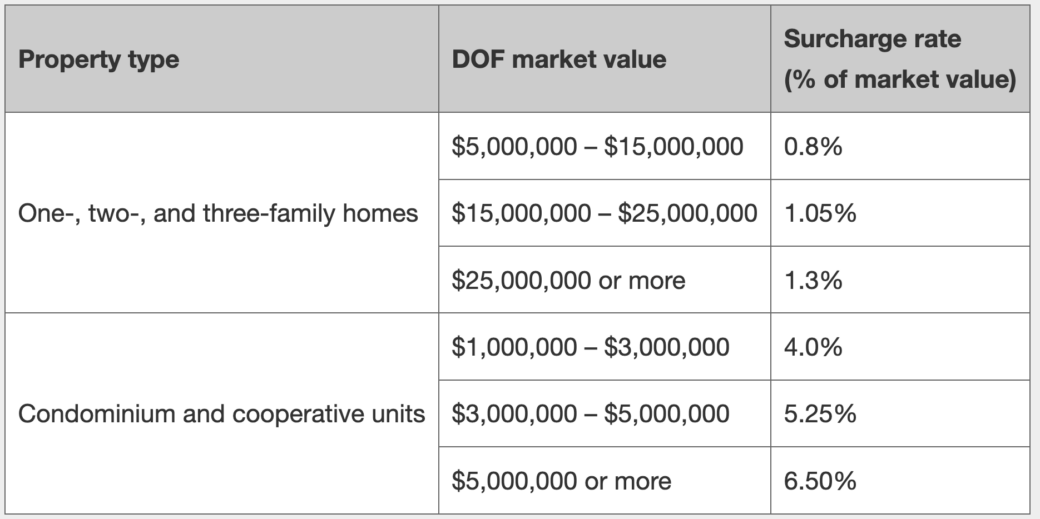
Preparation, not improvisation, is what lets you answer the comparison credibly.

If you anticipate that a specific high-volume competitor may come up, audit their public production data in the MLS before the appointment. The figures worth examining are the ratio of listings taken to listings sold, the average days on market, the list-price-to-sale-price ratio, and the average sale price.

High volume frequently conceals soft spots in one or more of those measures and knowing them lets you respond with facts rather than defensiveness. This is not a license to disparage a competitor, which tends to diminish the agent who does it. It is simply the difference between walking in informed and walking in hopeful.

The strongest position reframes the decision from scale to fit.

Once tools are off the table, the question becomes which professional will manage the transaction with more competence and attention, and which one the seller actually trusts. An agent who has spent 90 minutes building rapport at the kitchen table holds a real advantage on exactly that axis, provided they name it directly rather than hoping the seller notices on their own.

The move is to acknowledge the competitor’s size honestly, then redirect to competence, availability, and connection, the factors that genuinely shape how a sale turns out.

The data confirms that trust, not size, drives the hiring decision.

According to the National Association of Realtors, roughly two-thirds of sellers hire an agent they were referred to or had previously worked with. Sellers are predominantly choosing familiarity and confidence, not the largest market-share figure.

An agent who frames the appointment as a question of trust and fit is therefore competing on the dimension that actually determines who gets hired, while an agent who tries to win a volume contest is competing on the one dimension where the biggest name will usually prevail.

In a commodity category, the professional becomes the brand.

When the product looks the same from every provider, people default to the relationship and the perceived reliability of the person delivering it. That principle is why competence, communication, and trust are not soft skills in this market but the actual basis of competition, and why the agents who invest in them tend to take share as conditions normalize.

I developed that broader argument about skill as the real differentiator in a recent column on HousingWire.

Scale introduces a tradeoff that quietly favors the attentive agent.

High personal volume is frequently delivered through leverage, meaning assistants, junior team members, and automated systems handle much of the day-to-day contact. For some sellers that is perfectly acceptable; for many it is not what they believe they are buying.

An agent who personally manages the file can position that difference factually and without disparagement, framing the choice as one between a brand operated at scale and a professional delivering the service directly. In a relationship-driven decision, the direct service often carries more weight than the larger production figure.

Anticipate the comparison rather than reacting to it.

The agents who handle this objection best are rarely improvising in the moment. They have decided in advance how they will respond and have the competitor’s numbers ready before the question is even asked. Treating the comparison as a predictable part of the appointment, rather than an ambush, changes the entire dynamic, because preparation itself reads as competence, and competence is precisely what the seller is at the table to assess.

Treat the top-producer question as your opening and you convert a seller’s doubt into a clear, trust-based reason to choose you. Treat it as a verdict, and you concede the listing on the only ground where the bigger name was ever going to win.

Darryl Davis, CSP, is a national speaker, real estate coach, and the bestselling author of How to Become a Power Agent in Real Estate. Don’t miss this month’s free webinar series at PowerAgentWebinar.com. Through his POWER AGENT® Coaching Program, he helps real estate professionals build thriving businesses and lives at the Next Level®. Learn more at darrylspeaks.com.

This column does not necessarily reflect the opinion of HousingWire’s editorial department and its owners.

To contact the editor responsible for this piece: tracey@hwmedia.com

This post was originally published on here. 

And so, another working week will soon draw to a close. Not a moment too soon, yes? This is, you may recall, our treasured signal to daydream about weekend plans. Our agenda is still in the works, but we do plan to promenade extensively with the official mascots, stroll the supermarket aisles, and spend time with the Pharmalot ancestor. We also hope to hold yet another listening party, where the rotation will likely include this, this, this, this and this. And what about you? The possibilities are endless — you could stop by your favorite restaurant, curl up with a good book, hang with your best friend, or take a long drive to nowhere. Well, whatever you do, have a grand time. But be safe. Enjoy, and see you soon. …

In a win for peptide proponents and for U.S. Health and Human Services Secretary Robert F. Kennedy Jr., an advisory panel to the U.S. Food and Drug Administration recommended compounding pharmacies be allowed to make the drugs BPC-157, KPV, TB-500, and MOTS-c., STAT says The FDA panel will vote on additional compounds on Friday. The votes are not binding, so the FDA will decide whether to lift restrictions and make them more accessible to people who have been turning to the little-researched but popular drugs. The vote reflects tensions between FDA staff, who recommended against lifting restrictions on the peptides because of safety and efficacy concerns, and the panel, which critics have said was “stacked” by Kennedy with people who stand to benefit from broader peptide access.

People with diabetes who use a popular long-acting insulin pen made by Sanofi have had to become pharmacy scouts in recent weeks as they encounter supply issues, STAT explains. The Lantus Solostar pen containing 3 milliliters of insulin glargine has been running low for several weeks because of increased demand “driven by broader market dynamics,” according to Sanofi. The issue is not technically considered a shortage by the FDA, but patients are having trouble finding the medication. While some diabetes patients have had luck finding the medication at small independent pharmacies or their hospital pharmacy, large pharmacies like CVS and Walgreens are coming up dry.

Continue to STAT+ to read the full story…

This post was originally published here. 

Roomvu has launched a new recruiting content platform designed to help real estate brokerages, teams and agencies automate agent recruitment through AI-generated video and social media content.

The company said the new offering enables brokerages to create and automatically publish branded recruiting videos and posts that highlight their culture, values and recruiting message without requiring ongoing manual content creation.

“Recruiting runs on consistency that most leaders simply can’t sustain by hand,” said Roomvu CEO Sam Mehrbod. “With Roomvu, a brokerage’s recruiting message becomes branded videos that creates, schedules and posts itself — so the story that attracts agents is always working, even when the leadership team is busy running the business.”

The platform allows brokerages to convert existing recruiting articles or web pages into branded videos using Roomvu’s News2Video technology.

Content can then be automatically scheduled and posted across connected social media platforms while also being shared by agents throughout the brokerage.

Roomvu said the new recruiting tools are intended to help brokerages maintain a consistent recruiting presence while reducing the time required from leadership teams.

EXIT Strategy Realty, part of the EXIT Realty network, uses the platform to create branded recruiting content.

“Everything we put out has to live in the DNA of our brand and #ProjectX,” said EXIT Strategy Realty CEO Nick Libert. “Roomvu lets me create content that’s authentically ours and get it out consistently and that’s become part of how we attract and grow agents.”

The recruiting content platform is available immediately for brokerages, teams and agencies.

This article was generated using HousingWire Automation and reviewed by a HousingWire editor before publication.

This post was originally published on here. 

Hiring has become a tougher calculation for many small businesses this summer. Owners who spent the past two years competing for workers are now taking a more cautious approach, choosing to increase productivity with existing staff rather than immediately adding to payrolls as wages, healthcare and insurance costs continue to rise.

Fresh survey results released Thursday by the National Federation of Independent Business (NFIB) show labor quality and labor costs remain among the most significant challenges facing small employers. While job openings remain elevated across many industries, fewer businesses say they plan to expand hiring in the months ahead as operating expenses continue to pressure profit margins.

The shift does not necessarily signal weakening demand. Many restaurants, manufacturers, retailers and service providers say customer traffic has remained steady, but owners are becoming more selective about when they create new positions. Some businesses are investing in scheduling software, automation and artificial intelligence tools that allow existing employees to handle larger workloads without sacrificing customer service.

Wage growth has moderated from the rapid pace seen immediately after the pandemic, yet compensation remains well above historical averages in many sectors. At the same time, employers continue absorbing higher health insurance premiums, workers’ compensation expenses and other benefit costs that extend well beyond hourly pay.

Lenders and accountants say that dynamic is reshaping business planning. Instead of budgeting primarily for expansion, more owners are focusing on protecting cash flow, improving operational efficiency and preserving flexibility should economic conditions change later this year.

The hiring slowdown is uneven across the economy. Healthcare providers, skilled trades, transportation companies and specialized manufacturing firms continue reporting difficulty filling experienced positions, while some office-related industries have seen recruiting become less competitive than a year ago.

For small business owners, the challenge has become balancing growth opportunities against rising employment costs. The companies finding that balance are increasingly relying on technology, employee retention and operational improvements rather than simply expanding headcount—a strategy that is beginning to reshape how many Main Street businesses plan for the years ahead.

JBizNews Desk | Wall Street

© JBizNews.com All Rights Reserved. Reproduction or distribution without written permission is prohibited.