Opinion | The AfD Rises on the German Right
2026-09-06

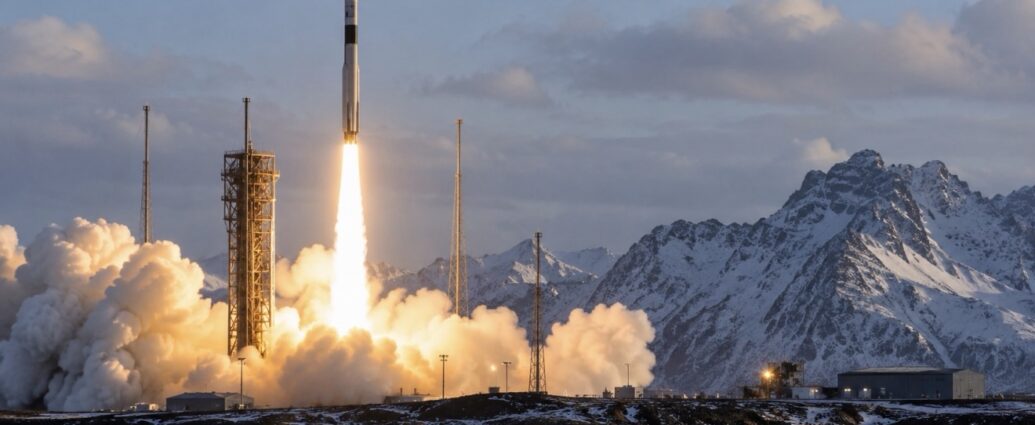
A German space company has successfully carried satellites into orbit from Norway, giving continental Europe a new privately developed launch capability and marking a major breakthrough for its commercial space industry.
Isar Aerospace successfully reached orbit Saturday with its Spectrum rocket, deploying satellites from the company’s dedicated launch complex at Andøya Space in northern Norway.
The mission, called “Onward and Upward,” lifted off at 10:12 p.m. Central European Summer Time on September 5 and successfully delivered its payloads into orbit.
It was only Spectrum’s second flight.
That makes the achievement particularly significant.
Isar Aerospace says it has become the first commercial space company from Europe to successfully deliver satellites into orbit, while Andøya Space described the flight as the first successful satellite launch from mainland Europe.
The rocket carried five CubeSats and one experimental payload, with the mission designed not only to deliver satellites but also to continue qualifying Spectrum’s systems under real operating conditions.
The successful flight comes after a much more difficult first mission.
Spectrum’s first test flight did not reach orbit, making Saturday’s success an important demonstration that the company was able to identify problems, improve the vehicle and move quickly toward a functioning commercial launch system.
For Europe, the business implications are substantial.
European governments, defense agencies and private satellite companies have faced a shortage of domestic launch capacity as demand for small-satellite launches has expanded.
For years, much of the global commercial launch market has been dominated by a relatively small number of companies, particularly SpaceX.
Isar Aerospace is trying to build a European alternative.
The company has already raised more than €500 million in private capital and employs more than 400 people from nearly 50 countries.
Its Spectrum rocket is designed specifically for small and medium-size satellites, allowing customers to purchase dedicated launches or share space with other payloads.
Isar is also building a commercial pipeline beyond Europe.
Earlier this month, the company signed an agreement with Astroscale Japan to launch a future satellite designed to remove space debris. That mission is targeted for 2027 or 2028.
Andøya Space is preparing for much larger launch volumes as well.
The Norwegian spaceport says it ultimately wants the capacity to support up to 30 satellite launches annually within the next several years.
This is not simply another rocket launch.
It is about who controls access to space.
Satellites now support communications, navigation, defense, agriculture, weather forecasting, financial systems and an increasingly large part of the global digital economy.
Countries that cannot launch their own satellites remain dependent on someone else to get critical infrastructure into orbit.
Europe has been trying to reduce that dependence.
Saturday’s successful Spectrum mission shows that privately funded European companies may finally be able to help fill that gap.
For Isar Aerospace, reaching orbit transforms the company from a promising rocket developer into something far more valuable:
A company that has demonstrated it can actually put customers into space.
And in the rapidly expanding commercial space economy, that distinction can be worth billions.
JBizNews Desk | New York
© JBizNews.com All Rights Reserved. Reproduction or distribution without written permission is prohibited.
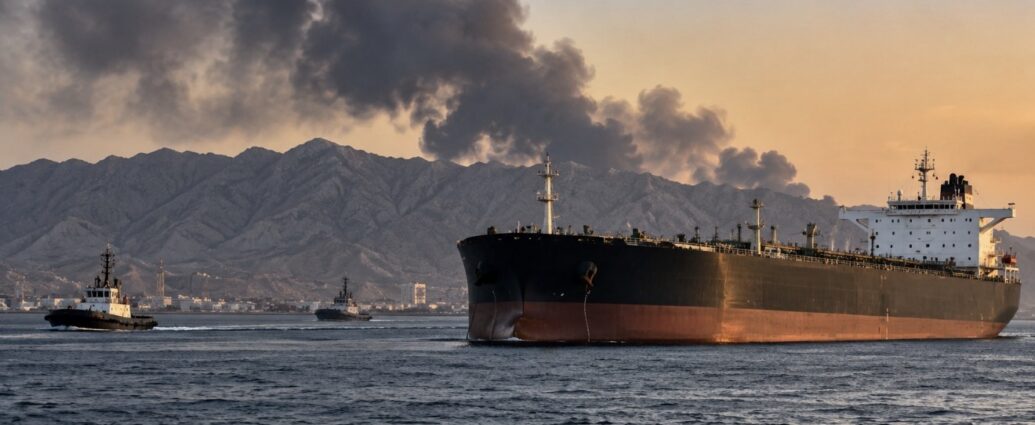
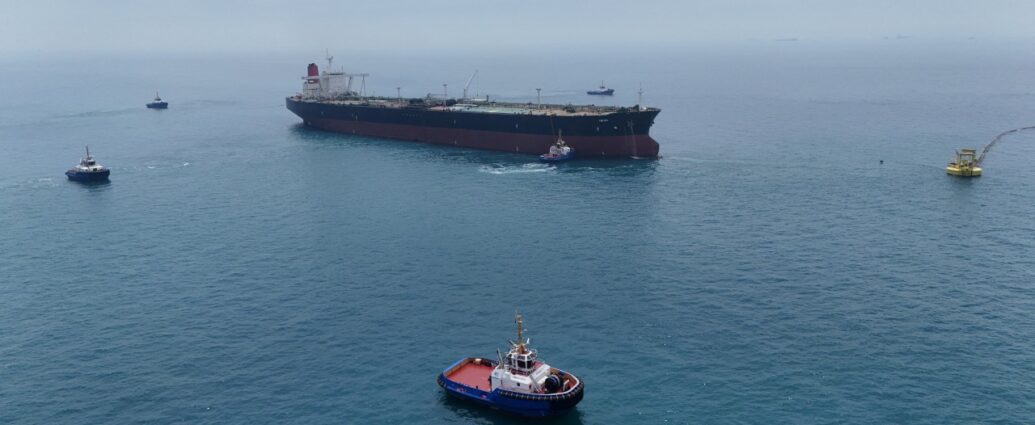
Global energy markets enter the new week under renewed pressure after the oil alliance declined to add more barrels while fighting around the Strait of Hormuz continues to threaten one of the world’s most important shipping routes.
OPEC+ agreed Sunday to keep its oil-production policy unchanged for October, choosing not to increase supply further as the continuing U.S.-Iran conflict disrupts shipping through the Strait of Hormuz and pushes crude prices toward levels not seen in months.
The decision means the group will maintain October production at September levels after six consecutive months of increases.
The timing is especially important.
Brent crude finished Friday at $96.28 a barrel, gaining approximately 7.6% for the week, while U.S. West Texas Intermediate crude settled at $91.48, up nearly 10% for the week.
Oil markets were already dealing with restricted shipping through the Strait of Hormuz before another round of military escalation over the weekend.
U.S. forces struck three Iranian oil tankers after Iran launched missiles toward American naval vessels, adding another layer of uncertainty before global crude trading resumes.
For businesses, the danger extends far beyond the price of oil itself.
Higher crude prices feed directly into gasoline, diesel, jet fuel, trucking, shipping, agriculture and manufacturing costs. U.S. diesel prices have already climbed to record territory, putting additional pressure on companies that move physical goods.
That makes the OPEC+ decision significant.
Normally, higher prices could encourage major producers to put more barrels onto the market. But the current problem is increasingly about whether oil can physically move through the region rather than simply how much producers are willing to pump.
The Strait of Hormuz is the narrow maritime passage connecting the Persian Gulf with global markets and is one of the most important energy chokepoints in the world. Continued disruption there can affect oil and liquefied natural gas supplies regardless of official production quotas.
OPEC+ also faces its own limitations. Several members have struggled to reach their assigned production targets, meaning a higher quota would not necessarily translate into the same amount of additional oil reaching global buyers.
The seven OPEC+ countries participating in Sunday’s decision include Saudi Arabia, Russia, Iraq, Kuwait, Kazakhstan, Algeria and Oman.
The group had been gradually restoring production that was removed from the market through earlier voluntary cuts. September’s increase of approximately 188,000 barrels per day completed another stage of that process.
But for October, producers are stopping there.
The next OPEC+ meeting is scheduled for October 4, when members are expected to consider November production.
The number to watch now is $100 oil.
If Brent crude breaks decisively above that level, the consequences could begin appearing throughout the economy — at gas stations, in airline fares, freight bills and ultimately consumer prices.
That creates an additional problem for the Federal Reserve.
The Fed is already confronting stronger-than-expected employment data and renewed concerns that inflation may remain stubborn. Another sustained energy-price increase could make lowering interest rates considerably more difficult — and could even strengthen the argument for keeping monetary policy tighter.
For businesses, the equation entering the new week is becoming increasingly clear:
The Middle East conflict is no longer simply a geopolitical story.
It is becoming an inflation, transportation, interest-rate and economic-growth story — and OPEC+ just decided it will not provide additional oil to soften the impact, at least for now.
JBizNews Desk | New York
© JBizNews.com All Rights Reserved. Reproduction or distribution without written permission is prohibited.
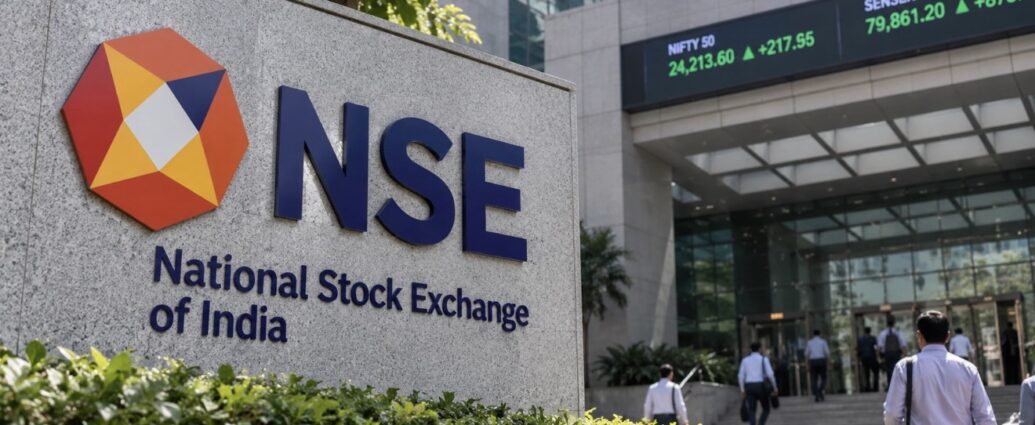
India’s National Stock Exchange has finally received regulatory clearance to move ahead with its long-awaited initial public offering, removing one of the biggest obstacles to what could become one of the country’s largest stock-market listings.
India’s market regulator, SEBI, cleared the IPO Friday after years of delays tied to legal and compliance disputes involving the exchange.
The timing is significant.
India’s Supreme Court also dismissed a major case tied to allegations that some high-frequency traders received unfair access to NSE’s systems, removing another major legal overhang as the exchange prepares to go public.
For investors, the simple story is this:
One of the most important stock exchanges in the world is finally preparing to become a publicly traded company itself.
The National Stock Exchange is not a small regional marketplace.
It operates India’s benchmark Nifty 50 index and dominates the country’s equity-derivatives market.
By the number of derivative contracts traded, NSE is the most active derivatives exchange in the world.
That gives it a powerful position at the center of India’s rapidly expanding capital markets.
Every time investors trade stocks, futures or options through the exchange, NSE can generate revenue through transaction fees, technology services, data and other market infrastructure.
As India’s economy and investor base grow, that activity becomes increasingly valuable.
NSE has been valued at roughly $55 billion in India’s unlisted share market.
At that valuation, it could rank among India’s ten most valuable publicly traded companies once listed.
That does not mean the IPO itself will raise $55 billion.
The offering is expected primarily to be an offer for sale, meaning existing shareholders will sell some of their stakes to public investors.
The exchange itself would not receive most of the proceeds.
But the listing would finally give investors a transparent public-market price for one of India’s most important financial institutions.
NSE has been trying to go public for nearly a decade.
The major obstacle was regulatory controversy.
Authorities investigated whether certain high-frequency trading firms received faster or preferential access to the exchange’s trading infrastructure through systems involving co-location servers and specialized network connections.
In simple terms, regulators were examining whether some traders effectively got a technological head start over everybody else.
In markets where trades happen in fractions of a second, even tiny speed advantages can be worth enormous amounts of money.
Those allegations created years of legal battles and prevented NSE from moving forward with its listing.
The Supreme Court’s dismissal of the regulatory case removes a major hurdle.
NSE previously agreed in principle to pay roughly $155 million to settle outstanding issues connected to the dispute.
That allows regulators and the exchange to move toward closing a chapter that has hung over NSE since the middle of the last decade.
For investors, regulatory certainty matters almost as much as financial performance.
A company preparing for an IPO needs buyers to understand the risks they are purchasing.
A decade-old dispute involving the integrity of the exchange itself was a particularly serious problem.
Removing it makes NSE much easier to value.
The IPO also reflects something bigger happening in India.
More Indian households are investing in stocks.
Domestic mutual funds are growing.
Foreign investors are increasingly active.
Companies are raising more money through Indian capital markets.
And India has become one of the world’s busiest IPO markets.
That creates a powerful business model for an exchange.
NSE does not have to guess which individual company will succeed.
It earns money from the infrastructure investors use to trade all of them.
The more active India’s markets become, the more valuable that infrastructure can become.
Stock exchanges can be unusually attractive businesses.
They often benefit from:
High margins.
Recurring trading activity.
Market-data revenue.
Technology fees.
Strong network effects.
And significant barriers to new competitors.
Once investors and brokers concentrate on one major exchange, it becomes difficult for a newcomer to recreate that liquidity.
NSE already has that scale.
That is why the IPO could attract substantial interest from domestic and international investors.
For Indian companies, a stronger and more transparent public exchange can deepen access to capital.
For global investors, the listing provides another way to invest directly in the growth of India’s financial markets rather than choosing individual banks, technology companies or manufacturers.
And for India itself, the IPO marks another step in the maturation of its capital-market system.
The irony is difficult to miss.
For years, millions of companies and investors have relied on NSE to buy and sell shares.
Now investors are preparing to buy shares in the exchange itself.
After nearly a decade of regulatory battles, one of the world’s busiest financial marketplaces is finally moving toward becoming a publicly traded company.
JBizNews Desk | Mumbai
© JBizNews.com All Rights Reserved. Reproduction or distribution without written permission is prohibited.
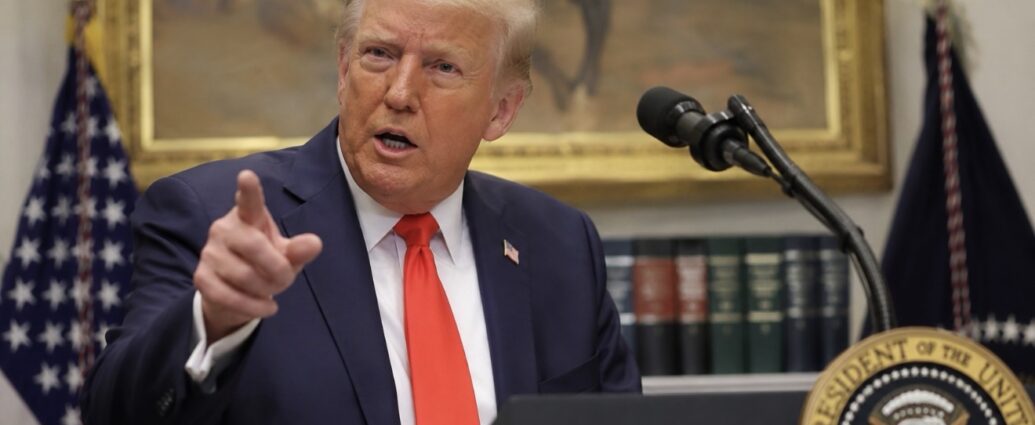
WASHINGTON — President Donald Trump warned Friday that the United States could soon strike Iran’s heavily fortified Pickaxe Mountain facility if Washington determines Tehran is continuing nuclear activity there, putting one of Iran’s most protected sites directly on notice.
“Iran will not have a nuclear weapon,” Trump told reporters in the Oval Office, adding that the United States “may hit Pickaxe very soon” if there is evidence of activity at the facility.
The warning comes as the United States has resumed attacks against Iranian targets after a period of reduced military activity, marking a renewed escalation in the confrontation between Washington and Tehran.
Trump said the United States carried out what he described as a “very heavy attack” against Iran Thursday night and remains prepared to launch additional strikes whenever necessary. He also suggested Iran may have limited ability to withstand continued American military pressure.
The President, however, stopped short of describing the confrontation as a full-scale war. Instead, he called it a limited “military conflict,” echoing comments from Vice President JD Vance that the renewed fighting should not necessarily be characterized as a war.
The focus on Pickaxe Mountain is especially significant because of its reported role in Iran’s nuclear infrastructure. A strike on a heavily fortified nuclear-related facility would signal that Washington is prepared to continue targeting sites Tehran may have believed were protected from conventional attacks.
Trump’s message also reinforces the central U.S. position driving the confrontation: Iran will not be permitted to obtain a nuclear weapon, regardless of how deeply its nuclear infrastructure is buried or fortified.
For Tehran, the warning creates a stark calculation. Continuing activity at Pickaxe Mountain could bring another direct U.S. attack, while halting operations would demonstrate the growing effect of American military pressure.
For markets and businesses, renewed strikes on Iranian nuclear infrastructure would also raise the risk of further instability across the Middle East, including potential disruptions involving Gulf energy production, shipping routes and global oil prices.
Trump indicated that he does not expect the current escalation to continue for an extended period, saying Thursday that he did not believe Iran could withstand American attacks much longer.
But Friday’s warning made clear that Washington is not declaring the operation finished.
If activity continues at Pickaxe Mountain, the next phase could come quickly.
JBizNews Desk | Washington
© JBizNews.com All Rights Reserved. Reproduction or distribution without written permission is prohibited.

STAMFORD, Conn. — Revolut took a major step toward becoming a full-service American bank after receiving conditional approval from the Office of the Comptroller of the Currency for a national bank charter.
The British financial-technology company still needs approvals from the Federal Deposit Insurance Corporation and the Federal Reserve before it can fully launch banking operations in the United States.
But the OCC decision moves Revolut significantly closer.
The company has approximately 80 million customers worldwide and has built much of its growth around mobile banking, foreign-exchange services, multicurrency accounts and international payments.
Revolut plans to base its U.S. bank in Stamford, Connecticut, where it expects to invest approximately $95 million in capital and employ roughly 160 people.
Its planned U.S. products include checking accounts, installment loans, credit cards, foreign-exchange services and eventually a stablecoin.
That matters because Revolut would no longer simply be a financial app relying on another bank’s infrastructure.
A banking charter would allow it to move much deeper into deposits, lending and payments.
It would also give Revolut more control over the economics of its U.S. business.
Fintech companies traditionally earn fees by sitting on top of traditional banks. Once they become banks themselves, they can potentially capture more of the revenue from deposits, lending and transaction activity.
For small and midsize businesses, the most important part may be Revolut’s international reach.
Companies increasingly operate across borders, paying vendors overseas, employing remote workers, buying inventory in foreign currencies and receiving payments from customers in different countries.
Traditional banking services can make those transactions expensive and slow.
Revolut has built much of its brand around making multicurrency banking simpler and cheaper.
If it connects a U.S. bank directly into its existing European and Latin American infrastructure, it could become a more serious competitor for businesses that regularly move money across borders.
The bigger story is what is happening to banking itself.
For years, fintech companies competed with banks by building better apps.
Now some of those companies are trying to become the bank.
That puts pressure on traditional institutions not only to improve digital products, but also to compete on fees, foreign-exchange pricing and ease of use.
The remaining regulatory approvals are still important, and conditional OCC approval does not guarantee a final launch.
But Revolut’s move shows that the line between fintech and traditional banking is disappearing quickly.
For consumers and businesses, that could mean more competition.
For established banks, it means another global rival is getting closer to entering their core business.
JBizNews Desk | Stamford
© JBizNews.com All Rights Reserved. Reproduction or distribution without written permission is prohibited.

WhatsApp users in Israel and elsewhere are reporting sudden account suspensions that can leave them locked out without warning — cutting off access to customers, employees, vendors and years of important conversations.
For an individual user, that is frustrating.
For a business, it can become an immediate operational problem.
WhatsApp has become a major communications tool for small businesses around the world. Companies use it for customer service, sales, scheduling, orders, supplier communication and internal messaging.
That means losing an account can feel almost like losing access to email, a company phone system and part of a customer database at the same time.
Users have reported receiving messages saying their accounts were banned for violating WhatsApp’s terms even when they say they were not given a clear explanation of what triggered the decision.
Some users have later regained access after requesting a review.
WhatsApp has previously acknowledged technical issues that caused certain accounts to be banned incorrectly.
That raises a bigger question for businesses:
How much of a company’s daily operation should depend on a communications platform controlled by someone else?
A small business may build much of its customer communication around one WhatsApp number.
Customers know that number.
Employees use it.
Orders come through it.
Photos, invoices, delivery information and customer conversations may all live there.
If the account is suddenly disabled, the business does not simply lose access to an app.
It can temporarily lose access to the people it depends on.
That is the real business risk.
The company may own the customer relationship, but Meta controls the platform connecting the two.
WhatsApp operates at enormous scale.
That means Meta relies heavily on automated systems to detect spam, fraud, abuse and other violations.
Those systems are necessary.
But automated enforcement is not perfect.
A business sending many similar messages can sometimes resemble spam.
An unusual increase in activity can look suspicious.
Accounts can also be reported by other users.
When automated systems combine those signals, legitimate accounts can sometimes be caught alongside actual scammers.
The bigger problem comes when users do not understand why they were banned or how quickly they can get their account restored.
For businesses, even a temporary suspension can have financial consequences.
A retailer can miss orders.
A service business can miss appointments.
A contractor can lose contact with customers.
A salesperson can lose access to leads.
An employer can suddenly lose an internal communication channel.
And customers may have no idea the account was suspended.
They may simply assume the business stopped responding.
That can damage trust even after access is eventually restored.
Large companies usually have multiple systems.
They have email.
Customer-service software.
Phone systems.
Websites.
Databases.
Backup communications.
A small business may have none of that.
For many small operators, WhatsApp has become the system.
That makes the convenience enormous.
But it also creates a single point of failure.
If the account disappears, there may be no immediate backup.
This creates an important issue for Meta itself.
WhatsApp is increasingly becoming a commercial platform.
Meta is expanding paid business messaging, customer-service tools and commerce features designed to make WhatsApp more important to companies.
That strategy depends on trust.
Businesses will be reluctant to rely even more heavily on WhatsApp if they believe their account can suddenly be disabled without a clear explanation.
For commercial users, reliability does not only mean the app stays online.
It also means legitimate businesses need confidence that their access will remain stable.
And if something goes wrong, there needs to be a fast and understandable appeals process.
The lesson is not that businesses should stop using WhatsApp.
For many companies, it remains one of the easiest and most effective ways to communicate with customers.
The lesson is not to let WhatsApp become the only place where critical business relationships exist.
Businesses should maintain independent customer contact records.
Important documents and order information should be stored elsewhere.
Customers should have another way to reach the company, whether through email, SMS, a website or another messaging service.
The goal is simple:
If WhatsApp locks the account tomorrow, the business should still be able to operate.
Digital platforms have given small businesses access to tools that once required expensive software and communications systems.
But they have also created a new kind of dependency.
A business can build thousands of customer relationships through a platform it does not control.
Everything works extremely well — until the account is suddenly locked.
For businesses increasingly dependent on WhatsApp, the latest complaints are a reminder of a basic digital-business rule:
Own the relationship with your customer, and never let one outside platform become the only door connecting you to them.
JBizNews Desk | Tel Aviv
© JBizNews.com All Rights Reserved. Reproduction or distribution without written permission is prohibited.

South Korea is moving toward a possible military deployment to the Strait of Hormuz just weeks after President Donald Trump publicly tied reduced U.S.-South Korea military exercises to Seoul’s refusal to assist Washington in the war against Iran.
The timing is difficult to miss.
South Korean media, citing government and military sources, report that Seoul is preparing to seek parliamentary approval for a mission aimed at protecting freedom of navigation through the Strait of Hormuz.
Options under consideration reportedly include a maritime patrol aircraft, a logistics support vessel and a mine-clearing unit.
South Korea has also been discussing the possible mission with the United States, Britain and France.
The government has not made a final deployment decision, and the South Korean presidential office has pushed back against reports suggesting the mission is already approved.
But Seoul is clearly considering a contribution that looks very different from the position it held only weeks ago.
Last month, Trump announced that he was reducing the scale of joint U.S.-South Korea military exercises.
He cited his relationship with North Korean leader Kim Jong Un as one reason.
But Trump also specifically pointed to South Korea’s refusal to assist the United States in the conflict with Iran.
That made the decision more than a military scheduling issue.
It became a message about burden-sharing.
The United States has tens of thousands of troops stationed in South Korea and has spent decades providing a major security umbrella against North Korea.
Trump’s position was essentially that allies benefiting from American military protection should also be willing to assist the United States when critical global shipping routes and American interests are under threat.
Now Seoul is considering exactly the kind of maritime contribution Washington had been seeking.
There is also a powerful economic reason for Seoul to care.
South Korea is one of the world’s largest energy importers.
It depends heavily on oil and natural gas moving out of the Middle East.
The Strait of Hormuz is the gateway for a major share of those supplies.
If shipping through the strait becomes unreliable, South Korea does not simply have a foreign-policy problem.
It has an energy problem.
Higher oil and gas prices hit Korean manufacturers, airlines, shipping companies and consumers.
That gives Seoul a direct economic interest in keeping the waterway open.
That distinction is important.
South Korea’s presidential Blue House says discussions are still focused on practical ways to contribute to freedom of navigation.
It has rejected reports that a final decision to deploy forces has already been made.
The government is reportedly considering submitting a consent motion to parliament after a cabinet review.
So the next step is political.
Seoul has to decide whether it wants to formally commit military assets and then secure the necessary domestic approval.
One of the most important options being discussed is a mine-clearing unit.
That is not symbolic.
Mines can close or severely restrict commercial shipping without requiring Iran to directly attack every vessel passing through the strait.
Clearing them requires specialized ships, equipment and trained personnel.
A South Korean contribution in that area could therefore have real operational value for maintaining commercial traffic.
The same is true of maritime patrol aircraft, which can monitor shipping lanes and identify potential threats.
For global businesses, this is ultimately about keeping one of the world’s most important energy corridors functioning.
Oil markets do not need the Strait of Hormuz to be completely closed before prices rise.
Even the threat of disruption can increase:
South Korea has more at stake than most countries because of its dependence on imported energy and its enormous manufacturing economy.
That makes participation in a Hormuz mission both a military decision and an economic one.
The broader lesson may be even more important.
Trump has repeatedly argued that American allies should contribute more directly when U.S. forces are carrying the burden of protecting shared economic and security interests.
South Korea initially stayed out of the Iran conflict.
Washington responded by reducing military cooperation.
Now Seoul is actively discussing sending assets toward the very region where the United States wanted help.
South Korean officials have not said the two decisions are directly connected.
But the sequence is clear.
Washington applied pressure. Seoul heard the message. And South Korea is now considering putting military assets into the Strait of Hormuz.
For America’s other allies, that sequence will be closely watched.
JBizNews Desk | Seoul
© JBizNews.com All Rights Reserved. Reproduction or distribution without written permission is prohibited.
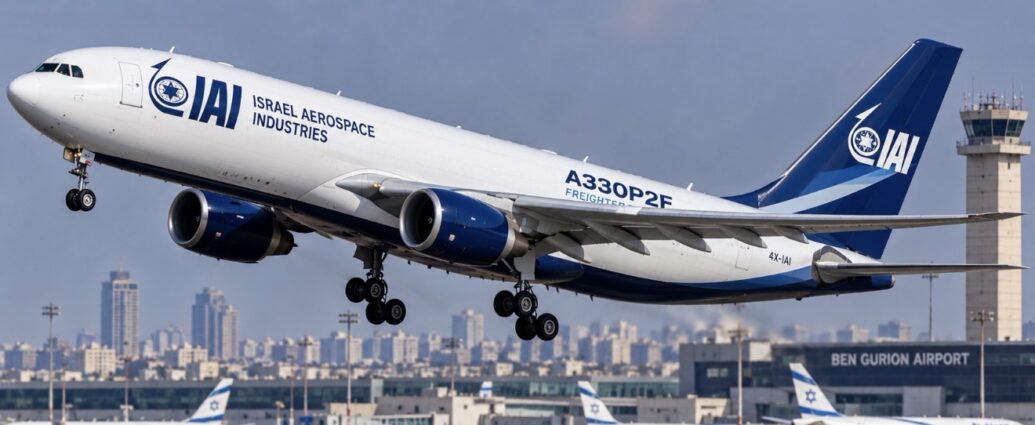
Israel Aerospace Industries has completed the maiden flight of its first converted Airbus A330-300 freighter, marking a major milestone in the company’s push to expand deeper into the global air-cargo market.
The aircraft began life as a passenger jet.
IAI has now converted it into a dedicated freighter capable of carrying up to 61 tons of cargo and accommodating as many as 30 cargo containers.
That turns an older passenger aircraft into a new commercial asset instead of sending it toward retirement.
Passenger-to-freighter conversions have become a major business for airlines and aircraft lessors.
A new cargo aircraft can cost tens of millions of dollars.
Converting an existing passenger jet can be significantly cheaper.
The economics are straightforward.
An airline or leasing company takes an aircraft that may no longer be attractive for passenger service, removes the cabin interior, reinforces the floor, modifies the structure, installs a large cargo door and converts the aircraft for freight operations.
That can add many more years of useful service.
For aircraft owners, it can dramatically increase the value of an aging jet.
Israel Aerospace Industries has decades of experience converting passenger aircraft into freighters.
Its work has historically centered heavily on Boeing aircraft, including widebody platforms used by cargo operators around the world.
The A330 program changes that.
IAI is now positioning itself as one of the relatively few aerospace companies capable of converting both Airbus and Boeing widebody aircraft.
That gives it access to a much larger pool of aircraft.
Thousands of Airbus A330s have been delivered worldwide.
As passenger versions age, many will eventually become candidates for conversion.
The Airbus A330 is already widely used by passenger airlines.
It has strong range, a large fuselage and relatively efficient operating economics.
The converted A330-300 is aimed primarily at regional and medium-haul freight operations.
Its capacity of up to 61 tons gives operators a middle ground between smaller narrowbody freighters and much larger long-haul cargo aircraft.
That can make it attractive for routes where airlines need significant capacity but do not need the size of a Boeing 747 freighter.
The successful flight does not mean the aircraft is ready for commercial service tomorrow.
The program still has to complete flight testing and regulatory certification.
That process is designed to prove that the structural modifications, cargo systems and aircraft performance meet aviation-safety standards.
Once certification is completed, IAI can begin delivering converted aircraft to customers.
That is when the program moves from engineering project to revenue-generating business.
The air-freight market experienced extraordinary demand during the pandemic, when passenger flights collapsed and companies struggled to move goods.
Demand has since normalized.
But long-term structural drivers remain.
E-commerce continues to grow.
Pharmaceuticals rely heavily on air cargo.
Semiconductors, electronics, automotive parts and high-value industrial components often need rapid transportation.
Supply-chain disruptions also remind companies that speed can sometimes be worth paying for.
That keeps freighter aircraft strategically important even when the broader shipping market slows.
Many older passenger jets are reaching the point where airlines have to decide what to do with them.
They can sell them.
Store them.
Scrap them.
Or convert them.
For aircraft leasing companies, conversion can be particularly attractive.
A plane that has become less valuable in passenger service can potentially earn revenue for many additional years carrying freight.
That creates business for conversion specialists such as IAI.
This is also an important aerospace-export story.
IAI is one of Israel’s largest industrial and defense companies.
Commercial aircraft conversion gives it a revenue stream outside traditional military systems.
The company sells engineering expertise to global airlines, lessors and cargo operators.
That means the value created in Israel is exported around the world.
It also strengthens Israel’s position in a highly specialized corner of the global aerospace industry where only a limited number of companies have the technical capability and regulatory experience to compete.
For cargo airlines and aircraft owners, the A330 conversion offers another option for adding capacity without purchasing a brand-new freighter.
For IAI, it expands the addressable market dramatically.
For the aerospace industry, it reinforces a broader trend:
Older passenger aircraft are increasingly being viewed not as obsolete assets, but as raw material for the next generation of cargo fleets.
The first flight is therefore about more than one aircraft.
It is proof that IAI’s Airbus conversion program has moved from the drawing board into the air.
If certification proceeds as planned, that could open a significant new commercial market for the Israeli aerospace company.
JBizNews Desk | Tel Aviv
© JBizNews.com All Rights Reserved. Reproduction or distribution without written permission is prohibited.

Brussels Airlines is facing a growing labor dispute over flights to Tel Aviv, with a Belgian union threatening strike action unless crew members are allowed to refuse assignments to Israel on safety or conscientious grounds.
The dispute centers on a question that goes far beyond one airline:
Can airline employees decline to work a specific international route because they object to the destination or believe it is unsafe?
Brussels Airlines resumed service to Tel Aviv on August 3 after a five-month suspension and is currently operating three flights a week.
The union representing flight crews says employees who object to flying to Israel should be allowed to refuse those assignments without losing pay or facing disciplinary action.
The airline disagrees.
Brussels Airlines says safety is its top priority and that route decisions are based on security assessments, operational conditions and passenger demand.
It also says employees are expected to carry out assigned duties under the terms of their employment.
This is not simply a labor dispute.
It is a business-risk issue for airlines operating routes into politically sensitive or conflict-affected regions.
Airlines already have to manage:
If employees also gain broad discretion to refuse specific destinations for political or ethical reasons, staffing could become much more difficult.
That could force airlines to cancel flights even when regulators and company security teams consider the route safe to operate.
The union says Brussels Airlines previously relied more heavily on volunteers for Israel flights.
It argues that the company has moved away from that system because it could not find enough employees willing to operate the route.
Brussels Airlines disputes that characterization.
That disagreement is central to the dispute.
If enough crew members refuse assignments, the airline may not have enough staff to maintain its schedule.
And once staffing becomes unreliable, the financial consequences can grow quickly.
Cancelled flights mean refunds.
Aircraft may sit idle.
Passengers need to be rebooked.
Hotels and compensation costs can rise.
And travelers may begin booking with competitors instead.
The larger concern is precedent.
Airlines operate routes to countries facing political controversy, war, sanctions, protests and security concerns all over the world.
If workers can decline assignments based on personal political or ethical objections, airlines could face similar disputes on many routes.
That would create a difficult line for management.
Safety concerns can be assessed through intelligence, government guidance and aviation-security professionals.
Political objections are much harder to standardize.
One employee may object to one country.
Another may object to another.
An airline cannot operate a global route network if every destination effectively becomes optional.
For passengers traveling between Belgium and Israel, the immediate risk is disruption.
If the union follows through with strike action, Brussels Airlines could be forced to cancel or reduce flights.
That would tighten capacity on a route that has already experienced repeated suspensions and resumptions because of regional security conditions.
Less capacity generally means higher fares and fewer backup options when flights are disrupted.
For business travelers, that unpredictability can be especially costly.
The dispute highlights how geopolitical conflict increasingly reaches directly into airline operations.
A route can be technically open.
Airports can be functioning.
Demand can exist.
But if crews do not want to fly it, the airline still has a problem.
That can affect staffing models, employment contracts and labor negotiations far beyond Brussels Airlines.
The commercial question is straightforward:
Who ultimately decides whether a route should be flown — airline management and safety professionals, or individual employees assigned to operate it?
Brussels Airlines is now being forced to answer that question in real time.
And if the dispute escalates into a strike, other European carriers will be watching closely.
JBizNews Desk | Brussels
© JBizNews.com All Rights Reserved. Reproduction or distribution without written permission is prohibited.

One of the world’s largest pools of investment capital is considering a major reduction in its exposure to U.S. government debt.
The manager of Norway’s roughly $2.3 trillion sovereign wealth fund is proposing changes to its bond benchmark that could sharply reduce the fund’s holdings of U.S. Treasuries.
The proposal would lower the share of government bonds in the fund’s fixed-income benchmark from 70% to 50% and shift more money toward other types of bonds.
Based on the fund’s current holdings and Reuters calculations, that could eventually mean roughly $80 billion less in U.S. Treasury exposure.
Nothing has been sold yet.
This is a proposal, not an executed trade.
But because Norway’s fund is so large, even a strategic change in how it allocates bonds can matter to global markets.
U.S. Treasuries are the foundation of the global financial system.
Banks hold them.
Central banks hold them.
Insurance companies hold them.
Pension funds and sovereign wealth funds hold them.
They are used as collateral throughout financial markets and are generally treated as one of the safest and most liquid assets in the world.
So when a fund as large as Norway’s begins discussing a meaningful reduction in government-bond exposure, investors pay attention.
The issue is not that Norway suddenly believes the United States will not repay its debt.
The concern is more about portfolio construction.
Government bonds have become less attractive relative to other fixed-income investments because yields, inflation risk, fiscal deficits and debt issuance have all changed.
Norway’s sovereign wealth fund owns stocks, bonds, real estate and infrastructure around the world.
Its job is to invest the country’s oil wealth for future generations.
That means it is constantly trying to balance safety, returns and diversification.
Under the current structure, government debt represents a very large share of the fund’s bond portfolio.
The proposed change would reduce that concentration.
Instead, the fund could allocate more money toward corporate bonds, securitized debt and other fixed-income assets.
That could provide higher returns, though usually with somewhat more risk.
The United States is borrowing enormous amounts of money.
That means the Treasury Department has to issue a huge supply of new bonds to finance federal spending.
At the same time, investors are demanding higher yields to hold longer-term debt.
That has pushed Treasury yields significantly higher than they were several years ago.
Higher yields can make Treasuries more attractive because investors earn more interest.
But they also mean bond prices can be more volatile.
If inflation stays high or markets expect interest rates to rise further, existing bonds can lose value.
For a massive long-term investor, that creates a reason to ask whether too much capital is concentrated in sovereign debt.
The U.S. Treasury market is enormous, so an $80 billion reduction would not by itself destabilize it.
But the symbolism matters.
Norway is not a hedge fund making a short-term trade.
It is one of the largest and most conservative institutional investors in the world.
If it concludes that government bonds should occupy a smaller share of its portfolio, other pension funds and sovereign investors may ask similar questions.
And if several large global investors reduce Treasury demand at the same time, the U.S. government may have to offer higher yields to attract buyers.
Higher Treasury yields eventually affect almost everything else.
Mortgage rates.
Corporate borrowing.
Auto loans.
Commercial real estate.
Stock valuations.
The proposal does not target U.S. Treasuries specifically.
It would reduce government-bond exposure more broadly.
But because the United States represents such a large portion of global sovereign debt markets, Treasuries would naturally be heavily affected.
Norway’s fund currently holds roughly $215 billion in U.S. government debt, making the United States one of its most important bond exposures.
That means any benchmark change could move tens of billions of dollars.
For American businesses, the important number to watch is not Norway’s portfolio by itself.
It is Treasury yields.
If foreign investors become less willing to hold U.S. government debt, borrowing costs can rise.
Corporate loan rates are often priced relative to Treasury yields.
So are mortgages and many other forms of credit.
That means what looks like a technical portfolio decision in Oslo can eventually affect the cost of financing a warehouse, buying a home or issuing corporate debt in the United States.
Again, Norway has not announced an $80 billion Treasury sale.
The fund manager is proposing a strategic change that could lead to a substantial reduction over time.
But the proposal arrives at an important moment.
The United States is issuing enormous amounts of debt.
Long-term yields are already elevated.
And one of the world’s biggest investors is asking whether government bonds should continue occupying such a large share of its portfolio.
That is a question Wall Street — and Washington — will be watching closely.
JBizNews Desk | Oslo
© JBizNews.com All Rights Reserved. Reproduction or distribution without written permission is prohibited.
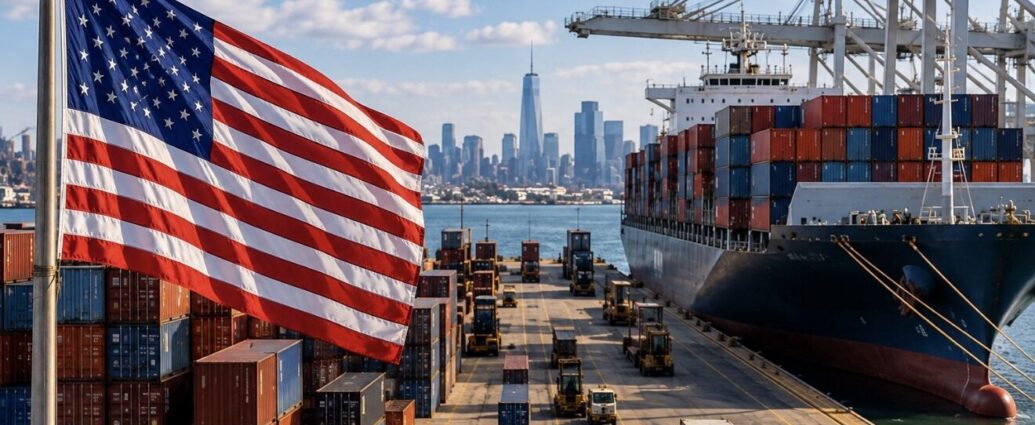
WASHINGTON — America’s trade deficit widened sharply in July, but the reason matters: U.S. businesses were importing billions of dollars more in computers, semiconductors and other capital equipment as corporate investment — particularly around artificial intelligence and technology infrastructure — continued to accelerate.
The U.S. trade deficit increased 24.4% in July to $88.6 billion, up from a revised $71.2 billion in June.
Exports fell 2.1% to $310.7 billion, while imports rose 2.8% to $399.3 billion.
At first glance, the widening deficit looks like another sign that America is buying significantly more goods from overseas than it is selling abroad.
But underneath the headline was a particularly important development for businesses.
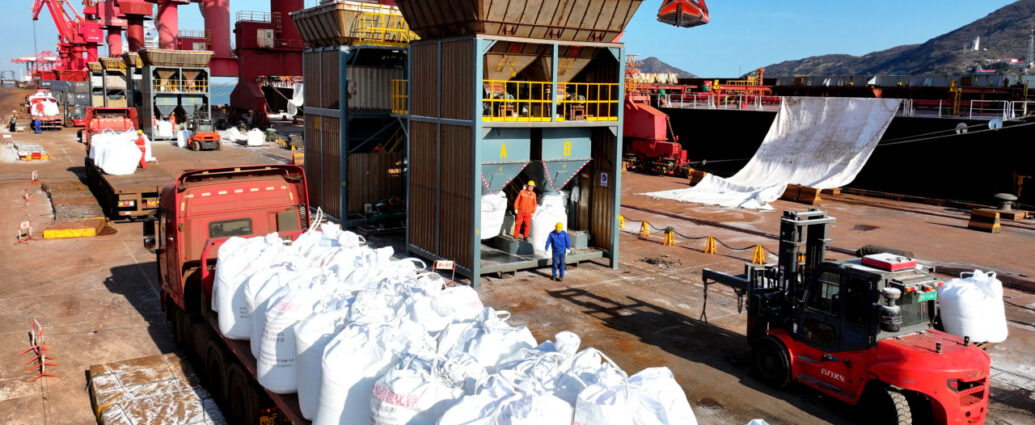
Imports of capital goods surged by $14.4 billion in a single month.
Computer imports increased $6.9 billion. Imports of computer accessories jumped another $6.6 billion, while semiconductor imports increased approximately $1.2 billion.
That means much of the increase was not simply American consumers buying additional clothing, televisions or household products.
Businesses were buying equipment.
That distinction matters.
When a company imports a computer server, semiconductor or other piece of capital equipment, it is generally purchasing something intended to produce future revenue.
The July numbers fit directly into the enormous investment boom surrounding artificial intelligence, cloud computing, data centers and semiconductor manufacturing.
Technology companies and corporations across the economy are purchasing increasingly sophisticated computing equipment as they build AI infrastructure and modernize existing operations.
The result can make the trade deficit look worse today while potentially increasing productive capacity tomorrow.
There was still weakness elsewhere in the report.
U.S. exports declined by $6.6 billion, with exports of industrial supplies and materials falling approximately $8.7 billion.
A larger trade deficit can also weigh on gross domestic product because imports subtract from GDP calculations when they grow faster than exports.
But the longer-term trade picture remains considerably different from the monthly headline.
Through July, the U.S. goods and services deficit was approximately $188.4 billion, or 29.6%, smaller than during the same period last year.
Exports during the first seven months of the year increased roughly 12%, while imports rose only about 1.9%.
For business owners and investors, July’s report therefore sends two messages at once.
America is again importing substantially more than it exports.
But businesses are also pouring money into the equipment they believe they will need for the next stage of economic growth.
The question now is whether those billions of dollars being spent on computers, chips and infrastructure generate enough productivity and revenue to justify the investment.
That will ultimately matter much more than one month’s trade deficit.
JBizNews Desk | Washington
© JBizNews.com All Rights Reserved. Reproduction or distribution without written permission is prohibited.