


Opinion | Saudi Arabia Has No Good Options
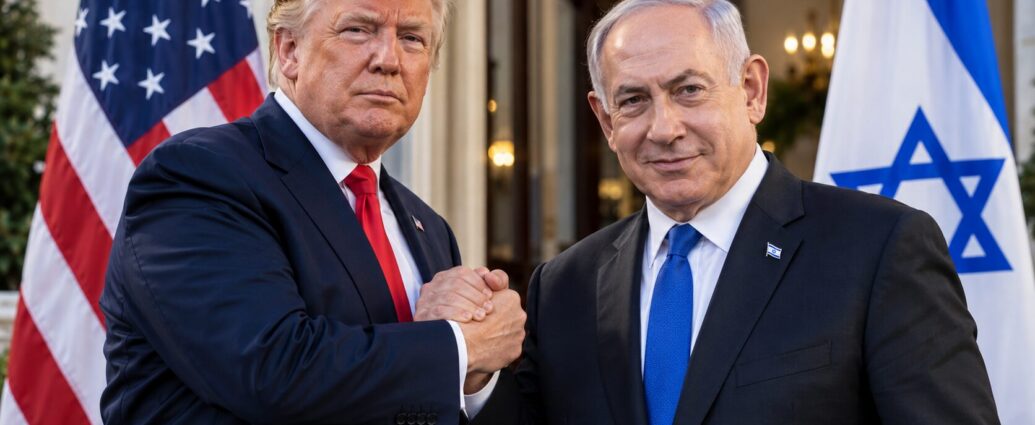
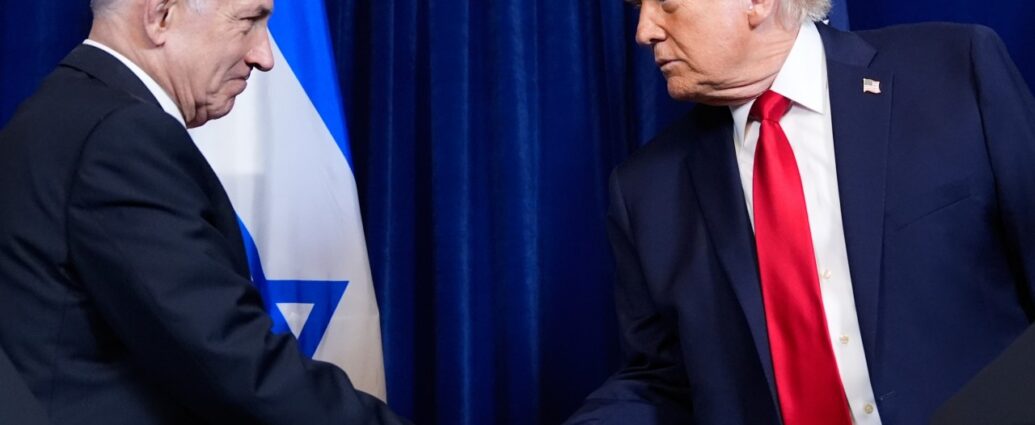
Trump Gives Netanyahu His “Complete and Total Endorsement,” Warns U.S. May Face Iran Alone Without Him
JBIZNEWS | WORLD NEWS & POLITICS | OCTOBER 18, 2026
WASHINGTON — President Donald Trump has formally endorsed Israeli Prime Minister Benjamin Netanyahu for reelection, delivering a forceful intervention in Israel’s October 27 election and warning that the United States could be left to confront Iran without the Israeli leader he considers a critical partner.
In a statement posted on Truth Social, Trump praised Netanyahu’s leadership, described him as a central partner in confronting Iran and made clear that his support extends beyond diplomatic cooperation to Israel’s upcoming election.
“Please let this Letter serve to represent my Complete and Total Endorsement of Bibi Netanyahu,” Trump wrote.
The endorsement comes after weeks of uncertainty over whether Trump would publicly back Netanyahu. As recently as October 16, Trump had declined to endorse a candidate during a Newsmax interview, despite acknowledging interest in his involvement in the Israeli election.
That uncertainty has now ended.
Trump Links Netanyahu’s Leadership to U.S. Security
Trump’s statement went beyond a conventional political endorsement, connecting Netanyahu’s reelection to America’s military and strategic responsibilities in the Middle East.
He portrayed Netanyahu as a crucial partner in confronting Iran and argued that Israel’s leadership could determine how much responsibility Washington would have to assume in future confrontations.
Trump warned that without Netanyahu, America might have to undertake military responsibilities that he would prefer Israel to handle.
The message places U.S.-Israel security cooperation at the center of the Israeli election, with implications for defense planning, regional stability and diplomatic relations across the Middle East.
An Unusual Intervention in Israel’s Election
The endorsement places the sitting American president directly into a foreign election campaign just nine days before Israeli voters head to the polls.
Netanyahu has long emphasized his relationship with Trump as an important diplomatic asset. The endorsement now gives his campaign an explicit declaration of support from the White House.
But Israeli voters remain divided over Netanyahu’s leadership, the country’s security policies and its political direction following years of regional conflict.
Trump’s involvement also raises a broader diplomatic question: whether the close relationship between Washington and Jerusalem should be tied so directly to the political future of an individual Israeli leader.
Economic and Regional Implications
Beyond electoral politics, Trump’s comments carry implications for businesses and governments monitoring tensions with Iran.
Renewed military confrontation could affect regional shipping, energy markets, insurance costs and international investment, particularly if disruptions spread through the Persian Gulf or other critical commercial corridors.
The president’s statement also signals the importance he places on maintaining close security coordination with Israel as Washington weighs future policy toward Tehran.
For Netanyahu, the endorsement is a significant diplomatic development at a crucial moment in the campaign.
For Washington, it makes America’s relationship with Israel part of a highly consequential political contest.
Trump ended his statement with an emphatic declaration:
“BIBI NETANYAHU WILL NEVER LET YOU DOWN!”
JBizNews Desk | Washington, D.C.
© 2026 JBizNews. All Rights Reserved.






Why Europe’s Right Is Breaking Up With MAGA

Russia’s Jet-Powered Drones Overwhelm Ukraine’s Air Defenses as Kyiv Races to Develop Countermeasures
October 16, 2026 | JBizNews | Kyiv, Ukraine
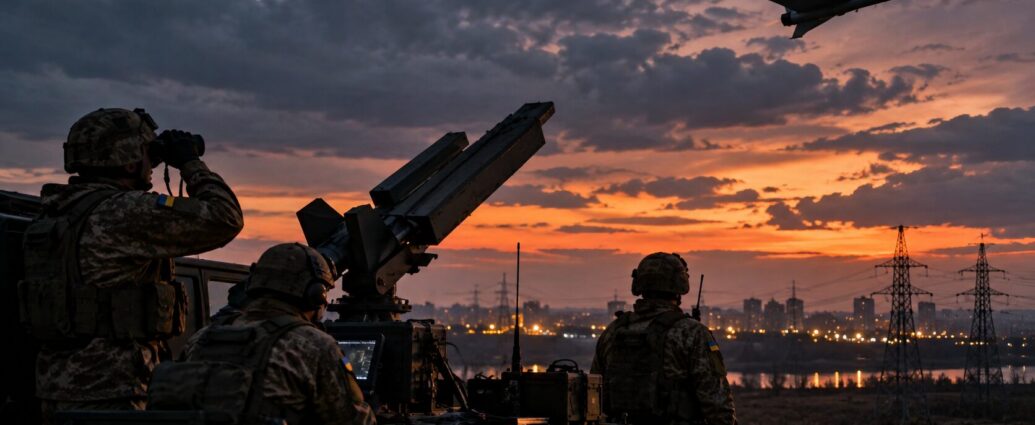
Ukraine is racing to develop a new generation of air-defense weapons as Russia deploys increasingly sophisticated jet-powered attack drones capable of traveling more than 370 miles per hour, outpacing many of the systems Kyiv currently relies on to protect its cities and critical infrastructure.
The expanding threat represents a significant shift in the war. Russia is moving beyond slower, propeller-driven drones toward faster weapons that give Ukrainian defenders considerably less time to detect, track and destroy incoming attacks.
The consequences extend beyond the battlefield. Russian strikes have increasingly targeted power plants, transportation networks, industrial facilities and other infrastructure essential to keeping Ukraine’s economy functioning.
Ukraine now faces a difficult challenge: Russia is expanding production of weapons faster than Kyiv can manufacture and deploy the technology needed to stop them.
Russia’s New Weapons Change the Battlefield
Russia’s Geran-4 and Geran-5 drones represent a major technological advancement over earlier Iranian-designed Shahed drones.
Some models can travel at speeds approaching 600 kilometers per hour, or approximately 373 miles per hour, compared with traditional propeller-driven drones that travel at substantially lower speeds.
That speed advantage is proving particularly difficult for Ukrainian air-defense teams equipped with machine guns and conventional interceptor drones.
Many Ukrainian interceptors operate at speeds of approximately 186 to 248 miles per hour, leaving them unable to catch Russia’s faster weapons in a pursuit.
Fighter aircraft such as the F-16 can intercept the new drones, but deploying expensive military aircraft against relatively inexpensive unmanned weapons creates additional operational and financial challenges.
Russia has also constructed a major drone-launching facility in its Rostov region. Satellite imagery examined by Reuters indicates that the installation was built in roughly six weeks and could significantly expand Moscow’s ability to launch sustained attacks.
Ukrainian Manufacturers Race to Respond
Ukrainian defense companies are accelerating development of faster interceptors, including jet-powered drones designed specifically to destroy Russia’s latest weapons.
Manufacturers are pursuing improved propulsion systems, autonomous targeting and artificial-intelligence technology capable of tracking incoming drones at high speeds.
But developing prototypes is only the first obstacle.
Ukraine must also secure enough jet engines, electronic components and manufacturing capacity to produce the weapons in sufficient quantities.
President Volodymyr Zelenskyy has said Ukraine already has working interceptor prototypes and is expanding production.
The challenge is turning those initial successes into an affordable, reliable defense system capable of responding to large-scale attacks.
Industry estimates suggest that scaling production could take several months, leaving a dangerous gap between Russia’s expanding offensive capabilities and Ukraine’s ability to respond.
Energy Infrastructure and Businesses Face Growing Risks
The growing use of high-speed drones threatens Ukraine’s economic stability at a critical time.
Russian attacks have targeted electricity infrastructure, industrial facilities, railways and other essential transportation systems.
Damage to these networks can interrupt manufacturing, delay shipments, raise operating costs and disrupt everyday business activity.
Electricity shortages also threaten factories, telecommunications networks, retailers and households already struggling with the economic consequences of years of war.
As colder weather approaches, additional damage to Ukraine’s power and heating systems could create further economic and humanitarian pressure.
The attacks also carry implications for Europe, which continues to support Ukraine financially and militarily while managing the wider economic consequences of the conflict.
A New Arms Race With Global Implications
The confrontation is also revealing a broader challenge for the United States and NATO.
Relatively inexpensive drones are becoming faster and more sophisticated, potentially forcing countries to invest heavily in new detection systems, interceptors and electronic warfare technology.
Ukraine’s experience is demonstrating that conventional air defenses alone may not be sufficient against large numbers of rapidly produced unmanned weapons.
For defense manufacturers, the emerging competition could generate significant demand for faster interceptors, small jet engines, artificial-intelligence guidance systems and lower-cost defensive technologies.
For governments, it raises a pressing question: Can defensive weapons be manufactured quickly and cheaply enough to keep pace with increasingly advanced offensive systems?
Russia is betting that mass production and technological improvements can overwhelm Ukraine’s defenses.
Kyiv is betting that its own defense industry can innovate fast enough to close the gap.
The outcome could influence military procurement and air-defense strategies far beyond Ukraine.
JBizNews Desk | Kyiv, Ukraine
© 2026 JBizNews. All Rights Reserved.


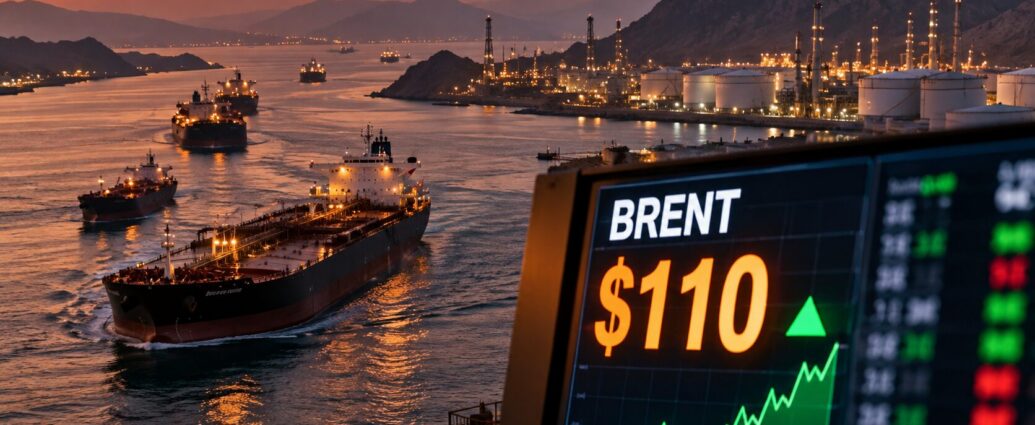
BREAKING: Oil Tops $110 for First Time Since May, Threatening Trump’s Economic Strategy Just 18 Days Before Midterm Elections
JBIZNEWS | ENERGY, ECONOMY & POLITICS | OCTOBER 16, 2026
NEW YORK — Global oil prices surged above $110 a barrel Friday for the first time since May, delivering another economic setback for President Donald Trump just 18 days before the November 3 midterm elections, as escalating Middle East hostilities threaten energy supplies, raise inflation concerns and complicate Republicans’ efforts to retain control of Congress.
The benchmark Brent crude oil price briefly crossed the critical $110 threshold amid renewed attacks on shipping routes and energy infrastructure. Brent futures were subsequently quoted near $109.86 a barrel, their highest level since May 19, while U.S. West Texas Intermediate crude closed at $101.41, gaining approximately 3.5% in a single session.
For the White House, the timing could hardly be more consequential.
Trump has made lower energy costs a central part of his economic agenda, but continued conflict involving Iran, Houthi attacks and disruptions to Russian energy infrastructure are pushing oil prices in the opposite direction. The resulting increases in gasoline, diesel and transportation costs are reaching American consumers at precisely the moment both political parties are making their final appeals to voters.
A Global Energy Crisis Collides With the Midterm Elections
The rise above $110 represents more than another milestone in commodity trading. It highlights a growing political challenge for an administration seeking to demonstrate economic progress before voters decide control of the House and Senate.
A Pew Research Center survey conducted September 28 through October 4 found that 84% of registered voters consider the economy very important to their congressional vote.
The same survey showed Democratic congressional candidates holding an eight-percentage-point advantage over Republicans nationally, with President Trump’s approval rating at 30%.
Those findings preceded Friday’s latest oil rally.
Rising energy prices now threaten to reinforce voters’ concerns about affordability, particularly among households already struggling with gasoline, groceries, housing and transportation expenses.
The danger for Republicans is not simply the price of oil itself. It is the possibility that voters will connect the worsening cost-of-living picture with the administration’s economic and foreign policies.
Republicans Rework Their Election Strategy as Gas Prices Rise
The political consequences are already visible.
Republican campaign organizations have been shifting resources toward defending competitive seats, including contests in traditionally Republican states where higher living costs and dissatisfaction with the Iran conflict have complicated the electoral landscape.
Financial Times reporting this week showed Republicans committing hundreds of millions of additional dollars to congressional races amid intensifying competition.
Meanwhile, Trump has increased campaign appearances in an effort to energize Republican voters, while some GOP candidates have focused their messaging on tax reductions, public safety and local economic concerns rather than making the president the central subject of their campaigns.
Democrats have taken a different approach, emphasizing affordability and connecting Republican candidates to Trump’s record.
According to Associated Press reporting Friday, Democrats have spent more than $163 million since September 1 on television advertisements referencing Trump, compared with approximately $11 million in Republican advertising that mentions him.
The energy crisis has become part of that broader contest over economic credibility.
The political risk is particularly apparent in Kansas, where Republican Senator Roger Marshall warned in July that gasoline prices in October could determine the midterm elections. Since then, gasoline and diesel costs have risen sharply, and his reelection contest has attracted increased national attention.
Trump Faces a Difficult Choice Over Iran and Oil Prices
The administration is attempting to balance competing priorities: maintaining pressure on Iran, protecting Middle East shipping routes and preventing further increases in energy prices.
Yet seven months into the conflict, international oil markets remain vulnerable to fresh attacks.
Recent threats to vessels traveling through the Strait of Hormuz, renewed Houthi military operations and strikes affecting energy infrastructure have created uncertainty over the reliability of oil deliveries.
At the same time, Ukrainian attacks on Russian refining facilities have added another layer of instability to global petroleum supplies.
Efforts to ease restrictions affecting some Russian oil shipments, combined with emergency petroleum stockpile releases, have so far failed to eliminate the market’s concerns.
The International Energy Agency has committed substantial additional emergency supplies, but the continuing rise in crude prices illustrates the limits of such intervention while military threats remain unresolved.
The White House also faces a political complication: lower gasoline prices could provide immediate economic relief before the elections, but achieving that objective depends partly on international security developments that cannot be resolved through domestic economic policy alone.
Higher Oil Prices Threaten Inflation, Transportation and Consumer Spending
The consequences extend well beyond Washington.
National gasoline prices have climbed above $4.30 a gallon, substantially increasing the cost of driving for American households.
Diesel prices present an additional threat to trucking companies, manufacturers, construction businesses and retailers that depend on ground transportation.
Airlines face higher jet fuel expenses, while ocean freight operators must contend with increasing fuel costs, shipping insurance premiums and the possibility of longer delivery routes around dangerous waterways.
These additional expenses can ultimately reach consumers through higher prices for food, merchandise and essential services.
For the Federal Reserve, another sustained increase in energy costs could complicate efforts to control inflation. Higher fuel and freight expenses can spread through supply chains, making it more difficult to justify lower interest rates even as businesses face increasing borrowing costs.
Small businesses are particularly exposed because many lack the financial flexibility to absorb sudden increases in operating expenses.
The Final 18 Days Could Be Critical
With early voting already underway in several states, the administration has limited time to demonstrate that energy costs are moving in the right direction.
Even if crude prices begin to retreat, reductions at gasoline pumps may take time to reach consumers. Conversely, continued supply disruptions could keep petroleum prices elevated through Election Day.
Republicans retain substantial campaign resources and are counting on Trump to motivate voters who might otherwise stay home. Democrats are concentrating on economic dissatisfaction and the president’s handling of the Iran conflict.
Friday’s oil rally adds pressure to that contest.
The price of crude does not determine an election on its own. But when 84% of registered voters identify the economy as a major voting issue, a sharp increase in the world’s most important energy commodity becomes difficult for either party to ignore.
Oil crossing $110 just 18 days before the midterms is no longer merely an energy-market story. It is an economic shock arriving at one of the most politically sensitive moments of the year, with consequences for American businesses, household budgets and the battle for control of Congress.
JBizNews Desk | New York
© 2026 JBizNews. All rights reserved.

Opinion | Donald Trump and the Nuclear Taboo

Brazen Russian Attacks Are Testing NATO



Indonesia Stocks Plunge 11% in Worst Market Crash Since 1998 as MSCI Threatens Downgrade
JAKARTA, Indonesia — October 16, 2026 — Indonesian stocks suffered their steepest one-day decline since the 1998 Asian financial crisis on Friday, after global index provider MSCI warned that the country could lose its emerging-market status, potentially triggering billions of dollars in foreign investment withdrawals.
The Jakarta Composite Index plunged approximately 11%, falling to its lowest level in six years. The selloff spread across banking, mining and energy stocks, while Indonesia’s rupiah weakened to around 18,070 against the U.S. dollar.
The collapse followed MSCI’s announcement that it is considering reclassifying Indonesia from an emerging market to a standalone market, a designation that could remove Indonesian stocks from major international indexes followed by institutional investors worldwide.
Why MSCI Is Threatening a Downgrade
MSCI raised serious concerns about transparency in Indonesia’s stock market, including unclear corporate ownership structures, concentrated shareholdings and suspected coordinated trading activity.
Although Indonesian regulators have announced reforms, MSCI said investors remain unconvinced that those measures have produced meaningful and sustained improvements.
The downgrade would carry major financial consequences. International investment funds that track MSCI benchmarks could be required to sell Indonesian shares if the country is removed from their indexes.
Market estimates suggest Indonesia could face as much as $19 billion in investment outflows, including approximately $4 billion from passive funds and $15 billion from actively managed investments.
A Market Already Under Pressure
Friday’s collapse adds to an already devastating year for Indonesian investors.
The country’s equity market has lost nearly 40% of its value in 2026, making it one of the world’s worst-performing stock markets.
Major companies across the financial, commodity and energy sectors were caught in the selloff, with several shares reaching exchange-imposed daily price-decline limits.
The currency’s weakness adds another concern for international investors, whose losses can increase when both stock prices and the local currency decline.
What Happens Next
MSCI has not yet made a final downgrade decision. The index provider will consult with market participants and expects to announce its determination by the end of June 2027.
Indonesia now faces pressure to demonstrate meaningful improvements in ownership disclosure, market oversight and investor protections before that decision.
A downgrade could significantly reduce the country’s access to international investment capital, increasing financing costs for Indonesian businesses and placing further pressure on the economy.
The broader concern extends beyond Friday’s market collapse. Indonesia, Southeast Asia’s largest economy, risks losing its standing among the emerging markets that attract substantial international institutional investment.
For investors, the immediate question is whether Indonesian authorities can restore confidence before a proposed reclassification becomes a financial reality.
JBizNews Desk | Jakarta, Indonesia
© 2026 JBizNews. All Rights Reserved.


Israeli Stocks Slide as Investors Fear Election Deadlock and Another Round of Voting
TEL AVIV, Israel — Israel’s stock market is signaling growing concern that the October 27 national election could fail to produce a governing majority, potentially sending the country into another round of political uncertainty.
Research by the Tel Aviv Stock Exchange suggests that Israeli stocks have historically performed significantly worse ahead of elections that ended without a decisive outcome, raising questions about whether investors are already pricing in another political stalemate.
The concern comes after a sharp decline in Israeli equities during the week ending October 9, even as major U.S. stock indexes advanced.
The TA-125 Index fell 3.6%, the blue-chip TA-35 dropped 3.7%, and the TA-90 declined 3.3%. During the same period, the S&P 500 gained 1.2%, highlighting the gap between Israeli and American market performance.
Investors Face the Possibility of Another Election
Recent polling suggests neither Prime Minister Benjamin Netanyahu’s governing bloc nor the main opposition can independently secure the 61 seats necessary to control Israel’s 120-member Knesset.
That raises the possibility of prolonged coalition negotiations, political compromises, or another national election.
Israel experienced four elections between 2019 and 2021 during an extended period of political instability.
For businesses and investors, the concern is not simply which political party wins. It is whether the next government can provide the stability necessary for economic planning, investment decisions, and fiscal policy.
Historical Market Data Raises Concerns
The Tel Aviv Stock Exchange examined market performance surrounding Israel’s last 10 elections dating back to 2003.
Its findings revealed a significant difference between elections that produced stable governments and those that ended in political deadlock.
During the three months preceding inconclusive elections, the TA-125 Index declined an average of 5.3%.
By comparison, the index fell just 0.2% on average before elections that ultimately produced stable governments.
The findings suggest political uncertainty can weigh heavily on investor confidence, although stock performance cannot reliably predict election outcomes.
The current decline may also reflect global market volatility, geopolitical developments, corporate earnings, and changing interest-rate expectations.
What It Means for Israel’s Economy
Political uncertainty can complicate government budgeting, infrastructure investment, economic reforms, and long-term business planning.
For international investors evaluating opportunities in Israeli technology, real estate, manufacturing, and financial markets, the formation of a functioning government could prove more consequential than which coalition ultimately takes power.
However, the exchange’s historical findings also offer a more encouraging perspective.
The performance gap between elections that produced decisive results and those that ended in stalemate largely disappeared within three months after voting. After five months, average market returns were nearly identical.
Across the elections studied, the TA-125 generated an average return of 16.4% during the year following an election.
That suggests investors have historically looked beyond short-term political disruption and returned their attention to the underlying strength of Israel’s economy.
October 27 Becomes a Test of Investor Confidence
With less than two weeks remaining before the election, Israeli financial markets face an increasingly important question: Will the vote deliver a government capable of providing economic stability, or will another round of political uncertainty delay key decisions?
The market’s recent weakness is consistent with historical patterns preceding inconclusive elections, but it is not proof that investors know what the election will deliver.
For now, the financial message is clear. Political certainty carries economic value, and Israeli investors are watching closely for signs that the next election will deliver it.
JBizNews Desk | Tel Aviv, Israel
© 2026 JBizNews. All Rights Reserved.
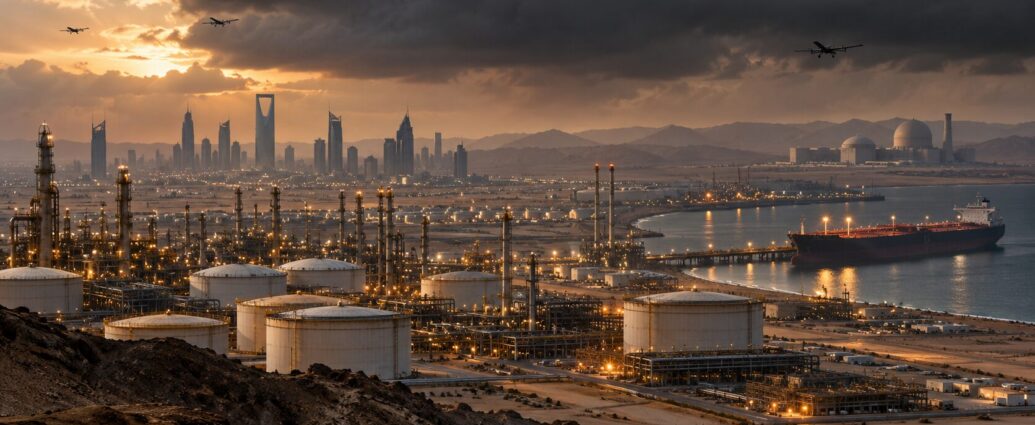
Houthis Expose Saudi Arabia’s Weakness, Disrupt Global Commerce: Why Trump Should Reverse Course on Nuclear Deal Before Terrorists Could Seize Control
JBIZNEWS | GLOBAL COMMERCE & NATIONAL SECURITY | OCTOBER 15, 2026
By Duvi Honig, Founder & CEO, Orthodox Jewish Chamber of Commerce
WASHINGTON — Saudi Arabia holds some of the world’s largest oil reserves, commands enormous financial wealth and has spent billions on American military equipment. Yet a terrorist organization operating out of neighboring Yemen is striking its airports, threatening its energy infrastructure and disrupting global commerce.
Now President Donald Trump is advancing a nuclear cooperation agreement with that same kingdom.
The question is no longer simply whether Saudi Arabia can defend itself against the Houthis. It is whether the United States should help expand nuclear capabilities in a country whose defenses are already being penetrated by militants who have demonstrated their ability to seize territory, challenge governments and inflict enormous economic damage.
If the Houthis can create this much destruction without controlling Saudi Arabia, what happens if they eventually overrun the kingdom and gain access to its nuclear facilities and materials?
It is a danger Washington should confront before proceeding any further.
Former U.S. Envoy Warns of a Growing Global Threat
Tim Lenderking, who served as U.S. special envoy for Yemen from 2021 to 2025, warned Thursday that the Houthis have developed into an international security threat, increasingly capable of operating independently of Iran.
In remarks reported by Fox News, Lenderking described the group as a “clear and very present danger.”
His warning followed a devastating series of attacks against Saudi Arabia.
According to Saudi military officials, Houthi strikes against King Khalid International Airport in Riyadh killed 17 people and injured 333 between October 7 and October 11. The airport has reportedly faced 20 attacks since the beginning of October.
The militants have also struck Saudi Aramco’s headquarters in Dhahran, threatening facilities connected to one of the most important energy companies in the world.
Lenderking explained that the Houthis have developed their own weapons capabilities, smuggling operations and financing networks. Although Iran helped build their military strength, they no longer depend exclusively on Tehran to operate.
That makes the threat more difficult to contain.
Saudi Arabia is not facing a conventional army with comparable resources. It is facing a militant organization that has found ways to overcome vastly superior spending, sophisticated defense equipment and international military assistance.
A Small Militant Force Is Already Disrupting Global Commerce
The Houthis have demonstrated how much destruction an armed movement can inflict without possessing the economic or military strength of a major nation.
Their attacks threaten the Bab el-Mandeb Strait, a vital maritime passage connecting the Red Sea with the Indian Ocean and international shipping routes through the Suez Canal.
Shipping companies facing missile and drone threats must contend with increased insurance expenses, longer voyages and higher operating costs.
These disruptions affect businesses and consumers far beyond the Middle East.
Manufacturers in Asia, importers in Europe and retailers in the United States depend on reliable shipping routes. When those routes become dangerous, the consequences spread through international supply chains.
The threat to Saudi oil infrastructure is even more consequential.
Saudi Arabia’s production capacity plays a major role in international energy markets. Attacks on its oil facilities, pipelines and shipping infrastructure can affect fuel supplies, transportation costs and business confidence worldwide.
On Thursday, Gulf stock markets declined as the Houthis threatened further attacks against Saudi Arabia following the strike on Aramco’s Dhahran headquarters.
The disruption has extended to international aviation, investment conferences, sporting events and tourism.
Saudi Arabia has the money, the oil and the advanced weapons. Yet the Houthis continue to inflict serious damage.
That is the weakness Washington must recognize.
Trump Is Advancing Nuclear Cooperation With Saudi Arabia
On July 22, the Trump administration signed a civilian nuclear cooperation agreement with Saudi Arabia.
The agreement establishes the foundation for a multibillion-dollar nuclear energy partnership and potentially opens the way for sensitive nuclear activities, subject to additional requirements.
The administration has described the arrangement as an economic opportunity that will expand American business while strengthening regional security.
But recent events expose a danger that cannot be dismissed by commercial agreements or diplomatic assurances.
Saudi Arabia cannot guarantee that its current government will remain in control forever.
Nor can it guarantee that armed groups will never penetrate its borders, seize territory or exploit a major political crisis.
The concern is not that Saudi Arabia’s current leadership is necessarily seeking to hand nuclear technology to terrorists.
The concern is that the nuclear facilities and capabilities established under today’s Saudi government could eventually be captured by forces hostile to the United States and the international community.
Civilian nuclear power is distinct from nuclear weapons, and capturing a reactor would not automatically give terrorists an atomic bomb. But access to sensitive nuclear materials and facilities could create serious risks of sabotage, theft, radiological attacks and nuclear proliferation.
The United States would be taking a long-term security risk that could outlive the Saudi leadership making the agreement.
The Arab Spring Showed How Quickly Governments Can Be Overrun
The Arab Spring should remain a central lesson in American foreign policy.
Beginning in 2010, uprisings swept across the Middle East and North Africa.
Long-established governments collapsed in Tunisia, Egypt and Libya. Yemen descended into political upheaval and civil war.
Leaders who once appeared firmly in control suddenly lost their positions, while competing factions and armed movements fought for power.
Yemen itself offers a particularly relevant example.
The Houthis exploited years of conflict and political division to seize the capital, Sanaa, in 2014, eventually establishing control over substantial territory.
They did not begin as a global military power.
They grew through political disorder, territorial conquest, weapons acquisition and the weakening of established state authority.
Today that same movement threatens Saudi Arabia, international shipping and global energy markets.
There is no established evidence that the Houthis could currently conquer Saudi Arabia. But the Arab Spring demonstrated why a government’s present control cannot be assumed to last indefinitely.
A nuclear program cannot be secured merely by trusting the government that receives it today. It must remain secure even if that government falls tomorrow.
Saudi Arabia’s Wealth Does Not Make It Immune to Takeover
Saudi Arabia has enormous financial resources and some of the largest proven oil reserves in the world.
Its military spending ranks among the highest internationally.
Yet those advantages have not prevented the Houthis from inflicting deadly attacks and threatening essential infrastructure.
That contrast makes the proposed nuclear partnership particularly concerning.
The question is not whether Saudi Arabia can afford nuclear facilities.
It is whether the kingdom can protect them against an armed organization that has already demonstrated an ability to exploit military weaknesses and political disorder.
And the danger would not necessarily come only from the Houthis.
A future uprising, military breakdown or violent takeover could create opportunities for other extremist organizations or hostile regimes.
The fall of a government could place critical infrastructure under entirely different control from the leadership Washington originally trusted.
Once nuclear facilities and sensitive materials exist, the consequences of losing control could extend far beyond the kingdom’s borders.
Trump Should Reconsider the Nuclear Deal
The Trump administration has pursued closer economic and strategic relations with Saudi Arabia, including major investment and energy agreements.
But the nuclear agreement introduces risks that cannot be measured solely in billions of dollars or American jobs.
The Houthis are already disrupting international commerce and threatening one of the world’s most important oil-producing nations.
They are exposing weaknesses in a kingdom that has invested heavily in military protection.
And their own rise during Yemen’s political collapse demonstrates how quickly a militant organization can emerge as a territorial and regional power.
President Trump should reverse course on nuclear cooperation with Saudi Arabia rather than risk introducing capabilities that a future terrorist takeover could put in hostile hands.
This is not about whether the United States maintains its partnership with the Saudi government or supports the kingdom’s economic development.
It is about recognizing that some security risks cannot be undone once nuclear materials, facilities and sensitive capabilities are established.
The lesson from the Houthis is already unfolding in front of the world.
A relatively small militant force has disrupted international trade, threatened oil infrastructure, struck major airports and undermined the security of a wealthy nation.
If Saudi Arabia is struggling to contain that threat today, Washington must consider what could happen during a more serious military or political collapse.
The Arab Spring showed how rapidly governments can fall. Yemen showed how the Houthis can exploit that collapse and seize control.
America should not gamble on the assumption that Saudi Arabia could never face a similar loss of control.
Oil facilities can be rebuilt. Airports can reopen. Shipping routes can recover. But allowing nuclear capabilities to fall into terrorist hands could produce consequences that no economic recovery plan can reverse.
That is a risk President Trump should not take.
JBizNews Desk | Washington, D.C.
© 2026 JBizNews. All Rights Reserved.

Tesla Halts Cheapest Model 3 Orders in Canada as Import Quota Dispute Raises Questions
AUTOMOTIVE | INTERNATIONAL TRADE | OCTOBER 15, 2026
TORONTO — Tesla has suspended orders for its two least-expensive Model 3 vehicles in Canada, blaming restrictions on Chinese-built electric vehicle imports, even as Canadian government figures show that tens of thousands of import slots remain unused.
The decision removes Tesla’s most affordable electric sedan from the Canadian ordering system, leaving buyers with a significantly more expensive alternative and raising questions about how Ottawa distributes permits under its trade agreement with China.
Tesla stopped accepting new orders on October 12 for the Shanghai-built Model 3 Premium, which starts at C$39,490, approximately US$28,000.
The company told customers that strong demand had exhausted its available import allocation. Orders may resume in March 2027 if the Canadian government issues additional permits.
A $35,500 Jump for Canadian Buyers
With the lower-priced versions unavailable, the only Model 3 currently offered through Tesla’s Canadian online ordering system is the Performance all-wheel-drive model, priced at C$74,990.
That represents a difference of C$35,500 from the entry-level vehicle.
Model 3 version
Canadian starting price
New orders
Premium RWD
C$39,490
Paused
Premium AWD
C$49,990
Paused
Performance AWD
C$74,990
Available
The interruption highlights how trade restrictions can directly affect vehicle availability and consumer prices, even when manufacturers have production capacity overseas.
Canada’s Numbers Tell a Different Story
The dispute centers on Canada’s quota for electric vehicles manufactured in China.
Under a trade arrangement negotiated earlier this year, Canada agreed to permit 49,000 Chinese-built electric vehicles to enter the country during the first year at a reduced tariff of 6.1%.
The arrangement replaced a much higher tariff barrier for qualifying vehicles and was intended to encourage more affordable electric car imports.
However, government figures released October 9 showed that just 15,931 permits had been used, leaving 33,069 available.
CANADA’S FIRST-YEAR CHINESE EV IMPORT QUOTA
49,000
Total vehicles
15,931 used (32.5%)
33,069 unused (67.5%)
Based on government utilization figures reported as of October 9, 2026. Unused national quota does not necessarily represent quota available to Tesla.
That discrepancy has prompted questions about why Tesla cannot continue importing vehicles when most of the overall allocation remains unused.
The distinction appears to lie in how Ottawa allocates permits among individual manufacturers.
Tesla Says Government Controls the Supply
Iain Myrans, Tesla’s Canadian public policy executive, addressed the issue publicly on October 13.
He explained that Global Affairs Canada provides automakers with advance guidance about the maximum number of vehicles they can expect to import during a particular period.
Although the program appears to operate on a first-come, first-served basis, Myrans indicated that government allocation decisions introduce additional restrictions.
Global Affairs Canada has declined to disclose Tesla’s specific allocation, citing commercial confidentiality.
The department said it was consulting with manufacturers to improve utilization of the remaining quota and reviewing its longer-term policy.
The available figures therefore do not establish that Tesla’s explanation is inaccurate. They show a difference between the overall national quota and the allocation Tesla says it can use.
Trade Dispute Adds Another Complication
Tesla’s Canadian supply strategy has shifted as tariffs have changed.
The company previously supplied Canadian customers with Model 3 vehicles manufactured in California. It subsequently moved to Shanghai-built vehicles to benefit from Canada’s lower tariff treatment for qualifying Chinese imports.
Many U.S.-built vehicles have faced Canadian tariffs of 25% amid the continuing trade dispute between Ottawa and Washington.
That creates an unusual situation for an American automaker: Tesla can potentially supply Canadian buyers more competitively from China than from its U.S. factories.
The issue extends beyond Tesla. Canada’s trade policy also aims to encourage Chinese automotive investment and future manufacturing partnerships inside Canada.
For American manufacturers, those arrangements introduce another competitive challenge in a neighboring market historically closely integrated with U.S. vehicle production.
What It Means for Tesla and Consumers
The immediate consequence is reduced choice for Canadian electric vehicle buyers.
Customers seeking Tesla’s least-expensive sedan may have to postpone purchases, consider more expensive models or turn to competing manufacturers.
For Tesla, the suspension could restrict sales in a market where affordable electric vehicles remain central to broader adoption.
For policymakers, the dispute illustrates how import allocations can influence competition even when national quotas are not fully utilized.
The key unresolved question is whether Ottawa will make additional import capacity available to Tesla before March 2027.
Until then, the company’s most affordable Model 3 remains unavailable for new Canadian orders, demonstrating how international trade rules can determine which cars consumers can buy and how much they must pay.
JBizNews Desk | Toronto
© 2026 JBizNews. All Rights Reserved.


Opinion | The Democratic Hormuz Alternative


Opinion | Western Sahara Embraces Morocco



UBS Weighs Leaving Switzerland as New Capital Rules Threaten Global Ambitions
ZURICH — UBS, Switzerland’s largest bank and one of the country’s most recognizable corporate institutions, is considering something that once would have seemed almost unthinkable: leaving Switzerland.
The bank is evaluating whether it could relocate its headquarters if Swiss regulators impose significantly tougher capital requirements following the collapse of Credit Suisse and UBS’s government-brokered takeover of its former rival.
The proposed rules could force UBS to hold as much as $20 billion in additional high-quality capital, depending on how the final framework is structured.
For UBS, the issue is not simply regulatory compliance.
It is competitiveness.
The bank argues that substantially higher capital requirements in Switzerland could leave it at a disadvantage against major U.S. and European rivals that operate under different regulatory structures.
That has pushed UBS management to examine alternatives that would have been nearly unimaginable for a bank so closely associated with Switzerland’s identity as a global financial center.
Among the possibilities reportedly being discussed are acquiring a U.S. financial institution, merging with a European bank, shifting its legal headquarters outside Switzerland, or ultimately selling itself to a larger foreign institution.
No decision has been made.
UBS Chairman Colm Kelleher and Chief Executive Sergio Ermotti have both indicated that remaining in Switzerland is still the preferred outcome if the bank can reach a workable compromise with regulators.
But the fact that relocation is being seriously considered shows how far the dispute has progressed.
Credit Suisse Changed the Rules
The regulatory pressure stems directly from the 2023 collapse of Credit Suisse.
UBS acquired its longtime rival in an emergency transaction supported by the Swiss government, creating a financial institution whose size and importance to Switzerland increased dramatically overnight.
That rescue left Swiss lawmakers determined to prevent another banking crisis from requiring large-scale government intervention.
The government has since pushed for tighter capital standards and stronger protections around systemically important banks.
Under the proposed framework, UBS could be required to back its foreign subsidiaries with substantially more common equity than it does today.
Regulators view that as protection for taxpayers.
UBS views it as a potential competitive handicap.
Why Capital Requirements Matter
Bank capital acts as a financial cushion.
The more capital a bank is required to hold, the greater its ability to absorb losses during a crisis.
But that protection comes at a cost.
Capital held to satisfy regulators cannot be deployed as aggressively for lending, acquisitions, share buybacks or other investments that generate returns for shareholders.
For a global bank competing with JPMorgan Chase, Morgan Stanley, Goldman Sachs and other international financial institutions, billions of dollars of additional capital can materially affect profitability.
That is the heart of the dispute.
Switzerland wants a stronger financial safety net after Credit Suisse.
UBS wants to ensure that being headquartered in Switzerland does not make it structurally less competitive than foreign rivals.
What Leaving Switzerland Could Mean
A UBS departure would carry consequences far beyond the bank itself.
Switzerland has built much of its international financial reputation around stability, private banking and wealth management.
UBS is one of the most important symbols of that system.
Moving the headquarters of the country’s largest bank abroad would represent a major symbolic loss for Switzerland and could raise broader questions about whether its regulatory environment remains attractive to global financial institutions.
UBS also remains deeply tied to the Swiss economy.
Its domestic operations generate a substantial portion of the group’s revenue, and any relocation would be extraordinarily complicated and expensive.
That is one reason Swiss Finance Minister Karin Keller-Sutter has publicly questioned whether UBS would actually leave.
The bank would likely face enormous restructuring costs, tax consequences and regulatory complications if it attempted to relocate.
Still, investors are taking the possibility seriously.
Some major shareholders have publicly supported the idea of UBS leaving Switzerland if the final capital rules significantly reduce its competitiveness.
A Bigger Question for Switzerland
The dispute creates a difficult policy question.
After the collapse of Credit Suisse, Switzerland has strong reasons to demand more protection from its remaining global banking giant.
But requiring too much capital could create a different problem — pushing that bank to reconsider whether Switzerland remains the best home for its global operations.
That is the balance lawmakers are now trying to strike.
Too little regulation could leave taxpayers exposed during another crisis.
Too much regulation could weaken one of Switzerland’s most important companies or potentially push it abroad.
For UBS, the immediate goal appears to be leverage in those negotiations rather than an imminent departure.
But the fact that moving has become a serious strategic option is significant on its own.
UBS has spent generations helping define Switzerland’s reputation as one of the world’s premier financial centers.
Now Switzerland’s largest bank is asking whether remaining Swiss could eventually cost it too much.
JBizNews Desk | Zurich
© JBizNews.com. All rights reserved. Unauthorized reproduction or redistribution is strictly prohibited.
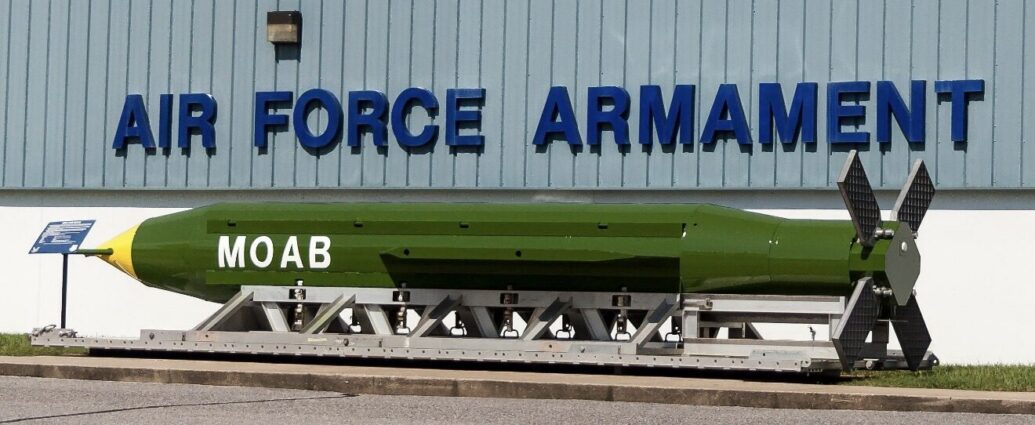
JBizNews | Special Analysis – America’s “Mother of All Bombs”: After Months of Strikes on Iran, What Would One More Massive Explosion Actually Achieve?
Washington is considering its largest conventional blast weapon, but its destructive power, military purpose and ability to end the Iran war are very different questions.
WASHINGTON — After more than seven months of American military operations against Iran, the Pentagon is considering using the so-called Mother of All Bombs, a massive conventional weapon capable of devastating a wide area in a single explosion.
But the proposal raises an important question: What could this weapon accomplish that months of American and Israeli bombing have not already achieved?
According to CNN’s October 14 report, the U.S. military has developed additional strike plans involving Iranian nuclear sites and energy infrastructure. Those options include the GBU-43/B Massive Ordnance Air Blast bomb, commonly known as the MOAB.
President Donald Trump has not approved its use, and officials familiar with the planning have questioned whether it would materially advance American military objectives.
A devastating bomb, but nothing close to Hiroshima
The MOAB weighs approximately 21,600 pounds and produces explosive energy equivalent to roughly 11 tons of TNT.
By comparison, the atomic bomb dropped on Hiroshima in August 1945 released approximately 15,000 tons of TNT equivalent.
That makes Hiroshima’s nuclear explosion roughly 1,360 times more powerful.
The MOAB is a conventional weapon. It does not produce the nuclear radiation, extreme thermal effects or radioactive fallout associated with an atomic explosion.
Its destructive advantage comes from concentrating a very large conventional explosion across a broad surface area.
CNN reports that the weapon can devastate an area roughly equivalent to nine city blocks, though actual damage would depend on terrain, buildings and the conditions of the explosion.
This is enormously destructive by conventional military standards. It is not nuclear-scale destruction.
Why the 30,000-pound bunker buster is different
The United States has already demonstrated a different type of large-bomb capability in Iran.
In June 2025, American B-2 stealth bombers dropped 14 GBU-57 Massive Ordnance Penetrators during attacks on Iranian nuclear facilities.
Each weapon weighed approximately 30,000 pounds.
Unlike the MOAB, these bombs were engineered to penetrate deep into reinforced underground structures before exploding.
The difference is essential.
A bunker buster attempts to deliver its explosive force inside a protected facility. The MOAB releases much more explosive energy across a broad area but is not engineered to penetrate hundreds of feet through granite.
The distinction is not which weapon is heavier. It is where the destructive energy is delivered.
Both could theoretically be used in a broader military campaign, but there is no confirmed plan to deploy them together, and one does not automatically make the other more effective.
Why not simply drop several smaller bombs?
That question goes directly to the military value of the MOAB.
American forces possess precision-guided weapons capable of striking numerous separate targets, including aircraft, missile launchers, storage facilities, radar systems and energy infrastructure.
Several conventional bombs could collectively release more explosive energy than a single MOAB.
For perspective, the MOAB’s approximately 11-ton TNT-equivalent yield is comparable in total energy to that of multiple smaller conventional weapons.
But total explosive energy and destructive effectiveness are not interchangeable.
Ten separate explosions can damage ten different targets. One enormous explosion concentrates much of that energy into one event.
Conversely, several weapons delivered against the same area do not necessarily reproduce the pressure, timing and blast characteristics of one very large explosion.
The military question is therefore not whether the United States can drop enough smaller bombs to equal the MOAB’s explosive energy. It can.
The question is whether concentrating an exceptionally large explosion into one location would provide a specific advantage over precision attacks.
So far, Pentagon officials cited by CNN have not established that such an advantage would be decisive against Iran’s remaining nuclear facilities.
Has America changed its objectives in Iran?
The original American military campaign launched in February 2026 focused on degrading Iran’s nuclear capabilities, ballistic missiles, naval forces and ability to project military power throughout the region.
Those objectives involve disabling specific military capabilities.
The newer planning described by CNN includes potential attacks on extensive Iranian energy infrastructure and the possible use of the MOAB against nuclear-related locations, including Pickaxe Mountain.
That represents a potentially broader range of targets.
However, preparing additional strike options does not establish that the administration has formally changed its war objectives.
It does raise a serious strategic question.
Is Washington still focused primarily on destroying Iran’s remaining military capabilities, or is it increasingly considering attacks intended to impose sufficient economic and psychological pressure to force Tehran into an agreement?
Those two approaches can overlap, but they are not identical.
Destroying equipment requires identifying and disabling it. Coercing a government requires convincing its leadership that the cost of continuing the conflict exceeds the cost of accepting American demands.
An enormous explosion may contribute to that pressure. It does not guarantee a political concession.
Why consider the weapon now?
The timing is particularly significant.
The United States has already conducted an extensive bombing campaign, yet Iran’s government remains in power, its nuclear infrastructure remains a concern, and negotiations have failed to produce an agreement ending the conflict.
The Strait of Hormuz remains a major source of instability, affecting international shipping and global energy markets.
CNN reports that some administration officials have discussed additional attacks that could create an opportunity to declare a military success and begin withdrawing American forces.
Under that scenario, the MOAB’s extraordinary visual and psychological impact could be part of its appeal.
The weapon was originally developed in 2003, partly to intimidate opposing forces, and was first used in combat against an ISIS tunnel complex in Afghanistan in April 2017.
But intimidation and military victory are not the same thing.
A powerful explosion might destroy a target, demonstrate American capabilities or increase pressure on Iranian leadership.
It would not necessarily destroy deeply buried nuclear material, eliminate Iran’s missile capabilities, reopen the Strait of Hormuz or persuade Tehran to accept Washington’s conditions.
Indeed, officials familiar with the current military discussions told CNN that the MOAB is poorly suited to penetrating the granite protecting some of Iran’s remaining underground nuclear infrastructure.
The real test: What remains after the explosion?
The Mother of All Bombs is an extraordinary conventional weapon, but its name can create a misleading impression of unmatched military capability.
It is not America’s heaviest bomb. It is not a nuclear weapon. And it cannot replace precision weapons or deep-penetrating bombs across every target.
Its principal advantage is the ability to release an exceptionally large conventional explosion over a broad area.
That capability has military applications. Whether it addresses the specific obstacles preventing the United States from achieving its objectives in Iran is another matter.
After months of military operations, the central challenge for Washington is no longer simply demonstrating that America possesses overwhelming firepower.
It is determining which remaining Iranian capabilities must be eliminated, what military actions could realistically eliminate them, and what conditions would bring the conflict to an end.
A larger explosion may produce more immediate destruction without producing a better strategic result.
The measure of success will not be the size of the bomb or the spectacle of its explosion. It will be what Iran can no longer do afterward — and whether that brings the war any closer to ending.
JBizNews Desk | Washington, D.C.
© 2026 JBizNews. All Rights Reserved.


