


STAT+: Oura brings rings to the cuffless blood pressure party
You’re reading the web edition of STAT’s Health Tech newsletter, our guide to how technology is transforming the life sciences. Sign up to get it delivered in your inbox every Tuesday and Thursday.
Good morning health tech readers!
The Knicks are in the NBA finals and nothing can dampen my joy, not even if the NBA commissioner suggests “objective calls” will eventually be reviewed by AI.

Opinion: Ebola at the World Cup? Here’s what we should actually worry about
As the FIFA World Cup approaches, speculation on social media and cable news has already begun: Could Ebola spread at the tournament?
The short answer is that it is extremely unlikely.

STAT+: Ahead of ASCO, all eyes on pancreatic cancer
Want to stay on top of the science and politics driving biotech today? Sign up to get our biotech newsletter in your inbox.
Scientists are reporting early but meaningful progress in engineered heart patches, and GSK has a functional cure for hepatitis B — at least for some of the patient population.
Also, some new drug launches might, or might not, shed light on whether President Trump really can claim the U.S. has “most-favored nation” status. And we discuss what’s most exciting at the upcoming ASCO meeting in Chicago. (We’ve got a pop-up newsletter on the way. Sign up!)

STAT+: Pharmalittle: We’re reading about a hepatitis B drug, CVS returns Lilly obesity drug to formularies, and more
Top of the morning to you. And a fine one it is here at the Pharmalot campus, where the official mascots are quietly snoozing now that our shortest person has returned to her out-of-town studies. As for us, we are downing another cup of stimulation — blueberry cobbler is our preference today. Feel free to join us. As always, here are your tidbits. Hope your day goes well and you conquer the world. And of course, do stay in touch. …
The public is about to get its first look at the prices of drugs launched since President Trump struck his most-favored-nation deals with 17 drugmakers, STAT tells us. Those deals require companies to launch new drugs in the U.S. at net prices roughly equal to those in other wealthy nations, though precise terms are secret. Three medicines that are set to launch in the coming months will provide the most public view yet of the practical impacts of Trump’s dealmaking. The drugs are Baxfendy for hypertension from AstraZeneca, the insulin Awiqli from Novo Nordisk, and Veppanu, a cancer drug developed by Arvinas and Pfizer that is set to be licensed to Rigel Pharmaceuticals. Baxfendy and Veppanu are not yet available in other wealthy countries that are used as comparisons for reference pricing.
CVS Health will add Eli Lilly’s weight loss drug Zepbound back to some of its formularies on Oct. 1 as an additional preferred option for insurance coverage, Reuters writes. Caremark, the CVS pharmacy benefit manager, last July had dropped the drug from its formularies, while continuing to reimburse Wegovy, a rival drug from Novo Nordisk, after negotiating a more favorable price. Caremark will also remove a so-called new-to-market block on Lilly’s recently launched weight loss pill, Foundayo, as of June 1, where the drug is approved for coverage by health plans. A new-to-market block is a policy used by insurers and pharmacy benefit managers to restrict coverage on newly approved drugs by the Food and Drug Administration.

The latest developments on Ebola, hepatitis B, long Covid
Get your daily dose of health and medicine every weekday with STAT’s free newsletter Morning Rounds. Sign up here.
Good morning. I admit, I’m a little behind reading “The Odyssey.” I’ve gotten distracted by “East of Eden.” Send news tips and good reads: theresa.gaffney@statnews.com

STAT+: Blood pressure tech floods the market after FDA relaxes wearables oversight
In early January, the Food and Drug Administration delivered on the Trump administration’s deregulatory promises by allowing more wellness products to be marketed without the agency’s authorization. Leaders at smart ring maker Oura swiftly planted the pivot foot.
“As soon as this guidance came out, literally the same day, we started having conversations with our product team around what our roadmap looks like, features that we could bring in and actually ship sooner,” Ricky Bloomfield, the company’s chief medical officer, told STAT less than a week after the FDA announcement. He added: “this guidance helps give us more confidence that we can release features sooner and not have to spend months getting additional clarification from the FDA.”
One thing FDA clarified in the updated guidance is that companies can release products that use sensors to “estimate, infer, or output” blood pressure and blood glucose readings without approval, if they are intended for wellness purposes. In a speech at the Consumer Electronics Show the day the guidance was announced, the FDA commissioner at the time, Marty Makary, said his agency would “get out of the way” of products that weren’t making medical or clinical claims. “This reduces the amount of subjectivity by regulators and guesswork by developers,” he said.
Five months later, consumer technology giants have already taken advantage. Oura on Thursday announced a refreshed model of its ring and a battery of new features, including two aimed at providing users with insights on blood pressure. In March, Samsung released a smartwatch feature that offers users readings of their systolic and diastolic blood pressure.
Elsewhere, upstart developers are racing to market with do-it-all devices. A smart ring called the Pin Pulse, which claims to offer readings of blood pressure, blood glucose, sleep insights, and more, raised $260,000 in a Kickstarter campaign that ended in April. The product was conceived by recent University of California, Berkeley graduate students who partially outsourced technical development to a team in China.
Optimistically, the new wave of blood pressure products may help raise awareness about a deadly hypertension epidemic, regulatory and clinical experts told STAT. After all, nearly half of American adults have high blood pressure, and many people have no idea until they have a heart attack. Realistically, experts are concerned that the underlying technology is still novel and unproven, and that a flood of confusing features may mislead users about the state of their health and prevent them from pursuing necessary care.

STAT+: An ASCO preview: What to watch for at cancer research’s big meeting
This is the online version of Adam’s Biotech Scorecard, a subscriber-only newsletter. STAT+ subscribers can sign up here to get it delivered to their inbox. STAT is also producing a free pop-up newsletter about this year’s ASCO meeting. Sign up here.
Chicago, here I come. The annual meeting of the American Society of Clinical Oncology kicks off tomorrow and runs through Tuesday, June 2.
Let’s set the table for cancer research’s big event, starting with the obvious headliner: Revolution Medicines and its RAS-blocking pancreatic cancer drug daraxonrasib. Full results from the company’s Phase 3 RASolute 302 study will feature prominently at ASCO’s plenary session on Sunday afternoon. The arena-sized exhibition hall will be jam-packed.

STAT+: Experimental hepatitis B treatment was a ‘functional cure’ for nearly 1 in 5, new data show
An experimental medicine helped vanquish hepatitis B in clinical trials in nearly 1 in 5 people with chronic infections caused by the virus, far outperforming available treatment options in an illness that kills 1 million people every year.
Some 250 million to 300 million people globally have chronic hepatitis B infections, which can cause serious issues including cirrhosis and liver cancer. Current treatments, known as nucleoside analogues, lead to so-called functional cures in only 1% to 3% of patients.
But in a pair of trials, GSK’s bepirovirsen, or “bepi,” helped 20% and 19% of patients achieve functional cures, with no patients on placebo reaching that point, according to data released Thursday.

STAT+: Trump’s drug-pricing deals set to be tested by new product launches
WASHINGTON — The public is about to get its first look at the prices of drugs launched since President Trump struck his most-favored-nation deals with 17 drugmakers.
Briefly, those deals require companies to launch new drugs in the U.S. at net prices roughly equal to those in other wealthy nations, though the precise terms are secret. Three prescription medicines that are set to launch in the coming months will provide the most public view yet of the practical impacts of Trump’s dealmaking.
The drugs are Baxfendy for hypertension from AstraZeneca, the insulin Awiqli from Novo Nordisk, and Veppanu, a cancer drug developed by Arvinas and Pfizer that’s set to be licensed to Rigel Pharmaceuticals. Baxfendy and Veppanu aren’t yet available in other wealthy countries that are used as comparisons for reference pricing.

STAT+: Heart patch engineered from stem cells revved up weakened hearts
Hearts can’t heal themselves.
After a heart attack or other cardiovascular insult, hearts can’t regenerate weakened muscles, leaving them less able to pump blood throughout the body. While medications to manage symptoms of heart failure — including newer obesity drugs — have been improving outcomes, many people ultimately face only two solutions: a heart transplant or heart device implant.
Now a small new study reports progress with a novel method. After people received patches of heart muscle engineered from induced pluripotent stem cells, their re-muscularized heart walls thickened, revving up pumping ability and modestly improving quality of life. The biological ventricular assist tissue in a patch, called BioVAT for short, was conceived as a bridge to either transplant, where wait times are long, or to implantation of a left ventricular assist device, or LVAD, in end-stage heart failure. A larger trial will help determine who might be the best candidate for this approach and how durable it might be.

Cencora nabs ex-CVS exec as new CFO


STAT+: Kailera’s own ‘triple-G’ drug also looks very powerful
Want to stay on top of the science and politics driving biotech today? Sign up to get our biotech newsletter in your inbox.
Good morning. Today, we have some AI drug development news and an examination of the growing longevity industry.
The need-to-know this morning
- The FDA has pushed back the decision date for AstraZeneca’s experimental breast cancer drug camizestrant, following a negative vote from a group of agency advisers, the company said. The extra time will allow the FDA to review additional analyses that AstraZeneca is providing. FDA advisers took issue with the study design of the pivotal SERENA-6 trial, though European regulators have recommended the drug be approved. AstraZeneca did not specify the new target date for an FDA decision.
- Blackstone Life Sciences, a private equity fund, is providing Apogee Therapeutics with up to $1.3 billion to pay for the Phase 3 development and potential commercialization of zumilokibart, the biotech’s long-acting treatment for atopic dermatitis.
Kailera’s own ‘triple-G’ drug also looks very powerful
Kailera said yesterday that its investigational obesity drug that targets three hormones led to significant weight loss in a Phase 1 study.

Opinion: MIT president: Why so many optimistic scientists are losing heart
Most successful scientists are optimists. They have to be, since the vast majority of experiments fail. In graduate school, I remember sitting in the lab at Rockefeller University in New York at 3 a.m., surrounded by stacks of culture dishes for growing cancer cells, none quite showing me what I hoped to find. But glimmers of interesting changes in the cells promised future success and made me feel the experiments wanted to work. That optimism drove me to keep trying. One day, they did work and I uncovered a new insight about a process in those cancer cells that no one had described before.
In 2026, there seem to be plenty of good reasons to be optimistic about science: Breakthroughs are everywhere.
STAT+: Pharmalittle: We’re reading about an AstraZeneca breast cancer pill, an ADAP deal in Florida, and more
Good morning, everyone, and how are you today? The middle of the week has finally arrived, and you should congratulate yourselves for making it this far and deciding to soldier on. After all, consider the alternatives. None too pleasant, yes? This calls for a delicious cuppa stimulation. Our choice today is pomegranate green tea. As always, we invite you to join us. Meanwhile, here are some tidbits. Hope you have a meaningful and productive day, and please do keep in touch. We treasure your messages. …
The U.S. Food and Drug Administration has extended the decision deadline for an experimental breast cancer pill from AstraZeneca in order to review additional data, Reuters notes. The delay comes after a majority of an FDA advisory panel in April voted against the drug in combination with another type of therapy known as CDK4/6 inhibitor, due to concerns about the design of a key late-stage trial rather than its safety or efficacy. The company said it has submitted additional analyses requested by the FDA to support its new drug application, including data linked to longer-term efficacy outcomes that will be presented at a conference on June 2. AstraZeneca’s camizestrant pill is designed for patients with a type of breast cancer in which tumors carry a specific mutation.
Brazil approved the country’s first generic version of Novo Nordisk’s Ozempic shot, opening the door to cheaper competition in one of the world’s fastest-growing markets for weight loss and diabetes drugs, Bloomberg News writes. EMS, a Brazilian pharmaceutical company, was cleared to sell its copycat drug, Ozivy, to treat adults with type 2 diabetes as an adjunct to diet and exercise. EMS plans to sell Ozivy for 30% less than Ozempic, and expects it to hit the market within 30 days. The approval marks a milestone for Brazil’s pharmaceutical industry as local drugmakers seek to enter the booming market for GLP-1 medicines, the class of drugs that includes Ozempic. The company plans to make 350,000 pens available initially and expects to sell about 1.2 million units in the first year.

STAT+: Where patients and hospitals disagree about AI
You’re reading the web edition of STAT’s AI Prognosis newsletter, our subscriber-exclusive guide to artificial intelligence in health care and medicine. Sign up to get it delivered in your inbox every Wednesday.
I really enjoyed Defector’s “Wow! America’s Graduating Seniors Really F—ing Hate AI!” piece (h/t to my colleague Jason Mast).
Sometimes I feel like a Negative Nathan here, but the degree to which college kids hate AI (even if they feel forced to use it) restores my belief that I am not wrong. There’s something special about being human, and we don’t have to surrender that just because powerful people (who didn’t have to deal with this as they tried to enter the workforce, or maintain a career) command us to.

STAT+: ‘Are we just going to give up and die like every other generation?’
BERKELEY, Calif. — On a sunny Thursday morning, around 100 people sat on folding chairs beneath a lawn tent preparing to do a mass blood draw. Standing onstage with a tangle of morning glories as his backdrop, Robby Wade, CEO of at-home testing company Rythm Health, warned that the process might be a little chaotic given the size of the crowd.
Wade explained how to activate the heating pads by popping a small silver coin, prompting a chorus of admiring oohs from the audience as rays of warming crystallized gel spread like the sun. Within a few minutes, everyone, me included, had matching stick-on Tasso devices trickling blood from our upper arms into test tubes that promised to give insights into the health of our hormones, metabolisms, various organs, and biological age.
“It’s like Theranos, but it works,” said the gentleman sitting in front of me, who had recently given a talk on bodyoids — creating headless sacs of organs to replace aging people’s failing hearts and kidneys.
It was the first day of Vitalist Bay, a longevity conference-slash-festival launched last year that brings together founders, investors, biohackers, researchers, and the generally death-averse to discuss how to forestall, or even beat, our demise. Held at an event space (and rationalist AI doomer hub) called Lighthaven, the grounds were dotted with well-padded wicker patio furniture and taffy-pink rose bushes. Along with hearing talks on topics like cryopreservation and delaying menopause, attendees might opt to attend a workshop on longevity therapeutics led by a co-founder of BioAge Labs, drop by a Krav Maga lesson, or take a sound bath. The mood was buoyant, the Oura rings ubiquitous, the stakes existential.
“Are we just going to give up and die like every other generation?” Adam Gries, co-founder of the conference and larger Vitalist movement, asked in his opening remarks.
Giving up and dying had been basically my plan, though hopefully not for a long time. Perhaps that was because I hadn’t given enough thought, as the people at Vitalist Bay had, to considering the alternatives. As the field works to make the showdown against death and aging mainstream, the longevity community is now in the midst of shifting from “a movement to really more of an industry,” said Christine Peterson, co-founder of the Foresight Institute, which focuses on research on longevity and nanotechnology.

Trump says latest medical exam went ‘PERFECTLY’
Get your daily dose of health and medicine every weekday with STAT’s free newsletter Morning Rounds. Sign up here.
Good morning. You know that one Emily Dickinson poem? “Because I could not stop for Death – / He kindly stopped for me – / The Carriage held but just Ourselves – / And Immortality.” I’d love to hear a longevity enthusiast’s close reading. In the meantime, scroll down for a great story from Sarah Todd on the movement’s latest death-defying initiatives.

Opinion: Sen. Dick Durbin: Trump is letting Big Tobacco target children
When I was 14 years old, I lost my father to lung cancer. He was 53 and smoked two packs of Camels a day. I have made it a priority during my time in Congress to champion policies that help spare others from this tragedy.
Smoking rates have hit record lows. In 1988, I passed legislation that banned smoking on domestic flights, marking the start of cigarettes disappearing from public spaces.

Opinion: The patients demanding unvaccinated blood transfusions
If you’ve ever donated blood, you know about the screening process: Have you traveled to certain countries? Engaged in risky sexual activities?
One question that they don’t ask is: Have you been vaccinated against Covid-19?

STAT+: How Stanford patients help expose ‘fault lines’ in health AI adoption
At Stanford University, it’s easy to get carried away with technology. The computer mouse was invented there. So was Google. And now, it’s pumping out a myriad of tools for artificial intelligence in health care.
But for the last year and a half, Stanford’s hospital has been asking patients about new AI tools before they roll them out.
Eric Gries is one of those people, handpicked by Stanford as part of a “patient panel.” Gries was the caregiver for his wife while she was first on a left ventricular assist device (LVAD), then had a heart transplant. He later became the temporary caregiver for his brother-in-law when he also had a heart transplant.

Opinion: It’s the end of science as we know it, and I feel fine
A few years ago, my lab published a study comparing memory complaints across racial groups. We matched participants on age, IQ, socioeconomic status, depression, genetics — everything we’d been trained to match on. We ran them through the most sophisticated statistical machinery I knew. And we got a finding that felt righteous: proof that the assessments were biased. I was proud of it. My name was first author.
It took me two more years to realize what we’d actually done. We’d stripped our participants of every variable that made them human beings in order to make them statistically comparable — and in doing so, we’d erased exactly the context we needed to understand what was happening. The paper told a clean story. The world it claimed to describe was not clean. And that just ain’t science.

Trump wraps up three-hour medical visit to Walter Reed and declares ‘Everything checked out PERFECTLY’
WASHINGTON — President Donald Trump had another medical exam on Tuesday, putting his health under renewed public scrutiny as he has worked to dismiss concerns over his age and stamina.
The 79-year-old president spent more than three hours at Walter Reed National Military Medical Center for what the White House described as preventive medical and dental checkups. It was Trump’s fourth publicly disclosed medical exam since he returned to office for a second term, and it comes as he tries to project strength ahead of midterm elections that will test his sway with voters.

STAT+: Praise for FDA’s acting commissioner
RFK Jr. adviser Calley Means and Kennedy’s son Finn attended the Enhanced Games, the pro-doping athletic competition and biohacking extravaganza that took place over the weekend in Las Vegas, according to The Washington Post. Send news tips and personal bests to John.Wilkerson@statnews.com or John_Wilkerson.07 on Signal.
Ripple effects
For weeks, Republicans have been preoccupied with an immigration funding bill that they’re pushing through Congress, without support from Democrats. I’ve not been writing about that bill because it doesn’t include health care policies. But it’s now becoming relevant to health care, albeit indirectly.
Early last week, Republicans were expected to pass that budget reconciliation bill without much friction. By the end of the week, Senate Republicans adjourned for a week-long recess without voting on it due to an impasse over a new $1.8 billion settlement fund for Trump’s allies. They’d also butted heads with the president over his demands for $1 billion for a White House complex and ballroom.

STAT+: $775 billion, $1.2 billion, and $38k
This is the online version of STAT’s weekly email newsletter Health Care Inc. Sign up here.
Hello, diligent HCI readers! I hope everyone enjoyed their Memorial Day weekends. We’ve got a lot of numbers in today’s edition. Get out your abacus. And tell me if you want more or less math in here: bob.herman@statnews.com.
$775 billion
Centers for Medicare and Medicaid Services
Republicans’ recent tax law targets supplemental Medicaid funds that have increasingly propped up hospitals. The cuts are expected to be even bigger than originally forecast, which almost assuredly will provoke an opposition campaign from hospitals.

Ōura files for IPO amid healthcare push


What do early data from Utah’s Doctronic AI pilot show?
You’re reading the web edition of STAT’s Health Tech newsletter, our guide to how technology is transforming the life sciences. Sign up to get it delivered in your inbox every Tuesday and Thursday.
Good morning health tech readers!
STAT+: Pharmalittle: We’re reading about a Lilly gene therapy for cholesterol, three new Lilly deals, and more
Rise and shine, everyone, another busy day is on the way. And it is getting off to a good start here on the Pharmalot campus, where we have clear blue skies and chilly breezes greeting us today. Who could ask for anything more? Actually, we could — it is time to reheat the coffee kettle for another cup of stimulation. Our choice today is strawberry creme, a pantry favorite. Please feel free to join us. Remember, no prescription is required and no rebates are involved. And now, here are your tidbits. Hope you have a productive and meaningful day, and, as always, please do keep in touch. We have adjusted our settings to accept postcards and telegrams. …
Eli Lilly reported that a high dose of its gene-editing therapy reduced cholesterol levels by 62% in participants in a Phase 1 clinical trial, an early but encouraging test of whether a one-time treatment may one day help people seeking to lower their LDL, or “bad,” cholesterol, STAT writes. Lilly acquired the therapy in its $1 billion buyout of Verve Therapeutics last year. There were no treatment-related serious adverse events in the study, a notable finding given that Verve had to shelve its first candidate over safety concerns. Lilly now plans to begin a Phase 2 trial in an unspecified number of patients and will likely need to then run Phase 3 trials in thousands of patients for the treatment to earn approval.
Eli Lilly agreed to buy three early- and mid-stage vaccine developers in deals that could cost up to nearly $4 billion, STAT notes. The drugmaker, which is rich with cash from its booming GLP-1 business, in recent months has picked up companies working on cancer, autoimmune diseases, and sleep disorders, all for under $10 billion each. The new acquisitions — Curevo, LimmaTech Biologics, and Vaccine Company — will give Lilly a much larger footprint in infectious diseases, an area that has not recently been a priority for the company. Lilly framed the move as one that fit with a broader focus on preventing serious health problems.

STAT+: Five biotech news updates to stay on top of today
Want to stay on top of the science and politics driving biotech today? Sign up to get our biotech newsletter in your inbox.
Hi! Hope you had a nice extended weekend.
Today: Eli Lilly’s gene-editing data seems promising for high cholesterol, an AI drug discovery CEO dispelled some AI drug discovery hype, and the new interim FDA chief is so far well received.

Ebola outbreak continues to worsen, with new collateral risks for girls and women
Get your daily dose of health and medicine every weekday with STAT’s free newsletter Morning Rounds. Sign up here.
Good morning. Here’s the news you need to know after the long weekend.

STAT+: Eli Lilly to buy three small vaccine developers
Eli Lilly said Tuesday it would buy three early- and mid-stage vaccine developers, a boost for the field.
The deals — which together could cost up to nearly $4 billion — are the latest acquisitions from Lilly, a company rich with cash from its booming GLP-1 business. In recent months, it’s picked up companies working on cancer, autoimmune diseases, and sleep disorders, all for under $10 billion each.
The companies being bought are Curevo, LimmaTech Biologics, and Vaccine Company.

STAT+: How Kyle Diamantas defied expectations as he rose to lead the FDA
WASHINGTON — People in the food world didn’t know what to expect when the Trump administration appointed a little-known Florida attorney as the FDA’s top food official in 2025.
They knew Kyle Diamantas worked at Jones Day representing food, beverage, and tobacco-industry clients. They saw the picture of him and Donald Trump Jr. holding giant, dead wild turkeys after a hunt. He had no experience in public health, in medicine or science, or in government.
The credentials didn’t scream qualified. And Diamantas was stepping into a center rocked by DOGE layoffs and a defiant resignation by former leader Jim Jones.

Opinion: The Ebola outbreak will lead to devastating violence against women and girls
The World Health Organization has declared a new public health emergency. Bundibugyo, an Ebola strain for which we have no vaccine and no treatment, is now spreading across the eastern Democratic Republic of Congo. So far, there have been more than 900 suspected cases and about 220 suspected deaths, according to the World Health Organization. Centered in a region with active conflict and fragile health systems, the outbreak has already crossed the borders into Uganda.
Public health advocates will spend the next several months talking about transmission, case fatality, contact tracing, and vaccine development. But one critical topic will go largely undiscussed: what this outbreak will do to women and girls.

Opinion: 8 former CDC directors: Reform PEPFAR, don’t dismantle it
On Sunday, the World Health Organization (WHO) declared an Ebola outbreak in the Democratic Republic of the Congo and Uganda to be a public health emergency. This outbreak is deadly, with hundreds of cases across at least two countries, including, by report, one American who was working in the area.
At the same time, a cluster of hantavirus cases linked to a Dutch cruise ship in the South Atlantic has killed three and exposed hundreds more.

STAT+: An AI biotech CEO sets the record straight on AI drug development hype
SAN MATEO, Calif. — Peyton Greenside, CEO of BigHat Biosciences, has hot takes.
Her company designs antibody therapies using machine-learning, but she doesn’t like demos in which people open their computers and show off how fast they can design a drug. “If you want me to design you a protein right now in six hours, I’m happy to do it,” she said. In fact, she can do it in 20 minutes. But if you’re actually in the business of making drugs, you are still going to have to do all the downstream tests, which take time and lots of money, Greenside said. “That’s where the hard work is, is making the actual drug.”
BigHat, founded in 2019, has successfully completed a collaboration with Johnson & Johnson and has partnerships with Merck, Amgen, Abbvie, Lilly, and others. In keeping with its name, it hangs a hat on the wall in its office for every completed project. There are a lot of hats.
Opinion: The innovation trap: How pharma weaponizes a word to extend monopolies
Sen. John Cornyn: How many patents do you [have?]
AbbVie CEO Richard Gonzalez: … A hundred and thirty-six patents.
Cornyn: A hundred and thirty-six patents on one drug?
Gonzalez: But, well, remember, Humira is like nine different drugs, or 10 different drugs. So —
Cornyn: I thought you said to Sen. [Debbie] Stabenow it was the same
molecule.
Gonzalez: It is the same molecule, but it treats different conditions. And if you look at that patent portfolio —
Cornyn: So you use the same molecule to treat different conditions and you can get a patent on that treatment?
Gonzalez: Certainly.
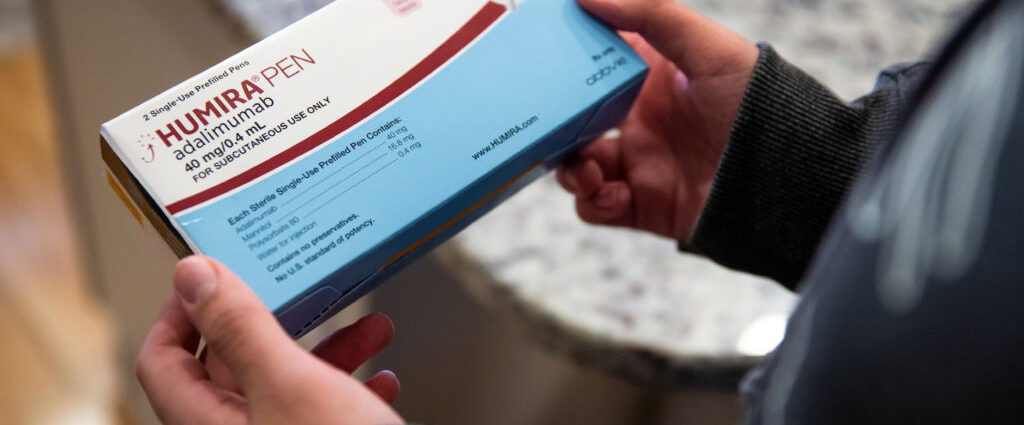
The above exchange comes from a 2019 congressional hearing. Sen. John Cornyn, a Republican from Texas, was asking AbbVie’s CEO, Richard Gonzalez, to explain to the Senate Committee on Finance how his company had amassed so many patents on this single drug called Humira. Gonzalez, who was no stranger to controversy, chose to respond by likening it to multiple drugs. After AbbVie had received the first regulatory approval for Humira to treat rheumatoid arthritis, a condition that causes inflammation of the joints, it thought the drug might also work on inflammatory bowel disease. In fact, AbbVie would eventually test, obtain patents for, and get FDA approval of the drug for several inflammation-related conditions. For Gonzalez, the 136 patents AbbVie had accumulated up until that point were justified. They were “innovations they had created,” he said. This would mean another 18 years of patent protection beyond the expiry of Humira’s original patent in 2016.

U.S. Senate Honor Philanthropist Elliott Broidy and Nobel Prize Winner Dr. Harvey Alter for Hepatitis C Discovery on Capitol Hill as Ebola Spreads
JBizNews — Monday, May 25, 2026
A rare convergence of Jewish American religious leaders, civic organizations, business executives, and foreign diplomats gathered on Capitol Hill on May 19 during Jewish American Heritage Month to recognize Nobel laureate Dr. Harvey J. Alter — whose discovery of the hepatitis C virus and the screening protocols it spawned have saved millions of lives — underscoring the urgency of scientific preparation at a moment when the Bundibugyo strain of Ebola is spreading rapidly across the Democratic Republic of the Congo and Uganda, prompting major airlines to suspend or reduce service to affected regions.
The event, the annual Jewish American Heritage Month celebration organized by Ezra Friedlander’s Project Legacy, drew nine U.S. Senators, three U.S. Representatives, and ambassadors and trade ministers from Canada, Bahrain, Morocco, Egypt, Germany, and South Korea. The gathering was co-chaired by Malcolm Hoenlein, CEO Emeritus of the Conference of Presidents of Major American Jewish Organizations, and Eric J. Gertler, Executive Chairman of U.S. News & World Report. Held in the historic Kennedy Caucus Room of the Russell Senate Office Building, the event demonstrated the depth of Jewish American institutional reach across government, finance, philanthropy, religious life, and international commerce.
The timing is acute. As of May 24, the World Health Organization had recorded more than 1,000 suspected and confirmed Ebola cases and at least 231 deaths in the outbreak. Airlines including American Airlines, United Airlines, and Air France have suspended or sharply reduced flights to Kinshasa and other Central African hubs, citing operational and safety concerns. The flight suspensions are already disrupting trade and threatening to isolate the region from international commerce and medical supply chains.

The honorees — Dr. Alter, entrepreneur Elliott Broidy, and Rabbi David Baron — represented the breadth of Jewish American institutional contribution. Dr. Alter, the 2020 Nobel laureate in Physiology or Medicine for identifying the hepatitis C virus, embodied the Jewish American role in science and public health. His decades of work at the National Institutes of Health in the 1970s and 1980s proved that an unknown virus was driving post-transfusion hepatitis. The screening systems his research enabled have driven transfusion-transmitted hepatitis in the United States to near zero. His discovery spawned pharmaceutical franchises at Gilead Sciences, Merck, AbbVie, and Bristol Myers Squibb. Broidy, recipient of the Visionary Award, reflected the Jewish American entrepreneurial and philanthropic tradition. Rabbi David Baron of the Temple of the Arts in Beverly Hills, honored with the Creativity in the Jewish Community Award, represented the religious and cultural institutions anchoring the community’s identity.
The religious leadership present was notably diverse and unified. Rabbi Pini Dunner of Young Israel of Beverly Hills, Chairman of the Orthodox Jewish Chamber of Commerce West Coast, delivered remarks alongside Rabbi Mordechai Suchard of The Gateways Organization and Rabbi Levi Shemtov, Executive Vice President of American Friends of Lubavitch. This constellation — Orthodox, Modern Orthodox, and Lubavitch leadership appearing together on a Capitol Hill stage — demonstrated institutional cohesion across religious movements.
U.S. Senators Richard Blumenthal, John Fetterman, Tim Sheehy, John Hickenlooper, Elissa Slotkin, Ron Wyden, James Lankford, Jacky Rosen, and Pete Ricketts addressed the gathering, alongside Representatives Randi Fine, Ken Calvert, and Jeff Merkley. Senator Blumenthal emphasized that Dr. Alter could have monetized his hepatitis C discovery for enormous personal gain but instead released findings to the public-health system. Senator Fetterman delivered what attendees described as an unusually passionate bipartisan statement of support for the Jewish American community. Senator Sheehy framed scientific generosity as a uniquely American strength. The bipartisan presence — nine senators from both parties — signaled political consensus around the value of Jewish American institutional power.
Jewish American Heritage Month, observed each May since 2006, traces to 1980 when Congress designated April 21-28 as Jewish Heritage Week through conversations between Malcolm Hoenlein, President Ronald Reagan, and Nobel laureate Elie Wiesel. President George W. Bush expanded it to a full month of May in 2006, recognizing over 370 years of Jewish American contribution to science, business, law, and public service since 1654. The Weitzman National Museum of American Jewish History now stewards the observance with more than 200 organizations.
Ezra Friedlander, organizer of the event through Project Legacy, said: “This year’s honorees reflect a deep commitment to public service, innovation, philanthropy, and the fight against hatred and intolerance.”
The commercial dimension was substantial. Duvi Honig, Founder & CEO of the Orthodox Jewish Chamber of Commerce and co-founder and secretary of the Multicultural Business Coalition, who chaired World Trade Week NYC on Wednesday, spoke to the gathering’s purpose. “Building bridges through unity is what speaks to me most,” Honig said. “Each attendee walked away with new or reinforced relationships to help build a better tomorrow.” The ambassadors and trade ministers represented nations with which the United States maintains multi-billion-dollar trade flows in life sciences, defense, semiconductors, energy, agriculture, and finance.
Elliott Broidy, in accepting the Visionary Award, reflected on lessons from his parents about the responsibility that accompanies success. He praised Dr. Alter as an embodiment of tikkun olam — the Jewish concept of repairing the world — for identifying hepatitis C. Broidy framed the luncheon as a reaffirmation of shared responsibility to confront hatred and protect the values of tolerance, democracy, and human dignity at a moment when antisemitism has risen sharply.
The Capitol Hill gathering serves a dual purpose: honoring specific achievements, but also functioning as a high-level networking forum where ambassadors, senators, business leaders, and religious figures reinforce relationships that undergird international commerce, diplomatic coordination, and policy alignment. For the Jewish American community, the event demonstrates that institutional unity across Orthodox and non-Orthodox Judaism, business and nonprofit sectors, and civic and religious leadership remains a competitive advantage.
The recognition of Dr. Alter arrives as the global health system confronts the Ebola outbreak, making his innovation as a Jewish American leader who helped save millions of lives through epidemic-related medical breakthroughs even more meaningful amid the growing health and commercial disruption now unfolding. His career — patient, federally funded basic research conducted over decades for public good — produced breakthroughs that created entire pharmaceutical industries and prevention systems now viewed as essential global infrastructure. It also reflects the very purpose of Jewish American Heritage Month: recognizing the extraordinary contributions Jewish Americans have made to science, medicine, public service, innovation, and humanity as a whole.
— JBizNews Desk
© 2026 JBizNews. All Rights Reserved. Reproduction or distribution without written permission is prohibited.

Charlie Munger’s $5,000 Baby Warning Echoes Louder as U.S. Childbirth Costs Now Top $20,000 Per Family
By JBizNews Desk
NEW YORK, May 24, 2026 — The late Charlie Munger’s blunt warning about the American healthcare system is aging uncomfortably well.
The longtime Berkshire Hathaway vice chairman argued years ago that if insured families still had to pay thousands of dollars just to have a baby, then they did not really have insurance at all. Today, the numbers suggest the problem has only grown worse.
According to the Peterson-KFF Health System Tracker, using data from the Merative MarketScan Encounter Database, the average pregnancy, childbirth and postpartum care bill for women covered by employer-sponsored insurance now reaches $20,416, with families paying an average of $2,743 out of pocket even after insurance.
That does not include many of the costs that come afterward.
Newborn care adds another $5,820 in average medical spending during the baby’s first months, while cumulative healthcare costs for mother and child during the first two years now approach roughly $37,000 per family, according to KFF analysis. Families directly pay more than $4,200 of that amount themselves.
Munger saw the problem years ago.
In a widely discussed 2019 Yahoo Finance interview, Munger argued that a young couple facing a $5,000 deductible to deliver a baby effectively held an insurance product that failed its most basic purpose.
“If you have a policy with a huge deductible and you still can’t afford childbirth,” Munger said at the time, “what exactly are you insured for?”
The Berkshire executive went further, describing the broader U.S. healthcare system as something that had “grown like Topsy by accident” through decades of overlapping government intervention, private-sector inefficiency and distorted incentives.
His criticism was not ideological as much as economic.
Munger repeatedly pointed to Singapore as a model, arguing the country achieved better health outcomes at a fraction of America’s cost through mandatory medical savings accounts, universal coverage and strict cost controls. In his view, America’s healthcare system had become a hidden tax on workers, businesses and manufacturers that quietly weakened U.S. competitiveness.
The gap has only widened since then.
Federal out-of-pocket maximums under Affordable Care Act-compliant plans climbed to $9,200 for individuals and $18,400 for families in 2025. In 2026, those caps rise again to $10,600 and $21,200, according to federal guidance.
For many families, childbirth alone is enough to hit those limits.
The average allowed charge for a Cesarean-section birth now reaches roughly $28,998, compared with $15,712 for a vaginal delivery, according to Health Care Cost Institute and KFF data. About 32% of U.S. births now occur by C-section.
Many parents also get caught by timing.
Pregnancies often span two insurance-plan years, meaning families can hit deductibles and out-of-pocket maximums twice during a single pregnancy and delivery cycle.
The financial pressure arrives at exactly the moment household budgets are already under strain.
One parent often takes unpaid leave or reduced work hours while childcare, housing and basic living costs continue climbing. Industry analysts note that pregnancy remains the single most common cause of hospitalization for Americans covered by employer-sponsored insurance, making maternity costs one of the clearest stress points in the modern benefits system.
The issue has started attracting bipartisan political attention.
Lawmakers introduced legislation in 2025 that would eliminate cost-sharing for maternity care under employer-sponsored insurance plans, similar to how preventive services are currently treated under the Affordable Care Act. The proposal has not advanced, but its introduction reflected growing concern that high-deductible insurance models have shifted too much financial risk onto middle-class families.
Major corporations have spent years trying to address the problem themselves.
Companies including Walmart, JPMorgan Chase, and other large employers have experimented with direct healthcare contracting, bundled maternity-payment systems and employer-run clinics in an effort to reduce healthcare spending. So far, none have meaningfully changed the broader national cost trajectory.
U.S. healthcare spending surpassed 17% of GDP in 2024 — by far the highest level in the developed world — even as American life expectancy continues to lag behind many peer nations.
For Wall Street and corporate America, Munger’s argument still resonates because healthcare costs ripple through nearly every part of the economy.
Rising medical expenses feed directly into wage pressure, consumer spending patterns, government deficits, insurance premiums and employer labor costs. Families paying thousands of dollars out of pocket to have children are not just facing a healthcare issue — they are facing a broader affordability problem affecting everything from home purchases to retirement savings.
That was the core of Munger’s warning.
The question he posed in 2019 remains unresolved in 2026:
If insurance does not meaningfully protect families from the cost of having a child, what exactly is it protecting them from?
JBizNews Desk
© 2026 JBizNews. All Rights Reserved. Reproduction or distribution without written permission is prohibited.

STAT+: Eli Lilly says Verve’s gene editor lowers cholesterol levels in early study
Eli Lilly said Monday that a high dose of its gene-editing therapy reduced cholesterol levels by 62% in participants in a clinical trial, an early but encouraging test of whether a one-time treatment may one day help people seeking to lower their LDL, or “bad,” cholesterol.
Lilly acquired the therapy, VERV-102, in its $1 billion buyout of Verve Therapeutics last year. Executives tout it as a potential treatment to broadly prevent heart disease, the world’s leading killer, as many patients struggle to stay on existing, more conventional medicines for reducing cholesterol levels.
There were no treatment-related serious adverse events in the Phase 1 study — a notable finding, given that Verve had to shelve its first candidate due to safety concerns.
Merck-Kelun Lung Cancer Drug Cut Risk Of Tumor Progression By 65%, ASCO Data Show
By JBizNews Desk
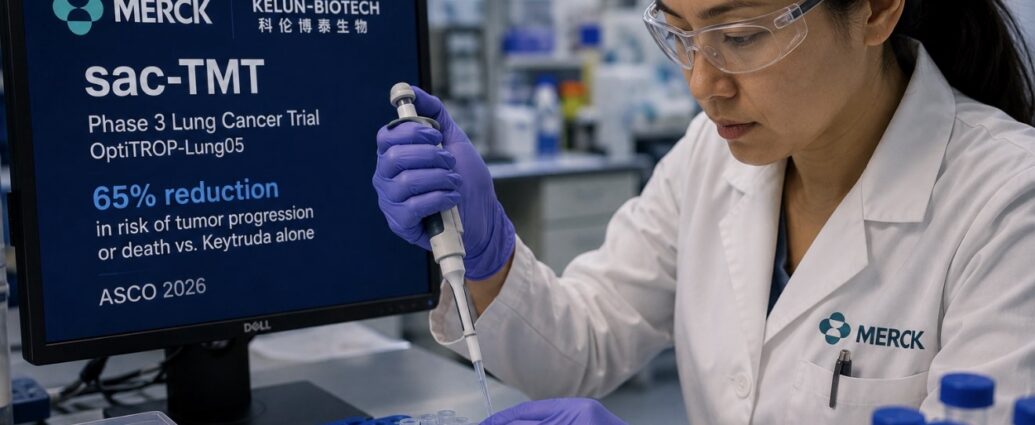
NEW YORK, May 24, 2026 — A new cancer therapy being developed by Merck & Co. and China’s Sichuan Kelun-Biotech has produced one of the strongest oncology trial results of the year, cutting the risk of tumor progression or death by as much as 65% in a late-stage lung cancer study ahead of the annual American Society of Clinical Oncology conference.
The drug, known as sac-TMT, belongs to one of the fastest-growing and most closely watched categories in cancer medicine: antibody-drug conjugates, or ADCs. These therapies are designed to function like precision-guided weapons against tumors — using antibodies to identify cancer cells before delivering targeted chemotherapy payloads directly into them while limiting damage to surrounding healthy tissue.
The latest results come from a Phase 3 trial known as OptiTROP-Lung05, where researchers tested sac-TMT in combination with Keytruda, Merck’s blockbuster immunotherapy drug, against Keytruda alone in patients with advanced non-small-cell lung cancer.
According to data scheduled for presentation at the ASCO annual meeting in Chicago beginning May 29, the combination achieved what researchers described as a statistically significant and clinically meaningful improvement in progression-free survival, meaning patients lived substantially longer without their cancer worsening.
The results add to a growing string of major wins for sac-TMT across multiple tumor types.
In a separate late-stage breast cancer study last year, the drug reduced the risk of progression or death by roughly 65% compared with conventional chemotherapy. Another lung cancer study showed the therapy lowered the risk of death by approximately 40% in heavily pretreated patients whose disease had stopped responding to prior therapies.
The consistency across different cancers and treatment settings is one of the reasons sac-TMT is increasingly viewed as one of the most important pipeline assets inside Merck’s future oncology strategy.
The drug targets a protein called TROP2, which appears on the surface of many common solid tumors, including lung, breast, ovarian, and several gastrointestinal cancers. Because the target exists across multiple cancer types, successful TROP2 therapies potentially represent multibillion-dollar franchises capable of treating millions of patients globally.
For Merck, the timing is critical.
The company’s dominant cancer medicine, Keytruda, generates more than $25 billion annually but faces major patent expirations beginning later this decade. Investors and analysts have spent years asking how Merck intends to replace that revenue stream once generic competition emerges.
Sac-TMT is rapidly becoming one of the clearest answers.
Merck is currently running at least five global Phase 3 lung cancer trials involving the drug, alongside additional studies in breast, ovarian, and other solid tumors. The company originally secured worldwide rights outside greater China through a massive licensing agreement signed with Kelun-Biotech in 2022 worth roughly $1.4 billion upfront and potentially up to $9 billion in milestone payments.
At the time, some investors questioned whether the deal was overly aggressive.
The latest ASCO data is making the transaction look increasingly strategic.
The lung cancer findings may also represent a broader scientific milestone beyond Merck itself.
According to researchers involved in the study, OptiTROP-Lung05 is believed to be the first successful Phase 3 trial showing that combining an antibody-drug conjugate with an immune checkpoint inhibitor improves first-line lung cancer outcomes versus immunotherapy alone.
That matters because pharmaceutical companies worldwide have been racing to determine whether ADCs can work synergistically with immune therapies like Keytruda, Opdivo, and Tecentriq.
If successful, the combination approach could fundamentally reshape standard treatment regimens across several major cancers.
There are important limitations investors and physicians are watching closely.
The OptiTROP-Lung05 study was conducted entirely in China and compared sac-TMT plus Keytruda against Keytruda alone. In the United States, frontline lung cancer treatment more commonly includes Keytruda combined with chemotherapy rather than as a standalone therapy.
As a result, the trial itself is unlikely to directly support U.S. regulatory approval.
Instead, analysts are focused on ongoing multinational studies testing sac-TMT against the broader global standard of care. Those results, expected over the next 18 to 24 months, will likely determine whether the therapy becomes a worldwide commercial breakthrough.
Even so, regulatory momentum is already building.
Kelun-Biotech has filed for approval in China, where regulators have accepted the application for review, while the U.S. Food and Drug Administration has already granted sac-TMT breakthrough therapy designation for certain lung cancer settings, potentially accelerating future review timelines.
The implications extend beyond one company or one drug.
Antibody-drug conjugates were once viewed as a niche technology area plagued by toxicity problems and repeated late-stage clinical failures. That perception changed dramatically after the success of AstraZeneca and Daiichi Sankyo’s Enhertu, which transformed treatment expectations in breast cancer.
Now nearly every major pharmaceutical company is racing to establish leadership in ADCs.
Pfizer, Roche, AstraZeneca, Gilead Sciences, and Merck have collectively committed tens of billions of dollars toward acquisitions, licensing deals, and research partnerships tied to the category.
For patients, the stakes are far more personal than market share.
Lung cancer remains the deadliest form of cancer globally, causing approximately 1.8 million deaths annually worldwide. Survival rates remain stubbornly low despite years of advances in immunotherapy and targeted medicine.
A treatment capable of significantly delaying tumor progression — particularly in earlier lines of therapy — represents the kind of advance oncologists believe could gradually shift long-term survival curves over time.
For Merck investors, the central question is becoming increasingly straightforward.
The company no longer simply needs to defend Keytruda.
It needs to prove it can build the next generation of oncology leadership before Keytruda’s patent clock expires.
And based on the latest data emerging ahead of ASCO, sac-TMT is beginning to look like one of the company’s strongest candidates to do exactly that.
JBizNews Desk
© 2026 JBizNews. All Rights Reserved. Reproduction or distribution without written permission is prohibited.
Congo Ebola Crisis Hits Pharma, Mining and Travel Sectors as Outbreak Engulfs Hospitals
By JBizNews Desk
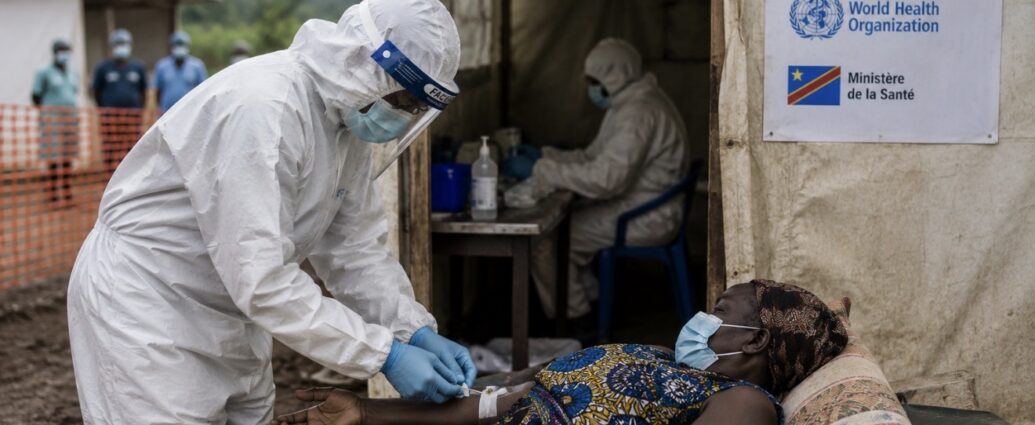
Bunia, Democratic Republic of the Congo — May 24, 2026 — Hospitals across eastern Congo are “fighting with no tools at all,” according to Dr. Jean Kaseya, Director-General of the Africa Centres for Disease Control and Prevention, as a fast-moving outbreak of Bundibugyo ebolavirus spreads across one of Africa’s most strategically important mining corridors and begins rippling through the pharmaceutical, aviation, insurance and global commodities sectors.
The Democratic Republic of the Congo’s Ministry of Public Health, working alongside the World Health Organization and Africa CDC, has confirmed 968 suspected cases and 216 deaths across Ituri, North Kivu and South Kivu provinces, while neighboring Uganda has reported five imported cases in Kampala, the country’s capital and commercial hub.
The outbreak has already triggered emergency travel measures, intensified supply-chain monitoring and reignited fears of a broader regional disruption across Central Africa.
On May 18, the U.S. Centers for Disease Control and Prevention and the Department of Homeland Security imposed enhanced travel screening and routing restrictions for travelers recently transiting the DRC, Uganda or South Sudan. American citizens and permanent residents leaving affected areas are now being funneled through designated U.S. airports in Virginia, Texas and Georgia for additional screening procedures.
The measures are complicating operations for international carriers including Delta Air Lines, United Airlines, Air France-KLM and Brussels Airlines, the latter long serving as one of the primary Western aviation links into Kinshasa.
The outbreak is also colliding with a growing funding crisis inside global public health systems.
The WHO and Africa CDC have jointly requested more than $314 million in emergency funding for containment, treatment and surveillance operations, including roughly $54 million earmarked for neighboring high-risk countries such as Rwanda, Kenya, Tanzania, Angola, Burundi and South Sudan.
The United States has pledged approximately $50 million toward frontline response efforts, while Congo and Uganda are seeking a combined $320 million in additional support.
Kaseya warned this week that donor fatigue is rapidly becoming as dangerous as the virus itself.
International health assistance to African response systems has fallen sharply over the past five years, according to Africa CDC estimates, with several programs weakened further by recent aid reductions and shifting budget priorities across Western governments.
For pharmaceutical companies, the outbreak presents a uniquely difficult challenge: there is currently no approved vaccine or targeted therapeutic for the Bundibugyo strain now spreading across eastern Congo.
Merck & Co.’s Ervebo, the only FDA-approved Ebola vaccine, targets the Zaire strain of the virus and has not been approved for Bundibugyo. The company said existing cross-protection research remains limited and largely untested in human trials.
Regeneron Pharmaceuticals’ Inmazeb antibody treatment is also designed specifically for Zaire ebolavirus and is not approved for Bundibugyo infections.
Drugmakers including Johnson & Johnson and Bavarian Nordic are now evaluating whether experimental candidates can be accelerated into cross-strain testing, but WHO officials warned this week that any targeted vaccine rollout remains months away.
The timing is especially sensitive because the outbreak’s epicenter overlaps directly with one of the world’s most important critical-minerals regions.
Ituri Province sits near major gold, cobalt and coltan transport corridors central to global electric-vehicle and battery supply chains. The Democratic Republic of the Congo produces more than 70% of the world’s cobalt supply, a strategic material used by manufacturers including Tesla, Ford Motor Co., General Motors and major Chinese battery producers.
Mining companies including Glencore, CMOC Group and Barrick Mining have not yet announced operational suspensions, but previous Ebola outbreaks triggered widespread staff evacuations, travel restrictions and production disruptions throughout the region.
The WHO has already identified mining-related population movement as a major transmission risk.
The outbreak also raises concerns for regional banking, trade and logistics infrastructure.
Kampala, where imported cases have now been confirmed, serves as a key financial and transportation hub for East African institutions including Equity Group Holdings, KCB Group and Standard Bank. Kenya and Tanzania have intensified airport health screening procedures at Nairobi’s Jomo Kenyatta International Airport and Dar es Salaam’s Julius Nyerere International Airport.
Meanwhile, major insurers and reinsurers including Allianz, AXA and Marsh McLennan are reportedly reviewing pandemic-related exposure across African travel, trade-credit and logistics policies.
The broader market fear is not simply the current outbreak itself.
It is the possibility that the outbreak escapes containment and evolves into a larger regional emergency similar to the 2014–2016 West African Ebola crisis, which caused an estimated $53 billion in economic losses across Guinea, Liberia and Sierra Leone while severely disrupting mining operations and international investment flows.
Several warning signs are already intensifying concern among health officials and multinational operators.
The outbreak reportedly went undetected for nearly four weeks, healthcare workers have already died treating infected patients at Mongbwalu General Referral Hospital, and ongoing armed conflict across eastern Congo continues restricting medical access and surveillance operations.
With no approved Bundibugyo-specific treatment available and hospitals already overwhelmed, executives across pharmaceuticals, mining, aviation and global logistics are increasingly treating the outbreak not just as a humanitarian crisis but as a growing commercial and supply-chain risk.
The next major turning point may ultimately come down to funding speed.
If the WHO–Africa CDC emergency appeal is funded quickly, the outbreak may remain primarily a logistics and containment challenge.
If donor fatigue prevails, the crisis risks spreading deeper into regional trade routes, aviation corridors and critical-minerals supply chains already strained by geopolitical instability and global commodity competition.
JBizNews Desk
© 2026 JBizNews. All Rights Reserved. Reproduction or distribution without written permission is prohibited.