Momentum-focused ETFs slid Thursday as Wall Street’s high-flying AI and software trades abruptly reversed, triggering one of the sharpest factor unwinds seen this year and rattling investors who had piled into market leaders.

• iShares MSCI USA Momentum Factor ETF stock is at critical resistance. What’s driving MTUM to record levels?

The sell-off hit momentum strategies especially hard because many had become heavily concentrated in AI-linked and high-beta growth stocks after months of strong gains.

The iShares MSCI USA Momentum Factor ETF (BATS:MTUM) fell 1.8% on Thursday, its worst daily decline since late March. Other momentum-focused funds also weakened, including the Invesco Dorsey Wright Momentum ETF (NASDAQ:PDP) and Alpha Architect U.S. Quantitative Momentum ETF (NASDAQ:QMOM), as traders rotated away from richly valued growth names.

data-variant=”card”
data-news-mode=”manual”

>


Read Also:

New ETF Bets On South Korea’s AI Chip, Defense And Battery Leaders

This post was originally published here

President Donald Trump called the overnight strikes on Iran “just a love tap,” and Polymarket traders are barely pricing in any threat to the April ceasefire.

The U.S. struck targets in Iran after Tehran fired missiles, drones and small boats at three U.S. destroyers transiting the Strait of Hormuz on Thursday.

“The ceasefire is going. It’s in effect,” Trump told ABC News’ Rachel Scott by phone.

The Airspace Market Did Not Move

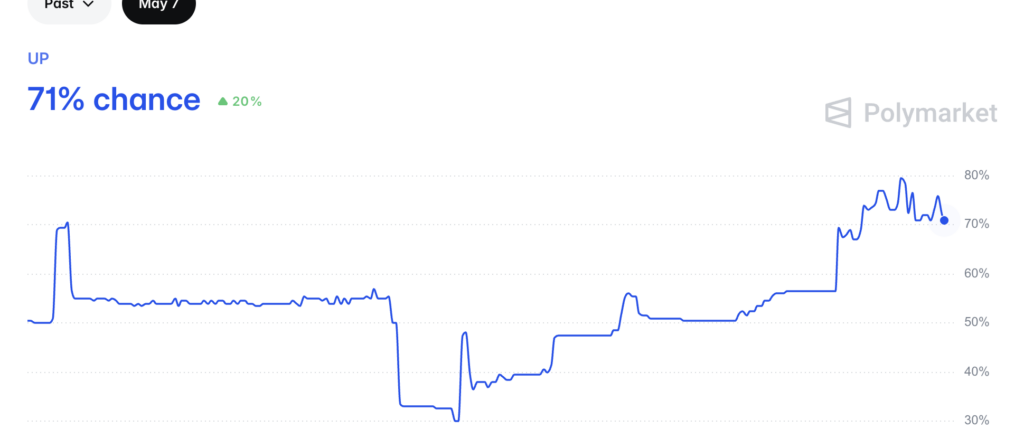
The closest proxy to a market on the ceasefire breaking is Polymarket’s “Iran closes its airspace by…?” contract, which has logged over $10 million in volume and barely twitched on the strikes.

The May 8 outcome sits at just 2%, with May 31 at 31%.

Iran typically closes its airspace defensively when a major U.S. or Israeli attack is incoming, so a flat market means traders are not pricing in further escalation from Washington.

The bigger “US x Iran …

Full story available on Benzinga.com

This post was originally published here

Lantheus Holdings Inc (NASDAQ:LNTH) reported upbeat earnings for the first quarter on Thursday.

The company posted quarterly earnings of $1.46 per share which beat the analyst consensus estimate of $1.24 per share. The company reported quarterly sales of $377.330 million which beat the analyst consensus estimate of $353.942 million.

Lantheus Holdings affirmed its FY2026 adjusted EPS guidance of $5.00-$5.25 and sales guidance of $1.400 billion-$1.450 billion.

“Our first quarter results demonstrate disciplined execution across the business, with strong performance from PYLARIFY, Neuraceq, and DEFINITY, and continued progress against the priorities that underpin our long-term strategy,” said …

Full story available on Benzinga.com

This post was originally published here

Coinbase Global (NASDAQ:COIN) reported weaker-than-expected first-quarter financial results Thursday after market close.

Coinbase reported first-quarter revenue of $1.41 billion, down 31% year-over-year. The revenue total missed a Street consensus estimate of $1.53 billion, according to data from Benzinga Pro. The company reported an adjusted loss of 17 cents per share, missing a Street consensus estimate of 29 cents per share.

“We executed well on what was in our control in Q1,” Coinbase CEO Brian Armstrong said. “We saw huge growth in derivatives trading volume, driven by our Everything Exchange.”

Company guidance is that second-quarter subscription and services …

Full story available on Benzinga.com

This post was originally published here

Charles River Laboratories International, Inc. (NYSE:CRL) posted upbeat earnings for the first quarter, but lowered its FY2026 forecast on Thursday.

The company posted adjusted EPS of $2.06, beating market estimates of $1.94. The company’s sales came in at $995.830 million versus expectations of $977.486 million.

Charles River slashed its FY2026 GAAP EPS guidance from $6.30-$6.80 to $5.35-$5.85. The company also lowered its FY2026 sales guidance from $3.814 billion-$3.874 billion to $3.794 billion-$3.854 billion.

Birgit Girshick, Chief Executive Officer, said, “We are pleased to deliver on our first-quarter financial targets, and remain well positioned to generate improving results over the course of the year. Our confidence is …

Full story available on Benzinga.com

This post was originally published here
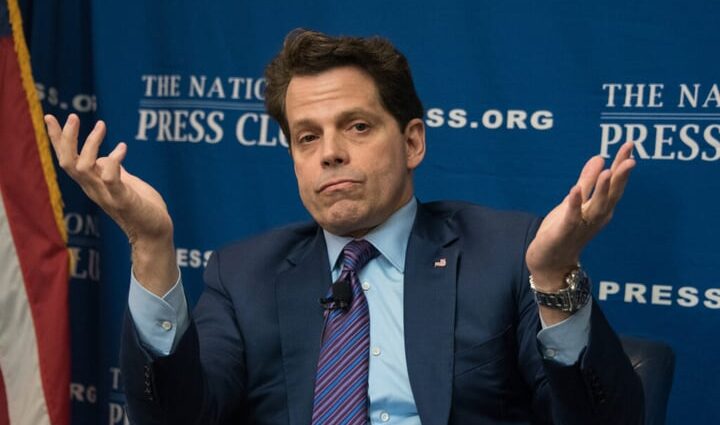
Anthony Scaramucci claims President Donald Trump secretly wants Democrats to win the White House in 2028, teling Bloomberg that Trump wants a Democratic successor “with 100% certainty.”

He also predicted Vice President JD Vance and Secretary of State Marco Rubio would both be “victimized” by the president before the next race.

Why Scaramucci Thinks Trump Will Burn Vance And Rubio

Trump has no interest in lifting either Vance or Rubio because he does not want them taking credit for the administration’s wins, Scaramucci argued.

He cited Trump’s recent attack on the Pope as an early shot at Vance, who has a book coming on his Catholic conversion.

“When his political personality extinguishes, sometime in 2028, there will be an ideological battle for that party again,” Scaramucci told Bloomberg’s Mishal Husain.

A White House spokesperson said Scaramucci “lasted 11 short days in the White House” and “makes lightweights look …

Full story available on Benzinga.com

This post was originally published here

Datadog Inc. (NASDAQ:DDOG) on Thursday reported first-quarter results that topped Wall Street expectations.

The software-as-a-service company posted first-quarter revenue of $1.006 billion, up 32% from a year earlier and ahead of analyst estimates of $961.31 million. Adjusted earnings came in at 60 cents per share, beating consensus estimates of 51 cents.

Datadog raised its full-year 2026 outlook, projecting revenue of $4.30 billion to $4.34 billion, up from its prior forecast of $4.06 billion to $4.10 billion. Analysts currently expect revenue of $4.12 billion.

The company also increased its full-year adjusted earnings forecast to between $2.36 and $2.44 per share from its previous outlook of $2.08 to $2.16 per share. Analysts are expecting adjusted earnings of $2.17 per share.

“Datadog executed to a strong quarter, with 32% year-over-year revenue growth, $335 million in operating cash flow, and $289 million in free cash flow,” said Olivier Pomel, co-founder and …

Full story available on Benzinga.com

This post was originally published here

Primoris Services Corporation (NYSE:PRIM) shares face volatility on Friday. This follows a massive two-day sell-off earlier this week. The stock plummeted nearly 50% through Thursday.

• Primoris Services stock is trending lower. Why is PRIM stock trading lower?

Analyst Target Cuts

Wall Street reacted swiftly on Thursday. Wells Fargo maintained an Equal-Weight rating but lowered its price target to $118. Needham kept a Buy rating while dropping its target to $188. Keybanc lowered its target to $137 on Wednesday.

Renewable Segment Struggles

Disappointing first-quarter results sparked …

Full story available on Benzinga.com

This post was originally published here

Helmerich and Payne Inc (NYSE:HP) reported worse-than-expected second-quarter financial results, after the closing bell on Wednesday.

Helmerich & Payne reported quarterly losses of 38 cents per share which missed the analyst consensus estimate of losses of 2 cents per share. The company reported quarterly sales of $932.000 million which missed the analyst consensus estimate of $949.644 million.

“H&P delivered solid operational performance during the second quarter, reflecting the resilience of our core business and the disciplined execution of our teams,” said President and CEO Trey Adams. “Regarding the conflict in the Middle East, our primary focus has been on the safety and security of our people in the region. I am pleased to report that our teams …

Full story available on Benzinga.com

This post was originally published here

U.S. stocks were higher, with the Nasdaq Composite gaining around 1% on Friday.

Shares of Monster Beverage Corp (NASDAQ:MNST) rose sharply after the company reported better-than-expected quarterly financial results.

Monster Beverage reported quarterly earnings of 58 cents per share which beat the analyst consensus estimate of 53 cents per share. The company reported quarterly sales of $2.354 billion which beat the analyst consensus estimate of $2.159 billion.

Monster Beverage shares jumped 12.8% to $85.67 on Friday.

Here are some other big stocks recording gains in today’s session.

  • Phoenix Asia Holdings Ltd (NASDAQ:PHOE) shares jumped 88% to $35.84. The company recently announced a $1 billion stock acquisition agreement to acquire clinical-stage pharmaceutical firm ACEA Pharma Inc., marking a dramatic pivot from its construction roots into oncology and autoimmune drug development.
  • Innodata Inc (NASDAQ:INOD) gained 86.8% to $85.30 after the company reported better-than-expected first-quarter financial results and issued FY26 sales guidance above estimates.
  • Westrock Coffee Co (NASDAQ:WEST) rose 39% to $8.20 after the company reported better-than-expected first-quarter sales results.
  • Fluence Energy Inc (NASDAQ:FLNC) gained 29.8% to $24.63. Susquehanna analyst Biju Perincheril maintained Fluence Energy with a Positive and raised the price target from $23 to $25.
  • Nlight Inc

Full story available on Benzinga.com

This post was originally published here

A question about saving money led to a blunt conversation about adulthood and independence.

Renee in New York asked “The Ramsey Show” why young adults are encouraged to move out instead of staying home, working and saving toward a house.

“Why move out to pay rent?” she asked, questioning how they would “ever achieve the American dream of home ownership” if that money went to a landlord.

She argued that staying longer could help build savings faster and asked what advantage there is in moving out at all.

Don’t Miss:

Co-host Ken Coleman pushed back, shifting the focus away from math. “It’s called personal responsibility,” he said, framing the move as part of stepping into adulthood rather than a strategy to maximize savings.

Staying home briefly after graduation can help someone get established before taking on rent and other costs, co-host Rachel Cruze said, but it should not become indefinite. 

Coleman said the problem begins when “just saving money” becomes an open-ended reason to avoid the responsibilities that come with running a life independently. 

The Plan To Skip Rent — And Why It Rarely Works 

Coleman took on Renee’s question about paying rent first. In his view, adults who are able to support themselves typically rent before they can buy a home.

Trending: More Than Half of Americans Aren’t Prepared for Retirement — Including 62% of Gen Y

“Because that’s what every other freaking American does until they can afford a home,” he said.

He then pointed to the timeline for saving a down payment while living at home. Based on current housing costs, that is not a one-year, year-and-a-half or even two-year plan.

Cruze pushed back on the idea that rent is wasted money. Rent may not build equity, but the hosts framed it as a step toward independence, flexibility and learning how to manage adult responsibilities without relying on parents.

“There’s no dignity or independence if you can afford to move out and you got a job,” Coleman said. “Just come on.” 

Read Next: 

Building Wealth Across More Than Just the Market

Building a resilient portfolio means thinking beyond a single asset or market trend. Economic cycles shift, sectors rise and fall, and no one investment performs well in every environment. That’s why many investors look to diversify with platforms that provide access to real estate, fixed-income opportunities, professional financial guidance, precious metals, and even self-directed retirement …

Full story available on Benzinga.com

This post was originally published here
Microchip Technology Inc. (NASDAQ:MCHP) reported better-than-expected fourth-quarter financial results and issued strong first-quarter guidance on Thursday.

Microchip Technology reported quarterly earnings of 57 cents per share which beat the analyst consensus estimate of 51 cents per share. The company reported quarterly sales of $1.311 billion which beat the analyst consensus estimate of $1.263 billion.

Microchip Technology said it sees first-quarter adjusted EPS of 67 cents-71 cents, versus market estimates of 59 cents. The company sees sales of $1.442 billion-$1.469 billion, versus expectations of $1.344 billion.

“Our March quarter results significantly exceeded our expectations, with revenue of $1.311 billion coming in above the high end of our guidance and increasing 10.6% sequentially and 35.1% year over year, reflecting broad‑based improvement across …

Full story available on Benzinga.com

This post was originally published here

(Editor’s note: The future prices of benchmark tracking ETFs, and the headline, the lede and the economic were updated in the story.)

U.S. stock futures rose on Friday after Thursday’s declines. This followed an exchange of fire near the Strait of Hormuz between the U.S. and Iranian forces.

Speaking to an ABC reporter, Donald Trump referred to the exchange as “just a love tap,” according to a social media post by the journalist. He also added that the ceasefire was still in effect and ongoing.

U.S. nonfarm payrolls defied expectations in April, with total employment edging up by 115,000 jobs to comfortably beat the FactSet consensus estimate of a 65,000 rise. Despite the stronger-than-expected job growth, the unemployment rate remained unchanged at 4.3%.

On the inflation front, average hourly earnings for all employees on private nonfarm payrolls rose by 6 cents, or 0.2%, to $37.41, bringing the annual wage increase to 3.6%.

Meanwhile, the 10-year Treasury bond yielded 4.36%, and the two-year bond was at 3.90%. The CME Group’s FedWatch tool‘s projections show markets pricing a 94.8% likelihood of the Federal Reserve leaving the current interest rates unchanged during June’s meeting.

Index Performance (+/-)
Dow Jones 0.16%
S&P 500 0.39%
Nasdaq 100 0.60%
Russell 2000 0.16%

The SPDR S&P 500 ETF Trust (NYSE:SPY) and Invesco QQQ Trust ETF (NASDAQ:QQQ), which track the S&P 500 and Nasdaq 100, respectively, were higher in premarket on Friday. The SPY was up 0.52% at $735.35, while the QQQ advanced 0.80% to $700.50.

data-variant=”card”
data-news-mode=”manual”

>


Read Also:

Cloudflare Cuts 20% Jobs Despite Strong Q1 As It Goes ‘Agentic AI-First’

This post was originally published here

Many people think of debt as a math problem that can be solved by cutting spending and paying the balance. 

But for many, a five-figure credit card bill is actually a symptom of a deeper behavioral issue. 

Take the story of Maria, a caller to “The Ramsey Show” who spent months hiding $18,000 in debt from her husband of 16 years. 

She wasn’t failing because she lacked money; she was failing because she was paralyzed by shame. Her husband had already paid off their house and cars and likely had a large 401(k) balance. 

Don’t Miss:

Personal finance expert Dave Ramsey told Maria that the problem isn’t the debt — it’s her behavior. 

“This is about shame and marriage,” he said. “And you don’t want to come clean because the instant you come clean, first off, he’s going to be disappointed.”

The Ramsey Reality Check

Ramsey counseled Maria that the secret is more expensive and she should come clean immediately so she can quit living with the shame.

“Please do not let the sun go down with this secret,” Ramsey said. 

Trending: You Saved for Retirement — But Do You Know What You’ll Keep After Taxes?

Ramsey also told Maria to: 

  • Kill the Separate System: Keeping finances separate isn’t working for Maria and her husband. When a couple is on the same page, they build wealth faster, Ramsey said. Separate finances in a marriage often just provide a place for “bugs and roaches” to hide in the dark.
  • Write the Check: If the household has the money, which Maria’s husband almost certainly does, they should pay off the debt immediately.
  • Get a New System: Transparency is safety. Both partners need to know where every dollar is, especially in case of an emergency. If the money-smart spouse dies tomorrow, the other shouldn’t be left in the cold with a pile of secrets and no idea how to manage the assets. 

See Also: More Than Half of Americans Aren’t Prepared for Retirement — Including 62% of Gen Y

The Bottom Line

At the end of the day, $18,000 is a small price to pay to finally get on the same page, Ramsey said. It’s an investment in a marriage that finally has nothing to hide. 

“I want you to hear that that kind of guy who you love and respect who would have been on board with this from Day One,” Ramsey told Maria. “While he will be disappointed, I think this is a good man, and I think he’s going to welcome you going, ‘I messed up. I don’t want to ever do this again.'”

When Debt Stops Being a Math Problem and Becomes a Relationship Problem

Stories like this highlight how financial challenges are often less about the numbers themselves and more about the systems, behaviors, and communication structures behind them—especially within households managing money together.

For many individuals and couples, the turning point comes not just from paying down debt, but from building a clearer financial framework that accounts for …

Full story available on Benzinga.com

This post was originally published here

GD Culture Group Limited (NASDAQ:GDC) shares are trading higher on Friday. The move follows a massive 97% sell-off earlier this week. Investors are now eyeing a potential floor for the volatile micro-cap.

Nasdaq futures are up 0.74% while S&P 500 futures have gained 0.41%.

• GD Culture Group shares are climbing with conviction. Why is GDC stock surging?

Special Committee Formed

On Wednesday, the board of directors announced a special committee of three independent directors. Lei Zhang, Yun Zhang and Shuaiheng Zhang will lead the group. They will evaluate a preliminary non-binding proposal received on May 1.

Private Buyout Proposal

A consortium including Wealthy Concord Limited and …

Full story available on Benzinga.com

This post was originally published here

U.S. stocks traded higher this morning, with the Nasdaq Composite gaining more than 200 points on Friday.

Following the market opening Friday, the Dow traded up 0.20% to 49,695.04 while the NASDAQ gained 0.82% to 26,016.59. The S&P 500 also rose, gaining, 0.50% to 7,373.60.

Leading and Lagging Sectors

Information technology shares jumped by 1.5% on Friday.

In trading on Friday, energy stocks fell by 0.7%.

Top Headline

U.S. nonfarm payrolls defied expectations in April, with total employment edging up by 115,000 jobs to comfortably beat the FactSet consensus estimate of a 65,000 rise. Despite the stronger-than-expected job growth, the unemployment rate remained unchanged at 4.3%.

On the inflation front, average hourly earnings for all employees on private nonfarm payrolls rose by 6 cents, or 0.2%, to $37.41, bringing the annual wage increase to 3.6%.

Equities Trading UP
           

  • Phoenix Asia Holdings Ltd (NASDAQ:PHOE) shares shot up 128% to $43.50. The company recently announced a $1 billion stock acquisition agreement to acquire clinical-stage pharmaceutical firm ACEA …

Full story available on Benzinga.com

This post was originally published here

Forget Nvidia Inc. (NASDAQ:NVDA) or Microsoft (NASDAQ:MSFT), cryptocurrency may be the best way to ride the AI boom, according to Pantera Capital founder and CEO Dan Morehead.

Speaking during Alchemy’s CoBuild conference in New York on Tuesday, the OG investor in cryptocurrency, who first purchased bitcoin in 2013 when it was trading at $65, said AI and blockchain have been connected since the start, but AI is “fully priced” while cryptocurrency isn’t.

AI Is ‘Fully Valued’ Bitcoin Isn’t 

“AI is very fully valued, maybe over valued and crypto is incredibly cheap relative to its value,” Morehead said. “As an investor you are always trying to time things.” Cryptocurrency “seems like a good investment today, especially (compared) to AI,” he said.  

Don’t Miss:

Morehead pointed to a basket of 10 leading public and private AI companies tracked by Pantera. He said that index is trading about 33% above its four-year trend line. Meanwhile bitcoin is trading as much as 43% below its four-year trend, according to Morehead.  

Morehead said he talks to a lot of institutional investors who want to invest in AI companies but are finding it difficult to “pull the trigger” because valuations are so high. While Morehead said AI is “very important” and is going to go up “big time over the long haul” finding an entry point right now is proving difficult. 

That’s not to say cryptocurrency is having an easy time of it, these days. Bitcoin has been in a bear market since November and is trading 40% below its record high hit in October, despite optimism that favorable U.S. regulations and new use cases would lead to a surge in prices, according to Bitcoin Magazine. AI, on the other hand, continues to garner interest from both public and private investors. 

Trending: 1.5 Million Users Are Already Working Inside This AI Platform — Investors Can Still Get In 

AI Agents Will Need Cryptocurrency  

The way Morehead sees it, as AI becomes more ubiquitous AI agents will need digitally native ways to transact and will use blockchain-based payment systems instead of traditional banking. “AI agents aren’t going to walk down the street to a bank to open a bank account,” he said. 

Morehead, who said he is “mega bullish” on bitcoin over the long term, thinks it will remain in a bear market until January. “If you can size your trade and hold for a venture style period you will probably do really well,” said Morehead. The investor hasn’t always been right with his bitcoin calls. In September he told MarketWatch that bitcoin would trade above $230,000. Bitcoin was most recently trading around $76,500.

As AI and Crypto Diverge in Valuation, Investors Are Reassessing Where the Real Long-Term Opportunity Lies

As enthusiasm around AI continues to drive significant capital into large-cap tech, some investors are beginning to question whether much of that growth is already reflected in current valuations. At the same time, crypto advocates argue that digital assets may still offer relative upside when compared to more crowded AI trades, creating a widening …

Full story available on Benzinga.com

This post was originally published here

Top Wall Street analysts changed their outlook on these top names. For a complete view of all analyst rating changes, including upgrades, downgrades and initiations, please see our analyst ratings page.

  • Seaport Global analyst Jeff Campbell initiated coverage on AirJoule Technologies Corp (NASDAQ:AIRJ) with a Buy rating and announced a price target of $7. AirJoule Technologies shares closed at $3.48 on Thursday. See how other analysts view this stock.
  • JP Morgan analyst …

Full story available on Benzinga.com

This post was originally published here

Warren Buffett may be one of the greatest investors to the world, but “Rich Dad Poor Dad” author Robert Kiyosaki says following the Oracle of Omaha won’t make you stand out from the crowd.

Sharing his thoughts on investing on “The Iced Coffee Hour” podcast in October, Kiyosaki called the Berkshire Hathaway (NYSE:BRK, BRK.B)) chair’s advice the “worst” he’s heard. Buffett’s investing approach is for average  investors, and real wealth comes from owning assets like oil and real estate, not from buying stocks, he said.

Don’t Miss:

  • Small differences in withdrawal and tax strategy can significantly impact long-term retirement income — see where you stand today.
  • Discover How AI Can Turn Your Investment Ideas Into Tradable Assets — See How

“Warren Buffett, I could never follow the guy,” Kiyosaki said. “I personally don’t like what Warren Buffett says, but he’s successful at it. But I don’t play the stock market. It’s a waste of time for me. So I drill for oil and I get that and then I buy apartment houses with my money from my oil.”

‘Don’t Be Average’

The reason Kiyosaki avoids stocks is the lack of control, he told hosts Graham Stephan and Jack Selby. Assets like oil, gold, and real estate give him more control and tax advantages, he said.

“Warren Buffett is for average people,” Kiyosaki said. “Warren Buffett speaks for the average man. And my my saying to you guys is don’t be average. The stock market and the 401(k) is set up for losers. I’m an entrepreneur, not a freaking loser. I control the oil well. I control the apartment houses.”

Trending: Why Traders Are Flocking to Leveraged ETFs — And What It Means for You  

‘If You Are a Loser, Have a Good Time’

Kiyosaki pushed back on a clip shown to him by Stephan and Selby in which Buffett warned that leverage can be dangerous and can cause heavy losses for investors. Buffett’s views don’t add up because he is heavily involved in the insurance business, where a lot of leverage is used, Kiyosaki said.

Berkshire Hathaway runs a large insurance portfolio that includes Geico, General Re and National Indemnity.

“He’s full of s**t,” Kiyosaki said. “Buffett’s a smart boy, but his thing on leverage, he’s talking about the average guy, yet he bought an insurance company. Insurance companies are the biggest leverage there is because they have to leverage your money. So, he doesn’t tell the whole story.”

Competing Wealth Strategies Are Leaving Many Investors Unsure Which Approach Fits Their Goals

Debates like the one between Buffett’s long-term stock investing philosophy and Kiyosaki’s focus on leveraged real assets highlight how divided financial strategies can be. While both approaches have produced significant wealth for their proponents, they rely on very different assumptions about risk, control, and long-term stability.

For many investors, the challenge isn’t choosing a “right” philosophy, but understanding which strategy aligns with their own financial situation and goals. Platforms like AdviserMatch connect individuals with financial professionals who can help evaluate different approaches to wealth building and build a strategy tailored to their long-term objectives rather than a one-size-fits-all investing mindset.

Read Next: 

This post was originally published here
BlackBerry Limited (NYSE:BB) shares are flat during Friday’s premarket session.

Renews Share Buyback Program Through 2027

The company said Friday it received approval from the Toronto Stock Exchange to renew its normal course issuer bid, allowing the cybersecurity and software company to repurchase up to 26.8 million common shares over the next year.

The renewed buyback program represents about 4.58% of BlackBerry’s public float as of April 30, 2026. The company said repurchased shares will be canceled.

Buyback Details And Trading Limits

The NCIB program will begin on May 12, 2026, and expire on the earliest of May 11, 2027, completion of the authorized purchases, or a date determined by the company.

BlackBerry said it may purchase shares through the Toronto Stock Exchange, the New York Stock Exchange and alternative trading systems in Canada and the United States. Subject to regulatory approval, the company may also repurchase shares through private agreements or exempt issuer bid programs.

As of April 30, 2026, BlackBerry had 586.1 million common shares outstanding and a public float of 584.8 million shares. The average daily trading volume …

Full story available on Benzinga.com

This post was originally published here

OneConstruction Group Limited (NYSE:ONEG) shares are falling sharply during Friday’s trading session. The stock faces extreme intraday volatility and significant technical breakdowns.

Repeated Trading Disruptions

The stock experienced multiple limit up-limit down pauses on May 6 and May 7. These disruptions continued into Friday’s session. Such halts often signal extreme price instability in the market.

The ongoing volatility halts are triggering panic selling among retail traders.

Business Model Context

The Hong Kong-based company specializes in structural steelwork. Its performance relies heavily on construction timelines and project execution. Traders are currently sensitive to shifts in project flow and funding conditions.

Technical Breakdown

From a trend perspective, the chart is still …

Full story available on Benzinga.com

This post was originally published here

Editor’s note: This article was updated to add details and context.

The U.S. labor market added 115,000 nonfarm payrolls last month, blowing past economist forecasts for 62,000, the Bureau of Labor Statistics reported Friday.

The print marks a slight deceleration from the prior month’s upwardly revised 185,000 gain.

The unemployment rate held at 4.3%, unchanged from the previous reading and in line with the 4.3% consensus.

Average hourly earnings rose 0.2% month-over-month, missing the 0.3% estimate. On an annual basis, pay climbed 3.6%, landing just below the 3.8% forecast.

Job gains were concentrated in health care (+37,000), transportation and warehousing (+30,000), and retail trade (+22,000). Federal government employment continued its slide, falling by another 9,000 — and is now down 348,000, or 11.5%, …

Full story available on Benzinga.com

This post was originally published here
Wendy’s Company (NASDAQ:WEN) shares climbed in premarket trading after the fast-food chain reported first-quarter results that topped Wall Street expectations and reaffirmed its full-year outlook despite continued margin pressure.

Short interest in the stock also remains elevated following a sharp rise in bearish positioning earlier this year, adding to Friday’s volatility.

Wendy’s Quarter In Detail

The company reported first-quarter adjusted earnings per share of 12 cents, beating the analyst consensus estimate of 10 cents. Quarterly sales of $540.637 million (+3.3% year over year) outpaced the Street view of $517.965 million. Adjusted revenues gained 2.2% to $432.3 million.

U.S. company-operated restaurant margin fell 340 basis points year over year to 11.4%. The decrease was primarily due to a decline in traffic, commodity inflation, and labor rate inflation. An increase in average check and labor efficiencies partially offset these.

In …

Full story available on Benzinga.com

This post was originally published here

Core Scientific Inc. (NASDAQ:CORZ) is proving that a strategic business pivot can easily outweigh a short-term earnings hiccup with its stock’s rising Benzinga Edge momentum score.

Stock Momentum Joins Top 10%

Despite reporting a wider-than-expected first-quarter loss this week, the digital infrastructure company is experiencing a massive surge in market momentum.

Fueled by a newly closed $3.3 billion bond financing and an aggressive 4.5-gigawatt (GW) expansion pipeline to support artificial intelligence (AI) workloads, the CoreWeave Inc. (NASDAQ:CRWV) partner is shrugging off bottom-line misses and attracting heavy investor interest.

According to Benzinga Edge’s Stock Rankings, CORZ‘s momentum score leaped from 89.33 to 91.95 week-on-week, officially placing the stock in the top 10% of market performers. This quantitative surge aligns with universally bullish technical indicators, flashing green across short, medium, and long-term price trends.

Benzinga Edge's Stock Rankings for CORZ.

data-variant=”card”

Full story available on Benzinga.com

This post was originally published here

Baidu, Inc. (NASDAQ:BIDU) shares climbed during Friday’s premarket session after fresh developments involving its AI chip subsidiary surfaced.

Investors reacted after reports suggested Kunlunxin could target a valuation exceeding 100 billion yuan during a Hong Kong listing process, according to people familiar with the matter, as the South China Morning Post reports.

Targets Massive $14.7 Billion Valuation

Kunlunxin reportedly continues preparations for a Hong Kong initial public offering amid rising investor appetite for Chinese semiconductor assets.

Sources familiar with the discussions said …

Full story available on Benzinga.com

This post was originally published here
SoftBank Group Corp. (OTC:SFTBY) is reportedly scaling back plans for a margin loan backed by its stake in OpenAI after some lenders raised concerns over the valuation of the privately held artificial intelligence startup.

According to a Bloomberg report on Friday, the Japanese investment giant and its bankers have discussed reducing the target size of the loan to as low as $6 billion, down from an initial goal of $10 billion. Discussions with potential creditors are ongoing, and the final amount could still change, the report said.

SoftBank and OpenAI did not immediately respond to Benzinga‘s requests for comment.

SoftBank’s AI Bet Grows

The proposed financing would use SoftBank’s investment in OpenAI as collateral. Some lenders were said to be cautious about assigning a reliable valuation to the ChatGPT maker, given that OpenAI remains unlisted, according to the report.

The two-year margin loan would include an option for SoftBank to extend the term by an additional year, Bloomberg had reported last month.

The development comes …

Full story available on Benzinga.com

This post was originally published here
As of May 8, 2026, two stocks in the real estate sector could be flashing a real warning to investors who value momentum as a key criteria in their trading decisions.

The RSI is a momentum indicator, which compares a stock’s strength on days when prices go up to its strength on days when prices go down. When compared to a stock’s price action, it can give traders a better sense of how a stock may perform in the short term. An asset is typically considered overbought when the RSI is above 70, according to Benzinga Pro.

Here’s the latest list of major overbought players in this sector.

Sila Realty Trust Inc (NYSE:SILA)

  • On May 7, Sila Realty Trust posted …

Full story available on Benzinga.com

This post was originally published here

Coinbase (NASDAQ:COIN) is leaning harder into prediction markets, derivatives and commodities trading as speculative crypto activity slows, with executives pitching the company as an “everything exchange” after reporting weaker-than-expected quarterly results on Thursday.

Shares of the crypto exchange fell about 5% in premarket trading on Friday after a surprise first-quarter loss and missed Wall Street estimates on revenue.

‘Something’s Always Up, Something’s Down’

Executives spent much of the earnings call emphasizing newer businesses that they say can reduce the company’s dependence on volatile crypto trading cycles.

“Something’s always up, something’s down … that’s the nature of trading, so it’s important we’re diversifying,” Chief Executive Brian Armstrong said on the call.

Coinbase said prediction markets — launched in partnership with Kalshi earlier this year — reached an annualized revenue run rate of $100 million in March, …

Full story available on Benzinga.com

This post was originally published here

A comfortable retirement plan was in place, but one idea risked changing everything. 

Kathy, 65, called into “The Ramsey Show” with a question about whether adding an Airbnb to their finances made sense.

Kathy and her 68-year-old husband live near Topsail Island, North Carolina, where she said visitors flock most of the year. The couple is debt-free, owns a paid-off home and already has a paid-off rental property. 

Still, Kathy wondered whether a roughly $280,000 Airbnb could add more income, possibly by borrowing against their home.

Don’t Miss:

Everything Paid Off, So Why Risk It? 

Their home is worth just under $500,000 and fully paid off. They bring in about $100,000 a year from Social Security, a pension and other income, and own a separate rental property generating $1,700 a month. 

That property is also paid for, and Kathy said they have had only one bad tenant in about 20 years. They also hold about $500,000 in conservatively invested savings.

Ramsey ruled out borrowing against their home. If they wanted to pursue an Airbnb, he advised paying cash instead. “You have a very good life,” he said. “Don’t go screw that up with an Airbnb.”

Trending: Why Traders Are Flocking to Leveraged ETFs — And What It Means for You  

The Reality Behind The Extra Income 

The bigger issue, Ramsey said, was not the price but what came after purchase.

“When you have an Airbnb, you have a new tenant every four days,” he said.

He warned that frequent guest turnover can bring damage, complaints from neighbors and even calls to police. While an Airbnb can earn more than a traditional rental, Ramsey told Kathy that extra income comes with more work.

He said it requires ongoing oversight — including cleaning, maintenance and handling guest issues — pushing back on the idea that Airbnb income works like simple rent collection. 

“This is not like ‘I’m going to just go to the mailbox and collect a bunch of checks,'” Ramsey said. “It’s a lot of work.” 

See Also: What If Your Investment Income Didn’t Rely Entirely on Market Swings? Some Investors Are Taking a Different Approach  

More Listings, Fewer Wins 

Co-host Ken Coleman widened the concern beyond Kathy’s property. He cited revenue data showing declines across several markets, including 47% in Sevierville, Tennessee, 43% in San Antonio, 39% in Nashville and 38% in Denver.

Coleman said many markets now have more supply than demand, leaving investors at risk of getting caught quickly. Ramsey said short-term rentals are also facing political and zoning pushback in some cities.

“The bottom line is, the Airbnb market is soft and there’s a lot more work involved and a lot more risk involved than people ascribe to it,” Ramsey said.

Read Next: You Saved for Retirement — But Do You Know What You’ll Keep After Taxes?  

When Retirement Income Is Already Stable, the Bigger Risk Can Be Adding Unnecessary Complexity

For many retirees, the goal isn’t maximizing returns—it’s maintaining consistency, predictability, and peace of mind. Once a household has paid-off assets, steady income streams, and a healthy …

Full story available on Benzinga.com

This post was originally published here

U.S. stock futures were higher this morning, with the Dow futures gaining around 100 points on Friday.

Shares of Forward Air Corp (NASDAQ:FWRD) fell sharply in pre-market trading after the company reported worse-than-expected first-quarter financial results.

Forward Air reported first-quarter revenue of $582 million, down from $613 million in the prior-year quarter. The company posted a net loss of $40.2 million, compared to a net loss of $61.2 million a year earlier.

Forward Air shares dipped 42.8% to $9.90 in pre-market trading.

Here are some other stocks moving lower in pre-market trading.

  • Kodiak AI Inc (NASDAQ:KDK) fell 33.7% to $6.03 in pre-market trading after the company reported first-quarter financial results. The company announced a $100 million common stock and warrant private placement.
  • TSS Inc (NASDAQ:TSSI) declined 24.4% to $11.97 in pre-market trading after the company reported first-quarter financial results.
  • Upwork Inc (NASDAQ:UPWK) tumbled 22.6% to $8.21 in …

Full story available on Benzinga.com

This post was originally published here

Carvana Co. (NYSE:CVNA) shares are edging up on Friday morning. This follows an over 400% surge during Thursday’s session. This move is a purely mechanical adjustment.

Stock Split Details

The company executed a 5-for-1 stock split effective at today’s market open. Shares closed near $400 on Thursday.

They opened on Friday around the $81 mark. Investors now hold five times as many shares as before, but the total value of their holdings remains unchanged.

Liquidity and Share Count

Shareholders previously approved the split and an increased authorized share count. Splits don’t change the underlying business.

However, they often …

Full story available on Benzinga.com

This post was originally published here
Micron Technology, Inc. (NASDAQ:MU) shares are surging on Friday. The stock reached new all-time highs of $683.09. This move pushes the company’s market capitalization toward $730 billion.

Nasdaq futures are up 0.81% while S&P 500 futures have gained 0.52%.

Cramer Sees Secular Shift

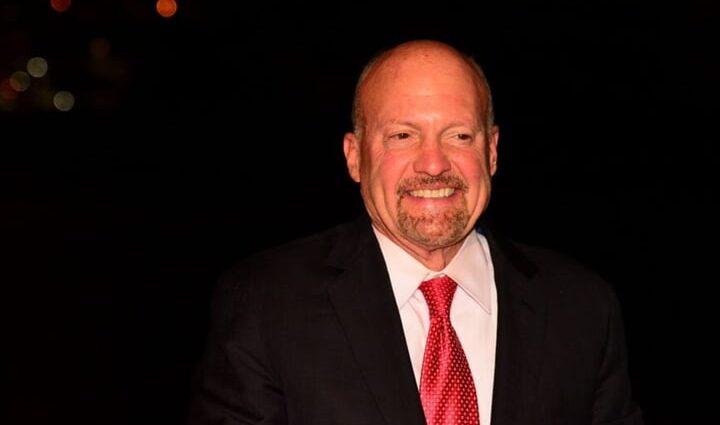
CNBC’s Jim Cramer stated Tuesday that Micron benefits from a structural shift in storage. He argues the AI buildout creates a secular trend rather than a short-lived cycle.

Cramer noted that conversations with Amazon.com Inc (NASDAQ:AMZN) executives reinforced this bullish view. He praised CEO Sanjay Mehrotra for recognizing the demand wave early.

The ‘Memflation’ …

Full story available on Benzinga.com

This post was originally published here

On CNBC’s “Mad Money Lightning Round,” Jim Cramer said the last quarter of Domino’s Pizza Inc (NYSE:DPZ) was “not so hot,” adding, “We have to give it a quarter.” He recommended not buying the stock yet.

Domino’s, on April 27, reported worse-than-expected first-quarter financial results. Domino’s Pizza reported quarterly earnings of $4.13 per share, which missed the analyst consensus estimate of $4.28 per share. The company reported quarterly sales of $1.151 billion, which missed the analyst …

Full story available on Benzinga.com

This post was originally published here
Top Wall Street analysts changed their outlook on these top names. For a complete view of all analyst rating changes, including upgrades, downgrades and initiations, please see our analyst ratings page.

  • Piper Sandler analyst Clarke Jeffries upgraded Bentley Systems, Inc (NASDAQ:BSY) from Neutral to Overweight and raised the price target from $42 to $45. Bentley Systems shares closed at $33.62 on Thursday. See how other analysts view this stock.
  • Mizuho analyst Ben Chaiken upgraded United Parks & Resorts Inc (NYSE:PRKS) from Underperform to Outperform and raised the price target from $27 to $47. United …

Full story available on Benzinga.com

This post was originally published here
Eric Trump and Donald Trump Jr. have backed a $1 billion investment network targeting industries heavily promoted by President Donald Trump‘s administration, including artificial intelligence, drones and cryptocurrency, the Financial Times reported Thursday.

According to the report, two people familiar with the matter said the Trump sons invested in vehicles launched by American Ventures, an investment arm controlled by the Trump Tower-based financial group Dominari Holdings. SEC filings show the brothers collectively own roughly 12% of Dominari, which owns 90% of American Ventures.

The growing investment network has drawn scrutiny because many of the businesses operate in sectors expected to benefit from Trump administration policies, defense spending and industrial priorities.

American Ventures has reportedly raised more than $1 billion across 21 investment vehicles backing companies tied to AI, crypto, drones, nuclear energy and data centers. Over the past 10 months, American Ventures has reportedly channeled money from wealthy investors and family offices into small-cap stocks and private companies tied to sectors including AI, crypto, drones, nuclear energy …

Full story available on Benzinga.com

This post was originally published here

Top Wall Street analysts changed their outlook on these top names. For a complete view of all analyst rating changes, including upgrades, downgrades and initiations, please see our analyst ratings page.

  • Oppenheimer analyst Jason Helfstein downgraded Trade Desk Inc (NASDAQ:TTD) from Outperform to Perform. Trade Desk shares closed at $23.49 on Thursday. See how other analysts view this stock.
  • B of A Securities analyst Matt Bullock downgraded HubSpot Inc (NYSE:HUBS) from Buy to Underperform and lowers the price target from $300 to $180. HubSpot shares closed …

Full story available on Benzinga.com

This post was originally published here

On CNBC’s “Halftime Report Final Trades,” Rob Sechan, CEO of NewEdge Wealth, named Qualcomm Inc (NASDAQ:QCOM) as his final trade.

Lending support to his choice, Qualcomm, on April 29, reported second-quarter financial results that beat analyst estimates. Qualcomm reported second-quarter revenue of $10.60 billion, down 2% year-over-year. The revenue total beat a Street consensus estimate of $10.59 billion according to data from Benzinga Pro.

Malcolm Ethridge, managing partner at Capital Area Planning Group, picked Global X Cybersecurity ETF (NASDAQ:BUG).

Don’t forget to check out …

Full story available on Benzinga.com

This post was originally published here

Everyone wants the shortcut. The clean, simple answer to making a million dollars that doesn’t involve a decade of stress, second-guessing, and late nights staring at a spreadsheet. That question pops up everywhere — and this time, Kevin O’Leary gave a straight answer.
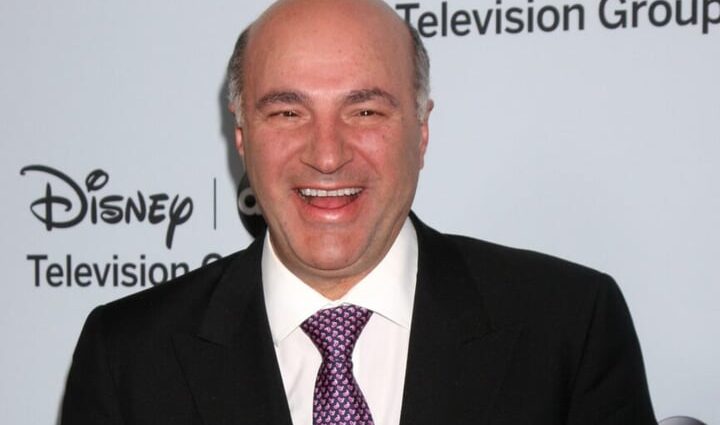

And yes, it sounds exactly like something a star of “Shark Tank” would say.

The Real Starting Point Isn’t A Million

In a recent Instagram Reel, O’Leary didn’t start with seven figures. He zoomed in on something much smaller — and much more telling.

“The fastest way to make $1 million dollars is to make the first 10,000,” he said.

Don’t Miss:

That line flips the usual thinking. The goal isn’t chasing a million. It’s proving, early, that someone will actually pay.

From there, he tied it to something even more fundamental.

“The fastest way to make a million dollars is to solve a problem for people,” he said. “People pay you because you saved them time, money and make their lives more productive.”

The logic is simple, but not soft. Money follows usefulness.

The ‘Pain Point’ Idea Sounds Easy Until It Isn’t

O’Leary drilled it down even further.

“Try and find something that’s a pain point that you know everybody has and then provide a product or service that solves for that,” he said.

It’s a clean formula. Find a problem. Fix it. Scale it.

Trending: Think the biggest tech gains happen after an IPO? Click here to see why some investors are looking at opportunities before companies go public.

He even stripped it down to basics: people don’t want to walk around barefoot, so they buy shoes. That’s business at its core — solving something obvious enough that people will pay to make it go away.

But he didn’t pretend it’s effortless.

“Yeah, it sounds simple, but it’s not. It’s very hard work,” he said.

That’s the part that usually gets skipped. Identifying a real, shared problem is difficult. Building something people trust enough to pay for is harder. Repeating that at scale is where most ideas stall.

Not Everyone Needs To Build It To Benefit From It

Here’s where the conversation usually gets more honest.

Not everyone is wired to start a business. Not everyone wants to chase product-market fit or build something from scratch. And that’s fine.

There’s another lane — backing the people who do.

See Also: From the International Space Station to everyday use — this NASA-tested diagnostics platform is moving toward at-home lab testing

Some investors focus on finding businesses that already solved a real problem and are scaling it. Others build wealth through portfolios, real estate, or steady market exposure.

This is where working with a financial advisor becomes less of a formality and more of a strategy. A strong advisor can review the full financial picture and give guidance tailored to specific goals, risk tolerance, income, and time horizon. That can include how to invest, how to handle taxes, when to take income, and how to structure assets so gains aren’t quietly lost over time.

Because making money is one thing. …

Full story available on Benzinga.com

This post was originally published here

Anthony Pompliano declared most of the crypto industry is dead and never coming back after spending one day at the Consensus Miami conference, sparking fierce debate across the sector.

Ghost Chains And Zombie Coins Dominate The Landscape

Pompliano explained in a podcast update that the natural business cycle doesn’t play out in crypto.

In traditional industries, failed companies shut down, and investors reallocate capital elsewhere. But blockchains almost never shut down and coins almost never go to zero.

One or two people can keep “ghost chains” running and create the illusion that the blockchain is still alive and in use.

Meanwhile, “zombie coins” lose most of their value and liquidity evaporates, but tokens don’t officially go to zero.

With millions of coins and thousands of blockchains, Pompliano asked the audience at Consensus if anyone believes millions of crypto coins will thrive in the future. Zero people raised their hands.

Mercenaries Replace Missionaries

The industry used to be defined by hardcore missionaries who would rather see Bitcoin (CRYPTO: …

Full story available on Benzinga.com

This post was originally published here

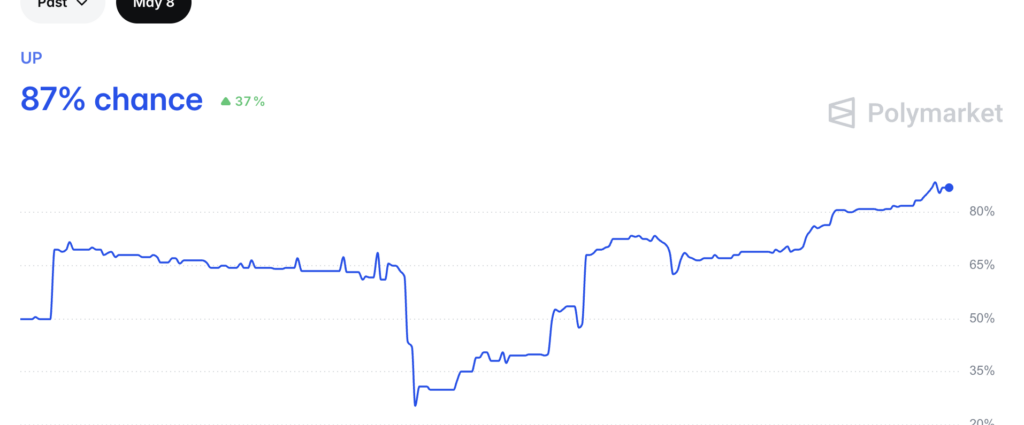
The S&P 500 pulled back from record highs on Thursday as investors weighed renewed tensions between the U.S. and Iran, though Polymarket traders continued to bet on another positive start for equities heading into Friday’s session.

The benchmark index closed down 0.38% at 7,337.11, after touching a fresh intraday high earlier in the day. Despite the decline, the May 8 Polymarket contract showed an 87% probability of the S&P 500 opening higher on Friday.

Iran Tensions Return To Focus

Oil prices rose after the U.S. and Iran exchanged fire in the waterway, with both sides accusing the other of initiating the attack. U.S. Central Command said American forces intercepted “unprovoked Iranian attacks” while escorting Navy destroyers through the strait.

President …

Full story available on Benzinga.com

This post was originally published here

The U.S. Treasury may need to borrow more than $2 trillion from private markets in fiscal 2026, according to the Treasury Department’s latest Quarterly Refunding documents released Wednesday.

Primary dealers surveyed in the Treasury presentation estimated privately-held net marketable borrowing at roughly $2.04 trillion in FY2026, with borrowing needs expected to remain above $2 trillion through FY2028.

The documents also showed the Office of Management and Budget projected a $2.065 trillion fiscal 2026 deficit, compared with a lower $1.853 trillion estimate from the Congressional Budget Office.

The estimates come as U.S. national debt approaches $39 trillion and financing costs continue climbing alongside elevated Treasury yields. Treasury projected borrowing of $189 billion in the third quarter and $671 billion in the fourth quarter of fiscal 2026.

data-variant=”card”
data-news-mode=”manual”

>


Read Also:

US Job Cuts Rise 38% …

This post was originally published here

IREN Limited (NASDAQ:IREN) is up during Friday’s premarket session, trading higher by 8.48% as the company recently announced a significant partnership with Nvidia Corporation (NASDAQ:NVDA).

This collaboration allows Nvidia to purchase up to 30 million ordinary shares at $70 each, potentially valuing the investment at $2.1 billion, which has sparked investor interest in the stock.

The deal highlights the growing demand for AI infrastructure, aligning with IREN’s business model focused on data centers and renewable energy.

Earnings Snapshot

IREN reported quarterly revenue of $144.8 million, which fell short of analyst expectations of $223.393 million by 35.18%. The revenue also marked a 21.6% decrease compared to $184.7 million in the same period last year, primarily due to lower Bitcoin prices and reduced mining capacity.

In the quarterly conference call, the company said it increased secured power capacity to 5 gigawatts, added new sites across Europe and APAC, energized Sweetwater One on schedule and began Horizon One GPU commissioning for Microsoft Corporation (NASDAQ:MSFT).

Management added that all operational capacity is fully contracted and …

Full story available on Benzinga.com

This post was originally published here

During times of turbulence and uncertainty in the markets, many investors turn to dividend-yielding stocks. These are often companies that have high free cash flows and reward shareholders with a high dividend payout.

Benzinga readers can review the latest analyst takes on their favorite stocks by visiting Analyst Stock Ratings page. Traders can sort through Benzinga’s extensive database of analyst ratings, including by analyst accuracy.

Below are the ratings of the most accurate analysts for three high-yielding stocks in the communication services sector.

National CineMedia, Inc. (NASDAQ:NCMI)

  • Dividend Yield: 3.23%
  • Barrington Research analyst Patrick Sholl maintained an Outperform rating and cut the price target from $6.5 to $5.5 on Jan. 26, 2026. This analyst has an accuracy rate of 66%
  • B. Riley Securities analyst Drew Crum maintained a Neutral rating and cut the price target from $5 to $4 on Jan. 22, 2026. This analyst has an accuracy rate of …

Full story available on Benzinga.com

This post was originally published here

The Mosaic Company (NYSE:MOS) will release earnings for its first quarter before the opening bell on Monday, May 11.

Analysts expect the company to report quarterly earnings of 22 cents per share, down from 49 cents per share in the year-ago period. The consensus estimate for Mosaic’s quarterly revenue is $2.9 billion (it reported $2.62 billion last year), according to Benzinga Pro.

Ahead of quarterly earnings, CIBC analyst Hamir Patel, on April 30, maintained a Neutral rating on Mosaic and lowered the price target from $32 to $27.

With the recent buzz around Mosaic, some investors may be eyeing potential gains from the company’s dividends too. As of now, Mosaic has an annual dividend yield of 3.84%, which is a quarterly dividend amount of 22 cents per share (88 cents a year).  

So, how can investors exploit its …

Full story available on Benzinga.com

This post was originally published here

Toyota Motor Corp (NYSE:TM) says that the automaker has recorded an impact of over $4.3 billion due to the war in the Middle East as tensions between Washington and Tehran continue to surge.

22% Drop In Earnings

During the company’s first-quarter 2026 earnings call on Friday, the automaker shared that it expected its operating profit to drop over 3.8 trillion yen (approximately $24 billion) for the 2025-26 fiscal year. The decline in profit represents a nearly 22% YoY drop from the earlier figure of 4.8 trillion yen (nearly $30 billion), largely due to U.S. tariffs.

data-variant=”card”
data-news-mode=”manual”

>


Read Also:

GM To Invest Nearly $1 Billion In Gas Vehicle Production Amid Trump’s Tariff Tailwind, EV Slowdown

This post was originally published here

The top U.S. export in the last few months has not been oil, or AI, or any other headline-grabbing product, but rather gold. The oldest store of value, export value, has surged, shifting the composition of exports and raising questions about the ultimate destination of the metal.

The surge in exports, arguably, reflects the weakening confidence in traditional financial systems toward the safety of the oldest monetary metal. Investors and institutions, including central banks, increasingly favor physical gold over paper assets, moving large quantities of metal out of American vaults.

Record Export Growth and Price Dynamics

The scale of the movement is historic. In February alone, U.S. gold exports reached $17.88 billion, the highest monthly total recorded in at least two decades and likely the highest ever.

Precious metals accounted for roughly 12.7% of all U.S. exports during the first two months of 2026, nearly triple the historical norm of around 4.5%.

The acceleration has been so sharp that just the first two months of 2026 generated more gold export value than nearly every previous full-year total on record. By February, precious metals had climbed ahead of energy, agriculture, airplanes, and automotive products.

High prices are only part of the …

Full story available on Benzinga.com

This post was originally published here

Artificial intelligence (AI) is no longer just a Wall Street narrative; it is the definitive engine of the U.S. economy, driving the vast majority of national growth in early 2026.

Historic Economic Impact

According to the U.S. Bureau of Economic Analysis, real gross domestic product (GDP) increased at an annual rate of 2.0% in the first quarter of 2026. This acceleration in real GDP reflected upturns in government spending and exports, as well as an acceleration in investment that was partly offset by a deceleration in consumer spending.

Market data from Bespoke Investment Group, shared by the Kobeissi Letter, highlights that investment in software and IT equipment contributed 134 basis points to that expansion. This means tech infrastructure fueled a massive 67% of all first-quarter economic growth.

Kobeissi’s X post noted this makes it the largest quarterly tech contribution “in history,” smashing the previous “1999 record” set during the dot-com boom by roughly 10 basis points. “To put this differently, without this AI-driven tech investment, Q1 GDP growth would have been close to flat,” the post noted.

The Bureau of Economic Analysis explicitly confirmed that the quarter’s investment growth was driven by increases in intellectual property products …

Full story available on Benzinga.com

This post was originally published here

Global food prices continued to rise for the third consecutive month, driven by higher vegetable oil, meat and cereal prices that outweighed declines in sugar and dairy products.

The FAO Food Price Index, which tracks global prices for a basket of food commodities, averaged 130.7 points in April 2026, rising 1.6% from March, according to the Friday report from the United Nations’ Food and Agriculture Organization (FAO). The number was 2.0% above its level from a year earlier, but still 18.4% below the March 2022 high.

Vegetable Oils, Cereals Surge

Vegetable oils posted the sharpest jump among the major categories, with the FAO Vegetable Oil Price Index climbing 5.9% in April to 193.9 points, marking the strongest level since July 2022.

FAO attributed the rise to higher prices for palm, soy, sunflower and rapeseed oils, with biofuel demand and higher crude prices cited as key supports. The agency also pointed to worries about weaker output in Southeast Asia, while noting sunflower oil markets were also influenced by tight availability around the Black Sea.

Cereals also moved higher, with the FAO Cereal Price Index up 0.8% in April to 111.3 points. The organization said most major grains rose, while sorghum and barley were exceptions.

Wheat prices increased 0.8% due to drought in parts of …

Full story available on Benzinga.com

This post was originally published here

The most oversold stocks in the information technology sector presents an opportunity to buy into undervalued companies.

The RSI is a momentum indicator, which compares a stock’s strength on days when prices go up to its strength on days when prices go down. When compared to a stock’s price action, it can give traders a better sense of how a stock may perform in the short term. An asset is typically considered oversold when the RSI is below 30, according to Benzinga Pro.

Here’s the latest list of major oversold players in this sector, having an RSI near or below 30.

OSI Systems Inc (NASDAQ:OSIS)

  • On May 4, OSI Systems posted upbeat quarterly earnings. Ajay Mehra, OSI Systems’ President and Chief Executive Officer, said, “Our third quarter results demonstrate the strength and durability of our diversified portfolio highlighted by record Q3 non‑GAAP earnings per share and strong bookings, reflecting sound execution in our Security and Optoelectronics and Manufacturing divisions. Our substantial backlog and a robust pipeline position us well as we capitalize on market opportunities and advance key strategic initiatives.” …

Full story available on Benzinga.com

This post was originally published here

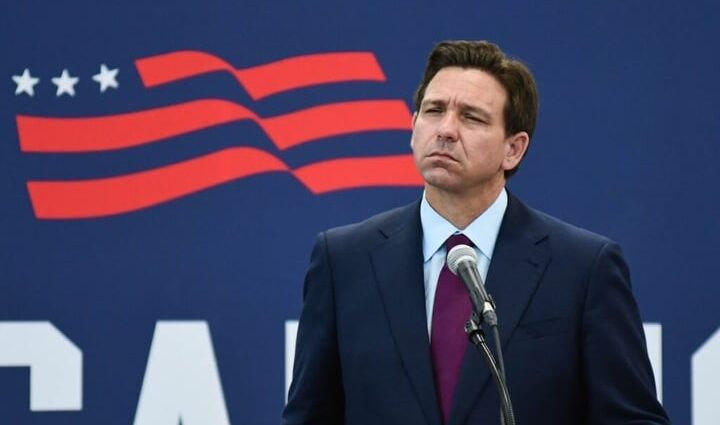
Florida Gov. Ron DeSantis confirmed on Friday that he was prepared to sign an over-the-counter ivermectin bill, after House Republicans blocked legislation the Senate had already passed 23–15.

Senate Passed, House Blocked

“The ivermectin bill was passed by Republicans in the Florida Senate but then killed by Republicans in the Florida House. I was ready to sign it,” DeSantis wrote on X, responding to a user.

His remarks come as South Carolina’s House passed an OTC Ivermectin bill on Wednesday.

The Florida Senate passed SB 1756, known as the Medical Freedom …

Full story available on Benzinga.com

This post was originally published here

Nvidia Corp.’s (NASDAQ:NVDA) latest partnership with IREN Ltd. (NASDAQ:IREN) underscores the chip giant’s aggressive strategy to scale AI infrastructure globally as demand surges and competitive pressure from Advanced Micro Devices, Inc. (NASDAQ:AMD) intensifies.

Nvidia Expands AI Infrastructure To Defend Market Leadership

Speaking to CNBC, CoreWeave Inc (NASDAQ:CRWV) co-founder and CEO Michael Intrator said Nvidia’s growing infrastructure investments reflect the urgency of maintaining sufficient compute capacity across the AI ecosystem.

He noted that Nvidia, now valued at around $5 trillion, must ensure it delivers sufficient AI computing capacity across the entire technology stack, warning that failure to do so could push customers toward rivals such as AMD.

Intrator added that Nvidia is “covering their bases” through strategic partnerships designed to secure long-term infrastructure leadership.

Full story available on Benzinga.com

This post was originally published here

The Donald Trump administration is reportedly inviting several tech and business leaders to accompany the President on his trip to Beijing next week.

Trump Invites CEOs To Beijing

The planned invitees include Boeing Co. (NYSE:BA) CEO Kelly Ortberg, Nvidia Corp.‘s (NASDAQ:NVDA) Jensen Huang, as well as CEOs of Apple Inc. (NASDAQ:AAPL), Exxon Mobil Corp (NYSE:XOM), according to a report by Semafor on Thursday.

data-variant=”card”
data-news-mode=”manual”

>


Read Also:

ASML CEO Says Jensen Huang ‘Totally Right’ On Exporting Products With An Eight-Generation Gap— Denies Top Chip Access To China

This post was originally published here

U.S.-based employers announced 83,387 job cuts in April, up 38% from March, according to a report released Thursday by Challenger, Gray & Christmas.

The April total was down 21% from the 105,441 cuts announced during the same month last year. Still, it marked the third-highest April layoff total since 2009 outside the pandemic period. Employers have announced 300,749 job cuts so far in 2026, though that figure remains roughly 50% below the same period last year.

Hiring plans weakened sharply alongside the increase in layoffs. Companies announced plans to hire 10,049 workers in April, down 69% from March and down 38% year-over-year.

“Technology companies continue to announce large-scale cuts and are leading all industries in layoff announcements,” said Andy Challenger, workplace expert and chief revenue officer at Challenger, Gray & Christmas. “Regardless of whether individual jobs are being replaced by AI, the money for those roles is.”

data-variant=”card”
data-news-mode=”manual”

>


Read Also:

Trump’s 10% Global …

This post was originally published here

Public markets are “fake,” some elites are getting rich off the Iran war, and markets are behaving irrationally, according to conservative political commentator Tucker Carlson, who launched a blistering attack on financial markets and political elites in a lengthy podcast monologue on Thursday.

“Markets are doing things you would not expect markets to do if they were behaving rationally in a free way,” Carlson said.

“It’s become too obvious to deny over the past couple of months that public markets are not what they told us they were, which is to say open and free and equal for everyone to participate in.”

Carlson’s comments come as markets continue to swing sharply with each development in the Iran war, which began on Feb. 28 after joint U.S.-Israeli strikes on the Islamic Republic and led to severe disruption in shipping through the Strait of Hormuz — a key route for roughly a fifth of global oil flows.

While Washington and Tehran are now exploring a ceasefire deal, both sides have continued to accuse each other of fresh attacks, keeping investors on edge.

‘Massive Bets’ Were Made In Oil Futures

Carlson argued that repeated headlines around potential peace negotiations between Iran and the U.S. triggered sharp swings in oil and equity markets.

“Every single time you have seen massive bets made on oil futures,” Carlson …

Full story available on Benzinga.com

This post was originally published here

As Paramount Skydance Corp. (NASDAQ:PSKY) prepares its technology infrastructure to absorb Warner Bros. Discovery Inc. (NASDAQ:WBD), the financial realities of the looming mega-merger are coming into sharp focus, highlighted by WBD’s massive $2.9 billion first-quarter net loss.

Staggering Net Loss And ‘Termination Fee’

WBD reported a first-quarter net loss available to the company of $2.9 billion. A major component of this deficit is a colossal $2.8 billion termination fee paid to Netflix Inc. (NASDAQ:NFLX). Under the terms of the merger agreement, PSKY actually paid Netflix $2.8 billion on WBD’s behalf.

WBD’s free cash flow also took a hit, declining to negative $476 million, adversely affected by roughly $100 million in separation- and transaction-related items.

“We flowed $100 million roughly in negative cash impact through the first quarter,” noted WBD Chief Financial Officer Gunnar Wiedenfels during their earnings call, warning, “And again, there will be more coming.”

data-variant=”card”
data-news-mode=”manual”

>


Read Also:

Paramount Stock Edges Higher On Q1 Double Beat, Streaming Growth Drives Results

This post was originally published here
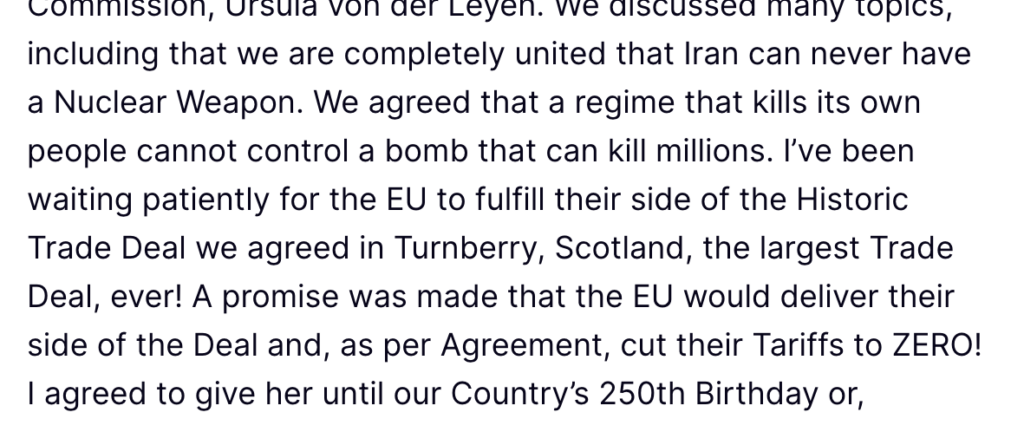
A panel of judges at the United States Court of International Trade ruled Thursday that Donald Trump’s 10% global tariffs imposed under Section 122 of the Trade Act of 1974 were “unauthorized by law.”

In a 2-1 ruling, the court found the administration lacked sufficient legal justification to impose the tariffs under Section 122, which allows temporary import surcharges under certain international payments conditions.

The decision applies only to the plaintiffs in the case, including spice importer Burlap and Barrel, toy company Basic Fun and the State of Washington. The ruling directs the administration to stop collecting the tariffs from those parties and refund prior payments.

The court said the presidential proclamation imposing the tariffs did not identify “large and serious United States balance-of-payments deficits” as Congress intended when it enacted Section 122 in 1974.

The opinion said the administration relied on trade deficits, current account deficits and investment position data to support the tariffs. The judges also noted that Congress holds constitutional authority over tariffs and taxation, while presidential tariff powers must remain within limits delegated by …

Full story available on Benzinga.com

This post was originally published here
AMC Global Media Inc. (NASDAQ:AMCX) will release earnings for its first quarter before the opening bell on Friday, May 8.

Analysts expect the New York-based company to report quarterly earnings of 21 cents per share, down from 52 cents per share in the year-ago period. The consensus estimate for AMC Global Media’s quarterly revenue is $540.32 million (it reported $555.23 million last year), according to Benzinga Pro.

On March 26, AMC Networks announced full redemption of outstanding 10.25% senior secured notes due 2029.

AMC Global Media shares gained 1.1% to close at $8.56 on Thursday.

Benzinga readers can access the latest analyst ratings on the Analyst Stock Ratings page. Readers can sort by stock ticker, company name, analyst firm, rating change or …

Full story available on Benzinga.com

This post was originally published here

Plains All American Pipeline, L.P. (NYSE:PAA) will release earnings for its first quarter before the opening bell on Friday, May 8.

Analysts expect the Houston, Texas-based company to report quarterly earnings of 42 cents per share, up from 39 cents per share in the year-ago period. The consensus estimate for PAA’s quarterly revenue is $12.02 billion (it reported $12.01 billion last year), according to Benzinga Pro.

On Feb. 6, Plains All American posted downbeat results for the fourth quarter.

Plains All American Pipeline shares fell 0.4% to close at $22.09 on Thursday.

Benzinga readers can access the latest analyst ratings on the Analyst Stock Ratings page. Readers can sort by stock ticker, company name, analyst firm, rating change or other variables.

Let’s have a look at how Benzinga’s most-accurate analysts have …

Full story available on Benzinga.com

This post was originally published here

President Donald Trump on Thursday threatened the European Union (EU) with steeper tariffs if the bloc fails to ratify its trade agreement with Washington by July 4, raising pressure on Brussels as implementation of the pact drags on.

“I agreed to give her until our Country’s 250th Birthday or, unfortunately, their Tariffs would immediately jump to much higher levels,” Trump said in a Truth Social post after what he described as a “great call’ with European Commission President Ursula von der Leyen.

The warning comes despite both sides publicly signaling progress on the deal, which was struck last July and set tariffs on most European goods at 15%.

Von der Leyen struck a more conciliatory tone in a post on X, saying the two leaders had discussed Middle East tensions and agreed that Iran “must never possess a nuclear weapon.” She also said the two sides remained committed to implementing the trade pact.

“Good progress is being made towards tariff reduction by …

Full story available on Benzinga.com

This post was originally published here

Cloudflare Inc. (NYSE:NET) reported a strong first-quarter revenue beat but simultaneously announced it will cut roughly 20% of its global workforce as the web infrastructure giant fundamentally restructures its operations around artificial intelligence (AI).

‘Agentic AI-First’ Future

Despite posting a 34% year-over-year revenue increase to $639.8 million, Cloudflare is shedding over 1,100 jobs. The company stressed that the move is not a defensive measure against macroeconomic headwinds, but rather a strategic pivot to an “agentic AI-first” operating model.

CEO Matthew Prince explained that massive internal productivity gains from AI technologies prompted the reorganization. Cloudflare’s internal use of AI tools surged 600% in just the last three months, with 97% of its engineers now actively utilizing AI coding assistants.

Not A ‘Cost-Cutting’ Exercise

“This is not a cost-cutting exercise or an assessment of the individuals’ performance,” Prince stated during the earnings call. “It is about defining how a world-class, high-growth company operates and creates value in the agentic AI era.”

Management noted that the efficiency of autonomous AI agents has fundamentally changed the nature of support roles within the …

Full story available on Benzinga.com

This post was originally published here

Rep. April McClain Delaney (D-Md.) disclosed a purchase of Entegris Inc. (NASDAQ:ENTG) stock in her latest congressional trading filing, while also adding exposure to several industrial, healthcare and aerospace companies.

According to a Periodic Transaction Report filed with the U.S. House of Representatives, Delaney purchased between $1,001 and $15,000 worth of Entegris shares on April 15. The filing was digitally signed on May 6.

Entegris Purchase Adds Semiconductor Exposure

Entegris supplies advanced materials and contamination-control solutions used in semiconductor manufacturing, an industry that continues to benefit from strong artificial intelligence and data center demand.

The disclosure comes after a week of Entegris first-quarter 2026 financial results, wherein the company posted revenue growth that exceeded the midpoint of the company’s guidance as demand remained strong across semiconductor-related markets. ENTG shares were up 75.3% year to date and 91.6% over the past year.

Adam Parker recently emphasized that strong AI-driven earnings are particularly bolstering chip stocks. Parker labeled semiconductors his “North Star,” highlighting their central role in the ongoing multi-year AI buildout, which he believes is not a bubble.

This post was originally published here
Governor Gavin Newsom (D-CA) on Thursday criticized Transportation Secretary Sean Duffy for urging Americans to take road trips as gas prices surged in the U.S.

Americans Paying 50% More For Gas

In a post on X, Newsom’s Press Office quoted a video where Duffy shared his thoughts on the rising cost of gas at the pump, saying that prices would be coming down “immediately.” He also outlined that “energy prices came down below $100 a barrel.”

data-variant=”card”
data-news-mode=”manual”

>


Read Also:

Gavin Newsom Says Trump Admin Is ‘Celebrating,’ ‘Bragging’ About High Gas Prices Amid Kevin Hassett’s Credit Card Spending Comment

This post was originally published here
The CNN Money Fear and Greed index showed a decline in overall market sentiment, while it remained in the “Greed” zone on Thursday.

U.S. stocks settled lower on Thursday, with the Dow Jones index falling more than 300 points during the session as investors assessed developments between the US and Iran.

In earnings, McDonald’s Corp. (NYSE:MCD) reported higher first-quarter earnings and sales on Thursday. US Foods Holding Corp. (NYSE:USFD) posted downbeat first-quarter 2026 results. Agilon Health Inc (NYSE:AGL) shares jumped 118% on Thursday after the company reported better-than-expected first-quarter financial results and issued second-quarter sales guidance above estimates.

On the economic data front, U.S. construction spending increased by 0.6% month-over-month in March compared to a 0.2% declined in the previous …

Full story available on Benzinga.com

This post was originally published here

Oshkosh Corporation (NYSE:OSK) will release earnings for its first quarter before the opening bell on Friday, May 8.

Analysts expect the Oshkosh, Wisconsin-based company to report quarterly earnings of $1.04 per share, down from $1.92 per share in the year-ago period. The consensus estimate for Oshkosh’s quarterly revenue is $2.29 billion (it reported $2.31 billion last year), according to Benzinga Pro.

On Jan. 29, Oshkosh posted mixed results for the fourth quarter.

Shares of Oshkosh fell 2.3% to close at $153.06 on Thursday.

Benzinga readers can access the latest analyst ratings on the Analyst Stock Ratings page. Readers can sort by stock ticker, company name, analyst firm, rating change or other variables.

Let’s have a look at how Benzinga’s most-accurate analysts have rated the company in the recent period.

  • Citigroup analyst Kyles …

Full story available on Benzinga.com

This post was originally published here

Akamai Technologies Inc. (NASDAQ:AKAM) shares are trending on Friday.

AKAM shares jumped 29.62% to $151.25 after the bell on Thursday after the cybersecurity and cloud computing company announced first-quarter financial results topping analyst estimates in both revenue and earnings per share.

What You Need To Know?

Akamai reported first-quarter revenue of $1.074 billion for the period ended Mar. 31, beating the analyst estimate by 0.17%. It was up 6% year-over-year.

The company reported earnings per share of $1.61, surpassing estimates by 8.78%. Akamai has now exceeded EPS expectations for six straight quarters.

The headline mover was a seven-year, $1.8 billion commitment from a leading frontier model provider for Akamai’s Cloud Infrastructure Services. CEO Dr. Tom Leighton called it validation of Akamai’s role as “a key infrastructure provider in the AI economy.”

Akamai …

Full story available on Benzinga.com

This post was originally published here

The Wendy’s Company (NASDAQ:WEN) will release earnings for its first quarter before the opening bell on Friday, May 8.

Analysts expect the company to report quarterly earnings of 10 cents per share, down from 20 cents per share in the year-ago period. The consensus estimate for Wendy’s quarterly revenue is $518.4 million (it reported $523.47 million last year), according to Benzinga Pro.

The company has topped analyst estimates for revenue in five of the last 10 quarters. That includes the most recently reported fourth quarter.

Shares of Wendy’s rose 4.5% to close at $6.95 on Thursday.

Benzinga readers can access the latest analyst ratings on the Analyst Stock Ratings page. Readers can sort by stock ticker, company name, analyst firm, rating change or other variables.

Let’s have a look at how Benzinga’s …

Full story available on Benzinga.com

This post was originally published here
With U.S. stock futures trading higher this morning on Friday, some of the stocks that may grab investor focus today are as follows:

  • Wall Street expects Fluor Corp. (NYSE:FLR) to report quarterly earnings at 62 cents per share on revenue of $3.89 billion before the opening bell, according to data from Benzinga Pro. Fluor shares gained 1.4% to $51.81 in after-hours trading.
  • Trade Desk Inc. (NASDAQ:TTD) reported mixed first-quarter financial results. Trade Desk reported first-quarter adjusted earnings of 28 cents per share, which missed the Street estimate of 32 cents, according to Benzinga Pro data. Quarterly revenue of …

Full story available on Benzinga.com

This post was originally published here

Forward Air (NASDAQ:FWRD) fell more than 45% to around $9.50 in after-hours trading Thursday after the company reported first-quarter 2026 results and disclosed that one of its largest customers may transition a significant portion of its business to other providers.

Forward Air is a freight and logistics company that helps move goods across the United States and Canada through trucking, shipping and supply chain services.

Q1 Results

Forward Air reported first-quarter revenue of $582 million, down from $613 million in the prior-year quarter. The company posted a net loss of $40.2 million, compared to a net loss of $61.2 million a year earlier.

Operating income improved to $20.4 million from $4.8 million in the first quarter of 2025. Cash provided by operating activities increased to $45.7 million, while liquidity rose to more than $400 million at quarter end.

CEO Shawn Stewart said the company remained focused on customer service during the quarter and noted that …

Full story available on Benzinga.com

This post was originally published here

GD Culture Group Ltd. (NASDAQ:GDC) jumped 31.52% to $0.20 in after-hours trading Friday after the Nevada-based holding company announced that its board of directors has formed a special committee consisting of three disinterested, independent directors to evaluate and consider the preliminary non-binding proposal letter received on May 1.

What You Need To Know?

According to GD Culture Group’s Wednesday press release, the bid came from investment entities Wealthy Concord Limited and East Valley Technology Limited, offering $10.75 per share in cash.

The Special Committee, consisting of Lei Zhang, Yun Zhang and Shuaiheng Zhang, has the authority to hire independent legal and financial advisors. The company also noted that …

Full story available on Benzinga.com

This post was originally published here

On Thursday, Cathie Wood-led Ark Invest made notable trades involving Advanced Micro Devices Inc. (NASDAQ:AMD) and Tempus AI Inc. (NASDAQ:TEM). These trades reflect Ark’s strategic repositioning amid evolving market dynamics.

The AMD Trade

ARK Innovation ETF (BATS:ARKK) fund reduced its stake in Advanced Micro Devices Inc. by selling 8,045 shares. The transaction, valued at approximately $3.3 million, was executed at AMD’s closing price of $408.46 on Thursday.

This move aligns with Ark’s recent trend of trimming its AMD holdings. Recently, AMD’s CEO, Lisa Su, highlighted the company’s strong start to 2026, driven by increased AI adoption and demand for compute infrastructure. The rise of AI agents has significantly boosted the need for CPUs, despite the critical role of GPUs in AI acceleration.

Despite the positive outlook, Ark’s decision to sell AMD shares may indicate a strategic shift. The company has been capitalizing on AMD’s recent performance, as the stock has been hot due to the AI-driven demand surge. On Tuesday, Ark sold $16 million worth of AMD shares, while …

Full story available on Benzinga.com

This post was originally published here

The U.S. Treasury Department on Thursday announced a new round of sanctions targeting individuals and entities accused of exploiting Iraq’s oil sector to benefit Iran and its proxy militias, escalating Washington’s pressure campaign against Tehran.

Bessent Says U.S. Will Not ‘Stand Idly By’

Treasury Secretary Scott Bessent said on X, the Iranian regime was “pillaging resources that rightfully belong to the Iraqi people” and using Iraqi oil revenues to support militant activities.

“Like a rogue gang, the Iranian regime is pillaging resources that rightfully belong to the Iraqi people,” Bessent said. “Treasury will not stand idly by as Iran’s military exploits Iraqi oil to fund terrorism against the United States and our partners.”

This post was originally published here

If you had to put every dollar you own into a single stock and not touch it for 10 years, what would you pick? That simple question sparked a massive discussion on a value investing forum, and while dozens of names came up, an apparent pattern quickly emerged.

Most people didn’t try to get clever. Instead, they leaned into scale, stability and companies that already dominate everyday life. And one name kept showing up again and again: Google, which operates under its parent company Alphabet Inc. (NASDAQ:GOOG, GOOGL)).

Why Big Tech Keeps Winning

Google, along with Microsoft (NASDAQ:MSFT), Amazon (NASDAQ:AMZN) and Apple (NASDAQ:AAPL), dominated the conversation. But Google stood out the most, with multiple investors simply stating “GOOG” or “Probably Google” without hesitation.

Don’t Miss:

One commenter summed up the thinking in a way that reflects the broader sentiment: “At the end of the day, Google runs the internet.” Another pointed out how deeply embedded the company is in daily behavior, saying it’s “part of the culture and vocab now [with], ‘just Google it.’”

The reasoning wasn’t complicated. These companies have massive cash flows, global reach and strong positions in future growth areas like AI, cloud computing and data infrastructure. Many also liked Google’s relatively lower valuation compared to other mega-cap tech stocks, with one investor adding it has “the lowest forward PE of the Mag 7.”

Others highlighted the company’s willingness to experiment and adapt. “They are very willing to give new projects a chance and move on if it doesn’t catch on,” one commenter wrote, pointing to Google’s constant cycle of launching and killing products.

Trending: Investors With $1M+ Often Use Advisors for Tax Strategy — This Tool Matches You With One in Minutes  

The “Safe” Option Debate

While Google got the most attention, Berkshire Hathaway (NYSE:BRK, BRK.B)) was easily the second most popular answer. For many, it represented the closest thing to a diversified portfolio in a single stock.

“Berkshire is the best answer,” one investor wrote, while another called it “the most diversified and financially stable” option if you can’t adjust your portfolio for a decade.

But that choice wasn’t without pushback. Some pointed out that Berkshire has lagged the broader market in recent years. “Underperformed the index over 10 years though,” one commenter said, while others blamed the company’s large cash holdings and conservative approach.

Still, supporters pushed back on the idea that choosing Berkshire was somehow “cheating” because of its diversification. “Tons of mega-corps are well diversified,” one investor said, comparing it to companies like Amazon that own dozens of subsidiaries.

See Also: From the International Space Station to everyday use — this NASA-tested diagnostics platform is moving toward at-home lab testing 

What This Really Says About Investors

Apart from specific stock picks, the thread revealed a deeper mindset. Most people didn’t chase small, unknown companies or try to find hidden value. Instead, they trusted size, dominance and staying power.

Even when people branched out, the logic stayed similar. ASML Holding NV (NASDAQ:ASML) was mentioned because it “has no …

Full story available on Benzinga.com

This post was originally published here

Blue Owl Capital (NYSE:OWL) is holding early-stage talks with investors about a credit secondaries fund, according to Bloomberg News.

CEO Marc Lipschultz described credit secondaries during an August 2025 analyst call as “a great business to be had.” He also warned the market was creating “this sense that people are just picking up free money, and almost a mania.”

Private market secondaries involve investors selling stakes in private funds or companies to other investors before an exit event, according to a recent JPMorgan Chase (NYSE:JPM) report.

data-variant=”card”
data-news-mode=”manual”

>


Read Also:

Crypto Exchange Kraken Snags Reap Technologies For $600 Million

This post was originally published here

Snap Inc. (NASDAQ:SNAP), the maker of Snapchat, is letting its nearly 950 million users chat directly with brands’ AI agents with the launch of AI Sponsored Snaps. 

The new feature enables users to interact with Sponsored Snaps, which are the ads brands place directly on Snapchat’s main chat tab. Prior to this launch, users couldn’t engage with ads.

With AI rapidly becoming part of everyday life, Snap said chat is a natural home for this new feature.

Don’t Miss:

Ads In Conversations 

“Conversation is becoming the most valuable real estate in advertising,” Ajit Mohan, Snap’s chief business officer, said in a blog post. “AI is accelerating that shift, turning chat into the place where people discover products, ask questions and make decisions in real time. The real opportunity isn’t just putting ads into those environments, it’s designing formats that feel native to how people already talk. ” 

AI Sponsored Snaps allows users to ask brands questions and get recommendations without leaving the app. 

The new feature should resonate with users, given Snap said over half a billion users have messaged My AI, its AI agent, since it debuted in 2023. The company said that its community isn’t just open to AI in conversation but is already “embracing it.” 

Trending: Deloitte’s #1 Fastest-Growing Software Company Lets Users Earn Money Just by Scrolling — Investors Can Still Get In at $0.50/Share  

Experian Is The First Brand To Partner With Snap 

Snap is teaming up with credit-monitoring company Experian PLC for the initial launch and expects to add more brands in the future. Users will be able to ask Experian questions about credit scores, loans, credit cards and spending habits.

Experian’s AI agent will respond like a normal chat and guide users toward its services. The brands get to bring their own AI agents directly to the platform to engage with Snap’s nearly one billion monthly active users. 

AI Coming For Advertising 

Over the years AI chatbots have become adept at handling many customer service tasks from tracking orders to booking appointments but the launch of AI Sponsored Snaps takes it to the next level. It could be the first sign AI chatbots are coming for the salesforce. 

These AI agents aren’t designed to answer random questions or handle basic inquiries, rather they are built to help users discover products and services, provide personal recommendations and ultimately close the sale. 

Mohan said AI Sponsored Snaps are positioned to “drive full funnel outcomes from top of the funnel discovery and engagement to lower funnel installs and purchases,” roles typically reserved for humans. 

When AI Turns Digital Advertising Into Real-Time Conversations Between Brands and Consumers

As artificial intelligence becomes more deeply integrated into social platforms and digital advertising, companies are beginning to rethink how consumers discover and interact with products. Features like AI-powered chat ads highlight a broader shift toward conversational commerce, where engagement, recommendations, and purchasing decisions increasingly happen within the same digital environment.

For investors, these changes reflect a wider transformation …

Full story available on Benzinga.com

This post was originally published here

Artificial intelligence could cut the traditional five-day workweek to three days within the next five years as AI agents take over routine workplace tasks, Zoom Video Communications (NASDAQ:ZM) CEO Eric Yuan said.

“I hate working five days,” Yuan recently told The Wall Street Journal.

From Assembly Lines To AI Assistants 

Yuan pointed to past productivity breakthroughs, including Henry Ford‘s assembly line, which helped reduce the workweek from six days to five. He said AI agents could play a similar role today by taking over routine tasks such as emails and meetings. 

Don’t Miss:

He told the Journal people could eventually use thousands of digital agents to manage parts of their work. Yuan has already tested the idea, using an AI-generated version of himself to deliver part of an earnings call last year.

“I really do not think we need to work for five days because literally, we all will employ so many digital agents,” he said.

The Workweek Debate Is Moving Beyond Theory 

Yuan’s comments come as shorter workweeks draw fresh attention from AI companies and major business leaders. 

“Incentivize employers and unions to run time-bound 32-hour/four-day workweek pilots with no loss in pay,” OpenAI said in a recent policy paper, while keeping output and service levels steady. 

OpenAI also recommended that employers turn reclaimed hours into “a permanent shorter week, bankable paid time off, or both.”

See Also: Blue-Chip Art Has Outperformed the S&P 500 for Decades — Here’s How to Invest

Major bank leaders have raised similar ideas. JPMorgan Chase (NYSE:JPM) CEO Jamie Dimon has connected future productivity gains to shorter workweeks. “I believe that 30 years from now, your kids are probably working three and a half days a week,” he told CBS News in March.

Dimon also wrote in his latest letter to shareholders that advances in AI could reshape industries while helping people live “longer and safer” lives by reducing how much they need to work. 

Yuan was not talking about a future with nothing to do. He told the Journal that AI could create more free time, but not eliminate work altogether. “We can enjoy the beach time, but we want the kids [to] still find something new, exciting to work [on],” he said.

AI Is Reshaping the Workweek—But It’s Also Reshaping How People Think About Income Stability

As AI continues to reduce the amount of time needed to complete routine work, the bigger shift may not just be fewer working days—it may be how people think about long-term financial stability in general. A shorter workweek sounds appealing, but it also raises questions about how income, savings, and career planning evolve in a labor market that looks increasingly unpredictable.

In this kind of environment, some individuals look for more structured ways to evaluate their financial picture beyond just salary or hours worked. Platforms like AdviserMatch connect people with financial professionals who can help them assess …

Full story available on Benzinga.com

This post was originally published here
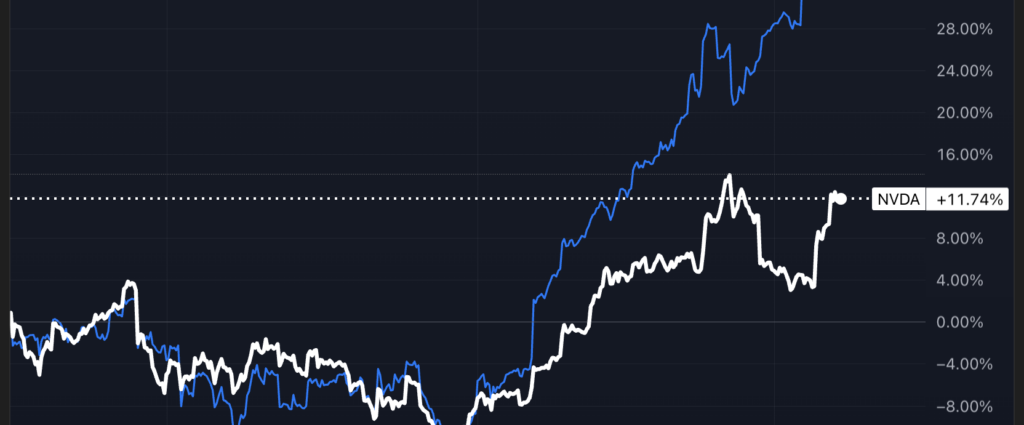
Companies such as Stripe, SpaceX, and Databricks are showing that it’s possible to scale into the tens or even hundreds of billions of dollars without ever becoming public.

Investors are pricing these companies through private and secondary markets — showing that the function an initial public offering (IPO) used to serve is already being replaced elsewhere. 

• PayPal Holdings stock is showing downward pressure. What’s next for PYPL stock?

One of the biggest forces eroding the traditional IPO pipeline is the rise of secondary markets. Late-stage companies can facilitate investor liquidity through structured secondary sales, tender offers and crossover rounds without listing publicly.

According to data from PitchBook, global transaction volumes for secondaries hit a record $226 billion in 2025, up 41% from 2024. 

“The secondaries world has expanded exponentially over the past three years,” said Montserrat Serra-Janer, global head of Private Markets Sales (Securities Services and Prime Finance Sales) at JPMorgan Chase. “We’ve seen huge growth, and we’re also seeing increased interest in our secondaries intermediation capabilities from both clients and prospects.”

data-variant=”card”
data-news-mode=”manual”

>


Read Also:

This post was originally published here

DraftKings (NASDAQ:DKNG) reported first-quarter (Q1) revenue of $1.646 billion on Thursday, up 17% year over year and ahead of Wall Street estimates of $1.644 billion, according to Benzinga Pro.

“We are off to a fantastic start to the year as our first quarter results exceeded our expectations,” DraftKings CEO Jason Robins said.

Customer acquisition and healthy customer engagement contributed to the revenue growth. The company also reported earnings of 20 cents per share in the first quarter. It beat a Street consensus estimate of 2 cents per share.

DraftKings ended Q1 with 4.2 million monthly unique payers (MUP), down 4% year-over-year. Excluding the exit of Lottery in Texas, monthly unique payers were up 2% year-over-year.

Average revenue per MUP was $131 in the first quarter, up 21% year-over-year.

The company …

Full story available on Benzinga.com

This post was originally published here

The National Association for the Advancement of Colored People (NAACP) filed a preliminary injunction aimed at stopping what they describe as air pollution from an xAI power plant.

A preliminary injunction filed on May 6 alleges xAI is operating without the required Clean Air Act permits. It also states that a Southaven, Mississippi-based facility supplies electricity for xAI’s Colossus 2 data center in Memphis.

Benzinga contacted xAI and the NAACP for comment.

NAACP: ‘We Put These Companies On Notice’

This follows the lawsuit filed last month by the NAACP in Mississippi. The organization claims that unpermitted gas turbines are sending harmful emissions through the Memphis area.

The NAACP also named MZX Tech, an xAI subsidiary, in the lawsuit. The organization warned both companies in February that a fleet of 27 gas turbines violated federal requirements. Six more turbines were later added at the site, bringing the total to 33.

“We put these companies on notice that their toxic air pollution is both dangerous and illegal. Rather than stop, they’ve added more turbines capable of inflicting even more harm to the surrounding communities,” says Laura Thoms, the director of enforcement for Earthjustice. “We’re asking the …

Full story available on Benzinga.com

This post was originally published here

Nvidia Corp. (NASDAQ:NVDA) reports first-quarter fiscal 2027 results on May 20, and Goldman Sachs is already looking past the company’s jaw-dropping $1 trillion AI revenue target.

The chipmaker has told investors it expects $1 trillion in cumulative revenue from its Blackwell, Blackwell Ultra and Rubin platforms across calendar years 2025 through 2027. But Goldman says investors will be watching for something even bigger: whether that number gets updated higher, and whether other Nvidia products not included in that forecast add even more upside.

In plain English, Goldman is suggesting Nvidia’s $1 trillion roadmap may not capture the full scope of the company’s AI opportunity.

On Thursday, the Wall Street giant raised its revenue and earnings estimates for Nvidia by roughly 12%, with calendar-year 2026 and 2027 earnings forecasts now sitting 14% and 34% above Street consensus.

The setup has become its own story. The chipmaker has lagged most of its semiconductor peers this year and now trades at a meaningful discount to its three-year median multiple.

The iShares Semiconductor ETF (NASDAQ:SOXX) has risen by 36% over the past three months, more than three times Nvidia’s returns.

Goldman analyst James Schneider highlighted that the gap can close, but only if management delivers on four specific items investors are watching closely.

“We believe expectations are elevated given strong supply-side results from Taiwan Semiconductor Manufacturing Co. Ltd. (NYSE:TSMC) and the South Korean SK Hynix,” Schneider said.

In addition, U.S. hyperscaler capital expenditure guidance for 2026 has been revised higher.

Nvidia Earnings: What Goldman Expects

Schneider and his team forecast a beat-and-raise quarter for Nvidia.

Their first-quarter revenue estimate of $80.05 billion runs about $2 billion …

Full story available on Benzinga.com

This post was originally published here

PHILADELPHIA, May 7, 2026 /PRNewswire/ — The Board of Directors of FS Credit Opportunities Corp. (the Fund) (NYSE:FSCO) announced the monthly distribution for May 2026. The distribution of $0.0583 per share will be paid on May 29, 2026. Further information on the distribution is summarized in the charts below.

The monthly distribution has been fully covered by the Fund’s net investment income throughout 2026 on a tax basis, and the Fund has generated an estimated total return on NAV of 2.2% and -12.7% on market price year-to-date through April 30, 2026.

The Fund has approximately $2.2 billion in assets under management and invests in event-driven credit, special situations, private capital solutions and other non-traditional credit opportunities.


Month

Ticker

Fund Name

Monthly
Dividend

May

FSCO

FS Credit Opportunities Corp.

$0.0583

Full story available on Benzinga.com

This post was originally published here
PHILADELPHIA, May 7, 2026 /PRNewswire/ — The Board of Trustees of FS Specialty Lending Fund (the Fund) (NYSE:FSSL) announced the monthly distribution for May 2026. The distribution of $0.1375 per share will be paid on May 29, 2026. Further information on the distribution is summarized in the charts below.

The current annualized distribution rate equates to an annualized distribution yield1 of 9.2% and 13.4%, respectively, based on the Fund’s net asset value (NAV) and market price as of March 31, 2026. The Fund has generated an estimated total return on NAV of 1.4% and -9.1% on market price year-to-date through April 30, 2026.

The Fund has approximately $1.9 billion in assets under management and invests in event-driven credit, special situations, private capital solutions and other non-traditional credit opportunities.


Month

Ticker

Fund Name

Monthly
Dividend


May

FSSL

FS Specialty Lending Fund

$0.1375

Full story available on Benzinga.com

This post was originally published here

Hg Capital Trust cut the value of most of its largest investments during the first quarter, pointing to a broad pullback in software valuations tied to AI-related concerns

The firm saw a 5.4% drop in net asset value for the quarter. It also saw a 9% decrease in portfolio valuations. Fourteen of Hg’s 20 largest positions were marked down over the period, the Financial Times reported.

“While all technology assets will be impacted by the adoption of AI, the Hg portfolio companies are well placed to see their specific value propositions enhanced by AI integration rather than to be replaced altogether. Indeed, Hg continues to lead the thinking on how such effective augmentations and collaborations can be made,” Strang continued.

data-variant=”card”
data-news-mode=”manual”

>


This post was originally published here
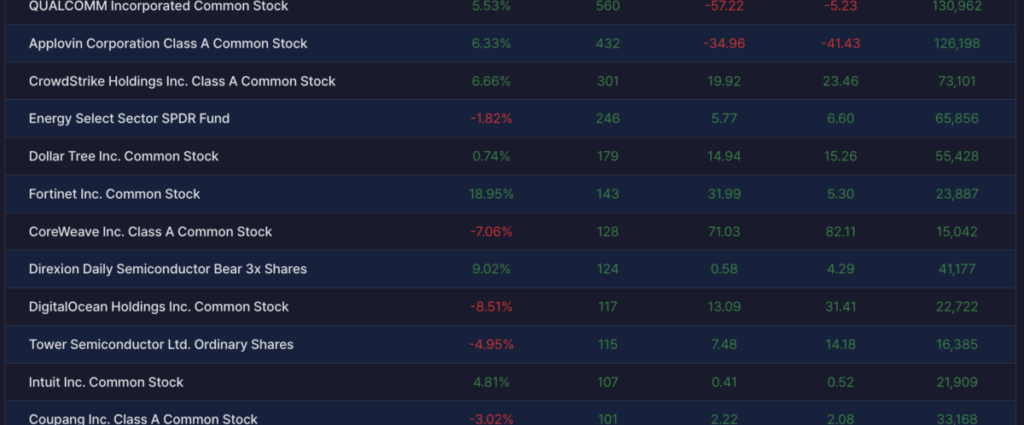
U.S. drone maker Skydio is doubling down on domestic manufacturing as it scales operations following China-imposed sanctions tied to its Taiwan sales, according to CEO Adam Bry. 

“We’re all-in on hardcore U.S. manufacturing,” he said on the “Sourcery with Molly O’Shea” podcast on April 23, describing the company’s push to reduce reliance on foreign supply chains.

At the same time, Skydio is racing to expand production amid surging demand from public safety agencies, the military and critical infrastructure operators. Bry said demand has “exploded” in recent years, making production capacity the company’s primary constraint.

Don’t Miss:

Funding Round And Growth Metrics

Bry’s comments come alongside Skydio’s $110 million Series F funding round, which valued the company at $4.4 billion post-money, according to a company blog post on April 23.   

“The most significant fact in our Series F is how little we are raising,” Bry said.”Despite investor demand to put substantially more into the company… our capital needs are rapidly decreasing.”

He said the funding reflects a business generating hundreds of millions in annual revenue with improving unit economics and declining capital needs.

China Sanctions Test Supply Chain

The company’s manufacturing strategy faced a major test in October 2024 when China restricted suppliers from providing key components after Skydio sold drones to Taiwan’s National Fire Agency, according to media reports.

Trending: Traders Are Flocking to Direxion ETFs — Targeting Tesla and Elon Musk’s Market Moves 

The move disrupted access to batteries, one of the last China-sourced parts in its supply chain. Skydio temporarily rationed batteries to one per drone while accelerating efforts to secure alternative suppliers, Bry said in the post, citing short-term impacts on customers. He added that the company had already been shifting production away from China and manufactures its drones in California.

Scaling U.S. Production

Bry said in the post that the sanctions were a “clarifying moment” that exposed vulnerabilities in global supply chains.

Skydio now operates what it says is one of the largest drone manufacturing facilities in the U.S., where each unit undergoes hundreds of assembly and testing checks, according to the company. Production has expanded to support major contracts, including a U.S. Army deal worth more than $52 million for over 2,500 Skydio X10D drones.

Bry said on the podcast that Skydio plans to significantly increase output as it works to meet rising demand and accelerate new product development.

See Also: Investors With $1M+ Often Use Advisors for Tax Strategy — This Tool Matches You With One in Minutes  

Long-Term Strategy And Competitive Pressure

Skydio’s strategy dates back to its early years. In 2014, the company declined an acquisition offer from Chinese drone maker DJI, a decision Bry said on the podcast was driven by a belief in the long-term value of autonomous drone systems.

Skydio is competing against “the best of Chinese industry” as it works to scale production and reduce reliance on foreign supply …

Full story available on Benzinga.com

This post was originally published here

South Korean industrial and technology themes are making a fresh push into U.S.-listed ETFs as Exchange Traded Concepts, in partnership with Korean firm Hanwha Asset Management, launched the PLUS Korea Manufacturing Core Alliance Index ETF (NYSE:KMCA), a fund targeting companies tied to Korea’s strategic manufacturing ecosystem.

The ETF seeks exposure to firms connected to AI semiconductors, rechargeable batteries, robotics, defense, shipbuilding, power infrastructure, and nuclear energy — sectors increasingly viewed as critical to global supply-chain resilience and industrial policy trends.

data-variant=”card”
data-news-mode=”manual”

>


Read Also:

South Korea’s 55% Market Surge Has Sparked An ETF Boom — But It’s Really An AI Chip Bet

This post was originally published here
Carlyle Group (NASDAQ:CG) reported that its total revenue dropped from $973 million in the first quarter of 2025 to $254 million in the first quarter of 2026, driven by a wider loss in investment income. 

The firm also reported a net income loss of $132 million, or 37 cents a share, in Q1, compared to $130 million profit or 35 cents a share last year. 

Despite the loss, management described Q1 as a “strong quarter,” highlighting record U.S. buyout realizations, high inflows, and fee-related earnings of $300 million.

“Momentum across the platform continues to accelerate and performance remains strong, reinforcing our confidence in our strategic plan. These results came against a complex global backdrop,” said CEO Harvey Schwartz.

“Geopolitical uncertainty and splintering are front of mind for investors and are influencing capital allocation and investment decisions. Of course, this is not new. Over the past five years, we’ve navigated COVID, the ongoing Ukraine-Russia war, and now the war in the Middle East. Everywhere I go in the world, the message is the same. The demand for private capital continues to grow. In today’s environment, diversification is a distinct advantage,” Schwartz said during the conference call with analysts.

Carlyle’s total assets under management (AUM) hit $475 billion, as of March 31, up 5% year-over-year. AUM was flat prior to the quarter …

Full story available on Benzinga.com

This post was originally published here

One Stop Systems Inc (NASDAQ:OSS) shares are trading lower Thursday afternoon. The retreat follows a historic rally that pushed the AI defense specialist to a new 52-week high earlier in the session.

Profit-Taking Hits AI Defense Play

The downside move primarily reflects aggressive profit-taking. On Wednesday, the stock skyrocketed 57.47% to close at $15.38.

Massive Q1 Earnings Beat

The volatility comes after OSS reported blowout first-quarter results. Revenue from continuing operations jumped 55% to $8.1 million. This easily cleared the $7 million analyst consensus. The company reported adjusted earnings per share of one cent, beating the expected four-cent loss per …

Full story available on Benzinga.com

This post was originally published here
Source: TradePulse

Market Overview

Recent aggregate flow data reflects continued institutional participation across a broad range of sectors, with technology, semiconductors, cybersecurity, energy, retail, and software all represented within the current Top Inflows dataset. While order flow towards semiconductor-related equities remains strong, the latest flow rankings also show meaningful participation across defensive retail, cloud infrastructure, and sector ETFs, implying a more diversified allocation of capital rather than concentrated positioning in a single sector.

Within the current Top Flows rankings, Qualcomm Incorporated leads by TradePulse’s flow score, supported by significant large deal order flow despite weaker short-term momentum flow. AppLovin Corporation and CrowdStrike Holdings also rank among the highest by flow score, reinforcing continued investor interest in software, artificial intelligence, and cybersecurity-related equities. Energy Select Sector SPDR Fund remains one of the strongest ETF-related flows, highlighting continued institutional engagement within the energy sector. Additional semiconductor and infrastructure exposure is represented through Fortinet, CoreWeave, and Tower Semiconductor

Observations from Current Flow Activity

• Qualcomm Incorporated currently leads the group in aggregate flow score, accompanied by elevated institutional transaction activity despite weaker near-term momentum readings
• Software, AI, and cybersecurity remain active, led by AppLovin, CrowdStrike Holdings, Fortinet, and CoreWeave
• Semiconductor-related exposure continues to attract interest through Qualcomm, Tower Semiconductor, Direxion Daily Semiconductor Bear 3x Shares
• Energy participation through …

Full story available on Benzinga.com

This post was originally published here

U.S. stocks traded lower midway through trading, with the Dow Jones index falling more than 100 points on Thursday.

The Dow traded down 0.71% to 49,556.77 while the NASDAQ fell 0.23% to 25,778.55. The S&P 500 also fell, dropping, 0.44% to 7,332.63.

Leading and Lagging Sectors

Information technology shares jumped by 0.2% on Thursday.

In trading on Thursday, energy stocks fell by 1.6%.

Top Headline

US Foods Holding Corp. (NYSE:USFD) posted downbeat first-quarter 2026 results.

The company reported first-quarter adjusted earnings per share of 78 cents, missing the analyst consensus estimate of 81 cents. Quarterly sales of $9.610 billion (+2.8%) missed the Street view of $9.647 billion.

Equities Trading UP
           

  • Agilon Health Inc (NYSE:AGL) shares shot up 113% to $59.70 after the company reported better-than-expected first-quarter financial results and issued second-quarter sales guidance above estimates. Also, the company raised its FY26 sales guidance above estimates.
  • Shares of Aaon …

Full story available on Benzinga.com

This post was originally published here

Johnson Controls International Plc (NYSE:JCI) on Wednesday delivered upbeat fiscal second-quarter 2026 results.

The company reported quarterly adjusted earnings per share of $1.19, beating the analyst consensus estimate of $1.12. Quarterly revenue came in at $6.142 billion, topping the Street’s $6.076 billion forecast.

Johnson Controls raised its full-year outlook. CFO Marc Vandiepenbeeck said the company now expects about 6% organic sales growth, roughly 50% operating leverage. Johnson Controls expects third-quarter adjusted EPS of ~$1.28, in line with the analyst estimate.

“We delivered another quarter of strong execution, converting sustained demand into consistent growth, margin expansion, and 45% adjusted EPS growth,” said Joakim Weidemanis, Chief Executive Officer of Johnson Controls. “Orders grew 30% and backlog reached a record $20 billion, reflecting strength in data centers and other high‑growth, technology‑driven operating environments where …

Full story available on Benzinga.com

This post was originally published here

CVS Health Corp. (NYSE:CVS) on Wednesday posted upbeat first-quarter earnings and issued strong 2026 guidance.

The health solutions company reported adjusted earnings of $2.57 per share, surpassing analyst estimates of $2.20. Sales reached $100.43 billion, up 6.2% year over year, beating the consensus of $95.09 billion.

CVS Health raised fiscal 2026 adjusted earnings guidance from $7.00-$7.20 per share to $7.30-$7.50, compared to the consensus of $7.16. The company expects 2026 sales of more than $405 billion, compared to prior guidance of at least $400 million and the Wall Street estimate of $404.87 billion.

“CVS Health continues to provide what people want most from health care: a connected, convenient, cost-effective engagement experience across our unique collection of businesses. We build trust every day in communities across the country by providing better access, affordability and …

Full story available on Benzinga.com

This post was originally published here

BlackRock (NYSE:BLK) slashed the value of its publicly traded private credit fund, BlackRock TCP Capital Corp. (NASDAQ:TCPC), by approximately 5%.

• BlackRock TCP Capital stock is trading at depressed levels. Where is TCPC stock headed?

The publicly-traded middle-market lending fund’s total markdowns were $35 million in the first quarter, according to the firm’s earnings release details. 

The fund has struggled recently due to increased pressure from distressed loans, asset markdowns and declining returns. Despite the decline, the company said it executed “improving credit quality” during the quarter.

BlackRock has been rapidly expanding into the private credit space in recent months, despite recent turmoil in the market. Investors have become increasingly concerned that the software sector will become irrelevant due to advancements in artificial intelligence.

data-variant=”card”
data-news-mode=”manual”

This post was originally published here

Lyft Inc. (NASDAQ:LYFT) reports fiscal Q1 earnings after the bell today.

CEO David Risher told investors after Q4 that “2026 will be the year of the AV” for Lyft, with deployments planned in the U.S. and overseas. Tonight’s call is the first chance for him to back that up.

Polymarket gives an 84% chance Lyft reports more than 240 million rides for the quarter.

The more interesting action is on Kalshi, where traders are betting on which words Risher and his team will say on the 5 p.m. ET call.

What Words Kalshi Is Predicting

“FreeNow” sits at 96%. Lyft closed its acquisition of the European mobility platform last July, the largest expansion in company history, adding around €1 billion in annualized gross bookings.

“Waymo” is at 87%. Lyft’s Flexdrive subsidiary began managing Waymo’s robotaxi fleet in Nashville last month, the first commercial rollout where Alphabet Inc. (NASDAQ:GOOGL) units appear inside the Lyft app.
“Safety” …

Full story available on Benzinga.com

This post was originally published here
Paul Tudor Jones is buying more AI stocks, betting the bull market has 40% more to run before a “breathtaking” correction.

Speaking on CNBC’s “Squawk Box” this morning, the Tudor Investment Corp founder compared the AI run to the late-1990s dot-com rally and said one Federal Reserve parallel may keep stocks ramping into next year.

Jones Compares AI Run To 1999

Jones said he buys AI stocks in baskets rather than picking single names, framing the cycle as a productivity miracle on par with widespread PC adoption in the early 1980s and the commercialization of the internet in the mid-1990s.

He pegged the January launch of Claude Code, the developer agent from privately held Anthropic, as the modern equivalent of Microsoft Corp (NASDAQ:MSFT)‘s PC release in 1981, when commercial adoption hit critical mass.

Past productivity cycles ran four to five-and-a-half years, putting the AI rally roughly 50% to 60% through.

The closer analog, Jones said, is fall 1999.

Multiples and …

Full story available on Benzinga.com

This post was originally published here

BioCryst Pharmaceuticals Inc (NASDAQ:BCRX) reported upbeat earnings for the first quarter on Wednesday.

The company posted quarterly earnings of 14 cents per share which beat the analyst consensus estimate of 5 cents per share. The company reported quarterly sales of $156.413 million which beat the analyst consensus estimate of $151.123 million.

BioCryst Pharma affirmed FY2026 sales guidance of $635.000 million-$660.000 million.

“We began 2026 with continued strong execution across our business, led by sustained growth of ORLADEYO and solid progress across our pipeline,” said Charlie Gayer, President and Chief Executive Officer of BioCryst. “ORLADEYO continues to grow because its differentiated oral profile and high level of attack control meet the needs of an increasing number of people living with hereditary …

Full story available on Benzinga.com

This post was originally published here

Trinity Capital Inc (NASDAQ:TRIN) posted upbeat earnings for the first quarter on Wednesday.

The company posted EPS of 53 cents, beating market estimates of 52 cents. The company’s sales came in at $90.129 million versus estimates of $85.304 million.

Trinity Cap shares fell 1.8% to trade at $16.97 on Thursday.

These analysts made changes to their price targets on Trinity Cap following earnings announcement.

  • Wells Fargo analyst Finian O’Shea maintained Trinity Capital with an Underweight rating and raised the …

Full story available on Benzinga.com

This post was originally published here

Clean Harbors Inc (NYSE:CLH) reported mixed results for the first quarter on Wednesday.

The company posted quarterly earnings of $1.19 per share which beat the analyst consensus estimate of $1.16 per share. The company reported quarterly sales of $1.460 billion which missed the analyst consensus estimate of $1.469 billion.

“We began 2026 with better-than-expected first-quarter results, including higher profitability in both of our operating segments,” said Eric Gerstenberg, Co-Chief Executive Officer. “Our Environmental Services (ES) segment delivered its 16th consecutive quarter of year-over-year Adjusted EBITDA margin improvement, navigating challenging weather conditions that impacted our collection and services businesses. At the same time, our Safety-Kleen Sustainability Solutions (SKSS) segment benefited …

Full story available on Benzinga.com

This post was originally published here

Restaurant Brands International Inc. (NYSE:QSR) on Wednesday posted stronger-than-expected quarterly results.

The company reported first-quarter adjusted earnings per share of 86 cents, beating the analyst consensus estimate of 82 cents. Quarterly sales of $2.264 billion outpaced the Street view of $2.240 billion.

Restaurant Brands expects 2026 segment G&A expenses, excluding Restaurant Holdings, to range between $600 million and $620 million, while Restaurant Holdings adjusted operating income is projected at approximately $10 million to $20 million.

Josh Kobza, Chief Executive Officer of RBI commented, “We delivered a strong start to the year, converting solid topline results into double-digit earnings growth while returning capital to shareholders through the resumption of share repurchases and our growing dividend. Tim Hortons and International each …

Full story available on Benzinga.com

This post was originally published here

Strategy Inc. (NASDAQ:MSTR) dropped 4.5% on Thursday as JPMorgan analysts said the company’s Bitcoin (CRYPTO: BTC) purchases could reach $30 billion this year at the current pace.

Strategy Buying Faster Than 2024 And 2025

Strategy has added 145,834 Bitcoin worth roughly $11 billion year-to-date. Much of the buying happened while Bitcoin traded below the company’s estimated average purchase cost of around $75,000.

JPMorgan estimates the annualized run rate would be significantly higher than in 2025 and 2024, when the company bought around $22 billion worth of Bitcoin in each year.

The analysts noted Strategy re-accelerated Bitcoin purchases in April, extending a 2026 pattern of increasingly opportunistic buying responsive to both market conditions and financing availability.

Premium To NAV Expands To 26%

Investor demand for Strategy shares has remained …

Full story available on Benzinga.com

This post was originally published here

Rackspace Technology, Inc. (NASDAQ:RXT) stock is soaring on Thursday following a significant announcement regarding a strategic partnership with Advanced Micro Devices, Inc. (NASDAQ:AMD), and the release of its first-quarter results.

Rackspace Technology reported a first-quarter adjusted loss per share of six cents, missing the analyst consensus estimate of a four-cent loss. Quarterly sales of $678.100 million (+2% year over year) outpaced the Street view of $660.83 million.

Private cloud revenue declined 6% year over year to $235 million, while public cloud revenue increased 7% to $443 million.

Adjusted operating profit was $31 million in the first quarter, an increase of 20%.

Gross profit fell 6.1% year over year to $119.1 million, while margins contracted to 17.6% from 19.1%.

Rackspace exited the quarter with cash and equivalents worth $94 million, down from $105.8 million in the last quarter.

Outlook

Rackspace Technology reaffirmed its fiscal 2026 adjusted loss guidance of 20 cents to 15 cents per share, compared with the analyst estimate for a loss of 9 cents per share.

The …

Full story available on Benzinga.com

This post was originally published here

Marriott International Inc. (NASDAQ:MAR) on Wednesday posted stronger-than-expected first-quarter results.

Adjusted EPS came in at $2.72, beating analyst estimates of $2.55. Revenue increased 6% year over year to $6.65 billion, topping estimates of $6.59 billion.

CEO Anthony Capuano said, “We delivered excellent first quarter results, reflecting the strength of our brands, our unmatched global footprint, and the resilience of demand for travel.”

The company raised its full-year gross fee revenue outlook to $5.93 billion to $5.99 billion (up 9 to 10%) and adjusted EBITDA of $5.88 billion to $5.97 billion. Adjusted diluted EPS is expected between $11.38 and $11.63, versus estimates of $11.60.

For the second quarter, Marriott expects adjusted EPS of $2.99 to $3.06, compared with analyst estimates of $3.06. The outlook …

Full story available on Benzinga.com

This post was originally published here

Papa John’s International, Inc. (NASDAQ:PZZA) shares fell on Thursday after weaker North America demand and a cautious consumer environment pressured quarterly results.

The pizza chain also faced continued promotional intensity in the quick-service restaurant market, overshadowing growth in its international business and expansion efforts.

Quarterly Details

The company reported first-quarter adjusted earnings per share of 32 cents, missing the analyst consensus estimate of 35 cents.

Quarterly sales of $478.609 million (down 7.7% year over year) missed the Street view of $485.685 million.

In the quarter under review, global system-wide restaurant sales were $1.20 billion, a 3% decrease compared with the prior year’s first quarter.

North America comparable sales declined 6.4% year over year, as comparable sales from domestic company-owned restaurants fell 5.2% and North America franchised restaurants decreased 6.7%.

“In …

Full story available on Benzinga.com

This post was originally published here

Boeing Co (NYSE:BA) shares climbed on Thursday. Investors reacted to news of a high-stakes diplomatic mission to Beijing.

The Nasdaq is up 0.57% while the S&P 500 has gained 0.21%.

• Boeing stock is showing positive momentum. What’s next for BA stock?

Ortberg Joins Trump Delegation

CEO Kelly Ortberg will join President Donald Trump on his visit to China next week. A source familiar with the planemaker’s schedule told CNBC the news on Thursday. Trump meets Chinese President Xi Jinping on May 14 and 15.

Potential for “Big Number” Order

Ortberg previously signaled a potential breakthrough. …

Full story available on Benzinga.com

This post was originally published here

Multimillionaire personal finance expert Ramit Sethi says Americans have a deeply ingrained belief about housing that often goes unquestioned. Despite his wealth, he chooses to rent, challenging the idea that owning a home is always the smartest financial move.

“In America, we are taught from a very young age that you’ve got to buy a house to be successful, that renters are poor people,” Sethi said on his recent “I Will Teach You To Be Rich” podcast. He reasons that this mindset shapes decisions long before people actually run the numbers.

The Cultural Pressure To Buy

Sethi says homeownership isn’t just a financial decision in the U.S. It’s almost treated as a belief system. “This is America’s No. 1 religion, home ownership,” he said, pointing to how rarely people question it.

Don’t Miss:

That pressure can result in people rushing into massive financial commitments. “You should never let yourself get in this situation,” Sethi said, referring to buyers shocked by how high their first mortgage payment is. “You should be too skeptical and too smart to get blindsided by something that you are now going to have to pay for 30 years.”

He points out that many buyers ignore the full cost of owning a home, including maintenance, taxes and unexpected repairs. “It’s not the mortgage that you need to be paying attention to. It is TCO, the total cost of ownership,” he said.

Falling Rents And Missed Opportunities

At the same time, Sethi says people are missing what’s happening in the rental market. “Notice: There is essentially ZERO conversation about declining rents,” he wrote in a recent post on X

Trending: Explore Jeff Bezos-backed Arrived Homes and see how investors are earning passive rental income — now with a limited-time 1% bonus match for new investors.  

Data supports that. A February Realtor.com analysis showed that median asking rents across the 50 largest U.S. metro areas have fallen for 30 straight months, with the national median at $1,667. Some cities have seen sharp drops, including Austin, Texas, down about 18% from peak levels, and Phoenix, Atlanta and Memphis, Tennessee, all down about 15% from their peaks.

Despite that, Sethi says many renters aren’t adjusting their behavior. “Even when rents are down 15% — meaning you can save *thousands* per year — few people even realize it,” Sethi said. “It is simply not a part of their worldview, even when it is factually occurring.”

That disconnect, he argues, results in unnecessary financial stress. “Money is less about the numbers in your bank account and more about how you feel about them,” he said.

Sethi also emphasizes that renters often have more leverage than they think. When asked if it’s possible to negotiate rent, he responded, “Of course. I’ve done it many times.”

See Also: What If Your Investment Income Didn’t Rely Entirely on Market Swings? Some Investors Are Taking a Different Approach  

Why He Still Rents

Sethi says his own decision comes down to flexibility and math. “For me, every time I have run this math, buying would have cost me way more than renting,” he said on the podcast. “Buying would have reduced my freedom financially and emotionally and buying is just something I don’t want to do right now.”

He adds that many people assume owning always builds wealth, but fail …

Full story available on Benzinga.com

This post was originally published here

US Foods Holding Corp. (NYSE:USFD) stock slipped on Thursday after the foodservice distributor reported first-quarter 2026 results.

Quarter In Detail

The company reported first-quarter adjusted earnings per share of 78 cents, missing the analyst consensus estimate of 81 cents. Quarterly sales of $9.610 billion (+2.8%) missed the Street view of $9.647 billion.

In the quarter under review, total case volume increased 1.4%, while independent restaurant case volume increased 4.6%.

Healthcare volume rose 3.7% and hospitality volume increased 5%, partially offset by a 2.3% decline in chain volume.

Gross profit increased 2.4% to $1.7 billion. The growth slowed partly because of a $33 million unfavorable LIFO inventory adjustment.

Adjusted gross profit was $1.7 billion, an increase of $72 million, or 4.4% from the prior year. Adjusted gross profit as a percentage of net sales was 17.6%.

Adjusted …

Full story available on Benzinga.com

This post was originally published here

Kraken has entered into a definitive agreement to acquire Reap Technologies, a stablecoin-native, card-issuing and payments infrastructure company, for up to $600 million payable in cash and stock.

The transaction values Payward, the parent company of Kraken, at $20 billion and will expand the company’s B2B infrastructure platform, unlocking globally regulated infrastructure for card issuance and stablecoin payments, the company said in a press release.

The transaction is expected to close in the second half of 2026, subject to customary closing conditions and regulatory approvals.

Payward is building a single platform for companies that want to offer modern financial products, from crypto trading and custody to tokenized assets and derivatives.

data-variant=”card”
data-news-mode=”manual”

>


Read Also:

SEC Investigates Potiential Fraud In Private Credit

This post was originally published here

Xanadu Quantum Technologies Ltd (NASDAQ:XNDU) shares are trading higher on Thursday. The Nasdaq is down 0.12% while the S&P 500 has shed 0.19%.

• Xanadu Quantum stock is surging to new heights today. What’s driving XNDU stock higher?

Recovery Following Monday’s Plunge

On Monday, shares plummeted over 65%. That decline came after the company filed a registration statement with the U.S. Securities and Exchange Commission.

The stock is now attempting to recoup those heavy losses. Traders are watching for stabilized momentum after the heavy dilution fears cooled.

Details Of The Resale Filing

The filing …

Full story available on Benzinga.com

This post was originally published here

Top Wall Street analysts changed their outlook on these top names. For a complete view of all analyst rating changes, including upgrades, downgrades and initiations, please see our analyst ratings page.

  • Oppenheimer analyst Matthew Biegler initiated coverage on Aprea Therapeutics Inc (NASDAQ:APRE) with an Outperform rating and announced a price target of $5. Aprea Therapeutics shares closed at $0.83 on Wednesday. See how other analysts view this stock.
  • Northland Capital Markets analyst …

Full story available on Benzinga.com

This post was originally published here

Top Wall Street analysts changed their outlook on these top names. For a complete view of all analyst rating changes, including upgrades, downgrades and initiations, please see our analyst ratings page.

Full story available on Benzinga.com

This post was originally published here

22-year industry veteran to lead financial planning and wealth management growth, strengthening outcomes for clients and families across 350+ advisor network

FORT LAUDERDALE, Fla., May 7, 2026 /PRNewswire/ — Coastal Wealth, a MassMutual-affiliated independent wealth management firm, today announced the appointment of Michael Swinehart as Head of Wealth Management and Financial Planning. In this newly created role, Swinehart will lead the growth of financial planning and wealth management services across Coastal Wealth’s network of more than 350 advisors, with responsibility for net flow growth, AUM expansion, book-of-business acquisition, and advisor development.

Swinehart joins Coastal Wealth from Ameriprise Financial, where he spent 22 years rising from financial advisor to Complex Director. In his most recent role, he oversaw Ameriprise’s Las Vegas …

Full story available on Benzinga.com

This post was originally published here

Michael Murray, CEO of Kopin Corp. (NASDAQ:KOPN), was recently a guest on Benzinga All Access.

Murray discussed the microdisplay company’s transformation, including entering different markets where vision is required to enhance human performance. The CEO pointed to the thermal weapons market as one example. 

“Ultimately, where we are going is to enable war fighters, application-specific users and spatial computing users to see better, to see more accurately, more often for a lower …

Full story available on Benzinga.com

This post was originally published here

After spending years funding one of the most high-profile universal basic income experiments, OpenAI CEO Sam Altman now says the idea falls short of what the future will demand.

“I no longer believe in universal basic income as much as I once did,” Altman said in a recent interview with The Atlantic. “I’m much more interested in ways where we think about kind of collective ownership.”

That marks a notable shift from someone who helped back a $14 million study through OpenResearch in 2020 to test whether giving people free money would reduce their motivation to work.

Don’t Miss:

The results didn’t match the usual fears. But Altman’s own thinking has moved beyond the original premise.

UBI Didn’t Kill Work Ethic

The three-year study gave 1,000 low-income adults $1,000 a month, while a control group of 2,000 people received just $50. Researchers expected to see whether steady cash would reduce motivation to work.

Instead, they found something different.

Participants actually reported valuing work more. Belief in the importance of work rose slightly, and many agreed with statements like “work is a duty toward society” and “people who don’t work turn lazy.”

At the same time, people worked fewer hours on average. But that didn’t mean they stopped working. Many used the financial cushion to make better decisions about their careers.

Trending: Think the biggest tech gains happen after an IPO? Click here to see why some investors are looking at opportunities before companies go public.  

Some went back to school. Others pursued certifications or switched into jobs with more long-term potential. One participant said the extra money allowed her to take a temporary pay cut for a role with better growth opportunities. “If I didn’t have that money, there is no way I could have taken that pay cut,” the participant said.

Researchers concluded the drop in hours wasn’t about laziness. It was about flexibility.

People still wanted to work. Many said unemployment brought feelings of guilt or frustration, and they viewed work as essential to independence and self-reliance.

Why Altman Is Moving Beyond UBI

Even with those results, Altman believes UBI alone won’t be enough in a world shaped by artificial intelligence.

“I think any version of the future that I can get really excited about means that everybody’s got to participate in the upside,” he told The Atlantic. “And I think just like a fixed cash payment, although useful and maybe a good idea in some ways, does not get it what we’re really going to need for this next phase.”

See Also: You Saved for Retirement — But Do You Know What You’ll Keep After Taxes?  

Instead, Altman is focused on ideas like shared ownership, whether through equity, access to computing power or other ways for people to benefit directly from AI-driven growth.

His concern is that AI could result in a small number of companies capturing most of the gains if access remains limited. “If it’s limited and hard to use and not well integrated, then the kind of existing rich people are going to bid up the price and it’s going to lead to further stratification,” he said.

The UBI study suggests people don’t lose their drive when given financial stability. But Altman’s latest thinking points to …

Full story available on Benzinga.com

This post was originally published here

Shares of Phoenix Asia Holdings Limited Ordinary Shares (NASDAQ:PHOE) are trading higher by 0.19% on Thursday as the company is entering into a stock acquisition agreement with ACEA Therapeutics, Inc.

This move comes during a mixed market day, with the Nasdaq up 0.57% and the S&P 500 gaining 0.14%, while the Dow Jones and Russell 2000 are slightly down.

On May 5, Phoenix Asia Holdings Limited has agreed to purchase 100% of the equity interests of ACEA Pharma, Inc. for a total value of $1 billion, which will be executed through the issuance of 100 million newly-issued ordinary shares at $10.00 each.

This acquisition is expected to close by the end of the second quarter of 2026, subject to regulatory and stock exchange approvals.

The broader market is experiencing …

Full story available on Benzinga.com

This post was originally published here

SoundHound AI Inc (NASDAQ:SOUN) shares are down slightly on Thursday. The stock is seeing intense anticipation ahead of its first-quarter 2026 earnings report. The company will release results after the market closes.

The Nasdaq is up 0.65% while the S&P 500 has gained 0.23%.

Earnings Expectations and Track Record

Analysts estimate a loss per share of 4 cents. Quarterly revenue is projected at $53.52 million. Investors remain optimistic as the company has beaten EPS estimates for three consecutive quarters.

Recent momentum is supported by the launch of OASYS, a self-learning agentic AI platform.

“With OASYS, we are fundamentally shifting ‘static’ AI to a self-learning ecosystem,” stated …

Full story available on Benzinga.com

This post was originally published here

Real estate billionaire Grant Cardone predicts Bitcoin (CRYPTO: BTC) will hit $189,425 by year-end as Cardone Capital’s total Bitcoin holdings reached $200 million after merging $100 million in BTC with a $235 million property transaction.

The Oddly Specific Price Target

Cardone defended his precise target by pointing out that Bitcoin never lands on round numbers. 

When asked why he didn’t give a range like other analysts, Cardone insisted on the exact figure.

“It’s never gonna land on $189 even. Impossible,” Cardone explained during a recent interview.

The Real Estate-Bitcoin Hybrid Strategy

Cardone Capital allocated an additional $100 million in Bitcoin to complement the $235 million real estate transaction at Consensus Miami 2026. 

This follows the firm’s 2025 acquisition of 1,000 Bitcoin worth slightly over $100 million at the time.

The investment …

Full story available on Benzinga.com

This post was originally published here

A returning passenger from the hantavirus-stricken MV Hondius cruise ship tested positive in Switzerland on Wednesday, the first off-ship case from an outbreak that has killed three people on board.

He is one of roughly 23 passengers who scattered home from Saint Helena on April 23, before contact tracing began.

The man initially tested negative on returning home, but the Andes virus can incubate for as long as eight weeks, the World Health Organization said.

The Hondius set sail from Ushuaia, Argentina, on April 1, and within 10 days the first passenger was dead. Argentine investigators believe he and his wife, who later died in a Johannesburg hospital, contracted the virus on a pre-cruise birdwatching tour at a local landfill. A German woman became the third fatality on May 2.

Prediction Markets See A Contained Cluster

Polymarket thinks there is a 10% chance we see a …

Full story available on Benzinga.com

This post was originally published here

Shake Shack Inc. (NYSE:SHAK) shares are down during Thursday’s session, trading lower by 28% as the company faces scrutiny following its latest financial results.

Q1 In Detail

The company reported first-quarter sales of $366.737 million (+14.3% year over year), missing the analyst consensus estimate of $371.898 million. Sales included $354 million of Shack sales and $12.7 million of Licensing revenue.

The company reported system-wide sales of $558.3 million for the quarter, up 14.1% year over year, while Same-Shack sales increased 4.6%.

Restaurant-level profit margin expanded to 21.2% from 20.7% a year ago.

Adjusted EBITDA decreased to $36.965 million, compared with $40.745 million a year ago. Adjusted EBITDA margin contracted to 10.1% from 12.7% a year ago.

Shake Shack said it has opened 17 new company-operated Shacks and five new licensed Shacks.

“The strength of our pipeline and the compelling cash -on-cash returns provide the confidence to raise our full-year development guidance to 60-65 new Company-operated Shacks, up from our prior range of 55 to 60,” the company said in a statement.

Shake Shack exited the quarter with cash and equivalents worth $313.65 million. Long-term debt at quarter-end totalled $247.993 million.

The company said it expects food and paper …

Full story available on Benzinga.com

This post was originally published here

Hut 8 Corp. (NASDAQ:HUT) shares are trading lower Thursday. The move follows a nearly 35% surge during Wednesday’s session. Investors appear to be taking profits after the company hit new 52-week highs.

The Nasdaq is up 0.24% while the S&P 500 has gained 0.03%.

Post-Rally Cooling Period

The retreat comes after a landmark Wednesday. The stock soared 34.80% to $108.52. This followed news of a 15-year lease agreement for its Beacon Point campus.

Massive AI Contract Value

The deal involves 352 megawatts of IT capacity. Hut 8 noted the contract carries $9.8 …

Full story available on Benzinga.com

This post was originally published here

Shares of Nokia Corporation (NYSE:NOK) are trading lower by 5.08% on Thursday as the company faces challenges despite a broader market that shows mixed performance.

Recently, Nokia announced a collaboration with Lockheed Martin Corporation (NYSE:LMT) to enhance secure communications for U.S. and allied defense forces, a move that aligns with the Defense Department’s open architecture standards. However, this initiative does not seem to have positively impacted investor sentiment today.

Nokia’s partnership with Lockheed Martin aims to deliver a modular 5G capability for military vehicles, integrating Nokia’s technology within the Department of War’s framework.

This collaboration is expected to close in the fourth quarter of 2026 and is not financially material to Nokia, which may be contributing to the stock’s downward movement.

Recent Key Deals

In addition, the company agreed to offload its Fixed Wireless Access (FWA) CPE business to Inseego Corp. (NASDAQ:INSG). Nokia will take an approximately 11% stake in Inseego through stock and warrants, and make an additional $10 million investment.

The companies plan joint initiatives in 6G, AI, and wireless edge technologies. The transaction is expected to close in the fourth quarter of 2026 and is not financially material to Nokia.

Counterpoint Research said the deal marks a strategic move that could significantly expand Inseego’s scale, product reach, and global presence.

Nokia Earnings Snapshot

The …

Full story available on Benzinga.com

This post was originally published here

Howmet Aerospace Inc. (NYSE:HWM) shares surged after the aerospace supplier posted stronger-than-expected quarterly results and raised its financial outlook, offering a boost to aerospace and defense ETFs that have faced pressure from rising geopolitical tensions and oil-price volatility.

• Howmet Aerospace stock is challenging resistance. What’s behind HWM new highs?

Howmet reported first-quarter adjusted earnings of $1.22 per share on revenue of $2.3 billion, beating Wall Street expectations for earnings of $1.11 per share and sales of $2.2 billion. The company also increased its 2026 sales guidance by $550 million to about $9.7 billion and lifted earnings guidance to roughly $4.94 per share, above analyst estimates.

CEO John Plant said commercial aerospace backlogs remain at record levels, while demand for engine spare parts and defense-related products continues to strengthen. Although Plant acknowledged that the Iran conflict could eventually affect the sector, the company said it has not yet seen meaningful weakness in customer demand or outlook.

This post was originally published here

Six Flags Entertainment Corporation (NYSE:FUN) reported its first-quarter earnings on Thursday, surpassing analyst expectations on the top line.

The amusement park giant posted net revenues of $225.6 million, an increase from $202.06 million the prior year. Wall Street analysts estimated revenue at $207.75 million.

The stock surged over 10%, as high short interest—exceeding 23% of the float—likely acted as a catalyst, amplifying buying pressure and accelerating the rally.

Spending Gains Drive Revenue Beat

The company saw a 6% rise in per capita spending, reaching $69.26. Management attributed this growth to effective ticket pricing and higher food and beverage sales. Total attendance also grew by 4% to 2.9 million visits. These gains occurred despite operating days decreasing to 369 from 393 in the prior-year period.

Bottom Line Pressures Persist

The quarterly net loss attributable to Six Flags totaled $269 …

Full story available on Benzinga.com

This post was originally published here

JPMorgan Chase & Co. (NYSE:JPM) offered former senior vice president Chirayu Rana $1 million to settle his sexual assault and harassment claims weeks before his lawsuit went viral.

Rana’s suit, filed in New York state court last week and refiled Monday, alleges that a senior female colleague at the bank, named as Lorna Hajdini, repeatedly sexually assaulted him and used racial slurs tied to his Nepalese background.

JPMorgan and Hajdini both deny the allegations.

Rana rejected the March offer of $1 million and countered in April with $11.75 million, according to the WSJ.

The refiled complaint added two witness affidavits, a PTSD diagnosis and an allegation that Hajdini proposed a threesome.

The Counter Was $11.75 Million

The $1 million figure was less than two years of Rana’s pay at JPMorgan, where he worked as a …

Full story available on Benzinga.com

This post was originally published here

Shares of SanDisk Corp (NASDAQ:SNDK) are retreating on Thursday as investors pull capital off the table following an 412.27% year-to-date surge.

The decline marks a shift in momentum for the memory giant, which has recently dominated the AI storage narrative.

Short Interest Inches Higher

Recent data indicates a notable shift in market sentiment. Short interest in SanDisk increased during the latest reporting period. The number of shares held short rose from 8.06 million to 9.75 million.

This spike brings the short float to 10.33% of the company’s publicly available shares.

Based on an average daily volume of 16.83 million shares, short sellers could exit positions in just one day without necessarily triggering a massive squeeze.

Burry Signals Dot-Com Redux

Adding to the tension, “The Big Short” investor Michael Burry voiced concerns via X on Wednesday. Burry noted that the Nasdaq surge is “more extreme” than the 1999 bubble.

Burry highlighted that Qualcomm Inc. (NASDAQ:

Full story available on Benzinga.com

This post was originally published here

An unused property, rising care costs and years of stalled decisions left an 88-year-old woman close to running out of money.

Mike, calling from Washington, D.C., told “The Ramsey Show” hosts George Kamel and John Delony that his mother’s finances nearly collapsed, even though she still owned a 15-acre property his late father left her 15 years earlier. 

After medical issues and a near house fire, she moved into a retirement community but kept paying for both the facility and the house.

That setup cost about $10,000 a month and drained most of her savings. According to Mike, she has about $3,000 in cash, roughly $30,000 in stocks and about $15,000 in a checking account. 

Don’t Miss:

Two Years, No Listing, No Plan 

Her home, about 45 minutes from both sons, remained unused and off the market for nearly two years. It needed work, but Mike said his brother wanted it fixed before listing it, a standard he believed would delay the sale.

When Mike pressed for updates, the answers were always the same: “I’m working on it,” or a promise of a plan that never materialized. 

Delony urged him to stop waiting. “She’s going to lose everything,” he said. “Everybody knows this. This train stops next month.”

Shut Out Of Decisions, Left To Piece It Together 

Mike was once closely involved in his mother’s daily life, taking her to doctor appointments and helping with errands. That changed as his brother took the lead, leaving Mike outside both the financial decisions and the routine care.

Trending: What If Your Investment Income Didn’t Rely Entirely on Market Swings? Some Investors Are Taking a Different Approach  

His mother trusted his brother and became irritated when Mike raised questions about the money. Without access to her accounts, he said he had to “steal some of her mail and look at it” to figure things out.

“I’m the one who tells her what she needs and he’s the one who does what she wants,” Mike said, referring to his brother.

The Refinance Question No One Answered 

The unanswered questions stretched beyond the current bills. Mike said the house was refinanced about a decade earlier, after his parents owned it for years and put proceeds from a prior home sale into the property. Around that same time, his brother went from being $20,000 in debt to buying a home.

Mike said no one told him where the refinance money went. Kamel told him to contact an attorney and involve a third party, saying the situation was “bordering on elder financial abuse.” 

Mike also said his mother believed she could move in with his brother or return to the house if the money ran out. “The bottom line is an 88-year-old woman should not have $10,000 in expenses every single month,” Kamel said.

When Real Estate Wealth Becomes a Cash Flow Problem

The situation highlights a challenge that often comes with long-held real estate assets: wealth on paper doesn’t always translate into usable monthly income. Even when a property carries significant value, ongoing costs, maintenance needs, and delays in selling can leave owners in a position …

Full story available on Benzinga.com

This post was originally published here

Money isn’t supposed to move without a clear trail. Every dollar in, every dollar out — accounted for, logged, reconciled. That’s the expectation. Tesla CEO Elon Musk says parts of the federal government don’t work that way.

“I call a magic money computer any computer that can just make money out of thin air. That’s magic money. It just issues payments,” Musk said on the “Verdict with Ted Cruz” podcast last year. “They’re mostly at  [the] Treasury [Department]. There’s some at [Heath and Human Services], one or two at [the] State [Department], and some at [the Department of Defense]. I think we’ve found 14 magic money computers. They just send money out of nothing.”

It’s a striking way to describe a technical problem. But the core idea is simple — systems that move massive amounts of taxpayer money may not be as tightly tracked as people assume.

Don’t Miss:

What Musk Meant By ‘Magic Money Computers’

Musk wasn’t suggesting literal money creation outside the financial system. He was pointing to legacy government payment infrastructure — older systems that authorize and send funds once certain conditions are met, often without real-time coordination across agencies.

In other words, the systems are built to execute payments, not to double-check them in a fully synchronized way.

“It’s insane,” Musk told podcast host Sen. Ted Cruz (R-TX). “You may think that the government computers all talk to each other…and that the numbers you’re presented as a senator are actually the real numbers.They’re not.”

That disconnect is where concern starts. In most businesses, financial systems are tightly integrated, with constant reconciliation. Musk’s argument is that some federal systems don’t operate with that same level of alignment, which can make oversight harder.

Trending: See What AI Could Build for Your Portfolio — Try a Custom Index Now 

Where The Gaps Start To Add Up

When the federal government is moving trillions of dollars, even small blind spots can scale quickly. Musk pointed to examples where payments lacked clear identifiers.

“We saw a lot of payments going out of Treasury that had no payment code and no explanation for the payment,” he told Cruz.

That doesn’t automatically mean wrongdoing. It does mean there may be delays or gaps in understanding exactly where money is going at any given moment. Over time, that opens the door to inefficiency.

Musk framed the issue in blunt terms.

“It’s 80% incompetence…and 20% malice.”

Whether that breakdown is precise or not, the broader point lands — weak tracking systems don’t need bad actors to create problems. Complexity alone can do it.

See Also: This Under-$1 Pre-IPO AI Company Is Still Open to Retail Investors — Learn More 

Why This Matters Beyond Washington

This isn’t just a government operations story. It ties directly to personal finances.

Federal spending affects inflation, interest rates, and tax policy. When money isn’t tracked cleanly, it becomes harder to control costs. And when costs rise, the impact doesn’t stay in Washington — it shows up in borrowing rates, prices, and long-term economic stability.

For individuals, that means planning around uncertainty. Retirement savings, investment strategies, and …

Full story available on Benzinga.com

This post was originally published here

2026 will be a make-or-break year as the company prepares to launch its first mass-market Specs, Snap (NASDAQ:SNAP) CEO Evan Spiegel recently said, calling it a  “crucible moment” for consumer augmented reality glasses.

The glasses are designed to keep users grounded in the real world rather than pulled into screens, Spiegel said recently on “Lenny’s Podcast.” He said smartphones increasingly dominate how people interact with technology.

A Different Approach to AR 

“People spend seven or eight hours a day on screens,” Spiegel said. AR glasses are meant to reverse that dynamic by layering digital content onto the real world.

Don’t Miss:

He said Snap’s approach avoids notifications-focused designs. “I don’t think receiving phone notifications on your face is a valuable proposition for most folks,” Spiegel said.

Instead, he emphasized shared, real-world experiences, with users interacting with digital content alongside others in physical space. “They actually anchor content in the world rather than requiring you to look at some little screen,” he said. 

Why This Moment Matters

The push toward AR glasses comes as distribution, not just product design, has become one of the biggest challenges in consumer technology, Spiegel said.

“When Snapchat launched, people were downloading lots of new apps… that’s not the case today,” he said, adding that gaining user adoption has become significantly harder.

Trending: From the International Space Station to everyday use — this NASA-tested diagnostics platform is moving toward at-home lab testing 

He pointed to TikTok’s strategy of subsidizing creators and viewers, as well as Threads‘ reliance on Meta Platform’s (NASDAQ:META) existing network, as examples of how newer platforms have overcome that challenge.

That dynamic could shape how AR glasses reach users.

From Software to Hardware

The tech industry is shifting from pure software toward integrated hardware platforms, particularly in emerging categories like AR glasses, according to Reuters. That shift reflects how quickly features can be replicated across apps.

“Software is not a moat,” Spiegel said on the podcast.

Market momentum supports the trend. Sales of Meta’s Ray-Ban smart glasses more than tripled in 2025, according to CNBC, highlighting growing consumer interest in the category.

See Also: Investors With $1M+ Often Use Advisors for Tax Strategy — This Tool Matches You With One in Minutes  

In response, companies are building devices alongside developer ecosystems and tightly integrated software to keep users and creators engaged over time. For Snap, that shift aligns with its push into more advanced AR glasses that combine hardware, software, and developer tools.

A Platform Shift in the Making

Snap’s Specs are the result of years of iteration, evolving from early camera-equipped Spectacles into a system with displays and developer tools, Spiegel said on “Lenny’s Podcast.”

He said the goal is to build a new type of computing experience that keeps users grounded in the real world rather than focused on screens.

“Humanity is …

Full story available on Benzinga.com

This post was originally published here

At 70, wealth doesn’t show up in a headline—it shows up in options. How flexible the budget is. Whether market swings feel like noise or a problem. How often someone has to think about running out.

Most people assume they’re somewhere in the middle. That instinct is right.

What’s usually off is how far that middle sits from the top.

According to the Federal Reserve’s Survey of Consumer Finances, the typical household in this age group has a net worth of $438,700.

The line for the top 10% lands near $3 million.

That gap does most of the talking.

Don’t Miss:

The Cutoff That Changes the Conversation

For households between 70 and 74, the numbers separate quickly.

The median lands at $438,700. The 75th percentile rises to $1.235 million. The top 10% comes in at $2,999,396, effectively $3 million. The average sits at $1.71 million, pulled higher by wealthier households, while the top 1% reaches roughly $18.76 million.

These totals include everything—home equity, retirement accounts, brokerage balances, and cash—minus any debts.

Crossing that top tier isn’t about being slightly ahead. It’s entering a different financial reality, where income from assets often does as much work as the person once did.

What Separates the Top Tier

The difference shows up in habits more than single moments.

Trending: From Apple to Tesla — The Stocks Driving a Leveraged ETF Revolution for Retail Traders

Households in the top 10% tend to stay invested over long stretches, including during downturns. They consistently contributed during their highest-earning years and let compounding do the heavy lifting. Real estate often became a major driver through long-term appreciation.

Spending plays a role too. Many avoided scaling lifestyle alongside income, which left more capital in play.

By 70, most of that pattern is already set. The portfolio reflects decades of decisions, not a late push.

Making It Last Is the Real Challenge

Reaching that level is one thing. Keeping it intact is another.

At 70, the timeline still stretches decades. That shifts the focus away from accumulation and toward durability.

See Also: Demand for Faster Diagnostics Is Surging — NASA- and NIH-Supported Space-Tested System Targets At-Home Lab-Quality Blood Testing

Withdrawal timing, tax efficiency, and portfolio balance start to matter more than chasing returns. A poorly timed drawdown or unnecessary tax hit can quietly drain six figures over time.

This is where a financial advisor becomes valuable in a practical way. Structuring withdrawals across taxable and tax-deferred accounts, managing required distributions, and adjusting risk exposure can extend how long a portfolio supports a household.

It’s less about beating the market and more about controlling what can be controlled.

For households near that top threshold, the goal is simple: keep the margin of safety wide enough that market swings, inflation, and rising costs don’t close it.

That’s the real divide at 70.

Not just how much was built—but how securely it can carry everything that comes next.

Read Next: Find out if your retirement plan is exposed to risks most …

Full story available on Benzinga.com

This post was originally published here

The Trade Desk, Inc. (NASDAQ:TTD) will release earnings for its first quarter after the closing bell on Thursday, May 7.

Analysts expect the Ventura, California-based company to report quarterly earnings of 32 cents per share, down from 33 cents per share in the year-ago period. The consensus estimate for Trade Desk’s quarterly revenue is $678.68 million (it reported $616.02 million last year), according to Benzinga Pro.

The Trade Desk, on April 27, launched a partnership with DramaBox, enabling advertisers to access a vertical short drama platform.

Trade Desk shares fell 2.5% to close at $24.01 on Wednesday.

Benzinga readers can access the latest analyst ratings on the Analyst Stock Ratings page. Readers can sort by stock ticker, company name, analyst firm, rating change or other variables.

Let’s have a look at how Benzinga’s most-accurate

Full story available on Benzinga.com

This post was originally published here

On CNBC’s “Halftime Report Final Trades,” Jenny Van Leeuwen Harrington, chief executive officer of Gilman Hill Asset Management, LLC, named Thermo Fisher Scientific Inc. (NYSE:TMO) as her final trade.

According to recent news, Thermo Fisher Scientific agreed on April 27 to sell its microbiology business to Astorg for consideration of approximately $1.075 billion, consisting of cash and a $50 million seller note.

NB Private Wealth’s Shannon Saccocia picked iShares U.S. Energy ETF (NYSE:IYE).

Don’t forget to check out our premarket coverage here

Bryn …

Full story available on Benzinga.com

This post was originally published here

McDonald’s Corp. (NYSE:MCD) reported higher first-quarter earnings and sales on Thursday, driven by broad-based comparable sales growth across its global markets and continued momentum from loyalty programs.

Strong First-Quarter Earnings Growth

The company reported first-quarter adjusted earnings per share of $2.83, beating the analyst consensus estimate of $2.74. Quarterly sales of $6.517 billion outpaced the Street view of $6.466 billion.

The Chicago-based fast-food giant said first-quarter net income rose 6% to $1.98 billion, or $2.78 per diluted share, from $1.87 billion, or $2.60 per diluted share, a year earlier.

Revenue increased 9% to $6.52 billion from $5.96 billion in the prior-year quarter. Operating income climbed 12% to $2.95 billion.

Global Comparable Sales Remain Strong

Global comparable sales increased 3.8% during the quarter, with the U.S. segment up 3.9%, international operated markets rising 3.9% and international developmental licensed markets gaining 3.4%.

McDonald’s said U.S. comparable sales growth was primarily …

Full story available on Benzinga.com

This post was originally published here

Bitwise to become the investment manager of Superstate’s $267 million AUM tokenized crypto carry fund, USCC.

SAN FRANCISCO and NEW YORK, May 7, 2026 /PRNewswire/ — Bitwise Asset Management, the global crypto asset manager with $11 billion in client assets (as of April 1, 2025), and Superstate, a leading financial technology firm reshaping capital market infrastructure, today announced the intent to transition investment management of the Superstate Crypto Carry Fund (USCC) to Bitwise. Bitwise will become the investment manager of the fund, which will be renamed the Bitwise Crypto Carry Fund.

USCC is a tokenized fund available to qualified purchasers that seeks to capture yield via the crypto cash-and-carry trade, capitalizing on the persistent premium of crypto futures prices over spot prices. With over $267 million1 in assets under management, the fund has attracted a broad base of crypto-native institutional investors, spanning hedge funds, venture funds, corporations, vaults, wealthy individuals, and protocols.

The transition marks Bitwise’s entry into tokenized funds, deepening its presence in a market where it has long been a trusted voice. For Superstate, it reflects a deliberate shift: stepping back from fund management to focus on FundOS, its infrastructure platform for onchain funds, which will continue to power USCC.

“Capital markets are moving onchain. It’s happening fast, and tokenized investment strategies are a core part of this platform shift,” said Hunter Horsley, CEO of Bitwise. “Traditional and crypto-native institutions are …

Full story available on Benzinga.com

This post was originally published here

As of May 7, 2026, two stocks in the materials sector could be flashing a real warning to investors who value momentum as a key criteria in their trading decisions.

The RSI is a momentum indicator, which compares a stock’s strength on days when prices go up to its strength on days when prices go down. When compared to a stock’s price action, it can give traders a better sense of how a stock may perform in the short term. An asset is typically considered overbought when the RSI is above 70, according to Benzinga Pro.

Here’s the latest list of major overbought players in this sector.

Purecycle Technologies Inc (NASDAQ:PCT)

  • On May 6, PureCycle Technologies reported better-than-expected first-quarter financial results. “Our commercial ramp remains on track for 2026. We achieved our …

Full story available on Benzinga.com

This post was originally published here

There’s a certain comfort in spreading money across different accounts. Savings for easy access, IRAs for retirement, maybe a Roth sitting quietly in the background. It’s a common setup. The real question comes later: which account gets tapped first without making a costly mistake?

On the “Women & Money” podcast, financial expert and host Suze Orman took a question from Ellen, a 67-year-old retiree trying to make that exact decision.

Ellen said she had been retired for about two years and was in a stable position. Her Social Security covered most of her daily expenses, and she only needed to dip into savings for extras like travel or unexpected costs. Her money was spread across several buckets, including regular savings, a traditional IRA, a rollover IRA, and a Roth IRA.

Don’t Miss:

A Common Setup With One Key Decision

Ellen asked which account she should withdraw from first, then next.

Orman turned it into a quiz for co-host KT, who gave the answer many people would expect. Start with savings because it is easiest to access, then move to the Roth.

That answer was incorrect.

IRA Withdrawals Come First

Orman said Ellen’s income situation changes the strategy. With most of her income coming from Social Security, her taxable income appears low.

That creates an opportunity to use taxable accounts more efficiently.

Orman said Ellen could withdraw from her traditional IRA or rollover IRA first. With limited income, she may be able to take out around $15,000, apply the standard deduction, and potentially owe little to no federal taxes.

Instead of avoiding taxable withdrawals, this approach uses a low tax bracket to her advantage.

Trending: Traders Are Flocking to Direxion ETFs — Targeting Tesla and Elon Musk’s Market Moves

Roth Preserved While Savings Comes Last

Orman said Roth IRAs should be left untouched for as long as possible. These accounts grow tax-free, and the longer they remain invested, the more valuable that benefit becomes.

Savings accounts, despite being easy to access, come last. They typically earn minimal returns, making them the least valuable bucket in terms of long-term growth.

The order she laid out was:

  • Traditional IRA or rollover IRA first
  • Roth IRA later
  • Savings last

It runs against instinct. Many people reach for savings first because it feels simple, but this strategy focuses on preserving tax advantages and maximizing long-term value.

See Also: More Than Half of Americans Aren’t Prepared for Retirement — Including 62% of Gen Y

Where A Financial Advisor Can Help

Withdrawal decisions depend on income, tax brackets, and account types working together. A strategy that works well in one situation may look very different in another.

A financial advisor can help build a withdrawal plan that minimizes taxes while protecting long-term growth. Even small adjustments in timing and order can make a meaningful difference over time.

For retirees with money spread across multiple accounts, the smartest move often starts with asking the right question first.

Read Next: See how a tax-aware retirement strategy could help improve …

Full story available on Benzinga.com

This post was originally published here

Florida suburbs are leading demand in the U.S. housing market as buyers increasingly search for affordability near major cities, according to a Redfin report published Wednesday ranking the hottest neighborhoods for 2026.

Land O’ Lakes and Plant City claimed the top two spots on the list, while Midwest suburbs accounted for six of the top 10 rankings. The report highlighted growing demand for areas that offer lower housing costs without cutting buyers off from jobs, schools and urban amenities.

“Midwest cities and lesser-known places in Florida are having a moment and affordability is the reason,” Redfin senior economist Asad Khan said in the report.

data-variant=”card”
data-news-mode=”manual”

>


Read Also:

Bernie Sanders Says Trump Administration Is ‘Beginning To Face Reality’ On AI Risks After FDA-Style Proposal

This post was originally published here

Nomad Foods Limited (NYSE:NOMD) reported first-quarter earnings of 27 cents per share on Thursday.

This result surpassed the analyst consensus estimate of 21 cents. However, the figure marks a decrease from 37 cents per share in the prior-year period.

The frozen foods giant posted quarterly sales of $837.499 million. This exceeded the projected $796.160 million. It also reflects growth over the $799.326 million reported during the same period last year, according to Benzinga Pro.

Guidance Hike and Cash Position

Management raised its fiscal 2026 adjusted earnings per share guidance. The new …

Full story available on Benzinga.com

This post was originally published here

On CNBC’s “Mad Money Lightning Round,” Jim Cramer said The Goldman Sachs Group, Inc. (NYSE:GS) is going to be the “big winner” in IPOs and M&A.

Supporting his view, BMO Capital analyst Brennan Hawken raised the price target on the stock from $905 to $972 on Tuesday.

“They have more business than they can handle,” Cramer said when asked about Taiwan Semiconductor Manufacturing Company Limited (NYSE:TSM). “Even tonight, ARM Holdings said that they were going to have all this business. But the problem is they can’t get all the chips they need from Taiwan Semi.”

On the earnings front, Taiwan Semiconductor Manufacturing posted upbeat first-quarter results on April 16, fueled …

Full story available on Benzinga.com

This post was originally published here

The Coca-Cola Co.‘s (NYSE:KO) stock is displaying a notable gain in its Benzinga Edge quality score, backed by robust underlying fundamentals and a first-quarter beat.

Operational Efficiency Drives Quality Surge

Over the past week, the beverage giant’s stock saw its quality score jump from 89.52 to 91.47, placing it securely in the top 10% of ranked equities.

The quality metric is a composite ranking that evaluates a company’s operational efficiency and financial health. It analyzes historical profitability metrics and fundamental strength indicators on a percentile basis relative to peers.

This structural improvement in the company’s quantitative profile aligns closely with its impressive market performance, boasting a 13.33% year-to-date gain.

During the first-quarter earnings results, the company expanded its operating margins to 35%, up from 32.9% in the prior year. Furthermore, organic revenue climbed by 10%, highlighting the firm’s resilience and strong consumer focus despite broader macroeconomic uncertainty and persistent inflation.

data-variant=”card”
data-news-mode=”manual”

>


This post was originally published here

Madison Square Garden Entertainment Corp. (NYSE:MSGE) reported its fiscal third-quarter results Thursday. The company showcased strong top-line growth but faced pressure on its bottom line due to rising operational costs.

Mixed Results On The Bottom Line

The entertainment giant posted quarterly earnings of 11 cents per share. This figure missed the analyst consensus estimate of 16 cents. It also represents a decline from the 17 cents per share reported during the same period last year.

Operating income for the quarter landed at $16.1 million, down from $27.3 million year-over-year.

Revenue Beats Market Expectations

While earnings …

Full story available on Benzinga.com

This post was originally published here

The credit markets are headed for “some kind of bond crisis,” warned JPMorgan Chase (NYSE:JPM) CEO Jamie Dimon, who urged policy makers to act before the markets react. 

During a Q&A session at the Norges Bank Investment Management Conference in Oslo on April 28, Dimon said the rising levels of government debt in the U.S. and around the world, is a problem that should be handled. 

“I’m not that worried, we’ll be able to deal with it,” said Dimon of a looming bond crisis. “I just think maturity should say you should deal with it, as opposed to let it happen.” 

Don’t Miss:

Risks Loom Large 

The head of the world’s largest bank based on market cap said the number of things “adding on the risk column are high” pointing to geopolitics, oil and government deficits as a few. 

The conflict in Iran has sent oil prices soaring, with crude Brent recently trading around $119 a barrel. Meanwhile, government deficits around the world are projected to rise sharply, with the U.S. deficit alone expected to hit $2.3 trillion or 7.3% of GDP this year, according to Fitch Ratings.

“If you look at all economic history it’s different confluence of events, different tectonic plates hitting each other and they may affect 2026 and they may not, but they need to be resolved,” said Dimon. “If they are not resolved properly they will cause real additional problems down the road.”

Trending: Become a futures trading pro, without spending any money – why Plus500 is the top choice for beginner investors 

Yields Could Spike 

If investors lose confidence in governments as a result of these risks, they could demand higher interest rates for holding government bonds. That would result in a spike in yields and a deterioration in liquidity, requiring central banks to step in to stabilize the credit markets. 

One example is the 2022 U.K. Gilt crisis. The U.K. government announced plans for massive tax cuts but didn’t explain how it would pay for them, losing the confidence of investors. Investors dumped bonds as a result, sending yields skyrocketing within a matter of days and threatening to bankrupt U.K. pension funds. The Bank of England had to intervene.

In the U.S., the federal debt currently stands at $39 trillion, with the public holding $31.41 trillion of that, according to the Joint Economic Committee, citing Treasury data. 

When Bond Market Stress and Rising Debt Force Investors to Reevaluate Long-Term Financial Plans

Concerns around rising government debt and potential stress in bond markets are prompting more investors to think carefully about how fixed income exposure fits into their broader financial strategy. While outcomes are uncertain, shifts in interest rates and yields can have meaningful …

Full story available on Benzinga.com

This post was originally published here

Celsius Holdings, Inc. (NASDAQ:CELH) shares rose in premarket trading Thursday after the company reported first-quarter results that topped Wall Street expectations, driven by strong demand across its expanding energy drink portfolio and momentum from its integration into PepsiCo, Inc.’s (NASDAQ:PEP) distribution network.

Quarter In Detail

Celsius reported first-quarter adjusted earnings of 41 cents per share, beating the analyst consensus estimate of 30 cents.

Quarterly revenue surged 138% year over year to record $782.6 million, exceeding analyst estimates of $766.8 million.

North America revenue climbed 144% year over year to $747.3 million, while international revenue increased 55%.

Gross margin contracted by 400 basis points during the quarter. The company said the decline in gross margin reflected the addition of …

Full story available on Benzinga.com

This post was originally published here

Top Wall Street analysts changed their outlook on these top names. For a complete view of all analyst rating changes, including upgrades, downgrades and initiations, please see our analyst ratings page.

  • BMO Capital analyst Ketan Mamtora upgraded Louisiana-Pacific Corp (NYSE:LPX) from Market Perform to Outperform and maintained the price target of $94. Louisiana-Pacific shares closed at $72.49 on Wednesday. See how other analysts view this stock.
  • B of A Securities analyst Ken Hoexter upgraded Scorpio Tankers Inc (NYSE:STNG) from Underperform to Buy and raised the price target from $76 to $100. Scorpio Tankers …

Full story available on Benzinga.com

This post was originally published here

The U.S. housing market is showing signs of a significant fracture as new home prices plummet to decade-long lows when adjusted for inflation, even as a surge in luxury sales creates a massive distortion in market data.

A Market Weakening Beneath The Surface

Fresh data from March reveals a cooling landscape for the American dream. The median sales price for a new single-family home dropped to $387,400, marking a -5.3% month-over-month decline. The monthly decline of -$21,600 represents the sharpest single-month drop since November 2024.

This represents the lowest nominal price point since July 2021. However, the most jarring figure appears when accounting for the cost of living. After adjusting for inflation, the median “real” home price has officially fallen to its lowest level since 2014.

According to analysts at The Kobeissi Letter, who shared data from the U.S. Census Bureau and the U.S. Department of Housing and Urban Development, these figures suggest that “the housing market is weakening beneath the surface,” despite some top-line numbers remaining elevated.

Full story available on Benzinga.com

This post was originally published here

Cardano (CRYPTO: ADA) founder Charles Hoskinson fired back at Flare (CRYPTO: FLR) CEO Hugo Philion after Philion posted data showing Flare’s $159 million total value locked surpasses Cardano’s $131 million.

The Twitter Exchange Gets Heated

Philion opened the exchange by pointing out that Cardano launched in 2017 while Flare launched in 2023. 

He argued that Cardano has been “trying and miserably failing” to copy Flare’s strategy and has far lower DeFi stats despite a massive head start and vast treasury.

“Cardano will not win BTC,” Philion declared. 

“Flare will win by creating the unified DeFi layer for FXRP, FBTC, FXLM, RWAs, Stables and the rest,” he added.

Hoskinson dismissed the attack as outdated marketing tactics, responding that attacking Cardano for attention and media “is so 2022” and suggesting Philion try TikTok reaction videos instead.

Philion Fires Back With Data

Philion countered that he …

Full story available on Benzinga.com

This post was originally published here

Gilead Sciences, Inc. (NASDAQ:GILD) will release earnings for its first quarter after the closing bell on Thursday, May 7.

Analysts expect the Foster City, California-based company to report quarterly earnings of $1.91 per share, up from $1.81 per share in the year-ago period. The consensus estimate for GILD’s quarterly revenue is $6.92 billion (it reported $6.67 billion last year), according to Benzinga Pro.

On April 29, Gilead Sciences announced FDA new drug application acceptance for daily oral HIV treatment BIC/LEN.

Gilead Sciences shares gained 2.1% to close at $136.30 on Wednesday.

Benzinga readers can access the latest analyst ratings on the Analyst Stock Ratings page. Readers can sort by stock ticker, company name, analyst firm, rating change or other variables.

Let’s have a look at how Benzinga’s most-accurate analysts have …

Full story available on Benzinga.com

This post was originally published here

A $700,000 inheritance wasn’t the twist—who it came from was. A woman says her ex, who she dated for nearly 20 years, left her the majority of his estate, even though he had a wife and a child on the way.

In a post on Reddit’s AITAH forum, she laid it out plainly: “My ex left me the majority of his estate. Amounts to $700,000.” The two never married, she said, but were together long term and child-free. After she discovered he cheated, she left. He later married another woman.

Then came the shock. After his death, she was contacted by a solicitor and told she had inherited most of what he left behind. He also included a letter. In it, he apologized and said he “loved me and wished me and my family happiness.”

Don’t Miss:

Now his parents and wife are pushing back. “His wife and parents are very angry and demand that I leave them everything,” she wrote. “I don’t know… would I be the a**hole if I kept it because that is what I want actually. And what he wanted.”

Can Someone Legally Leave An Estate To An Ex

In general, yes. A person can leave assets to anyone they choose through a valid will, including an ex-partner. On paper, naming an ex is not automatically invalid.

But a will is not always the final word.

“You need to talk to an attorney,” one commenter said. “The wife and her child may have a legal claim to his estate.”

In many states, a surviving spouse has the right to claim a portion of the estate even if they were left out of the will. A minor child may also have rights tied to financial support. Those claims can override how probate assets are distributed.

Then there is a key distinction that can change everything. Not all assets pass through a will.

If some or all of the $700,000 was held in accounts with named beneficiaries—such as payable-on-death or transfer-on-death accounts, retirement accounts, or life insurance—those assets typically pass directly to the named person. They do not go through probate and are not controlled by the will.

Trending: Why Traders Are Flocking to Leveraged ETFs — And What It Means for You

In that scenario, if the ex named her as the beneficiary, those funds would usually go straight to her, even if he later married and had a child on the way.

That does not mean the situation is untouchable. A spouse may still have rights depending on state law, especially if marital property was used to fund those accounts. Courts can also review timing, intent, and whether a spouse or child was left out in a way the law does not allow.

The same uncertainty applies to the child. While support obligations often come out of the estate, disputes can arise if large amounts of money pass outside of it.

Why The Wife And Child Could Still Have A Claim

The existence of a spouse and a child on the way complicates everything.

“Is it even possible for him to set up an estate like that, cutting his wife and kid out,” one commenter asked.

Another pointed to a common legal principle: “You can’t disinherit a minor child, your estate has to provide for their care.”

There is also the issue of timing. If the will was written before the marriage or pregnancy, courts may treat the wife or child as unintentionally left out, giving them grounds to …

Full story available on Benzinga.com

This post was originally published here

U.S. stock futures were slightly higher this morning, with the Dow futures gaining around 0.1% on Thursday.

Shares of Snap Inc (NYSE:SNAP) fell sharply in pre-market trading after the company reported first-quarter results.

Snap reported quarterly losses of five cents per share, which beat the consensus estimate for losses of seven cents, according to Benzinga Pro data. Quarterly revenue came in at $1.529 billion, which just beat the Street estimate of $1.528 billion by 0.07%.

Snap shares dipped 10.5% to $5.47 in pre-market trading.

Here are some other stocks moving lower in pre-market trading.

  • Fastly Inc (NASDAQ:FSLY) declined 21.6% to $24.75 in pre-market trading after the company reported first-quarter financial results.
  • ADMA Biologics Inc (NASDAQ:ADMA) tumbled 20.4% to $8.02 in pre-market trading after the company reported worse-than-expected first-quarter financial results and issued FY26 sales guidance below estimates.
  • Stem Inc

Full story available on Benzinga.com

This post was originally published here

The Wendy’s Company (NASDAQ:WEN) will release earnings for its first quarter before the opening bell on Friday, May 8.

Analysts expect the company to report quarterly earnings of 10 cents per share, down from 20 cents per share in the year-ago period. The consensus estimate for Wendy’s quarterly revenue is $518.4 million (it reported $523.47 million last year), according to Benzinga Pro.

With the recent buzz around Wendy’s, some investors may be eyeing potential gains from the company’s dividends too. As of now, Wendy’s has an annual dividend yield of 8.42%, which is a quarterly dividend amount of 14 cents per share (56 cents a year).  

So, how can investors exploit its dividend yield to pocket a regular $500 monthly?

To earn $500 per month or $6,000 annually from …

Full story available on Benzinga.com

This post was originally published here

The S&P 500 rallied to another all-time high on Wednesday, climbing 1.46% to close at 7,365.12, as investors cheered signs that the U.S. and Iran may be nearing an agreement to end the conflict.

Polymarket traders are leaning bullish again heading into Thursday’s session, with the May 7 market favoring an “Up” open for the benchmark index after Wednesday’s strong rally.

Why That Number Matters

Investor sentiment improved sharply after Axios reported that the White House was nearing a potential framework agreement with Iran that could end the war and pave the way for broader nuclear negotiations.

The report said discussions centered around a one-page, …

Full story available on Benzinga.com

This post was originally published here

Investor Gary Black, managing director of The Future Fund LLC, thinks that Uber Technologies Inc. (NYSE:UBER) could be poised to lead the Robotaxi sector ahead of Elon Musk-led Tesla Inc. (NASDAQ:TSLA) and Alphabet Inc.‘s (NASDAQ:GOOGL) (NASDAQ:GOOG) Waymo.

Operational Leverage

In a post on X on Wednesday, Black quoted a post by user @KevinMac291, which claimed that Robotaxi companies would ditch the Uber platform as soon as they achieved autonomy, saying that it was “just an app.”

The investor outlined how this was a “misconception” about Uber, saying that it was a “ride-hailing platform with 200 million monthly active platform customers,” as well as “10 million active vehicles” in its fleet and that the app connects that userbase with the fleet.

By contrast, Waymo “has 3,000 robotaxi vehicles on its platform,” which was far fewer than Uber’s. Black then said that once Uber begins offering unsupervised autonomous rides on its platform globally with “2-3 minute wait times,” while being comparable to Waymo on costs, “there will be no reason to take a Waymo.”

He then slammed Tesla’s bullish supporters for dismissing the company as …

Full story available on Benzinga.com

This post was originally published here

Aurora Innovation Inc. (NASDAQ:AUR) stock saw a sharp surge in its momentum score, jumping from 16.69 to 77.92 on a week-over-week basis.

A momentum score is a metric that evaluates how strongly a stock’s price is trending over a period of time, based on recent price movements and trading volume, indicating the strength of its current market trend.

Driverless Trucking Expands In Texas

Aurora Innovation and Berkshire Hathaway Inc.’s (NYSE:BRK) (NYSE:BRK) subsidiary McLane Company began driverless freight operations in Texas after shifting from a supervised pilot program to early commercial deployment using Aurora’s SAE Level 4 autonomous system.

The companies previously completed a 2023 pilot that logged more than 280,000 autonomous miles and 1,400 deliveries with 100% on-time performance, leading McLane to approve driverless runs between Dallas and Houston and plan broader expansion across the U.S. Sun Belt.

Leaders Highlight Safety And Efficiency Gains

Ossa Fisher, president of Aurora, said the companies were entering a new phase of logistics transformation.

She added, “We’re excited to enter the next chapter with McLane and transform the American food supply chain with autonomous trucks.”

McLane President Susan Adzick said she was impressed with the system’s safety and performance.

She …

Full story available on Benzinga.com

This post was originally published here

CARMEL, Ind. and BURLINGTON, Mass., May 07, 2026 (GLOBE NEWSWIRE) — MBX Biosciences, Inc. (NASDAQ:MBX), a clinical-stage biopharmaceutical company focused on the discovery, development and commercialization of novel precision peptide therapies for the treatment of endocrine and metabolic disorders, today announced the appointment of Mark R. Soued, MBA, as Chief Commercial Officer (CCO). Mr. Soued brings more than two decades of commercial leadership across global biopharmaceutical organizations, with deep expertise in product launches, market access, and building high-performing commercial teams.

“Mark is an exceptional commercial leader with a demonstrated ability to build and scale commercial organizations and bring products to market,” said Kent Hawryluk, President and Chief Executive Officer of MBX Biosciences. “His track record of delivering landmark product launches and generating significant revenue growth at organizations like Alnylam and Pfizer makes him uniquely positioned to lead MBX’s commercialization efforts as we continue to advance our pipeline of clinically validated, proprietary Precision Endocrine Peptides™.”

“I am excited to join MBX Biosciences at such a pivotal moment in the company’s development,” said Mr. Soued. “The team has built a differentiated pipeline and world-class team with the potential to meaningfully address unmet needs in endocrine and metabolic diseases. I look forward to helping shape and execute a commercial strategy that brings these therapies to the patients who need them most.”

Mark Soued is a seasoned commercial biopharma executive with extensive experience building and growing global commercial organizations overseeing multiple product launches, sales and marketing, market access, and lifecycle management. Most recently, Mr. Soued served as Senior Vice President, Head of US at Alnylam Pharmaceuticals, where he led the Company’s US amyloidosis business, including the category-defining launch of AMVUTTRA® in ATTR cardiomyopathy. Prior to that, he served as Senior Vice President, Head of Global Commercial at Alnylam, where he built a global commercial organization spanning six functions and four inline products. Earlier …

Full story available on Benzinga.com

This post was originally published here

Billionaire investor Ken Griffin intensified his criticism of Zohran Mamdani, saying New York is becoming less welcoming to businesses and wealthy investors as tensions grow over the mayor’s proposed tax policies.

Speaking at the Milken Institute Global Conference on Wednesday, Griffin said Citadel would “double down” on Miami as a growth hub while the firm continues evaluating its long-term expansion plans in New York.

The comments follow the New York City mayor’s April campaign video filmed outside Griffin’s $238 million Manhattan penthouse, promoting a proposed pied-à-terre tax on luxury second homes valued above $5 million.

Griffin called the video “creepy and weird” and said it raised broader concerns about hostility toward successful individuals and businesses in the city.

Tax Debate

Mamdani has argued the proposed tax would help address budget pressures while asking wealthy property owners to contribute more to …

Full story available on Benzinga.com

This post was originally published here

The most oversold stocks in the industrials sector presents an opportunity to buy into undervalued companies.

The RSI is a momentum indicator, which compares a stock’s strength on days when prices go up to its strength on days when prices go down. When compared to a stock’s price action, it can give traders a better sense of how a stock may perform in the short term. An asset is typically considered oversold when the RSI is below 30, according to Benzinga Pro.

Here’s the latest list of major oversold players in this sector, having an RSI near or below 30.

Lockheed Martin Corp (NYSE:LMT)

  • Lockheed Martin on May 1 was awarded U.S. Space Force contracts to develop capabilities for the Space-Based Interceptor program. The firm has been selected by the U.S. Space Force to enhance its missile defense capabilities through the Space-Based Interceptor program, which aims to provide an additional layer of protection against emerging missile threats. The company’s stock …

Full story available on Benzinga.com

This post was originally published here

Advanced Micro Devices Inc. (NASDAQ:AMD) recently reported earnings driven by explosive data center growth. As the AI market evolves, AMD’s dual dominance in CPUs and GPUs is positioning the company as a formidable challenger to Nvidia Corp.‘s (NASDAQ:NVDA) long-standing reign.

The Power Of Integrated Strategy

While Nvidia has historically dominated the AI training landscape with its high-powered GPUs, the next phase of artificial intelligence (AI) is leveling the playing field.

Ben Bajarin, CEO and Principal Analyst at Creative Strategies, told Schwab Network that the true advantage in today’s market lies in owning the entire compute stack.

“We like the integrated approach that AMD will bring both with CPUs and GPUs,” Bajarin noted. He emphasized that building both processors at scale allows for crucial “design co-optimization or very specifically tuned inference as well as training systems.”

This “integrated strategy” is exceptionally rare, making AMD uniquely equipped to directly rival Nvidia as data centers demand increasingly complex, harmonized hardware architectures.

data-variant=”card”
data-news-mode=”manual”

>


Read Also:

Jim Cramer Says ‘Overheated’ Storage Stocks Still Have Room To Run: SanDisk, Seagate, Western Digital Will ‘Gallop’ Higher

This post was originally published here

Wecare Probiotics ranked third globally and first in Asia by probiotic raw powder production volume in 2025, even as large amounts of its capacity lay idle last year

image credit: Bamboo Works

Key Takeaways:

  • Wecare Probiotics has filed to list in Hong Kong, reporting its overseas sales have grown steadily to contribute 40.2% of revenue last year
  • The company has attracted a diverse group of investors, including industrial capital, state-backed funds and market-oriented investment institutions

Growing health consciousness among global consumers is providing a boost for probiotics, with China emerging as one of the world’s largest markets. Behind such familiar products as yogurt and supplements are a platoon of upstream manufacturers focused on things like strain research and production, providing the industry with the latest raw materials.

Now, a member of that upstream mix is aiming to give investors a taste of its business as Wecare Probiotics Co. Ltd., based in the East China city of Suzhou, filed last week for a Hong Kong IPO. Second-tier underwriter Haitong International is acting as the listing’s sole sponsor, indicating it’s likely to be mid-sized, probably raising less than $100 million.

Founded in 2013, Wecare develops and sells probiotic strains, which are naturally occurring microorganisms like bacteria and yeast that assist in digestion and fighting some diseases. Probiotics are often created in the fermenting process, and are found in foods like yogurt, sauerkraut and aged cheeses.

Wecare ranked third globally and first in Asia by probiotic raw powder production volume in 2025, according to third-party research in its listing document. Its products are mainly used in functional foods, dietary supplements, dairy products, agriculture and other sectors. The company generates most of its revenue from the sale of probiotic powder and also for processing such powder into probiotic formulations based on customer requirements.

Wecare’s core strength lies in its integrated capabilities combining product development and manufacturing. Leveraging its proprietary strain bank and supporting production capabilities, the company has been able to achieve mass production of probiotic powder with …

Full story available on Benzinga.com

This post was originally published here

Uber Technologies Inc. (NYSE:UBER) CEO Dara Khosrowshahi sees massive potential in the self-driving sector in the near future as the ride-hailing giant posts strong first-quarter 2026 earnings.

Uber’s Business Hasn’t Been Affected By Waymo

Khosrowshahi, on Wednesday, said that Uber believed the AV sector represented a “trillion-dollar TAM [Total Addressable Market].” The CEO then outlined the company’s thesis that autonomous driving represented “huge opportunities for the entire industry.”

data-variant=”card”
data-news-mode=”manual”

>


Read Also:

Waymo, Tesla Vehicles No Longer Off The Hook For Driving Violations, Here Come Police Tickets

This post was originally published here

Coinbase Global, Inc. (NASDAQ:COIN) will release earnings for its first quarter after the closing bell on Thursday, May 7.

Analysts expect the New York-based company to report quarterly earnings of 4 cents per share. That’s down from 24 cents per share in the year-ago period. The consensus estimate for Coinbase’s quarterly revenue is $1.48 billion (it reported $2.03 billion last year), according to Benzinga Pro.

In an exchange filing on Tuesday, the cryptocurrency exchange outlined cost-cutting measures and operational changes tied to artificial intelligence adoption, signaling a strategic pivot amid challenging market conditions.

Shares of Coinbase rose 0.1% to close at $197.96 on Wednesday.

Benzinga readers can access the latest analyst ratings on the Analyst Stock Ratings page. Readers can sort by stock ticker, company name, analyst firm, rating change or other variables.

Let’s have …

Full story available on Benzinga.com

This post was originally published here

Commodity prices are surging globally, reigniting inflation concerns as the Bloomberg Commodity Index climbed to its highest level in more than a decade.

Inflation is Back

According to an X post by The Kobeissi Letter on Wednesday, the Bloomberg Commodity Index rose to 141 points, surpassing the peak reached during the 2022 energy crisis and marking its highest level since February 2013.

The index, which tracks 25 exchange-traded futures contracts across energy, metals and agricultural commodities, has gained 28% year-to-date. The letter warned that “Inflation is back.”

The 5-year breakeven inflation rate recently reached 2.72%, the highest since August 2022, while the …

Full story available on Benzinga.com

This post was originally published here

Zillow Group Inc. (NASDAQ:Z) CEO Jeremy Wacksman said affordability continues to pressure the U.S. housing market even as the company posted double-digit growth across key business segments in the first quarter.

Speaking to CNBC on Thursday following Zillow’s earnings report, Wacksman said housing transaction growth remained modest and that macroeconomic uncertainty continues to keep buyers on the sidelines.

“We’re seeing very modest gains in transaction volumes this year in the housing market,” Wacksman said. “The challenge continues to be one of affordability.”

Affordability concerns have increasingly become a recurring theme across the housing sector. Last month, D.R. Horton, Inc. (NYSE:DHI) also said that cautious consumer sentiment and affordability pressures continued to weigh on demand.

data-variant=”card”
data-news-mode=”manual”

>


Read Also:

Americans Are Counting On Social …

This post was originally published here

Backed by HSG, formerly Sequoia China, China’s second largest provider of e-commerce services is raising cash for its fast-growing livestreaming business

image credit: Bamboo Works

Key Takeaways:

  • BMax has filed to list in Hong Kong, seizing on its status as a first mover in developing livestreaming e-commerce services in the world’s largest online retail market
  • The company’s core business offering services in traditional e-commerce grew by just 10% between 2023 and 2025, compared to 64% growth for its livestreaming business

In a park in western Shanghai’s leafy Changning district, the Romomo Live Streaming Center is a showcase of livestreaming technology that’s all the rage these days on China e-commerce scene. The facility features 150 broadcast studios in two buildings and 300 resident hosts, who, on any given day, are likely to be pitching high-end international fashion and footwear brands. Those brands are all customers of Romomo’s parent, Shanghai Buy Quickly BMax Technology Services Group Co. Ltd.

Now, BMax is bringing its e-commerce services story to the capital markets with its application last week for a Hong Kong IPO, aimed at raising cash to expand the company’s fast-growing livestreaming business. The listing boasts an all-star cast of Citic Securities and CLSA as underwriter and coordinator, respectively, with HSG, formerly Sequoia China, as a major backer, indicating it’s likely to be relatively large, perhaps raising $100 million or more.

BMax is no run-of-the-mill e-commerce services provider, focused squarely on the mid- to luxury-end of the market. Its clients last year included 70% of the world’s top 20 high-end fashion brands, earning it a reputation as a “gondolier” steering names like LVMH and Estée Lauder to online shoppers.

It ranks second nationally in terms of gross merchandise value (GMV) handled through its e-commerce services, with 39.7 billion yuan ($5.82 billion) in GMV last year, giving it 2.7% of the domestic market. Only Baozun (9991.HK, BZUN.US) was larger, with 5.3% of the market, according to third-party data in the company’s prospectus.

But BMax faces stiff competition from not only Baozun, but also names like Weimob (2013.HK), Qingmu (301110.SZ) and Bicheng Digital, among others vying for a piece of the huge market. The result is price pressure. Brands that are the chief customers of these service providers are shopping for companies that offer the lowest service fees and commission rates, and are also setting up their own in-house e-commerce teams. At …

Full story available on Benzinga.com

This post was originally published here

The CNN Money Fear and Greed index showed a further increase in the overall market sentiment, while the index remained in the “Greed” zone on Wednesday.

U.S. stocks settled higher on Wednesday, with the Nasdaq Composite surging around 2% during the session as a wave of blowout AI earnings collided with a sharp slide in oil prices on hopes that Washington and Tehran are closing in on a deal to end the war.

In earnings, Kraft Heinz Co. (NASDAQ:KHC) reported upbeat earnings for the first quarter. Walt Disney Co. (NYSE:DIS) reported better-than-expected second-quarter financial results. Advanced Micro Devices Inc. (NASDAQ:AMD) reported better-than-expected first-quarter financial results and issued second-quarter sales guidance above estimates.

On …

Full story available on Benzinga.com

This post was originally published here

Investor and co-founder of Echelon Wealth Partners, Peter Schiff, thinks that the current oil prices may not return to pre-Iran war levels any time soon amid escalating tensions between Washington and Tehran.

Trump Could Decide To Break Deal

In a post on the social media platform X on Wednesday, Schiff said that commodities like gold, as well as bonds and stocks, were up, but “oil and the dollar” were down. Schiff outlined that the movement was due to “renewed hopes that the beginning of the war with Iran will soon end.”

data-variant=”card”
data-news-mode=”manual”

>


Read Also:

Peter Schiff Alleges Market Manipulation As $760 Million Bet Draws Scrutiny—Iran Parliamentary Speaker Calls Oil Futures, Treasuries ‘House Of Cards’

This post was originally published here

Eli Lilly and Co. (NYSE:LLY) revealed plans to inject an extra $4.5 billion into two of its Indiana manufacturing sites on Wednesday. This move escalates its total capital expansion in the state since 2020 to over $21 billion.

The additional funding is intended to support the production of Foundayo, Lilly’s newly approved weight-loss pill, and retatrutide, an obesity treatment in late-stage development.

The new investment would introduce advanced process designs and technologies at one of Lilly’s upcoming active pharmaceutical ingredient (API) facilities, as well as at its first dedicated genetic medicine manufacturing plant. The newly launched Lebanon Advanced Therapies facility would handle both clinical and commercial production of genetic medicines, supporting everything from early-stage research to large-scale commercial manufacturing.

CEO David Ricks said that Lilly’s Lebanon API facility, set to open in 2027, will become the largest API production site in U.S. history and reflects the company’s commitment to expanding manufacturing domestically. Since 2020, Lilly has committed more than $50 billion to expanding its U.S. manufacturing footprint and plans to begin construction on several newly announced facilities this year.

data-variant=”card”
data-news-mode=”manual”

>


Read Also:

Eli Lilly Advances As …

This post was originally published here

On Wednesday, Nancy Pelosi Stock Tracker drew attention to an AI-powered portfolio’s latest biotech wager after Claude AI opened a new position in Denali Therapeutics (NASDAQ:DNLI) ahead of its earnings report.

Claude AI Makes Bold Denali Therapeutics Earnings Bet

The AI-run portfolio, known as The Claude Portfolio, allocated roughly 4.82% of its $50,000 fund to Denali, framing the move as a high-risk earnings play centered on the commercial launch of AVLAYAH, the company’s treatment for neurological Hunter syndrome.

Claude argued Denali’s first-quarter report could offer key insights into “patient starts, payer coverage penetration, and manufacturing run-rate,” while suggesting Wall Street may be undervaluing the stock.

“The orphan-disease commercial ramp cadence is the question the market is pricing uncertainly,” Claude said, adding that the uncertainty may create an attractive entry point.

data-variant=”card”
data-news-mode=”manual”

>


Read Also:

Claude Takes Control: New AI Feature Can Run Tasks Directly On Your Computer

This post was originally published here

GameStop Corp. (NYSE:GME) CEO Ryan Cohen claimed he was permanently banned from eBay Inc. (NASDAQ:EBAY) just days after proposing a $56 billion buyout of the e-commerce giant, prompting legendary investor Michael Burry to declare the move “hostile.”However, a quick check of Cohen’s profile reveals the account is still active.

‘Putting The Community At Risk’

The issue unfolded on X when Cohen posted a screenshot of an eBay suspension notice. The message informed his username, ryan_5050, that his account was permanently suspended due to activity that was “putting the eBay community at risk.”

The post immediately sent shockwaves through the financial community. Burry, the famous “Big Short” investor, quote-tweeted Cohen’s screenshot and escalated the narrative, stating, “GME’s Play for eBay just went hostile.”

The alleged ban added fuel to the already tense atmosphere surrounding GameStop’s unsolicited corporate takeover bid.

This post was originally published here

Datadog, Inc. (NASDAQ:DDOG) will release earnings for its first quarter before the opening bell on Thursday, May 7.

Analysts expect the New York-based company to report quarterly earnings of 51 cents per share. That’s up from 46 cents per share in the year-ago period. The consensus estimate for Datadog’s quarterly revenue is $959.94 million (it reported $761.55 million last year), according to Benzinga Pro.

As per the recent news, Datadog, on Wednesday, announced it has achieved FedRAMP (Federal Risk and Authorization Management Program) High certification.

Shares of Datadog fell 1.4% to close at $143.71 on Wednesday.

Benzinga readers can access the latest analyst ratings on the Analyst Stock Ratings page. Readers can sort by stock ticker, company name, analyst firm, rating change or other variables.

Let’s have a look at how Benzinga’s most-accurate …

Full story available on Benzinga.com

This post was originally published here

Artificial intelligence startup Anthropic reported explosive growth in the first quarter of 2026, with CEO Dario Amodei saying the company achieved an “80-fold” annual increase in revenue and usage, far beyond “10-fold” expectations.

This highlights the blistering pace of adoption for its Claude AI products as demand strains the company’s computing infrastructure, leaving the company struggling to keep up.

Anthropic’s Remarkable 80-Fold Growth Surprise

Amodei said the company had prepared for a 10-times growth, but the first quarter instead delivered an 80-times run rate. “That is the reason we have had difficulties with compute,” he said at the firm’s developer event in San Francisco, according to CNBC report.

Amodei described the current pace as “just crazy” and “too hard to handle,” adding he hopes for “more normal” growth. He said, “We’re working as quickly as possible to provide more” compute.

Anthropic’s rise has been tied to demand for its Claude models, with a sharper jump after the release of Claude Code last year. Amodei argued that software developers tend …

Full story available on Benzinga.com

This post was originally published here

Famed investor Michael Burry is sounding the alarm about the current tech rally, noting that top-performing Nasdaq 100 stocks are outpacing the astronomical gains seen at the peak of the dot-com bubble.

‘Party Like It’s 1999’

In a pos ton X on Wednesday, sharing data from BTIG and Bloomberg, “The Big Short” investor pointed out the staggering performance of SanDisk Corp. (NASDAQ:SNDK) compared to historic market leaders.

During the late 1990s tech boom, Qualcomm Inc. (NASDAQ:QCOM) was the ultimate high-flyer, boasting a peak rolling 52-week return of 2,620%.

Today, SNDK has dwarfed that milestone, skyrocketing an unprecedented 3,960% between May 2025 and May 2026. Referencing the data, Burry noted that “SNDK is beating that by 1300bps.”

Ironically, he also pointed out that SNDK was the second-best performing stock back in 1999, rising 581% at the time.

This post was originally published here

President Donald Trump celebrated record stock market gains, saying strong job growth and rising retirement accounts reflected continued economic momentum.

Stock Market Hits Record High

On Wednesday, Trump posted on Truth Social, “Stock Market hit an ALL-TIME HIGH TODAY. Jobs & 401-K’s are BOOMING!!!”

U.S. stocks hit record highs by midday Wednesday as strong AI earnings boosted tech shares and oil prices fell on hopes of a potential U.S.-Iran deal easing tensions in the Middle East.

The S&P 500 and Nasdaq 100 both reached new all-time peaks, while the Dow Jones Industrial Average also climbed strongly.

data-variant=”card”
data-news-mode=”manual”

>


Read Also:

Trump Threatens ‘Much Higher Level Of Bombing,’ But The Real Bombshell Is The …

This post was originally published here

A record 62% of retired Americans now rely on Social Security as a major source of income, according to Gallup’s latest Economy and Personal Finance survey released Wednesday.

The figure ties last year’s record high and significantly exceeds every other retirement income source tracked in the survey. Work-sponsored pension plans ranked second at 37%, followed by retirement savings accounts such as 401(k)s and IRAs at 27%.

The findings are based on Gallup’s Economy and Personal Finance poll conducted between April 1 and April 15.

The survey also highlighted a growing divide between retirees and workers still preparing for retirement. While 82% of retirees said they have enough money to live comfortably, only 45% of nonretirees expect the same for themselves.

data-variant=”card”
data-news-mode=”manual”

>


Read Also:

Stabilis Solutions Stock Drops Over 15% …

This post was originally published here

Gold miners ETFs rallied sharply on Wednesday as bullion prices rose, driven by optimism surrounding a possible peace agreement between the United States and Iran and a weaker U.S. dollar.

Among some of the major beneficiaries are VanEck Junior Gold Miners ETF (NYSE:GDXJ), iShares MSCI Global Gold Miners ETF (NASDAQ:RING), US Global GO GOLD and Precious Metal Miners ETF (NYSE:GOAU) and VanEck Gold Miners ETF (NYSE:GDX).

ETFs Wednesday Performance
GDXJ 8.47%
RING 7.80%
GOAU 7.80%
GDX 6.60%

Bullion Prices Climb Above $4,700

Gold prices extended gains early Thursday, trading around $4,700 per ounce, as the U.S. dollar slipped, while traders weighed signals that Washington and Tehran could be moving toward a deal to halt the conflict. The move marked a third consecutive session of gains after a 3% jump on Wednesday that pushed it to the strongest level since April 27.

Iran was reviewing a U.S. peace proposal. President Donald Trump also said substantial progress had been made in negotiations, adding to hopes that tensions around the Strait of Hormuz could ease.

Market participants also watched a pullback in U.S. yields and a slide in oil prices, factors that can shift demand for non-yielding assets such as bullion, as reported by Reuters.

The U.S. Dollar Index slid from $98.44 on Tuesday to $98. This drop can make …

Full story available on Benzinga.com

This post was originally published here

With U.S. stock futures trading higher this morning on Thursday, some of the stocks that may grab investor focus today are as follows:

  • Wall Street expects McDonald’s Corp (NYSE:MCD) to report quarterly earnings of $2.74 per share on revenue of $6.47 billion before the opening bell, according to data from Benzinga Pro. McDonald’s shares gained 1% to $286.84 in after-hours trading.
  • Zillow Group Inc. (NASDAQ:Z) reported upbeat first-quarter results after Wednesday’s closing bell. Zillow reported quarterly earnings of 53 cents per share, which beat the consensus estimate of 46 cents, according to Benzinga Pro data. …

Full story available on Benzinga.com

This post was originally published here

Governor Ron DeSantis (R-FL) has hailed the SpaceX and Anthropic partnership, praising the Elon Musk-led company’s approach to artificial intelligence.

Pro-Human For The Win

“Pro-human for the win,” DeSantis said in a post on the social media platform X. He also shared that it was “appalling” to see “tech leaders” being “indifferent” to artificial intelligence technology replacing the “human experience.”

data-variant=”card”
data-news-mode=”manual”

>


Read Also:

Elon Musk Fires Back As Calls To Tax Billionaires Grow Louder, Says Paid More Taxes Than ‘Anyone In History’

This post was originally published here

Shivon Zilis, partner of Tesla Inc. (NASDAQ:TSLA) CEO Elon Musk, shed light on her role on the board of OpenAI and the potential funneling of information to Musk.

On Wednesday, Zilis was interrogated about her possible role in passing information to Musk while serving on OpenAI’s board. She affirmed her loyalty to the “best outcome of AI for humanity” during her testimony, reported the Wall Street Journal.

Zilis disclosed that there were several potential structures proposed for OpenAI, including Musk’s suggestion that OpenAI become a subsidiary of Tesla. This proposal, however, was rejected by OpenAI cofounders Ilya Sutskever, Sam Altman and Greg Brockman.

Zilis also testified that Musk expressed concerns about a talent competition between Tesla and OpenAI when he left the OpenAI board in 2018. She noted that Musk had recruited a top AI researcher from OpenAI to join Tesla just days before his departure.

Tesla and OpenAI did not immediately respond to Benzinga‘s request for comments.

Zilis’s Role In The Trial

Zilis first connected with Elon Musk through OpenAI in 2016, later serving in advisory and board roles while also working across Musk’s companies. OpenAI executives portrayed her as a close Musk adviser and intermediary, though both Zilis and Musk’s team say she acted independently.

Zilis joined OpenAI’s board in 2020 and left in 2023 after Musk launched xAI. During this period, she and Musk …

Full story available on Benzinga.com

This post was originally published here

Federal authorities have unsealed charges against 30 individuals, including corporate attorneys and financial professionals, for orchestrating a massive, decade-long insider trading scheme that netted tens of millions in illicit profits.

Insider Stole M&A Data From Law Firms

Nineteen suspects were arrested on Wednesday in a coordinated sweep across locations including Los Angeles, Fort Lauderdale, and New York, while two defendants located overseas remain fugitives.

The international network allegedly stole confidential merger and acquisition data from several elite corporate law firms, including one headquartered in Massachusetts, to gain an illegal edge in the stock market.

Nineteen suspects were arrested Wednesday in a coordinated sweep across locations including Los Angeles, Fort Lauderdale, and New York, while two defendants located overseas remain fugitives. The international network allegedly stole confidential merger and acquisition data from several elite corporate law firms, including one headquartered in Massachusetts, to gain an illegal edge in the stock market.

data-variant=”card”
data-news-mode=”manual”

This post was originally published here

Tesla Inc. (NASDAQ:TSLA) and SpaceX CEO Elon Musk on Wednesday defended himself against calls from lawmakers to tax the wealthy.

$10 Billion In Taxes

“I have paid over $10B in taxes in a single year,” Musk said, outlining that it was more than “anyone in history,” in a response to user @TheRabbitHole, who claimed that billionaires were paying more than their fair share in taxes.

data-variant=”card”
data-news-mode=”manual”

>


Read Also:

California’s Billionaire Tax Heads To Ballot As Backers Claim Enough Signatures

This post was originally published here

On Wednesday, Cathie Wood-led Ark Invest executed significant trades involving Tempus AI Inc (NASDAQ:TEM) and Advanced Micro Devices Inc (NASDAQ:AMD).

The Tempus AI Trade

ARK Genomic Revolution ETF (BATS:ARKG) and ARK Innovation ETF (BATS:ARKK) funds made substantial purchases of Tempus AI Inc shares. The ARKG fund acquired 21,997 shares, while ARKK added 123,797 shares. With a closing price of $53.50, the total value of these transactions amounted to approximately $7.8 million.

Tempus AI recently reported a 36.1% increase in first-quarter revenue, driven by strong demand for its oncology diagnostics and AI-driven data business. Despite widening its net loss, the company raised its full-year revenue outlook.

The Nancy Pelosi-backed company’s quarterly revenue reached $348.1 million, surpassing analyst expectations of $345.5 million. The company’s diagnostics revenue rose …

Full story available on Benzinga.com

This post was originally published here

Governor Gavin Newsom (D-CA) on Wednesday slammed the President Donald Trump administration for hailing high gas prices in the U.S. following White House Chief Economist Kevin Hassett‘s comments about surging credit card spending.

Bragging About Gas Prices

“The Trump Administration is now CELEBRATING Americans paying more for gas and putting more on their credit cards,” the California Governor’s official Press Office said in a post on X, slamming Hassett for saying that ordinary Americans were using their credit cards to spend “more on gasoline,” but also on other things.

data-variant=”card”
data-news-mode=”manual”

>


Read Also:

Gavin Newsom Wants To Know Why Trump Ballroom Cost Has Shot Up 5x Amid $1 Billion Taxpayer Claim

This post was originally published here

Space analytics company HawkEye 360 set its initial public offering (IPO) price at $26 on Wednesday.

The Herndon, Virginia-based company sold 16 million shares, which is expected to raise about $416 million. HawkEye is expected to begin trading on Thursday on the New York Stock Exchange under the ticker symbol “HAWK.”

A Strategic Move

The offering consists entirely of newly issued common shares being sold by HawkEye 360. The company said the $416 million figure is before underwriting fees and other costs tied to the deal.

Underwriters also received a 30-day ability to buy up to 2.4 million additional shares at the IPO price, minus underwriting discounts and commissions. That provision could expand the share count sold if exercised.

The offering was underwritten by Goldman Sachs, Morgan Stanley, RBC Capital Markets, Jefferies and BofA Securities.

data-variant=”card”
data-news-mode=”manual”

>


Read Also:

Nancy Pelosi Portfolio Back In Spotlight As Former …

This post was originally published here

Former U.S. Representative Marjorie Taylor Greene (R-Ga.) on Wednesday amplified allegations of insider trading tied to escalating tensions in the Middle East, following claims that traders placed nearly $920 million in bearish crude oil bets shortly before reports surfaced of a possible U.S.-Iran agreement.

Greene Raises Questions About Timing And Size Of Bet

In a post on X, Greene wrote, “When is everyone going to start realizing that the manic on again off again war/peace rhetoric is really just insider trading? And sprinkle in some murder.”

She added that only “a select few in the top tax bracket” benefit from the volatility, while most Americans do not.

Full story available on Benzinga.com

This post was originally published here

Losing a job can force people to rethink everything. For one 33-year-old, it sparked a spirited question: what if she skipped the traditional job search entirely and moved abroad instead?

Posting on Reddit, she explained she has about $180,000 invested in a growth portfolio and is considering shifting into dividend stocks to generate roughly $1,800 a month. With estimated living costs in Vietnam between $700 and $1,000, she asked, “Can I move to Vietnam and live off dividends?” 

Reality Check From Investors

“Finding work in the States feels a bit hopeless right now, so I’m considering retiring early in Vietnam,” she added. “Since I have a Vietnamese passport, visas aren’t an issue. It almost feels too good to be true that I could just move my money into dividends and live off it for the rest of my life.”

Don’t Miss:

  • Most Retirement Plans Ignore Taxes — See If Yours Does
  • Discover How AI Can Turn Your Investment Ideas Into Tradable Assets — See How

The response was immediate and, in many cases, harsh. While some said the idea could work in theory, most warned that the plan comes with serious risks.

One commenter summed up a major concern: “You’re way too young to enter this part of your life and simply don’t have enough money.” Another added, “You have zero margin of safety baked into your calculations.”

A big issue is the assumption that the projected income is stable. The fund she mentioned, NEOS Nasdaq-100 High Income ETF (NASDAQ:QQQI), generates income using options strategies, not traditional dividends. That means payouts can fluctuate. 

“Distributions aren’t guaranteed,” one person said. “They can go up or down.”

Several people pointed out that a market downturn could hit from multiple angles at once. If the portfolio drops in value, the income tied to it could fall as well. One commenter laid out a worst-case scenario where a major correction cuts both income and principal, leaving her “with less income AND less principal” at the same time.

Another common concern was the high yield itself. Many questioned whether a roughly 12% return is sustainable long-term. 

Trending: Why Traders Are Flocking to Leveraged ETFs — And What It Means for You

A More Realistic Approach

Despite the criticism, not everyone dismissed the idea entirely. A common middle-ground view emerged: the plan could work, but not as a full retirement.

Instead, many suggested treating it as “semi-retirement” or a financial runway. “You’re not retired, but you have breathing room to figure it out,” one Redditor wrote. In that scenario, dividends could cover part of her expenses while she picks up part-time or remote work.

Even small amounts of extra income could make a big difference. Earning an additional $10,000 to $20,000 a year could meet all her expenses while allowing investments to keep growing.

The original poster added that if she really needed to add extra income, she could probably find work in Vietnam, making $500 a month.

Others emphasized diversification. Going “all in” on a single fund was widely seen as risky. “Putting 100% of your net worth into a single 2-year-old untested fund, with no diversification, no cash buffer, in a foreign country with $500/month job prospects, isn’t investing,” one reply warned. “It’s gambling your entire financial future.”

See Also: More Than Half of Americans Aren’t Prepared for Retirement — Including 62% …

Full story available on Benzinga.com

This post was originally published here

The U.S. has crossed a threshold that is hard to ignore: the national debt is now larger than the entire economy. As of the end of March, debt reached 100.2% of gross domestic product, a level not seen since the aftermath of World War II, with total national debt now surpassing $39 trillion. At the same time, public anxiety is growing, with some Americans openly questioning what options are left.

“I don’t see a way out of the 40 trillion in debt,” one person wrote in a recent Reddit thread as the national debt is on track to hit $40 trillion by the November elections, according to some estimates. 

A Big Problem With No Easy Answer

In simple terms, devaluation means your money slowly buys less, usually because of inflation or decisions made by the government and central bank.

Don’t Miss:

Many commenters in the Reddit thread argued that this is already happening. “It’s not that stocks and home prices just keep going up, it’s that the value of the dollar keeps going down,” one person wrote, reflecting a widely shared view that inflation is quietly doing the work of reducing the debt burden.

Others argued that this isn’t new. “We’ve been devaluing our currency the second we got off the gold standard,” one person said, while another added, “Currency devaluation has been happening since fiat money was created.” 

The idea that the system is built around a gradual loss of purchasing power came up repeatedly.

“I used to think gold standard people were weird,” the original poster responded. “But a lot of our economic problems started up right after the 70s.” 

“This is what happens when you remove safeguards and stability by giving politicians the freedom to start arbitrarily messing with things to suit their own agendas,” the same commenter pushed further. “Fifty years later, here we are.”

See Also: See how a tax-aware retirement strategy could help improve your 2026 outlook — match with a financial adviser today.

There is also a debate about whether currency devaluation would be intentional or just a byproduct of policy. “Inflation is the decrease in the value of currency over time,” one person said. “Devaluation is intentionally causing inflation as an economic tool.”

Still, not everyone agrees that devaluation is the only path. Some argue the U.S. can manage its debt as long as it continues to pay interest and maintain economic growth. “The U.S. doesn’t need a ‘way out’ of 40 trillion debt, it just needs to manage interest payments,” one commenter said, pushing back against the more alarmist views.

Others continue to argue for higher taxes on the wealthy or spending cuts, though those ideas remain politically difficult. “We need a combination of both cutting spending and raising taxes,” another commenter wrote, reflecting a more balanced approach.

For now, the debate isn’t going away. More people are paying attention, and the tone is starting to change. As the debt keeps climbing and the options feel more limited, a growing number of people are asking a simple question: …

Full story available on Benzinga.com

This post was originally published here

A tenant who had quietly lived in the same apartment for over a decade suddenly found themselves at the center of a bizarre dispute with their landlord, not for breaking rules, but for failing to do the landlord’s job.

“Landlord is mad at me because I didn’t remind him to kick me out,” the tenant wrote in a recent Reddit post, describing how a routine lease renewal turned into an unexpected win.

Lease Deadline Backfires On Landlord

The tenant explained that after more than 10 years without major issues, they recently signed a new five-year lease. What they didn’t realize at the time was that the landlord had actually intended to remove them from the property.

Don’t Miss:

According to the post, the landlord missed the legal deadline to terminate the lease. Because of that, the contract automatically extended, leaving eviction as the only remaining option.

“Welp, I guess I got lucky for once,” the tenant wrote.

Things escalated weeks later when the landlord showed up unannounced and launched into a series of complaints. Some were minor, even strange.

He criticized the terrace for having too many leaves and even the placement of a couch, claiming “the walls can’t breathe.” The tenant added that the landlord had seen the same furniture arrangement for years without issue.

But the most surprising moment came when the landlord admitted he wanted the tenant out to renovate the unit and convert it into a cafe, and then blamed the tenant for not reminding him about the lease deadline.

“He admitted he didn’t know whether the contract says I have to do that (it doesn’t), but apparently, he very much felt like I should be obligated to,” the tenant wrote.

Trending: Small differences in withdrawal and tax strategy can significantly impact long-term retirement income — see where you stand today.

Tenants Say This Behavior Is Common

“He gets money for being a landlord but doesn’t want the responsibility that comes with being a landlord?” one commenter wrote. “You know like knowing when leases end?”

Others pointed to what they see as a misunderstanding of “passive income.” As one person put it, “They take the concept of ‘passive income’ a little too far and get pissy when they’re asked to do like, the legal bare minimum.”

The thread quickly filled with similar stories. Some tenants said they were blamed for broken appliances, unsafe conditions or even utility issues that were clearly the landlord’s responsibility.

One commenter recalled being told a malfunctioning refrigerator was caused by placement, while a repair technician later confirmed it was defective from the factory. Another said their landlord blamed them for a leaking toilet that turned out to be improperly installed.

The tenant, however, wasn’t interested in helping their landlord fix his mistake.

“It’ll be a cold day in hell when I start watching out for the interests of my landlord,” they wrote.

When “Passive …

Full story available on Benzinga.com

This post was originally published here

On Wednesday, Biote (NASDAQ:BTMD) discussed first-quarter financial results during its earnings call. The full transcript is provided below.

This transcript is brought to you by Benzinga APIs. For real-time access to our entire catalog, please visit https://www.benzinga.com/apis/ for a consultation.

Access the full call at https://event.choruscall.com/mediaframe/webcast.html?webcastid=snJG6x3j

Summary

Biote experienced an 8.3% revenue decline to $44.9 million, primarily due to a 13.2% drop in procedure revenue caused by a voluntary product recall affecting hormone pellet supply.

Despite the recall, dietary supplement revenue grew by 19.1%, driven by e-commerce channel expansion.

The company maintains its 2026 revenue forecast above $190 million and expects procedure revenue growth in the second half of 2026, attributing the confidence to restored supply levels and new practitioner training sessions.

Full Transcript

Brett

For our top clinics, we have introduced a series of measures aimed at improving retention and supporting stronger lifetime revenue outcomes. We are enhancing our commercial framework to reinforce the value proposition Biote can offer to our leading practitioners. New practitioner training sessions remain at near full capacity, underscoring continued practitioner interest in our bioidentical hormone optimization and healthy aging solution offerings. Because the number of newly trained practitioners is a leading indicator of future procedures in dietary supplement sales, this high level of engagement further strengthens our belief that we are on the right path to restore revenue growth. As a reminder, once a practitioner is fully trained, it typically takes about six months for that new practitioner to begin to contribute meaningfully to our financial performance. As we continue to invest in our commercial team, one of our key objectives is to elevate the quality of our sales pipeline. Over the past several months we have seen clear evidence of progress with higher value OB-GYN and general practitioners representing a growing share of our pipeline. This reflects a more disciplined qualification process as well as our focus on recruiting practitioners with greater long term revenue contribution potential. We believe our efforts to enhance our sales pipeline should translate into more predictable performance as we increasingly support practitioners whose clinical specialties more closely align with our suite of product offerings. In summary, while our first quarter performance fell short of our expectations due to the voluntary product recall, we continued to move forward on key initiatives that support our long term strategy. I am confident that our strategic investments and actions are expected to strengthen our capabilities and lay the groundwork for what we anticipate will be a return to growth in the second half of the year. I’ll now turn the call over to Bob to review the first quarter results.

Bob

Thank you Brett and good afternoon everyone. Unless otherwise noted, all quarterly financial comparisons in my prepared remarks are made against the first quarter of 2025. Revenue decreased 8.3% to $44.9 million with procedure revenue declining 13.2% to $31.3 million, which included a $1.7 million impact related to the voluntary recall of certain hormone pellets shipped by Asteria Health. Procedure revenue was primarily impacted by the following 1 lower procedure volume in existing clinics which includes the impact of hormone pellet supply constraints related to the recall and 2 slower productivity from new clinics. As our sales reps focused on supporting recall impacted clinics, dietary supplement revenue grew 19.1% to $11.0 million. The increase was primarily driven by the continued growth of our E commerce channel. Overall, we continue to forecast our dietary supplement revenue will grow at mid to high single digit rate for the 2026 year gross profit margin was 68.9% compared to 74.3%. The decrease was primarily due to $1.1 million of incremental cost related to the recall. In the first quarter, Asteria Health produced approximately 30% of our shipped pellets as compared to over 50% in the fourth quarter of 2025. As Brett noted, we anticipate fully restoring Asteria Health’s supply continuity by the end of the second quarter. As a result, we expect our second quarter product mix will will continue to include an elevated level of third party supply which will impact second quarter gross margin. Our goal remains to meet customer needs through the vertical integration of Asteria Health. Selling general and Administrative expenses increased 4.1% to $27.8 million. The increase reflected higher legal expense and $0.4 million of SG&A costs associated with the product recall. Net income was $2.7 million and diluted earnings per share attributed to Biot Corp. Shareholders was $0.06. This compares to net income of $15.8 million in diluted earnings per share attributed to Biot Corp. Stockholders of 37 cents. Net income for the first quarter of 2026 included a gain of $2.1 million due to changes in the fair value of the earnout liabilities. By comparison, net income for the first quarter of 2025 included a gain of $10.7 million due to changes in the fair value of the earn out liabilities. Adjusted EBITDA decreased to $8.7 million with an adjusted EBITDA margin of 19.4% due to lower sales, reduced gross profit and higher operating expenses. Cash flow from operations in the first quarter was $3.9 million as of March 31, 2026. Cash and cash equivalents were $5.3 million as Biote fully repaid the remaining amount due under its share repurchase liabilities in January 2026. Now turning to our financial outlook for 2026, we maintain our guidance forecasting 2026 revenue above $190 million and 2026 adjusted EBITDA of greater than $38 million with respect to our 2026 revenue outlook procedure revenue is expected to return to growth in the second half of 2026 unchanged from our prior guidance. Based on current trends, we now expect first half procedure revenue growth to be moderately lower than previously forecast due to the temporary impact of the voluntary product recall and related supply constraints. Dietary supplement revenue is expected to grow at a mid to high single digit rate from 2025. I’ll now turn the call back to Brett for his closing comments.

Brett

Thanks, Bob. While we continue to address temporary impacts from the recall, we remain focused on the priorities that will strengthen our business for the long term. Our continued investments in commercial talent, technology and practitioner support are creating a stronger platform for future execution. With this foundation in place, I believe Biote is well positioned to better serve our practitioners, improve our financial performance, and create value …

Full story available on Benzinga.com

This post was originally published here

Kemper (NYSE:KMPR) reported first-quarter financial results on Wednesday. The transcript from the company’s first-quarter earnings call has been provided below.

Benzinga APIs provide real-time access to earnings call transcripts and financial data. Visit https://www.benzinga.com/apis/ to learn more.

Access the full call at https://events.q4inc.com/attendee/496484973

Summary

Kemper reported a GAAP net loss of $1.7 million, or $0.03 per share, with adjusted consolidated net operating income of $12.5 million, or $0.21 per share. Excluding Florida refunds, adjusted net operating income was $34.6 million, or $0.59 per share.

Key operational focus includes improving personal auto margins, diversifying outside of California, and reducing expenses. The company has implemented rate increases in California and expanded personal auto products into Florida and Texas.

Commercial auto achieved record production, exceeding $1 billion in trailing 12-month written premium for the first time, with a strong underlying combined ratio of 92.4%.

Kemper Life continues to deliver consistent results, with operating income of $18 million supported by lower expenses and favorable mortality and lapse experience.

Strategic investments include launching new products like BVP and enhancing digital tools for customers and agents to improve efficiency and customer experience.

The restructuring program aims for run rate savings of over $60 million, with significant emphasis on expense reduction and claims efficiency.

Management highlighted challenges in California due to increased liability limits but sees positive developments in Florida and Texas with profitable growth.

The call also focused on ongoing CEO search and new CIO appointment to support technology strategy.

Full Transcript

OPERATOR

Of state law that requires insurers, if profits exceed certain thresholds over a three year period to return a portion of profits to policyholders. Last quarter we explained how tort reforms enacted in 2023 have reduced loss costs and made the Florida market more competitive. Brad will discuss the effect of these refunds on our financial results. Importantly, our current auto business in Florida is performing well and the rate adjustments we’ve made are leading to profitable growth. Matt will share more on Florida in a bit. As for our personal auto business in California, the increases in minimum liability insurance limits that went into effect in January 2025 continue to complicate and exacerbate loss costs. We believe we have a good grasp of the issue and are taking targeted actions to respond, including rate changes that are coming into the market in the second quarter, underwriting, refinements and claims process adjustments. The benefits of these changes will take time to be clearly visible in results. Matt will have more to share with you on California While we clearly need to improve the California Personal Auto results, there are bright spots in our business that should be noted. Among items we are encouraged by are the continued strong growth and attractive results of our commercial auto business, which just finished its best production quarter ever. Kemper Life continues to deliver solid, consistent results and remains a source of diversified earnings. And while the specialty personal auto results as a whole were not where we wanted them to be, we did see positive developments with profitable Policies in Force growth in Florida and Texas, rate approvals in California, and new product expansion that went live in Florida and was approved for rollout in Texas. On our earnings call in February, we outlined a number of enterprise priorities. We are making progress on our actions to improve results, enhance operational execution, and reduce earnings volatility through diversification. As I noted, we are focused on growing profitably and reducing earnings volatility. As we reposition our personal auto book, we expect California to represent a smaller percentage of our overall portfolio. It will remain our largest market for the foreseeable future and we continue to see value in our presence there. Given the size of the market and our differentiated expertise in operating in the state, the restructuring program we launched last fall is well underway and to date we’ve identified cumulative run rate savings of more than 60 million, the majority of which has already been actioned. We continue to expand this program to further optimize operations and increase efficiency. We were also engaged in a comprehensive review of our end to end claims processes. We have identified and are executing on some early opportunities to reduce loss costs. Brad and Matt will provide more detail on the actions we are taking which will protect and advance our competitive advantages, enhance profitability, enable growth and ultimately create value for our shareholders. Brad, over to you.

Tom

Thank you, Tom and good afternoon everyone. Let me start with a clear perspective on our performance this quarter. While results did not meet expectations, the shortfall was driven by two specific issues. Outside of these, the broader business is performing well. I’ll walk through those items, what we’re doing to address them, and what’s working well. I’ll begin on slide 5 with Personal Auto performance, this quarter was primarily impacted by elevated loss costs in California and statutory premium refunds in Florida. In California, the environment remains our most significant headwind. The increase in minimum liability limits effective January 1, 2025 has led to greater attorney involvement in claims and higher loss costs. This trend has developed over several quarters and we are addressing it through rate and non rate actions. Along with targeted claims process improvements. In Florida, the 2023 tort reform has materially improved PIP coverage performance. As a result, profitability exceeded regulatory thresholds for the most recent rolling three year periods. Subsequently, we increased our policyholder premium refund liability for accident years 2023 through 2025 and establish a new liability for 2024 through 2026 reflecting our current loss expectations, we are taking actions to improve personal auto performance in California and outside of that market. Results remain solid. In Florida and Texas. Two key personal auto growth states policies in force increased 4.9% sequentially with an underlying combined ratio of 93.7%, reflecting continued growth at attractive returns. In commercial auto performance remains strong. We achieved record production and exceeded 1 billion in trailing 12 month written premium for the first time. Policies enforced increased 3.2% sequentially and 10% year over year with a strong underlying combined ratio of 92.4%. In life, results were stable with operating income of 18 million supported by lower expenses and favorable mortality and lapse experience. From an investment perspective, net investment income was 107 million, up 4 million sequentially, primarily reflecting stronger alternative investment performance. In total, we reported a GAAP net loss of 1.7 million or $0.03 per share. Adjusted consolidated net operating income was 12.5 million or $0.21 per share. Excluding the impact of Florida refunds, adjusted net operating income was 34.6 million or $0.59 per share. Turning to slide 6, over the past several quarters we have taken and continue to take actions to improve profitability, reduce earnings volatility and support growth. Our focus is on three areas restoring personal auto margins diversifying outside of California Reducing expenses to improve margins we have implemented non rate actions and filed for rate. In California, we received approval for a 6.9% rate increase on 2/3 of the book effective April 6th. The remaining 1/3 of the book has received approval for a 3% increase effective early June. We expect initial benefits in the second quarter with a more meaningful impact in the second half of the year. We are also advancing portfolio diversification. Our new personal auto product has been expanded into Florida and approved in Texas. This product will improve alignment between rate and risk, helping support growth. At the same time, we are reallocating new business toward more profitable markets and reducing exposure in underperforming states, particularly California. On expenses, we continue executing our restructuring program. We’ve identified approximately 60 million in run rate savings with additional opportunities under evaluation. Moving to Slide 7, this slide outlines our restructuring progress since the third quarter of 2025. I’m going to discuss this in 2 pieces, expenses and loss cost management. On expenses, we are focused on organizational design, process improvements and leveraging technology to increase scalability. We’ve identified 60 million in run rate savings and action to 50 million to date. Our medium term goal is to reduce the specialty auto expense ratio to below 20% from approximately 22% today. Moving to loss costs, we see meaningful opportunity in claims efficiency. With three quarters of premium allocated to …

Full story available on Benzinga.com

This post was originally published here

Private credit has exploded into a $2 trillion market, quietly becoming one of the largest sources of corporate financing—yet it has never faced a true economic downturn.

On the surface, the system looks stable, backed by banks, insurers, and private equity firms—but beneath it lies a complex web of risk that regulators struggle to track.

The market’s rapid growth is fueled by its ability to provide tailored financing to companies with higher credit risks or limited collateral, according to the Financial Stability Board. That flexibility has powered the boom—but it’s also raising alarms.

Investors are increasingly requesting redemptions from private credit funds, a dynamic the FSB warns could trigger a downward spiral: forced asset sales depress valuations, amplify losses, and erode confidence, especially if managers impose gates or suspend withdrawals.

data-variant=”card”
data-news-mode=”manual”

>


Read Also:

SpaceXAI And Anthropic Just Made A Deal That Could Push AI Beyond Earth

This post was originally published here

Sports betting and iGaming giant Flutter Entertainment PLC (NYSE:FLUT) reported first-quarter financial results Wednesday after market close.

Here are the key highlights.

Flutter Q1 Financials

Flutter reported first-quarter revenue of $4.30 billion, up 17% year-over-year. The revenue total beat a Street consensus estimate of $4.29 billion, according to data from Benzinga Pro.

U.S. revenue was $1.76 billion in the quarter, up 6% year-over-year, with sportsbook growth of 1% and iGaming growth of 19%.

International revenue was $2.54 billion in the quarter, up 27% year-over-year, with sportsbook growth of 22% and iGaming growth of 32%. The company said the segment was boosted by M&A.

The company reported first-quarter earnings per share of $1.22, beating a Street consensus estimate of $1.20.

Flutter had 14.38 million average monthly players in the quarter, down 3% year-over-year.

Flutter’s FanDuel ended the quarter as the number one sportsbook and iGaming …

Full story available on Benzinga.com

This post was originally published here

In today’s rapidly changing and fiercely competitive business landscape, it is essential for investors and industry enthusiasts to thoroughly analyze companies. In this article, we will conduct a comprehensive industry comparison, evaluating Apple (NASDAQ:AAPL) against its key competitors in the Technology Hardware, Storage & Peripherals industry. By examining key financial metrics, market position, and growth prospects, we aim to provide valuable insights for investors and shed light on company’s performance within the industry.

Apple Background

Apple is among the largest companies in the world, with a broad portfolio of hardware and software products targeted at consumers and businesses. Apple’s iPhone makes up a majority of the firm sales, and Apple’s other products like Mac, iPad, and Watch are designed around the iPhone as the focal point of an expansive software ecosystem. Apple has progressively worked to add new applications, like streaming video, subscription bundles, and augmented reality. The firm designs its own software and semiconductors while working with subcontractors like Foxconn and TSMC to build its products and chips. Slightly less than half of Apple’s sales come directly through its flagship stores, with a majority of sales coming indirectly through partnerships and distribution.

Company P/E P/B P/S ROE EBITDA (in billions) Gross Profit (in billions) Revenue Growth
Apple Inc 34.40 39.19 9.34 52.0% $39.32 $54.78 15.65%
SanDisk Corp 48.06 15.12 16.19 8.2% $4.15 $4.66 61.25%
Seagate Technology Holdings PLC 73.15 157.88 15.77 96.27% $1.0 $1.45 10.16%
Western Digital Corp 27.84 16.57 14.86 27.66% $3.49 $1.68 25.24%
Everpure Inc 135.69 17.15 6.99 7.04% $0.15 $0.74 20.35%
NetApp Inc 19.15 19.45 3.45 31.16% $0.51 $1.21 4.39%
Super Micro Computer Inc 14.65 2.21 0.55 5.93% $0.55 $0.8 123.36%
Logitech International SA 21.96 6.99 3.23 11.36% $0.31 $0.61 6.06%
Diebold Nixdorf Inc 26.73 2.62 0.74 4.49% $0.07 $0.21 11.66%
Turtle Beach Corp 15.70 1.87 0.77 14.73% $0.02 $0.05 -18.69%
Average 42.55 26.65 6.95 22.98% $1.14 $1.27 27.09%

Full story available on Benzinga.com

This post was originally published here

Amidst today’s fast-paced and highly competitive business environment, it is crucial for investors and industry enthusiasts to conduct comprehensive company evaluations. In this article, we will delve into an extensive industry comparison, evaluating SanDisk (NASDAQ:SNDK) in comparison to its major competitors within the Technology Hardware, Storage & Peripherals industry. By analyzing critical financial metrics, market position, and growth potential, our objective is to provide valuable insights for investors and offer a deeper understanding of company’s performance in the industry.

SanDisk Background

Sandisk is one of the five largest suppliers of NAND flash memory semiconductors globally. Sandisk is vertically integrated, producing substantially all of its flash chips at manufacturing sites across Japan via a joint-venture framework with Kioxia. Sandisk then repackages most of its chips into SSDs for consumer electronics, external storage, or cloud storage. Sandisk was formerly a piece of Western Digital for nine years (after being acquired in 2016) and was spun off as an independent company in 2025.

Company P/E P/B P/S ROE EBITDA (in billions) Gross Profit (in billions) Revenue Growth
SanDisk Corp 48.06 15.12 16.19 8.2% $4.15 $4.66 61.25%
Apple Inc 34.40 39.19 9.34 52.0% $39.32 $54.78 15.65%
Seagate Technology Holdings PLC 73.15 157.88 15.77 96.27% $1.0 $1.45 10.16%
Western Digital Corp 27.84 16.57 14.86 27.66% $3.49 $1.68 25.24%
Everpure Inc 135.69 17.15 6.99 7.04% $0.15 $0.74 20.35%
NetApp Inc 19.15 19.45 3.45 31.16% $0.51 $1.21 4.39%
Super Micro Computer Inc 14.65 2.21 0.55 5.93% $0.55 $0.8 123.36%
Logitech International SA 21.96 6.99 3.23 11.36% $0.31 $0.61 6.06%
Diebold Nixdorf Inc 26.73 2.62 0.74 4.49% $0.07 $0.21 11.66%
Turtle Beach Corp 15.70 1.87 0.77 14.73% $0.02 $0.05 -18.69%
Average 41.03 29.33 6.19 27.85% $5.05 $6.84 22.02%

Full story available on Benzinga.com

This post was originally published here

Lucky Strike (NYSE:LUCK) held its third-quarter earnings conference call on Wednesday. Below is the complete transcript from the call.

This transcript is brought to you by Benzinga APIs. For real-time access to our entire catalog, please visit https://www.benzinga.com/apis/ for a consultation.

The full earnings call is available at https://events.q4inc.com/attendee/210187994

Summary

Lucky Strike reported a second consecutive quarter of positive same-store sales, with total revenue increasing to $342.2 million despite disruptions from winter storms and geopolitical events.

The company has implemented significant cost-saving measures, including a reduction of 97,000 labor hours and $6 million in annualized savings from headcount reductions, aided by their AI system, ORCA.

Future guidance has been adjusted to account for macroeconomic challenges, with expectations for 4-5% revenue growth, $345-$350 million in adjusted EBITDA, and $120 million in capital expenditures.

Operational highlights include progress in brand consolidation with 115 Lucky Strike conversions and improvements in water parks expected to add $18 million in incremental EBITDA.

Management is focused on increasing free cash flow per share to $2 over the next 12 months, leveraging EBITDA growth, CapEx discipline, and opportunistic share repurchases.

Full Transcript

OPERATOR

Ladies and gentlemen, thank you for standing by. My name is Desiree and I will be your conference operator today. At this time I would like to welcome everyone to the Lucky Strike Entertainment third quarter 2026 earnings conference call. All lines have been placed on mute to prevent any background noise. After the speaker’s remarks, there will be a question and answer session. If you would like to ask a question during this time, simply press STAR followed by the number one on your telephone keypad. If you would like to withdraw your question again, press star one. I would now like to turn the conference over to Bobby Levin, Chief Financial Officer.

Bobby Levin (Chief Financial Officer)

Good morning to everyone on the call. This is Bobby Levin, Lucky Strikes Chief Financial Officer. Welcome to our conference call to discuss Lucky Strike’s third quarter 2026 earnings. Joining me on the call today is Thomas Shannon, our Founder, Chief Executive Officer and President. I would like to remind you that during today’s conference call you may make certain forward looking statements about the Company’s performance. Such forward looking statements are not guarantees of future performance and therefore one should not place undue reliance on them. Forward looking statements are also subject to inherent risks and uncertainties that could cause actual results to differ materially from those expressed. For additional information concerning factors that could cause actual results to differ from those discussed in our forward looking statements, you should refer to the cautionary statements contained in our press release as well as the risk factors contained in the Company’s filings with the SEC. Lucky Strike Entertainment undertakes no obligation to revise or update any forward looking statements to reflect events or circumstances that occur after today’s call. Also during today’s call, the Company may discuss certain non GAAP financial measures as defined by SEC Regulation G. The GAAP financial measure is most directly comparable to each non GAAP financial measure discussed in. The Reconciliation of the differences between each non GAAP financial measure and the comparable GAAP financial measure can be found on the Company’s website. I’ll now turn the call over to

Tom

Tom thanks everyone for joining today’s call. In the March quarter, We delivered our second consecutive quarter of positive same store sales comp at plus 0.2% and our first back to back positive comp performance since 2024,, total revenue grew to $342.2 million, up from $339.9 million in the prior year period. The quarter started powerfully with January, same store sales up plus 5.5% and we entered February with strong momentum. That momentum was disrupted by an extraordinary stretch of weather and macro events Winter Storm Fern, in late January and Winter Storm Hernando in late February. Each brought widespread closures, travel bans and power outages across markets that account for a meaningful share of our Footprint. Together, the two storms cost us approximately 250 basis points of comp in the quarter. Then on February 28th, large scale military action in the Middle east drove a sharp spike in gasoline prices and consumer confidence fell to its lowest level in 70 years. In this environment, a positive comp is, in our view, a credible outcome. Excluding our west coast markets which faced a sharper consumer drawdown in the quarter, the rest of the company actually performed positively plus 1.9%. As I outlined after our last call, we are committed to taking substantial and immediate action on costs and free cash flow, and that is exactly what we have done. Beginning in mid January and accelerating through the quarter with the help of AI, we have driven a sustained reduction in incentive labor hours, approximately 97,000 hours saved over the last 12 weeks versus the prior year, a more than 16% reduction from where we were peaking in early January. In three months we have also reduced corporate field and sales headcount, generating more than $6 million of annualized savings. The full earnings benefit of these actions will land in our fiscal fourth quarter. ORCA, is one of the most important developments in our business. ORCA, is our internal AI system which aggregates approximately 750 million rows of operational data into a real time decision making layer for our managers. ORCA, is already managing clock ins, clock outs and aggregated guest reviews across our 360plus locations. The early results are tangible. On closeout times alone, we have reduced excess post close hours from approximately 2,000 per week to roughly 300, generating more than $2 million of annualized savings from a single workflow. We see a similar opportunity in the high teens to mid 20 millions of dollars of annual savings from optimizing clocking in time. We’re extending ORCA, into Pricing, Marketing, Creative Purchasing, Arcade optimization and capex rationalization. While AI-related layoffs are creating some softness in corporate event demand, the longer term effects of AI for Lucky Strike will be favorable. There was a developing thesis on Wall street called Halo High Asset Low Obsolescence that captures it well. Our analog bricks and mortar offering is one of the categories most insulated from AI disruption. Our brand consolidation continues to run ahead of schedule. We are now at approximately 115 Lucky Strike conversions out of an ultimate target of 225, with the remainder receiving an upgraded AMF presentation. We expect to be substantially complete with the rebranding work by this time next year. Each conversion runs about $150,000, so on completion we expect a meaningful step down in capital expenditures. Our key operating metric continues to be free cash flow per share, which we measure as a trailing twelve month EBITDA less CAPEX divided by shares outstanding. That figure currently stands at $1.53. Our goal is to reach at least $2 over the next 12 months, a 33% increase through a combination of EBITDA growth, continued CapEx discipline and opportunistic share repurchases, all while keeping net debt flat. Capital expenditures year to date are down 20% versus the prior year, $91 million compared with $114 million the summer also looks materially better year over year. Our water park portfolio is set to add approximately $18 million of incremental EBITDA this summer, with a vast majority in our September quarter. Thus, in fiscal 2027 and our family entertainment centers continue to perform ahead of plan Turning to guidance reflecting the macro reset in the back half of the March quarter,, we are updating our fiscal 2026 outlook. We now expect total revenue growth of plus 4 to 5%, adjusted EBITDA of approximately 345 to $350 million and capital expenditures of approximately $120 million. Gross capital expenditures are down roughly $30 million year over year as we focus on cash flow generation. Importantly, this revision reflects the consumer environment, not our plan. The cost actions are landing on schedule, operating leverage builds as comp recovers and the water parks come online, and we expect to exit the year with materially better cash conversion than when we entered it. With that, let’s turn it over to Q and A.

OPERATOR

Thank you. We will now begin the question and answer session. If you have dialed in and would like to add a question, please press star one on your telephone keypad to raise your hand and join the queue. If you would like to withdraw your question, simply press star one again. If you are called upon to ask your question and are listening via speakerphone in your device, please pick up your handset to ensure that your phone is not on mute when asking your question. We do request for today’s session that you please limit to one question and one follow up question only. Thank you. And our first question comes from the line of Steve Wysinski, with Stifel. Your line is open.

Steve Wysinski (Equity Analyst)

Yeah hey guys, Good morning. So Tom or Bobby, I want to go back to your commentary, Tom. I guess it’s your commentary around the consumer and trying to understand your comments around the slowdown you saw as the Middle east war commenced. And I guess what I’m trying to figure out is that, you know, that type of commentary goes, you know, goes against pretty much, you know, I would say kind of every other leisure company that we, that we cover. You know, think, think most of our, you know, think most other consumer discretionary companies really, you know, haven’t seen much of an impact from the war. So I’m just trying to understand your commentary and the pressure that you saw versus other leisure companies and then maybe what you’ve seen from spend patterns more recently. Meaning, you know, have you seen them stabilize or, you know, and, or improve? Well, good morning. Everyone we’ve spoken to in the space saw a significant fall off greater than ours in March. I know a local proprietor in Southern California with a good demographic. They were down 17% on a comp basis. You know, Dave and Buster’s hasn’t reported the March period yet. That was, that was after their most recent earnings. So I think that actually the, the leisure, leisure based, location based entertainment space took a very big hit. I mean, gas prices on the west coast were as high as $9 and consumer confidence plunged to its lowest level in 70 years. I think it would be, you know, sort of delusional to think that that didn’t have an impact on the consumer in March. Now I think the good news about the consumer is they have a very short memory or they adjust to new realities very quickly. And we saw a very rapid snapback. Our most recent period was effectively flat on a revenue basis. So we were way up in January. Then we got kicked in the teeth by two epic snowstorms that shut us down for days on end across, you know, up to half of the portfolio. And then there was the war where a lot of activity just stopped. We’ve heard again from a lot of operators, particularly those with a lot of west coast exposure, that they were down 20% or more. We weren’t down nearly that much, but yeah, there was an impact on spending and I think it was pretty broad. Okay, thanks for that, Tom. And then second question. You know, I’m wondering, obviously, you know, we can kind of back in. I mean, we have your fourth quarter essential guidance, but can you maybe help us think about the progression of same store sales in terms of the way you guys are kind of thinking about it, you know, maybe now through, you know, through the remainder of the year. Just want to kind of see how you guys are kind of thinking about the next, you know, call it Two or three quarters.

Tom

Yeah. If you look at the cadence, you know, January was up, you know, five and a half percent, February is up 1, March was down 7. April’s flat. You know, we’re, we’re, we’re effectively focused on flat right now as we wait for the consumer to kind of normalize across the shock. You know, that being said, you know, I’m surprised a little bit by your comments to you because, I mean, jet fuel prices are through the roof and airlines are pushing on, so, you know, volume has to be down. Like they may be getting more dollars, but ultimately, you know, as air travel costs rise, consumers are going to stay close to home this summer. So, you know, we should see a tailwind, particularly in our water parks. You know, the one thing that’s important from the water park perspective and a modeling perspective, you know, we have 18 million of EBITDA coming online, but 80% of that comes online in the September quarter.

Steve Wysinski (Equity Analyst)

Okay, gotcha. Thanks, guys. Appreciate it.

OPERATOR

Our next question comes from the line of Jeremy Hamblin with Craig-Hallum Capital. Your line is open.

Jeremy Hamblin (Equity Analyst)

Thanks. Good morning. Just building on the …

Full story available on Benzinga.com

This post was originally published here

On Wednesday, Comstock Resources (NYSE:CRK) discussed first-quarter financial results during its earnings call. The full transcript is provided below.

This content is powered by Benzinga APIs. For comprehensive financial data and transcripts, visit https://www.benzinga.com/apis/.

View the webcast at https://edge.media-server.com/mmc/p/p77w7mi4/

Summary

Comstock Resources Inc reported lower production and financial results in Q1 2026 due to winter weather impacts, with natural gas and oil sales at $339 million.

The company highlighted strong drilling results, with new wells in Western and Legacy Haynesville showing promising initial production rates.

The U.S. Department of Commerce selected the company’s Western Haynesville site for a 5.2 gigawatt natural gas power generation hub, enhancing strategic growth prospects.

Adjusted net income for the quarter was $44 million, or $0.15 per share, excluding a significant unrealized hedge gain.

Comstock Resources Inc is focused on optimizing drilling and completion techniques in the Western Haynesville, emphasizing careful resource management to avoid past mistakes made in other shale plays.

The company is pursuing a new equity partner for its midstream company, Pinnacle Gas Services, to support infrastructure growth.

Management expressed confidence in turning around production declines and maintaining financial stability without resorting to M&A or equity dilution.

Full Transcript

Jay Allison (Chairman and CEO)

Thank you everyone. Thank you for joining us. Welcome to The Comstock Resources First Quarter 2026 Financial and Operating Results Conference Call. You can view a slide presentation during or after this call by going to our website at www.comstockresources.com and downloading the quarterly results presentation. There you’ll find a presentation entitled First Quarter 2026 Results. I am Jay Allison, Chief Executive Officer of Comstock. Here with me is Roland Burns, our President and Chief Financial Officer, Dan Harrison, our Chief Operating Officer and Ron Mills, our VP of Finance and Investor Relations. Please refer to Slide 2 in our presentation and note that our discussions today will include forward looking statements within the meaning of securities laws. While we believe the expectations in such statements to be reasonable, there can be no assurance that such expectations will prove that to be correct. If everyone would please go to slide 3. On slide 3 we summarize the highlights of the first quarter. Lower production Partially driven by production impacts from significant winter weather in the first quarter drove the lower financial results in the quarter compared to the first quarter of 2025. Our natural gas and oil sales were $339 million. We generated 192 million of operating cash flow or $0.66 per share. Adjusted EBITDAX for the quarter was $251 million and we reported adjusted net income of $44 million or $0.15 per share. During the quarter we had very strong drilling results which will drive production back up for the remainder of the year. Almost all the wells we turned to sales in the first quarter were very late in the quarter. Since our last update, we put six new Western Haynesville wells online with an average per well initial production rate of 29 million cubic feet per day. In our legacy Haynesville, we turned 10 wells to sales with an average lateral length of 12,312ft and a per well initial production rate of 31 million cubic feet per day. Now the power generation hub. On March 19th, the United States Department of Commerce selected our Western Haynesville site to host a new 5.2 gigawatt natural gas fired power generation hub to be located in Anderson County, Texas as shown on slide 4. We are very excited about this development and what it means to have a large commercial customer in our backyard. The project is part of Japan’s $550 billion investment commitment in the United States. As part of the U.S.-Japanese trade deal, the U.S. and Japan would own the projects while NextEra Energy Resources will develop, build and operate it. Next year is actively developing the project, advancing site development, procurement, permitting and commercial structuring as they work toward definitive agreements with the US And Japan. This project takes advantage of our abundant natural gas supply and a strong transmission of infrastructure in the area. The Henderson county facility will have up to 5.2 gigawatt of natural gas fire generation capable of serving up to 5 gigawatt of large load demand. Comstock will provide the natural gas supply for the facility which could reach almost 1 billion cubic feet per day by 2031. Roland will now provide some more details on the financial results we reported yesterday.

Roland Burns (President and Chief Financial Officer)

Roland all right, thanks jay. On slide 5 we cover the first quarter financial results. Our production in the first quarter averaged 1.1 BCFE per day. Oil and gas sales after hedging in the quarter were $339 million, reflecting the lower production level we had in the quarter. EBITDAX came in at $251 million and we generated $192 million of cash flow during the first quarter. We reported a $107 million profit for the quarter or $0.38 per share, but included in that number was a pretax $83 million mark to market unrealized gain related to our hedge book. So excluding the mark to market gain exploration expense which is related to seismic that we’re shooting in our western Haynesville play and other non recurring items and the related income tax effect of those items. We reported adjusted net income of $44 million or $0.15 per diluted share for the quarter. On Slide 6, we break down our natural gas price realizations in the quarter. The quarterly weighted average NYMEX settlement price averaged $4.96 in the first quarter and the weighted average Henry Hub spot price was at $4.90. 26% of our gas was sold in the spot market, so the appropriate NYMEX reference price would have been $4.94 for our production. Our realized gas price during the quarter averaged $4.27 reflecting a 69 cent basis differential compared to the NYMEX settlement price and a 67 cent differential compared to the reference price. Significant disconnects existed during the quarter between the regional hub prices and and NYMEX kind of drove the higher differentials in the quarter. We also had to purchase higher priced gas to make up for shut in production during the winter storm event in the quarter. We were also 72% hedged which reduced our realized price down to $3.45. We did improve the overall price realizations by $0.05 to $3.50 with our third party gas sales during the quarter. On slide 7 we detail our operating cost per MCFE and our EBITDAX margin per unit costs were negatively impacted by the lower production level in the quarter as much of our field costs are fixed. Our operating cost per Mcfe averaged $0.93 in the quarter up $0.16 from the fourth quarter rate. Both lifting costs and G and a were up 4 cents attributed to the lower production level. Production AD valorem taxes increased $0.03 due to the higher gas prices in the quarter and our gathering costs were up $0.05 mainly due to some prior period adjustments we recognized. Overall our EBITDAX margin the quarter was 73%. On slide 8 we recapped the spending on our drilling and other development activity in the quarter. We spent a total of $343 million on our drilling program. We drilled 11 or 9.3 horizontal Haynesville wells and 6 or 6 net Bossier wells for a total of 17 wells in the quarter or 15.3 net wells. We turned 13 wells to sales or 11.7 net wells which had an overall average per well IP rate of 31 million per day. Slide 9 We summarize our capitalization at the end of the first quarter. We ended the quarter with $350 million of borrowings outstanding at our upstream credit facility. Our upstream borrowing base is $2 billion and our electric commitment under our facility is 1.5 billion. In March we entered into a new $150 million midstream credit facility for Pinnacle Gas Services. At the end of March, the Midstream Credit Facility had 47 million outstanding. Our last 12 months ratio was 2.9 times. At the end of the first quarter we had almost $1.3 billion of liquidity. I’ll now turn it over to Dan to discuss our operations in the quarter.

Dan Harrison (Chief Operating Officer)

Okay, thanks Roland over on slide 10 this is just our updated overview of our acreage footprint in the Haynesville and Bossier shales across East Texas and North Louisiana. We now have one 174,868 gross acres and 806,980 net acres that are prospective for commercial development of the Haynesville and Bossier shells. On the left is our western Haynesville footprint which we have now grown over 540,000 net acres. On the right is our 266,570 net acres that’s in our Legacy Haynesville area. We currently have 36 wells producing on our western Haynesville acreage which is relatively undeveloped compared to the Legacy Haynesville area. Of course, with the higher pay thicknesses and the very high pressures we encountered in the western Haynesville versus the Legacy core, we expect the western Haynesville will yield significantly more resource potential per section than our Legacy Haynesville. On slide 11 is our current drilling inventory in our legacy Haynesville area. At the end of the first quarter our operating inventory in the Legacy Haynesville now consists of 955 gross locations, 740 net locations which equates to average working interest of 78%. On our non operated inventory, the Legacy Haynesville, we have 819 gross locations with 98 net locations which is a 12% average working interest. Our drilling inventory we split into four buckets. We have our short laterals less than 5,000ft. We have our medium length laterals that are from 5,000 to 8,500ft. Our long laterals are between 8,500 and 10,000ft and our extra long laterals are everything over 10,000ft. In our gross operated inventory in the Legacy Haynesville we now have 30 short laterals, 141 medium laterals, 337 long laterals and 447 extra long laterals. The gross operated inventory is pretty much split 52% in the Haynesville and 48% of our locations in the Bossier. Our legacy Haynesville inventory also includes 114 gross horseshoe locations with 53% of those being in the Haynesville and 47% in the Bossier. Over 80% of our gross operated inventory have laterals that are longer than 8,500ft long. As of today, our average lateral length in Legacy Haynesville inventory has climbed up to 10,019ft. So this inventory provides us with decades of future drilling locations. Based on our current activity levels on slide 12 we show our estimated drilling inventory in the western Haynesville. Our western Haynesville inventory currently consists of 3,331 gross locations, 2,546 net locations which equates to an average working interest approximately 76%. The number of our net locations is estimated since much of our western Haynesville acreage has not yet been unitized. Our western Haynesville inventory is more weighted to the Bossier Formation with nearly two thirds of the inventory in the Bossier Shale and one third of the inventory is in the Haynesville shell. We also have our western Haynesville inventory divided into the four separate groups by length with our short laterals less than 5,000, the medium laterals between 5 and 8,500ft, the long laterals between 8,500 and 10,000ft and the extra long laterals over 10,000ft. So in our western Haynesville gross operated inventory we don’t have any short laterals. Today we got 13 1,319 medium laterals. We have 646 long laterals and 1,366 extra long laterals. So 60% of our Western Haynesville gross operated inventory has the laterals greater than 8,500ft on slide 13. This is just an update to our new horseshoe development program. The horseshoe well design of course combines the two separate and adjacent shorter laterals into a longer single lateral which results in a much more efficient use of our capital. On average we realize 35% savings in our drilling costs when we drill a 10k horseshoe well compared to 25000 foot sectional lateral wells. Our drilling inventory in our legacy Haynesville area Now includes the 114 horseshoe locations. The Camp Tech2914 9 number 2 was turned to sales in the first quarter with a 41 million cubic feet per day IP rate and we plan to drill a total of 16 horseshoe wells total in 2026. On slide 14 there’s a chart outlining our average lateral lengths drilled that are based on when the wells have been drilled to total depth. The average lateral lengths are shown separately for the legacy Haynesville and for the western Haynesville areas. In the first quarter we drilled 12 wells to total depth in our legacy Haynesville area and these wells had an average lateral length of 10,872ft. The individual laterals range from 8,497ft up to 15,772ft. Our longest lateral drill to date on our legacy Haynesville acreage still stands at 17,409ft in the first quarter we also drilled five wells to total depth in the western Haynesville and these wells had an average lateral length of 10,356ft. The individual lengths range from 9,400ft up to 11,393ft through the first quarter. Our longest lateral drilled in the western Haynesville stood at 12,763ft as of last month. We have since exceeded that length in the western Haynesville with a new record lateral length of approximately 14,800ft. The well, which is the Dolly Jones RP1H reached total depth in mid April and we have it scheduled for completion later this summer. So to date we have drilled 47 wells to total depth in the western Haynesville. That includes 21 wells with laterals over 10,000ft and seven of the wells had laterals over 12,000ft. Slide 15 this outlines the 10 wells that we turned to sales on our Legacy Haynesville acreage since our last call. The average lateral length on these was 12,312ft and the individual laterals range from the low end of 9,465ft up to a high of 15,143ft. The individual IP rates on these wells range from a low of 15 million a day up to a high of 41 million a day and the average IP was 31 million. Today and five of our nine rigs are drilling on the Legacy Haynesville acreage. Slide 16 this one outlines the six wells that we have turned to cells on our western Haynesville acreage since the last call. So these six wells had an average lateral length of 10,874ft with an average initial production rate of 29 million cubic feet per day. And we have four of our nine rigs are currently drilling on our western Haynesville acreage. On slide 17. This highlights the average drilling days and our average footage drilled per day in the Legacy Haynesville area. And this is for our benchmark long lateral wells that are greater than 8,500ft long. In the first quarter we drilled 12 of our benchmark long lateral wells to total depth in the Legacy Haynesville area and we averaged 26 days to TD. In the first quarter we averaged 921ft drill per day in our Legacy Haynesville acreage which represents a 3% increase versus the fourth quarter of 2025. Four of the wells drilled in the first quarter were our horseshoe wells which do take takes a few extra days compared to our normal straight levels. Slide 18 this highlights our drilling progress in the western Haynesville. During the first quarter we drilled five wells to total depth in the western Haynesville. This now gives us a total of 44 wells that we have drilled to total depth through the end of the first quarter. We averaged 57 days for the 5 wells drilled to total depth during the first quarter. This is an increase of 3 days compared to the fourth quarter. You can see this is also reflected in the drilling speed of 478ft per day during the first quarter which is 4% lower than the fourth quarter. Aside from drilling issues we have our quarter to quarter drilling performance in the Western Haynesville is mainly dictated by our vertical depth, our temperatures and our lateral lengths and this varies considerably across our acreage footprint. Where the wells are being drilled has a big impact on our drilling performance numbers. Quarter to Quarter Our fastest well drilled to date in the Western Haynesville still stands at 37 days and it was drilled with a 12,045 foot lateral. On slide 19. This is a summary of our DNC cost through the first quarter for our benchmark long lateral wells that are located on our legacy Hazel acreage position. These are laterals greater than 8,500ft. These costs reflect all of our legacy area wells greater than 8,500ft. The drilling costs are based on when the wells reach TD and the completion costs are based on when the wells are turned to sales. During the first quarter we drilled 12 of our benchmark long lateral wells to total depth. The first quarter drilling cost averaged $700 a foot. This is a 3% increase compared to the fourth quarter. The increase in the first quarter drilling cost is the result of a combination of factors mainly being overall short average lateral length in the first quarter had a higher number of horseshoe wells drilled and we also had more wells drilled in our East Texas area which does require additional casing stream that we used to isolate the localized over pressured SWD zones in that area. During the first quarter we also turned 8 of our benchmark long lateral wells to sales on our legacy Haynesville acreage. The first quarter completion cost came in at $652 a foot. This is a 9% decrease compared to the fourth quarter. This lower completion cost is due to a combination of using less horsepower and having higher frac efficiency and with a slightly lower drill out cost. We’re currently running three full time frac fleets. This is after we added our third frac fleet in January. We are adding a fourth frac fleet this month and we’re planning to maintain running four frac fleets through the end of the year. On the drilling side in the legacy Haynesville area we have continued field testing with our rotary steerable drilling BHAs and we’re really continuing to make good progress there. So as we accumulate more data and we make further refinements there, we do expect this rotary steerable technology is going to play a larger role in our future drilling program to help drive more cost reductions on slide 20. This is a summary of our DNC cost through the first quarter. This is for all our wells drilled in the western Haynesville. During the first quarter we drilled five wells to total depth in the western Haynesville. This is with an average lateral length of 10,356ft. Our first quarter drilling cost average $1,534 a foot. This represents a 3% increase compared to the fourth quarter. During the first quarter we also turned five wells to sales in the western Haynesville that had an average lateral length of 11,177ft. Our first quarter completion cost average $1,537 a foot, which is basically unchanged compared to the fourth quarter and kind of also to reiterate what was mentioned earlier, our drilling and completion performance in the western Haynesville is greatly affected by where the wells are being drilled on the acreage as there’s much variability in the vertical depths and formation temps along with the lateral lengths. We’re also implementing our new performance initiatives that we expect will lead to further time savings and cost reductions. We do have one of our existing western Haynesville rigs being upgraded to a 10,000 psi rating that’s going to be available to us by late summer. With this upgrade, we will be able to increase our drilling speeds in both the vertical and horizontal hole sections, further reducing our cost. We also intend to test some new higher temp rated drilling motors later this year which we expect will lead to faster drill times and some longer runs. Once we get more successful and consistent runs of the rotary steerable drilling system in our legacy Haynesville area, we will be looking to deploy this technology into our western Haynesville area. I also mentioned it earlier, but we also drilled our record longest lateral to date in the western Haynesville with a 14,800 foot lateral and the well surpassed our initial performance expectations. The well was drilled with a larger hole size in the lateral with allowed us to use larger insulated drill pipe which leads to lower downhole temperatures, more reliable motor performance from the downhole drilling assemblies and longer motor life. So we plan to implement this new well design in more of our future wells which along with the other performance initiatives being undertaken are going to lead to significantly lower more predictable cost structure for our future wells. I’ll now turn the call back over to Jay.

Jay Allison (Chairman and CEO)

All right, Dan, thank you Roland, thank you. If everyone would please turn to slide 21. You know, I know we are dealing in a 90 day capsule on this call I understand that, but the Comstock story over the past five years has been defined by our quest to add substantial drilling opportunities in the western Haynesville, not just the last 90 days. Capsule over that period we have leased or acquired drilling rights on 728,000 gross acres comprised of approximately 30,000 individual leases over that five year period. Overall, our leases have favorable terms supporting our development program and as a result of that program over five years, not the last 90 days, we now have 2,546 net locations identified on our acreage. We’ve been joined by three other companies now who are actively drilling and working in the western Haynesville Basin. The Haynesville Shale is viewed in our opinion as the most important basin to supply natural gas to Gulf Coast LNG facilities and now to data centers being built in Texas, Louisiana. The arrival of the western Haynesville is the game changer as the market looks into the future to where the needed natural gas will come from. They all ask that question now. Our relationship with NextEra which goes back to 2015 combined with our ideal locations and the drilling results that Dan has just talked about in the western Haynesville. It led to the March 19, 2026 announcement of what that the U.S. department of Commerce selected our western Haynesville site to host a new 5.2 gigawatt natural gas fired power generation hub to be located where in Anderson County, Texas. So our current goals for the company, they’re fivefold and the fifth one you’ll really want to hear. Fivefold. Number one enhance our legacy Haynesville drilling program which we accomplished by adding 114 horseshoe wells to our near term drilling program which Dan talked about. They’re fantastic performing wells. Currently three of our five rigs deployed in our legacy Haynesville area are drilling horseshoe wells. Two Strive to continue to be the low cost operator. The combination of having the lowest cost and an abundance of drilling inventory closest to the growing natural gas demand will drive the market value for Comstock. Third, obvious continue to protect the balance sheet which was greatly helped by the divestitures we made in 2025 and by our robust hedging program as outlined on slide 22 as well as has our strong financial liquidity of almost $1.3 billion. 4. Support the build out of our midstream company Pinnacle Gas Services. The formation of Pinnacle Gas Service by us in 2023 together and treat our natural gas in the western Haynesville not only supports our drilling program but but also led the power generation of opportunities by controlling our midstream we’ll be able to keep our producing cost low and capture the future value by owning the infrastructure. PGS is now in a position to have its separate credit facility and we believe we’re nearing the end of a very, very strong process of finding an equity partner to allow us to continue to grow our midstream footprint and to take advantage of future opportunities to connect the Western Haynesville to premium markets. And finally, number five, which is what most of this conversation has been on optimize the drilling and completion of our wells in the Western Haynesville. Of the 44 wells we have drilled through the first quarter, many have different vertical designs and they were drilled to various depths with laterals of various lengths which were drilled and completed with different methods and tools. As Dan has gone on and on about, we’ve also produced the wells by employing different drawdown levels. …

Full story available on Benzinga.com

This post was originally published here

Cenovus Energy (NYSE:CVE) released first-quarter financial results and hosted an earnings call on Wednesday. Read the complete transcript below.

Benzinga APIs provide real-time access to earnings call transcripts and financial data. Visit https://www.benzinga.com/apis/ to learn more.

The full earnings call is available at https://edge.media-server.com/mmc/p/jwojmgbk/

Summary

Cenovus Energy Incorporation reported strong financial performance with an operating margin of approximately $4.4 billion and adjusted funds flow of $3.4 billion for the first quarter.

The company achieved record upstream production, notably in oil sands, with production exceeding 972,000 boe per day, supported by the MEG acquisition.

Operational highlights include significant achievements at the Toledo refinery and successful integration at Christina Lake North, with production ramp-up expected to continue.

Cenovus completed agreements to sell its Canadian commercial fuels business for $275 million, with the transaction expected to close in the latter half of 2026.

The company maintained its capital guidance for 2026 at $5 to $5.3 billion, emphasizing growth and optimization projects across various assets.

Cenovus increased its annual base dividend by 10% to $0.88 per share, reflecting growth and operational strength.

Management emphasized the need for competitive national policies to support further oil sands development and expressed optimism about future production and operational efficiencies.

Full Transcript

OPERATOR

Good morning everyone. Thank you for standing by and welcome to Cenovus Energy Incorporation’s first quarter 2026 results conference call. At this time all participants are in a listen only mode. After the speaker’s presentation, there will be a question and answer session. To ask a question during the session, you will need to press star 1 1 on your touchtone telephone. As a reminder, this call is being recorded. I would now like to turn the meeting over to Mr. Patrick Reed, Vice President Investor Relations and Internal Audit. Please go ahead, Mr. Reed.

Patrick Reed (Vice President Investor Relations and Internal Audit)

Thank you, operator. Good morning everyone and welcome to Cenovus 2026 First Quarter Results Conference call. On the call this morning, our CEO John McKenzie and CFO Cam Sandar will take you through our results. Then we’ll open the line for John Cam and other members of the Cenovus management team to take your questions. Before getting started, I’ll refer you to our advisories located at the end of today’s news release. These describe the forward looking information, non GAAP measures and oil and gas terms referred to today. They also outline the risk factors and assumptions relevant to this discussion. Additional information is available in Cenovus annual MD&A and our most recent AIF and Form 40F. And as a reminder, all figures we reference on the call today will be in Canadian dollars unless otherwise indicated. For the question and answer portion of the call, please keep to one question with a maximum of one follow up. You’re welcome to rejoin the queue for any other follow up questions you may have. We also ask that you hold off on any detailed modeling questions. You can follow up on those directly with our investor relations team after the call. I will now turn the call over to John. John, please go ahead.

John McKenzie (Chief Executive Officer)

Great. Thank you Patrick and good morning everyone. As always, I’m going to start with our top priority which is safety. At our Toledo refinery, we recently celebrated 12 consecutive months and over 3.3 million man hours without a recordable injury. This milestone was delivered during a period which included a major turnaround on the east side of the plant. Work that carries additional risk given the elevated activity and non routine work. And the business delivered consistent execution bringing that asset back online safely and 11 days ahead of schedule. The performance reflects the commitment and dedication of the Toledo team supported by the strength of our safety systems which focus on leadership, engagement, a stop work culture and recognizing strong safety behaviors. So congratulations to the Toledo refineries. They continue to reinforce a belief core to Cenovus. Strong operational performance starts with doing the work safely every day. So now turning to our results, our priorities this quarter remain unchanged. We’ve stayed focused on executing our business plan, delivering exceptional operating performance and advancing our growth projects. The focus on execution Translated into strong first quarter results, with upstream production exceeding 972,000 boe per day, supported by record oil sands volumes in our first full quarter following the MEG acquisition. While geopolitical events late in the quarter resulted in increased price volatility and heightened uncertainty, our approach to operating our business remains the same. Our results reflect the strength of our business model. We are a reliable supplier of crude oil, natural gas and refined products to both North American and global markets. Starting with oil sands at Christina lake, production averaged 359,000 barrels per day in the first quarter, supported by strong well performance at Narrows Lake. Narrows Lake is Now producing over 65,000 barrels a day from the first four well pads and with a steam well ratio below 2, individual well performance has been exceptionally strong and exceeds our internal expectations. Our best wells at Narrows Lake are now producing over 5,000 barrels per day. Bringing on a project of this complexity and scale to 65,000 barrels a day in just over nine months is a testament to the quality of the asset and the capability of our technical project and operating people. Production from Narrows Lake will continue to ramp up as we bring on additional well pads and we expect to reach 80,000 barrels a day later this summer. Now, integration work at Christina Lake north is also progressing well. We’ve completed a delineation and seismic program in the quarter and initiated the redevelopment program ahead of schedule. The first of the 42 redevelopment wells was spud in March and began producing in April. Initial production results are exceeding our internal forecasts and as we execute our redevelopment program, we will see increased production from Christina Lake north throughout the remainder of 2026. At the same time, installation of the first new steam generators progressing ahead of schedule. With startup expected before the end of the year and with the acceleration of the redevelopment well program, we will exceed the $150 million synergy target we set for ourselves in 2026. Not to be outdone, at Foster Creek, we set another quarterly production record of 223,000 barrels per day, with peak rates exceeding 230,000 barrels a day in March. These production rates were driven by the optimization project, which was delivered ahead of schedule, and strong operating performance from our new well pads. We plan to start up an additional four well pads in 2026. The turnaround to Foster Creek Phase G began in April and has progressed well to date with limited production impact. We continue to optimize our turnaround activity across our oil Sands portfolio which will result in more efficient and lower impact turnarounds at Sunrise. Production in the first quarter was just over 59,000 barrels per day. During the quarter we successfully started up the first of the four new well pads on the east side development area of Sunrise. These pads are some of the largest synovuses ever drilled, targeting high quality rich pay of up to 50 meters thick. Now early indications from the first pad have met and exceeded expectations with we’ve seen recent daily rates reach as high as 68,000 barrels per day and with another three pads to come on in this area, we expect to continue to grow production from Sunrise all the way through to 2028. The Lloydminster thermals delivered another strong quarter averaging 102,000 barrels per day, supported by the continued outperformance of the redevelopment well program. Recent redevelopment wells have surpassed our expectations and and some of our longer laterals nearly doubling our initial forecast. Of note. Now this performance excludes any contribution from Vaughan which we sold in December and with limited initial volumes coming from Marush Lake which continues to ramp up following the 2025 outage. At our Asia Pacific assets, production was over 57,000 boe per day in the quarter and production from the region continues to impress, delivering consistent and robust free cash flow to Cenovus in the Atlantic. Production was over 18,000 barrels a day in the quarter with strong performance from Terra Nova and the base Whiterose field. Of note, we continue to benefit from the high netbacks and Brent plus pricing in that region. At West Whiterose we have now completed all the elements of construction and commissioning and have commenced drilling from the offshore platform, marking another important milestone for the project. I just couldn’t be more proud of what this team has been able to deliver through an extremely challenging winter and challenging weather conditions which really extended into the early spring. With drilling operations underway, we now expect first oil from the project later in Q3 in the downstream first quarter results are once again very strong. The Canadian refining business delivered throughput of 115,000 barrels a day in the quarter or a utilization rate of about 107%. During the quarter we entered into agreements to sell our Canadian commercial fuels business, which includes card lock and travel center locations for expected cash proceeds of 275 million. Now this transaction is expected to close in the second half of 2026 pending approval from the Competition Bureau and other customary closing conditions. In U.S. refining business, crude throughput averaged 343,000 barrels a day or approximately 94% utilization. Our PADD 2 refineries continue to deliver strong operational availability, allowing us to optimize margins as the opportunities arise. Adjusted market capture was 114% in the quarter, reflecting a market environment that continued to favor our configuration, including our ability to process heavy crude and our low gasoline to distillate yield ratio. So now I’ll turn it over to CAM to walk through some of our financial results.

Cam Sandar (Chief Financial Officer)

Thanks John and good morning everyone. In the first quarter we generated approximately 4.4 billion of operating margin and 3.4 billion of adjusted funds flow. Operating margin in the upstream was over $3.7 billion, exceeding the prior quarter due to the higher production in oil sands, rising benchmark oil prices in late February and March. Our first quarter results included over $1.5 billion of taxes and royalties, which rose alongside commodity prices. Oil sands non fuel operating costs were $8.92 a barrel in the first quarter, about $0.50 per barrel higher than the prior quarter due to planned maintenance workover activities as well as higher GHG compliance costs. Downstream operating margin was 734 million, which included 504 million of inventory holding gains, with results in the quarter benefiting from competitive and reliable operations and improved product pricing in U.S. refining operating costs were $11.74 a barrel or 20 cents per barrel lower than the previous quarter, reflecting lower planned maintenance offset in part by modestly lower throughput and higher energy and electricity costs. Adjusted market capture, as John mentioned, was 114%, with economic conditions continuing to favor the configuration of our refineries. Widening heavy crude differentials, strong diesel and jet fuel margins, and the relative strength of secondary products versus gasoline were all tailwinds in our results. Looking forward, capture rates are expected to normalize through the spring and summer. However, we are seeing significantly higher volatility in product prices in the current environment, and how these prices settle relative to each other over the coming months may impact our capture rates. Capital investment in the first quarter was approximately $1.2 billion, supporting sustaining activity across the business along with investment in growth optimization projects at Christina Lake, North Sunrise, Foster Creek and West Whiterose. Our capital guidance for 2026 remains unchanged at 5 to 5.3 billion. Turning to net debt at the end of the quarter, our balance was approximately 8.1 billion, a modest decrease from the prior quarter with higher adjusted funds flow partially offset by a 1.1 billion increase. Non cash working capital this increase in working capital is typical of periods where commodity prices rise to the extent we saw through the latter part of the quarter as current commodity prices. At current commodity prices, we would expect the pace of deleveraging to accelerate significantly in the coming quarters. Shareholder returns in the first quarter were $1 billion, including 356 million in common share purchases, 379 million through dividends, and $300 million through the redemption of our Series 1 and 2 preferred shares. These were the last outstanding series of preferred shares of the original 900 million, which we have redeemed over the past two years, resulting in a lower cost and a simplified capital structure going forward. Consistent with our commitment to grow shareholder returns, our Board of Directors has approved a 10% increase to the annual base dividend to $0.88 per share. This increase reflects the growth of our business and the strength of our operations, which both fund the dividend and our sustaining capital requirements at a $45 WTI oil price. I’ll now turn the call back to John for some closing remarks.

John McKenzie (Chief Executive Officer)

Great. Thanks Cam. Now, as we close the book on the first quarter, it’s worth reiterating that volatility and geopolitical uncertainty are not new to our industry. We’ve seen many cycles over the decades. It’s why we constructed our capital structure, financial framework and operating model to perform through a wide range of market conditions. While higher benchmark prices underscore the operating leverage and the cash flow generating capability of our business, they do not change our strategy. Our focus remains on executing the business plan that we laid out in December. Our company responded accordingly this quarter, delivering consistently strong operational performance across both upstream and downstream. We increased our production rates, ran our refineries with high availability and utilization, completed the West White Rose Project and accelerated the integration of Christina Lake north with our unique high quality long reserve life assets coupled with our disciplined capital allocation framework and dedicated and highly competent people, our business performance continues to press our competitive advantages. Now, before we open the line for questions, I want to talk about an opportunity that we as Canadians have if we choose to seize it. The events of the last few weeks have clearly shown the world that energy security is national security and energy security is is economic security. The reality is the world needs affordable, abundant, reliable energy from all sources, regardless of how we label them. The world will require hydrocarbons to form a material component of the energy supply mix for decades to come. And there are no examples of First World nations that don’t also have access to affordable, abundant, reliable energy. It is essential and irreplaceable for a high quality standard of living. In Canada, we are blessed with some of the highest quality, longest life resources in the world, including the Canadian oil sands. These resources not only supply Canada with affordable, reliable, abundant energy we use and take for granted every day in our modern lives. But they also fund our social benefit network. Schools, hospitals, roads, pensions through the payment of taxes and royalties and the creation of high paying jobs. And yet, the national dialogue on further development of the oil sands has been myopically focused on the climate agenda and climate policy, which have ignored a multitude of benefits that responsible oil sands development has brought to this country. Of the top 10 global producing oil nations, Canada is recognized as the most responsible producer across a broad range of metrics. The result of this myopic dialogue, however, is that we have created a set of national policies and regulations that make resource development and investment in Canada uncompetitive with the rest of the world. Only one greenfield oil sands project has been approved and built since 2013. Capital has left Canada to find more competitive jurisdictions. And Canada has ceded high paying jobs, taxes and royalties to countries like Russia, Iran, Iraq and the United States. Our uncompetitive national climate policies and regulations have not reduced global demand for oil by one barrel. It just means that the oil the world demands and the associated benefits are not coming from or to Canada. It does the country no service to negligibly reduce the impact of climate change over the next century. If we materially erode our social benefit network over the next 15 years. And yet we have an opportunity to course correct. If we recognize that we are in a global competition for investment …

Full story available on Benzinga.com

This post was originally published here

Robinhood Markets Inc (NASDAQ:HOOD) CEO Vlad Tenev rarely agrees with Gary Gensler, but this week he conceded the former SEC chair may have a fair point on sports prediction markets.

Gensler recently argued that when Congress updated CFTC statutes, no senator ever discussed sports applications. State-level objections likely would have stalled the legislation, he said.

Asked on CNBC about that argument, Tenev largely agreed.

“I don’t disagree, and maybe the law should be updated,” Tenev said, while pointing out that sports has become a much bigger chunk of the economy than it was 20 years ago.

Why The Concession Matters For HOOD

Robinhood has tied much of its 2026 growth narrative to prediction market expansion, with Tenev framing the platform as a “financial super app” spanning every asset class. Sports event contracts are a core piece of that thesis.

Tenev argued sports is …

Full story available on Benzinga.com

This post was originally published here

Pennsylvania Gov. Josh Shapiro’s administration filed a lawsuit against Character.ai after its AI chatbot allegedly presented itself as a licensed psychiatrist in Pennsylvania.

Character.ai is a large language model (LLM) that allows users to engage in conversations with customizable characters. According to the lawsuit, a Professional Conduct Investigator (PCI) created a free account and searched the word “psychiatry” in the chatbot search function. The PCI selected “Emilie,” which is described on Character.ai as “Doctor of Psychiatry. You are her patient.”

Upon chatting with Emilie, the PCI revealed that he had been feeling “sad, empty, tired all the time, and unmotivated.” Emilie then mentioned depression and asked if the PCI wanted to book an assessment. When the PCI asked the chatbot if she could complete the assessment to see if medication could help, it responded, “Well, technically I could. It’s within my remit as a Doctor.”

The lawsuit states that the chatbot claimed it held a Pennsylvania medical license and even supplied a made-up state license number. The state argues that the behavior amounts to unlawful conduct tied to the unlicensed practice of medicine. 

The lawsuit also noted that as of April 17, 2026, there have …

Full story available on Benzinga.com

This post was originally published here

SpaceXAI has struck a partnership agreement with Anthropic to use all of the compute capacity at SpaceX’s data center Colossus 1 in Memphis, Tennessee.

“We’ve agreed to a partnership with @SpaceX that will substantially increase our compute capacity. This, along with our other recent compute deals, means that we’ve been able to increase our usage limits for Claude Code and the Claude API,” Claude wrote in a post on X.

The partnership will give Anthropic more than 300 megawatts of additional capacity (over 220,000 NVIDIA GPUs) to deploy within the month.

Anthropic also highlighted three changes the company is making in an effort to “improve the experience” of Claude for its users. 

First, the company is doubling Claude Code’s five-hour rate limits for Pro, Max, Team, and seat-based Enterprise plans. Next, Anthropic is removing the peak hours limit reduction on Claude Code for Pro and Max accounts. Additionally, the company is raising its API rate limits considerably for Claude Opus models.

data-variant=”card”
data-news-mode=”manual”

>


Read Also:

Launches And …

This post was originally published here

First there were ads in internet search, then streaming platforms and now chatbots? Alphabet Inc.’s (NASDAQ:GOOG, GOOGL)) Google is mulling that for its Gemini app.

Philipp Schindler, chief business officer at Google didn’t rule out allowing brands to run ads within the Gemini AI app when answering a question during Google’s fiscal Q1 earnings conference call on April 29.

“Our focus right now is on AI Mode, but it’s fair to say that we really believe a format that works well in AI Mode would transfer successfully to [the] Gemini app,” Schindler said. 

Don’t Miss:

New Ad Formats With AI 

Google is currently testing a new ad format within AI Mode that displays retailers that sell the recommended products that appear during searches. 

The format could eventually find its way to the Gemini app, but right now Google is focused on the free and subscription tiers, Schindler said. 

“Ads have always been a big part of scaling products to reach billions of people,” he said. “And if done well, ads can be really valuable and really helpful commercial information. At the right moment, we’ll share any plans as we have said. But we’re not rushing anything here.”

Schindler’s remarks signal a more exploratory phase for ads in Gemini and differ from comments made on X in December by Dan Taylor, Google’s  vice president of global ads. “There are no ads in the Gemini app and there are no current plans to change that,” he wrote at the time

Trending: From the International Space Station to everyday use — this NASA-tested diagnostics platform is moving toward at-home lab testing

A Smarter Way To Shop

Running ads on the Gemini app would align with the company’s vision of where shopping is heading. Searching in AI Mode gives users a more personalized experience that includes recommendations, the ability to compare items and read reviews all in one place, Schindler said on the call.

To bring brands into this new world, Google launched the Universal Commerce Protocol for agentive shopping in January. It is an open standard that enables agentic actions on Google AI Mode and Gemini, including direct buying, order tracking, returns and customer support.

Ulta Beauty Inc. (NASDAQ:ULTA), the beauty and cosmetics retailer, recently launched agentic search in AI Mode and Gemini, enabling customers to read product recommendations, compare options and checkout. 

It joins other retailers, including Walmart Inc. (NASDAQ:WMT), Wayfair Inc. (NYSE:W), Shopify Inc. (NASDAQ:SHOP), Target Corp. (NYSE:TGT) and Etsy Inc. (NYSE:ETSY) to offer these capabilities. 

See Also: Traders Are Flocking to Direxion ETFs — Targeting Tesla and Elon Musk’s Market Moves

ChatGPT Is Eyeing It Too 

Google isn’t the only one eyeing ads in an AI app. ChatGPT appears open to it as well. During a Jan. 21, World Economic Forum panel discussion OpenAI CFO Sarah Friar  said ads on ChatGPT would be done in a responsible way. 

Friar said ads wouldn’t alter search results, nor …

Full story available on Benzinga.com

This post was originally published here

American Electric Power Company, Inc. (NASDAQ:AEP) on Tuesday reported upbeat first-quarter results.

Adjusted earnings were $1.64 per share, up from $1.54 a year earlier and above the Street estimate of $1.57. Revenue totaled $6.02 billion, topping analyst expectations of $5.68 billion.

American Electric Power reiterated its 2026 operating earnings guidance of $6.15 to $6.45 per share, compared with a consensus estimate of $6.34.

“AEP is executing on our strategic plan at an exceptionally high level during a time of unprecedented opportunity for our industry while keeping an intense focus on affordability,” said Bill Fehrman, AEP chairman, president and chief executive officer. “We are seeing substantial demand growth across our footprint, particularly from …

Full story available on Benzinga.com

This post was originally published here

On Wednesday, Douglas Emmett (NYSE:DEI) discussed first-quarter financial results during its earnings call. The full transcript is provided below.

Benzinga APIs provide real-time access to earnings call transcripts and financial data. Visit https://www.benzinga.com/apis/ to learn more.

View the webcast at https://event.choruscall.com/mediaframe/webcast.html?webcastid=pMisSuT1

Summary

Douglas Emmett reported positive absorption of approximately 100,000 square feet for the second consecutive quarter and executed a record 450,000 square feet of new leases.

The company acquired a portfolio of medical office properties in Beverly Hills for $260 million, aiming to expand its portfolio at a significant discount to long-term value.

Strategic redevelopment projects in Brentwood, Westwood, and Burbank are progressing, with Studio Plaza leasing underway.

Q1 office leasing costs averaged $6.30 per square foot, below the benchmark for other Office REITs, and the residential portfolio reported a 4.2% increase in cash same-property NOI.

Douglas Emmett’s guidance for 2026 expects diluted net income per share between negative $0.20 and negative $0.14, with FFO per share between $1.39 and $1.45.

Full Transcript

OPERATOR

Ladies and gentlemen, thank you for standing by. Welcome to Douglas Emmett’s quarterly earnings call. Today’s call is being recorded at this time. All participants are in listen only mode. After management’s prepared remarks, you will receive instructions for participating in the question and answer session. I will now turn the conference over to Stuart McElhenney, vice president of Investor Relations for Douglas Emmett. Please go ahead.

Stuart McElhenney (Vice President of Investor Relations)

Thank you. Joining us today on the call are Jordan Kaplan, our Chairman and CEO, Kevin Crummey, our CIO, and Peter Seymour, our CFO. This call is being webcast live from our website and will be available for replay during the next 90 days. You can also find our earnings package at the investor Relations section of our website. You can find reconciliations of non-GAAP financial measures discussed during today’s call in the earnings package. During this call we will make forward looking statements. These forward looking statements are based on the beliefs of assumptions made by and information currently available to us. Our actual results will be affected by known and unknown risks, trends, uncertainties and factors that are beyond our control or ability to predict. Although we believe that our assumptions are reasonable, they are not guarantees of future performance and some will prove to be incorrect. Therefore, our actual future results can be expected to differ from our expectations and those differences may be material. For a more detailed description of some potential risks, please refer to our SEC filings which can be found in the Investor Relations section of our website. When we reach the question and answer portion in consideration of others, please limit yourself to one question and one follow up. Thank you. I will now turn the call over to Jordan.

Jordan Kaplan (Chairman and CEO)

Good morning and thank you for joining us. Our operating results were once again exceptional. First, we recorded approximately 100,000 square feet of positive absorption for the second consecutive quarter. In the last six months we delivered our best results since 2019, growing our lease rate by over 1%. Second, we executed over 450,000 square feet of new leases, our best quarter ever for new leasing. Third, we posted record leasing to tenants over 10,000 square feet and fourth, we did all this while realizing meaningful straight line rent roll up. We understand that everyone is watching our leasing for signs of a sustained recovery. While two quarters is not sufficient to call a bottom, we are becoming increasingly hopeful. We believe that this part of the cycle presents a rare opportunity to expand our portfolio at a significant discount to long term value. Thus far we have made two acquisitions, including an April acquisition in which we and our joint venture partners paid $260 million for a portfolio of premium medical office properties located in the Beverly Hills Golden Triangle encompassing Almost the entire 400 block block of Bedford Drive. I am proud of the outstanding job done by our operations team and our capital markets group. These results reflect their sustained hard work. As we have discussed, we remain hyper focused on growing earnings through leasing acquisitions and the redevelopment of Studio Plaza, the landmark Residences and 10900 Wilshire. We have also been successful extending our debt at lower rates than are available to the broader market. Before I finish, I can’t help but mention recent referrals and in the media to Jevons Paradox, which compares the impact of AI adoption on job growth and office demand to past transformative technologies such as personal computers, the Internet and cloud computing. With that, I will turn the call over to Kevin Thanks Jordan and good morning. This April a new joint venture managed by us acquired the Bedford Collection, a five building 246,000 square foot medical office portfolio located in the Beverly Hills Golden Triangle. We hold a 13% stake in the joint venture’s $150 million of equity. The joint venture also borrowed $130 million secured by a non recourse interest only first trustee loan maturing in April 2031. The loan bears interest of SOFR plus one hundred and seventy basis points which we have effectively fixed at 5.26% per annum through April 2030. The three development projects that Jordan mentioned are progressing nicely in Brentwood. Our multi year redevelopment of the 712 unit Landmark Residences continues in full swing at 10900 Wilshire in Westwood. We expect to commence construction this year to convert the property into a 323 unit apartment community at Studio Plaza in Burbank. The redevelopment is completed and leasing is well underway with some tenants already taking occupancy. With that I will turn the call over to Stuart.

Kevin Crummey (Chief Investment Officer)

Thanks Kevin. Good morning everyone. During the first quarter we signed 218 office leases totaling 909,000 square feet, including a single quarter record of 461,000 square feet of new leases. We signed 448,000 square feet of renewal leases and as Jordan mentioned, leasing was particularly strong from new tenants over 10,000 square feet. Tenant retention remains strong consistent with our historical average. Our first quarter office demand was diversified across many industries with legal, financial services, entertainment, real estate and accounting representing the top 5. Our leasing spreads also improved in the first quarter as we continue to sign new leases that are more valuable than the expiring lease for the same space. The overall straight line value of new leases we signed in the quarter increased by 5.3%. Cash spreads are lower by 7.7% as a result of our very healthy fixed 3 to 5% annual rent increases over the life of the expiring lease, first quarter office leasing costs averaged $6.30 per square foot per year, significantly below the benchmark average for other Office REITs, though slightly elevated for us due to exceptional new and larger leasing, which typically require more tenant improvement costs. Our residential portfolio continues to perform well with cash. Same property NOI up 4.2% compared to the first quarter of last year. Demand remains very strong across our markets and our portfolio remains over 99% leased. With that, I’ll turn the call over to Peter to discuss our financial results. Thanks, Stuart. Good morning everyone. Compared to the first quarter of 2025, revenue remained essentially flat at $251 million. FFO decreased to $0.37 per share and AFFO decreased to $49 million, reflecting higher interest expense and lower partly offset by strong multifamily performance. Same property cash NOI decreased 1.4% for the quarter at approximately 5.4% of revenue. Our G&A remains the lowest among our benchmark group in terms of guidance. We still expect our 2026 diluted net income per common share to be between negative 20 and negative $0.14 and our fully diluted FFO per share to be between $1.39 and $1.45. We expect the FFO gains from the Bedford acquisition to be largely offset by higher assumed interest expense, reflecting the flattening interest rate curve. For information on assumptions underlying our guidance, please refer to the schedule in the earnings package. As usual, our guidance does not assume the impact of future property acquisitions or dispositions, common stock sales or repurchases, financings, property damage, insurance recoveries, impairment charges or other possible capital markets activities. I will now turn the call over to the operator so we can take your questions.

OPERATOR

We will now begin the question and answer session in consideration of other participants. Please limit your queries to one question and one follow up. To ask a question, you may press Star then one on your touchtone phone. If you are using a speakerphone, please pick up your handset before pressing the keys. If at any time your question has been addressed and you would like to withdraw the question, please press Star then two. At this time, we will pause momentarily to assemble our roster. Our first question comes from Steve Sacwa with Evercore isi. Please go ahead.

Steve Sacwa (Equity Analyst)

Yeah, thanks. Good morning out there. I don’t know, Jordan or maybe Stuart. Could you guys maybe just expound a little bit on the leasing volume? Obviously, the new leasing was quite strong and we’re just trying to get our arms around whether there were any larger leases that might have kind of skewed the quarterly volume here. If you could provide any maybe insight on how many over 10,000 got done this quarter versus historically done, just to kind of gauge the breadth of the leasing activity.

Stuart McElhenney (Vice President of Investor Relations)

Yeah, Steve, it’s Stuart. Yeah, as we said, it was record amount of leasing in that over 10,000 category, the most we’ve ever had. So really strong. There were a number of deals between 10 and 20,000 square feet, and there were a few deals over 20,000 square feet that were in so very strong a bunch of industries, entertainment, legal. So it was a wide variety of industries in that larger category, but it’s the strongest leasing we’ve had of that size ever.

Steve Sacwa (Equity Analyst)

Okay, thanks. And then maybe a follow up. Jordan, can you provide any just additional, I guess, valuation metrics, kind of yield, return on equity, stabilize yield on the Bedford transaction? Obviously we can back into a price per foot, but any kind of going in cap rates or return on equity that you could share for Douglas Emmett would be helpful.

Jordan Kaplan (Chairman and CEO)

Thanks. Well, we agreed with the seller not to give out that information, although you don’t even have to back on the price per foot. I think we gave it to you. Isn’t it around $1,000 a foot? Nine, very high nines. It’s a portfolio that, as odd as it sound, I’ve been trying to buy since the 90s, …

Full story available on Benzinga.com

This post was originally published here

The entry of Morgan Stanley into direct crypto trading is doing more than shaving a few basis points off transaction costs. It is setting off a pricing war that could reshape how investors access digital assets, including through ETFs.

The bank has rolled out crypto trading on its E*Trade platform at 50 basis points per transaction, undercutting rivals like Coinbase, Robinhood, and Charles Schwab, with plans to extend access to its 8.6 million clients later this year. That pricing edge, roughly half of some of the competitors’ fees, signals the beginning of a broader “race to zero” in crypto trading, a pattern already familiar in equity markets.

ETFs Could Be The Next Battlefield

For ETF investors, this is important. Lower trading costs on brokerage platforms reduce friction for retail investors, potentially accelerating flows into spot Bitcoin ETFs such as iShares Bitcoin Trust ETF (NASDAQ:IBIT) …

Full story available on Benzinga.com

This post was originally published here

PayPal Holdings, Inc. (NASDAQ:PYPL) shares are trading lower on Wednesday as investors weighed concerns over slowing core growth and a lack of stronger turnaround signals despite the company’s recent earnings beat.

On Tuesday, the parent of Venmo posted first-quarter revenue of $8.353 billion, up 7% from a year earlier and above analysts’ estimate of $8.046 billion. Adjusted earnings were $1.34 per share, beating the consensus estimate of $1.27.

Analyst’s Take

Bank of America Securities analyst Matthew C. O’Neill reiterated a Neutral rating on PayPal, lowering the price forecast from $55 to $53.

According to the analyst, PayPal’s earnings beat was partly supported by share repurchases rather than stronger operating performance.

The analyst says investors are still unconvinced by the company’s turnaround efforts under new leadership.

While management is making gradual improvements, …

Full story available on Benzinga.com

This post was originally published here

Alkermes (NASDAQ:ALKS) reported upbeat results for the first quarter on Tuesday.

The company posted quarterly losses of 40 cents per share which beat the analyst consensus estimate of losses of 52 cents per share. The company reported quarterly sales of $392.911 million which beat the analyst consensus estimate of $359.848 million.

Alkermes raised its FY2026 GAAP EPS guidance from $(0.80)-$(0.68) to $(0.52)-$(0.41). The company affirmed FY2026 sales guidance of $1.730 billion-$1.840 billion.

Alkermes shares fell 2.6% to trade at $35.30 on Wednesday.

These analysts made changes to their …

Full story available on Benzinga.com

This post was originally published here