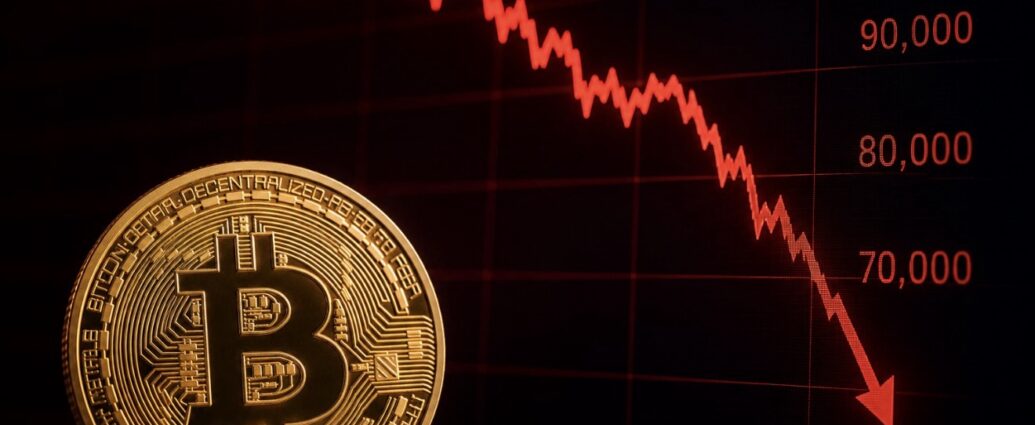
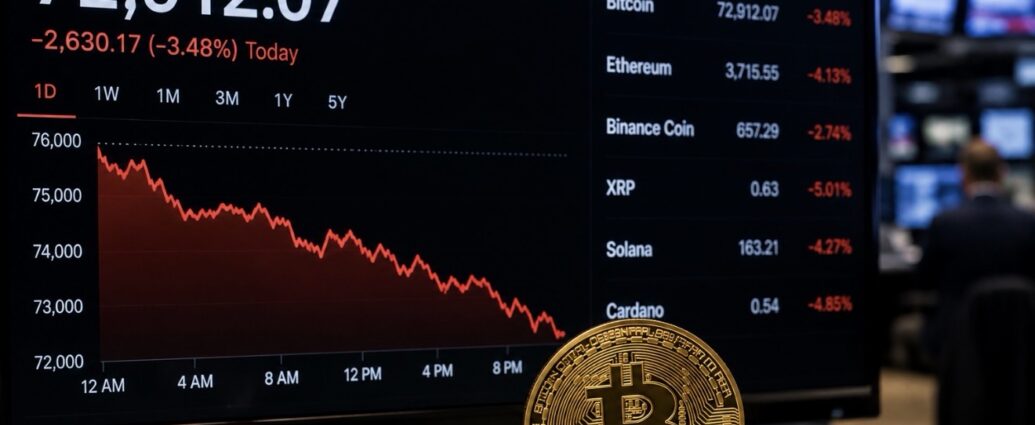
American investors are dumping their Bitcoin (CRYPTO: BTC) exchange-traded funds (ETFs) as the coin continues to underperform the stock market amid the artificial intelligence boom. 

IBIT Leads Spot Bitcoin ETF Outflows

Data shows that Bitcoin ETFs suffered a harsh reversal in May this year. After adding $3.2 billion in March and April, all spot Bitcoin ETFs shed over $2.43 billion in May. That was a big reversal as the funds added $1.6 billion in the first six days of the month.

Bitcoin funds lost over $1.42 billion this week after losing $1.26 billion and $1 billion in the previous two weeks. These funds have had $55.6 billion in cumulative inflows and now hold $94 billion in assets. 

Bitcoin ETF
Bitcoin ETF inflows and outflows | Source: SoSoValue

BlackRock’s iShares Bitcoin Trust (NASDAQ:IBIT) has led these outflows. IT lost $68 million on Friday, bringing its cumulative inflows to over $63 billion in assets. Fidelity’s FBTC lost $31.95 million, while Grayscale’s GBTC and Grayscale’s BTC lost $2.85 million and $9.74 million.

May’s $2.43 billion outflows was the worst performance this year after January’s $1.6 billion. 

data-variant=”card”
…

This post was originally published here

Cardano (CRYPTO: ADA), the popular cryptocurrency project that Charles Hoskinson built, continues to struggle this year. Its token has plunged and is hovering near its all-time low, while its ecosystem growth has stagnated.

Cardano Fees Have Plunged This Year

Despite having an $8.2 billion market capitalization, Cardano has made just $352,000 this year, data by DeFi Llama shows. It made just $238,000 in the first quarter, its lowest level since the fourth quarter of 2020. At its peak, the network generated $4.2 million in fees. 

Cardano’s fees are significantly lower than other top networks in the crypto industry. For example, Hyperliquid, the fast-growing perpetual futures network, has made $336 million this year. Justin Sun’s Tron (CRYPTO: TRX) has made over $1.3 billion, while Tether made $2.7 billion.

Cardano’s performance is mostly because it has had no ecosystem growth in the past few years despite Hoskinson’s efforts. For example, data compiled by RWA shows that it has zero assets in the real-world asset tokenization industry. In contrast, Ethereum (CRYPTO: ETH), which Cardano sought to disrupt, has over $16 billion in …

Full story available on Benzinga.com

This post was originally published here

On Friday, Coinbase (NASDAQ:COIN) CEO Brian Armstrong responded to criticism from JPMorgan Chase (NYSE:JPM) CEO Jamie Dimon with a hockey-themed meme as Galaxy Digital (NASDAQ:GLXY) CEO Mike Novogratz joined the debate.

Brian Armstrong Responds With ‘Heated Rivalry’ Meme

Armstrong posted a custom “Heated Rivalry” poster that framed Coinbase and JPMorgan as opposing teams, turning an increasingly bitter policy disagreement into a public showdown between crypto firms and traditional finance.

Novogratz also weighed in after Dimon’s remarks, questioning whether banks should have a major role in shaping crypto legislation.

“Since when do banks get to decide on legislation?” Novogratz wrote, arguing lawmakers — not financial institutions — should determine the future framework for digital assets.

Full story available on Benzinga.com

This post was originally published here

Treasury Secretary Scott Bessent said the Iranian economy is nearing a breaking point Friday, while announcing that the U.S. has seized roughly $1 billion in Iranian cryptocurrency assets.

“We have seized about a billion dollars of their crypto,” he told FOX Business. “Just outright grabbed the wallets.”

Joining “Kudlow” at the Reagan National Economic Forum, Bessent detailed the United States’ economic pressure campaign on Iran, known as “Operation Economic Fury,” which he said has sent the regime into “crisis.”

“I think between five and a half-six weeks of an incredibly successful military campaign and then Operation Economic Fury, where we have really cut them off…they are at the end of their tether now financially,” he said.

TRUMP’S IRAN CRACKDOWN ‘SUFFOCATING’ REGIME AS OIL WELLS COULD SHUT WITHIN DAYS, BESSENT SAYS

“I think 40 or 50% of the [Iranian] troops aren’t getting paid. Police aren’t reporting to the station. Inflation is probably over 200%. They’re having to give out food vouchers. They have turned off the internet.”

The effort, launched in March 2025, has crippled Tehran’s financial lifelines by seizing Iranian assets, freezing bank accounts and pressuring foreign governments to cut ties with the nation.

“We are working with our allies all over Europe to grab villas and houses and properties,” Bessent explained. “And this is money that’s stolen from the Iranian people.”

Bessent said the Iranian regime was siphoning $400 to $500 million every month and dividing the profits amongst dozens of leaders, before the Treasury Department intervened.

TRUMP CLAIMS IRAN ‘STARVING FOR CASH,’ ‘COLLAPSING FINANCIALLY’ AFTER EXTENDING CEASEFIRE

The Treasury secretary went on to address ongoing negotiations between the U.S. and Iran, highlighting the differences between the factions involved in the talks. President Donald Trump held a White House meeting Friday where he said he would make a “final determination” on Iran.

“We did not have regime change, but we changed the regime,” Bessent said. “The first level leaders were decapitated, the second level decapitated. So, we’re dealing with the third level.”

TRUMP SAYS IRAN’S SUCCESSION BENCH WIPED OUT AS ISRAELI STRIKE HITS LEADERSHIP DELIBERATIONS

“And it’s very tough because, on one side, we have a theocracy with the clerics. On the other side, we have a thug autocracy with the IRGC. And you’ve got to convince both sides,” he added.

Bessent also spoke about the “very big” mistake Iran made by attacking countries in the Persian Gulf, which he argued left the regime more vulnerable.

The IRGC has launched drone and missile attacks against all six GCC states.

IRAN IS ‘TRYING TO GIVE THE GLOBAL ECONOMY A HEART ATTACK’ BY CLOSING STRAIT OF HORMUZ, UAE MINISTER SAYS

“They made my job so much easier because before, many of our great GCC Gulf allies were a little less than transparent about their banking system, that, ‘Oh no, we don’t have any Iranian oil,’” Bessent said.

The Treasury secretary added that after the Iranian strikes, GCC states were more open to disclosing ties to Iranian-supplied oil.

Bessent also said that young U.S. service members enjoy enforcing the U.S. naval blockade on Iranian ports in the Strait of Hormuz.

“They’ve done an incredible job,” he told FOX Business. “When I talked to General Caine and Secretary Hegseth, they said, ‘Look, these young people aren’t afraid. They want to fight… This is what they signed up for.’”

This post was originally published here. 

As tokenized gold, silver, and critical minerals gain traction, the next challenge is not ownership on-chain. It is proving provenance, compliance, and operational integrity at institutional scale.


The mining industry learned its verification lesson the hard way. Bre-X showed what happens when investors rely on claims that no independent party has checked. Billions in capital evaporated because fabricated resource data fooled an entire market. As tokenized commodities move into mainstream capital markets, tokenized commodities verification is emerging as the critical gap between institutional interest and institutional capital.

The real world asset tokenization market has scaled fast. By mid-2025, tokenized RWAs on-chain exceeded $23 billion, growing over 260% in six months, according to a Redstone research report. Furthermore, analysts at Boston Consulting Group project the sector could reach $16 trillion by 2030.

And yet the institutional capital that would move those numbers at scale has not moved. The reason is not the token. It is what the token cannot yet prove.


Mining Verification Standards Already Exist

The traditional mining industry has spent decades building credible disclosure frameworks. They work, and the market relies on them.

In Canada, National Instrument 43-101 governs how publicly listed mining companies report scientific and technical information about mineral projects. It requires a Qualified Person, an engineer or geoscientist with relevant experience and recognized professional standing, to prepare or supervise all disclosure. (NI 43-101 Report FAQs, Rangefront, June 2024) Australia uses JORC. South Africa uses SAMREC. Europe uses PERC. These are different instruments across different jurisdictions. However, they share the same core principle: qualified, accountable, independent professionals must verify resource and reserve estimates before investors rely on them. (Global Mining Resource Disclosure, Dentons, November 2023)

Mining companies already understand the value of verification. Capital markets require confidence before they allocate capital, so resource estimates, reserve statements, environmental disclosures, and technical reports all exist to provide it. Tokenized commodities introduce the same challenge in a new form. Investors can verify what sits in the ground. However, they will increasingly want to verify what happened between extraction and settlement. That is where tokenized commodities verification becomes a different problem entirely.

The 43-101 and its equivalents answer one question with rigor and accountability: is what is in the ground what the company says it is.

That question is solved. What comes after extraction is not.


Tokenized Commodities Verification: The Gap Nobody Is Talking About

The moment material leaves the ground, established verification frameworks largely fall silent.

Consider what falls outside their scope. Chain of custody. Environmental footprint at the site level, not the corporate aggregate. Actual emissions tied to a specific operation. Water usage. Land disturbance. Whether the extraction site operates where and how the issuer claims.

In traditional commodity markets, this information exists in fragments across separate institutions. The technical report sits with the regulator. The audit sits with the accountant. The ESG disclosure appears in an annual report once a year. The chain of custody record sits with the refiner. Moreover, none of this information travels with the asset when it changes hands.

For institutional capital with genuine ESG mandates, government procurement requirements, or conflict mineral compliance obligations, that fragmented picture is not due diligence. It is exposure.

As a result, many tokenized commodities continue to rely primarily on issuer attestations rather than continuous independent verification. Regulators …

Full story available on Benzinga.com

This post was originally published here

VanEck launched the first U.S.-listed ETF tied to Binance Coin (CRYPTO: BNB), expanding investor access to one of the largest cryptocurrencies through a regulated ETF structure.

The new fund, the VanEck BNB ETF (NASDAQ:VBNB), offers direct exposure to Binance Coin without requiring investors to manage crypto wallets or private keys. Shares of the ETF are backed by BNB tokens held in cold storage by Anchorage Digital Bank, providing institutional-grade custody for the underlying assets.

Key Features of the fund:

  • Shares are backed by physical BNB held in cold storage
  • Expense ratio set at 0.39%
  • Allows investors to gain BNB exposure through traditional brokerage accounts
  • Eliminates the …

Full story available on Benzinga.com

This post was originally published here

U.S. stocks climbed to fresh record highs by midday Friday as investors piled further into the artificial-intelligence trade following a blockbuster forecast from Dell Technologies Inc. (NYSE:DELL).

Dell surged 28% after reporting first-quarter revenue of $43.8 billion, an 88% increase from a year earlier, alongside adjusted earnings of $4.86 per share.

The company disclosed $24.4 billion in AI-related orders and dramatically raised its fiscal 2027 outlook, projecting revenue of $165 billion to $169 billion versus Wall Street expectations of roughly $144 billion.

Dell also boosted its AI server revenue target to approximately $60 billion, reinforcing optimism around the broader AI infrastructure buildout.

Meanwhile, easing geopolitical tensions in the Middle East continued to pressure energy markets. U.S. crude oil futures fell to $87 a barrel, leaving WTI on track for a second consecutive weekly decline.

Adding to the risk-on mood, President Donald Trump said Friday that “the Hormuz Strait must be immediately open, no tolls, for unrestricted shipping traffic, in both directions,” adding that the U.S. naval blockade “will now be lifted” as he headed to the Situation Room to make a final decision on a proposed agreement with Iran.

Within U.S. equity markets, gains were concentrated in large-cap technology shares, while small caps and defensive sectors lagged.

The S&P 500 advanced 0.2% to 7,581.84, extending its monthly gain to nearly 5%. The benchmark index is also on pace for a ninth consecutive weekly advance — a streak achieved only 10 times since World War II.

data-variant=”card”
data-news-mode=”manual”

>


Read Also:

The S&P 500 Is Nearing A Streak Seen Only 10 Times Since 1945: Bullish Signal Or Warning Sign?

This post was originally published here

JPMorgan Chase (NYSE:JPM) CEO Jamie Dimon vowed to fight the CLARITY Act in a Fox Business interview Friday, calling Coinbase (NASDAQ:COIN) CEO Brian Armstrong “full of sh–” over his lobbying push.

Banks Won’t Accept Stablecoin Yield Without Regulatory Safeguards

Dimon’s core objection is stablecoin yield.

The CLARITY Act would allow crypto firms to reward customers for holding stablecoins, something banks argue creates direct competition without requiring the same consumer protections banks must follow. 

He also flagged the bill’s Anti-Money Laundering and Bank Secrecy Act provisions as inadequate.

“It allows cryptocurrency firms to effectively pay interest on deposits, stablecoins or something like that, without the protection that they should have,” Dimon said. “The banks will not accept it that way,” he added.

Despite the opposition, Dimon …

Full story available on Benzinga.com

This post was originally published here

Intercontinental Exchange (NYSE:ICE) CEO Jeffrey Sprecher called Hyperliquid “bigger than Nasdaq” at a Bernstein conference this week, sending HYPE (CRYPTO: HYPE) climbing nearly 10% on Friday.

ICE Has Already Met Hyperliquid Founders Multiple Times

Sprecher made the comparison on volume, not market cap. Hyperliquid holds over 70% of the decentralized perpetual futures market and clears billions in daily notional turnover, while Nasdaq Inc. carries a $50 billion market cap against HYPE’s $15.1 billion. 

The “11 people” refers to Hyperliquid Labs, the core development team, with open-source contributors and validators running the underlying blockchain.

“This Hyperliquid that we’re talking, if you haven’t heard about it, it’s bigger than Nasdaq, okay? It’s 11 people. You look at it, you’re like, wow, that’s pretty something,” Sprecher said, calling the founders “very, very smart people.”

Sprecher noted ICE took notice partly because Hyperliquid has been trading oil derivatives on weekends …

Full story available on Benzinga.com

This post was originally published here

XRP (CRYPTO: XRP) sits down 60% below its July 2025 cycle high of $3.65, while Bitwise Chief Investment Officer Matt Hougan calls HYPE (CRYPTO: HYPE) the most mispriced asset in crypto right now.

XRP Had Every Catalyst And Still Went Nowhere

The SEC settlement came through, Ripple stacked partnerships, ETF inflows arrived, and the CLARITY Act cleared the Senate Banking Committee in a 15-9 bipartisan vote. 

Goldman Sachs built a $154 million XRP ETF position and quietly dumped the entire stake by Q1 2026. Six straight months of red followed from October 2025 to March 2026, with XRP still trading around $1.37 to $1.45.

Meanwhile, institutional money chased AI stocks and semiconductor names while crypto sat in a holding pattern. 

Bitwise Head of Research …

Full story available on Benzinga.com

This post was originally published here

Bitcoin traded around $74,000 on Friday as improving regulatory sentiment helped stabilize crypto markets.

The move comes after the Commodity Futures Trading Commission opened the door for crypto perpetual futures trading in U.S.

Cryptocurrency Ticker Price
Bitcoin (CRYPTO: BTC) $73,7809
Ethereum (CRYPTO: ETH) $2,024.99
Solana (CRYPTO: SOL) $82.67
XRP (CRYPTO: XRP) $1.32
Dogecoin (CRYPTO: DOGE) $0.1002
Shiba Inu (CRYPTO: SHIB) $0.055426

Notable Statistics:

  • Coinglass data shows 96,876 traders were liquidated in the past 24 hours for $266.92 million.       
  • SoSoValue data shows net outflows of $228.9 million from spot Bitcoin ETFs on Thursday. Spot Ethereum ETFs saw net outflows of $121.4 million.
  • In the past 24 hours, top gainers include Injective, Hyperliquid and …

Full story available on Benzinga.com

This post was originally published here

The Commodity Futures Trading Commission opened the door for crypto perpetual futures trading in the U.S. on Friday, paving the way for Coinbase Global Inc (NASDAQ:COIN) and prediction market platform Kalshi to expand into one of crypto’s largest offshore-dominated markets.

The Change

The Division of Clearing and Risk, Division of Market Oversight and Market Participants Division issued a staff advisory addressing risks tied to 24/7 derivatives trading and clearing, The Block reported.

The advisory is not a formal rule change, but it signals regulatory acceptance of perpetual futures products operating under existing U.S. frameworks.

“This morning, …

Full story available on Benzinga.com

This post was originally published here

Bitcoin (CRYPTO: BTC) whale accumulation is contracting at the fastest pace this year as CryptoQuant warns the setup mirrors March 2022 bear market conditions.

Whale Balances Shrinking While Dolphin Growth Stalls

Whale balances—wallets holding 1,000 to 10,000 Bitcoin—are shrinking year-over-year at the steepest rate of this cycle, matching the 2022 bear phase when accumulation first stalled before turning negative. 

Dolphin balances, dominated by ETFs and corporate treasury firms, continue growing annually but have decelerated sharply since peaking at 0.97 million Bitcoin in October 2025.

Monthly balance growth for both whales and dolphins now sits close to zero at the same time.

Moreover, dolphin monthly growth has been making lower highs since September 2025, while whale monthly growth has been flat since February 2026. 

CryptoQuant Head of Research Julio Moreno describes …

Full story available on Benzinga.com

This post was originally published here

Prominent Bitcoin (CRYPTO: BTC) advocate Scott Melker warned that prediction markets, tokenized equities and pre-IPO perpetuals may be pulling speculative capital away from altcoins, leaving much of the sector trapped in a prolonged bear market.

Why Altcoins Are Losing Attention

“Everything’s a casino now,” Melker said during an interview on CoinDesk’s Markets Outlook on Thursday.

According to Melker, crypto’s original appeal was simple, it was the only 24/7 global speculation venue available to retail traders.

Now, traders can gamble on nearly everything from oil to elections to SpaceX IPO pricing without leaving crypto-native platforms.

Melker compared the early …

Full story available on Benzinga.com

This post was originally published here

A growing corner of the crypto market is already betting on SpaceX’s potential IPO, with traders piling into perpetual futures tied to the company’s expected public debut.

How Traders Are Betting On SpaceX Before IPO

The synthetic contracts, launched earlier this month, are averaging nearly $18 million in daily trading volume over the past two weeks as speculation around what could become the largest IPO in history accelerates, Bloomberg reported on Friday.

Unlike traditional equities, these perpetual futures do not give holders legal ownership of SpaceX shares.

Instead, traders use them to speculate on where the …

Full story available on Benzinga.com

This post was originally published here

Bitcoin ETFs may finally be evolving into the asset institutional investors wanted all along — not a high-beta tech trade, but a gold-like portfolio diversifier.

That shift is becoming increasingly visible in market behavior. Bloomberg Intelligence analyst Eric Balchunas recently pointed out that the 60-day historical volatility gap between iShares Bitcoin Trust ETF (NASDAQ:IBIT) and SPDR Gold Trust (NYSE:GLD) has narrowed sharply since the launch of spot Bitcoin ETFs in January 2024.

IBIT’s 60-day historical volatility has fallen from peaks above 66 to nearly 34, while GLD’s volatility has climbed from around 10 to above 27 during the same period. The convergence suggests Bitcoin may be maturing from a speculative momentum trade into a more stable macro asset.

Balchunas also noted that despite recent geopolitical volatility tied to the Iran conflict, IBIT has still outperformed broader equities since the tensions escalated. Since BlackRock first filed for a spot Bitcoin ETF in June 2023, IBIT has delivered more than …

Full story available on Benzinga.com

This post was originally published here

Strategy Inc. (NASDAQ:MSTR) on Thursday deposited 411 Bitcoin (CRYPTO: BTC) worth $30.3 million into Coinbase Prime, pushing Polymarket odds of the company selling Bitcoin before year-end to 84%.

Le Acknowledges Bitcoin Sale Is Possible, But Frames It As Accretive

Strategy CEO Phong Le addressed the sale speculation directly in a Fox Business interview the same day.

While long-term philosophy calls for accumulating Bitcoin, he acknowledged that a week-to-week decision to sell could happen if it increases Bitcoin per share for shareholders. 

The company also holds unrealized tax losses it can capitalize on, giving it a practical reason to sell at some point.

“We will be net increasing our Bitcoin and more importantly increasing our Bitcoin per share,” Le stated, framing any potential sale as a tool rather than a retreat. 

Strategy last bought Bitcoin …

Full story available on Benzinga.com

This post was originally published here

Spot Bitcoin (CRYPTO: BTC) ETFs have recorded nine consecutive days of net outflows, the longest withdrawal streak since launch in January 2024, pulling roughly $2.8 billion from the complex.

Three Consecutive Weeks Of Outflows, $2.3B Gone In May Alone

This week alone has seen $1.3 billion exit the funds, extending a three-week outflow streak. Monthly withdrawals now stand at roughly $2.3 billion as Bitcoin fell from $80,000 to $73,000 over the same period. 

This is the most sustained period of institutional selling since Bitcoin ETFs launched.

The selling goes beyond Bitcoin’s price drop. Since the start of the year, Bitcoin has lagged AI stocks and semiconductor names, which keep pulling capital as infrastructure spending grows. 

BlackRock’s iShares Bitcoin Trust

Full story available on Benzinga.com

This post was originally published here

By JBizNews Desk

NEW YORK — May 29, 2026 — Investors have pulled approximately $2.8 billion from U.S. spot Bitcoin exchange-traded funds over nine consecutive trading days, marking the longest withdrawal streak since the products launched and signaling a major shift in institutional sentiment as capital increasingly flows toward artificial intelligence investments.

According to data compiled by Bloomberg and analytics firm SoSoValue, the selling streak began on May 15 and continued through May 28, surpassing every previous run of ETF outflows since spot Bitcoin ETFs debuted in January 2024.

During the same period, Bitcoin fell from roughly $80,000 to around $73,000, reflecting growing pressure from sustained institutional selling.

The pace of redemptions accelerated significantly this week.

The largest single-day withdrawal occurred Wednesday when investors removed approximately $733 million from the funds. More than $528 million came from BlackRock’s iShares Bitcoin Trust (IBIT) alone, representing the largest single-day outflow in the fund’s history.

Market analysts linked part of the move to a large institutional transaction executed through private trading venues known as dark pools, where sizable trades can occur outside public exchanges.

The withdrawal streak matters because spot Bitcoin ETFs have become the primary gateway through which pension funds, wealth managers, institutions, and traditional investors gain exposure to cryptocurrency.

Unlike direct cryptocurrency ownership, the ETFs allow investors to buy and sell Bitcoin through conventional brokerage accounts. When investors add money, ETF managers purchase Bitcoin. When investors redeem shares, the funds must sell Bitcoin holdings.

As a result, ETF flows provide one of the clearest indicators of institutional demand.

Right now, that demand appears to be weakening.

Many analysts believe the outflows are less about Bitcoin itself and more about competition for investment capital.

Artificial intelligence and semiconductor stocks have dramatically outperformed cryptocurrency investments throughout much of 2026, drawing significant amounts of institutional money.

Companies tied to AI infrastructure, cloud computing, advanced chips, and data-center expansion continue to attract investors seeking exposure to one of the fastest-growing segments of the global economy.

Recent gains in major technology names have reinforced that trend.

As AI-related stocks have surged, Bitcoin has struggled to generate comparable momentum, leading many portfolio managers to shift capital toward sectors producing stronger returns.

The concentration of withdrawals suggests the selling is being driven primarily by institutions rather than retail investors.

BlackRock’s IBIT and Fidelity’s FBTC accounted for the overwhelming majority of recent outflows, a pattern that analysts say is consistent with large asset allocators reducing exposure rather than individual investors making small portfolio adjustments.

Researchers at Galaxy Research described Wednesday’s redemptions as among the largest seen this year and noted that cumulative ETF flows for 2026 have now turned negative.

Some analysts characterize the move as a broader reassessment of portfolio allocations rather than simple profit-taking.

Geopolitical uncertainty may also be contributing to the trend.

The conflict involving Iran, Israel, and the United States has increased volatility across global markets, pushing investors toward sectors perceived as offering stronger earnings visibility.

While Bitcoin is sometimes promoted as a hedge against uncertainty, periods of heightened market stress have often seen the cryptocurrency trade more like a high-risk technology asset than a traditional safe haven.

That dynamic can make digital assets vulnerable when investors become more defensive.

Not everyone sees the outflows as bearish.

Some market strategists point out that previous periods of heavy ETF selling have occasionally coincided with important market bottoms.

Historical flow data analyzed by crypto research firms has shown that extreme pessimism often emerges near turning points rather than at the beginning of prolonged declines.

Whether that pattern repeats remains uncertain.

The next major test for the market comes with the May 30 monthly options expiration, an event that could increase volatility as billions of dollars in cryptocurrency derivatives contracts settle.

If ETF outflows continue beyond that date, Bitcoin could face additional downside pressure. If redemptions slow or reverse, investors may interpret the recent withdrawals as a temporary rotation rather than the beginning of a longer-term exodus.

For now, however, the message from institutional investors appears clear.

The biggest pools of capital on Wall Street are increasingly directing money toward the companies building the AI revolution, while reducing exposure to cryptocurrency assets that have struggled to match the sector’s recent performance.

Until Bitcoin regains momentum or presents a stronger growth narrative, AI appears to be winning the battle for institutional investment dollars.

Markets — JBizNews Desk

© JBizNews.com All Rights Reserved. Reproduction or distribution without written permission is prohibited.

Bitcoin (CRYPTO: BTC) has dropped roughly $10,000 in recent weeks, falling from around $83,000 to near $73,000 after rejecting almost exactly at its 200-day moving average.

Why BTC Looks Vulnerable

Crypto analyst Benjamin Cowen said on May 29 this rejection mirrors similar bear market setups in 2018 and 2022, when Bitcoin rallied into the 200-DMA before rolling over again.

Cowen said Bitcoin remains inside its historical midterm-year “window of weakness,” a period that has often pressured the asset during prior four-year cycles.

He noted that Bitcoin has typically formed lows during the first half of midterm years:

  • First major drop near …

Full story available on Benzinga.com

This post was originally published here

XRP (CRYPTO: XRP) emerged as one of crypto’s strongest narrative-driven trades last week after social sentiment and price action finally moved in sync, a rare occurrence for the token in 2026.

What’s Driving XRP Momentum

According to Santiment’s anomaly-tracking report covering May 20–26, XRP was the only major asset to trigger a sustained ‘social_price_correlation’ signal, recording 14 triggers with a peak score of 0.26 on May 26.

Santiment explained XRP has spent much of 2026 trapped in sentiment-price divergence, where bullish institutional headlines failed to translate into sustained upside.

This time, the crowd and price action aligned around several major catalysts.

The report highlighted main …

Full story available on Benzinga.com

This post was originally published here

Strategy Inc. (NASDAQ:MSTR) CEO Phong Le pointed out the differing strategies between traders and long-term investors on Thursday, responding to Mark Cuban’s recent decision to sell his Bitcoin (CRYPTO: BTC).

Jumping To The ‘Next Thing’

During a Fox Business interview, Le was asked about the billionaire investor’s move, which surprised many in the cryptocurrency community.

After all, Cuban is the same person who once aggressively endorsed Bitcoin as a hedge against inflation, only to sell “most” of it because it didn’t turn out to be the shield he expected it to be.

“There are folks out there who are very skeptical traders, and what they’re gonna do is they’re gonna find the point to buy Bitcoin,” Le weighed in. “In 2021, everybody got in, and they made their money, and then they got out when they found the next thing.”

The Strategy CEO said that AI is the “next big thing” today, and it’s “perfectly reasonable” for Cuban and traders like him to pursue it.

Cuban indeed expanded his cryptocurrency portfolio during the 2021 bull …

Full story available on Benzinga.com

This post was originally published here

Ripple (CRYPTO: XRP) CEO Brad Garlinghouse celebrated on Thursday the defeat of the so-called “Anti-Crypto Army,” a group he accused of opposing innovation and protecting a “broken” financial system.

Garlinghouse Praises Trump

Garlinghouse borrowed the term from President Donald Trump, who earlier in the week stated that the “Anti-Crypto Army” was attempting to destroy the cryptocurrency industry by driving Bitcoin (CRYPTO: BTC), perpetuals, and other innovations out of the U.S.

“Combatting financial innovation only helped protect those that wanted to keep an old, often broken, system in place,” Garlinghouse said. “It never made policy, legal or political sense.”

He added that the “Anti-Crypto Army” was defeated by court rulings, voters and Trump.

Ripple’s Problems With The Biden …

Full story available on Benzinga.com

This post was originally published here

(Editor’s note: The future prices of benchmark tracking ETFs, and the headline were updated in the story.)

U.S. stock futures fell on Thursday after a higher close on Wednesday, as all indices ended marginally higher, but the small-cap index, the Russell 200, declined.

A slew of economic data was released on Thursday before the markets opened. First-quarter real GDP was revised down to an annualized growth rate of 1.6%, while the Fed’s preferred inflation gauge, the April PCE price index, rose 0.4% from the prior month and 3.8% year-over-year.

Meanwhile, initial jobless claims for the week ending May 23 edged higher to 215,000, and April durable-goods orders surged by a stronger-than-expected 7.9%, driven by a sharp rebound in transportation equipment.

A U.S. official, speaking anonymously to Reuters, said American forces struck an Iranian ground control station in Bandar Abbas that was allegedly preparing to launch attack drones.

The official also said U.S. forces shot down four one-way drones that posed a threat near the Strait of Hormuz. “These actions were measured, ‌purely ⁠defensive, and intended to maintain the ceasefire,” the official said

The 10-year Treasury bond yielded 4.50%, and the two-year bond was at 4.05%. The CME Group’s FedWatch tool‘s projections show markets pricing a 99.1% likelihood of the Federal Reserve leaving the current interest rates unchanged during June’s meeting.

Index Performance (+/-)
Dow Jones -0.11%
S&P 500 -0.12%
Nasdaq 100 -0.26%
Russell 2000 -0.25%

The SPDR S&P 500 ETF Trust (NYSE:SPY) and Invesco QQQ Trust ETF (NASDAQ:QQQ), which track the S&P 500 and Nasdaq 100, respectively, were lower in premarket on Thursday. The SPY was down 0.0027% at $750.48, while the QQQ was lower by 0.023% to $729.61.

data-variant=”card”
data-news-mode=”manual”

>


Read Also:

Stock Market: Will S&P 500 Open Up Or Down Today?

This post was originally published here

Anthony Pompliano, CEO of Professional Capital Management, suggested on Thursday that buying Bitcoin (CRYPTO: BTC) when it’s out of favor could be a good contrarian play.

Will An Underwhelming BTC Excite Investors?

In a CNBC Squawk Box interview, Pompliano likened Bitcoin to “a dog with fleas,” acknowledging its recent underperformance.

The Bitcoin bull noted that AI-linked names are “flying,” and investors are chasing that momentum.

“Usually the thing that you want to be buying is the thing that’s out of favor, and it can come back into favor over time,” Pompliano argued.

He also tied Bitcoin’s upside to dollar debasement, adding that as long as the U.S. government continues to print fiat money, the leading cryptocurrency has strong potential for a comeback.

…

This post was originally published here

Treasury Secretary Scott Bessent called on Congress on Thursday to pass the Clarity Act, emphasizing its importance for the future of digital assets in the U.S.

Bill Has ‘Bipartisan Support’

During a White House briefing, Bessent stated that the key piece of cryptocurrency legislation has “bipartisan support” and encouraged the House and the Senate to move forward with its passage.”

“When you look at digital assets, all the nonsense that happens, all the things you read about, that’s because it’s the wild, wild west offshore. So we got to bring it on shore,” Bessent said.

Bessent Says No To CBDC’s

Bessent said that the Trump administration does not support a central bank digital currency, and the idea has been taken “off the table.”

The remark came in response to a question about safeguarding “privacy” and “freedom” in the new digital payment framework.

SEC Chair Paul Atkins also said the era …

Full story available on Benzinga.com

This post was originally published here

Leading cryptocurrencies diverged from the stock market on Thursday, even as investors dissected reports of a ceasefire between the U.S. and Iran.

Cryptocurrency 24-Hour Gains +/- Price (Recorded at 9:15 p.m. EDT)
Bitcoin (CRYPTO: BTC) -0.91% $73,708.31
Ethereum (CRYPTO: ETH)
               
-0.61% $2,011.14
XRP (CRYPTO: XRP)                          +0.57% $1.31
Solana (CRYPTO: SOL)                          -0.29% $82.27
Dogecoin (CRYPTO: DOGE)              -0.50% $0.09985

Crypto Market Stagnates

Bitcoin hit a six-week low, sliding to $72,500 before bouncing back above $73,000 by evening. Trading volume jumped 17% in the last 24 hours. Ethereum dived below $2,000 in the early trading hours before rebounding later in the day as selling pressure remained high.

Cryptocurrency-related stocks rose, with Coinbase Global Inc. (NASDAQ:COIN) and Bitmine Immersion Technologies Inc. (NYSE:BMNR) closing up 4.87% and 2.28%, respectively.

Over $600 million in bullish long positions was wiped out from the cryptocurrency market in the past 24 hours, according to Coinglass data.

Bitcoin’s open interest rose 0.87% over the last 24 hours. An increase in open interest alongside a drop in spot price typically signals a short build-up, meaning traders are actively entering new short positions.

Top Gainers …

Full story available on Benzinga.com

This post was originally published here

Direxion expanded its lineup of leveraged and inverse exchange-traded funds on Wednesday with the launch of four new products tied to precious metals and cryptocurrencies, underscoring growing investor demand for tactical exposure to volatile asset classes.

The new funds — Direxion Daily Gold Bull 2X ETF (NYSE:UGLD), Direxion Daily Silver Bull 2X ETF (NYSE:USLV), Direxion Daily Bitcoin Bull 2X ETF (NYSE:BTCU) and Direxion Daily Ether Bull 2X ETF (NYSE:EVMU)— are designed to deliver 200% of the daily performance of ETFs tracking gold, silver, Bitcoin (CRYPTO: BTC) and Ether (CRYPTO: ETH), respectively.

Full story available on Benzinga.com

This post was originally published here

JBizNews Desk — May 28, 2026

Bitcoin fell below $73,000 Thursday, sliding sharply even as President Donald Trump renewed his pledge to make the United States “the crypto capital of the world,” underscoring how geopolitical fears and institutional selling are now overpowering Washington’s increasingly pro-crypto rhetoric.

According to CoinDesk market data, Bitcoin dropped as low as approximately $72,912 before stabilizing near $72,978 during Asian trading hours, down roughly 3.4% over 24 hours and more than 6% for the week.

The selloff triggered one of the largest leveraged liquidations of the year.

Nearly $1 billion in crypto positions were wiped out within a single day, with long bullish bets accounting for roughly 93% of the losses. Bitcoin and Ethereum led the liquidation wave as traders who had positioned for continued gains were forced out rapidly when prices broke below key support levels.

The catalyst was not crypto itself.

It was the Middle East.

Fresh U.S. airstrikes near the Strait of Hormuz, new sanctions targeting Iran, and rising fears surrounding broader regional escalation abruptly reversed the optimism that had built around a potential ceasefire framework earlier in the week.

Oil prices surged while global equity markets weakened — and crypto followed.

The connection between war and Bitcoin is increasingly direct.

The Strait of Hormuz handles roughly one-fifth of global oil shipments. Any threat to that corridor pushes energy prices higher, which raises inflation concerns globally and increases the likelihood that central banks keep interest rates elevated longer than expected.

Higher interest rates typically drain capital away from speculative and high-risk assets, including cryptocurrencies.

Bitcoin had managed to remain above the $74,000 level through weeks of escalating Iran headlines, but Thursday’s renewed military tensions finally broke that floor. The speed of the decline suggested many traders had been heavily positioned for further upside before the reversal hit.

Institutional investors accelerated the pressure.

BlackRock’s IBIT Bitcoin exchange-traded fund recorded approximately $527.8 million in net outflows, marking its second-largest single-day withdrawal on record. More than $2.5 billion has reportedly exited crypto ETFs over the past two weeks after strong inflows earlier this spring had fueled Bitcoin’s climb toward new highs.

When large institutional funds pull that level of capital from the market, the spot price reacts quickly.

The decline also arrived against a politically significant backdrop.

Late Wednesday, Trump posted on Truth Social that the United States would become “the crypto capital of the world” while renewing support for the Digital Asset Market Clarity Act, known as the CLARITY Act, legislation designed to establish clearer regulatory rules for cryptocurrencies and digital assets.

Bitcoin briefly steadied following Trump’s comments before resuming its decline.

Trump later doubled down publicly during the selloff, declaring he would “never let crypto down” while criticizing former SEC Chair Gary Gensler and what he called the government’s former “anti-crypto army” for pushing innovation overseas.

The legislation Trump supports is advancing.

The CLARITY Act cleared the Senate Banking Committee earlier this month with bipartisan support, representing the most significant crypto legislation to move through Congress in years. The bill would define whether digital assets fall under SEC or Commodity Futures Trading Commission oversight while establishing clearer rules for stablecoins and digital-token classifications.

Markets had previously rallied on expectations that regulatory clarity could unlock another wave of institutional adoption.

Instead, geopolitical instability and ETF outflows overwhelmed the bullish policy narrative.

The broader takeaway is increasingly clear.

For much of the past year, pro-crypto statements from Washington were often enough to drive Bitcoin sharply higher. Thursday’s selloff suggested that dynamic may be weakening as cryptocurrencies become more tied to the same macroeconomic forces driving oil, stocks, bonds, and broader global markets.

When inflation rises, war fears intensify, and institutional money begins heading for the exits, political support alone may no longer be enough to stop the slide.

The same global forces now rattling traditional financial markets are increasingly controlling digital assets too.

New York — JBizNews Desk

© JBizNews.com All Rights Reserved. Reproduction or distribution without written permission is prohibited.

XRP (CRYPTO: XRP) ETF inflows collapsed from $60.5 million the week of May 15 to zero on May 27, as XRP broke down from a descending triangle wiping out $18.18 million in leveraged positions.

ETF Momentum Fading Fast Heading Into End Of May

The deterioration has been swift. The week of May 8 brought in $34.2 million, followed by $60.5 million the week of May 15. 

The week of May 22 then dropped sharply to $22.04 million before this week collapsed to just $1.55 million and a complete zero on Tuesday—a sharp reversal that reflects the broader cooling of altcoin appetite hitting crypto markets right now.

XRP is up 1.5% after sweeping liquidity at $1.27, a move where price briefly broke below the descending triangle pattern …

Full story available on Benzinga.com

This post was originally published here

Real Vision co-founder and CEO Raoul Pal says the crypto bull market remains intact despite months of sideways price action.

Rising global liquidity, AI-driven infrastructure demand and accelerating blockchain adoption are setting up the “perfect storm” for crypto assets.

According to Pal, “The worst is over for crypto, liquidity is flowing again.”

Why Pal Thinks Crypto Still Has Massive Upside

In a May 28 podcast with “When Shift Happens”, Pal noted investors are underestimating how much capital will flow into blockchain infrastructure as AI agents, stablecoins and tokenized finance scale globally.

He said crypto’s long-term thesis has fundamentally strengthened over the past year.

“We’ve got an infinite total addressable market now,” Pal quoted, referring …

Full story available on Benzinga.com

This post was originally published here

Short sellers are piling into a wide-ranging group of names, with the latest Benzinga Pro data showing elevated bearish positioning across 10 stocks spanning energy, crypto, AI and enterprise software.

Venture Global (NYSE:VG) sits at the extreme top of the list, while CleanSpark (NASDAQ:CLSK), Lucid Group (NASDAQ:LCID) and a handful of high-growth and thematic names round out the most crowded short trades heading into June.

High-Short-Interest Standouts

Below are the top 10 most heavily shorted stocks (market caps above $2 billion, average 14‑day volume above 5 million and free floats above 5 million) based on data from Benzinga Pro as of May 28, 2026:

Ticker Company Name Short % of Float
VG Venture Global, Inc. 86.10%
CLSK CleanSpark, Inc. 45.84%
LCID Lucid Group, Inc. 44.55%
PCT PureCycle Technologies, Inc. 39.88%
FLNC Fluence Energy, Inc. 38.19%
SOUN SoundHound AI, Inc. 38.06%
FIG Figma, Inc. 36.89%
BTDR Bitdeer Technologies Group 36.28%
SATS EchoStar Corp.  36.10%
PATH UiPath, Inc. 35.14%

Closer Look

Venture Global’s 86.10% short interest is the defining data point of this screen — nearly double the next name on the …

Full story available on Benzinga.com

This post was originally published here

JPMorgan (NYSE:JPM) analysts say simultaneous outflows from Bitcoin (CRYPTO: BTC) and gold ETFs over the past two weeks signal the debasement trade is cooling, not a rotation from Bitcoin into gold.

Iran-US Peace Hopes Pulling Money Out Of Both Assets

The debasement trade refers to buying Bitcoin and gold as hedges against geopolitical instability, currency weakness, and inflation. 

JPMorgan managing director Nikolaos Panigirtzoglou wrote in a report that the outflows appear linked to growing hopes for an Iran-US deal rather than any shift in preference between the two assets.

Bitcoin ETFs saw larger outflows than gold ETFs over the two-week period, which JPMorgan says reflects Bitcoin’s role as one of the primary expressions of the debasement trade since the Iran conflict began. 

The same cooling trend appeared in futures markets, …

Full story available on Benzinga.com

This post was originally published here

Bitcoin is down as renewed U.S. strikes on Iran and heavy spot ETF outflows triggered broad risk-off selling across crypto markets.

Cryptocurrency Ticker Price
Bitcoin (CRYPTO: BTC) $73,565.71
Ethereum (CRYPTO: ETH) $2,021.92
Solana (CRYPTO: SOL) $82.65
XRP (CRYPTO: XRP) $1.32
Dogecoin (CRYPTO: DOGE) $0.1002
Shiba Inu (CRYPTO: SHIB) $0.055390

Notable Statistics:

  • Coinglass data shows 172,398 traders were liquidated in the past 24 hours for $910 million.       
  • SoSoValue data shows net outflows of $733.4 million from spot Bitcoin ETFs on Wednesday. Spot Ethereum ETFs saw net outflows of $67.2 million.
  • In the past 24 hours, top gainers include Stellar, Hedera and Sei.

Notable Developments:

Full story available on Benzinga.com

This post was originally published here

President Trump on Wednesday posted on Truth Social that he saved the American crypto industry from Gary Gensler’s “Anti-Crypto Army,” declaring America is now the “Crypto Capital of the World.”

What Trump Actually Did For Crypto Since Taking Office

The policy record backs him up on several fronts.

Trump signed the GENIUS Act in July 2025, creating the first federal stablecoin framework with full dollar backing and annual audits—it passed the Senate 68-30 after Trump personally called holdout senators. 

Earlier that same year, he signed an executive order establishing a Strategic Bitcoin Reserve using roughly 200,000 Bitcoin from government seizures worth about $17 billion. 

Beyond legislation, he appointed pro-industry officials at the SEC and CFTC and is currently pushing the CLARITY Act through Congress before the August recess.

His posts moved markets too.

The March 2025 Strategic Reserve announcement sent Bitcoin (CRYPTO: BTC) above …

Full story available on Benzinga.com

This post was originally published here

Bitcoin (CRYPTO: BTC) remains positioned for a comeback despite a sluggish two-year stretch, according to ProCap CEO Anthony Pompliano, who argues that continued fiscal stimulus will keep driving capital toward hard assets.

Why Bitcoin Has Struggled

In a CNBC Squawk Box interview on Thursday, Pompliano said investors are frustrated because Bitcoin has lagged while stocks, especially AI-linked names, have captured momentum.

“The AI trade is really sexy,” Pompliano stated. “People like the shiny thing, the thing that’s going up.”

Pompliano attributed Bitcoin’s recent underperformance to several factors:

  • Traders chasing AI and semiconductor momentum
  • Wall Street taking a larger role in Bitcoin price discovery
  • Bitcoin maturing as an …

Full story available on Benzinga.com

This post was originally published here

WASHINGTON — U.S. Senator Rick Scott, the Florida Republican, reintroduced legislation earlier this week that would bar American payment companies, currency dealers and even the U.S. Postal Service from handling transactions involving China’s government-issued digital currency, escalating a broader Republican push to block the digital yuan from entering the American financial system.

The legislation, formally titled the Chinese CBDC Prohibition Act of 2026, was introduced on Thursday, May 21, 2026.

CBDC stands for central bank digital currency, essentially a digital form of money issued directly by a country’s central bank rather than by commercial banks or private cryptocurrency networks.

In a Senate release announcing the bill, Scott framed the issue as both an economic and national-security threat.

“The dollar is the reserve currency of the world and the CCP wants to undermine our leadership with a digital currency they can track and manipulate,” Scott said, referring to the Chinese Communist Party.

He added: “The digital Yuan is just another tool used by the Chinese Communist Party to spy on its people and all those who use it. Xi and his thugs have no business playing big brother to American citizens and how they spend their money.”

The bill would make it illegal for American money-services businesses to process, transfer or accept transactions involving a Chinese government-issued digital currency, including the digital yuan, also known as e-CNY.

The practical reach would be broad.

Companies and institutions potentially affected include PayPal, Venmo, Zelle, Western Union, MoneyGram, airport currency exchanges, and even the U.S. Postal Service when handling money orders or certain international payment services. Under the proposal, those entities would be prohibited from facilitating transactions tied to China’s state-backed digital currency infrastructure.

The legislation reflects mounting concern in Washington over China’s rapid progress in digital finance.

Over the past five years, the People’s Bank of China has built what is widely viewed as the world’s most advanced large-scale central bank digital currency system. The digital yuan has already been tested extensively in major Chinese cities including Beijing, Shanghai, Shenzhen and Hangzhou, with Chinese consumers using it for retail payments, transportation, tourism and salary distributions.

Beijing has also openly discussed using the digital yuan for cross-border trade settlement and international commerce, a move American lawmakers increasingly see as a challenge to the dominance of the U.S. dollar.

That dominance remains one of America’s biggest economic advantages. The dollar functions as the world’s primary reserve currency, meaning central banks, commodity markets and international businesses rely heavily on dollars for trade and savings. Oil is largely priced in dollars, global debt markets revolve around dollar financing, and the U.S. government benefits from lower borrowing costs because of persistent global demand for dollar-based assets.

Republican lawmakers argue a widely adopted Chinese digital currency could eventually weaken that position, particularly if countries hostile to Washington begin settling trade outside the dollar system.

The second concern — and the one Scott emphasized most heavily — is surveillance.

Unlike physical cash, transactions conducted through a central bank digital currency can potentially be monitored directly by the issuing government. In China’s case, critics argue that gives the Chinese Communist Party extraordinary visibility into how money moves through the economy.

Scott’s Senate release argued Beijing already uses the digital yuan “as a mechanism to control the lives of its population” and warned authorities could theoretically freeze accounts or restrict access to funds instantly.

The implication for American lawmakers is that U.S. businesses or individuals using the digital yuan for trade with Chinese suppliers could expose financial activity to Chinese state monitoring.

This is not the first congressional effort targeting Chinese digital currencies.

In 2022, Senators Tom Cotton, Mike Braun and Marco Rubio introduced legislation called the Defending Americans from Authoritarian Digital Currencies Act, which sought to block app stores such as Apple’s App Store and Google Play from hosting applications supporting the digital yuan.

That proposal never became law.

Scott himself has introduced earlier versions of similar legislation in prior Congresses. Previous attempts gained Republican backing but stalled before reaching a full Senate vote.

This time, however, the political environment is different.

Republicans now control both chambers of Congress while the Trump administration continues to frame competition with China as a central economic and national-security priority. That combination may give the proposal a stronger chance than previous versions.

The timing is notable.

Just days before the legislation was introduced, President Donald Trump and Chinese President Xi Jinping held high-level discussions aimed at stabilizing U.S.-China tensions surrounding trade and technology. Trump has also publicly encouraged expanded American business engagement with China in select sectors even as Congress simultaneously moves to harden barriers around Chinese financial and technological influence.

For American businesses, the immediate practical impact of the bill would likely be limited because very few U.S. companies currently conduct routine transactions using the digital yuan. Most trade between the United States and China still settles in either U.S. dollars or traditional Chinese yuan through conventional banking systems.

But the legislation is designed less to disrupt existing behavior than to prevent future adoption before the digital yuan gains broader international traction.

The bill also reflects a growing divide in Washington between privately issued cryptocurrencies and government-backed digital currencies.

Many Republicans who support decentralized assets like Bitcoin have simultaneously opposed central bank digital currencies, arguing they could expand government financial surveillance. Scott and several other Republican lawmakers have separately criticized the idea of a potential Federal Reserve digital dollar for similar reasons.

More broadly, the legislation fits into a wider congressional effort to reduce Chinese influence across strategic sectors of the American economy, including technology, pharmaceuticals, real estate, rare earth minerals and electric-vehicle supply chains.

Taken together, the measures point toward a Washington increasingly willing to wall off sensitive parts of the U.S. economy from Chinese financial and technological penetration.

The Chinese CBDC Prohibition Act of 2026 has now been referred to committee for review. If approved by the Senate, it would still need to pass the House before reaching President Trump’s desk.

For now, the digital yuan remains legal in the United States.

Very few Americans use it.

Scott’s bill is designed to ensure that stays true.

Washington — JBizNews Desk

© JBizNews.com All Rights Reserved. Reproduction or distribution without written permission is prohibited.

BlackRock’s iShares Bitcoin Trust (NASDAQ:IBIT) shed $527.84 million on Wednesday, its second-largest single-day outflow, as US airstrikes near the Strait of Hormuz reignited Middle East tensions.

All 11 US Spot Bitcoin ETFs Lost $733M In A Single Day

The broader ETF complex hemorrhaged $733.43 million on Wednesday alone, with Fidelity’s FBTC (BATS:FBTC) shedding $60.30 million and Grayscale’s GBTC (NYSE:GBTC) losing $104.76 million alongside IBIT.

The complex has now posted outflows for several consecutive sessions, pulling more than $2 billion from the market over two weeks as Bitcoin slid from above $82,000 on May 6 to under $73,000.

Wednesday’s IBIT outflow came within $500,000 of the fund’s all-time single-day record of $528.3 million set on January 30. 

IBIT holds roughly $59 billion in assets …

Full story available on Benzinga.com

This post was originally published here

Bitcoin (CRYPTO: BTC) is trading in one of its quietest stretches in months, with 9-month volatility falling to a yearly low even as macro uncertainty, ETF outflows and geopolitical risk keep markets on edge.

Why Bitcoin Is So Quiet

Bitwise’s Jeff Park said on Tuesday in an interview with Scott Melker that espite a noisy global backdrop Bitcoin volatility has dropped to the lowest level of the year.

The muted move does not necessarily signal fading interest in Bitcoin. Instead, investors may be using other assets with cleaner risk profiles to hedge portfolios.

Park noted that Bitcoin ETF outflows topped $1 billion last week, yet …

Full story available on Benzinga.com

This post was originally published here

Bitcoin (CRYPTO: BTC) and Ethereum (CRYPTO: ETH) ETFs shed over $1.4 billion last week as capital rotated into altcoin ETF products chasing newer narratives.

Bitcoin ETFs Lost $1.26B, Total Assets Dipped Below $100B

Spot Bitcoin ETFs posted $1.26 billion in net outflows last week, bringing the two-week total to more than $2.2 billion. 

Total assets dipped below $100 billion as Bitcoin trades around $78,000. Meanwhile, Ethereum ETFs saw $215 million exit over the same period, marking two consecutive weeks of outflows for the second-largest cryptocurrency.

The rotation into alternative assets was sharp. Hyperliquid (CRYPTO: HYPE) ETFs pulled in $72 million, Solana (CRYPTO: SOL) ETFs attracted $22 million, and …

Full story available on Benzinga.com

This post was originally published here

Strategy Inc. (NASDAQ:MSTR) Executive Chairman Michael Saylor doubled down on his long-running Bitcoin (CRYPTO: BTC) thesis, arguing that it has already won the global digital monetary race due to its massive network effects and institutional adoption.

“There’s no second-best crypto asset,” Saylor said during a recent interview. “There’s only one crypto asset and that’s Bitcoin.”

Why Saylor Thinks Bitcoin Already Won

On the “When Shift Happens” podcast last week, Saylor compared Bitcoin’s rise to dominant global protocols like the English language, Arabic numerals and TCP/IP …

Full story available on Benzinga.com

This post was originally published here

Bitcoin (CRYPTO: BTC) is down 2% over the past 24 hours, falling below its bear market resistance band in what resembles previous midterm-year fakeouts, according to crypto analyst Benjamin Cowen.

Why Traders Are Watching This Level

In a podcast on Wednesdyay, Cowen said Bitcoin’s move above the 20-week SMA near $74,000 and the 21-week EMA lacked the follow-through typically seen during true trend reversals.

Instead, the structure looks like prior midterm-year rallies that briefly pushed above key resistance before rolling over again.

“Bulls come out, dunk on the bears, and then the air gets let out,” Cowen said while comparing the current setup to 2018 and 2022 …

Full story available on Benzinga.com

This post was originally published here

Market commentator The Kobeissi Letter spotlighted on Wednesday a sharp spike in cryptocurrency card payments, linking it to increased stablecoin adoption.

Cumulative Card Volume Nearing $8 Billion

Kobeissi Letter drew attention to cumulative payment volumes reaching $7.8 billion as of Wednesday, citing data from on-chain payment analytics firm Paymentscan. The monthly volumes have more than doubled from $271 million in May 2025 to $656 million in May 2026.

An overwhelming 72% of the total payment volume has been settled in Tether (CRYPTO: USDT), while USDC’s (CRYPTO: USDC) share stood at roughly 18%.

Fintech giant Visa Inc. (NYSE:V) was the dominant payment network, commanding over 90% market share, followed by Mastercard Inc.

Full story available on Benzinga.com

This post was originally published here

Brian Armstrong, CEO of Coinbase Global (NASDAQ:COIN), announced on Wednesday that the new “Direct Deposit” feature is now live, enabling users to split their paychecks directly into cash and cryptocurrency.

Payday Becomes More Exciting

Armstrong confirmed the development on X, sharing a request from a user who had asked for it back in January 2025.

“You got it. Direct deposit is live on Coinbase,” Armstrong said.

The new feature lets users send their paychecks or a portion of it directly to Coinbase. Every payday, the funds can be automatically split between cash and cryptocurrency based on a predetermined allocation percentage.

Users would also have the option of spending the funds using Coinbase’s cryptocurrency card and earn 4% back on every purchase.

Legal Disclaimers

Coinbase added that funds …

Full story available on Benzinga.com

This post was originally published here

Genius Group (AMEX:GNS) shares are trading sharply higher in after-hours trading on Wednesday.

GNS shares surged 83.72% to $0.40 in after-hours trading after the company announced the expansion of its treasury strategy with the launch of a new AGI Infinity Portfolio.

Genius Group is a Singapore-based AI-powered education company that provides AI training, digital learning and entrepreneurial education solutions globally.

AI Treasury Strategy

The company said its Board approved an initial target investment of up to $100 million into its AGI Infinity Portfolio, which is expected to provide exposure to artificial intelligence, robotics and space companies.

According to the announcement, the portfolio will include exposure to pre-IPO companies including SpaceX, OpenAI, Anthropic, Figure AI, Databricks, Anduril and Replit.

Genius Group said the treasury strategy combines both Bitcoin holdings and AI-focused …

Full story available on Benzinga.com

This post was originally published here

Sen. Elizabeth Warren (D-Mass.) accused President Donald Trump on Wednesday of reducing enforcement on cryptocurrency and prediction markets to benefit firms linked to his family.

Warren Wants Better Laws To Address Trump’s ‘Corruption’

In an X post, Warren said that Trump is “gutting” the Commodity Futures Trading Commission so that his family and friends can “enrich” themselves.

“We need crypto legislation that stops this corruption and protects Americans from getting scammed,” the senior Democratic lawmaker said.

Warren has been one of the fiercest critics of Trump family-linked cryptocurrency businesses,  including the Official Trump (CRYPTO: TRUMP) and the World Liberty Financial platform.

She has also vigorously opposed the cryptocurrency legislation, citing its failure to 

Full story available on Benzinga.com

This post was originally published here

(Editor’s note: The future prices of benchmark tracking ETFs and the headline, were updated in the story.)

U.S. stock futures rose on Wednesday, after a mixed close on Tuesday as the Nasdaq advanced, led by tech stocks, while the Dow Jones index ended lower.

During Tuesday’s trading, Micron Technology Inc. (NASDAQ:MU) surged to surpass a $1 trillion market capitalization for the first time, anchoring a major technology sector rally during the regular session. Conversely, Zscaler Inc. (NASDAQ:ZS) tumbled after issuing a current-quarter revenue forecast that fell short of Wall Street’s expectations. –

Meanwhile, the 10-year Treasury bond yielded 4.46%, and the two-year bond was at 4.02%. The CME Group’s FedWatch tool‘s projections show markets pricing a 99.9% likelihood of the Federal Reserve leaving the current interest rates unchanged during June’s meeting.

Index Performance (+/-)
Dow Jones 0.39%
S&P 500 0.28%
Nasdaq 100 0.42%
Russell 2000 0.67%

The SPDR S&P 500 ETF Trust (NYSE:SPY) and Invesco QQQ Trust ETF (NASDAQ:QQQ), which track the S&P 500 and Nasdaq 100, respectively, were higher in premarket on Wednesday. The SPY was up 0.35% at $753.18, while the QQQ was higher by 0.88% to $736.70.

data-variant=”card”
data-news-mode=”manual”

>


Read Also:

Jensen Huang Says Nvidia Will Pour $150 Billion A Year Into ‘Booming’ AI Hub Taiwan

This post was originally published here

The Justice Department charged a software engineer at Alphabet Inc. (NASDAQ:GOOG) (NASDAQ:GOOGL)-owned Google on Wednesday with allegedly profiting over $1 million on Polymarket by misusing confidential information.

Insider Trading In Google?

Michele Spagnuolo, an Italian citizen residing in Switzerland, was charged with commodities fraud, wire fraud, and money laundering, according to a DOJ press release.

The complaint stated that Spagnuolo had access to Google’s internal software tool, which provided him with confidential company information.

He created an account on Polymarket, a Polygon (CRYPTO: POL)-based prediction market, with a pseudonym “AlphaRaccoon,” and placed several bets related to Google’s internal information. When the information was finally made public, he profited roughly $1.2 million on all his wagers.

“The FBI remains committed to hunting down fraudsters who betray their employer for personal financial gains,” stated FBI Assistant Director in Charge James C. Barnacle, Jr.

data-variant=”card”
data-news-mode=”manual”

>


This post was originally published here

President Donald Trump voiced his unwavering support for the cryptocurrency industry on Wednesday, stating that his administration is working to build a robust regulatory framework for digital assets.

Trump Claims Credit For Turning Crypto Around In US

On Truth Social, Trump accused former SEC Chair Gary Gensler and the so-called “Anti-Crypto Army” of destroying the industry by driving Bitcoin (CRYPTO: BTC), cryptocurrency perpetuals, and other innovations out of the U.S.

He claimed credit for “saving” the industry and turning America into the “cryptocurrency capital of the world.”

“Builders and Entrepreneurs are coming BACK to the United States where they belong,” Trump said. “The new Frontier of Finance is being Built in America, and “TRUMP” will NEVER let Crypto down!”

He also promised to codify a “future-proof” market structure for the industry that will never be undone by “Crypto Haters.”

data-variant=”card”
…

This post was originally published here