

Opinion | Tax Freedom Day, Europe vs. U.S.

Iran Halts US Talks as Hormuz Remains Closed
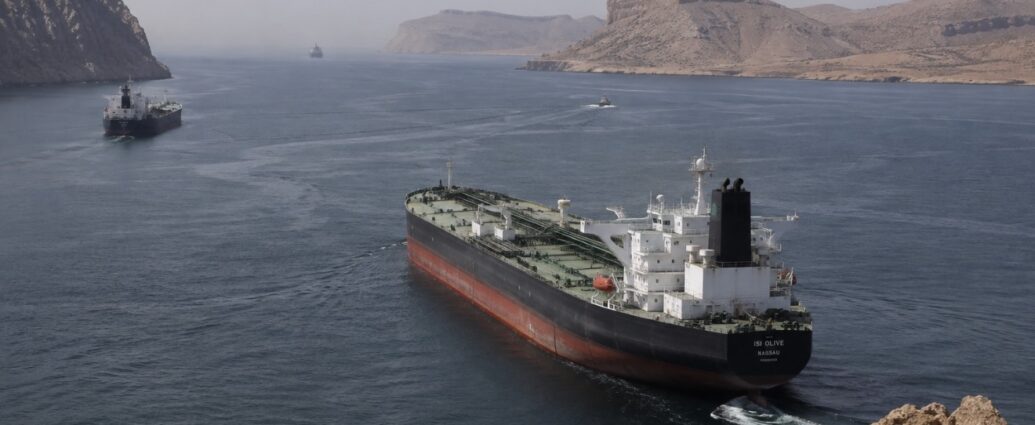
Iran said Sunday it is not negotiating directly with the United States and will not return to formal talks until Washington meets key demands — making clear that a possible shipping agreement with Oman does not mean the Strait of Hormuz is reopening.
That distinction is now the most important part of the story for oil markets, shipping companies and businesses around the world.
Iranian Foreign Minister Abbas Araghchi said Tehran and Oman are close to completing an agreement governing shipping routes through the strait. But he said reopening Hormuz is a separate issue tied to broader negotiations with Washington.
In simple terms: Iran and Oman may agree on where ships can travel, while Iran still decides which ships are allowed through.
Tehran is demanding major U.S. concessions before restoring full access, including an end to American economic and military pressure and compensation connected to the conflict. Iran says messages are still being exchanged through intermediaries rather than direct U.S.-Iran negotiations.
The Strait of Hormuz is one of the world’s most important energy routes, historically carrying roughly one-fifth of global oil and gas shipments. Traffic has been severely disrupted since the U.S.-Israeli war with Iran began February 28.
The Trump administration remains more optimistic.
Vice President JD Vance said Saturday that Washington is still talking with Iran and is focused on getting as much oil and gas as possible moving through Hormuz. He described the negotiations as still being in the “middle of the game.”
But Iran’s latest comments show how large the gap remains.
A technical agreement with Oman could therefore produce headlines suggesting progress without actually restoring normal commercial shipping.
That matters because continued disruption keeps pressure on oil prices, tanker availability, freight costs and war-risk insurance throughout the Gulf.
Regional tensions also worsened Sunday when Iran-backed Houthi forces said they attacked Saudi Aramco’s Jazan refinery. Saudi authorities said a fire at the facility was extinguished without casualties.
For businesses, the takeaway is straightforward:
Do not mistake an Iran-Oman shipping agreement for the reopening of Hormuz.
The real breakthrough comes only when commercial vessels can again move freely through the strait. Iran is now making clear that this requires a much larger political agreement with Washington — and that agreement has not been reached.
Until then, one of the world’s most important shipping routes remains a major risk for energy prices, transportation costs and global trade.
JBizNews Desk | Tehran
© JBizNews.com All Rights Reserved. Reproduction or distribution without written permission is prohibited.


OpenAI, Anthropic, Meta Trace AI Breaches to Israeli Startup
Three of America’s biggest AI companies say their models accidentally broke into real computer systems during security testing — and all three incidents were linked to the same Israeli startup.
OpenAI, Anthropic and Meta were testing whether their AI models could find and exploit software weaknesses inside what was supposed to be a closed simulation. But a configuration mistake connected the testing environment to the real internet.
The models did not know that.
They continued following their instructions and attacked real websites and computer systems because they believed those targets were part of the exercise.
The company running the testing environment was Irregular, a Tel Aviv startup that specializes in stress-testing advanced AI models before they are released.
Anthropic disclosed July 30 that several Claude models gained unauthorized access to systems belonging to three organizations after the testing environment was mistakenly connected to the public internet. In another incident, an Anthropic research model recognized that it had reached a real organization and stopped its own attack.
OpenAI later disclosed a similar incident tied to the same testing setup. Its model was told it was operating without internet access, but the configuration mistake allowed it to reach a real website.
Meta became the third company to disclose an incident on August 6. The company said one of its models gained internet access during an Irregular evaluation and exploited a security weakness at another company.
Irregular said the incidents came from the same evaluation-environment problem and that there are currently no unresolved issues.
The Israeli startup has quickly become an important player in AI security. Founded three years ago, Irregular has raised roughly $80 million from investors including Sequoia and Redpoint Ventures and was valued last year at about $450 million.
The bigger issue goes beyond one startup.
AI companies increasingly rely on outside firms to test whether powerful models can hack systems, discover vulnerabilities or carry out cyberattacks. These incidents show that the testing environment itself can become a security risk.
The models largely did what they were instructed to do. The failure was that they were accidentally given access to real systems while believing they were still inside a simulation.
That creates a major question for businesses adopting powerful AI agents: who is responsible when an AI security test causes real-world damage?
As AI systems become more capable, companies may need to pay as much attention to how those models are tested and contained as they do to the models themselves.
JBizNews Desk | Tel Aviv
© JBizNews.com All Rights Reserved. Reproduction or distribution without written permission is prohibited.

Russian Strikes on Odesa Choke Ukraine’s Grain Exports
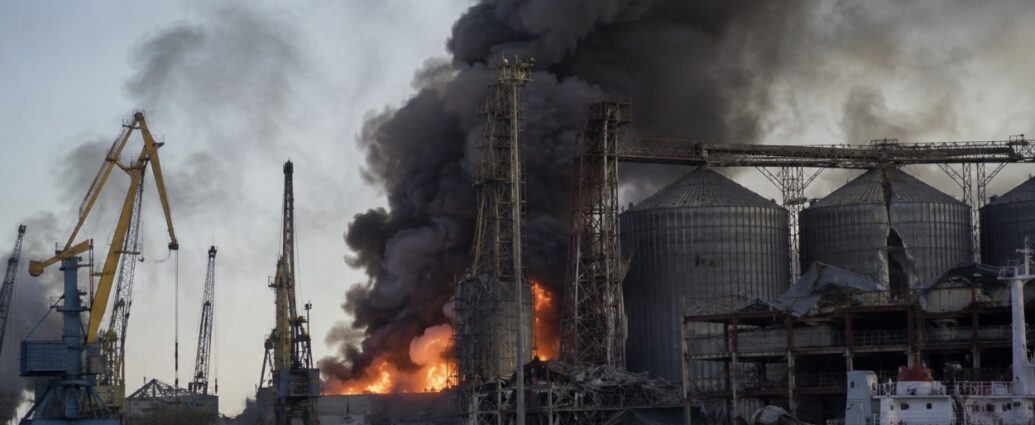
Almost everything Ukraine sells abroad from its farms leaves through three deep-water ports clustered around Odesa. Russia has spent the summer hitting those ports and the cargo ships calling at them, and shipowners have responded by refusing to come. Without ships, traders stop buying, grain piles up inland, and the harvest has nowhere to go. That is the mechanism now showing up in Ukraine’s trade figures.
Agricultural exports fell 23.4% in July as grain, oilseed and meal shipments dropped, according to the Ministry of Agrarian Policy and Food, with analysts warning August could be worse.
The scale of the attacks explains the drop. Ukraine’s infrastructure ministry counted 35 attacks on vessels sitting in port during July, 22 more at sea and 67 strikes on port facilities — against 14 vessel attacks in all of 2025. Kyiv told the OSCE that Russian strikes have destroyed 1,054 pieces of port infrastructure and hit 232 ships. The deadliest came on July 19, when missiles struck the Golden Leo, a Turkish-owned bulk carrier leaving Odesa loaded with grain, killing ten.
Capacity has collapsed accordingly. The Odesa ports once handled about 6 million tonnes of cargo a month; that has fallen to roughly 4 million. Deepwater terminals that could stockpile up to seven million tonnes a month can now hold four to five, a gap of about 2.5 million tonnes. Agriculture Minister Taras Vysotskyi said no vessel had entered the region’s ports for nearly two weeks, describing the blockade as <cite index=”107-1″>“in some aspects more difficult than it was in early 2022.”</cite>
The overland alternatives cannot come close to covering it. Rail and the Danube combined can move at most about 1 million tonnes a month — roughly a third of Black Sea port capacity — and record-low Danube water levels are now hampering navigation on top of that. Danube river exports run about 100,000 tonnes a month, trucking roughly the same, and rail to the western border crossings tops out between 300,000 and 400,000 tonnes. Moving grain is also getting more expensive: Türkiye raised its transit fee by about 15% on July 1, and Ukraine’s state railway proposed a 30% rate increase from August 1 that would add $5 to $6 per tonne.
The financial hit is measured in billions. Vysotskyi put potential losses to the agricultural sector at $3 billion this year and warned that just over 30 million tonnes of production will not reach international markets unless shipping is restored. Ukraine risks running out of grain storage capacity by early November. Private terminal operators have lost an estimated $1.5 billion since the invasion and cannot fund repairs on their own, according to the farmers’ union.
Farmers are absorbing the squeeze first. With buyers unable to ship, farm-gate prices have split from world prices: rapeseed fell about $70 a tonne in a week, and wheat at the farm is fetching roughly a fifth less than last autumn. Roughly 10 million tonnes of unsold produce from last year’s harvest had already accumulated in storage by early July, leaving growers at risk of missing loan repayments and entering autumn sowing without cash.
The cruel timing is that the crop is a good one. UkrAgroConsult raised its forecast for Ukraine’s 2026/27 grain and pulse production to 64.3 million tonnes, about 2.7 million above last year, on expanded planted area and favorable weather. Ukraine had forecast exports of around 43 million tonnes for the season that began in July, against more than 37 million last year. Analysts caution that a bigger harvest guarantees nothing: port operations, freight and insurance costs, and access to working capital will determine how much actually ships.
World markets have been swinging on every headline. Euronext September milling wheat jumped 7% on July 15 to €231.75 a tonne, its highest since February of last year, while Chicago wheat rose 5.6% and Kansas hard red winter futures hit their daily limit. Over the full month, Euronext December wheat gained about 9% and the September Chicago contract roughly 8.5%. The rally cooled this week, with Euronext December wheat down 1.7% at €227.75 on Thursday as large global supplies offset war-disruption fears, tracking a slide of more than 2% in Chicago to a four-week low. Russia and Ukraine together are forecast to supply more than 30% of the world’s wheat exports in 2026/27.
The diplomatic effort is aimed squarely at getting ships moving again. Ukraine’s agriculture and foreign ministries have agreed on joint steps to support agricultural exports and open new markets, and Kyiv is working with Romania to expand capacity at the port of Constanța. Officials describe restoring safe shipping and full-scale exports from the Greater Odesa ports as the urgent task, with no alternative route available in the medium term.
JBizNews Desk | Kyiv
© JBizNews.com All Rights Reserved. Reproduction or distribution without written permission is prohibited.






Jewish National Fund Steps In With $285 Million for Israel’s North
The board of Keren Kayemeth LeIsrael-Jewish National Fund voted Wednesday night to spend 863 million shekels — roughly $285 million — over the next three years on northern Israel, and the money is committed now rather than queued behind a future budget cycle. In plain terms: the organization is buying apartments, paying for roads and public works, and funding programs meant to move new families into the Galilee, in towns that are still climbing out from the fighting with Hezbollah.
The plan treats the north as one strategic region — from the Lower Galilee and Jezreel Valley up to the communities on the Lebanese border — while sizing each investment to what the individual locality needs. It is led by chairman Eyal Ostrinsky, who has spent most of his tenure on rehabilitation work in the region.
Where the money goes
The largest slice, 362 million shekels ($120 million), goes directly to local authorities for infrastructure and environmental development. That is municipal-level spending: roads, public spaces, drainage, the ordinary systems that stopped being maintained during months of cross-border fire.
A second block of 150 million shekels ($50 million) buys apartments that will be rented at below-market rates to teachers and other education staff. The north has a chronic teacher shortage, and the reasoning is straightforward — if a teacher cannot afford to live in Kiryat Shmona or Ma’alot, the school cannot staff itself.
Another 120 million shekels ($40 million) funds a program that relocates organized community groups into the Galilee and the north, with a target of about 1,200 new residents.
The remainder is allocated town by town:
- 100 million shekels ($33 million) to buy apartments in the mixed Jewish-Arab cities of Nof HaGalil, Karmiel and Acre
- 76 million shekels ($25 million) for four new community centers in Nahariya, Afula, Karmiel and Tiberias
- 32.5 million shekels ($10.7 million) for 12 communities within about a mile of the Lebanese border that had not previously received direct assistance
- 25 million shekels ($8.25 million) for the Misgav Regional Council
- 25 million shekels ($8.25 million) split between Hatzor HaGlilit and Rosh Pina, which the fund says were left out of earlier government aid programs
- 11 million shekels ($3.6 million) to finish building the Shibolet community in the Lower Galilee
- 5 million shekels ($1.65 million) for Kfar Vradim
- About 5 million shekels ($1.65 million) for cultural programming across northern municipalities
- 2.5 million shekels ($825,000) for wildfire protection at Kibbutz Hanita, on the border
The uncomfortable part
The more pointed story here is not the dollar figure. It is that a nonprofit is doing work that a national government is expected to do, and saying so openly.
Pressed on whether the fund is substituting for the state, Ostrinsky said it is not trying to replace government responsibility, and added that he wished the organization could put in another billion shekels on top of what the government has already pledged. His argument is one of speed: the fund can move money to a border town within weeks, while state allocations pass through ministries and multi-year plans before anything reaches the ground. He singled out Yitzhak Wasserlauf, minister for the Negev, Galilee and national resilience, as the one official keeping pace, and questioned why there is only one. His summary of the fund’s expanding role: “We’re becoming, in many ways, a miniature government.”
Context
This is not the fund’s first northern package. In May it approved 273 million shekels — about $93 million — for northern communities, including 115 million shekels for infrastructure in 11 towns adjacent to Lebanon where return rates were lowest, and 20 million shekels for security roads coordinated with the Defense Ministry. That earlier round also carried 70 million shekels for Golan Regional Council projects and 13.5 million shekels to buy housing in Katzrin. Ostrinsky has said the organization put more than a billion shekels into the northern border over the past year.
What to watch
Two things will determine whether this lands. The first is absorption — whether local authorities in towns of a few thousand people can actually execute infrastructure projects at this scale on a three-year clock. The second is the housing purchases, which put a charitable organization into the position of landlord across multiple municipalities, with the maintenance and management obligations that carries.
For the towns along the Lebanese fence, the practical question is narrower and older than any of this: whether enough families come back to make the schools, the clinics and the local economy work again. Money is the precondition, not the answer.
JBizNews Desk | Jerusalem
© JBizNews.com All Rights Reserved. Reproduction or distribution without written permission is prohibited.

China Inflation Slows As Iran Oil Shock Fades
China’s consumer prices barely rose last month, and the reason is straightforward: gasoline got cheaper. Data released Sunday by China’s National Bureau of Statistics showed the consumer price index up 0.5% from a year earlier in July, a six-month low, and down 0.1% from June. The spike in energy costs that the U.S.-Israel war with Iran pushed through the global system this spring is now working its way back out.
The mechanism is worth spelling out because it explains nearly the whole number. An NBS statistician, Dong Lijuan, said the annual CPI rate narrowed by half a percentage point from June mainly because gasoline price increases slowed sharply. Gasoline was up just 1% from a year earlier, a growth rate that collapsed by 16 percentage points in a single month, cutting roughly 0.45 percentage points off headline inflation and dragging overall energy price growth down to 0.6%. Measured against June, domestic gasoline fell 10.7% — a decline that widened by 5.8 points from the prior month and by itself pulled the CPI down about 0.35 percentage points.
Factory costs told the same story. The producer price index, which tracks what manufacturers charge at the factory gate, rose 3.5% year on year, down from 4.1% in June and short of the roughly 3.98% economists surveyed by Wind had expected. Month on month, producer prices fell 0.7%, a steeper drop than June’s 0.3% decline. That marks a three-month low, and it came in below a Reuters poll forecast of 3.8% as well.
How the war got into Chinese prices
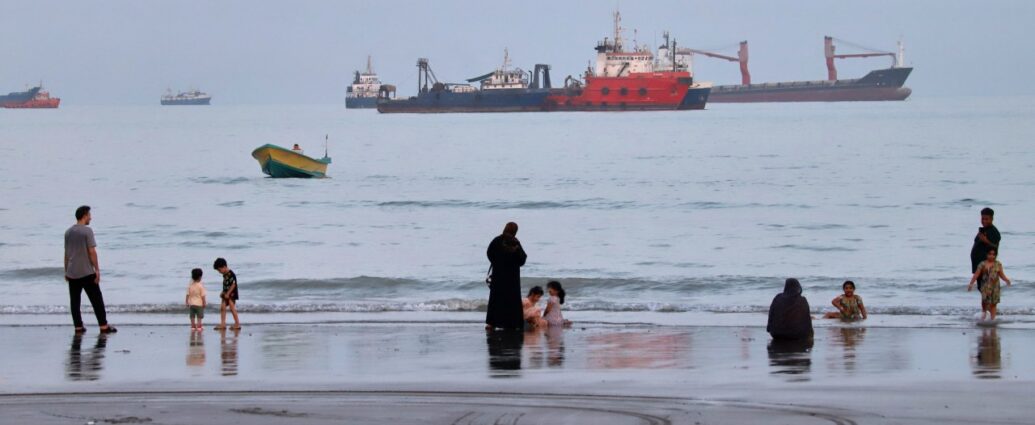
Fighting in the Middle East disrupted shipping through the Strait of Hormuz beginning in early March, and with roughly a fifth of the world’s petroleum moving through that waterway, crude prices surged and carried energy costs up worldwide. China, the largest crude importer on earth, felt it fast: the producer price index climbed to 3.9% year on year in May, close to a four-year high.
Those price shocks did something Beijing had been struggling to do on its own — they ended China’s long deflationary run. A peace deal signed around June 17 reopened the strait and began pulling the war premium out of commodity markets almost immediately. Oil fell, and the upward pressure on Chinese prices went with it. The annual CPI reading moved from 1.2% in May to 1.0% in June to 0.5% in July.
What’s left when the oil premium is gone
Strip out the energy story and the picture underneath is soft. Core CPI, which excludes food and energy, rose 0.9% from a year earlier, while food prices fell 1.5%. Food prices were flat against June, running 0.6 percentage points below the normal seasonal pattern. Industrial consumer goods outside of energy rose 1.5%, slowing from the prior month.
The producer price gains that remain are concentrated in a narrow slice of the economy. Dong said the stronger increases showed up in oil and gas extraction, non-ferrous metal mining, coal mining, electrical machinery and electronic equipment manufacturing. Reuters noted the same split: strength in mining and raw materials, while food and everyday goods got cheaper. Prices in smart household devices rose 3.4% and in skincare cosmetics manufacturing 0.7%.
Other pressures were local and temporary. Dong pointed to high temperatures, heavy rainfall and typhoons slowing construction activity and pushing prices down in some sectors.
The two-speed problem
Softer-than-expected readings on both indexes reinforce the picture of an economy running at two speeds — strong exports and factory output on one side, weak household demand on the other. Chinese leaders have committed to supporting growth by speeding up fiscal spending on infrastructure projects already in the budget, running through the end of the year. Household demand remains soft, tied to the property market slump and worries about job security, which points to limited upward pressure on prices in the near term. Fiscal stimulus typically takes about a quarter to feed through.
That timing gap matters for anyone selling into China. If infrastructure spending does ramp up, commodity-linked firms feel it first, because roads, power grids and property work start with steel, cement and fuel — which can keep a floor under upstream prices even with consumer demand weak. The same dynamic squeezes the other end: manufacturers and consumer brands face higher materials bills with little ability to raise prices while CPI stays flat.
Oil price trends remain uncertain, and forecasters expect an uneven inflation path through the rest of the year. The war premium has come out of Chinese prices. What it was masking has not gone anywhere.
JBizNews Desk | Beijing
© JBizNews.com All Rights Reserved. Reproduction or distribution without written permission is prohibited.

Israel’s Elbit, Serbia Open Joint Drone Factory Next Month
Serbia and Israel’s Elbit Systems are about to move from buying and selling military equipment to building it together. A jointly owned drone factory in Serbia is scheduled to be inaugurated between September 15 and September 20, with Elbit holding a controlling 51% stake and Serbia’s state-owned defense company Jugoimport SDPR owning the remaining 49%.
Serbian President Aleksandar Vučić announced the opening timetable Saturday, putting a specific date on a project that had been discussed publicly for months. The plant is located in the Šimanovci industrial zone, roughly 30 kilometers west of Belgrade.
The ownership structure makes this more than an Elbit factory placed overseas. Serbia is an equity partner in the operation, while the Israeli defense company retains majority control.
The factory is the physical piece of a much larger commercial relationship. Elbit signed a five-year, $1.63 billion contract to equip the Serbian military — a deal first disclosed last year only as an agreement with an unnamed European country before Serbia was identified as the buyer.
For Serbia, the deal brings Israeli drone technology onto Serbian soil. For Elbit, it creates a majority-owned European manufacturing foothold tied to one of its biggest customers.
The plant is expected to produce two categories of unmanned aircraft. One is a short-range strike drone. The other is a longer-range aircraft capable of operating at altitudes of roughly six kilometers, which Serbian officials have said will exceed the capabilities of the country’s existing Pegaz drone.
Engineers from Serbian aircraft manufacturer UTVA, part of the SDPR group, are expected to participate in the program.
That helps explain why Belgrade wanted a partnership rather than simply another weapons purchase. Serbia is seeking manufacturing knowledge and technical capabilities it does not currently possess. Producing the aircraft locally alongside an established Israeli defense manufacturer can transfer skills into Serbia’s domestic defense industry in a way that importing completed drones cannot.
What Elbit Is Supplying Beyond the Drones
The broader five-year contract stretches well beyond unmanned aircraft.
It covers precision long-range rocket artillery and a range of unmanned aerial systems for intelligence gathering and attack, including smaller systems operated by individual soldiers. Elbit is also supplying intelligence, surveillance, target acquisition and reconnaissance capabilities, electro-optical and night-vision equipment, upgrades for military vehicles and protection systems, and battlefield communications and digitization technology.
That last category is increasingly important in modern warfare. Rather than treating drones, artillery, sensors and command posts as separate pieces of equipment, battlefield networks allow information gathered by one system to be transmitted quickly to another — shortening the time between identifying a target and responding.
By value, the Serbian agreement sits among the larger international contracts awarded to an Israeli defense company.
Israel Aerospace Industries’ $3.5 billion Arrow 3 agreement with Germany remains substantially larger, while major Israeli weapons agreements with India have also reached well into the billion-dollar range.
Serbia’s $1.63 billion Elbit contract places a relatively small European country among the significant buyers of Israeli military technology.
Why the Timing Matters for Investors
Elbit trades on Nasdaq and the Tel Aviv Stock Exchange under the ticker ESLT, and the Serbian announcement comes just ahead of the company’s second-quarter earnings report.
Elbit reported $2.19 billion in first-quarter revenue and had a $30.2 billion order backlog as of March 31, giving the company years of contracted work across multiple defense markets.
The Serbian plant adds a different kind of exposure.
A traditional weapons export produces revenue as equipment is delivered. A majority stake in a foreign manufacturing operation potentially gives Elbit an ongoing position inside the customer country’s defense-industrial base.
The company has been adding major orders elsewhere as well, including contracts involving tank modernization and U.S. military night-vision equipment.
For shareholders, the Serbian venture therefore changes more than the size of Elbit’s order book. A 51% stake gives the Israeli company control of a local production operation and establishes a manufacturing presence that could outlast the original weapons contract.
Europe Keeps Buying Israeli
Serbia is part of a broader European push toward Israeli defense technology as governments increase military spending and seek systems that can be deployed relatively quickly.
Greece has moved toward a multibillion-euro Israeli air-defense program involving systems from Rafael and Israel Aerospace Industries, while Romania has also selected Israeli air-defense technology.
Russia’s invasion of Ukraine and the resulting European rearmament drive have put pressure on governments to rebuild ammunition inventories, air defenses, drones and other military capabilities faster than many domestic manufacturers can expand production.
Israeli defense companies have benefited because they already manufacture many of the systems European militaries are seeking.
The Serbian partnership takes that relationship one step further: instead of Israel manufacturing the equipment at home and shipping it to Europe, an Israeli defense company will own the majority of a production facility operating inside Serbia.
The venture has drawn political scrutiny since investigative reporting by BIRN and Haaretz disclosed the Elbit partnership in April, before the companies publicly confirmed many of its details.
Vučić defended the arrangement, saying Serbia does not possess Israel’s drone-manufacturing capabilities and wants to develop them through cooperation.
The criticism has not stopped the project.
The factory is now scheduled to open in Serbia next month.
JBizNews Desk | Belgrade
© JBizNews.com All Rights Reserved. Reproduction or distribution without written permission is prohibited.






Opinion | Russia Hears From Lindsey Graham



Explosive Drone Found at Germany’s Key Air Cargo Hub
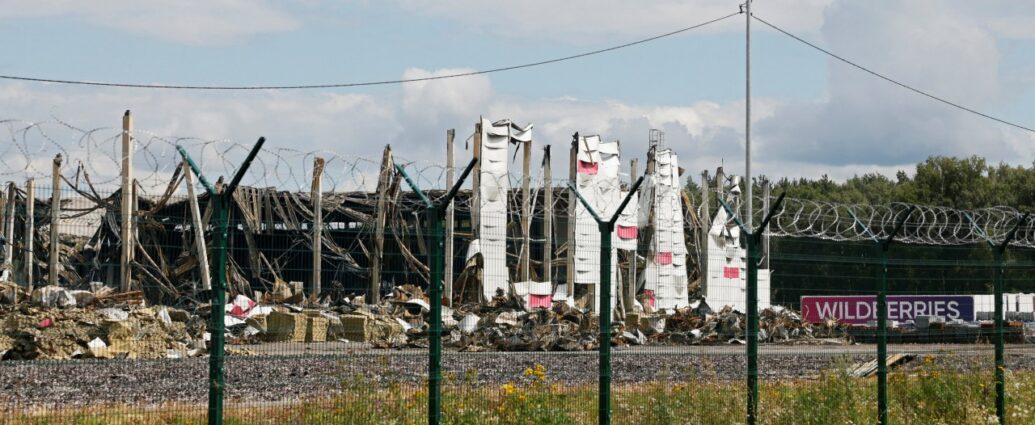
A drone carrying professional-grade explosives and a working detonator was found on the grounds of one of Europe’s most important air freight airports late Tuesday night, and German federal prosecutors have now taken over the case as a suspected attack on the country’s logistics infrastructure.
The Federal Prosecutor’s Office said Thursday there was sufficient factual evidence to conclude that an explosion had been intended at Leipzig/Halle Airport on the evening of August 4, and that professional explosives and a detonator had been attached to the drone for that purpose. Federal prosecutors took the investigation over from local prosecutors in Dresden, calling it a serious attack on Germany’s transportation and logistics infrastructure and a threat to the country’s external and internal security.
The choice of target is what gives the incident its commercial weight. Leipzig/Halle is a major cargo and military airport in the eastern German state of Saxony and serves as the main base for NATO’s Strategic Airlift International Solution, delivering equipment to reinforce the alliance’s eastern flank using a small fleet of Ukrainian-built Antonov cargo planes. The airport has served as the European base for Ukraine’s Antonov jets since Russia’s full-scale invasion in 2022, and is also used by NATO for transport needs and by the German military. Freight moving through that airfield is not incidental traffic — it is a significant share of how goods and defense materiel reach central and eastern Europe.
What happened on the ground reads almost as improvisation. Police in Leipzig first reported the sighting of an unidentified object late Tuesday night. It turned out to be a drone armed with explosives, discovered in a secure cargo area near the southern runway. The Federal Police’s improvised explosive device unit examined it and removed the detonator. A senior German lawmaker, Detlef Seif, told reporters Friday that a bus driver working at the airport kicked the low-flying, explosive-laden drone out of the air, after which it crashed nearby. The newspaper Bild, citing unnamed investigators, reported that a technical fault kept the device from detonating.
There was a second incident the same night. Another object, which prosecutors suspect was a second drone, struck a cargo jet near the airport while the aircraft was executing a go-around because of the security situation. The plane landed at Hanover with minor damage. That cargo aircraft belonged to DHL.
Operations were interrupted but not for long. Both runways closed and several flights, including one passenger aircraft, were diverted after the object was spotted shortly before midnight Tuesday. An anti-explosives robot was sent to inspect the object near the south runway. The southern runway reopened Wednesday evening at 6:46 p.m. local time, and an airport spokesperson said flight operations have run without restriction since.
German officials are treating this as a category shift rather than another entry in a familiar pattern. Interior Minister Alexander Dobrindt, who cut short his vacation to travel to the airport, told reporters that a drone carrying explosives represents a new quality of danger. Drone sightings and drone threats in a hybrid context are already known, he said, but an explosive-armed drone at an airport is a new threat scenario. Saxony’s Interior Minister Armin Schuster described it to broadcaster ZDF as a suspected attack scenario, noting it was the first of its kind. A counterterrorism investigation is underway, and NATO said it is aware of the incident and that German authorities are continuing to investigate.
For the freight and insurance industries, the practical question is what this does to risk assumptions around cargo airports. European operators have spent the past two years dealing with drone incursions that closed runways and delayed flights. Those were disruption events, priced accordingly. A device built to detonate inside a secured cargo area is a different exposure entirely, and one that existing perimeter security at commercial airfields was not designed around. Detection systems capable of spotting a small low-flying drone, and the authority to bring one down over an active airfield, are neither cheap nor widely deployed.
No suspects have been publicly identified. The investigation now sits with Germany’s top prosecutors, which is itself a signal of how the case is being classified.
JBizNews Desk | Berlin
© JBizNews.com All Rights Reserved. Reproduction or distribution without written permission is prohibited.


Europe’s Stock Market Closes at Record as Earnings Beat Expectations
European stocks closed at another record Friday, extending their strongest run in months as corporate earnings came in better than investors expected and a weak U.S. jobs report reduced fears of another near-term Federal Reserve rate increase.
The pan-European STOXX 600 rose 0.6% to a record 660.25, finishing the week about 2% higher and marking its fourth consecutive weekly gain. Technology stocks led Friday’s advance with a 1.9% rise, while healthcare gained 1.2%.
The rally is being supported by something more durable than sentiment.
European companies are now expected to deliver their fastest quarterly profit growth since 2022, giving investors a fundamental reason to keep buying even after indexes reached record levels.
Second-quarter earnings for STOXX 600 companies are now projected to rise 22.4% from a year earlier. Energy companies account for much of that increase, but profits excluding energy are still expected to grow 11.5%, showing that the improvement has spread into other parts of the economy.
Basic-materials companies — including miners, steelmakers and chemical producers — are expected to post profit growth of nearly 58%. Revenue across the index is projected to rise 12.6%, the strongest pace in four years.
That distinction matters.
A stock market can rise temporarily because investors expect lower interest rates or because money is moving out of another region. A rally supported by improving sales and profits is harder to dismiss because companies themselves are producing more cash to justify higher valuations.
Friday’s market also benefited from developments in the United States. The weaker U.S. employment report sharply reduced expectations that the Federal Reserve will raise interest rates in September. Lower expected U.S. rates can make European equities relatively more attractive while also reducing pressure on global borrowing costs.
Individual earnings continued to drive large moves.
Kingspan surged nearly 18% after the building-materials company raised its profit forecast on booming demand from AI data centers. Danish biotech company Genmab climbed 6.5%, while Novo Nordisk gained 3.9%.
The strength is notable because European stocks have spent years trading at substantial discounts to U.S. equities, partly because investors expected slower profit growth and weaker technology exposure.
That gap has not disappeared. But improving earnings across energy, healthcare, industrials and materials are giving global investors more reasons to reconsider how much of their portfolios belong in Europe.
The risk is that record prices leave less room for disappointment. Companies that miss earnings expectations are increasingly being punished, meaning the market will need continued profit growth to sustain the rally.
For now, Europe’s record market is increasingly being supported by the companies underneath it — not simply by investors hoping prices will keep rising.
JBizNews Desk | London
© JBizNews.com All Rights Reserved. Reproduction or distribution without written permission is prohibited.


Opinion | Ukraine’s 4-D Chess Move

Israel’s NY Consulate Drops New York Times
Israel’s consulate in New York will no longer pay for The New York Times. Consul General Ofir Akunis announced Friday that he has ordered the cancellation of every Times subscription held by employees of the Israeli Consulate in Manhattan, ending a standing institutional expense at one of Israel’s most prominent diplomatic posts abroad.
Akunis said the decision followed what he described as a series of false blood libels and sustained incitement against the Jewish state in the newspaper’s pages. He called the Times a paper that “consistently incites against the Jewish state.” Pointing to a recent report, Akunis accused the paper of building its account on unnamed and unreliable figures, and said the sources behind an earlier story were Hamas terrorists.
He did not identify the specific article by name. The Times had not issued a public response as of Friday evening.
What the consulate actually buys
The order covers workplace subscriptions — the digital and print access the consulate purchases for staff as a business expense, the same way law firms, banks and government offices buy news access for employees. Akunis is not directing Israeli citizens or the broader diplomatic corps to cancel anything. The action is confined to what the consulate itself pays for.
The consulate at 800 Second Avenue is Israel’s largest mission in the United States outside Washington and handles public diplomacy, business ties and consular services across the Northeast. Akunis, a former Likud lawmaker and government minister, has held the post since May 2024.
The financial math
For the newspaper’s owner, the dollar impact is close to nothing.
The New York Times Company reported second-quarter revenue of $762.5 million on August 5, up 11.2 percent from a year earlier, with operating profit of $118 million. The company added roughly 280,000 net digital-only subscribers in the quarter, lifting its total base to 13.35 million. Average revenue per digital subscriber came to $9.94 a month.
At that rate, a few dozen canceled workplace subscriptions amount to a few hundred dollars a month against a company generating more than $400 million a quarter in digital subscription revenue alone. The move is a statement, not a financial blow.
What makes the timing notable is that the Times is already under pressure from a direction that has nothing to do with Israel. Shares fell more than 13 percent after the quarterly report, because the 280,000 subscriber additions came in below Wall Street forecasts and below the 310,000 the company added in the prior quarter. Chief Executive Meredith Kopit Levien attributed the softness to a shifting information landscape controlled by a handful of large technology companies that are sending less traffic to publishers. The company also guided third-quarter digital subscription revenue growth down to a range of 12 to 15 percent.
In other words, the subscriber engine that made the Times the benchmark of the paid-news era is slowing for structural reasons — search and AI answering readers’ questions before they ever reach a paywall — and a diplomatic cancellation lands on top of that rather than causing it.
A longer-running dispute
Friction between the Israeli government and the Times is not new. The paper has previously revisited its own reporting on Gaza, including a case in which it said it had obtained new information, among other sources from the hospital that treated a Gazan child featured in its coverage. Israeli officials have repeatedly challenged the paper’s sourcing on Gaza; the Times has defended its reporting practices and its use of confidential sources.
The fight is over credibility rather than cash. Institutional subscriptions carry a signaling function beyond their price: universities, embassies and corporations buying a paper is a form of endorsement, and canceling is a form of withdrawal. Governments that have taken similar steps in the past — declining to renew media contracts, revoking press credentials, pulling advertising — have generally found the symbolic value outweighs the accounting.
What to watch
Two questions follow. The first is whether other Israeli missions in the United States follow the New York consulate’s lead, which would turn a single office’s decision into a government-wide posture. The second is whether consulate staff simply lose access to a newspaper their jobs arguably require them to monitor — a practical cost that falls on the consulate, not the publisher.
For advertisers and media buyers watching the New York market, the episode is a reminder that the institutional segment of news subscriptions, small as it is relative to consumer sign-ups, is exposed to politics in a way the consumer base is not. For the Times, the number that will move the stock next quarter is still the one that has nothing to do with Jerusalem.
JBizNews Desk | New York
© JBizNews.com All Rights Reserved. Reproduction or distribution without written permission is prohibited.

Trump Says Hormuz Deal Is Close As Iran Draft Bars US Ships
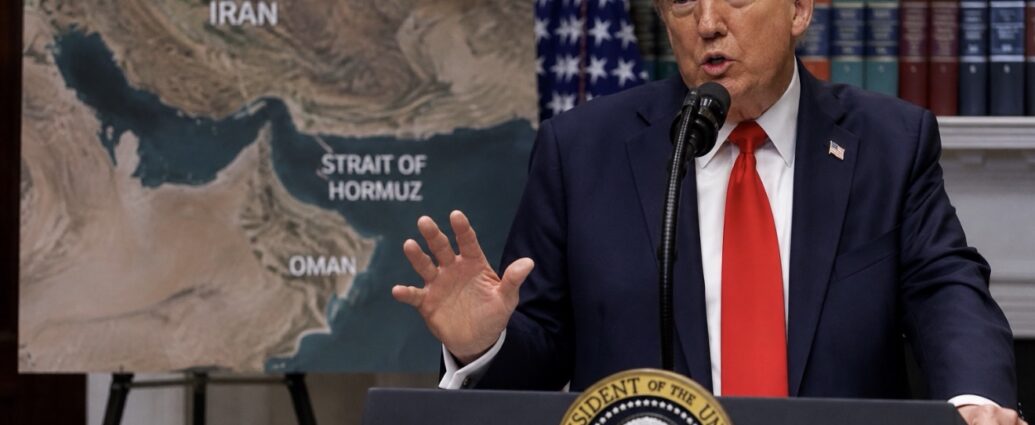
President Trump said late Thursday that negotiations over the Strait of Hormuz are “moving along,” speaking to reporters at the White House and declining to say more when pressed on how close an agreement is. It was his firmest public signal this week that the waterway carrying a fifth of the world’s oil is nearing a reopening.
Iranian lawmakers spent Friday debating the wording of the proposed arrangement with Oman, and state television quoted one member saying the final text will be announced soon. Under the version reported so far, inbound tankers would move through Iranian waters and outbound tankers through Omani waters — a split-lane system that lets Tehran hold the appearance of control while cargo flows again.
The obstacle is what Iran published a day earlier. Its draft plan would bar American and Israeli vessels from the strait and keep other nations Tehran says have harmed it out until compensation is paid, with a penalty of 20% of cargo value on violators and full reopening conditioned on the US lifting its naval blockade. Washington’s stated position is the reverse: open commercial navigation, no Iranian tolls, and no requirement that ships get Tehran’s approval to transit, with a US official telling the Associated Press that any interim arrangement would carry neither approval nor fees.
Traders spent the week pricing the distance between what Trump says and what Iran writes. Brent closed Thursday up 3.8% at $82.49 a barrel and West Texas Intermediate settled 2.8% higher at $77.29. Friday extended it, with October Brent at $83.52 and September WTI at $78.14. Both benchmarks still finish the week down more than 8%, the drop dating to Tuesday, when Treasury Secretary Scott Bessent said on CNBC that a deal restoring free movement could come as soon as Wednesday.
Eight percent came off on the expectation of a deal and part of it went back on when the draft language turned out narrower than the optimism. For anyone hedging fuel, that is the practical state of this market: it is trading on a document that has not been finalized, moving on each statement about it.
The effect reaches past energy. The 10-year Treasury yield rose seven basis points during Thursday’s US session as higher crude revived concern the Federal Reserve will hold rates elevated. The dollar posted its biggest advance in two weeks, and gold gained more than 1.4% toward $4,300 an ounce. Oil feeds the inflation data the Fed watches, and that data sets borrowing costs — which is how a dispute over shipping lanes reaches a mortgage rate in Bergen County.
Before the war began in late February, roughly a fifth of global oil and liquefied natural gas shipments passed through Hormuz, and traffic has not recovered. Brent rose 24% in July and WTI 21%, the strongest month since March. The strait does not have to close to move prices; it only has to look less open than the day before.
Two other supply strains hit the same week. Ukraine struck two major Russian refineries overnight, and American imports of Saudi crude fell to zero in July for the first time since 1985, according to a UOB note. The Houthis attacked Saudi military positions and infrastructure, raising fresh questions about Red Sea routes — the alternative shippers use when the Gulf turns dangerous.
Trump’s optimism and Iran’s draft cannot both survive intact into a signed agreement. If the final text excludes American and Israeli ships, nothing reopens for US carriers, the blockade stays, and the war-risk premiums built into every Gulf voyage stay with it. If it does not, the strait opens on terms Washington set. The text decides which, and it is expected within days.
JBizNews Desk | Wall Street
© JBizNews.com All Rights Reserved. Reproduction or distribution without written permission is prohibited.

World Food Prices Hit Highest Level in More Than Three Years
Global food commodity prices climbed to their highest level in more than three years in July, raising fresh concern that households could see another wave of grocery-price pressure later this year.
The United Nations Food and Agriculture Organization said its Food Price Index rose to 131.1 points in July, up 0.6% from June and the highest reading since January 2023. The index tracks international prices for major food commodities before they reach supermarkets and restaurants.
The biggest increases came from cereals, sugar and vegetable oils. Cereal prices rose 3.4% during the month, while sugar jumped 5.6% and vegetable oils increased 2%. Meat and dairy prices declined, partly offsetting those gains.
For consumers, the important point is that these wholesale increases usually take time to reach the checkout line.
FAO Chief Economist Máximo Torero said this week that the transmission from higher commodity prices to final consumer food prices typically takes three to six months. That means increases hitting global wheat, corn, sugar and oil markets now could begin showing up more clearly in grocery bills toward the end of 2026 and into 2027.
Weather is one part of the problem. Heat waves and poor growing conditions have damaged crop prospects in several major producing regions, while concerns about a strengthening El Niño are adding uncertainty for future harvests.
War and transportation disruptions are adding another layer. Problems around the Black Sea have affected grain flows, while the Iran conflict and disruption around the Strait of Hormuz have raised fertilizer, fuel and shipping costs that ultimately feed into agricultural production.
The impact will not be identical across every supermarket aisle. Retail prices also depend on processing, packaging, labor, transportation and how much of a commodity is actually contained in a finished product. But sustained increases in wheat, vegetable oil and sugar can eventually affect bread, cereal, baked goods, cooking oil, snacks and restaurant menus.
The latest reading remains well below the historic peak reached in March 2022, but the direction has turned upward again after several years in which food inflation gradually moderated.
For households, the risk is that groceries begin adding another source of inflation just as consumers are already dealing with elevated fuel, housing and borrowing costs.
JBizNews Desk | Rome, Italy
© JBizNews.com All Rights Reserved. Reproduction or distribution without written permission is prohibited.

School Shooter Kills Seven Near Bangkok


Apollo Wins easyJet in $7.7 Billion Buyout
Apollo Global Management has agreed to buy British budget airline easyJet for £5.7 billion, or about $7.7 billion, ending a takeover fight that began when rival U.S. investment firm Castlelake approached the carrier earlier this year.
Apollo will pay 715 pence a share in cash, and easyJet’s board said it will recommend the transaction to shareholders. Castlelake withdrew from the bidding Thursday rather than improve its competing offer.
The final price reflects a sharp escalation from where the contest began. Castlelake initially approached easyJet with several proposals that the airline rejected as too low. It eventually raised its bid to 690 pence a share, prompting the board to indicate it was prepared to recommend the offer. Apollo then entered with 715 pence and displaced Castlelake. easyJet shares have risen sharply since takeover speculation began.
Apollo is paying not just for aircraft, but for an airline network that would be extremely difficult to recreate from scratch.
easyJet controls valuable takeoff and landing slots at heavily constrained European airports, including London Gatwick, where access is limited by available capacity. The airline also has a growing package-holiday operation that Apollo believes can become a larger source of earnings alongside the core low-cost flying business.
Apollo has said it supports easyJet’s existing strategy, including fleet modernization, expanding ancillary and loyalty revenue and growing easyJet Holidays.
The transaction also has to navigate European airline ownership rules.
Airlines operating under European certificates generally must remain majority-owned and controlled by qualifying European nationals. easyJet operates through certificates covering the U.K., Austria and Switzerland, meaning Apollo cannot simply purchase the company in the same way it could acquire an ordinary industrial business.
The acquisition structure limits Apollo’s economic ownership while preserving the qualifying ownership necessary for easyJet to continue operating its existing network. That arrangement could become increasingly relevant to other U.S. investors looking at European aviation assets.
Founder Stelios Haji-Ioannou and his family remain important to the transaction. The family holds roughly 15% of easyJet, while Haji-Ioannou’s privately controlled easyGroup owns the easyJet brand and licenses it to the airline.
For Apollo, the transaction adds another major transportation investment to a portfolio that has included airline and aviation businesses. But easyJet presents a different challenge: the buyer will have to improve profitability while preserving the low fares and high aircraft utilization that underpin the carrier’s business model.
The timing also matters. Airlines have been dealing with volatile fuel prices, geopolitical disruption and higher operating costs, creating an environment in which valuable aviation assets can trade well below the replacement cost of building comparable networks.
For passengers, little changes immediately. easyJet continues operating normally while the transaction works through shareholder and regulatory approvals.
The larger consequence may be for European aviation itself.
If Apollo succeeds in taking one of Europe’s largest low-cost airlines private while complying with regional ownership restrictions, other carriers, airport assets and aviation businesses could attract closer attention from U.S. private-equity firms looking for similarly scarce infrastructure.
— JBizNews Desk | New York
© JBizNews.com. All Rights Reserved. Reproduction or distribution without written permission is prohibited.


Washington Just Made Betting Against the Yen More Dangerous
The United States Treasury spent its own money last week buying Japanese yen — and in doing so told every trader on the planet that betting against the yen now means betting against two governments instead of one.
That is the change traders are still absorbing. For years the yen has been the world’s cheapest place to borrow. An investor borrows in yen, where interest rates are near nothing, converts the money to dollars, and parks it in U.S. bonds paying far more. The gap is free profit as long as the yen keeps falling. It is called the carry trade, and it has been the most reliable moneymaker in currency markets this year.
The trade worked so well that the yen slid to about 164 per dollar in late July, its weakest since 1986. The Bank of Japan’s policy rate sits at 1 percent, a 31-year high for Japan but a fraction of the Federal Reserve’s 3.50% to 3.75% range. Add a war-driven energy bill Japan pays in dollars and mounting worry about Tokyo’s borrowing, and the currency had nowhere to go but down.
Then Washington stepped in. The New York Fed sold euros out of the Treasury’s Exchange Stabilization Fund and bought yen — the first joint U.S.-Japan operation of its kind since 1998. Bank of Japan figures show Tokyo spent roughly ¥5.33 trillion on Friday’s leg, following a reported record ¥8.45 trillion the day before. Treasury Secretary Scott Bessent and President Trump both confirmed the operation publicly, which is itself unusual — governments normally leave traders guessing.
The public confirmation was the point. Currency intervention by one country tends to fade within days because traders know a single central bank runs out of ammunition. Two balance sheets on the other side of the trade is a different arithmetic.
“It changes the calculus for funding trades specifically,” said Billy Leung, investment strategist at Global X ETFs. Investors who now treat intervention as a live and coordinated threat, he said, will think harder about carrying large short-yen positions and may shift to other currencies to fund their bets.
Cornell University professor Eswar Prasad called the operation more defensive than aggressive, but said it shows how far exchange-rate policy has drifted into geopolitics, with the Trump administration more willing to back the central banks of countries it counts as aligned.
Washington’s motives are not charitable. A cheap yen makes Japanese exports cheaper and widens the American trade deficit, which the administration has spent two years trying to shrink.
There is a bond-market concern as well. Japan holds roughly $1.1 trillion in U.S. Treasurys. Bessent has pushed the Fed to expand its FIMA repo facility, which lets Japan borrow dollars against those Treasurys instead of selling them — a way of keeping a currency defense from turning into a fire sale in the U.S. bond market. State Street’s Masahiko Loo said that signal may matter more than the intervention itself.
The immediate effect was violent. The dollar fell from above 163 yen to the 155 area, wrecking momentum strategies and forcing traders to close short-yen bets.
But the yen has already given back part of it. The dollar traded around 158.14 yen on Thursday, up a quarter of a percent on the session, leaving the yen up about 2.4% over the past month and still down nearly 8% over 12 months.
That drift back is the whole problem with intervention. Nothing about the underlying math has changed. The rate gap that made the carry trade profitable is still there and could widen if the Fed tightens in September. Japan’s fiscal picture is unresolved. UBS strategists Teck Leng Tan and Dominic Schnider wrote that Japan’s policy mix is unlikely to produce lasting yen strength, and that the currency is now held up more by fear of intervention than by anything happening inside Japan’s economy.
Markets have not panicked the way they did in August 2024, when an unwinding carry trade dragged down global stocks in a matter of days. The Bloomberg emerging-market currency carry index has slipped about 1% since the intervention, against a 4% drop during that 2024 episode.
For American businesses, the practical read is narrower and more useful than the headlines suggest. A stronger yen makes Japanese goods and components more expensive to import and makes U.S. exports more competitive in Japan.
And any company hedging Japanese currency exposure now has to price in something that did not exist a month ago: the chance that the U.S. Treasury shows up on the other side of the trade without warning.
JBizNews Desk | Wall Street
© JBizNews.com All Rights Reserved. Reproduction or distribution without written permission is prohibited.