


Israeli Tech Jobs Hold Steady Despite Layoffs, Survey Finds
Israel’s technology sector has been generating layoff headlines for months, but the workforce has barely moved. What is happening underneath is a reallocation of jobs from one half of the industry to the other.
A survey by the Israel Innovation Authority and consultancy Zviran, conducted in the second half of June among 210 tech companies employing roughly 130,000 workers — more than 80% of the sector’s employees — found the total number of tech employees virtually unchanged, with companies still recruiting in significant numbers.
During the first half of the year, the surveyed companies hired an average of 8% of their workforce while laying off 2.8% and seeing another 4.3% leave voluntarily. Hiring above 8% against departures near 7% produces churn, not contraction — a lot of people changing seats without the room emptying.
The wider labor market points the same way: about 18,000 vacancies were recorded in the tech sector against roughly 15,000 job seekers, and the number of people employed in high-tech rose about 7% in the first quarter, according to the Central Bureau of Statistics. Employment in technology positions passed 600,000 in that quarter, a jump that broke three consecutive years of slowing job growth, and Israeli tech companies raised $4 billion over the same three months.
The split beneath the aggregate is the actual story. Software companies are streamlining rapidly in response to the AI shift, while hardware companies keep expanding and recruiting — the most striking gap in the survey. Software firms are the ones finding that AI tools compress the headcount needed per unit of output. Hardware firms, including the defense-adjacent manufacturers now running at capacity, need physical labor that no model replaces.
The currency is doing its own damage. The strong shekel squeezes Israeli companies earning revenue in foreign currencies while paying salaries locally: 17.6% of companies that carried out broad layoffs and 28% of those that reduced hiring cited exchange rates as a direct factor. Israeli growth companies with international operations recorded higher layoff rates than the local development centers of multinationals — a distinction that separates firms carrying their own cost base from those funded out of a global parent’s budget.
The forward-looking numbers are notably weaker than the trailing ones. Almost 37% of tech companies expect hiring volume in the second half of 2026 to fall below the first half, up from 23% in the previous survey. Planned hiring dropped from 7.2% to 5.9%, while among companies planning company-wide layoffs the planned layoff rate climbed from 4.1% to 6.4%. The outlook for the rest of the year is considerably more subdued.
Innovation Authority CEO Dror Bin said the survey shows Israeli tech is not in decline but in the middle of a deep structural change, with overall employment holding despite the uncertainty the layoff wave has created.
Earlier readings support that framing. A December survey covering roughly 80% of the sector’s employees found only 5% of companies cited AI implementation as a reason for layoffs, and in most of those cases it was a contributing factor rather than the sole one. Efficiency measures were the main driver, cited by 26% of companies. The pattern the Authority described was a sector entering a more measured phase: fewer new jobs posted, lower voluntary turnover, and workforce adjustments increasingly made through layoffs rather than natural attrition.
Pay tells the same story about who is scarce. The average high-tech salary hit a record NIS 38,467 in March, up 4.3% year over year, with programming salaries reaching NIS 40,117 — even as headcount stayed flat. Companies hiring fewer people are still bidding hard for a narrower set of engineers.
Israel recorded $85 billion in tech exports, $84 billion in exits and nearly $15 billion raised during 2025. For anyone tracking the sector from abroad, the takeaway from Tuesday’s survey is that the headline layoff count has been a poor proxy for what the industry is doing. The jobs are moving, not disappearing — and the second half will test whether that stays true.
JBizNews Desk | Tel Aviv
© JBizNews.com All Rights Reserved. Reproduction or distribution without written permission is prohibited.

Bezos Joins Investor Group Closing In on Liverpool Stake
Fenway Sports Group is not selling Liverpool. It is selling a piece of it. The Boston-based company that has controlled the English soccer club since 2010 has been negotiating to sell roughly a third of the club to an outside investor group — one that includes Amazon founder Jeff Bezos — for cash, while keeping majority control and day-to-day command of the operation. The stake under discussion is more than 30%, worth about £1.35 billion, or close to $1.8 billion.
The price sets the club’s total value at £4.4 billion, roughly $6 billion, which would rank among the largest deals the sport has seen. Sky News reported on August 10 that Fenway is preparing to announce the transaction as soon as this week. Nothing has been formally announced yet, and both sides have declined to discuss timing publicly.
The buyers are led by Amit Bhatia, a British businessman who is the son-in-law of Indian steel billionaire Lakshmi Mittal and who was previously a shareholder and vice-chairman at Queens Park Rangers before stepping away from that club earlier this summer. Bezos is the largest name attached to the group. Also participating is Eduardo Saverin, the Facebook co-founder, whose fortune is estimated above $32 billion. Fenway acknowledged the approach in a statement last month, saying an investment consortium led, managed and represented by Bhatia had expressed interest in a strategic minority investment in the club.
For Bezos, this would be a first. He looked at buying the Seattle Seahawks and the Washington Commanders in the past and walked away from both. Soccer has never been on his list. His participation says less about the sport than about the asset: top-tier European clubs are now traded the way infrastructure and media properties are, priced on global broadcast revenue, sponsorship reach and scarcity of supply.
The arithmetic behind Fenway’s side of the table is the part worth studying. The group bought Liverpool for £300 million in 2010, when the club was in financial distress. If the current deal closes at the reported valuation, the franchise has multiplied roughly fourteen times in sixteen years, and Fenway monetizes part of that gain without giving up the asset. The last comparison point is recent: when Dynasty Equity bought a small interest in 2023, the club was valued at more than £3.3 billion, about $4.5 billion. The new number is a third higher in under three years.
That trajectory explains the buyers as much as the seller. American money has been moving into English soccer steadily, and half of the Premier League’s 20 clubs are now primarily controlled by U.S.-based investors. One driver is availability — NFL and Major League Baseball franchises are increasingly closed to new buyers or simply unaffordable, while a Premier League club remains within reach for technology and finance fortunes. Rising American viewership of the sport has done the rest.
Liverpool supporters should temper expectations about what the cash buys on the field. The Premier League’s profitability and sustainability rules cap what clubs can lose against revenue, so an injection of this size does not translate into an open transfer budget. In practice the money tends to go toward stadium capacity, training facilities, debt reduction and balance-sheet cushion — the items that let a club compete with state-backed rivals without depending entirely on matchday and broadcast income.
There is a legitimate caution attached, and it has been voiced by soccer finance analysts since the report surfaced: investors of this size put money in to earn a return, and the presence of a group with this much capital raises the question of whether a minority position stays a minority position. Fenway retains control under the structure as described. Whether the same is true in five years is a separate matter.
What happens next is procedural but not automatic. Fenway must issue the announcement, the parties must sign definitive documents, and the incoming owners must clear the Premier League’s owners’ and directors’ test before the shares change hands. Until that sequence completes, the deal is an agreement in principle carried by reporting rather than a closed transaction. For Fenway, the fix to a familiar problem — how to fund a club competing against sovereign-backed budgets without selling it — is a partial sale that brings in outside billions and leaves the boardroom intact.
JBizNews Desk | New York
© JBizNews.com All Rights Reserved. Reproduction or distribution without written permission is prohibited.
FIFA’s $4.2 Billion World Cup Stake Sale Collapses as Trump Backs Infantino
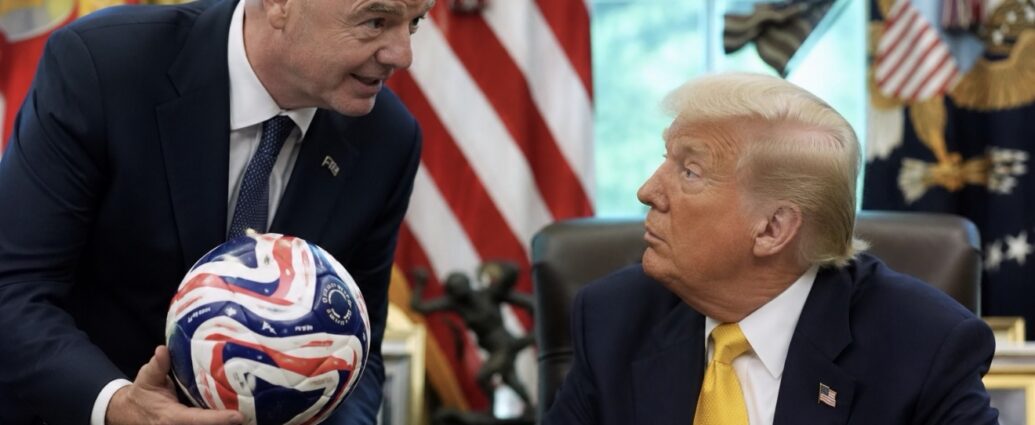
President Donald Trump is publicly defending FIFA President Gianni Infantino after a plan to raise roughly $4.2 billion from private investors by selling part of FIFA’s World Cup commercial business collapsed under pressure from major soccer federations.
Trump said removing Infantino would be a “terrible mistake,” praising him for overseeing what the president described as an extraordinarily successful and profitable World Cup.
The dispute is fundamentally about who should profit from one of the world’s most valuable sporting properties.
Infantino had proposed creating a new commercial entity called FIFA Forward Enterprise, which would control commercial and event operations tied to the World Cup and other FIFA competitions.
Outside investors would have been allowed to purchase a non-controlling stake of as much as 20%.
FIFA valued the new business at about $20 billion, meaning a 20% sale could have raised approximately $4.2 billion.
Private investment firm Thrive Eternal, connected to Joshua Kushner’s Thrive Capital, was expected to be among the leading investors.
The plan immediately triggered resistance from powerful soccer organizations, including UEFA, Concacaf and the Asian Football Confederation.
Their objection was larger than the price.
For generations, FIFA’s biggest tournaments have been controlled by soccer’s governing institutions. Selling part of the commercial operation to private investors would have introduced shareholders whose financial returns could become intertwined with decisions involving television rights, sponsorships, ticketing and future tournaments.
Critics argued that FIFA was effectively putting a piece of the World Cup’s future revenue stream up for sale without adequately consulting the national and regional federations that make up the organization.
The backlash became intense enough that FIFA withdrew the proposal.
FIFA leadership subsequently acknowledged that the process should have been handled differently and promised a review, but the retreat did not end the controversy surrounding Infantino.
Several major federations have questioned his judgment, while some officials have openly called for new leadership.
Trump is now stepping directly into that fight.
The president’s support matters because Infantino has developed an unusually close relationship with the Trump administration, particularly during preparations for the 2026 World Cup hosted across the United States, Canada and Mexico.
The tournament also demonstrated why private investors were interested in FIFA’s commercial rights in the first place.
The World Cup has become a massive global business built around broadcasting, corporate sponsorships, hospitality, ticketing and licensing. Expanding the tournament to 48 teams and 104 matches increased the amount of inventory FIFA could sell to broadcasters and sponsors.
That creates a valuable stream of future revenue.
Private-equity investors routinely seek businesses with predictable cash flows that can be packaged, expanded and eventually sold or refinanced. FIFA’s commercial operation has many of those characteristics — except that it sits inside a nonprofit global governing body whose members do not necessarily view maximizing investor returns as its primary purpose.
That tension ultimately helped kill the transaction.
The failed $4.2 billion raise therefore leaves FIFA with a much larger question than whether Infantino survives the political backlash.
It must decide whether the World Cup should remain entirely controlled by soccer’s governing institutions or whether private capital should eventually receive a seat at the table in exchange for billions of dollars.
For now, the investors are out.
Infantino remains in.
And the president of the United States has made clear which side he is on.
JBizNews Desk | Washington & Zurich
© JBizNews.com All Rights Reserved. Reproduction or distribution without written permission is prohibited.


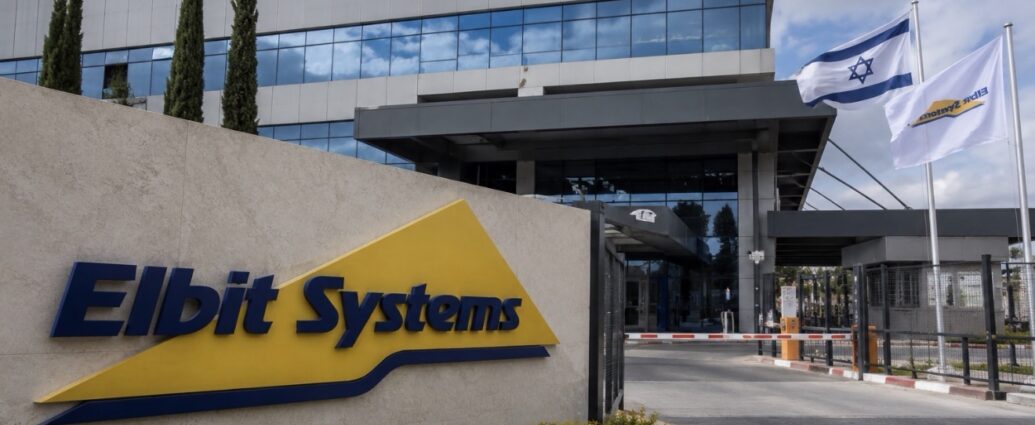
Elbit Systems Backlog Hits Record $32 Billion, Beating Estimates
Elbit Systems has more orders on its books than at any point in its history, and the money is increasingly coming from outside Israel.
The Israeli defense contractor reported an order backlog of $32 billion at the end of the second quarter, up from $28 billion at the close of 2025. Second-quarter revenue rose 16% to $2.29 billion, and non-GAAP net profit climbed 32% to $199 million, producing adjusted earnings of $4.14 a share against a consensus estimate of $3.68. GAAP net income was $173.6 million, or $3.61 a share, on a 7.6% margin, with GAAP operating income of $218.8 million.
A backlog is contracted work not yet delivered, which makes it the closest thing a defense company has to a forward revenue statement. Elbit says 73% of the $32 billion originates outside Israel, with international orders — mainly European — driving the quarterly increase, and about 42% is scheduled for performance during the remainder of 2026 and 2027, with the rest set for 2028 and beyond.
The geographic split shows how far the customer base has shifted. Israel accounted for 37% of quarterly sales following inventory replenishment after the conflict with Iran ended at the start of April, Europe supplied 25%, North America 20% and Asia-Pacific 14%.
Segment results were uneven. C4I and cyber revenue rose 11% year over year, ISTAR and electronic warfare 22%, land systems 32%, and Elbit Systems of America 17%. Aerospace fell 8%, which the company attributed to an unfavorable project mix and weaker training and simulation sales in Europe.
Cash generation improved sharply. Operating cash flow reached $237 million for the quarter, up from $120 million a year earlier, with free cash flow of $150 million versus $71 million and cash conversion of 86%. First-half operating cash flow totaled $517.8 million against $304.0 million a year ago.
The company is spending to convert that pipeline. Management is raising capital expenditure to roughly $300 million from $220 million to add production capacity. Elbit said its increased investment in production infrastructure reflects a disciplined approach to scaling and to delivering at volume. Backlog only becomes revenue when factories can build the hardware, and $32 billion of commitments is a manufacturing problem before it is a financial one.
Recent orders keep arriving. The company cited a tank-upgrade contract worth about $350 million and more than $370 million from U.S. Customs and Border Protection, and declared a dividend of $1.00 a share payable Oct. 26. Elbit also unveiled an airborne high-power laser system under development for helicopters and fighter aircraft, part of a push into directed-energy weapons. Demand from Israel’s Ministry of Defense remains materially higher and could generate additional orders.
Two items cut the other way. The effective tax rate jumped to 16.4% from 5.6%, driven by OECD Pillar II rules, and the company reported operational disruptions tied to Middle East conflicts, supply chain issues and attacks on facilities.
Investors were not impressed. Shares traded lower in U.S. premarket despite the earnings and revenue beat. In Tel Aviv trading the stock fell 5.2%, leaving Elbit with a market value of NIS 121 billion — still up 41% year to date and 240% over three years, though down 16% from its March peak.
That reaction is the recurring pattern in defense stocks this cycle: expectations have already priced in the order flow, so beating estimates is no longer the event. CFO Yaacov Kagan told analysts the quarter delivered double-digit growth across revenue, backlog, operating profit and earnings per share, and said the company expects backlog to keep growing while it focuses on converting it into revenue, profit and cash flow. Execution, not order intake, is now the number the market is watching.
JBizNews Desk | Haifa
© JBizNews.com All Rights Reserved. Reproduction or distribution without written permission is prohibited.
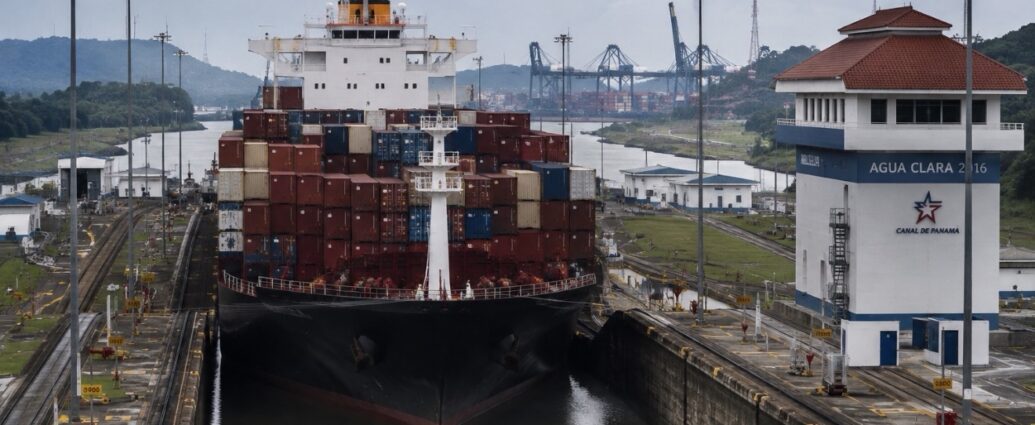
Ship Bids $4 Million to Skip 10-Day Panama Canal Wait
The owner of a container ship handed the Panama Canal $4 million on Monday for one thing: permission to go ahead of everyone else. The vessel, the Seaspan Benefactor, won a near-record auction price to jump the queue at a waterway where large ships are now waiting 10 days to get through, and Seaspan did not respond to a request for comment on Tuesday.
That $4 million is not a toll increase and it is not a fee the canal set. Most ships cross at a flat published rate by booking a reservation in advance. Vessels without one can either sit at anchor or bid in the canal authority’s auction, which sells a small number of daily slots to whoever offers the most. The price is simply what one company decided a week and a half of waiting was worth. It was more than double the average auction price of the previous seven days, according to a document seen by Bloomberg.
Time is expensive at sea for reasons that have nothing to do with the canal. A large gas or container ship costs tens of thousands of dollars a day to run whether it moves or not, cargo is usually sold against a delivery window written into a contract, and missing that window can cost more than the bid. When a buyer in Asia needs a cargo of American propane or liquefied natural gas by a fixed date, paying millions to move up the line can still be the cheaper answer.
The congestion traces back to the Iran war. With traffic sharply curtailed at two Persian Gulf chokepoints — the Strait of Hormuz and, more recently, the Bab el-Mandeb — buyers and sellers of oil, natural gas, fertilizer and chemicals, particularly in Asia, have been rerouting cargoes, and much of that redirected trade is funneling through Panama. The practical effect is that U.S. Gulf Coast export terminals have become the substitute supplier for a lot of Asian demand, and Panama is the shortcut those cargoes take.
Neopanamax vessels — the larger class that carries liquefied petroleum gas, liquefied natural gas, crude and refined products — face a 10-day wait for the Pacific-to-Atlantic direction, the longest since May, according to Argus Media data.
Two problems inside Panama are making it worse. Lock maintenance running until September is affecting the Neopanamax locks, and the canal recently cut the maximum draft allowed in those locks for the weeks ahead after rainfall came in below expectations. Draft limits are not a small technicality: a ship that cannot load to its full depth carries less cargo per trip, so the same tonnage requires more transits through a canal that already cannot handle the traffic it has. Water levels in Gatun Lake have continued to fall, and the authority moved earlier this month to tighten draft limits again. In July it had already begun curtailing some vessel-booking slots because of water supply.
The Panama Canal Authority said auction costs have risen because of shifts in global trade supply and demand and confirmed that some bids have topped $1 million, while declining to comment on the $4 million transaction or the ship that paid it. Its longstanding position is that auction results reflect what customers bid, not what the canal charges.
The scale of the move is easier to see against where prices sat before the fighting started. Auction slots went for roughly $135,000 to $140,000 before the war, then climbed to about $385,000 in March and April. A standard crossing runs somewhere between $300,000 and $400,000 depending on the vessel, and the extra paid for an earlier slot, once $250,000 to $300,000, has averaged around $425,000 during the surge. A $4 million Neopanamax slot had not been seen since the drought of November 2023.
As of Tuesday, the Seaspan Benefactor was sitting on the Pacific side of the canal, apparently waiting to transit northbound.
The fix, such as it is, is already underway and slow. The canal authority says it has increased transit capacity by about 15 percent and credits wetter weather for faster velocities. The lock maintenance is scheduled to finish in September, which should return capacity that the industry badly needs. Beyond that, shippers are doing what shippers do in a squeeze: booking reservations further out, splitting cargoes across more sailings, and pricing the delay into freight rates rather than gambling on the auction.
Whoever ends up buying that cargo pays for it. A $4 million line jump does not stay on one balance sheet — it moves into freight rates, then into the delivered cost of fuel, fertilizer and chemicals, and eventually into the price of things made from them. The number is remarkable because it is public. The pattern it belongs to is not.
JBizNews Desk | New York
© JBizNews.com All Rights Reserved. Reproduction or distribution without written permission is prohibited.

Out of Oil, Cuba Turns to Chinese Solar
Cuba has run short of the oil that powers its electric plants, and it is replacing that supply with Chinese solar panels — fast enough that China now sends the island roughly 40 times the volume of panels it sent three years ago.
Chinese exports of solar panels to Cuba ran about $3 million in 2023. That figure reached $117 million in 2025, according to the energy research group Ember. Cuba has built dozens of solar parks with Chinese investment, under an agreement to open 92 across the country by 2028. Imports of Chinese photovoltaic panels have risen more than 1,800% in five years.
The turn toward renewable energy has helped the island absorb increased pressure from the United States, though it has not stopped the grid from failing.
How the oil disappeared
The crisis stems from a U.S.-imposed oil blockade enacted after January 2026, when Washington ousted Venezuelan President Nicolás Maduro. Venezuela had long been Cuba’s primary oil supplier, and imports from Mexico were halted as well under U.S. pressure. Washington authorized a single Russian tanker carrying 100,000 tons of crude in March; those reserves are long exhausted. Domestic production covers a fraction of demand, and emergency diesel generators have become largely unusable for lack of fuel.
The grid was fragile before any of that. Cuba’s electricity system runs on fuel-oil, diesel and gas thermoelectric plants, and most of the seven main plants forming the backbone of the national grid have operated for more than 40 years. Peak-hour deficits routinely exceed 2,000 megawatts against demand near 3,100 megawatts.
The result has been repeated total failures. The island suffered its sixth nationwide blackout of the year on the night of August 2, the eleventh since late 2024. There were two islandwide collapses in March and three in July, along with several partial outages, and rolling blackouts now run more than 20 hours a day in places. The Cuban government attributes the crisis to the U.S. embargo and oil restrictions; independent analysts point to a lack of domestic investment and poor economic management as the main drivers, compounded by chronic maintenance shortfalls.
What solar can and cannot do
Solar accounts for only about 9% of Cuba’s electricity generation, because the aging grid cannot efficiently absorb new capacity and lacks battery storage. Panels without storage produce during daylight hours and nothing after sunset — which is precisely when household demand peaks.
That is the limit on the strategy, and it is a physical one. Cuba can keep installing capacity, but until it can store the output and stabilize the network that carries it, the panels reduce daytime fuel burn rather than end the blackouts.
China’s side of the trade
China controls close to 80% of the global solar supply chain and has positioned itself as Cuba’s leading renewable energy partner while working through its own industrial overcapacity. That last clause is the commercial logic. Chinese manufacturers built far more panel capacity than global demand absorbs, and placing that output — through financing, donations and state-backed projects — serves both an industrial and a diplomatic purpose.
Beijing has extended other support as well, including $80 million and 60,000 tons of rice approved by Xi Jinping.
A crack in the state’s grip
The most interesting development for business readers is what the fuel shortage has forced Havana to permit. The government recently authorized its first foreign-backed fuel import venture and allowed nearly 200 Cuban businesses to take part in wholesale fuel distribution — a cautious opening of an energy sector the state has controlled tightly for decades.
Scarcity did what ideology would not. A government that could supply fuel through state channels had no reason to license private distributors; one that cannot has every reason.
For American companies, direct opportunity remains foreclosed by sanctions. The relevant lesson runs the other way. An economy whose grid fails eleven times in twenty months is a live demonstration of what happens when generating capacity ages past its service life and no capital goes in behind it — a scenario that utilities in the United States are now arguing about in the context of data center demand. The difference is capital availability, not physics.
Cuba’s solar buildout is real, and it is among the fastest anywhere. It is also a country installing the future while the present keeps going dark.
JBizNews Desk | Havana
© JBizNews.com All Rights Reserved. Reproduction or distribution without written permission is prohibited.



Skylark Bio Doses First Child in Deafness Gene Therapy Trial
A Cambridge, Massachusetts biotech has put an experimental gene therapy into a deaf child’s inner ear for the first time, aiming at the single most common genetic cause of deafness in the world.
Skylark Bio came out of stealth Tuesday to announce it has dosed the first patient in its trial of SKY-GJB2, a one-time treatment for children born deaf because of mutations in the GJB2 gene.
Here is what the mutation does. The GJB2 gene tells the body how to build a protein called connexin 26, which sits between cells in the inner ear and lets them pass signals to one another. When the gene is broken, the protein does not work, and sound never gets converted into a signal the brain can use. Mutations in GJB2 are the most common cause of inherited, non-syndromic hearing loss worldwide, and the resulting deafness is usually present at birth.
The therapy is an attempt to fix that at the source. SKY-GJB2 uses an engineered adeno-associated virus to carry a working copy of the GJB2 gene directly into the affected cells of the inner ear, treating the genetic cause rather than compensating for it the way a cochlear implant does. In the trial, called SONIX, each child receives a single infusion into one ear through a purpose-built one-time-use device, the SKY-CAT.
The trial
SONIX is enrolling ten children: six between nine months and two years old, and four between two and seven. Participants must carry two pathogenic variants in GJB2 and have hearing loss of at least 85 decibels in the treated ear. The primary focus is safety of both the therapy and the delivery device, with hearing improvement measured alongside it.
The company is small and recently capitalized. Skylark has raised about $40.9 million across a single round, and is led by chief executive Jodi A. Cook, with Shawn Harriman as chief scientific officer. In June it signed a manufacturing and development partnership with Forge Biologics to produce the AAV vector under cGMP conditions for the clinical program. A second program, SKY-PEN, targets SLC26A4-related hearing loss, or Pendred syndrome, and the company says it also has an undisclosed central nervous system program.
Why the market opened up
None of this would be happening on this timeline without what Regeneron proved in April. The FDA granted accelerated approval to Otarmeni, the first gene therapy ever approved for genetic hearing loss, based on a trial in which 80% of participants hit the primary hearing endpoint and 42% reached normal hearing with longer follow-up. Otarmeni treats a different mutation — in the OTOF gene — an ultra-rare condition affecting roughly 50 newborns a year in the United States. The therapy came to Regeneron through its 2023 acquisition of Decibel Therapeutics.
Regeneron’s commercial decision is the part the industry is still digesting. The company is providing Otarmeni at no cost to clinically eligible U.S. patients, though out-of-pocket costs for the administration procedure can vary. That came bundled with an agreement with the U.S. government to tie current and future drug prices to those in other developed countries. For a rare-disease population of 50 births a year, giving the product away was a defensible trade. GJB2 is a different arithmetic. Skylark describes it as affecting tens of thousands of patients — a population large enough that pricing will be a real commercial question rather than a goodwill gesture.
A three-country race
Skylark is not running alone. France’s Sensorion raised €60 million in January, including a €20 million strategic investment from Sanofi, specifically to push its GJB2 candidate SENS-601 toward regulatory clearance and first-cohort enrollment, with cash runway extended into the first half of 2027. Chinese groups are pursuing the same target. Being first into humans, which Skylark now is, matters for the obvious reason in biotech: the first credible efficacy data sets the terms for everyone else’s financing.
Skylark’s chief executive indicated at a scientific conference in May that early data would arrive by the end of this year. That is the date to watch. A safe dose in one child proves very little on its own; the question is whether a child who has never heard anything begins to respond to sound, and whether that holds.
For investors in the hearing space, the sequence is now established: an approval that showed regulators will clear these therapies, a manufacturing base being built out, and a much larger patient population entering the clinic behind it.
JBizNews Desk | Boston
© JBizNews.com All Rights Reserved. Reproduction or distribution without written permission is prohibited.
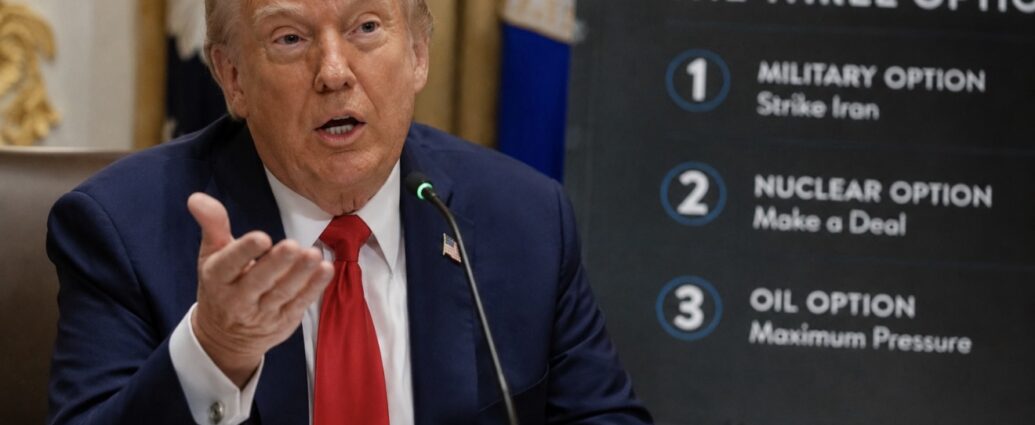
Trump Floats Three Iran Options, Says He’s Tehran’s Banker
President Donald Trump said the United States has three ways to force an end to the Iran war, and that the one he likes best requires no new military action at all: let Iran run out of money.
Trump laid out the options in a pre-taped interview with Real America’s Voice that aired early Tuesday. The first is to do nothing and wait, on the argument that Iran’s economy fails on its own. The second is to strike Iran hard. The third, in his framing, is to beat Tehran economically — and he described that as something Washington is already doing.
The line that carried the interview was his description of the American position over Iran’s blocked assets. Trump said the United States controls the regime’s money, that there is a lot of it, and that he is Iran’s banker. He also said Iran cannot borrow.
In plain terms, that refers to Iranian government funds and reserves frozen in overseas accounts under U.S. sanctions, plus the banking restrictions that keep Iran from moving oil revenue through the international financial system. Tehran can still sell oil to buyers willing to take the risk, but converting those sales into usable hard currency is the choke point. Releasing blocked assets is one of the conditions Iran has attached to reopening the Strait of Hormuz.
Trump’s claims about how bad things are inside Iran should be read with care. He said the country is running 300 percent inflation, that its currency has almost no value, and that soldiers are not being paid and are leaving. Iranian inflation is severe, but his figures run higher than what his own administration officials have been giving reporters. That gap matters for anyone trying to judge how close the pressure campaign is to producing a result.
The timing of the interview also matters. It follows Trump’s Truth Social post on Monday saying he would demand Iran pay compensation for people the regime killed, as part of any future talks. That demand came after Tehran refused to reopen Hormuz unless Washington agreed to a list of conditions: lifting the naval blockade of Iranian ports, lifting sanctions, releasing blocked assets, withdrawing U.S. troops, and paying war damages. Trump’s compensation demand answers that with a mirror-image claim of his own.
Wire coverage read the week as a shift rather than a new plan. The pivot back to financial pressure comes as U.S. stockpiles of key weapons have thinned and as stop-start talks appear to have stalled again — and sanctions are a slow instrument, built to grind over years rather than end a shooting war on a schedule.
The enforcement side of the economic strategy is running in the meantime. Central Command said on Aug. 9 that U.S. forces had redirected 55 commercial vessels, disabled two ships and boarded two others under the naval blockade of Iranian ports, which was reinstated on July 14 after the ceasefire collapsed in early July. Those numbers are the practical expression of what Trump described in the interview: not strikes, but a cordon around Iran’s ability to move cargo and get paid for it.
The military option he named second is not hypothetical either. Central Command struck Iranian military targets for 13 straight days beginning July 11 and ending July 23, and Trump said on July 24 the military was ready for a far larger attack.
For businesses, the significance is what all this says about how long the disruption lasts. A negotiated reopening of Hormuz would restore the shipping route that normally carries about a fifth of the world’s traded oil. An economic-attrition strategy, by design, does not have an end date — it works by outlasting the other side. Companies with exposure to Gulf shipping, energy costs or Asia-Europe freight are pricing the difference between those two paths every day.
Trump gave no timetable for choosing among the three, and his description of Iranian negotiators as dishonest — he said they agree to terms and then deny it publicly — suggests he does not expect a fast diplomatic close. The two sides signed a memorandum of understanding on June 17, nearly four months after U.S. strikes began on Feb. 28, and it broke down in July.
What Trump is betting is that Iran’s finances give out before the world’s patience with closed shipping lanes does. Nothing in Tuesday’s interview indicated which way that race is running.
JBizNews Desk | Washington
© JBizNews.com All Rights Reserved. Reproduction or distribution without written permission is prohibited.


Opinion | Europe’s Geoengineering Future?

Eclipse and Perseids Collide in Rare Double Sky Show
Tomorrow brings a celestial doubleheader that will not happen again anytime soon: a total solar eclipse will race across the Arctic and Europe during the day, and just hours later the Perseid meteor shower will reach its peak under an almost perfectly dark, moonless sky.
For a small slice of the planet, Aug. 12 could deliver one of the most spectacular sky-watching days in years.
And Americans are not completely left out.
The total eclipse misses the United States, but a partial eclipse will be visible across parts of the country. New York will see roughly 9% of the sun covered, Boston about 16%, and portions of Alaska more than 30%.
Then, after darkness falls, the real American show begins.
The Perseids — one of the most popular meteor showers of the year — peak overnight Wednesday into Thursday, with virtually no moonlight to wash out the sky.
That combination is what makes Aug. 12 special.
The eclipse begins over northern Russia before the moon’s shadow sweeps across Greenland, Iceland and the North Atlantic and finally reaches Spain and a small corner of Portugal shortly before sunset.
Inside the narrow path of totality, daylight will briefly disappear.
At maximum, the sun will be completely covered for 2 minutes and 18 seconds. Reykjavik gets roughly a minute of totality, while parts of Spain will watch the sun vanish just before it drops toward the horizon.
For Spain, it is an especially historic event. The country is entering an extraordinary three-year eclipse run: Wednesday’s total eclipse will be followed by another total eclipse on Aug. 2, 2027, and a “ring of fire” annular eclipse on Jan. 26, 2028.
Hotels, tour operators and eclipse watchers have been preparing for months.
But there is one thing nobody can reserve: clear skies.
Much of the early eclipse path crosses regions where clouds can spoil the show. Spain offers some of the better weather prospects along the route, making the final European stretch one of the most closely watched viewing areas.
Anyone watching even a partial eclipse needs proper solar protection. Eclipse glasses or approved solar filters are required whenever any portion of the sun remains visible. Only people standing inside the path of totality may safely remove protection during the brief period when the sun is completely covered.
Then comes Act Two.
As Europe finishes watching the eclipse, Earth will be moving through the debris trail of Comet Swift-Tuttle, producing the annual Perseid meteor shower.
And 2026 offers almost perfect viewing conditions.
The moon is new on Aug. 12, meaning there will be essentially no moonlight competing with the meteors. The American Meteor Society says normal peak rates from dark rural locations are around 30 to 50 Perseids an hour, while the theoretical maximum rate can reach about 100 under ideal conditions.
No telescope is needed.
The best strategy is simple: get away from city lights, find a wide view of the sky, put away the phone and give your eyes about 20 minutes to adjust to the darkness.
Viewing improves later in the night as the Perseid radiant climbs higher, with some of the best conditions arriving in the hours before dawn Thursday.
And for the lucky few watching from the eclipse path, there is an extraordinary possibility.
A bright Perseid could streak across the sky during totality itself — a meteor flashing through a daytime sky suddenly turned dark by the moon.
Most people will never see that combination.
For Americans, the show is more spread out: catch whatever portion of Wednesday’s partial eclipse is visible from your location, then come back outside after dark.
One day.
An eclipse.
A moonless Perseid peak.
And potentially dozens of shooting stars before breakfast.
Wednesday is a good day to look up.
JBizNews Desk | New York
© JBizNews.com All Rights Reserved. Reproduction or distribution without written permission is prohibited.

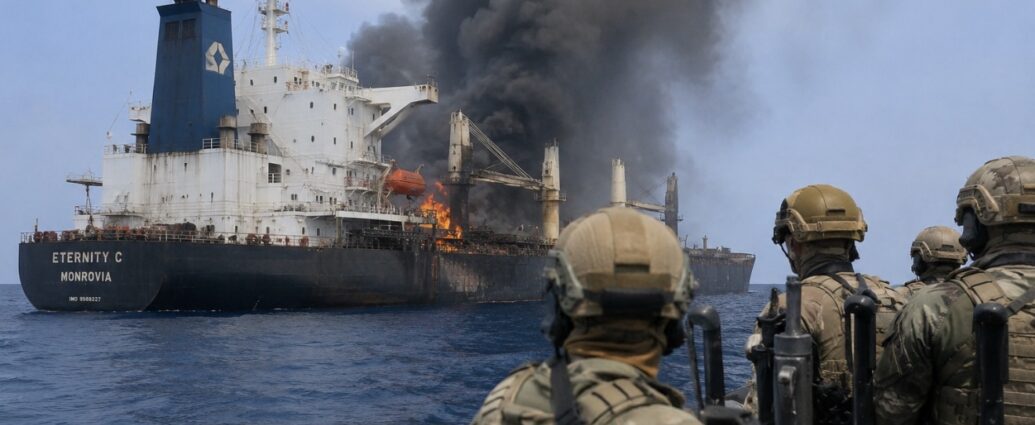
Four Crew Killed in Bab el-Mandeb Attack as U.S. Hits Ship Off Pakistan
Two attacks on commercial shipping in a single day tightened the squeeze on the world’s two most important maritime chokepoints, with the first crew deaths of the war at one end of the Arabian Peninsula and an American strike on a container ship at the other.
Four crew members were killed when Iran-backed Houthis struck a small cargo ship in the Bab el-Mandeb strait on Tuesday, according to Yemen’s transport ministry. Three Pakistanis and one Indonesian died aboard the Egyptian-owned Tihamah, and the crew lost control of the vessel after the attack. If confirmed, these are the first deaths in a Houthi strike on shipping since the Iran war began Feb. 28. The Houthis have not claimed it.
Three Yemeni coastguard personnel were injured when a drone targeted them during the rescue attempt. UK Maritime Trade Operations, the British navy-affiliated agency, reported the ship was hit by an unknown projectile, and maritime security group Ambrey said it was at anchor northeast of Perim Island at the time, noting the vessel was not Saudi-owned or operated and had left the government-held port of al-Mokha on Saturday. LSEG data lists Egyptian companies as owner and manager; neither responded to requests for comment.
The Houthis declared a maritime embargo against Saudi Arabia in the Red Sea on July 20, citing what they called a Saudi siege. Riyadh denies Yemen is under siege.
Separately, a U.S. blockade enforcement action played out roughly 2,000 miles to the east. The Panama-flagged container ship Vela Nova was struck by a missile off Pakistan as it sailed into the Gulf of Oman, maritime security sources told Reuters, and the Wall Street Journal reported a U.S. helicopter fired a Hellfire missile at the ship’s rudder after it attempted to evade the American blockade on Iran-linked shipping. Vanguard, a UK maritime risk group, put the strike about 71 nautical miles off Pakistan’s coast. U.S. Central Command did not immediately comment.
If confirmed, it would be the 12th vessel attacked by U.S. forces since the blockade was announced in April, and the third since it was reimposed July 14. Charlie Brown of United Against Nuclear Iran, which tracks Iran-related tanker traffic, noted the ship had recently called at Mumbai and Port Klang, Malaysia — ports where Iran-linked vessels have also been spotted — and said the interdiction underscores the scrutiny now applied to Iran-related shipping.
Aiming a missile at a rudder rather than a hull is a disabling shot, meant to strand a vessel for boarding rather than sink it. That distinction matters commercially: it signals the blockade is being enforced as an interdiction regime, which is precisely the risk underwriters now have to price on any voyage with an ambiguous port history.
The traffic numbers show what all of this has done to trade volume. Shipping through Bab el-Mandeb and the Red Sea is down more than 50% from before the 2023-25 wave of Houthi attacks, and has fallen further since last month’s blockade announcement — an average of 32 ships a day passed through the strait last week, according to Kpler, down from 50 before.
The Strait of Hormuz is worse. Just six vessels transited on Monday, against a 10-day average of about 11 and prewar levels of roughly 130 to 140 a day. That is a collapse of better than 95% in the passage that normally carries a fifth of the world’s oil.
The two chokepoints together form the route between Asia and Europe. Ships avoiding Bab el-Mandeb go around the Cape of Good Hope, adding roughly ten days and a corresponding bill in fuel, charter time and crew wages to a Europe-Asia voyage. Cargo that cannot leave the Gulf at all has no detour available.
Oil reflected the pressure Tuesday, with West Texas Intermediate up 1.4% at $83.27 a barrel and Brent up 1.3% at $88.85 after an Iranian official said Hormuz stays closed until Tehran’s conditions are met.
For shipowners and charterers, the immediate consequences are war-risk premiums, crew hazard pay and the growing difficulty of finding operators willing to send ships and seafarers into either strait. Tuesday supplied a reminder of why: on both routes, the danger is now to the people aboard.
JBizNews Desk | Dubai
© JBizNews.com All Rights Reserved. Reproduction or distribution without written permission is prohibited.

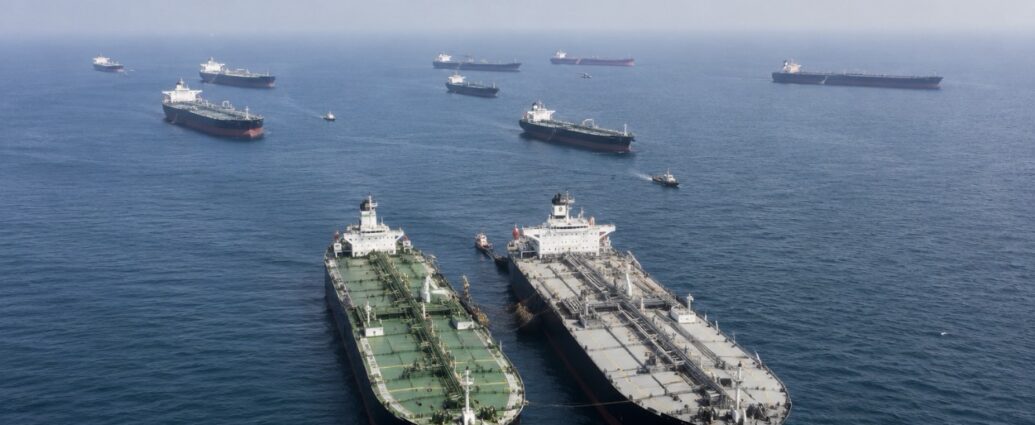
Twelve Tankers Swap Crude Off Hormuz as U.S. Touts Open Lanes
The oil is inside the Persian Gulf, and the Gulf has one way out — a 21-mile-wide strait with Iran on one side of it.
The oil is inside the Persian Gulf. The Gulf is a bathtub with one drain — the Strait of Hormuz. Every barrel loaded at a Saudi, Emirati, Kuwaiti or Qatari terminal has to come out through that drain. The drain is about 21 miles wide at its narrowest, and Iran sits on one side of it.
Since the war began on February 28, Iranian forces have mined the middle lanes that ships used for decades, pushing traffic onto two makeshift routes that hug either the Iranian coast or the Omani coast. Ships that don’t comply with Iranian orders risk being attacked by Revolutionary Guard drones and missiles.
So the problem is simple to state: the oil is on the wrong side of a dangerous doorway, and the ships that normally carry it across oceans are too valuable to send through that doorway.
The solution: two ships, two jobs.
Job one — go in and get it. A medium-sized tanker, typically carrying 750,000 to 1 million barrels, sails into the Gulf, loads at the terminal, and comes back out through the strait. This is the shuttle. It takes the risk.
Job two — cross the ocean. A Very Large Crude Carrier, holding about 2 million barrels, waits in open water outside the strait. It never goes in. This is the ship that will eventually sail to India or China.
Between the two jobs, the oil has to change ships. That handoff is what the satellites are photographing.
Why not just send the big ship in?
Because of how long it would be exposed. A VLCC going in itself would transit the strait, spend a day or more at a berth loading, then transit the strait again — three to five days inside Iran’s reach, through the chokepoint twice. Waiting outside instead means roughly 24 to 40 hours in safer water, and never entering the narrow part at all.
There is also the value at stake. A full VLCC carries well over $150 million of crude on a hull worth more than $100 million. One drone strike on that is a catastrophic loss. The shuttle carries a fraction of it. You send the cheaper ship into the dangerous place.
War-risk insurance reinforces the same logic — underwriters will price a short shuttle run into the Gulf; many will not cover a VLCC going in at all.
Why not have the shuttle keep sailing to Asia?
Because it’s the wrong ship for that trip. Half the cargo means far higher freight cost per barrel, and there aren’t enough of these hulls to run the Asia route. The shuttle is worth more turning around and making another run into the Gulf. It usually takes two or three shuttle loads to fill one VLCC.
How the handoff physically works.
The two ships moor side by side, hulls parallel, kept apart by large inflatable rubber fenders. No divers, nothing in the water. A crewman throws a light line across, which pulls over heavier lines, which pull the mooring ropes. A deck crane lifts the cargo hose string across to the other ship, where crew bolt it to the manifold. The hoses are 8 to 12 inches across, in bolted sections, running perhaps 30 to 100 meters in total. The pumping takes 24 to 40 hours. Then the empty shuttle heads back through the strait to load again, and the loaded VLCC sails on.
Where it happens.
Two sites, identified by 11 people familiar with the operation: off Fujairah in the United Arab Emirates, and off Oman’s port of Sohar. Both sit outside the zone Iran claims to control. On Monday, satellite images showed 12 transfers spread along more than 100 kilometers of Omani and Emirati coastline.
Is that water safe? No — safer.
Fujairah port has been hit by Iranian fire repeatedly during this operation, and an unknown projectile struck a tanker off Oman in mid-June, causing cargo leakage. Explosive naval drones have struck tankers in the region, including one about 44 nautical miles off Oman that killed a crew member. Hitting a ship in Emirati or Omani waters is a bigger political step for Iran than hitting one in the strait — but it is reachable, and the rafted-up pair is at its most vulnerable during those 24 to 40 hours, tied together and unable to move.
Why the transponders go off.
Ships in this system run with transponders off and lights dimmed, staggered about 3 to 4 kilometers apart so a single attack can’t take out several at once. Going dark does not make a tanker invisible — Iran has coastal radar, islands, patrol boats and drones, and a 250-meter ship shows up on all of them. What it does is make the ship anonymous: no name, flag, owner or cargo broadcast. Iran runs a permit system and picks targets; if it can’t identify a vessel in the moment, it can’t sort it. Going dark also breaks the commercial paper trail that insurers and sanctions monitors rely on. This is the technique Iran itself pioneered to sell sanctioned oil, now being used against it.
Who runs it and who’s in it.
Eight sources said the operation is controlled by the U.S. military. Operators must pass a compliance review — full ownership disclosure, tracking history, cargo documentation — submitted to the Navy’s shipping guidance office in Bahrain, and approved ships get assigned transit windows. Support comes through aerial surveillance and monitoring rather than naval escort; a U.S. defense official denied Central Command takes part in any offshore transfer operation. On the outbound side, UAE state oil company ADNOC and the Kuwait Oil Tanker Company have been among the most active; the receiving side is dominated by international operators such as Greece-based Dynacom.
How much it moves.
At least 92 ships have taken part since early May, with 17 pairs transferring at once on June 11, moving perhaps 90 million barrels in total — against a pre-war average of roughly 20 million barrels flowing through the strait every day. It is a trickle, not a restoration.
Oil rose Tuesday on the stalemate, with West Texas Intermediate up 1.4% at $83.27 a barrel and Brent up 1.3% at $88.85.
JBizNews Desk | Dubai
© JBizNews.com All Rights Reserved. Reproduction or distribution without written permission is prohibited.

Israeli Importers Buy a Year’s Dollars in Three Months
Israeli importers rushed to buy dollars as the shekel strengthened, using the favorable exchange rate to lock in lower costs on goods purchased abroad.
Businesses bought about $12 billion in foreign currency during the second quarter — roughly what they would normally buy in an entire year — according to Bank of Israel data analyzed by Meitav chief economist Alex Zabezhinsky.
The reason is straightforward: Israeli importers often pay overseas suppliers in dollars. When the dollar dropped as low as roughly NIS 2.80, companies could buy dollars cheaply and secure better prices for future shipments of machinery, raw materials and finished goods.
That created a major advantage for importers, but the opposite problem for Israeli exporters. Companies earning dollars overseas received fewer shekels when converting those revenues back home.
The dollar has since returned to around NIS 3, after losing roughly 12% against the shekel over the past year.
Much of the shekel’s strength has come from Israeli pension funds and insurers. They sold about $43 billion in foreign currency over the past year, including $14 billion in the second quarter alone.
Higher currency-hedging costs helped drive those sales. As Israeli interest rates fell while U.S. rates remained relatively high, protecting overseas investments against currency swings became more expensive. Institutions responded by reducing dollar exposure, adding even more strength to the shekel.
Foreign-currency exposure in Israelis’ financial portfolios consequently fell from about 17% to 13%, returning to levels last seen before the judicial overhaul dispute and the October 2023 war.
Israel’s technology sector has added another source of dollars. Israeli tech companies raised nearly $8 billion overseas during the first half of the year, while technology, defense, cybersecurity and research exports continued generating foreign currency.
The strong shekel has clear winners and losers. Importers pay less for foreign goods, potentially helping reduce costs for Israeli consumers. Exporters receive fewer shekels for every dollar they earn.
American companies operating Israeli development centers face the same problem. They generally need to convert dollars into shekels to pay Israeli salaries, rent and taxes, making their Israeli operations more expensive when the shekel strengthens.
Economists now expect some of the extreme currency moves to settle. But U.S. markets remain important: when American stocks rise, Israeli institutions often sell additional dollars to maintain their currency exposure, providing another boost to the shekel.
JBizNews Desk | Tel Aviv
© JBizNews.com All Rights Reserved. Reproduction or distribution without written permission is prohibited.

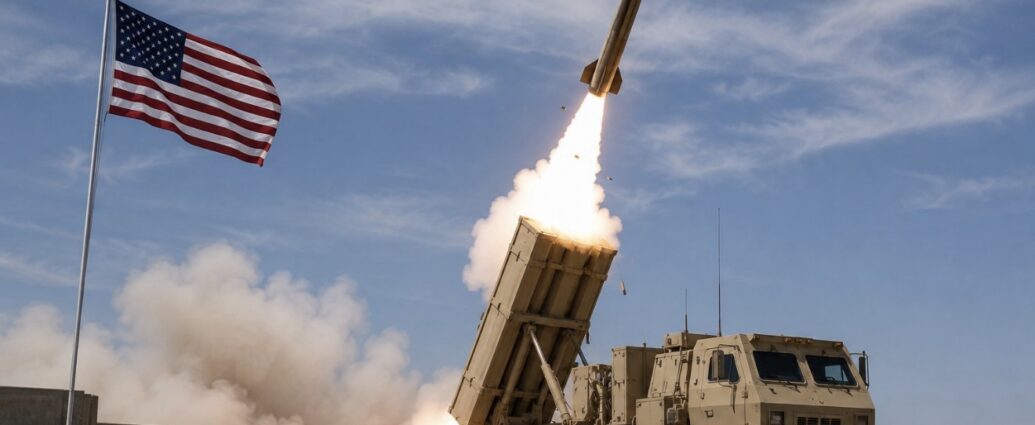
Pentagon Buys 10X More Interceptors as Iran War Weakens China Readiness
The U.S. military is about to start ordering missile interceptors by the thousands instead of by the dozens, because five months of war with Iran burned through a stockpile that took years to build and would take far longer to replace.
Army budget documents for fiscal 2027 reviewed by Fox News Digital call for a sharp increase in purchases of Patriot Advanced Capability-3 Missile Segment Enhancement interceptors, known as PAC-3 MSE, and Terminal High Altitude Area Defense interceptors, or THAAD — the two systems that shoot down incoming ballistic missiles. Patriot batteries cover troops, air bases and other high-value sites at shorter range; THAAD reaches higher and farther.
The scale of the change is easiest to see in the old numbers. Army records show PAC-3 MSE buys falling from 328 missiles in fiscal 2022 to 252 in fiscal 2023, 230 in fiscal 2024 and 214 in fiscal 2025, before the fiscal 2026 request funded 320. Meanwhile, the Army Requirements Oversight Council had quietly raised its acquisition objective for the same missile from 3,376 to 13,773 back in April 2025 — more than quadrupling what the service says it needs.
THAAD was thinner still. The Missile Defense Agency bought 11 interceptors in fiscal 2024 and 12 in fiscal 2025; the fiscal 2026 base request called for 25, with $317 million in additional mandatory funding adding 12 more for a total of 37. By fiscal 2027, with THAAD procurement shifted to the Army, the request supports 857 interceptors — 27 through regular funding and 830 through the Munitions Acceleration Council.
“The problem is 25 years of not buying enough munitions,” retired Rear Adm. Mark Montgomery of the Foundation for Defense of Democracies told Fox News Digital.
What drained the shelves was a war that leaned on air defense harder than anything since the Gulf. American interceptors have been fired repeatedly to protect Israel, U.S. forces across the Middle East and Navy ships in the Red Sea. Reuters reported the Army has used virtually all of its Army Tactical Missile System and Precision Strike Missile inventories during five months of fighting with Iran, with Patriot and THAAD stocks also drawn down and slightly under half the global Tomahawk supply expended, according to one source. President Trump has pushed back on those accounts, saying the United States has more munitions than it needs and that American defense firms are producing at record levels while expanding plants and equipment.
For American manufacturers, this is the largest demand signal in a generation. Lockheed Martin builds both the PAC-3 MSE and the THAAD interceptor. The Pentagon has struck framework agreements with Lockheed Martin and Northrop Grumman to boost THAAD and PAC-3 output, including a Lockheed contract valued at nearly $59 billion to triple PAC-3 production by 2030 — though experts caution that congressional appropriations are what turn those frameworks into actual missiles. Deputy Defense Secretary Steve Feinberg went further this month, sending arms makers a memo giving them 21 days to submit plans for faster delivery and expanded capacity on critical systems, telling industry that multi-year development cycles no longer match what the military needs.
Ordering is the easy part. Interceptors depend on specialized production lines and a supplier web turning out rocket motors, seekers, guidance sets and energetics, none of which scales in a quarter. That makes the fiscal 2027 jump less an immediate refill than an attempt to build industrial capacity that can sustain higher output for years.
The reason for the urgency sits in the Pacific. A Heritage Foundation analysis estimates current annual production capacity at 620 PAC-3 MSE missiles and 96 THAAD interceptors, and puts the minimum viable inventory for a conflict with China at 7,082 PAC-3 MSE and 1,394 THAAD — several times what it estimates the U.S. holds today, with actual stockpile levels classified. At current production rates, the report calculates it would take between roughly nine and more than 80 years to reach those numbers depending on the system, and argues the window to close the gap is narrowing.
Report author Jim Fein, a defense industrial base researcher at Heritage, told Fox News Digital the shortage was foreseeable and traces to decades of budget tradeoffs in which other programs won out — decisions made both in Pentagon requests and in what Congress ultimately appropriated.
The mismatch also shows up in cost. Senate Armed Services Committee Chairman Roger Wicker noted in March that the U.S. has been firing $4 million Patriot interceptors at Iranian drones costing a fraction of that.
JBizNews Desk | Washington
© JBizNews.com All Rights Reserved. Reproduction or distribution without written permission is prohibited.
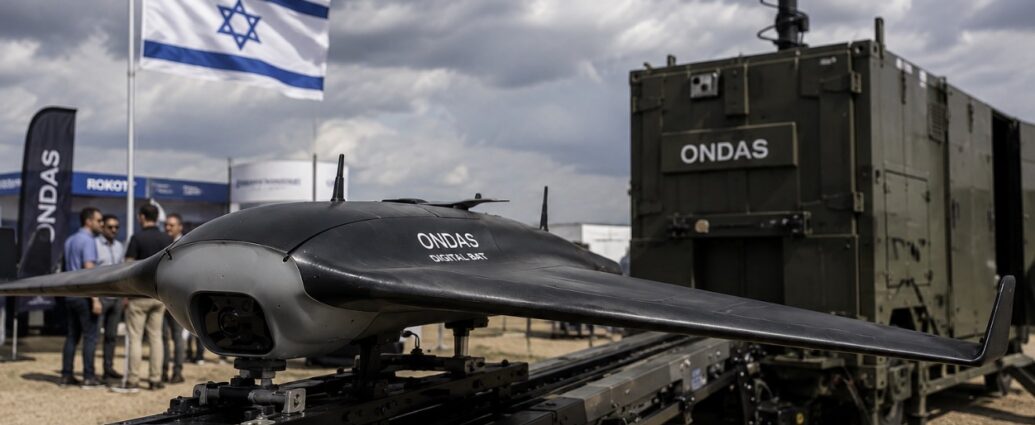
Defense Firm Ondas Wins Israel’s ‘Digital Bat’ Attack Drone Deal
An American defense technology company will build the next batch of small attack drones that Israeli combat units carry into the field. Ondas Inc., the Nasdaq-listed autonomous systems firm headquartered in West Palm Beach, Florida, said Tuesday it won a multi-million-dollar strategic tender from the Israeli Ministry of Defense to develop and produce next-generation tactical attack drone capabilities under a program named “Digital Bat.”
The idea behind the program is straightforward: build a strike drone cheap enough that the army can hand them out to ordinary infantry units in large numbers, rather than treating each one as an expensive asset to be conserved. Ondas will lead development of a new generation of low-cost tactical attack drones designed for scalable deployment across frontline combat units.
What Ondas is contracted to deliver is not just an aircraft. The development work covers the full operational package — the aerial platform itself, the autonomous flight software, mission integration, systems engineering, production readiness, and compatibility with the military’s wider command-and-control environment. In practice, that means a soldier should be able to pull the drone out, send it toward a target, and have it work with the same digital systems the unit already uses.
Eric Brock, Ondas chairman and chief executive, framed the award as proof the company can now run large programs itself rather than supplying parts to someone else. He called it “an important validation of the defense technology platform we are building at Ondas.”
Israel’s defense establishment has been rebuilding its drone procurement from the ground up since the Swords of Iron war, and the shift is toward volume. An earlier tender for assault drones went to Israeli startup Xtend, and senior figures in the country’s defense industry have described the technology as still in its infancy — many expect assault drones to become the infantry equivalent of a grenade or a rocket launcher, a tool a soldier throws a few meters toward an enemy without needing line of sight.
Ondas has not won everything it bid on in Israel. Last month, two young Israeli startups, Kela and eyesAtop, beat Ondas for the separate Ministry of Defense tender covering the autonomous command-and-control platform for the Digital Bat program — effectively the national software layer that will manage future attack drone swarms. The Tuesday award gives Ondas the aircraft side of the same effort.
The company’s Israeli footprint is substantial and was assembled by acquisition. Ondas has bought Israeli firms including Airobotics, Iron Drone and Roboteam, giving it a combined aerial and ground robotics operation inside the country. It also holds contracted work tied to Israel’s Eastern Border Security Barrier through its 4M Defense demining unit. Across the group, Ondas now organizes its defense business into four areas: air defense and counter-drone systems, aerial intelligence, aerial attack, and unmanned ground systems, with AI-based command and mission software tying them together.
Brock tied the Israeli program directly to what is happening in Washington. He pointed to the U.S. Drone Dominance Program, a $1.1 billion initiative aimed at rapidly fielding low-cost unmanned systems including one-way attack drones, and said defense priorities are shifting fundamentally toward affordable autonomous systems that can be produced at scale. The same engineering and manufacturing base, in other words, is meant to serve both markets.
For investors, the timing matters. The award lands two days before Ondas reports quarterly results, and the stock has been on a run. Shares traded around $9.35 in premarket Tuesday, up roughly 8% over the week. The company closed Friday at $9.11 after climbing 21.6% the prior week, and faces a demanding second half: early revenue projections of about $68 million to $69 million for the reported quarter leave more than $405 million to be booked against its $406 million second-half target. Ondas has been stacking orders to get there, including a $50 million U.S. Army task order last week that lifted its Mistral subsidiary’s awards past $240 million under a multi-year lethal unmanned systems contract worth $982 million.
Neither Ondas nor the ministry disclosed a delivery timeline or unit quantities for Digital Bat.
JBizNews Desk | West Palm Beach
© JBizNews.com All Rights Reserved. Reproduction or distribution without written permission is prohibited.
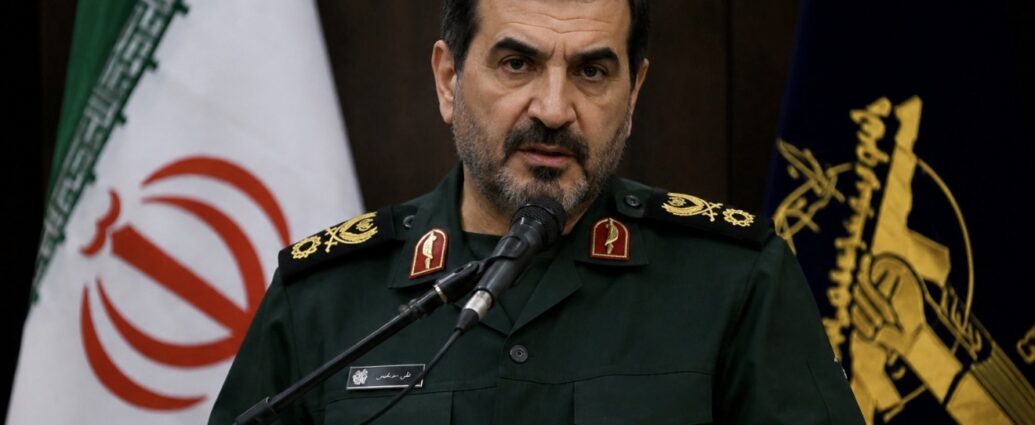
Iran Puts Interpol-Wanted AMIA Suspect Atop Its Security Council
Iran has handed control of its top security body to a man who has been the subject of an Interpol Red Notice for nearly two decades over the deadliest terrorist attack in Argentina’s history. Presidency spokesman Mehdi Tabatabaei announced Sunday that President Masoud Pezeshkian had appointed Mohsen Rezaei secretary of the Supreme National Security Council, following the resignation of Mohammad Bagher Zolghadr. Supreme Leader Mojtaba Khamenei separately named Rezaei his own representative on the council, giving him two seats of authority in the same body.
Rezaei has been under an Interpol Red Notice since 2007 over the 1994 bombing of the AMIA Jewish community center in Buenos Aires, which killed 85 people. Argentine court records attribute the attack to Hezbollah operatives acting on Iranian orders, and the late prosecutor Alberto Nisman alleged in a 2006 indictment that the decision was taken at a meeting in Mashhad in August 1993. Argentine authorities have long alleged a planning role for Rezaei, who was IRGC commander at the time; he denies wrongdoing. Interpol’s General Assembly upheld the notices for Rezaei and five others at its 76th session after Argentina’s request.
Israel responded immediately. Its Foreign Ministry said Monday that the Iranian regime <cite index=”115-1″>“worships terror, rewards its architects” and elevates them to the highest levels of power.</cite>
Who he is
Rezaei, 71, commanded the Islamic Revolutionary Guard Corps from 1981 to 1997, through most of the Iran-Iraq war. He later spent more than two decades as secretary of Iran’s Expediency Discernment Council and served as vice president for economic affairs from 2021 to 2023 under Ebrahim Raisi. He holds a doctorate in economics from the University of Tehran. Since March he has served as military adviser to Mojtaba Khamenei, who succeeded his father as supreme leader after Ali Khamenei was killed at the outset of this year’s war. Rezaei has taken a hard line on the confrontation with Washington and voiced skepticism about negotiations.
A revolving door at the top
Rezaei is the second man to hold the post since Ali Larijani was assassinated by Israel in mid-March, during the early weeks of the war between the United States, Israel and Iran. Zolghadr had been in the job only since late March. The president formally chairs the council, but the secretary carries the greater operational influence, and no decision becomes binding until the supreme leader signs off.
Why it matters commercially
The timing is what businesses should note. Rezaei takes the post amid ongoing talks over the Strait of Hormuz, which Tehran has used as leverage through the months-long conflict with the United States and Israel. The secretary of the security council is the official who coordinates Iran’s negotiating posture across the presidency, the foreign ministry, the armed forces and the intelligence services. Installing a figure who has publicly doubted the value of talks changes the read on how quickly a Hormuz arrangement gets settled.
That question sits directly on top of global shipping economics. Roughly a fifth of the world’s seaborne oil moves through Hormuz, and war-risk insurance premiums for tankers in the Gulf have been the single largest swing factor in freight costs for the region this year. Every week of uncertainty over the strait is priced into charter rates, insurance and the delivered cost of crude and LNG reaching Asian and European buyers.
There is also a compliance dimension for anyone with international exposure. The IRGC, which Rezaei led for 16 years, is designated a terrorist organization by the United States. A sanctioned-entity veteran now sitting at the center of Iranian decision-making narrows the space for any commercial re-engagement with Tehran that European or Asian firms may have been contemplating as part of a settlement.
The legal reality
The Red Notice has never produced an arrest. Argentina asked Qatar to detain Rezaei during a visit in 2022 and made the same request of Nicaragua the year before, when he traveled there for President Daniel Ortega’s inauguration. Both requests failed, and more than three decades after the bombing no one has stood trial.
An Interpol notice does not compel any government to act. It is a request circulated among member states, and in Rezaei’s case it has functioned mainly as a diplomatic marker — one that now attaches to the office coordinating Iran’s negotiations with Washington.
JBizNews Desk | New York
© JBizNews.com All Rights Reserved. Reproduction or distribution without written permission is prohibited.

U.S. Stocks Move Higher

Charting Antisemitism, a New Site Steers Jewish Jet-Setters Clear of Turbulence
An Israeli developer has built a website that rates countries and cities by how safe they are for Jewish travelers, and hundreds of people are now consulting it daily before booking a vacation. Safe for Jews, a Hebrew and English site created by Shay Yaish, combines artificial intelligence, Israeli government travel advisories and reports submitted by users to generate a risk rating and summary for each destination.
Yaish, 34, left a tech job a year ago intending to start his own venture and came up with the idea while he and his wife searched for somewhere safe for Israelis to visit. He built the site with AI tools, uses AI to keep it updated with news of antisemitic incidents, and checks the output every few days to confirm it looks correct.
How the map reads
The classifications are blunt, and the geography is not what most travel marketing assumes. Among the countries rated safest are the Czech Republic, Albania, Lithuania and Belarus in Eastern Europe; Bolivia, Paraguay and Ecuador in South America; and Japan, Vietnam and Cambodia in the Far East. Nepal, Iceland and Cyprus also rate safe, along with remote destinations including the Marshall Islands, Micronesia, Palau and Tuvalu.
Mainstream destinations fare worse. The United States, Australia and most of Europe carry a “caution” label with a note that Jewish and Israeli symbols should be kept to a minimum. Spain, Canada, the United Kingdom, South Africa and Russia are marked “warning,” advising travelers to stay alert and avoid identifying as Jewish or Israeli. Iran, Afghanistan and Egypt are labeled “dangerous.”
The number of places classified as safe has shrunk over time, the site’s own data shows.
The market underneath
The commercial significance is larger than one founder’s side project. Jewish and Israeli outbound travel is a substantial segment — kosher tour operators, holiday programs, group travel and destination hotels catering to observant travelers add up to a multibillion-dollar business globally, concentrated in a handful of European and Mediterranean destinations that now carry warning labels on this map.
When travelers start screening destinations by perceived safety rather than price or flight time, the effect flows straight to airlines, hotels and local operators. A ratings shift that moves group bookings out of Spain or the U.K. and toward Cyprus, Greece or Eastern Europe reallocates real revenue. Tour operators building programs a year in advance have to price that uncertainty into deposits and cancellation terms.
There is also an insurance angle. Travel insurers underwrite on country risk, and their models are built on political instability, crime and health infrastructure — not on harassment risk for a specific traveler profile. A consumer-facing tool that fills that gap is, functionally, an early version of a risk product no established provider currently sells.
The limits
The site is candid about what it is not. Because it relies on AI and reports scraped from the web, its advisories are not always current or based on rigorous research, and it carries a disclaimer telling users this is not an official rating and that they must do their own research and use judgment.
That matters commercially as much as editorially. A rating that moves booking decisions but carries no methodological audit trail is a liability risk if a traveler relies on it and something goes wrong. Established travel-risk firms sell to corporate clients precisely because their assessments are defensible; a consumer tool built on automated scraping is not in that category, and does not claim to be.
The business model question
Yaish makes no money from the site, which launched a year ago, and hopes to expand it into a hub where Jewish travelers can find Jewish-friendly hotels, kosher restaurants and other resources. That is the obvious path — the ratings draw the audience, and the directory monetizes it through the same booking and referral economics that power the wider travel sector.
Whether the underlying demand persists is not really in question at the moment. “Things are really confusing now for Israelis who want to travel,” Yaish said. A tool built to answer that confusion is a product with a market, and the size of that market is set by conditions no travel startup controls.
JBizNews Desk | New York
© JBizNews.com All Rights Reserved. Reproduction or distribution without written permission is prohibited.

Hungary Names Judge Orban Ousted as Its New President
Hungary’s parliament elected András Baka as president on Tuesday, handing the office to a judge whose removal from the Supreme Court became one of the defining rule-of-law disputes of the Viktor Orbán era. Lawmakers approved his election by 140 votes to 6, using the more than two-thirds majority controlled by Prime Minister Péter Magyar, and Baka replaces Orbán-appointed Tamás Sulyok, who was removed from the presidency last month.
The presidency is largely ceremonial. The signal is not.
Who Baka is
Baka served as a judge at the European Court of Human Rights in Strasbourg from 1991 to 2008. He was nominated to head Hungary’s Supreme Court in 2009 and ousted in 2012 after condemning an Orbán-era move to cut the mandatory retirement age for judges from 70 to 62, which he called a judicial purge. The European Union and the United States both called the age-limit reduction illegal, and in 2016 the European Court of Human Rights ruled that his dismissal violated his freedom of expression.
Apart from a brief stint as a lawmaker elected on the Hungarian Democratic Forum list in 1990, Baka has held no political positions. He is 73.
The political arithmetic
Magyar’s Tisza party won a landslide in April, ending Orbán’s 16-year run, and has since moved to unwind his influence over state institutions — including using a constitutional amendment to remove Sulyok from office weeks before nominating Baka. Tisza holds 141 of 199 seats in the National Assembly. Fidesz, now in opposition, boycotted the vote, accusing Tisza of authoritarian tactics, which the party denies.
The constitutional amendment that ended Sulyok’s term provides that the new president serves until a new constitution takes effect, or for a maximum of five years. Tisza has said it intends to adopt a new constitution within this parliamentary term and will consider allowing the president to be elected directly.
Why business is watching
Hungary spent the Orbán years in an extended standoff with Brussels over judicial independence and public procurement, and that dispute cost real money — billions of euros in EU cohesion and recovery funds held back pending rule-of-law changes. Elevating the judge whose dismissal Strasbourg ruled unlawful is the clearest possible statement that the new government intends to settle that argument on Brussels’ terms.
For companies operating in Hungary, the practical questions are narrower and more immediate. Predictable courts change how contracts are enforced, how procurement disputes get resolved, and how much legal risk a foreign investor prices into a Hungarian project. Hungary hosts substantial German automotive manufacturing and a growing battery sector, industries that commit capital on ten- and twenty-year horizons and that have spent years working around a legal environment Brussels flagged as unreliable.
Currency and borrowing costs sit downstream of the same question. The forint and Hungarian government debt have long traded partly on the state of the EU funding dispute, because those transfers are large relative to the size of the economy. A government that resolves the standoff removes a discount that has been priced into Hungarian assets for years.
What comes next
The presidency does not set economic policy, and Baka will not be negotiating with Brussels. What he provides is a signature and a symbol: a head of state who spent his career on the judicial-independence side of the argument, at the moment a government is preparing to rewrite the constitution.
The counterargument is already being made in Budapest. Critics note that removing Sulyok by constitutional amendment and installing Baka in his place uses the same procedural muscle Tisza condemned when Fidesz held the majority, complicating the party’s account of itself as a break from the previous era. A two-thirds majority rewriting the constitution is a two-thirds majority rewriting the constitution, whichever party holds it — and businesses that committed capital under one set of rules have reason to watch how quickly the next set arrives.
JBizNews Desk | New York
© JBizNews.com All Rights Reserved. Reproduction or distribution without written permission is prohibited.
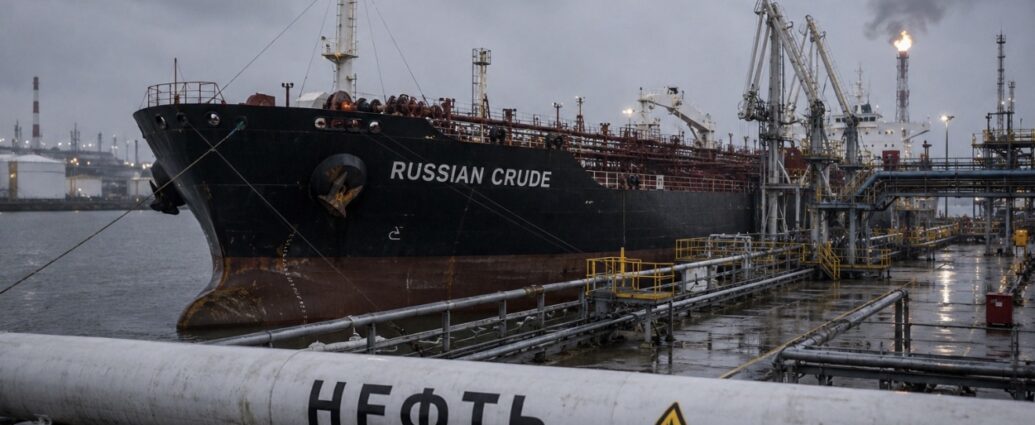
Russian Crude Exports Sink to Three-Month Low on Drone Strikes
Russia’s seaborne crude shipments have fallen to their weakest level since May, according to tanker-tracking data reported Tuesday — the third straight week of decline and a sharp reversal from the record wartime volumes Moscow was pushing out of its ports just six weeks ago.
The mechanism behind the swing is Ukraine’s drone campaign, and it works in both directions. When Ukrainian drones knock out Russian refineries, Russia cannot process its own crude at home, so it dumps the raw barrels onto tankers and exports them. When the drones hit ports, tankers and export terminals instead, the barrels stop moving altogether. That is the switch that has flipped over the past month.
The numbers behind the drop
The trail is clear in the weekly tanker data. Four-week average seaborne crude shipments hit 4.22 million barrels a day in the period to July 5, the highest since Russia invaded Ukraine in 2022. They held at 4.21 million barrels a day through July 12. By the four weeks to Aug. 2 they had dropped to 3.9 million barrels a day, falling below 4 million for the first time in six weeks and hitting the lowest level since mid-June. This week’s reading takes the decline further, back to territory last seen in the spring.
Ukraine shifted tactics in the second half of July, sending drones after tankers in the Black Sea and Sea of Azov and warehouses in western Russia rather than refineries, then swung back to refinery strikes — hitting Rosneft’s Ryazan plant, Lukoil’s 300,000-barrel-a-day Volgograd facility, a Bashneft complex at Ufa and Rosneft’s Saratov plant. Port activity reflects the security risk: loadings at Novorossiysk have stayed near half their recent peak.
Refining at a 24-year low
The damage to Russia’s downstream industry is severe. Refineries processed an estimated 3.6 million barrels of crude a day in July, the lowest since May 2002 and roughly a third below the seasonal norm, according to EA Analytics data cited by Bloomberg. Between 2020 and 2025, Russian refineries ran 5.3 million to 5.6 million barrels a day at this point in the year.
Refined products are where the loss shows up hardest. Russian oil product export loadings fell 23% in July to 4.7 million tonnes, the lowest on record and less than half the 9.6 million tonnes loaded in July 2025, with the Tuapse terminal — under sustained drone attack since May — loading almost nothing for a second consecutive month.
The barrels that don’t arrive
Shipping crude is not the same as selling it, and Russia has been running into that gap all summer. Cargoes have been taking longer to clear, with tankers of Urals crude anchored off Egypt’s Mediterranean coast and in Indonesia’s Riau archipelago near Singapore, and far-eastern grades idling for weeks near the Pacific port of Kozmino. Those delays pushed the volume of Russian crude sitting on water to about 135 million barrels by mid-July.
Revenue has followed the same path down. The gross weekly value of Russia’s seaborne crude exports fell to a four-week average of $1.68 billion, down $200 million from the prior period, with Baltic Urals at $52.61 a barrel and cargoes delivered to India hitting an eleven-week low of $70.58. Urals averaged $60.22 a barrel in July, down 3% on the month but still well above the $44.10 EU and U.K. price cap that took effect on Feb. 1.
What it means for buyers
The customers are concentrated, which magnifies every disruption. India’s imports of Russian crude hit a record high for a second consecutive month in July, up 2.1% and worth €5.5 billion. Indian refiners have built their margins around discounted Russian barrels; when volumes tighten, they buy replacement cargoes from the Gulf and West Africa at narrower spreads, and that competition for non-Russian barrels is what eventually reaches diesel and jet fuel prices in Western markets.
For American businesses, the transmission runs through freight and fuel rather than through any direct trade. Fewer Russian barrels reaching Asia tightens the global pool, and reduced Russian product exports remove diesel supply from a market that has been thin all year. Diesel is the cost line that moves trucking, rail and construction pricing.
The open question is whether this is a durable decline or a pause. Russia’s export machine has proven resilient at rerouting around damage, and year-to-date flows still run above every annual average since the 2022 invasion.
JBizNews Desk | New York
© JBizNews.com All Rights Reserved. Reproduction or distribution without written permission is prohibited.
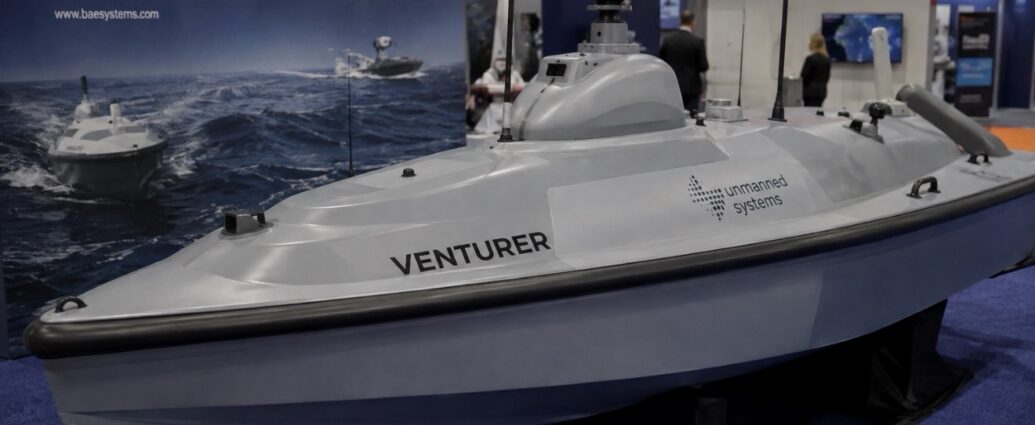
U.K. Navy Drones With Chinese Parts Sent Data Back Home to China
Cameras mounted on Royal Navy surveillance drones were quietly checking in with a server in China, and nobody involved in buying, building or fitting them knew it until a routine security scan caught the traffic.
The vessels are Kraken K3 Scout uncrewed surface craft — roughly 28-foot unmanned speedboats built by British defense firm Kraken Technology Group and used by Royal Navy special forces, including the Special Boat Service, for surveillance along contested coastlines. The Navy bought 20 of them for a project called Operation Beehive, and they have been in special forces hands since March. They are expected to be deployed to the Strait of Hormuz as part of Britain’s effort to help protect the waterway.
Here is what the cameras were actually doing. They were sending what security staff call “heartbeat communications” — a short, repeating signal whose only job is to confirm to a remote server that the device is switched on and working. That is standard behavior for connected equipment. The problem is not the content of the message. It is that the message had a destination, and the destination was an IP address inside China that nobody had authorized, documented or expected.
Where the part came from
This is the detail that should worry every procurement officer. The electro-optical and infrared cameras were manufactured by Canadian company Current Scientific Corporation under its Night Navigator 3000 line, but contained components sourced from outside the U.K. that were found sending the heartbeat traffic. Kraken had sourced the cameras from a third party that gave assurances about their security.
So the chain ran: British prime contractor, Canadian camera maker, third-party supplier, Chinese-made part. Two allied-country labels on the box, and the exposure was still there. Nobody in that chain was hiding anything. They simply did not know what was four tiers down.
The Ministry of Defence stripped all internet connectivity from the cameras after the discovery, and a spokesperson said an investigation found “no evidence” of MoD data or systems being accessed or transmitted externally, adding that the issue surfaced in a routine cyber vulnerability assessment. The opposition Conservatives called on the government to urgently audit its equipment for other unknown Chinese components.
The rule already changed in the U.S.
American businesses do not have to wait for their own version of this story, because the regulatory shift it implies has already happened in the energy sector.
In 2025, U.S. experts reported finding rogue communication devices, undocumented in any product paperwork, inside some Chinese-made solar inverters. In January, the Department of Energy inspected roughly 30 units and found no evidence of malicious or intentional differences in communications — while warning that inverter supply chains are complex enough to create openings for breaches and malicious components anyway.
Then regulators moved regardless. The FCC added foreign-produced power inverters to its Covered List, immediately banning equipment authorizations for unapproved foreign models — an action that effectively overrode the January DOE finding. The reasoning was that physical bugs are beside the point: wireless connectivity in modern smart inverters means firmware can be pushed remotely, so foreign-assembled units are treated as an unacceptable grid risk on their own.
That is the standard American buyers now have to plan around. The question is no longer “did investigators find something malicious in this device.” It is “does a path exist, and who is at the other end of it.” A clean forensic report does not clear the equipment.
The structural reason is legal, not technical: Chinese companies are required to cooperate with their government’s intelligence agencies, which is why security specialists treat Chinese-made connected equipment on foreign networks as a control question rather than a product-quality one.
What it costs on the ground
The practical burden lands on anyone buying connected hardware — cameras, sensors, controllers, inverters, batteries, cargo handling equipment, vehicles. It means demanding component-level bills of materials rather than country-of-assembly certificates, testing what devices talk to before they go live, and budgeting for requalifying suppliers when the answer is wrong.
The Ministry of Defence has been living with the awkward version of this for a while. It leased hundreds of electric vehicles, including MG models built by China’s state-owned Shanghai Automotive Industry Corporation, and put stickers on the dashboards instructing personnel not to connect MoD devices to the vehicle and to avoid sensitive conversations inside — with parking restrictions around some defense sites for vehicles containing Chinese components.
A warning sticker is what you are left with when the component is already inside the fence. The cheaper move, and the one boards are now being pushed toward, is finding out what is in the box before it ships.
JBizNews Desk | London
© JBizNews.com All Rights Reserved. Reproduction or distribution without written permission is prohibited.
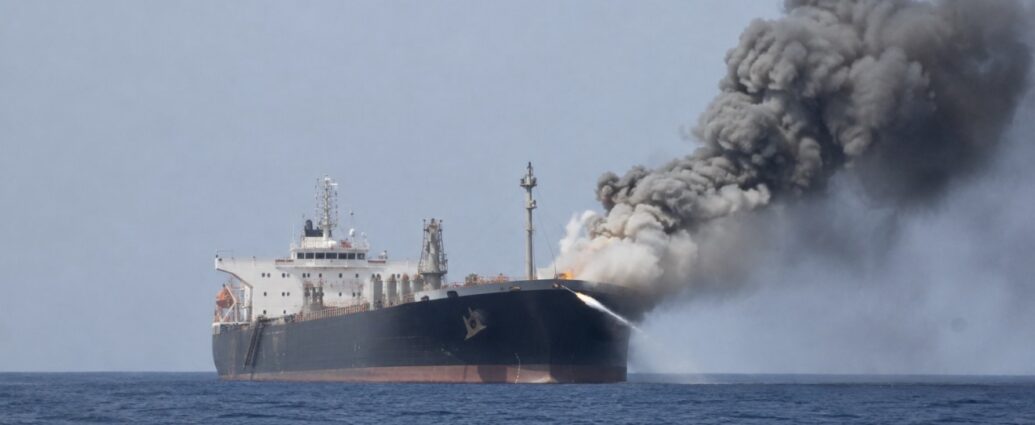
U.S. Helicopter Strikes Iran Blockade Runner as Oil Tops $92
A U.S. military helicopter fired into the rudder of a Panama-flagged container ship in the Gulf of Oman early Tuesday, deliberately wrecking the vessel’s steering rather than sinking it, after the crew ignored warnings from the American forces enforcing the naval blockade of Iran’s ports. The ship afterward appeared to be trying to move its crew onto another civilian vessel, and there were no immediate reports of casualties.
The vessel is believed to be the Vela Nova. The United Kingdom Maritime Trade Operations reported an incident involving a container ship and military forces in the Gulf of Oman, having first logged the vessel as a tanker; maritime risk group Vanguard and a security source separately assessed that the Vela Nova was struck by a missile roughly 71 nautical miles off Pakistan’s coast.
The targeting choice is the whole point of the operation. American forces have been aiming at rudders, engine rooms and smokestacks — the parts that make a ship move — so the vessel stops where it is instead of burning or going down with its cargo and crew. It is enforcement by immobilization, and it has become the standing method along this stretch of water.
How the blockade works now
Washington first imposed the blockade on Iranian ports on April 13. It came off in late spring, then went back on in mid-July after talks between the two sides collapsed. Since U.S. forces reimposed the blockade on July 13, they have redirected 55 commercial vessels, disabled two and boarded two to enforce compliance, according to figures Central Command released Sunday. Those numbers predate Tuesday’s incident.
The pattern is consistent: ships heading for Iranian terminals are hailed, warned repeatedly, and told to turn around. Most comply and are redirected. The ones that keep going get shot in the machinery.
The price at the pump end of the chain
For business readers, the number that matters is crude. Oil jumped about 5% Monday as confidence faded that Washington and Tehran would reach a deal to restore traffic through the Strait of Hormuz, with West Texas Intermediate settling at $82.13 a barrel and Brent at $87.72. By early Tuesday, Brent was trading near $92.54, roughly $5 above the prior morning and about $25 higher than a year ago.
The gap between the two benchmarks is the tell. Analysts described Monday’s move as pure Hormuz risk pricing rather than a fresh demand story, and flagged the widening Brent-WTI spread as the clearest evidence that this is Middle East supply risk, not global consumption, driving the tape. WTI, priced at Cushing, Oklahoma, barely moved Tuesday. Brent, which prices the barrels that actually have to sail past the shooting, did the moving.
Shipping costs are carrying the same premium. War-risk insurance for vessels in the region has climbed to between 7.5% and 10% of hull value — a charge that lands on every cargo, not just oil, and gets passed down the line to the buyer.
There is a strategic reserve angle as well. U.S. Strategic Petroleum Reserve stocks have dropped below 300 million barrels, the lowest since January 1983, as the conflict has dragged on. The cushion Washington would normally use to blunt a price spike is thinner than it has been in four decades.
Diplomacy running alongside the shooting
Tuesday’s strike landed in the middle of an active negotiating track. Pakistan’s defense minister told Bloomberg the two sides are close to “some sort of an arrangement,” pointing to signals from the past few days, while Qatar said Oman-Iran negotiations have reached an advanced stage with positive feedback from both parties. Iran’s foreign ministry spokesman countered that the United States has not come to the table seeking genuine talks or peace.
Tehran’s asking price has not moved. Iran wants the blockade ended, sanctions lifted and compensation for war damages before it agrees to fully reopen Hormuz, and has declined direct talks with Washington for now. President Trump told Axios the U.S. is “only semi-negotiating,” and indicated he would lean on the blockade to squeeze Iran’s economy rather than order another round of airstrikes.
That is the trade every shipper, refiner and insurer is now pricing: an economic siege that Washington intends to keep tightening, a Tehran that will not reopen the waterway until the siege lifts, and a shipping lane where the cost of guessing wrong is a missile in the engine room. Until one of those three changes, the risk premium stays in the barrel — and in the freight rate.
JBizNews Desk | New York
© JBizNews.com All Rights Reserved. Reproduction or distribution without written permission is prohibited.
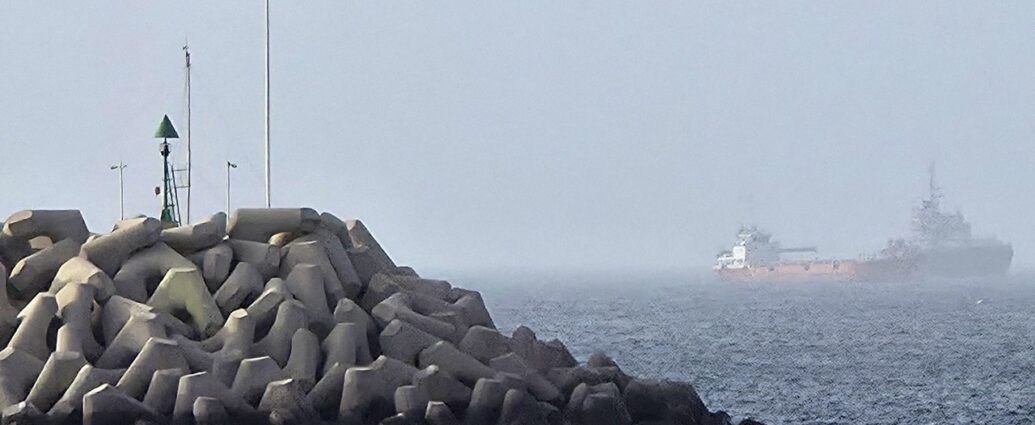

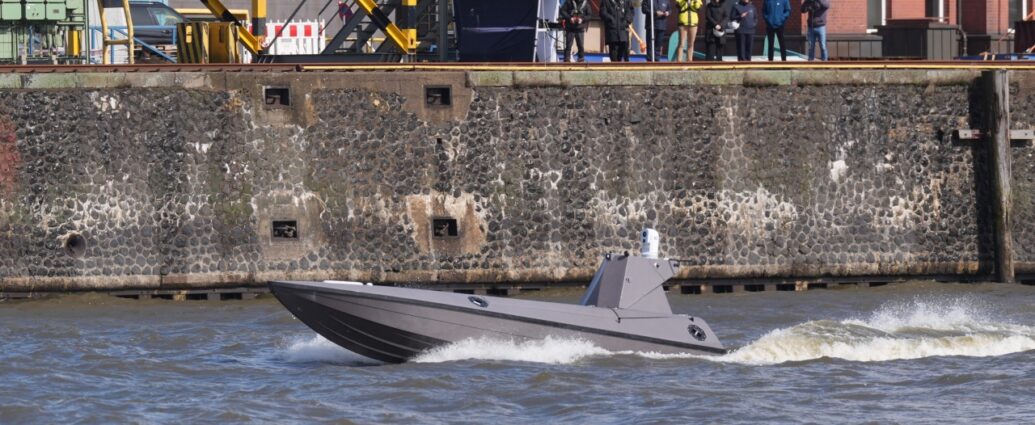
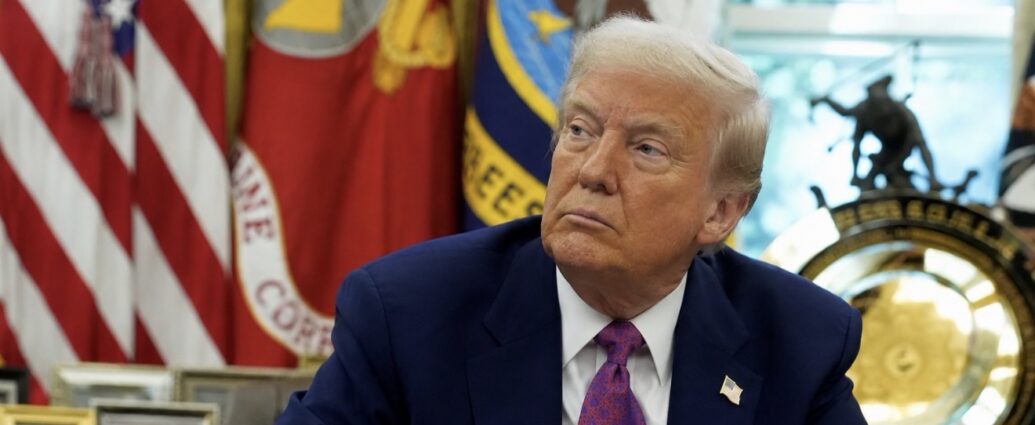
Trump Revives Economic Squeeze as Iran Rejects His Terms
President Trump has decided to stop bombing Iran and start starving it of money instead. He said Sunday that Washington will let its naval blockade and sanctions do the work of forcing Tehran to a deal, rather than launching another round of airstrikes. Traders read that as a signal the war is not ending soon — and on Monday oil jumped roughly 5%.
“We are just watching Iran with its huge inflation and the fact they have no money,” Trump said in an interview with Axios, adding that the blockade is deepening Tehran’s financial problems. “We are low keying it.” He also said the United States is “only semi-negotiating” with Iran over the Strait of Hormuz — a step back from his statement last week that the two sides were in talks.
The market reaction was immediate. West Texas Intermediate settled at $82.13 a barrel, up about 5%, and Brent crude finished around 5% higher at $87.72. That erases most of last week’s slide, when both benchmarks fell more than 7% after Treasury Secretary Scott Bessent told CNBC that an agreement to reopen Hormuz to free ship movement could come soon. No agreement has been announced, and both capitals have hardened their positions since.
The strategy Trump is returning to is the one he ran in his first term and revived in February 2025: cut off Iran’s oil sales, lock it out of the international banking system, and wait. What is different now is the blockade. A US naval cordon in place since April has stopped all crude exports from Kharg Island, Iran’s main oil terminal, with no tanker departures recorded for 11 straight days. Central Command said it has turned away 55 commercial vessels, disabled two and boarded two others.
The pressure is landing. Iran’s exchange rate has weakened nearly 50-fold since 2018, food prices are up more than 34-fold, and roughly 16 million people have dropped below the poverty line. The country also shed about 630,000 industrial jobs between the spring of 2025 and the spring of 2026, erasing eight years of employment gains. Inflation ran above 48% last October and above 42% in December.
Whether that pain translates into Iranian concessions is the open question, and so far the answer has been no. Foreign Minister Abbas Araghchi said Tehran is not holding direct talks with Washington and repeated that reopening Hormuz requires the US to lift the blockade and pay compensation for war damage. A senior Iranian security official said the waterway stays closed until those conditions are met, and Tehran also wants sanctions relief. In a further sign Tehran intends to hold out, Mohsen Rezaee — a former Revolutionary Guard commander who has argued for full Iranian control of the strait — was elevated to the country’s top security post.
For American businesses and drivers, the cost of the standoff is measured at the pump and in freight bills. Gasoline nationally is close to $4 a gallon and has risen more than 30% since the war began, which started with US and Israeli strikes on February 28. One estimate puts the additional fuel cost to the average American household at about $527 as of August 4, projected to reach roughly $650 by the end of summer.
The cushion the country has been leaning on is thinning. Crude held in the Strategic Petroleum Reserve has fallen below 300 million barrels, the lowest level since January 1983. Before the war, roughly a fifth of the world’s oil and natural gas moved through Hormuz, and the market has avoided a worse squeeze mainly because Chinese demand has been soft and emergency reserves have been released — buffers that are now close to exhausted.
Regional violence is keeping a floor under prices regardless of what happens in negotiations. A tanker operated by Abu Dhabi National Oil Co. was attacked near the strait over the weekend, and European diesel prices spiked after a strike on a Saudi refinery near the Red Sea. Houthi forces claimed responsibility for the attack on the Jizan facility. One forecast has Brent staying volatile in an $80-to-$90 range unless something breaks the current standoff.
That is the practical meaning of “low keying it” for American companies: fuel, freight and insurance costs stay where they are, and the calendar for relief is set in Tehran, not Washington.
JBizNews Desk | New York
© JBizNews.com All Rights Reserved. Reproduction or distribution without written permission is prohibited.

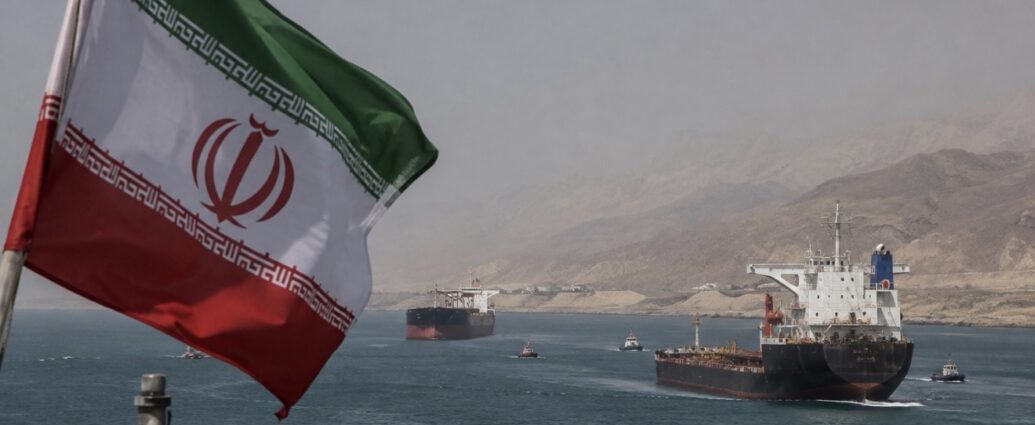
Gulf States Accept New Hormuz Reality as Iran Moves to Bar U.S., Israeli Ships
The Gulf’s biggest oil and gas exporters are confronting an arrangement they spent months trying to avoid: reopening the Strait of Hormuz under a system that would give Iran control over ships entering the Persian Gulf — while Tehran separately moves to prohibit U.S.- and Israeli-linked vessels from passing through.
That distinction is critical. Gulf governments have not publicly endorsed an Iranian ban on American or Israeli shipping. But they are increasingly willing to negotiate around a framework that gives Tehran a formal role in managing traffic because the alternative — continued closure, attacks on energy infrastructure and potentially another round of war — could cost them considerably more.
The framework taking shape between Iran and Oman would establish a temporary traffic system for 60 days, with the possibility of an extension. Under the proposal reported by Reuters, inbound vessels would enter the Persian Gulf through a northern lane in Iranian territorial waters, while outbound vessels would use a southern lane in Omani waters. Iran and Oman would oversee traffic through their respective sides.
That changes the practical balance in Hormuz.
Before the war, commercial shipping moved through an internationally recognized transit system in one of the world’s most important energy corridors. Under the emerging arrangement, vessels entering the Gulf would be routed through Iranian waters, placing Tehran in a powerful position over inbound traffic.
And Iran is making clear how it wants to use that leverage.
Iranian lawmakers are considering legislation that would prohibit vessels belonging to the United States, Israel and other countries Tehran considers hostile from transiting the strait. The proposed restrictions would also cover Israeli-linked cargo and could impose substantial financial penalties for violations.
That does not mean the Oman-Iran agreement itself automatically gives Iran internationally recognized authority to exclude American or Israeli ships. The parliamentary proposal and the Oman negotiations are separate tracks.
But put together, they reveal what Tehran wants the postwar order in Hormuz to look like: commercial traffic resumes, Iran gains a formal role in managing passage, and Tehran retains the ability to discriminate against countries it considers enemies.
That is precisely why the emerging arrangement is so consequential.
Iran has already demonstrated during the conflict that it can discriminate between ships in practice. Some vessels associated with countries Tehran considers non-hostile have been permitted through, while vessels perceived as linked to the United States or Israel have faced the greatest restrictions and security risks.
The Gulf states therefore face an uncomfortable choice.
Saudi Arabia, the United Arab Emirates, Qatar, Kuwait and Bahrain depend heavily on secure access through Hormuz for energy exports, imports and basic commercial traffic. They would prefer the old system of unrestricted navigation. But months of military pressure have not removed Iran’s ability to threaten shipping through missiles, drones, mines and other weapons.
The result is a compromise Gulf governments may dislike but increasingly have reason to tolerate: get commercial traffic moving again even if the mechanism leaves Iran with substantially more influence over the strait.
The toll issue adds another layer.
Iran has pushed proposals under which commercial vessels could eventually be charged for passage. The temporary Oman framework reportedly would not impose tolls, but that only postpones the larger dispute. If Tehran’s role over the northern lane survives into a permanent arrangement, Iran would already possess the enforcement mechanism necessary to impose future conditions on traffic.
For Washington, that is a very different outcome from restoring freedom of navigation.
For Israel, the implications are even more direct. If Iran succeeds in turning its proposed restrictions into an enforceable part of the postwar reality, Israeli-linked vessels could find themselves formally excluded from a waterway through which a major share of global energy trade passes.
And for the Gulf states, accepting the broader framework would create an awkward contradiction: countries that rely heavily on American security guarantees would be conducting their commerce through a system in which Iran seeks the right to decide that American vessels cannot enter.
The Gulf governments have not said they accept that condition.
But their willingness to continue negotiating around an Iranian-controlled inbound lane shows how dramatically their calculations have shifted.
The alternative remains expensive. Gulf energy infrastructure has been exposed to Iranian retaliation, shipping insurance costs have surged, crude exports have been disrupted and alternative routes cannot fully replace Hormuz.
Saudi Arabia can push additional crude west through its East-West pipeline to the Red Sea, while the UAE can move barrels through its pipeline to Fujairah on the Gulf of Oman. Those routes reduce dependence on Hormuz but cannot eliminate it.
So the Gulf’s calculation is increasingly pragmatic: reopening under imperfect terms may be preferable to keeping the strait closed while waiting for Iran to surrender control it has demonstrated it can enforce militarily.
That does not make the Gulf states comfortable with Iranian control. It means they may be learning to live with it.
And that is the real new reality in Hormuz: Iran is no longer simply threatening to close the strait. It is trying to establish the rules for who gets to use it — including potentially saying no to American and Israeli ships.
Whether Washington will accept a reopening on those terms remains the biggest unresolved question.
JBizNews Desk | New York
© JBizNews.com All Rights Reserved. Reproduction or distribution without written permission is prohibited.
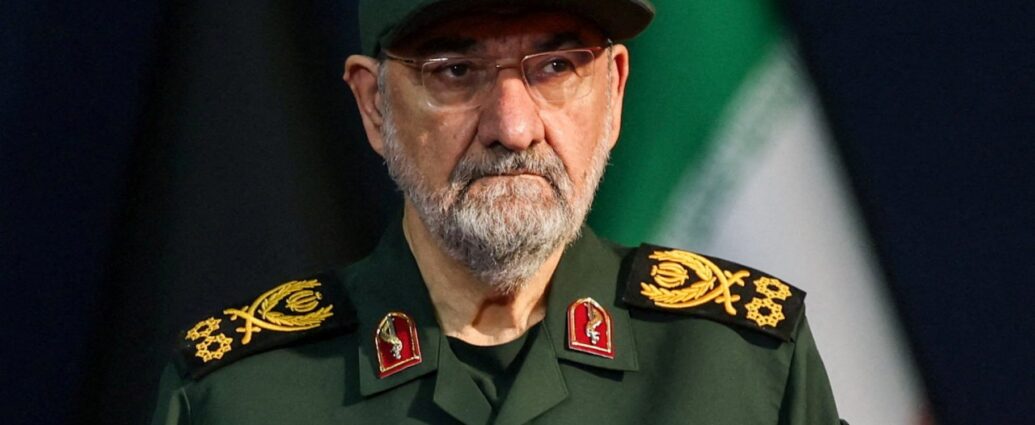
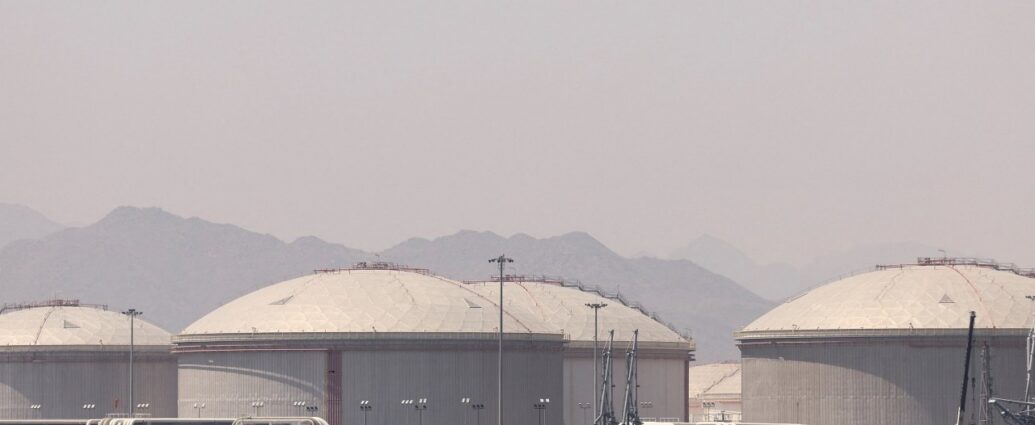

Ben Gurion Opens VIP Lounge Before High Holiday Rush
A new VIP lounge opened Monday morning at Ben Gurion Airport’s Terminal 3, in the duty-free area beside the synagogue — arriving roughly a month before the heaviest inbound travel weeks of the Jewish year.
The lounge runs about 250 square meters and is the first of two that Jetex, the Emirati aviation services group, will operate at Ben Gurion in partnership with LAYAM, part of Teddy Sagi’s group. The second, at roughly 370 square meters, is expected to open in the coming months, giving the two facilities a combined 620 square meters. It operates 24 hours a day, seven days a week.
The menu is led by chef Eitan Mizrahi, formerly of the Royal Beach hotel in Tel Aviv, built around an interpretation of Israeli cooking, with desserts from pastry chef Dudu Otmezgine, Nespresso coffee and a bar stocked with international brands. The facility includes a cold buffet of cheeses and salads, a hot buffet with pizzas and burekas, and dedicated work and rest areas.
Who gets in
Premium-cabin passengers and eligible club members enter at no charge. Holders of American Express premium cards also enter free — but the physical card must be presented at the desk, and a card stored in a digital wallet will not be accepted. Guest entry follows the terms published by American Express. The arrangement falls under an exclusive credit-card agreement between American Express and Jetex.
Business-class passengers on foreign carriers operating at Ben Gurion, including Etihad, British Airways and Air France, also enter free, as do members of the Israeli Medical Association and other institutional partners of the group. Travelers without an entitlement can buy a single entry for $100 per person.
The question American travelers need to ask first
This is where readers flying in from New York should slow down. The American Express relationship in Israel runs through the local licensee, and Israeli reporting on Monday’s opening describes eligibility by card tier without specifying the country of issue.
When Jetex opened its earlier Ben Gurion lounge in partnership with American Express Israel, access was limited to Israeli-issued Platinum and Centurion cards. A U.S.-issued Platinum or Centurion card did not qualify, and neither did Priority Pass membership attached to it — a repeat of the situation at the former Dan Lounge, where American cardholders were routinely turned away at the desk. Priority Pass has not been accepted at Ben Gurion since January 2026.
Anyone counting on a U.S. Platinum card to cover a family’s pre-flight stop should confirm eligibility with American Express before arriving, rather than at the entrance with luggage and a boarding time. At $100 a head for walk-in entry, a family of four discovering the answer at the door is looking at $400.
The timing is the business story
Rosh Hashana begins at sundown on Friday, September 11, Yom Kippur falls on September 21, and Sukkot begins the evening of September 25 and runs through October 2. That sequence produces the densest concentration of inbound and outbound traffic Ben Gurion sees all year — three separate travel peaks inside three weeks, against a fixed number of seats on a route network that has still not fully recovered its pre-war carrier mix.
The consequence for travelers is familiar: fares to Tel Aviv climb steeply into that window, and the flights that remain available fill early. The consequence for the airport is congestion — long queues, packed terminals, and a premium on any space where a family can sit down. Opening a lounge in August rather than October is a commercial decision aimed squarely at that.
It also tells you something about who Jetex thinks the customer is. A Dubai-based operator of private terminals across more than 40 destinations does not enter Ben Gurion for the off-season. It enters for the weeks when demand outruns capacity and a $100 walk-in fee looks reasonable to a traveler facing a four-hour wait.
One practical note for the holiday itself: Ben Gurion effectively shuts down for Yom Kippur, and lounge service goes with it. Anyone booking around September 20 and 21 should plan on that.
The second lounge lands sometime in the coming months. Whether either one solves anything for the American traveler depends entirely on a detail that Monday’s announcements did not spell out — and that is worth a phone call before you rely on it.
JBizNews Desk | Tel Aviv
© JBizNews.com All Rights Reserved. Reproduction or distribution without written permission is prohibited.