



U.K. Unemployment Holds Steady
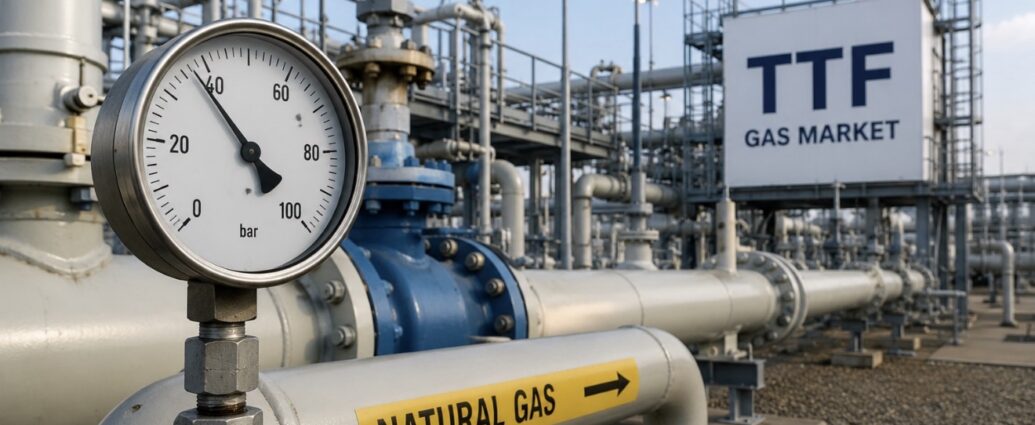
European Natural Gas Prices Hit Four-Month High as Middle East Tensions Rattle Energy Markets
AMSTERDAM — European natural gas prices surged to their highest level in four months on Monday as traders reacted to escalating geopolitical tensions in the Middle East, adding a larger risk premium to energy markets despite Europe’s relatively healthy gas inventories. The move followed a sharp rise in crude oil prices and reflected growing concern that any prolonged disruption to global energy shipments could tighten supplies and reignite inflationary pressures across Europe.
Benchmark Dutch TTF natural gas futures, Europe’s leading wholesale gas price indicator, climbed to their highest level since March as investors reassessed geopolitical risks. Although Europe entered the summer with storage facilities well stocked, energy markets remain highly sensitive to developments that could affect global fuel transportation or liquefied natural gas trade.
Unlike crude oil, much of Europe’s natural gas supply does not move through the Strait of Hormuz. However, the global energy system remains interconnected. Any threat to shipping routes or LNG cargo movements can influence worldwide pricing as countries compete for available supplies, pushing wholesale gas prices higher even before physical shortages occur.
Monday’s rally marked a sharp reversal from the calmer conditions seen earlier this summer.
Mild weather, reduced heating demand and stronger-than-expected storage injections had eased concerns about Europe’s energy outlook. Renewed geopolitical uncertainty has now shifted investor attention back toward supply security, causing traders to build additional risk into both oil and natural gas prices.
Higher wholesale gas prices can have broad consequences for businesses.
Manufacturers, chemical producers, utilities, steelmakers, food processors and transportation companies all rely heavily on energy. If elevated natural gas prices persist, operating costs could increase across multiple industries, placing renewed pressure on corporate profit margins and eventually filtering through to consumer prices.
Financial markets are also watching closely because higher energy costs could complicate the European Central Bank’s effort to return inflation to its long-term target. If fuel prices remain elevated, policymakers may be forced to keep interest rates higher for longer than investors previously expected.
Despite the price increase, analysts note that Europe’s energy position remains considerably stronger than during the continent’s energy crisis several years ago. Storage levels remain well above seasonal averages, and governments have diversified natural gas supplies through expanded LNG imports and additional pipeline capacity.
For U.S. businesses, stronger European natural gas prices could benefit American liquefied natural gas exporters by improving overseas demand and export economics. The United States has become one of the world’s largest LNG suppliers, making European energy markets increasingly important to American producers.
Markets will now closely monitor geopolitical developments, LNG shipment patterns and storage levels throughout the remainder of the summer. While there is no indication of an immediate supply shortage, Monday’s trading demonstrated how quickly geopolitical uncertainty can reshape global energy pricing.
JBizNews Desk | Amsterdam
© JBizNews.com All Rights Reserved. Reproduction or distribution without written permission is prohibited.
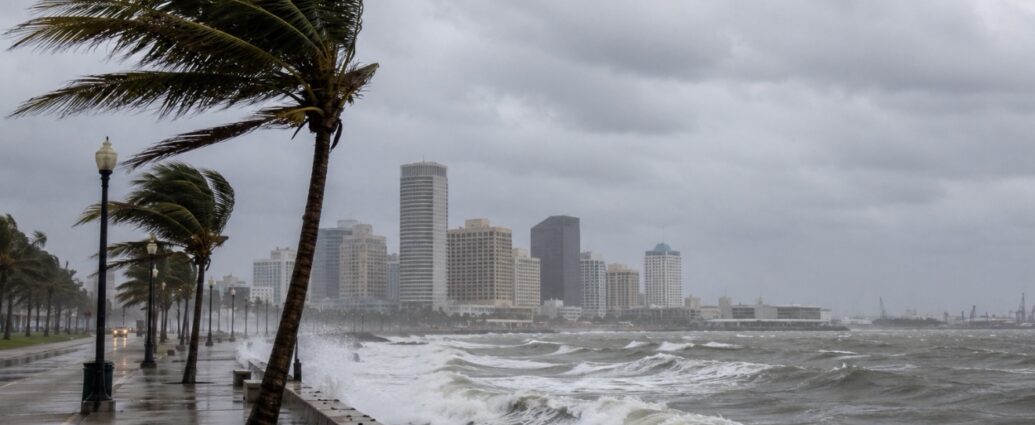
Tropical Depression Expected to Become Bertha, Putting Gulf Energy and Shipping Corridor on Alert
A tropical depression moving across the northern Gulf of Mexico is forecast to strengthen into Tropical Storm Bertha, prompting watches along portions of the Gulf Coast and raising concerns for one of America’s most important energy and shipping corridors. The National Hurricane Center issued advisories indicating the system could bring heavy rainfall, storm surge, localized flooding, and disruptions to ports, refineries, petrochemical facilities, and offshore energy operations as it tracks westward along the Gulf Coast.
The depression was located south of the Florida Panhandle with sustained winds near 30 mph and is expected to strengthen into a tropical storm as environmental conditions become more favorable. Tropical storm watches have been issued for parts of the Florida Panhandle, while storm surge watches extend across portions of the northern Gulf Coast. Forecast models indicate the system could eventually approach Louisiana before continuing toward the Texas coastline later in the week.
The projected path places the storm near one of the world’s most important concentrations of energy infrastructure. The Gulf Coast is home to a significant share of U.S. oil refining capacity, major liquefied natural gas export terminals, petrochemical manufacturing complexes, offshore production platforms, and several of the nation’s busiest commercial ports. Even a moderate tropical storm can slow vessel traffic, delay cargo movements, interrupt refinery operations, and temporarily reduce offshore energy production.
Houston, New Orleans, Mobile, and other Gulf ports serve as critical gateways for crude oil, refined fuels, chemicals, agricultural exports, and containerized freight. Shipping companies are closely monitoring updated forecasts as they determine whether to adjust vessel schedules, delay departures, or temporarily reroute cargo operations should conditions deteriorate.
Forecasters expect widespread rainfall totals between 4 and 8 inches, with isolated areas potentially receiving even greater amounts. Storm surge of several feet remains possible in vulnerable coastal communities, while localized flash flooding could affect transportation networks, industrial facilities, and distribution centers. Businesses operating throughout the Gulf region have begun reviewing contingency plans should flooding interrupt normal operations.
The storm also arrives after weeks of unusually wet weather across portions of Texas. Saturated ground conditions increase the risk that additional rainfall could trigger more significant flooding than would normally occur from a storm of similar strength. Emergency management officials throughout the region are coordinating with state and local agencies as forecasts continue evolving.
Energy markets are watching closely because even precautionary shutdowns can temporarily tighten fuel supplies and influence commodity prices. Offshore operators routinely evacuate nonessential personnel ahead of approaching tropical systems, while refineries may reduce production or suspend operations if flooding or high winds threaten critical infrastructure. Pipeline operators and port authorities likewise implement safety procedures that can temporarily slow energy shipments.
Despite the near-term risks, meteorologists note that the broader Atlantic hurricane season remains forecast to be less active than originally expected. The development of El Niño conditions has increased upper-level wind shear across parts of the Atlantic basin, making it more difficult for storms to organize and intensify. Nevertheless, Gulf Coast systems often develop quickly in warm Gulf waters, leaving relatively little time for communities and businesses to prepare.
NOAA hurricane reconnaissance aircraft and U.S. Air Force Reserve Hurricane Hunters continue flying missions into the storm to collect real-time atmospheric data, allowing forecasters to refine predictions regarding intensity, rainfall, and eventual landfall. Additional advisories are expected throughout the week as emergency officials and commercial operators monitor the system’s progress.
For businesses across the Gulf Coast, the storm serves as another reminder of how closely weather and commerce remain connected. From energy production and international shipping to manufacturing, logistics, tourism, and retail operations, even relatively modest tropical systems can have far-reaching economic consequences well beyond the communities directly in their path.
JBizNews Desk | Houston
© JBizNews.com All Rights Reserved. Reproduction or distribution without written permission is prohibited.


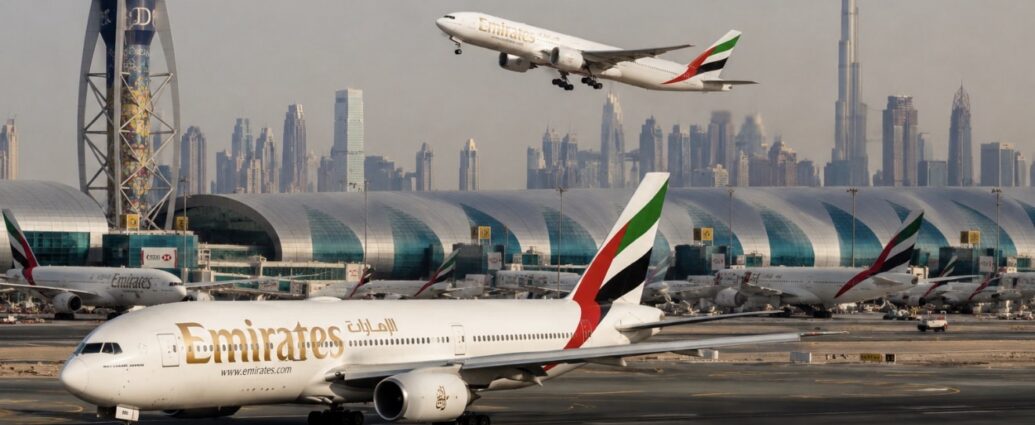
Foreign Airlines Stay Grounded as Dubai Flight Suspensions Extend, Giving Gulf Carriers a Competitive Edge
International airlines are extending flight suspensions to Dubai and other Gulf destinations as conflict-related airspace restrictions and insurance concerns continue reshaping one of the world’s busiest aviation markets. The latest guidance from European aviation regulators advising carriers to avoid the airspace over the United Arab Emirates, Bahrain, Kuwait, and Qatar has prompted numerous airlines to push back planned resumptions, allowing Gulf-based carriers to capture a greater share of international passenger traffic.
Several major international airlines—including British Airways, Singapore Airlines, Air Canada, and the Lufthansa Group—have extended cancellations or delayed their return to Dubai through late summer and, in some cases, into October. British Airways has postponed the restart of its Heathrow–Dubai route until late October, with plans to initially operate only one daily flight, significantly below its pre-conflict schedule.
The continuing suspensions have created a widening divide across the aviation industry. While many international carriers remain unable or unwilling to operate through the region, UAE-based airlines have restored much of their network capacity. Emirates, Etihad Airways, flydubai, and Air Arabia continue operating the majority of their schedules, allowing them to absorb additional passenger demand while competitors remain absent from one of the world’s largest international connecting hubs.
The difference extends beyond flight schedules. Gulf carriers have also moved aggressively to reassure travelers by expanding conflict-related travel protection. Emirates introduced enhanced travel coverage that includes medical assistance for certain conflict-related incidents, hotel accommodations during qualifying disruptions, and additional passenger support regardless of government travel advisories. Etihad Airways has similarly expanded complimentary medical travel coverage for eligible passengers, helping restore consumer confidence while many traditional travel insurance policies continue excluding war-related claims.
Insurance has emerged as one of the industry’s biggest obstacles. Since regional hostilities intensified earlier this year, many newly purchased travel insurance policies exclude losses directly related to armed conflict or military activity. The exclusions have discouraged bookings among both leisure and business travelers, forcing airlines to develop their own customer protection programs to stimulate demand.
The financial consequences have been substantial. During the height of the regional disruptions, thousands of flights were canceled or rerouted as airlines adjusted schedules around restricted airspace. Aircraft were repositioned, crews reassigned, and international networks rebuilt almost overnight. While Gulf carriers recovered much of their capacity relatively quickly, foreign airlines continue facing higher operating costs, longer flight paths, and uncertainty surrounding future regulatory restrictions.
The economic impact extends well beyond the aviation industry. Dubai serves as one of the world’s largest international transit hubs, connecting Europe, Asia, Africa, and Australia. Reduced international competition affects tourism, hotel occupancy, cargo shipments, business travel, conference activity, and international trade flows. Companies that rely on frequent travel through the Gulf may continue experiencing higher fares and fewer routing options until additional carriers return.
Industry analysts caution that the currently scheduled autumn restart dates remain tentative. Any further deterioration in regional security could result in additional postponements, extending the revenue advantage enjoyed by Gulf carriers while delaying the recovery of foreign competitors. Even if airspace restrictions ease, airlines will continue evaluating insurance costs, operational risks, and passenger demand before fully restoring service.
For Gulf airlines, however, the disruption has reinforced their strategic importance in global aviation. By maintaining operations while much of the international competition remains sidelined, they have strengthened customer relationships, increased market share, and demonstrated operational resilience during one of the industry’s most challenging periods in recent years.
JBizNews Desk | New York
© JBizNews.com All Rights Reserved. Reproduction or distribution without written permission is prohibited.


GE Aerospace’s Hybrid-Electric Flight Milestone Brings Next-Generation Aviation Closer to Reality
According to GE Aerospace, on Monday, July 20, the company successfully completed the world’s first high-altitude flight demonstration assisted by hybrid-electric propulsion under NASA’s Electrified Powertrain Flight Demonstration (EPFD) program, marking a significant milestone in the development of next-generation commercial aircraft. The achievement is important for airlines, manufacturers and suppliers because it advances technology that could reduce fuel costs, improve efficiency and support the aviation industry’s long-term sustainability goals.
The demonstration used a modified Saab 340B aircraft equipped with a hybrid-electric propulsion system developed by GE Aerospace in collaboration with BETA Technologies. The flight validated the system under real operating conditions at commercial cruising altitudes, providing engineers with valuable performance data as development continues.
For the airline industry, fuel remains one of the largest operating expenses. Even modest improvements in fuel efficiency can save carriers millions of dollars annually while helping them comply with increasingly stringent environmental regulations. Hybrid-electric propulsion is widely viewed as one of the most practical transitional technologies before battery-powered commercial aircraft become feasible.
Unlike fully electric aircraft, hybrid-electric propulsion combines conventional turbine engines with electric motors that provide additional power during the most energy-intensive phases of flight, including takeoff and climb. The result is lower fuel consumption while maintaining the reliability and range required for commercial aviation.
The flight represents years of collaboration between GE Aerospace, NASA, and industry partners working to move hybrid-electric technology from laboratory testing to real-world aviation applications. High-altitude testing is particularly important because commercial aircraft spend much of their operating time above 30,000 feet, where propulsion systems must perform under demanding conditions.
The project also supports CFM International’s Revolutionary Innovation for Sustainable Engines (RISE) program, a joint initiative between GE Aerospace and Safran Aircraft Engines. The program is evaluating advanced engine technologies capable of improving fuel efficiency by more than 20% compared with today’s most efficient single-aisle aircraft engines.
Those technologies include hybrid-electric propulsion, advanced engine cores and open-fan engine designs that could eventually power the aircraft expected to succeed today’s Boeing 737 and Airbus A320neo families.
The milestone also carries implications throughout the aerospace supply chain.
Hybrid-electric aircraft require advanced electric motors, power electronics, thermal management systems, lightweight composite materials and sophisticated software. As manufacturers continue investing in electrified propulsion, suppliers producing those components could benefit from growing demand over the coming decade.
For aircraft manufacturers, the successful demonstration provides additional confidence that hybrid-electric propulsion is progressing toward commercial viability. Airlines continue seeking more fuel-efficient aircraft as they modernize fleets and attempt to lower operating costs while meeting environmental objectives.
Government support also remains an important part of the industry’s transition. NASA’s continued investment in electrified flight technologies reflects broader public-private efforts to accelerate innovation while maintaining the safety and reliability standards required for commercial aviation.
Although hybrid-electric commercial aircraft are still years from widespread deployment, Monday’s demonstration represents another important step toward future aircraft capable of reducing both operating expenses and emissions.
For businesses across the aviation sector, the development highlights continued investment in advanced aerospace technologies that could influence future airline purchasing decisions, manufacturing priorities, supplier contracts and long-term capital investment throughout the industry.
JBizNews Desk | New York
© JBizNews.com All Rights Reserved. Reproduction or distribution without written permission is prohibited.

Jewish Chess Legend Judit Polgár Declines Nomination for Hungarian Presidency
BUDAPEST, Hungary — Hungarian chess grandmaster Judit Polgár, widely regarded as the greatest female chess player in history, has declined Prime Minister Péter Magyar’s nomination to become Hungary’s next president, saying she does not believe she has the ability to unite the country during a period of deep political division. The announcement was made Monday through a public statement following her nomination by the Hungarian government.
Polgár thanked Prime Minister Magyar and those who supported her candidacy, calling the nomination “an extraordinary honor.” However, she said the presidency requires someone capable of bringing together a polarized nation, adding that she does not feel she possesses the strength necessary to shoulder such a historic responsibility.
The nomination had drawn international attention because of Polgár’s remarkable career and the symbolic significance of potentially becoming one of Europe’s few Jewish heads of state. She has long been celebrated as the strongest female chess player in history, becoming the only woman ever to break into the world’s top ten rankings and surpass a 2700 FIDE rating while defeating numerous world champions throughout her career.
Prime Minister Magyar had described Polgár as a respected, nonpartisan national figure capable of helping restore confidence in Hungary’s institutions following sweeping political changes that led to the early end of President Tamás Sulyok’s term. Parliament is now expected to select another candidate to serve as Hungary’s next president while constitutional reforms continue.
For Hungary’s Jewish community, the nomination itself marked a notable moment, highlighting the international respect earned by one of the country’s most accomplished Jewish public figures. Although Polgár declined the position, her consideration for the presidency underscores her stature far beyond the world of chess.
JBizNews Desk | Budapest
© JBizNews.com All Rights Reserved. Reproduction or distribution without written permission is prohibited.


Opinion | Trump to China: Deal Me In
Houthi Maritime Embargo on Saudi Arabia Opens New Front in Global Oil Crisis
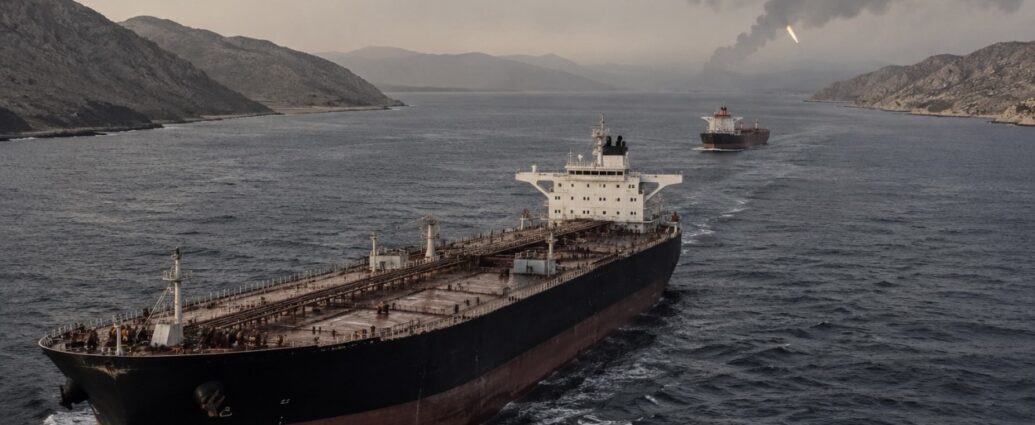
DUBAI — Yemen’s Iran-backed Houthi movement declared an immediate maritime embargo against Saudi Arabia on Monday, July 20, threatening vessels connected to the kingdom and opening a second potential choke point for global energy supplies as exporters are already struggling with disruptions through the Strait of Hormuz. The declaration was issued by the group’s military spokesperson following renewed fighting between Saudi Arabia and the Houthis.
The announcement does not by itself prove that the Houthis can completely block Saudi shipping. However, the threat is significant because Saudi Arabia has increasingly relied on its Red Sea export infrastructure to bypass instability in the Persian Gulf and keep crude flowing to international customers.
Saudi oil can be transported through the kingdom’s East-West pipeline to the Red Sea port of Yanbu, avoiding the Strait of Hormuz. That route has become especially important as conflict involving Iran has reduced normal tanker traffic through the Gulf.
The Houthis’ declaration now places the alternative route under threat.
Any sustained attacks on tankers, export terminals or vessels calling at Saudi ports could force shipping companies to suspend voyages, raise insurance premiums or reroute cargoes around Africa. Even without a successful physical blockade, the possibility of missile and drone attacks can make shipping commercially unviable for some operators.
The Bab el-Mandeb Strait, located between Yemen and the Horn of Africa, connects the Red Sea with the Gulf of Aden and the Arabian Sea. It is the southern gateway for vessels traveling between the Suez Canal and the Indian Ocean.
Approximately 7.4 million barrels a day of petroleum products passed through Bab el-Mandeb in June, equal to roughly 7% of global oil production, according to shipping data cited in current energy-market assessments. That volume had risen sharply as Saudi Arabia and other producers redirected exports away from the Persian Gulf.
The new threat therefore affects more than Saudi Arabia. Tankers carrying crude from Red Sea terminals, refined fuels headed toward Europe and commercial vessels using the Suez Canal could all face higher costs or delays.
The Houthis said the embargo was imposed under the principle of retaliation, accusing Saudi Arabia of maintaining a blockade against Yemen. The declaration follows a breakdown in the informal truce that had largely limited direct hostilities between the two sides for approximately four years.
The latest confrontation began after the Houthis accused Saudi Arabia of striking an airport under their control. Houthi forces subsequently launched missiles toward Saudi territory, while the group’s leader warned that Saudi oil installations and other critical infrastructure would become targets if Riyadh escalated its involvement.
That escalation threatens to pull Saudi Arabia back into a direct conflict it had spent years attempting to contain through negotiations.
For oil markets, the timing is particularly dangerous.
Saudi Arabia is the world’s largest crude exporter and one of the few producers capable of increasing output quickly during an international supply disruption. Its spare production capacity normally serves as a cushion against wars, sanctions and unexpected outages.
That cushion has less value if the kingdom cannot safely transport additional barrels to customers.
A disruption affecting both the Strait of Hormuz and the Bab el-Mandeb Strait would place pressure on two of the world’s most important energy corridors simultaneously. The threat could leave producers with oil available inside the region but limited safe routes for delivering it to global markets.
Higher security risks are already changing shipping economics. Tanker owners may demand substantial premiums before agreeing to enter threatened waters. Insurers can raise war-risk coverage rates with little notice, while crews may require danger pay to sail through areas vulnerable to missiles, drones or boarding attempts.
Those costs ultimately move through the supply chain.
Refiners pay more to secure crude. Airlines face higher fuel expenses. Trucking and delivery companies spend more on diesel. Manufacturers pay more to transport components and finished goods. Consumers eventually see the pressure in gasoline prices, airline fares, shipping charges and retail prices.
The Houthis previously demonstrated their ability to disrupt Red Sea commerce during a campaign of attacks on international shipping. Those strikes prompted major container carriers and tanker operators to avoid the Suez route and sail around the Cape of Good Hope, adding thousands of miles and substantial fuel costs to voyages between Asia and Europe.
A renewed campaign directed specifically at Saudi Arabia could be even more disruptive because it would target the infrastructure currently helping compensate for reduced Gulf exports.
The immediate question is whether the declaration will be followed by attacks against Saudi-linked commercial vessels or whether it is intended primarily as political and economic pressure.
Shipping companies are likely to respond cautiously. Operators do not need to wait for a vessel to be struck before changing routes. A credible warning from a group with a demonstrated missile and drone capability can be enough to delay departures, cancel charters or require naval protection.
Saudi Arabia must now decide whether to confront the Houthis militarily, seek outside naval assistance or attempt to restore the truce through diplomacy. Any Saudi retaliation could invite further attacks against oil terminals, pipelines, airports and power infrastructure.
For Washington and other major economies, the embargo adds urgency to efforts to protect navigation through the Red Sea. A prolonged disruption could deepen the global energy shortage, raise inflation expectations and complicate decisions by central banks already weighing whether interest rates can safely be lowered.
The threat also strengthens Iran’s ability to pressure international markets through allied armed groups operating beyond its borders. With Iran exerting pressure around Hormuz and the Houthis threatening Saudi access to the Red Sea, the region’s oil-export network is becoming increasingly exposed on both sides of the Arabian Peninsula.
Markets will now watch for evidence that the Houthis are attempting to enforce the embargo, including attacks on vessels, warnings identifying specific ships, disruptions near Yanbu or changes in tanker traffic through Bab el-Mandeb.
Until then, the declaration remains a threat rather than a fully enforced blockade. But in an oil market already operating with fewer secure routes, the announcement alone is enough to raise the cost of moving energy and increase the risk of another sharp rise in global prices.
JBizNews Desk | Dubai
© JBizNews.com All Rights Reserved. Reproduction or distribution without written permission is prohibited.
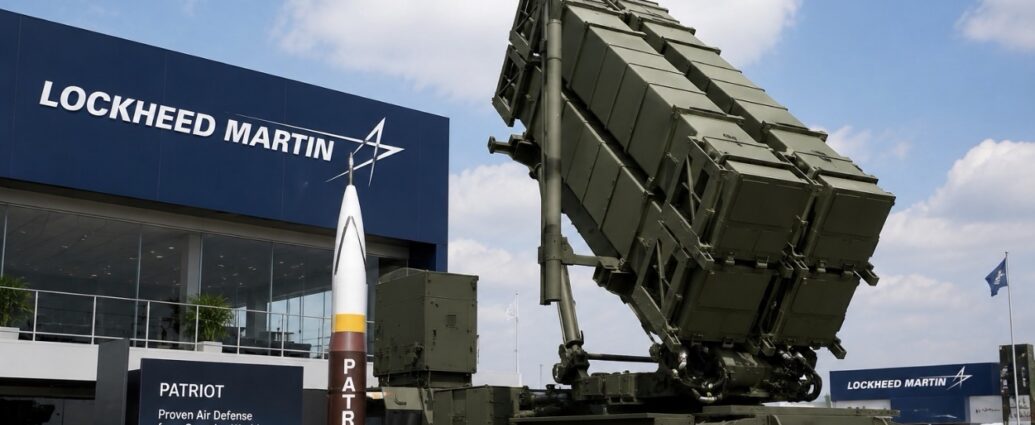
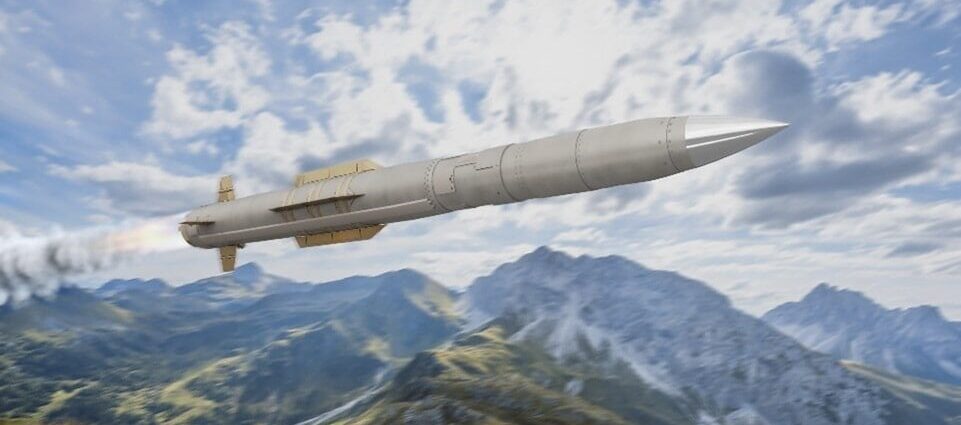
Lockheed Martin Unveils Lower-Cost Patriot Missile as Global Demand Strains Defense Stockpiles
Lockheed Martin announced on Monday, July 20, that it is developing a lower-cost version of its Patriot interceptor designed to help the United States and allied nations rebuild rapidly shrinking missile inventories while significantly reducing procurement costs. The new PAC-3 Adapted Capability Effector (ACE) interceptor is expected to cost less than half the price of the current PAC-3 Missile Segment Enhancement (MSE) missile, according to company officials speaking ahead of the Farnborough International Airshow.
The announcement comes as governments around the world are dramatically increasing investments in air and missile defense. Military stockpiles have been depleted by years of heightened global tensions and the growing use of sophisticated drones, cruise missiles, and ballistic missiles. Defense manufacturers are now under increasing pressure not only to expand production but also to deliver systems that are affordable enough to sustain long-term procurement.
Unlike the PAC-3 MSE interceptor, which is designed to defeat advanced ballistic missile threats, the new ACE missile is intended for a broader range of missions, including defending against drones, cruise missiles, aircraft, and other lower-cost aerial threats. Military planners increasingly favor a layered defense strategy that matches the cost of the interceptor to the threat being engaged rather than relying on multi-million-dollar missiles for every incoming target.
Lockheed Martin said the new interceptor will remain fully compatible with existing Patriot launchers already deployed across the United States and dozens of allied countries. That compatibility allows militaries to expand missile inventories without replacing existing launch systems or investing in new infrastructure, reducing overall procurement costs while accelerating deployment.
The company expects the missile to enter production within approximately three years through an expanded manufacturing network involving both American and European suppliers. Increasing production capacity has become a priority across the defense industry as governments seek to replenish inventories while preparing for future security challenges.
The Patriot air defense system has become one of the world’s most sought-after military platforms, protecting military installations, critical infrastructure, airports, energy facilities, and civilian population centers. Orders have accelerated over the past several years as NATO members and allied governments increase defense budgets in response to evolving geopolitical risks.
For the defense industry, the ACE interceptor represents a shift toward balancing advanced capability with affordability. Modern conflicts have demonstrated that defending against large numbers of inexpensive drones and cruise missiles requires interceptors that can be produced quickly and at sustainable costs. Lower-priced interceptors also enable governments to maintain larger stockpiles without significantly increasing defense budgets.
The announcement carries important business implications for Lockheed Martin and its global supply chain. Expanding production while lowering unit costs could broaden international demand for Patriot systems, particularly among allies seeking enhanced air defense capabilities but facing budget constraints.
Investors will also be watching how quickly the company can move the ACE interceptor from development into production. If successful, the program could strengthen Lockheed Martin’s position in one of the fastest-growing segments of the global defense market while helping allied nations address one of the industry’s most pressing challenges—rebuilding missile inventories at a pace that matches rising demand.
JBizNews Desk | Farnborough, United Kingdom
© JBizNews.com All Rights Reserved. Reproduction or distribution without written permission is prohibited.


Canada Inflation Cools More Than Expected as Falling Fuel Prices Ease Pressure on Interest Rates
OTTAWA — Canada’s annual inflation rate slowed more than economists expected in June, providing the strongest indication in months that price pressures are beginning to moderate despite continued global economic uncertainty. Statistics Canada reported Monday, July 20, that the Consumer Price Index rose 2.8% from a year earlier, down from 3.2% in May, as a sharp decline in gasoline prices offset continued increases in food, transportation and other household expenses.
The report arrives at a critical time for financial markets, businesses and policymakers as investors evaluate whether the Bank of Canada will need to raise interest rates again later this year. The softer-than-expected inflation reading immediately reduced expectations of additional monetary tightening and was welcomed by businesses facing elevated borrowing costs.
On a monthly basis, consumer prices declined 0.4%, a larger decrease than economists had forecast. The primary driver was gasoline, where prices fell sharply during June as crude oil markets stabilized following a temporary easing of geopolitical tensions. Although energy prices remain significantly above year-ago levels, the monthly decline helped pull headline inflation lower.
Excluding gasoline, inflation held at 2.2%, indicating that underlying price pressures remained relatively contained. While consumers continue paying more for many everyday necessities, the broad pace of inflation is slowing closer to the Bank of Canada’s long-term objective.
Food prices remained one of the largest burdens on household budgets. Grocery prices increased approximately 3.9% from a year earlier, continuing a trend in which supermarket costs have consistently risen faster than overall inflation. Higher prices for fresh produce, meat and prepared foods continued squeezing disposable income for many families.
Transportation expenses also remained elevated despite cheaper gasoline during the month. Insurance costs, vehicle ownership expenses and public transportation continued contributing to higher consumer spending.
The report’s underlying inflation measures provided additional encouragement for policymakers. The Bank of Canada’s preferred core inflation indicators moved below the central bank’s 2% target, suggesting inflationary pressures are becoming less widespread throughout the economy rather than accelerating across multiple sectors.
Those figures are particularly important because central bankers place greater emphasis on core inflation than on temporary swings in energy prices. Lower core inflation suggests demand throughout the economy is cooling, reducing the likelihood that additional interest-rate increases will be necessary.
The Bank of Canada, which left its benchmark overnight lending rate unchanged at 2.25% during its most recent policy meeting, has emphasized that future decisions will depend heavily on incoming inflation data. Monday’s report strengthens the case for policymakers to remain on hold while monitoring developments in global energy markets.
Financial markets quickly adjusted following the release. Canadian government bond yields moved lower, while the Canadian dollar weakened modestly against the U.S. dollar as traders reduced expectations for another rate increase this year.
Lower interest-rate expectations could benefit mortgage borrowers, homebuyers and businesses seeking financing for expansion. Companies that postponed investment because of higher borrowing costs may gain greater confidence if inflation continues easing and monetary policy remains stable.
However, economists caution that inflation risks have not disappeared.
Oil prices have moved higher again during July as tensions in the Middle East continue raising concerns about global energy supplies and shipping through the Strait of Hormuz. A sustained increase in crude oil prices could once again raise transportation, manufacturing and distribution costs across Canada and renew upward pressure on consumer prices.
For businesses, the report offers cautious optimism rather than a declaration of victory over inflation. While headline inflation has slowed considerably from earlier highs, households continue facing elevated costs for food, housing and many essential services.
For consumers, the latest figures suggest purchasing power may gradually improve if wage growth continues outpacing inflation. For businesses, moderating inflation and a more stable interest-rate environment could improve investment conditions and encourage hiring during the second half of the year.
The next several inflation reports will likely determine whether June marks the beginning of a sustained return toward the Bank of Canada’s 2% inflation target or merely a temporary pause before renewed energy-related price pressures emerge.
JBizNews Desk | Ottawa
© JBizNews.com All Rights Reserved. Reproduction or distribution without written permission is prohibited.




EU to Ease Methane Rules After U.S. Pressure



Burnham Opens Premiership With Growth and Spending in Focus
LONDON — Andy Burnham officially became Prime Minister of the United Kingdom on Monday after King Charles III invited him to form a government following Keir Starmer’s resignation. In his first address from 10 Downing Street, Burnham pledged a new economic direction focused on expanding investment in industry, housing, infrastructure, and regional development while tackling Britain’s prolonged cost-of-living pressures and sluggish economic growth. Investors immediately shifted their attention to whether his government can expand spending without undermining confidence in the nation’s public finances.
Burnham, who served for nearly a decade as Mayor of Greater Manchester before returning to Parliament and winning the Labour Party leadership, has long argued that Britain’s economy has become overly centralized and requires a larger government role to stimulate long-term growth. His first speech as prime minister outlined plans to decentralize economic decision-making, increase investment outside London, accelerate housing construction, strengthen manufacturing, and support public transportation while placing renewed emphasis on regional economic development.
Financial markets reacted cautiously rather than dramatically. The orderly transfer of power provided reassurance to investors, but economists noted that Burnham’s ambitious policy agenda will ultimately be judged by how it is financed. Britain continues to carry one of its highest public debt burdens in modern history while elevated interest rates have significantly increased government borrowing costs. Any substantial increase in spending without credible fiscal discipline could place upward pressure on bond yields and borrowing costs throughout the economy.
Among Burnham’s expected priorities are expanding affordable housing, investing in transportation networks, supporting domestic manufacturing, strengthening the National Health Service (NHS), and addressing regional economic disparities that have widened over recent decades. He has also pledged immediate measures aimed at easing the cost-of-living crisis while preparing a broader 10-year economic strategy designed to improve productivity and restore long-term growth.
Businesses across Britain are now awaiting details of the new government’s first budget and fiscal strategy. Corporate leaders will closely watch whether tax policy, infrastructure spending, industrial incentives, and regulatory reforms encourage private investment while maintaining confidence in Britain’s financial stability. International investors are expected to scrutinize cabinet appointments—particularly the selection of the Chancellor of the Exchequer—as an early signal of the administration’s economic priorities.
The leadership transition also carries significance well beyond Britain. The United Kingdom remains one of the world’s leading financial centers and one of the United States’ largest trading and investment partners. Changes in British fiscal policy, government spending, taxation, and regulation can influence multinational corporations, currency markets, investment flows, and supply chains connecting Europe and North America.
For American businesses, Burnham’s economic agenda could affect companies operating in Britain through changes in labor policy, infrastructure investment, taxation, energy policy, and industrial development incentives. Financial markets will also watch whether Britain’s new government can successfully balance stronger public investment with long-term fiscal responsibility at a time when many advanced economies are facing similar challenges.
The coming weeks will provide investors with the first concrete indication of Burnham’s governing style. His administration’s initial budget proposals, cabinet appointments, and economic strategy will determine whether markets view his vision of a more active government as a catalyst for sustainable growth or as a potential source of additional fiscal pressure. For businesses and investors alike, Britain’s new political chapter begins with heightened expectations and equally high scrutiny.
JBizNews Desk | London
© JBizNews.com All Rights Reserved. Reproduction or distribution without written permission is prohibited.





Google and Apple Clash With European Union Over the Future of AI Assistants
As businesses prepare for another week of technology and artificial intelligence developments on Monday, July 20, 2026, a growing dispute between Alphabet’s Google and Apple and the European Union is escalating into one of the most consequential regulatory battles in the AI era. At issue is whether smartphone operating systems must give competing AI assistants the same deep access currently enjoyed by Google’s Gemini and Apple’s Siri, a decision that could reshape how billions of consumers interact with artificial intelligence. The European Commission’s latest decisions under the Digital Markets Act (DMA) require Google to provide rival AI assistants and search providers greater access to Android while expanding data-sharing obligations designed to increase competition.
The European Union argues that consumers should be free to choose whichever AI assistant they prefer without being limited by the smartphone manufacturer. Under the Commission’s interoperability requirements, qualifying competitors could eventually perform many of the same functions as Google’s own AI assistant on Android devices, including handling voice commands, launching applications and completing everyday tasks, subject to security and privacy safeguards. Google has until July 2027 to implement many of the required Android interoperability changes, while search data-sharing obligations begin earlier in January 2027.
Google has strongly criticized the measures, arguing that opening deeper access to third-party AI assistants could increase cybersecurity and privacy risks while reducing its ability to protect users from malicious applications. The company maintains that it should retain the ability to evaluate competitors before granting access to sensitive system functions and user data. European regulators respond that only qualifying companies meeting strict security standards will receive access and that stronger competition will ultimately benefit consumers through greater innovation and choice.
Apple finds itself in a different but related dispute. The company has delayed the European rollout of several advanced Apple Intelligence features, including its next-generation Siri experience, arguing that complying with the DMA’s interoperability requirements raises significant privacy and security concerns. European officials reject that explanation, maintaining the rules are intended to promote competition rather than weaken user protections. Earlier this month, EU Technology Commissioner Henna Virkkunen described discussions with Apple Chief Executive Tim Cook as constructive but confirmed that the Commission expects compliance with existing law.
For businesses, the outcome extends far beyond smartphones. AI assistants are increasingly becoming the gateway to search, scheduling, shopping, travel bookings, customer service and enterprise software. Companies developing AI products—including OpenAI, Anthropic and Perplexity—could gain broader access to mobile users if interoperability rules expand the role of third-party assistants across major smartphone platforms. At the same time, Google and Apple risk losing part of the competitive advantage created by controlling the operating systems powering billions of devices worldwide.
The dispute also reflects Europe’s broader effort to reduce dependence on a handful of dominant technology companies while encouraging a more competitive AI ecosystem. European regulators believe requiring large platform operators to share certain capabilities can lower barriers for new entrants and accelerate innovation. Google and Apple counter that forced interoperability may reduce product quality, slow innovation and expose users to additional security vulnerabilities.
Investors are watching closely because artificial intelligence is expected to become one of the largest long-term drivers of technology spending. Decisions affecting mobile operating systems, AI assistants and search platforms could influence future revenue opportunities across software, cloud computing, digital advertising and consumer electronics. Any significant change to how consumers access AI services may alter competitive dynamics throughout the technology sector for years to come.
While implementation deadlines remain months away, the confrontation underscores a broader reality: regulators are no longer focused solely on search engines and app stores. Increasingly, they are turning their attention to artificial intelligence, positioning AI assistants as the next major battleground between governments seeking greater competition and technology companies seeking to preserve tightly integrated ecosystems.
JBizNews Desk | Brussels
© JBizNews.com All Rights Reserved. Reproduction or distribution without written permission is prohibited.


Defense and Energy Shares in Focus as Middle East Escalation Sets the Tone for Monday’s Markets
Defense and energy stocks are expected to command investor attention when U.S. markets open Monday after Brent crude oil climbed above $90 per barrel, reflecting growing concern that the expanding conflict in the Middle East could disrupt global energy supplies. The move follows another weekend of U.S. and Iranian military strikes, increased security concerns surrounding the Strait of Hormuz, and sharply reduced commercial tanker traffic through the world’s most important oil shipping lane.
The energy market has become the primary driver of investor sentiment heading into the new trading week. Brent crude gained more than 3% during overnight trading to exceed $90 per barrel, while U.S. benchmark West Texas Intermediate crude also advanced sharply. Traders are increasingly pricing in the possibility that continued military operations could interrupt exports from the Persian Gulf, even if no major oil facilities have yet been taken offline.
The Strait of Hormuz remains at the center of market concerns. Approximately one-fifth of global oil consumption normally passes through the narrow waterway connecting the Persian Gulf with international markets. Although shipping has not stopped entirely, fewer commercial tankers are entering the region as vessel operators evaluate security risks and insurance costs continue climbing.
That backdrop is expected to place major energy producers among Monday’s market leaders. Companies involved in crude oil production and oilfield services generally benefit from sustained increases in commodity prices, particularly when higher prices are driven by supply concerns rather than weakening demand. Investors will be closely watching shares of major integrated producers and exploration companies to gauge whether markets expect elevated oil prices to persist.
Defense manufacturers are also likely to remain in focus as investors anticipate the possibility of increased military procurement if regional tensions continue escalating. Historically, prolonged geopolitical conflicts have supported companies involved in aircraft, missile systems, naval construction, communications equipment and defense technology as governments replenish inventories and expand procurement programs.
Not every sector stands to benefit from higher oil prices. Airlines, trucking companies, logistics providers, chemical manufacturers and other transportation-intensive industries often experience margin pressure when fuel costs rise. If crude remains above $90 for an extended period, businesses throughout the global economy could face higher operating costs, increasing concerns that inflation may prove more persistent than many economists previously expected.
Wall Street will also be balancing geopolitical developments against a busy corporate earnings calendar. Several major companies are scheduled to report quarterly results this week, providing investors with updated guidance on consumer spending, business investment and profit expectations. Those reports may determine whether earnings can offset concerns over rising energy prices and growing geopolitical uncertainty.
For financial markets, the biggest variable remains the flow of oil through the Strait of Hormuz. Even without a formal closure, reduced tanker traffic and higher shipping insurance costs can tighten supplies and support higher crude prices. Additional attacks affecting commercial shipping or regional energy infrastructure would likely add further upward pressure on oil while reinforcing demand for traditional defensive sectors.
Monday’s trading session is therefore expected to begin with investors closely monitoring headlines from the Middle East. Energy producers and defense contractors could remain among the strongest-performing industries if tensions continue rising, while transportation and other fuel-sensitive sectors may face renewed pressure. Until the security situation stabilizes, geopolitical developments are expected to remain one of the dominant forces shaping global financial markets.
JBizNews Desk | New York
© JBizNews.com All Rights Reserved. Reproduction or distribution without written permission is prohibited.

Ryanair Profit Falls as Lower Airfares Offset Record Passenger Growth
Ryanair reported on Monday, July 20, that first-quarter after-tax profit declined 34% to €538 million from €820 million a year earlier, as lower ticket prices and higher fuel expenses offset another quarter of record passenger growth. The airline carried 61.3 million passengers, a 6% increase from the same period last year, but average fares fell by 6%, pressuring earnings despite continued demand for European travel.
The results underscore a changing environment for Europe’s airline industry. While consumers continue to fly in record numbers, intense competition among low-cost carriers has kept ticket prices under pressure. At the same time, elevated energy prices and higher operating costs have reduced profit margins across the sector, forcing airlines to carefully balance pricing with profitability.
Total quarterly revenue rose modestly to €4.38 billion, supported by increased passenger traffic and continued growth in ancillary revenue from baggage fees, seat selection, onboard sales, and other services. However, operating costs climbed faster than revenue, driven primarily by higher fuel expenses, airport charges, maintenance costs, and inflation across the airline’s network.
Fuel remained one of the largest factors affecting earnings. Although Ryanair continues to hedge much of its fuel exposure, higher prices on unhedged purchases significantly increased costs during the quarter. Continued instability in global energy markets has added uncertainty for airlines worldwide as geopolitical tensions continue to influence oil prices.
Chief Executive Michael O’Leary said summer demand remains healthy, although customers continue to book flights later than in previous years. He noted that fares during the current quarter are still trending slightly below last year’s levels, making it difficult to predict full-year profitability until the peak summer travel season is complete.
Despite the decline in earnings, Ryanair continues to maintain one of the industry’s strongest financial positions. Its low-cost operating model, young fleet, and disciplined expense management have enabled the airline to remain profitable while many competitors continue facing financial pressure. The company also expects additional aircraft deliveries to support future expansion across Europe as manufacturing delays gradually ease.
Industry analysts say the quarter illustrates that passenger demand alone no longer guarantees stronger airline profits. Travelers remain price-sensitive, and carriers have increasingly relied on discounted fares to maintain high load factors. At the same time, rising labor, maintenance, and fuel expenses continue squeezing operating margins throughout the aviation sector.
Looking ahead, Ryanair expects passenger traffic to continue growing during the current fiscal year but declined to issue formal full-year profit guidance, citing uncertainty surrounding airfare trends, fuel costs, geopolitical developments, and broader economic conditions.
For businesses, the report reflects broader trends affecting the travel industry. Airlines continue benefiting from strong leisure travel, but corporate travel remains mixed, while higher operating costs are forcing carriers to pursue additional efficiencies and expand higher-margin ancillary services. Investors will now focus on summer booking trends and fuel prices as key indicators of airline profitability during the remainder of the year.
JBizNews Desk | Dublin
© JBizNews.com All Rights Reserved. Reproduction or distribution without written permission is prohibited.
Hungary’s Prime Minister Taps Jewish Chess Legend Judit Polgár for President
The proposed appointment carries a business and diplomatic dimension as Orthodox Jewish entrepreneur Benjamin Landa awaits Senate confirmation as the next U.S. ambassador to Hungary.
BUDAPEST — Hungarian Prime Minister Péter Magyar said Sunday, July 19, 2026, that he would ask Jewish chess grandmaster Judit Polgár to accept his nomination for president, potentially placing one of Hungary’s most internationally recognized figures in the country’s highest ceremonial office during a major political and economic transition. Polgár has not yet accepted the nomination, and Hungary’s Parliament must elect the next president before she can take office.
Magyar said he planned to meet with Polgár on Monday and ask whether she was prepared to serve until Hungary adopts a planned new constitution, or for a maximum term of five years. He described her as a figure associated with talent, perseverance and national unity rather than partisan politics.
The nomination follows the early departure of President Tamás Sulyok, whose term was ended through a constitutional amendment approved by Magyar’s governing Tisza party. Parliament Speaker Ágnes Forsthoffer is expected to serve temporarily as head of state while lawmakers prepare to elect a permanent successor.
Magyar’s party holds a two-thirds parliamentary majority following its April election victory, giving its preferred candidate a strong path to election. Polgár, however, had not publicly confirmed as of Monday morning that she would accept the nomination.
Polgár, 49, is widely regarded as the greatest female chess player in history. She became a grandmaster at 15, rose into the world’s top 10 and remained the highest-ranked female player for more than two decades. Her official biography describes her as an educator and global ambassador who now promotes strategic thinking and learning through the Judit Polgár Foundation.
Born into a Hungarian Jewish family, Polgár also carries deep historical significance in a country whose Jewish population was devastated during the Holocaust. Members of her family were murdered, and her grandmother survived Auschwitz. Her possible election would therefore carry meaning beyond chess or party politics, particularly for Jewish communities in Hungary, Europe and the United States.
A Presidency With a Business Role
Although Hungary’s presidency is largely ceremonial, the head of state represents the country at diplomatic meetings, international conferences and official visits. That gives the office an indirect but important role in strengthening commercial relationships and presenting Hungary to investors, multinational companies and foreign governments.
Polgár’s international reputation could become an economic asset for Hungary. She has spent decades representing the country across Europe, Asia and the United States, building a public identity associated with discipline, education, competition and strategic decision-making.
Her foundation and global chess programs have also connected education with problem-solving and leadership development—qualities increasingly emphasized by employers and technology companies as artificial intelligence changes the workplace.
For Hungary, which has sought foreign investment in automotive manufacturing, battery production, technology, logistics and advanced industry, an internationally respected president could strengthen the country’s visibility without tying its investment message directly to party politics.
Polgár has little conventional political experience, but that may be part of her appeal. Her reputation was built through performance and international recognition rather than government service, potentially allowing her to engage business and diplomatic audiences as a nonpartisan national representative.
A Jewish Connection Across the Atlantic
The potential appointment also comes as President Donald Trump’s nominee for U.S. ambassador to Hungary, Benjamin Landa, awaits Senate confirmation.
Landa is an Orthodox Jewish businessman and philanthropist from New York who built his career in the nursing-home and long-term-care industry. He is the son of a Holocaust survivor and has supported Jewish, religious and charitable organizations in the United States and Israel.
The U.S. Senate currently lists Landa’s nomination to become ambassador extraordinary and plenipotentiary to Hungary as pending before the Senate Foreign Relations Committee. He cannot formally assume the position unless the Senate confirms him and he is subsequently sworn in.
If Landa is confirmed and sworn in, and Polgár accepts the nomination and is elected by Hungary’s Parliament, two prominent Jewish figures would occupy highly visible positions in the relationship between Washington and Budapest: Polgár as Hungary’s head of state and Landa as the United States’ chief diplomatic representative in the country.
They would not hold equivalent offices—Polgár would represent Hungary as president, while Landa would represent the United States as ambassador—but the pairing would still mark a historically notable moment in bilateral relations.
It could also provide an unusual bridge between diplomacy, business and Jewish communal engagement. Landa would arrive with private-sector and philanthropic experience, while Polgár would bring international stature, educational leadership and one of Hungary’s most recognizable global identities.
For now, both developments remain unfinished. Polgár must agree to become a candidate and win the parliamentary vote, while Landa must secure Senate confirmation before taking up the ambassadorial post.
JBizNews Desk | Budapest
© JBizNews.com All Rights Reserved. Reproduction or distribution without written permission is prohibited

Asian Markets Mixed as South Korea Gains, India Holds Firm and China Slips on Oil Shock
Asian markets began the week on mixed footing Monday as investors reacted to Brent crude climbing above $90 per barrel, renewed military tensions in the Middle East and growing concerns that disruptions in the Strait of Hormuz could fuel another wave of global inflation. Energy-related shares attracted buyers across the region, but performance varied sharply between South Korea, India and China as investors weighed each country’s exposure to higher oil prices.
South Korea was among the region’s stronger performers, with the Kospi supported by gains in semiconductor, technology and export-oriented companies. Investors also remained focused on recent government efforts to make the won easier for foreign investors to trade and to improve access to the country’s financial markets.
The stronger equity performance came despite South Korea’s heavy dependence on imported energy. The country imports nearly all the crude oil it consumes, leaving its economy particularly exposed when global oil prices rise sharply. Refiners, airlines, transportation companies and petrochemical producers are likely to face increased pressure if crude remains above $90 for an extended period.
South Korean defense companies also moved into focus as investors assessed the possibility of increased regional and international military spending. The country has become a major exporter of weapons systems, armored vehicles, aircraft and ammunition, giving its defense sector greater exposure to rising global security demand.
India’s markets showed relative resilience, with benchmark indexes holding steadier than several other Asian markets despite the oil surge. Financial companies, infrastructure stocks and domestic consumer businesses helped support trading, while energy-intensive industries faced greater caution.
Higher crude prices remain one of the largest external risks for the Indian economy. India imports most of its oil requirements, meaning a prolonged rise in prices can increase the country’s import bill, weaken the rupee and place additional pressure on inflation. More expensive fuel can also raise transportation, manufacturing and food-distribution costs across the economy.
Investors are watching whether the rise in oil could complicate the Reserve Bank of India’s policy outlook. If energy costs begin feeding into broader inflation, expectations for lower interest rates could be delayed, affecting borrowing costs for households and businesses.
Indian refiners and major energy companies remained closely watched as traders assessed the impact of changing crude prices and possible disruptions to shipments from the Middle East. Companies with domestic production exposure could benefit from stronger prices, while refiners may face more complicated margin pressures depending on government pricing policies and the cost of imported crude.
China’s equity markets traded more cautiously as investors balanced higher energy prices against continued concerns about domestic economic growth. Transportation, industrial and manufacturing shares came under pressure, while major oil producers and energy-related companies performed more strongly.
China is one of the world’s largest oil importers and receives a significant share of its energy supplies from the Middle East. Any prolonged disruption to shipping through the Strait of Hormuz could raise costs for Chinese refiners, manufacturers and exporters while increasing pressure on already-sensitive consumer and industrial demand.
The market reaction also reflected broader uncertainty surrounding China’s property sector, private-sector confidence and household spending. Higher oil prices add another challenge for companies already dealing with weak pricing power and softer domestic demand.
Across Asia, the surge in crude remained the dominant market driver. Brent moved above $90 per barrel after another weekend of military escalation increased concern about the security of commercial shipping and regional energy infrastructure.
The Strait of Hormuz remains the most important risk point. Roughly one-fifth of global oil consumption normally passes through the narrow waterway, making even a partial slowdown in tanker traffic capable of tightening supply and raising shipping and insurance costs.
Investors are now watching whether Monday’s mixed performance develops into a broader defensive rotation. Energy and defense companies could continue attracting demand, while airlines, shipping companies, manufacturers and consumer businesses may face increasing pressure if fuel costs remain elevated.
For South Korea, India and China, the central question is whether the oil surge proves temporary or develops into a longer-lasting economic shock. Each market entered Monday with different internal strengths, but all three remain heavily exposed to imported energy and the consequences of a prolonged Middle East conflict.
JBizNews Desk | Singapore
© JBizNews.com All Rights Reserved. Reproduction or distribution without written permission is prohibited.

FDA Says Taylor Farms Cyclospora Test Was a False Positive, Investigation Continues
WASHINGTON — The U.S. Food and Drug Administration said late Sunday, July 19, 2026, that a laboratory finding linking Cyclospora to a sample of shredded iceberg lettuce supplied by Taylor Farms de Mexico was a false positive after additional review by agency scientists. The FDA said there are now no confirmed positive product samples for Cyclospora, but the multistate foodborne illness investigation remains active.
The announcement reverses an update the FDA issued one day earlier, when the agency reported that a sample had tested positive for the parasite. After conducting additional laboratory analysis, FDA experts concluded the original result “does not represent true amplification” and should not be considered a valid positive test.
The revised finding removes what had appeared to be direct laboratory confirmation linking the recalled lettuce to the outbreak. However, federal officials emphasized that the investigation has not changed. The FDA said epidemiological evidence and product traceback continue to indicate that shredded iceberg lettuce supplied by Taylor Farms de Mexico remains the likely source of the illnesses.
The outbreak has been associated with Taco Bell restaurants in Indiana, Kentucky, Michigan, Ohio and West Virginia. Health officials continue working to identify the precise point where contamination may have occurred.
Taylor Farms said it was notified by the FDA that the laboratory result had been incorrectly interpreted. The company welcomed the revised finding, noting there is currently no confirmed product sample that has tested positive for Cyclospora. Taylor Farms also said it continues cooperating fully with regulators.
The voluntary recall announced on July 17 remains in effect. It includes certain iceberg lettuce products sourced from central Mexico, including some retail and food-service products distributed across multiple states. The FDA continues advising consumers not to eat recalled products and businesses not to serve or sell them.
Cyclospora is a microscopic parasite that causes an intestinal illness known as cyclosporiasis. Symptoms typically include prolonged diarrhea, stomach cramps, nausea, fatigue and dehydration. While most people recover with appropriate treatment, the illness can be more severe for older adults and those with weakened immune systems.
Foodborne illness investigations often rely on several forms of evidence, including laboratory testing, patient interviews and product tracing. Even though the FDA has withdrawn the laboratory finding, officials said the epidemiological and traceback evidence supporting the recall remains unchanged while investigators continue collecting additional samples.
The agency said it will provide further public updates as additional information becomes available.
JBizNews Desk | Washington
© JBizNews.com All Rights Reserved. Reproduction or distribution without written permission is prohibited.
Rubio Says Iran Is Trying to Use the Strait of Hormuz as Leverage Against the World
Washington says Tehran is seeking to turn one of the world’s most important energy corridors into a tool of economic and diplomatic pressure.
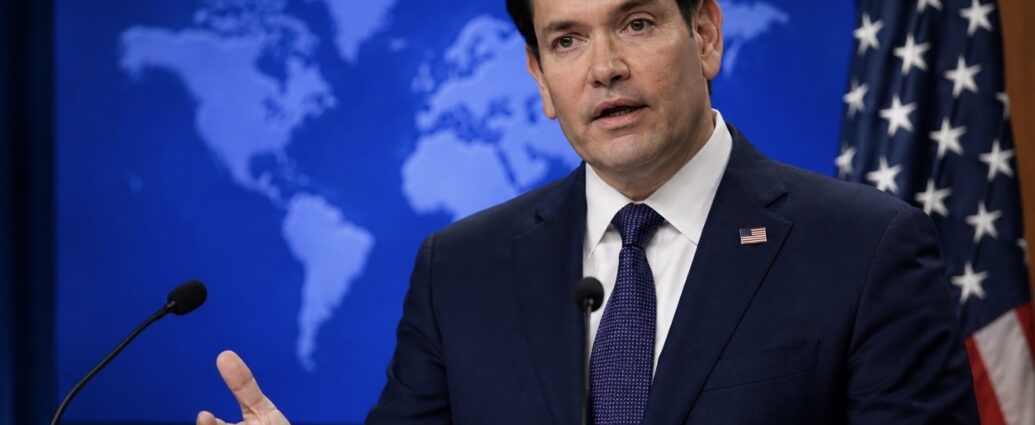
WASHINGTON — U.S. Secretary of State Marco Rubio said late Sunday, July 19, 2026, that Iran is attempting to use the Strait of Hormuz as leverage against the world, arguing that Tehran hopes growing economic pressure on global energy markets will persuade other nations to influence Washington. Rubio made the remarks before departing for the Association of Southeast Asian Nations (ASEAN) foreign ministers’ meetings in Manila, where regional security and the Middle East conflict are expected to be among the top agenda items.
“It’s clear that Iran, at least some people in Iran, want to control the straits and hold that as leverage against the world,” Rubio said.
The comments come as international concern continues to grow over shipping disruptions through the Strait of Hormuz, the narrow waterway connecting the Persian Gulf to global markets. Roughly one-fifth of the world’s seaborne oil and a significant share of global liquefied natural gas exports normally pass through the passage, making it one of the most strategically important maritime routes in the world economy.
Washington has increasingly framed freedom of navigation through Hormuz as an international economic issue rather than solely a regional security matter. U.S. officials argue that any sustained disruption threatens not only energy-producing nations in the Gulf but also importing economies across Asia, Europe and beyond.
Commercial shipping through the area has slowed in recent days as the conflict has intensified. Tanker operators have become increasingly cautious about entering the Gulf, while marine insurance premiums and freight costs have climbed as security risks increase. Energy markets have responded with higher crude prices amid concerns that prolonged disruptions could tighten global supplies.
Iran has repeatedly warned that continued military pressure could affect navigation through the strait. While Tehran has not formally declared the waterway closed, attacks on regional infrastructure and commercial shipping have raised fears that the conflict could significantly disrupt one of the world’s busiest energy corridors.
Rubio’s remarks suggest the administration believes Tehran is attempting to use those economic risks as diplomatic leverage. By increasing uncertainty over global oil and natural gas supplies, U.S. officials argue Iran hopes governments dependent on Gulf energy exports will pressure Washington to reduce military operations or offer political concessions.
The implications extend well beyond the Middle East. Major Asian economies including China, India, Japan and South Korea depend heavily on Gulf oil, while Qatar’s liquefied natural gas exports are critical for customers across both Asia and Europe. Even countries that import little Middle Eastern oil could experience higher transportation costs, inflationary pressure and increased prices for fuel and manufactured goods if shipping disruptions persist.
Although several Gulf producers have alternative export routes, including pipelines that bypass Hormuz, those systems cannot replace the full volume normally transported through the strait. Iraq, Kuwait and Qatar remain particularly dependent on maritime exports through the passage, leaving global markets highly sensitive to any prolonged interruption.
Rubio’s comments also underscore a broader U.S. diplomatic strategy ahead of meetings with Indo-Pacific allies. Washington is encouraging partner nations to view open navigation through Hormuz as a shared international interest rather than a dispute confined to the United States and Iran. Administration officials argue that allowing any country to use a critical international shipping lane as political leverage would create a dangerous precedent for global commerce.
Financial markets continue to closely monitor developments in the Gulf. Energy traders remain focused on tanker traffic, insurance rates and export volumes, recognizing that even limited disruptions can quickly affect oil prices, transportation costs and inflation expectations worldwide.
As diplomatic efforts continue alongside military tensions, the Strait of Hormuz remains one of the world’s most closely watched economic flashpoints. Rubio’s warning reflects growing concern in Washington that the conflict is evolving beyond a regional confrontation into a challenge with potentially far-reaching consequences for international trade and global energy security.
JBizNews Desk | Washington
© JBizNews.com All Rights Reserved. Reproduction or distribution without written permission is prohibited.
Shipping Risks Intensify in the Strait of Hormuz as Oil Markets Brace for New Supply Threats
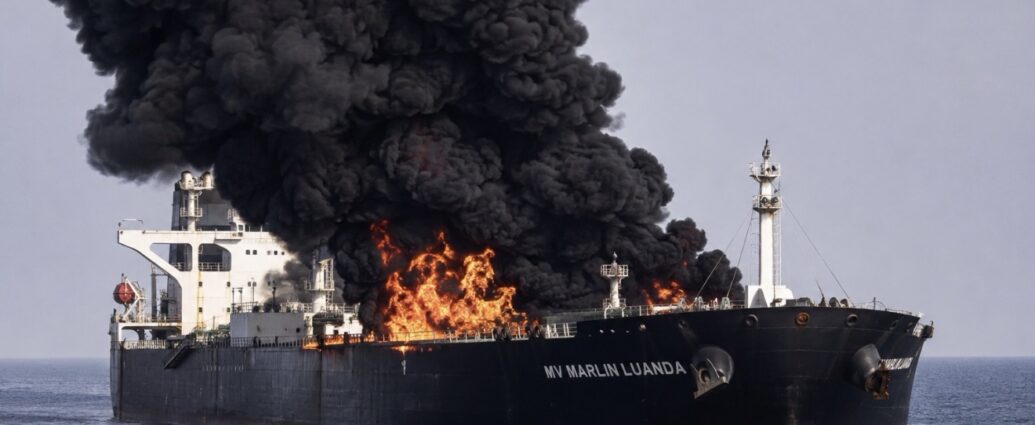
The latest shipping data and maritime security advisories show commercial traffic through the Strait of Hormuz has slowed sharply following renewed attacks on vessels and escalating military operations in the Gulf, raising fresh concerns over global energy supplies as financial markets prepare to open Monday, July 20. The Strait carries roughly one-fifth of the world’s seaborne oil trade, making any disruption a closely watched risk for investors, energy companies and governments.
The slowdown reflects more than temporary caution. Shipping companies have reduced voyages through the waterway, some vessels have switched off public tracking systems for security reasons, and operators are increasingly reassessing whether the risks outweigh the financial rewards of continuing normal transit. Tanker traffic has fallen to its lowest level in nearly two months, according to shipping data, underscoring growing concern across the maritime industry.
For global markets, the immediate issue is not whether the Strait closes entirely but whether fewer ships moving through it begin tightening oil supplies. Even modest reductions in exports can increase volatility in crude prices, insurance costs and freight rates, ultimately filtering through to gasoline, diesel, aviation fuel and consumer prices worldwide.
Energy traders will be watching crude futures closely when electronic trading resumes Sunday evening. Oil prices have already climbed as geopolitical tensions intensified, reflecting concern that additional attacks could further disrupt exports from one of the world’s most important energy corridors.
The consequences extend well beyond the energy sector. Airlines, shipping companies and logistics firms typically face higher operating costs when fuel prices rise. Manufacturers dependent on imported raw materials can also experience increased transportation expenses, while retailers may ultimately pass higher freight costs on to consumers. At the same time, higher energy prices can complicate inflation trends that central banks have been trying to contain.
Investors will also be monitoring defense companies, which historically attract increased attention during periods of heightened geopolitical uncertainty, while energy producers often benefit from stronger crude prices. Conversely, transportation, travel and consumer discretionary companies can come under pressure if investors believe higher fuel costs will reduce profits or weaken consumer spending.
Another growing concern is marine insurance. As attacks on commercial shipping increase, insurers often raise premiums for vessels entering high-risk waters. Those additional costs become part of the overall expense of moving oil and other commodities, adding another layer of inflationary pressure throughout global supply chains.
Although the Strait of Hormuz remains open, recent developments demonstrate how quickly market sentiment can shift. Even without a formal blockade, reduced shipping activity, rerouted cargoes and increased security precautions can tighten available supplies enough to influence global commodity prices.
For Wall Street, Monday’s opening will likely reflect how investors judge the balance between geopolitical risk and corporate fundamentals. If tensions stabilize, markets may recover some recent losses. However, any additional attacks on commercial vessels or critical energy infrastructure before the opening bell could trigger another move toward safe-haven assets such as gold and U.S. Treasury securities while supporting higher oil prices.
The broader economic impact will depend on whether current disruptions remain temporary or develop into a longer-lasting constraint on global energy flows. For now, the Strait of Hormuz has once again become one of the world’s most closely watched economic chokepoints, reminding investors that geopolitical events can rapidly reshape market expectations.
JBizNews Desk | New York
© JBizNews.com All Rights Reserved. Reproduction or distribution without written permission is prohibited.


Brent Oil Tops $90 as Middle East Attacks Threaten Hormuz Flows
Brent crude oil climbed above $90 per barrel on Sunday after renewed military attacks across the Middle East heightened fears that one of the world’s most critical oil shipping routes could face prolonged disruption. The move came as fighting between the United States and Iran intensified, commercial tanker traffic through the Strait of Hormuz slowed sharply, and energy traders priced in a greater risk of supply interruptions affecting global oil markets.
The rally marks another significant escalation for energy markets. Brent crude, the international benchmark, rose more than 3% during trading, while U.S. benchmark West Texas Intermediate also posted strong gains. Investors have shifted their focus from global demand to the growing possibility that military conflict could interrupt the steady flow of crude from the Persian Gulf.
At the center of those concerns is the Strait of Hormuz. The narrow waterway serves as the primary export route for crude oil produced by Saudi Arabia, Iraq, Kuwait, the United Arab Emirates, Qatar and Iran. Roughly one-fifth of the world’s daily oil supply normally passes through the strait, making it the single most important chokepoint in global energy trade.
Although the waterway has not been officially closed, shipping companies have become increasingly cautious. Tanker operators have reduced voyages through the Gulf, insurance costs have climbed, and vessel owners are carefully evaluating the security risks before entering the region. Even without a complete shutdown, reduced shipping capacity can tighten supplies and push prices higher.
Energy analysts say the market is now adding a sizeable geopolitical risk premium to every barrel of oil. Traders are no longer reacting only to current production levels but also to the possibility that export terminals, pipelines or commercial tankers could become targets if the conflict expands.
The effects extend well beyond oil producers. Airlines, trucking companies, manufacturers and chemical producers all depend heavily on stable fuel prices. Higher crude costs eventually work their way through the economy as transportation expenses increase, production costs rise and businesses pass those increases on to consumers.
American motorists could begin feeling the impact within weeks if crude prices remain elevated. Retail gasoline prices generally follow wholesale oil markets with a delay, meaning sustained prices above $90 per barrel would likely place upward pressure on fuel prices during the peak summer travel season. Diesel prices, which affect freight transportation and logistics, could also continue rising if the conflict persists.
Financial markets are closely monitoring whether the disruption becomes temporary or develops into a longer-term supply problem. Oil inventories in many consuming nations remain relatively healthy, helping cushion immediate shortages. However, if tanker traffic through the Strait of Hormuz continues to slow or additional energy infrastructure is damaged, the market could tighten quickly.
Several market analysts believe volatility will remain high until there is greater clarity over the military situation. Every announcement involving attacks, shipping advisories or diplomatic developments has the potential to move oil prices sharply in either direction. While prices could retreat rapidly if tensions ease, further escalation could send crude significantly higher.
For businesses, the latest rally serves as another reminder that geopolitical events remain one of the largest variables affecting energy costs. Companies dependent on transportation, manufacturing and international shipping are closely watching developments as they assess fuel expenses, supply chains and pricing strategies for the months ahead.
For now, the global oil market is trading on uncertainty. Until commercial shipping through the Strait of Hormuz returns to normal and regional tensions subside, energy markets are expected to remain highly sensitive to every new development in the Gulf.
JBizNews Desk | New York
© JBizNews.com All Rights Reserved. Reproduction or distribution without written permission is prohibited.
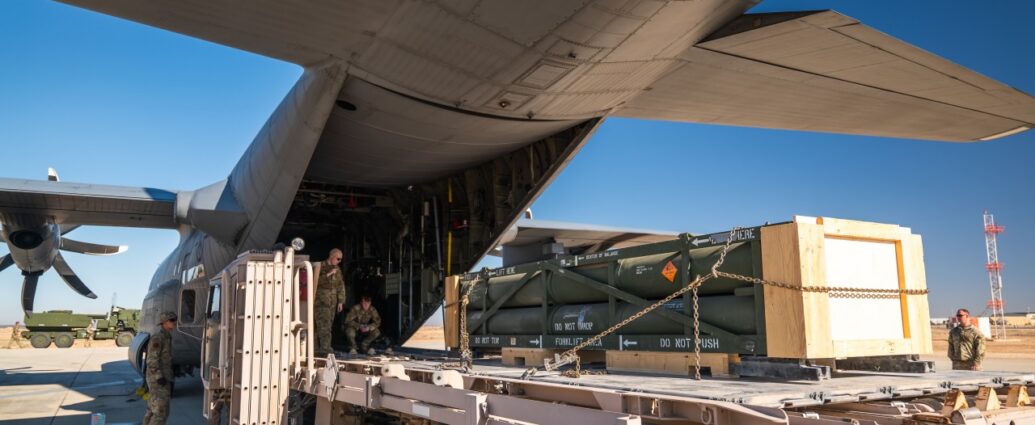


What to Expect When Wall Street Opens Monday as War Risks and Big Tech Earnings Collide
Investors enter the week watching oil prices, Middle East developments and a major round of corporate earnings after technology shares led Friday’s market decline.
Wall Street will reopen Monday, July 20, 2026, with investors confronting two competing forces: a widening earnings season that could restore confidence in corporate growth and renewed geopolitical pressure that threatens to keep oil prices, inflation concerns and market volatility elevated.
The immediate starting point is Friday’s selloff. The S&P 500 closed down 1% at 7,475.69, the Dow Jones Industrial Average fell 406.55 points to 52,146.42, and the Nasdaq Composite dropped 1.4% to 25,520.24. For the full week, the S&P 500 lost 1.6%, the Dow declined 0.9% and the Nasdaq fell 2.9%, with technology and artificial-intelligence-related shares absorbing the heaviest pressure.
Monday’s opening direction will first be shaped by trading in stock-index, oil, gold and Treasury futures before the opening bell. Futures markets reopen Sunday evening, giving investors their first opportunity to react to developments that occurred after Friday’s close.
The most immediate uncertainty remains the conflict involving the United States and Iran, particularly its effect on energy infrastructure, shipping routes and the broader oil market. Any additional attack affecting production facilities, export terminals or transportation through the Middle East could push crude prices higher and pressure equities before regular trading begins.
A calmer geopolitical weekend could produce the opposite reaction, particularly among technology and consumer stocks that were sold heavily last week. Still, the market is unlikely to treat the conflict as resolved simply because no major escalation occurs before Monday morning. Investors are now placing a higher risk premium on energy supplies, transportation costs and the possibility that expensive fuel could slow progress against inflation.
That creates a difficult backdrop for the Federal Reserve, which is scheduled to hold its next policy meeting on July 28 and July 29. The central bank will not announce a rate decision this week, but investors will continue adjusting expectations for that meeting as they evaluate energy prices, corporate earnings and the latest labor and housing figures.
The market will also be assessing whether Friday’s decline was a temporary pullback or the beginning of a broader shift away from high-valued technology stocks. The Nasdaq suffered the steepest weekly loss among the three major indexes, reflecting concern that expectations surrounding artificial intelligence, semiconductor demand and future corporate spending may have moved faster than near-term profits.
This week’s earnings schedule will provide an important test.
Alphabet and Tesla are both scheduled to report second-quarter results after the market closes Wednesday, July 22. Alphabet’s conference call is set for 4:30 p.m. Eastern, while Tesla plans to begin its question-and-answer webcast at 5:30 p.m. Eastern.
Those two reports could influence the direction of the broader market because they touch several of the most closely followed investment themes: artificial intelligence, digital advertising, cloud computing, electric vehicles, energy storage and corporate capital spending.
For Alphabet, investors will be watching whether spending on data centers and artificial-intelligence infrastructure is translating into stronger cloud revenue and durable earnings growth. The company’s capital requirements are also becoming increasingly important as technology groups compete for computing capacity, electricity and advanced chips.
Tesla enters its report after announcing that it delivered more than 480,000 vehicles during the second quarter and deployed 13.5 gigawatt-hours of energy-storage products. The market will be looking beyond deliveries to vehicle pricing, profit margins, manufacturing costs and management’s outlook.
IBM will also report Wednesday, with its earnings announcement scheduled for 5 p.m. Eastern. Intel follows Thursday, July 23, after the closing bell. Intel’s results will be closely examined for evidence about demand for personal computers, data-center processors, manufacturing progress and the company’s effort to rebuild its position in advanced semiconductor production.
The setup suggests Monday may be less about a single economic report and more about positioning for what comes later in the week. Portfolio managers may reduce exposure to companies reporting earnings, move toward energy and defensive sectors, or use any rebound to adjust positions after Friday’s technology selloff.
Financial, energy, healthcare and industrial shares could attract buyers seeking alternatives to expensive technology names. At the same time, a sharp decline in oil or an easing of geopolitical tensions could quickly restore interest in growth stocks.
Investors should not assume that Monday’s opening move will hold throughout the session. Markets facing both geopolitical headlines and major earnings reports can reverse rapidly as traders move between risk reduction and bargain hunting.
The week begins with Wall Street under pressure but not without potential support. Corporate earnings remain strong enough to keep buyers engaged, while the approaching Federal Reserve meeting gives every new economic signal added importance. Monday’s opening will show whether investors are prepared to buy last week’s decline or whether war risks and concerns over technology valuations have started a more defensive phase.
JBizNews Desk | New York
© JBizNews.com All Rights Reserved. Reproduction or distribution without written permission is prohibited.