


Mexican Governor Indicted by U.S. Steps Down


Opinion | Trump’s Resolve on Iran at 60 Days

Opinion | Trump Can Escape His Bay of Pigs

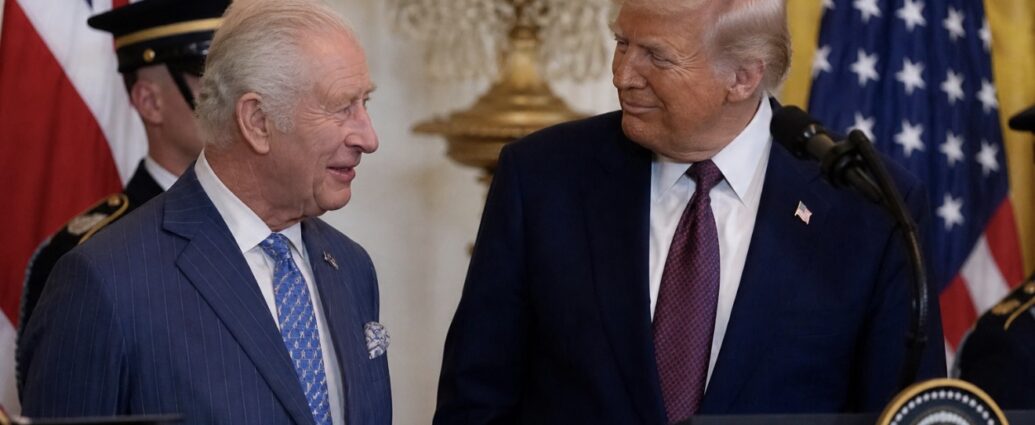
King Charles III’s U.S. State Visit Draws Praise for Reinforcing Ties but Highlights Deepening U.S.-U.K. Strains Over Trade, Security and Iran Policy
WASHINGTON — King Charles III used his four-day state visit to the United States last week to underscore the enduring “special relationship” between Britain and America while subtly signaling important policy differences on trade, security cooperation and political tone — a delicate diplomatic balancing act that has earned praise from historians and diplomats even as it exposed ongoing trans-Atlantic tensions.
The visit, which ran from April 27 to April 30, 2026, marked the first official state visit by a British monarch to the U.S. since Queen Elizabeth II’s trip in 2007. Hosted by President Donald Trump and First Lady Melania Trump, the trip was timed to coincide with America’s 250th anniversary of independence and included high-profile events in Washington, D.C., New York and Virginia: a White House welcome ceremony, an address to a joint session of Congress, a wreath-laying at Arlington National Cemetery, and a gala in New York promoting cultural and charitable ties.
According to Reuters, the king’s mission was explicitly designed to highlight the deep historic and cultural bonds between the two nations at a time when political and policy rifts have widened. President Trump publicly praised the monarch, calling him “fantastic” and a “great king,” while the visit helped keep diplomatic channels open amid disagreements between the Trump administration and U.K. Prime Minister Keir Starmer’s government.
Kristofer Allerfeldt, a professor of American history at the University of Exeter, told reporters that the monarch “has done us proud.” He noted that the visit could provide short-term benefits in steadying relations but acknowledged that deeper structural tensions — particularly over the recent U.S.-led action against Iran — would be far harder to resolve.
The strains were impossible to ignore. The Trump administration has sharply criticized the U.K. for its cautious stance on military support during the Iran conflict, with the president accusing Prime Minister Starmer of weakness and failing to live up to the legacy of Winston Churchill. Differences also surfaced over trade policy, including disputes involving the U.K.’s digital services tax and broader tariff concerns, as well as NATO burden-sharing, climate priorities, and regulatory alignment.
Despite these frictions, King Charles emphasized unity, cultural bonds and shared democratic values in public remarks, including his address to Congress. The carefully choreographed itinerary allowed the monarch — who operates above partisan politics — to project continuity and goodwill while the elected governments navigated their disagreements.
Historians and diplomats described the trip as a classic example of royal soft power at work: reinforcing long-term institutional ties and public affection between the two peoples even when official government positions diverge. The king’s presence at Arlington National Cemetery and participation in 250th-anniversary commemorations in Virginia underscored the deep military and historical partnership forged over centuries.
For the business and investment community, the visit served as a reminder that the U.S.-U.K. economic relationship remains one of the world’s most robust, with billions in bilateral trade, massive cross-border investment, and close financial-market ties. Yet the underlying policy differences — on tariffs, digital regulation, energy policy and defense spending — continue to create uncertainty for companies operating on both sides of the Atlantic.
As the royal couple departed for Bermuda on April 30, analysts said the visit succeeded in its immediate goal of projecting stability and mutual respect. Whether it translates into lasting progress on the thornier issues of trade and security remains to be seen.
JBizNews will continue to monitor developments in U.S.-U.K. relations as both governments work through their differences.
By JBizNews Staff | May 1, 2026
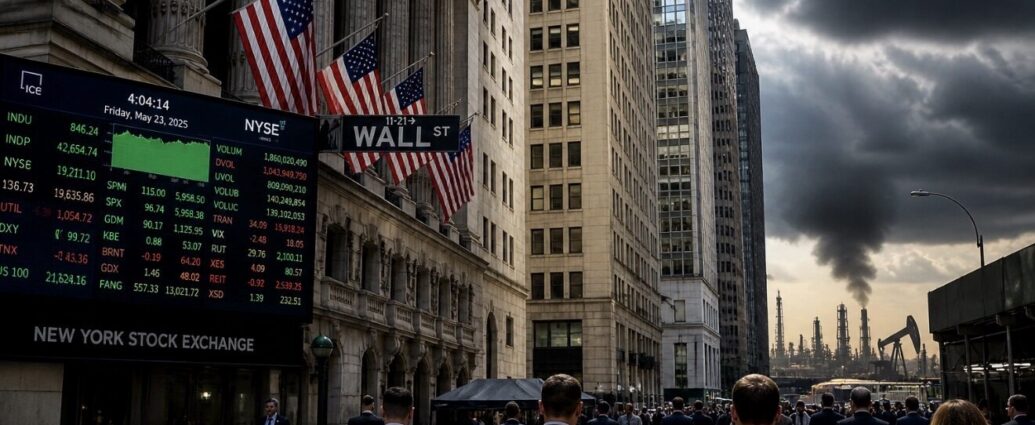
U.S. Stocks Close At All-Time Records As Apple Surges, Iran War And Rising Oil Rattle Global Markets
Wall Street opened May with a show of strength on Friday, pushing the S&P 500 and Nasdaq Composite to fresh all-time highs even as the U.S.-Iran conflict reached a critical legal and political inflection point, oil prices stayed elevated above $100 a barrel, and the global economic picture remained clouded by war and uncertainty.
The S&P 500 gained 0.29% to close at 7,230.12, while the Nasdaq Composite surged 0.89% to 25,114.44, both setting closing records. The Dow Jones Industrial Average was the only major index to finish in the red, slipping 152.87 points, or 0.31%, to settle at 49,499.27.  The Russell 2000 small-cap index rose 0.46%, closing at 2,812.82, just short of a 52-week high. 
The day’s standout mover was Apple, which gave the broader market its footing. Shares jumped more than 3% after the iPhone maker posted better-than-expected quarterly results, reinforcing investor confidence in the AI demand boom that has driven much of this year’s rally.  The strong print capped a week of mixed but broadly positive Magnificent Seven earnings, with Alphabet and Tesla joining Apple as outperformers, while Nvidia and Meta ended the week lower.
One theme that sharpened this week: markets are rewarding AI spending that shows near-term returns — as seen with Alphabet — and punishing spending without clear payoff, a dynamic that weighed on Meta Platforms after the company raised its capital expenditure guidance without convincing investors the dollars would translate quickly into growth. 
On the energy side, Brent crude settled at $108.17 a barrel, down about 2% on the day, after reports emerged that Iran sent a new peace proposal through Pakistani mediators. But President Donald Trump rejected the offer, saying he was “not satisfied,” signaling the conflict and its pressure on global oil supplies is far from over. 
Exxon Mobil and Chevron both beat earnings estimates but missed on revenue, as stymied oil production and deliveries held up behind the closed Strait of Hormuz weighed on energy sales.  Exxon CEO Darren Woods told investors to expect oil prices to climb further as the market absorbs the full impact of the Iran war. 
The Iran conflict added a new layer of political drama to Friday’s session. President Trump told Congress that hostilities with Iran “have terminated” — a claim that came exactly 60 days after the conflict began on February 28, the deadline set by the War Powers Resolution of 1973 for the president to seek congressional authorization for military force. Trump argued that a ceasefire in place since April 7 effectively ended the fighting, and said he considered the law itself unconstitutional.  Senator Susan Collins of Maine broke with fellow Republicans to vote for a war powers resolution to end U.S. hostilities, citing the 60-day deadline as a legal requirement, not a suggestion. 
For everyday Americans, the war’s economic toll is most visible at the gas pump. California drivers are paying an average of $6.01 per gallon — the highest in the nation and a 30% increase since the U.S. and Israel launched the war against Iran in late February. 
Roblox was among Friday’s notable losers, cratering 17% after the company slashed its full-year guidance, blaming friction from new age verification and safety protocols that have slowed user growth and social engagement on the platform. 
On the macro front, the VIX volatility index settled below 17, a nearly two-week low, suggesting investors continue to look past geopolitical tension and high energy costs. The S&P 500 and Nasdaq posted their best monthly performances since 2020 for April, with the broader market gaining roughly 10% for the month. 
Looking ahead, next week brings April nonfarm payrolls and a fresh round of major earnings, headlined by Palantir, Advanced Micro Devices, and Arm Holdings.
JBizNews Desk.
© JBizNews.com. All rights reserved. This article is original reporting by JBizNews Desk. Unauthorized reproduction or redistribution is strictly prohibited.


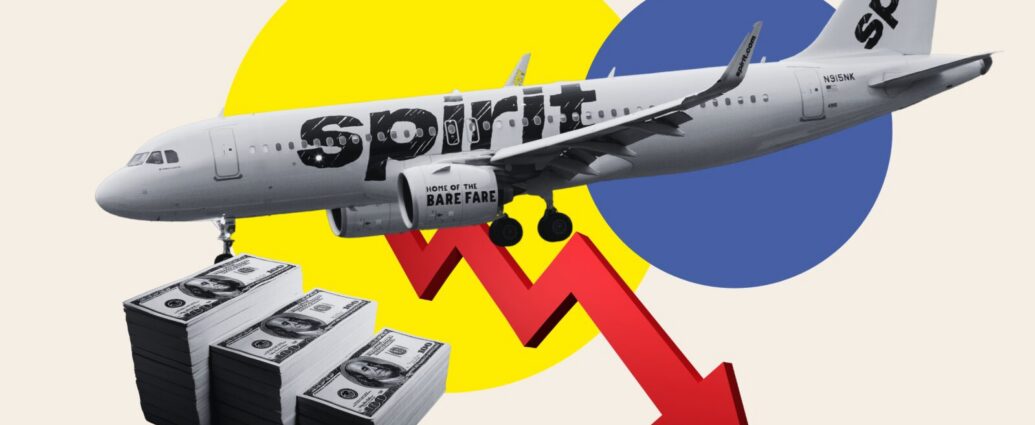
Spirit Airlines on Brink of Shutdown, Say Government Officials and Analysts, as $500 Million Rescue Deal Falls Apart
By JBIZnews Staff
May 1, 2026
Spirit Airlines is teetering on the edge of collapse, with the ultra-low-cost carrier preparing for a potential shutdown after a proposed $500 million government-backed rescue deal fell apart, according to government officials and industry analysts.
The discount airline, already operating under Chapter 11 bankruptcy protection for the second time in less than two years, has only days of cash left to sustain operations, multiple sources familiar with the situation told JBIZnews. Negotiations with the Trump administration for emergency funding — which would have given the government a major equity stake and senior creditor status — stalled when key bondholders and lenders, including hedge fund Citadel, rejected the terms.
Spirit Airlines aircraft amid financial turmoil
(Illustrating the carrier’s deepening crisis as the $500 million rescue package collapses and shutdown looms.)
Ct2PX“LARGE”
The bailout was seen as a last-ditch effort to keep Spirit flying amid soaring jet fuel prices triggered by the U.S.-Iran conflict. Without the infusion, the airline risks immediate liquidation, which would mark the end of operations for one of America’s largest budget carriers and disrupt travel for millions of passengers, analysts warned.
Spirit had been working toward an exit from its latest bankruptcy filing by early summer, but the surge in fuel costs derailed those plans, government sources confirmed. Creditors are concerned the proposed deal would significantly diminish the value of their claims, leading to the impasse.
Aviation experts and analysts view a Spirit shutdown as likely to ripple through the industry, reducing capacity on popular leisure routes and potentially driving up fares at rival carriers. Passengers with upcoming Spirit tickets are being urged to monitor the situation closely, as refunds or rebookings may become complicated if operations cease.
The White House and Department of Transportation have not issued an official comment on the stalled talks, but sources indicate no immediate alternative funding path has emerged. Spirit continues to operate flights for now, but the clock is ticking.
JbizNews Desk – Business


Oil Giants That Wrote Off Venezuela Are Taking a Second Look
New York, NY – May 1 , 2026 – Exxon Mobil Corp. and ConocoPhillips Co., two of the biggest U.S. oil companies that largely wrote off Venezuela after years of political upheaval, nationalizations and crushing sanctions, are quietly returning to the South American nation to evaluate whether its vast reserves can once again become part of their global portfolios.
Executives familiar with the matter say both companies recently dispatched technical teams to assess the condition of legacy projects and gauge the potential for reviving output in one of the world’s largest oil basins. The moves come as global crude prices hover near multi-year highs and Venezuela’s government introduces new investor-friendly laws aimed at attracting foreign capital back to its struggling energy sector.
Chevron Corp., which has maintained a limited presence in the country through a sanctions license, has moved more aggressively. The company has expanded its operational footprint in recent months and is preparing plans to significantly boost production if conditions allow, according to people briefed on the discussions.
The renewed interest marks a striking reversal from the early 2020s, when U.S. majors largely exited or scaled back dramatically amid the Maduro regime’s economic collapse, hyperinflation and U.S. sanctions that froze assets and barred most dealings. Venezuela’s proven reserves remain among the largest on the planet, but output has plummeted to a fraction of its former levels because of underinvestment, aging infrastructure and political risk.
High oil prices have changed the calculus. Brent crude has climbed above $100 a barrel in recent weeks amid Middle East tensions, making even costly Venezuelan heavy crude more economically viable. At the same time, Caracas has passed legislation offering improved fiscal terms, streamlined permitting and greater legal protections for foreign investors — steps analysts say are designed to signal a more pragmatic approach to international capital.
Venezuela’s acting president, Delcy Rodríguez, has personally met with senior U.S. oil executives in recent weeks to discuss potential cooperation, according to officials on both sides. The talks have focused on technical assessments, joint-venture structures and the possibility of gradual sanctions relief tied to verifiable increases in production.
Still, caution prevails. Many executives and analysts expect any major new capital commitments to wait until after credible democratic elections and clearer political stability. “No one wants to bet billions on a handshake when the political landscape could shift again,” said one senior energy executive who has been involved in the preliminary talks.
The tentative thaw reflects a broader recalibration across the industry. With global demand for oil remaining robust and new supply sources facing their own delays and costs, Venezuela’s untapped potential has once again drawn boardroom attention — even if the risks remain formidable.
For Exxon and ConocoPhillips, which together once operated some of the country’s most productive fields before being forced out, the current visits represent low-cost, high-upside optionality. Technical teams are evaluating reservoir integrity, infrastructure needs and the economics of restarting dormant projects.
Chevron, already producing modest volumes under its existing license, sees an opportunity to scale up faster. The company has signaled internally that it could add tens of thousands of barrels per day if regulatory hurdles ease further.
Whether these scouting missions translate into large-scale investment will depend on several variables: the pace of political reform in Caracas, the trajectory of U.S. sanctions policy under the current administration, and sustained high oil prices that justify the considerable capital required to rehabilitate Venezuela’s battered oil infrastructure.
For now, the message from the oil majors is measured optimism. After years of writing Venezuela off the map, the world’s biggest energy companies are once again taking a serious second look.
JbizNews Desk Energy

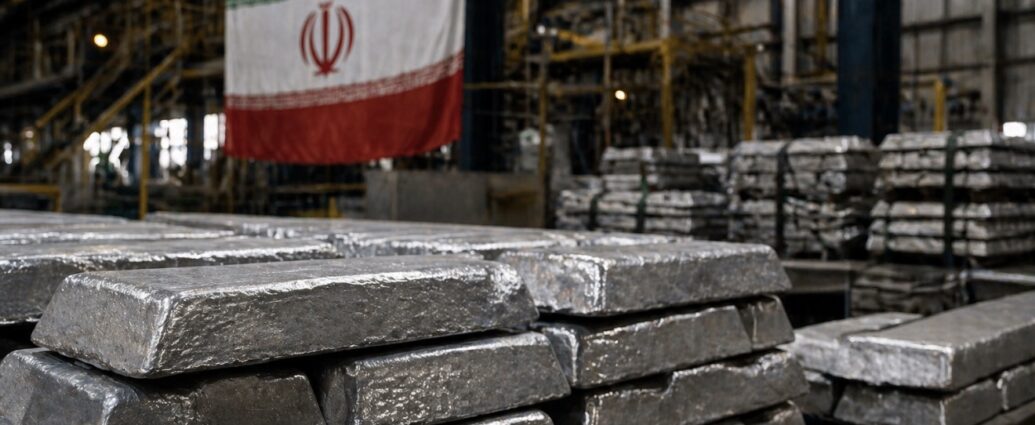
Aluminum Climbs As Trump’s Iran Blockade Chokes Gulf Supply And Prices Keep Rising
May 1, 2026
Aluminum prices are holding at elevated levels and analysts warn they could go higher — as President Donald Trump doubles down on his naval blockade of Iran and the Strait of Hormuz remains effectively closed to normal trade.
The Persian Gulf accounts for roughly 9% of global aluminum production, but 18% of aluminum exports outside of China. That makes the region’s output far more important to the rest of the world than its production share alone suggests — and far more vulnerable to a prolonged shipping disruption. 
When the Iran conflict broke out on February 28, London Metal Exchange aluminum futures jumped as much as 10% within two weeks. Prices settled around 8% higher and have been trading near four-year highs. 
The reason is simple: Gulf smelters cannot ship what they produce, and they are running out of what they need to keep producing. Most Gulf smelters depend on alumina imported by sea through the Strait of Hormuz. With the strait effectively blocked, raw material supplies have been cut off. Facilities that cannot receive inputs have been forced to reduce output or shut down entirely. 
Aluminium Bahrain, known as Alba and home to the world’s largest aluminum smelter, declared force majeure on its deliveries and shut down about 300,000 tons per year of capacity — roughly 19% of its total output. Qatalum in Qatar also initiated a controlled production shutdown due to natural gas shortages caused by the conflict. 
Emirates Global Aluminium subsequently announced that repairs to restore full production at its Al-Taweelah facility could take up to a year — a timeline that analysts say could push the global aluminum market outside of China into a deficit even if shipping through the strait resumes soon. 
The downstream impact reaches into everyday life. Aluminum is used in cars, canned food and beverages, aircraft, building materials, and packaging. The automotive sector is among the most exposed — modern vehicles contain an average of 180 kilograms of aluminum per car. Aerospace and packaging industries face similar pressures, with no easy short-term substitute for the metal. 
Ross Strachan, head of aluminum raw materials at CRU Group, said prices could climb toward $4,000 per ton if the disruption continues. BMI, a unit of Fitch Group, said prices are likely to stay elevated in the coming weeks, warning that a prolonged disruption could push the market to $3,700 per ton given that it was already expected to run a deficit in 2026. 
The blockade shows no signs of ending soon. President Trump vowed this week to maintain the naval blockade and was briefed by military commanders on further options, saying the pressure would force Tehran back to the negotiating table.  Iran’s leadership has shown no willingness to comply.
Trump said he will keep the blockade in place until Iran agrees to a nuclear deal. Tehran says it will not reopen the Strait of Hormuz until the U.S. Navy stands down. Neither side has shown signs of budging. 
For manufacturers, consumers, and businesses that depend on aluminum — from car makers to food packagers to construction firms — the longer this standoff lasts, the higher costs are likely to go.
JBizNews Desk
© JBizNews.com. All rights reserved. This article is original reporting by JBizNews Desk. Unauthorized reproduction or redistribution is strictly prohibited.

Khamenei vows to protect nuclear program, warns US over Gulf presence in written statement
The “noble” Iranian population will safeguard the regime’s nuclear and missile technologies as “national assets,” a Thursday speech attributed to Iranian Supreme Leader Ayatollah Mojtaba Khamenei read.
The speech was read on Iranian state TV by a broadcaster and posted on Khamenei’s official X/Twitter account.
Iranians will “safeguard these assets just as they do their maritime, land, and airspace borders,” the speech continued.
“A new chapter for the Persian Gulf and Strait of Hormuz is unfolding,” it read.
“Today, it has been proven to not only the global public opinion but even to the rulers of countries that the US’s presence and establishment in the Persian Gulf is the main source of instability in the region,” it stated.

“The US’s flimsy bases lack the resilience and capability even to ensure their own security, let alone provide any hope for US’s dependents and the US-worshippers in the region,” the speech continued.
“The brilliant future of the Persian Gulf region will be a future without the US where the progress, comfort, and prosperity of its nations are served,” it added.
‘American foreigners belong at the bottom of Strait of Hormuz,’ speech attributed to Khamenei says
“We share a ‘common destiny’ with our neighbors surrounding the waters of the Persian Gulf and the Sea of Oman. These foreigners from thousands of kilometers away, who are greedily carrying out transgressions in the Persian Gulf and Sea of Oman, have no place here except at the bottom of its waters,” the speech stated.
“Iran will put an end to the hostile enemy’s exploitation of the Strait of Hormuz,” it stated, adding that Iran’s management of the strait would “ensure the security of the Persian Gulf.”
The gulf has “provoked the greed of many devils over the centuries,” including “repeated aggressions carried out by European and American foreigners,” it said.
Most recently, this includes the “saber-rattling of the Great Satan, the US,” it concluded.
A similar statement was read in early April.
Khamenei is believed to be seriously wounded following Israeli and US airstrikes on Tehran.


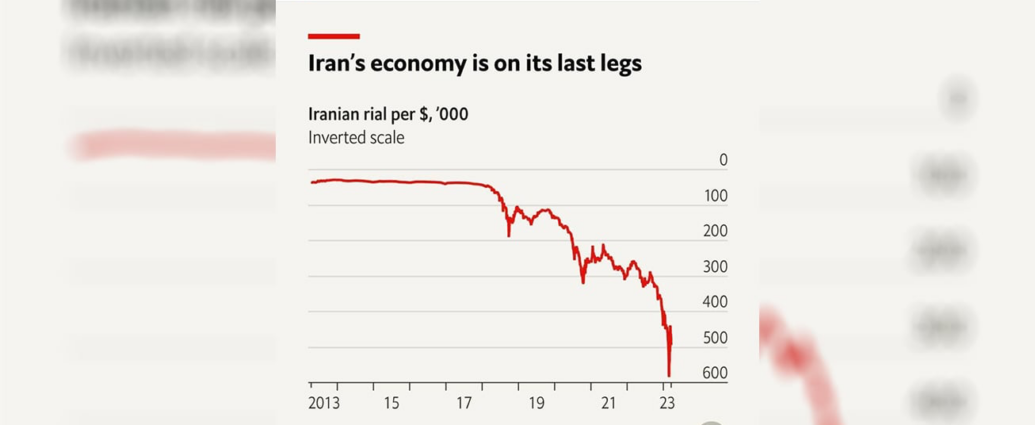
Iran’s Rial Hits Record Low as U.S. ‘Economic Fury’ Sanctions Bite: Treasury Secretary Bessent Says Iranian People ‘Deserve a New Era’
New York, NY – April 30, 2026 – Iran’s currency plunged to a fresh all-time low in the free market Thursday, trading at approximately 1.81 million rials per U.S. dollar, as intensified American sanctions under the Trump administration’s “Operation Economic Fury” continue to choke the regime’s oil revenue and financial lifelines.
The sharp decline — which some reports peg at nearly 15% in recent days — comes amid a post-ceasefire rush for hard currency by Iranian businesses and citizens hedging against further instability following clashes with Israel and the United States. Ordinary Iranians are feeling the pain through hyperinflation, shortages, and a collapsing purchasing power that has worsened for decades.
In a pointed post on X, U.S. Treasury Secretary Scott Bessent delivered a stark message to the regime in Tehran:
“Amid the impact of Economic Fury, Iran’s currency has hit an all-time low. The Iranian people deserve a new era, which the corrupt and shambolic Iranian regime cannot provide. With their oil industry closing and their currency plummeting, it is past time for the Iranian regime to concede that the people of Iran deserve much better than the ruins of their current regime can provide.”
Bessent’s comments underscore the Trump administration’s maximum-pressure campaign, which has included the seizure of nearly $500 million in Iranian crypto assets, the targeting of shadow banking networks, and reports of a U.S. naval blockade affecting key ports and oil shipments.
The rial’s collapse is not new — the currency has lost more than 99% of its value against the dollar since the 1979 Islamic Revolution — but the latest drop highlights the regime’s vulnerability. Chronic mismanagement, corruption, massive spending on proxy militias across the Middle East, and years of international sanctions have left Iran’s economy in tatters. Oil exports, the lifeblood of the regime’s budget, are under severe strain as Washington tightens the noose.
Market analysts note that even the government’s heavily subsidized official exchange rate offers little relief for everyday Iranians, who rely on the free-market rate for imports, remittances, and basic goods. The result: skyrocketing prices for food, medicine, and fuel, fueling sporadic protests that the regime has struggled to contain.
“Sanctions are working exactly as designed,” one senior U.S. official told JBIZ News on background. “The regime’s ability to fund terror proxies and its nuclear ambitions is evaporating. The Iranian people have paid the price for their leaders’ choices long enough.”
The Trump administration has signaled that the pressure will continue until Tehran makes significant concessions on its nuclear program and regional destabilizing activities.
As the rial continues its freefall, the central question remains whether this economic squeeze will finally force the regime to change course — or ignite broader unrest among a population long frustrated by hardship.


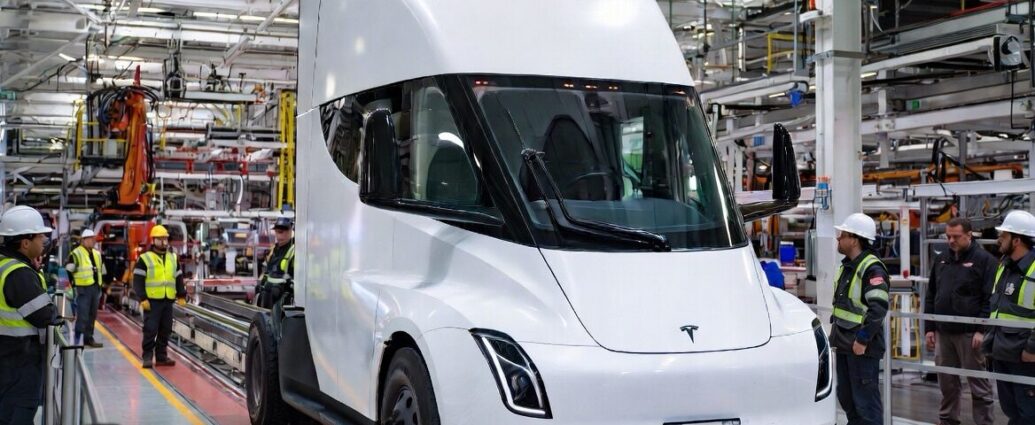
Tesla Just Dropped Big News About Its Electric Semi Truck — First Unit Rolls Off High-Volume Production Line
By JBizNews Desk — April 30, 2026
Tesla has delivered a major milestone in the push toward electrifying long-haul trucking. Late Wednesday, the company announced on X that the first Tesla Semi has rolled off its dedicated high-volume production line at a new facility adjacent to Gigafactory Nevada. The post, which included an image from inside the plant, marks the official start of scaled manufacturing for the long-awaited Class 8 electric truck and signals that volume deliveries to customers could begin later this year.
This development comes directly from Tesla itself, confirming what the company outlined in its Q1 2026 shareholder update: the Semi remains on schedule for volume production starting in 2026, with the Nevada factory built specifically to ramp output toward a long-term target of up to 50,000 units annually. The announcement builds on ongoing real-world pilots, including a new three-week port drayage test launched today by Southern California operator MDB Transportation, and partnerships such as the recent agreement with Pilot Travel Centers to expand Megacharger infrastructure.
For everyday businesses and supply chains that rely on trucking — from small manufacturers shipping goods across the Midwest to regional distributors facing high diesel costs — the news carries immediate practical weight. Lower operating expenses could eventually ease pressure on freight rates, helping offset some of the broader cost challenges tracked throughout today’s coverage, including cautious consumer spending and energy prices.
What the Milestone Means for Fleets and Small Businesses
• The Semi’s estimated 500-mile range and roughly 1.7 kWh per mile efficiency promise dramatically lower fuel and maintenance costs compared with diesel trucks, potentially cutting per-mile expenses by up to 70 percent once charging infrastructure matures.
• Early high-volume output will initially focus on fulfilling Tesla’s own internal needs before expanding to external customers, with analysts projecting 5,000 to 15,000 deliveries in 2026 before scaling higher.
• The dedicated Nevada factory, spanning 1.7 million square feet, is designed for efficient production, supporting Tesla’s goal of making electric trucking economically competitive for a wider range of operators.
Economists weighed in on the broader implications, with Diane Swonk, chief economist at KPMG, describing the development as a pivotal step in reshaping freight economics as diesel’s cost advantage continues to erode amid volatile fuel prices, making fleets — including smaller operators — increasingly open to electric alternatives that offer predictable long-term savings; Heather Long, chief economist at Navy Federal Credit Union, pointed out the ripple effects for Main Street businesses, noting that many small manufacturers and distributors reliant on regional trucking could see gradual relief in shipping costs especially as more charging networks come online through partnerships like the one with Pilot; Oliver Allen, senior U.S. economist at Pantheon Macroeconomics, emphasized that while the ramp will be gradual, the confirmation of high-volume production removes a key uncertainty that has lingered since the Semi’s original 2017 unveiling and aligns with broader trends of big players investing in scale to make clean technology accessible beyond just large fleets; Nicole Bachaud, economist at ZipRecruiter, added that the production push could create new manufacturing and technician jobs in Nevada while prompting trucking companies to rethink hiring and training for electric vehicle operations; and Gina Bolvin, president of Bolvin Wealth Management Group, advised business clients to monitor the rollout closely, saying early adopters among small and mid-sized fleets may gain a competitive edge on costs but success will depend on access to reliable charging and the ability to integrate the trucks into existing routes without major disruptions.
Real-World Momentum Already Building
The announcement arrives as operators put early Semis to work in demanding environments. MDB Transportation’s pilot, for instance, is testing the truck on active port container routes — one of the toughest applications in freight — tracking everything from energy use to driver experience. Combined with Tesla’s expanding Megacharger network, these efforts are helping prove the Semi’s readiness for everyday commercial use.
Outlook
Tesla’s first high-volume Semi represents more than just another factory milestone; it brings the company closer to delivering on the promise of electric trucking at scale. For businesses of all sizes, the potential benefits include meaningfully lower operating costs, reduced emissions, and greater predictability in freight expenses — advantages that could matter a great deal amid today’s mixed economic signals and persistent pressure on household and business budgets.
The coming months will show how quickly production scales and whether the economics hold up in real-world fleets. For business enthusiasts following supply-chain and transportation trends, this is a story worth watching closely. Tomorrow’s updates on fleet adoption, charging infrastructure, and related earnings will offer the next clues about how quickly the Semi could reshape the roads.
JBizNews Desk
© JBizNews.com. All rights reserved. This article is original reporting by JBizNews Desk. Unauthorized reproduction or redistribution is strictly prohibited
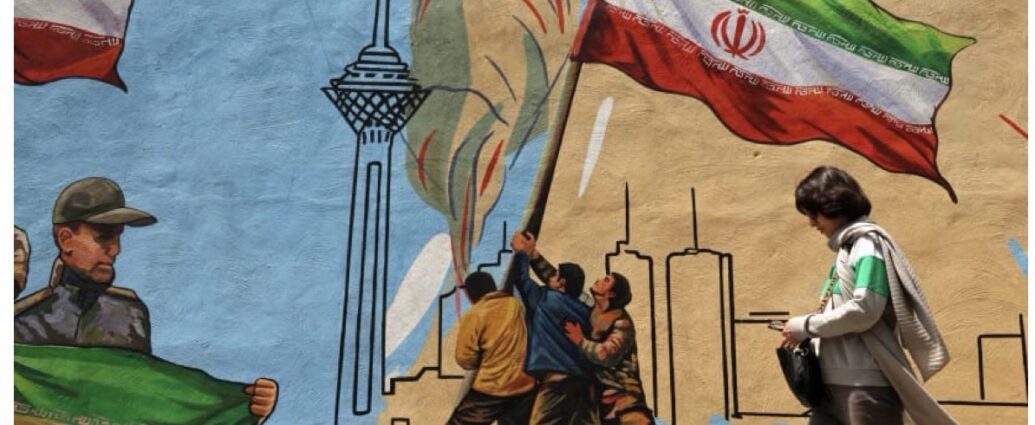
Behind Tehran’s calm, Iran faces deepening economic collapse
On the surface, the streets of Tehran appear to have returned to normal. Cafés are open, and traffic jams in the capital have resumed their usual pace. However, beneath this routine lies a nation on the brink of financial collapse, one that even the most brutal crackdowns may not contain.
While the streets are full of people, their pockets are empty. The Iranian rial has become a liability that citizens are desperate to offload.
“There is simply crazy inflation in the market because nobody wants to hold the Iranian currency,” explains Prof. Amos Nadan, head of the Dayan Center at Tel Aviv University, adding, “This currency is fundamentally unstable.”
Even before the recent military escalations, Iran was grappling with an inflation rate of approximately 70 percent—the highest since World War II. Today, the numbers tell the story of a struggling middle class. The new monthly minimum wage stands at over 160 million rials, a figure that sounds astronomical until it is converted to its actual value: a mere $104.

The human cost of this devaluation is staggering
“The truth is that this might not be the end. Because when there isn’t much economic activity in Iran—as there wasn’t during the war—there isn’t much opportunity for the currency to weaken dramatically,” says Eyal Hashkes, a strategic consultant and author of The Swords of Economy. “The moment life returns to full normality, we will see an even more significant weakening of the rial.”
The human cost of this devaluation is staggering. Daily necessities have become luxury items. A single kebab in a restaurant now costs between five and six million rials, while a basic meal of chicken and rice can cost up to four million.
“We are seeing very difficult cases across many fields—child prostitution and other extremes just to bring food home,” notes Prof. Nadan. “This is a population that is suffering, especially the poor, in a very severe way.”
Iran’s economic woes were not caused by the war; they were merely accelerated by it. Long before the first shots were fired, the country suffered from a chronic energy crisis, forced rolling blackouts, and a persistent drought that dried up the nation’s reservoirs. These problems led to massive riots in January, which the regime suppressed with lethal force, resulting in the deaths of tens of thousands of protesters.
In an attempt to stifle dissent, the regime has kept the internet largely paralyzed. This digital blackout has cost the economy an estimated $37 million per day due to the inability to process online payments and disruptions to export chains.
According to Eyal Hashkes, the only way for Iran to emerge from this stagnation is to remove economic sanctions. Without external investment, Iran cannot grow. “Without removing sanctions, it will be impossible to regrow the economy.”
To further destabilize the regime’s ability to fund its military proxies, Israel targeted key industrial sites during the conflict, focusing on steel and petrochemical plants. While the strikes were defined as attacks on the military industry, the collateral damage to the civilian economy was immense. “The attacks on steel facilities and other industries like petrochemicals led to a decrease of billions, or even tens of billions, in potential annual revenue for Iran,” says Hashkes.
Perhaps the most significant pressure point remains the maritime blockade of the Strait of Hormuz. For weeks, the flow of goods from Iranian ports has ground to a halt. Tehran’s primary lifeline—oil—is no longer reaching its main customer, China.
“Something like 85 percent of Iran’s exports is oil,” says Prof. Nadan.
The crisis is reaching a logistical breaking point. Analysts estimate that by mid-May, Iran will have completely run out of storage space for its unexported oil. When that happens, the regime will have to make a choice that could haunt it for decades: shutting down the wells.
“In the future, Iran will run out of storage for all this oil,” Hashkes says. “When that happens, they will have to start turning off the wells. After a well remains inactive for a long time, it often cannot simply be turned back on—it takes years of rehabilitation.”
Prof. Nadan adds that the oil’s quality is at risk. “If you don’t pump the oil, it begins to lose its quality. We remember the COVID-19 period, when prices turned negative just to keep the pumps moving. Iran is entering a new cycle of hardship,” he says.
The Central Bank of Iran recently estimated that it would take at least 12 years to rehabilitate the national economy—and that is assuming the war ends today. As the pressure builds, the question in Jerusalem and Washington is no longer whether the Iranian economy will break, but whether the Iranian people will break the regime before it does.

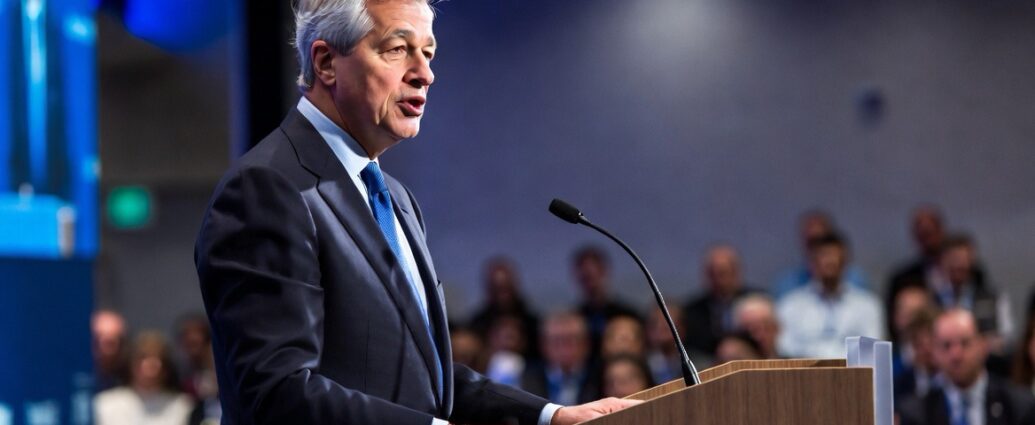
Jamie Dimon Warns: Bureaucracy, Complacency and Arrogance Will Take Down Any Big Company
By JBizNews Desk
NEW YORK — April 30, 2026
JPMorgan Chase CEO Jamie Dimon delivered a blunt message to investors and corporate executives this week: big companies don’t fail because of competition or economic shocks alone — they fail because internal bureaucracy, complacency and arrogance slowly erode performance from within.
Speaking at the annual conference hosted by Norges Bank Investment Management, Dimon declared that “bureaucracy, complacency, and arrogance will take down a company,” according to video and reporting from Fortune and Reuters. He placed management culture — not external market forces — at the center of his warning.
Dimon, who has led JPMorgan through multiple crises and economic cycles, argued that even the strongest institutions can be hollowed out by layers of unnecessary process, a sense of entitlement, and resistance to change. He urged leaders to fight these internal threats aggressively to maintain long-term competitiveness.

Business Implications
Dimon’s remarks come as many of America’s largest companies face rising pressure to streamline operations amid high interest rates, geopolitical uncertainty, and rapid technological disruption. For boards, CEOs and investors, the message is clear: cultural decay can be more dangerous than any external shock. Companies that fail to cut bureaucracy and instill urgency risk the same slow decline Dimon described.
The warning carries extra weight coming from the head of the nation’s largest bank — one that has consistently outperformed peers by staying lean and decisive. Market watchers expect Dimon’s comments to spark fresh conversations about corporate efficiency, especially as 2026 earnings seasons highlight the cost of bloated organizations.
JBizNews will continue tracking how top executives respond to Dimon’s call for cultural vigilance.
— JBizNews Desk
© JBizNews.com. All rights reserved. This article is original reporting by JBizNews Desk. Unauthorized reproduction or redistribution is strictly prohibited.

Taiwan’s Economic Growth Hits 39-Year High
Breaking: Crude Oil Surges Past $125 Overnight as Iran Blockade Holds Firm
By JBizNews Desk
NEW YORK — April 30, 2026
Brent crude climbed above $125 per barrel in overnight trading Thursday, extending its sharp rally as the U.S.-Iran naval blockade showed no signs of easing and global supply disruptions intensified.
President Trump reiterated late Wednesday that the blockade will remain in place until Iran agrees to a new nuclear deal, sending energy markets into a fresh frenzy. The effective closure of the Strait of Hormuz has now halted roughly 20% of global oil shipments, creating the largest supply shock on record according to the International Energy Agency.
Business Implications
The latest spike is amplifying inflation fears worldwide and adding fresh pressure on central banks already navigating the Fed’s divided rate decision. Emerging markets like India are seeing their currencies weaken further, while U.S. consumers and businesses face higher gasoline and energy costs heading into summer. Energy stocks are set to open sharply higher in pre-market trading.
— JBizNews Desk
© JBizNews.com. All rights reserved. This article is original reporting by JBizNews Desk. Unauthorized reproduction or redistribution is strictly prohibited.
France’s Economy Stalls in Q1 as GDP Growth Hits Zero, Missing Forecasts Amid Energy Shock
By JBizNews Desk
PARIS — April 30, 2026
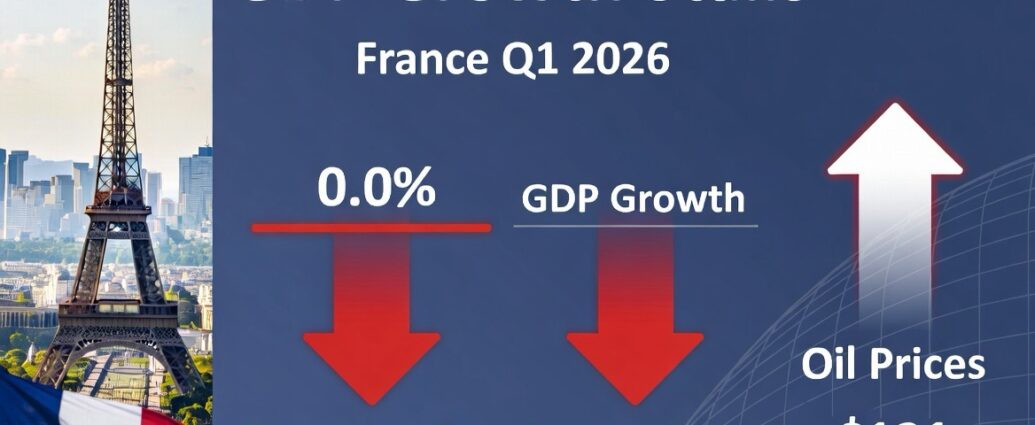
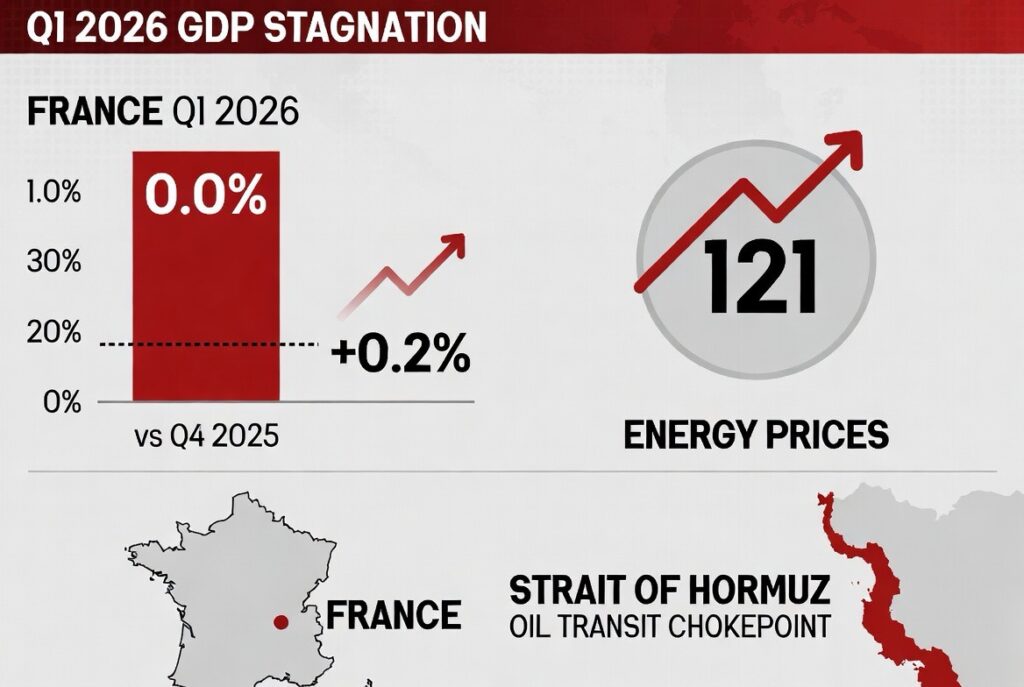
France’s economy came to a complete standstill in the first quarter of 2026, with preliminary GDP data showing zero growth (0.0% quarter-on-quarter), according to the National Institute of Statistics and Economic Studies (INSEE). The flat reading missed analyst forecasts of around 0.2% expansion and marked a sharp slowdown from the modest 0.2% gain recorded in the fourth quarter of 2025.
The stagnation reflects weakening domestic demand as households grapple with the spillover from escalating energy prices triggered by the ongoing U.S.-Iran conflict and the closure of the Strait of Hormuz. Brent crude’s surge past $121 per barrel has fueled higher inflation, eroding purchasing power and prompting precautionary saving rather than spending.
Final domestic demand contributed little to growth, while net exports and inventory changes offered only limited support. Business investment remained subdued amid heightened uncertainty and tighter financial conditions.
“This is a clear warning signal,” said one eurozone economist. “The energy shock is hitting France harder than expected, and with fiscal consolidation already underway, policymakers have limited room to respond.”
The data comes as France continues to wrestle with high public debt (now above 117% of GDP) and a delayed 2026 budget that aims to trim the deficit to around 5% of GDP — still well above EU targets. The government’s fiscal restraint, combined with the external energy shock, is weighing on near-term momentum.
Business Implications
For investors and multinationals with exposure to Europe, France’s stall adds to concerns about eurozone resilience amid geopolitical tensions. Sectors tied to consumer spending, autos, and energy-intensive manufacturing are most at risk in the coming quarters. However, the data may reinforce expectations that the European Central Bank will keep rates on hold longer, providing some relief on borrowing costs.
France’s 2026 full-year growth forecasts are now likely to be trimmed toward the lower end of the 0.9–1.0% range. Markets will watch closely for the Bank of France’s updated projections and any signs of fiscal or monetary easing later this year.
INSEE will release a more detailed breakdown in late May. JBizNews will continue monitoring the impact on European markets, corporate earnings, and global energy dynamics.
— JBizNews Desk
© JBizNews.com. All rights reserved. This article is original reporting by JBizNews Desk. Unauthorized reproduction or redistribution is strictly prohibited.
