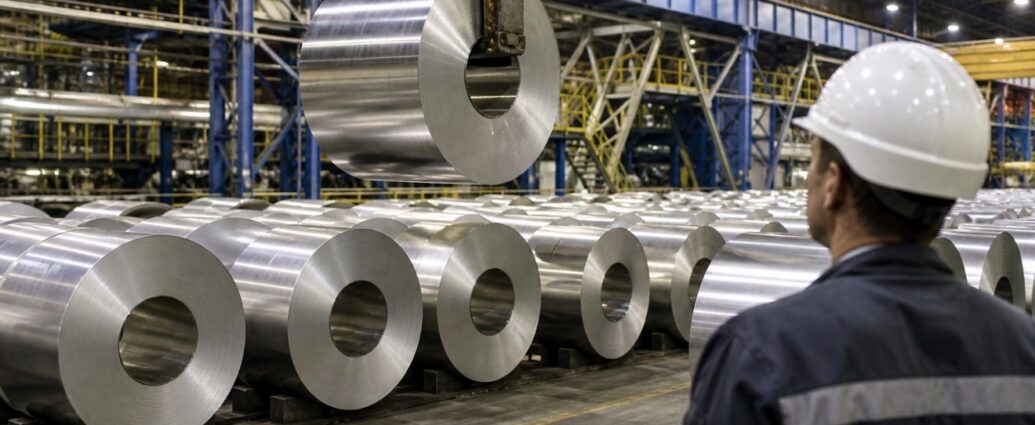
American automakers are being squeezed by a rare and brutal convergence: a 50% U.S. tariff on imported aluminum, a major domestic supplier still recovering from two fires, and a war in the Middle East that has disrupted global aluminum supply chains and sent prices sharply higher. The combined pressure is adding billions of dollars in costs to an industry already navigating a difficult market, and consumers buying new vehicles may ultimately pay the price.

The three biggest U.S. automakers have warned that commodity inflation tied to the Iran war will cost them about $5 billion this year, as the conflict squeezes supplies of aluminum, plastics and other inputs and raises the prospect of higher vehicle prices. 

The Iran War’s Role

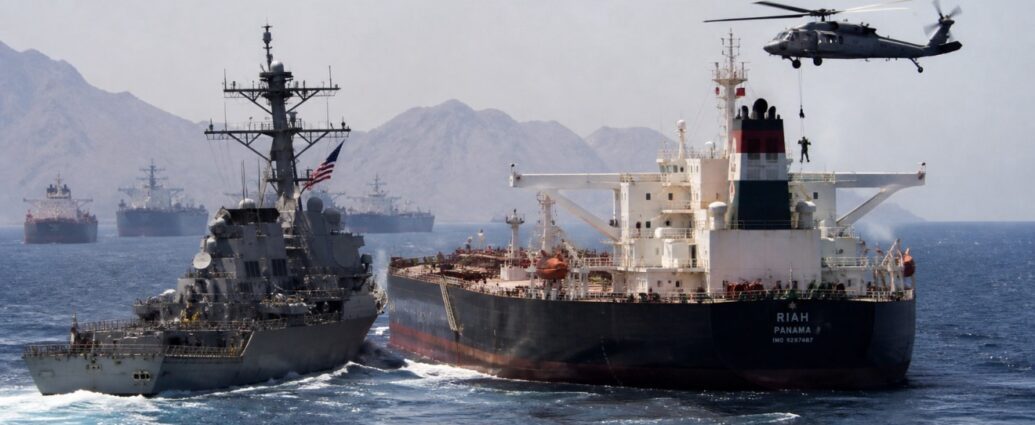
The closure of the Strait of Hormuz has made a bad situation significantly worse. Nine percent of the world’s seaborne aluminum transits the Strait of Hormuz annually, and the collapse of shipping through the waterway has created an immediate supply shock for the metal, forcing producers worldwide to scramble for alternative sources at premium prices. 

Aluminium Bahrain — known as Alba, which operates the world’s largest single-site aluminum smelter with annual capacity of 1.6 million tonnes — declared force majeure on deliveries and cut output by 19%, citing its inability to load shipments through the effectively closed Strait of Hormuz. Qatalum, the Qatar-based joint venture between Norsk Hydro and Qatar Aluminium Manufacturing, announced a controlled production shutdown following natural gas shortages caused by Iranian strikes. 

At the outbreak of the Iran conflict on February 28, three-month LME aluminum futures jumped as much as 10% by mid-March. Guillaume Osouf, principal analyst at CRU, warned that “a prolonged conflict will likely drastically change our market outlook for the rest of the year due to the lasting impact this will have on global supply.” 

The Novelis Fire That Started It All

Even before the Iran war, Ford Motor was already dealing with a supply chain crisis of its own. Multiple fires at a facility owned by Novelis — Ford‘s primary aluminum supplier — knocked a critical hot mill in Oswego, New York offline for months. Ford incurred a $2 billion headwind from those supply disruptions, on top of a roughly $2 billion hit from tariffs in 2025, which nearly doubled the company’s projections from as recently as October, according to President and CEO James Farley. 

The Novelis Oswego plant is the largest domestic aluminum rolling facility in the U.S. and supplies aluminum sheets critical for vehicle production — especially for Ford trucks like the F-150. Ford is Novelis‘s largest customer because of its trucks’ aluminum-heavy bodies. The supply disruptions forced Ford to warn that production could drop by up to 100,000 F-Series pickup trucks, potentially costing the company as much as $2 billion. 

F-150 sales were down 16% year over year in the first three months of 2026 as a direct result of the inventory shortage. 

The Tariff Problem

With the domestic Novelis plant sidelined, Ford and other automakers were forced to import aluminum from overseas — only to run straight into the Trump administration’s 50% tariff on imported aluminum. Novelis tried to offset lost production by sourcing aluminum from its plants in South Korea and Europe, but the imported metal is subject to a 50% duty, compounding the financial damage for automakers. 

Ford petitioned the Trump administration for temporary tariff relief, at least until the Oswego plant returns to full production. The administration rejected the request. Ford CFO Sherry House said the company still expects to face a $1 billion tariff impact in 2026 even with offsets in place. “There will be tariffs and premium freight associated with that supply continuity of aluminum until we can get the Novelis hot mill back up and running sometime between May and September,” House said. 

A Gradual Path to Recovery

Novelis confirmed it expects its damaged hot mill to resume production by the end of the second quarter of 2026. The rest of the Oswego facility has continued operating without disruption since November, including cold mill, heat treatment production, and automotive finishing and shipping. 

The broader pressure on American manufacturers extends well beyond automakers. Higher aluminum costs flow through to aerospace, defense, food and beverage packaging and appliances — and American firms now pay substantially more for the metal than competitors in other markets, putting them at a significant competitive disadvantage. 

For Ford and its rivals, the road back to normal aluminum costs runs through two separate bottlenecks: a plant in Oswego that must fully restart, and a strait in the Middle East that must reopen. Until both happen, the squeeze on the auto industry — and the consumers who buy its vehicles — will continue.

By JBizNews Desk | May 4, 2026

© JBizNews.com. All rights reserved. This article is original reporting by JBizNews Desk. Unauthorized reproduction or redistribution is strictly prohibited.

Washington, D.C. — May 4, 2026

President Donald J. Trump today participated in a high-profile Small Business Summit in the White House East Room, gathering more than 130 small business owners from across the United States to mark the start of National Small Business Week (May 4–11). The event served as a platform to recognize the 2026 National Small Business Week award winners and underscore the administration’s signature policies credited with fueling a broad-based “Main Street revival.”

In remarks delivered this afternoon, the president spotlighted the transformative impact of the Working Families Tax Cuts Act — signed into law on July 4, 2025 — which has delivered permanent tax relief and regulatory certainty to the nation’s 36 million small businesses, described by the White House as “the true engine of job creation, innovation, and community prosperity.”

Key provisions highlighted include the permanent extension of the 20 percent small business deduction (formerly Section 199A), allowing pass-through entities and entrepreneurs to deduct up to 20 percent of qualified business income. The law also restored and expanded full (100 percent) immediate expensing for investments in equipment, factory construction, machinery, and domestic research and development (R&D), providing businesses with critical upfront cash-flow relief and incentives to expand operations.

Administration officials noted that these measures, combined with broader deregulation efforts, have already produced measurable results. Nearly 12 million small business owners have seen average tax reductions of roughly $7,000, with the permanent 20 percent deduction alone delivering about $4,600 in annual relief to 8 million entrepreneurs. The Deregulation Strike Force eliminated more than $110 billion in compliance costs in its first year, while the Small Business Administration (SBA) delivered record capital — guaranteeing $45 billion in 7(a) and 504 loans to over 85,000 businesses in FY25.

SBA Administrator Kelly Loeffler, who joined the president at the summit, praised the momentum: “We are a nation of builders again thanks to President Trump’s historic wins for Main Street, and I’m honored to mark National Small Business Week alongside him and the job creators who fuel our local communities — particularly as America celebrates 250 years of freedom and free enterprise. … Our nation’s 36 million small businesses now have the confidence to hire, reinvest and expand, unleashing an historic era of sustained growth. America is open for business again.”

The East Room gathering brought together owners representing a cross-section of American enterprise, including manufacturing, food production, defense, energy, retail, and other sectors. Attendees heard directly from the president about additional America First initiatives: expanded Opportunity Zones to channel capital into underserved communities, a new dedicated loan program for small manufacturers, the “Make Onshoring Great Again Portal” for domestic supply-chain sourcing, suspension of burdensome Beneficial Ownership Information (BOI) reporting requirements (saving billions in paperwork), and the termination of the Obama-era Joint Employer Rule to protect franchise owners.

The summit aligns with the official presidential message on National Small Business Week, issued Sunday, which emphasized the role of small businesses in powering the U.S. workforce (employing more than 45 percent of American workers) and advancing the American Dream. “Every day, my Administration is delivering incredible victories for America’s small businesses,” the message stated, referencing the “One Big Beautiful Bill” (the Working Families Tax Cuts Act) and ongoing efforts to slash red tape so owners can “focus on their craft rather than being burdened with endless paperwork.”

The 2026 award winners — selected by the SBA and recognized nationally during a May 3 ceremony in Washington, D.C. — include honorees in categories such as Small Business Person of the Year, Exporter of the Year, Small Business Manufacturer of the Year, Rural Small Business of the Year, Blue-Collar Small Business of the Year, and the Phoenix Award for Small Business Disaster Recovery, among others. Today’s summit provided a high-visibility stage to celebrate their achievements amid the week-long observance.

The event comes as small business optimism has rebounded under the current policy framework, with owners citing greater certainty for long-term planning, hiring, and capital investment. The administration has positioned these gains as central to a broader economic renaissance tied to America’s semiquincentennial (250th anniversary) celebrations.

National Small Business Week continues through May 11 with virtual training sessions, resources, and further recognitions hosted by the SBA. The White House has framed the week as both a celebration of entrepreneurial spirit and a reaffirmation of policies designed to keep America “open for business.”

JbizNews will continue to monitor developments from the summit and provide ongoing coverage of small business policy impacts throughout the week.

By JBizNews Desk | May 4, 2026

Wall Street reversed sharply Monday, as a sudden escalation in the U.S.-Iran conflict wiped out recent gains and sent investors fleeing risk assets, with surging oil prices and rising bond yields amplifying fears that inflation pressures could return just as markets had begun stabilizing.

The Dow Jones Industrial Average dropped 557 points, or 1.13%, closing at 48,941.90. The S&P 500 fell 0.41% to 7,200.75, while the Nasdaq Composite slipped 0.19% to 25,067.80, showing relative resilience as mega-cap technology names helped limit deeper losses. The Russell 2000 declined 0.60%, reflecting heightened pressure on smaller, rate-sensitive companies. Meanwhile, the 10-year Treasury yield climbed to 4.438%, underscoring a renewed selloff in bonds as investors recalibrated expectations around inflation and Federal Reserve policy.

The market’s turn came after officials in the United Arab Emirates confirmed that Iranian missiles had been intercepted — the first such incident since last month’s ceasefire. The development immediately reignited concerns that the conflict could broaden across the region, particularly around critical energy infrastructure and shipping routes.

Investors reacted swiftly. Risk assets sold off across the board, while commodities — particularly oil — surged on fears of supply disruptions. The possibility of instability in the Strait of Hormuz, which handles roughly 20% of global oil flows, became the central focus of trading desks.

Energy stocks surged in response, making the sector the clear outperformer of the day. West Texas Intermediate crude rose 4.39% to $106.42 per barrel, while Brent crude jumped 5.8% to $114.44. The move lifted major energy names, with APA Corporation gaining nearly 4%, Diamondback Energy rising close to 3%, and Marathon Petroleum advancing about 2% as investors rotated into companies directly benefiting from higher oil prices.

Across the broader market, however, selling was widespread. Only Energy and Technology sectors managed to close in positive territory, while economically sensitive sectors bore the brunt of the decline. Materials fell 1.62% and Industrials dropped 1.02%, reflecting growing concern that rising input costs and supply chain disruptions could weigh on corporate margins if the conflict persists.

Within the Dow, losses were led by consumer and industrial names. Home Depot fell 3.50%, Nike dropped 2.95%, and Boeing declined 2.64%, as investors priced in the potential impact of higher fuel costs and slowing global demand. By the end of the session, just seven of the Dow’s 30 components finished in positive territory, highlighting the breadth of the selloff.

Corporate developments added another layer to Monday’s volatility. Norwegian Cruise Line Holdings fell 6.5% after issuing weaker-than-expected forward guidance, citing higher fuel costs and disruptions tied to Middle East tensions. Travel and leisure stocks, which are particularly sensitive to geopolitical instability and energy prices, were among the hardest hit.

At the same time, pockets of strength emerged in earnings-driven names. Palantir Technologies rose 2.3% ahead of its earnings release, with analysts projecting significant growth driven by artificial intelligence demand and government contracts. Berkshire Hathaway edged higher after reporting strong results, with its cash reserves climbing to nearly $397 billion, reinforcing Warren Buffett’s cautious but opportunistic stance in an uncertain environment.

After the close, Pinterest delivered a standout performance, reporting revenue of $1.01 billion — well above expectations — and sending shares surging more than 17% in after-hours trading. Meanwhile, biotech firm Rallybio Corporation jumped 47.4% during the session after announcing a $50 million payment, marking one of the day’s most significant individual stock gains.

The impact of the geopolitical shock extended beyond equities and into the broader economy. Mortgage rates climbed back above 6.5%, tracking the rise in Treasury yields and tightening financial conditions for American households. The move underscores how quickly global events can feed into domestic borrowing costs, particularly in interest rate-sensitive sectors like housing.

Despite the sharp selloff, underlying corporate performance has remained strong. With roughly 63% of S&P 500 companies having reported earnings, blended growth stands at 27.1%, providing a solid фундамент for equities. However, Monday’s session highlighted a critical reality: even robust earnings may not be enough to offset the impact of escalating geopolitical risk, particularly when it intersects with energy markets.

Looking ahead, markets face a series of key tests. Earnings from Palantir, Advanced Micro Devices, Arm Holdings, and Paramount Skydance are expected in the coming days, while Friday’s U.S. jobs report will provide insight into whether economic momentum is holding up amid rising uncertainty.

For now, the message from Wall Street is clear. As long as tensions in the Middle East continue to escalate and oil remains volatile, markets are likely to remain on edge — with energy stocks standing as the market’s only consistent refuge in an otherwise fragile environment.

© JBizNews.com. All rights reserved. This article is original reporting by JBizNews Desk. Unauthorized reproduction or redistribution is strictly prohibited.

Hotel Prices Surge Across U.S. as Flight Cuts and Fuel Costs Tighten Travel Supply

NEW YORK — May 4, 2026 — Hotel prices are climbing across major U.S. travel destinations as airlines cut capacity and jet-fuel costs surge, tightening access to key markets just as peak summer demand builds, according to airline disclosures, hospitality data, and travel industry analysts.

Airlines have begun trimming schedules and reducing frequencies in response to higher fuel costs tied to geopolitical tensions affecting global oil supply. Jet fuel remains one of the largest expenses for carriers, and recent increases have pushed airlines to prioritize profitability over expansion, according to company filings and investor updates.

American Airlines CEO Robert Isom said in recent investor commentary that the airline is adjusting capacity in response to higher costs and evolving demand patterns, particularly on longer-haul and transatlantic routes. Other major carriers have signaled similar caution, reflecting a broader industry shift toward tighter capacity management.

The effects are now spreading into the hotel sector.

In cities including Miami, Orlando, Las Vegas, and New York, hotel pricing is strengthening as inbound seat capacity tightens, based on data tracked by CoStar Group. The firm’s hospitality analytics show stable occupancy levels alongside rising average daily rates in key leisure markets, indicating that pricing power is shifting toward hotel operators.

Jan Freitag, National Director of Hospitality Analytics at CoStar Group, has noted in industry briefings that constrained airlift into high-demand destinations typically supports higher room rates, even when overall travel demand remains steady.

Travel demand itself has remained relatively resilient. Booking trends from platforms such as Expedia Group and Booking Holdings show continued interest in summer travel, though with fewer discounted options as airlines reduce lower-margin capacity.

Henry Harteveldt, President of Atmosphere Research Group, has said in recent commentary that when airfare rises and flight options narrow, the mix of travelers shifts toward those willing to absorb higher costs — a pattern that supports pricing across the broader travel ecosystem.

For consumers, the effect is cumulative. Airfare, lodging, and related travel costs are all moving higher at the same time, pushing total trip expenses above recent norms. Analysts say that if this trend continues, it could begin to influence behavior, with some travelers shortening trips, delaying plans, or shifting to destinations reachable by car.

The broader economic implications are also coming into focus. Tourism-dependent regions rely heavily on steady visitor flows to support local businesses, employment, and tax revenues. A sustained increase in travel costs could weigh on activity in these areas, particularly if higher prices begin to curb demand.

At the macro level, rising travel costs are feeding into services inflation — a category closely watched by the Federal Reserve. Persistent strength in airfare and hotel pricing could complicate efforts to bring inflation lower, especially if energy prices remain elevated.

The situation highlights the interconnected nature of the economy. A disruption in energy markets is now affecting airline cost structures, reducing flight availability, and ultimately pushing up hotel prices and overall travel costs.

Looking ahead, the key variable remains fuel prices. If energy markets stabilize and airlines begin restoring capacity, supply constraints could ease and pricing pressure may moderate. However, if fuel costs remain elevated, the travel industry could face a prolonged period of tighter supply and higher prices.

For now, the trend is clear: fewer flights are limiting access to major destinations, and hotels are responding with stronger pricing. As the summer season approaches, travelers are entering a more constrained and more expensive travel environment — shaped by both resilient demand and restricted supply.

JBizNews Desk

Detroit — May 4, 2026 — Used electric vehicle sales are surging across the United States even as new EV demand has cooled, driven by near-parity pricing with gasoline cars and dramatically lower total ownership costs that are delivering thousands of dollars in savings to budget-conscious buyers. The shift is reshaping the auto market at a time when high gas prices from the ongoing Iran conflict are pushing consumers to seek alternatives that slash fuel and maintenance expenses.

Data released today by Cox Automotive shows used EV sales jumped 27.7% year-over-year in March and were 53.9% higher than February, marking one of the strongest monthly gains on record. In the first quarter alone, roughly 93,500 used EVs changed hands, up 12% from the same period last year. The surge comes as more than 300,000 off-lease EVs are expected to flood the market in 2026 — a 185% increase — giving buyers unprecedented selection of low-mileage, late-model battery-electric vehicles.

Pricing has collapsed to the point where the average used EV now sells for just $1,102 more than a comparable used gasoline car. In March the average transaction price for a used EV was $34,653, down 6.1% from a year earlier, according to Cox. Forty-four percent of used EVs sold for under $25,000, up from 39% just months ago. The price gap that once exceeded $3,900 has essentially vanished, making EVs accessible to a much broader swath of American households.

The real story, however, is in total cost of ownership. A new study from the University of Michigan’s Center for Sustainable Systems, analyzing more than 260,000 used vehicle listings, found that used battery-electric vehicles now deliver the lowest lifetime ownership costs across nearly every vehicle class. For a three-year-old midsize SUV, buyers can save approximately $13,000 over a seven-year ownership period compared with purchasing its gasoline counterpart. Even against used gas models, the savings are substantial because EVs eliminate the single largest ongoing expense for most drivers: fuel.

The U.S. Department of Energy estimates that switching to an EV saves drivers an average of $2,200 per year on fuel alone. Over 200,000 miles, Consumer Reports data shows EV owners save roughly $8,811 on combined fuel and maintenance costs compared with the best-selling gasoline models. Used EVs amplify those advantages. With fewer moving parts, regenerative braking, and no oil changes, maintenance costs run 30-40% lower than for internal-combustion vehicles — a gap that widens as cars age and gas models require more expensive repairs.

Insurance remains higher for EVs — roughly 50% more on average according to recent Insurify data — but that premium is more than offset by fuel and service savings for most drivers. Depreciation, once a major hurdle for new EVs, has moderated dramatically on the used market as supply grows and consumer acceptance rises.

High gasoline prices, now hovering near multi-year highs amid the Iran tensions and Strait of Hormuz disruptions, have accelerated the shift. Search interest for used EVs on major platforms has risen sharply, with many shoppers citing pump prices as the tipping point. “You can get a pretty nice used EV for under $25,000, which is not easy to do on the market at large,” noted Jessica Caldwell, executive director of insights at Edmunds.

The economic ripple effects extend beyond individual buyers. Lower ownership costs for used EVs are helping to ease pressure on household budgets strained by the weaker dollar and broader inflationary forces. At the same time, the flood of off-lease EVs is creating opportunities for dealers and fleets while pressuring new-car pricing. Automakers and lenders are watching closely as the used market increasingly influences residual values and leasing strategies.

Challenges remain. Battery health and range anxiety still concern some buyers, though independent testing services like Recurrent Auto report that the vast majority of used EVs retain strong battery capacity. Charging infrastructure, while expanding, remains uneven outside major metros. And insurance costs, though declining as data improves, continue to be a hurdle for some.

For American families and fleet operators, the math is increasingly clear: in the used market, electric vehicles are no longer a premium choice — they are often the lowest-cost option over the life of the vehicle. With hundreds of thousands more high-quality, low-mileage EVs expected to hit lots in the coming months, the window for significant savings is wide open.

The used-EV boom adds another layer to the weekend’s heavy slate of breaking business news, from the U.S.-led humanitarian operation in the Strait of Hormuz to Fed Governor Michael Barr’s private-credit warning and the dollar’s 10% slide. As gas prices remain elevated and lease returns accelerate, more drivers are discovering that going electric — even on the used lot — is not just environmentally responsible. It is now often the smartest financial decision on four wheels.

JbizNews- Desk – Auto / Economy

By JBizNews Desk | Monday, May 4, 2026

Retail stocks came under pressure Monday as fresh data and company signals pointed to early signs of softening consumer spending, raising concerns about demand sustainability heading into the critical summer season.

Shares of major retailers declined as investors reacted to a combination of slowing foot traffic, increased promotional activity, and shifting consumer behavior. The emerging trend suggests that while overall spending remains positive, consumers are becoming more selective, prioritizing essential goods over discretionary purchases.

Executives across the sector are beginning to acknowledge the shift. Brian Cornell, CEO of Target, said in recent remarks that “consumers are still spending, but they are making more deliberate choices, focusing on value and essentials rather than discretionary items.”

That change in behavior is forcing retailers to adjust strategies. Companies are increasing discounts and promotional efforts to maintain sales volumes, particularly in categories such as apparel, home goods, and electronics. While these measures can support revenue, they often come at the expense of profit margins.

The pressure is especially visible in inventory management. After a period of aggressive restocking to meet earlier demand, many retailers now find themselves holding excess inventory in certain categories. Clearing that inventory requires price cuts, which further compress margins and weigh on earnings expectations.

Neil Saunders, managing director at GlobalData Retail, said “the consumer is not pulling back entirely, but the shift toward value-driven spending is creating a more challenging environment for retailers to sustain profitability.”

Macroeconomic factors are playing a key role. Elevated interest rates have increased borrowing costs for households, while inflation—though easing—continues to affect purchasing power. These pressures are particularly impactful for middle- and lower-income consumers, who are more sensitive to price changes.

Credit trends are also being closely watched. Rising credit card balances and higher delinquency rates in some segments suggest that certain consumers are relying more heavily on credit to maintain spending levels, a dynamic that may not be sustainable over time.

At the same time, the labor market remains relatively strong, providing a partial cushion. Continued job growth and wage gains are supporting overall consumption, but analysts note that these factors may not fully offset the impact of higher living costs and interest rates.

Retailers are responding with a mix of caution and adaptation. Many are tightening cost controls, refining product assortments, and investing in data-driven strategies to better align with changing consumer preferences. E-commerce platforms and loyalty programs are also being leveraged to drive engagement and sales.

However, the outlook remains uncertain. If consumer confidence weakens further or economic conditions deteriorate, the retail sector could face a more pronounced slowdown.

What comes next: Investors will be closely watching upcoming earnings reports and consumer data for confirmation of whether the current softness is a temporary adjustment or the beginning of a broader demand slowdown that could reshape the retail landscape through the remainder of 2026.

JBizNews Desk

By JBizNews Desk | Monday, May 4, 2026

Dubai International Airport — the world’s busiest airport for international passengers — suffered one of the steepest traffic collapses in its history in March, as the Iran war shut down Gulf airspace, forced repeated evacuations and slashed passenger volumes to levels not seen since the depths of the COVID-19 pandemic. The airport is now ramping back up, but the damage to one of the region’s most critical economic engines has already been done.

Dubai Airports released its first-quarter traffic figures on May 4, showing the airport handled 18.6 million passengers in the first three months of 2026 — a 20.6% decline year over year. The damage was heavily concentrated in March: passenger traffic that month fell 65.7% to just 2.5 million, an extraordinarily steep drop for a hub that had been on course to handle nearly 100 million passengers for the full year.

Cargo volumes also fell sharply, dropping 22.7% to 399,600 tonnes in the first quarter, while aircraft movements declined 20.8% to 88,000.

What Happened

The collapse unfolded quickly after the U.S. and Israel launched strikes against Iran on February 28. Dubai International Airport was impacted by retaliatory Iranian strikes that forced the airport to be evacuated. A travel advisory from Dubai Airports warned passengers not to travel to the airport unless they had received a confirmed departure time directly from their airline. Nearly 4,000 flights in and out of DXB were cancelled in the days immediately following the outbreak of conflict, according to FlightAware.

The airport suspended operations again on March 7 following additional Iranian drone strikes. As of the end of March it remained in limited operation due to ongoing security concerns.

Paul Griffiths, CEO of Dubai Airports, described the period as “unprecedented” for a global hub like DXB. “International transfer traffic through the Middle East accounts for a major share of global air travel, with 22.4 million annual passenger journeys flowing through DXB,” he said. “Maintaining smooth operations here is critical to keep global journeys moving.”

Despite the disruption, Dubai Airports said it supported the movement of six million passengers, over 32,000 aircraft movements and 213,000 tonnes of essential cargo from the start of the conflict on February 28 through April 30 — a logistical effort Griffiths said sharpened the airport’s ability to adapt at pace.

The Broader Aviation Toll

DXB was far from alone in absorbing the blow. Regional aviation hubs in Abu Dhabi, Dubai, Doha and Bahrain typically process around 526,000 passengers per day combined, but that number plummeted as airspace closures grounded flights across the region. Emirates, Etihad Airways and Qatar Airways saw their daily flight operations fall to a fraction of normal levels by mid-March, according to Flightradar24 data.

The World Travel & Tourism Council estimated the conflict was costing the Middle East travel and tourism industry approximately €515 million per day. Analysts at Tourism Economics warned that inbound arrivals to the Middle East could decline between 11% and 27% year over year in 2026 — a swing of 23 to 38 million fewer international visitors compared to pre-war forecasts, representing a loss of $34 billion to $56 billion in visitor spending.

Signs of Recovery

The most significant development in aviation came Sunday — the same day Dubai Airports released its first-quarter data. The United Arab Emirates lifted all flight restrictions put in place since the start of the Iran war, with the country’s General Civil Aviation Authority announcing that all air operations had returned to “normal status” in UAE airspace. The authority said the decision followed a comprehensive assessment of operational and security conditions in coordination with relevant authorities.

The ramp-up is being supported by coordination across the oneDXB network, including Emirates and flydubai, as well as service partners and air traffic control. India remained DXB’s largest market in the first quarter with 2.5 million passengers, followed by Saudi Arabia at 1.3 million, the UK at 1.2 million and Pakistan at 918,000. London was the busiest city destination.

Just months ago, Dubai International was targeting 99.5 million passengers for the full year of 2026 — a figure that would have made it the first airport in history to approach 100 million passengers annually. That milestone is now firmly out of reach. Whether the airport can salvage its position as the world’s dominant international hub will depend on how quickly the Iran war ends and how fast nervous travelers return to the Gulf.

— JBizNews Desk

© JBizNews.com. All rights reserved. This article is original reporting by JBizNews Desk. Unauthorized reproduction or redistribution is strictly prohibited.

European officials are reeling from another American threat to raise tariffs on exports to the U.S. despite a trade agreement reached between the bloc and the Trump administration last year.

This post was originally published here. 

Hangzhou — May 4, 2026 — In a landmark ruling that could reshape AI adoption across China’s tech sector, the Hangzhou Intermediate People’s Court has declared that companies cannot legally fire workers solely to replace them with artificial intelligence systems, setting a significant precedent for labor rights as automation sweeps through the world’s second-largest economy.

The court upheld a lower-court decision that a tech firm in eastern China acted unlawfully when it terminated a senior employee after automating his role with AI and offering him a drastically lower-paying position. The worker refused the demotion, and the company cited “material changes in objective circumstances” under China’s Labor Contract Law as grounds for dismissal. The Hangzhou Intermediate People’s Court rejected that argument, ruling that a company’s voluntary decision to adopt AI technology does not qualify as the kind of unforeseeable, irresistible event that would justify termination without proper process or compensation.

The decision comes as Chinese authorities balance the global race to develop AI with the need to stabilize the domestic labor market amid slowing economic growth and youth unemployment concerns. Analysts say the ruling sends a clear signal to tech giants and startups alike: AI-driven efficiency gains cannot come at the direct expense of human jobs without following strict labor protections.

The economic implications are profound. China’s tech sector has poured billions into AI infrastructure and tools, with companies aggressively automating routine tasks in data collection, quality assurance, coding assistance and customer service to cut costs and boost competitiveness against U.S. rivals. The court’s stance could slow that momentum, forcing firms to invest in retraining, reassignment or severance rather than outright replacement. Economists estimate that widespread AI adoption in China could displace millions of white-collar roles in the coming years; this precedent may now require companies to absorb higher labor costs or face legal challenges and compensation payouts.

The case highlights the tension between innovation and employment stability in China’s state-guided economy. While Beijing has heavily promoted AI as a strategic priority, the ruling underscores that labor protections remain a red line. Union officials and labor advocates have welcomed the decision, viewing it as protection against unchecked automation in a country where formal unions are state-affiliated but worker rights are increasingly scrutinized.

For global investors and tech executives, the ruling adds another layer of uncertainty to China’s AI ambitions. Multinational firms with operations in China and domestic players racing to deploy large language models and automation tools must now factor in stricter labor rules when calculating return on AI investments. The decision could also influence how other countries approach AI regulation, especially as Europe and the U.S. debate similar worker protections.

The ruling is the latest in a series of Chinese court decisions reinforcing that AI adoption is a voluntary business choice — not an “objective circumstance” akin to a natural disaster or economic crisis that automatically voids employment contracts. It reinforces existing provisions in China’s Labor Contract Law that require companies to explore alternatives such as retraining or reasonable reassignment before resorting to layoffs.

As AI continues to transform industries worldwide, China’s courts have drawn a firm line: cost-saving automation alone is not legal grounds for termination. The decision is expected to be closely watched by tech firms, labor groups and policymakers as the AI buildout accelerates.

JbizNews- Desk – China / Labor / AI

By JBizNews Desk | Monday, May 4, 2026

Air travel disruptions are escalating across the United States, as airlines struggle to keep pace with surging demand while operating within tight capacity constraints, triggering widespread delays, cancellations, and sharply higher fares.

Major carriers report mounting operational pressure driven by a combination of air traffic control limitations, staffing shortages, and aircraft availability challenges. The imbalance between supply and demand has left little margin for error, with even minor disruptions cascading quickly across national flight networks.

Scott Kirby, CEO of United Airlines, said the industry is facing “extraordinary demand conditions with limited near-term flexibility to add capacity,” warning that the current strain could persist through the peak summer travel season.

Data from the U.S. Department of Transportation and airport authorities show a noticeable rise in delays and last-minute cancellations in recent weeks, particularly across major hub airports including Atlanta, Chicago, Dallas, and Denver. Travelers are encountering longer wait times, reduced flight options, and increased rebooking difficulties.

Fares are also climbing. Industry pricing data indicates that average domestic ticket prices have risen significantly compared to last year, with the steepest increases seen on high-demand routes and peak travel days. Airlines are increasingly leveraging pricing power to manage demand amid constrained supply.

Nicholas Calio, CEO of Airlines for America, said “the system is operating at very high utilization levels, and while demand is strong, infrastructure and workforce limitations are creating real bottlenecks.”

Passengers are feeling the impact directly. Reports of crowded terminals, extended security lines, and limited customer service availability have become more common, adding to frustration among travelers navigating already complex itineraries.

Airports and regulators are working to ease pressure where possible, including adjustments to flight scheduling and coordination with airlines to reduce congestion. However, structural constraints—particularly in staffing and infrastructure—limit how quickly conditions can improve.

Analysts warn that unless airlines can expand capacity or improve operational resilience, disruptions and elevated pricing may become a persistent feature of the travel landscape.

What comes next: With summer travel demand expected to accelerate further, the aviation system is entering a critical period—one where sustained pressure could test both airline operations and passenger tolerance nationwide.

JBizNews Desk

By JBizNews Desk | Monday, May 4, 2026

U.S. automakers are once again confronting a tightening global supply chain, as rising shipping costs, renewed parts shortages, and geopolitical disruptions begin to squeeze production just as the industry had started to stabilize.

Executives across the sector warn that a new wave of constraints—particularly in aluminum, semiconductors, and wiring systems—is extending lead times and forcing manufacturers to slow or adjust assembly lines. The pressure is being felt unevenly but is broad enough to impact output forecasts for the remainder of the year.

Mary Barra, CEO of General Motors, said the company continues to navigate “an environment where supply chain volatility remains a persistent challenge to both production consistency and cost control.” Her comments reflect a growing concern among automakers that the fragile equilibrium reached in late 2025 is beginning to unravel.

At the center of the disruption is a renewed strain on industrial inputs. Aluminum prices have climbed amid constrained global supply, while semiconductor availability—once improving—has tightened again as demand from artificial intelligence infrastructure and defense sectors accelerates. John Murphy, senior auto analyst at Bank of America, noted that “competition for key components is intensifying, and autos are no longer first in line for supply.”

Shipping bottlenecks are compounding the issue. Congestion at major ports in Asia and Europe has increased transit times, while higher fuel costs continue to drive up freight rates. Vincent Clerc, CEO of A.P. Moller-Maersk, warned that “global logistics networks are tightening again faster than expected, particularly across key export hubs.”

Automakers are responding by diversifying suppliers and expanding domestic sourcing, but executives acknowledge these strategies take time and come with higher costs. Reconfiguring supply chains—particularly for complex components—requires new contracts, regulatory approvals, and capital investment, limiting how quickly companies can adapt.

The financial impact is already materializing. Industry analysts estimate that rising input and logistics costs could add billions in expenses across major manufacturers this year. Companies with less pricing power may face margin compression, while others are expected to pass costs on to consumers.

That shift is likely to hit buyers at a sensitive moment. Vehicle affordability has already been strained by elevated interest rates, with monthly payments near record levels. Further price increases could dampen demand, particularly in mid-market segments.

There are early signs of that pressure emerging. Dealers report slower showroom traffic in certain regions, even as inventory levels remain uneven. The combination of high prices and economic uncertainty is prompting some consumers to delay purchases.

Still, automakers remain committed to long-term investments, particularly in electric vehicles and advanced manufacturing. However, executives caution that continued instability in supply chains could slow production ramp-ups and delay broader industry transitions.

What comes next: With supply chains tightening again and demand showing signs of strain, the auto industry is entering another volatile phase—one where cost discipline, pricing strategy, and supply security will define winners and losers through the rest of 2026.

JBizNews Desk

Caracas — May 4, 2026 — Venezuela’s crude exports have surged past 1 million barrels a day for the first time in years, marking a swift rebound less than six months after the ouster of strongman Nicolas Maduro and delivering a major economic lifeline to the cash-strapped South American nation.

April exports soared to 1.16 million barrels a day according to Bloomberg shipping reports and vessel movements, while Reuters data based on PDVSA documents and tanker tracking showed a 14% month-on-month jump to 1.23 million barrels per day — the highest monthly average since late 2018. The surge comes as a Caracas-Washington supply pact has encouraged more sales to the United States, India and Europe, with trading firms and Chevron increasing exports.

The rebound is dramatic. Exports have more than doubled from levels at the end of 2025, fueled by the easing of U.S. sanctions and a steady flow of imported diluents that have helped restart production. Production itself approached 1.1 million barrels a day in March, the highest since 2019, according to PDVSA presentations.

The economic impact is immediate and transformative for Venezuela. Oil revenue is the lifeblood of the government budget, and the jump in exports is expected to generate hundreds of millions in additional hard-currency inflows each month at current prices. This comes as the country struggles with reconstruction after years of hyperinflation, sanctions and economic collapse under Maduro. Analysts say the higher volumes could help stabilize the economy, reduce reliance on debt and ease pressure on the bolivar, while also boosting global oil supply and helping moderate prices amid the ongoing fuel crunch affecting airlines worldwide.

The post-Maduro government has moved quickly to reopen fields and restore output. International oil companies and trading houses are returning, with shipments gaining diversity and reaching more customers than in recent years. Direct exports to the U.S. rose sharply to 445,000 bpd in April, while India took 374,000 bpd and Europe 165,000 bpd, according to shipping data.

The developments carry global implications. Higher Venezuelan supply helps offset tightness caused by the Iran conflict and other disruptions, potentially easing some of the fuel-price pressure that has hammered airlines and other sectors. However, the rapid rebound also highlights Venezuela’s vulnerability: output remains far below the country’s pre-Chávez peak of more than 3 million bpd, and long-term recovery will depend on sustained investment, infrastructure repairs and political stability.

PDVSA documents and vessel tracking confirm the surge, with 66 vessels departing Venezuelan waters in April compared with 61 in March. Trading firms such as Vitol and Trafigura played a major role, alongside increased activity from Chevron.

The milestone is a clear win for the post-Maduro leadership, which has prioritized oil sector revival as a cornerstone of economic recovery. Yet challenges remain: much of the infrastructure is aging, and full rehabilitation will require billions in investment. Still, the export jump signals that Venezuela is re-entering the ranks of significant Latin American oil producers after years on the sidelines.

For global markets, the added supply is a welcome development amid the weekend’s heavy breaking business news — from airline shutdowns driven by the fuel-price crunch to conglomerate earnings and OPEC+ production decisions. Traders will be watching closely when markets reopen Monday for any signs of how the Venezuelan rebound is being priced into crude futures and related energy stocks.

JbizNews- Desk – Energy

By JBizNews Desk | May 4, 2026

Wall Street opened the first trading session of May under a cloud of geopolitical tension, corporate drama, and war-driven commodity pressure, leaving the major indexes split as investors weighed conflicting signals from the Strait of Hormuz, a bombshell takeover bid from a former meme stock, and fresh earnings pain in the travel sector. The week began with stocks mixed and oil prices surging as Wall Street monitored the latest developments in the U.S.-Iran conflict, with conflicting reports of an Iranian attack on a U.S. warship . Iran’s Navy said it blocked warships from entering the zone, while a separate report said two missiles struck a U.S. vessel near Jask Island — neither account independently confirmed. U.S. Central Command denied any ships were hit, stating that no U.S. Navy ships had been struck. Adding to the market pressure, the yield on the 10-year U.S. Treasury note is trading at 4.39%, with bonds selling off this morning and reversing some of yesterday’s rally . The Federal Reserve held interest rates steady at its most recent meeting, and traders now expect the Fed to remain on hold until 2027 , further narrowing the horizon for rate relief. Meanwhile, gold pulled back and crude surged as investors repositioned around the war’s latest chapter.

The Indexes

The S&P 500 slipped 0.18%, the Dow Jones Industrial Average lost 0.40%, and the Nasdaq edged up 0.04%. The Russell 2000 gained 0.46%. 

Oil & Commodities

West Texas Intermediate crude rose 1.2% to $103.20 per barrel, while Brent crude climbed 2.2% to $110.50.  The renewed spike follows the latest Hormuz incident reports. The International Energy Agency has characterized Iran’s closure of the Strait of Hormuz as the “largest supply disruption in the history of the global oil market,” disrupting roughly 20% of global oil supplies. 

Silver futures are down 2.68% to $74.39 per ounce, while gold futures are down 1.40% to $4,579.60. 

GameStop (GME) & eBay (EBAY) — The Day’s Biggest Story

The market’s most-talked-about story this morning has nothing to do with the war. GameStop is proposing to buy eBay for about $56 billion in cash and stock, a bold attempt by Ryan Cohen to take over a storied e-commerce name several times larger than the gaming retailer itself.  The offer of $125.00 per share — comprising 50% cash and 50% GameStop common stock — represents a 46% premium to eBay’s unaffected closing price on February 4, 2026, the day GameStop started accumulating its position.  GameStop has secured an initial, non-binding “highly confident letter” from TD Bank to provide about $20 billion of debt financing. 

Shares of eBay climbed roughly 6% after the market open Monday to just over $110, well below GameStop’s $125 offer, suggesting investors are skeptical the deal will close. GameStop fell about 1% Monday to $26.30 per share.  Ryan Cohen told the Wall Street Journal he is prepared for a proxy fight and will take the offer directly to shareholders if eBay’s board resists.

Norwegian Cruise Line Holdings (NCLH) — Earnings Miss and Outlook Cut

Norwegian Cruise Line Holdings cut its annual profit forecast on Monday, as the cruise operator battles surging fuel costs linked to ongoing tensions in the Middle East, as well as tepid demand for its sea voyages. Shares slumped 6% in premarket trading and have fallen nearly 16% so far this year.  Norwegian now expects adjusted profit for fiscal 2026 to be between $1.45 and $1.79 per share, compared with its prior forecast of $2.38 per share.  The company cited mounting crew airfare costs and logistics disruptions directly tied to the war, along with weakened consumer appetite for European itineraries.

Tesla (TSLA) — FSD Milestone

Tesla‘s Full Self-Driving (Supervised) fleet has surpassed the 10-billion-mile mark, according to the automaker’s updated safety page. CEO Elon Musk previously set that threshold as the data milestone needed for “safe unsupervised” driving.  The announcement added a positive undertone to Tesla shares as investors tracked the autonomous driving program’s progress.

Tanker Shipping — The Breakout Trade

Beyond oil stocks, the sharpest beneficiary of war-driven shipping disruption has been crude tanker freight. The Breakwave Tanker Shipping ETF (BWET) has surged more than 600% year-to-date as war and disruption in key maritime corridors drive shipping rates sharply higher. The U.S. Oil Fund (USO) is up close to 90% this year, and the SPDR Energy Select Sector ETF (XLE) is up over 23%, but those moves appear modest next to the freight futures spike. 

The Bigger Picture

The S&P 500 had its best month in nearly six years in April, even as oil prices surged back above $100 per barrel and bond yields climbed. The 30-year fixed mortgage climbed to 6.3%, tracking rising Treasury yields, which have been pushed higher by oil-driven inflation concerns.  For now, equity markets appear willing to look past the war, but this morning’s unconfirmed missile reports are a reminder that the situation can reprice the entire market in minutes.

© JBizNews.com. All rights reserved. This article is original reporting by JBizNews Desk. Unauthorized reproduction or redistribution is strictly prohibited.

By JBizNews Desk
Monday , May 4, 2026

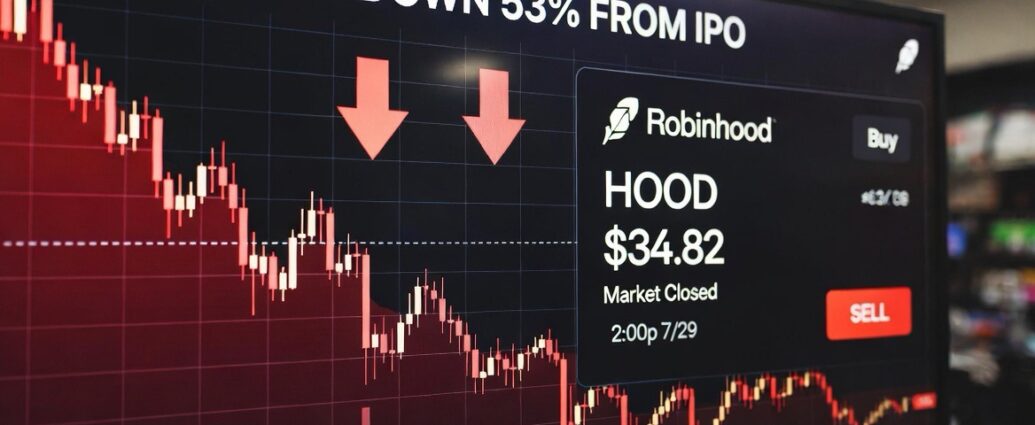
Robinhood Markets (HOOD) has fallen 53% from its highs of the past year, leaving investors to wrestle with a classic question: is this the kind of sharp pullback that creates a generational buying opportunity, or is the stock a classic value trap hiding deeper structural problems?

The brokerage, once the poster child for retail trading enthusiasm during the 2021 meme-stock frenzy, now trades at levels that look compelling on the surface. Yet the recent sell-off has been driven by more than just market volatility. Robinhood’s first-quarter 2026 results showed a clear slowdown in growth, particularly in its once-lucrative cryptocurrency business, raising questions about the sustainability of its business model in a more mature and regulated environment.

The Numbers Behind the Decline

Robinhood reported crypto revenue of $134 million in the first quarter of 2026 — a 47% drop from the same period a year earlier. That decline was the main culprit behind the stock’s post-earnings sell-off, with shares dropping more than 8% in extended trading following the report. Overall revenue growth slowed significantly, and while the company remains profitable, the pace of expansion has clearly cooled from the breakneck levels seen in previous years.

The stock’s 53% drawdown from its 2025 peak has left it trading at roughly $73–75, a level that some analysts view as attractive given the company’s still-growing user base and expanding product offerings. Others see it as a warning sign that the easy-growth phase is over and that competition from traditional brokers and newer fintech players is intensifying.

Why the Stock Has Fallen

Several factors have converged to pressure Robinhood’s valuation. The post-2021 normalization of retail trading volumes has reduced transaction-based revenue. Regulatory scrutiny has increased across the industry, with the Securities and Exchange Commission and other bodies tightening rules around payment for order flow — Robinhood’s core revenue engine. Meanwhile, the cryptocurrency market, which once drove explosive growth for the platform, has entered a more mature and less volatile phase, leading to the sharp drop in crypto-related revenue.

At the same time, Robinhood has been expanding into new areas such as retirement accounts, credit cards, and international markets. These initiatives are promising but have yet to fully offset the slowdown in the company’s traditional brokerage business.

The Bull Case: Once-in-a-Decade Opportunity

Proponents argue that the current valuation represents a compelling entry point. Robinhood still commands a massive retail user base and has successfully transitioned from a pure commission-free trading app to a broader financial services platform. If the company can continue to monetize its users through higher-margin products and international expansion, the stock could deliver substantial upside from current levels.

Analysts who see it as a buy point point to the company’s path to sustained profitability, its strong brand recognition among younger investors, and the long-term growth potential of retail investing as a secular trend. At current prices, the stock is trading at a discount to its growth potential, they say, making it a potential once-in-a-decade opportunity for patient investors.

The Bear Case: Value Trap

Skeptics counter that the stock is cheap for a reason. The decline in crypto revenue highlights the platform’s heavy reliance on volatile revenue streams. Regulatory risks remain elevated, and competition from established players like Charles Schwab, Fidelity, and newer fintech entrants is only increasing. If Robinhood cannot diversify its revenue mix quickly enough or if retail trading volumes remain subdued, the company could struggle to justify even its current valuation.

Some analysts have lowered price targets in recent weeks, citing slower growth and the risk that the stock could remain range-bound for an extended period. In this view, the 53% drop is not a buying opportunity but a reflection of fundamental challenges that have yet to be fully resolved.

The Road Ahead

The market for Robinhood’s shares will ultimately be decided by how successfully the company executes on its diversification strategy and how the broader retail investing environment evolves. With the stock down more than 50% from its highs, the debate between “once-in-a-decade opportunity” and “value trap” is as sharp as ever.

For investors watching the fintech space, Robinhood remains one of the most watched names. Whether the current valuation represents a bargain or a trap will depend on the company’s ability to prove that its growth story is far from over.

— JBizNews Desk

© JBizNews.com. All rights reserved. This article is original reporting by JBizNews Desk. Unauthorized reproduction or redistribution is strictly prohibited.

Monday, May 4, 2026

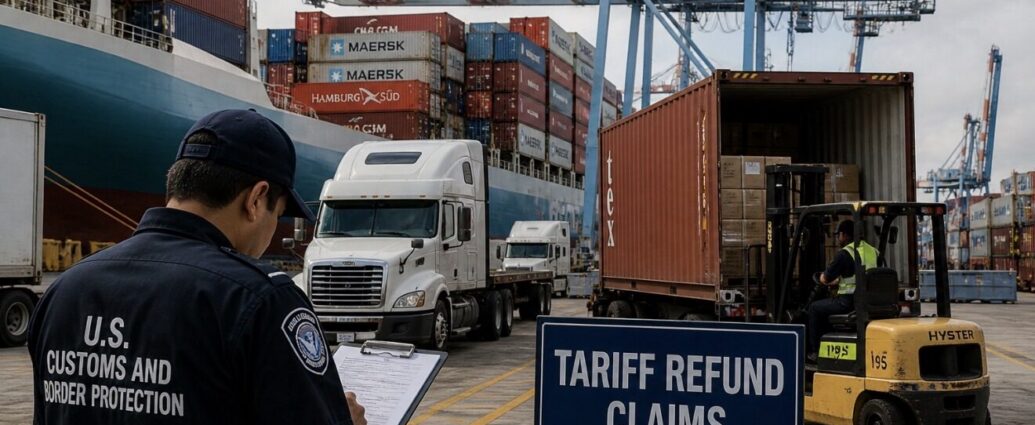
More than 330,000 American businesses are now filing claims to recover a combined $166 billion in import duties after the U.S. Supreme Court struck down President Donald Trump’s sweeping tariffs earlier this year — opening what could become one of the largest government repayments to importers in U.S. history.

The Supreme Court ruled 6-3 in February that Trump’s tariffs, imposed under the International Emergency Economic Powers Act (IEEPA), exceeded presidential authority, finding that Congress — not the executive branch — holds constitutional power over the imposition of tariffs. Following that decision, U.S. Court of International Trade Judge Richard Eaton ordered the government to stop collecting the duties and establish a refund system. U.S. Customs and Border Protection (CBP) launched the first phase of its new claims portal on April 20, allowing importers and their customs brokers to submit refund requests through its Automated Commercial Environment (ACE) system using a newly developed tool called the Consolidated Administration and Processing of Entries (CAPE). Refunds are expected to be processed within 60 to 90 days, according to CBP.

The scale of the repayment is significant. Court filings show the $166 billion in duties was collected across more than 53 million shipments from over 330,000 importers — covering tariffs commonly known as “fentanyl,” “trafficking,” “reciprocal,” and “baseline” duties, as well as some charges applied to goods from Brazil and India. Tariffs imposed under separate legal authorities — including Section 232, Section 301, and anti-dumping measures — are not eligible for refunds. As of April 28, CBP had approved approximately 21 percent of relevant customs entries for removal of the IEEPA tariffs, with the agency continuing to issue updated guidance as businesses encounter technical issues with the portal.

The companies that stand to recover the most are major retail and logistics giants. Citi analysts project that Walmart alone could recoup approximately $10.2 billion. Target is expected to receive around $2.2 billion, Nike close to $1 billion, and retailers including Gap, Kohl’s, and Home Depot stand to collect hundreds of millions each. FedEx and UPS have both pledged to pass refund savings along to customers. Costco Wholesale CEO Ron Vachris suggested shoppers might see the benefit through lower prices. Trump has publicly praised companies including Apple and Amazon that have declined to claim refunds or pledged to keep the funds invested domestically.

For small businesses, the path to recovery is more complicated. Jaime Chamberlain, owner of produce wholesaler Chamberlain Distributing in Nogales, Arizona, said he filed for a refund of nearly $100,000 his company paid in tariffs over just three days — money he absorbed rather than passing on to customers. “Anytime the federal government says we were wrong and we need to go ahead and replace that money, that’s money well welcomed back,” Chamberlain said. He cautioned, however, that consumers should not expect prices to drop as a result. “It’s gonna pay us back for what we had already cut back, so it really won’t impact the consumers at all,” he said. Alex Jacquez, chief of policy and advocacy at Groundwork Collaborative, echoed that assessment, noting the logistical challenge of processing 330,000 claimants. “It’s going to be a bit of a challenge to get everybody their money back,” Jacquez said.

Economists also warn that shoppers should not expect broad relief at the register. Goldman Sachs analysts noted that consumer prices are unlikely to decline meaningfully as a result of the refunds, and that tariff-related costs are projected to add another 0.1 percent to inflation in 2026, on top of the 0.7 percent they contributed the prior year. The reason is straightforward: many importers absorbed the tariff costs rather than raising prices, meaning a refund to the business does not automatically translate to savings for the end buyer.

The ruling did not eliminate tariffs entirely. Following the Supreme Court‘s February decision, Trump moved quickly to impose a 10 percent tariff on nearly all U.S. imports under Section 122 of the Trade Act of 1974, a separate legal authority. Those tariffs took effect February 24 and are set to expire after 150 days. U.S. Trade Representative Jamieson Greer announced Section 301 investigations in March covering more than a dozen countries and trading blocs — including China, the European Union, Japan, Mexico, and India — signaling the administration’s intent to reimpose tariffs at or near previous levels through an alternative legal mechanism. For businesses weighing whether to lower prices now, that uncertainty is reason enough to hold steady.

The Liberty Justice Center, the legal advocacy group that represented small business plaintiffs before the Supreme Court, has launched the Tariff Equity Refund Resource for America — a free online platform offering guidance on how to properly submit documentation for refunds. “We took this fight all the way to the Supreme Court on behalf of small businesses, and we’re not stopping now,” said Sara Albrecht, chair of the Liberty Justice Center.

JBizNews Desk

© JBizNews.com. All rights reserved. This article is original reporting by JBizNews Desk. Unauthorized reproduction or redistribution is strictly prohibited.


WASHINGTON — May 4, 2026 — U.S. credit card delinquencies are beginning to edge higher, signaling early signs of strain among American households as elevated borrowing costs, rising living expenses, and persistent inflation continue to pressure consumer finances, according to recent bank earnings reports and consumer credit data.

Major lenders including JPMorgan Chase, Bank of America, and Citigroup have reported a gradual increase in late payments in recent quarters, particularly among lower- and middle-income consumers. Executives have emphasized that delinquency levels remain within historical norms, but the direction of the trend is drawing closer scrutiny across financial markets.

Credit card balances remain near record levels, reflecting continued reliance on revolving credit as households manage higher costs across essential categories such as housing, energy, and food. At the same time, interest rates on credit cards — closely linked to Federal Reserve policy — remain elevated, increasing the cost of carrying balances.

Jamie Dimon, CEO of JPMorgan Chase, has warned in recent commentary that consumers are beginning to feel the cumulative impact of higher rates and persistent inflation, even as overall economic conditions remain stable. Banks are closely watching whether the current increase in delinquencies represents a normalization from unusually low levels or the early stages of broader financial stress.

The pressure on consumers is building from multiple directions.

Higher borrowing costs are coinciding with elevated everyday expenses, while wage growth shows signs of moderating compared to prior years. Economists note that this combination can gradually erode household financial flexibility, particularly for those with limited savings buffers.

Greg McBride, Chief Financial Analyst at Bankrate, has said in recent analysis that rising delinquency rates are often an early indicator of consumer stress. While current levels are not considered alarming, the upward trend suggests that financial conditions at the household level may be tightening.

Banks, however, are not yet signaling systemic concern.

Financial institutions continue to report strong capital positions and manageable credit performance. At the same time, some lenders are becoming more cautious, tightening lending standards and increasing reserves in anticipation of potential credit deterioration if economic pressures persist.

The implications extend to consumer spending.

Credit cards play a central role in supporting consumption, particularly discretionary purchases. If delinquencies continue to rise or access to credit becomes more restricted, consumer spending — a key driver of the U.S. economy — could begin to slow.

Policymakers are also monitoring the trend.

The Federal Reserve closely tracks consumer credit conditions as part of its broader assessment of financial stability. Sustained increases in delinquencies could signal that higher interest rates are having a deeper impact on households than previously expected.

For now, the data suggests a gradual shift rather than a sudden deterioration.

Delinquency rates are rising from historically low levels and remain below long-term averages, according to industry data. However, analysts emphasize that the trajectory — not just the level — will be critical in the months ahead.

As energy costs, borrowing costs, and everyday expenses continue to converge, the risk of cumulative financial pressure increases, particularly among more vulnerable consumers.

The coming months will be key in determining whether this trend stabilizes or accelerates. If inflation eases and borrowing costs decline, households may regain footing. If not, rising delinquencies could become a more prominent signal of economic stress.

For now, the shift is subtle but significant — a sign that the resilience of the American consumer may be beginning to face new limits.

JBizNews Desk

The US Department of Defense estimates that Iran has lost nearly five billion dollars in oil revenue as a result of the US blockade of the Strait of Hormuz, Axios reported early Saturday morning. 

According to Pentagon officials, over 40 vessels carrying oil and other contraband have been redirected by the US military since the blockade began on April 13th. 

Two ships have been seized by the US, and 31 tankers carrying 53 million barrels of Iranian oil are stuck in the Gulf of Oman with a value of over $4.8 billion, Axios wrote. 

Iran running out of oil storage

Iran is also running out of storage capacity for the oil it is producing, and may reach capacity within 15 to 60 days, The Jerusalem Post reported on Thursday. 

“The blockade is working to perfection,” a US official told the Post. “There is no economic trade going into or out of Iran.”

U.S. forces patrol the Arabian Sea near M/V Touska on April 20, 2026, after firing upon the Iranian-flagged vessel that the U.S. accused of attempting to violate the U.S. naval blockade of Iranian ports near the Strait of Hormuz. (credit:  U.S. Navy via Getty Images)

As a result, Iran has been forced to store all the oil it extracts in various ways, the official said, adding that this includes onshore storage and floating storage aboard vessels, particularly Very Large Crude Carriers. VLCCs are supertankers designed for longer-distance transport and typically carry about two million barrels of crude oil.

It is estimated that once Iran’s storage capacity is exhausted, it could create conditions more favorable for a potential agreement between the US and Iran.

US Navy acting like pirates, Trump says

US President Donald Trump said on Friday the US Navy was acting “like pirates” in carrying out Washington’s naval blockade of Iranian ports during the US and Israel’s war against Iran.

Trump made the comments while describing the seizure by US forces of a ship a few days ago.

“We took over the ship, we took over the cargo, we took over the oil. It’s a very profitable business,” Trump said in remarks on Friday evening. “We’re like pirates. We’re sort of like pirates, but we are not playing games.”

Some of Tehran’s vessels have been seized by the US after leaving Iranian ports, along with sanctioned container ships and Iranian tankers in Asian waters.

Amichai Stein and Reuters contributed to this report.

This post was originally published on here. 

By JBizNews Desk | Monday, May 4, 2026

The little booklet that Cuba’s socialist government has relied on for more than six decades to feed its people is running out of both pages and purpose. Across Havana, state-run bodegas that once anchored daily life are now largely empty, and the ration system known as “la libreta” has been reduced to a handful of basics — split chickpeas, limited sugar, and little else. In its place, essential goods are increasingly priced in U.S. dollars, a currency out of reach for much of the population.

José Luis Amate López, a bodega clerk in central Havana, said demand has collapsed alongside supply. His store, which serves roughly 5,000 residents, has had virtually nothing to sell for weeks. “No Cuban can truly survive on the products from the ration book anymore,” he said.

The erosion of the ration system is now one of the clearest signs of a broader economic breakdown in a country of nearly 10 million people, where fuel shortages, power outages, and inflation have become part of daily life. Wages paid in Cuban pesos continue to lose purchasing power, leaving households increasingly dependent on external support.

The numbers underscore the strain. Ana Enamorado, 68, said her April ration amounted to little more than split chickpeas and two pounds of sugar. Her combined salary and pension total roughly 8,000 pesos — about $16 a month. Meanwhile, a carton of eggs can cost nearly half that amount, with basic staples like meat and cornmeal consuming what remains. “There’s hardly anything in the ration book,” she said. “We’re practically living off air.”

Even bread, once one of the most protected items in the system, has become a symbol of decline. Lázaro Cuesta, 56, said daily portions have been cut in half while prices have surged more than tenfold. “And the quality is worse,” he added, reflecting a broader frustration shared across long lines that form daily outside distribution points.

For those without access to remittances, the situation is particularly severe. Roughly 60% of Cubans receive financial support from relatives abroad, but Rosa Rodríguez, 54, is not among them. Earning the equivalent of about $8 a month, she said choices between basic goods have become unavoidable. “If you buy beans, then you can’t buy sugar,” she said, describing a system where survival increasingly depends on trade-offs rather than stability.

Economists point to structural failures at the core of the crisis. William LeoGrande, a professor at American University, said the government no longer has the financial capacity to sustain the ration system at scale. Supplies now arrive sporadically, he noted, while inflation continues to erode purchasing power following the government’s 2021 currency unification effort. “They simply don’t have the money to do it anymore,” he said.

The strain is visible inside the bodegas themselves. Shelves once stocked with yogurt, pasta, and soap now sit bare, with faded posters listing goods that have effectively disappeared. The gap between policy promises and daily reality has become a source of public cynicism — and increasingly, quiet frustration.

At the same time, the shift toward dollar-based pricing has widened inequality across the island. Access to food is no longer defined solely by citizenship, but by whether a household has access to foreign currency. Those with relatives abroad can still navigate the system; those without face growing scarcity.

Officials have discussed moving toward a model that subsidizes individuals rather than goods — a shift that could ease pressure on state finances — but implementation has lagged. For now, the ration book remains in place, though its role has fundamentally changed.

For many Cubans, “la libreta” is no longer a guarantee of survival. It is a reminder of a system that once was — and of the widening gap between state support and everyday reality.

— JBizNews Desk

© 2026 JBizNews.com. All rights reserved.
This content is original reporting by JBizNews Desk. Unauthorized use, reproduction, or distribution, in whole or in part, without prior written permission is strictly prohibited.

By JBizNews Desk | Monday, May 4, 2026

Russia’s wartime economic boom is over. The surge in military spending that briefly supercharged growth in 2023 and 2024 has given way to stagnation, a cratering oil revenue base and a population increasingly forced to pay for a war through higher taxes and rising prices. Four years into the invasion of Ukraine, analysts and international institutions are now asking not whether Russia’s economy is slowing — but how hard the landing will be.

After two years of expansion exceeding 4% annually, Russia’s GDP growth slowed to around 1% in 2025 and is expected to hold near that level in 2026, with any meaningful recovery unlikely before 2027. The International Monetary Fund forecasts growth of just 1.0% this year.  The Bank of Finland puts the picture more bluntly, warning that Russia has hit the limits on economic growth imposed by the war, constrained to annual growth rates near its long-term potential of around 1%, with recession now a very real possibility. 

Oil Money Has Collapsed

Energy revenues have been the financial backbone of Russia’s war effort — and they are crumbling. In January 2026, Russia’s state revenues from taxing the oil and gas industries fell to 393 billion rubles — down from 587 billion rubles in December and from 1.12 trillion rubles in January 2025, the lowest level since the COVID-19 pandemic, according to Janis Kluge, an expert on the Russian economy at the German Institute for International and Security Affairs. 

In February 2026, Russia’s oil export revenues collapsed a further $1.5 billion month-on-month to $9.5 billion — the lowest level since the invasion began — driven by a 9.2% drop in seaborne export volumes, according to the Kyiv School of Economics KSE Institute. Urals crude averaged just $42.8 per barrel that month, still trading below the European Union’s revised price cap. 

For the first time since the pandemic, Russia collected less budget revenue in 2025 than originally planned. Revenues projected at 40.3 trillion rubles came in closer to 36.6 trillion rubles — a shortfall driven by weaker oil prices and Western sanctions that have forced Moscow to offer steep discounts on its crude. 

Taxing Ordinary Russians to Fill the Gap

With oil income falling short, the Kremlin has turned to its own citizens. Russia raised its VAT rate from 20% to 22% starting January 1, 2026, while pulling far more small businesses into the tax net by lowering the annual revenue threshold for mandatory payments from 60 million rubles to 10 million rubles. New levies on finished electronic goods including laptops and smartphones are also planned. 

The impact on everyday Russians has been immediate. Food prices rose 21% in early 2026, services climbed 14%, and fuel prices increased 11% following refinery disruptions. In 2025, Russian revenues fell 24% to $111 billion, leaving a large hole in government finances filled by increasing taxes on consumers. 

Russia’s 2026 federal budget dedicates 16.8 trillion rubles to defense and national security, 7.1 trillion rubles to social policy, and 3.9 trillion rubles to debt servicing — a combined 27.8 trillion rubles out of total planned expenditures of 44.1 trillion rubles. That leaves just 16.3 trillion rubles for the entire civilian economy, including healthcare, education and infrastructure. 

The Central Bank Is Caught in the Middle

The Bank of Russia has been cutting rates aggressively to try to stimulate a slowing economy, but remains deeply constrained. On April 24, 2026, the Bank of Russia cut its key rate by 50 basis points to 14.50% — its eighth consecutive cut since departing from a record high of 21%. The bank maintained its 2026 GDP growth forecast at just 0.5% to 1.5%, noting the economy slowed in the first quarter of 2026 partly due to the shock of the new tax changes. 

Bank of Russia Governor Elvira Nabiullina warned that Russia is facing a labor shortage for the first time in its modern history, with unemployment at a historic low of 2%. The lack of available workers has forced employers to raise wages to compete for staff, driving up production costs and adding to inflationary pressure. “This is a new reality for the government and for business alike,” Nabiullina said. 

Corporate bankruptcies in Russia have jumped 20% this year as soaring interest rates and liquidity shortages push firms closer to financial ruin. 

Sweden’s Intelligence Warning

The strain is severe enough to have drawn a rare public assessment from a Western intelligence agency. Sweden’s Military Intelligence and Security Service said Russia has been manipulating its economic data to hide the real state of its economy, and is likely suffering from higher inflation and a larger budget deficit than it is communicating. Thomas Nilsson, head of MUST, warned that “the Russian economy can only go on one of two scenarios: long-term recession or shock. In either case, it will continue on a downward trajectory towards financial disaster.” 

What Comes Next

Kluge of the German Institute for International and Security Affairs said the Kremlin is clearly worried about the overall budget balance because the economic downturn is coinciding with war costs that are not decreasing. “Give it six months or a year, and it could also affect their thinking about the war,” he said. “I don’t think they will seek a peace deal because of this, but they might want to lower the intensity of the fighting.” 

For now, the Strait of Hormuz crisis has handed Moscow an unexpected lifeline — higher global oil prices are temporarily easing budget pressure. But analysts are unanimous that this does nothing to fix the deeper structural rot underneath.

— JBizNews Desk

© JBizNews.com. All rights reserved. This article is original reporting by JBizNews Desk. Unauthorized reproduction or redistribution is strictly prohibited.

By JBizNews Desk | Monday, May 4, 2026

OPEC+ voted Sunday to increase oil production by 188,000 barrels per day starting in June — a slightly smaller hike than the month before and one analysts largely view as a symbolic move to signal stability rather than a meaningful fix to a global oil market still reeling from the closure of the Strait of Hormuz.

The decision was reached during a virtual meeting of seven participating countries — Saudi Arabia, Russia, Iraq, Kuwait, Kazakhstan, Algeria and Oman — convened to review global market conditions following the shock departure of the United Arab Emirates from the group.  It was the cartel’s first meeting since the UAE‘s exit, which became effective May 1 after nearly six decades of membership. The UAE had been the group’s third-largest oil producer behind Saudi Arabia and Iraq. 

The 188,000 barrel-per-day figure is essentially the prior 206,000 barrel increase minus the UAE‘s approximate 18,000 barrel-per-day share — meaning the remaining members are continuing on the same trajectory, just without their former partner’s contribution. 

A Gesture, Not a Solution

The market’s reaction was muted — and for good reason. Analysts described the increase as largely symbolic, aimed at signaling political cohesion after the UAE’s departure rather than delivering any meaningful expansion of real supply. In practice, many Middle Eastern OPEC+ members face serious geopolitical and technical constraints that make rapid export increases difficult, especially with the Strait of Hormuz still effectively closed. 

Brent futures settled near $108 a barrel on Friday, easing from recent four-year highs, as oil prices have increasingly looked past the UAE’s exit and focused instead on diplomatic signals around the Iran war. Both WTI and Brent remain roughly 78% higher than where they started 2026. 

The cartel reiterated its commitment to full compliance with the Declaration of Cooperation, saying the voluntary output adjustments could be returned gradually depending on evolving market conditions. 

The UAE’s Departure Changes the Math

The most consequential development from Sunday’s meeting was not the output decision itself but rather what the meeting confirmed: OPEC+ is now operating without one of its most influential members. The UAE‘s departure represents the most significant exit in the coalition’s history and further erodes OPEC+’s ability to influence global oil prices — a power already under pressure from the continued rise of U.S. shale production. 

Abu Dhabi National Oil Company — known as ADNOC — has announced plans to award approximately $55 billion in contracts between 2026 and 2028 as it pursues an accelerated production and strategic expansion strategy outside of OPEC+ constraints. 

What This Means for Consumers

The bottom line for everyday Americans and global consumers is straightforward: Sunday’s announcement does almost nothing to ease the energy crisis. Rising diesel, gasoline and jet fuel costs are already beginning to change consumer behavior, and analysts warn that demand destruction could escalate as global inventories are depleted, raising the risk of a broader economic slowdown. 

The real variable that would move prices remains the Strait of Hormuz — and whether President Trump‘s “Project Freedom” operation, launched Monday, can begin restoring commercial shipping through the world’s most critical oil chokepoint. Until that happens, no OPEC+ output decision is large enough to close the gap left by a waterway that normally carries one fifth of the world’s daily oil supply.

— JBizNews Desk

© JBizNews.com. All rights reserved. This article is original reporting by JBizNews Desk. Unauthorized reproduction or redistribution is strictly prohibited.

By JBizNews Desk | Monday, May 4, 2026

U.S. Special Envoy Steve Witkoff confirmed Sunday that Washington and Tehran are actively communicating as both sides exchange proposals aimed at ending the Iran war — the clearest public signal yet that diplomatic channels remain open despite the ongoing conflict.

Witkoff, speaking to CNN on Sunday from President Donald Trump’s Doral golf club where the PGA Cadillac Championship was underway, said the two countries are in active contact when asked directly about the state of negotiations. The confirmation came on the same day Iran’s Foreign Ministry acknowledged that Tehran had received a response from Washington to its latest peace proposal — delivered through Pakistan as intermediary — and was reviewing it.

Trump echoed the signal in a Truth Social post Sunday, saying his team is engaged in discussions with Iran that he believes could produce a favorable outcome for both countries. The remarks marked a notable softening from the day before, when the president had publicly questioned whether Iran had yet suffered enough consequences to make a deal worthwhile.

The diplomatic activity is unfolding alongside a new military pressure point. Trump announced Sunday that the U.S. would begin escorting stranded commercial vessels out of the Strait of Hormuz starting Monday — a move he called “Project Freedom” — adding a direct military dimension to an already fragile negotiating environment.

For markets and consumers, the stakes of any breakthrough are enormous. Gasoline prices in the U.S. have climbed nearly 50% since the war began on February 28, driven almost entirely by the shutdown of the Strait of Hormuz, which normally carries roughly one fifth of the world’s daily oil supply. Every day the waterway stays closed, the economic cost to American families and businesses compounds.

Whether Sunday’s diplomatic signals translate into a genuine ceasefire framework — or are overtaken by what happens in the strait on Monday morning — will determine the near-term direction of oil prices, inflation and global trade.

— JBizNews Desk

© JBizNews.com. All rights reserved. This article is original reporting by JBizNews Desk. Unauthorized reproduction or redistribution is strictly prohibited.

By JBizNews Desk | Monday, May 4, 2026

Bitcoin crossed $80,000 in early Asian trading Monday for the first time in more than three months, as risk appetite returned across global markets and gave crypto investors the catalyst they had been waiting for since the Iran war began upending financial markets in late February.

Bitcoin rose above $80,000 as Asian stocks approached record highs, with South Korea’s KOSPI already trading at all-time highs Monday, extending its best monthly gain since 1998 in April. Oil and crypto markets posted contrasting reactions to President Donald Trump’s “Project Freedom” announcement — crude benchmarks saw modest declines while Bitcoin rallied sharply. Brent crude slipped 0.16% to $108 a barrel.

How Bitcoin Got Here

The path to $80,000 has been defined almost entirely by the Iran war and the diplomatic signals surrounding it. Bitcoin fell to roughly $62,000 in February when the conflict erupted and the Strait of Hormuz closed, wiping out months of gains and triggering more than $6 billion in spot Bitcoin ETF outflows between November 2025 and February 2026.

Each credible diplomatic signal since then has produced a rapid repricing in Bitcoin, while setbacks reversed gains just as quickly. When a brief U.S.-Iran ceasefire was announced in early April, Bitcoin surged more than 4% to briefly exceed $72,000, with about $427 million in crypto short positions liquidated within 48 hours. April became the strongest month for Bitcoin ETF inflows this year, with roughly $2.44 billion entering the market over the first three weeks.

Morgan Stanley launched its MSBT spot Bitcoin ETF on April 8, 2026 — the first such product from a major U.S. bank — drawing $34 million in day-one inflows. The bank’s roughly 16,000 financial advisors, overseeing $9.3 trillion in client assets, now have a proprietary Bitcoin vehicle to offer clients, a structural shift analysts say is broadening institutional participation.

What the $80,000 Level Means

The $80,000 level carries more than psychological significance. Bitcoin’s 200-day moving average sits near $82,228 — a level it has not closed above since October 2025. A sustained move above that threshold would mark the first meaningful trend reversal since February, signaling to institutional investors that the Iran-driven macro overhang may be easing.

Bitcoin spot ETFs recorded approximately $471 million in net inflows on April 6 — the strongest single day since late February — led by BlackRock’s IBIT, Fidelity’s FBTC, and Ark Invest’s ARKB. Flat-to-negative funding rates indicated the rally was driven primarily by spot demand rather than leveraged speculation, a sign analysts view as more sustainable.

The Risk That Remains

The move above $80,000 remains fragile. Ebrahim Azizi, a senior Iranian lawmaker, warned Monday that any U.S. interference in the Strait of Hormuz would be treated as a violation of the current ceasefire. “The Strait of Hormuz and the Persian Gulf would not be managed by Trump’s delusional posts,” he said, underscoring the geopolitical tension still hanging over markets.

If the ceasefire holds and oil prices retreat below $90, analysts say Bitcoin could continue to rally alongside broader risk assets. But a renewed escalation — particularly if Brent crude climbs toward $130 — could trigger another sharp sell-off. Bitcoin has shown roughly 85% correlation with the Nasdaq-100 during oil price spikes in 2026, reinforcing its role as a high-beta risk asset rather than a traditional safe haven in the current environment.

For now, the break above $80,000 marks both a milestone and a test. Whether it holds may depend less on crypto fundamentals than on developments in a narrow stretch of water in the Middle East over the coming days.

— JBizNews Desk

© JBizNews.com. All rights reserved. This article is original reporting by JBizNews Desk. Unauthorized reproduction or redistribution is strictly prohibited.

JBizNews Desk | New York | Sunday, May 3, 2026

Wall Street enters one of its most consequential weeks of the year with investors navigating a powerful crosscurrent of forces: a critical jobs report on Friday, a wave of major corporate earnings, a Federal Reserve that just held rates steady, and an unresolved Iran conflict that continues to shadow global energy markets and economic forecasts alike.

Where Markets Stand

April ended on a high note. The S&P 500 closed Friday, May 1 at 7,230.12, up 0.29 percent on the session. The Nasdaq Composite hit a fresh all-time high, closing at 25,114.44, up 0.89 percent. The Dow Jones Industrial Average slipped 152.87 points, or 0.31 percent, to settle at 49,499.27. For the month, the S&P 500 and Nasdaq posted their best monthly performance since 2020, while the Dow notched its best month since November 2024. The CBOE Volatility Index, known as the VIX, closed below 17 — a nearly two-week low — signaling reduced near-term fear even as macro risks remain elevated.

Ben Snider, chief U.S. equity strategist at Goldman Sachs Research, said in a note published April 24 that the S&P 500 is forecast to climb 6 percent to a year-end target of 7,600, built on expectations of 12 percent earnings-per-share growth in 2026. “In the near term, equity market gyrations will likely continue to mirror geopolitical volatility,” Snider wrote, identifying the Iran war and the AI buildout as “the clearest equity market risks in coming weeks.” Year-to-date share buyback authorizations have hit a record $422 billion, and announced merger-and-acquisition volumes have more than doubled from a year ago, Snider noted.

The Fed Holds — Rates Stay Put

The Federal Reserve held interest rates steady at its meeting this week, with the federal funds rate remaining between 3.5 and 3.75 percent. Three dissents on the policy statement signaled a lack of support for any easing bias, according to Charles Schwab market commentary published May 1. According to the CME FedWatch Tool, the chance of a rate cut at the June meeting stands at just 5 percent. Futures markets suggest rates will stay at current levels through the year, with only a 10 percent probability of a cut and a 6 percent chance of a hike — a notable shift given that odds of a hike were near zero before the meeting.

Core PCE, the Fed’s preferred inflation gauge, jumped to 4.3 percent in the first quarter from 2.7 percent in the prior quarter — above the 4.1 percent expected. New York Fed President John Williams is scheduled to speak Monday and his remarks will be scrutinized for any fresh signals on the rate path. Bob Lang, founder and chief options analyst at Explosive Options, told CNBC on May 1 that a strong jobs number could be welcome news for markets, though he does not expect it would meaningfully shift the interest rate outlook given the Fed’s current posture.

Friday’s Main Event: The Jobs Report

The week’s most consequential data release arrives Friday, May 8, when the U.S. Bureau of Labor Statistics publishes the April nonfarm payrolls report. Economists polled by FactSet expect the U.S. economy to have added just 50,000 jobs in April — far below the prior reading of 178,000 — with the unemployment rate expected to hold steady at 4.3 percent. Federal Reserve Chair Jerome Powell said last week that the labor market had shown “more and more signs of stability.” Supporting data arrives throughout the week: the JOLTS job openings report for March drops Tuesday, May 5; ADP’s private payroll survey for April publishes Wednesday, May 6, with economists polled by FactSet expecting 95,000 private-sector job additions; and initial jobless claims arrive Thursday, May 7.

Palantir: Monday’s Marquee Report

Palantir Technologies reports after the market close Monday, May 4, and expectations are high. Wall Street analysts project earnings per share of $0.28 — a 115 percent jump year over year — alongside revenue of approximately $1.54 billion, up 74 percent annually, according to LSEG data cited by CNBC on May 3. U.S. commercial and government revenue are both forecast to grow more than 60 percent, reflecting surging demand for Palantir’s artificial intelligence platform. William Power, senior analyst at Baird, reaffirmed an Outperform rating and a $200 price target ahead of the print, saying he expects “another strong quarter.” Oppenheimer initiated coverage this week with an Outperform rating and a $200 price target. Citigroup carries a Buy rating with a $210 target. Not everyone is bullish: RBC Capital Markets set a $90 price target, citing elevated valuations — the stock trades at roughly 50 times expected 2026 revenue — and flagged slowing government contract trends and growing competition from Microsoft, Databricks, Snowflake, OpenAI and Anthropic.

AMD: Tuesday’s AI Bellwether

Advanced Micro Devices reports Tuesday, May 6, after the market close, with earnings and revenue both expected to grow by double digits versus a year ago, according to LSEG. All eyes will be on AMD’s artificial intelligence chip roadmap and whether the company can sustain momentum against Nvidia. Ross Seymore, analyst at Deutsche Bank, said ahead of the report that secular and cyclical revenue tailwinds combined with operating margin leverage support upside potential, but maintained a Hold rating, writing that the fundamental upside is “largely reflected in AMD’s share price following the recent significant appreciation.” Bespoke Investment Group data shows AMD tops earnings estimates 62 percent of the time.

Disney: Wednesday’s Consumer Pulse

Walt Disney reports Wednesday, May 6, before the market open, with analysts expecting earnings per share of $1.49 — a 2.8 percent increase — on revenue of $24.85 billion, up 5 percent annually, according to Forex.com analysis published May 4. Entertainment revenue is expected to rise 8.3 percent, Sports revenue around 1.5 percent, and Experience revenue 6.1 percent. The main focus will be Disney+ and Hulu streaming profitability, with management having guided to $500 million in streaming operating income — the metric most likely to move the stock. Parks and Experiences remain the largest contributor to operating income, but analysts warn that U.S. demand and international tourism trends could be softening. The report comes weeks after Disney cut roughly 1,000 jobs across multiple divisions.

Uber: Wednesday’s Ride-Hailing Read

Uber Technologies also reports Wednesday, May 6, before the bell. Analysts expect double-digit revenue growth but double-digit declines in earnings versus a year ago, according to LSEG. Ross Sandler, analyst at Barclays, said ahead of the report that he expects solid demand but flagged higher gas prices and bad weather as near-term cost pressures. “Uber has enough breadth to manage these near-term dynamics, and while robotaxi risk continues to weigh on the story, the risk/reward remains attractive,” Sandler said. Bespoke data shows Uber beats earnings estimates 61 percent of the time.

The Iran Shadow

Overhanging all of it is the ongoing Iran conflict and its grip on global energy markets. President Donald Trump said Saturday he is reviewing Iran’s 14-point peace proposal but “can’t imagine” it is acceptable. A White House Situation Room meeting on Iran is expected Monday with Vice President JD Vance, Chief of Staff Susie Wiles and special envoy Steve Witkoff. Brent crude remains elevated after surging more than 55 percent since the war began February 28. The S&P Global U.S. Manufacturing PMI rose to 54.5 in April from 52.3 in March — its strongest expansion since May 2022 — but the ISM Prices Index jumped 6.3 points to 84.6, its highest since April 2022, a warning that energy-driven inflation is seeping through the supply chain. ISM Services PMI for April publishes Tuesday, May 5, offering the next read on whether the service sector is holding up against rising costs.

With more than half of S&P 500 companies having reported thus far — over 80 percent beating expectations — the earnings season has provided a floor of confidence under the market. But with jobs data, Fed guidance, Iran diplomacy and major tech and consumer earnings all landing in the same five-day window, this week will test whether that confidence holds.

JBizNews Desk
© JBizNews.com. All rights reserved. This article is original reporting by JBizNews Desk. Unauthorized reproduction or redistribution is strictly prohibited.
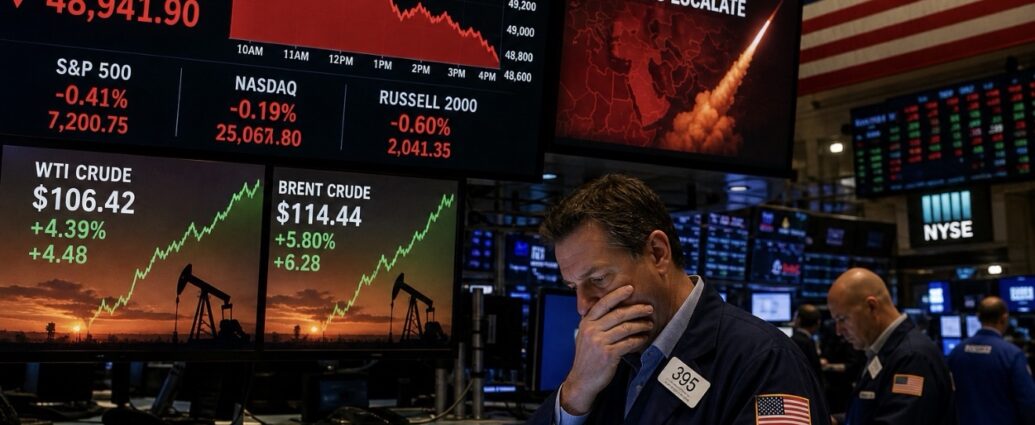
By JBizNews Desk
Sunday, May 3, 2026

Former New York City mayor Rudy Giuliani was hospitalized in critical but stable condition on Sunday night, according to a statement released by his spokesperson Ted Goodman. The announcement has drawn immediate attention across political and business circles, given Giuliani’s long-standing role as a prominent figure in American public life and his close alliance with President Donald Trump.

The statement did not disclose the specific reason for the hospitalization. Giuliani, 81, is currently residing in Florida. Goodman described the former mayor as “a fighter who has faced every challenge in his life with unwavering strength, and he’s fighting with that same level of strength as we speak.” He asked the public to join in prayer for “America’s Mayor Rudy Giuliani.”

According to reports, Giuliani was hospitalized in Florida. The development comes as Giuliani continues to navigate the aftermath of his high-profile legal and political activities in recent years.

A Career Defined by Crisis Leadership

Giuliani served as New York City’s mayor from 1994 to 2001 and became a national figure for his leadership during the September 11, 2001, terrorist attacks. His steady public presence in the days and weeks following the attacks earned him widespread praise and the nickname “America’s Mayor.” Time magazine named him Person of the Year in 2001.

After leaving office, Giuliani maintained an active role in Republican politics and business consulting. He later became one of President Trump’s most visible personal attorneys, representing him in multiple legal challenges, including high-profile lawsuits aimed at overturning the 2020 presidential election results. Those efforts placed Giuliani at the center of intense political and legal scrutiny.

Trump Reacts to the News

President Trump quickly acknowledged the hospitalization in a Truth Social post, calling Giuliani “a true warrior, and the best mayor in the history of New York City, by far.” Trump also suggested that Giuliani had been treated poorly by the “radical left,” implying that political pressure had contributed to his current condition.

The president’s statement reflects the enduring personal and political bond between the two men. Giuliani was one of Trump’s earliest and most vocal supporters during the 2016 campaign and remained a steadfast ally throughout Trump’s presidency and beyond.

A Developing Situation

Giuliani’s hospitalization is the latest chapter in a long public career that has included both historic achievements and significant controversy. His work as Trump’s personal attorney, particularly related to the 2020 election, led to legal challenges, disciplinary actions, and financial strain. Despite those difficulties, Giuliani has remained a vocal presence in conservative media and political circles.

This is a developing story. JBizNews will continue to monitor updates on Giuliani’s condition and any further statements from his team or the Trump administration.

— JBizNews Desk

© JBizNews.com. All rights reserved. This article is original reporting by JBizNews Desk. Unauthorized reproduction or redistribution is strictly prohibited.

By JBizNews Desk | Sunday, May 3, 2026

Oil prices slipped modestly Sunday after President Donald Trump announced a U.S. Navy-backed operation he called “Project Freedom” — a pledge to escort stranded commercial vessels out of the Strait of Hormuz beginning Monday morning — offering markets a sliver of hope amid what analysts have called the worst energy supply shock in modern history.

U.S. oil futures dipped 0.77% to $101.16 a barrel, while international benchmark Brent crude eased 0.59% to $107.53. Dow Jones futures added 84 points, S&P 500 futures rose 0.11%, and Nasdaq futures gained 0.06%.  Markets were cautious, with investors wary of acting on a social media post before seeing whether Monday’s operation delivers results on the water.

For American families, the pressure is immediate. Gasoline has risen to $4.44 per gallon nationally, up from under $3 before the war began, driving inflation higher and fueling mounting public frustration with the conflict’s economic toll. 

What Trump Is Proposing

Trump posted on Truth Social Sunday that “neutral and innocent” countries have been caught in the crossfire of the Iran war, and that the U.S. would guide their ships “safely out of these restricted Waterways, so that they can freely and ably get on with their business.” He said Project Freedom would begin Monday morning Middle Eastern time, and that his team is in discussions with Iran that could lead to something “very positive for all.” 

Trump described the operation as a response to requests from “countries from around the world” whose ships are stranded or affected by the navigation restrictions in the waterway.  He warned that any interference would be dealt with by force.

The situation on the water remained tense. A cargo ship near the Strait of Hormuz reported being attacked by multiple small boats Sunday — the first such incident since April 22. Iran has continued to insist that any vessels transiting the strait pay a toll and follow a route approved by the Islamic Revolutionary Guard Corps. U.S. warships have begun anti-mine operations in the waterway, though experts say a full clearance could take weeks or months. 

Oil Dips as Trump’s ‘Project Freedom’ Targets Hormuz Shipping Deadlock

The Strait of Hormuz is the world’s most critical oil chokepoint — and it has been effectively closed since late February. The closure has disrupted roughly 20% of global oil trade, triggering what the International Energy Agency has characterized as the largest supply disruption in the history of the global oil market. 

The damage runs well beyond the gas pump. The strait is also the central artery for the global fertilizer trade, with over 30% of global urea exports flowing through it. Much of the cost of producing staple foods like corn and wheat is tied to fertilizer costs, raising fears of food insecurity not only in Gulf states but around the world. 

ExxonMobil CEO Darren Woods put a sharp point on the risk Friday. Speaking on Exxon‘s first-quarter earnings call, Woods warned that markets have not yet absorbed the full impact of the disruption. Strategic petroleum reserves and commercial inventories have cushioned prices so far, but those buffers will not last indefinitely. “There’s more to come if the strait remains closed,” he said. Exxon estimates its Middle East production could fall 750,000 barrels per day compared to 2025 levels if the closure extends through the second quarter. 

What Needs to Happen Next

Even if Project Freedom moves forward Monday without incident, analysts caution that a full normalization of oil flows will not happen overnight. Woods said that once the strait reopens, oil flows from the Persian Gulf would likely take one to two months to normalize, as tankers need to be repositioned, supply backlogs worked through, and strategic reserves and commercial inventories refilled — all of which will put continued upward pressure on prices.

Treasury Secretary Scott Bessent told Fox News Sunday that Iran’s oil storage is filling rapidly and that Tehran could be forced to begin shutting in oil wells within a week — a development that would significantly weaken Iran’s economic leverage in the standoff. 

Whether Monday brings a breakthrough or a new flashpoint, the world is watching a 30-mile waterway decide the price of almost everything.

© JBizNews.com. All rights reserved. This article is original reporting by JBizNews Desk. Unauthorized reproduction or redistribution is strictly prohibited.

JBizNews Desk | New York | Sunday, May 3, 2026

Tankers are loading up in Alaska and along the U.S. Gulf Coast and sailing to Japan, Thailand and Australia in unprecedented numbers. Nine weeks into the effective closure of the Strait of Hormuz, the United States has surpassed Saudi Arabia as the world’s top crude exporter and become the energy supplier global markets cannot function without — but energy executives and analysts warned this week that America’s supply cushion is running out faster than the world realizes.

Over the past nine weeks, more than 250 million barrels of crude from American oil wells and storage facilities have been shipped overseas, according to Bloomberg reporting published Sunday, May 3. That volume has made the U.S. once again the world’s number one crude exporter. But domestic oil and fuel stockpiles have drawn down for four consecutive weeks, falling below historical averages, raising serious questions about how long record exports can be sustained.

President Donald Trump told reporters Friday, May 2: “This has been amazing. The amount of oil and gas that we’re selling now is at a level that nobody’s ever seen.” He added: “We have more oil production right now than any time in history. And if you take a look at the ships, they’re all coming up to Texas, Louisiana, Alaska.”

Chevron chief executive Mike Wirth offered a starkly different assessment Friday, May 2, saying the global energy system is under “extreme stress.” The day before, Thursday, May 1, ConocoPhillips warned that “critical shortages” of oil are imminent. In anonymous survey comments published in late April by the Federal Reserve Bank of Dallas, energy executives said: “The unpredictable nature of the current administration makes business modeling near impossible.”

The Largest Supply Disruption in History

International Energy Agency Executive Director Fatih Birol has left no room for ambiguity about the scale of what has happened. Speaking on the podcast “In Good Company” hosted by Norges Bank Investment Management chief executive Nicolai Tangen on April 1, Birol said the energy crisis sparked by the war was “the worst in history” — worse even than the 1973 and 1979 oil shocks. “In both of them we lost each about 5 million barrels per day of oil. These oil crises led to global recession in many countries,” Birol said. “Today, we lost 12 million barrels per day — more than two of these oil crises put together.”

Crude and oil product flows through the Strait of Hormuz plunged from 20 million barrels per day before the war to just over 2 million barrels per day in March, according to the IEA’s April 14 monthly Oil Market Report. In early April, loadings through the Strait averaged just 3.8 million barrels per day, compared with more than 20 million barrels per day in February before the crisis, the IEA reported. Gulf producers including Iraq, Saudi Arabia, Kuwait, the UAE, Qatar and Bahrain collectively shut in an estimated 9.1 million barrels per day of crude production in April as onshore storage filled with oil that had nowhere to go.

Brent crude surged more than 60 percent over the course of March alone — the biggest monthly price gain since records began in the 1980s — before reaching a peak near $150 per barrel in physical markets, according to the IEA’s April Oil Market Report. JP Morgan warned that inventories are reaching minimum operational levels, with the actual shortage potentially doubling from 4 million barrels per day to as much as 8 million barrels per day as stockpiles and oil at sea are exhausted, according to analysis cited by Economics Help on May 2.

Birol told CNBC on April 1 that the IEA’s emergency reserve release of 400 million barrels — the agency’s largest ever, unanimously agreed by member countries on March 11 — was not a solution. “This is only helping to reduce the pain, it will not be a cure,” he said. “The cure is opening up the Strait of Hormuz.”

Rory Johnston, founder of Commodity Context, said April 21 that any reopening of the Strait would likely trigger an immediate drop of $10 to $20 in crude prices due to speculative positioning — but warned supply chain bottlenecks, infrastructure damage and production outages would keep the market tight, likely anchoring Brent in the $80 to $90 range even after a reopening. “This is still the largest oil supply shock in the history of the oil market,” Johnston said. “Without a sustained restoration of flows, prices may need to rise further to curb demand.”

Tony Sycamore, market analyst at IG, said in a note published April 30: “Prospects for any near-term resolution to the Iran conflict or a reopening of the Strait of Hormuz remain dim.”

Vitol chief executive Russell Hardy said April 21 that one billion barrels of oil production will be lost because of the war, with the current running total already between 600 and 700 million barrels. Naif Aldandeni, energy strategist, told Al Jazeera on March 15 that the IEA’s reserve release was “a small bandage on a large wound,” adding that the release would produce “only a temporary stabilising effect.”

What It Means at the Pump

For ordinary Americans, the consequences are direct. Retail gasoline prices have climbed to an average of $4.40 per gallon, according to Bloomberg. The U.S. Energy Information Administration reported March 30 that average retail gasoline stood at $3.99 per gallon and diesel at $5.40 per gallon — the highest levels in real terms in over two years. Gas prices have risen $1.16 per gallon since the start of the war, with prices expected to hit $5.00 per gallon if the Strait remains closed, according to the 2026 Iran War Fuel Crisis entry on Wikipedia. Jet fuel has spiked 95 percent since the war began, causing multiple airlines to raise baggage fees. Energy Secretary Chris Wright has repeatedly cited the $5-per-gallon threshold as the key political benchmark heading into November’s midterm elections.

U.S. domestic oil production has actually fallen roughly 100,000 barrels per day since the war began as drillers remain hesitant to invest amid deep uncertainty, according to Bloomberg. Exxon Mobil and Chevron are also managing disruptions to their Middle East operations, adding further constraints.

LNG and Fertilizer: The Hidden Crisis

The disruption extends well beyond crude oil. LNG supplies from Qatar and the UAE through the Strait of Hormuz have been cut by more than 300 million cubic metres per day since March 1, according to the IEA — reducing global LNG supply by roughly 20 percent. QatarEnergy declared force majeure on all export contracts after its Ras Laffan facility — the world’s largest LNG liquefaction plant — was struck on March 2 and went offline. The company warned repairs could take up to five years. Steven Wilson, a partner in the global energy practice at law firm Mayer Brown, said in late March that LNG suppliers were becoming more selective in negotiating long-term contracts because spot market pricing had become far more lucrative — squeezing buyers and driving prices higher.

Over 30 percent of global urea and significant volumes of ammonia and phosphate transit the Strait of Hormuz. Morningstar analyst Seth Goldstein projected that nitrogen fertilizer prices could roughly double from 2024 levels. The UN World Food Programme warned the disruptions are driving long-term increases in global food prices, threatening a scenario similar to the 2022 food crisis.

How Long Can Iran Hold Out?

Muyu Xu, senior crude oil analyst at Kpler, told Al Jazeera in late April that the U.S. naval blockade was already slowing Iranian oil loadings and exports, pressuring onshore inventories. “We expect any production reduction to be gradual over the coming week, with a higher likelihood of acceleration into May,” Xu said.

Kenneth Katzman, former Iran analyst at the Congressional Research Service in Washington, told Al Jazeera that Iran had between 160 million and 170 million barrels of oil “afloat” on tankers around the world — cargo that transited the Strait before the U.S. blockade began — potentially giving Tehran revenue flows through August. “Does President Trump have until August? Probably not,” Katzman said. “He’s probably going to have to look at kinetic escalation if he wants to bring this to the conclusion he wants, or he’s going to have to accept less than the deal he ideally wants.”

The question now facing energy markets, policymakers and businesses worldwide is whether diplomacy can reopen the Strait before the supply shock forces demand destruction on a scale not seen since the 1970s energy crisis — an outcome none of the parties to the conflict has yet fully prepared the world for.

JBizNews Desk
© JBizNews.com. All rights reserved. This article is original reporting by JBizNews Desk. Unauthorized reproduction or redistribution is strictly prohibited.
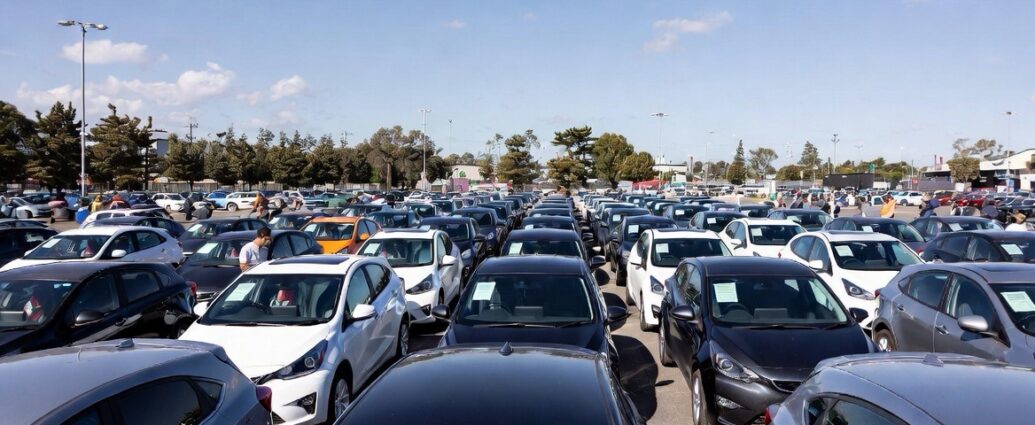
Washington — May 3, 2026 — President Donald Trump announced Sunday that the United States will lead a humanitarian operation beginning Monday morning to free dozens of neutral foreign vessels trapped in the Strait of Hormuz, the critical chokepoint engulfed in regional tensions primarily involving Iran.

The operation marks a significant escalation in U.S. involvement in the maritime crisis that has crippled commercial shipping through one of the world’s most vital energy arteries. Trump described the mission as a necessary step to protect innocent international shipping and restore the free flow of commerce after weeks of blockade-related disruptions tied to the broader Iran conflict.

Dozens of neutral foreign-flagged tankers and cargo ships — many carrying oil, liquefied natural gas and other essential commodities — have been unable to safely transit the strait amid heightened security risks, Iranian toll demands and naval standoffs. The humanitarian effort will involve U.S. naval assets providing escort and safe passage, according to senior administration officials who briefed reporters on condition of anonymity.

The economic stakes could not be higher. Roughly one-fifth of global oil and liquefied natural gas supplies normally pass through the Strait of Hormuz. The prolonged trapping of vessels has already driven up insurance premiums, freight rates and energy prices worldwide, compounding the fuel-price crunch that has hammered airlines from Spirit Airlines in the U.S. to Ryanair and easyJet in Europe. Brent crude futures, already volatile from earlier ceasefire hopes and subsequent diplomatic breakdowns, are expected to face fresh upward pressure as markets digest the news of direct U.S. intervention.

Shipping companies, commodity traders and global supply-chain managers have been on high alert. Major oil majors and tanker operators have diverted vessels or delayed cargoes, adding millions in extra costs that ultimately flow through to consumers at the pump and in higher goods prices. The humanitarian operation is designed to break that logjam, but its success will depend on de-escalation from all parties and safe coordination in a high-tension zone.

Trump’s announcement comes just hours after he rejected Iran’s latest 14-point peace proposal, which had called for resolving the conflict within 30 days. The president made clear Sunday that Washington remains committed to maximum pressure until Tehran makes deeper concessions, particularly on its nuclear program. The humanitarian mission, however, is framed separately as a limited, time-sensitive effort focused solely on protecting neutral shipping rather than broader military objectives.

For the global economy, the operation offers a potential lifeline but also introduces new risks. Successful clearance of the trapped vessels could ease immediate supply bottlenecks and help stabilize energy markets. Failure or any escalation during the escort could trigger renewed closures, higher oil prices and broader inflationary shocks at a time when the weaker U.S. dollar is already driving up grocery and travel costs for American consumers.

Insurance and reinsurance markets are watching closely. Lloyd’s of London and other major underwriters have seen claims and premiums spike since the conflict intensified. Any successful U.S.-led passage could begin to normalize rates, providing relief to shipping firms and ultimately to businesses and consumers reliant on imported energy and goods.

The move also carries diplomatic weight. Trump has positioned the operation as a defense of international norms and free navigation, a principle long championed by the U.S. in the Gulf. Iranian officials have yet to issue an official response, but state media has previously warned against any foreign interference in what Tehran calls its territorial waters and sovereign rights over the strait.

For U.S. businesses and consumers, the development adds another variable to an already turbulent weekend of economic news. From Fed Governor Michael Barr’s warning on private credit contagion to Warren Buffett’s caution on speculative gambling in crypto and prediction markets, markets are navigating multiple crosscurrents. Energy traders, corporate risk officers and logistics executives will be monitoring developments in real time as the operation launches Monday morning.

The humanitarian mission underscores the direct link between geopolitical flashpoints and everyday business costs. With global supply chains still recovering from pandemic-era disruptions and now facing renewed Middle East volatility, the successful release of the trapped vessels could prevent a sharper spike in energy and shipping expenses that would otherwise hit corporate balance sheets and household budgets alike.

Trump’s decision to move forward with the operation reflects both humanitarian and strategic calculations: protect neutral shipping, stabilize energy flows and maintain U.S. leadership in one of the world’s most critical maritime corridors. Whether the mission proceeds smoothly or encounters resistance will shape oil prices, inflation forecasts and investor sentiment heading into the new trading week.

JbizNews- Desk – Middle East / Energy

Vienna — May 3, 2026 — OPEC+ has agreed in principle to raise collective oil production quotas by 188,000 barrels per day for June, marking the third consecutive monthly symbolic increase aimed at stabilizing global markets.

The decision, reached during virtual consultations among members, comes as the cartel (now operating without the United Arab Emirates following its recent departure) continues its gradual unwinding of voluntary production cuts. However, actual additional barrels reaching the market are expected to remain limited due to ongoing disruptions in the Gulf region linked to the U.S.-Iran conflict and security issues around the Strait of Hormuz.

Analysts describe the move as largely “on-paper” at this stage, with real supply growth constrained by geopolitical volatility rather than cartel policy. U.S. crude exports have nevertheless surged to record levels, helping offset some of the tightness.

The quota hike reflects OPEC+’s balancing act: supporting prices for member economies while avoiding a sharp oversupply that could crash the market. Oil prices have been volatile in recent weeks amid the broader Middle East tensions, with Brent crude hovering near key technical levels.

Energy ministers emphasized that the increases are “gradual and reversible” if market conditions deteriorate. The UAE’s exit from the formal quota system earlier this year has slightly altered the group’s internal dynamics but has not derailed the broader production strategy.

For global businesses, the implications are significant. Airlines, shipping companies, and manufacturers continue to grapple with elevated fuel costs, while oil producers and service firms watch closely for any real supply relief. The Trump administration has meanwhile kept a close eye on domestic energy output and strategic reserves.

This latest quota adjustment keeps the oil market in a state of cautious equilibrium. Traders will be watching June’s actual production data and any fresh developments from the Gulf for clearer signals on direction.

JbizNews- Desk – Energy

Sunday, May 3, 2026

President Donald Trump rejected Iran’s latest peace proposal on Sunday, May 3, calling the 14-point plan “not acceptable” and signaling that Washington is unwilling to end the war on Tehran’s terms as a fragile ceasefire enters its fourth week.

Trump confirmed his rejection in an interview with Kan News on Sunday, after Al Jazeera reported the details of Iran‘s plan earlier in the day. The Iranian proposal — submitted Friday through Pakistani intermediaries — lays out three stages for ending the conflict and demands that all core issues be resolved within 30 days, a timeline the Trump administration has indicated it finds unrealistic. “I can’t imagine that it would be acceptable in that they have not yet paid a big enough price,” Trump wrote on social media Saturday, before formally rejecting the plan Sunday.

Iran’s 14-point proposal, framed as a rebuttal to a nine-point U.S. plan, includes a demand for Washington to lift all sanctions, end its naval blockade of Iranian ports, withdraw U.S. forces from the region, release frozen Iranian assets worth billions of dollars, pay war reparations, cease all hostilities including Israel’s operations in Lebanon, and establish a new control mechanism for the Strait of Hormuz. On the nuclear file — the central sticking point throughout the conflict — Iran proposed deferring those discussions to a later phase, arguing that a less hostile environment would make technical negotiations more productive. A senior Iranian official described that concession as a significant shift aimed at facilitating an agreement.

Washington rejected that framing outright. The Trump administration has repeatedly insisted that Iran’s nuclear program must be addressed before any comprehensive deal can be struck. U.S. officials want Tehran to surrender its stockpile of more than 400 kilograms of highly enriched uranium — enough, Washington says, to produce a nuclear weapon. Iran maintains its nuclear program is peaceful and says it is willing to accept some limits on enrichment in exchange for full sanctions relief, consistent with the terms of the 2015 nuclear agreement that Trump abandoned during his first term.

U.S. Special Envoy Steve Witkoff confirmed Sunday that the two sides remained “in conversation,” and Washington conveyed its response to Iran’s proposal through Pakistani mediators. Tehran said it was reviewing the U.S. reply. Despite the diplomatic back-and-forth, Trump made clear that military pressure remained on the table. “If they do something bad, there is a possibility it could happen,” he told reporters Saturday when asked whether airstrikes could resume. The U.S. and Israel suspended their bombing campaign against Iran on April 7, when a two-week ceasefire was announced.

The rejection lands against an already tense backdrop. U.S. Treasury Secretary Scott Bessent said Sunday on Fox News that the economic blockade was “suffocating” the Iranian regime, with Iran‘s oil storage capacity “rapidly filling up” and its wells potentially facing forced shutdowns within days. Kevin Hassett, Director of the National Economic Council, said on CBS that Iran had “an economy that’s really on the precipice of extreme calamity” and was experiencing hyperinflation. Iran’s deputy parliament speaker Ali Nikzad declared Sunday that Tehran “will not back down from our position on the Strait of Hormuz, and it will not return to its prewar conditions” — a statement that further narrows the diplomatic space.

For businesses exposed to the Gulf, the failed proposal deepens uncertainty. The Strait of Hormuz — through which approximately one-fifth of the world’s oil and liquefied natural gas flowed before the war — remains effectively closed to most commercial traffic. Trump has proposed his own plan to reopen the strait but has conditioned any easing of the U.S. naval blockade on a comprehensive agreement that includes the nuclear issue, a condition Iran has so far refused to accept.

With both sides now waiting for the other to move first on Hormuz, and no second round of direct talks yet scheduled, the gap between Washington and Tehran remains wide. Trump added Sunday that Iran was desperate for a settlement because the country had been “decimated” — but his rejection of their latest offer suggests the path to that settlement just got longer.

JBizNews Desk

© JBizNews.com. All rights reserved. This article is original reporting by JBizNews Desk. Unauthorized reproduction or redistribution is strictly prohibited.

Tel Aviv — May 3, 2026 — Israel’s cost of living has now surpassed that of the wealthiest European countries, a new study from the Aaron Institute for Economic Policy at Reichman University reveals, despite those nations having higher GDP per capita. The average household consumption basket in Israel — including food, housing, electricity, health and education — is 21% more expensive than in countries such as Austria, Finland, Denmark, the Netherlands and Sweden.

The study, led by senior researcher Dr. Sarit Menahem-Carmi, shows Israel’s cost of living is 68% higher than in lower-GDP European countries including Greece, Cyprus, Italy and Spain. Sharp rises in housing and food prices over the past two decades are the main drivers, eroding living standards and fueling emigration concerns among high-skilled Israelis.

The economic impact is stark. While Israel ranks among the top 15 OECD nations in nominal GDP per capita, its residents face significantly higher prices for everyday essentials. Housing costs, which have surged dramatically, now account for a large portion of the gap, while food prices in Israel are 27% higher than in comparable wealthy European economies. The study warns that the high cost of living is already contributing to a brain drain, with more quality human capital leaving the country than returning. This exodus is particularly pronounced among tech professionals and engineers, sectors that have long powered Israel’s innovation economy.

The findings come as Israel continues to navigate the economic fallout from the Iran conflict, including elevated fuel prices that have hammered airlines and broader consumer spending. The Aaron Institute study argues that without major reforms to housing supply, competition in retail and services, and cost-control measures, the gap with Europe will widen further and accelerate emigration of skilled workers. Economists estimate the cost-of-living premium is already shaving 0.5 to 0.8 percentage points off potential GDP growth by discouraging domestic consumption and investment.

For Israeli families, the numbers are painful. A typical household basket of goods and services now costs significantly more than in countries with higher average incomes, squeezing disposable income and contributing to social tensions. The study’s release has sparked fresh debate in the Knesset about affordability, with opposition lawmakers calling for urgent action on housing and food prices. Prime Minister Benjamin Netanyahu’s government has acknowledged the issue but has so far focused on short-term subsidies rather than structural reforms that could increase housing supply or boost competition in key sectors.

The cost-of-living crisis adds another layer of pressure to an economy already grappling with geopolitical risks and the global fuel-price crunch. Israel’s tech sector, which accounts for nearly 20% of GDP, is feeling the pinch as companies struggle to attract and retain talent amid higher living expenses. Venture capital inflows, while still robust, are increasingly directed toward firms that can offer remote or hybrid work arrangements to mitigate the domestic cost burden.

The Aaron Institute report also highlights regional disparities within Israel. Costs in Tel Aviv and other major urban centers are even higher than the national average, exacerbating inequality and pushing younger Israelis toward peripheral areas or abroad. Emigration data from the Central Bureau of Statistics shows a steady rise in departures among 25- to 40-year-olds with advanced degrees, a trend that could undermine Israel’s long-term competitive advantage in high-tech industries.

International comparisons underscore the anomaly. In Austria and the Netherlands, households enjoy similar or higher incomes while paying substantially less for housing, groceries and utilities. The study attributes Israel’s outlier status to chronic under-supply of housing, limited competition in food retail, and regulatory barriers that keep prices elevated. Without bold policy changes — such as accelerated permitting for new construction and antitrust measures in key consumer markets — the cost-of-living gap is projected to widen further over the next five years.

The release of the report has already triggered immediate market reactions. Israeli bond yields edged higher as investors priced in the risk of slower domestic demand, while shares in retail and real-estate companies came under pressure. The shekel weakened slightly against the dollar on concerns that persistent high costs could weigh on consumer confidence and overall economic momentum.

The cost-of-living crisis adds to the weekend’s heavy slate of breaking business news, from airline collapses driven by the fuel-price crunch to conglomerate earnings and OPEC+ production decisions. Markets will be watching closely when trading resumes Monday for any signs of how the study is being priced into Israeli equities and the shekel.

JbizNews- Desk – Economy / Israel

Plus, what’s next after the end of Spirit Airlines, and ChatGPT wrestles with its most chilling conversation: how to plan an attack.

This post was originally published here. 

President Donald Trump said Saturday he is reviewing a new peace proposal from Iran but signaled he sees little chance of accepting it — with one academic saying he appeared to reject it before even being fully briefed — as the nuclear impasse and dueling blockades in the Strait of Hormuz keep global energy and shipping markets on edge more than nine weeks into the conflict.

“I will soon be reviewing the plan that Iran has just sent to us, but can’t imagine that it would be acceptable in that they have not yet paid a big enough price for what they have done to Humanity, and the World, over the last 47 years,” Trump wrote on his Truth Social platform. Speaking briefly to reporters in West Palm Beach, Florida before boarding Air Force One, he confirmed he had been briefed on the “concept of the deal” but declined to specify what could trigger new military action. “If they misbehave, if they do something bad, but right now, we’ll see. But it’s a possibility that could happen, certainly,” he said. Paul Musgrave, professor at Georgetown University, said Trump appeared to have rejected the proposal “without reading it or being briefed on it.”

The Nuclear Red Line

The central obstacle to any agreement is Iran’s nuclear program. In an April 29 phone interview with Axios reporter Barak Ravid, Trump was unequivocal: “At this moment there will never be a deal unless they agree that there will never be nuclear weapons,” adding that Iran is “choking like a stuffed pig” under the naval blockade. Washington has demanded Iran permanently dismantle its nuclear program and surrender its enriched uranium stockpile entirely. Iran insists its program is peaceful, refuses to transfer its uranium abroad, and demands the right to continue enriching uranium on its own soil — a position U.S. and Israeli officials call a non-starter. Secretary of State Marco Rubio told Fox News the Iranian proposal was “better than what we thought they were going to submit,” but added any deal must “definitively prevent them from sprinting towards a nuclear weapon at any point.”

Iran’s 14-Point Offer

Tehran’s latest proposal, a 14-point document conveyed through Pakistani intermediaries and reported Saturday by semi-official Tasnim News Agency, attempts to sidestep the nuclear deadlock entirely — proposing to reopen the Strait of Hormuz and end the war first, with nuclear talks deferred to a later stage. Other demands include guarantees against future U.S. and Israeli military strikes, withdrawal of U.S. forces from the region, release of frozen Iranian assets, war reparations, lifting of all sanctions, and an end to fighting in Lebanon. Iran also insists all issues be resolved within 30 days — at odds with Washington’s preference for a longer transition. Iran’s ambassador to Pakistan, Reza Amiri Moghadam, told state news agency IRNA Sunday that any breakthrough depends on a “change” in Washington’s behavior.

A White House Situation Room meeting on Iran is expected Monday, with Trump’s senior national security team including Vice President JD Vance, White House Chief of Staff Susie Wiles, and special envoy Steve Witkoff, according to officials cited by Axios. Senior Iranian military commander Mohammad Jafar Asadi said Saturday that “a renewed conflict between Iran and the United States is likely,” while the Islamic Revolutionary Guard Corps issued a 30-day ultimatum demanding the U.S. end its port blockade, warning Trump must choose between “an impossible military operation or a bad deal.”

Hormuz Stranglehold

The Strait of Hormuz, which carries roughly one-fifth of global oil and gas supplies, has effectively been shut down. The U.K. Royal Navy said Friday that shipping traffic has collapsed more than 90 percent since the conflict began in late February, warning of a “strangulation of international trade” and a humanitarian crisis for approximately 20,000 seafarers stranded in the waterway. Before the war, around 3,000 vessels transited the Strait monthly; in March that figure fell to just 154. U.S. Central Command confirmed Saturday that 48 merchant vessels have been turned back over the past 20 days, with three additional ships redirected in the past 20 hours.

The U.S. Treasury Department separately warned that any payment to Iran for safe passage — in cash, digital assets, or any in-kind transfer — could trigger secondary sanctions, raising the cost of doing business across the entire Gulf shipping corridor. Iran’s parliament is meanwhile advancing a 12-point law that would permanently restrict passage through the Strait, barring Israeli vessels entirely and requiring ships from “hostile nations” to pay war reparations before crossing, according to state outlet Press TV, citing Vice Parliamentary Speaker Ali Nikzad.

Monday’s Situation Room meeting is now the clearest signal of where this conflict heads next — whether Trump finds any basis for negotiation in Iran’s 14-point document, or moves toward resumed military pressure on a country he says has not yet paid a big enough price.

© JBizNews.com. All rights reserved. This article is original reporting by JBizNews Desk. Unauthorized reproduction or redistribution is strictly prohibited.