A Major New Study Finds That 73% of Americans Chasing High-Risk Bets Feel Financially Behind — And Believe They Have No Other Way to Catch Up

By JBizNews Desk | New York — May 6, 2026

A growing share of Americans are turning to high-risk bets — from cryptocurrencies to sports wagering and prediction markets — not out of speculation alone, but out of a sense that traditional paths to financial security are no longer working.

That is the central finding of the Northwestern Mutual 2026 Planning & Progress Study, which reveals a striking contradiction: more Americans say they feel financially secure than in recent years, yet millions are simultaneously embracing riskier strategies to build wealth.

The data suggests those two realities are not in conflict — they are deeply connected.

The Numbers

About half of American adults now say they feel financially secure, up from 44% a year earlier. More than half also describe themselves as disciplined financial planners.

But beneath that surface, a different trend is taking hold.

Roughly 40% of Americans are either investing in or considering high-risk assets such as crypto, prediction markets, and sports betting. Among those participants, 73% say they are doing so because they feel financially behind and believe these bets offer a faster path to their goals than traditional saving or investing. Among Gen Z, that figure rises to 80%.

The implication is clear: for a large segment of the population, conventional wealth-building strategies are no longer seen as sufficient.

Why Traditional Saving Feels Broken

The frustration driving that shift is rooted in everyday economics.

Inflation remains the top financial concern for more than four in ten Americans, outpacing worries about savings levels, debt, or healthcare costs. More than half expect inflation to worsen in 2026, and nearly half say their incomes are not keeping up with rising prices.

When living costs increase faster than earnings, the logic of steady, long-term saving becomes harder to sustain — particularly for younger Americans who feel they are starting from behind.

Economic sentiment reflects that pressure. More Americans expect the economy to weaken than improve this year, with pessimism cutting across income levels and age groups.

What the Bets Look Like

The shift toward risk is visible across multiple platforms.

Prediction markets — where users wager on outcomes ranging from elections to economic data — have surged into the mainstream. Trading volume reached tens of billions of dollars in early 2026, with platforms like Polymarket hosting thousands of active contracts tied to real-world events.

At the same time, financial strain is showing up in everyday spending behavior. A third of Americans used Buy Now, Pay Later services for large purchases in 2025, while nearly a quarter relied on them for routine expenses such as groceries and gas.

That overlap — using credit for necessities while taking risks for upside — points to a broader financial squeeze.

The Risk That Gets Overlooked

None of these strategies are designed to reliably build long-term wealth.

Crypto markets remain highly volatile. Betting platforms are structured with odds that favor operators. And retail investors in speculative assets often underperform due to timing and behavioral biases.

But the study suggests the shift is not driven by ignorance of risk — it is driven by a lack of perceived alternatives.

Traditional advice — save consistently, invest conservatively, and wait — assumes a level of financial stability that many Americans no longer feel they have. Rising costs, stagnant real wages, and economic uncertainty have eroded confidence in that model.

Nearly eight in ten Americans report noticing higher grocery prices in recent months, and consumer sentiment remains subdued. In that environment, the appeal of faster, higher-risk returns becomes easier to understand.

What is emerging is not simply a trend in investing behavior, but a broader signal about the state of the American economy — one in which a growing number of people feel that the standard path to financial security is no longer within reach.

And when that belief takes hold, risk stops looking optional.

It starts looking necessary.

JBizNews Desk
© JBizNews.com. All rights reserved.

Wednesday, May 6, 2026 | 2:45 PM ET

The United States and Iran edged closer to a formal agreement Wednesday to end their two-month conflict, even as President Donald Trump issued fresh warnings of intensified military action and the Strait of Hormuz remained effectively shut to global commercial traffic — a closure that has sent fuel prices surging and rattled supply chains worldwide.

Iran’s Foreign Ministry confirmed Wednesday that Tehran is actively reviewing the latest U.S. peace proposal, with spokesman Esmaeil Baqaei saying the government would convey its response to Pakistani intermediaries once it finalized its position. That review came as Iranian Foreign Minister Abbas Araghchi traveled to Beijing for talks with Chinese Foreign Minister Wang Yi — the first visit to China by a senior Iranian official since the war began on February 28. Wang Yi called for a comprehensive ceasefire, saying the two-month conflict has inflicted major harm and threatens global stability.

On Wednesday, Trump posted on Truth Social that Iran would face U.S. strikes “at a much higher level and intensity” unless it agreed to terms already on the table — though he did not specify what he described as a “big assumption” that prior agreements had been reached. A Pakistani source told Reuters that both sides are closing in on a one-page, 14-point memo to formally end the war and establish a framework for more detailed nuclear negotiations, with two U.S. officials separately confirming to Axios that the White House believes a deal is near.

The backdrop to the negotiations remains volatile. Defense Secretary Pete Hegseth affirmed at a Pentagon briefing this week that the nearly month-old ceasefire is “not over,” while Joint Chiefs Chairman Gen. Dan Caine stated that Iranian attacks on U.S. forces since the ceasefire was declared in early April have numbered more than ten — but remain “below the threshold of restarting major combat operations.” More than 100 U.S. military aircraft are currently patrolling the skies over the strait.

Trump paused a short-lived U.S. military operation called “Project Freedom” on Tuesday — a mission to escort stranded commercial vessels through the strait — saying the halt would create space for diplomacy. The U.S. naval blockade of Iranian ports, in place since April 13, remains active. The blockade has cut off Tehran’s primary source of oil revenue at a moment when Iran’s economy is already heavily sanctioned and under severe strain.

The commercial cost of the closure is severe and growing. The Strait of Hormuz carries roughly 20 percent of global petroleum and 20 percent of liquefied natural gas in normal times. Pre-conflict, approximately 3,000 vessels used the waterway each month. That number has dropped to around 5 percent of its prior level. Average gasoline prices in the United States climbed to $4.48 a gallon this week, according to tracking data, while global oil prices remain well above $100 per barrel. Airlines have raised fares, baggage fees, and food service prices to offset surging fuel costs. Spirit Airlines, which ceased operations recently, cited the cost of fuel as the final blow to its already struggling business.

Secretary of State Marco Rubio, who described stranded sailors in the strait as “sitting ducks” and said at least ten have already died as a result of the conflict, said China has a unique role to play given its close economic and political ties to Tehran. He expressed hope that Beijing would press Iran to reopen the waterway. Iran, for its part, has signaled it intends to establish a new governance arrangement for the strait that, according to state media, would reflect a changed balance of power in the region — with Iran and Oman playing a central role.

A Pakistani diplomatic source, who brokered the original April 8 ceasefire, praised Trump’s decision to pause “Project Freedom,” saying the halt was essential to preserving “diplomatic space for dialogue.” Whether that space produces a durable agreement — or another deadline, another ultimatum, and another near-miss — remains the central question for global energy markets, shipping companies, and everyday consumers paying more at the pump and the grocery store with every passing week.

JBizNews Desk
© JBizNews.com. All rights reserved. This article is original reporting by JBizNews Desk. Unauthorized reproduction or redistribution is strictly prohibited.

The Canadian Space Launch Act Makes Canada the Last G7 Nation to Establish Sovereign Launch Capability — Backed by $200 Million in Federal Spaceport Investment and a $40 Billion Industry Opportunity

By JBizNews Desk | Ottawa — May 6, 2026

For decades, every time Canada needed to send a satellite into orbit, it had to rely on foreign launch providers — most often the United States. That dependency, long viewed as a strategic vulnerability by policymakers and industry leaders, is now the direct target of new federal legislation that could reshape Canada’s role in the global space economy.

Transport Minister Steven MacKinnon introduced Bill C-28, the Canadian Space Launch Act, in the House of Commons on April 21, creating the country’s first comprehensive legal framework for launching rockets from Canadian soil. If enacted, the legislation would give the federal government authority to license, regulate, and oversee both commercial and government space launches and re-entries — closing a gap that has left Canada as the only G7 nation without sovereign launch capability.

“Canada has reached the moon but still lacks its own sovereign way to space,” MacKinnon told Parliament. “This reliance on the U.S. sends investment out of our country, creates costly delays, and leaves critical infrastructure exposed to decisions beyond our control.”

What the Bill Does

Bill C-28 amends the Aeronautics Act to formally incorporate rockets and launch vehicles into federal aviation law, establishing a regulatory system for launch licensing, safety standards, liability requirements, and national security oversight.

The legislation replaces a patchwork system that relied on temporary programs and outdated frameworks, including the Remote Sensing Space Systems Act of 2005. It grants Ottawa expanded authority over launch site certification, emergency response protocols, and land-use zoning around spaceports — key elements required to support a commercial launch industry.

Rather than creating a standalone statute, the bill modernizes existing law to provide clarity for investors and companies seeking to build and operate launch infrastructure in Canada.

Why Now — And Why It Matters

The push for sovereign launch capability comes amid a broader shift in Canada’s economic and geopolitical strategy.

Tensions with the United States over tariffs and trade policy have prompted Prime Minister Mark Carney’s government to prioritize economic independence across multiple sectors. Space access — once considered a niche issue — is now being framed as a matter of national security and long-term competitiveness.

Rahul Goel, CEO of Canadian aerospace firm NordSpace, highlighted the risks of relying on foreign launch providers: “If we’re launching national security missions to space on foreign rockets, it’s really just foreign nations making national security decisions on our behalf.”

Industry and Defence Minister Mélanie Joly said the legislation strengthens Canada’s economic resilience, while Sean Fraser, Minister for the Atlantic Canada Opportunities Agency, pointed to a parallel $200 million federal investment in spaceport infrastructure in Nova Scotia.

That facility, being developed near Canso by Maritime Launch Services, is expected to become Canada’s first operational commercial launch site, with additional projects under consideration in Newfoundland and Labrador.

The Economic Case

The financial stakes are significant.

Canada’s space sector currently generates about $5 billion in annual revenue, supports more than 13,800 jobs, and produces roughly $2 billion in exports. According to Deloitte, the domestic market could expand to $40 billion by 2040, while the global space economy is projected to reach $1.5 trillion within the next decade.

Government officials say establishing domestic launch capability could unlock billions in new investment, create high-skilled jobs, and reduce reliance on foreign providers — while positioning Canada to compete in a rapidly growing global market.

What Comes Next

Bill C-28 has completed its first reading and remains in the early stages of the legislative process. With a Liberal majority in the House of Commons, passage could come by late 2026 or early 2027, though Senate review may extend the timeline.

MacKinnon said it may take two to three years before rockets begin launching from Canadian soil, with initial efforts focused on satellite deployment rather than crewed missions. He emphasized that Canada will continue to work closely with NASA through the Canadian Space Agency.

For a country that has contributed advanced robotics to space missions, sent astronaut Jeremy Hansen on NASA’s Artemis II lunar program, and built world-class satellite technology — yet has never launched a rocket from its own territory — the legislation represents a long-awaited shift.

If passed, it would mark Canada’s formal entry into sovereign space launch — and a decisive step toward independence beyond Earth’s atmosphere.

JBizNews Desk
© JBizNews.com. All rights reserved.

By JBizNews Desk

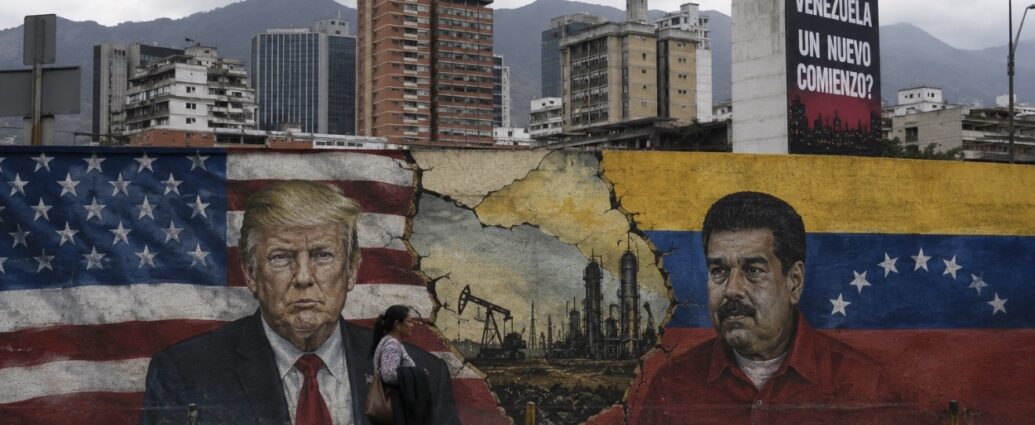
Four months after U.S. forces captured Venezuelan leader Nicolás Maduro and removed him from power, Venezuela has entered one of the most extraordinary political transitions in modern Latin American history — one increasingly directed not from Caracas, but from Washington.

The dramatic shift has transformed relations between the United States and its longtime geopolitical adversary from sanctions and isolation into direct political management, economic supervision, and strategic engagement under President Donald Trump’s administration.

The result is a country now operating in a political gray zone:
formally sovereign, yet heavily dependent on U.S. approval for everything from banking access and oil production to diplomatic recognition and economic survival.

How the Maduro Era Ended

On January 3, 2026, President Trump announced that U.S. military operations inside Venezuela had culminated in the capture of Maduro and his wife, Cilia Flores, during a coordinated strike campaign that Washington said encountered minimal American casualties.

Both were transferred to New York to face federal charges tied to narco-terrorism, drug trafficking, and weapons offenses.

The operation instantly altered the geopolitical landscape across Latin America and triggered one of the most significant regime collapses in the region in decades.

Shortly afterward, Trump declared that U.S. forces were effectively “running Venezuela” during the transition period and confirmed negotiations involving Venezuelan oil assets and future energy cooperation with the United States.

The administration also secured agreements tied to sanctioned Venezuelan oil revenues reportedly worth billions of dollars.

Washington Chooses an Unlikely Partner

One of the administration’s most controversial decisions was its choice to work with interim Venezuelan President Delcy Rodríguez — Maduro’s former vice president — rather than immediately transfer authority to the democratic opposition.

The move stunned many Venezuelan opposition figures, particularly supporters of longtime anti-Maduro activist María Corina Machado, who spent years leading resistance efforts against the socialist government.

Critics accused Washington of prioritizing stability and energy interests over democratic transition.

The White House defended the strategy as pragmatic.

Administration officials argued that Rodríguez controlled enough of the state apparatus to maintain order and oversee a managed transition while negotiations over elections, sanctions relief, and institutional reforms continued.

The U.S. Controls the Economic Lifeline

The Trump administration is now exercising influence over Venezuela primarily through economic leverage.

Washington has selectively eased some sanctions, allowing limited transactions involving Venezuela’s central bank and partially reopening pathways for state-owned oil company Petróleos de Venezuela (PDVSA) to operate internationally.

But nearly all relief measures remain temporary and heavily conditional.

Access to:

  • International banking systems
  • Foreign investment
  • Oil export markets
  • Frozen overseas assets
  • Global financing mechanisms

still depends on licenses issued by the U.S. Treasury Department.

That arrangement effectively gives Washington extraordinary influence over Venezuela’s economic future.

Trump made the administration’s posture unmistakably clear early in the transition.

“If she doesn’t do what’s right, she is going to pay a very big price, probably bigger than Maduro,” the president said in January, referring to Rodríguez.

U.S. Officials Flood Into Caracas

Since Maduro’s removal, senior Trump administration officials have made repeated trips to Caracas as part of what appears to be a phased stabilization and restructuring effort.

In February, Energy Secretary Chris Wright visited Venezuela to discuss rebuilding the country’s oil infrastructure and expanding future production capacity.

In March, Interior Secretary Doug Burgum traveled to Caracas for talks focused on mining and natural resources. The visit concluded with the formal restoration of diplomatic relations between the United States and Venezuela.

The administration’s intense focus on energy is unsurprising.

Venezuela possesses the world’s largest proven oil reserves, yet years of corruption, sanctions, underinvestment, and political collapse devastated production under Maduro’s rule.

Oil output fell roughly 65% compared with 2013 levels.

Industry analysts say any meaningful recovery would require years of infrastructure rebuilding, legal restructuring, and political stability — conditions Venezuela still lacks.

Democracy Deferred?

Secretary of State Marco Rubio has repeatedly stated that restoring democratic governance remains a long-term objective, but administration officials have privately emphasized that immediate priorities center on:

  • Security stabilization
  • Migration control
  • Energy production
  • Regional counter-narcotics operations

That sequencing has frustrated many Venezuelan opposition activists.

Trump himself added fuel to the controversy by publicly claiming opposition leader María Corina Machado, recipient of the 2025 Nobel Peace Prize, lacked sufficient support to govern effectively.

Still, Machado is expected to return to Venezuela in coming weeks and has stated publicly that national elections will eventually be held — a possibility that would have seemed unimaginable only months earlier.

Whether those elections materialize freely and fairly remains one of the central unanswered questions surrounding Venezuela’s transition.

Life for Venezuelans Has Barely Changed

For ordinary Venezuelans, daily life remains difficult despite the geopolitical transformation unfolding around them.

Inflation, weak wages, unreliable infrastructure, and economic hardship continue across much of the country.

Some early indicators suggest limited improvement:

  • Meat and poultry prices have declined modestly
  • Real estate values have risen approximately 22%
  • American Airlines has resumed service to Venezuela

But much of the population has yet to experience meaningful economic recovery.

The United States also continues to maintain partial visa restrictions on Venezuelan nationals, while deportations of migrants continue under broader immigration enforcement policies.

Meanwhile, U.S. military operations targeting suspected narcotics trafficking networks across the Caribbean and Eastern Pacific have continued even after Maduro’s capture.

Since operations began in late 2025, dozens of strikes have reportedly been carried out, with total deaths exceeding 180.

A Political Experiment Without Precedent

Foreign policy analysts say Venezuela has effectively become a geopolitical experiment with few modern parallels.

Experts at RAND have cautioned that removing a leader does not automatically dismantle the underlying power structure.

Although Maduro is gone, much of the broader political and institutional system that sustained his government remains in place.

What exists today is neither a full democratic transition nor a traditional occupation.

Instead, Venezuela appears to be entering a new hybrid phase:
a country formally governed by Venezuelans, yet economically dependent on U.S. licenses, politically influenced by Washington, and strategically shaped through American leverage.

Whether that produces long-term stability, democratic reform, or a new form of dependency remains deeply uncertain.

What is already clear is that Venezuela’s future is no longer being determined solely in Caracas.

For now, the decisive power sits in Washington.

JBizNews Desk
© JBizNews.com. All rights reserved.
By JBizNews Desk | May 6, 2026

Washington Has a New Trade Weapon

Washington has a new trade weapon — and it does not look like a tariff. It looks like a semiconductor.

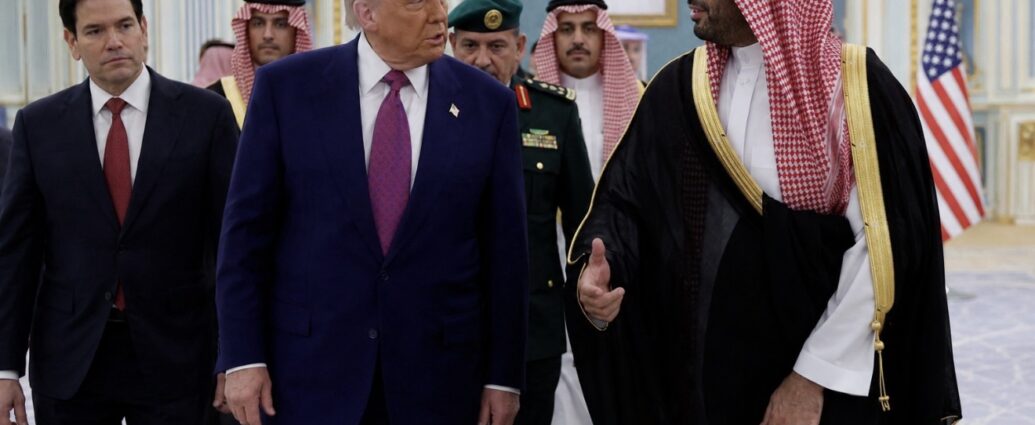
President Donald Trump has quietly rewritten the rules of AI technology exports, using access to Nvidia’s most advanced chips as diplomatic currency to pull Saudi Arabia and the United Arab Emirates deeper into the American economic orbit — and further from China. What began as a series of Gulf investment announcements has hardened into one of the most consequential strategic technology plays of the Trump administration’s second term.

The approach, now widely described as “AI diplomacy,” flips the previous administration’s logic entirely. Where former President Joe Biden restricted chip exports to the Gulf out of concern that American technology could ultimately benefit Beijing, Trump opened access aggressively — betting that locking Gulf states into U.S. technology infrastructure would itself become a form of strategic containment against China.

The Deals Reshaping the Gulf AI Race

Trump’s recent four-day tour of Saudi Arabia, Qatar, and the UAE produced massive investment commitments while reshaping global AI alliances. Saudi Arabia pledged $600 billion in investments tied to the United States, while the UAE committed roughly $1.4 trillion focused heavily on artificial intelligence, semiconductors, advanced manufacturing, and energy infrastructure projects.

In return, the Trump administration loosened Biden-era restrictions and granted Gulf allies direct access to some of the world’s most advanced AI processors.

The centerpiece agreement involved Nvidia partnering with Humain, an AI startup backed by Saudi Arabia’s sovereign wealth fund. The deal includes an immediate shipment of 18,000 Nvidia Blackwell GB300 chips — among the most advanced AI chips currently available globally. AMD separately secured a reported $10 billion collaboration with Humain, while Qualcomm, Cisco, IBM, Alphabet, Oracle, and Salesforce collectively announced roughly $80 billion in technology investments tied to Gulf projects.

The UAE secured an even larger arrangement. Under the framework announced during Trump’s visit, the Emirates could import as many as 500,000 Nvidia AI chips annually between 2025 and 2027, a package analysts estimate could ultimately exceed $15 billion in value. Part of the supply would support G42, the UAE’s state-backed AI giant, while the remainder would fuel large-scale U.S.-backed data center construction inside the Gulf state.

The scale of the Gulf AI buildout is difficult to overstate. G42’s proposed five-gigawatt AI campus in Abu Dhabi could eventually house as many as 2.5 million Nvidia chips — potentially surpassing every other major AI infrastructure project currently announced worldwide, including OpenAI’s Stargate initiative inside the United States.

Tareq Amin, CEO of Humain, summarized the pace of ambition bluntly: “What we want to do in 2026 is to build the capacity equivalent to what Saudi has built in the last 20 years, in one year.”

The China Strategy Behind the Chips

The geopolitical logic behind the agreements is explicit. David Sacks, Trump’s AI and crypto policy adviser, has argued publicly that advanced chip exports can “shift the balance of power in the region,” with the administration viewing AI partnerships as a direct mechanism to counter China’s growing influence across the Middle East.

The agreements reportedly include anti-China safeguards as part of the underlying negotiations. The UAE agreed to reduce portions of its Chinese-developed AI infrastructure, remove Chinese personnel from sensitive projects, and limit Chinese technology access tied to exported U.S. chips. Security clauses included in both the Saudi and Emirati frameworks prohibit Chinese companies from directly accessing the hardware.

The broader strategy mirrors Trump’s evolving global trade doctrine. Rather than relying solely on tariffs or sanctions, the administration is increasingly using access to advanced American technology as leverage to force countries into deeper economic alignment with Washington.

The Risks and Pushback in Washington

But the strategy carries substantial risks.

China remains deeply embedded in Gulf supply chains and infrastructure development. Gulf nations continue relying heavily on Chinese manufacturing networks as they diversify beyond oil and modernize their economies. UAE semiconductor imports have risen sharply over the past decade, with a significant share historically sourced from Chinese companies.

Critics inside Washington argue the administration may be moving too aggressively.

The House Select Committee on the Chinese Communist Party warned that the Gulf chip agreements “present a vulnerability for the CCP to exploit,” while Senate Democratic Leader Chuck Schumer raised separate national security concerns surrounding potential technology leakage.

Some administration officials reportedly acknowledged privately that anti-China safeguards written into the deals may ultimately prove difficult to fully enforce. Others pushed to delay final approvals until stronger binding protections were established, though those objections were eventually overruled.

Even implementation has moved more slowly than Trump initially suggested. While the Gulf tour produced sweeping announcements, export approvals reportedly covered only a fraction of the originally discussed chip volumes, with negotiations tied closely to Gulf investment commitments inside the United States.

What It Means for Global Power

Still, the administration views the effort as a fundamental shift in global power politics.

For decades, Washington used military alliances, aircraft sales, oil relationships, and agricultural exports as tools of diplomacy. Trump is now attempting to add artificial intelligence infrastructure to that list — treating access to advanced chips as a strategic asset capable of reshaping geopolitical alliances.

The stakes extend far beyond the Gulf.

Artificial intelligence is increasingly viewed not simply as a commercial technology race, but as a defining battle over future economic dominance, military capability, and geopolitical influence. By tying Gulf ambitions to American chipmakers instead of Chinese suppliers, Trump is attempting to lock one of the world’s wealthiest and most strategically positioned regions into the U.S. technology ecosystem before Beijing can fully establish its own foothold.

Whether the strategy ultimately strengthens American dominance or creates new vulnerabilities remains uncertain.

But one thing is already clear: semiconductors are no longer just products. They have become instruments of foreign policy.

And the global AI race is rapidly becoming a contest over who controls the chips powering the future.

JBizNews Desk

© JBizNews.com. All rights reserved. This article is original reporting by JBizNews Desk. Unauthorized reproduction, redistribution, republication, AI scraping, or reuse in any form without prior written permission from JBizNews.com is strictly prohibited.

The All-Stock Merger Would Unite Five Operating Assets Under CEO Jim Beyer, Vaulting the Combined Company to Third-Largest Gold Producer on the ASX With 700,000 Ounces a Year and Nearly $2 Billion in Cash

By JBizNews Desk | Sydney — May 6, 2026

Two of Australia’s most prominent gold producers announced plans Tuesday to combine their operations in a deal that would reshape the country’s mining landscape and create a company capable of challenging the continent’s largest gold miners.

Regis Resources and Vault Minerals agreed to merge through an all-stock transaction valuing the combined entity at approximately A$10.7 billion, or about $7.7 billion. Under the terms, Vault shareholders will receive 0.6947 newly issued Regis shares for each Vault share held — representing a 10.7% premium to Vault’s closing price of A$4.50 on Monday.

The boards of both companies have unanimously recommended the merger to shareholders. The combined company will be led by Russell Clark as non-executive chairman and Jim Beyer as managing director and chief executive officer, with a board evenly split between the two companies.

What the Combined Company Looks Like

The scale of the merged operation is substantial.

The combined entity is expected to produce more than 700,000 ounces of gold annually from five operating assets primarily located in Western Australia, along with additional holdings in Canada. That level of output would position it as the third-largest primary gold producer listed on the Australian Securities Exchange, surpassing Evolution Mining.

Financially, the company will begin with no drawn debt and approximately A$1.9 billion in cash and bullion as of March 31, 2026. Annual free cash flow is projected at around A$1.7 billion.

The resource base is equally significant, with 6.0 million ounces of ore reserves and 20.5 million ounces of total mineral resources — providing a long runway for production and expansion.

The Strategic Logic

At its core, the deal consolidates two major Western Australian assets — Tropicana and Leonora — into a single, scaled operator capable of attracting global investor attention.

The combined infrastructure will deliver milling capacity exceeding 22 million tonnes per year across nine mills, offering operational flexibility and efficiency that smaller standalone operators cannot easily replicate.

Beyond scale, the companies expect more than A$500 million in corporate tax benefits, along with procurement and operational savings. Increased size also improves access to global capital markets, a key advantage as institutional investors increasingly favor larger, more liquid mining companies.

The growth pipeline extends further. The combined company will advance Regis’s McPhillamys project in New South Wales and Vault’s Sugar Zone asset in Canada — both development-stage projects with the potential to add meaningful future production.

Gold’s Role in the Deal

The timing of the merger reflects a powerful backdrop.

Gold prices have surged to record levels in 2026, driven by geopolitical instability, inflation concerns, and continued central bank demand. With gold trading above $4,500 per ounce, a producer generating 700,000 ounces annually stands to produce substantial revenue.

At those price levels, the projected A$1.7 billion in annual free cash flow may prove conservative if market conditions persist.

Jim Beyer framed the deal in clear terms: “This merger creates Australia’s third largest primary ASX-listed gold producer, which demands global recognition. The combined company is exceptionally well-positioned to deliver long-term value and enhanced capital returns for our shareholders.”

The all-stock structure allows both sets of shareholders to retain full exposure to rising gold prices without taking on additional debt. The resulting debt-free balance sheet positions the company competitively at a time when many mining firms are still managing leverage from prior cycles.

The merger is expected to close in August or September 2026, subject to shareholder, regulatory, and court approvals. A detailed scheme booklet, including an independent expert’s opinion, is expected to be distributed to Vault shareholders in the coming months.

As global demand for gold continues to rise, the creation of a new large-scale producer signals a broader shift — consolidation in the mining sector is accelerating, and scale is once again becoming a decisive advantage.

JBizNews Desk
© JBizNews.com. All rights reserved.
Foreign Investors Have Already Pulled $20 Billion Out of Indian Equities in 2026. Another Oil Spike Could Make Things Considerably Worse — Unless Domestic Buyers, Strong Earnings, and Modi’s Election Wins Hold the Line.

By JBizNews Desk | Mumbai — May 6, 2026

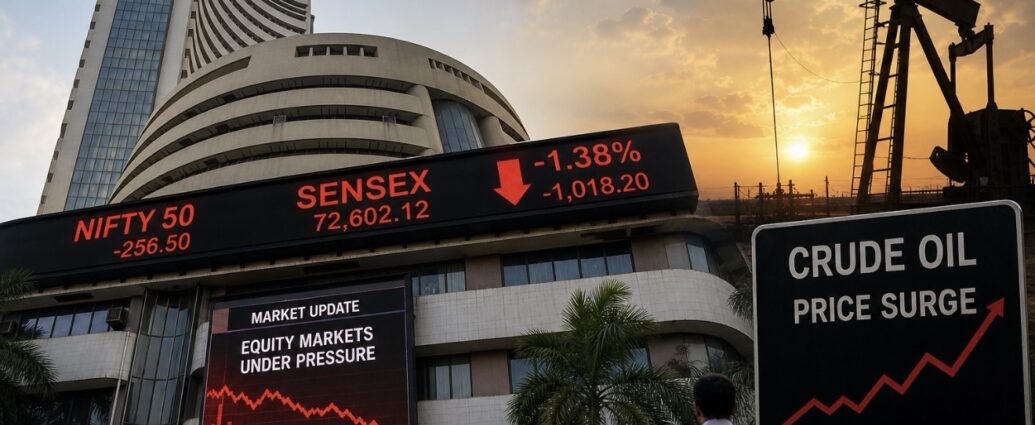
India’s stock market is under renewed pressure as surging oil prices threaten to reverse recent gains, underscoring the country’s deep vulnerability to global energy shocks.

After both the Nifty 50 and BSE Sensex fell sharply in March amid the U.S.-Iran conflict, markets have attempted to stabilize. But the same force that triggered the selloff — rising crude — is once again weighing heavily on the outlook.

The Oil Problem

India imports more than 90% of its crude oil, making it highly exposed to global price swings.

When oil prices rise, the impact spreads quickly across the economy: the import bill increases, the rupee weakens, inflation pressures build, and corporate profit margins shrink. The combined effect often leads foreign investors to pull capital from equities.

The rupee recently hit a record low of 95.33 against the U.S. dollar as crude surged, increasing import costs and dampening investor confidence. Concerns around inflation and the current account deficit have intensified, making India’s equity valuations appear stretched in a volatile global environment.

The Strait of Hormuz, which carries about 20% of the world’s oil supply, remains a key risk. Ongoing geopolitical tensions continue to keep prices elevated and prone to sudden spikes.

The Foreign Investor Exodus

Foreign investors have accelerated their exit from Indian equities.

More than $20 billion has been withdrawn in the first four months of 2026, already exceeding the total outflows for all of 2025. Roughly $19 billion of that selling followed the escalation of the Iran conflict in late February.

In one week alone in April, Foreign Institutional Investors (FIIs) sold ₹13,771 crore in equities, while Domestic Institutional Investors (DIIs) bought ₹11,585 crore — highlighting the ongoing tug-of-war shaping market direction.

What Is Supporting the Market

Despite mounting pressure, several factors are helping prevent a deeper downturn.

Domestic investors have stepped in as a stabilizing force. Local mutual funds and retail investors have purchased approximately ₹1.7 trillion in equities so far this year, providing a critical cushion against foreign outflows.

Corporate earnings have also remained resilient. Analysts project earnings growth of around 16% annually through fiscal 2028, with recent results from companies such as Hindustan Unilever and Maruti Suzuki exceeding expectations and supporting market sentiment.

Political stability has further contributed to confidence. Recent state election victories for Prime Minister Narendra Modi’s ruling coalition have reduced uncertainty and reinforced expectations for continued infrastructure investment and economic growth. Markets responded positively, with the Sensex rising more than 600 points in a single session and adding over ₹5.4 lakh crore in market value.

The Line in the Sand

The direction of India’s markets now hinges largely on oil.

If crude stabilizes and geopolitical tensions ease, foreign capital could begin to return, supported by domestic buying and steady earnings growth. But if oil continues to rise — or if global financial conditions tighten further — renewed selling pressure is likely.

VK Vijayakumar, Chief Investment Strategist at Geojit Investments, said the market’s trajectory will be determined primarily by developments in West Asia. He noted that efforts to secure shipping through the Strait of Hormuz have provided some relief, but risks remain elevated.

For India’s growing base of retail investors, who have helped support markets through sustained domestic inflows, the coming weeks will be critical.

The market’s stability now depends on whether local confidence can withstand a global oil market that remains volatile and highly sensitive to geopolitical shocks.

JBizNews Desk
© JBizNews.com. All rights reserved.

By JBizNews Desk | Tuesday, May 6, 2026

The world’s most critical oil and gas corridor remained in turmoil Tuesday night as President Donald Trump abruptly paused a U.S. military operation designed to escort commercial ships through the Strait of Hormuz, just hours after Iran launched fresh missile and drone strikes against American allies in the Gulf — intensifying fears of a broader regional escalation and renewed shockwaves across global energy markets.

Trump announced the decision in a post on Truth Social, saying the temporary halt of “Project Freedom” was tied to what he described as significant diplomatic progress with Tehran.

“The fact that Great Progress has been made toward a Complete and Final Agreement” with Iran was a major factor behind the move, Trump wrote, adding that the operation “will be paused for a short period of time to see whether or not the Agreement can be finalized and signed.”

The decision represented a sharp reversal in tone from earlier in the day, when Secretary of State Marco Rubio publicly defended the mission as a humanitarian and strategic necessity. Rubio said the purpose of Project Freedom was to “rescue” sailors who had effectively been “left for dead” due to Iran’s blockade tactics and escalating attacks in the Persian Gulf.

According to Rubio, nearly 23,000 sailors aboard vessels from 87 countries have been stranded since the strait’s effective shutdown began, with at least 10 deaths already linked to the crisis. He accused Tehran of weaponizing one of the world’s most vital commercial waterways and warned that the economic fallout was already spreading far beyond the Middle East.

Before the sudden pause, U.S. officials had portrayed the operation as an early military success. Admiral Brad Cooper, commander of U.S. Central Command, told reporters Monday that American naval forces successfully established a temporary safe corridor through portions of the Strait of Hormuz after clearing Iranian sea mines and intercepting multiple threats against civilian shipping.

Cooper said U.S. military helicopters destroyed six Iranian small boats that had attempted to target commercial vessels, adding that American forces defeated “each and every” threat encountered during the escort operation. Two American-flagged merchant ships were able to transit the strait safely under the mission.

But Iran responded aggressively.

The UAE Defense Ministry confirmed Tuesday that its air defense systems intercepted 15 missiles and four drones launched by Iran toward strategic Gulf targets. One drone struck near a major oil facility in Fujairah, igniting a fire and injuring three Indian nationals, according to Emirati officials.

The attacks immediately disrupted regional aviation traffic, with commercial flights bound for Dubai and Abu Dhabi reportedly turning around midair amid fears of additional strikes.

Adding to the growing instability, the UK Maritime Trade Operations Centre reported late Tuesday that a cargo vessel traveling through the Strait of Hormuz had been struck by an unidentified projectile. Officials said the environmental impact remained unknown, raising fresh concerns over both shipping safety and the possibility of a major maritime disaster in one of the busiest energy corridors on earth.

Financial markets reacted swiftly.

Oil prices initially retreated after Trump’s announcement raised hopes for possible negotiations with Tehran, but crude remained firmly above $100 per barrel amid uncertainty over whether the pause would hold or if attacks would intensify further.

Average gasoline prices in the United States climbed to approximately $4.48 per gallon Tuesday evening, continuing a steady upward trend that economists warn could worsen if Hormuz shipping disruptions continue into the summer.

The broader economic consequences have already become severe.

The Strait of Hormuz has remained largely blocked since February 28, when the United States and Israel launched coordinated airstrikes against Iranian military infrastructure, triggering retaliatory action from Tehran. The narrow waterway previously handled roughly 25% of global seaborne oil trade and nearly 20% of the world’s liquefied natural gas shipments.

Before the conflict, roughly 3,000 vessels passed through the strait each month. Shipping analysts now estimate traffic has collapsed to roughly 5% of pre-war levels, effectively paralyzing one of the most important arteries of the global economy.

Brent crude prices surged past $120 per barrel following the initial closure, while QatarEnergy declared force majeure on exports as regional supply chains deteriorated.

The head of the International Energy Agency described the situation as “the greatest global energy security challenge in history,” warning governments that prolonged instability in Hormuz could trigger supply shortages, inflation spikes, and broader economic slowdowns across Europe, Asia, and North America.

At the same time, diplomatic activity intensified on multiple fronts.

Iran’s foreign minister traveled to Beijing for direct talks with Chinese officials — the first such face-to-face meeting since the war began — as China seeks to position itself as a central player in any potential de-escalation effort ahead of Trump’s expected visit to Beijing next week.

Meanwhile, Rubio urged the United Nations Security Council to pass an emergency resolution requiring Iran to immediately halt attacks, disclose the location of sea mines allegedly deployed throughout the strait, and cooperate with international efforts to reopen commercial shipping lanes.

Iranian officials showed little sign of backing down.

Mohammad Bagher Ghalibaf, Iran’s parliamentary speaker and one of the country’s lead negotiators, responded defiantly Tuesday, warning that while conditions in the Strait of Hormuz may already be “unbearable” for the United States and its allies, Iran has “not even begun yet.”

That statement intensified fears that Tehran could further escalate attacks on oil infrastructure, shipping lanes, or American military assets if negotiations fail.

With hundreds of vessels still stranded, global supply chains increasingly strained, and the future of Project Freedom now uncertain, businesses and consumers worldwide remain caught in a rapidly evolving geopolitical crisis with no clear end in sight.

For now, the world’s most important oil shipping lane remains only partially functional — and the economic consequences are continuing to spread far beyond the Middle East.

— JBizNews Desk


**© JBizNews.com. All rights reserved. This article is original reporting by JBizNews Desk. Unauthorized reproduction or redistribution is strictly prohibited.


By JBizNews Desk | May 5, 2026

A quiet but accelerating workforce shift is beginning to reshape the American labor market.

The share of U.S.-based employees leaving their jobs to take positions abroad has more than doubled over the past five years — rising from 2.7% at the end of 2021 to 6% by the end of 2025, according to new research from workforce intelligence firm Revelio. In raw terms, roughly 2,000 to 2,500 workers per month left the United States last year for jobs overseas.

The trend spans both U.S.-born and foreign-born workers, and it is being driven by a convergence of forces that many American employers have been slow to fully address: return-to-office mandates, rising financial pressure at home, and a global job market where geography is no longer a barrier.


Tech Workers Lead the Shift

The movement is being led by highly skilled professionals, particularly in technology.

In IT consulting, nearly 16% of workers who changed jobs in December 2025 began their new roles outside the United States, according to Revelio. That surge reflects a broader shift in global talent flows.

For the first time in years, more U.S.-based tech workers are moving to Europe than European workers coming to the United States — reversing a long-standing pattern. Europe’s growing investment in artificial intelligence, cloud infrastructure, and digital services has made it a far more competitive destination for top talent.

Countries including France and the United Kingdom have expanded visa programs designed to attract skilled professionals, lowering barriers for Americans willing to relocate.


Why Workers Are Leaving

The decision to move abroad is not driven by salary alone.

“Workers are looking at the full package,” said Ege Aksu, economist at Revelio, pointing to factors such as healthcare systems, transportation, childcare, and overall work-life balance. In many cases, those benefits can offset lower nominal wages.

That tradeoff is gaining traction at a time when many Americans feel financially squeezed.

More than half of U.S. consumers say their financial situation is worsening, according to Gallup, the highest share since 2001. Rising costs for housing, groceries, and fuel are putting sustained pressure on household budgets.

At the same time, workplace expectations are shifting.

Return-to-office mandates have become a key trigger. After years of remote and hybrid work, many employees are now being asked to return full-time — even as international employers continue to offer flexible arrangements.

Revelio’s analysis found that remote-capable roles had the strongest link to workers leaving the U.S., underscoring how flexibility has become a deciding factor in employment choices.


A Shift Across the Workforce

The data shows a clear divide between foreign-born and U.S.-born workers — but both groups are moving in the same direction.

Among foreign-born employees, roughly 30% of job switchers left the United States as of December 2025. For U.S.-born workers, the number remains much lower — under 1% — but is steadily rising from a very low base.

That increase, while smaller in absolute terms, is significant. It suggests the trend is not limited to return migration, but represents a broader shift in how workers view opportunity.


What It Means for U.S. Employers

For American businesses, the implications are immediate.

Revelio found that workers who saw limited opportunities for advancement were significantly more likely to leave — particularly when combined with reduced flexibility and rising cost pressures.

Companies that are scaling back remote work, slowing promotions, or failing to keep pace with cost-of-living increases may find themselves losing talent to competitors they have never traditionally considered.

“The competition is no longer just local,” Aksu noted. “It’s global.”


The Bottom Line

The global labor market is no longer theoretical for American workers — it is operational.

And as remote work expands and international opportunities become more accessible, more workers are acting on it.

For employers, the message is clear: retaining talent increasingly means competing not just across industries — but across borders.


JBizNews Desk
© JBizNews.com. All rights reserved. This article is original reporting by JBizNews Desk. Unauthorized reproduction or redistribution is strictly prohibited.


By JBizNews Desk | May 5, 2026

Something unusual is happening in the data that tracks how Americans feel about the economy — and it matters for every business owner, retailer, and worker trying to understand where consumer spending is headed next.

Two of the most closely watched surveys in the country are now telling sharply different stories.

The Conference Board’s Consumer Confidence Index rose to 92.8 in April, up from 92.2 in March and marking a third consecutive monthly increase. At the same time, the University of Michigan’s Consumer Sentiment Index fell to 49.8, the lowest level in the survey’s more than 50-year history — below even the lows reached during the 2022 inflation shock, when it bottomed at 50.

Both surveys measure how Americans feel about the economy. But they are not measuring the same thing — and the gap between them is becoming one of the most important signals in the current economic cycle.


Jobs vs. Cost of Living

The divergence comes down to what each survey emphasizes.

The Conference Board index leans heavily on the labor market. It asks consumers whether jobs are available, whether employment feels secure, and whether hiring conditions are improving. On those fronts, April showed modest strength.

About 27.3% of respondents said jobs were “plentiful,” largely unchanged from March, while the share saying jobs were “hard to get” fell to 19.8% from 21.3%. As long as employment remains stable, this measure tends to hold up.

The Michigan survey looks at something different: personal finances and inflation.

It tracks how consumers feel about the cost of living, their ability to afford daily expenses, and where they think prices are heading. And on those measures, sentiment is deteriorating rapidly.

Year-ahead inflation expectations jumped from 3.8% in March to 4.7% in April, the largest monthly increase in a year. Longer-term expectations rose to 3.5%, the highest level since late 2025.

Just as important, sentiment declined across every demographic group — regardless of income, age, education, or political affiliation.

Researchers behind the Michigan survey pointed directly to the impact of rising fuel prices and the broader cost pressures tied to the Iran conflict, which are now feeding into everyday expenses.


What the Gap Is Really Saying

Economists see a clear message in the split:

Americans still feel employed — but they no longer feel financially comfortable.

Paychecks are coming in, but those paychecks are buying less.

Gasoline prices have climbed back above $4 per gallon nationally, grocery costs remain sharply elevated compared to pre-pandemic levels, and mortgage rates have moved back above 6.5%, raising the cost of housing and borrowing.

“That gap between income and expenses is what drives sentiment lower,” said Diane Swonk, Chief Economist at KPMG, noting that employment alone is no longer enough to support confidence. “People can be working and still feel worse off.”


A Warning Sign for Spending

Historically, this kind of divergence has mattered.

When Conference Board confidence remains relatively strong while Michigan sentiment weakens, it often signals that consumers are beginning to pull back — not across the board, but in specific areas.

Spending on big-ticket items typically slows first. Purchases of cars, appliances, and homes become more sensitive to higher borrowing costs and tighter budgets. From there, the impact spreads.

Businesses begin to see softer demand. Investment slows. Hiring follows.

“The Michigan survey tends to lead,” Swonk said. “It captures the pressure consumers are feeling before it shows up in behavior.”

Recent data suggests that shift may already be underway.

The Conference Board’s own survey showed expected spending over the next six months declined across most service categories in April. Consumers indicated they were pulling back on travel, hospitality, and discretionary retail — even as spending on essentials remained steady.


What It Means for Businesses and Policy

For businesses, the takeaway is immediate.

Consumers are still showing up to work — but they are becoming more selective in how they spend. That shift tends to hit discretionary sectors first, from travel and entertainment to non-essential retail.

For policymakers, the picture is more complicated.

The Federal Reserve is watching both surveys closely, balancing a labor market that remains relatively strong against a consumer base that is increasingly strained by rising costs.

Inflation expectations, in particular, remain a concern. When consumers expect prices to rise, it can influence behavior — from spending patterns to wage demands — making inflation more difficult to control.


The Bottom Line

The data is not contradictory — it is layered.

One survey shows an economy where jobs are still holding up. The other shows households that are feeling the squeeze more intensely with each passing month.

Together, they point to an economy that is still functioning — but under growing pressure.

And for businesses and investors, the direction of that pressure may matter more than either number on its own.


JBizNews Desk
© JBizNews.com. All rights reserved. This article is original reporting by JBizNews Desk. Unauthorized reproduction or redistribution is strictly prohibited.


By JBizNews Desk | May 5, 2026

American Express Global Business Travel is set to leave public markets in a $6.3 billion all-cash deal, marking one of the year’s largest take-private transactions and highlighting how artificial intelligence is beginning to reshape the corporate travel industry.

The company announced Monday it has agreed to be acquired by Long Lake Management, a fast-rising investment firm founded in 2023. The firm will pay $9.50 per share for Global Business Travel Group (GBTG), representing a 60.2% premium to its May 1 closing price and a 65.1% premium to its 30-day average, delivering a significant payout to shareholders.

Once the deal closes, GBTG will be delisted from the New York Stock Exchange and operate as a privately held company.


Strong Backing From Major Shareholders

The transaction has already secured support from key stakeholders. American Express, Expedia, Qatar Investment Authority, and BlackRock, which collectively control about 69% of the company’s shares, have entered into voting agreements backing the deal.

American Express, which owns roughly 30% of the company, is expected to receive approximately $1.5 billion from the sale. Despite the ownership change, the American Express name will remain in place through an ongoing brand licensing agreement.


Financing Signals Confidence in the Deal

The acquisition is backed by a major banking group, including JPMorgan, Bank of America, Citi, and MUFG, which are providing committed debt financing. Koch Equity Development is also contributing equity alongside Long Lake and its investors.

Notably, the deal includes no financing condition, a signal that funding is fully secured and execution risk is limited.

Citi is serving as lead financial adviser to Long Lake, while Rothschild & Co. advised the company’s special committee, which unanimously recommended the transaction.


AI at the Center of the Strategy

At the core of the acquisition is a clear strategy: transform corporate travel using artificial intelligence.

Long Lake, backed by investors including General Catalyst, Alpha Wave, Elad Gil, D1, and Thrive, focuses on acquiring service-heavy businesses and modernizing them through its Nexus AI platform.

Corporate travel — long dependent on human agents handling bookings, disruptions, and expense management — is seen as a prime candidate for automation and optimization.

Alex Taubman, Co-Founder and CEO of Long Lake, said the goal is to deliver faster bookings, proactive disruption management, and a more seamless experience by combining AI with human expertise.


A Strong Operating Business

The deal comes as Amex GBT is performing well operationally.

In the first quarter of 2026, the company reported:

  • 35% revenue growth
  • $3.4 billion in new client wins
  • 96% customer retention

Those figures underscore the company’s dominant position in corporate travel, even as the industry faces pressure from rising fuel costs and geopolitical instability.

Paul Abbott, CEO of Amex GBT, called the transaction a strong outcome for shareholders and said it positions the company to deliver enhanced service to clients going forward.


High-Profile Backers Add Weight

Long Lake’s strategy is further supported by General Catalyst, whose chairman Ken Chenault, the former CEO of American Express, brings deep industry experience.

The firm has backed major technology companies including Airbnb, Stripe, Snap, and Anthropic, adding credibility to Long Lake’s push to integrate AI into a traditionally service-driven industry.


What Comes Next

The transaction is expected to close in the second half of 2026, subject to shareholder approval and regulatory clearance.

For the broader market, the deal signals a growing trend: private capital targeting established service businesses and rebuilding them around AI-driven models.

For corporate travel, it may mark the beginning of a structural shift — from a labor-intensive service model to a more automated, technology-driven platform.


JBizNews Desk
© JBizNews.com. All rights reserved. This article is original reporting by JBizNews Desk. Unauthorized reproduction or redistribution is strictly prohibited.
Fitch said the rating reflects Argentina’s structurally improved fiscal and external balances, progress on economic reforms, and improved prospects for FX reserve accumulation.

This post was originally published here. 


By JBizNews Desk | May 2026

New World Development is weighing the sale of a stake in its Hong Kong hotel portfolio, a move that underscores mounting financial pressure on one of the city’s most indebted property developers and signals a continued push by the Cheng family to unlock liquidity from flagship assets, according to people familiar with the matter.

The portfolio under consideration includes high-profile properties such as the Grand Hyatt Hong Kong, Renaissance Harbour View Hotel, and Hyatt Regency Tsim Sha Tsui, held through a 50-50 joint venture between New World Development and the Abu Dhabi Investment Authority (ADIA).

The potential transaction, which could value the portfolio at around $2 billion, reflects a broader strategy by the company to monetize premium assets while maintaining strategic control — a balancing act that has defined its response to escalating debt pressures.

A Developer Under Strain

New World Development’s financial challenges have intensified over the past two years. For the fiscal year ended June 30, 2024, the company reported a net loss of HK$19.7 billion, its worst performance since its founding in 1970.

The downturn triggered significant leadership changes. Adrian Cheng Chi-Kong, grandson of founder Cheng Yu-tung, stepped down as chief executive in September, marking a pivotal moment for the family-controlled group. By December, the company was removed from the Hang Seng Index, further underscoring investor concerns.

The Cheng family, through Chow Tai Fook Enterprises, controls roughly 45% of New World Development. The company remains the most heavily indebted among Hong Kong’s major developers and has been under increasing pressure to refinance obligations and improve liquidity.

Asset Sales and Strategic Shifts

The possible hotel stake sale is part of a broader asset disposal strategy aimed at meeting a HK$27 billion sales target and restoring positive cash flow.

New World has explored a range of divestments, including a potential sale of its Rosewood hotel group and select mainland China real estate projects tied to its flagship K11 developments in cities such as Hangzhou, Shenzhen, and Shanghai.

At the same time, the company has held discussions with global investors. Blackstone emerged as the most advanced party in talks to acquire an equity stake in New World, though negotiations stalled as the Cheng family signaled reluctance to cede control. By early 2026, improving sentiment around a potential rebound in Hong Kong’s property market further reduced urgency for a large-scale equity deal.

A Portfolio with Deep Roots

The hotel assets now under consideration have long been central to New World’s portfolio. In April 2015, the company entered into a joint venture with ADIA through HIP Company Limited, placing the Grand Hyatt Hong Kong, Renaissance Harbour View, and Hyatt Regency Tsim Sha Tsui into a structure valued at approximately HK$18.5 billion.

The transaction generated about HK$10 billion in proceeds for New World at the time, while allowing it to retain shared ownership of some of Hong Kong’s most prominent hospitality assets.

The company has since refinanced debt tied to the portfolio, including an original HK$9.25 billion loan, as part of ongoing efforts to manage its balance sheet.

Market Timing and What Comes Next

The renewed focus on the hotel portfolio comes as Hong Kong’s luxury hospitality sector shows early signs of recovery, driven in part by a rebound in mainland Chinese tourism. That dynamic could support valuations if a deal proceeds.

At the same time, the move highlights the difficult position facing New World Development: converting trophy assets into liquidity without undermining long-term strategic positioning.

The company did not immediately respond to a request for comment.

For investors and the broader Hong Kong property market, the outcome of any potential transaction will be closely watched as a signal of both asset valuations and the depth of financial pressure still facing major developers.

JBizNews Desk

Seattle, WA — May 5, 2026

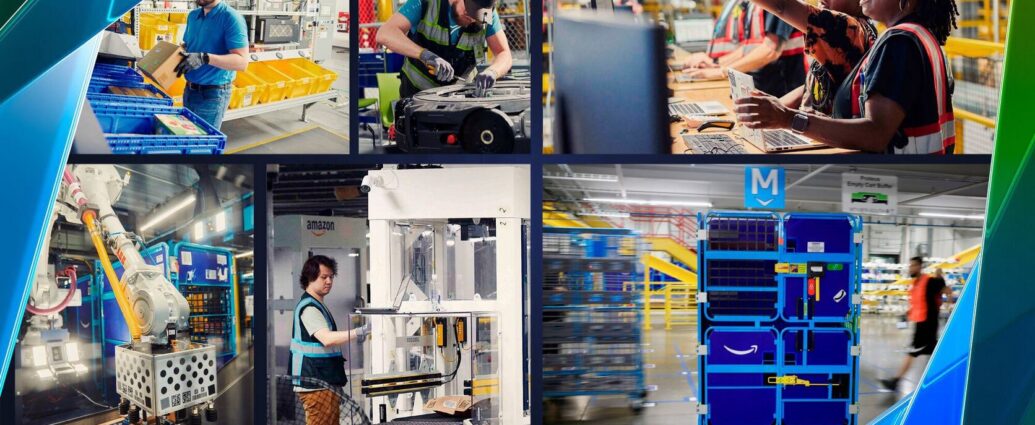
Amazon today officially rolled out Amazon Supply Chain Services (ASCS), a landmark expansion that opens the company’s entire global logistics infrastructure — including freight, distribution centers, fulfillment networks, and last-mile parcel shipping — to businesses of any size and across every industry, even those that have never sold a single item on Amazon’s marketplace.

The announcement positions Amazon’s world-class supply chain operations, originally built to power its own e-commerce empire, as a standalone paid service now available to retailers, healthcare providers, manufacturers, automotive companies, and others seeking enterprise-grade logistics without the need to list products on Amazon.com.

“This is about giving every business access to the same proven infrastructure that delivers millions of packages every day with speed and reliability,” said an Amazon spokesperson in a statement released this afternoon. “Whether you’re a small manufacturer in the Midwest, a healthcare distributor, or a large automaker, you can now tap into our global network on a pay-as-you-go basis.”

The new offering includes access to Amazon’s vast fulfillment centers equipped with advanced robotics and AI-driven sorting systems, multi-modal freight options (ocean, air, rail, and truck), customs brokerage services, and optimized last-mile delivery through Amazon’s delivery stations and partner carriers. Companies will be able to integrate ASCS directly into their existing ERP and warehouse management systems via new APIs, allowing seamless end-to-end visibility and control.

Industry analysts note that the move positions Amazon as a formidable competitor in the $1.3 trillion third-party logistics (3PL) market, long dominated by traditional players such as FedEx, UPS, and DHL. Early adopters already include major brands such as Procter & Gamble, 3M, and American Eagle Outfitters, which have begun piloting the service for non-Amazon fulfillment needs. The launch builds on Amazon’s existing logistics partnerships with hundreds of thousands of marketplace sellers while removing the previous requirement to sell on Amazon.com.

Amazon executives emphasized that ASCS leverages the same technology stack that powers Prime deliveries, including proprietary routing algorithms, predictive inventory placement, and sustainable packaging solutions. Initial pricing will be usage-based, with volume discounts for high-throughput clients, according to the company. The expansion comes as businesses across sectors face ongoing pressure to reduce logistics costs and improve supply-chain resilience in the wake of recent global disruptions.

By opening its network, Amazon aims to capture a larger share of enterprise logistics spending while further monetizing the infrastructure it has invested billions in over the past decade. The service is expected to appeal particularly to midsize manufacturers and distributors seeking the efficiency of Amazon’s network without the overhead of building their own facilities.

Amazon Supply Chain Services is now available for immediate enrollment through a dedicated enterprise portal, with dedicated account managers assigned to qualifying businesses. The company plans phased international rollouts later this year, starting with Europe and Asia-Pacific markets.

JbizNews Desk

A Skunkworks Unit of 650 Engineers Is Scrapping a Century of Auto Manufacturing Tradition — And Betting the Company’s Electric Future on It

By JBizNews Desk | Dearborn, Mich. — May 5, 2026

Deep inside a nondescript building in Long Beach, California, a team of engineers that Ford Motor Company has kept largely out of public view for the past four years has been quietly dismantling one of the most entrenched assumptions in American manufacturing: that building a car requires a traditional moving assembly line.

The result is now coming into focus. Ford is targeting a 2027 launch for a midsize electric pickup starting at roughly $30,000 — a price point that would bring an American-made EV truck into true mass-market territory and position the company directly against low-cost Chinese competitors reshaping the global auto industry.

Getting there required tearing up the playbook.

At the center of the effort is a skunkworks unit led by Alan Clarke, a former Tesla engineer now serving as Ford’s vice president of Advanced Development. The group — roughly 650 engineers split between Long Beach and Palo Alto — was assembled beginning in 2021 with talent drawn from Tesla, Rivian, and Lucid, and has operated with unusual independence inside the company.

The structure of Ford itself has shifted around them. CEO Jim Farley recently dissolved the broader Model e division, stripping layers of bureaucracy while keeping Clarke’s team intact — a move widely seen inside the company as confirmation that this program is central to Ford’s long-term EV strategy. Farley has called the initiative a “Model T moment,” invoking the company’s original breakthrough in mass production.

The core innovation is not just the vehicle — it’s how the vehicle is built.

Ford has replaced the traditional linear assembly line with what it calls an “assembly tree,” a branching system where major sections of the vehicle — front, rear, and center — are constructed simultaneously on parallel sub-lines before being merged at final assembly. The approach fundamentally rethinks workflow inside a factory.

The efficiencies are significant. The new platform reduces parts by roughly 20%, cuts fasteners by 25%, and lowers the number of workstations by about 40%. Wiring has been shortened by more than 4,000 feet and reduced in weight by over 20 pounds compared with earlier EV models, directly lowering cost and complexity.

Clarke’s team also introduced an internal “bounty” system, rewarding engineers for identifying incremental improvements — a concept borrowed from Formula 1 racing, where marginal gains compound into meaningful performance advantages.

The production impact could be substantial. Ford expects the new system to enable vehicle assembly up to 40% faster than current processes, with sustained production speeds running about 15% higher once fully operational.

“The goal is to build EVs that are not just compelling, but cost-competitive with gas vehicles,” Alan Clarke has said in internal briefings, framing affordability as the defining challenge of the next phase of electrification.

The first product to emerge from this system will be a midsize pickup roughly the size of a Ford Maverick, but with interior space closer to a Ranger. The vehicle is expected to deliver at least 300 miles of range and a starting price below $30,000.

Performance remains a focus. Jim Farley has described the truck as being “as quick as a Mustang EcoBoost,” suggesting a 0-to-60 time under five seconds, while offering more passenger volume than a Toyota RAV4 along with traditional pickup utility — including a full bed, smart storage features, and a front trunk.

Under the hood, the vehicle will use lithium iron phosphate (LFP) batteries assembled in the United States — a lower-cost chemistry increasingly favored for mass-market EVs. It will also incorporate large aluminum unicastings, a manufacturing technique pioneered by Tesla that replaces dozens of smaller parts with single cast structures, further reducing cost and assembly time. Aerodynamic improvements are expected to deliver roughly 15% greater efficiency than current pickup designs.

To bring the vehicle to market, Ford is investing nearly $2 billion to overhaul its Louisville Assembly Plant in Kentucky. The upgrade includes a 52,000-square-foot expansion, major digital infrastructure improvements, and a reconfiguration of production lines to accommodate the new system.

The project is expected to preserve approximately 2,200 existing jobs while contributing to a broader total of nearly 4,000 jobs tied to the initiative. Rather than layoffs, Ford plans to reassign workers or offer buyouts as it transitions operations.

The stakes are high.

Ford’s EV division has faced mounting pressure, with sales declining in April 2026 and the company rolling out aggressive incentives, including employee pricing and free home chargers, to stimulate demand. At the same time, the company expects to absorb roughly $3 billion in tariffs this year, adding further strain to margins.

Globally, competition is intensifying. Chinese automaker BYD continues to scale sub-$30,000 EVs at speed, Tesla is focused on aggressive cost reduction, and Rivian is preparing its own push into more affordable segments.

Ford’s bet is that manufacturing — not just design or battery chemistry — is the key to closing the gap.

For more than a century, the moving assembly line introduced by Henry Ford in 1913 has defined industrial production. Clarke’s team is arguing that the same system is now a constraint — one that has kept electric vehicles too expensive for mainstream buyers.

If the Long Beach experiment succeeds, it won’t just reshape Ford. It could force a global rethink of how cars are built.

That test begins in 2027, when the first trucks roll off the redesigned Louisville line — and the industry sees whether a century-old model has finally met its replacement.

JBizNews Desk
© JBizNews.com. All rights reserved.


By JBizNews Desk | May 5, 2026

Hong Kong is no longer simply attempting to reclaim its position as Asia’s premier capital market — it is rapidly establishing itself as the primary offshore funding hub for China’s artificial intelligence industry. First-quarter data for 2026 suggests the shift is not theoretical, but already underway at scale.

Combined fundraising from new listings and follow-on issuances on the Hong Kong Exchange reached approximately $14 billion in the first quarter, marking the strongest start to a year since 2021 and outpacing major global exchanges. The surge reflects accelerating investor demand for exposure to China’s fast-growing AI sector at a time when global capital is being reshaped by geopolitics and technology competition.

Among the standout performers, Chinese AI firms Zhipu and MiniMax have each delivered cumulative gains exceeding 400% since their listings, underscoring both speculative momentum and a broader revaluation of China’s domestic AI capabilities.

The concentration of listings is striking. More than 85% of Chinese AI-related companies that have gone public in 2026 — 23 out of 27 — have chosen Hong Kong, cementing the exchange’s position as the dominant venue for offshore AI capital formation.

The tone for the year was set early. Shanghai Biren Technology, an AI chip designer, surged 76% on its Hong Kong debut in January, with the retail portion of the offering oversubscribed more than 2,300 times — one of the strongest signals of investor appetite seen in recent years.

Zhipu, one of China’s leading large language model developers and widely viewed as a direct competitor in the global AI race, followed with a double-digit first-day gain, marking one of the most closely watched AI IPOs in recent memory.

The shift toward Hong Kong is not accidental. It reflects a structural realignment in global capital flows as geopolitical tensions reshape where and how Chinese technology companies can raise funds. With tighter U.S. listing requirements, export controls, and heightened regulatory scrutiny, Hong Kong has emerged as a critical bridge — offering access to international capital while remaining aligned with Beijing’s strategic priorities.

Bonnie Chan, Chief Executive of Hong Kong Exchanges and Clearing (HKEX), said early-year momentum points to a sustained pipeline. “The steady flow of transformative companies coming to market reinforces our confidence in Hong Kong’s role as a global capital hub,” she noted in remarks tied to investor outlook discussions.

Investment banks are projecting continued acceleration. Goldman Sachs estimates total equity financing in Hong Kong could reach approximately $110 billion in 2026, including roughly $60 billion in IPOs and $50 billion in secondary issuances, with hundreds of companies currently in the listing pipeline.

The exchange’s role is also expanding beyond listings. Chinese technology firms are increasingly using Hong Kong as a base for legal structuring, capital deployment, and international expansion planning. Law firms and financial institutions report rising demand for advisory work tied to data governance, intellectual property, and cross-border compliance — all areas critical to scaling AI businesses globally.

Analysts caution that the current momentum rests on a delicate balance between three forces: Hong Kong’s ambition to reassert its global financial leadership, Beijing’s ongoing management of financial risk, and continued participation from international investors.

For now, those forces remain aligned.

For investors and businesses watching the intersection of capital markets and artificial intelligence, Hong Kong’s message in 2026 is becoming clear: the city is no longer competing to host China’s AI boom — it is where that boom is going public.

— JBizNews Desk

© 2026 JBizNews.com. All rights reserved.

This content is original reporting by JBizNews Desk. Unauthorized use, reproduction, or distribution, in whole or in part, without prior written permission is strictly prohibited.

By JBizNews Desk | May 5, 2026

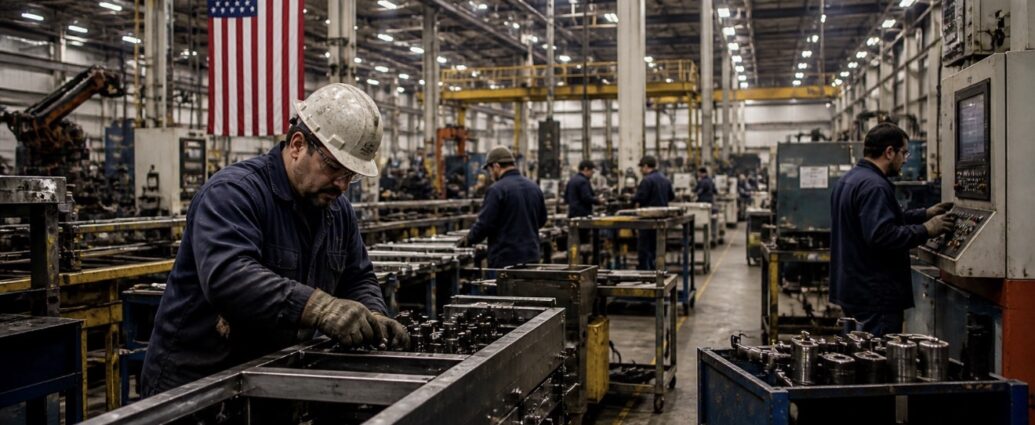
U.S. manufacturing is still growing — but beneath the surface, the sector is showing clear signs of strain.

The latest data from the Institute for Supply Management (ISM) showed the manufacturing Purchasing Managers’ Index (PMI) holding at 52.7% in April, marking the fourth consecutive month of expansion and the strongest reading since mid-2022. Any reading above 50 indicates growth, suggesting that factories are continuing to produce and fulfill orders.

But a deeper look at the report reveals a more complicated picture — one defined by rising costs, weakening hiring, and declining confidence among industry leaders.

The most striking signal came from prices. The ISM Prices Index surged to 84.6%, its highest level in two years, reflecting sharp increases in the cost of raw materials and energy. The rise was driven in part by higher oil prices tied to the Middle East conflict, as well as tariffs and supply constraints affecting key inputs like steel and aluminum.

“Cost pressures are clearly building,” said Susan Spence, Chair of the ISM Manufacturing Business Survey Committee, noting that energy-related inputs have been particularly volatile. “Companies are facing a difficult pricing environment.”

At the same time, hiring is moving in the opposite direction. The Employment Index fell to 46.4%, indicating contraction as manufacturers reduce headcount despite ongoing production.

That divergence — strong output but weak hiring — suggests companies are becoming more cautious, focusing on efficiency rather than expansion.

Survey responses from industry executives reinforce that view. Nearly 70% of comments in the April report were negative, with many citing the impact of the Iran conflict and rising input costs.

“All products tied to crude or energy have seen multiple price increases,” one chemical industry executive noted, highlighting the direct link between geopolitical developments and manufacturing costs.

Another concern is the nature of current demand. Some of the strength in new orders appears to be driven by customers placing orders early to avoid expected price increases — a form of stockpiling that may not reflect underlying demand.

“If customers are pulling forward orders, that can create a temporary boost,” said Timothy Fiore, former ISM Chair, noting that such activity can be followed by a sharp slowdown once inventories are built up.

The ISM data suggests that current manufacturing activity corresponds to roughly 1.8% annualized GDP growth, a solid but moderate pace that falls below earlier expectations for the year.

For the broader economy, manufacturing plays a key role not just in production, but in signaling future trends. Changes in factory activity often precede shifts in hiring, investment, and overall economic momentum.

Looking ahead, the sector’s trajectory will depend heavily on input costs and global conditions. If energy prices stabilize, manufacturers may regain confidence. If costs continue to rise, margins could come under increasing pressure, leading to further cuts in hiring and investment.

For now, the message from the factory floor is clear: production is holding up — but the foundation is becoming more fragile.

© JBizNews.com. All rights reserved.

The President’s May 14 Beijing Trip Will Be the First U.S. Presidential Visit to China in Nearly a Decade — Arriving Against a Backdrop of Trade Fights, Taiwan Arms Sales, AI Theft Accusations, and a Middle East War That Cuts Across Both Nations’ Interests.

By JBizNews Desk | Washington — May 5, 2026

President Donald Trump said Monday he is looking forward to his upcoming meeting with Chinese President Xi Jinping, signaling that a high-stakes summit between the world’s two largest economies remains on track despite a relationship that has grown more strained by the week.

When Trump arrives in Beijing on May 14, he will become the first sitting U.S. president to visit China in nearly a decade — and the first since his own trip in 2017. The tone of his remarks stands in contrast to the reality of a bilateral relationship now defined by deep mistrust and overlapping conflicts.

A Year of Escalation

The lead-up to the summit has been marked by a steady accumulation of tensions.

In early 2025, Trump imposed sweeping tariffs on imports, prompting aggressive retaliation from Beijing. Both countries escalated with tariffs exceeding 100% on key goods, while China tightened controls on rare earth exports — a sector critical to global manufacturing and one where it holds dominant leverage.

The friction has extended well beyond trade. A bipartisan group of U.S. lawmakers traveled to Taiwan in recent months to push for increased defense spending, while Washington approved a multibillion-dollar arms package for the island — moves Beijing has repeatedly condemned.

At the same time, the White House has accused China of large-scale intellectual property extraction tied to artificial intelligence, while China has launched its own trade investigations into U.S. practices.

The geopolitical backdrop has only added complexity. The ongoing conflict involving Iran has disrupted global trade flows important to China’s economy, while Beijing has publicly called for de-escalation alongside regional partners.

What’s at Stake in Beijing

Despite the tensions, both sides are entering the summit with clear priorities.

Xi has signaled that China is seeking a framework built on what he has described as mutual respect and stable coexistence. For Beijing, success will be measured by whether the U.S. moderates its approach and commits to a more predictable relationship.

Trade will be central to the discussions. A temporary truce reached in late 2025 included U.S. tariff adjustments and Chinese commitments on supply chains and enforcement issues. That agreement is set to expire later this year, making the Beijing meeting a critical opportunity to extend or replace it.

Taiwan is expected to remain one of the most sensitive issues. China is likely to press for limits on future U.S. arms sales and stronger public opposition to Taiwanese independence — positions Washington has historically resisted.

History Suggests Caution

Past summits between U.S. and Chinese leaders offer a reminder that diplomacy at this level often produces more symbolism than substance.

The 2017 Trump-Xi meeting launched broad dialogue initiatives across multiple areas, but those efforts collapsed within a year as trade tensions escalated. Analysts caution that high-profile visits do not necessarily translate into lasting agreements.

Recent surveys of policy experts reflect that skepticism, with a majority expecting continued instability in the relationship rather than meaningful improvement.

Instead, analysts say the real signals to watch will be more subtle: whether the two sides establish ongoing communication channels, agree to manage disputes through structured talks, or reduce the risk of sudden escalation.

What It Means for Americans

The outcome of the summit carries direct implications for the U.S. economy.

China remains a major source of consumer goods, industrial inputs, and critical supply chain components. Trade tensions over the past year have contributed to higher costs across multiple sectors, affecting everything from electronics to household goods.

A stable agreement could ease some of that pressure. A breakdown could lead to further disruptions and higher prices.

Trump’s visit is widely viewed as the opening phase of a broader diplomatic effort expected to continue later this year, when Xi is anticipated to visit the United States.

For now, the president is projecting optimism.

Whether that translates into tangible progress — or simply another chapter in an increasingly complex rivalry — will become clear only after both sides leave the negotiating table.

JBizNews Desk
© JBizNews.com. All rights reserved.

By JBizNews Desk | May 5, 2026

The most important economic number of the week — and possibly the month — will arrive Friday, when the U.S. government releases its April jobs report, offering the clearest real-time test yet of how the economy is holding up under the pressure of rising oil prices and escalating geopolitical risk.

The report, published by the Bureau of Labor Statistics, will shape expectations for Federal Reserve policy, influence market direction, and provide a direct signal to American households about the strength of the labor market at a moment when inflation risks are climbing again.

Heading into the release, the data presents a mixed picture. The U.S. economy added 178,000 jobs in March, a sharp rebound from the 133,000 jobs lost in February, according to the Labor Department. The unemployment rate edged down to 4.3%, though much of that improvement came from a decline in labor force participation rather than a surge in hiring.

Wage growth, meanwhile, showed signs of cooling. Average hourly earnings rose 0.2% in March and 3.5% year-over-year, the slowest pace since 2021 — a figure that is increasingly important as consumers face higher costs for fuel, food, and borrowing.

“Wages are the real story here,” said Diane Swonk, Chief Economist at KPMG, noting that slower wage growth limits consumers’ ability to absorb rising costs. “If wage gains don’t keep up with inflation, households are effectively losing ground.”

Economists surveyed by Bloomberg expect the April report to show a more modest gain of roughly 60,000 to 70,000 jobs, reflecting a labor market that is still expanding but clearly slowing. The unemployment rate is expected to hold steady, while wage growth could show signs of firming slightly.

Recent labor market indicators have added to the uncertainty. Weekly jobless claims have fallen to historically low levels — near the lowest since 1969 — suggesting layoffs remain limited. At the same time, private payroll data from ADP has pointed to uneven hiring trends across sectors.

The key question is whether the impact of the Iran conflict — particularly higher energy prices — has begun to filter into hiring decisions.

Goldman Sachs economists have raised their probability of a U.S. downturn within the next 12 months to 30%, citing the inflationary impact of rising oil prices. The firm expects the unemployment rate to gradually increase to around 4.6% by the end of 2026, as higher input costs weigh on business expansion.

“The labor market is typically a lagging indicator,” said Jan Hatzius, Chief Economist at Goldman Sachs, noting that the effects of economic shocks often take months to show up in employment data. “What we’re seeing now may not fully reflect what’s coming.”

For the Federal Reserve, the report carries significant weight. Policymakers have paused interest rate changes in recent meetings, balancing progress on inflation with concerns about economic growth. A stronger-than-expected jobs report could reinforce the case for holding rates steady, while weaker data could increase pressure to begin easing.

The implications extend well beyond Washington. Job growth and wage trends directly affect consumer spending, which accounts for roughly two-thirds of U.S. economic activity. Any sign of weakening in the labor market could ripple through housing, retail, and service industries.

For American workers, the headline job number matters — but not as much as wages. With inflation still running above the Fed’s 2% target and energy prices climbing, real income growth remains under pressure.

“If people are working but falling behind financially, that’s not a strong labor market in practical terms,” Swonk said.

Looking ahead, Friday’s report will serve as a critical checkpoint — not just for where the economy stands today, but for where it may be headed. If hiring remains resilient, it could signal that the economy is absorbing geopolitical shocks. If cracks begin to appear, it may confirm that higher costs are starting to take a toll.

Either way, the data will set the tone for markets, policymakers, and households in the weeks ahead — at a moment when the margin for error is narrowing.

© JBizNews.com. All rights reserved.


By JBizNews Desk | May 5, 2026

Jerome Powell is stepping down as Federal Reserve Chair in less than two weeks — but he is not stepping away from power.

In a move that is reshaping the balance of influence inside the central bank, Powell confirmed he will remain on the Federal Reserve’s Board of Governors after his chairmanship ends on May 15, ensuring he continues to vote on interest rates and monetary policy decisions through January 2028.

The decision immediately complicates President Donald Trump’s efforts to exert greater control over the Fed, denying the White House an immediate majority on the seven-member board at a time when the administration has been pushing aggressively for lower interest rates.

“My decisions on these matters will continue to be guided entirely by what I believe is in the best interest of the institution and the people we serve,” Powell said at his final press conference as chair.

Most Fed chairs retire when their term ends. Powell is doing the opposite.


A Direct Clash Over Control of the Fed

Powell’s decision lands in the middle of an increasingly public and personal conflict with President Trump, who has repeatedly criticized the Fed for keeping borrowing costs too high.

On Monday, Trump escalated his rhetoric, posting an AI-generated image of Powell being dropped into a dumpster on Truth Social, writing: “‘Too Late’ is a DISASTER for America! Interest Rates too high!”

The remark reflects a broader campaign by the president, who has for months pushed for aggressive rate cuts and publicly blamed Powell for slowing economic momentum.

Powell has not responded in kind, but he has made his concerns clear.

“I worry that these attacks are battering the institution,” he said, warning that political pressure risks undermining the Fed’s ability to make decisions based on economic conditions rather than politics. He described the current environment as “unprecedented in our 113-year history.”

By remaining on the board, Powell ensures that the Fed’s leadership transition will not result in an immediate shift in voting control — a dynamic that could shape policy decisions well into 2027.


The Backdrop: Investigations and Pressure

Powell’s decision to stay was also shaped by events inside Washington.

In recent months, the Department of Justice opened a criminal investigation into cost overruns tied to the Federal Reserve’s Washington headquarters renovation — a probe Powell publicly described as a “pretext” tied to disagreements over monetary policy.

He said he would not step down until the matter was resolved.

“My concern is really about the series of illegal attacks on the Fed,” Powell said, adding that they “threaten our ability to conduct monetary policy without considering political factors.”

The DOJ has since dropped the investigation, and Powell said he was “encouraged by recent developments.” But he has made clear he is not leaving yet.

“I had long planned to be retiring,” he said. “The things that have happened in the last few months left me no choice but to stay until I see them through.”


A Divided Fed at a Critical Moment

Powell’s final policy meeting underscored just how fractured the Federal Reserve has become.

The central bank held interest rates steady at 3.50% to 3.75% for a third consecutive meeting, citing heightened uncertainty tied to the Middle East conflict and rising energy prices.

But the decision revealed deep internal divisions.

The meeting produced four dissents — the highest level since 1992. Stephen Miran, a Trump appointee, voted for an immediate rate cut, while three other officials dissented in the opposite direction, opposing language suggesting cuts could be coming at all.

The result is a Federal Open Market Committee being pulled in multiple directions simultaneously — between concerns about persistent inflation and growing pressure to support economic growth.

That tension is expected to intensify under new leadership.


Powell’s Record: Crisis Response and Inflation Fallout

Powell’s eight-year tenure will likely be defined by two sharply contrasting chapters.

In 2020, as the pandemic triggered a global economic shutdown, Powell moved aggressively — cutting rates to near zero and launching emergency lending programs that stabilized financial markets and helped prevent a deeper recession. The response was widely viewed by economists as decisive and effective.

But the Fed’s handling of inflation in 2021 proved more controversial.

Powell and other officials initially characterized rising prices as “transitory,” a view that did not hold. Inflation peaked at 9.1% in June 2022, forcing the Fed into one of the fastest rate-hiking cycles in modern history.

Borrowing costs surged across the economy, contributing to a slowdown in housing, tighter credit conditions, and increased pressure on consumers and small businesses.

Inflation has since eased closer to the Fed’s 2% target, but recent increases in energy prices tied to the Iran conflict have raised concerns that progress could stall.

“Energy shocks complicate the Fed’s job significantly,” said Diane Swonk, Chief Economist at KPMG, noting that geopolitical risks can quickly feed back into inflation expectations.


What Comes Next

Kevin Warsh, Trump’s nominee to succeed Powell, is expected to face a full Senate confirmation vote the week of May 11, putting him on track to take over before Powell’s term expires and to chair the Fed’s next policy meeting in June.

Powell has signaled he will not interfere.

“There’s only ever one chair of the Federal Reserve Board,” he said. “When Kevin Warsh is confirmed and sworn in, he will be that chair.”

But Powell’s continued presence means Warsh will inherit a central bank where his predecessor still holds a vote, where the board is not fully aligned with the administration’s policy preferences, and where internal divisions are already pronounced.

For markets — and for American households — the implications are significant. Interest rate decisions made in the months ahead will directly affect mortgage rates, credit costs, business investment, and consumer spending at a time when economic conditions remain uncertain.


The Final Signal

Powell’s legacy will ultimately be debated — from his pandemic response to the inflation surge that followed. But his final decision may prove just as consequential as any policy move.

By choosing to stay, Powell is not just extending his tenure. He is reinforcing a message about the independence of the Federal Reserve — at a moment when that independence is being openly tested.

As he stepped away from the podium at his final press conference as chair, Powell offered a brief closing line: “I won’t see you next time.”

He won’t be chair.

But he will still be there.


© JBizNews.com. All rights reserved. This article is original reporting by JBizNews Desk. Unauthorized reproduction or redistribution is strictly prohibited.


By JBizNews Desk
BAGHDAD — May 5, 2026

Iraq is offering some of the deepest crude oil discounts ever recorded, cutting prices by as much as $33 a barrel to entice buyers willing to risk sending tankers through the Strait of Hormuz — the world’s most volatile shipping chokepoint — as conflict involving Iran, the United States, and Israeli coalition forces continues to disrupt global energy flows.

The country’s state oil marketer, SOMO, is offering discounts of up to $33.40 per barrel on its flagship Basrah Medium crude, according to a May 3 pricing notice, an extraordinary move that underscores the severity of the disruption gripping one of the world’s most critical oil corridors.

A Country That Cannot Afford to Stop Selling

The urgency is driven by Iraq’s economic reality.

Oil exports account for roughly 90% of the country’s GDP, leaving Baghdad heavily exposed when shipments stall. Production at Iraq’s major southern oil fields has collapsed, dropping from about 4.3 million barrels per day to near 1.3 million, with overall capacity plunging even further during the peak of the disruption.

Within weeks of the conflict’s escalation in late February, output fell by more than 80%, as international shipping companies refused to enter the Persian Gulf amid escalating military risk.

The result: a growing backlog of unsold crude.

Data from Kpler shows more than 20 million barrels of Basrah crude now sitting in floating storage, with an additional 17 million barrels held onshore — volumes Iraq cannot move without convincing tankers to return.

The steep discounts are a direct attempt to clear that backlog.

A Narrow Opening — With Real Risk

Iran has publicly stated that Iraq is exempt from transit restrictions through the Strait of Hormuz, with an Iranian military spokesman describing Iraq as a “brotherly” nation not subject to the same limitations imposed on adversaries.

That exemption has allowed limited movement.

The Ocean Thunder, carrying nearly 1 million barrels of Basrah Heavy crude, became the first Iraqi tanker to successfully pass through the strait on April 5 after being stranded for weeks.

But the exemption has not removed the risk.

Shipping companies remain cautious as tensions continue between Iran and U.S.-led forces. Iran’s military issued fresh warnings on May 4, even as the United States launched Operation Project Freedom to escort neutral vessels through the waterway.

The Scale of the Disruption

The broader energy shock is historic.

The International Energy Agency has described the situation as one of the greatest threats to global energy security in modern history. Oil flows through the Strait of Hormuz have collapsed from roughly 20 million barrels per day before the conflict to just over 2 million at the height of the disruption.

The impact has been immediate:

  • Brent crude surged above $120 per barrel
  • QatarEnergy declared force majeure on exports
  • Gulf producers collectively lost millions of barrels per day in output

The financial toll is equally severe. Gulf states, including Iraq, are losing an estimated $1.1 billion per day in oil revenue while the strait remains constrained.

What It Means for Global Markets

If Iraq succeeds in restarting flows, the release of its accumulated crude could quickly reshape market dynamics.

Basrah crude is a key supply source for Asian refiners, particularly in India, China, South Korea, and Southeast Asia, where demand for medium and heavy sour crude remains strong.

According to Kpler, once shipments resume, Iraq could rapidly restore exports to above 3 million barrels per day as inventories are drawn down — a move that would likely pressure oil prices lower, particularly in sour crude markets.

What Comes Next

For now, Iraq’s pricing strategy tells the real story.

A major oil producer, facing an economic crisis driven by blocked exports, is offering unprecedented discounts simply to get its crude moving again — effectively asking buyers to weigh profit against geopolitical risk.

Whether tankers return in meaningful numbers will depend less on price — and more on whether the world’s most dangerous shipping lane becomes safe enough to cross.

JBizNews Desk
© JBizNews.com. All rights reserved.

Washington — May 5, 2026 — The U.S. dollar has weakened by roughly 10% against a basket of major currencies since the start of the current Trump administration, driving higher consumer costs for groceries and international travel and adding fresh pressure to household budgets already strained by elevated fuel prices and lingering inflation.

The decline in the dollar’s value — tracked by the DXY index — has made imported goods more expensive for American shoppers and vacationers, according to economists and market analysts tracking the currency’s performance. A weaker dollar means foreign producers and suppliers receive fewer dollars for their products, prompting them to raise prices in the U.S. market to protect margins. The effect is now showing up at supermarket checkout lines and travel booking sites across the country.

Groceries have been hit particularly hard. Many everyday food items — from coffee and chocolate to fresh produce, olive oil, seafood, and packaged goods — rely heavily on imports. A 10% currency drop translates directly into higher landed costs for retailers, who are passing much of that increase along to consumers. Industry data shows supermarket prices for imported staples have risen 4-7% in recent months, contributing to the broader cost-of-living squeeze. Families in high-cost coastal cities report feeling the pinch most acutely, with weekly grocery bills climbing by $15–$30 on average for middle-income households.

International travel is facing a similar hit. A weaker dollar makes trips to Europe, Asia, and Latin America significantly more expensive for American tourists. Hotel rates, restaurant meals, and attractions priced in euros, yen, or pesos now cost 8–12% more in dollar terms than they did at the start of the administration. Airline tickets for overseas flights have also climbed, compounding the pain from the ongoing fuel-price crunch that has already battered carriers like Spirit Airlines and European budget operators Ryanair and easyJet. Travel booking platforms report a noticeable slowdown in demand for foreign destinations, with domestic travel gaining some share as families opt for cheaper U.S. vacations.

The currency weakness stems from a combination of factors. Persistent U.S. trade deficits, aggressive tariff policies that have strained relations with key trading partners, and expectations around Federal Reserve interest-rate decisions have all weighed on the dollar. Geopolitical uncertainty tied to the Iran conflict and its ripple effects on global energy markets has added volatility, as investors seek safety in other currencies and assets. While a weaker dollar can benefit U.S. exporters by making American goods cheaper overseas, the immediate pain for consumers — especially on imported essentials — has been more visible and politically sensitive.

Economists warn the trend could exacerbate inflationary pressures at a time when many households are still recovering from pandemic-era price spikes. Mohamed El-Erian, chief economic advisor at Allianz, noted in recent commentary that the dollar’s slide “is acting like a hidden tax on American consumers,” particularly those without the flexibility to substitute domestic products for imports. Retailers and travel companies are scrambling to hedge currency risk, but those costs ultimately flow through to pricing.

For businesses, the impact is mixed. Multinational corporations with heavy overseas revenue are seeing translated earnings boosted when converted back to dollars, but import-dependent sectors — food retailers, apparel, electronics, and tourism operators — face margin compression. The National Retail Federation has flagged rising input costs as a key concern heading into the summer season, while the U.S. Travel Association reports softening international bookings that could weigh on hospitality and airline revenues.

The broader economic picture remains complex. A weaker dollar can support manufacturing and agriculture exports, potentially creating jobs in those sectors. However, with consumer spending accounting for roughly 70% of U.S. GDP, any sustained increase in everyday costs risks cooling domestic demand and complicating the Federal Reserve’s path toward its 2% inflation target. Markets will be watching closely when trading resumes Monday for any signs that the currency move is being priced into equities, bonds, and commodities.

This latest development in the dollar’s trajectory adds another layer to the weekend’s breaking business news. From BlackBerry’s QNX software milestone powering 275 million vehicles to Israel’s cost-of-living crisis surpassing wealthy European nations, Warren Buffett’s warnings on crypto speculation, and the ongoing diplomatic standoff over Iran’s rejected peace proposal, investors and corporate executives are navigating multiple crosscurrents. For American families, the weaker dollar is translating into tangible pain at the grocery store and on vacation planning sheets — a reminder that currency moves have real-world consequences far beyond Wall Street trading floors.

JbizNews- Desk – Economy / Markets

Cornell University President Michael Kotlikoff and student protesters are trading accusations after an incident in which protesters surrounded the president’s car following an on-campus debate about Israel.

The protesters, from a group called Students for a Democratic Cornell, released a video appearing to show that President Michael Kotlikoff had backed up into one of them while a protester shouted that the car ran over his foot.

In response, Cornell released its own video depicting what it said was a “harassment and intimidation incident,” its enhanced version of which it said offered “complete footage of the parking lot interactions, instead of clips to support a narrative.” That video shows students surrounding the president’s car as he tries to exit his parking space. After he eventually departs, the students continue to mill around with no obvious indication of injury to any of them.

In a statement of his own, Kotlikoff said that despite being surrounded by protesters who banged on his car windows, he waited until his backup camera showed a clear path before maneuvering out of the spot.

Pro-Palestinian protesters harass Cornell’s Jewish president

“The behavior I experienced last night is not protest,” Kotlikoff said in his statement, released Friday night. “It is harassment and intimidation, with the direct motive of silencing speech. It has no place in an academic community, no place in a democracy, and can have no place at Cornell.”

In an Instagram post, the protesters rejected Kotlikoff’s claims that they banged on his car and that they had previous records of misconduct on campus. They also reiterated their allegation that he had struck them.

The incident marks a relatively rare example of a clash between a university and pro-Palestinian student protesters two years after the student encampment movement roiled campuses across the United States, including at Cornell. The Ivy League university, like many others, enacted new rules designed to constrain protests that have kept demonstrations at bay amid pressure from the Trump administration to curb what it said was antisemitism among protesters. In November, Cornell agreed to pay $60 million to resolve federal antisemitism allegations.

Kotlikoff became Cornell’s president in early 2025, saying at the time that he was “very comfortable with where Cornell is currently,” following “two relatively peaceful semesters” in which there were only isolated incidents that violated university rules around protest. He soon rejected pro-Palestinian students’ demands to cut ties with the Technion University in Israel. But he also urged the campus to foster academic debate around the Israeli-Palestinian conflict.

The event that preceded his clash with students on Thursday represented a striking example of such debate. Sponsored by an ideologically diverse array of groups, including the pro-Israel advocacy groups StandWithUs and the Zionist Organization of America, as well as the campus chapter of Students for Justice in Palestine, which has previously been suspended for violating university rules, the event was the second in a two-part “Israel-Palestine Debate Series.”

The series was organized by the Cornell Political Union according to a format its website says it has long maintained. The format features a lecture by a speaker followed by formal responses from students and an audience debate.

In the first event, held earlier in April, the Israeli historian Benny Morris lectured on the topic “The American-Israeli Alliance Serves America’s Interests.” Morris is a liberal Zionist critic of the Israeli government whose work has included foundational research on the founding of the state, arguing that many Arabs were expelled, rather than fled, during the 1948 war.

The second, on Thursday, featured the pro-Palestinian Holocaust historian Norman Finkelstein, who lectured on the topic “Israel Was Not Justified in Its Response to October 7th.” Finkelstein, who has criticized Morris for showing a pro-Israel bias, has compared the plight of the Palestinians to that of Jews during the Holocaust, and Students for Justice in Palestine posted a picture of its members posing with him on Thursday.

Kotlikoff offered introductory remarks at the event, which promoted a no-technology policy designed “out of respect to students who will be given the opportunity to speak openly on a divisive topic.”

This post was originally published on here. 

Johnson & Johnson’s experimental combination therapy for inflammatory bowel disease is showing its greatest impact where existing treatments fall short — in patients who have already cycled through multiple therapies — positioning the drug as a potential breakthrough for one of the most difficult segments of the market.

The company on Tuesday presented results from two large Phase 2b trials at Digestive Disease Week 2026, demonstrating that its dual-mechanism therapy, JNJ-78934804 (JNJ-4804), delivered the strongest outcomes in patients with the highest level of treatment resistance.

The drug combines guselkumab, an anti-IL-23 therapy marketed as Tremfya, with golimumab, an anti-TNF therapy sold as Simponi — targeting two separate inflammatory pathways simultaneously, a strategy researchers say may overcome the diminishing returns seen with single-drug approaches.

Results Driven by the Most Difficult Cases

Both trials — DUET-Crohn’s and DUET-UC — enrolled patients with moderate-to-severely active disease who had failed one or more prior therapies, including biologics and newer oral treatments. The Crohn’s study included 693 patients, while the ulcerative colitis trial enrolled 572.

The most striking results emerged in patients who had exhausted multiple prior options.

In the Crohn’s disease trial, high-dose JNJ-4804 produced clinical remission rates more than 20 percentage points higher than guselkumab and nearly 40 percentage points higher than placebo among patients who had failed two or more therapies.

The ulcerative colitis study showed a similar pattern. High-dose JNJ-4804 significantly outperformed golimumab on the primary endpoint of clinical remission at 48 weeks, with the largest gains again concentrated in the most treatment-resistant subgroup. In those patients, remission rates exceeded guselkumab by more than 20 percentage points and placebo by nearly 20 points, with comparable improvements in endoscopic and histologic measures of disease control.

Why Dual-Pathway Therapy Matters

Bruce E. Sands, MD, of the Icahn School of Medicine at Mount Sinai and lead author of the Crohn’s study, said the results address a longstanding limitation in IBD treatment.

“Currently in IBD treatment, each successive therapy produces diminishing returns, and patients who have failed multiple treatments have very limited options,” Sands said. “By combining two mechanisms of action, we’re seeing efficacy that appears to be additive — without increasing safety risk.”

Maria T. Abreu, MD, Executive Director of the F. Widjaja IBD Institute at Cedars-Sinai and lead author of the ulcerative colitis study, described the biological rationale more directly.

“In some patients, the immune system essentially finds a way around single therapies,” Abreu said. “By targeting two pathways at once, we may be able to outsmart the immune system and achieve better outcomes.”

Safety Profile and Next Phase

Across both trials, the safety profile of the combination therapy was broadly comparable to either drug used alone. Serious adverse events were relatively uncommon and primarily gastrointestinal in nature, according to the data presented.

Researchers said the results support advancing JNJ-4804 into Phase 3 trials, a key step toward potential regulatory approval.

Building on Earlier Signals — and Investor Backing

The DUET trials build on earlier findings from the VEGA Phase 2a study in 2022, which first demonstrated the potential of combining guselkumab and golimumab. In that study, 36% of patients achieved clinical remission, compared with roughly 21–22% for each monotherapy alone — an early signal that helped drive industry interest in dual-pathway strategies.

That momentum is now backed by significant capital. In March 2026, Royalty Pharma agreed to provide $500 million in research and development co-funding to Johnson & Johnson across 2026 and 2027 to support the advancement of JNJ-4804 — a move that underscores growing confidence in the therapy’s commercial potential.

A Large Unmet Need

Inflammatory bowel disease affects millions of Americans and includes both ulcerative colitis and Crohn’s disease, chronic conditions that often require lifelong treatment. Despite a crowded market of biologics and newer therapies, a substantial portion of patients fail to achieve sustained remission and cycle through multiple drugs with limited success.

The subgroup highlighted in the DUET trials — patients who have already failed several treatments — represents one of the largest remaining unmet needs in the field.

What Comes Next

If the Phase 3 program confirms the current findings, JNJ-4804 could emerge as one of the first widely adopted therapies designed specifically for treatment-resistant IBD — a shift that would not only expand clinical options but could reshape how physicians approach sequencing therapy in advanced disease.

For Johnson & Johnson, the results mark a potential entry into a high-value segment of the IBD market. For patients, they may represent something rarer: a meaningful step forward after multiple treatments have failed.

JBizNews Desk

8:45 AM EDT • Tuesday, May 5, 2026

Ultra-sharp 8K photorealistic news headline photograph of the modern Nestlé corporate headquarters building in Vevey, Switzerland on a bright clear spring morning. Crystal-clear razor-sharp focus with no blur whatsoever, sleek glass-and-steel architecture with the large prominent Nestlé logo clearly visible on the facade, several business professionals in suits walking toward the main entrance carrying briefcases, subtle moving vans and construction equipment parked in the foreground symbolizing restructuring, expansive green lawns and sparkling Lake Geneva visible in the background, golden morning sunlight creating crisp shadows and highlights, highly detailed textures on glass, metal, grass, clothing and vehicles, perfect depth of field, cinematic composition ideal for a financial news headline image, ultra-realistic documentary style like Bloomberg or Reuters, maximum clarity and sharpness.landscape

Nestlé S.A. is accelerating its sweeping corporate overhaul with plans to eliminate approximately 16,000 jobs globally over the next two years as the world’s largest food and beverage company pushes for greater operational efficiency, cost savings, and a sharper focus on high-return categories.

The restructuring, first outlined under CEO Philipp Navratil in October 2025, includes roughly 12,000 white-collar positions across management, support functions, and R&D, plus an additional 4,000 roles in manufacturing, supply chain, and production. The move is expected to generate around 1 billion Swiss francs ($1.25 billion) in annual savings by 2027 — double the company’s original target — through automation, shared services, and portfolio simplification. Nestlé, whose brands include KitKat, Nescafé, Gerber, and Perrier, has already begun rolling out cuts in Europe, with confirmed reductions in the UK (up to 450 jobs at York and Gatwick sites), France (up to 180 roles in support and R&D), and other markets including Germany, Italy, and Spain.

The overhaul is part of a broader turnaround strategy aimed at reigniting growth after a period of softer sales and margin pressure. Navratil has signaled a “ruthless” approach to talent assessment and is redirecting resources toward core growth areas such as coffee, pet care, nutrition, and premium snacks while divesting or scaling back non-core assets like certain ice-cream and specialty coffee operations. Shares of Nestlé (NESN.SW) were little changed in early European trading following the latest implementation updates, reflecting investor expectations that the cost discipline will support long-term profitability.

Analysts view the job cuts as a necessary step to streamline a workforce of roughly 277,000 employees and improve agility in a competitive consumer-goods landscape. The company has emphasized that affected employees will receive support through severance, internal transfers where possible, and outplacement programs. Further details on country-specific impacts are expected to be shared with staff and unions in the coming weeks.

Traders and investors will now monitor Nestlé’s upcoming quarterly results for any updated savings guidance or portfolio moves tied to the overhaul. The restructuring underscores the intense pressure on global packaged-food giants to cut costs amid persistent inflation, shifting consumer preferences, and technological disruption.

— JBizNews Corporate Desk | Real-Time Update • May 5, 2026 • 8:45 AM EDT

Charlie Shamieh, a 39-Year Industry Veteran Who Built Gen Re Into an $11 Billion Global Reinsurer, Is Tapped to Run One of the Most Profitable Insurance Operations in the World

By JBizNews Desk | Omaha, Neb. — May 5, 2026

Berkshire Hathaway has selected Charlie Shamieh, chairman of its reinsurance subsidiary Gen Re, as the successor to Ajit Jain — the longtime insurance architect whom Warren Buffett once described as irreplaceable and credited with generating tens of billions of dollars in shareholder value over nearly four decades.

The decision, reported by the Wall Street Journal citing people familiar with the matter, resolves one of the most closely watched succession questions inside Berkshire’s sprawling empire. Shamieh is expected to assume leadership of the company’s insurance operations when Jain, 74, steps down. No formal retirement date has been announced.

The move comes just days after Berkshire’s first annual shareholder meeting under new CEO Greg Abel, who officially succeeded Buffett on January 1, 2026. Jain appeared alongside Abel at the Omaha gathering, participating in a structured Q&A with investors — an appearance that underscored both continuity and the approaching transition.

Shamieh brings nearly four decades of experience across global insurance and reinsurance markets, spanning life, health, and property and casualty businesses. Since joining Berkshire in 2018, he has led Gen Re, overseeing a global operation generating approximately $11 billion in gross written premiums and supported by roughly $15 billion in equity capital.

Before Berkshire, Shamieh built a reputation as a deeply technical and operational leader. At AIG, he served in multiple senior roles, including as the company’s first Corporate Chief Actuary across both life and non-life businesses, CEO of its Life, Health and Disability division with oversight across the U.S., Europe, and Asia, and CEO of AIG’s Legacy Segment. In that role, he managed the release of more than $9 billion in legacy capital and helped establish Fortitude Re, a major run-off reinsurer now managing over $40 billion in assets.

Earlier in his career, Shamieh held a key position at Munich Re, serving as the group’s first Chief Risk Officer — a role that helped define modern enterprise risk management practices within global reinsurance.

He holds a Bachelor of Economics from Macquarie University in Australia and is a Fellow of the Institute of Actuaries of Australia — credentials that align with Berkshire’s long-standing emphasis on disciplined underwriting and risk assessment.

The scale of what Shamieh is stepping into is difficult to overstate.

Ajit Jain, who joined Berkshire in 1986, transformed the company’s insurance operations into one of the most powerful engines of value creation in corporate history. Known for his ability to price complex and high-risk policies — particularly in catastrophe reinsurance — Jain built a business model centered on generating “float,” the pool of premiums collected before claims are paid.

That float, now measured in the hundreds of billions of dollars, has provided Berkshire with a unique and highly profitable source of investment capital. Buffett has repeatedly credited Jain with playing a central role in building that advantage, once calling him a “unique” talent whose contributions were virtually unmatched.

Recent performance underscores the strength of that foundation. At last weekend’s annual meeting, Berkshire reported that its insurance unit — including GEICO — generated underwriting profits of $1.7 billion, up from $1.34 billion a year earlier, highlighting continued operational discipline even amid broader leadership changes.

Those changes have been sweeping.

Greg Abel’s elevation to CEO marked the formal transition away from Buffett’s six-decade tenure. Todd Combs, one of Berkshire’s investment managers, departed to lead a new initiative at JPMorgan Chase. Longtime CFO Marc Hamburg stepped down, and Nancy Pierce, a Jain protégé, was appointed CEO of GEICO.

Despite the turnover, Abel has emphasized continuity. At his first annual meeting as CEO, he told shareholders he has no intention of breaking up the conglomerate, reinforcing Berkshire’s identity as a diversified but tightly integrated enterprise.

The selection of Shamieh fits that approach. Rather than looking outside, Berkshire has turned to an internal leader who has spent eight years operating within its culture — one grounded in disciplined underwriting, long-term capital allocation, and decentralized management.

Jain has not publicly indicated when he plans to retire, and Berkshire has not formally commented on the succession timeline. But the identification of a clear successor signals that the transition — whenever it occurs — is being carefully managed.

For shareholders, the message is straightforward.

Berkshire’s insurance operations are not just another division; they are the financial backbone of the company, funding investments across its entire portfolio. Ensuring continuity at the top of that business is critical to maintaining investor confidence.

By elevating a seasoned insider with deep actuarial expertise and global operating experience, Berkshire is signaling that its most important engine of value creation will remain steady — even as one of its most legendary leaders prepares to step aside.

JBizNews Desk
© JBizNews.com. All rights reserved.

Omaha, Nebraska — May 5, 2026 — Legendary investor Warren Buffett delivered one of his most pointed warnings yet to Wall Street and retail traders, lumping cryptocurrencies and the booming prediction-market industry into a broader “gambling mood” that has never been more intense in his 60-plus years in the markets. Speaking at Berkshire Hathaway’s 2026 annual shareholder meeting and in a CNBC interview broadcast to attendees, the Oracle of Omaha described financial markets as “a church with a casino attached” and said one-day options, crypto-style speculation, and prediction platforms like Polymarket and Kalshi represent pure gambling rather than investing.

The remarks come as Berkshire Hathaway sits on a record cash hoard exceeding $397 billion, a clear signal that Buffett sees limited attractive opportunities in today’s overheated environment. He explicitly tied the surge in speculative activity — including crypto trading and event-based betting on everything from elections to geopolitical outcomes — to a dangerous shift away from long-term value creation toward short-term bets that he compared to state-sponsored gambling.

Buffett has long been a vocal critic of cryptocurrencies, famously calling Bitcoin “rat poison squared” and arguing that digital assets produce no cash flow or intrinsic value. His latest comments extend that skepticism to the rapidly growing prediction-market sector, which has exploded in popularity since the 2024 U.S. election. Platforms such as Polymarket and Kalshi allow users to wager real money on real-world events, drawing billions in volume and attracting both sophisticated traders and everyday retail participants. Buffett grouped these platforms with legalized sports betting and day trading, calling the entire category a “tax on stupidity” that disproportionately benefits the house — and, indirectly, wealthier players who can afford to absorb losses.

The economic stakes are enormous. Prediction markets have grown into a multi-billion-dollar industry, with some estimates placing daily trading volume in the hundreds of millions. Crypto markets, meanwhile, continue to command hundreds of billions in daily turnover despite repeated boom-bust cycles. Buffett highlighted a recent high-profile case involving a U.S. Army soldier who allegedly used classified military intelligence to profit nearly $400,000 on a prediction market tied to a raid in Venezuela — an incident that underscores the regulatory and ethical risks inherent in these platforms. The Justice Department charged the soldier with insider trading, reinforcing Buffett’s view that much of the activity skirts the line between legitimate hedging and outright gambling.

For ordinary investors, the warning carries immediate practical weight. Retail participation in crypto and prediction markets has surged, fueled by easy mobile apps, leverage, and 24/7 trading. Yet Buffett stressed that these vehicles produce no underlying economic value — they simply transfer money from one participant to another. In contrast, traditional value investing, he argued, focuses on businesses that generate real earnings and dividends over decades. The current speculative frenzy, he suggested, is reminiscent of previous bubbles, including the dot-com era and the run-up to the 2008 financial crisis.

The impact on broader markets is already being felt. Berkshire’s massive cash position — the largest in its history — reflects not only caution but also a deliberate decision to preserve dry powder for when better opportunities emerge. Buffett noted that only a handful of years in his career have offered truly compelling bargains; the rest of the time, patience is the disciplined investor’s greatest weapon. With one-day options trading exploding in volume and prediction markets mimicking crypto’s high-leverage style, the risk of sudden, sharp drawdowns remains elevated.

Analysts say Buffett’s message is particularly timely as crypto prices remain volatile and prediction markets increasingly influence political and economic narratives. Retail investors pouring money into these assets may be chasing short-term thrills at the expense of long-term wealth building. The Oracle’s track record — turning Berkshire into one of the world’s most valuable companies through disciplined, patient capital allocation — gives his caution considerable credibility.

Buffett’s comments also come amid broader concerns about market structure. He pointed to the proliferation of ultra-short-term products as evidence that the line between investing and gambling has blurred more than ever. While most market participants still operate on the “right side” of that line, the “casino” side has become dangerously attractive, he warned.

The economic ripple effects could be significant. Heightened speculation distorts capital allocation, inflates asset bubbles, and leaves retail investors vulnerable to sharp reversals. Should a major correction hit — whether triggered by geopolitical shocks, regulatory crackdowns on prediction platforms, or a crypto meltdown — the fallout would extend far beyond individual traders to pension funds, banks, and the broader economy.

Buffett stopped short of predicting an imminent crash, but his actions speak volumes: Berkshire continues to hoard cash rather than chase today’s hot trends. For investors tempted by the allure of crypto’s upside or the thrill of prediction-market bets on everything from Fed rate moves to election outcomes, the message is clear: treat these vehicles with extreme caution.

The warning adds to a weekend filled with breaking business news, from airline fuel-price disasters to BlackBerry’s automotive software resurgence and Israel’s soaring cost of living. When markets reopen Monday, traders will be closely watching whether Buffett’s words cool the speculative fever or simply get drowned out by the casino noise.

JbizNews- Desk – Investing / Markets

Waterloo, Ontario — May 5, 2026 — Once written off as a fallen smartphone giant, BlackBerry has staged a remarkable quiet comeback, with its QNX embedded software now powering safety-critical systems in more than 275 million vehicles worldwide. The milestone, confirmed by Counterpoint Research and highlighted in recent earnings, is turning heads on Wall Street and in the auto industry as the shift to software-defined vehicles accelerates and BlackBerry emerges as a hidden powerhouse in one of the most critical sectors of the global economy.

QNX powers safety-critical software across automotive, medical, industrial, rail and robotics markets. This broad reach is the foundation of BlackBerry’s revival. In the automotive sector, QNX runs real-time operating systems in advanced driver-assistance systems, infotainment, and safety features. The same technology is used in medical devices that require fail-safe operation, industrial control systems that cannot afford downtime, rail signaling and braking systems, and robotics platforms that demand deterministic performance. The diversification means BlackBerry is no longer dependent on a single industry cycle — it has built a resilient, high-margin software franchise that spans multiple mission-critical domains where reliability is non-negotiable.

The numbers tell the story of a dramatic turnaround. QNX delivered record quarterly revenue of $78.7 million in the fourth quarter of fiscal 2026, up 20% year-over-year, according to the company’s earnings. For the full fiscal year, the division contributed significantly to BlackBerry’s total revenue of $549 million, with strong gross margins and a royalty backlog that has swelled to approximately $950 million. CEO John Giamatteo declared the company is “no longer in transition,” signaling that the long restructuring is finally paying off and setting the stage for sustained growth in the high-margin automotive software market.

The economic impact is substantial. Ten of the top 10 global automakers and 24 of the top 25 electric vehicle manufacturers rely on QNX. As cars become rolling computers, the demand for reliable, safety-certified embedded software is exploding. BlackBerry’s technology is now a foundational piece of the software-defined vehicle revolution, helping manufacturers reduce development costs, accelerate time to market, and meet stringent safety standards required by regulators worldwide. The same underlying technology is being adopted in hospitals, factories, rail networks and robotic systems, creating multiple high-value revenue streams that are far less cyclical than traditional hardware businesses.

The growth comes at a pivotal moment for the auto industry. Global vehicle production is shifting toward connected and autonomous features, driving massive demand for embedded software. BlackBerry’s QNX platform has added 100 million vehicles since 2020, a testament to its entrenched position. Recent design wins, including partnerships with BMW for next-generation software-defined vehicles and Volvo for software-defined audio solutions, underscore the momentum. A leading Chinese EV maker also selected QNX for its D19 electric SUV, which entered mass production earlier this year with over-the-air update capability, further expanding BlackBerry’s global footprint.

For investors, the resurgence is starting to show in the numbers. BlackBerry returned to GAAP profitability for eight consecutive quarters, with adjusted EBITDA expanding and the company guiding for double-digit revenue growth in fiscal 2027. The QNX backlog and expanding non-automotive applications — including robotics, medical devices, and industrial IoT — position the company for sustained growth even as the broader tech sector faces headwinds from geopolitical tensions and the fuel-price crunch affecting airlines. The high-margin nature of the QNX business provides a buffer against cyclical downturns in vehicle sales, making BlackBerry an increasingly attractive play in the software-defined mobility space.

Yet the comeback is not without challenges. BlackBerry still faces competition from in-house solutions developed by automakers and alternative platforms. Royalty revenue is tied to vehicle sales, which can fluctuate with economic cycles. Overhead costs have limited free cash flow, though the high-margin nature of the QNX business provides a buffer. Analysts note that while the 275 million vehicle milestone is impressive, converting the backlog into consistent revenue growth will be key to sustaining investor confidence and driving further stock appreciation.

The broader economic implications are significant. As software becomes the backbone of modern mobility, companies like BlackBerry that provide mission-critical, safety-certified platforms are gaining strategic importance. The QNX success story highlights how legacy tech names can reinvent themselves in the AI and software-defined era, creating high-value intellectual property that powers everything from everyday commuting to autonomous trucking. This shift is also creating new revenue streams for BlackBerry, with the software division now representing a growing share of the company’s overall business and contributing to stronger balance sheet metrics.

BlackBerry’s transformation is a reminder that even companies once left for dead can find new life in the hidden layers of the digital economy. With QNX now embedded in more than a quarter of a billion vehicles on the road today — and expanding into medical, industrial, rail and robotics markets — the quiet comeback is finally turning heads and generating real revenue at a time when the auto industry is undergoing its most profound shift in decades. The milestone adds to the weekend’s heavy slate of breaking business news, from airline collapses driven by the fuel-price crunch to conglomerate earnings and OPEC+ production decisions. Markets will be watching closely when trading resumes Monday for any signs of how BlackBerry’s automotive software momentum is being priced into the stock and broader tech indices.

JbizNews- Desk – Tech / Automotive Software

By JBizNews Desk
TEHRAN — May 5, 2026

Iran’s President Masoud Pezeshkian has sharply confronted the country’s military leadership over Monday’s renewed missile and drone strikes on the United Arab Emirates, calling the attacks an act of “madness” carried out without the civilian government’s knowledge — and urgently seeking a meeting with Supreme Leader Mojtaba Khamenei to demand an immediate halt, according to a report by Iran International.

The disclosure lays bare a deepening fracture at the top of Iran’s wartime power structure, raising fresh questions about who is actually directing the conflict — and whether any civilian leader retains the authority to stop it.

“Completely Irresponsible”

Exclusive information obtained by Iran International points to a growing clash between Iran’s moderate president and the country’s military leadership over Monday’s escalation in the Persian Gulf. According to sources familiar with Tehran’s deliberations, Pezeshkian expressed strong anger at actions by the Islamic Revolutionary Guard Corps, led by Ahmad Vahidi, describing missile and drone strikes on the United Arab Emirates as “completely irresponsible” and carried out without the government’s knowledge or coordination.

Pezeshkian is said to have described the IRGC’s approach to escalating tensions with regional countries as “madness,” warning of potentially irreversible consequences. Amid a worsening situation and the risk of the country sliding back into full-scale war, Pezeshkian has requested an urgent meeting with Mojtaba Khamenei to press for an immediate halt to IRGC attacks on Gulf states and to prevent further escalation.

Sources close to the presidency say Pezeshkian is deeply concerned about potential international reactions and believes the country cannot withstand a new full-scale war. He has warned that continued unilateral attacks could trigger heavy U.S. retaliation against critical energy and economic infrastructure — an outcome he reportedly said could lead to widespread destruction and an irreversible collapse in livelihoods.

The IRGC’s Growing Grip

The confrontation reflects a structural crisis that has been developing since the killing of Supreme Leader Ali Khamenei on February 28, when U.S. and Israeli strikes launched the current conflict. According to Iran International, the IRGC has effectively assumed control over key state functions, with IRGC commander Ahmad Vahidi reportedly insisting that under wartime conditions, all critical and sensitive positions must be chosen and managed directly by the Revolutionary Guard until further notice.

Pezeshkian has repeatedly sought an urgent meeting with Mojtaba Khamenei but has been unable to establish contact. Instead, a “military council” made up of senior IRGC officers now controls access to the center of power, preventing government reports from reaching Mojtaba and effectively isolating the new Supreme Leader from the elected government.

IRGC commander Ahmad Vahidi is now reportedly making military and political decisions alongside Supreme Leader Mojtaba Khamenei. Parliament Speaker Mohammad Bagher Ghalibaf and Foreign Minister Abbas Araghchi cannot make decisions without the IRGC’s approval, according to reports from the Institute for the Study of War and U.S. intelligence assessments.

This is not the first time Pezeshkian has tried to rein in the military. A week into the war, Pezeshkian apologized for Iran’s attacks on Gulf states, promising to end the attacks unless strikes against Iran originated from those countries. He was swiftly criticized by the IRGC and hardliners, forcing him to walk back his position.

What Sparked the Latest Escalation

The renewed attacks on the United Arab Emirates came as President Trump launched Operation Project Freedom — a U.S. military initiative to escort commercial vessels out of the Persian Gulf through the Strait of Hormuz. Iran’s IRGC warned that any ships attempting to transit the strait “will face serious risks, and violating vessels will be stopped with force.”

The UAE reported missile and drone strikes originating from Iran, following IRGC claims it had blocked U.S. naval access to the strait. A large fire broke out at the Fujairah Petroleum Industries Zone after an Iranian drone strike, with three Indian nationals reported injured. The UAE Ministry of Education ordered nationwide remote learning through Friday as a precaution.

According to Iran International, Pezeshkian is expected to emphasize — if he can secure the meeting — the need for immediate diplomatic engagement, arguing there remains a narrow window to prevent further escalation and return to negotiations.

A Government in Name Only

Reuters reports that Iran’s traditional centralized leadership model has fractured, with authority increasingly concentrated among senior IRGC figures and security bodies. Mojtaba Khamenei, who assumed leadership after his father’s death, is said to play a more limited role, largely endorsing decisions made by military leadership.

Sources cited by Reuters indicate that this shift has already affected Iran’s diplomatic responsiveness, with delays in negotiations attributed to the new power structure.

For the outside world trying to negotiate an end to the conflict, the picture emerging is stark: Iran’s elected president is calling the military’s actions madness — and cannot get a meeting to say so.

JBizNews Desk


By JBizNews Desk | May 5, 2026

The federal government is offering something most small business owners rarely get access to — practical, high-level business training typically reserved for larger companies — and it is happening online this week at no cost.

The U.S. Small Business Administration, in partnership with the America’s Small Business Development Center Network, has launched the National Small Business Week 2026 Virtual Summit, a free two-day event running May 5–6 from 11 a.m. to 6 p.m. Eastern.

For everyday business owners, the value is immediate and practical:

  • Save hours every week by learning how to use AI to handle emails, admin work, and repetitive tasks
  • Increase revenue opportunities by understanding how to position your business for funding and growth
  • Avoid costly mistakes by learning how fraud actually targets small businesses — and how to protect against it
  • Hire smarter and retain better employees without needing a full HR department
  • Operate more efficiently by adopting tools and systems used by larger, more sophisticated companies
  • Make better decisions faster with clearer data, insights, and structured thinking
  • Upgrade your marketing without big budgets using practical digital and content strategies
  • Gain access to top-tier corporate expertise from companies like Google, Amazon, Visa, and Paychex — without paying thousands
  • Learn without shutting down your business — fully online, flexible, and designed for real schedules

The entire summit is online, allowing business owners to join from anywhere — without travel, cost, or stepping away from daily operations. For many, that alone removes the biggest barrier to gaining this kind of knowledge.

The program brings together major corporate partners including Visa, Google, Amazon, T-Mobile, Verizon, Paychex, TriNet, Meta, Block, Fiserv, Grasshopper Bank, Lockheed Martin, and ZenBusiness — a level of access that would typically cost thousands of dollars at private conferences or consulting engagements.

More importantly, the content is built around real operational challenges — not theory.

Sessions from Visa focus on protecting businesses from fraud and improving access to capital. As digital threats grow more sophisticated and lending standards tighten, understanding these areas can directly impact a company’s stability and ability to grow.

Artificial intelligence is another central focus. Google’s sessions are designed for business operators, not developers, showing how widely available tools can reduce administrative workload and improve efficiency — allowing small teams to operate at a much higher level without increasing headcount.

Workforce strategy is also a key theme. Sessions from Paychex and TriNet address hiring, compensation, and retention — ongoing challenges for small businesses competing in a tight labor market.

Other sessions focus on resilience and growth, including business continuity strategies from T-Mobile and financial positioning insights from Grasshopper Bank, which breaks down what lenders actually look for when evaluating businesses.

For marketing and customer growth, sessions from Amazon and America’s SBDC provide practical, low-cost strategies to expand reach and attract customers without relying on large budgets or outside agencies.

SBA Administrator Kelly Loeffler framed the broader opportunity, noting that policy shifts and economic conditions are creating new openings for small businesses. “Through tax cuts, deregulation, and fair trade, Main Street is positioned for another record year in 2026 — and the SBA will continue to support their comeback with training, capital, and contracting,” she said.

The summit is open to both established and aspiring business owners and is designed to deliver insights that can be applied immediately.

Registration is free at sba.gov/national-small-business-week/virtual-summit, with sessions running throughout both days.

The event is already underway. It ends May 6.

For business owners, the decision is simple: take advantage of access that is rarely this broad, this practical, and this easy — or miss it.

JBizNews Desk

By JBizNews Desk | Monday, May 4, 2026

Bank stocks moved higher Monday as rising interest rates improved the sector’s earnings outlook, reinforcing investor confidence that financial institutions stand to benefit from a prolonged period of elevated borrowing costs.

Shares of major U.S. banks advanced as Treasury yields climbed, widening net interest margins—the difference between what banks earn on loans and pay on deposits. This dynamic remains a key driver of profitability in a higher-rate environment.

Jamie Dimon, CEO of JPMorgan Chase, has emphasized that “a disciplined approach to managing interest rate exposure can position banks to perform well even in a more challenging economic environment.” His comments reflect broader industry sentiment that higher rates, while presenting risks, also create meaningful opportunities.

The current environment is particularly favorable for large, well-capitalized banks with diversified revenue streams. These institutions are better equipped to manage deposit costs and maintain lending activity, allowing them to capture the benefits of higher yields.

At the same time, investors are rotating into financial stocks as expectations for delayed Federal Reserve rate cuts take hold. The shift underscores the perception that banks are among the relative winners in a “higher-for-longer” rate scenario.

Mike Mayo, banking analyst at Wells Fargo, said “banks are in a stronger position than they were in previous cycles, with improved capital levels and more disciplined risk management, which allows them to benefit from higher rates.”

However, the outlook is not without risks. Higher interest rates can also strain borrowers, particularly in segments such as commercial real estate and consumer credit. As borrowing costs rise, the risk of loan defaults increases, which could offset some of the benefits from wider margins.

Credit quality remains a key area of focus. While current levels of delinquencies are relatively contained, analysts are closely monitoring for signs of deterioration, especially if economic growth slows.

Deposit dynamics are also evolving. Banks are facing increased competition for deposits, with customers seeking higher yields on savings. This pressure can lead to rising deposit costs, narrowing margins over time if not managed carefully.

Despite these challenges, the sector’s overall position remains strong. Capital levels are robust, and regulatory frameworks have strengthened since previous financial crises, providing a buffer against potential shocks.

Additionally, banks are continuing to invest in technology and efficiency improvements, aiming to reduce costs and enhance customer experience. Digital banking platforms and data analytics are playing an increasingly important role in maintaining competitiveness.

For investors, the sector offers a mix of income and potential upside, particularly if rates remain elevated and economic conditions remain stable.

What comes next: The trajectory of bank stocks will depend on the balance between higher earnings from elevated rates and potential risks from credit deterioration, making upcoming earnings reports and economic data critical for assessing the sector’s outlook.

JBizNews Desk

London — May 4, 2026 — The Bank of England is considering putting the digital pound project on ice, according to people familiar with the situation, as officials weigh a slower path forward while rival central banks race ahead with their own central bank digital currencies. Rather than a firm decision to approve or scrap the so-called Britcoin this summer, UK authorities are leaning toward a middle route that would slow progress on the CBDC, Bloomberg reported.

The shift marks a notable change in tone. Just three years ago, the Bank of England and HM Treasury said a digital pound was “likely to be needed.” Now the future of the project hangs in the balance as the current design phase runs through 2026, with a final decision on next steps still pending.

The economic stakes are significant. A full-speed digital pound was seen as a way for the UK to maintain competitiveness in digital payments and reduce reliance on private stablecoins and foreign payment systems. Delaying or slowing the project could leave British firms and consumers at a disadvantage as China’s e-CNY continues to expand and the European Central Bank advances its digital euro toward a potential 2029 launch. Analysts warn that hesitation could slow innovation in cross-border payments, limit the Bank of England’s ability to respond to future financial stability challenges, and reduce the UK’s influence in shaping global digital currency standards.

People familiar with the situation told Bloomberg that officials are now prioritizing a more cautious “wait-and-see” approach, evaluating whether a digital pound is truly necessary at this stage amid rapid private-sector developments in stablecoins and other digital payment innovations. The Bank of England has repeatedly stressed that no decision has been made on whether to introduce a digital pound, and any launch would require primary legislation passed by Parliament.

The ruling comes as global CBDC momentum accelerates elsewhere. China’s e-CNY has processed nearly $1 trillion in transactions and continues to evolve, while the European Central Bank is making steady progress on its digital euro with high-level political support across EU member states. The Bank of England’s more measured stance reflects growing concerns about privacy, financial stability risks, and the potential impact on commercial bank deposits — issues that have been central to the design phase work.

For the UK economy, the decision carries broad implications. A digital pound was intended to sit alongside cash and bank deposits as a new form of public money, potentially boosting efficiency in payments and supporting monetary policy in a digital era. Slowing the project could delay these benefits while increasing reliance on private-sector solutions that may not offer the same level of resilience or public trust. Economists note that the UK’s hesitation could also affect investment in related fintech infrastructure and the country’s attractiveness as a hub for digital finance innovation.

The Bank of England and HM Treasury are expected to complete their blueprint and assessment later this year, which will inform the next steps. In the meantime, the pause allows more time to study real-world use cases through the Digital Pound Lab and to monitor international developments.

The ruling underscores a broader global tension in CBDC development: balancing innovation and competitiveness against risks to financial stability, privacy, and the traditional banking system. As rivals push forward, the Bank of England’s cautious approach highlights the complex trade-offs facing central banks in the AI and digital payments era.

JbizNews- Desk – Central Banking