By JBizNews Desk

For years, many of America’s ethnic and multicultural chambers of commerce operated independently — often representing massive immigrant, faith-based, and minority business communities but lacking the unified structure and coordinated influence needed to compete politically and economically on a national level.

That changed this week.

Business leaders from nearly 65 multicultural chambers of commerce and advocacy organizations formally launched the Multicultural Business Coalition (MBC), creating what organizers say is one of the largest coordinated alliances of ethnic business leadership groups assembled in the United States in recent years.

The coalition brings together chambers and organizations representing millions of businesses, workers, entrepreneurs, consumers, and community members spanning Hispanic, Asian, Caribbean, African, Middle Eastern, Jewish, South Asian, and immigrant communities, with particularly strong leadership roots across New York and New Jersey and broader national and international business relationships.

The formation of the coalition reflects growing frustration among multicultural business leaders who say their communities often face similar challenges — from access to capital and government contracting to regulatory pressure, discrimination concerns, and lack of coordinated representation — yet historically approached those battles separately.

“Everyone realized we were stronger together than fragmented apart,” said Frank Garcia, newly elected Chairman of the coalition. “Individually, these chambers had influence within their own communities. But collectively, we represent tens of millions of people, enormous economic power, and significant civic influence. That changes the equation.”

Following a formal leadership vote, Garcia was elected Chairman and Kenneth Roldan was named President. Duvi Honig, Co-Founder and CEO of the Wall Street-based Orthodox Jewish Chamber of Commerce, was elected Secretary and named Co-Founder of the coalition.

Additional leadership roles included Yenisei Bell, appointed Second Vice Chair and serving as President of the National Association of Women in Construction (NAWIC) Greater New York Chapter; Anupam Dutta of the Indian International Chamber of Commerce, also appointed as Second Vice Chair; Mark Jaffe of the Greater New York Chamber of Commerce overseeing legal affairs; James Kim of the Korean American Chamber of Commerce USA leading international relations efforts; Manuel Lebrón, founder of the Caribbean American Chamber of Commerce and Industry, serving on the board; and Porras Zambrano, a UN Global Peace Ambassador 2026, joining the coalition leadership.

Coalition Founders Meeting

Garcia credited Honig with helping bring together many of the coalition’s diverse leaders through years of outreach and coalition-building between multinational, multicultural, faith-based, immigrant, and business communities.

“Duvi spent years creating relationships between communities that traditionally did not work together in a coordinated way,” Garcia said. “A lot of the trust and communication that made this possible came from that groundwork.”

Coalition organizers say the alliance is designed not simply as a networking organization, but as a coordinated advocacy platform capable of engaging government agencies, elected officials, and corporate America with significantly greater leverage than individual chambers could achieve independently.

The coalition plans to focus on economic empowerment, supplier diversity, minority business development, international trade opportunities, workforce inclusion, public policy advocacy, and combating discrimination affecting multicultural communities and small businesses.

“Today we represent tens of millions of voices. That is real influence,” Honig said. “This coalition gives us the ability to engage government, shape outcomes, and ensure that every community is heard and protected. Together, we are building a unified force that will not be ignored.”

The effort also reflects a broader political and economic shift underway nationally, where multicultural communities increasingly recognize their combined business and voting power can influence policy discussions at the local, state, and federal levels.

“The Multicutural Business Coalition represents the voices of an underserved community.” said Mark Jaffe of the Greater New York Chamber of Commerce. “For years, many of these organizations were advocating on similar issues separately. Bringing them together creates scale, coordination, and a much stronger voice when dealing with government, regulators, and major institutions.”

Jaffe added that the coalition intends to focus heavily on fairness, accountability, and ensuring multicultural communities have stronger representation in economic and policy decisions impacting small businesses and working families.

Kennith Roldan, elected President of the coalition, said the organization is designed to move beyond symbolic unity and into coordinated national action.

“Our communities contribute enormously to the American economy,” Roden said. “This coalition gives us the structure to organize strategically, advocate collectively, and engage nationally in ways that simply did not exist before.”

Coalition leaders also emphasized the alliance’s growing international dimension, particularly through immigrant and diaspora business networks connected to Latin America, Asia, the Caribbean, and Europe.

“The economic reach of these communities extends globally,” said James Kim, who will oversee international relations for the coalition. “Together we can strengthen international business partnerships, trade relationships, and investment opportunities while creating stronger economic growth here in the United States.”

“This coalition represents more than business,” added Porras Zambrano, UN Global Peace Ambassador 2026. “It represents unity, peace, economic empowerment, and the ability for diverse communities to work together with mutual respect.”

Organizations represented at the launch included the Asian American Women’s Chamber of Commerce, Bangladeshi American Chamber of Commerce, Bronx Hispanic Chamber of Commerce, Caribbean American Chamber of Commerce and Industry, Ecuadorian International Chamber of Commerce, Greater New York Chamber of Commerce, Greater New York Nepali Chamber of Commerce, Hispanic American Chamber of Commerce, Korean American Chamber of Commerce USA, Mexican American Chamber of Commerce of Texas, National Association of Small and Local Chambers of Commerce (NASLCC), National Supermarket Association, New Jersey Veterans Chamber of Commerce, New York State Ecuadorian Chambers of Commerce, Orthodox Jewish Chamber of Commerce, Peruvian Chamber of Commerce USA, United Bodegas of America, United States Bangladesh Chamber of Commerce and Industry (USBCCI), World Wide Association of Small Churches, and numerous additional organizations nationwide.

Organizers described the attendee list as only a partial representation of participating groups and said additional chambers are expected to formally join the coalition in the coming months.

Coalition leaders said the next phase will include national policy forums, economic summits, trade initiatives, and direct engagement with federal, state, and local governments.

“This is only the beginning,” Honig said. “When we stand together, our voice carries real weight. We expect to be heard, and we will ensure accountability where it matters.”

— JBizNews Desk

Exploratory Talks Signal a Historic Shift in Semiconductor Strategy — Driven by Tariffs, Taiwan Risk, and Washington’s Push for Domestic Manufacturing

By JBizNews Desk | Cupertino, Calif. — May 7, 2026

Apple has held exploratory discussions with Intel and Samsung about producing the main processors for its devices — conversations that, if they lead to a formal agreement, would mark one of the most significant changes to the company’s manufacturing strategy since it abandoned Intel chips six years ago and began building its own Apple Silicon.

The discussions, reported Monday by Bloomberg, would give Apple a secondary production option beyond Taiwan Semiconductor Manufacturing Company (TSMC), the Taiwanese firm that has served as the exclusive manufacturer of Apple’s custom-designed processors. Apple executives have also visited a Samsung chip plant under development in Texas that is expected to produce advanced semiconductors.

The shift is not primarily about performance — it is about risk.

Inside Apple, the growing concern is that relying on a single supplier, concentrated on a single island at the center of rising geopolitical tension, has become a vulnerability the company can no longer ignore.

Why Now

Three major forces are pushing Apple in that direction — and all of them point back to Taiwan’s outsized role in the global chip supply chain.

The first is tariffs. Chips manufactured in Taiwan are currently subject to a 20% reciprocal tariff under the existing trade framework. While Apple secured a temporary exemption for electronics in 2025, that relief is conditional. Moving production to U.S.-based facilities — such as Intel’s plants in Arizona or Samsung’s site in Texas — would eliminate that exposure entirely.

The second is geopolitical risk. Analysts have increasingly described Apple’s dependence on TSMC as a “silicon chokepoint” — a single point of failure that could disrupt the company’s entire product pipeline in the event of military conflict, natural disaster, or supply chain breakdown affecting Taiwan.

The third is political pressure. Apple has committed to investing $500 billion in the United States over the next four years, a pledge made directly to the Trump administration. Shifting part of its chip manufacturing to domestic facilities would provide tangible progress toward that goal while reducing future regulatory and tariff risk.

What Intel and Samsung Bring

Intel and Samsung each offer a different path forward.

Apple is evaluating Intel’s 18A process — a next-generation manufacturing technology — with analysts suggesting Intel could begin producing lower-tier Apple chips as early as 2027. Under that model, Intel would manufacture processors for entry-level devices such as the MacBook Air and iPad lines, while TSMC would continue producing high-performance chips for premium products like the iPhone and MacBook Pro.

Apple and Nvidia are also assessing Intel’s future 14A process for use in 2028 devices, potentially splitting production so that the most advanced components remain with TSMC while additional elements shift to Intel’s U.S.-based operations.

Samsung, meanwhile, is positioning itself as a direct competitor. Its new fabrication plant in Taylor, Texas is being designed around cutting-edge 2-nanometer technology using gate-all-around transistor architecture — a next-generation approach aimed at matching or surpassing TSMC’s most advanced capabilities.

The Hurdles Are Real

But shifting suppliers is far from simple.

Apple’s chips are among the most tightly integrated designs in the industry, with performance gains driven by deep coordination between Apple’s engineering teams and TSMC’s manufacturing processes. Moving production to another foundry would require extensive redesign work, potentially taking 12 to 18 months and costing hundreds of millions of dollars.

Intel also faces its own challenges. While its advanced manufacturing roadmap has attracted interest from major customers including Microsoft and Amazon, production yields remain under scrutiny. CEO Lip-Bu Tan has indicated that firm commitments for its next-generation processes are not expected until late 2026.

What It Means for Consumers

For consumers, the impact will not be immediate.

Any shift in manufacturing would likely begin with lower-tier devices, with flagship products continuing to rely on TSMC in the near term. But over time, the implications could be far-reaching.

If Apple succeeds in building a dual- or multi-supplier model — combining TSMC’s performance leadership with Intel and Samsung’s geographic diversification — it would mark one of the most significant changes in the semiconductor industry in decades.

It would also signal a broader shift in how global tech companies think about supply chains: not just in terms of efficiency and cost, but resilience.

For Apple, that calculation is becoming unavoidable.

JBizNews Desk
© JBizNews.com. All rights reserved.

JBizNews Desk | Friday , May 9, 2026

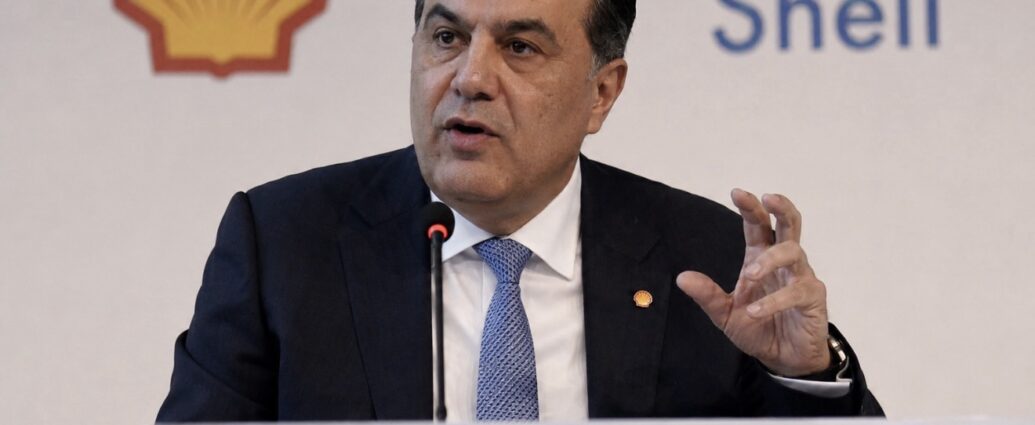
The chief executive of one of the world’s largest oil companies delivered a stark warning Thursday that the global oil shortage caused by the U.S.-Iran war has reached a scale that markets have not fully absorbed — and that the road back to normal supply will be far longer and more painful than most governments, businesses, and consumers are prepared for.

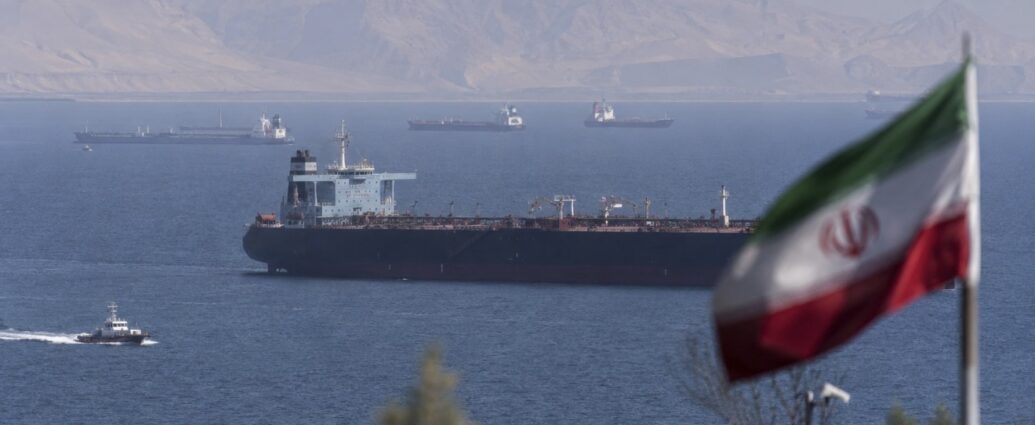
Shell CEO Wael Sawan said during the company’s first-quarter earnings call Thursday that the global oil market is currently short nearly 1 billion barrels of crude — the result of locked-in tankers that cannot move through the Strait of Hormuz and production that has simply gone unproduced since the conflict began on February 28.

“The hard facts are we have dug ourselves a hole of close to a billion barrels of crude shortage at the moment, either because of locked-in barrels or unproduced barrels,” Sawan said. “And of course, that hole is deepening every single day, so the journey back will be a long one.”

To grasp the magnitude of that number: the entire world consumes approximately 100 million barrels of oil every single day. A shortfall approaching 1 billion barrels represents roughly 10 full days of total global consumption — erased from available supply in just over two months of conflict.

And unlike a typical supply disruption, this one is not being gradually replenished. Every day the Strait of Hormuz remains effectively closed, the deficit grows deeper.

Sawan is not alone in sounding the alarm.

Halliburton CEO Jeffrey Miller told investors on the oilfield services company’s April 21 earnings call that oil production lost due to the war is also trending toward 1 billion barrels.

“Recovery of oil and gas production and inventories will not be a quick or simple process,” Miller said.

Vitol CEO Russell Hardy told investors on April 21 that cumulative oil production losses from the war were already between 600 and 700 million barrels at that point — a number that has continued climbing since.

Three of the most senior executives in the global energy industry are now describing the same enormous hole in the world’s oil supply, with nearly identical estimates.

The Supply Arithmetic Is Getting Worse

The problem is not just the size of the shortage — it is the speed at which it is compounding.

The Strait of Hormuz closure has disrupted roughly 20% of global oil supplies and significant liquefied natural gas volumes — what the International Energy Agency (IEA) has characterized as the “largest supply disruption in the history of the global oil market.”

The head of the IEA described the situation as “the greatest global energy security challenge in history.”

U.S. crude oil inventories unexpectedly plunged by 6.2 million barrels last week alone, according to the Energy Information Administration, with stockpiles of gasoline and distillates such as diesel also falling sharply.

The excess supply buffers that have worked as shock absorbers for American consumers are dwindling fast, with some analysts warning those buffers could break within a matter of months if the conflict is not resolved.

Outside the United States, the situation is already becoming critical.

A ConocoPhillips executive warned Thursday that import-dependent countries could start facing critical fuel shortages as soon as June or July 2026.

“Despite efforts that are ongoing to manage demand, we are going to start to see some import-dependent countries potentially start to face critical shortages as we get into the June-July time frame,” the executive said.

Southern Iraq’s oil production has dropped more than 70% since the conflict began, and the volume of imported goods reaching the country’s ports has been cut in half.

The Zubair oil field in Basra — which produced around 400,000 barrels per day — has seen output drop to roughly 250,000 barrels due to continuous attacks.

Iraq derives 90% of its GDP from oil exports.

What It Means for American Consumers

For the average American, the Shell CEO’s remarks translate directly into the price at the pump — and into every product that depends on oil to be manufactured, packaged, or delivered.

Gas prices nationally hit $4.54 per gallon this week — up 52% since the war began.

Diesel prices, which determine the cost of moving virtually every physical product in the American economy, have climbed even more sharply.

Jet fuel prices have more than doubled in North America since the conflict began, forcing airlines to add surcharges, reduce routes, and in some cases — like Spirit Airlines, which ceased all operations earlier this month — shut down entirely.

The Shell warning matters beyond its headline number because it reframes the public conversation about the war’s economic cost.

Much of the political discussion in Washington has centered on the possibility of a peace deal bringing relief — and indeed, oil prices fell briefly this week when reports emerged of preliminary U.S.-Iran framework talks.

But Sawan’s statement makes clear that even a genuine ceasefire does not flip a switch.

A shortfall approaching 1 billion barrels cannot be rebuilt in days or weeks.

Tankers must be repositioned.
Production facilities must be restarted.
Supply chains must be re-established.
Strategic reserves must be replenished.

Sawan noted that demand destruction due to the lost oil supplies has been “modest so far” — suggesting that consumers globally are still absorbing higher prices rather than dramatically cutting consumption.

But that dynamic is not sustainable indefinitely.

When demand destruction accelerates — when households stop driving, factories cut production, and airlines ground planes — the economic damage moves from the energy sector into the broader economy in ways that are far harder to reverse.

For businesses planning supply chains, logistics, and energy costs for the second half of 2026, Shell’s warning is a direct signal: do not plan on a quick return to pre-war energy prices.

The hole, as Sawan put it, is still getting deeper.

© JBizNews.com. All rights reserved. This article is original reporting by JBizNews Desk. Unauthorized reproduction or redistribution is strictly prohibited.

Anthropic, the artificial intelligence startup best known for enterprise software and AI safety research, is making a major push into the mainstream consumer market as it tries to transform Claude from a developer-focused chatbot into a daily-use AI assistant for millions of ordinary users.

The shift marks a significant strategic evolution for the San Francisco-based company, which until recently was viewed primarily as a high-end enterprise AI platform competing for corporate contracts rather than mass consumer adoption.

Now Anthropic wants Claude to become part of everyday life — helping users with everything from interpreting lab results and planning travel to answering cooking questions and managing personal routines.

The move comes as paid subscriptions for Claude more than doubled this year, according to company data and transaction analysis, fueling growing investor optimism that Anthropic could emerge as a legitimate consumer challenger to OpenAI’s ChatGPT.

Anthropic’s Consumer Push Is Accelerating

Since late last year, Anthropic has increasingly directed internal teams to improve Claude’s ability to handle personal and consumer-oriented tasks.

According to Mike Krieger, co-leader of Anthropic’s Labs division, the company has been focusing heavily on making Claude more useful for practical daily questions involving health, travel planning, recipes, organization, and broader lifestyle support.

The effort represents a meaningful expansion for a company that originally built its reputation around AI safety, enterprise reliability, and developer tools.

Anthropic’s Labs division was specifically created to experiment with more ambitious and consumer-facing AI products.

Company President Daniela Amodei described the group as an internal innovation team designed to “break the mold and explore” frontier AI capabilities before scaling successful features into products used by millions.

Paid Subscriber Growth Has Exploded

The strategic pivot is being supported by rapidly growing consumer demand.

Anthropic confirmed that paid Claude subscriptions have more than doubled this year, with some of the fastest growth occurring between January and February.

Most users are reportedly selecting the company’s $20-per-month Claude Pro subscription tier.

Industry transaction data analyzing billions of anonymized credit-card purchases from approximately 28 million U.S. consumers showed a sharp acceleration in consumer spending tied to Claude subscriptions this year.

Several major product launches appear to have fueled the growth.

Anthropic gained momentum following:

  • Its Super Bowl advertising campaign criticizing ChatGPT’s potential advertising strategy
  • The launch of Claude Code and Claude Cowork developer tools
  • The rollout of “Computer Use,” a feature allowing Claude to autonomously navigate and operate computers on behalf of users

The company also achieved a major milestone when Claude temporarily overtook ChatGPT to become the No. 1 app in Apple’s U.S. App Store rankings.

Free account signups reportedly climbed more than 60% since January, while daily user registrations hit all-time highs. By early March, Claude was reportedly adding more than one million new users per day.

Health Is Becoming a Major Focus

One of Anthropic’s biggest consumer bets is healthcare assistance.

Claude Pro and Max subscribers can now securely connect personal health data, including lab results, fitness information, and medical records through integrations with Apple Health, Android Health Connect, and new beta connectors including HealthEx and Function.

Once connected, Claude can summarize medical history, explain test results in plain language, identify trends across health metrics, and help users prepare questions for doctor appointments.

The feature highlights a broader trend emerging across the AI industry: companies increasingly want chatbots to become personalized digital assistants deeply integrated into users’ daily lives.

Rather than simply answering questions, AI companies are racing to build systems that organize information, automate tasks, interpret personal data, and act proactively on behalf of users.

Anthropic Still Trails OpenAI by a Wide Margin

Despite its rapid growth, Anthropic remains far behind OpenAI in total consumer scale.

OpenAI reported earlier this year that ChatGPT reached approximately 900 million weekly active users globally — more than double the roughly 400 million weekly users reported the previous year.

The gap between the two companies remains enormous.

Still, Anthropic appears increasingly willing to compete directly for consumer attention rather than limiting itself to enterprise software and research applications.

The company’s recent momentum has also slightly altered how investors view its long-term business model.

Anthropic was originally seen primarily as a safety-focused AI lab supported by enterprise customers and large institutional partnerships.

Now analysts increasingly describe it as a consumer AI platform with enterprise revenue — a materially different positioning with potentially far larger long-term monetization opportunities.

That shift became even more important after Anthropic’s February 2026 funding round reportedly valued the company at approximately $380 billion.

The AI Consumer War Is Expanding

Anthropic’s consumer push reflects the broader transformation unfolding across the AI industry.

The competition is no longer simply about building the most powerful model.

It is increasingly about becoming the default AI assistant consumers use every day.

OpenAI, Google, Meta, Microsoft, xAI, and Anthropic are now all racing to integrate AI into search, smartphones, productivity tools, healthcare, education, communication, shopping, and personal organization.

For Anthropic, the challenge is balancing rapid growth with the cautious, safety-focused culture that originally distinguished the company from many rivals.

The company’s structure may give it flexibility to pursue both goals simultaneously.

Its Labs division can continue experimenting aggressively with frontier consumer products while its core enterprise business scales services for more than 300,000 business customers worldwide.

The larger question now is whether Claude can evolve from a respected AI assistant into something more emotionally and practically embedded in daily life — a platform people routinely rely on not just for work, but for the personal decisions and everyday questions that increasingly define the consumer AI era.

— JBizNews Desk

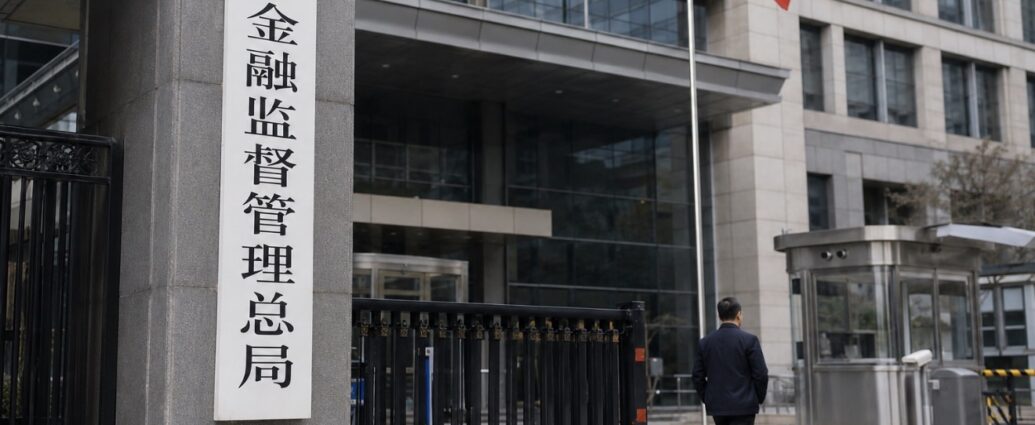
China’s financial regulator has quietly instructed major domestic banks to freeze new lending to several refiners sanctioned by Washington for purchasing Iranian oil, escalating an already dangerous financial standoff between the world’s two largest economies and placing China’s banking system directly in the middle of a geopolitical confrontation.

The move underscores how sanctions tied to the Iran conflict are no longer confined to energy markets or shipping lanes — they are now pressuring the global banking system itself.

According to people familiar with the matter, China’s National Financial Regulatory Administration advised the country’s largest lenders to temporarily halt new loans to five refiners targeted by recent U.S. Treasury sanctions tied to Iranian crude purchases. Banks were also instructed to review their exposure and business relationships with the affected companies while awaiting further guidance from Beijing.

For now, Chinese banks have reportedly been told not to issue new yuan-denominated financing to the sanctioned firms, though regulators stopped short of ordering lenders to call in existing loans — a sign Beijing is attempting to contain financial disruption while avoiding a full-scale retreat.

Among the companies involved is Hengli Petrochemical (Dalian) Refinery Co., one of China’s largest private refiners and a major buyer of Iranian oil.

How the Crisis Escalated

The banking directive is the latest development in an intensifying conflict between Washington and Beijing over sanctions enforcement.

In recent months, China has taken the unusually aggressive step of formally instructing domestic companies not to comply with certain U.S. sanctions targeting Iranian oil transactions — a major departure from Beijing’s prior approach.

Historically, Chinese officials publicly criticized unilateral U.S. sanctions while quietly allowing major corporations and banks to reduce exposure in order to preserve access to the American financial system and avoid secondary sanctions.

Now that balance appears to be changing.

Beijing recently activated legal “blocking measures” introduced in 2021 that are specifically designed to shield Chinese companies from complying with foreign laws China considers illegitimate or harmful to national interests.

The order applies to several refiners tied to Iranian crude imports, including:

  • Hengli Petrochemical (Dalian) Refinery Co.
  • Shandong Jincheng Petrochemical Group
  • Hebei Xinhai Chemical Group
  • Shouguang Luqing Petrochemical
  • Shandong Shengxing Chemical

The U.S. Treasury Department accused Hengli of helping generate hundreds of millions of dollars in revenue for Iran through crude purchases linked to Tehran’s military and sanctioned energy trade.

Chinese Banks Now Face an Impossible Choice

The situation has created a highly dangerous position for China’s financial institutions.

If Chinese banks comply with U.S. sanctions restrictions, they risk violating Beijing’s new blocking rules and potentially facing legal or regulatory consequences inside China.

But if banks continue financing sanctioned refiners in defiance of Washington, they risk triggering secondary U.S. sanctions that could threaten access to the U.S. dollar system — the backbone of global banking and international trade.

That threat is existential for large financial institutions.

Access to dollar clearing systems is essential for global banking operations, trade settlement, commodities financing, and international capital flows. Losing that access could severely disrupt even major state-backed Chinese lenders.

At the same time, China’s blocking order allows sanctioned refiners to potentially seek damages in Chinese courts against firms — including foreign banks or companies — that comply with U.S. sanctions.

Analysts at Eurasia Group described the activation of the blocking framework as a major escalation, warning that Beijing is demonstrating “a lower threshold for deploying its legal and regulatory toolkit to counter U.S. sanctions.”

Energy Security Is Driving Beijing’s Response

China’s response is rooted largely in energy dependence.

The country imports more than half its oil from the Middle East, and Iran has become one of its most important discounted crude suppliers. According to commodities tracking firm Kpler, China purchased more than 80% of Iran’s exported oil in 2025.

Much of that oil has flowed to China’s so-called “teapot refineries” — smaller independent refiners that account for roughly one-quarter of the country’s total refining capacity and often rely heavily on discounted Iranian crude to maintain profitability.

Chinese officials increasingly view U.S. sanctions expansion as a direct threat to national energy security.

Cui Fan, a professor and former adviser to China’s Commerce Ministry, argued in state-run media that Washington’s sanctions tactics are becoming increasingly aggressive and dangerous for China’s economy.

“The scope of these sanctions continues to expand, and the methods have become increasingly heavy-handed,” Cui wrote. “If such abuse is allowed to continue, it will disrupt the stability of China’s energy supply chain and jeopardize China’s energy security and development interests.”

Tens of Billions in Financing Exposure

The financial exposure involved is enormous.

Hengli Petrochemical, the publicly traded parent company tied to the sanctioned Dalian refinery, previously disclosed plans to secure approximately 235 billion yuan — roughly $34.4 billion — in banking credit for itself and affiliated entities this year alone.

Chinese lenders are now reportedly scrambling to assess how much exposure they have to sanctioned refiners and what future restrictions may mean for broader financing relationships.

The pause on new loans appears designed to buy regulators time while Beijing evaluates how aggressively Washington intends to enforce secondary sanctions.

A Potential U.S.-China Financial Flashpoint

The timing of the standoff is especially sensitive.

The confrontation is unfolding ahead of an anticipated meeting later this month between President Donald Trump and Chinese President Xi Jinping, raising the stakes significantly for both governments.

Chinese state media has already framed the blocking order as a historic shift in Beijing’s willingness to directly confront U.S. sanctions pressure.

A commentary published through the Communist Party-affiliated People’s Daily app described the move as “a pivotal step in the transition of China’s foreign-related legal weapon from institutional reserves to practical application.”

Analysts warn the situation could escalate far beyond the refining sector if the United States expands sanctions toward Chinese banks or large state-owned enterprises.

Eurasia Group warned that broader U.S. secondary sanctions targeting Chinese financial institutions would likely trigger “more forceful countermeasures” from Beijing.

For now, China’s banks are effectively being told to pause — not fully disengage.

But the longer the confrontation drags on, the harder it may become for lenders to maintain that balancing act between Washington and Beijing without eventually being forced to choose sides.

And if that happens, the conflict over Iranian oil could evolve into something far larger: a direct financial confrontation between the U.S. and Chinese banking systems themselves.

— JBizNews Desk

JBizNews Desk | Thursday, May 7, 2026

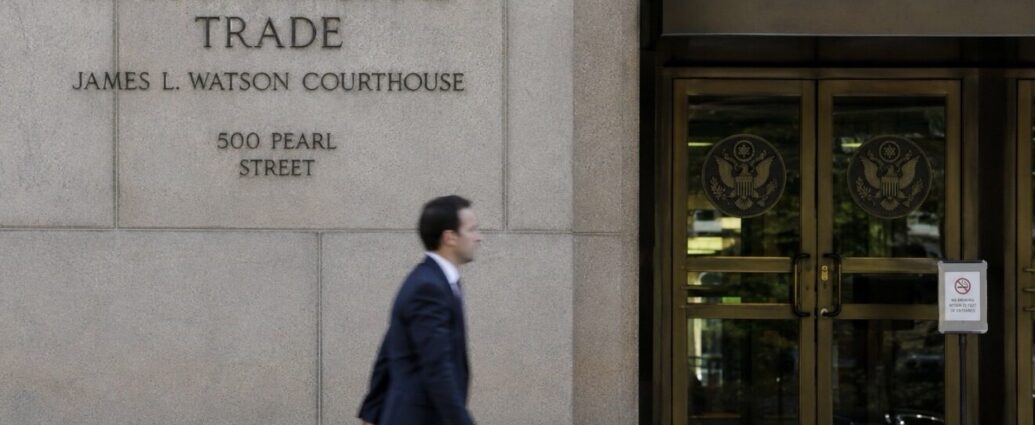
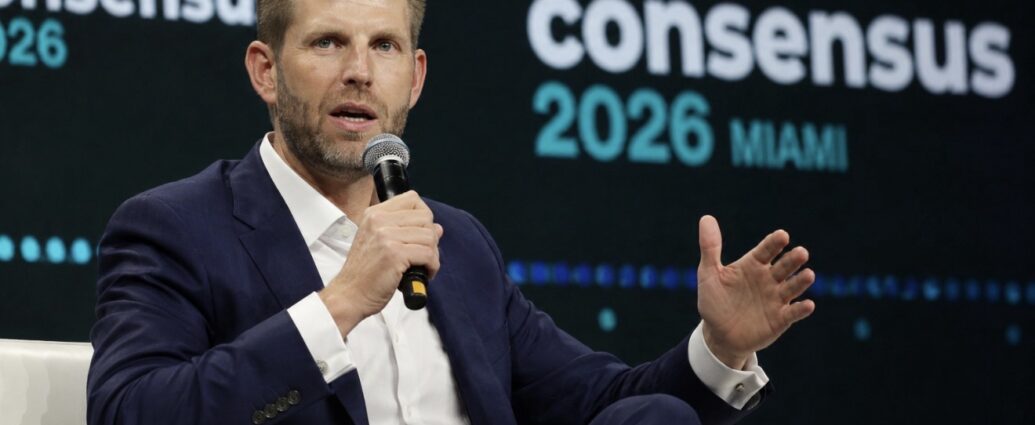
The Court of International Trade ruled at approximately 5:03 p.m. ET on Thursday, May 7, 2026, that President Donald Trump’s sweeping 10% global tariffs were unlawful, delivering a major legal setback to the administration’s trade agenda and injecting fresh uncertainty into U.S. business, supply chains, and financial markets.

In a 2-1 decision, a three-judge panel of the U.S. Court of International Trade in New York ruled that the across-the-board duties exceeded presidential authority under federal law, declaring the tariffs “invalid” and “unauthorized by law.” The judges sided with a coalition of small businesses that argued the administration improperly used emergency trade powers to impose broad import duties on goods entering the United States.

The ruling immediately raises questions for retailers, manufacturers, importers, logistics firms, and industries heavily dependent on globally sourced goods.

Court Rejects Administration’s Legal Argument

The tariffs, which took effect February 24, were imposed under Section 122 of the Trade Act of 1974, a law allowing temporary duties of up to 150 days to address serious balance-of-payments problems or prevent a major depreciation of the U.S. dollar.

The Trump administration argued that America’s roughly $1.2 trillion goods trade deficit and current account imbalance justified the emergency action.

The court majority rejected that argument, ruling the law was not intended to support sweeping global tariffs of this scale.

The decision follows an earlier Supreme Court ruling this year striking down broader Trump tariffs imposed under the International Emergency Economic Powers Act, or IEEPA. Thursday’s case centered on claims by small businesses that the February tariffs were effectively an attempt to work around that earlier Supreme Court decision.

A dissenting judge argued the president should retain broader discretion in trade matters, signaling the legal battle is likely far from over.

Immediate Impact on Businesses

The response from the business community was immediate.

“This decision is an important win for American companies that rely on global manufacturing to deliver safe and affordable products,” said Jay Foreman, CEO of toy company Basic Fun!, one of the businesses challenging the tariffs. “Unlawful tariffs make it harder for businesses like ours to compete and grow.”

For thousands of businesses, the ruling could eventually provide relief from import costs that have pressured margins for months. Retailers, wholesalers, electronics firms, apparel companies, and consumer goods manufacturers were among the sectors most affected by the tariffs.

Larger corporations that already shifted supply chains or renegotiated sourcing contracts now face a more complicated calculation as they weigh whether to reverse those costly moves or wait for additional legal clarity.

Markets and Investors Watching Closely

The decision also carries major implications for Wall Street.

Investors have increasingly viewed tariffs as a contributor to inflation, particularly during a period already strained by elevated oil prices, supply-chain volatility, and geopolitical tensions tied to the Iran conflict.

If the ruling ultimately survives appeal, it could reduce cost pressures across several industries and improve margins for import-heavy businesses. Retail, transportation, manufacturing, and logistics companies could all benefit from lower import expenses over time.

At the same time, the ruling creates new uncertainty around future U.S. trade policy heading deeper into the election cycle, particularly for industries that benefited from tariff protections.

Appeal Expected

The administration is widely expected to appeal the decision to the U.S. Court of Appeals for the Federal Circuit, with the case potentially returning to the Supreme Court.

That means the legal uncertainty may continue for months.

For businesses, the challenge now becomes deciding whether to immediately adjust purchasing and sourcing strategies or continue operating under the assumption that some form of the tariffs could eventually return.

The ruling marks the second major judicial setback for Trump’s tariff strategy this year and significantly narrows the legal tools available to impose broad unilateral trade barriers without congressional approval.

For corporate America, investors, and global trade partners, the case may ultimately redefine the balance of power between the White House and Congress on trade policy for years to come.

© JBizNews.com | By JBizNews Desk
JBizNews Desk | Thursday, May 7, 2026

A classified CIA intelligence assessment delivered this week to senior Trump administration officials has concluded that Iran may be capable of enduring the current U.S.-led naval blockade and economic pressure campaign for at least three to four more months — a finding that sharply contrasts with the administration’s more optimistic public messaging and raises growing concerns about prolonged economic fallout for American households.

The confidential report, first reported by The Washington Post and confirmed by multiple officials familiar with the assessment, suggests Tehran retains substantial military capabilities and enough economic resilience to continue operating despite weeks of U.S. and Israeli military pressure targeting Iranian infrastructure, missile systems, and export routes.

The intelligence assessment arrives as energy prices, transportation costs, and inflation pressures continue rippling through the American economy, pushing gasoline prices above $4.50 per gallon nationally and intensifying fears that a prolonged standoff in the Persian Gulf could trigger broader economic damage both in the United States and globally.

What the CIA Assessment Found

According to officials familiar with the report, U.S. intelligence agencies estimate Iran still retains roughly 70% of its prewar ballistic missile stockpile and approximately 75% of its mobile missile launcher inventory despite sustained bombardment campaigns since the conflict escalated in late February.

The report also concludes that Iran has successfully reopened many underground military storage facilities, restored portions of damaged missile infrastructure, and resumed assembly of certain weapons systems that had been in production prior to the conflict.

On the economic side, intelligence officials believe Tehran has adapted more effectively than initially expected to the naval blockade surrounding the Strait of Hormuz.

Iran has reportedly been storing unsold crude oil aboard tankers operating as floating storage units while simultaneously reducing production at key oil fields to preserve long-term infrastructure. Intelligence analysts also believe smaller quantities of oil are being rerouted overland through parts of Central Asia using rail and alternative shipping networks.

One U.S. official familiar with the assessment reportedly described the situation as “far from catastrophic,” while another said Iran’s leadership appears increasingly convinced it can outlast mounting political pressure inside the United States itself.

That analysis differs significantly from President Donald Trump’s public remarks Wednesday, in which he stated Iran’s missile capabilities had been “mostly decimated.” Intelligence estimates in the CIA report indicate the country retains far more operational capacity than public statements have suggested.

The Economic Impact Reaches American Households

The report’s broader significance extends well beyond military strategy.

The Strait of Hormuz remains one of the most critical energy chokepoints in the world, handling roughly 20% of global seaborne oil and liquefied natural gas exports. Since the conflict began February 28, global oil prices have surged sharply, driving higher fuel costs across the United States and much of the world.

National average gasoline prices in the U.S. crossed $4.50 per gallon this week for the first time since 2022 and now sit within striking distance of the all-time highs reached during the earlier inflation surge following Russia’s invasion of Ukraine.

Airlines, shipping companies, trucking operators, and manufacturers have all begun passing increased fuel costs through to consumers.

Jet fuel prices in North America have nearly doubled since the conflict began, contributing to higher airline surcharges, baggage fees, and transportation costs. Several logistics and delivery companies — including Amazon, FedEx, and the U.S. Postal Service — have already implemented fuel-related pricing adjustments now working through supply chains nationwide.

Food inflation concerns are also intensifying.

The Persian Gulf region plays a major role in global fertilizer exports, particularly urea derived from natural gas production. Disruptions tied to the conflict have already increased fertilizer costs for agricultural producers, raising concerns that higher prices for wheat, corn, poultry, and other staples could emerge later this year.

Major financial institutions have begun revising economic forecasts lower as the conflict drags on.

J.P. Morgan warned this week that sustained elevated oil prices could reduce global GDP growth during the first half of 2026 while adding more than 1 percentage point to worldwide inflation pressures. Oxford Economics downgraded its U.S. growth forecast to 1.9% from 2.8%, citing the combined impact of energy shocks, tariffs, and weakening consumer spending power.

Energy Aspects founder Amrita Sen warned markets may be underestimating the severity of the supply shock, saying investors appear “far too calm” relative to the economic risks posed by prolonged disruption in the Gulf.

Pressure Builds on Washington and Tehran

The CIA assessment arrives amid reports that preliminary backchannel discussions between U.S. and Iranian officials are quietly underway regarding a possible framework agreement to reduce tensions and reopen oil flows.

But intelligence officials caution that Iran does not currently appear to be negotiating from a position of immediate desperation.

Analysts believe Tehran may be betting that mounting political pressure inside the United States — particularly rising fuel prices ahead of midterm elections — could weaken Washington’s resolve before Iran’s economy reaches a breaking point.

U.S. officials continue to argue the blockade is inflicting meaningful long-term damage on Iran’s economy and military infrastructure. Still, the new intelligence assessment suggests any resolution capable of meaningfully lowering energy prices and easing inflation pressures may remain months away.

For American consumers already coping with elevated borrowing costs, higher food prices, and expensive fuel, the implications are increasingly tangible.

What began as a geopolitical confrontation overseas is steadily becoming an economic reality at home — one showing few signs of ending quickly.

© JBizNews.com. All rights reserved. This article is original reporting by JBizNews Desk. Unauthorized reproduction or redistribution is strictly prohibited.

By JBizNews Desk | May 6, 2026

American households are increasingly turning to credit to maintain their spending levels, as rising costs for fuel, food, and borrowing strain budgets and outpace income growth.

New data from the Federal Reserve and private lenders shows a steady uptick in credit card balances and revolving credit usage, signaling that consumers are beginning to rely more heavily on debt to bridge the gap between wages and expenses.

The trend reflects a shift in behavior that economists say often emerges during periods of financial pressure — when incomes remain stable, but purchasing power declines.

“Consumers are not pulling back yet — they’re borrowing,” said Torsten Slok, Chief Economist at Apollo Global Management, noting that credit usage tends to rise before spending slows. “That’s an important distinction, because it delays the economic impact.”

Credit card balances have been rising steadily over recent months, while delinquency rates remain relatively contained — suggesting that households are still managing payments, but with less margin for error.

The drivers are clear. Energy prices have climbed sharply, pushing gasoline above $4 per gallon in many regions, while food prices and housing costs remain elevated. At the same time, borrowing costs have increased following the Federal Reserve’s rate hikes over the past two years.

That combination leaves consumers facing higher expenses on both sides of the balance sheet — the cost of living and the cost of borrowing.

“Interest rates matter here,” said Mark Zandi, Chief Economist at Moody’s Analytics, who noted that higher rates amplify the burden of carrying credit card debt. “The longer rates stay elevated, the more expensive it becomes for households to rely on credit.”

Despite the pressures, consumer spending has remained resilient. Retail sales and service-sector activity have held up, supported in part by continued employment growth and accumulated savings from earlier periods.

But economists warn that reliance on credit is not a sustainable long-term strategy.

“Credit can smooth consumption, but it can’t replace income,” Slok said. “At some point, households hit a limit.”

That limit can show up in several ways — rising delinquencies, reduced spending, or increased sensitivity to economic shocks. The timing is difficult to predict, but the pattern is well established.

For the Federal Reserve, the trend adds another layer of complexity. Strong consumer spending supports economic growth, but if it is increasingly financed by debt, it may mask underlying weakness.

“Policymakers have to look beyond the headline numbers,” said Diane Swonk, noting that the composition of spending matters as much as the level.

The situation is particularly relevant as markets await the next jobs report, which will provide further insight into income growth and employment stability. If wage growth remains subdued while costs rise, the reliance on credit could deepen.

For households, the shift is already tangible. Monthly budgets are tightening, and more purchases are being deferred to credit cards rather than paid for with current income.

Looking ahead, the trajectory of consumer credit will be a key indicator of economic health. If borrowing continues to rise while delinquencies remain low, the economy may maintain momentum in the short term. If stress begins to build, it could signal a turning point.

For now, the message is clear: American consumers are still spending — but increasingly, they are doing so with borrowed money.

© JBizNews.com. All rights reserved.

JBizNews Desk | May 7, 2026

Wall Street Is Watching Guidance More Than Q1 Earnings

Airbnb (ABNB) releases its first-quarter 2026 financial results tonight after the closing bell, but investors are increasingly focused on something far bigger than the winter quarter that just ended: the FIFA World Cup.

With the 2026 tournament beginning June 11 across 16 host cities in the United States, Canada, and Mexico, Airbnb is positioned at the center of what could become the largest short-term rental event North America has ever seen.

Tonight’s earnings call is expected to provide Wall Street’s first detailed look at how summer booking demand is shaping up — and whether the World Cup travel surge many hosts and investors expected is materializing at the scale anticipated.

Analysts currently expect Airbnb to report first-quarter earnings of $0.30 per share, up roughly 25% from a year ago, on revenue of approximately $2.62 billion, representing about 15% year-over-year growth.

That would mark a seasonal slowdown from the stronger fourth quarter, when Airbnb reported $2.78 billion in revenue and $0.56 in earnings per share, but investors broadly view the sequential decline as normal for the travel industry’s slower winter season.

Airbnb stock closed Wednesday at $139.88 and has gained only about 2.3% this year as travel companies continue navigating pressure from elevated fuel prices, geopolitical instability tied to the Iran conflict, and softer international tourism demand.

The World Cup Is Becoming the Bigger Story

What investors really want from tonight’s earnings call is forward guidance — specifically, how quickly World Cup-related demand is accelerating and whether the company expects the tournament to materially boost summer performance.

The early numbers are already significant.

Airbnb says searches for stays in World Cup host cities are running roughly 80% higher than during the same period last year. The company also says roughly one in six guests booking stays in the United States, Canada, and Mexico during tournament dates is using Airbnb for the first time — a major customer acquisition opportunity with potential long-term value extending beyond the tournament itself.

The company is aggressively preparing for the demand surge.

Airbnb hosts across the 16 host cities are projected by Deloitte to earn an average of roughly $3,000 during the tournament period, while Airbnb is offering a $750 incentive to new entire-home hosts who welcome their first guests before July 31 in an effort to rapidly expand supply.

For homeowners in host cities, the World Cup is increasingly being viewed not simply as a sporting event but as a major economic opportunity tied directly to tourism demand, short-term rentals, restaurants, transportation, and local spending.

Hotels Face a Very Different Reality

While Airbnb’s data points toward growing demand, traditional hotel operators are facing a much more uneven picture.

The American Hotel and Lodging Association (AHLA) released a survey this week showing that roughly 80% of hotel operators across the 11 U.S. World Cup host markets say bookings are currently tracking below initial expectations.

One major factor has been large-scale FIFA room block cancellations.

In some cities, between 70% and 95% of originally reserved hotel inventory tied to FIFA contracts has reportedly been released back into local markets only weeks before the tournament, flooding cities like Kansas City, Philadelphia, Boston, Seattle, and San Francisco with excess room supply.

At the same time, hotel operators say visa restrictions and geopolitical instability are weighing heavily on international travel demand.

Between 65% and 70% of hoteliers surveyed cited visa concerns as the primary drag on bookings.

A new U.S. Visa Bond Pilot Program now requires travelers from several World Cup-qualified countries — including Algeria, Tunisia, and Senegal — to post visa bonds reaching as high as $15,000 before receiving tourist approval.

Meanwhile, travel restrictions affecting several participating nations and uncertainty surrounding Iran’s World Cup participation due to the ongoing conflict have added additional complexity to international travel planning.

Airbnb May Hold a Structural Advantage

Ironically, the hotel market disruptions may ultimately strengthen Airbnb’s position rather than weaken it.

Unlike hotels concentrated near stadium corridors and downtown tourism zones, Airbnb’s distributed inventory model allows visitors to stay in residential neighborhoods far from traditional hotel districts — often at lower prices and with more flexibility for families and group travel.

That may prove especially attractive to domestic travelers and budget-conscious international fans navigating higher airfare and travel costs.

Oxford Economics recently estimated that while the World Cup’s broader GDP impact on major tourism cities may ultimately be “marginal and short-lived,” local Airbnb hosts in smaller neighborhoods could benefit disproportionately from overflow demand and shifting travel patterns.

Airbnb’s own booking trends appear to support that theory, with host-city reservations already running ahead of comparable 2025 levels even as many hotels continue reporting weaker-than-expected demand.

Analysts See Long-Term Growth Beyond the Tournament

Wall Street analysts increasingly view the World Cup as only one piece of Airbnb’s longer-term growth story.

This week, Oppenheimer analyst Jed Kelly upgraded Airbnb to Outperform with a $180 price target, citing the World Cup as a near-term catalyst alongside several broader strategic growth initiatives.

Kelly highlighted Airbnb’s expansion into hotel inventory, the company’s growing “Reserve Now, Pay Later” financing product — which management says has already reached over 70% adoption in the U.S. — and AI-powered search upgrades expected to roll out through 2026.

He also pointed specifically to Manhattan as a potential expansion opportunity, noting that New York City hotel inventory remains roughly 3 million room nights below 2019 levels due partly to stricter short-term rental regulations that reshaped the city’s lodging market.

UBS maintained a Neutral rating on Airbnb but raised its price target to $153, citing continued geopolitical uncertainty tied to Middle East tensions.

Tonight’s Earnings Call Could Shape the Summer

Airbnb’s earnings call begins at 5:00 p.m. ET, where investors expect CEO Brian Chesky to provide updated booking trends, summer demand guidance, and a clearer picture of what the company is seeing in real-time reservation data ahead of the World Cup.

Options markets are currently pricing in a roughly 7.85% move in either direction following the earnings release.

For investors, the report could help determine whether Airbnb’s World Cup opportunity is becoming the transformational summer catalyst bulls have anticipated — or whether broader economic and geopolitical pressures are beginning to weigh more heavily on global travel demand.

For thousands of homeowners preparing properties in host cities, the stakes are more practical: whether the booking wave they were promised is actually arriving.

— JBizNews Desk

© JBizNews.com. All rights reserved. This article is original reporting by JBizNews Desk. Unauthorized reproduction or redistribution is strictly prohibited.

JBizNews Desk | May 7, 2026
Wall Street’s Crypto Reversal Goes Public

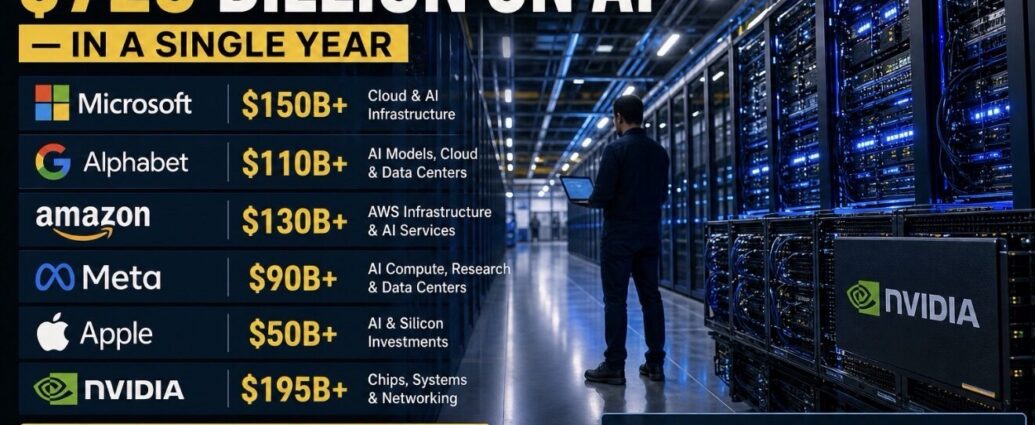
Eric Trump used one of the crypto industry’s biggest global stages Wednesday to deliver a message aimed directly at traditional banking giants: the fight against Bitcoin is over, and Wall Street lost.

Speaking at CoinDesk’s Consensus Miami 2026 conference before thousands of attendees representing more than 100 countries, Trump pointed to JPMorgan Chase as the clearest example of how dramatically the financial establishment has reversed course on cryptocurrency.

Just 18 months ago, major banks were still publicly attacking Bitcoin and warning clients against it. Now, according to Trump, many of those same institutions are actively building crypto businesses and integrating digital assets into mainstream finance.

“The financial institutions all realize that they’ve lost and they can no longer push back,” Trump said during the conference. “Instead of fighting against the tide, they’re swimming with it for the first time.”

The symbolism surrounding JPMorgan’s presence at the conference was difficult to ignore. The bank — whose CEO Jamie Dimon repeatedly mocked Bitcoin in previous years and once referred to it as a “fraud” and “joke asset” — appeared at Consensus Miami as an official sponsor through its blockchain division, Kinexys.

Trump argued the shift represents a broader acknowledgment from Wall Street that crypto is no longer viewed as a fringe experiment but as a permanent part of the financial system.

He also pointed to Bank of America’s Merrill division and Charles Schwab as firms now embracing digital assets after years of skepticism and resistance.

Personal Fallout From Banking Deplatforming

Trump said his interest in crypto intensified after major financial institutions allegedly cut ties with the Trump Organization following January 6, 2021.

He claimed more than 350 Trump Organization bank accounts were closed during that period, describing the experience as proof that traditional financial infrastructure can be weaponized against individuals and businesses with little warning or recourse.

That experience, Trump said, became one of the driving motivations behind the creation of American Bitcoin Corp. (ABTC), where he serves as Co-Founder and Chief Strategy Officer.

“This ecosystem of Bitcoin and crypto is definitely helping the United States and the whole world,” Trump said, reiterating his long-standing prediction that Bitcoin could eventually reach $1 million per coin.

American Bitcoin Expands Despite Market Losses

Trump’s remarks came the same evening American Bitcoin released its first-quarter 2026 financial results, which showed record Bitcoin production and sharply improved mining efficiency — even as falling cryptocurrency prices pushed the company into a major quarterly loss.

The company said its core strategy remains straightforward: accumulate as much Bitcoin as possible at the lowest production cost in the industry.

American Bitcoin reported mining Bitcoin during the quarter at an average cost of roughly $36,200 per coin, a major improvement from approximately $46,900 in the fourth quarter of 2025. The company said it is effectively acquiring Bitcoin at roughly half of prevailing market prices through its mining operations.

ABTC mined 817 Bitcoin during the first quarter, the strongest quarterly production in company history, while increasing its Bitcoin reserves by roughly 30%.

The company ended March holding approximately 7,021 BTC on its balance sheet and now reportedly controls more than 7,300 Bitcoin, placing it among the world’s larger publicly traded Bitcoin holders.

American Bitcoin also disclosed that it currently operates nearly 90,000 mining machines, reflecting the growing industrial scale of large U.S.-based crypto mining operations.

Accounting Losses Overshadow Operating Gains

Despite the operational growth, the financial results themselves were more complicated.

Revenue fell to $62.1 million, down from $78.3 million in the previous quarter, largely because Bitcoin prices dropped roughly 22% during the reporting period.

The company reported a net loss of $81.8 million, or $0.08 per share, missing analyst expectations that had projected a modest profit.

However, company executives emphasized that most of the reported loss came from accounting adjustments rather than operational weakness.

American Bitcoin recorded a $117.2 million non-cash markdown tied to the declining value of its Bitcoin holdings under accounting rules. That loss was partially offset by a $37.3 million gain tied to derivatives connected to a mining equipment purchase agreement.

Even with the Bitcoin price decline, the company maintained a mining gross margin above 52%, highlighting the profitability of its underlying mining operations before accounting adjustments.

American Bitcoin CEO Mike Ho said the company remained operationally profitable during the quarter when excluding non-cash Bitcoin valuation changes. He also noted the company did not sell any Bitcoin holdings during the period despite the price decline.

Bitcoin’s Mainstream Shift Accelerates

The broader backdrop to Trump’s comments is the increasingly rapid integration of crypto into mainstream finance.

Over the last year, banks, hedge funds, pension managers, and public corporations have accelerated investments into Bitcoin infrastructure, custody services, tokenization projects, and blockchain-based payment systems following the success of spot Bitcoin ETFs and rising institutional demand.

The shift has transformed Bitcoin from a once-controversial outsider asset into an increasingly normalized part of institutional finance — even among many firms that spent years publicly criticizing the industry.

ABTC shares fell roughly 1.6% in after-hours trading Wednesday after closing the regular session up 1.63% at $1.25.

Bitcoin itself traded near $81,058 late Wednesday, down roughly 0.5% on the day.

— JBizNews Desk
© JBizNews.com. All rights reserved. This article is original reporting by JBizNews Desk. Unauthorized reproduction or redistribution is strictly prohibited.

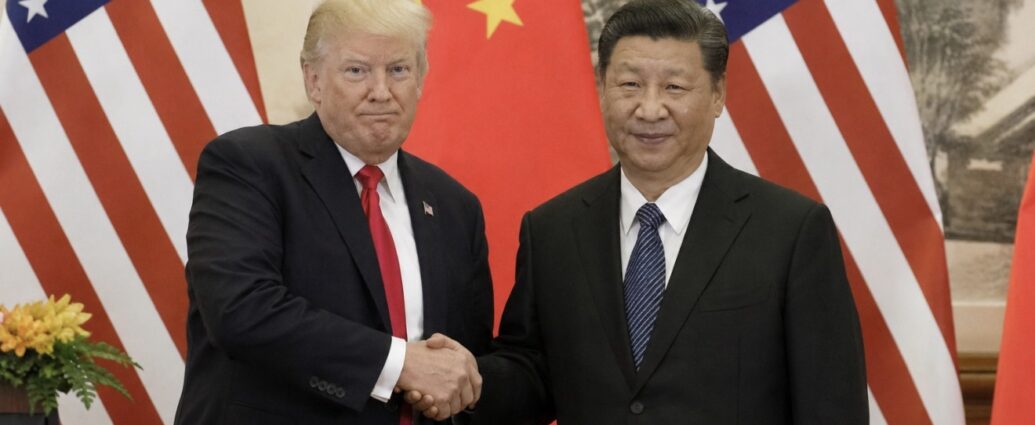
Russia’s GDP is shrinking, oil revenues have been cut in half, approval ratings are falling, and Ukrainian drones are striking Moscow apartment buildings days before Victory Day. The war Vladimir Putin once implied would end in weeks has now entered its fifth year — and the pressure is no longer confined to the battlefield.

For more than two decades, Russian President Vladimir Putin built his political identity around one core promise: strength. Strength against the West. Strength over neighboring states. Strength as the indispensable figure holding Russia together after the chaos of the Soviet collapse. That carefully cultivated image is now facing one of its most serious tests yet — squeezed between a battlefield that refuses to stabilize and an economy increasingly showing signs of exhaustion.

The Economy Is Cracking

Putin himself publicly acknowledged growing economic stress during a televised meeting with senior officials this week, demanding explanations after Russia’s economy underperformed even the Kremlin’s own expectations.

Russia’s GDP shrank by a combined 1.8% in January and February, according to figures discussed during the meeting, with manufacturing, industrial production, and construction all moving into negative territory.

“I expect to hear detailed reports today on the current economic situation and why the trajectory of macroeconomic indicators is currently below expectations,” Putin said during the session. “Moreover, below the expectations of not only experts and analysts, but also the forecasts of the government itself and the central bank.”

The unusually candid tone highlighted a growing reality facing Moscow: the war-driven economic model that temporarily insulated Russia from sanctions is beginning to lose momentum.

Massive wartime spending initially helped prop up economic growth. Russia’s economy expanded 4.1% in 2023 and 4.9% in 2024 as defense factories surged into overdrive. But economists increasingly warned that much of that growth was artificial — fueled almost entirely by military production, state borrowing, and emergency spending rather than sustainable private-sector expansion.

Now the cracks are widening.

GDP growth slowed sharply to roughly 1% last year, while the Kremlin projected only 1.3% growth for 2026 before the latest slowdown data emerged. At the same time, Russia’s budget deficit reportedly widened to nearly $58.6 billion in the first quarter as oil tax revenues in March fell roughly 50% compared to a year earlier.

That drop matters enormously for Moscow because energy exports remain the backbone of the Russian state budget.

The timing could not be worse for the Kremlin. The Iran war and broader Middle East instability pushed global oil prices higher, theoretically creating an opportunity for Russia to generate badly needed revenue. The Trump administration’s rollback of some sanctions on Russian oil further opened the door for increased exports.

But Ukraine’s expanding drone campaign has repeatedly targeted Russian export infrastructure, refineries, fuel depots, and logistics hubs — limiting Moscow’s ability to fully capitalize on higher energy prices.

Economists Warn of a “Death Zone”

Some analysts are now using alarmingly blunt language to describe Russia’s economic condition.

Alexandra Prokopenko, a fellow at the Carnegie Russia Eurasia Center and former adviser to Russia’s central bank, wrote that the Russian economy has entered what she called a “death zone” — borrowing a term from mountain climbing where the body begins consuming itself faster than it can recover.

“Russia’s economy is stuck in what might be described as negative equilibrium: holding itself together while steadily destroying its own future capacity,” she wrote.

According to Prokopenko and other economists, Russia is increasingly burning through reserves while suffering from labor shortages, declining productivity, and weakening long-term investment prospects.

Russia’s Economic Development Minister Maxim Reshetnikov publicly admitted conditions were becoming “substantially more difficult,” telling a business conference that wartime labor shortages have exhausted many remaining workforce reserves.

“Our current records show that these reserves have largely been used up,” Reshetnikov said. “This truly is the situation and the macroeconomic situation is substantially more difficult.”

The War Comes Home

The military picture has become equally troubling for the Kremlin.

Russian forces reportedly suffered a net territorial loss last month for the first time since 2024. More than four years after launching the invasion, Moscow still has not achieved full control over the Donetsk region — one of the original core objectives of the war.

“The overall mood is that’s enough already; you’ve been fighting for long enough,” a Russian official told The Washington Post anonymously. “It seems to everyone that it’s been going on for longer than World War II, the Great Patriotic War — and at the same time we can’t even take one region.”

The psychological impact inside Russia is growing as Ukrainian drone strikes increasingly reach deep into Russian territory.

Days before Russia’s annual Victory Day parade — one of Putin’s most symbolically important public events — a drone struck a residential high-rise building in Moscow just miles from the Kremlin.

Ukraine’s Foreign Intelligence Service claimed security preparations for Victory Day now resemble “a military lockdown more than a celebration,” with communication blackouts and heightened security measures across Moscow.

The annual parade itself has reportedly been scaled back significantly.

Heavy military hardware will reportedly be largely absent from Red Square. Russian authorities also reduced troop participation and removed cadets from several major military academies from the event. Kremlin spokesman Dmitry Peskov blamed threats of “terrorist activity” from Ukraine for the changes.

The optics are difficult for Moscow.

Victory Day has long served as Putin’s premier propaganda showcase — reinforcing the Kremlin narrative that modern Russia is continuing the legacy of defeating Nazi Germany during World War II. But the war in Ukraine has now dragged on longer than the Soviet Union’s war against Germany itself.

Approval Falling, Repression Rising

The economic strain and military stagnation are beginning to show up even in Russia’s tightly managed polling data.

A survey from Russia’s state-owned pollster showed Putin’s approval rating falling to 65.6%, down from 77.8% earlier this year and below the levels that once consistently exceeded 80%.

The Kremlin’s response has increasingly centered on tighter control.

Russian authorities recently launched another wave of political arrests and raids targeting critics, journalists, and publishers. Officials from Russia’s Investigative Committee raided one of the country’s largest publishing houses and detained staff members as part of what analysts describe as a broader crackdown on dissent.

Meanwhile, Moscow continues banning or restricting Western social media platforms including Facebook and Instagram while aggressively promoting state-controlled digital platforms and messaging systems.

Putin now faces a deeper structural dilemma.

Ending the war risks exposing how dependent the Russian economy has become on military spending. Wartime production has kept factories running and unemployment artificially low. A transition back to a peacetime economy could trigger major layoffs, falling wages, and public anger over declining living standards.

For now, the Kremlin appears trapped between two dangerous options: continue a grinding war with mounting costs, or stop fighting and confront the full economic consequences at home.

That balancing act helped sustain Putin’s image for years.

But as drones strike Moscow, oil revenues weaken, and economic pressure intensifies, the narrative of invincibility that once defined modern Russia is becoming increasingly difficult for the Kremlin to maintain.

— JBizNews Desk
By JBizNews Desk | May 7, 2026

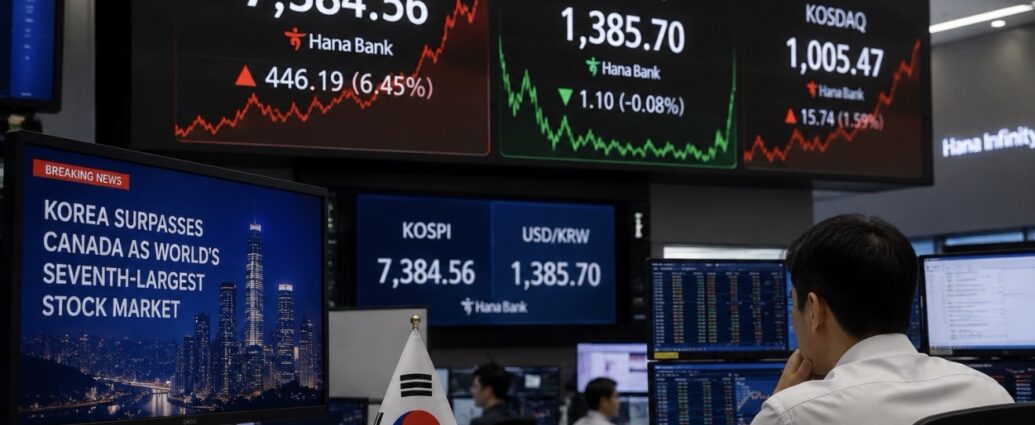
The world’s largest technology companies are on the verge of unleashing an unprecedented wave of capital spending, with combined investments in artificial intelligence infrastructure projected to reach $725 billion in a single year — a scale that is reshaping the global economy and redefining the future of competition across industries.

The spending surge is being led by a handful of dominant players — Microsoft, Alphabet, Amazon, Meta Platforms, Apple, and Nvidia — each racing to build out massive data centers, secure semiconductor supply, and deploy next-generation AI systems that executives say will underpin the next decade of economic growth.

“This is the largest technology investment cycle we’ve ever seen,” said Satya Nadella, CEO of Microsoft, who has repeatedly emphasized that AI is becoming the “defining platform shift of our time.” Microsoft alone is expected to spend tens of billions this year expanding its AI cloud infrastructure, including its partnership with OpenAI and global Azure data center buildouts.

At the center of the spending boom is a simple but costly reality: AI requires enormous computing power. Training and deploying advanced models demands vast networks of specialized chips, primarily graphics processing units (GPUs), which has turned Nvidia, led by CEO Jensen Huang, into one of the most critical — and valuable — companies in the global economy.

“AI factories are the infrastructure of the future,” Huang said at a recent industry conference, describing a world where companies operate massive computing hubs to generate intelligence in the same way traditional factories produce goods.

The ripple effects of this spending are being felt far beyond Silicon Valley. Construction firms are racing to build new data centers, utilities are preparing for surging electricity demand, and governments are increasingly focused on securing domestic supply chains for semiconductors and critical technologies.

Andy Jassy, CEO of Amazon, said the company’s AI investments — particularly within Amazon Web Services — are “meaningfully higher” than previous infrastructure cycles, reflecting what he described as “once-in-a-generation demand” from businesses seeking to integrate AI into their operations.

Alphabet is following a similar path. Sundar Pichai, CEO of Google, has positioned AI as central to the company’s future, from search and advertising to enterprise services, with spending accelerating across its cloud and hardware divisions.

Even companies traditionally known for consumer hardware are shifting aggressively. Tim Cook, CEO of Apple, has signaled increased investment in AI capabilities embedded across its ecosystem, while Mark Zuckerberg, CEO of Meta, has committed billions toward building AI-driven platforms, including virtual environments and advanced recommendation systems.

The scale of the spending is not without risk. Investors are beginning to question whether returns will match the enormous capital outlays, particularly as competition intensifies and pricing pressure could emerge in cloud and AI services.

“There’s no historical comparison for this level of investment,” said Brad Gerstner, CEO of Altimeter Capital, who has warned that while AI represents a transformative opportunity, “not every dollar spent will generate a return.”

Still, early signs suggest that demand is real and accelerating. Businesses across sectors — from healthcare and finance to manufacturing and retail — are rapidly adopting AI tools to improve efficiency, reduce costs, and create new revenue streams.

The broader economic implications are profound. AI investment is driving job creation in some areas, particularly in engineering and infrastructure, while raising concerns about displacement in others. Policymakers are increasingly focused on how to balance innovation with workforce stability.

At the same time, geopolitical competition is intensifying. The United States and China are both investing heavily in AI capabilities, viewing the technology as critical to national security and economic leadership. Export controls, subsidies, and industrial policy are all playing a role in shaping the competitive landscape.

“AI is not just a business race — it’s a strategic race,” said Gina Raimondo, U.S. Secretary of Commerce, who has emphasized the importance of maintaining American leadership in advanced technologies.

For markets, the spending boom presents both opportunity and uncertainty. On one hand, it is fueling growth for companies across the supply chain, from chipmakers to construction firms. On the other, it raises questions about capital efficiency and long-term profitability.

Investors will be watching closely as earnings reports continue, looking for evidence that AI investments are translating into real revenue and margin expansion. Early adopters have reported gains, but the full impact may take years to materialize.

Looking ahead, the trajectory of this $725 billion spending wave will likely define the next phase of the global economy. If successful, it could unlock new levels of productivity and innovation. If not, it risks becoming one of the most expensive bets in corporate history.

For now, one thing is clear: the AI race is no longer theoretical — it is being built in real time, at a scale the world has never seen before.

© JBizNews.com. All rights reserved. This article is original reporting by JBizNews Desk. Unauthorized reproduction or redistribution is strictly prohibited.

JBizNews Desk | Thursday, May 7, 2026
President Donald Trump is moving ahead with a high-stakes summit in Beijing next week despite growing concerns inside China over the escalating U.S.-Iran conflict — a geopolitical clash now deeply intertwined with global trade, energy security, supply chains, and financial markets.

Trump and Chinese President Xi Jinping are scheduled to meet May 14–15 in Beijing for what will be the first visit by a sitting U.S. president to China in nearly a decade. The summit had already been delayed once following the outbreak of the U.S.-Iran war that triggered a global energy shock and intensified instability across international markets.

Despite reports of unease within Beijing over hosting the summit while the Middle East conflict remains unresolved, Trump dismissed suggestions that China had challenged the United States over the war. “We haven’t been challenged by China. They don’t challenge us,” Trump told reporters this week at the White House, adding that Xi “wouldn’t do that.”

China’s Energy Fears Are Growing

Behind the diplomacy lies a major economic concern for Beijing: energy security.

China remains heavily dependent on oil and liquefied natural gas shipments passing through the Strait of Hormuz, one of the world’s most critical energy chokepoints. Before the conflict, roughly 13% of China’s imported crude came directly from Iran, while nearly half of its oil imports and about one-third of LNG imports relied on Gulf shipping routes vulnerable to disruption.

So far, China has weathered the crisis relatively well thanks to massive strategic reserves, diversified energy sourcing, and extensive overland pipeline infrastructure connecting Russia and Central Asia. But prolonged instability threatens that cushion.

This week, Chinese Foreign Minister Wang Yi met with Iranian Foreign Minister Abbas Araghchi in Beijing, urging an immediate end to hostilities and a rapid reopening of shipping lanes through the Strait of Hormuz.

Trade and Supply Chains Back at Center Stage

Trade negotiations are expected to dominate much of the meeting, with officials from both countries discussing a proposed Board of Trade framework aimed at stabilizing commerce while protecting sensitive industries and supply chains.

Potential Chinese purchases reportedly under discussion include major commitments for American soybeans, beef, poultry, agricultural goods, and possibly aviation-related products.

For U.S. exporters, manufacturers, retailers, and logistics firms, the outcome could directly affect costs, commodity prices, and future demand from China.

Taiwan, Rare Earths and AI Tensions Simmer

Even as both governments seek limited economic agreements, major strategic tensions continue to intensify.

Chinese restrictions on rare earth exports have disrupted several American industries, raising alarms in Washington about U.S. dependence on Chinese-controlled supply chains critical for electronics, defense systems, semiconductors, and electric vehicles.

Artificial intelligence has also emerged as a growing flashpoint. The White House this week accused China of “industrial-scale” theft of American AI models, while Beijing blocked Meta’s acquisition of Chinese-founded AI startup Manus.

Although Taiwan is not expected to dominate public discussions at the summit, analysts say it remains one of the most sensitive underlying issues shaping the relationship.

Markets Watching for Stability

Analysts caution that expectations for a major breakthrough remain low. Instead, both sides are expected to pursue smaller agreements that allow each government to claim progress while avoiding further escalation at a fragile moment for the global economy.

Still, investors are watching closely because even modest stabilization between Washington and Beijing could calm markets already rattled by war-driven oil prices, supply-chain disruptions, tariff battles, and recession fears.

At a time when the global economy faces simultaneous geopolitical and economic shocks, simply maintaining open communication between the United States and China may itself provide reassurance to businesses and financial markets.

Whether next week’s summit produces durable progress — or merely temporary political optics — could shape global trade, energy prices, and investor sentiment for months to come.

JBizNews will have full coverage of the Trump-Xi summit beginning May 14.

© JBizNews.com. All rights reserved. This article is original reporting by JBizNews Desk. Unauthorized reproduction or redistribution is strictly prohibited.

South Korea’s stock market has vaulted past Canada to become the seventh-largest equity market in the world, completing one of the fastest financial ascents in modern market history as investors pour money into artificial intelligence infrastructure plays led by Samsung Electronics and SK Hynix.

The surge has transformed South Korea from a mid-tier global market into one of the world’s hottest investment destinations in less than five months — powered overwhelmingly by global demand for AI memory chips, data-center infrastructure, and semiconductor manufacturing capacity.

The total market capitalization of Korean-listed companies has surged approximately 71% this year to roughly $4.59 trillion, overtaking Canada’s market value of approximately $4.5 trillion.

The rally has been so explosive that South Korea has not only passed Canada, but also rapidly narrowed a gap with larger global markets that once appeared unreachable.

As recently as the end of 2024, the United Kingdom’s equity market was roughly twice the size of South Korea’s.

Now the gap has nearly vanished.

Samsung and SK Hynix Are Driving Nearly Everything

The market’s extraordinary rise has been driven primarily by two corporate giants: Samsung Electronics and SK Hynix.

Samsung Group’s total market capitalization has climbed to roughly $1.44 trillion, representing approximately 38.5% of South Korea’s entire listed equity market.

SK Group — led by memory-chip powerhouse SK Hynix — accounts for another 27.3%.

Together, the two conglomerates now represent nearly two-thirds of Korea’s entire stock market value.

The concentration is staggering by global standards.

Samsung Electronics surged more than 14% in a single trading session this week, becoming only the second Asian company after Taiwan Semiconductor Manufacturing Co. to surpass a $1 trillion market capitalization.

SK Hynix climbed more than 10% in the same session, pushing its own valuation above 1,000 trillion won.

Meanwhile, South Korea’s benchmark KOSPI index closed at a record 7,384.56, rising 6.45% in one day alone.

The index has now surged more than 75% year-to-date — the strongest performance among G20 equity markets.

AI Is Rewiring Global Capital Flows

The driving force behind the rally is simple: artificial intelligence infrastructure.

Modern AI systems require enormous amounts of high-bandwidth memory, advanced semiconductors, data-center hardware, servers, and chip packaging capacity — areas where Samsung and SK Hynix hold dominant global positions.

Investors increasingly view South Korea as one of the cleanest public-market plays on the global AI buildout.

Every major AI expansion — from cloud infrastructure to advanced language models — increases demand for memory chips, particularly high-bandwidth memory used in Nvidia-powered AI systems.

Samsung and SK Hynix sit near the center of that supply chain.

As a result, global capital is flooding into Korean semiconductor stocks at a pace rarely seen in developed markets.

Analysts have sharply revised earnings expectations upward for the country’s semiconductor industry, with operating profit forecasts for Korean chipmakers reportedly rising roughly 66% in just the past month.

Lee Jung-min, head of investment strategy at Korea Investment Management, said the rally may still have room to continue because valuations remain relatively modest compared to the scale of projected earnings growth.

The KOSPI’s 12-month forward price-to-earnings ratio remains around 7.1 times — well below many U.S. technology peers.

“Valuation normalization alone could sustain this record rally,” Lee said.

Wall Street Is Raising Korea Targets Aggressively

Major global investment banks are now rapidly increasing their targets for Korean equities.

Goldman Sachs raised its year-end 2026 KOSPI target to 7,000 and boosted its earnings-growth forecast for Korean companies to approximately 130%, citing stronger semiconductor pricing and accelerating AI-related demand.

J.P. Morgan increased its KOSPI target to roughly 7,500 points.

Nomura analysts argued that investors are increasingly rotating capital away from what they called a “pure U.S. AI trade” toward a broader “global AI supply-chain allocation,” making Korea one of the biggest beneficiaries.

The shift reflects a broader evolution inside global financial markets.

Rather than investing only in American AI software companies, investors are increasingly targeting the hardware, semiconductors, packaging firms, memory suppliers, and industrial infrastructure supporting the AI ecosystem globally.

That transition is dramatically benefiting Korea.

Korea Is Following Taiwan’s Playbook

South Korea’s rise mirrors a similar transformation already seen in Taiwan.

Taiwan’s stock market surged earlier this year as Taiwan Semiconductor Manufacturing Co. became one of the world’s most important AI infrastructure companies.

Taiwan’s market capitalization now stands around $4.48 trillion, with TSMC alone accounting for roughly 45% of the country’s benchmark index.

Like Taiwan, South Korea is increasingly becoming a concentrated AI-driven market where a handful of semiconductor giants exert outsized influence over national equity performance.

That concentration creates enormous upside during AI booms.

It also creates major risks.

The Biggest Risk Is Concentration

The same dynamic powering Korea’s historic rally may also represent its greatest vulnerability.

Market analysts increasingly warn that the country’s equity market has become dangerously dependent on the continued performance of Samsung and SK Hynix.

Even during the latest record-setting KOSPI rally, market breadth remained surprisingly weak.

On the day the index surged more than 6%, only about 200 stocks advanced while nearly 680 declined — meaning most Korean companies actually fell even as the broader index exploded higher.

The discrepancy highlights how heavily the market now depends on semiconductor momentum.

If Samsung or SK Hynix disappoint investors on earnings, AI chip demand, memory pricing, supply constraints, or margins, the impact on Korea’s broader market could be severe.

For retail investors buying Korean ETFs or broad Korean equity funds, the exposure may be more concentrated than it initially appears.

Many are effectively making a leveraged bet on the AI semiconductor cycle itself.

For now, however, the momentum remains overwhelming.

In less than five months, South Korea has transformed itself from a secondary global market into one of the world’s most important AI investment hubs — powered largely by two companies making the chips the modern economy increasingly cannot function without.

— JBizNews Desk

A mysterious $920 million crude oil trade placed in the middle of the night — just 70 minutes before news broke that the United States and Iran were nearing a peace framework — is intensifying allegations that politically connected traders may be profiting from advance knowledge of war-related developments before they become public.

The trade triggered a fresh wave of outrage Wednesday after oil prices collapsed more than 12% within hours of the position being placed, generating an estimated $125 million profit for whoever made the bet.

The incident is now the latest — and largest — in a growing series of suspicious oil market trades tied to major developments in the Iran conflict, with lawmakers, analysts, and market observers increasingly calling for aggressive federal investigations.

Among the loudest voices Wednesday was Rep. Marjorie Taylor Greene (R-GA), who openly accused political insiders of profiting from war-related volatility.

“When is everyone going to start realizing that the on-again, off-again war/peace rhetoric is really just insider trading?” Greene wrote on X. “And sprinkle in some murder. Only a select few in the top tax bracket are benefiting from this.”

The Trade Happened Before the News Existed Publicly

According to financial market intelligence firm The Kobeissi Letter, nearly 10,000 crude oil short contracts — representing approximately $920 million in notional value — were executed at 3:40 AM Eastern time Wednesday morning.

At the time, there were no major geopolitical headlines, no official announcements, and little meaningful market-moving news publicly available.

Then, at approximately 4:50 AM ET, Axios reported that the White House believed the U.S. and Iran were nearing a one-page memorandum of understanding aimed at ending the war and restarting nuclear negotiations.

The report, written by Axios Middle East correspondent Barak Ravid, immediately triggered a sharp collapse in oil prices.

By 7:00 AM ET, crude prices had plunged more than 12%, generating roughly $125 million in gains for the trader behind the short position.

The identity of the trader remains unknown.

Analysts Say the Pattern Is Becoming Harder to Ignore

Market analysts and political observers reacted almost immediately after the timeline circulated online.

Adam Cochran, a policy consultant and market analyst, said additional suspicious trades may have occurred outside traditional futures markets as well.

“$900M in oil shorts right before the Axios article,” Cochran wrote on X. “I’ve found at least another $100M in the same kind of trades on-chain. Meaning multiple insiders knew about the article forthcoming and traded on it.”

Energy investor Eric Nuttall, partner and senior portfolio manager at Ninepoint Partners, suggested investors should focus less on daily price swings and more on what may be driving them.

“We continue to encourage energy investors to focus on ‘the day after,’ as day-to-day volatility may be intentionally induced for nefarious reasons,” Nuttall wrote.

It Is Now the Fifth Suspicious Oil Trade in Ten Weeks

What makes Wednesday’s trade especially explosive is that it does not appear isolated.

This is now the fifth documented instance in roughly ten weeks where massive oil market positions were placed shortly before major Iran war-related announcements triggered violent price swings.

Among the previously flagged incidents:

  • March 23: Oil futures activity surged shortly before President Donald Trump announced renewed talks with Iran on Truth Social, triggering a sharp drop in crude prices.
  • April 7: Traders reportedly placed approximately $950 million in bearish oil positions hours before Trump announced a two-week ceasefire with Iran, causing oil prices to fall roughly 15%.
  • April 17: Approximately $760 million in Brent crude futures were sold roughly 20 minutes before Iran’s foreign minister announced the Strait of Hormuz would remain open, immediately pushing oil prices down approximately 11%.
  • April 21: Traders executed roughly $430 million in Brent crude sell-side positions just 14 minutes before Trump announced an indefinite extension of the U.S.-Iran ceasefire.

Now Wednesday’s $920 million trade has intensified fears that material nonpublic government information may be leaking into financial markets repeatedly.

Congress and Regulators Are Already Investigating

Federal scrutiny has already begun escalating.

Rep. Ritchie Torres (D-NY) previously flagged approximately $2.1 billion in suspicious oil trades tied to Iran war developments and formally requested investigations by both the Securities and Exchange Commission and the Commodity Futures Trading Commission.

Torres said the activity “may constitute one of the largest instances of insider trading in history.”

“I have a lack of confidence in our market regulators,” Torres said previously. “But we have no choice but to agitate for accountability.”

Sens. Elizabeth Warren and Sheldon Whitehouse also sent letters to regulators warning that the repeated trades raise “serious questions” about misuse of sensitive government information.

Sen. Chris Murphy called the potential conduct “mind-blowing corruption.”

According to multiple reports, the CFTC has already opened a probe into the unusual trading activity.

One Criminal Case Has Already Emerged

The broader investigation has already produced at least one arrest tied to war-related predictive trading.

On April 23, the Department of Justice charged Gannon Ken Van Dyke, a U.S. Army Special Forces soldier, with allegedly using classified operational intelligence to profit from bets placed on Polymarket regarding the timing of a U.S. military operation connected to Iran.

Federal prosecutors allege Van Dyke used inside knowledge related to military planning to generate approximately $400,000 in profits.

Separately, the Financial Times previously reported more than $580 million in oil futures activity shortly before Trump announced a temporary halt to strikes targeting Iranian energy infrastructure earlier this year.

Oil Markets Are Now Swinging Billions Within Hours

Wednesday’s trading chaos did not end with the initial crash.

Oil prices partially rebounded later in the day after Iran announced formation of a new “Persian Gulf Strait Authority” intended to regulate passage through the Strait of Hormuz under Iranian-controlled terms.

The announcement undermined some of the earlier peace optimism and sent oil prices surging back roughly 8% within hours.

The result was another violent intraday oil market reversal worth billions of dollars in market value.

That volatility itself is now becoming part of the broader investigation into whether sensitive geopolitical information is leaking into financial markets before becoming public.

For Greene and a growing number of critics across both parties, the repeated pattern no longer looks accidental.

To them, the constant cycle of war escalation, ceasefire rumors, diplomacy headlines, and massive pre-positioned trades increasingly resembles something else entirely:

A highly profitable trading strategy.

— JBizNews Desk

The Nikkei 225 topped 62,000 for the first time, leading a broad regional rally as investors bet that a U.S.-Iran peace framework is within reach — a development that could ease oil prices, unclog global shipping lanes, and lift economic growth worldwide.
Asian equity markets surged Wednesday, climbing to record levels as Japan returned from its extended Golden Week holiday to a world that looked considerably more optimistic than when it left.

The driving force behind the rally: growing investor confidence that President Donald Trump and Tehran are moving closer toward a framework agreement to end a conflict that has rattled financial markets, disrupted energy supplies, and clouded the global economic outlook since hostilities erupted in late February.

Japan’s Nikkei 225 soared more than 5%, briefly topping 62,000 for the first time in history as investors rushed back into technology, industrial, financial, and materials shares.

The broader MSCI Asia Pacific Index climbed 0.7%, with Tokyo’s powerful catch-up rally helping fuel gains across the region as markets increasingly priced in the possibility of lower oil prices and improved global growth prospects tied to easing Middle East tensions.

Japan’s Holiday Return Sparks Massive Catch-Up Rally

Part of Wednesday’s sharp move in Tokyo reflected timing.

During Japan’s Golden Week market closure, several major geopolitical developments unfolded, including reports suggesting the United States and Iran were nearing the outlines of a possible diplomatic framework agreement.

Japanese investors effectively had to compress several days of global market repricing into a single trading session.

Before the holiday break, the Nikkei had closed at 59,513 after already posting strong gains throughout 2026. The benchmark has emerged as one of the world’s strongest-performing major indices this year, driven by robust corporate earnings, favorable currency dynamics, and renewed global enthusiasm for Japan’s semiconductor and AI-related supply chain exposure.

International institutional investors have increasingly treated Japan as one of the clearest indirect beneficiaries of the global artificial intelligence infrastructure boom.

South Korea Set the Tone

While Tokyo markets were closed, South Korea offered traders an early preview of what was coming.

The Kospi index surged more than 6% to fresh record highs during Japan’s holiday period, led by powerful gains in semiconductor and AI-related technology stocks.

Samsung Electronics jumped sharply and crossed the $1 trillion market capitalization threshold, becoming only the second Asian company after Taiwan Semiconductor Manufacturing Co. to achieve that milestone.

The move reinforced broader investor confidence surrounding the AI supply chain, which remains one of the strongest global market themes entering the second half of 2026.

Given the deep ties between Japanese and Korean semiconductor industries, investors widely viewed South Korea’s rally as a leading signal for how Tokyo markets would react once trading resumed.

Oil Drops as Markets Price in De-Escalation

One of the most significant reactions unfolded in energy markets.

Brent crude fell roughly 1.6% to near $108 per barrel as traders increasingly bet that tensions in the Middle East could ease if negotiations continue progressing.

Lower oil prices would carry major implications for the global economy.

Cheaper energy reduces inflationary pressure on consumers, lowers transportation and manufacturing costs, improves corporate profit margins, and gives central banks greater flexibility on interest rates.

For import-heavy Asian economies such as Japan and South Korea, lower oil prices can act almost like an economic stimulus.

Currency markets also reacted sharply.

The Japanese yen strengthened more than 1% against the U.S. dollar to approximately 155.85, reviving speculation that Japanese authorities may again intervene in currency markets following recent efforts to stabilize the yen.

A stronger yen creates a mixed picture for Japan’s economy. It can pressure exporters by reducing overseas profit competitiveness while simultaneously helping consumers through cheaper import costs.

Why Markets Care So Much About Iran

Global investors have closely monitored developments surrounding the Iran conflict because of the enormous economic stakes attached to the Strait of Hormuz.

Roughly one-fifth of the world’s oil supply moves through the strategic waterway.

Any prolonged disruption threatens shipping routes, global energy markets, supply chains, insurance costs, freight pricing, and inflation expectations worldwide.

Recent reports indicating that the U.S. suspended certain military operations while allowing room for renewed diplomacy significantly improved investor sentiment.

Markets increasingly view a potential agreement not simply as a geopolitical development, but as a broad economic stabilizer.

A successful deal could lower freight and insurance costs, improve business confidence, reopen high-margin Middle Eastern consumer markets, and reduce supply chain uncertainty that has weighed on industries ranging from luxury goods to semiconductors and aviation.

China Adds More Fuel to the Rally

Asia’s momentum also received support from stronger-than-expected economic data out of China.

China’s economy expanded 1.3% during the first quarter of 2026 following 1.2% growth in the prior quarter, supported by continued government stimulus and infrastructure spending.

The data mattered especially for Japan, whose export-heavy economy remains deeply tied to Chinese demand.

Improving Chinese growth expectations tend to lift Japanese industrials, machinery makers, electronics firms, and semiconductor suppliers.

What Investors Are Watching Next

With Japan now fully back online after the holiday break, markets are turning their attention toward whether diplomatic momentum between Washington and Tehran can continue.

Investors will also closely monitor AI-related technology names across Asia, including SoftBank Group, Tokyo Electron, and major semiconductor suppliers tied to Nvidia and broader hyperscaler infrastructure spending.

For now, the message from Asian markets is unmistakable:

Investors increasingly believe the worst phase of the Iran conflict may be passing — and they are positioning for a world where oil flows more freely, inflation pressures ease, and the global AI investment cycle accelerates once again.

— JBizNews Desk

PJT Partners CEO Paul Taubman Tells the Milken Conference What the Industry Doesn’t Want to Hear
Beverly Hills, Calif

By JBizNews Desk | Beverly Hills, Calif. — May 6, 2026

Billions of dollars are flowing out of private credit funds as retail investors confront a reality the industry is now openly acknowledging: many of these products were never designed to provide easy access to cash.

Speaking at the Milken Institute Global Conference, PJT Partners CEO Paul Taubman delivered a blunt assessment of the shift underway. “Retail clearly is going to stop fueling the growth in AUM for private credit,” he said in a Bloomberg Television interview. “There’s an increasing realization it’s an institutional product, not a retail product.” He described the situation as, at its core, a messaging failure — a gap between what investors were sold and what they actually owned.

His remarks reflect a broader pullback across a market that ballooned to roughly $1.8 trillion globally, fueled in part by aggressive marketing to individual investors beginning in 2022.

What Went Wrong

Private credit — direct lending to companies outside traditional banks — was repackaged by major firms including Blackstone, Blue Owl Capital, and Ares Management into semi-liquid funds promising annual returns of 8% to 12%, alongside periodic redemption windows.

The structure carried a fundamental mismatch. The underlying loans are long-term and illiquid by design, while investors were offered limited but recurring opportunities to withdraw cash. When redemption requests surged, that mismatch became unavoidable.

Blackstone’s flagship $82 billion private credit fund faced withdrawal requests totaling about 7.9% of assets — roughly $3.8 billion — in a single quarter. Blue Owl Capital responded to similar pressures by halting standard quarterly liquidity in one of its funds, shifting instead to periodic payouts tied to asset sales.

Even institutional investors have begun reducing exposure. Brown University’s endowment cut its position in a major private credit fund by more than half in early 2026, while Royal Bank of Canada’s asset management arm launched a public debt alternative aimed at investors seeking more liquid options.

Why Investors Got Hurt

Consumer advocates have long warned that private credit’s structure — including leverage, limited transparency, and restricted liquidity — makes it difficult for retail investors to fully assess risk.

“When you deal with retail investors, the level of protection needs to be amplified,” Paul Taubman said, underscoring the growing concern that these products were not suited for a broad individual investor base.

The pressure extends beyond liquidity. Analysts have raised concerns about loan quality in sectors that expanded rapidly during the boom years, particularly technology and software companies now facing margin compression. Some market observers have described a wave of “tourist” investors — those who entered during peak enthusiasm and are now exiting at a loss.

What Comes Next

Industry leaders have largely framed the situation as a liquidity challenge rather than a full-scale credit crisis. Private credit’s role as an alternative financing channel for mid-sized companies remains intact.

But the model for growth is shifting.

The era of aggressively marketing these products to retail investors appears to be slowing as redemption limits, valuation concerns, and investor expectations reset across the sector.

For many individuals who entered the market expecting steady income and flexible access, the lesson is becoming clear — often too late. Private credit was built for institutions willing to commit capital for years, not for investors expecting near-term liquidity.

As withdrawals continue and the investor base rebalances, the industry is entering a new phase — one defined less by rapid expansion and more by discipline, transparency, and a narrower audience.

JBizNews Desk
© JBizNews.com. All rights reserved.

A Country That Imports 97% of Its Energy Is Now Racing to Build Solar, Wind, and Nuclear Power After the Middle East Conflict Cut Off Its Main Supply Lines — And Everyday Koreans Are Already Feeling the Pain

By JBizNews Desk | Seoul — May 6, 2026

For decades, South Korea’s economic rise has depended on a fragile reality: the country produces almost none of its own energy. Now, as conflict in the Middle East disrupts global supply routes, that vulnerability is being felt across one of the world’s most advanced economies — and forcing a rapid rethink of how the country powers itself.

South Korea imports roughly 97% of its energy needs, with a significant share coming from the Middle East. That dependence has left it highly exposed as tensions around the Strait of Hormuz threaten oil and gas flows critical to its economy.

What had long been a known risk has now become an immediate challenge.

The Scale of the Problem

South Korea’s energy system is deeply tied to global markets. A large portion of its oil and a meaningful share of its natural gas are sourced from Gulf nations, meaning any disruption quickly feeds into domestic costs.

The impact is already visible. Rising energy costs are pushing up fuel prices, increasing electricity bills, and raising operating expenses for industries that rely heavily on imported energy — including manufacturing, shipping, and aviation.

Airlines have entered emergency cost-management modes, while consumers are being encouraged to reduce energy usage in daily life. The ripple effects extend from household budgets to the broader industrial economy that underpins South Korea’s export strength.

What the Government Is Doing

President Lee Jae Myung has framed the situation as a turning point.

“The Republic of Korea must move very quickly toward renewable energy,” he said at a recent public forum, warning that continued reliance on imported fossil fuels puts the country’s long-term stability at risk.

The government is accelerating its push toward clean energy, with increased emphasis on solar, wind, and electric vehicle adoption. Officials have described the current crisis as an opportunity to fundamentally reshape the country’s energy mix.

Kim Sung-hwan, South Korea’s Minister of Climate, Energy and Environment, said the moment should be used to drive a “fundamental energy transition,” calling the situation a catalyst for long-delayed structural change.

The country’s long-term goals include expanding renewable energy’s share of electricity generation and reducing reliance on coal, while also maintaining a significant role for nuclear power.

The Role of Nuclear Power

Nuclear energy remains central to South Korea’s strategy.

Under current plans, multiple new reactors — including large-scale facilities and smaller modular units — are expected to come online over the next decade. These projects are designed to provide stable, domestic energy capacity that is not subject to global supply shocks.

Nuclear already accounts for a substantial share of South Korea’s electricity generation, and expanding that footprint is seen as a key component of energy security.

The Barriers Are Real

Despite the urgency, the transition will not happen overnight.

Renewable energy expansion is already running into infrastructure constraints, particularly around transmission capacity. Building the necessary grid upgrades — including high-voltage lines to major urban centers — will take years and faces regulatory and local resistance challenges.

Fossil fuels still dominate the current energy mix, and shifting that balance requires sustained investment, policy alignment, and time.

What It Means Beyond South Korea

South Korea’s situation reflects a broader reality across Asia.

Countries heavily reliant on imported energy — including Japan — are facing similar pressures as global supply chains are disrupted. The current crisis is effectively stress-testing the region’s energy systems and exposing long-standing vulnerabilities.

For South Korea, however, the response could have lasting implications.

With strong industrial capacity and advanced technology, the country is well positioned to scale clean energy solutions if it can move quickly. The shift could not only improve energy security but also create new economic opportunities in emerging energy industries.

The Iran conflict did not create South Korea’s dependence on imported energy.

But it has made the consequences impossible to ignore — and accelerated a transition that might otherwise have taken decades.

JBizNews Desk
© JBizNews.com. All rights reserved.