


Stock Futures Slip Sunday Night as Trump Rejects Iran Counterproposal, Oil Jumps
By JBizNews Desk
May 10, 2026
U.S. stock futures fell Sunday night after President Donald Trump rejected Iran’s latest counterproposal aimed at ending the nearly three-month-old war, reigniting investor anxiety over energy markets and the growing economic risks tied to the continued closure of the Strait of Hormuz.
Futures tied to the Dow Jones Industrial Average dropped roughly 143 points, or 0.3%, during overnight trading. Futures linked to the S&P 500 and Nasdaq 100 also slipped approximately 0.3% after Trump announced on Truth Social that he had reviewed and rejected Tehran’s latest response in ongoing peace negotiations.
The White House did not immediately disclose the full contents of Iran’s proposal, though traders interpreted Trump’s rejection as a sign that a near-term ceasefire may be less likely than markets had hoped just days earlier.
The overnight pullback comes after a remarkably strong rally across U.S. equities last week.
The S&P 500 and Nasdaq Composite surged more than 2% and 4%, respectively, recording their sixth consecutive weekly gains — the longest winning streak for both indexes since 2024. The Dow Jones Industrial Average rose 0.2% for the week, marking its fifth gain in six weeks.
Markets had closed Friday at record levels after the Bureau of Labor Statistics reported that nonfarm payrolls increased by 115,000 jobs in April, more than doubling economists’ consensus expectations of roughly 55,000 according to a survey conducted by Dow Jones.
The stronger-than-expected labor report briefly reassured investors that the U.S. economy remained resilient despite mounting geopolitical and inflationary pressures tied to the Iran conflict.
But the war — and the continued disruption of oil flows through the Strait of Hormuz — remains the dominant macroeconomic force hanging over global markets entering the new trading week.
Roughly 20% of the world’s oil supply normally passes through the narrow waterway connecting the Persian Gulf to global shipping routes. Since the conflict escalated, sustained disruption in the region has driven crude prices sharply higher and intensified fears of broader inflationary spillovers across the global economy.
The national average gasoline price climbed to approximately $4.54 per gallon as of Friday, according to data from the American Automobile Association, representing a 44% increase from a year earlier.
Higher fuel costs have already begun weighing heavily on consumers.
The University of Michigan’s closely watched consumer sentiment index recently fell to a record low of 48.2, reflecting growing financial stress among households facing rising gasoline, transportation, and grocery costs.
Oil markets reacted immediately to Trump’s rejection of Iran’s latest proposal.
West Texas Intermediate crude futures moved higher Sunday night, reversing some of the declines seen earlier in the week when optimism surrounding potential peace negotiations briefly pushed prices below $100 per barrel.
Brent crude, the international oil benchmark, had stabilized near $100 through Friday trading but is widely expected to face renewed upward pressure when Asian markets reopen Monday.
Wall Street strategists remain divided over how severely the energy shock may ultimately impact the broader U.S. economy.
Rick Rieder, Chief Investment Officer of Global Fixed Income at BlackRock, offered a relatively measured assessment of the market’s resilience despite the geopolitical risks.
“The economy may slow somewhat from its prior path, due to the Iran war and subsequent oil price shock,” Rieder said, “but there are many much larger structural components that should keep the aggregate economy in much better shape than many people expect.”
Economists at JPMorgan, however, warned in a client note Thursday that conditions inside global energy markets are becoming increasingly fragile.
“The supply buffers that have insulated the oil market from the war are eroding,” the bank wrote, adding that analysts expect “increasing signs of demand destruction as energy product consumers adjust to rising prices.”
Investors now turn toward a critical week of inflation data that could significantly influence expectations surrounding the Federal Reserve’s next policy moves.
The Bureau of Labor Statistics is scheduled to release both the Consumer Price Index and Producer Price Index this week, reports expected to provide the clearest evidence yet of how the Iran conflict and rising oil prices are filtering into broader inflation across the economy.
Federal Reserve officials are increasingly confronting a difficult balancing act: inflation expectations are climbing again as consumer confidence deteriorates and growth risks begin rising simultaneously.
Markets will also continue monitoring corporate earnings for signs that rising energy costs and geopolitical instability are beginning to pressure business operations.
Under Armour and Cisco Systems are among the companies scheduled to report results this week, with investors closely watching for any revisions to guidance tied to higher transportation costs, supply-chain disruptions, or weakening consumer demand.
For now, markets remain caught between two competing forces: strong economic momentum inside the United States and escalating geopolitical risks overseas.
Whether investors continue focusing on resilient corporate earnings and labor markets — or shift toward fears of another prolonged energy-driven inflation shock — may largely depend on what unfolds next between Washington and Tehran in the days ahead.
— JBizNews Desk
© JBizNews.com. All rights reserved. This article is original reporting by JBizNews Desk. Unauthorized reproduction or redistribution is strictly prohibited.

Iran War Hangs Over China Summit
Trump Vows to Strengthen ‘Buy American’ Federal Procurement Policy
By JBizNews Desk
May 10, 2026
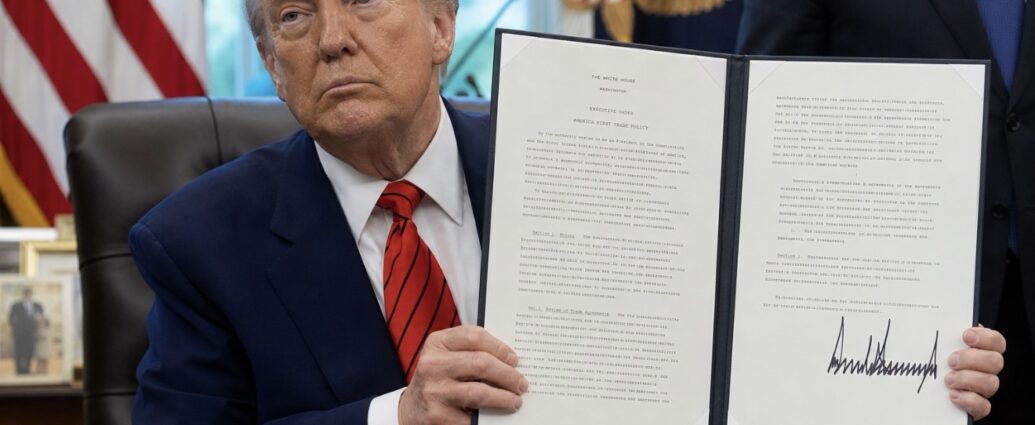
President Donald Trump declared Sunday that federal agencies must prioritize American-made products in government purchasing, escalating a White House procurement crackdown that could reshape supply chains for thousands of contractors competing for a share of the federal government’s roughly $700 billion annual purchasing budget.
“ALL FEDERAL AGENCIES MUST BUY AMERICAN — NO EXCUSES!” Trump stated Sunday, according to reporting published by The Hill, reinforcing an economic agenda the administration says is designed to steer taxpayer dollars back toward U.S. factories, industrial suppliers, steel producers, and technology manufacturers.
The directive intensifies a broader America-first procurement strategy that has steadily expanded since Trump returned to office in January. Administration officials have increasingly framed federal purchasing policy not only as an economic issue, but also as a national-security priority following supply-chain disruptions exposed during the COVID-19 pandemic and the global semiconductor shortages that followed.
The latest announcement builds on Trump’s “America First Trade Policy” executive order signed on his first day back in office, which directed the U.S. Trade Representative and senior trade advisers to review international procurement agreements — including the World Trade Organization Agreement on Government Procurement — to determine whether they disadvantage American manufacturers and workers.
That review laid the groundwork for a series of procurement-focused executive actions throughout 2025 and into 2026 aimed at narrowing waivers, tightening enforcement standards, and increasing scrutiny of foreign-made products entering the federal supply chain.
On March 13, Trump signed another executive order instructing the Federal Trade Commission to prioritize investigations into allegedly misleading “Made in USA” claims, citing concerns that some foreign manufacturers may improperly market products as American-made in order to gain access to patriotic consumers and federal contracts.
That same order directed agencies overseeing government procurement contracts to more aggressively verify compliance with domestic-origin requirements tied to the Buy American Act and related federal purchasing rules. Contractors found to have falsely represented products as American-made could face removal from procurement eligibility and possible referral to the Department of Justice for enforcement under the False Claims Act.
Senior administration officials have argued that loopholes and exemptions inside procurement law allowed foreign suppliers to continue accessing billions of dollars in federal spending despite longstanding domestic-preference laws already embedded in federal policy.
The White House has repeatedly emphasized that even a relatively small portion of procurement spending flowing overseas represents economic activity that could otherwise support American jobs and manufacturing capacity.
According to administration officials citing prior procurement studies, foreign vendors received roughly $12 billion out of approximately $430 billion in analyzed federal procurement spending during one recent study year — a figure the White House argues should be reduced further wherever possible.
For manufacturers, industrial suppliers, defense contractors, and construction firms, stricter enforcement could create significant new demand opportunities tied directly to federal spending. Companies involved in steel, aluminum, infrastructure materials, semiconductors, transportation equipment, and industrial technology are expected to closely monitor how aggressively agencies implement the directive.
Industry analysts say the policy could particularly benefit domestic producers already expanding U.S.-based manufacturing operations amid broader efforts by corporations to reduce dependence on overseas supply chains.
At the same time, procurement attorneys warn the practical implementation of tighter Buy American rules may prove far more complicated than the political messaging itself.
Compliance with the Buy American Act often requires detailed analysis of where products are manufactured, how much of their component value originates overseas, and whether products qualify as “domestic end products” under federal procurement standards. Products assembled inside the United States may still fail compliance thresholds if too many components are sourced internationally.
Government contracting specialists also warn broader enforcement could trigger an increase in bid protests, procurement disputes, compliance reviews, and legal challenges among competing contractors.
Critics of aggressive Buy American enforcement argue that limiting access to foreign suppliers too broadly may increase procurement costs for federal agencies by reducing competition, particularly in specialized industrial and technology sectors where global supply chains remain deeply integrated.
Trade analysts additionally caution that tougher domestic-preference rules in Washington could encourage retaliatory procurement restrictions from foreign governments that purchase American-made industrial, aerospace, and defense products.
Still, the administration appears prepared to absorb those risks as part of a broader economic strategy centered on domestic manufacturing, industrial independence, and reduced reliance on foreign production.
Trump’s latest directive signals the White House intends to move beyond symbolic support for American manufacturing and toward far stricter operational enforcement inside federal purchasing systems themselves — a shift that could materially alter how contractors source products, structure supply chains, and compete for government business in the years ahead.
As agencies begin translating the President’s directive into procurement policy, manufacturers and contractors across multiple sectors are preparing for what could become the most aggressive Buy American enforcement environment in decades.
— JBizNews Desk
© JBizNews.com. All rights reserved. This article is original reporting by JBizNews Desk. Unauthorized reproduction or redistribution is strictly prohibited.

Opinion | The Stakes of the Trump-Xi Summit

Germany Secretly Asked Israel for Jet Fuel While Publicly Denying It Had a Shortage
JBizNews Desk | May 10 2026
Germany — Europe’s largest economy — quietly asked Israel to ship it jet fuel while its own government was publicly insisting there was no shortage. When Israel announced the deal, Berlin was caught in a contradiction that has since become one of the most revealing moments of the Iran war’s energy crisis.
Israel’s Foreign Ministry announced Wednesday that it will begin supplying jet fuel to Germany following a formal request from Germany’s Federal Ministry for Economic Affairs and Energy. Israeli Foreign Minister Gideon Sa’ar informed German Economic Affairs and Energy Minister Katherina Reiche of the decision during a visit to Berlin.
Israeli Energy Minister Eli Cohen instructed relevant experts to approve the request after the Ministry’s Fuel Administration determined a surplus in jet fuel production. Shipments will be coordinated with domestic refineries and remain contingent on the security situation.
The timing of Israel’s announcement was immediately awkward for Berlin.
German Transport Minister Patrick Schnieder had stated in a series of interviews in recent days that Germany “has no shortage of jet fuel” and that refining capacity in Germany and its neighbors is “sufficient.”
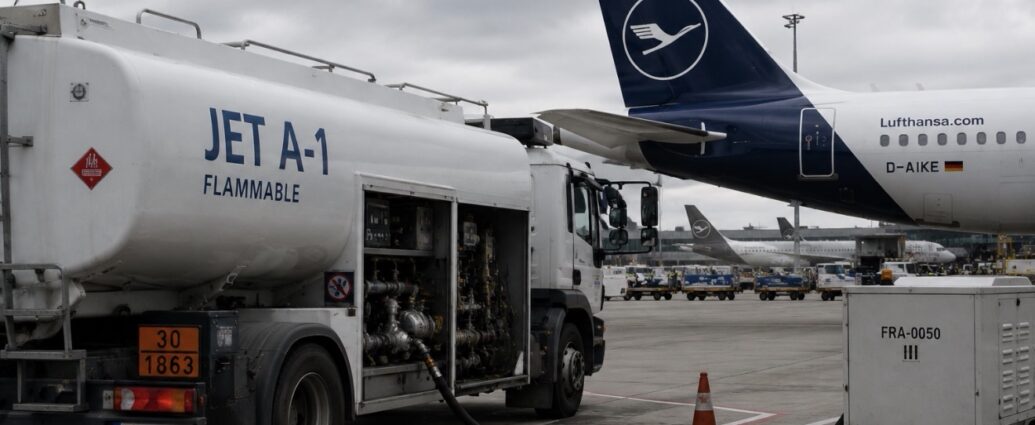
He made those comments specifically to counter reports that Lufthansa Group had canceled tens of thousands of flights this summer, citing an expected shortage of jet fuel.
Once Israel’s announcement made the request public, those assurances collapsed.
The German government subsequently confirmed the offer but stressed that there are “currently no physical energy shortages in Germany” — while in the same statement acknowledging it was in “constructive talks with several countries” over energy supply, including Israel, and that contracts were being drawn up by companies involved.
The two positions — no shortage, but actively sourcing emergency fuel from a wartime ally — were difficult to reconcile simultaneously.
How Germany Got Here
The embarrassment reflects a structural energy vulnerability that has been building in Germany for years and is now being fully exposed by the Iran war.
Europe shut down or converted dozens of refineries over the past decade and became increasingly dependent on imported jet fuel and refining inputs flowing through Middle Eastern supply chains.
The Strait of Hormuz blockade — now in its tenth week — is cutting directly into those flows, hitting European aviation fuel supply, airline operating costs, and government contingency strategies simultaneously.
The price impact has been severe and fast-moving.
The price of jet fuel has more than doubled since the conflict began.
Lufthansa warned this week that fuel costs linked to the crisis have already added roughly €1.7 billion to its expenses this year — and said the company is preparing for possible supply disruptions later in 2026.
Airlines across Europe have already cut approximately two million seats on flights in May 2026 alone.
Lufthansa specifically slashed around 20,000 short-haul flights, attributing the cancellations directly to rising oil prices and fears of a jet fuel shortage in the months ahead.
For American travelers and businesses, the Lufthansa cuts are not an abstraction.
The airline operates one of the largest transatlantic networks in the world, and its flight reductions directly affect routes between U.S. and European cities — pushing up fares, reducing seat availability, and creating ripple effects across codeshare partners including United Airlines.
Why Israel Has Surplus Jet Fuel
The fact that Israel has jet fuel to export surprised even some Israeli energy officials.
Experts in the field could not remember the last time Israel had exported jet fuel to any country.
The refineries in Ashdod and Haifa produce kerosene as part of various fuel refining processes, and officials explained that a surplus has developed because of the freezing of many flight routes due to the war and the fact that only Israeli airlines and a handful of foreign carriers are currently operating flights to and from Israel.
The irony is direct:
The same war that is causing Europe’s jet fuel shortage is also the reason Israel has surplus fuel to export.
Reduced aviation activity inside Israel — a consequence of regional conflict and closed airspace — has left the country’s refineries with output that has nowhere domestic to go.
Some reports have added a defense dimension to the transaction.
Greek publications noted that the fuel types under discussion include JP-5 and JP-8 — military grades of jet fuel — suggesting the deal may extend beyond commercial aviation into emergency military logistics.
Israel’s Foreign Ministry and Energy Ministry confirmed only that coordination of cargoes will be carried out with the refineries, without specifying volumes, grades, or delivery timelines.
The Larger Picture
The Germany-Israel jet fuel transaction is, at its core, a story about what happens when a decade of energy policy assumptions collide with an unexpected geopolitical shock.
Germany spent years closing nuclear plants, reducing domestic refining capacity, and relying on stable global supply chains for critical energy inputs.
The Iran war has disrupted those chains in ways that Berlin was either unprepared for or unwilling to publicly acknowledge — until Jerusalem made the acknowledgment unavoidable.
Israel is also exploring the possibility of exporting natural gas to Germany, with Israel’s Energy and Infrastructure Ministry examining that option as a further extension of the two countries’ existing energy partnership.
If that deal advances, it would represent an even more significant reorientation of European energy sourcing — driven entirely by a war that has redrawn the map of who has energy and who desperately needs it.
For American energy companies, investors tracking European aviation stocks, and businesses with transatlantic supply chains, the Germany-Israel deal is a reminder that the Iran war’s energy disruptions are still finding new corners of the global economy to reshape — and that the countries most caught off guard are often the ones that were most confident they had nothing to worry about.
© JBizNews.com. All rights reserved. This article is original reporting by JBizNews Desk. Unauthorized reproduction or redistribution is strictly prohibited.
Trump Accuses Iran of ‘Buying Time’ After Tehran Responds to U.S. Peace Plan, Warns ‘They Will Be Laughing No Longer’
By JBizNews Desk | Sunday, May 10, 2026
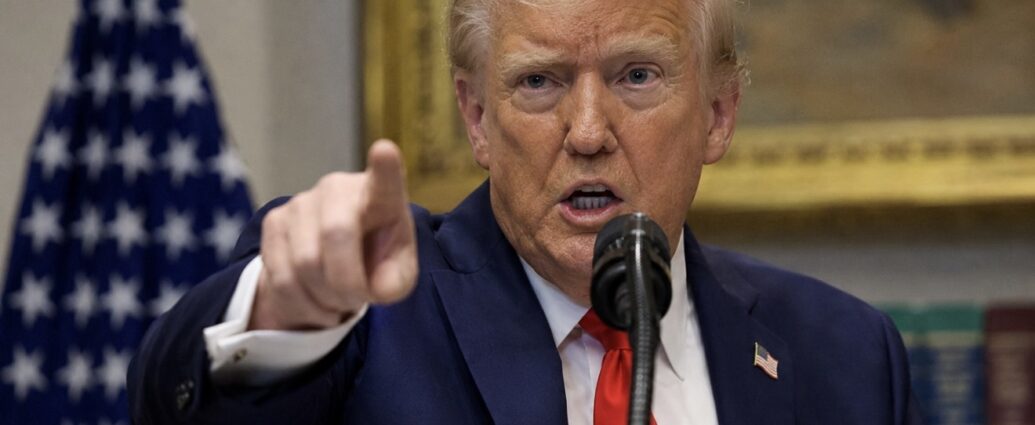
President Donald Trump sharply escalated pressure on Iran Sunday evening after Tehran formally delivered its response earlier Sunday to the latest U.S. peace proposal through Pakistani mediators, with Iran’s state-run IRNA news agency first reporting the transmission of the response. Writing in direct response to Iran’s latest message, Trump accused Tehran of attempting to “buy time” while prolonging negotiations tied to the war, the Strait of Hormuz crisis, and Iran’s nuclear program.
“They will be laughing no longer!” Trump wrote Sunday on Truth Social, accusing Iran’s leadership of deceiving the United States and the world for nearly five decades while using diplomacy as a delaying tactic.
Trump claimed Tehran had spent 47 years “playing America and the rest of the world,” while also blaming Iran for roadside bomb attacks that killed Americans, the suppression of anti-government protests, and what he described as the deaths of “42,000 innocent, unarmed protestors.”
The president also renewed criticism of former President Barack Obama, alleging the Obama administration transferred “Hundreds of Billions of Dollars” to Tehran, including “1.7 Billion Dollars in green cash, flown into Tehran” in “suitcases and satchels” during the nuclear agreement era.
The sharp public response came only hours after Tehran formally transmitted its answer to Washington’s latest draft proposal aimed at ending the conflict and reopening the Strait of Hormuz.
According to IRNA, Iran delivered the response Sunday through Pakistani intermediaries, though Iranian officials did not publicly disclose the contents of the message. The lack of details left diplomats, energy traders, and military officials attempting to determine whether Iran was signaling flexibility or simply prolonging negotiations while maintaining leverage across the Gulf.
Duvi Honig, chief analyst and government policy advisor at JBizNews and Newsmax Contributor, said Trump’s latest remarks reflected growing frustration inside Washington that Tehran may once again be using negotiations to delay meaningful concessions.
“The time has come for the president to reach this conclusion and call out the white elephant in the room — we are being played with,” Honig said Sunday. “Iran is sticking to its old game of buying time and hoping to wait out the Trump administration.”
The 14-point proposal delivered by Washington earlier this week reportedly requires Iran to halt all uranium enrichment for at least 12 years, permanently abandon any path toward developing a nuclear weapon, and surrender approximately 440 kilograms of uranium enriched to 60% purity.
In return, the United States would gradually lift sanctions, release billions of dollars in frozen Iranian assets, and eventually halt the American naval blockade targeting Iranian ports and oil exports.
U.S. Ambassador to the United Nations Mike Waltz made clear Sunday that the administration sees the nuclear issue as entirely non-negotiable.
“President Trump has been clear they will never have a nuclear weapon and they cannot hold the world’s economies hostage,” Waltz said during an appearance on Fox News Sunday. He added that the international community cannot allow Iran to continue “trying to choke off the entire world’s economy” through threats tied to the Strait of Hormuz.
Iranian President Masoud Pezeshkian answered Trump’s rhetoric with defiance of his own, insisting Tehran would continue discussions but would not frame negotiations as surrender.
“We will never bow our heads before the enemy, and if talk of dialogue or negotiation arises, it does not mean surrender or retreat,” Pezeshkian wrote Sunday on X.
Even as diplomatic channels remained open, military tensions across the Gulf continued escalating. Multiple drones were launched across the region Sunday, including one that reportedly struck a freighter bound for Qatar, as Tehran warned Washington it would no longer refrain from retaliatory operations connected to the conflict.
The United Arab Emirates said its air defense systems intercepted two Iranian drones Sunday with no casualties reported. UAE officials disclosed that since the conflict escalated, the country has intercepted roughly 550 ballistic missiles, nearly 30 cruise missiles, and more than 2,200 drones launched across the region — underscoring the scale of the military pressure campaign now disrupting Gulf trade routes, shipping lanes, and energy infrastructure.
The prolonged confrontation has increasingly rattled global markets. Oil traders remain focused on whether the Strait of Hormuz can fully reopen, while governments across Europe and Asia continue pressuring both Washington and Tehran to prevent additional disruption to global energy supplies.
Administration officials say the U.S. naval blockade targeting Iranian ports is specifically designed to cut off Tehran’s oil exports — the central pillar of Iran’s economy — and pressure Iranian leadership into reopening the Strait and accepting long-term nuclear restrictions. Iranian oil production has reportedly already begun slowing as export bottlenecks intensify.
Qatar’s Prime Minister warned Sunday that using the Strait of Hormuz “as a pressure card would only lead to deepening the crisis,” reflecting growing concern among Gulf states that the conflict could spiral into a prolonged economic shock affecting inflation, fuel costs, and global trade.
Meanwhile, National Economic Council Director Kevin Hassett acknowledged Americans will likely continue feeling the economic impact of the conflict in the near term, saying consumers and businesses should expect higher oil and gasoline costs “in the short run” as tensions persist.
Behind the scenes, diplomats from Pakistan, Qatar, and several European governments remain engaged in shuttle negotiations attempting to prevent the conflict from widening further. But with both Trump and Iranian leadership publicly escalating their rhetoric even while negotiations continue, uncertainty surrounding the proposal remains extraordinarily high.
Whether Tehran’s latest response ultimately opens a path toward a framework agreement — or merely reinforces Washington’s growing belief that Iran is attempting to buy time while preserving leverage — remained unclear Sunday evening.
JBizNews Desk
© JBizNews.com. All rights reserved.
Banks Are Taking Back the Lending Business They Lost to Private Credit — and the Shift Is Already Hitting Small and Midsize Companies
By JBizNews Desk | May 10, 2026
New Federal Reserve commercial lending data analyzed by Neuberger Berman shows traditional banks sharply regaining market share from private credit firms, marking one of the biggest reversals in corporate lending since the shadow-lending boom began after the 2008 financial crisis.
According to the first-quarter 2026 lending breakdown, commercial bank lending to businesses surged approximately 12.7%, the fastest pace of growth since 2022, while private credit lending volumes declined roughly 14% over the same period.
The numbers signal a major shift in the balance of financial power across American corporate lending markets — one that is already beginning to affect small and midsize companies that spent years relying on private lenders after banks pulled back following the global financial crisis.
For more than a decade, private credit firms aggressively expanded into areas once dominated by traditional banks, building a roughly $2 trillion industry by offering flexible financing to middle-market companies, leveraged buyouts and higher-risk borrowers.
The sector exploded partly because post-2008 banking regulations made many commercial banks more cautious about extending credit to riskier companies.
Private lenders stepped into the gap.
Firms including Blackstone, Apollo Global Management, Ares Management, Blue Owl Capital and dozens of other direct-lending platforms generated years of strong returns by financing businesses banks often avoided.
At its peak, private credit became one of Wall Street’s hottest investment categories, promising yields of roughly 8% to 10% with comparatively low default rates.
Now, however, the economics underpinning that boom are beginning to reverse.
The core problem traces back to the low-interest-rate era of 2021 and 2022, when private lenders issued enormous volumes of loans at historically cheap borrowing costs.
Many of those loans carried maturities of approximately five years — meaning they are now beginning to approach refinancing windows at a time when interest rates, energy costs and economic uncertainty have all risen dramatically.
Borrowers who once refinanced easily are suddenly confronting much more expensive debt markets.
“When debt comes due and the interest rate required to roll over the debt is much higher, then the borrowers are much more likely to default on the payment,” said Amir Sufi, professor of finance at the University of Chicago Booth School of Business.
That refinancing pressure has started weakening private credit portfolios across the industry.
The stress is increasingly visible among some of the sector’s largest firms.
Blackstone’s flagship private-credit fund BCRED posted its first monthly loss in three years earlier this year after marking down several loans, including debt tied to software company Medallia.
Ares Management moved to cap investor withdrawals from one of its $10.7 billion private-credit vehicles after redemption requests surged to approximately 11.6%, while Apollo Global Management implemented similar restrictions inside portions of its lending platform.
The redemption gates represent one of the first major liquidity tests for an industry that expanded rapidly during years of cheap money and strong investor appetite.
The underlying quality of many loan portfolios is also deteriorating.
According to the International Monetary Fund’s 2025 Financial Stability Report, approximately 40% of private-credit borrowers now have negative free cash flow, up sharply from roughly 25% in 2021.
That deterioration has raised concerns across Wall Street about how private-credit portfolios will perform if economic conditions weaken further.
One of the industry’s biggest vulnerabilities involves software lending.
According to Morgan Stanley, direct-lending portfolios currently carry approximately 26% exposure to software companies, particularly software-as-a-service businesses that were aggressively financed during the technology boom.
Now, fears surrounding slowing enterprise spending and disruption from generative and agentic artificial intelligence are pressuring valuations across the SaaS sector.
That matters because falling software valuations directly threaten the collateral value underlying many private-credit loans.
Blue Owl Capital and Apollo both maintain substantial software exposure, leaving portions of their portfolios vulnerable if defaults rise or valuations continue falling.
For the broader economy, the consequences could become significant.
“When restructurings happen, capital becomes trapped, leading to tighter future lending conditions,” said William Barrett, managing partner at Reach Capital.
That tightening is already beginning to affect the middle-market businesses that private credit was originally built to serve.
As private lenders grow more cautious and focus increasingly on protecting existing portfolios, many companies are returning to banks for financing — helping fuel the sharp rebound in commercial lending now appearing in Federal Reserve data.
Wall Street remains divided over how dangerous the situation ultimately becomes.
JPMorgan Chase chief executive Jamie Dimon recently argued that private credit does not yet represent a systemic threat to the financial system because the market remains relatively small compared with traditional banking.
“I don’t think it’s systemic. It almost can’t be systemic at that size relative to anything else,” Dimon said.
Goldman Sachs chief executive David Solomon has similarly said the firm remains optimistic about private credit’s long-term future despite current turbulence.
Others, however, see meaningful differences emerging inside the market itself.
Brad Rogoff, global head of research at Barclays, noted that investment-grade private debt — including asset-backed structures and senior private placements — carries significantly different risk characteristics than highly leveraged sub-investment-grade loans concentrated in U.S. middle-market software financing.
“There is a different risk profile between the two of them,” Rogoff said.
For investors, the reversal now underway could reshape one of Wall Street’s most profitable growth stories of the past decade.
Private credit was once viewed as a disruptive alternative to traditional banking — faster, more flexible and less constrained by regulation.
But the Federal Reserve’s latest lending data suggests banks are beginning to reclaim the ground they lost during the era of cheap money and aggressive shadow lending.
For small and midsize businesses caught in the transition, however, the picture is far more complicated.
As private lenders retreat, banks are returning — but often with stricter underwriting standards, tighter terms and higher financing costs than borrowers became accustomed to during the easy-credit years.
The Federal Reserve data showing the strongest commercial-bank lending growth in four years may represent a recovery for traditional lenders.
For the businesses navigating the shift, it also marks the beginning of a far more expensive and selective credit environment.
JBizNews Desk

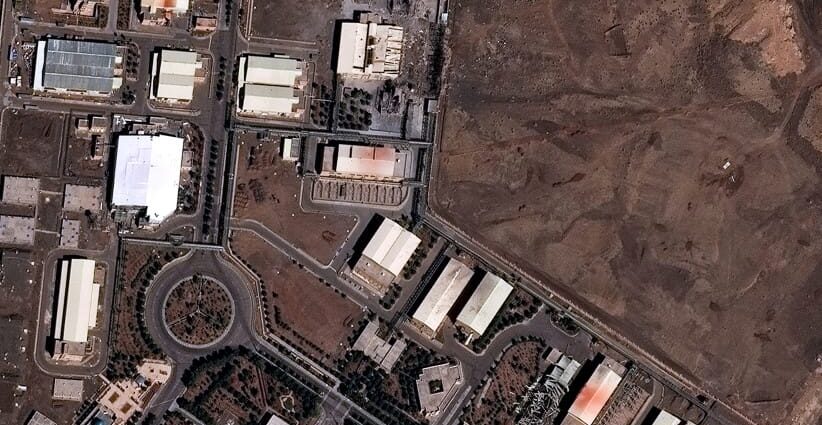
Iran’s enriched uranium under US surveillance, will be extracted ‘at some point’, Trump says
US President Donald Trump said that the US has Iran’s enriched uranium surveilled, and is prepared to take action if it receives intelligence that action is being taken at the site in an interview with Full Measure on Sunday.
When asked where the US is in the war without acquiring the uranium, Trump responded that the US would attain it “at some point,” and that the Space Force has the site under surveillance.
“If anybody gets near the place, we will know about it, and we’ll blow them up,” Trump said.
Trump reiterated his commitment to stopping Iran from ever acquiring a nuclear weapon and emphasized how close Iran was to such a goal before his intervention. Mentioning the attack on Iran, which took place in June of 2025, Trump claimed the operation stopped Iran when they were only two weeks away from a nuclear weapon.
“If we didn’t do that, they would have already blown up Israel,” Trump said.
The Jerusalem Post has previously reported that Iran was not two weeks away from a nuclear weapon, as Trump stated, but was rather weeks away from having enough enriched nuclear uranium. Notably, the other elements for finishing a nuclear weapon would have taken at least one year, if not two.
Trump downplays effect of Iranian blockade on US
Trump also discussed the Strait of Hormuz, saying that the US does not rely on the waterway and that its operations there are done to aid allies in the region.
“We don’t need the strait. We were doing it to help Israel, Saudi Arabia, Qatar, UAE, and others,” Trump said.
Trump added that the US was now producing more oil and gas than Russia and Saudi Arabia combined and that he expects that number to double by the end of the year.
Iran at ‘full readiness’ to protect nuclear sites
An Iranian military spokesperson said that Iranian forces were on “full readiness” to protect nuclear sites storing uranium in an interview with state news agency IRNA on Saturday.
Brig. Gen. Akrami Nia told IRNA that Iran considered that the US might try to remove the uranium through infiltration or an airborne operation.
‘You go in and you take it out’
Prime Minister Benjamin Netanyahu emphasized the importance of extracting enriched uranium in an excerpt from an interview that will air on CBS later on Sunday.
“We’ve degraded a lot of it. But all that is still there, and there’s work to be done,” Netanyahu said, and added that the best course forward is “you go in, and you take it out.”
Yonah Jeremy Bob contributed to this report.
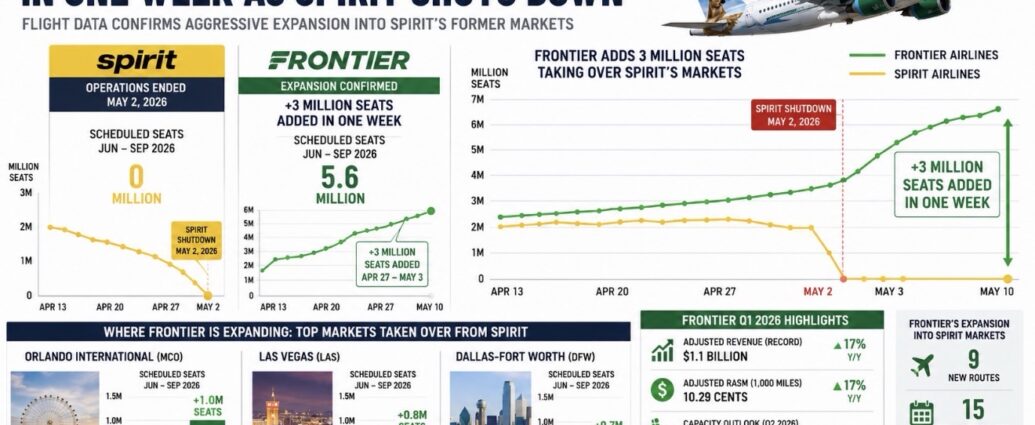
Frontier Airlines Adds 3 Million Seats in a Single Week as Flight Data Confirms Aggressive Push Into Spirit’s Former Markets
By JBizNews Desk
May 10, 2026
Frontier Group Holdings told investors in its official first-quarter 2026 earnings report filed May 5 that the collapse of Spirit Airlines had “meaningfully” altered the competitive landscape for ultra-low-cost carriers, as the company rapidly expanded capacity across former Spirit strongholds including Orlando, Las Vegas, Dallas-Fort Worth, Fort Lauderdale, and Detroit. Days later, newly published Cirium flight-tracking data confirmed the scale of that expansion, showing Frontier Airlines added approximately 3 million seats in a single week to scheduled flying between June and September — one of the fastest domestic capacity redeployments seen in the U.S. airline industry since the pandemic recovery period.
The move follows the shutdown of Spirit Airlines on May 2 after the carrier failed to secure emergency financing, abruptly leaving major gaps across some of America’s busiest leisure and budget-travel corridors. The collapse immediately triggered a scramble among airlines to capture displaced passengers, airport slots, and route opportunities previously dominated by Spirit’s ultra-low-cost network.
According to the Cirium data analyzed Sunday, Frontier moved fastest.
Jimmy Dempsey, President and Chief Executive Officer of Frontier Group Holdings, signaled the strategy directly during the company’s May 5 earnings call with analysts and investors.
“Spirit’s exit meaningfully alters the supply landscape,” Dempsey said. “We positioned ourselves over the last six to nine months on launching routes that we thought would be opportunities that come as they reduce their capacity and with the possibility that they would cease operations.”
Dempsey added that Frontier overlaps with Spirit on more than 100 routes, more than any other U.S. carrier, giving the airline a uniquely positioned opportunity to absorb displaced traffic at scale.
The company confirmed it is launching 9 new routes and adding 15 daily departures across 18 former Spirit markets, focusing heavily on airports where Spirit previously maintained some of its largest operational footprints, including Orlando International Airport, Harry Reid International Airport in Las Vegas, and Dallas-Fort Worth International Airport.
The expansion is already feeding directly into revenue expectations.
Robert Schroeter, Chief Commercial Officer of Frontier Airlines, told investors that Spirit’s collapse is expected to lift revenue per available seat mile, or RASM, by approximately 3% to 5%, with roughly two percentage points already embedded into second-quarter guidance because a large portion of bookings are already secured.
Dempsey suggested the eventual benefit could exceed even that range if pricing stabilizes and customer retention remains strong.
The company’s first-quarter earnings report reflected a business already showing stronger unit revenue trends even before the full impact of Spirit’s shutdown is realized.
According to the filing, Frontier Group Holdings generated adjusted quarterly revenue of nearly $1.1 billion, an all-time company record, despite operating approximately 1% lower capacity than a year earlier. Adjusted RASM, normalized for stage length, rose 17% year over year to 10.29 cents, landing at the high end of company guidance.
The airline reported a net loss of $272 million, or $1.18 per share, though the results were heavily impacted by several major non-recurring charges, including a $139 million expense tied to the early termination of leases on 24 Airbus A320neo aircraft and a separate $73 million charge related to a court ruling involving Transportation Security Administration fee remittances.
Excluding those items, adjusted net loss narrowed to $68 million, or $0.30 per share, outperforming company expectations.
Mark Mitchell, Chief Financial Officer of Frontier Group Holdings, said the airline ended the quarter with approximately $974 million in liquidity and reduced full-year 2026 capital expenditure guidance by $30 million. The company also reaffirmed plans to defer deliveries of 69 Airbus aircraft, helping reduce future pre-delivery deposit obligations by an estimated $170 million to $210 million.
Fuel costs, however, remain one of the airline’s largest pressures.
Frontier disclosed that average fuel prices climbed to $2.88 per gallon during the quarter, up from $2.55 a year earlier, pushing total fuel expense to approximately $268 million.
Even so, the airline continues to emphasize its fuel-efficiency advantage as a core competitive differentiator.
Frontier operates a fleet of 183 Airbus single-aisle aircraft, all financed through operating leases, and says it generates approximately 106 available seat miles per gallon, which the company claims is more than 40% better fuel efficiency than other major U.S. carriers.
The airline now projects second-quarter capacity growth of 6% to 8% year over year, reflecting both organic expansion and the rapid absorption of former Spirit demand.
For the broader airline industry, the speed of Frontier’s move highlights the highly opportunistic nature of the ultra-low-cost business model. When financially weaker carriers retreat or collapse, competitors with overlapping route structures and lower operating costs often move immediately to capture airport access, aircraft utilization, and price-sensitive travelers before larger network airlines respond.
Legacy carriers including American Airlines, Delta Air Lines, and United Airlines have historically expanded more cautiously in these situations, prioritizing pricing discipline, loyalty-program economics, and premium cabin profitability over rapid low-fare growth.
The larger question for investors now is whether Frontier can convert Spirit’s collapse into durable long-term market share gains rather than a temporary influx of bargain-hunting travelers.
Much will depend on load factors, ancillary revenue performance, competitive pricing responses, and whether rival carriers eventually move aggressively into the same markets once fares begin stabilizing.
For now, the latest Cirium data suggests Frontier Airlines has no intention of waiting for competitors to react.
JBizNews Desk
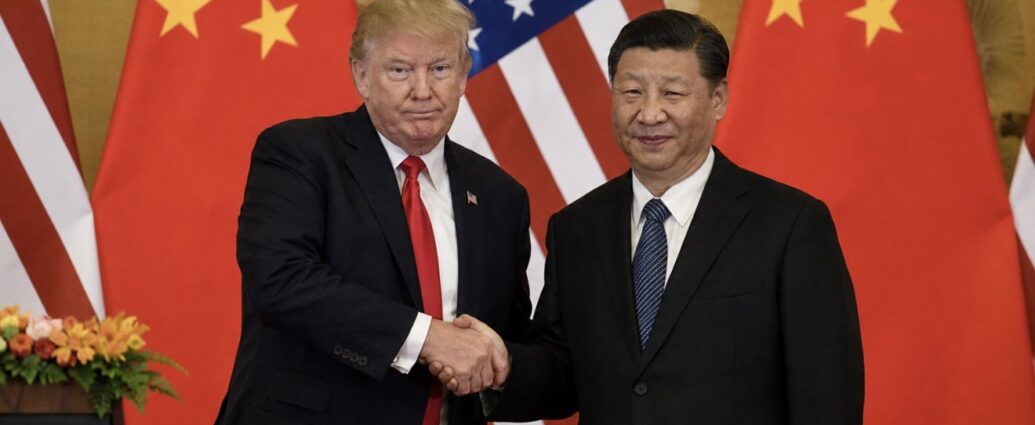
Trump-Xi Beijing Summit, Days Away, Carries Major Business Stakes
By JBizNews Desk
May 10, 2026
The White House confirmed Sunday that President Donald Trump will travel to Beijing on May 14 and 15 for a summit with Chinese President Xi Jinping, with administration officials also inviting a delegation of America’s most influential corporate leaders — including executives from Nvidia, Apple, Boeing, Qualcomm, ExxonMobil, Citigroup, Blackstone, and Visa — to participate in meetings that could reshape trade flows, semiconductor policy, aircraft orders, energy markets, and supply-chain strategy between the world’s two largest economies.
The trip marks the first presidential visit to China since Trump’s own 2017 state visit, which produced more than $250 billion in announced commercial agreements, including a headline-grabbing $37 billion Boeing aircraft order that ultimately became only partially realized. This time, administration officials are publicly lowering expectations, framing the summit less as a transformational trade reset and more as an effort to preserve the fragile economic truce reached between Trump and Xi during their October 2025 meeting in South Korea.
Still, for global markets and multinational corporations, the stakes surrounding the summit remain enormous.
The administration’s CEO delegation is notably smaller than the group of 29 corporate executives that accompanied Trump to Beijing in 2017, reflecting growing internal debate within the administration over how aggressively to pursue commercial diplomacy with China amid ongoing tensions over tariffs, semiconductor exports, artificial intelligence, rare earth minerals, and industrial policy.
According to administration officials familiar with the planning process, invitations went out unusually late after internal disagreements over the size and visibility of the corporate delegation. U.S. Trade Representative Jamieson Greer had reportedly resisted sending a large business contingent when the summit was initially planned for March, preferring to keep negotiations focused on managed trade and strategic leverage rather than headline commercial deals.
Among the companies invited, Qualcomm confirmed it had received an invitation. Boeing declined to comment. Nvidia, Apple, Citigroup, and Visa did not publicly respond to inquiries regarding participation.
For Boeing, the summit could become one of the company’s most financially consequential geopolitical events in years.
During the company’s most recent earnings call, Boeing CEO Kelly Ortberg told investors that China could soon place what he described as a “big number” aircraft order, potentially ending a nearly decade-long freeze in major Chinese purchases of Boeing jets. Industry analysts and aviation sources say discussions could involve as many as 500 Boeing 737 MAX aircraft alongside roughly 100 widebody jets, with purchases likely distributed across multiple Chinese state-backed airlines consistent with previous Chinese procurement structures.
China has not placed a major Boeing order since 2017, a gap spanning the global grounding of the 737 MAX, the pandemic-era aviation collapse, and escalating trade friction between Washington and Beijing. Even a preliminary framework agreement announced during the summit could materially strengthen Boeing’s production outlook and improve investor confidence surrounding long-term order visibility.
For Nvidia, the summit carries equally significant implications, though centered on artificial intelligence and semiconductor policy rather than industrial exports.
Jensen Huang, founder and CEO of Nvidia, told CNBC this week it would be “a privilege” to join the delegation. His comments came only days after he publicly acknowledged that Nvidia now effectively holds zero market share in China’s AI graphics processing market following years of tightening U.S. export restrictions.
Since 2022, U.S. policy has progressively blocked Nvidia from selling its most advanced AI chips into China. The Trump administration expanded those restrictions further in April 2025 by imposing an indefinite ban on shipments of Nvidia’s H20 accelerator chips to Chinese customers.
Investors immediately interpreted Huang’s invitation as a sign semiconductor export controls could become part of broader negotiations between Washington and Beijing. Nvidia shares rose more than 2% after reports of his invitation emerged, reflecting growing speculation that some form of licensing adjustment, AI cooperation framework, or export-control modification could eventually emerge from the talks.
The two governments are also reported to be weighing formal discussions surrounding artificial intelligence cooperation, adding strategic significance to Nvidia’s participation and potentially elevating AI policy into one of the summit’s most closely watched issues.
Beyond aviation and semiconductors, the summit’s broader agenda centers on preserving the October 2025 trade truce that temporarily stabilized relations between the two economic powers.
That agreement reduced U.S. tariffs on Chinese imports by 10 percentage points to 47%, delayed restrictions preventing Chinese firms partly owned by sanctioned entities from accessing U.S. technology, and secured Chinese commitments to crack down on fentanyl exports and maintain rare earth mineral shipments for one year.
Beijing is now reportedly seeking at least a one-year extension of that truce, while Washington is pushing for a shorter six-month framework that would preserve greater negotiating leverage ahead of the U.S. midterm elections.
China is also pressing the United States to avoid future retaliatory trade actions and ease existing restrictions surrounding advanced semiconductor manufacturing equipment and memory-chip exports.
Beijing’s leverage entering the summit has strengthened significantly since last year.
China expanded export controls on rare earth minerals and critical materials — sectors where the country controls approximately 90% of global processing capacity — and in April formally invoked its anti-sanctions law for the first time, ordering Chinese companies not to comply with U.S. sanctions targeting refiners purchasing Iranian crude oil.
Although Chinese exports to the United States declined roughly 20% last year, shipments to Africa, Latin America, Southeast Asia, and the European Union continued growing, helping China finish 2025 with a record $1.2 trillion trade surplus.
That backdrop leaves Xi Jinping entering the summit from a position of relative economic stability while Trump faces mounting domestic pressure tied to elevated fuel prices, continued Middle East instability, and November midterm elections.
Treasury Secretary Scott Bessent told reporters he expects the summit to produce “great stability” in the relationship, while White House spokeswoman Anna Kelly said Americans should expect the president to deliver “more good deals for the United States.”
The executives accompanying Trump are expected to attend a formal state dinner hosted by Xi Jinping, providing direct access to China’s top leadership at a moment when American corporations face extraordinary uncertainty surrounding tariffs, semiconductor access, supply chains, rare earth availability, artificial intelligence policy, and long-term access to the world’s second-largest economy.
For Wall Street, the summit increasingly represents more than diplomacy. It is rapidly becoming a referendum on the future direction of global trade, AI competition, industrial supply chains, and corporate access between the two dominant economic powers shaping the modern world economy.
JBizNews Desk

Israel’s Clandestine War Base in Iraq
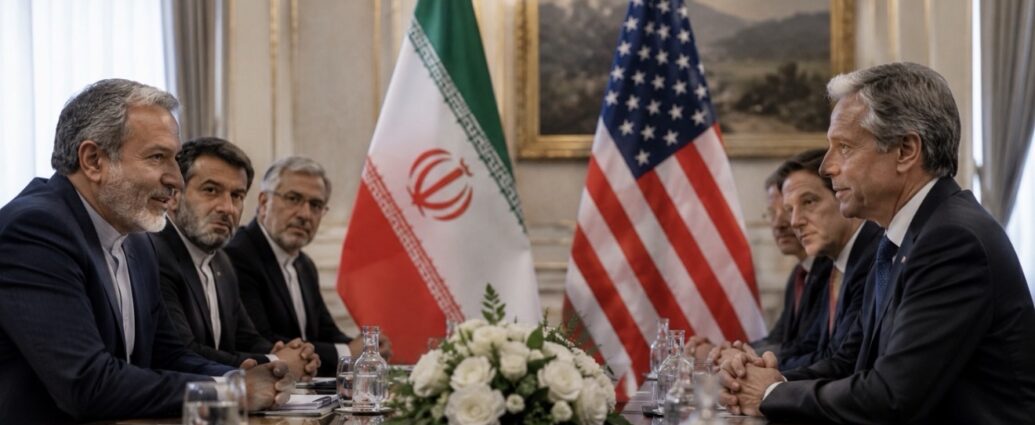
Iran Reply to U.S. Peace Plan Keeps Focus on Ceasefire and Hormuz, Pushes Nuclear Talks to Later Phase
By JBizNews Desk | Sunday, May 10, 2026 | 12:18 PM ET
Sunday morning, Iran’s state news agency IRNA reported that Tehran had formally delivered its response to the latest U.S. proposal for ending the war to mediator Pakistan — a move that keeps the diplomatic channel alive even as drone strikes rattled Gulf waters and energy markets braced for what comes next. A Pakistani diplomatic source confirmed to Al Jazeera Arabic that the response had been transmitted to the U.S. side. The development arrived against a backdrop of surging gasoline prices, a Brent crude market trading around $101 a barrel, and consumer confidence at fresh record lows — all direct consequences of a Strait of Hormuz that has remained effectively closed since joint U.S.-Israeli strikes launched the war on February 28.
According to IRNA and Iran’s semi-official ISNA news agency, the core of Tehran’s response centers on two immediate priorities: permanently ending hostilities across all fronts of the war and restoring maritime security in the Persian Gulf and the Strait of Hormuz. According to Reuters, Iran’s proposal focuses the current phase of negotiations exclusively on the cessation of hostilities, with the more contentious question of Iran’s nuclear program deliberately set aside for a later stage. Al Jazeera’s Tehran correspondent reported that Iran is pursuing a three-phase approach, with the first phase lasting 30 days and focused entirely on ending the war on all fronts — including in Lebanon, where Hezbollah and Israeli forces have continued exchanging fire despite a separate ceasefire announced by President Donald Trump on April 16.
That sequencing places Tehran and Washington at an immediate point of tension. The U.S. proposal, a 14-point document transmitted earlier this week through Pakistan, would formally end the war and reopen the Strait of Hormuz, but it also demands that Iran halt uranium enrichment for at least 12 years and surrender an estimated 970 pounds of uranium enriched to 60% purity — a short technical step from weapons-grade levels — before broader talks begin. Iranian state media quoted Foreign Ministry spokesperson Esmaeil Baghaei as saying that at this stage Iran is not negotiating its nuclear program, framing the nuclear file as a matter for a subsequent phase rather than a precondition to peace.
Former U.S. Assistant Secretary of State Mark Kimmitt told Al Jazeera that President Trump’s demand for a full halt to uranium enrichment is unrealistic and unlikely to be accepted by Tehran, noting that Iran will insist on its right to enrich uranium to the 3.67% level permitted under international nuclear non-proliferation agreements. Ali Vaez, director of the Iran Project at the International Crisis Group, said both sides will either have to make painful concessions or leave major disagreements deliberately vague if they hope to finalize any workable framework.
Despite IRNA’s report that the response had already been delivered, U.S. Ambassador to the United Nations Michael Waltz said Sunday that Washington had not yet formally received Iran’s reply, attributing part of the delay to internal divisions inside Tehran’s leadership structure. U.S. Energy Secretary Chris Wright, appearing on CBS News’s Face the Nation, said he expected a response very soon, citing growing economic pressure on Iran’s leadership. CBS News also reported that Qatari Prime Minister Sheikh Mohammed bin Abdulrahman Al Thani met privately with Vice President JD Vance in Miami on Saturday, with no aides present, as part of an intensifying diplomatic push.
Iran’s counterproposal, as described by Iranian state media, includes demands for the withdrawal of U.S. forces from nearby areas, the lifting of the American naval blockade surrounding Iranian ports, the release of billions of dollars in frozen Iranian assets, the removal of sanctions, war reparations, an end to hostilities including in Lebanon, and the creation of a new control mechanism governing the Strait of Hormuz — a proposal that has alarmed Gulf governments and international shipping operators alike. Iran’s parliament is separately drafting legislation to formalize Tehran’s management authority over the strait, including provisions barring passage to vessels belonging to states it considers hostile. Brigadier General Amir Akraminia, spokesperson for the Iranian army, warned Sunday that countries enforcing U.S. sanctions against Iran would face problems transiting the strategic waterway.
The continued closure of the Strait of Hormuz is already producing consequences felt directly by consumers and businesses around the world. The International Energy Agency estimates the conflict is removing roughly 14 million barrels per day from global oil supply — potentially the largest energy disruption in modern history. Brent crude settled Friday at $101.29 per barrel, still posting a weekly loss of more than 6% as traders priced in ceasefire optimism, though analysts increasingly warn that optimism may prove premature.
Analysts at ANZ Research wrote in a note that the risk of the proposed U.S. peace framework collapsing will likely keep oil markets volatile for the foreseeable future. Shipping data from Kpler showed that only a limited number of vessels crossed the strait in recent days, while the International Maritime Organization estimated that as many as 20,000 seafarers remain stranded aboard vessels inside or near the waterway — a situation the organization described as unprecedented in the modern shipping era.
Saudi Aramco CEO Amin Nasser said Sunday that even if commercial traffic resumes immediately through the Strait of Hormuz, global energy markets would still require several months to rebalance. If disruptions continue beyond the coming weeks, he warned, normalization may not occur until 2027. June Goh, senior oil market analyst at Sparta Commodities, said traders are increasingly pricing in the likelihood of further oil infrastructure damage and a prolonged closure of the strait beyond the timeline publicly outlined by the Trump administration.
With President Trump scheduled to visit China this week — and Beijing pressing urgently for an end to a conflict that has ignited a global energy crisis and renewed fears of recession — the diplomatic exchange now moving through Islamabad carries consequences far beyond the Gulf. Whether Iran’s phased approach to negotiations gains traction in Washington over the coming days may ultimately determine whether the ceasefire survives, the Strait of Hormuz reopens, and fuel prices begin their long road back toward normal levels for consumers worldwide.
JBizNews Desk
© JBizNews.com. All rights reserved. This article is original reporting by JBizNews Desk. Unauthorized reproduction or redistribution is strictly prohibited.
Fresh Gulf Drone Attacks Test Fragile Ceasefire as Iran Sends Peace Terms Through Pakistan
JBizNews Desk| Sunday, May 10, 2026 | 11:42 AM ET
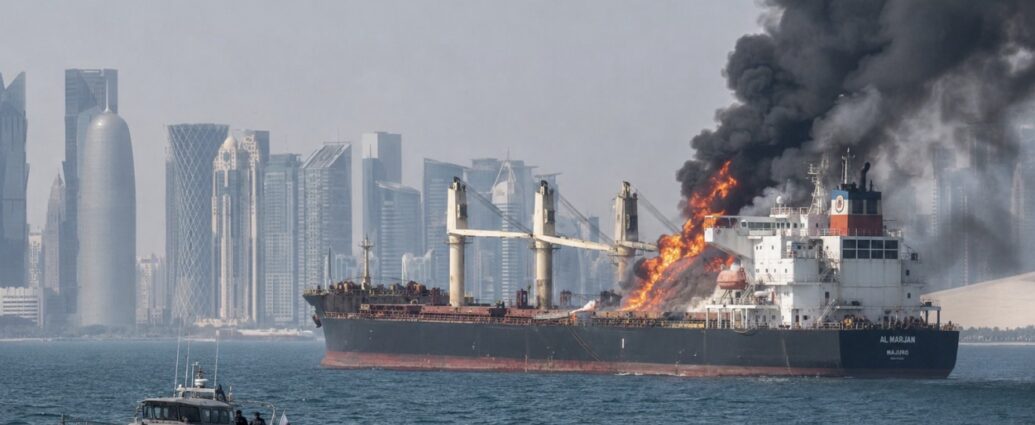
Early Sunday morning, Qatar’s Defense Ministry confirmed that a drone struck a commercial cargo vessel in Qatari territorial waters, setting off a fire that was later extinguished without casualties. The ship, traveling from Abu Dhabi to Mesaieed Port, continued its route after the incident. The United Kingdom Maritime Trade Operations Centre said the strike occurred roughly 23 nautical miles northeast of Doha. No group immediately claimed responsibility, but the attack marked the latest escalation threatening the fragile ceasefire that has rattled global energy markets for more than a month, pushing Brent crude near $101 a barrel, lifting U.S. gasoline prices sharply higher, and driving consumer confidence to fresh lows.
The strike unfolded alongside a broader wave of regional security incidents. Kuwait’s Defense Ministry, through spokesman Brig. Gen. Saud Abdulaziz Al Otaibi, said hostile drones entered Kuwaiti airspace early Sunday and that military forces responded under established defense procedures, though officials stopped short of identifying the drones’ origin. The UAE’s Defense Ministry separately announced that Emirati forces intercepted and destroyed two drones it directly attributed to Iran. The near-simultaneous alerts across Qatar, Kuwait, and the United Arab Emirates underscored how exposed Gulf commercial infrastructure remains despite the ceasefire formally brokered on April 8.
Even as military tensions intensified, diplomatic negotiations appeared to move forward. Iran’s state-run news agency IRNA reported Sunday that Tehran had delivered its formal response to a U.S. peace proposal through mediator Pakistan. A Pakistani diplomatic source later confirmed to Al Jazeera Arabic that the response had been transmitted to Washington. According to Reuters, Iran’s message focused primarily on ending hostilities and stabilizing maritime security in the Persian Gulf and the Strait of Hormuz. Iran’s semi-official ISNA news agency reported that restoring freedom of navigation in the region had become a central element of Tehran’s negotiating position.
The U.S. framework under discussion — a 14-point proposal delivered earlier this week through Pakistani intermediaries — would reopen the Strait of Hormuz and formally end the conflict before addressing more politically sensitive disputes surrounding Iran’s nuclear program. Under the proposed terms, Iran would suspend uranium enrichment for at least 12 years and surrender approximately 970 pounds of uranium enriched to 60% purity, material considered only a short technical step from weapons-grade levels. In exchange, the United States would gradually ease sanctions and release billions of dollars in frozen Iranian assets.
Despite the Iranian reports, U.S. Ambassador to the United Nations Michael Waltz said Sunday that Washington had not yet formally received Tehran’s response, adding that negotiations remain complicated by internal divisions inside Iran’s leadership structure.
Separately, the naval branch of Iran’s Revolutionary Guard Corps warned that any additional attacks on Iranian oil tankers or commercial vessels would trigger direct retaliation against U.S. military bases and allied ships operating in the region. The warning followed U.S. strikes earlier this week on two Iranian tankers — M/T Sea Star III and M/T Sevda — which American officials said attempted to breach the naval blockade surrounding Iranian ports.
For global energy markets, the implications remain enormous. The International Energy Agency warned the conflict is removing roughly 14 million barrels per day from global oil supply, potentially representing the largest disruption in modern energy market history. Although Brent crude settled Friday at $101.29 per barrel, down more than 6% on the week as traders priced in ceasefire optimism, several analysts cautioned that the decline may underestimate the longer-term supply risks.
Analysts at ANZ Research said in a note Sunday that oil volatility is likely to persist as long as uncertainty surrounding the proposed peace agreement remains unresolved. Matt Smith, lead oil analyst at Kpler, said traders remain surprised that oil prices have not climbed substantially higher given the scale of shipping disruptions and lost exports.
That uncertainty was reinforced by comments from Saudi Aramco CEO Amin Nasser, who said Sunday that even if shipping traffic resumes immediately through the Strait of Hormuz, global oil markets would still require several months to rebalance. If disruptions continue beyond the next few weeks, he warned, normalization may not occur until 2027. Saudi Aramco also reported a 26% jump in first-quarter profit, driven largely by war-related fuel price increases and rerouted exports through alternative Red Sea infrastructure.
Meanwhile, Goldman Sachs warned that inventories of refined products — including jet fuel, naphtha, and liquefied petroleum gas — are being depleted at an accelerating pace, increasing the risk of shortages in countries including India, Thailand, Taiwan, and South Africa.
June Goh, senior oil market analyst at Sparta Commodities, said traders are increasingly pricing in the possibility of additional damage to Gulf energy infrastructure and a prolonged closure of the Strait of Hormuz beyond the timeline outlined publicly by the Trump administration. She added that rapidly declining OECD inventory levels could eventually trigger a much sharper upward move in oil prices.
Diplomatic pressure intensified simultaneously. Qatari Prime Minister Sheikh Mohammed bin Abdulrahman Al Thani warned Iranian Foreign Minister Abbas Araqchi that using the Strait of Hormuz as geopolitical leverage would only deepen the crisis and further destabilize global markets, according to Qatar’s foreign ministry. On Saturday, U.S. Secretary of State Marco Rubio and special envoy Steve Witkoff met with the Qatari leader in Miami to coordinate diplomatic efforts surrounding the negotiations.
At the same time, Pakistani Prime Minister Shehbaz Sharif spoke Sunday with his Qatari counterpart to review the mediation process, describing the relationship between the two nations as rooted in “brotherly bonds” while reaffirming Pakistan’s role in advancing ceasefire negotiations.
Despite the diplomatic momentum, commercial traffic through the Strait of Hormuz remains severely disrupted. According to shipping data from Kpler, only a limited number of vessels crossed the waterway in recent days. The International Energy Agency estimates as many as 20,000 seafarers remain stranded aboard vessels inside or near the strait — a situation the International Maritime Organization described as unprecedented in the modern shipping era.
President Donald Trump has continued warning that the United States could resume full-scale military strikes if Iran refuses to reopen the waterway and scale back its nuclear activities. At the same time, Iran’s parliament is drafting legislation that would formalize Tehran’s control measures over the strait, including restrictions targeting vessels linked to hostile nations.
With President Trump expected to travel to China later this week — and Beijing pushing urgently for an end to a conflict that has fueled a global energy crisis — the diplomatic response now moving through Islamabad carries consequences far beyond the Gulf. Whether Sunday’s drone activity hardens negotiating positions or accelerates pressure for a broader settlement is now the central question confronting governments, traders, and consumers worldwide.
JBizNews Desk
© JBizNews.com. All rights reserved.



Fanatics and Topps Strike FIFA Deal to End Panini’s 60-Year Hold on World Cup Stickers
By JBizNews Desk | May 10, 2026
The company behind some of America’s fastest-growing sports businesses is now taking control of one of the world’s most recognizable fan traditions.
Fanatics has reached a sweeping long-term agreement with FIFA to produce the official trading cards, sticker albums and collectibles tied to the World Cup and other global tournaments, replacing Panini, the Italian company that has defined the World Cup sticker experience for generations.
The transition begins in 2031, ending a relationship between FIFA and Panini that stretches back to the 1970 World Cup in Mexico — a run that transformed sticker collecting into one of the most enduring rituals in global sports culture.
The agreement gives Fanatics and its subsidiary Topps exclusive rights to produce physical and digital trading cards, stickers, collectibles and trading card games tied to FIFA competitions worldwide. The deal also expands Fanatics’ rapidly growing international footprint and cements the company’s dominance across the global sports collectibles industry.
For millions of soccer fans, the change represents far more than a licensing shift.
For decades, peeling open Panini sticker packs, trading duplicates with friends and filling World Cup albums became part of the tournament experience itself — spanning generations across Europe, Latin America, Africa and increasingly the United States. Few products in sports carried the same emotional and nostalgic connection.
Now, that tradition is moving under the control of a company that has spent the past several years aggressively consolidating sports licensing rights across multiple leagues and categories.
“This is the single biggest thing globally we could do to grow our business,” Fanatics founder and Chief Executive Michael Rubin said in announcing the agreement.
Rubin pointed to Fanatics’ expansion in European soccer collectibles following its UEFA partnership, which he said grew from roughly $15 million in annual revenue to more than $200 million, as evidence of the opportunity Fanatics sees in global football.
The FIFA agreement also reflects a broader transformation underway inside the governing body itself.
Under FIFA President Gianni Infantino, the organization has increasingly embraced commercial strategies more commonly associated with major North American sports leagues, focusing heavily on direct fan engagement, licensing monetization, digital expansion and event-driven retail ecosystems.
Infantino described the partnership as a way to modernize how fans interact with the sport while creating new long-term revenue streams that FIFA says will help fund football development globally.
As part of the agreement, Fanatics committed to distributing more than $150 million worth of free collectibles to children and young fans worldwide over the life of the partnership.
Sports-business analysts say the FIFA agreement could significantly increase Fanatics’ long-term valuation by giving the company control over what many consider the single most globally scalable collectibles property in sports. Investment bankers following the sector have increasingly compared Fanatics not to traditional memorabilia companies, but to vertically integrated sports-commerce and media platforms capable of generating recurring revenue through licensing, retail, digital assets and live-event ecosystems.
The company has already been discussed in private-market circles as a potential future IPO candidate at valuations that could rival major publicly traded sports and entertainment businesses if its collectibles and betting divisions continue expanding at current rates.
One of the most significant changes could come through the introduction of premium memorabilia integration into soccer trading cards — something Topps and Fanatics already use extensively across the NFL, NBA, MLB, WWE and Formula 1.
The companies plan to introduce jersey patch cards containing pieces of match-worn player uniforms embedded directly into trading cards, a concept that has become highly lucrative in American sports collectibles but has never been fully commercialized at scale in global soccer.
The move highlights how Fanatics increasingly views collectibles not simply as merchandise, but as a high-margin intersection of sports fandom, media, gaming and alternative assets.
That strategy has turned the company into one of the most aggressive consolidators in sports business.
Over the past several years, Fanatics systematically took major licensing agreements away from Panini across multiple leagues, including the NFL, NBA and Major League Baseball. The company also replaced Panini this season as the official trading card and sticker partner of the English Premier League.
The FIFA agreement now effectively gives Fanatics control over many of the world’s most commercially valuable sports collectibles licenses.
The shift also carries broader business implications because of the sheer scale of the World Cup itself.
The upcoming 2026 FIFA World Cup, hosted across the United States, Canada and Mexico, is expected to become the largest sporting event ever staged in North America, generating massive demand for merchandise, collectibles, sponsorships and fan experiences.
Fanatics will play a central commercial role in that ecosystem, serving as FIFA’s official retail operator for the tournament, including stadium retail operations and FIFA Fan Festival merchandise experiences across host cities.
The company’s collectibles division alone is projected to generate nearly $5 billion in revenue in 2026, according to company estimates, underscoring how sports memorabilia has evolved into a major standalone business category fueled by digital commerce, live events and collector speculation.
For Panini, the agreement marks the end of one of sports licensing’s most iconic partnerships, though not immediately.
The Modena-based company retains FIFA rights through the 2030 World Cup in Saudi Arabia, meaning Panini albums will still accompany both the 2026 and 2030 tournaments before the transition officially takes effect.
But after six decades defining the visual language of the World Cup for generations of fans, the company that made sticker collecting synonymous with soccer’s biggest tournament is preparing to hand over the business to a new global sports powerhouse.
The battle may not end quietly.
Panini has already filed an antitrust lawsuit against Fanatics tied to the company’s growing control over sports licensing rights, and the broader legal fight over consolidation in the sports collectibles industry remains ongoing.
For collectors, however, the message from FIFA’s latest deal is already clear: the economics of global sports fandom are changing rapidly, and the business of trading cards and stickers has become large enough — and profitable enough — to reshape who controls some of the world’s most cherished sports traditions.
JBizNews Desk

How a Mother of Elon Musk’s Children Became a Key Witness in His Lawsuit Against OpenAI
JBizNews Desk | May 10, 2026
She was one of the most discreet executives in the Elon Musk orbit — a former venture capitalist who held senior roles at Tesla, xAI, and Neuralink, served on OpenAI’s board, and kept a secret so profound that not even her own father knew the truth.
Now Shivon Zilis has been thrust into the center of one of the most consequential corporate trials in American history — not just as a witness, but as the person whose testimony may determine the future of OpenAI and the direction of the global AI race.
Musk, who co-founded and funded OpenAI, sued the company and its leaders — including CEO Sam Altman and president Greg Brockman — alleging they deceived him, breached a charitable trust, and unjustly enriched themselves when the organization pivoted from a nonprofit mission to a profit-oriented structure.
The case, currently before U.S. District Judge Yvonne Gonzalez Rogers in a federal courthouse in Oakland, California, could have sweeping ramifications for the AI industry.
If Musk wins and the judge grants the remedies he is seeking, OpenAI could be forced to revert to a nonprofit structure — and both Altman and Brockman could be removed from the board.
Zilis was initially listed as a co-plaintiff in the case.
She dropped off at her own request before the trial began.
But her role in the events at the heart of the lawsuit has made her testimony unavoidable.
The Secret at the Center of the Trial
Zilis testified this week that she first met Musk in 2016 through her early role as an adviser to OpenAI.
What followed was, by her account, a single romantic encounter that evolved into a friendship and eventually a job — and then something far more complicated.
Toward the end of 2020, Musk proposed fathering her children.
“He in general was encouraging everyone around him to have kids, noticed I had not, and said if that was ever interesting, he would be happy to make a donation,” Zilis said on the stand.
Their twins were born via IVF in 2021.
Zilis signed a confidentiality agreement — and no one, including her father, knew who the father was.
In 2022, Business Insider broke the story.
Zilis initially described Musk’s role as that of a donor.
His involvement evolved into fatherhood, she testified, and they went on to have two more children.
Musk referred to Zilis as his “partner” during his own testimony last week.
The two live together when traveling, she confirmed, and he visits her and the children in Austin, Texas, where she is based.
Her Role as a Conduit Between Musk and OpenAI
Beyond the personal relationship, Zilis’ testimony revealed the extent to which she served as a direct information channel between Musk and OpenAI’s leadership during critical years — a role that both sides of the lawsuit are now trying to use to their advantage.
She was instrumental in Musk’s dealings with OpenAI from the company’s early years, including discussions in 2017 about the potential formation of a for-profit structure to fund AI development.
She participated in discussions about possible solutions to OpenAI’s funding concerns — including the potential development of a for-profit corporation and the possibility of having Tesla absorb OpenAI — in emails, messages, and meeting notes that were submitted as evidence.
After Musk left OpenAI’s board in 2018 and stopped providing funding, Zilis continued her role as a conduit.
In a text message entered into evidence, she asked Musk directly:
“Do you prefer I stay close and friendly with OpenAI to keep info flowing or begin to disassociate? Trust game is about to get tricky so any guidance for how to do right by you is appreciated.”
Musk told her to stay close — and confirmed he planned to recruit several OpenAI staffers to Tesla.
OpenAI alleged that Zilis, while still serving on its board, was aware that Musk planned to launch a competing AI company before that information was public.
Text messages to a friend, entered as evidence, showed Zilis writing that she had to resign from the board because Musk’s “effort has become well known.”
She wrote:
“When the father of your babies starts a competitive effort and will recruit out of OpenAI, there is nothing to be done.”
OpenAI president Greg Brockman testified that Zilis had told the board her relationship with Musk was “platonic,” which is why she was permitted to remain.
He said he was unaware of their personal relationship until later.
What Each Side Is Trying to Prove
OpenAI attorneys used Zilis’ testimony to argue that she and Musk discussed creating a for-profit entity for the AI company — undermining Musk’s claim that he was blindsided by OpenAI’s pivot toward profit.
Musk’s attorneys, in turn, attempted to prove through Zilis that she also believed OpenAI had violated its original nonprofit mission.
Under questioning from Musk’s attorneys, Zilis said the group never discussed replacing the nonprofit structure with a for-profit corporation outright — and that many funding possibilities were explored, including granting Musk a majority stake in OpenAI.
She testified that her personal relationship with Musk did not affect her conduct as a board member, saying she had “an allegiance to the best outcome of AI for humanity.”
Zilis had voted in favor of the $10 billion Microsoft investment in OpenAI that Musk later heavily criticized.
She testified her views on the company changed after Musk’s criticism of that deal and after Microsoft CEO Satya Nadella’s intervention to restore Altman as CEO following his brief ouster in 2023.
“It just seemed like everything we’d put together from the nonprofit to just retain the mission to make this good for humanity, just somehow had been ripped out or lost its teeth,” she said.
Why the Outcome Matters for Business
The Musk v. OpenAI trial is not merely a dispute between two of the most powerful figures in technology.
It is a case that will directly shape the legal and structural framework within which the global AI industry operates.
OpenAI has denied Musk’s claims, arguing he sued the company because he could not gain full control of it — and that he left in 2018 only to later found a direct competitor in xAI.
If Judge Gonzalez Rogers sides with Musk and orders OpenAI to revert to its nonprofit structure, the implications for the company’s planned transition to a fully for-profit public benefit corporation — and its ability to raise the billions in capital needed to compete with Google, Meta, and xAI — would be immediate and severe.
For investors, companies, and consumers whose daily lives are increasingly shaped by AI technology, the Oakland courtroom is where the rules of that technology’s future are being written — one witness at a time.
© JBizNews.com. All rights reserved. This article is original reporting by JBizNews Desk. Unauthorized reproduction or redistribution is strictly prohibited.

ABC and Disney Take Their Biggest Swing Yet at the Trump Administration — Accusing the FCC of Violating the First Amendment Over ‘The View’
By JBizNews Desk | May 10, 2026
ABC and parent company The Walt Disney Co. escalated their confrontation with the Trump administration this week, accusing the Federal Communications Commission of using its regulatory authority to intimidate broadcasters and chill constitutionally protected speech in what is becoming one of the most consequential media-versus-government legal fights in years.
In a formal petition filed with the FCC on May 7 and made public Friday, Disney and ABC argued that actions taken by FCC Chairman Brendan Carr, a Trump appointee, have created a “chilling effect” on First Amendment-protected journalism and political coverage.
The filing marks the most aggressive legal challenge mounted by a major television network against the Trump administration since President Trump returned to office last year and intensified scrutiny of media organizations he has repeatedly accused of political bias.
The petition was submitted on behalf of KTRK-TV, ABC’s owned-and-operated station in Houston, and was signed by Paul D. Clement, the former U.S. solicitor general under President George W. Bush and one of the country’s most prominent Supreme Court litigators — a sign of how seriously Disney is preparing to fight the dispute.
At the center of the conflict is a seemingly technical but enormously consequential regulatory question: whether ABC’s long-running daytime program “The View” qualifies as a “bona fide news interview program” under FCC rules.
That classification has exempted the show from equal-time requirements for political candidates for more than two decades.
The FCC inquiry began earlier this year after Texas Democratic Senate candidate James Talarico appeared on “The View” on February 2.
Chairman Carr then directed ABC’s Houston station to formally justify why the program should continue receiving its longstanding exemption.
ABC described the move in its filing as “unprecedented, beyond the Commission’s authority, and counterproductive.”
According to the company, “The View” originally received its bona fide news exemption in 2002, and the FCC has “taken no action over the last two decades to modify or overturn” that determination.
What transforms the dispute from a regulatory disagreement into a major constitutional and business battle is ABC’s allegation of selective enforcement.
The filing details multiple examples of Texas radio stations airing interviews with political candidates on conservative-leaning programs — including appearances involving Chip Roy, Dan Patrick, Glenn Beck, Mark Levin and Guy Benson — without facing comparable FCC scrutiny.
“Such a clear disparity in the treatment of broadcasters that ought to be subject to the same treatment under law raises serious concerns about viewpoint discrimination and retaliatory targeting,” ABC wrote.
The FCC has not opened similar investigations into those programs.
For investors and the broader media industry, the clash represents far more than a fight over one daytime television show.
It signals a potentially significant escalation in the regulatory and political pressure facing major broadcasters, entertainment conglomerates and legacy media companies operating in an increasingly polarized environment.
The dispute also arrives during a period when traditional television networks are already battling declining advertising revenue, falling cable subscriptions and mounting competition from streaming platforms and digital creators.
Disney shares have remained volatile over the past year partly because investors continue evaluating the company’s broader transformation strategy — including streaming profitability, ESPN restructuring, theme-park performance and political risks surrounding its media assets.
The FCC battle now adds another layer of uncertainty.
The conflict surrounding “The View” is only one front in a broader and rapidly expanding dispute between the administration and Disney.
Earlier this year, the FCC launched an investigation into Disney’s diversity, equity and inclusion initiatives and demanded more than 11,000 pages of documents from the company.
ABC said it fully complied.
The FCC also ordered accelerated license-renewal reviews for all eight ABC-owned television stations — including flagship stations in New York and Los Angeles — in what many media lawyers described as an unusually aggressive regulatory step.
The timing intensified scrutiny because the review came one day after President Trump publicly criticized ABC late-night host Jimmy Kimmel and called for his firing over jokes involving First Lady Melania Trump.
Chairman Carr said the station reviews were connected to the DEI investigation and unrelated to Kimmel’s comments, though critics questioned the timing.
For Disney, the legal strategy now appears to be shifting decisively from accommodation toward direct confrontation.
That shift carries both political and financial implications.
The company previously settled a defamation lawsuit involving Trump for approximately $15 million in late 2024, a move many legal analysts at the time viewed as an effort to avoid prolonged political and regulatory conflict.
The decision now to hire Clement and mount a sweeping constitutional challenge suggests Disney may no longer believe de-escalation is possible.
Clement argued in the filing that uncertainty over broadcasters’ editorial discretion threatens political journalism itself.
“Uncertainty as to the scope of broadcast licensees’ editorial discretion threatens to limit news coverage of political candidates and chill core First Amendment-protected speech for years and potentially decades to come,” Clement wrote.
He added that as the 2026 midterm elections approach, “the American people need more access to political news and more exposure to political candidates, not less.”
The FCC responded Friday by defending its authority to review whether “The View” continues qualifying as a bona fide news program under federal broadcast rules.
The agency also said equal-time regulations are designed to ensure fair treatment of political candidates on publicly licensed airwaves.
Once ABC completes its filings, outside organizations — including conservative advocacy groups — will be allowed to petition the FCC to deny or challenge ABC station-license renewals, potentially opening the door to a lengthy administrative and court battle.
For the broader media industry, the stakes extend well beyond Disney.
The outcome could influence how aggressively future administrations use federal licensing authority against broadcasters, how networks handle political programming and how far constitutional protections extend when media companies clash with regulators.
For Disney investors, meanwhile, the fight introduces another unpredictable variable into a company already navigating streaming competition, advertising pressure, political controversy and one of the most complicated transformations in modern entertainment history.
JBizNews Desk

America’s Top Rare Earth Producer Says Demand for the Most Expensive Minerals Is About to Fall — and That’s Actually Good News for U.S. Manufacturing
JBizNews Desk | May 10, 2026
MP Materials, America’s only fully integrated rare earth producer, delivered a striking forecast Thursday that upends conventional thinking about the critical minerals race: the most expensive and geopolitically sensitive rare earth elements — long considered irreplaceable building blocks of modern technology — are heading toward a significant demand decline, not because the world needs fewer magnets, but because engineers are finding ways to build better ones without them.
MP Materials Corp. expects demand for some of the most expensive rare earth materials to drop sharply as magnet makers adopt alternative metals. MP and some of its peers are increasingly finding ways to build high-performance magnets with little or no heavy rare earth content — a shift that could weaken prices for materials like dysprosium and terbium, said Chief Executive Officer James Litinsky.
The announcement came on the same day MP Materials reported its strongest quarterly financial results in company history, underscoring the paradox at the heart of the rare earth industry right now: the company most exposed to heavy rare earth price movements is the one publicly predicting those prices will fall — because it has already positioned itself to thrive without them.
What Heavy Rare Earths Are and Why They Matter
To understand what Litinsky’s forecast means, it helps to understand what heavy rare earths actually do.
Dysprosium and terbium — the two elements most directly referenced in MP’s outlook — are added to the powerful permanent magnets used in electric vehicle motors, wind turbines, robotics, fighter jets, drones, and countless other high-performance applications. Their primary function is to stabilize the magnet’s performance at high temperatures, preventing it from losing its magnetic strength when it heats up during operation.
The problem has always been that these elements are extraordinarily expensive, concentrated almost entirely in China, and subject to Beijing’s increasingly aggressive export controls.
China controls approximately 90% of global rare earth processing, creating a critical supply chain vulnerability for materials essential to defense, electric vehicles, and renewable energy technologies.
When China tightened export restrictions on dysprosium, terbium, and other heavy rare earths earlier this year, it sent shockwaves through global supply chains and drove prices sharply higher — a reminder of how dependent Western manufacturers had become on a single country for materials with no easy substitutes.
That vulnerability has been the driving force behind the U.S. government’s aggressive investment in domestic rare earth capacity, including a landmark partnership with MP Materials that includes a 10-year price floor agreement for key rare earth products and a Department of Defense offtake commitment for 100% of production from MP’s planned 10X Facility — a new magnet manufacturing plant in Fort Worth, Texas expected to add 10,000 metric tons per year of neodymium-iron-boron magnet production capacity when commissioned in 2028.
The Technology Shift Changing the Equation
What Litinsky is now signaling is that the engineering community has been racing to solve the heavy rare earth dependency problem — and is making meaningful progress.
Magnet manufacturers are developing alloy formulations and manufacturing processes that achieve comparable or superior magnetic performance without requiring the same amounts of dysprosium and terbium. Some formulations eliminate heavy rare earths almost entirely.
This is not a distant theoretical possibility.
MP Materials itself has been targeting mid-2026 for commissioning its heavy rare earth separation facility at Mountain Pass, California, designed to process approximately 3,000 metric tons of feedstock per year with initial focus on dysprosium and terbium production.
The company has been stockpiling heavy rare earth concentrate since late 2023 in preparation. But if demand for those elements is set to fall as technology advances, the strategic calculus around that facility shifts considerably.
The irony is that MP’s own magnet manufacturing ambitions are part of what is driving the demand reduction. As MP and its peers invest in advanced magnet production capabilities, they are simultaneously developing the manufacturing expertise and material science knowledge to reduce their own dependence on the most expensive and geopolitically precarious inputs.
What This Means for American Businesses and Investors
For American manufacturers — particularly automakers, defense contractors, and clean energy companies — the prospect of reduced heavy rare earth dependency is unambiguously positive news.
Lower dependence on dysprosium and terbium means:
- lower exposure to Chinese export controls
- more predictable input costs
- greater supply chain security
MP Materials reported first quarter 2026 revenue of $90.6 million, driven by higher sales of NdPr oxide and metal, reflecting the continued ramp of production of separated products as well as stronger market pricing.
CEO James Litinsky described the results as reflecting “record NdPr production and sales with solid Adjusted EBITDA generation” and cited the company’s progress breaking ground on the 10X facility.
Neodymium-praseodymium — the light rare earth elements central to MP’s core business — is entering its second consecutive year of supply deficit against rising EV and wind turbine demand, with prices consolidating in a $95 to $115 per kilogram range.
Both MP Materials and Australian peer Lynas Rare Earths operate at NdPr prices well above their reported cost bases.
In other words, while heavy rare earth demand may be heading lower, the light rare earths that form the backbone of MP’s business remain in structurally tight supply — a dynamic that supports the company’s long-term revenue picture even as the heavy rare earth outlook softens.
The Department of Defense has committed to a 10-year offtake agreement for 100% of the 10X Facility’s magnet production, with a 10-year price floor for NdPr oxide set at $110 per kilogram — providing MP with predictable revenue even if global prices fall due to a ramp up in China’s output.
A Major Shift in the Critical Minerals Race
For investors and policymakers tracking the critical minerals race, Litinsky’s forecast is a signal worth watching closely.
The rare earth supply chain Washington has spent billions trying to rebuild domestically is maturing faster than many expected — and the technologies it was designed to support are evolving just as quickly.
The next phase of the global rare earth race may no longer center solely on securing supply.
It may increasingly revolve around engineering ways to need less of the most vulnerable materials altogether.
And for American manufacturing, that could ultimately become one of the industry’s biggest strategic advantages.
© JBizNews.com. All rights reserved. This article is original reporting by JBizNews Desk. Unauthorized reproduction or redistribution is strictly prohibited.

Frontier Airlines Flight Strikes and Kills Pedestrian on Denver Runway, Raising Urgent Questions About Airport Security and Airline Safety Upgrades
By JBizNews Desk | May 10, 2026
Frontier Airlines confirmed Saturday that Flight 4345, an Airbus A321 departing Denver International Airport for Los Angeles, struck and killed a pedestrian during takeoff late Friday night, triggering an engine fire, a smoke-filled cabin and an emergency evacuation that has now become the focus of a widening federal investigation into airport perimeter security and aviation safety preparedness.
According to a statement from Denver International Airport, the incident occurred at approximately 11:19 p.m. local time on Runway 17L after an individual who was not believed to be an airport employee deliberately breached the airport’s perimeter fence and entered the active runway environment.
The individual was struck by the aircraft during takeoff and was at least partially consumed by one of the engines, according to an official familiar with the incident, sparking a brief engine fire that firefighters later extinguished.
Transportation Secretary Sean Duffy said Saturday that the individual had “deliberately” scaled the perimeter fence before entering the runway area.
“No one should EVER trespass on an airport,” Duffy said.
The National Transportation Safety Board has been notified, while the investigation is being led by local law enforcement with support from the Federal Aviation Administration and the Transportation Security Administration.
Runway 17L remained closed Saturday as investigators examined the scene.
Inside the aircraft, passengers described scenes of immediate panic as smoke rapidly filled portions of the cabin following the engine fire.
Frontier said all 224 passengers and 7 crew members were safely evacuated after flight attendants initiated an emergency evacuation onto the tarmac using inflatable slides. Twelve passengers reported minor injuries and five passengers were transported to local hospitals for evaluation.
“As we were lifting off the engine exploded. There was so much smoke we couldn’t even see one foot in front of us,” passenger Jacob Athens told reporters.
Another passenger, Brandon Dee, described passengers struggling to breathe as panic spread through the aircraft cabin.
“Everyone’s having struggle — we’re struggling breathing. We are like panicking,” Dee said.
Passengers were later bused back to the terminal, while Frontier offered replacement flights and refunds.
While the immediate focus remains on the fatality and emergency response, the incident is rapidly evolving into a broader aviation-security and business story with implications extending far beyond Denver.
For Frontier Airlines, the event arrives during one of the most financially difficult operating environments low-cost carriers have faced in years.
According to Department of Transportation data, airline fuel costs have surged approximately 56% since the escalation of the Iran conflict disrupted global energy markets earlier this year, pressuring airlines already operating under thin margins and rising labor costs.
Budget carriers like Frontier remain particularly vulnerable because their business models rely heavily on maintaining high aircraft utilization rates, aggressive scheduling efficiency and lower operating cushions than larger legacy airlines.
The grounding of an Airbus A321 — one of the core workhorses of Frontier’s fleet — alongside the temporary closure of a major runway at one of America’s busiest airports introduces both operational disruption and reputational risk at a sensitive time for the airline industry.
Airline analysts note that even isolated incidents involving emergency evacuations, federal investigations and aircraft damage can trigger cascading scheduling delays, maintenance reviews, insurance complications and increased regulatory scrutiny.
The broader policy question emerging from the incident centers on airport perimeter security — an area aviation experts have warned for years remains underfunded relative to passenger-screening systems implemented after September 11.
Denver International Airport is among the busiest airports in the United States by passenger traffic, handling tens of millions of travelers annually across a massive physical footprint that includes miles of fencing, restricted-access roads and open tarmac.
Airport officials said Saturday morning that security personnel were inspecting the eastern perimeter fence for vulnerabilities. Denver Airport later stated the fence itself appeared intact, suggesting the individual climbed over rather than breached through it.
But investigators are now examining the roughly two-minute window between the perimeter breach and the collision with the aircraft — a response gap likely to become central to both the federal investigation and broader industry discussions about airport security modernization.
Aviation-security specialists have long argued that perimeter defense systems at many U.S. airports have lagged behind checkpoint screening investments because post-September 11 security spending focused overwhelmingly on passenger and baggage inspection rather than airfield intrusion detection.
That imbalance may now face renewed scrutiny.
Industry analysts say a fatal perimeter breach at a major international airport resulting in an engine fire and emergency evacuation is precisely the type of incident that can trigger congressional hearings, FAA reviews and potentially expensive new security mandates.
Potential upgrades could include expanded thermal imaging systems, AI-powered perimeter monitoring, enhanced motion-detection technology, drone surveillance systems and increased airport-security staffing — measures likely carrying significant financial implications for airports already managing rising infrastructure and operational costs.
Airport consultants and infrastructure analysts estimate a nationwide perimeter-security modernization effort across major U.S. airports could ultimately cost between $8 billion and $20 billion or more over several years, depending on how aggressively regulators move after the investigation.
Large aviation hubs including Denver, JFK, Atlanta, LAX, Chicago O’Hare and Dallas-Fort Worth could individually face upgrade costs ranging from roughly $150 million to more than $500 million per airport if federal regulators mandate comprehensive airfield intrusion-detection systems.
For travelers, those costs would likely filter gradually into higher airline operating fees, airport surcharges and ultimately ticket prices.
Airports typically pass major infrastructure expenses through to airlines via landing fees, gate costs and operational assessments — expenses carriers frequently offset through higher fares or reduced service on marginal routes.
Analysts say low-cost carriers like Frontier could face disproportionate pressure because their pricing models leave less room to absorb additional operating costs compared with larger legacy competitors.
At the same time, Wall Street analysts note that a large-scale airport-security modernization cycle could create a major infrastructure and technology spending boom across the aviation sector.
Companies tied to AI surveillance, thermal imaging, airport infrastructure, security technology, telecommunications systems and defense contracting could emerge among the largest beneficiaries if Washington moves toward a federally backed security-upgrade initiative.
Industry economists estimate a nationwide airport-security overhaul could support between 40,000 and 100,000 jobs across construction, engineering, software development, systems integration, airport operations and security staffing over the coming years.
For investors and airline operators, the incident also underscores how aviation risks increasingly extend beyond traditional mechanical failures or weather disruptions.
The post-pandemic recovery brought surging passenger volumes, tighter scheduling and heavier pressure on airport infrastructure at the same time geopolitical instability, staffing shortages and rising operating costs strained the broader aviation system.
Frontier said Saturday it was “deeply saddened” by the incident and is cooperating fully with investigators.
The NTSB investigation is expected to examine not only the sequence of physical events leading to the collision, but also the adequacy of perimeter-security protocols, surveillance systems and emergency response procedures.
If investigators conclude broader systemic vulnerabilities exist, the consequences could extend well beyond Denver.
For the 231 people aboard Flight 4345 Friday night, the story remains one of survival — and of pilots and cabin crew who acted quickly enough to prevent a far larger catastrophe.
For the aviation industry and the regulators overseeing it, the harder questions are only beginning.
JBizNews Desk
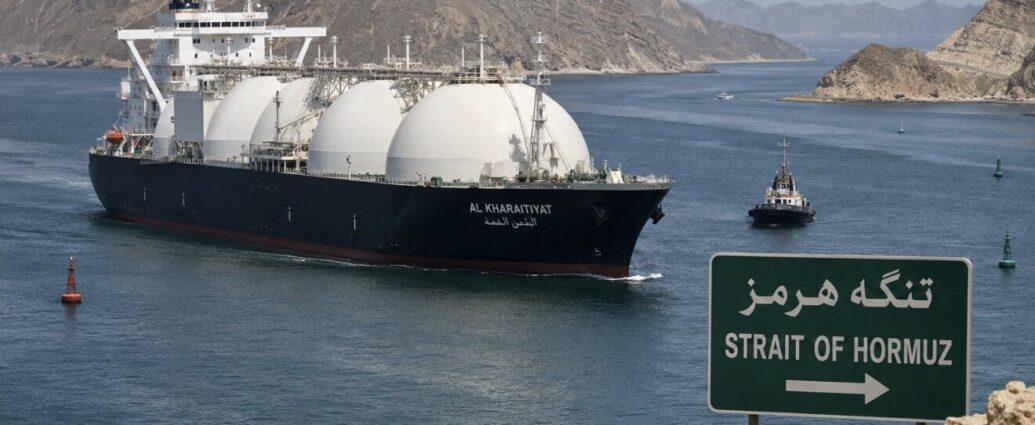
For the First Time Since the Iran War Began, a Qatari Gas Tanker Has Sailed Through the Strait of Hormuz — A Carefully Managed Sign That the World’s Most Critical Shipping Lane May Be Cracking Open
By JBizNews Desk | May 10, 2026
In a development energy markets, diplomats and governments around the world have been watching for since the Iran war began in late February, Reuters and LSEG shipping data confirmed Sunday that a Qatari liquefied natural gas tanker has successfully transited the Strait of Hormuz — marking the first such passage by a Qatari gas vessel since the conflict effectively shut down the world’s most important energy chokepoint more than two months ago.
The tanker, identified as the Al Kharaitiyat, departed Qatar’s Ras Laffan export terminal and passed through the Strait of Hormuz en route to Port Qasim in Pakistan, according to LSEG shipping data. The vessel is managed by Nakilat Shipping Qatar Ltd, sails under the Marshall Islands flag, and carries approximately 211,986 cubic meters of liquefied natural gas.
The passage did not happen accidentally or through force.
According to two people familiar with the matter who spoke to Reuters, Iran specifically approved the shipment as a deliberate confidence-building gesture toward both Qatar and Pakistan — the latter of which has quietly emerged as one of the key diplomatic intermediaries between Washington and Tehran throughout the conflict.
The diplomatic mechanics behind the transit are as significant as the shipping data itself.
Pakistan has been engaged in direct discussions with Iran seeking permission for a limited number of LNG cargoes to move through the strait, driven largely by worsening domestic gas shortages after the Hormuz closure disrupted critical energy imports.
Iran ultimately agreed to permit the shipment, and the safe passage of the vessel was coordinated under Pakistan’s existing government-to-government LNG supply arrangement with Qatar, its largest gas supplier.
That structure gave Doha, Islamabad and Tehran a politically controlled framework that avoids the appearance of Iran broadly reopening Hormuz to unrestricted commercial traffic.
For global energy markets, the significance of the transit cannot be overstated.
The Strait of Hormuz normally handles roughly 20% of global oil trade and approximately 20% of global LNG shipments, making it the single most strategically important maritime energy corridor in the world economy.
Since the war began, those flows have been severely disrupted.
Qatar — the world’s second-largest LNG exporter — has seen much of its export network effectively paralyzed by the conflict. Iranian strikes earlier in the war damaged approximately 17% of Qatar’s LNG export capacity, with analysts estimating roughly 12.8 million tons per year of production could remain offline for between three and five years while repairs continue.
The crisis dramatically tightened LNG markets across both Europe and Asia.
Europe typically receives between 12% and 14% of its LNG imports from Qatar through Hormuz, while countries including China, Japan, South Korea, Taiwan and Pakistan depend heavily on the route for electricity generation, industrial production and long-term energy security.
Before Sunday’s transit, Iran’s control over the strait had appeared nearly absolute.
On April 6, Iran’s Islamic Revolutionary Guard Corps halted two Qatari LNG tankers — the Al Daayen and the Rasheeda — near Hormuz and ordered both vessels to hold position indefinitely without public explanation, reinforcing how completely Tehran had established operational control over the waterway after the outbreak of the conflict.
The International Energy Agency has already described the Hormuz shutdown as the largest disruption in the history of modern global energy markets.
Every day the Al Kharaitiyat’s transit continues without incident now becomes another signal that limited, politically managed shipping movements may be possible even before a formal peace agreement is reached.
The breakthrough comes during an especially delicate diplomatic moment.
U.S. Secretary of State Marco Rubio said Friday that Washington expected Iran’s response within hours to a formal U.S. proposal aimed at ending the war before broader negotiations begin over Iran’s nuclear program and regional security issues.
As of Sunday evening, no formal public response had emerged from Tehran, though relative calm prevailed around the Strait after several days of sporadic military flare-ups.
The Al Kharaitiyat’s passage appears to fit directly into that fragile diplomatic window — a small but concrete signal that Iran may be willing to selectively ease restrictions around Hormuz while broader negotiations remain unresolved.
For financial markets, however, the key question is whether Sunday’s transit represents an isolated diplomatic gesture or the beginning of a wider reopening pattern.
A single LNG tanker traveling from Qatar to Pakistan does not reopen the Strait of Hormuz.
It does not restore the massive energy flows that normally move through the corridor each day, nor does it eliminate the geopolitical risk premium currently embedded across oil, LNG and global shipping markets.
But it does demonstrate something markets had not seen since the war began:
Iran is willing — under tightly controlled political conditions — to authorize at least limited movement through the world’s most critical energy chokepoint.
Whether additional vessels follow, and under what conditions, may determine whether Sunday’s transit ultimately becomes the first sign of gradual stabilization — or simply a temporary diplomatic exception inside a conflict that has already reshaped the global energy system.
JBizNews Desk
Global Oil Reserves Are Draining at a Record Pace as Iran War Tightens Its Grip on the World’s Energy Supply
By JBizNews Desk | May 10, 2026
A new estimate from Morgan Stanley shows the world is burning through its oil reserves at the fastest pace ever recorded, leaving the global economy increasingly exposed to fuel shortages, inflation shocks and prolonged energy-market volatility as the Iran conflict continues choking supply flows through the Strait of Hormuz.
Nearly two months into the near-closure of the strategic waterway, global inventories have fallen so sharply that banks, energy executives and government agencies are warning the damage may continue long after the fighting itself ends. Analysts say the market’s normal buffer against disruption — the vast storage system of crude oil and refined fuels that stabilizes prices during crises — is rapidly disappearing.
Morgan Stanley estimates global oil stockpiles declined by roughly 4.8 million barrels per day between March 1 and April 25, a drawdown larger than any previous quarterly inventory decline tracked by the International Energy Agency. Crude oil accounted for nearly 60% of the depletion, with refined fuels making up the remainder.
The figures offer one of the clearest measurements yet of how severely the Hormuz disruption has hollowed out the global energy system.
Goldman Sachs issued a similar warning this week, estimating that visible global oil inventories are approaching their lowest levels since 2018. The bank estimates total oil stockpiles have now fallen to approximately 101 days of forward demand, with inventories potentially dropping as low as 98 days of demand by the end of May if shipping disruptions continue.
While Goldman stopped short of predicting operational shortages this summer, analysts at the bank described the speed of the inventory collapse and the magnitude of supply losses across some fuel categories as “concerning.”
The warnings are increasingly being echoed directly by the leaders of the world’s largest energy companies.
Patrick Pouyanné, chief executive of TotalEnergies, told investors during the company’s earnings call that global hydrocarbon inventories are currently being depleted at a rate of roughly 10 million to 13 million barrels per day in order to balance the market.
“We would exit the conflict with clearly some very low inventories,” Patrick Pouyanné said, warning that even a near-term reopening of the Strait of Hormuz would still leave the market deeply depleted.
ExxonMobil chief executive Darren Woods delivered an equally stark assessment.
“It’s obvious to most that if you look at the unprecedented disruption in the world supply of oil and natural gas, the market hasn’t seen the full impact of that yet,” Darren Woods said. “There’s more to come if the Strait remains closed.”
The inventory collapse is increasingly becoming both an energy problem and a broader economic one.
For consumers, the most immediate consequence is appearing at gasoline stations and inside airline ticket pricing. Morgan Stanley warned this week that U.S. gasoline inventories are on track to fall below 200 million barrels by the end of August, levels analysts described as historically tight heading into peak summer driving season.
“The U.S. gasoline market is genuinely tight and tightening further into summer,” Morgan Stanley analysts wrote.
National average gasoline prices have already climbed above $4.50 per gallon, the highest level in roughly four years, while diesel prices continue pressuring freight, logistics and manufacturing costs globally.
Energy traders say the situation is becoming particularly dangerous because the current supply shock is no longer isolated to crude oil itself. Inventories across diesel, jet fuel and refined products are now tightening simultaneously, limiting the market’s ability to absorb additional disruption.
Outside the Middle East, the hardest-hit region has become Asia-Pacific.
Oil inventories across Asia excluding China have fallen by approximately 70 million barrels since the conflict began, according to data from geospatial analytics firm Kayrros. Japan and India have both dropped to at least 10-year seasonal lows for petroleum inventories, with Japan’s stockpiles reportedly falling roughly 50% and India’s down approximately 10% since the war escalated.
Pakistan’s petroleum minister said last month the country holds only about 20 days of commercial refined-product reserves.
Diesel markets are showing especially severe stress.
Sumit Ritolia, analyst at commodity intelligence firm Kpler, described diesel as “the lifeblood of the global economy,” warning that inventory drawdowns across onshore storage, vessels at sea and major global trading hubs are increasingly bridging supply gaps that cannot be sustained indefinitely.
The pressure is now spreading into shipping rates, food production, industrial manufacturing and airline operations.
For financial markets, the inventory collapse has become a major driver of inflation expectations and recession risk calculations. Rising fuel costs are already filtering into freight contracts, airline hedging activity, agricultural inputs and industrial supply chains, while central banks face renewed pressure over whether higher energy costs could reignite inflation globally.
Energy-sector analysts at several investment banks say the longer inventories remain depleted, the greater the probability oil markets experience sharp price spikes from even relatively minor new disruptions.
China presents a more complicated picture.
According to Kayrros, Chinese crude inventories have remained comparatively stable and may have even risen during portions of the conflict. Beijing and Seoul are also reportedly considering resuming some refined-product exports that had previously been reduced, a move analysts say could modestly slow the pace of the global drawdown.
But commodity strategists caution that falling demand across parts of Asia, Africa and Latin America may reflect economic stress rather than healthy market rebalancing, as higher fuel prices increasingly force consumption cuts in price-sensitive economies.
The U.S. Energy Information Administration now expects Brent crude to average approximately $115 per barrel during the second quarter of 2026, with prices remaining elevated well into 2027 even under scenarios where the Strait of Hormuz gradually reopens.
The agency warned that attacks on regional energy infrastructure and continued uncertainty surrounding the duration of the conflict have embedded a lasting geopolitical risk premium into oil prices that may not disappear quickly.
Even if Hormuz reopened immediately, the EIA noted, restoring global trade flows to anything resembling prewar conditions would likely require months.
What the inventory data ultimately reveals is a global energy market that has already absorbed one of the largest supply shocks in modern history and now has very little remaining capacity to absorb another one.
The world entered the Iran conflict with expanding oil inventories and falling fuel prices. It is now moving into the peak summer demand season with stockpiles near multi-year lows, gasoline prices near four-year highs, and the chief executives of ExxonMobil and TotalEnergies publicly warning that the full economic consequences of the disruption have not yet fully surfaced.
The market’s buffer is rapidly disappearing.
What happens next depends largely on one question: how long the Strait of Hormuz remains constrained — and whether the global economy can withstand the strain long enough for it to reopen.
JBizNews Desk

The Iran War Is Running the World Short of the Chemical That Makes Modern Life Possible
By JBizNews Desk | May 10, 2026
Most people have never thought about sulfuric acid.
It does not trade like oil. It is not discussed nightly on financial television. Consumers never see it on grocery shelves or at gas stations. Yet sulfuric acid quietly sits inside nearly every major industrial process that powers the global economy — from the fertilizers used to grow food and the copper needed for electrical wiring to semiconductors, batteries, pharmaceuticals, water treatment and modern manufacturing itself.
Chemists have long called it the “king of chemicals.”
Now, the war involving Iran is pushing the world dangerously close to a shortage of it.
The crisis begins with a reality largely invisible outside commodity and industrial circles: the Persian Gulf is not only one of the world’s most important oil-producing regions. It is also the center of global sulfur production.
Countries including Saudi Arabia, Qatar, Kuwait, Iran and the United Arab Emirates collectively account for roughly 44% to 45% of global sulfur exports, according to commodity analysts and industry trade data. Sulfur is primarily produced as a byproduct of refining sour crude oil and natural gas — resources heavily concentrated across the Gulf.
When the Strait of Hormuz effectively shut down following the escalation of the Iran conflict earlier this year, the disruption extended far beyond oil tankers.
It abruptly interrupted nearly half the world’s sulfur supply chain.
Sulfur itself is only the starting point. Once processed and burned, it becomes sulfuric acid — one of the most heavily used industrial chemicals on earth.
Roughly 60% to 70% of global sulfuric acid production goes directly into manufacturing phosphate fertilizers used across the United States, Asia, Africa and South America. Another large share supports mining operations, where sulfuric acid is used to extract copper, cobalt and nickel from ore — metals essential for electric vehicles, renewable-energy storage systems and consumer electronics.
Ultra-pure sulfuric acid also plays a critical role in semiconductor manufacturing, where it is used to clean silicon wafers during chip fabrication.
It is embedded across pharmaceuticals, detergents, plastics, synthetic fibers, industrial cleaning products and municipal water-treatment systems.
“There is virtually no major industrial supply chain that does not touch sulfuric acid somewhere,” said Meena Chauhan, head of sulfur and sulfuric acid research at Argus Media.
Since the conflict began, sulfuric acid prices have surged roughly 30% globally, according to commodity market estimates. In Chile, the world’s largest copper producer, sulfuric acid prices jumped approximately 44% in a single month, sharply increasing operating costs for miners already facing tightening supply conditions.
Across the Democratic Republic of Congo, copper and cobalt producers have begun rationing chemical inventories and reducing acid consumption to preserve existing stockpiles. Analysts warn the restrictions could begin affecting copper production later this year if replacement supplies remain constrained.
Indonesia’s rapidly expanding nickel-processing sector — critical to the electric-vehicle battery market — is also beginning to report industrial slowdowns tied directly to acid shortages.
Then the situation worsened dramatically.
This month, China, which accounts for roughly 20% of global sulfuric acid exports, effectively suspended overseas shipments of the chemical beginning in May 2026, according to analysts at ING.
Beijing’s move is aimed at protecting domestic fertilizer production and food security as global agricultural supply chains tighten under mounting geopolitical pressure.
But the timing could hardly have been worse for international markets.
Global buyers already scrambling to replace Persian Gulf sulfur supply suddenly found the world’s largest alternative exporter effectively exiting the market at the same moment.
“The Iran conflict created a shortage of raw materials. China’s export halt triggers a commercial drought,” said Syed Salman Shaffi, president of Gold Miners Club.
Fred Gordon, head of Acuity Commodities, said the Chinese restrictions have deepened what was already becoming a severe industrial supply imbalance.
Commodity analysts say the crisis illustrates how modern supply chains remain vulnerable not only to oil disruptions, but also to obscure industrial materials most consumers never realize underpin daily life.
Even before the Iran conflict escalated, sulfur markets were operating near multi-year highs due partly to the lingering effects of the Russia-Ukraine war and surging demand from Indonesia’s nickel-processing expansion, according to James Willoughby, research analyst at Wood Mackenzie.
Some high-pressure acid-leaching facilities — particularly those processing nickel ore for battery production — reportedly maintain only one to two months of sulfur inventory, meaning operational disruptions could accelerate rapidly if replacement shipments fail to arrive.
The downstream consequences now stretch well beyond mining and agriculture.
Taiwan, which imports roughly 30% of its liquefied natural gas from Qatar through the Strait of Hormuz, faces growing concerns over energy stability that could eventually affect semiconductor manufacturing.
Taiwan Semiconductor Manufacturing Company (TSMC) — producer of roughly 90% of the world’s most advanced semiconductor chips — consumes nearly 9% of Taiwan’s electricity supply, according to industry estimates. Much of that power system depends heavily on imported Gulf energy flows now vulnerable to prolonged disruption.
Fertilizer prices have already climbed between 10% and 20% across several global trading hubs, raising concerns that the next wave of inflation may emerge not from oil prices directly, but from food production costs tied to shrinking fertilizer availability.
That risk is particularly acute for large agricultural importers including India, Brazil and parts of Southeast Asia, where fertilizer affordability directly influences crop yields and consumer food prices.
Manufacturers across Asia are also beginning to issue force majeure notices — declarations that contractual obligations cannot be fulfilled because of extraordinary external conditions — tied to sulfuric-acid-related supply disruptions.
“Sulfuric is a biggie,” said Eric Byer, president and chief executive of the Alliance for Chemical Distribution. “It’s top of mind for our industry and a variety of different things,” including batteries, industrial products and basic household chemicals.
For investors, the sulfuric acid crisis is becoming another example of how geopolitical conflicts increasingly transmit through global markets in indirect and unpredictable ways.
Commodity traders, shipping firms and industrial manufacturers have spent years focusing primarily on crude oil disruptions tied to the Middle East. But the current crisis is exposing how deeply interconnected the global economy has become around less visible industrial inputs that quietly support nearly every major manufacturing process.
The International Energy Agency has already described the Hormuz shutdown as the largest disruption in the history of the modern oil market.
But the sulfur shortage now unfolding suggests the economic consequences of the Iran war may ultimately extend far beyond gasoline prices or energy exports.
The disruption is reaching into fertilizers used to grow crops, metals needed to electrify economies, semiconductors powering artificial intelligence and consumer electronics, and industrial supply chains that support everything from construction to pharmaceuticals.
The Strait of Hormuz, it turns out, is not simply an oil chokepoint.
It may be one of the world’s most important chokepoints for modern industrial civilization itself.
JBizNews Desk
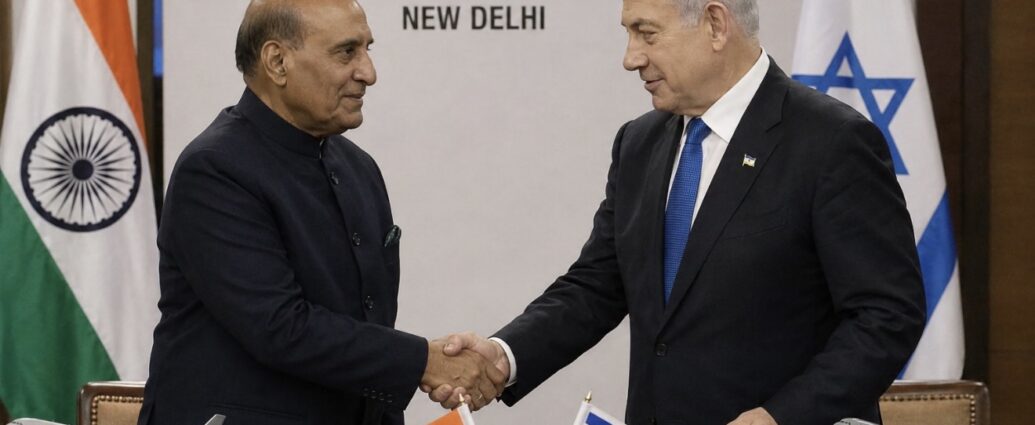
India and Israel’s IAI Strike $1.1 Billion Tanker Deal as Modi Pushes Military Self-Reliance
By JBizNews Desk | May 10, 2026
India has reached a defense agreement valued between $900 million and $1.1 billion with Israel Aerospace Industries to convert six Boeing 767 passenger aircraft into aerial refueling tankers, deepening one of the world’s fastest-growing strategic defense partnerships while accelerating Prime Minister Narendra Modi’s push to build a more self-reliant military-industrial base.
The agreement pairs India’s state-owned aerospace giant Hindustan Aeronautics Limited (HAL) with the Jerusalem-based Israel Aerospace Industries (IAI), a company widely regarded as one of the global leaders in aircraft conversion and advanced defense systems.
Together, the companies will transform six Boeing 767 jets into tanker transport aircraft capable of refueling Indian Air Force fighter jets mid-flight — a capability that significantly expands operational range, endurance and deployment flexibility without requiring aircraft to land for fuel.
For India, the deal represents far more than a routine procurement contract.
It reflects a broader geopolitical and economic strategy increasingly shaping global defense markets: countries seeking not only military hardware, but also domestic manufacturing capacity, technology transfer and long-term industrial independence.
The agreement replaces India’s aging fleet of Ilyushin Il-78 tankers, Soviet-era aircraft that have served as the backbone of the Indian Air Force’s aerial refueling capability for years but have become increasingly expensive and difficult to maintain.
Indian defense planners evaluated several Western alternatives, including the Airbus A330 MRTT and Boeing KC-46 Pegasus, before selecting the Israeli-Indian conversion model.
The Airbus platform had previously won Indian tenders worth approximately $1.6 billion and $2 billion, but both procurement efforts were eventually canceled because of long-term maintenance and operating costs. The KC-46 Pegasus, meanwhile, faced a different obstacle: it could not be meaningfully integrated into India’s domestic manufacturing ecosystem under Modi’s industrial policies.
That distinction proved decisive.
Under Prime Minister Narendra Modi’s “Make in India” initiative, India has aggressively pushed foreign defense contractors to manufacture locally, transfer technical expertise and build long-term industrial partnerships inside the country rather than simply export finished military equipment.
The IAI-HAL structure allows India to retain a large portion of the engineering, labor, maintenance and intellectual-property value tied to the project domestically — something Western off-the-shelf purchases struggled to provide.
Defense analysts say the agreement reflects India’s emergence as one of the world’s most strategically important defense markets, where geopolitical alignment increasingly matters as much as pricing or military capability alone.
The India-Israel defense relationship has expanded rapidly over the past decade, particularly in missile defense, drone systems, radar technology and aerospace modernization. Israeli defense firms have become deeply embedded inside India’s military modernization efforts partly because they have shown greater willingness than some Western contractors to adapt to India’s local-production demands.
In March 2024, IAI formally launched its Indian subsidiary, Aerospace Services India, in New Delhi as part of a collaboration with India’s Defense Research and Development Organisation (DRDO). The subsidiary currently supports India’s Medium Range Surface-to-Air Missile system, jointly developed by IAI and DRDO and now deployed across India’s Army, Navy and Air Force.
According to the company, approximately 97% of the subsidiary’s workforce consists of Indian citizens, a statistic Indian officials increasingly emphasize as they attempt to position defense spending as both a security priority and a domestic economic engine.
The economics behind aircraft conversion also played a central role in the agreement.
Industry executives estimate that converting existing passenger aircraft into military tankers typically costs roughly 20% less than purchasing newly manufactured military aircraft directly from aerospace producers. The model also extends the usable lifespan of aging commercial jets for decades, creating additional long-term cost efficiencies for governments facing rising defense budgets and procurement pressures.
That financial logic is becoming increasingly attractive globally as military spending accelerates across Europe, Asia and the Middle East amid worsening geopolitical tensions.
Investment bankers and aerospace analysts say defense conversion programs have become one of the fastest-growing niches inside the global aviation market because governments are under pressure to modernize rapidly while controlling procurement costs and maintaining industrial flexibility.
For Israel Aerospace Industries, the deal further strengthens its position as one of the world’s leading aircraft-conversion specialists.
The company has converted Boeing 737, 747 and 767 aircraft for commercial and military customers globally and last year became the first company to receive certification from both the U.S. Federal Aviation Administration and Israel’s civil aviation authority to convert a Boeing 777 passenger aircraft into cargo configuration.
That certification was viewed within the aerospace industry as a major technical milestone and reinforced IAI’s growing influence across both commercial aviation and military aerospace markets.
Deliveries of the converted tanker aircraft are expected to begin in 2030, giving India a significantly modernized aerial refueling fleet at a time when regional military competition continues intensifying across Asia.
The agreement also reinforces how defense relationships between India and Israel are expanding beyond isolated weapons systems into deeper long-term industrial cooperation.
India has recently agreed to purchase Elbit Systems PULS rocket launchers and Rafael SPICE precision-guided missile systems, while Israeli companies continue expanding joint ventures tied to radar systems, missile defense and aerospace manufacturing.
For Modi’s government, the tanker agreement offers both strategic and political value: modernizing India’s military while reinforcing the broader message that the country intends to become not only one of the world’s largest defense buyers, but eventually one of its largest defense manufacturers as well.
And for the global aerospace and defense industry, the deal signals a broader shift already reshaping procurement markets worldwide — where future military contracts may increasingly depend not simply on who builds the best weapons, but on who is most willing to build them locally.
JBizNews Desk

Trump Says Ukraine Ceasefire Could Be ‘Beginning of the End’ as Putin Scales Back Victory Day Show of Force
By JBizNews Desk
President Donald Trump said Friday that a temporary ceasefire between Russia and Ukraine could mark “the beginning of the end” of the war, as President Vladimir Putin presided over the most restrained Victory Day parade Moscow has staged in years — a visible sign of how a conflict once expected to reinforce Russian power has instead reshaped military strategy, financial priorities and global geopolitical risk calculations.
The three-day ceasefire, running through Monday, pauses military operations between Russian and Ukrainian forces and includes a prisoner exchange involving 1,000 detainees from each side. Both Vladimir Putin and Ukrainian President Volodymyr Zelensky confirmed participation in the agreement after what President Donald Trump described as direct discussions with both leaders.
“And we have a little period of time where they’re not going to be killing people. That’s very good,” President Donald Trump told reporters Friday evening before departing the White House. He later described the arrangement as “the beginning of the end,” framing the temporary halt not as a peace settlement but as a possible opening toward broader negotiations after more than four years of war.
Whether the ceasefire survives beyond the holiday period remains deeply uncertain. Previous attempts at temporary truces collapsed almost immediately, with both Moscow and Kyiv accusing the other of violations. Ukrainian officials continue insisting that any lasting agreement cannot involve recognition of Russian territorial gains, while the Kremlin has repeatedly signaled it views sustained military pressure as central to its negotiating leverage.
Still, the timing of the ceasefire carried unusual symbolic and financial significance because it coincided with Russia’s annual Victory Day celebrations — one of the Kremlin’s most important national events and historically a carefully choreographed projection of military strength.
This year’s parade looked noticeably different.
For the first time in years, Moscow’s Red Square ceremony proceeded without the large armored formations, missile launchers and sweeping tank columns that traditionally dominate Victory Day imagery. Instead, the Kremlin relied heavily on marching troops, patriotic staging and tightly controlled symbolism while heightened security concerns overshadowed the event.
Russian officials publicly attributed the scaled-back display to operational demands tied to the Ukraine war. But the broader reality was difficult to ignore: after years of sustained combat, many of the military assets once showcased during the parade are now committed to active battlefield operations, while drone threats deep inside Russian territory have forced Moscow to rethink even the optics of domestic security.
The changing tone of Victory Day also reflected the growing economic burden of a prolonged war that continues reshaping Russia’s fiscal position and broader global markets.
Defense spending now consumes a sharply larger share of Russia’s national budget, while sanctions, export restrictions and capital controls have altered trade flows across energy, commodities and manufacturing sectors. European governments, meanwhile, have accelerated military procurement programs and expanded long-term defense spending commitments at levels not seen since the Cold War.
For investors, even temporary de-escalation between Moscow and Kyiv can influence markets far beyond Eastern Europe.
Energy traders continue monitoring the conflict closely because disruptions tied to Russian oil, natural gas and shipping routes have repeatedly triggered volatility in global commodity markets. Grain exports from the Black Sea region remain critical to food pricing across parts of Europe, Africa and the Middle East, while insurers and freight operators continue pricing elevated geopolitical risk into shipping contracts linked to the region.
European sovereign bonds, defense equities and currency markets also remain highly sensitive to any indication of escalation or diplomatic progress. Analysts say even a limited ceasefire can temporarily ease geopolitical risk premiums if investors believe broader negotiations could eventually emerge.
Still, few market participants appear ready to treat the current pause as a definitive turning point.
The war has repeatedly produced short-lived diplomatic openings followed by renewed fighting, leaving governments and investors cautious about assigning too much significance to temporary agreements. Energy markets in particular have become increasingly conditioned to absorb geopolitical shocks tied to Russia and Ukraine without assuming immediate resolution.
Putin nevertheless used the Victory Day event to reinforce parallels between the Soviet Union’s victory over Nazi Germany and Russia’s current campaign in Ukraine, portraying the war as part of a broader struggle against what the Kremlin describes as Western aggression and NATO expansion.
“The great feat of the victorious generation inspires the soldiers carrying out tasks of the special military operation today,” President Vladimir Putin told assembled troops and dignitaries during his address.
The staging around Putin reflected that message. Veterans from both World War II and the Ukraine campaign were seated prominently during the ceremony, underscoring the Kremlin’s effort to merge historical memory with the current conflict into a single patriotic narrative designed to reinforce domestic unity during a prolonged war.
For President Volodymyr Zelensky, participation in the ceasefire appeared more tactical than transformational. Ukrainian officials framed the agreement narrowly, emphasizing humanitarian considerations and prisoner exchanges while avoiding suggestions that Kyiv views the temporary halt as evidence of a durable diplomatic breakthrough.
That caution reflects the broader reality surrounding the conflict. Despite intermittent negotiations and shifting battlefield dynamics, both Russia and Ukraine continue preparing for the possibility of a prolonged confrontation stretching well beyond 2026.
At the same time, Western governments increasingly face their own strategic and financial pressures tied to sustaining long-term military support, replenishing defense stockpiles and managing voter fatigue surrounding aid commitments.
What became especially clear during this year’s Victory Day observance, however, was how deeply the war has altered the image of strength the Kremlin once projected with confidence.
The tanks that traditionally rolled across Red Square are largely deployed elsewhere. Security around Moscow has intensified dramatically. Foreign attendance appeared thinner than in previous years. And the diplomatic momentum surrounding the ceasefire emerged not from the Kremlin, but from Washington.
For President Donald Trump, the ceasefire offers an opportunity to position himself as a central player in efforts to stabilize one of the world’s most consequential geopolitical conflicts. For President Vladimir Putin, the scaled-down parade highlighted the mounting military and economic costs of sustaining a prolonged war while attempting to preserve the image of national endurance at home.
And for global markets, the combination of symbolic restraint in Moscow and tentative diplomacy between the warring sides offered another reminder that geopolitical risk — much like the war itself — remains unresolved, volatile and deeply intertwined with the outlook for energy prices, defense spending and international economic stability.
JBizNews Desk

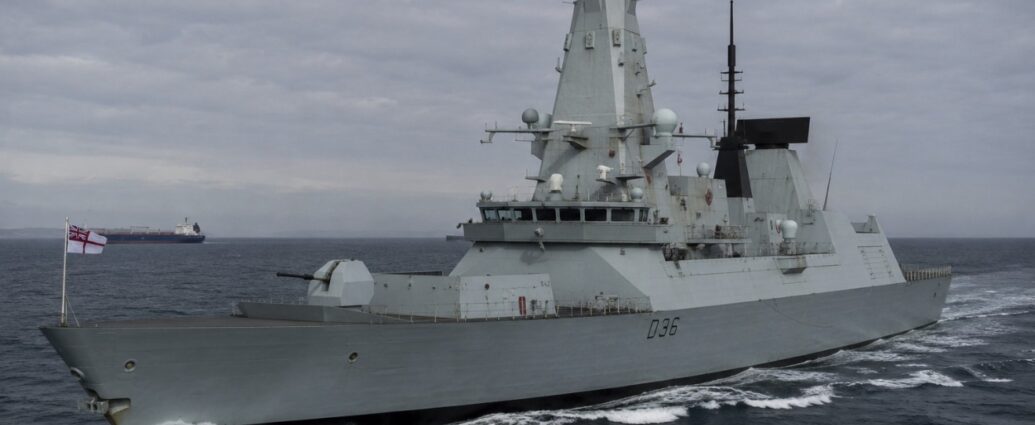
U.K. Moves Warship Toward Gulf as Hormuz Risk Draws Naval Response
By JBizNews Desk | May 10, 2026
Britain is moving HMS Dragon, one of the Royal Navy’s most advanced air-defense destroyers, toward the Middle East as London prepares for a potential multinational mission aimed at protecting commercial shipping through the Strait of Hormuz, one of the world’s most strategically important energy corridors.
The U.K. Ministry of Defence confirmed Saturday that the Type 45 destroyer is being redeployed from the eastern Mediterranean toward the Gulf as part of what officials described as “prudent planning” tied to a defensive maritime security operation jointly coordinated by Britain and France.
British officials stressed the proposed mission would remain “strictly defensive and independent,” focused on safeguarding civilian shipping traffic rather than participating directly in the broader military conflict involving Iran, Israel, and the United States.
HMS Dragon had been operating near Cyprus, where it helped defend RAF Akrotiri air base against drone threats linked to the regional conflict. The Ministry of Defence said military planners now believe sufficient defensive coverage exists around Cyprus to allow the destroyer to reposition closer to the Gulf.
The decision was approved by Defence Secretary John Healey and Chief of the Defence Staff Air Chief Marshal Sir Richard Knighton, underscoring growing Western concern over the security of maritime trade routes surrounding Hormuz.
The strait remains one of the world’s most critical oil chokepoints, handling a substantial share of global seaborne crude exports flowing from Gulf producers into international markets. Even limited threats to commercial traffic have historically triggered sharp increases in tanker insurance premiums, freight rates, and oil-market volatility.
Military representatives from more than 30 nations met last month at Britain’s Permanent Joint Headquarters in Northwood to discuss the framework for a broader maritime coalition. British defense officials said roughly 40 countries are now participating in aspects of the planning effort.
France separately repositioned the aircraft carrier Charles de Gaulle from the Mediterranean into the Red Sea this week, signaling readiness to support operations if the coalition formally launches.
Britain is also converting the support vessel RFA Lyme Bay into a mothership for mine-hunting drones that could help secure shipping lanes and clear maritime threats near the strait.
For energy traders and shipping executives, the movement of HMS Dragon highlights the continuing vulnerability of the Strait of Hormuz, where drones, anti-ship missiles, and fast-boat attacks can disrupt supply chains and raise transportation costs even without a formal blockade.
The Type 45 destroyer’s deployment carries particular significance because the platform was specifically designed to counter guided-missile and drone threats — the precise risks now dominating Gulf security calculations. HMS Dragon carries the Sea Viper missile-defense system, widely regarded as one of the Royal Navy’s most capable naval air-defense platforms.
The deployment comes as a fragile cease-fire remains in place across parts of the broader Iran conflict. On Friday, U.S. forces struck two Iranian tankers accused of attempting to breach a maritime blockade imposed by President Donald Trump, adding fresh tension to an already volatile regional environment.
Shipping and commodity markets often react to military positioning around Hormuz before any direct disruption to oil flows occurs. Freight rates, war-risk premiums, and crude oil options frequently move in anticipation of prolonged instability rather than actual supply interruptions.
Prime Minister Keir Starmer formally committed Britain to co-leading the proposed Hormuz protection mission alongside French President Emmanuel Macron on April 17, though both governments emphasized operations would begin only “when conditions allow.”
President Emmanuel Macron has framed the initiative as a stabilizing maritime operation intended to restore confidence among commercial carriers and global insurers rather than align directly with any military side in the regional conflict.
For London, the deployment also carries broader political and financial implications as Britain balances alliance obligations, naval readiness, and the growing cost of sustained overseas operations during a period of heightened geopolitical instability.
Britain’s decision to pre-position HMS Dragon reflects a familiar Gulf strategy: visible but limited military deployments intended to deter escalation, reassure commercial shipping operators, and contain energy-market volatility without triggering a broader regional confrontation.
For now, the destroyer’s movement toward the Gulf adds another closely watched military variable to a region that remains central to global oil flows, shipping confidence, and international energy pricing.
JBizNews Desk


China’s Export Growth Accelerated in April


Opinion | Iran Tests Trump’s Will to Fight

Opinion | An Election Uprising in Britain


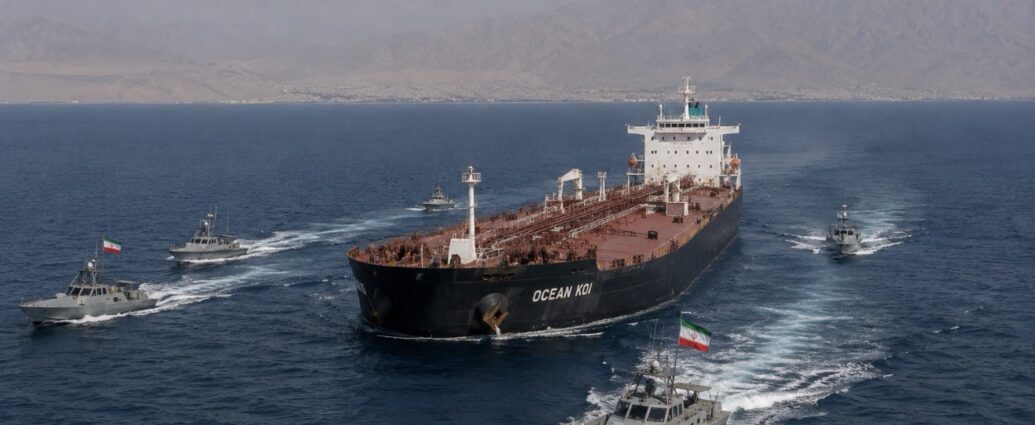
Iran Formalizes Grip on Global Oil Route, Launches Agency to Impose $2 Million Tax on Ships Passing Through the Strait of Hormuz
By JBizNews Desk | May 8, 2026
Iran has taken a significant step toward institutionalizing its control over the world’s most critical oil shipping lane. The Iranian government has formally launched a new body called the Persian Gulf Strait Authority — a bureaucratic apparatus designed to vet vessels, issue transit permits, and collect tolls from every ship seeking passage through the Strait of Hormuz. The move transforms what had been an improvised system of payments extracted by the Islamic Revolutionary Guard Corps into a standing government agency with an official email address, a published logo, and a formal application process.
The waterway at the center of this dispute is not peripheral to the global economy. Before the outbreak of the Iran war in February 2026, the Strait of Hormuz carried roughly 20% of the world’s seaborne oil trade — approximately 21 million barrels of crude oil and refined products every day, along with vast quantities of liquefied natural gas and, critically, the fertilizer precursors that feed global agriculture. The strait’s effective closure since late February has already produced the largest oil supply disruption in the history of the global energy market, according to the International Energy Agency.
A Toll Booth at the World’s Gas Pump
The mechanics of the new system are straightforward, even if the geopolitical implications are anything but.
According to shipping intelligence firm Lloyd’s List Intelligence, which first reported the authority’s launch, ships seeking to transit the strait receive an email from the Persian Gulf Strait Authority directing them to submit an application disclosing the vessel’s ownership structure, crew manifest, insurance coverage, and planned route. Upon review, the authority issues — or withholds — a transit permit.
The tax itself is substantial. Iranian officials had publicly confirmed charges in the range of $2 million per vessel for safe passage through the strait. Iranian lawmaker Alaeddin Boroujerdi stated plainly in late March that the practice was intentional.
“Now, because war has costs, naturally, we must do this and take transit fees from ships passing through the Strait of Hormuz,” Boroujerdi said.
For a large tanker carrying roughly 2 million barrels of oil, the fee adds approximately $1 per barrel to shipment costs — a burden analysts say will largely fall on Gulf exporters before eventually filtering into global fuel and commodity prices.
The new agency did not emerge in a vacuum. Since March, a patchwork of informal arrangements had allowed some merchant vessels to navigate the strait’s northern waters near the Iranian coastline, routing around the standard international shipping corridor and past Iran’s Larak Island. Scam operators also reportedly emerged, offering fraudulent transit paperwork in exchange for cryptocurrency payments.
The Persian Gulf Strait Authority effectively consolidates and formalizes that murky system, positioning Tehran as the sole arbiter of commercial movement through one of the world’s most economically vital waterways.
A Challenge to Freedom of Navigation
The diplomatic and legal implications are substantial.
The United Nations Convention on the Law of the Sea, which entered into force in 1994, codifies freedom of navigation through international straits as a foundational principle of global commerce. Iran’s assertion that it can impose taxes and regulate passage directly challenges that framework and has already drawn condemnation from the United Kingdom and organizations representing the majority of the world’s tanker operators.
The United States has not endorsed any arrangement that would recognize Iran’s authority over the strait.
American naval forces operating under U.S. Central Command have intensified escort operations in the region and, according to military officials Friday morning, fired upon and disabled Iran-flagged vessels attempting to breach the U.S. naval blockade of Iranian ports.
President Donald Trump earlier this month launched Project Freedom, a U.S.-led initiative intended to provide commercial naval escorts through the waterway — a direct counter to Iran’s new permitting regime.
The result is an increasingly dangerous dual-blockade environment: the U.S. Navy blockading Iranian ports while Iran effectively blocks Gulf shipping lanes.
Industry estimates now suggest that as many as 1,500 commercial ships are stranded in or around the Strait of Hormuz awaiting safe passage.
The Price Is Already Being Paid
While diplomats negotiate and military forces maneuver, the economic consequences are already spreading across global supply chains.
The Arabian Gulf supplies approximately 38% of the world’s urea fertilizer exports and nearly half of global seaborne sulfur exports, both critical components for modern agriculture. Since the conflict escalated, nitrogen and phosphate fertilizer prices have surged between 20% and 40%.
The U.S. Department of Agriculture now projects overall food inflation of approximately 2.9% for 2026, incorporating rising transportation fuel costs, elevated fertilizer prices, and expected reductions in crop yields.
Agricultural economists warn that consumers have likely not yet experienced the full downstream effect of the supply disruption because food pricing typically lags farm-level input increases by several months.
The situation escalated further Friday after Iranian naval forces seized the tanker Ocean Koi, a Barbados-flagged crude vessel operating in the Gulf of Oman. Iranian state broadcaster IRIB reported that the ship, which had been sanctioned by the United States earlier this year, was escorted to Iran’s southern coastline and transferred to judicial authorities.
The seizure reinforced fears that the Strait of Hormuz is no longer merely an economic chokepoint but an active military confrontation zone with global consequences.
What Happens Next
Markets, shipping companies, and governments are now attempting to determine whether the Persian Gulf Strait Authority represents a temporary wartime revenue mechanism or the beginning of a long-term Iranian attempt to institutionalize control over one of the most strategically important waterways on earth.
The answer carries implications far beyond oil markets.
It will shape freight costs, fertilizer availability, global food inflation, shipping insurance rates, and the stability of international trade flows affecting billions of consumers worldwide.
For now, one reality has become increasingly clear: the economic consequences of the Hormuz conflict are no longer confined to the Middle East. They are moving directly into global supply chains, commodity markets, and household budgets around the world.
© JBizNews.com. All rights reserved.

Tokyo Is Telling Workers to Wear Shorts to the Office — Because the Iran War’s Energy Crisis Is Now Reaching Japanese Desks
JBizNews Desk | Friday, May 8, 2026
The U.S.-Iran war has already pushed oil prices sharply higher, rattled global supply chains, and raised fuel and transportation costs worldwide. Now it is reshaping something far more unexpected: office dress codes in Japan.
The Tokyo metropolitan government has begun encouraging workplaces to allow employees to wear shorts during the summer as rising energy costs tied to Middle East tensions place growing strain on Japan’s electricity consumption and cooling systems.
Tokyo Governor Yuriko Koike, who originally launched Japan’s famous “Cool Biz” campaign nearly two decades ago while serving as Environment Minister, announced the updated initiative as temperatures begin rising across the capital.
Local media have already published images of government employees working in bermuda shorts and polo shirts inside official Tokyo government offices following the rollout of the revised policy, which officially took effect on April 24, 2026.
A Tokyo Metropolitan Government official said the energy crisis linked to Middle East instability was “one of the factors” behind the decision.
Japan’s ‘Cool Biz’ Campaign Gets a Wartime Update
Japan first introduced the Cool Biz campaign in 2005 to reduce electricity usage by encouraging workers to remove jackets and neckties during the summer months.
At the time, the initiative was viewed as culturally significant in one of the world’s most formal business environments, where suits and strict workplace dress standards have long been considered central parts of professional identity.
But even then, shorts remained largely unacceptable in traditional office culture.
That has now changed.
Under the revised guidance, workers are being encouraged not only to dress more casually but also to:
- Begin work earlier in the morning
- Reduce air-conditioning usage
- Work remotely when possible
- Shift energy consumption away from peak demand periods
The broader goal is to lower electricity usage across Tokyo’s massive office sector during what officials expect could become an unusually expensive summer energy season.
Why the Iran War Matters So Much to Japan
Japan remains one of the world’s most energy-import-dependent economies.
The country imports virtually all of its oil and liquefied natural gas, much of which historically traveled through the Strait of Hormuz before the outbreak of the Iran conflict.
That makes Japan especially vulnerable to disruptions in Gulf shipping routes and prolonged spikes in oil prices.
Unlike China, which has larger strategic reserves and extensive overland pipeline alternatives from Russia and Central Asia, Japan has fewer fallback options when energy costs surge.
As oil prices rise, the economic impact spreads quickly through Japanese industry.
Manufacturers, retailers, logistics firms, airlines, and office operators are all facing higher operating costs tied directly to fuel and electricity expenses.
And in Tokyo — one of the world’s densest office markets — commercial air conditioning systems represent a major source of summertime power demand.
An Economic Problem Turning Into a Cultural Shift
The new office dress guidance may sound symbolic, but it reflects a deeper economic reality.
Rather than imposing mandatory energy rationing or rolling blackouts, Tokyo officials are trying to reduce electricity demand voluntarily through behavioral changes that are less politically disruptive.
The shift also highlights how deeply the Iran conflict is now influencing daily life far beyond the Middle East.
Higher oil prices are not only affecting gasoline costs or shipping rates. They are increasingly altering workplace operations, consumer habits, utility usage, and corporate policies across major economies.
For Japan, the willingness to relax long-standing workplace formality standards underscores how seriously officials view the current energy pressures.
A Warning Sign for Global Businesses
For American businesses and investors, Tokyo’s new shorts policy offers an unusually visible example of how geopolitical instability can ripple through the global economy in unexpected ways.
The Strait of Hormuz sits nearly 6,000 miles from Tokyo.
Yet the conflict affecting oil shipments through that narrow waterway is already influencing:
- Office operations
- Corporate energy policy
- Commercial electricity consumption
- Workplace culture
- Consumer behavior
What begins as a military conflict in a strategic energy corridor increasingly finds its way into everyday economic life around the world.
And now, in one of the world’s most formal business capitals, it is changing what people wear to work.
© JBizNews.com. All rights reserved. This article is original reporting by JBizNews Desk. Unauthorized reproduction or redistribution is strictly prohibited.

SpaceX Tightens Its Grip on the Rocket Launch Market as Rivals Fall Further Behind
JBizNews Desk | Friday, May 8, 2026
SpaceX has moved so far ahead of the global rocket launch industry that competitors and satellite operators are increasingly questioning whether the commercial space market can still be considered fully competitive.
The aerospace company founded by Elon Musk completed its 50th orbital launch of 2026 in late April, putting the company on pace for approximately 160 missions this year — a launch cadence unmatched by any private or government-backed space organization in history. The overwhelming majority of those missions continue to support SpaceX’s rapidly expanding Starlink satellite internet network, creating a business model that analysts say gives the company structural advantages few rivals can realistically challenge.
SpaceX now controls roughly 85% of all U.S. orbital launches, according to industry tracking data, while accumulating more than $24 billion in federal contracts tied to NASA, the Pentagon, intelligence agencies, and broader government launch programs.
The company’s dominance stems largely from the success of its Falcon rocket program. Falcon 9 and Falcon Heavy rockets have now completed a combined 648 launches with one of the strongest reliability records in modern aerospace history. More importantly, SpaceX’s reusable booster system — once viewed as an experimental gamble — has fundamentally rewritten the economics of launching payloads into orbit.
Some Falcon boosters have now flown more than 15 times, dramatically reducing manufacturing costs and allowing SpaceX to lower launch prices while simultaneously increasing flight frequency. Industry analysts say no competitor has yet demonstrated comparable operational scale, launch cadence, or cost efficiency.
Starlink Creates a Self-Funded Launch Machine
A major reason SpaceX continues widening the gap is Starlink itself.
The company’s satellite broadband network now exceeds 10,000 active satellites globally and serves more than 10 million customers worldwide, according to company estimates and industry analysts. Because SpaceX launches the majority of its own satellites internally, the company effectively guarantees continuous demand for its rockets — allowing it to maintain constant launch schedules even when broader commercial demand fluctuates.
That self-contained ecosystem has created what many competitors describe as an almost impossible economic advantage. Launches supporting Starlink help fund rocket development, while reusable rockets lower the cost of deploying additional satellites, creating a cycle rivals struggle to match.
One satellite industry executive recently described the commercial launch market as “approaching monopoly conditions,” noting that launch capacity on SpaceX missions is increasingly controlled by large third-party launch integrators that reserve payload space in bulk before smaller customers can secure access.
Competitors Falling Behind
The widening gap has placed growing pressure on SpaceX competitors including Rocket Lab, Blue Origin, United Launch Alliance, and Europe’s Arianespace.
Rocket Lab remains the second-most active American launch provider but completed only 21 launches during all of 2025 — a fraction of SpaceX’s annual volume. Blue Origin, despite years of investment from Amazon founder Jeff Bezos, continues working toward scaling its New Glenn rocket program, while United Launch Alliance remains heavily dependent on government contracts and lower launch frequency.
European launch providers have also struggled with delays, rising costs, and geopolitical disruptions tied to supply chains and changing defense priorities following years of instability in Eastern Europe and the Middle East.
The result is an industry increasingly centered around a single company controlling not only launch infrastructure but also satellite internet, orbital deployment logistics, and potentially future AI-powered space systems.
SpaceX Expands Beyond Aerospace
The competitive picture shifted even further earlier this year when SpaceX acquired xAI, Elon Musk’s artificial intelligence company, in a massive all-stock transaction valuing the combined entity at approximately $1.25 trillion — the largest acquisition valuation ever recorded in corporate history.
The merger combines SpaceX’s launch systems and satellite infrastructure with xAI’s artificial intelligence capabilities, with early plans reportedly involving space-based AI data centers and orbital computing infrastructure.
In April, SpaceX also agreed to acquire Cursor, an AI-assisted software development startup, for approximately $60 billion, signaling that the company’s ambitions now extend well beyond rockets and telecommunications.
Analysts increasingly view SpaceX as evolving into a vertically integrated technology conglomerate spanning aerospace, artificial intelligence, satellite communications, defense infrastructure, and software development simultaneously.
The IPO Wall Street Is Waiting For
A SpaceX public offering continues to loom over financial markets.
While no official IPO filing has been announced, investment banks and venture analysts widely expect any future SpaceX listing to become the largest public offering in modern financial history, with projected valuations exceeding $1.75 trillion.
Such a listing would give everyday retail investors their first direct opportunity to own shares in the company that transformed commercial spaceflight and helped redefine the economics of the modern aerospace industry.
For now, SpaceX’s momentum shows little sign of slowing. The company that once struggled to survive repeated launch failures now effectively dictates the pace, pricing, and direction of the global launch market — leaving competitors racing not to catch up, but simply to remain relevant.
© JBizNews.com. All rights reserved. This article is original reporting by JBizNews Desk. Unauthorized reproduction or redistribution is strictly prohibited.

Opinion | Trump’s Clumsy Diplomacy

Wegovy Pill Shatters Launch Records as Novo Nordisk and Eli Lilly Battle for America’s $100 Billion Weight-Loss Market
JBizNews Desk | May 8, 2026
Novo Nordisk Scores Major Win in the Weight-Loss Pill Race
The obesity drug market has entered a new phase — one increasingly driven by pills instead of injections — and Novo Nordisk just delivered its clearest sign yet that it currently leads that battle.
The Danish pharmaceutical giant reported stronger-than-expected first-quarter 2026 earnings Wednesday, fueled largely by the explosive launch of its oral Wegovy pill in the United States earlier this year.
The company said the pill has already generated more than 2 million prescriptions since launching in January, helping push Novo Nordisk shares roughly 7% higher in Copenhagen trading and prompting management to improve its full-year outlook after months of investor concerns and declining forecasts.
The oral Wegovy pill generated approximately 2.26 billion Danish kroner — roughly $354 million — during the first quarter, nearly double analyst expectations.
Weekly U.S. prescriptions surpassed 200,000 by late April.
Novo Nordisk CEO Mike Doustdar described the launch as the strongest GLP-1 drug rollout ever recorded in the United States.
Overall first-quarter net sales reached 96.82 billion kroner, up 24% year-over-year, while adjusted operating profit came in well above expectations at 32.86 billion kroner.
The company’s injectable Wegovy franchise continued growing as well, rising 12% year-over-year to 18.2 billion kroner, while diabetes drug Ozempic declined 8% but still exceeded analyst forecasts.
Novo also improved its full-year guidance, now projecting adjusted sales declines between 4% and 12% at constant exchange rates — an improvement from earlier forecasts calling for steeper declines.
The Real Breakthrough Is Price and Accessibility
For consumers, however, the biggest story may not be Wall Street performance but affordability.
Both Novo’s oral Wegovy and Eli Lilly’s competing obesity pill Foundayo are launching at approximately $149 per month for cash-paying patients — dramatically below the roughly $1,349 monthly list price for injectable Wegovy.
That pricing shift could significantly expand access to obesity treatments across the United States.
The market could become even larger beginning July 1, when expanded Medicare coverage for obesity medications is expected to take effect, potentially opening access to tens of millions of additional Americans who previously could not afford the drugs.
Industry analysts increasingly view the Medicare expansion as one of the most important catalysts in the history of the GLP-1 market.
Eli Lilly Is Racing to Catch Up
Novo Nordisk’s dominance, however, is already being challenged aggressively by Eli Lilly.
Earlier this year, Lilly received FDA approval for its oral obesity drug Foundayo and quickly launched it into the U.S. market.
Unlike Novo’s peptide-based pill, Foundayo uses a small-molecule approach and is being marketed heavily around one major convenience advantage: patients can take it anytime.
Novo’s oral Wegovy still carries stricter instructions. Patients must take the pill first thing in the morning on an empty stomach with only a small amount of water and then wait 30 minutes before eating or drinking anything else.
Foundayo does not carry those restrictions.
Lilly CEO David Ricks said the convenience advantage could eventually drive broader adoption, though he cautioned that scaling the rollout would take time.
Early prescription data still strongly favors Novo.
According to IQVIA prescription tracking data cited by Jefferies analysts, Foundayo generated roughly 5,600 prescriptions during its third week on the U.S. market — below the pace of Novo’s launch during the same period.
Novo currently controls roughly 65% of new prescriptions in the oral obesity drug category.
Doustdar said Novo is seeing a “synergetic effect” between oral and injectable products, with many patients using both rather than replacing one with the other — a sign the market itself may be expanding rapidly rather than simply shifting existing patients between products.
The Obesity Drug Boom Is Reshaping Pharma
The financial stakes surrounding the obesity market are enormous.
Analysts increasingly estimate the global weight-loss drug industry could eventually surpass $100 billion annually, making it one of the most valuable pharmaceutical markets in history.
A Deloitte analysis released this week found obesity treatments have now surpassed oncology as the single largest contributor to late-stage pharmaceutical pipeline value for the first time in 16 years.
The firm also warned that the sector may be approaching speculative “bubble” territory if pricing pressure, safety concerns, or disappointing clinical data emerge.
Novo continues investing heavily in next-generation obesity drugs.
The company recently secured FDA approval for Wegovy HD, a higher-dose injectable version that produced roughly 20.7% average weight loss in clinical trials.
Novo is also advancing its next-generation combination therapy CagriSema, though earlier trial results underperformed compared to Eli Lilly’s blockbuster obesity drug Zepbound — a setback that contributed to Novo shares hitting five-year lows earlier this year before the oral Wegovy rebound.
The Outcome Could Reshape American Healthcare
The battle between Novo Nordisk and Eli Lilly is no longer simply a pharmaceutical rivalry.
It is becoming a fight over who controls one of the largest emerging healthcare markets in the world — and whether obesity treatments become broadly accessible consumer health products or remain premium therapies concentrated among wealthier patients.
For millions of Americans struggling with obesity, diabetes, and related health conditions, the outcome of that competition could directly determine who can afford treatment — and who cannot.
— JBizNews Desk
© JBizNews.com. All rights reserved. This article is original reporting by JBizNews Desk. Unauthorized reproduction or redistribution is strictly prohibited.