

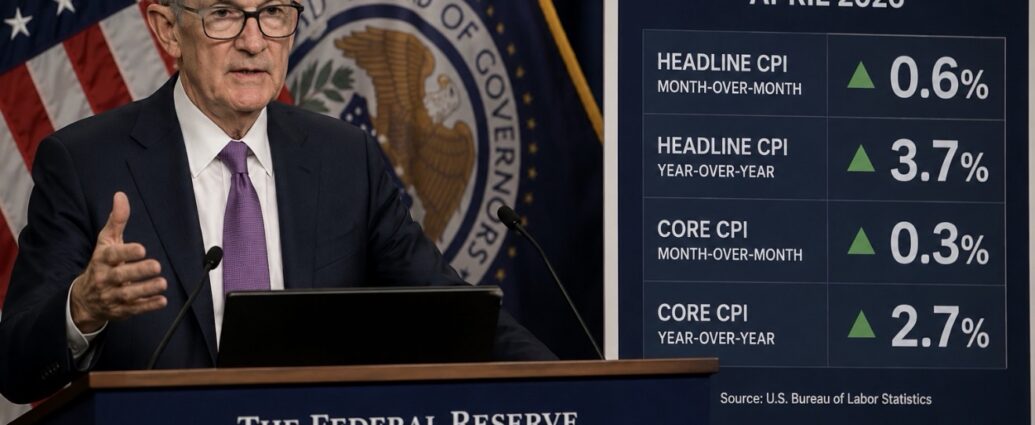
JUST RELEASED: April CPI Surges to 3.7%, Raising Fears of Higher Prices, Prolonged High Interest Rates, and Slower U.S. Economic Growth
The U.S. Bureau of Labor Statistics released its closely watched April Consumer Price Index (CPI) report Tuesday morning at 8:30 a.m. Eastern Time, with economists across Wall Street forecasting what could become the hottest inflation reading in nearly two years as rising energy prices and tariff pressures continue flowing through the American economy.
Economists surveyed ahead of the report projected headline CPI increased approximately 0.6% in April month-over-month, pushing annual inflation to roughly 3.7%, up sharply from March’s 3.3% reading and marking the highest year-over-year inflation level since mid-2024. Core CPI, which excludes volatile food and energy prices, was expected to rise 0.3% for the month and 2.7% annually, according to consensus estimates compiled by Morningstar.
The largest contributor to the anticipated increase remained gasoline prices. UBS economist Alan Detmeister projected gasoline prices climbed approximately 6% during April alone, accounting for much of the projected monthly increase in headline inflation. The rise followed continued disruptions across global energy markets tied to the now eleven-week conflict involving the United States, Israel, and Iran, which has kept portions of shipping activity through the Strait of Hormuz below normal operating levels while helping push Brent crude oil above $104 per barrel.
March inflation data had already showed significant acceleration. Headline CPI rose 0.9% in March, the largest monthly increase since June 2022, driven primarily by a 10.9% surge in the energy index and a 21.2% spike in gasoline prices, according to prior Bureau of Labor Statistics data. Economists said April’s report was expected to remain elevated even if the pace moderated slightly from March’s unusually sharp jump.
Housing and shelter costs also remained a major focus for economists analyzing Tuesday’s release. Barclays U.S. economist Pooja Sriram noted the April report included technical adjustments tied to rent and owners’ equivalent rent calculations following data collection disruptions connected to last year’s federal government shutdown. Analysts expected those adjustments to place additional upward pressure on core inflation readings independent of broader housing-market fundamentals.
For American workers and consumers, economists warned the inflation report could reinforce concerns about declining purchasing power. Average hourly earnings increased 3.6% year-over-year in the April employment report released last Friday — potentially below the anticipated inflation rate if consensus projections proved accurate. That would imply flat or negative real wage growth after adjusting for inflation for many households already managing elevated costs tied to housing, healthcare, groceries, transportation, and energy.
The report also carried major implications for Federal Reserve policy and financial markets. Bank of America economists recently said they no longer expect the Federal Reserve to cut interest rates during 2026, while JPMorgan scenario forecasts project inflation could remain above the Fed’s 2% target into early 2027. According to the CME Group FedWatch Tool, futures markets have sharply reduced expectations for rate cuts this year compared to earlier 2026 projections.
Analysts at Vanguard noted that while core goods inflation appeared relatively stable, core services inflation was expected to accelerate due to higher transportation costs, rising medical care expenses, and elevated airfare pricing linked to fuel costs. Economists said transportation remained one of the primary channels through which higher oil prices continue spreading across the broader economy.
The inflation report arrived the same morning President Donald Trump prepared to depart for Beijing ahead of a closely watched summit with Chinese President Xi Jinping, where trade policy and tariffs are expected to dominate discussions. According to the Penn Wharton Budget Model, average U.S. tariffs on Chinese goods remained around 31.6% in early 2026, costs many economists say continue flowing directly into consumer prices and supply chains.
Economists cautioned that even if geopolitical tensions ease and global energy markets stabilize later this year, inflationary pressures already embedded across the economy may continue keeping prices elevated well above the Federal Reserve’s long-term target through the remainder of 2026.
For millions of American households balancing rising costs for gasoline, food, rent, insurance, and healthcare simultaneously, the financial pressure remains significant heading into the summer months.
JBizNews Desk
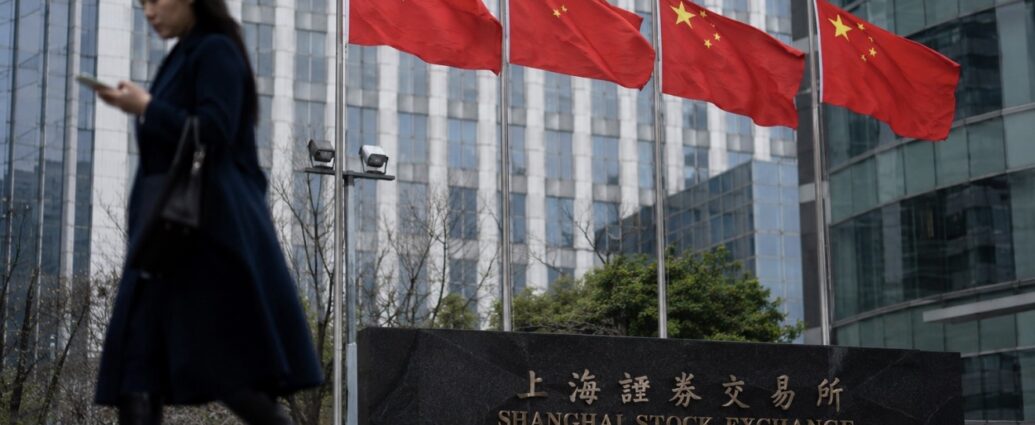
China Investors Bet Xi-Trump Meeting Will Extend Trade-Detente Rally as Leaders Prepare for High-Stakes Beijing Summit
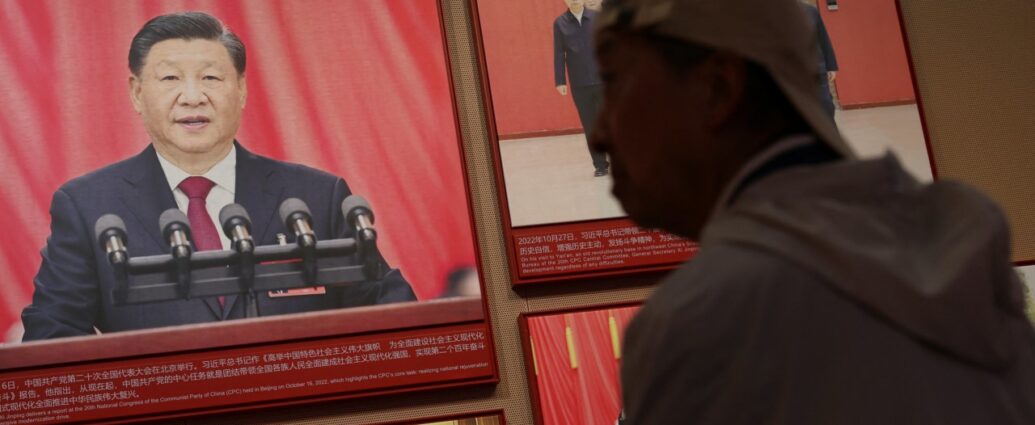
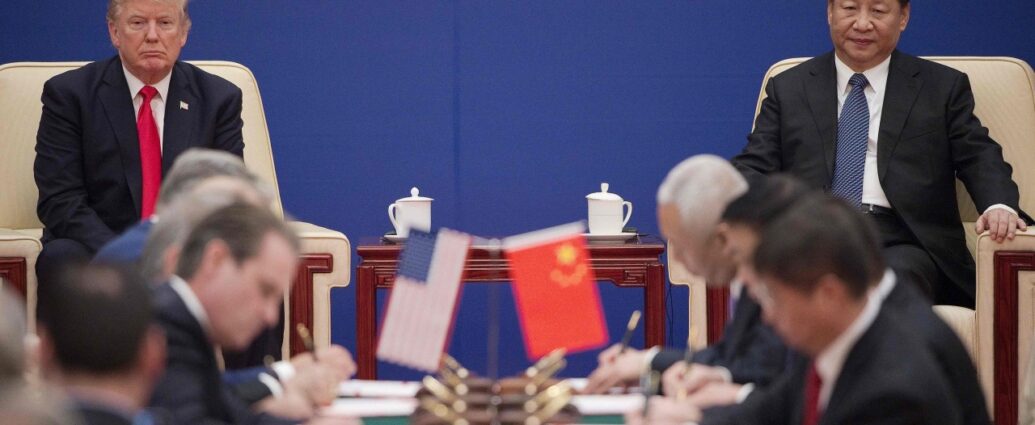
Global investors are increasingly positioning for what could become the most consequential geopolitical meeting of 2026: a high-stakes summit between President Donald Trump and Chinese President Xi Jinping in Beijing that markets hope will preserve — and potentially deepen — the fragile trade détente stabilizing relations between the world’s two largest economies.
The summit, scheduled to begin May 14, marks the first official state visit to China by a sitting U.S. president since Trump’s 2017 visit during his first administration. Originally planned for March, the meeting was postponed after the outbreak of the Iran conflict and the subsequent U.S.-Israeli military operations that reshaped global diplomatic priorities.
Now, with oil markets volatile, rare earth supply chains under pressure, and global investors searching for signs of stability between Washington and Beijing, the summit has taken on outsized economic significance.
Markets are already reacting.
China’s CSI 300 Index rose 1.64% Monday, closing at 4,951.84, while Hong Kong’s Hang Seng Index has gained more than 4% year-to-date as investors cautiously rebuild exposure to Chinese assets after years of geopolitical uncertainty, regulatory crackdowns and slowing growth.
The rally reflects a straightforward calculation on Wall Street and across Asia: if Trump and Xi can prevent another escalation in tariffs, technology restrictions or rare earth export controls, Chinese equities could still have substantial room to recover.
“If the summit can bring a little bit more certainty to the U.S.-China relationship and drive that risk premium down, that’s ultimately going to be very positive for Chinese equities,” said Christopher Hamilton, Head of Client Solutions for Asia Pacific ex-Japan at Invesco Ltd.
Despite the improving sentiment, expectations for a sweeping trade agreement remain modest.
Most analysts expect the summit to focus narrowly on maintaining stability rather than pursuing a dramatic reset in relations. Key agenda items are expected to include tariffs, rare earth mineral exports, U.S. technology restrictions, Chinese purchases of American goods, and broader supply chain security.
Economists at Goldman Sachs, led by Andrew Tilton, said the discussions will likely center on “trade and export controls — including tariffs, Chinese purchases of U.S. goods such as soybeans, energy, and airplanes, and stable rare earth flows.”
Rare earths remain the most strategically sensitive issue.
China controls more than 70% of global rare earth supply, giving Beijing enormous leverage over industries ranging from semiconductors and electric vehicles to missile systems and consumer electronics.
That leverage became especially visible during the 2025 trade confrontation, when China threatened to restrict exports of rare earth minerals and industrial magnets in response to Trump administration tariffs that at one point exceeded 140% on certain Chinese goods.
The resulting standoff forced both governments into a fragile trade truce reached in October 2025.
Under that arrangement, Washington eased some tariffs while Beijing resumed soybean purchases and partially relaxed rare earth export restrictions. The détente helped stabilize supply chains and triggered a recovery in Chinese industrial and commodity-related equities.
Since then, shares of major Chinese rare earth producers including China Northern Rare Earth Group High-Tech Co. and Xiamen Tungsten Co. have more than doubled.
Investors are now betting the Beijing summit will preserve that stability.
The geopolitical backdrop, however, remains highly fragile.
The Iran conflict is expected to dominate portions of the discussions, particularly after China recently hosted Iran’s foreign minister for talks tied to ceasefire and energy negotiations.
Treasury Secretary Scott Bessent has already confirmed Iran will be discussed during the summit, raising the possibility that broader geopolitical tensions could overshadow economic negotiations.
Taiwan, artificial intelligence export controls and semiconductor restrictions also remain major unresolved flashpoints.
While the Trump administration has eased certain tariff measures over the past several months, Washington continues maintaining restrictions on advanced AI chips and sensitive technology exports to China — controls Beijing views as direct attempts to constrain its technological rise.
At the same time, the White House reportedly declined Beijing’s invitation to organize separate high-profile meetings between senior Chinese leaders and American CEOs, amid concerns that such engagements could politically expose U.S. companies as appearing too closely aligned with China.
Still, investors increasingly believe the relationship has entered a more stable phase compared with the confrontational posture that dominated much of the past several years.
Thomas Fang, Head of China Global Markets at UBS Group, said many institutional investors no longer see China and the United States as mutually exclusive investment choices.
“Instead of choosing between investing in the U.S. or China, more investors believe they need exposure to both,” Fang said. “The question has become one of allocation.”
Currency markets are reinforcing that optimism.
The Chinese yuan has strengthened as the U.S. dollar weakened in recent months, historically a supportive signal for Chinese equities. HSBC now forecasts the yuan strengthening to 6.95 per dollar by year-end, while Morgan Stanley projects further appreciation toward 6.80 by 2027.
Valuations also remain comparatively attractive.
Chinese equities currently trade near 11.8 times forward earnings, roughly half the valuation multiple of the S&P 500, which trades closer to 22 times forward earnings. Analysts say that leaves significant room for valuation expansion if geopolitical risks continue easing.
For Beijing, the summit’s importance extends well beyond markets.
Images of Trump and Xi together are expected to send a broader message throughout China’s political and business system that engagement with American companies is becoming more acceptable again after years of heightened tensions.
“Since U.S. military actions earlier this year, Chinese officials have been more hesitant to engage with the American business community,” said Michael Hart, President of the American Chamber of Commerce in China.
The most likely outcome, analysts say, is neither a breakthrough agreement nor a renewed confrontation.
Instead, markets are betting on something simpler — an extension of the current détente, continued rare earth stability, no new tariff escalation, and avoidance of major provocations around Taiwan or technology restrictions.
For investors, multinational companies, manufacturers dependent on Chinese supply chains, and consumers still feeling the inflationary effects of U.S.-China trade tensions, that alone may be enough to keep the rally alive.
JBizNews Desk
© JBizNews.com. All rights reserved. This article is original reporting by JBizNews Desk. Unauthorized reproduction or redistribution is strictly prohibited.


From PepsiCo to Mondelez, Social Media Is Reshaping the World’s Fastest-Growing Market for Global Brands
PepsiCo has a problem in the world’s fastest-growing major consumer economy — and it is not a competitor, a supply chain disruption, or a pricing challenge.
It is a smartphone camera pointed at an ingredient label, and the millions of Indian consumers now watching what it reveals.
One of the world’s largest packaged food and beverages companies, PepsiCo, is the latest global giant to respond to rapidly changing customer preferences in India.
“Today, more than 50% of our beverage portfolio in India comprises low- to no-sugar offerings,” said Nitin Bhandari, Vice President and General Manager of Beverages at PepsiCo India, adding that the company aims to “scale low- and no-sugar options to 90% of our beverage portfolio over time in India.”
PepsiCo gathers consumer insights through engagement forums, social media, and its WhatsApp-based consumer loyalty platform, PepGenie.
Reaching 90% low- or no-sugar beverages in India would represent one of the most sweeping product reformulations PepsiCo has undertaken in any major global market.
For a company whose core beverage business was built on full-sugar carbonated drinks, the shift is a direct response to a force that did not exist a decade ago:
Viral social media content that has turned label-reading into a mainstream consumer habit across a country of 1.4 billion people.
The Video That Changed Everything
The flashpoint that crystallized the new reality for global food brands came when a fitness influencer posted a viral video scrutinizing the sugar content in Bournvita — the chocolate malt drink owned by Mondelez and marketed to Indian families for decades as a nutritional supplement for children.
Following growing public backlash, Mondelez reduced the sugar content in its Bournvita offering, according to local media reports.
The influencer was pressured to take the original clip down — but the damage to Bournvita’s health halo was irreversible.
The Indian food safety regulator followed up by issuing notices barring malt-based beverages such as Bournvita from using “health drinks” branding and labeling.
Mondelez did not respond to requests for comment.
The reverberations extended well beyond Bournvita.
Every global brand selling packaged food or beverages in India suddenly faced the same uncomfortable question:
What happens when an influencer points a camera at the ingredient list and tens of millions of consumers watch?
Dabur — whose Real fruit juice brand also came under fire from label-reading social media creators — told CNBC it had been reducing sugar in its juice offerings since 2018 and had cut sugar content by 21% by 2023.
“We are currently working on sugar reduction to the tune of an additional 20% in the Real core beverage range,” a company spokesperson said, adding that the company is developing low-sugar and zero-sugar variants to serve a rapidly growing health-conscious consumer base.
Why India Is the Prize Every Global Brand Wants
The scale and urgency of these reformulations reflect the extraordinary economic opportunity India now represents for global consumer companies.
In the next five years, India’s income per capita is expected to grow at the highest rate among the top five emerging markets for consumer products — outpacing China, Brazil, Mexico, and Russia — according to Bain & Company, making it a priority for global consumer companies.
Global companies already dominate the world’s fastest-growing major consumer market across 20 product categories, from soft drinks and spirits to savory snacks, detergents, and diapers.
That dominance, however, is no longer guaranteed by brand recognition and distribution muscle alone — the two advantages global companies have historically used to lock in emerging market consumers.
A rising Indian middle class with smartphones, social media access, and growing health consciousness is demanding that products match their packaging claims.
When they do not, the consequences now spread at the speed of a share button.
India’s advertising expenditure is projected to reach ₹1,476 billion — roughly $15.9 billion — by 2026, with social media and online video accounting for the two largest slices of that spending.
Social advertising is projected to overtake television as the largest advertising format in India within the next five years — a fundamental shift in how brands reach Indian consumers.
Over 73% of internet subscribers in India now consume content in regional languages, with an estimated regional language user base of 540 million people — a $53 billion market opportunity for brands that can communicate in the languages their customers actually speak.
For global consumer brands accustomed to running English-language campaigns and relying on urban brand recognition, that number represents both a challenge and an enormous untapped growth opportunity.
The New Playbook — Digital First
PepsiCo’s response goes beyond reformulating its products.
Ankit Agarwal, Marketing Director for Doritos at PepsiCo India, described a structural shift in how the company approaches its Indian consumers.
“Over the last couple of years, we have become a digital-first brand. While traditional remains important for scale, digital allows us to have a more personal, two-way conversation with our audience,” he said.
The entire journey from product discovery to purchase can now happen in minutes on a smartphone — AI reduces friction in discovery, and quick-commerce delivery platforms complete the transaction.
That shift from a broadcast model to a pull model is significant.
Historically, global brands built awareness through television advertising and waited for consumers to recall them at the point of purchase.
In India today, consumers actively seek recommendations — often through social media creators or AI interfaces — and move directly to a purchase platform, bypassing traditional retail discovery entirely.
For American investors and companies tracking emerging market consumer growth, the India story carries a direct and practical message.
The brands that will win in India’s expanding middle class are not necessarily the ones with the largest advertising budgets or the most shelf space.
They are the ones that can listen — through social media, through data platforms, through direct consumer engagement — and then move fast enough to earn trust in a market where a single viral video can undo decades of brand equity overnight.
PepsiCo’s commitment to a 90% low- or no-sugar beverage portfolio in India is the most concrete illustration yet of how seriously the world’s largest consumer brands are taking that lesson.
The old playbook is being rewritten — one label-reading influencer at a time.
© JBizNews.com. All rights reserved. This article is original reporting by JBizNews Desk. Unauthorized reproduction or redistribution is strictly prohibited.



Syria’s crackdown on Hezbollah shows Damascus’s commitment to security – analysis
Syria has dismantled a Hezbollah-linked cell, its Interior Ministry said Tuesday. It posted images of the raids, showing how important Damascus considers this development.
“Syria’s Interior Ministry announced Tuesday it had foiled a large-scale terrorist plot and dismantled a cell linked to Hezbollah militia that was planning to destabilize the country,” Syrian Arab News Agency (SANA), Syria’s official news agency, reported.
This is important because it highlights how Syria is committed to security. Damascus wants to create stability and also prevent any threats from Iran or from other extremist groups.
Prior to the rise of the new Syrian government, the country was a major target for Iranian expansion in the region.
Under the Assad regime, Hezbollah was invited into Syria to help aid the regime in the Syrian civil war. Hezbollah entered Syria in large numbers around 2012-2013 via Qusayr, a city in western Syria near the Lebanese border.
After intervening to help Assad, Hezbollah began to develop its own networks. It worked with Iranian-backed militias that began to flow into Syria via Al-Bukamal, an eastern city on the Euphrates River near the Iraqi border.
Those militias built a base called Imam Ali. They also used homes in Al-Bukamal as facilities.
Hezbollah diminished in Syria since Assad’s fall
Some of those areas were later targeted in airstrikes. Although no country took credit for those strikes, the militias often blamed Israel and the US. Israel had launched what was called the Campaign Between the Wars to reduce Iranian entrenchment in Syria.
Hezbollah’s role in Syria was a key component of the Iranian entrenchment. In addition to bolstering the Assad regime and working with Iraqi militias, it also established networks near the Golan Heights.
These networks expanded after the Syrian regime returned to areas near the Golan in 2018. Hezbollah cells began to bring in drones and other weapons to threaten Israel.
When the Assad regime fell suddenly on December 8, 2024, Hezbollah was already facing challenges. It had suffered major losses at the hands of Israel in September-November 2024. As such, it was unable to help Assad when the regime suffered losses due to a Syrian rebel offensive in late November.
Therefore, Hezbollah’s role in Syria has been diminished since the fall of the Assad regime. It has been working very quietly via some cells and continues to try to smuggle weapons to Lebanon.
The Syrian government of Ahmed al-Sharaa, however, has done a good job cracking down on Hezbollah. The crackdown is continuing, as the raids this week indicate.
The Syrian Interior Ministry “said in a statement that the specialized units, in cooperation with the General Intelligence Service, succeeded in delivering a preemptive and decisive blow to a terrorist plot that was targeting the security of the country and its symbols,” SANA reported.
The recent raids were more widespread than in the past. They took place throughout Syria, including in Damascus, Aleppo, Homs, Tartus, and Latakia.
This indicates a widespread Hezbollah conspiracy. The “members infiltrated Syrian territory after receiving intensive specialized training in Lebanon,” the report said, adding that a person Syria says was involved in assassinations was detained.
“Preliminary investigations indicated the cell was preparing to carry out coordinated attacks, including assassinations targeting high-ranking government figures,” SANA reported.
“Authorities also seized a cache of weapons and equipment, including improvised explosive devices, RPG launchers with munitions, automatic rifles, grenades, and various ammunition, as well as surveillance and technical equipment such as specialized optics and cameras. Officials said the findings indicated the cell was in an advanced stage of readiness to carry out its plans.”
The report comes at an important time for Syria. The country is trying to deal with several major issues.
For instance, it is seeking to integrate Kurdish forces in eastern Syria. In southern Syria, the Druze area of Sweida continues to be self-governing. Jordan recently carried out several airstrikes near Sweida, sending a message that Amman was concerned about drug smuggling in the area.
Meanwhile, Syria is also forming a committee for elections in the Kobani and Hasakah areas, which had been controlled by the US-backed Syrian Democratic Forces. The SDF is a Kurdish-led group that is supposed to integrate with the Syrian security forces based on a January 29 agreement.
With all these developments, Damascus is showing that it can confront a number of threats and continue to stabilize the country.


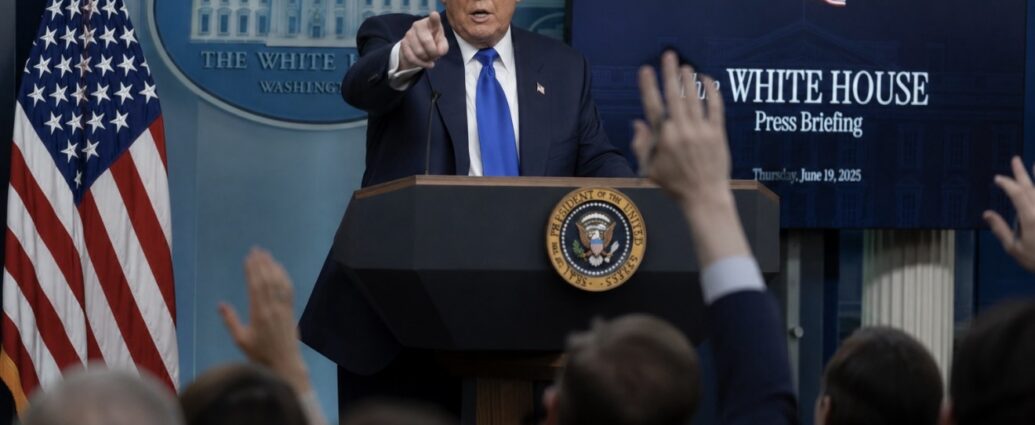
Trump Privately Complained to Acting AG Blanche About Iran War Leaks, Triggering Aggressive DOJ Push to Pursue Reporters and Sources
President Donald Trump privately complained to acting Attorney General Todd Blanche about media leaks stemming from the U.S.-Iran war, according to administration officials familiar with the matter, setting in motion an aggressive campaign at the Department of Justice to investigate journalists, subpoena news organizations, and root out government officials who spoke to the press — a crackdown that press freedom advocates have called one of the most sweeping assaults on the First Amendment in modern presidential history.
The private complaints to Blanche, delivered last month as a stream of damaging stories emerged about the administration’s handling of the Iran conflict, prompted a sharp escalation in leak investigation activity at the DOJ that has now become one of the defining institutional features of the second Trump administration.
The president’s dissatisfaction was driven in significant part by a series of media reports that exposed deep fissures within his own inner circle over the decision to go to war. Senior White House officials were reportedly having “buyer’s remorse” over the Iran war, with a source close to the administration telling Axios that key officials had not been fully on board with Trump’s plans before the president overruled them all.
“He ended up saying, ‘I just want to do it,’” the source said. “He grossly overestimated his ability to topple the regime short of sending in ground troops.”
That disclosure — along with a cascade of classified operational details that appeared in Axios, The Washington Post, Reuters, and other outlets — infuriated the president, according to officials familiar with his private conversations.
The most explosive incident came in early April, when an F-15E Strike Eagle was shot down over Iran during combat operations and one of the two-person crew, a Weapons Systems Officer, was left stranded deep inside Iranian territory. Before the U.S. government had mounted a rescue, the story of the missing second airman appeared publicly in the press.
Trump later told reporters in the White House Briefing Room that “all of a sudden the entire country of Iran knew that there was a pilot that was somewhere on their land, fighting for his life,” and threatened that his administration would go to the media company responsible and say, “national security — give it up or go to jail.”
The comments immediately sparked backlash from press freedom organizations and constitutional law scholars.
Jameel Jaffer, Executive Director of the Knight First Amendment Institute at Columbia University, responded: “News organizations have a First Amendment right to publish stories about matters of public importance — including stories the government would prefer to suppress. President Trump’s threat to force journalists to disclose their sources raises serious press freedom concerns because journalists’ ability to do their work turns in part on their ability to protect their sources’ identities.”
Blanche, who became acting attorney general in April after Trump dismissed former Attorney General Pam Bondi amid controversy surrounding the handling of the Epstein files, publicly confirmed the administration’s hardening approach toward leak investigations the following day.
Asked whether the DOJ was investigating the F-15E disclosures, Blanche said: “I will never comment on ongoing investigations. I think that, to the extent that we have seen a series of leaks that necessarily involve classified information and put the lives of our soldiers or agents at risk, that is something we will always investigate.”
“And we will investigate, even if it means sending a subpoena to the reporter,” Blanche added. “That’s exactly what we should do, and that’s exactly what we will be doing.”
The legal groundwork for that strategy had already been established earlier under Bondi.
As attorney general, Bondi rescinded Biden administration protections that had limited prosecutors from secretly seizing journalists’ phone records or aggressively compelling reporters to reveal confidential sources during leak investigations.
The revised DOJ guidance authorized prosecutors to issue subpoenas to journalists, execute search warrants involving media organizations, and compel testimony tied to national security leaks.
“The Justice Department will not tolerate unauthorized disclosures that undermine President Trump’s policies, victimize government agencies, and cause harm to the American people,” Bondi wrote in the policy memorandum.
The administration has already moved aggressively under the expanded rules.
Washington Post reporter Hannah Natanson reportedly had her Virginia home searched by FBI agents earlier this year as part of a leak-related investigation. Separately, federal prosecutors in Maryland charged a former government contractor accused of sharing national security information with a journalist, with Bondi publicly stating the case had been pursued “at the request” of the Pentagon.
The Iran war has also fundamentally altered relations between the Pentagon and the press corps.
The Department of Defense implemented new credentialing requirements obligating reporters to commit to publishing only officially sanctioned operational information. Multiple journalists and media organizations refused, with dozens surrendering Pentagon credentials rather than accept the restrictions.
After legal challenges led by The New York Times, a federal judge ordered certain press credentials reinstated. In response, the Pentagon announced plans to remove permanent media offices from inside its headquarters altogether, relocating journalists to a separate annex outside the main building.
Blanche’s tenure has simultaneously been marked by an expansion of politically sensitive investigations beyond the leak cases.
He has approved probes involving former CIA Director John Brennan, former White House aide Cassidy Hutchinson, Democratic fundraising platform ActBlue, and the Southern Poverty Law Center, while appointing longtime Trump ally Joseph diGenova to oversee the Brennan investigation.
According to individuals familiar with the matter, more than 150 subpoenas have already been issued in the Brennan inquiry alone, including subpoenas involving former FBI Director James Comey, with additional rounds expected.
For businesses, multinational corporations, financial institutions and investors that rely heavily on independent reporting about national security, trade policy, military conflicts and geopolitical decision-making, the escalating confrontation between the administration and the press carries significant economic implications.
Market analysts note that reduced transparency surrounding government actions can increase uncertainty around energy markets, sanctions policy, tariffs, military operations and international supply chains — particularly during periods of geopolitical instability.
Critics warn that an environment in which reporters face subpoenas and sources risk criminal prosecution may discourage whistleblowers and reduce the flow of independent information into financial markets and public discourse.
The White House, however, has shown no indication of softening its position.
Trump has repeatedly argued that national security leaks tied to the Iran war endangered American lives and undermined military operations, while Blanche has signaled the DOJ intends to continue pursuing aggressive leak investigations regardless of media backlash.
As the administration deepens its confrontation with major news organizations, the battle over press freedom, classified information, and the limits of executive power is rapidly becoming one of the defining constitutional and institutional conflicts of Trump’s second term.
JBizNews Desk
© JBizNews.com. All rights reserved. This article is original reporting by JBizNews Desk. Unauthorized reproduction or redistribution is strictly prohibited.

Gold Rises on Possible Position Adjustments
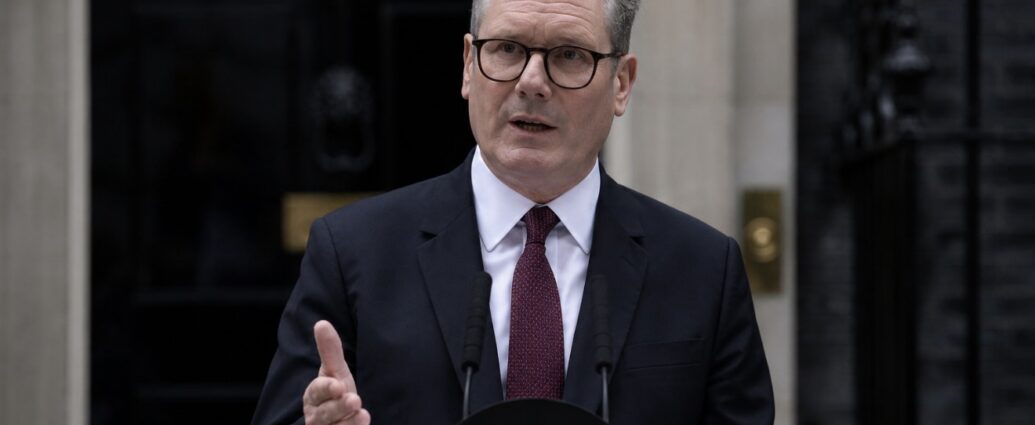
Starmer Fights for Political Survival After Labour’s Worst Local Election Results in Decades — Britain Risks Its Sixth Prime Minister in Seven Years
British Prime Minister Keir Starmer is facing the gravest political crisis of his premiership after Labour suffered catastrophic local election losses that have triggered an open revolt inside his own party, intensified pressure in financial markets, and raised the prospect that Britain could soon install its sixth prime minister in just seven years.
In a high-stakes speech Monday morning in central London, Starmer vowed to “face up to the big challenges” confronting the United Kingdom and insisted he would continue leading Labour despite mounting calls for his resignation following what many political analysts described as the party’s worst local election collapse in modern times.
The political shockwave began Thursday night when Labour lost more than 1,100 local council seats across England and Wales while the insurgent right-wing populist party Reform UK, led by Nigel Farage, gained more than 1,400 seats, reshaping Britain’s political map and devastating Labour strongholds that had remained loyal for generations.
The scale of the defeat stunned Westminster.
In Wigan and Leigh, two historic Labour strongholds in northwest England, Reform UK captured 24 of 25 contested seats. Nearby Tameside, controlled by Labour for nearly half a century, also swung dramatically away from the governing party. In Wales, Labour lost overall control for the first time, with the nationalist Plaid Cymru finishing first and Reform UK emerging as the second-largest force.
Farage called the results “a truly historic shift in British politics,” declaring that Labour was being “wiped out by Reform in many of their traditional areas.”
The fallout inside Labour was immediate and severe.
By Sunday evening, at least 42 Labour MPs were publicly demanding Starmer’s resignation, according to multiple British media tallies, pushing the party toward a potential leadership crisis less than two years after returning to power.
The rebellion quickly spread beyond backbench lawmakers.
Deputy Prime Minister Angela Rayner, long viewed as one of Labour’s most influential internal figures, posted a sharply critical message online warning that “what we are doing isn’t working, and it needs to change,” adding that the current moment “may be the Labour Party’s last chance.”
Rayner is now widely viewed as a possible leadership contender alongside Health Secretary Wes Streeting and Greater Manchester Mayor Andy Burnham if a formal challenge proceeds.
Labour MP Catherine West publicly urged cabinet ministers to “move quickly” to replace Starmer, while MP Paulette Hamilton warned the party “may as well hand in the keys to No. 10 now if we don’t change our leader soon.”
Under Labour Party rules, challengers would need the backing of 81 Labour MPs to formally trigger a leadership contest.
Starmer attempted to project defiance.
Speaking Monday, he acknowledged the election results were “very tough” and admitted “some people are frustrated with me,” but argued that “incremental change won’t cut it” and insisted he would lead Labour into the next general election due before May 2029.
He pointed to reductions in National Health Service waiting lists, falling child poverty figures and lower immigration levels as evidence that “the fundamentals are sound.”
Starmer also doubled down on strengthening Britain’s relationship with the European Union, drawing a sharp contrast with Reform UK and the Conservative Party.
“Those parties are defined by breaking our relationship with Europe,” Starmer said. “This government will be defined by rebuilding it.”
But financial markets appeared unconvinced.
During and after the speech, yields on British government bonds — known as gilts — climbed sharply, with benchmark yields approaching the psychologically critical 5% threshold, reflecting rising investor anxiety over political instability and Britain’s already fragile fiscal position.
The United Kingdom currently faces some of the highest borrowing costs in the G7, with persistent inflation, weak economic growth, elevated energy prices tied partly to the Iran conflict, and unresolved post-Brexit trade uncertainties continuing to weigh heavily on the economy.
According to British fiscal watchdog estimates, every 0.25 percentage point increase in government borrowing costs adds approximately £2.5 billion annually to Britain’s debt-servicing burden.
Market analysts warned that a prolonged leadership struggle — or a shift toward a more left-leaning Labour leadership — could intensify those pressures further.
Both Angela Rayner and Andy Burnham are viewed by some investors as more willing to support higher public spending and expanded borrowing, raising fears in bond markets about fiscal discipline.
“The longer doubts persist over the government’s stability, the greater the risk that market anxiety perpetuates the problem,” one London-based strategist said Monday.
The roots of Starmer’s political collapse are complex and politically combustible.
His government’s controversial decision to reduce winter fuel assistance for many pensioners during a prolonged cost-of-living crisis generated widespread anger among older working-class voters. Labour also faced growing backlash from progressive supporters who believed Starmer governed too cautiously on economic issues while simultaneously alienating some centrist voters with tougher rhetoric on immigration.
Additional controversy surrounding U.S. Ambassador Peter Mandelson’s reported ties to convicted sex offender Jeffrey Epstein further damaged public confidence in the government in recent months.
The broader implications now extend far beyond party politics.
Britain has cycled through five prime ministers since 2019 — Boris Johnson, Liz Truss, Rishi Sunak, and now Starmer — creating an extraordinary period of political instability rarely seen in a major Western democracy outside wartime or constitutional crisis.
For businesses and global investors, another leadership collapse would deepen concerns over Britain’s long-term policy direction at a moment when the country is already struggling with elevated debt costs, slowing growth and geopolitical economic shocks.
Whether Starmer survives may now depend on two critical questions: whether Labour rebels can gather enough parliamentary support to formally challenge him — and whether a single credible alternative can unify the increasingly fractured party behind one successor.
For now, Starmer remains in office.
But across Westminster, financial markets and Labour’s own parliamentary ranks, the question dominating British politics is no longer whether the prime minister is weakened.
It is whether his premiership is already entering its final chapter.
JBizNews Desk
© JBizNews.com. All rights reserved. This article is original reporting by JBizNews Desk. Unauthorized reproduction or redistribution is strictly prohibited.
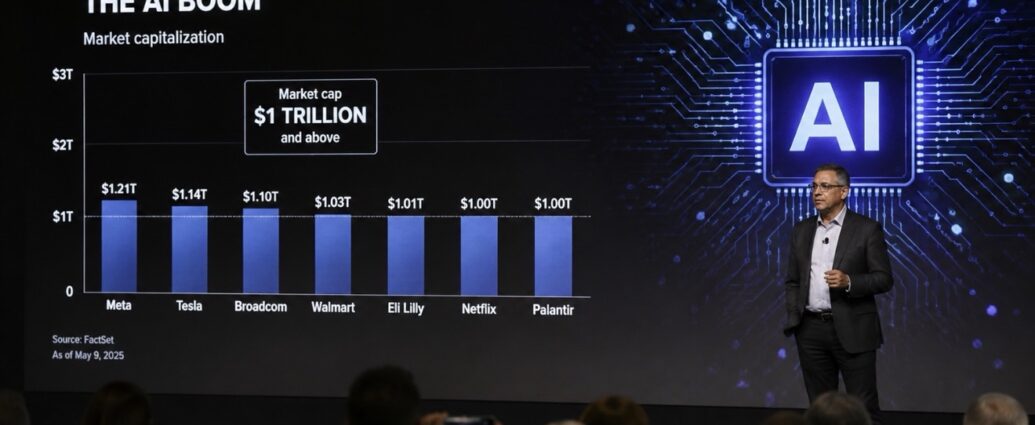
The $1 Trillion Club Has New Members — and They Are All Powering the AI Boom
By JBizNews Desk
May 11, 2026
Market royalty is getting a hardware makeover.
Samsung Electronics officially joined the world’s trillion-dollar club on May 6 after shares in the South Korean technology giant surged more than 14% in a single trading session, pushing the company’s market capitalization above $1.15 trillion and reinforcing what has now become one of the defining themes of global financial markets: the companies controlling the infrastructure behind artificial intelligence are rapidly becoming the world’s most valuable businesses.
Samsung became only the second Asian company ever to cross the trillion-dollar threshold, joining Taiwan Semiconductor Manufacturing Co., or TSMC, which entered the club in 2024 during the height of the AI infrastructure rally.
The move also sent South Korea’s benchmark Kospi Index above 7,000 points for the first time in history, while shares of fellow memory-chip producer SK Hynix jumped more than 10% in the same session as investors continued pouring capital into companies tied directly to artificial intelligence hardware demand.
The milestone reflects a dramatic shift in where investors now believe the global economy’s long-term value is concentrating.
The trillion-dollar club was once dominated primarily by consumer platforms, internet ecosystems, and software giants — companies built around apps, advertising, e-commerce, and smartphones.
The newest entrants are different.
Nvidia crossed the $1 trillion mark in May 2023 as demand for AI accelerators and graphics-processing units exploded. TSMC followed as investors recognized the irreplaceable role its advanced semiconductor fabrication plants play in manufacturing cutting-edge AI chips.
Broadcom joined shortly afterward, lifted by surging demand for networking infrastructure and custom AI semiconductors used inside hyperscale data centers.
Now Samsung has added what many analysts describe as the final foundational layer of the AI hardware stack: high-bandwidth memory.
Those advanced memory chips sit inside virtually every modern AI accelerator and are essential for training and operating large language models at commercially viable speeds.
Without them, modern artificial intelligence systems simply cannot process data efficiently enough to function at scale.
The financial performance driving Samsung’s rise has been extraordinary.
During the first quarter of 2026 alone, Samsung’s operating profit increased more than eightfold compared with the same period a year earlier, reaching approximately $39 billion.
Quarterly revenue hit an all-time company record and exceeded Samsung’s entire profit for all of 2025 combined.
Executives said the company’s entire planned 2026 supply of high-bandwidth memory is already effectively sold out, with demand continuing to outpace available production capacity.
Samsung additionally warned that the supply-demand imbalance inside the memory market may become even more severe during 2027 as AI infrastructure spending accelerates globally.
“The memory market is currently undersupplied,” said Sam Konrad, investment manager at Jupiter Asset Management. “With Samsung indicating that supply and demand in 2027 will be even tighter than in 2026, prices for NAND and DRAM are likely to continue rising.”
The current trillion-dollar club now consists of 13 companies: Nvidia, Apple, Microsoft, Alphabet, Amazon, Meta Platforms, TSMC, Broadcom, Tesla, Samsung, Berkshire Hathaway, Walmart, and Saudi Aramco.
Ten of those companies are American. Taiwan, South Korea, and Saudi Arabia each contribute one.
The few non-AI entrants help illustrate what scale investors still reward outside the artificial intelligence trade.
Berkshire Hathaway crossed the trillion-dollar threshold in 2024 as the first major U.S. non-technology company ever to do so, reflecting decades of compounded growth across insurance, railroads, utilities, energy, manufacturing, and consumer brands under Warren Buffett.
Walmart became the first retailer to enter the club during 2026, fueled not only by its enormous retail footprint but also by growing investor enthusiasm surrounding its logistics network, advertising business, and expanding digital infrastructure.
Eli Lilly briefly surpassed the trillion-dollar level as demand for its obesity and diabetes treatments surged globally before shares later pulled back.
And Saudi Aramco remains a reminder that control over energy production at sufficient scale still commands enormous market value.
But Wall Street analysts increasingly argue the defining story belongs overwhelmingly to the AI hardware complex.
Nvidia, TSMC, Broadcom, and now Samsung each control a critical chokepoint the artificial intelligence industry cannot bypass.
No frontier AI model gets trained without Nvidia’s processors. No Nvidia processors get manufactured without TSMC’s advanced chip fabrication facilities. No hyperscale AI data center operates efficiently without Broadcom’s networking hardware. And no AI accelerator runs at full performance without the high-bandwidth memory supplied primarily by Samsung and SK Hynix.
The AI boom is no longer simply enriching the companies building chatbots and software applications.
It is elevating the suppliers of the world’s scarcest computing components into the highest ranks of global finance.
That shift is increasingly reshaping the broader market itself.
“Corporate earnings in aggregate keep getting stronger, and it’s mainly coming from one place — from the technology sector,” said Mark Davids, head of emerging markets and Asia Pacific equities at JPMorgan Asset Management.
Samsung’s arrival inside the trillion-dollar club may ultimately serve as another confirmation that the next era of global economic power is being built not only through software and platforms, but deep inside the semiconductor infrastructure powering artificial intelligence itself.
— JBizNews Desk
© JBizNews.com. All rights reserved. This article is original reporting by JBizNews Desk. Unauthorized reproduction or redistribution is strictly prohibited.

Can Israel’s economy survive after a seven-front war?
What is the state of Israel’s economy after nearly three years of war? As Israel increases its defense budget, weans itself off US aid, and halts the hiring of most Palestinian workers, can its industries continue to survive and thrive?
At this year’s Jerusalem Post Annual Conference, Minister of Economy Nir Barkat will share his vision for Israel’s economic future and the resilience of the country’s business ecosystem.
Despite the ongoing seven-front war, The Economist ranked Israel as the OECD’s third best-performing economy in 2025.
Israeli business outlet Globes highlighted several factors behind the achievement. First, Israel’s stock market recorded the highest gains among OECD countries in 2025, rising by 53.3%. Second, Israel achieved GDP growth of 3.5%, ranking fourth among OECD nations.
So what is behind Israel’s economic resilience during one of the most difficult periods in its history?
Barkat will discuss what many are calling Israel’s “secret sauce” and explain how the country plans to adapt to growing economic and security challenges in the years ahead.
For more information about the June 1 Annual Conference in New York and to secure tickets, visit www.jpost.com/NY26.
.

Opinion | Iran Thinks Trump Is Bluffing


Despite Trump statements, US president vetoed Kurdish uprising, sources confirm to ‘Post’
Despite an attack while speaking to reporters by US President Donald Trump on Monday against Kurdish groups for allegedly failing to help with a local uprising against the Iranian regime, sources have confirmed to The Jerusalem Post that he himself ultimately vetoed the idea.
Foreign sources have widely reported that the Mossad proposed the possibility of helping to facilitate toppling the regime aligned with turning out mass protests, following the US and Israeli bombing campaign against the regime’s forces.
Further, foreign sources have widely reported that Turkey pressed Trump not to go forward with the option.
Previously, the Post reported that IDF Chief of Staff Lt.-Gen. Eyal Zamir, Mossad Director David Barnea, and IDF Intelligence Directorate Chief Maj.-Gen. Shlomi Binder met with top US defense officials and, in some cases, via video conference with Trump, to help convince the US president to join the war.
However, top US defense officials opposed the Kurdish plan from the start, which also led Trump, along with other factors, to oppose the plan.
.@POTUS: The Iranian people “want to go out on the streets. They have no weapons. They have no guns. We thought the Kurds were going to give [them] weapons, but the Kurds disappointed us. The Kurds take, take, take… I’m very disappointed in the Kurds.” pic.twitter.com/w31IQHlsBC
— Rapid Response 47 (@RapidResponse47) May 11, 2026
Trump publicly confirmed providing weapons to Kurds
Strangely, Trump publicly confirmed providing weapons to the Kurds on Monday, but then veered off into claims that they had failed to rise up despite ample evidence and a record that he himself vetoed the idea.
It was unclear why the US president made the claim, though he has tried to avoid blame for the Islamic regime remaining in power.

Opinion | Donald Trump’s Nixon Moment

Opinion | The Era of Disruptive Populism
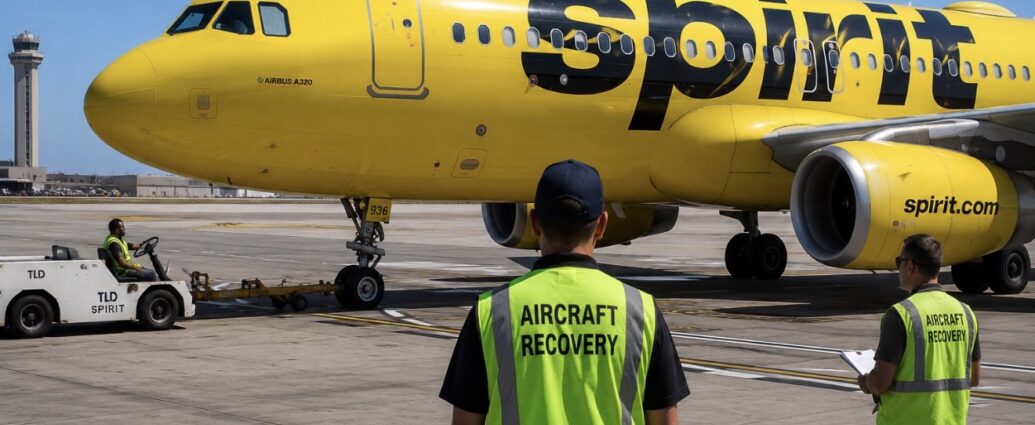
The World’s Highest-Flying Repo Men Are Collecting Spirit Airlines’ Jets — One Yellow Plane at a Time
When Spirit Airlines shut down operations at 3 a.m. on May 2, it left behind more than 90 bright yellow Airbus jets scattered across airports nationwide, thousands of stranded employees, and one of the largest commercial aircraft recovery operations the U.S. aviation industry has seen in years.
Within hours, the repossession teams were already mobilizing.
Except these repo men do not drive tow trucks.
They fly Airbus A320s.
The first call came Friday evening to Bob Allen, managing partner of Nomadic Aviation Group, a specialty aviation services company that quietly handles aircraft recoveries, ferry operations, and leasing logistics for major global lessors. The instruction was immediate: prepare pilots and start recovering planes.
Nomadic, founded in 2021 by aviation leasing and ferry-flight veterans, had been retained by six aircraft leasing companies that owned Spirit’s jets. Their mission sounded simple in theory but chaotic in practice — physically gain control of grounded aircraft sitting at major commercial airports, coordinate legal transfer authority with airport personnel and law enforcement, and fly the planes to long-term storage facilities in the Arizona desert.
Within days, at least 20 former Spirit pilots had reportedly joined the operation, trading airline uniforms for jeans and t-shirts as they began ferrying aircraft out of Spirit’s abandoned network one plane at a time.
The scale of the collapse explains the urgency.
At the time of its second bankruptcy filing in August 2025, Spirit operated 214 aircraft with an average fleet age of just 5.5 years, according to aviation data firm Cirium. By the time operations fully ceased this month, roughly 114 Airbus A320-family aircraft remained active in the fleet, including A320neos, A321neos, and older ceo variants spread across airports nationwide.
Industry estimates valued the fleet at roughly $7 billion.
But critically, Spirit did not actually own most of those planes.
Approximately 76% of the fleet was leased, meaning the aircraft legally belonged to a powerful network of global aviation finance firms that immediately moved to reclaim their assets once Spirit stopped flying.
According to court filings and aviation industry data, the lessors involved represent some of the largest aircraft-finance institutions in the world.
AerCap, the Dublin-based giant widely considered the world’s largest aircraft lessor, was Spirit’s single largest supplier with exposure tied to 10 remaining aircraft after earlier restructuring settlements reduced its position.
Other major lessors included:
- Sky Leasing with 10 aircraft,
- SMBC Aviation Capital with 8,
- Air Lease Corporation with 7,
- Carlyle Aviation with 5,
- DAE Capital of Dubai with 4,
- alongside multiple additional leasing and finance groups holding smaller portions of the fleet.
All wanted their aircraft back immediately.
The economics behind the urgency are enormous.
Spirit’s Airbus A320neo-family jets are among the most valuable narrow-body aircraft in the global secondary market today because airlines worldwide remain trapped in severe aircraft shortages. Both Airbus and Boeing continue facing manufacturing delays, while ongoing shortages of Pratt & Whitney GTF engines have sidelined aircraft across multiple carriers globally.
That means every recoverable Spirit aircraft potentially represents:
- an immediately deployable leased aircraft,
- a replacement aircraft for another airline,
- or a valuable source of engines and spare parts.
Some engines are reportedly already being removed from grounded jets before the aircraft even leave for Arizona storage facilities.
AerCap had already moved aggressively months earlier to limit its exposure during Spirit’s previous bankruptcy restructuring. The company paid Spirit approximately $150 million during earlier proceedings in exchange for accelerated lease terminations and the right to repossess dozens of aircraft ahead of the final shutdown.
Even after those arrangements, AerCap still reportedly holds unsecured claims against Spirit’s estate worth up to $572 million.
Physically reclaiming the jets, however, has proved far more complicated than simply presenting ownership documents.
Steve Giordano, managing partner of Nomadic Aviation and one of the operation’s coordinators, described the airport environments as scenes of “mass confusion.”
Ground crews, airport managers, and security personnel often initially refuse access when pilots in plain clothes arrive announcing they are repossessing aircraft parked at commercial gates.
“You go up to a person of authority and say, ‘I need to get on that airplane, I’m repossessing it,’” Giordano told NPR. “And the first thing they’re going to say is ‘no, no, no, no, no.’”
Airport police, sheriffs, and operations managers are frequently called in before control of the aircraft is transferred.
Despite the logistical chaos, the recovery operation is advancing rapidly.
Aircraft have already been ferried from major former Spirit hubs including Fort Lauderdale, Houston, and Miami to Phoenix Goodyear Airport and Pinal Airpark in Arizona — massive desert aircraft-storage facilities commonly known in aviation as “boneyards.”
Several of the jets are already expected to re-enter commercial service elsewhere.
AerCap has reportedly lined up future placements for former Spirit aircraft with carriers including Frontier Airlines and JetBlue, underscoring how valuable relatively young Airbus narrow-body aircraft remain despite the collapse of the airline that operated them.
The deeper irony is that Spirit’s fleet may ultimately prove more valuable dismantled and redistributed than it was as part of the airline itself.
Spirit’s final collapse came after years of financial instability worsened dramatically by the global fuel shock triggered by the U.S.-Iran conflict earlier this year.
According to Marshall Huebner of Davis Polk, representing Spirit during bankruptcy proceedings in White Plains, surging jet-fuel prices following U.S. and Israeli strikes on Iran added roughly $100 million in incremental operating costs during March and April alone — a blow the ultra-low-cost carrier could not absorb.
Industry-wide jet fuel prices have risen approximately 70% since the conflict began.
A proposed federal bailout package reportedly collapsed during the airline’s final days, ending Spirit’s 34-year run as one of America’s most disruptive budget carriers.
Now, the airline’s remaining legacy is unfolding not in terminals filled with passengers, but in quiet repositioning flights across the Southwest — yellow Airbus jets flown silently into the desert by pilots working for the aviation industry’s highest-flying repo operation.
— JBizNews Desk
© JBizNews.com. All rights reserved. This article is original reporting by JBizNews Desk. Unauthorized reproduction or redistribution is strictly prohibited.

Stocks Climb to Fresh Records as Chipmakers Shrug Off Trump’s Iran Warning, $104 Oil, and a Week Defined by the China Summit and Tuesday’s Inflation Report
By JBizNews Desk
May 11, 2026
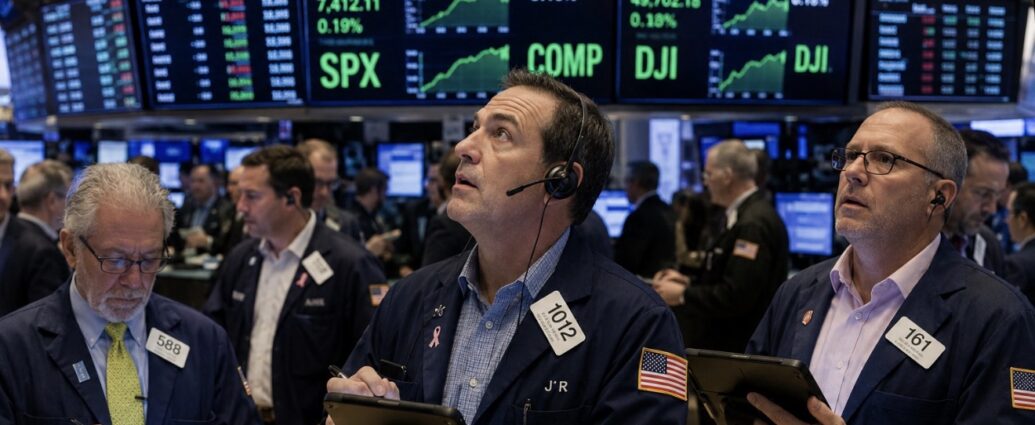
American equity markets extended their six-week winning streak to a seventh, closing at fresh all-time highs Monday even as President Donald Trump rejected Iran’s peace counterproposal as “TOTALLY UNACCEPTABLE,” declared the month-old ceasefire “on life support,” Brent crude surged above $104 a barrel, gas at the pump averaged $4.50 nationwide, and markets braced for a pivotal week that includes Tuesday’s Consumer Price Index report, Trump’s Wednesday departure for Beijing — the first visit to China by an American president in nearly nine years — and whatever signals emerge from his summit with President Xi Jinping on trade, rare earths, Boeing aircraft orders, and Taiwan.
The S&P 500 gained 0.19% to close at a record 7,412.84. The Nasdaq Composite added 0.10% to finish at a record 26,274.13. The Dow Jones Industrial Average rose 95.31 points, or 0.19%, to 49,704.47. The Russell 2000 small-cap index outperformed all three major benchmarks, rising 0.26% to a record close of 2,868.58.
The 10-year Treasury yield climbed 4.6 basis points to 4.41% as oil prices pressed higher and inflation anxiety crept back into bond markets ahead of Tuesday’s CPI print. The CBOE Volatility Index rose more than 7% on the day to 17.19 — a notable uptick even as the indexes themselves kept climbing, a sign that investors are quietly adding downside hedges even while riding the rally.
Breadth told a cautionary story: only 37.8% of U.S. issues advanced on the session, with gains concentrated almost entirely in semiconductors, computer hardware, and energy, while more than 55% of U.S. issues declined.
Intel was Monday’s standout, gaining 5.7% as investor enthusiasm continued to build around the preliminary chip-manufacturing agreement with Apple reported by the Wall Street Journal last week — a deal that would make Apple a customer of Intel’s foundry division, joining Microsoft, Amazon, and Tesla. Intel CEO Lip-Bu Tan confirmed ongoing product collaborations with Nvidia, including custom Xeon CPUs for data centers and integration of Nvidia’s RTX IP into future Intel silicon.
Nvidia itself hit a fresh 52-week high of $222.29 during the session. Advanced Micro Devices gained 2.4% and Micron Technology surged more than 6%, with the broader semiconductor sector providing virtually all of the index-level lift on a day when the rest of the market was largely flat to lower.
Monday.com was Monday’s single biggest gainer among large-caps, surging 26% after the software company reported a first-quarter earnings and revenue beat, with its AI platform helping revenue grow 24% year over year to $351.3 million.
Moderna spiked 7.5% — as high as 9% during the session — after a U.S. citizen tested positive for hantavirus following an outbreak aboard the cruise ship Hondius, with Moderna disclosing it had already been developing a hantavirus vaccine ahead of the public health emergency.
Lumentum rose 7.7% after Nasdaq confirmed the optical and photonic products company will join the Nasdaq-100 on May 18, replacing CoStar Group.
Circle Internet Group gained 3.2% after disclosing a $222 million institutional fundraise for its new Arc blockchain, backed by BlackRock, Apollo, and Andreessen Horowitz, alongside first-quarter revenue that rose 20% year over year.
On the downside, The Trade Desk fell 9% after missing Wall Street earnings expectations and issuing weaker-than-expected second-quarter guidance — the stock’s second significant post-earnings decline of the year, compounding concerns that AI-driven disruption to the programmatic advertising market is weighing on the company’s growth trajectory.
Dollar General slipped 5.8% after offering soft fiscal 2026 guidance and disclosing a leadership transition, adding to a difficult stretch for the discount retailer as it navigates a consumer who is spending selectively.
W.W. Grainger slid 18% as traders locked in gains after the industrial supply company hit record highs the prior week.
Nintendo fell 5.5% after reporting it would raise the Switch 2 price to $499.99 in the U.S. effective September 1, cut its full-year sales forecast, and project a 27% decline in net profit — all driven by the AI-fueled memory chip cost surge that is cascading through consumer hardware pricing globally.
Copper climbed more than 2% to a record close of $6.4605 per pound — up more than 13% year to date — reflecting global demand for the metals that power AI data centers, the electric grid buildout, and clean energy infrastructure.
Citigroup strategist Scott Chronert called the Nasdaq-100 Wall Street’s preferred vehicle for AI exposure, noting that while valuations remain elevated by historical standards, they are not excessively stretched when weighed against expected earnings growth.
Yardeni Research president Ed Yardeni raised his year-end S&P 500 target to 8,250 from 7,700 — the most aggressive forecast on Wall Street, above Oppenheimer at 8,100, Deutsche Bank at 8,000, and Goldman Sachs and JPMorgan at 7,600 — citing 25.6% year-over-year earnings growth this season and what he called an “earnings-led meltup” unlike anything he has seen in decades of market analysis.
The week’s principal risks are stacked into the next 72 hours.
Tuesday’s CPI report — with the Briefing.com consensus at 0.6% for headline and 0.4% for core — will determine whether the Federal Reserve has any room to consider cutting rates before fall, or whether elevated oil prices are leaking into broader consumer prices in ways that extend the current rate pause.
Trump’s Beijing summit, beginning Wednesday, could move markets on any signals around tariff extension, rare earth access, or new bilateral trade mechanisms.
With oil above $100, the ceasefire fraying, and a China visit of enormous geopolitical and commercial significance about to begin, Tuesday’s close may look very different from Monday’s.
JBizNews Desk
© JBizNews.com. All rights reserved. This article is original reporting by JBizNews Desk. Unauthorized reproduction or redistribution is strictly prohibited.
U.N. Warns 45 Million People Could Face Starvation as Hormuz Crisis Chokes Global Fertilizer Supplies
GENEVA — The United Nations warned Monday that the ongoing disruption in the Strait of Hormuz is no longer simply an energy crisis — it is rapidly becoming a global food emergency that could push tens of millions of people toward hunger and starvation within weeks if fertilizer shipments are not restored.
The warning marks one of the starkest humanitarian assessments yet tied to the escalating Iran conflict and underscores how deeply the blockade is beginning to affect the global economy beyond oil markets alone.
Jorge Moreira da Silva, executive director of the U.N. Office for Project Services and head of a task force monitoring the growing food supply threat, said the world is approaching a critical point.
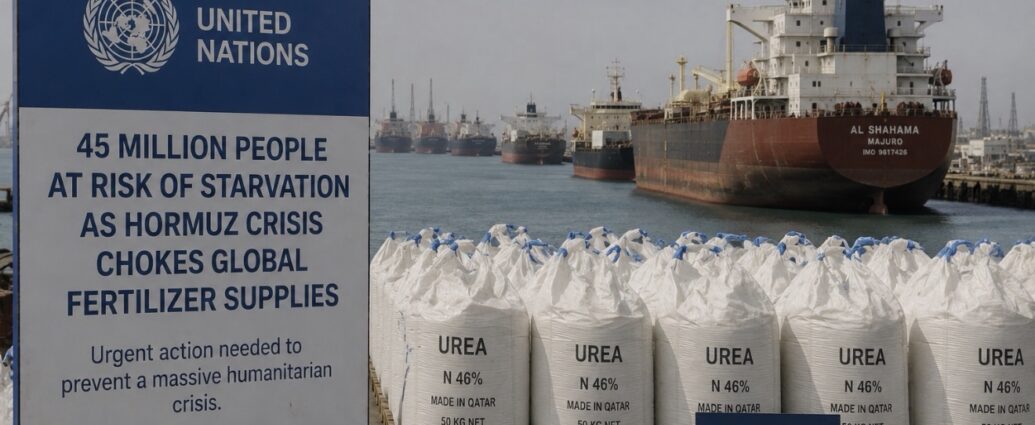
“We have a few weeks ahead of us to prevent what will likely be a massive humanitarian crisis,” Moreira da Silva told French news agency AFP. “We may witness a crisis that will force 45 million more people into hunger and starvation.”
The warning stems from the Persian Gulf’s central role in global fertilizer production and export infrastructure.
Countries surrounding the Gulf account for approximately:
- 30% to 35% of global urea exports
- 20% to 30% of global ammonia exports
Both products are essential components in modern fertilizer production and are critical to maintaining agricultural yields across large portions of the developing world.
Farmers throughout:
- South Asia
- Sub-Saharan Africa
- Latin America
- Parts of Southeast Asia
depend heavily on fertilizer shipments that normally transit through the Strait of Hormuz.
But since the joint U.S.-Israeli military campaign against Iran began in February — and Tehran effectively moved to close or heavily restrict traffic through the waterway — many of those supply chains have been severely disrupted for more than ten weeks.
The consequences are beginning to compound globally.
Fertilizer shortages are arriving on top of already elevated agricultural production costs caused by surging oil and fuel prices.
Modern farming relies heavily on diesel fuel, transportation networks, irrigation systems, and mechanized equipment — all of which become more expensive as energy prices rise.
At the same time, fertilizer shortages directly threaten crop yields themselves.
Lower fertilizer availability can reduce agricultural output dramatically, particularly in lower-income countries where farmers already operate with minimal margins and limited reserves.
The resulting risk is not simply higher food prices — but actual shortages.
The U.N. warning Monday followed similarly grim comments from Saudi Aramco CEO Amin Nasser, who said the broader supply disruption now unfolding across energy and commodity markets may take years to normalize even under optimistic scenarios.
“If the Strait of Hormuz opens today, it will still take months for the market to rebalance,” Nasser warned earlier Monday. “And if its opening is delayed by a few more weeks, then normalization will last into 2027.”
Several Gulf energy producers have already declared force majeure conditions during the crisis.
Qatar halted portions of natural gas production earlier in the conflict, while other Gulf exporters have struggled with shipping constraints tied directly to the security environment in and around the strait.
The humanitarian risks are now moving rapidly from theoretical concern to operational emergency.
Global food systems operate on tightly synchronized planting, shipping, and harvesting cycles. Fertilizer disruptions lasting only several weeks can have effects that ripple across multiple growing seasons.
That reality is increasingly alarming governments, food producers, commodity traders, and humanitarian organizations alike.
For businesses, the implications extend far beyond agriculture alone.
Food manufacturers, grocery retailers, restaurant chains, transportation firms, and commodity markets all depend on stable agricultural output and predictable fertilizer availability.
Further disruptions could intensify inflation pressures that consumers worldwide have already struggled with for years following the pandemic, energy volatility, and supply chain fragmentation.
The humanitarian consequences could be even more severe in poorer nations already facing economic fragility, drought conditions, or political instability.
The figure cited Monday by the United Nations — 45 million people potentially pushed toward hunger or starvation — reflects not a distant scenario, but what officials describe as the leading edge of a rapidly escalating food security threat.
And as the ceasefire between Iran and the United States remains fragile and negotiations continue to deteriorate, the world’s most strategically important shipping corridor is increasingly becoming not only an energy chokepoint — but a growing fault line for global food stability itself.
JBizNews Desk
© JBizNews.com. All rights reserved. This article is original reporting by JBizNews Desk. Unauthorized reproduction or redistribution is strictly prohibited.

A Number That Could Reshape the Economy for the Rest of 2026: April Inflation Report Due Tuesday Could Push Annual Rate Toward 4%
By JBizNews Desk
May 10, 2026
One government report arriving Tuesday morning may do more to shape the direction of the U.S. economy for the remainder of 2026 than any Federal Reserve speech, corporate earnings release, or political debate.
The Bureau of Labor Statistics is scheduled to release the April 2026 Consumer Price Index at 8:30 a.m. ET on Tuesday, May 12 — and economists increasingly expect the data to confirm what American consumers are already feeling every time they fill their gas tanks, pay utility bills, or walk through grocery-store aisles: inflation is accelerating again.
The report arrives at an especially fragile moment for the economy.
Consumer confidence has collapsed to the lowest level ever recorded in the nearly eight-decade history of the University of Michigan Survey of Consumers. Financial markets have almost entirely abandoned expectations for Federal Reserve rate cuts this year. And the ongoing disruption in the Strait of Hormuz continues driving oil and fuel costs sharply higher across the global economy.
Consensus forecasts suggest the inflation picture is about to worsen materially.
Economists surveyed by Kiplinger expect headline CPI to rise approximately 0.6% month over month in April, pushing annual inflation toward roughly 3.7%, up sharply from 3.3% in March and well above the 2.4% pace recorded earlier this year.
Analysts at BofA Securities project an even stronger monthly increase of roughly 0.63%, with annual inflation potentially reaching 3.8%.
Kiplinger economists warned inflation could approach the 4% threshold and remain elevated “until gasoline prices start falling.”
The primary driver is energy.
Since late February, the effective closure of the Strait of Hormuz during the U.S.-Iran conflict has disrupted a significant portion of global oil supply, tightening energy markets and sending fuel costs sharply higher worldwide.
The International Energy Agency estimates that roughly 14 million barrels per day of global supply have been affected by the disruption.
According to prior Bureau of Labor Statistics data, gasoline prices alone surged 21.2% during March, marking the single largest monthly increase in fuel prices since 1967.
April’s report will now reflect another full month of elevated oil and gasoline costs with little evidence yet of a durable diplomatic resolution capable of stabilizing energy markets.
There is also an additional technical factor that could further complicate the inflation picture.
Economists at Bank of America noted the April CPI report will incorporate one-time upward adjustments to housing-related inflation data, particularly rent and owners’ equivalent rent categories, due to data collection disruptions caused by last year’s federal government shutdown.
Those adjustments could place additional upward pressure on core inflation readings beyond what headline forecasts currently imply.
The implications for Federal Reserve policy are increasingly significant.
Interest-rate futures tracked through the CME FedWatch Tool now show markets have effectively priced out any meaningful rate cuts during 2026.
Bank of America has moved even further, shifting its expectation for the first Fed rate cut into the second half of 2027, citing persistent inflation pressure tied to energy prices, tariffs, and structural labor-market changes associated with artificial intelligence.
JPMorgan analysts reached similar conclusions in recent scenario modeling tied to the Iran conflict.
The bank said inflation is likely to remain above 3% through at least early 2027 under virtually every plausible geopolitical outcome, making a return to the Federal Reserve’s long-standing 2% inflation target increasingly unrealistic in the near term.
Consumer expectations are already moving higher.
The Federal Reserve Bank of New York’s Survey of Consumer Expectations showed one-year inflation expectations rising again in April to approximately 3.6%.
That survey was completed before the University of Michigan released Friday’s historically weak consumer-confidence reading, where one-third of respondents specifically identified gasoline prices as their primary economic concern and another 30% cited tariffs.
The broader consequence is that inflation is no longer functioning merely as a market or policy issue.
It is increasingly shaping consumer behavior directly.
Major corporations across retail, manufacturing, restaurants, and travel have already warned investors that customers are beginning to cut discretionary spending while delaying large purchases tied to financing costs and economic uncertainty.
Mortgage rates remain elevated near multi-decade highs. Auto financing costs have climbed sharply. Credit-card delinquency rates continue rising.
A stronger-than-expected inflation report Tuesday would likely reinforce expectations that borrowing costs remain elevated far longer than consumers and businesses had previously hoped.
For financial markets, the release could also determine the direction of stocks, bonds, and the dollar heading into summer.
Treasury yields have risen steadily in recent weeks as investors adjust to the possibility of a “higher-for-longer” interest-rate environment.
A CPI report approaching or exceeding 4% annually could accelerate that repricing further.
For policymakers, the challenge is becoming increasingly difficult.
The Federal Reserve now faces simultaneous pressure from slowing consumer sentiment and still-rising inflation expectations — a combination that leaves little room for easy policy solutions.
Rate cuts risk reigniting inflation. Additional tightening risks further weakening consumer demand and economic growth.
That is why Tuesday’s report matters so profoundly.
It is not simply another monthly inflation number.
It is increasingly becoming a verdict on whether the United States is entering a prolonged period of structurally higher inflation tied to geopolitics, energy disruptions, and supply-chain realignment — or whether price pressures can still be brought back under control without deeper economic damage.
By Tuesday morning, markets, businesses, and households across the country may have a much clearer answer.
— JBizNews Desk
© JBizNews.com. All rights reserved. This article is original reporting by JBizNews Desk. Unauthorized reproduction or redistribution is strictly prohibited.
Oil Surges Above $104 as Trump Says Iran Ceasefire Is “On Life Support” and Saudi Aramco Warns Recovery May Take Until 2027
NEW YORK — Global oil markets surged Monday after President Donald Trump declared the fragile ceasefire with Iran to be “on life support,” reigniting fears that the Strait of Hormuz crisis could drag on for months and pushing crude prices sharply higher just as the world enters peak summer fuel demand season.
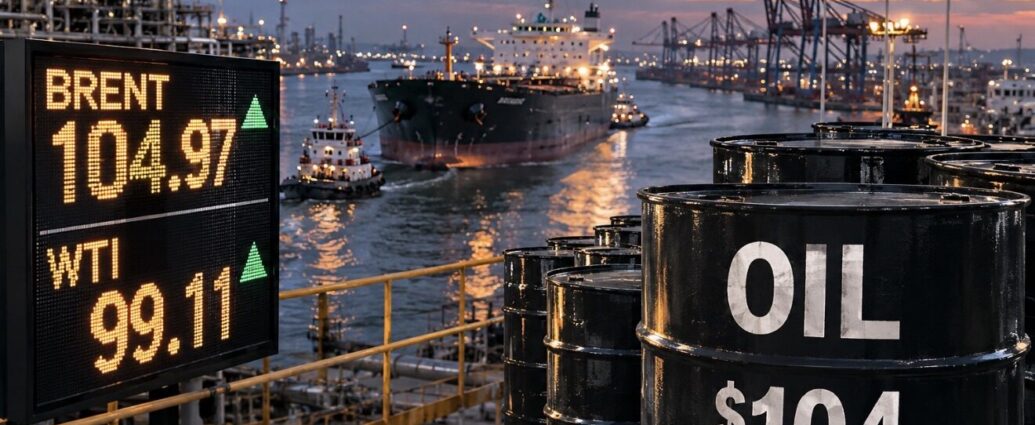
U.S. benchmark West Texas Intermediate crude climbed more than 3% to $99.11 per barrel, while international benchmark Brent crude surged above $104 per barrel, extending one of the largest energy shocks in modern history.
Speaking from the Oval Office, Trump described the diplomatic situation as “unbelievably weak” after rejecting Iran’s latest counterproposal Sunday night as “TOTALLY UNACCEPTABLE.”
According to Iranian state media, Tehran’s proposal included demands for international recognition of Iranian sovereignty rights tied to the Strait of Hormuz along with compensation for war-related damages — conditions the administration immediately rejected.
The renewed tensions landed on top of an already severely constrained global oil system.
In one of the starkest warnings yet from the energy industry, Saudi Aramco CEO Amin Nasser said Monday the world has effectively lost nearly one billion barrels of oil supply since Iran moved to restrict traffic through the Strait of Hormuz following the joint U.S.-Israeli military campaign launched earlier this year.
“The energy supply shock that began in the first quarter is the largest the world has ever experienced,” Nasser told analysts.
According to Aramco, the market is currently losing roughly 100 million barrels of oil supply every week the strait remains effectively closed.
Before the conflict escalated, approximately 70 ships per day typically transited the critical waterway. Now, Aramco says only two to five vessels daily are managing to cross.
Nasser warned that even if the Strait of Hormuz reopened immediately, global energy markets would still require months to stabilize.
“If the Strait of Hormuz opens today, it will still take months for the market to rebalance,” he said. “And if its opening is delayed by a few more weeks, then normalization will last into 2027.”
The comments underscored how deeply the conflict is beginning to affect the global economy.
Saudi Aramco itself reported a major windfall from the disruption. The company posted adjusted first-quarter net income of approximately $33.6 billion, up nearly 26% year-over-year and well ahead of analyst expectations.
Aramco has partially offset the shipping disruption by maximizing use of its East-West pipeline, which allows crude to bypass the Strait of Hormuz by moving oil across Saudi Arabia to the Red Sea export terminal at Yanbu.
The pipeline is now reportedly operating at its full capacity of roughly 7 million barrels per day.
Even so, Nasser cautioned that fuel inventories — especially gasoline and jet fuel supplies — are tightening rapidly ahead of the critical summer travel season.
“Inventories may reach critically low levels ahead of the summer driving and travel season,” he warned.
The ceasefire itself has remained unstable since its announcement on April 7.
Over the past week alone, Iran launched attacks against the United Arab Emirates, U.S. and Iranian forces exchanged fire inside the strait, and the Pentagon confirmed strikes against two Iran-flagged oil tankers.
The crisis is now extending well beyond energy.
The United Nations warned Monday that fertilizer shipments moving through the Persian Gulf region are becoming severely constrained, creating rising risks for global agriculture and food security.
Jorge Moreira da Silva, executive director of the U.N. Office for Project Services, said tens of millions of people could face food shortages or famine risks if shipping disruptions continue for several more weeks.
The Persian Gulf region accounts for roughly 30% to 35% of global urea exports and approximately 20% to 30% of global ammonia exports, both critical inputs for fertilizer production and agricultural yields worldwide.
Wall Street firms are increasingly warning that the risks to oil prices remain tilted upward.
Citi analysts said Monday that Iran still maintains substantial leverage over the timing and terms of any eventual reopening agreement for the Strait of Hormuz, keeping energy markets highly vulnerable to further spikes.
For American consumers, the effects are already becoming increasingly visible.
Jet fuel prices have climbed roughly 70% since the conflict began in February, contributing to higher airline costs and transportation inflation. Elevated oil prices have also pushed Treasury yields and mortgage rates higher, complicating the Federal Reserve’s efforts to resume interest rate cuts.
The longer the ceasefire remains unstable, the greater the risk that inflationary pressures spread further throughout the global economy.
And with one of the world’s most strategically important shipping corridors still operating under extreme disruption, energy markets are increasingly confronting a possibility many investors hoped to avoid: this may no longer be a temporary shock, but the beginning of a prolonged restructuring of global energy supply itself.
JBizNews Desk
© JBizNews.com. All rights reserved. This article is original reporting by JBizNews Desk. Unauthorized reproduction or redistribution is strictly prohibited.

China’s April Exports Rebound Strongly, Trade Surplus Widens to $84.8 Billion Ahead of Trump-Xi Summit
By JBizNews Desk
May 11, 2026
China’s export engine accelerated sharply in April, delivering a trade surplus far larger than economists expected and strengthening Beijing’s leverage just days before President Donald Trump is scheduled to meet President Xi Jinping in a high-stakes summit that could shape the future of the world’s most important trade relationship.
Data released Saturday by the General Administration of Customs of the People’s Republic of China showed Chinese exports reached approximately $359.44 billion in April, while imports totaled roughly $274.62 billion, producing a monthly trade surplus of $84.82 billion.
That marked a dramatic increase from March’s surplus of approximately $51.13 billion.
Total foreign trade for the month climbed to roughly $639.4 billion, with overall trade growing 14.2% year over year in yuan-denominated terms.
Exports rose 9.8% from a year earlier, while imports surged an even stronger 20.6%, reflecting aggressive stockpiling by Chinese manufacturers attempting to secure components and industrial materials before escalating energy costs tied to the Iran war push global input prices even higher.
The rebound arrives at a politically sensitive moment.
Trump is expected to travel to Beijing on May 14-15 for a leaders’ summit with Xi that both governments increasingly view as critical to stabilizing a relationship strained simultaneously by tariffs, technology restrictions, tensions surrounding Taiwan, and diverging positions on the Iran conflict.
The widening trade imbalance will almost certainly become one of the summit’s central issues.
China’s year-to-date trade surplus with the United States has now reached approximately $87.7 billion, according to the latest customs data.
Chinese officials portrayed April’s performance as evidence of continued resilience despite global instability.
Lyu Daliang, director of the customs administration’s Department of Statistics and Analysis, said China’s trade sector maintained strong momentum throughout the early months of 2026, supported by coordinated government policies and expanding overseas demand.
“Foreign trade has performed well since the start of the year, supported by coordinated policy measures and proactive efforts across regions and departments,” Lyu said.
The export growth was broad-based but especially concentrated in high-value technology and industrial categories.
Mechanical and electrical products — China’s single largest export segment — totaled approximately $229.29 billion during the month.
High-technology exports reached roughly $104.01 billion.
Exports of mobile phones climbed to approximately $84.10 billion, while integrated circuits totaled roughly $31.08 billion.
Motor vehicle exports, including engine-equipped chassis, reached approximately $160.96 billion, with automotive components adding another roughly $85.99 billion.
The figures reinforced China’s growing dominance across critical advanced-manufacturing and technology supply chains increasingly tied to the global artificial intelligence boom.
A major driver of April’s export acceleration was surging demand tied directly to AI infrastructure spending.
Global technology companies have been racing to secure chips, industrial components, networking equipment, and manufacturing inputs as the Iran conflict threatens to disrupt global supply chains and increase transportation and energy costs further.
That unusual dynamic — in which geopolitical instability abroad actually boosts Chinese export demand — has become one of the defining characteristics of China’s manufacturing economy during the first half of 2026.
While several export-oriented economies struggled to redirect cargo flows away from the Persian Gulf after the Strait of Hormuz disruption, Chinese manufacturers moved quickly to diversify shipping routes and capitalize on the resulting supply shortages elsewhere.
The strong April performance follows an already historic year for Chinese exports.
After facing U.S. tariffs that briefly climbed to triple-digit levels during 2025, Chinese manufacturers aggressively expanded sales into South America, Africa, Southeast Asia, and the Middle East while lowering prices to preserve market share.
China ultimately finished 2025 with a record annual trade surplus of approximately $1.2 trillion, intensifying criticism from trading partners who argue Chinese industrial overcapacity is distorting global markets.
Now, as Trump prepares to arrive in Beijing, both sides face mounting economic and political pressure to prevent another escalation in trade tensions.
The existing tariff truce reached last year reduced reciprocal tariff rates to approximately 10% through November 2026 following negotiations between Washington and Beijing.
China is expected to push aggressively for an extension of that arrangement.
Trump, meanwhile, faces growing domestic pressure tied to rising gasoline prices, elevated inflation, and weakening consumer confidence ahead of November’s U.S. midterm elections.
Analysts briefed on the expected summit agenda are not anticipating major structural breakthroughs.
But with the current tariff truce set to expire later this year, both governments have strong incentives to avoid renewed confrontation while global markets remain under pressure from the Iran conflict and slowing economic growth.
The April trade figures also reinforce a broader reality increasingly confronting policymakers in both Washington and Beijing.
Despite years of trade tensions, tariffs, and political rhetoric surrounding economic decoupling, China’s manufacturing base remains deeply embedded in global supply chains in ways neither side has yet proven willing — or able — to fully unwind.
Economists increasingly warn, however, that the forces driving China’s export surge during the first half of 2026 may not persist indefinitely.
If the Strait of Hormuz remains disrupted and energy prices continue climbing, the front-loaded demand currently pulling exports higher could eventually fade as global consumers and businesses begin cutting spending more aggressively.
That risk matters especially for Beijing because domestic consumption inside China has remained relatively weak despite repeated rounds of government stimulus.
For now, however, China’s factories continue shipping goods at a near-record pace.
And as Trump and Xi prepare to meet in Beijing this week, the latest trade data ensures both leaders will arrive fully aware that the economic balance between the world’s two largest economies remains as politically sensitive — and strategically consequential — as ever.
— JBizNews Desk
© JBizNews.com. All rights reserved. This article is original reporting by JBizNews Desk. Unauthorized reproduction or redistribution is strictly prohibited.



Breitling’s Private Equity Owners Write Down Brand’s Valuation by Half as Luxury Slowdown, Tariff Headwinds, and Costly Store Overexpansion Take Their Toll
By JBizNews Desk
May 11, 2026
The private equity firms behind Swiss luxury watchmaker Breitling have sharply reduced the company’s valuation after years of aggressive expansion collided with weakening luxury demand, rising tariff pressure, and mounting operational costs that are now forcing a broader strategic rethink.
According to a report published by the Financial Times, London-based CVC Capital Partners and Partners Group have written down Breitling’s valuation to roughly half of its peak worth from just several years ago — a dramatic reversal for a brand once viewed as one of the luxury watch industry’s fastest-rising turnaround stories.
People familiar with the matter told the FT that both firms are now conducting a comprehensive strategic review of Breitling’s operations as slowing sales and rising costs pressure profitability.
Breitling, CVC Capital, and Partners Group declined to comment publicly.
The brand’s rapid rise — and subsequent stumble — traces back to 2017, when CVC acquired approximately 80% of Breitling from the Schneider family in a transaction reportedly valued near $870 million.
CVC immediately installed former IWC executive Georges Kern as chief executive officer and launched an ambitious transformation strategy designed to reposition Breitling from a niche aviation-focused watchmaker into a broader global luxury lifestyle brand.
The strategy initially appeared highly successful.
In December 2022, CVC sold a controlling 50.3% stake in Breitling to Partners Group in a transaction valuing the company at approximately $4.5 billion.
CVC retained roughly 23.6%, while Kern is believed to hold approximately 3%. The remaining ownership is spread among private and institutional investors.
Partners Group co-founder Fredy Gantner chairs the board.
Today, however, the valuation picture looks dramatically different.
According to the Financial Times, CVC has now marked down its remaining Breitling stake to roughly half the level at which it last reinvested during 2023.
Partners Group is reportedly carrying the company closer to approximately 70% of its prior valuation — helped partly by entering at lower earlier pricing levels.
The deterioration reflects a broader slowdown sweeping through the global luxury sector.
Demand for high-end watches has weakened significantly over the past two years as elevated inflation, slowing global growth, reduced tourism activity, and tighter consumer spending pressure discretionary luxury purchases worldwide.
For Breitling, those macroeconomic challenges collided with an especially aggressive retail expansion strategy.
Under Kern, the company rapidly increased its global boutique footprint from approximately 56 locations in 2017 to more than 290 stores today.
The stores, designed around Breitling’s “industrial loft-inspired” concept aesthetic, expanded across major luxury retail corridors including New York, London, Geneva, and Paris.
At the same time, Breitling dramatically increased marketing spending to elevate the brand’s global visibility.
The company signed celebrity ambassadors including Brad Pitt, Charlize Theron, Austin Butler, Trevor Lawrence, and soccer star Erling Haaland.
It also secured high-profile commercial partnerships with Aston Martin, the NFL, and Europe’s Six Nations Rugby Championship.
The NFL partnership culminated in Breitling becoming the league’s official timepiece partner in 2025, accompanied by a major promotional launch event in New York’s Meatpacking District.
Breitling also pursued acquisitions as part of a broader luxury platform strategy, purchasing historic Swiss brands Universal Genève in 2023 and Gallet in 2025 while presenting the companies together under a developing “House of Brands” structure.
Yet despite the scale of investment, sales momentum has stalled.
According to estimates from Morgan Stanley and research firm LuxeConsult cited by industry publication WatchPro, Breitling’s retail sales are estimated at roughly 1.1 billion Swiss francs ($1.42 billion) in 2025, down from approximately 1.2 billion Swiss francs ($1.55 billion) in 2023.
The company’s sales have now reportedly declined each year since peaking in 2022.
In the United Kingdom, where public financial filings provide additional visibility, Breitling’s turnover reportedly fell from nearly £90 million in fiscal year 2023 to below £60 million in its latest filing — a drop exceeding 30%.
Credit markets had already begun signaling concern.
Moody’s downgraded Breitling last year, assigning the company a B3 rating, which reflects elevated credit risk and vulnerability to adverse business conditions.
Moody’s cited declining earnings and rising fixed costs tied to Breitling’s boutique expansion strategy.
S&P Global Ratings followed with its own downgrade in July 2025, cutting Breitling to B- from B, while warning that weakening consumer demand and slowing tourism activity were pressuring luxury spending globally.
Analysts at S&P said they expect gradual recovery beginning around 2027 but acknowledged significant uncertainty across the broader luxury-watch sector.
Tariff pressure compounded the situation further.
Swiss luxury goods entering the United States faced tariffs reaching as high as 39% between August and November before Switzerland later negotiated reductions under a bilateral trade agreement.
Current baseline tariffs on Swiss imports now stand near 10%.
The combination of slowing demand, elevated operating costs, tariff uncertainty, and weakening credit conditions has now forced Breitling’s owners into cost reviews and operational restructuring discussions.
According to Private Equity Wire, CVC and Partners Group are evaluating potential cost-cutting measures while still selectively investing in growth initiatives viewed as strategically important long term.
Despite the current downturn, insiders close to Partners Group reportedly still believe Breitling could eventually become a viable IPO candidate between 2027 and 2029 if the company stabilizes operations and the broader luxury market recovers.
The firm’s long-term thesis remains centered around Breitling’s strong chronograph heritage, aviation identity, and expanded global brand recognition.
But before any public offering becomes realistic, Breitling faces a more immediate challenge confronting much of the luxury industry today: proving that years of expansion, celebrity marketing, and premium pricing can still generate sustainable growth in a world where consumers are becoming far more selective about what they are willing to spend on.
— JBizNews Desk
© JBizNews.com. All rights reserved. This article is original reporting by JBizNews Desk. Unauthorized reproduction or redistribution is strictly prohibited.
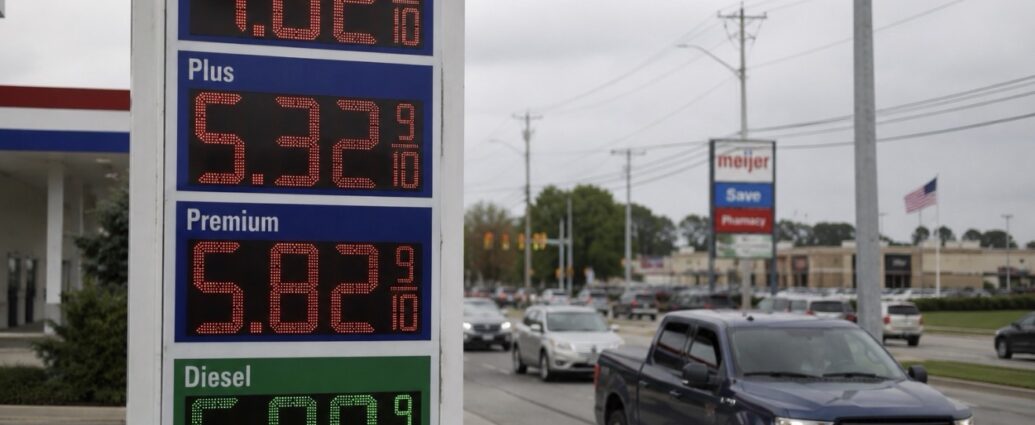
Midwest Gas Prices Are Spiking at the Worst Possible Time for the Trump Administration
By JBizNews Desk
May 11, 2026
Gasoline prices across the American Midwest are surging at a pace far outstripping the national average, creating a growing economic and political problem for the Trump administration just months before critical midterm elections in some of the country’s most contested battleground states.
New data released this week by GasBuddy and the American Automobile Association showed that all five states recording the sharpest weekly gasoline-price increases nationwide are located in the Midwest — including several states expected to play decisive roles in determining Senate, gubernatorial, and congressional control in November.
Indiana recorded the largest increase in the country, with average gasoline prices jumping 83.2 cents per gallon in a single week to approximately $4.82 per gallon, according to GasBuddy data.
Ohio followed closely behind with a 78.1-cent increase, while Michigan, Illinois, and Wisconsin rounded out the top five.
According to reporting published Sunday by Bloomberg, gasoline prices in Ohio have surged roughly 72% since disruptions in the Strait of Hormuz began earlier this year — approximately double the increase recorded in California over the same period.
Nationally, the average gasoline price stood at approximately $4.52 per gallon as of Sunday, according to AAA, marking an increase of more than $1.30 compared with a year earlier and reaching the highest national level since mid-2022.
Diesel prices have climbed even faster across parts of the region.
Some stations in Illinois, Michigan, and Wisconsin briefly crossed the $6-per-gallon threshold this week as refinery disruptions compounded the broader global oil shock.
“Gasoline prices rose in every state over the last week, with some of the most significant and fastest increases concentrated in the Great Lakes, where states like Michigan, Indiana, Ohio, and Illinois saw sharp spikes, while Wisconsin experienced more modest gains,” said Patrick De Haan, head of petroleum analysis at GasBuddy.
“At the same time, diesel prices surged to new records in parts of the region, with some areas touching the $6-per-gallon mark,” De Haan added.
The Midwest’s outsized price spike is being driven by a combination of global and regional factors converging simultaneously.
The primary pressure remains the ongoing disruption in the Strait of Hormuz, where Iran’s effective closure of the critical shipping corridor has sharply reduced global oil flows and pushed crude prices higher worldwide.
Roughly 20% of the world’s seaborne oil supply normally moves through the strait.
That disruption has forced the United States and other consuming nations to draw down petroleum inventories at an accelerated pace while refiners compete for tighter global supply.
The Midwest, however, is also dealing with a second problem layered on top of the global energy shock.
A temporary outage at a major refinery in northwest Indiana significantly tightened regional fuel supply precisely as crude prices were already surging.
The result has been a particularly severe spike in Midwest pump prices relative to other regions of the country.
De Haan said earlier this week that refinery conditions were beginning to stabilize, potentially allowing prices across Indiana, Illinois, Ohio, Minnesota, and Wisconsin to decline by approximately 20 to 40 cents per gallon in coming days.
Even if that relief materializes, however, prices would still remain dramatically elevated compared with pre-conflict levels.
The economic consequences are increasingly feeding into national politics.
Recent polling suggests rising fuel prices are beginning to erode confidence in Trump’s handling of the economy even among traditionally supportive voters.
An AP-NORC poll released earlier this month showed Trump’s economic approval rating declining between March and April as gasoline and energy costs accelerated higher following the Iran conflict.
Approval among Republicans reportedly fell from approximately 74% to 62% during that period, while independents — particularly important in Midwest swing states — remained substantially negative on the economy.
Bloomberg cited Blake Karras-Johnson, a Dayton, Ohio real estate agent, who said the cost of filling her GMC Terrain had risen to roughly $80 from about $50 before the conflict escalated.
“Everybody’s complaining about it,” she said.
The political implications are especially significant because many of the states experiencing the sharpest fuel-price increases are also among the most competitive on the 2026 electoral map.
Democrats are aggressively targeting a Senate seat in Ohio, where former Democratic Senator Sherrod Brown has made gasoline and diesel prices central themes of his campaign against Republican incumbent Jon Husted.
“All across Ohio, I’m hearing from families and farmers who are struggling as they pay record prices for gas and diesel,” Brown said in recent remarks.
Michigan, another state Trump narrowly flipped in 2024, simultaneously hosts a competitive Senate race, gubernatorial contest, and legislative battles — magnifying the political sensitivity surrounding energy prices there.
The Trump administration has already taken several steps aimed at limiting further price increases.
Officials authorized releases from the Strategic Petroleum Reserve, temporarily eased certain Jones Act shipping restrictions to allow more foreign tankers into U.S. waters, and resisted calls from some congressional Republicans to impose fuel-export bans.
Treasury Secretary Scott Bessent said recently that the administration remains “optimistic” gasoline prices could move back toward the $3-per-gallon range later this summer if the Iran conflict stabilizes and shipping through the Strait of Hormuz resumes normally.
Wall Street analysts remain cautious.
Both Goldman Sachs and Morgan Stanley raised second-quarter gasoline price forecasts this week, warning that Midwest fuel inventories could fall toward multi-year lows by July if supply disruptions persist.
For now, the pressure continues building.
Every additional increase appearing on gas-station signs across Ohio, Indiana, Michigan, Illinois, and Wisconsin carries implications extending far beyond household budgets alone.
It is increasingly shaping the political environment in exactly the states Republicans can least afford to lose.
— JBizNews Desk
© JBizNews.com. All rights reserved. This article is original reporting by JBizNews Desk. Unauthorized reproduction or redistribution is strictly prohibited.
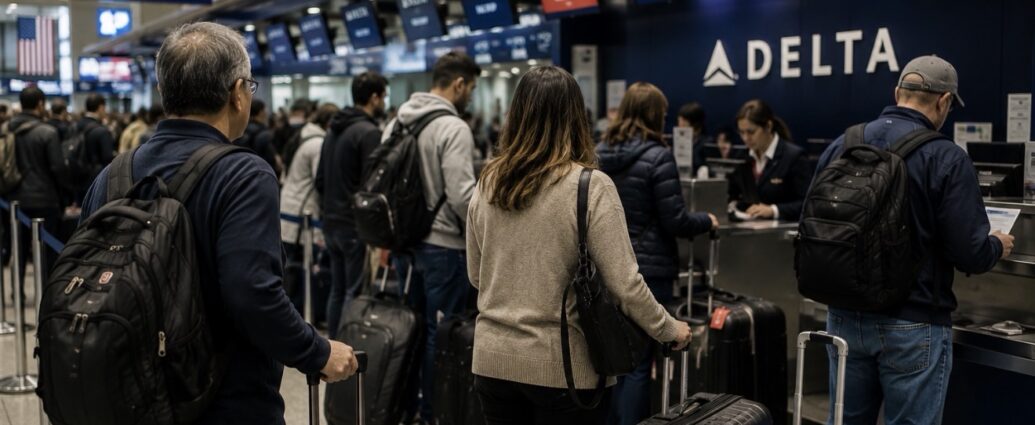
Every Major U.S. Airline Has Raised Baggage Fees — and Analysts Warn They Are Not Coming Back Down
By JBizNews Desk
May 10, 2026
Flying with checked luggage in the United States has become significantly more expensive almost overnight — and analysts increasingly warn travelers that the higher fees may become permanent even after the global fuel crisis eventually eases.
Within a single week in April, every major U.S. airline raised checked baggage fees as carriers scrambled to offset soaring fuel costs tied directly to the ongoing Iran conflict and the disruption in global oil markets.
The coordinated increases across the industry mark the broadest wave of airline baggage fee hikes since U.S. carriers first introduced checked-bag charges during the 2008 oil-price shock.
The underlying economic pressure is severe.
Since late February, the effective closure of the Strait of Hormuz — through which roughly 20% of the world’s seaborne crude oil normally flows — has pushed jet fuel prices sharply higher across global markets.
According to energy intelligence firm Argus Media, jet fuel prices at major U.S. hub airports have surged from approximately $2.50 per gallon before the conflict to roughly $4.69 per gallon.
Fuel remains the airline industry’s second-largest operating expense after labor, meaning the spike immediately translated into higher costs across the sector.
Delta Air Lines Chief Executive Officer Ed Bastian told investors that the fuel surge had already added roughly $400 million in operating expenses since the conflict began on February 28.
Executives at United Airlines and American Airlines described similarly elevated cost pressures during recent earnings calls and investor presentations.
The industry’s response was swift and unusually synchronized.
JetBlue Airways moved first in late March, increasing first checked-bag fees on domestic routes to approximately $39 to $49 depending on travel timing and booking structure.
United Airlines followed on April 3, raising prepaid first-bag fees from $35 to $45 across domestic routes, Mexico, Canada, and Latin America.
Passengers paying within 24 hours of departure now face fees as high as $50 for a first checked bag, while third-bag fees jumped from $150 to $200.
Delta Air Lines matched the new pricing levels on April 8 in what marked the carrier’s first domestic baggage-fee increase in approximately two years.
The same day, Southwest Airlines raised first checked-bag fees from $35 to $45 and second checked-bag fees from $45 to $55 — a particularly symbolic move given Southwest’s decades-long branding around its former “two bags fly free” policy.
That long-standing policy had already been phased out last year as profitability pressures mounted across the industry.
American Airlines subsequently aligned with the emerging industry standard of approximately $45 for a first checked bag.
The cumulative impact on consumers is substantial.
According to travel-industry estimates, a family of four traveling round-trip domestically while checking two bags per person now faces approximately $720 in baggage charges alone — roughly $160 higher than similar trips just several weeks earlier.
Airlines are deliberately choosing to recover fuel costs through ancillary fees rather than aggressively raising base ticket prices.
Industry analysts say the strategy is designed to avoid sticker shock during the booking process itself, where sharply higher fares could reduce overall demand.
“JetBlue initiated, its erstwhile partner United followed within 48 hours, and others are likely to match,” airline industry consultant Robert Mann Jr. told travel publication Afar.
Southwest publicly described its own increases as part of “an ongoing analysis of the business and against the evolving global backdrop.”
For consumers, however, the more important question may not be why fees increased — but whether they will ever come back down.
Many analysts believe the answer is likely no.
“Baggage fees are likely sticky — once they go up, they stay there,” Drew Powers, founder of Powers Financial Group, told Newsweek.
Alex Beene, a financial literacy instructor at the University of Tennessee at Martin, echoed that assessment directly.
“Even if the conflict subsides, it could take weeks to see prices come down,” Beene said. “And, sadly, it might be that baggage fees never come down, as those fees are known to stay at their new levels.”
History supports that concern.
When airlines first introduced checked-bag fees during the oil-price shock of 2008, carriers initially framed the charges as temporary responses to extraordinary fuel costs.
The fees remained even after oil prices later collapsed.
Over time, baggage fees evolved into one of the airline industry’s most profitable revenue streams.
According to federal transportation data, U.S. airlines collectively generated billions annually from baggage charges and other ancillary fees throughout the past decade.
The broader industry response to rising fuel costs extends beyond baggage pricing alone.
United Airlines Chief Executive Officer Scott Kirby warned recently that the company plans to eliminate certain routes over the next several quarters as part of broader cost-control measures tied to the fuel environment.
Other carriers are similarly reevaluating schedules, aircraft utilization, and capacity planning heading into the summer travel season.
That timing matters.
Summer is historically the busiest and most profitable travel period of the year for U.S. airlines.
Instead, carriers are entering the season facing sharply elevated fuel prices, rising operational costs, and little clarity surrounding when — or whether — global energy markets will stabilize.
For travelers, the result is becoming increasingly clear.
The era of inexpensive checked luggage is fading further into history — and once airlines discover consumers will pay higher fees, those charges rarely move in reverse.
— JBizNews Desk
© JBizNews.com. All rights reserved. This article is original reporting by JBizNews Desk. Unauthorized reproduction or redistribution is strictly prohibited.
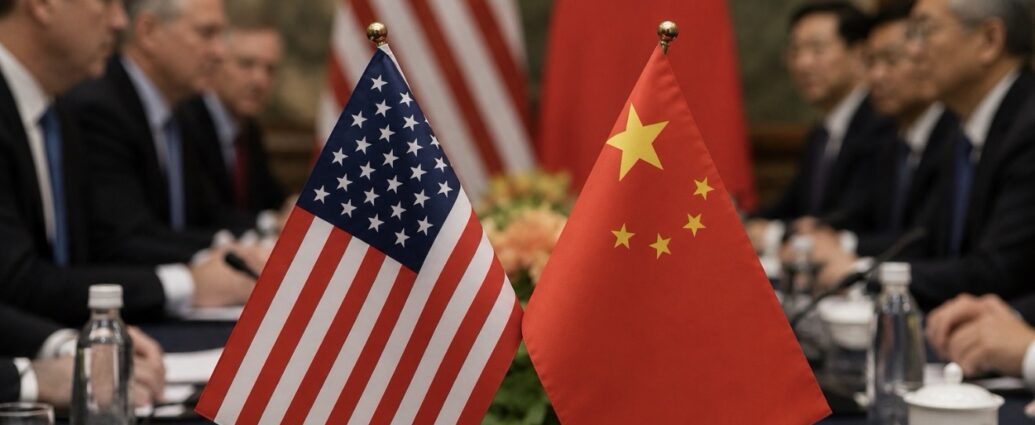
U.S.-China Tariff Truce Holds Through November 2026 — But the Clock Is Ticking
By JBizNews Desk
May 11, 2026
The trade war between the United States and China may be temporarily frozen, but American businesses are increasingly preparing for what happens when the ceasefire expires later this year.
Under agreements confirmed by the White House and China’s Ministry of Commerce, Washington and Beijing extended their tariff truce through November 10, 2026, preserving reduced tariff rates that helped stabilize global supply chains after one of the most economically disruptive trade battles in decades.
The agreement followed a summit between President Donald Trump and Chinese President Xi Jinping in Busan, South Korea, in late October 2025 and marked the most significant de-escalation since tariffs between the world’s two largest economies spiraled to historic levels last year.
At the height of the confrontation following Trump’s “Liberation Day” tariff actions in April 2025, U.S. tariffs on many Chinese imports surged as high as 145%, while China retaliated with duties reaching 125% on American goods.
The economic shock rattled financial markets, disrupted global manufacturing networks, triggered inflation fears, and forced multinational corporations to rethink supply chains that had been built around decades of low-cost Chinese production.
The first breakthrough came in Geneva in May 2025, when negotiators agreed to temporarily reduce reciprocal tariff rates to 10% for an initial 90-day period. Additional extensions followed during the summer before the Busan summit produced the current year-long arrangement now set to expire in November.
As part of the broader agreement, the United States reduced fentanyl-related tariffs on Chinese imports from 20% to 10%, while China suspended several retaliatory non-tariff measures and committed to significantly expanding purchases of American agricultural products.
The agreement included commitments from Beijing to purchase at least 25 million metric tons of U.S. soybeans annually through 2028, while also suspending planned export controls on certain rare earth materials critical to electronics, electric vehicles, defense systems, and advanced manufacturing technologies.
China additionally removed several American-linked firms from restrictive entity-list measures that had complicated trade and investment flows during the height of the conflict.
The temporary détente delivered meaningful relief to American companies heavily dependent on Chinese manufacturing and supply chains.
Shipping costs stabilized, inventory shortages eased, and businesses that spent much of 2025 scrambling to reroute sourcing operations gained breathing room to reassess long-term manufacturing strategies.
Retailers, electronics manufacturers, auto suppliers, and industrial companies particularly benefited as logistics bottlenecks that plagued global trade during the tariff escalation gradually improved.
But major fault lines remain unresolved.
Analysts at French trade credit insurer Coface warned this year that the arrangement “remains fragile,” particularly as tensions continue surrounding semiconductors, advanced technology exports, industrial subsidies, cybersecurity restrictions, and shipbuilding policy.
Both governments still retain substantial economic leverage capable of reigniting trade hostilities once negotiations reopen later this year.
The legal landscape surrounding tariffs also shifted dramatically in February after the U.S. Supreme Court ruled that Trump could not rely on the International Emergency Economic Powers Act to impose broad tariffs.
Following the ruling, the administration moved quickly to impose a temporary 10% global tariff under Section 122 of the Trade Act of 1974, which allows limited short-term tariff authority pending congressional approval for any extension beyond 150 days.
Despite the truce, tariff levels remain historically elevated.
Accounting for Section 301 duties, fentanyl-related levies, and additional sector-specific restrictions, the effective tariff rate on many Chinese imports entering the United States still sits near approximately 31% — far below the extreme 2025 peaks but dramatically higher than pre-trade-war levels.
For consumers, the temporary stabilization has helped prevent the sharpest price increases economists feared during the height of the tariff escalation.
Supply chains that became severely disrupted throughout 2025 have partially normalized, though businesses continue reporting costly administrative burdens tied to tariff compliance, customs documentation, origin verification requirements, and shifting regulatory rules.
Many companies have also accelerated efforts to diversify manufacturing beyond China even as trade tensions temporarily ease.
Executives across industries ranging from consumer electronics to apparel and industrial manufacturing continue expanding operations in Mexico, Vietnam, India, and Southeast Asia in an effort to reduce dependence on any single geopolitical relationship.
The central issue now confronting multinational corporations is uncertainty.
With the current agreement expiring November 10 and both governments signaling tariff provisions will likely be renegotiated annually, businesses effectively have less than six months of visibility into the future cost structure of trade between the world’s two largest economies.
Wall Street analysts warn that uncertainty itself may become one of the biggest economic risks.
Companies reluctant to commit to major capital investments amid unresolved trade policy questions could slow manufacturing expansion, inventory growth, and hiring plans heading into 2027.
At the same time, investors remain highly sensitive to any indication that negotiations between Washington and Beijing could deteriorate again, particularly given how aggressively markets reacted during previous tariff escalations.
Executives increasingly view the current truce not as a permanent resolution, but as a temporary pause inside a much larger economic restructuring effort reshaping global manufacturing, trade flows, and geopolitical alliances.
Whether the next phase brings another escalation or a deeper long-term agreement may ultimately determine the trajectory of inflation, supply chains, manufacturing investment, and global economic growth well beyond 2026.
— JBizNews Desk
© JBizNews.com. All rights reserved. This article is original reporting by JBizNews Desk. Unauthorized reproduction or redistribution is strictly prohibited.

Argentina Upgrade Seen Opening Narrow Window for Debt Sale as Milei’s Overhaul Wins Fitch’s Confidence
By JBizNews Desk
May 11, 2026
Argentina has spent decades cycling between debt crises, defaults, inflation shocks, and emergency IMF rescues.
Now, for the first time in years, global investors are beginning to ask a different question: whether President Javier Milei may actually be stabilizing the country fast enough to bring it back into international debt markets before political and economic risks close the window again.
That possibility moved materially closer this week after Fitch Ratings upgraded Argentina’s long-term sovereign credit rating to B- from CCC+, lifting the country out of the deepest speculative territory and signaling growing confidence that Milei’s aggressive fiscal overhaul is producing measurable results.
The upgrade, announced May 5 with a stable outlook, may sound incremental by global standards.
For Argentina, it is highly consequential.
Crossing the B- threshold opens the door to an entirely new universe of institutional investors who previously could not legally or contractually purchase Argentine sovereign debt while it remained rated below that level.
Argentina’s Political Economy Secretary José Luis Daza made the point directly after the announcement, writing on X that “thousands of institutional funds are currently unable to invest” in Argentine debt below B-.
That eligibility change matters because Argentina’s challenge is no longer simply stabilizing its economy.
It is convincing markets the stabilization is durable enough to finance.
If investor demand broadens meaningfully, borrowing costs could fall sharply enough to allow Argentina to re-enter international bond markets for the first time in years under economically sustainable conditions.
Fitch’s rationale for the upgrade reflected a sweeping improvement across several core areas of Argentina’s economy.
The ratings agency cited:
- stronger fiscal balances,
- improving external accounts,
- economic reform progress,
- reserve accumulation at the Central Bank,
- and increased confidence that the government can meet upcoming debt obligations.
Fitch also pointed to Milei’s strengthened political position following the October 2025 midterm elections, which expanded his congressional support and enabled passage of several key reforms.
Those measures included labor-market reforms, changes to Argentina’s National Glacier Law easing restrictions on mining projects, and approval of a 2026 budget built around maintaining a primary fiscal surplus.
The agency additionally highlighted Milei’s broader deregulation push and efforts to attract foreign investment into Argentina’s energy and mining sectors — especially the Vaca Muerta shale basin, which has rapidly become one of the country’s most strategically important export engines.
The macroeconomic improvement is real, even if fragile.
Fitch projects Argentina’s economy will grow approximately 3.2% during 2026, following estimated growth of roughly 4.4% in 2025.
Inflation, once spiraling above 300% annually during the country’s recent hyperinflation crisis, has fallen dramatically under Milei’s austerity program.
Monthly inflation slowed to roughly 1.5% during May 2025, though it has since edged back higher to approximately 3.4% month-over-month by March 2026.
Fiscal balances have improved sharply as well.
Argentina is expected to maintain a primary fiscal surplus during 2026, although narrower than last year’s level.
The government’s ability to preserve that discipline remains central to investor confidence.
But the financing pressures remain enormous.
Argentina faces approximately $8.8 billion in foreign-currency debt service obligations during 2026, rising toward roughly $9.8 billion in 2027, a politically sensitive election year.
To cover those obligations, Milei’s administration has assembled a financing strategy combining:
- at least $2.5 billion in multilateral guarantees,
- roughly $4 billion in dollar-denominated local bond issuance,
- and approximately $2 billion in privatization proceeds.
At the same time, Argentina’s Central Bank has aggressively accumulated reserves — another key condition investors have demanded before seriously reconsidering Argentine sovereign debt.
The bank has reportedly purchased approximately $7.15 billion in dollars during 2026, with annual reserve accumulation targets ranging between $10 billion and $17 billion.
Fitch previously identified reserve accumulation as one of the single most important determinants for future upgrades.
The country’s market risk premium has also improved materially.
Argentina’s sovereign spread, measured through JPMorgan’s EMBI+ index, has fallen sharply from levels above 1,050 basis points in late 2025.
Still, spreads remain above the roughly 550-basis-point threshold many market participants view as necessary for Argentina to borrow internationally below 9% yields.
That gap defines the challenge now facing Economy Minister Luis Caputo.
Caputo has so far resisted rushing back into international debt markets, arguing current borrowing costs remain too expensive despite improving sentiment.
Many investors agree.
But the Fitch upgrade changes the equation.
A broader buyer base combined with continued reserve growth and fiscal discipline could compress spreads enough to make a sovereign debt issuance economically viable within months.
The government already appears to be quietly testing the market.
In March, Argentina sold approximately $150 million of dollar-denominated bonds to gauge investor appetite — a relatively small issuance, but one interpreted by markets as a signal that officials are preparing carefully for a larger eventual return.
Corporate borrowers are already moving ahead more aggressively.
Argentine energy and industrial companies have increasingly tapped international markets to finance expansion projects, particularly those tied to the country’s booming energy-export sector.
Those corporate issuances are functioning as a real-time stress test for broader investor appetite toward Argentine credit risk.
The problem is timing.
Argentina faces approximately $4.4 billion in foreign debt amortizations in July alone, while hard-currency debt maturities are projected to reach roughly $20.8 billion during 2027, according to local brokerage Facimex.
That leaves little margin for policy slippage.
Investors who have watched Argentina move through repeated defaults over recent decades remain cautious.
Fitch itself acknowledged that Argentina’s long history of macroeconomic instability still constrains the rating despite recent progress.
Any weakening in reserve accumulation, erosion of fiscal discipline, resurgence in inflation, or political instability ahead of the 2027 elections could quickly reverse market optimism.
For now, however, Milei has achieved something few Argentine leaders have managed in recent years:
He has convinced major segments of the international financial system that Argentina may finally be moving — however painfully — toward stabilization rather than collapse.
Whether that confidence lasts long enough for Argentina to fully reopen the door to global debt markets remains one of the most important financial questions facing emerging markets this year.
— JBizNews Desk
© JBizNews.com. All rights reserved. This article is original reporting by JBizNews Desk. Unauthorized reproduction or redistribution is strictly prohibited.
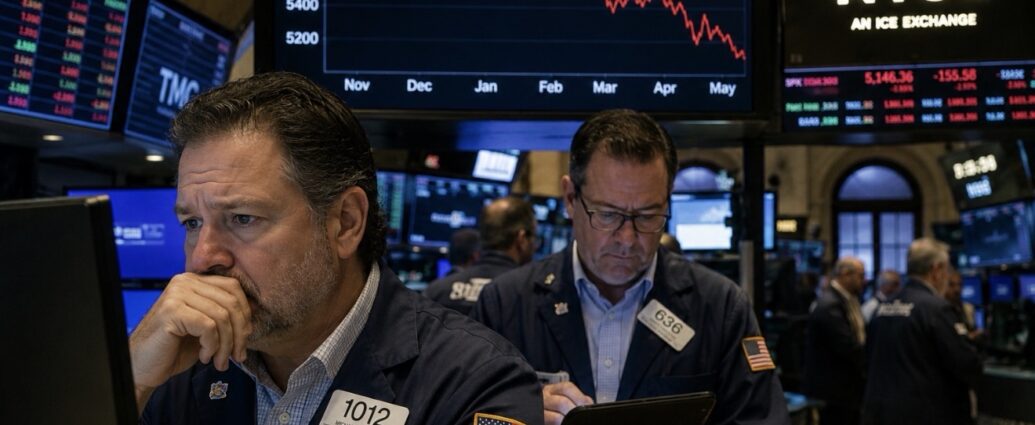
The Stock Market Is Flashing a Valuation Warning Last Seen Before the Great Depression and the Dot-Com Crash
By JBizNews Desk
May 11, 2026
The S&P 500 just recorded six consecutive winning weeks, touched fresh all-time highs, and is trading near 7,400. By nearly every surface measure, the bull market looks healthy. But underneath the record closes, a closely watched valuation metric is sounding an alarm it has sounded only twice before in history — and both times, what followed was catastrophic.
The signal in question is the S&P 500 Shiller CAPE Ratio — formally known as the Cyclically Adjusted Price-to-Earnings ratio — a measure developed by Nobel Prize-winning economist Robert Shiller that compares the current price of the S&P 500 to its inflation-adjusted earnings averaged over the prior ten years. Unlike a standard price-to-earnings ratio, the ten-year averaging smooths out short-term earnings spikes and gives a cleaner read on whether the market is genuinely cheap or expensive relative to its underlying fundamentals. The historical average CAPE ratio since 1871 sits at approximately 17. Today it hovers near 40.
The market has only reached this valuation territory twice before in recorded history.
The first time was in the late 1920s, when the ratio climbed into the mid-30s in the lead-up to the crash of 1929 and the Great Depression that followed. The second was at the peak of the dot-com bubble in late 1999 and early 2000, when the ratio reached an all-time high of 44.19 before technology stocks collapsed and the S&P 500 lost nearly half its value over the subsequent two years.
At roughly 40 today, the current reading sits between those two historic extremes — higher than the pre-Depression peak and approaching the dot-com record.
The root of today’s elevated reading is not difficult to identify.
The S&P 500 posted double-digit gains for three consecutive years, a feat accomplished only five times in the index’s history. Over that stretch, the index rose more than 78%, a pace more than double its long-term average annual return of approximately 10%.
Much of that surge was driven by artificial intelligence enthusiasm and a narrow group of mega-cap technology companies whose valuations now dominate the broader market.
Nvidia, Alphabet, Amazon, Microsoft, and Apple account for an outsized share of the index’s total market value, while their earnings — including the massive AI-related investment gains recently highlighted by Goldman Sachs — have carried much of the apparent profit growth driving the rally.
The result is a market increasingly dependent on a small cluster of companies tied directly to the AI infrastructure boom.
Mark Zandi, chief economist at Moody’s Analytics, offered a blunt assessment of the underlying economic picture last week.
“We’d likely be in a recession already if not for the AI investment-driven boom,” Zandi said.
That single sentence captures the increasingly fragile nature of the current market environment: a powerful rally built on genuine technological transformation, but concentrated inside a remarkably narrow portion of the economy.
History, however, offers some important nuance.
A high CAPE ratio does not predict the exact timing of a market reversal.
In both prior historical instances, stocks continued climbing for months — and in some cases years — after valuations entered dangerous territory before ultimately collapsing.
During the late 1920s, markets continued advancing through September 1929 before unraveling in October. During the dot-com era, valuations remained elevated through much of 1999 before the technology crash accelerated in early 2000.
The lesson many market historians draw is not that elevated valuations immediately end bull markets, but that they reliably create conditions for sharper eventual declines once investor psychology finally shifts.
The parallels to the late-1990s technology bubble are increasingly difficult for analysts to ignore.
Cisco Systems became one of the most transformative and important companies of the internet era, supplying the networking hardware that powered the expansion of the modern web. But investors who bought Cisco shares near their 2000 peak waited more than two decades for the stock to revisit those levels.
The company itself succeeded. The valuation did not.
That same tension — between transformative technology and prices assuming near-perfect long-term execution — is increasingly becoming the defining risk surrounding today’s AI-driven market.
Investors are not necessarily wrong that artificial intelligence may reshape the global economy. The concern is whether current stock prices already assume years of flawless growth, expanding margins, and uninterrupted demand before many of the long-term economic benefits have fully materialized.
Wall Street strategists remain deeply divided over how sustainable the current rally truly is.
Bullish investors argue the AI boom represents a once-in-a-generation technological shift comparable to the rise of the internet itself, justifying historically elevated valuations for companies controlling critical semiconductor, cloud-computing, and artificial intelligence infrastructure.
More cautious analysts counter that even revolutionary technologies can produce devastating investment outcomes when expectations outrun reality.
None of this means a crash is imminent or inevitable.
The S&P 500 could continue climbing, corporate earnings may remain strong, and many individual stocks inside the broader market still trade at reasonable valuations even as the index itself becomes increasingly expensive.
But the CAPE ratio is sending investors a message worth paying attention to.
At a valuation reading near 40 — a level historically seen only before the Great Depression and the collapse of the dot-com bubble — the market is pricing in a future that leaves remarkably little room for disappointment.
— JBizNews Desk
© JBizNews.com. All rights reserved. This article is original reporting by JBizNews Desk. Unauthorized reproduction or redistribution is strictly prohibited.


Saudi Aramco’s $32.5 Billion Quarter Shows What Happens When You Build Infrastructure for Exactly This Moment
By JBizNews Desk
May 11, 2026
Saudi Aramco delivered a powerful first-quarter earnings beat Sunday, reporting a 25% jump in profit as the world’s largest oil company successfully rerouted massive volumes of crude exports around the war-driven closure of the Strait of Hormuz — offering global energy markets a real-time demonstration of how decades of infrastructure investment can become a financial lifeline during geopolitical crisis.
The state-controlled oil giant reported net profit of $32.5 billion for the quarter ending March 31, up sharply from approximately $26 billion during the same period a year earlier.
The result exceeded Wall Street expectations. Analysts surveyed by LSEG had forecast profit closer to $30.95 billion.
On an adjusted basis excluding certain non-operational accounting items, Saudi Aramco said earnings rose 26% year over year to roughly $33.6 billion, also ahead of the company’s own internal analyst consensus forecast of approximately $31.16 billion.
Revenue climbed nearly 7% to $115.49 billion, supported by higher oil prices and strong sales volumes across crude oil, refined fuels, and petrochemicals.
The company said it realized an average crude price of approximately $76.90 per barrel during the quarter, up significantly from about $64.10 during the fourth quarter of 2025 and slightly above the roughly $76.30 average recorded a year earlier.
The increase reflected the geopolitical risk premium that has remained embedded in global oil markets since the Strait of Hormuz effectively shut to most commercial shipping following the outbreak of war in late February.
But the real story of the quarter was not simply higher oil prices.
It was infrastructure.
At the center of Saudi Aramco’s operational response stood the East-West Pipeline, a decades-old contingency system linking the kingdom’s eastern oil-producing fields to the Red Sea port of Yanbu.
The pipeline was originally constructed precisely for scenarios involving disruptions in the Persian Gulf and the Strait of Hormuz — though until now it had never faced a prolonged test of this magnitude.
This quarter, it became Saudi Arabia’s primary export artery.
With roughly 20% of the world’s seaborne oil supply normally flowing through Hormuz, the company pushed the East-West Pipeline to its maximum throughput capacity of approximately 7 million barrels per day, operating effectively at full utilization for three consecutive months.
“Aramco’s first-quarter performance reflects strong resilience and operational flexibility in a complex geopolitical environment,” said Amin H. Nasser, President and Chief Executive Officer of Saudi Aramco.
The pipeline allowed Saudi Arabia to continue exporting substantial oil volumes despite the maritime disruption that paralyzed large portions of Gulf shipping traffic.
But the quarter also revealed the limits of even the world’s most sophisticated energy infrastructure systems.
According to a person familiar with the matter cited by Bloomberg, Saudi crude exports recovered to roughly 5 million barrels per day by the end of March — approximately 70% of normal pre-war levels.
That means even with the East-West Pipeline operating flat out, Saudi Aramco still could not fully replace the export capacity normally moving through the Strait of Hormuz.
Every barrel redirected through the pipeline reduced operational flexibility elsewhere inside the system, leaving minimal excess capacity available to absorb additional production increases or further disruptions.
That limitation is now being closely watched across global energy markets.
Oil traders, refiners, and governments increasingly view utilization rates on the East-West Pipeline as a real-time gauge of how much spare Saudi export capacity remains available during the conflict.
At full utilization, there is little additional room left.
Any further disruption to the pipeline itself — or any additional geopolitical escalation affecting Saudi infrastructure — would likely tighten global oil supplies immediately.
The earnings report arrived as diplomatic developments surrounding the war also showed tentative movement.
CNBC, CNN, The Associated Press, and The Wall Street Journal all reported Sunday that Iran had submitted a formal response to a U.S.-backed framework proposal aimed at ending the conflict and reopening the Strait of Hormuz.
The negotiations carry enormous implications for Saudi Aramco’s financial outlook.
If diplomacy succeeds and Gulf shipping lanes reopen, Saudi Arabia could rapidly restore exports to pre-war levels while easing pressure on the East-West Pipeline.
If talks collapse, however, the pipeline’s 7-million-barrel-per-day ceiling becomes a hard structural constraint limiting future export growth.
Despite the disruption, Saudi Aramco signaled confidence in its financial strength.
The company declared a first-quarter base dividend of approximately $21.9 billion, up 3.5% from a year earlier.
The payout remains critically important to the Saudi government, which depends heavily on Aramco dividends as one of the kingdom’s largest revenue sources.
Capital expenditures totaled approximately $12.1 billion during the quarter, slightly below the $12.5 billion spent a year earlier and down from roughly $13.4 billion in the prior quarter.
The company maintained full-year capital spending guidance between $50 billion and $55 billion.
Free cash flow declined modestly to $18.6 billion, compared with approximately $19.2 billion during the same period last year, partly due to a large increase in working capital requirements tied to wartime operational adjustments.
For investors and energy executives alike, the quarter offered a rare real-world stress test of how a national oil giant performs when one of the world’s most important shipping corridors effectively disappears overnight.
Saudi Aramco’s answer was clear: better than many feared — but not without hard limits.
The 25% profit surge reflected decades of infrastructure investment designed precisely for moments like this.
The incomplete export recovery showed that even the world’s largest oil producer cannot fully engineer its way around the closure of a chokepoint as critical as the Strait of Hormuz.
For the broader energy industry, the lesson may be even more important.
The companies best positioned to survive global disruptions are often the ones that spent years building contingency systems long before markets believed they would ever actually be needed.
— JBizNews Desk
© JBizNews.com. All rights reserved. This article is original reporting by JBizNews Desk. Unauthorized reproduction or redistribution is strictly prohibited.

Alphabet Closes In on Nvidia for World’s Largest Market Cap as AI Reshapes the Tech Power Rankings
By JBizNews Desk
May 11, 2026
Alphabet told investors in its official first-quarter 2026 earnings filing with the Securities and Exchange Commission that revenue rose to $109.9 billion, operating income climbed to $39.7 billion, and Google Cloud revenue surged 63% to $20 billion, as the company accelerated its artificial intelligence expansion across search, enterprise software, cloud infrastructure, subscriptions, and consumer products. In the company’s earnings release, CEO Sundar Pichai declared that “our AI investments and full stack approach are lighting up every part of the business” — results that helped push Alphabet’s market value to approximately $4.81 trillion, rapidly narrowing the gap with Nvidia, now valued near $5.05 trillion.
The shrinking distance between the two technology giants has become one of Wall Street’s defining market battles of 2026, reflecting investor uncertainty over where the long-term economic value of artificial intelligence will ultimately concentrate: in the infrastructure layer dominated by Nvidia, or in the application and platform ecosystems controlled by companies such as Alphabet.
According to Alphabet’s SEC Form 8-K filed April 29, the company delivered its eleventh consecutive quarter of double-digit growth, with consolidated revenue rising 22% year over year. Investors focused particularly on the extraordinary acceleration inside Google Cloud, where AI demand from enterprises drove backlog to more than $460 billion, nearly doubling quarter over quarter and giving the company unusually strong long-duration revenue visibility.
The earnings report also showed that Google Search revenue rose 19%, while YouTube advertising revenue increased 11% to $9.88 billion. Net income surged to $62.6 billion, and earnings per share climbed 82% to $5.11, easing investor fears that massive AI spending would materially pressure margins.
Operating margin expanded to 36.1%, a critical metric closely watched by institutional investors as nearly every major technology company races to deploy capital into AI infrastructure at historic levels.
Sundar Pichai, CEO of Alphabet and Google, told investors that AI-powered search experiences are driving record user engagement and query volume while strengthening monetization across the company’s ecosystem. He also highlighted accelerating adoption of Gemini Enterprise, which saw 40% quarter-over-quarter growth in paid monthly active users.
The company disclosed that total paid subscriptions across services including YouTube and Google One have now reached 350 million globally, reinforcing investor confidence that Alphabet’s AI strategy is extending beyond infrastructure and into recurring consumer and enterprise monetization.
At the same time, Waymo, Alphabet’s autonomous driving division, surpassed 500,000 fully autonomous rides per week, signaling that AI-related growth is beginning to contribute operationally across multiple business segments beyond cloud computing.
Wall Street’s attention is now increasingly centered on the sheer scale of capital being deployed into the AI arms race. Alphabet reported quarterly capital expenditures of $35.7 billion, more than double the prior year, driven largely by investments in servers, networking systems, technical infrastructure, AI data centers, and internally designed Tensor Processing Unit chips.
The company raised full-year 2026 capital expenditure guidance to between $180 billion and $190 billion, placing Alphabet among the world’s largest AI infrastructure investors while simultaneously positioning the company as a direct competitive force against some of the very hardware suppliers powering the broader AI economy.
That dynamic increasingly places Alphabet in two separate roles simultaneously: one of the world’s largest buyers of advanced AI computing infrastructure and one of the largest emerging competitors to traditional semiconductor suppliers through its vertically integrated AI stack.
Still, Nvidia remains at the center of the infrastructure layer powering the global AI buildout.
In its own SEC Form 8-K filed February 25, Nvidia reported record quarterly revenue of $68.1 billion, up 73% year over year, while data center revenue surged to $62.3 billion, accounting for more than 91% of total company revenue. Full-year fiscal 2026 revenue reached a record $215.9 billion, up 65%, underscoring the unprecedented demand for AI chips and networking systems.
Jensen Huang, founder and CEO of Nvidia, said in the company’s official earnings release that “enterprise adoption of agents is skyrocketing” and described AI compute infrastructure as the foundation of a new industrial era. Nvidia also guided fiscal first-quarter 2027 revenue to approximately $78 billion, a forecast now viewed by investors as one of the most important indicators of global AI infrastructure demand.
For institutional investors, the race between Alphabet and Nvidia increasingly represents two distinct theories of AI monetization.
Nvidia’s valuation remains tied heavily to continued acceleration in AI infrastructure spending by hyperscalers, governments, and enterprises building massive AI clusters. Alphabet, by contrast, offers exposure to AI integrated directly into products and services used daily by billions of consumers and businesses worldwide — spanning search, cloud computing, advertising, subscriptions, enterprise software, and autonomous transportation.
Many analysts believe both companies can continue growing simultaneously. Others increasingly argue that while infrastructure providers may dominate the early phase of the AI cycle, long-term economic value could migrate toward companies controlling user distribution, proprietary ecosystems, and recurring software monetization.
At the same time, Alphabet’s extraordinary spending plans demonstrate that even the largest AI application platforms remain deeply dependent on computing infrastructure supplied by companies such as Nvidia.
The next major test in the market-cap race arrives May 20, when Nvidia reports fiscal first-quarter 2027 earnings. A clean beat above the company’s projected $78 billion revenue target would likely strengthen Nvidia’s hold atop the global rankings. A softer report, combined with continued momentum in Google Cloud and Gemini monetization, could rapidly narrow — or potentially erase — the remaining valuation gap.
With only about $240 billion separating the two companies, and daily stock swings frequently moving market values by hundreds of billions of dollars, Wall Street increasingly believes the title of the world’s most valuable company may continue changing hands throughout 2026.
JBizNews Desk

Cerebras Set to Raise IPO Price to $150-$160 as Investor Demand Tops 20 Times Available Shares
By JBizNews Desk
May 11, 2026
Cerebras Systems is preparing to sharply raise both the price and size of its blockbuster initial public offering after investor demand for the artificial intelligence chipmaker overwhelmed Wall Street expectations, underscoring the extraordinary appetite currently driving the global AI infrastructure boom.
The Sunnyvale, California-based company is now considering increasing its IPO pricing range to between $150 and $160 per share, according to two people familiar with the matter who spoke to Reuters on Sunday.
That would represent another major upward revision from the company’s already elevated prior range of $115 to $125 per share.
Cerebras is also expected to expand the number of shares offered to approximately 30 million shares, up from the 28 million originally planned.
At the top end of the revised range, the company would raise roughly $4.8 billion, compared with approximately $3.5 billion under the original structure, implying a fully diluted valuation approaching $32 billion.
The figures remain subject to final pricing adjustments ahead of the expected offering date.
The scale of investor demand has stunned even veteran bankers involved in the transaction.
Orders for the offering have reportedly exceeded available shares by more than 20 times, according to the Reuters report, forcing underwriters to repeatedly revise pricing higher during the roadshow process.
Just days earlier, Bloomberg had reported that Cerebras was already preparing to increase the range to $125 to $135 per share.
The latest proposed increase to $150 to $160 signals that demand continued accelerating even after that revision.
The company is expected to price the offering on May 13 and begin trading shortly afterward on the Nasdaq Global Select Market under the ticker symbol CBRS.
The IPO is being led by Morgan Stanley, Citigroup, Barclays, and UBS Group.
If completed near the top of the revised range, Cerebras would become the largest IPO globally so far in 2026, according to data compiled by Dealogic.
The offering also marks a remarkable turnaround for the company itself.
Cerebras originally attempted to go public in 2024 but withdrew the offering after U.S. regulators launched a national security review tied to investment involvement from the United Arab Emirates.
That review concluded earlier this year, clearing the company to proceed with the current listing.
Now, less than two years later, the same company that could not complete its IPO is poised to become one of the hottest AI-related public offerings in modern market history.
The enthusiasm surrounding Cerebras reflects both broader investor appetite for artificial intelligence infrastructure and the company’s increasingly unique position inside the AI hardware ecosystem.
Unlike traditional semiconductor firms, Cerebras specializes in so-called wafer-scale chips — processors physically much larger than conventional graphics processing units, or GPUs.
The company’s chips are specifically optimized for running advanced artificial intelligence systems at scale.
While Nvidia continues dominating the AI training market, Cerebras has increasingly focused on another rapidly growing segment of the industry: AI inference.
Inference refers to the computational process allowing deployed AI systems to actually respond to user requests in real time — the operational side of artificial intelligence after models are already trained.
As generative AI applications scale globally, many analysts believe inference demand may eventually rival or surpass the enormous spending currently devoted to training large language models.
That shift has positioned Cerebras favorably.
The company has secured major customers including Amazon and OpenAI since withdrawing its original 2024 IPO filing, developments that substantially strengthened investor confidence heading into the offering.
OpenAI alone continues spending at extraordinary levels to support inference capacity powering ChatGPT and related products used by hundreds of millions of people globally.
Meanwhile, Amazon Web Services has been racing to expand AI infrastructure capacity across its cloud platform as enterprise demand accelerates.
The broader spending environment across the technology industry is also fueling enthusiasm for AI infrastructure companies.
Analysts at Morgan Stanley recently projected that the world’s five largest hyperscalers — Alphabet, Amazon, Microsoft, Meta Platforms, and Oracle — will increase artificial intelligence-related capital expenditures by nearly 80% during 2026 to approximately $805 billion.
The bank forecasts that figure could rise further toward $1.1 trillion by 2027.
That spending directly benefits the semiconductor firms, networking providers, memory suppliers, and infrastructure companies powering the AI ecosystem.
Investors increasingly view those businesses as occupying critical bottlenecks inside the global AI supply chain.
The funding environment for artificial intelligence startups remains equally aggressive.
AI companies attracted roughly $24.2 billion in venture capital funding during February 2026 alone, while semiconductor valuations across both public and private markets have surged as investors continue bidding aggressively for exposure to the AI trade.
For Wall Street, Cerebras’s IPO may ultimately symbolize something larger than a single semiconductor company going public.
It illustrates how completely investor psychology surrounding artificial intelligence has transformed in less than two years.
A company unable to complete its IPO in 2024 is now preparing to enter public markets with one of the most heavily oversubscribed offerings of the year.
And judging by the pace of demand, investors still appear willing to pay almost any price for a stake in the infrastructure powering the AI revolution.
— JBizNews Desk
© JBizNews.com. All rights reserved. This article is original reporting by JBizNews Desk. Unauthorized reproduction or redistribution is strictly prohibited.

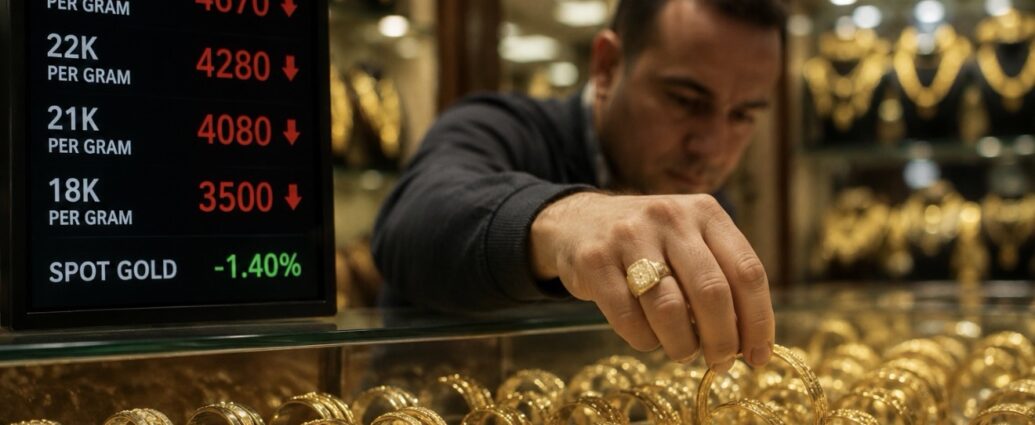
Gold Slips as Trump’s Rejection of Iran Peace Offer Lifts Dollar and Keeps Inflation Fears Alive
By JBizNews Desk
May 11, 2026
Gold prices slipped at the start of the new trading week after President Donald Trump rejected Iran’s latest proposal aimed at ending the war and reopening the Strait of Hormuz, strengthening the U.S. dollar, lifting oil prices, and reinforcing inflation concerns that continue to dominate global financial markets.
Spot gold eased from Friday’s close near $4,739 per ounce as trading opened across Asian markets Monday, reversing part of the late-week rally that had briefly emerged on hopes diplomatic negotiations might finally produce a breakthrough.
The shift came after Trump posted a blunt rejection of Iran’s latest counterproposal Sunday evening on Truth Social.
“I have just read the response from Iran’s so-called ‘Representatives.’ I don’t like it — TOTALLY UNACCEPTABLE!” Trump wrote.
The statement effectively extinguished the optimism that had developed late last week after Iran reportedly submitted a revised proposal through mediators in Pakistan.
The market reaction was immediate.
The U.S. dollar strengthened as investors rotated into traditional safe-haven currency positions, making dollar-denominated gold more expensive for international buyers holding foreign currencies.
At the same time, oil prices moved higher again, with both Brent crude and West Texas Intermediate futures climbing on renewed concerns that the Strait of Hormuz disruption may continue far longer than markets had hoped.
That combination — rising energy prices and a stronger dollar — created fresh pressure on bullion.
“The latest news clearly didn’t give the market confidence that everything is going to be okay and again raised the specter of inflation issues, along with fairly hawkish signals to the market on interest rates,” said Bart Melek, global head of commodity strategy at TD Securities.
The dynamic now driving gold markets has become increasingly unusual.
Historically, a geopolitical crisis of this scale would strongly benefit gold prices as investors seek protection from instability and financial stress.
But the Iran conflict has produced a different macroeconomic outcome.
Instead of driving aggressive monetary easing, the war has triggered an energy-driven inflation shock that continues pushing gasoline prices, transportation costs, and inflation expectations sharply higher.
National average gasoline prices reached approximately $4.54 per gallon last week, according to the American Automobile Association, while one-year consumer inflation expectations climbed to 4.5% in the latest University of Michigan survey.
The same survey also showed U.S. consumer sentiment collapsing to the lowest reading recorded in the survey’s 74-year history.
That inflation picture has kept the Federal Reserve trapped in an increasingly difficult position.
Higher energy costs are making it harder for the central bank to justify interest-rate cuts even as broader consumer spending and economic confidence weaken.
And higher interest rates directly pressure gold because bullion itself produces no yield.
“Gold continues to take its cues from the oil market, with rising energy costs keeping the risk of near-term dollar strength and elevated inflation in focus,” said Ole Hansen, head of commodity strategy at Saxo Bank.
Several major Wall Street institutions have now shifted their rate expectations accordingly.
Barclays joined Goldman Sachs and JPMorgan this past week in forecasting no Federal Reserve rate cuts during 2026 as long as war-related energy inflation continues filtering through the broader economy.
The Fed held rates steady at its most recent policy meeting in what analysts described as one of the central bank’s most divided decisions since the early 1990s, with policymakers citing uncertainty tied directly to the Iran conflict and energy markets.
Investors now face a critical week for inflation data.
The Bureau of Labor Statistics is scheduled to release the Consumer Price Index on May 12, followed by the Producer Price Index on May 13.
Consensus forecasts currently expect headline CPI inflation to rise to approximately 3.8% year over year, while core CPI — which excludes food and energy — is projected to climb to roughly 2.7%.
A hotter-than-expected inflation reading would likely strengthen expectations that the Fed keeps rates elevated longer, potentially placing additional downward pressure on gold.
A softer report, however, could revive hopes for eventual monetary easing and provide support for bullion prices.
TD Securities currently forecasts a broad year-end trading range for gold between approximately $4,400 and $5,500 per ounce.
The firm noted that sustained movement toward the upper end of that range would likely require a meaningful easing of Middle East tensions alongside a decline in energy-driven inflation pressures.
As long as oil prices remain elevated — Brent crude continues hovering near $100 per barrel — analysts say gold may struggle to sustain upside momentum despite ongoing geopolitical instability.
Structurally, however, long-term institutional demand for gold remains exceptionally strong.
China’s central bank reported its 18th consecutive month of official gold reserve purchases in April, continuing a broader trend among central banks diversifying reserves away from dollar-denominated assets.
The World Gold Council recently reported that approximately 76% of central bank officials globally expect gold to comprise a larger share of international reserves over the next five years.
That persistent sovereign demand has helped limit downside pressure on gold even as higher interest-rate expectations weigh on prices.
For now, however, gold remains trapped between two competing forces.
On one side stands its traditional role as a hedge against geopolitical crisis and financial instability.
On the other stands the inflation and interest-rate arithmetic created by the very same conflict driving demand for safety.
Until the Strait of Hormuz reopens and energy markets stabilize, investors increasingly expect that tension to remain unresolved.
— JBizNews Desk
© JBizNews.com. All rights reserved. This article is original reporting by JBizNews Desk. Unauthorized reproduction or redistribution is strictly prohibited.
Share Futures Ease, Dollar Gains as Gulf Talks Teeter — Oil Climbs on Iran Deadlock
By JBizNews Desk
May 11, 2026
Global financial markets opened the new week cautiously Monday as signs that U.S.-Iran peace negotiations had stalled pushed stock futures lower, lifted the dollar, and sent oil prices climbing again — a pattern that has become increasingly familiar to investors navigating nearly three months of geopolitical volatility tied to the war in the Persian Gulf.
The shift in sentiment followed a blunt statement from President Donald Trump, who announced Sunday that he had rejected Iran’s latest counterproposal aimed at ending the conflict and reopening the Strait of Hormuz.
“I have just read the response from Iran’s so-called ‘Representatives.’ I don’t like it — TOTALLY UNACCEPTABLE!” Trump wrote on Truth Social.
The post quickly erased much of the optimism that had fueled last week’s powerful market rally.
The S&P 500 and Nasdaq Composite had both posted their sixth consecutive weekly gains amid growing investor expectations that negotiations between Washington and Tehran were approaching a breakthrough.
By Sunday evening in Asia, however, markets were moving back into defensive positioning.
Futures tied to the Dow Jones Industrial Average fell roughly 143 points, or 0.3%, while futures linked to the S&P 500 and Nasdaq 100 also declined approximately 0.3%.
The U.S. dollar strengthened against a basket of major currencies as traders shifted toward traditional safe-haven assets, while both Brent crude and West Texas Intermediate oil prices moved higher on concerns that the disruption to Gulf energy flows may continue far longer than markets had recently hoped.
Iran’s latest proposal had reportedly been delivered through mediators in Pakistan and called for lifting U.S. Treasury sanctions on Iranian oil exports within 30 days alongside an end to Washington’s naval blockade of Iranian ports.
The Trump administration has consistently resisted those demands absent a broader nuclear and security agreement.
Secretary of State Marco Rubio reinforced the administration’s position Sunday, rejecting Tehran’s suggestion that Iran would reopen the Strait of Hormuz while maintaining effective operational control over the passage.
“That’s not opening the straits,” Rubio said. “Those are international waterways.”
Despite the broader diplomatic setback, markets did receive one modest operational sign that selective shipping movement through the region remains possible.
A QatarEnergy liquefied natural gas carrier, the Al Kharaitiyat, successfully crossed the Strait of Hormuz Sunday for the first time since the conflict began on February 28.
The vessel headed toward Pakistan’s Port Qasim after reportedly receiving transit approval from Iran as part of a limited confidence-building arrangement involving Qatar and Pakistan, both of which continue playing central mediation roles in the negotiations.
The transit offered a narrow but important signal that portions of Gulf shipping traffic may still be selectively allowed even while the broader waterway remains effectively closed to most commercial energy exports.
Elsewhere across the Gulf region, however, fresh security incidents underscored how fragile the situation remains.
The United Arab Emirates reported intercepting two drones launched from Iran, while Qatar condemned a drone strike targeting a cargo vessel operating in its territorial waters.
Kuwait additionally stated that its air-defense systems engaged hostile drones that briefly entered Kuwaiti airspace.
The incidents reinforced growing concerns among investors that tactical military escalations could rapidly destabilize already fragile diplomatic efforts.
For financial markets, the week ahead now carries heightened importance.
Investors are preparing for a series of critical economic reports expected to offer the clearest indication yet of how the Iran-driven oil shock is affecting the broader U.S. economy.
The Bureau of Labor Statistics is scheduled to release both the Consumer Price Index and Producer Price Index this week — key inflation readings arriving as the national average gasoline price remains above approximately $4.54 per gallon.
Wall Street increasingly fears that sustained energy inflation could begin feeding more aggressively into transportation, manufacturing, food, and consumer prices across the economy.
Analysts at Goldman Sachs recently raised their Brent crude forecast to $90 per barrel by late 2026, citing accelerating global inventory drawdowns estimated at roughly 11 million to 12 million barrels per day as the Hormuz disruption persists.
The bank warned that even a future diplomatic breakthrough may not immediately solve the underlying supply imbalance.
“Even if flows via Hormuz eventually resume, the lag in restoring supply, combined with depleted inventories, suggests sustained tightness,” said Billy Leung, investment strategist at Global X ETFs. “I’d argue the fat tail is still ahead of us, not behind.”
The ongoing energy shock is also placing the Federal Reserve in an increasingly difficult position.
The central bank held interest rates steady at its most recent meeting, but policymakers now face competing risks pulling in opposite directions.
Higher oil prices are pushing inflation expectations upward at the same time consumer confidence and discretionary spending continue weakening.
Additional rate hikes risk tipping the economy toward recession.
Rate cuts, meanwhile, risk allowing inflation expectations to become further entrenched after one-year consumer inflation expectations recently climbed to approximately 4.5%, according to the University of Michigan’s latest survey.
Corporate earnings this week will also receive heightened scrutiny.
Results from Cisco Systems and Under Armour are expected to offer additional insight into whether rising energy costs and geopolitical instability are beginning to pressure corporate supply chains, logistics expenses, and consumer demand.
But for global markets, the dominant variable remains the same one investors have watched for nearly ten weeks:
What happens next between Washington and Tehran — and whether diplomacy can reopen the narrow shipping corridor between Iran and Oman through which roughly one-fifth of the world’s oil supply once flowed freely.
— JBizNews Desk
© JBizNews.com. All rights reserved. This article is original reporting by JBizNews Desk. Unauthorized reproduction or redistribution is strictly prohibited.

