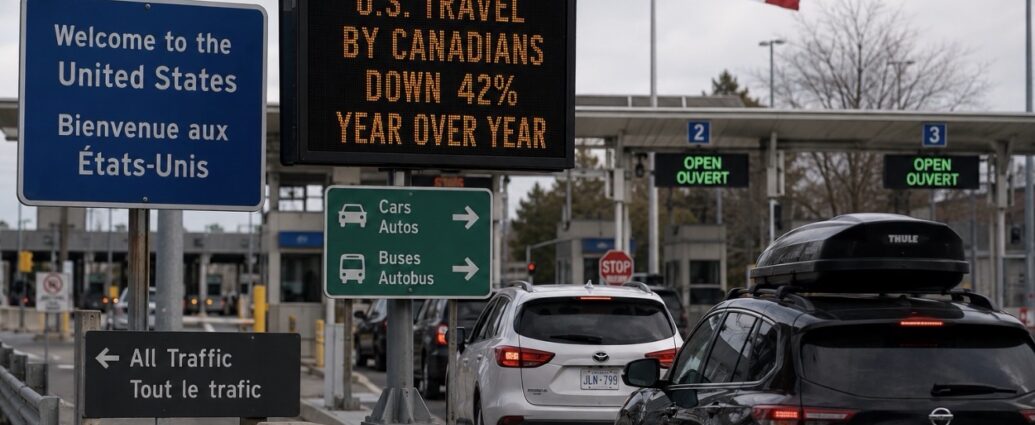
Canadian visits to U.S. cities have fallen 42% year over year through March 2026, a sharper contraction than any official measure has captured to date, according to a cellphone-tracking analysis released this week by the University of Toronto’s School of Cities — research that contradicts the narrower 25% decline shown in Statistics Canada border-crossing data and reveals that financial centers, automotive hubs, and conference cities have absorbed business-travel losses materially larger than tourism-focused destinations.

The study, authored by Karen Chapple, Yihoi Jung, and Jeff Allen at the School of Cities, was released as part of the school’s “Mapping Tariffs” project. The researchers analyzed cellphone activity from Canadian devices between April 2024 and March 2026, requiring each tracked trip to register a stop in Canada, a stop in the U.S., and a return stop in Canada. Of 267 U.S. cities included in the analysis, only three saw increased Canadian visits over the period. Myrtle Beach, South Carolina showed the largest decline at 65.4%; Yuma, Arizona declined 62%. Major financial and industrial hubs including Dallas, Grand Rapids, Michigan, New York, San Francisco, Los Angeles, and Houston also showed substantial declines.

“This means that border crossing data is not capturing the full drop in Canadian business and trade-related travel, and when Canadians travel to the U.S., they are visiting fewer locations and staying for less time than they used to,” Chapple, Jung, and Allen wrote in the study’s findings.

CBS News separately reported Tuesday that Statistics Canada estimates U.S. residents visiting Canada dropped 75% in 2025 — a parallel collapse in cross-border travel.

The financial-center detail is the most consequential finding for U.S. corporate strategy.

Dallas has emerged as one of the largest U.S. operating hubs for Canadian financial institutions, with Scotiabank opening a regional headquarters in the city in early 2026 joining Royal Bank of Canada, Bank of Montreal, and Canadian Imperial Bank of Commerce. The Canadian-bank corridor between Toronto and Dallas has expanded sharply over the past three years as the institutions positioned for the U.S. infrastructure, energy-transition, and private-credit cycle.

Grand Rapids, named Vaughan, Ontario as a sister city earlier this month, sits at the center of cross-border auto-industry supply chains anchored by Ford Motor Company, General Motors, and Stellantis plants in Detroit and southern Ontario.

The financial impact is concentrated because of how business travel sits in the U.S. travel economy. The U.S. Travel Association estimates business travel represents approximately 20% of total travel to the U.S. but accounts for roughly 60% of air and lodging revenue, reflecting higher hotel and conference-center spend, more dining out, and premium-cabin air bookings.

Chapple told Fortune that the loss of business travelers is more costly than the tourism decline because of the revenue mix.

Air Canada, Delta Air Lines, and United Airlines all operate substantial cross-border premium-cabin networks on routes between Toronto, Montreal, Calgary, Vancouver, and U.S. financial and technology centers.

The employment data confirm the macroeconomic transmission.

Center for Economic and Policy Research analysis found that by mid-2025, U.S. establishments with the highest share of Canadian visitors had approximately 6% fewer employees than establishments in less Canada-exposed markets — a loss of between 14,000 and 42,000 jobs across affected markets. The job-loss range exceeds anything captured in standard tourism-employment statistics because the CEPR methodology isolates Canadian-traffic exposure rather than total establishment employment.

For investors, the sectoral exposure runs across hotels, airlines, gaming, and conference operators.

MGM Resorts International, Caesars Entertainment, and Wynn Resorts in Las Vegas carry direct exposure to leisure-tourism declines. Walt Disney Company’s Orlando parks, Hard Rock International’s Florida operations, and Myrtle Beach hospitality operators face the deepest leisure-side hits.

On the business-travel side, Marriott International, Hilton Worldwide, and Hyatt Hotels carry exposure across all the affected financial and convention centers. The American Hotel & Lodging Association has consistently identified business and group travel as central to weekday occupancy and revenue-per-available-room — exactly the segment now compressing.

The airlines face the most asymmetric exposure.

Delta Air Lines Chief Executive Ed Bastian has spent the past three years positioning Delta as a premium-service operator, with the highest mix of business and corporate revenue in the U.S. domestic majors. United Airlines Chief Executive Scott Kirby has similarly leaned into cross-border corporate flying. American Airlines Chief Executive Robert Isom runs a more balanced mix. Air Canada Chief Executive Michael Rousseau sits at the center of the cross-border network on the Canadian side.

Sell-side coverage from Conor Cunningham at Melius Research, Helane Becker at TD Cowen, Sheila Kahyaoglu at Jefferies, and Andrew Didora at Bank of America has tracked the cross-border business-travel softness through Q1 2026, but the University of Toronto data point materially exceeds anything in the sell-side analyst base cases.

The political backdrop adds to the friction.

The Trump administration imposed sweeping tariffs on Canadian imports in early 2025, including 25% tariffs on steel and aluminum and broader Section 232 measures, while the President has publicly mused about Canada becoming the “51st state.”

Canadian Prime Minister Mark Carney, who succeeded Justin Trudeau in March 2025 and won the April 2025 federal election, has positioned Canada as building economic alternatives to U.S. dependence, with Bank of Canada Governor Tiff Macklem cutting rates four times in the past 18 months to support domestic demand.

The Mapping Tariffs project at the University of Toronto is itself a direct response to the trade-and-political environment.

The cellphone-tracking methodology has limitations. Statistics Canada and the U.S. Census Bureau rely on formal survey and administrative data, while device-based analysis captures physical movement but not spending. The researchers acknowledged that the data may include Canadians who were previously living in the U.S. and have since returned home — a population that would compound the headline number but not represent active travel demand.

Even with those caveats, the 42% figure is consistent with anecdotal reporting from cross-border hotel operators, convention managers, and airline operations groups dating back to the second quarter of 2025.

The findings dovetail with the broader macroeconomic picture today’s data have produced.

April CPI released Tuesday at 3.8% confirmed inflation reacceleration. The National Federation of Independent Business Small Business Optimism Index, also released Tuesday, came in at 95.9, the second consecutive month below the 52-year average. The National Bureau of Economic Research working paper from Chloe East at the University of Colorado Boulder and Elizabeth Cox found this week that ICE enforcement has reduced employment for U.S.-born workers in construction, agriculture, and hospitality — sectors that overlap with the Canadian-traffic exposure the University of Toronto data now quantify.

The combined picture is a U.S. economy absorbing the second-order effects of trade and immigration policy across multiple channels simultaneously. Tariffs raise input costs and shift supplier behavior. Border and visa policies reduce cross-border business travel. ICE activity contracts labor supply in construction and hospitality. Energy disruption from the Iran war raises shipping and freight costs. Each channel by itself would be material; in combination, they constitute a coordinated headwind on the discretionary-services and cross-border-commerce segments of the U.S. economy.

The next data point on the trajectory is the U.S. Department of Commerce International Trade Administration’s next quarterly inbound-tourism release, due in late June, which should begin to reflect the cellphone-data gap with official statistics. Whether Carney’s May meeting with Trump scheduled for next month produces a tariff de-escalation, and whether the Iran war ceasefire holds — both still in flux — will shape the trajectory of cross-border travel through the summer.

The University of Toronto data suggest the recovery, when it comes, will start from a deeper hole than border-crossing data have signaled.

JBizNews Desk
© JBizNews.com. All rights reserved. This article is original reporting by JBizNews Desk. Unauthorized reproduction or redistribution is strictly prohibited.
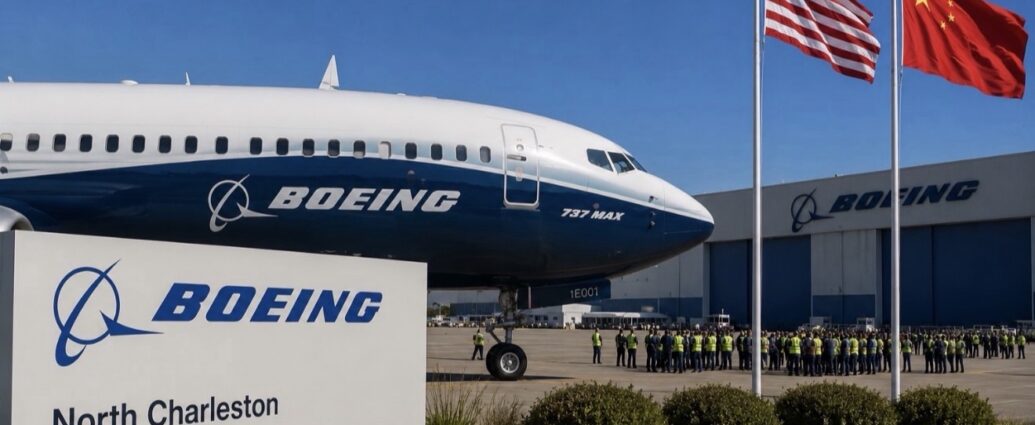

Boeing Chief Executive Kelly Ortberg arrived in Beijing Wednesday as part of the U.S. business delegation accompanying President Donald Trump for a two-day summit with Chinese President Xi Jinping, with negotiations reportedly nearing completion on what could become one of the largest aircraft orders in aviation history.

According to reporting from Bloomberg News and CNBC, discussions now center on a package that could include as many as 500 Boeing 737 MAX jets alongside roughly 100 widebody aircraft, potentially reopening China’s market to Boeing after nearly a decade of frozen large-scale orders.

The proposed agreement would represent China’s first major Boeing purchase since Trump’s 2017 Beijing state visit, which produced commitments for roughly 300 aircraft valued at more than $37 billion at the time.

At current pricing levels — even after standard industry discounts — analysts estimate a 600-aircraft package could exceed $100 billion in total value, instantly becoming one of Boeing’s most important commercial victories in years.

The majority of the order is expected to focus on the 737 MAX 8 and MAX 10 models, aircraft heavily used by Chinese airlines for high-density domestic routes.

Carriers expected to participate include Air China, China Eastern Airlines, China Southern Airlines and Hainan Airlines, all of which face rising fleet-renewal needs as Chinese domestic air travel continues recovering.

For Boeing, the stakes extend far beyond headline optics.

The company has spent the last several years rebuilding operational credibility following the prolonged 737 MAX crisis and the 2024 Alaska Airlines door-plug incident that triggered renewed scrutiny from the Federal Aviation Administration.

Ortberg, who succeeded former CEO Dave Calhoun in August 2024, has focused heavily on stabilizing production quality while gradually increasing monthly MAX output under FAA-imposed caps.

China’s absence from Boeing’s order pipeline has remained one of the largest holes in the company’s global backlog.

A deal of this size would likely fill production slots well into the next decade and dramatically improve long-term visibility for Boeing’s narrow-body manufacturing operations.

Bank of America aerospace analyst Ronald Epstein previously described the potential package as “a near-decade of lost Chinese market share returning in one announcement.”

The geopolitical backdrop is also unusually favorable for a transaction of this scale.

Trade relations between Washington and Beijing deteriorated sharply throughout 2025 after both sides escalated tariffs across key sectors. China raised retaliatory tariffs on U.S. imports to 125% after the Trump administration increased duties on Chinese goods to 145%, effectively freezing many aircraft deliveries.

The partial thaw emerged following the Busan APEC truce reached in late 2025, which reduced certain tariffs and paused expanded Chinese restrictions on rare-earth exports.

Both governments are now under pressure to produce tangible commercial wins before the current trade truce expires later this year.

For China, aircraft procurement also intersects directly with broader economic and energy-security concerns.

The country remains heavily dependent on energy shipments transiting through the Strait of Hormuz, where ongoing instability tied to the Iran conflict has created growing pressure on shipping and commodity markets.

Stabilizing trade ties with Washington while securing access to critical industrial supply chains has increasingly become a strategic priority for Beijing.

The Boeing negotiations are unfolding alongside broader commodity and trade discussions.

Cargill Chief Executive Brian Sikes, also traveling with the delegation, is reportedly working to finalize a multiyear Chinese commitment to purchase approximately 25 million metric tons of U.S. soybeans annually, alongside expanded imports of American beef, poultry and energy products.

The broader U.S. delegation reflects the scale of the summit’s economic ambitions.

Executives traveling with Trump include Apple CEO Tim Cook, Tesla CEO Elon Musk, Nvidia CEO Jensen Huang, BlackRock CEO Larry Fink, Blackstone Chairman Stephen Schwarzman and Citigroup CEO Jane Fraser.

The summit is widely viewed as an effort to stabilize corporate ties between the world’s two largest economies following several years of rising geopolitical confrontation.

For Boeing’s competitors, the implications are substantial.

Airbus has spent the past several years steadily increasing dominance within the Chinese aviation market while Boeing remained sidelined. The European manufacturer recently expanded its Tianjin assembly operations and secured multiple major Chinese carrier orders during Boeing’s absence.

Meanwhile, China’s state-backed aerospace manufacturer COMAC continues expanding deployment of its domestically built C919 narrow-body aircraft, though industry analysts still view the jet as years behind the Boeing 737 MAX and Airbus A320neo in terms of range, payload efficiency and international certification.

A Boeing return to China at scale would complicate Beijing’s long-term ambitions for aerospace self-sufficiency while slowing COMAC’s market-share expansion.

Investors are already partially pricing in a positive outcome.

Boeing shares have climbed meaningfully from their March lows as optimism surrounding the Beijing summit intensified.

Whether the order ultimately materializes — and on what financing and delivery terms — may determine not only Boeing’s production outlook for the next decade, but also the broader trajectory of U.S.-China commercial relations heading into 2027.

JBizNews Desk

© JBizNews.com. All rights reserved. This article is original reporting by JBizNews Desk. Unauthorized reproduction or redistribution is strictly prohibited

Documenting its rape, torture and mutilation on Oct. 7 and after, even as many choose to deny what happened.

This post was originally published here. 

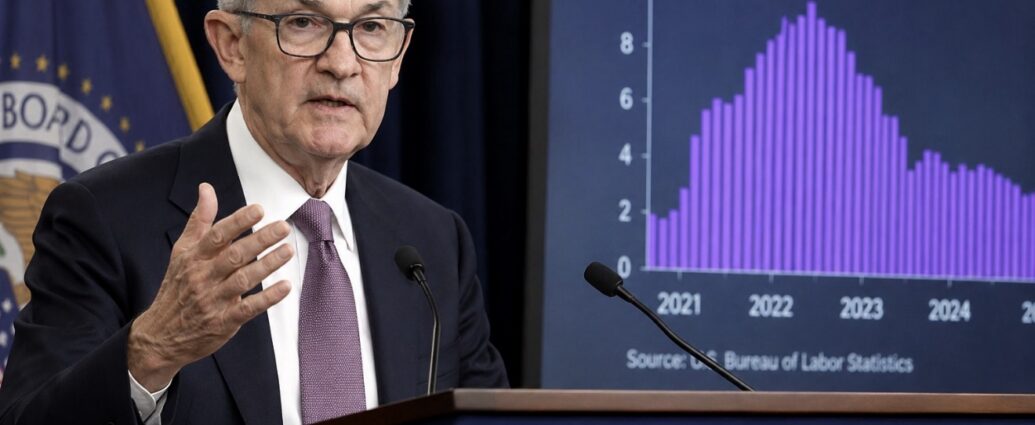
WASHINGTON — The U.S. Senate voted at Wednesday Afternoon to confirm Kevin Warsh as the next chairman of the Federal Reserve in a razor-thin 54-45 vote, marking the closest confirmation margin for a Fed chair in the modern era and handing President Donald Trump the central-bank leader he has openly pushed for while immediately reigniting debate over the future independence of the U.S. central bank.

Warsh, 56, will replace Jerome Powell, whose term leading the Federal Reserve expires Friday after serving as chair since 2018. The Senate vote broke almost entirely along party lines, with Sen. John Fetterman (D-Pa.) emerging as the lone Democrat to support the nomination.

The confirmation concludes one of the most politically charged Federal Reserve battles in years. Just one day earlier, the Senate approved Warsh separately for a 14-year term on the Federal Reserve Board of Governors in a 51-45 vote after a dramatic reversal by Sen. Thom Tillis (R-N.C.), who withdrew his opposition following reports that a Justice Department criminal probe involving the Federal Reserve would no longer proceed.

Opposition Democrats, led by Sen. Elizabeth Warren (D-Mass.), argued that Warsh could become too closely aligned with White House priorities after repeated public pressure from Trump for lower interest rates. Warren accused Warsh during hearings of potentially acting as the president’s “sock puppet,” a characterization Warsh forcefully rejected while pledging to act independently if confirmed.

Warsh returns to the Eccles Building with deep institutional history and equally deep controversy. Appointed to the Federal Reserve Board in 2006 by President George W. Bush at just 35 years old, he became the youngest governor in modern Fed history and served through the collapse of the housing market and the 2008 global financial crisis.

During that period, the Federal Reserve initially underestimated the risks posed by the subprime mortgage market before launching unprecedented emergency interventions, including massive liquidity programs and bond-buying campaigns that reshaped modern monetary policy. Warsh later resigned in 2011 in protest over the Fed’s second round of quantitative easing — a $600 billion Treasury bond-buying program known as QE2 — arguing the central bank had become too dependent on extraordinary intervention.

Since leaving government, Warsh has become one of the most outspoken critics of post-crisis monetary policy, repeatedly warning that prolonged ultra-low interest rates and aggressive balance-sheet expansion distorted markets and fueled inflationary risk. In a widely discussed CNBC interview last year, he openly called for “regime change” at the Federal Reserve, comments that immediately resurfaced during the confirmation process.

The White House celebrated Wednesday’s outcome as a turning point in economic policy.

“The Senate’s confirmation of Kevin Warsh as the next Chairman of the Federal Reserve is a welcome step towards finally restoring accountability, competence, and confidence in Fed decision-making,” White House spokesman Kush Desai said following the vote.

Rep. French Hill (R-Ark.), chairman of the House Financial Services Committee, similarly praised Warsh’s record, saying his “commitment to disciplined monetary policy will help restore confidence in our economy and support long-term prosperity.”

Financial markets have already begun recalibrating around the leadership transition. The U.S. dollar strengthened, while longer-dated Treasury yields climbed in recent sessions as investors weighed whether a Federal Reserve perceived as more politically exposed might face credibility pressures in bond markets.

Trump has repeatedly demanded lower interest rates publicly, especially after recent signs of slowing growth in parts of the economy. But Warsh signaled during his Senate Banking Committee hearing that he does not intend to serve as a political extension of the White House.

“I will be an independent actor if confirmed as chair of the Federal Reserve,” Warsh told senators during testimony in April.

His first meeting leading the Federal Open Market Committee (FOMC) is scheduled for June 16-17, where markets currently expect policymakers to leave rates unchanged. However, this week’s stronger-than-expected inflation reports — including elevated CPI and PPI readings — have complicated expectations for rate cuts and even revived some speculation about possible future tightening if inflation pressures continue accelerating.

Warsh enters office closely aligned philosophically with Treasury Secretary Scott Bessent, with both men advocating for a smaller Federal Reserve balance sheet, tighter constraints on emergency interventions, and a narrower interpretation of the central bank’s mandate. Their approach signals a potentially major shift away from the intervention-heavy policies associated with the Bernanke, Yellen, and Powell eras.

That change could carry enormous implications during any future economic downturn. Investors and economists increasingly believe a Warsh-led Federal Reserve may prove far less willing to launch large-scale rescue programs such as quantitative easing or aggressive bond purchases during periods of market stress.

The transition also introduces an unusual power dynamic inside the central bank itself. Jerome Powell plans to remain on the Federal Reserve Board after stepping down as chair — an extraordinarily rare arrangement not seen in roughly 80 years. Powell has indicated he intends to stay until a federal inquiry involving the Federal Reserve’s headquarters renovation project concludes, meaning he will continue voting on monetary policy decisions even after Warsh assumes leadership.

The leadership overlap effectively creates two major centers of influence within the Federal Reserve during Warsh’s opening months as chairman.

Warsh will also enter office under heightened scrutiny over personal finances. With assets reportedly exceeding $100 million, he becomes the wealthiest Federal Reserve chair in history and is expected to divest substantial holdings under strengthened ethics rules governing financial activity by senior Fed officials.

He additionally brings unusually direct exposure to digital-asset policy debates. Past investments in crypto and blockchain firms — many of which he has pledged to divest — position him as one of the first Federal Reserve leaders with extensive familiarity with digital-asset markets at a time when regulators are actively debating stablecoins, crypto custody rules, and the future architecture of digital payments.

For households and businesses, the immediate practical impact is likely limited. Mortgage rates remain tied more closely to long-term Treasury yields than directly to Fed leadership changes, while auto loans, credit-card interest rates, and small-business borrowing costs remain anchored to the current federal funds rate environment.

Still, Wall Street increasingly views the confirmation as potentially marking the beginning of a materially different era for U.S. monetary policy — one defined by a Federal Reserve that may become more politically scrutinized, more inflation-focused, less interventionist, and more cautious about using extraordinary tools to stabilize markets.

JBizNews Desk

© JBizNews.com. All rights reserved. This article is original reporting by JBizNews Desk. Unauthorized reproduction or redistribution is strictly prohibited.

The global nature of the rise in energy prices that has accompanied the conflict in the Middle East may lead to slower growth and higher inflation in the eurozone than had the impact been more contained, the European Central Bank’s chief economist said.

This post was originally published here. 

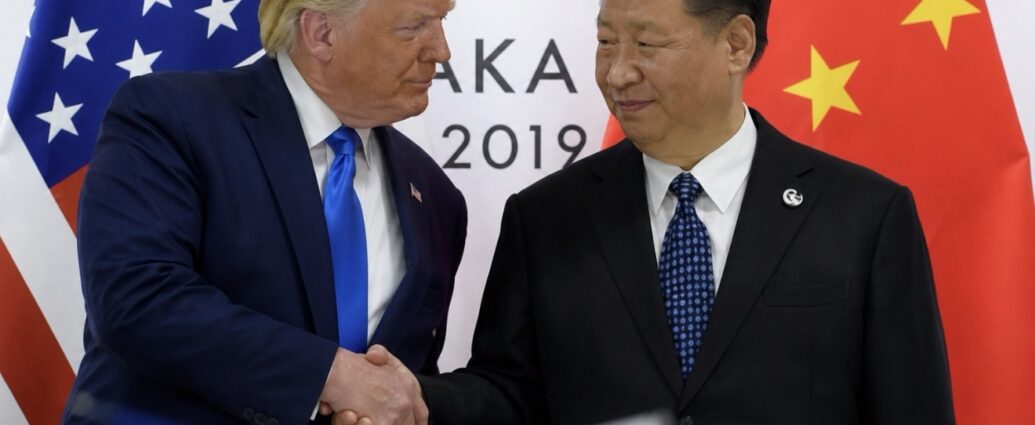
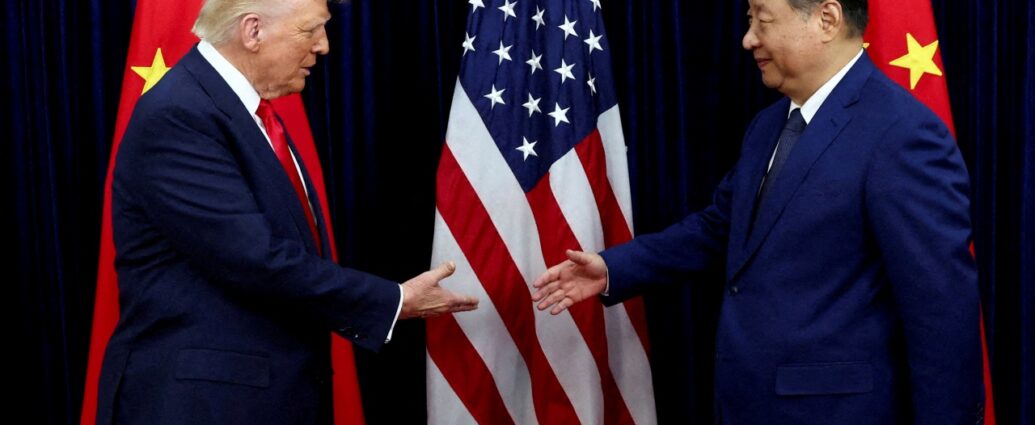
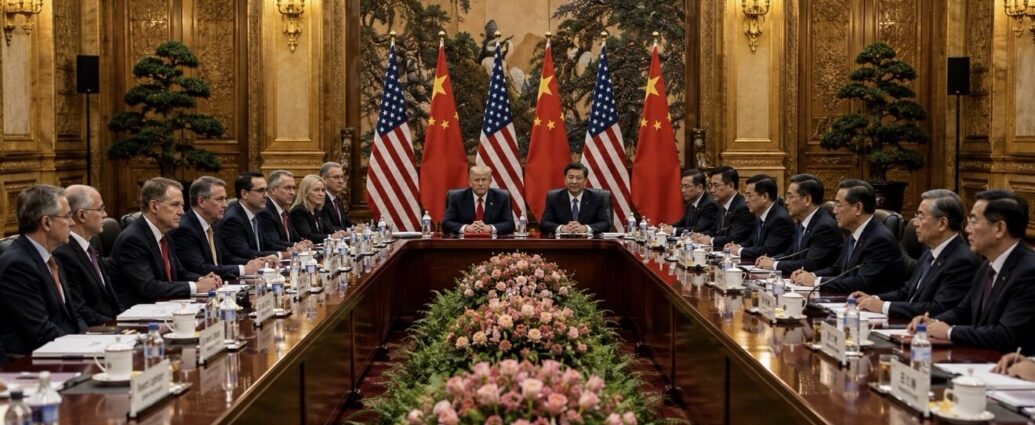
President Donald Trump arrived in Beijing Wednesday for a two-day summit with Chinese President Xi Jinping that could become one of the most consequential U.S.-China meetings in decades, unfolding against the backdrop of war in the Middle East, rising inflation, global supply-chain disruption and growing competition between the world’s two largest economies.

The visit marks Trump’s first trip to China since 2017 and the first visit by a sitting American president to Beijing in nearly nine years.

The summit carries unusually high geopolitical and economic stakes.

The ongoing Iran war has transformed what might otherwise have been a traditional trade and diplomatic meeting into a broader negotiation over energy security, inflation, supply chains and global stability.

The Strait of Hormuz, one of the world’s most critical shipping chokepoints, has remained heavily disrupted since late February, sending oil prices sharply higher and contributing directly to rising inflation pressures now visible across the global economy.

In the United States, April inflation data showed consumer and producer prices accelerating to their fastest pace in years, driven heavily by energy and transportation costs tied to the conflict.

China sits at the center of that equation.

Beijing remains the largest buyer of Iranian crude oil and one of Tehran’s most important economic lifelines, giving Xi significant potential leverage over Iran at a moment when Washington is seeking broader international pressure to reopen shipping lanes and stabilize energy markets.

Whether China is willing to use that leverage — and under what conditions — has emerged as one of the summit’s most important questions.

The optics surrounding the visit are carefully choreographed.

Xi is hosting Trump with full state-level ceremony, including events at the Temple of Heaven, meetings inside the Great Hall of the People and an official state dinner involving senior business leaders and cabinet officials from both countries.

The symbolism echoes Trump’s 2017 Beijing visit, when Xi hosted the American president inside the Forbidden City in what was widely viewed as one of the most elaborate diplomatic welcomes China had extended to a foreign leader in decades.

Behind the ceremony, however, the negotiations are expected to be intensely transactional.

Trump arrived with a delegation heavily focused on trade, manufacturing, energy and technology.

Executives traveling with the president include Apple CEO Tim Cook, Tesla CEO Elon Musk, Nvidia CEO Jensen Huang, BlackRock CEO Larry Fink, Blackstone Chairman Stephen Schwarzman, Citigroup CEO Jane Fraser, Cargill CEO Brian Sikes and Boeing CEO Kelly Ortberg.

Several major commercial agreements are reportedly already nearing completion.

Among the largest is a possible Boeing aircraft package involving hundreds of jets for Chinese airlines, potentially valued at more than $100 billion depending on final structure and delivery schedules.

Agricultural negotiations are also central to the summit.

Cargill and other U.S. agriculture groups are reportedly seeking multiyear Chinese purchase commitments covering soybeans, beef, poultry and energy exports — agreements designed both to stabilize trade flows and provide political wins for the White House ahead of the 2026 midterm cycle.

Technology and tariffs remain another major focus.

Apple’s previously announced $600 billion American Manufacturing Program has already secured the company substantial tariff protections under the Trump administration’s industrial policy framework, and other CEOs in the delegation are closely studying that model as they navigate future trade exposure.

Artificial intelligence, semiconductors and export controls are also expected to dominate portions of the negotiations.

The broader strategic relationship remains deeply complicated.

China continues pursuing long-term technological independence in semiconductors, AI and advanced manufacturing while simultaneously attempting to preserve access to U.S. consumer markets and global capital flows.

At the same time, tensions surrounding Taiwan remain unresolved, with Beijing continuing military and political pressure aimed at reducing American influence in the region.

Inside Washington, the business community itself is increasingly divided over China.

The U.S. Chamber of Commerce released a sharply worded assessment just before the summit warning that Beijing’s state-driven industrial strategy is rapidly reshaping global competition and arguing that American policymakers may have only a narrow remaining window to respond effectively.

That message reflects a growing shift inside portions of corporate America away from the deep economic integration model that dominated earlier decades.

Even so, both governments appear motivated — at least temporarily — to stabilize relations.

The late-2025 Busan APEC truce, which paused portions of the escalating tariff conflict between Washington and Beijing, is set to expire later this year.

Extending that framework while producing visible economic deliverables has become a priority for both sides.

For Xi, the summit arrives during a difficult domestic economic environment marked by property-sector weakness, soft consumer demand and rising pressure on employment and capital flows.

For Trump, the trip offers an opportunity to project global economic leadership while seeking relief from inflationary pressures now affecting American consumers and financial markets.

Analysts remain cautious about expecting major political breakthroughs.

Most observers anticipate incremental agreements rather than sweeping structural changes.

The larger question is whether any commercial commitments announced during the summit ultimately translate into durable implementation after the headlines fade.

For markets, however, the significance of the meeting is already clear.

The trajectory of global trade, inflation, energy flows, semiconductor policy and supply-chain stability increasingly depends on the ability of Washington and Beijing to manage competition without allowing it to spiral into deeper economic confrontation.

And for now, that future is being negotiated inside the Great Hall of the People.

JBizNews Desk

© JBizNews.com. All rights reserved. This article is original reporting by JBizNews Desk. Unauthorized reproduction or redistribution is strictly prohibited.

The largest sporting event ever staged across North America is now just weeks away, yet much of the U.S. hotel industry is preparing for something closer to a normal summer than the tourism windfall many executives once anticipated.

A new report from the American Hotel & Lodging Association found that roughly 80% of hotel operators across the 2026 FIFA World Cup’s 11 U.S. host cities say bookings are running below expectations, with many describing the tournament as effectively a “non-event” for their properties.

The findings sharply undercut earlier projections from FIFA, which repeatedly promoted the tournament as a potential $30.5 billion economic boom and compared the expanded 2026 World Cup to “104 Super Bowls.”

The tournament, running from June 11 through July 19, will be the first FIFA World Cup jointly hosted across the United States, Canada and Mexico, and the first to feature an expanded 48-team field.

The 11 U.S. host markets include New York/New Jersey, Los Angeles, Boston, Seattle, San Francisco, Houston, Dallas, Miami, Philadelphia, Atlanta and Kansas City.

According to the AHLA survey, several of those cities are now seeing significantly weaker-than-expected hotel demand.

Kansas City appears to be the weakest-performing host market, with roughly 85% to 90% of hotel operators reporting booking activity below both original World Cup expectations and even typical summer occupancy levels.

Hotels in Boston, Philadelphia, San Francisco and Seattle similarly reported widespread disappointment, while markets including Dallas, Houston and Los Angeles are tracking roughly in line with ordinary seasonal demand rather than the massive tourism surge many investors anticipated.

Only Miami and Atlanta appear to be outperforming broader expectations, supported partly by stronger leisure demand and the presence of team training bases.

The reasons for the slowdown are increasingly geopolitical as much as economic.

Between 65% and 70% of hotel operators surveyed identified visa-processing delays, broader geopolitical instability and concerns surrounding U.S. entry procedures as major drags on international travel demand.

The strong U.S. dollar has further increased costs for foreign visitors, while ongoing conflict in the Middle East and uncertainty tied to trade policy have weakened global travel sentiment more broadly.

FIFA itself is also facing criticism from hotel operators.

According to the AHLA report, FIFA negotiated large room-block agreements with hotels across host cities before later exercising opt-out clauses and releasing thousands of unsold rooms back into the market after initial demand assumptions failed to materialize.

The association described the process as creating an “artificial early demand signal” that distorted pricing and inventory expectations throughout many host markets.

A FIFA spokesperson defended the organization’s approach, saying accommodations teams worked closely with hotels and released unused inventory within contractually agreed timelines.

Publicly traded hospitality companies are now watching the situation closely.

Major hotel operators with exposure to host cities include Marriott International, Hilton Worldwide, Hyatt Hotels and Choice Hotels International, while booking platforms including Booking Holdings, Expedia Group and Airbnb are also directly tied to World Cup-related travel demand.

Marriott Chief Executive Anthony Capuano recently acknowledged softer inbound international travel trends broadly, though he stopped short of directly criticizing World Cup demand.

Some economists argue the disappointment reflects structural realities surrounding mega-events more than any single geopolitical issue.

Lisa Delpy Neirotti, director of the Sports Management Program at George Washington University, told Fortune that high travel and ticket prices are likely suppressing attendance more than politics alone.

Meanwhile, sports economist Andrew Zimbalist has long argued that major international sporting events often displace ordinary tourism rather than meaningfully increase total visitor activity, as regular travelers avoid congestion, security restrictions and inflated pricing.

The implications could prove especially painful for smaller host markets.

Cities including Kansas City invested heavily in stadium upgrades, transportation improvements and hospitality expansion under the assumption that the World Cup would generate lasting tourism momentum and economic spillover.

If attendance and travel demand underperform expectations, many of those investments could face increasing scrutiny from local taxpayers and municipal officials.

The broader hospitality industry is also entering a more fragile economic period.

After outperforming major gateway cities through much of 2024 and early 2025, smaller and mid-sized U.S. hotel markets are now facing signs of softening discretionary travel demand as inflation, airfare costs and geopolitical uncertainty weigh on consumers.

For investors, the AHLA report represents one of the clearest indications yet that Wall Street’s World Cup tourism narrative may have become significantly overpriced.

The tournament itself is still expected to draw enormous television audiences and global attention. But for many American hotel owners, the economic reality increasingly appears far less transformational than the hype that preceded it.

JBizNews Desk

© JBizNews.com. All rights reserved. This article is original reporting by JBizNews Desk. Unauthorized reproduction or redistribution is strictly prohibited.
A new emergency trade architecture is rapidly reshaping the Middle East and global commodity markets as Gulf nations scramble to bypass the closed Strait of Hormuz, one of the world’s most critical maritime chokepoints. Eleven weeks after the United States and Israel launched airstrikes against Iran on Feb. 28 — and Tehran retaliated by effectively shutting the strait — Saudi Arabia, the United Arab Emirates and neighboring Gulf states have begun constructing an improvised overland economic corridor to keep oil, fertilizer, food and consumer goods moving.

At the center of that effort is a massive Saudi trucking operation unlike anything seen in the kingdom’s modern industrial history.

According to reporting from The Wall Street Journal, Saudi state mining giant Maaden has expanded its emergency logistics fleet to approximately 3,500 trucks, hauling phosphate fertilizer across more than 1,300 kilometers of desert from its Persian Gulf production hub at Ras Al-Khair to the Red Sea export terminal at Yanbu. The convoy system was created after tanker exports through Hormuz became effectively impossible following the outbreak of the regional war.

The scale of the disruption is staggering. Before the conflict, roughly 20 million barrels of oil per day and nearly one-third of global seaborne fertilizer trade passed through the Strait of Hormuz. According to shipping analytics firm Kpler, only 191 vessels crossed the waterway during April compared with a normal monthly average near 3,000 ships, leaving Gulf maritime traffic operating at roughly 5% of normal commercial throughput.

The result has been one of the fastest supply-chain restructurings in modern energy-market history.

Saudi Arabia’s rerouted fertilizer exports are now flowing west through the Red Sea rather than east through the Persian Gulf. According to Argus Media, Maaden has already shipped approximately 15,000 tons of MAP fertilizer to South America from Yanbu and sold another 50,000 tons of DAP fertilizer to Ethiopia through Djibouti. April export lineups from Yanbu reportedly reached roughly 105,000 tons.

The workaround matters far beyond the Gulf itself.

Saudi Arabia accounted for approximately 19% of global DAP and MAP fertilizer exports in 2025, while the broader Gulf region produces nearly half of the world’s urea supply and roughly 30% of global ammonia production. Fertilizer markets have already reacted violently to the crisis, with urea prices climbing roughly 50% since the war began, according to industry data cited by The Fertilizer Institute.

The agricultural consequences are increasingly alarming.

The United Nations has established an emergency task force led by Jorge Moreira da Silva, Executive Director of the UN Office for Project Services, to coordinate humanitarian fertilizer shipments amid fears that supply shortages could trigger severe food insecurity across parts of Africa, Asia and Latin America. The World Food Programme warned this week that as many as 45 million people could face hunger or starvation in coming months if fertilizer supply chains remain disrupted.

Meanwhile, the United Arab Emirates has emerged as the second critical pillar of the Gulf’s improvised bypass network.

The UAE’s eastern port of Khor Fakkan, located outside the Strait of Hormuz on the Gulf of Oman, has become one of the region’s most strategically important logistics hubs almost overnight. According to Reuters, weekly container traffic through the port has surged to roughly 50,000 containers from a pre-war baseline near 2,000, while daily truck movements exploded to approximately 7,000 per day from barely 100 daily movements before the war.

“This has become a critical national gateway,” Farid Belbouab, Chief Executive of terminal operator Gulftainer, told Reuters.

To manage the surge, Gulftainer hired approximately 900 workers within the first weeks of the conflict and is now planning a logistics and dry-port expansion project reportedly exceeding $100 million inland at Al Dhaid, connected to Khor Fakkan through road and future rail infrastructure.

The neighboring UAE oil hub at Fujairah has also become indispensable to global energy markets.

Crude shipments from Fujairah have risen approximately 38% since late February, pushing the Abu Dhabi Crude Oil Pipeline, operated by ADNOC, near its maximum capacity of 1.8 million barrels per day. At the same time, Saudi Arabia’s East-West pipeline to Yanbu is reportedly operating at full capacity near 7 million barrels daily.

Combined, these emergency bypass systems are now rerouting roughly 9 million barrels of oil per day around Hormuz — still less than half the strait’s normal flow but enough to prevent a complete collapse in global energy markets.

The International Energy Agency has responded by coordinating the release of approximately 400 million barrels from strategic petroleum reserves among member nations, the largest emergency reserve deployment in the agency’s history.

Yet despite the massive logistical response, the workaround remains deeply vulnerable.

The Wall Street Journal reported Monday that the UAE secretly conducted military strikes inside Iran during the conflict, including an alleged attack on Iran’s Lavan Island refinery earlier this spring. In response, Iran’s Revolutionary Guards Navy has published maps asserting military control over waters surrounding both Khor Fakkan and Fujairah, while drone strikes earlier this week hit the Fujairah Oil Industry Zone, injuring workers and igniting fires near storage facilities.

Saudi Aramco Chief Executive Amin Nasser warned over the weekend that even if the Strait of Hormuz reopened immediately, disruptions to oil, fertilizer and shipping markets could continue well into 2027.

For several Gulf nations, the situation is even more precarious.

Qatar, Kuwait, and Bahrain lack meaningful overland export alternatives and remain heavily dependent on rerouted cargo flows through UAE infrastructure and Saudi trucking corridors. Goods are now increasingly unloaded at Khor Fakkan and transported overland across Saudi Arabia back toward Gulf markets — a fragile and expensive system built almost entirely under wartime pressure.

The result is a dramatically altered map of global trade.

What began as a regional military conflict has rapidly evolved into one of the largest emergency supply-chain reorganizations in modern history, reshaping energy flows, agricultural markets and global shipping patterns in real time. And with the Strait of Hormuz still effectively shut, the world economy is now relying on a handful of vulnerable roads, pipelines and ports to keep critical commodities moving.

— JBizNews Desk

© JBizNews.com. All rights reserved. This article is original reporting by JBizNews Desk. Unauthorized reproduction or redistribution is strictly prohibited.

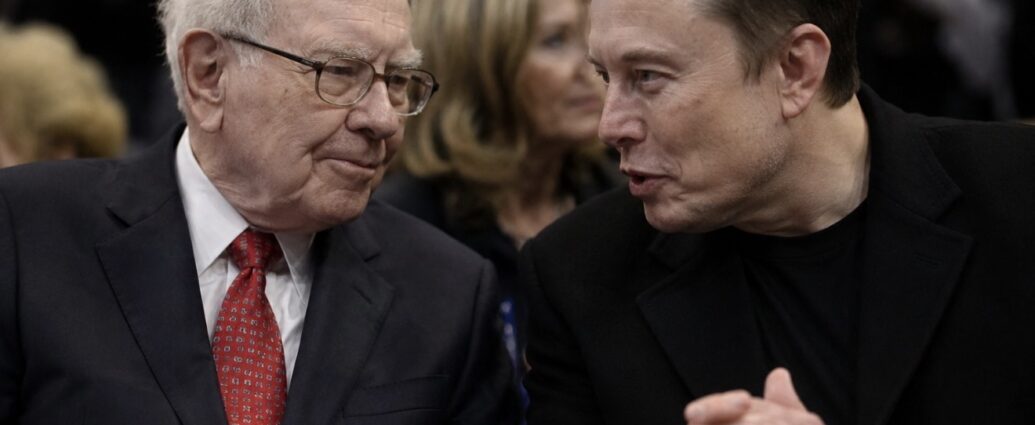
WASHINGTON — As America’s national debt races toward the $40 trillion mark, a blunt proposal from Warren Buffett is once again gaining traction in financial and political circles — this time with public backing from Elon Musk and several of the country’s most influential economic voices.

The idea, first proposed by Buffett during a 2011 CNBC interview, is intentionally simple: if the federal deficit rises above 3% of GDP, every sitting member of Congress becomes automatically ineligible for reelection.

“I can end the deficit in five minutes,” Buffett said at the time. “You just pass a law that says that anytime there’s a deficit of more than 3% of GDP, all sitting members of Congress are ineligible for reelection. Now, you’ve got the incentives in the right place.”

More than a decade later, with debt levels now dramatically higher, the proposal is resurfacing amid growing alarm over Washington’s long-term fiscal trajectory.

Elon Musk, responding to the idea on X, offered his unequivocal endorsement:

“This is the way.”

The endorsement aligns closely with Musk’s broader role leading the Trump administration’s Department of Government Efficiency, an initiative focused on reducing federal spending, eliminating redundant programs, and restructuring government contracts.

According to administration figures released through mid-March, the department has identified roughly $110 billion in contract and grant savings so far in 2026 — substantial by normal budget standards, but still only a small fraction of the nation’s roughly $1.9 trillion annual deficit.

Musk is not alone in embracing Buffett’s framework.

Bridgewater Associates founder Ray Dalio has repeatedly warned that U.S. debt dynamics are approaching dangerous territory, while Treasury Secretary Scott Bessent has also signaled support for stronger fiscal discipline mechanisms as deficits continue widening.

The numbers driving the concern are becoming increasingly difficult to ignore.

America’s national debt now stands at approximately $38.9 trillion, equal to roughly 124% of gross domestic product, according to Treasury and Congressional Budget Office data. Publicly held debt recently surpassed the total size of the U.S. economy for the first time since the aftermath of World War II.

Interest payments alone are now costing the federal government more than $22 billion per week, according to the CBO.

The nonpartisan Committee for a Responsible Federal Budget has warned that by fiscal year 2031, the average interest rate on U.S. debt is projected to exceed overall economic growth — a threshold many economists consider especially dangerous because it creates a compounding effect in which debt expands faster than the economy supporting it.

The Peterson Foundation projects the United States could officially surpass the $40 trillion debt mark before the end of October 2026.

Buffett himself has historically remained more measured than many debt alarmists.

The Berkshire Hathaway chairman has long argued that America’s fiscal position remains manageable largely because the U.S. dollar continues to function as the world’s dominant reserve currency — giving Washington borrowing flexibility few other nations possess.

But Buffett has also repeatedly cautioned that such advantages are not guaranteed indefinitely.

The growing discussion surrounding his “5-minute fix” reflects rising frustration among investors, economists, and voters who increasingly view Washington’s budget process as structurally incapable of imposing meaningful fiscal restraint on itself.

The political challenge, however, is obvious.

Any proposal tying lawmakers’ reelection eligibility directly to deficit levels would require Congress itself to approve the mechanism — a reality that has kept Buffett’s idea largely confined to the realm of political commentary rather than legislative reality.

Still, signs of growing bipartisan concern are emerging.

In January, lawmakers introduced a congressional resolution calling for deficits to be reduced below 3% of GDP, signaling that the underlying fiscal target itself retains support even if Buffett’s enforcement mechanism remains politically unlikely.

For markets, the issue extends far beyond politics.

Rising debt levels increasingly influence Treasury yields, inflation expectations, Federal Reserve policy, and long-term borrowing costs across the economy. Investors are also closely watching whether sustained deficits eventually weaken confidence in U.S. fiscal management at a time when geopolitical fragmentation and global economic competition are intensifying.

For now, Buffett’s proposal remains hypothetical.

But as the national debt climbs by roughly $7.2 billion per day, and as interest costs increasingly crowd out other federal priorities, the broader warning behind the idea is resonating with a growing number of powerful voices inside finance, business, and government.

And with figures like Musk now publicly embracing the concept, what once sounded like political theater is increasingly entering the center of America’s fiscal debate.

JBizNews Desk

© JBizNews.com. All rights reserved. This article is original reporting by JBizNews Desk. Unauthorized reproduction or redistribution is strictly prohibited.

The U.S. Bureau of Labor Statistics reported Wednesday that the Producer Price Index for final demand surged 1.4% in April on a seasonally adjusted basis, marking the sharpest monthly increase since 2022 and delivering another sign that inflation pressures are accelerating across the American economy.

The reading came in far above Wall Street expectations for a 0.5% gain and followed an upward revision to March’s figure, which was raised to 0.7% from the previously reported 0.5%. On an annual basis, wholesale prices climbed 6.0% over the past 12 months, the highest yearly increase since December 2022.

The report lands one day after the government’s April Consumer Price Index showed consumer inflation accelerating to 3.8%, reinforcing fears inside financial markets that the Federal Reserve may be forced to keep interest rates elevated longer than investors had anticipated earlier this year.

Economists said the April producer inflation report reflects the growing impact of rising energy prices, tariff-related costs, transportation bottlenecks, and disruptions tied to the escalating Iran conflict and instability surrounding the Strait of Hormuz — one of the world’s most critical oil shipping routes.

Core producer inflation also showed broadening pressure beneath the surface. Excluding food and energy, core PPI rose 1.0% for the month, more than double economists’ forecasts, while the annual core rate climbed to 5.2%. Even the Fed’s preferred underlying gauge — final demand less foods, energy, and trade services — advanced 0.6%, signaling that inflation is no longer confined to oil and commodity shocks alone.

The energy category drove much of the headline increase. The BLS said prices for final demand goods rose 2.0%, led by a 7.8% spike in energy prices. Wholesale gasoline prices alone surged 15.6% during the month and accounted for more than 40% of the increase in goods inflation.

Those figures mirrored Tuesday’s CPI report, where retail gasoline prices jumped 28.4% year-over-year and became the single largest contributor to the overall inflation increase.

But analysts said the more concerning development for policymakers may be the rapid acceleration in service-sector inflation.

Prices for final demand services climbed 1.2% in April, the largest monthly increase since March 2022. Trade service margins — which reflect the spread earned by wholesalers and retailers — jumped 2.7%, while machinery and equipment wholesaling margins rose 3.5%. Transportation and warehousing services surged 5.0%.

Economists interpret those figures as evidence that businesses are increasingly passing higher costs directly to consumers instead of absorbing them internally.

David Russell, Global Head of Market Strategy at TradeStation, said the report confirms mounting concerns inside bond markets that inflation is becoming structurally embedded rather than temporary.

“Inflation is sticky and accelerating,” Russell said in a client note. “The services component is especially concerning because it points to deeper pressure beyond crude oil and headline energy volatility.”

Financial markets reacted immediately following the release. The yield on the benchmark 10-year Treasury note briefly climbed to 4.49% before easing slightly, approaching the psychologically important 4.5% threshold closely watched by investors and mortgage lenders.

Stock futures also turned lower after the data crossed the wires as traders sharply reduced expectations for any near-term Federal Reserve rate cuts.

The inflation surge is already beginning to hit American households more directly. The BLS said real average hourly earnings turned negative on an annual basis in April for the first time since 2023, meaning wage growth is no longer keeping pace with rising prices.

That erosion in purchasing power threatens to further pressure consumers already struggling with higher fuel, food, insurance, and borrowing costs.

Ben Ayers, Senior Economist at Nationwide, warned that the latest producer inflation figures likely signal additional consumer inflation ahead.

“We expect the pass-through from higher producer costs to continue in coming months,” Ayers said. “Headline CPI moving above 4% next month is now a realistic possibility.”

The report also intensifies political pressure surrounding the economy heading deeper into the summer.

President Donald Trump, speaking Tuesday before departing for meetings with Chinese President Xi Jinping, told reporters inflation pressures would ease once geopolitical tensions stabilize and energy markets normalize.

But economists cautioned that even if global oil disruptions ease quickly, inflation already embedded inside transportation, logistics, manufacturing, and service costs could take months — and potentially quarters — to unwind.

For the Federal Reserve, the latest data complicates an already difficult balancing act.

Cutting interest rates while producer inflation runs at 6.0% risks reigniting inflation expectations and weakening confidence in the Fed’s commitment to price stability. Yet additional rate hikes could place further strain on business investment, housing activity, and an already slowing labor market.

Mortgage rates have already remained elevated near multi-decade highs, commercial borrowing costs continue pressuring real estate developers and small businesses, and credit markets are showing signs of tighter lending standards following several months of renewed inflation volatility.

Fed officials have largely remained on hold throughout 2026, but markets increasingly view that stance less as strategic patience and more as a defensive pause while policymakers wait to see whether inflation stabilizes or accelerates further.

The next major test arrives quickly. The government’s May Consumer Price Index report is scheduled for release on June 10, followed by May Producer Price Index data on June 11.

Those reports may determine whether April represented a temporary geopolitical shock — or the beginning of a broader second wave of inflation across the U.S. economy.

JBizNews Desk

© JBizNews.com. All rights reserved. This article is original reporting by JBizNews Desk. Unauthorized reproduction or redistribution is strictly prohibited.
SAN FRANCISCO — OpenAI CEO Sam Altman says a growing number of young people are no longer using ChatGPT simply as a search engine or productivity tool — they are increasingly using it as something closer to a life operating system.

Speaking at Sequoia Capital’s AI Ascent event last month, Altman described what he called a dramatic generational divide in how people interact with artificial intelligence, particularly ChatGPT, the platform that has rapidly become one of the most widely adopted consumer technologies in modern history.

Older users, Altman said, tend to use ChatGPT similarly to how they once used Google — to retrieve information, answer questions, summarize documents, or improve efficiency.

Younger users, however, are doing something fundamentally different.

“There’s this other thing where they don’t really make life decisions without asking ChatGPT what they should do,” Altman said during the event. “It has the full context on every person in their life and what they’ve talked about.”

According to Altman, people in their 20s and 30s increasingly use ChatGPT as what he described as a “life advisor,” while college students have integrated the system so deeply into their routines that it functions less like an app and more like an operating system layered over their daily lives.

The comments offer one of the clearest public windows yet into how quickly artificial intelligence is evolving from a workplace productivity tool into a deeply embedded behavioral companion shaping human decision-making in real time.

OpenAI’s own user data appears to support the trend.

The company reported earlier this year that Americans between the ages of 18 and 24 are adopting ChatGPT faster than any other demographic group, with more than one-third of U.S. young adults now actively using the platform.

A major driver of that engagement is ChatGPT’s expanding memory functionality, which allows the system to retain context from prior conversations and build increasingly personalized interactions over time.

In practice, that means the system can remember details about users’ relationships, goals, fears, preferences, professional challenges, and personal histories — creating what amounts to a continuously evolving behavioral profile.

Altman compared the generational AI divide to the early smartphone era, when younger users adapted instinctively to entirely new forms of digital interaction while older generations struggled to fully integrate them into daily life.

“The difference is unbelievable,” he said.

According to Altman, many college-aged users now maintain highly sophisticated workflows involving ChatGPT, including customized prompts, connected personal files, integrated scheduling systems, academic support, relationship advice, and career planning.

The behavioral shift is becoming increasingly visible far beyond Silicon Valley.

Users are now routinely turning to AI systems for help navigating dating decisions, friendship conflicts, parenting questions, financial choices, workplace strategy, mental health concerns, and medical information — areas traditionally handled by family members, therapists, mentors, teachers, or professional advisors.

That expansion is generating growing debate among psychologists, ethicists, educators, regulators, and parents.

Some researchers argue that for routine or low-stakes questions, AI-generated guidance may provide meaningful benefits, including increased accessibility, emotional support, organization, and informational clarity.

Others warn that the systems remain fundamentally incapable of human judgment, empathy, moral reasoning, accountability, or genuine emotional understanding — despite becoming increasingly persuasive conversationally.

Critics also worry users may develop forms of emotional dependency on systems optimized primarily for engagement and responsiveness rather than wisdom or truthfulness.

Those concerns are intensifying as AI models become more conversationally sophisticated and personally contextualized.

OpenAI itself has become one of the most valuable private companies in the world, recently reaching an estimated valuation of approximately $852 billion following one of the largest private fundraising rounds in technology history.

Altman’s remarks suggest the company increasingly sees ChatGPT not merely as a software product, but as a central digital layer mediating how people work, communicate, learn, and make decisions.

That vision carries enormous commercial implications.

The more deeply AI systems become embedded in users’ personal and professional lives, the more valuable they become — not only as subscription products, but as platforms capable of shaping consumer behavior, information flow, and eventually commerce itself.

At the same time, the social implications remain largely unresolved.

Researchers are only beginning to study how heavy reliance on AI guidance could affect critical thinking, emotional development, personal relationships, independence, and long-term behavioral patterns — particularly among younger users who may grow up with AI systems integrated into nearly every aspect of daily life.

For now, one reality is becoming increasingly difficult to ignore: artificial intelligence is no longer simply helping people search for answers.

For millions of younger users, it is increasingly helping decide what those answers should be.

JBizNews Desk

© JBizNews.com. All rights reserved. This article is original reporting by JBizNews Desk. Unauthorized reproduction or redistribution is strictly prohibited.

Alphabet Inc.’s Google unveiled at its Android Show: I/O Edition on Tuesday a sweeping set of features designed to push its Gemini artificial-intelligence model from a standalone chatbot into the operating layer of more than three billion Android devices, accelerating a strategic race to define the post-app smartphone experience just weeks before Apple Inc. is expected to unveil a delayed, Gemini-powered overhaul of Siri and Apple Intelligence at its annual developer conference in June.

The announcements, made a week ahead of the company’s broader Google I/O developer conference scheduled for May 19 and 20, were framed by Sameer Samat, the executive overseeing the Android ecosystem, as the start of a fundamental shift in the purpose of mobile operating systems.

“We’re transitioning from an operating system to an intelligence system,” Samat told CNBC in an interview tied to the event.

He added that “the human is always in the loop,” an apparent attempt to address growing concerns across Silicon Valley and Washington about increasingly autonomous AI systems capable of taking real-world actions without sufficient user oversight.

At the center of the rollout is a new layer of app automation that allows Gemini to read what is on a user’s screen and complete multi-step actions across multiple applications. During demonstrations Tuesday, Google showed Gemini automatically building an Instacart Inc. shopping cart from products appearing inside a screenshot and finding matching travel experiences on Expedia Group Inc. using only a photograph of a printed travel brochure.

The features are scheduled to begin rolling out this summer on Samsung Electronics Co.’s Galaxy smartphones and Google’s own Pixel devices before expanding to Android-powered watches, vehicles, laptops, and smart glasses later this year.

Google said Gemini will only operate inside applications that users explicitly authorize and that sensitive actions such as purchases or bookings will still require manual confirmation.

The company is also redesigning Android Auto, now installed in more than 250 million vehicles globally, around Gemini-powered assistance and pairing the update with what executives described as the most significant overhaul of Google Maps in nearly a decade.

Additional features announced Tuesday include AI-powered web assistance inside Chrome, where Gemini will summarize information, compare products, and eventually handle routine online tasks such as parking reservations or appointment scheduling through a feature called Chrome Auto Browse.

Google also introduced Personal Intelligence, an expanded Android autofill system capable of completing complex forms — including passport paperwork and travel documents — using information already stored inside connected accounts.

A new Gboard feature called Rambler converts unstructured speech into polished written text, while another feature called Create My Widget lets users generate custom Android widgets using natural-language prompts.

The timing of the rollout is strategically significant because it arrives just weeks before Apple’s annual Worldwide Developers Conference (WWDC), where investors expect the company to attempt a major reset of its AI narrative after repeated delays surrounding Siri and Apple Intelligence.

The competitive backdrop changed dramatically earlier this year when Apple and Google reached a partnership agreement allowing Gemini models to power portions of Apple’s next-generation AI system and a long-promised Siri overhaul. According to reporting from Bloomberg’s Mark Gurman, the agreement is worth roughly $1 billion annually to Google.

The deal followed what many analysts describe as a difficult period inside Apple’s AI organization. Apple reportedly lost more than a dozen senior AI researchers during 2025, including former Foundation Models head Ruoming Pang, who joined Meta Platforms Inc. under a compensation package reportedly approaching $200 million.

Industry reports suggest Apple’s core Foundation Models team currently consists of only about 50 to 60 engineers — far smaller than comparable teams at Google, OpenAI, Anthropic, and Microsoft Corp.

The rollout timeline for Apple’s AI platform has also repeatedly slipped. Features initially expected in iOS 26.4 in March were later pushed to iOS 26.5 and are now widely expected to arrive only with iOS 27 later this year or in early 2027, according to reports from MacRumors and Bloomberg.

Apple has publicly maintained that the revamped Siri remains “on track” for 2026, though the company has now missed multiple publicly communicated timelines.

For Google, the Gemini partnership creates an unusually powerful strategic position. The company now effectively supplies AI infrastructure for both the Android ecosystem and portions of Apple’s iPhone ecosystem while simultaneously using Android to demonstrate that the deepest and most capable AI integration exists on Google-controlled platforms.

That positioning directly challenges Apple’s longstanding argument that tight integration between hardware, software, and privacy controls gives the iPhone a superior user experience.

Google’s Android rollout repeatedly emphasized transparency and visibility, including new persistent AI notifications, real-time progress indicators, and a new Privacy Dashboard showing which AI systems accessed which applications during the previous 24 hours.

Wall Street has rewarded Google’s AI momentum aggressively. Shares of Alphabet have risen roughly 140 percent over the past year, compared with approximately 40 percent for Apple. Alphabet’s market capitalization now stands near $4.65 trillion.

The company generated roughly $110 billion in first-quarter revenue and has projected $175 billion to $185 billion in 2026 capital expenditures, with most of that spending directed toward AI infrastructure, data centers, and next-generation computing systems.

Investors are now watching whether Gemini can convert that infrastructure advantage into lasting consumer-product leadership against rivals including ChatGPT, Claude, and Microsoft Copilot, all of which are rapidly expanding toward more autonomous, screen-aware AI assistants.

Google also previewed a new laptop line called Googlebook, expanded its Quick Share file-transfer system to support interoperability with Apple’s AirDrop through QR-code-based cloud sharing, and introduced a digital wellbeing tool called Pause Point, which inserts a brief breathing prompt before launching apps users identify as distracting.

The broader update will ship with Android 17, internally codenamed Cinnamon Bun, and incorporate Google’s broader Material 3 Expressive design system throughout the operating system.

The stakes extend far beyond smartphones. Android powers more than 3 billion active devices globally, while Apple’s installed base exceeds 2 billion.

Whichever company succeeds in making personal AI feel native, seamless, and indispensable on mobile devices over the next 18 months could shape the next era of consumer computing — and lock in user behavior across search, commerce, communication, entertainment, and digital assistants for years to come.

For now, Google appears to be moving first — and increasingly using Apple’s dependence on Gemini as evidence of just how far ahead it believes it has become in the AI race.

JBizNews Desk

© JBizNews.com. All rights reserved. This article is original reporting by JBizNews Desk. Unauthorized reproduction or redistribution is strictly prohibited.

President Donald Trump arrived in Beijing on Wednesday evening local time aboard Air Force One, opening a three-day state visit the White House has framed as a push to pry open Chinese markets for American firms while securing Beijing’s cooperation on Iran, rare earth flows, and artificial intelligence guardrails. The visit, confirmed by China’s Foreign Ministry for May 13 through 15, marks the president’s first trip to China since 2017 and follows the October 2025 Busan truce that temporarily cooled the sharpest tariff escalation between the world’s two largest economies.

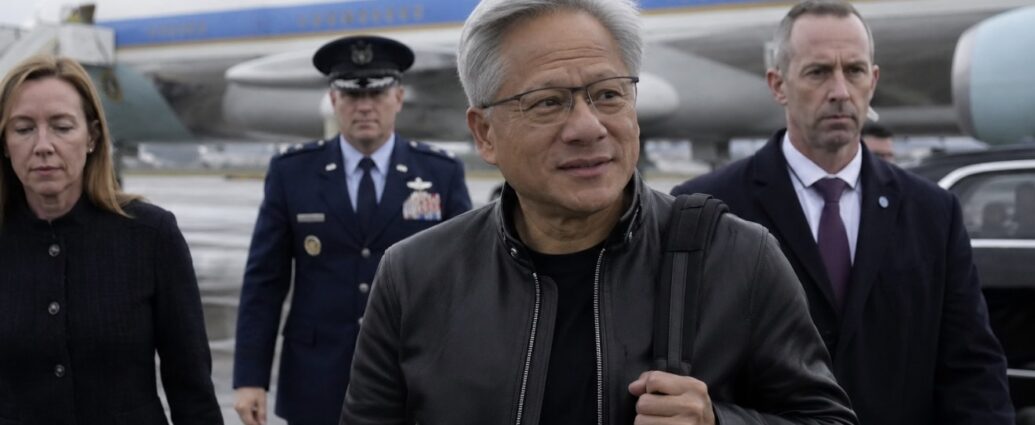
Trump was greeted with a full ceremonial welcome at Beijing Capital International Airport, with formal meetings with President Xi Jinping scheduled for Thursday and Friday inside the Great Hall of the People. The president arrived with one of the largest American corporate delegations in years — a 16-member roster distributed by the White House on Monday and headlined by Tesla chief Elon Musk, Apple chief Tim Cook, Boeing chief Kelly Ortberg, BlackRock chief Larry Fink, Goldman Sachs chief David Solomon, Citigroup chief Jane Fraser, Blackstone chief Stephen Schwarzman, and Mastercard chief Michael Miebach. Nvidia chief executive Jensen Huang was added late after earlier reports indicated he would skip the trip. Cisco chief Chuck Robbins withdrew Monday, according to the White House.

The composition of the delegation underscores where the administration believes meaningful progress remains possible despite years of escalating strategic rivalry. Administration officials have signaled two major structural initiatives: a proposed “Board of Trade” and a parallel “Board of Investment,” frameworks first discussed in lower-level negotiations before the summit and described by Council on Foreign Relations senior fellow Heidi Crebo-Rediker as among the most realistic deliverables likely to emerge from the meetings.

On the commercial front, the administration’s demands are highly specific. The U.S. Trade Representative’s Office and White House negotiators have pushed Beijing to commit to multi-year purchases of American soybeans, beef, pork, and poultry, while also lifting the freeze on widebody aircraft orders that has weighed heavily on Boeing since China retaliated against the spring 2025 tariff escalation. Proposals circulated among negotiators reportedly include a Chinese commitment to purchase roughly 25 million metric tons of U.S. soybeans annually over three years, alongside a potential aircraft package that could include as many as 500 Boeing 737 MAX jets in addition to widebody orders, according to summit briefing materials reviewed by Reuters and Bloomberg.

For Apple, the trip carries additional symbolism. Industry analysts widely view the visit as Tim Cook’s final major diplomatic mission before his planned September 1 transition to incoming chief executive John Ternus. Elon Musk enters the summit with equally high stakes. Tesla’s Shanghai facility remains the company’s largest production hub globally, reinforcing the administration’s acknowledgment that full-scale economic decoupling remains unrealistic in sectors deeply tied to Chinese manufacturing.

The inclusion of Jensen Huang has drawn especially close scrutiny across Wall Street and Washington. Nvidia has aggressively lobbied the administration to ease restrictions on advanced semiconductor exports after Commerce Secretary Howard Lutnick acknowledged in April that the export controls had significantly constrained sales to China. Huang’s participation is being interpreted by analysts as an early signal that the administration may be willing to explore a limited thaw in certain categories of advanced chip exports if broader trade and geopolitical concessions can be secured.

Beijing, however, enters the summit with its own priorities. Chinese officials continue pressing Washington to ease restrictions on advanced semiconductor equipment and chip-making technologies. Analysts at Goldman Sachs, led by economist Andrew Tilton, suggested ahead of the summit that the administration could potentially relax controls on certain 14-nanometer and 7-nanometer manufacturing equipment. In exchange, Washington is seeking guarantees of stable rare earth and critical mineral exports after Beijing’s export restrictions in April and October 2025 disrupted supply chains for American automakers, defense contractors, and industrial manufacturers. China currently refines roughly 90% of the world’s rare earth materials.

The most politically sensitive issue hanging over the summit remains Iran. China remains the largest buyer of Iranian crude oil, accounting for more than 80% of Tehran’s exported shipments, according to energy market estimates. The White House is pressuring Xi to use Beijing’s leverage with Tehran to help reopen the Strait of Hormuz and steer Iran back toward negotiations after months of regional instability disrupted global energy markets. Trump told reporters before departing Washington that he expected to have “a long talk” with Xi about Iran, though he emphasized trade would remain the primary focus of the summit.

Financial markets entered the meetings cautiously optimistic. The onshore yuan has strengthened roughly 1.7% against the dollar over the past three months — its strongest performance among major Asian currencies and its highest level since early 2023, according to Bloomberg data. JPMorgan Chase economist Feng Zhu wrote this week that both Washington and Beijing have a strong mutual interest in stabilizing the Middle East conflict and reopening the Strait of Hormuz to calm global energy prices. Macquarie China equity strategist Eugene Hsiao said his firm’s base case remains that existing tariffs — currently estimated by JPMorgan at an effective rate near 22% — will remain in place without significant escalation. Invesco Asia Pacific client solutions head Christopher Hamilton said any reduction in the U.S.-China geopolitical risk premium would likely provide a substantial boost to Chinese equities and broader regional markets.

Few analysts expect a sweeping breakthrough. What investors, manufacturers, and commodity markets will watch closely over the next two days is whether Trump and Xi can produce enough concrete progress — particularly on aircraft purchases, agriculture, semiconductor controls, and rare earth access — to preserve the Busan truce through the November midterms and potentially stabilize the U.S.-China economic relationship into 2027.

JBizNews Desk

© JBizNews.com. All rights reserved. This article is original reporting by JBizNews Desk. Unauthorized reproduction or redistribution is strictly prohibited.
Edgar Connors – JBizNews Desk

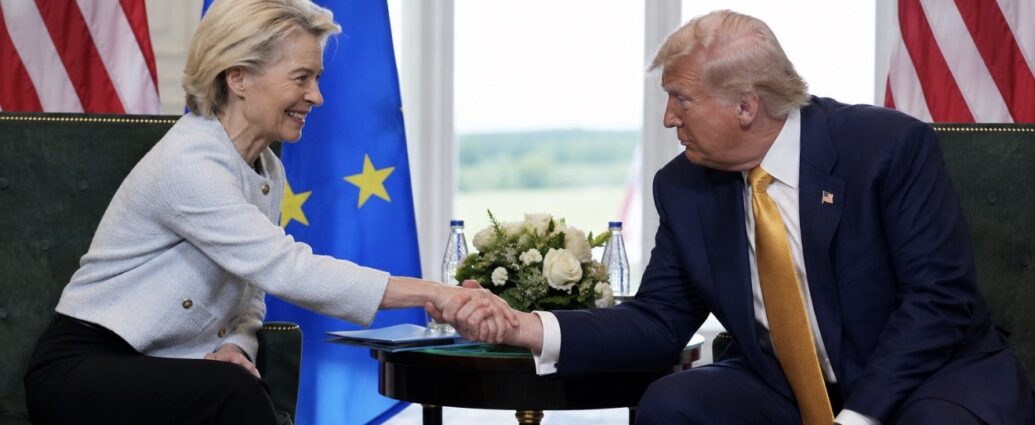
The European Union long treated trade policy as one of its clearest instruments of global influence, a domain in which market size could translate into geopolitical leverage. In The trade deal with America shows the limits of the EU’s power, The Economist argued that the bloc’s accord with America instead exposed a more constrained reality: prudence, not defiance, shaped the outcome.

The numerical contrast framed the shift. Donald Trump, White House, set out a threatened 30% tariff on European Union goods in a July letter to Ursula von der Leyen, while European Commission briefings described the eventual framework around a lower 15% tariff ceiling for many exports to the United States.

The stakes extended beyond a narrow tariff dispute. The European Commission has described the transatlantic relationship as the world’s largest trade and investment partnership, with goods and services flows reaching roughly €1.6 trillion annually, placing the accord at the center of pricing decisions for manufacturers, retailers and investors on both sides of the Atlantic.

The European Commission has long presented the single market as a defensive asset, arguing that common external trade policy gives European Union members weight they lack individually. That model helped Brussels set rules for chemicals, digital markets, privacy and competition policy, often forcing multinationals to adjust global operations around European standards.

In the tariff talks, however, The Economist argued in The trade deal with America shows the limits of the EU’s power that regulatory authority did not convert cleanly into bargaining dominance. The article’s subtitle, The bloc opts for prudence over defiance, captured the strategic choice facing Brussels: protect access to its most important foreign market or escalate into a broader commercial fight.

The White House described the framework as including European pledges to expand purchases of American energy and commit additional investment in the United States, while the European Commission presented the arrangement as a way to stabilize commercial ties and avert a sharper tariff shock.

Ursula von der Leyen, European Commission, said the agreement offered predictability for companies operating across the Atlantic, according to public statements from the institution. For executives in autos, machinery, luxury goods and pharmaceuticals, predictability carries financial value even when the tariff line still cuts into margins.

That calculation explains the broader market lesson. The Economist argued that the European Union chose a negotiated disadvantage over a potentially costly confrontation with America, reflecting limited appetite among member states for a trade conflict that could raise prices and weaken industrial orders.

The early architecture of European trade power relied on cohesion. The European Commission says it negotiates trade agreements on behalf of all European Union members, giving the bloc a single voice in external commercial policy. In theory, that centralization creates scale; in practice, national exposure to U.S. tariffs varies widely.

The White House cast the framework as a gain for American industry, citing expanded market access and investment commitments from the European Union. For Brussels, the same terms carried a different meaning: limiting damage for exporters while preserving room for future talks over steel, autos, agriculture and digital levies.

The European Commission said the framework would keep trade channels open between the European Union and the United States, an outcome investors often prefer to retaliatory spirals. Equity analysts typically discount earnings more aggressively when tariff paths lack clarity, particularly in export-heavy sectors with long supply chains.

But the path to compromise exposed volatility inside the bloc. The Economist argued that European Union leaders had to weigh political demands for a tougher response against the economic risk of damaging a relationship central to manufacturers, energy buyers and financial markets.

The tariff ceiling also complicates the bloc’s industrial policy ambitions. The European Commission has promoted competitiveness, clean technology and strategic autonomy, yet higher duties on exports to the United States can dilute the effect of subsidies and tax incentives aimed at keeping production anchored in Europe.

For companies, the consequence comes through margins rather than symbolism. The Economist described the accord as a demonstration of limited European power, and that limitation has practical consequences for pricing, sourcing and capital allocation at firms selling into the American market.

The European Commission has said further engagement with the United States remains necessary to implement and refine the framework. That leaves investors focused on the operational details: product coverage, exemptions, enforcement procedures and the degree to which companies can pass tariff costs to customers.

The White House and European Commission each framed the deal as serving domestic economic interests, underscoring how trade agreements now function as political instruments as much as commercial compacts. For markets, that means tariff risk no longer sits at the edge of valuation models; it belongs in base-case assumptions.

The broader lesson reaches beyond this accord. The Economist argued in The trade deal with America shows the limits of the EU’s power that scale alone does not guarantee leverage when security, energy, capital markets and export demand pull in different directions. The European Union remains a regulatory giant, but the deal shows that even giants sometimes pay for stability.

JBizNews Desk

The European Union Aviation Safety Agency on Tuesday extended its conflict-zone advisory over Israeli and broader Middle Eastern airspace until May 27, while simultaneously softening the language European carriers have relied on for more than two months to justify suspending service to Tel Aviv — a move aviation officials say inches Europe closer toward restoring flights to Israel without yet delivering the full green light airlines have been waiting for.

In its updated Conflict Zone Information Bulletin issued May 12, EASA replaced earlier language advising airlines to avoid operating in the region with guidance urging carriers to “exercise caution and take potential risks into account” when flying through the airspace of Israel, Bahrain, Jordan, Saudi Arabia, Qatar, Kuwait, Oman, and the United Arab Emirates. The agency maintained stricter warnings against operations at any altitude over Iran, Iraq, and Lebanon.

The extension itself also stood out. Instead of continuing the rolling five- to seven-day renewals that had characterized the advisory throughout April, the European regulator issued a broader 15-day extension — a signal aviation analysts interpreted as evidence that regulators believe the immediate threat environment has stabilized following the April 8 U.S.-Iran ceasefire and its subsequent April 21 extension.

Still, EASA cautioned that the ceasefire’s durability remains uncertain.

“While the overall level of risk has decreased in the region, the sustainability of the ceasefire remains uncertain in the longer term, with a possibility of rapid escalation,” the agency said in its statement, adding that operators should continue conducting enhanced threat monitoring and maintain contingency procedures.

The wording shift matters enormously for Europe’s airline industry because the EASA bulletin has effectively served as the regulatory trigger behind the near-collapse of commercial European aviation into Israel since the February 28 U.S.-Israeli strikes on Iranian nuclear and military infrastructure and Iran’s retaliatory missile and drone attacks throughout the region.

Major carriers including Lufthansa Group, Air France, KLM, British Airways, Wizz Air, and Air Europa have tied their Israel suspensions directly to EASA’s guidance, with war-risk insurers and airline safety committees treating the bulletin as the benchmark for operational decisions.

The softer language now gives airlines more flexibility to restart flights — but it does not force them to do so.

Several carriers that had initially targeted late-May resumptions are now expected to reassess their schedules again following the advisory’s extension. Wizz Air, Air France, KLM, and Air Europa had all previously indicated possible returns before the end of May, though industry officials now expect some of those timelines to slip further into June.

Lufthansa Group has already formally suspended Tel Aviv service through June 30, while British Airways is targeting a tentative July 1 return with one daily flight, contingent on additional easing or removal of the advisory altogether. Air India said Tuesday it would also extend cancellations into early July.

Even if regulators lifted the bulletin entirely on May 27, operational realities would still delay a meaningful European return.

Executives at Wizz Air, historically Israel’s largest European low-cost carrier by passenger volume, have reportedly told Israeli aviation officials that the airline requires approximately two weeks of preparation before resuming Tel Aviv service. That process includes crew scheduling, aircraft positioning, slot coordination, war-risk insurance renewals, and restoration of local ground-handling operations.

As a result, industry analysts say a substantial return of European service to Ben Gurion Airport before mid-June remains unlikely even under an optimistic scenario.

The prolonged aviation disruption has dealt a heavy blow to Israel’s tourism and business sectors.

Since late February, Ben Gurion Airport has operated with only limited international connectivity, relying heavily on Israeli carriers including El Al, Arkia, and Israir to maintain repatriation flights and scaled-back commercial operations. European business travel, conferences, and inbound tourism have all sharply contracted, while Israeli outbound travelers have faced soaring fares and lengthy rerouting through hubs including Athens, Larnaca, and Istanbul.

The insurance market remains another major obstacle.

According to aviation-industry estimates, war-risk insurance premiums for aircraft operating in or near Israeli airspace remain between 50 percent and 500 percent above pre-war levels. Several underwriters continue using EASA’s advisory status as a core pricing benchmark when determining coverage costs and operational restrictions.

Analysts say normalization of insurance pricing will likely require both a fully lifted advisory and a prolonged period without missile launches, drone activity, or broader regional escalation.

For now, European regulators appear to be attempting a careful balancing act: acknowledging that the immediate threat environment has improved while stopping well short of declaring the region stable.

EASA said it will continue coordinating with the European Commission and member-state aviation authorities and plans to issue another update before the May 27 expiration date. The agency also instructed operators to maintain active risk assessments and prepare for rapid operational changes if regional conditions deteriorate — a reminder that despite the softer language, caution remains the dominant posture across European aviation.

© JBizNews.com. All rights reserved.

Goldman Sachs lowered its probability of a U.S. recession over the next 12 months to 25% from 30% in a closely watched mid-year outlook released Monday, arguing that the American economy has remained more resilient than expected despite rising oil prices, persistent inflation pressures, and the ongoing Iran conflict.

But the bank simultaneously pushed back the timing of its next expected Federal Reserve rate cut — a sign that even as recession fears ease, Wall Street is increasingly accepting that higher interest rates may remain in place much longer than previously anticipated.

The revised forecast gained immediate scrutiny Tuesday morning after the Bureau of Labor Statistics reported that April inflation accelerated to 3.8% year-over-year, the highest annual reading since May 2023.

The combination of slowing recession fears alongside resurgent inflation is creating a far more complicated environment for investors and policymakers alike.

In its updated outlook, Goldman’s economics team led by Chief Economist Jan Hatzius said the firm now expects the Federal Reserve to deliver its next quarter-point rate cut in December 2026, followed by another reduction in March 2027.

That marks a significant shift from Goldman’s prior forecast, which projected rate cuts beginning in September of this year.

The bank said the change reflects “lower recession risk and higher near-term core PCE inflation,” while maintaining a year-end 2026 inflation forecast well above the Federal Reserve’s 2% target.

The revision represents one of the most important Wall Street recalibrations since the Iran crisis erupted in late February and energy markets were thrown into turmoil following disruptions surrounding the Strait of Hormuz.

Back in March, Goldman had actually increased recession odds from 25% to 30% after oil prices surged sharply following the outbreak of the conflict. At the time, the bank’s commodities analysts projected the energy shock would likely prove temporary, assuming only several weeks of supply disruption.

Instead, oil market disruptions have continued for more than two months.

On Tuesday morning, WTI crude traded above $102 a barrel while Brent crude surpassed $103, levels that continue placing upward pressure on transportation, manufacturing, freight, and consumer prices throughout the global economy.

Despite that, Goldman argued the broader U.S. economy has remained remarkably durable.

April payroll data showed the economy added 115,000 jobs, far exceeding consensus expectations, while unemployment held steady at 4.3%. Initial jobless claims also remained relatively contained, reinforcing the view that the labor market has not meaningfully weakened despite higher borrowing costs and elevated inflation.

The bank also pointed to resilient private domestic demand and relatively healthy household balance sheets as reasons recession risks have moderated.

Still, Goldman acknowledged several warning signs are beginning to emerge.

The firm warned consumer spending could slow later this year as tax-refund spending fades, gasoline prices continue rising, and wage growth gradually cools.

The revised outlook also leaves Goldman increasingly closer to — though still less hawkish than — Bank of America, which this week projected the Federal Reserve may not cut rates until July 2027.

Markets themselves have shifted even more aggressively.

According to the CME FedWatch Tool, traders now assign virtually no probability to Fed rate cuts for the remainder of 2026. Prediction markets have also begun pricing growing odds that the Fed’s next move could ultimately be another rate hike if inflation continues accelerating.

Goldman, however, pushed back against the most aggressive hawkish scenarios, arguing the Federal Reserve may still look through some of the inflation tied directly to energy disruptions and geopolitical supply shocks.

That assumption is increasingly being tested daily as the Strait of Hormuz remains heavily restricted and global oil markets continue operating under severe uncertainty.

The outlook also arrives amid growing disagreement among Wall Street’s biggest institutions over the future direction of markets.

Earlier this week, JPMorgan Private Bank told clients “the AI supercycle may just be getting started,” while JPMorgan Chase Chief Executive Jamie Dimon separately warned there is now “too much exuberance” in financial markets given inflation and geopolitical risks.

Meanwhile, Goldman Sachs Chief Executive David Solomon has continued forecasting a strong environment for mergers, acquisitions, and corporate investment activity fueled by artificial intelligence spending and resilient economic demand.

The implications for investors now stretch across virtually every major asset class.

The 10-year Treasury yield climbed to 4.43% Tuesday morning as traders demanded higher compensation for inflation risk. Technology and growth stocks weakened, with the Nasdaq Composite falling nearly 1%, while energy and defensive sectors outperformed.

Goldman strategists said bonds — particularly shorter-duration Treasuries — may increasingly serve as an effective hedge against either a delayed recession or a reversal in the AI-driven equity rally that has dominated markets throughout much of the year.

The next major tests for the bank’s outlook arrive quickly.

Investors are now preparing for the release of:

  • April Producer Price Index data Wednesday,
  • April Retail Sales Thursday,
  • and the latest Federal Reserve meeting minutes on May 20.

Any further acceleration in inflation could force Wall Street to push expectations for Fed easing even further into 2027 — bringing Goldman’s outlook closer to the increasingly hawkish forecasts now emerging across the Street.

For now, the market’s central question has shifted dramatically:
not whether the U.S. economy will slow — but whether inflation can cool before higher interest rates themselves become the next major economic shock.

JBizNews Desk
© JBizNews.com. All rights reserved.

By JBizNews Desk
May 11, 2026

Venezuela’s acting President Delcy Rodríguez arrived in the Netherlands on Sunday to personally defend Caracas’s territorial claim over the resource-rich Essequibo region before the International Court of Justice, escalating one of the world’s most consequential geopolitical disputes over energy, mining, and sovereign territory.

The hearings at the Peace Palace in The Hague center on control of the Essequibo — a vast territory bordering Guyana that sits atop enormous reserves of oil, gold, diamonds, timber, and other strategic natural resources increasingly central to the future economic balance of South America.

The trip marks Rodríguez’s first foreign travel since she assumed power in January following the U.S. military capture of former President Nicolás Maduro.

“It has fallen to me to travel in the coming hours to defend our homeland,” Rodríguez said Saturday during a nationally televised address announcing the trip.

According to reporting from The Associated Press, Venezuela’s final oral arguments before the ICJ’s 15-member judicial panel are scheduled for Monday, concluding a week of hearings that began May 4.

A final ruling from the court — the principal judicial body of the United Nations — could arrive as early as August.

The economic implications stretch far beyond the two countries directly involved.

The Essequibo region covers approximately 62,000 square miles, representing more than two-thirds of Guyana’s total territory.

Its strategic significance increased dramatically over the past several years after massive offshore oil discoveries transformed Guyana into one of the fastest-growing energy producers in the world.

Oil giant ExxonMobil and its partners have already committed billions of dollars to offshore projects adjacent to the disputed territory.

Guyana currently produces roughly 750,000 barrels of oil per day, an extraordinary figure for a country with fewer than one million residents.

Analysts now estimate Guyana possesses the world’s highest per-capita crude oil reserves, fundamentally reshaping the country’s economic future and turning the territorial dispute into one of the most strategically sensitive resource battles in the Western Hemisphere.

The hearings have also intensified political tensions throughout the Caribbean and Latin America.

Guyanese Foreign Minister Hugh Hilton Todd opened proceedings last week by telling the court the territorial dispute “has been a blight on our existence as a sovereign state from the beginning.”

Todd argued that approximately 70% of Guyana’s sovereign territory is effectively under challenge.

At the heart of the dispute are sharply conflicting interpretations of history and international law.

Guyana is asking the court to reaffirm the validity of an 1899 arbitration ruling that established the current border largely in Georgetown’s favor during the British colonial era.

The Guyanese government formally brought the case before the ICJ in 2018.

Since then, the court has twice ruled that it possesses jurisdiction to hear the matter despite repeated objections from Caracas.

Venezuela rejects the legitimacy of the 1899 ruling entirely.

Caracas argues the arbitration process was tainted by collusion between British and Russian representatives and instead insists the dispute should be governed by a separate 1966 agreement signed shortly before Guyana gained independence from Britain.

Under Venezuela’s interpretation of that agreement, the Essequibo River — rather than the current internationally recognized border — should serve as the natural territorial boundary.

Venezuelan representative Samuel Moncada delivered an extended six-hour presentation before the court last week arguing that Venezuela never formally consented to allow territorial disputes to be resolved by international judicial bodies.

Caracas has simultaneously signaled it may not recognize the court’s final ruling regardless of the outcome.

Rodríguez stated publicly in August 2025 that Venezuela would reject any unfavorable ICJ decision.

The government has already taken several symbolic domestic steps reinforcing its claim over the territory.

In December 2023, Venezuela held a national referendum in which voters overwhelmingly supported the creation of a new Venezuelan state called Guayana Esequiba.

The following year, Venezuela’s legislature passed a law formally incorporating the disputed region into Venezuelan territory — moves widely condemned internationally but celebrated domestically by Venezuelan nationalists.

Guyana, meanwhile, has secured broad international backing heading into the hearings.

Regional bloc CARICOM, the European Union, the Commonwealth, and the Organization of American States have all publicly supported Guyana’s position and the authority of the ICJ process.

For global energy markets and multinational investors, the dispute carries enormous financial implications.

A ruling definitively affirming Guyana’s sovereignty would strengthen the legal foundation underpinning billions of dollars of energy investments already flowing into the country’s offshore oil sector.

Any ruling or geopolitical escalation that reopens uncertainty around territorial control could complicate future development projects and raise risks for companies operating in the region.

The stakes therefore extend far beyond diplomacy alone.

At issue is control over one of the world’s fastest-growing oil frontiers, a territory rich in strategic minerals, and a geopolitical contest increasingly tied to the broader global competition for energy and natural resources.

As the hearings conclude in The Hague, the case is emerging not simply as a border dispute between neighboring states, but as a battle over who controls one of the most economically transformative regions discovered in the Americas in generations.

— JBizNews Desk
© JBizNews.com. All rights reserved. This article is original reporting by JBizNews Desk. Unauthorized reproduction or redistribution is strictly prohibited.
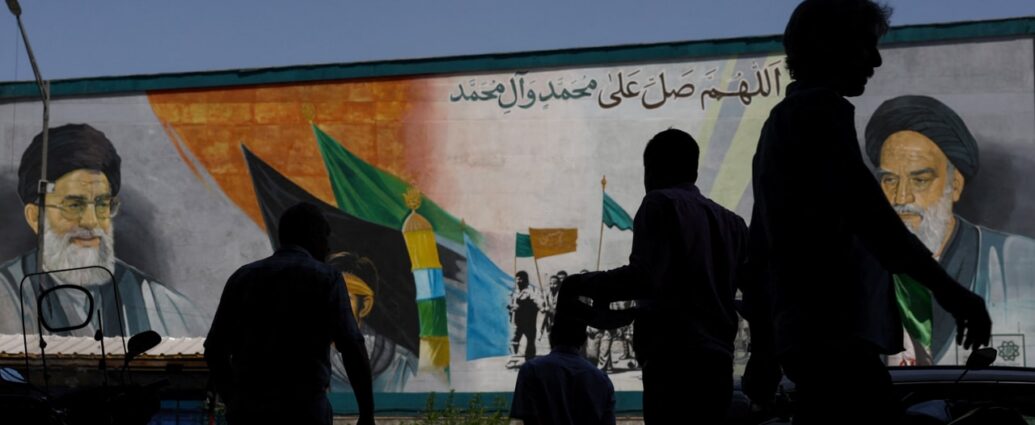
The U.S. inflation fight took a sharp and potentially dangerous turn Tuesday after the U.S. Bureau of Labor Statistics reported that consumer prices rose an unexpected 3.8% over the past year in April, above economist expectations and the highest annual reading since May 2023, triggering an immediate selloff in Treasury markets and a rapid repricing by bond traders and fed funds futures markets that, for the first time this year, began assigning meaningful odds to a possible Federal Reserve rate hike before year-end.

The report showed the Consumer Price Index rose 0.6% in April alone, above expectations and sharply higher than March’s 3.3% annual inflation reading, delivering another setback to investors who entered 2026 expecting multiple Federal Reserve rate cuts this year.

Core inflation — which strips out food and energy and is closely watched by Federal Reserve officials as a measure of underlying inflation pressure — also accelerated.

Core CPI rose 0.4% for the month and 2.8% annually, both above forecasts and marking the strongest monthly core reading since January 2025.

Within minutes of the release, traders across financial markets rapidly recalibrated expectations for Federal Reserve policy.

Fed funds futures traded on CME Group’s FedWatch platform sharply reduced the odds of rate cuts later this year while increasing the probability that the central bank may ultimately be forced to raise interest rates again if inflation continues broadening through the economy.

Treasury yields surged after the release while stock futures fell as investors confronted the possibility that inflation may be reaccelerating despite still-solid economic growth and consumer spending.

The primary driver behind the inflation surge remained energy.

According to the Bureau of Labor Statistics, energy prices climbed 3.8% in April and are now up 17.9% year over year, with gasoline prices soaring 28.4% annually as the economic fallout from the February U.S.-Iran conflict continued to ripple through global oil markets and supply chains.

Food inflation also intensified.

Grocery prices rose 0.7% during the month, the largest increase since August 2022, while beef prices surged 14.8% over the past year. Airline fares, heavily impacted by rising jet fuel costs, jumped 20.7% year over year.

Perhaps most concerning for Federal Reserve policymakers was the widening breadth of inflation pressures.

Shelter inflation — one of the few categories that had recently shown signs of cooling — unexpectedly rose 0.6% in April, its fastest monthly increase since September 2023.

At the same time, inflation is once again overtaking wage growth.

Real average hourly earnings fell 0.5% during the month and declined 0.3% over the past year, marking the first time in roughly three years that inflation has fully erased workers’ real wage gains.

“Inflation is the key drag on the U.S. economy now,” said Heather Long, Chief Economist at Navy Federal Credit Union. “There is a real financial squeeze underway. For the first time in three years, inflation is eating up all wage gains.”

The inflation shock is also beginning to ripple directly into the housing market and commercial financing sector, where borrowing costs are already near multi-decade highs.

Mortgage rates, which closely track Treasury yields, moved higher immediately after the CPI release, increasing pressure on homebuyers already struggling with elevated home prices and affordability constraints. Analysts warned that if inflation remains elevated and the Federal Reserve delays cuts or considers additional tightening, 30-year mortgage rates could remain near or above current levels deep into 2026, further slowing housing activity, refinancing, construction starts, and multifamily development financing.

The commercial real estate sector faces growing pressure as well.

Higher-for-longer interest rates increase refinancing risk for office buildings, retail centers, industrial projects, and apartment portfolios carrying floating-rate debt or approaching maturity walls. Regional banks and private lenders have already tightened underwriting standards across large portions of the commercial property market, and another inflation-driven rise in Treasury yields could place additional stress on valuations and transaction activity.

Business financing costs are also rising across the broader economy.

Corporate borrowing rates tied to Treasury benchmarks — including lines of credit, equipment financing, SBA lending, and private credit facilities — all become more expensive when markets begin pricing in higher-for-longer Fed policy. For small and midsize businesses, that can translate directly into delayed expansion plans, reduced hiring, postponed inventory purchases, and weaker capital investment.

For highly leveraged sectors including real estate development, manufacturing, transportation, hospitality, and private equity-backed companies, the persistence of elevated rates threatens to create a longer “financing squeeze” stretching into 2027.

“The issue is no longer just inflation itself,” one Wall Street rates strategist said Tuesday following the release. “It’s the realization that financing costs across the economy may stay restrictive far longer than markets expected only a few months ago.”

The report now places enormous pressure on the Federal Reserve ahead of its June policy meeting.

Markets still overwhelmingly expect the Fed to hold rates steady next month, with traders assigning roughly a 98% probability that policymakers leave the benchmark federal funds rate unchanged.

But the outlook beyond June has shifted dramatically.

According to pricing data tracked by Benzinga, markets are now assigning meaningful odds to a potential rate hike before the end of 2026, while the probability of higher rates by 2027 has climbed sharply compared with just several weeks ago.

Economists across Wall Street remain divided over whether the latest inflation shock represents a temporary energy-driven spike or the beginning of a more persistent second wave of inflation.

“The fact that higher input costs from oil are being readily passed through to consumers, as well as other signs of broadening inflation impact, should both add to the Fed’s worries about inflation,” said Preston Caldwell, Chief U.S. Economist at Morningstar. “The odds of a rate hike in 2026, while still less than 50%, are rising.”

Ellen Zentner, Chief Economic Strategist at Morgan Stanley Wealth Management, said the broadening inflation pressures reinforce the reality that even incoming Fed Chair Kevin Warsh may not be able to pursue the easier monetary policy investors had hoped for.

Others urged caution against interpreting the report as an imminent signal for higher rates.

Thomas Simons, economist at Jefferies, wrote that while the chances of a rate cut this year are fading quickly, “we still expect that the next move in policy rates is going to be a cut rather than a hike.”

Mark Zandi, Chief Economist at Moody’s Analytics, similarly told CNBC that the Federal Reserve will likely remain on hold for now, though much depends on whether inflation expectations themselves continue moving higher among consumers and businesses.

The uncertainty is already exposing growing divisions inside the Federal Reserve.

At the Fed’s late-April meeting, policymakers again voted to leave rates unchanged but recorded four dissents, the largest number since 1992 — an unusually public sign of disagreement inside the central bank.

Cleveland Fed President Beth Hammack recently described the current inflation environment as “probably the fourth shock that we’ve had in five years,” following the pandemic, the Russia-Ukraine war, and tariff disruptions.

Meanwhile, Chicago Fed President Austan Goolsbee has publicly stated that all policy options remain under consideration, including both future cuts and hikes.

Attention now shifts to the Fed’s preferred inflation gauge — the Personal Consumption Expenditures Price Index due later this month — along with the May jobs report and Wednesday’s Producer Price Index data, all of which will help determine whether April’s inflation surge was the beginning of a broader second wave or a temporary spike tied to energy and war-related supply shocks.

For Wall Street, the message from Tuesday’s report was clear: the era of confidently pricing in rate cuts is over, and the Federal Reserve’s next move is no longer certain.

JBizNews Desk

© JBizNews.com. All rights reserved. This article is original reporting by JBizNews Desk. Unauthorized reproduction or redistribution is strictly prohibited.

The single biggest variable hanging over the Trump–Xi summit in Beijing this week is no longer tariffs, Taiwan, or even the war with Iran — it is China’s near-monopoly on the rare earth elements that power American factories, weapons systems, electric vehicles, and advanced artificial-intelligence infrastructure. As President Donald Trump opened a 36-hour summit with President Xi Jinping on Wednesday, business leaders and national-security officials increasingly viewed access to critical minerals as the real strategic centerpiece of the talks.

REalloys Chief Executive Officer Lipi Sternheim told Bloomberg on Wednesday that Trump must use the summit to secure near-term rare earth supply agreements because rebuilding independent North American production capacity “won’t happen overnight.” Her warning reflects a growing reality confronting both Washington and Wall Street: the United States remains deeply dependent on China for materials that sit at the core of nearly every advanced industrial sector.

According to a separate S&P Global factbox published Wednesday, rare earth access is now expected to dominate the formal May 14–15 negotiations between Trump and Xi. Heidi E. Crebo-Rediker, senior fellow at the Council on Foreign Relations Center for Geoeconomic Studies, summarized the strategic shift in a paper published May 10, writing that “the center of gravity moved away from tariffs — long seen by Trump as the decisive lever — and toward something more structural: China’s control over critical minerals, rare earths, and the magnet supply chains that underpin modern military capability and advanced manufacturing.”

The numbers explain the urgency. According to the International Energy Agency, China controlled 61% of global mined rare earth production in 2024 and an overwhelming 91% of global refining and processing capacity. While many countries mine small amounts of rare earth material, China dominates the technically complex refining process required to turn raw minerals into usable metals and magnets.

That leverage became painfully visible after Beijing imposed export licensing restrictions in April 2025. According to industry data cited by Foreign Policy, rare earth magnet shipments from China to the United States collapsed 93% year over year the following month, forcing temporary shutdowns at several automotive plants in both the United States and Europe. Prices for key heavy rare earths including dysprosium and terbium — essential components in electric motors, fighter jets, missile systems, and advanced semiconductors — surged to as much as six times Chinese domestic pricing levels.

Although the Busan trade truce later eased some restrictions, export volumes remain roughly 50% below pre-restriction levels. The situation worsened further after China’s Ministry of Commerce announced a second wave of controls on October 9, 2025, expanding the restricted list to include samarium, gadolinium, lutetium, europium, and ytterbium while also broadening rules to cover foreign-made products containing Chinese-sourced materials or Chinese manufacturing technology.

Those restrictions were temporarily suspended until November 10, 2026, under the Busan agreement — effectively placing Trump under a six-month negotiating deadline controlled almost entirely by Beijing.

Sternheim’s company, REalloys (NASDAQ: ALOY), has emerged as one of the few North American firms attempting to rebuild domestic heavy rare earth processing capability. The company operates the continent’s only facility capable of converting heavy rare earths into commercial-scale metals and alloys. Initial production at its Saskatchewan Research Council–linked facility is targeted for 2027, while downstream magnet operations are based in Euclid, Ohio.

REalloys recently secured a $200 million letter of interest from the U.S. Export-Import Bank along with a $1.7 million Defense Logistics Agency engineering contract tied to a planned 300-ton-per-year production facility. But executives openly acknowledge that scaling enough independent capacity to meaningfully reduce Chinese dependence will likely take years.

The Trump administration has spent much of the past year aggressively building a strategic response. The White House launched plans for a critical-minerals reserve known as “Project Vault,” pursued equity stakes in mining and refining companies, signed mineral agreements with allied governments, and proposed a global critical-minerals trading bloc designed to reduce China’s dominance.

Private-sector efforts have accelerated as well. USA Rare Earth announced plans last month to acquire Brazil’s Serra Verde Group, one of the world’s few meaningful heavy rare earth sources outside China. Yet analysts warn that mines, refineries, and magnet facilities cannot be built quickly enough to fully shield American industry in the near term.

“The U.S. still has to tread carefully in its relationship with China to avoid those disruptions,” Gracelin Baskaran, director of the Critical Minerals Security Program at the Center for Strategic and International Studies, told Foreign Policy.

The makeup of Trump’s Beijing delegation underscores how central the issue has become. The president arrived alongside major American executives including Apple CEO Tim Cook, Tesla and SpaceX CEO Elon Musk, and Nvidia CEO Jensen Huang, who joined the trip at the last minute after media attention focused on his earlier absence. Huang reportedly boarded Air Force One during a refueling stop in Anchorage.

Their presence highlights how deeply intertwined rare earths have become with artificial intelligence, semiconductors, electric vehicles, and defense technology. Advanced data centers, AI networking systems, electric motors, robotics, smartphones, missile guidance systems, and radar equipment all depend heavily on rare-earth-based magnets and specialized materials.

For U.S. manufacturers, the stakes are immediate and tangible. Automakers including General Motors, Ford, and Stellantis rely heavily on rare-earth magnets for electric drive systems. Defense contractors including Lockheed Martin, RTX, and Northrop Grumman depend on the same supply chains for missile systems, stealth technologies, radar, sonar, and precision-guided weapons.

Industry executives have warned privately that even modest delays in Chinese export-license approvals during or after the summit could disrupt summer production schedules across multiple industries.

For Xi, rare earth supply remains one of the strongest strategic tools Beijing holds over Washington. For Trump, the objective is to secure enough stability in the supply chain to buy time for companies including REalloys, USA Rare Earth, and MP Materials to scale domestic production capacity.

How those competing priorities are negotiated in Beijing may ultimately shape not only the next phase of U.S.–China economic relations, but the future supply chain architecture of the global industrial economy itself.

JBizNews Desk

© JBizNews.com. All rights reserved. This article is original reporting by JBizNews Desk. Unauthorized reproduction or redistribution is strictly prohibited.

The Morris Katz Foundation and the Orthodox Jewish Chamber of Commerce have formally nominated President Donald Trump for the Morris Katz Legacy Award — the Foundation’s highest honor — during Jewish American Heritage Month, recognizing what organizers describe as his historic support for the Jewish people, the State of Israel, religious freedom, and the enduring values embodied by Holocaust survivor and world-renowned artist Morris Katz.

The nomination has drawn praise and support from a broad coalition of Jewish leaders, advocates, media voices, and communal organizations, including the Orthodox Jewish Chamber of Commerce, Professor Alan Dershowitz, Elan Carr, Malcolm Hoenlein, Pastor Mark Burns, Bobby Kennedy, nationally syndicated radio host and author Mark Levin, and Mayor Izzy Spitzer of New Square — a group whose combined standing across American Jewish public life gives the nomination unusual significance.

Foundation officials stressed that the Morris Katz Legacy Award award is not about politics, but about the deeper meaning behind Morris Katz’s life story and the values he devoted his life to preserving: faith, freedom, gratitude to America, and pride in Jewish identity.

Pic- President with the Late Artist Morris Katz in NYC

Unlike symbolic international peace prizes often viewed through a political lens, supporters of the Morris Katz Legacy Award say this recognition reflects something far more personal and enduring — the freedom to openly live as a Jew in America, the survival of Jewish faith after the Holocaust, and appreciation for leaders whose actions strengthened those ideals.

Katz devoted much of his life to expressing gratitude toward the United States through his Presidential Collection, with each portrait requiring more than 200 hours each to complete. He viewed the collection as a patriotic expression of appreciation to a nation that gave a Holocaust survivor not only safety, but dignity and freedom.

On May 4, 2026, President Trump signed a proclamation recognizing May as Jewish American Heritage Month, but organizers say the document included something unprecedented in modern American presidential history — a direct national call for Shabbat observance.

The initiative, called “Shabbat 250” in honor of America’s upcoming 250th anniversary, encouraged Americans to observe the Sabbath from sundown Friday, May 15 through nightfall Saturday, May 16.

Jewish organizations across the country including Chabad, Agudath Israel of America, Aish, the Coalition for Jewish Values, and leaders within the Orthodox Jewish Chamber of Commerce praised the proclamation as a rare and highly visible affirmation of Jewish faith and religious freedom in America.

For the Foundation, the significance goes directly to the heart of Morris Katz’s story.

Katz — the Holocaust survivor, inventor, entrepreneur, and artist known around the world as “the Albert Einstein of Art” — arrived in America in 1949 with virtually nothing after surviving Nazi persecution in Eastern Europe.

Morris Dubbed The Einstein of Art Painting President Reagan

His first job in America was as a carpenter. When his employer demanded he report to work on Saturdays, Katz refused.

“I didn’t survive the Holocaust to work on Shabbat,” Katz famously said before walking away from the job and dedicating himself fully to painting.

That moment became the turning point that launched one of the most extraordinary artistic careers in American history.

Foundation leaders say President Trump’s public recognition of Shabbat carries exceptional meaning because it honors the very freedom that allowed Morris Katz to rebuild his life in America — the freedom to openly practice one’s faith without fear.

Katz eventually became deeply inspired by the country that gave him refuge and freedom after the Holocaust, leading him to begin what would become his legendary Presidential Collection — an ambitious artistic tribute featuring portraits of every American president from George Washington through George H.W. Bush.

The deeper purpose that inspired the collection became especially clear following the assassination of President John F. Kennedy in 1963. Shocked by the tragedy that gripped the nation, Katz painted Kennedy’s portrait within minutes of hearing the news. According to a 1965 feature in The Post Card Traveler, Katz was later offered $50,000 for the painting — an extraordinary sum at the time — but refused to sell it.

“It is not something commercial to be sold,” Katz said. “This picture contains far more than anyone may realize. It is a picture of everything this great man and American means to me and my people — how can you sell that?”

Witnessing how the portrait and the national mourning surrounding Kennedy briefly united Americans during a deeply painful moment in history, Katz was inspired to begin what became a six-year mission to paint every President of the United States. His vision extended far beyond art itself. He hoped the collection would serve as a lasting message of unity, patriotism, gratitude, and American history that could be carried forward to future generations.

To Katz, America’s presidents represented far more than politics. They symbolized the nation that gave a Holocaust survivor dignity, opportunity, religious freedom, and the chance to rebuild a life destroyed in Europe. His Presidential Collection was never intended as a commercial project, but as a lifelong expression of gratitude to America and the freedoms it protected.

A world-famous artist, Katz earned international recognition for his historical portrait work. In one of the defining honors of his career, he was chosen by the Vatican out of more than 500 artists to paint the Pope’s famous Portrait during his visit to the United States — a distinction that reflected the global respect and acclaim his artistry had achieved.

The historic collection is uniquely distinguished by Katz’s inclusion of the American flag in every presidential portrait, with the number of stars carefully matched to the number of states in the Union during each president’s time in office — a level of historical detail and symbolism that made the collection unlike any other presidential art series ever created.

Over the years, millions of postcards featuring the portraits from the collection were sold worldwide, eventually becoming sought-after collector’s items that helped bring his message of patriotism, resilience, and appreciation for America into homes across generations.

Foundation leaders say that vision aligns with the president’s broader support for religious identity and Israel. Katz painted America’s presidents out of gratitude for a nation that defended freedom of faith, while President Trump’s actions — reflect that same recognition of the importance of religious liberty in America.

The Foundation’s leadership said they hope President Trump accepts the nomination, noting that the connection between the Trump family and Morris Katz dates back decades.

According to members of the founding committee of the Morris Katz Foundation, President Trump’s father, Fred Trump, personally commissioned Morris Katz to create a large custom painting for his home during the height of the artist’s prominence in New York. Foundation officials said Katz admired the Trump family and viewed them as representative of the American success story he deeply respected after arriving in the United States as a Holocaust survivor with nothing.

Katz twice listed in the Guinness World Records — first as the world’s fastest painter and later as the world’s most prolific artist dethroning Picasso in the Guinness World Records.

Foundation officials specifically pointed to David Baums admiration for Morris Katz, the entrepreneur credited with bringing the Guinness World Records from England to the United States, who later authored a book on Morris Katz and helped bring national attention to the artist’s extraordinary achievements.

Supporters backing the nomination represent several generations of Jewish leadership and advocacy.

Professor Alan Dershowitz, the renowned Harvard Law professor emeritus and constitutional scholar, has consistently defended President Trump’s record on Israel and combating anti-Semitism.

Elan Carr, former U.S. Special Envoy to Monitor and Combat Anti-Semitism, previously credited the Trump administration with elevating the fight against anti-Semitism into a major international diplomatic priority.

Malcolm Hoenlein, Vice Chair and Chief Executive Emeritus of the Conference of Presidents of Major American Jewish Organizations, remains one of the most influential figures in American Jewish communal life and previously participated in Morris Katz Legacy Award initiatives.

Mark Levin, one of America’s most prominent conservative Jewish media voices and a longtime advocate for Israel and constitutional liberties, also joined in praising the nomination, according to organizers.

And Mayor Izzy Spitzer of New Square, representing one of America’s most observant Jewish communities, brought what organizers described as the voice of a community for whom Shabbat is not symbolic, but central to daily life and identity.

The Morris Katz Legacy Award is presented jointly by the Foundation and the Orthodox Jewish Chamber of Commerce to individuals recognized for advancing education, combating anti-Semitism, strengthening religious liberty, and promoting gratitude toward the United States and its democratic freedoms.

Previous recipients include Israeli President Isaac Herzog, U.S. Ambassador Mike Huckabee, Congressman Chris Smith, and Congressman Josh Gottheimer.

Foundation leaders said President Trump’s nomination reflects what they view as one of the most consequential pro-Israel presidential records in modern American history.

During President Trump’s first presidency, the United States formally recognized Jerusalem as Israel’s capital and relocated the American embassy there — fulfilling a promise several previous administrations had declined to implement. President Trump also brokered the Abraham Accords, establishing normalization agreements between Israel and multiple Arab nations in one of the Middle East’s most significant diplomatic breakthroughs in decades.

During President Trump’s second presidency, the United States carried out military strikes against Iranian nuclear facilities as part of efforts to prevent Iran from advancing its nuclear capabilities and to address growing regional and global security threats. President Trump also led diplomatic and military efforts focused on securing the release of Israeli hostages and helping bring an end to the Israel–Hamas war, actions supporters viewed as critical to protecting freedom, security, democratic allies, and regional stability.

Katz devoted much of his life to expressing gratitude toward the United States through his Presidential Collection, with his Presidential portraits requiring more than 200 hours each to complete. He viewed the collection as a clear patriotic expression of appreciation to a nation that gave a Holocaust survivor not only safety, but dignity, opportunity, and freedom.

Katz also pioneered what became known as “instant art” at a time when original artwork was considered a luxury far beyond the reach of most families. Having endured the suffering of the Holocaust and the concentration camps, he believed art should not exist only for the wealthy or elite. His mission was simple: to bring smiles into ordinary homes and make art affordable and accessible to everyone. Those close to him often said Katz never created art for fame or wealth, but to bring joy to others after witnessing so much human suffering himself. His innovative live-painting performances helped pioneer a form of artistic entertainment that later evolved into a global commercial industry.

His talent and message brought him to some of the world’s most prominent stages, including performances at the White House and Buckingham Palace, as well as appearances on many of the most watched television programs of the era, where his unique artistic performances helped drive major audience interest and viewership. His television appearances included CBS’s 60 Minutes, The David Letterman Show, Ripley’s Believe It or Not, The Mike Douglas Show, Thicke of the Night hosted by Alan Thicke, The Joe Franklin Show, ABC’s Prime Time Live, NBC’s Today Show, PM Magazine, The Best of Real People, Hour Magazine, and The Bobby Heenan Show on WWE Prime Time Wrestling in 1989, along with numerous international television appearances across Japan, Italy, Australia, and Germany.

Despite the collection’s historical significance and immense financial value, Katz never sold the Presidential Collection, viewing it instead as a patriotic tribute to the nation that gave him refuge and protected his freedom.

“He took enormous pride in both being a Jew and an American patriot,” said Duvi Honig, Founder and Chief Executive Officer of the Orthodox Jewish Chamber of Commerce. “There is real meaning behind this award because it reflects the very freedoms Morris lived for after surviving the Holocaust. This is not about politics. It is about faith, gratitude, religious liberty, and honoring leaders whose actions strengthened those values for the Jewish people and for America itself.”

The full Morris Katz Presidential Collection is available for public viewing at MorrisKatz.org.

JBizNews Desk
© JBizNews.com. All rights reserved.

Nvidia Corp. Chief Executive Jensen Huang boarded Air Force One during a refueling stop in Alaska on Tuesday after a personal phone call from President Donald Trump, joining the U.S. delegation traveling to Beijing for meetings with Chinese President Xi Jinping this week — a last-minute reversal by the White House after widespread attention focused on the conspicuous absence of the world’s most important artificial-intelligence executive from the trip.

The decision came after media coverage Monday and Tuesday highlighted that Huang had been left off the administration’s original 17-member CEO delegation despite Nvidia’s central role in the global AI race and the escalating semiconductor battle between Washington and Beijing. After seeing the coverage, President Trump personally called the Nvidia founder and invited him to join the trip, according to a source familiar with the matter cited by CNBC. Huang then traveled to Alaska to board the presidential aircraft before the delegation continued to China.

Nvidia confirmed the executive’s participation in a statement, saying: “Jensen is attending the summit at the invitation of President Trump to support America and the administration’s goals.”

Photos posted on social media by New York Post White House correspondent Emily Goodin showed Huang on the tarmac in Alaska carrying a backpack and waiting to board Air Force One alongside some of the country’s most influential corporate leaders. Also traveling with the president were Tesla and SpaceX Chief Executive Elon Musk, Apple Chief Executive Tim Cook, Boeing Chief Executive Kelly Ortberg, and Goldman Sachs Chief Executive David Solomon. The final delegation includes 17 CEOs, smaller than the 27 executives who accompanied President Trump on his 2017 China visit.

The late addition underscored just how central Nvidia has become not only to Wall Street and Silicon Valley, but also to U.S. economic strategy and geopolitical positioning. Nvidia’s advanced AI chips now power much of the world’s artificial-intelligence infrastructure, including hyperscale data centers, cloud computing networks, sovereign AI projects, and advanced machine-learning systems that governments increasingly view as strategically sensitive technologies.

Asked during a CNBC interview last week whether he would join the trip if invited, Huang replied: “If invited, it would be a privilege — it would be a great honor to represent the United States and to go to China with President Trump.”

Behind the symbolism sits a far more consequential business and geopolitical reality. Nvidia has spent years navigating increasingly aggressive U.S. export controls aimed at limiting China’s access to advanced semiconductors and AI computing systems. Those restrictions have dramatically reshaped one of Nvidia’s most important international markets.

The Trump administration’s April 2025 restrictions on Nvidia’s H20 chip — a version specifically engineered for the Chinese market under prior export-control rules — resulted in what analysts estimated was roughly an $8 billion revenue impact in a single quarter and forced the company to record significant inventory write-downs. China had previously accounted for at least one-fifth of Nvidia’s data-center revenue before the tightening restrictions effectively shut the company out of large portions of the market.

Over the past 18 months, Huang has repeatedly traveled between Washington and Beijing attempting to preserve at least some commercial pathway into China while publicly warning that overly restrictive U.S. policies could accelerate China’s push toward domestic semiconductor independence. His appearances included a high-profile visit to the China International Supply Chain Expo last summer, where he emphasized the importance of maintaining global technology cooperation despite mounting political tensions.

Still, analysts remain skeptical that this week’s summit will produce any major breakthrough for Nvidia or materially loosen semiconductor restrictions.

Hao Hong, chief investment officer at Lotus Asset Management, told CNBC there is “very little” Nvidia is likely to gain in terms of immediate policy concessions because the White House remains deeply reluctant to allow exports of more advanced AI chips into China.

“I think China realized that the tech rivalry between the two countries will be one of the key determinant factors going forward to determine the relative competitive position in the global geopolitics between the two countries,” Hong said. He added that technological “decoupling” between the world’s two largest economies is likely to deepen rather than ease.

For the White House, however, bringing Huang into the delegation carries substantial symbolic and political value. Nvidia’s market capitalization, which crossed $4 trillion last summer, has transformed the company into perhaps the clearest symbol of American AI dominance and technological leadership. Leaving its founder off a presidential trip designed to showcase American corporate power would have raised difficult questions for the administration at a moment when AI leadership has become tightly linked to national competitiveness.

President Trump has repeatedly pointed to Nvidia’s stock performance and America’s broader AI boom as evidence that the U.S. technology sector continues to thrive under his economic agenda despite tariffs, export controls, and rising geopolitical tensions. In a social media post confirming Huang’s participation, the president described it as an honor to have the Nvidia founder and the broader business delegation accompanying him to China.

The meetings between Presidents Trump and Xi on Thursday and Friday are expected to focus heavily on trade, tariffs, semiconductor restrictions, artificial intelligence, Taiwan tensions, and supply-chain security. Officials on both sides have attempted to lower expectations for any sweeping agreement, though negotiators have signaled the talks could still produce narrower commitments involving agricultural purchases, fentanyl-precursor enforcement, and rare-earth mineral supply arrangements.

Those rare-earth discussions are particularly important for companies including Apple, Tesla, and Boeing, all of which remain deeply dependent on Chinese processing capabilities for critical industrial materials and supply-chain components.

For Nvidia investors, the immediate question is whether Huang’s presence inside the room creates any limited opening for future Chinese access to some of the company’s products. The broader question — whether Washington ultimately intends to permanently wall off China from America’s most advanced AI infrastructure — is unlikely to be resolved this week.

But Huang’s presence aboard Air Force One signals something larger already underway: Nvidia is no longer merely a semiconductor company. It has become a central pillar of American economic strategy, diplomacy, and the rapidly intensifying global contest for AI supremacy.

JBizNews Desk

© JBizNews.com. All rights reserved. This article is original reporting by JBizNews Desk. Unauthorized reproduction or redistribution is strictly prohibited.

United Kingdom government bond yields surged to multi-decade highs Tuesday after at least 83 Labour members of Parliament called for Prime Minister Keir Starmer to resign and three junior ministers quit his government, triggering a sharp selloff across British banks, a slide in the pound, and a wave of concern across global fixed-income markets about the trajectory of UK fiscal policy if a leadership challenge succeeds.

The 30-year gilt yield briefly touched 5.81% Tuesday morning, the highest level since 1998, while the 10-year gilt jumped 10 basis points to trade around 5.101% by 11:15 a.m. London time. The pound slid 0.6% to $1.3523. NatWest Group, Lloyds Banking Group, and Barclays all fell at least 3% in early trading — with intraday losses reaching as high as 4.7%, 4.3%, and 4.1% respectively — as analysts speculated the UK banking sector could face higher taxes under a new Labour leadership. The bond moves reflect what fixed-income strategists described as the most acute UK political risk premium since the September 2022 mini-budget crisis that ended Liz Truss’s premiership.

The trigger was the cumulative effect of last Thursday’s local elections, in which Labour suffered substantial losses to the right-wing Reform UK party and the left-wing Green Party. Starmer delivered a Monday speech in London in a bid to secure his premiership, but the Press Association’s running tally Tuesday afternoon showed that 83 of the 403 Labour MPs had publicly called for him to step down — within striking distance of the 81 MPs (20% of the parliamentary party) required to formally trigger a Labour leadership challenge. Three junior ministers had resigned from the government by mid-afternoon. A critical cabinet meeting was scheduled for Tuesday evening.

Citi’s rates and FX strategy team issued a note Monday evening flagging the leadership-challenge risk and the policy implications. “Recent developments had set the stage for a leadership challenge,” the Citi team wrote, projecting “a leftwards shift in Labour policies and more expansionary fiscal policy” if Starmer is removed. The team forecast risks “skewing towards higher Gilt yields and a weaker GBP,” with negative implications for domestic-focused FTSE 250 companies but potential support for internationally exposed FTSE 100 constituents. Citi added that current gilt yields did not yet fully reflect an immediate leadership challenge — a view that hardened Tuesday as the MP count climbed.

The market reaction reflects the unusual fiscal positioning of the UK at the moment. Starmer’s government, with Chancellor Rachel Reeves at the Treasury, has spent the past 18 months attempting to rebuild fiscal credibility after years of post-pandemic and post-mini-budget volatility. Reeves‘s Autumn 2025 budget tightened spending across several departments and raised employer national insurance contributions, drawing sharp criticism from Labour’s left flank but earning measured support from gilt markets. A leadership change inside Labour would, in Citi’s reading, likely produce a more expansionary fiscal stance — exactly the combination that drove the September 2022 gilt selloff under Truss.

Starmer is now the United Kingdom’s sixth prime minister in the past decade. Theresa May, Boris Johnson, Liz Truss, Rishi Sunak, and most recently Starmer have all faced internal-party challenges or full leadership crises during this period. The Conservative Party defeats in the 2024 general election produced Labour’s largest majority since 1997, but Starmer’s approval ratings have fallen sharply over the past year amid public anger at the pace of economic reforms, stagnant living standards, and persistent cost-of-living pressure.

The banking selloff carries broader implications. NatWest, Lloyds, and Barclays are the three largest UK retail banks and major holders of UK government debt. Higher gilt yields are typically beneficial for net interest margins, but in this case the selloff was driven by tax-policy speculation rather than rate expectations. HSBC Holdings and Standard Chartered, both with substantial international revenue bases, fell less sharply. Hargreaves Lansdown and St. James’s Place, both domestic-focused wealth managers, faced compounding pressure. The iShares MSCI United Kingdom ETF (EWU) declined in pre-market U.S. trading.

The next critical date is the cabinet meeting Tuesday evening, with the outcome — whether Starmer secures a vote of confidence from senior ministers or signals an exit — likely to determine the trajectory of gilts and sterling through Wednesday’s London open. Without a resignation, a Labour leadership challenge can only be triggered if 20% of Labour MPs back a challenger. As of Tuesday afternoon, that threshold sat 17 votes ahead of where it needs to be — meaning the parliamentary party is on the cusp of forcing the question. The Bank of England, which holds its next rate-setting meeting June 18, will be watching the political situation as closely as any data release in coming weeks.

For global markets, the UK situation adds a third major political risk premium to the equity-and-rates picture alongside the still-blockaded Strait of Hormuz and the unresolved U.S.-China trade and security agenda. President Trump’s state visit to Beijing this week, the Federal Reserve’s positioning ahead of its June 16–17 meeting, and the UK leadership question now sit together at the center of the cross-asset trading playbook for the second half of May.

JBizNews Desk
© JBizNews.com. All rights reserved. This article is original reporting by JBizNews Desk. Unauthorized reproduction or redistribution is strictly prohibited

The first wave of tariff refunds tied to the Trump administration’s overturned emergency trade duties has officially begun reaching American businesses, marking the start of what could become one of the largest customs repayment efforts in U.S. history after the Supreme Court invalidated tens of billions of dollars in import taxes earlier this year.

Heavy-truck manufacturer Oshkosh Corp. and toy maker Basic Fun confirmed Tuesday that they have begun receiving payments from the federal government tied to tariff refund claims filed after the Supreme Court’s landmark February ruling striking down tariffs imposed under the International Emergency Economic Powers Act (IEEPA).

The refunds are part of an estimated $166 billion repayment process now underway across millions of shipments and hundreds of thousands of importers that paid duties under the invalidated tariff program.

Oshkosh Chief Financial Officer Matt Field told CNBC the Wisconsin-based manufacturer has started receiving “an initial portion” of its refund claims, though the company declined to disclose the total amount sought.

Meanwhile, Basic Fun, the Florida-based maker of Tonka trucks, Care Bears, and K’Nex, said it has received approximately $400,000 out of roughly $7.4 million in claims filed with the government.

“The issue is will the funds flow like a river or fire hose or like a stream or garden hose,” Basic Fun Chief Executive Jay Foreman told Reuters. “So far, the funds are trickling out but they have started.”

The repayments stem from the U.S. Supreme Court’s 6-3 decision on February 20 in Learning Resources, Inc. v. Trump, which ruled that the president lacked authority under the 1977 IEEPA statute to impose broad tariffs using emergency powers.

The decision invalidated multiple rounds of Trump-era emergency tariffs, including the sweeping reciprocal tariffs introduced in April 2025 that imposed a baseline 10% tariff on most countries, alongside higher country-specific duties. The ruling also struck down fentanyl-related tariffs that reached as high as 35% on certain Canadian imports and 25% on some Mexican goods.

The ruling immediately triggered a massive refund process now being administered by U.S. Customs and Border Protection (CBP).

CBP launched a dedicated online claims system on April 20 known as the Consolidated Administration and Processing of Entries tool, or CAPE, to process what officials described in court filings as an “unprecedented” volume of refund requests.

A declaration filed in the U.S. Court of International Trade in New York by CBP official Brandon Lord showed that as of May 11, the agency had received approximately 126,237 refund applications. Of those, 86,874 claims have already been approved, covering roughly 15.1 million eligible import entries.

CBP has so far finalized approximately 8.3 million shipments, calculating expected repayments totaling roughly $35.46 billion, including interest.

Court filings indicate that more than 330,000 importers paid the disputed duties across approximately 53 million shipments, generating roughly $166 billion in tariffs now subject to potential repayment.

Some of America’s largest retailers and consumer companies are expected to recover enormous sums.

Companies including Walmart, Target, Nike, Gap, and The Home Depot are believed to have major refund exposure tied to the invalidated tariffs. Costco, Revlon, and Bumble Bee Foods were among companies that proactively filed lawsuits seeking repayment before the Supreme Court ruling, placing them near the front of the reimbursement process.

The repayment effort, however, is already becoming politically contentious.

President Donald Trump said Tuesday that his administration intends to “fight” the repayment effort, creating fresh uncertainty around how quickly the federal government will process and release the remaining claims.

CBP has repeatedly warned federal courts that the scale of the refund operation is unlike anything the agency has handled before, noting that many existing customs systems were not designed to process claims at this volume and may require extensive manual review.

At the same time, the broader tariff battle remains far from resolved.

In a separate legal development Tuesday, a federal appeals court temporarily reinstated another round of Trump tariffs imposed under Section 122 of the Trade Act of 1974, reversing a lower-court decision that had struck them down.

Those tariffs — including the administration’s separate 10% universal tariff — are legally distinct from the IEEPA duties invalidated by the Supreme Court and therefore remain in effect while litigation continues. The Section 122 tariffs are currently scheduled to expire in late July unless Congress extends them.

The result has created a confusing split system for importers: businesses are simultaneously seeking refunds for invalidated emergency tariffs already paid while continuing to pay newer tariffs still surviving in court under separate statutory authority.

CBP has stated that valid refund claims will generally be paid within 60 to 90 days after approval, though officials warned more complicated filings could take significantly longer.

Trade attorneys say additional legal disputes may emerge over who ultimately benefits from the repayments, particularly in cases where manufacturers, wholesalers, retailers, or suppliers absorbed portions of tariff costs at different stages of the supply chain.

For smaller businesses, the process remains slow and frustrating despite the first refunds beginning to arrive.

Beth Benike, co-founder of Minnesota-based baby products company Busy Baby, said she has still been unable to file claims because of technical access problems with the CAPE portal. Meanwhile, Dahlia Rizk, owner of Massachusetts-based children’s outerwear company Buckle Me Baby, said earlier this month that she expects approximately $66,000 in refunds, though she described the filing process as difficult and time-consuming.

The next major question for importers and investors is whether the current trickle of repayments becomes a rapid nationwide disbursement effort — or whether political resistance and administrative bottlenecks slow what could become one of the largest government refund operations ever tied to U.S. trade policy.

JBizNews Desk
© JBizNews.com. All rights reserved.

WASHINGTON — President Donald Trump departs Wednesday for Beijing for the first trip to China by a sitting American president in nearly nine years — a high-stakes summit expected to shape the future of global trade, financial markets, technology supply chains, and geopolitical stability far beyond the two countries themselves.

The state visit, scheduled for May 13 through May 15, comes at one of the most fragile moments in U.S.-China relations in years, with tensions surrounding trade, Taiwan, artificial intelligence, rare earth minerals, and the ongoing Iran conflict all converging simultaneously.

China’s foreign ministry formally confirmed the visit Monday, while the White House described the trip as carrying “tremendous symbolic significance.”

Trump is expected to arrive in Beijing on Wednesday evening before attending a formal state welcome ceremony and bilateral meetings with Chinese President Xi Jinping on Thursday, followed by ceremonial events including a visit to the Temple of Heaven and a state banquet.

The trip had originally been planned for March but was postponed after the United States launched military operations tied to the escalating conflict involving Iran and the Strait of Hormuz.

Now, with oil markets under pressure and global supply chains increasingly strained, the summit has taken on even greater economic urgency.

At the center of the discussions will be the future of trade relations between the world’s two largest economies.

Since November 2025, Washington and Beijing have operated under a temporary tariff framework that reduced U.S. tariffs on many Chinese imports to 30%, while China lowered duties on American goods to 10%. That arrangement expires later this year, and markets are closely watching for signals about whether the two governments will extend, revise, or abandon the agreement.

The outcome could directly impact inflation, manufacturing costs, technology pricing, agricultural exports, and corporate investment planning across multiple industries.

American officials are also expected to push aggressively for expanded access to China’s rare earth mineral supply chain — an area where Beijing retains enormous strategic leverage.

Rare earth elements are critical for semiconductor manufacturing, electric vehicles, defense systems, batteries, advanced electronics, and artificial intelligence infrastructure. As demand for those materials accelerates globally, Washington increasingly views dependence on Chinese supply as both an economic and national security vulnerability.

The administration is also reportedly exploring proposals for new bilateral trade management structures, including potential Board of Trade and Board of Investment frameworks designed to oversee non-sensitive commercial activity and reduce friction surrounding cross-border investment.

Officials caution, however, that such mechanisms remain preliminary and may require extended negotiations before becoming operational.

Several major commercial issues are also expected to surface during the summit.

The White House is likely to raise expanded purchases of Boeing aircraft by Chinese carriers alongside increased exports of American agricultural products. Discussions are also expected regarding whether Chinese electric vehicle giant BYD could eventually gain broader access to the U.S. market — an issue carrying major implications for American automakers and the domestic EV sector.

Beyond economics, however, the summit unfolds against an increasingly volatile geopolitical backdrop.

One of the most sensitive issues surrounding the trip has been China’s relationship with Iran.

According to U.S. officials, Beijing has privately assured the Trump administration that it will not supply weapons or military support to Tehran during the ongoing regional conflict. Defense Secretary Pete Hegseth said those assurances were facilitated directly through the relationship between Trump and Xi and helped clear the path for this week’s summit.

The continued disruption of shipping routes tied to the Strait of Hormuz blockade has already driven energy prices sharply higher, increasing pressure on both governments to prevent further instability.

Taiwan will remain the summit’s most politically delicate issue.

Officials in Taipei are closely monitoring whether Trump offers any concessions related to arms sales, diplomatic language, or broader U.S. policy toward the island as part of negotiations with Beijing.

While neither side is expected to announce any dramatic breakthrough, analysts believe even subtle shifts in rhetoric could carry major geopolitical consequences throughout Asia.

The Council on Foreign Relations characterized the summit in advance as an effort primarily aimed at stabilizing relations rather than resolving core disputes — a reflection of how deeply entrenched tensions remain between the two powers.

The trip also carries unusual personal and political optics.

Eric Trump and his wife Lara Trump are expected to accompany the president in a personal capacity, a detail already drawing scrutiny because members of the Trump family continue overseeing broader Trump business interests.

For global markets and corporate leaders, however, the Beijing summit represents something far larger than symbolism.

Virtually every major multinational industry — from semiconductors and technology to agriculture, energy, manufacturing, shipping, automotive production, and consumer goods — has direct exposure to the outcome of U.S.-China relations.

Any signals regarding tariffs, technology restrictions, investment frameworks, rare earth access, or geopolitical cooperation could immediately ripple through financial markets and boardrooms worldwide.

And with the global economy already navigating war-driven energy volatility, AI disruption, and rising trade fragmentation, this week’s meeting between Trump and Xi may become one of the defining economic and geopolitical moments of 2026.

JBizNews Desk

© JBizNews.com. All rights reserved. This article is original reporting by JBizNews Desk. Unauthorized reproduction or redistribution is strictly prohibited.

The State Street SPDR S&P Retail ETF, the most widely tracked retail equity benchmark, fell more than 3% Monday in its worst single-day decline since early April 2025, with Kohl’s Corporation and Caleres, parent of Famous Footwear and Sam Edelman, both tumbling more than 9% — a sectoral selloff that has now extended into Tuesday’s session as the consumer-discretionary complex absorbs a hot April Consumer Price Index print, persistent tariff pressure, and softening household spending data ahead of the May earnings reports from the largest U.S. retailers.

The SPDR S&P Retail ETF (NYSEARCA: XRT) dropped more than 3% in afternoon Monday trading, the largest one-day decline for the fund since the early-April 2025 tariff-shock selloff. Kohl’s led the broader department-store group lower with a fall of more than 9%, while Caleres, parent of Famous Footwear and Sam Edelman, tumbled a similar amount on signs of slowing footwear demand and concerns about back-to-school positioning. A handful of stocks bucked the move higher, including electric-vehicle charging provider EVgo, which rose roughly 3%, and Casey’s General Stores and Sonic Automotive, each adding roughly 1%.

The Monday selloff carried into Tuesday after the Bureau of Labor Statistics reported April Consumer Price Index growth of 3.8% year over year — the highest annual reading since May 2023 — with the apparel category up 0.6% on the month and household furnishings and operations up 0.7%. Wolfe Research analyst Tobin Marcus wrote Monday that the Iran war ceasefire remained “elusive” with President Trump “reluctant to resume the war,” a backdrop that has kept oil prices above $100 a barrel, gasoline averaging $4.50 per gallon nationally, and discretionary household budgets compressed.

The macro setup heading into retail earnings season is the most challenging of the post-pandemic cycle. The National Retail Federation projects 2026 holiday-equivalent spending to slow meaningfully from prior-year levels, Visa and Mastercard spending data for April showed the weakest discretionary print since mid-2023, and the Federal Reserve Bank of New York’s May Survey of Consumer Expectations showed a rising share of households reporting plans to cut spending on non-essentials. The combination has placed structural pressure on the department-store and softlines segments — the part of retail with the highest exposure to discretionary household spending — even as off-price and grocery retailers continue to show resilience.

Kohl’s has been the most consistently pressured legacy department store. The company entered Q1 2026 with weaker positioning across active wear, beauty, and home categories, and is expected to report further comp-sales declines when it discloses Q1 earnings May 27. Macy’s reports May 28, Nordstrom in late May, Dillard’s May 14, and Target Corporation May 20. Walmart’s Q1 earnings May 15 are widely expected to outperform the broader retail complex given the company’s grocery mix and trade-down beneficiary status. Amazon.com has already reported and provided guidance that flagged tariff-related cost pressure on its third-party sellers.

Caleres’s 9% Monday decline reflects compounding pressure on the footwear segment. Nike has been navigating a multi-quarter turnaround under chief executive Elliott Hill, with the most recent quarter showing wholesale weakness and direct-to-consumer softness. Under Armour has reported similar pressure. Foot Locker, recently acquired by Dick’s Sporting Goods, is integrating against a softening sneaker market. Skechers, taken private last year by 3G Capital, removed one of the segment’s public benchmarks. The Sam Edelman and Famous Footwear businesses inside Caleres sit at the heart of the discretionary-footwear category that has shown the sharpest demand compression.

The analyst calls reflect the macro pressure. Citi reiterated a Buy on Lowe’s Companies Monday with a $285 price target heading into earnings May 21, telling clients home-improvement “should beat 1Q street estimates and continue to outperform the industry in 2026.” Bank of America cut its 2026 same-store-sales forecasts for Best Buy, Tractor Supply Company, and Five Below earlier in the month, citing the tariff and inflation backdrop. Morgan Stanley has held an Equal-Weight rating on Target since the holiday season, with concerns about the company’s exit from diversity-and-inclusion programs and reactive customer behavior.

For the discretionary group as a whole, the structural problem is that the tariff pass-through has not fully arrived. Several retailers have absorbed first-round tariff costs at the cost of gross margins, with second-round price increases planned for the back-to-school and holiday cycles. The compounding effect — tariff-driven price increases on top of shelter inflation running at 3.0% year over year and energy still elevated — is the central concern across the analyst community.

The next test is the Census Bureau April Retail Sales report Thursday, Walmart Q1 earnings Friday, and the start of department-store earnings the week after. Whether the selloff that began Monday and extended Tuesday represents a near-term capitulation or the start of a deeper repricing of consumer-discretionary multiples now depends on whether the May earnings cycle confirms the demand compression the macro data have been signaling.

JBizNews Desk
© JBizNews.com. All rights reserved. This article is original reporting by JBizNews Desk. Unauthorized reproduction or redistribution is strictly prohibited.

By JBizNews Desk

Delta Air Lines Chief Executive Ed Bastian revealed Monday that he initially used artificial intelligence to draft his commencement speech for Emory University — then abandoned the AI-generated version entirely after concluding it lacked “soul” and genuine human warmth.

The remarks quickly became one of the most talked-about executive comments on artificial intelligence this graduation season, arriving at a moment when corporate America is aggressively deploying AI across white-collar industries while simultaneously debating what human value remains irreplaceable.

Speaking during Emory University’s 181st Commencement Ceremony in Atlanta, Bastian told graduates he tested AI out of curiosity while preparing his keynote address.

“I asked AI to prepare the address. And I was amazed at how quick and easy it was generated,” Bastian said. “But I also noticed the lack of soul nor warmth it conveyed. It was not my personal voice.”

The Delta chief executive said he ultimately discarded the AI-written draft and rewrote the speech himself using pencil and paper.

The moment landed with unusual resonance because the graduating Class of 2026 is entering a workforce increasingly shaped by AI-driven restructuring, automation, and hiring reductions across major industries including technology, consulting, finance, and media.

Companies including Microsoft, Meta Platforms, Salesforce, and GitLab have all recently cited AI adoption as a reason for flattening management structures, reducing headcount, or limiting entry-level hiring.

Bastian’s comments also carry added significance because they come from the leader of one of the world’s largest premium airlines — an industry where customer experience, operational judgment, and human interaction remain central to profitability.

Unlike software companies where AI primarily improves efficiency and margins, Delta’s business model still depends heavily on thousands of real-time human decisions made daily by pilots, gate agents, mechanics, flight attendants, and customer-service employees.

That people-first strategy has become a defining feature of Delta’s premium positioning under Bastian’s leadership.

The airline reported strong first-quarter 2026 results last month, including:

  • $14.2 billion in adjusted revenue,
  • record corporate sales,
  • and continued growth in premium and loyalty revenue.

Revenue tied to Delta’s partnership with American Express surpassed $2 billion during the quarter alone.

Even amid rising jet fuel costs and broader travel-industry disruptions tied to the Iran conflict, Delta has continued outperforming many competitors by leaning heavily into premium service, loyalty programs, and customer experience differentiation.

Bastian’s comments suggest he believes AI may help optimize operations — but cannot fully replace the emotional and relational side of service businesses.

That distinction increasingly matters across the airline sector as carriers experiment with machine learning and generative AI tools in scheduling, pricing, customer support, and operational logistics.

Delta itself has already deployed AI across numerous internal systems and continues testing generative-AI applications for customer-service functions.

But Bastian’s remarks drew a clear philosophical boundary around what he believes technology can and cannot replicate.

The comments also align with how Bastian has publicly positioned Delta for years.

Unlike several airline rivals who often emphasize operational efficiency and network economics, Bastian has consistently framed Delta as a people-centered premium brand where culture and service quality drive long-term profitability.

That strategy has earned the airline repeated recognition on corporate reputation rankings, including Fortune’s World’s Most Admired Companies list and Bastian’s inclusion on the TIME100.

The remarks arrive during a complicated moment for the broader airline industry.

While demand for premium travel remains strong, carriers are simultaneously grappling with sharply higher fuel prices tied to the ongoing Iran conflict and disruptions surrounding the Strait of Hormuz.

Delta reported average jet fuel costs of approximately $2.62 per gallon during the first quarter, significantly above year-ago levels.

Higher fuel expenses place even greater importance on premium pricing power and customer loyalty — areas where human interaction and brand trust often matter most.

Bastian’s own career trajectory also gives his comments unusual credibility inside corporate America.

He joined Delta in 1998 after working at Price Waterhouse and PepsiCo, eventually becoming the airline’s Chief Financial Officer before taking over as CEO in 2016.

He later guided the company through some of the most difficult crises in aviation history, including the aftermath of 9/11, Delta’s bankruptcy restructuring, and the COVID-19 pandemic.

In many ways, his Emory speech reflected a broader debate now unfolding across the economy:
whether AI will merely enhance human work — or eventually replace it altogether.

Bastian’s answer appeared clear.

Artificial intelligence may generate faster drafts, automate workflows, and improve efficiency. But in industries built on trust, relationships, empathy, and service, he argued there remains a layer of human judgment and authenticity that machines still cannot duplicate.

For Delta, the challenge now becomes proving that belief can continue translating into premium revenue growth and competitive advantage in an increasingly AI-driven economy.

The next major test comes in July, when investors will closely watch whether Delta’s second-quarter results validate the premium-service strategy Bastian defended from the Emory podium this week.

JBizNews Desk
© JBizNews.com. All rights reserved.

REDMOND, Wash. — Microsoft is offering thousands of longtime employees a chance to voluntarily leave the company with generous severance packages as the tech giant accelerates one of the largest workforce restructurings in its 51-year history around artificial intelligence.

The program marks the first formal voluntary retirement initiative Microsoft has ever implemented — a striking milestone for one of America’s most valuable companies and another sign of how rapidly AI is reshaping the modern technology workforce.

According to an internal memo distributed by Chief People Officer Amy Coleman and confirmed earlier this month, the company is offering eligible workers lump-sum severance packages worth up to 39 weeks of pay, along with healthcare support that can extend for as long as five years.

The initiative applies to employees under what Microsoft calls its “Rule of 70” framework — workers at the senior director level and below whose combined age and years of service total at least 70.

Approximately 8,750 employees qualify for the program, representing roughly 7% of Microsoft’s U.S. workforce of approximately 125,000 workers.

Eligible employees and managers were formally notified on May 7 and have 30 days to decide whether to accept the offer. Workers participating in sales incentive compensation plans are excluded from the program.

The package itself is unusually generous by modern corporate standards.

Employees who accept the buyout will receive severance payments scaled based on tenure and compensation level, capped at 39 weeks of pay. They will also receive one year of subsidized healthcare coverage, along with the option to continue coverage for up to four additional years through monthly premium payments — an important provision for workers not yet eligible for Medicare.

Microsoft is also allowing employees to retain vested stock awards, and the agreement reportedly places no restrictions on future employment opportunities.

The financial cost to Microsoft is significant but manageable.

Chief Financial Officer Amy Hood indicated the program is expected to cost approximately $900 million, a figure that remains relatively modest compared with Microsoft’s broader financial performance.

The company reported $81.3 billion in quarterly revenue in its most recent earnings report, up 17% year-over-year, while net income surged 60% to $38.5 billion.

The retirement program takes effect during Microsoft’s fiscal fourth quarter, which ends June 30.

Behind the move is the enormous capital shift currently underway across the technology sector toward artificial intelligence infrastructure, cloud computing, and automation.

Microsoft spent more than $80 billion over the past year building AI-related infrastructure, aggressively expanding its Azure cloud business and integrating AI systems into products such as Microsoft 365 Copilot.

At the same time, the company has been quietly reducing headcount in areas where executives increasingly believe AI can either automate functions entirely or significantly reduce the need for human labor.

The voluntary program follows more than 15,000 layoffs during 2025, including roughly 9,000 cuts in a single July restructuring round, along with a hiring freeze introduced earlier this year across portions of Microsoft’s Azure cloud and North American sales divisions.

Notably, AI and Copilot-related teams were exempted from those freezes.

The broader technology industry is undergoing similar upheaval.

Oracle reportedly eliminated as many as 30,000 positions earlier this year. Meta is cutting approximately 8,000 workers amid its own AI-focused restructuring efforts, while Amazon has signaled roughly 30,000 reductions across units including Alexa, AWS, and Prime Video.

Industry estimates suggest approximately 95,000 technology jobs have already been eliminated across the sector during 2026, with roughly 44% tied directly or indirectly to AI-related restructuring and automation.

What makes Microsoft’s move particularly notable is the method.

Voluntary retirement and buyout programs have long been common in mature industries such as telecommunications, manufacturing, and industrial conglomerates. But Silicon Valley companies have historically preferred more abrupt methods of workforce reduction — including layoffs, performance-based terminations, and return-to-office policies designed to encourage attrition.

By framing the departures as voluntary rather than involuntary, Microsoft avoids much of the reputational damage associated with another round of mass layoffs while still achieving many of the same strategic goals: reducing labor costs, streamlining management structures, and reallocating resources toward AI initiatives viewed internally as critical to the company’s future.

The move also reflects a broader reality increasingly confronting white-collar workers across the economy.

Artificial intelligence is no longer simply changing products — it is beginning to reshape the composition of the workforce itself.

And at Microsoft, one of the companies leading the AI revolution, that transformation is now directly reaching the employees who helped build the company long before artificial intelligence became the center of Silicon Valley’s future.

JBizNews Desk

© JBizNews.com. All rights reserved. This article is original reporting by JBizNews Desk. Unauthorized reproduction or redistribution is strictly prohibited.
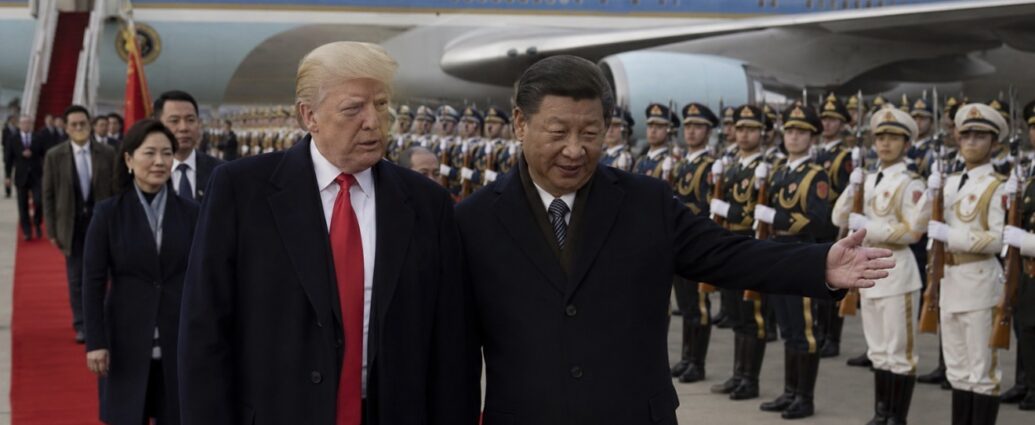
JPMorgan Chase & Co. Chief Executive Jamie Dimon warned Tuesday that the economic risks surrounding the Iran conflict are intensifying even as investors continue pouring money into risk assets, cautioning that Wall Street may be underestimating the combined threat posed by inflation, geopolitical instability, and energy disruption.

Speaking on Bloomberg Television shortly after the release of a hotter-than-expected April inflation report, Dimon said the Middle East crisis “gets a little more serious every day,” while also warning that there is “a little too much exuberance” in financial markets despite mounting macroeconomic risks.

The remarks came just hours after the Bureau of Labor Statistics reported that the Consumer Price Index rose 3.8% year-over-year in April — the highest inflation reading since May 2023 — reigniting fears that the Federal Reserve may be forced to hold interest rates elevated far longer than investors had expected.
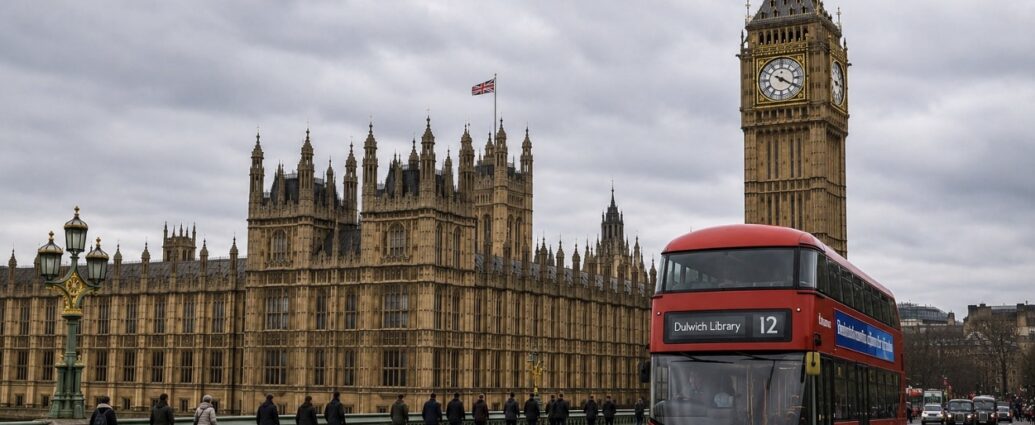
Dimon suggested markets may be making a dangerous assumption that the geopolitical crisis will resolve quickly.

“There is a little too much exuberance,” Dimon said, warning that investors appear to be overlooking persistent inflation pressures and broader geopolitical threats while continuing to push equities toward record territory.

The comments landed against a backdrop of escalating global uncertainty.

Despite an April ceasefire effort brokered through Pakistan, tensions involving Iran remain unresolved, with the Strait of Hormuz still operating under severe restrictions following the ongoing U.S. naval blockade and broader regional instability. Oil prices climbed sharply again Tuesday morning, with WTI crude trading above $102 a barrel and Brent crude surpassing $103.

Dimon said the economic consequences of the conflict have so far been partially offset by major shifts in global oil flows.

According to the JPMorgan chief, China has reduced crude demand by roughly 5 million barrels per day, while the United States has simultaneously increased exports by approximately 3 million barrels daily, easing some immediate supply pressure despite the ongoing disruptions in the Gulf region.

Still, Dimon warned the broader inflationary backdrop remains deeply concerning.

He pointed to what he described as inflationary fiscal stimulus from Washington, including hundreds of billions of dollars in additional federal spending under the One Big Beautiful Bill Act, alongside surging gasoline and transportation costs flowing through the economy.

The combination, he suggested, could keep inflation structurally elevated even if oil prices eventually stabilize.

His comments closely align with the increasingly hawkish shift emerging across Wall Street.

Earlier this week, Bank of America pushed its forecast for the Federal Reserve’s next rate cut to July 2027, while traders in futures and prediction markets have begun assigning growing probabilities to the possibility of future rate hikes rather than cuts.

Dimon’s warning also highlighted the widening divide developing inside the U.S. economy.

He described the financial position of higher-income households as relatively strong, noting that wealthier Americans continue benefiting from rising home prices, strong employment, and healthy investment portfolios.

At the same time, he acknowledged that lower-income households are increasingly strained by rising living costs.

“The top 50% have money, jobs, and rising home prices,” Dimon said, while adding that the bottom portion of the economy remains under growing financial pressure even though employment conditions have so far remained stable.

The latest inflation data showed energy and food prices continuing to disproportionately impact lower-income consumers, widening affordability pressures across key household categories.

Dimon also addressed artificial intelligence, describing AI as a transformative force likely to reshape nearly every sector of the global economy.

He compared the technology’s long-term significance to electricity, the internet, and the industrial revolution itself.

But he warned that AI is simultaneously intensifying cybersecurity risks across the financial system.

“Cyber is our biggest risk,” Dimon said, cautioning that AI-driven attacks could dramatically increase threats facing banks, corporations, and critical infrastructure.

The warning carries particular weight given JPMorgan’s position at the center of the global financial system.

As the largest U.S. bank by assets, the firm has direct exposure to corporate lending, consumer credit, capital markets activity, and energy-sector financing — all areas now heavily influenced by inflation and geopolitical instability.

Markets reacted quickly to the broader risk concerns.

The S&P 500 fell 0.60% Tuesday morning to 7,368.53, while the Nasdaq Composite dropped nearly 1%. The Cboe Volatility Index (VIX) rose to 18.72, and the 10-year Treasury yield climbed to 4.43% as investors reassessed the likelihood of prolonged higher interest rates.

The debate now unfolding across Wall Street has become increasingly stark.

On one side, firms including JPMorgan Private Bank continue arguing that the AI-driven investment boom and resilient consumer demand could power markets higher for years.

On the other, Dimon himself is warning that inflation, geopolitics, and energy disruption may be creating a far more fragile environment beneath the surface.

Which outlook ultimately proves correct may determine not only the path of markets in 2026 — but the next direction of Federal Reserve policy itself.

JBizNews Desk
© JBizNews.com. All rights reserved.
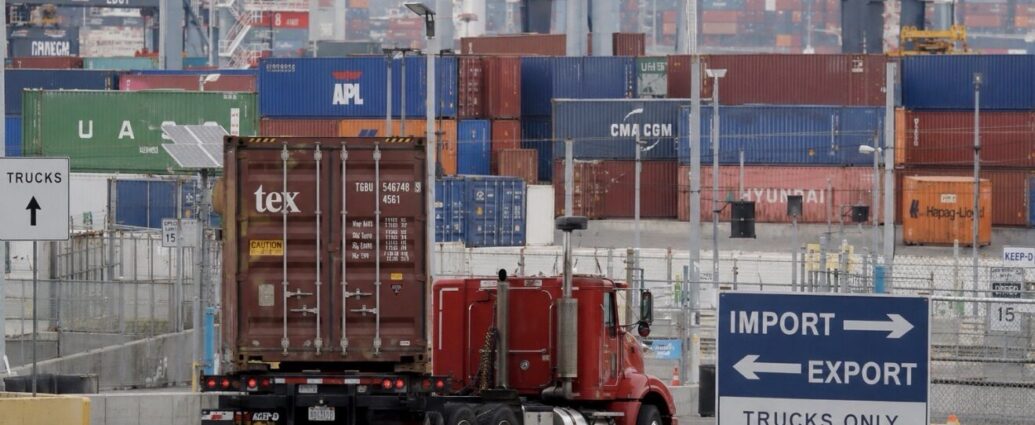
One week after an Iranian missile struck the container ship CMA CGM San Antonio near the Strait of Hormuz, the disruption has evolved from a maritime security crisis into a growing economic shock now directly feeding into U.S. inflation, Federal Reserve policy expectations, and global supply-chain costs.

The economic consequences became unmistakable Tuesday morning when the Bureau of Labor Statistics reported that April inflation accelerated to 3.8% year-over-year, the highest annual Consumer Price Index reading since May 2023.

Economists increasingly say the prolonged disruption surrounding the Strait of Hormuz — one of the world’s most critical shipping and energy corridors — is now moving far beyond oil markets and embedding itself across transportation, freight, manufacturing, and consumer pricing throughout the global economy.

The crisis traces back to the May 5 missile strike on the CMA CGM San Antonio, a Maltese-flagged container ship operated by the world’s third-largest shipping company.

The vessel, bound for India, was struck while attempting to transit the strait without participating in “Project Freedom,” a temporary U.S.-backed maritime coordination program introduced by President Donald Trump one day earlier.

Eight crew members were injured in the attack, and the vessel sustained significant damage.

CMA CGM Chief Executive Rodolphe Saadé later expressed “full support” for the company’s seafarers as international shipping companies rapidly reassessed operations in the Gulf region.

Within 48 hours, Trump suspended Project Freedom altogether.

What has happened since has become increasingly alarming for global markets.

According to maritime tracking data cited by logistics firms and shipping analysts, approximately 1,550 commercial vessels and more than 22,500 mariners remain stranded or heavily delayed near the Strait of Hormuz, with regional throughput operating at only a fraction of normal capacity.

Major shipping companies are now rerouting vessels around Africa, dramatically increasing fuel consumption, delivery times, and operating costs.

A.P. Moller-Maersk, the world’s second-largest container shipping company, told investors the crisis is adding approximately $500 million per month in additional fuel costs alone as vessels avoid the Gulf region.

Shipping executives warn the disruptions may continue for months even if a ceasefire eventually materializes.

“Normalization will likely take four to six months after any ceasefire,” Tobias Maier, CEO of DHL Global Forwarding Middle East and Africa, told customers last week.

The attacks themselves have also escalated.
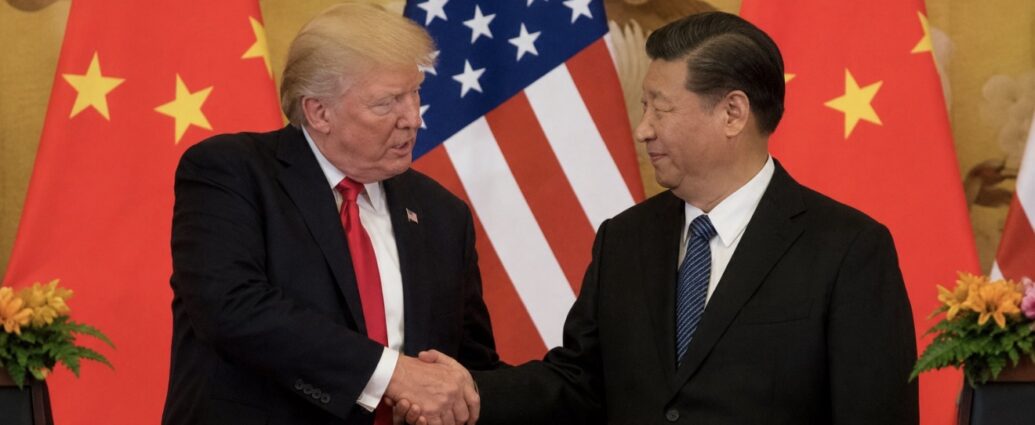
Beyond the strike on the San Antonio, the past week saw:

  • a drone attack targeting an ADNOC-affiliated tanker,
  • attacks on commercial bulk carriers by Iranian fast boats,
  • and an explosion aboard the cargo ship HMM Namu near the UAE coast.
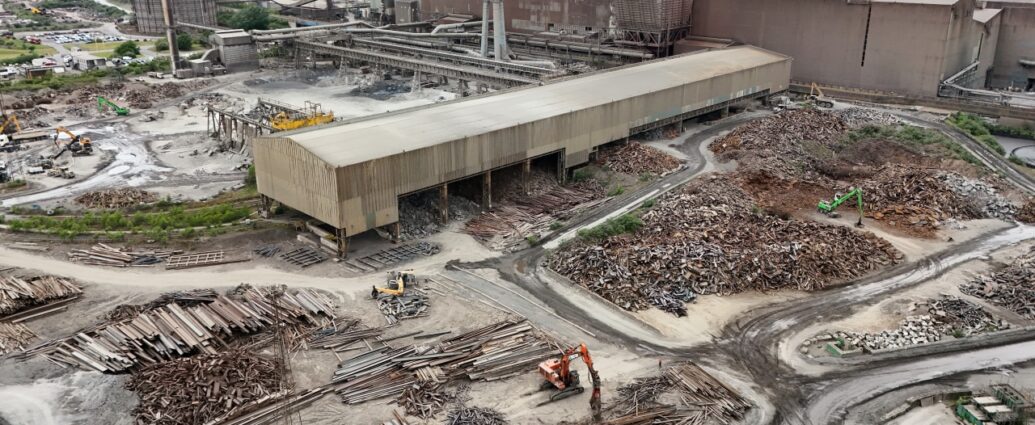
Meanwhile, the United Kingdom Maritime Trade Operations Centre has logged dozens of separate security incidents involving vessels operating in and around the Arabian Gulf since the conflict intensified.

The economic effects are now showing up across Wall Street forecasts.

Chris Zaccarelli, Chief Investment Officer at Northlight Asset Management, said Tuesday’s CPI report confirms the inflationary pressure from the conflict is no longer limited to energy alone.

“It’s impacting both the headline number as expected, but also the core,” Zaccarelli said, referring to inflation categories beyond food and gasoline.

The inflation shock has already forced major banks to dramatically revise Federal Reserve forecasts.

Earlier this week, Bank of America pushed its expectation for the next Fed rate cut all the way to July 2027, citing persistent inflation and resilient labor-market conditions.

Meanwhile, Goldman Sachs lowered its U.S. recession probability to 25% while simultaneously delaying its projected timeline for Fed easing.

Oil markets continue reflecting the severity of the disruption.

On Tuesday morning:

  • WTI crude traded above $102 per barrel,
  • Brent crude climbed above $103,
  • and Treasury yields rose as traders reduced expectations for near-term interest-rate cuts.

Even some of Wall Street’s most optimistic voices are beginning to sound more cautious.

JPMorgan Chase Chief Executive Jamie Dimon warned Tuesday that the Iran conflict “gets a little more serious every day,” adding that markets may be showing “too much exuberance” given the inflation and geopolitical risks now building simultaneously.

The crisis is also increasingly becoming a central geopolitical issue ahead of Trump’s trip to Beijing this week, where he is expected to meet with Chinese President Xi Jinping for high-stakes talks involving trade, technology restrictions, and the broader Middle East conflict.

China remains one of Iran’s most important economic partners and oil buyers, raising questions over whether Beijing could play a larger diplomatic role in stabilizing maritime routes and global energy flows.

For investors and policymakers, the significance of the CMA CGM San Antonio strike has now moved far beyond a single shipping attack.

It has become a symbol of how quickly geopolitical conflict can spread through global trade systems and ultimately land in American inflation reports, Federal Reserve forecasts, fuel prices, and consumer wallets.

The question facing markets now is whether the shipping crisis has reached its peak — or whether the economic damage is only beginning to fully emerge.

JBizNews Desk
© JBizNews.com. All rights reserved.

The race to bring near-24-hour trading to the U.S. stock market is accelerating across Wall Street, but the biggest obstacle is no longer regulatory approval — it is the aging infrastructure underneath the American financial system itself.

Major exchanges including Nasdaq, NYSE Arca, and startup venue 24X National Exchange have now secured key approvals from the U.S. Securities and Exchange Commission to operate extended overnight trading sessions, marking one of the most significant structural changes to U.S. equity markets in decades. Yet despite the approvals, the market’s core data and clearing systems remain unable to fully support round-the-clock trading, creating a bottleneck that is forcing billions of dollars of overnight activity into lightly regulated alternative venues.

The tension is quickly becoming one of the defining market-structure battles facing SEC Chairman Paul Atkins, whose deregulatory agenda has prioritized modernization efforts across U.S. capital markets.

“The global demand for U.S. equities does not stop when the traditional trading day ends, and neither should the protections of a regulated national securities exchange,” Dmitri Galinov, founder and chief executive of 24X National Exchange, wrote in an April 29 letter to the SEC requesting temporary relief allowing the exchange to begin full overnight operations before industry systems are fully upgraded.

The request highlights the core problem confronting the industry: exchanges may be ready for overnight trading, but the underlying “plumbing” of the National Market System is not.

At the center of the delay are the market’s Securities Information Processors (SIPs) — the systems responsible for consolidating and distributing real-time stock quotes and transaction data across U.S. exchanges. Those systems currently do not operate on a 23-hour schedule, preventing exchanges from fully launching overnight sessions even after winning regulatory approval.

Industry operators now estimate the upgrades will not be completed until late 2026.

The SEC has already approved 23-hour weekday trading sessions for three venues:

  • 24X National Exchange
  • NYSE Arca
  • Nasdaq

Nasdaq’s proposal received accelerated SEC approval on April 10 after initially being filed in December 2025. Additional filings from Cboe Global Markets and MEMX are widely expected next, according to the Securities Industry and Financial Markets Association (SIFMA).

The momentum reflects a rapidly changing investor landscape driven by global retail trading, international demand for U.S. equities, and the growing expectation that financial markets should function continuously in an increasingly digital economy.

But while exchanges await infrastructure upgrades, overnight trading activity has already exploded elsewhere.

The dominant venue today is Blue Ocean ATS, an alternative trading system handling overnight orders for firms including Robinhood Markets and Charles Schwab. According to company figures, Blue Ocean processed approximately $374.7 billion in notional overnight trading volume across 307 sessions in 2025 — averaging roughly $1.22 billion per night.

Industry forecasts suggest overnight trading could eventually represent between 5% and 10% of total U.S. equity activity.

Still, the market remains relatively small compared with traditional daytime trading and carries significant risks.

Blue Ocean suffered a major outage in August 2024 that reportedly canceled approximately 464 million orders affecting roughly 90,000 accounts, triggering backlash from South Korean brokerages and exposing concerns about the resilience of overnight market infrastructure. Competitors including Bruce ATS and Moon ATS later entered the space.

Independent data from BMLL Data Lab show overnight trading still accounts for only about 11 basis points of total U.S. equity notional volume once all trading sessions are included — evidence of rapid growth, but still a tiny share of the broader market.

Institutional investors remain cautious.

Kenji Takeda, head of equity trading at Nomura Asset Management in Tokyo, warned that liquidity remains too thin for large-scale institutional participation.

The concern is straightforward: expanding trading hours without sufficient participation risks wider bid-ask spreads, weaker price discovery, and heightened volatility during periods with reduced staffing among market-makers, compliance teams, and risk managers.

Current overnight trading remains heavily retail-driven. Blue Ocean estimates roughly 90% of overnight volume comes from retail investors, supported by a small group of approximately ten market-makers providing liquidity.

For Chairman Atkins, the debate now centers on whether the SEC should temporarily allow exchanges like 24X to operate overnight before the SIP systems are fully upgraded.

Supporters argue that regulated exchanges provide greater transparency and investor protections than alternative trading systems already dominating the overnight market.

Critics warn that allowing exchanges to bypass the consolidated public data framework — even temporarily — risks undermining the very foundation of the National Market System established by Congress in 1975.

The decision could reshape the structure of U.S. markets for decades.

If approved, overnight exchange trading would represent one of the largest operational shifts on Wall Street since the transition to electronic markets. It would also further blur the distinction between U.S. trading hours and global markets, allowing investors in Asia, Europe, and the Middle East to participate in American equities nearly continuously.

The question now facing regulators is no longer whether overnight trading is coming.

It is whether the infrastructure powering the world’s largest capital markets can evolve fast enough to keep up.

JBizNews Desk
© JBizNews.com. All rights reserved.

By JBizNews Desk | Monday, May 4, 2026

The U.S. dollar strengthened against major global currencies Monday as investors sought safety amid mounting uncertainty over global economic growth, reinforcing the greenback’s position as the world’s primary reserve currency during periods of market stress.

The dollar index rose steadily, supported by a combination of resilient U.S. economic data and weaker outlooks across key international economies. The move reflects a broader shift in investor positioning, with capital flowing away from risk-sensitive assets and toward dollar-denominated holdings.

Currency markets are being shaped by diverging economic trajectories. While the U.S. economy continues to show relative strength, growth in parts of Europe and Asia has slowed, prompting concerns about global demand and trade flows. These dynamics have widened interest rate differentials, further supporting the dollar.

Win Thin, Global Head of Currency Strategy at Brown Brothers Harriman, said “the dollar is benefiting from both relative economic strength in the U.S. and ongoing uncertainty abroad, making it the preferred safe-haven asset in the current environment.”

A stronger dollar carries significant implications for global markets. For multinational corporations, it can weigh on earnings by reducing the value of overseas revenues when converted back into dollars. This currency headwind is particularly relevant for large U.S. firms with substantial international exposure.

Emerging markets face even greater challenges. Many developing economies carry significant levels of dollar-denominated debt, and a stronger dollar increases the cost of servicing that debt. This can strain public finances and limit economic growth, particularly in countries already facing fiscal pressures.

Commodity markets are also affected. Since most commodities are priced in dollars, a stronger currency can make them more expensive for buyers using other currencies, potentially dampening demand. This dynamic can influence prices for oil, metals, and agricultural products.

At the same time, the dollar’s strength is reinforcing global financial conditions. Tighter conditions can slow capital flows into riskier markets and increase volatility, particularly in emerging economies.

Kristalina Georgieva, Managing Director of the International Monetary Fund, has previously warned that “currency strength in advanced economies can create spillover effects that amplify vulnerabilities in emerging markets.”

Despite these challenges, the dollar’s strength is underpinned by structural factors, including the depth of U.S. financial markets and the currency’s central role in global trade and finance. During periods of uncertainty, these attributes make the dollar a natural destination for capital.

Looking ahead, the trajectory of the dollar will depend on both domestic and global developments. If U.S. economic data remains strong and the Federal Reserve maintains a cautious stance on rate cuts, the dollar could continue to appreciate.

However, any signs of weakening in the U.S. economy or a shift in Fed policy could alter that trajectory, leading to increased volatility in currency markets.

What comes next: Investors will be watching global economic data and central bank signals closely, as shifts in growth expectations and policy divergence will continue to drive currency movements in the months ahead.

JBizNews Desk

Abu Dhabi Is Seeking a Dollar Lifeline That Only Five Countries in the World Currently Have

By JBizNews Desk | Abu Dhabi — May 6, 2026

The United Arab Emirates confirmed Monday it is in active discussions with the United States about establishing a currency swap line with the Federal Reserve — a financial arrangement so exclusive that only five countries in the world currently hold one, and one that signals a profound shift in the region’s economic and geopolitical alignment.

UAE Minister of Foreign Trade Thani Al Zeyoudi disclosed the talks at the “Make It In The Emirates” conference, framing the effort as a mark of strategic partnership rather than financial need. “They are only having it with five countries,” he said. “Being part of that group means that transactions, trade, investments between both nations reach a level where that swap is highly needed… it is not about bailing out.”

That distinction — prestige versus necessity — is central to how the UAE is presenting the move. But the timing reveals a deeper story.

What a Currency Swap Line Actually Is

A Federal Reserve swap line allows a foreign central bank to exchange its local currency for U.S. dollars directly, bypassing global currency markets. In times of financial stress, it provides immediate access to dollar liquidity — effectively functioning as an emergency backstop.

The Fed currently maintains permanent swap lines with only five institutions: the European Central Bank, Bank of Japan, Bank of England, Bank of Canada, and Swiss National Bank. All are long-standing Western allies with deeply integrated financial systems.

If approved, the UAE would become the first Gulf nation — and one of the few non-Western countries — to join that circle.

Why the UAE Is Asking Now

The request comes at a moment of escalating regional instability.

The UAE confirmed it intercepted Iranian missiles on Monday — the first activation of its defense systems since the April ceasefire between the United States and Iran. At the same time, disruptions in the Strait of Hormuz have pushed oil markets higher and raised concerns about supply stability.

For the UAE, the financial implications are immediate. Reduced oil flow threatens dollar inflows, increases the risk of capital outflows, and places pressure on the dirham’s long-standing peg to the U.S. dollar — a cornerstone of the country’s economic system.

Al Zeyoudi’s comments mark the first official confirmation that Abu Dhabi is seeking direct access to U.S. dollar liquidity in response to these pressures.

The move comes just days after another major shift: the UAE formally exited OPEC and the broader OPEC+ alliance on May 1, ending nearly six decades of membership. The decision frees the country from production limits but also signals a strategic pivot away from traditional oil alliances toward closer alignment with the United States.

Dollar Diplomacy in Action

Taken together — the OPEC exit, the swap line request, and the UAE’s active role in regional defense — the message is clear: Abu Dhabi is moving decisively into Washington’s financial and security orbit.

A Federal Reserve swap line is more than a technical arrangement. It represents trust — in a country’s financial system, central bank credibility, and political alignment. It effectively guarantees access to U.S. dollars on demand, the most critical currency in global trade and energy markets.

For the UAE, whose economy depends heavily on dollar-denominated oil exports, that access would provide the strongest possible financial safeguard short of a formal alliance.

For the United States, the implications extend beyond finance. A stable UAE with assured dollar liquidity is a more reliable partner in a region where energy flows remain under threat. Roughly 20% of global oil supply passes through the Strait of Hormuz, and continued disruptions have already contributed to rising fuel costs worldwide.

Whether the Federal Reserve ultimately agrees to extend such a privilege remains uncertain. The decision would be unprecedented and carry significant geopolitical weight.

But the fact that discussions are underway — and publicly acknowledged at a moment of active military tension — signals a shift happening in real time.

The Middle East’s financial map is being redrawn, and the dollar is once again at the center of it.

JBizNews Desk
© JBizNews.com. All rights reserved.