
Russia Oil Waiver Expires as Hormuz Crisis Tightens Global Supply and Deepens Energy Market Fears
The Trump administration allowed its temporary sanctions waiver on Russian seaborne oil to expire at 12:01 a.m. Eastern time Saturday, restoring a tougher sanctions posture against Moscow at one of the most fragile moments for global energy markets in years.
The expiration was confirmed after the U.S. Treasury Department’s Office of Foreign Assets Control (OFAC) failed to publish a renewal notice for General License 134B, the authorization issued on April 17 that temporarily permitted transactions involving Russian crude already loaded onto tankers. Treasury Secretary Scott Bessent had signaled in recent days that the administration did not intend to extend the waiver.
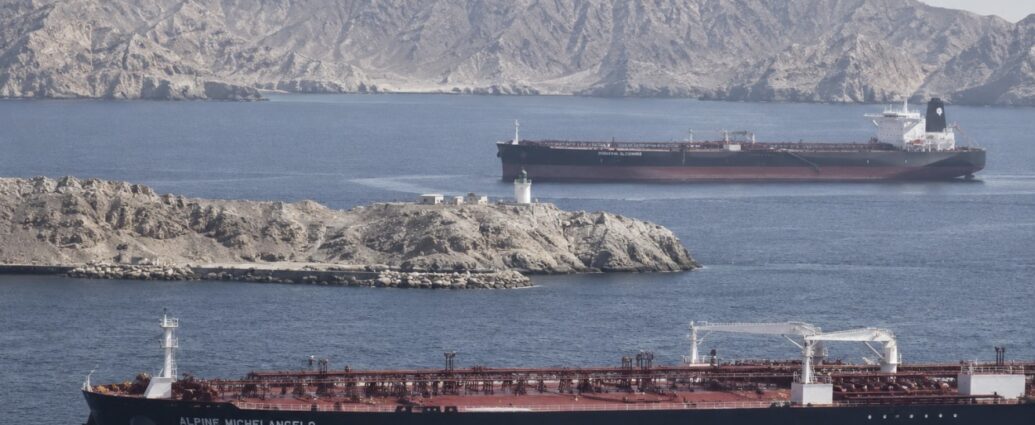
The move lands as the global oil market is already under severe strain from the ongoing U.S.-Iran conflict and the effective closure of the Strait of Hormuz, one of the world’s most critical energy chokepoints.
Brent crude settled near $108 a barrel Friday, while West Texas Intermediate traded above $103, with both benchmarks posting weekly gains estimated between 8% and 10%. Traders increasingly warn that the market is no longer pricing temporary volatility but rather a sustained period of constrained global supply.
The International Energy Agency (IEA) said crude and refined fuel flows through Hormuz fell by roughly 4 million barrels per day during March and April and warned this week that the market could remain materially undersupplied through at least October even if the Iran conflict eases next month.
The waiver itself had a short and politically contentious life. The Trump administration initially eased restrictions in March, allowed them to lapse on April 11, then abruptly reversed course on April 17 after Bessent said more than 10 energy-vulnerable countries requested relief from soaring crude prices.
India, currently the world’s largest buyer of Russian seaborne crude, reportedly pushed hardest for the extension as its imports from Russia climbed near record levels during April and May. Indonesia also lobbied Washington to preserve access to Russian oil supplies amid mounting energy costs.
European allies strongly opposed both rounds of sanctions relief, arguing that easing pressure on Russian energy exports undermines Western efforts to restrict Moscow’s wartime revenues tied to the conflict in Ukraine.
For financial markets and commodity traders, the expiration immediately tightens legal and operational risks surrounding Russian oil transactions.
Banks, insurers, commodity trading houses, and shipping firms had temporarily relied on the OFAC waiver to process certain transactions involving previously loaded cargoes. With the waiver gone, compliance departments across the global energy sector are now reverting to stricter pre-waiver sanctions protocols involving vessel ownership verification, payment routing scrutiny, ship-to-ship transfer monitoring, and counterparty risk reviews.
The broader G7-European Union-Australia price cap system technically remains in place, still allowing certain maritime services involving Russian oil traded below specified price thresholds. But the added flexibility created by General License 134B has now disappeared.
The timing comes as some of the world’s largest energy companies warn that the supply picture is becoming increasingly dangerous.
Saudi Aramco CEO Amin Nasser told reporters this week that the oil market may not fully normalize until 2027 if the Strait of Hormuz remains closed beyond mid-June. Chevron CEO Mike Wirth, speaking earlier this month at the Milken Institute Global Conference, warned that fuel shortages were becoming a realistic concern in some regions, telling CNBC that “it’s not just a question of price.”
Investment banks are also growing more concerned about inventory depletion. Goldman Sachs warned in a research note Monday that while global crude inventories are not yet critically low, supplies of refined products — including jet fuel, naphtha, and liquefied petroleum gas — are tightening rapidly.
The political implications for the White House are becoming increasingly delicate.
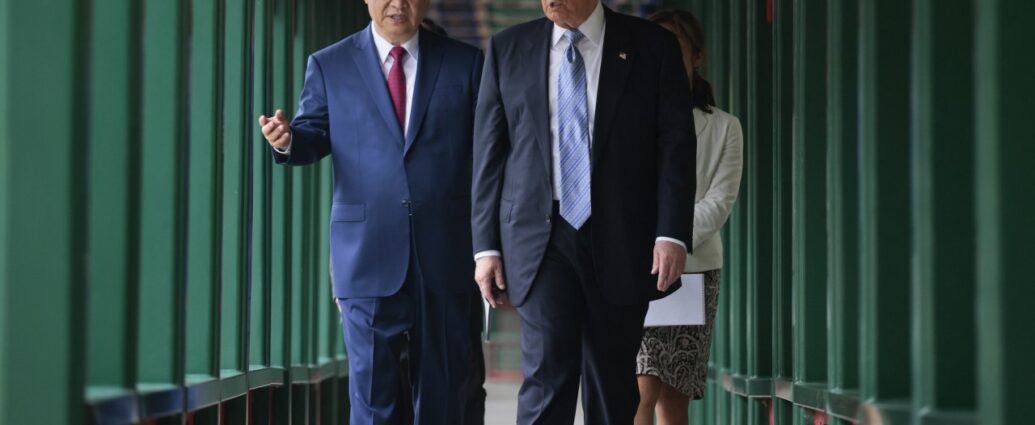
President Donald Trump returned this week from meetings in Beijing with Chinese President Xi Jinping facing mounting domestic concern over energy-driven inflation. According to U.S. Energy Information Administration data, crude oil costs remain the largest component of retail gasoline pricing, meaning sustained increases in Brent and WTI prices quickly feed into higher gasoline, diesel, shipping, airline, and freight costs across the economy.
Federal Reserve officials have repeatedly warned that prolonged energy inflation can reshape consumer expectations and complicate monetary policy decisions. Analysts increasingly believe another sustained oil rally could delay interest-rate cuts or even reopen discussions around additional tightening if inflation pressures broaden further.
The deeper question now facing global markets is whether the international sanctions system can maintain pressure on Russian exports without triggering a broader energy supply shock.
Despite years of Western restrictions, Russia remains a critical supplier to global oil balances. Buyers continue navigating discounted cargoes, intermediary payment systems, opaque shipping routes, and so-called “shadow fleet” tanker operations to keep Russian crude flowing into global markets.
Allowing the waiver to expire signals that the Trump administration is prioritizing sanctions discipline over short-term energy relief. But traders say the real test will be whether enforcement intensifies against intermediary banks, covert shipping networks, and ship-to-ship transfer systems that continue facilitating Russian exports outside traditional Western oversight.
For now, markets remain trapped between three destabilizing realities: a closed Strait of Hormuz, tighter restrictions on Russian oil flows, and shrinking global inventory buffers.
Many traders increasingly describe current oil prices not as a temporary spike, but as a new floor for global energy markets unless geopolitical conditions improve significantly in the months ahead.
JBizNews Desk
© JBizNews.com. All rights reserved. This article is original reporting by JBizNews Desk. Unauthorized reproduction or redistribution is strictly prohibited.






Global Bond Selloff Worsens as Rising Oil Prices Spook Investors
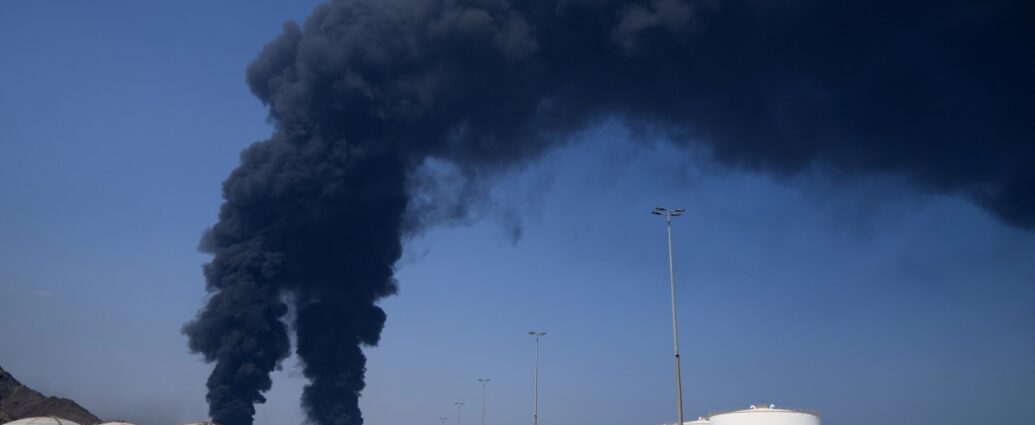
A global rout in government bonds intensified Friday as Brent crude climbed past $106 a barrel and back-to-back inflation reports from the Bureau of Labor Statistics raised the specter that the war-driven energy shock will force the Federal Reserve and other major central banks to abandon any near-term rate cuts and pivot to tightening.
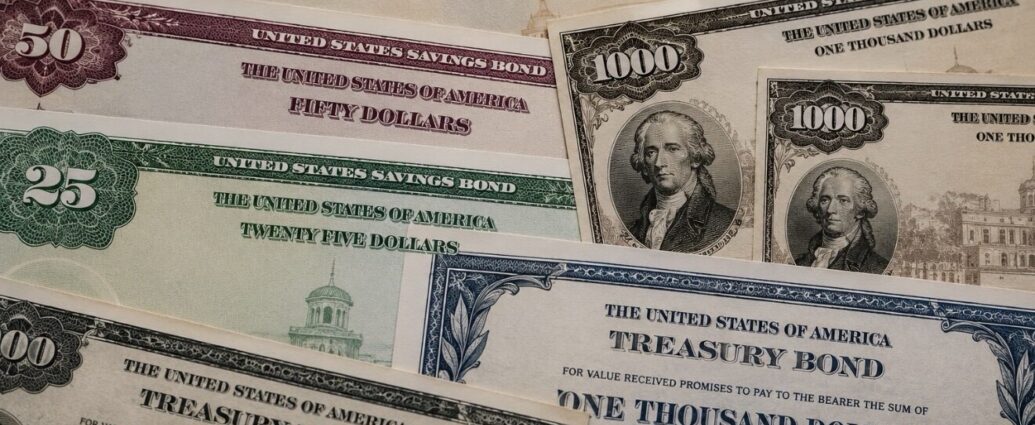
The yield on the 10-year U.S. Treasury note rose nearly 10 basis points to about 4.58%, its highest level in a year, while the 30-year bond pushed above 5% — a threshold that Ian Lyngen, head of U.S. rates strategy at BMO Capital Markets, called “particularly concerning” given its implications for mortgage rates, corporate borrowing costs and equity valuations.
The selloff was global in scope and unusually broad in maturity.
U.S. 2-year yields climbed to 4.06%, a level not seen since March 2025, capping the largest weekly jump in long-end Treasuries since President Donald Trump’s tariff salvo first jolted markets in April 2025.
In Tokyo, the 30-year Japanese Government Bond yield hit 4% for the first time since the security was introduced in 1999, while the 20-year JGB rate reached its highest since 1996 and the 40-year touched a record going back to its 2007 debut.
U.K. 10-year gilt yields jumped as high as 5.17%, the most since 2008, with 30-year gilts at a 28-year peak.
Yields in Germany, Spain, Australia and New Zealand all moved in lockstep.
The trigger is the same energy shock that produced the worst inflation readings in three years.
The Bureau of Labor Statistics reported Tuesday that the Consumer Price Index rose 0.6% in April and 3.8% from a year earlier — the highest annual pace since May 2023 — driven by a 28.4% surge in gasoline prices and a 17.9% jump in the broader energy index.
One day later, the Producer Price Index showed wholesale prices rose 1.4% on the month and 6% over twelve months, the largest annual gain since December 2022.
Core PPI rose 1% in April, more than double the consensus forecast.
Fed Governor Michael Barr told an audience Thursday that inflation is now the overwhelming risk facing the economy, a marked shift in tone from a central bank that had signaled patience for most of the spring.
Markets responded accordingly.
According to data compiled by Bloomberg, traders are now pricing in nearly a two-thirds probability that the Fed will raise interest rates in December — an outcome that would mark the central bank’s first hike under incoming Chair Kevin Warsh, whom President Trump tapped to succeed Jerome Powell and whom the U.S. Senate confirmed on Wednesday.
The current federal funds target range stands at 3.50% to 3.75%.
John Briggs, head of U.S. rates strategy at Natixis North America, said in a client note that 10-year Treasury yields may continue to push higher as the global inflation impulse from the energy shock works through producer and consumer pipelines.
“Bond yields definitely feel like they are getting unhinged,” Subadra Rajappa, head of U.S. rates research at Société Générale Americas, told Bloomberg Television.
Stephen Spratt, a rates strategist at Société Générale in Hong Kong, said the move suggests investors are aggressively unwinding carry positions and short-yield bets that had been built up in expectation of a more dovish Fed.
The Japanese leg of the rout carries unusual significance.
Rinto Maruyama, senior FX and rates strategist at SMBC Nikko Securities, said the 30-year JGB at 4% is a historic break for an economy that has battled deflation for most of three decades.
Wage gains, sticky producer prices and a fresh supplementary budget being weighed by the government in Tokyo are all feeding bets that the Bank of Japan will continue to tighten.
In London, the bond selloff was compounded by a political crisis threatening Prime Minister Sir Keir Starmer.
Manchester Mayor Andy Burnham signaled he will seek a return to Parliament, raising the prospect of a Labour leadership challenge that could unwind Starmer’s effort to restrain government spending.
Gilts sold off sharply on the news.
Equities absorbed the bond move with notable weakness.
The Dow Jones Industrial Average fell 494.48 points, or 0.99%, to 49,568.98.
The S&P 500 dropped 76.15 points, or 1.02%, to 7,425.09.
The Nasdaq Composite slid 339.74 points, or 1.28%, to 26,295.48, dragged lower by losses in Intel, AMD, Micron Technology and Nvidia.
Microsoft bucked the trend after Bill Ackman’s Pershing Square Capital Management disclosed a new position in the stock.
Prashant Newnaha, senior Asia-Pacific rates strategist at TD Securities in Singapore, summed up the mood: “The move higher in global bond yields is a little unsettling.”
With the Strait of Hormuz still effectively closed, the Trump-Xi summit having ended without a breakthrough, and U.S. inflation data running hot, investors are bracing for a long summer of repricing.
— JBizNews Desk
© JBizNews.com. All rights reserved. This article is original reporting by JBizNews Desk. Unauthorized reproduction or redistribution is strictly prohibited.



Opinion | So Why Go to the Moon Again?

Cuba Runs Out of Diesel and Fuel Oil as Havana Protests Push Energy Crisis to Breaking Point
Cuba has completely exhausted its reserves of diesel and fuel oil, the country’s energy minister announced on state television Wednesday night, triggering overnight protests across Havana and pushing the island’s collapsing electrical grid into what officials described as a “critical” condition.
The blackout crisis — the worst Cuba has faced since the collapse of the Soviet Union more than three decades ago — now sits at the center of an escalating economic confrontation between the Trump administration and the communist government just 90 miles off the Florida coast.
“We have absolutely no fuel oil, and absolutely no diesel. We have no reserves,” Vicente de la O Levy, Cuba’s minister of energy and mines, said during remarks carried on state-run television.
According to the minister, the only fuel still feeding portions of the national grid is limited domestic natural gas production alongside small amounts of locally extracted crude oil and renewable energy generation — together covering only a fraction of national electricity demand.
In Havana, a city of more than two million residents, rolling blackouts have stretched between 20 and 22 hours per day in some neighborhoods. Power outages have spread even deeper into Cuba’s interior provinces, where infrastructure conditions are often worse.
The deteriorating conditions spilled into the streets overnight Wednesday into Thursday.
Residents in Havana neighborhoods including Lawton and Dolores blocked roads with burning trash, banged pots and pans from balconies and intersections, and chanted “turn on the lights,” according to videos circulating widely on social media and eyewitness reporting from Reuters journalists inside the capital.
The demonstrations mark the largest visible unrest in Havana since the historic July 2021 anti-government protests and present a direct challenge to the administration of Cuban President Miguel Díaz-Canel.
In a statement posted on X, Díaz-Canel described the situation as “particularly tense” and blamed what he called the “genocidal U.S. blockade” for worsening the island’s economic collapse.
The immediate cause of the crisis traces directly to tightening U.S. policy.
In late January, President Donald Trump signed an executive order declaring Cuba an “extraordinary threat” to the United States and warning that countries shipping fuel to the island could face tariffs and secondary sanctions.
Within weeks, Mexico and Venezuela — historically Cuba’s primary fuel suppliers — sharply reduced or halted shipments.
Cuba’s position worsened further after the collapse of Venezuelan support infrastructure earlier this year. Following the removal of Venezuelan President Nicolás Maduro in January, the long-standing Caracas-Havana energy pipeline that had sustained Cuba’s grid through years of economic decline effectively collapsed.
Since December, only one major tanker — the Russian-flagged Anatoly Kolodkin — has reportedly delivered crude oil to Cuba, offering only temporary relief.
The humanitarian and economic fallout is now accelerating rapidly.
Tourism, Cuba’s largest source of foreign currency, has deteriorated sharply as airlines cancel flights over fuel shortages and hotels struggle to maintain basic operations across Havana, Varadero, and Cayo Coco.
Hospitals have postponed surgeries due to electricity shortages and limited backup fuel. Food distribution systems have broken down in parts of the country. Garbage collection has reportedly stopped in several districts, while schools and public transportation networks face growing disruptions.
Reuters correspondents described long lines outside the few remaining operational gas stations alongside an expanding diesel black market where prices have surged beyond what many Cuban households can afford.
The Trump administration has framed the crisis as an opportunity for political change rather than immediate sanctions relief.
The U.S. State Department announced Wednesday it was renewing an offer of roughly $100 million in humanitarian aid but tied the package to what officials called “meaningful reforms to Cuba’s communist system.”
In a statement, Washington said Cuban authorities must now decide whether to “accept our offer of assistance or deny critical life-saving aid.”
The United Nations last week criticized the tightening U.S. energy embargo, arguing that it risks obstructing Cubans’ “rights to food, education, health, water and sanitation.”
The crisis is also creating ripple effects inside the United States.
Florida’s large Cuban-American community has reportedly accelerated remittance transfers to relatives on the island while humanitarian organizations and shipping groups have urged Washington to permit limited fuel deliveries tied specifically to hospitals, food logistics, and medical infrastructure.
Immigration officials are also monitoring concerns that worsening conditions could trigger a new migration wave toward South Florida at a time when U.S. border enforcement resources remain heavily strained.
Geopolitically, the situation signals a broader strategic shift.
The Trump administration has increasingly indicated that following the stabilization of Middle East tensions, Cuba and Venezuela may become primary focuses of a renewed Western Hemisphere pressure campaign.
Secretary of State Marco Rubio, a longtime advocate of tougher policies toward Havana and Caracas, said earlier this month that Cuba’s collapse stems from “decades of communist mismanagement” rather than sanctions alone — remarks Cuban officials dismissed as “lies.”
High-level discussions between U.S. and Cuban officials took place in Havana on April 10 but produced no public breakthrough.
Whether the latest protests represent the beginning of a larger political rupture remains uncertain.
Historically, Cuban authorities have responded to unrest through mass arrests, internet shutdowns, and the deployment of paramilitary “rapid response brigades.” Reports Thursday suggested internet access had already been throttled in several Havana neighborhoods overnight.
The next major test may arrive over the coming weekend, as temperatures climb into the 90s across much of the island while millions of Cubans remain trapped inside a collapsing electrical grid with little access to refrigeration, ventilation, or air conditioning.
JBizNews Desk
© JBizNews.com. All rights reserved. This article is original reporting by JBizNews Desk. Unauthorized reproduction or redistribution is strictly prohibited.
Why We’re the World’s Top Oil Producer and Still the Biggest Seller of Our Strategic Reserve
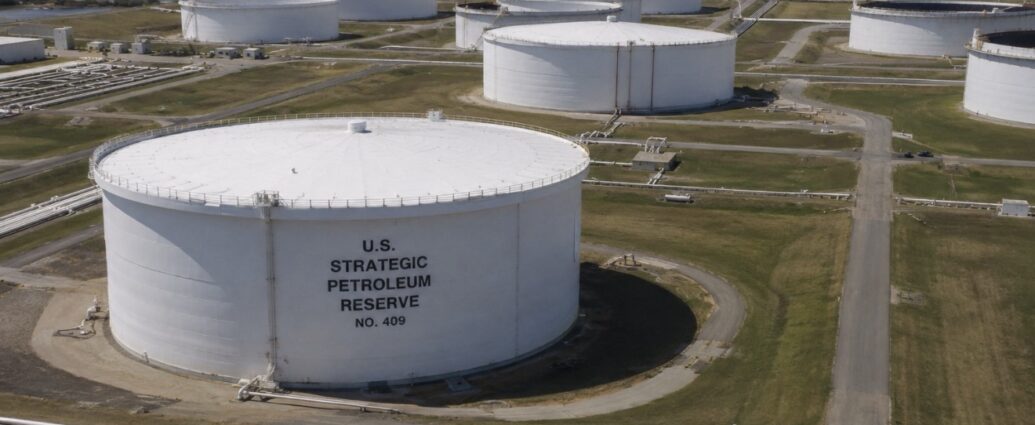
NEW YORK — May 15, 2026 — The numbers look like a double paradox. President Donald Trump has spent recent weeks reminding voters that the United States pumped a record 13.6 million barrels of crude oil per day in 2025 — more than Saudi Arabia and Russia combined — and the U.S. Energy Information Administration’s May 12 Short-Term Energy Outlook confirms domestic output will hold near 13.5 million barrels a day this year. Yet in the same window, the administration has authorized the largest emergency release in the Strategic Petroleum Reserve’s 50-year history, ordering 172 million barrels onto world markets as part of an International Energy Agency coordinated action — more than every other participating nation combined. So if the United States is the world’s biggest producer, why is the reserve draining at all, and why are we selling more of it than anyone else? The answers lie in the math underneath the “energy dominance” slogan, and they are harder than they look.
The first piece of math is the gap between production and consumption. The United States pumps roughly 13.5 million barrels per day. It consumes roughly 20.5 million barrels per day, according to EIA forecasts. That gap of about 7 million barrels a day is filled by imports — overwhelmingly of heavier and sourer crude grades from Canada, Mexico, Saudi Arabia, and historically Venezuela — and by drawdowns of commercial and government inventories during disruptions. The country has been the world’s largest producer for years and the world’s largest consumer for decades; production leadership and net energy independence are not the same thing.
The second piece is quality, and this is where the program really splits from the politics. The shale revolution that took American production from roughly 5 million barrels a day in 2008 to 13.6 million in 2025 has produced almost entirely light, sweet crude from the Permian Basin and other tight-oil formations. But the Gulf Coast refining system that processes the bulk of American petroleum was built decades ago to run on heavier, sourer feedstock. Galveston Bay and the Motiva Port Arthur complex, the two largest U.S. refineries — each capable of processing over 600,000 barrels per day — are designed around coker and conversion units that yield more diesel and jet fuel from medium-sour crude than from light-sweet shale. So the United States simultaneously exports millions of barrels of its own light crude and imports millions of barrels of heavier grades. When the Strait of Hormuz closes, it is the heavy side of that ledger that breaks first. The SPR, which holds both light and medium-sour grades and connects directly via pipeline to refining hubs in Houston, Texas City, Freeport, Port Arthur, Lake Charles, New Orleans, and Baton Rouge, is the only American supply that can deliver heavy and medium-sour barrels into those refineries within days.
The third piece is refining capacity. The United States today operates roughly 131 refineries with a combined throughput capacity near 18.4 million barrels per day, according to the EIA. That number has been shrinking. Seven major refinery closures and conversions since 2019 — including Philadelphia Energy Solutions at 335,000 barrels per day, LyondellBasell’s Houston refinery at roughly 264,000 barrels per day, Phillips 66’s Los Angeles refinery at about 139,000 barrels per day, and Valero Energy Corp.’s Benicia, California, plant at roughly 145,000 barrels per day — have permanently removed more than 1.2 million barrels per day of processing capacity. No new major U.S. refinery has been built in nearly half a century. Even with abundant domestic crude, the country’s refining throughput is now the binding constraint on how much gasoline, diesel, and jet fuel can actually be made and delivered to American pumps. Refiners are running at roughly 95% utilization. There is no more headroom to push.
The fourth piece is the global price. Oil is a globally traded commodity, and U.S. producers sell their barrels at the global price — not a discounted “American” price. When Brent crude jumps to $117 a barrel because of a war in the Middle East, West Texas Intermediate follows it almost minute for minute. American producers do not voluntarily discount to American drivers. WTI closed Thursday at $102. The national average retail gasoline price was $4.45 a gallon on May 4 according to GasBuddy data, with some regions above $6. That math holds regardless of who pumps the most crude, because the crude itself trades at world prices.
The fifth piece is timing. Even when high prices give American shale producers every incentive to drill more — and they are — bringing new wells online from leasing to first production typically takes six to nine months. The SPR can move oil to a refinery dock in days. When the Strait of Hormuz closed on February 28, the administration did not have the option of waiting two quarters for new Permian wells to ramp; global inventories were already drawing down at roughly 4.8 million barrels a day, according to Morgan Stanley.
That answers why we drain. The harder question is why we drain more than anyone else — and the answer has four parts. First, the United States is not technically selling the barrels. The 172-million-barrel release is structured as an exchange: recipients must return every borrowed barrel plus an 18% to 22% premium between September 2026 and September 2028. If the program executes as designed, the SPR ends up larger by roughly 15 million barrels at no cost to taxpayers. The 2022 Biden-era release was a straight sale; the 2026 Trump-era release, on paper, is a loan. Second, the United States is the biggest contributor because we have the biggest reserve and the biggest consumption. The U.S. SPR held about 415 million barrels going into the release — by far the largest single national stockpile. Japan, holding the third-largest at 263 million, contributed 80 million. Germany contributed 19.5 million. The United Kingdom contributed 3.5 million. America’s 172-million-barrel contribution roughly matches our share of global oil consumption and our share of IEA-coordinated stocks.
Third — and this is the structural reason most often missed — the United States is the only country whose emergency reserves physically reach the global market. European, Japanese, and South Korean reserves are largely refiner-held commercial stocks those countries legally require their refiners to maintain. When those nations “release,” local refiners just run down inventories at home. Almost no barrels physically move. The U.S. SPR is structurally different: government-owned crude sitting in salt caverns along the Texas and Louisiana Gulf Coast, connected by pipeline to deep-water export terminals. When America releases, the oil actually ships — which is why nearly half of the current release has flowed to Rotterdam, Asia, and Latin America. Fourth, IEA coordination is the political deal. When the United States wants global market stabilization — and we do, because global prices set our prices — we have to participate proportionally. If America held back, the coordinated release collapses and prices spike harder for everyone, including American drivers.
The unresolved question is whether the exchange structure actually holds. Several Biden-era 2022 loans were quietly restructured or delayed when oil prices fell below the return strike. If Brent drops sharply by 2028, recipient traders such as Trafigura Group, Vitol Group, Shell Plc, and BP Plc will return cheap barrels gladly. If prices stay elevated, the math gets ugly and Washington negotiates. The “no cost to taxpayer” claim is forward-looking; the verdict comes in three years. Production leadership is a real and significant achievement, and the SPR exchange is a legitimately innovative use of government inventory. But neither one shields American consumers from a global price shock, a heavy-crude shortfall at Gulf Coast refineries, or the simple fact that being the biggest stockholder in a shared global insurance pool means being the biggest payer when the claim comes due.
— JBizNews Desk
© JBizNews.com. All rights reserved. This article is original reporting by JBizNews Desk. Unauthorized reproduction or redistribution is strictly prohibited.


China’s Two Billion Feet Are Walking Away From Nike — Straight to Anta and Li-Ning
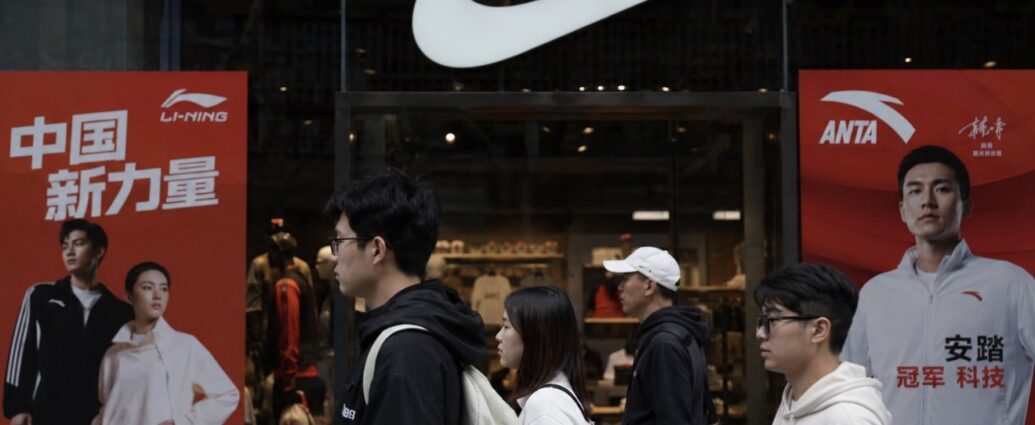
Nike Inc. is confronting the deepest crisis its China business has faced in decades, as Chinese consumers increasingly abandon the American sportswear giant in favor of fast-growing domestic competitors including Anta Sports and Li-Ning, forcing Nike into a sweeping strategic overhaul in what was once its most important international growth market.
According to Nike earnings filings and reporting reviewed by The Wall Street Journal, revenue in Greater China now sits roughly 28% below comparable levels from five years ago, while the company has recorded six consecutive quarters of year-over-year sales declines in the region.
The deterioration has transformed China from one of Nike’s most valuable growth engines into the weakest-performing major region in the company’s global portfolio.
In Nike’s latest reported quarter, Greater China revenue fell 17%, with footwear sales down 21%, extending a prolonged decline that has weighed heavily on consolidated results and contributed to significant stock weakness over the past year.
The region still accounts for roughly 15% of Nike’s total global revenue, making the slowdown impossible for investors and management to ignore.
Chief Executive Elliott Hill, who returned to Nike in October 2024 after previously spending more than three decades at the company, acknowledged during a recent earnings call that China represents “the longest road” in Nike’s broader turnaround effort.
“This market requires a complete reset,” Hill told investors.
From Phil Knight’s ‘Two Billion Feet’ Vision to Crisis
Nike’s China ambitions date back decades.
Co-founder Phil Knight famously described China as “one billion people, two billion feet,” a phrase that became central to Nike’s long-term international expansion strategy and helped turn China into one of the company’s most profitable regions by the early 2010s.
For years, Nike’s China playbook became a model studied by consumer brands across corporate America.
But the environment has changed dramatically.
According to Wall Street Journal reporting, internal execution problems compounded broader market shifts. Much of the operational breakdown reportedly occurred during the tenure of former China General Manager Angela Dong, who has since departed the company along with former Chief Commercial Officer Craig Williams.
Nike has since appointed longtime company veteran Cathy Sparks as Vice President and General Manager of Greater China to stabilize operations and oversee the turnaround effort.
Chinese Rivals Gain Ground
Nike’s decline has coincided with the explosive rise of domestic Chinese sportswear brands.
Anta Sports, headquartered in Fujian province, has aggressively expanded store networks throughout China’s interior cities while strengthening its presence in performance athletics and Olympic sponsorships — categories once dominated by Nike.
Meanwhile, Li-Ning, founded by the former Chinese Olympic gymnast of the same name, has successfully blended patriotic branding, localized marketing, and lower pricing to gain share in running and basketball apparel.
Both companies have benefited from faster mainland-based supply chains and significantly shorter design and production cycles than Nike’s more globally distributed manufacturing network.
A growing number of local athleisure and outdoor brands have also fragmented the market further.
Industry analysts increasingly view Chinese sportswear brands not as low-cost imitators but as legitimate global competitors capable of challenging Western brands on product quality, innovation, and consumer engagement.
Nike Misses China’s Digital Shift
Nike’s digital execution in China has also lagged competitors.
The company reportedly did not launch a flagship store on Douyin, the Chinese version of TikTok owned by ByteDance Ltd., until 2024 — roughly two years after Anta, Li-Ning, and other domestic brands had already built massive followings on the platform.
Douyin has become one of China’s dominant retail-discovery ecosystems for younger consumers, particularly in sportswear and lifestyle categories.
Nike’s delayed entry into the platform cost the company valuable market share and consumer relevance during a critical period of digital transformation in China’s retail sector.
The company also faced political and cultural backlash following a controversial 2024 Paris Olympics advertisement featuring an Asian female table-tennis player licking her paddle, which drew criticism from Chinese state media during a period of heightened nationalist sentiment.
The controversy contributed to growing pressure on then-Chief Executive John Donahoe, who later departed the company.
Geopolitics Add More Pressure
Broader geopolitical tensions have further complicated Nike’s position.
Ongoing tariff disputes under the Trump administration, rising U.S.-China political tensions, and lingering controversies involving Xinjiang cotton sourcing have created a more difficult operating environment for American consumer brands throughout China.
While competitors such as Adidas AG have managed to return to growth in China through more localized product strategies and faster execution, Nike continues struggling to regain momentum.
At the same time, premium athletic brands including Lululemon, Hoka, and On Holding are capturing market share globally, intensifying competitive pressures beyond China alone.
Nike Bets on ‘Back to Sport’ Turnaround
Hill’s turnaround strategy centers on what Nike internally calls a “back to sport” approach — refocusing the company on performance running, basketball, and athletic training after years emphasizing lifestyle apparel and fashion-oriented collaborations.
Nike said early signs from March showed stabilizing traffic trends at some Chinese stores, particularly in performance-running categories, where sales reportedly returned to double-digit growth.
Still, analysts at firms including Jefferies, Morgan Stanley, and Citigroup continue identifying China as the single largest risk factor facing Nike’s fiscal 2026 outlook.
For Wall Street and the broader retail industry, Nike’s struggles underscore a major shift underway in the Chinese consumer economy.
The China market that once fueled decades of relatively easy growth for American companies including Nike, Apple, Starbucks, and others has fundamentally evolved.
Chinese consumers are wealthier, more digitally sophisticated, more nationalistic, and increasingly loyal to domestic brands capable of competing globally.
Whether Nike can reclaim its lost market share — or whether China’s “two billion feet” have permanently moved elsewhere — may ultimately define Elliott Hill’s leadership and the company’s future growth trajectory.
— JBizNews Desk
© JBizNews.com. All rights reserved. This article is original reporting by JBizNews Desk. Unauthorized reproduction or redistribution is strictly prohibited.
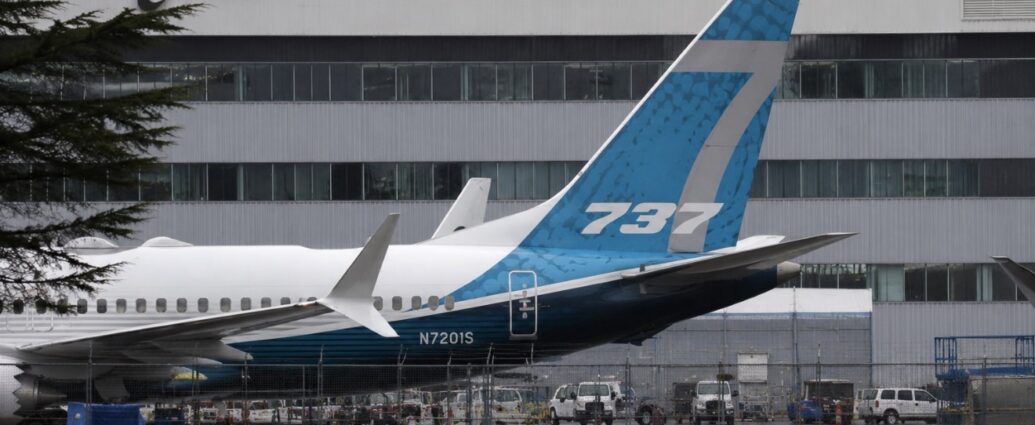
Boeing Shares Tumble 4% as Trump’s China Jet Deal Falls Far Short of Wall Street Hopes
NEW YORK — May 14, 2026 — Shares of Boeing Co. dropped as much as 5.4% on Thursday and finished the session down roughly 4% at $227.50 after President Donald Trump told Fox News host Sean Hannity from Beijing that China had agreed to order 200 commercial jets from the company — a deal that would mark China’s first major purchase of U.S.-made commercial aircraft in nearly a decade but that came in at less than half of what Wall Street analysts and industry sources had been expecting heading into the summit. The disappointment erased every gain Boeing had accumulated since the company’s chief executive, Kelly Ortberg, joined the Trump delegation to Beijing earlier this week.
According to reporting by Bloomberg News in March and people familiar with the negotiations cited by Reuters, the package under discussion ahead of the Trump-Xi summit had been roughly 500 737 MAX narrow-body jets, with the potential for dozens more wide-body aircraft in follow-on orders. Jefferies had publicly forecast up to 500 to 600 aircraft from the visit. Trump said on Hannity that the figure was 200 “big” Boeing jets and characterized the outcome as a win for the planemaker, saying Boeing had wanted 150 but had gotten 200. Neither the White House nor Boeing specified the mix of narrow-body and wide-body aircraft included in the order, the delivery timeline, or the airlines that would take the planes — a degree of opacity that analysts said compounded the disappointment.
George Ferguson, senior aerospace analyst at Bloomberg Intelligence, summarized the Street reaction directly, telling clients that 200 jets “is a disappointment for a market looking for 300 or more and details around type.” Wall Street still maintains a Strong Buy consensus on Boeing shares with an average 12-month price target of $273.86, but the gap between Thursday’s announced figure and the 500-jet base case forced a sharp repricing of the China upside that had been built into the stock over the past month. Boeing shares had risen 8.84% in the four weeks leading into the summit on summit-deal anticipation. The stock is up roughly 7% for the year.
The strategic context underneath the headline matters as much as the headline. The 200-jet order is Boeing’s first major commercial sale to China since Trump’s 2017 visit to Beijing and represents roughly 3% of the company’s existing 6,807-aircraft backlog, according to the company’s most recent disclosures. Boeing delivered 47 commercial aircraft in April, including 34 of its 737 MAX narrow-body jets and six 787 Dreamliner wide-body aircraft, and the broader manufacturer continues to grapple with production bottlenecks that have left airlines globally waiting years for deliveries. Adding 200 Chinese aircraft to that pipeline at a slow drip is materially different from the step-change a 500-jet order would have represented.
Geopolitics has been the dominant overhang. In April 2025, China ordered its state-owned carriers to stop accepting Boeing deliveries and to halt purchases of U.S.-made aviation equipment after the Trump administration imposed a 145% tariff on Chinese imports. Trump suspended the triple-digit tariffs last October in a fragile trade truce, and Xi Jinping backed away from threats to choke off rare-earth supplies as part of the same deal — clearing the runway for fresh commercial conversations. In January 2020, China had committed to purchasing $77 billion in U.S.-made goods including aircraft as part of the so-called Phase One trade deal, but the Covid-19 pandemic collapsed air travel and the commitment was never fulfilled. Boeing lost its longstanding market lead in China to Airbus SE over the same period, in part because of trade friction and in part because the extended global grounding of the 737 MAX in the wake of two fatal crashes drove Chinese airlines toward the European competitor.
Airbus has been in parallel discussions for a similarly sized deal with Chinese carriers, according to industry sources, and is widely expected to land a portion of the broader Chinese fleet refresh that Boeing missed Thursday. China’s aviation market is the second-largest in the world after the United States, and both manufacturers project the country will require at least 9,000 new jetliners by 2045 — meaning the strategic prize remains enormous regardless of the size of the Trump-era announcement. Boeing’s ability to recapture its historic share of that pipeline now turns on whether the 200-jet figure represents a first installment with more orders to follow or a one-off summit deliverable designed to give both sides a headline.
Treasury Secretary Scott Bessent said earlier Thursday on CNBC from Beijing that he expected an announcement on a “large” Chinese Boeing order during the visit. Ortberg had told Reuters last month that he was counting on the Trump administration’s support to seal a major deal with China. The White House did not immediately respond to requests for comment on Wall Street’s reaction. Boeing also did not immediately comment.
For investors, Thursday’s reaction underscores the persistent investing principle that expectations dominate news on event-driven trades. The order itself is unambiguously good for Boeing — it reopens the Chinese channel after nearly a decade of trade-war damage, adds backlog at a moment when global wide-body demand is outstripping supply, and validates Ortberg’s decision to join the Beijing delegation. But with the buy-side positioned for a number two to three times larger, the gap punished the stock regardless. The next signal will come if and when the Civil Aviation Administration of China or specific Chinese carriers — Air China Ltd., China Eastern Airlines Corp., and China Southern Airlines Co. — disclose airline-level allocations and aircraft types.
— JBizNews Desk
© JBizNews.com. All rights reserved. This article is original reporting by JBizNews Desk. Unauthorized reproduction or redistribution is strictly prohibited.

Sterling Tumbles to One-Month Low as Burnham Sets Up Leadership Showdown With Starmer
LONDON — The British pound dropped nearly 1% against the U.S. dollar Thursday — its single largest one-day decline in more than three months — after Greater Manchester Mayor Andy Burnham announced he would seek to return to Parliament through a by-election in the Makerfield constituency, setting up what markets now interpret as the clearest signal yet that the former cabinet minister intends to mount a direct leadership challenge against Prime Minister Sir Keir Starmer, according to reporting from Bloomberg News and the Financial Times. Sterling hit a one-month low against the dollar, becoming the worst-performing G10 currency Thursday, and yields on longer-dated U.K. gilts climbed as investors began pricing in a higher probability of a Labour leadership change and the looser fiscal policy that would likely accompany it.
The trigger was a confluence of two announcements. Labour MP Josh Simons, who represents Makerfield, said he would step aside to allow Burnham to return to the House of Commons, and Burnham confirmed on X that he would seek permission from Labour’s National Executive Committee to contest the seat. Burnham has led Greater Manchester since 2017 but is not currently a sitting MP, and Labour Party rules require a leadership challenger to hold a Commons seat and to secure nominations from 20% of the parliamentary party — currently 81 Labour MPs — before a contest can be triggered. Returning to Westminster is the procedural gate that, until Thursday, had kept his ambitions theoretical. The market read the by-election announcement as the gate opening.
The political setup gives Thursday’s market move its weight. Labour suffered a heavy defeat in last week’s English local elections, losing roughly 1,500 council seats and control of dozens of local authorities including traditional strongholds. Reform UK, led by Nigel Farage, gained more than 1,400 council seats and took control of 14 councils, transforming the local contests into the most significant electoral repudiation a sitting U.K. government has absorbed since Liz Truss’s collapse in 2022. Starmer’s Labour Party entered the cycle with the 2024 landslide majority that put him in office; it exited with a parliamentary party openly divided over tax, spending, and direction. U.K. Health Secretary Wes Streeting is separately reported by The Times to be preparing his own leadership bid. Deputy Prime Minister Angela Rayner and Energy Secretary Ed Miliband have also been discussed as possible successors.
The fixed-income market is rendering its own verdict on which successor it would tolerate. Investors surveyed by the Financial Times identified Burnham as the Labour figure most likely to trigger a negative reaction in gilts, ahead of Rayner and Miliband, with Streeting rated the safest option due to his perceived economic pragmatism and closer alignment with Treasury orthodoxy. Nigel Green, chief executive of deVere Group, which has roughly $14 billion under advisement, said in a note Thursday that Burnham “represents the biggest threat to the gilt market among the serious Labour contenders because investors will immediately associate his leadership ambitions with heavier state spending, looser fiscal policy.” Green added that “higher gilt yields rapidly feed into mortgage pricing, business lending costs, corporate investment decisions and sterling stability.” Mitsubishi UFJ Financial Group’s FX strategy team flagged in a separate client note that polling shows a “soft left” Labour candidate is “most likely to replace Keir Starmer if a leadership contest takes place,” warning that such an outcome could amplify market concerns about U.K. fiscal risks and pressure both gilts and sterling further.
The strangest part of Thursday’s tape was that the political news overwhelmed a genuinely strong macro print. The U.K. economy expanded by 0.6% in the first quarter of 2026, the strongest quarterly growth in over a year and well above consensus expectations of 0.3%. In a normal environment, that print would have lifted sterling and tightened the Bank of England rate-cut trajectory. Instead, the pound sold off against both the euro and the dollar, and the yield curve steepened as longer-dated gilts underperformed — the textbook signature of a market repricing fiscal risk rather than monetary risk. The Bank of England is widely expected to hold rates at its next meeting. Bank of England Governor Andrew Bailey has not commented publicly on the political situation.
The market memory of the Truss mini-budget crisis is the structural reason political risk now translates so quickly into pound and gilt weakness. In September and October 2022, the Truss government’s unfunded tax cuts triggered a near-failure cascade in the U.K. pension-fund liability-driven investment market, forcing the Bank of England to launch an emergency gilt-buying program and contributing directly to Truss’s resignation after 49 days in office. Green of deVere said in his note that the experience “permanently lowered the threshold for market panic in the U.K.,” with structural vulnerabilities exposed during the 2022 episode having “never fully disappeared.” U.K. borrowing needs remain elevated, growth remains uneven, and the country’s chronic current-account deficit means it relies on foreign capital to fund itself — a dependency that becomes acute when political stability comes into question.
The next several weeks will determine whether the move extends or reverses. Burnham still requires Labour NEC approval to contest Makerfield — a process that several Manchester Labour MPs had reportedly resisted because none wanted to surrender their own seat. Simons’s offer changes that calculus only if NEC signs off. Starmer retains the prime ministership unless he chooses to resign or 81 Labour MPs sign nominations for an alternative candidate, and Downing Street has reiterated “full confidence” in Streeting’s loyalty even as the press reports the opposite. Reform UK sits on the sidelines, watching the Labour machine consume itself, with Farage the structural beneficiary of any further deterioration in voter confidence. For sterling, the gilt market, and the U.K. mortgage and corporate-credit complex that runs off them, every step in the Burnham leadership arithmetic from here is a binary repricing event.
— JBizNews Desk
© JBizNews.com. All rights reserved. This article is original reporting by JBizNews Desk. Unauthorized reproduction or redistribution is strictly prohibited.
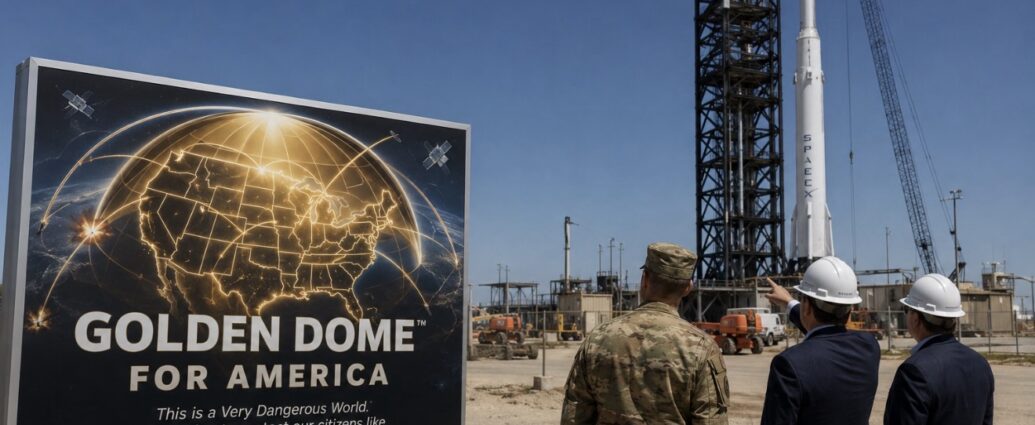
Golden Dome Sticker Shock: CBO Sees $1.2 Trillion Cost Over Two Decades
President Donald Trump’s Golden Dome missile defense initiative would cost roughly $1.2 trillion to build, deploy and operate over two decades, according to a new analysis published Tuesday by the nonpartisan Congressional Budget Office — a figure dramatically above the $175 billion estimate the president floated in May 2025 and far exceeding the roughly $185 billion currently envisioned in Pentagon long-term planning.
The Congressional Budget Office report, requested by Senator Jeff Merkley of Oregon, the ranking Democrat on the Senate Budget Committee, examined a “notional” national missile-defense architecture aligned with the executive order Trump signed during his first week back in office. The proposal calls for a layered defense shield capable of detecting and intercepting ballistic, cruise and hypersonic missiles during multiple phases of flight.
The agency stressed that its projection represented “one illustrative approach rather than an estimate of a specific Administration proposal,” but the underlying economics were striking. According to the CBO, acquisition costs alone would exceed $1 trillion, with the space-based interceptor layer accounting for roughly 70% of acquisition costs and about 60% of the system’s total long-term expense.
That orbital layer is where the numbers become especially daunting.
The CBO modeled a constellation of roughly 7,800 low-Earth-orbit satellites designed to engage up to 10 simultaneously launched intercontinental ballistic missiles. The acquisition price for that space-based layer alone was estimated at approximately $723 billion. Ground- and sea-based interceptor systems would add another $139 billion, while long-term operations and sustainment costs would ultimately push the total program price near $1.2 trillion over 20 years.
Gabe Murphy, a policy analyst at Taxpayers for Common Sense, told Responsible Statecraft that even the CBO estimate “could be low,” warning that the number of space interceptors required to stop a major adversary strike could become economically overwhelming. Some missile-defense analysts estimate the interceptor-to-threat ratio could approach 1,000-to-1 during a large-scale attack scenario involving Russia or China.
The CBO was also unusually direct about the system’s strategic limitations.
The report concluded that the notional architecture “would not be an impenetrable shield or be able to fully counter a large attack of the sort that Russia or China might be able to launch,” though it could successfully defend against a more limited strike from regional adversaries such as North Korea.
Even Pentagon officials have acknowledged the enormous technical and financial uncertainty surrounding the effort.
General Michael Guetlein, the Space Force officer selected to oversee the Golden Dome initiative, told lawmakers during congressional testimony last month that while the underlying technology largely exists, the defining question remains whether the United States can deploy it “at scale” and “affordably.” Guetlein added that if space-based interceptors cannot be produced at sustainable costs, “we will not go into production.”
For the defense industry, however, Golden Dome has already emerged as the most consequential procurement opportunity of the decade.
Initial funding has largely flowed through the One Big Beautiful Bill Act, which allocated approximately $24 billion to the program last year. The Defense Department is now seeking another $17.5 billion for fiscal 2027, with nearly all of the funding routed through congressional reconciliation rather than the Pentagon’s traditional base budget.
Last month, the U.S. Space Force awarded roughly $3.2 billion in rapid-development Other Transactional Authority contracts to 12 companies tasked with prototyping space-based interceptor systems.
The contractor roster reflects a collision between traditional defense giants and Silicon Valley’s rapidly expanding national-security sector. Legacy firms including Lockheed Martin, Northrop Grumman, RTX’s Raytheon unit, General Dynamics, and Booz Allen Hamilton are competing alongside venture-backed defense newcomers such as Anduril Industries, Palantir Technologies, Scale AI, True Anomaly, and Turion Space.
Elon Musk’s SpaceX is expected to provide much of the heavy-launch infrastructure and is reportedly working alongside Anduril and Palantir on satellite tracking and interceptor systems. Anduril and Palantir are also jointly developing the command-and-control software architecture that Guetlein has described as the program’s “secret sauce.”
Additional contractors including Boeing, L3Harris, and Leonardo DRS are widely expected to secure roles as the program advances into larger deployment phases.
Wall Street has already begun pricing the opportunity into aerospace and defense stocks. Analysts have pointed to Golden Dome as a potential multi-year growth engine for traditional prime contractors while also viewing it as a transformational moment for venture-backed defense firms seeking to establish themselves as permanent Pentagon suppliers.
Politically, the widening gap between the administration’s original cost estimate and the CBO’s projection is rapidly becoming the program’s defining flashpoint.
Merkley called the initiative “nothing more than a massive giveaway to defense contractors paid for entirely by working Americans” and pledged to oppose additional appropriations. Republican defense hawks counter that even a trillion-dollar investment is justified given the accelerating missile capabilities of China and Russia, particularly in hypersonic weapons systems that existing U.S. missile-defense architecture struggles to intercept.
Supporters also point to Israel’s Iron Dome as proof that layered missile-defense systems can significantly reduce civilian vulnerability during sustained attacks, though critics note that defending the continental United States presents a vastly larger and more complex challenge.
The Pentagon is under pressure to demonstrate an initial operational capability by summer 2028, with broader deployment expected sometime during the 2030s. Whether Congress is willing to sustain the level of spending implied by the CBO’s projections is now emerging as one of the central questions looming over the next generation of U.S. defense budgeting.
JBizNews Desk
© JBizNews.com. All rights reserved. This article is original reporting by JBizNews Desk. Unauthorized reproduction or redistribution is strictly prohibited.

Hotel Unions in New York and LA Threaten to Strike Just as FIFA World Cup Begins
NEW YORK — May 14, 2026 — With the 2026 FIFA World Cup now 28 days from its June 11 opening, the U.S. hospitality industry is heading into the largest sporting event in American history with two open labor fronts in its biggest host markets and fresh evidence that the projected economic windfall is shrinking by the week. The American Hotel and Lodging Association warned in a report released Tuesday that anticipated demand “has not translated into strong hotel bookings,” with 80% of operators across the 11 U.S. host cities reporting bookings below initial forecasts and the trade group concluding that the projected lift “may fall short of expectations.” Resale ticket prices on StubHub and SeatGeek have fallen roughly 24% from a month ago, according to TicketData.com figures reported by NBC News on Thursday. And in both New York and Los Angeles — the two largest U.S. host markets, accounting for 16 of the tournament’s 78 American matches between them — hospitality unions representing roughly 42,000 workers are openly preparing for strike action that could land squarely during the tournament itself.
The most consequential clock is in New York. The Hotel and Gaming Trades Council, or HTC, the AFL-CIO affiliate that represents approximately 40,000 hotel and gaming workers across the New York City metropolitan area, the Capital Region, and northern New Jersey, sees its 14-year Industry-Wide Agreement with the Hotel Association of New York City expire on June 30, 2026 — eighteen days into the tournament. Eight World Cup matches are scheduled at MetLife Stadium in East Rutherford, including the July 19 final between the two finalists. HTC President Rich Maroko, a Brooklyn-based labor attorney who has run the union since 2020 and led the 2023 GRIWA negotiations that produced what the union calls the strongest renewal contract in its nearly 100-year history, told the New York City Council earlier this year that “negotiations between our union and the hotel industry will determine whether New York hosts the World Cup with stability and shared prosperity.” The union, which has spent two years building its HEAT mobilization apparatus — a system Maroko’s predecessors first created in 2005 to coordinate strike readiness — has not set a strike date but has launched a public-facing website that lets travelers search for what it markets as “strike-safe” hotels and has trained captains in every covered property.
The economic stakes are unusually direct. The current contract covers more than 27,000 workers across roughly 250 properties, with top-scale housekeepers earning approximately $39.87 an hour and a benefits package that Maroko himself has described in member messages as the gold standard of the unionized industry — covering full family medical, dental, and pension benefits with co-pays of $5 and $15 for generic and brand-name drugs. The Hotel Association of New York City, whose chief executive Vijay Dandapani represents owners across the five boroughs, has seized on that language. Dandapani said in a public statement earlier this year that “it is extremely premature for the union to threaten a strike during World Cup and put a huge economic opportunity for hotel workers and the city at risk,” noting that the New York City hotel industry has not experienced a labor dispute in 40 years and arguing the tournament could deliver a financial boost to a sector he described as in structural decline.
Albany has visibly tilted the field in the union’s favor. Governor Kathy Hochul last May signed legislation reducing the unemployment-benefit waiting period for striking workers from three weeks to two — the shortest in the country — and increased the maximum weekly benefit by roughly 75% to $869 from $504, effective October 2025. Hochul, who received roughly $500,000 in HTC political-action-committee support during her 2022 campaign, met personally with Maroko in the weeks before the deal was finalized. Senate Majority Leader Andrea Stewart-Cousins and Assembly Speaker Carl Heastie both publicly framed the legislation as backing for the union heading into 2026 negotiations. New York City Mayor Zohran Mamdani, sworn in this January, visited HTC headquarters during the Democratic primary and has framed union density as central to his anti-inequality agenda — adding another political tailwind for Maroko as bargaining intensifies. HTC also has separate consumer-protection legislation, signed into law in November 2024 under the Safe Hotels Act, that requires hotels to inform reservation-holders of strikes or picket lines and to offer full refunds — language that makes any tournament-period walkout substantially more disruptive to bookings.
In Los Angeles, the leverage point is even sharper because there is no current agreement at all. UNITE HERE Local 11, which represents roughly 2,000 cooks, servers, bartenders, and dishwashers at SoFi Stadium, has been in contract negotiations with Legends Global — the concessions company affiliated with billionaire Stan Kroenke’s Kroenke Sports & Entertainment, which also owns SoFi’s Hollywood Park site — since the prior agreement expired last year. The stadium is set to host eight World Cup matches beginning with the U.S. men’s team match against Paraguay on June 12. UNITE HERE Co-President D. Taylor has said the union is “demanding better pay, better benefits, and better working conditions for the workers who make the World Cup happen.” Members are also pushing for premium pay on mega-events, protections against subcontracting to FIFA’s official hospitality partner On Location — the Endeavor Group Holdings Inc.-owned firm that has been selling private suites at SoFi for as much as $209,000 per match — and an explicit commitment that U.S. Immigration and Customs Enforcement will not operate at the games. UNITE HERE has filed an unfair labor practice charge with the National Labor Relations Board alleging that acting DHS Director Todd Lyons’ statement that ICE would play a “key part” in tournament security undermines the union’s ability to collectively bargain.
The UNITE HERE posture is informed by a successful 2024 campaign in which the union struck Marriott International Inc., Hilton Worldwide Holdings Inc., and Hyatt Hotels Corp. properties across multiple U.S. cities over Labor Day weekend, ultimately winning wage increases that HTC members in New York have studied closely. UNITE HERE Local 11 plans to leverage the World Cup spotlight to push for the same kind of step-change in stadium and event-hospitality compensation, particularly because On Location is also the official hospitality partner of the 2028 Los Angeles Olympic Games — meaning the precedent set this summer will likely govern wages and subcontracting terms for the next mega-event cycle in Southern California.
The financial backdrop is deteriorating. In March, FIFA exercised an opt-out clause and canceled thousands of room blocks across all 16 World Cup host cities, including Philadelphia and Dallas, in what some hotel operators have characterized as an artificial early demand signal. FIFA President Gianni Infantino said this week that the tournament has sold approximately 5 million tickets and has defended its pricing strategy as necessary to undercut resellers, but Oxford Economics has cast doubt on the broader $30.5 billion economic-windfall projection that Infantino has cited, forecasting only temporary job gains in leisure and hospitality and modest GDP impact. The AHLA’s Tuesday outlook cited room-block cancellations, international travel barriers tied in part to the ongoing war with Iran and to Trump administration travel restrictions affecting visitors from 75 countries, and rising domestic costs as the principal drivers of softened hotel demand. Domestic travelers, the trade group said, are now outpacing international visitors across the 11 host cities — a near-reversal of the original demand thesis.
For the unions, the calculus is straightforward: a strike during the World Cup would attract enormous global media coverage at the precise moment when FIFA, Adidas AG, Visa Inc., Anheuser-Busch InBev SA/NV, The Coca-Cola Co., McDonald’s Corp., and Saudi Arabia’s Public Investment Fund — which became an official tournament supporter Thursday — are all looking to monetize their largest sports sponsorship of the year. For ownership groups, the same dynamic cuts the other way: industry executives have told Crain’s New York Business they believe the tournament’s revenue importance will discourage disruptive labor action because workers themselves stand to lose substantial overtime and tip income. Legends Global declined to comment on its negotiations with UNITE HERE Local 11. A spokesperson for Hollywood Park deferred to Legends Global. FIFA did not respond to email requests for comment.
For investors with exposure to the publicly traded U.S. hotel sector — Marriott, Hilton, Hyatt, and Host Hotels & Resorts Inc., the largest U.S. lodging real-estate investment trust — the next four weeks will determine whether the World Cup delivers the marquee tailwind operators expected or instead becomes the costliest hospitality labor showdown in a generation. The first kickoff is 28 days away.
— JBizNews Desk
© JBizNews.com. All rights reserved. This article is original reporting by JBizNews Desk. Unauthorized reproduction or redistribution is strictly prohibited.
Honda Suffers Worst Year Ever, Posts First-Ever Annual Loss as Mibe Abandons U.S. EV Push for Hybrids
Honda Motor Co. reported the worst financial year in its modern history Thursday, posting the first annual loss since becoming a publicly traded company nearly seven decades ago, as the Japanese automaker dramatically retreated from its electric-vehicle ambitions and pivoted back toward hybrids and gasoline-powered vehicles.
The company reported a net loss of 423.9 billion yen, or roughly $2.7 billion, for the fiscal year ended March 2026, according to its annual earnings release. The result marks Honda’s first full-year loss since listing on the Tokyo Stock Exchange in 1957.
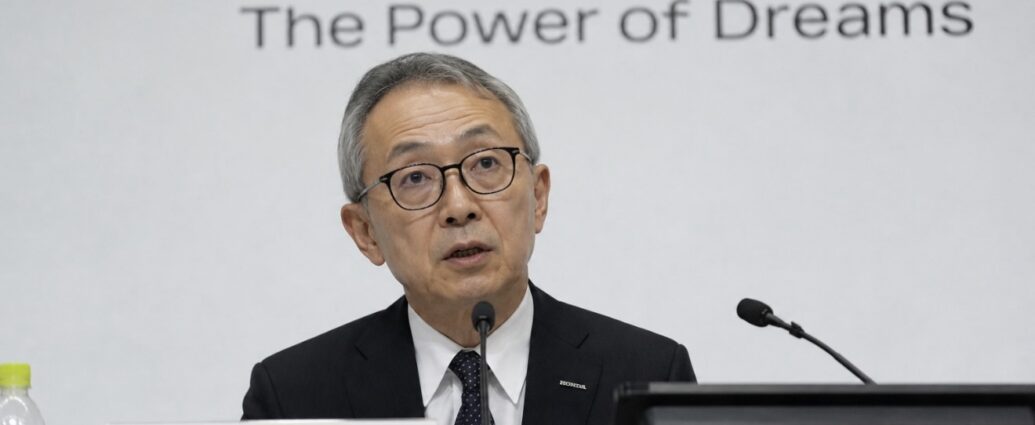
At a Tokyo press conference, Chief Executive Toshihiro Mibe said the losses stemmed largely from the collapse of Honda’s U.S. electric-vehicle strategy, which triggered nearly $10 billion in EV-related writedowns after the company canceled several planned electric models, dissolved its partnership with Sony Corp., and indefinitely suspended a massive Canadian EV and battery manufacturing project.
“This was a painful but necessary reset,” Mibe told reporters, acknowledging that slowing consumer demand for battery-electric vehicles in the United States and changes to the regulatory environment under President Donald Trump forced Honda to rethink its long-term strategy.
Honda disclosed that total EV-related losses tied to the fiscal year just completed and the current fiscal year are expected to approach 2 trillion yen, or roughly $13 billion, with 1.45 trillion yen already booked.
The company also formally abandoned several of the ambitious electrification goals Mibe introduced in 2021, including a pledge that all Honda vehicles would become electric or fuel-cell powered by 2040. Honda additionally scrapped a target calling for EVs to account for one-fifth of total vehicle sales by 2030.
Asked whether he would resign following the historic loss — a traditional step often taken by Japanese executives after major corporate failures — Mibe said his immediate responsibility was rebuilding the company.
Honda Retreats From U.S. EV Expansion
Among the canceled projects were three planned U.S. electric vehicles, including a midsize SUV, a sedan, and a luxury Acura-branded model.
Honda also effectively dissolved its highly publicized EV partnership with Sony Corp., which had previously been positioned as a premium electric platform designed to compete with Tesla and fast-growing Chinese EV manufacturers.
In another major reversal, Honda indefinitely froze its planned $11 billion EV and battery manufacturing project in Canada, which would have represented one of the largest automotive investments in Canadian history.
The strategic retreat places Honda alongside other legacy automakers including Ford Motor Co. and General Motors, both of which have taken multibillion-dollar losses tied to slowing EV demand and weaker-than-expected profitability.
Meanwhile, Toyota Motor Corp. — which spent years resisting Wall Street pressure to aggressively pursue full EV adoption — has emerged as one of the industry’s strongest performers thanks to its continued focus on hybrid vehicles.
Analysts increasingly view Toyota’s hybrid-heavy strategy as the winning near-term model for legacy automakers.
Motorcycles Become Honda’s Financial Lifeline
While Honda’s automotive business absorbed enormous losses, its motorcycle division delivered record profitability and helped stabilize the broader company.
Honda reported record motorcycle sales and operating income during the fiscal year, driven by strong consumer demand in India and Brazil.
The company said it plans to expand production capacity in India as it targets annual motorcycle sales of approximately 22.8 million units.
Strong cash flow from the motorcycle business allowed Honda to maintain shareholder-return commitments despite the historic loss.
Management pledged at least 800 billion yen in shareholder returns over the next three years and kept the annual dividend unchanged at 70 yen per share.
Investors responded positively to the announcement, sending Honda shares up roughly 3.8% in Tokyo trading Thursday, although the stock remains down approximately 14% year to date amid broader concerns involving global tariffs, the Iran conflict, and EV profitability pressures.
China Weakness Deepens
Honda’s long-term position in China remains one of management’s biggest concerns.
The company said sales in China have fallen by more than half over the last five years amid intense price competition from domestic EV manufacturers including BYD, Geely, and Nio.
Honda sold roughly 1.5 million vehicles annually in China at its peak in 2020 but now delivers closer to 600,000 units, according to company filings.
To offset the deterioration, Honda is increasingly relying on North America, where hybrid demand has strengthened sharply and dealerships are reporting waiting lists for fuel-efficient models.
The company projected global vehicle sales of roughly 3.39 million units for the fiscal year ending March 2027, essentially flat from the prior year, with North American hybrid growth expected to balance continued weakness in China.
Industry-Wide EV Reality Check
For the current fiscal year, Honda forecast a return to profitability with projected net income exceeding $1.6 billion, despite the possibility of additional EV-related writedowns.
Mibe said Honda would continue investing in long-term battery and EV research but would rebuild the company around hybrids, traditional gasoline-powered vehicles, and motorcycles.
Honda’s dramatic reversal increasingly reflects a broader industry-wide reassessment of electric-vehicle demand after years of aggressive forecasts by global automakers.
Federal EV subsidies in the United States have been rolled back under the Trump administration, charging infrastructure remains inconsistent outside major metropolitan areas, and consumers continue favoring hybrids over fully battery-powered vehicles.
At the same time, Tesla maintains dominance in premium EV segments while many traditional automakers struggle to generate sustainable profits from pure-electric models.
For the global auto industry, Honda’s message was unmistakable: in today’s market, hybrids — not fully electric vehicles — are where near-term profits are increasingly being made.
— JBizNews Desk
© JBizNews.com. All rights reserved. This article is original reporting by JBizNews Desk. Unauthorized reproduction or redistribution is strictly prohibited.
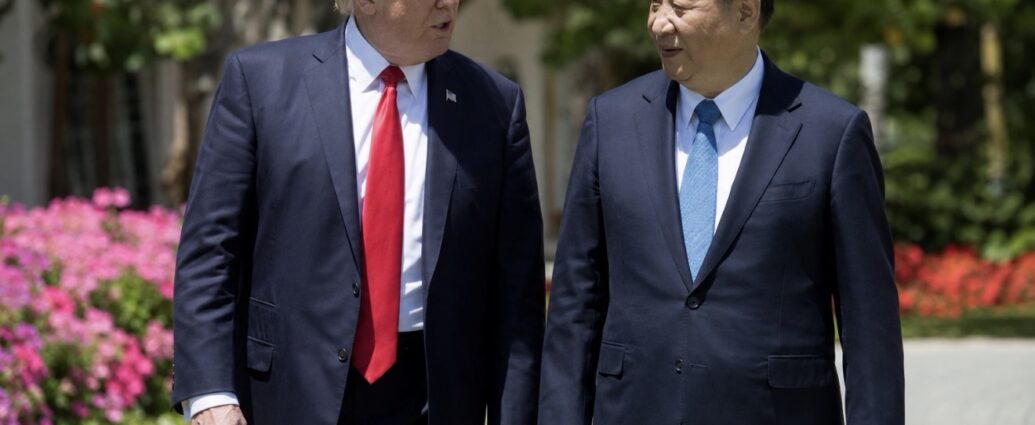
Xi Agrees Iran Should Not Control Hormuz as Trump-Xi Pact Targets Tariff Rollbacks and Major Boeing Deal
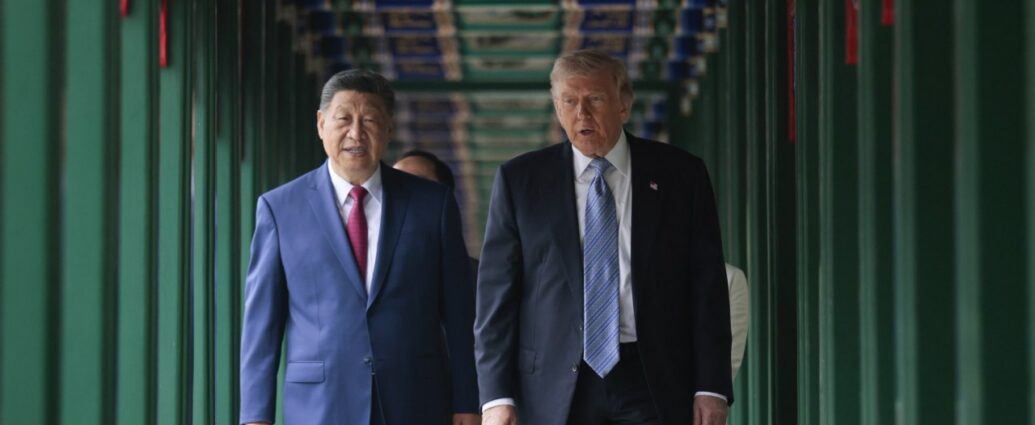
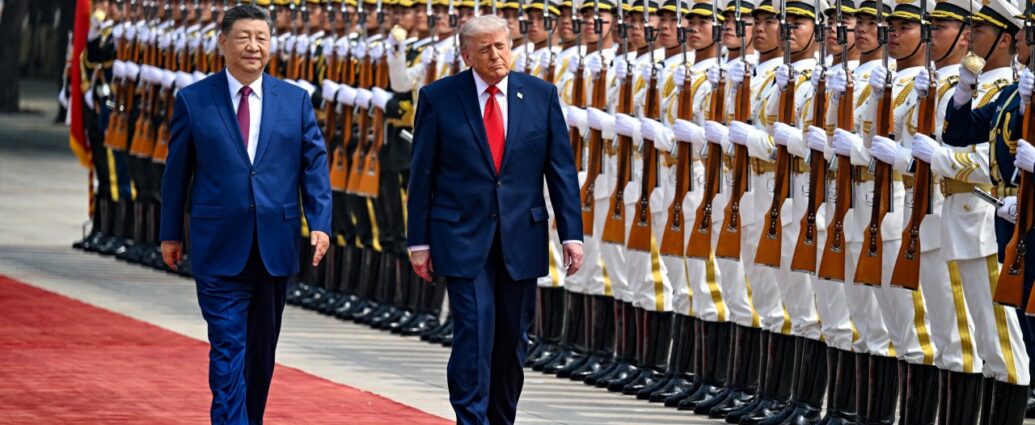
President Donald Trump and Chinese President Xi Jinping concluded the opening day of their Beijing summit Thursday with a joint commitment that Iran must not control or disrupt the Strait of Hormuz, while also advancing a framework for reducing tariffs on roughly $30 billion in trade and moving toward what U.S. officials described as a major pending Boeing aircraft order.
The agreements emerged as the U.S.-led naval blockade of Iran entered its second month and tensions across the Persian Gulf continued threatening global shipping lanes and oil markets.
According to a White House readout, both leaders agreed the Strait of Hormuz must remain open to the free flow of global energy supplies, with Xi Jinping explicitly opposing any Iranian effort to militarize the waterway, interfere with shipping, or impose transit tolls on commercial vessels moving through the strategic chokepoint.
The White House also said both governments agreed Iran must never obtain a nuclear weapon.
President Trump later told Fox News that Xi offered to help mediate an end to the conflict with Iran and assured him China would not provide military support to Tehran.
Markets focused heavily on the summit’s economic deliverables.
Treasury Secretary Scott Bessent, speaking from Beijing, said both sides were working toward an initial tariff-reduction package covering roughly $30 billion in non-critical trade categories, with broader negotiations expected to continue in future rounds.
Bessent also confirmed Boeing was nearing a large commercial aircraft agreement with Chinese carriers. Trump later told reporters the order could involve as many as 200 aircraft, potentially marking China’s largest Boeing purchase in years.
A transaction of that scale would provide a major boost to Boeing’s already massive order backlog, previously estimated near $695 billion.
Industrial and aerospace shares climbed following the announcement, while investors interpreted the summit as a sign of stabilizing commercial ties between Washington and Beijing after years of trade tensions and technology disputes.
Oil markets, however, remained volatile despite the diplomatic progress.
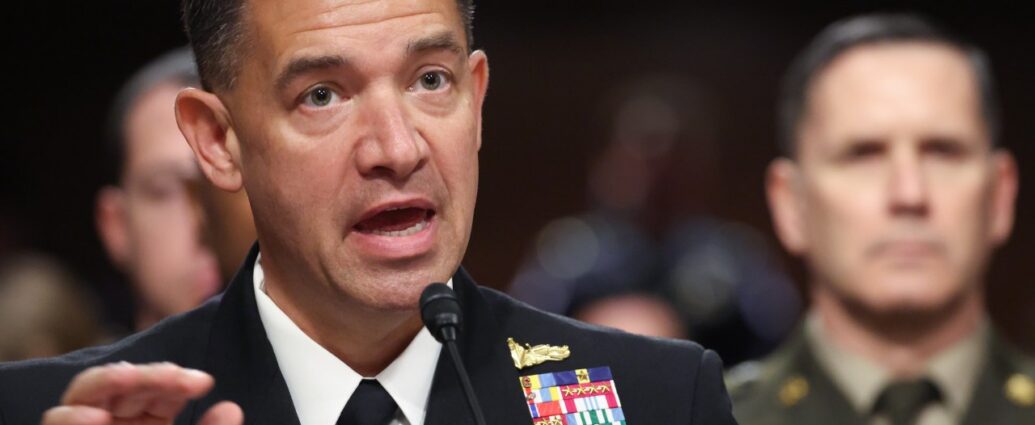
According to testimony Thursday from Admiral Brad Cooper, commander of U.S. Central Command, the 38-day U.S.-Israeli campaign against Iran has significantly weakened Tehran’s military capabilities but has not eliminated its ability to threaten Gulf shipping and regional energy infrastructure.
Cooper told lawmakers that U.S. forces had destroyed roughly 90% of Iran’s naval mine inventory and a comparable share of its defense industrial base during Operation Epic Fury.
At the same time, maritime intelligence firm Windward reported that more than 330 fast boats linked to Iran’s Revolutionary Guard were operating in the Strait of Hormuz this week, underscoring ongoing security concerns.
Additional incidents throughout Thursday highlighted the fragility of the region.
Omani officials confirmed that an Indian-flagged commercial vessel sank after an attack near Oman, though all crew members were rescued. A separate ship was reportedly seized near the United Arab Emirates and redirected toward Iranian waters, according to a British maritime agency.
The Wall Street Journal also reported that Saudi Arabia carried out covert strikes against Iranian targets after attacks on Saudi energy infrastructure and civilian facilities.
The summit also surfaced unresolved geopolitical tensions between Washington and Beijing.
Xi warned Trump that Taiwan remains the most dangerous issue in the U.S.-China relationship and cautioned that mishandling the issue could lead to direct confrontation between the two powers.
The warning carries enormous implications for global semiconductor supply chains given Taiwan’s dominant role in advanced chip manufacturing through Taiwan Semiconductor Manufacturing Co. and key downstream customers including NVIDIA, Apple, and AMD.
Trump said he invited Xi to visit the White House in September, though Chinese officials did not immediately confirm the visit.
Meanwhile, military and diplomatic tensions continued across the broader Middle East.
The State Department confirmed a second round of U.S.-brokered talks between Israel and Lebanon began Thursday as fighting between Israel and Hezbollah intensified.
The Israel Defense Forces said they targeted approximately 65 Hezbollah-related infrastructure sites over the previous 24 hours, while additional projectiles and drone attacks were reported along the Israeli-Lebanese border.
For investors and global markets, the summit’s first day delivered meaningful signals on trade, energy security, and commercial cooperation — but many of the underlying geopolitical risks remain unresolved.
Wall Street largely viewed the tariff rollback framework, Hormuz commitments, and Boeing negotiations as supportive for global growth and industrial trade, though markets remain highly sensitive to developments involving Iran, Taiwan, and global energy flows.
Trump and Xi are scheduled to continue talks Friday during the second and final day of the Beijing summit.
— JBizNews Desk
© JBizNews.com. All rights reserved. This article is original reporting by JBizNews Desk. Unauthorized reproduction or redistribution is strictly prohibited.


Opinion | Notable & Quotable: Animal Spies?


Anthropic Targets $900 Billion Valuation in $30 Billion Raise Ahead of October IPO
Anthropic PBC, the San Francisco–based artificial-intelligence company behind the Claude family of AI models, is in early talks to raise at least $30 billion in new financing at a valuation exceeding $900 billion, according to Bloomberg’s Ed Ludlow, citing people familiar with the discussions. If completed at the levels currently being discussed, the deal would become one of the largest private funding rounds in technology history and would value Anthropic above rival OpenAI, whose March financing round implied an $852 billion post-money valuation.
The financing discussions come as Anthropic quietly prepares for a potential public offering as early as October, according to people familiar with the matter. The fresh capital would primarily fund the enormous computing infrastructure required to support surging demand for the company’s AI products as enterprise adoption accelerates globally.
Anthropic co-founder and Chief Executive Officer Dario Amodei offered a glimpse into the scale of that growth during the company’s “Code with Claude” developer conference in San Francisco last week. Amodei said Anthropic originally planned for roughly tenfold annualized growth in 2026 but instead experienced approximately 80-fold growth during the first quarter alone — a pace he described as “just crazy” and operationally difficult to manage.
According to Amodei, Anthropic’s annualized revenue run rate climbed from roughly $9 billion at the end of 2025 to approximately $30 billion by April 2026. Bloomberg and the Financial Times have separately reported estimates ranging between $40 billion and $45 billion based on more recent enterprise-billing data.
The company’s growth trajectory has become one of the fastest in Silicon Valley history. Amodei disclosed that Anthropic generated an annualized revenue run rate of only $87 million in January 2024 before surpassing $1 billion by December 2024, climbing to $14 billion by February 2026, then jumping to $19 billion in March and $30 billion by April.
That explosive adoption has fueled intense investor demand. According to Bloomberg, Anthropic leadership began seriously evaluating a valuation above $900 billion after receiving multiple unsolicited investment proposals earlier this spring. The company has since opened discussions with existing investors regarding participation in the round, though no final terms have been agreed upon and negotiations remain fluid.
Several of Anthropic’s largest strategic partners have already committed massive capital injections separately from the new raise. Alphabet’s Google agreed to invest $10 billion earlier this year at a $350 billion valuation, with additional commitments potentially reaching $30 billion tied to future milestones. Amazon.com similarly committed $5 billion at the same valuation, with agreements allowing total investment commitments to expand toward $20 billion over time.
The latest valuation discussions represent a dramatic acceleration from prior rounds. Anthropic raised $13 billion during a September 2025 Series F financing at a $183 billion valuation, followed by a $30 billion Series G round in February 2026 that valued the company at $380 billion.
The sharp increase reflects extraordinary enterprise demand for Claude across industries including financial services, software development, healthcare, retail, and logistics. Large corporate users reportedly include companies such as Uber and Netflix, while Anthropic’s gross margins are said to exceed 70%.
But the company’s growth has created equally massive infrastructure challenges. Anthropic announced last week that it secured access to more than 300 megawatts of computing capacity at SpaceX’s Colossus 1 data center in Memphis, Tennessee — a notable development given prior public tensions between Amodei and Elon Musk over AI governance and safety issues.
The company continues racing to secure additional computing power from major infrastructure partners including Amazon, Google, Nvidia, and Microsoft, though much of that capacity is not expected to come online until late 2026 or 2027.
Amodei acknowledged during the conference that demand since March has strained the reliability of some Anthropic products, particularly its Claude Code developer platform. The company published a technical postmortem in late April identifying multiple bugs that had affected performance for several weeks.
The scale of the funding round also signals how dramatically the economics of artificial intelligence have shifted. Training and operating frontier AI systems now requires billions of dollars in semiconductors, electricity, cooling infrastructure, networking systems, and data-center capacity — creating an arms race among the world’s largest technology companies and investors.
Anthropic’s proposed valuation would test the upper limits of private-market appetite for AI infrastructure bets. OpenAI’s $852 billion valuation from March was previously viewed as the sector’s peak benchmark. Yet some tokenized prediction markets have implied even higher valuations for Anthropic, with platforms including Ventuals and PreStocks pricing speculative instruments between $1.2 trillion and $1.6 trillion, although the company has emphasized those products do not represent actual equity ownership.
The company also enters this next phase while navigating growing political and regulatory scrutiny. Anthropic has been involved in an ongoing dispute with the Department of Defense after Defense Secretary Pete Hegseth’s department labeled the company a “supply-chain risk” earlier this year. The conflict reportedly stemmed from Amodei’s refusal to remove contractual restrictions preventing Claude from being used for mass domestic surveillance or fully autonomous weapons systems.
The Trump administration subsequently directed federal agencies to pause adoption of Claude products, though several civil-liberties organizations and legal groups have challenged the policy in court filings.
So far, the controversy has not meaningfully slowed commercial adoption. But investors preparing for a possible October IPO are increasingly weighing whether Anthropic can sustain its extraordinary growth while navigating infrastructure shortages, mounting geopolitical pressure, and intensifying competition from OpenAI, Google DeepMind, Meta, xAI, and Microsoft-backed platforms.
Even Amodei himself has suggested the current pace may not be sustainable indefinitely. During last week’s conference, he told developers he hopes the company eventually returns to “more normal” growth levels.
For now, however, Anthropic appears to sit near the center of the most aggressive capital expansion cycle Silicon Valley has ever witnessed.
JBizNews Desk
© JBizNews.com. All rights reserved. This article is original reporting by JBizNews Desk. Unauthorized reproduction or redistribution is strictly prohibited.
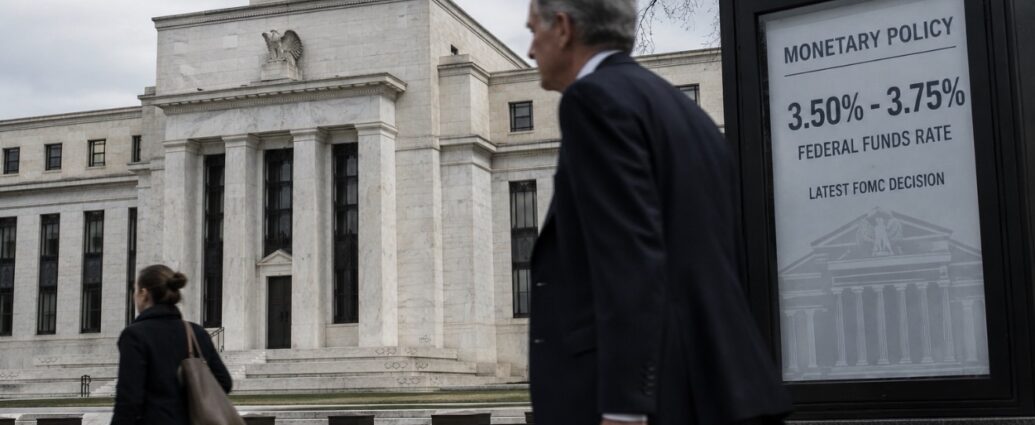
Boston Fed’s Collins Warns Rate Hike “Could Be Needed” as Inflation Pressures Intensify
The case for additional Federal Reserve rate increases gained an unexpected boost this week after Boston Federal Reserve President Susan Collins warned that policymakers may still need to tighten monetary policy if inflation tied to the war with Iran continues spreading through the U.S. economy.
Speaking Wednesday at the Boston Economic Club, Collins said she can now envision a scenario in which the Federal Reserve is forced to raise interest rates again to contain persistent price pressures — a notable shift from a central banker previously viewed as among the more patient voices inside the Fed.
“I could envision a scenario in which some policy tightening is needed,” Collins said in prepared remarks released by the Federal Reserve Bank of Boston, adding that policymakers remain committed to returning inflation “durably to 2% in a timely manner.”
The remarks landed just hours after the Bureau of Labor Statistics reported that the Producer Price Index surged 1.4% in April, the steepest monthly increase in four years and far above economist forecasts. The report followed Tuesday’s hotter-than-expected Consumer Price Index reading showing annual inflation accelerating to 3.8%, the highest level since May 2023.
Together, the reports have sharply altered Wall Street’s expectations for monetary policy and weakened hopes that the Fed would soon begin cutting rates.
Collins acknowledged that policymakers had initially hoped to “look through” inflation stemming from geopolitical supply shocks tied to the U.S.-Israel conflict with Iran. But after more than five years of inflation running above the Fed’s target, she suggested patience inside the central bank is beginning to wear thin.
“I believe it will likely be important to maintain the current slightly restrictive monetary policy stance for some time,” Collins said.
The Federal Open Market Committee left its benchmark interest-rate target unchanged at 3.50% to 3.75% during its late-April meeting, though divisions inside the Fed have become increasingly visible. Three voting members reportedly dissented against language implying the next move would likely be a rate cut.
Collins later confirmed in comments to Bloomberg News that she sided with the dissenters, reinforcing the impression that the Fed’s internal debate has shifted decisively away from easing policy.
The comments also come at a moment of major transition at the central bank.
The Senate on Wednesday confirmed Kevin Warsh as the next Federal Reserve chair in a party-line vote, replacing Jerome Powell after months of speculation over the Fed’s future direction. Warsh, nominated by President Donald Trump, has repeatedly called for a “new inflation framework” and is widely viewed by markets as more hawkish than Powell.
While Collins declined to speculate publicly on how Warsh’s leadership may shape policy decisions, investors increasingly believe the Fed could remain restrictive well into 2027 if inflation tied to energy and supply chains fails to recede.
For consumers and businesses, the consequences are already becoming visible across borrowing markets.
Mortgage rates climbed again Wednesday after the inflation data pushed Treasury yields sharply higher. The 30-year Treasury yield crossed 5.05% for the first time since May 2025, while benchmark 10-year yields remained near multi-year highs.
Higher Treasury yields directly influence mortgage costs, commercial real estate financing, business loans, auto financing and credit-card rates — areas already under strain from elevated borrowing costs.
The pressure is particularly acute for housing markets and small businesses.
Commercial real estate developers continue facing refinancing stress as loans originated during the low-rate years mature into a significantly higher-rate environment. Regional banks have simultaneously tightened lending standards amid concerns about office vacancies, slower economic growth and rising credit risks.
Consumers are also beginning to show signs of fatigue.
The latest University of Michigan consumer sentiment survey showed confidence weakening notably as Americans grow more concerned about inflation, household budgets and the affordability of major purchases.
Collins outlined three key indicators she is monitoring closely in coming months: inflation expectations among households and businesses, whether price increases spread beyond energy into broader sectors of the economy, and the continued pass-through effects of tariffs imposed last year by the Trump administration.
She also warned about a less visible but important risk facing the Fed: if inflation continues accelerating while interest rates remain unchanged, the “real” inflation-adjusted level of Fed policy effectively becomes less restrictive over time — potentially requiring policymakers to tighten further simply to maintain the same level of economic restraint.
Equity markets initially appeared largely unfazed by the comments.
The S&P 500 rose 0.58% Wednesday to close at a record 7,444.25, while the Nasdaq Composite climbed 1.20% to another all-time high as artificial-intelligence stocks continued driving momentum across technology markets.
“In the face of continued hot inflation data, technology remains resilient,” said Ryan Detrick, chief market strategist at Carson Group, in a research note Wednesday.
But bond investors and institutional strategists are increasingly taking the Fed’s inflation concerns seriously.
Jim Baird, chief investment officer at Plante Moran Financial Advisors, said the producer-price report “reinforces the inflation risk narrative and at least makes the case for a longer pause at the Fed.”
Meanwhile, Morgan Stanley raised its year-end 2026 target for the S&P 500 to 8,000 from 7,800, but warned that additional Federal Reserve tightening now represents the single biggest risk to its bullish outlook.
Although Collins does not currently vote on monetary policy decisions this year, analysts say her remarks carry significant weight because she is broadly viewed as a centrist voice inside the Federal Reserve system rather than an ideological hawk.
That makes her public willingness to discuss additional tightening especially important to markets trying to gauge the Fed’s evolving direction.
If the Iran conflict drags on and energy disruptions deepen, Collins warned, the risk of “more substantial negative spillovers” to the broader economy increases substantially.
Even if geopolitical tensions ease quickly, she cautioned that supply-chain disruptions and inflationary effects may linger well beyond this year.
For households hoping for relief at grocery stores, gas stations and borrowing markets, Collins delivered a blunt assessment: meaningful inflation relief may not arrive until well into 2027.
JBizNews Desk
© JBizNews.com. All rights reserved. This article is original reporting by JBizNews Desk. Unauthorized reproduction or redistribution is strictly prohibited.
Calbee Cuts Color From Snack Packaging as Iran War Disrupts Japan’s Ink Supply
One of Japan’s largest snack-food companies is now stripping color from its packaging because of supply-chain disruptions tied directly to the ongoing Iran conflict, offering one of the clearest consumer-level examples yet of how the war is rippling through everyday global commerce.
Calbee Inc., the Tokyo-based snack giant behind some of Japan’s best-known potato chips and cereal products, announced Tuesday that it will temporarily shift portions of its packaging lineup to monochrome black-and-white designs beginning later this month after shortages emerged in petroleum-derived materials used to manufacture colored printing inks.
The move affects 14 products, including several of the company’s flagship snack brands.
Calbee said the decision was necessary because of “supply instability affecting certain raw materials amid ongoing tensions in the Middle East,” directly linking the packaging changes to disruptions tied to the near-closure of the Strait of Hormuz since the Iran conflict intensified earlier this year.
The supply-chain mechanics behind the problem are rooted in petrochemicals.
Modern packaging inks rely heavily on naphtha, a petroleum derivative used to manufacture pigments, solvents and industrial resins necessary for bright, high-volume food packaging.
Japan imports a substantial share of its naphtha from the Middle East, with much of that supply historically transiting through Hormuz.
As shipping flows through the region slowed sharply following the outbreak of conflict, Japanese refiners and manufacturers began drawing down reserves and scrambling for replacement supply from alternative markets.
The shortages are now beginning to surface in highly specific industrial categories — including food-packaging inks.
Calbee executives emphasized that product quality and recipes themselves will remain unchanged.
The company described the move as a temporary measure designed to maintain stable product availability while reducing pressure on constrained supply chains.
Images released by Calbee show simplified grayscale packaging replacing the colorful designs Japanese consumers traditionally associate with specific flavors and product lines.
The shift is more disruptive in Japan than it might initially appear.
Japanese consumers often rely heavily on packaging colors to quickly identify flavors and product variants — particularly in crowded convenience stores and supermarkets where visual branding plays an outsized role in purchasing behavior.
Calbee’s iconic brightly colored snack bags are deeply familiar across Japan, making the monochrome transition visually striking for consumers.
The company is not alone.
Executives across Japan’s consumer-products industry are increasingly warning about similar shortages and production adjustments.
Itoham Yonekyu, a major processed-meat producer, has reportedly begun evaluating monochrome packaging options as well because of ink shortages.
Meanwhile, cosmetics giant Shiseido is exploring shifts toward plant-based material alternatives as petrochemical costs rise and supply reliability weakens.
Other Japanese manufacturers are facing disruptions tied to fuel, plastics and chemical feedstocks.
Snack producer Yamayoshi Seika recently suspended production of one product line because of heavy-fuel shortages, while food manufacturer Mizkan Holdings has halted certain products and raised prices because of rising packaging and petrochemical costs.
The implications extend well beyond Japan.
Major global consumer-packaged-goods companies including Procter & Gamble, Unilever, Nestlé, PepsiCo and Coca-Cola all depend on highly concentrated global packaging and industrial-ink supply chains.
Trade publications across Europe and Asia have already reported spot shortages in certain pigments and specialty inks since March, particularly bright reds and yellows that rely on specific petrochemical formulations.
The Calbee announcement effectively confirms that those shortages are no longer theoretical.
The broader Japanese economy is already feeling pressure from the conflict.
The Bank of Japan’s latest manufacturing surveys showed weakening industrial sentiment, while automakers including Toyota, Honda and Nissan have all warned about rising input costs and energy-related pressures.
Japan remains one of the world’s most energy-import-dependent advanced economies, making it particularly vulnerable to prolonged instability in Middle Eastern shipping routes.
For consumers outside Japan, the changes may soon become visible as well.
Calbee products sold through international retailers including Costco, H Mart and specialty Asian grocery chains are expected to begin appearing in simplified monochrome packaging later this summer.
The snacks themselves will taste exactly the same.
But the bags holding them now serve as an unexpectedly vivid reminder of how a geopolitical conflict thousands of miles away is quietly reshaping ordinary consumer life across the global economy.
JBizNews Desk
© JBizNews.com. All rights reserved. This article is original reporting by JBizNews Desk. Unauthorized reproduction or redistribution is strictly prohibited.

Protests Erupt in Cuba as Fuel Runs Out
Apple’s $600 Billion U.S. Commitment Locks In Tariff Protection for the iPhone
Apple Chief Executive Tim Cook arrived in Beijing this week as part of President Donald Trump’s high-profile business delegation, but the most consequential business move Apple made this year happened months earlier in Washington.
The company’s expanding $600 billion American Manufacturing Program commitment has effectively secured long-term tariff protection for the iPhone, Mac, iPad and Apple Watch, insulating Apple from the escalating import duties that have hit much of the global electronics industry.
The arrangement represents one of the clearest examples yet of how large multinational companies are increasingly using domestic investment commitments to secure trade and tariff advantages from Washington.
Apple originally pledged $500 billion in U.S. investment over four years in early 2025, including plans for roughly 20,000 manufacturing and research jobs, expanded semiconductor partnerships and a major server manufacturing facility in Texas.
Months later, after the Trump administration announced plans for steep tariffs on imported semiconductors and electronics components, Apple expanded the program by another $100 billion, bringing total pledged U.S. investment to $600 billion through 2029.
The revised commitment was announced alongside Trump in the Oval Office and included carve-outs that effectively shielded Apple products from the most severe portions of the administration’s electronics tariff framework.
The structure of the agreement matters.
Apple did not agree to move full iPhone assembly into the United States — something analysts widely view as economically impractical given current labor costs and supply-chain realities.
Instead, the company committed to expanding high-value manufacturing and component production domestically while continuing final assembly largely overseas.
The American Manufacturing Program now includes expanded partnerships with companies including Corning, Bosch, Cirrus Logic, TDK and Qnity Electronics, alongside deeper semiconductor commitments tied to TSMC’s growing Arizona fabrication facilities.
Apple also increased investment in Corning’s Kentucky operations, which manufacture specialized cover glass for iPhones and Apple Watches.
Meanwhile, advanced Apple chips for future iPhone and Mac product lines are expected to begin production at TSMC’s Arizona facilities later this decade.
The arrangement allows Apple to capture the political and supply-chain benefits of expanded U.S. manufacturing while avoiding the massive retail price increases that full domestic iPhone assembly would likely require.
The financial implications are enormous.
Analysts previously estimated that broad-based tariffs on imported electronics could have exposed Apple to meaningful margin compression or forced substantial iPhone price increases.
Morningstar analyst William Kerwin estimated last year that Apple faced roughly 15% earnings risk absent tariff exemptions.
Instead, Apple’s pricing structure remains largely intact.
The average iPhone selling price has stayed relatively stable despite escalating trade tensions, preserving one of the company’s most important competitive advantages in consumer electronics.
The broader industry picture looks very different.
Electronics manufacturers including Samsung Electronics, Sony, LG Electronics, HP, Dell Technologies and Lenovo continue navigating varying degrees of tariff exposure and supply-chain uncertainty.
Consumer-electronics accessory makers have already begun raising prices. Shenzhen-based Anker Innovations, for example, has increased U.S. retail prices significantly over the past year as import costs climbed.
Apple’s arrangement effectively creates a competitive moat built not only on brand strength and ecosystem loyalty, but also on tariff insulation that many rivals currently lack.
The Beijing summit itself remains strategically important for Apple.
Greater China still accounts for a significant portion of Apple’s global revenue, even after the company lost market share in recent years to domestic Chinese smartphone manufacturers including Huawei, Xiaomi and Vivo.
Cook’s participation in the delegation is partly aimed at stabilizing Apple’s position inside China while working through regulatory obstacles surrounding the launch of Apple Intelligence features in the mainland Chinese market.
Chinese regulators have maintained strict oversight regarding AI-related data handling and cloud infrastructure, creating additional complications for foreign technology companies operating inside the country.
For Washington, Apple’s manufacturing commitments also serve a political purpose.
The administration has increasingly framed the American Manufacturing Program as evidence that tariff policy can successfully drive domestic investment and industrial expansion without forcing sharp consumer-price inflation.
The arrangement effectively allows Trump to claim progress on reshoring portions of the electronics supply chain while avoiding the political backlash that would likely accompany dramatically more expensive iPhones.
The longer-term question is whether Apple’s current commitment becomes the new standard for tariff protection.
Other multinational corporations may now face pressure to make similarly massive domestic-investment pledges if they hope to secure comparable exemptions.
The answer may determine how future U.S. industrial policy evolves across technology, pharmaceuticals, semiconductors and consumer goods.
For Apple shareholders, however, the practical outcome is simpler.
The company has effectively spent a portion of its enormous balance sheet to protect one of the most profitable consumer-electronics franchises in history from the tariff shock hitting much of the broader industry.
For consumers, it means the iPhone sitting inside a Best Buy display case this year costs roughly the same as it did before the trade war intensified — something that, in 2026, has become increasingly rare across the consumer economy.
JBizNews Desk
© JBizNews.com. All rights reserved. This article is original reporting by JBizNews Desk. Unauthorized reproduction or redistribution is strictly prohibited.
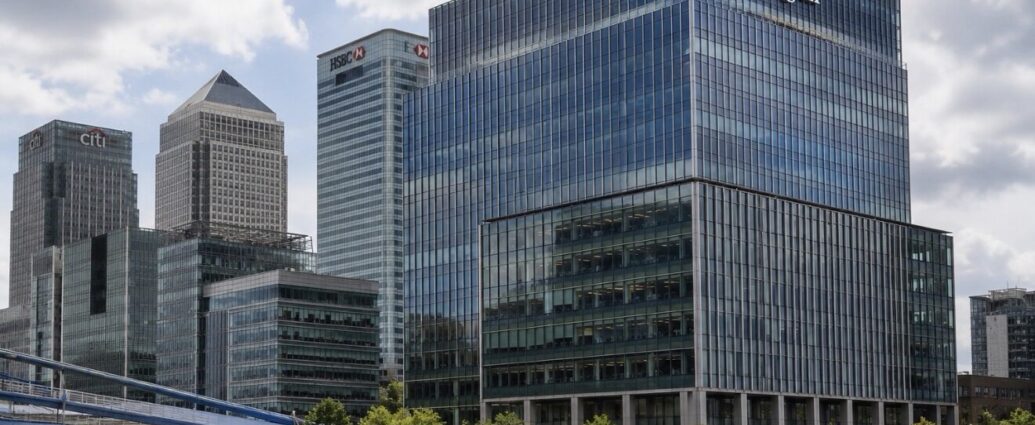
Dimon Warns JPMorgan May Scrap London Tower If U.K. Turns Hostile to Banks
JPMorgan Chase Chairman and Chief Executive Jamie Dimon warned that the bank could reconsider its planned multibillion-dollar London headquarters if the United Kingdom moves toward higher taxes on banks, delivering one of the sharpest public warnings yet from a major U.S. financial executive about the risks of political instability and anti-bank policy in Britain.
Speaking in a Bloomberg interview in Paris, Dimon said JPMorgan’s proposed new tower in Canary Wharf remains conditional on the U.K. maintaining a competitive and predictable financial-services environment.
The warning comes at a politically volatile moment for Prime Minister Keir Starmer, whose Labour Party suffered heavy losses in recent local elections and is now facing pressure from both the left and right.
The immediate concern for banks is a proposal backed by U.K. trade unions to raise the bank-profit tax surcharge from 3% to 8% on profits above £100 million.
That proposal has intensified fears across the City of London that a weakened Labour government — or a successor leadership more hostile to financial services — could shift sharply toward higher levies on banks.
Dimon framed the issue in unusually direct terms.
“I’ve always objected to the fact — we didn’t damage the U.K. in any way — we paid probably $10 billion back in extra taxes by now,” Dimon told Bloomberg’s Francine Lacqua. “I don’t think that’s right or fair. If that happens too much, we will reconsider.”
Dimon praised Starmer as “very smart” and offered qualified support for both the prime minister and Chancellor Rachel Reeves, who have largely pursued a market-friendly fiscal approach since taking office.
But his warning was clear: JPMorgan’s investment commitment depends on Britain not becoming hostile to banks.
The stakes for Canary Wharf are substantial.
JPMorgan announced last year that it planned to build a new 3 million-square-foot office tower in the London financial district, designed to house as many as 12,000 employees and serve as the bank’s U.K. headquarters.
The project is one of the largest single corporate real-estate commitments in Canary Wharf in more than a decade and was widely interpreted as a vote of confidence in London’s post-Brexit financial future.
A cancellation or delay would land hard across the U.K. property market, construction sector and broader financial-services industry.
The political backdrop has become increasingly unstable.
Starmer’s Labour Party has faced mounting internal dissent after local-election losses to Reform UK on the right and the Green Party on the left. Some Labour members of Parliament have publicly questioned Starmer’s leadership, while Health Secretary Wes Streeting has been widely discussed as a potential future challenger.
Bond markets have responded cautiously.
U.K. gilts sold off during the height of the political turbulence, pushing the 10-year yield higher, before stabilizing as Starmer signaled he intended to remain in office.
Investors have generally viewed the Starmer-Reeves leadership team as more fiscally disciplined than several possible alternatives, making Dimon’s warning politically useful for the current government as it resists pressure from Labour’s left flank.
The episode is part of a broader global pattern.
Major financial firms are increasingly warning cities and governments that high taxes, populist rhetoric and regulatory hostility can redirect investment elsewhere.
In the United States, Citadel founder Ken Griffin has made similar arguments while weighing real-estate and expansion decisions in New York amid disputes with city leaders over tax policy and political rhetoric.
Cities including Miami, Dallas, Charlotte, Nashville, Singapore, Dubai and Frankfurt have all benefited in recent years from concerns about taxes and regulation in traditional financial hubs such as New York and London.
JPMorgan’s Canary Wharf commitment had been a powerful counter-signal that London remained capable of attracting blue-chip financial investment even after Brexit.
Dimon’s latest comments now make that confidence explicitly conditional.
For investors, the warning adds another layer of risk to U.K. financial assets.
Shares of major British banks including HSBC, Barclays, Lloyds Banking Group and NatWest have already been trading with elevated political-risk premiums. Any concrete move toward higher bank taxes could weigh further on valuations and potentially accelerate capital allocation away from London.
For Starmer and Reeves, the message from Wall Street’s most influential banking executive is blunt but useful: Britain can either protect its financial-services competitiveness or risk watching some of the world’s largest banks redirect capital, jobs and real-estate commitments elsewhere.
JBizNews Desk
© JBizNews.com. All rights reserved. This article is original reporting by JBizNews Desk. Unauthorized reproduction or redistribution is strictly prohibited

Federal judge blocks US sanctions against UN’s Francesca Albanese
A federal judge on Wednesday temporarily blocked US sanctions against Francesca Albanese, a United Nations expert on the Palestinian territories, claiming that the Trump administration likely violated her free-speech rights by imposing the measures.
The sanctions barred her from entering the US and banking there.
Albanese, an Italian lawyer who is the UN special rapporteur on the Palestinian territories, recommended the International Criminal Court (ICC) pursue war-crimes prosecutions against Israeli and American nationals.
Albanese’s husband and daughter, who is a US citizen, sued the Trump administration in February, alleging that the US sanctions are “effectively debanking her and making it nearly impossible to meet the needs of her daily life.”
In a post on X/Twitter following the decision, Albanese thanked her family for “stepping up” in her defense.
BREAKING! US court ha suspended the US sanctions against me!
As the judge says: “Protecting the Freedom of speech is always just the public interest”.
Thanks to my daughter and my husband for stepping up to defend me, and everyone who has helped so far.Together we are One. pic.twitter.com/z6L3tb7Esp
— Francesca Albanese, UN Special Rapporteur oPt (@FranceskAlbs) May 13, 2026
US District Judge Richard Leon in Washington found that Albanese’s residency outside the US does not undercut her protections under the First Amendment of the US Constitution and that the Trump administration sought to regulate her speech because of the “idea or message expressed.”
Albanese has decried the sanctions as part of a broader US strategy to weaken international accountability mechanisms.
Albanese accused of support for terrorism in US sanctions
In July 2025, US Secretary of State Marco Rubio announced the sanctions against Albanese.
In a press release at the time, Rubio described Albanese’s engagement with the ICC as a “gross infringement on the sovereignty” of the US and Israel, given the fact that neither country is party to the Rome Statute, the treaty that established the ICC.
“Albanese has spewed unabashed antisemitism, expressed support for terrorism, and open contempt for the United States, Israel, and the West,” Rubio’s statement continued.
Rubio accused Albanese of “making extreme and unfounded accusations,” asserting that the US will not tolerate such campaigns of political warfare that threaten the sovereignty of the US and its allies.
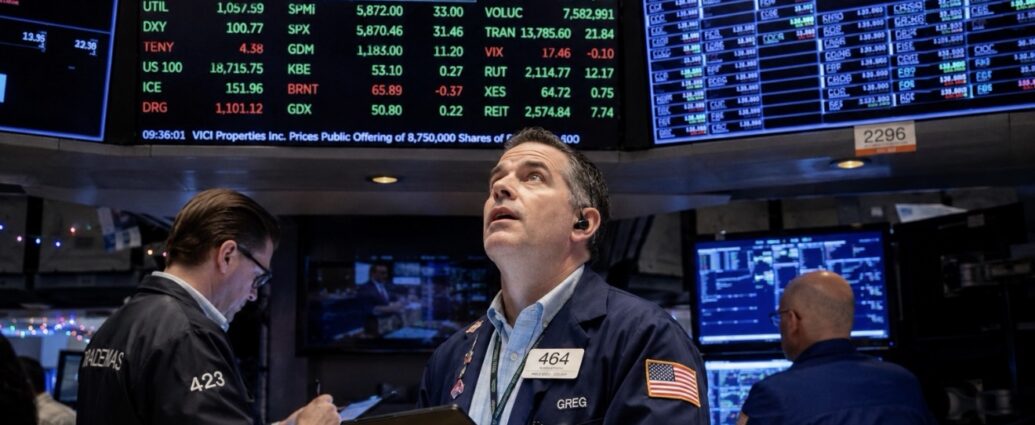
Stocks Hit New Records as Cisco AI Boom and Trump’s Beijing Deals Lift Markets
U.S. stocks powered deeper into record territory Thursday afternoon, with the Dow Jones Industrial Average crossing the 50,000 mark for the first time ever, as investors piled into technology and industrial shares following a blockbuster Cisco Systems earnings report and major commercial announcements tied to President Donald Trump’s Beijing summit with Chinese President Xi Jinping.
The rally accelerated after Cisco reported surging artificial-intelligence infrastructure demand and Trump announced China had agreed to purchase 200 Boeing aircraft alongside expanded purchases of U.S. soybeans and energy products during the high-profile state visit.
The S&P 500 climbed 0.74% to 7,499.63, while the Dow Jones Industrial Average rose 0.73% to 50,055.30. The Nasdaq Composite gained 0.88% to 26,633.44, with all three indexes setting fresh intraday highs. The Russell 2000 added 0.46%.
Wall Street’s rally came despite softer U.S. economic data that increasingly reinforced expectations the Federal Reserve under incoming Chair Kevin Warsh could begin cutting interest rates as early as June.
The Commerce Department reported April retail sales rose just 0.5%, sharply below March’s revised 1.6% surge, while the Labor Department said weekly jobless claims climbed to a five-week high of 211,000.
Rather than hurting markets, traders interpreted the slowdown as supportive for monetary easing.
“The market is now pricing a materially more dovish Fed path under Warsh,” said one senior New York-based macro strategist. “Investors see slower growth but not recession — which is the sweet spot for risk assets.”
Cisco Ignites AI Trade
The session’s biggest catalyst came from Cisco Systems, whose shares surged more than 14% after the networking giant delivered stronger-than-expected quarterly results and sharply raised its AI infrastructure outlook.
Cisco reported fiscal third-quarter revenue of $15.8 billion, up 12% year over year, while adjusted earnings reached $1.06 per share — both ahead of Wall Street expectations.
More importantly for investors, the company disclosed $5.3 billion in AI infrastructure orders from hyperscale cloud customers and raised its full-year AI order forecast to $9 billion from $5 billion previously.
Chief Executive Chuck Robbins told analysts the industry has entered a “networking supercycle” fueled by exploding AI computing demand.
The company simultaneously announced roughly 4,000 job cuts as it shifts investment toward AI networking, optical systems, cybersecurity, and custom silicon.
Cisco’s report lifted the broader AI infrastructure complex. Arista Networks jumped roughly 5%, while Juniper Networks, Ciena, Broadcom, NVIDIA, and optical networking suppliers also advanced sharply.
NVIDIA rose 2.29% as Chief Executive Jensen Huang, traveling with Trump’s delegation in Beijing, held meetings with Chinese officials regarding semiconductor policy and AI cooperation.
Trump’s Beijing Visit Boosts Industrials
Industrial and aerospace shares also gained momentum following major commercial announcements tied to Trump’s summit in Beijing.
Boeing climbed after Trump disclosed China agreed to purchase 200 Boeing 737 aircraft — the country’s largest Boeing order since 2017.
The deal marks a significant thaw in U.S.-China commercial aviation ties following years of geopolitical friction and regulatory disputes.
“Large aircraft orders carry enormous symbolic and economic value,” said one aviation analyst. “This is not just about planes — it signals reopening commercial channels between Washington and Beijing.”
GE Aerospace gained on expectations of higher engine demand tied to the Boeing deal, while industrial names including Caterpillar also recovered.
Technology executives accompanying Trump’s delegation continued to draw attention from investors. Apple rose 1.38% as Chief Executive Tim Cook participated in meetings, while Tesla advanced 2.73% with Elon Musk joining the delegation.
Financial firms tied to the trip also traded modestly higher, including Goldman Sachs, Citigroup, and BlackRock.
Markets Look Past Global Risks
Despite continued geopolitical instability, markets largely shrugged off escalating global tensions.
Crude oil prices eased slightly, with West Texas Intermediate trading near $100.58 per barrel and Brent crude remaining above $105, even as the U.S.-Israeli conflict with Iran continued and Cuba announced it had fully exhausted its diesel and fuel oil reserves overnight.
Gold prices slipped 0.45% as investors rotated toward equities and risk assets.
The CBOE Volatility Index (VIX) — Wall Street’s preferred fear gauge — remained relatively subdued near 18, suggesting options markets see limited immediate stress despite mounting international flashpoints.
Bitcoin continued its rebound, climbing above $80,800.
Focus Turns to Consumers and the Fed
Attention now shifts toward next week’s earnings reports from Walmart, Target, and Home Depot, which investors increasingly view as critical tests of consumer resilience amid slowing growth and elevated prices.
Markets are also closely watching the Federal Reserve transition as Kevin Warsh formally assumes the Fed chairmanship Friday ahead of the central bank’s June 16-17 meeting.
Bond yields drifted lower Thursday as traders increased bets on rate cuts later this summer.
For now, Wall Street’s message remains clear: investors believe AI spending, improving U.S.-China commercial relations, and the prospect of lower interest rates continue to outweigh geopolitical risks and slowing economic momentum.
JBizNews Desk
© JBizNews.com. All rights reserved. This article is original reporting by JBizNews Desk. Unauthorized reproduction or redistribution is strictly prohibited.