One Polymarket wallet pocketed nearly $500,000 betting on the June 2025 US strike on Iranian nuclear facilities in the hours before it happened.

A new report says it was not an isolated case.

The Anti-Corruption Data Collective reviewed all 435,672 markets settled on Polymarket between January 2021 and mid-March 2026, covering $54.4 billion in wagers. It found low-probability bets in war markets win at more than triple the rate prices suggest they should.

War Markets Are The Outlier

Longshot bets, defined by ACDC as wagers of $2,500 or more at prices of 35 cents or lower, win 14% of the time across all Polymarket categories. In military and defense markets, the win rate climbs to 51.8%.

Political markets overall, including elections and politician speech, sit closer to 25%.

Roughly $35 million has been wagered on winning longshot bets in political markets since 2021. About $25 million of that came in the first 10 weeks of 2026 alone, exceeding the entire 2025 total.

Full story available on Benzinga.com

This post was originally published here

Newrez LLC released results from an internal review of about 1.2 million mortgages it services, showing homeowners insurance bills climbed sharply from 2021 through 2025. The company said the average annual premium rose 64% over that span, and the rate of increase slowed in 2025 compared with prior years.

Newrez, which is owned by Rithm Capital Corp. (NYSE:RITM), said the analysis excluded lender‑placed coverage and focused on premiums paid from escrow accounts at each year‑end.

Homeowners insurance costs surge

According to Newrez’s portfolio data, the average annual homeowners insurance premium increased to $2,625 by year‑end 2025 from $1,597 at year‑end 2021, a 64% jump. Premium hikes were in the double digits in 2022, 2023 and 2024 before easing to a 10% gain in 2025, the slowest rate of increase since 2021.

Shane Ross, Newrez’s head of servicing, tied the run‑up to weather‑related losses and higher rebuilding expenses, saying homeowners insurance has become a much larger component of housing costs as more frequent severe weather and higher construction costs put pressure on insurers.

Ross …

Full story available on Benzinga.com

This post was originally published here

On Thursday, ConocoPhillips (NYSE:COP) discussed first-quarter financial results during its earnings call. The full transcript is provided below.

This transcript is brought to you by Benzinga APIs. For real-time access to our entire catalog, please visit https://www.benzinga.com/apis/ for a consultation.

Access the full call at https://edge.media-server.com/mmc/p/5uk5zwys/

Watch this earnings call stream on YouTube.

Summary

ConocoPhillips reported strong first-quarter 2026 results with $2.4 billion in free cash flow and $2 billion returned to shareholders.

The Willow project in Alaska reached 50% completion, with significant progress in construction and exploration activities.

A third-party tolling agreement was executed in Equatorial Guinea, extending the LNG facility’s life into the next decade.

The company updated its guidance due to macroeconomic volatility, with an expected production midpoint of 2,310,000 barrels of oil equivalent per day for the year.

ConocoPhillips maintains its commitment to returning 45% of CFO to shareholders and is increasing Permian activity to sustain operational efficiency.

Management expressed confidence in achieving a $1 billion run rate in cost savings by year-end 2026.

The company’s LNG strategy is progressing well, with existing contracts and growing interest in unplaced volumes amid a tightening global market.

The sentiment was cautiously optimistic, acknowledging geopolitical risks but emphasizing strategic execution and financial resilience.

Full Transcript

OPERATOR

Welcome to the first quarter 2026 ConocoPhillips earnings conference call. My name is Liz and I will be your operator for today’s call. At this time all participants are in a listen only mode. Later, we will conduct a question and answer session. During the question and answer session, if you have a question, please press star 1-1 on your touchtone phone. I will now turn the call over to Guy Baber, Vice President, Investor Relations. Guy, you may begin.

Guy Baber (Vice President, Investor Relations)

Thank you Liz and welcome everyone to our first quarter 2026 earnings conference call. On the call today are several members of the ConocoPhillips leadership team including Ryan Lance, Chairman and CEO Andy O’Brien, Chief Financial Officer and Executive Vice President of Strategy and Commercial Nick Olds, Executive Vice President of lower 48 and global HSE and Kirk Johnson, Executive Vice President of Global Operations and Technical Functions. Ryan and Andy will kick off the call with opening remarks after which the team will be available for your questions. For the Q&A, we will be taking one question per caller a few quick reminders. First, along with today’s release, we publish supplemental financial materials and a slide presentation which you can find on the Investor Relations website. Second, during this call we will be making forward looking statements based on current expectations. Actual results may differ due to factors noted in today’s release and in our periodic SEC filings. We will make reference to some non Generally Accepted Accounting Principles (GAAP) financial measures today. Reconciliations to the nearest corresponding Generally Accepted Accounting Principles (GAAP) measure can be found in today’s release and on our website. With that, I’ll turn the call over to Ryan.

Ryan Lance (Chairman and CEO)

Thanks Guy and thank you to everyone for joining our first quarter 2026 earnings conference call. As we begin, I want to start by acknowledging the ongoing conflict in the Middle East. Our thoughts are first and foremost with our employees, our partners and the broader communities directly affected by these events. The supply curtailment and ensuing macro volatility have not only impacted energy markets but are also being felt across the global economy. Periods of volatility in our industry are inevitable, but this conflict reinforces the importance of both US and global energy security. We certainly hope for a swift and diplomatic solution that resolves the conflict, protects U.S. interests, opens commerce and provides stability in the region. Now, turning to the first quarter results, we delivered another strong quarter of strong financial and operational performance. We generated $2.4 billion of free cash flow and returned $2 billion of capital to our shareholders in the lower 48 where we have the deepest and highest quality inventory of any operator. We continue to improve our peer leading capital efficiency, meaningfully increasing the number of 3-mile-plus laterals in our program in Alaska, we’re winding down another successful winter construction season with the Willow project now 50 percent complete. Our teams have completed the project’s gravel scope, an important milestone and mobilization for summer work is underway. We also recently completed our four well exploration program in Alaska, the first in a multi year program to leverage existing infrastructure to unlock additional low cost of supply resource consistent with our long term track record. It’s still early days but we are excited about the opportunity and the results and more low cost of supply resources coming to the greater Willow area. As the broader industry increasingly recognizes Alaska’s unique resource potential, we believe our long standing position, legacy infrastructure investments and technical expertise provide us with a meaningful competitive advantage. Turning to lng, we recently executed a third party tolling agreement in Equatorial guinea extending the life of the LNG facility well into the next decade. This is a strategically located asset in a gas rich part of the world surrounded by discovered resource which supports its long term potential. Additionally, the Port Arthur LNG project continues to progress very well with first LNG expected next year. Turning to the outlook While ongoing events have significantly tightened crude oil and LNG markets, the macro environment remains volatile and pretty impossible to predict. Amid such uncertainty, it’s critical our priorities remain steadfast. They are clear, consistent and they are durable. They have served us well for the last decade and will continue to guide us into the future. We will continue delivering base dividend growth competitive with the top quartile of the S&P 500. We will maintain and protect our investment grade balance sheet. Recall last year we were one of the only companies that delivered on our shareholder return objectives and strengthened the balance sheet. We’ll continue returning significant CFO to shareholders right off the top. We’ve averaged about 45% over the past decade. Through the cycles and after meeting all these priorities, we’ll evaluate disciplined reinvestment for growth. In terms of how these priorities are translating to our 2026 plan, our expected CFO generation is up materially. Given our unhedged oil and LNG torque. Shareholders will directly share in this upside. With our 45% of CFO return of capital objective. We have also added a modest amount of Permian activity over the second half of the year to maintain our operational efficiency into 2027. Long term ConocoPhillips continues to offer a compelling value proposition that is differentiated in the market. We believe we have the highest quality asset base in our peer space. As we have said before, we are resource rich in a world that is looking increasingly resource scarce. This is a distinguishing competitive advantage. We have the deepest and Most capital efficient lower 48 inventory in the sector and outside the lower 48 we have an abundance of diversified low cost to supply legacy assets and we are uniquely investing in our portfolio to drive peer leading free cash flow growth. We’re on track to deliver our previously announced 7 billion free cash flow inflection by 2029 driven by our cost reduction efforts, LNG projects and Willow. So with that let me turn the call over to Andy to cover our first quarter performance and updated outlook in more detail.

Andy O’Brien (Chief Financial Officer and Executive Vice President of Strategy and Commercial)

Thanks Ryan. Starting with our first quarter performance, we produced 2.309 million barrels of oil equivalent per day. This includes the impacts of the Middle east conflict on Qatar volumes and higher royalty rates at Surmont from higher oil prices. These impacts were partially offset by strong performance across our lower 48 and international portfolio. In the lower 48 we produced 1,453,000 barrels of oil equivalent per day representing 4% year over year growth. On an underlying basis, we generated $$1.89 per share in adjusted earnings and $$5.4 billion of CFO capital. Expenditures were $2.9 billion. We returned $2 billion to our shareholders during the first quarter, 1 billion in ordinary dividends and 1 billion of share repurchases. We ended the quarter with cash and short term investments of $$6.7 billion as well as 1.2 billion in liquid long term investments. Turning to our outlook, we are updating our guidance to account for the impact of recent macro events and the uncertainty surrounding the Middle east conflict. To be clear, this is not a call on when we think the conflict will resolve. We’re simply trying to provide a clear and transparent framework for you to model and assess the underlying performance of the company for production. The midpoint of our annual guidance is updated at 2,310,000 barrels of oil equivalent per day. This reflects a 20,000 barrel of oil equivalent per day annual impact due to CASA being excluded from second quarter production guidance and a 15,000 barrel of oil current per day annual royalty rate adjustment at Surmont due to higher prices. We’ve made no other adjustments to our annual production guidance. The midpoint of our second quarter production guidance is 2,200,000 barrels of oil equivalent per day which reflects the full exclusion of Qatar production from guidance for the quarter. The Cermont royalty rate adjustment and planned second quarter maintenance. Moving to operating costs full year guidance of $10.2 billion is unchanged reflecting a $400 million reduction from 2025 due to the benefits of our cost reduction and margin enhancement program. We made strong progress in the first quarter and we remain confident in realizing the full $1 billion run rate by year end. For capital spending, we’re updating our guidance to a range of 12 to $12.5 billion versus our prior guidance of about $12 billion representing a 2% increase at the midpoint. This increase is due to slightly more Permian activity over the second half of the year. We’re adding a rig to keep pace with the completion efficiencies and we expect higher levels of non operated spend. These modest activity additions will maintain our operational continuity into 2027. Additionally, we’re incorporating a guidance range to capture the uncertainty around the macro environment as well as the Middle east conflict. Specifically, as it pertains to timing for NFE and NFF spending to wrap up, we delivered strong first quarter results. We executed well financially and operationally. We continue to advance our strategy and amid a volatile macro environment, we remain committed to clear, consistent and durable priorities that have served us well for the last decade. As Ryan mentioned, our expected CFO is up materially from the beginning of the year. We remain unhedged on oil and LNG to ensure we capture the price upside with 40% of our crude production linked to premium markets such as ANS and Dated Brent and shareholders are directly participating in this upside as we remain committed to returning 45% of our CFO consistent with our long term track record. Looking ahead, we remain focused on exiting our plan and enhancing our differentiated investment thesis unmatched portfolio quality including leading lower 48 inventory debt, attractive long cycle investment, strong return on and of capital and driving sector leading free cash flow growth through the end of the decade. That concludes our prepared remarks. I’ll now turn it over to the operator to start the Q and A.

OPERATOR

Thank you. We will now begin the question and answer session. In the interest of time we ask that you limit yourself to one question. If you have a question, please press 11 on your touchtone phone. If you wish to be removed from the queue, please press 11 again. If you’re using a speakerphone, you may need to pick up the handset first before pressing the numbers. Once again, if you have a question, please press star 1-1 on your touchtone phone. Our first question comes from Scott Hanold from RBC Capital Markets. Your line is now open.

Scott Hanold (Equity Analyst)

Yeah, good afternoon. Thank you. Hey, a lot happening obviously in the macro front and I know you all do a lot of work on the oil macro in addition to obviously having feelers out there can you give us a sense of your view of what’s happened in the market? If you’ve got any view of physical versus the financial position of oil and how you expect operators to act and react? It sounds like you guys are going to maintain operational efficiency, but it’ll be good to see if you’ve got a view on what you’re seeing and hearing from others.

Andy O’Brien (Chief Financial Officer and Executive Vice President of Strategy and Commercial)

Yeah, thanks, Scott. Maybe I’ll let Andy talk a little bit about some of the numbers that we see out there, then maybe I come back and address some of your broader set questions after that. Thanks, Ryan. And morning, Scott. Yeah, I’ll start with, I think you said this for me. There’s certainly a lot of moving pieces out there right now. And I’ll summarize sort of our view of the world. I’m not sure it’s too different to others, but I think it’s good to summarize it. For about two months now, we’ve had about 10 million barrels per day a day of production offline. That even factors in the redirected volumes. In countries like Saudi Arabia, we have seen inventory and Strategic Petroleum Reserve (SPR) releases that have partially backfilled some of that lost supply. And the ongoing Strategic Petroleum Reserve (SPR) releases that have been announced, they’ll certainly help through the May, July time frame. But I do think it’s really important for people to understand that the brunt of the supply shortfall is currently being absorbed by refinery run cuts and demand curtailments. If you include the Persian Gulf refineries that have been damaged, the total global refinery run cuts right now probably amount to around 8 million barrels a day. Now as we look forward from here, we think the biggest challenge we’re about to face is that the markets sort of had a bit of a grace period initially when the tankers that left the Persian Gulf in late February were still on the water. Now all of those have reached their destination, the impacts of the lost supply is going to start to become more apparent. We could possibly see from here now inventory draws really start to accelerate. You’ve already seen that governments in over a dozen countries are implementing policies to ration or otherwise reduce demand in advance of physical shortages. So given those factors I’ve just described, we are downgrading our view of global oil demand to be flat year over year with probably a bit more risk to the downside if the conflict goes on. And probably one final point I’d make before sort of passing it off to Ryan is despite efforts that are ongoing to manage demand, we are going to start to see some import dependent Countries potentially start to face critical shortages as we get into the June, July time frame. So I’ll probably stop there and let Ryan sort of add a bit more to that.

Ryan Lance (Chairman and CEO)

Yeah, maybe. Scott, how are people acting? I think people are watching pretty closely to see what happens. Maybe a little bit of short cycle investments and I’m sure that’ll come up in our call with the capital. We’re just trying to maintain the efficiency gains that we’ve got in the lower 48 and we won’t be drilled out of some of our OVO activity, but we’re trying to look longer term as well. As Andy said, assess the supply and the demand fundamentals. I think at a minimum we think the floor probably is going to have to raise up a little bit, at least relative to where we were before the conflict started. Recall we had a mid cycle ti price of about 65 and that’s we believe that’s probably going to come up with a floor. But we’re trying to assess right now given the demand dynamics and the supply dynamics but what long term effect that’s going to have on what we would call a mid cycle equilibrium price and for how long that might persist. And recall we were pretty constructive over the last few years before this got started with some uncertainty around how the physical and paper markets were acting a little bit and this has just accelerated a lot of that. But certainly think the floor probably has to come up to account for the changes that have occurred over the last couple of months.

OPERATOR

Our next question comes from Neil Mehta from Goldman Sachs. Your line is now open.

Neil Mehta (Equity Analyst)

Yeah, Ryan, Andy, great comments there and definitely our thoughts are with your people in the region. I want to pivot over to Alaska and we went through winter construction season here and so love a mark to market on how those plans progressed. Where do you stand in terms of Willow construction and what are the big milestones as we continue to de risk this project and get to that free cash flow inflection?

Ryan Lance (Chairman and CEO)

Good morning Neil. Thanks for the question. We’ve had a really strong showing here just in the last six months in Willow, so I’ll probably address maybe a couple things. I’ll touch on Willow directly your question and then very related to that, given it is the winter season, we’ve also had a really strong showing in exploration as well. So I’ll take you through a little bit of how we’re seeing these projects progress starting with Willow. As mentioned in the opening remarks, we are in fact at 50% complete on the project and that achieving that requires a collection of key milestones that our teams have been able to accomplish and get behind us here. And this winter season in …

Full story available on Benzinga.com

This post was originally published here
Hyatt Hotels Corp. (NYSE:H) shares rose Thursday after the company reported first-quarter 2026 results that topped expectations, supported by strong global demand and continued expansion. However, some regional softness weighed on sentiment.

Quarterly Details

The company reported first-quarter adjusted earnings per share of 63 cents, beating the analyst consensus of 56 cents. Quarterly sales of $1.748 billion outpaced the Street view of $1.738 billion.

Comparable system-wide hotel RevPAR increased 5.4% compared with the first quarter of 2025. Comparable system-wide all-inclusive resorts net package RevPAR increased 7.4%.

Net rooms growth reached 5.0% over the trailing twelve months, while the pipeline of executed management or franchise contracts rose 9.4% to about 151,000 rooms.

Adjusted EBITDA was $266 million, an increase of 2.1%, compared to the first quarter of 2025.

Gross fees increased 8.6% compared with the first quarter of 2025.

Incentive management fees rose …

Full story available on Benzinga.com

This post was originally published here

CVR Energy (NYSE:CVI) released first-quarter financial results and hosted an earnings call on Thursday. Read the complete transcript below.

This content is powered by Benzinga APIs. For comprehensive financial data and transcripts, visit https://www.benzinga.com/apis/.

The full earnings call is available at https://events.q4inc.com/attendee/598656914

Summary

CVR Energy reported a first-quarter 2026 consolidated net loss of $160 million, with losses per share at $1.91 and an EBITDA loss of $52 million, primarily due to unrealized derivative losses and changes in RFS liability.

The company announced a $0.10 per share dividend for the first quarter, reflecting a commitment to balanced debt reduction and shareholder returns.

Operational highlights included a crude utilization rate of 97% and ammonia plant utilization at 103%, with the company positioned to capture improved margins due to global supply chain disruptions.

Management emphasized a focus on deleveraging and indicated continued interest in M&A opportunities, while also navigating a volatile market environment.

Future guidance for the second quarter of 2026 includes expected throughput of 200,000 to 215,000 barrels per day in the petroleum segment and an ammonia utilization rate between 95% and 100% in the fertilizer segment.

Full Transcript

Regina (Conference Operator)

Hello and thank you for standing by. My name is Regina and I will be your conference operator today. At this time I’d like to welcome everyone to the first quarter 2026 CVR Energy Inc. Earnings conference call. All lines have been placed on mute to prevent any background noise. After the speaker’s remarks, there will be a question and answer session. If you would like to ask a question during this time, simply press Star then the number one on your telephone keypad. To withdraw your question, press Star one. Again, we ask that you please limit your questions to one and one follow-up I’d now like to turn the conference over to Richard Roberts, vice president of FP&A and Investor Relations. Please go ahead.

Richard Roberts (Vice President of FP&A and Investor Relations)

Good afternoon everyone. We very much appreciate you joining us this afternoon for our CVR Energy first quarter 2026 earnings call. With me today are Mark Pytosch, our Chief Executive Officer, Dane Newman, our Chief Financial Officer, Mike Wright, our Chief Operating Officer, Travis Capps, our Chief Commercial Officer and other members of management. Prior to discussing our 2026 first quarter results, let me remind you that this conference call may contain forward looking statements as that term is defined under federal securities laws. For this purpose, any statements made during this call that are not statements of historical facts may be deemed to be forward looking statements. You are cautioned that these statements may be affected by important factors set forth in our filings with the Securities and Exchange Commission and in our latest earnings release. As a result, actual operations or results may differ materially from the results discussed in the forward looking statements. We undertake no obligation to publicly update any forward looking statements, whether as a result of new information, future events or otherwise, except to the extent required by law. This call also includes various non GAAP financial measures. The disclosures related to such non GAAP measures, including a reconciliation to the most directly comparable GAAP financial measures, are included in our 2026 first quarter earnings release that we filed with the SEC and Form 10-Q for the period and will be discussed during the call. With that said, I’ll turn the call over to Mark.

Mark Pytosch (Chief Executive Officer)

Thank you Richard Good afternoon everyone and thank you for joining our earnings call. In the first quarter our operations performed well with crude utilization of 97% and ammonia plant utilization of 103%. Major geopolitical events drove volatility in energy and fertilizer markets which have set up attractive market opportunities for the balance of 2026. Given the disruptions in global supply chains with loss of production and lack of product movement for refined products and fertilizer, CVR Energy is well positioned to improve our margin capture for the balance of the year. We are pleased to announce the first quarter 2026 dividend of $0.10 per share and we believe our prospects should allow for balanced debt reduction and capital returns to shareholders as we move forward. Now let me turn the call over to Dane to discuss our financial highlights.

Dane Newman (Chief Financial Officer)

Thank you Mark Good afternoon everyone. For the first quarter of 2026 our consolidated net loss was 160 million, losses per share were $1.91 and EBITDA was a loss of 52 million. Our first quarter results include unrealized derivative losses of 158 million, which primarily relate to NYMEX gasoline and diesel crack spread swaps entered into during the quarter against expected future production at a crack spread value of 447 million through 2027, which I will discuss further in our petroleum segment results. In addition, our results also include an unfavorable change in our RFS liability of 51 million and favorable inventory valuation impacts of 120 million. Excluding the above mentioned items, adjusted EBITDA for the quarter was 37 million and adjusted losses per share were $1.24. Adjusted EBITDA in the Petroleum segment was a loss of $50 million for the first quarter compared to a loss of $30 million for the first quarter of 2025. Increased rent expenses, higher operating costs and realized derivative losses drove the majority of the decrease from the prior year period. Combined total throughput for the first quarter of 2026 was approximately 214,000 barrels per day. Period utilization for the quarter was approximately 97% of nameplate capacity and light product yield was 93% on total throughput volumes. Benchmark cracks for the first quarter of 2026 increased from the prior year period, with the Group 3211 averaging $21.58 per barrel compared to $17.65 per barrel in the first quarter of 2025. Our first quarter realized margin adjusted for unrealized derivative losses, the change in RFS liability and inventory valuation was $4.72 per barrel, representing a 22% capture rate on the Group 3 211. Benchmark RIN prices increased significantly from the first quarter 2025 levels, more than doubling to almost $9.50 per barrel for the first quarter of 2026. Net RINs expense for the quarter excluding the change in RFS liability was 143 million or $7.37 per barrel, which negatively impacted our capture rate for the quarter by approximately 34%. EPA has repeatedly stated that the cost of RINs is ultimately passed through to consumers at the pump. The decision to establish the highest RVO in history through the recent set to rule has driven RIN prices significantly higher, which has in turn raised the price of gasoline. This is in direct conflict with the Administration’s stated goal of lowering fuel costs for American consumers. RIN prices have increased more than 75% since the beginning of the year, in addition to the 18% increase in the RVO, currently adding 25 to 30 cents to every gallon of fuel purchased in America. If the Administration is serious about lowering fuel prices, it should start with the rfs. The estimated accrued RFS obligation on the balance sheet was 204 million at March 31, representing 113 million RINs mark to market at an average price of $1.80. As EPA has not yet ruled on our pending 2025 petition, we’ll we will continue to recognize 100% of Wynnewood Refining Company’s RIN obligation in our financials, which for the first quarter of 2026 was approximately 52 million. Had Winniewood Refining Company received the 100% SRE we believe it is entitled to, our consolidated capture rate for the quarter would have improved by approximately 12%. Once again, EPA has missed a deadline on ruling on Wynnewood Refining Company’s 2025 SRE petition. Will the EPA ever meet a deadline? Our first quarter 2026 results included derivative losses totaling 182 million. As previously discussed, 158 million of this loss was the unrealized mark to market change in all of our open crack spread swap positions as of March 31, and our physical positions intended to offset are expected to be sold as the swap contracts expired through 2027. Given this disconnect, we do not view the impact of the unrealized loss as a …

Full story available on Benzinga.com

This post was originally published here
“Big Short” investor Steve Eisman disclosed Thursday he is shorting credit scoring company Fair Isaac (NYSE:FICO), accusing the firm of years of aggressive price hikes that have alienated mortgage lenders.

Speaking on CNBC’s “Squawk Box,” the former Neuberger Berman portfolio manager said FICO has raised prices roughly 500% over many years and “ticked off literally everybody in the lending world.”

The named short follows Eisman’s warning last week about the next credit crisis brewing inside private equity’s software loan book.

Why Fair Isaac Is In Trouble

Fair Isaac built the FICO score, the three-digit number used in roughly 90% of U.S. consumer lending decisions, and earns royalties every time a lender pulls one.

That near-monopoly is what gave the company its pricing power, and what VantageScore is now contesting.

Eisman argued the math has shifted against the credit-scoring incumbent. FICO has cut prices in …

Full story available on Benzinga.com

This post was originally published here
Opendoor Technologies Inc. (NASDAQ:OPEN) shares fell during Thursday’s session. The real estate tech firm faces a difficult mix of hot inflation data and heavy short-seller activity.

• Opendoor Technologies shares are retreating from recent levels. What’s weighing on OPEN shares?

Macro Headwinds Dampen Sentiment

The Bureau of Economic Analysis reported Thursday that the Core PCE price index — the Fed’s favorite inflation gauge — hit 3.2% in March.

This acceleration from 3% in February suggests persistent pricing pressure. Additionally, first-quarter gross domestic product (GDP) grew at a 2% annualized rate, missing the 2.3% economist forecast.

These figures indicate a cooling economy paired with sticky …

Full story available on Benzinga.com

This post was originally published here

Southern (NYSE:SO) held its first-quarter earnings conference call on Thursday. Below is the complete transcript from the call.

This content is powered by Benzinga APIs. For comprehensive financial data and transcripts, visit https://www.benzinga.com/apis/.

View the webcast at https://events.q4inc.com/attendee/395018905

Summary

Southern reported adjusted earnings for the first quarter of 2026 above estimates, with significant year-over-year growth across its businesses.

The company signed contracts for 1.9 gigawatts of customer load, bringing the total to over 11 gigawatts, focusing on high credit quality hyperscalers.

Southern announced $26.5 billion in loan agreements with the Department of Energy, expected to save $7 billion over 30 years.

Adjusted EPS for Q1 2026 was $1.32, $0.12 above estimates, driven by customer growth and increased usage, notably from data centers.

The company initiated an all-source RFP to procure 2-6 gigawatts of new generation resources projected for 2032-2033.

Southern Power plans to add 400 megawatts of capacity upgrades, with potential for an additional 300 megawatts, adding $700 million to the capital plan.

The Board approved an $0.08 increase in the annual dividend, marking 25 consecutive annual increases.

Management emphasized the importance of rate stability and customer benefits from growth through strategically structured contracts.

Full Transcript

Christine (Conference Operator)

Good afternoon, My name is Christine and I’ll be your conference operator today. At this time I would like to welcome everyone to the Southern Company first quarter 2026 earnings call. All lines have been placed on mute to prevent any background noise. After the speaker’s remarks, there will be a question and answer session. If anyone should require operator assistance during the conference, please press Star 0 on your telephone keypad. As a reminder, this conference is being recorded. I would now like to turn the call over to Greg McLeod, Director of Investor Relations. Please go ahead sir.

Greg McLeod (Director of Investor Relations)

Thank you. Christine, good afternoon and welcome to Southern Company’s first quarter 2026 earnings call. Joining me today are Chris Womack, Chairman, President and Chief Executive Officer of Southern Company and David Perroch, Chief Financial Officer. Let me remind you that we will make forward looking statements today. In addition to providing historical information, various important factors could cause actual results to differ materially from those indicated in the forward looking statements, including those discussed in our Form 10K, Form 10Q and subsequent securities filings. In addition, we will present non-GAAP financial information on this call. Reconciliations to the applicable GAAP measure are included in the financial information we released this morning as well as the slides for this conference call which are both available on our investor relations website at investor.southerncompany.com at this time, I’ll turn the call over to Chris. Thank you Greg Good afternoon and thank you for joining us today. As you can see from the materials that we released this morning, we reported adjusted earnings results the first quarter above our estimate with year over year growth reflected across all our major businesses. That performance reflects premium execution and the strength of our strategy to serve the phenomenal growth we’re seeing across the Southeast with reliable and affordable energy while delivering durable long term value for shareholders. We continue to see extraordinary growth and economic development opportunities as our service territories attract investment people and jobs at a pace few regions can match. As we previously highlighted, a substantial portion of this growth is driven by projected demand from large load customers. The demand for power across our electric service territories has culminated in 23 gigawatts of contracted or late stage load in just the last two months. We assigned contracts for another 1.9 gigawatts of customer load with high credit quality hyperscalers bringing our fully contracted large load agreements to more than 11 gigawatts across our electric subsidiaries. These bilateral negotiated agreements are structured so that customers driving incremental demand cover the full share of the cost to serve them, helping to assure this growth benefits all customers. We continue to execute on our plans to serve growth and our straightforward approach protects existing customers. We invest in line with demand to serve growth that enables us to deliver regular, predictable and sustainable results while providing meaningful benefits to the customers and communities we are privileged to serve. Southern Company continues to be uniquely positioned to do this because of our scale, our experience and our expertise, all supported by constructive, long standing regulatory frameworks. At Southern Company we are capitalizing on transformative growth opportunities while delivering energy reliability and rate stability as energy demands. Growth with base rates held stable in Alabama and Georgia until at least 2010 and 2029, along with the recent filing to lower rates in Georgia associated with the recovery of fuel and storm costs, we are demonstrating the value of this approach. Rate stability for our customers is a purposeful objective supported by our constructive, orderly planning and procurement processes, cost management and thoughtful financing. This same built for purpose approach also creates the potential for additional capital investment to serve incremental growth opportunities under established regulatory processes. We have routinely demonstrated as growth opportunities present themselves that Southern Company has the ability to convert these opportunities into value through enhanced operations and grid improving infrastructure investments for the benefit of customers and investors alike. The construction of many of these investments is well underway. In the last two months, Georgia Power achieved commercial operations for two battery energy storage systems providing nearly 200 megawatts of capacity, representing an important step forward in advancing reliable, sustainable energy solutions across the state. These projects are the first of several resources included within our 10 gigawatt portfolio of approved new generation resources that are in development to power the extraordinary productive growth in our region, including multiple battery systems and natural gas combustion turbines that are projected to be online later in 2026 and 2027.. Before I turn the call over to David for our financial update, I’d like to highlight the recently announced historic $26.5 billion in loan agreements with the Department of Energy that will benefit customers across Alabama and Georgia for decades as we expect these loans to translate into meaningful long term customer savings while reducing pressure on our capital market needs. Over the approximately 30 year term of the Department of Energy loans, this lower cost financing is projected to generate cumulative savings of $7 billion for customers. David, I’ll now turn the call over to you for a financial update.

David Perroch (Chief Financial Officer)

Thanks Chris and good afternoon everyone. For the first quarter of 2026, our adjusted EPS was $1.32 per share, $0.09 higher than the first quarter of 2025 and $0.12 above our estimate. The primary drivers of our performance for the quarter compared to last year were meaningful customer growth and increased usage, including from data centers. at our state-regulated electric utilities. Additionally, increased revenues in our gas utilities and higher energy related revenues in our unregulated businesses including Southern Power were positive drivers in the first quarter. This was partially offset by higher financing costs and milder weather year over year compared to the first quarter of 2025. A complete reconciliation of year over year earnings is included in the materials we released this morning. Our adjusted EPS estimate for the second quarter is $1 per share. Turning now to retail electricity sales first quarter weather normal retail electricity sales to all classes were 2.3% higher than the first quarter of 2025. This represents the highest total retail sales growth that we’ve seen the first quarter in recent history. In fact, sales to all three customer classes were up year over year, including residential where we saw 46,000 new customers added to our system as positive trends and net migration continue. The commercial class grew 4.5% in the first quarter when adjusted for weather, bolstered by ongoing growth in data centers.. Data center usage saw material expansion in the quarter up 42% year over year, primarily due to accelerating usage ramps at large load facilities. Our industrial sales grew 1.5% with particular strength in several segments, including robust activity at multiple steel manufacturers in Alabama. More broadly, the Southeast continues to stand out as one of the most attractive economic regions in the country, driven by a diverse mix of advanced manufacturing technology and other energy intensive industries. In the first quarter alone, there were economic development announcements for over $7 billion of capital investment and the creation of nearly 4,000 permanent jobs in our region, including a global biopharmaceutical manufacturing project north of Atlanta bringing $2 billion of investment and over 300 jobs to Georgia. The sustained higher high quality growth reinforces why demand in this region of remains strong and visible, underscoring the region’s tremendous opportunity for future growth. Outside the Southeast, we continue to see momentum in our gas utilities, including a recently announced Hyundai investment in Illinois that is expected to bring 2,500 jobs and $500 million of investment to the Nicor Gas service territory. As we look ahead, the interest from large load customers in our electric service territories, which includes data centers. and large manufacturers, remains strong with a prospective pipeline of well over 75 gigawatts. And we continue to make incredible progress advancing projects through stages in our large load process to finality with executed contracts. As Chris mentioned, over the past two months Georgia Power signed two projects representing 1.9 gigawatts, pushing the cumulative amount of contracted large loads to over 11 gigawatts across Alabama, Georgia and Mississippi. These bilaterally negotiated contracts with pricing and terms designed to both protect and benefit existing customers also support our long term financial outlook. We continue to see incredible momentum and tangible interest for power from large load customers and are in active late stage discussions for another 12 gigawatts of contracted load through the mid-2030s, an increase of 2 gigawatts from what we shared last quarter. Importantly, roughly 6 gigawatts or half of these late stage gigawatts are expected to be finalized with executed contracts in the near term. In a little over two months we’ve seen projects representing 12 gigawatts advance to the next stage in our large load process. The demonstrated progress we are making in attracting and signing new agreements with large load customers is exciting and continues to drive projected growth in our risk adjusted load forecast which ultimately helps inform future generation needs and generation requests for proposals or RFPs across our service territory. For example, Georgia Power recently initiated the regulatory process for an all source RFP to procure 2 to 6 gigawatts of new dispatchable generation resources including from thermal generation, battery energy storage and renewables that are projected to be in service in 2032 and 2033. Generation procurement through RFPs delivers substantial value to customers and is a testament to the transparent and orderly processes in our vertically integrated state-regulated markets with long range integrated resource planning. To the extent that company owned resources are selected through Alabama Power and Georgia Power’s active RFP processes and ultimately authorized by their respective Public Service Commission (PSC), these generation investments would represent substantial incremental investment above our current base capital plan. Turning to Southern Power, we are moving Forward to add 400 megawatts of additional capacity upgrades through natural gas turbine upgrades and multiple existing facilities in Alabama and Georgia with commercial operation projected between 2029 and 2031. This incremental investment is projected to add approximately $700 million to our capital plan over the next several years. We continue to evaluate other growth investment opportunities at Southern Power, including an additional 300 megawatts of natural gas up rates as well as other new generation opportunities in both the Southeast and other markets to meet future demand. Before I turn the call back over to Chris, I’d like to provide an update on our financing activities through the first quarter. We continue to proactively address equity needs that support our strong credit quality and path towards 17% FFO to debt by 2029. Over the last quarter we sourced an incremental $500 million of equity through our at the Market or ATM program with forward contracts that settle at our discretion by 2028, combined with the significant amount of equity previously sourced and including the incremental 700 megawatts of Southern. I’m sorry, $700 million of Southern power projected capital expenditures I mentioned earlier. We project a remaining need for equity or equity equivalents of approximately $1.8 billion through 2030 in support of our capital plan and long term credit objectives. We are well positioned to continue financing our remaining equity needs in a credit supportive and shareholder focused fashion. I’ll now turn the call back over to Chris.

Chris Womack (Chairman, President and Chief Executive Officer)

Thank you, David. Last week the Southern Company Board of Directors approved an increase of $0.08 per share in our annual common dividend, raising the annualized rate to $3.04 per share. This action marks our 25th consecutive annual increase and this will now be 79 consecutive years. Dating back to 1948. Southern Company has paid a dividend that is equal to or greater than the previous year. Increasing dividend 25 years in a row represents a historic milestone for the company and underscores our focus on premium risk-adjusted total shareholder return, and our goal of delivering regular, predictable and sustainable value for our shareholders. We are incredibly proud of our strong dividend track record which continues to be an integral part of Southern Company’s long term value proposition. As we conclude our discussion today, our first quarter results reinforce a simple point our company is delivering. We’re off to a strong start in 2026 and that momentum gives us confidence as we continue executing on our long term goals. We’re capturing growth, protecting customers and creating long term value. And we’re doing it in a disciplined, predictable way. With that foundation, we have a bright future ahead. Thank you for joining us this afternoon and for your continued interest in Southern Company Operator. We are now ready to take questions.

OPERATOR

Thank you. We will now be conducting a question and answer session. If you would like to ask a question, please press Star 1 on your telephone keypad. A confirmation tone will indicate your line is in the question queue. You may press Star 2 if you would like to remove your question from the queue. For participants using speaker equipment, it may be necessary to pick up your handset before pressing the star keys. One moment please, while we poll for questions. Thank you. Our first question comes from the line of Char Parizo with Wells Fargo. Please proceed with your question.

Char Parizo (Equity Analyst)

Hey Char. Hey guys. Hey guys. Hey Chris. All right, not too bad. Hope you’re doing well. Good. Good for you. Because just on New Nuclear there seems to be sort of a consortium that’s formed with utilities and hyperscalers, maybe with some backstop by US government around sort of new AP1000s. And it seems like there could be some views that hyperscalers would be willing to take on some of the cost inflation above budgeted amounts. One of your peers kind of highlighted that they wouldn’t be surprised if the first deal was announced this year. Can you maybe comment on your views? Is Southern interested? Are you in the consortium? Just, I guess, some thoughts on new nuclear in light of the learning curves of Unit three versus Unit four. Thanks.

Chris Womack (Chairman, President and Chief Executive Officer)

Yeah, sure. I mean, a very, very good question. And let me at the outset say I am very excited to see all the actions that the current administration has taken to support the build and construction of new nuclear. I mean, I’ve said it, you heard me say it many times. With the growth that we see in this country, I think it’s going to be important that we have make available new nuclear in this country to help and support and meet this demand. The current administration, I think, is taking some wonderful steps on the regulatory front. All the conversations that DOE is leading and having today about long lead times for supply chains, all of these issues are matters that we clearly have to address …

Full story available on Benzinga.com

This post was originally published here
On Thursday, Precision Drilling (NYSE:PDS) discussed first-quarter financial results during its earnings call. The full transcript is provided below.

This transcript is brought to you by Benzinga APIs. For real-time access to our entire catalog, please visit https://www.benzinga.com/apis/ for a consultation.

Access the full call at https://edge.media-server.com/mmc/p/952icqoy/

Summary

Precision Drilling reported improved utilization rates in Q1 2026, with a 7% increase in Canada and a 24% increase in the U.S., despite a 7% decline in industry rig counts in both markets.

The company generated $63 million in operating cash flow, reduced its debt by $25 million, and allocated $4 million towards share buybacks.

Precision Drilling’s capital expenditures were $65 million, with $35 million for sustaining infrastructure and $30 million for rig upgrades.

Adjusted EBITDA for Q1 was $124 million, but net earnings were down to $18 million from $35 million in Q1 2025, partly due to increased stock-based compensation expenses.

The company expects record Q2 activity levels in Canada and increased utilization in the U.S. due to higher oil prices and rig upgrades.

Precision Drilling raised its capital expenditure budget to $265 million for 2026, with $168 million for sustaining infrastructure and $97 million for upgrades.

Management highlighted strategic priorities, including maintaining strong free cash flow, enhancing shareholder returns, and expanding their digital and technology initiatives.

The company is optimistic about increasing U.S. rig counts in the second half of the year and expects price increases to improve margins.

International operations faced challenges due to Middle East tensions, but efforts are underway to secure more contracts and expand technology offerings.

Full Transcript

OPERATOR

Good day and thank you for standing by. Welcome to the Precision Drilling Corporation 2026 First Quarter Results Conference call and webcast. At this time, all participants are in listen only mode. After the speaker’s presentation, there’ll be a question and answer session where we will take questions from research analysts. To ask a question during the session, you’ll need to press Star one one on your telephone. You will then hear an automated message advising your hand is raised. To withdraw your question, please press star 11 again. Please be advised today’s conference is being recorded. I would now like to hand the conference over to your speaker today, Lavon Schudonek, Vice President, Investor Relations. Please go ahead.

Lavon Schudonek (Vice President, Investor Relations)

Welcome and thank you everyone for joining Precision Drilling’s first Quarter Conference call and webcast. Today. I’m joined by Kerry Ford, our President and CEO, and Dustin Honing, our CFO. Please note that some comments today will refer to non IFRS financial measures and include forward looking statements which are subject to a number of risks and uncertainties. For more information on financial measures, forward looking statements and risk factors, please refer to Our news release MD&A and financial statements which are now available on Sedar and edgar. Before I pass the call over, I would like to highlight a couple points from our news release. First, utilization improved meaningfully in the quarter compared to Q1 of 2025. It increased 7% in Canada and 24% in the U.S. even as industry rig counts declined 7% in both markets. This performance underscores the value customers continue to see in our high performance high value strategy. Second, we delivered strong progress on our 2026 priorities, growing revenue year over year, generating $63 million in operating cash flow and returning capital to shareholders through debt reduction and share repurchases. In the first quarter, Precision had 123 rigs operating globally and remained the second most active driller in North America. With that, I’ll pass it over to Dustin.

Dustin Honing (Chief Financial Officer)

Thank you Lavon and good morning. Good afternoon. For those calling from different locations before we cover our 2026 Q1 financial results and outlook, I’ll briefly comment on our capital allocation strategy. As you’re likely aware, Precision has a longstanding reputation for publishing clear and transparent strategic priorities aligned with enhancing the competitive positioning of the business and driving enhanced shareholder returns. Over the last decade, Precision’s free cash flow generating abilities have allowed us to outpace expected timelines for delivering on major strategic initiatives, positioning the business with rapidly increasing financial flexibility. We remain committed to our shareholder return targets while responsibly investing back into the business with a return space mandate. These investments are paying dividends as we anticipate record Q2 activity levels in Canada and a notably strengthened utilization and customer mix in the US Maximizing strong free cash flow remains central to our strategy. Moving on to first quarter results despite our recurring and expected heavy Q1 working capital build, Precision generated 63 million of cash from operations. Capital expenditures were 65 million, comprised of 35 million for sustaining an infrastructure and 30 million for rig upgrades. These investments were made in step with our shareholder return commitments, reducing debt by 25 million and allocating 4 million towards share buybacks. We recorded adjusted EBITDA of 124 million which equates to 143 million before share based compensation expense compared with prior year Q1 EBITDA of 137 million 140 million before share based compensation expense. Although operating results exceeded prior year, this was offset by a larger stock based compensation accrual resulting from our share price appreciating 39% during the quarter. Net earnings were 18 million compared to 35 million in the first quarter of 2025. In Canada, drilling activity averaged 79 active rigs, an increase of 5 rigs from Q1 2025. Our reported Q1 daily operating margins were $14,282 compared to $14,780 in the prior first quarter 2025, falling within our prior guidance range. During the first quarter, Precision’s operating margins were slightly impacted by rig mix, with stronger demand requiring a higher proportion of super singles and doubles working through the winter. In the US we averaged 37 active rigs in line sequentially from Q4 and an increase of 7 rigs from prior year Q1. Our daily operating margins for the quarter were US $9,291 compared to US $8,754 sequentially from Q4, slightly exceeding our prior guidance range. Internationally, Precision averaged 7 active rigs down 8 rigs from prior year Q1. International day rates averaged US $51,596, an increase of 4% from prior year, all due to rig move revenues during the quarter. Rig margins were unfavorably impacted by one Kuwait rig coming down offset by one reactivated rig in Saudi Arabia. We incurred US $2 million of one time charges associated with this reactivation and in addition recognized added logistics costs tied to the Middle east conflict. In our Completion and Production (CMP) segment. Adjusted EBITDA was 18 million in line with prior year Q1 increased well servicing demand in Canada more than offset the impacts of winding down our U.S. operations back in the second quarter of 2025. Moving on to forward guidance, I will begin with our expectations for the second quarter of 2026 starting in Canada. As I previously alluded to, our strong presence in Canada’s unconventional natural gas and heavy oil markets is expected to generate record activity levels this quarter. Our ability to capitalize is largely due to growing demand coupled with our prior year rig upgrades, expanding the pad drilling capabilities of our fleet and allowing these assets to work through the traditional seasonal constraints of spring breakup. For the full quarter we expect to average active rig counts to be approximately 60 rigs, a 20% increase from the 50 average rigs working in prior year Q2. We expect the end of the quarter to be at the mid-70s, up a similar percentage from prior year as a result of more super singles working. Our operating margins in Canada are expected to range between $12,000 and $13,000 per day, slightly lower than normalized prior year Q2, all due to rig mix. Keep in mind that prior year quarter operating margins were materially impacted by one time customer upfront payments for rig upgrades. Our expectation is that pricing levels will remain firm within our Super Single and Super Triple fleet. In the US we expect to sustain the momentum we built in the last year. Early in Q2 we experienced increased contract turn with multiple rigs falling idle between jobs. This will correct over the next month or so with our rig count increasing to 35 rigs by next week exiting the quarter at our annual high within the high 30s. Beyond that level, we expect further precision rig count increases related to higher oil prices and our upgrade program. For the second quarter, we expect our operating margins to range between US 7,500 and US $8,500 a day due to increased reactivation costs tied to rig deployments through Q2 and into Q3. Given increased market demand for drilling rigs and precision super triples, we are in the process of implementing price increases which will flow to the back half of the year through the back half of year 26. Internationally we expect to run seven rigs. However, operating margins will be lower than prior year due to one higher margin Kuwait rig coming down in Q1 offset by recently reactivated lower margin rig in Saudi Arabia. For Q2 we expect to incur additional operating costs in response to ongoing tensions in the Middle East. Our CMP business continues to generate strong free cash flow driven by our well servicing and surface rentals business lines. For Q2, we expect EBITDA to remain in line with prior year levels. Moving on to forward guidance for the full year we’ve increased our capital expenditures budget to $265 million up from prior guidance of $245 million, which is now comprised of 168 million for sustaining an infrastructure and 97 million for upgrades. This increase includes two Canadian Super Triple rig upgrades underpinned by multi year contract commitments plus various oil weighted upgrade opportunities in both Canada and the US. Of note, we anticipate Q2 capital expenditures to be disproportionately high this quarter due to timing of bulk deliveries and scheduled maintenance capital projects leveling out through the back half of the year. Full year depreciation is expected to be 310 million and cash interest expense from debt is expected to be approximately 45 million. Our effective tax rate is expected to be approximately 25 to 30% with cash taxes remaining low in 2026. For 2026 we expect SGA to stay flat at approximately 95 million before share based compensation expense. As previously communicated, share based compensation guidance for the full year would range between 25 million and 45 million assuming a share price of 100 to 140 and a 1 times multiplier. Our long term target to achieve a net debt to adjusted EBITDA of less than one times remains firmly in place. In 2026 we were planning to reduce debt levels by at least 100 million while allocating up to 50% of free cash flow to share repurchases. Today we have an average cost of debt of 6.6% and over $433 million in total liquidity.

Kerry Ford (President and CEO)

With that, I’ll pass it over to Kerry. Thank you Dustin and good morning and good afternoon to everyone. From my prepared remarks, I plan to cover four areas. First, an update on our Middle east operations. Second, how we are growing revenue aligned with our first strategic priority. Third, our North American market outlook and fourth, a returns focused mindset that is foundational to Precision drilling. For an update on our Middle east operations, I want to recognize Precision’s leadership and crews for their performance over the past few months amid a dynamic regional environment and persistent uncertainty about where the conflict may lead next. In the face of these challenges, our team continues to focus on personnel safety and with all seven rigs delivering excellent results for our customers, we are all extremely proud of this team moving on to progress on our first strategic priority, growing revenue and deepening customer relationships. We are succeeding on several fronts, but I will focus on three field performance, our upgrade program and international optionality. There are many ways we measure field performance, but in general field performance is almost perfectly correlated with customer satisfaction, which is also almost perfectly correlated with the drilling contractor’s ability to grow revenue. Now forgive me as I will briefly get into the weeds talking about a key field performance metric which is mechanical downtime. This is the percentage of time a rig is down in the field due to a mechanical issue when it should be making hole for a customer. In short, unplanned downtime is bad and customers don’t like it, so we do everything we can to minimize it for precision. In Q1, mechanical downtime in the US was 0.59% and in Canada it was 0.48%. These figures are the best on record for Precision in each market and we believe they are industry leading. In Canada they were achieved in the highest activity Q1 we have had in over a decade. So why else is this metric important enough to highlight the performance results from our business acting on real time Data flows from the rig. Our scaled digital Twin initiative data driven sourcing of supply chain components, rig crews and maintenance practicing supporting a data driven approach. It is a true team effort with technology at the core. Furthermore, low downtime numbers are indicative of predictable repeatable performance which support safe operations and faster drill times. For those of you on the call who attended our Analyst and Investor Day in Houston one month ago, you saw firsthand how our digital platform is integrated and scaled into our operations and every operational support function, making these results possible and repeatable. Now there are multiple performance metrics demonstrating Precision’s progress in the field, a number of customer records set in the quarter, but I will stop short of …

Full story available on Benzinga.com

This post was originally published here

Precision Drilling (TSX:PD) released first-quarter financial results and hosted an earnings call on Thursday. Read the complete transcript below.

Benzinga APIs provide real-time access to earnings call transcripts and financial data. Visit https://www.benzinga.com/apis/ to learn more.

The full earnings call is available at https://edge.media-server.com/mmc/p/952icqoy/

Summary

Precision Drilling reported a significant increase in rig utilization for Q1 2026, with a 7% rise in Canada and a 24% increase in the U.S., despite a 7% industry rig count decline.

The company generated $63 million in operating cash flow and returned capital to shareholders through debt reduction and share repurchases, with 123 rigs operating globally.

Precision Drilling plans to increase capital expenditures to $265 million for 2026, focusing on strategic upgrades and sustaining infrastructure, while targeting a net debt to adjusted EBITDA ratio of less than one by reducing debt by at least $100 million.

Management highlighted strong field performance with record low mechanical downtime in Canada and the U.S., contributing to high customer satisfaction and revenue growth.

The company anticipates record Q2 activity levels in Canada and expects to increase rig counts in the U.S. in response to higher oil prices, with price increases planned for the second half of the year.

Full Transcript

OPERATOR

Good day and thank you for standing by. Welcome to the Precision Drilling Corporation 2023 First Quarter Results Conference call and webcast. At this time, all participants are in listen only mode. After the speaker’s presentation, there’ll be a question and answer session where we will take questions from research analysts. To ask a question during the session, you’ll need to press Star one one on your telephone. You will then hear an automated message advising your hand is raised. To withdraw your question, please press star one one again. Please be advised today’s conference is being recorded. I would now like to hand the conference over to your speaker today, Lavon Schudomik, Vice President, Investor Relations. Please go ahead.

Lavon Schudomik

Welcome and thank you everyone for joining Precision Drilling’s first Quarter Conference call and webcast. Today. I’m joined by Kerry Ford, our President and CEO, and Dustin Honing, our CFO. Please note that some comments today will refer to non IFRS financial measures and include forward looking statements which are subject to a number of risks and uncertainties. For more information on financial measures, forward looking statements and risk factors, please refer to Our news release MD&A and financial statements which are now available on Sedar and edgar. Before I pass the call over, I would like to highlight a couple points from our news release. First, utilization improved meaningfully in the quarter compared to Q1 of 2025. It increased 7% in Canada and 24% in the U.S. even as industry rig counts declined 7% in both markets. This performance underscores the value customers continue to see in our high performance high value strategy. Second, we delivered strong progress on our 2026 priorities, growing revenue year over year, generating $63 million in operating cash flow and returning capital to shareholders through debt reduction and share repurchases. In the first quarter, Precision had 123 rigs operating globally and remained the second most active driller in North America. With that, I’ll pass it over to Dustin.

Dustin Honing (Chief Financial Officer)

Thank you Lavon and good morning. Good afternoon. For those calling from different locations before we cover our 2026 Q1 financial results and outlook, I’ll briefly comment on our capital allocation strategy. As you’re likely aware, Precision has a longstanding reputation for publishing clear and transparent strategic priorities aligned with enhancing the competitive positioning of the business and driving enhanced shareholder returns. Over the last decade, Precision’s free cash flow generating abilities have allowed us to outpace expected timelines for delivering on major strategic initiatives, positioning the business with rapidly increasing financial flexibility. We remain committed to our shareholder return targets while responsibly investing back into the business with a return space mandate. These investments are paying dividends as we anticipate record Q2 activity levels in Canada and a notably strengthened utilization and customer mix in the US Evolving Maximizing strong free cash flow remains central to our strategy. Moving on to first quarter results despite our recurring and expected heavy Q1 working capital build, Precision generated 63 million of cash from operations. Capital expenditures were 65 million, comprised of 35 million for sustaining an infrastructure and 30 million for rig upgrades. These investments were made in step with our shareholder return commitments, reducing debt by 25 million and allocating 4 million towards share buybacks. We recorded adjusted EBITDA of 124 million which equates to 143 million before share based compensation expense compared with prior year Q1 EBITDA of 137 million 140 million before share based compensation expense. Although operating results exceeded prior year, this was offset by a larger stock based compensation accrual resulting from our share price appreciating 39% during the quarter. Net earnings were 18 million compared to 35 million in the first quarter of 2025. In Canada, drilling activity averaged 79 active rigs, an increase of 5 rigs from Q1 2025. Our reported Q1 daily operating margins were $14,282 compared to $14,780 in the prior first quarter 2025, falling within our prior guidance range. During the first quarter, Precision’s operating margins were slightly impacted by rig mix, with stronger demand requiring a higher proportion of super singles and doubles working through the winter. In the US we averaged 37 active rigs in line sequentially from Q4 and an increase of 7 rigs from prior year Q1. Our daily operating margins for the quarter were USD 9,291 compared to USD 8,754 sequentially from Q4, slightly exceeding our prior guidance range. Internationally, Precision averaged 7 active rigs down 8 rigs from prior year Q1. International day rates averaged USD 51,596, an increase of 4% from prior year, all due to rig move revenues during the quarter. Rig margins were unfavorably impacted by one Kuwait rig coming down offset by one reactivated rig in Saudi Arabia. We incurred US $2 million of one time charges associated with this reactivation and in addition recognized added logistics costs tied to the Middle east conflict. In our Completion and Production (CMP) segment. Adjusted EBITDA was 18 million in line with prior year Q1 increased well servicing demand in Canada more than offset the impacts of winding down our U.S. operations back in the second quarter of 2025. Moving on to forward guidance, I will begin with our expectations for the second quarter of 2026 starting in Canada. As I previously alluded to, our strong presence in Canada’s unconventional natural gas and heavy oil markets is expected to generate record activity levels this quarter. Our ability to capitalize is largely due to growing demand coupled with our prior year rig upgrades, expanding the pad drilling capabilities of our fleet and allowing these assets to work through the traditional seasonal constraints of spring breakup. For the full quarter we expect to average active rig counts to be approximately 60 rigs, a 20% increase from the 50 average rigs working in prior year Q2. We expect the end of the quarter to be at the mid-70s, up a similar percentage from prior year as a result of more super singles working. Our operating margins in Canada are expected to range between $12,000 and $13,000 per day, slightly lower than normalized prior year Q2, all due to rig mix. Keep in mind that prior year quarter operating margins were materially impacted by one time customer upfront payments for rig upgrades. Our expectation is that pricing levels will remain firm within our super Single and Super Triple fleet. In the US we expect to sustain the momentum we built in the last year. Early in Q2 we experienced increased contract turn with multiple rigs falling idle between jobs. This will correct over the next month or so with our rig count increasing to 35 rigs by next week exiting the quarter at our annual high within the high 30s. Beyond that level, we expect further precision rig count increases related to higher oil prices and our upgrade program. For the second quarter, we expect our operating margins to range between USD 7,500 and USD 8,500 a day due to increased reactivation costs tied to rig deployments through Q2 and into Q3. Given increased market demand for drilling rigs and precision super triples, we are in the process of implementing price increases which will flow to the back half of the year through the back half of 2026. Internationally we expect to run seven rigs. However, operating margins will be lower than prior year due to one higher margin Kuwait rig coming down in Q1 offset by recently reactivated lower margin rig in Saudi Arabia. For Q2 we expect to incur additional operating costs in response to ongoing tensions in the Middle East. Our CMP business continues to generate strong free cash flow driven by our well servicing and surface rentals business lines. For Q2, we expect EBITDA to remain in line with prior year levels. Moving on to forward guidance for the full year we’ve increased our capital expenditures budget to $265 million up from prior guidance of $245 million, which is now comprised of 168 million for sustaining an infrastructure and 97 million for upgrades. This increase includes two Canadian Super Triple rig upgrades underpinned by multi year contract commitments plus various oil weighted upgrade opportunities in both Canada and the US. Of note, we anticipate Q2 capital expenditures to be disproportionately high this quarter due to timing of bulk deliveries and scheduled maintenance capital projects leveling out through the back half of the year. Full year depreciation is expected to be 310 million and cash interest expense from debt is expected to be approximately 45 million. Our effective tax rate is expected to be approximately 25 to 30% with cash taxes remaining low in 2026. For 2026 we expect SGA to stay flat at approximately 95 million before share based compensation expense. As previously communicated, share based compensation guidance for the full year would range between 25 million and 45 million assuming a share price of 100 to 140 and a 1 times multiplier. Our long term target to achieve a net debt to adjusted EBITDA of less than one times remains firmly in place. In 2026 we were planning to reduce debt levels by at least 100 million while allocating up to 50% of free cash flow to share repurchases. Today we have an average cost of debt of 6.6% and over $433 million in total liquidity.

Kerry Ford (President and CEO)

With that, I’ll pass it over to Kerry. Thank you Dustin and good morning and good afternoon to everyone. From my prepared remarks, I plan to cover four areas. First, an update on our Middle East operations. Second, how we are growing revenue aligned with our first strategic priority. Third, our North American market outlook and fourth, a returns focused mindset that is foundational to Precision drilling. For an update on our Middle East operations, I want to recognize Precision’s leadership and crews for their performance over the past few months amid a dynamic regional environment and persistent uncertainty about where the conflict may lead next. In the face of these challenges, our team continues to focus on personnel safety, and with all seven rigs delivering excellent results for our customers, we are all extremely proud of this team moving on to progress on our first strategic priority, growing revenue and deepening customer relationships. We are succeeding on several fronts, but I will focus on three field performance, our upgrade program and international optionality. There are many ways we measure field performance, but in general field performance is almost perfectly correlated with customer satisfaction, which is also almost perfectly correlated with the drilling contractor’s ability to grow revenue. Now forgive me as I will briefly get into the weeds talking about a key field performance metric which is mechanical downtime. This is the percentage of time a rig is down in the field due to a mechanical issue when it should be making hole for a customer. In short, unplanned downtime is bad and customers don’t like it, so we do everything we can to minimize it for precision. In Q1, mechanical downtime in the U.S. was 0.59% and in Canada it was 0.48%. These figures are the best on record for Precision in each market and we believe they are industry leading. In Canada they were achieved in the highest activity Q1 we have had in over a decade. So why else is this metric important enough to highlight the performance results from our business acting on real time Data flows from the rig. Our scaled digital Twin initiative data driven sourcing of supply chain components, rig crews and maintenance practicing supporting a data driven approach. It is a true team effort with technology at the core. Furthermore, low downtime numbers are indicative of predictable repeatable performance which support safe operations and faster drill times. For those of you on the call who attended our Analyst and Investor Day in Houston one month ago, you saw firsthand how our digital platform is integrated and scaled into our operations and every operational support function, making these results possible and repeatable. Now there are multiple performance metrics demonstrating Precision’s progress in the field, a number of customer records set in the quarter, but I will stop short of covering those in detail and state that our rigs and crews are performing exceptionally well. Our customer satisfaction is high and we are growing revenue, but we still have more room for upgrades. We continue to execute our plan and are even expanding our growth investment to include two contracted Canadian Super Triple rig upgrades for delivery later this year in the first quarter. …

Full story available on Benzinga.com

This post was originally published here

Beyond Meat Inc (NASDAQ:BYND) shares are trading sharply higher on Thursday following an announcement that the U.S. Army is seeking to manufacture meatless proteins for field rations.

Army Seeks Alternative Protein Sources

The U.S. Army Combat Capabilities Development Command – Soldier Center (DEVCOM-SC) published a Sources Sought notice on Wednesday.

The Army aims to identify innovative research on product development for alternative proteins. This initiative seeks to enhance food supply chain resilience.

The notice specifically excludes cell-cultured or insect proteins, focusing on technologies like fermentation.

Q1 Earnings Date Spark Rally

Investor sentiment is also …

Full story available on Benzinga.com

This post was originally published here

Wayfair Inc. (NYSE:W) shares are trading lower on Thursday, even as solid growth and improving profitability in the first quarter couldn’t shake concerns about demand volatility in the home furnishings market.

• Wayfair stock is feeling bearish pressure. Why is W stock falling?

What Happened

The company reported first-quarter adjusted earnings per share of 26 cents, in line with the analyst consensus estimate. Quarterly sales of $2.90 billion (+7.4% year over year) outpaced the Street view of $2.89 billion.

U.S. net revenue of $2.6 billion increased 7.5% year over year, while International net revenue of $319 million increased 6% year over year.

Adjusted Gross Profit in the quarter …

Full story available on Benzinga.com

This post was originally published here
The private‑credit market has hit a rough patch in recent months, with weakening investor sentiment and rising redemption requests at non‑traded business development companies (BDCs) signaling mounting stress.

Michael Lebowitz, a portfolio manager at RIA Advisors, believes that the “chaos and bad press” surrounding private credit has dragged down both strong and weak players in the sector. 

“The poor sentiment toward private credit funds has dragged down many high-quality BDCs, as well as weaker ones. The chaos and bad press surrounding private credit funds are not reasons to avoid BDCs. In fact, we think it’s a reason to consider it,” Lebowitz wrote on X.

According to a recent Bank of America report as cited by PitchBook, redemption activity in BDCs will reach its highest point in the second quarter of 2026, following record levels seen in the first quarter.

The increase will continue into the second quarter as “advisors request more than needed in reaction to the prorations,” which capped withdrawals at roughly 5% across most BDCs. As a result, some investors are expected to attempt to recover unmet redemption requests from the prior quarter, the report stated. 

data-variant=”card”
data-news-mode=”manual”

>


Read Also:

Cramer Puts Pressure On Private Equity: ‘You Gotta Sell Something’

This post was originally published here
Beacon Financial (NYSE:BBT) reported first-quarter financial results on Thursday. The transcript from the company’s first-quarter earnings call has been provided below.

This content is powered by Benzinga APIs. For comprehensive financial data and transcripts, visit https://www.benzinga.com/apis/.

The full earnings call is available at https://events.q4inc.com/attendee/947331842

Summary

Beacon Financial completed a significant core systems conversion in Q1, enhancing client retention despite financial performance falling short of expectations.

GAAP earnings were $0.55 per share, with operating earnings at $0.70 per share, reflecting a challenging environment with balance sheet contraction and margin pressure.

The company plans to focus on executing strategic priorities, stabilizing the balance sheet, and achieving growth as merger-related charges and system conversions are complete.

Operating return on assets was 1.01%, and operating return on tangible common equity was 11.24%, with disciplined expense management and core profitability despite revenue declines.

The board approved a quarterly dividend of 32.25 cents per share and authorized a $50 million stock repurchase program, pending regulatory approval.

Credit metrics showed slight deterioration, with non-performing loans rising to 83 basis points of total loans, but reserves remain robust at 1.36% of loans.

Loan growth is expected to be soft in Q2 but should strengthen later in the year, with the margin stabilizing around 3.80% and gradually improving.

Management is confident in closing the performance gap as uncertainties like interest rates and legislative factors are resolved.

Full Transcript

Tina (Conference Operator)

Thank you for standing by. My name is Tina and I will be your conference operator today. At this time I would like to welcome everyone to the Beacon Financial Report Corporation first quarter 2026 earnings conference call. All lines have been placed on mute to prevent any background noise. After the speaker’s remarks, there will be a question and answer session. To ask a question, simply press star one on your telephone keypad. To withdraw your question, press star one again. It is now my pleasure to turn the call over to Dario Hernandez, Corporate Counsel. You may begin.

Dario Hernandez (Corporate Counsel)

Thank you Tina and good afternoon everyone. Yesterday we issued our earnings release and presentation which is available on the investor relations page of our website beaconfinancialcorporation.com and has been filed with the SEC. This afternoon’s call will be hosted by Paul Peralt and Carl Carlson. During the question and answer session they will also be joined by Mark Miklejohn, the Chief Credit Officer. This call may contain forward looking statements with respect to the financial condition results of operations and business of Beacon Financial Corporation. Please refer to page two of our earnings presentation for our forward looking statement disclosure. Also, please refer to our other filings with the Securities and Exchange Commission which contain risk factors that could cause actual results to differ materially from these forward looking statements. Any references made during this presentation to non GAAP measures are only made to assist you in understanding Beacon Financial’s results and performance trends and should not be relied on as financial measures of actual results or future predictions. For a comparison and reconciliation to GAAP earnings, please see our earnings release at this time. I’m pleased to introduce Beacon Financial’s President and Chief Executive Officer Paul Peralt.

Paul Peralt (President and Chief Executive Officer)

Thanks Dario and good afternoon everyone and thank you for joining us for our first quarter earnings call. I’m pleased to share that we achieved a major milestone in our integration process in the first quarter with the successful completion of a core systems conversion in mid February. I would like to recognize the hard work and dedication of our teams in executing on this very critical step and just as importantly, their efforts to achieve strong client retention throughout that process. That outcome reflects months of preparation, disciplined execution and a continued focus on serving clients during a period of significant change. From a financial perspective, I am very disappointed with our first quarter results. Loan growth and the margin fell far short of our expectations and reflects some near term pressures, uncertainty in the economic environment and the tail end of merger-related activity. GAAP earnings for the first quarter were $0.55 per share and operating earnings were $0.70 per share excluding merger related charges. While operating results were below both of our prior quarter and our expectations. The core returns remained good with operating ROA just over 1% and operating return on tangible common equity of 11 and a quarter percent. As we discussed coming out of the fourth quarter, the operating environment during the first quarter remained quite challenging. Balance sheet contraction, margin pressure from declining rates and lower fee income all weighed on our results. Importantly, several of these headwinds are not structural in nature. They were influenced by seasonal dynamics, timing and the uncertainty created in economic environment from persistent inflation, extremely thin pricing, global events and the prospect of rent control legislation in our major markets. Collectively, these headwinds impacted loan volumes. While the pipelines remain strong, clients are cautious yet optimistic as the economic environment remains quite fluid. Excuse me. On the positive side, we continue to make progress on the strategic priorities we laid out at the time of the merger. Expense discipline remains strong. Core funding costs improved sequentially. Capital levels are robust with CET1 at 11% and tangible common equity at just over 9%. And while credit metrics moved modestly higher during the quarter, they remain manageable and well reserved, reflecting proactive credit management in a still uncertain environment. Now that the systems conversion is behind us and merger charges are largely complete, our focus shifts squarely to execution, stabilizing the balance sheet, restoring growth momentum and fully capturing the revenue and efficiency benefits we outlined when we announced the merger. We believe the pieces are now in place to close the gap between current performance and our planned Runway as we move through the remainder of the year. Before I turn it over to Carl, I’ll note that our board approved a quarterly dividend of 32.25 cents per share, consistent with our commitment to returning capital to stockholders. In addition, the board authorized a $50 million stock repurchase program subject to regulatory approval, reflecting our confidence in the franchise, our capital strength and long term value creation opportunity that we see ahead. I will now turn it over to Carl to walk us through the financial results in some more detail. Carl?

Carl Carlson

Thank you Paul. I’ll begin with the high level summary of the quarter and then walk through the income statement, balance sheet and credit trends in more detail. First quarter operating results declined sequentially driven primarily by balance sheet contraction, modest net interest margin pressure tied to the rate environment and lower non interest income. GAAP earnings totaled $46.2 million or $0.55 per share. Operating earnings were 58.4 million or $0.70 per share, which excludes $13 million of one time pre tax merger related charges. Operating return metrics remained healthy. Operating ROA was 1.01% and operating return on tangible common equity was 11.24%, reflecting continued expense discipline and solid core profitability even with lower revenues. Turning to the income statement in more detail, managed income was $190.8 million, down 8.9 million or 4% from the fourth quarter. This decline was driven by lower average earning assets and a modest reduction in asset yields. As rates moved lower in late 2024, the net interest margin declined by 4 basis points to 3.78%. Importantly, funding costs improved sequentially. Interest bearing deposit costs declined 17 basis points and we expect continued improvement as pricing actions taken continue to flow through as balance sheet growth resumes. We believe this positions the margin more favorably. Looking ahead, non interest income totaled 23.9 million, down 2 million or 8% from the prior quarter. The decline was primarily driven by lower deposit fees and reduced gains on loan sales as SBA activity moderated from a very strong fourth quarter. These declines were partially offset by higher mark to market income on derivatives, tax credit, investment income and relatively stable wealth management fees. On the expense side, operating costs remained well controlled. Total managed expense was essentially flat compared to the fourth quarter came in nearly 1 million below budget. This performance reflects disciplined cost management and continued execution against merger synergies, offset modestly by seasonal increases in occupancy costs and a true up in FDIC insurance. Excluding merger charges, the operating efficiency ratio for the quarter was 59.5%, underscoring the underlying expense discipline in the business. Now turning to the balance sheet, total assets declined $992 million to $22.2 billion, driven primarily by lower cash balances associated with point in time payroll fulfillment deposits. Loans declined approximately 1%, reflecting continued runoff in the commercial real estate and consumer portfolios, partially offset by growth in core commercial lending. Loan originations and draws were 734 million, with a weighted average coupon of 628 basis points. 67% of originations were floating rate deposits declined 6%, driven largely by payroll deposits and brokered balances. Excluding payroll and brokered deposits. Core customer deposits declined approximately 2%, reflecting typical seasonal outflows related to tax payments and commercial activity. Turning to credit Credit metrics deteriorated modestly during the quarter. Non Performing loans increased to 83 basis points of total loans, driven primarily by migration of Boston office exposure and several rent controlled multifamily properties in New York City. Net charge offs total 13.6 million or 30 basis points annualized, reflecting resolutions of a small number of larger credits. The allowance for loan losses closed the quarter at 244 million, representing 1.36% of loans. Given portfolio composition and current risk trends, we believe reserve coverage remains appropriate. Provision expense declined modestly from the prior quarter and we continue to expect provisioning to be less than that. Charge offs as we work through existing criticized credits. Capital generation remains a clear strength. CET1 ended the quarter at 11%, tangible common equity at 9.1% and tangible book value increased $0.16 to $23.48 per share. Importantly, with the core systems conversions completed in early February, we have now recognized the final significant merger charges. Total merger costs were in line with expectations and management is confident the announced cost synergies of the merger have been realized. Looking ahead, we anticipate improving earnings momentum now that the merger costs and system conversions are completed and announced expense synergies have been realized. We expect loan growth to remain soft in the second quarter, then strengthen throughout the remainder of the year. We expect the margin to stabilize around 380 basis points and gradually improve. While near term, macro and rate uncertainties remain. We believe the franchise is well positioned to improve performance and close the gap to our targeted run rate over the coming quarters. That concludes my prepared remarks. Back to you, Paul. Thank you, Carl.

Paul Peralt (President and Chief Executive Officer)

We will now be joined by Mark Meljohn and Michael McCurdy and we’ll open it up for questions.

Tina (Conference Operator)

As a reminder to ask a question, simply press Star one on your telephone keypad. And our first question comes from the line of Justin Crawley with Piper Sandler. Please go ahead.

Justin Crawley (Equity Analyst)

Hey, good afternoon everyone.

Paul Peralt (President and Chief Executive Officer)

Hi Justin.

Justin Crawley (Equity Analyst)

Just wanted to start out on the margin in the outlook there. Can you just, Carl, maybe provide a little more detail on the reset on accretion expectations? Just what changed from the original assumptions that went into that and what got you from 15 down to that $12 million number just on a go forward basis?

Carl Carlson

Sure. Thanks for the question. So when we first estimated the purchase accounting, we tried to take out the impact of prepayments and things of that nature and we’re estimating at around 15 million. A lot of the schedules suggested that we’ve got these, these all set up in our systems to track as loans pay down and it’s coming in a little bit lower and we’re not seeing any kind of prepayment activity at this point that that’s meaningful to the amounts. And so we’re it’s coming in for this quarter came in at 12.1. I believe it was over 13 million last quarter. And so I’m feeling more confident that the $12 million range is something now that the System conversions have been taking place. We’re all on the. We had two general ledger conversions, and all the systems conversions onto a new system. I feel more confident that this will be the number going forward.

Justin Crawley (Equity Analyst)

Okay, understood. And just I guess some of the moving pieces there, you know if I look at the average balance sheet and just loan yields what they did for the quarter that 596 was down over 30 basis points and you pointed it out but you know without a huge huge swing in accretion income, you know and …

Full story available on Benzinga.com

This post was originally published here

Elon Musk took the stand Thursday, accusing OpenAI of stealing a charity before he admitted that his own AI startup, xAI, had “partly” distilled OpenAI’s models to build Grok.

The Tesla Inc. (NASDAQ:TSLA) CEO is suing OpenAI for $150 billion in damages, alleging the start-up betrayed its founding nonprofit mission.

Under cross-examination from OpenAI lead counsel William Savitt on day three of the federal trial in Oakland, Musk was asked whether xAI had distilled OpenAI’s models.

“Generally AI companies distill other AI companies,” Musk replied. Pressed for a yes or no, he answered “partly.”

Distillation, the practice of using one AI model to train another, is banned by OpenAI’s terms of service. Bloomberg has separately reported that xAI engineers have leaned on Anthropic models for coding.

Musk vs Scam Altman

The animosity between the two former co-founders has been hard to miss. Musk has taken to calling Sam Altman “Scam Altman” on X, and is seeking his removal from the OpenAI board alongside a reversal of …

Full story available on Benzinga.com

This post was originally published here

Biogen (NASDAQ:BIIB) reported upbeat earnings for the first quarter on Wednesday.

The company posted quarterly earnings of $3.57 per share which beat the analyst consensus estimate of $3.01 per share. The company reported quarterly sales of $2.478 billion which beat the analyst consensus estimate of $2.255 billion.

Biogen cut its FY2026 adjusted EPS guidance from $15.25-$16.25 to $14.25-$15.25.

Biogen shares fell 1.3% to trade at $191.84 on Thursday.

These analysts made changes to their price targets on Biogen following earnings announcement.

  • Wedbush analyst …

Full story available on Benzinga.com

This post was originally published here

Broadcom Inc. (NASDAQ:AVGO) shares rose on Thursday morning. The stock is outperforming the Nasdaq, which slipped 0.42%. This surge follows massive capital expenditure signals from tech hyperscalers.

• Broadcom stock is showing upward movement. Why are AVGO shares climbing?

Hyperscaler Spending Validates AI Demand

Investors are reacting to earnings from Meta Platforms Inc. (NASDAQ:META) and Microsoft Corp. (NASDAQ:MSFT). These giants signaled continued investment in artificial intelligence infrastructure.

Analysts at JPMorgan project that the top four U.S. hyperscalers will drive a $200 billion increase in data center capex by 2026.

Analysts Call …

Full story available on Benzinga.com

This post was originally published here

Newmark Group (NASDAQ:NMRK) reported first-quarter financial results on Thursday. The transcript from the company’s first-quarter earnings call has been provided below.

This transcript is brought to you by Benzinga APIs. For real-time access to our entire catalog, please visit https://www.benzinga.com/apis/ for a consultation.

The full earnings call is available at https://event.webcasts.com/starthere.jsp?ei=1758449&tp_key=12af26fa8a

Summary

Newmark Group reported significant year-over-year cash flow growth, aligning with adjusted EPS expectations, maintaining strong financial flexibility.

The company is actively expanding into data center opportunities despite concerns about CapEx and power availability, noting continued strength and client interest in this sector.

Recent acquisitions have enhanced cross-selling opportunities, particularly in fund administration, property accounting, and related services, contributing to growth.

Geographic expansion is progressing, with notable growth in Europe and other international markets, outpacing U.S. revenue growth.

Management expressed confidence in raising guidance despite a turbulent market, citing strong pipelines and continued transaction closings.

AI and infrastructure management are strategic focus areas, with AI enhancing productivity and infrastructure management expanding into technical facilities and energy sectors.

The company sees significant opportunities in advanced manufacturing and is aligning with hyperscalers despite community pushback on data centers.

The affordable housing sector is gaining traction, driven by strategic hires and investor interest in alternative asset classes.

Full Transcript

OPERATOR

With that, I would now like to open the call for questions. Thank you. If you are dialed in via the telephone and would like to ask a question, please Signal by pressing STAR 1 on your telephone keypad. If you are using a speakerphone, please make sure your mute function is turned off to allow your signal to reach our equipment. Again, please press STAR 1 to ask a question and we will take our first question from Alex Goldfarb with Piper Sandler.

Alex Goldfarb (Equity Analyst)

Hey, morning. Good morning. Two questions. First Mike, you know the guidance increase. Great. You know it’s impressive. Curious how your expectation for cash flow growth, you know, has changed. Is it mirroring growth that you now expect in the adjusted EPS or is cash flow expected to grow differently from earnings?

Mike

Morning, Alex. Yeah, I think our cash, our cash flow is going to grow in line with earnings as we said. And as you can see in the release, it’s up significantly year-over-year on a trailing twelve-month basis. And we continue to just generate a lot of cash flow from the business which gives us a significant amount of flexibility.

Barry

Okay, and the second question is, Barry, you guys have expanded into data centers. Obviously there’s a lot of leasing from AI and office spaces, but there are all these stories that we read about, you know, CapEx loads you can see with the big tech have increased their capex. There’s concern about power availability and whether or not there’s too much capital chasing data centers or not. But as you work with your clients and data centers are the, are the power and CapEx concerns, you know, playing out and affecting how data centers are being invested in or how your clients are looking at them? Or are these headlines that we read sort of, I don’t want to say noise, but sort of noise around the edges and it hasn’t changed the velocity at which people are, you know, investing and breaking ground on new data centers. Yeah, the behind the change from using the grid to behind the meter and developing distributed power requires additional expertise in structuring these transactions, which is good for us because we’ve been involved in the more complex transactions around structuring credit and the ability to get money for compute. And we think the velocity as we see it now, the pipeline looks really, really good and it’s still people are aggressively pursuing opportunities and some of the deck chairs are changing. Some more of the power companies are getting involved closer up into the hyperscaler side of the business because they’re holding the cards. So understanding how to navigate in this environment is really interesting and good for us. And we’re really actively pursuing today, powered land where you were next to the grid or next to an oil or gas basin is almost any piece of dirt is available, subject to the community pushback to be created into either some form of digital infrastructure and hyperscaling, as opposed to the limited supply of land that was available right next to the grid and the ability for the grid to provide power. So it actually opens it up and requires people to be more expert about this. So we think it’s good for us. Okay, so Net, you are not seeing any slowdown in the appetite as people face these challenges? You’re seeing continued strength in your data center business. Yes. Okay, cool. Thank you.

OPERATOR

Thank you. And we will take our next question from Mitch Germain with Citizens Bank.

Mitch Germain (Analyst)

Thank you and congrats on the quarter. Just curious, obviously a couple acquisitions. I think you even mentioned one …

Full story available on Benzinga.com

This post was originally published here

Tetra Tech (NASDAQ:TTEK) held its second-quarter earnings conference call on Thursday. Below is the complete transcript from the call.

This content is powered by Benzinga APIs. For comprehensive financial data and transcripts, visit https://www.benzinga.com/apis/.

The full earnings call is available at https://events.q4inc.com/attendee/145752051

Summary

Tetra Tech reported an 8% year-over-year increase in net revenue for the second quarter, driven by demand for consulting services in water, environment, and sustainable infrastructure.

The company achieved an all-time record second-quarter EBITDA of $146 million, resulting in a margin expansion of 90 basis points compared to the previous year.

The backlog increased by 8% sequentially, reaching $4.28 billion, indicating strong demand for the company’s services.

Tetra Tech’s Government Services Group grew by 5% year-over-year with a margin increase of 220 basis points, while the Commercial International Group saw a 10% revenue increase with a 12.2% margin.

The company reported strong cash flows from operations, with a record $238 million generated in the first half, and a significant improvement in DSO to 58 days.

Tetra Tech increased its guidance for the full fiscal year 2026, raising net revenue expectations to $4.25 – $4.4 billion and adjusted EPS guidance to $1.50 – $1.58.

The company announced an 11% increase in its quarterly cash dividend and continued its stock buyback program, demonstrating confidence in its financial position.

Full Transcript

OPERATOR

Good morning and thank you for joining the Tetra Tech Earnings call. As a reminder, Tetra Tech is also simulcasting this presentation with slides in the Investor SECtion of its website and this call is being recorded at the request of Tetra Tech and this broadcast is the copyrighted property of Tetra Tech. Any rebroadcast of this information in whole or part without the prior written permission of Tetra Tech is prohibited. With us today from management are Roger Argust, Chief Executive Officer and President and Steve Burdick, Chief Financial Officer. They will provide a brief overview of the results and will then open the call for questions. I would like to direct your attention to the Safe harbor statement in today’s presentation. Today’s discussion contains forward looking statements about future business and financial expectations. Actual results may differ significantly from those projected in today’s forward looking statements due to various risks and uncertainties, including the risks described in Tetra Tech’s periodic reports filed with the SEC. Except as required by law, Tetra Tech undertakes no obligation to update its forward looking statements. In addition, since management will be presenting some non GAAP financial measures as references, the appropriate GAAP financial reconciliations are posted in the Investors SECtion of Tetra Tech’s website. At this time I would like to inform you that all participants are in a listen only mode. At the request of the company, we will open the conference for questions and answers after the presentation. With that, I would now like to turn the call over to Roger Argus. Please go ahead Mr. Argust.

Roger Argust (Chief Executive Officer and President)

Thank you Christine Good morning and welcome to our fiscal year 2026 Second Quarter Earnings Conference call. I’m pleased to join you today for my first quarterly call as CEO of Tetra Tech. I want to begin by recognizing Dan Batrack’s leadership for more than two decades. Dan and I have worked together for many years and I’m grateful for his continued partnership and support as our Executive Chairman. Tetra Tech’s success is made possible by our 25,000 employees around the world. I’ve had the privilege of working with many of our technical teams across our operations. Their expertise, client commitment and ability to solve complex problems are what make Tetra Tech different. Demand for clean water, environmental quality and resilient infrastructure continues to grow worldwide. Our strategy is not changing. We will continue to focus on high end solutions that address the complex challenges where our clients need us most. For the call today, I will begin with an overview of our second quarter’s performance and the client markets that are driving our growth. Steve Burdick, our Chief Financial Officer, will provide additional detail on Our Financial performance and Capital Allocation we delivered a strong second quarter with positive performance across our key financial metrics. Net revenue increased by 8% during the quarter on a year over year basis supported by demand for our high end consulting services in water, environment and sustainable infrastructure. EBITDA of $146 million resulted in a margin expansion of 90 basis points when compared to last year and is an all time record for a second quarter. Earnings per share were $0.36 including $0.02 associated with the completion of the divestiture of our Norwegian operations.. Our adjusted earnings per share of $0.34 exceeded the high end of our guidance and was also the highest for any second quarter. And importantly, our backlog increased by 8% sequentially and is now $4.28 billion which illustrates the resiliency of our technically differentiated meeting with science approach. Overall, the quarter demonstrated the strength of our business model. We are growing in the right markets, improving margins and entering the second half of the fiscal year with strong momentum. I would now like to discuss our performance by segment. The Government Services Group or GSG grew 5% in the second quarter on a year over year basis and generated a margin of 16.3% up 220 basis points from last year. Demand remained solid for our water, environment, defense and resilient infrastructure services. The Commercial International Group or CIG also performed well with revenue up 10% from the prior year and a margin of 12.2%. CIG’s diversified mix of clients across water, environmental, power and energy markets worldwide provided growth across the key geographies that we work in. I would now like to provide an overview of our net revenue by customer. Our US federal work was up 11% last year and represented 20% of our business. This growth was driven by our work with the U.S. army Corps of Engineers for resilient infrastructure including flood protection and inland navigation, defense, facility systems modernization and major planning and permitting programs for defense. Our U.S. state and local business grew 9% this quarter on a year over year basis and represented 14% of our business. Growth was driven by municipal water projects, primarily in the high priority regions of Florida, Texas, California and Virginia. Our US commercial business represented 19% of our business and was down 2% compared to last year. We did see a significant increase in revenues for energy and transmission related services. However, this growth was offset by a reduction in renewable energy services, especially associated with the wind down of the large offshore wind programs we worked on last year. Our international work was up 12% on a year over year basis driven by revenue growth in water services in the UK Ireland and the Netherlands, increase in infrastructure services in Canada and growth in the digital automation revenues in Australia. I would now like to discuss our backlog. We had a strong quarter for new orders and our backlog increased 8% sequentially. This is an important indicator of our increased demand for our services. As we’ve stated before, we take a conservative approach to backlog. We include only work that is contracted, funded and authorized. This gives us high quality visibility into future performance and increases our confidence in our project pipeline. Our backlog growth was supported by several important wins across our priority markets. In the United States we added more than $650 million in contract capacity from U.S. defense clients for water and resilient infrastructure services. These projects support critical infrastructure needs that align directly with our strengths in water, environmental services, engineering, design and digital systems. In Northern Ireland, we added a new 18 million British pound single award contract for water and wastewater treatment services. In the Netherlands we added a framework contract that significantly expands our capacity in key regions with planned investments to address essential flood protection and infrastructure modernization needs. At the Port of Los Angeles, we were awarded a Master Service agreement that supports one of the most important trade and logistics gateways in the United States. And finally, we further expanded high end solutions for United Utilities in the UK with our waternet software that provides a comprehensive platform for managing priority water leakage detection and water delivery modernization needs. I will now turn the call over to Steve Burdick, our Chief Financial Officer to discuss our financial results and capital allocation in more detail.

Steve Burdick (Chief Financial Officer)

Steve, well hey, thank you Roger. I would like to now provide an update on our reported year-to-date fiscal 2026 results, working capital, Cash Flows and Capital Allocation so as Roger just discussed in this call, our market leading focus on the front end consulting and design for water and environmental projects are carrying higher margins across all of our end markets. As such, even as the reported revenue was down from last year due primarily to the decrease in revenue from USAID customers and revenues from one-time disasters this year compared to last year our operating income increased significantly and adjusted EBITDA on net revenue for the quarter increased by 100 or for the yeah for the quarter year to date increased by 110 basis points to 14% for the first half of fiscal 2026. These results further support our long term strategic goals in improving ebitda margins by 50 basis points annually. As a result of our ability to enhance our profit margins and further manage our working capital, we were able to increase earnings per share (EPS) over last year and come in well above our previous guidance range for the second quarter. Now, regarding our working capital, Cash flows generated from operations for the first half of the year were a historical record at $238 million which represents a significant improvement over fiscal 2025 and consistent with the last 20 plus years, our operating cash flows have continued to exceed net income. Our focus on working capital and cash flows has resulted in our Days Sales Outstanding (DSO) reflecting an industry leading standard of 58 days, which is a nine day improvement compared to Q2 of last year. This lower Days Sales Outstanding (DSO) metric provides a significant insight into our core business as it reflects outstanding work that our project managers lead relative to higher quality projects highly satisfied clients in our broad portfolio across all of our end markets and geographies. Our net debt is amounted to about $657 million and the net debt on EBITDA was at a leverage of 1.0 times which is about which is a little over 25% lower than our leverage ratio one year ago when it stood at 1.36 times. As we continue to execute on high quality operating results with increasing margins, our operating cash flows in excess of net income and lower working capital KPIs we will continue to provide higher returns for our shareholders and those higher shareholder financial returns are reflected in an improving return on capital employed which now stands at over 20%. So with that perspective I would like to now present our capital allocation strategy and overview. We have a very strong balance sheet, probably the strongest balance sheet in our history, and our operating cash flow was $688 million for the trailing twelve month period. Now Roger will discuss our strategic growth areas later in this presentation, but I do want to point out that our balance sheet and cash flows provide us with significant liquidity available to invest in organic and acquisitive growth priorities in order to take advantage of these key business opportunities, which includes technology and automation which also continues to provide us a dominant position in those markets. During the second quarter and third quarter to date, we have closed the acquisitions of technical leaders focused on defense such as halvik in the U.S. providence in Australia. And regarding our dividend program, I’m pleased to announce that our board of Directors approved the quarterly cash dividend which is an 11% increase year over year to be paid in the third quarter. This is the 44th consecutive quarterly dividend with annual double digit increases in the amounts to be paid and based on the lower leverage, we’ve continued our stock buyback program this year and in the first half of 2026 we bought back a total of $100 million. We do have 498 million available from the stock buyback plan approved by our board as part of our capital allocation strategy. So I’m pleased to share these really strong results for the start of fiscal 2026, which has enabled us to increase shareholder returns as we can pay, increasing dividends, increase our stock buybacks, engage in accretive acquisitions, all the while deleverage our balance sheet. I want to thank you for your support and I will now hand the call back over to Roger to discuss Tetra Tech’s growth opportunities for 26 and beyond.

Roger Argust (Chief Executive Officer and President)

Thank you, Steve. I would now like to provide an update for our outlook for the second half of fiscal year. We are beginning the third quarter with strong backlog and clear growth opportunities across our markets. As a result, we are increasing our forecasted growth rates for the second half of the year for both our US Federal and US Commercial client sectors to 8 to 12%. Together, these sectors represent 40% of our revenues. We expect US Federal to increase as our clients deploy funding to address both Domestic civil works programs, Defense Facility Modernization Globally, US Commercial’s increased growth rates align with the expected demand for water management for mining operations, expansion of domestic rare earths mine development and further acceleration of the upfront work of planning and permitting for power generation and transmission. International work we expect to grow at a 5 to 10% rate with continued strength in the United Kingdom, Ireland, the Netherlands, water and expected marine defense infrastructure spending in the UK and Australia. State and local work is expected to be about 15% of our business with a growth rate in the high single digits between 5 and 10%. Our long term outlook remains strong with state and local spending increasing regionally in alignment with demand. I’ll now discuss our U.S. commercial, U.S. defense and U.S. state and local municipal water business each in a bit more detail. Our US Commercial business …

Full story available on Benzinga.com

This post was originally published here

ONEOK Inc (NYSE:OKE) reported mixed results for the first quarter, after the closing bell on Tuesday.

The company posted quarterly earnings of $1.23 per share which missed the analyst consensus estimate of $1.31 per share. The company reported quarterly sales of $9.618 billion which beat the analyst consensus estimate of $8.234 billion.

“ONEOK’s first-quarter performance reflects year-over-year volume growth and continued operational execution across our integrated asset portfolio,” said Pierce H. Norton II, ONEOK president and CEO. “Strong performance across multiple business segments, supported by a constructive market environment, is strengthening our forward outlook, building momentum through …

Full story available on Benzinga.com

This post was originally published here

On Thursday, Choice Hotels Intl (NYSE:CHH) discussed first-quarter financial results during its earnings call. The full transcript is provided below.

This transcript is brought to you by Benzinga APIs. For real-time access to our entire catalog, please visit https://www.benzinga.com/apis/ for a consultation.

The full earnings call is available at https://events.q4inc.com/attendee/640056043

Summary

Choice Hotels Intl reported first-quarter results in line with expectations, highlighting an inflection point in underlying trends with improvements in rooms growth, RevPAR, and lower capital intensity.

The company emphasized its asset-light growth model, improving franchisee economics, and increased royalty rates, leading to consistent earnings growth and shareholder returns.

U.S. net rooms growth improved, with gross openings up 32% year-over-year and a strong U.S. pipeline providing visibility into future growth.

International operations showed strong performance, with a 13% year-over-year increase in net rooms and significant growth in Canada following a shift to direct franchising.

Choice Hotels Intl is investing in AI and technology to enhance franchisee operations and guest experience, with initiatives like the AI-enabled EasyBid platform increasing group business conversion rates.

The company maintained its full-year guidance, expecting adjusted EBITDA between $632 million and $647 million and adjusted EPS between $6.92 and $7.14, despite macroeconomic uncertainties.

Management highlighted strong franchisee demand for its extended stay and mid-scale brands, with a focus on conversion-led growth and reducing hotel development costs.

Full Transcript

OPERATOR

Ladies and Gentlemen, thank you for standing by. Welcome to Choice Hotels International’s first quarter 2026 earnings call. At this time all participants are in a listen only mode. Following the presentation, we will open up the lines for questions. I will now turn the call over to Ali Summers, Senior Director of Investor Relations. Please go ahead.

Ali Summers (Senior Director of Investor Relations)

Good morning and thank you for joining us. Before we begin, please note that today’s discussion includes forward looking statements as defined under U.S. securities laws. These statements are subject to risks and uncertainties that could cause actual results to differ materially from those expressed or implied. For more information, please refer to our filings with the SEC and including our most recent Forms 10-K and 10-Q. These statements speak only as of today and we undertake no obligation to update them. A reconciliation of any non GAAP financial measures referenced in today’s remarks is included in our earnings press release available on the Investor relations section of ChoiceHotelsIntl.com joining me this morning are Patrick Pacious, our President and Chief Executive Officer, and Scott Oaksmith, our Chief Financial Officer. Pat will discuss our business performance and strategic progress and Scott will review our financial results and outlook. And with that I’ll turn the call over to Pat.

Patrick Pacious

Thank you Ali and good morning everyone. We appreciate you joining us today. We delivered first quarter results in line with our expectations, signaling an inflection point in underlying trends toward rooms growth, RevPAR improvement and lower capital intensity. The work we have done over the past several years has now positioned us as a more accretive asset light growth model with significantly lower capital intensity and stronger unit economics which is reflected in the continued expansion in our average royalty rate. Taken together, this supports more consistent earnings growth and increasing returns to shareholders at choice. Our strategy is built on a straightforward repeatable model. Improving franchisee economics drives demand and rooms growth which we convert into higher quality earnings and free cash flow. We reinvest that cash in high return capital light opportunities and return excess capital to shareholders in a disciplined and increasingly predictable way. We are now seeing this translate more clearly into our results. First, US Net rooms growth is inflecting and improving sequentially with GROSS Openings up 32% year over year, first quarter hotel openings at a five year high and exits at their lowest level since 2023. Our U.S. pipeline is also expanding sequentially providing greater visibility into future growth. At the same time, our international portfolio continues to scale as an additional growth engine. Second, franchisee unit economics are improving driven by stronger revenue delivery and lower hotel development and operating costs. This is resulting in stronger returns across the system reflected in our strong voluntary franchisee retention rate and continued expansion in our average royalty rates. With improving RevPAR now flowing through a higher quality of more revenue intense system and third, as we move beyond a period of elevated investment that has achieved its strategic objectives, capital intensity is now declining materially with development outlays coming down. As market conditions continue to improve, we intend to accelerate capital recycling further enhancing our ability to return capital to shareholders and drive a more consistent capital return Profile we were pleased with the quarter and in the 46 states not impacted by hurricanes, RevPAR was up 1.8% year over year driven by gains in occupancy. Looking ahead, as we move past last year’s hurricane impact, demand continues to benefit from tax refunds and is expected to be further supported by event driven travel this summer such as the FIFA World cup and the US 250th anniversary. More broadly, we are seeing strength across our core segments supported by several structural trends that are already driving performance today. Affordability remains a key factor in travel decisions, aligning directly with our value oriented brands and core middle income customer and we are seeing continued strength in small and mid sized business travelers and group demand. Employment growth continues in sectors such as healthcare, construction and utilities, driving workforce based travel from customers who rely on our hotels. In addition, repeat stays from the rising number of retirees and road trips provide a stable base of demand. We are also seeing a shift in guest expectations toward accommodations that feel more like home, supporting strong demand for our extended stay portfolio. Importantly, these are not future tailwinds, they are trends we are seeing in the business today contributing to a stable and diversified demand base across cycles. So when you step back the story is clear. Room growth is inflecting, unit economics are improving and capital intensity is declining positioning us to deliver more consistent earnings growth over time. Importantly, we believe we are uniquely positioned to to capture demand in segments where we have a structural advantage. Let me build on that by focusing on what is driving the durability of our room growth. Our growth is driven by a conversion led development model where we have a clear advantage in speed and capital efficiency, a brand portfolio aligned with both guest demand and owner returns, and improving unit level economics that continue to drive developer demand across our core segments. Globally, we grew rooms by 1.7% year over year with growth improving sequentially. In the US developer demand remains strong with franchise agreements awarded up 65% year over year. In the first quarter, we have made meaningful progress in reducing the time from signing to opening enabling faster revenue generation. In the first quarter, US conversion room openings increased 59% year over year and approximately 60% of franchise agreements executed in the quarter are expected to open this year, providing strong near term visibility into growth. Importantly, a meaningful portion of our openings come from conversions that never appear in our quarter end pipeline. Underscoring the speed of our model, we also focus on segments where we are structurally advantaged. Extended stay remains a key growth driver with 11 consecutive quarters of double digit rooms growth and now represents more than 40% of our U.S. pipeline. Supported by strong unit level economics, a dedicated extended stay field organization and a leading hotel pipeline, we are well positioned to extend our leadership in this category. In mid scale and economy transient we are seeing strong developer interest with US franchise agreements awarded up 38% year over year and pipelines continuing to build driven by improving unit level economics and owner returns. As part of our focus on enhancing franchisee returns, we have reduced the cost to build and convert hotels, including lowering prototype costs by up to 25% across key mid scale brands and simplifying property improvement requirements. A clear example is Country Inn and Suites by Radisson where the redesigned lower cost prototype is driving renewed momentum with franchise agreement growth of 50% year over year for the brand. In economy transient, our portfolio strategy continues to improve system quality and guest satisfaction supporting continued developer engagement. With the pipeline increasing 26% sequentially, International continues to scale as an important growth engine with net rooms up 13% year over year in the first quarter. In Canada, we are seeing strong early returns following last year’s transition to a direct franchising model with net rooms growth of over 30%, the strongest performance in more than a decade and a pipeline up 55% year over year alongside improving revenue and guest satisfaction. As we continue to enhance the choice value proposition internationally, we see a meaningful opportunity to drive both system growth and stronger franchise economics over time. Our hotel development pipeline remains a powerful engine for future earnings growth. Importantly, 97% of rooms in our global pipeline are in higher revenue brands which we expect to be approximately 1.7 times more accretive than our current portfolio. Taken together, these trends reinforce our confidence in our ability to deliver durable global net rooms growth supported by a structurally advantaged portfolio, a high quality and more accretive pipeline and a development model that enables consistent capital efficient expansion. Turning to unit economics, our growth is supported by structurally improving franchisee economics driven by enhancements to our revenue generation, engineering and lower franchisee operating costs. Importantly, the mix of customers we are attracting is becoming more valuable over time. The segments where we are growing business travelers and groups generate higher spend per stay while loyalty is driving more repeat stays together, translating into stronger franchisee economics. Loyalty is a key driver of our higher quality demand and customer lifetime value. Our Choice Privileges program now exceeds 75 million members up 7% year over year. Earlier this year we launched the next evolution of the program building on the strong momentum we delivered last year through continued enhancements designed to further strengthen engagement and drive repeat stays. We are already seeing this translate into our results with loyalty contribution increasing over 300 basis points in March year over year as new members generated higher revenue per member than prior year cohorts. In business and group travel, we continue to see strong performance with small and mid sized business revenue up 14% and group revenue up 9% year over year supported by recurring event driven demand such as youth sports. This performance reflects our ability to effectively capture and convert these higher value demand segments across our platform. Technology is an increasingly important differentiator for choice. We have a long standing advantage having been an early mover in migrating both our infrastructure and data to the cloud which underpins how we deploy AI across our business. That foundation enables us to move faster, deploy capabilities at scale and translate innovation into real business outcomes for our franchisees. We are already seeing this in action. For example, our recently launched AI enabled EasyBid platform is improving response time to group RFPs by approximately 30% which is translating into conversion rates that are roughly 250 basis points higher and driving incremental group business for our franchisees. Through our long standing partnership with aws. We are the first major hospitality provider in the US to standardize on a common AI foundation, allowing us to move beyond pilots and rapidly deploy capabilities across our business, embedding them across guest experience, franchise operations and distribution. We are also extending these capabilities through our partnership with Salesforce where we are deploying intelligent agents across our field organization to improve franchisee operations, strengthen how our hotels capture group demand and enable faster, more data driven decisions, giving us the flexibility to rapidly deploy and scale new capabilities across our platform. Together these capabilities are improving franchisee returns and driving continued expansion in our average royalty rates. Looking ahead, Choice is well positioned for continued growth with a clear path to more consistent higher quality cash returns. US Maroon’s growth is inflecting, unit economics are strengthening and capital intensity is declining. With a structurally advantaged higher quality portfolio of hotels, a more accretive pipeline, a capital light model and a differentiated cloud based technology platform, Choice is positioned to deliver durable earnings growth and create long term shareholder value. With that, I’ll turn the call over to Scott.

Scott Oaksmith (Chief Financial Officer)

Thanks Pat and good Morning everyone. Let me start with our first quarter results. For the first quarter, revenues excluding reimbursable revenue from franchise and managed properties increased 3% year over year to $217 million driven by global rooms growth and expansion in our average royalty rate. Of particular note, international performance was strong with revenues excluding reimbursable revenue from franchised and managed properties increasing 63% year over year. Adjusted EBITDA was $126 million compared to $130 million a year ago and adjusted earnings per share were $1.07 compared to $1.34 a year ago. The year over year decline in adjusted EBITDA primarily reflects the timing of certain SG&A costs. The decline in adjusted EPS further reflects a temporary adjustment to our effective income tax rate in the first quarter. These items were anticipated and are expected to normalize over the balance of the year consistent with our full year guidance. As a result, we are maintaining our outlook across all key metrics. Let me now turn to the key drivers of our performance. Three themes shaped our first quarter results. First, US Net rooms growth improved supported by strong openings and lower exits. RevPAR trends improved through the quarter and finally, capital intensity declined as investment in Cambria and Everhome has achieved its strategic objectives and is now being significantly reduced. Let’s start with our net rooms growth. In the first quarter we grew global rooms 1.7% year over year, led by a 2.5% growth in our higher revenue segments and highlighted by a 37% increase in room openings. Developer demand remained robust with global franchise agreements awarded up 72% year over year. Importantly, in the US performance improved meaningfully with nearly 6,000 gross rooms opened in the quarter and net exits declined 52% year over year and improved sequentially, reaching the lowest level in recent years. As the quarter progressed, hotel development momentum accelerated with March accounting for approximately 70% of first quarter US franchise agreements executed. Growth was broad based, led by extended stay and strong momentum in mid scale. Conversion activity remains a key driver of our growth, expected to account for over 80% of openings for the full year. US conversion franchise agreements increased 63% year over year while the US conversion pipeline grew 17% year over year and expanded sequentially, reinforcing our visibility into future openings. Relocancing activity increased significantly year over year, reflecting both brand strength and continued franchisee confidence. Taken together, these trends reinforce our expectation that US net rooms growth returns to positive territory in 2026 with sequential improvement already evident in the quarter. International growth also remains robust. Turning to RevPAR, our global RevPAR declined 80 basis points year over year on a currency neutral basis in the first quarter, primarily reflecting the lapping of hurricane related impacts in the prior year. International RevPAR increased 2.6% year over year on a currency neutral basis led by strong performance in Canada and the Caribbean and Latin American region. In the U.S. excluding a 410 basis point impact from prior year hurricane related demand, first quarter RevPAR increased 1.8% year over year supported by sequential monthly occupancy gains, an important leading indicator for future RevPAR performance. On a comparable basis, REVPAR turned positive in February and remained positive in March. Preliminary April trends remain positive supporting our expectations for continued improvement. Performance continues to trend favorably relative to our expectations supported by constructive underlying demand. Moving to royalty Rate a key driver of our earnings growth in the first quarter, we increased our U.S. average royalty …

Full story available on Benzinga.com

This post was originally published here

On Thursday, Vista Energy (NYSE:VIST) discussed first-quarter financial results during its earnings call. The full transcript is provided below.

Benzinga APIs provide real-time access to earnings call transcripts and financial data. Visit https://www.benzinga.com/apis/ to learn more.

View the webcast at https://edge.media-server.com/mmc/p/o9nw2rw6/

Summary

Vista Energy reported a 67% year-over-year increase in total production, with oil production reaching 117,000 barrels per day.

Total revenues for the first quarter of 2026 were $694 million, a 58% increase from the prior year, driven by higher oil production despite lower oil prices.

Free cash flow was impacted by non-recurring items, but excluding these, free cash flow would have been nearly neutral.

The company tied in 23 new wells, with significant productivity contributing to increased production forecasts.

Vista Energy updated its annual guidance, increasing production expectations and projecting adjusted EBITDA to benefit from higher oil prices.

Management emphasized the company’s strategy to use additional cash flows from higher oil prices for deleveraging and maintaining a robust cash position.

The company expects to continue benefiting from favorable oil price dynamics, with updated financial metrics reflecting potential scenarios at varying Brent prices.

Full Transcript

OPERATOR

Thank you for standing by. Welcome to Vista’s first quarter 2026 earnings webcast conference call. At this time, all participants are in a listen only mode. After the speaker’s presentation, we’ll open up for questions. To ask a question during the session you need to press star 11 on your telephone. You will then hear an automated message advising your hand is raised to withdraw your question, please press Star one one again. Please be advised that today’s call is being recorded and I’d like to hand it over to our first speaker, Alejandro Chernikov, Vista Strategic Planning and Investor Relations Officer. Please go ahead.

Alejandro Chernikov (Strategic Planning and Investor Relations Officer)

Thanks. Good morning everyone. We are happy to welcome you to Vista’s first quarter 2026 results conference call. I am here with Miguel Gallucho, Vista’s chairman and CEO Pablo Verapinto, Vista CFO Juan Garobi, Vista’s CTO and Matthias Weisel, Vista COO. Before we begin, I would like to draw your attention to our cautionary statement on slide 2. Please be advised that our remarks today, including the answers to your questions, may include forward looking statements. These forward looking statements are subject to risks and uncertainties that could cause actual results to be materially different from the expectations contemplated by these remarks. Our financial figures are stated in US Dollars and in accordance with International Financial Reporting Standards ifrs. However, during this conference call we may discuss certain non IFRS financial measures such as adjusted EBITDA and Adjusted Net Income. Reconciliations of these measures to the closest IFRS measure can be found in the earnings release that we issued yesterday. Please check our website for further information. Our company is Asociación Anónima Bursátil de Capital Variable, organized under the laws of Mexico, registered in the Bolsa Mexicana de Valores and the New York Stock Exchange. Our tickers are VISTA in the Bolsa Mexicana de Valores and VIST in the New York Stock Exchange. I will now turn the call over to Miguel. Thanks Ale Good morning and welcome to this earning call. During the first quarter of 2026 we made solid progress in our annual work program on the back of a robust new well productivity. Total production was 135,000 boes per day, up 67% year over year. Oil production was 117,000 barrels per day, an increase of 68% vis a vis the previous year. Total revenues during the quarter were $694 million, 58% above the same quarter of last year. Lifting cost was $4.30 per boe, 8% below year over year. Capital expenditure was $391 million driven by a strong progress in new well activity during any quarter. Adjusted EBITDA was $451 million, an interannual increase of 64%. Net income was $108 million, leading to earnings per share of $1 during the quarter. Free cash flow was minus $341 million, impacted by $331 million of non recurring items of which $206 million corresponded to the initiation of BESA operations on a delivery basis. Without these non recurring items, free cash flow in the quarter would have been almost neutral. Finally, our net leveraging ratio at quarter end was 1.7 times adjusted EBITDA. During Q1 2026 we tie in 23 wells, 12 in Baja del Palo Este, four in Baja del Palo Este and seven net wells in La Marga Chica. This represents very good progress compared to our guidance of 80 to 90 wells for the full year. Solid well productivity of the tying wells drove a material production increase from 127.4 thousand boes per day in January to 143.2 thousand boes per day in March. Total production during Q1 averaged 134.7 thousand boes per day. This represents an interannual increase of 67% reflecting organic growth and our largest scale after the acquisition of La Marga Chica. Oil production was 116.7 thousand barrels per day, 68% higher year over year. Gas production increased 62% on an interannual basis in Q1 2026. Total revenues were $694 million, 58% above the previous year driven by a solid increase in oil production which more than offset lower oil prices. Oil exports more than doubled year over year reaching 7.2 million barrels in the quarter representing 67% of our total sales volume. Realized oil price in Q1 was $60.10 per barrel on average, down 12% on interannual basis and up 2% on a sequential basis in both cases driven by Brent, we sold 100% of oil volumes at equipment parity prices both domestically and internationally. Higher oil prices owing to work in Middle east has a minor impact in Q1 revenues as we have mostly locked in March prices when the conflict started in February 28th. We expect higher oil prices to significantly boost adjusted EBITDA and free cash flow during Q2 2026 and onwards. In Q4 lifting cost was $4.30 per boe, 8% below the same quarter of last year reflecting our low cost asset base fixed cost dilution. As we continue to gain scale selling expenses were $3.80 per boe, down 41% on interannual basis, mainly driven by the elimination of oil tracking as of then of Q1 2025. Adjusted EBITDA during the quarter was $451 million, 64% higher interannually, mainly driven by the consolidation of 50% working interest in La Marga Chica and organic production growth in our core development hub which more than offset lower oil prices. On a sequential basis. Adjusted EBITDA increased 2% driven by higher realized oil prices. Adjusted EBITDA margin was 65% up 3 percentage points compared to the same quarter of last year driven by lower export duties, selling expenses and lifting costs which offset lower oil prices. In Q1 2026. Cash flow from operating activities was $86 million mostly impacted by two one off negative items. First, a working capital impact of $206 million as a consequence of of ramping up our trading operation which move a large part of our export from FOB to deliver basis and at a higher Brent price. Second, an outflow of $46 million corresponding to a tax payment in Mexico which has been booked in previous quarters. Cash flow used in investing activities was $427 million reflecting accrued CapEx of $391 million, a decrease in CapEx related working capital of $53 million and the $80 million deposit related to the Equinor acquisition. As a result, free cash flow was minus $341 million during the quarter net of the working capital one off impacts and the equinor deposit. Recurring free cash flow was minus $10 million during the quarter. These impacts were expected and do not change our positive free cash flow forecast for the year including payment to Equinor. Additionally, as we will show in the following slide, free cash flow is forecast to be materially higher than our original expectations. Cash flow from financing activities were $118 million driven by proceeds from borrowings for $590 million, partially offset by the repayment of borrowings for 130 million and the interest payments of $27 million. Finally, our cash position remains very strong standing at $615 million. At the end of the quarter our net leveraging ratio stood at 1.7 times adjusted EBITDA. Today we are updating our annual guidance to reflect the impact of robust production performance as well as a more contracted view of oil prices based on the solid progress of our new well campaign with 23 tying to date and robust productivity, we are increasing our full year production guidance from 140,000 to 143,000 boes per day, more than a million barrels of oil equivalent for the year. Importantly, our CAPEX guidance remains unchanged. We forecast to spend between 1.5 and $1.6 billion of capex in 2026. Considering the current oil price volatility, we are showing different scenarios for Q2 through Q4 75, 85 and $95 Brent. Based on this new production and oil price assumptions, we are forecasting a material increase in our financial Metrics. In the $85 per barrel scenario, our adjusted EBITDA guidance increased to $2.6 billion, an improvement of $700 billion from our previous guidance. Assuming $95 Brent for Q2 through Q4, adjusted EBITDA will be $2.9 billion and at $75 Brent it will be $2.3 billion. Our 2026 free cash flow guidance increase to $700 million. Assuming our best case of $85 Brent in Q2 through Q4, this is half a billion dollars more than in the original guidance. Assuming $75 for the same period, free cash flow for the year will be $400 million, whereas at $95 it will be $1 billion of free cash flow for the year. This updated guidance does not reflect the closing of Equinox Argentina acquisition. Last week we completed all the conditions precedent to close the transaction. We expect closing to occur in early May and guidance will be updated probably after on a preliminary basis. After consolidating the acquired Asset, we forecast 2026 adjusted EBITDA guidance to increase to $3 billion assuming $85 Brent for Q2 to Q4. To conclude this call and before we move to Q and A, I will make some closing remarks. Solid execution of our annual work program delivered material production growth during the quarter …

Full story available on Benzinga.com

This post was originally published here

O’Reilly Automotive (NASDAQ:ORLY) released first-quarter financial results and hosted an earnings call on Thursday. Read the complete transcript below.

This transcript is brought to you by Benzinga APIs. For real-time access to our entire catalog, please visit https://www.benzinga.com/apis/ for a consultation.

View the webcast at https://www.webcaster5.com/Webcast/Page/2939/53764

Summary

O’Reilly Automotive reported strong financial performance in the first quarter, with sales increasing by $424 million and an 8.1% increase in comparable store sales.

The company maintained its full-year comparable store sales guidance of 3-5% and increased its full-year diluted EPS guidance to a range of $3.15 to $3.25.

O’Reilly Automotive opened 59 net new stores across the U.S., Mexico, and Canada in the first quarter, and plans to open 225 to 235 net new stores in 2026.

The company’s gross margin increased by 19 basis points to 51.5% for the first quarter, driven by cost reductions and strong sales volumes.

O’Reilly Automotive’s private label penetration has climbed to over 50% of total revenue, contributing to improved sourcing capabilities and margins.

Full Transcript

Brad

Expected providing a strong start to the quarter. Moving into February, weekly volumes began increasing as tax refunds started to flow to consumers. Our business often receives some level of benefit from tax refund season, but is not always a direct correlation to average refund size or total refund dollars. As weather and general economic conditions can play a role in the extent to which consumers spend these refund dollars and where they are spent this year, we do believe the combination of an increase in average refund size as well as higher total refund dollars coincided with favorable weather to produce a benefit for our business. Warm and generally dry conditions in most of our markets provided a supportive backdrop for consumers looking to perform vehicle maintenance and in conjunction with the benefit from tax refunds. While we surpassed expectations each month, our business strengthened as we moved through the quarter relative to both our plan and on a 1, 2, and 3-year stack comp basis. April has had the expected degree of seasonal moderation in volumes relative to March, but our business continues to be strong in both DIY and professional. From a category perspective, our results were driven by broad based strength across the business with solid results in many of our undercar hard part categories coupled with continued healthy performance in our maintenance categories including oil filters and fluids. Even in light of widespread strong comp contributions across a broad range of categories, we still see some evidence of consumer caution. Discretionary categories were not as pressured from a relative comp perspective as we’ve seen in the past few quarters, but this was mainly due to the soft comparisons as we are lapping periods of pressure in this small subset of our business. I will discuss in more detail in a moment, but our outlook assumes a continuation of this uncertain stance by consumers. Growth in average ticket was a mid single digit contributor to comps on both sides of our business, while average ticket growth represented the larger driver of our comp for the first quarter. These results were essentially in line with our expectations. As I referenced earlier, it was really the growth in transactions that exceeded our expectations coming into the quarter. We assumed average ticket would benefit from same-SKU inflation of approximately 6% and actual results came in right in line with those expectations. As a reminder, the front half of 2026 is expected to receive a larger benefit from same-SKU inflation as we do not compare against the more significant cost and associated price increases in 2025 until the third quarter. Turning to guidance, we maintained our full year comparable store sales guidance range of 3 to 5%. We are very pleased with the strong start to 2026 that our team has been able to deliver. The first quarter results exceeded our plan and right now have pushed us to the top half of our full year range. However, we remain cautious in our outlook for the consumer. Rapid increases in fuel costs have the potential to impact consumer spending even in predominantly non discretionary sectors like our industry. While the more fundamental long term demand drivers of miles driven and the average age and size of the vehicle fleet are expected to remain supportive and change very gradually over time, spikes in prices at the pump and the impact it can have on other day to day spending in the life of a consumer can cause short term reactions. So far, our first quarter results and trends thus far in April have not indicated a pullback in consumer demand. However, we remain cognizant that sustained inflation pressure on the consumer or potential for future shocks could create volatility in demand. Likewise, we are always cautious to not overreact to first quarter results which can be susceptible to demand variability driven by weather and tax refund dynamics. Given these considerations, we have kept our sales and operating margin outlook for the remaining three quarters of the year unchanged from our previous guidance. It goes without saying that our team is highly motivated to sustain our first quarter momentum as we move through 2026. Ultimately, we will lean on our business model of service and availability to grow our business with both our existing and new customers the same. We have confidence in the health of our industry and even more in our ability to take market share in any market backdrop. Our store and sales teams operate with a high degree of discipline within their markets. We expect to win business by delivering value through deep win win relationships, excellent customer service, superior product availability as our teams focus on partnering with our professional customers who recognize this value and place us in a position of preferred supplier. As a result of the consistent execution of our team. This same high standard of customer service also drives our DIY business since these customers are just as dependent on the trusted advice of our professional parts people to help them solve problems, go the extra mile and in turn keep their vehicles on the road and well maintained. Before I wrap up, I would like to note that we are increasing our full year diluted earnings per share guidance to a range of $3.15 to $3.25. Our increase in EPS guidance is driven by our first quarter sales and operating performance and the impact of shares repurchased through the date of our earnings release yesterday. We are pleased to be delivering an increase to our full year guide after kicking off the year and look forward to the opportunity to execute on our fundamentals and generate strong results throughout the remainder of the year. As I wrap up my prepared comments, I’d like to take the opportunity once again to thank Team O’Reilly for your hard work and commitment to growing our business. Now I’ll turn the call over to Brent.

Brent

Thanks, Brad. I would also like to begin my comments this morning by congratulating Team O’Reilly on a strong start to 2026. As your hard work continues to earn business and take share today, I will further discuss our first quarter gross margin and SG&A results and provide an update on the progress toward our expansion and capital investment plans for 2026. Starting with gross margin our first quarter gross margin of 51.5% was a 19 basis point increase from the first quarter of 2025, which was in line with our expectations. Within the first quarter, our gross margin did encounter some pressure from seasonal product mix, but we are pleased to be able to offset this pressure with acquisition cost reductions and improved leverage of our distribution cost driven by solid DC productivity and strong sales volumes. The acquisition cost environment remains stable and the pricing environment continues to be rational across our industry. Our first quarter gross margins were not materially impacted by the changes within the tariff environment as our net tariff exposure has remained relatively stable. Additionally, at this point, neither our first quarter results nor our outlook include any benefit from tariff refunds. We actively monitor these topics as they develop and are being proactive to ensure our sourcing is competitive and reflects the scale of our company. The conflict in Ukraine and resulting constraints on global oil supply have the potential to be disruptive to certain categories, particularly motor oil, and could impact supply chain costs such as freight. However, we did not see a material impact in the first quarter and have not adjusted our full year outlook assumptions for these factors. We have strong relationships with our supplier community and have been working through challenging situations surrounding international trade and geopolitics for an extended period of time. Now, while every situation can be unique, our expectation is that our merchandise teams will continue to successfully navigate these environments and that we will be able to leverage our long term relationships with supplier partners as well as our scale to ensure that we lead the industry in availability. We are maintaining our full year gross margin guidance range of 51.5 to 52%. At this stage, we believe we have the ability to manage the current dynamics surrounding product acquisition, cost and freight within our full year guidance range. Our supply chain teams work to not only act actively mitigate cost increases, but also to diversify our supplier base and seek alternative sourcing options when necessary. A significant benefit to us on this front has been the continued development of our private label brand portfolio. Our private label penetration has climbed to over 50% of total revenue and we will continue to work to prudently leverage the strength of our proprietary brands. The benefits of our private label strategy range from improving margins and customer brand loyalty to improved sourcing capabilities as we have control over the product within the box and can seamlessly source a single SKU from multiple suppliers when supply chain constraints emerge. Having the ability to adjust orders and demand across a broader base of suppliers is an important tool for our teams to leverage and in order to maintain a strong in stock position. Moving to SG&A Our teams generated an impressive 34 basis points of SG&A leverage as they diligently managed our cost structure and delivered robust sales results. Our total SG and A dollar spend was at the higher end of our expectations for the first quarter due to incremental spend to support elevated sales volumes. This produced SG&A average SG&A per store growth of 5.5% for the first quarter and we are still expecting our full year SG&A per store growth to run approximately 3 to 4%. Our first quarter SG and A was expected to drive the highest average per store growth rate of the year and we expect our per store growth to moderate as we move through the year and compare against the SG&A ramp that occurred throughout 2025. Within our SG&A, gas price increases had a muted impact on balance for the quarter. We do operate a large delivery fleet across our stores and quick, timely delivery of product to our professional customers is an incredibly important part of our value proposition. As a result, there is certainly the potential for some level of impact to our SG&A, but this is heavily dependent on the extent and the duration of fuel price increases. When managing our cost structure and in particular when gauging a response to cost pressures over a short time frame. We always view our business through a long term lens with a focus on serving our customers and supporting high levels of service and availability. In keeping our SG and A and margin guidance unchanged for the remainder of the year, we have considered the potential for modest pressure from rising fuel prices and the opportunities we have to manage those pressures within the broader context of our overall cost structure, we are raising our full year operating profit guidance range by 10 basis points to an updated range of 19.3 to 19.8%. This reflects the flow through of operating cost leverage from our strong first quarter results and our unchanged outlook for the remainder of the year. At the midpoint, this updated guidance range projects full year operating margin expansion of nine basis points over 2025, which is a testament to Team O’Reilly’s dedication to profitable growth. Inventory per store finished the first quarter at $874,000 which was up 8.5% from this time last year and up 0.5% from the end of the year. We are still targeting growth of 5% per store by the end of 2026. Our inventory position at the end of the first quarter was slightly below our plan resulting from the strong sales performance and the timing cadence of inventory additions. Our turns remain strong at 1.6 times and we are pleased with the productivity we have seen from our inventory investments and our efforts to continually enhance inventory deployment within our tiered distribution network. We absolutely believe that our industry leading inventory availability is a factor contributing to the share gains that we are compounding and we will continue to aggressively capitalize on opportunities to bring our inventory closer to the customer. Lastly, to touch on our store growth and capital investments in the first quarter, we opened a total of 59 net new stores across the U.S. mexico and Canada. Domestic new store performance continues to meet our high expectations and we are pleased with the opportunities we have across the US Both to backfill existing markets and expand into new greenfield markets. Our international markets continue to make progress in building the O’Reilly store growth engine and we remain on track for our 2026 store opening goal of 225 to 235 net new stores. Capital expenditures for the first quarter were $244 million and we still expect a total capital expenditure investment in 2026 of 1.3 billion to $1.4 billion. The major projects driving this expected level of spend are on schedule and we are excited for the growth opportunities and in store for us in all of the markets that we operate in. Before I turn the call over to Jeremy, I want to once again thank our entire team of Team O’Reilly for their continued hard work and unwavering commitment to our customers. Now I’ll turn the call over to Jeremy.

Jeremy

Thanks Brent. I would also like to thank all of Team O’Reilly for their continued hard work and dedication to our customers. Now we will fill in some additional details on our first quarter results and updated guidance for 2026. For the first quarter, sales increased $424 million, driven by an 8.1% increase in comparable store sales and a $91 million non-comp contribution from stores opened in 2025 and 2026 that have not yet entered the comp base for 2026. We continue to expect our total revenues to be between 18.7 and $19 billion. Our first quarter effective tax rate was in line with expectations at 22.5% of pre tax income comprised of a base rate of 23% reduced by a 0.5% benefit for share based compensation. This compares to the first quarter of 2025 rate of 21.3% of pre tax income which was comprised of a base tax rate of 23.2% reduced by a 1.9% benefit for share based compensation. For the full year of 2026 we continue to expect an effective tax rate of 22.6% comprised of a base rate of 23.0% reduced by a benefit of 0.4% for share based compensation. We expect that the quarterly rate will fluctuate due to variations in the tax benefit for share based compensation and the tolling of certain tax periods in the fourth quarter. Now we will move on to free cash flow and the components that drove our results. Free cash flow for the first quarter of 2026 was $785 million versus $455 million in 2025. The increase in free cash flow was primarily driven by …

Full story available on Benzinga.com

This post was originally published here

Garrett Motion (NASDAQ:GTX) held its first-quarter earnings conference call on Thursday. Below is the complete transcript from the call.

This transcript is brought to you by Benzinga APIs. For real-time access to our entire catalog, please visit https://www.benzinga.com/apis/ for a consultation.

View the webcast at https://event.choruscall.com/mediaframe/webcast.html?webcastid=fTv98mHJ

Summary

Garrett Motion reported strong financial results for Q1 2026 with net sales of $985 million, up 6% at constant currency, and adjusted EBIT of $151 million, representing a 15.3% margin.

The company increased its 2026 full-year financial outlook, driven by strong performance across all verticals, including commercial vehicle, industrial, and aftermarket sectors.

Strategic initiatives included multiple awards for their turbo technology, progress in zero emission technologies with a significant E Powertrain Production award in China, and advancements in industrial cooling systems.

Garrett Motion maintained its capital allocation strategy, repurchasing $87 million in common stock and paying $16 million in dividends during the quarter.

Management highlighted continued productivity measures, disciplined execution, and a robust liquidity position with no near-term debt maturities.

Full Transcript

Cindy (Operator)

Hello, my name is Cindy and I will be your operator this morning. I would like to welcome everyone to the Garrett Motion First Quarter 2026 Financial Results Conference Call. This call is being recorded and a replay will be available later today. After the company’s presentation, there will be a Q and A session. I would now like to hand over the call to Cyril Granjon, Garrett’s Vice President, Investor Relations and Treasurer.

Cyril Granjon (Vice President, Investor Relations and Treasurer)

Thank you Cindy and good day everyone. We appreciate you joining us to review Garrett Motion’s first quarter 2026 financial results. Our presentation and press release are available on the Investor Relations section of our website. Today’s discussion includes forward looking statements that involve risks and uncertainties. Please refer to our SEC filings, including our most recent annual report on Form 10-K, for a discussion of factors that could cause our results to differ materially from these forward looking statements. Today’s presentation also includes certain non-GAAP metrics which we use to help describe how we manage and operate our business. Please review the disclaimers on slide 2 of our presentation as the content of our call will be governed by this language. With me today are Olivier Rabier, our President and Chief Executive Officer, and John Deason, our Senior Vice President and Chief Financial Officer. Olivier will begin by sharing highlights from a very strong quarter both in terms of financial performance and strategic wins. Sean will then review our first quarter financial results and updated 2026 outlook. With that, I’ll turn the call over to Olivier. Thank you Cyril and thank you all for joining the call today. We started the year by delivering another very strong set of financial results in the first quarter, driven by growth in a muted industry and disciplined operational execution. Net sales for the first quarter were $985 million, up 6% at constant currency. We delivered growth across all verticals including commercial vehicles and industrial. Considering that light vehicle production was down in Q1, Garrett’s growth reflects share of demand gains in passenger vehicles and as well as continued strong performance in commercial, off highway and industrial. Through continued productivity actions and disciplined execution, we have been enabled to convert this growth into a very solid operating performance. Adjusted EBIT was $151 million and our adjusted EBIT margin was 15.3%. In addition, we generated an adjusted free cash flow of $49 million in the quarter. Together, these strong results support our decision to increase the upper range of our 2026 full year outlook. Lastly, we continue to allocate capital in line with our stated framework and our commitment to return capital to shareholders. During the first quarter, we maintained our share repurchase activity, buying back $87 million of common stock and we also paid $16 million in quarterly dividends. With that, let me now Turn to Slide 4 to share more on Garrett’s continued success across our differentiated technology. Indeed, we continue to win across our turbo portfolio with multiple gasoline awards including VNT Turbo for hybrids and range electric vehicle applications. At the same time, we kept on the successful trend we have seen in industrial as we secured additional wins including for large power generation applications. Turning now to our zero emission technologies, we have made solid progress in Q1 2026 as we secured our second commercial vehicle E Powertrain Production award in China with startup production planned again for 2027. We also won a major production award for our industrial cooling compressor with Tonfai in China, a leading supplier for battery energy storage system cooling solutions. Overall, I’m very pleased with our progress. These wins demonstrate customer adoption of our differentiated technologies across a broad range of applications, supporting both portfolio expansion and growth while continuing to deliver strong financial results. I will now hand it over to Sean who will talk you through our financial results and outlook.

Olivier Rabier (President and Chief Executive Officer)

Thanks Olivier and good morning everyone. I will begin my remarks on slide 5 as Olivier highlighted We delivered strong financial performance in the first quarter. Our net sales were $985 million driven by sequential growth across all verticals. This was driven by share of demand gains in diesel and gasoline applications, recovery of commercial vehicle volumes and continued demand for industrial applications. We delivered $151 million of adjusted EBIT in the quarter, equating to a 15.3% margin. This represents both a year over year and a sequential improvement driven by strong volume conversion and favorable foreign exchange. Finally, adjusted free cash flow was $49 million as the business continues to convert earnings into cash in line with expectations. Now Moving to Slide 6, we show our Q1 net sales bridge by product category as compared with the same period last year. In the quarter net sales increased by $107 million versus the prior year or 12% on a reported basis and 6% on a constant currency basis. Double digit growth in commercial vehicle, industrial and aftermarket contributed significantly to the strong performance. We also benefited from continued gasoline share of demand gains and new launches in diesel. The sales growth occurred across all key regions. In North America, the key drivers of sales growth were off highway, industrial and aftermarket. In Europe we saw share of demand gains in light vehicle, gasoline and diesel as well as a recovery in off highway applications. And in China, growth was driven primarily by industrial and on highway applications. Turning to Slide 7 during the quarter we generated $151 million of in adjusted EBIT representing a $20 million increase over the same period last year. Our margin rate of 15.3% reflects a 40 basis point improvement year over year, 20 basis points of which are due to favorable foreign exchange currency impacts partially offset by tariff pass throughs. The increase in adjusted EBIT was primarily driven by volume and favorable mix from our strong growth in commercial, vehicle, industrial and aftermarket in the quarter. Year over year operating performance was slightly negative, largely as a result of timing and in line with our expectations. As we begin to execute on our productivity measures, we expect to generate positive operating performance through the balance of this year, continuing to benefit from sustained fixed cost actions and variable cost productivity. Turning now to slide 8, I’ll walk you through the adjusted EBIT to adjusted free cash flow bridge. For the quarter we delivered positive adjusted free cash …

Full story available on Benzinga.com

This post was originally published here

Old Dominion Freight Line Inc. (NASDAQ:ODFL) on Wednesday reported upbeat first-quarter 2026 results.

Revenue declined 2.9% year over year to $1.335 billion, topping analyst expectations of $1.312 billion. The decrease was driven by a 7.7% drop in less-than-truckload (LTL) tons per day, reflecting a 7.9% decline in shipments per day during the quarter.

Net income decreased 6.4% to $238.3 million. Earnings came in at $1.14 per share, down 4.2% year over year but above the consensus estimate of $1.06.

Marty Freeman, President and Chief Executive Officer of Old Dominion, said, “Old Dominion’s first quarter financial results reflect a continuation of encouraging trends that started developing late last year. While our first quarter revenue decreased on a year-over-year basis, demand for our LTL service improved as the quarter progressed. The improvement in demand, coupled with our ability to consistently deliver superior service to our customers, …

Full story available on Benzinga.com

This post was originally published here

Regency Centers (NASDAQ:REG) reported first-quarter financial results on Thursday. The transcript from the company’s first-quarter earnings call has been provided below.

This transcript is brought to you by Benzinga APIs. For real-time access to our entire catalog, please visit https://www.benzinga.com/apis/ for a consultation.

View the webcast at https://edge.media-server.com/mmc/p/5ksnzj6y/

Summary

Regency Centers reported strong financial performance with a 4.4% growth in same property NOI and robust operating fundamentals, driven by high-quality trade areas and essential retail anchoring.

The company highlighted its strategic focus on ground-up development as a key differentiator, with $42 million in completed projects and over $600 million in the in-process pipeline, yielding returns above 9%.

Regency Centers maintains a strong balance sheet with low leverage and high liquidity, having issued $450 million of notes at a favorable rate, supporting its strategic growth initiatives without needing to raise equity.

Management remains optimistic about future growth with expectations for continued NOI growth and a robust investment pipeline, projecting over $1 billion in development starts over the next three years.

The company expects to maintain its full-year guidance for same property NOI growth and core operating earnings, driven by strong leasing activity and favorable market conditions.

Full Transcript

OPERATOR

Greetings and welcome to the Regency Centers Corporation First Quarter 2026 Earnings Call. this time all participants are in a listen only mode. A question and answer session will follow the formal presentation. If anyone should require operator assistance during the conference, please press Star0 on your telephone keypad. Please note this conference is being recorded. I will now turn the conference over to your host, Christy McElroy. Please go ahead.

Christy McElroy (Moderator)

Good morning and welcome to Regency Centers first quarter 2026 earnings conference call. Joining me today are Lisa Palmer, President and Chief Executive Officer Mike Moss, Chief Financial Officer Alan Roth, East Region President and Chief Operating Officer and Nick Wibbenmeier, West Region President and Chief Investment Officer. As a reminder, today’s discussion may contain forward looking statements about the company’s views of future business and financial performance including forward earnings guidance and future market conditions. These are based on the current beliefs and expectations of management and are subject to various risks and uncertainties. It is possible that actual results may differ materially from those suggested by these forward looking statements. We may make Factors that could cause actual results to differ materially from these statements may be included in our presentation today and are described in more detail in our filings with the SEC. Specifically in our most recent Form 10K and 10Q filings. In our discussion today we will also reference certain non GAAP financial measures. The comparable GAAP financial measures are included in this quarter’s earnings materials which include which are posted on our investor relations website. Please note that we have also posted a presentation on our website with additional information including disclosures related to forward earnings guidance. Our caution on forward looking statements also applies to these presentation materials. As a reminder, given the number of participants we have on the call today, we respectfully ask that you limit your questions to 1. Please rejoin the queue if you have additional follow up questions.

Lisa Palmer (President and Chief Executive Officer)

Lisa thank you Christy Good morning everyone and thank you for joining us. We are off to an outstanding start to the year. Building on the positive momentum from last year. In the first quarter we delivered strong same property NOI and earnings growth driven by robust operating fundamentals and effective capital allocation. Our results demonstrate the durability of our portfolio, the strength of our platform and the execution of our team. Our tenants are performing well in our centers supported by the resiliency and spending power of consumers in our strong suburban trade areas as well as our focus on essential retail anchored by top performing grocers. It is this combination of high quality trade areas and our concentration of necessity based value oriented and convenience retail that positions our portfolio to perform consistently even in uncertain macroeconomic environments. We also continue to see significant momentum across our investments platform. Our track record of success in ground up development is one of Regency’s greatest differentiators and is a key driver of our external growth strategy. In an environment with very little new retail supply, our ability to source, execute and deliver high quality developments across the country really sets Regency apart. Our project deliveries will translate into meaningful NOI contribution in 2026 and beyond, boosting total NOI growth and driving earnings and nav accretion as we look ahead. I’m really energized by our strong start to the year and by the opportunities in front of us. I want to reiterate just how distinct Regency’s growth story is. Our portfolio of high quality grocery anchored neighborhood and community centers located in some of the strongest trade areas in the country has consistently delivered durable cash flows across economic cycles. Our leading national development platform is creating meaningful value for shareholders at a time when few others can compete with our expertise, relationships and proven results. Our strong balance sheet gives us flexibility and the capacity to be opportunistic with low cost and substantial access to capital. And most importantly, we have the best team in the business. With this foundation, Regency is exceptionally well positioned to continue delivering strong and sustainable growth for our shareholders.

Alan Roth (East Region President and Chief Operating Officer)

Alan thank you Lisa and good morning everyone. We delivered another excellent quarter to start the year following what was a record breaking year for us in 2020. The fundamentals across our portfolio remain strong and I couldn’t be more proud of our team’s execution. Tenant demand continues to be robust across nearly all categories and regions spanning both anchor and shop space. Grocers, restaurants, health and wellness concepts and off price retailers are among the most active, but the breadth of engagement across our portfolio is really impressive. The availability of high quality space is increasingly scarce both at our centers and in our trade areas and that dynamic is working in our favor. Our same property percent leased, which is approaching 97%, was up 10 basis points over the fourth quarter. A sequential uptick in Q1 is seasonally unusual and it really speaks to the strength of the demand we’re experiencing and to the durability of our occupancy. Leased occupancy is now close to our prior peak, though I am confident further upside is achievable, particularly in anchor leasing where we continue to have meaningful engagement with leading national retailers. What is especially encouraging is the nature of our activity today. We continue having success proactively leasing occupied space, upgrading merchandising, bringing in new and vibrant concepts and replacing outdated or underperforming uses. Our same property commenced rate also increased 20 basis points in the quarter as we made meaningful progress commencing tenants within our S and O pipeline. The pipeline continues to be a significant tailwind to future NOI growth representing approximately $42 million of incremental base rent. We achieved robust cash re leasing spreads in the first quarter and gap spreads were near a record high. These results reflect our ability to achieve compelling mark to market rent increases in addition to embedding meaningful contractual rent steps into our leases. That success is the basis for our ability to drive strong sustainable rent growth within our portfolio over the long term. Same property NOI growth of 4.4% in the first quarter was reflective of these strong operating trends along with the substantial progress we’ve made raising occupancy and completing redevelopment projects. In closing, the trends we are seeing in leasing activity, tenant sales, collections and foot traffic remain very favorable. We are positioned for success and continued growth ahead and I’m excited about what our team will accomplish with that. I’ll hand it over to Nick thank

Nick Wibbenmeier (West Region President and Chief Investment Officer)

you Alan and good morning everyone. We continue to have significant momentum within our investments platform evident in an active first quarter of accretive investment activity. Our team is successfully executing on and delivering projects within our in process pipeline and we continue to source attractive new ground up projects. During the first quarter we completed $42 million of projects including Oakley Shops at Laurel Fields, a Safeway anchored neighborhood center we developed ground up in the Bay Area. Our team did an exceptional job bringing this project to fruition in less than 18 months, one of the quickest ground up deliveries that I can recall. We also started another $73 million of new projects this quarter including Crystal Brook Corner, a redevelopment on Long Island. We acquired this underutilized piece of real estate and are transforming it into a Whole Foods anchored neighborhood center. This project demonstrates our ability to look at acquisition opportunities through a differentiated lens, leveraging Regency’s platform, our relationships and our development expertise to drive near term value creation. Our in process pipeline now exceeds $600 million with exceptional leasing momentum and blended returns above 9%. The team has been executing these projects on time and on budget, which I want to emphasize is a direct result of the substantial risk mitigation we undertake before we break ground within our ground up development platform. We we continue to see remarkable results. An example includes Ellis Village in Northern California which we started in the second half of 2025. The project is already 100% leased with an anticipated anchor opening later this year. Our Sunbed and Stonebridge Ground UP projects in the Northeast. Each celebrated Whole Foods openings during the first quarter, both with strong community reception. As Lisa discussed, ground up development remains a substantial differentiator for Regency and our brand as a developer has never been stronger. We are the only national developer of high quality grocery anchored shopping centers at scale in an environment of otherwise limited new supply. Our teams are actively sourcing new projects and we continue to have visibility to a potential of more than $1 billion of project starts over the next three years. Leading grocers across the country remain engaged in a year to expand with us and shop tenants are excited to be part of our projects. Landowners trust us to deliver given our proven track record and the strength of our grocer relationships, particularly among master plan developers where our retail projects are providing a significant amenity and value to their communities. This positive momentum continues to enhance our success, strategically positioning us to capitalize on additional opportunities. We are creating real value for shareholders at meaningful spreads to market cap rates and we are excited about the opportunities for continued growth in our investments platform.

Mike Moss (Chief Financial Officer)

Mike thank you Nick Good morning everyone. Regency delivered another strong quarter to start the year, a testament to our team’s continued execution on our strategy and the favorable conditions of our markets. Same property NOI growth was 4.4% in the first quarter including 3.5% of base rent growth. Recall last quarter we discussed that Q1 would be above and that Q2 would fall below our full year guidance range with this quarter driven by the uneven nature of other income and next quarter driven by tough comp relative to last year’s favorable expense reconciliation performance. Most importantly, base rent continues to grow at very healthy levels, benefiting from increasing rents, commencing our SNO pipeline and delivering on our accretive redevelopment projects. Looking through the variables in first and second quarters, we are maintaining guidance for full year same property NOI growth of 3.25 to 3.75% as well as for growth in core operating earnings and NAREIT FFO per share each at 4.5%. At the midpoint we continue to expect total NOI growth north of 6% reflecting meaningful contributions from ground up development deliveries and the substantial acquisitions we completed last year. We did make a few minor assumption changes within our outlook. We modestly increased development and redevelopment spend as a result of increased starts expectations as well as our acquisitions guidance to now include known transactions. These changes reflect continued strong investment activity and support positive momentum in external growth and value creation. The strength of …

Full story available on Benzinga.com

This post was originally published here

On Thursday, Brunswick (NYSE:BC) discussed first-quarter financial results during its earnings call. The full transcript is provided below.

Benzinga APIs provide real-time access to earnings call transcripts and financial data. Visit https://www.benzinga.com/apis/ to learn more.

Access the full call at https://event.choruscall.com/mediaframe/webcast.html?webcastid=XoSenHxr

Summary

Brunswick reported a strong start to 2026 with Q1 net sales increasing by 13% year-over-year, driven by market share gains and strong OEM demand.

The company’s adjusted EPS rose by 25% to $0.70, with robust operating leverage offsetting incremental tariff impacts.

Brunswick continued its disciplined capital allocation strategy, repurchasing $20 million in shares and increasing its dividend for the 14th consecutive year.

The company maintained healthy inventory levels, aligning wholesale with retail demand, and saw improvements in dealer sentiment.

Future outlook was cautiously optimistic with guidance reflecting stable market conditions and potential for further share gains, though geopolitical volatility was noted as a concern.

Full Transcript

OPERATOR

Good morning and welcome to Brunswick Corporation’s first quarter 2026 earnings conference call. All participants will be in a listen only mode until the question and answer period. Today’s meeting will be recorded. If you have any objections, you may disconnect at this time. I would now like to introduce Steven Weiland, Senior Vice President and Deputy CFO, Brunswick Corporation.

Steven Weiland (Senior Vice President and Deputy CFO)

Good morning and thank you for joining us. With me on the call this morning are David Foulke, Brunswick’s Chairman and CEO, and Ryan Gwillim, Brunswick’s CFO. Before we begin with our prepared remarks, I would like to remind everyone that during this call our comments will include certain forward looking statements about future results. Please keep in mind that our actual results could differ materially from these expectations. For details on the factors to consider, please refer to our recent SEC filings and today’s press release. All of these documents are available on our website at brunswick.com during our presentation we will be referring to certain non GAAP financial information. Reconciliations of GAAP to non GAAP financial measures are provided in the appendix to this presentation and the reconciliation sections of the unaudited consolidated financial statements accompanying today’s results. I will now turn the call over

David Foulke (Chairman and CEO)

to Dave, thank you, Steve we delivered an excellent start to the year, building on the market recovery in the second half of 2025 with first quarter results significantly ahead of expectations. Despite the dynamic geopolitical and tariff environment, Global and US Boat retail were approximately flat on a unit basis compared to the relatively strong first quarter of last year and premium sales were up. Q1 was the third consecutive quarter of improved relative retail performance, building confidence in our retail forecast for the year as we move into the core selling season in our largest markets. Strong OEM order patterns drove gains for Mercury Marine and Navico Group, while solid boating participation benefited our recurring revenue, parts and accessories, aftermarket and subscription boating businesses. From an inventory perspective, boat and engine pipelines remain healthy, lean and well aligned with demand. Global boat pipelines are down approximately 2000 units versus last year and flat sequentially versus the end of 2025, reflecting our deliberate actions to closely match wholesale with retail. Our overall net sales of $1.4 billion increased 13% year over year, with growth across all segments driven by continued market share gains, strong OEM demand accelerated new product and technology introductions and disciplined operational execution across the enterprise. Our adjusted earnings per share of $0.70 increased 25% versus last year with strong operating leverage from higher sales, more than offsetting the impacts of the tariffs implemented after the first quarter of last year. We continued to execute our disciplined capital allocation strategy, repurchasing $20 million of shares year to date and delivered our 14th consecutive annual dividend increase, underscoring our commitment to returning capital to shareholders while maintaining a strong balance sheet in our core US Market. Product demand and boating participation remain relatively unaffected by the conflict in the Middle east, although the health of the value consumer remains a focus. We have a relatively small direct exposure to Middle east markets but are monitoring trends in Australia, New Zealand and other more exposed markets as oil supply tightens. Our high exposure to the most insulated markets, particularly the US and Canada, which account for more than 70% of total sales, balanced portfolio Lean channel inventories and operational discipline position us strongly to effectively navigate the volatility. Turning to segment performance for the third consecutive quarter, all segments delivered year over year sales growth, operating margin expanded across the portfolio except for Propulsion which absorbed the majority of first quarter incremental tariffs. The strong performance reflected improving retail and wholesale trends, sustained voter participation and disciplined operational execution across the organization. Propulsion sales increased significantly versus last year with Mercury’s global and US outboard unit orders increasing more than 15% over the prior year period and record Mercury outboard share at recent boat shows including 60% overall, an 80% on the water share at Miami and 70% share at Palm beach signaling the potential for further high horsepower share gains. Overall R12 share remains steady of 47% with year to date retail share up 200 basis points along with strong wholesale share gains. Our accelerated investments in future high horsepower outboard platforms and all new mid range high volume models will reinforce our long term competitive advantage. Healthy boating participation and continued distribution gains drove higher sales and margin year over year in our engine P and a business with Land ‘N’ Sea again increasing US distribution share by 150 basis points. Navico Group delivered revenue growth and margin improvement supported by new product launches and operational improvement actions. We introduced the Simrad NSO4 and B&G Zeus SRX multifunction displays at the Miami Boat show, received an Innovation Award for the Lowrance Active Target 2 XL fishfinder and continued to execute Simrad autocaptive implementation plans with a range of OEM customers. Finally, our boat group segment grew sales and margin as wholesale shipments aligned with stable retail. Boat show revenue increased year over year despite weather impacts of some upper Midwest and northern market events. At the Palm Beach Premium Saltwater Show, Boston Whaler and Sea Ray delivered higher unit sales and a substantial 40% revenue increase versus last year. Freedom Boat Club added four new locations in the quarter, increased member trips by 20%, improved same store sales by 10% and earlier this month completed the acquisition of the largest remaining franchise club in the Freedom Network, which serves the Boston and Cape Cod region. Moving on to external conditions Rate cuts enacted late in 2025 are a continuing tailwind for retail and floor plan financing as we enter the peak selling season. While expectations for incremental rate relief have moderated, our forecast does not rely on additional cuts. Fuel prices have risen recently due to geopolitical events but generally remain within historical bounds and we are not experiencing any clearly discernible direct impact on retail or OEM demand or on boating participation in our largest markets. The tariff environment remains dynamic and Ryan will discuss a specific impact to our guidance later on the call. The tariff on Mercury Marine’s Japanese competitors remains in place, representing a potential structural advantage for Brunswick. Refunds related to previously paid IPA tariffs are not yet factored into our outlook. Current dealer sentiment is improved overall but still cautious, supported by healthy and fresh inventories and lower pre owned boat supply which supports new boat demand. While incentives remain elevated versus historical norms, they improved approximately 100 basis points last year and we are forecasting further modest improvement in 2026. Looking now at industry retail performance, the latest SSI data for March shows US industry main powerboat retail down approximately 5% year to date. Against this backdrop, SSI reported that Brunswick outperformed the industry. Our global and US internal retail unit sales were approximately flat year over year compared with the relatively strong first quarter of 2025 prior to the impact of tariffs with premium and core again outperforming value. From a pipeline standpoint, conditions remain very healthy. Global boat pipelines are down approximately 2,000 units versus last year, but flat sequentially versus the fourth quarter and benefiting from wholesale to retail alignment consistent with our plan. In addition, our global boat order backlog at the end of the first quarter represented 71% of our second quarter wholesale forecast up 6 percentage points from last year, providing improved near term visibility. Turning to engines, US outboard engine industry grew 6% in the first quarter with Mercury retail units up approximately 11%. With a similar dynamic to boats, US outboard pipelines were down approximately 10% versus last year, but flat sequentially versus the fourth quarter reflecting wholesale to retail matching. Overall, the combination of sustained share gains, disciplined pipeline management and improving wholesale to retail alignment gives us confidence in our outlook for 2026 and supports our expectation for a flat to improving market as we enter the peak boating season. Finally, I want to address the impacts of recent oil price volatility which has been a frequent topic in recent investor discussions. From the boat buyer or boater perspective, historically there has not been a correlation between oil price spikes and boat sales or boating participation. A primary driver of this low correlation is that fuel costs represent a relatively small portion of total boat ownership expense because on an annual basis the typical recreational boat only uses about 20% to 30% of the fuel of a comparable passenger vehicle. From a boat group perspective, exposure to oil linked materials is relatively small, representing a combined 2% of total cost of goods sold and with the relevant materials being under long term supply agreements, our scale and sophistication also enable hedging programs for other key commodities such as aluminum, further reducing exposure to spot price volatility. However, aluminum prices do remain elevated. Diesel prices have, however, impacted boats and other transportation costs and we have implemented some surcharges. I’ll now turn the call over to Ryan to discuss our first quarter financial performance and updated guidance.

Ryan Gwillim (CFO)

Thank you Dave and good morning everyone. Brunswick’s outstanding first quarter performance came in ahead of expectations with strong sales and earnings growth versus the first quarter of last year. On a consolidated basis, sales were up 13% reflecting improved wholesale and retail trends, continued market share gains in propulsion and several boat categories, strong OEM demand for propulsion components and electronics, favorable changes in foreign currency exchange rates, pricing actions in each segment commencing in the second half of 2025 and solid boating participation driving aftermarket performance. Adjusted operating earnings were up 15% supported by the increased sales, favorable mix, improved absorption and disciplined cost management, more than offsetting the impact of incremental tariffs implemented after the first quarter of last year. Absent the year over year enterprise impact from incremental tariffs. Adjusted operating leverage was approaching 30%, driving adjusted EPS of $0.70 for the quarter. Free cash flow was negative in the first quarter, consistent with seasonal and historical patterns, reflecting higher production levels and working capital investment ahead of the peak selling season compared to the prior year. Free cash flow was down solely due to reinstated variable compensation paid in the quarter. Moving to our segments, Propulsion delivered a very strong start to the year with sales increasing 17% versus the prior year, driven by an improved market, global share gains and strong OEM demand heading into the selling season. Adjusted operating earnings declined year over year solely due to the planned accelerated investments in product development and incremental tariff impact, which slightly more than offset the benefits of higher sales and improved absorption. Absent the incremental tariffs. Pro forma, adjusted operating leverage for propulsion was north of 20% in the quarter even after accounting for the high single digit million dollars of additional product development spend in the quarter moving to engine parts and accessories. This segment once again delivered growth from its aftermarket high margin recurring revenue portfolio with sales up 14% versus the prior year with significant growth across both products and distribution. Healthy early season boating participation even with the recent increase in fuel prices and continued market share gains in our global distribution business drove growth in the quarter. The higher sales and robust adjusted operating leverage at 27% led to a 24% increase in adjusted operating earnings with a 140 basis point improvement in adjusted operating margin. Navico Group had another great quarter transitioning from stability to growth with sales up 7% over prior year and up across all business lines supported by improving OEM demand, steady aftermarket performance and operational efficiency. More importantly, adjusted operating earnings increased 64% with adjusted operating margin expanding 280 basis points reflecting the early benefits of product portfolio optimization, operational improvements and disciplined cost control actions which more than offset incremental tariffs. We often discuss the inherent operating leverage in this high gross margin business, so it’s fantastic to see 47% adjusted operating leverage in the quarter. As our actions bear fruit, we continue to see encouraging traction from recent product launches including Simrad NSO4 and BNG Zeus SRX and recognition for innovation with Lowrance Active Target 2XL. While there is still work ahead, the results this quarter reinforce our confidence that Navico Group is on a sustainable path towards improved profitability. Finally, our boat segment also had a strong quarter with sales up 6% over prior year driven by higher wholesale shipments, matching stabilized retail conditions, favorable mix and continued momentum in the business acceleration portfolio. Boat growth was led by our aluminum, fish and pontoon brands while Freedom Boat Club continued to deliver strong increases in members and trips and locations. As mentioned earlier, adjusted operating earnings increased 63% and adjusted operating margin expanded 130 basis points reflecting healthy adjusted operating leverage of 25% primarily driven by the higher sales and favorable mix. Dealer pipelines remain very lean with mostly current model year product well positioning the business heading into the prime retail season. Lastly, I’ll discuss our updated outlook for 2026 as we enter the core retail selling season in the U.S. we are encouraged by the stable market conditions and the strength of our first quarter performance. Steady dealer and customer sentiment, exceptionally healthy and lean pipelines, disciplined wholesale to retail alignment and sustained boating participation are sources of confidence as we move through the remainder of 2026. However, while direct sales and operational impacts remain limited, heightened geopolitical volatility has introduced new uncertainties. Earlier, Dave discussed the muted impacts to date caused by fluctuations in interest rates and fuel prices, but we remain cognizant of the potential impact on the health of our consumer, especially outside the US from a prolonged conflict in the Middle East. Finally, the tariff environment remains dynamic and during the quarter IPA tariffs were repealed and replaced with section 122 and more recently section 232 tariffs on steel and aluminum were amended. The net impact of these changes is positive and we now believe our full year incremental net tariff impact will ultimately land near the lower end of our original $35 to $45 million estimate shared at the beginning of the year. Also, as Dave mentioned, refunds related to previously paid IEIPA tariffs are not yet factored into our outlook or recognized in our financial statements. The result is materially unchanged guidance on the sales margin and free cash flow lines, but an increase to adjusted eps guidance to $4 to $4.50 reflecting the lower full year expected incremental net tariff impacts I just discussed, as well as the first quarter overdrive while also factoring in some cautiousness given the current dynamic macroeconomic environment. Overall, we believe our guidance reflects confidence in our operating plan, the resilience of our portfolio and our ability to generate strong financial performance in a flat to slightly up retail environment. I’ll now pass it …

Full story available on Benzinga.com

This post was originally published here

Wingstop Inc. (NASDAQ:WING) on Wednesday reported mixed first-quarter results.

The company reported first-quarter adjusted earnings per share of $1.18, beating the analyst consensus estimate of $1.03. Quarterly sales of $183.725 million (+7.4% year over year) missed the Street view of $189.109 million.

“Despite the decline in same-store sales, we delivered system-wide sales growth and double-digit Adjusted EBITDA growth in the quarter, supported by 17% unit growth,” said CEO Michael Skipworth.

The company said its 2026 outlook remains tied to an uncertain macro environment. It now expects a low-single-digit decline in domestic same-store sales.

Wingstop shares fell 3% to trade at $166.04 on Thursday.

These analysts made …

Full story available on Benzinga.com

This post was originally published here

Top Wall Street analysts changed their outlook on these top names. For a complete view of all analyst rating changes, including upgrades, downgrades and initiations, please see our analyst ratings page.

  • Morgan Stanley analyst Sanjit Singh downgraded Appian Corp (NASDAQ:APPN) from Overweight to Equal-Weight and cut the price target from $41 to $25. Appian shares closed at $21.72 on Wednesday.

Full story available on Benzinga.com

This post was originally published here

U.S. stocks traded mostly higher midway through trading, with the Dow Jones index gaining more than 1% on Thursday.

The Dow traded up 1.29% to 49,489.79 while the NASDAQ fell 0.01% to 24,673.01. The S&P 500 also rose, gaining, 0.37% to 7,162.03.

Leading and Lagging Sectors

Industrials shares jumped by 2.2% on Thursday.

In trading on Thursday, information technology stocks fell by 1.1%.

Top Headline

Caterpillar Inc. (NYSE:CAT) reported better-than-expected first-quarter 2026 results.

The company’s sales surged 22% year over year to $17.4 billion. Adjusted profit per share of $5.54 beat the $4.62 estimate, while GAAP profit per share was $5.47.

Equities Trading UP
           

  • Bandwidth Inc (NASDAQ:BAND) shares shot up 38% to $33.34 after the company reported better-than-expected first-quarter financial results and raised its FY26 sales guidance above estimates.
  • Shares of Everspin Technologies Inc (NASDAQ:MRAM) got a boost, surging 38% to $18.16 after the company reported better-than-expected first-quarter financial …

Full story available on Benzinga.com

This post was originally published here
By JBizNews Desk

NEW YORK — April 30, 2026

Major U.S. airlines including Delta, United, and American issued fresh warnings Thursday that the explosive rise in jet fuel prices — now tracking crude above $125 per barrel — will significantly pressure second-quarter margins and could force fare increases or capacity cuts later this year.

Jet fuel, which typically accounts for 25-35% of airline operating costs, has spiked more than 40% in the past month alone. Carriers are already burning through hedges put in place earlier in the year and are now facing the full brunt of spot-market pricing.

Business Implications

The oil shock is hitting the travel sector at a particularly vulnerable time, just as summer booking season begins. Investors are pricing in lower guidance for the group, with airline stocks opening sharply lower in pre-market trading. Leisure and business travel demand remains solid, but higher ticket prices could begin to dampen consumer enthusiasm if the energy crisis persists into the peak summer months.

— JBizNews Desk

© JBizNews.com. All rights reserved. This article is original reporting by JBizNews Desk. Unauthorized reproduction or redistribution is strictly prohibited.

Apple Inc. (NASDAQ:AAPL) reports fiscal Q2 earnings after the bell today.

The company has a habit of routinely beating earnings estimates, which explains the 94% chance Polymarket gives it of beating the $1.94 GAAP EPS consensus.

The more interesting action is on Kalshi, where traders are betting on which specific words Tim Cook and his team will say on the call, his last quarterly call as CEO before John Ternus takes over on September 1.

What Kalshi Predicts

“China” at 98%. “Manufacturing” at 96%.

Apple’s iPhone business in China collapsed through 2024 as Huawei’s premium phones took share.

It came roaring back this winter, with shipments up roughly 20% in calendar Q1. Investors want to know whether the recovery holds, and whether Cook’s two-year pivot of production to India is far enough along to insulate Apple from the next round of China tension.

“Tariff” at 96%. Apple absorbed $1.4 billion in tariff costs last quarter.

The Supreme …

Full story available on Benzinga.com

This post was originally published here
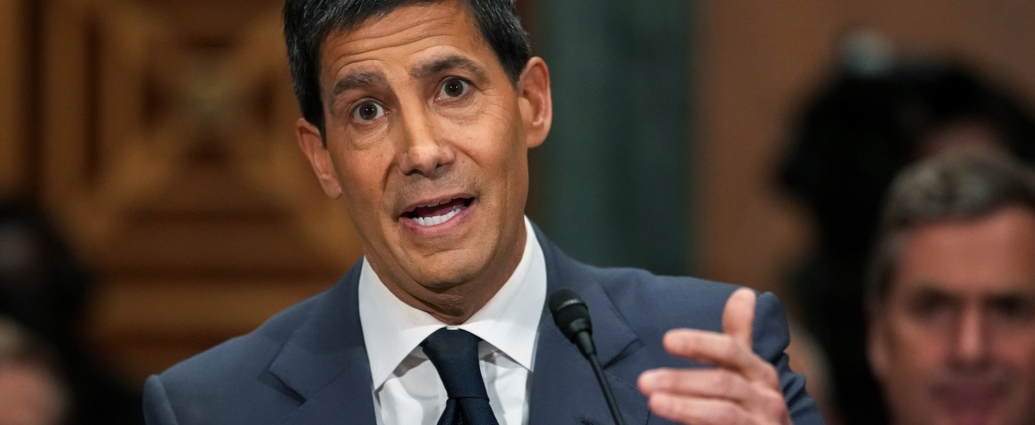
Hubbell (NYSE:HUBB) held its first-quarter earnings conference call on Thursday. Below is the complete transcript from the call.

Benzinga APIs provide real-time access to earnings call transcripts and financial data. Visit https://www.benzinga.com/apis/ to learn more.

The full earnings call is available at https://edge.media-server.com/mmc/p/z66aupdq/

Summary

Hubbell reported strong financial performance in Q1 2026, with double-digit growth in sales, adjusted operating profit, and EPS, driven by 8% organic growth and strategic acquisitions.

The company has raised its full-year 2026 outlook for total sales growth, organic sales growth, and adjusted EPS, citing confidence in its position in key markets such as electrical solutions and grid infrastructure.

Hubbell highlighted a significant growth opportunity in high-voltage transmission, estimating a $1.5 billion market opportunity over the next decade, driven by the need to efficiently transmit large amounts of power.

Operational highlights include a 21% growth in adjusted operating profit for the Utility Solutions segment, and strong demand in data center and light industrial markets driving Electrical Solutions growth.

Management emphasized ongoing investment in capacity expansion and productivity improvements, maintaining a strong balance sheet to support acquisitions and share repurchases.

Full Transcript

OPERATOR

Good day and thank you for standing by. Welcome to the first quarter 2026 Hubbell Incorporated earnings Conference Call. At this time all participants are in listen only mode. After the speaker’s presentation there will be a question and answer session. To participate you will need to press star 1-1 on your telephone. You will then hear a message advising your hand is raised to withdraw the question. Simply press star 1-1 again. Please be advised that today’s conference is being recorded now. It’s my pleasure to hand the conference over to the Senior Director of Investor Relations, Dan Inamorato. Please proceed.

Dan Inamorato (Senior Director of Investor Relations)

Thanks, Operator. Good morning everyone and thank you for joining us. Earlier this morning we issued a press release announcing our results for the first quarter of 2026. The press release and slides are posted to the Investors section of our website@hubble.com joined today by our Chairman, President and CEO Gerben Bakker and our CFO Joe Capozzoli. Please note our comments this morning may include statements related to the expected future results of our company. These are forward looking statements defined by the Private Securities Litigation Reform act of 1995. Please note the discussion of forward looking statements in our press release and considered incorporated by reference into this call. Additionally, comments may also include non GAAP financial measures. Those measures are reconciled to the comparable GAAP measures which are included in the press release and slides. Now let me turn the call over to Gerben.

Gerben Bakker

Great. Thanks, Dan and good morning everyone and thank you for joining us to discuss Hubble’s first quarter 2026 results. Hubbell delivered strong financial performance to begin the year with double digit growth in sales, adjusted operating profit and adjusted earnings per share. Organic growth of 8% in the first quarter was driven by double digit organic growth in our electrical solutions segment as well as our grid infrastructure businesses. Within the utility solutions segment, our core utility Transmission and Distribution (T&D) markets remained strong with highly visible load growth driving continued strong demand in transmission and substation markets and aging infrastructure resiliency investments driving strong demand in distribution markets. Electrical solutions growth continues to be driven by strength in data center and light industrial markets enabled by our leading brands and continued success in our strategy to compete collectively in high growth verticals. We are raising Our full year 2026 outlook for total sales growth, organic sales growth and adjusted earnings per share. This morning as we are confident Hubbell’s strong position in attractive end markets and continued execution of our long term strategy will enable us to execute through a dynamic operating environment. Before I turn the call over to Joe to walk you through our financial performance in more detail I would like to highlight an emerging growth opportunity for Hubbell in high voltage transmission, a long term megatrend that sits squarely in our core and we are demonstrating early success in a multi year investment cycle. As background, 765kV transmission represents one of the most efficient methods to move large amounts of power over long distances in order to accommodate accelerating electricity demand from electrification and load growth. Operating transmission lines at higher voltages enables utilities to deliver more power per line with lower losses and fewer space requirements. For Hubbell, high voltage transmission represents a significant multi year opportunity which is largely incremental to existing strength in traditional 345kV transmission markets. Our leading position and strong customer relationships position us well to capture this opportunity and we are demonstrating early success with several key project wins supporting this initial phase of high voltage transmission buildup. Additionally, our portfolio depth and breadth positions us as a preferred partner who customers can trust to provide a full package of critical components. This solutions offering enables high service levels and reliability while driving installation efficiency and ease of doing business for our customers. We are actively investing to support future growth in this market including development and testing of new product offerings in collaboration with major customers as well as in capacity expansion investments. Overall, we believe 765kV transmission represents an addressable market opportunity of approximately 1.5 billion over the next 10 years and we believe we are well positioned to serve this attractive long term investment cycle. With that, let me turn the call over to Joe to provide more details on our financial results.

Joe Capozzoli (Chief Financial Officer)

Thank you Gerben and good morning everybody. I am starting my comments on slide 5. Hubbell’s first quarter financial performance was strong with double digit growth across sales, adjusted operating profit and adjusted earnings per diluted share. Net sales of $1.517 billion in the first quarter of 2026 increased by 11% compared to the prior year driven by 8% organic growth and acquisitions contributing 3%. Consistent with our fourth quarter 2025 performance, both electrical solutions segment and grid infrastructure products within our utility solutions segment delivered double digit organic growth in the first quarter partially offset by anticipated softness in grid automation. Acquisitions contributed three points to growth in the first quarter with DMC power off to a strong start and integrating nicely within our Transmission and Distribution (T&D) business. From an operational standpoint, Hubbell generated $301 million of adjusted operating profit in the first quarter representing 18% growth versus the prior year with adjusted operating margins expanding 110 basis points year over year. This improvement in adjusted operating profit and adjusted operating margin was primarily driven by strong volume growth in high margin businesses While cost inflation accelerated against 2025 exit rates as anticipated, our pricing and productivity actions continued to keep pace more than offsetting those higher levels of inflation on a dollar for dollar basis in the first quarter. We also accelerated our investment levels in the first quarter as previously communicated, most notably to expand capacity in high growth areas and generate future productivity. And as anticipated, we invested $7 million in our restructuring and related program to further streamline our operational footprint primarily within our Electrical Solutions segment which as a reminder Restructuring and Reinvestment (R&R) is included in our adjusted results. Adjusted earnings per diluted share were $3.93 in the first quarter representing a 16% increase versus the prior year, driven primarily by adjusted operating profit growth below the line. Higher interest expense associated with borrowings from the DMC acquisition and a slightly higher year over year tax rate were partially offset with lower share count as a result of prior repurchase activity. Additionally, we repurchased $168 million worth of shares in the first quarter at a dollar cost average below $500 per share. We expect the net impact of these repurchases to be neutral to 2026 earnings as a lower share count will be offset by higher interest, but the repurchases of shares at attractive valuations is expected to provide us with earnings accretion in 2027. Our balance sheet remains strong and is poised to invest on behalf of our shareholders. Our primary focus remains on internal reinvestments and acquiring differentiated businesses to bolt on to attractive areas of our portfolio. The pipeline of opportunities remains healthy and active and we continue to remain disciplined in our approach. Share repurchases represents an additional lever that we can and will utilize to return cash to shareholders over time. Turning to page six to review our performance by segment, Utility Solutions delivered another strong quarter with double digit growth in sales and adjusted operating profit. First quarter performance overall reflected a continuation of the momentum we realized exiting 2025 with overall drivers very similar across end markets. Utility Solutions generated net sales in the first quarter of $949 million which represented growth of 11% versus the prior year and includes organic growth of 7% and acquisitions contributing 3%. Organic growth of 7% in the first quarter was driven by 12% organic growth in our larger higher margin grid infrastructure business where demand strength was broad based across Transmission and Distribution (T&D)N markets. Utilities are investing at heavy rates and demand for Hubbell Solutions to serve the expanding critical infrastructure needs of our customers is driving continued momentum in orders and providing visibility to further strength over the balance of 2026. As we will highlight in a few minutes. We now anticipate our utility solutions segment to deliver high single digit organic growth on a full year basis outside of our core Transmission and Distribution (T&D) markets. Telecom and gas distribution grew attractively in the first quarter while METERS and AMI markets remained weak as anticipated. While grid Automation organic sales declined 7% year on year in the first quarter sales increased slightly on a sequential basis. We remain confident that Meter and AMI markets have stabilized and we anticipate easing comparisons and continued strength in protection and controls products will enable grid automation organic sales to return to slight year over year growth in the second quarter. Operationally, HUS delivered $207 million of adjusted operating profit in the first quarter representing 21% growth in adjusted operating profit versus the prior year with adjusted operating margins expanding 190 basis points year over year. Operating profit growth was primarily driven by strong volumes in high margin grid infrastructure products, favorable price cost, productivity and acquisitions which were partially offset by grid automation volumes declines. Moving to page 7, electrical solution results were also strong in the quarter with double digit growth in net sales and adjusted operating Profit. For the first quarter, Electrical Solutions generated sales of $568 million which represented growth of 12% versus the prior year. Organic growth of 11% was again driven by strength in data center and light industrial markets as well as solid non residential growth partially offset by softer heavy industrial markets. The electrical solutions segment achieved approximately 40% growth in data center markets in the first quarter driven by strength in both balance of system component demand as well as sales of our modular power distribution skids. Data center order activity remained robust in the first quarter as build out activity continues to accelerate across hyperscaler and colocation customers, providing enhanced visibility for us to increase our full year outlook in data center markets to more than 25%. Broader light industrial markets remain healthy as solid US manufacturing activity generated demand for electrical components and our strategy to compete collectively in vertical markets continues to drive out growth. Operationally, he’s delivered $93 million of adjusted operating profit in the first quarter representing 10% growth in adjusted operating profit versus the prior year reflecting strong volume growth. Adjusted operating margins of 16.4% were down 30 basis points versus the prior year as benefits from volume growth and the associated operating leverage were offset by higher investments in restructuring and growth initiatives as you’ll see in our press release financials. Within the electrical solutions segment, we invested $6 million in restructuring initiatives in the first quarter of 2026 versus only $2 million in the prior year which impacted year over year margins by approximately 80 basis points as we execute on footprint optimization projects which we are confident will continue to drive long term productivity and margin expansion, price realization remains strong which combined with productivity more than offset cost inflation on a dollar for dollar basis in the first quarter. Turning to page eight to discuss our full year outlook, we are raising our full year sales growth outlook to 8 to 11% and our organic sales growth outlook to 6 to 9%. This represents an increase of 1 point to the lower end and 2 points to the higher end of our prior full year outlook and is driven by both incremental price realization to offset increased inflation relative to our initial outlook as well as enhanced visibility to continued demand strength in our Transmission and Distribution (T&D) and data center end markets. Operationally, we anticipate double digit growth and adjusted operating profit at the midpoint of our guidance range for 2026, driven primarily by strong sales growth in high margin areas of our portfolio. We remain confident in managing price cost productivity to neutral or better on a dollar for dollar basis over the full year. So the math on higher inflation as well as planned investments to support accelerated growth initiatives results in a slightly more modest outlook for the full year margin expansion versus our initial outlook. Below the line, we anticipate that lower share count of 53.1 million shares on a full year basis will be fully offset by higher net interest while our assumptions for the other expense and tax rate remain unchanged. Overall, we continue to anticipate at least 90% free cash …

Full story available on Benzinga.com

This post was originally published here
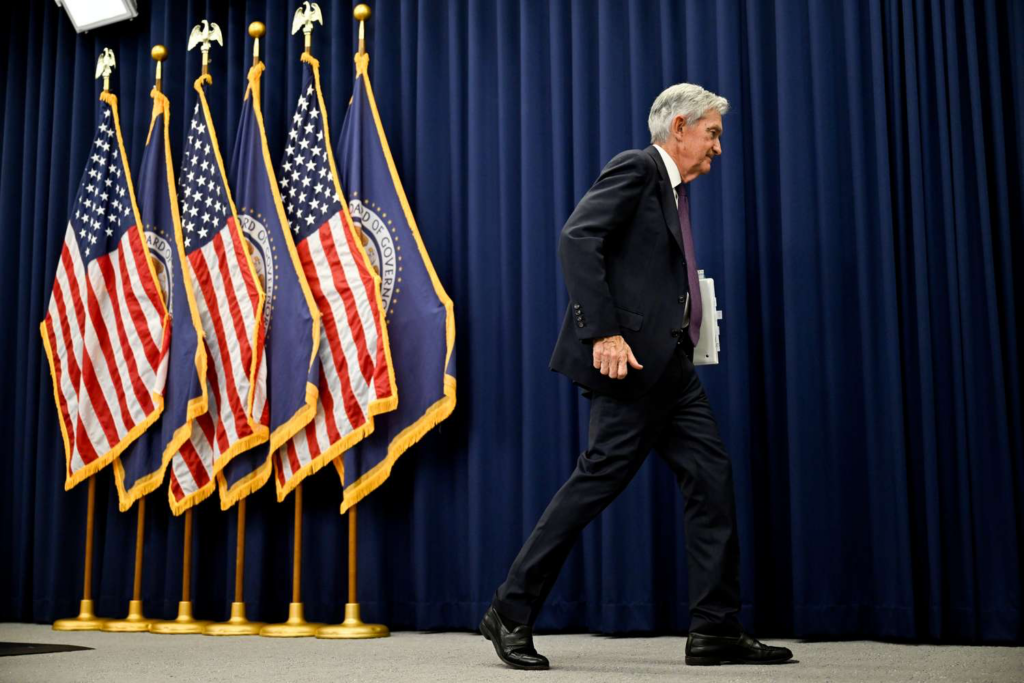
CVR Partners (NYSE:UAN) released first-quarter financial results and hosted an earnings call on Thursday. Read the complete transcript below.

This transcript is brought to you by Benzinga APIs. For real-time access to our entire catalog, please visit https://www.benzinga.com/apis/ for a consultation.

The full earnings call is available at https://events.q4inc.com/attendee/451428767

Summary

CVR Partners reported first quarter 2026 net sales of $180 million and net income of $50 million, with an EBITDA of $78 million.

The company declared a distribution of $4 per common unit, reflecting strong operational performance with ammonia plant utilization at 103%.

Increased sales volumes and pricing for UAN and ammonia were noted, driven by market tightness and geopolitical conflicts impacting global supply.

Capital spending for 2026 is estimated to be between $60 and $75 million, with a significant portion funded through cash reserves.

Management highlighted ongoing projects to increase production capacity and reduce costs, including feedstock diversification and plant debottlenecking efforts.

Full Transcript

OPERATOR

Ladies and gentlemen, thank you for standing by and welcome to the first quarter 2026 CS CVR Partners LP earnings conference call. All lines have been placed on mute to prevent any background noise. After the speaker’s remarks, there will be a question and answer session. If you would like to ask a question during that time, press Star followed by the number one on your telephone keypad. If you would like to withdraw your question, press star followed by the number one. As a reminder, today’s call is being recorded. I will now hand today’s call over to Richard Roberts, Vice President of FPA and Investor Relations. Please go ahead, sir.

Richard Roberts (Vice President of FPA and Investor Relations)

Good morning everyone. We appreciate your participation in today’s call. With me today are Mark Pytosh, our Chief Executive Officer, Dan Newman, our Chief Financial Officer, Mike Wright, our Chief Operating Officer and other members of management. Prior to discussing our 2026 first quarter results, let me remind you that this conference call may contain forward looking statements as that term is defined under federal securities laws. For this purpose, any statements made during this call that are not statements of historical facts may be deemed to be forward looking statements. You are cautioned that these statements may be affected by important factors set forth in our filings with the Securities and Exchange Commission and in our latest earnings release. As a result, actual operations or results may differ materially from the results discussed in the forward looking statements. We undertake no obligation to publicly update any forward looking statements, whether as a result of new information, future events or otherwise, except to the extent required by law. This call also includes various non GAAP financial measures. The disclosures related to such non GAAP measures, including reconciliation to the most directly comparable GAAP financial measures, are included in our 2026 first quarter earnings release that we filed with the SEC for the period. Let me also remind you that we are a variable distribution MLP. We will review our previously established reserves current cash usage, evaluate future anticipated cash needs and may reserve amounts for other future cash needs and as determined by our General Partners Board. As a result, our distributions, if any, will vary from quarter to quarter due to several factors including but not limited to operating performance fluctuations, the prices received, finished products, capital expenditures and cash reserves deemed necessary or appropriate by the Board of Directors of our General Partner. With that said, I’ll turn the call over to Mark Pytosh, our Chief Executive Officer.

Mark Pytosh (Chief Executive Officer)

Mark, thank you. Richard, good morning everyone and thank you for joining us for today’s call. The summarized financial highlights for the first quarter of 2026 include net sales of 180 million net income of 50 million, EBITDA of 78 million and the board of directors declared a first quarter distribution of $4 per common unit, which will be paid on May 18 to unitholders of record at the close of the market on May 11. For the first quarter of 2026, our ammonia plant utilization was 103%, with both plants running well and experiencing minimal downtime during the quarter. We also saw an increase in ammonia sales volume relative to the prior year period along with increased sales prices for UAN (Urea Ammonium Nitrate) and ammonia. The tightness in the nitrogen fertilizer market that began …

Full story available on Benzinga.com

This post was originally published here
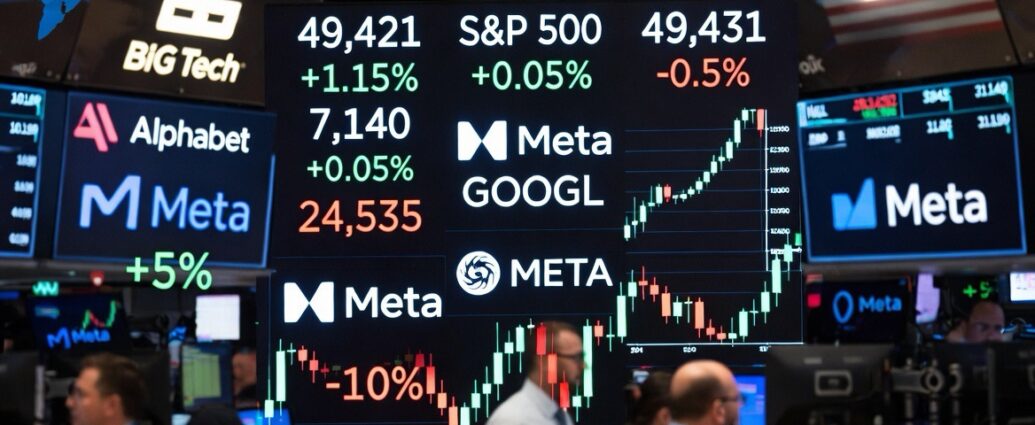
Tetra Technologies (NYSE:TTI) released first-quarter financial results and hosted an earnings call on Thursday. Read the complete transcript below.

Benzinga APIs provide real-time access to earnings call transcripts and financial data. Visit https://www.benzinga.com/apis/ to learn more.

View the webcast at https://events.q4inc.com/attendee/733196623

Summary

Tetra Technologies reported a strong first quarter of 2026, with revenue reaching $156 million and adjusted EBITDA at $26 million, both 10-year highs.

The industrial chemicals and production testing subsegments delivered record revenues, driven by robust operational and financial fundamentals across all segments.

The ongoing conflict in the Middle East, which historically accounts for about 5% of revenue, is not expected to negatively impact financial results due to offsetting activities in other regions.

The company’s One Touch Tetra 2030 strategy is progressing well, with significant growth opportunities in deep water specialty chemicals, electrolytes for battery energy storage, and desalination of produced water.

The Arkansas Bromine project is on track, with phase two underway and completion expected by 2028, designed to double the existing bromine supply capacity.

International production testing revenue exceeded 50% of total segment revenue, with successful expansion in Argentina and increased market share in unconventional land operations.

Despite uncertainties in oil and gas prices, the company maintains its 2026 guidance of single-digit revenue growth and strong completion fluid margins.

The company is evaluating options to accelerate lithium and magnesium development, leveraging synergies with the ongoing bromine project.

Management expressed confidence in Tetra Technologies’ ability to navigate current market conditions and make progress toward 2030 targets.

Full Transcript

Carly (Operator)

Thank you for standing by. My name is Carly and I will be your conference operator today. At this time I would like to welcome everyone to the Tetra Technologies Inc. 1Q 2026 earnings conference call. All lines have been placed on mute to prevent any background noise. After the speaker’s remarks, there will be a question and answer session. If you would like to ask a question during this time, simply press STAR followed by the number one on your telephone keypad. If you would like to withdraw your question, press Star one again. Thank you. I would now like to turn the call over to Curt Halliott. Please go ahead.

Curt Halliott

Hey, Good morning and thank you for joining Tetra’s first quarter 2026 earnings call. Speakers on today’s call will be Brady Murphy, President and Chief Executive Officer, and Matt Sanderson, Chief Financial Officer. Before we begin, I’d like to call your attention to the Safe harbor statement in our Form 10Q. Some of the remarks we make today may be forward looking and are subject to risks and uncertainties as outlined in our SEC filings. Actual results may differ materially from those expressed or implied. In addition, we may refer to adjusted ebitda, free cash flow and other non GAAP financial measures. Please refer to our press release for GAAP reconciliations and note that these reconciliations are not a substitute for GAAP financials. As such, we encourage you to Refer to our 10Q that was filed yesterday. After Brady and Matt provide their comments, we will open the line for Q and A. I’ll now turn the call over to Brady.

Brady Murphy (President and Chief Executive Officer)

Thank you Kurt and good morning everyone. Welcome to Tetra’s first quarter 2026 earnings call. I’ll walk through the very positive first quarter highlights how Tetra is positioned in this uniquely uncertain time and the progress towards our 2030 targets before turning it over to Matt to cover more detailed financials and the balance sheet. Despite the backdrop of one of the most tumultuous periods in the history of the oil and gas industry, we started 2026 with one of the strongest first quarter performances in the company’s past 10 years. If we exclude the benefit of the Gulf of Mexico Neptune project. In the first quarter of last year, revenue of 156 million and adjusted EBITDA of 26 million were 10 year highs, as were the first quarter results for both Brazil and Gulf of Mexico. In addition, the industrial chemicals and production testing subsegments each delivered 10 year high revenues with strong margin contributions. What encourages us most about our results is that the operational and financial fundamentals for each of our segments and many of our subsegments are improving even before the benefit of current elevated oil prices and potential increased customer spending activity at current oil prices. We anticipate offshore projects could be pulled forward into unconventional activity in the US will eventually respond. Combine this with the significant growth opportunities laid out in our One Touch Tetra 2030 strategy, which while I will update later on our call, we feel very good about how Tetra’s position for 2026 in the coming years regarding the ongoing conflict in the Middle east and given that this region has historically accounted for about 5% of the company’s revenue, we do not expect an overall negative impact on our financial results. That is because what we have seen so far is activity in our core business regions of the U.S., Europe and Latin America will likely offset any reductions that may occur in our Middle east business. This applies to our supply chain as well since all of our chemical manufacturing plants are located in the United States and Europe and our elemental bromine is sourced from Arkansas which is also location of our critical minerals resources. Over the longer term it remains to be seen how developments in the Persian Gulf and Middle east will impact the global oil and gas markets and our business, but in general we believe it could boost investment in the US and international oil convention activity and provide tailwinds to an already robust offshore and deep water outlook for completion fluids and products.. Our industrial chemicals business had a record setting first quarter with revenue up 15% year over year and 13% quarter over quarter. For the first time since 2021 when energy services were suppressed due to COVID 19, it accounted for over 50% of the total first quarter segment revenue. Higher pressure gas plays in South Texas and the western Haynesville supporting Gulf Coast LNG plants are driving higher volumes of higher value completion fluids. Increasing pressures in West Texas due to disposal of well pore space are also contributing to higher density fluids for well workovers. Looking forward, we’re well positioned heading into our Traditional European seasonal second quarter peak for completion fluid. Energy Services Q1 revenue and adjusted EBITDA in Brazil were at a 10 year high. Although we did not execute any Neptune jobs, our first quarter fluids business in the Gulf of Mexico, excluding NEPTUNE work in the first quarter of last year also recorded a 10 year high in revenue and adjusted EBITDA. Regarding NEPTUNE projects, we’re very encouraged by the growing pipeline. The trend toward deeper hotter wells in the Gulf of Mexico continues as evidenced by very strong first quarter revenues for our highest density zinc bromide completion fluid for the water and flowback business. Despite US frac fleets down 24% year over year and a slow January due to freezing weather. Our Overall revenue was up 1% year over year and 3% quarter over quarter. Our production testing subsegment reached a 10 year high in the Q1 revenue as our automated sandstorm technology continues to gain market share across the unconventional land operations in the us, Argentina and the Middle East. Our strategy to grow this segment internationally has been successful and for the first time in the last 10 years, international production testing revenue was over 50% of the total PT subsegment revenue. Looking ahead to the rest of 26, significant uncertainty remains for oil and gas prices. However, given our geographic footprint, we believe any headwinds from the Middle east will be offset by the strength of our other geomarkets. We expect to gain further clarity on customer activity on offshore and outside of the Middle east as we move through the second quarter. For now, we are maintaining our prior 26 guidance of single digit revenue growth over 2025 with completion fluid margins between 25 and 30% and water flow back in the mid teens. Turning to our strategic progress towards our One Tetra 2030 objectives, at our Investor day last September we outlined a clear strategic path for the company. Although much has changed in the world since that event, our view of the company’s key growth trajectories across deep water specialty chemicals, electrolytes for battery energy storage, critical minerals and desalination of produced water has strengthened. We expect bromine demand to support our deep water completion fluids and battery storage electrolytes to double by 2030, driving the need for and reliable access to cost effective elemental bromine, the critical feedstock. This has become more evident with the current events in the Middle east as well. Over 50% of the global bromine supply comes from that region. Our bromine plant project in Southwest Arkansas continues to proceed on time and on budget. Phase two of the project is underway with phase three slated for 2027 and first production at the start of 2028. The plant is designed to have an annual capacity of up to 75 million pounds, more than double our existing long term third party supply agreement. Tetra’s electrolyte revenue grew meaningfully in 2025 as the US Energy Information Administration reports that a record 15 gigawatts of utility scale battery storage was added to the grid in 25. The EIA projects that another record 24 gigawatts is planned for 2026, representing a 60% growth rate as artificial intelligence and cloud computing drive rapid growth in data center power demand, scalable long duration energy storage is becoming increasingly critical. Tetra’s proprietary pure flow zinc bromide is a key input for these systems, supporting safe, non flammable performance at utility scale. Tetra’s OASIS TDS end to end desalination of produced water for beneficial reuse continues to gain momentum with multiple engineering efforts and customer commercial engagements. Since achieving 24.7 steady state operations 60 days ago, our Permian Basin pilot project has operated at over 96% uptime and continues to meet our performance specifications. We believe that behind the meter, power generation, access to affordable natural gas and land and other factors will drive significant data center growth in West Texas and accelerate the produced water desalination market well ahead of our 2030 targets. Regulatory agencies continue to focus on understanding the technology, setting permitting standards and encouraging the industry to bring solutions to the produced water disposal challenge. TETRA is honored to participate in the National Petroleum Council Produced Water Committee and to support the recently announced U.S. environmental Protection Agency Reuse Action Plan 2.0. Regarding Tetra’s lithium and magnesium critical mineral resources in Arkansas, we continue to advance relationships with technology providers and conduct engineering studies. We have formed a joint venture with Magrathea Metals to advance domestic magnesium metal production and monetize this asset. The JV will leverage our specialty chemical processing expertise and large scale magnesium resource base combined with Magrathea’s proprietary electrolytic magnesium production technology which has been partially underwritten by the US Department of War. In April, Magrathea successfully converted Tetras Mac OVA brine rich in magnesium into a high purity magnesium metal at its small pilot operation in the San Francisco Bay area. The JV named Arkansas Magnesium is currently conducting engineering studies for a first of a kind demonstration plant planned for colocation at the Evergreen Bromine site in Arkansas for lithium. A strong rebound in lithium carbonate prices over the past six months has led us to look at options to accelerate the development of our evergreen 585,000 metric ton lithium carbonate resources. As a reminder, Evergreen is a 6,900 acre brine unit in southwest Arkansas on which Tetra owns 65% of the brine mineral rights and ExxonMobil owns 35%. The combination of current LCE prices of around 25,000 per metric ton and efficiency advances in direct lithium extraction technology are making this a very attractive option to accelerate more to come as we look at ways to advance this opportunity. With that, I’ll turn the call over to Matt.

Matt Sanderson (Chief Financial Officer)

Thank you Brady. Good morning everybody. Completion Fluids and products revenue of 92 million adjusted EBITDA 26 million increased 10% and 12% respectively relative to Q4 2025. The sequential increase was driven by higher sales volumes in our industrial chemicals business and ongoing deep water projects in the Gulf of America and Brazil that Brady referenced earlier Year over year completion fluids and products revenue and adjusted EBITDA decreased 1% and 23% respectively. As a reminder, our first half 2025 results included high impact Tetra NEPTUNE projects which we previously noted we do not expect to repeat in the first half of this year. That said, the pipeline of deep water and high pressure high temperature completion opportunities continues to grow. With our best in class service delivery and unique fluid chemistry solutions, we’re well positioned to participate in a forecasted growth in offshore deepwater activity. As Brady mentioned earlier, geopolitical unrest in Europe and the Middle east has led to rapid shifts in global market dynamics. As …

Full story available on Benzinga.com

This post was originally published here
On Thursday, WESCO Intl (NYSE:WCC) discussed first-quarter financial results during its earnings call. The full transcript is provided below.

This transcript is brought to you by Benzinga APIs. For real-time access to our entire catalog, please visit https://www.benzinga.com/apis/ for a consultation.

View the webcast at https://edge.media-server.com/mmc/p/cbfg8kb6/

Summary

WESCO Intl reported strong Q1 2026 results with record sales of $6.1 billion, up 14% year-over-year, driven by a 70% increase in data center sales.

The company achieved significant profit growth, with adjusted EBITDA up 25% and a 52% increase in adjusted EPS, supported by gross margin expansion and strong operating leverage.

WESCO Intl raised its full-year 2026 outlook, expecting sales growth of 6-9% and adjusted EPS between $15 and $17, reflecting continued positive business momentum despite macroeconomic uncertainties.

Operational highlights include record backlog growth of 22%, strong cash flow generation, and successful refinancing that improves liquidity and reduces interest expenses.

Management highlighted strategic initiatives focused on scaling business in high-growth markets, improving operating leverage, and enhancing working capital efficiency.

Full Transcript

OPERATOR

Hello and welcome to Wesco’s 2026 first quarter earnings call. I would like to remind you that all lines are in listen only mode throughout the presentation. If you would like to ask a question, please press STAR followed by one on your telephone keypad. Please note that this event is being recorded. I would now hand the call over to Scott Gaffner, Senior Vice President, Investor Relations to begin

Scott Gaffner (Senior Vice President, Investor Relations)

thank you and good morning everyone. Before we get started, I want to remind you that certain statements made on this call contain forward looking information. Forward looking statements are not guarantees of performance and by their nature are subject to uncertainties. Actual results may differ materially. Please see our webcast slides and the Company’s SEC filings for additional risk factors and disclosures. Any forward looking information speaks only as of this date and the Company undertakes no obligation to update the information to reflect changed circumstances. Additionally, today we’ll use certain non GAAP financial measures required. Information about these measures is available on our webcast slides and in our press release, both of which are posted on our website@wesco.com on the call this morning we have John Engel, Wesco’s chairman, president and CEO and Neil Dev, Executive Vice President and Chief Financial Officer. Now I’ll turn the call over to

John Engel (Chairman, President and CEO)

John thank you Scott Good morning everyone. Thank you for joining our call. Today we delivered an exceptional start to 2026, building on last year’s market outperformance and accelerating business momentum. In the first quarter. Sales backlog, operating margin, adjusted earnings per share and free cash flow all increased versus the prior year and exceeded our expectations. Record first quarter sales of 6.1 billion were up 14% marking our third quarter in a row of double digit sales growth. Booming data center demand remains a significant growth driver of our business. Data center sales of 1.4 billion were up approximately 70% versus prior year and represented 24% of total company sales in the quarter. Overall, our business momentum continued to accelerate in the quarter with organic sales up sequentially outpacing normal seasonality and reinforcing the strength and durability of demand across our end markets. This performance reflects broad based strength across our entire portfolio led by continued strong momentum in CSS and EES along with improving trends in ubs. We again ended this quarter with a record backlog up 22% versus prior year reflecting the continued effectiveness of our cross selling program and providing clear visibility of the secular growth trends on our business. Profit growth, margin improvement and free cash flow generation were also Excellent. In the first quarter. Adjusted EBITDA grew 25% and adjusted EBITDA margin expanded 60 basis points driven by gross margin expansion and strong operating cost leverage on our double digit sales growth. Adjusted diluted earnings per share was up 52% versus the prior year. Free cash flow generation at 128% of adjusted net income was also very strong, underscoring our disciplined execution and continued focus on working capital management. We’re very pleased with our first quarter results. While we remain mindful of the volatility of the broader macroeconomic environment, we see positive momentum continuing across our business. As a result, we are raising our full year outlook for 2026 as the market leader and with positive momentum building, I’m confident that Wesco will continue to outperform our markets through disciplined execution, our differentiated value proposition and the strength of our global platform. Our Wesco team remains focused on driving strong growth and margin expansion and delivering superior value to our customers and shareholders. One final comment as we announced earlier this year, Dave Schultz is retiring from Wesco and Neil Dev has joined our team as cfo. I would like to thank Dave for his outstanding leadership, his dedicated service and his tremendous contributions to Wesco and our overall success over the past 10 years. We wish Dave and his family our very best. Neal’s off to a great start as Wesco’s new CFO and I will now turn it over to him to take you through our excellent first quarter results and raised full year outlook in more detail.

Neal Dev

Neal thank you John and good morning everyone. I’d like to thank John and the board for the opportunity and I want to recognize Dave for his leadership and thank him for his partnership during this transition. Before turning to our results, I’ll take a minute to touch on my near term priorities. I intend to focus on partnering with the leadership team to scale our business in attractive end markets, drive profitable growth, continued market outperformance and deliver strong cash flow with disciplined capital allocation. That mindset has been shaped by working across both public and private companies, often in complex global, highly competitive technology and capital intensive businesses. John and I are aligned on the initial focus areas where we have the potential for taking our existing great capabilities to the next level. First, driving operating leverage and margin expansion as we scale, particularly in data centers and other high growth end markets. This will be accomplished by a combination of partnering with our business leaders to ensure that our commercial and go to market strategy reflects our enhanced value proposition and partnering with our functional leaders on continuing to improve our cost structure. It’s all about profitable growth. Second, improving working capital efficiency and cash conversion through tighter processes, analytics and execution discipline. This is not just about back office, it’s about optimizing our end to end capabilities from sales funnel to cash collection Transitioning to our Results Let me start with the highlights for the quarter. We delivered strong organic sales growth year over year with sequential performance better than typical seasonality. Profitability improved with meaningful EBITDA margin expansion. EPS was up more than 50% and free cash flow generation was strong at 128% of net income. With that, let me Turn to our first quarter results. Starting on Slide 4, we delivered an excellent first quarter with reported sales of 6.1 billion, up 14% year over year including 12% organic growth. We delivered volume growth across all three SBUs and realized an estimated price benefit of approximately 3 points. Gross margin was 21.2%, up approximately 20 basis points year over year and SGA operating leverage improved by 40 basis points. As a result, adjusted EBITDA increased 25% to 389 million and adjusted EBITDA margin expanded 60 basis points to 6.4% of sales. Turning to Slide 5, adjusted EPS increased 52% year over year to $3.37. The year over year improvement was driven primarily by stronger operating performance in the quarter reflecting higher sales and improved profitability. Additionally, EPS growth benefited from a lower tax rate and from the absence of the preferred stock dividend following last year’s redemption. Turning to Slide 6, CSS delivered another excellent quarter with organic sales up 22% year over year and reported sales up 24%. This growth was driven by continued strength in Wesco Data Center Solutions which delivered a record quarter with sales up over 60%. Within the rest of the portfolio, security delivered high single digit growth while enterprise network infrastructure declined mid single digits due to weakness in the service provider market. However, including data center related sales, Enterprise network infrastructure grew high teens year over year. Overall, organic growth was driven primarily by volume up about 21% with price contributing approximately 1%. Backlog ended the quarter at a record level and was up approximately 40% versus the prior year reflecting continued strong data center project activity and order rates. Profitability also improved meaningfully and our focus remains on margin expansion as we scale the business, particularly in our data center markets. Adjusted EBITDA increased 41% to $223 million and adjusted EBITDA margin expanded 110 basis points to 9%. Importantly, despite some modest pressure on gross margin from large data center projects, we generally see healthy and accretive EBITDA margins for Wesco Data center solutions. Moving to slide 7 ESS delivered solid growth in the quarter with organic sales up 7% and reported sales up 9% year over year. Growth was driven by strong execution in OEM and construction. OEM was up mid teens driven by strength in the semiconductor and data center markets. Construction was up low double digits supported by robust wire and cable demand and continued infrastructure project activity. Industrial was down low single digits primarily reflecting project timing impacts. However, our industrial stock and flow business grew mid single digits in the first quarter and backlog was up double digits supporting an improving trend. Data center sales in EES were up over 100% year over year and represented about 10% of EES sales, highlighting the continued scaling of our exposure to this secular growth trend. Overall, organic growth was driven by solid underlying demand with volume contributing approximately 3% and pricing contributing about 4%. Importantly, backlog ended the quarter at a record level up 14% versus the prior year supported by strong order activity and pipeline conversion. Profitability improved meaningfully in the quarter. Adjusted EBITDA increased 30% to $185 million. An adjusted EBITDA margin expanded 130 basis points to 8.2% driven by higher gross margins and strong operating leverage. Turning to Slide 8 UBS delivered 6% organic sales growth in the first quarter supported by improving demand and an increasing backlog. Utility delivered high single digit growth driven by strong double digit growth in investor owned utilities and continued positive momentum in grid services. Public power was flat year over year which is encouraging. However, the market remains highly competitive and gross margins are expected to remain under pressure given weak sales in transformers and wiring cable. Consistent with our prior commentary, Broadband delivered mid single digit growth year over year supported by strength in the U.S. overall organic sales growth reflected approximately 3% volume growth and about 3% pricing. Backlog increased 16% year over year. We are seeing increasing interest in our grid services enabled power capabilities from hyperscalers and other data center customers. We have a growing funnel of sales opportunities and we are bullish that we will benefit from AI driven data center investments and other major power related infrastructure projects over the long term. Adjusted EBITDA was 131 million, down 5% versus the prior year and adjusted EBITDA margin decreased 120 basis points to 9.6% primarily driven by gross margin pressure and higher SG&A as a percentage of sales. Recall that UBS is accretive to total company adjusted EBITDA margin given its higher margin profile and the improved growth rates will lead to even higher margins over time given the operating leverage. Turning to slide 9 I want to take a moment to further review the continued momentum we’re seeing in the broader data center market and Wesco’s role in that growth. Data center sales continued to scale in the first quarter reaching approximately 1.4 billion, up about 70% year over year and representing 24% of total company sales in the quarter. Notably, the data center end market is now Wesco’s largest end market across all three SBUs and support a diverse set of customers with a diverse set of Wesco capabilities. On a trailing twelve month basis, data center sales are now approximately 4.8 billion or 20% of Wesco’s total sales. This underscores both the strength of the secular demand environment and the expanding scope of what we provide customers across all business units and across the full life cycle. Turning to slide 10 this highlights our end to end data center offering and the role we play across the full lifecycle with exposure across css, EES and ubs. Wesco supports hyperscale, multi tenant colocation and enterprise customers with a comprehensive portfolio of products, services and solutions that span power, connectivity and ongoing operations. Our expanding capabilities and global ecosystem position us as a trusted partner as customers build, scale and operate increasingly complex data center environments. Turning to Slide 11, we delivered strong free cash flow of 213 million in the first quarter. Free cash flow was 128% of adjusted net income despite sequential sales growth. Net working capital was a source of cash in the quarter, largely driven by timing of inventory purchases and accounts payable. Moving to slide 12 during the quarter we executed a highly successful 1.5 billion bond refinancing that was upsized relative to the initial launch, reflecting strong investor demand and record pricing. Notably, we achieved the lowest coupon WISCO has ever achieved on a senior notes offering and the lowest for a double B rated five year note issued since 2021. The net proceeds will be used to redeem our 2028 senior notes, improve liquidity and further strengthen the balance sheet. This refinancing meaningfully improves our debt maturity profile and is expected to generate more than 20 million in annualized interest expense savings. We exited the quarter at 3.2 times net debt to adjusted EBITDA. Additionally, we repurchased $25 million of shares during the quarter towards offsetting dilution. Moving to Slide 13 within CSS, we have raised our 2026 outlook to low double digit growth reflecting the continued strength and visibility we are seeing in data centers. Data center sales are now expected to be up 20 plus percent for the year. Given the size of the market, we intend to continue to focus on healthy EBITDA margin business. Our outlook for EES and UBS remains unchanged. Moving to slide 14 we are increasing our outlook for the full year given strong first quarter results. Before I get into the details, I want to address our position relative to the current macroeconomic uncertainty. Through the first quarter and into April, we have seen no meaningful disruption to our revenue or profitability, but we continue to monitor the situation closely and kept this backdrop in mind for our outlook in the Middle East. I am pleased to report that all of our employees are safe from a company perspective. We generate less than 1% of our sales in the region, with the majority of those sales related to our CSS business. The secondary impacts on transportation costs are more tangible but have so far been manageable. Our teams are focused on passing these cost increases to our customers where appropriate and limiting the time that transportation quotes are valid to minimize overall risk. On the tariff front, the overall impact to Wesco is not material. As a reminder, Wesco is the importer of record for a small percentage of our cost of goods sold, typically low single digits. We typically …

Full story available on Benzinga.com

This post was originally published here
SunCoke Energy (NYSE:SXC) released first-quarter financial results and hosted an earnings call on Thursday. Read the complete transcript below.

This transcript is brought to you by Benzinga APIs. For real-time access to our entire catalog, please visit https://www.benzinga.com/apis/ for a consultation.

The full earnings call is available at https://event.choruscall.com/mediaframe/webcast.html?webcastid=RDZPXkjz

Summary

SunCoke Energy reported a consolidated adjusted EBITDA of $56.5 million for Q1 2026, reflecting strong operational execution despite severe winter weather and turbine failure impacts.

The company announced a quarterly dividend of $0.12 per share, marking the 27th consecutive quarter of dividend distribution, indicating a commitment to shareholder returns.

SunCoke Energy reaffirmed its full-year 2026 consolidated adjusted EBITDA guidance range of $230 to $250 million, driven by strong operational execution and improved market conditions.

The industrial services segment saw a significant increase in adjusted EBITDA to $26.2 million, primarily due to the integration of Phoenix and improved terminal handling volumes.

SunCoke Energy ended Q1 with a cash balance of $104.4 million and total liquidity of $262 million, enabling continued debt paydown and dividend payouts.

Full Transcript

OPERATOR

Good day and welcome to the Q1 2026 SunCoke Energy, Inc. Earnings Conference call. All participants will be in a listen only mode. Should you need assistance, please signal a conference specialist by pressing the star key followed by zero. After today’s presentation, there will be an opportunity to ask questions. To ask a question, you may press star, then one on a touchtone phone. To withdraw your question, please press star and then two. Please note this event is being recorded. I would now like to turn the conference over to Sharon Doyle, IR Manager. Please go ahead.

Sharon Doyle (IR Manager)

Thanks, Nick Good morning and thank you for joining us to discuss SunCoke Energy first quarter 2026 results. With me today are Kathryn Gates, President and Chief Executive Officer and Shantanu Agrawal, Senior Vice President and Chief Financial Officer. This conference call is being webcast live on the Investor Relations section of our website and a replay will be available later today. Following management’s prepared remarks, we will open the call for Q and A. If we do not get to your questions on the call today, please feel free to reach out to our investor relations team. Before I turn things over to Kathryn, let me remind you that the various remarks we make on today’s call regarding future expectations constitute forward looking statements. The cautionary language regarding forward looking statements in our SEC filings apply to the remarks we make today. These documents are available on our website as are reconciliations to non GAAP financial measures discussed on today’s call. With that, I’ll now turn things over to Kathryn.

Kathryn Gates

Thanks Sharon. Good morning and thank you for joining us on today’s call. This morning we announced SunCoke Energy first quarter results. I want to share a few highlights before turning it over to Shantanu to discuss the results in detail. We’re pleased with our performance in the first quarter delivering consolidated adjusted EBITDA of $56.5 million, reflecting strong operational execution. Our industrial services business performed well during the quarter with sequential improvement in terminals handling volumes and with Phoenix, performing to our expectations. As discussed on our fourth quarter 2025 earnings call, our Coke plants were impacted by severe winter weather and the Middletown turbine failure. Earlier today we also announced a quarterly dividend of $0.12 per share payable to shareholders on June 2, 2026. This is our 27th consecutive quarter announcing a dividend. While the dividend is evaluated on a quarterly basis by our board, we expect the dividend to continue as part of our well balanced capital allocation strategy. We had strong operating cash flow generation of $72.7 million and ended the quarter with ample liquidity of $262 million. As previously discussed, we are running at full capacity and sold out for the full year. With the continued seamless integration of Phoenix, the resumption of power production at Middletown and continued strong operational execution, we are confident we will achieve full year 2026 consolidated adjusted EBITDA within our guidance range of 230 to $250 million. With that, I’ll turn it over to Shantanu to review our first quarter earnings in detail.

Shantanu Agrawal (Senior Vice President and Chief Financial Officer)

Thanks, Kathryn Turning to Slide 4, net loss attributable to SunCoke was $0.05 per share in the first quarter of 2026 down $0.25 versus the prior year period. The decrease was primarily driven by higher depreciation expense, the shutdown of our Haverhill 1 Coke making facility, severe winter weather and the lower power sales due to Middletown turbine failure partially offset by lower income tax expense. Consolidated adjusted EBITDA for the first quarter of 2026 was $56.5 million compared to $59.8 million in the prior year period. The decrease in adjusted EBITDA was primarily driven by the impact of severe winter weather on our Coke operations, lower power sales from the Middletown turbine failure and the shutdown of Haverhill 1 mostly offset by the addition of Phoenix. Moving to slide 5 to discuss our domestic Coke business performance in detail. First quarter domestic Coke adjusted EBITDA was $35.3 million and Coke sales volumes were 842,000 tons compared to $49.9 million and 898,000 tons in the prior year period. The decrease in adjusted EBITDA was primarily driven by severe winter weather impacting our operations, lower power sales due to the turbine failure at Middletown and lower Coke sales volume due to the Haverhill 1 shutdown. While we experienced a slow start to the year, we are already seeing improvement in our Coke operations in the second quarter. With more favorable weather conditions, we are confident we’ll make up the lost …

Full story available on Benzinga.com

This post was originally published here

MARA Holdings Inc (NASDAQ:MARA) shares climbed on Thursday morning. This rally follows the company’s announcement of a landmark acquisition.

MARA entered a definitive agreement to acquire Long Ridge Energy & Power LLC from FTAI Infrastructure Inc (NASDAQ:FIP).

Landmark $1.5 Billion Infrastructure Acquisition

The deal carries a total transaction value of approximately $1.5 billion. This includes the assumption of at least $785 million in debt. Barclays is backstopping the transaction with a bridge loan.

The acquisition includes a 505-megawatt combined-cycle gas power plant in Hannibal, Ohio.

It also includes 1,600 contiguous acres for a digital infrastructure campus.

MARA expects to close the deal in the second half of …

Full story available on Benzinga.com

This post was originally published here

Martin Marietta Materials (NYSE:MLM) released first-quarter financial results and hosted an earnings call on Thursday. Read the complete transcript below.

This content is powered by Benzinga APIs. For comprehensive financial data and transcripts, visit https://www.benzinga.com/apis/.

The full earnings call is available at https://edge.media-server.com/mmc/p/eajqs9v6/

Summary

Martin Marietta Materials reported a strong start to 2026 with a 17% increase in revenue, reaching $1.4 billion, driven by a 7.2% growth in organic aggregate shipments.

The company reaffirmed its full-year 2026 adjusted EBITDA guidance of $2.43 billion at the midpoint, citing robust infrastructure and non-residential demand.

The Quikrete Asset Exchange was completed, providing $450 million for further aggregate acquisitions, and the acquisition of New Frontier Materials is expected to close in the second half of the year.

Operational highlights include the strongest first-quarter safety performance in the company’s history and record first-quarter shipments in core aggregates and specialties business.

Management emphasized confidence in the durability of construction demand, driven by ongoing infrastructure investment and strong non-residential construction activity.

Full Transcript

OPERATOR

Ladies and Gentlemen, welcome to Martin Marietta Materials’ first quarter 2026 earnings conference call. All participants are currently in a listen only mode. A question and answer session will follow the Company’s prepared remarks. As a reminder, today’s call is being recorded and will be available for replay on the Company’s website. I will now turn the call over to your host, Ms. Jacqueline Rooker, Martin Marietta Materials’ Vice President of Investor Relations. Jacqueline, you may begin.

Jacqueline Rooker (Vice President of Investor Relations)

Good morning and thank you for joining Martin Marietta Materials’ first quarter 2026 earnings call. With me today are Ward Nye, Chair, President and Chief Executive Officer and Michael Petro, Senior Vice President and Chief Financial Officer. As a reminder, today’s discussion may include forward looking statements as defined by United States Securities Laws. These statements relate to future events, operating results or financial performance and are subject to risks and uncertainties that could cause actual results to differ materially. Martin Marietta undertakes no obligation to publicly update or revise any forward looking statements except as legally required, whether due to new information, future developments or otherwise. For additional details, please refer to the legal disclaimers contained in today’s earnings release and other public filings, which are available on both our own and the Securities and Exchange Commission’s websites. Supplemental information summarizing our financial results and trends is available during this webcast and in the Investors section of our website. As a reminder, Our full year 2026 guidance summary on slide 5 reflects continuing operations only. Definitions and reconciliations of non GAAP measures to the most directly comparable GAAP measure are provided in the Appendix to the supplemental information in our SEC filings and on our website. Today’s earnings call will begin with Ward Nye, who will discuss our first quarter operating performance 2026 outlook, and supporting market trends. Michael Petro will then review our financial results and capital allocation details, after which Ward will provide closing remarks. Please note that all comparisons are to the prior year’s corresponding period. A question and answer session will follow. Please limit your Q&A participation to one question. I will now turn the call over to Ward.

Ward Nye (Chair, President and Chief Executive Officer)

Thank you Jacqueline Good morning and thank you for joining today’s teleconference. Before reviewing our first quarter results, I’ll take a moment to discuss the leadership appointment we announced earlier this week. As you may have seen, Chris Zamborski was appointed Martin Marietta Materials’ chief operating officer effective May 1. Chris is a highly respected and proven leader who most recently served as President of our west and Specialties Divisions. Under his leadership, both businesses delivered meaningful growth and strong operational execution since joining Martin Marietta in 2018, Chris has consistently made a significant and positive impact in every role he’s held. His deep operational experience, disciplined leadership style and strong commitment to our culture make him exceptionally well suited for this role. With Chris serving as COO, Kirk Light will assume leadership of our west and Specialties divisions while continuing in his role as President of our Southwest Division. In addition, our East Division President Oliver Brooks, Central Division President Bill Bedrazic, Vice President of Operational Excellence Ronnie Walker, and Vice President of Safety and Health Jessica Kosian will report directly to Chris. This appointment and enhanced leadership structure reflect the deep bench of talent across our divisions, districts and functions all focused on consistent execution, continuous improvement and a shared commitment to our One Culture. I’m pleased to welcome Chris to his new position and am confident that as COO he will continue to play a critical role in helping guide Martin Marietta to even greater success. With that, I’ll now turn to the quarter 2026 is off to a strong start with revenues increasing an impressive 17% to $1.4 billion. A new first quarter record organic aggregate shipments growth of 7.2% meaningfully exceeded our guidance, benefiting from an early start to the construction season in the Midwest and Colorado as well as continued strength in infrastructure and heavy nonresidential demand across our geographic footprint. As we look ahead, underlying fundamentals across the business remain favorable. Notably, the quarter’s Results reflect a 14% improvement in both adjusted EBITDA from continuing operations as well as adjusted earnings per diluted share from continuing operations. I’m especially pleased to report that our teams delivered the strongest first quarter safety performance in the company’s history as measured by both total and lost time incident rates. This achievement reflects the strength of our culture, unwavering commitment to world class safety and the operational discipline embedded throughout the organization. The quarter was also highlighted by the February 23rd closing of the Quikrete Asset Exchange, our largest aggregates acquisition to date. Importantly, this transaction accelerated our aggregates led strategy by shifting the portfolio away from more cyclical cement and concrete assets, enhancing the quality and durability of our earnings profile while providing $450 million of cash to redeploy into aggregate acquisitions. Accordingly, and consistent with the company’s SOAR 2030 strategic plan, on April 19th we entered into a definitive agreement to acquire New Frontier Materials, a complementary bolt on to our Central division that produces over 8 million tons of aggregates annually. This transaction is expected to close in the second half of the year, subject to regulatory approvals and other customary closing conditions. Looking ahead. Our MA pipeline remains active and is primarily focused on pure play aggregates opportunities across attractive sewer aligned geographies. As highlighted in this morning’s release. Our core aggregates product line delivered record first quarter shipments of 43.9 million tons, a 12% increase and record revenues of $1.1 billion representing a 14% increase. Our specialties business also achieved new all time quarterly records with revenues of $143 million up 63% year over year and gross profit of $45 million, an increase of 17%. Despite ongoing macroeconomic uncertainty and volatility, we continue to benefit from a business intentionally built for durability and resilience, enabling us to remain focused on what we can control regardless of underlying economic trends. With April’s continued strong product demand, the impact of April 1st price increases and ongoing OPTIM efforts, we’re reaffirming Our full year 2026 adjusted EBITDA from continuing operations guidance of $2.43 billion at the midpoint. Turning to end market trends, we continue to see a constructive backdrop for US Infrastructure. Our most aggregates intensive and countercyclical end market sustained federal and state investment continues to provide meaningful multi year funding visibility and as we look ahead to the next surface transportation reauthorization. Notably, a significant portion of authorized funding under the Infrastructure Investment and Jobs act, or IIJA, has yet to be deployed, with nearly half of highway and bridge funding remaining undistributed as of late February. Policymakers are negotiating a five year successor surface transportation bill with committees targeting reauthorization by October 1st following the current IIJA’s expiration on September 30th. While the timing remains subject to the legislative process and could include an interim continuing resolution, industry commentary from the American Road and Transportation Builders of America or ARTBA, indicates that state departments of transportation retain multi year visibility into their project pipelines and continue to plan under assumptions of stable federal funding. As a result, we do not expect a short term continuing resolution to disrupt construction activity in 2026 and for the near future. Beyond infrastructure, heavy non residential construction demand continues to be driven by robust data center and power generation activity aggregates. Intensive LNG projects along the Gulf coast is also gaining momentum, including projects such as the one at Port Arthur LNG, which Martin Marietta is actively supplying. Warehouse and distribution construction trends continue to recover as shipments inflected positively in the third quarter of 2025 and have continued to trend favorably. By contrast, affordability pressures tied to higher interest rates continue to influence the pace of light, non residential and and residential construction activity. Taken together, all these trends underscore the durability of long term construction demand across our footprint and bode well for our company and shareholders. I’ll now turn the call over to Michael to discuss our first quarter financial results. Michael, over to you.

Michael Petro (Senior Vice President and Chief Financial Officer)

Thank you Ward and good morning everyone. As Ward noted, our core aggregates business delivered record first quarter revenues of $1.1 billion, up 14% year over year driven by organic shipment growth of more than 7% and approximately one month of acquisition contributions. Daily shipments have continued to trend above expectations in April, led by infrastructure and non residential strength in our east division, organic pricing in the first quarter was negatively impacted by geographic mix, driven primarily by robust organic shipment growth of more than 20% in our Central and West divisions which carry lower average selling prices and gross margins than our east and Southwest divisions reported aggregates Gross profit declined 3% to $288 million as stronger volumes and underlying organic pricing improvements were more than offset by geographic mix and purchase accounting impacts, including a non cash $22 million charge associated with the fair market value step up of quickrete inventory as well as higher depreciation, depletion and amortization expense which is now disclosed within our product line reporting. Importantly, underlying organic cost of goods sold per ton excluding pass through freight cost and timing related items is tracking below our implied 3% guidance as cost optimization efforts continue. Other building materials revenues declined 5% to $116 million and consistent with typical first quarter seasonality posted a $16 million gross loss driven by customary asphalt plant winter shutdowns in both Colorado and Minnesota. Our specialties business delivered revenues of $143 million and gross profit increased 17% to $45 million, both all time quarterly records reflecting contributions from the July 2025 Premier Magnesia acquisition and and organic pricing gains which were partially offset by lower organic shipments and higher energy costs. Turning to capital allocation, completion of the Quikrete asset exchange on February 23rd marked a significant milestone for the company, concluding our SOAR 2025 divestiture program providing $450 million in cash and simultaneously representing the largest aggregates acquisition in our history. With this transaction complete, We’ve now launched SOAR 2030 supported by a strong balance sheet and a focus on aggregates led acquisitive growth. The quikcrete integration is progressing ahead of plan with results since closing exceeding both our EBITDA and margin expectations. Further, we expect to realize synergies of approximately $50 million over the coming years as we normalize unit Profitability Importantly, the $450 million of cash proceeds combined with the company’s significant free cash flow generation provides ample capacity to advance our very active M&A pipeline and opportunistically repurchase shares during times of market volatility. Consistent with this capital deployment framework, we repurchased $200 million of shares in the first quarter and announced the acquisition of New Frontier Materials, which complements our differentiated position along the I 70 corridor from Kansas City to St. Louis. Please note that our reaffirmed 2026 guidance does not include contributions from New Frontier as the transaction has not yet closed. Consistent with historical practice, we will revisit guidance at midyear. With that, I will now turn the

Ward Nye (Chair, President and Chief Executive Officer)

call back over to Ward. Thank you, Michael the first quarter of 2026 marked the launch of SOAR 2030, an important milestone in the continued evolution of our company’s portfolio. Our increasingly aggregates led foundation was strengthened by the closing of the Quikrete Asset Exchange and further reinforced by additional bolt on aggregates acquisition activity already announced this year. Combined with our high performing differentiated specialties business, these actions have created a resilient and durable enterprise. This streamlined and focused portfolio supported by attractive long term demand drivers, advantaged market positions and and culture deeply rooted in safety, commercial and operational excellence, reinforces our confidence in SOAR 2030, and our ability to deliver sustainable growth and enduring value creation for our shareholders. If the operator now provides the required instructions, we’ll turn our attention to addressing your questions

OPERATOR

and thank you. We will now begin the question and answer session. If you have dialed in and would like to ask a question, please press Star one on your telephone keypad to raise your hand and join the queue. If you would like to withdraw your question, simply press Star one a second time. If you’re called upon to ask your question and are listening via speakerphone on your device, please pick up your handset and ensure that your phone is not on mute when asking your question. Again, it is Star one to join the queue and our first question comes from the line of Trey Grooms with Stevens. Your line is open.

Ward Nye (Chair, President and Chief Executive Officer)

Hey, good morning Ward and Michael. Thanks for taking my question. So, given the more challenging near term cost environment, particularly around diesel and potentially softer residential demand backdrop, Ward, could you walk us through some of the key assumptions that are supporting your decision to reiterate the full year EBITDA guidance? Specifically, maybe how you’re thinking about the cadence of pricing through the year, including any catch up to the higher diesel costs and you know what level maybe of incremental or Mid year increases is embedded in that outlook. Thank you. That’s right. Thanks for the question. Good to hear your voice. So several things. One, as you noted, we are reaffirming our guidance for the year relative to EBITDA. We feel very confident in that. As you know, this actually excludes anything from New Frontier because that hasn’t closed yet. Secondly, we tend to come back at midyear and reassess our guidance. I’ll tell you right now I’m feeling pretty optimistic about what that reassessment is going to look like. So I’m looking forward to that at mid year. I would say several things. One, if we just think about some of the reasons why, if we’re looking at our shipment trends, as you may recall, when we announced our guide in February for the year, we said if there was any place that we thought we were being a little bit probably conservative on, it may be on the shipment outlook. You can see how that came through in Q1. You can also tell from the prepared remarks today and the headlines to the, to the release that April has come out of the box very attractively as well. So my guess is we’re going to see shipments probably trending to the higher end of the guide relative to pricing. I’m not looking at pricing and having any concern about how I think that’s going to roll out for the year. We did call out in the prepared remarks, I know Michael did that what we saw in the Central and West groups in particular was volumes up 21%. I mean that’s a big number. And keep in mind, pricing there is notably lower, and by that I mean dollars per ton lower than it is in the East and the Southwest. And so what we’ve seen so far in April is we’re seeing that mix flow back to the type of cadence that we would ordinarily expect. So we’re seeing the east really catch up nicely with that. Keep in mind too, I anticipate we’re going to see a greater realization of mid year price increases this year than we saw last year. Clearly the diesel impact and others will be a driver on that. That is not taken into account in our guide. So again, it’s something that gives me a lot of confidence in what we’re doing. I know part of your question dealt very specifically with diesel and how we see that. So if you think about the fact that we’re going to consume, let’s call it 55 ish million gallons of diesel fuel this year, that’s assuming that diesel prices peak probably in Q2 and then return not to lower levels, but probably somewhat more moderated levels in Q3 and Q4. We feel like the overall impact from diesel headwinds, and that’s including other items impacted by it, will be about $36 million in the aggregates business, probably $50 million for the entire company. So it’s not going to be anything that’s material. The other thing that I would remind you is if we go back in time and remember what diesel pricing looked like back when Ukraine and Russia first started their conflict, diesel spiked. And then we saw that headwind for a while, and then we actually saw a nice margin expansion actually later that year. This is not as pronounced as that was at the time. So I feel like it’s very manageable. And again, to your point, with what’s going on in infrastructure and what’s going on with heavy non-residential activity, I think the volume backdrop will continue to be very attractive. But Trey, I hope that helps.

Trey Grooms

That did. That was super helpful, Ward. And specifically on that 36 million you’re talking about for 2Q, I’m guessing it’d be more weighted there.

Ward Nye (Chair, President and Chief Executive Officer)

Any color, just for our modeling, it is weighted more there. I’ll turn it over to Michael to talk to you a little bit more about any modeling questions you may have.

Michael Petro (Senior Vice President and Chief Financial Officer)

Yeah, Trey, you’re absolutely right. So we’re thinking about 20 to 25 million of it coming through in Q2, given where spot rates are. But just in terms of the organic cost cadence as compared to last year. Remember in Q1 of last year, we had sub 2.5% cost of goods sold (COGS) per ton growth. And then we had 6ish percent in Q2 and Q3 and 4 in Q4. So we’ve now passed the tough cost comp growth. And so we feel very good about the implied cost per ton through the balance of the year, assuming we do get a little bit of diesel headwind embedded in there as well.

Trey Grooms

Got it. All right, thanks for the color. I’ll pass it on.

OPERATOR

And our next question comes from the line of Catherine Thomson with Thomson Research Group. Your line is open.

Catherine Thomson

Hi. Thank you for taking my question today and appreciated your color and prepared commentary on the reauthorization of IIJA. So we have been speaking to a wide variety of contacts on this bill reauthorization. And the general theme is no bill is going backwards on funding the House is what we’re hearing is $$550 billion. Sounds like it fits pretty close to what you’re also saying. But I think the important thing, too, just to clarify is how much of this is going to be true surface transportation versus the $350 …

Full story available on Benzinga.com

This post was originally published here

By JBizNews Desk

WASHINGTON — April 30, 2026

Kevin Warsh is on the verge of becoming the next chairman of the Federal Reserve — but if Wednesday’s dramatic policy meeting is any indication, he will arrive at the Eccles Building to find a committee in open rebellion against the very rate cuts he and President Donald Trump are pushing for.

The Federal Open Market Committee voted Wednesday to hold its benchmark federal funds rate in a range between 3.5% and 3.75% for a third consecutive meeting to start 2026. While that decision came as little surprise to markets, what followed was anything but routine. The four total dissents recorded at this meeting were the most at any Fed policy gathering since October 1992.

The fractures inside the committee cut in two opposing directions. Governor Stephen Miran dissented in favor of an interest rate cut, while Cleveland Fed President Beth Hammack, Minneapolis Fed President Neel Kashkari, and Dallas Fed President Lorie Logan dissented not against the rate decision itself, but because they did not support the inclusion of an easing bias in the policy statement. In other words, three of the four dissenters wanted to slam the door shut on any near-term rate reductions entirely.

At issue for the trio was a sentence in the committee’s statement referencing “the extent and timing of additional adjustments to the target range for the federal funds rate” — language that implies the next move would be lower, signaled by the word “additional,” which reflects that the most recent rate actions have been cuts.

Claudia Sahm, chief economist at New Century Advisors and creator of the well-known recession indicator that bears her name, said an early cut is “completely off the table.” With inflation elevated, ongoing tariff pass-through, and an active conflict in the Middle East driving energy costs higher, she noted that an early cut would require seven FOMC votes that Warsh simply does not have. “He doesn’t have the chops to make that argument persuasively on day one, and nobody would, because the data aren’t there yet,” she said.

The meeting served as a backdrop to a pivotal moment in the central bank’s leadership transition. Earlier Wednesday, Warsh’s nomination as Fed chair was advanced from the Senate Banking Committee, setting up a final confirmation vote in the Republican-controlled Senate.

Chair Jerome Powell, in his post-meeting press conference, congratulated Warsh on advancing through the committee — calling it “an important step forward.”

Powell himself is expected to step down from the chairmanship when his term expires May 15, though he signaled his intention to remain on the Board of Governors for an indefinite period, citing concerns about legal threats to the institution from the Trump administration. His concurrent term as a Fed governor runs through January 2028. By staying on, Powell effectively denies the White House an additional board appointment.

For Warsh, the internal dynamics he inherits may prove as challenging as any economic headwinds. Josh Jamner, senior investment strategy analyst at ClearBridge Investments, noted that Warsh’s addition to the FOMC will not swing the balance between doves and hawks, as he will take Miran’s seat — with Powell’s seat remaining unavailable for the time being. Trump would have three appointees on the seven-member board: Warsh, Governor Christopher Waller, and Governor Michelle Bowman — both from his first term.

Jeff Kilburg, founder and CEO of KKM Financial, framed the dissents as a warning shot aimed directly at the incoming chair. “This is a new quarterback hitting the portal,” he said. “This was the rest of the players letting him know, we’re not going to let you lead us here.”

David Kelly, chief global strategist at JPMorgan Asset Management, offered a blunter assessment: “I think this is a renewed declaration of independence. This is a shot across the bow at Kevin Warsh.”

The market is reading the room. The CME FedWatch tool now shows no more than one rate cut all of 2026, and 56 of 103 economists in a Reuters poll expect rates to stay steady through September. JP Morgan forecasts the Fed will hold rates steady for the rest of the year before potentially hiking interest rates in early 2027.

The FOMC’s post-meeting statement acknowledged that “developments in the Middle East are contributing to a high level of uncertainty about the economic outlook,” while noting the committee “is attentive to the risks to both sides of its dual mandate.”

Warsh has not been without intellectual arguments for cuts. He has pointed to elevated long-term yields — with the 10-year Treasury rising from around 4% in early February to 4.44% by end of March — as a form of passive tightening in the real economy, spanning mortgages, corporate borrowing, and equity valuations. His argument: cuts on the short end could offset squeeze on the long end, keeping broader borrowing conditions stable. He has also pushed for reducing the Fed’s $6.7 trillion balance sheet, with that effort providing political cover for short-end easing.

But arguments are one thing. Votes are another — and on Wednesday, the Fed made clear that Warsh will need to earn every single one.

— JBizNews Desk
© JBizNews.com. All rights reserved. This article is original reporting by JBizNews Desk. Unauthorized reproduction or redistribution is strictly prohibited.

New York, April 30, 2026 – U.S. equities opened with a mixed tone Thursday morning as investors weighed fresh Big Tech earnings reactions, the advance Q1 GDP print, and yesterday’s dovish-leaning Federal Reserve decision against persistent geopolitical risks tied to Iran and recent political commentary from former President Trump that have pushed oil prices near four-year highs.

Roughly one hour into the session, the Dow Jones Industrial Average stood at approximately 49,421, up about 1.15% (roughly +560 points). The S&P 500 was little changed near 7,140 (+0.05%), while the Nasdaq Composite lagged, trading around 24,535, down 0.55%.

What’s Moving the Markets: Political and Economic Drivers

Economically:

Earnings season and macro data are the primary forces. Strong cloud-computing and ad results from Alphabet reinforced the AI infrastructure boom, while Meta’s sharp drop stemmed from significantly higher AI capex guidance that raised margin concerns. This is triggering classic sector rotation—favoring industrials and value names in the Dow while pressuring the tech-heavy Nasdaq. The advance Q1 GDP reading of +2.0% annualized (below the ~2.3% consensus but a sharp improvement from the prior quarter’s revised 0.5%) signals continued economic resilience. Accompanying inflation data showed further moderation, keeping alive expectations for potential Fed easing later in 2026. The Fed’s decision yesterday to hold rates steady—with Chair Powell’s balanced but market-friendly tone—added to the supportive backdrop without introducing new hawkish surprises.

Politically/Geopolitically:

Geopolitical risks in the Middle East, particularly tensions involving Iran, continue to support elevated oil prices. Recent comments from former President Trump on energy policy and escalation risks have amplified market concerns, keeping WTI crude in the $103–105 range despite a modest pullback. This has provided a tailwind to energy shares and certain cyclicals while introducing an inflation-watch premium and overall volatility across risk assets. Meanwhile, ongoing policy uncertainty surrounding tariffs and the broader post-2024 political environment is encouraging sector rotation toward names perceived as less exposed to trade or regulatory shifts.

Big Tech Earnings in Focus

Alphabet (GOOGL) surged more than 5% on robust cloud growth and ad revenue.

Meta Platforms (META) dropped sharply (~10%) after raising AI capex guidance.

Microsoft (MSFT) and Amazon (AMZN) posted mixed but generally solid cloud and e-commerce results despite elevated AI spending.

Other notable movers included gains in Caterpillar (CAT) and Qualcomm (QCOM), underscoring broad industrial and semiconductor participation.

Outlook

Markets are on track for a strong April overall despite intra-month swings driven by tariffs, geopolitics, and earnings volatility. Traders will now watch the remainder of today’s earnings slate from consumer and industrial names. The combination of resilient economic data and AI enthusiasm continues to support the “soft landing + AI growth” narrative that has underpinned the bull market through 2025–2026, even as political and geopolitical headlines add layers of caution around energy and inflation.

Stay tuned for updates as the session progresses. Markets remain open until 4:00 p.m. EDT.

JbizNews Desk

Hilton Grand Vacations (NYSE:HGV) held its first-quarter earnings conference call on Thursday. Below is the complete transcript from the call.

Benzinga APIs provide real-time access to earnings call transcripts and financial data. Visit https://www.benzinga.com/apis/ to learn more.

The full earnings call is available at https://events.q4inc.com/attendee/662419070

Summary

Hilton Grand Vacations reported a strong start to 2026, with adjusted EBITDA exceeding expectations and contract sales meeting guidance.

The company repurchased $150 million in stock during the quarter and raised its full-year adjusted EBITDA guidance due to strong performance and the acquisition of the Alara JV.

Leisure travel demand remained robust, and the company is closely monitoring external risks, such as geopolitical conflicts, but remains confident in its strategic initiatives and cost control measures.

The acquisition of Alara in Las Vegas allows the company to fully control the project, enhancing inventory flexibility and offering notable financial benefits.

The company is undertaking an inventory optimization initiative, identifying properties for disposition to improve portfolio quality and reduce long-term costs.

Full Transcript

Sam

It’s Sam. Good morning and welcome to the Hilton Grand Vacations first quarter 2026 earnings conference call. At this time, all participants have been placed in a listen only mode and the floor will be opened for your questions following the presentation. If you would like to ask a question, please press Star one on your touchtone phone to enter the queue. If at any point your question has been answered, you may remove yourself from the queue by pressing Star 2. If you should require operator assistance, please press 0. If using a speakerphone, please lift your handset to allow the signal to reach our equipment. Please limit yourself to one question and one follow up to allow the opportunity for everyone to ask questions. You may reenter the queue to ask additional questions. I would now like to turn the call over to Mark Melnick. Thank you, Mark Melnick, Senior Vice President of Investor Relations. Please go ahead, sir.

Mark Melnick (Senior Vice President of Investor Relations)

Thank you, Operator, and welcome to the Hilton Grand Vacations first quarter 2026 earnings call. Our discussions this morning will include forward looking statements. Actual results could differ materially from those indicated by these forward looking statements. The statements are effective only as of today. We undertake no obligation to publicly update or revise these statements. For a discussion of some of the factors that could cause actual results to differ, please see the Risk Factors section of our SEC filings. Our reported results for all periods reflect accounting rules under ASC606, which we adopted in 2018. Under ASC606, we’re required to defer certain revenues and expenses related to sales made in the period when a project is under construction and then hold off on recognizing those revenues and expenses until the period when construction is completed. The aggregate of these potentially overlapping deferrals and recognitions from various projects in any given period are known as net deferrals. Please note that in our prepared remarks today, we’ll only be referring to metrics that remove the impact of net deferrals which more accurately reflects the cash flow dynamics of our financial performance during the period. To simplify our discussion today, we’ve uploaded slides to our Investor Relations site showing these metrics which we’ll be referring to on today’s call. I’d urge you to view these slides on our website and investors on slide 2 of these materials, you can see the deferral adjusted metrics that we’ll be referring to on today’s call. Reported results for the quarter do not reflect $25 million of net contract sales deferrals under ASC 606, which had the effect of reducing reported GAAP revenue and were related to pre sales of our Kohaku project, partially offset by a recognition associated with our Kyoto project, which opened in March. Also on slide two, we deferred a net $7 million of direct expenses associated with these revenues. Adjusting for both these items would increase the adjusted EBITDA to shareholders reported in our press release by a net of $18 million to $267 million. With that, let me turn the call over to our CEO Mark Wang.

Mark Wang (CEO)

Mark: Good morning everyone and welcome to our first quarter earnings call. We’re off to a strong start this year and overall we’re pleased with how the quarter came together. The results we delivered in Q1 reflect disciplined execution by our teams across the business and a consistent focus on our strategic initiatives. Contract sales met the expectations we laid out on our prior call and adjusted EBITDA exceeded expectations, growing 8% versus the prior year with 130 basis points of margin expense expansion. In addition, we drove great new buyer growth along with cost efficiencies that supported healthy EBITDA flow through. These results reinforce our confidence that we’re on track to achieve our long term algorithm of consistent growth in sales and EBITDA and strong free cash generation, along with a commitment to returning capital to our shareholders. We repurchased an additional $150 million of stock during the quarter, bringing the total to nearly 2.3 billion we’ve returned since becoming a standalone public company. Next taking a look at our consumer environment. Leisure travel demand among our members remained healthy, arrivals were strong in the first quarter, and we see trends improving through the fall and March was our strongest sales month of the quarter, with momentum carrying into April. At the same time, we’re carefully monitoring the impact of the conflict in the Middle east and the potential broader effects on the leisure travel landscape. But our business model carries several advantages that should help us to navigate the environment. Our members have prepaid their vacations for the year, making them less sensitive to travel costs, and new buyers are attracted by the value proposition of our marketing package offerings. In addition, the efficiency initiatives that we already have underway, combined with the variable nature of our cost structure leaves us well positioned. So while we keep a close eye on the external risks, our focus remains on executing our strategic initiatives and controlling what we can control. Given the results of the first quarter and our purchase of the remainder of the Alara JV to take full control of the project, which I’ll cover shortly, I’m pleased to report that we’re raising our adjusted EBITDA guidance for the full year. More broadly, the quarter and guidance reinforced the progress we’re making as an integrated business and the consistency of our execution against our strategic priorities which are operational excellence, attracting new customers, product evolution and innovation, and enhancing member lifetime value. Operational excellence drove strong execution in the quarter while tours outpaced VPG and we saw a higher mix of new owners. Our teams effectively manage costs to drive improved EBITDA contribution and we remain confident in our guidance to grow EBITDA for the full year. We also did a great job of adding new buyers. The investments we made in our marketing pipeline last year supported high single digit new buyer tour growth in Q1, maintaining the strong pace that we saw in the fourth quarter. In addition, solid conversion of those tours led to the highest level of first quarter new buyer transactions since 2023, up 8% versus the prior year, which is key to driving improved efficiency as well as growing our embedded value. Those new buyers helped to support 29% growth in our HCV Max member base over the prior year to 277,000 members. On the product front, I’m happy to announce that we reached an agreement to purchase the development rights of Alara, our flagship resort in Las Vegas, allowing us to take full control of the project by moving it from a fee for service JV to an owned property as part of the natural progression with our fee for service projects. It provides us several significant benefits including receiving the full economics of the real estate business as well as assuming the existing and future financing business associated with the project along with providing additional inventory flexibility. Alara has always been very popular with new buyers, but this transaction also unlocks our ability to better sell the project across our entire sales distribution network outside of Las Vegas, enabling owners to upgrade out of the project while simultaneously allowing any of our members to upgrade into Alara. We’re also making great progress with our inventory optimization initiative. We’ve identified a set of eight properties that no longer fit with our portfolio and we recently entered into an agreement with a third party for the disposition of our interest in these assets at high level. Dispositions allow us to proactively manage aging and non core inventory, reduce long term carry risk and ensure capital is continually recycled into higher performing opportunities. This discipline helps us to balance between growth, flexibility and profitability. From a strategic standpoint, dispositions support our broader goals by improving the mix and quality of inventory over time, creating capacity to reinvest into priority markets, products and experiences, and reinforcing a proactive rather than reactive approach to inventory management. Taken together with the financial benefits Dan will outline, these dispositions help us to optimize the portfolio and position the business for sustained growth. Turning to the Embedded value, we’re continuing to expand our industry leading HCV MAX and HCV Ultimate Access offerings to enhance our value proposition and drive member engagement. We recently introduced additional enhancements to Hilton honorpoints conversions within the MAX program to complement the suite of benefits that have proven so popular with our MAX members. Lastly, our Ultimate Access teams continue to to expand our Best in Class experiential platform. In just the past few months alone, our members have enjoyed private concerts with number one Billboard artist Ella Langley, the legendary Beach Boys and Grammy Award winner Kelly Clarkson. Our partnership with the LPGA provided members in person access to our Tournament of Champions to see this year’s winner Nellie Corder, which was televised on NBC and the Golf Channel. HGV will also continue as an official event partner of Formula One’s Heineken Las Vegas Grand Prix where members have access to exclusive trackside HCV clubhouse suites and entertainment at Alara. So HEV Ultimate Access is already the biggest and most comprehensive program of its kind and this year will be even bigger and better. We’ve got new events planned for new members including FIFA, World cup events, nascar, an expanded Summer Concert Series lineup, and we’ll also be announcing additional exciting programming to further enhance member experiences throughout the year. So to sum it up, I’m happy with the performance at the start of the year. Owners and new buyers continue to respond well to our value proposition. We delivered on our target that we laid out, which allowed us to increase our full year EBITDA guidance. We’re continuing to make incremental progress in our evolution as an integrated entity, and we’re focused on consistent execution against our strategic priorities as we move through the rest of the year. None of this would be possible without the dedication of our team members and leadership who have built such a strong, innovative and people first culture. With that, I’ll turn it to Dan for more details on the numbers.

Dan

Dan thank you Mark and good morning everyone. We had great results in the quarter, achieving our contract sales forecast while also exceeding our expectations for EBITDA growth through cost controls that drove margin expansion. As Mark mentioned, this strong performance along with the momentum that we’re carrying into the second quarter gave us the confidence to raise our full year. Adjusted EBITDA guidance Turning to our results for the quarter, total revenue before cost reimbursements in the quarter grew 2% to $1.2 billion. Adjusted EBITDA to shareholders grew 8% to $267 million with margins excluding reimbursements of 23%, up 130 basis points over the prior year within our real estate business, contract sales of 719 million were down slightly, performing in line with the expectations we laid out on our prior call. The decline was the result of tough comparisons for our blue green business as it normalized against a strong HCV Max launch period last year. New buyer contract sales were over 26% of the total for the quarter, an increase of approximately 160 basis points from the prior year as we benefited from continued strength in new buyer tours along with solid execution from our sales teams that drove new buyer transactions to their best first quarter performance since 2023. Stores grew 8.5% during the quarter to more than 189,000 with growth coming from both our new buyer and owner channels. Conversion of the package pipeline we built over the past year fueled new buyer growth while the strong value proposition of HEV Max continues to drive owner tour demand. BPG was nearly $3,800 for the quarter, declining 8% and in line with the expectations of a high single digit decline we discussed last quarter. As we indicated, the decline was driven by the normalization of owner close rates at bluegreen due to the lapping of the record HEV Max launch period comparisons along with higher mix of new buyer sales in the quarter which carry lower VPGs. Cost of product in the period was 10% which benefited from higher than expected sales mix of lower cost inventory during the quarter. Real estate sales and marketing expense for the quarter was 352 million or 49% of contract sales, 260 basis points lower than the prior year. The strong margin performance was primarily the result of our efficiency initiatives which the team did a great job executing against real estate. Profit for the quarter was 152 million with margins of 28% up 350 basis points versus the prior year. Overall, I’m very pleased with our performance this quarter as our focus on efficiency was able to more than offset the margin dilutive effects of lower VPG and higher new buyer mix in our financing business. First quarter revenue was 138 million and profit was $87 million. Excluding the amortization items associated with our acquired receivables portfolio financing margins were 65%, up 510 basis points from the prior year. Looking at our portfolio metrics, our weighted average interest rate for originated loans was 14.5%. Combined gross receivables for the quarter were 4.4 billion. Our total allowance for bad debt was 1.3 billion. On that 4.4 billion receivable balance or 29% of the portfolio the portfolio remains in great shape Overall. Our annualized default rate for our consolidated portfolios was 10.1% for the quarter, reflecting a slight improvement against the first quarter of the prior year and as …

Full story available on Benzinga.com

This post was originally published here

Centerra Gold (TSX:CG) reported first-quarter financial results on Thursday. The transcript from the company’s first-quarter earnings call has been provided below.

This content is powered by Benzinga APIs. For comprehensive financial data and transcripts, visit https://www.benzinga.com/apis/.

The full earnings call is available at https://event.choruscall.com/mediaframe/webcast.html?webcastid=NnpeYvWb

Summary

Centerra Gold reported a strong start to 2026 with consolidated production of 68,000 ounces of gold and 14.2 million pounds of copper, in line with full-year guidance.

The company strengthened its financial position with a cash balance increase to $543 million, while returning $33 million to shareholders through buybacks and dividends.

Strategic initiatives include ongoing developments at Mount Milligan, Thompson Creek, and the Chemex project, with significant progress on life-of-mine optimization studies and sustainability efforts.

Management highlighted the successful temporary resumption of operations at Langloth and the positive impact of higher byproduct credits on costs, despite recent diesel price increases.

Guidance for 2026 remains on track, with expectations for higher production in upcoming quarters and continued commitment to capital returns via share buybacks and dividends.

Full Transcript

Lisa Wilkinson (Vice President, Investor Relations and Corporate Communications)

Thank you Operator and good morning everyone. Welcome to Centerra Gold’s first quarter 2026 results conference call. Joining me on the call today are Paul Tomory, President and Chief Executive Officer Brian Snyder, Chief Financial Officer and Mike Silvest, our Interim Chief Operating Officer. Other members of the executive team are available for the Q and A session. Our news, published last night outlines our first quarter 2026 results and is complemented by our MD&A and financial statements which are available on Sedar, Edgar and our website. All figures are in US Dollars unless otherwise noted. Presentation slides accompanying this webcast are available on Sentara’s website. Following the prepared remarks, we will open the call for questions. Before we begin, we would like to remind everyone that today’s discussion may include forward looking statements which are subject to risks that could cause our actual results to differ from from those expressed or implied. For more information, please refer to the cautionary statements in our presentation and the risk factors outlined in our annual information form. We will also be referring to certain non GAAP measures during today’s discussion. For a detailed description of these measures, please see our news release and MD&A issued yesterday. I will now turn the call over to Paul Temori.

Paul Tomory

Thank you Lisa and good morning everyone. We achieved a very strong start to the year with production performing in line with our plan across operations. Consolidated first quarter production of 68,000 ounces of gold and 14.2 million pounds of copper of copper. Mount Milligan delivered results consistent with our recently published pre-feasibility study (PFS) and full year guidance, while the site delivered a strong quarter driven by higher grades supporting robust free cash flow generation across both sites. Our financial position strengthened this quarter with our cash balance increasing to $543 million. This was achieved while we continue to invest in our internal growth pipeline, built working capital at Langelot and returned $33 million to shareholders through share buybacks and dividends in the quarter. We remain focused on leveraging the strength of our balance sheet and our cash flow generation to advance our disciplined self funded growth strategy. In January we announced the results of a PEA for Chemistry highlighting the long term potential of the project which remains a cornerstone of our future growth pipeline. We also continue to progress key initiatives across our portfolio including delivering on the Mount Milligan PFS and ongoing development work at Thompson Creek which is expected to achieve first production in mid-2027. Work on the Life of Mine Optimization study at UXIT continues to progress. We are evaluating the incremental production potential of residual leaching of the heap and the inclusion of low grade oxide mineralization outside of the current reserve pit into the mine plan. This study remains on track for completion by the end of 2026. Gold field development activities are advancing well with field campaigns and support of engineering now complete. Detailed engineering, procurement of long lead time items and mobilization activities for 2026. Early works are progressing as planned. First production at Gold Field remains on track for late 2028. Together these growth projects position Sentara to deliver sustainable value for shareholders over the long term. In January we released an updated mineral resource and preliminary economic assessment for Kemess. The study outlined a De-risk Restart Plan which leverages substantial existing infrastructure and focuses on an integrated open pit and underground mining operation. The PEA highlights an initial 15 year mine life with meaningful gold and copper production of 171,000 ounces and 61 million pounds respectively at an all in sustaining cost on a byproduct basis of $971 per ounce. Chemist is supported by robust economics with an after tax NPV of $2.8 billion and a 29% IRR at prices of 4,500 per ounce of gold and $6 per pound of copper. The capital profile takes a phased approach with approximately 770 million in initial non sustained capital support open pit development followed by 277 million in expansionary non sustaining capital over the two years following open pit startup to support the commencement of underground operations. Most importantly, the pea only evaluates 47% of the overall resource tons, highlighting the potential for additional resources to be incorporated into future technical studies and the project’s overall scale and long term production profile. Overall, CHEMEX represents a high quality, compelling and large scale growth opportunity for Sentara. We’ve advanced technical work on a pre feasibility study which is expected in 2027. Now I’d like to provide an update on our sustainability initiatives. We continue to make progress on our environmental and permitting activities across the portfolio. During the first quarter Goldfield reached an important milestone with the receipt of its water rights transfers, supporting the advancement of the project towards operations. We remain focused on advancing the remaining permits at Goldfield and we continue to engage constructively with regulators and with the community. We remain confident in the overall permitting process for the project. Our commitment to strong social performance also remains a key focus at Goldfield. Our team hosted two Joshua Tree donation events during the quarter, engaging local communities and supporting the responsible relocation of 340trees, including 260 for personal use and 80 replanted around the perimeter of our property. At UXEUT, our social programs continue to support education, youth development and broader community initiatives, including a sport and academic program launched this quarter that is expected to reach approximately 14,000 local students over the year. We continue to advance our commitment to responsible mining practices and transparent reporting. Our team is actively working on the 2025 Sustainability Report which will highlight our progress across key environmental, social and governance initiatives. We look forward to publishing the report in May and sharing the steps we are taking to create long term value for our stakeholders before we move into our operating highlights, I would like to welcome Mike Silvest as our new Interim Chief Operating Officer who joined us at the end of March. We’ve initiated a search for a permanent CEO and in the interim Mike brings a wealth of operational experience and technical expertise to the role. His leadership will be instrumental in supporting our operations and advancing our key priorities as we remain focused on safe and reliable performance across the business. I look forward to working closely with Mike and benefiting from his expertise and his leadership and with that I’ll pass the call over to Ryan to walk through our operating and financial highlights.

Ryan Snyder

Thanks Paul. Starting with the operations, Slide 7 shows the operating highlights at Mount Milligan for the first quarter. Mount Milligan produced over 29,500 ounces of gold in the quarter, representing approximately 20% of full year guidance in line with the production profile we previously outlined, copper production was 14.2 million pounds. Gold and copper sales exceeded production, reflecting the impact of weather related logistics disruptions at the end of December that deferred some sales into 2026. We continue to expect gold production and sales to be higher in the second and third quarters reflecting planned line sequencing, all in sustaining costs on a byproduct basis for $1,060 per ounce in the first quarter, benefiting from higher byproduct credits driven by elevated copper and silver prices. Recent increases in diesel prices did not have a material impact on Mount Milligan’s cost structure in the first quarter. Moving on to Oxu, first quarter production was over 38,400 ounces of gold higher than planned due to higher grades. Full year 2026 production at Oxu remains in the range of 110,000 to 125,000 ounces, with production the remaining quarters of 2026 expected to be more evenly weighted and lower than the first quarter. Production ASIC on a byproduct basis was $1,653 per ounce in the first quarter, lower compared to last quarter, driven by higher gold ounces produced and sold and lower …

Full story available on Benzinga.com

This post was originally published here

Centerra Gold (NYSE:CGAU) reported first-quarter financial results on Thursday. The transcript from the company’s first-quarter earnings call has been provided below.

Benzinga APIs provide real-time access to earnings call transcripts and financial data. Visit https://www.benzinga.com/apis/ to learn more.

Access the full call at https://event.choruscall.com/mediaframe/webcast.html?webcastid=NnpeYvWb

Summary

Centerra Gold reported strong financial performance in Q1 2026, with consolidated production of 68,000 ounces of gold and 14.2 million pounds of copper, and a cash balance increase to $543 million.

The company is advancing its disciplined, self-funded growth strategy with key projects like the Mount Milligan PFS, Thompson Creek development, and ongoing work on the Life of Mine Optimization study at UXIT.

Centerra Gold remains committed to returning capital to shareholders, repurchasing 1.3 million shares and declaring a quarterly dividend of $0.07 per share.

Management highlighted progress on sustainability initiatives and community engagement, including milestones at Goldfield and social programs at UXIT.

Future outlook includes maintaining strong operational performance, advancing key growth projects, and managing cost pressures like increased diesel prices.

Full Transcript

Lisa Wilkinson (Vice President, Investor Relations and Corporate Communications)

Thank you Operator and good morning everyone. Welcome to Centerra Gold’s first quarter 2026 results conference call. Joining me on the call today are Paul Tamori, President and Chief Executive Officer, Brian Snyder, Chief Financial Officer and Mike Silvest, our Interim Chief Operating Officer. Other members of the executive team of the executive team are available for the Q and A session. Our news, published last night outlines our first quarter 2026 results and is complemented by our MD&A and financial statements which are available on Sedar, EDGAR and our website. All figures are in US Dollars unless otherwise noted. Presentation slides accompanying this webcast are available on Sentara’s website. Following the prepared remarks, we will open the call for questions. Before we begin, we would like to remind everyone that today’s discussion may include forward-looking statements which are subject to risks that could cause our actual results to differ from from those expressed or implied. For more information, please refer to the cautionary statements in our presentation and the risk factors outlined in our annual information form. We will also be referring to certain non-GAAP measures during today’s discussion. For a detailed description of these measures, please see our news release and MD&A issued yesterday. I will now turn the call over to Paul Temori.

Paul Tamori (President and Chief Executive Officer)

Thank you Lisa and good morning everyone. We achieved a very strong start to the year with production performing in line with our plan across operations. Consolidated first quarter production of 68,000 ounces of gold and 14.2 million pounds of copper. Mount Milligan, a mine in British Columbia, delivered results consistent with our recently published Pre-Feasibility Study (PFS) and full year guidance, while the extute delivered a strong quarter driven by higher grades supporting robust free cash flow generation across both sites. Our financial position strengthened this quarter with our cash balance increasing to $543 million. This was achieved while we continue to invest in our internal growth pipeline, built working capital at Langloth and returned $33 million to shareholders through share buybacks and dividends in the quarter. We remain focused on leveraging the strength of our balance sheet and our cash flow generation to advance our disciplined self funded growth strategy. In January we announced the results of a PEA for Kemess highlighting the long term potential of the project which remains a cornerstone of our future growth pipeline. We also continue to progress key initiatives across our portfolio including delivering on the Mount Milligan PFS and ongoing development work at Thompson Creek which is expected to achieve first production in mid-2027. Work on the Life-of-Mine Optimization study at Oksut continues to progress. We are evaluating the incremental production potential of residual leaching of the heap and the inclusion of low grade oxide mineralization outside of the current reserve pit into the mine plan. This study is on track to be completed by completion by the end of 2026. Goldfield development activities are advancing well with field campaigns and support of engineering now complete. Detailed engineering, procurement of long lead time items and mobilization activities for 2026. Early works are progressing as planned. First production at Gold Field remains on track for late 2028. Together these growth projects position Sentara to deliver sustainable value for shareholders over the long term. In January we released an updated mineral resource and preliminary economic assessment for Kemess. The study outlined a De-risk Restart Plan which leverages substantial existing infrastructure and focuses on an integrated open pit and underground mining operation. The PEA highlights an initial 15-year mine life with meaningful gold and copper production of 171,000 ounces and 61 million pounds respectively at an all-in sustaining cost on a byproduct basis of $971 per ounce. Chemist is supported by robust economics with an after tax NPV of $2.8 billion and a 29% IRR at prices of 4,500 per ounce of gold and $6 per pound of copper. The capital profile takes a phased approach with approximately 770 million in initial non sustained capital support open pit development followed by 277 million in expansionary non sustaining capital over the two years following open pit startup to support the commencement of underground operations. Most importantly, the pea only evaluates 47% of the overall resource tons, highlighting the potential for additional resources to be incorporated into future technical studies and the project’s overall scale and long term production profile. Overall, CHEMEX represents a high quality, compelling and large scale growth opportunity for Sentara. We’ve advanced technical work on a pre feasibility study which is expected in 2027. Now I’d like to provide an update on our sustainability initiatives. We continue to make progress on our environmental and permitting activities across the portfolio. During the first quarter Goldfield reached an important milestone with the receipt of its water rights transfers, supporting the advancement of the project towards operations. We remain focused on advancing the remaining permits at Goldfield and we continue to engage constructively with regulators and with the community. We remain confident in the overall permitting process for the project. Our commitment to strong social performance also remains a key focus at Goldfield. Our team hosted two Joshua Tree donation events during the quarter, engaging local communities and supporting the responsible relocation of 340trees, including 260 for personal use and 80 replanted around the perimeter of our property. At UXEUT, our social programs continue to support education, youth development and broader community initiatives, including a sport and academic program launched this quarter that is expected to reach approximately 14,000 local students over the year. We continue to advance our commitment to responsible mining practices and transparent reporting. Our team is actively working on the 2025 Sustainability Report which will highlight our progress across key environmental, social and governance initiatives. We look forward to publishing the report in May and sharing the steps we are taking to create long term value for our stakeholders before we move into our operating highlights, I would like to welcome Mike Silvest as our new Interim Chief Operating Officer who joined us at the end of March. We’ve initiated a search for a permanent CEO and in the interim Mike brings a wealth of operational experience and technical expertise to the role. His leadership will be instrumental in supporting our operations and advancing our key priorities as we remain focused on safe and reliable performance across the business. I look forward to working closely with Mike and benefiting from his expertise and his leadership and with that I’ll pass the call over to Ryan to walk through our operating and financial highlights.

Ryan

Thanks Paul. Starting with the operations, Slide 7 shows the operating highlights at Mount Milligan for the first quarter. Mount Milligan produced over 29,500 ounces of gold in the quarter, representing approximately 20% of full year guidance in line with the production profile we previously outlined, copper production was 14.2 million pounds of copper. Gold and copper sales exceeded production, reflecting the impact of weather-related logistics disruptions at the end of December that deferred some sales into 2026. We continue to expect gold production and sales to be higher in the second and third quarters reflecting planned mine sequencing, all-in sustaining costs on a byproduct basis for $1,060 per ounce in the first quarter, benefiting from higher byproduct credits driven by elevated copper and silver prices. Recent increases in diesel prices did not have a material impact on Mount Milligan’s cost structure in the first quarter. Moving on to Oxu, first quarter production was over 38,400 ounces of gold higher than planned due to higher grades. Full year 2026 production at Oxu remains in the range of 110,000 to 125,000 ounces, with production the remaining quarters of 2026 expected to be more evenly weighted and lower than the first quarter. Production ASIC on a byproduct basis was $1,653 per ounce in the first quarter, lower compared to last quarter, driven by higher gold ounces produced and sold and lower sustaining capex. This was partially offset by a …

Full story available on Benzinga.com

This post was originally published here

Cigna Group (NYSE:CI) reported first-quarter financial results on Thursday. The transcript from the company’s first-quarter earnings call has been provided below.

Benzinga APIs provide real-time access to earnings call transcripts and financial data. Visit https://www.benzinga.com/apis/ to learn more.

The full earnings call is available at https://edge.media-server.com/mmc/p/apwjtsv4/

Summary

Cigna Group reported strong first quarter 2026 results with total revenues of $68.5 billion and an adjusted earnings per share (EPS) of $7.79.

The company raised its full-year 2026 adjusted EPS outlook to at least $30.35 due to strong performance and market momentum.

Strategic portfolio updates include exiting the individual exchange business and exploring strategic alternatives for Evercore to focus on core growth platforms.

Management highlighted the launch of a new rebate-free pharmacy benefits model, Signature, aimed at providing the lowest out-of-pocket costs for consumers.

CEO David Cordani announced his transition to Executive Chair, with Brian Ivanko succeeding him as CEO in July 2026.

Full Transcript

OPERATOR

Ladies and Gentlemen, thank you for standing by for the Cigna Group’s first quarter 2026 results review. At this time, all callers are in a listen only mode. We will conduct a question and answer session later during the conference and review procedures on how to enter queue to ask questions at that time. If you should require assistance during the call, please press Star zero on your touch tone phone. As a reminder, ladies and gentlemen, this conference, including the Q and A session is being recorded. We’ll begin by turning the conference over to Ralph Jacoby. Please go ahead.

Ralph Jacoby (Senior Vice President of Investor Relationship)

Great, thanks. Good morning everyone. Thanks for joining today’s call. I’m Ralph Jacoby, Senior Vice President of Investor Relations. With me on the line this morning are David Cordani, the Cigna Group’s Chairman and Chief Executive Officer Brian Ivanko, President and Chief Operating Officer and Ann Denison, Chief Financial Officer. In our remarks today, David, Brian and Anne will cover a number of Topics, including our first quarter 2026 financial results and our financial outlook for 2026. Following their prepared remarks, David, Brian and Anne will be available for Q and A. As noted in our earnings release, when describing our financial results, we use certain financial measures, including adjusted income from operations and adjusted revenues, which are not determined in accordance with accounting principles generally accepted in the United States, otherwise known as GAAP. A reconciliation of these measures to the most directly comparable GAAP measures, shareholders net income and total revenues respectively, is contained in today’s earnings release which is posted in the Investor relations section of thecignagroup.com we use the term labeled adjusted income from operations and adjusted earnings per share on the same basis as our principal measures of financial performance. In our remarks today, we will be making some forward looking statements, including statements regarding our outlook for 2026 and future performance. These statements are subject to risks and uncertainties that could cause actual results to differ materially from our current expectations. A description of these risks and uncertainties is contained in the cautionary note to today’s earnings release and in our most recent reports filed with the SEC regarding our results. In the first quarter, we recorded after tax special items charges of $322 million or $1.22 per share. Details of the special items are included in our quarterly financial supplement. Additionally, please note that when we make prospective comments regarding financial performance, including our full year 2026 outlook, we will do so on a basis that includes the potential impact of future share repurchases and anticipated 2026 dividends. With that, I’ll turn the call over to David.

David Cordani (Chairman and Chief Executive Officer)

Thanks, Ralph. Good morning everyone. And thank you for joining us today. This call is somewhat bittersweet for me as it is my last quarterly earnings call after many years at Cigna Group as CEO, I participated in close to 70 of these calls with you, and I’m pleased to be able to share strong results again on this call today, I’ll focus my remarks on our strong first quarter performance and how we continue to deliver in a dynamic operating environment, and then I’ll take a moment to address our leadership transition on July 1, when Brian Ivanko will step into the CEO role to drive our company’s next chapter of growth and I’ll transition to the role of Executive Chair. Following my remarks, Brian will provide a more detailed update on our business platforms and performance and then Ann will review additional details about our financial results and outlook and then we’ll move to your questions. So let’s get started. I’m pleased to report that the Cigna Group delivered strong performance in the first quarter, including total revenues of $68.5 billion and adjusted earnings per share of $7.79 all while we continue our disciplined track record of reinvesting back in our businesses to fund growth, addressable market expansion and innovation. With our performance, we are raising our full year 2026 adjusted EPS outlook to at least $30.35, reflecting our disciplined approach and steady execution in an operating environment that continues to be shaped by many forces. Two of these forces are clearly rising to the top for customers and employers. First, affordability and second, the need for health care that is more personalized and as a result, easier to navigate. We are addressing these expectations in an environment where healthcare demand continues to rise and the cost of new services like pharmaceuticals continue to grow at a rate greater than inflation. Against this backdrop, over the course of my tenure, there are three key attributes that our company has demonstrated time and again to fuel a successful track record of performance rooted in purpose and innovation. First, and perhaps most importantly, we’ve been steadfast in our commitment to put the customer at the center to make the healthcare journey more affordable, personalized and overall easier to navigate. This commitment is what spurred us to improve our prior authorization process as outlined in our first Customer Transparency Report, which was released last month. Our goal is to make the process faster and more seamless while ensuring that care is delivered at the right time and right place appropriately and safely. To that end, we have removed hundreds of tests and procedures and services from prior authorization process in the United States, decreasing the volume of medical prior authorizations by about 15%. Our commitment to the customer also drove us to take an active role within the industry, which last week announced further progress towards standardization of the prior authorization process. This is enabling greater automation and more seamless, efficient access to care while maintaining appropriate safeguards. This announcement reflects continued progress on the voluntary commitments our industry made in June of 2025 in coordination with HHS and CMS. Second, our company is taking a strategic and disciplined approach to the way we shape our business portfolio, which Brian will address more in a moment. Through our approach, we remain sharply focused on where we can deliver differentiated value and we feed those businesses with additional capabilities and resources and where we cannot, we make the decision to exit. This process has honed our focus on the addressable markets where we have a right to win for the benefit of our customers, patients and clients, which has been a critical driver in our success for many years. Finally, we have a proven ability to innovate and perform even in the most challenging environments, whether that has been periods of accelerated medical costs or during the COVID 19 pandemic, just to name two. In moments like these, when customers, needs and behaviors change quickly, we remain relentlessly focused on market centricity, customer centricity and micro segmentation. The introduction of our transformative rebate free pharmacy service model is the most recent example. This multi year investment in innovation will deliver the lowest price to the consumers for their brand drugs, which will be 30% lower with full transparency each and every time and this model further deepens partnerships with independent pharmacists, including those critical ones in rural communities. We call this offering Signature, a name that reflects a new era in pharmacy services. Now, before concluding my remarks, I also want to speak briefly to our upcoming leadership transition. After my nearly 17 years as CEO of the Cigna Group, we are on track for our carefully planned transition on July 1st when Brian will succeed me as CEO and I will take on the role of Executive Chairman. Brian has a strong history of prioritizing customer and client needs and decision making, grounded in our clarion mission and enduring sense of purpose. Looking ahead, he is committed to further the use of data and AI to drive affordability and personalization, which in turn drives value and sustained growth with a strong foundation and clear focus. I’m excited for Brian to take the helm to guide the Cigna Group to its next chapters of growth and I look forward to working closely with Brian in my role as Executive Chair. Now let me wrap up and summarize the quarter and our results. We delivered strong performance, giving us the confidence to raise our full year guidance for 2026. We delivered total revenues of $68.5 billion and earnings per share of $7.79. Looking ahead, our increased adjusted EPS outlook of at least $30.35 reinforces the sustained growth, durability and strength of our company. We are delivering in a highly dynamic environment and we continue to invest with purpose through a customer first orientation, driving, disciplined portfolio shaping and innovating to personalize and modernize health care for the benefit of our customers and clients. We have a clear strategy and the right leadership team in place to capitalize on those opportunities ahead. And with that, I’ll turn the call over to Brian to discuss our results in more detail.

Brian Ivanko (President and Chief Operating Officer)

Thanks, David. Good morning everyone. First, I want to take a moment to thank David and acknowledge his strong leadership both within our company and throughout the industry. Through his 35 years of service with the company, he has left an enduring legacy defined by an unwavering focus on meeting customer needs, a relentless partnership orientation toward others, and a deep commitment to the communities that we serve. It’s been a privilege to work with him for so many years. Looking to the future there’s no question that the status quo in health care is unsustainable. Costs continue to rise as does demand for healthcare services, an untenable equation in this environment. The experience that I have gained over my nearly three decades with the company have sharpened my understanding of the needs of those we serve and strengthened my commitment to continue to deliver on our mission. I’m humbled and honored to take on the role of CEO in July with a focus on the Cigna Group becoming the clear leader in consumer focused and AI enabled health services with an emphasis on clinically complex patients making care more affordable and more personalized for those we serve. In my remarks today, I will cover several topics. First, I will share a few ways we are shaping our portfolio for the future aligned to our strategy. Then I will review our first quarter business performance across our growth platforms and I will go a bit deeper on ways that we are harnessing data, advanced analytics and AI to deliver more affordable and more personalized healthcare services. Turning to our portfolio, we have a disciplined and consistent approach to ensure that our businesses are aligned to and support our strategic direction and can deliver differentiated value in the market. Over the years, this approach has guided our decisions to either add to or subtract from our portfolio, which in turn has positioned our core healthcare businesses for sustainable growth. For example, last year we added key capabilities in the highly attractive specialty pharmacy market. Our acquisition of carepath Rx provides us with further depth in infusion related services and our investment in Shields Health Solutions provides us the opportunity to partner more closely with hospitals and health systems who serve patients with complex care needs and rely on specialty medications. On the other end of the spectrum are the businesses we have divested where the assets no longer support our strategic direction or have reduced management focus from our core growth platforms. Our divestiture of our group life and disability business, which also meaningfully reduced the company’s exposure to economic downturns, is a prime example, as is the more recent sale of our Medicare businesses. Divesting each of these assets enabled greater focus and investment in the remaining businesses within our portfolio, supporting our forward looking growth path. In keeping with this portfolio shaping discipline, today we are announcing two additional actions. First, we are planning to exit our individual exchange business at the end of this year. We did not make this decision lightly and appreciate the importance of ensuring patients have continuity through the transition. There are no changes to coverage or networks related to this announcement and we will support members who are through their open enrollment transitions into 2027. Second, as our industry continues to make strong progress on standardizing and automating prior authorization services, we have decided to initiate a strategic review of alternatives for evicor. Evicor is a part of enabling how care is evaluated and delivered across the industry, including working with numerous health plans to perform reviews and prior authorizations on their behalf. As David mentioned, prior authorization plays an important role in health care and we will explore options to continue delivering the highest level of service for health plans and the industry at large while maximizing long term value. We see the potential for different approaches to standardized prior authorization across the improving transparency for customers and clients, reducing the administrative burden for providers and creating efficiencies for the industry. Both of these actions reflect a deliberate strategy to sharpen our focus on our core platforms where we have the capabilities, positioning and expertise to deliver differentiated value for the benefit of those we serve. Turning to our performance in the first quarter, we started the year with strong results across both evernorth Health Services and Cigna Healthcare. Overall, Evernorth earnings were slightly ahead of expectations. This was driven by the strength of our specialty and care services businesses which delivered adjusted earnings growth of 20% in the quarter, reflecting continued attractive volume growth as the specialty pharmacy marketplace continues to grow. We are well positioned across our suite of solutions, our strong supply chain and our expertise in inventory management and complex drug distribution. Our ability to deliver a strong clinical support model continues to have a positive impact for patients and clients alike. We see this through higher adoption and adherence rates once patients begin taking biosimilars in specialty generics, leading to better overall outcomes. Turning to Evernorthth’s pharmacy benefit services business, our results were in line with expectations. Our first quarter results reflect previously discussed impacts of large client renewals and investments as we progress toward our transformative new rebate free model, aptly named Signature. This week we met with hundreds of leaders from our largest pharmacy benefit services clients and there are a few consistent themes we’re hearing from clients and prospects alike about the direction of our business. First, our forward thinking innovation is resonating or its focus on the consumer offering the lowest out of pocket cost at the pharmacy counter and helping clients navigate through a very complex and fluid external environment. As clients continue to face budget uncertainty driven by new drug launches and mid year market disruptions, our new simplified model will give clients clear visibility into economic value and greater predictability. Second, they appreciate that we are proactively leading through regulatory and legislative changes. We continue to hear from clients and prospects that they are seeking clarity, predictability and value for consumers. Our Signature model directly addresses these priorities and supports plan sponsors as they address their obligations today and in the future. Finally, our clients value our partnership in meeting their needs today while anticipating future needs. This feedback is reflected in a strong start to our 2027 pharmacy benefits services selling season. Finally, turning to Cigna Healthcare, our earnings exceeded expectations in the quarter and grew 18% year over year powered by solid persistency, continued disciplined execution and MCR favorability. Our strong earnings performance is further enabled by our innovative offerings and focus on consumer experience improvements. Recently, Cigna Healthcare was ranked number one by JD Power and Digital Experience Satisfaction among commercial health plan members. For the second consecutive year, we are also seeing Clarity. Our new co Pay only medical plan launched late last year generates strong market interest. In addition to its simplified product design, Clarity features externally derived clinical quality measures and a single digital front door that gives customers integrated access to care and their historical claims Data through our MyCigna app. Taken altogether, we’re pleased with our strong first quarter performance across both Evernorthth and Cigna Healthcare. The positive first quarter results and market momentum are further powered by our embrace of data and modern technology. By leveraging the combined power of data, advanced analytics and AI, we’re able to drive greater customer and client satisfaction through improved affordability of care and greater personalization of services. Let me offer a few examples. Starting in our specialty and care services businesses today we are using AgentIQ AI together with our clinical expertise to improve customer and patient experiences. This is enabling us to transform how prescriptions are processed efficiently, schedule prescription orders and proactively identify patients who may need additional service. We do not use AI for clinical decision making, but rather AI capabilities increase the speed and strength in the decision quality of our highly experienced clinical teams. In pharmacy benefits services, we are utilizing AI to enable better care and service to our customers. This includes leveraging AI in our signature model to improve member communication and notifications and help patients make decisions on their care journey and enhancing our capabilities to deliver the lowest out of pocket cost for consumers including with GLP1s where we continue to evolve as new oral solutions enter the market and prices decrease. In Insignia Healthcare, we are using AI enabled capabilities to improve outcomes through risk prediction models, identifying complex patients earlier and connecting them with our clinical teams. Our predictive high cost claimants model identifies members with increasing care needs earlier in their clinical journey. This then enables targeted clinical engagements that improve affordability, reduce acute utilization and drive measurable cost savings. To date for those customers engaged in this model, we see an average of $2,000 per member per year in savings resulting in the elimination of unnecessary provider and ER visits. This improved high cost claimant prediction capability has benefits across Cigna Healthcare, for example in the stop loss business more broadly, we are proactively helping our customers in highly personalized ways. The combination of our AI tools and contact centers and improved customer digital experiences led to a 20% drop in total inbound calls for digitally eligible customer in our Cigna Healthcare US employer business and a 25% reduction for pharmacy benefit services members when compared to just two years ago. Ultimately, these capabilities allow us to go beyond administrative …

Full story available on Benzinga.com

This post was originally published here
On Thursday, Gildan Activewear (NYSE:GIL) discussed first-quarter financial results during its earnings call. The full transcript is provided below.

Benzinga APIs provide real-time access to earnings call transcripts and financial data. Visit https://www.benzinga.com/apis/ to learn more.

The full earnings call is available at https://edge.media-server.com/mmc/p/uivgavbh/

Summary

Gildan Activewear reported record Q1 sales from continuing operations of nearly $1.2 billion, a 64% increase year-over-year, primarily due to the Hanes brand acquisition.

Adjusted diluted earnings per share from continuing operations were $0.43, down from $0.59 in Q1 2025, influenced by short-term integration initiatives.

The company is progressing with the integration of Hanes, relocating production to leverage Gildan’s cost structure, and aims for $250 million in run-rate cost synergies over three years.

Despite uncertainties in the Middle East, the company maintains its 2026 guidance and three-year objectives, citing strong competitive positioning and a robust innovation pipeline.

Management expressed confidence in achieving financial targets, with a focus on operational excellence, cost discipline, and synergy realization.

Full Transcript

OPERATOR

Ladies and Gentlemen, thank you for standing by and welcome to Gildan Activewear’s 2026 Q1 earnings conference call. Please be advised that today’s conference is being recorded. I would now like to hand the conference over to J.C. Hayem, Senior Vice President, Head of Investor Relations and Global Communications. Please go ahead.

J.C. Hayem (Senior Vice President, Head of Investor Relations and Global Communications)

Thank you, Angela. Good morning, everyone and thank you for joining us this morning. Earlier today we issued a press release announcing our results for the first quarter while maintaining our guidance for 2026 as well as our three year objectives for the 202628 period. The company’s management discussion and analysis and consolidated financial statements are expected to be filed with the Canadian securities and regulatory authorities and the U.S. securities and Exchange Commission today and will also be available on our corporate website. As a reminder, please note that we’ll be holding our annual general meeting today at 2pm Eastern time with more information available on the events page of our corporate website now. Joining me on the call today are Glenn Shemandy, President and CEO of Gildan Activewear, Luca Barilli, Executive Vice President, Chief Financial Officer and Chuck Ward, Executive Vice President, Chief Commercial Officer. This morning we’ll take you through the results for the quarter and then a question and answer session will follow. Before we begin, please take note that certain statements included in this conference call may constitute forward looking statements which involve unknown and known risks, uncertainties and other factors which could cause actual results to differ materially from future results expressed or implied by such forward looking statements. We refer you to the Company’s filings with the U.S. securities and Exchange Commission and Canadian securities regulatory authorities, including in the case of our fiscal 2026 outlook and our three year objectives for the 2026-28 period, as well as certain risks and assumptions related thereto and our earnings press release dated April 30, 2026. During this call we’ll also discuss certain non GAAP financial measures. Reconciliations to the most directly comparable IFRS measures are provided in today’s earnings release as well as our mdna. Before I turn it over to Glenn, a few items to note Remember that the first quarter represents the first full fiscal reporting period during which the results of Hanes Brands are fully consolidated into the company’s financial statements. Please note that we may refer to Hanes Brands as Hanes throughout this call. Then, as previously announced, the Hanes Brands Australian business, which we refer to as haa, has been classified as held for sale and reported as discontinued Operations as of December 1, 2025, the date of closing of the Hanes brand acquisition. So unless otherwise indicated, the figures we’ll be discussing today are from continuing operations and therefore exclude the results of the HAA business. With this in mind, we are only in position to confirm that the sale process is progressing as expected and will not provide any further updates at the moment. Also, as we announced last quarter, we have transitioned to reporting disaggregated net sales by wholesale and retail as of the first quarter. You will find in our press release supplementary pro forma net sales from continuing operations disaggregated by channel and geographic area on a quarterly and full year basis for 2025. In addition, you’ll also find supplementary pro forma net sales from continuing operations for the same periods showing Gildan Activewear on the stand alone basis and adjusted for Hanes brand sales. For reference, wholesale comprises sales to distributors, screen printers, embellishers and global lifestyle brand customers which we refer to as glb, whereas retail comprises sales to mass merchants, department stores, national chains, specialty and online retailers and directly to consumers. And now I’ll turn it over to Glenn.

Glenn Shemandy (President and CEO)

Thank you Jesse and good morning everyone and thank you for joining us on this call. As we highlighted in this morning’s press release, we are pleased with our first quarter performance reflecting disciplined execution and continued progress against our strategic priorities. We delivered record Q1 sales from continuing operations of nearly 1.2 billion which were up 64% versus last year primarily due to the Hanes brand acquisition. We also reported adjusted diluted earnings per share from continuing operations of $0.43 compared to $0.59 in the first quarter of 2025, reflecting the short term impact of integration initiatives that we have put in place to accelerate synergies captured. We remain very excited about the Hanes acquisition and the opportunities we see. We are progressing well with our integration initiatives and relocating textile production volumes from the Haines to the Gildan facilities, leveraging our low cost manufacturing and supply chain structure. We are working fast but with a well thought approach to be able to unlock the benefits of operating as one integrated company and we continue to optimize and expand our capacity in 2026 to support growth in 2027. We are also enhancing our distribution network. Our plans to standardize IT systems, key supply chain and manufacturing processes, all remain on track. Given the progress so far, we remain confident in attaining our objective of approximately 250 million in run rate cost synergies over the next three years, including approximately 100 million in 2026 and we continue to pursue additional synergies beyond the three year target. Now with the situation in the Middle east, the external environment around us becomes increasingly uncertain. But Gildan has navigated through uncertain situations in the past with agility and discipline. That said, I’d like to address two key elements related to this situation. First, despite inflationary environment, we have good visibility for 2026 when it comes to our input costs including cotton, polyester as well as energy. Second, our Bangladesh operations have been running normally until now and we have built in temporary contingency plans should the situation deteriorate. This is what our agility and our vertical integration enables us to do. So we have a clear line in sight into our plans for the rest of the year and we are focused on what we can control, driving operational excellence, advancing on our integration of Hanes, maintaining our cost discipline and consistent execution. With that in mind, considering the strength of our competitive positioning across our product lines, channels and geographies driven by our scale and our strong pipeline of innovation, we are maintaining our guidance for 2026 and remain confident in our ability to achieve our three year objectives for 20262028 period. I look forward to answering your questions after our formal remarks. And now I’ll turn it over to LUCA for a financial review.

Luca Barilli (Executive Vice President, Chief Financial Officer)

Thank you Glenn and good morning everyone. Thank you for joining us today to discuss our first quarter results. Let me start with the specifics of the quarter, then turn to our 2026 outlook and guidance. First, the quarterly results. We reported record first quarter sales from continuing operations of 1.17 billion, up 63.8% year over year in line with guidance of approximately 1.15 billion. The increase reflects the Hanes Brands acquisition, partially offset by our integration initiatives undertaken to optimize the company’s manufacturing footprint and accelerate synergy capture. Now, compared with pro forma net sales from continuing operations of 1.29 billion, the year over year decline was primarily driven by lower volumes stemming from our proactive inventory reduction across customer channels which temporarily reduced sell in as we previously communicated. Now looking at Wholesale net sales were 552 million compared to 626 million in the prior year due primarily to the impact of the voluntary inventory reduction across customer channels as well as the non recurrence of some preemptive buying ahead of tariffs in the comparable period last year. This was partially offset by pricing initiatives which were implemented to partially offset a portion of the impact from tariffs. The contribution of Hanes brand’s unfavorable mix. We continue to see robust demand for comfort colors in our new brands such as Champion, which is under a licensing agreement and Alpro. Now turning to retail, net sales were 614 million compared to 85 million in the prior year, primarily reflecting the contribution from the Hanes brand’s acquisition and higher net selling prices. To a lower extent, retail sales were also affected by the lower sell in previously detailed and the non recurrence of preemptive buying ahead of tariffs. As previously mentioned, our key underwear brands captured additional market share in the quarter and new programs launched in mid-2025 are performing well. Shifting to margins, we generated gross profit of $278 million or 23.9% of net sales versus $222 million or 31.2% of net sales in the same period last year. Adjusting for an inventory fair value step up charge of 106 million recorded as part of the Hanes Brands acquisition, adjusted gross profit was 385 million or 33% of net sales compared to 31.2% in the prior year. The 180 basis point improvement mainly reflects favorable pricing initiatives implemented to partially offset the impact of tariffs, the favorable contribution from Hanes brands and to a lesser extent lower raw material and manufacturing costs. SGA expenses were 219 million compared to 87 million in the prior year. Adjusting for charges related to the proxy contest and leadership changes and related matters, adjusted SGA expenses were 218 million or 18.7% of net sales compared to 86 million or 12.1% of net sales for the same period last year. The increase in adjusted SGA in the quarter reflects the acquisition of Hanes brands partially offset by synergies realized as part of the Hanes Brands integration process. As we bring all these elements together and adjusting for the restructuring and acquisition related costs and the inventory fair value step up charge as part of the acquisition as well as the costs relating to proxy contests and leadership changes and related matters, adjusted operating income was 167 million, up 31 million year over year. Adjusted operating margin was 14.3% of net sales was down 470 basis points versus last year and ahead of guidance provided of approximately 12.9% the year over year. Decrease in adjusted operating margin is mainly a reflection of the Hanes brand’s acquisition and Hanes lower operating margins due to historically higher levels of SGA relative to Gildan. Net financial expenses were $67 million, up $37 million year over year primarily due to higher borrowing levels related to the Hanes Brands acquisition. Now taking into account all of these factors and a higher outstanding share base as a result of the acquisition, Generally Accepted Accounting Principles (GAAP) diluted loss per share from continuing operations was $0.30 compared to Generally Accepted Accounting Principles (GAAP) diluted earnings per share of $0.56 in the prior year in adjusting for restructuring and acquisition related costs, inventory fair value, step up charge and an income tax recovery of 33 million related to restructuring charges and other adjustments. Adjusted diluted earnings per share from continuing operations were $0.43 down 27.1% from $0.59 in the prior year. Now turning to cash flow and balance sheet items. Cash flows used in operating activities, which includes discontinued operations, totaled 279 million for the first quarter compared to 142 million in the prior year, primarily reflecting lower net earnings from continuing operations. After accounting for capital expenditures totaling 30 million, the Company consumed approximately $310 million of free cash flow. We ended the quarter with net debt of $4.868 billion and a leverage ratio of 3.3 times net debt to trailing twelve months pro forma adjusted EBITDA as previously announced, we are pursuing a sale of HAA and the net proceeds from the potential divestment will be used to pay down a portion of the company’s outstanding debt and further accelerate our objective to return to a leverage framework of 1.5 to 2.5 times net debt to pro forma adjusted EBITDA. Turning to the outlook for 2026 with respect to our continuing operations, we are maintaining our guidance as revenue of 6 billion to 6.2 billion full year adjusted operating margin of approximately 20%, CAPEX to come in at approximately 3% of net sales, adjusted diluted Earnings Per Share (EPS) in the range of $4.2 to $4.4, an increase of 20 to 25% year over year and free cash flow to be above 850 million. Furthermore, the assumptions underpinning our outlook are essentially the same as we previously communicated and are detailed in our press release issued earlier today. Finally, we have also provided guidance for our second quarter, we expect net sales from continuing operations to be approximately 1.6 billion. This continues to reflect proactive temporary reduction of inventory levels across customer channels which is reducing sell in as we complete the consolidation of manufacturing facilities to accelerate synergy capture. Furthermore, a timing shift in shipments from the second quarter into the second half of 2026 is also reflected and is due to the non recurrence of some pre buying in the second quarter of 2025 ahead of pricing actions. Our adjusted operating margin is expected to be around 19.7% reflecting the higher SGA levels which includes higher amortization of intangible assets and depreciation of property, plant and equipment resulting from the fair value purchase accounting impacts of the Hanes Brands acquisition in addition to a timing differential between some integration related costs incurred and the flow through of their benefit in subsequent quarters. Finally, the company’s adjusted effective income tax rate in the second quarter is expected to be slightly lower than the expected full year 2026 adjusted effective income tax rate. In summary, we are pleased with the quarter and our integration progress. The broader operating environment remains uncertain and we feel cautiously optimistic about the remainder of 2026 while being mindful of the Middle east conflict and the heightened concerns on the end consumer. Nonetheless, we are focused on what we can control. We believe that our low cost, vertically integrated business model and the agility it provides, together with strong industry positioning provide a solid foundation for us to navigate evolving external conditions and support continued financial performance. Thank you. And now I’ll turn it over to Jesse.

Jesse Haim (Moderator)

Thank you Luca. This concludes our prepared remarks and now we’ll begin taking your questions. Before moving to the Q and A session, I’d like to remind you to limit your questions to two and we’ll circle back for a second round if time permits. Angela, please begin the Q and A session.

Angela

Thank you. We will now begin the question and answer session. If you have dialed in and would like to ask a question, please press Star one on your telephone keypad to raise your hand and join the queue. If you would like to withdraw your question, simply press Star one again. Thank you. Your first question comes from the line of JSOL with ubs. Your line is now open.

Jay

Great. Thank you so much. Two questions for me, Glenn. I’d love if you could give us a little review of the point of sale both for the Guild and Printwear business, but also for the Hanes business that you saw in the quarter that you’re kind of seeing second quarter to date. And then also maybe if you can take A step back and tell us how the strategy that you’re developing for the Hanes business is evolving, how you’re thinking about investing in marketing, investing in product. If you can give us an update on that, that would be terrific as well. Thank you.

Chuck Ward (Executive Vice President, Chief Commercial Officer)

Okay, well, let Chuck go with the. Discuss the market conditions and I’ll answer the other side. Okay, thank you. Good morning, Jay. As we look at net sales for the quarter, as Lucas said, we were in line with guidance. Both markets were a little bit softer than we expected with some impacts in the US obviously with some tough weather during Q1 that everybody experienced. But overall, as Glenn mentioned, we performed well and we outperformed both markets. We continue to gain share in both markets. And as he mentioned in his comments, we typically perform well in challenging markets. But if I break it down, we really. Jay, look at it wholesale retail, as Jessie mentioned in her opening remarks. So I’ll really address it from a wholesale retail perspective. As we look at the wholesale market, the market was down low single digits while we performed up low single digits. So again, continuing to take share in the market. If you really dive into that market, Jay, it’s continuing strong performance with our premium products. Luca mentioned comfort colors, for example, and the strength that we’re seeing continue in that brand, our growth in …

Full story available on Benzinga.com

This post was originally published here

DT Midstream (NYSE:DTM) reported first-quarter financial results on Thursday. The transcript from the company’s first-quarter earnings call has been provided below.

This transcript is brought to you by Benzinga APIs. For real-time access to our entire catalog, please visit https://www.benzinga.com/apis/ for a consultation.

View the webcast at https://events.q4inc.com/attendee/436325929

Summary

DT Midstream reported a strong start to 2026, driven by high demand and cold weather, reinforcing their full-year plan.

The company announced investments in two new pipeline projects: Vector Pipeline expansion and Millennium R2R, supported by long-term contracts.

DT Midstream is engaged in active commercial discussions for potential pipeline expansions in response to strong market demand.

Q1 2026 adjusted EBITDA was $308 million, a $15 million increase from the previous quarter, with growth capital investment at $72 million.

The company reaffirmed its 2026 adjusted EBITDA guidance and highlighted strategic expansions to meet growing energy demands.

DT Midstream emphasized the importance of US LNG as a stable energy supply source amidst geopolitical developments.

The company maintained its quarterly dividend of $0.88 per share, aligning with adjusted EBITDA growth.

Full Transcript

OPERATOR

Welcome to the DT Midstream First Quarter 2023 Earnings Call. My name is Rebecca and I will be your conference operator today. All lines have been placed on mute to prevent any background noise. After the Speaker’s remarks, there will be a question and answer session. If you would like to ask a question during this time, simply press STAR followed by the number one on your telephone keypad. If you would like to withdraw your question, press Star one again. I will now turn it over to our Speaker, Todd Lormar, Director of Investor Relations. Please go ahead

Todd Lormar

Good morning and welcome everyone. Before we get started, I would like to remind you to read the safe harbor statement on page two of the presentation including the reference to forward looking statements. Our presentation also includes references to non GAAP financial measures. Please refer to the reconciliations to GAAP contained in the appendix. Joining me this morning are David Slater, Executive Chairman and CEO Chris Zona, President and COO and Jeff Jewell, Executive Vice President and CFO. So with that I’ll go ahead and turn the call over to David.

David Slater (Executive Chairman and CEO)

Thanks Todd and good morning everyone and thank you for joining. During today’s call I’ll touch on our financial results and provide an update on the latest commercial activity and our growth projects. I’ll then close with some commentary on the current market fundamentals before turning it over to Jeff to review our financial performance and outlook. So turning to our financial results, we’re off to a strong start in 2026 fueled by a strong demand and cold winter giving us confidence in our full year plan. We continue to advance organic opportunities from our 3.4 billion project backlog in a very strong market environment that supports our future growth. We are announcing today that DTM has approved investment in two new projects in our pipeline segment. The first is a mainline expansion of Vector Pipeline which increases the total capacity of vector by approximately 400 million cubic feet per day and is anchored by investment grade utility customers under 20 year negotiated rate contracts with a Q4 2028 expected in service. The next project DHAM has approved investment in is Millennium R2R which is supported by long term contracts with two utilities and an existing power plant for 70 million cubic feet per day of capacity and is expected to be fully in service in Q1 2027. These investments are supported by strong market fundamentals backed by utility and power generation customers and will serve the growing demand in the upper Midwest and New York and New England markets. In addition, we have entered into an agreement to build a pipeline lateral to serve a new utility scale power development located just off Midwestern Pipeline in Indiana where the developer plans to construct a 900 megawatt power plant which we expect to serve under a 20 year demand based contract for approximately 265 million cubic feet per day of capacity. This project is subject to our customer reaching FID in the power plant which we expect to occur in 2026. Our expected lateral pipeline and service date is in the first half of 2028. Also on Midwestern, we recently recontracted approximately 30% of the system’s capacity with term extensions ranging from 5 to 25 years, reflecting the importance of this critical capacity and how the market values it. Finally, we commercialized a new interconnect on Nexus this quarter which will have a capacity of 250 million cubic feet per day and will provide supply for a behind the meter natural gas fired power generation facility to power a new data center in Ohio. Adding this load to the mainline of Nexus strengthens the asset over the long term. We are also seeing strong market interest for additional pipeline projects in the Midwest and Northeast and are advancing these potential opportunities towards commercialization. Midwestern Pipeline closed a successful non binding open season at the beginning of April for both northbound and southbound expansions to increase capacity by up to 1.5 billion cubic feet per day and I’m pleased to report that the open season was oversubscribed. Vector Pipeline also recently closed a non binding open season for the 2030 expansion project to to increase westbound capacity into Chicago by 300 to 500 million cubic feet per day which received very strong customer interest and was also oversubscribed. Our next steps with these two projects are to optimize the pipeline and facility design based on the customer requests and then to work with our customers to reach binding commitments. We will keep you updated as we continue to progress these opportunities. Turning to our construction activity, our Midwestern gas transmission power plant lateral to serve AES Indiana’s gas fired power plant was placed in service on time and under budget with commercial operations expected to begin in Q2 this year. All of our other in flight growth investments remain on track and on budget. Finally, I’d like to take a moment to address the recent market movements and the global geopolitical situation. The first quarter of 2026 was a volatile period for the market with significant cold weather in January driving extreme prices across the country, highlighting capacity constraints in the North American market driven by demand growth, followed by geopolitical developments in the Middle east that are contributing to the broader energy market instability. These events have renewed both domestic and global focus on reliability and security of supply. Internationally, the discussion has largely centered on oil, yet curtailed and constrained LNG volumes from the Middle east region have underscored the value of US LNG as a stable and dependable supply source. We believe this dynamic will favor increased LNG exports from the US Gulf coast and create additional expansion opportunities for US based supply which our Haynesville system is very well positioned to serve. With its high degree of both receipt and delivery connectivity. Our LEAP pipeline is currently running full at its design capacity of 2.1 billion cubic feet per day and has the ability to expand to 4 billion cubic feet per day. Turning to the domestic front, we are seeing growing energy reliability and affordability concerns across many regions. With much of the pipeline infrastructure operating at maximum capacity, many regions cannot access low cost supplies of natural gas produced domestically in our prolific production basins, which highlights the need for incremental natural gas pipeline and storage investments to unlock these low cost supplies. In the Midwest and Northeast, power demand fundamentals continue to strengthen. Driven by data centers and other large load customers, utilities in these regions are converting potential opportunities into signed load more quickly than previously expected, with multiple gigawatts of contracted demand now backed by binding agreements and capital plans that materially increase peak load projected through the end of the decade. With large load tariff frameworks in place to protect affordability, this level of growth is evolving rapidly. As construction is underway, energy is flowing to some projects such as Phase one of Microsoft’s Mount Pleasant Data center in Wisconsin, reinforcing our growth outlook for increased gas fired generation and natural gas demand. Our interstate gas pipeline footprint is strategically located in this region to serve this growth and the strong response to the recent open seasons on Midwestern and Vector pipelines support these fundamentals. I’ll now pass it over to Jeff to walk you through our quarterly financials and outlook.

Jeff Jewell (Executive Vice President and CFO)

Thanks David and good morning everyone. In the first quarter we delivered adjusted EBITDA of 308 million, representing a 15 million increase from the prior quarter. Our pipeline segment results were 14 million higher than the prior quarter, driven by seasonally higher EBITDA from our joint venture and Interstate pipelines and higher revenue on Stonewall and Leap. Gathering segment results were 1 million greater than the prior quarter, reflecting higher volumes on Blue Union and Appalachia gathering. Growth capital Investment for the first quarter was 72 million, which is in line with our plan and we expect a ramp in growth capital weighted towards the second half of this year. Operationally, total gathering volumes increased in both regions from the fourth quarter. Haynesville volumes averaged 2.09 bcf per day, driven by new volumes and recovery from upstream maintenance completed in the fourth quarter. In the Northeast, volumes averaged 1.42 bcf per day, driven primarily by the Stonewall Mountain Valley pipeline expansion that was placed into service at the beginning of February. As we look at the balance of the year, we expect the second quarter to be in line with our full year guidance, but to be lower than the strong first quarter driven by seasonality across our interstate pipelines, including JVs, a rate step down on Guardian Pipeline and typical seasonal planned maintenance. We remain confident in our full year outlook and reaffirm our 2026 adjusted EBITDA guidance range and our 2027 adjusted EBITDA early outlook. As David mentioned, DTM has approved investment in the Vector 2028 pipeline expansion and we expect total DTM investment of 80 to 100 million for the project. DTM has also approved investment in a millennium R2R project which will be completed under our existing regulatory authorization. We’ve increased our committed capital in 2026 and 2027 to reflect these new investments. 2026 is approximately 400 million and 2027 is approximately 440 million. Finally today we also announced that our Board of Directors approved our first quarter dividend of $0.88 per share, unchanged from the prior quarter and we remain committed to grow the dividend in line with adjusted ebitda. I’ll now pass it back over to David for closing remarks.

David Slater (Executive Chairman and CEO)

Thanks, Jeff. So in summary, we remain confident in delivering on our guidance, continuing our track record of strong performance we’ve maintained since we spun the company in 2021. Our high quality pure play natural gas pipeline asset portfolio is very well positioned to take advantage of growth opportunities across our network as we execute on our large organic project backlog. The fundamentals supporting natural gas infrastructure remains stronger than ever with a broader realization of the key role US LNG will need to play as a reliable and stable global energy supply and accelerating power generation needs in the Midwest and Northeast, including data center driven load. And with that we can now open up the line for questions.

OPERATOR

At this time I would like to remind everyone in order to ask a question, press star, then the number one on your telephone keypad. We’ll pause for a moment to compile the Q and A roster. Your first question comes from the line of Michael Bloom with Wells Fargo. Your line is open.

Michael Bloom (Equity Analyst)

Thanks. Good morning everyone. Wanted to start with the MIST project. Wonder if you can just give us a little more detail in terms of where you see progress to fid Anything you can say in terms of the size of the project, how it’s scoping in terms of capital. And then would you expect this project to be expanded in phases or you think it’s going to be one big expansion?

David Slater (Executive Chairman and CEO)

Morning, Michael. Great question. I’d say let me start at the highest level and then I’m going to pass it over to Chris for a few of the details. Really strong market interest in that open season. You know, we were offering both northerly pathways and southerly pathways. I think as we’ve talked in the past, Midwestern follows a corridor of power generation between Chicago and Nashville. So there’s tremendous power generation assets and infrastructure in that corridor. You know, we can talk about what we announced today on the power generation side on Midwestern. I, you know, I think the big takeaway is that we’ve attached, you know, 565 million a day of power generation load to Midwestern in the last 12 months, which is material. So really strong market interest. Very consistent with our thesis, our fundamentals thesis that we’ve been sharing with the investors. And maybe I’ll pass it over to Chris Zona to talk a little more detail around what I’ll call the nuts and bolts of the project.

Chris Zona (President and COO)

Yeah, sure. Thanks, David. Yeah, and so it’s early. I’ll start with that, Michael. You know, right now, you know, we are in the process of, okay, we, we’ve got the fantastic response here to the open season again, you know, electric and gas utilities, data center development, generation, power generation, all the above. And recall really this NIST expansion is really trying to put a box around, you know, the needs in the, in the early cycle here, the 2930 time frame and how do we help kind of quantify what that really looks like for those customers and then, you know, go through the detail engineering, get through the kind of solution and then progressing those conversations to FID or you know, binding PAs that can lead to FID. And that’s the process that will be in here in the next few months here with the shippers. We’ve already started those conversations and we’ve already had our customership for meeting started this week. And I expect you over the next few months we’re going to be going through that in more detail. But again, as David mentioned, really exciting demand on both the northbound path and the southbound path.

Michael Bloom (Equity Analyst)

Great, thank you for all that. Appreciate it. Then, you know, interesting comment on this. Interconnect on Nexus to server behind the meter project. You know, there’s, we’re starting to see some pushback from, you know, to data center Development from, you know, both politicians and some local communities. So curious. Just get your latest thoughts in terms of how you think the behind the meter opportunity set is shaping up. I know that was something you talked about a long time ago and it sort of went quiet a bit, but maybe, maybe it’s picking back up.

David Slater (Executive Chairman and CEO)

Yeah, I think our, our view on the, what I’ll call the aggregate power demand, low growth. Generally speaking, the utilities are winning more than the independent developers. I’ll just start there. We’re seeing that across the footprint. Ohio, this particular project in Ohio is well into construction and will go commercial very shortly. And that’s just an example …

Full story available on Benzinga.com

This post was originally published here
DTE Energy (NYSE:DTE) held its first-quarter earnings conference call on Thursday. Below is the complete transcript from the call.

This content is powered by Benzinga APIs. For comprehensive financial data and transcripts, visit https://www.benzinga.com/apis/.

View the webcast at https://events.q4inc.com/attendee/727416035

Summary

DTE Energy reported a strong start to 2026 with operating earnings of $407 million, translating to $1.95 per share, positioning the company to achieve the high end of its operating EPS guidance.

The company is executing significant data center projects with Oracle and Google, which are expected to drive substantial affordability benefits for existing customers and require about $5 billion in incremental investments.

DTE Energy is focused on grid modernization and reliability improvements, with strategic infrastructure investments showing a 90% improvement in outage duration from 2023 to 2025.

The company maintains a 6-8% long-term operating EPS growth target through 2030, supported by data center opportunities, with potential to exceed this range as more projects are solidified.

DTE Energy plans to issue $500 to $600 million in equity annually through 2028 to support its capital investment plan while maintaining a strong investment-grade credit rating.

Full Transcript

Liz (Operator)

Thank you for standing by. My name is Liz and I’ll be your conference operator today. At this time I would like to welcome everyone to the DTE Energy first quarter 2026 earnings conference call. All lines have been placed on mute to prevent any background noise. After the speaker’s remarks, there will be a question and answer session. If you would like to ask a question during this time, simply press STAR followed by the number one on your telephone keypad. If you would like to withdraw your question, press Star one again. Thank you. I would now like to turn the call over to Matt Kierpinski, Director of Investor Relations. Please go ahead.

Matt Kierpinski (Director of Investor Relations)

Thank you and good morning everyone. Before we get started, I’d like to remind you to read the Safe harbor statement on page two of the presentation, including the reference to forward looking statements. Our presentation also includes references to operating earnings, which is a non GAAP financial measure. Please refer to the reconciliation of GAAP earnings to operating earnings provided in the appendix. With us this morning are Joy Harris, President and CEO and Dave Rude, cfo. And now I’ll turn it over to Joy to start our call this morning.

Joy Harris (President and CEO)

Thanks, Matt. Good morning everyone and thank you for joining us. I’m happy to be with you today. I’ll start by saying 2026 is off to a strong start and that momentum gives us confidence in delivering an exceptional year for all of our stakeholders. As we have said before, our success begins with our team. We have a highly engaged organization that’s executing extremely well. Our team is focused on doing what’s right for our customers and communities and that strong employee engagement really shows up in our performance. A great example is our team’s response to a couple of large storms we experienced in the first quarter. During a January weather event, the team restored 100% of impacted customers within 48 hours. And during the March storm, a more significant event, we restored service to over 99% of the customers within 48 hours. This kind of performance reflects the commitment, preparation and pride our employees take in their work. I’m incredibly proud of how our team continues to show up for our customers when it matters most. We continue to execute our customer focused capital plan that strengthens the grid and improves reliability. These investments are essential to enhance the grid, to support our customers, and they’re being made with a clear focus on customer affordability. That focus is reflected in our recent rate case filing where we are targeting investments that drive the highest impact while carefully balancing customer affordability. Turning to data centers, we continue to see great progress. The 1.4 gigawatt Oracle Data center included in our plan is approved and construction is underway. We’ve also executed an agreement with Google to serve a 1 GW data center. This project represents incremental upside to our current long term plan and the contract has been submitted to the NPSC for approval. Beyond Oracle and Google, we continue to have constructive discussions with other potential customers. As those conversations progress, they represent additional upside to our capital plan over time. It’s also important to highlight that this data center growth provides real affordability benefits to our existing customers. These large loads help spread fixed system costs over a broader base and because these data centers use so much power, they absorb a significant portion of these costs which will provide meaningful benefits to existing customers as these loads ramp. As I’ve said, we are off to a great start in 2026 and well positioned to achieve the high end of our operating EPS guidance. We are confident in our long term operating EPS growth rate target of 68% through 2030 and we remain confident in our ability to reach the high end of our guidance range in each year driven by R and D tax credits and the flexibility they provide. The Google Data center project and other data center opportunities provide upside to this plan. Let me move to slide five to highlight our improvements in reliability we delivered meaningful reliability improvements in 2025 driven by a combination of strategic infrastructure investments, targeted process improvements and more favorable weather conditions. From 2023 to 2025, we achieved a 90% improvement in outage duration, reflecting both stronger system performance and faster restoration. We recorded our best all weather SADI performance in nearly 20 years, underscoring the impact of our sustained focus on reliability and and placing us in the top quartile of utilities nationwide. Last year we restored 99.9% of impacted customers within 48 hours, demonstrating continued improvement in storm response and operational execution. That momentum has carried into 2026 as we continue to successfully execute our reliability strategy. Earlier, I mentioned the strong storm response our team delivered during the first quarter. That performance was on full display during the March storm when we experienced wind gusts of more than 70 miles per hour for a sustained period. About 300,000 customers were impacted and thanks to dedication and hard work of our crews, nearly all customers had power restored within 48 hours. When we look back at a similar storm several years ago, the progress is clear. That earlier event, which was a little less severe, impacted more than 750,000 customers and restoration took significantly longer. The improvements we’re seeing today reflect years of targeted investment, improved processes and the commitment of our employees. This work continues to make a meaningful difference for our customers through less frequent outages, faster restoration and improved reliability, and demonstrates that when we invest in IT works. We are continuing our efforts to modernize our electric distribution system, including the installation of smart grid devices to improve outage detection and restoration times. We are also maintaining a disciplined focus on pull top maintenance, executing a robust tree trim program and advancing the ongoing rebuild of the 4.8 KV system, all of which are critical to long term reliability and those initiatives are already translating into measurable results. We remain on track to achieve our long term goals of reducing the number of power outages by 30% and cutting outage duration in half by 2029, reflecting our commitment to sustained improvement. Let me move to slide 6 to provide an update on data center developments. We continue to make steady progress executing and finalizing contractual agreements needed to support data center growth. The Oracle contracts are approved and construction is underway with load ramping over the next several years. The growth is supported by existing capacity and planned energy storage and the contracts are structured to ensure Oracle will cover the full cost of energy and capacity they need while also providing significant affordability benefits to our existing customers. Our project with Google also continues to advance. The contracts have been filed with the NPSC for approval and we expect their load to fully ramp by the end of 2028. The load ramp is supported by a balanced mix of resources including renewable generation, energy storage, demand, demand response and additional longer term generation that will be identified through the IRP process. As a result, meeting Google’s capacity needs could drive roughly $5 billion of incremental generation and storage investment through 2032. Importantly, these investments are supported by contracts that protect existing customers. We have a 20 year power supply agreement with minimum monthly charges combined with a separate clean capacity acceleration agreement that covers renewable and storage investments. Termination provisions combined with credit and collateral requirements are designed to protect existing customers and support affordability. This means that Google will cover the full cost of the energy and capacity they need while also providing affordability benefits to our other customers. Beyond these two projects, we remain highly engaged with additional data center opportunities. We’re in advanced discussions that could represent roughly 2 gigawatts of incremental load with additional projects in our pipeline that could add another three to four gigawatts over time. Importantly, we also expect additional demand as these customers continue to expand once the are on the system. Collectively, these opportunities would require investment in new baseload generation, renewables and related storage with the exact resource mix and timing to be refined through the IRP process. Overall, we see our strong pipeline continue to advance with disciplined execution that delivers growth while remaining focused on reliability and affordability. Let me move to slide 7 to describe the benefits these data centers provide and discuss our continued commitment to customer affordability. These data center projects bring on large, steady load that help spread fixed system costs and create meaningful affordability benefits for our existing customers. Once fully ramped, Oracle is expected to drive about $300 million of annual benefits to our existing customers, while the Google Data center is expected to generate roughly $1.7 billion of benefits over the life of the contract. These savings strengthen our affordability story, complementing the strong continuous improvement culture that we have developed over the years. Continuous improvement is part of how we operate every day and it underpins our ability to consistently deliver strong reliability while managing customer affordability. We’ve executed our investment plan with discipline while remaining highly focused on affordability for our customers. As the chart illustrates, our average annual bill increases over the past four years have been well below the national average and the Great Lakes region. One of our biggest sources of customer value is how we’re using new technologies. Advanced analytics are driving efficiencies, lowering cost and improving maintenance and storm response. Delivering customer focused efficiencies through technology remains a top priority for our team. Our transition from coal to natural gas and renewables is also reducing O and M costs, and the tax credits available under the Inflation Reduction act help to make our clean energy investments more affordable for customers. Today, the typical residential electric bill represents less than 2% of the median household income and our residential bills are 18% below the national average. We also continue to expand energy assistance for our most vulnerable customers, delivering millions of dollars in energy assistance and donating significantly to support nonprofits across Michigan. Overall, we are well positioned to sustain our historical success in managing customer affordability while continuing to invest in the grid and support long term growth. Let’s turn to the next slide and walk through our regulatory strategy and the benefits we are delivering to our customers. Our Electric rate case filing is an important step in supporting customer focused investment in system reliability and grid modernization while continuing to manage affordability. This rate case filing is predominantly driven by our Distribution Infrastructure Investment Plan, which is squarely focused on improving reliability and consistent with the recommendations from the Electric Distribution audit completed in 2024, this plan is focused on achieving our goal of reducing the frequency of power outages by 30% and cutting out its duration in half by 2029. As part of this filing, we’re requesting nearly $800 million of distribution investments to be incorporated into the IRM by 2030. This would support consistent, predictable infrastructure investments for our customers and could help delay future rate case filings. Our data center agreements are thoughtfully structured to enhance affordability and protect our customers. As I have already highlighted these, these contracts deliver significant affordability benefits with strong safeguards in place. As the load from these projects ramp, it creates the potential to extend the timing of our next DTE Electric rate case filing, delivering the benefits for our existing customers from these growth opportunities. While we continue to invest in improving reliability, we have proposed a regulatory mechanism in this current case to capture any excess margin from the Oracle Load Ramp above what we have included in our filing. If the Oracle load Ramp comes online by the end of 2027 and we receive other required regulatory approvals, we will refrain from filing another rate request until at least 2028. Looking longer term Our IRP will provide clear visibility into how we will serve growing demand, including the significant data center load. The IRP will lay out our approach to meeting long term generation and capacity needs with the filing expected in the third quarter of 2026. This is a transparent process that allows us to identify the most effective and affordable way to serve customers over time. Taken together, these efforts reflect a coordinated design, disciplined approach to growth, combining thoughtful regulatory filings, well structured large load agreements and long term resource planning to support reliability, affordability and visibility for our customers. So to wrap up, we’re off to a strong start in 2026. We’re executing our plan, making critical infrastructure investments, staying focused on affordability for our customers, delivering reliable, high quality service to communities we serve, and driving continued strong financial performance for our investors. With that, I’ll hand it over to Dave. Dave, over to you.

Dave Rude (Chief Financial Officer)

Thanks Joy and good morning everyone. As Joy mentioned, 2026 is off to a really strong start and we remain well positioned to achieve the high end of our operating EPS guidance this year. Let me start on Slide 9 to review our first quarter financial results. Operating earnings for the quarter were $407 million. This translates into $1.95 per share. You can find a detailed breakdown of EPS by segment, including a reconciliation to GAAP reported earnings in the Appendix. I’ll start the review at the top of the page with our Utilities DTE Electric earnings were $218 million. For the quarter, earnings were $71 million higher than the first quarter of 2025. The main drivers of the variance were timing of taxes, rate implementation and colder weather, partially offset by higher rate base and OM costs on the timing of taxes. If you remember we called out a variance of negative $67 million in the first quarter of last year due to the timing of renewal projects being placed in service, which was a key driver of the variance for the quarter. Moving on to DT Gas, operating earnings were $210 million, $4 million higher than the first quarter of 2025. The earnings variance was driven by colder weather and IRM revenue, partially offset by higher rate base costs. Let’s move to DT vantage on the third row. Operating earnings were $48 million for the first quarter of 2026. This is a $9 million increase from 2025 driven by higher custom Energy solutions and steel related earnings, partially offset by lower renewable earnings. On the next row you can see Energy Training earnings were $59 million lower than the first quarter of 2025. This was primarily driven by expected timing in the first quarter in the Power portfolio. We are highly confident in achieving the high end of the full year guidance range in energy trading as this timing reverses through contracted and hedge positions over the remainder of the year. Finally, Corporate and other was unfavorable by $54 million primarily due to the timing of taxes of $43 million and higher interest expense. Overall, DTE earned $1.95 per share in the first quarter of 2026, which positions U.S. well to achieve the high end …

Full story available on Benzinga.com

This post was originally published here

SanDisk Corporation (NASDAQ:SNDK) shares are surging Thursday. Investors are positioning themselves ahead of the company’s fiscal third-quarter earnings report. The announcement is scheduled for after the closing bell on Thursday.

Analyst Notes Strengthening NAND Market

Wedbush analyst Matt Bryson highlighted a bullish outlook for the memory sector in a Wednesday note. Bryson set a price target of $1,200 for SNDK. He noted the company is “successful in lifting pricing at a faster rate than the broader industry.”

Pricing Beats Initial Guidance

Earlier guidance suggested a 55% pricing increase for the quarter. However, analysts now forecast a 65% uplift. Bryson noted that …

Full story available on Benzinga.com

This post was originally published here

On Thursday, Darling Ingredients (NYSE:DAR) discussed first-quarter financial results during its earnings call. The full transcript is provided below.

This content is powered by Benzinga APIs. For comprehensive financial data and transcripts, visit https://www.benzinga.com/apis/.

The full earnings call is available at https://events.q4inc.com/attendee/712936517

Summary

Darling Ingredients reported a strong first quarter 2026 with a combined adjusted EBITDA of $406.8 million, significantly up from $196 million in the same quarter of 2025.

The company highlighted improved operational excellence and margin expansion, particularly in its core ingredients and feed segments, with a focus on cost reduction and commercial agility.

Future outlook is positive with expectations of continued earnings growth, stronger cash flow, and debt reduction, supported by favorable regulatory changes and increased renewable diesel demand.

Operational highlights include strong performance in the Global Ingredients and Diamond Green Diesel segments, with the latter seeing improved margins due to increased renewable volume obligations.

Management emphasized the strategic focus on capital allocation, operational efficiency, and market agility, expecting tailwinds from higher fat prices and improved regulatory frameworks to benefit performance in 2026.

Full Transcript

OPERATOR

Good morning and welcome to the Darling Ingredients Inc. Conference call to discuss the first quarter 2026 financial results. After the Speaker’s prepared remarks, there will be a question and answer period and instructions to ask a question will be given at that time. Today’s call is being recorded. I would now like to turn the call over to Ms. Sue Ann Guthrie, Senior Vice President of Investor Relations. Please go.

Sue Ann Guthrie (Senior Vice President of Investor Relations)

Thank you for joining the Darling Ingredients first quarter 2026 earnings call. Here with me today are Mr. Randall C. Stewey, Chairman and Chief Executive Officer and Mr. Bob Day, Chief Financial Officer. Our first quarter 2026 earnings news release and slide presentation are available on the Investor page of our corporate website and will be joined by a transcript of this call once it is available. During this call we will be making forward looking statements which are predictions, projections or other statements about future events. These statements are based on current expectations and assumptions that are subject to risks and uncertainties. Actual results could materially differ because of factors discussed in today’s press release and the comments made during this conference call and in the Risk Factors section of our Form 10K, 10Q and other reported filings with the securities and Exchange Commission. We do not undertake any duty to update any forward looking statement. Now I will hand the call over to Randy.

Randall C. Stewey (Chairman and Chief Executive Officer)

Thanks Sue Ann. Good morning everyone and thanks for joining us. Over the last few years, public policy, uncertainty and deflationary and volatile commodity markets created a challenging operating environment. During that time, Darling Ingredients remained laser focused on controlling what we could control. We prioritized operational excellence and maintained strict disciplined capital allocation with a goal to achieve a meaningful debt reduction. Headwinds have now shifted and the results we share today confirm a much more favorable operating environment. We are moving forward with significantly improved earnings power, stronger cash flow potential and a more robust foundation for long term value creation. For the first quarter of 2026 we saw the operating environment allow for expected EBITDA growth and sequential gross margin improvement. Darling’s core ingredients business really delivered this quarter with improved global operations margin expansion and focused commercial execution. Combined adjusted EBITDA for first quarter was 406.8 million including 255.6 million from our Global Ingredients business and 151.2 million from Diamond Green Diesel. Our feed ingredients segment had a fantastic quarter. We saw steady volumes with a strong global poultry volumes offsetting stagnant North American cattle herd. Operational excellence remained a key focus this quarter driving improvements in throughput, cost reduction and product quality that translated into stronger gross margins. At the same time, our Commercial agility allowed us to pivot sales to higher priced markets while fat prices were softer earlier in the quarter. Our disciplined risk management approach combined with spot sales helped us mitigate the typical lag impacts we would see in that environment. The renewable volume obligation announced at the end of March has been extremely constructive for Darling and dgd. We are already seeing a favorable movement on fat prices as renewable diesel demand grows. DGD overcame a shutdown at Port Arthur that briefly interrupted our supply chain. As those dynamics continue to play out, we anticipate this to be a nice tailwind for our feed segment for the remainder of 2026. Turning to our food segment, we’re seeing nice growth in collagen, particularly in Europe and Asia. Sales in both collagen and gelatin improved year over year, reflecting not only increased customer demand, but new applications for collagen and food, nutrition and health products. Our Next Tita glucose control product is currently pending a patent in both in the US for production processes and the use of Next Tita as a dietary supplement ingredient offering a non pharmaceutical option targeting lower blood glucose. With an interest in food as medicine and increased demand for protein, collagen continues to be positioned well for growth. Now, as you can see in our results, our fuel segment is at an inflection point as renewables margins turned a corner. With finalization of the renewable volume Obligation, with a very constructive RVO and now a clear path forward, we expect DGD’s results to continue to strengthen throughout the year. Diamond Green Diesel delivered a strong quarter with 151.2 million of EBITDA or around $1.11 EBITDA per gallon. Our Non DGD green energy businesses continue to deliver stable earnings. We’ll have the opportunity for a slight tailwind due to increased energy prices in Europe. Now with that, I’d like to hand the call over to Bob to take us through some financials. Then I’ll come back and discuss my thoughts on the second quarter. Mom.

Bob Day (Chief Financial Officer)

Thank you, Randy. Good morning everyone. As Randy said, first quarter was very strong across all measures and the Darling platform is poised to move forward with significantly improved earnings. Power for the quarter, Combined adjusted EBITDA was 407 million versus 196 million in first quarter 2025 and 336 million last quarter. Core ingredients Non DGD improved both year over year and sequentially for first quarter 2026 core ingredients EBITDA was 256 million versus 190 million in first quarter 2025 and 278 million last quarter. Total net sales were 1.6 billion versus 1.4 billion. Raw material volume was 3.8 million metric tons, essentially unchanged. Meanwhile, gross margins for the quarter improved to 26.1% compared to 22.6% in the first quarter last year and from 25.1% last quarter. Looking at the feed segment for the quarter, EBITDA improved to 169 million from 111 million a year ago, while total sales were 985 million versus 896 million and raw material volume was flat at approximately 3.1 million metric tons. Gross margins relative to sales improved nicely to 25.3% in the first quarter versus 20.3% in the first quarter from last year and 24.6% in the fourth quarter of 2025. In the Food segment, total sales for the quarter were 405 million compared to 349 million in the first quarter of 2025. Gross margins for the Food segment were 28.9% of sales compared to 29.3% a year ago and raw material volumes were flat at around 330,000 metric tons compared to the same time last year. EBITDA for first quarter 2026 was 81 million versus 71 million in first quarter of 2025 in the fuel segment, starting with Diamond Green Diesel, Darling’s share of DGD EBITDA for The quarter was 151 million, which includes a favorable LCM inventory valuation adjustment of 97 million at the DGD entity level and sales of around 272 million gallons, an average EBITDA margin of 111 per gallon. Darling contributed approximately $190 million to DGD during the quarter, mainly to provide short term working capital, most or all of which is expected to be returned in subsequent quarters. In addition, during the quarter darling monetized 45 million in production tax credit sales, the proceeds of which will be paid in the coming quarters. Other fuel segment sales not including DGD were 160 million for the quarter versus 135 million in 2025 on strong energy and biogas prices in Europe and relatively flat volumes of around 370,000 metric tons combined. Adjusted EBITDA for the full fuel segment including DGD was roughly 180 million for the quarter versus 24 million in the first quarter of 2025. As of quarter end, total debt net of cash was approximately 4 billion versus 3.8 billion ending fourth quarter 2025. The increase in debt results from contributions to DGD mentioned earlier and timing of production tax credit payments, some of which will come in the second quarter. Capital expenditures totaled 95 million in the quarter. Our bank covenant preliminary leverage ratio was 3.17 times as of quarter end versus 2.9 times at year end 2025. In addition, we ended the quarter with approximately $1.1 billion available on our revolving credit facility. We recorded an income tax expense of $38.6 million for the quarter, yielding an effective tax rate of 22%. That rate, excluding the impact of the production tax credit and discrete items was 32% and we paid 20.5 million in income taxes in the first quarter. For 2026, we expect the effective tax rate to be around 25% and cash taxes of approximately 60 million for the remainder of the year. Overall net income was approximately 134 million for the quarter or $0.83 per diluted share, compared to a net loss of 26 million or negative $0.16 per diluted share for the first quarter of 2025. Last quarter we mentioned that we have some assets held for sale that are not considered strategic for our business. Those asset sales continue to move forward but have not yet closed. Of those, we have signed an agreement to sell the majority of our grease trap environmental service assets. The sale is pending some permitting transfers which we expect to be completed in the next few months. We’ll have more to say about the TRAP and other businesses for sale at a later date. With that, I will turn the call back over to Randy.

Randall C. Stewey (Chairman and Chief Executive Officer)

Thanks, Bob. In closing, the progress we shared with you today reflects the discipline and focus we have maintained through a challenging cycle. By controlling what we could control, driving operational excellence, prioritizing capital and focusing on balance sheet strength, we positioned darling ingredients to emerge stronger. With improved but volatile market conditions and a much improved regulatory framework, we believe the company is entering its next phase with momentum that we expect to build as the year progresses. We believe that as the year progresses, we’ll drive improved earnings, stronger cash flow, additional debt reduction and long term value creation for our shareholders. Ultimately, our improved performance will once again provide the company with many opportunities. This confidence is reflected in our core ingredients ebitda guidance for Q2, which we are now setting at 260 to 275 million for the quarter. With that, we’ll go ahead and open it up to Q and A.

OPERATOR

Thank you. We will now begin the Q and A session. If you would like to ask a question, please press STAR followed by one on your telephone keypad. If you would like to remove that question Press star followed by two again. To ask a question, press star one. As a reminder, if you are using a speakerphone, please remember to pick up your handset before asking a question. We will pause here briefly as questions are registered. Our first question comes from the line of Heather Jones with Heather Jones Research llc. Heather, your line is now open.

Heather Jones (Equity Analyst)

Good morning. Thank you for the question. I was just wondering on first of all, on Diamond Green, should we expect the hedging and LIFO losses? Do you expect that to reverse in Q2 or will that take longer throughout the year?

Bob Day (Chief Financial Officer)

Thanks, Heather. This is Bob. So we did realize a lower cost of market benefit in the first quarter. And you know, I think just to make sure everyone’s aware, in order to have the opportunity to realize the benefit and lower of cost of market, you have to have previously taken, taken a loss from that this quarter, that $97 million at the DGD entity level. That exhausts all available lower of cost or market. So going forward, as long as the business is profitable, we do not anticipate any lower of cost or market benefits. And so then to your question of LIFO, you know the LIFO will be based on an average cost paid for feedstock during the period. And as the average price increases, if it increases then then we would realize a LIFO loss that is embedded inside of the results. If feedstock prices on average decrease, then there would be a LIFO gain. So really the answer to your question depends on your view of feedstock prices as the average cost of feedstocks paid and the period in question relative to the period prior. What about on the hedging side? Yeah, yeah. So hedges, I guess what I can say about that is at DGD we do hedge, we’re very disciplined about hedging. There is some flexibility in terms of which instruments we use to hedge our risk and we don’t disclose that for competitive reasons. I think what you can point to this quarter is that clearly we had a significant increase during the period in heating oil futures and crude oil futures in soybean oil,, whatever instrument you’re looking at. And you know, we managed to absorb the cost of whatever hedges we had and still put out a very positive result. And you know, I think it just, it just speaks to the risk management capabilities of the business.

Heather Jones (Equity Analyst)

Okay. And then my follow up is just given the volatility we’re seeing in the energy markets and the feedstock markets, this question seems pretty particularly relevant. So was wondering if you could update us on how we should be thinking about the LAGS in your model, both like, both Core Darling and Diamond Green. I remember at one point it was more like 30 to 60 days, and then I think it increased to 60 to 90. But if you could just update us on how we should be thinking about that.

Randall C. Stewey (Chairman and Chief Executive Officer)

Yeah. Heather, this is Randy. So clearly you’ve kind of framed it pretty well. I mean, what we saw in Q1, remember as we came out of Q4, if, remember we had forward sales into DGD getting ready to run full, that were put on in October as we anticipated the rvo. And then we saw prices softening as the RVO kept getting kind of delayed and delayed. And so ultimately, as we came into Q1, cash prices fob, most of the North American factories were actually flat or lower than Q4. Those have now accelerated. They started to accelerate really here in March. For us, that’ll start to flow through very nicely in Q2. When we look at our global rendering business, what we’ve seen is that the tariffs have impacted Brazil pretty sharply. We’ve had to adjust all of our formulaic or our pricing models down there. What we procure raw material from, that takes 30 to 60 days. So I think we’ve righted that now. So overall, the ingredients business will have a stronger Q2. How much of the acceleration in prices flow through that would be reflected in our kind of our conservative approach to guidance there. Remember, as I was telling the team here, this is the first call we’ve done where we haven’t ever seen, period, one of the next quarter. And we won’t see those numbers here for another week or two, week and a half. And ultimately, so really, we’re looking at basically a March run rate and extrapolating that with some improvement. And so you’ll see that conversely, as DGD has done a very nice job of getting out in front of this. I mean, we’ve had a strong bias that feedstock prices would accelerate once the industry wakes up. And so, you know, that should flow through and much better margins in DGD as we go through Q2 and through the balance of the year.

OPERATOR

Thank you. Our next question comes from the line of Tom Palmer with JP Morgan. Tom, your line is now open.

Tom Palmer (Equity Analyst)

Sorry, was on mute. Good. Hi, it’s Tom. Morning, and thanks for the question. Maybe start out with an industry question, especially when we, I think, think about the biofuel side. There’s probably a good amount of idle capacity. I wonder what you think the US Biofuels industry is. Is capable of producing currently, and then once kind of it fully Ramps and whether that’s going to be enough to kind of fulfill …

Full story available on Benzinga.com

This post was originally published here
SoFi Technologies, Inc. (NASDAQ:SOFI) shares rose Thursday after the digital finance company posted stronger quarterly revenue and record lending activity.

On Wednesday, the company reported first-quarter adjusted earnings of 12 cents per share, matching estimates, while revenue reached $1.08 billion, topping the $1.05 billion Street view.

SoFi generated record loan originations of $12.2 billion during the quarter, driven by personal, student and home loans.

Members increased 35% from a year earlier to 14.7 million. Total products climbed 39% to 22.2 million.

CEO Anthony Noto said SoFi delivered its 18th straight Rule of 40 quarter. He cited 41% revenue growth and 31% adjusted EBITDA margins.

Business Expansion

SoFi highlighted investments in crypto, stablecoin settlement, business banking and its premium SoFi Plus membership.

The company said SoFiUSD could support faster payments across fiat and digital assets …

Full story available on Benzinga.com

This post was originally published here

World Acceptance (NASDAQ:WRLD) reported fourth-quarter financial results on Thursday. The transcript from the company’s fourth-quarter earnings call has been provided below.

This transcript is brought to you by Benzinga APIs. For real-time access to our entire catalog, please visit https://www.benzinga.com/apis/ for a consultation.

View the webcast at https://event.choruscall.com/mediaframe/webcast.html?webcastid=GzwQl9KE

Summary

World Acceptance reported an earnings per share of $7.70 for the fourth quarter of fiscal 2026, with a notable after-tax impact from a senior executive retirement.

Total revenue increased by 7.4%, driven by higher loans outstanding and yields, and a strong tax preparation season with a 13% increase in returns prepared.

Loan growth was 4.4%, coupled with reduced delinquency rates, which is expected to lead to higher revenues and lower charge-offs in future quarters.

The company reduced field personnel by 5% to address service gaps, aiming to lower personnel expenses in upcoming quarters.

Strategic initiatives include relying less on new customers to improve credit metrics and repurchasing $37.8 million in shares, totaling a 16.5% reduction in outstanding shares for the fiscal year.

Management is monitoring the impact of high gas prices on loan demand and credit, but has not observed significant effects yet.

The company plans to maintain mid-single-digit loan growth and has no leverage limitations, balancing this with share repurchases.

Full Transcript

OPERATOR

Good morning and welcome to World Acceptance Corporation’s fourth quarter 2026 earnings conference call. This call is being recorded at this time. All participants have been placed in a listen only mode. Before we begin, the Corporation has requested that I make the following announcement. The comments made during this conference call may contain forward looking statements within the meaning of Section 21E of the Securities Exchange Act of 1934 that represent the Corporation’s expectations and beliefs concerning future events. Such forward looking statements are about matters that are inherently subject to risks and uncertainties. Statements other than those of historical fact as well as those identified by the words anticipate, estimate, intend, plan, expect, believe, may, will and should or any variation of the foregoing and similar expressions are forward looking statements. Additional information regarding forward looking statements and any factors that could cause actual results or performance to differ from the expectations expressed or implied in such forward looking statements are included in the paragraph discussing forward looking statements in today’s earnings press release and in the Risk Factors section of the Corporation’s most recent Form 10-K for the fiscal year ended March 31, 2025 and subsequent reports filed with or furnished to the SEC from time to time. The Corporation does not undertake any obligation …

Full story available on Benzinga.com

This post was originally published here

First Interstate BancSys (NASDAQ:FIBK) reported first-quarter financial results on Thursday. The transcript from the company’s first-quarter earnings call has been provided below.

This transcript is brought to you by Benzinga APIs. For real-time access to our entire catalog, please visit https://www.benzinga.com/apis/ for a consultation.

Access the full call at https://events.q4inc.com/attendee/796780658

Summary

First Interstate BancSys reported net income of $60.2 million, or $0.61 per diluted share, for Q1 2026, a decrease from the prior quarter due to lower net interest income and non-interest income.

The company completed a major redesign of its banking organization, aiming to streamline operations and enhance customer experience, along with branch network optimization including closures and new openings.

Credit quality remained stable, with a modest increase in non-performing loans driven by a single credit issue; however, net charge-offs decreased significantly.

The company remains focused on disciplined growth, with an emphasis on relationship banking, digital channel investments, and leveraging AI for strategic initiatives.

Guidance anticipates sequential improvement in net interest margin and modest loan growth in the back half of the year, with continued share repurchases as a priority.

Full Transcript

Dennis (Conference Operator)

Hello and thank you for standing by. My name is Dennis and I will be your conference operator today. At this time I would like to welcome everyone to the First Interstate BancSys first first quarter 2026 earnings call. All lines have been placed on mute to prevent any background noise. After the speaker’s remarks, there will be a question and answer session. If you would like to ask a question during this time, simply press STAR followed by the number one on your telephone keypad. If you would like to withdraw your question, press STAR one again. I would now like to turn the call over to Nancy Vermeulen. Please go ahead.

Nancy Vermeulen

Thanks very much. Good morning and thank you for joining us for our first-quarter earnings conference call. As we begin, please note that the information provided during this call will contain forward looking statements and actual results or outcomes might differ materially from those expressed by those statements. I’d like to direct all listeners to read the cautionary note regarding forward looking statements contained in our most recent Annual report on Form 10-K filed with the SEC and in our earnings release, as well as the risk factors identified in the Annual report and our more recent periodic reports filed with the SEC. Relevant factors that could cause actual results to differ materially from any forward looking statements are included in the earnings release and in our SEC filings and the Company does not undertake to update any of the forward looking statements made today. A copy of our earnings release which contains non-GAAP financial measures is available on our website at fibk.com information regarding our use of the non-GAAP financial measures may be found in the body of the earnings release and a reconciliation to their most directly comparable GAAP financial measures is included at the end of the earnings release for your reference. Again this quarter, along with our earnings release, we’ve published an updated investor presentation that has additional disclosures that we believe will be helpful. The presentation can be accessed on our Investor Relations website and if you have not downloaded a copy yet, we encourage you to do so. Please also note that as we discuss our financials today, unless otherwise noted, all of the prior period comparisons will be with the fourth quarter of 2025. Joining us from management this morning are Jim Reuter, our Chief Executive Officer, David Delacamera, our Chief Financial Officer and other members of our management team. Now I’ll turn the call over to Jim Reuter.

Jim Reuter (Chief Executive Officer)

Jim thank you Nancy and thank you for joining us on our earnings call today. In the first quarter of 2026, we completed the redesign of our banking organization which was a major step forward in the ongoing strategic focus on full relationship banking. This, along with the expansion of our teams in key markets such as Colorado, is translating into an increase in production as we move into the second quarter. As a reminder, we initiated the redesign in the fourth quarter of last year with the intent of changing our banking organization from a layered structure to a flatter, more streamlined model resulting in a better client experience. We completed the transition in the first quarter successfully integrating top performers from within the company with exceptional external talent to create a more agile structure focused on delivering the full capabilities of the bank. We remain focused on disciplined earning asset growth, supporting earning asset repricing to drive the value inherent in our best in class deposit base. Over the course of 2025, we began reorienting our branch network to geographies that have high growth potential for us, which entailed divestitures of some of our lower density markets and planned branch openings in areas where we have opportunities to gain market share. We completed the previously announced consolidations of four branches in eastern Nebraska, the closures of the single branches in Minnesota and North Dakota, and the opening of an additional branch in Montana in the first quarter. On April 10 after quarter end, we completed the sale of 11 branches in rural Nebraska and later in the month completed a major upgrade of our branch location in Sheridan, Wyoming. We are currently consolidating two locations in Iowa and Oregon which will close early in the third quarter. We have made significant progress optimizing our branch network in the past 18 months and while we believe most of the large activity is behind us, branch optimization will always be an ongoing process to ensure we can serve our customers most effectively and efficiently. Our overall objective is disciplined growth, placing assets on the balance sheet that are accretive to our return profile as we work to unlock the underlying value in our balance sheet. As we focus our capital investment in 2025, we initiated a share repurchase authorization and have purchased about 6 million shares since announcing the program last August. We continue to see value and share buybacks and are in a position to return capital as well as grow organically. Turning to Credit in the first quarter of 2026, credit quality was generally stable with a modest decline in criticized loans. We experienced a modest increase in non performing loans that was driven by one individual credit net charge offs were 6 basis points of average loans. In addition to efforts to optimize our physical branch network mentioned earlier, we are also investing in digital channels to meet customers where they are, whether that be in a branch or online. We have made improvements to our online account opening experience and our Zelle peer-to-peer service. Both of these changes have produced positive results that are supporting our efforts to attract and retain customers. In addition, we are making investments in our management of data to ensure we are able to leverage new technologies and integrate the use of AI, which are key to many of our strategic initiatives. Finally, we brought a new marketing partner on board in the first quarter and this firm is now developing a creative campaign across consumer and business platforms. Given that the transformation at First Interstate is now visible in our footprint, our balance sheet, and our delivery of first class services and products, the timing is right to increase brand presence. You will begin to see that across our footprint over the summer months. And now I will hand the call over to David to discuss our results and our guidance in more detail.

David Delacamera (Chief Financial Officer)

David thanks Jim. I’ll start with our results for the quarter. The company reported net income of $60.2 million, or $0.61 per diluted share in the first quarter compared to $108.8 million, or $1.08 per diluted share in the fourth quarter. Net interest income decreased by $5.7 million compared to the prior quarter, or 2.8% to $200.7 million. This was driven primarily by fewer accrual days in the first quarter compared to the fourth quarter, a reduction in earning assets due mostly to seasonally lower deposits, and a reduction in the yield on earning assets due to fourth quarter rate movement. These impacts were partially offset by a reduction in the cost of interest bearing liabilities. Yield on average loans decreased 7 bps to 5.60% and total deposit costs declined 10 bps compared to the prior quarter. Total funding costs decreased 8 bps compared to the fourth quarter and results were broadly in line with our initial expectations. Shared on the prior earnings call. Our fully tax-equivalent net interest margin was 3.43% for the first quarter compared to 3.38% during the fourth quarter and to 3.22% during the first quarter of 2025. This is the eighth consecutive quarter in which we have seen margin expansion and we continue to anticipate sequential expansion over the near and medium term. Non interest income was $41.1 million, a decrease of $65.5 million from the prior quarter. The decline was driven by a gain on sale of $62.7 million associated with our divestiture from Arizona and Kansas and a $1.4 million gain from the sale of certain equity securities, both of which were recognized in the fourth quarter. The remainder of the decline was generally driven by seasonality in our fee businesses, including payment services. Non interest expense was $157.6 million for the first quarter of 2026, a decrease of $9.1 million from the prior quarter. Severance expense totaled $1.3 million during the quarter and was primarily related to the redesign of the banking organization and branch closures. As a reminder, fourth quarter results included $4.2 million in severance expense, $2.3 million in expenses related to the pending branch closures, and a $1.2 million reversal related to the FDIC special assessment. Accrual results this quarter benefited from medical expense favorability to expectations as well as an OREO valuation adjustment which benefited expenses by just over $1 million. We continue to exhibit discipline across expense categories while reinvesting in areas to support accretive organic growth, including the addition of relationship managers and increased advertising expense which is included in our forward expense guidance. Moving to the balance sheet, loans decreased by $473.2 million in the first quarter, which included $58.1 million of continued amortization of the indirect portfolio and a decline in agricultural loans as well as loan paydowns and payoffs. Total deposits decreased $205.3 million to $21.9 million as of March 31, 2026. Year over year, excluding the impact of the Arizona and Kansas sold deposits, deposits were little changed. Our deposit performance in the first quarter reflected what we view as normal seasonality and was modestly favorable to our initial expectations. We effectively captured beta on our interest bearing deposits with the cost declining 12 bps compared to the prior quarter. The ratio of loans held for investment to deposits was 67.3% at the end of the quarter compared to 68.8% at the end of the prior quarter and 76.4% at the end of the first quarter of the prior year. As a note, the previously disclosed sale of 11 branches in Western Nebraska that closed in April contained approximately $244 million in sold deposits. Turning to credit, net charge offs decreased by $19.7 million in the first quarter to $2.4 million or 6 bps of average loans. Total provision for credit losses was $6.7 million in the first quarter. Criticized loans decreased $18.6 million, or 1.8% from the prior quarter. Our total funded Provision increased to 1.33% of loans held for investment from 1.26% in the fourth quarter. The increase in coverage this quarter broadly …

Full story available on Benzinga.com

This post was originally published here

CNX Resources (NYSE:CNX) released first-quarter financial results and hosted an earnings call on Thursday. Read the complete transcript below.

This transcript is brought to you by Benzinga APIs. For real-time access to our entire catalog, please visit https://www.benzinga.com/apis/ for a consultation.

The full earnings call is available at https://event.choruscall.com/mediaframe/webcast.html?webcastid=Uxdr1R4G

Summary

CNX Resources is continuing its Utica development, with recent well performance aligning with expectations, but detailed production data will be available later in the year.

The company is maintaining a focus on the Marcellus due to existing infrastructure benefits, though a gradual increase in Utica development is anticipated.

CNX Resources remains on track with its new tech business initiatives, with no significant updates and awaiting final guidance on 45Z.

The company has made a positive refinancing move for its 2029 notes with new eight-year notes, maintaining a strategy of extending maturity profiles.

Management expressed optimism about increasing in-basin demand, with expectations of significant gas demand growth in the Appalachian region.

Full Transcript

OPERATOR

Good day and welcome to the CNX Resources First Quarter 2026 Question and Answer Conference Call. All participants will be in listen only mode. Should you need assistance, please signal a conference specialist by pressing the star key followed by zero. After today’s presentation, there will be an opportunity to ask questions. To ask a question, you may press star then one on your telephone keypad. To withdraw your question, please press star then two. Please note this event is being recorded. I would now like to hand the call to Tyler Lewis, Senior Vice President of Finance and Treasurer. Please go ahead.

Tyler Lewis (Senior Vice President of Finance and Treasurer)

Thank you and good morning, everybody. Welcome to CNX’s first quarter Q&A conference call. Today we will be answering questions related to our first quarter results. This morning we posted to our investor relations website an updated slide presentation and detailed first quarter earnings release data such as quarterly EP data, financial statements and non GAAP reconciliations which can be found in a document titled Q1 2026 Earnings Results and supplemental information of CNX Resources. Also, we posted to our investor relations website our prepared remarks for the quarter, which we hope everyone had a chance to read before the call, as the call today will be used exclusively for Q&A. With me today for Q&A are Alan Shepard, our President and Chief Executive Officer, Everett Good, our Chief Financial Officer, and Navneet Bell, our Chief Operating Officer. Please note that the company’s remarks made during this call, including answers to questions, include forward looking statements which are subject to various risks and uncertainties. These statements are not guarantees of future performance and our actual results may differ materially as a result of many factors. A discussion of risks and uncertainties related to those factors in CNX’s business is contained in its filings with the Securities and Exchange Commission and in the release issued today. With that, thank you for joining us this morning and operator, can you please open the call up for Q&A at this time?

OPERATOR

We will now begin the question and answer session. As a reminder to ask a question, you may press star then one on your telephone keypad. If you are using a speakerphone, you will need to pick up your handset before pressing the keys. To withdraw your question, please press Star then two. And our first question will come from Leo Mariani of Roth. Please go ahead.

Leo Mariani (Equity Analyst at Roth)

Yeah, hi, good morning. I was hoping to hear a little bit more about the Utica. I see you guys brought three wells on, you know, here in the first quarter. Any comments on kind of, well, performance or costs? I know you’ve been working hard to kind of continue to improve the play over time, so just wanted to see if there was kind of an update there.

Alan Shepard (President and Chief Executive Officer)

Hey Leo, you know. No, good question. We are continuing to develop the Utica program there. The most …

Full story available on Benzinga.com

This post was originally published here

On Thursday, Willis Towers Watson (NASDAQ:WTW) discussed first-quarter financial results during its earnings call. The full transcript is provided below.

Benzinga APIs provide real-time access to earnings call transcripts and financial data. Visit https://www.benzinga.com/apis/ to learn more.

The full earnings call is available at https://edge.media-server.com/mmc/p/yex8td2f/

Summary

Willis Towers Watson reported 3% organic growth in Q1 2026 with an adjusted operating margin of 22.3% and adjusted diluted earnings per share of $3.72.

Despite slower revenue growth due to geopolitical and economic challenges, the company saw 70 basis points of year-over-year margin expansion.

Strategic initiatives include AI-enabled solutions gaining traction with clients, including the integration of NewFront’s technology to enhance broking platforms.

The company remains confident in mid-single-digit growth and continued margin expansion for the full year, despite headwinds from geopolitical uncertainties, particularly in the Middle East.

Management highlighted the role of AI in driving efficiency, productivity, and new business opportunities, while maintaining the importance of human expertise in client relationships.

Full Transcript

OPERATOR

Good Morning. Welcome to the Willis Towers Watson Earnings Conference Call. Please refer to wtwco.com (note the website URL is correct) for the press release and supplemental information that were issued earlier today. Today’s call is being recorded and will be available for the next three months on Willis Towers Watson’s website. Some of the comments in today’s call may constitute forward looking statements within the meaning of the Private Securities Reform act of 1995. These forward looking statements are subject to risks and uncertainties. Actual results may differ materially from those discussed today and the Company undertakes no obligation to update these statements unless required by law. For a more detailed discussion of these and other risk factors, investors should review the Forward Looking Statements section of the Earnings Press Release issued this morning as well as in the Most recent form 10K and other subsequent Willis Towers Watson SEC filings. During the call, certain non GAAP financial measures may be discussed to provide direct comparability with prior periods. All commentary regarding the Company’s revenue growth results will be on a non GAAP organic basis unless specifically stated otherwise. For reconciliations of the non GAAP measures as well as other information regarding these measures, please refer to the most recent earnings release and other materials in the Investor Relations section of the Company’s website. I will now turn the call over to Carl Hess, Willis Towers Watson’s chief executive officer. Please go ahead. Good morning everyone. Thank you for joining us for Willis Towers Watson’s first quarter 2026 earnings call. Joining me today is Andrew Krasner, our Chief Financial Officer, and Spike Lipkin, our Chief AI Officer, will share his perspective and touch on our integration efforts following our acquisition of Newfront. Julie Gabauer, our President of Health, wealth and Career, and Lucy Clark, our President of Risk and Broking, are also joining us for our Q and A session. As a first order of business, I want to note my deep appreciation for our colleagues in the Middle east who have remained available to address client needs even as their lives have been disrupted by conflict. I also want to express our ongoing commitment to supporting our colleagues and clients as they manage this stressful environment. Now I’ll turn to our results. In the first quarter we delivered 3% organic growth with adjusted operating margin of 22.3% and $3.72 of adjusted diluted earnings per share revenue came in at the low end of our plan as we saw the effects of a more challenging and volatile global market environment during the quarter, particularly considering our meaningful presence in the Middle east region. Despite the slower than expected growth, our ongoing efforts to enhance efficiency helped us generate operating leverage and 70 basis points of year over year margin expansion. External conditions in the first quarter were mixed. We saw high health care inflation, regulatory changes and a higher volume of corporate transactions along with elevated geopolitical risk, economic uncertainty, market volatility and rapid technological change. These conditions created both opportunities and challenges for our business. Throughout the quarter, clients sought our council to better manage cost and risk, asking for advice, contextual judgment and specialized expertise to weather dynamic markets. At the same time, we saw short term headwinds as conditions in the Middle east caused clients in the region to postpone advisory projects. Unfavorable market movements and uncertainty also weighed in on economically sensitive businesses and led some clients to pause more discretionary spending and delay some decisions. Nonetheless, we continue to see solid traction in the market for our solutions. With our strategic focus on specialization, data and analytics and smart connections resonating with clients, we remain confident in our long term outlook and our ability to accelerate performance and drive growth through our investments in our solutions, talent, technology and data. Notably, our AI enabled solutions are gaining scale and generating growth as they deliver better outcomes for clients. For example, in Health, Wealth and Career Rewards AI, which applies generative AI to Willis Towers Watson’s proprietary data for compensation benchmarking, now serves over 2,500 client users. Our HR AI Assistant Expert was named a 2026 Lighthouse Tech Award winner in the category of Practical AI, recognized for delivering measurable efficiency gains and value for HR and benefits teams. And we expect many clients to undertake AI workforce transformation projects that we will deliver with our newly developed WorkView agent which evaluates the automation potential of all roles across an organization in risk and broking. Following two successful pilots in the second half of 2025, we’re implementing an AI powered operating system across the business. This accelerates the core technology that we’ve developed in our Broking platform and integrates our risk and analytics modeling tools into our service platforms. The result is radically improved insight on risk and an expedited placement process. During the first quarter, we also introduced some elements of New Front’s proven technology to enhance the front end and add more agenda capabilities, substantially reducing the administrative burden on our people and transforming our ability to serve our clients in claims. We’re rolling out our digital Global claims platform that builds on our broader Corporate Risk and Broking strategy. The platform uses AI and advanced analytics to reduce process complexity, shorten claims life cycles and improve outcomes for clients. It also gives us better insight into claims performance standards across carriers and geographies. These investments use technology to strengthen and scale our human LED judgment, advocacy and accountability. The same applied innovation mindset also extends to how we’re helping clients manage complex and fast moving risk environments. Recently, our Physical Risk Climate team was recognized for its work with a large semiconductor client for whom we developed new solutions to help manage climate and infrastructure related vulnerabilities across multiple geographies. These capabilities enable clients across the technology industry to quantify and prepare for risks that fall outside traditional frameworks. Against that backdrop, we saw several notable client engagements this quarter that demonstrate how WTW is helping clients navigate complexity by combining data and analytics, insight and technology in health, wealth and career. A large global employer in the consumer cyclical sector selected WTW for support on a quick burn project to prepare for a divestiture. The client valued our divestiture in a box offering that incorporates prepackaged solutions with technology enabled delivery. In another Health, Wealth and Career win, the CHRO of a global technology company recognized that HR needed a trusted partner, a partner with deep expertise on work design, jobs and skills to help them develop an AI strategy they could execute. Our work and rewards and employee experience teams were engaged to build an end to end solution including a talent and skills framework, a transformation roadmap, a process to build newly needed skills and overall change management strategy. Our subject matter expertise and our AI tools differentiated us in risk and broking. We’re particularly proud of the team who recently won all lines for a global Fortune 100 company in the US following a multi stage process that highlighted our analytics expertise and strong global coordination across our specialties. Starting with a comprehensive property and casualty review in the summer of 2025, we delivered actionable insights that established credibility and set us apart in the RFP with our advanced analytics, global connectivity and technology enabled service platform. This win underscores the strength of our globally integrated specialty model and our ability to translate analytics into measurable client value and will result in strong revenue growth for us this year.

Carl Hess (Chief Executive Officer)

Another recent win by our surety team highlighted our global reach and ability to solve complex specialty placements. We were selected by a leading global supplier of nuclear technology to address the consolidation of a fragmented surety program previously managed by two global brokers. Additionally, we were tasked with structuring and executing a major syndicated surety facility designed to support the client’s ambitious $80 billion project pipeline over the next three years, one of the largest non construction surety syndications currently in the market. Securing this mandate positions Corporate Risk and Broking Surety as a key strategic partner and provides a robust platform for our continued growth within the nuclear energy sector where we expect strong growth over the course of 2026 finally, we secured a significant win in the rapidly growing Artificial Intelligence and digital infrastructure industry with one of the leading companies in the construction and operation of advanced data centers. Our team won the entire program from a broker relationship that spanned over 15 years, covering both construction and operations by showcasing our construction specialty and analytics expertise, as well as our ability to advise on complex construction risks in almost every country in the world. Our support for the client extends beyond core services. For instance, we just assisted with a bond required for a project closure in Europe, filling a gap left by their previous surety broker. The client has appointed us on their next three data center projects without a competitive process, and we’ll see that work come through in 2026. Innovation also remains a significant driver of our efforts to enhance efficiency. Wedo, our enterprise delivery organization, continues to support our businesses in deploying automation and Artificial Intelligence and optimizing utilization of our global delivery centers. As Artificial Intelligence adoption rises across the company, we’re seeing increasing benefits to efficiency and productivity. For example, last July we introduced our Call Note Assist tool. Since then, it’s been used to summarize over 1.6 million calls in our outsourcing contact center, enabling a 33% reduction in post call wrap up time. DocLM, our proprietary Artificial Intelligence document ingestion tool, extracts and organizes key terms such as exposures and insurance clauses, significantly streamlining compliance and portfolio oversight. And our Corporate Risk and Broking Affinity team has used Artificial Intelligence to achieve a 90% reduction in endorsement processing time. With that, I want to step back and underline what we’re seeing and expect to see in our business regarding Artificial Intelligence. Clients are not choosing between human expertise or technology. They expect both. They want trusted advice and a trusted partner to help them navigate the complex environment, adding analytical rigor and sound judgment to the decisions they’re facing. And they want applications and platforms that give them real time access to data and insights, regardless of how difficult it might have been to obtain the information or how much effort it would have taken to analyze it previously. This is why I believe WTW will lead and benefit from Artificial Intelligence solutions in the long term. Our position in the industry and our structural advantages give us the opportunity to use Artificial Intelligence to drive growth and efficiencies in ways that newcomers, carriers and clients cannot or do not have the incentive to pursue. Let me explain. First, our services are complex, highly specialized, and mission critical for nearly all companies. Clients value working with trusted advisors like WTW because our guidance comes with real accountability in making complex or important decisions. Expert judgment matters and the potential upside of bypassing experienced, accountable advice is not worth the downside of getting it wrong and dealing with the repercussions. Second, Artificial Intelligence enhances efficiency but does not enhance trust and alignment. Artificial Intelligence streamlines workflows and lowers cost to serve, but it does not deliver the judgment, adequacy and accountability that both clients and carriers expect. Artificial Intelligence can inform decisions, but it does not negotiate with carriers, advocate on behalf of insurance in the claims process, or provide bespoke advice to help navigate through complexity. For buyers of our offerings, the risk of foregoing that value proposition getting wrong is considerable. Third, our structural advantages are hard to replicate. Our aggregated proprietary data, deep relationships and global scale which have been developed over time, create meaningful benefits for clients and carriers. In hwc we have decades of longitudinal workforce data, actuarial IP and deeply embedded outsourcing platforms. In R and B we have proprietary data which encompasses risk and placement insights across carriers and geographies. Finally, Artificial Intelligence itself is increasing demand. In addition to growing client interest in more sophisticated analytics and advice, including guidance about Artificial Intelligence workforce transformation, Artificial Intelligence is creating new Artificial Intelligence related risks and amplifying existing risks in cyber and other markets, fueling demand for novel insurance solutions that we believe we are well positioned to create and implement. To give you deeper insight into this, I’d like our new Chief Artificial Intelligence Officer Spike Lipkin to share some of his thoughts. As you know, with our focus on portfolio optimization, WTW recently acquired NewFront, a San Francisco based startup which grew into the leading Artificial Intelligence powered broking platform. Spike Co founded NewFront, has led its efforts to disrupt insurance broking and is WTW’s chief Artificial Intelligence officer. He’ll help shape how Artificial Intelligence advances WTW’s long term strategy and integrate NewFront’s technology with WCWS to create a true end to end digital ecosystem. His experience building newfront and planning and executing this integration gives him a unique and valuable perspective. With that, I’ll turn it over to Spike.

Spike Lipkin (Chief AI Officer)

Thanks Carl. I’m excited to be here because AI is clearly central to Willis Towers Watson strategy and it will become a key driver of value for both our clients and our business. Gordon Wintrob And I started Newfront in 2017 because we believe that advances in technology would create new risks around cyber IP liability property which would expand broker revenues and at the same time reduce the cost of delivering services. While all of this has happened, there’s even more opportunity ahead and we still believe that insurance brokers, especially those with scale and data like us at wtw, will be massive beneficiaries of AI advances. At newfront, we built infrastructure to take advantage of these developments to provide better client and colleague experiences. The results are clear. Colleagues who use our technology sell about 50% more than those who do not, and our client attrition rate drops by half when clients use our tools compared to those who do not. However, over eight years we found that with highly advanced technology, global reach, expertise and access to proprietary data are still tremendously important. AI is no substitute for Willis Towers Watson’s meaningful influence with carriers to drive better client outcomes. Moreover, AI is most effective when supplied with vast amounts of proprietary data, which Willis Towers Watson has. Our conclusion was obvious. Lasting advantage would accrue to scaled platforms that combined data and specialized expertise with AI to supercharge the entire system. After evaluating a range of options, we made a deliberate decision to move to wtw, where we saw the foundation for that advantage in two ways. First, its position as an industry leader in data and analytics and second, it’s operational agility that comes from being a genuinely integrated enterprise rather than a collection of siloed businesses. This level of integration is uncommon in the industry and critical for success as models become widely available. Much of the business impact will depend on employee adoption and reskilling. This is much more straightforward in an organization with shared processes, consistent standards and aligned incentives based than one fragmented across independent business units. Moreover, the data lives in one place rather than across a series of disconnected platforms. We believe this gives Willis Towers Watson a significant competitive advantage, which is why we chose to join them and build an end to end AI powered broking platform. Together, we’re now working at pace to integrate NewFront’s technology into Willis Towers Watson’s environment to create this intelligence platform that unlocks significant growth and efficiency opportunities for the entire enterprise. Our goal is to allow colleagues to spend more time on client facing work and less time on administrative tasks. We also believe having the leading technology will attract talent to wtw, especially those in search of novel digital tools to deliver better client outcomes. An AI fluent workforce is a massive competitive advantage in this industry which has historically lagged in technology adoption. Our detailed roadmap to integrate NewFront’s existing tech into Willis Towers Watson’s business starts with North America. Several tools are implementation ready and we are embedding engineers with professional teams and seeing early successes. For example, several AI tools are being utilized by client facing teams like Coverage …

Full story available on Benzinga.com

This post was originally published here
Allstate (NYSE:ALL) held its first-quarter earnings conference call on Thursday. Below is the complete transcript from the call.

This transcript is brought to you by Benzinga APIs. For real-time access to our entire catalog, please visit https://www.benzinga.com/apis/ for a consultation.

The full earnings call is available at https://edge.media-server.com/mmc/p/kwnctcyi/

Summary

Allstate reported total revenues of $16.9 billion for the first quarter, a 3% increase year-over-year, with investment income rising nearly 10% to $938 million.

The company saw a 2.5% increase in total policies in force, driven by a 2.3% rise in property liability policies, and a net income of $2.4 billion with an adjusted net income of $2.8 billion.

Strategically, Allstate focused on broadening protection offerings, competitive pricing, and leveraging advanced analytics to optimize growth and profitability.

Market share growth was noted in both auto and homeowners insurance, with significant gains in 29 states for auto insurance and 41 states for homeowners insurance.

Management emphasized the role of advanced analytics and AI in enhancing operational efficiency and customer experience, while maintaining a disciplined approach to capital allocation and share repurchases.

Allstate announced a new $4 billion share repurchase program, with $3.6 billion remaining, reflecting a commitment to returning capital to shareholders.

The company remains optimistic about future growth, particularly in the homeowners insurance sector, and is exploring AI to further improve service and reduce expenses.

Full Transcript

OPERATOR

Thank you for standing by. Welcome to Allstate’s first quarter earnings investor call. At this time, all participants are in listen only mode. After the prepared remarks, there will be a question and answer session. To ask a question during this session, you’ll need to press star 11 on your telephone. If your question has been answered and you’d like to remove yourself from the queue, simply press star one one. Again. Please limit your inquiry to one question and one follow up. As a reminder, please be aware this call is being recorded. And now I’d like to introduce your host for today’s call, Alistair Gobin, Head of Investor relations. Please go ahead, sir.

Alistair Gobin (Head of Investor Relations)

Good morning, everyone. Welcome to Allstate’s first quarter 2026 earnings call. Yesterday, following close of the market, we issued our news release and investor supplement and posted related materials on our website at Allstate Investins. Today, our management team will discuss how Allstate is creating shareholder value. Then we will open up the line for your questions. As noted on the first slide of the presentation the presentation, our discussion will include non GAAP measures for which reconciliations are provided in the news release and investor supplement. We will also make forward looking statements about Allstate’s operations. Actual results may differ materially from those statements. So please refer to our 2025 10K and other public filings for more information on potential risks. Let’s start with three of our recent advertisements and then Tom will be foreign.

Elm

I’m a 200 year old Elm, and while I might be holding up on the outside, on the inside, I’m dead. Oh, man, it feels good to just let go. If you don’t have the right home coverage. Well, this could break your bank. Switch to Allstate and you can save hundreds. Put it on my tab. I’ll show myself out.

Mario

Let’s start with the market share growth on slide 5. Starting on the left, Allstate increased auto insurance market share in 29 states in 2025 that comprise 57% of countrywide premiums. Looking down below, in the 29 states where share increased policies in force increased by 4.3% over the prior year and outpaced vehicle registration growth in those states. That means we increased our share of insurable vehicles in those states which we view as a better indicator of sustainable share growth than the traditional premium based market share metric. In the remainder of the country, policies in force decreased by 0.5% versus an increase in vehicle registration of 0.6%. The decline is heavily impacted by two large states where we have intentionally been reducing share because of profitability challenges. If you look at which companies this growth comes from by dividing the market into the top five market share leaders and the rest of the market. Slightly more comes from the medium sized and smaller carriers. The broad set of competitive tools that Tom referenced also drives growth in homeowners insurance. Homeowners insurance market share grew in 83% of the US market. This was in 41 states which had policy enforced growth of 4.1% in 2025 over the prior year. We have a broad competitive advantage over the companies we compete with in the homeowners insurance market as demonstrated by our ability to profitably gain share. Moving to Slide 6, Allstate’s business model enables us to consistently generate strong returns. On the chart, the blue bars represent the auto insurance underlying combined ratio which averaged 94, 95 and 94 over the last 5 and 10 years. Consistent with our mid 90s target. There was obviously an increase in the combined ratio in 2022 post pandemic which required significant price increases as shown by the light blue line in the middle of this chart. Since then, we have returned to levels at or below our mid-90s target with more modest price increases needed to generate and sustain attractive returns. In the first quarter of 2026, rate changes were implemented in 39 states which included a mix of both rate increases and decreases. These changes had a net overall neutral implemented rate impact across the book. Improving affordability will increase policy and force growth and raise shareholder value as long as the combined ratio continues to perform at or better than target levels. Let me note that these are underlying combined ratios that were reported for these years and as Jess will cover in a few minutes. Favorable subsequent reserve development shows that results for several of these years are actually better than what is shown on the chart. Moving to slide 7, you can see a similar story in the homeowners insurance business which also generates strong returns. Homeowners insurance over the last five and ten years had a recorded combined ratio of 93.5 and 92 respectively, and has generated underwriting income of $3.9 billion and $7.9 billion in those same periods. In the first quarter the combined ratio was 83.5 and average premiums increased 5.7% compared to the prior year quarter, keeping pace with loss costs as you saw this quarter. We also posted the disclosure related to the placement of our comprehensive nationwide reinsurance program which enhances the risk and return profile in the homeowners business by reducing capital requirements associated with catastrophe loss, tail risk and dampening earnings volatility. The homeowners insurance business remains a competitive advantage and growth opportunity for Allstate. Now let me turn it over to Jess.

Jess

All right, thanks Mario. Let’s look at the property liability results in total on slide 8, auto insurance policy growth of 2.6% and homeowners insurance policy growth of 2.5% drove an increase of 2.3% in total policies in force and written premiums earned Premiums increased by 5.5%. The property liability combined ratio was 82.0 as both auto and homeowners insurance profitability was better than our targeted levels. This result was due to strong ongoing performance as well as lower catastrophes and favorable prior year reserve releases, excluding the benefit of reserve changes and lower catastrophes. The auto insurance underlying combined ratio was 89.5, which is 1.7 points better than the prior year. Property liability underwriting income was $2.7 billion in the first quarter. Now turning to Slide 9. As Mario referenced in his comments, auto insurance profitability improved faster than original estimates in 2023 and 2024. The top of the stack bar is the underlying combined ratio as originally reported. The green bars represent the impact of subsequent prior year reserve reestimates. The light blue bars represent the adjusted underlying combined ratio, including the subsequent changes in our estimates of loss costs. As you can see, prior year losses developed more favorably than originally estimated. Reserving is an iterative process with strong governance and oversight. We use consistent practices, multiple analytical methods, and include external reviews by independent actuaries to ensure reserve adequacy as more claims settle. However, estimates each year are revised to reflect actual loss experience. In recent quarters, actual loss experience has outperformed initial expectations. This results in the release of reserves from prior years. The auto combined ratio in 2023 is now estimated at 95.4 and 2024 is estimated at 90.0. Auto insurance profitability improved faster than originally estimated. Slide 10 highlights how we expect to continually improve our strong performance, enhance and enhance competitive position Transformative growth built a comprehensive competitive model. This included new software and adapted legacy systems to build a connected technology ecosystem. The system enables the use of artificial intelligence to improve customer experience and lower costs. We’re leveraging this technology platform in building Allstate’s large language intelligent ecosystem which we call Alli, to harness the power of agentic AI.

John

With that, I’ll turn it over to John. Thanks Jess. Good morning everyone. Moving to Slide 11, the Protection Services business grew to grow continue to grow profitably. This segment is comprised of five businesses shown on the left. Protection Plans, Dealer Services, Roadside erity and Identity Protection. The largest business in this segment is all state protection plans which grew revenue 13.5% versus the prior year quarter. This business provides protection for mobile phones, consumer electronics, major appliances and furniture. Protection plans generated $41 million in adjusted net income for the first quarter, down slightly due to higher claims costs. Arity is our mobile intelligence business. The higher loss this quarter reflects restructuring charge related to a reduced employee count. In total, protection service businesses increased revenue 7.2% from the first quarter of 2025 and generated $47 million in adjusted net income. Let’s turn to Slide 12 to discuss the investment portfolio. Investment income of $938 million increased $84 million or 9.8% compared to the prior year quarter. As shown on the chart on the left, net investment income has grown as the portfolio grew since the first quarter of 2024, portfolio book value has increased 24%, or approximately $17 billion. The increase reflects higher average investment balances from a 15% increase in earned premiums, strong underwriting income and improved fixed income yields. The table on the right side highlights the strength and consistencies of returns across asset classes. Over the last 12 months, the portfolio generated a 4.2% return. Fixed income results over the last five years are top. Quartile returns in our performance based portfolio have been below longer term historic averages over the last one and three years at 7.6% and 5.9% respectively, but remain above industry benchmarks. These results underscore the effectiveness of our active investment management approach. As a result, we increased the capital allocated to the investment portfolio in the first quarter, some of which is carried at the holding company. Let’s move to slide 13 to show that proactive capital management creates shareholder value. Allstate deploys capital in multiple ways which are shown on the left axis. Organic Growth Enhancing existing businesses, growth acquisitions and cash providing to shareholders Using capital for organic growth leverages Allstate’s capabilities and market presence with well understood and attractive risk and return opportunities. This is why we’re focusing on increasing market share in the property liability business. In addition, increasing market share should raise valuation multiples. Over the last three years, $3 billion of economic capital was utilized to support premium growth. As we just discussed, Allstate also deploys capital to support the investment portfolio to generate attractive risk adjusted returns. Capital is also used to strengthen existing businesses such as investments we made in our technology ecosystem or enhancing our independent agent business through the acquisition of national general. SquareTrade was a growth acquisition that leveraged the Allstate brand and capabilities. It also expanded protection offerings to execute the second part of our strategy and brought strong retail distribution partnerships. Since it was acquired, revenues have increased Eightfold and The business generated $175 million of adjusted net income over the last 12 months. Also, Allstate also has a long track record of returning capital to shareholders. In the first quarter, $881 million was returned to shareholders through repurchases and dividends. We completed the former $1.5 billion share repurchase program and launched a new $4 billion share repurchase program, accelerating the pace of repurchases. $3.6 billion remains on the current share repurchase authorization which represents approximately 40% of of holding company assets as of March 31 and 7% of outstanding shares. It’s an interesting observation. If you bought all of Allstate 10 years ago, you would have received 99% of the purchase price back in cash and would have a company that generated $12 billion in net income over the last 12 months. Wrapping up on Slide 14. In summary, Allstate’s broad set of competitive levers delivered strong results in the first quarter.

OPERATOR

Certainly. And our first question for today comes from the line of Mike Zyrimski from bmo. Your question, please.

Jack

Hey, good morning, this is Jack on for Mike. Just first one on the pricing outlook. Given how strong reported loss ratios are across your portfolio, wondering how you’re thinking about the opportunity to lean more aggressively on pricing this year. And does that calculus differ materially across auto, homeowners and bundled customers?

Tom

I would go back to the slide we talked about in terms of growing. We have a wide range of ways in which we grow. Price is certainly important, but it’s not the only one. And I know there’s a question for many. So let me maybe let’s spend a minute to. Because it’s what you described. We do it obviously by product, we do it by state, we do it by coverage. It’s highly complicated. If we think bundled customers lower acquisition costs, we give them a discount if they bundle. So yes, we do all that. But let me go up. So price is obviously important and it’s a key driver of profitability. As a result, we built this system of called operational levers, organizational accountability and sophisticated analytics. And our goal, of course, is to earn attractive margins and grow. And there’s always a plan on prices that looks forward six to 12 months. We’re going to talk about what that plan is here because it’s competitive and it changes all the time, but it’s based on what operational levers we think we can pull. So Jess will describe the system for you and give you a couple examples of how it works. The conclusion, however, is that the system works. It works for auto and it works for homeowners. And you can see that on slide six and seven. Our auto combined ratio is 94 to 95 over the last five and ten years. Homeowners insurance ratio 92 to 93 and a half over the last five and ten years. So the system itself works while price is important at just one component. Jess, why don’t you talk about how it works here and then give a couple examples. Got It So we think about the

Jess

system like a cube that has three elements. And Tom alluded to the three elements. You have operational levers, you have advanced analytics, and then organizational roles and responsibilities. And it’s a bit like a Rubik’s cube where it gives us multiple ways to both identify and address profit and growth opportunities that we have. What I’ll do quickly is go through each component and I’ll give a couple examples of what’s going on, a couple state examples of how the system works. So if you start with the operational lever element of our cube, we kind of covered this on slide 4. Tom went through it. You have new products, broad distribution, marketing. Effectively, we employ these operational levers at the state, individual market and product …

Full story available on Benzinga.com

This post was originally published here

By Elena Vargas

JBizNews Senior Technology Correspondent

Oakland, CA — April 29, 2026

Elon Musk told a federal court Wednesday that he regrets providing nearly $38 million in early “free funding” to OpenAI, calling himself a “fool” for helping launch what has become one of the world’s most valuable private companies.

Testifying for a second day in his breach-of-contract lawsuit against OpenAI, Musk said he contributed the money under the belief that the organization would remain a nonprofit focused on developing artificial general intelligence (AGI) for the benefit of humanity rather than generating massive profits.

“I was a fool who provided them free funding to create a start-up,” Musk stated from the witness stand. “I gave them $38 million of essentially free funding which they then used to create an $800 billion for-profit company. I literally was a fool.”

Musk, who co-founded OpenAI in 2015 alongside CEO Sam Altman and President Greg Brockman, accused the leadership of being “disingenuous.” He claimed they assured him the company would stay true to its nonprofit roots and AI-safety mission while later shifting to a for-profit model that attracted billions in investment, including from Microsoft.

The Tesla and SpaceX CEO argued the transition — which began with a capped-profit subsidiary and later became fully for-profit — amounted to “looting a charity.” “They should not get rich off a nonprofit. That’s not right,” he testified.

OpenAI has strongly denied the allegations. The company maintains in court filings that Musk was fully aware of and initially supported plans for a for-profit arm to raise the enormous capital required to compete in the fast-moving AI sector. OpenAI says the lawsuit only arose after Musk was denied greater control when he left the board in 2018.

The trial, underway this week in U.S. District Court in Oakland, centers on claims of breach of contract and fiduciary duty. Musk has positioned the case as a broader warning about the risks of unchecked commercial AI development, referencing potential “Terminator”-style outcomes if safety is not prioritized.

Business Implications

The dispute underscores the intense capital demands of the AI industry. OpenAI’s valuation has soared amid the success of ChatGPT and enterprise adoption, drawing massive funding rounds. For investors, entrepreneurs, and tech executives, the case raises critical questions about governance in nonprofit-to-for-profit conversions, the balance between innovation speed and ethical commitments, and how founding agreements hold up as companies scale.

Musk’s competing venture, xAI, continues to position itself as an alternative with a different approach to AI development.

The proceedings are expected to continue with additional witnesses and cross-examination in the coming days. A verdict could set important precedents for AI governance, funding structures, and nonprofit oversight in the technology sector.

JBizNews will continue monitoring developments in this high-profile case, which carries significant ramifications for markets, technology investing, and the future of artificial intelligence.

JBizNews- Desk

Elena Vargas covers AI, Silicon Valley, and major tech litigation for JBizNews.

NovoCure (NASDAQ:NVCR) released first-quarter financial results and hosted an earnings call on Thursday. Read the complete transcript below.

Benzinga APIs provide real-time access to earnings call transcripts and financial data. Visit https://www.benzinga.com/apis/ to learn more.

The full earnings call is available at https://edge.media-server.com/mmc/p/zmc3tkut/

Summary

NovoCure reported a strong start to 2026 with double-digit growth in both active patients and net revenues year-over-year.

The FDA approval and U.S. launch of Optune Pax for locally advanced pancreatic cancer were significant highlights, with promising early adoption metrics.

NovoCure updated its full-year revenue guidance to $690 million to $710 million, reflecting 5-8% growth.

The company is making advancements in its GBM and lung cancer programs, with expectations for further insights from the Phase 3 Trident trial in the next quarter.

NovoCure’s strategic focus includes expanding adoption in GBM, maintaining momentum with Optune Pax, and achieving double-digit revenue growth and profitability.

Full Transcript

OPERATOR

Good day and thank you for standing by. Welcome to the Nova Q1 2026 earnings call. At this time, all participants are in listen-only mode. After the speakers’ presentations there will be a question and answer session. To ask a question during the session you will need to press star *1 on your telephone. You will then hear an automated message advising that your hand is raised to withdraw your question. Please press star *1 again. Please be advised that today’s conference is being recorded. I would now like to hand the conference over to your first speaker today, Adam Dainey. Please go ahead.

Adam Dainey

Good morning and thank you for joining us to review NovoCure’s first quarter 2026 financial performance. I’m joined on the phone today by our Executive Chairman Bill Doyle, CEO Frank Leonard, Chief Innovation and Medical Officer Ori Weinberg and CFO Christoph Brockman. Other members of our Executive leadership team will be available for Q and A for your reference slides accompanying this earnings release can be found on our website novacure.com on the investor Relations page under Quarterly Reports. Before we start, I would like to remind you that our discussions during this conference call will include forward looking statements and actual results could differ materially from those projected in these statements. These statements involve a number of risks and uncertainties, some of which are beyond our control and are described from time to time in our SEC filings. We do not intend to update publicly any forward looking statement except as required by law. Where appropriate, we will refer to non-GAAP financial measures to evaluate our business. Specifically adjusted EBITDA, a measure of earnings before interest, taxes, depreciation, amortization and share based compensation. We believe adjusted EBITDA is an important metric as it removes the impact of earnings attributable to our capital structure, tax rate and material noncash items and best reflects the financial value generated by our business. We do not provide forward looking guidance for adjusted EBITDA on a GAAP basis due to the inability to predict share based compensation expenses contained in the reconciled GAAP measure net income without reasonable efforts. Reconciliations of non-GAAP to GAAP financial measures are included in the press release, earnings slides, and in our Form 10Q filed with the SEC today. These materials can all be accessed from the Investor Relations page on our website. Following our prepared remarks, we will open the line for your questions. I will now turn the call over to our Executive Chairman Bill Doyle.

Bill Doyle (Executive Chairman)

Thank you Adam. This morning we reported results for the first quarter of 2026 and I am pleased to say we’ve had a strong start to the year. Both active patients and net revenues grew with double digits rates year over year. Our launch in pancreatic cancer is off to a promising start and we are making progress on our journey to profitability with a number of additional catalysts expected this year. We look forward to building on this strong first quarter. On today’s call, we will begin with a review of our pancreatic cancer program. Frank will then provide an update on our GBM and lung cancer programs. Christoph will conclude with a review of our first quarter financial performance before we open the line for questions. The leading news in the quarter was the FDA approval and subsequent US Launch of Optune PACS for patients with locally advanced pancreatic cancer. Physician feedback has been positive since the PANOVA-3 data were presented and published at ASCO last year. There is broad recognition of the importance of the outcomes observed, including extensions in overall survival and time to pain progression. We believe Optune PACS can play a significant role in the treatment of pancreatic cancer and we are pleased to be bringing Optune PACS to pancreatic cancer patients. The early days of our Optune PACS commercial launch have been encouraging. We received FDA approval on February 11th. In the seven weeks between the approval and quarter end, we certified 868 healthcare providers, 27 of whom are prescribers in academic centers, an exciting development as historically we’ve seen slower adoption of TT fields therapy in academic centers. Through March 31, we’ve received 169 prescriptions and completed 90 patient starts. We ended the quarter with 83 patients on therapy and a backlog of starts in the funnel. We are also pleased to report our first major payer coverage policy for Optimpax. With Elevance Health covering over 30 million lives, it will take a few quarters to fully understand the Optune PACS, adoption curve and reimbursement dynamics, but again, the early signals are very encouraging. During the quarter we also announced top line Data from the Phase 2 PANOVA-4 trial evaluating TT fields therapy together with atezolizumab and gemibraxane in metastatic pancreatic cancer. PANOVA-4 met its primary endpoint with a disease control rate of 74% compared to 48% in the historical control. Median duration of therapy was 25.6 weeks, a strong indication that TT fields therapy is feasible for use in the metastatic population. As the pancreatic cancer treatment landscape evolves, we will evolve with it. After years of limited clinical success in pancreatic cancer, the medical community has seen positive outcomes in the Panova3 and Panova4 trials and positive data from a trial testing the KRAS inhibitor Duraxon racib in second line metastatic pancreatic cancer. RAS inhibitors are likely to be an important backbone therapy in pancreatic cancer in the future and we are working to understand the benefits of their concomitant use with tumor treating fields. Earlier this month, at the American association of Cancer Research or AACR Annual Congress, two posters were presented which evaluated in vitro and in vivo use of TT fields with Diraxone RASIB in pancreatic cancer models. The data presented show that KRAS inhibition, which blocks upstream oncogenic signaling and the DOWN regulation of the c-Myc protein caused by TT fields, produce greater antitumor activity when used together compared to either therapy used alone. These data are promising, warrant clinical investigation and will be important inputs as we consider the next steps in our pancreatic cancer program. Finally, a quick update on our product development initiatives. Over the last year we’ve launched a number of product enhancements aimed at making TT fields therapy easier for patients and prescribers. This includes an HCP portal which simplifies the prescription process. Lighter, more flexible, more comfortable HFE Arrays for optunegia, a mobile app to help patients and caregivers navigate their TT fields experience. We are starting to see the fruits of these enhancements in our 90 day persistent rate which hovered below 70% as recently as 2024. In 2025 we have seen quarterly persistent rates tick up to 73%. Our next major product improvement will be a new array for the torso. We are now finalizing the design which will be compatible with Optune PACS and Optune LUA. The new arrays are designed to make major improvements in comfort and usability. We also expect these arrays to be more cost effective to manufacture. We have completed usability testing in healthy volunteers and are evaluating performance in non small cell lung cancer patients. Our next aim is to have the new arrays available for use in future pancreatic and lung cancer clinical trials by year end. I’ll now pass the call over to Frank for an update on our GBM and lung cancer programs.

Frank Leonard (Chief Executive Officer)

Thank you Bill. Our Optune GEO business remains the core driver of our commercial portfolio. We are off to a strong start to the year with 9% year over year growth in active patients globally. We saw our strongest growth in Japan, Germany and France which contributed 20%, 12% and 9% year over year active patient growth respectively. Our global market segment also had an outstanding quarter with 17% active patient growth driven by a promising launch in Spain. We believe we can maintain low to mid single digit active patient growth in our mature markets and even higher growth in new markets like Spain and Czechia. The next major catalyst in our Glioblastoma Multiforme (GBM) program will be top line data from the Phase three Trident trial expected in the second quarter. The Trident results will provide us with a better understanding of how TT fields can work with radiation therapy. The Trident moves the start of optunegeo earlier in the Glioblastoma Multiforme (GBM) treatment journey, beginning with chemoradiation rather than following chemo radiation. In Trident, the patient population eligible for inclusion is broader than our EF14 trial. In the EF14 trial, patients who progressed in the short time between chemo radiation and screening were not eligible for randomization. In the Trident trial, where randomization occurs prior to the start of chemo radiation, we are able to assess the use of TT fields in this previously ineligible cohort. We expect Trident to give further insight into whether earlier use of TT fields therapy can drive additional survival benefit to a broader population of eligible patients. Turning now to Optune LUA In March we received national reimbursement in Japan and began treating commercial patients. Japan provides a promising market for Optune LUA as our LUNAR clinical Trial data more closely reflect the standard of care in Japan. On March 15th we hosted a symposium with approximately 250 Japanese lung cancer physicians in attendance, including a number of leading key opinion leaders. We are in the early stages of our launch, but we’re encouraged by the physician interest and engagement thus far on the clinical trial front. As I have said from the beginning of my tenure as CEO, we need to update our strategy for the LUNAR 2 trial. We are exploring options now to modify the trial with the goals of compressing the timeline to completion and significantly reducing the cost. We look forward to engaging with regulators to discuss the potential changes and providing a full update later this year. Overall, this was a very strong quarter and we are pleased with our progress. Our commercial focus is on expanding adoption in gbm, maintaining the momentum of our Optune pacs launch, and capturing value in the markets where Optune LUA potential is greatest. We’ve reached a number of exciting commercial and clinical milestones in the first quarter and look forward to sharing more information on additional catalysts throughout the year. Christoph will now walk through our financial results from Q1.

Christoph Brockman (Chief Financial Officer)

Thank you Frank and thank you all for joining us this morning. We had a strong start to the year, continuing our momentum from 2025. Net revenue in the first quarter was $174 million, an increase of 12% year over year. The increase was driven primarily by continued growth in our markets outside the US including increases of 6 million and 5 million dollars from Germany and France respectively. Germany benefited from increased approval rates which provided a one time benefit of $2.5 million and France benefited from contract performance improvement which provided a one …

Full story available on Benzinga.com

This post was originally published here

Albany Intl (NYSE:AIN) reported first-quarter financial results on Thursday. The transcript from the company’s first-quarter earnings call has been provided below.

This transcript is brought to you by Benzinga APIs. For real-time access to our entire catalog, please visit https://www.benzinga.com/apis/ for a consultation.

Access the full call at https://edge.media-server.com/mmc/p/xhxsw747/

Summary

Albany Intl reported first quarter 2026 revenue of $311 million, a 7.8% increase year over year, with adjusted EBITDA of $48 million.

Strategic focus includes operational excellence and safety, with increased demand in weapons programs and new contracts in engineered composites.

Future outlook shows stable demand across segments, with revenue guidance for Q2 2026 between $335 million and $345 million, and anticipated EPS of $0.7 to $0.8.

Full Transcript

Gunnar Cleveland (President and CEO)

Gunnar thank you Karen Good morning and welcome everyone. Thank you for joining our first quarter earnings call. We entered 2026 as a more focused and disciplined organization with a clear strategy centered on our core strengths. Our culture begins with caring for our people and it was an honor to recently have our engineered composites segment recognized as one of America’s safest companies. Safety is a priority at Albany and is embedded in how we design processes and operate each day. And a strong safety culture translates to a strong quality culture. This operational philosophy is also manifested in our outstanding on time delivery performance. Our focus on safety, quality and operational excellence creates a solid foundation for our reliable operations, while our value proposition remains grounded in our shared expertise in industrial weaving and material science which connects our two businesses and differentiates us in the markets we serve. I’d like to take a minute to address the conflict in the Middle East. We’re continuously monitoring and working closely with our suppliers and customers and to date we have not seen any impact and have made only slight adjustments to delivery routes. Raw materials are generally protected by either long term contracts or customer directed contracts. We will continue to monitor and work to minimize any supply chain risk. At the same time, we’re seeing increased demand on our weapons programs and are maximizing production on key programs. In machine clothing. The team did an outstanding job taking corrective actions to make up the downtime of a machine malfunction and we expect debt recovery to be completed in the back half of the year. More broadly, demand conditions across our end markets stabilized in the first quarter in engineered composites. Our focus remains on refining our operating model and prioritizing higher value add applications, particularly within our advanced weaving technologies including 3D weaving, braiding, winding and resin transfer molding that serve end markets such as commercial and defense propulsion systems, missile production and space exploration. We’re seeing volume increase across key programs reflecting both higher production rates and the benefit of the actions we have taken over the past 12 months. Importantly, we’re winning new business with new and existing customers and demand remains strong across defense platforms and the lead production continues to increase. Our current pipeline of new business opportunities remains robust and and continues to expand as we focus on new applications where our expertise and products offer greater strengths and lighter weight solutions. We believe the actions we have taken and the trends we see across both segments position us well to drive strong free cash generation and build on the baseline we established exiting 2025. This provides us with the flexibility to continue allocating capital in a balanced and disciplined manner including reinvesting and in the business to support long term growth while also returning cash to shareholders. Turning to the quarter, we’re off to a Solid start to 2026 with revenue of $311 million up 7.8% year over year, which translated to adjusted EBITDA of $48 million in machine clothing. Revenue for the quarter was $166 million and came in ahead of our expectations across all regions including North America, Europe and China. Despite the recent stabilization in China and improved order rates which are positive developments, visibility beyond the near term remains limited. As we previously disclosed, at the start of the first quarter we experienced an equipment failure at one of our facilities and I’m pleased to report that we were able to recover more of the lost production related to the unplanned downtime that than we initially anticipated in the first quarter. Assuming the equipment continues to operate as expected, we believe we are well positioned to recover the remaining lost volume by the end of the year we’re actively managing this situation and are relocating a machine from a coast facility to have a long term solution in place. By year end, adjusted EBITDA margin for MC was 25.9% on a constant currency. …

Full story available on Benzinga.com

This post was originally published here

Sirius XM Holdings (NASDAQ:SIRI) released first-quarter financial results and hosted an earnings call on Thursday. Read the complete transcript below.

This transcript is brought to you by Benzinga APIs. For real-time access to our entire catalog, please visit https://www.benzinga.com/apis/ for a consultation.

View the webcast at https://event.choruscall.com/mediaframe/webcast.html?webcastid=lWgpRUsT

Summary

Sirius XM Holdings reported a strong start to 2026 with improvements in net subscriber additions, ARPU growth, and reduced churn.

The company announced a landmark partnership with YouTube to enhance advertising capacity and expand reach to 255 million monthly listeners.

Sirius XM Holdings reported a 1% increase in revenue to $2.09 billion, with advertising revenue growing 3% to $407 million.

The company achieved $45 million in cost savings towards its $100 million 2026 target, with a focus on efficiency and long-term value.

Guidance for 2026 includes relatively flat revenue, stable adjusted EBITDA, and modestly lower subscriber trends, with a focus on strong execution and free cash flow growth.

Full Transcript

OPERATOR

Welcome to the Sirius XM Holdings’ first quarter 2026 earnings call. This time all participants will be in listen only mode. The question and answer session will follow the formal presentation. If anyone should require operator assistance, please press star zero from your telephone keypad. As a reminder, this conference is being recorded. It is now my pleasure to introduce Jennifer Degrassia, Senior Vice President of Investor Relations. Thank you, Jennifer. You may begin.

Jennifer Degrassia (Senior Vice President of Investor Relations)

Thank you and good morning everyone. Welcome to Sirius XM Holdings’ first quarter 2026 earnings call. Today’s discussion will include prepared remarks from Jennifer Witts, our Chief Executive Officer, and Zach Coghlin, our Chief Financial Officer. Following their comments, we will open the call for questions. Joining us for the Q&A portion are Scott Greenstein, our President and Chief Content Officer, Wayne Thorsen, our Chief Operating Officer and Scott Walker, our Chief Advertising Revenue Officer. I would like to remind everyone that certain statements made during the call might be forward looking statements as the term is defined in the Private Securities Litigation Reform Act of 1995. These and all forward looking statements are based upon management’s current beliefs and expectations and necessarily depend upon assumptions, data or methods that may be incorrect or imprecise. Such forward looking statements are subject to risks and uncertainties that could cause actual results to differ materially. For more information about those risks and uncertainties, please view SiriusXM’s SEC filings and and today’s earnings release. We advise listeners not to rely unduly on forward looking statements and disclaim any intent or obligation to update them as we begin. I would like to remind our listeners that today’s call will include discussions about both actual results and adjusted results. All discussions of adjusted operating results exclude the effects of stock based compensation. Additionally, please find a supplemental earnings presentation and trending schedule on our investor relations website for your convenience. With that, I’ll turn the call over to Jennifer Witts.

Jennifer Witts (Chief Executive Officer)

Good morning everyone and thank you for joining us today. We are off to a strong start in 2026, executing with focus and discipline against our three strategic priorities we outlined in December 2024 strengthening our subscription business by delivering exceptional in car listening experiences, accelerating growth across our advertising business and leveraging our scaled Sirius XM Holdings portfolio to drive efficiency and long term value in the first quarter. We made meaningful progress across each of these areas, supported by solid performance in our core business and strong operational execution. On the subscriber side, we delivered significant year-over-year improvement in net additions, grew ARPU and achieved the lowest first quarter churn, and highest subscriber satisfaction scores in our history. Through our recently announced landmark partnership with YouTube,. We will significantly enhance our advertising capacity and we continue to expand margins through our enhanced focus on efficiency, capturing $45 million toward our $100 million 2026 cost savings target. Before turning the call over to Zach for a more detailed review of our financials, I would like to offer a few observations starting with our subscription business performance in the quarter was strong with a meaningful year-over-year improvement in self pay, net additions to negative 111,000 and improvement of 192,000. This reflects the growing adoption of companion subscriptions among our most loyal customers, ongoing progress with our continuous service initiative and momentum in our Automotive Dealer Extended Duration plans. Together, These offerings expand Sirius XM Holdings’s presence across multiple vehicles and users within a household and make it easier for subscribers to seamlessly maintain service as they transition between vehicles. Deepening engagement and Reinforcing long term Loyalty While we remain mindful of a more measured auto sales environment and its potential impact on trial volumes, our resilient in car foundation and focus on controllable levers continue to support performance. Churn remained a standout, improving to 1.5% despite our February price increase which contributed to a 1% year-over-year increase in ARPU to $1,499. The combination of pricing discipline supported by continually adding value to our packages and the ongoing impact of our customer experience initiatives underscores the durability of our subscription model. Our strong retention is also supported by high customer satisfaction levels. Our latest study showed year-over-year improvement across all five core metrics satisfaction, perceived value, likelihood to continue, likelihood to recommend and the essentialness of our service. Notably, both loyalty and perception metrics rose in tandem, an important signal of not only current satisfaction but but also growing confidence in the long term value of our offering. We are also seeing traction across key demographics with a majority of the increase in satisfaction being driven by Gen X and Y. Gen X delivered strong gains, particularly in perceived value, intent to continue and essentialness, while Millennials showed meaningful improvement in satisfaction and value, highlighting both the progress we are making and the opportunity that remains. Content is a defining strength of Sirius XM Holdings and a key driver of perceived value and engagement. We continue to expand and evolve our programming in ways that fuel fandom and deepen engagement across music, sports, comedy and culture. In the first quarter we introduced exclusive full time artist led channels from global stars Morgan Wallen and John Summit alongside pop up channels from bts, Luke Combs and Robin, as well as distinctive programming such as John Mayer’s Grateful Dead Listening Party. We deepened our partnership with Metallica with the launch of the live Call in show Talika Talk expanded all 2K to our full subscriber base following eight consecutive quarters of audience growth and broadened our comedy offering with a dedicated 24. 7 channel featuring Sebastian Maniscalco. Our news and talk category is also gaining momentum, with consumption up 15% sequentially. This reflects continued investment in both independent and exclusive voices from the launch of Cuomo Mornings to the strong performance of the Megyn Kelly Channel where listening has grown 28% since its launch in November. We are also creating distinctive high impact moments for listeners, from intimate performances to major cultural events featuring artists like Noah Khan during Super Bowl Week, Hanny Chesney at Florabama, Morgan Wallen in Nashville and a recent SmartList taping in Hollywood. In sports, our offering is unmatched, spanning every major league and premier event from the NFL, MLB, NBA and NHL to college athletics, auto racing, golf and more, making Sirius XM a true year round destination for fans. Our college sports offering continues to build momentum as a core part of our bundle, with listening hours for March Madness and the College Football Championship up 22% and 37% year-over-year respectively. At the same time, our hardware and software evolution continues to enhance the listener experience as 360L expands across nearly all major OEMs lineups, we are driving sustained growth in 360L enabled subscriptions and increasing adoption of more personalized nonlinear listening. This is fueling double digit growth in both usage and time spent with features like extra channels and artist seated stations. Deepening Engagement Turning to our advertising business momentum is accelerating. Advertising revenue grew 3% to nearly $407 million in the quarter, driven by a 37% increase in podcasting advertising revenue. This reflects strong traction in video and social through our Creator Connect strategy as well as accelerating Programmatic demand where revenue more than doubled year-over-year through Google’s DV360. Our partnership with YouTube, marks a significant step forward. As the exclusive US advertising representative for YouTube,’s audio inventory, we are expanding our reach to 255 million monthly listeners, nearly 90% of the US population age 13 and older. For the first time, we will offer advertisers scaled access to premium audio across a wide range of content, from iconic franchises like SNL, to leading creators like Mr. Beast, as well as podcasts beyond our own network and streaming music. Beginning this fall, advertisers will benefit from expanded high quality inventory paired with advanced targeting and measurement capabilities. By combining Sirius XM Holdings Media’s leadership and audio advertising with YouTube, scale and always on engagement. We are delivering high attention inventory through a more seamless buying experience while advancing a more open, connected ecosystem for advertisers. In podcasting, we remain the number one podcast network in the US by Weekly Reach. As a launch partner for Apple’s new video podcasting experience, we are helping shape the next evolution of the medium by unlocking dynamic video ad insertion and expanding access to a significantly larger advertising market. This uniquely positions us to power monetization across audio formats with greater flexibility and optionality for both creators and advertisers. These efforts reflect our commitment to an open podcast ecosystem that enables creators to grow across platforms. Across the portfolio, we are leveraging our scale, data and technology to unlock new growth opportunities and deliver stronger outcomes for advertisers. At the same time, we remain focused on building a high performing future ready organization. We recently welcomed Eve Conston as Chief Legal Officer, bringing deep expertise across media, technology and content and further strengthening our operating discipline in support of our strategic priorities. Our progress is also being recognized externally. We were named by Forbes as one of the best brands for social Impact and by Newsweek as one of America’s greatest workplaces for culture, belonging and community as well as for women. Turning to our outlook, our disciplined approach gives us confidence in delivering on our 2026 full year guidance, relatively flat revenue and stable adjusted EBITDA. While subscriber trends are expected to be modestly lower year-over-year, our focus remains on strong execution and driving continued free cash flow growth. Importantly, the fundamentals of our business remain strong. We have a durable subscription model, predictable and growing cash generation and a unique combination of assets including premium content unmatched in car distribution, scaled audience reach and leading ad technology. We believe These strengths position Sirius XM Holdings well for the future and we remain committed to disciplined execution, thoughtful investment and delivering sustainable long term value for our shareholders. With that, I’ll turn it over to Zach for more detail on the financial results.

Zach Coghlin (Chief Financial Officer)

Thanks Jennifer and thank you everyone for joining us today. We delivered a solid start to the year with three key financial takeaways. First, we delivered revenue of 2.09 billion up 1% year over year, supported by the strength of our subscriber base and continued momentum in advertising where revenue increased 3%. Second, our disciplined cost management and a continued focus on efficiency drove approximately 6% growth in adjusted EBITDA, to 666 million. And third, the strength and stability of our earnings and cash flow continues to create significant shareholder value. With net income up 20% and free cash flow more than tripling year over year to 171 million. Together, these results underscore the steady progress we are making against our long term strategic initiatives to enhance profitability and drive free cash flow generation. Looking first at the top line, consolidated revenue was nearly 2.1 billion including $1.6 billion of subscription revenue, also up approximately 1% year over year. This growth reflects the early benefit of our recent February price increase as well as the full year impact from the 2025 rate adjustment, partially offset by a smaller average subscriber base. Advertising revenue increased 3% to 407 million as strengthened podcasting higher programmatic demand and technology fees more than offset softer demand in streaming music advertising. Turning to profitability, adjusted EBITDA, grew 6% year over year to 666 million with margins expanding, 140 basis points to 31.9%. This improvement was primarily driven by revenue growth complemented by disciplined expense management across our customer service, product and technology and personnel related costs. Importantly, we captured 45 million towards our goal of delivering an incremental 100 million in gross cost savings this year which includes 27 million in operating expense run rate savings and 18 million in CAPEX, savings. As a result, we generated strong bottom line performance with net income improving 20% to $245 million and earnings per diluted share growing 22% to 72 cents. Free cash flow was $171 million more than tripling year over year, primarily driven by higher adjusted EBITDA, and lower capital expenditures. Turning to the segments, Sirius XM Holdings Holdings generated $$1.6 billion in first quarter revenue with subscriber revenue up 1% to $1.5 billion, supported by ARPU, increasing 1% to $14.99. This reflects the benefit of recent pricing actions including the February adjustment and the carryover benefit from the March 2025 change,. Sirius XM Holdings advertising revenue declined, 10% to $35 million primarily due to softness in news, while equipment and other revenue at $41 million and $31 million respectively were relatively flat year over year. Gross profit increased 3% to 966 million with margin expanding to 61% while a softer auto environment, particularly following last year’s tariff driven pull forward in vehicle sales, created headwinds for trial starts. New acquisition programs and retention are supporting healthier subscriber trends. Self pay net additions were negative 111,000, a 192,000 increase versus the prior year period. This was driven in part by growing adoption of companion subscriptions which contributed 124,000 incremental self-pay net additions in the quarter. As a reminder, the companion offering is targeted to our most loyal subscribers and engagement has remained strong with continued marketing support and early indicators showing improved retention among those taking advantage of this benefit. This performance was further supported by continued progress in our continuous service initiative as well as momentum in automotive dealer extended duration plans. More than offsetting lower conversion rates, the stability of our subscriber base remains a core strength reflected in first quarter self paid churn of approximately 1.5%, the lowest first quarter level in our history. Notably, Churn remained resilient despite recent pricing actions as we continue to evolve our packaging and pricing structure to better meet demand across different customer segments. With more than half of our subscribers having been with us for over a decade, we believe this performance underscores the strength of our enhanced value proposition and sustained customer satisfaction. Moving now to the Pandora and Off platform segments, revenue increased 3% to 501 million. Advertising revenue grew 5% year over year to 372 million, driven by a 37% increase in podcasting revenue and higher programmatic demand and technology fees, partially offset by lower advertising demand for streaming music. We continue to expect modest growth in advertising for the full year 2026. Subscription revenue declined 2% to 129 million due to a smaller subscriber base segment. Gross profit for the quarter was 139 million with a margin of approximately 28%, representing a slight decline from 29% in the prior year period. As part of our ongoing efforts to simplify the business and sharpen our focus on higher return initiatives, we recorded a $6 million charge in the first quarter associated with restructuring and severance costs, which compares to 48 million in the prior year period. I’d also like to provide some context on the higher depreciation this quarter. As part of our ongoing portfolio optimization, we have begun decommissioning and planning the deorbit of our FM-6 satellite, reducing its useful life from 15 to 13 years. With XXM10 now in service, this capacity is no longer needed. We expect approximately $60 million of incremental non cash depreciation in 2026, including 3 million in the first quarter. This has no impact on free cash flow, but will reduce reported net Income and EPS. Capital expenditures were 105 million in the first quarter, down from 189 million in the prior year period, primarily reflecting lower satellite spend and the timing of capitalized software and hardware investments. We continue to expect approximately 400 to 415 million in non satellite CAPEX, for the full year. Over time, total CAPEX, should trend lower with variability driven by the satellite replacement cycle. Near term spending remains elevated as we complete our next generation of satellites, after which we expect a step down to more normalized levels. Now moving to the balance sheet. During the quarter, we completed a successful $1.25 billion refinancing, allowing us to retire all 2026 notes and redeemed 250 million of 2027 notes, effectively extending maturities and strengthening our overall capital structure. And we remain on track to achieve our target leverage range of low to mid three times by the end of this year. We also continue to return capital to shareholders, including $91 million in dividends and $21 million in share repurchases. From a financial perspective, we are operating with discipline in a more dynamic macro environment. Our focus remains on what is in our control, driving efficiencies, optimizing the portfolio and prioritizing high return investments. This positions us to reaffirm our 2026 outlook for relatively stable revenue and adjusted EBITDA, modestly lower self paid net additions versus 2025 and continued growth in free cash flow to approximately 1.35 billion with a path to $1.5 billion in 2027. The durability of our subscription model and …

Full story available on Benzinga.com

This post was originally published here
Phathom Pharmaceuticals (NASDAQ:PHAT) released first-quarter financial results and hosted an earnings call on Thursday. Read the complete transcript below.

This content is powered by Benzinga APIs. For comprehensive financial data and transcripts, visit https://www.benzinga.com/apis/.

Access the full call at https://edge.media-server.com/mmc/p/7p8xmx5g/

Summary

Phathom Pharmaceuticals reported a significant year-over-year revenue growth of 104% in Q1 2026, with revenues reaching $58.3 million, indicating strong demand for their gastroenterology-focused product, Voquesna.

The company expanded its sales team by 50 representatives, aiming to enhance its presence in the gastroenterology market. Its strategy focuses on increasing market share among gastroenterologists, targeting a 20-30% share to achieve $1 billion in annual revenue.

Phathom Pharmaceuticals maintained its 2026 revenue guidance at $320 to $345 million, expecting growth to be more pronounced in the second half of the year. The company anticipates achieving operating profitability by Q3 2026 and positive cash flow in 2027.

The company is preparing for potential competition from a new PCAB entrant in 2027 but remains confident in Voquesna’s clinical efficacy and market position.

Phathom Pharmaceuticals plans to leverage its cash flow and strong balance sheet to consider strategic investments and potential M&A opportunities, focusing on complementary GI assets.

Full Transcript

OPERATOR

Hello and welcome to Phathom Pharmaceuticals first quarter 2026 earnings result call. At this time, all participants are in a listen only mode. After the presentation, there will be a question and answer session. To ask a question during the Q and A session, you will need to press Star 11 on your telephone keypad. Please be advised that today’s call is being recorded. With that, I would like to turn the call over to Eric Shkreli, Fathom’s Head of Investor relations. Please go ahead.

Eric Shkreli (Head of Investor Relations)

Thank you Operator. Hello everyone and thank you for joining us this morning to discuss Fathom’s first quarter 2026 results. This morning’s presentation will include remarks from Steve Basta, our President and CEO, and Sanjeev Narula, our Chief Financial and Business Officer. A couple of notes before we get started. Earlier this morning we issued a press release detailing the results we will be discussing during the call. A copy of that press release can be found under the news releases section of our corporate website. Further, the recording of today’s webcast and the slides we’ll be reviewing can also be found on our corporate website under the events and presentations section. Before we begin, let me remind you that we will be making a number of forward looking statements throughout today’s presentation. These forward looking statements involve risks and uncertainties, many of which are beyond Fathom’s control. Actual results may materially differ from the forward looking statements. Any such risks may materially adversely affect our business and results of operations and the trading prices for Fathom’s common stock. A discussion of these statements and risk factors is available on the current safe harbor slide as well as in the risk factors section of our most recent Form 10K and subsequent SEC filings. All forward looking statements made on this call are based on the beliefs of Fathom as of this date and Fathom disclaims any obligation to update these statements. Later in the call we will be commenting on both GAAP and non GAAP financial measures. Specifically in the scope of this discussion when we refer to cash operating expenses, please note we are referring to the non GAAP form of this measure which excludes non cash stock based compensation. As always, detailed reconciliations between our non GAAP results and the most directly comparable GAAP measures are included in this morning’s press release. With that, I will now turn the call over to Steve Bosta, Fathom’s President and CEO to kick us off. Steve.

Steve Basta (President and CEO)

Thank you Eric and thank you everyone for joining our call this morning. Let me start with a few highlights and a bit of perspective on the quarter, we more than doubled revenue from Q1 2025 to Q1 2026. We believe we’re on track to potentially achieving 1 billion in annual revenue from gastroenterology prescriptions with the potential for a second billion from primary care prescriptions as patients cycle back to share their Requesna experience with their pcp and we evolve our sales and marketing focus to include this segment in the future. In 2025, we set our strategy to focus on building toward that first $1 billion target in GI. We’re executing that strategy in Q1 of this year. We expanded our sales team with nearly 50 new sales representatives trained and deployed into the field in recent months. Our sales force alignment to enable high frequency calls on gastroenterologists is complete. We have more than 290 reps in place to start Q2. In parallel, we’re rolling out enhanced HCP marketing programs with several initiatives in the works to support the sales team. Our primary sales and marketing focus is on increasing depth of writing among gastroenterologists and associated providers. We’re encouraged by the impact we’re already having. There are approximately 20 million PPI prescriptions written annually from gastroenterology HCPs and we believe that 20 to 30% market share among this group should get us to the first billion in annual revenue. We previously discussed that as we look at our top 300 gastroenterology writers, they are already averaging about 20% TRX share compared to PPIs. Importantly, when we look at new to brand or NBRX writing among these early adopters, our market share is even stronger. In Q1, Requesna achieved approximately 45% NBRX market share compared to PPIs among this group of 300 writers. This means that our top 300 gastroenterology writers were selecting Requesna for their patients nearly one out of every two times that they switch their patient’s therapy to a new product. In fact, even as you look as deep as our top 3,000 gastroenterology writers in Q1, cumulative NBRX or new to brand prescription market share remains north of 30% in that population of physician writers compared to PPIs. We believe new to brand conversions drive future TRX growth as we expect that many of these patients who are converted to Requesna will elect to remain on Requesna. While Q1 TRX numbers showed expected seasonality, the underlying trends in prescribing behaviors and particularly new to brand switching to Vaquesna reinforce our view that our strategy of going deeper in gastroenterology is starting to show early positive indicators. We’ve transitioned the strategy and profile of this business and we believe the effects of those changes are still getting underway. I’d like to briefly discuss key financial highlights for the quarter and then Sanjeev will provide further commentary during his portion of the call with more detail. Net revenues were 58.3 million for Q1 compared to 28.5 million for the same quarter last year. We believe we’re seeing similar early year revenue patterns compared to last year, with late March and early April prescription trends indicating the growth going into Q2. We are thus maintaining our revenue guidance for the year. Cash operating expenses excluding stock based compensation were 56.2 million for Q1. Our team continues to exercise fiscal discipline in our operations and lastly, our net cash usage for Q1 operations was approximately 15 million. A few quick notes on commercial metrics for Q1 through April 17, about 1.35 million VaqDNA prescriptions have been filled with covered prescriptions increased about 5% during the most recent four week period compared to the prior four week period, signaling that growth that I previously described in recent weeks going into Q2. Of the approximately 268,000 prescriptions that were filled in Q1, about 168,000 were covered prescriptions representing approximately 63% of the total, while about 100,000 were filled as cash pay. The incremental IQVIA reporting gap mentioned on our previous call was resolved by mid March and the TRX numbers we are reporting today include the prescriptions that IQVA has not captured. On a year over year basis. Covered prescriptions grew about 91% and total prescriptions filled grew about 115%. The higher growth in total prescriptions reflects the impact of introducing the cash pay option for Medicare patients. As of April 2025, weekly TRX in March approached the previous December highs and now as we begin Q2, we’ve seen two of the first three weeks in April reach new all time prescription highs for covered prescriptions. I mentioned earlier that we view NBRX prescription growth as an early indicator of how our strategy is playing out. We believe NBRX writing is the leading signal for a growing patient base as it represents a patient being switched to Requesna prescriptions for the first time. Ultimately, many of these new to brand prescriptions progressed to consistent refill prescriptions in future quarters, thus driving growth. In Q1. We saw covered NBRX grow approximately 11% over Q4 of 2025, signaling that we are continuing to see a solid rate of new patient starts on Requesna the proportion of NBRX being written by gastroenterologists versus other specialties has increased over the last few quarters, indicating the early effect of our strategy focus on gastroenterology. Introducing more new patients with GERD Faquesna is the first step to drive durable growth. Persistent refills for these patients then contribute to growth in future quarters. Among the cohort of patients that started Requesna in 2024, we saw an average of approximately six bottles worth of Requesna dispensed over a subsequent 12 month period. One note on this analysis is that the analysis may actually understate persistence to some degree as an additional 18% of the patients who had stopped Requesna through that analysis actually restarted therapy within 12 months of their original prescription. Lastly, we’ve recently been hearing questions from investors about a possible new PCAB entrant into the US market. Internally, we’re preparing for a potential second PCAB approval in the US in 2027. Last week, two Tegoprazan abstracts related to the Erosive Esophagitis Phase 3 trial for this product were released ahead of this year’s DDW conference where the data will be presented next week. The abstracts provide a preliminary summary of the data. As anticipated, the tagoprazan results support the effectiveness of PCABs as a class, while cross trial comparisons have inherent limitations and the studies were not a head to head evaluation. It may be helpful to our investors to note that in Our Requesna Phase 3 Erosive Esophagitis trial, approximately 93% of patients in all categories of erosive esophagitis achieved healing of their erosions by eight weeks. In the separate recently reported Tagoprazan study, approximately 85% of patients in all categories of erosive oesophagitis achieved healing of their erosions by eight weeks. We continue to feel confident in Requesna’s robust clinical data profile and are executing our commercial strategy in the GERD market. Overall, we remain confident in our outlook for 2026. Our foundation is strong, the sales force is implementing our gastroenterology focused strategy and new patients continue to start therapy. We are fully in execution mode as we continue to work to drive TRX and sales growth. I’ll now turn the call over to Sanjeet to take you through our financial updates.

Sanjeev Narula (Chief Financial and Business Officer)

Thank you Steve and hello everyone. We have a lot to cover so let’s jump right into our Q1 results. Revenues for quarter one were 58.3 million reflecting year on year growth of 104% and a sequential growth of 1% over Q4 2025. Our Q1 2026 revenue was somewhat light compared to our internal expectation due to market access, seasonality and other factors like winter storm and deployment timing of new salesforce team members. However, with recent weekly prescriptions demonstrating growth relative to early Q1 and our extended sales force in place, we remain confident in our outlook for Requesna in 2026. Our gross-to-net discount for Q1 came in at the lower end of our 55 to 59% guidance range because of channel mix for CODIS prescription. Our gross margin was in line with our guidance at approximately 80% for quarter one as described during last quarter’s call. This now reflects certain third party fulfillment costs being accounted for as cost of goods sold instead of gross-to-net adjustments. Q1 cash operating expenses were about 56.2 million reflecting continued disciplined expense management. This sequential step up was anticipated and tied to three main drivers expansion of our sales force, our annual national sales meeting in February and the ramp up of our Phase two EOE trial. In fact, I’m pleased to report that the EOE trial is enrolling ahead of schedule and as a result we’re anticipating top line Data by late Q4 2026 or early Q1 2027. Importantly, we continue to demonstrate expense discipline across the organization. With the year on year cash operating expenses down about 43% compared to Q1 2025. We reported a loss from operation excluding stock based compensation of approximately 9.9 million. We ended the quarter with about $181 million in cash and cash equivalent which reflects roughly 15 million used in Q1. After netting out the flows from our equity raise and debt amendment, the increase in cash Usage compared to Q4 2025 was driven by the timing of our annual corporate bonus payout and changes in the working capital due to timing of certain payments. We anticipated these dynamics and remain confident in our path to operating profitability and cash flow positivity. Overall, our balance sheet remains strong and as a result of our operations and the deliberate capital structure enhancement we did at the start of the year. Based on our current operating plan, we believe our cash on hand along with the anticipated future cash generated from operations will be sufficient to invest in our business, satisfy all outstanding debt obligations at all times without the need for another debt or equity raise. Now let me speak about our financial guidance for 2026. We’re maintaining all guidance ranges and estimates provided during last quarterly call. We continue to anticipate 2026 net revenue between 320 to 345 million. We continue to believe our gross-to-net discount will be within the 55 to 59% range and gross margin will be approximately 80%. As for spend, we anticipate that cash operating expenses excluding stock based compensation will be between 235 to 255 million. As we think about cadence, we continue to believe revenues will be more heavily weighted towards the back half of the year. We expect expenses to modestly step up in Q2 reflecting full quarter’s worth of cost of the expanded sales force. Lastly, we continue to anticipate achieving operating profitability excluding stock based compensation by Q3 and for full year 2026 with positive cash flow in 2027. We remain focused on executing with discipline and we feel confident in our ability to deliver on our GI focused strategy. We ended the quarter with strong balance sheet and believe we will strengthen our financial position as revenues grow. In summary, our priorities remain clear. First, drive efficient growth towards achieving 1 billion from GI prescriptions. Second, support strategic investments where needed while continue to be disciplined on spend as we look ahead. I am encouraged by the efforts and dedication of our commercial and R and D teams. We’re energized by the opportunity in front of us and we believe our internal metrics show the momentum is building. With that, I will now turn the call back to Steve for his closing remarks. Steve?

Steve Basta (President and CEO)

Thank you Sanjeev for the detailed financial review. With an expanded and trained sales force executing our gastroenterology focused strategy and continued expense discipline, we believe we have a clear path to strengthening the revenue trajectory and achieving operating profitability in …

Full story available on Benzinga.com

This post was originally published here

Winners to be revealed on May 14 at the Awards Dinner during Chief Marketer Summit and Alpha Edge Americas in Fort Lauderdale.

NEW YORK, April 30, 2026 /PRNewswire/ — Institutional Investor (II), the award-winning finance and investment news publisher and industry-leading sponsor of investment conferences, today announced the finalists for the inaugural Institutional Investor Marketing Awards. The program recognizes the asset management industry’s most effective marketing campaigns and the leaders behind them, with winners to be unveiled at an awards dinner during the Chief Marketers Summit and Alpha Edge Americas, May 14 at The Ritz-Carlton, Fort Lauderdale.

The Institutional Investor Marketing Awards were established to spotlight the marketing strategies, creative work, and leadership shaping how asset managers connect with investors, advisors, and wider sector. Finalists were selected by a panel of senior industry judges based on strategic clarity, creative quality, measurable impact, and contribution to the broader practice of marketing in institutional finance.

These awards were created to reflect how institutional marketing operates today, as a discipline shaping growth, positioning and competitive advantage. What …

Full story available on Benzinga.com

This post was originally published here

On Thursday, Camping World Holdings (NYSE:CWH) discussed first-quarter financial results during its earnings call. The full transcript is provided below.

Benzinga APIs provide real-time access to earnings call transcripts and financial data. Visit https://www.benzinga.com/apis/ to learn more.

Access the full call at https://events.q4inc.com/attendee/625621973

Summary

Camping World Holdings reported a first-quarter revenue of $1.35 billion, with declines in new and used unit sales partially offset by a 4% increase in new vehicle average selling prices.

The company reduced SG&A expenses by more than $29 million, reflecting a significant improvement in operating efficiency, which included a $19 million reduction in compensation.

Camping World Holdings reiterated its full-year 2026 adjusted EBITDA guidance range of $275 million to $325 million, citing strong operational performance and strategic initiatives in inventory management and exclusive brand strategies.

The company reported a $28 million adjusted EBITDA for the first quarter, slightly down from the previous year, but with improved cash flows and a reduction in net debt leverage ratio from 8.1 times to 5.6 times.

Management highlighted strategic focus on AI initiatives for cost savings and efficiency improvements, and progress in its Good Sam ERP overhaul expected to drive future growth.

Full Transcript

OPERATOR

Good morning and welcome to the Camping World Holdings conference call to discuss financial Results for the first quarter ended March 31, 2026. At this time, all participants are in listen only mode and later we will conduct a question and answer session and instructions will follow at that time. Please be advised that this call is being recorded and the reproduction of the call in whole or in part is not permitted without written authorization from the company. Joining on the call today are Matthew Wagner, Chief Executive Officer and President Tom Kern,, Chief Financial Officer Lindsey Kristen,, Chief Administrative and Legal Officer Brett Andreas,, Senior Vice President in Investor Relations. I will now turn the conference call over to Lindsey Kristen,, Chief Administrative and Legal Officer. Please go ahead.

Lindsey Kristen (Chief Administrative and Legal Officer)

Thank you and good morning everyone. A press release covering the company’s first quarter ended March 31, 2026 financial results was issued yesterday afternoon and a copy of that press release can be found in the Investor Relations section on the Company’s website. Management’s remarks on this call may contain forward looking statements within the meaning of the Private Securities Litigation Reform act of 1995. These remarks may include statements regarding our business plans and goals, macroeconomic and industry trends, customer trends, inventory strategy, future growth of operations and market share, capital allocation, and future financial results and position. Actual results may differ materially from those indicated by these statements as a result of various important factors, including those discussed in the Risk Factors section in our Form 10K, our Form 10-Qs and other reports on file with the SEC. Any forward looking statements represent our views only as of today and we undertake no obligation to update them. Please also note that we will be referring to certain non GAAP financial measures on today’s call, such as EBITDA, adjusted EBITDA and Adjusted Earnings per Share diluted, which we believe may be important to investors to assess our operating performance. Reconciliations of these non GAAP financial measures to the most directly comparable GAAP financial measures are included in our earnings release and on our website. All comparisons of our 2026 first quarter results are made against the 2025 first quarter results unless otherwise noted. I’ll now turn the call over to

Matt

Matt Good morning everyone and thank you for joining our first quarter 2026 earnings call. I’m pleased to report that despite a challenging RV industry backdrop, we delivered a first quarter that demonstrates the discipline and operating leverage we discussed in our last call. These results are validation of the steps we believe will grow Adjusted EBITDA and generate strong free cash flow for the full year. Market conditions came in softer than expected, but the underlying quality of this quarter is what I want you to take away from this call. On a year over year basis, we reduced SG&A by more than $29 million or 7.5%. Improved our SG&A as a percentage of gross profit by 135 basis points. This is the transformation showing up in the numbers on this call. We’ll walk through the three priorities I laid out to start the year. Growing new and used unit share, driving SG&A efficiency and accelerating. Good Sam. Then I’ll close with our outlook for the year. Our new unit sales outpaced the industry According to SSI. New unit retail sales through February were tracking down in excess of 15%. We believe we outperformed the broader new RV sales market in every major category, driven largely by our exclusive brand strategy. Within the new fifth wheel segment, we were up nearly 10% year to date, driven by the introduction of private label products that hit compelling price points with unique features. On the used side, SSI data shows that the used RV industry has grown in six of the last eight months through February, reinforcing our strategic focus on this end market. While we saw positive signs of growth within certain categories, our same store used sales were down 2.6% in the quarter. We attribute the decline to January and February weather disruptions that limited our ability to aggressively move assets. More importantly, the year over year trajectory of our new and used volume improved as we move through March with new and used units in April trending to end the month slightly positive year over year. Moving to inventory and SG&A. Our message has been simple, disciplined execution drives profitability and our metrics at the end of April reflect that focus. As of today, our total same store RV unit inventory is down over 10% year over year and we have purchased over 20% less units year to date year over year. Even on fewer units in inventory. Our daily sales velocity for the month of April is positive versus last year. Our new model year 2025 inventory now sits at roughly 8% of total new inventory, down over 50% in units versus the same time last year on SG&A. I’m very pleased with our progress. The 135 basis point improvement in SG&A to gross profit and the $29 million reduction reflect a fundamentally lower cost basis, not one time savings. This includes $19 million of compensation reduction in the quarter and the consolidation of 13 store locations over the last year that sharpened the efficiency of our footprint on top of $29 million SG&A reduction fully realized in the quarter. We also executed about $10 million of additional annualized cost rationalization, bringing our year to date total to nearly $35 million of annualized cost savings. Looking ahead, we see the potential for significant cost takeout opportunities from the AI initiatives we’re rolling out across the enterprise with the bulk of that opportunity sitting within our IT spend. We expect these initiatives to drive material hard dollar savings and improvements in dealership productivity and the customer experience. Longer term, we believe we are building a leaner, stronger company with greater operating leverage and we expect that to translate into enhanced earnings and free cash flow. Good Sam. also made great progress in the quarter, continuing at top line growth pace while stabilizing margins to roughly flat year over year. We expect to complete our Good Sam. ERP overhaul in the second quarter which will allow us to accelerate entry into adjacent marketplaces and using AI. We have developed and deployed a custom in house CRM solution specifically for our extended service plan business and it’s already showing early signs of productivity conversion and revenue uplift. Good Sam remains a cornerstone of our long term growth and the early margin stabilization we are seeing reinforces our conviction in the opportunity ahead. Less than four months into this year, we believe the new RV industry is likely tracking towards the lower end of our 2026 retail outlook calling for 325,000 to 350,000 units, while the used RV industry is likely playing out towards the midpoint of our range which is between 715,000 to 750,000 units. We believe that the momentum we have built on new market share, on inventory, on SG&A and on Good Sam keeps us on track to grow Adjusted EBITDA year over year. Today we are reiterating our full year 2026 Adjusted EBITDA guidance range of 275 million to $325 million. With that, I will turn the call over to Tom to walk you through our financial results in more detail.

Tom

Thanks Matt. For the first quarter we recorded revenue of $1.35 billion.. New and used unit declines were partially offset by a richer mix with new vehicle average selling prices up approximately 4% year over year. On the new side specifically, we believe our unit volumes outpaced the industry in the quarter. As expected, vehicle gross margins were under pressure in the first quarter as we moved through assets in certain aging buckets. New vehicle gross margin declined 148 basis points to 12.2% and used vehicle gross margin declined 91 basis points to 17.7%. We expect this gross margin trend to continue through the second quarter, consistent with our commentary on last quarter’s call. Before beginning to improve in the back half of 2026 as we expect velocity and aging improvements to take hold. New ASPs should also continue to increase at a similar rate year over year as we progress through the second quarter. Within Good Sam, we were pleased by the sequential improvement in Gross margin from Q4, which is consistent with our expectations to yield returns on the significant operational investments we’ve made over the past 18 months. We believe Good Sam margins should show year over year improvements through the balance of the year. Our first quarter adjusted EBITDA of $28 million compared to 31.2 million in the first quarter of 2025. The decline in gross profit was largely mitigated by the $29 million SG&A reduction. We ended the quarter with $200 million of cash on the balance sheet and our net debt leverage ratio improved to 5.6 times compared to 8.1 times at the end of the first quarter of 2025. Our cash flows from operating and investing activities improved markedly year over year as we remain focused on our inventory turn goals and capex restraint. We also paid down $56 million of debt in the quarter. Our capital deployment framework continues to focus on strengthening the balance sheet while retaining growth capital within the business. With that, I will turn it back to Matt.

Matt

Thanks Tom. I’ll close with this. This was my first full quarter as CEO since stepping into the role at the top of the year, and while we’re still in the early innings of the plan we laid out on last quarter’s call, I am proud of what our team has accomplished so far. We took share, we pulled down cost, and we strengthened our balance sheet. Operator, we’re now ready to take your questions.

OPERATOR

Thank you ladies and gentlemen. We’ll now begin the question and answer session. Should you have a question, please press the star followed by the one. On your touchtone phone. You will hear a prompt that your hand has been raised. Should you wish to decline from the polling process, please press the star followed by the two. If you are using a speakerphone, please lift the handset before pressing any keys. One moment please for your first question. Your first question comes from Brett Jordan from Jefferies. Please go ahead.

Tasher Buckley

Hey good morning guys. This is Tasher Buckley on for Brett. Thanks for taking our questions. Certainly. I’m the F&I per unit. It looked like a pretty healthy step up. Could you talk a bit more about the dynamics there and what drove that and maybe the outlook more Yeah, it’s been a really fascinating dynamic where historically speaking, when our average sale price goes up that F&I penetration typically goes down a little bit and oftentimes it’s an immaterial amount, maybe you know, 25 to 50 basis points. But we have seen some interesting dynamics recently within the F&I segment. Specifically, we’ve been tracking the amount of down payment that consumers are coming into the finance office with, and therefore they also are looking to add on a number of different finance products in the back end. More specifically, we’ve recognized a pattern that those consumers that are buying more expensively priced assets, oftentimes in excess of $50,000 average sale price, are actually coming down with a higher down payment than we’ve seen historically. Whereas those consumers that are buying lower priced assets oftentimes under say, $25,000, they’re actually coming down, coming to the finance office with a little bit lower down payment amount. In either cohort though, we’re still seeing a higher product attachment. That is all the Good Sam Affinity products that we offer, be it roadside assistance, extended service plans, tire wheel protection, et cetera. So largely our inventory strategy has been derived from these trends that we’ve been seeing not only over the last few months, but even leading into this year, that there’s clearly this K-shaped economy that’s forming here. And those customers that are oftentimes buying those higher average sale price assets do have …

Full story available on Benzinga.com

This post was originally published here

FTAI Aviation (NASDAQ:FTAI) held its first-quarter earnings conference call on Thursday. Below is the complete transcript from the call.

This content is powered by Benzinga APIs. For comprehensive financial data and transcripts, visit https://www.benzinga.com/apis/.

Access the full call at https://edge.media-server.com/mmc/p/bjog6i8e

Summary

FTAI Aviation reported strong financial performance in Q1 2026, with adjusted EBITDA of $325.6 million, marking a 17% increase from the previous quarter.

The company is focusing on accelerating its market share growth in aerospace products, expanding production capacity, and launching new strategic capital vehicles.

FTAI Aviation provided a positive future outlook, reaffirming their EBITDA outlook of $1.625 billion for 2026, and announced a dividend increase.

Operational highlights include a significant increase in module production and a joint venture agreement with Jarrah Group for the power business.

Management expressed confidence in their strategic initiatives amid a challenging geopolitical environment, emphasizing strong demand and execution capabilities.

Full Transcript

OPERATOR

Good day and thank you for standing by. Welcome to the first quarter 2026 FTAI Aviation earnings Conference Call. At this time, all participants are listen-only mode. After the speaker’s presentation, there will be a question and answer session. To ask a question during the session, you will need to press star 1-1 on your telephone. You will then hear automated messages when your hand is raised to withdraw your question, please press star 1-1 again. Please be advised that today’s conference will be recorded. I would like to hand the conference over to your first speaker today, Alan Andrini, Investor Relations. Please go ahead.

Alan Andrini (Investor Relations)

Thank you Marvin. I would like to welcome you all to the FTAI Aviation first quarter 2026 earnings call. Joining me here today are Joe Adams, our Chief Executive Officer, David Marino, Our president, Nicholas McLease, Our chief financial Officer and Stacy Kuperis, our Chief Operating Officer. We have posted an investor presentation and our press release on our website which we encourage you to download if you have not already done so. Also please note that this call is open to the public in listen-only mode and is being webcast. In addition, we will be discussing some non-GAAP financial measures during the call today, including EBITDA. The reconciliation of those measures to the most directly comparable GAAP measures can be found in the Earnings Supplement. Before I turn the call over to Joe, I would like to point out that certain statements made today will be forward looking statements including regarding future earnings. These statements by their nature are uncertain and may differ materially from actual results. We encourage you to review the disclaimers in our press release and investor presentation regarding non-GAAP financial measures and forward looking statements and to review the risk factors contained in our quarterly report filed with the SEC. Now I would like to turn the call over to Joe.

Joe Adams (Chief Executive Officer)

Thank you Alan. The first quarter was a solid start to the year for us and we’d like to begin this morning by highlighting the key objectives for each of our businesses in 2026 and the progress we made during this first quarter across Aerospace products, strategic capital and power. We are scaling platforms with strong structural demand in a disciplined manner and deploying capital to support growth where we see the most attractive long term returns. I’ll start with aerospace products first. A top priority for us in 2026 is to focus on accelerating our market share growth as our production capabilities, parts procurement strategies and overall MRE customer adoption reach an inflection point. Now is the time for us to take full advantage of our competitive moat and focus on market share growth. As a reminder, we’re only five years into building our aerospace products business and as the business continues to mature and grow, we have the opportunity to leverage our our enhanced execution capabilities to take more market share more quickly from traditional engine maintenance shops. Second, as the market for the CFM56 and V2500 engines continues to mature, we’ve seen a notable increase in demand for leased engine solutions from top tier airlines, even those with in house engine MRO capabilities. We offer flexibility, customized pricing and scale that no one else can fulfill and these large programs are very sticky. It’s a key priority for us in 2026 to win more of this business. Third is production. We’ve always talked about expanding production capacity well ahead of growth, as well as adding maintenance facilities in parts of the world where we see strong traction with our customer base. It’s notable today that when you look at the map, we have no major maintenance facilities east of Rome, Italy. I’d expect this to look different when we are on next year’s first quarter call Turning to results Aerospace products results support the objective I just outlined, with top line revenue growth accelerating both year over year and quarter over quarter up 104% year over year and 32% quarter over quarter respectively. First quarter adjusted EBITDA of 223 million is an increase of 70% year over year and up 14% from 195 million in Q4 of 2025. EBITDA margins for the quarter of 30% are indicative of an increased mix of deals with large airline customers and a larger mix of full performance restoration shop visits. We expect this to be the trend line going forward as our capabilities have been built out and we’re able to bring volumes to the market that others simply cannot. Shifting now to strategic capital where our top priority is completing the deployment of the 2025 special purpose vehicle (SPV) or special purpose vehicle. Our deployment pace for the first vehicle has been strong and our engine maintenance focused approach to adding value to aircraft ownership has been well received by the market. As we approach the end of the second quarter, the 2025 special purpose vehicle (SPV) will be fully invested and we will shift from the deployment period to the harvest period where quarterly distribution will now begin. David will share more with you about the goals for adding value to the portfolio during this phase. As an active asset manager, we’re always pursuing ways to enhance the returns above what is the contractual lease stream. Our second area of focus for strategic capital is the launch of the 2026 special purpose vehicle (SPV). We continue to plan to have a first close at the end of the second quarter and we’ll start acquiring aircraft in the third quarter of this year. The investment strategy, 12 to 15 month deployment period and size of the vehicle will be consistent with the 2025 special purpose vehicle (SPV). Last to support the build of the strategic capital business, we’ve added to the team and now have over 40 dedicated individuals focused on sourcing, underwriting and servic the portfolio across offices in Dublin, Dubai, Cardiff and New York. The growth ambitions and differentiated strategy around engine maintenance has resonated in the market and we’ve been able to attract great talent to supplement our existing team and scale the platform. Finally, the F type power business continues to make strong progress towards its commercial launch in the fourth quarter of this year. This week we signed an important joint venture agreement with the Jarrah Group for packaging and customer conversions that are in advanced stages, both of which David will share more details about. Shortly before I pass it over to David, I want to address the conflict in the Middle east that began at the end of February. In the broader geopolitical environment our industry is navigating today, we are hopeful for a peaceful resolution and a return to more normal energy trading and prices, but we’re also realistic about some of the challenges of today’s environment beginning with aerospace products. Our exposure to the Middle east is limited. Less than 3% of our global current gen narrow body fleet is based in the region and we have very little customer exposure. More generally, we’ve not seen any meaningful change in shop visit demand to date. That said, elevated oil prices and fuel prices do negatively impact our customers financial situation and while this can create some volatility, it’s the exact environment where our FTI value proposition becomes even more critical to the customer. When an airline is facing a multimillion dollar engine shop visit in comparison to a faster lower cost engine exchange with fti, the decision is even easier to make when liquidity is top of mind. It’s also worth remember that airlines cannot meaningfully change their fleets in response to short term volatility. New aircraft orders are locked in for the next four to five years and the current generation aircraft will continue to be a vital part of the global fleet for many, many years. In short market share gains in aerospace products are much more consequential to us and compared to overall market growth. For strategic capital, periods of volatility create opportunities investment opportunities. When liquidity is tight, sale leaseback transactions help raise funds and avoid future shop visits. As the only lessor in the world that covers all engine maintenance for its aircraft portfolio, we are uniquely positioned to help airlines in this manner. And lastly for power Our business is largely insulated from the geopolitical dynamic today. The Mod one Our product runs predominantly on natural gas and to the extent we see additional aviation retirements, it will just provide additional feedstock to grow our conversion efforts. So I will now hand it over to David Moreno.

David Marino (President)

Thanks Joe. I will start by providing an update on aerospace products production. We refurbished 270 CFM56 module this quarter across our four facilities, an increase of 96% compared to Q1 2025. This is a good start to our 2026 production goal of 1,050 modules and continues to reflect the hard work of our fast growing team. As Joe mentioned, we have built a strong aerospace products foundation over the last five years and we are ready to further accelerate our market share growth. From a commercial perspective, we are seeing customer engagements expand to larger, more programmatic partnership as airline adoption accelerates. This is driven by both the overall market tightness as well as FTAI’s capabilities continuing to broaden to now include engine and module exchanges, engine leasing and aircraft leasing. We can’t emphasize enough the stickiness that that’s created. As our relationships with airlines and asset owners expand, we become a solution provider that is integrated into the operational plans for the airline’s future growth. Our close relationship with airline customers is something we are very proud of and we believe this will continue to accelerate our market share in the years to come. Next, I’ll share a further update on our strategic capital to support the full deployment of the 2025 SPD, we upsized the vehicle’s warehouse debt facility at the end of March, adding 1 billion of committed capacity. This facility is now 3.5 billion in size across 10 lenders, creating a strong roster of partners for our significant debt capital needs in the business going forward. As we mentioned last quarter, capital deployment for the 2025 is largely complete. We have closed 165 aircraft as of the end of Q1 and after we sign a few LOIs that are in process, all new aircraft will go into the 20. All new future aircraft will go into the 2026 special purpose vehicle (SPV). With the 2025 special purpose vehicle (SPV) transitioning from investment mode to harvest mode, we are very focused on maximizing the value of potential cash flows for our investors. We do this through active management of maintenance events, both airframe and engines, as well as through lease extensions. We continue to see strong desire from our airlines to fly current gen aircraft as long as possible, especially when they do not have to worry about engine shop visits. Our all in one solution of combining leasing and engine maintenance has resulted in many lease extensions and we believe this will continue to be an important trend in the portfolio. Finally, on FTI Power, I want to share updates on the timing of our commercial launch, our packaging integration and progress with customers. First, we remain firmly on track to commercially launch the Mod one in the fourth quarter and our prototype testing is actually running ahead of schedule. We have completed all the major mechanical testing milestones including testing our redesigned Mod 1 fan stage at synchronous speed and we expect to wrap up final testing in the third quarter. The results to date have exceeded our expectations. We have been also hosting customers on site to observe the MOD1 prototype directly and that has become an important part of how we sell this product. Second, as Joe mentioned, we signed a joint venture agreement with Jarrah Group, one of the leading packagers for mobile gas turbines. This is a foundational step for the program as Jarrah will be our primary partner responsible for taking our turbine and combining it with the mobile package that includes the key components like the generator and gearbox. Through the joint venture, we will draw on Jarrah’s manufacturing footprint across the United States, the uae, Canada and China, which gives us scale, geographic reach and a clear path to global product rollout. The joint venture de risks our supply chain, accelerates our speed to market and aligns the incentives of both parties across the long term success of the platform. Third, we are building a customer base committed to the long term deployment of the Mod one. The customer momentum we discussed last quarter has accelerated meaningfully. We are in deep and active negotiations with leaders across the energy and digital infrastructure landscape and every one of these deals is anchored by Long Term Service Agreement or LTSA on the turbine. One exciting element is that customers are coming to us with a range of commercial structures in mind from outright purchase to lease, which speaks to the flexibility of our model and the strength of the underlying demand. The interest in lease structure in particular fits naturally with our Strategic Capital Initiative and gives us the ability to offer customers a sought out after leasing solution while preserving capital efficiency. Several of these conversations are framed around multi year multi block deployment plans which gives us visibility well beyond 2027. Last, what has resonated most with customers is the maintenance model. The ability to swap a turbine in place in just two days rather than take the unit offline for an extended overhaul is a capability that power the industry. The power industry has not had to before and it translates directly into a lower levelized cost of energy or LCOE for the customer. Based on these conversations stand today we expect to be mostly sold out of our 2027 target production in the near term with a meaningful portion of 2028. Spoken for. Before I hand it over to Nicholas, I want to take a moment to congratulate him on his promotion to CFO as well as Mike Hazan on his promotion to cao. Both Nicholas and Mike have been key contributors to our operational success and their new leadership roles. They are positioned to have a large impact on our future success. With that, I’ll now hand it over to Nicholas to talk through the first quarter numbers in more detail.

Nicholas McLease (Chief Financial Officer)

Thanks David. The key metric for us is adjusted EBITDA. We started 2026 with adjusted EBITDA of 325.6 million in Q1 of 2026, which represents a 17% increase compared to 277.2 million in the fourth quarter of 2025. The $325.6 million EBITDA number was comprised of $222.6 million from our Aerospace Products segment, $153 million from our Aviation Leasing segment, negative $50 million from Corporate and other, including interest segment eliminations and startup expenses associated with our Power initiative. Aerospace Products delivered another good quarter with 222.6 million of EBITDA and an overall EBITDA margin of 30%. This is up 14% sequentially from 195 million in Q4 of 2025 and up 70% year over year compared to 131 million in Q1 of 2025, reflecting continued momentum from production growth and operating leverage. Turning to aviation leasing, the segment continued to perform well, generating approximately $153 million of EBITDA in the first quarter. This included $45 million of insurance recoveries, $12 million in gains on sale, $25 million from 2025 SPV management fees and co investment returns, and $71 million from leasing assets held on our balance sheet for insurance recoveries. In addition to the $45 million recognized in the …

Full story available on Benzinga.com

This post was originally published here

Editor’s Note: This article has been updated to correct the previously reported earnings per share (EPS) figure.

Sirius XM Holdings Inc. (NASDAQ:SIRI) released its first-quarter 2026 financial results Thursday morning. The satellite radio giant showcased resilient subscriber loyalty.

Revenue Beats While Earnings Face Slight Miss

The company reported quarterly sales of $2.091 billion. This figure surpassed the analyst consensus estimate of $2.070 billion. It also marked an increase over the $2.068 billion reported in the prior-year period.

On the bottom line, Sirius XM posted earnings of 72 cents per share. This beat the analyst consensus estimate of 67 cents. It represented a year-over-year increase from the 59 cents per share earned last year.

Profitability Surges

Net income rose 20% to $245 million. Adjusted earnings before interest, taxes, depreciation, and …

Full story available on Benzinga.com

This post was originally published here

Laureate Education (NASDAQ:LAUR) reported first-quarter financial results on Thursday. The transcript from the company’s first-quarter earnings call has been provided below.

Benzinga APIs provide real-time access to earnings call transcripts and financial data. Visit https://www.benzinga.com/apis/ to learn more.

Access the full call at https://edge.media-server.com/mmc/p/5xfu9y4q/

Summary

Laureate Education reported a strong start to 2026, with new enrollment growth of 13% in Peru and 4% in Mexico, aligning with their expectations.

The company reaffirmed its full-year guidance for enrollments, revenue, and adjusted EBITDA, and increased its guidance for adjusted earnings per share due to $105 million in share buybacks.

Mexico’s economic outlook is expected to improve in the second half of 2026, whereas Peru benefits from strong domestic demand and a business-friendly environment.

The first quarter revenue was $273 million with an adjusted EBITDA of negative $2 million, both ahead of guidance due to favorable FX rates and timing of expenses.

Laureate Education maintains a strong balance sheet with a net debt position of $60 million, and plans to continue returning excess capital to shareholders.

Full Transcript

Operator

Good day and thank you for standing by. Welcome to the Q1 2026 Laureate Education Inc. Earnings Conference call. At this time all participants are in a listen only mode. After the speaker’s presentation, there will be a question and answer session. To ask a question during the session, you’ll need to press star 11 on your telephone. You will then hear an automated message advising your hand is raised to withdraw your question. Please press star 11 again. Please be advised that today’s conference is being recorded. I would now like to hand the conference over to your first speaker today, Adam Morse, Senior Vice President of Finance. Please go ahead.

Adam Morse (Senior Vice President of Finance)

Good morning and thank you for joining us on today’s call to discuss Laureate Education’s first quarter 2026 results. Joining me on the call today are Iliff Sirkansen, President and Chief Executive Officer and Rick Buzkirk, Chief Financial Officer. Our earnings press release is available on the Investor Relations SECtion of our websitelaureate.net. we have also posted a supplementary presentation to the website which we will be referring to during today’s call. The call is being webcast and a complete recording will be available after the call. I would like to remind you that some of the information we are providing today, including but not limited to our financial and operational guidance, constitutes forward looking statements within the meaning of applicable US SECurities laws. Forward looking statements are subject to risks and uncertainties that may change at any time and therefore our actual results may differ materially from those we expected. Important factors that could cause actual results to differ materially from our expectations are disclosed in our Annual report on Form 10K filed with the U.S. SECurities and Exchange Commission, our 10Q filed earlier this morning, as well as other filings made with the SEC. In addition, all forward looking statements are based on current expectations as of the date of this conference call and we undertake no obligation to update any forward looking statements. Additionally, non GAAP measures that we discuss including and among others adjusted EBITDA and its related margin, adjusted net income, adjusted earnings per share, total debt, net of cash and cash equivalents and free cash flow are also detailed and reconciled to their GAAP counterparts in our press release or supplementary presentation. Let me now turn the call over to Iliff.

Iliff Sirkansen (President and Chief Executive Officer)

Thank you Adam and Good morning everyone. 2026 is off to a good start and we are encouraged by the results from our recently completed enrollment intake cycles which included Peru’s primary intake and a smaller secondary intake for Mexico. Enrollment results came in line with our expectations for both markets with year over year new enrollment growth of 13% in Peru and 4% in Mexico through completion of the intake cycles by the middle of April. With the intake snow finalized, we have good visibility into the remainder of the year and we are reaffirming our full year guidance for enrollments, revenue and adjusted EBITDA. We are increasing our guidance for adjusted earnings per share to reflect the $105 million in share buybacks completed during the first quarter, and we anticipate further share buybacks through the remainder of 2026 as return of excess capital remains a priority for the company. The enrollment intake results for the first cycle were in line with the macroeconomic trends we discussed during our last call for both Mexico and Peru. In addition, Peru is benefiting from continued strong penetration for our online offerings for working adult students. As a reminder, our business model is loosely correlated with economic cycles in periods of robust GDP growth, such as the current environment in Peru. We have historically benefited from strong enrollment momentum during a softer macroeconomic backdrop, as we are currently experiencing in Mexico. Our growth tends to moderate a bit, but we are still doing well as families continue to prioritize spending on higher education. Due to this strong value proposition in Mexico, GDP growth for 2026 is expected to remain relatively modest, albeit slightly better than 2025. President Scheinbron’s pragmatic leadership has helped preserve stability in the US Mexico relationship, providing for a constructive backdrop for the upcoming USMCA trade negotiations. Many economists are projecting an increase in economic activity for Mexico starting in the second half of 2026, setting the stage for more robust GDP growth in 2027. In Peru, the economy continues to perform solidly, bolstered by robust domestic demand, new mining projects and strong commodity prices. The Peruvians just elected a new Congress which reaffirmed a business friendly centre right majority and their presidential run of election is set for June. Regardless of the outcome of the presidential election, Peru has historically demonstrated economic strength and stability underpinned by strong underlying governmental institutions, a representative Congress, an independent central bank and a history of strong fiscal discipline. The foundation of our strong track record of performance is our mission, a mission to deliver affordable, high quality education to prepare students for successful career and lifelong achievement or while building pride, trust and respect within the communities we serve. We remain committed to transparency and accountability, measuring the outcomes that matter most and continuously improving how we track and report these results to all of our stakeholders. Earlier this month we published our 2025 impact report. I encourage you to visit our website and download a copy to learn more about the impact of the outstanding work of our students, faculty and institutions are currently doing in their communities throughout Mexico and Peru. Let me briefly highlight some of the most important measurable outcomes we delivered. Half of our newly enrolled students are first generation university attendees for whom a degree leads to their first professional role and a long term economic upward mobility for their families. 9 out of 10 of our job seeking graduates secure employment within 12 months of graduation, underscoring the relevance of our programs, strong alignment with industry needs and the expertise and commitment of our faculty and staff to prepare students for successful careers. And graduates of laureate universities in on campus programs recover the nominal cost of their education in approximately three years through increased earnings compared to high school graduates of the same age, and the payback period is even shorter for working adults in our fully online programs. These measurable outcomes align perfectly with our mission which is focused on quality, affordability and lifelong achievement. This concludes my prepared remarks and I will now turn the call over to Rick Boskirk for a more detailed financial overview of our first quarter performance as well as further details on our 2026 full year outlook.

Rick Boskirk (Chief Financial Officer)

Rick thank you Iliff. Before I discuss our financial performance for the quarter, let me provide a few important reminders on seasonality. First, campus based higher education is a seasonal business. The first and third quarters represent our two largest intake periods, which traditionally …

Full story available on Benzinga.com

This post was originally published here

Iron Mountain (NYSE:IRM) released first-quarter financial results and hosted an earnings call on Thursday. Read the complete transcript below.

This transcript is brought to you by Benzinga APIs. For real-time access to our entire catalog, please visit https://www.benzinga.com/apis/ for a consultation.

Access the full call at https://events.q4inc.com/attendee/171810269

Summary

Iron Mountain reported exceptional first-quarter 2026 results with a 22% year-over-year increase in revenue, adjusted EBITDA, and AFFO, driven by growth in data center, ALM, and digital businesses.

The company achieved 17% organic growth, the highest in over 25 years, with significant contributions from data center revenue, which rose 47%, and ALM business revenue, which increased by 92%.

Iron Mountain increased its full-year financial outlook, anticipating sustained revenue and earnings growth, and highlighted notable wins in government and commercial sectors, including a major contract with the U.S. Department of Treasury.

The digital solutions business saw over 20% growth, and the company was recognized as a Google Partner of the Year in Media and Entertainment.

The company continues to expand its government business, supported by achieving FedRAMP high authorization for its digital services suite, enabling pursuit of high-value federal contracts.

Management expressed confidence in continued double-digit growth, highlighting strong customer engagement in data centers and significant leasing activities.

Iron Mountain reported a record first-quarter operating cash flow, raised its projection for retained cash flow, and declared a quarterly dividend, maintaining a strong balance sheet and leverage ratio.

Full Transcript

OPERATOR

Good morning and welcome to The Iron Mountain first quarter 2026 earnings conference call. All participants will be in listen only mode. Should you need assistance, please signal a conference specialist by pressing the star key followed by zero. After today’s presentation, there will be an opportunity to ask questions. To ask a question, you may press star then one on your telephone keypad and to withdraw your question, please press star then two. We will limit analysts to one question and you can rejoin the queue. Please note this event is being recorded. I would now like to turn the conference over to Mark Roop, Senior Vice President of Investor Relationship. Please go ahead.

Mark Roop (Senior Vice President of Investor Relations)

Thanks, Rocco. Good morning, everyone and welcome to our first quarter 2026 earnings conference call. Joining us today are Bill Meaney, our President and Chief Executive Officer, and Barry Heitman, our Executive Vice President and Chief Financial Officer. After our prepared remarks, we’ll open the lines for Q and A. Today’s call will include forward looking statements which are subject to risks and uncertainties. For a discussion of the major risk factors that could cause our actual results to differ from these statements, please refer to today’s earnings materials, including the Safe harbor language on slide 2 of the earnings presentation and our annual and quarterly reports on Form 10K and 10Q. Each of these items, as well as reconciliations of non GAAP financial measures referenced during this call can be found on our investor relations website.

Bill Meaney (President and Chief Executive Officer)

With that, I’ll turn the call over to Bill. Thank you Mark and thank you all for joining us today to discuss our fInternal Revenue Servicest quarter results. As you saw in this morning’s release, we are off to an incredibly strong start to 2026. Our fInternal Revenue Servicest quarter results were exceptional above our expectations with 22% year over year growth for revenue adjusted EBITDA and AFFO, our team’s execution of our growth plans and consistent delivery of value to our customers and continues to drive the record performance across our business. FInternal Revenue Servicest quarter organic growth of 17% is the highest rate we’ve achieved in more than 25 years. The outstanding results were driven by our growth business of data, data center, Asset Lifecycle Management (ALM) and digital, which grew more than 50% in the quarter and now exceed more than 30% of our total revenue. Moreover, our highly recurring physical records storage business delivered its best quarterly growth in years and is well on track to deliver its 38th consecutive year of organic storage rental growth. I’m also impressed with our commercial team’s progress in accelerating cross selling efforts in Asset Lifecycle Management (ALM) and digital. We had a very strong quarter of bookings across the business which sets us up well for the balance of the year. Following this strong performance and continuing the momentum into the second quarter, we are pleased to increase our full year financial outlook. Let me now share some of the highlights from the quarter and the confidence this provides as we look to sustain industry leading revenue and earnings growth in 2026 and beyond. Data center revenue increased 47% in the fInternal Revenue Servicest quarter. Industry demand remains very strong with hyperscalers continue to build out inference and cloud capacity. This has led to significant customer engagement across our portfolio and given our 400 megawatts of available to lease capacity energized over the next 24 months. We leased approximately 22 megawatts in the fInternal Revenue Servicest quarter and another 10 megawatts in April, positioning us at 32 megawatts leased year to date. We drove substantial growth in our asset lifecycle management business in the fInternal Revenue Servicest quarter with a 92% increase in revenue. This was fueled by a strong showing in both our enterprise and and decommissioning businesses, the later of which was mainly pricing beyond the favorable component price envInternal Revenue Serviceonment. The underlying strength of our business is being driven by our compelling and differentiated customer value proposition which continues to yield new customer wins and deeper expansion within our existing base. Our digital solutions business achieved record fInternal Revenue Servicest quarter revenue growing greater than 20% year over year. We continue to win traditional projects and new contracts across industry verticals for DXP, our AI powered digital solutions platform. Additionally, we won another Google Partner of the Year this month for Media and Entertainment, adding to the 2018 Google Partner of the Year award for AI and Machine learning and we also executed very well operationally. We drove expanded profitability across the business. We with adjusted EBITDA increasing 22%, we are still in the early phases of our long term growth journey and our opportunity has never been more clear and tangible. We operate in large and Growing markets with $170 billion Total addressable market and we continue to invest and execute growth strategies to fully capitalize on our opportunity. Now let me share some recent wins that illustrate the strength of our synergistic business model and commercial momentum. I want to start with providing an update on our government business. From the outset, we fInternal Revenue Servicemly believe that Iron Mountain was positioned to be a major beneficiary of efficiency and productivity efforts for governments across the world. Building on last year’s important award from the Department of Treasury, I am pleased to share that fInternal Revenue Servicest quarter bookings in the public sector were our second best in our company’s history. We are significantly expanding our government business across the world and and especially here in the US Let me highlight two of these wins. For one agency we will provide advanced digitization solutions to process millions of records and we will also securely manage over 29,000 cubic feet of physical documents. And for another agency, we are providing services for pathology operations including storage and tracking claims folders. We are just getting started and the outlook for additional government wins is promising. Our positive trajectory is supported by the federal certification for our Digital Services suite through the achievement of Federal Risk and Authorization Management Program (FedRAMP) high authorization for Insight. This will fundamentally shift our competitive stance for digital services within the US Public sector allowing us to pursue high value mission critical workloads across the federal landscape. To be sure our commercial momentum is in recent wins extend far beyond the government sector. Let me share some other wins across our business in records management, our insurance team signed a new deal with a Canadian insurance company to deploy our Smart Reveal solution where we will process more than 1 million files currently stored with us. We also signed a new multi year agreement with a global law fInternal Revenue Servicem to deploy our SmartSort solution across six US locations. We will process more than 2 million files and onboard an additional 60,000 cubic feet of physical storage, ensuring the customer effectively manages its complex compliance and fiduciary requInternal Revenue Serviceements. In digital solutions, we won an important new multi year agreement with a leading Brazilian clinical diagnostics fInternal Revenue Servicem. Iron Mountain’s DXP platform, leveraging AI capabilities will process over 20 million medical records. DXP will be fully integrated with the customer systems to reduce manual efforts, eliminate errors and ensure compliance for time sensitive clinical results. And we won a new contract with a US Healthcare center to improve patient data visibility. The win cuts across multiple lines of our services including SmartSort for more than 600,000 medical records and in digital solutions for nearly 12 million images. In our data center business, we cross sold to an existing Asset Lifecycle Management (ALM) decommissioning customer and leased to them our entInternal Revenue Servicee 16 megawatt Miami site as part of a 10 year contract to support expansion of its cloud platform. We also leased approximately 6 megawatts to enterprise customers in Q1 and in April we are pleased to have leased 10 megawatts in Amsterdam to a major global cloud player who is new to our portfolio and with whom we are having encouraging discussions regarding interest across our data center footprint. Turning to asset lifecycle management business, we are uniquely positioned as the industry leader with strong competitive advantages including our full service capabilities, unmatched global scale, reputation for security and ability to deliver exceptional value to our customers. This is translating into growth in the number and size of deals we are winning across our enterprise. In our data center decommissioning business. Let me highlight some of our wins A new multi year agreement with a global advertising company that consolidated its highly fragmented vendor base and selected Iron Mountain as its sole enterprise wide Asset Lifecycle Management (ALM) services partner. As part of the deal we will manage and secure decommissioning and remarketing of IT assets across more than 30 countries. We cross sold to one of our existing data center customers working to Recycle and reuse 75,000 IT hardware items across the US, Europe and APAC. And we signed a multi year agreement with a global technology leader to securely decommission, sanitize and remarket 60,000 drives. In conclusion, our team is delivering exceptional results. We are still in the early phases of our tremendous long term growth opportunity. Our set of services delivering differentiated value to our customers gives us high confidence in continued double digit consolidated top and bottom line growth across cycles. I would like to express my gratitude to my global colleagues for theInternal Revenue Service unwavering commitment and to our customers. I especially want to thank our colleagues in the Middle east who demonstrate the best of the Mountaineer culture as they navigate a challenging time in keeping themselves and families safe whilst continuing to serve our customers in the region. The exceptional stewardship provided by our Mountaineers to more than 240,000 customers remains a cornerstone of our ongoing success. With that, I’ll turn the call over

Barry Heitman (Executive Vice President and Chief Financial Officer)

to Barry Thanks Bill and thank you all for joining us to discuss our results. As you’ve heard this morning, we’re off to a strong start to the year. Our team delivered record first quarter performance across all of our key financial metrics, underscoring the significant momentum we have in the business in terms of the first quarter. Revenue of $1.94 billion was up $344 million year on year. This this was well ahead of the projection we provided on our last call, driven by continued strength across our business as compared to last year. Revenue increased 22% on a reported basis, 19% on a constant currency basis and 17% on an organic basis, while the change in foreign exchange (FX) rates contributed approximately $40 million in revenue year on year. I would like to note that this was slightly below what we had assumed in our outlook as the dollar strengthened following our last call. Looking at the $80 million revenue upside in the quarter, this was driven by outperformance in our ALM records management and data center businesses. Total storage revenue was $1.1 billion, up $146 million or 15% year on year. Total service revenue was $841 million, up $197 million or 31% from last year. Adjusted Earnings Before Interest, Taxes, Depreciation, and Amortization (EBITDA) of $708 million increased $128 million or 22% year over year. This exceeded the projection we provided on our last call by $23 million, driven by the revenue upside and operational efficiency. Adjusted Earnings Before Interest, Taxes, Depreciation, and Amortization (EBITDA) margin was 36.6%, an increase of 20 basis points from last year. Our margin performance was particularly impressive, especially when considering the substantial growth in our services revenue which naturally drives a mix headwind. Adjusted Funds From Operations (AFFO) was $426 …

Full story available on Benzinga.com

This post was originally published here
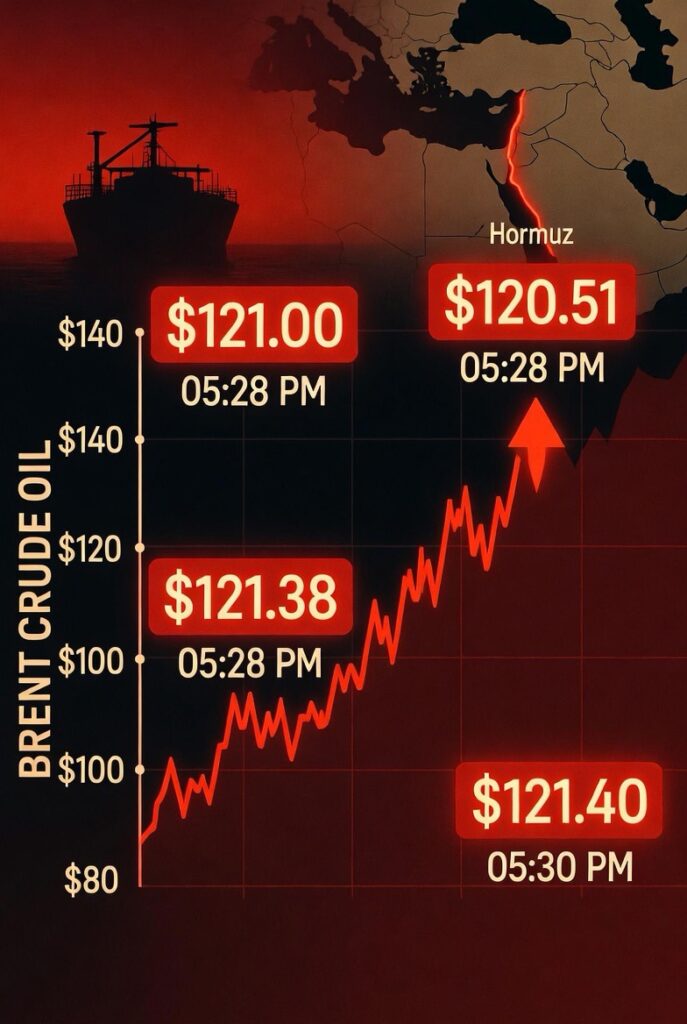
CCC Intelligent Solutions (NASDAQ:CCC) held its first-quarter earnings conference call on Thursday. Below is the complete transcript from the call.

This content is powered by Benzinga APIs. For comprehensive financial data and transcripts, visit https://www.benzinga.com/apis/.

The full earnings call is available at https://edge.media-server.com/mmc/p/uyqapt5m

Summary

CCC Intelligent Solutions reported a strong start to 2026 with total revenue growing by 12% year-over-year to $281 million, surpassing guidance. Adjusted EBITDA rose to $120 million with a margin expansion of 300 basis points to 43%.

The company emphasized its strategic positioning in an AI-driven world, highlighting significant adoption of its AI solutions, which contributed to one-third of its year-over-year growth. AI solutions now account for approximately 10% of total revenue.

A major renewal and expansion with a top five US auto insurer was secured, covering both traditional and AI products, showcasing strong revenue momentum. Additionally, the company made significant strides in the casualty segment, with new multi-year agreements with large insurers like Allstate.

The company continues to focus on expanding its product offerings and AI capabilities, with a strategic emphasis on solving rising complexity in the insurance economy, which is viewed as a key long-term growth driver.

Financial guidance for Q2 2026 anticipates revenue of $283 to $285 million, and full-year 2026 revenue guidance is raised to $1.155 to $1.163 billion, reflecting ongoing business momentum and strategic initiatives.

Full Transcript

OPERATOR

Good day and thank you for standing by. Welcome to the CCC Intelligence Solutions First Quarter Fiscal 2026 Earnings Call. this time, all participants are in a listen only mode. After the speaker’s presentation, there’ll be a question and answer session. To ask a question during the session, press star 11 on your telephone. You will then hear an automated message device and your hand is raised to withdraw your question. Please press Star one one again. Please be advised today’s conference is being recorded. I would now like to hand the conference over to your speaker today, Bill Warmington, Vice President of Investor Relations. Please go ahead.

Bill Warmington (Vice President of Investor Relations)

Thank you operator Good morning and thank you all for joining us today to review CCC’s first quarter 2026 financial results which we announced in the press release issued earlier this morning. Joining me on the call are Gitesh Ramamurthy, CCC’s chairman and CEO, Brian Herb, CCC’s CFO and Tim Welsh, CCC’s president. The forward looking statements we make today about the Company’s results and plans are subject to risks and uncertainties that may cause the actual results and the implementation of the Company’s plans to vary materially. These risks are discussed in the earnings releases available on our Investor Relations website and under the heading Risk factors in our 2025 Annual Report on Form 10K filed with the SEC. Further, these comments and the Q and A that follows are copyrighted today by CCC Intelligence Solutions Holdings Incorporated. Any recording, retransmission or reproduction or other use of the same for profit or otherwise without prior consent of CCC is prohibited and a violation of United States copyright and other laws. Additionally, while we will provide a transcript of portions of this call and we’ve approved the publishing of a transcript of this call by a third party, we take no responsibility for inaccuracies that may appear in the transcripts. Please note that the discussion on today’s call includes certain non GAAP financial measures as defined by the SEC. The Company believes these non GAAP financial measures provide useful information to management and investors regarding certain financial and business trends relating to the Company’s financial condition and the results of operations. A reconciliation of GAAP to non GAAP measures is available in our earnings release that is available on our Investor Relations website. Thank you. And now I’ll turn the call over to Gatesh.

Gitesh Ramamurthy

Thank you Bill and thanks to all of you for joining us today. We had a strong start to 2026 driven by continued customer demand and adoption. The first quarter total revenue grew 12% to $281 million above the high end of our guidance adjusted EBITDA was $120 million, also above the high end of our guidance and adjusted EBITDA margin expanded approximately 300 basis points year-over-year to 43%. We are now more than a year past the acquisition of EvolutionIQ and we continue to see strong momentum across the combined business. Today I want to focus on three themes that frame both our near term momentum and our long term opportunity. First, why CCC’s position to thrive in an AI driven world. Second, how their positioning is translating into strong tangible revenue momentum with several of the biggest companies in the world increasing their commitments to both our core and AI solutions. And third, why solving the problems caused by rising complexity for our customers in the insurance economy is a durable long term growth driver for ccc. Let me start with why CCC is positioned to thrive in an AI driven world. We can do this by first understanding the work our customers need to get done. The insurance economy spans many thousands of companies conducting hundreds of billions of dollars in commerce across tens of millions of unique claim events every year. They operate in a complex, highly regulated industry and may interact with dozens of other companies for any given claim. And the work they need CCC to help them get done are the things that directly drive the operating performance of their business. Take auto insurers for example, who on average pay out about 75% of their revenues on claims. They use the decision engines built into our solutions, uniquely configured for their specific needs to help them pay what they owe. They use the CCC network to activate the tens of thousands of companies they need to integrate with to get consumers back to their lives. And they use the CCC platform to manage that work end to end. In effect, they rely on CCC to manage the most complex, mission critical and consequential work they do. This is true not only across our auto insurance customers, but also each of the more than 35,000 businesses we work with. That translates to CCC’s economic model. We price our products on the measurable value we provide, typically on a five to one ROI basis. We have cumulatively invested billions of dollars in our platform and have deep industry leading functionality. But customers buy our technology because of the real world outcomes they’re able to achieve only by using our solutions to impact the hundreds of billions of dollars we help them process annually. CCC’s data is unique in its combination of scale, depth and recency. We have over $2 trillion of historical data that simply does not exist anywhere else. The data is broad, deep and continuously updated in real time, allowing us to provide benchmarks customers use to assess their operations and to provide hyper local up to the minute inputs that inform hundreds of billions of dollars in individual payouts and repairs. We also take special pride in the trust our customers place in us as partners in their business. Our role connecting the ecosystem has been built on decades of consistent, high quality execution where each participant can feel confident in being able to deliver the best outcome for them and the consumer. Importantly, the outputs generated using our solutions are already accepted and embedded in the core operations of their trading partners. It is therefore no surprise that customers are increasingly looking to accelerate their AI ambitions by leveraging the CCC Intelligent Experience Cloud. Our AI solutions have been the fastest growing part of our portfolio for some time with a scale that has few equals in vertical software. In Q1, our AI based solutions drove approximately one third of our overall year over year growth, growing at roughly 3.5 times the total company growth rate. AI solutions are now approximately 10% of revenue or about $120 million in run rate. These solutions are entirely incremental to our core products with discrete value propositions and ROI that customers validate through intense piloting and testing, demonstrating both the durability of our core solutions and the rapid adoption of our AI tools. While we are tremendously excited about the growth in our AI products, the benefits of marrying AI with deterministic software are becoming increasingly evident to customers. It’s not an either or, it is an and. Governance and trust are bedrock principles in our industry and the efficiency of the CCC platform is particularly well suited to helping customers manage AI at scale. Our systems efficiently process almost 6 billion transactions per day, giving customers a battle tested platform that flexibly handles volume spikes and constant adjustments to their operating rules. To summarize our first theme, CCC is positioned to thrive in an AI driven world because we combine unique real time data embedded workflows and a trusted scale platform that allows customers to deploy AI safely, govern it effectively and realize measurable economic value. My second theme is the strong tangible revenue momentum across the business as several of the biggest companies in the world increase their commitments to both our traditional and AI products. CCC’s customer base includes 27 of the top 30 auto insurers in the US by 2024 direct written premium as well as multibillion dollar repair facility chains. These are some of the largest and most discerning companies in the world with incredible access to leading edge technology capabilities. We are thrilled that one of the top five auto insurers in the US by direct written Premium renewed and extended its partnership with CCC through a new multi year enterprise agreement. This agreement covers our entire auto physical damage suite as well as our entire portfolio of AI solutions related to auto fiscal damage. Following an extensive two year test of those capabilities, the insurer consolidated its APD business onto CCC several years ago and this new agreement both renews the core software relationship and adds the full AI layer, resulting in a meaningful step up in the value of the partnership. Our largest and most sophisticated customers are also deepening their commitment to the CCC platform by expanding the scope of their relationship into casualty. Casualty remains one of the largest growth opportunities for CCC. Our acquisition of EvolutionIQ expanded our capabilities in this area through the creation of medhub for Auto Casualty, an AI documents insight solution now embedded within the CCC platform. Medhub adds meaningful new functionality that is helping customers manage complex casualty workflows and is helping to advance our pipeline. Last quarter we announced at Liberty Mutual, the sixth largest auto insurer in the United States and one of the largest PNC insurers globally selected US. They have since begun deploying a significant portion of their casualty business on the CCC platform. In April we signed a multi year agreement with Allstate for their third party casualty business. All of these wins are validation of large customers increasingly recognizing that CCC’s platform and comprehensive suite of solutions represent their best path to embracing an AI driven future. This dynamic is playing out across our entire business, including on the repair facility side. Adoption of our core and AI solutions in the market continues to grow with more than 6,500 repair facilities now using our AI-estimating capability. our industry conference next month, we plan to introduce even more exciting innovations for the repair facilities. In summary, we are seeing this differentiated positioning translate into tangible revenue momentum as some of the largest insurers and repair organizations in the world deepen and expand their relationships with CCC across both our core software and AI solutions. My third theme is how solving for rising complexity is expanding CCC’s value proposition and driving long term growth. The most important structural trend in the insurance economy is rising complexity. Vehicles are more sophisticated, medical and casualty claims are more involved, regulatory requirements continue to increase. Every claim requires more decisions, more coordination and more judgment all the time. We see advancing vehicle technology as a significant tailwind for CCC over time with many new product possibilities on the horizon. The multi decade trend in advancing vehicle safety technology has shown a repeated pattern of frequency reductions being more than offset by increases in severity to fix these systems when they are damaged that causes claim dollars and complexity to rise, which grows the industry and creates additional growth opportunities for ccc. Over the past decade, personal auto claim counts declined by less than 1% annually while average dollars per claim grew approximately 6% per year, driving about 5% annual growth in total claims dollars paid. We believe that going forward, claims cost growth is going to outpace claim frequency moderation and our insurance customers will be managing an increasing level of total claim spend. That means our software and AI capabilities remain mission critical as customers manage growing claim complexity and spend over time. The rising complexity inherent in our industry combined with the growing appetite across our customer base to adopt both our core and AI solutions gives us confidence in our long term growth outlook. Stepping back the common thread across all three themes is rising complexity. As claims become more complex and customer appetite for AI increases, CCC’s platform data and workflows become even more essential, giving us confidence in a long term growth opportunity. To help us navigate towards that future, we have added another experienced technology leader to our Board of Directors, John Schweitzer. John brings more than three decades of leadership experience across enterprise technology and global go to market organizations including senior roles at Salesforce, Informatica, SAP and Oracle. With the addition of John, Neil DeCresenzo and Barack Elam over the last 18 months, we have deliberately strengthened our board to support platform strength, AI innovation and durable value creation while preserving neutrality across the ecosystem we serve. We are pleased with our strong start to the year and continue to be incredibly excited by our near term momentum and the long term opportunity in front of us. With that, I’ll turn the call over to Brian who will walk you through our results in more detail.

Brian Herb (Chief Financial Officer)

Thanks Gitesh. As Gitesh outlined, Q1 was a strong start to the year with revenue growth and profitability ahead of expectations, increasing adoption of our AI solutions across our largest and most sophisticated clients, and continued execution on our capital allocation priorities including return of capital to shareholders. Now let’s turn to the numbers. I’ll review our first quarter 2026 results and then provide guidance for the second quarter and the full year. Total revenue in the first quarter was $281 million, up 12% from the prior year period and above the high end of our revenue range. Please note that all this growth is organic. Of the 12% growth, 9% was driven by cross sell upsell and the adoption of solutions across our existing client base. Approximately three points of growth came from new logos within this position. We did see more than a point of impact from a combination of timing and one time items including true ups on subscription contracts and transactional strength in casualty. In the quarter, Emerging Solutions contributed about 4 points of growth. Primarily driven by EvolutionIQ are AI based APD solutions, diagnostics and build sheets. Emerging Solutions continue to represent an important and expanding part of the portfolio, accounting for approximately 11% of the total revenue in the first quarter of 2026 and growing approximately 50% year over year with the largest contribution from our AI Solutions. Turning to our key metrics of Software Gross dollar Retention or GDR in software Net dollar Retention or mdr, GDR captures the amount of revenue retained from our client base compared to the prior year period. In Q1 2026 our GDR was 98% down from 99% last quarter. Please note that since we started reporting this …

Full story available on Benzinga.com

This post was originally published here
Chinese President Xi Jinping has called upon the nation to step up its efforts in research and innovation.

Xi, while addressing a symposium in Shanghai on Thursday, underscored the importance of basic research as the cornerstone of the entire scientific system, reported the South China Morning Post. 

He pointed out that global tech rivalries are increasingly centered on basic and frontier fields, making “original and disruptive innovation” essential.

Xi also called for increased funding for basic research and the development of a more diversified investment landscape. He demanded better conditions for researchers and a stronger innovation environment that is “open, inclusive and tolerant of failure”.

In 2025, Beijing spent about 280 billion yuan ($41 billion) on R&D, as national R&D spending rose steadily to over 3.92 trillion yuan ($570 billion).

data-variant=”card”
data-news-mode=”manual”

>


Read Also:

Scott Bessent Blasts Bernie Sanders For Hosting Chinese Scientists For …

This post was originally published here

PBF Energy (NYSE:PBF) released first-quarter financial results and hosted an earnings call on Thursday. Read the complete transcript below.

Benzinga APIs provide real-time access to earnings call transcripts and financial data. Visit https://www.benzinga.com/apis/ to learn more.

The full earnings call is available at https://events.q4inc.com/attendee/105930101

Summary

PBF Energy reported an adjusted net loss of $0.88 per share and adjusted EBITDA of $68.7 million for the first quarter, with notable disruptions from the Martinez refinery and global oil market conditions.

The Martinez refinery is in the final stages of its restart, expected to fully resume operations by the weekend, contributing positively to the company’s future output.

Management highlighted the strategic importance of U.S. refining infrastructure amid global disruptions, with a focus on leveraging coastal complexity and ensuring reliable operations.

The company achieved its 2025 target of $230 million in annualized savings from its Refining Business Improvement program and is on track for $350 million by the end of 2026.

Future capital allocation priorities include deleveraging the balance sheet and focusing on shareholder returns, especially given the anticipated strong market conditions.

Full Transcript

OPERATOR

Good day everyone and welcome to the PBF Energy First Quarter 2026 Earnings Conference Call and webcast. At this time, all participants have been placed in a listen only mode and the floor will be open for questions following management’s prepared remarks. If anyone should require operator assistance during the conference, please press Star0 on your telephone keypad. Please note that this conference is being recorded. It is now my pleasure to turn the floor over to Colin Murray of Investor Relations. Sir, you may begin. Thank you.

Colin Murray (Investor Relations)

Angeline. Good morning and welcome to today’s Call. With me today are Matt Lucey, our President and CEO, Mike Bukowski, our Senior Vice President and Head of Refining, Joe Marino, our CFO and several other members of our management team. Copies of today’s earnings Release and our 10Q filing, including supplemental information, are available on our website. Before getting started, I’d like to direct your attention to the Safe harbor statement contained in today’s press release. Statements that express the company’s or management’s expectations or predictions of the future are forward looking statements intended to be covered by the Safe harbor provisions under federal securities laws consistent with our prior periods. We’ll discuss our results excluding special items which are described in today’s press release. Also included in the press release is forward looking guidance information. For any questions on these items or other follow up questions, please contact Investor Relations after today’s call. I’ll now turn the call over to Matt Lucey.

Matt Lucey (President and CEO)

Thanks Colin. Good morning everyone and thank you for joining the call. Indeed, today is a moment with the disruption in the Middle East. The world is in greater need of the products we produce and therein lies the momentous opportunity for our company to perform and reward our shareholders for owning such critical infrastructure. Within pbf, the spotlight is squarely on Martinez. We are bringing Martinez back online and will shortly be supplying the California market with our full capabilities. This could not be coming at a better time for the West Coast California markets. There are three main areas of focus in terms of the restart at Martinez. The Cat Feed Hydrotreater, the Alkylation unit and the fcc. The Cat Feed hydrotreater and ALKI are up and both are running with the fcc. We expect to be making finished products this weekend. While the rebuild effort was completed in February, there is no question the restart took longer than expected. It was critical for us to ensure that all the work accomplished at Martinez over the last 14 months was capped off with a safe restart. Moving on to the broader environment, the events in the Middle east have caused the largest disruption ever in the oil markets. And the effects are indeed dramatic and constructive for PBF. Initially, approximately 15 million barrels per day of crude and 5 million barrels per day of product were trapped inside the Straits of Hormuz. The loss of crude barrels was most acutely felt in Asia. But the shortages have cascaded to other markets. 80% of the crude flowing through the Straits was destined for Asian refineries and those refineries in turn supplied products to many markets, including the US West Coast. As refining roads in Asia have been rationed due to lack of inputs, the loss of products has affected every market. Compounding this impact, the products stranded in the Arabian Gulf have tightened markets in Europe and subsequently the Atlantic Basin. In the near term, the markets will continue to adjust in real time to demand signals for both crude and products. Global pricing will dictate trade patterns. Increasingly, markets are calling for both US crude and US products to meet demand. While the US has been somewhat insulated, there are signs that demand is being impacted globally by both pricing supply issues. It has never been more evident that US refining is critical infrastructure. And this is most apparent in regions like the like the west coast and east coast that are short refined capacity and rely on imports from unstable sources to meet demand. It will take some time for trade patterns to normalize both during and and post the conflict in the Middle East. Refining fundamentals should remain strong throughout, supported by tight refining balances coupled with low product inventories around the world. Prior to this event, refining balances look constructive and the inevitable restocking should provide a favorable backdrop for quarters to come. PBF remains focused on controlling the aspects of our business that we can control. To be successful and enhance value for our investors, we must operate safely, reliably and responsibly, and we must do it as efficiently as possible. And with that, I’ll turn the call over to Mike Wachowski.

Mike Bukowski (Senior Vice President and Head of Refining)

Thank you, Matt. Good morning, everyone. Before updating on the progress of our refining business improvement program, I’ll provide a few comments on first quarter operations and our Martinez refinery status. Outside of the west coast, our refining system ran reasonably well. All of our refineries navigated record cold temperatures with minimal disruptions on the West Coast. As Matt mentioned, Martinez is in the final stages of its phased restart. The process to restore it has been methodical and required many levels of safety and process checks to ensure that all equipment was correctly manufactured and installed. Before we introduced hydrocarbons, the cat feed, hydrotreater and alkylation unit have been operating and producing finished products as well as the intermediates required for the startup of the fluid catalytic cracking unit this weekend. The Martinez team and a supporting cast too numerous to mention worked tirelessly to get us to this point. My thanks to all involved in the project. Additionally, while Martinez operations were being restored, Torrance underwent a turnaround early in the first quarter and with that event complete as a clean Runway for the remainder of 2026. I’m happy to report that we’re seeing progress from our RBI program. We achieved our 2025 target of $230 million of annualized run rate savings. This goal includes approximately $160 million of OpEx reductions against our 2024 benchmark and is incorporated in our full 2026 budget. While the ongoing Martinez process is causing some noise with the first quarter results, we are very comfortable in meeting or even exceeding our stated targets. While we are improving our maintenance and operational efficiency and reducing energy consumption, our main priority will always be to focus on safe, reliable and responsible operations across our system. With that, I’ll now turn the call over to Joe Varino for our financial overview.

Joe Varino

Thanks, Mike for the first quarter excluding special items, we reported adjusted Net loss of $0.88 per share, an adjusted EBITDA of $68.7 million. Our discussion of first quarter results excludes the net effect of special items, including $11.5 million in incremental OpEx related to the Martinez refinery incident, a $106.5 million gain on insurance recoveries, $313 million LCM inventory adjustment, a $9.4 million gain relating to PBS, 50% share of SBR’s LCM adjustment for the quarter, and approximately $9.4 million of charges associated with the RBI initiative, as well as other items detailed in the reconciling tables in today’s press release. PBS results reflect several unfavorable conditions that manifested in the first quarter both operationally and commercially. Capture rates for the quarter were negatively impacted by west coast operations, the higher flat price environment increasing the headwind of low value products, higher RINS expense and derivative losses recognized in the quarter. These capture headwinds more than offset benefits from the improving jet to diesel spreads and certain crew diffs. Operationally, our Torrance refinery was in planned turnaround during January and February, while our Martinez refinery restart was delayed. We built up inventory levels in the first quarter primarily in anticipation of the planned restart of Martinez. This occurred as global pricing for hydrocarbon surged on the back of the conflict in the Middle east, resulting in losses in our typical hedge program. Our results for the quarter reflect an aggregate derivative loss of a little over $200 million. Approximately half of this loss related to unrealized amounts expected to be mostly offset in the second quarter as the physical barrels run through our refining system. The $106.5 million gain on insurance recoveries related to the Martinez fire is a result of the fourth unallocated payment agreed to and received in the first quarter. This brings our total insurance recoveries to $1 billion net of our deductibles and retention, including the amounts received in 2025. Important to note, while the bulk of the spending related to Martinez is behind us, the claim is ongoing and we expect to recover incremental funds as we continue to work with our insurance providers towards potential additional interim payments and finalization of the claim in an expeditious manner, shifting back to our normal quarterly results. Discussion Also included in our results is an approximate $8 million EBITDA benefit excluding LCM Impacts related to PBS equity investment in St. Bernard Renewables FDR produced an average of 16,700 barrels per day of renewable diesel in the first quarter. FDR’s production was as expected, but results reflect the impact of improving market conditions in the renewable fuel space with the finalization of the RVO in March. With the setting of the 2026-27 RVO, the markets now have the ability to stabilize and should result in favorable margins. PBF’s cash used in operations for the quarter was $324 million, which includes a working capital draw of approximately $340 million, mainly due to movements in inventory and the impact on our net payable position as a result of rapidly moving commodity prices. On our last call we mentioned our expectations for elevated first quarter CapEx and working capital outflows primarily related to the Martinez restart and normal seasonal inventory patterns. The capital spending for the Martinez rebuild is essentially behind us and we expect working capital normalize as operations restart and full cash Invested in consolidated CapEx for the quarter was $320 million which includes refining, corporate and logistics. This amount excludes first quarter capital of approximately $189 million related to the Martinez incident. On the surface, the Q1 figure might be slightly higher than expected and this is because it includes approximately $100 million of net carryover from 2025 that had not been cash settled at year end. The balance is our normal quarterly incurred amount including including the turnaround at Torrance. Given that and the noise related to the Martinez rebuild, it would be helpful to more broadly consider the 2025 and 2026 capital programs over a two year period. We ended the quarter with $542 million in cash and approximately $2.3 billion of debt to debt. At quarter end, our net debt TO cap was 36% and our current liquidity is approximately $2.4 billion. Based on current commodity prices, cash and borrowing capacity. Under our abl, our net debt increased in the first quarter due to planned capital expenditures, continued spend on the Martinez restart and working capital outflows, primarily related to a build in inventory going forward. Inventory should normalize as operations ramp up and we should see a resulting tailwind in working capital cash flows. Additionally, with our capital spend for the Martinez rebuild predominantly behind us, we expect to further progress our Martinez insurance claim and receive additional payments once realized. These factors alone should principally offset the increase in net debt experienced in Q1. Maintaining our firm financial footing and a resilient balance sheet remain priorities as we look ahead. We expect to use periods of strength to focus on reducing both our gross and net debt Operator, we completed our opening remarks and we’d be pleased to take any questions.

OPERATOR

Thank you. In a moment we will open the call to questions. The company requests that all callers limit each turn to one question …

Full story available on Benzinga.com

This post was originally published here
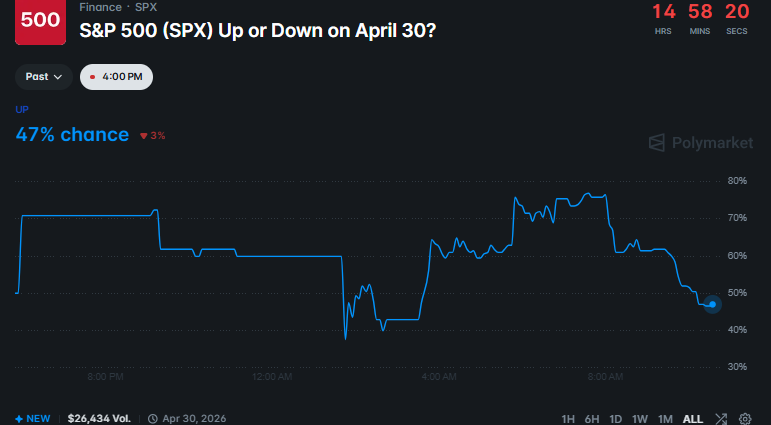
Diebold Nixdorf (NYSE:DBD) held its first-quarter earnings conference call on Thursday. Below is the complete transcript from the call.

This transcript is brought to you by Benzinga APIs. For real-time access to our entire catalog, please visit https://www.benzinga.com/apis/ for a consultation.

Access the full call at https://events.q4inc.com/attendee/130415367

Summary

Diebold Nixdorf reported strong financial performance for Q1 2026 with a 6% increase in revenue to $888 million and a 14% rise in adjusted EBITDA to $99 million.

The company saw significant growth in its retail segment, especially in North America with a 70% increase and strategic wins in electronic point of sale and self-checkout deployments.

Free cash flow more than tripled year over year to $21 million, marking the sixth consecutive quarter of positive cash flow, with expectations to maintain this trend.

Strategic initiatives in banking focused on expanding ATM and branch automation solutions, with notable wins in teller cash recyclers and branch network upgrades.

Management highlighted ongoing operational improvements, including a lean approach to cost reduction and enhancements in service operations, contributing to margin expansion.

Future guidance remains positive with projected revenue between $3.86 billion and $3.94 billion for 2026, and continued commitment to shareholder returns through a $200 million share repurchase program.

Full Transcript

OPERATOR

Hello, good day and welcome to Diebold Nixdorf’s first quarter 2026 earnings call. My name is Carli and I will be coordinating today’s call and our speaker’s remarks. There will be a question and answer session. In order to ask a question, please press STAR followed by the number one on your telephone keypad. I’d now like to turn the call over to our host, Maynard, Vice President of Investor Relations. Maynard, please go ahead.

Maynard (Vice President of Investor Relations)

Hello and welcome to our first quarter 2026 earnings call. To accompany our prepared remarks, we posted our slide presentation to the Investor Relations section of our website. Before we start, I’ll remind all participants that you will hear forward looking statements during this call. These statements reflect the expectations and beliefs of our management team at the time of the call, but they are subject to risks that could cause actual results to differ materially from these statements. You can find additional information on these factors in the company’s periodic and annual filings with the SEC Participants should be mindful that subsequent events may render this information to be out of date. We will also discuss certain non GAAP financial measures on today’s call. As noted on slide three, reconciliations between GAAP and non GAAP financial measures can be found in the supplemental schedules of the presentation. With that, I’ll turn the call over to Octavio who will begin on slide four. Thank you, Maynard.

Octavio

Good morning everyone and thank you for joining us. The first quarter was a strong start to the year and another quarter of delivering on our commitments. Continuing the operating momentum we have built. We grew revenue 6% year over year to 888 million and adjusted. EBITDA increased 14% to 99 million. At the same time, backlog grew sequentially to approximately 790 million, reinforcing the underlying demand we’re seeing across both banking and retail. In banking we continue to build on the strength of our core ATM franchise while expanding our role inside the branch. We are seeing good momentum in Teller, cash recyclers and broader branch automation which are increasing our relevance with customers and expanding our opportunity set. In retail, we’re seeing growth accelerate as we expected with revenue up double digits. In North America we’re gaining critical mass with a large and growing pipeline of deals and had important wins in electronic point of sale and in the fuel and convenience space and with a regional grocer and in self checkout we delivered initial deployments with a large pharmacy chain. In Europe, we had a large number of electronic point of sale wins that drove growth. Free cash flow continues to be a clear point of strength. We generated 21 million in Q1 more than tripling year over year. This marks our sixth consecutive quarter of positive free cash flow and and we expect to remain consistently positive each quarter going forward. We maintained our fortress balance sheet, ending the first quarter with a net debt leverage ratio of 1.2 times while remaining fully committed to returning the majority of our free cash flow generation to shareholders through our $200 million share repurchase program. We had a strong quarter, we did what we said we would do and importantly, this performance reflects the continued compounding of the strategic and operational improvements we have implemented. Let’s now turn to Slide 5 to review our banking strategy. In banking, we continue to see supportive secular tailwinds. Financial institutions are investing in their branch networks to improve efficiency and enhance the customer experience, while at the same time referring to remaining under pressure to lower the cost to serve. Importantly, in the US we’re seeing a shift from prior years with leading financial institutions actively expanding their branch footprints. That is creating a clear need for solutions that both improve the customer experience and structurally reduce the operating cost. Our strategy is built for that environment. We go beyond the ATM to help banks automate and run the entire branch ecosystem, combining hardware, software and services to improve customer experience, employee efficiency and overall branch economics. The objective is straightforward take costs out while improving service levels. Our integrated ecosystem optimizes how cash moves through the branch, reducing the need for cash in transit activity and the expense that comes with it. Because the best cost is no cost, this is a key differentiator in how we approach the market. We use technology to eliminate costs and improve the customer experience, not just to manage or reallocate it. We’re seeing that the strategy translates into results across three areas. First, in our core self service business, recycling ATMs continue to gain momentum across customer segments and geographies. In the US we won a full network upgrade with a major credit union based in the Southeast with more than 1 million members, deploying over 200 EM Series cash recyclers across their footprint. This is a strong proof point that recyclers are gaining traction across a broad range of institutions. Second, inside the branch, we’re expanding our footprint with telecast recyclers and branch automation solutions. During the quarter we secured a significant competitive displacement with one of the largest financial institutions in the US winning 100% of their teller cash recycler installed there. In addition, we were selected by Forex as the single trusted partner to manage and optimize their ATM network end to end, reinforcing our ability to deliver both operational efficiency and service performance at scale. At the same time, we’ve grown our pipeline and backlog in India for our fit for purpose devices and we have plans to expand this product family into additional markets across Asia. We also plan to extend our teller cash recycler footprint into international markets, further broadening our addressable opportunity. Third, we are increasingly orchestrating how transactions are processed and routed across multiple customer touchpoints. During the quarter, we won a major engagement with a leading US Financial institution to modernize transaction processing across thousands of branches. Our platform supports transactions not only at the atm, but also at the teller and across digital channels, enabling banks to manage and optimize transaction flow across both physical and digital environments. And importantly, these are not standalone wins. They are part of a broader strategy to increase our integration and wallet share within the branch and transaction ecosystem. When customers deploy across ATMs, seller cash recyclers and software, it creates a natural path to broader branch automation, spinning our relationships and expanding our role over time. Stepping back, we’re executing well. We’re strengthening our core, expanding inside the branch and using technology to structurally improve cost and performance for our customers while also extending our reach into new geographies. Now moving to slide 6 turning to retail, we delivered a very strong Q1 with revenue growth north of 25% year over year and we continue to see strong momentum building across the business as we move through the year. In North America, the traction we’re building continues to strengthen. About a year ago we identified our top 40 target accounts and today we have active projects with the vast majority of them. Our pipeline has grown approximately threefold over that period and that momentum is converting into wins. During the quarter we secured a major deployment with the top 10 fuel and convenience retailer for thousands of point of sale units. In addition, we won an initial self checkout deployment with a leading pharmacy chain and scored an electronic point of sale win with a regional grocer in the U.S. both of those opportunities create pathways for much larger rollouts over time. We’re encouraged by the quality of the opportunities in front of us and increasingly confident in our ability to convert that pipeline into meaningful growth. As the year progressed in Europe, we continue to see strong execution with solid point of sale performance and wins across multiple markets. Now turning to Smart Vision AI, we are positioning Smart Vision as a platform that supports multiple use cases across the store. It delivers strong ROI by reducing, shrink, improving operational efficiency and enhancing the checkout experience. What started at the self checkout has now expanded across additional parts of the store from the aisle to demand checkout, demonstrating the flexibility and scalability of the platform, we are already seeing early adoption. One of the largest retailers globally has deployed Smart Vision in several stores to address shrink across both the aisle and the point of sale. And strategically, this platform is opening doors. It allows us to engage earlier with customers, often starting with a targeted use case and then expanding into broader discussions around self checkout, point of sale and software. That creates a natural path to larger, more strategic programs over time. This also aligns well with where the market is going. Retailers, particularly in North America, are increasingly prioritizing open modular solutions. That’s the model we’ve already proven in Europe. We’re pleased with the strong momentum we’re seeing across retail. Our focused account strategy is working, our pipeline is building and our platform approach is positioning us to continue expanding share turning to slide 7 in services, we’re making solid progress as we previously indicated. Margins are modestly down year over year as we continue to invest in the business to strengthen execution and service quality. However, these investments are progressing as planned and positioning us for sequential margin expansion. As we move through the year, these investments are delivering results. We are now achieving some of the highest service levels in our history in North America with meaningful improvements in SLA and overall availability. That level of performance is critical as it drives customer satisfaction, supports product growth and increases service attach rate over time. At the same time, as we expand our installed base across banking and retail, we’re increasing service density which drives incremental, highly recurring revenue without the proportional increase in cost. We’re also entering the next phase of our efficiency journey with the rollout of our field technician software. We now have much more granular visibility into operation, allowing us to optimize dispatch routing and parts management. For example, in Chicago, a cross functional team used these tools to redesign service zones, improving first time fixed rates, reducing drive time and lowering dispatcher requirements. We’re now scaling those learnings across additional markets so overall we’re seeing the right progression, stronger execution, a growing install base and increasing opportunities to drive efficiency and margin expansion. Now let’s turn to slide 8. Our approach to continuous improvement is now a core part of how we operate the business and has become a meaningful competitive advantage in how we execute. This is not just a set of initiatives, it is an operating rhythm and cultural shift across the organization. Were focused on identifying incremental improvements, scaling them across the enterprise and compounding those gains over time to drive margin expansion and reduce complexity. We are seeing that translate into tangible results. During the quarter we held Kaizen events across Our Asia Pacific Service and logistics operations focused on improving repair cycles, dispatch efficiency and billing capture. These efforts are generating both cost savings and incremental revenue and more importantly, they are repeatable and scalable across our network. In manufacturing, we’re also driving meaningful improvements. In North Kansas we reduced our sub assembly footprint by about 40%, freeing up space for additional future production capacity. Similarly, in Brazil we redesigned our manufacturing process, reducing footprint by approximately 50% while increasing capacity and reinforcing our local for local strategy. These are good examples on how we’re simplifying the business, improving productivity and structurally strengthening margins. To put that in context, remember when I first took over as CEO and prior to launching lean product banking margins were in the low teens. This quarter they were above 30%. Lean has been a key driver of the margin profile you’re seeing today. During the quarter we received multiple global banking and finance awards recognizing innovation and the strength of our end to end banking solutions and we were added to the S and P small cap 600 index earlier this month. That inclusion reflects the consistency of our execution, the discipline we’ve built into the …

Full story available on Benzinga.com

This post was originally published here
Trinet Group (NYSE:TNET) reported first-quarter financial results on Thursday. The transcript from the company’s first-quarter earnings call has been provided below.

This transcript is brought to you by Benzinga APIs. For real-time access to our entire catalog, please visit https://www.benzinga.com/apis/ for a consultation.

Access the full call at https://events.q4inc.com/attendee/214291011

Summary

Trinet Group reported a strong Q1 2026 with a 25% increase in adjusted EPS due to disciplined health fee repricing and expense management.

The company completed its health fee repricing, expecting improved retention and sales growth, supported by new initiatives like the Cocoon acquisition and partnerships for global and IT services.

TriNet sees AI as a significant opportunity, with AI tools like TriNet Assistant improving operational efficiency and customer engagement.

Despite a 5% decline in total revenue to $1.2 billion, the insurance cost ratio improved to 84% due to effective pricing and lower health costs.

The company maintains its 2026 revenue guidance of $4.75 to $4.9 billion, with adjusted EBITDA margin and EPS targets aligning with the favorable end of their guidance.

Full Transcript

OPERATOR

Good day and welcome to the TriNet Group, Inc. First Quarter 2026 Earnings Conference Call. All participants will be in listen only mode. Should you need assistance, please do a conference specialist by pressing the star key. Follow a zero after today’s presentation there will be an opportunity to ask questions. To ask a question, you press star then one on your telephone keypad. To withdraw your question, please press Star then two. Please note this event is being recorded. I would now like to turn the conference over to Alex Bauer, Head of Investor Relations. Please go ahead. Thank you and good afternoon everyone. Joining me today are Irving Tan, WD’s chief executive officer and Chris Senecal, WD’s chief financial officer. Before we begin, please note that today’s discussion will contain forward looking statements based on management’s current assumptions and expectations which are subject to various risks and uncertainties. Thank you. Please stand by. The conference will resume. The speakers are live. I have connected speakers. Good morning everybody. Sorry for the technical snafu. My name is Alex Bauer. I’m head of TriNet’s investor relations. Thank you for joining us and welcome to TriNet’s first quarter conference call and webcast. I am joined today by our President and CEO Mike Simons and our CFO Mala Murthy. Before we begin, I would like to preview this morning’s call. First, I will pass the call to Mike for his comments regarding our first quarter performance. Mala will then review our Q1 financial performance in greater detail and comment on our 2026 financial guidance and outlook. Please note that today’s discussion will include our 2026 full year financial Outlook and other statements that are not historical in nature or predictive in nature, or depend upon or refer to future events or conditions such as our expectations, estimates, predictions, strategies, beliefs or other statements that might be considered forward looking. These forward looking statements are based on management’s current expectations and assumptions and are inherently subject to risks, uncertainties, changes in circumstances that are difficult to predict and that may cause actual results to differ materially from statements being made today or in the future. Except as may be required by law, we do not undertake to update any of these statements in light of new information, future events or otherwise. We encourage you to review our most recent public filings with the SEC, including our 10K and 10Q filings, for a more detailed discussion of the risks, uncertainties and changes in circumstances that may affect our future results or the market price of our stock. In addition, our discussion today will include non GAAP financial measures including our forward looking guidance for adjusted EBITDA margin and adjusted Net income per diluted share. For reconciliations of our non GAAP financial measures to our GAAP financial results, please see our earnings release, 10Q filings or 10K filing, which are available on our website or through the SEC website. Please also note that going forward, these filings may be released up to 48 hours after our earnings release. With that, I will turn the call over to Mike thank you Alex and good morning everyone. I’m pleased with our start to 2026. In the first quarter, the TriNet team kept our clients as our first priority, navigating a volatile business and geopolitical environment. For today’s call, I’ll start with our first quarter performance, then highlight the actions we’re taking to drive growth, and finally discuss the potential impacts of AI, a widely discussed subject during the quarter. Our strong first quarter adjusted earnings per share, up 25% over prior year, reflect our disciplined approach to both repricing health fees and managing our expenses. Health fee repricing over the last year created a headwind for new sales and retention, including our January 2026 renewal where attrition was about 2 points worse than prior year. Our pricing addressed both heightened medical cost trend and a cohort of underpriced business. With our January renewals complete, all cohorts within our customer base are now priced in line with more historical practices and despite the impact of our January repricing, we expect overall 2026 retention to be better than than full year 2025. We’re already seeing a tangible improvement here in the second quarter where attrition due to health pricing has already declined by 30%, a trend we expect to continue throughout 2026. New sales grew modestly year over year in the first quarter. The increasingly volatile business environment pressured March close rates for sales opportunities. In the post proposal stage, we saw the time to close extend by about 15%. However, given pipeline visibility, our pricing position relative to the market, and several sales initiatives that are coming online, which I’ll talk about in just a minute, we expect a solid full year sales growth for 2026 on insurance performance improved as we benefited from stable health cost trends and disciplined pricing, resulting in an 84% insurance cost ratio. A feature of our model is our ability to quickly respond to changes in insurance outcomes. We responded quickly to rising cost trends and will do so again if and when trends moderate. We remain disciplined on expenses, aligning the business to its current scale, automating processes, and advancing our talent optimization strategy. As a result, we delivered strong earnings and profitability in Q1 and we believe earnings are now tracking to the top half of our annual guidance. Our strong operating performance enables us to invest further in our products and services. Through acquisition partnerships and internal build efforts. We’re extending our value prop on issues our clients care about. These new capabilities in combination with our investment in sales capacity represent important steps in our return to sustainable growth. During the quarter we completed the acquisition of Cocoon, an industry leading employee leave management application. Aligned with our Compliance first approach, Cocoon should integrate seamlessly into our platform and address a significant customer pain point with an automated leave of absence solution. We expect improved NPS scoring and increased retention along with further competitive differentiation in our PEO and ASO offerings. Next, we announced partnerships powering Trinet Global and TriNet IT. TriNet Global, powered through our partnership with Multiplier, delivers global workforce visibility, compliance built workflows and localized support enabling our clients to expand internationally with confidence. TriNet IT, powered through our partnership with Electric AI, embeds device and asset management into HR workflows, reducing IT effort, lowering costs and improving security. We remain on track to deliver our new benefit bundles, simplifying the buying process and aligning the right set of plans with client needs. As benefit bundles are released during the second quarter, we expect to benefit from their impact during the fall selling season. Alongside these investments in our offering, we continue to invest in our go to market capacity. Our broker strategy is increasingly driving deal flow and sales opportunities. Broker RFPs grew by nearly 12% year over year in Q1 and we’re seeing Q2 broker RFPs accelerate off that number. We improved our broker experience with automated Trusted Advisor status and enhanced renewal access. In addition, we grew our most senior and productive sales reps by 10% year over year in Q1. Our Ascend program graduates its first class, which will represent over 10% of our sales focus this fall, and with more than 100 trainees in the pipeline by year end, we believe we can sustainably grow our sales force in 2027 both in terms of number and in terms of quality. In summary, we’re improving our product services and go to market capabilities. We’ve brought health fees in line with risk and increased the accuracy of our pricing processes going forward. As a result, we expect improved conversion rates on new business and higher retention rates in the client base. We’re moving quickly on numerous fronts, which is a testament to my colleagues across the company. Increasingly, their efforts are being enabled by investments in AI, which brings me to the last topic I wanted to touch on before turning things over to Mala. We certainly understand that AI is an important topic for all of our stakeholders and we see AI’s impact across two dimensions. First, its impact on Trinet’s operations sales service model and second, the external impacts on our client base and industry. Starting internally this March, we launched Trinet Assistant, an AI tool giving our customers and colleagues access to our HR expertise whenever and wherever needed. Already, Trinet Assistant is proving its impact. We just navigated tax season historically, a period that sees a significant spike in inbound volume. Between March 31 and April 16, inbound volumes typically increase on average by 12%. TriNet Assistant successfully handled much of that demand, driving a 6% reduction in inbound contacts through the busy period, delivering timely, accurate responses and improving overall service productivity. Trinet Assistant will continue to evolve, broaden and become more effective with increased utilization. Similar examples of AI have emerged in our product development processes where 30% of code and 50% of our test cases are now AI generated and moving directly into peer review for production deployment. Sales agents are supporting our prospecting, quoting and closing processes. AI is supporting our colleagues on client engagements, capturing notes, suggesting answers and automating correspondence. As we have talked about on this call for the past few years, Trinet has operated with excellent client facing technology but many manual processes behind the scenes. The Runway for AI to drive real improvement in client outcomes and efficiency is substantial and we’re excited about the capacity it creates for our colleagues to focus on what matters most, working directly with our clients. The ability to apply judgment, build relationships, manage risk is where my colleagues stand out and where I believe the resilience of our business model lies. During the first quarter, there’s been robust discussion about the long term threats of AI. TriNet sits at the intersection of employers, employees and government, where AI supports rather than replaces the human responsibilities we take on behalf of our customers. Things like handling payroll, human resources, insurance, taxes, compliance and more. Our customers aren’t just buying software or knowledge, they’re transferring risk and liability to Trinet. Further, they’re buying real and human expertise to step in at high stakes moments, ensuring employees get paid when problems occur, that health care coverage is there when needed, and having someone in their corner when regulators inquire. As for AI’s impact on SMBs, it’s early and still very uncertain. We believe SMBs will be impacted differently across the various industry verticals. In verticals where AI adoption is highest, such as technology, client hiring has not changed materially over the past two years, suggesting AI is creating as much opportunity as it’s replacing. There also seems to be a growing correlation between AI adoption and faster new business formation. As small businesses do what they always do, move quickly to innovate and take advantage of new opportunities, rest assured that Trinet will be there to capture our share of this market. So in summary, AI is undoubtedly driving changes, but given our business model, we see AI as a positive opportunity to serve more SMBs and serve them better overall. We are off to a strong start successfully navigating a difficult operating and business environment. Pricing is normalizing, expenses are managed and we’re trending toward the favorable end of our 2026 financial guidance. We see significant AI opportunities across our operations and product and we are pursuing them. There’s more work ahead, but momentum is building and we look forward to updating you as the year progresses. With that, I’ll pass the call to

Mala Murthy (Chief Financial Officer)

Mala Mala thank you, Mike While the macro environment in the first quarter was uneven, Trinet’s solid financial results were driven by disciplined pricing, better than expected insurance performance, and strong execution over multiple cycles. We repriced our health fees in a disciplined and measured way. The impact on new sales and retention was considerable. I’m pleased to say that our trend plus price increases concluded with our January 1st renewal and our retention outlook is improving. Furthermore, in the first quarter we saw health costs materialize lower than forecast, which when combined with our disciplined pricing drove improved ICR performance. Our discipline extended to expense management. We made difficult decisions in the quarter which resulted in meaningful run rate cost savings. Expenses are increasingly aligned with the scale …

Full story available on Benzinga.com

This post was originally published here

By JBizNews Desk — April 30, 2026

Tesla has delivered a major milestone in the push toward electrifying long-haul trucking. Late Wednesday, the company announced on X that the first Tesla Semi has rolled off its dedicated high-volume production line at a new facility adjacent to Gigafactory Nevada. The post, which included an image from inside the plant, marks the official start of scaled manufacturing for the long-awaited Class 8 electric truck and signals that volume deliveries to customers could begin later this year.

This development comes directly from Tesla itself, confirming what the company outlined in its Q1 2026 shareholder update: the Semi remains on schedule for volume production starting in 2026, with the Nevada factory built specifically to ramp output toward a long-term target of up to 50,000 units annually. The announcement builds on ongoing real-world pilots, including a new three-week port drayage test launched today by Southern California operator MDB Transportation, and partnerships such as the recent agreement with Pilot Travel Centers to expand Megacharger infrastructure.

For everyday businesses and supply chains that rely on trucking — from small manufacturers shipping goods across the Midwest to regional distributors facing high diesel costs — the news carries immediate practical weight. Lower operating expenses could eventually ease pressure on freight rates, helping offset some of the broader cost challenges tracked throughout today’s coverage, including cautious consumer spending and energy prices.

What the Milestone Means for Fleets and Small Businesses

• The Semi’s estimated 500-mile range and roughly 1.7 kWh per mile efficiency promise dramatically lower fuel and maintenance costs compared with diesel trucks, potentially cutting per-mile expenses by up to 70 percent once charging infrastructure matures.

• Early high-volume output will initially focus on fulfilling Tesla’s own internal needs before expanding to external customers, with analysts projecting 5,000 to 15,000 deliveries in 2026 before scaling higher.

• The dedicated Nevada factory, spanning 1.7 million square feet, is designed for efficient production, supporting Tesla’s goal of making electric trucking economically competitive for a wider range of operators.

Economists weighed in on the broader implications, with Diane Swonk, chief economist at KPMG, describing the development as a pivotal step in reshaping freight economics as diesel’s cost advantage continues to erode amid volatile fuel prices, making fleets — including smaller operators — increasingly open to electric alternatives that offer predictable long-term savings; Heather Long, chief economist at Navy Federal Credit Union, pointed out the ripple effects for Main Street businesses, noting that many small manufacturers and distributors reliant on regional trucking could see gradual relief in shipping costs especially as more charging networks come online through partnerships like the one with Pilot; Oliver Allen, senior U.S. economist at Pantheon Macroeconomics, emphasized that while the ramp will be gradual, the confirmation of high-volume production removes a key uncertainty that has lingered since the Semi’s original 2017 unveiling and aligns with broader trends of big players investing in scale to make clean technology accessible beyond just large fleets; Nicole Bachaud, economist at ZipRecruiter, added that the production push could create new manufacturing and technician jobs in Nevada while prompting trucking companies to rethink hiring and training for electric vehicle operations; and Gina Bolvin, president of Bolvin Wealth Management Group, advised business clients to monitor the rollout closely, saying early adopters among small and mid-sized fleets may gain a competitive edge on costs but success will depend on access to reliable charging and the ability to integrate the trucks into existing routes without major disruptions.

Real-World Momentum Already Building

The announcement arrives as operators put early Semis to work in demanding environments. MDB Transportation’s pilot, for instance, is testing the truck on active port container routes — one of the toughest applications in freight — tracking everything from energy use to driver experience. Combined with Tesla’s expanding Megacharger network, these efforts are helping prove the Semi’s readiness for everyday commercial use.

Outlook

Tesla’s first high-volume Semi represents more than just another factory milestone; it brings the company closer to delivering on the promise of electric trucking at scale. For businesses of all sizes, the potential benefits include meaningfully lower operating costs, reduced emissions, and greater predictability in freight expenses — advantages that could matter a great deal amid today’s mixed economic signals and persistent pressure on household and business budgets.

The coming months will show how quickly production scales and whether the economics hold up in real-world fleets. For business enthusiasts following supply-chain and transportation trends, this is a story worth watching closely. Tomorrow’s updates on fleet adoption, charging infrastructure, and related earnings will offer the next clues about how quickly the Semi could reshape the roads.

JBizNews Desk

© JBizNews.com. All rights reserved. This article is original reporting by JBizNews Desk. Unauthorized reproduction or redistribution is strictly prohibited

By JBizNews Desk

SEOUL — April 30, 2026

Samsung Electronics reported a stunning surge in first-quarter profit, with its semiconductor division delivering a nearly 49-fold jump in operating profit to a record 53.7 trillion won ($36.1 billion), driven by insatiable global demand for high-bandwidth memory chips used in AI servers and data centers.

The South Korean tech giant posted consolidated operating profit of 57.2 trillion won for the January-March period — an more than eight-fold increase from a year earlier — beating expectations and marking an all-time quarterly high. Revenue reached a record 133.9 trillion won.

Business Implications

Samsung’s blowout results underscore the continued strength of the AI infrastructure boom and the severe supply shortage for advanced memory chips. The company expects the shortage to worsen through 2027, which should support strong pricing and margins ahead. This is a major positive signal for the broader semiconductor supply chain and companies exposed to HBM technology.

Asian markets are reacting positively in early trading, and the news is expected to lift sentiment for U.S. chip stocks when Wall Street opens later today.

— JBizNews Desk

© JBizNews.com. All rights reserved. This article is original reporting by JBizNews Desk. Unauthorized reproduction or redistribution is strictly prohibited.

Xerox Holdings Corp. (NASDAQ:XRX) released its first-quarter 2026 results on Thursday.

The stock surged over 16%, as high short interest—exceeding 28% of the float—likely acted as a catalyst, amplifying buying pressure and accelerating the rally.

Revenue Surpasses Estimates Amid Earnings Miss

Xerox reported quarterly sales of $1.846 billion. This figure beat the analyst consensus estimate of $1.747 billion. It marks a significant increase from the $1.457 billion reported in the same period last year.

However, the company posted adjusted quarterly losses of 43 cents per share. This missed the analyst consensus estimate of a 27-cent loss. This result represents a wider loss compared to the 6 …

Full story available on Benzinga.com

This post was originally published here

On CNBC’s “Mad Money Lightning Round,” Jim Cramer said there is no reason to buy Flagstar Bank, National Association (NYSE:FLG).

“There’s nothing special,” he said. “It’s not making all that much money, it doesn’t have that big of a dividend.”

On the earnings front, Flagstar Financial, on April 24, posted first-quarter adjusted earnings of 4 cents per share, beating market estimates of 3 cents per share. The company’s sales came in at $498.00 million, missing expectations of $520.49 million.

When asked about Monarch Casino & Resort, Inc. (NASDAQ:MCRI), Cramer said he does not know that casino.

Monarch Casino & Resort, on Tuesday, reported better-than-expected first-quarter financial results.

Cramer said Ciena Corporation

Full story available on Benzinga.com

This post was originally published here

On CNBC’s “Halftime Report Final Trades,” Malcolm Ethridge, managing partner at Capital Area Planning Group, named Amazon.com, Inc. (NASDAQ:AMZN) as his final trade.

After the closing bell on Wednesday, Amazon reported upbeat financial results for the first quarter. Amazon also said it expects second-quarter revenue to be between $194 billion and $199 billion, versus estimates of $188.87 billion.

Stephen Weiss, chief investment officer and managing partner of Short Hills Capital Partners, recommended QXO, Inc. (NYSE:QXO).

Supporting his view, Oppenheimer analyst Scott …

Full story available on Benzinga.com

This post was originally published here

Chevron Corporation (NYSE:CVX) will release earnings for its first quarter before the opening bell on Friday, May 1.

Analysts expect the company to report quarterly earnings of 97 cents per share. That’s down from $2.18 per share in the year-ago period. The consensus estimate for Chevron’s quarterly revenue is $52.7 billion. It reported $47.61 billion last year, according to Benzinga Pro.

Ahead of quarterly earnings, Scotiabank analyst Paul Cheng, on April 22, maintained Chevron with a Sector Perform and raised the price target from $168 to $187.

With the recent buzz around Chevron, some investors may be eyeing potential gains from the company’s dividends too. As of now, Chevron has an annual dividend yield of 3.70%, which is a quarterly dividend amount of $1.78 per share ($7.12 a year).  

So, how can investors exploit its dividend yield …

Full story available on Benzinga.com

This post was originally published here

General Motors Co. (NYSE:GM) and Ford Motor Co. (NYSE:F) could risk backlash from President Donald Trump after reporting tariff relief at the companies’ first-quarter 2026 earnings calls.

Tariff Relief Could Invite Ire

The decision to ask for refunds could invite trouble from the Trump administration following a U.S. Supreme Court decision to strike down some of Trump’s tariffs, Reuters reported on Thursday.

data-variant=”card”
data-news-mode=”manual”

>


Read Also:

US Rejects 15% Of Tariff Refund Claims As Companies Navigate New CAPE Portal

This post was originally published here
JPMorgan Chase & Co. (NYSE:JPM) CEO Jamie Dimon has issued a stark warning about the trajectory of the global economy, pointing to rising government deficits and sticky inflation as a toxic combination that could trigger a future “bond crisis” and the worst-case scenario of stagflation.

The Worst-Case Economic Scenario

Speaking at the NBIM’s Investment Conference in Oslo on the confluence of global risks, Dimon cautioned that the broader market might be dangerously underestimating the threats posed by massive government spending, global re-militarization, and the massive infrastructure needs of the world.

Emphasizing that persistent inflation remains the “skunk at the party” threatening long-term economic stability, Dimon noted that on his list of potential outcomes, “the worst case is stagflation.”

“I don’t know how the world running deficits like this isn’t inflationary,” Dimon stated. “That die may have been cast. It just hasn’t happened yet. And so when I look at scenarios, I’m looking for early indicators, but it is possible that inflation ticks up and that will catch a lot of people off guard.”

data-variant=”card”
data-news-mode=”manual”

>


Read Also:

Jamie Dimon Dared Crypto Firms To ‘Be …

This post was originally published here
During times of turbulence and uncertainty in the markets, many investors turn to dividend-yielding stocks. These are often companies that have high free cash flows and reward shareholders with a high dividend payout.

Benzinga readers can review the latest analyst takes on their favorite stocks by visiting Analyst Stock Ratings page. Traders can sort through Benzinga’s extensive database of analyst ratings, including by analyst accuracy.

Below are the ratings of the most accurate analysts for three high-yielding stocks in the health care sector.

AbbVie (NYSE:ABBV)

  • Dividend Yield: 3.39%
  • Piper Sandler analyst David Amsellem maintained an Overweight rating and cut the price target from $299 to $294 on April 23, 2026. This analyst has an accuracy rate of 76%
  • Canaccord Genuity analyst Gary Nachman initiated coverage on the stock with a Buy rating and a price target of $262 on April 21, 2026. This analyst has an accuracy rate of 59%.
  • Recent News: On April 29, AbbVie posted better-than-expected first-quarter earnings.
  • Benzinga Pro’s real-time …

Full story available on Benzinga.com

This post was originally published here

U.S. stock futures were higher this morning, with the Nasdaq 100 futures gaining around 100 points on Thursday.

Shares of Meta Platforms Inc (NASDAQ:META) dipped 8.2% to $613.75 in pre-market trading following first-quarter results.

Meta reported better-than-expected financial results for the first quarter on Wednesday after the bell. The company anticipates full-year capital expenditures of $125 billion to $145 billion, up from prior guidance of $115 billion to $135 billion.

Meta shares dipped 8.2% to $613.75 in pre-market trading.

Here are some other stocks moving lower in pre-market trading.

  • Check Point Software Technologies Ltd

Full story available on Benzinga.com

This post was originally published here

Estee Lauder Companies, Inc. (NYSE:EL) shares fell Thursday as investors positioned ahead of the company’s third-quarter earnings report due on Friday.

Estee Lauder Invests In 111SKIN

Separately, the company announced a minority investment in luxury clinical skincare brand 111SKIN, founded by Dr. Yannis Alexandrides. Terms were not disclosed.

The move targets rising demand for science-backed, treatment-inspired skincare. Known for its NAC Y2 technology, 111SKIN offers premium products priced between $50 and $1,000 and sells through luxury retail, e-commerce, and spa channels globally.

The brand generates about 20% of sales from direct-to-consumer channels and has a strong presence in North America, China, Europe, and Asia-Pacific.

Dr. Alexandrides will continue leading the company, while Estee Lauder aims to expand its global reach and strengthen its position in clinical skincare.

Technical Analysis

Estee Lauder Companies is sitting well off its 52-week high of $121.64 and closer to the lower half of its $56.66–$121.64 range, which is consistent with a longer repair phase after a big drawdown.

The stock is trading 1.8% above its 20-day simple moving average (SMA) but 22% below its 100-day SMA, a mix that points to a short-term bounce inside a …

Full story available on Benzinga.com

This post was originally published here
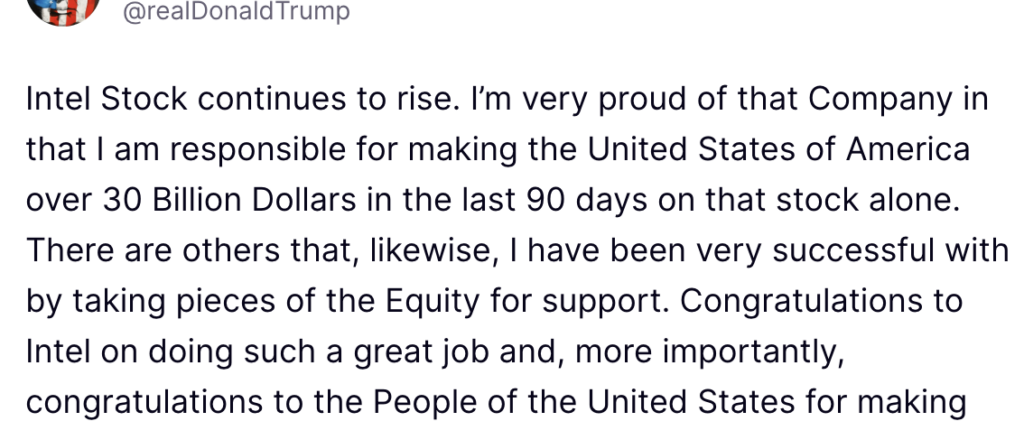
American Eagle Outfitters Inc.‘s (NYSE:AEO) stock has entered the top 10% of undervalued stocks, with its Benzinga Edge value score rising from 88.54 to 91.37 on a week-over-week basis.

Despite the launch of a new summer denim campaign featuring actress Sydney Sweeney, analysts warn the brand’s momentum may be slowing, though its discounted stock price remains a focal point for investors.

Metrics Flash ‘Undervalued’

The retailer’s leap into the top value tier comes as AEO shares trade at a price-to-earnings ratio of approximately 15.706 times. This valuation sits below the industry average of 17.120x, according to Benzinga Pro.

The Benzinga Edge Stock Rankings‘ value metric evaluates a stock’s relative worth by comparing its market price against fundamental measures like the company’s assets, earnings, sales, and operating performance. Additionally, the stock carries a growth score of 60.32 and a quality score of 26.44.

Benzinga Edge Stock Rankings for AEO.

This post was originally published here

Semiconductor companies are tightening their grip on the U.S. equity market, reaching record levels of dominance within the technology sector.

Chip Stocks Command Unprecedented Market Share

According to a Wednesday post on X by The Kobeissi Letter, “The S&P 500 semiconductor industry now accounts for a record 41.9% of the total market cap of the information technology sector.”

This has more than doubled since the 2022 bear market and represents a massive jump from less than 10% in 2013, highlighting the sector’s rapid ascent over the past decade.

Semiconductors: The Cornerstone of AI Growth

This trend of semiconductor dominance aligns with insights from analysts like Adam Parker, who recently emphasized that strong AI-driven earnings are particularly bolstering …

Full story available on Benzinga.com

This post was originally published here

On Thursday, Lanvin Gr Hldgs (NYSE:LANV) discussed full-year financial results during its earnings call. The full transcript is provided below.

This transcript is brought to you by Benzinga APIs. For real-time access to our entire catalog, please visit https://www.benzinga.com/apis/ for a consultation.

View the webcast at https://event.choruscall.com/mediaframe/webcast.html?webcastid=glpMDf2X

Summary

Lanvin Gr Hldgs reported a revenue decline of 18% year-over-year to 240 million euros for 2025, primarily due to external market pressures and internal restructuring.

The company improved its operational efficiency, reflected in a gross margin of 58% and a 12% reduction in operating expenses.

Key strategic initiatives included streamlining the retail footprint, adopting an asset-light model, and optimizing the brand portfolio by carving out Caruso.

Lanvin and Wolford showed sequential improvement in the second half of the year, signaling positive effects of strategic actions.

Leadership changes were made to strengthen brand management, with new CEOs appointed at St. John and Wolford.

Regionally, North America outperformed, while Greater China faced significant challenges due to weaker consumer sentiment.

Lanvin Gr Hldgs aims to continue its transformation journey into 2026, focusing on sustainable profitability and further recovery of its brands.

Full Transcript

OPERATOR

Thank you for joining us and welcome to the Lanvin Gr Hldgs’ Fiscal Year 2025 financial results conference call. All participants will be in listen only mode. Should you need assistance, please signal a conference specialist by pressing the star key followed by . After today’s presentation, there will be an opportunity to ask questions. Please note this event is being recorded now. Please take a moment to review the disclaimers. During this presentation, the Company will be making certain forward looking statements, including but not limited to future performance and industry outlook. Forward looking statements are inherently subject to risks, uncertainties and other factors and they are not guarantees of performance. For today’s presentation, I would like to introduce Andy Liu, Executive President of Lanvin Group and Ray Han, CFO of Lanvin Group. I will now turn it over to Andy to start the presentation.

Andy Liu (Executive President)

Good evening, good afternoon and good morning to everyone joining us today. Thank you for taking the time to participate in Lanvin Gr Hldgs’ full year 2025 results presentation. We truly appreciate your continued interest and support. Today we will walk you through our financial and operational performance for 2025, discuss the progress we have made on our transformation journey and share our outlook as we move into 2026. It has been a year of disciplined execution and important structural changes for the Group and we are pleased to begin sharing the story with you. 2025 was a year defined by both external challenges and internal transformation. On the one hand, the global luxury market remained under pressure, particularly in Greater China with softer consumer demand and macroeconomic uncertainty. On the other hand, we continue to take deliberate actions to reshape our business, streamlining operations, optimizing our retail footprint and reinforcing our focus on core brands. For fiscal year 2025, Lanvin Gr Hldgs reported revenue of 240 million euro, down 18% year over year. While the top line reflects these headwinds and strategic adjustments, we are encouraged by the progress we made beneath the surface. We saw sequential improvement in performance during the second half of the year, particularly at Lanvin and Wolford, which indicates that our actions are starting to take effect. We continue to streamline our retail footprint, focusing on our core business units in key regions. This has enhanced operational efficiency and allowed us to improve EBITDA despite lower revenue. We also accelerated our portfolio optimization efforts in 2025. As part of this, we completed the carve out of Caruso in the beginning of 2026 and enabling us to concentrate resources on our core brands, leverage external partnerships and further advance our Asset light operating model. And finally, we strengthened brand leadership through continuous team upgrades, ensuring we have the right capabilities in place to support long term strategic execution. Overall, while the environment remains challenging, we have made meaningful progress in reshaping businesses and building a stronger foundation for the future. Page six highlights several key metrics. We landed with a gross margin of 58% in 2025, demonstrating resilience in pricing and inventory mix management despite lower volumes. We have also made meaningful progress in optimizing our cost base, achieving approximately 12% savings in operating expenses compared to the prior year. The number of directly operated stores was reduced to 174, reflecting a deliberate shift toward higher quality, more productive locations. At the same time, we’re increasingly adopting an asset light model, allowing us to improve flexibility and capital efficiency. Encouragingly, contribution margin improved significantly in the second half of the year, increasing by 40% compared to the first half, reflecting the early impact of these initiatives. Page 7 provides a deeper look at our half year performance and improving trajectory we began to see during 2025. Gross profit showed improvement in the second half of 2025 since first half 2024, reflecting better product availability, improving sell through and more disciplined inventory management. At the same time, we continue to reduce operating expenses through structural cost optimization and improve the efficiency across the organization. This combination stabilizing gross profit and lower operating costs has started to improve our operating leverage. While we are still in a transition phase, these trends reinforce our confidence that the actions we have taken are moving us in the …

Full story available on Benzinga.com

This post was originally published here

General Motors Co. (NYSE:GM) will be investing nearly $1 billion in strengthening its gasoline vehicle lineup, with over $340 million in new investments aimed at bolstering its U.S. manufacturing plants.

GM Bullish On Gasoline

The $340 million investment includes a $300 million commitment towards the Romulus, Michigan, plant, while the plant in Toledo, Ohio, will get an extra $40 million, Business Insider reported on Wednesday. Both plants manufacture key elements of GM’s Internal Combustion Engine (ICE) efforts, including a 10-speed transmission.

data-variant=”card”
data-news-mode=”manual”

>


Read Also:

GM Slips Despite Q1 Beat As Analysts Stay Bullish, Raise Targets

This post was originally published here
Alphabet Inc. (NASDAQ:GOOG) (NASDAQ:GOOGL) board member and Google co-founder Sergey Brin, who is also a former resident of California, has warned that the state risks becoming a socialist system like the Soviet Union, as he escalates a $57 million campaign against the proposed billionaire tax.

From Soviet Refugee To Billionaire Combatant

“I fled socialism with my family in 1979 and know the devastating, oppressive society it created in the Soviet Union,” Brin said in a rare statement to The New York Times. “I don’t want California to end up in the same place.”

Once a Democratic donor who backed former President Barack Obama, Brin relocated to Nevada before the Dec. 31 deadline to avoid the proposed tax, following fellow Google co-founder Larry Page, who also left California ahead of the same deadline.

He has since personally contributed $57 million to Building a Better California, a nonprofit targeting “any and all new taxes …

Full story available on Benzinga.com

This post was originally published here
In the fast-paced and cutthroat world of business, conducting thorough company analysis is essential for investors and industry experts. In this article, we will undertake a comprehensive industry comparison, evaluating NVIDIA (NASDAQ:NVDA) in comparison to its major competitors within the Semiconductors & Semiconductor Equipment industry. By analyzing crucial financial metrics, market position, and growth potential, our objective is to provide valuable insights for investors and offer a deeper understanding of company’s performance in the industry.

NVIDIA Background

Nvidia is a leading developer of graphics processing units. Traditionally, GPUs were used to enhance the experience on computing platforms, most notably in gaming applications on PCs. GPU use cases have since emerged as important semiconductors used in artificial intelligence to run large language models. Nvidia not only offers AI GPUs, but also a software platform, Cuda, used for AI model development and training. Nvidia is also expanding its data center networking solutions, helping to tie GPUs together to handle complex workloads.

Company P/E P/B P/S ROE EBITDA (in billions) Gross Profit (in billions) Revenue Growth
NVIDIA Corp 42.70 32.33 23.75 31.11% $51.28 $51.09 73.21%
Broadcom Inc 79.04 24.03 28.89 9.12% $11.15 $13.16 29.47%
Micron Technology Inc 24.47 8.07 10.11 21.0% $18.48 $17.75 196.29%
Advanced Micro Devices Inc 129.16 8.72 15.92 2.44% $2.86 $5.58 34.11%
Texas Instruments Inc 46.02 14.60 13.32 9.35% $2.42 $2.8 18.58%
Analog Devices Inc 71.17 5.63 16.39 2.46% $1.52 $2.04 30.42%
Qualcomm Inc 16.77 6.10 3.80 13.57% $4.11 $6.68 5.0%
Marvell Technology Inc 51 9.57 16.62 2.79% $0.75 $1.15 22.08%
Monolithic Power Systems Inc 118.73 21.24 26.43 4.95% $0.21 $0.41 20.83%
NXP Semiconductors NV 27.65 6.68 5.82 10.69% $1.7 $1.79 12.2%
ON Semiconductor Corp 340.90 5.07 6.79 2.33% $0.45 $0.55 -11.17%
GLOBALFOUNDRIES Inc 39.46 2.89 5.16 1.68% $0.73 $0.51 0.0%
Astera Labs Inc 161.35 24.73 41.46 3.41% $0.07 $0.2 91.77%
Credo Technology Group Holding Ltd 96.58 17.54 30.56 10.03% $0.16 $0.28 201.49%
Tower Semiconductor Ltd 102.67 7.70 14.45 2.78% $0.2 $0.12 13.69%
First Solar Inc 13.41 2.15 3.93 5.62% $0.7 $0.67 11.15%
MACOM Technology Solutions Holdings Inc 122 14.95 19.80 3.64% $0.07 $0.15 24.52%
Lattice Semiconductor Corp 5783.50 22.17 30.56 -1.08% $0.01 $0.1 24.16%
Average 424.93 11.87 17.06 6.16% $2.68 $3.17 42.62%

Full story available on Benzinga.com

This post was originally published here

In today’s rapidly changing and fiercely competitive business landscape, it is vital for investors and industry enthusiasts to carefully evaluate companies. In this article, we will perform a comprehensive industry comparison, evaluating Advanced Micro Devices (NASDAQ:AMD) against its key competitors in the Semiconductors & Semiconductor Equipment industry. By analyzing important financial metrics, market position, and growth prospects, we aim to provide valuable insights for investors and shed light on company’s performance within the industry.

Advanced Micro Devices Background

Advanced Micro Devices designs a variety of digital semiconductors for markets such as PCs, gaming consoles, data centers (including artificial intelligence), industrial, and automotive applications. AMD’s traditional strength was in central processing units and graphics processing units used in PCs and data centers. However, AMD is emerging as a prominent player in AI GPUs and related hardware. Additionally, the firm supplies the chips found in prominent game consoles such as the Sony PlayStation and Microsoft Xbox.

Company P/E P/B P/S ROE EBITDA (in billions) Gross Profit (in billions) Revenue Growth
Advanced Micro Devices Inc 129.16 8.72 15.92 2.44% $2.86 $5.58 34.11%
NVIDIA Corp 42.70 32.33 23.75 31.11% $51.28 $51.09 73.21%
Broadcom Inc 79.04 24.03 28.89 9.12% $11.15 $13.16 29.47%
Micron Technology Inc 24.47 8.07 10.11 21.0% $18.48 $17.75 196.29%
Texas Instruments Inc 46.02 14.60 13.32 9.35% $2.42 $2.8 18.58%
Analog Devices Inc 71.17 5.63 16.39 2.46% $1.52 $2.04 30.42%
Qualcomm Inc 16.77 6.10 3.80 13.57% $4.11 $6.68 5.0%
Marvell Technology Inc 51 9.57 16.62 2.79% $0.75 $1.15 22.08%
Monolithic Power Systems Inc 118.73 21.24 26.43 4.95% $0.21 $0.41 20.83%
NXP Semiconductors NV 27.65 6.68 5.82 10.69% $1.7 $1.79 12.2%
ON Semiconductor Corp 340.90 5.07 6.79 2.33% $0.45 $0.55 -11.17%
GLOBALFOUNDRIES Inc 39.46 2.89 5.16 1.68% $0.73 $0.51 0.0%
Astera Labs Inc 161.35 24.73 41.46 3.41% $0.07 $0.2 91.77%
Credo Technology Group Holding Ltd 96.58 17.54 30.56 10.03% $0.16 $0.28 201.49%
Tower Semiconductor Ltd 102.67 7.70 14.45 2.78% $0.2 $0.12 13.69%
First Solar Inc 13.41 2.15 3.93 5.62% $0.7 $0.67 11.15%
MACOM Technology Solutions Holdings Inc 122 14.95 19.80 3.64% $0.07 $0.15 24.52%
Lattice Semiconductor Corp 5783.50 22.17 30.56 -1.08% $0.01 $0.1 24.16%
Average 419.85 13.26 17.52 7.85% $5.53 $5.85 44.92%

Full story available on Benzinga.com

This post was originally published here

In today’s fast-paced and highly competitive business world, it is crucial for investors and industry followers to conduct comprehensive company evaluations. In this article, we will delve into an extensive industry comparison, evaluating Amazon.com (NASDAQ:AMZN) in relation to its major competitors in the Broadline Retail industry. By closely examining key financial metrics, market standing, and growth prospects, our objective is to provide valuable insights and highlight company’s performance in the industry.

Amazon.com Background

Amazon is the leading online retailer and marketplace for third party sellers. Retail related revenue represents approximately 74% of total, followed by Amazon Web Services (17%), and advertising services (9%). International segments constitute 22% of Amazon’s total revenue, led by Germany, the United Kingdom, and Japan.

Company P/E P/B P/S ROE EBITDA (in billions) Gross Profit (in billions) Revenue Growth
Amazon.com Inc 31.46 6.40 3.84 5.43% $46.76 $103.43 13.63%
MercadoLibre Inc 44.85 13.28 3.10 8.62% $1.07 $3.78 44.56%
eBay Inc 23.97 10.54 4.15 11.31% $0.8 $2.12 14.97%
Coupang Inc 184.64 7.94 1.09 -0.56% $0.17 $2.54 10.92%
Dillard’s Inc 15.43 4.93 1.34 10.66% $0.3 $0.72 -3.03%
Global E Online Ltd 80.51 5.65 5.74 6.69% $0.13 $0.15 28.05%
Ollie’s Bargain Outlet Holdings Inc 21.95 2.76 1.99 4.6% $0.13 $0.31 16.82%
Macy’s Inc 8.32 1.05 0.24 11.04% $0.9 $2.97 -1.14%
Kohl’s Corp 5.87 0.39 0.10 3.13% $0.39 $1.85 -4.15%
Savers Value Village Inc 58.79 2.92 0.80 5.28% $0.07 $0.26 15.59%
Hour Loop Inc 38.70 9.73 0.48 -8.96% $-0.0 $0.03 3.03%
Average 48.3 5.92 1.9 5.18% $0.4 $1.47 12.56%

Full story available on Benzinga.com

This post was originally published here
 Jamie Dimon, CEO of JPMorgan Chase (NYSE:JPM), emphasized the importance of international relations and geopolitics for the U.S. amid his steadfast belief in America’s economic potential.

“I don’t worry about the U.S. economy,” said Dimon in a live podcast with Nicolai Tangen on Tuesday at Norges Bank Investment Management’s Conference in Oslo. He compared the economy to the weather, implying it will eventually get “better.”

However, he stressed the significance of geopolitics for the future of the free and democratic world, citing conflicts in Ukraine and Iran, and the need for a robust NATO.

Dimon underscored the importance of collaborating with trading partners to maintain unity in the Western world. He warned against “fragmentation,” stating that “economic relations are not just tariffs” …

Full story available on Benzinga.com

This post was originally published here

By JBizNews Desk
NEW YORK — April 30, 2026

Nasdaq futures ticked higher in after-hours trading Wednesday night, buoyed by a string of better-than-expected earnings from four Magnificent Seven tech giants, even as Brent crude surged past $121 a barrel on escalating fears of a prolonged Middle East conflict that has choked global oil supply to historic lows.

The Nasdaq Composite closed the regular session essentially flat, inching up 0.04% to finish at 24,673.24, while the Dow Jones Industrial Average fell 280 points, or 0.57%, to 48,861.81 — its fifth consecutive losing day. The S&P 500 slipped 0.04% to close at 7,135.95. After the closing bell, Nasdaq futures rose 0.35%, while S&P 500 futures edged up 0.10%. Dow futures remained in negative territory, down 0.43%.

The after-hours lift came courtesy of a pivotal earnings window. Alphabet (GOOG), Amazon (AMZN), Meta Platforms (META), and Microsoft (MSFT) all reported quarterly earnings after the bell. All four beat analyst expectations. Alphabet and Amazon gained in after-hours trading, while Meta and Microsoft fell. Alphabet soared after impressive Google Cloud revenue reassured investors that its artificial intelligence investments would pay off. Meta tumbled on concerns that it was overspending.

Chris Brigati, chief investment officer at SWBC, said the market’s focus was squarely on forward guidance rather than headline beats. “Each company faces its own dynamics, but delivering tangible results from elevated capex remains the critical test,” he said.

Illustrative news graphic of Brent crude oil price surging past $121 per barrel, dramatic upward red line chart with price markers, oil tanker silhouette in the background, Middle East map overlay highlighting Strait of Hormuz in red, glowing energy price alerts, professional financial news style with dark red and orange tones, high-resolution“portrait”

During the regular session, stocks were held in check by a pair of market-moving events that dominated investor attention: the Federal Reserve’s rate decision and surging oil prices driven by the U.S.-Iran conflict.

Brent crude jumped roughly 8% on Wednesday to around $120 per barrel. After the session closed, prices pushed even higher. Brent June futures rose more than 3% further in overnight trading to $121.65 a barrel, while U.S. West Texas Intermediate added 2% to $109.03.

The catalyst was blunt: President Donald Trump said the U.S. will maintain its naval blockade against Iran until the country agrees to a nuclear deal. “The blockade is somewhat more effective than the bombing,” Trump told Axios. “They are choking like a stuffed pig, and it is going to be worse for them. They can’t have a nuclear weapon.”

The closure of the Strait of Hormuz has halted roughly 20% of global oil shipments, which the International Energy Agency called the largest supply shock on record. Compounding the tightening, the United Arab Emirates announced its exit from OPEC next month, seeking greater flexibility in adapting to shifting market conditions.

Goldman Sachs estimates that exports through the Hormuz chokepoint have fallen to just 4% of normal levels. The bank’s analysts noted that constrained Iranian exports and limited storage capacity could deepen supply disruptions if the blockade persists, and that any production boost from the UAE following its OPEC exit is likely to materialize more gradually over the medium term rather than offsetting near-term tightness. The bank also flagged emerging downside risks to demand, noting global oil consumption in April may be approximately 3.6 million barrels per day lower than February levels, with weakness concentrated in jet fuel and petrochemical feedstocks.

The surge in energy prices is amplifying concerns about inflation — and directly complicating the picture for monetary policy. Analysts expect headline PCE to rise approximately 0.6% in March due to energy inflation. The CME FedWatch tool showed odds of any rate cut at all this year at just 15% as of Wednesday morning. The Fed held rates unchanged for a third straight meeting, with four FOMC members casting dissenting votes — the most since October 1992.

Seagate led gains in chips and AI-related stocks, climbing 18% in early trading on its earnings results and lifting other memory chip stocks including Western Digital (WDC) and Micron (MU). Seagate raised its annual revenue growth target amid strong AI-related demand. NXP Semiconductors (NXPI) soared 15% on solid quarterly results that surpassed analyst estimates. Starbucks (SBUX) climbed nearly 5% after the coffee chain beat analysts’ consensus for earnings and revenue and said it sees fiscal 2026 earnings above levels expected by Wall Street.

On the downside, Robinhood Markets (HOOD) tumbled more than 10% after the fintech company missed Wall Street expectations for its first-quarter 2026 earnings and revenue, driven by a 47% drop in crypto trading fees. Enphase Energy (ENPH) fell 7.2% on weak second-quarter guidance, lower-than-expected U.S. residential demand, and narrowing gross margins.

With Apple (AAPL) set to report Thursday and PCE and first-quarter GDP data also due in the morning, traders will have little time to catch their breath.

— JBizNews Desk
© JBizNews.com. All rights reserved. This article is original reporting by JBizNews Desk. Unauthorized reproduction or redistribution is strictly prohibited.

Shares of Qualcomm Inc (NASDAQ:QCOM) rose sharply in pre-market trading after the company reported better-than-expected second-quarter financial results.

Qualcomm reported second-quarter revenue of $10.60 billion, down 2% year-over-year. The revenue total beat a Street consensus estimate of $10.59 billion according to data from Benzinga Pro. Adjusted earnings per share were $2.65 for the quarter, beating a Street consensus estimate of $2.56.

Qualcomm shares jumped 10.6% to $172.50 in pre-market trading.

Here are some other stocks moving in pre-market trading.

Gainers

  • Abits Group Inc (NASDAQ:ABTS) gained 46% to $1.62 in pre-market trading after the company reported a year-over-year increase in its FY25 sales results.
  • Akanda Corp (NASDAQ:AKAN) gained 33.2% to $34.65 in pre-market trading after jumping 49% on Wednesday. The U.S. Department of Justice placed state-regulated medical marijuana under Schedule III. An expedited process for broader reclassification is now underway.
  • VS Media Holdings Ltd (NASDAQ:VSME) rose 29.2% to $1.20 in pre-market trading after the investment holding company filed a Securities and Exchange Commission disclosure regarding a debt-to-equity restructuring.
  • OSR Holdings Inc (NASDAQ:OSRH) rose 28.2% to $0.59 in pre-market trading after announcing a global exclusive license agreement with Switzerland-based life sciences investment entity BCM Europe AG for its Phase 3-ready oral …

Full story available on Benzinga.com

This post was originally published here

U.S. stock futures were mixed on Thursday morning, following Wednesday’s largely lower close as only tech stocks ended on a positive note.

Following the Federal Reserve’s decision to keep the interest rates steady at 3.50%-3.75%, Jerome Powell said during his speech that he plans to remain on the Board of Governors, despite his term ending on May 15.

Meanwhile, President Donald Trump is reportedly scheduled to review potential military strategies from CENTCOM Commander Adm. Brad Cooper for Iran on Thursday, signaling a possible return to significant combat operations, as per Axios. The U.S. is reportedly considering a “short and powerful” strike campaign on Iran targeting infrastructure to break the stalemate in negotiations and push Tehran back to the nuclear bargaining table.

The 10-year Treasury bond yielded 4.41%, and the two-year bond was at 3.91%. The CME Group’s FedWatch tool‘s projections show markets pricing a 98.8% likelihood of the Federal Reserve leaving the current interest rates unchanged during June’s meeting.

Index Performance (+/-)
Dow Jones -0.42%
S&P 500 -0.01%
Nasdaq 100 0.22%
Russell 2000 -0.03%

The SPDR S&P 500 ETF Trust (NYSE:SPY) and Invesco QQQ Trust ETF (NASDAQ:QQQ), which track the S&P 500 and Nasdaq 100, respectively, were mixed in premarket on Thursday. The SPY was down 0.021% at $711.43, while the QQQ advanced 0.13% to $662.43.

data-variant=”card”
data-news-mode=”manual”

>


Read Also:

Will S&P 500 Open Up Or Down On April 30? Here’s How Polymarket Traders Lean As Trump’s Naval Blockade Sends Brent Crude Near $115

This post was originally published here

The S&P 500 closed lower on Wednesday, slipping to 7,135.95 as investors balanced a pivotal day of megacap tech earnings against an escalating geopolitical standoff and the Federal Reserve’s decision on interest rates.

The Polygon-based (CRYPTO: POL) Polymarket crowd is slightly bearish heading into Thursday’s open. The April 30 market shows a 47% chance of an “Up” open. Early trading volume for the Thursday bet currently sits at $26,434.

data-variant=”card”
data-news-mode=”manual”

>


Read Also:

Oil Surges 6%, S&P 500 Wobbles Before Fed And Tech Earnings: Stock Market Today

This post was originally published here

Could Ford Motor Co. (NYSE:F) be mulling an entry into the Robotaxi race? CEO Jim Farley, during the automaker’s first-quarter 2026 earnings call, hinted at the possibility.

Jim Farley’s Cryptic Response

During Ford’s earnings call, Farley was asked about whether the automaker had any plans for Robotaxis with companies like Uber Technologies Inc. (NYSE:UBER) and Nvidia Corp. (NASDAQ:NVDA) investing heavily in the sector. Farley shared that Robotaxis are something that Ford has been “watching carefully as it evolves.”

data-variant=”card”
data-news-mode=”manual”

>


Read Also:

GM To Roll Out Google Gemini AI Across 4 Million Cars: Here’s What Owners Need To Know

This post was originally published here

Anthropic is in discussions with investors about new financing that could value the company at $900 billion, more than doubling its $380 billion valuation in February, according to a report.

If the talks turn into a deal, the maker of Claude could surpass rival OpenAI to become the most valuable AI startup.

According to a Livemint report, Anthropic is evaluating investor proposals, though no proposal has been accepted.

Anthropic Valuation Could Skyrocket Soon

As Anthropic continues to gain momentum, it is intensifying competitive pressure on OpenAI, which is reportedly preparing for a public listing later this year and was valued at $852 billion in a March funding round, the report said, citing Bloomberg. The ChatGPT maker was unable to meet its set targets for revenue and new users.

OpenAI missed its targets for one billion weekly ChatGPT users and annual revenue, largely due to strong competition from Alphabet’(NASDAQ:GOOGL(NASDAQ:

Full story available on Benzinga.com

This post was originally published here

The CNN Money Fear and Greed index showed almost no change in the overall market sentiment, while the index remained in the “Greed” zone on Wednesday.

U.S. stocks settled mostly lower on Wednesday, with the Dow Jones index falling more than 250 points during the session, recording losses for the fifth straight session. Crude prices rose again on Wednesday amid renewed Hormuz disruption fears.

In earnings, Automatic Data Processing (NASDAQ:ADP) reported better-than-expected third-quarter financial results. Brinker International Inc. (NYSE:EAT) reported upbeat third-quarter earnings on Wednesday.

On the economic data front, U.S. wholesale inventories rose by 1.4% month-over-month to $932.8 billion in March, compared to a revised 0.9% gain in February. The goods deficit increased to $87.9 billion in March from $83.5 …

Full story available on Benzinga.com

This post was originally published here
Avis Budget Group Inc. (NASDAQ:CAR) CEO Brian Choi addressed the recent dramatic swings in the company’s stock price, attributing the market chaos to a massive short squeeze and vowing legal action to protect shareholders from opportunistic trading.

‘Aggressively Pursue’ Rights

During the company’s first-quarter 2026 earnings call, Choi directly addressed the “excess volatility” surrounding CAR stock.

Following reports of a massive short squeeze allegedly manufactured by major hedge funds holding a concentrated available float, Choi noted that Pentwater Capital disclosed the sale of 4.3 million shares for gross proceeds of $1.75 billion over just two days.

Pentwater acknowledged the sale was, at least in part, violative of SEC Section 16 short swing profit rules.

In response, Choi promised strict accountability to investors. “Avis has requested Pentwater furnish all relevant information concerning the trades, and Avis will aggressively pursue all rights on behalf of our stockholders,” Choi stated firmly.

data-variant=”card”
data-news-mode=”manual”

>


Read Also:

Avis …

This post was originally published here

Amid the buzz around its IPO, SpaceX has reportedly revealed that CEO Elon Musk can only be fired from his position at the top of the commercial space flight giant by one person: Musk himself.

Dual-Class Framework

On Wednesday, Reuters reported that it had accessed filings by SpaceX that revealed Musk could only be removed from his role by Class B shareholders, which hold the voting power of 10 votes. A dual-class framework involves companies issuing two classes of shares, Class A shares with 1 vote and Class B shares with 10 votes.

SpaceX didn’t immediately respond to Benzinga‘s request for comment.

Companies like Meta Platforms Inc. (NASDAQ:META) and Alphabet Inc. (NASDAQ:GOOGL) (NASDAQ:GOOG), as well as investor Warren Buffett‘s Berkshire Hathaway Inc. (NYSE:BRK) (NYSE:BRK), …

Full story available on Benzinga.com

This post was originally published here
Oil prices are ripping higher, with Brent oil topping $122 per barrel and logging a sharp 20% weekly surge, according to economist Mohamed A. El-Erian, pointing to escalating Middle East tensions, shrinking global inventories and mounting Gulf supply risks as the key forces driving the rally.

He also warned that volatility may continue, and the rally in oil prices could extend further if those risks intensify.

Oil Spikes 20% In A Week

Erian, on Wednesday’s X post, said that Brent oil surpassed $122 per barrel, representing a “staggering 20% increase in just one week.”

Erian pointed out the three key drivers behind the latest spike, which are as follows:

Stalemate In The Middle East War

The first is “the stalemate in the Middle East War, with the balance of risk shifting toward escalation.”

Earlier on Wednesday, Donald Trump said the blockade would …

Full story available on Benzinga.com

This post was originally published here
With U.S. stock futures trading lower this morning on Thursday, some of the stocks that may grab investor focus today are as follows:

  • Wall Street expects Apple Inc (NASDAQ:AAPL) to report quarterly earnings at $1.95 per share on revenue of $109.66 billion after the closing bell, according to data from Benzinga Pro. Apple shares rose 0.3% to $270.95 in after-hours trading.
  • Alphabet Inc (NASDAQ:GOOGL) (NASDAQ:GOOG) reported better-than-expected first-quarter financial results and raised its quarterly dividend. Alphabet shares gained 7.2% to $375.29 in the after-hours trading session.
  • Analysts are expecting Caterpillar Inc

Full story available on Benzinga.com

This post was originally published here
Eli Lilly and Company (NYSE:LLY) will release earnings for its first quarter before the opening bell on Thursday, April 30.

Analysts expect the Indianapolis, Indiana-based company to report quarterly earnings of $6.79 per share. That’s up from $3.34 per share in the year-ago period. The consensus estimate for Eli Lilly’s quarterly revenue is $17.8 billion (it reported $12.73 billion last year), according to Benzinga Pro.

As per the recent news, Profluent has entered a multi-program strategic research collaboration with Eli Lilly to develop and commercialize custom site-specific recombinases to treat genetic diseases.

Shares of Eli Lilly fell 2.6% to close at $851.21 on Wednesday.

Benzinga readers can access the latest analyst ratings on the Analyst Stock Ratings page. Readers can sort by stock ticker, company name, analyst firm, rating change or other variables.

Let’s have a look at how …

Full story available on Benzinga.com

This post was originally published here
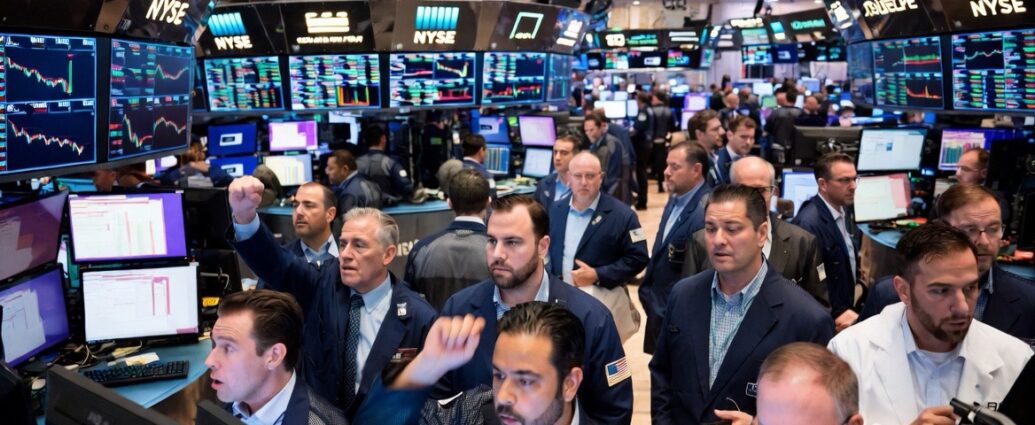
Mastercard Incorporated (NYSE:MA) will release earnings for its first quarter before the opening bell on Thursday, April 30.

Analysts expect the Purchase, New York-based company to report quarterly earnings of $4.41 per share. That’s up from $3.73 per share in the year-ago period. The consensus estimate for Mastercard’s quarterly revenue is $8.26 billion (it reported $7.25 billion last year), according to Benzinga Pro.

As per the recent news, Mastercard, on March 17, announced a definitive agreement to acquire BVNK, a leader in stablecoin infrastructure, for up to $1.8 billion.

Shares of Mastercard gained 3.5% to close at $525.23 on Wednesday.

Benzinga readers can access the latest analyst ratings on the Analyst Stock Ratings page. Readers can sort by stock ticker, company name, analyst firm, rating change or other variables.

Let’s have a look at how Benzinga’s …

Full story available on Benzinga.com

This post was originally published here

On Wednesday, Alphabet Inc. (NASDAQ:GOOG) (NASDAQ:GOOGL) CEO Sundar Pichai said that Google’s ownership of nearly every layer of the artificial intelligence ecosystem gives it a distinct advantage over rivals.

Google’s Full-Stack AI Strategy Powers Competitive Advantage

During the first-quarter earnings call, Pichai spoke about the tech giant’s control across the AI ecosystem — including custom chips, Gemini models, cloud infrastructure, developer tools and security.

“We are genuinely differentiated,” Pichai said during the company’s first-quarter earnings call, describing Google’s “vertically optimized AI stack” as a key factor helping it stay ahead in a rapidly intensifying AI race.

Pichai added that Google’s control over both silicon and software allows it to scale AI efficiently while protecting margins and maintaining security.

data-variant=”card”
data-news-mode=”manual”

>


Read Also:

Google Unveils …

This post was originally published here
On Wednesday, President Donald Trump touted the federal government’s investment in Intel Corp. (NASDAQ:INTC) as one of America’s most lucrative strategic bets.

Trump Celebrates Massive Intel Windfall

In a post on Truth Social, Trump said the government’s equity position in Intel had generated enormous returns since his administration authorized the investment last summer.

“I’m very proud of that Company in that I am responsible for making the United States of America over 30 Billion Dollars in the last 90 days on that stock alone,” Trump wrote.

He added, “There are others that, likewise, I have been very successful with by taking pieces of the Equity for support.”

How The US Government’s Intel Investment Grew

The U.S. government acquired a 10% stake in Intel in August, purchasing 433.3 million shares at $20.47 per share for roughly $8.9 billion.

The funding included $5.7 billion from the CHIPS and Science Act and $3.2 billion from secure semiconductor initiatives.

With Intel stock …

Full story available on Benzinga.com

This post was originally published here

Sen. Elizabeth Warren (D-Mass.) reignited allegations of insider trading against President Donald Trump and the White House on Wednesday amid escalating tensions in the Middle East, which have sent oil prices surging.

Americans Deserve Answers

In a post on X, Warren criticized Trump, saying that “Millions in oil futures” were traded just before the Iran ceasefire. “The White House had to remind staff not to trade on insider info,” Warren said, demanding a “full investigation” into the insider trading angle. “The American people deserve answers,” she said.

data-variant=”card”
data-news-mode=”manual”

>


Read Also:

Gavin Newsom Slams Trump’s ‘Reckless’ Iran War As Gas Prices Surge, Accuses White House Of Derailing California’s Clean Energy Projects

This post was originally published here

Viavi Solutions Inc. (NASDAQ:VIAV) shares are trending on Wednesday night.

On Wednesday, VIAV shares jumped 25.17% to $56.99 after the bell after the network and optical technology company delivered fiscal third quarter results where earnings beat analyst estimates by 22.73% and revenue by 3.32%.

The results reported are for the period ended Mar. 28.

What Q3 Data Tells

Viavi’s net revenue in the third quarter hit $406.8 million, up 42.8% year-over-year. Non-GAAP earnings per share came in at $0.27, up 80% YoY, while non-GAAP operating margin expanded 430 basis points to 21.0%.

The network and service enablement segment led growth, surging 54.4% YoY to $321.5 million.

As of March 28, the company had $508 million in cash and short-term investments.

CEO Oleg Khaykin said, “VIAVI’s financial performance for the third quarter has exceeded our expectations, driven by strong growth in the data center and aerospace and defense end markets.”

Bullish Q4 Guidance …

Full story available on Benzinga.com

This post was originally published here
VS Media Holdings Ltd. (NASDAQ:VSME) soared 48.72% to $1.38 in after-hours trading on Wednesday after the investment holding company filed a Securities and Exchange Commission disclosure regarding a debt-to-equity restructuring.

On April 27, VS Media and Singapore-based steel sourcing and project management firm S T Meng Pte. Ltd. executed a debt conversion and share subscription agreement converting a $3.8 million convertible promissory note originally issued in August 2025 into equity at $74.70 per S T Meng share, terminating the original note’s conversion mechanics entirely.

According to the SEC filing, post-conversion, VSME now holds 41.52% of the voting rights in S T Meng, securing a controlling minority stake while fully extinguishing the principal obligation.

What Investors Need To Know

A Debt Conversion and Share Subscription Agreement is a legally binding contract in which a …

Full story available on Benzinga.com

This post was originally published here

On Wednesday, United Parcel Service Inc. (NYSE:UPS) and FedEx Corp. (NYSE:FDX) said they plan to pass along tariff reimbursements to customers after a court fight knocked out a set of import duties tied to President Donald Trump‘s use of the International Emergency Economic Powers Act.

According to a court filing cited by The Hill, about 330,000 importers paid more than $166 billion tied to the disputed tariff program.

According to the report, UPS told Nexstar it is coordinating with Customs and Border Protection (CBP), which is taking refund applications through an online system.

On the other hand, FedEx, which filed a lawsuit earlier this year to recover import taxes, said it has already begun submitting claims through CBP.

Are UPS And FedEx Ready For This Challenge?

UPS said the initial phase will cover “certain tariff payments made starting Jan. 30, 2026, in addition to pending tariff payments”.

A UPS spokesperson, Natasha Amadi, said to The Hill that the company is already processing refunds for shipments where it acted as …
Full story available on Benzinga.com

This post was originally published here

Entergy (NYSE:ETR) reported first-quarter financial results on Wednesday. The transcript from the company’s first-quarter earnings call has been provided below.

This transcript is brought to you by Benzinga APIs. For real-time access to our entire catalog, please visit https://www.benzinga.com/apis/ for a consultation.


Access the full call at https://events.q4inc.com/attendee/703279949

Summary

Entergy Corp reported a strong financial performance for Q1 2026, with adjusted earnings per share of $0.86 and an 8.5% growth in retail sales.

The company launched the Fair Share+ pledge to ensure data centers contribute to infrastructure costs, securing agreements with Meta for new data centers, which are expected to generate $7 billion in benefits.

Entergy Corp raised its capital plan to $57 billion, driven by new electric service agreements and growth in industrial sales, with an anticipated 8.5% compound annual growth in retail sales through 2029.

Operational highlights include the first fire milestone of the Orange County Advanced Power Station and capital savings in transmission projects, while expanding renewable and storage capacity with active RFPs for over 4,500 megawatts.

Future outlook remains positive with strong growth prospects, supported by strategic investments and robust customer agreements, with plans to provide more details at an upcoming Investor Day.

Full Transcript

OPERATOR

Good Morning, My name is John and I will be your conference operator today. At this time I would like to welcome everyone to Entergy’s first quarter 2026 earnings call and teleconference. All lines have been placed on mute to prevent any background noise. After the speaker’s remarks, there will be a question and answer session. If you would like to ask a question during this time, simply press Star followed by the number one on your telephone keypad and if you would like to withdraw your question, press Star one again. I will now turn the call over to Liz Hunter, Vice President of Investor Relations for Entergy Corporation.

Liz Hunter (Vice President of Investor Relations)

Liz, Good morning. Thank you John and thanks to everyone for joining this morning. We will begin today with comments from Entergy’s Chair and CEO Drew Marsh and then Kimberly Fontan, our CFO will review results in today’s call. Management will make certain forward looking statements. Actual results could differ materially from these forward looking statements due to a number of factors which are set forth in our earnings release, our slide presentation and our SEC filings. Entergy does not assume any obligation to update these forward looking statements. Management will also discuss non-GAAP financial information reconciliations to the applicable GAAP measures measures are included in today’s press release and slide presentation, both of which can be found on the Investor Relations section of our website. And now I will turn the call over to Drew.

Drew Marsh (Chair and CEO)

Thank you Liz Good morning everyone. We had a productive first quarter in which we delivered strong financial results. We launched our Fair Share plus pledge and we advanced customer initiatives with the execution of several electric service agreements, including the one with META that improve our financial outlook well into the future.. Beginning with financial results today we are reporting first quarter adjusted earnings per share of $0.86. 2026 guidance remains on track and we are increasing our already strong adjusted EPS outlook driven by 8.5% retail sales growth. Now I’ll cover the business updates in the quarter and as always, I’ll start with the customer. For several years we have worked with stakeholders to recruit data centers and capture the transformative impact they can have on our communities and through investment, jobs and other support, all at the same time protecting and benefiting existing customers. Earlier this year we formalized that commitment with the launch of our Fair Share+ pledge. The Fair Share+ pledge is a set of guiding principles that ensures that data centers pay their fair share for the power they consume plus additional benefits for customers and communities. Our pledge aligns with the Ratepayer Protection Pledge that our customers signed with the White House. Fair Share is achieved in several ways. Minimum bills and contract length cover incremental costs, termination provisions ensure current customers avoid unneeded costs, clean energy terms support a potential future transition, and strong credit terms give us confidence in all of it. Fair share also means that data centers cover their portion of fixed costs that our current customers pay for today. The fair share portion alone is the source of the estimated $7 billion of benefits we have highlighted, and current customers bills will be lower than they otherwise would have been because data centers are paying for the incremental infrastructure they need as well as their share of fixed costs. The plus component is all of the community benefits originally envisioned by our state and local leaders, including well paying jobs and targeted workforce development a substantial influx of new support for schools, nonprofits and other state and community needs and multiplier effects from new businesses and employment opportunities that come about because of the data centers. The plus component also includes a stronger electric system with reliability and resilience benefits, lower average fuel costs driven by more efficient generation, and specific customer benefits like low income or energy efficiency support. The plus component is clearly valuable and it is in addition to our estimated $7 billion in customer benefits. We’re proud that the framework we committed to more than two years ago is already providing significant benefits for our customers and communities, and those benefits will compound well into the future.. I cannot say enough about the tremendous work our employees have done to create this transformative opportunity for our communities while also providing so much value for our existing customers. And we aren’t done yet. In late March, we announced a new electric service agreement with MEDA for another data center in North Louisiana. The fair share value from this agreement alone is expected to be $2 billion, which is included in the $7 billion I mentioned in the plus category. Over the next 20 years, MEDA has made other commitments $140 million for energy efficiency programs and $60 million for our Power to Care program. Entergy Louisiana will match power to CARE funding, bringing the increase to $120 million. For context, that is a five times annual increase for 2025 levels that will meaningfully improve outcomes for our most vulnerable customers. Shortly after executing the agreement, Entergy Louisiana filed an application with the Louisiana Public Service Commission requesting approval for assets needed as a result of adding the new META data center to the system. The investment includes seven new combined cycle units, transmission infrastructure and battery storage facilities. The cost of the proposed facilities will be covered by payments from meta, whether from their tariff or other contributions. Yet all customers will realize reliability and resilience benefits and lower fuel costs from these investments. We also agreed to pursue another 2 1/2 gigawatts of Renewables and further investigate CCS, nuclear upgrades and new nuclear to support META’s clean energy goals. We’ll add projects to the plan as assets are identified. This month, the Commission affirmed that our request falls under their new Louisiana Lightning Initiative, and they directed that the procedural schedule should support a decision at the December B and E meeting. The Commission’s Lightning Initiative is part of Governor Landry’s Project Lightning Speed to support economic development that provides significant benefits to state and local communities. We are requesting approval for more than $15 billion in capital with about $14 billion in our four year plan. As a result of the agreement and pending the approval request, we’re also raising our sales and adjusted EPS outlook. Kimberly will discuss in more detail beyond the META agreement. So far this year we have signed ESAs totaling over 1,000 megawatts. These agreements were from multiple industries across all our operating companies and they indicate that customer growth beyond data centers remains robust in our region. We also continue to receive data center interest within our service area. After all agreements signed to date, including the recent agreement with META, we still have a pipeline of 7-12 GW of potential data center customers that are not in our plan. Moving beyond the customer growth update, I’d like to cover a few more items. Operational excellence remains a key focus area and we will talk in more detail about that at Investor Day. For today, I’ll share a couple of highlights. Orange County Advanced Power Station achieved its first fire milestone, bringing it one step closer to delivering reliable power for our customers in Texas. We expect the plant to be fully online in late summer. Recently, our power delivery team identified more than $30 million in capital savings on the Commodore to Churchill 230kV project. Our engineers developed a solution which improved the design, lowered materials cost and enabled faster customer delivery. Importantly, the improvement can be applied to future large transmission projects. This kind of innovative thinking, combined with the scale of our capital plan will continue to lower costs for customers and unlock additional customer investment opportunities. Entergy Texas is working to expand its spending generation capacity to serve a growing customer base. Following the Commission’s feedback, they issued an RFP in February for combined cycle capacity and energy across our system. We continue to expand our Renewables portfolio driven by our customers desire for clean energy options. We have active RFPs for more than 1,600 megawatts of Renewables and storage and we have over 4,500 megawatts of Renewables and storage in various stages of negotiation. After selections from prior RFPS in Arkansas, Louisiana and Mississippi. Roughly two thirds of the megawatts in negotiation would be owned. In addition, we are actively managing proposals through Louisiana’s accelerated Renewable review process. These are important tools to help us identify projects supporting customers Clean Energy Goals as we indicated on the previous earnings call, Energy Arkansas filed its base rate case in late February requesting a $45 million rate change which is less than 2%. Because bill impacts vary by customer type, the residential impact would be less than 1%. Some of the features that we requested include an optional time of use rate that provides residential customers with the opportunity to lower bills by shifting energy use to lower cost hours and low income rates that provide a 50% discount on the customer charge for households that qualify for LIHEAP assistance. We also elected to resume Entergy Arkansas Forward Test Year FRP after the rate case is resolved. Entergy Mississippi filed its annual formula rate plan with no change requested. Arkansas and Mississippi both have mechanisms that provide cash allowance for funds used during construction for investments to support significant economic development projects. To that end, Entergy Arkansas filed its first annual Generating Arkansas Jobs act rider in March and Entergy Mississippi updated its interim facilities rate adjustment in January. One additional comment about Mississippi the state recently passed legislation authorizing securitization of costs associated with Winter Storm. Fern Kimberly will provide additional details on that as well Beyond Fair Share plus Our employees continue to work every day for the benefit of the communities we serve. We recently participated in the industry’s LIHEAP Action day in Washington, D.C. to advocate for energy affordability for our customers in need. Congress approved an appropriations package that includes a $20 million increase for LIHEAP, which reflects growing recognition of the program’s importance. For more than 15 years, Entergy has also provided free tax preparation for low to moderate income customers at sites throughout Entergy’s region. In 2025, we helped customers receive $54 million in earned income tax credits, putting money directly into our customers pockets. Finally, we are very excited about our upcoming Investor Day in June. Plan to walk through the clear line of sight for our multi year strategy and outlooks in detail and you’ll hear directly from our leadership team on the opportunities ahead. Highlights will include a conversation with large customers on how we partner together to create better outcomes for our key stakeholders, a view into our operational strategy to successfully execute on the large build cycle ahead of us, a discussion of the work we are doing to unlock additional capital deployment opportunities, a review of our approach to maintaining financial discipline, and finally, a deeper dive into the significant near and long term customer growth opportunities to sustain our strong growth well beyond our five year outlook. We had a productive start to 2026 with solid progress and execution across the business and by continuing to put our customers first, we will deliver premium value to each of our key stakeholders. We look forward to discussing this in more detail with you at our Investor Day. I’ll now turn the call over to Kimberly for the financial update.

Kimberly Fontan (Chief Financial Officer)

Thank you Drew. Good morning everyone. I’ll now review our financial results and provide an update on our long term outlooks. Our results for the quarter were straightforward. Our adjusted EPS was $0.86 as shown on slide 4. The primary drivers were from the effects of investments made for our customers, including regulatory actions net of higher depreciation expense taxes other than income taxes and interest expense from financing capital expenditures. The per share increase was partially offset by a higher share count from settling equity forwards. Industrial sales growth was very strong at 15% as new and expansion projects continue to ramp up their operations. Overall retail sales increased 6%. The earnings contribution from retail sales growth was essentially neutral as higher revenue from the industrial growth was offset by the effects of weather, including positive weather in the first quarter of last year. As Drew discussed, the MEDA contract creates significant customer and community benefits. In addition, we are refreshing our outlooks to reflect the new agreement and other minor updates. The highlights are summarized on slide 5. This agreement further strengthens our retail sales outlook. We now expect approximately 8.5% compound annual retail sales growth through 2029 driven by 16%. Industrial growth data centers continue to be a significant driver along with growth from a variety of traditional Gulf south industries including lng, industrial gases, petrochemicals, agricultural chemicals and primary metals. As a reminder, we only add hyperscale data centers to our plan once we have a signed electric service agreement and then we include them at minimum bill levels. This conservative approach ensures that we can count on the revenue that we’ve included in our plan. Our customer centric four year capital plan is now $57 billion, which is 14 billion higher than our plan quarter. The increase includes the investment needs resulting from the new customer agreement, primarily seven new CCCTs as well as battery storage projects. All seven CCCTs have in service dates in 2030 and 2031 such that not all of the capital for these units is in our four year horizon. For the transmission investments in the filing, we’ve made a conservative assumption not to include them as we work through financing options. We have also not yet included the renewables or Riverbend nuclear upgrade investments discussed in our filing. These would be added to the plan as specific projects are firmed up. The equity associated with our four year plan is now $6.6 billion at the lower end of our target range of 10 to 15% of the total capital plan. Our strategy to be proactive in addressing our equity needs provides certainty and flexibility, giving us ample time to raise. We have successfully sold forward contracts through our robust ATM program as well as the block transaction we executed last March. The agreements we have in place cover about 30% of our four year need with 1.9 billion already contracted. That leaves $4.7 billion to be sourced which is not expected to be needed until late 2027 through 2029. Our forecast also includes $3 billion of hybrid instruments at parent slide 6 summarizes our credit ratings and affirms that our credit metric outlooks remain better than rating agency thresholds. Our plan reflects FFO to debt at or above 15% from Moody’s metric throughout …

Full story available on Benzinga.com

This post was originally published here

Highwoods Props (NYSE:HIW) held its first-quarter earnings conference call on Wednesday. Below is the complete transcript from the call.

This transcript is brought to you by Benzinga APIs. For real-time access to our entire catalog, please visit https://www.benzinga.com/apis/ for a consultation.

The full earnings call is available at https://events.q4inc.com/attendee/653907737

Summary

Highwoods Properties Inc reported strong leasing activity, increasing its leased rate by 50 basis points for in-service properties and 800 basis points for development properties.

The company invested $108 million in properties in Dallas and Raleigh while selling $42 million of non-core properties in Richmond, improving portfolio quality.

FFO was reported at $0.84 per share, and the company maintained its annual outlook, with expectations of significant NOI and cash flow growth as occupancy increases.

Highwoods Properties Inc plans to sell $200 million of additional non-core assets by mid-year and may use proceeds for share buybacks or further investments.

Management highlighted strong leasing performance in key markets like Dallas and Charlotte, driven by favorable demographic trends and limited new office supply.

Full Transcript

OPERATOR

Good morning and welcome to the Highwoods Properties Inc first quarter 2026 earnings call. All participants are in a listen only mode. After the speaker’s remarks, we will conduct a question and answer session. To ask a question at this time, you’ll need to press STAR followed by the number one on your telephone keypad. As a reminder, this conference call is being recorded. I would now like to turn the call over to Brendan Mayarana, Executive Vice President and Chief Financial Officer. Thank you. Please go ahead.

Brendan Mayarana (Executive Vice President and Chief Financial Officer)

Thank you operator and good morning everyone. Joining me on the call this morning are Ted Klink, our Chief Executive Officer and Brian Leary, our Chief Operating Officer. For your convenience, today’s prepared remarks have been posted on the web. If you have not received yesterday’s earnings release or supplemental, they’re both available on the Investors section of our website at highwoods.com on today’s call, our review will include non GAAP measures such as FFO, NOI and EBITDAIR. The release and supplemental include a reconciliation of these non GAAP measures to the most directly comparable GAAP financial measures. Forward looking statements made during today’s call are subject to risks and uncertainties. These risks and uncertainties are discussed at length in our press releases as well as our SEC filings. As you know, actual events and results can differ materially from these forward looking statements and the Company does not undertake a duty to update any forward looking statements. With that, I’ll turn the call over to Ted.

Ted Klink (Chief Executive Officer)

Thanks Brendan and good morning everyone. We had an excellent quarter executing on our key initiatives. Leasing volume was strong across our in service and development properties. This is clear from the 50 basis point increase in our leased rate on our in service portfolio. An 800 basis point increase in our lease rate on our developments. Both of these will deliver meaningful upside in NOI cash flow and FFO over the next few years as occupancy ramps. During the quarter we invested 108 million in best in class commute worthy properties in locations in Dallas and Raleigh through joint ventures and sold 42 million of non core properties in Richmond. All of this activity improves our portfolio and further cements the foundation for pushing our growth rate and cash flows meaningfully higher and will result in long term value creation for our shareholders. Even with our strong performance in the quarter, we recognize the broader narrative that advances in AI could reshape the workforce and therefore affect long term office demand. The range of potential outcomes is wide and varied and at this point there are many unknowns. What we do know however is that customers and prospects haven’t diminished their appetite for space and are making long term commitments to their in office strategies. Activity across our portfolio, our markets and our is strong. Leasing was solid in the quarter. Our leasing pipeline remains robust, high quality space across our is dwindling and there’s little to no new supply expected during the foreseeable future. This flight to quality dynamic creates a strong backdrop for occupancy gains and rent growth both of which we experienced in the first quarter. Additionally, credit worthy customers are willing to make long term commitments as evidenced by our weighted average lease term on second gen lease volume of seven and a half years more than one year longer than our recent average lease term. Further, demographic trends across our footprint are favorable with business relocations and expansions reaccelerating driving healthy population and job growth. We firmly believe high quality commute worthy properties and locations owned by well capitalized landlords are best positioned to capture increasing demand and improving economics. Turning to the quarter, we delivered solid financial performance with FFO of $0.84 per share and we maintained our outlook for the year. Our leasing performance was Excellent. We signed 958,000 square feet of second gen leases including over 300,000 square feet of new leases. We delivered gap rent growth of 19.4% and cash rent growth of 4.8%. Net effective rents were the second highest in company history and 9% higher than the prior five quarter average expansions which we include as renewals outpace contractions at a ratio of nearly 2 to 1. In addition, we signed 107,000 square feet in the first gen leases across our development properties. Customers and prospects recognize the blocks of high quality located office space with well capitalized owners are diminishing across our footprint which gives us strong pricing power in the best sub markets. We placed in service more than 200 million of 87% leased development properties during the quarter. Glen Lake 3, which comprises 203,000 square feet of office and 15,000 square feet of retail is now 94% leased. Across the street we delivered Glen Lake 2 retail which is 100% leased to Crooked Hammock Brewery. The addition of 24,000 square feet of food and beverage options elevates Glen Lake’s offerings and complements the nearly 1 million square feet of office we have here. This has supported our ability to push rents across this park in West Raleigh. We also placed in Service Granite Park 6 and Dallas’s Legacy. This 422,000 square foot best in class office property is 80% leased. We also made strong progress leasing up our two remaining development properties 23 Springs, our 642,000 square foot development project in Uptown Dallas continues to garner strong activity with the least rate now 83% up from 75% last quarter and 62% 12 months ago. We have strong prospects to bring our leased rate at 23 Springs into the 90s. In Tampa’s West Shore, our 143,000 square foot Midtown east development is now 95% leased, up from 76% last quarter and 39% 12 months ago. The office component at Midtown east is 100% leased on a combined basis. The properties placed in Service during the first quarter and in our remaining development pipeline for 86% leased but only 48% occupied. As the leases commence, we will capture significant growth in NOI cash flow and FFO. We are starting to receive interest from build to suit and sizable anchor prospects for potential new development. It’s still early and it’s hard to say whether any of these discussions will result in new projects, but the increased interest is encouraging and signifies the limited inventory companies face when searching for large blocks of high quality space. On the disposition front, we sold a non core portfolio in Richmond for 42 million. As reflected in our outlook, we expect to sell roughly 200 million of additional non core assets by the middle of this year and are marketing other assets for sale. We believe we will be able to redeploy capital from non core asset and land sales on a leverage neutral basis that will further strengthen our cash flows and result in higher growth. As we announced last week, we may also use non core disposition proceeds to repurchase up to 250 million of outstanding shares of our common stock on a leverage neutral basis. We continue to evaluate acquisition opportunities and highly pre leased developments, but repurchasing our shares is another capital deployment option we now have in our arsenal. Before turning the call over to Brian, I want to reiterate the priorities we have highlighted over the past few years that will drive long term value creation for our shareholders. First, we will continue to drive occupancy towards stabilized levels in our operating portfolio. Second, we will deliver and stabilize our development pipeline. Third, we will improve our portfolio quality and long term growth rate by recycling out of non core capex intensive assets in non locations and invest in properties with better cash flows and higher long term growth rates. And fourth, we will do all this while maintaining a strong and flexible balance sheet. We made meaningful progress on each of these priorities during the first quarter. We believe the focus on these 4 areas combined with a strong fundamental backdrop in our core due to the healthy demand and limited new supply will drive significant growth in cash flow and long term value over the next several years.

Brian Leary (Chief Operating Officer)

Brian thanks Ted and good morning everyone. Our operating results continue to reflect the advantage of owning commute worthy amenitized assets in the best business districts of high growth Sunbelt metros. Fundamentals across our markets continue to improve as evidenced by vacancy rates and sublease space. Declining rents are up which combined with steady concession packages has resulted in higher net effective rents. As far as supply goes, the best of the best and the best of the rest are in high demand. With office construction at historic lows or non existent in many markets, new office inventory is in scarce supply with demolitions outpacing deliveries nationwide. The flight to quality has become in many cases an all out sprint to quality with users proactively inquiring for early extensions to lock in location and terms. A common theme across our markets is that office rents pale in comparison to the investment customers have in their people and that exceptional environments and experiences yield superior results when their people are in the office and being better together. Customers are choosing well located, highly amenitized Class A buildings with well capitalized owners and customer centric operations and they are willing to pay for it. They are moving to metros that continue to win people and companies with the highest quality of life and most business friendly outlooks. This is the Highwoods Portfolio. This is the Highwoods team and these are our Sunbelt markets and BBDss. Starting with Dallas, the Metroplex remains one of the country’s premier destinations for corporate headquarters and expansions, which shouldn’t be a surprise at this point considering it is Site Selection Magazine’s number one city for headquarter relocations and as in the state Chief Executive Magazine has deemed as the best for business 21 consecutive years from 2018 through 2024, Dallas landed roughly 100 headquarter relocations, with 11 more in 2025. The region continues to attract diverse firms across financial and professional services, advanced manufacturing, logistics and life sciences seeking a central location, business friendly environment and a deep labor pool. That macro story is consistent with the office fundamentals you see in the Q1 broker data. According to Cushman and Wakefield, VFW recorded 117,000 square feet of positive net absorption in the first quarter of 2026, its fifth consecutive positive quarter, with nearly 340,000 square feet of positive absorption in Class A. As Class B continues to shed space, our Dallas portfolio is in Uptown, Legacy and Preston center which is the tightest submarket in the region with less than 6% vacancy and is home to one of our latest acquisitions, the terraces. These BBDss are squarely in the path of demand. The mark to market we’re realizing via second generation leasing both at McKinney and Olive and the Terraces is significant, generating gap rent spreads of 27%. Turning to Charlotte, the city is increasingly recognized as a strategic hub that’s being validated by headline corporate decisions. Among the 104 metros that Cushman and Wakefield tracks, Charlotte was number one for job growth. To that end and subsequent to our most recent earnings call in February, three global financial institutions have made major new job announcements already with an established home in Charlotte South Park DBD, where we have almost 800,000 square feet. JP Morgan recently announced plans for an eventual 1,000 job regional hub with 400 of those to be hired by 2028. Two new entries to the market include Capital Group’s Plan New Home in Uptown with 600 new employees and after a nationwide search, Sumitomo Mitsui Banking Group, one of Japan’s largest banks, selected Uptown as well for a second US headquarters, creating 2,000 jobs by the end of 2032, with an average salary for these 2,000 jobs projected to be over $165,000 a year. This macro backdrop aligns perfectly with Q1 office fundamentals. CBRE noted approximately 410,000 square feet of positive net absorption in the first quarter and total leasing volume of roughly 1.4 million square feet up nearly 74% year over year, with about 70% of that volume in …

Full story available on Benzinga.com

This post was originally published here

By JBizNews Desk — April 29, 2026

Closing Bell Summary

U.S. stocks ended the day mixed as investors processed the Federal Reserve’s widely expected decision to hold interest rates steady while high oil prices above $110 per barrel continued to weigh on consumer spending and business costs. The S&P 500 closed slightly lower, the Dow Jones Industrial Average posted a modest gain, and the Nasdaq finished essentially flat.

This closing picture directly builds on the business trends we have covered throughout the day — from the Fed’s rate hold and cooling labor market to persistently high gasoline prices squeezing household budgets and threatening summer retail sales. Energy-sensitive sectors showed relative strength, while consumer-facing and retail names lagged, reinforcing the everyday pressures reported earlier.

Key Business Developments of the Day

Beyond the headline market numbers, several operational and corporate stories stood out:

• Major retailers continued to warn of a potentially weak back-to-school season, echoing our mid-morning coverage of families cutting discretionary spending to cope with gas prices near $4.20–$4.50 per gallon in many markets.

• Ongoing talks around Spirit Airlines’ potential restructuring and a possible Trump administration bailout remained in focus, highlighting how airline industry challenges directly affect affordable travel options for everyday families.

• Corporate leaders, including Jamie Dimon’s renewed call in Oslo to eliminate empty, time-wasting meetings, underscored a broader push for operational efficiency as businesses navigate higher costs and tighter margins.

Notable Market Movers

Several stocks and sectors stood out in today’s trading, reflecting the broader business themes of energy costs and consumer caution:

Energy giants rose sharply — ExxonMobil and Chevron gained more than 2% each as oil prices held firm above $110, directly benefiting from the supply tightness we have tracked all day.

Retail and consumer discretionary names lagged — Walmart, Target, and Kohl’s each closed down 1–2%, consistent with warnings about weaker back-to-school spending as families prioritize fuel over discretionary purchases.

Airline stocks were mixed — Spirit Airlines shares remained volatile amid bailout talks, while larger carriers like Delta and United showed modest gains on higher fuel-cost pass-through expectations.

Small-cap stocks held up better than large-caps, offering a modest positive signal for the small businesses that employ nearly half of the U.S. workforce.

Diane Swonk, chief economist at KPMG, described the day as “steady but watchful.” She noted that the Fed’s decision provides some predictability, but the combination of firm energy prices and a cooling labor market means businesses are staying disciplined on costs and expansion plans.

Heather Long, chief economist at Navy Federal Credit Union, pointed to the real-world impact on households: “With gas still hovering near $4.20–$4.50 in many areas, families are making the same trade-offs we reported on this morning — prioritizing the tank over retail or travel purchases.”

Oliver Allen, senior U.S. economist at Pantheon Macroeconomics, added: “The labor market’s cooling trend we covered earlier today is giving the Fed breathing room, but it also means businesses remain selective with hiring and investment.”

Nicole Bachaud, economist at ZipRecruiter, noted that the day’s market action could influence seasonal hiring in retail and tourism sectors heading into summer.

Gina Bolvin, president of Bolvin Wealth Management Group, advised clients to view today’s close through a practical lens: “For small business owners and everyday investors, the message is continuity — high borrowing costs persist, energy expenses remain elevated, and operational efficiency matters more than ever.”

Outlook

Today’s closing bell leaves the business landscape largely unchanged from the themes that dominated the day: a resilient but cautious economy where high energy costs and moderating labor demand are the dominant forces. The Fed’s steady stance buys time, but the pressure on household budgets and small business margins continues.

Looking ahead, tomorrow’s data calendar and any fresh developments around oil supply, corporate partnerships, or acquisition talks will be closely watched. For business enthusiasts and Main Street operators, the focus remains on managing costs, watching consumer behavior, and staying agile in an environment where general business fundamentals — not just market swings — will determine success through the rest of 2026.

JBizNews Desk

© JBizNews.com. All rights reserved. This article is original reporting by JBizNews Desk. Unauthorized reproduction or redistribution is strictly prohibited.

Since the establishment of Modern Portfolio Theory in the 1950s, the 60/40 portfolio has been the “set it and forget it” gold standard of investing. Its logic was simple – when stocks took a tumble, bonds acted as the shock absorber.

But, in 2026, that spring has gone damp. Bonds are no longer behaving like the defensive anchor they once were.

Recent research from KKR confirms what investors might already have suspected – a fraying relationship between stocks and bonds. Instead of moving in opposite directions, the two asset classes are becoming increasingly positively correlated. When the “risk-off” switch is flipped, both sides of the traditional portfolio are now bleeding at the same time.

The Great Repositioning

This shift isn’t just a theoretical headache for retail investors; the world’s biggest “smart money” players have been front-running this reality for years.

Norway’s $2.1 trillion Sovereign Wealth Fund, the world’s largest, has slowly rewritten its playbook. Once a conservative giant with roughly 40% in equities in the late 2000s, the fund has pushed its equity exposure as high as 70%.

Yet, despite …

Full story available on Benzinga.com

This post was originally published here

SNDL Inc (NASDAQ:SNDL) shares are trading lower on Wednesday afternoon after reporting first-quarter financial results that featured a revenue miss. Here’s what investors need to know.

SNDL Q1 Financial Performance and Segment Data

The company posted a net loss of four cents per share, which was in line with analyst expectations, but its net revenue of $195.9 million fell short of the estimated $210.3 million.

This performance represents a 4.4% revenue decrease from the same period in the prior year, a decline primarily driven by market headwinds impacting both the liquor and cannabis segments.

The liquor retail division saw revenue slide 4.9% to $104.1 …

Full story available on Benzinga.com

This post was originally published here

Families of victims involved in a mass shooting on Feb. 10 in Tumbler Ridge, British Columbia, sued Sam Altman and OpenAI in San Francisco federal court.

The plaintiffs claim that OpenAI’s chatbot, ChatGPT, failed to alert authorities to the mass shooting.

The mother of one of the victims, a 12-year-old girl who remains in the ICU, filed the first lawsuit. Another mother, whose child was killed, filed a second lawsuit. Other victims and their families plan to file more lawsuits in the coming weeks, The Guardian reported.

The shooter, identified as 18-year-old Jesse Van Rootselaar, carried out a mass shooting at Tumbler Ridge Secondary School. Eight people died. The victims included Van Rootselaar’s mother and stepbrother before the shooting, as well as six others at a school. Five of the victims were children. More than two dozen additional people were injured.

Van Rootselaar was found dead at the scene from what investigators believe was a self-inflicted gunshot wound.

OpenAI employees flagged the shooter’s account eight months before the …

Full story available on Benzinga.com

This post was originally published here

Rush Enterprises (NASDAQ:RUSHB) held its first-quarter earnings conference call on Wednesday. Below is the complete transcript from the call.

Benzinga APIs provide real-time access to earnings call transcripts and financial data. Visit https://www.benzinga.com/apis/ to learn more.

Access the full call at https://edge.media-server.com/mmc/p/rc4sc8fa/

Summary

Rush Enterprises Inc reported first quarter 2026 revenues of $1.68 billion, with net income of $61.5 million or $0.77 per diluted share.

The company declared a quarterly cash dividend of $0.19 per share, emphasizing its commitment to returning value to shareholders.

Despite a challenging commercial vehicle market, the company expects the first quarter to be the trough and anticipates improvement driven by increased order activity and customer optimism.

Aftermarket services, leasing, and rental businesses remained strong and contributed significantly to profitability, with the aftermarket business accounting for 66% of gross profit.

Strategic initiatives included signing an agreement to acquire Peterborough dealerships in Louisiana and Mississippi, expected to close in June.

Management highlighted the importance of emissions regulations and the anticipated impact on future truck sales, with a focus on maintaining inventory levels and managing costs effectively.

The company expects gradual improvement in truck sales and aftermarket performance, supported by improving freight conditions and customer sentiment.

Full Transcript

OPERATOR

Good day and thank you for standing by. Welcome to Rush Enterprises Inc’s first quarter 2026 earnings conference call. At this time, all participants are in a listen only mode. After the speaker’s presentation, there’ll be a question and answer session. To ask a question during the session, you’ll need to press star 11 on your telephone. You will then hear an automated message advising your hand is raised to withdraw your question. Please press star 11 again. Please be advised that today’s conference is being recorded. I would now like to turn the conference over to your speaker for today, Rusty Rush, Chairman, CEO and President. Please go ahead.

Rusty Rush (Chairman, CEO and President)

Well, good morning and welcome to our first quarter 2026 earnings release call. With me on the call this morning are Steve Keller, Chief Financial Officer, Jody Pollard, Chief Operating Officer, Jay Hazelwood, Vice President Controller, and Michael Goldstone, Senior Vice President, General Counsel and Corporate Secretary. Before I get started, Steve will say a few words regarding forward looking statements.

Steve Keller (Chief Financial Officer)

Certain statements we will make today are considered forward looking statements as defined in the Private Securities Litigation Reform act of 1995. Because these statements include risks and uncertainties, our actual results may differ materially from those expressed or implied by such forward looking statements. Important factors that could cause actual results to differ materially from those expressed or implied by such forward looking statements include but are not limited to or those discussed in our annual report on Form 10-K for the year ended December 31, 2025 and in our other filings with the Securities and Exchange Commission.

Rusty Rush (Chairman, CEO and President)

Thank you Steve and thanks everyone for joining us today. As we reported yesterday, we generated revenues of $1.68 billion in the first quarter with net income of $61.5 million or 77 cents per diluted share. We also declared a quarterly cash dividend of $0.19 per share, which reflects our continued focus on returning value to shareholders. Now, stepping back for a minute, the first quarter was still a tough environment for the commercial vehicle market industry wide. Retail sales for new trucks remained at historically low levels and we’re still working through the effects of the freight recession, excess capacity and general economic uncertainty. That said, we do believe this quarter represents the trough of the cycle and more importantly, we’re starting to see some early signs that things are moving in the right direction. Freight rates improved a bit, miles driven began to pick up, and customer sentiment started to feel a little more optimistic. As a result, we saw increased quoting activity and order intake as the quarter progressed, especially from our large fleet customers. That hasn’t translated into sustained strength in truck sales yet, but it’s a good leading indicator and gives us Confidence that demand is starting to come back. One thing that stood out again this quarter is the strength of our business model. Even with soft truck sales, our aftermarket leasing and rental businesses, along with disciplined expense management, helped us stay very profitable and perform well overall. We also stayed focused on growing the business. During the quarter, we signed an agreement to acquire Peterbilt dealerships in southern Louisiana and Mississippi. We expect to close that deal and begin operating those locations as Rush Truck Centers in June. So even in a down cycle, we continue to invest in the business, expanding into new markets and positioning ourselves for long term growth. Our aftermarket business continues to be a key strength for us. It made up roughly 66% of our gross profit in the quarter and generated 627 million in revenue, up slightly year over year. Demand was still soft in some segments, excuse me, especially for some of our over the road customers. But overall we were able to deliver growth, which speaks to the strength of our relationships and our execution. We also started seeing to starting to see some positive indicators here. More freight activities and more miles being driven, which should translate into stronger parts and service demand as customers begin catching up on deferred maintenance. Our aftermarket strategic initiatives are also making a difference. Our inspection processes and parts delivery optimization have gained traction across our network and are delivering incremental revenue, increasing uptime for our customers and delivering a better experience overall. Looking ahead, we expect the aftermarket to gradually improve as we move through the year and continue to be a key driver for our performance. Turning to truck sales, the market was still very tough in the first quarter with Class 8 truck sales at their lowest level since COVID But even in that environment, we performed well. We sold 2,964 Class 8 trucks in the US and captured a 7.2% market share. That really comes down to execution, having the right inventory and the diversity of our customer base. As I mentioned earlier, we saw solid order activity and increased engagement from customers during the quarter. We think that’s being driven by improving freight conditions and customers beginning to plan for 2027 engines. Emissions emissions regulations Class 4 through 7 truck sales saw the worst demand since 2015, but our results were more about timing than demand. Some large fleet customers pushed deliveries until later in the year, so we expect that to benefit benefit us in the coming quarter. Used truck demand improved as we move through the quarter and we’re seeing better conditions tied to improving spot rates and tighter capacity. So overall, while the first quarter was slow, we expect sales to improve gradually in the second quarter and then pick up in the second Pick up more in the second half of the year. Renewal leasing continue to be strong and growing part of our business. Revenue was 92 million in the quarter, up a little over 2%. Year over year. Leasing demand remains strong as customers look to replace aging equipment and get ahead of cost increases tied to the upcoming emissions regulations. Rental is below where we’d like it to be, driven by current market conditions, but it did improve as the quarter progressed, and we expect the utilization to continue trending up through the year. Overall, rush truck leasing continues to generate consistent reoccurring revenue and remains an important contributor to our performance. So to wrap it up, the first quarter reflected the ongoing pressure from the freight recession and weak truck demand. But we delivered solid earnings and profitability. That speaks to the strength and balance of our business. We believe we’re at the bottom of the cycle and we’re encouraged by early signs we are seeing whether that’s freight customer activity or order trends. As conditions continue to improve, we believe we’re well positioned to capture that demand and grow the business. Before I close, I want to thank our employees across the company. Their focus, discipline and commitment to our customers continue to drive our performance, especially in a very challenging environment like this. With that, I’ll take your questions.

OPERATOR

Thank you. As a reminder, if you’d like to ask a question, please press Star one one on your telephone. You’ll hear the automated message advising your hand is raised. We also ask that you please wait for your name and company to be announced before proceeding with your question. One moment while we compile the Q and A roster, our first question for the day will be coming from the line of avi. Audrey Lashwin of ubs. Your line is open.

Audrey Lashwin (Equity Analyst at UBS)

Hey, good morning, guys. So glad to see that the year is still on track for improvement sequentially. But, you know, just thinking about the second half year, it sounds like there’s still a decent amount of uncertainty around the pre buy for this year on just a number of fronts. Whether the OEMs (Original Equipment Manufacturers) are going to have new engines ready and how the rules are going to be enforced and the demand dynamics around that. Can you just give us a rundown on how those different moving parts are shaping your expectations??

Rusty Rush (Chairman, CEO and President)

Well, that’s a good statement there, avi. It’s kind of crazy, isn’t it? We’re. What are we? We’re April 30 tomorrow. We got eight months left in the year and we still don’t have definitive regulations printed. Okay, now, when I’m talking about emissions regulations, they have sent out signals and told People the EPA has of what they’re going to do, right, they’re going to keep supposedly at 0.35, but they have not clarified about credits, et cetera. If there’s going to be NCPs (Noncompliance Penalties), things like that, we’re probably still 60 days away from it. But regardless of that, we do know that there are going to be new emissions regulations, you know, so I think that’s spurred customers to go ahead. You know, order activity, as you can see starting in December has been up dramatically from where it was the prior seven or eight months from order intake. So you know, even with that uncertainty, you know there is certainty of something going down. Exactly what it is we’re not exactly sure because it hasn’t been posted by the EPA yet. So you know, we’ll still have to follow that and see. We hope to know within the next 45 to 60 days. But if I had been, if I told you that 45 days ago and held my breath, I wouldn’t be in very good shape because I told you I’d known by now. So it keeps getting, the candy is keep getting kicked down the road a little bit. So I think the most important thing is that, you know, customers, business is people are more optimistic finally because of the contraction on the supply side, right, of taking trucks out, whether it was through non domicile building less trucks in the back half of last year, building less trucks in the first quarter of this year, we slowed the intake down so the supply side squeezed down. Customers are more optimistic about rates coming in. If you’d asked me three or four months ago, everybody said, I know this is one of your questions, but you know me, I’m going to ramble on that, you know, we’re going to be flat to low singles and it was mid singles and now people look at maybe high single digit increases. So people are optimistic at the same time to your point about emissions not knowing clear, not knowing clearly what it’s going to be, what the state is. But we do know it’s going to be worse whether there would be NCPs (Noncompliance Penalties) and the cost would go up dramatically or the total enforcement of what’s out there for EPA. January 27th. So that’s about the best thing I can tell you is there’s still uncertainty but you know, something’s coming down the tracks. Right. You just don’t know exactly what. Got it.

Audrey Lashwin (Equity Analyst at UBS)

Appreciate that Rusty. And just to follow on a point there. So thinking about the improving conditions within the freight market, as you just noted, really more driven by supply reductions, capacity reductions that doesn’t necessarily help the parts and service side as much as improving freight activity. So what are you seeing there and when do you think we might see parts and service volumes inflect positively?

Rusty Rush (Chairman, CEO and President)

Yep. You know, it’s funny, people, theoretically, you know, people believe that when truck sales go down,, okay, that you’re going to get more parts than service. Well, that’s not really actually the case because people are cutting back their budgets and things. And that’s what we’ve seen. Right. That’s why we’ve been fairly flat over the last couple three quarters. Right. We’ve even in spite of inflation, we’ve had, we’ve remained flat. And that’s because people have tightened their belts. The best thing I can see is for their business to get better. Right. Historically, when customers feel better about looking forward and more optimistic, there will be no postponement of any maintenance or repairs because it’s just like anything, you know, when your income level goes down, you learn how to take your outcome, what you spend down too. It’s no different than you as a person managing your household. So that’s what customers have done. The most encouraging thing for me is going to be hopefully seeing second and third quarter releases and listen and hearing about contract rates going up. So that optimistic, that optimism that we see out there, you know, comes to fruition is the best way I can describe it. We expect, I would tell you this, we’ve been going slightly, I’m not happy with it, but we have gradually gone January. February was better than January, March was better than February, and April looks like it’s going to be a little …

Full story available on Benzinga.com

This post was originally published here

On Wednesday, Rush Enterprises (NASDAQ:RUSHA) discussed first-quarter financial results during its earnings call. The full transcript is provided below.

Benzinga APIs provide real-time access to earnings call transcripts and financial data. Visit https://www.benzinga.com/apis/ to learn more.

The full earnings call is available at https://edge.media-server.com/mmc/p/rc4sc8fa/

Summary

Rush Enterprises Inc reported first quarter 2026 revenues of $1.68 billion with a net income of $61.5 million or $0.77 per diluted share. A quarterly cash dividend of $0.19 per share was declared.

The company noted challenges in the commercial vehicle market due to a freight recession and economic uncertainty but observed early signs of recovery with improved freight rates and increased customer sentiment.

Strategic growth included signing an agreement to acquire Peterborough dealerships in Louisiana and Mississippi, expected to be operational in June.

Aftermarket business remained a key strength, contributing 66% of gross profit with $627 million in revenue, showing slight growth year-over-year despite soft demand in some segments.

Truck sales were impacted with Class 8 sales at their lowest since COVID, but the company maintained a 7.2% market share, and improved order activity was noted, especially from large fleet customers.

Leasing and rental businesses continued to perform well, with leasing revenue up over 2% year-over-year.

Management expressed optimism for gradual improvement in sales and parts and service demand throughout the year, citing improving freight conditions and upcoming emissions regulations as drivers.

The company focused on disciplined expense management, maintaining solid earnings and profitability despite market pressures.

Full Transcript

OPERATOR

Good day and thank you for standing by. Welcome to Rush Enterprises Inc’s first quarter 2026 earnings conference call. At this time, all participants are in a listen only mode. After the speaker’s presentation, there’ll be a question and answer session. To ask a question during the session, you’ll need to press star 11 on your telephone. You will then hear an automated message advising your hand is raised to withdraw your question. Please press star 11 again. Please be advised that today’s conference is being recorded. I would now like to turn the conference over to your speaker for today, Rusty Rush, Chairman, CEO and President. Please go ahead.

Rusty Rush (Chairman, CEO and President)

Well, good morning and welcome to our first quarter 2026 earnings release call. With me on the call this morning are Steve Keller, Chief Financial Officer; Jody Pollard, Chief Operating Officer Jay Hazelwood, Vice President and Controller and Michael Goldstone, Senior Vice President, General Counsel and Corporate Secretary. Before I get started, Steve will say a few words regarding forward looking statements.

Steve Keller (Chief Financial Officer)

Certain statements we will make today are considered forward looking statements as defined in the Private Securities Litigation Reform act of 1995. Because these statements include risks and uncertainties, our actual results may differ materially from those expressed or implied by such forward looking statements. Important factors that could cause actual results to differ materially from those expressed or implied by such forward looking statements include but are not limited to or those discussed in our annual report on Form 10K for the year ended December 31, 2025 and in our other filings with the securities and Exchange Commission (SEC).

Rusty Rush (Chairman, CEO and President)

Thank you Steve and thanks everyone for joining us today. As we reported yesterday, we generated revenues of $1.68 billion in the first quarter with net income of $61.5 million or $0.77 per diluted share. We also declared a quarterly cash dividend of $0.19 per share., which reflects our continued focus on returning value to shareholders. Now, stepping back for a minute, the first quarter was still a tough environment for the commercial vehicle market industry wide. Retail sales for new trucks remained at historically low levels and we’re still working through the effects of the freight recession, excess capacity and general economic uncertainty. That said, we do believe this quarter represents the trough of the cycle and more importantly, we’re starting to see some early signs that things are moving in the right direction. Freight rates improved a bit, miles driven began to pick up, and customer sentiment started to feel a little more optimistic. As a result, we saw increased quoting activity and order intake as the quarter progressed, especially from our large fleet customers. That hasn’t translated into sustained strength in truck sales yet, but it’s a good leading indicator and gives us Confidence that demand is starting to come back. One thing that stood out again this quarter is the strength of our business model. Even with soft truck sales, our aftermarket leasing and rental businesses, along with disciplined expense management, helped us stay very profitable and perform well overall. We also stayed focused on growing the business. During the quarter, we signed an agreement to acquire Peterborough dealerships in southern Louisiana and Mississippi. We expect to close that deal and begin operating those locations as Rush Truck Centers in June. So even in a down cycle, we continue to invest in the business, expanding into new markets and positioning ourselves for long term growth. Our aftermarket business continues to be a key strength for us. It made up roughly 66% of our gross profit in the quarter and generated 627 million in revenue, up slightly year over year. Demand was still soft in some segments, excuse me, especially for some of our over the road customers. But overall we were able to deliver growth, which speaks to the strength of our relationships and our execution. We also started seeing to starting to see some positive indicators here. More freight activities and more miles being driven, which should translate into stronger parts and service demand as customers begin catching up on deferred maintenance. Our aftermarket strategic initiatives are also making a difference. Our inspection processes and parts delivery optimization have gained traction across our network and are delivering incremental revenue, increasing uptime for our customers and delivering a better experience overall. Looking ahead, we expect the aftermarket to gradually improve as we move through the year and continue to be a key driver for our performance. Turning to truck sales, the market was still very tough in the first quarter with Class 8 industry sales at their lowest level since COVID But even in that environment, we performed well. We sold 2,964 Class 8 trucks in the US and captured a 7.2% market share. That really comes down to execution, having the right inventory and the diversity of our customer base. As I mentioned earlier, we saw solid order activity and increased engagement from customers during the quarter. We think that’s being driven by improving freight conditions and customers beginning to plan for 2027 engines. Emissions emissions regulations Class 4 through 7 truck sales saw the worst demand since 2015, but our results were more about timing than demand. Some large fleet customers pushed deliveries until later in the year, so we expect that to benefit benefit us in the coming quarter. Used truck demand improved as we move through the quarter and we’re seeing better conditions tied to improving spot rates and tighter capacity. So overall, while the first quarter was slow, we expect sales to improve gradually in the second quarter and then pick up in the second Pick up more in the second half of the year. Renewal leasing continue to be strong and growing part of our business. Revenue was 92 million in the quarter, up a little over 2%. Year over year. Leasing demand remains strong as customers look to replace aging equipment and get ahead of cost increases tied to the upcoming emissions regulations. Rental is below where we’d like it to be, driven by current market conditions, but it did improve as the quarter progressed, and we expect the utilization to continue trending up through the year. Overall, rush truck leasing continues to generate consistent reoccurring revenue and remains an important contributor to our performance. So to wrap it up, the first quarter reflected the ongoing pressure from the freight recession and weak truck demand. But we delivered solid earnings and profitability. That speaks to the strength and balance of our business. We believe we’re at the bottom of the cycle and we’re encouraged by early signs we are seeing whether that’s freight customer activity or order trends. As conditions continue to improve, we believe we’re well positioned to capture that demand and grow the business. Before I close, I want to thank our employees across the company. Their focus, discipline and commitment to our customers continue to drive our performance, especially in a very challenging environment like this. With that, I’ll take your questions.

OPERATOR

Thank you. As a reminder, if you’d like to ask a question, please press Star one one on your telephone. You’ll hear the automated message advising your hand is raised. We also ask that you please wait for your name and company to be announced before proceeding with your question. One moment while we compile the Q and A roster, our first question for the day will be coming from the line of Avi Audrey Lashwin of ubs. Your line is open.

Avi Audrey Lashwin

Hey, good morning, guys. So glad to see that the year is still on track for improvement sequentially. But, you know, just thinking about the second half year, it sounds like there’s still a decent amount of uncertainty around the pre-buy for this year on just a number of fronts. Whether the Original Equipment Manufacturers (OEMs) are going to have new engines ready and how the rules are going to be enforced and the demand dynamics around that. Can you just give us a rundown on how those different moving parts are shaping your expectations?

Rusty Rush (Chairman, CEO and President)

Well, that’s a good statement there, avi. It’s kind of crazy, isn’t it? We’re. What are we? We’re April 30th tomorrow. We got eight months left in the year and we still don’t have definitive regulations printed. Okay, now, when I’m talking about emissions regulations, they have sent out signals and told People the Environmental Protection Agency (EPA) has of what they’re going to do, right, they’re going to keep supposedly at 0.35, but they have not clarified about credits, et cetera. If there’s going to be NCPS, things like that, we’re probably still 60 days away from it. But regardless of that, we do know that there are going to be new emissions regulations, you know, so I think that’s spurred customers to go ahead. You know, order activity, as you can see starting in December has been up dramatically from where it was the prior seven or eight months from order intake. So you know, even with that uncertainty, you know there is certainty of something going down. Exactly what it is we’re not exactly sure because it hasn’t been posted by the Environmental Protection Agency (EPA) yet. So you know, we’ll still have to follow that and see. We hope to know within the next 45 to 60 days. But if I had been, if I told you that 45 days ago and held my breath, I wouldn’t be in very good shape because I told you I’d known by now. So it keeps getting, the candy is keep getting kicked down the road a little bit. So I think the most important thing is that, you know, customers, business is people are more optimistic finally because of the contraction on the supply side, right, of taking trucks out, whether it was through non domicile building less trucks in the back half of last year, building less trucks in the first quarter of this year, we slowed the intake down so the supply side squeezed down. Customers are more optimistic about rates coming in. If you’d asked me three or four months ago, everybody said, I know this is one of your questions, but you know me, I’m going to ramble on that, you know, we’re going to be flat to low singles and it was mid singles and now people look at maybe high single digit increases. So people are optimistic at the same time to your point about emissions not knowing clear, not knowing clearly what it’s going to be, what the state is. But we do know it’s going to be worse whether there would be NCPS and the cost would go up dramatically or the total enforcement of what’s out there for Environmental Protection Agency (EPA). January 27th. So that’s about the best thing I can tell you is there’s still uncertainty but you know, something’s coming down the tracks. Right. You just don’t know exactly what. Got it.

Avi Audrey Lashwin

Appreciate that Rusty. And just to follow on a point there. So thinking about the improving conditions within the freight market, as you just noted, really more driven by supply reductions, capacity reductions that doesn’t necessarily help the parts and service side as much as improving freight activity. So what are you seeing there and when do you think we might see parts and service volumes inflect positively?

Rusty Rush (Chairman, CEO and President)

Yep. You know, it’s funny, people, theoretically, you know, people believe that when truck sales go down, okay, that you’re going to get more parts and service. Well, that’s not really actually the case because people are cutting back their budgets and things. And that’s what we’ve seen. Right. That’s why we’ve been fairly flat over the last couple three quarters. Right. We’ve even in spite of inflation we’ve had, we’ve remained flat. And that’s because people have tightened their belts. The best thing I can see is for their business to get better. Right. Historically, when customers feel better about looking forward and more optimistic, there will be no postponing of any maintenance or any repairs because it’s just like anything, you know, when your income level goes down, you learn how to take your outcome, what you spend down too. It’s no different than you as a person managing your household. So that’s what customers have done. The most encouraging thing for me is going to be hopefully seeing second and third quarter releases and listen and hearing about contract rates going up. So that optimistic, that optimism that we see out there, you know, comes to fruition is the best way I can describe it. We expect, I would tell you this, we’ve been going slightly, I’m not happy with it, but …

Full story available on Benzinga.com

This post was originally published here

Old Dominion Freight Line (NASDAQ:ODFL) reported first-quarter financial results on Wednesday. The transcript from the company’s first-quarter earnings call has been provided below.

Benzinga APIs provide real-time access to earnings call transcripts and financial data. Visit https://www.benzinga.com/apis/ to learn more.

The full earnings call is available at https://event.choruscall.com/mediaframe/webcast.html?webcastid=D3KvR7xX

Summary

Old Dominion Freight Line Inc reported a 2.9% year-over-year decline in revenue for Q1 2026, totaling $1.33 billion, despite an improvement in LTL volumes later in the quarter.

The company maintained a 99% on-time service and a claims ratio below 0.1% while focusing on yield management to support strategic investments.

Old Dominion Freight Line Inc plans to invest $265 million in 2026, continuing its strategy to prepare for future growth and handle increased volumes.

The company’s operating ratio increased by 80 basis points to 76.2% due to higher overhead costs, though direct operating costs improved.

Management expressed confidence in market share growth, supported by a strong service proposition and continued investment in employee development and infrastructure.

April 2026 revenue per day showed improvement despite a 6.5% decrease in LTL tons per day, indicating potential for sequential growth in Q2.

Old Dominion Freight Line Inc highlighted its strategic focus on maintaining superior service and cost discipline, with expectations of benefiting from improved demand and market share gains.

Full Transcript

OPERATOR

Good day and welcome to the Old Dominion Freight Line Inc first quarter 2026 earnings conference call. All participants will be in listen only mode. Should you need assistance, please signal a conference specialist by pressing the star key followed by zero. After today’s presentation, there will be an opportunity to ask questions. To ask a question, you may press star then one on a touchtone phone. To withdraw your question, please press Star then two. Please note this event is being recorded. I would now like to turn the conference over to Jack Atkins. Please go ahead.

Jack Atkins

Thank you, Dorwin. Good morning, everyone, and welcome to the first quarter 2026 conference call for Old Dominion Freight Line Inc. Today’s call is being recorded and will be available for replay beginning today and through April 29, 2026 by dialing 1-855-669-9658, access code 769-9494. The replay of the webcast may also be accessed for 30 days at the company’s website. This conference call may contain forward looking statements within the meaning of the Private Securities Litigation Reform Act of 1995, including statements, among others, regarding Old Dominion’s expected financial and operating performance. For this purpose, any statements made during this call that are not statements of historical fact may be deemed to be forward looking statements. Without limiting the foregoing, the words believes, anticipates, plans, expects and similar expressions are intended to identify forward looking statements. You are hereby cautioned that these statements may be affected by the important factors, among others, set forth in Old Dominion’s filings with the Securities and Exchange Commission and in this morning’s news release. Consequently, actual operations and results may differ materially from the results discussed in the forward looking statements. The Company undertakes no obligation to publicly update any forward looking statements, whether as a result of new information, future events or otherwise. Finally, before we begin, we note that we welcome your questions today, but ask that you limit yourselves to just one question at a time before returning to the queue. Thank you for your cooperation. At this time for opening remarks, I’d like to turn the conference call over to our President and Chief Executive Officer, Marty Freeman. Marty, please go ahead.

Marty Freeman (President and Chief Executive Officer)

Good morning and welcome to our first quarter conference call. With me on the call today is Adam Satterfield, our CFO. After some brief remarks, we will be glad to take your questions. Our first quarter results reflect a continuation of the encouraging trends that started to develop late last year. While our first quarter revenue declined on a year over year basis, demand for our service improved as the quarter progressed. This contributed to the acceleration in our LTL volumes during the quarter with strong sequential tonnage growth in February and March. Importantly, during the quarter, our team continued to deliver best in class service to our customers and maintained our disciplined approach to yield management. Providing our customers with superior service at a fair price is the cornerstone of our strategic plan. The consistency of our service performance day in and day out creates significant value for our customers and is something that we take significant pride in. As a result, we were pleased to once again deliver 99% on time service and a claims ratio below 0.1% in the first quarter. The strength of our unmatched value proposition has differentiated us from our competition and allowed us to win more market share than any other LTL carrier over the last 10 years. Our value proposition will continue to support our ability to grow our business in the years ahead and we continue to believe that we will be the biggest market share winner over the next 10 years. As a result, our best in class service also supports our yield management initiatives. Our long term disciplined approach to pricing is designed to offset our cost inflation and support our ability to make strategic investments back into our business. These investments will allow us to stay ahead of our anticipated growth curve to help us ensure that we’ll always have the capacity we need to grow. Our ability to say yes when a customer needs needs us the most is the hallmark of our industry. Leading customer service business levels in the LTL industry can change very quickly and being able to respond to growth opportunities in an improving demand environment is one of the primary areas that differentiate us from our competition. We believe it is important to consistently invest throughout the economic cycle despite the short term cost headwinds associated with this strategy. This is why despite a challenging operating environment, we invested nearly 2 billion capital expenditures over the past three years and why we plan to invest an additional 265 million in 2026. We’ve also continued to invest in the most important component of our long term success which is our OD family of employees. Our people and our unique culture are truly what sets us apart at Old Dominion. As a result, we have worked to ensure that we are providing a competitive wage and benefit package as well as various internal developmental programs like our in-house driver training schools and our management training program. These programs not only provide important opportunities for career advancements for our team, but they help ensure that our company is ready to respond when our customers need us the most. While we were always focused on long term, it is critical that we remain diligent in controlling our cost and continue to operate as efficiently as possible without compromising our superior service standards that remained the case in the first quarter as we continued to find ways to maximize our operating efficiencies and control our discretionary spending. We continue to believe that our business model contains significant operating leverage which has been enhanced by our ongoing investments in our technologies and continued focus on business process improvements. We produced solid results in the first quarter by continuing to execute our strategic plan, and I want to thank the entire OD family of employees for their unwavering dedication to our customers and to our company. Due to our consistent execution and investment, we are uniquely positioned to effectively handle incremental volume opportunities as the demand environment improves. As a result, we remain confident in our ability to win market share, generate profitable revenue growth, and increase shareholder value over the long term. Thank you very much for joining us this morning and now Adam will discuss our first quarter in greater detail.

Adam Satterfield (Chief Financial Officer)

Thank you Marty and good morning. I’m a little under the weather today, so I’d like to ask you all to bear with me as we get through this call Old Dominion’s revenue totals $1.33 billion dollars for the first quarter 2026, which represents a 2.9% decrease from the prior year. Our revenue Results include a 7.7% decrease in LTL tons per day that was partially offset by a 5.7% increase in our LTL revenue per hundredweight. Excluding fuel surcharges, our LTL revenue per hundredweight increased 4.4% compared to the first quarter 2025, which reflects our long term disciplined approach to yield management. On a sequential basis, our revenue per day for the first quarter increased 0.5% when compared to the fourth quarter of 2025 with LTL tons per day decreasing 0.4% and LTL shipments per day decreasing 0.7%. For comparison, the 10 year average sequential change for these metrics includes a decrease of 2.8% in revenue per day, a decrease of 2.5% in LTL times per day, and a decrease of 1.6% in LTL shipments per day. The monthly sequential changes in LTL tons per day during the first quarter were as January decreased 3.4% as compared to December, February increased 4.9% as compared to January, and March increased 4.6% as compared to February. The comparative 10 year average change for these respective months is a decrease of 3.1% in January, an increase of 1.0% in February and an increase of 4.5% in March. While there are still a couple of workdays remaining in April, our month to date revenue per day has increased by approximately 7.0% when compared to April 2025. This includes a decrease in our LTL tons per day of approximately 6.5% and an increase in our revenue per hundredweight excluding fuel surcharges of 4 to 4.5%. As usual, we will provide the actual revenue related details for April in our first quarter form 10-Q. Our operating ratio increased 80 basis points to 76.2% for the first quarter 2026 as the increase in overhead cost as a percent of revenue more than offset the improvement in our direct cost. Our overhead cost increased as a percent of revenue primarily due to the deleveraging effect associated with the decrease in our revenue as well as an increase in our general supplies and expenses. This resulted in the 60 basis point increase in our general supplies and expenses and 40 basis point increase in our depreciation cost as a percent of revenue. All of our other combined costs improved as a percent of revenue for the quarter on a net basis. The improvement in our direct operating cost as a percent of revenue was primarily due to our continued focus on revenue quality and operating efficiencies despite the lack of density on our network associated with the decrease in our volumes. Our team did a nice job of matching our labor costs with current revenue trends and this will be a key focus for us over the balance of the year. That said, we currently believe we have an appropriately sized workforce to handle a sequential increase in volumes during the second quarter. Old Dominion’s cash flows from operations totaled $373.6 million for the first quarter and capital expenditures were $62.6 million. We utilized $88.1 million for our share repurchase program during the first quarter and our cash dividends totaled $60.5 million. Our effective tax rate for the first quarter 2026 was 25.0% as compared to 24.8% in the first quarter 2025. We currently expect our effective tax rate to be 25.0% for the second quarter of 2026. This concludes our prepared remarks this morning. Operator will be happy to open the floor for questions at this time.

OPERATOR

We will now begin the question and answer session. To ask a question, you may press star then one on your touchtone phone. If you are using a speakerphone, please pick up your handset before pressing the keys. If at any time your question has been addressed and you would like to withdraw your question, please press star then two. At this time, we will pause momentarily to assemble our roster. The first question comes from Jordan Aliger with Goldman Sachs.

Jordan Aliger (Equity Analyst)

Please Go ahead. Yeah, hi, morning everyone. Thanks for the update. I guess sort of in the context of, you know, some of those trends you’ve been seeing, maybe continue on the trend thought and share some color or thoughts on direction of or trends as we move from the Q1 to Q2. Thank you.

Adam Satterfield (Chief Financial Officer)

Yeah, the 10 year average change for the operating ratio is 300 to 350 basis point improvement from the first to the second quarter and we’re comfortable with that range in the second quarter this year. Assuming that we do see some sequential improvement our volumes from here. And that’s what we’d anticipate. But obviously there’s a lot going on in the world right now. But based on what we’re currently seeing, we’re expecting that increase in volumes and I think we’re comfortable with hitting that normal sequential range as a result. If we do so, that’d be the fourth straight quarter that we’ve been able to be in or at least beat what our normal sequential change would be.

Jordan Aliger (Equity Analyst)

Thanks. And I don’t know if I could ask a follow up, but just sort of related to that, have you seen been a shift in sort of that excess terminal capacity? Has it come in a little bit? As we’ve seen volumes look a little better in terms of our capacity?

Adam Satterfield (Chief Financial Officer)

Yeah, I think you’ve been at like 30, 35% terminal capacity excess. I’m just sort of curious if that’s changed at all. Yeah, we’re, we’re still a little north of 35%. Their volumes are still down on a year over year basis. And obviously this is the slower time of the year in the first quarter. But you know, that’s something that we continue to see as an opportunity and will drive. Part of that operating ratio improvement is we can continue to see sequential volume improvement and then leveraging, you know, those fixed costs, those investments that we’ve made and that depreciation headwind that we’ve been facing. So leveraging those and some of our other fixed overhead costs. But you know, that benefit of density driving improvement in both our direct operating cost as well as some of those overhead costs. Thank you.

OPERATOR

The next question is from Jason Seidel with TD Cowan.

Jason Seidel (Equity Analyst)

Please go ahead. Thanks, operator. Morning, Marty. Adam and Jack. And Adam, I hope you feel better. I’m going to stick on the OR topic a little bit here. You know, as we think about your commentary for the normalized sequential moves from 1Q to 2Q, can you help us frame up the impacts in 1Q for

Adam Satterfield (Chief Financial Officer)

both fuel as well as weather? So we could figure out sort of where in the range we might want to be. Yeah, the. Glad you asked that. Figured fuel would be a topic of conversation, but it’s come up a few times. Yeah, exactly. You know, fuel is part of our yield management strategy we’ve always talked about we want fuel, which is just a variable component of pricing, to really be indifferent if fuel goes up or if it goes down. You know, essentially we want the bottom line to be the same and that’s how we look at things on individual account profitability type basis. And I think when you look at what happened from the fourth quarter to the first quarter of this year, we outgrew our normal sequential trend with tonnage by about 200 basis points. And that’s really the story of the quarter in the sense of the strong operating ratio performance that we had there. But when you just look, our shipments per day from the fourth quarter to the first quarter were essentially the same. And when you look at fuel was, was up 10%, deal counts, consistent profitability is relatively consistent, a little bit better overall, but obviously there’s other things going on. And when I compare that back to the first quarter of 2023 compared to the second quarter 2023, a lot of similar circumstances. Bill count was the same between those two periods. Fuel was down 10% between those two periods, but. So you had revenue impact on the downside of fuel, but profitability was consistent between those two periods. So obviously there’s always a lot of fluctuations. But I think those two sequential periods, when you’ve got similar bill count, similar mix of freight, kind of shows that fuel can go up or down 10% and overall profitability stay the same. Now, obviously we’re looking at a much larger increase in fuel and I would probably just point everybody back to the second quarter 2022. I think this first quarter to second quarter of 26 is probably going to have a lot of similarities to that first quarter to second quarter 22 period when we saw the fuel shock and all the other inflationary impact that that drives. That’s very helpful.

OPERATOR

And that was my one. Appreciate it, guys. The next question is from Chris Weatherby with Wells Fargo.

Chris Weatherby (Equity Analyst)

Please go ahead. Hey, thanks guys. Good morning. Wanted to get your sense on how you feel about, I guess, demand and then ultimately how you’re faring from a market share perspective as you think about coming out of the really strong performance in February and then what you’ve seen so far in March and April. Just kind of curious if some improvement has continued or you feel like there’s

Adam Satterfield (Chief Financial Officer)

been more Steady demand, just kind of get a sense of how you’re thinking about things. Yeah, it definitely feels like it’s continued to improve and go back to last year. We’ve had essentially through March is five months of normal sequential trends for us. And obviously like I mentioned earlier, it’s through a slower part of the year. But we felt like we started seeing a lot of and hearing optimism from customers and from our sales team late last year and we started seeing that return to seasonality. We’ve seen a pickup in our wait for shipment and in fact in April our weight for shipment is up on a year over year basis a little over 1%. So you know, that’s usually a leading indicator of an improving demand environment. So all those things, the positive ISM trends that we’ve seen and we’d expect another positive ism for April, I think those have all been consistent. The retail side of the sector has probably been driving more the volume performance at this point and we’re looking for the industrial sector to start contributing as well. That usually starts performing on a lag basis after you see that positive ISM performance. And I think that what we seem to hear right now, obviously there’s some geopolitical risk to everything right now, but it seems …

Full story available on Benzinga.com

This post was originally published here

Expedia Group (NASDAQ:EXPE) shares are up on Wednesday as the company is expanding into travel through a partnership with Uber Technologies, Inc. (NYSE:UBER).

This collaboration allows Uber users to book hotels directly in the Uber app, enhancing the travel experience amid rising demand as summer approaches.

The partnership between Uber and Expedia Group aims to simplify travel booking for users, integrating hotel reservations directly into the Uber app.

This initiative comes at a time when travel demand is surging, with consumers seeking more efficient ways to manage their trips.

The broader market is experiencing mixed performance, with the Nasdaq down 0.26% while the S&P 500 and Dow Jones are down 0.21% and 0.61%, respectively.

Despite the positive news for Expedia, the stock’s gains occur as broader market indicators show a decline, suggesting that company-specific factors may be influencing its performance.

Technical Analysis

Expedia is currently trading within a strong range, with a 12-month return of 54.66%.

The stock is trading 1.2% above its 20-day simple moving average (SMA), indicating short-term bullish momentum, while it sits 1.7% below …

Full story available on Benzinga.com

This post was originally published here

Yum! Brands (NYSE:YUM) shares are up, up 3.24%, on Wednesday as the company reported strong first-quarter results, with Taco Bell achieving an impressive 8% same-store sales growth.

This positive performance comes amid broader market pressures, as the Consumer Discretionary sector is currently down 0.71%, contributing to a mixed market day.

• Yum! Brands stock is showing exceptional strength. Why is YUM stock surging?

Quarterly Details

The company reported first-quarter adjusted earnings per share of $1.50, beating the analyst consensus estimate of $1.38. Quarterly sales of $2.059 billion outpaced the Street view of $2.042 billion.

Worldwide system sales grew 6% excluding currency impact, while unit count rose 5% with over 1,000 new openings.

GAAP operating profit increased 17% and core operating profit grew 6%, as digital system sales neared $11 billion with a record 63% mix.

KFC Division opened 648 gross new restaurants across 45 countries, while Taco Bell Division opened 30 gross new restaurants across eight countries. Pizza Hut Division opened 346 gross new restaurants across 27 countries.

Outlook

The company targets long-term average unit growth of 5% and system sales growth of 7%, excluding currency impact.

It also aims to deliver at least 8% core operating profit growth over the long term.

The broader market is experiencing a slight downturn, with major indices such as the S&P 500 and Dow Jones both posting losses. This backdrop …

Full story available on Benzinga.com

This post was originally published here

Akanda Corp. (NASDAQ:AKAN) stock surged on Wednesday. The move follows a massive multi-day rally in the cannabis sector.

Speculative momentum remains high after U.S. regulators moved to reclassify marijuana products.

Regulatory Shifts Fuel Optimism

The U.S. Department of Justice placed state-regulated medical marijuana under Schedule III. An expedited process for broader reclassification is now underway.

A new administrative hearing is scheduled for June 29.

Shareholder Meeting Adjourned

The company officially adjourned its Special Meeting of Shareholders today. The delay stemmed from a lack of quorum.

Despite this, investors focused on …

Full story available on Benzinga.com

This post was originally published here

Super Micro Computer Inc. (NASDAQ:SMCI) shares are falling on Wednesday afternoon. The Nasdaq is up 0.17% while the S&P 500 has shed 0.28%.

• Super Micro Computer shares are retreating from recent levels. What’s behind SMCI decline?

Oracle Cancels Massive Server Order

According to Bluefin Research on Thursday, Oracle Corp. (NYSE:ORCL) reportedly canceled an order for 300 to 400 NVIDIA Corp. (NASDAQ:NVDA) GB300 NVL72 racks.

Each rack costs $3.5 million. This represents a contract loss between $1.1 billion and $1.4 billion. Bluefin estimates SMCI shipped only 100 to 200 racks before the termination.

Legal Headwinds …

Full story available on Benzinga.com

This post was originally published here

JP Morgan analysts maintain a positive outlook on Mastercard Inc. (NYSE:MA) following strong second-quarter results from rival Visa Inc. (NYSE:V).

In a research note released Tuesday, analyst Tien-tsin Huang indicated that Visa’s performance offers a “mildly positive risk-reward” for Mastercard heading into its earnings report this Thursday.

Visa Results Signal Healthy Global Environment

Visa reported better-than-expected results and raised its second-half guidance. Cross-border volume performed better than many feared, while currency volatility provided a tailwind.

JP Morgan noted that Visa’s global and U.S. volumes exceeded expectations. This suggests a stable operating environment for the broader payments sector.

“Visa’s April cross-border results were substantially better than feared and showed only a slight deceleration, which should ease concerns for Mastercard,” the analysts …

Full story available on Benzinga.com

This post was originally published here

Central Pacific Financial (NYSE:CPF) held its first-quarter earnings conference call on Wednesday. Below is the complete transcript from the call.

This content is powered by Benzinga APIs. For comprehensive financial data and transcripts, visit https://www.benzinga.com/apis/.

View the webcast at https://events.q4inc.com/attendee/325405077

Summary

Central Pacific Financial reported strong earnings in Q1 2026 with net income of $20.7 million and EPS of $0.78, reflecting a 20% increase from the previous year.

The company maintained healthy credit quality and capital strength, with a return on average equity of 13.90% and a net interest margin of 3.53%.

Loan growth was driven by commercial real estate, while deposits increased by $90 million, with core deposits making up over 90% of total deposits.

Central Pacific Financial was named Hawaii’s US Small Business Administration Lender of the Year for 2025, highlighting its commitment to local businesses.

Management expects modest loan and deposit growth for 2026, with net interest income projected to rise by 4-6% over the prior year.

The company plans to continue returning capital to shareholders through dividends and share repurchases, with $44.5 million remaining under the share repurchase program.

The outlook includes maintaining a strong balance sheet and focusing on disciplined and sustainable growth strategies amid a resilient Hawaiian economy.

Full Transcript

OPERATOR

Good afternoon ladies and gentlemen. Thank you for standing by and welcome to the Central Pacific Financial Corp. First quarter 2026 earnings conference call. During today’s presentation, all parties will be in a listen only mode. Following the presentation, the conference will be open for questions. This call is being recorded and will be available for replay shortly after its completion on the company’s website at www.cpb.bank. i’d now like to turn the call over to Mr. Gerald Rubago, Senior Strategic Financial Officer. Please go ahead.

Gerald Rubago

Thank you Rob and thank you all for joining us today as we review Central Pacific Financial Corp’s. Financial results of the first quarter of 2026. Joining me this morning are Arnold Martinez, Chairman, President and Chief Executive Officer David Morimoto, Vice Chairman and Chief Operating Officer Ralph Mesic, Senior Executive Vice President and Chief Risk Officer and Dana Matsumoto, Executive Vice President and Chief Financial Officer. We have prepared a supplemental slide presentation with additional details on our earnings release. The presentation is available in our Investor Relations section of our website@ir.cpb.bank during today’s call, management may make forward looking statements. These statements are based on current expectations and assumptions and are subject to risks and uncertainties that could cause actual results to differ materially. For a complete discussion of these risks related to our forward looking statements, please refer to slide two of our presentation. With that, I will now turn the call over to our Chairman, President and CEO Arnold Martinez. Thank you Gerald and Aloha to everyone joining us today. joining us today. The first quarter represented a strong start to 2026 with solid earnings performance and continued execution across our franchise. We delivered growth in both loans and core deposits, maintained strong credit quality and continued to operate from a position of capital strength. This momentum reflects the strength of our relationship focused banking model and our continued commitment to serving the people, businesses and communities of Hawaii. Our results also demonstrate the durability in organic earnings power of the franchise. With return on equity above 13% and robust capital levels, we remain focused on disciplined sustainable growth and thoughtful capital allocation. From a shareholder perspective, we remain committed to deploying capital in ways that enhance long term value. This includes supporting organic growth, maintaining a strong balance sheet, returning capital through dividends and share repurchases, and preserving flexibility to respond to market opportunities. We were also pleased that CPB was named the Hawaii US Small Business Administration Lender of the Year for 2025. This marks the 17th time CPB has received this recognition and reflects our long standing commitment to Hawaii’s small business community. Turning to the broader environment, Hawaii’s economy remained resilient during the first quarter, visitor arrivals and spending increased and the state’s unemployment rate remained exceptionally low at 2.3%. While oil prices have increased due to the conflict in the Middle east, the direct impact on Hawaii’s economy has been limited to date and we continue to monitor conditions closely. At the same time, Hawaii continues to benefit from ongoing construction activity, military spending and a resilient local economy. Recent storm activity and flooding, including impacts from the Kona Lo, caused isolated but significant damage in parts of the state. We remain committed to supporting affected customers and communities as they recover and rebuild. Against this backdrop, our strategy remains consistent. Support local businesses through prudent lending, grow and deepen core deposit relationships, invest thoughtfully in our franchise and manage risk with discipline through the cycle. With that, I will turn the call over to Dana.

Arnold Martinez (Chairman, President and Chief Executive Officer)

Thanks, arnold for the first quarter, net income was $20.7 million and earnings per diluted share was $0.78. Return on average assets was 1.12% and return on average equity was 13.90%. Compared to the year ago quarter, our eps increased by 20% reflecting revenue growth and expense discipline as we continue to successfully execute on our strategy. Net interest income totaled $61.4 million and net interest margin remained healthy at 3.53% compared to the prior quarter. Results reflected typical seasonal factors and balance sheet timing including lower day count and lower average loan balances. The decline in our loan yields were partially offset by the improvement in our deposit costs. For the second quarter. We are projecting NIM of 3.50 to 3.55%. Our guidance for full year net interest income remains at a 4 to 6% increase over the prior year. Across a range of potential rate environments. Our balance sheet positioning and funding mix continue to provide meaningful resilience. Total other operating income was 11.6 million and declined from the prior quarter by $2.6 million. In the prior quarter we had one time BOLI death benefit income of $1.4 million. Current quarter BOLI income was further impacted by equity market volatility. Additionally, Q1 seasonality typically results in lower levels of fee income in the mortgage, banking and wealth areas. We continue to expect our full year other operating income to increase modestly over normalized priority. Prior year total other operating expense was $43.7 million and declined by $2.0 million from the prior quarter. The decline was primarily driven by higher incentive accruals in the prior quarter and lower deferred compensation expense this quarter. We expect our expenses to increase over the year, but our full year expense Growth is still expected to be modest and at 2.5 to 3.5% from 2025 normalized in the first quarter, we paid a cash dividend of $0.29 per share and repurchased approximately 321,000 shares for a total of $10.5 million. With our strong earnings and capital position, our board declared a second quarter cash dividend of $0.29 per share. We had 44.5 million remaining available under our share repurchase program as of March 31st and we plan to continue to utilize it as part of our capital allocation strategy. I will now turn the call over to David.

Dana Matsumoto (Executive Vice President and Chief Financial Officer)

Thank you, Dana. During the first quarter, our total loan portfolio grew by $31 million, bringing total loans to $5.3 billion at quarter end. The majority of the loan growth came near the end of the first quarter. Therefore, we will see the benefit in our net interest income in …

Full story available on Benzinga.com

This post was originally published here

Hyperliquid is publicly testing a plan to add prediction markets to its platform in a direct challenge to Polymarket.

The proposal, known as HIP-4, would allow traders to buy fully collateralized binary contracts on real-world outcomes within the same margin account they use for crypto perpetual futures.

Former Barclays CEO Bob Diamond chairs Hyperliquid Strategies Inc. (NASDAQ:PURR), the largest Nasdaq-listed way to bet on the exchange.

PURR holds more than 17 million HYPE tokens, has filed an S-1 to raise up to $1 billion more, and last closed near $6. Maxim Group initiated coverage on Friday with a Buy rating and a $10 price target.

Kalshi Is Inside The Tent

The HIP-4 proposal was co-authored by John Wang, head of crypto at Kalshi, and the two companies …

Full story available on Benzinga.com

This post was originally published here

Blackstone (NYSE:BX) is launching a new division focused on alternative investments in artificial intelligence and high-growth tech, including companies such as OpenAI and Anthropic. 

• Blackstone shares are under pressure. What’s pulling BX shares down?

Jas Khaira will lead the newly formed Blackstone N1 division and relocate from New York to San Francisco to head the firm’s new West Coast–based team, Bloomberg reported.

Khaira will take over as head of Blackstone Growth, succeeding Jon Korngold, who is departing the firm. He will also maintain his original position as leader of Blackstone’s Tactical Opportunities business in the Americas and will continue to serve on its investment committee.

data-variant=”card”
data-news-mode=”manual”

>


Read Also:

This post was originally published here

First Commonwealth (NYSE:FCF) reported first-quarter financial results on Wednesday. The transcript from the company’s first-quarter earnings call has been provided below.

This transcript is brought to you by Benzinga APIs. For real-time access to our entire catalog, please visit https://www.benzinga.com/apis/ for a consultation.

Access the full call at https://events.q4inc.com/attendee/105905810

Summary

First Commonwealth reported a net income of $37.5 million, translating to $0.37 per share, below the consensus earnings estimate of $0.40.

Net interest income decreased by $4.2 million due to the sale of $210 million in Eastern Pennsylvania commercial loans and heightened loan payoffs.

The net interest margin fell to 3.92%, but positive replacement yields and expiring swaps suggest potential for future expansion.

Deposits grew by 6.3% annualized, with successful money market promotions leading to new checking accounts.

Non-interest expenses increased by $1.2 million due to higher salaries and incentives, as well as prepayment fees for debt repurchase.

The efficiency ratio increased to 55.4%, with a commitment to slow down expense growth.

Provision for loan losses rose by $3.7 million, influenced by specific reserves for larger credits, but overall credit quality remains stable.

The balance sheet strengthened with increased tangible book value and reduced borrowings, while the loan-to-deposit ratio decreased to 91%.

Key strategic initiatives include leveraging fintech and AI to improve customer experience and internal efficiency.

The company plans continued share repurchases and announced an 11th consecutive annual dividend increase.

Full Transcript

OPERATOR

Ladies and gentlemen, thank you for standing by. My name is Abby and I’ll be your conference operator today. At this time, I would like to welcome everyone to the First Commonwealth Financial Corporation first quarter 2026 earnings release conference call. All lines have been placed on mute to prevent any background noise. After the speaker’s remarks, there will be a question and answer session. If you would like to ask a question during this time, simply press star followed by the number one on your telephone keypad. If you would like to withdraw your question, press star one again. Thank you. And I would now like to turn the conference over to Ryan Thomas, Vice President of Finance and Investor Relations. You may begin.

Ryan Thomas (Vice President of Finance and Investor Relations)

Thanks, Abby, and good afternoon, everyone. Thank you for joining us today to discuss First Commonwealth Financial Corporation’s first quarter financial results. Participating on today’s call, we will be Mike Price, President and CEO, Jim Reschke, Chief Financial Officer, Brian Sohocki, Chief Credit officer and Mike McKeown, chief lending officer. As a reminder, a copy of yesterday’s earnings release can be accessed by logging on to FCBanking.com and selecting the investor relations link at the top of the page. We have also included a slide presentation on our investor relations website with supplemental information that will be referenced during today’s call. Before we begin, I need to caution listeners that this call will contain forward looking statements. Please refer to our forward looking statements disclaimer on page three of the slide presentation for a description of risks and uncertainties that could cause actual results to differ materially from those reflected in the forward looking statements. Today’s call will also include non GAAP financial measures. Non GAAP financial measures should be viewed in addition to and not as an alternative for our reported results prepared in accordance with gaap. A reconciliation of these measures can be found in the appendix of today’s slide presentation. With that, I will turn the call over to Mike.

Mike Price (President and CEO)

Thank you, Ryan. Good afternoon, everyone. Several headlines for the first quarter of 2026 follow net income of 37.5 million resulted in 37 cents of earnings per share as compared to our consensus earning estimate of $0.40. Net interest income was down some $4.2 million for the quarter to 109.3 million as we sold $210 million of Eastern Pennsylvania commercial loans. And loan balances fell another 74.2 million due to heightened payoffs. Our commercial loan repayments swelled to $630 million in the first quarter, up some $150 million over the first quarter of 2025. In the first quarter we had 18 successful Commercial Real Estate projects. They were refinanced or sold representing a payoff of approximately $240 million in loan outstandings. The net interest margin or Net Interest Margin fell as expected to 3.92%. Among other items, positive replacement yields on new fixed rate loans in the first quarter were 54 basis points higher and coupled with $150 million swaps rolling off in the second quarter, this should provide the impetus for further Net Interest Margin expansion. Deposits grew 6.3% end to end annualized in the first quarter and our money market promotions have resulted in new consumer checking accounts. Heretofore we have been reticent to aggressively drop rates, but given the elevated loan payoffs and a markedly lower loan to deposit ratio, we are well positioned to test lower deposit rates in the next several quarters. Non interest expense expenses were up $1.2 million to 75.5 million DOL in the quarter as salaries and incentives increased alongside $500,000 of prepayment fees for the repurchase of long term debt. Our efficiency ratio climbed to 55.4% and we intend to slow down our expense growth rate. The provision for loan losses increased $3.7 million to $10.7 million on a linked quarter basis as we had $9.6 million in specific reserves for three larger credits, one of which was from Eastern Pennsylvania. Our non performing loans or NPLs to loans remained stubbornly high at 0.98% in the first quarter. Specifically, three previously discussed relationships totaling $20.5 million moved to non performing status during the quarter with $9.6 million of associated specific reserves. These downgrades offset otherwise positive asset resolution during the quarter. And please recall that of our 92.3 million in NPLs, 28.1 million or 30.4% is guaranteed by the SBA. The balance sheet and liquidity continued to strengthen in the first quarter as we paid off virtually all borrowings, lowered our loan to deposit ratio to 91% and grew tangible book value per share by 4.3% while at the same time repurchasing our stock. Other notable fourth first quarter items include our center bank acquisition has exceeded financial expectations and helped lead Cincinnati, the company leading loan and deposit growth in the second quarter. Residential Mortgage had a strong first quarter with both loan volumes and gain on sale income. The small business and business banking segment volumes were brisk as we have added new bankers and enhanced credit processes. Also, our retail bank had the highest net promoter and customer satisfaction scores since we began tracking. As we think about the ensuing quarters and future, it will be important that we focus on the basics, namely Live Our Mission Grow the Bank, Get Better. As we grow the bank, we must do so steadily and ensure our credit costs converge and surpass peers. Getting better will necessitate new approaches and technologies to both make it easier for customers to do business with First Commonwealth while simplifying internal processes. Given our adoption of fintech over the years and our current AI usage, we have important tools to continue to evolve our company. Simultaneously, we must become more efficient as we scale the bank. Our first strategic initiative, Live our Mission to improve the financial lives of our neighbors and businesses, remains the cornerstone of our brand and is what sets us apart as a community bank. With that, I’ll turn it over to Jim Resky, our cfo.

Jim Reschke

Thanks Mike. Mike’s already provided an overview of financial results, so I’ll drill down a bit on spread income and the margin. Spread. income was down from last quarter by $4.2 million, but approximately $2.6 million of this decline can be attributed to having fewer days in a quarter. The remainder stems from the lower levels of earning assets and the impact of last quarter’s Fed rate cuts on the variable rate loan portfolio. The Fed cuts resulted in a nine basis points contraction in the yield on earning assets, somewhat offset by a 5 basis points decrease in the cost of funds. The decline in earning assets is largely the result of the disposition of $210 million in loans that were moved to held for sale at the end of the fourth quarter. This quarter’s net interest margin, or Net Interest Margin of 3.92% is in line with our previous guidance, while it is down from last quarter’s 3.98%. The Net Interest Margin in the fourth quarter benefited from about 3 basis pointss from several unique items that we talked about last quarter, including the recognition of accrued interest from the payoff of several loans that had previously been placed on non accrual status. Looking ahead, the NIM should benefit from fewer than expected rate cuts that keep the variable rate loans from repricing downward while continuing to allow the fixed rate loans and securities to reprice upward. And the expiration of $150 million of macro swaps on May 1 this Friday is even more valuable in a higher rate environment as it will allow those loans to float to higher rates than expected. Based on our new one cut base case, we are revising our previous NIM guidance upwards slightly, about 3 to 5 basis pointss higher each quarter than before, drifting upward to the low 4% range by the fourth quarter of this year. First quarter non interest expense or NIE increased by $1.2 million from last quarter, but first quarter NIE included about $1.3 million in expense for finalizing incentive payments related to prior year volumes and performance. Similar to the first quarter last year, along with the $500,000 FHRV prepayment penalty that Mike mentioned, we expect NIE per quarter to hover in the $74 to $76 million range this year. Fee income is little change from last quarter first quarter fee income included approximately $435,000 from the payoff of several loans that had been included in the held for sale portfolio at year end when they paid off at par. The difference between PAR and the mark was recognized as fee income, Wealth, Mortgage and SBA are all up significantly from the same quarter a year ago. Fee income should range from 24 to 25 million dollars per quarter this year. We repurchased approximately 22.7 million dollars in stock last quarter at a weighted average price of $17.67. We have $25 million remaining in repurchase authorization, not the $18.4 million figure that was in the earnings release. We announced a 2 cent increase in the dividend yesterday, marking the 11th straight year of dividend increases. Combined with the dividend, we returned nearly 100% of internal capital generation to our shareholders last quarter, and yet tangible book value per share grew from $11.22 to to $11.34. We intend to continue share repurchase activity. In the second quarter. Our CET1 ratio improved from 12.1 to 12.5%. Our TCE ratio was unchanged to 9.7% and with that we’ll take any questions you may have.

OPERATOR

Thank you. We’ll now begin the question and answer session. If you dialed in and would like to ask a question, please press Star one on your telephone keypad to raise …

Full story available on Benzinga.com

This post was originally published here

President Donald Trump told Axios on Wednesday he will keep the U.S. naval blockade on Iran in place until Tehran agrees to a nuclear deal, rejecting an Iranian proposal to first reopen the Strait of Hormuz before nuclear talks resume.

“The blockade is somewhat more effective than the bombing. They are choking like a stuffed pig,” Trump said in the 15-minute phone interview. “They can’t have a nuclear weapon.”

Trump claimed Iran’s oil storage and pipelines “are getting close to exploding,” though some analysts have disputed the timeline.

Strikes Remain On The Table

U.S. Central Command has prepared a “short and powerful” wave of strikes to break the deadlock, three sources told Axios. Trump has not ordered any kinetic action and views the blockade as his primary leverage. A senior Iranian …

Full story available on Benzinga.com

This post was originally published here

The EV slowdown has weighed on lithium sentiment. But Lithium Americas Corp (NYSE:LAC) is leaning into a different narrative—one that could matter more than near-term demand cycles.

In an exclusive email interaction with Benzinga, Tim Crowley, SVP, Government and External Affairs at Lithium Americas, framed lithium as far more than an EV input. It has “emerged as a cornerstone of our national security, energy independence, and economic competitiveness”—a positioning that aligns closely with the Donald Trump-era push to localize critical mineral supply chains.

That shift is key. While EV demand ebbs and flows, national policy priorities tend to stick—and increasingly point toward domestic sourcing.

Crowley emphasized that Lithium Americas is working “in partnership with our federal, state, and local leaders” to build a U.S.-based lithium supply …

Full story available on Benzinga.com

This post was originally published here

Penske Automotive Group (NYSE:PAG) released first-quarter financial results and hosted an earnings call on Wednesday. Read the complete transcript below.

Benzinga APIs provide real-time access to earnings call transcripts and financial data. Visit https://www.benzinga.com/apis/ to learn more.

The full earnings call is available at https://events.q4inc.com/attendee/833752648

Summary

Penske Automotive Group reported Q1 2026 revenue of $7.9 billion, with net income of $235 million and earnings per share of $3.56.

The company made strategic acquisitions of two Lexus dealerships expected to generate $2 billion in annual revenue and repurchased 170,000 shares of common stock.

Penske Automotive Group’s commercial truck segment saw a decline in unit sales due to tariffs and freight market weakness, but new truck orders are increasing, indicating a positive outlook for H2 2026.

Full Transcript

OPERATOR

Good afternoon. Welcome to the Penske Automotive Group from first quarter 2026 earnings conference call. Today’s call is being recorded and will be available for replay approximately one hour after completion through May 6, 2026 on the Company’s website under the Investors tab at www.penskeautomotive.com. I will now introduce Anthony Porten, the company’s Executive Vice President of Investor Relations and Corporate Development. Sir, please go ahead.

Roger Penske (Chair and CEO)

Thank you, Krista. Good afternoon everyone and thank you for joining us today. A press release detailing Penske Automotive Group’s first quarter 2026 financial results was issued this morning and is posted on our website along with a presentation designed to assist you in understanding the company’s results. As always, I’m available by email or phone for any follow up questions you may have. Joining me for today’s call is Roger Penske, our Chair and CEO Shelly Hallgrave, our EVP and Chief Financial Officer, Rich Shearing from North American Operations, Randall Seymour of International Operations and Tony Piccione, our Vice President and Corporate Controller. We may make forward looking statements on today’s call about our earnings potential, outlook and other future events and we also may discuss certain non GAAP financial measures such as EBITDA and adjusted EBITDA. We’ve also prominently presented and reconciled any non GAAP measures for the most directly comparable GAAP measures in this morning’s press release and investor presentation, again both of which are available on our website. Our future results may vary from our expectations because of risks and uncertainties outlined in today’s press release. Under Forward looking statements, I direct you to our SEC filings, including our Form 10-K and previously filed Form 10-Qs for additional discussion and factors that could cause future results to differ materially from expectations. At this time, I’ll turn the call over to Roger Penske. Thank you Tony Good afternoon everyone and thank you for joining us today. We’re pleased to report a solid productive first quarter. During the first quarter, PAG delivered over 123,000 new and used vehicles and nearly 3,600 new and used commercial trucks and that generated approximately 7.9 billion in revenue. We earned 324 million in earnings before taxes and 235 million in net income and generated earnings per share of $3.56. The first quarter results include a $60 million gain on the sale of a dealership, partially offset by 13 million in certain disposals and other charges. As we continue to optimize our dealership portfolio. Excluding these items, adjusted earnings before taxes was 276 million. Net income was 201 and earnings per share was $3.05. This was a difficult comparison with the prior year period and challenging market conditions impacted year over year performance. We also continue to grow our footprint. In February we acquired two high performing and strategic Lexus dealerships in Orlando metropolitan area of Central Florida, one of the fastest growing regions in the U.S. these acquisitions complement the two Lexus and two Toyota dealerships we acquired in November 2025. Combined, these six dealerships are expected to generate 2 billion in estimated annualized revenue. We also repurchased 170,000 shares of common stock for 26 million. We increased the dividend to $1.40 which yields approximately 3.4%, the highest yield in our peer group. Looking at the details for the quarter, same store Retail Automotive new units declined 5% and used increased 1%. Units retailed were impacted by weather related challenges and a difficult comparison to March 2025 when tariffs caused pull ahead sales and lower BEV sales in the US Associated with the elimination of the BEV tax credit. Gross profit per unit new Unit retailed was $4,783 up $94 sequentially. Gross profit per used unit was $2,076 up $306 sequentially. Our service and parts revenue and gross Profit was a Q1 record. Same store revenue increased 4.6 and related gross profit increased 5.7%. Service and parts gross margin was up 60 basis points. The retail commercial truck segment Q1 unit sales declined 953 units driven by reduced order intake during Q3 and Q4 2025 following the implementation, implementation of tariffs and weakness in the freight market. However, we are encouraged today with the trends we are seeing across the commercial truck market. In recent months we’ve seen an increase in new truck orders. Expect the timing of these deliveries to take place in the second half of 2026. PTS equity income increased 24%. Growth in the full service leasing revenue, improved fleet utilization, lower operating and interest

Rich Sherry

expenses resulting from continued fleet reductions including maintenance and our depreciation were partially offset by continued challenges from the rental and lower gain on sale of trucks. At this time, I’ll turn the call over to Rich Sherry thank you Roger and good afternoon everyone In US Retail Automotive Same store new and used unit sales were affected by two major winter storms Liberation Day tariff announcement and pull forward of retail sales in March of last year and lower Battery Electric Vehicle (BEV) sales from easing emissions regulations and the elimination of the Battery Electric Vehicle (BEV) tax credit at the end of September 2025 during the quarter, 25% of new units sold were at MSRP compared to 29% in Q1 last year. Same store service and parts revenue increased 3.2% and gross profit increased 3.4%. Customer pay was up 4%, warranty was up 5% and collision repair declined 4%. Our US automotive technician count is up 3% when compared to the end of March of last year and our Bay utilization is 84%. Turning to Premier Truck Group Group during Q1, Premier Truck Group retailed 3,583 new and used trucks, generated 695 million in revenue and 128 million in gross profit on a sequential basis compared to Q4 2025. New unit gross increased $111 and used unit gross increased $4,624. New unit sales were down 26% and were in line with the overall North American Class 8 market. The recessionary freight environment and market uncertainty associated with tariffs and the status of emissions regulations impacted new truck in the last half of 2025. However, as Roger mentioned, in recent months we have seen an increase in new truck orders. In fact, Class 8 orders increased 91% and the industry backlog grew 33% to 175,000 units in the first quarter when compared to March of last year. We expect this increase in order activity to result in higher new unit sales in the second half of this year. Service and parts revenue increased 5% as average daily activity continues to grow and service backlog is beginning to increase. Service and parts gross profit represented 73% of segment gross profit during Q1. Turning to Penske Transportation Solutions, we are also encouraged by the stronger financial performance of Penske transportation solutions. During Q1, operating revenue declined 4% to $2.5 billion, lease revenue increased 2%, rental revenue declined 17% and logistics revenue declined 3%. PTS sold 9,319 units in Q1, ending the quarter with a fleet size of 387,500 units compared to 435,000 at the end of December 2024. Gain on sale declined by 26 million in Q1 26 compared to Q1 2025. As PTS continues to right size its fleet, higher fleet utilization, lower operating costs for maintenance, depreciation and interest expense contributed to an increase in earnings. Overall, our equity income from PTS increased 24% to $41 million. I would now like to turn the call over to Randall Seymour to discuss our international operations.

Randall Seymour

Thanks Rich. Good afternoon everyone. During Q1, international revenue was 3.3 billion which is up 6%. International new units were up 2% and used increased 3%. Same store service and parts revenue increased 7% as our strategies to increase customer pay drove a 10% increase which was more than offset the 3% decline in warranty. In the UK market. Q1 automotive registrations increased 6% to 615,000 driven by private and retail demand and an increase in Chinese OEM sales. While we were encouraged by Q1, the UK automotive environment remains challenging as inflation, higher taxes, consumer affordability and the government mandate towards electrification impacts the overall market. During Q1, our UK same store new units delivered were flat from lower sales of several German luxury brands and the elimination of the motability programs for these luxury brands. Same store used units increased 3% and gross profit per unit increased $500 sequentially when compared to Q4 2025 turning to Australia, our Earnings Before Tax (EBT) increased 15% compared to Q1 last year. In automotive our three Porsche dealerships in Melbourne continue to gain market traction through implementing our Porsche 1 ecosystem process. This process has driven higher customer satisfaction with all three dealerships in the top five including the top position nationally. Although we had a decline in new unit sales associated with the transition of the Macan to an all electric vehicle, we had a strong mix of higher end vehicles and our focus on pre owned and after sales continues to drive the business. In the Australian commercial vehicle and power system business we are diversified with revenue and gross profit split approximately 2/3 off highway and 1/3 on highway. The off highway business continues to grow. The current order book has exceeded our full year business plan with strength seen in energy solutions, mining and defence sectors. We have over 600 million Australian and secured orders so far for 2026. The engines and support we provide will be critical as this segment evolves. We continue to see the potential for our energy solutions business to generate at least 1 billion Aussie dollars in revenue by 2030. Over the last several years our focus has been to increase units in operation and to grow the recurring service, parts and remanufacturing aspects of our business. And this focus is starting to pay off. One of the major mining customers operates 125 megawatt power station with 20 Bergen engines that we installed four years ago. As part of the major maintenance interval we have begun to remanufacture 300 cylinder heads which will generate approximately 15,000 hours of work for our business. I would now like to turn the call over to Shelly Holgrave to review our cash flow, balance sheet and capital allocation.

Shelly Hulgrave

Thank you Randall. Good afternoon everyone. We remain committed to a strong balance sheet and a flexible and disciplined approach to capital allocation while driving our diversification strategy, implementing efficiencies and striving to lower cost. SG&A expenses increased by 1.5%, which is lower than the rate of inflation, while gross profit declined 1.7%. SG&A as a percentage of gross profit for Q1 2026 was 74.3%. Adjusted SG&A to gross profit was 73.3%. Q1 SG&A to growth was impacted by employee benefit costs up $4 million, payroll taxes and other UK social programs up 3.5 million, rent and real estate taxes up 7 million and lower automotive units and the impact from lower sales of new and used commercial vehicles at Premier Truck Group. During Q1 we generated $215 million in cash flow from operations and EBITDA of 397 million. During Q1 2026 we invested $63 million in capital expenditures. This is down from 85 million In Q1 2025 we completed acquisitions of two Lexus dealerships representing 450 million in estimated annualized revenue. We increased the cash dividend to $1.40 per share, representing the 21st consecutive quarterly increase on a forward basis. Our current dividend Yield is approximately 3.4% with a payout ratio of 39% over the last 12 months and we repurchased 170,000 shares of common stock for $26 million as of March 31, 2026, $221 million remained available for repurchases under our securities Repurchase Program program. Since the beginning of 2023, we have returned approximately $1.6 billion to shareholders through dividends and share repurchases. At the end of March, non vehicle long term debt was $2.6 billion and leverage was only 1.8 times. Despite completing several large acquisitions over the last six months, floor plan was 4.1 billion and and we had 425 million in vehicle equity for the quarter. Total interest expense increased $2 million. Floor plan interest decreased 4 million due to our cash management and lower interest rates, while other interest expense increased 6 million primarily from higher borrowings for acquisitions. We estimate a 25 basis point change in interest rates would impact interest expense by approximately $15 million. Our effective tax rate was 27.4% in Q1 2026, the prior year Results have been recast for the acquisition of Penske Motor Group using common control as disclosed last quarter. As a reminder, Penske Motor Group (PMG) was a partnership prior to our acquisition and was not subject to income tax Q1 2025 does not reflect federal or state income taxes. Had TMG been included in our taxable group. Therefore, period over period comparisons of net income and earnings per share may not be directly comparable. Due to the change in tax status of pmg, the impact to the effective tax rate would have been approximately 100 basis points and the impact to earnings per share would have been $0.05. Total inventory was 4.9 billion, up 77 million from December 2025. New vehicle inventory is at a 44 day supply including 46 days for premium and 29 days for volume. Forum used vehicle inventory is at a 39 day supply with the US at 33 days and the UK at 42 days. At the end of March we had 84 million in cash and liquidity of $1.2 billion. At this time. I will turn the call back to Roger for some final remarks.

Roger Penske (Chair and CEO)

Thank you Shelley. As mentioned, we added two Lexus dealerships to Penske Automotive Group (PAG) during the first quarter and today I’d like to welcome our new teams at Lexus of Orlando and Lexus of Winter Park to our organization. As I said earlier, we had a solid first quarter and I continue to remain optimistic about our business. New and used retail automotive grosses remain strong and service in parts continue to grow. Our diversification remains our key strength of our business model. The recovery in the commercial truck market is underway. We expect to increase new truck orders to benefit the second half of the year and our retail truck dealerships and PTS investment should benefit again today. Thanks for joining our call. We’ll take questions.

OPERATOR

Thank you. If you would like to ask a question, please press Star one on your telephone keypad to raise your hand and join the queue. And if you’d like to withdraw your question again, press Star one. Your first question comes from Michael Ward with Citigroup. Please go ahead

Michael Ward (Equity Analyst)

everybody. Thank you very much and good afternoon. I hope you all are doing well. Weather had a significant impact on the industry in January and February in the us. Can you quantify at all how much you were affected and were you able to get any of that back?

Rich Sherry

Hey Mike, this is Rich here. Good question. I mean as I mentioned in my prepared remarks, two significant storms, both one in January, one in February impacted. The first storm in January I think was almost 2,400 miles in, you know, it’s length and so it impacted our businesses from Texas all the way to the, to the Northeast. And so we had either delayed openings, multiple day closures, you know, as we had to deal with the cleanup. So February wasn’t as bad, but did impact pretty significantly the Northeast. Now the good news is obviously the competitors around us in those markets also suffered the same, same challenges. So we don’t think consumers were running to their dealerships to buy cars while we were struggling. But certainly from a fixed gross standpoint, you know, there was lost business there because that’s time you just can’t get back. So we had the added expense of the snow removal and then we attribute the fixed gross loss to about 4 to 5 million and then in total overall about a 6 million impact to our our earnings in Q1 as related to the weather.

Michael Ward (Equity Analyst)

Okay, thank you, Shelley. Shelley, you called out. …

Full story available on Benzinga.com

This post was originally published here

Microsoft Corp. (NASDAQ:MSFT) reports fiscal Q3 earnings after the bell today.

The company has routinely beaten earnings estimates, which explains the 90% chance Polymarket gives it of beating the $4.05 GAAP EPS consensus.

The more interesting action is on Kalshi, where traders are betting on which specific words Satya Nadella and his team will say on the 5:30 p.m. ET call.

What Kalshi Predicts

“Teams” is at 98%. “Dynamics” 97%. “Gaming” 97%. “LinkedIn” 97%.

Four near-locks, recurring revenue lines that get called out every quarter.

“OpenAI” is at 95%. Microsoft and OpenAI renegotiated their partnership Monday, with Microsoft’s IP license becoming nonexclusive through 2032 and OpenAI gaining the ability to serve products on other clouds.

For investors, the question is whether Nadella frames the reset as flexibility, risk, or continued Azure strength.

“Fairwater” at at 90%. Fairwater is Microsoft’s giga-scale AI datacenter program, connected by dedicated fiber …

Full story available on Benzinga.com

This post was originally published here

By JBizNews Desk — April 29, 2026

Main Street Insurance Crisis Explodes

Small business owners across America are confronting a severe and unexpected surge in insurance costs that is threatening the very survival of many operations. According to detailed rate filings analyzed across multiple states, small-group health and commercial insurance premiums have risen between 12% and 18% on average in the past year, with some carriers pushing for increases as high as 25–32%. For many owners already battling inflation, labor shortages, and supply chain issues, these hikes represent a breaking point.

Diane Swonk, chief economist at KPMG, described the situation as “a silent killer for small businesses.” She noted that companies with 50 or fewer employees, which rely heavily on ACA-compliant small-group plans, are being hit particularly hard. Many are receiving renewal notices that leave them stunned, facing tens of thousands of dollars in additional annual costs with virtually no advance warning or ability to absorb the burden.

What’s Driving the Brutal Increases

Soaring fuel and logistics costs inflating overall business risk profiles

Rising workers’ compensation claims amid ongoing labor market tightness

Surge in extreme weather events leading to massive property and casualty claims

Escalating health care expenses, including hospital services, specialty drugs like GLP-1 medications, and physician fees

Oliver Allen, senior U.S. economist at Pantheon Macroeconomics, warned that the impact is most severe for restaurants, retail shops, contractors, and small manufacturers already operating on razor-thin margins. “Businesses simply cannot absorb another 15% jump in costs without making painful decisions,” he said. “We could see thousands forced to close locations, lay off staff, or shut down entirely.”

Real Stories from Owners on the Front Lines

One restaurant owner in Orlando, who asked not to be named while negotiating with carriers, told JBizNews his insurance renewal came in $87,000 higher this year for the same level of coverage. “We’re already paying more for food, labor, and rent. This could be the final straw,” he said. Similar accounts are pouring in from Florida and Texas, where hurricane risk has driven property premiums sharply higher, and from California, where wildfire exposure is creating chaos in commercial insurance markets.

Practical Steps Business Owners Are Taking

Gina Bolvin, president of Bolvin Wealth Management Group, is actively advising clients on survival strategies:

• Aggressively shopping multiple carriers for better rates

• Implementing workplace safety programs to reduce workers’ compensation claims

• Strengthening cybersecurity measures to lower liability premiums

• Exploring higher deductibles or joining professional employer organizations (PEOs) for pooled buying power

Despite these efforts, many owners report limited success, as insurers continue tightening terms amid broader economic uncertainty.

Broader Ripple Effects

Small businesses employ nearly half of the U.S. private workforce. Sustained premium pressure could slow hiring, dampen wage growth, and force price increases that ultimately hit consumers. The crisis also raises questions about access to affordable health coverage for millions of workers who depend on their employers.

Outlook

With renewal season in full swing and no immediate relief from insurers or policymakers in Washington, many small business owners are entering a period of deep uncertainty. Some are delaying expansions, freezing wages, or reconsidering whether they can continue offering health benefits at all. For everyday Americans who rely on small businesses for jobs, goods, and services, this insurance shock is no longer abstract — it is a direct threat to Main Street stability.

By JBizNews Desk — April 29, 2026

High-Profile Debut Struggles

Bill Ackman’s ambitious Pershing Square USA closed-end fund began trading today well below its IPO price, delivering an early setback to one of Wall Street’s most-watched public debuts in years. The vehicle, designed to bring Ackman’s activist investing style to everyday investors in a permanent-capital structure similar to Berkshire Hathaway, opened at a discount that quickly widened.

What Went Wrong on Day One

• Shares debuted noticeably below the offering price

• Early trading volume was solid but sentiment turned cautious

• Broader market caution ahead of Big Tech earnings weighed on sentiment

Heather Long, chief economist at Navy Federal Credit Union, said the soft start highlights how even star investors face challenges bringing complex strategies to retail investors. “Ackman is betting retail will embrace long-term activist bets — today’s trading shows that pitch is harder than expected.”

Key Features of the Fund

• Permanent capital structure to avoid forced selling in downturns

• Focus on high-conviction activist positions in public companies

• Aimed at providing retail investors access to Ackman’s playbook

Diane Swonk, chief economist at KPMG, noted: “This is a real-world test of whether activist investing at scale can deliver for everyday shareholders who can’t lock up money for years like institutions.”

Oliver Allen, senior U.S. economist at Pantheon Macroeconomics, added that the debut comes at a tricky time with elevated geopolitical risks, high energy prices, and the Fed holding rates steady. “Investors are selective right now — they want proven results, not just vision.”

Impact on Retail and Small Investors

Many individual investors who participated in the IPO are watching closely. A sustained discount could discourage future attempts to bring high-profile hedge fund strategies to the public markets.

Gina Bolvin, president of Bolvin Wealth Management Group, is telling clients to view this as a long-term opportunity rather than a one-day signal: “Ackman has a strong track record of eventually closing the gap — but patience will be required.”

Broader Trend

The IPO was one of the largest of 2026 and was heavily marketed as a way for regular Americans to access sophisticated strategies. Its performance will be closely watched as a barometer for retail appetite for activist-style vehicles.

Outlook

Ackman has historically used discounts as buying opportunities for his own funds. Whether this debut becomes a long-term success or a cautionary tale for similar vehicles will depend on how the portfolio performs in the months ahead. For now, the market is sending a clear message: execution matters more than hype.

JBizNews Desk

For years now, the Federal Reserve has been chasing its 2% inflation target. Ryan Detrick, Chief Market Strategist at Carson Group, thinks it’s time investors stopped expecting it to get there — and started rethinking what higher inflation actually means for their money.

In an exclusive interview with Benzinga, Detrick made the case that the market is misreading the inflation story. Yes, prices are running hotter than the Fed wants. No, that doesn’t have to be bad news for stocks. In fact, he says, it might be the opposite.

The 2% Goal Is Slipping Out Of Reach

The Fed has long targeted 2% as its goal for annual inflation. But getting there has proven stubbornly difficult, and Detrick thinks the market is wrong to keep expecting it.

“What we’ve been saying for awhile, we’re in a 3% inflation world,” Detrick told Benzinga.

He pointed to the Personal Consumption Expenditures (PCE) Price Index, a popular Fed-watched gauge of consumer-price trends. Around 55% of its components are now climbing at more than 3% a year — up from about 45% a year ago.

“People hear that and they think immediately, oh my god , inflation’s higher. It has to be bad. That’s not true,” he said. History, he argued, doesn’t actually back up the idea that 2% inflation is normal: “Inflation has averaged around 4.5% throughout history, not the 2% that the Federal Reserve is targeting.”

data-variant=”card”
data-news-mode=”manual”

>


Read Also:

EXCLUSIVE: Ryan Detrick Shares A Political Trend For 2026 That Has Produced ‘Some Really Solid Returns’

This post was originally published here

Intel Corp (NASDAQ:INTC) shares are surging on Wednesday. The stock rose as much as 7.59% during the session. It touched a fresh 52-week high of $94.06.

The Nasdaq is up 0.33% while the S&P 500 has shed 0.05%.

• Intel stock is approaching key resistance levels. What’s driving INTC to record levels?

This follows a 24% jump last Friday. Momentum continues from a blowout first-quarter 2026 earnings report.

Investors are responding to aggressive analyst upgrades and crushed expectations.

AI Demand Supercharges Results

CEO Lip-Bu Tan emphasized that AI demand is driving growth. The shift toward inference and agentic AI increases CPU needs.

Intel reported adjusted earnings per share of 29 …

Full story available on Benzinga.com

This post was originally published here

On Wednesday, Enel Chile (NYSE:ENIC) discussed first-quarter financial results during its earnings call. The full transcript is provided below.

Benzinga APIs provide real-time access to earnings call transcripts and financial data. Visit https://www.benzinga.com/apis/ to learn more.

The full earnings call is available at https://edge.media-server.com/mmc/p/cyzvcrpb/

Summary

Enel Chile reported a 16% increase in EBITDA for Q1 2026, totaling $423 million, despite a 7% decrease in net income due to higher depreciation and financial expenses.

The company initiated construction on three battery energy storage projects to enhance portfolio flexibility, with projects expected to be operational by late 2027.

Hydrological conditions were favorable during the quarter, aiding stable operational performance and a forecasted hydro generation of 10.7 TWh for 2026.

Strategic agreements, such as the LNG supply deal with Shell, aim to optimize gas supply and align with Enel Chile’s long-term vision.

The regulatory environment is challenging, with tariff resettlements postponed, affecting expected cash flows; however, the company remains engaged with regulators for future tariff reviews.

Management highlighted the importance of electrification in Chile as a growth driver and emphasized a focus on investment in renewables and battery storage.

The company’s financial position remains robust, with $454 million in cash and available credit lines totaling $640 million to support ongoing operations and investments.

Full Transcript

OPERATOR

Good morning ladies and gentlemen and welcome to Enel Chile first quarter 2026 results conference call. My name is Carmen and I’ll be your operator for today. At this time all participants are in a listen only mode. After the speaker’s presentation there will be a question and answer session. To ask a question during the session you will need to chat through the webcast. During this conference call we may make statements that constitute forward looking statements within the meaning of the Private Securities Litigation Reform act of 1995. Such statements may include Enel Chile’s Current Expectations, Intentions, Plans, Beliefs and Projections. Forward looking statements are based on management’s current assumptions and expectations, do not guarantee future performance and involve risks and uncertainties. Actual results may differ materially from those anticipated in the forward looking statements as a result of various factors. These factors are described in the Enel Chile’s press release on its first quarter 2026 results. In the presentation accompanying this conference call, NEnel Chiles annual report on Form 20F on the risk factors. You may access our first quarter 2026 results press release and presentation on our website www.nl.cl and our 20F on the SEC’. Readers are cautioned not to place undue reliance on these forward looking statements which speak only as of their dates and Enel Chile undertakes no obligation to update these forward looking statements or to disclose any development as a result of which these forward looking statements become inaccurate except as required by law. I would now like to turn the presentation over to Ms. Isabella Clemis, head of Investor Relations of ENEL Chile. Please proceed.

Isabella Clemis

Buenos Dias. Good morning and welcome to Enel Chile’s 2026 first quarter results presentation. We greatly appreciate you taking the time to join us today. My name is Isabella Clemis. I’m the Head of Investor Relations. Joining me this morning are our CEO Gianluca Palongo and our CFO Simone Conticelli. Our presentation and related financial information are available on our website www.enel.cl in the investors section as well as through our Investors app. In addition, a replay of the call will soon be available. At the end of the presentation there will be an opportunity to ask questions questions via webcast chat through the Ask a Question link. Participants are connected in listening mode. Gianluca will kick off the presentation by covering key highlights of the period, our portfolio management actions and providing updates on the regulatory contest. Following that, Simone will offer an overview of our business, economic and financial performance. Thank you all for your attention and now let me hand over the call to Gianluca.

Gianluca Palongo (Chief Executive Officer)

Thank you Isabella, Good morning and thank you for your participation. Let’s start the presentation with our main highlights of the period. Let’s begin with portfolio management. During the quarter, hydrological conditions were favorable which helped us reduce portfolio risk and supported a stable operating performance across the business. We will come back to this point in more detail later on. At the same time, through EGP Chile, we started the construction of three battery energy storage projects in the northern part of the country. These base projects will add around 0.5 gigawatts of additional capacity and will play a key role in strengthening the flexibility of our portfolio while supporting our commercial strategy. In addition, Enel Generacion Chile signed a new LNG supply agreement with Shell. This agreement allows us to better valorize surplus gas volumes already available and to optimize LNG and Argentine gas supply for our generation business. Importantly, this initiative is fully aligned with our long term business vision for Chile. This is particularly relevant in the context of the growing deployment of battery energy storage systems which are essential to ensure a more flexible and efficient portfolio. Let’s now move to the country and regulatory context. Starting with the VAD 2020-2024 process, tariff resettlements have been postponed until July 2026. At this stage, the regulator is working on alternative solutions to fund this payment with the objective of avoiding any impact on regulated customers tariffs. Turning to the VAD 20242028 process during the quarter, the regulator published the Preliminary Technical Report Volume 2 in January 2026. Over the next few months, we are awaiting the publication of the final report. Let’s now turn to business profitability. The first quarter of 2026 delivered consistent financial results. EBITDA showed a solid improvement compared to previous years plus 16% during the period. The extraordinary General Meeting approved a capital increase of CLP 360 billion at Enel Distribution Chile, reinforcing the company’s balance sheet and overall financial flexibility. In addition, the annual General Meeting approved the final dividend, fully in line with our commitment to shareholder returns and value creation. In the next slides, we will go deeper into each of these areas and provide further details on the key drivers behind these results. Let’s move to slide 4 to talk about hydrology and the progress of our battery energy storage project. Let me begin with our hydro generation. Hydro generation during the quarter remained broadly in line with last year’s level. As shown on the left hand side of the slide for 2026, we are forecasting hydro generation at 10.7 TWh. This assumption is based on a conservative view on hydrology. Fully consistent with the average evolution observed over the last 13 years. That allows us to confirm our 2026 guidance. This is the case even though the probability of an El Nino event has increased in recent weeks, with potential impacts mainly expected in the second half of the year. This level of performance is supported by our well diversified hydro portfolio together with continuous operational optimization. Moving now to gas activities on gas sourcing, we have signed contracts with Argentine gas suppliers with a longer tenor compared to previous years. These contracts secure firm volumes at more competitive prices, providing stable supply until April 2027. In parallel, in the context of high gas prices and the more flexible demand outlook for our thermal fleets, we concluded a negotiation related to our long term LNG agreement. This approach is well aligned with our view of a gradual ramp up of battery storage in the coming years, supported by a solid and reliable gas supply from Argentina. Finally, let me focus on battery storage. We continue to strengthen our generation portfolio through the development of battery energy storage systems. These investments will increase the flexibility of our portfolio and support the long term resilience of our generation mix. In addition, they will continue to optimize our sourcing strategy. In this context, approximately 450 megawatts of new battery capacity are currently under development and will gradually start operations from 1227 ahead in line with our planned investment schedule. And now let’s move to slide 5 where we will review our generation portfolio and the energy balance. Let me start with our generation portfolio. We entered 2026 with a solid and well diversified portfolio. In fact, our total net installed capacity stands at 8.9 gigawatts, of which 78% comes from renewable energy sources. Therefore, this structure enhances flexibility and supports a balanced and resilient energy mix. Moving now to our energy balance during the first quarter of 2026, net production remains stable compared to the same period last year. This performance reflects the flexibility of our generation portfolio. Higher contributions from wind, solar and efficient natural gas combined cycles more than compensated for the slightly lower hydro generation. Physical energy sales amounted to 7.5 TWh, fully in line with the level recorded in the first quarter of last year. This confirms the stability of our commercial positioning supported by our diversified sourcing mix. On energy purchases during the quarter, we maintained a similar purchasing mix compared to last year. This included 1.3 TWh of net spot market purchases and 0.8 TWh sourced from third parties. And now I would like to take a moment to share with you some key topics related to the distribution business which we will cover on the next slide. Let me start with the tariff review shown on the left hand side of the slide. We are in the 2024-2028 Distribution Tariff Review process. In January of this year, the regulator released the second version of the technical report. The remaining technical steps are expected to lead the final tariff determination in the second half of 2026. Overall, the review is progressing in line with the regulatory timetable. Turning now to the VAD 2020 24, the settlement of the outstanding debt with distribution companies which was …

Full story available on Benzinga.com

This post was originally published here

EMCOR Group (NYSE:EME) released first-quarter financial results and hosted an earnings call on Wednesday. Read the complete transcript below.

Benzinga APIs provide real-time access to earnings call transcripts and financial data. Visit https://www.benzinga.com/apis/ to learn more.

View the webcast at https://edge.media-server.com/mmc/p/9qgwe89b/

Summary

EMCOR Group reported strong financial performance for Q1 2026 with revenues of $4.63 billion, marking a 19.7% year-over-year growth and an operating income of $404 million with an 8.7% operating margin.

The company achieved significant growth in its construction segments, with electrical construction revenues up by 33.1% and mechanical construction revenues increasing by 28.9%.

EMCOR Group’s remaining performance obligations (RPOs) totaled $15.62 billion, reflecting a 32.9% year-over-year increase, driven by robust demand in sectors like data centers, healthcare, and water and wastewater.

The company raised its full-year 2026 guidance, expecting revenues between $18.5 and $19.25 billion and diluted EPS between $28.25 and $29.75, citing strong market momentum and operational excellence.

Management highlighted strategic priorities such as enhancing training and productivity, maintaining contract management discipline, and focusing on field leadership excellence as key drivers of sustainable growth.

Full Transcript

Cindy (Conference Operator)

Good morning. My name is Cindy and I will be your conference operator today. At this time I would like to welcome everyone to the EMCOR Group first quarter 2026 earnings conference call. All lines have been placed on mute to prevent any background noise. After the speaker’s prepared remarks, there will be a question and answer session. If you would like to ask a question during this time, simply press Star, then the number one on your telephone keypad. If you would like to withdraw your question, please press the pound key. I will now turn the call over to Lucas Sullivan, Director, Financial planning and analysis. Mr. Sullivan, you may begin.

Lucas Sullivan (Director, Financial Planning and Analysis)

Thank you, Cindy. Good morning everyone and welcome to EMCOR’s first quarter 2026 earnings conference call. For those of you joining us by webcast, we are at the beginning of our slide presentation that will accompany our remarks today. This presentation will be archived in the Investor Relations section of our website at emcor-group.com with me today are Tony Guzzi, our Chairman, President and Chief Executive Officer Jason Albandian, Senior Vice President and Chief Financial Officer and Maxine Mauricio, Executive Vice President, Chief Administrative Officer and General Counsel. For today’s call, Tony will provide comments on our first quarter 2026 and discuss our RPOs. Jason will then review the first quarter numbers then turn it back to Tony to discuss our guidance before we open it up for Q and A. Before we begin, a quick reminder that this presentation and discussion contain certain forward looking statements and may contain certain non GAAP financial information. Slide 2 of our presentation describes in detail these forward looking statements and the non GAAP financial information disclosures. I encourage everyone to review both disclosures in conjunction with our discussion and accompanying slides. And finally, as a reminder, all financial information discussed during this morning’s call is included in our consolidated financial statements within both our earnings press release issued this morning and and in our Form 10Q filed with the securities and Exchange Commission. And with that, let me turn the call over to Tony.

Tony Guzzi (Chairman, President and Chief Executive Officer)

Tony? Yeah. Thanks Lucas. And I’m going to start my discussion on pages three and four. Good morning and thanks for joining us today. I’m pleased to report another outstanding quarter for EMCOR. Our first quarter 2026 results demonstrate the sustained momentum we have built over many years with strong execution across our business segments and continued growth in our core market sectors and geographies. In the first quarter we generated revenues of 4.63 billion representing year over year growth of 19.7% and organic growth of 16.8% when adjusting for incremental acquisition contribution and the sale of Emcor UK operating income reached 404 million with an 8.7% operating margin while diluting earnings per share of $6.84 represents an increase of 30% versus the first quarter of 2025. This reflects our strategic positioning in high growth markets and operational excellence across our construction and services platforms. These results demonstrate our customers continued confidence in EMCOR as one of their partners of choice for complex mission critical projects. Our construction segments once again performed extremely well in the quarter. The electrical construction segment generated year over year revenue growth of 33.1% with a 12.1% operating margin while the mechanical construction segment achieved 28.9% revenue growth with a 10.9% operating margin. This performance reflects the range of our capabilities across both trades and geographies. It also takes into account increased customer scope and our reputation as one of the premier specialty contractors for complex, fast paced projects. Our construction segment’s growth was driven primarily by increased activity in network and communications which is where our data center business rests institutional, manufacturing and industrial, healthcare and water and wastewater market sectors within our mechanical construction segment. We also benefited from increased commercial market sector revenues driven primarily by the resumption of demand for warehousing, distribution and logistics projects. Our teams continue to leverage our prefabrication and our virtual design and construction capabilities, excellence in labor management and planning, large project coordination and execution and a disciplined focus on contract negotiation, administration and the adherence to those terms. The U.S. building Services segment delivered solid results led by impressive performance in our mechanical services division. While we still face slight revenue headwinds within our site based business, we we’ve begun to see the benefits of the restructuring on the cost side which reduced overhead costs and we have a more profitable contract portfolio mix. Our industrial services segment generated revenue growth of 6.4% and that was driven by our field services division. Now I’m going to turn to page five. Our remaining performance obligation position strengthened significantly during the quarter providing excellent visibility for sustained growth. Our RPOs totaled $15.62 billion at the end of the quarter versus $11.75 billion in the year ago period and $13.25 billion as of December 31, 2025. This represents year over year growth of 32.9% and sequential growth of 17.9%. These diverse RPOs reflect continued strong demand across many market sectors with particularly robust activity in network accumulations or data centers where we continue to expand our geographic footprint and scope of services to better serve our customers. We see no sign of slowing demand in this vertical where customer investments in AI infrastructure, cloud infrastructure and overall digital transformation are driving unprecedented levels of activity. We are pleased with the quality and diversity of our work outside booked outside of the data center space, including notable awards within water and wastewater as we continue to win new projects in Florida. Institutional Driven by demand for upgraded lab space by certain colleges and universities and healthcare as our customers continue to modernize their facilities while seeking to make them more flexible and responsive, the strong operational and financial performance I’ve outlined demonstrate the effectiveness of our strategic initiatives and the depth of our execution capabilities. Our teams continue to deliver exceptional results for our customers while maintaining disciplined financial management and operational excellence and continued good contract negotiation and adherence to the contract terms we negotiate. With that context, I will turn it over to Jason who will provide a detailed review of our first quarter financial results.

Jason Albandian (Senior Vice President and Chief Financial Officer)

Thank you Tony and good morning everyone. Starting with Slide 6, which shows revenues, I’m going to cover the operating performance for each of our segments as well as some of the key financial Data for the first quarter of 2026 as compared to the first quarter of 2025. As Tony mentioned, revenues of $4.63 billion established a quarterly record for EMCOR, increasing 19.7% or 16.8% on an organic basis when excluding acquisitions and adjusting for the sale of emcor.uk revenues of electrical construction were $1.45 billion, increasing just over 33%. This segment generated increased revenues from the majority of the market sectors we serve, with the most significant growth coming from network and communications, where revenues increased by nearly 50% driven by strong demand for data centers. While this accounted for two thirds of the segment’s growth, we did experience notable revenue increases across a number of other sectors including hospitality and entertainment, due in part to progress made on a stadium project and institutional as a result of certain public sector projects in the quarter. Our electrical construction segment also benefited from greater levels of short duration projects and service work. Mechanical Construction revenues of 2.03 billion are up nearly 29%. Similar to electrical, this segment once again experienced the greatest growth from the network and communications market sector, where revenues increased by 86%. Increased cooling requirements and advancements in liquid cooling, particularly for AI data centers continue to drive opportunities for this segment. Beyond data centers, Mechanical generated quarterly revenue growth from the majority of the other sectors in which we operate, notably institutional. Revenues doubled year over year. Manufacturing and industrial, including food processing, was up 34% and commercial increased by 33%, driven by warehousing, distribution and logistics projects, largely within fire protection during the quarter. The segment also benefited from increased service revenues as we continued to expand our maintenance and inspection base both within traditional mechanical services as well as our fire life safety offerings. On a combined basis, our construction segments generated revenues of 3.47 billion, an increase of 30.6%. I should note that this performance established new quarterly revenue records for each of these segments. Moving to building services, revenues of 772.6 million grew by 4%, driven by our mechanical services division, which generated a 6% increase in revenues. From a service line perspective, the most significant growth was seen in repair, service service maintenance and building automation and controls. Revenues of our industrial services segment were $381.8 million, an increase of 6.4%. Greater contribution from our field services operations due primarily to progress made on a large solar project was partially offset by a reduction in revenues within our shop services division due to lower heat exchanger sales and related services. I’ll turn to Slide 7. For operating income, we generated operating income of 403.8 million or 8.7% of revenues, both of which are records for EMCOR. For a first quarter, this represents an increase in operating income of 26.7% and operating margin expansion of 50 basis points versus the prior year. When adjusting for the acquisition transaction costs which were incurred in Q1 of 2025, operating income grew by 23.1% and operating margin increased by 25 basis points. Once again, if we look at each of our segments due to the growth in revenues, operating income for electrical Construction increased by 28.2% to a quarterly record of 174.5 million. Operating margin of 12.1% compares to 12.5% a year ago. With consistent gross profit margins, this segment continues to execute well across its project portfolio, with the year over year decrease in operating margin primarily resulting from an increase in intangible asset amortization. Given the one month of incremental expense from the Miller acquisition, Mechanical Construction had operating income of 221.6 million and 18.7% increase. From an end market standpoint, this segment generated greater gross profit across many of the sectors in which we operate, with the largest increases generally tracking in line with the growth in its revenues. Operating margin of 10.9% compares to 11.9% in last year’s first quarter. As we anticipated when we exited 2025, operating margin in this segment decreased due to a shift in mix that included a greater percentage of revenues from projects where we’re acting as either a construction manager or prime contractor and which inherently carry lower than average gross profit margins due to reduced markups on materials, equipment and subcontractor costs. In addition, we had an increase in the number of GMP or cost plus projects, particularly in newer geographies around projects where scope or design are still evolving. Together, our construction segments grew operating income by nearly 23% and earned a combined operating margin of 11.4%. Building services generated operating income of 40.4 million, which represents an 11.1% increase. An operating margin of 5.2% expanded by 30 basis points. This segment benefited from strong performance within its mechanical services division which experienced a favorable mix given the greater volume of higher margin service and controls projects. Also, as Tony mentioned, while we do face some headwinds within our site based business, the restructuring we did last year has proven to be successful resulting in both reduced overhead costs and a more profitable contract portfolio. And lastly, operating income for industrial services was 12.8 million, an increase of 89.1% and operating margin of 3.3% expanded by 140 basis points. As a reminder and contributing to the favorable year over year comparison, the results for this segment in last year’s first quarter were negatively impacted by a $4 million increase in the allowance for credit losses which negatively impacted operating margin for Q1 of 25 by 110 basis points. Excluding this impact, the remaining increase in operating income and operating margin was primarily a result of greater gross profit and greater gross profit margin within its field services division. If we quickly turn to page eight, I’ll cover a few items not included on the previous slides. Gross profit of $864 million increased by 19.5% and our gross profit margin of 18.7% remained consistent with that of the prior year, which represents a record level of performance for a first quarter. SGA was 460.1 million or 9.9% of revenues, compared to 404 million or 10.4% of revenues a year ago. With the top line growth we experienced during the quarter, we are pleased with the operating leverage we attained as evidenced by the decrease in our SGA margin. And finally on this page, diluted earnings per share was $6.84, which represents an increase of 30% or 26.4% when excluding the transaction costs in last year’s first quarter. And finally for me, let’s turn to Slide 9 which covers our balance sheet. Our balance sheet, including 916 million of cash on hand and 1.25 billion of working capital, remains strong and liquid and enables us to continue to fund organic growth, pursue strategic MA and return capital to shareholders. During the quarter, we returned 105 million of cash to our shareholders through stock repurchases and our quarterly dividend. Although not shown on this page, due to an increase in accounts receivable, given our strong organic revenue growth and coupled with the payment of the prior year’s incentive compensation awards, cash flows from operations in the first quarter were essentially neutral. However, for the full year we remain confident in our ability to generate operating cash flow at least equivalent to net income or up to 80 to 85% of operating income consistent with previous years. With that, I’ll turn the call back over to Tony.

Tony Guzzi (Chairman, President and Chief Executive Officer)

Yeah, thanks Jason and I’m going to be on pages 10 and 11 given our strong start to the year and the strength of our remaining performance obligations, we are raising our full year 2026 guidance. We are increasing our revenue and diluted earnings per share guidance to a range that reflects our confidence and in the sustained operational excellence that we have exhibited and strong market momentum. Such guidance reflects the demand that we are seeing and our success of winning and executing large scale projects across many geographies and market sectors. We now expect to earn revenues of between 18.5 and $19.25 billion and diluted earnings per share of between $28.25 and $29.75. As a reminder, EMCOR’s business is characterized by project cycles and timing then can create quarterly variability. However, our guidance reflects our current expectation of continued strong operating margins throughout 2026, supported by disciplined project selection and execution. We are focused on maintaining pricing discipline while delivering exceptional value to our customers. Our sustained success is built on focused execution across a number of key priorities that differentiate Emcor and position us for continued growth. I’m now going to highlight four of them. The first one is our training, peer learning and our productivity initiatives. We continue to leverage our training programs, our virtual design and construction capabilities, prefabrication facilities and capabilities, and advanced project planning and delivery methodologies. We are committed to improving our means and methods every day, sharing knowledge across our organization and investing in workforce training, retention and expansion. The second item is contract management discipline and negotiation. We deliver exceptional results for our customers. However, we do protect our rights and interests through careful contract management negotiation, particularly on complex, fast paced projects. Third, we’re known for field service, field leadership excellence, one could argue that is our core product. Our field leadership excellence, from frontline foremen and superintendents to project managers and executives and subsidiary and segment leaders make Emcor an employer, a choice in our industry. And finally, supporting all that is our commitment to invest with discipline and for the long term, we maintain a disciplined approach for how we grow organically and through acquisition. This, coupled with the return of cash to shareholders through dividends and share repurchases, has provided the foundation for our compounding record of success over the past decade and provides balance to our approach to capital allocation. These interconnected priorities create a sustainable competitive advantage that drives superior, durable performance across many diverse geographies and market sectors. The fundamentals of our business remain strong with sustained demand across several key market sectors. We will continue to always face macroeconomic challenges. In fact, I can’t remember a time when we haven’t had them, such as geopolitical events, rising commodity prices, but our team has consistently demonstrated the ability to navigate complexity and continue to deliver results. Our success is a direct result of their dedication, their resilience expertise, which results in executional excellence and from our teammates across the organization, I want to thank every member of the EMCOR team for their contributions to our outstanding first quarter performance and over the long term and for everything you do to serve our customers, keep each other safe and drive our success every day. Thank you for your time this morning. We will now open the line for questions and Cindy, I will turn the call over to you.

Cindy (Conference Operator)

We will now begin the question and answer session. To ask a question, you may press Star then one on your touch tone phone. If you are using a speakerphone, please pick up your handset before pressing the keys. If at any time your question has been addressed and you would like to withdraw your question, please press Star then two. At this time we will pause momentarily to assemble our roster. Our first question comes from Adan Thalheimer of Thompson Davis. Go ahead please.

Adan Thalheimer (Equity Analyst)

Hey, good morning guys. Congrats on the strong Q1 and the record orders. I guess I wanted to start on the book to bill and orders. I mean I think at 1.5 times that was a record book to bill for you guys. And Tony, you broadly talked about the pipeline, but I’m just curious if you can give more detail on the pipeline and what the expectation should be for orders for the rest of the year.

Tony Guzzi (Chairman, President and Chief …

Full story available on Benzinga.com

This post was originally published here

Acadia Realty Trust (NYSE:AKR) reported first-quarter financial results on Wednesday. The transcript from the company’s first-quarter earnings call has been provided below.

This transcript is brought to you by Benzinga APIs. For real-time access to our entire catalog, please visit https://www.benzinga.com/apis/ for a consultation.

The full earnings call is available at https://edge.media-server.com/mmc/p/65qz828r/

Summary

Acadia Realty Trust reported a strong first quarter, with 11% year-over-year earnings growth driven by nearly 6% same-store growth and over $2.5 billion in transactional activity.

The company remains focused on its street retail portfolio, capitalizing on limited supply and increasing demand. It completed notable acquisitions in Palm Beach and Boston’s Newberry Street.

Future guidance has been raised, with full-year 2026 earnings projected at $1.22 to $1.26 per share, reflecting ongoing internal and external growth as well as a robust acquisition pipeline.

Full Transcript

OPERATOR

Good day and thank you for standing by. Welcome to the Acadia Realty Trust first quarter 2026 earnings conference call. At this time, all participants are in a listen only mode. After the speaker’s presentation, there will be a question and answer session. To ask a question during the session, you’ll need to press star 1-1 on your telephone. You will then hear an automated message advising your hand is raised to withdraw your question. Please press star 1-1 again. Please be advised that today’s conference is being recorded. I’d now like to hand the conference over to Lynelle Ray, Lease Administration and Due Diligence Analyst. Please go ahead.

Lynelle Ray (Lease Administration and Due Diligence Analyst)

Good morning and thank you for joining us for the first quarter 2026 Acadia Realty Trust Earnings conference call. My name is Lynelle Ray and I’m a lease administration and due diligence analyst. Before we begin, please be aware that statements made during the call that are not historical may be deemed forward looking statements within the meaning of the Securities and Exchange Act of 1934 and actual results may differ materially from those indicated by such forward looking statements due to a variety of risks and uncertainties, including those disclosed in the Company’s most recent Form 10-K and other periodic filings with the SEC. Forward looking statements speak only as of the date of this call, April 29, 2026, and the Company undertakes no duty to update them. During this call, management may refer to certain non GAAP financial measures., including funds from operations and net operating income. Please see Acadia’s earnings press release posted on its website for reconciliations of these non GAAP financial measures. with the most directly comparable GAAP financial measures.. Once the call becomes open for questions, we ask that you limit your first round to two questions per caller to give everyone the opportunity to participate. You may ask further questions by reinserting yourself into the queue and we will answer as time permits. Now it is my pleasure to turn the call over to Ken Bernstein, President and Chief Executive Officer, who will begin today’s management remarks. Thank you Lynelle.

Ken Bernstein (President and Chief Executive Officer)

Great job. Welcome everyone. As you can see in our press release, we had another strong quarter in what is shaping up to be a very solid year, both with respect to our internal as well as our external growth initiatives. And while geopolitical events have certainly added unwanted uncertainty to the global economy, thankfully due to the tailwinds for open air retail in general and then even more so for street retail, we are seeing continued strong results driven by strong tenant performance, demand, and attractive investment opportunities. As the team will discuss in more detail, we delivered 11% year over year earnings growth driven by nearly 6% same-store growth. Even with heightened uncertainty in the capital markets, we completed over $2.5 billion in transactional activity comprised of $600 million of new investments, over $500 million of recapitalizations within our investment management platform and a new $1.4 billion corporate borrowing facility. Now, since I have discussed in detail the key drivers of the tailwinds in open air retail on our previous calls, I will limit my explanation a bit. But in short, our continued strong performance is being driven most significantly by our street retail portfolio and more specifically by five key factors. First, limited supply that continues to shrink. Second, and probably more importantly, increasing demand due to the ongoing focus by retailers to having their own physical locations rather than being so heavily reliant on either wholesale or digital channels. Third, strong tenant performance due to a resilient consumer, especially the upper end shoppers at our street locations. Fourth, lighter relative capex in our retenanting of street locations and finally, stronger annual income growth in our street locations due to both higher contractual growth and then more frequent mark to market opportunities. These continued tailwinds are enabling us to deliver solid internal top line growth and having that growth hit the bottom line both in terms of earnings growth as well as net asset value growth. AJ Levine will discuss our progress last quarter and why we are poised to continue to deliver superior growth for the foreseeable future. And then supplementing this internal growth and ensuring that we can continue to deliver this steady growth well into the future is our external growth initiatives. Reggie Livingston will discuss our acquisition activity over the last quarter where we continue to deliver on our goals both with respect to our on balance sheet acquisitions of street retail and our execution through our investment management platform. But let me give a few observations as we have seen more investor interest in retail over the past year. Competition has increased for most formats of open air retail, but so has the volume of deals coming to market. So even with increased competition we expect to be able to meet our acquisition goals. And while we welcome the company, it has been a bit more difficult to simply buy existing yield to make our targeted returns. So as it relates to street retail investment opportunities, while competitive, it’s still a less crowded field than in other formats with fewer capable buyers. So we’re still seeing enough attractive investments that are accretive day one both to earnings and net asset value. And we are most focused on investments where there are near term value creation opportunities where we can use our skill set and relationships to unlock that value. We’re still finding deals that get us to a 6% plus yield in the near term, but require a few more moving pieces. And since our team has never been hesitant to use its value add skills and relationships, this shift is welcomed. Same is true for our investment management platform. The ability to achieve opportunistic returns by simply buying stable assets, as we successfully did during our Fund 5 investment period a few years ago, is becoming increasingly difficult. Thus, our recent investments over the past year have been much more value add focused and we expect that focus to continue. And as it relates to our investment management activity, we can actually team up with the increasing pool of institutional capital and harness that increased interest so we don’t have to just beat them. We can join them as well. And to be clear, with respect to both our REIT and Investment management acquisitions, our goal continues to be to make sure our investments are accretive to earnings and to net asset value day one and to achieve a penny of FFO. for every $200 million in assets acquired. Reggie will walk through how our most recent activity is meeting our goals both in terms of volume and accretion, and then equally importantly, how we are planting seeds for continued superior growth down the road. Then finally, John Gottfried will walk through our balance sheet metrics and how we are positioned to continue to drive both internal and external growth with plenty of dry powder and diverse sources of capital. So to conclude, our street retail investment thesis is working. The internal and external opportunities we see provide a clear line of sight into providing solid multi year top line growth and then having that growth drop to the bottom line. Then, with ample balance sheet capacity, we’re in a position to capitalize on the exciting opportunities that we have in front of us. I’d like to thank the team for their continued hard work and with that I will hand the call over to A.J.

AJ Levine

thanks Ken. Good morning everyone. So I’d like to start out with an update on internal growth with a focus on trends and performance on our high growth streets. Then I’ll touch on some of our slower to recover markets with significant upside, namely San Francisco and North Michigan Avenue. And I’ll finish with an update on Henderson Avenue in Dallas. Overall, another strong quarter of leasing across the board street Suburban, both within the REIT portfolio as well as our investment management platform. Our total volume of signed leases in Q1 was an additional $3.5 million at our share. We’ve grown our pipeline of new leases in advanced negotiation to $11.5 million, which is a net increase of nearly $2.5 million above the previous quarter. As we sign leases, we are quickly reloading the pipeline and then some. As Ken articulated, because of the historically strong supply demand dynamic and the resilient high income consumer that shops our streets, all signs indicate that we’ll be able to deliver similar results through the remainder of this year and beyond. In addition to an accelerating leasing velocity, we are also seeing a steady rise in market rents on our high growth streets. We are currently negotiating new leases, fair market renewals and pry loose mark to markets along several of our streets including soho, Upper Madison Avenue, M Street, Armitage Avenue and Melrose Place. These are all markets that have experienced several years of double digit rent growth and if we’re successful in signing these new deals, it will result in a weighted average spread of just over 40%. Now remember, street leases have 3% contractual growth, so a 40% spread after five years of 3% growth means that rents have grown closer to 60% over that time period. This is what we mean when we say that not all spreads are created equal now incremental to the sector leading growth that we’re seeing on our streets. We’re also continuing to build conviction around historically strong markets that are in the earlier stages of recovery like San Francisco and North Michigan Avenue in Chicago. At our last update we reported that since the start of 2025 we had signed about 90,000 square feet of new leases across our two assets with LA Fitness Club Studio and TNT Supermarkets. Since our last update and following the end of the first quarter, we’ve added another 25,000 square feet by signing Sprouts Farmers Market who will be joining Trader Joe’s and club studio at 555 Ninth street and like TNT and Club Studio, this will be their first store in San Francisco. What’s become clear is that tenants are strengthening their conviction around the recovery of San Francisco and with another 70,000 square feet of space remaining to lease, in addition to some accretive pri loose opportunities, we are gaining increased confidence that we can continue to unlock the meaningful remaining embedded value within our two San Francisco centers. Now right behind San Francisco is North Michigan Avenue, which continues to see steady improvement and has certainly moved beyond the green shoots phase of recovery. We still have a ways to go, but foot traffic has returned to pre2019 levels and since the start of this year there has been a noticeable increase in tenant demand. Over the last year we’ve seen new store openings and new lease signings from top brands like Mango, Aritzia, Uniqlo and American Eagle. And Most recently the 60,000 square foot Candy hall of Fame at 830 N. Michigan Ave. Even so, rents are still 50% below where they were at prior peak.. North Michigan Avenue is an iconic, irreplaceable street and we are confident that the recovery will continue to accelerate. And when it does, we’ll be well-positioned to capture that upside. And finally, I’ll end with an update on Henderson Avenue in Dallas. As a reminder, the vision on Henderson is to create a vibrant, walkable street curated with a mix of today’s most sought after retailers and supplemented with dynamic and recognizable F and B. Mixing the best of what’s worked on streets like Armitage Avenue in Chicago, Bleecker street in New York, Melrose Place in LA and M Street in D.C. in short, Dallas. First and only true street retail shopping experience. The street is already off to a great start with tenants like Jacovas and Warby Parker producing sales that could already justify rents doubling. And with 80% of our retail on the street now spoken for, our new leases are doing just that. I can’t reveal the names of all of the brands that have committed, but to give you a flavor, the project will consist of a healthy mix of nationally recognized tenants like Rag and Bone who is relocating from Highland Park Village, along with a collection of younger brands that have had success on some of our other high growth streets like Gezio, Cami and Margaux. And we’re saving around 10% of our space for brands that are more local and authentic to Texas. Add in some fun high volume F and B like Prince Street Pizza, pop up bagels and salt and straw ice cream and you have the makings of a well curated walkable street. So in summation, the key takeaway is that despite consistently high levels of leasing activity over the past several quarters, we continue to see meaningful Runway ahead both in terms of mark to market opportunity and ongoing lease up of our high growth streets as well as tapping into markets that have more recently begun to show the signs of a strong recovery. As always, I’d like to thank the team for their hard work and with that I will turn things over to Reggie.

Reggie Livingston

Thanks AJ and good morning everyone. I’ll cover two things, our transaction activity for Q1 and through April and then I’ll share some perspective on what we’re seeing in the market. On the transaction front, we’ve been incredibly busy year to date. We’ve closed over 1 billion in acquisitions and recapitalizations, gained footholds on two of the country’s premier luxury retail corridors, all while achieving our accretion and growth thresholds and building a pipeline that should maintain a high level of activity for the balance of the year. So let’s walk …

Full story available on Benzinga.com

This post was originally published here

ONEOK (NYSE:OKE) reported first-quarter financial results on Wednesday. The transcript from the company’s first-quarter earnings call has been provided below.

This content is powered by Benzinga APIs. For comprehensive financial data and transcripts, visit https://www.benzinga.com/apis/.

Access the full call at https://event.choruscall.com/mediaframe/webcast.html?webcastid=1bF093VI

Summary

ONEOK reported strong first-quarter earnings with a 12% year-over-year increase in net income, reaching $776 million, and raised its 2026 financial guidance due to robust performance and favorable market conditions.

The company is focusing on strategic initiatives such as the expansion of its natural gas and NGL infrastructure, including projects in the Permian and Powder River Basins, while maintaining a strong balance sheet and financial flexibility.

Management emphasized the long-term demand for U.S. energy infrastructure, driven by increasing LNG export capacity and rising natural gas demand, and highlighted ongoing operational excellence and customer relationship management as key to future growth.

ONEOK’s adjusted EBITDA guidance for 2026 was increased to a midpoint of $8.25 billion, reflecting strong business segment performance and improved market dynamics.

Operationally, ONEOK completed the relocation of the Shadowfax natural gas processing plant and is on track with other key projects, while also seeing strong demand for its export infrastructure, particularly for LPG exports.

Full Transcript

OPERATOR

Thank you for your continued patience. Your meeting will begin shortly. If you need assistance at any time, please press Star zero and a member of our team will be happy to help you.

Megan Patterson (Vice President, Investor Relationship)

Thank you. everyone welcome to one of the first quarter 2026 earnings call. We issued our earnings release and presentation after the markets closed yesterday and those materials are available on our website. After our prepared remarks, management will be available to take your questions. Statements made during this call that might include oneok’s expectations or predictions should be considered forward looking statements and are covered by the Safe harbor provision of the securities Acts of 1933 and 1934. Actual results could differ materially from those projected in forward looking statements. For a discussion of factors that could cause actual results to differ, please refer to our SEC filings. With that, I’ll turn the call over to Pierce Norton, President and Chief Executive Officer.

Pierce Norton (President and Chief Executive Officer)

Thank you Megan and good morning everyone and thank you for joining us today. Joining me on the call are Walt Hulse, Chief Financial Officer, Randy Lentz, Chief Operating Officer and Sheridan Swartz, our Chief Commercial Officer. Yesterday we reported first quarter earnings and raised our 2026 financial guidance, reflecting strong performance and building momentum. Before we get into the quarter, I’d like to take a step back and frame the environment we’re operating in and how we think about ONEOK’s role within it. Energy markets remain dynamic, but long term fundamentals are strong. It remains clear that the US Energy infrastructure is essential for economic growth, industrial competitiveness, power demand and global energy security. Midstream’s role is simple. We connect supply and demand safely and efficiently across cycles, not around them. That’s where ONEOK differentiates itself. We built a regionally diversified integrated platform at scale across natural gas liquids, natural gas, crude oil and refined products, anchored by an innovative employee base, the interconnectivity of our assets, customer relationships and a predominantly fee based model. Our systems sit in and around some of the most resilient basins and durable demand centers, including power generation, industrial demand and export markets. As we look to the remainder of 2026, our high level priorities remain consistent operate safely and reliably, execute our capital growth program with discipline, maintain balance sheet strength and financial flexibility and leverage our integrated asset advantage and strong customer relationships to continue driving volume growth across all of our systems. These priorities are grounded in what we see across the US Energy landscape where long term demand remains constructive both domestically and globally. US Natural gas demand is growing across power generation for emerging data center demand, industrial activity and liquefied natural gas exports. LNG export capacity alone is projected to more than double over the next decade, reinforcing the durable global call on U.S. energy and natural gas infrastructure. 65% of U.S. natural gas production contains recoverable natural gas liquids. That means the infrastructure to handle natural gas liquids must be addressed alongside natural gas. This requires full value chain infrastructure and continued investments in natural gas, natural gas liquids, crude oil and refined product assets. Companies like one of at the same time, NGL demand remains strong globally driven by petrochemical and international markets, with US Supply playing an increasingly critical role. And finally, the resilience and innovation of the US Energy industry continues to stand out through consistent efficiency gains and reliable results. Recent global events have only reinforced the importance of secure, resilient energy supply and the critical role U.S. energy plays in providing it. The world has seen that the most expensive energy is the energy that does not show up as global demand continues to grow. Infrastructure, not supply, is the constraint and that is exactly where oneok is positioned providing scalable, strategically located infrastructure with capacity and the ability to respond to evolving demand dynamics. I’ll now turn the call over to

Walt Hulse (Chief Financial Officer)

Walt Hulse for our financial update. Thank you, Pierce. As Pierce mentioned, we are increasing our 2026 financial guidance reflecting the strong performance we delivered in the first quarter across ONEOKs integrated systems and our higher expectations for the remainder of the year. We now expect 2026 net income to increase to a midpoint of approximately $3.5 billion, with diluted earnings per share increasing to a midpoint of $5.53. We are also increasing our adjusted EBITDA guidance to a midpoint of $8.25 billion. These updates reflect strong underlying business segment performance as well as increased opportunities across our system, driven in part by by a more constructive market environment that developed late in the first quarter. As we move into the back half of the year, the combination of higher volumes, completed projects and market tailwinds should be reflected more clearly in our results for the balance of this year and into 2027 our total 2026 capital expenditures guidance remains unchanged and at $2.7 billion to $3.2 billion. Turning to the first quarter performance, ONEOK reported net income of $776 million or $1.23 per diluted share, a 12% increase compared with the first quarter of 2025. Results included a non cash impairment of $60 million or $0.07 per diluted share after tax related to our Powder Springs logistic joint venture in the refined products and crude segment. Adjusted EBITDA for the quarter totaled approximately $2 billion, a 13% year over year increase driven by higher volumes and strong segment level performance. As market conditions strengthened toward the end of the quarter, we also saw additional opportunities across our system. We continue to expect the first quarter to be our lowest EBITDA quarter of the year, consistent with our typical annual cadence and seasonal dynamics. Importantly, our balance sheet and capital framework remains strong. We continue to prioritize financial flexibility while investing in the business and returning capital to shareholders. In April, we redeemed nearly $500 million of outstanding notes due July 2026 and we entered into a $1.2 billion term loan, further enhancing balance sheet flexibility in a rapidly changing market. Our results reflect the same themes that underpin our strategy a high quality, largely fee based earnings mix, strong performance across our integrated systems and disciplined cost and capital management. And our increased financial guidance reflects both this consistent execution year to date and improving market dynamics. I’ll turn it over to Randy for an operational and large capital projects update.

Randy Lentz (Chief Operating Officer)

Thank you Walt. From an operational standpoint, our focus remains on safe and reliable performance across our integrated assets. Our teams continue to execute well across all four business segments managing normal seasonality and weather related impacts. The scale and diversity of our systems allow us to absorb those seasonal dynamics while continuing to provide reliable service to our customers. Winter Storm Fern created temporary wellhead freeze offs that briefly reduced throughput, but as a reminder there were no material downtime on our assets on those related. Those impacts were already reflected in our original 2026 guidance. Turning to capital projects, we made strong progress so far this year. In the first quarter we completed the relocation of our 150 million cubic feet per day Shadowfax natural gas processing plant from North Texas to the Midland Basin. We expect a steady ramp up of volumes as producer activity remains solid in the area. We’re also on track to complete expansions of our Delaware Basin processing assets in the third quarter, increasing our capacity in the basin by 110 million cubic feet per day. In addition to our 300 million cubic feet per day Bighorn processing plant that remains on schedule for completion in mid-2027 in the powder River Basin. We’re on track to complete construction of our 60 million cubic feet per day cutter plant in the fourth quarter of 2026. This plant will increase our processing capacity in the Powder river to more than 100 million cubic feet per day. We expect capacity to fill quickly from wells already drilled and expected to be drilled by our 15% JV partnering plant. Across other segments, our Denver area refined products pipeline expansion will add 35,000 barrels per day of capacity when it enters service mid year and phase one of our Medford NGL fractionator will add 100,000 barrels per day of mid continent fractionation capacity in the fourth quarter. These projects remain on schedule and are positioned to deliver meaningful near term benefits by improving reliability, expanding connectivity and increasing optionality by also creating long term durable value across our footprint. I’ll now turn it over to Sheridan for a commercial update.

Sheridan Swartz (Chief Commercial Officer)

Thank you Randy Commercially we continue to see active engagement across our asset portfolio. Demand is supported by downstream pull, particularly from power generation, industrial and petrochemical demand and export linked markets. These dynamics reinforce the importance of strategically located infrastructure and long term relationships. Looking at the first quarter, we delivered strong year over year volume performance across our assets despite typically seasonal headwinds starting with the natural gas liquid segment performance was led by broad based volume growth across all three of our core regions. In the Rocky Mountain region, NGL volumes increased 11% year over year driven by higher base volume and increased ethane recovery. In the Mid Continent volumes increased 4% year over year driven entirely by C3 plus volume even as the region experienced some temporary impacts from winter storms earlier in the quarter. In the Gulf Coast Permian region volumes increased more than 30% year over year primarily reflecting base volume growth from newly connected third party plants that were delayed last year as well as higher short term volume opportunity. From a global perspective, NGL demand remains structurally strong and recent geopolitical dynamics have further reinforced the attractiveness of U.S. supply. We pressed request for capacity on our announced LPG export dock were already increasing and have accelerated more recently as customers look to diversify supply toward the US Turning to the refined products and crude segment, year over year refined products volumes increased 12% supported by strong gasoline and diesel demand, refinery maintenance dynamics, favorable regional basis differentials and wide crack spreads that drove strong refinery utilization. Blending volumes were also strong during the quarter we entered the spring blending season significantly hedged which limited our exposure to widening RBOB to butane spreads Historically wide basis differentials between New York harbor where we hedge and the Mid Continent where we sell product also impacted realized margins. Looking ahead, we’ve secured additional hedges on fall volumes at higher prices and extended new hedges into spring 2027. Importantly, blending volumes continue to be driven primarily by system throughput rather than EPA RVP waivers which typically create only modest incremental opportunities. Increased gasoline throughput and completed synergy projects provide a much greater benefit allowing us to optimize blending activity across our system. More broadly, the reach and flexibility of refined products systems remain a key advantage. We are the only refined products pipeline system with bi directional access between the Mid Continent and the Gulf coast which allows us to attract incremental volume and respond to changing market conditions. Demand fundamentals remain strong. We continue to see very strong diesel demand across our system which we expect to remain as we move into spring agricultural season. We also anticipate a robust summer travel season supported gasoline demand across our footprint. Additionally, if jet fuel supply remains constrained for an extended period, we could see incremental demand for gasoline. Refined products and crude exports have increased in recent months amid global supply tightness particularly related to diesel, and we are well positioned with dock capacity across multiple Gulf coast marine facilities. Crude dock utilization remain robust at our highly contracted seabora joint venture and we are in discussions to extend our contract expiring capacity at favorable rates. Finally, higher margin Permian crude oil gathering volumes increased compared with the fourth quarter as activity in the basin remains favorable but discipline moving to the natural gathering and processing segment, we delivered strong year over year volume led by the Mid continent where volumes increased 7%. Mid continent producers continue to focus activity across both gas focused and liquid rich plays and we have 11 rigs currently operating at cost our more than 1 million dedicated acres in this region. In the Rocky Mountain region, process volumes increased year over year even with winter weather and heater treater impacts. As operating conditions normalize, we expect volumes to strengthen in the second and third quarters. There are currently 11 rigs on our dedicated acreage with producers continue to drive efficiency gains through longer lapses. In the Permian basin, process volumes increased 4% year over year and we currently have 11 rigs operating across our footprint. As Randy mentioned earlier, our expanded capacity in the Permian enhances system flexibility and positions us well to support producers development plans across both the Midland and Delaware basins, customer activity remains strong and we are increasingly encouraged by the depth of opportunities the Permian Basin brings to our portfolio. From a financial perspective, realized commodity prices were lower in the first quarter as a result of entering the year fully hedged. Importantly, underlying throughput volumes increased year over year across all regions, reinforcing the long term earning capacity and resilience of our gathering and processing portfolio. Producer behavior remains disciplined and execution focused. We are seeing some acceleration in completion activity which supports our confidence in the 2026 volume outlook. That confidence is driven by direct visibility into producer plans and rather than an expectation of higher commodity prices. This view is consistent with recent earnings commentary for oilfield services companies that noted early signs of increasing activity, particularly among private and single basin operators. DUC inventories can also provide an avenue for this acceleration. Our producer base across ONEOK’s approximately 7bcf per day system is well balanced among large public companies, private operators and private equity backed producers. That diversity provides both scale and durability while allowing activity to adjust incrementally. I’ll close with our natural gas pipeline segment where strong results continued in the first quarter with all regions outperforming expectations. Results benefited from wider than planned Waha to Katy location price differentials as well as incremental marketing opportunities created by Winter Storm firm across our Louisiana assets. Looking ahead, we expect Waha to Katy differentials to normalize as new pipeline egress comes online in the second half of the year. Firm transportation demand remains strong with high contracted capacity and strong utilization. We also continue to see significant interest from data center related opportunities in Oklahoma and Texas and we remain in advanced discussion with several counterpoints. Additionally, LNG related demand remains strong both near term and long term, reinforcing the durability demand for natural gas pipeline assets. Pierce, that concludes my remarks.

Pierce Norton (President and Chief Executive Officer)

Thank you Sheridan, Randy and Walt for those comments to close. I’ll come back to where I started. The energy landscape will continue to evolve, but the need for reliable, scalable US Energy infrastructure is not cyclical. It is driven by long term demand fundamentals. Oneok is built for this environment. Having an integrated platform with capacity, a strong balance sheet and disciplined execution results durable long term value creation. Most importantly, none of this happens without our people. I want to thank our employees for their continued focus on safety, operational excellence, innovation and service and thank you to our investors for your continued trust and support in one up with that operator.

OPERATOR

We’re now ready to take questions. We will now begin the question and answer session. If you would like to ask a question, press Star one on your telephone keypad to leave the queue at any time, press Star two. We do ask that you limit yourself to one question and a follow up to fit in as many of you as we can. Once Again, that is Star One to ask a question. And our first question will come from Spiro Dunas with Citi. Your line is now open. Please go ahead.

Spiro Dunas

Thanks operator. Morning team. Maybe just start with the improved outlook. Just looking for a little more granularity on how much that $150 million move is maybe early realized during the first quarter and I guess what level of visibility you …

Full story available on Benzinga.com

This post was originally published here

U.S. stocks traded mixed midway through trading, with the Nasdaq Composite gaining around 0.1% on Wednesday.

The Dow traded down 0.38% to 48,955.51 while the NASDAQ rose 0.09% to 24,685.88. The S&P 500 also rose, gaining, 0.01% to 7,139.48.

Leading and Lagging Sectors

Energy shares jumped by 1.2% on Wednesday.

In trading on Wednesday, health care stocks fell by 1.1%.

Top Headline

Automatic Data Processing (NASDAQ:ADP) reported better-than-expected third-quarter financial results.

Automatic Data Processing posted adjusted EPS of $3.37, beating market estimates of $3.29. The company’s sales came in at $5.939 billion versus estimates of $5.852 billion.

Equities Trading UP
           

  • SAGTEC GLOBAL Ltd (NASDAQ:SAGT) shares shot up 40% to $2.38 after the company reported fourth-quarter financial results.
  • Shares of X T L Biopharmaceuticals Ltd (NASDAQ:XTLB) got a boost, surging 56% to $3.59 after the company announced it signed an agreement to be acquired by Psyga Bio.
  • Kalvista Pharmaceuticals Inc (NASDAQ:KALV) shares were also up, gaining 39% to $26.71 after the company …

Full story available on Benzinga.com

This post was originally published here

On Wednesday, Capital Power (TSX:CPX) discussed first-quarter financial results during its earnings call. The full transcript is provided below.

This transcript is brought to you by Benzinga APIs. For real-time access to our entire catalog, please visit https://www.benzinga.com/apis/ for a consultation.

View the webcast at https://edge.media-server.com/mmc/p/erwbtd8o/

Summary

Capital Power reported a strong Q1 2026 performance with a $404 million adjusted EBITDA, reflecting a $37 million year-over-year increase due to new acquisitions.

Strategic focus remains on diversification, with expansions in natural gas, renewables, and storage across North America, reinforcing a stable portfolio against market volatility.

The company reaffirmed its 2026 guidance, with strong supply and demand fundamentals in key markets and a target of 8-10% annual AFFO per share growth by 2030.

Operational highlights include the extension of the Arlington Valley contract to 2038 and progress on several fully contracted projects in Canada and the US.

Management emphasized a disciplined approach to capital allocation with a focus on risk-adjusted returns, supported by stable cash flows and robust contracting strategies.

Full Transcript

Roy Arthur (Vice President of Investor Relations and Investor Partnerships)

Good day ladies and gentlemen and thank you for standing by. Welcome to The Capital Power first quarter 2026 analyst conference call. At this time all participants are in a listen only mode. After the speaker’s presentation there will be a question and answer session. To ask a question you will need to press Star 11 on your telephone keypad. As a reminder, this conference call is being recorded. At this time I would like to turn the conference over to Mr. Roy Arthur, Vice President of Investor Relations and Investor Partnerships. Sir, please begin. Good morning everyone. My name is Roy Arthur, Vice President Investor Relations and Investment Partnerships. Thank you for joining us to review Capital Power’s first quarter 2026 results which we published earlier today. Our first quarter report and the presentation for this conference call are available on our website. During today’s call, our President and CEO, Avik Day will provide an update on our business. Following that, our Senior Vice President, Finance and CFO Kevin McIntosh will present a review of the quarter end financials for the company. Avik will wrap up with a review of our 2030 strategic priorities, after which we will open the floor to questions from analysts in our interactive Q and A session. Before we start, I would like to remind everyone that certain statements about future events made on the call are forward looking in nature and are based on certain assumptions and analysis made by the company. Actual results could differ materially from the Company’s expectations due to various risks and uncertainties associated with our business. Please refer to the cautionary statement on Forward looking information on Slide 4 or our filings available on SEDAR+. In today’s discussion we we will be referring to various non GAAP financial measures and ratios also noted on slide 4. These measures are not defined financial measures according to GAAP and do not have standardized meanings prescribed by GAAP and therefore are unlikely to be comparable to similar measures used by other enterprises. These measures are provided to complement the GAAP measures in the analysis of the Company’s results. From management’s perspective, reconciliations of these non GAAP financial measures to their nearest GAAP measures can be found in the MDA prepared as of April 28th for the first quarter of 2026. We acknowledge that Capitol Power’s head office in Edmonton is located within the traditional and contemporary home of many Indigenous peoples of Treaty 6 of the Treaty 6 Region and the Metis homeland. We acknowledge the diverse Indigenous communities that are in these areas and whose presence continues to enrich the community and our lives as we learn more about the Indigenous history of the lands on which we live and work. With that I will Hand it over to Avik.

Avik Day (President and CEO)

Thank you, Roy. Our Q1 2026 results reflect the prudence of our strategy and the resilience of our portfolio even against a volatile macro backdrop. Relentless execution is core to who we are. It’s what sets the Capital Power team apart in times of uncertainty driving durable growth. There are three key takeaways we want to leave you with today. First, our business remains stable despite heightened macro and geopolitical uncertainty around the world. Our business and strategy are unchanged here in North America and we continue to see multiple pathways to create value. Second, we are benefiting from diversification across geographies or electricity markets, technologies and markets continue to de risk our portfolio and strengthen the opportunity set we can pursue. As we will touch on later in the presentation, we continue to see strong supply and demand fundamentals in each of the core markets where we operate. Importantly, we also see compelling opportunities for growth across our three core generation technologies, natural gas, renewables and storage. Finally, our approach to risk and return has not changed. We remain disciplined and consistent in how we allocate capital with a clear focus on compelling risk adjusted returns. Our business remains resilient and we continue to offer compelling long term value creation supported by stable cash flows and disciplined growth. We continue to make steady progress on our 2026 priorities and remain disciplined in our approach to value creation. Our success reflects the tireless dedication and strong execution of our team across North America this quarter. We’re also pleased to highlight several important leadership updates that further strengthen our organization. Kevin McIntosh, who joins me on this call, has stepped into the role of Senior Vice President, Finance and Chief Financial Officer. In addition, Andrew Pearson, who has been an integral part of our organization since 2008, has joined the executive team as Senior Vice President US Commercial and is based in our newly opened Washington D.C. office. Looking ahead effective July 1, 2026, Steve Wallen has decided he will retire after 25 years of outstanding service and leadership and Mike Tsushima will join the Executive team as Senior Vice President and Chief Commercial Officer based in our Edmonton headquarters. We are deeply grateful to Steve for his leadership and the lasting impact he has had on capital Power. Together, these transitions underscore the depth of our leadership bench and our continued focus on building and sustaining a high performing team for Q1 2026. Performance highlights include the extension of the Arlington Valley contract through 2038 which reinforces our commercial optimization strategy, securing durable long term contracts with investment grade counterparties, progressing Arlington Valley and Hummel upgrades, advancing construction on four fully contracted projects totaling roughly 280 megawatts across Canada and the US all with investment grade counterparties. Operationally, the team delivered another strong quarter, generating approximately 11.5 terawatt hours across the fleet. Importantly, more than half our generation came from the US portfolio, which continues to underscore the success of our diversification strategy. Finally, our planned outages are progressing on schedule, enhancing reliability and efficiency of our fleet. For the second consecutive year, we saw the market get off to a rocky start owing to macro disruptions. Yet our strategy and our business have stayed consistent. While oil prices and broader market volatility have increased meaningfully, natural gas prices have declined, reinforcing why gas fired generation continues to be structurally advantaged. Natural gas offers low cost fuel operational flexibility and meaningful insulation from global disruption here in North America, which reinforces our conviction that this fuel source is pivotal to to meeting long term power demand growth and preserving affordability. The bottom line is simple, positive industry fundamentals remain intact for power generation and we are staying the course in our pursuit of delivering reliable and affordable power to our customers in pursuit of creating long term shareholder value. Our return profile reflects a combination of contracted cash flow and merchant generation capacity. From 2021 to 2025, our contracted EBITDA grew at a compounded annual rate of approximately 18% due to a combination of acquisitions, development and recontracting of existing assets. The contracting successes in Ontario, Miso and the Desert Southwest illustrate our ability to unlock meaningful value by optimizing our existing asset base. We continue to make tangible progress delivering the 1 billion of the embedded upside we articulated to you at our investor day in December. As a result of the recent contracting agreements at MCV and Arlington Valley, we have already delivered approximately 170 million of contracted EBITDA upside, with more to come. We operate approximately 12 gigawatts across our North American portfolio, with roughly 7 gigawatts targeted for contracting or recontracting. That gives us a long and visible Runway for incremental value creation from assets already in place. As power market fundamentals continue to tighten, that optionality becomes increasingly valuable. Reinforcing that contracting remains one of our most powerful levers for long term value creation. As we pursue further acquisitions, we will prioritize assets where our platform and expertise can unlock incremental value through commercial optimization. While we have enhanced our diversification in recent years, Alberta remains a meaningful part of our business. It’s an attractive market and presents a unique and compelling value proposition for data center investment. We are encouraged by recent regulatory progress, including the Alberta Canada mou eliminating the Canadian Energy Regulator (CER) for Alberta and continued progress on the ESOS Phase 1 and 2 data center interconnection processes. These steps improve investment certainty and support continued data center growth while maintaining affordability, reliability and meaningful economic benefit for Alberta and Canada. We believe Alberta has some structural advantages over other regions looking to attract large data centers. For instance, existing underutilized infrastructure includes generation, transmission and distribution. The nature of the Phase one process puts the focus on generation, but it’s important not to lose sight of the transmission and distribution infrastructure. Based on our analysis, the addition of 1.5 gigawatts of load would result in approximately $6 per month savings for the average residential customer in Alberta with existing transmission and distribution spread across more load. In addition to efficient and reliable generation, Alberta benefits from a deep supply of low cost fuel with forward prices trading below other major North American natural gas sales points. Alberta also has a strong track record of load CO location with approximately 3 gigawatts about 25% of provincial load co located with generation. This all reinforces our enthusiasm for this industry to succeed here and create benefits for constituents beyond Alberta. Diversification continues to benefit our portfolio with growth coming from multiple areas. This geographic and market diversity reduces reliance on any singular regulatory or pricing environment and gives us multiple pathways to create value over time. In PJM market, forward prices continue to exhibit strong long term spark spreads with greater visibility to capacity prices out to 2030. In addition, we are encouraged that the recent reliability backstop procurement proposal supports the most cost effective new capacity, which we believe will include brownfield expansions and upgrades on existing generation. Meanwhile, MISO continues to exhibit strong supply and demand fundamentals from a bilateral pricing perspective. We were able to recontract MCV, the largest gas cogeneration plant in the US out to 2040 at attractive pricing capacity. Pricing in this region also continues to see significant upward pressure owing to growing demand. Q1 2026 provides a great example of the benefits of diversification in action. Although we saw elevated gas prices and price volatility in pjm, we also saw strong contributions in Ontario and miso, underscoring the benefits of our diverse and resilient portfolio. In addition to geographic diversification, we continue to focus on three core power generation technologies being natural gas, renewables and storage. In contrast to the forward outlook, historical power generation growth has been muted over the past 20 years averaging about 0.5% per annum. However, these three technologies have demonstrated significant and consistent growth well in excess of that over the past 20 years. Natural gas fired generation has grown steadily as aging coal units, retirement and rising renewable penetration has increased the need for reliable, dispatchable power. That same push for reliability has also fueled rapid growth in utility scale battery storage, supported by declining lithium costs and longer storage duration to better integrate intermittent renewables when we look forward, we continue to see opportunities across all three of our businesses. Natural gas, renewables and storage each play an important role in meeting the needs of the grid as power demand continues to rise. As we indicated at Investor Day, natural gas will play a starring role. Together, this technological mix positions us well to capture rising demand while maintaining flexibility, allowing us to respond to the needs of our customers across our markets. Now I will hand it over to our Chief financial officer, Kevin McIntosh to provide our financial update.

Kevin McIntosh (Senior Vice President, Finance and Chief Financial Officer)

Thank you Avik and good morning everyone. I’m Kevin McIntosh and I’m pleased to join you today as Capital Power’s new CFO. We have significant opportunities ahead and while our ambition is bold, we are starting from a position of incredible strength with a high quality asset base and strong strategic positioning. Before we walk through the quarter, I’d like to briefly revisit a few of the key themes outlined at Investor Day as they continue to guide how we think about risk, return and capital allocation across the business. Looking at the past decade, our performance demonstrates a consistent ability to to deliver durable growth and strong shareholder returns. First, on returns to shareholders, we have increased our dividend for 12 consecutive years, compounding at roughly 7% annually from $1.51 per share in 2016 to $2.69 per share in 2025. Second, dividend growth has been supported by real business growth. Adjusted EBITDA has grown at approximately 13% compounded annually, increasing from $509 million in 2016 to $1.6 billion in 2025. This growth has been achieved within clear financial guardrails, including maintaining a 30 to 50% targeted dividend payout ratio, approximately 4 times net debt to EBITDA and a largely contracted cash flow base. This is a track record of excellence built through dedication and discipline. I’m excited to be part of this team and build on this legacy, delivering real value for you, our shareholders. Our balance sheet remains a core strength and is the foundation that supports fleet growth, capital deployment and long term value creation. In 2026, approximately 75% of our cash flow is secured through long term contracts or hedges, providing a high level of visibility and durability. That stable cash flow base gives us the flexibility to pursue M&A in merchant markets, grow the dividend and ultimately deliver strong total shareholder returns. The quality of that contracted base is equally important. Roughly 90% of our PPAs are with a rated or higher counterparties reinforcing revenue certainty and credit quality across the portfolio. Our weighted average contract life has consistently remained in the 9 to 11 years range reflecting the strong positioning of our asset base to meet customer needs. We remain confident in our ability to execute commercial optimization including long term contracting throughout our portfolio. Recent examples include the Arlington Valley and MCV contracts, both which extended contract duration on existing assets with investment …

Full story available on Benzinga.com

This post was originally published here

Amazon.com Inc. (NASDAQ:AMZN) reports first-quarter earnings after the bell today.

The company has beaten revenue estimates in six straight quarters and topped EPS estimates in nine of the last 10. Shares closed Tuesday near $264, just below last week’s all-time high.

Polymarket gives Amazon a 94% chance of beating its $1.65 GAAP EPS consensus.

The more interesting action is on Kalshi, where traders are betting on which specific words Andy Jassy will say on the call.

What Words Does Kalshi Predict?

“Tariff” sits at 96%. Trump’s original tariffs were struck down in February and replaced with a temporary 15% import tariff that expires this summer.

Amazon’s pre-tariff inventory cushion ran out last fall; tonight’s call should tell us how much the price hikes are biting.

“Live Sports” is also at 96%. Prime Video just wrapped its biggest-ever Thursday Night Football season at 15.3 million average viewers and added NBA playoff games this month.

Sports is the highest-attention …

Full story available on Benzinga.com

This post was originally published here

PROG Holdings (NYSE:PRG) reported first-quarter financial results on Wednesday. The transcript from the company’s first-quarter earnings call has been provided below.

Benzinga APIs provide real-time access to earnings call transcripts and financial data. Visit https://www.benzinga.com/apis/ to learn more.

The full earnings call is available at https://edge.media-server.com/mmc/p/jzvx4mf6

Summary

PROG Holdings Inc reported strong Q1 results with revenues of $743 million and a year-over-year growth of 11%. The company exceeded its outlook for earnings and non-GAAP EPS.

The company witnessed a 54% growth in consolidated GMV, primarily driven by purchasing power and the strong performance of 4, which grew GMV by 134% year-over-year.

Strategic initiatives include focusing on growth, enhancing customer experiences through AI, and expanding product offerings. The company continues to prioritize deleveraging and maintains a net leverage ratio of 2 times.

Future outlook is positive with revised revenue guidance for 2026 set between $3 to $3.1 billion. The company expects continued growth in GMV and improving profitability across its segments.

Management highlighted the resilience of their customer base amid macroeconomic challenges and emphasized their ability to adapt quickly to changing conditions.

Full Transcript

OPERATOR

Good day and thank you for standing by. Welcome to the PROG Holdings Inc Q1 earnings conference call. At this time, all participants are in listen only mode. After the speaker’s presentation, there will be a question and answer session. To ask a question during the session, you will need to press star 11 on your telephone. You will then hear an automated message advising your hand is raised. To withdraw your question an automated message advising your hand is raised to withdraw your question. Please press star 11 again. Please be advised that today’s conference is being recorded. I would like to hand the conference over to your first speaker today, John Ball, Vice President of Investment Relations. Please go ahead.

John Ball (Vice President of Investment Relations)

Thank you and good morning everyone. Welcome to The PROG Holdings Inc first quarter 2026 earnings call. Joining me this morning are Steve Michaels, Prague Holdings President and Chief Executive Officer, and Brian Garner, our Chief Financial Officer. Many of you have already seen a copy of our earnings release issued this morning which is available on our investor relations website, investor.pragueholdings.com during this call, certain statements we make will be forward looking, including comments regarding our revised 2026 full year outlook and our outlook for the second quarter of 2026. Listeners are cautioned not to place undue emphasis on forward looking statements we make today, all of which are subject to risks and uncertainties which could cause actual results to differ materially from those contained in the forward looking statements. We undertake no obligation to update any such statements. On today’s call we will be referring to certain non GAAP financial measures, including adjusted EBITDA and non GAAP EPS which have been adjusted for certain items which may affect the comparability of our performance with other companies. These non GAAP measures are detailed in the reconciliation tables included with our earnings release. The Company believes that these non GAAP financial measures provide meaningful insight into the Company’s operational performance and cash flows and provides these measures to investors to help facilitate comparisons of operating results with prior periods and to assist them in understanding the Company’s ongoing operational performance. With that, I would like to turn the call over to Steve Michaels, Prague Holdings President and Chief Executive Officer. Steve thanks John. Good morning everyone and thank you for joining us. I’ll start by saying we delivered a strong first quarter. We are very happy with the start to the year and the momentum we’re seeing in the business. Our results came in at the high end of our revenue outlook and exceeded the top end of our outlook for earnings and non GAAP eps. This outperformance reflects the discipline of our operating model and strong execution across the organization supported by higher than expected GMV with improved economics at FORSS as well as better portfolio yield at Progressive Leasing,, primarily due to lower than expected utilization of 90 day purchase options. In an environment where the geopolitical and macroeconomic situation presents challenges, including from rising gas prices, our model performed as designed. This consistency is a direct result of how we built and manage this business over time. Let me provide some additional color on the quarter before walking through our strategic priorities. As I mentioned in February we have begun framing growth through the Lens of consolidated GMV, which grew 5FORSS% in Q1 compared to the same period last year. These results reflect the addition of purchasing power and the Triple digit growth of FORSS as our portfolio of solutions expands. GMV is generated through multiple products across leasing for and purchasing power, and this consolidated view better reflects the full scale of our platform. It’s a great example of how we are deploying an integrated ecosystem of solutions to better reach underserved individuals and families. Starting with Progressive Leasing, GMV for the first quarter came in at 2.2% below the same period last year. However, trends improved meaningfully as the quarter progressed, with January down high single digits, February down low single digits, and March up low single digits. As a reminder, throughout last year our leasing business faced GMV headwinds from deliberate tightening actions and the bankruptcy of big lots. As we lapped both of those headwinds, particularly through February, Leasing’s GMV trends inflected positively in March. From a GMV standpoint, the quarter played out largely as expected and we are excited to exit the quarter on a growth trajectory. FORSS GMV for The quarter was 13FORSS% higher year over year. Customer demand for our BMPL product remains robust and importantly, we are seeing that growth translate into attractive economics and profitability, which I’ll discuss in more detail shortly. Purchasing Power’s Q1 GMV grew double digits at 10.3% year over year. This growth was due to favorable performance within existing employer accounts. We also added several new employer clients during the quarter, bringing tens of thousands of new eligible employees onto the platform and supporting future growth. Consolidated revenue came in at 7FORSS3 million, representing 11% year over year growth. This performance was primarily as a result of the addition of purchasing power along with growth at FORSS and partially offset by a revenue decline at Progressive Leasing due to a lower portfolio size. Throughout the quarter. Consolidated adjusted EBITDA was 90.3 million and non GAAP EPS was $1.2FORSS, both exceeding the high end of our outlook. This outperformance was fueled by better than expected portfolio yield and customer payment performance at Progressive Leasing as well as increased customer demand and profitability at FORSS. To summarize, the quarter, we delivered results above expectations, saw improving GMV trends while maintaining portfolio health at leasing drove profitable triple digit growth with improving economics at FORSS, achieved double digit GMV growth at purchasing power and continued to execute against our ecosystem strategy. Before we shift into our strategic priorities, I want to briefly address the broader environment and how it informs our updated outlook. The consumer we serve remains resilient, but they are facing real challenges. Gas prices are elevated and there is increased uncertainty in the macro backdrop. We remain committed to continue to deliver consistent portfolio performance across all our businesses and managing costs prudently to achieve our earnings outlook. Our track record demonstrates our ability to adapt quickly and we will do so as conditions evolve. Let me now turn to our three strategic pillars Grow, Enhance and Expand to share some highlights from the quarter. Starting with the Grow pillar, we saw encouraging traction at Progressive Leasing and purchasing power with remarkable growth at FORSS, which collectively resulted in consolidated GMV being up 5FORSS% year over year. For leasing, Q1 applications grew double digits year over year and GMV trends improved sequentially month over month with March up low single digits compared to the prior year. In addition to lapping the tightening actions from early 2025, these results reflect our investments in technology to enhance customer experience and in marketing to promote engagement across both new and existing customers. You heard about many of these initiatives at our recent investor day and we’re pleased to say that they are continuing to have a positive impact on our business. Our long term distribution base of exclusive retail partners with approximately 70% of progressive leasing GMV secured into the 2000 and 30s provides a durable foundation for growth as we also gain balance of share within existing key retail partners. Additionally, our direct consumer efforts spanning both marketing and digital channels have been meaningful drivers of growth within marketing. At Progressive Leasing, we leaned into customer acquisition, partner marketing and cross product campaigns which drove increased engagement and incremental gmv. We focused further up the funnel while maintaining flat acquisition costs year over year. At the same time, our outreach channels including email, SMS and push notifications generated incremental gmv, reinforcing healthy consumer demand and improving return on ad spend. On the digital front, Prague Marketplace delivered another notable quarter, growing a 169% year over year. We are scaling this channel through ongoing product enhancements, increased traffic and improved conversion. Our E Commerce channel also grew meaningfully due to deeper integrations with retail partners and improved digital checkout experiences. Q1E Commerce GMV was 25.7% of total progressive leasing GMV up from 16.8% in the same period last year and the highest first quarter mix to date. Shifting to FORSS, we delivered another triple digit growth quarter, our 10th in a row. With performance powered by both customer acquisition and engagement. The team rolled out AI driven product enhancements that simplify the shopping experience and average order values increased year over year. Monthly active users more than doubled compared to a year ago, reflecting growing consumer interest. On the marketing side, spend was deployed efficiently to support growth, maintaining a healthy balance between paid and organic customer acquisition. Finally, purchasing power delivered double digit GMV growth reinforcing the strength of its model and its strategic role within our ecosystem. Its payroll deduction model represents a differentiated distribution moat serving employees who value predictable convenient purchasing options through their paycheck. We remain in the early stages of deeper integration including introducing purchasing power to our retail partner employee basis and leveraging addressable employer relationships to expand leasing distribution over time. We believe this opportunity represents a meaningful incremental growth leverage From a marketing perspective, early media testing at purchasing power is showing encouraging results, demonstrating our ability to improve penetration within the eligible population under the Enhanced pillar, our investments in improving both customer and retailer experiences are progressing with several initiatives beginning to deliver positive results. Our AI driven lease eligibility engine is scaling meaningfully. We’ve expanded our leasing product catalog and improved response times from three seconds down to a tenth of a second. At the same time, we are advancing customer experience enhancements that are driving higher conversion. We deployed multiple AI driven improvements across our marketplace including an AI Chatbot assistant, enhanced payments navigation and a new AI powered checkout flow that simplifies and streamlines the transaction process. These marketplace enhancements have delivered an approximately 20 percentage point improvement in checkout conversion versus the prior experience while also lowering cost to serve and improving operational efficiency. The focus remains clear enhance the customer experience to support higher customer lifetime value while improving the economics of the business. Under the expand pillar, FORSS is scaling and purchasing power is growing double digits in line with expectations. As integration efforts advance, we remain intensely focused on strengthening our ecosystem. FORSS executed at a high level, delivering 1FORSS2% revenue growth in Q1 2026, the 10th consecutive quarter of triple digit GMV and revenue growth. Q1 GMV reached 280 million more than doubling Q1 2025 and March 2026 GMV of 108 million was the second highest month in company history. Customer engagement trends remain favorable with average purchase frequency of approximately five transactions per quarter and more than 130% growth in active shoppers year over year. New shoppers grew approximately 80% year over year, representing expansion of the platform’s customer base. Four’s subscription model remains a key driver, with Four plus subscribers continuing to contribute approximately 80% of total GMV. Four’s take rate, defined as revenue generated as a percentage of GMV over the trailing twelve month period, remained consistent at approximately 10%, indicating positive monetization efficiency as the business scales. From a profitability standpoint, Ford generated adjusted EBITDA of 12.9 million in Q1 2026, already exceeding full year 2025 adjusted EBITDA of 9.9 million. Q1 adjusted EBITDA margin was 37% reflecting the benefits of scale. While Q1 is seasonally the highest margin quarter following elevated GMV from the holiday period, the business continues to demonstrate meaningful operating leverage MoneyApp, our cash advance product, grew revenue over 50% in the first quarter and continues to play an important role as both an engagement and cross sell driver within our ecosystem. Growth was as a result of higher average advance sizes as well as early traction from a new product we introduced in December called Top Ups, which allows qualifying customers to responsibly access additional funds on top of an existing advance. While still early top Ups are beginning to generate incremental revenue and represent another avenue for us to deepen customer engagement and expand the platform over time, our ecosystem strategy is gaining traction. At our investor day in March, I highlighted that cross product engagement is a strategic priority because we believe it is a key component of long term growth and value creation. We are seeing progress from our ecosystem first approach with customers increasingly engaging across multiple products, driving higher lifetime value and improved acquisition efficiency. Four is currently our most connected product, often serving as an entry point and engagement driver across our platform. Progressive Leasing showed the most meaningful improvement in cross product engagement during the quarter, with more of its customers interacting with other offerings. Notably, we also drove the largest overlap and fastest growth in overlap between Progressive Leasing and four customers. Before turning over to Brian, let me touch on capital allocation. Our priorities remain unchanged. Invest in the business, pursue strategic M and A and return excess capital to shareholders through share repurchases and dividends. In February I told you that in the near term we will focus on prioritizing debt reduction as we work toward our long term net leverage target of 1.5 to 2 times. And we did. During the quarter we paid down $210 million in recourse debt, ending Q1 with a net leverage ratio of two times. To summarize the quarter, we delivered results above expectations led by consistent execution and improving demand trends across the business. Importantly, these results were achieved while continuing to invest in our strategic priorities, advancing our direct consumer capabilities, scaling our digital channels and deepening integration across our platform. Overall, our distribution moat, diversified ecosystem and data driven decisioning capabilities position us well to perform across a range of environments. I firmly believe the best chapters of Prague’s story are still ahead of us. With that, I’ll turn the call over to Brian. Brian

Brian Garner (Chief Financial Officer)

Thanks Steve and good morning, everyone. Our strong performance in the first quarter was broad based and reflects disciplined execution across each of our businesses as well as some margin favorability from consumer behavior in the leasing segment. In a short period of time, we made significant progress against our goal of deleveraging following the purchasing power acquisition and as we exit the quarter we are within our target net leverage range of 1.5 to 2 times. I’ll begin with our Q1 results of progressive leasing followed by four technologies purchasing power and then move to consolidated results. I’ll close with an update on our balance sheet capital allocation and our Revised full year 2026 outlook. While more broadly consumer demand across several discretionary categories remains pressured, our teams executed well on the areas within our control, including targeted growth initiatives, decisioning, expense discipline and capital deployment, enabling us to deliver results ahead of expectations and reinforcing the underlying opportunities within the business. Starting with Progressive Leasing first quarter, GMV came in at 393 million, representing a 2.2% decline year over year, which was in line with our expectations. As Steve outlined, this performance reflects two primary factors in the first half of the quarter, the tightening actions we implemented last year to preserve portfolio performance and the lapping of remaining GMV from big lots following their bankruptcy. As we progressed through the quarter and moved past these headwinds, GMV trends improved sequentially, returning to low single digit growth in March. Revenue for the Progressive leasing segment was 597 million in the first quarter, down 8.4% year over year, primarily result of a smaller average lease portfolio throughout the quarter. The lower gross leased asset balance, which is down 9.4% entering …

Full story available on Benzinga.com

This post was originally published here

Tradeweb Markets (NASDAQ:TW) released first-quarter financial results and hosted an earnings call on Wednesday. Read the complete transcript below.

This transcript is brought to you by Benzinga APIs. For real-time access to our entire catalog, please visit https://www.benzinga.com/apis/ for a consultation.

Access the full call at https://edge.media-server.com/mmc/p/ikpqwqhu/

Summary

Tradeweb Markets reported record quarterly revenue of over $600 million, marking a 21.2% year-over-year growth, driven by strong client activity and a favorable market environment.

The company’s international business contributed significantly, with 29% growth, and accounted for nearly 60% of overall revenue growth.

Tradeweb Markets continues to invest in strategic initiatives such as AI integration, expansion in emerging markets, and partnerships like the one with Canton for digital assets.

The company highlighted strong growth in electronic interest rate swaps, credit, and equities, with notable advancements in global swaps and AI-driven solutions.

Management expressed optimism about future growth, emphasizing the company’s resilience and strategic positioning in evolving market conditions.

Full Transcript

OPERATOR

Good morning and Good morning and welcome to Tradeweb’s first quarter 2026 earnings conference call. As a reminder, today’s call is being recorded and will be available for playback. To begin, I’ll turn the call over to head of Treasury FP&A and Investor Relations Ashley Sorrell. Please go ahead. Thank you and good morning. Joining me today for the call are our CEO Billy Hult who will review our business results and key growth initiatives, and our CFO Sarah Ferber who will review our financial results. We intend to use the website as a means of disclosing material non public information and complying with our disclosure obligations under Regulation FD. I’d like to remind you that certain statements in this presentation and during the Q and A may relate to future events and expectations and as such constitute forward looking statements within the meaning of the Private Securities Litigation Reform act of 1995. Statements related to, among other things, our guidance are forward looking statements. Actual results may differ materially from these forward looking statements. Information concerning factors that could cause actual results to differ from forward looking statements is contained in our earnings release, earnings presentation and periodic reports filed with the SEC. In addition, on today’s call we will reference certain non GAAP measures as well as certain market and industry data. Information regarding these non GAAP measures, including reconciliations to GAAP measures is in our earnings release and earnings presentation. Information regarding market and industry data, including sources, is in our earnings presentation. Now let me turn the call over to Billy. Thanks Ashley Good morning everyone and thank you for joining our first quarter earnings call. We delivered another record quarter surpassing $600 million in quarterly revenue for the first time in our history. As I noted last quarter, we entered the year with a constructive macro backdrop featuring strong private SECtor intermediation, robust global issuance and elevated levels of market debate alongside early signs of diversification away from US Assets. That backdrop evolved quickly. What began as a market conversation centered on the pace of rate cuts in 2026 shifted meaningfully as geopolitical tensions in the Middle east drove an increase in oil prices and renewed concerns around inflation across the economy. Our clients actively repositioned risk and navigated this dynamic environment, driving record quarterly average daily volumes on the platform, including 17 of our 22 products that we report in our monthly activity report. While periods of elevated volatility tend to naturally drive wider bid ask spreads, markets remained orderly throughout the quarter. Our clients engaged with the platform at record levels and increasingly capitalized on our automation solution AIX. Equally important, our dealer partners flourished as their continued investment in consistent two way Electronic liquidity benefited clients during heightened market stress. As we move into the aftermath of the volatility spike, history has shown that activity can moderate as clients digest the forward outlook. More importantly, this macro shock has left our clients in a healthy position and we expect them to resume trading actively across our global franchise. Diving into the first quarter, strong client activity and a risk on Environment drove 21.2% year over year revenue growth on a reported basis. Our international business continued to set new records with 29% revenue growth as our strategic initiatives across Europe, APAC and EM continued to pay off. We continued to balance investing for growth and profitability as adjusted ebitda margins expanded by 40 basis points relative to the first quarter of 2025. Our international business really continued to fire on all cylinders for us this quarter contributing to nearly 60% of our overall revenue growth. And importantly, that strength was broad based as we saw double digit growth across all four asset classes with our international clients. Even though international clients are naturally focused on non US products, they’re increasingly trading outside their home markets. That really speaks to the strength of our platform to put some numbers around that. Our international clients drove 60% of our dollar swaps growth and we also saw double digit contributions from them across U.S. treasuries, cash, creditit, CDS and ETFs. On the product side internationally, we had double digit growth across European, Aussie and Japanese government bonds. European swaps was a standout, but we also saw a very strong performance across APAC and EM swaps. And it wasn’t just rates as our European credit in CDS produced strong revenue growth. Not to be overshadowed, we also saw over 20% growth in both our European ETF and repo businesses. And then on the flip side, it’s not just international clients driving this activity. Our US clients are increasingly active in international products contributing over 20% of our international product revenue growth. So when you step back, what you’re really seeing is the flywheel of the platform at work where our global clients are trading across regions and asset classes. And we believe this advantage will only grow as we expand our presence across regions. Turning to Slide 5, our rates business produced a record revenue quarter driven by continued organic growth across swaps, global government bonds and mortgages. Record creditit revenues were led by strength across global corporate bonds and creditit derivatives money markets. Revenue growth was led by record quarterly revenues across global Repos and Institutional Client Development equities also produced record revenues led by growth in global ETFs and equity derivatives. Other revenues grew over 56% year over year driven by our digital assets initiatives. Finally, market data revenues were down approximately 5% year over year, driven by a timing shift in how certain historical data sets are delivered under our amended LG agreement. Recall, we recorded 8 million in January of 2025 tied to the delivery of data sets to LSEG. The revenue recognition of these data sets in 2026 shifted to 2 million being recognized in the first month of every quarter, adjusting for the timing difference. Market Data revenues grew 13% year over year, driven by growth in our recently renewed LSEG market data contract and proprietary data products. Turning to Slide 6, I will provide a brief update on two of our focus areas, U.S. treasuries and ETFs, and then I will dig deeper into U.S. creditit and global interest rate swaps, starting with U.S. treasuries. After eight months of below average intraday volatility, we saw a significant pickup in March intraday volatility. While March volatility rose over 50% from the December lows, it was still nearly 40% below what we saw in April of 2025. Our first quarter market share of 22% drove record revenues up nearly 10% year over year as double digit revenue growth in our institutional channel was partially offset by weaker retail trends. While market share was down year over year mainly due to lower wholesale market share, we remain optimistic on a reacceleration in our U.S. treasury business as we penetrate additional parts of the voice market. Coupled with with continued strong government debt issuance, our competitive position remains strong on a relative basis, we exceeded 50% share for the eighth conSECutive quarter in electronic institutional US treasuries versus our main electronic competitor. Wholesale remains a strategic priority with continued focus on expanding our liquidity network, deepening client relationships and driving growth through differentiated protocols and products across our integrated platform. Turning to equities this year marks the 10 year anniversary of our institutional US ETF platform, an important milestone that reflects both the evolution of the ETF ecosystem and tradeweb’s role at its center. Since launch, our platform has scaled significantly, surpassing 4 trillion in notional trade, including more than 1 trillion in the past 12 months alone. What began with just a handful of participants a decade ago has grown into a broad and diverse global network of close to 200 institutional clients and over 20 dealers. Our ETF business posted revenue growth in excess of 35% year over year as we continue to deepen integration with our clients coupled with a pickup in market volatility. Our AIX automation solution continues to be a key differentiator with our ETF clients with average daily trades increasing over 70% year over year with double digit growth across European and US ETFs. Our efforts to broaden our equity presence beyond our flagship ETF franchise continue to pay off with record institutional equity derivative revenues up nearly 20% year over year. Looking ahead, the pipeline remains strong as the benefits of our electronic solutions continue to resonate with our clients, we believe we are well positioned to capitalize on the long term SECular ETF growth story not just in equities but across our fixed income business. Shifting to Global creditit on slide 7 Double digit revenue growth for global creditit was driven by strong double digit revenue growth in European Credit, EM Credit and creditit derivatives which more than offset weakness in municipal bonds. U.S. creditit produced low single digit revenue growth, led by strong double digit revenue growth in our institutional business, but partially offset by continued weakness in our retail corporate creditit channel where revenues were down over 20% year over year, primarily reflecting the better relative yields our clients were getting outside of U.S. creditit. U.S. creditit remains a key growth priority and we are focused on expanding our penetration within RFQ markets to complement our leadership and portfolio and session based trading. Despite more than a decade of innovation, RFQ continues to be the primary execution protocol for institutional clients in US Credit, driven by its transparency and competitive pricing dynamics. However, clients are often reluctant to expose larger trades broadly given the trade off between minimizing information leakage and achieving optimal pricing. In response, we are focused on enhancing workflows that better align with client needs. To that end, we have continued to invest in our enhanced dealer selection tool SNAP plus, which enables our clients to dynamically target dealers most likely to engage and win a given inquiry based on both historical and real time trading data. This innovation builds on our broader strategy of expanding the range of pre trade execution and post trade solutions we offer. We remain focused on the block market with overall US creditit block share up 20 basis points year over year in the first quarter with block average daily volume growth of over 30% year over year across IG and high yield. Our volume growth was driven by continued adoption of our portfolio trading, RFQ and Sessions protocols. Institutional RFQ average daily volume grew over 30% year over year with double digit growth in both IG and High yield. Our efforts to expand into RFQ are seeing continued signs of success with our RFQ share of overall trace up over 50 basis points year over year. Portfolio trading produced record average daily volume increasing over 30% year over year with double digit growth across both US and international PT. All trade had a strong quarter with over $230 billion in volume with average daily volume up over 5% year over year, our All-to-All average daily volume grew over 65% year over year and our dealer RFQ average daily volume grew over 40% year over year. We saw record responder rates in high yield as the team remains focused on expanding our network and increasing the number of responders on the AllTrade platform. Electronification remains a key focus, especially in US Credit where underlying trends are strong. However, investment grade volumes have been increasingly impacted by affiliate trades which are internal transfers within a dealer that occur after a transaction in the institutional market. These are double counted non economic trades that don’t interact with electronic platforms, distorting reported market share and electronification and creating artificial pressure on both. If you adjust for that activity, the underlying picture looks better. Based on our estimates, first quarter market share in IG would have increased 5 basis points versus our reported decline of 33 basis points and electronification also would have moved higher. The core trend hasn’t changed and electronification in US Credit is continuing to build and we feel very good about our positioning as that plays out. Looking ahead, Global creditit remains a key area of focus with a long Runway for growth. While US Credit continues to anchor performance through ongoing innovation, differentiated liquidity and investment in our platform. We are also scaling European creditit by expanding RFQ adoption and liquidity and advancing munis through increased electronification, transparency and connectivity in a fragmented market. Finally, in EM Credit where we are still early in our expansion, we are building momentum by leveraging our established presence in developed markets alongside a holistic EM product offering across rates and creditit. Our EM Credit revenues grew over 40% year over year in the first quarter, signaling strong momentum moving to slide. 8 Over the past two decades, electronic interest rate swaps trading has evolved from an emerging concept into an ecosystem defined by transparency, efficiency and ongoing innovation. That continued evolution was evident this quarter, including in moments of heightened volatility where clients leaned further into electronic workflows. Global swaps delivered record quarterly revenues, up over 45% year over year, driven by strong client engagement across our global suite of currencies. Our quarterly core risk market share, which drives revenues and excludes compression trading, reached A record rising 190 basis points year over year. Total market share increased from 21% in the first quarter 25 to 24.1% in the first quarter 26 reflecting a combination of strong risk and compression volume growth during the quarter. We achieved record share across sterling and other G11 currencies and our SECond highest share across EM denominated currencies. First quarter performance was driven by record revenues across US, Europe, APAC and emerging markets. This quarter underscored the value of our breadth across the swaps market, particularly as clients interest can ebb and flow across products over time. Specifically, as inflation concerns reemerged and rate expectations shifted, this quarter activity picked up in our inflation swaps business, driving record volumes. It is a product area we entered in 2017 where adoption was initially gradual, but where the opportunity in the market expanded materially after 2020 and we currently hold over 95% electronic market share. That trajectory makes periods like this especially meaningful as they reinforce the value of our continu investments towards building a more holistic swaps offering across products and geographies over time. Beyond inflation swaps, the nature of trading we saw in March evidenced a broader pattern in how electronic trading continues to evolve. Even as market conditions became more challenging, automation remained robust and we saw clients not only lean into inherently electronic protocols, but use them in a more sophisticated way through sending their trades out to multiple dealers. Amidst an environment where we have historically seen that pullback. It’s a testament to the sophistication clients have built into their workflows and to the growing value of electronic trading across market conditions. Overall, our Request for Market (RFM) protocol saw average daily volume growth of over 150% year over year in the first quarter, with growth accelerating in March. Additionally, we continue to make progress across emerging market swaps. Our first quarter EM swaps revenues delivered another strong growth period, delivering another record and we believe there remains significant Runway given the still relatively low levels of electronification. Looking ahead, we continue to see significant long term growth potential in swaps on a DV01 basis. Electronification has grown at an average annual rate of 160 basis points since the first quarter 2020 as dealers and clients move a greater share of their workflows electronically. That progress is reflected in the continued strong revenue performance of our swaps business and we see substantial opportunity to further digitize workflows alongside our clients. In collaboration with them, we expect to drive continued workflow innovation across both cleared and bilateral swaps markets. And with that let me turn it over to Sarah to discuss our financials in more detail.

Sarah Ferber (Chief Financial Officer)

Thanks Billy and good morning. As I go through the numbers, all comparisons will be to the prior year period unless otherwise noted. Slide 9 provides a summary of our quarterly earnings performance. As Billy recapped earlier this quarter, we saw record revenues of $618 million that were up 21.2% year over year on a reported basis and 17.5% on a constant currency basis. Given the weakening dollar, we derived approximately 44% of our first quarter revenues from international clients. And recall that approximately 30% of our revenue base is denominated in currencies other than dollars, predominantly in euros. Total trading revenues increased 23%, comprised of 25% variable trading revenue growth and 14% growth across fixed trading revenue rate. Fixed revenue growth was primarily driven by an increase in minimum fee floors for certain dealers and by the addition of dealers to our mortgage and US Government bond platforms. Credit fixed revenue growth was primarily driven by the previously disclosed introduction of minimum fee floors and the migration of certain dealers to subscription fees. Other revenues of $10 million for the first quarter increased by 56%, primarily driven by growth in our digital initiatives related to our commercial relationship with the Canton network. Overall, the other revenue line will remain variable quarter to quarter, reflecting fluctuations in a number of variables including the number of Canton coins earned, Canton coin value, the number of super validators in the network, and periodic tech enhancements for our retail clients. We expect total other revenues in 2026 to be roughly in line with 2025 first quarter adjusted EBITDA margin of 55% increased by 101 basis points on a reported basis when compared to our 2025 full year margins. Our net interest income of approximately $17 million increased due to higher cash balances which offset lower interest yields. Lastly, this quarter’s GAAP results were impacted by both realized and unrealized gains and losses across our strategic investments. Specifically, we recorded $1.2 million in net loss this quarter, including $2.9 million of unrealized losses reflecting the mark to market of our Canton coin holdings. As a reminder, these losses are only included in GAAP EPS and are …

Full story available on Benzinga.com

This post was originally published here

Lightspeed Commerce (NYSE:LSPD) shares were volatile on Wednesday. The company announced a strategic divestiture of its Upserve U.S. hospitality product line to Skyview Equity.

This move aims to sharpen focus on its core growth engines in retail and hospitality, adding pressure as broader markets edged lower.

Lightspeed has sold its non-core Upserve product line for total cash consideration of up to $81 million, with $37 million subject to an earnout. This divestiture is expected to enhance the company’s flexibility in pursuing capital allocation priorities, including share repurchases and investments in product development.

As of December 31, 2025, Lightspeed had $479.0 million in cash and cash equivalents.

Technical Analysis

Lightspeed Commerce is currently trading 9.3% below its 20-day simple moving average (SMA) and 10.5% below its 50-day SMA, suggesting short-term bearish momentum. The stock is also 13.4% below its 100-day SMA, indicating a continued struggle in the intermediate term.

The relative strength index (RSI) stands at 46.11, which is neutral and suggests that the …

Full story available on Benzinga.com

This post was originally published here

Landstar System Inc (NASDAQ:LSTR) reported better-than-expected earnings for the first quarter on Tuesday.

The company posted quarterly earnings of $1.16 per share which beat the analyst consensus estimate of $1.12 per share. The company reported quarterly sales of $1.171 billion which beat the analyst consensus estimate of $1.156 billion.

“The Landstar team of independent business owners and employees executed well in a dynamic transportation backdrop, with our network generating higher truck transportation revenues and increased BCO utilization year-over-year,” said Landstar President and Chief Executive Officer Frank Lonegro. “I was particularly pleased with our variable contribution performance which reflected Landstar’s first year-over-year increase in variable contribution since the third quarter of 2022. We were encouraged by our improved first …

Full story available on Benzinga.com

This post was originally published here

On Wednesday, Wingstop (NASDAQ:WING) discussed first-quarter financial results during its earnings call. The full transcript is provided below.

This content is powered by Benzinga APIs. For comprehensive financial data and transcripts, visit https://www.benzinga.com/apis/.

The full earnings call is available at https://event.choruscall.com/mediaframe/webcast.html?webcastid=YjJIWuwu

Summary

Wingstop reported a disappointing 8.3% decline in same-store sales for Q1, attributing it to atypical winter weather and elevated gas prices, but achieved a 5.9% increase in system-wide sales driven by unit growth.

The company is focusing on strategic initiatives such as the Wingstop Smart Kitchen, a new loyalty program called Club Wingstop, and targeted marketing campaigns to drive future growth.

Wingstop opened 97 net new restaurants in Q1, reflecting a 17% unit growth, and maintained strong franchisee margins, demonstrating resilience in its asset-light model.

Management expects a return to same-store sales growth in the second half of the year, driven by operational improvements and strategic marketing efforts.

Wingstop is preparing for a national launch of its loyalty program by the end of Q2, which has shown promising results in pilot markets with increased guest retention and engagement.

Full Transcript

OPERATOR

Good morning ladies and gentlemen and thank you for standing by. Welcome to Wingstop Inc. fiscal first quarter 2026 earnings conference call. All participants will be in a listen only mode. Should you need assistance, please signal a conference specialist by pressing the star key followed by zero. Please note that this conference is being recorded today, Wednesday, April 29, 2026. On the call today are Michael Skipworth, President and Chief Executive Officer, Alex Koleidis, Senior Vice President and Chief Financial Officer and Sarah Niehaus, Senior Director of Investor Relations. I would now like to turn the conference over to Sarah. Please go ahead.

Sarah Niehaus (Senior Director of Investor Relations)

Thank you and welcome to the fiscal first quarter 2026 earnings conference call for Wingstop. Our results were published earlier this morning and are available on our Investor relations website@ir.wingstop.com our discussion today includes forward looking statements. These statements are not guarantees of future performance and are subject to numerous risks and uncertainties that could cause our actual results to differ materially from what we currently expect. Our SEC filings describe various risks that could affect our future operating results and financial condition. We use certain non GAAP financial measures that we believe can be useful in evaluating our performance. Presentation of such information should not be considered in isolation or as a substitute for results prepared in accordance with gaap. Reconciliations to comparable GAAP measures are contained in our earnings release. Lastly, for the Q and A session we ask that each of you please keep to one question and a follow up to allow as many participants as possible to ask a question. With that I would like to turn the call over to Michael.

Michael Skipworth (President and Chief Executive Officer)

Thank you Sarah and good morning everyone. We appreciate you joining the call. We believe 2026 is going to be a transformational year for Wingstop and remain extremely confident in the long term opportunity in front of us. Our focus is on execution execution against unique brand specific strategies which include strengthening our operations through the Wingstop Smart Kitchen™, expanding our reach to new guests and launching our new and highly differentiated loyalty program, each of which we believe are structural changes that will drive sustained growth towards our AUV target of $3 million. As I step back and assess the current state of the business, we are making significant progress against our strategic priorities. We are seeing measurable improvements in speed, accuracy and consistency that are being enabled by the Wingstop Smart Kitchen™ along with early signals that our marketing is reaching new guests and driving deeper engagement. That said, our same store sales result in Q1 was disappointing and fell below our expectations as we started the year domestic. Same store sales trends from Q4 carried into the first month of Q1 suggesting more consistency in the trend. However, as the quarter progressed, two factors came into play. The first was atypical winter weather resulting in temporary restaurant closures in over 6, 700 restaurants and secondly, elevated gas prices as a result of the conflict in the Middle east. Not too dissimilar to what we experienced in 2022. Rapidly rising gas prices stress the balance sheet of the lower income consumer that our business over indexes to. As a result, our same store sales trend worsened during the quarter and resulted in a decline of 8.3. If you exclude these unusual external factors, performance would have broadly been in line with our expectations. We have updated our full year outlook to reflect our results for Q1 and now anticipate same store sales to be down low single digits. But we believe our business can return to growth in the second half of the year as these strategies we are executing all come together. While the macro backdrop is masking some of the near term impact, we can see measurable progress across our key initiatives. Our Asset Light highly franchise model continues to demonstrate its resilience. In the quarter we delivered double digit adjusted EBITDA growth and we opened 97 net new restaurants translating into 17% unit growth. This performance reinforces the strength of our model. Central to our strategies is our disciplined focus on protecting our brand partners margins and maintaining strong unit economics which we believe is foundational to sustaining long term unit growth. And despite the challenging macro backdrop, we saw brand partner margins strengthen in Q1 and we believe this helps reinforce the strength of our development pipeline, a pipeline that remains one of the strongest in the industry, showcasing the durability of our model and confidence of our brand partners who continue to invest in the long term growth of the brand. We believe we have significant opportunity in front of us to scale Wingstop to over 10,000 restaurants globally. We remain focused on what we can control and our strategy remains unchanged. Let me start with the Wingstop Smart Kitchen™. The Wingstop Smart Kitchen™ is a meaningful operational transformation requiring fundamental changes to how our restaurants execute day to day. We are making clear progress in strengthening our operations with improvements in speed, accuracy and consistency across the system. And while the full benefits from our new back of house technology have not scaled to the entire Wingstop system yet, we are seeing clear evidence it is working. Last quarter we discussed the need to focus on Friday and Saturday dinner day parts where we see the highest volume of new guests entering the brand. With approximately 50% of new guests trying us for the first time during those windows. Within these dayparts we are now seeing an approximately 16 point improvement in the number of restaurants hitting our targeted speed of service in Q1 compared to Q4 along with a roughly 5 percentage point improvement in accuracy. Restaurants are driving greater consistency during these peak periods, ensuring we deliver on those moments that matter most for both new and existing guests. In addition, customer satisfaction improved across both digital carryout and delivery in the quarter, with delivery improving approximately 17 percentage points in customer satisfaction driven by gains in speed and execution. We are also seen in restaurants consistently achieving our 10 minute speed of service. Standard delivery times are now moving closer to our goal of less than 30 minutes, reinforcing that stronger execution translates into a better end to end guest experience. The most impact is in our lowest performing restaurants, reinforcing that we are raising the floor of performance across the system. This is a significant operational transformation and scaling consistent execution across the system system of our size is a deliberate ongoing focus. As we continue to build consistency across restaurants, dayparts and channels, we expect to more fully unlock the demand and conversion benefits of the platform. To further highlight the progress we are making on speed of service, we’re targeting a launch of our Order Ready Tracker by the end of Q2 that is designed to reinforce our speed of service through enhanced communication to our guests and drive measurable impacts and guest satisfaction. This feature directly connects into the Wingstop Smart Kitchen™ with real time status updates guiding the guests through the cook to order high quality experience only Wingstop can deliver. In early testing, the order tracking feature created greater confidence into the guest quote time, better highlighted the craft associated with each Wingstop order and reduced status related complaints and improved accuracy. The takeaway is clear when we deliver that high quality cook to order Wingstop experience and execute with speed, accuracy and consistency, we drive stronger conversion, improved retention and incremental sales. As we closely analyze the data, it is what we see in the data and the results that gives us strong conviction in the Wingstop Smart Kitchen™. As a key unlock for our restaurants, we are building momentum and as we execute at a high level consistently across the system, we expect the Wingstop Smart Kitchen™ to be a meaningful contributor to scaling AUVs towards our target of $3 million. Another key strategy in 2026 that we believe can position Wingstop for sustained growth is the launch of our loyalty program which we are referring to as Club Wingstop. This is not a traditional discount driven rewards program. Club Wingstop is built around a single simple premise. Members eat first, giving our most engaged guests access experiences and benefits that go beyond points and discounts. What differentiates the platform is how it enhances the guest interaction through capabilities like group ordering, point sharing and personalized offers that adapt based on behavior. As part of the latent design of this platform, we built an AI enabled tool that will allow us to achieve personalization at scale. This includes generating hundreds of pieces of content that drive relevant and adaptable messages to specific segments in our database. We have features embedded in our Club Wingstop technology that are designed to strengthen the emotional connection to our brand and drive sustainability frequency over time. In our pilot market we are seeing this translate into improved retention, higher reactivation of lapsed users and increased engagement from our most valuable guests. Engagement is strong with roughly half of active guests enrolled and approximately 40% of new guests are signing up. Members are also demonstrating higher check and stronger retention relative to non members. Results in our pilot market are being achieved with limited marketing support and only a partial feature set, which to us reinforces the strength of the platform and the opportunity. As we scale, we are preparing for a national launch by the end of Q2, supported by a full 360 degree marketing strategy and a robust pipeline of features including personalization, merchandise and experiential elements that extend well beyond traditional points based programs. We believe loyalty will be a meaningful driver over time, particularly as we scale nationally and integrate more deeply into our digital ecosystem. Widening the top of the funnel and capturing our fair share of our demand space is another key priority for us. In 2023, we estimate we are capturing only about 2% share in a demand space. We believe we can win a 20% share, highlighting the significant Runway ahead. But execution is foundational to this effort. It starts with driving acquisition through brand awareness and innovation, particularly flavor led innovation, which we know is a key driver of consideration, especially among the consumers we are targeting in our demand space. Our Wingstop is Here advertising campaign is designed to expand the top of the funnel and we are beginning to see early signs that it is working. New guests are increasingly skewing towards higher income cohorts, particularly in the $50,000 to $100,000 range, one of the fastest growing segments among new guests we’re acquiring. This gives us confidence that our marketing is resonating with a broader audience and is reflective of the opportunity we’re targeting in our demand space. Looking ahead, we have a strong pipeline of innovation and marketing initiatives including continued flavor led innovation. And the next phase of Wingstop is here, which we believe will showcase the quality and premium experience our guests have come to love. Together with the Wingstop Smart Kitchen™ and Club Wingstop, these efforts are designed to strengthen acquisition, improve conversion and support sustained traffic growth over Time. Another significant factor for building brand awareness and acquiring new guests is what we’ve been able to accomplish in expansion of our footprint. Our unit growth is supported by the strength of our unit economics underpinning the strong demand from our brand partners. In the first quarter we opened 97 restaurants globally at a more than 17% growth rate versus the year. As we grow our restaurant base, development itself becomes a demand driver, expanding brand awareness and amplifying the impact of our marketing, reinforcing the flywheel across the system. We continue to scale Wingstop in a disciplined manner and believe our market level strategies will allow us to do so in the most sustainable way outside of the US Momentum remains strong with newer markets such as Ireland and Thailand thriving and already delivering attractive unit economics as well as reinforcing the portability of the brand. Looking ahead, we remain on track to enter our largest new market to date, India in 2026, representing a significant long term opportunity. What fuels our growth is our brand partners returns which we believe are industry leading. It’s why we believe addressing near term challenges for our core consumer should not compromise our long term fundamentals. That mindset has translated into incredible growth. Since the beginning of 2023 we have opened over a thousand restaurants and more than doubled system wide sales to over $5.4 billion on a trailing twelve month basis. All while systematically growing our global pipeline to a record level. While the level of uncertainty in the current operating environment remains high, our path forward and strategies are very clear. We are focused on strengthening our operations through the Wingstop Smart kitchen, expanding our reach to new guests and launching Club Wingstop. Each of which we believe will drive a return to same store sales growth and further strengthen brand partner profitability and returns. We are confident in the strength of our asset light model, the resilience of our brand and the significant Runway ahead. Together we believe these position us to scale average unit volumes towards $3 million, expand our global footprint and continue advancing our ambition to become a top 10 global restaurant brand. And it is important to note that none of this would be possible without the dedication of our team members and the continued commitment of our brand partners who are executing every day to deliver a great guest experience experience and grow the Wingstop brand around the world. With that, I’ll turn the call over to Alex.

Alex Koleidis

Thanks Michael and good morning. Our first quarter results reflect the resiliency of our highly franchise asset light model. In a more pressured consumer environment, we delivered system wide sales growth, double digit adjusted EBITDA growth and unit growth that well exceeded our long term algorithm. Development continues to be one of the most compelling proof points in our model and the long term opportunity to scale Wingstop into a top 10 global restaurant brand. We opened 97 net new restaurants in the first quarter, a 17% growth rate and with domestic AUVs at approximately $2 million on a roughly $580,000 upfront investment to build a Wingstop, our brand partners are seeing on average a payback of less than two years. Our unit economics are what drive the demand we see in our pipeline which is evident in a pipeline that stands at more than 2,200 restaurant commitments under development agreements and that demand remains broad based across our brand partners. System wide sales increased 5.9% to $1.4 billion in the quarter fueled by net new unit development and more than offset the 8.7% decline in same store sales as a result of our system wide sales growth. Total revenue increased 7.4% to $183.7 million versus the prior year. Royalty revenue, franchise fees and other increased $8.7 million to $87.5 million. Company owned restaurant sales increased by $2.9 million to $33 million driven by six additional corporate stores opened or acquired since the prior year. Comparable period company owned restaurant cost of sales decreased 110 basis points versus the prior year to 74.9% of company owned restaurant sales, primarily driven by a 160 basis point decline in food, beverage and packaging costs. Our supply chain strategy continues to provide great visibility and predictability into food costs for our brand partners throughout 2026. With this current operating environment, we are encouraged by how our strategies improved profitability for our brand partners. This quarter SGA increased $3 million versus the prior year to $34.4 million primarily driven by a $2.4 million non recurring restructuring charge related to the corporate realignment announced in January this year. This was partially offset by lower system implementation costs. We continue to take a disciplined approach with our SGA investments ensuring we are investing appropriately in people, capabilities and technology to support our long term aspirations. Adjusted EBITDA a non GAAP measure was $65.4 million during the quarter, …

Full story available on Benzinga.com

This post was originally published here

Zimmer Biomet Holdings, Inc. (NYSE:ZBH) reported upbeat earnings for the first quarter on Tuesday.

The company posted first-quarter adjusted earnings of $2.09 per share, up 15.5% year over year, beating the Street estimates of $1.86.

The orthopedic implant maker reported sales of $2.087 billion, up 9.3% on a reported basis, up 6.8% on a constant currency basis, and 2.9% on an organic constant currency basis, beating the consensus of $2.07 billion.

“We are off to a solid start to the year — strategically, operationally, and financially,” said Ivan Tornos, Chairman, President, and CEO of Zimmer Biomet.

Zimmer Biomet raised fiscal adjusted earnings guidance from $8.30-$8.45 per share to $8.40-$8.55 per share, compared to the consensus of $8.40.

The company …

Full story available on Benzinga.com

This post was originally published here

Six exchange-traded funds that pay out based on who wins the White House and Congress are set to launch next Tuesday, opening a new channel for retail investors to wager on prediction markets from inside a Roth IRA or 401(k) brokerage window.

Roundhill Investments filed a post-effective amendment with the Securities and Exchange Commission setting May 5 as the effective date, according to Bloomberg ETF analyst James Seyffart.

The May 5 Lineup

The lineup includes the Roundhill Democratic President ETF (BLUP) and Roundhill Republican President ETF (REDP), tied to the November 2028 winner.

Four more funds cover Democratic and Republican control of the House and Senate after the 2026 midterms.

Each fund gains exposure through swap agreements referencing event contracts traded on CFTC-regulated exchanges like Kalshi.

If the targeted party wins, the contracts …

Full story available on Benzinga.com

This post was originally published here

On Wednesday, BXP (NYSE:BXP) discussed first-quarter financial results during its earnings call. The full transcript is provided below.

This transcript is brought to you by Benzinga APIs. For real-time access to our entire catalog, please visit https://www.benzinga.com/apis/ for a consultation.

Access the full call at https://edge.media-server.com/mmc/p/jt9ce37r/

Summary

BXP reported a successful Q1 2026, with FFO per share exceeding estimates by $0.02 and guidance for 2026 raised by $0.01.

The company achieved strong leasing activity with over 1.1 million square feet leased and a significant increase in occupancy rates.

BXP is benefiting from AI-driven demand, particularly in San Francisco, New York, and Seattle, contributing to leasing successes.

Capital raising and portfolio optimization continue, with $360 million raised in Q1 and plans for further asset sales.

Development projects are progressing, with a focus on multifamily and select office projects, aiming for high returns.

Management remains optimistic about achieving occupancy and FFO growth targets over the next two years.

Full Transcript

OPERATOR

Good day and thank you for standing by. Welcome to Q1 2026 BXP earnings conference call. At this time all participants are in a listen only mode. After the speaker’s presentation, there will be a question and answer session. To ask a question during the session you will need to press star 11 on your telephone. You will then hear an automated message advising your hand is raised to withdraw your question. Please press star 11 again. In the interest of time, please limit yourselves to one question. Please be advised that today’s conference is being recorded. I would now like to hand the conference over to your first speaker, Helen Hahn, VP of Investor Relations. Please go ahead.

Helen Hahn (VP of Investor Relations)

Good morning and welcome to BXP’s First Quarter 2026 Earnings Conference Call. The press release and supplemental package were distributed last night and furnished on Form 8K. In the supplemental package, BXP has reconciled all non GAAP financial measures to the most directly comparable GAAP measure in accordance with Reg G. If you did not receive a copy, these documents are available in the Investors section of our website@investors.bxp.com A webcast of this call will be available for 12 months. At this time we would like to inform you that certain statements made during this conference call which are not historical may constitute forward looking statements within the meaning of the Private Securities Litigation Reform Act. Although BXP believes the expectations reflected in any forward looking statements are based on reasonable assumptions, it can give no assurance that its expectations will be attained. Factors and risks that could cause actual results to differ materially from those expressed or implied by forward looking statements were detailed in yesterday’s press release and from time to time in BXP’s filings with the SEC. BXP does not undertake a duty to update any forward looking statements. I’d like to welcome Owen Thomas, Chairman and Chief Executive Officer Doug Linde, president and Mike LaBelle, chief financial officer. During the Q and A portion of our call, our regional management teams will be available to address any questions. We ask that those of you participating in the Q and A portion of the call to please limit yourself to one and only one question. If you have an additional query or follow up, please feel free to rejoin the queue. I would now like to turn the call over to Owen Thomas for his formal remarks.

Owen Thomas (Chairman and Chief Executive Officer)

Thank you Helen and good morning to all of you. BXP had a successful first quarter. Our FFO per share result exceeded our own estimate by $0.02. Our FFO per share guidance for 2026 was raised by $0.01 and we made continued strong progress on our business plan articulated at last year’s investor conference by completing significant leasing, closing additional asset sales and progressing our development pipeline. Last week we also released our annual Sustainability and Impact Report outlining the positive outcomes achieved for shareholders and other important constituents from our industry leading sustainability efforts. Our first business plan priority is to Lease space and improve Portfolio Occupancy There is no question that AI has been and continues to be enormously beneficial to BXP’s leasing activity. Despite the market anxiety regarding the impact of AI on job creation and resultant leasing demand, we are experiencing direct benefits by leasing space to AI companies in San Francisco, New York and Seattle as well as indirect benefits from both leasing space to companies displaced by growing AI firms and to our core financial, legal and business services clients serving the rapidly growing AI industry. The near and medium term negative impacts of AI on jobs are more likely in support functions which are less present in premier workplaces and in gateway markets. We had a strong first quarter completing over 1.1 million square feet of leasing. Our in service portfolio occupancy rose 70 basis points to 87.4% and the spread between our leased and occupied square footage widened 80 basis points to 3.5%, a precursor to more occupancy gains ahead. The environment for leasing Premier Workplaces remains healthy and very active. Our current and prospective clients are generally experiencing increasing earnings due to the growing economy in the US we are seeing more client growth and contraction in our leasing activity. In many cases our clients are also upgrading their space and or location to more readily implement their tightening in person work policies. All of these client factors, growth, more use of space and upgrading have led to the consistent strength and outperformance of the Premier workplace segment of the office market where BXP is a clear market leader. Premier Workplaces represent roughly the top 14% of space and 8% of buildings in the four CBD markets where BXP has a major presence. Direct vacancy for Premier workplaces in these four markets is 8.5% versus 13.8% for the broader office market. While asking rents for Premier Workplaces continue to command a premium of more than 60% over the non premier buildings. Over the last three years, net absorption for Premier workplaces has been a positive 11.9 million square feet versus only 420,000 square feet for the balance of the market. For the non premier workplace segment, all markets had negative absorption except New York City. Given these positive market and client trends and BXP’s strong leasing over the last year, we have started to realize our forecasted occupancy gains the last two quarters, reinforcing our confidence that our target of 4 percentage points of total occupancy improvement over 2026 and 2027 remains achievable. Our second business plan goal is to raise capital and optimize our portfolio through asset sales. During our investor conference we communicated an objective to sell land, residential and non strategic office assets for approximately $1.9 billion in net aggregate sale proceeds by 2028. We continue to make great progress in the first quarter. We have raised 360 million in total net sale proceeds so far this year and $1.2 billion since our investor conference, including land sales for $250 million, apartment sales for $460 million and office lab retail sales for $500 million. Further, we have under contract the sale of three assets with total net proceeds of approximately $40 million and are in various stages of marketing several additional assets as of now. Future net proceeds from dispositions projected in 2026 could aggregate up to an additional $400 million and we are consistently exploring more asset sales. We have been able to achieve attractively valued land sales by creatively positioning our office land for more valuable uses, particularly residential, across multiple jurisdictions. We have received or are pursuing entitlements for over 3,500 residential units on land intended for office use, which is creating significant value for shareholders and will be the backbone of both our apartment development and land sales activity going forward. We have now sold three high quality stabilized apartment buildings which we built all at a mid 4% cap rate. A notable office transaction we completed in the first quarter was the sale to our partner of our 50% interest in the Marriott headquarters building in Bethesda, Maryland which we developed in 2021. The 743,000 square foot building is fully leased to Marriott and sold for a gross price of $430 million or $589 a square foot and a 6.8% initial cap rate. The Bethesda market is not strategic for bxp. We were able to achieve attractive exit pricing and the development was very profitable for shareholders, generating a $35 million gain on a $47 million investment supporting our disposition efforts. Office transaction volume in the private markets remains healthy with financing available at scale, particularly in the CMBS market. In the first quarter, significant office sales were $14.1 billion, down from the seasonally elevated fourth quarter, but notably up 72% from the first quarter of 2025. In addition to the Marriott headquarters sale, there were a couple of other transactions with relevance to BXP’s portfolio in New York City, 575 Fifth Avenue sold for 383 million or $734 a square foot and a 5.1% cap rate for the office portion of the building. The asset comprises 525,000 square feet and is 90% leased. In San Francisco, the Transamerica Pyramid sold for an allocated price of $600 million or $1,113 a square foot. The 525,000 square foot building is only 60% leased so the in place cap rate was 2.9% but expected to be in the high 7% range in several years once the asset is leased and stabilized. The third business plan goal is to grow FFO through new development selectively with office given market conditions and more actively for multifamily with an equity partner for office. We have and expect to allocate more capital to developments than acquisitions because we continue to find premier work place development opportunities with pre leasing that we believe will generate cash yields upon delivery roughly 150 to 250 basis points higher than cap rates for lower quality asset acquisitions with ongoing capex requirements. The trade off is timing as developments obviously take several years to deliver. For Multifamily we have three projects with over 1400 units under construction, are in various stages of entitlement and or design for nearly 5,000 units and have one project in Herndon, Virginia which we plan to commence in 2026. We expect to continue to capitalize. New development starts with financial partners owning the majority of the equity. BXP’s largest development underway is 343 Madison Avenue, our market leading premier workplace tower in New York City with direct access to Grand Central Terminal. As previously reported, we have a lease commitment for 29% of the building located in the mid rise. We are also negotiating leases with tenants for another 27% of the building which will bring us to 56% committed with available space at both the podium and high rise of the tower. Given strong market conditions and the lack of available competitive product, we are making multiple client presentations every week for the remaining space we have procured. 83% of the construction costs have realized anticipated savings from our original budget and our projections remain on track for a stabilized unleveraged cash return of 7.5 to 8% upon delivery in 2029. We are in discussions with several potential equity partners for a 30 to 50% leveraged interest in the property and also have an agreed letter of intent with a consortium of banks for construction financing at attractive terms. We intend to complete the recapitalization in 2026. BXP’s current development pipeline, comprising six office, life, science and residential projects underway, totaling 3.4 million square feet and $3.6 billion of BXP investment, will deliver external growth over the longer term. So in conclusion we continue to successfully lease space and improve occupancy, creatively reposition and monetize non core assets and de risk our development pipeline through leasing, construction and capital raising successes. New construction for office has virtually halted leading to higher occupancy and rent growth. In many sub markets where BXP operate, debt and equity capital is available. For premier workplaces, BXP is building market share given our stability and consistent service to our clients and in many markets less competition. BXP remains comfortably on track with our business plan which if successful will lead to increasing portfolio occupancy and FFO per share, deleveraging external growth from development and a more highly concentrated CBD and premier workplace in service portfolio in the years ahead. And let me turn over our report to Doug.

Doug Linde (President)

Thanks Owen Good morning everybody. I’m going to speak towards demand this morning. For the bulk of my comments, we can debate whether technology companies today are overstaffed, whether remote work strategies have had a demonstrable impact on premier property demand, whether the massive capital investment from data center infrastructure has led to a different perspective on human capital from the large tech companies, and whether new AI models and AI agents will lead to changes in the makeup of the workforce. There are no answers, just conjectures. What we do know is that the US Economy has gone through many technology cycles since the invention of the personal computer 45 years ago, and in this cycle today there is dramatic incremental office demand growth from new organizations that are developing AI. This new technology demand is focused in San Francisco and more recently in New York City. OpenAI and Anthropic are clearly the most recognizable expansions, but there are many meaningful space occupiers expanding across our markets. Databricks, Perplexity, Decagon AI, Harvey, AI Sierra AI, Snowflake, to name a few. With Decagon AI and Snowflake being new tenants in the BXP roster, it’s clear that the clients that are growing are not the tech titans that expanded during the last decade, but there is meaningful office using growth in our markets. CBRE reports that there has been 3 million square feet of positive office absorption in San Francisco over the last seven quarters, including an extraordinary 1.4 million square feet in the first quarter of 2026. This backdrop is important because it is increasingly translating into tangible leasing activity. In the first quarter, BXP’s total leasing volume was 1.14 million square feet. As I discussed during our Investor day in Service vacant space leasing and covering near term lease expirations will drive our occupancy improvements and same store revenue growth. During the first quarter we executed leases on 700,000 square feet of vacant space and renewed or backfilled 235,000 square feet of 26 and 27 expirations post March 31st. Our current pipeline of leases in negotiation consists of 1.7 million square feet and covers 500,000 square feet of existing vacancies and 500,000 square feet of 26and 27 expirations. We start the second quarter with 1.44 million square feet of executed leases on vacant space that we expect to commence in 2026. In the next three quarters, the remaining calendar year of 26 expirations are down to 770,000 square feet. So if nothing else were to change we should pick up 670,000 square feet or 150 basis points of occupancy and end the year at 89%. The majority of our remaining 26 expirations are known, so near term upside will stem from leasing currently vacant space with immediate revenue commencement. We ended 25 with in service occupancy of 86.7. Our occupancy at the end of the first quarter is 87.4, an increase of 70 basis points, with about 57% of that gain stemming from improvements in the portfolio leasing and the balance due to changes in the portfolio including the sales described in the press release and the suburban office buildings I highlighted last quarter that we removed from service and expected demolish and then redevelop the higher value residential uses. Consistent with our portfolio optimization strategy, curvets are progressing quickly in Santa Monica and Waltham, Mass. Separately, we are finalizing documentation with an institutional partner to commence development at Worldgate in Hernet, Virginia where we purchased 300,000 square feet of office buildings and re entitled this as residential townhomes and apartments. We anticipate closing the venture during the second quarter and immediately commencing construction. We are in active conversations with new and renewing clients across all of our markets. Our total discussion pipeline, in addition to the 1.7 million square feet in negotiation is another 1.4 million square feet and we continue to anticipate a minimum of 4 million square feet of leasing in 2026. Consistent with what we put forth in our 2026 guidance post March 31, we’ve executed 300,000 square feet of leases so the total for the year stands at 1.5 million square feet as of today. We made a change to the way we were reporting our second generation leasing statistics this quarter. Instead of providing statistics on leases based on the economic impact date of the lease commencement, which is backward looking, we are showing the change in the rents for all the leases in executed in the current quarter where the comparative lease expired during the prior 24 months from the date of the new lease. Since all that data is in our supplemental, I’m not going to repeat it. I do have a few comments on the transactions behind the aggregate numbers. In Boston the data includes 100,000 square foot lease in the Urban Edge space that was previously leased to biogen. In New York, the bulk of the executed leases this quarter we’re at Times Square Tower where we backfilled a …

Full story available on Benzinga.com

This post was originally published here

Later today, Federal Reserve Chair Jerome Powell will hold what is probably the final meeting of his tenure. Yet, with the federal funds rate at 3.5%–3.75%, the final curveball isn’t the pressure from Washington, but a genuine stagflationary dilemma that leaves the central bank with no room to move.

Fed entered 2026 flirting with a rate cut down the road. The U.S. dollar sank, precious metals surged, and equities kept above the water, hoping that the “wait-and-see” approach eases or succumbs to Washington.

Yet, that hope dispersed once the war with Iran drove renewed cost-side inflation. The World Bank has warned of a 24% surge in energy prices this year—the largest in four years—driven by the ongoing conflict in the Middle East and by severe supply shocks from the closure of the Strait of Hormuz.

“The war is hitting the global economy in cumulative waves through higher energy prices, then higher food prices, and then higher inflation, which will push up interest rates and make debt more expensive,” Indermit Gill, World Bank’s chief economist, wrote in a report.

With Brent oil forecast to average $86/bbl and potentially hit $115/bbl if hostilities escalate, Powell cannot pivot to easing without risking an inflationary spiral.

The Growth Trap

While …

Full story available on Benzinga.com

This post was originally published here

Waste Management (NYSE:WM) reported first-quarter financial results on Wednesday. The transcript from the company’s first-quarter earnings call has been provided below.

This transcript is brought to you by Benzinga APIs. For real-time access to our entire catalog, please visit https://www.benzinga.com/apis/ for a consultation.

The full earnings call is available at https://edge.media-server.com/mmc/p/4g576nv7/

Summary

Waste Management reported a strong Q1 2026 with operating EBITDA growing by nearly 6% year-over-year, driven by solid performance in the collection and disposal business and growth in sustainability businesses.

The company achieved a 6.4% growth in operating EBITDA in its collection and disposal business, supported by customer focus and operational excellence. Sustainable investments are yielding returns with a doubling of operating EBITDA in renewable energy.

Free cash flow doubled to $920 million, allowing Waste Management to return $730 million to shareholders through dividends and share repurchases. The company remains confident in meeting its full-year financial guidance.

Management highlighted strong pricing execution with core price growth exceeding expectations, especially in commercial and landfill lines, and noted opportunities for tuck-in acquisitions in 2026.

Despite headwinds from winter weather affecting volumes, Waste Management expects improvement in the second half of the year, with special waste and industrial volumes showing positive trends.

Full Transcript

OPERATOR

Thank you for standing by and welcome to the WM’s first quarter 2026 earnings conference call. At this time, all participants are in listen only mode. After the speaker’s presentation, there will be a question and answer session. To ask a question during the session, you’ll need to press Star one one on your telephone. If your question has been answered and you’d like to remove yourself from the queue, simply press star 11 again. As a reminder, today’s program is being recorded. And now I’d like to introduce your host for today’s program, Ed Eagle, Vice President, Investor Relations. Please go ahead, sir.

Ed Eagle (Vice President, Investor Relations)

Thank you, Jonathan Good morning everyone and thank you for joining us for our first quarter 2026 earnings conference call. With me this morning are Jim Fish, Chief Executive Officer, John Morris, President and Chief Operating Officer, and David Reed, Executive Vice President and Chief Financial Officer. You will hear prepared comments from each of them today. Jim will cover high level financials and provide a strategic update. John will cover an operating overview and David will cover the details of the financials. Before we get started, please note that we have filed a Form 8K that includes the earnings press release and is available on our website@www.wm.com. the Form 8K, the press release and the schedules of the press release include important information. During the call you will hear forward looking statements which are based on current expectations, projections or opinions about future periods. All forward looking statements are subject to risks and uncertainties that could cause actual results to differ materially. Some of these risks and uncertainties are discussed in today’s press release and in our filings with the SEC, including our most recent Form 10K and Form 10Qs. Jim and John will discuss our results in the areas of yield and volume which unless stated otherwise, are more specifically references to internal revenue growth or IRG from yield or volume. During the call, Jim, John and David will discuss Operating ebitda, which is income from operations before depreciation, depletion, amortization and accretion. Beginning this year, landfill accretion expense was moved from operating expense to depreciation, depletion, amortization and accretion to enhance comparability and better reflect operating performance. For comparability purposes. 2025 actuals have been updated to reflect that change. Any comparisons unless otherwise stated will be with the prior year period. Net income, EPS income from operations and margin, operating EBITDA and Margin, Operating expense and margin and SGA expense and margin have been adjusted to enhance comparability by excluding certain items that management believes do not reflect our fundamental business performance or results of operations. These adjusted measures, in addition to free cash flow, are non GAAP measures. Please refer to our earnings press release and tables, which can be found at the company’s website@www.wm.com for reconciliations to the most comparable GAAP measures and additional information about our use of non GAAP measures. This call is being recorded and will be available 24 hours a day beginning approximately 1pm Eastern Time today. To hear a replay of the call, access the WM website at www.investors.wm.com. time sensitive information provided during today’s call, which is occurring on April 29, 2026, May no longer be accurate at the time of a replay. Any redistribution, retransmission or rebroadcasting of this call in any form without the expressed written consent of WM is prohibited. Now I’ll turn the call over to WM CEO Jim Fish.

Jim Fish (Chief Executive Officer)

All right, thanks Ed and thank you all for joining us. The WM team again delivered strong quarterly results with earnings and cash flow results that achieved our expectations. What continues to set us apart is our ability to consistently achieve strong performance regardless of external factors Q1 operating EBITDA grew by nearly 6% compared to the first quarter of 2025, driven by solid performance in our collection and disposal business and further supported by growth in our sustainability businesses and ongoing optimization of healthcare solutions. This momentum start the year, combined with our proven operational execution and resilient business model reinforces our confidence in achieving our full year financial guidance in the first quarter. Our results clearly advanced each of our four strategic priorities for 2026. First, we grew our collection and disposal business achieving 6.4% operating EBITDA growth supported by our focus on customer lifetime value, operational excellence and network advantages. Our strategically positioned post collection network is driving profitable MSW volume growth while our technology leadership leads to differentiated services and lower costs. Additionally, our people first culture and disciplined approach to retention are driving meaningful improvements in safety, service reliability and operational efficiency. As we look ahead, we continue to see opportunities for tuck in acquisitions that complement our existing portfolio that we expect to close in 2026. Second, our sustainability investments continue to generate meaningful returns, underscoring the value of the capital we’ve deployed over time in renewable energy. Operating EBITDA more than doubled in the quarter driven by the completion of seven new renewable natural gas facilities since the first quarter of 2025. In the recycling segment, even though pricing per single stream Commodities declined 27%, operating EBITDA grew by 18% as we realized automation benefits that lower labor costs and higher quality material and processed 9% more volume in 2026. We’re on track to substantially complete the sustainability capital expenditure program we laid out in 2023. Third, in healthcare solutions, we continue to advance the business towards scalable accretive growth. While revenue was impacted by volume losses from last year, effective cost management and synergy capture drove operating EBITDA growth of nearly 12% in the quarter. Importantly, we expect an inflection in revenue growth in the second half of 2026 as the ERP is stabilized and the benefits of our integrated offering become more evident. And finally, turning to capital allocation, our strong operating performance translated into significant free cash flow generation with Q1 free cash flow of $920 million nearly doubling from the prior year. This enabled us to return about $730 million to shareholders through dividends and share repurchases. As we close out the first quarter, our performance reinforces both the strength of our strategy and its alignment with the long term trends shaping our business. We’re delivering consistent results in our core operations, realizing returns from years of disciplined investment and sustainability, advancing healthcare solutions towards scalable growth, and pairing that execution with a thoughtful shareholder focused approach to capital allocation. As we progress through 2026, we’re well positioned to continue to produce strong results and harvest the benefits of our investments. I want to thank our employees for their continued dedication and hard work. Now I’ll turn the call over to John to discuss our operational results.

John Morris (President and Chief Operating Officer)

Thanks Jim and good morning. The first quarter once again demonstrated the strength and resilience of our operating model and the progress we continue to make in optimizing our business. Despite a softer volume environment driven largely by winter weather impacts and the absence of last year’s wildfire related volumes, we delivered strong financial performance. By remaining focused on disciplined price execution, technology enabled efficiency and cost control. This is clearly visible in our collection and disposal business where we delivered operating EBITDA growth of more than 6% year over year, with margin expanding approximately 110 basis points. From a cost perspective, our focus on operational excellence continues to drive meaningful results. Operating expenses as a percentage of revenue improved 70 basis points and came in below 60% for the fifth consecutive quarter, underscoring the durability of the structural changes we’re making across the business. Automation and technology continue to help us flex costs and drive efficiency as volumes fluctuate. As an example, whole dollars, repair and maintenance costs were actually lower year over year and improved by approximately 30 basis points as a percentage of revenue. This improvement reflects innovative solutions and disciplined fleet actions, including the use of augmented reality tools to improve technician efficiency and continued benefits from rightsizing the fleet. Together, these initiatives are improving asset utilization and delivering sustainable cost savings. Equally important, our people first approach continues to show up in our results. Total driver and technician turnover, both voluntary and involuntary, remained low at 17.2%, improving 130 basis points year over year. The strong retention supports, safer operations, higher service reliability and greater efficiency across the business. Notably, our first quarter safety performance was our best ever Q1 performance for safety related incidents, which is particularly impressive given the challenging winter weather conditions. Together, these results reflect the engagement, consistency and dedication our teams bring to executing our strategy every day. Turning to the top Line Pricing execution remains strong. Each of collection and disposal’s core price of 6.3% and yield of 3.9% exceeded our expectations. With pricing dollars up year over year. Core price growth in our commercial and landfill lines of business each exceeded 7.5%, reflecting the value of our service offerings, consistent execution of the field and focus on price to cost spread. Shifting to Volumes we began the year softer than expected with about half of the shortfall in collection and disposal volumes driven by severe winter weather. We did see several areas of underlying strength and stability. MSW volumes were 2.7% and special waste volumes were 6.7%. When excluding wildfire volumes from the prior year, industrial collection volumes returned to modest growth in the quarter supported by continued internalization of solid waste from Healthcare Solutions customers. While volumes were a headwind early in the year, we expect improvement from seasonality as well as the lapping of a couple of larger low margin contract losses in the balance of the year. In Q1, our energy surcharge program recovered the increase in both direct and indirect fuel costs we saw in the first quarter. Higher revenue from fuel recovery created a 20 paces per 20 basis point drag on operating EBITDA margin. Putting together these pieces on pricing volume and energy surcharges, we expect to achieve our full year revenue guidance in 2026. Turning to healthcare solutions, we continue to see the benefits of integration into our core operating structure. Operating EBITDA margin improved by 200 basis points in the quarter while SGA costs decreased roughly 20% year over year, reflecting discipline, operational alignment and the benefits of WM’s integrated business model. We remain on track to achieve a run rate of $300 million of total synergies at the end of 2027 with results reflected across all of our business segments. So in closing, I want to thank our teams for their continued focus, discipline and commitment to serving our customers the strong start to the year reinforces our confidence in our strategy, operating model and ability to perform consistently in a dynamic operating environment. And with that, I’ll turn the call over to David to walk through our financial results in more detail.

David Reed (Executive Vice President and Chief Financial Officer)

Thanks, John, and good morning. We are pleased with our strong start to 2026, particularly when looking at the drivers of our first quarter operating EBITDA margin expansion, which reflects solid contributions from across the business. The collection and disposal business expanded margin by 110 basis points driven by strong pricing and our success using technology and automation to reduce cost. This growth includes the 20 basis point headwind John mentioned from the impact of higher fuel prices. Our recycling and renewable energy businesses together contributed approximately 50 basis points of margin expansion, reflecting accretive growth from investments in renewable natural gas facilities and recycling, automation and new market projects. Healthcare Solutions contributed another 20 basis points of margin expansion due to effective cost management and synergy capture. These contributions were partially offset by 40 basis points of increased spending on technology initiatives and 70 basis points related to higher cost and timing related impacts from incentive compensation and employee benefit costs. The strong execution translated into robust cash generation. Operating cash flow was $1.5 billion in the quarter, an increase of nearly $300 million compared to the first quarter of 2025. The increase was driven by working capital improvements and our strong earnings growth. Capital expenditures totaled $650 million in the quarter, including $61 million directed to sustainability growth investments. Capital spending was approximately 22% lower year over year as expected, reflecting normalized spend on collection vehicles and lower sustainability capital as several projects reach completion during 2025. Combining all of this first quarter free cash flow nearly doubled to $920 million, putting us on track to achieve our full year Guidance As Jim mentioned, we allocated the majority of our free cash flow to shareholder returns in the first quarter. We returned $385 million to shareholders in dividends and we resumed share buybacks, repurchasing $344 million of our shares. Our leverage ratio at the end of the quarter was 2.94 times, returning to within our target range of between 2.5 and 3 times. Our effective tax rate was approximately 18% in the first quarter, lower than planned, driven largely by the benefit of production tax credits related to our renewable natural gas business. During the quarter, the IRS clarified the qualification for these credits and we now expect to realize benefits during the next several years. Another value add from our strategic decision to grow our renewable natural gas portfolio. That benefit is approximately $27 million for the 2025 tax year and 30 to $35 million annually from this year through 2029. As a result of receiving 2025 and 2026 production tax credits, we now expect a full year effective tax rate of approximately 23% in 2026. In closing, I want to thank the entire WM team for their continued focus and execution. Their dedication has driven a strong start to the year and positions us well to deliver on our full year financial guidance. Through our disciplined approach to operations and capital allocation and investment, we remain confident in our ability to create long term value for shareholders. With that, Jonathan, let’s open up the line for questions.

OPERATOR

Certainly. And our first question comes from the line of Jerry Revich from Wells Fargo. Your question please.

Jerry Revich (Equity Analyst)

Yes, hi, good morning everyone. I just want to unpack the really strong margin performance despite the lower volumes in the quarter. Really nice price cost. As we think about the volume cadence over the balance of the year, can we just double click on what gives us confidence that volume trends will be better in the back half of the year? Can we just expand on how you would quantify the weather impact and I don’t know if you want to talk about it month by month or just give us more visibility on that point.

David Reed (Executive Vice President and Chief Financial Officer)

Yeah, just in terms of the margin trajectory for the back half of the year, I mean you do know that Q2 will be a tough comp for us with the Wildfire volumes, but we do expect EBITDA margin to lift nicely from there in the second half and follow a pattern similar to what we saw in 2025. And we had obviously a strong start to our pricing plan for the year. And that also gives us confidence with the margin trajectory.

Jim Fish (Chief Executive Officer)

And then Jerry, as far as volume goes for the remainder of the year, I mean if you first quarter because of the weather impact and look, we don’t normally talk about weather because it happens every year, but this year in particular along that east coast, you know, three feet of snow in Boston, I don’t think they’ve had that in 15 years. So it did impact us. We had a number of facilities that were shut down. John could tell you the more direct numbers, but I think some of our facilities were shut down for as many as 10 days, including by the way, our stair cycle facilities, facilities that were shut down. So it did have a significant impact on volume. As we look at volume going forward, there’s a couple of things that give us reason to be optimistic specifically, and John mentioned it, special waste, which we knew was going to be a difficult comp because of Southern California fire volume last year, including the fire volume, it was down, I think about 1.5%. But excluding it, as John mentioned, it was actually up 6.7%. And the reason that’s meaningful is because it gives us an indication of what special waste will look like, what’s the pipeline look like and what will they look like. What will the special waste volumes look like when we anniversary this fire volume, which is for the most part at the end of Q2, we did get some fire volume in Q3 in the month of July and then it almost all went away at the end of July. So we will get to kind of a clean year over year for special waste by the time we get to the month of August. And this gives us a bit of an indication that that special waste volume should be pretty strong for us. 6.7% is a pretty decent number. And then John also mentioned MSW volume. Just looked at the numbers for last week. MSW volume was over 4% positive for us. So that’s a positive for us. And then the other one that I would mention is industrial volumes which have finally shown a reversal of probably a six or seven quarter trend. We’ve been negative on roll off volumes for at least kind of a year and a half. And we finally got to a point where we’re showing it was I think the real number was like 0.2 positive. So it was just slightly positive and last year’s was like 1.5% negative. So I think we’re fairly encouraged with volume numbers. Are we going to hit our guidance for the year? Don’t know. And we’ll give, we’ll really kind of take a refresh of our guidance numbers at the end of Q2. But we are encouraged with what we’re seeing on the volume side.

Jerry Revich (Equity Analyst)

Okay, I appreciate the color. And then just to unpack the comments about the tough margin comp in 2Q, David, I think normally you folks are up somewhere around 150 to 200 basis points margins 2Q versus 1Q. And you know, given the weather that we just stepped through, it does look like you should be in a position for good year over year margin expansion in 2Q. Even with the tough comps from Wildfire standpoint, just given the run rate in 1Q, I just want to make sure we’re on the same page with you and not missing any moving pieces in the 1Q results as we think about the normal seasonality for 2Q.

David Reed (Executive Vice President and Chief Financial Officer)

Yeah, Jerry. I would say this, John. I think the outsized impact of the wildfires in Q2 is really worth noting. Again, I think the revenue number was 85 ish million dollars and probably strong flow through on that EBITDA. So if you take that out, what I would point you to, if you look back in the tables, you can see whether it’s collection, disposal, recycling, renewable energy, healthcare, you can see the margin improvement in, in Q1, but I think net of the fire headwinds, I think we’re going to see good, we’re going to see good margin improvement in Q1 and Q2, but it will be muted somewhat by that volume not repeating in the landfill line of business. Thank you. Sure.

OPERATOR

Our next question comes from.

Brian

Brian. Is Brian up next? Hi, good morning. Can you hear me? Yes, we can hear you now. Okay. Yep. Good morning. Thanks for taking the question. Yeah, overall really strong margin expansion in the quarter. The only item that sort of jumped out at us in a negative way was just the magnitude of the increase in corporate expense. I think you had been flagging that that was going to be up because of some technology related …

Full story available on Benzinga.com

This post was originally published here

On Wednesday, Seven Hills Realty Trust (NASDAQ:SEVN) discussed first-quarter financial results during its earnings call. The full transcript is provided below.

This transcript is brought to you by Benzinga APIs. For real-time access to our entire catalog, please visit https://www.benzinga.com/apis/ for a consultation.

View the webcast at https://event.choruscall.com/mediaframe/webcast.html?webcastid=m6CKm8dC

Summary

Seven Hills Realty Trust reported first quarter distributable earnings of $5.3 million, or $0.24 per share, at the high end of their guidance, driven by the strength of their loan portfolio and disciplined underwriting.

The company originated three new loans totaling $67.5 million, increasing total outstanding loan commitments to approximately $776 million, and has three additional loans in process totaling $78 million.

Management remains focused on senior secured commercial real estate lending, emphasizing disciplined execution and generating compelling risk-adjusted returns, despite recent geopolitical and market volatility.

The company maintains strong liquidity with $110 million of cash on hand and $400 million of available capacity under secured financing facilities, and expects second-quarter distributable earnings to be between $0.23 and $0.25 per share.

Management highlighted their ability to source opportunities across various property types and geographies, and noted a strong loan pipeline of over $125 million in term sheets for new loan opportunities.

Full Transcript

OPERATOR

Good morning and welcome to Seven Hills Realty Trust’s first quarter 2026 financial results conference call. All participants will be in listen only mode. Should you need assistance, please signal a conference specialist by pressing the star key followed by zero. After today’s presentation, there will be an opportunity to ask questions. To ask a question, you may press star then one on your telephone keypad. To withdraw your question, please press star then two. Please note this event is being recorded. I would now like to turn the call over to Matt Murphy, Manager of Investor Relations. Please go ahead.

Matt Murphy (Manager of Investor Relations)

Good morning. Joining me on today’s call are Tom Lorenzini, President and Chief Investment Officer, Matt Brown, Chief Financial Officer and Treasurer and Jared Lewis, Vice President. Today’s call includes a presentation by management followed by a question and answer session with analysts. Please note that the recording, broadcast and transcription of today’s conference call is prohibited without the prior written consent of the Company. Also note that today’s conference call contains forward looking statements within the meaning of the Private Securities Litigation Reform act of 1995 and other securities laws. These forward looking statements are based on Seven Hills beliefs and expectations as of today, April 29, 2026 and actual results may differ materially from those that we project. The Company undertakes no obligation to revise or publicly release the results of any revision to the forward looking statements made in today’s conference call. Additional information concerning factors that could cause those differences is contained in our filings with the securities and Exchange Commission or SEC, which can be accessed from the SEC’s website. Investors are cautioned not to place undue reliance upon any forward looking statements. In addition, we will be discussing non GAAP financial numbers during this call including distributable earnings and distributable earnings per share. A reconciliation of GAAP to non GAAP financial measures can be found in our earnings release presentation which can be found on our website@7REIT.com with that, I will now turn the call over to Tom.

Tom Lorenzini (President and Chief Investment Officer)

Thank you Matt and good morning everyone. On our call today, I will start by providing an update on our first quarter performance and recent investment activity followed by an overview of our loan portfolio. Then Jared will discuss current market conditions in our pipeline before Matt reviews our financial results and guidance. Yesterday we reported solid first quarter results reflecting the continued strength of our fully performing loan portfolio and our disciplined underwriting approach. Distributable earnings for the quarter came in at $5.3 million or $0.24 per share, which was at the high end of our guidance. We reached a new high water mark with approximately $776 million in total outstanding loan commitments after originating three new loans totaling $67.5 million during the quarter, reflecting our continued progress in deploying the capital raised from our December rates offering. First quarter closings included a $30.5 million loan secured by a medical office property In Atlanta, a $19.5 million loan secured by a grocery anchored retail property in Palm Desert, California, and a $17.5 million loan secured by a Select Service Hotel in Scottsdale, Arizona. We also have three additional loans in process that we expect to close in the near term totaling approximately $78 million, which Jared will speak to in more detail. These originations reflect our ability to source opportunities across property types and geographies while maintaining disciplined underwriting. Importantly, we remain selective in deploying capital and continue to focus on opportunities that meet our return thresholds. Originations so far in 2026 have been executed at a net interest margin of approximately 195 basis points, representing the highest level we have achieved over the past four years when, including the impact of exit fees, total returns are incrementally higher. We believe this reflects both the strength of our platform and an improved first quarter transaction environment. Turning to our loan portfolio, as of March 31st we had total loan commitments of approximately $776 million across 26 floating rate first mortgage loans. Our portfolio continues to demonstrate strong credit performance with a weighted average risk rating of 2.8. No realized losses in all loans current on debt service. Our weighted average all in yield at quarter end was 7.8% and our weighted average loan to value at origination remained conservative at 66%. During the quarter we received the full repayment of a $16 million loan secured by a hotel in Lake Mary, Florida, and subsequent to quarter end we received an additional $54.6 million from the repayment of a multifamily loan in Ohio. We are also expecting the repayment of a $26.5 million loan secured by an office building in suburban Chicago as early as this week upon payoff. This will reduce our overall office exposure to approximately 21% of the current portfolio. This repayment activity meaningfully increases our available capital and supports continued deployment into new investments. With recent loan repayments, we currently have approximately $110 million of cash on hand and nearly $400 million of available capacity under our secured financing facilities. As previously announced, we extended the maturities of our UBS and Wells Fargo financing facilities to 2028 and doubled the capacity of the Wells Fargo facility to $250 million, further enhancing our ability to deploy capital and continue growing the portfolio. In summary, we believe Seven Hills is well positioned to capitalize on an active pipeline of middle market lending opportunities. While recent headlines have raised concerns around private credit, it is important to note that Seven Hills remains narrowly focused on senior secured commercial real estate lending. This approach is reinforced by RMR’s multi decade track record managing and operating commercial real estate, providing deep asset level insight, disciplined underwriting and proven experience across market cycles. With strong liquidity expectations of improving transaction activity and attractive lending spreads, we remain focused on disciplined execution and generating compelling risk adjusted returns for our shareholders. With that, I’ll turn the call over to Jared.

Jared Lewis (Vice President)

Thanks Tom. Since our last call, we’ve seen increased volatility across the capital markets, driven in part by the ongoing conflict in Iran and its impact on investor sentiment. Interest rates have also moved higher, with the 10 year treasury rate increasing from approximately 3.95% at the end of February to 4.39% today and the expectation is that the FOMC will maintain its target range for the federal funds rate at 3.5% to 3.75% later this afternoon. While the year began with strong transaction activity, continuing the momentum we saw at the end of 2025, recent market volatility has started to have an impact on owners decision making. Over the past month we have seen some moderation in acquisition and sales activity as market participants …

Full story available on Benzinga.com

This post was originally published here

Generac Hldgs (NYSE:GNRC) reported first-quarter financial results on Wednesday. The transcript from the company’s first-quarter earnings call has been provided below.

Benzinga APIs provide real-time access to earnings call transcripts and financial data. Visit https://www.benzinga.com/apis/ to learn more.

View the webcast at https://edge.media-server.com/mmc/p/734quh73

Summary

Generac Hldgs reported a 12% year-over-year increase in net sales for Q1 2026, driven mainly by a 28% rise in the commercial and industrial (CNI) segment, supported by data center demand and recent acquisitions.

The company raised its full-year guidance for net sales and adjusted EBITDA margin, citing strong performance in the CNI segment and expected contributions from the Enercon acquisition.

The backlog for data center-related orders increased significantly, providing visibility through 2027, with notable progress in securing hyperscale data center customer commitments.

Generac Hldgs’ residential segment saw improved EBITDA margins due to cost efficiencies from the new Generac Home organizational structure and favorable sales mix.

Management highlighted ongoing investments in capacity expansion to meet rising demand, particularly for large megawatt generator shipments, and discussed plans for further capacity increases and potential M&A to support growth.

Full Transcript

OPERATOR

Good day and thank you for standing by. Welcome to the first quarter 2026 Generac Holdings Earnings Conference Call at this time, all participants are in a listen only mode. After the speaker’s presentation, there will be a question and answer session. To ask a question during this session, you’ll need to press star 11 on your telephone. You will then hear an automated message advising your hand is raised to withdraw your question. Please press star 11 again. Please be advised that today’s conference is being recorded. I would now like to hand the conference over to today’s speaker, Chris Roseman, Director of Corporate Finance and Investor Relations.

Chris Roseman (Director, Corporate Finance and Investor Relations)

Please go ahead sir Good morning and welcome to our first quarter 2026 earnings call. I’d like to thank everyone for joining us this morning. With me today is Aaron Yogfeld, President and Chief Executive Officer and York Ragan, Chief Financial Officer. We’ll begin our call today by commenting on forward looking statements. Certain statements made during this presentation as well as other information provided from time to time by Generac’s employees may contain forward looking statements and involve risks and uncertainties that could cause actual results to differ materially from those in these forward looking statements. Please see our earnings release or SEC filings for a list of words or expressions that identify such statements and the associated risk factors. In addition, we will make reference to certain non GAAP measures during today’s call. Additional information regarding these measures, including reconciliation to comparable US GAAP measures, is available in our earnings release and SEC filings. I’ll now turn the call over to Aaron.

Aaron Yogfeld (President and Chief Executive Officer)

Thanks Chris Good morning everyone and thank you for joining us today. Our first quarter results reflect a return to strong growth as net sales increased 12% year over year with healthy gross margin performance and robust operating leverage. Growth during the quarter was led by a 28% increase in our commercial and industrial segment sales primarily driven by continued momentum in the data center end market and the Almond acquisition. First quarter adjusted EBITDA margin of 18.3% expanded significantly from the prior year and was stronger than anticipated driven by strong execution, favorable sales mix and lower than expected input costs and operating expenses. Given our first quarter outperformance, the continued strength in our Commercial and Industrial (CNI) segment including an increase in projected global data center revenue and the expected contribution from the acquisition of Enercon. We are raising our full year net sales and adjusted EBITDA margin outlook this morning. Now, discussing our performance by segment in more detail, we’re continuing to progress through the final stages of vendor approval with two hyperscale data center customers and we are very confident that we will be able to secure meaningful future volume commitments from these accounts. As previously disclosed, we received a non binding notice to proceed for approximately $600 million in 2027 deliveries with a certain hyperscale customer and we have begun discussing site level specifications for these projects and as we prepare to ramp our supply chain and production to meet this accelerating demand. We believe the successful navigation of these rigorous approval processes will solidify Generac as a top tier global supplier of large megawatt diesel backup power generators in the years ahead. Importantly, we have also realized significant order activity from both new and existing data center customers, increasing our current backlog to more than 700 million, which does not include the anticipated impact of the notice to proceed opportunity mentioned above and represents an increase of approximately 300 million since our fourth quarter update in mid February. This backlog growth provides visibility through 2027 even before considering the significant expected contribution from other hyperscale related opportunities and ongoing momentum with non hyperscale customers. As we prepare for meaningful growth in large megawatt generator shipments in the coming quarters, our new facility in Sussex, Wisconsin remains on track to begin production in the second half of this year, supporting the expected increase in our domestic generator manufacturing and assembly capacity for these products to more than a billion dollars by the fourth quarter. We believe this expanded footprint will allow us to capture an increasing share of the rapidly growing demand for backup power solutions from large data center customers and together with our international Commercial and Industrial (CNI) production base, provides us with unique global flexibility and scale to serve this market. Additionally, on April 1st we completed the previously announced acquisition of Enercon, a leading designer and manufacturer of generator enclosures and switchgear. This acquisition enhances our competitive positioning for large megawatt generators by giving us direct access to the design and manufacturing processes that are an important element of the bespoke content included with large megawatt generators. Additionally, our ability to invest in additional capacity for these highly customized genset packages will allow us to solve for a growing industry bottleneck and enable us to better control overall customer lead times for our products. By bringing these packaging capabilities in house, we expect to expand our margin profile, further improving the profitability for products sold into the markets for these products, including data center applications. In addition, Enercon’s expertise in other product categories such as switchgear and packaged electronics controls also enables our participation in interesting adjacent market opportunities which we are currently evaluating as we fully integrate this business into our Commercial and Industrial (CNI) segment. During the first quarter, shipments to our domestic industrial distributor channel increased from the prior year and project quoting activity remains solid to start the year, while product lead times for this channel have continued to normalize over the last several quarters. We expect modest growth for the full year supported by stable near term end market demand as well as our continuing investments in distribution that are helping to drive market share gains. Order rates from domestic telecom customers improved sequentially during the quarter, providing visibility to better than previously expected growth for the remainder of the year. Our telecom customers continue to invest in further hardening of their networks as dependence on wireless communications increases and global tower and network hub counts are expected to continue to grow well into the future. Additionally, the evolving telecom and digital infrastructure landscape is expanding our opportunity set with new and existing customers. We are working to leverage our track record of highly engineered solutions, market expertise and customer relationships in traditional telecom applications to capitalize on these opportunities, including data center adjacent applications. Domestic mobile product shipments to both national and independent rental equipment customers exceeded our expectations during the quarter and increased at a strong rate from the prior year. The acquisition of Almond in January contributed to the strong year over year growth and outperformed our prior expectations with respect to both sales and adjusted EBITDA contribution. Many of our rental customers have begun to invest in new equipment as part of a re fleeting cycle and this timely acquisition has both broadened our customer base for mobile products and provided us with additional capacity and flexibility within our domestic manufacturing footprint. Additionally, robust order rates from our existing national rental customers are contributing to our increased overall net sales outlook for 2026. International shipments also increased at a strong rate year over year, driven primarily by revenue from products sold to the data center end market. Global shipments of our controlled solutions and the favorable impact from foreign currency sales increased across most regions, partially offset by softness in the Middle east and Latin American regions resulting from geopolitical instability and trade policy uncertainty. With a strong start to the year, we are increasing Our full year 2026 Commercial and Industrial (CNI) segment net sales guidance as a result of the increased expectations across our data center, telecom and rental markets as well as contributions from the Enercon acquisition. This is partially offset by softness in certain international regions. As previously mentioned, we now expect Commercial and Industrial (CNI) segment net sales to increase in the mid to high 20s percent range, which represents an increase from our prior guidance for growth in the low to mid 20s percent range for this segment. And now I’d like to provide an update on our residential segment for both the quarter and the year. At our Investor Day in March, we introduced Generac Home, a new organizational structure within our residential segment that brings together our home standby portable generator and energy technology teams into a single group as our residential backup power and energy technology solutions are increasingly integrated. This combination enables us to better leverage synergies across our product development and supply chains, operations, sales and marketing, and customer service capabilities. The unification of these teams will allow us to further streamline our software platforms to better serve our customers as well as accelerate the development of products and solutions to help homeowners solve for the increasing power reliance, resiliency and cost challenges they are facing. Importantly, the efficiencies resulting from this new structure reflect the continued recalibration of our clean energy operating expenses and are expected to enable cost savings that support our projected residential segment adjusted EBITDA margins expansion in the coming years. We’ve already begun to realize these benefits as evidenced by the expansion of our residential segment EBITDA margins by nearly 500 basis points as compared to the prior year first quarter, driven largely by lower operating expenses in the current quarter. Looking at our first quarter residential segment results in more detail, Home standby generator sales were approximately flat from the prior year with higher pricing offsetting lower volumes as compared to a strong prior year period that included the benefit from an active 2024 hurricane season. The current quarter’s performance was slightly ahead of our expectations as we experienced stronger than anticipated demand following Winter Storm Firm. This event and the related media coverage preceding it helped drive awareness for our products, resulting in strong year over year growth in home consultations and for home standby generators and higher shipments of portable generators. However, despite the elevated outage activity from Winter Storm Firm, overall power outage activity for the first quarter was approximately in line with the long term baseline average activations or installations of home standby generators declined as expected from the first quarter of 2025, primarily driven by markets that were impacted by elevated hurricane activity in the second half of 2024. We expect activations will return to growth in the second half of this year, underpinned by our assumption for a return to a more normal baseline average power outage environment as compared to the exceptionally soft outage environment experienced in the second half of 2025. Our residential dealer network expanded further during the quarter and now includes more than 9,500 dealers, representing an increase of approximately 300 from the prior year. Continuing interest in the home standby category from these partners provides us with further confidence in the significant growth opportunity that remains for home standby generators as contractors continue to see value with their involvement in the category. Additionally, as we continue to integrate the teams within our new Generac Home organization, we intend to also unify our distribution networks with the goal of providing homeowners and channel partners greater access to to a wider range of home energy solutions with enhanced service and support capabilities. First quarter sales of our residential, solar and storage solutions decreased from the prior year as expected following the successful completion of our Department of Energy program in Puerto Rico. Throughout the quarter we continued to execute against our plan of ramping production of Power Micro, the first Generac branded microinverter product with a contract manufacturing partner here in the US The Power Micro product offering is expected to deliver strong gross margin contribution as sales increase throughout the second half of 2026 and into 2027. The attractive margin profile for these products, together with our ongoing focus on operational efficiencies within the new Generac home structure are expected to contribute to our longer term residential segment margin expansion. A significant focus for the Generac home business is to market and sell our differentiated residential energy EcoSystem and with Ecobee positioned as the energy management hub of the home an important metric, ecobee’s connected home count grew to continue to grow in the quarter to more than 5 million homes with service attach rates further increasing and providing us with a growing high margin recurring revenue stream to complement ecobee’s expanding hardware market share. Profitability continued to improve as well, with ecobee delivering its first positive adjusted EBITDA during first quarter which is normally a seasonally softer quarter for these products. We are expecting continued strong growth in Ecobee shipments for the full year 2026 and as a result we believe the benefits of a scaling top line together with a strong gross margin profile and disciplined operating expense investment will support continued improvement and profitability into the future. In closing this morning, our first quarter results and increased 2026 outlook provide an early look at the significant earnings growth potential of our business. Given the dramatic sales increase in our Commercial and Industrial (CNI) segment, healthy gross margin performance and realization of strong operating leverage based on our continued progress in courting multiple hyperscale data center customers, combined with the improved competitive positioning and profitability resulting from the recent Entercon acquisition, our confidence in capturing a growing share of the generational growth opportunity in the data center market has only increased. Additionally, the megatrends of lower power quality and higher power prices remain firmly intact and continue to support long term growth expectations for our residential segment highlighted by the 50 plus billion dollar penetration opportunity that we believe exists for home standby generators. We remain guided by our Powering a Smarter World enterprise strategy and we believe that we are on the cusp of a special moment in the history of Generac. As a result of the more balanced growth drivers we’re experiencing across our entire business. With that, I’d now like to turn the call over to York to walk through some of the first quarter financial results and our updated outlook in some more detail. York.

York Ragan (Chief Financial Officer)

Thanks Aaron. Looking at first quarter 2026 results in more detail, Overall consolidated net sales during the quarter increased 12% to 1.06 billion as compared to 942 million in the prior year. First quarter the net effect of acquisitions, divestitures and foreign currency had an approximate 4% favorable impact on revenue growth during the quarter. Residential segment total sales increased approximately 1% to 552 million as compared to 549 million in the prior year. This sales increase was primarily driven by higher portable generator shipments due to Winter storm fern in January 2026, partially offset by a decline in energy storage system sales due to the completion of our DOE Puerto Rico program. Home standby generator sales were approximately flat versus prior year as higher pricing was offset by lower volumes due to a strong prior year period that included the benefit from a substantial 2024 hurricane season. Commercial and industrial segment total sales increased approximately 28% to 510 million from 399 million in the prior year quarter, including an approximate 10% net favorable impact from the combination of acquisitions, divestitures and foreign currency. Favorable FX and the Allman CNI mobile products acquisition contributed to this inorganic growth, partially offset by two small divestitures that closed during the quarter. The core total sales growth for the segment was primarily driven by revenue from products sold to global data center customers. In addition, increased shipments to our domestic industrial, distributor and rental channels and higher sales of our control solutions to the global power generation market also contributed modestly to the CNI segment sales growth during the quarter. Consolidated gross Profit margin was 38.7% compared to 39.5% in the prior year. First quarter the 0.8% decrease in gross margin was primarily driven by the higher mix of CNI sales in the quarter, partially offset by favorable price cost realization as compared to our prior expectations. We experienced better than expected sales of our higher margin home standby generators following Winter Storm fern. This favorable sales mix together with strong execution and lower than expected input costs supported our first quarter gross margin outperformance relative to our previous guidance. Operating expenses increased 4.6 million or 2% compared to the first quarter of 2025. The increase was primarily driven by higher intangible amortization from the Almond acquisition. Importantly, we were able to realize strong operating leverage on higher shipment volumes while also capitalizing on operational efficiencies by recalibrating our clean energy spending as part of our Generac Home reorganization. To that end, opex as a percent of sales excluding intangible amortization expense improved from 27.9% in Q1 of 2025 to 24.8% in Q1 of 2026. Overall adjusted EBITDA before deducting for non controlling interest as defined in our earnings release was 193 million or 18.3% of net sales in the first quarter as compared to 150 million or 15.9% of net sales in the prior year. As just discussed, the improved operating leverage on higher sales volumes coupled with reduced residential OPEX drove this significant increase in adjusted EBITDA margins versus prior year. Importantly, this represents strong outperformance compared to our prior expectations, helping to contribute to our higher full year 2026 guidance that I will discuss shortly. Adjusted EBITDA for The residential segment was 139 million or 25.1% of total residential sales as compared to 112 million in the prior year or 20.3%. This significant margin increase versus prior year was primarily driven by favorable price realization and operational efficiencies from the reorganization of Generac Home, resulting in lower operating expenses partially offset by higher costs from tariffs and commodity prices. Adjusted EBITDA for the commercial and industrial segment before deducting for Non controlling interest was 67 million or 13.0% of CNI total sales as compared to 45 million or 11.4% of total sales in the prior year. This margin increase was primarily driven by improved price cost realization, the favorable impact of the almond acquisition and operating leverage on higher shipment volumes. Now switching back to our overall financial performance for the first quarter of 2016 on a consolidated basis. As disclosed in our earnings release, GAAP net income for the company in the quarter was $73 million as compared to $44 million in 1Q25. The current year includes a modest noncash loss from the net impact of two small divestitures that closed during the quarter as we continue to trim the portfolio of non core assets. The prior year includes a $10 million noncash loss to reflect the change in fair value of our Wallbox investment. GAAP income taxes during the current year first quarter were $23.6 million or an effective tax rate of 24.4% as compared to 14.2 million or an effective tax rate of 44.3% for the prior year. Diluted net Income per share for the company on a GAAP basis was $1.24 in 1Q26 compared to $0.73 in the prior year. Adjusted net income for the company as defined in Our earnings release was 106 million in the current year quarter or $1.80 per share. This compares to adjusted net income of 75 million in the prior year or $1.26 per share. Cash flow from operations was $119 million in the current year quarter as compared to $58 million in the prior year first quarter and free cash flow as defined in our earnings release was $90 million as compared to $27 million in the same quarter last year. The strong increase in free cash flow was primarily driven by higher operating earnings and a lower use of cash for working capital as compared to the prior year from a uses of cash standpoint, we closed the Almond acquisition in January 2026 by funding the $123 million purchase price in cash subsequent to March 31 quarter end. We closed the Enercon acquisition on April 1. We funded the $122 million initial purchase price with $77 million in cash and $45 million in stock. Total debt outstanding at the end of the quarter was 1.32 billion, resulting in a gross debt leverage ratio at the end of the first quarter of 1.7 times on an as reported basis, which is within our target gross debt leverage range of 1 to 2 times adjusted EBITDA. With that, I will now provide further comments on our updated outlook for 2026. As disclosed in our earnings release this morning, we are raising our full year 2026 outlook for net sales and adjusted EBITDA. Given further momentum across certain CNIN markets, the acquisition of Enercon and our first quarter outperformance. As a result of these factors, we now expect consolidated net sales for the full year to increase at a mid to high teens rate as compared to the prior year, which includes an approximate 2% favorable impact from the net effect of foreign currency acquisitions and divestitures. This net sales update compares to our previous …

Full story available on Benzinga.com

This post was originally published here

Yum China Holdings, Inc. (NYSE:YUMC) shares moved higher on Wednesday after the company delivered a strong quarterly performance supported by steady demand and expanding digital engagement.

Growth in delivery, loyal customer base expansion and continued store development reinforced confidence in the company’s long-term strategy.

• Yum Brands stock is building positive momentum. Why is YUM stock advancing?

Quarterly Metrics

The company reported first-quarter adjusted earnings per share of 87 cents, beating the analyst consensus estimate of 86 cents. Quarterly sales of $3.271 billion (plus 10% year over year) outpaced the Street view of $3.235 billion.

Total system sales grew 4% year over year, excluding foreign currency translation.

“The late timing of Chinese New Year and the extra April spring break affected gathering patterns and same-store sales growth in …

Full story available on Benzinga.com

This post was originally published here

Legendary macro trader Paul Tudor Jones called Bitcoin (CRYPTO: BTC) “unequivocally, the best inflation hedge that there is” and argued it beats gold on scarcity value with its fixed 21 million supply cap.

Why Bitcoin Beats Gold As Inflation Hedge

Jones, founder and CIO of Tudor Investment Corp., made the case for Bitcoin on the Invest Like the Best podcast Tuesday, pointing to its finite supply as the key differentiator from gold.

“Gold increases supply every year by a couple of percent. Bitcoin, there’s a finite amount that can be mined. It’s decentralized. And so in that sense, it has the greatest scarcity value of anything,” Jones explained.

Bitcoin has less than 1 million BTC left that can be mined out of its 21 million fixed cap.

Jones first advocated for owning Bitcoin as a hedge against central bank …

Full story available on Benzinga.com

This post was originally published here

On Wednesday, American Assets Trust (NYSE:AAT) discussed first-quarter financial results during its earnings call. The full transcript is provided below.

This transcript is brought to you by Benzinga APIs. For real-time access to our entire catalog, please visit https://www.benzinga.com/apis/ for a consultation.

Access the full call at https://edge.media-server.com/mmc/p/ikzn8r8j/

Summary

American Assets Trust reported first quarter 2026 FFO of $0.51 per diluted share, starting the year in line with expectations.

The company successfully recast and upsized its unsecured credit facility, increasing the revolving line of credit from $400 million to $500 million, enhancing financial flexibility.

Office leasing showed strong activity with a 4.8% cash leasing spread and an 86% leased rate for the same store office portfolio.

Retail assets remained robust with a 98% lease rate, while multifamily operations navigated a competitive supply environment with stable results.

The company reaffirmed its full-year FFO guidance range of $1.96 to $2.10 per share, with potential to reach the upper end if certain factors align.

The board approved a quarterly dividend of $0.34 per share, maintaining the current payout ratio despite elevated levels due to leasing-related capital expenditures.

Management highlighted the impact of AI on office demand and investments in technology to improve operations.

Tourism recovery at Waikiki Beachwalk remains gradual, with long-term confidence in the asset’s value despite current challenges.

Full Transcript

OPERATOR

Good morning and welcome to the American Assets Trust first quarter 2026 earnings call. All participants will be in a listen only mode. Should you need assistance, please signal a conference specialist by pressing the star key followed by zero. After today’s presentation, there will be an opportunity to ask questions. To ask a question, you may press star then one on your touchtone phone. To withdraw your questions, please press Star then two. Please note this event is being recorded. I would now like to turn the call over to Meliana Leverton, Associate General Counsel of American Assets Trust. Please go ahead.

Meliana Leverton (Associate General Counsel)

Thank you and good morning. The statements made on this earnings call include forward looking statements based on current expectations, which statements are subject to risks and uncertainties discussed in the Company’s filings with the SEC. You are cautioned not to place undue reliance on these forward looking statements as actual events could cause the Company’s results to differ materially from these forward looking statements. Yesterday afternoon, American Assets Trust’s earnings release and supplemental information were furnished to the SEC on Form 8K. Both are now available on the Investor SECtion of its website americanassetstrust.com. it is now my pleasure to turn the call over to Adam Weil, President and CEO of American Assets Trust.

Adam Weil (President and CEO)

Good morning everyone and thank you for joining us today. At American Assets Trust we continue to approach this market with the same mindset that has guided us across cycles. Patient, disciplined and with a long term focus. That mindset, combined with the quality of our assets and our platform, guides how we allocate capital, manage risk and run our business. We started 2026 in line with our expectations, generating 51 cents of FFO per diluted share and continuing to make progress against the priorities we laid out last quarter. Across the portfolio we saw encouraging activity, most notably in office leasing. While our retail assets remained highly leased and consistent, our multi family teams operated well through a competitive supply environment and Waikiki Beachwalk delivered steady results against a still mixed tourism backdrop. Before turning to the portfolio, I want to highlight a significant balance sheet accomplishment. On April 1, we successfully completed the recast and upsize of our unsecured credit facility. We increased our revolving line of credit from $400 million to $500 million and extended the maturity of the revolver and our $100 million term loan to April 1, 2030. Altogether, this facility provides us with $600 million of total unsecured borrowing capacity. This outcome reflects the quality of our portfolio, the strength of our banking relationships and the confidence of our lender group has in our credit. Importantly, it gives us enhanced financial flexibility and Runway as we execute our leasing and operating objectives now with no debt maturities until 2027, that added capacity is particularly valuable in the current market. While the macro backdrop remains uneven, our tenants are generally well capitalized and the markets where we operate continue to benefit from diversified economies, strong demographics and meaningful barriers to new supply. Those structural advantages matter, particularly during periods when the broader landscape is less predictable. One topic that has generated considerable discussion in our office segment is artificial intelligence. AI is driving investment, business formation and growth across technology, infrastructure and innovation oriented companies along with the professional and advisory ecosystem that supports them. While its impact on office demand will vary by industry, we believe the net effect in our markets has been constructive. At the same time, the bar for office space keeps rising. When companies make office commitments today, they are focused on location, amenities, flexibility, ownership quality and the ability to attract talent attributes that define our post office portfolio. On our own platform, we are investing in technology to improve how we operate, from work order management and preventative maintenance analytics to tenant communication tools, while also building the data foundation for future AI capabilities. We are early in this effort, but we believe it can become a differentiator as we improve the tenant experience and our operating margins. In office, the momentum we flagged last quarter carried forward Demand concentrates at the top of the market and well located, well amenitized buildings with strong ownership. That is where we compete. Our office portfolio ended the quarter 84.5% leased and our same store office portfolio ended the quarter 86% leased, same store office cash NOI came in essentially flat year over year modestly ahead of our internal expectations, reflecting the known move outs we’ve previously previously discussed. During the quarter we executed approximately 237,000 square feet of office leases with comparable cash leasing spreads of 4.8% and straight line leasing spreads of 10.6%. Meanwhile, of our 14 non comparable leases in Q1, which are now separately disclosed in our supplemental, 12 were new tenants, nine of which were in our Spec Suite program. Underscoring the role that program is playing in converting demand into executed leases, we entered the second quarter on solid footing, including approximately 244,000 square feet of previously signed leases not yet commenced, another 122,000 square feet in lease documentation, and a proposal pipeline of over 200,000 square feet at La Jolla Commons Tower 3. The building is currently 49% leased with proposals out on another 30% of the building. The UTC submarket has limited large block availabilities outside of Tower 3 and with no meaningful new supply on the horizon we believe we are in a strong position to capture large tenant requirements in the submarket, including several active requirements we are tracking today. At 1 Beach street the building is currently 36% leased. While 1 larger opportunity we referenced last quarter did not move forward, our leasing focus has shifted toward building a broader pipeline of smaller and mid sized tenants. We already have permits in hand and work underway to advance our spec suite build out, positioning us to capture tenants seeking high quality move in ready space. Prospect activity has improved and the execution across the portfolio has been strong. We remain confident that the trajectory of our office portfolio, including our progress towards stabilizing Tower 3 and one beach will translate into increased cash flow as these leases convert to revenue. Last quarter I mentioned our goal of ending the year …

Full story available on Benzinga.com

This post was originally published here

Artisan Partners Asset (NYSE:APAM) released first-quarter financial results and hosted an earnings call on Wednesday. Read the complete transcript below.

This content is powered by Benzinga APIs. For comprehensive financial data and transcripts, visit https://www.benzinga.com/apis/.

View the webcast at https://edge.media-server.com/mmc/p/o64yqh5n/

Summary

Artisan Partners Asset reported strong long-term investment performance, with a high percentage of AUM outperforming benchmarks over multiple timeframes.

The company experienced net outflows of $3.1 billion in Q1, primarily due to client reallocations and shifts to passive alternatives in some equity strategies.

Despite outflows, there were positive net inflows in 13 investment strategies, notably in sustainable emerging markets and credit businesses.

New strategic initiatives included onboarding Grandview Property Partners and expanding distribution talent in EMEA; an application was filed with the SEC for ETF share classes.

Financial performance showed a decrease in AUM to $173 billion by March 31, 2026, but revenues were up 9% year-over-year; the dividend was adjusted to reflect lower cash generation.

Management highlighted the robust pipeline for expanding credit and alternatives, with potential for further acquisitions and team lift-outs.

Full Transcript

OPERATOR

Welcome to the Artisan Partners Asset Management Business Update and Earnings Call. Today’s call will include remarks from Jason Gottlieb, CEO, and CJ Daly, CFO. Following these remarks, we will open the line for questions. Our latest results and investor presentation are available on the Investor Relations section of our website. Before we begin today, I would like to remind you that comments made during today’s call, including responses to questions, may include forward looking statements. These are subject to known and unknown risks and uncertainties, including but not limited to, the factors set forth in our earnings release and detailed in our Securities and Exchange Commission filings. These risks and uncertainties may cause actual results to differ materially from those disclosed in the statement. We assume no obligation to update or revise any of these statements following the presentation. In addition, some of our remarks today will include references to non-GAAP financial measures. You can find reconciliations of these measures to the most comparable GAAP measures in the Earnings Release and Supplemental Materials which can be found on our Investor Relations website. Also, please note that nothing on this call constitutes an offer or solicitation to purchase or sell an interest in any artisan investment product or a recommendation for any investment service. I will now turn the call over to Jason Gottlieb. Welcome to the Artisan Partners Asset Management Business Update and Earnings Call. Today’s call will include remarks from Jason Gottlieb, CEO, and CJ Daly, CFO. Following these remarks, we will open the line for questions. Our latest results and investor presentation are available on the Investor Relations section of our website. Before we begin today, I would like to remind you that comments made during today’s call, including responses to questions, may include forward looking statements. These are subject to known and unknown risks and uncertainties, including but not limited to the factors set forth in our earnings release and detailed in our Securities and Exchange Commission filings. These risks and uncertainties may cause actual results to differ materially from those disclosed in the statement and we assume no obligation to update or revise any of these statements following the presentation. In addition, some of our remarks today will include references to non-GAAP financial measures. You can find reconciliations of these measures to the most comparable GAAP measures in the Earnings Release and Supplemental materials which can be found on our Investor Relations website. Also, please note that nothing on this call constitutes an offer or solicitation to purchase or sell an interest in any artisan investment product or a recommendation for any investment service. I will now turn it over to Jason Gottlieb.

Jason Gottlieb (Chief Executive Officer)

Thank you for joining the call today. At Artisan Partners, our purpose is to generate and compound wealth for our clients over the long-term we do so by maintaining an ideal home for investment talent, providing a unique combination of autonomy, degrees of freedom, resources and support. Our model has proven repeatable over time as we have steadily expanded our capabilities across equities, credit and alternatives across a wide range of market environments. We have maintained our focus on high value added investing, driving positive outcomes for both our clients and our shareholders. Long term investment performance remains strong across our platform with 74% of our Assets Under Management (AUM) outperforming their benchmarks over 3 years, 76% over 5 years and 99% over 10 years gross of fees. All 12 artisan strategies with track records over 10 years have outperformed their benchmarks since inception net of fees. These 12 strategies have compounded capital at average annual rates between 6% to nearly 13% and have exceeded their benchmarks by an average of 202 basis points annually net of fees. Highlighting our track record of positive long-term investment outcomes, two of our investment teams were recently recognized by Morningstar and Lipper for Investment Excellence. Morningstar nominated The Global Value team’s Dan O’ Keefe for the 2025 Morningstar Award for Investing Excellence Outstanding Equity Portfolio Manager. Lipper named the team’s Global Value fund Institutional Class the best fund in its Global Large Cap Value Funds category for the three, five and ten year periods ended December 31, 2025. Lipper also named Select Equity fund Institutional Class the best fund in its Global Multi Cap Value Funds category for the trailing three ended December 31, 2025. Lipper also named the M-Sights Capital Group’s Global Unconstrained Fund Institutional Class as the best fund in its Global Income Funds category over the trailing three year period ending December 31, 2025. External recognition is not our goal, but the consistency with which Artisan Partners has earned accolades like these across time teams and asset classes validates the quality of our platform and repeatability of our business model and for both talent and clients. Congratulations to the Global Value Team and the M-Sights Capital Group on these recent recognitions. Shorter term trailing one year performance has been weighed down by underperformance in a couple of our largest equity strategies, all of which have strong long-term track records. Turning to slide 4, firm-wide net outflows in the first quarter were 3.1 billion. Outflows were concentrated in a few equity strategies where we saw clients de-risking reallocating after periods of asset class outperformance and some shifting to passive alternatives. Those outflows mask positive business developments across many parts of the platform. Year to date we have net inflows in 13 of our investment strategies the sustainable emerging market strategy raised 250 million in the first quarter and assets under management are nearing 3 billion. We have continued our multiyear success in growing our credit businesses with $800 million of net inflows in the first quarter. This was our 15th consecutive quarter of positive credit flows in alternatives. We raised $300 million in the first quarter, primarily in the Global Unconstrained strategy where we continue to build a realizable pipeline. We expect to see continued strong business development in credit and alternatives. While the backdrop in equities is more challenging and and difficult to predict, our teams have been operating efficiently during a recent market volatility. At the end of last week our Assets Under Management (AUM) was back up to nearly $184 billion, near the all time high that we achieved in late February. Our business and financial model …

Full story available on Benzinga.com

This post was originally published here

UMB Financial (NASDAQ:UMBF) released first-quarter financial results and hosted an earnings call on Wednesday. Read the complete transcript below.

This content is powered by Benzinga APIs. For comprehensive financial data and transcripts, visit https://www.benzinga.com/apis/.

View the webcast at https://events.q4inc.com/attendee/387352285

Summary

UMB Financial reported a strong quarter with results surpassing expectations, including a 10.8% annualized loan growth and a 9 basis point core margin expansion.

The company emphasized its minimal exposure to the private credit industry, with less than 1% of loans to private credit funds and additional disclosures provided for clarity.

Fee income showed strong performance, particularly in corporate trusts, investment banking, and fund services, contributing to positive operating leverage.

Capital levels improved with a common equity tier 1 ratio increase to 11.1%, and the company executed share repurchases while maintaining a focus on organic growth.

Management expressed confidence in maintaining positive operating leverage throughout 2026 and highlighted strong momentum in newer markets and robust loan pipelines.

Full Transcript

Kay Gregory (Investor Relations)

Please go ahead Good morning and welcome to our first quarter 2026 call. Mariner Kemper, chairman and CEO and Ram Shankar, CFO will share a few comments about our results. Then we’ll open the call for questions from Equity Research analysts. Jim Ryan, President of the holding company and CEO of UMB bank along with Tom Terry, Chief Credit Officer, will be available for the question and answer session. Before we begin, let me remind you that today’s presentation contains forward looking statements, including the discussion of future financial and operating results as well as other opportunities Management foresees. Forward looking statements and any pro forma metrics are subject to assumptions, risks and uncertainties as outlined in our SEC filings and summarized in our presentation on slide 50. Actual results may differ from those set forth in forward looking statements which speak only as of today. We undertake no obligation to update them except to the extent required by securities laws. Presentation materials are available online at investorrelations.umb.com and include reconciliations of non GAAP financial measures. All per share metrics refer to common shares and are on a diluted share basis. Now I’ll turn the call over to Mariner Kemper.

Mariner Kemper (Chairman and CEO)

Thank you Kay and good morning. Everyone will share some brief comments, then open it up for questions. We reported another strong quarter with results well ahead of expectations. We had 10.8% linked quarter annualized loan growth boosted by 2.3 billion in gross production, 9 basis points of core margin expansion driven by a 24 basis point decrease in the cost of interest bearing deposits, High quality credit metrics including 19 basis points of net charge off provision of 27 million driven mostly by the 1.4 billion increase in period end loan balances and finally continued momentum in our fee businesses with strong contributions from corporate trusts, investment banking and fund services where assets under administration increased nearly 20 billion from the prior quarter and stands at 565 billion. I’ll let Ram get into more detail around our results in a moment, but First, I’d like to address some of the headlines around the private credit industry which appear to exaggerate exposures and risks at regional banks. Private credit has been around for years and has been and will continue to be an important part of capital formation on a global basis. We have heard some concern that due to our varied lines of business we may have some outsized exposures and could impact our performance. The fact is that we have negligible exposure to the private credit industry and what exposure we do have is to high quality and experienced operators that have diversified holdings, strong credit structures and low leverage at the fund level, all underwritten to low loan to value metrics. We are proud to partner with a few of the strongest players by providing asset servicing solutions to their funds. This quarter we’ve added additional disclosures to our IR deck to explain what private credit means to us and more importantly, what it doesn’t. First on slide 31 we have outlined our total NDFI lending exposure, providing additional color to the standard call report categories. As you can see, our total NDFI exposure is 2.6 billion, or just 6.6% of total loans. Within that total, approximately 300 million or less than 1% of the loans are to private credit funds. Further, a third of those loans are subscription lines which carry an even lower level of risk. As I noted earlier, these private credit funds are primarily secured by diversified holdings of senior secured loans, have strong borrowing bases, minimal exposure to at risk industries, low leverage, and they have continued to see strong gross inflows. Just under 1 billion of our NDFI loans are to private equity funds with the largest portion of these being subscription lines, also known as capital call lines. As you can see from the definition Included on page 31, subscription lines inherently carry even lower risk to lenders as they are short term lines that are repaid with funds received from on capital calls made to investors who are contractually obligated to contribute the capital to the fund upon request. The slide gives other detail and characteristics of our high quality portfolio, including the fact that over 98% of NDFI balances are pass rated. As you have heard us say before, lending to NDFIs is not a new phenomenon and has long been a part of our CNI portfolio with minimal historic losses. Turning to our fee income exposure to private credit funds, we’ve added some additional detail on asset servicing and custody. Slide on page 36 approximately 43 billion of our more than 565 billion in assets under administration is related to private credit, representing just 7.6% of the total. More significantly, the AUA High private credit fund increased nearly 5% from the end of the prior quarter. The related annual fee income totaled approximately 13 million, or just 1.6% of annualized first quarter fee income and similarly, any deposit impact from these funds is immaterial. Moving on, our capital levels continue to build with March 31st common equity tier 1 ratio of 11.1, a 20 basis point improvement from December. While our capital priorities remain the same with organic growth at the top of our list, our board approved an increased share repurchase authorization and as you can see in our earnings release, we opportunistically repurchased approximately 178,000 shares in March. We will continue to remain opportunistic in the second quarter. Finally, our results this quarter drove positive operating leverage of 6.4% on a linked quarter basis, a 155 basis point improvement in operating rotce, and an operating efficiency ratio of 47.6%. We continue to expect positive operating leverage for the full year of 2026, even with the impact of lower expected contractual accretion benefits. I’m extremely pleased with the performance of our newer markets and I’m excited to continue the momentum throughout the remainder of this year. And now I’ll turn it over to RAM for some additional detail on the drivers of our first quarter results.

Ram

Ram thank you mariner the first quarter included $51 million in net interest income from purchase accounting adjustments, 15.1 million of which was related to accelerated accretion from early payoffs of acquired loans. The benefit to net interest margin from total accretion was approximately 33 basis points. On slide 10 is the projected contractual accretion, which is estimated at approximately 71 million for the remainder of 2026 and 79 million for 2027. These totals do not include any estimates for accelerated payoffs. Slides 12 and 13 include some key highlights and drivers of our quarter over quarter variances. Non interest income for the quarter was 204.8 million, an increase of 6.4 million or 3.2%. Drivers included strong performance from both fund services and corporate trusts, increased deposit service charges and investment banking revenue where municipal trading income increased by 39% from fourth quarter levels. Within the other income category, we had 5.9 million in non recurring gains on previously charged off HTLF loans, a variance of 5.4 million from the fourth quarter. And we had a $3.8 million decline in coli income, which has a similar offset in reduced deferred compensation expense adjusting for investment gains, the non recurring items I noted and mark to market on coli. Our fee income for the first quarter was approximately 198 million. On the expense side we had just 4.4 million in merger related costs compared to elevated levels in the prior quarter when the largest portion of contract termination and conversion expenses were recognized. Excluding the impact of one time costs, operating non interest expense was 375.4 million, a reduction of 4.2% compared to the fourth quarter. Largest drivers included a reduction of 5.9 million in salaries and benefits, expense related to lower bonus and commissions accruals following strong fourth quarter performance and a 3.9 million reduction in deferred compensation expense partially offset by seasonal increases in payroll taxes, insurance and 401k expense. Compared to the guidance I provided last quarter, the favorability in expenses was driven by timing of marketing and other spend sooner than expected synergies realized on contract terminations and deferred compensation expense. Looking ahead, we would expect second quarter operating expense to be in line with the current consensus expectations of 383 million doll. The increase from first quarter primarily reflects one additional salary day as well as the impact of our merit cycle that went into effect in April. Turning to the balance sheet, driving the 10.8% annualized growth that Mariner mentioned was 22% annualized growth in average C and I balances led by strong activity in Texas. Other regions including California, St. Louis, Colorado and Utah posted double digit quarterly growth. It’s great to see the momentum building in several of our acquired regions along with Utah where we opened our first fiscal bank location in December. Our pipeline remains strong heading into the second quarter. Average deposits as shown on slide 25 were essentially flat in the first quarter as the 10.4% linked quarter annualized increase in DDAs was largely offset by lower interest bearing deposit balances. We added a metric this quarter that adds customer repurchase agreement balances which are deposit surrogates. Average customer funding increased 702 million or 1.2% from the prior quarter and 4.8% on a linked quarter annualized basis. This balance remix coupled with the residual impact of the rate cuts in the fourth quarter drove our cost of total deposits down by 19 basis points to 2.06% while cost of interest bearing deposits declined by 24 basis points to 2.79%. We realized a blended beta of 70% on total deposits for the quarter driven by favorable mix shift as well as continued outperformance for pricing on our soft index deposits. Reported net interest margin for the first quarter was 3.38% excluding the 33 basis points contribution from purchase accounting adjustments. Core margin was 3.05% increasing 9 basis points sequentially. The primary drivers of the linked quarter increase in core net interest margin included benefits of a favorable deposit mix shift and repricing of deposits following the reduction in short term interest rates and the positive impact of day count in the quarter, partially offset by loan repricing and lower loan fees and the impact of liquidity balances and a lower benefit from free funds relative to the first quarter adjusted margin of 3.05% that excludes accretion. We expect second quarter margin to be relatively flat as the benefits from fixed asset repricing are offset by day effect and stable deposit costs and mix shift. I will add my typical caveat that actual margin and net interest income will depend on the levels of DDA growth and excess liquidity, any SOFR movements and mix shift within the lending and funding portfolios. Finally, our effective tax rate was 21.1% for the first quarter compared to 20.3 for the fourth quarter. Looking ahead, our tax rate is expected to be between 20 and 22% for 2026. Now I’ll turn it back over to the operator to begin the question and answer session.

Rebecca (Conference Operator)

At this time I would like to remind everyone, in order to ask a question, press star, then the number one on your telephone keypad. We’ll pause for just a moment to compile the Q and A roster. Your first question comes from the line of John Ostrom, with RBC Capital Markets. Your line is open.

John Ostrom (Equity Analyst)

Good morning everyone. Hey, good morning. Maybe Mariner or Jim for you guys on the pipelines. Good number, the 2.3 billion. Maybe it’s a little seasonality in there, but do you expect that to continue to grow from here? And you flagged this in the release, but have you seen any impact on pipelines from some of the geopolitical risks or higher energy costs?

Mariner Kemper (Chairman and CEO)

I’ll take that first, Jim, feel free to add anything. You know, I think this, this is a good news story that I don’t really have anything new to tell you. You know, from being in this seat for 22 years. It’s the same thing every quarter for 22 years, which is, you know, the next quarter looks pretty good and it’s not seasonal at all. And we continue to book loans based on our strategy, bottoms up capability, capacity of the officer, market share opportunity in the markets that we’re in and in the verticals we’re in and there is a very long Runway for us across our entire footprint, including some new very big markets like California, anything.

Jim

The only thing I would add is it’s continues to be strong and it’s from cross section from all markets.

John Ostrom (Equity Analyst)

Yeah. Okay. And then anything on the payoffs and pay downs slowing? I know that that number jumps around, but it was a pretty big step down in the quarter and I guess. Is there anything you would flag on that?

Mariner Kemper (Chairman and CEO)

No, actually I would say that the anticipated payoffs and pay downs in the first quarter actually materialized. So we expected to happen happen and it can kind of bump around the reality of it as we look forward. If you know we’re going to be higher for longer instead of seeing rates come down, we’re not likely to see as much payoff pay down for the rest of the year. If that’s going to …

Full story available on Benzinga.com

This post was originally published here

Apollo Comml Real Est (NYSE:ARI) reported first-quarter financial results on Wednesday. The transcript from the company’s first-quarter earnings call has been provided below.

This transcript is brought to you by Benzinga APIs. For real-time access to our entire catalog, please visit https://www.benzinga.com/apis/ for a consultation.

The full earnings call is available at https://edge.media-server.com/mmc/p/yw7ihdnf/

Summary

Apollo Comml Real Est completed the sale of its $9 billion loan portfolio to Athene, resulting in $1.3 billion in cash and four REO assets valued at approximately $900 million.

The company is evaluating new commercial real estate strategies to enhance stockholder returns and expects to update on this in the coming months.

First quarter 2026 net income was $23 million or $0.16 per diluted share, with distributable earnings of $31 million or $0.22 per diluted share.

The company’s net interest income decreased slightly year-over-year, with interest expense rising due to higher secured debt balances.

Apollo Comml Real Est repurchased 6.8 million shares year-to-date, contributing to a $0.07 increase in book value per share.

The Board has authorized a new $150 million share repurchase program, with book value per share at $12.01 as of March 31, 2026.

The company anticipates paying a quarterly dividend with an 8% annualized yield on book value per share, subject to Board approval.

Apollo Comml Real Est is considering various asset classes for strategic investment but is cautious about market conditions and interest rates.

Full Transcript

OPERATOR

I’d like to remind everyone that today’s call and webcast are being recorded. Please note that they are the property of Apollo Comml Real Est And that any unauthorized broadcast in any form is strictly prohibited. Information about the audio replay of this call is available in our earnings press release. I’d also like to call your attention to the customary safe harbor disclosure in our press release regarding forward looking statements. Today’s conference call and webcast may include forward looking statements and projections, and we ask that you refer to our most recent filings with the SEC for important factors that could cause actual results to differ materially from these statements and projections. In addition, we will be discussing certain non GAAP measures on this call which management believes are relevant to assessing the company’s financial performance. These measures are reconciled to the GAAP figures in our earnings presentation, which is available in the Stockholders section of our website. We do not undertake any obligation to update our forward looking statements or projections unless required by law. To obtain copies of our latest SEC filings, please visit our website at www.apollocref.com or call us at 212-515-3200. At this time I’d like to turn the call over to the Company’s Chief Executive Officer, Stuart Rothstein.

Stuart Rothstein (Chief Executive Officer)

Thank you Operator Good morning and thank you for joining us on the Apollo Commercial Real Estate Finance Inc. First quarter 2026 earnings call. I am joined today by Anastasia Maronova, our Chief Financial Officer, and Scott Wiener, Chief Investment Officer. This call comes at a pivotal moment for ARI. As previously announced, we completed the sale of the company’s $9 billion loan portfolio to Athene on April 24 following repayment of ARI’s financing facilities, other indebtedness and transaction expenses. ARI’s total assets now consist of approximately $1.3 billion of cash along with four REO assets representing approximately $900 million in gross value. The sale delivered ARI stockholders a compelling premium to where the stock has traded in recent years and we believe this outcome demonstrates our unwavering commitment to maximizing stockholder value. As previously indicated, ARI’s management team, Board of Directors and other senior investment professionals at Apollo are in process of evaluating a range of commercial real estate related strategies for ARI, with the goal to deliver attractive go forward returns for stockholders. We have spent a significant amount of time since the announcement at the end of January exploring different strategies and speaking with bankers and other industry experts. We anticipate having an update on the strategy exploration in the coming months. Shifting now to a brief update on the four remaining REO assets As a reminder, two assets, the Brooklyn, a multifamily asset in Brooklynlyn and the Mayflower hotel in Washington D.C. represent approximately 80% of the REO net equity value at the Brooklyn. The market rate residential component is approximately 80% leased and affordable units are approximately 70% leased with 95% of units selected. Both components are expected to reach stabilization by this summer. We continue to monitor the market and think through the appropriate exit strategy either pre or post stabilization while continuing efforts to add value to the western parcel. With respect to the two hotels, the Mayflower had a strong first quarter with net cash flow well ahead of budget. Driven by margin improvements and higher occupancy, we see opportunity for continued improvement in year over year performance and subject to market conditions, we expect more clarity on exit strategy in the second half of the year. Turning to the Cortland Grand first quarter performance was below budget due to broader market softness. Though we expect business interruption insurance from the offline units and the benefit from the upcoming Soccer World cup over the summer to bring full year performance in line with our expectations. We are in active dialogue with several potential buyers regarding alternative uses as we think through potential exit strategies. Lastly, for the two remaining former hospital assets which combined represent approximately $24 …

Full story available on Benzinga.com

This post was originally published here

Bloom Energy Corp (NYSE:BE) posted upbeat financial results for the first quarter after the market close on Tuesday.

Bloom Energy reported first-quarter revenue of $751.05 million, beating analyst estimates of $551.56 million, according to Benzinga Pro. The company reported first-quarter adjusted earnings of 44 cents per share, beating estimates of 13 cents per share.

“We at Bloom are ushering in the era of digital power for the digital age. Bloom is rapidly becoming the standard and ‘go-to choice’ for on-site power,” said KR Sridhar, founder, chairman and CEO of Bloom Energy.

Bloom Energy raised its full-year 2026 revenue guidance from a range of $3.10 billion to $3.30 billion to a new range …

Full story available on Benzinga.com

This post was originally published here

Markel Group (NYSE:MKL) held its first-quarter earnings conference call on Wednesday. Below is the complete transcript from the call.

Benzinga APIs provide real-time access to earnings call transcripts and financial data. Visit https://www.benzinga.com/apis/ to learn more.

View the webcast at https://events.q4inc.com/attendee/748073455

Summary

Markel Group reported Q1 2026 operating revenues of $3.6 billion, flat compared to Q1 2025, with adjusted operating income up 4% to $498 million due to improved underwriting performance.

The company emphasized strategic exits from the global reinsurance and Hagerty programs, which impacted gross written premiums but are expected to benefit profitability and return on equity long-term.

Markel Group continues to focus on share repurchases as a primary capital allocation strategy, having reduced its share count by 10% over the past five years, with plans to accelerate this pace.

Management highlighted the importance of operational excellence, particularly through AI and technology advancements, to improve efficiency and underwriting accuracy.

Future outlook remains positive with expectations of continued growth and healthy returns across all business segments, despite current cyclical pressures in certain end markets.

Full Transcript

OPERATOR

Good morning and welcome to the Markel Group first quarter 2026 conference call. All participants will be in a listen only mode. Should you need assistance, please signal a conference specialist by pressing the star key followed by zero. After today’s presentation, there will be an opportunity to ask questions. To ask a question you may press star, then one on your touchtone phone. To withdraw your question, please press star then one again during the call today we may make forward looking statements within the meaning of the Private Securities Litigation Reform act of 1995. They are based on current assumptions and opinions concerning a variety of known and unknown risks. Actual results may differ materially from those contained in or suggested by such forward looking statements. Additional information about factors that could cause actual results to differ materially from those projected in the forward looking statements is included in the press release for our first quarter 2026 results as well as our most recent annual report on Form 10-K and quarterly report on Form 10-Q, including under the captions, safe harbor and cautionary statements and risk factors. We may also discuss certain non GAAP financial measures during the call today. You may find the most directly comparable GAAP measures and a reconciliation to GAAP for these measures in the press release for our first quarter 2026 results or in our most recent Form 10-Q. The press release for our first quarter 2026 results as well as our Form 10-K and Form 10-Q can be found on our website at www.markelgroup.com in the Investor Relations section. Please note this event is being recorded. I would now like to turn the conference over to Tom Gaynor, Chief Executive Officer. Please go ahead.

Tom Gaynor (Chief Executive Officer)

Thank you so much. Good morning, Billy, and good morning to all. Alright, this is indeed Tom Gaynor and I’m joined this morning by my teammates, Brian Costanzo, our Chief Financial Officer, and Simon Wilson, the CEO of our insurance operations and Executive Vice President of the Markel Group Group. Andrew Crowley, the President of Markel Group Ventures and Executive Vice President of the Markel Group Group, is also with us and available for questions. Thank you all for joining us today. Our headline is that we continue to do more of what’s working and less of what’s not. I’m deeply grateful to my colleagues who continue to adapt and improve our operations throughout Markel Group Group. We all look forward to sharing our progress with you this morning. We’re also delighted to take your thoughtful questions and for your ongoing interest in Markel Group. First, I’ll make a few opening comments, then Brian will run through the financial results. Following Brian’s comments will turn the bulk of the call over to Simon who will address our ongoing actions in our insurance operations and our progress to date. Insurance is our largest business and the one where the most change continues to be underway. As such, it’s appropriate to focus and allocate the most time there. Following Simon’s comments, we will open the floor for questions. Continuing to do more of what works and constantly learning and iterating it’s not a new idea at Markel Group. It’s been a hallmark of the company for nearly 100 years. As we state in our cultural statement that we call the Markel Group style. We look for a better way to do things. That means being creative, adapting to changes in technology, up to and including those being brought about by the development of AI and every other form of change and progress underway. Internally, we control what we can control. We’ve taken extensive steps to focus on serving our customers, improve efficiency, develop new products and services, expand our geographical reach by opening and developing new markets and continuously improving and refining our operations in every nook and cranny throughout the company. I’m beyond grateful to my teammates for their unrelenting actions to continuously learn and improve our financial results show that our actions are working. Brian will give you details and explain some of the nuances from one off events and business mix changes from last year. But net net we’re confident that we are making progress and that it is showing up in our results externally. Outside our four walls we continue to see cyclical pressures and softness in some end markets. For example, property related insurance coverages and certain industrial end markets like transportation equipment and residential construction continue to show normal signs of cyclicality. Longer term, those markets provide ample opportunity for good returns on our capital and continued growth. But they do not do so in straight upward line curves are involved both up and down and that is normal. In aggregate, our businesses continue to produce healthy amounts of adjusted operating income, cash and long term growth. Your company contains diverse, resilient, high quality businesses designed to produce all weather returns and cash flows. That is the design of the Markel Group Group. With these cash flows we enjoy a 360 degree set of reinvestment opportunities to put that cash to work. We continue to deploy that cash with patience and discipline. Each incremental dollar goes to the highest and best use available. Sometimes that means funding incremental growth in one of our existing businesses. Sometimes that means adding to our investment portfolio publicly traded securities. Sometimes that means acquiring new businesses and sometimes that means repurchasing our own shares. Sometimes that also means building up our liquidity and optionality for future opportunities Something we’ve been emphasizing of late. We maintain a strong balance sheet. We believe balance sheet strength will provide timely and unique advantages to grow and long term stability to our operations. As we observe the broader investment landscape and participate in conversations, we are observing more data points about global conflict, supply chain disruptions, low consumer sentiment and softening job markets. Despite those factors, the animal spirits in the financial market seems largely unfazed. As such, the number of external opportunities that appear attractive to us remain limited. Fortunately, as we’ve demonstrated over the last several years, we can and are continuing to repurchase our own shares. In 2023, we repurchased 445 million of our own stock. In 2024, we made 573 million of repurchases. In 2025, we did $430 million in share repurchases, as well as redeeming $600 million of preferred stock. We’ve done that largely with cash from operations and not by levering the balance sheet. So far in 2026, we’ve repurchased 134 million of our own shares and we remain highly attentive to opportunities to continue to do so. At this point, we’ve reduced our share count by roughly 10% from the peak of nearly $14 million. It’s taken slightly more than five years for that 10% reduction to occur. At current prices, I would expect it to take us less than 5 years to purchase the next 10% of the share count. The math suggests that repurchasing our own shares makes sense as our number one on the list of capital allocation choices right now. We remain disciplined and methodical as we do so. That should help us to persist through thick and thin. And we think that that consistent behavior will serve our owners well. We also continue to have a balance sheet which keeps us in good shape to pursue opportunities when it makes sense to do so. We enjoy a strong degree of optionality. We maintain the flexibility and ability to play offense in a wide variety of environments, not just the one we see today. While we are reporting our quarterly results to Youth Day, we manage this business with a longer time frame. Looking out over the next five years, I think it’s reasonable to expect that our insurance operations will grow and earn healthy returns on equity. I expect the same from our industrial, consumer and financial operations. I expect our public equity portfolio to compound at healthy rates and for our fixed income operations to provide appropriate interest income while protecting and preserving our capital. All of our businesses will face natural ups and downs, but I am confident in the direction of travel. Those increasing amounts of earnings and cash flows should end up being divided by fewer share. We think that you as our fellow owners will be well rewarded with those results. In our equity operations, we continue to invest with discipline and patience, keeping with a long standing four part investment discipline. We invest in profitable businesses, good returns on capital and not too much debt run by people with equal measures of talent and integrity, with reinvestment opportunities and capital discipline at fair prices. There are no changes to that process in fixed income markets. Interest rates increased during the quarter. The good news is that we remain matched in currency and duration to our insurance liabilities and largely hold our fixed income securities to maturity. The other good news is that amidst rising concerns about credit quality, our portfolio remains as high quality and pristine as we know how to make it. There were no credit losses in our fixed income portfolio in the quarter and I do not expect any going forward. Our public equity portfolio declined 5.2% in the first quarter compared to a 4.4% decline in the S&P 500amid broader market volatility. Our approach is designed to withstand equity market volatility. We believe our public equities portfolio will continue to produce strong returns for our shareholders over the long term. In many ways, we’ve gone through a healthy amount of change in recent years at Markel. At our core, though we remain unchanged in the enduring things that matter, we remain dedicated to relentlessly compounding your capital. Our specialization and diversification, which we talked about in our very first annual report as a public company in 1986, remains just as relevant today as it was then and as time has shown, it works. I believe that will continue to be the case. Our values build value. With that, I’ll turn it over to Brian.

Brian Costanzo (Chief Financial Officer)

Thank you, Tom, and good morning everyone. Before reviewing our first quarter results, I want to briefly remind listeners of the reporting and disclosure enhancements we implemented beginning in the third quarter of 2025. These changes were designed to improve transparency and better align our reporting with how we manage the business. We now present operating revenues and adjusted operating income as key performance metrics, both of which exclude unrealized investment gains and losses as well as amortization expenses. We also now report our results across four operating segments, Markel Insurance, Industrial, Financial and Consumer and Other, while providing a divisional view of our insurance businesses, organic growth for our industrial, financial and consumer businesses, and annually providing capital metrics for all segments. With that, let’s turn to the results. Starting off with Markel Group consolidated results for the first quarter of 2026. Operating revenues, which exclude net investment gains, were 3.6 billion or flat when compared to Q1 20. Operating income, which includes unrealized gains and losses, was a loss of 273 million compared to income of 283 million in Q1 2025. Net investment losses were 728 million compared to net investment losses of 149 million in the first quarter of 2025. Adjusted operating income, which excludes net investment gains and amortization expenses totaled 498 million, a 4% increase versus the first quarter of 2025 driven primarily by improved underwriting performance in Markel Insurance offset by the non recurrence of a gain from our investment in velocity in the financial statement in the first quarter of 2025 and to a lesser extent lower margins in the industrial segment. Operating cash flow for the quarter was 16 million versus 376 million in Q1 2025. Operating cash flows for the quarter were net of payments totaling 108 million made to reinsure our exposures on our Hagerty business as part of the transition of that business to full fronting and also reflect lower premium collections resulting from the runoff of our global reinsurance business along with higher payments for income taxes. Comprehensive loss to shareholders was $340 million versus comprehensive income of 348 million in Q1 2025, driven largely by unrealized movements in our investment portfolio moving to Markel Insurance. Adjusted operating income for Markel Insurance in the first quarter 2026 was 369 million compared to 282 million in the first quarter 2025. Markel Insurance underwriting gross written premiums were 2.2 billion, a decrease of 21% for the for the quarter versus the first quarter 2025. This was driven by the expected impact from our exit of global REIT and the transition of our Hagerty program to a fronting model which together totaled 797 million in underwriting premiums in the first quarter of last year compared to just 23 million this year. As I mentioned on last quarter’s call, the exit of our $1 billion gross written premium global reinsurance business and the transition effective 1-1-2026 of our partnership with Hagerty to a pure fronting model will decrease underwriting gross written premiums for the full year 2026 by approximately $2 billion. A significant portion of the global reinsurance premiums were written in the first quarter of last year. We expect these changes over the long term to benefit our combined ratio adjusted operating income and our returns on equity adjusted underwriting. Gross written premiums which excludes the impact of the exit of Global RE and the Hagerty transition grew by 10% in the first quarter versus Q1 2025. This increase was driven by our International Division division within our Professional Liability and Marine and Energy products and our Programs & Solutions division driven by growth in personal lines and programs partially offset by a decrease in premium volume in our wholesale and specialty division due to declines in property driven by a softening rate environment and in general liability due to our continued underwriting actions and remixing of the casualty portfolio. Earned premium decreased 2% to just under 2 billion in the first quarter of 2026. The combined ratio for Markel Insurance was 93% compared to 96% in Q1 2025. The improvement in the combined ratio was driven by improvements in our current accident year loss ratio. First, we had lower catastrophe losses this year with 35 million or 2 points of losses from the Middle east conflict this year versus 66 million or 3 points of losses from the California wildfires in the first quarter of 2025. Second, we had a 4 point improvement in our attritional loss ratio driven by no losses on our CPI product line this year, a lower loss ratio within our International Division division and our US Property and general liability lines and the exit last year of our risk managed D and O book within our wholesale and specialty division. The Global REIT division reported a combined ratio in the first quarter of 114%. As we continue to build margins and solidify reserves. The results from the runoff of our Global Reinsurance division unfavorably impacted the insurance Segment’s combined ratio by 2 points. Prior year releases were 5 points in the current quarter versus 7 points in the first quarter of last year, down slightly due to lower takedowns this quarter within our international professional liability lines. At a divisional level within Markel Insurance starting with international gross written premium of 861 million was was up 28% versus Q1 2025. We grew across the international division driven by strong growth in professional liability. Cyber combined ratio of 90% compares to 89% in the first quarter of 2025 with the first quarter this year including 6 points of losses from the Middle east conflict and the first quarter of last year including six points of losses from the California Wildfires within our wholesale and specialty division. Gross written premium of 673 million declined 9% versus Q1 2025 driven by a softer property and marine premium rate environment and decreases in binding contractors and casualty combined ratio improved to 93% in Q1 26 versus 100% in Q1 2025 with the largest impact coming from lower loss ratios due to our underwriting actions and the exit of the risk managed DNO book last year. Within our Programs & Solutions division Gross written premium was 656 million in Q1 2026 versus 806 million in Q1 2025. The 19% reduction was driven by the previously announced shift of our Hagerty program to a full fronting arrangement which reduced gross written premium by 220 million. Excluding this impact, the Programs & Solutions division gross written premium was up 12% driven by personalized property programs and growth in our Bermuda platform. Our programs and solution combined ratio improved to 91% compared to 97% in Q1 2025 due to improved loss ratios, primarily due to three points of impact from the California wildfires in the first quarter of last year and more favorable development on prior year loss reserves. Moving now to the consolidated investment portfolio, net Investment income for Q1 2025 totaled 256 million, up 8% from Q1 of last year. This reflects higher interest income on fixed maturity securities and higher dividend income on equity securities due to higher yields and higher average holdings in 2026 compared to 2025. These increases were partially offset by lower interest income on cash and cash equivalents driven by lower average cash and cash equivalent holdings and lower short term interest rates in 2026 compared to 2025. Fixed income portfolio yield during the quarter was 3.7% and reinvestment yields averaged 4.1%. Within the public equity portfolio, losses totaled 728 million versus 149 million last year. We made net purchases of 28 million during the quarter. The portfolio ended the quarter with a market value of 12.3 billion and and pre tax unrealized gains of 8.2 billion. Moving to the industrial segment, industrial segment revenues for the quarter …

Full story available on Benzinga.com

This post was originally published here

Ashland (NYSE:ASH) held its second-quarter earnings conference call on Wednesday. Below is the complete transcript from the call.

This content is powered by Benzinga APIs. For comprehensive financial data and transcripts, visit https://www.benzinga.com/apis/.

The full earnings call is available at https://edge.media-server.com/mmc/p/oe5gsqsh/

Summary

Ashland reported second quarter sales of $482 million, a 1% year-over-year increase, with adjusted EBITDA at $98 million, down 9% due to operational disruptions.

Life Sciences segment saw steady demand driven by pharma, while Personal Care experienced strong volume growth in biofunctional actives and microbial protection.

The company updated its fiscal 2026 guidance to reflect sales between $1.835 to $1.87 billion and adjusted EBITDA of $385 to $400 million, citing geopolitical impacts and productivity challenges at Hopewell as key factors.

Operational highlights included completion of Calvert City repairs, ongoing manufacturing optimizations, and strong innovation momentum with new product introductions.

Management emphasized resilience in consumer-focused demand, execution of strategic pricing actions, and continued focus on operational reliability and cost management.

Full Transcript

OPERATOR

Good day and thank you for standing by. Welcome to Ashland’s second quarter 2026 earnings call. At this time, all participants are in a listen only mode. After the speaker’s presentation, there will be a question and answer session. To ask a question during the session, you will need to press star 11 on your telephone. You will then hear an automated message advising that your hand is raised to withdraw your question. Please press star. Please be advised that today’s conference is being recorded. I would now like to hand the conference over to your first speaker today, Sandy Klugman, Director of Investor Relations. Please go ahead.

Sandy Klugman (Director of Investor Relations)

Thank you. Hello everyone and welcome to Ashland’s second quarter fiscal 2026 earnings conference call and webcast. My name is Sandy Klugman and I am Ashland’s Director of Investor Relations. Joining me on the call today are Guillermo Novo Chair and CEO William Whitaker, CFO, as well as our business unit leaders, Alessandra Fascini, Life Sciences and Intermediates Jim Minicucci, Personal Care and Dago Caceres, Specialty Additives. Please note that we will be referencing slides during today’s call. We encourage you to follow along with webcast materials available at ashland.com under Investor Relations, please turn to Slide 2. As a reminder, today’s presentation contains forward looking statements regarding our fiscal 2026 outlook and other matters as detailed on Slide 2 and in our Form 10-Q. These statements are subject to risks and uncertainties that could cause future results to differ materially from today’s projections. We believe any such statements are based on reasonable assumptions, but there is no assurance these expectations will be achieved. We will also reference certain adjusted financial metrics, both actual and projected, which are non-GAAP measures. We present these adjusted figures to provide additional insight into our ongoing business performance. GAAP reconciliations are available on our website and in the appendix of these slides. I’ll now hand the call over to Guillermo for his opening remarks.

Guillermo Novo (Chair and CEO)

Thanks Sandy and welcome to everyone joining us. I’ll start with a brief overview of our second quarter performance. Then William will review the financials and outlook followed by a deeper business unit detail with the team. Please turn to slide 5. Overall second quarter results reflect resilient underlying commercial performance amid stable demand conditions with pricing and portfolio mix action remaining a central focus across the organization. Life Sciences delivered steady results supported by resilient pharma demand. Injectables, tablet coatings and high purity excipients continue to drive growth, marking a fourth consecutive quarter of volume gains. Progress across our innovate and globalized pillars remains strong with continued adoption of differentiated new product introductions. Personal care generated broad based portfolio growth driven by strong volume gains and execution across bio-functional actives, care ingredients and microbial protection. Biofunctional actives delivered robust double digit year over year growth while microbial protection continued to gain share following our globalized investments. Specialty additives operated in a mixed market environment. Coatings volumes grew year over year reflecting share gains and new product traction while construction sales remained lower reflecting deliberate portfolio mix actions and slightly softer demand. Overall results returned to flat year over year which is an important step forward given that we have not yet fully lapped our prior year. China impact, Intermediates operated in a stable but trough level environment with results impacted by both commercial and operating effects of the Calvert City outage. The team will cover more later, but operational performance was impacted by specific issues during the quarter, all of which are internal and not reflective of underlying demand trends. Despite these headwinds, commercial execution across much of the portfolio was solid and we continue to see encouraging demand trends in Q3. Please turn to Slide 6. Now I’ll walk through our second quarter results which reflect disciplined execution across the portfolio in a mixed market environment. Teams remain focused on cost control, operating discipline and customer service while managing through operational headwinds during the quarter. Structural actions taken over the past several years continue to support the underlying economics of the business even as near term performance was pressured by temporary execution challenges. Working capital was a key strength in the quarter, driving strong operating cash flow and reinforcing our focus on cash discipline. Looking across the portfolio, the quarter demonstrated resilient underlying performance and continued progress in strengthening the business foundation with demand conditions generally stable across the portfolio and margin pressures primarily driven by specific operational issues rather than end market weakness. Please turn to Slide 7. First, our consumer focused businesses, principally life science and personal care, continue to provide stability supported by resilient end market demand. Second, innovation and globalization initiatives are gaining traction with accelerating momentum in higher value applications across the portfolio. Innovation has already exceeded our full year target after two quarters reflecting the strong pipeline execution and commercialization. Third, structural actions taken in prior periods are now embedded across the business, enhancing margin durability and positioning the portfolio to benefit as operating conditions normalize. Teams remain focused on disciplined execution and targeted corrective actions. Before turning the call over to William, I want to emphasize three themes for this resilient consumer focused demand, accelerating innovation and globalization momentum and continued commitment on improving execution. I’d like to now turn the call over to William to provide more detailed review of of our second quarter financial performance. William, thank you Guillermel. Please turn to Slide 9.

William Whitaker (Chief Financial Officer)

Second quarter sales were 482 million up 1% year over year, reflecting resilient demand conditions across much of the portfolio. Volumes were relatively stable overall, with growth in personal care offsetting softness in intermediates, while Life Sciences delivered steady performance. Pricing declined modestly year over year, primarily reflecting carryover impacts from prior period pricing actions supporting targeted share gain activity generally across the segments. Foreign exchange was a meaningful tailwind contributing approximately 16 million or 3% to reported sales. Adjusted EBITDA was 98 million, down 9% year over year, reflecting approximately 10 million of previously disclosed temporary impacts including the Calvert City startup delay and weather related operational disruptions during the quarter. Excluding these discrete items, underlying performance reflected softer pricing offset by disciplined cost control and Foreign Exchange benefits consistent with the resilience we are seeing across the portfolio. As previously discussed, Calvert City impacted results in the second quarter. Repairs are now complete and the facility is back online. Adjusted EBITDA margin was approximately 20%, down 220 basis points year over year, largely reflecting these temporary operational disruptions. Adjusted EPS excluding intangible amortization was $0.91 down 8% year over year, consistent with the EBITDA decline. Cash generation and conversion was notable strengths in the quarter. Cash flow provided by operating activities totaled 50 million, up from 9 million in the prior year driven by disciplined working capital management including meaningful inventory reductions. Ongoing free cash flow was 29 million, representing solid conversion driven by working capital improvements and reduced capital expenditures. We ended the quarter with total available liquidity of approximately 939 million and net debt just over a billion, resulting in net leverage of roughly 2.7 times. The balance sheet remains strong, providing flexibility to support operations, invest in strategic priorities and maintain disciplined capital allocation. With that, I’ll turn the call over to our business unit leaders for a closer look at segment performance. Alessandra, over to you for Life Sciences.

Alessandra Fascini

Thank you, William. Good morning everyone. Please turn to slide 10 for Life Sciences. Life Sciences sales were $172 million flat year over year. Results reflected resilient pharmaceutical demand partially offset by softness in select non pharma end markets and modest pricing pressure. Pharma delivered low single digit growth for a fourth consecutive quarter supported by strength across differentiated cellulose excipients, injectables and tablet coatings. Outside of Pharma, nutrition and other non pharma markets remained softer reflecting customer order timing rather than underlining market deterioration. Pricing declined modestly year over year, largely reflecting carryover impacts from prior period actions while remaining stable sequentially. Foreign exchange contributed approximately $6 million to sales during the quarter. Looking at our globalized initiatives, Injectables continued delivering quarter over quarter growth with a record second quarter results. Positive lead indicators on sales pipeline, new product uptake and new orders signal continued growth momentum in this high margin segment. Tim Coates continued its double digit growth trajectory with versus prior year fueling capacity release initiatives. Turning to innovation growth was supported by expanding adoption of low-nitrite oral solid dosage excipients and high purity injectable and bioprocessing products. New product success in this segment reinforced Ashland’s differentiation in regulated high value markets fully aligned with our growth strategy. Looking ahead, we have positioned the second half of the year for multiple new product launches across oral Solidose, Injectables and Crop care, supporting sustained growth and portfolio renewal. These initiatives continue to reinforce portfolio differentiation and long term growth opportunities. Turning to profitability, Adjusted EBITDA was $50 million down 11% year over year. Adjusted EBITDA margin was 29% reflecting the combined impact of modestly lower pricing and higher costs including approximately $5 million of weather related disruption and Calvert City startup delays during the quarter. These headwinds were partially offset by favorable mix, disciplined execution and foreign exchange which contributed approximately $3 million to EBITDA. Importantly, underlying pharma demand remains resilient and recently announced pricing actions are now being implemented across the portfolio. Life Sciences continues to benefit from durable end market fundamentals, strong customer engagement and sustained momentum across our innovate and globalized pillars. Please turn to Slide 11 for intermediates. Intermediates operated in a challenging but stable trough market environment consistent with expectations entering fiscal year 2026, demand conditions remained stable with sales and pricing at trough levels across the BDO value chain. Sales worth $35 million down 5% year over year reflecting continued pressure across the BDO value chain and commercial and operating impacts related to the Culvert City outage. Merchant sales were $26 million compared to $27 million last year as relatively steady volumes were partially offset by modest pricing pressure and disciplined commercial actions including controlled merchant activity. Captive BDO sales were down approximately $1 million year over year, primarily reflecting the covered Citi impacts during the quarter. Foreign exchange provided a modest $1 million benefit to sales in the quarter. Turning to profitability, adjusted EBITDA was $5 million up from $2 million in the prior year quarter. The improvement reflected disciplined cost management and favorable manufacturing input and actions which more than offset covered city related impacts and ongoing pressure across the BDO value chain. Now I will turn the call over to Jim to discuss Personal Care.

Jim Minicucci (Leader of Personal Care)

Thank you Alessandra. I’ll now highlight our personal care results. Please turn to Slide 12 for Personal Care. Personal Care delivered resilient results supported by broad based demand and strong execution across the portfolio. Sales were $150 million up 3% year over year or 4% on a comparable basis. Driven by growth across all three business lines. Biofunctional Actives delivered another quarter of double digit growth supported by continued adoption of colopepto and customer expansions across Europe and North America. Microbial Protection delivered robust growth across the portfolio and and geographies driven by new customer wins and continued share expansion within Care Ingredients. The portfolio remained resilient with strong growth across hair and skin care categories, particularly in Asia Pacific and Latin America. Previously reported customer specific outages from the prior quarter have now returned to more normalized levels. Foreign Exchange contributed approximately $5 million to sales during the quarter. Turning to innovation, Bio-functional Actives recently launched Etranite, our 2026 flagship ingredient. Etranite targets key skin longevity markers and was recognized with an industry award at the IN Cosmetics Global event earlier this month. Care Ingredients launched a new hair care conditioning polymer from our GWAR technology which is already gaining customer adoption. Overall, Personal Care continues to benefit from strong momentum across our globalize and Innovate platforms, reinforcing growth in consumer focused applications. Turning to profitability, adjusted EBITDA was $43 million compared to $44 million in the prior year quarter. The slight decline was driven by operational outages from weather related events which were predominantly offset by volume growth and mix. Adjusted EBITDA margin was approximately 29% demonstrating the strength of the portfolio and benefit of ongoing commercial and productivity efforts. Foreign Exchange contributed approximately $2 million to EBITDA. In summary, personal Care delivered robust sales growth across all three business lines demonstrating strong margin resilience, disciplined execution and meaningful progress across its Innovate and globalized initiatives. With that, I’ll turn the call over

Dago Caceres (Leader of Specialty Additives)

to Dago to review the results of Specialty Additives. Thank you Jim. Please turn to Slide 13 Specialty additives operated in a mixed demand environment during the second quarter with performance varying by end market and region. Overall results reflected disciplined commercial execution with targeted pricing actions supporting share gains and specific operational headwinds. Sales were 134 million flat year over year as volume growth for the second consecutive quarter was largely offset by softer pricing and the lapping of a difficult prior year comparison. Following share losses in China. Breaking down the segments, architectural coatings returned to year over year growth supported by share gains and new product traction. Volume trends improved relative to prior quarters as commercial initiatives gained momentum while underlying demand remains generally flat with continued regional variability. Construction volumes were lower reflecting deliberate portfolio mix management actions associated with network optimization and relative muted end market demand. Other end markets were mixed with volumes growth in performance specialties offset by softer energy demand tied to customer specific impacts. In the Middle east, pricing declined modestly year over year reflecting targeted share gain opportunities. Foreign Exchange contributed approximately 4 million to reported sales. Turning to profitability, adjusted EBITDA was 16 million down from 26 million in the prior year. Quarter adjusted EBITDA margin was 11.9% reflecting softer pricing and higher manufacturing related cost including approximately 2 million from weather related disruptions, a discrete bad debt reserve related to a Middle east energy customer as well as productivity challenges associated with the hubwell scale up. Notably regarding the HEC scale-up, product quality and customer service levels have been maintained and achieving profitable scale remains a key operational focus. While near term performance has been impacted, these actions are expected to enhance long term reliability and cost efficiency across our cellulosic network. All other sites continue to operate reliably and our global network supported uninterrupted customer supply. Overall, the focus remains on targeted actions to improve operational performance, strengthen cost control and and advanced differentiation across the applications, positioning the business to benefit as market conditions normalize. With that, I’ll turn the call back to William.

William Whitaker (Chief Financial Officer)

Thanks Dago. Please turn to slide 15. Given recent geopolitical developments in the Middle East, I want to briefly highlight how Ashland is positioned in this environment, starting with exposure. Ashland’s direct exposure is limited and manageable. The Middle east and North Africa represent approximately 5% of total sales, largely concentrated in Turkey and Egypt, and we have no manufacturing footprint in the region which significantly reduces operational risk. From a cost perspective, Ashland is structurally advantaged.. We are less reliant on petrochemical and energy intensive feedstocks across our portfolio. Energy intensive inputs represent roughly 15% of sales with the majority source from North America supporting lower cost volatility and more resilient margins as energy prices fluctuate. The team is advancing pricing actions to address cost escalation and given the additives represent a relatively small share of our customers overall cost structure. We expect to be able to recover these increases from a demand standpoint. Visibility remains solid supported by a strong order book and a portfolio concentrated in resilient consumer facing end markets including pharma and personal care. Finally, based on prior dislocations, we expect security of supply to become increasingly important to our customers Ongoing geopolitical disruptions, anti dumping actions and reassessments of single region sourcings are reinforcing the value of reliable, diversified supply chains, positioning Ashland as a preferred partner for critical applications. Taken together while the environment remains dynamic, Ashland’s limited exposure, advantaged cost structure, resilient demand profile and supply chain reliability position us well to manage volatility. Please turn to Slide 16. I’d like to spend a few minutes on our execution agenda with a specific focus on manufacturing, including the challenges we encountered at Hopewell, our progress across the broader commitment and how this ties to our longer term cost savings targets. Starting with Hopewell, our HCC scale-up has progressed more slowly than planned which impacted second quarter performance. As Dago mentioned, our product quality and customer service have been maintained. However, productivity yield and cost performance did not ramp as expected. These challenges are execution related and internal and we have taken targeted actions to address them including tightening operating discipline, increasing leadership focus on the site and advancing specific technical workstreams. While productivity has been below expectations, results have stabilized and we are seeing sequential improvement. We continue to take targeted actions, though the financial benefits will take time to flow through the results. Importantly, the issues at Hopewell do not change the strategic rationale for the consolidation. The site remains critical to simplifying the network and lowering the structural cost base of our cellulosex platform. Outside of Hopewell, manufacturing optimization efforts continue to progress in line with expectations. VPND and small plant consolidation initiatives remain on track. with benefits weighted towards the second half of fiscal 2026. As a result of timing delays at HopeWell, our fiscal 2026 manufacturing optimization benefit has been reduced by approximately 10 to 12 million. That reflects delayed realization, not a reduction in the underlying opportunity. Stepping back, our longer term manufacturing optimization targets remain intact. We continue to expect 50 to 55 million of sustainable annual cost savings with an opportunity to reach approximately 60 million as China volumes recover. Execute remains a core pillar of our strategy focused on simplifying the footprint, improving reliability and strengthening cost competitiveness. While near term execution has been uneven, the actions underway are designed to ensure we deliver the full value of the program over time. I’ll address how this translates into our outlook and expectations for the remainder of fiscal 2026. In a moment, please turn to slide 17. I’d now like to briefly update you on the progress across our Globalize and Innovate platforms. Starting with Globalize, performance has accelerated year over year with incremental contribution increasing approximately 8 million to $11 million fiscal year to date. Globalized businesses delivered double digit year over year Growth in the quarter and incremental sales are ahead of plan to date, reflecting continued traction from prior investments across our regions. Turning to Innovate, momentum has been even stronger. Innovate has already exceeded its full year target after just two quarters, reflecting accelerated commercialization across the portfolio. Performance has been …

Full story available on Benzinga.com

This post was originally published here

Bank of N.T Butterfield (NYSE:NTB) held its first-quarter earnings conference call on Wednesday. Below is the complete transcript from the call.

This content is powered by Benzinga APIs. For comprehensive financial data and transcripts, visit https://www.benzinga.com/apis/.

Access the full call at https://event.choruscall.com/mediaframe/webcast.html?webcastid=WgcTWjtc

Summary

Bank of N.T Butterfield reported a strong start to 2026 with net income of $62.6 million, core net income of $63.2 million, and a net interest margin of 2.75%.

The company completed the acquisition of Rawlinson Hunter in Guernsey, enhancing its private trust business and increasing assets under administration to $146 billion.

Management highlighted ongoing strategic initiatives in acquisitions, aiming to drive growth in island banking and trust sectors, while maintaining disciplined cost management and capital allocation.

Full Transcript

Bailey (Conference Operator)

Good morning, my name is Bailey and I will be your conference operator today. At this time I would like to welcome everyone to the first quarter 2026 earnings call for the Bank of N.T Butterfield & Son Limited. All participants will be in a listen only mode. Should you need assistance, please signal a conference specialist by pressing the star key, then zero on your telephone keypad. After today’s presentation, there will be an opportunity to ask questions. To ask a question, you may press star then one on your telephone keypad. To withdraw your question, please press star then two. Please note this event is being recorded. I would now like to turn the call over to Noah Fields, Butterfield’s Head of Investor Relations. Please go ahead.

Noah Fields (Head of Investor Relations)

Thank you. Good morning everyone and thank you for joining us. Today we will be reviewing Butterfield’s first quarter 2026 financial results. On the call I am joined by Michael Collins, Butterfield’s Chairman and Chief Executive Officer, Michael Scrum, President and Chief Financial Officer and Jody Feldman, Managing Director of Bermuda. Following their prepared remarks, we will open the call up for a question and answer session. Yesterday afternoon we issued a press Release announcing our first quarter 2026 results. The press release and financial statements, along with a slide presentation that we will refer to during our remarks on this call are available on the Investor Relations section of our website at www.butterfieldgroup.com. before I turn the call over to Michael Collins, I would like to remind everyone that today’s discussion will refer to certain non GAAP measures which we believe are important in evaluating the company’s performance. For a reconciliation of these measures to US GAAP, please refer to the earnings press release and slide presentation. Today’s call and associated materials may also contain certain forward looking statements which are subject to risks, uncertainties and other factors that may cause actual results to differ materially from those contemplated by these statements. Additional information regarding these risks can be found in our SEC filings. I will now turn the call over to Michael Collins.

Michael Collins (Chairman and Chief Executive Officer)

Thank you Noah and thanks to everyone joining the call today. The first quarter of 2026 represents a strong start to the year with solid financial performance and continued execution of our disciplined growth strategy. We were pleased to announce the agreement to acquire Rawlinson Hunter in Guernsey, reinforcing our commitment to build scale in key markets. Demand across our core businesses of banking, wealth management and trust remained robust and reflecting the strength of our client relationships and the resilience of our franchise. Net interest income benefited from lower costs while deposit volumes remained stable across all jurisdictions. At the same time, we improved non interest expenses, demonstrating our ability to manage costs effectively in a low rate, more volatile environment. I am also pleased to report that following our announcement in February, the acquisition of Rawlinson Hunter in Guernsey has now closed. This is a strategically important transaction that enhances the scale and capability of our private trust business in Guernsey and further our position as a leading international provider of trust services with group assets under administration of $146 billion. Looking ahead, acquisitions remain a key driver of our growth. We will continue to pursue high quality opportunities in island banking and trust that align with our strategy and deliver long term value for our stakeholders. Butterfield is a leading offshore bank and wealth manager with strong leading market positions in Bermuda and the Cayman Islands and an expanding retail presence in the Channel Islands. Across markets we deliver a broad range of services including trust, private banking, asset management and custody which are designed around the needs of our clients. We also support international private trust clients in the Bahamas, Switzerland and Singapore and originate high net worth residential mortgages for prime London properties through our London office. I will now turn to the first quarter highlights on page 5. Butterfield reported net income of $62.6 million and core net income of $63.2 million. We reported core earnings per share of $1.55 with a core return on average common equity of 24.1% in the first quarter. The net interest margin was 2.75% in the first quarter, an increase of 6 basis points from the prior quarter. With the cost of deposits falling 13 basis points to 124 basis points from the prior quarter. We again are announcing a quarterly cash dividend of $0.50 per share during the first quarter. We continued to repurchase shares with a total of 800,000 shares at a cost of $42.4 million. We continue our active capital management and plan to continue to return excess capital that we do not require to support the business and growth initiatives. I will now turn the call over to Jody for an update on Bermuda and Cayman markets and businesses.

Jody Feldman (Managing Director of Bermuda)

Thank you Michael Starting with Bermuda, the economic outlook remains constructive, underpinned by steady growth and a thriving international business sector anchored by reinsurance. Real GDP growth is estimated at 3% for 2025, reflecting continued economic momentum. Bermuda’s fiscal position has improved markedly, with the government projecting a record surplus of 472 million for the 2027 fiscal year, largely driven by revenues from the new corporate income tax. While economic growth is positive, Bermuda continues to navigate structural challenges including a high cost of living and doing business, an aging population and limited availability of affordable housing. These factors remain important considerations as the island Plans for sustainable long Term growth the hospitality sector is benefiting from renewed investment with $182 million of capital spent. Plan for infrastructure and tourism revitalization the partial reopening of the Fairmont Southampton in late 2026 followed by a full reopening in 2027 is expected to bring hotel room inventory above pre pandemic levels. We are also encouraged by plans for the redevelopment of Elbow Beach Resort, which is expected to commence later this year. Finally, Bermuda continues to reinforce its global profile as a premier destination for international sporting events including the PGA Tour Butterfield Bermuda Championship, the Newport to Bermuda Sailing Race and Sail GP Events not only support tourism and international visibility, but also reinforce Bermuda’s position as a high quality jurisdiction for business visitors and residents alike. Now turning to the Cayman Islands, GDP forecasts suggest that growth is expected to moderate in 2026 to around 2% for the year, which is a steadier and more stable pace of development following the past few years a 4 to 6% GDP growth. Unlike Bermuda, Cayman has seen significant population increases which are forecasted to grow to the low 90,000 over the next couple of years. Tourism and financial services continue to grow. January and February saw record stayover arrivals consisting primarily of US Tourists. Financial services in Cayman continue to grow with reinsurance a growing industry and the international fund services business remaining a cornerstone. The Cayman government continues to be fiscally disciplined with 202627 budget expectations of a modest surplus, suggesting Cayman is entering a slower growth phase following rapid expansion. I will now turn the call over to Michael Scrum for more detail on the quarter.

Michael Scrum (President and Chief Financial Officer)

Michael thank you Jody and good morning. On slide six we report summary of net interest income and net interest margin in the first quarter we reported net interest income before provision for credit losses of $93.3 million, an increase of $700,000 from the prior quarter. Net interest margin increased six basis points to 2.75% compared to 2.669% in the prior quarter. This increase is largely due to lower deposit costs and increased investment yields, partially offset by treasury and loan yields as central banks cut market interest rates as well as a lower day count in the first quarter of 2026. We expect for them to be broadly stable with a slight positive bias for the remainder of this year. Average investment volumes increased as assets were deployed into higher yielding available for sale investment securities, helping to increase the average investment yield by six basis points to 2.78%. Average loan balances were stable compared to the prior quarter. Net Loan volumes actually increased during the quarter in Jersey and Cayman. However, the impact of exchange translation from the weakening of the pound sterling against the US Dollar masked this uptick. During the quarter, the bank continued to pursue its conservative strategy of reinvesting the paydowns and investment maturities into a mix of US agency, MBS securities and medium term US treasuries. Slide 7 provides a summary of non interest income which totaled $62.6 million, a decrease of $3.7 million over last quarter. This was due to expected decrease in seasonally higher comparative fourth quarter banking fees. Cost fees were also down due to lower time based and special fees compared to the prior quarter. Exchange fees …

Full story available on Benzinga.com

This post was originally published here

Centene Corporation (NYSE:CNC) on Tuesday posted better-than-expected first-quarter earnings and 2026 outlook.

The company reported a first-quarter 2026 adjusted loss of $3.37, beating the consensus of $2.13 per share, approximately 50 cents better than the company’s expectations. Centene’s sales reached $49.94 billion, exceeding the consensus estimate of $47.53 billion.

In an investor call, the company said, “Medicaid results in the quarter were ahead of our previous projection, outperforming our HBR expectation in the period within that, we experienced a flu season that was lighter than our original forecast and saw a slight utilization benefit from weather events.”

Centene expects fiscal 2026 adjusted earnings of more than $3.40, versus prior guidance of $3 per share, compared to the …

Full story available on Benzinga.com

This post was originally published here

MGP Ingredients (NASDAQ:MGPI) held its first-quarter earnings conference call on Wednesday. Below is the complete transcript from the call.

This transcript is brought to you by Benzinga APIs. For real-time access to our entire catalog, please visit https://www.benzinga.com/apis/ for a consultation.

The full earnings call is available at https://event.choruscall.com/mediaframe/webcast.html?webcastid=ZipI6U1z

Summary

MGP Ingredients reported first-quarter 2026 sales of $106.4 million, a decline from the previous year but aligned with expectations. Adjusted EBITDA was $15 million, and adjusted EPS was $0.15, both surpassing projections despite being lower year-over-year.

The company is focusing on strategic initiatives, including temporary idling of distillation operations in Kentucky to align operations with inventory levels. This move affects 33 employees but is not anticipated to impact product availability.

Future guidance is reaffirmed with expected net sales between $480 million and $500 million for 2026. Adjusted EBITDA is projected between $90 million and $98 million, with efforts to offset reduced gross profit outlook through cost management.

MGP Ingredients is concentrating resources on approximately 10 key brands and has discontinued over 30 tail brands in Q1 2026. The company is also investing in digital marketing and national account expansion.

Despite a challenging industry backdrop, the company is making progress in ingredient solutions, with a 29% increase in sales driven by higher sales volumes and improved operational reliability.

Full Transcript

OPERATOR

Good morning and welcome to MGP Ingredients first quarter 2026 earnings conference call with Julie Francis, President and CEO and Brandon Gaul, CFO. All participants will be in listen only mode. Should you need assistance, please signal a conference specialist by pressing the Star key followed by zero. After today’s presentation, there will be an opportunity to ask questions. To ask a question, you may press Star then one on a touchtone phone. To withdraw your question, please press Star then two. Please also note that this event is being recorded today. In addition, this call may involve certain forward looking statements. The Company’s actual results could differ materially from any forward looking statements due to a number of factors, including the risk factors to described in the Company’s annual and quarterly reports filed with the SEC. The Company assumes no obligation to update any forward looking statements made during the call except as required by law. This call will contain references to certain non GAAP measures which the Company believes are useful in evaluating the Company’s performance. A reconciliation of these measures to the most comparable GAAP measures is included in today’s earnings release which was issued this morning before the markets opened and is available at www.mgpingredients.com.. at this time I would like to turn the call over to Julie Francis, President and CEO of MGP Ingredients.

Julie Francis (President and CEO)

Good morning. I’d like to thank you all for joining us today on our first quarter 2026 earnings call. Let’s kick it off with a review of some of our quarterly results and progress made against our key initiatives and then Brandon can go into the financial metrics during his comments. Sales in the first quarter of 2026 came in at $106.4 million down versus the prior year, but in line with our expectations. Adjusted EBITDA of $15 million and adjusted basic EPS of $0.15 also declined versus the first quarter of last year. However, both of these key metrics were ahead of expectations. We are pleased with this performance as it helps to validate the work we’ve been doing to drive progress in our business while simultaneously navigating a challenging industry backdrop in the first quarter. We continue to focus our energy on the areas we can control and to sharpen our strategic focus and strengthen execution across the organization for brand experience. We maintained momentum in our Premium plus portfolio in the first quarter which was led by Penelope Bourbon and benefited from improved demand for select mid price offerings. We also delivered solid growth in Ingredient Solutions as the improvement the team has made in operational reliability are taking hold and delivering results. While I plan to talk more about our segment performance later. I’d like to share a few recent actions we have taken. As you know, we have been strengthening and revamping our strategy, marketing and supply chain functions in order to add specific capabilities to address new and existing opportunities and to build out best in class processes designed to balance improved commercial planning while driving disciplined execution and long term success. As part of these efforts, we recently announced there will be a temporary idling of our distilling operations in Kentucky at Limestone Branch and Los Angeles Row starting in May. Like many companies across the industry, we are navigating this challenging environment and taking the steps we believe are necessary to better align our operations and inventory. While this temporary idling will unfortunately affect 33 employees, it is not expected to impact the availability of our products or our services to our customers and it is necessary to adjust our production to align with current inventory levels. We would like to remind everyone that our largest facility in Lawrenceburg, Indiana remains fully operational and will continue to operate to serve our brands, clients and customers shifting to our business segments I’ll begin with Branded Spirits which remains the focus as our primary long term growth driver. As expected, first quarter sales were down year over year. However we continue to see constructive progress particularly within the premium plus and mid price tiers. We view these price tiers as critical to the long term health of our portfolio and we are pleased to see they both saw growth in the quarter. Importantly, Gross margin expanded 180 basis points to 47.8% reflecting improved mix and early benefits from our revenue growth management initiatives. Gross profit of $21.1 million was down versus the prior year and primarily driven by an expected decline in sales of private label products. Within our other category, premium plus sales increased 1.5% supported by continued consumer demand for our differentiated high quality offerings and and the increasing effectiveness of our focused growth strategies. Penelope Bourbon once again delivered strong performance with sales up 10% year over year. As you recall, this brand is cycling the highly successful launch of Penelope we did in the first quarter of last year. Even against this comparison, we saw growth driven by sustained and growing momentum in our core SKU Penelope Four Grain along with strong consumer response to limited time releases such as Havana Rye and American Light Whiskey. We are also encouraged by the early traction from our new ready to pour offerings including our Black Walnut and Apple Cinnamon old fashioned products which continue to expand Penelope’s consumption occasions. Turning to Yellowstone Despite a year over year decline for the first quarter we are seeing early signs of stabilization and recovery supported by deliberate investments in innovation and digital capabilities. Our ultra premium limited release Yellowstone Recollection has been exceptionally well received earning strong critical acclaim and press coverage. With consumer demand exceeding our initial expectations, as discussed in our last earnings call, we continue to increase our investment in digital marketing and media capabilities. Yellowstone is the first brand we’ve deployed a fully integrated digital activation strategy combining best in class social media execution with targeted paid media in focus states including select control states in Pennsylvania in California for example. This approach combined with revenue growth management initiatives drove robust double digit growth for Yellowstone in the first quarter versus the prior year. Turning to tequila where our Elmo brand delivered year over year growth driven by continued progress in price pack architecture efforts. This included expanded 1.75 liter offerings and the introduction of three 75 milliliter sizes as consumers increasingly adopt premium tequila across a broader range of occasions and price points. Similarly, exotico tequila was up strong double digits fueled by the addition of a 1 liter offering which is enabling continued gains in on premise distribution alongside price optimization. Additionally, the 375 milliliter size is allowing consumers to trade up from Mixto tequila to high quality 100% agave tequila at an attractive price point in off premise channels for mid and value price Portfolios. Combined sales declined 3% in the first quarter. These are improving trends as we continue to prioritize our strongest performing SKUs and channels. Revenue growth management and price pack channel optimization remain critical levers in these categories and we are encouraged by early results as we execute against this strategy. Looking ahead, we are intentionally concentrating resources behind approximately 10 of our most promising brands with a clear focus focus on purposeful differentiation and innovation to support sustainable long term growth. At the same time, we are managing the portfolio with discipline. As discussed on our prior call, we have initiated comprehensive portfolio review and rationalization. During the first quarter of 2026 we discontinued more than 30 tail brands with approximately 15 additional brands planned to be discontinued by the end of this year. Combined these brands represent approximately 1% of segment net sales and we expect when annualized will represent an estimated 20 basis point of improvement to the segment’s gross margin profile. For our branded spirit segment, we are excited about the opportunities ahead across our broader portfolio. As with all growth trajectories, we will take many steps forward, some bigger and some smaller. We also will likely alternate between some really healthy quarters and some softer ones as we continue to successfully prioritize our best performing offerings and ramp up our investment in these brands while continuing to cycle new product introductions. Turning to distilling solutions where despite the challenging domestic whiskey supply environment, our first quarter results came in as expected. Segment sales of $28 million decreased 40% over a year while gross profit of $8.6 million declined 54%. As elevated inventory levels continued in the first quarter, we maintained our focus on creating a differentiated value proposition to better position MGP as a long term strategic partner for both large and small customers. Our brown goods customers expansion efforts are taking hold as demonstrated by growth of 9% in aged sales and the addition of more than 20 new customers in the first quarter, including a significant national private label whiskey customer. We are proud of the customer expansion progress we are making, particularly given the current industry backdrop. As discussed on our last earnings call, we are also broadening our premium white good offerings and these efforts are focused on complementing our brown goods portfolio. During the quarter, we transacted our first customer sale under this new highly customized initiative. While we are pleased with the progress we are making, given the unique and highly customized nature of these product offerings, these projects will take time to fully commercialize and scale. That said, we now expect growth from this initiative to be picking up in the second half of this year. Our focus on premium white goods is designed to leverage the scale, heritage and quality of our Indiana distillery to produce premium gin and grain neutral spirits which can then be customized to meet each customer specific needs. We expect that this effort will allow us to move beyond commoditized offerings, generate more attractive economics and better asset utilization rates and also serve as a bridge to longer term and deeper relationships with strategic customers. Our efforts are also …

Full story available on Benzinga.com

This post was originally published here

AbbVie (NYSE:ABBV) held its first-quarter earnings conference call on Wednesday. Below is the complete transcript from the call.

This content is powered by Benzinga APIs. For comprehensive financial data and transcripts, visit https://www.benzinga.com/apis/.

View the webcast at https://edge.media-server.com/mmc/p/o3mif4f8/

Watch this earnings call stream on YouTube.

Summary

AbbVie reported a strong start to 2026 with first-quarter earnings exceeding expectations, achieving an adjusted EPS of $2.65 and total net revenues of $15 billion, reflecting a 12.4% sales growth.

The company raised its full-year adjusted EPS guidance to between $14.08 and $14.28 due to robust performance, particularly in Immunology and Neuroscience.

Significant advancements were made in R&D, with promising data from Skyrizi in Crohn’s disease and Rinvoq’s regulatory submissions for Alopecia Areata, alongside strategic transactions expanding the oncology pipeline.

AbbVie announced strategic investments in new manufacturing sites, including a $1.4 billion campus in North Carolina, to support long-term growth in key therapeutic areas.

Management expressed confidence in the company’s competitive position, highlighting sustained growth potential and financial capacity to pursue business development opportunities.

Full Transcript

Operator

Good morning and thank you for standing by. Welcome to the AbbVie first quarter 2026 earnings conference call. All participants will be able to listen only until the question and answer portion of this call. You may ask a question by pressing Star one on your phone. Today’s call is also being recorded. If you have any objections, you may disconnect at this time. I would now like to introduce Ms. Liz Shea, senior Vice President, Investor Relations. Good morning and thanks for joining us. Also on the call with me today are Rob Michael, Chairman and Chief Executive Officer Jeff Stewart, Executive Vice President, Chief Commercial Officer Rupal Thakar, Executive Vice President, Research and Development and Chief Financial Officer and Scott Runtz, Executive Vice President, Chief Financial Officer before we get started, I’ll note that some statements we make today may be considered forward looking statements based on our current expectations. AbbVie cautions that these forward looking statements are subject to risks and uncertainties that may cause our actual results to differ materially from those indicated in our forward looking statements. Additional information about these risks and uncertainties is included in our SEC filings. AbbVie undertakes no obligation to update these forward looking statements except as required by law. On today’s conference call, non GAAP financial measures will be used to help investors understand AbbVie’s business performance. These non GAAP financial measures are reconciled with comparable GAAP financial measures in our earnings release and regulatory filings from today which can be found on our website. Following our prepared remarks, we’ll take your questions. So with that, I’ll turn the call over to Rob.

Rob Michael (Chairman and Chief Executive Officer)

Thank you Liz Good morning everyone and thank you for joining us. AbbVie is off to an excellent start to the year with first quarter results exceeding our expectations across our diverse portfolio, we are delivering top tier growth and continue to strengthen our long term outlook with pipeline advancements and strategic transactions. Turning to our first quarter performance, we achieved adjusted earnings per share of $2.65 which is $0.07 above our guidance midpoint. Total net revenues were $15 billion, beating our expectations by 300 million and reflecting robust sales growth of 12.4%. I’m especially pleased with the momentum in Immunology and Neuroscience which are both delivering share gains in growing markets. Based on this strong performance, we are raising our full year adjusted earnings per share guidance by $0.12 and now expect adjusted EPS between $14.08 and $14.28. Turning now to RD, we are making meaningful progress advancing programs across all stages of development. Recent highlights include the US Regulatory submissions of RINVOQ for Alopecia Areata giving us a potential new source of growth in dermatology and Skyrizi subq induction in Crohn’s, with an approval decision expected later this year. We also saw promising interim data from our Crohn’s platform study combining Skyrizi and our own Alpha 4 Beta 7, which has potential to deliver transformational efficacy in obesity. We announced early stage data for our Amylin analog 295 with very encouraging weight loss results in oncology. We are now expecting the regulatory submission for etentomig by the end of this year, which is earlier than our previous expectations. We also expanded our emerging oncology pipeline by closing the Remigen agreement, giving us a novel PD1VEGF bispecific antibody. We will continue to augment our portfolio with business development to access external innovation and given our strong growth outlook, we have significant financial capacity to pursue both early and late stage opportunities. Lastly, as part of AbbVie’s $100 billion commitment to U.S. r&D and capital investments over the next decade, we recently announced construction of several new manufacturing sites. This includes a $1.4 billion investment to build a full pharmaceutical manufacturing campus in North Carolina and a $380 million investment for two new plants in North Chicago. These strategic investments will strengthen Abby’s ability to produce medical breakthroughs in immunology, neuroscience, oncology and obesity. In summary, the fundamentals of our business are strong and we are well positioned to deliver top tier growth for the long term. With that, I’ll turn the call over to Jeff for additional comments on our commercial highlights.

Jeff Stewart (Executive Vice President, Chief Commercial Officer)

Jeff thank you Rob. I’ll start with the quarterly results for immunology which delivered total revenues of $7.3 billion, reflecting impressive sales growth of a billion dollars. Skyrizi total sales were $4.5 billion, up 29.2% on an operational basis exceeding our expectations. We continue to demonstrate exceptional performance across psoriatic disease where we are gaining share and have clear leadership over all biologics and orals by a very wide margin. The psoriatic market is growing robustly and we feel extremely confident in Skyrizi’s best in class profile, including high endurable efficacy on both skin and joints as well as simple quarterly dosing which collectively gives us a distinct advantage relative to all the existing and emerging therapies in this area and we continue to generate compelling evidence to support Skyrizi as the preferred treatment option for psoriatic disease. At the recent AAD meeting we presented new data highlighting Skyrizi’s strong efficacy in genital and scalp psoriasis which are very difficult to treat, areas often leading to significant social and emotional burden to patients. The FDA has recently approved adding the new study results in these high impact areas to the Skyrizi label. We also now have long term efficacy in radiographic data in psoriatic arthritis demonstrating Skyrizi’s durable efficacy with nearly 90% of patients showing no radiographic progression through five years of treatment. This data will enhance our existing leadership in the important PSA segment where Skyrizi is the frontline inplay patient share leader in both the derm and room segments. Performance also remains very robust in IBD where Skyrizi is on track to deliver more than 30% global sales growth across Crohn’s disease and ulcerative colitis this year. Competitive dynamics within IBD are playing out in line with our expectations with Skyrizi continuing to capture a leading share of total new patient starts in the US in the quarter, including very significant in play leadership in the frontline setting which is the strongest signal of overall physician preference for Skyrizi. I’m also pleased with the compelling results from our recent subcutaneous induction study for Crohn’s with data particularly in the bio naive population that we believe compares very favorably versus the competition and we look forward to providing an additional dosing option for physicians and IBD patients later this year. Turning now to Rinvoq which is also performing above our expectations, Global sales were $2.1 billion, up 20.2% on an operational basis. Demand remains strong across all of Rinvoq’s indications. We are now achieving high teens in play patient share in RA and are seeing a nice inflection in prescriptions across gastro, especially in uc following the recent expanded label supporting access to Rinvoq earlier in the treatment paradigm for IBD patients. We are also planning for the potential near term commercialization of two additional indications, Vitiligo and alopecia areata, which will meaningfully expand Rinvoq’s dermatology label and where we have also recently expanded our field force to support these emerging opportunities. Lastly, in Immunology Humira Global sales were $688 million down 40.3% on an operational basis reflecting biosimilar competition and in line with our expectations moving to neuroscience where we continue to outperform our expectations as well. Total revenues were nearly $2.9 billion, up 24.3% on an operational basis. In Migraine our leading portfolio continues to gain market share with Ubrelvi Qlipta and Botox Therapeutic each delivering robust double digit sales growth. In psychiatry, Vailar Global sales were $905 million, up 18.4%, reflecting strong prescription growth in both bipolar disorder and adjunctive mdd. Vralar has significant leadership with new prescription share roughly double the next closest branded competitor and we expect continued momentum following the introduction of new lower doses allowing prescribing flexibility as well as pediatric usage. Moving to Parkinson’s disease, we continue to see encouraging uptake for Vilev, which is on track to achieve blockbuster revenue this year. Total sales were $201 million, up approximately 10% on a sequential basis. We are also preparing for the potential approval and launch of Tavapadone in the US later this year, an exciting new oral treatment for patients with Parkinson’s and a very complementary addition to our growing Parkinson’s portfolio. With Vilev and Duodopa, Tavapadone has demonstrated strong efficacy as both a monotherapy as well as an add on to the standard of care and we believe it will be a sizable commercial opportunity. Moving now to Oncology where total revenues were more than $1.6 billion, down 3% on an operational basis. Venclexta continues to perform very well, especially in CLL as combination use with BTK inhibitors are emerging as a preferred fixed treatment duration globally. We’ve recently received full approvals in the US and the UK as well as positive CHMP opinion for venclexta’s use with BTKs for that fixed treatment course. Total Venclexta sales were $770 million, up 9.7% on an operational basis. Continued sales growth from Elihir, Epkinley and Amrellis also helped to partially offset the expected sales decline for Imbruvica which was down 24.7% due to IRA pricing and competitive share pressure. Turning now to Esthetics which delivered global sales of nearly $1.2 billion, up 5.1% on an operational basis. Botox Cosmetic total revenues were $668 million, up 17% reflecting a favorable price comparison in the US as well as modest market growth globally. Juvederm Global sales were $232 million, down 2.9% reflecting continued headwinds in key dermal filler markets. While economic headwinds have continued to impact market conditions globally, the long term prospects for the category remain attractive given high consumer interest and low penetration rates. As the industry leader, we are investing in promotion and innovation to support patient activation. I’m particularly excited about the potential for Trenabot E our fast acting short duration toxin which once approved we expect will be market expanding and complements our toxin portfolio very nicely. While Trinibat E is delayed in the U.S. we continue to anticipate approval and launches this year in key international markets including Europe, Canada and Japan. So overall I’m extremely pleased with the execution and continued strong performance across our commercial portfolio. And with that I’ll turn the call over to Rupal for comments on our R and D highlights.

Rupal Thakar (Executive Vice President, Research and Development and Chief Financial Officer)

Rupal thank you Jeff. We continue to make good progress across our pipeline. I’ll start with dermatology programs in Immunology As Jeff just mentioned, new data was presented at the recent AAD meeting highlighting Skyrizi’s strong efficacy in genital and scalp psoriasis and long term efficacy including radiographic data in psoriatic arthritis. These recent presentations add to the growing body of evidence supporting Skyrizi’s best in class profile in psoriatic diseases. Its strong durable efficacy on both skin and joint measures, favorable safety and tolerability profile and convenient quarterly maintenance dosing give us confidence that Skyrizi will continue to be the preferred first line treatment option for patients with psoriatic disease. Additionally, discussions are ongoing with the FDA regarding revised label language related to tuberculosis evaluation for Skyrizi. While TB monitoring has become fairly routine prior to initiating treatment with biologics, updated language would allow healthcare providers to use their clinical judgment. Moving to Rinvoq, the regulatory application for Alopecia areata was recently submitted to the FDA Approval decisions are anticipated later this year in Europe and Japan and in early 2027 in the US in hydradenitis supertiva. Phase 3 studies for both Rinvoq and Lutekizumab are progressing well and remain on track for 16 week top line results in the second half of this year. Turning to gastroenterology, all co primary and key secondary endpoints were met in the phase 3 affirmed study with Skyrizi subcutaneous induction in Crohn’s disease demonstrating very high levels of endoscopic response and clinical remission. While not a direct head to head comparison when matching these data against results from the Skyrizi IV induction program, the sub Q induction achieved numerically higher results across key endpoints. We are extremely pleased with the strong performance demonstrated by subcutaneous induction, especially considering that this study enrolled a very difficult to treat patient population. Two thirds of the patients received prior advanced therapy with half failing two or more therapies and a third failing Ustekinumab or a JAK inhibitor. Data in those who had not previously experienced advanced therapy were particularly noteworthy where 61% of Skyrizi patients achieved endoscopic response and 73% achieved clinical remission at week 12. This is 45 points higher than placebo on both measures. These are very impressive results which will continue to support first line use. These data reinforce Skyrizi’s Best in Class profile and provide an additional induction dosing option for patients with Crohn’s disease. Our U.S. regulatory application was recently submitted with an approval decision anticipated later this year. Sub Q induction for ulcerative colitis is also being assessed and we will be discussing options with health authorities next onto other gastro programs. An interim analysis was recently completed on our Crohn’s disease platform study in the cohort evaluating Skyrizi plus our novel anti alpha 4 beta 7 antibody ABBV3A2. The combination resulted in a higher rate of endoscopic remission at week 12 and at week 24. The rate was double that of either monotherapy arm. Endoscopic remission was achieved by approximately 42% of patients receiving the combination at week 24. These results were observed in a broad population that had severe and refractory disease which included 82% advanced treatment failures and 53% of patients failing two or more advanced treatments. Of the patients that previously received advanced therapies, 63% failed an agent with an overlapping mechanism with the combination and 20% failed a JAK inhibitor. At baseline, patients had a mean Crohn’s disease activity index of 325 and a simple endoscopic score of 14 which represents a very treatment refractory patient population. Achieving this level of endoscopic remission in this setting is a particularly meaningful achievement as this endpoint is an objective measure of mucosal healing and is associated with long term benefits including reduced rates of hospitalization, surgery and disease progression. Safety of the combination was consistent with the profiles of the monotherapies. No new signals were observed. These results demonstrate the potentially transformative level of efficacy that our novel combination can achieve. The study is expected to complete in the third quarter with presentation at a medical meeting anticipated by early next year. A phase 2B study is planned to begin this summer in patients with Crohn’s disease and ulcerative colitis. To evaluate Skyrizi in combination with both 3a2 and with our extended half life TL1a antibody. In parallel, we will be evaluating phase 3 acceleration options for Skyrizi 3a2 in Crohn’s disease in the Skyrizi Lutekizumab cohort. The combination did not sufficiently differentiate from monotherapy Skyrizi and will not be moving forward in the early stage immunology pipeline. We are nearing completion of a phase 1 study for an IRAC4 inhibitor ABBV848 and plan to begin a phase 2 study in rheumatoid arthritis later this year. This potent inhibitor has the potential to provide biologic like efficacy, a favorable safety profile with no boxed warnings and convenient once daily oral dosing. I will now discuss neuroscience. Top line analysis was recently completed on our phase two trial evaluating ABBV932 in bipolar depression. In the study, the overall difference observed between the drug treated and placebo groups was not statistically significant. However, in a prespecified subgroup analysis of bipolar I patients an efficacy signal was observed. The safety profile of 932 was generally similar to placebo including rates of extrapyramidal events, demonstrating the potential for a more favorable tolerability profile compared to Vralar. We are evaluating next steps to continue 9,3 2 development in bipolar I patients. Dose escalation work continues for imraclidine in both schizophrenia and elderly patients. In schizophrenia. We have cleared the 100 milligram dose and will begin evaluating 150 milligrams. Phase 2 studies in monotherapy and adjunctive schizophrenia as well as psychosis related to Alzheimer’s, Parkinson’s and Lewy body dementia are planned to begin in the fourth quarter. Moving to our psychedelic acid bradysilicin, additional data from an ongoing phase two study in major depressive disorder will be available this year. Several studies are planned to begin in 2026, including a phase 3 trial for single course acute treatment in MDD, a phase 2b evaluating repeat dosing for chronic use in MDD and a proof of concept phase two in post traumatic stress disorder and in Parkinson’s disease. We remain on track for an approval decision for Tavapadone in the third quarter. Turning to our solid tumors program in oncology, TMAB A is progressing well across a broad range of tumor types. At the upcoming ASCO meeting, early stage safety and efficacy results for TMAB A in head and neck and ovarian cancers will be presented. Based on these results, we are engaging with regulators regarding ways to accelerate programs for TMAB A plus pembrolizumab in frontline head and neck cancer and TMAB A plus bevacizumab in frontline ovarian cancer. In colorectal cancer. We have made a decision to update our strategy in the third line plus setting and will now focus the pivotal program on TMAB A in combination with bevacizumab in an all comers population as opposed to pursuing monotherapy in CMET selected patients targeting all comers will allow TMAB A to reach a substantially broader population. TMAB A plus bevacizumab demonstrated improved response rates and disease control versus current standard of care regardless of C MED expression levels. Treatment with TMAB A at 2.4mg per kg/BEV achieved an objective response rate of 30% and a confirmed disease control rate of 97% compared to rates of 0% and 70% respectively for Longserve BEV. Given the expanded patient population for the ALL COMERS Phase 3 trial, we anticipate faster enrollment compared to the study in CMET selected patients. Initial data readout is expected in the second half of next year. In lung cancer, TMAB A received its first breakthrough therapy designation as a monotherapy in second line plus EGFR wild type non squamous non small cell lung cancer. We are in the process of planning a phase three trial in this setting in small cell lung cancer. A phase 3 trial for monotherapy ABBV706 recently began in relapsed refractory patients. Two phase 2 studies evaluating 706 triplet combinations in frontline patients are also planned to initiate this year. These Trials will evaluate 706 in combination with atezolizumab plus DLL3T cell engagers moving to ABBV 9609 dose escalation data in late line metastatic castration resistant prostate cancer will be presented at asco. Based on these results, we are in the process of discussing acceleration options with regulators in order to advance into phase three trials as quickly as possible. We also continue to augment our solid tumor pipeline through investments in external innovation including one with kestrel Therapeutics who recently began a phase one study to evaluate a pan KRAS inhibitor in advanced solid tumors harboring KRAS mutations. This next generation inhibitor has the potential to provide an improved efficacy and safety profile based on increased potency and specificity against the most relevant KRAS mutations while sparing H and nras isoforms. Our strategy is to combine this pan KRAS inhibitor with TMAB A in pancreatic lung and colorectal cancers in hematologic oncology. Our phase three trial evaluating monotherapy intent OMEG in third line plus multiple myeloma is tracking ahead of schedule. We anticipate a response rate readout in the third quarter with potential to also see an interim analysis on progression free survival. If this interim analysis is positive, regulatory submissions would occur later this year. Progress continues in earlier lines of therapy as well. The increasing use of anti CD38 antibodies in earlier treatment settings is driving a need for CD38 free BCMA combinations, particularly those that can provide the convenience of monthly BCMA dosing combined with an oral agent. Plans are underway for a Phase 3 study evaluating Entantmeg in combination with pomalidomide in second line plus patients, including those that were exposed or refractory to a CD38 antibody or …

Full story available on Benzinga.com

This post was originally published here

Varonis Systems Inc. (NASDAQ:VRNS) on Tuesday posted upbeat first-quarter sales on Tuesday.

The company reported total revenue of $173.1 million, up from $136.4 million a year earlier. The company reported a GAAP operating loss of $44.5 million, compared to $43.8 million a year earlier. On a non-GAAP basis, operating loss improved to $1.4 million from $6.5 million.

Yaki Faitelson, Varonis CEO, said, “Our Q1 results reflect strong execution across our business, and SaaS ARR, excluding conversions increased 29%. AI is forcing companies to prioritize data and AI security, and Varonis is uniquely positioned to help customers put the right guardrails in place so they can achieve automated outcomes and safely deploy AI with minimal effort. We …

Full story available on Benzinga.com

This post was originally published here

Renasant (NYSE:RNST) held its first-quarter earnings conference call on Wednesday. Below is the complete transcript from the call.

This content is powered by Benzinga APIs. For comprehensive financial data and transcripts, visit https://www.benzinga.com/apis/.

The full earnings call is available at https://event.choruscall.com/mediaframe/webcast.html?webcastid=SgFaqN4L

Summary

Renasant reported a strong financial performance for Q1 2026, with adjusted earnings per share increasing by 41% year over year to $0.93.

The company saw improvements in key financial metrics, including a rise in adjusted return on assets and return on tangible equity, and a significant reduction in the efficiency ratio.

Loans decreased by $71.8 million but deposits grew significantly by $626.4 million from the previous quarter.

Renasant achieved its merger cost savings goals and continues to focus on strategic hiring, having added 18 revenue producers in Q1.

The management reaffirmed a mid-single-digit growth outlook for both loan and deposit growth for the year, despite some challenges in loan growth during Q1.

Non-interest income saw a decline due to the absence of a one-time gain from the previous quarter, though SBA loan sales performed well.

The company plans to maintain its strong capital position, with CET1 ratio targets remaining around 11.25% by year-end, and continues to be active in stock buybacks.

Credit quality remained stable, with a focus on maintaining a strong allowance for loan and lease losses due to macroeconomic uncertainties.

Full Transcript

OPERATOR

Good morning and welcome to The Renaissance Corporation 2026 First Quarter Earnings Conference call and webcast. All participants will be in listen only mode. Should you need assistance, please signal a conference specialist by pressing Star then zero on your telephone keypad. After today’s presentation, there will be an opportunity to ask questions. To ask a question, you may press Star then one on your telephone keypad. To withdraw your question, please press Star then two. Please note this event is being recorded. I would now like to turn the conference over to Kelly Hutchison, Executive Vice President and Chief Accounting Officer with Renaissance Corporation. Please go ahead.

Kelly Hutchison (Executive Vice President and Chief Accounting Officer)

Good morning and thank you for joining us for Renasant Corporation’s quarterly webcast and conference call. Participating in the call today are members of Renaissance Executive Management Team. Before we begin, please note that many of our comments during this call will be forward looking statements which involve risk and uncertainty. There are many factors that could cause actual results to differ materially from the anticipated results or other expectations expressed in the forward looking statements. Such factors include, but are not limited, changes in the mix and cost of our funding sources, interest rate fluctuation, regulatory changes, portfolio performance and other factors discussed in our recent filings with the securities and Exchange Commission, including our recently filed earnings release which has been posted to Our corporate site www.renasant.com under the Press Releases link under the News and Market Data tab. We undertake no obligation, and we specifically disclaim any obligation to update or revise forward looking statements to reflect changed assumptions, the occurrence of unanticipated events or changes to future operating results over time. In addition, some of the financial measures that we may discuss this morning are non GAAP financial measures. A reconciliation of the non GAAP measures to the most comparable GAAP measures can be found in our earnings release. And now I will turn the call over to our President and Chief Executive Officer Kevin Chapman.

Kevin Chapman (President and Chief Executive Officer)

Thank you Kelly and good morning. Two years ago, we challenged ourselves by setting aspirational goals to improve our financial performance. At that time, we targeted the first quarter of 2026 as a key measuring stick that would show the financial benefits of our work. Frankly, the strong results for the first quarter exceed our goals. Adjusted earnings per share were $0.93 in the first quarter, representing a 41% increase year over year. For the quarter, adjusted return on assets grew from 95 basis points in 2025 to 133 basis points in in 2026, our adjusted return on tangible equity grew from 10.3% to 16.3% and last of all, the efficiency ratio improved from 65.5% to 55.7%. I am extremely proud of our team’s accomplishments to remain customer centric while we went through our largest merger conversion and integration. As we move forward, the Renasant team is engaged and focused on the priorities for our company to continue to grow customer relationships and hiring talented bankers. I will now turn the call over to Jim to give more details on the financial results.

Jim

Thank you Kevin and good morning. Looking at the balance sheet loans were down $71.8 million on a linked quarter basis or 1.5%. Annualized deposits were up $626.4 million from the fourth quarter or 11.8%. Annualized reported net interest margin decreased 2 basis points to 3.87% while adjusted margin decreased 1 basis point to 3.61%. On a linked quarter basis, our adjusted total cost of deposits decreased 3 basis points to 1.94% while our adjusted loan yields decreased 7 basis points to 6.04%. From a capital standpoint, all regulatory capital ratios remain in excess of required minimums to be considered well capitalized. We record a credit loss provision on loans of $8.1 million comprised of $4.2 million for funded loans and $3.9 million for unfunded commitments. Net charge offs were $2.3 million and the ACL as a percentage of total loans increased 2 basis points quarter over quarter to 1.56%. Turning to the income statement, our adjusted pre provision net revenue was $118.3 million. Net interest income decreased $3.8 million quarter over quarter. Non interest income was $50.3 million in the first quarter, a linked quarter decrease of $0.9 million. The decline in non interest income is primarily related to the recognition in the fourth quarter of a one time gain of $2 million resulting from the exit of low income housing tax credit partnerships. The absence of this gain in the first quarter was partially offset by strong performance on SBA loan sales. Non interest expense was $155.3 million for the first quarter. Excluding merger and conversion expenses of $10.6 million in the fourth quarter, this is a linked quarter decrease of $4.9 million. I will now turn the call back over to Kevin.

Kevin Chapman (President and Chief Executive Officer)

Thank you, Jim. We believe that Renasant is uniquely positioned to capitalize on organic growth opportunities. We appreciate your interest in Renasant and look forward to further discussing our results with you this morning. I will now turn the call over to the operator for questions.

OPERATOR

Thank you. We will now begin the question and answer session to ask a Question, you may press star then one or two. Your telephone keypad. If you’re using a speakerphone, please pick up your handset before pressing the keys. If at any time your question has been addressed and you’d like to withdraw your question, please Press Star Then 2. At this time, we will pause momentarily to assemble our roster. The first question comes from Michael Rose with Raymond James. Please go ahead.

Michael Rose (Equity Analyst)

Hey, good morning, guys. Thanks for taking my questions. Just wanted to start on expenses. Obviously a lot of hard work has been done on the cost savings from the merger. The step down was maybe a little bit better than I think you guys had talked about last quarter. Maybe Kevin, if you can just give us an update on where the merger cost savings stand. I would assume that you’ve got most of them at this point, but wanted to see if there’s anything left. Maybe you can also talk about kind of the reduction in employee headcount that you’ve had. And if we can kind of assume that there’d be a little bit of growth off of this $155 million rate that we saw in the first quarter. Just trying to get kind of a near term outlook.

Jim

Thanks, Michael. It’s Jim. I’ll start and I’m sure Kevin will add some color. But we’re really pleased with what’s happened in that line item. I mean, we, it’s been a focus, as you know, for the company for a number of years and we started to see the, you know, real progress beginning, call it 18 months ago even before we started to see the benefits from the merger. With the first, we could see it start to bend down. So that’s been a focus and remains a focus in terms of where we go from here. I mean, as you point out, we hit our goals with respect to expense saves from the first. So very pleased with that. I don’t see a lot of savings associated with the merger from this point on. I think we’ve realized most of those expense saves. That’s not to say that we can’t do more just as a company as a whole. But I think expenses that are expense saves that are truly related to the merger are pretty much in this run rate. Looking forward there, I guess there are a couple things. We will have merit increases obviously in the second quarter and there’s a day count factor as we look to Q2 and beyond, but I think so I think we do have those things which will cause expenses to drift up moderately. The other variable, and this is probably something Kevin should speak to, but is we have seen and are seeing opportunities to hire. As you know, there’s a lot of dislocation going on in the marketplace. And so we have seen, we’ve seen that already and expect to see more of it. I would say that’s the part of the picture on NIE that’ll be a little hard to predict. And Kevin, please add to that.

Kevin Chapman (President and Chief Executive Officer)

Yeah, I will. Thank you. Jim and Michael, good morning. I’ll just add you mentioned about the headcount. So if you go back to June of 24, which we announced the merger with the first in July, but if you look at just our combined FTEs, we were just shy of 3400 employees. If you just take us plus them, that’s what our FTEs were at 331, that number will be about 2950. So we’ve carved out 420 employees over that time period. Not all of them were due to to the cost saves of the merger. Prior to that, Renasant was highly focused on accountability and ensuring that we had the right team for what we wanted the goals to be. So I agree with Jim that our cost save number we’ve achieved. But the accountability measures and the requirements to be higher performing at Renaissance haven’t changed. And so we’ll continue to focus on that. Find incremental ways to improve cost costs, to reallocate expenses to higher performing endeavors. That effort will not change. But that didn’t occur because of the first. That was happening long before that. Jim also mentioned the new hires. I think one thing that is hidden in the focus on expenses that we’ve had over the past couple of quarters is the hiring we’ve been doing, the cost saves and the expenses fences where they land today. That includes new hires that we’ve been making along all along the past several quarters. In Q1 we hired 18 revenue producers. In Q4 we hired six. And in Q3 of last year we hired nine. So if you look at the real cost saves associated with the merger, associated with accountability measures, it’s much deeper than optically what we’re showing in the numbers. But we’re extremely excited about the hiring, the hiring opportunities we have, the market dislocation that is giving us the opportunity to have conversations with extremely talented bankers all throughout the Southeast. And I think we’ve said it in the past, you know, we kind of grade out, you grade out your employees A, B, C, D and F. I think we’ve said this, that we will always hire a rated talent when they’re available. And maybe I’ll say it a Little bit more pointedly, we won’t flinch at the opportunity to hire a rated talent and we’re seeing that opportunity all around us right now.

Michael Rose (Equity Analyst)

That’s great, Kevin. So I’m not trying to pin you down, but just as a starting point, it sounds like with the puts and takes, maybe a couple million dollars higher in the second quarter is what we could expect or is that fair? Just trying to better appreciate kind of a starting run rate. With the seasonality aspect,

Jim

I would say this, that, you know, from Q1, probably a low single digit percent increase and that factors in some of the hiring Kevin’s talking about. But that’s the variable that’s hard to predict because as Kevin points out, we see opportunities to be, you know, opportunistic and we intend to pursue those. So that’s the piece that Michael’s a little tough to, to forecast, but at its base, I would give you that that day count and merit, you know, is probably call it, I don’t know, low single digits. And then we’ll see what comes from the hiring, which will add to that.

Michael …

Full story available on Benzinga.com

This post was originally published here

Omega Healthcare Invts (NYSE:OHI) released first-quarter financial results and hosted an earnings call on Wednesday. Read the complete transcript below.

This transcript is brought to you by Benzinga APIs. For real-time access to our entire catalog, please visit https://www.benzinga.com/apis/ for a consultation.

The full earnings call is available at https://events.q4inc.com/attendee/811963547

Summary

Omega Healthcare Invts reported a strong first quarter with adjusted funds from operations (AFFO) of $0.82 per share and funds available for distribution (FAD) of $0.78 per share, driven by acquisitions and active portfolio management.

The company increased the low end of its AFFO guidance, with a midpoint now at $3.22, reflecting confidence in sustained FAD growth and a robust pipeline of investment opportunities.

Strategic initiatives include a $480 million asset sale of Communicare facilities, expected to generate $0.03 of annual AFFO and FAD accretion, and $326 million in new investments in 2026, focusing on skilled nursing, senior housing, and long-term care real estate.

Management highlighted a strong balance sheet with a fixed charge coverage ratio of 6.3 times and leverage at 3.5 times, with significant liquidity to support future investments.

Future outlook remains positive, with a focus on capital allocation to drive sustainable FAD per share growth and exploring opportunities in both U.S. and UK markets, despite a competitive landscape.

Full Transcript

OPERATOR

Ladies and Gentlemen, thank you for standing by. Welcome to Omega Healthcare Investors Inc. First quarter earnings conference call. All lines have been placed on mute to prevent any background noise. After the speaker’s remarks, there will be a question and answer session. If you would like to ask a question during this time, simply press STAR followed by the number one on your telephone keypad. If you would like to withdraw your question, press STAR one again. Thank you. I will now turn the conference over to Michelle Weber. You may begin.

Michelle Weber (Operator)

Thank you and good morning. With me today is Omega CEO Taylor Pickett, President Matthew Gorman, CFO Bob Stevenson, CIO Vikas Gupta and Megan Kroll, Senior Vice President, Data, Intelligence and Government Relations. Comments made during this conference call that are not historical facts may be forward looking statements such as statements regarding our financial projections, potential transactions, operator prospects and outlook. Generally, factors that could cause actual results to differ materially from those in the forward looking statements are detailed in the company’s filings with the SEC. During the call today we will refer to some non GAAP financial measures such as NAREIT FFO, adjusted FFO, FAD and EBITDA. Reconciliations of these non GAAP measures to the most comparable measure under Generally Accepted Accounting principles are available in the quarterly supplement. In addition, certain operator coverage and financial information that we discuss is based on data provided by our operators and that has not been independently verified by Omega. I will now turn the call over to Taylor.

Taylor Pickett (Chief Executive Officer)

Thanks Michelle. Good morning and thank you for joining our first quarter 2026 earnings conference call. Today I will discuss our first quarter financial results and certain key operating trends. First quarter adjusted funds from operations AFFO of $0.82 per share and FAD (Funds Available for Distribution) of $0.78 per share. Reflects strong revenue and EBITDA growth principally fueled by acquisitions and active portfolio management. Our dividend payout ratio has dropped to 82% for AFFO and 86% for FAT. Our exceptional first quarter results reflect our high quality capital allocation throughout 2025 and the first quarter of 2026. We continue to find and close RIDEA transactions while still allocating meaningful capital to SNF facilities and UK care homes. We expect our capital allocation and active portfolio management will drive significant future AFFO and FAD growth. Our active portfolio management is highlighted by our planned and partially completed second quarter sales generating 480 million in proceeds. We expect the redeployment of this capital will result in approximately $0.03 of annual AFFO and FAD accretion.. I will now turn the call over to Matthew.

Matthew Gorman (President)

Thanks Taylor and good morning everyone. We have spoken in previous calls about the team’s focus on creating shareholder value by growing fad per share on a sustainable basis and we saw this focus continue to bear fruit in the first quarter as our FAD PER share increased 9.5% over the same quarter last year. This, along with a robust pipeline of investment opportunities gave us comfort to be able to increase the low end of our AFFO guidance, moving the Midpoint up by $0.02 to $3.22. At the same time, our first quarter investments reflect the breadth of our capital allocation focus. We invested in both Triple Net and RIDEA structures in skilled nursing, seniors housing and long term care real estate across the United States, the UK and Canada, and we closed on our equity investment in Savers Operating company. In addition, we are in the process of selling a portfolio of 18 CommuniCare assets for $480 million. Vikas will provide additional details around the sale. However, from an overarching perspective, it was about putting assets into the hands of strong stewards at a price that made sense for each party while also enhancing our credit with CommuniCare. While we would not expect to see this be a core element of our capital allocation strategy, we will continue to evaluate our portfolio and work with our operating partners to find innovative ways to both protect and enhance shareholder value over time. Finally, I would like to thank the team who continue to work tirelessly to execute on our vision, as well as our operating partners and their staff who work every day to look after some of the sickest and most frail members of our community. Without them, none of this would be possible. I will now turn the call over to Vikas.

Vikas Gupta (Chief Investment Officer)

Thank you Matthew and good morning everyone. Today I will discuss the most recent performance trends for Omega’s operating portfolio including an update on Genesys, additional detail on our strategic sales, Omega’s investment activity year to date and an update on our pipeline. Turning to portfolio performance, Core portfolio coverage continues to trend in a favorable direction above industry average coverage levels with our trailing twelve month operator EBITDAR coverage for our Triple Net and Mortgage core Portfolio as of December 31, 2025 at 1.58x compared to our third quarter 2025 reported coverage of 1.57 times. This represents the highest coverage in our portfolio in over a decade and reflects the combination of a relatively favorable operating backdrop. Combined with our active portfolio management where we have focused on strengthening the lease credit across our portfolio, the Genesis bankruptcy process continues to move forward with a few notable events having taken place in recent weeks. In March we committed to fund up to 26.7 million or 1/3 of a new aggregate $80 million DIP loan. As of the end of the first quarter, we have funded our 25 million portion of the initial 75 million advance. Proceeds from this new Super Priority DIP financing are used to fully repay the original DIP loan and to fund working capital needs. Additionally, the debtors have advised that 101 West State street has submitted a qualified financing commitment as required by the Asset Purchase Agreement. The closing date, which can contractually be extended to the end of the third quarter, is conditioned on several factors including receipt of regulatory change of ownership approvals. We anticipate that 101 West State Street will assume our Genesis MAS release and our DIP loan and term loan will be paid off from the consideration received by the debtors at closing. We remain confident that our term loan is fully collateralized based on the underlying collateral and the ascribed value of the Genesis Estate. These assumptions, along with all elements of the bankruptcy process are subject to further developments and events in the bankruptcy proceeding. As Taylor and Matthew mentioned, we’re in the process of a strategic sale of 18 communicare assets located in Maryland and West Virginia for contractual purchase price of 480 million and a rent discount at a blended 7.7%. Subsequent to quarter end, 12 Maryland facilities were sold and we expect the remaining six West Virginia facilities to be sold in the second quarter. While asset sales are not typically a core component of our capital allocation strategy, the strong pricing offered for these facilities combined with the improvement of our credit with Communicare presented an opportunity to realize significant value for our shareholders. Turning to New investments, Our transaction activity for 2026 started strong with 326 million in new investments year to date. Similar to previous quarters, these transactions varied in size and asset type, but demonstrate our ability to continue to develop, underwrite and close accretive transactions in our core asset classes. We continue to support the growth of existing and new operators in the US Skilled nursing space and UK care home space as well as expand our new senior housing Radia portfolio. As Matthew said earlier, our primary goal is to allocate capital with a focus on growing fad per share on a sustainable basis. During the first quarter of 2026, Omega completed a total of 251 million in new investments, not including 13 million in CapEx. These new investments included the previously announced purchase of 9.9% of the equity interest in Savers Operating Company, the $109 million acquisition of 13 Georgia skilled nursing facilities, and a $10 million investment in an Alabama senior housing RIDEA transaction. Our other first quarter investments included the purchase of a UK care home for 7 million and 27 million in real estate loans. The weighted average yield on these leases and loans was was 10.9%. Subsequent to quarter end we closed 75 million of additional investments. We purchased two Indiana skilled nursing facilities for 33 million and three senior housing facilities in Rhode island for 42 million. The skilled nursing facilities will be leased to a current Omega operator at a lease yield of 10%. The senior housing facilities will be operated by Omega and managed by a third party manager via a RIDEA structure. Turning to the Pipeline Our pipeline includes both marketed and off market opportunities in the US and the uk. A large component of these opportunities are US Senior housing assets that will be structured and operated using our new RIDEA platform. As mentioned previously, we’ve built out our infrastructure at Omega with an experienced team of investment professionals that are finding deals that meet our investment criteria and then coupling them with proven third party managers who we believe will deliver on those underwritten expectations. We continue to pursue deals that will achieve IRRs in the mid teens range. In addition to senior housing right year deals, we are aggressively pursuing both US Skilled Nursing and UK care home deals in uk. We’ve built out our team to help find off market transactions and quickly evaluate opportunities with existing and new operators in order to continue deploying meaningful capital through both Triple Net and RIDEA structures. I will now turn the call over to Bob.

Bob Stevenson (Chief Financial Officer)

Thanks Vikas and good morning. Turning to our financials for the first quarter of 2026, revenue for the first quarter was $323 million compared to $277 million for the first quarter of 2025. The year over year increase is primarily the result of the timing and impact of revenue from new Investments completed throughout 2025 and 26, annual escalators and active portfolio management. Our net income for the first quarter 2026 was $159 million or $0.47 per common share compared to $112 million or $0.33 per common share for the first quarter of 2025. Our adjusted FFO was $260 million or $0.82 per share for the quarter and our FAD was $247 million or $0.78 per share and both are adjusted for several items outlined in our NAREIT FFO adjusted FFO and FAD reconciliations to net income found in our earnings release as well as our first quarter financial supplemental posted to our website. Our first quarter 2026 adjusted FFO and FAD were both 2 pennies greater than our fourth quarter AFFO and FAD, with the increase primarily resulting from incremental net income from $585 million in new investments completed during the fourth and first quarters and revenue from annual escalators of $2 million. These were partially offset by income related to $53 million in asset sales and $88 million in loan repayments over the past two quarters, resulting in a $1.4 million reduction to our first quarter adjusted FFO and FAD, as well as the impact from the issuance of a combined 7.7 million common shares of stock and OP units over the past two quarters to fund the new investments. Our balance sheet remains incredibly strong, our debt is well laddered and we have significant liquidity. At March 31st we have $425 million in borrowings on our credit facility. However, we also have $26 million in available cash and assets held for sale which we expect to sell for approximately $480 million. Additionally, we have over $1.5 billion in available capacity on our $2 billion revolver with our next scheduled debt maturity not until April 2027. At quarter end, our fixed charge coverage ratio was 6.3 times and our leverage remained flat at 3.5 times. We are excited as our balance sheet and cost of capital continue to position us to accretively fund our active pipeline. Turning to Guidance as we press release yesterday we narrowed our full year adjusted income AFFO guidance to A range between $3.19 to $3.25 per share. This is a two penny increase over the midpoint of our February guidance. I’d like to take a moment to highlight a few of the guidance assumptions we outlined in our earnings release. Our guidance includes the impact of new investments completed as of April 27 and does not include any additional investments not outlined in our press release. It includes the impact of scheduled loan repayments and expected asset sales of the $159 million in mortgages and other real estate loans that are scheduled to mature in 2026. It assumes 65 million will convert to fee simple real estate and that the balance will be repaid. Additionally, 224 million in non real estate backed loans at March 31, 2026 are expected to be repaid throughout 2026, which includes approximately $159.5 million in Genesis loans. The …

Full story available on Benzinga.com

This post was originally published here

Alliancebernstein Holding LP (NYSE:AB) on Tuesday posted in-line earnings for the first quarter.

The company reported quarterly earnings of 83 cents per share which met the analyst consensus estimate. The company reported quarterly sales of $1.201 billion which beat the analyst consensus estimate of $894.721 million.

“The first quarter of 2026 unfolded against a difficult geopolitical backdrop associated with market volatility,” said Seth Bernstein, CEO of AllianceBernstein. “Firmwide net active outflows totaled $6.3 billion, reflecting a more risk-averse environment, despite continued momentum across structurally growing areas—including private markets, active ETFs, SMAs, insurance, …

Full story available on Benzinga.com

This post was originally published here

Carpenter Tech (NYSE:CRS) held its third-quarter earnings conference call on Wednesday. Below is the complete transcript from the call.

Benzinga APIs provide real-time access to earnings call transcripts and financial data. Visit https://www.benzinga.com/apis/ to learn more.

Access the full call at https://events.q4inc.com/attendee/872739090

Summary

Carpenter Tech reported record third-quarter operating income of $187 million, a 20% increase from the prior record quarter, driven by strong demand and operational execution.

The company achieved significant margin expansion in the SAO segment, with a record adjusted operating margin of 35.6%, due to productivity gains and pricing strategies.

Strong market demand was noted in aerospace and defense, with increasing orders reflecting OEM production plans; however, the medical market showed a sequential decline.

Carpenter Tech generated $193.5 million in cash from operations and $124.8 million in adjusted free cash flow, supporting capital expenditures and share repurchases.

The company increased its free cash flow outlook for fiscal year 2026 to at least $350 million and highlighted ongoing investments in a Brownfield capacity expansion project.

Management emphasized a positive financial outlook, noting that current earnings targets for fiscal year 2027 are outdated, with updated guidance to be provided in the next earnings call.

Expedite requests from customers are increasing, indicating urgency in supply chain demands, particularly in aerospace structural materials.

Carpenter Tech is executing a balanced capital allocation strategy, including share repurchases and dividend payments, supported by strong liquidity.

Full Transcript

OPERATOR

Hello and welcome. My name is Ellie and I will be your conference operator for today. At this time I would like to welcome everyone to the Carpenter Technology Carpenter Tech third quarter fiscal year 2026 earnings presentation call. Please note that this call is being recorded. After the prepared remarks, there will be a question and answer session. If you’d like to ask a question during that time, please press STAR followed by one on your telephone keypad. Thank you. I would now like to hand the call over to John Hewitt, Vice President of Investment Relations. You may now go ahead please.

John Hewitt (Vice President of Investment Relations)

Thank you. Operator, good morning everyone and welcome to the Carpenter Tech Earnings Conference call for the fiscal 2026 third quarter ended March 31, 2026. This call is also being broadcast over the Internet along with presentation slides. For those of you listening by phone, you may experience a time delay in slide movement. Speakers on the call today are Tony Taine, Chairman and Chief Executive Officer Tim Lane, Senior Vice President and Chief Financial Officer and Brian Malloy, President and Chief Operating Officer. Statements made by management during this earnings presentation that are forward looking statements are based on current expectations. Risk factors that could cause actual results to differ materially from these forward looking statements can be found in Carpenter technologies most recent SEC filings, including the Company’s report on Form 10K for the year ended June 30, 2025, Forms 10Q for the quarters ended September 30, 2025 and December 31, 2025 and the exhibits attached to those filings. Please also note that in the following discussion, unless otherwise noted, when management discuss the sales or revenue, that reference excludes surcharge when referring to operating margins that is based on adjusted operating income excluding special items and sales excluding surcharge. I will now turn the call over to Tony.

Tony Taine (Chairman and Chief Executive Officer)

Thank you John and good morning to everyone. I will begin on slide 4 with a review of our safety performance. We ended the third quarter of fiscal year 2026 with a total case incident rate of 1.3. We continue to make progress as a result of targeted actions we’ve implemented across the organization centered on standardized work and disciplined safety practices. As always, we remain committed to our ultimate goal and a zero injury workplace. Let’s turn to Slide 5 for an overview of our third quarter performance. Carpenter Tech just delivered another record quarter reflecting the accelerating demand across our high value markets and our continued strong operational execution. This record performance is best understood through four key takeaways that highlight the strength, durability and trajectory of the business. 1. Record Earnings in the third quarter we generated 187 million in operating income, exceeding our previous record set in the second quarter by 20%. Certainly we have earned a reputation of setting meaningful financial targets and then exceeding them, and we did it again in this quarter. But it must be noted the ability to increase earnings by 20% sequentially over what was a record quarter and in a market that is still accelerating must be recognized as superior performance. We are extremely proud of the Carpenter Technology team for their commitment to performance and their focus on continuous improvement. Importantly, these record earnings translated directly into another step change in cash flow generation. In the third quarter we generated 1 93.5 million in cash from operating activities and 1,2 4.8 million of adjusted free cash flow. 2. Expanding operating margins the Specialty Alloys Operations (SAO) segment delivered an adjusted operating margin of 35.6% in the quarter, another new record for the business. This margin compares to 33.1% in the prior quarter and 29.1% a year ago. This meaningful margin expansion clearly demonstrates the impact of ongoing productivity gains, product mix optimization and pricing actions. As a result of the expanding margins, the Specialty Alloys Operations (SAO) segment recorded 208 million in operating income, an increase of 19% sequentially and another all time record for the segment. 3. Strengthening market demand we see clear and accelerating demand signals across the aerospace and defense in use market reflected in both OEM production plans and order intake. Notably, bookings for aerospace structural materials continue to increase up substantially this quarter. Remember, the submarket for aerospace structural material has been the most impacted by the OEM build rates. Therefore, increasing orders from our aerospace structural customers is is a clear signal that the supply chain is accelerating the ramp to support the expected OEM build rates going forward. And four Pricing continues to be to be a tailwind. As I’ve said many times, pricing has been and will continue to be a tailwind for the business. Against a backdrop of strong demand, customers are prioritizing security of supply and we are continuing to realize pricing that reflects the value we deliver. While no long term agreements were completed in the quarter, several are currently in negotiation. These long term agreements support attractive economics for us while providing our customers with the supply chain certainty they need, making them strategically beneficial for both sides. Now let’s turn to slide 6 and have a closer look at our third quarter sales and market dynamics. In the third quarter of fiscal year 2026 we delivered strong top line growth with total sales excluding raw material surcharge up 10% year over year and up 11% sequentially reflecting higher volumes and continued pricing strength. The higher volumes were the result of increased operating time, improved productivity and increasing demand for aerospace materials, primarily in the aerospace structural submarket. Looking ahead, we expect continued productivity improvements and healthy demand across our core end use markets to support further sales growth. Now let me review our key end use markets starting with aerospace and defense. Sales in the aerospace and defense end use market were up 13% sequentially and up 17% year over year. Our sales growth reflects accelerating activity across the aerospace supply chain as OEMs continue to push towards higher build rates. Let me give some color on what we see happening in the aerospace market. With backlogs of new plane orders reaching new records every quarter, Boeing and Airbus are ramping production. Notably, Boeing is Now consistently producing 42 737s per month. As reported on their recent earnings call, they are poised to go to 47 per month this summer and have their sights set on 52 and beyond due to the growing demand. As a result, the supply chain is building confidence and our customer order intake has been increasing. Even with the increasing orders, OEMs are still concerned that the supply chain is not ordering material fast enough. We agree as we have seen order intake increase significantly, but we know from experience that it is still not enough to support the desired ramp. Over the last three months we’ve had customers reach out requesting urgent deliveries to avoid line shutdowns for specific applications. We also continue to have customers across engine programs telling us our material is needed sooner. The Boeing comment inventories that had been helping with recent output are now coming down is significant and it will drive urgency to yet another level. We expect this urgency will continue to spread throughout the supply chain as inventories run short, further tightening the market for our materials. Moving on to the medical end use market, our sales were down 9% sequentially and 29% compared to the prior year. Third quarter on a positive note, bookings were up significantly in the quarter, supporting our expectation the medical end use market will begin to recover and return to growth in the near term. In the energy end use market, sales increased 32% sequentially and 44% year over year, driven by higher volumes supporting industrial gas turbine builds. The demand from our Industrial Gas Turbine (IGT) customers, primarily driven by the growing energy needs of data centers, remains strong across multiple platform types and OEMs. Keep in mind that the production flow for the Industrial Gas Turbine (IGT) material goes across similar flow paths as aerospace material. As a result, quarterly sales for Industrial Gas Turbine (IGT) material can fluctuate due to order timing and production scheduling. Taking a step back, we are clearly operating in an accelerated demand environment across our highest value end use markets. Combined with our differentiated capabilities and capacity this positions Carpenter Technology for meaningful growth both in the near term and over the long term. Now I will turn it over to Tim for the financial summary.

Tim Lane (Senior Vice President and Chief Financial Officer)

Thanks Tony Good morning everyone. I’ll start in the income statement Summary on slide 8. Starting at the top, sales excluding surcharge increased 10% year over year on 15% higher volume. Sequentially, sales were up 11% on 10% higher volume. The improving productivity, product mix and pricing are evident in our gross profit, which increased to 251.8 million in the current quarter, up 25% from the same quarter last year and up 15% sequentially. Selling general and administrative or Selling, General and Administrative (SG&A) expenses were 65.3 million in the third quarter, up roughly 2 million both sequentially and versus the same quarter last year. The Selling, General and Administrative (SG&A) line includes corporate costs which were 27.3 million. This is up 1.1 million sequentially and up 2.9 million from the third quarter of fiscal year 2025. For the upcoming fourth quarter of fiscal year 2026, we expect corporate costs to be between 25 to 26 million. Operating income was $186.5 million in the current quarter, which is 35% higher than our third quarter of fiscal year 2025 and up 20% from our recent second quarter. As Tony mentioned earlier, this represents another record quarterly operating income result, breaking the previous record set last quarter. Moving on to our effective tax rate, which was 21% in the current quarter, this quarter’s effective tax rate was lower than anticipated, primarily due to discrete tax benefits associated with changes to the estimates for certain tax positions taken in the prior year. For the upcoming fourth quarter of fiscal year 2026, we expect the effective tax rate excluding discrete items to be about 23%. Finally, the earnings per diluted share was $2.77 per share for the quarter. Now turning to the next slide to talk about our cash generation and capital allocation priorities. In addition to the strong earnings performance, we generated meaningful cash flows driven by higher earnings and ongoing efforts to manage working capital closely, particularly inventory. To date, in fiscal year 2026, we generated $364.9 million of cash from operating activities. This is roughly 2 times the operating cash flows when compared to the same period last year. The cash generated from operations more than supports the capital spending in fiscal year 2026. To date, we have spent 157.6 million in fiscal year 2026. This includes the annual targeted capital expenditures of 125 million as well as the Brownfield capacity expansion project. As anticipated, capital spending ramped in our recent third quarter, totaling 68.7 million as activities around the capacity expansion project accelerated. A Brief update on this Project the Brownfield capacity expansion project remains on budget and on schedule. The construction phase is well underway and and key equipment deliveries have begun. The project team remains focused on not only completing construction and installation of equipment, but also preparing for activities to ensure a smooth startup of operations as we look to the balance of the year, we expect capital expenditures for fiscal year 2026 to finish at about 260 million. This is below the expectation we set at the beginning of the year based solely on changes in the estimates we made for the timing of cash spending related to the project. This doesn’t change our outlook for the full project that we set out when we announced the expansion with those details in mind. To date in fiscal year 2026 we have generated 207.3 million in adjusted free cash flow. We are increasing our outlook for free cash flow and currently expect to generate a at least 350 million of adjusted free cash flow in fiscal year 2026. As we have said many times before, our adjusted free cash flow generation is important as it enables us to deploy a balanced capital allocation approach that includes investing cash in attractive and accretive growth projects like the Brownfield capacity expansion and returning cash to shareholders. To that end, we continue to execute against our repurchase authorization and repurchased $133.9 million of shares in fiscal year 2026. This brings the total to $235.8 million spent to date against the $400 million authorization that we announced in July of 2024. And in addition to the buyback program, we also continue to fund a recurring and long standing quarterly dividend. Finally, our ability to deploy capital is also supported by our healthy liquidity and strong balance sheet. Last quarter we talked about the refinancing actions we took to strengthen both our balance sheet and liquidity. As of the most recent quarter end, our Total liquidity was 793.8 million, including 294.8 million of cash and 499 million of available borrowings under our credit facility. Our credit metrics remain very strong with our net debt …

Full story available on Benzinga.com

This post was originally published here

JBizNews Desk — April 29, 2026

Wall Street Braces for Pivotal Day
Tom Lee, head of research at Fundstrat Global Advisors, said U.S. stocks are set to open with modest gains Wednesday as investors await earnings from the “Magnificent Seven” tech giants and the Federal Reserve’s latest policy decision. Futures point to a mixed but steady start amid lingering AI trade concerns.

Futures Snapshot at the Open
S&P 500 futures traded near flat to slightly higher around 7,140–7,170 levels, while Nasdaq 100 futures edged up 0.2–0.3%. Dow Jones futures showed small gains of roughly 0.1%, according to real-time premarket data. Markets are rebounding modestly after Tuesday’s pullback driven by AI sector weakness.

Key Focus: Big Tech Earnings
Alphabet (GOOGL), Microsoft (MSFT), Amazon (AMZN), and Meta Platforms (META) are all set to report after the close. Dan Ives, managing director at Wedbush Securities, noted that investor attention is squarely on AI capital expenditure guidance and whether these hyperscalers can justify current valuations. Mixed premarket moves in the group reflect caution ahead of results.

Fed Decision in Spotlight
The Federal Reserve concludes its two-day meeting today, with a widely expected rate hold. Diane Swonk, chief economist at KPMG, expects Chair Powell to strike a balanced tone on inflation and labor market cooling. Any dovish hints could support risk assets, while a hawkish surprise may pressure equities.

Notable Premarket Movers

  • Seagate (STX) and other storage names gained on strong sector momentum.
  • Bloom Energy (BE) jumped sharply after raising full-year guidance.
  • Booking Holdings (BKNG) declined after Q1 results reflected Middle East tensions.
    Heather Long, chief economist at Navy Federal Credit Union, highlighted that broader market rotation out of mega-cap tech continues, with selective strength in other sectors.

Broader Market Context
The S&P 500 closed Tuesday at approximately 7,139, while the Dow ended near 49,142 and the Nasdaq at 24,664. Volatility remains elevated as geopolitical risks in the Middle East and tariff uncertainties weigh on sentiment.

Analyst Outlook
Oliver Allen of Pantheon Macroeconomics said the session will set the tone for the remainder of the week: “Strong tech results and a steady Fed could reignite the rally; anything softer risks renewed selling pressure.”

Nicole Bachaud at ZipRecruiter added that today’s labor market resilience (from yesterday’s data) provides a supportive backdrop for consumer-facing names.

What to Watch

  • Post-earnings reactions from Big Tech after the bell.
  • Fed statement and Powell’s press conference at 2:30 PM ET.
  • Continued flows between growth and value stocks.

JBizNews Desk
© JBizNews.com. All rights reserved. This article is original reporting by JBizNews Desk. Unauthorized reproduction or redistribution is strictly prohibited.

On CNBC’s “Mad Money Lightning Round,” Jim Cramer said Ondas Inc (NASDAQ:ONDS) is losing a lot of money and added that he would rather have to find something new and different that is distinct, while he doesn’t see anything distinct about Ondas.

As per recent news, Ondas completed its merger with U.S. defense prime contractor Mistral on April 24 in a $175 million deal, adding programs exceeding $1 billion and expanding direct prime participation across U.S. Department of War programs.

When asked about Beam Therapeutics Inc (NASDAQ:BEAM), he said, “We don’t want to buy any stocks that are heavily shorted because they are all by nature heavily shorted because they don’t have any earnings.”

Cramer said he likes Halliburton Co

Full story available on Benzinga.com

This post was originally published here

Bunge Global (NYSE:BG) reported first-quarter financial results on Wednesday. The transcript from the company’s first-quarter earnings call has been provided below.

This content is powered by Benzinga APIs. For comprehensive financial data and transcripts, visit https://www.benzinga.com/apis/.

Access the full call at https://event.choruscall.com/mediaframe/webcast.html?webcastid=9FnQRJZO

Summary

Bunge Global reported strong first quarter 2026 results, driven by higher soybean and softseed processing and refining performance, leading to an increase in full-year EPS guidance to $9-$9.50 from $7.50-$8.

The company highlighted strategic steps taken to maintain supply chain continuity amid geopolitical tensions, with a focus on biofuels as a growth area, supported by favorable policy decisions.

Operational highlights included strong performance in South America, particularly Argentina and Brazil, and robust results in North America, despite challenges in grain merchandising due to higher logistics and energy costs.

Bunge Global’s expanded footprint, following the integration of Itera, has enhanced its ability to navigate complex environments, with synergies from this integration running ahead of plan.

Management emphasized the company’s resilience and adaptability in a dynamic market, with future growth supported by a diversified portfolio and strategic investments in areas like soy protein processing.

Full Transcript

OPERATOR

Good day and welcome to The Bunge Global first quarter 2026 earnings release and conference call. All participants will be in a listen only mode. Should you need assistance, please signal a conference specialist by pressing the star key followed by zero. After today’s presentation there will be an opportunity to ask questions. To ask a question you may press star then one on a touchtone phone. To withdraw your question, please press Star then two. Please note this event is being recorded. I would now like to turn the conference over to Mark Hayden, Investor Relations. Please go ahead.

Mark Hayden (Investor Relations)

Great. Thank you Betsy and thank you all for joining us this morning for our first quarter 2026 earnings call. Before we get started, I want to let you know that we have slides to accompany our discussion. These can be found at the Investor center on our website at bunge.com under Events and Presentations. Reconciliations of our non GAAP measures to the most directly comparable GAAP financial measure are posted on our website as well. I’d like to direct you to slide 2 and remind you that today’s presentation includes forward looking statements that reflect Bunge’s current view with respect to future events, financial performance and industry conditions. These forward looking statements are subject to various risks and uncertainties. Bunge has provided additional information in its reports on file with the SEC concerning factors that could cause actual results to differ materially from those contained in this presentation and we encourage you to review these factors. On the call this morning are Greg Heckman, Bunge CEO, and John Kneppel, our CFO. I’ll now turn the call over to Greg.

Greg Heckman (Chief Executive Officer)

Thank you Mark and good morning everyone. I want to start by thanking our team for their hard work and adaptability in what has been a very dynamic start to the year. The first quarter of 2026 was one of the more rapidly changing operating environments we’ve seen in recent years and the team executed with the discipline and speed that defines this organization and delivered strong results. Even since our Investor Day last month, the world has changed considerably. The Middle East conflict which was just emerging when we gathered in March, has continued to evolve. In addition to the very real impacts to those involved, it has meaningfully disrupted global trade flows, logistics, costs and supply chains. In response, we are taking prudent operational steps to support the continuity of supply for our customers, including working with relevant regulators, policymakers and partners to preserve essential commodity flows and manage risk. These actions focus on maintaining flexibility in shipping arrangements and leveraging our global capabilities and regional capability to continue serving customers reliably in the US A bright spot in agriculture right now is biofuels. With everything going on in the world at the moment, having more biofuels in the supply is good for everyone. We need policy that supports the sector, and that’s exactly what the EPA did with the recent Renewable Volume Obligations (RVO) decision. We commend the agency for setting a volume that supports the investments made by fuel producers, oilseed processors and farmers in supplying biofuels to the market. Globally, there are many variables still at play, not the least of which is the uncertain duration of the Middle East conflict and the impact that will have on everything from farmer inputs, including fertilizer to fuel prices, and what that might mean for the mix of crops farmers plant in the next growing season. What we can say with confidence is that Bunge Global’s business is designed for complexity and change. Our combination of integrated global platform, disciplined risk management and operational excellence allows us to perform through the cycle and this quarter is clearly evidence of that. Looking at our operating results, the first quarter exceeded our expectations. The higher results were primarily driven by our soybean and softseed processing and refining segments, reflecting strong execution in a dynamic environment and improved market conditions. To drill down a little deeper, our results underscore the advantages of our larger platform and reach. While grain merchandising performance was impacted by distribution related factors including higher logistics and energy costs, those same conditions drove higher demand for renewable feedstocks. This in turn benefited our soy and softseed value chains. Turning to our outlook based on what we can see today, including the strength of Q1 and the forward curves, as we look at the balance of the year, we are increasing our full year adjusted EPS guidance range to $9 to $9.50 and that’s up from the $7.50 to $8 we provided on our fourth quarter call. While the current macroeconomic and geopolitical environments remain uncertain, our balanced footprint and diversified value chains give us the tools to adapt. The long term fundamentals driving demand for our products and services remain firmly in place and we’re well positioned to execute in any environment. With that, I’ll turn it over to John for a deeper look at our financials and outlook.

John Kneppel (Chief Financial Officer)

Thanks Greg and good morning everyone. Let’s turn to the earnings Highlights on Slide 5. Our reported first quarter earnings per share was $0.35 compared to $1.48 in the first quarter of 2025. Our reported results include an unfavorable mark to market timing difference of $1.28 per share and an unfavorable impact of $0.20 related to Vitera transaction and integration costs adjusted EPS was $1.83 in the first quarter versus $1.81 in the prior year. Adjusted segment Earnings before interest and taxes OR EBIT was $661 million in the quarter versus $406 million last year. In the soybean processing and refining segment, higher results were primarily driven by South America, reflecting stronger processing performance in Argentina and Brazil. North America also delivered higher results across both processing and refining in the destination value chain. Higher origination in Brazil was more than offset by lower processing results in Europe and Asia. Results in global Oil’s merchandising activities also increased reflecting strong execution. Higher process volumes were largely attributed to the combined company’s expanded production capacity in Argentina. Process volumes were also higher in North America and Brazil. Higher merchandise volumes reflected the combined company’s expanded soybean origination footprint. In the softseed processing and refining segment, results were higher across all regions. In Argentina, results increased in both processing and refining. In North America, higher processing results more than offset slightly lower refining results. In Europe, higher processing and biodiesel results more than offset lower refining results. Origination results in Canada and Australia increased reflecting our expanded footprint in large crops. Results from Global Oil’s merchandising activities also increased reflecting strong execution. Higher softseed process volumes primarily reflect the combined company’s increased production capacity in Argentina, Canada and Europe and higher merchandise volumes were driven by the company’s expanded softseeds origination footprint for the tropical oils and specialty ingredients segment. Higher results in Asia, Europe and Global oils merchandising activities were partially offset by lower results in North America. In the grain merchandising and milling segment, higher results in wheat milling, global cotton and commercial services were more than offset by lower results in ocean freight which was impacted by the significant spike in bunker fuel costs. Results in global grains merchandising were in line with the last year. Higher volumes primarily reflected the company’s expanded grain handling footprint and capabilities along with large global grain crops. Prior results included corn milling which was divested in 2025. The increase in corporate expenses was primarily driven by the addition of Viterra. The year over year comparison was also impacted by the timing of performance based compensation and a $15 million cash benefit received in 2025 related to a prior joint venture. Other results were in line with the prior year. Net interest expense of $136 million was up in the quarter compared to last year reflecting our expanded footprint in merchandising activities with the addition of Viterra partially offset by lower average net interest rates. Let’s turn to slide 6 where you can see our adjusted EPS and EBIT trends over the past four years along with the trailing 12 months. With the favorable biofuel environment, synergy capture and ramp up of inflight projects, the earnings trend is expected to improve Slide 7 details our capital allocation for the first quarter we generated $530 million of adjusted funds from operations. After allocating $95 million to sustaining CapEx, which includes maintenance, environmental health and safety, we had $435 million of discretionary cash flow available. We paid $136 million in dividends, invested approximately $240 million in growth and productivity related CapEx, and invested $105 million to acquire IFFs, soy protein concentrate and processing businesses. This results in a net use of $47 million. Moving to Slide 8, the quarter end readily marketable inventories or RMI exceeded net debt by approximately $400 million. Our adjusted leverage ratio, which reflects our adjusted net debt to adjusted EBITDA, was 1.6 times at the end of the first quarter versus 1.9 times at the end of 2025. Slide 9 highlights our liquidity position which remains strong. At the end of the first quarter we had committed credit facilities approximately $9.7 billion, all of which were unused and available. We also had essentially all of our $3 billion commercial paper program unutilized, providing ample liquidity to manage the ongoing capital needs of our larger combined company. Please turn to Slide 10 for the trailing twelve months, adjusted ROIC was 8% and ROIC was 6.7%. Adjusting for construction in progress in our large multi year projects and excess cash on our balance sheet, our adjusted ROIC would increase to 9% and ROIC to 7.2%. Moving to Slide 11 for the trailing 12 months, we produced discretionary cash flow of approximately $1.35 billion and a cash return on equity of 9.1% compared to our cost of equity of 7.2%. Please turn to Slide 12 and our 2026 outlook. Taking into account Q1 results, the current margin and macro environment of forward curves, we now Expect full year 2026 adjusted EPS in the range of $9 to $9.50, which is up from our previous range of $7.50 to $8. As Greg mentioned in his remarks, the environment remains complex. Forward curves in certain regions have reacted, but significant uncertainty remains, particularly in the second half of the year. For the full year, compared to our previous outlook, soybean and softseed processing and refining segment results are forecasted to be higher tropical oils and specialty ingredients and grain merchandising and milling segment results are expected to be lower and corporate and other results are expected to be in line. Additionally, we now expect the following for 2026 an adjusted annual effective tax rate in the range of 22 to 26%, which is down slightly from our previous expectation of 23 to 27% net interest expense in the range of 620 to $660 million, which is up from a previous range of 575 to 625 million, primarily due to higher short term debt levels, supporting an expected increase in working capital, capital expenditures in the range of 1.5 to $1.7 billion and depreciation and amortization of approximately $975 million. With that, I’ll turn things back over to Greg for some closing comments. Thanks John.

Greg Heckman (Chief Executive Officer)

So before we turn to Q and A, I just wanted to offer a few thoughts. The themes we laid out at Investor Day have not changed and this quarter reinforces them. Bunge today is stronger, more agile and better positioned than at any point in our history. We transformed our portfolio and strengthened our operating model with the integration of Viterra. We now have an unmatched global …

Full story available on Benzinga.com

This post was originally published here

Penske Automotive Group, Inc. (NYSE:PAG) shared its first-quarter financial results for 2026 on Wednesday morning. The international transportation services provider surpassed Wall Street expectations on both the top and bottom lines.

Penske Automotive Beats Earnings And Sales Estimates

The company reported quarterly adjusted earnings of $3.05 per share. This figure topped the analyst consensus estimate of $2.92. However, it represents a decrease from the $3.39 per share earned during the same period last year.

Quarterly sales reached $7.864 billion, comfortably beating the $7.708 billion analyst estimate. This marks a year-over-year increase from the $7.604 billion reported in the first quarter of 2025, according to

This post was originally published here

Blackbaud (NASDAQ:BLKB) released first-quarter financial results and hosted an earnings call on Wednesday. Read the complete transcript below.

Benzinga APIs provide real-time access to earnings call transcripts and financial data. Visit https://www.benzinga.com/apis/ to learn more.

The full earnings call is available at https://edge.media-server.com/mmc/p/9mdyh7dp/

Summary

Blackbaud reported solid execution and financial performance in Q1 2026, with a focus on efficiency and AI-driven product innovation.

The company achieved a 4.2% organic revenue growth to $281 million and a 20% increase in non-GAAP EPS to $1.14.

Blackbaud launched its first AgentIQ AI offering, indicating a strong future focus on AI capabilities to enhance customer engagement and operational efficiency.

Management reaffirmed its 2026 guidance, highlighting expected double-digit EPS growth driven by organic revenue growth and margin expansion.

The company continues to invest in AI and cybersecurity, aiming to leverage its extensive data and domain expertise for competitive differentiation.

Full Transcript

Tom Barth (Head of Investor Relations)

Good morning everyone. Thank you for joining us on Blackbaud’s first quarter 2026 earnings call. Joining me today on the call is Mike Ginnoni, Blackbaud CEO, President and Vice Chairman, and Chad Anderson, Blackbaud’s Executive Vice President and Chief Financial Officer. Please note that our comments today contain forward looking statements subject to risks and uncertainties that could cause actual results to differ materially from those projected. Please refer to our Most recent form 10K and other SEC filings for more information on those risks. Today’s discussion will focus on non GAAP results. Please refer to our press release and investor materials posted to our website for full details on our financial performance, including GAAP results, full year guidance and long term aspirational goals. We believe that a combination of GAAP and non GAAP measures provides a more representative view of how we measure our business. Unless otherwise specified, we will refer only to non GAAP financial measures on this call. Please note that non GAAP financial measures should not be considered in isolation from or as a substitute for GAAP measures. We’ve also provided a slide presentation with supplemental data and additional highlights and financial metrics. The earnings release supplemental tables and presentation are available in the Investor Relations section of our website on blackbaud.com and with that, let me turn the call over to you Mike.

Chad Anderson (Executive Vice President and Chief Financial Officer)

Thank you, Tom. Good morning, everyone. We appreciate you joining today. We delivered solid execution against our operating plan plan to start 2026 with a continued focus on efficiency and a strong pace of product innovation. AI enablement remains key to our success, both in terms of the capabilities we are delivering to customers and in the way Blackbaud is operating. We continue to invest aggressively in innovation to produce meaningful product enhancements throughout our portfolio, portfolio, including generative and agentic AI capabilities. Our products enable our customers to dramatically improve engagement levels, raise more money and lead their organizations while increasing operational efficiency, ultimately allowing them to spend more time executing on their missions and less time on administrative tasks. No company can better help our customers deliver on their meaningful missions than Blackbaud. Blackbaud brings nearly 45 years of specialized domain expertise serving as a system of record for our customers with deeply embedded workflows purpose built for the social impact sector. Further, we have invested and continue to invest heavily in cybersecurity and AI governance to help ensure that our customers data remains secure and that our AI solutions use data responsibly. Many organizations in our vertical markets have limited IT resources and face turnover and staffing shortages. We win because our solutions are intuitive, require fewer complex customizations and integrations and translate advances like AI into practical outcomes customers can trust, building confidence that is supporting longer contract terms at renewal. As I mentioned last quarter, over 20% of our customers are on four year or longer term contract terms. This quarter we continue to see a nice mix of new customer logo wins and selling additional solutions to our existing customers. Several examples of new logos were competitive displacements across many of our verticals. This includes several private K-12 schools that purchased our Total school solution, a performing arts center who moved to Financial Edge NXT and Advisory plus to unlock potential donors and meet their expansive goals, a well known veterans organization which replaced a fragmented siloed fundraising environment with our end to end solution, allowing a better view of their donors and improving their collaboration across their fundraising team and a UK based nonprofit buying Raiser’s Edge NXT as part of a wider digital transformation project and now can benefit from our AI innovation and solutions. To be clear, we are all in on AI and are confident that AI strengthens our ability to deliver differentiated solutions and drive future growth as well as also improving how we run Blackbaud while in the first quarter our first Agent IQ AI offering, the fundraising Development Agent, launched into general availability ahead of schedule. We’re still early stages of broader commercialization which we view as potential upside over time as we make guidance and investment decisions. Our engineering teams are using leading generative AI tools such as Microsoft, GitHub, Copilot, Anthropic, Claude, and other approved solutions to accelerate development, reduce time to remediate software issues and increased throughput on new product delivery. We’re also expanding generative AI features across our portfolio including blackbaud AI Chat which provides contextual answers and can initiate actions within workflows. Blackbaud AI Chat, is differentiated because it’s embedded within our systems of record, leveraging customer permissioned data, Blackbaud specific data and years of social good benchmarks within a governed environment. Our competitive differentiation is clear. We have a data moat, one of the most robust sets of philanthropic and social impact data processed and secured in real time combined with decades of domain expertise. Native integrations across systems of record engagement, financial accounting and intelligence further strengthen that advantage. These AI capabilities are seeing strong adoption momentum. Usage of AI powered workflows has expanded meaningfully over the past several quarters and more than half of our Raiser’s Edge NXT customers use machine learning enabled donor prospecting, generating nearly 30 billion predictions annually and creating a feedback loop that improves outcomes across our customer base. These capabilities are powered by an extensive and diverse set of data sources including blackbaud Institute survey and benchmarking data, license data sets from leading providers, identity resolution capabilities and specialized philanthropic data sets such as blackbaud Giving Search. Our Applied Intelligence layer aggregates behavioral signals across the ecosystem to feed predictive analytics and advanced AI models. Supported by strong governance, cybersecurity and a focus on data integrity, we have embedded new agentic AI solutions in our products that can operate with appropriate access to customer permissioned data and workflows. Agents for Good is a new product category for Blackbaud and as I mentioned earlier in Q1 we launched our first agent for good solution, the Blackbaud Fundraising Development Agent, which is an agentic virtual team member member that can proactively take on complex tasks, workflows and initiatives while operating within strong governance and oversight by power users. This agent, natively embedded within the trusted blackbaud environment, enables teams to identify and steward donors that they do not have the capacity to reach today, unlocking new revenue streams at a fraction of the cost possible in the past. This fundraising development agent is a new revenue line and a significant accomplishment for blackbaud to frame this a bit. The pricing model is an annual subscription fee similar to the majority of our products. It’s still early, but we expect the price will be in the tens of thousands per year and we expect to cross sell subscriptions to thousands of existing customers in addition to new logo sales. Applicable donations raised by the development agent would be processed through blackbaud integrated payments platform, driving additional transactional revenue. This new development agent is already producing results for our early adopter customers and is now commercially available with several new customers in Q1. Additionally, we have run a number of webinars and sales events for existing customers where attendance was oversubscribed and the reception was enthusiastic. We couldn’t be more pleased and this development agent is the first of many agents …

Full story available on Benzinga.com

This post was originally published here

Daqo New Energy (NYSE:DQ) held its first-quarter earnings conference call on Wednesday. Below is the complete transcript from the call.

This content is powered by Benzinga APIs. For comprehensive financial data and transcripts, visit https://www.benzinga.com/apis/.

Access the full call at https://event.choruscall.com/mediaframe/webcast.html?webcastid=iLpvzzAF

Summary

Daqo New Energy reported a net loss of $88.4 million in Q1 2026, compared to a net loss of $7.3 million in Q4 2025, primarily due to decreased sales volumes and increased provisions for inventory impairment.

The company maintained a strong balance sheet with cash and equivalents totaling $559.4 million and zero debt, providing liquidity to navigate market challenges.

Production exceeded guidance with 43,402 metric tons of polysilicon produced, though sales volume declined due to low market prices.

Daqo New Energy expects Q2 2026 polysilicon production to be between 35,000 and 40,000 metric tons, with full-year guidance remaining at 140,000 to 170,000 metric tons.

Management is optimistic about future market recovery and aims to maintain competitive advantage through technology and cost optimization, despite current industry overcapacity and geopolitical tensions.

Full Transcript

OPERATOR

Good day and welcome to the Dawnergy first quarter 2026 results conference call all participants will be in listen only mode. Should you need assistance, please signal a conference specialist by pressing the star key followed by zero. After today’s presentation, there will be an opportunity to ask questions. To ask a question, you may press star then one on a touchtone phone. To withdraw your question, please press Star then two. Please note this event is being recorded. I would now like to turn the conference over to Jesse Zhao, Director of Investor Relations. Please go ahead.

Jesse Zhao (Director of Investor Relations)

Hello everyone. I’m Jesse Zhao, the Investor Relations Director of Daqo New Energy. Thank you for joining our conference call today. Daco New Energy just issued its financial results for the first quarter of 2026 which can be found on our website at www.daqosolar.com. today, attending the conference call, we have our Deputy CEO, Ms. Anita Xu, our CFO, Mr. Mingyang and myself. Our Chairman and CEO, Mr. Xiang Xu is on a business trip now, so Ms. Anita Xu will deliver our management remarks on behalf of Mr. Xiang Xu. Today’s call will begin with an update from Mr. Xu on market conditions and company operations and then Mr. Yang will discuss the company’s financial performance for the quarter. After that, we will open the floor to Q and A from the audience. Before we begin the formal remarks, I would like to remind you that certain statements on today’s call, including expected future operational and financial performance and industry growth are forward looking statements that are made under the safe harbor provisions of the U.S. private securities led Litigation Reform act of 1995. These statements involve inherent risks and uncertainties. A number of factors could cause actual results to differ materially from those contained in any forward looking statement. Further information regarding this and other risks is included in the reports or documents we have filed with or furnished to the securities and Exchange Commission. These statements only reflect our current and preliminary view as of today and may be subject to change. Our ability to achieve these projections is subject to risks and uncertainties. All information provided in today’s call is as of today and we undertake no duty to update such information except as required on the applicable rule. Also during the call, we will occasionally reference monetary amounts in US dollar terms. Please keep in mind that our 5 functional currency is the Chinese RMB. We offer these translations into US dollars solely for the convenience of the audience. Now I will turn the call to our Deputy CEO, Ms. Anita Xu. Ms. Hsu, please go ahead.

Anita Xu (Deputy CEO)

Thank you, Jesse. Hello everyone, this is Anita. I’ll now deliver our management remarks on behalf of our CEO, Mr. Xiang Xu in the first quarter of 2026, market sentiment across the solar PV industry remained cautious amid seasonal softness and elevated inventory levels. It was further exacerbated by rising module prices driven by higher silver, aluminum and glass costs, which led to market slowdown in China. Geopolitical tensions in the Middle east also weighed on end market demand in the region. Against this backdrop, persistent industry overcapacity continued to exert downward pressure on polysilicon prices, resulting in quarterly operating and net losses. Notwithstanding these headwinds, we continue to maintain a robust and healthy balance sheet with zero debt. As of March 31, 2026, we held a cash balance of US$559.4 million, short term investments of US$288.3 million, bank notes receivable of 20.8 million, held-to-maturity investment of 50.3 million and a fixed term bank deposit balance of US$1.1 billion. In total, these assets that can be converted into cash stood at US$2 billion, providing us with ample liquidity. This solid financial position gives us the confidence and strategic flexibility to navigate the current market downturn. On the operational front, we continue to take proactive measures to navigate challenging market conditions and weak selling prices. With name plate capacity utilization rate operating at about approximately 57%, total production volume at our two Polysilicon facilities was 43,402 metric tons for the quarter, exceeding our guidance range of 35,000 metric tons to 40,000 metric tons. With market prices for polysilicon experiencing a notable decline to be below production costs during the quarter, we adhered to the Chinese Authority self regulation guidelines but declining to increase engaged in below cost sales, we adopted a disciplined wait and see approach pending further implementation of the national anti evolution policies we highlighted last quarter. As a result, our sales volume dropped to 4,482 metric tons while average selling price increased 2.3% sequentially to 5.96 US dollar per kg. On the cost side, total production and cash cost increased marginally by 2% and 3% respectively on a sequential basis primarily driven by exchange rate movements. However, despite higher silicon metal costs, manufacturing costs in R and B terms actually declined slightly on a sequential basis, reflecting our continued improvements in manufacturing efficiency. In light of the current market dynamics, we expect total polysilicon production volume in the second quarter of 2026 to be approximately 35,000 metric ton to 40,000 metric tons. For the full year of 2026, we expect production volume to remain in the range of 140,000 to 170,000 metric tons with the solar market impacted by seasonality surrounding the Chinese New Year holiday and the absence of concrete updates, capacity rationalization policies, capacity transactions and shipment volumes remained low during the quarter. Intact Polysilicon prices dropped from 48 to 55 RMB per kg at the end of 2025 to 35 to 37 RMB per kg by the end of the first quarter. However, Polsicum prices heading into the second quarter are showing signs of bottoming out with weekly declines gradually easing. While producers awaited clear guidance guidelines from authorities to tackle the capacity, a weak demand outlook and industry inventory buildup and financial pressure forced several peers to adjust their production pricing strategies toward a more market oriented approach. As a result, industry level policy monthly supply fell to approximately 93,000 metric times in the quarter, representing an industry average utilization rate of just 39%. Looking ahead, we expect government authorities to strengthen the anti evolution policies necessary to address these industry wide overcapacity issues. As an encouraging move April 17, the Ministry of Industry and Information Technology, the National Development and Reform Commission, the State Administration for Market Regulation, the National Energy Administration and other key national departments showing you how the symposium on regulating market competition within the solar PV sector, reinforcing the urgent need to address irrational competition and curb destructive evolution. Additionally, all relevant authorities are not required to deploy concerted measures to strengthen industry governance and promote the high quality development of the solar PV industry, including in respect of capacity regulations, standards, guidelines.

OPERATOR

Pardon me, ladies and gentlemen, it’s appeared we’ve lost connection to our speakers. Please stand by while we reconnect. Pardon me, this is the operator. We have reconnected the speakers and will continue. Please proceed.

Anita Xu (Deputy CEO)

Okay, okay, thank you. Sorry, apologies, my line got disconnected. So, continuing with the April 17 symposium, all relevant authorities are now required to deploy concerted measures to strengthen industry governance and promote the high quality development of the solar PV industry, including in respect of capacity, regulation, standards guidance, innovation driven development, price, law enforcement, quality supervision, mergers and acquisitions and intellectual property rights protection. More broadly, the solar PV industry continues to exhibit compelling long term growth prospects. Growing vulnerabilities in global energy markets have sparked widespread concerns about national energy security in which the solar PV and renewable energy sectors can play a crucial role. As one of the world’s lowest cost producers of the highest quality N type pulse silicon, backed by a robust balance sheet and zero debt, we remain optimistic about the sector and are well positioned to capitalize on the anticipated market recovery and long term growth opportunities. We’ll continue to strengthen our competitive edge through advancements in high efficiency N type technologies and cost optimization via digital transformation AI adoption. As the world accelerates its transition to clean energy, we are confident in our ability to play a leading role in shaping that future. So now I’ll turn the call to our CFO, Mr. Ming Yang, who will discuss the company’s financial performance for the quarter min. Please go ahead.

Ming Yang (Chief Financial Officer)

Thank you Anita and hello everyone. This is Ming Yang, CFO of Daqo New Energy. We appreciate you joining our earnings conference call today. I will now go over the company’s first quarter 2026 financial performance. Revenues were 26.7 million compared to 221.7 million in the fourth quarter of 2025 and 124 million in the first quarter of 2025. The decreasing revenue compared to the fourth quarter of 2025 was primarily due to a decrease in sales volumes. The company reduced sales in light of the relatively low selling prices. Gross loss was 139.4 million compared to a gross profit of 15.4 million in the fourth quarter of 2025 and gross loss of 81.5 million in the first quarter of 2025. Gross margin was negative 521% compared to 7% in the fourth quarter of 2025 and negative.65 point in the first quarter of 2025. The decrease in gross margin compared …

Full story available on Benzinga.com

This post was originally published here

By JBizNews Desk- April 29 8:27am

Starbucks Corporation (NASDAQ: SBUX) is riding a fresh wave of bullish momentum Wednesday following a blowout second quarter that sent shares surging in after-hours trading — and now Wall Street is debating whether the stock can push well beyond $100 toward targets as high as $130.15

The Quarter That Changed the Conversation

Starbucks reported Q2 fiscal 2026 adjusted earnings per share of $0.50, beating estimates of $0.43 and rising from $0.41 in the year-ago period. Global same-store sales grew 6.2%, crushing Wall Street’s forecast of around 3.7-4%. Revenue came in at $9.53 billion, topping analyst estimates of roughly $9.14-9.16 billion — an approximately 8-9% year-over-year gain.21

U.S. same-store sales climbed 7.1%, driven by a roughly 4.3-4.4% jump in transactions — marking the second straight quarter of traffic growth for Starbucks’ U.S. cafes and signaling that the turnaround led by CEO Brian Niccol has taken hold.25

Niccol told investors the company plans to focus on sustaining the momentum and making results repeatable and durable, while delivering a healthy cost structure that supports profitable growth.

Guidance Raised — An Outlier in a Cautious Market

For fiscal 2026, Starbucks now expects global and U.S. same-store sales growth of at least 5%, up from its prior projection of 3%. The company also raised its adjusted EPS forecast to a range of $2.25 to $2.45, from a previous range of $2.15 to $2.40.1

With few companies choosing to raise full-year outlooks amid the current macroeconomic backdrop, Starbucks stands out as a notable outlier.

Where Analysts Stand

The post-earnings analyst reaction was swift and broadly positive:

  • Evercore ISI analyst David Palmer raised his price target to $115 from $110, maintaining an Outperform rating.
  • Bank of America raised its price target to $130 from $120 — the most aggressive call on the Street.5
  • Wells Fargo analyst Zachary Fadem maintained a Buy rating and set a price target of $115.
  • Stifel analyst Chris O’Cull maintained a Buy rating and raised his target to $115.
  • JP Morgan analyst John Ivankoe raised his target to $100, maintaining Overweight.

Not everyone is rushing to upgrade. Jefferies analyst Andy Barish raised his target to $95, maintaining a Hold rating. DA Davidson reiterated a Neutral rating with a $97 price target.

The Stock Today

SBUX was trading around $102 in post-earnings action Wednesday, with a market cap of approximately $110.84 billion, a P/E ratio near 81, and a dividend yield of about 2.5%. The stock’s 52-week range runs from $75.50 to $104.82. At current levels, BofA’s $130 target implies significant upside, while the $115 targets suggest roughly 12% potential.16

The Bull Case and the Risks

Niccol has been adamant that once he fixes top-line growth, earnings would follow — and this quarter delivered proof. The company is targeting 13.5% to 15% operating margins in fiscal year 2028.

China remains a drag, with same-store sales growing just 0.5%. The company has adjusted its reporting there via the joint venture with Boyu Capital.

Macro headwinds like elevated gasoline prices persist, though Niccol noted customers still view Starbucks as a worthwhile small indulgence.

With the turnaround thesis gaining real traction, the question for investors is no longer whether Niccol’s “Back to Starbucks” reset is working — it clearly is. The real debate is how much of that optimism is already priced into a stock trading at elevated multiples.

JBizNews Desk
© JBizNews.com. All rights reserved. This article is original reporting by JBizNews Desk. Unauthorized reproduction or redistribution is strictly prohibited.

U.S. equities rallied strongly this month, with the benchmark S&P 500 Index heading for its strongest monthly performance since November 2020, surging over 9% so far in April.

SPDR S&P 500 ETF Trust (NYSE:SPY), which tracks the S&P 500 Index, mirrored the rally and reached new highs. It has gained 9.6% so far this month.

Semiconductor Stocks Lead The Charge

In a Tuesday post on X, The Kobeissi Letter said: “This rally has been driven by semiconductor stocks, which are up 37.2% month-to-date.”

The Philadelphia Semiconductor Index notched 18 straight sessions of gains, the longest winning streak on record, last week amid a wave of blowout earnings and analyst upgrades.

The so-called “Magnificent Seven” cohort has also contributed to gains, rising over 16% in April.

The S&P 500 has already notched 10 all-time highs so far in 2026, underscoring how quickly sentiment has flipped from March’s slide.

The sharp rally follows a …

Full story available on Benzinga.com

This post was originally published here

On Wednesday, President Donald Trump expressed his frustration over Iran’s inability to finalize a deal, emphasizing the need for the country to “get smart soon.”

Trump took to his Truth Social platform and said: “Iran can’t get their act together. They don’t know how to sign a nonnuclear deal. They better get smart soon,” he wrote.

He also attached a picture of himself wielding a weapon in a battlefield with the words: “NO MORE MR. NICE GUY!”

data-variant=”card”
data-news-mode=”manual”

>


Read Also:

Treasury Warns Banks Of Sanctions Over Chinese Refineries Buying Iranian Oil, As Scott Bessent Flags Tehran’s $170 Million Daily Loss

This post was originally published here

Lithia Motors Inc. (NYSE:LAD) reported first-quarter 2026 financial results Wednesday, topping analyst expectations on both the top and bottom lines despite a year-over-year dip in adjusted profits.

Earnings And Revenue Performance

The Medford-Oregon-based auto retailer posted adjusted diluted earnings of $7.34 per share. This figure surpassed the analyst consensus estimate of $6.83. However, it marked a decrease from the $7.93 per share reported in the prior-year period.

Quarterly sales reached $9.271 billion, edging past the estimated $9.222 billion. This represents a slight climb from the $9.178 billion recorded during the same period last year, according to Benzinga Pro.

Used Vehicle …

Full story available on Benzinga.com

This post was originally published here

Ford Motor Company (NYSE:F) will release earnings for its first quarter after the closing bell on Wednesday, April 29.

Analysts expect the Dearborn, Michigan-based company to report quarterly earnings of 19 cents per share, up from 14 cents per share in the year-ago period. The consensus estimate for Ford’s quarterly revenue is $38.93 billion (it reported $37.42 billion last year), according to Benzinga Pro.

The company has topped analyst estimates for revenue in four straight quarters and in seven of the last 10 quarters overall.

Ford shares fell 0.7% to close at $12.40 on Tuesday.

Benzinga readers can access the latest analyst ratings on the Analyst Stock Ratings page. Readers can sort by stock ticker, company name, analyst firm, rating change or other variables.

Let’s have a look at how Benzinga’s most-accurate …

Full story available on Benzinga.com

This post was originally published here

TORONTO, April 29, 2026 /CNW/ – Global X Investments Canada Inc. (“Global X” or the “Manager“) is pleased to announce today’s launch of the Global X Space Tech Index ETF (“ORBX” or the “ETF“), an ETF designed to provide targeted exposure to companies driving the growth and commercialization of the global space economy, including space technologies and components, launch and orbital services, space exploration and tourism, and satellite-enabled communications and data services.

With today’s launch, ORBX is the only Canadian-listed ETF focused on the space economy. Units of the ETF begin trading today on the Toronto Stock Exchange (“TSX“) under the ticker symbol ORBX.

The Space Economy

The global space economy was once a speculative frontier dominated by national governments, but it is rapidly transitioning into a potential $1 trillion revenue opportunity driven by commercial activity. Advances in launch technology, satellite miniaturization, reusable rockets, robotics, and data analytics have made space-based applications more viable than at any point in history.

Reusable rocket technology has dramatically lowered the cost of reaching orbit, enabling new business models across launch services, satellite networks, and downstream data and connectivity applications. Active satellites in orbit have grown from approximately 1,000 in 2010 to more than 12,000 in 2025, with estimates suggesting this figure could approach 100,000 by 2030. By 2035, the satellite broadband market alone is projected to grow at a 16% compound annual growth rate to approximately $100 billion.

The high-profile IPO candidates on the horizon and the successful Artemis II mission are powerful reminders that the space economy is entering a more commercial, more visible and more investable phase,” said Chris McHaney, Executive Vice President, Investment Management & Strategy at Global X. “Space innovation is increasingly tied to real-world infrastructure, including global broadband, secure communications, Earth observation, launch services and advanced components. ORBX gives Canadian investors a targeted way to access the public companies enabling that growth across the global space value chain.

More details on ORBX are outlined in the table below:

ETF Name

Currency

Unit Type

Ticker
Symbol

Target
Exposure

Exchange

Full story available on Benzinga.com

This post was originally published here

Key Takeaways

  • A major portion of China’s massive $1.2 trillion trade surplus is flowing into the Hong Kong stock market, according to a Caixin analysis
  • The recent passing of legendary investor Mark Mobius underscores a reality that an old guard of early China bulls is dying out and not being replaced

image credit: Bamboo Works

We’re currently witnessing a pair of fascinating developments in the Chinese equities space. A recent analysis by Caixin suggests that a significant portion of China’s $1.2 trillion trade surplus is unexpectedly flowing into the Hong Kong stock market. At the same time, the death of celebrity investor Mark Mobius this month highlights a broader trend: the legendary China bulls of the past are fading away, and they aren’t being replaced. These two stories underscore a profound shift in the Chinese market — one driven by surprising internal capital flows, the other by a structural decline in Western investor optimism.

Caixin’s analysis shows that instead of going into China’s forex reserves or domestic infrastructure building, a massive chunk of the country’s export surplus is being funneled directly into Hong Kong equities. This is a fascinating revelation. If hundreds of billions of dollars from China’s export machine — which really is just thousands of individual companies — are flowing into this offshore market, it helps explain the exchange’s prolonged rally and how it’s been able to effortlessly absorb so many fairly large IPOs from Mainland firms.

Inevitably, some of this surplus is being used by companies expanding overseas to build manufacturing plants in Southeast Asia, Europe, and Latin America. Yet, a substantial amount is still hitting the stock market. From a broader macro standpoint, one might wonder what this means for the Chinese …

Full story available on Benzinga.com

This post was originally published here

U.S. stock futures were higher this morning, with the Nasdaq 100 futures gaining around 100 points on Wednesday.

Shares of Robinhood Markets Inc (NASDAQ:HOOD) fell sharply in pre-market trading after the company reported worse-than-expected first-quarter financial results.

Robinhood reported first-quarter revenue of $1.07 billion, up 15% year-over-year. The revenue total missed a Street consensus estimate of $1.18 billion, according to data from Benzinga Pro. The company reported earnings per share of 38 cents in the quarter, missing a Street consensus estimate of 46 cents per share.

Robinhood shares dipped 10.7% to $73.30 in pre-market trading.

Here are some other stocks moving lower in pre-market trading.

  • O-i Glass, Inc (NYSE:OI) fell 20.9% to $8.10 in pre-market trading after the company reported mixed first-quarter …

Full story available on Benzinga.com

This post was originally published here

Investor Paul Tudor Jones highlighted the potential economic crisis that could be triggered by the U.S. economy’s growing dependency on equity prices.

Jones, in a podcast with Patrick O’Shaughnessy on Tuesday, pointed out that the U.S. is more reliant on equity prices “than ever,” with the stock market cap currently standing at 252% of GDP. This is a significant increase from the 65% in 1929 and 170% in 2000.

He suggested that a mean reversion to the past 25 or 30-year PE could result in a 30-35% crash. As a result, 10% of the American tax revenues, which come from capital gains, would be reduced to “zero.” Such a correction, Jones warned, could severely impact the economy, potentially causing a budget deficit blow-up and a hit to the bond market.

Furthermore, Jones noted that the U.S. is “over-equitized,” with the highest individual equity weightings in the country’s history. He also highlighted that the proportion of private equity in institutional portfolios has increased from 7% in 2007-2008 to 16% currently, making the market much more …

Full story available on Benzinga.com

This post was originally published here

Snap Inc. (NYSE:SNAP) is approaching historic financial and user growth milestones, driven by surging subscription numbers and an aggressive pivot toward artificial intelligence (AI) and augmented reality hardware.

A ‘Crucible Moment’ For Snap’s Bottom Line

In a recent Stripe podcast interview, Snap CEO Evan Spiegel outlined a bullish trajectory for the camera and messaging company, characterizing the lead-up to 2026 as a pivotal era.

“We’ve described it as the crucible moment,” Spiegel said, noting that the company is currently “on the verge of net income profitability, which is really exciting for us.”

A significant driver of this financial turnaround is the rapid expansion of Snap’s non-advertising income streams. Spiegel revealed that the company’s direct revenue business, primarily fueled by its premium subscription service, has achieved remarkable scale.

“We just announced we hit 25 million Snapchat+ subscribers, over a billion run rate on the direct revenue business,” he stated. This revenue diversification is providing a crucial financial cushion as Snap invests heavily in computationally expensive AI development and custom hardware.

The $500M Savings Plan: Layoffs And New CFO

To guarantee this profitable trajectory, Snap is executing an aggressive cost-reduction strategy. The company recently announced the impending May departure of long-time CFO Derek Andersen, who will be succeeded by Doug Hott.

Alongside this executive transition, Snap is cutting approximately …

Full story available on Benzinga.com

This post was originally published here

Nucor Corp.‘s (NYSE:NUE) strong start to 2026, along with strong first-quarter earnings, has propelled the stock’s Benzinga Edge momentum score to new heights.

Momentum Reaches The Top Tier

Over the past week, the steelmaker’s momentum ranking surged from an 88.46 to a 91.73 percentile. This momentum metric measures a stock’s relative strength based on its price movement patterns and volatility over multiple timeframes, ranked as a percentile against other stocks.

This technical breakout directly reflects Nucor’s impressive market performance in 2026. This coincides with Nucor demonstrating positive Benzinga Edge Stock Rankings‘ price trends across short, medium, and long-term durations.

Benzinga Edge Stock Rankings for NUE.

data-variant=”card”
data-news-mode=”manual”

>


Read Also:

Microsoft Stock’s Quality Score Spikes As Truist Sees 59% Upside Amid AI Strategy Shift

This post was originally published here

On CNBC’s “Halftime Report Final Trades,” Joshua Brown, co-founder and CEO of Ritholtz Wealth Management, named Apple Inc. (NASDAQ:AAPL) ahead of quarterly earnings.

Apple will release earnings results for the second quarter, after the closing bell on Thursday, April 30. Analysts expect the company to report quarterly earnings at $1.94 per share on revenue of $109.72 billion.

Brian Belski, founder, CEO & chief investment officer at Humilis Investment Strategies, picked Waste Connections Inc (NYSE:WCN).

Supporting his view, Waste Connections reported better-than-expected first-quarter financial results on April 22. Waste Connections reported quarterly earnings of $1.23 per share, which beat the analyst consensus estimate of $1.18 per share. The company reported quarterly …

Full story available on Benzinga.com

This post was originally published here

Robinhood Markets Inc. (NASDAQ:HOOD) missed Wall Street’s first-quarter estimates, even as revenue climbed and customer deposits stayed strong.

On Tuesday, the brokerage posted first-quarter revenue of $1.07 billion, up 15% from a year earlier but below analysts’ expectations of $1.18 billion.

Cryptocurrency revenue came in at $134 million, declining 47% from the year-ago period.

“I want to get away from talking about the price of Bitcoin or all of the other native crypto assets,” said CEO Vladimir Tenev during the quarterly conference call. “Our strategy is to take crypto infrastructure and apply it to assets that have real-world utility. That’s why we care so much about tokenization.”

This content is powered by Benzinga APIs. For comprehensive financial data …

Full story available on Benzinga.com

This post was originally published here

On Tuesday, venture capitalist Chamath Palihapitiya said the software industry risks missing a deeper productivity problem as companies prioritize faster coding through AI while neglecting the reasoning behind engineering decisions.

AI Coding Speed Vs Engineering Context

In a post on X, Palihapitiya argued that the “missing layer” in software engineering is not coding speed but structured documentation of decision-making context.

“The missing layer in successful software development usually isn’t writing code faster but, rather, documenting the reasoning and shared context behind the decisions you made,” he wrote.

Palihapitiya said critical architectural choices are often scattered across Slack threads, ticketing systems, or remain in individuals’ minds, limiting how much knowledge a team can collectively build over time.

“This means that the individual may get faster, but the team’s collective knowledge doesn’t compound,” he said.

He added that without capturing this “why” layer, teams risk repeatedly solving the same problems and failing to scale understanding across projects and new contributors, including AI tools.

He also described an ideal future development …

Full story available on Benzinga.com

This post was originally published here

Top Wall Street analysts changed their outlook on these top names. For a complete view of all analyst rating changes, including upgrades and downgrades, please see our analyst ratings page.

  • Baird cut the price target for Qiagen N.V. (NYSE:QGEN) from $53 to $43. Baird analyst Catherine Schulte upgraded the stock from Neutral to Outperform. Qiagen shares closed at $34.02 on Tuesday. See how other analysts view this stock.
  • Evercore ISI Group slashed Armstrong World Industries Inc (NYSE:AWI) price target from $203 to $200. Evercore ISI Group analyst Stephen Kim upgraded the stock from In-Line to Outperform. Armstrong World shares closed at $169.84 on Tuesday. See how other analysts view this stock.
  • Stifel raised price target for Crane Co (NYSE:CR) from $200 to $215. Stifel analyst Nathan Jones upgraded the stock from Hold to Buy. Crane shares closed at $177.93 on Tuesday. See how other analysts view this stock.
  • BTIG raised the price target for A10 …

Full story available on Benzinga.com

This post was originally published here

General Motors Co. (NYSE:GM) on Tuesday announced that it was rolling out Alphabet Inc.‘s (NASDAQ:GOOGL) (NASDAQ:GOOG) artificial intelligence model Google Gemini for over 4 million vehicles in the U.S. across its lineup via an update in the coming months.

In an official statement, GM shared that the company will be rolling out the AI model to all of the GMC, Cadillac, Buick and Chevrolet vehicles starting from the 2022 model year with Google Built‑in. “With Gemini, you can speak naturally without memorizing commands or repeating context,” the statement said.

data-variant=”card”
data-news-mode=”manual”

>


Read Also:

Pentagon AI Chief Confirms Google Gemini’s Growing Role In Classified Defense Work While Anthropic Remains Shut Out: ‘Overreliance On One Vendor…’

This post was originally published here

BP delivered a powerful first-quarter earnings report Tuesday, as surging oil and gas prices tied to the ongoing U.S.-Israel conflict with Iran pushed the British energy giant’s profits to more than double year over year, underscoring how geopolitical instability is reshaping global energy markets.

The company reported underlying replacement cost profit — its preferred metric — of $3.2 billion for Q1 2026, sharply above the $2.63 billion consensus estimate compiled by LSEG. The result compares with $1.38 billion in the same period last year, marking a more than 130% increase, as higher crude prices and volatility boosted trading and refining margins.

The driving force behind the surge is the prolonged disruption in the Strait of Hormuz, a critical chokepoint through which roughly 20% of global oil supply flows. The conflict, which escalated on February 28, has tightened supply and pushed Brent crude above $103 per barrel, while U.S. gasoline prices have climbed to an average of $4.18 per gallon, according to AAA.

The International Energy Agency (IEA) has described the current disruption as “one of the most significant energy security threats in modern history,” highlighting the scale of the shock reverberating through global markets.

BP said its trading division delivered an “exceptional” performance during the quarter, benefiting from both elevated prices and sharp market swings. The company’s integrated model — spanning upstream production, midstream logistics, and downstream refining — positioned it to capitalize across multiple segments of the value chain.

In its earnings commentary, BP leadership emphasized a continued focus on simplifying operations, reducing debt, and improving shareholder returns. Maurizio Carulli, analyst at Quilter Cheviot, interpreted the messaging as a constructive signal, noting that “integrated energy players like BP are uniquely positioned to generate enhanced cash flow in periods of sustained price strength.”

BP shares have risen more than 32% year-to-date, making it one of the strongest performers among global oil majors, second only to TotalEnergies. The company reaffirmed its $13 billion to $13.5 billion capital expenditure guidance for 2026 and projected $9 billion to $10 billion in divestment proceeds for the year, though it cautioned that upstream production could decline modestly in the second quarter.

Across the sector, energy companies are experiencing a resurgence reminiscent of the post-pandemic commodity boom. Analysts note that while higher oil prices benefit the entire industry, companies with sophisticated trading operations are seeing disproportionate gains.

“For as long as geopolitical tensions remain unresolved, the earnings environment for energy majors is likely to remain elevated,” Carulli added, pointing to continued uncertainty around diplomatic efforts involving Iran.

The results arrive amid rising political and shareholder scrutiny. BP recently faced pressure at its annual general meeting over transparency around climate-related risks and long-term fossil fuel investments. Environmental groups have criticized the scale of profits, with some describing the earnings surge as “deeply concerning” given global energy affordability challenges.

Still, from a financial perspective, BP’s momentum appears firmly intact. With additional earnings reports from ExxonMobil, Chevron, Shell, and TotalEnergies expected in the coming days, investors are watching closely to see whether the current geopolitical environment translates into a broader wave of outsized profits across the energy sector.

The key variable now is duration. As long as supply disruptions persist and diplomatic efforts remain stalled, energy markets are likely to stay tight — and companies like BP will continue to operate in a highly favorable pricing environment.

JBizNews Desk

The most oversold stocks in the communication services sector presents an opportunity to buy into undervalued companies.

The RSI is a momentum indicator, which compares a stock’s strength on days when prices go up to its strength on days when prices go down. When compared to a stock’s price action, it can give traders a better sense of how a stock may perform in the short term. An asset is typically considered oversold when the RSI is below 30, according to Benzinga Pro.

Here’s the latest list of major oversold players in this sector, having an RSI near or below 30.

Charter Communications Inc (NASDAQ:CHTR)

  • On April 24, Charter Communications reported worse-than-expected first-quarter EPS results. “We remain confident about our ability to win in the marketplace and grow over the longer term. That confidence is founded on our advanced network, our core operating strategy of delivering great products at great prices and our focus on …

Full story available on Benzinga.com

This post was originally published here

Elon Musk on Tuesday shared his views on SpaceX’s reported pay package, which could be tied to the colonization of Mars and orbital datacenters.

Good Deal, Says Elon Musk

User @beffjezos quoted a post on X that shared details about the purported pay package. The user predicted what Musk’s SpaceX package could look like. “$10T if we reach Kardashev Type I,” the user shared and “$1000T if we reach Kardashev II,” they added.

data-variant=”card”
data-news-mode=”manual”

>


Read Also:

Elon Musk To Retain Dominant Voting Power In SpaceX Post-IPO, Buys $1.4 Billion Worth Of Shares: Report

This post was originally published here

Alphabet Inc. (NASDAQ:GOOGL) (NASDAQ:GOOG) will release earnings for its first quarter after the closing bell on Wednesday, April 29.

Analysts expect the Mountain View, California-based company to report quarterly earnings of $2.67 per share. That’s down from $2.81 per share in the year-ago period. The consensus estimate for Alphabet’s quarterly revenue is $107.03 billion (it reported $90.23 billion last year), according to Benzinga Pro.

Google will invest $10 billion in AI startup Anthropic, with a potential additional $30 billion tied to performance milestones, according to a report published on Friday.

Shares of Alphabet fell 0.2% to close at $349.78 on Tuesday.

Benzinga readers can access the latest analyst ratings on the Analyst Stock Ratings page. Readers can sort by stock ticker, company name, analyst firm, rating …

Full story available on Benzinga.com

This post was originally published here