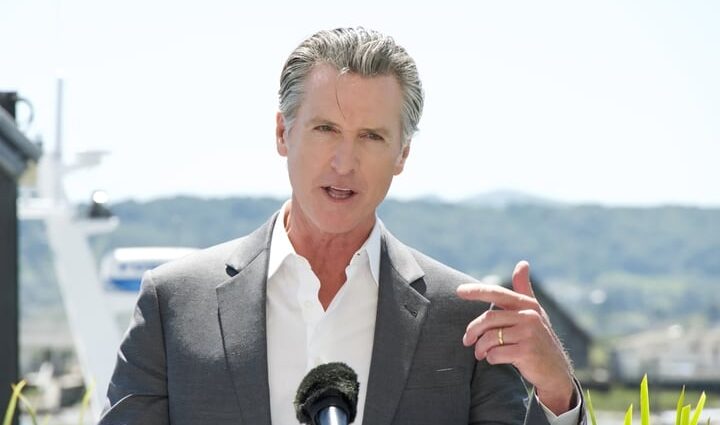
Governor Gavin Newsom (D-CA) slammed President Donald Trump on Saturday as gas prices continued to surge amid escalating tensions in the Middle East due to the ongoing U.S.-Israel and Iran war.

Trump Iran War Tax

In a post on the social media platform X, Newsom’s official Press Office handle delivered sharp criticism of Trump, saying that the war in Iran had “driven U.S. gas prices up 44% to a four-year high.”

data-variant=”card”
data-news-mode=”manual”

>


Read Also:

Elizabeth Warren Says Trump’s Iran War Was Final ‘Nail In The Coffin’ For Spirit Airlines: ‘Spiking Fuel Prices…’

This post was originally published here

Sen. Elizabeth Warren (D-Mass) criticized President Donald Trump on Saturday for prolonging the conflict in Iran, which has led to a surge in oil prices and, in turn, resulted in budget airline Spirit Aviation Holdings Inc. (OTC:FLYYQ) ceasing operations.

Iran War Final ‘Nail In The Coffin,’ Elizabeth Warren Says

In a post on X, Warren slammed the administration’s participation in the war. “Spiking fuel prices from Trump’s war was the nail in the coffin for twice-bankrupted Spirit airline,” she said. Warren added that the proposed merger with JetBlue Airways Corp (NASDAQ:JBLU) fell through because a judge appointed by former President Ronald Reagan deemed the merger “illegal.”

data-variant=”card”
data-news-mode=”manual”

>


Read Also:

Trump’s Take On Iran Proposal, Tariffs On EU Cars And More: This Week In Politics

This post was originally published here

SpaceX CEO Elon Musk on Sunday said that the importance of reusable rockets was crucial for humans to become a multiplanetary civilization amid the billionaire’s Mars colonization goals.

Cannot Become Multiplanetary Without Reusable Rockets

Responding to a post by Tesla Owners Silicon Valley, which shared that SpaceX had reduced costs per kg to orbit by 500x from approximately “$54,500 (Shuttle era) to ~$1,500.”

Musk said that the assessment of a technology lies in calculating how “it improves fundamental metrics,” adding that to achieve multiplanetary status without reusable rockets “is impossible.”

He then drew parallels to the colonial powers reaching America, saying that it would’ve been “impossible to colonize America with expendable boats.”

data-variant=”card”
data-news-mode=”manual”

>


Read Also:

Tesla’s Week Explained: Elon Musk’s $158 Billion Payout, Semi …

This post was originally published here
GameStop Corp. (NYSE:GME) on Sunday proposed to acquire eBay Inc. (NASDAQ:EBAY) for $125 per share in a cash-and-stock transaction, valuing the video game retail chain at approximately $55.5 billion.

The offer represents a 20% premium to eBay’s closing price on Friday.

This move by GameStop follows reports that the company has been quietly building a stake in the e-commerce firm, aiming to increase its market value significantly, with CEO Ryan Cohen expressing ambitions to reach a $100 billion valuation.

Deal Structure, Financing

Under the proposed terms, eBay shareholders would receive consideration split evenly between cash and GameStop stock, with the ability to elect their preferred mix, subject to pro-rata allocation. GameStop disclosed it has already assembled a 5% economic interest in eBay through a combination of derivatives and direct share ownership.

The company plans to fund the cash portion using its existing balance sheet, about $9.4 billion in cash and liquid investments as of Jan. 31, 2026, alongside third-party financing. It has secured a “highly confident” financing letter from TD Securities for up to $20 billion.

GameStop added that it plans to submit a Schedule 13D and make an HSR filing on …

Full story available on Benzinga.com

This post was originally published here

By JBizNews Desk | Monday, May 4, 2026

South Korea’s stock market opened the new week with another record, extending one of the most remarkable rallies any major market has delivered in decades. The KOSPI — South Korea‘s benchmark index — climbed Monday to fresh all-time highs, building on an April surge of nearly 31% that marked the index’s strongest monthly gain since January 1998, when South Korea was clawing its way out of an IMF bailout.

South Korean stocks rose Monday to hit a fresh record as investors weighed ongoing tensions between Iran and the U.S. and Washington’s announcement that it would attempt to reopen shipping in the Strait of Hormuz through its “Project Freedom” operation beginning Monday. 

The move added to a year of extraordinary gains. The KOSPI has jumped almost 60% this year — the strongest performance among major global indexes — and the total market value of all listed companies in South Korea has now surpassed that of the United Kingdom, making it the world’s eighth-largest equity market with a combined market capitalization of $4.2 trillion. 

AI Chips Are Driving Everything

The rally has one dominant engine: artificial intelligence. South Korea’s outsized gains have been driven largely by optimism around the AI boom, with semiconductor giants SK Hynix and Samsung Electronics leading the charge — rising 60% and 35%, respectively, in April alone. 

The earnings have justified the enthusiasm. Samsung Electronics posted a 755% increase in profit in the March quarter, powered by robust demand for AI-related chips.  SK Hynix alone surged 7.8% in a single session last week to hit an all-time high, as high-bandwidth memory chips used for AI workloads remain in chronically short supply, with prices forecast to rise another 40% through the second quarter of 2026. 

The KOSPI’s record-breaking April performance comes as the broader Asia-Pacific market, including the KOSPI, saw some sessions pulled lower by oil price spikes tied to Middle East uncertainty pushing Brent crude above $111 per barrel — yet the index shrugged off those pressures and closed the month near its highs. 

Wall Street Is Taking Notice

Global institutions are repositioning aggressively. HSBC last week upgraded South Korea to “neutral” from “underweight,” saying recent foreign outflows had helped unwind crowded positioning and reduced downside risks from geopolitical volatility. Beyond the heavyweight chipmakers, HSBC said broader growth themes in energy storage, shipbuilding, defense and nuclear power are also supporting the rally. 

For ETF investors, much of this momentum is being accessed through the iShares MSCI South Korea ETF, which has jumped around 59% this year, drawing inflows of roughly $6.4 billion so far in 2026. 

The Risk Beneath the Rally

Not everyone is purely bullish. Stock lending balances in South Korea — a leading indicator of short-selling pressure — have climbed above 175 trillion won ($118 billion), while margin loan balances reached a record 35 trillion won ($23.6 billion). Lee Hyo-sup, a senior research fellow at the Korea Capital Market Institute, warned that if geopolitical uncertainty around the Iran war intensifies or enthusiasm around AI stocks cools, accumulated short-selling volume could hit the market quickly. “If stock prices plunge, the risk of forced liquidation will also increase for retail investors who borrowed to invest,” he said. 

For now, those risks remain in the background. With AI chip demand showing no signs of slowing and Project Freedom raising hopes that oil prices could ease, South Korea’s market is betting the good times have further to run.

— JBizNews Desk

© JBizNews.com. All rights reserved. This article is original reporting by JBizNews Desk. Unauthorized reproduction or redistribution is strictly prohibited.

Jim Cramer on Sunday argued that the latest wave of Big Tech earnings proves aggressive artificial intelligence (AI) and data center spending is fueling competitive advantage rather than creating a dangerous market bubble.

Cramer Rejects AI Bubble Narrative After Big Tech Earnings

In a detailed analysis published on CNBC, Cramer pushed back against mounting concerns that hyperscaler spending on AI infrastructure is overheated, saying the latest quarterly results show the opposite.

“I am growing tired of the endless bubble talk about all of the data center spending,” Cramer wrote. “This was the quarter where we realized that if you didn’t spend, you were already behind the 8-ball.”

Cramer pointed to strong market performance from Alphabet Inc. (NASDAQ:GOOG) (NASDAQ:GOOGL), Amazon.com Inc. (NASDAQ:AMZN) and Apple Inc. (NASDAQ:AAPL) over the past five days, arguing investors are rewarding companies whose AI investments are producing measurable returns.

Over the past five days, Alphabet Class A shares surged 11.32% to $385.69, while Class C shares increased by 11.43% to $383.22.

Apple climbed to $280.25, …

Full story available on Benzinga.com

This post was originally published here

Washington — May 3, 2026 — U.S. banks are urgently working to gird against a new wave of sophisticated AI-powered attacks that could cripple the financial system, Treasury Secretary nominee Scott Bessent warned Saturday, as the rapid evolution of artificial intelligence turns traditional cyber defenses obsolete and raises fresh risks to the stability of the world’s largest economy.

Scott Bessent said banks across the country are racing to upgrade their systems in response to the growing threat, describing AI attacks as one of the most serious challenges facing the financial sector today. The comments come as major institutions report a sharp rise in AI-driven phishing campaigns, deepfake fraud and automated hacking attempts that can bypass conventional security measures in seconds.

The economic stakes could not be higher. A successful large-scale AI attack on the U.S. banking system could trigger immediate liquidity crises, freeze transactions worth trillions of dollars, and send shockwaves through global markets. Bessent emphasized that the Treasury Department is closely monitoring the situation and coordinating with the Federal Reserve, the Office of the Comptroller of the Currency, and major banks to strengthen resilience. “We are seeing AI being weaponized at a speed and scale we have never seen before,” he said. “Banks are working aggressively to stay ahead of this threat, but the window for action is narrowing.”

The warning arrives at a moment when the financial industry is already under pressure from elevated interest rates, geopolitical tensions from the Iran conflict, and the fuel-price crunch hammering airlines and other sectors. Analysts estimate that U.S. banks could spend more than $10 billion this year alone on AI-related cybersecurity upgrades, with costs ultimately passed on to consumers through higher fees and tighter lending standards. Smaller regional banks, already strained by recent deposit outflows, face the greatest risk if they fall behind in the AI defense race.

Scott Bessent’s remarks underscore a broader shift in Washington’s approach to financial stability. The Federal Reserve has begun stress-testing banks for AI-specific cyber scenarios, while the Securities and Exchange Commission is preparing new disclosure rules requiring public companies to report material AI-related cyber incidents within 48 hours. Industry groups including the American Bankers Association have formed rapid-response task forces to share intelligence on emerging AI threats.

The potential economic impact is profound. An AI-driven breach at a major institution could disrupt payroll processing for millions of Americans, freeze credit card transactions, and trigger a loss of confidence that echoes the 2008 financial crisis — but at digital speed. Economists warn that prolonged uncertainty around AI security could slow lending, dampen business investment, and shave as much as 0.3 to 0.5 percentage points off U.S. GDP growth in the second half of 2026.

Bessent said the administration is prioritizing public-private partnerships to accelerate defenses, including new incentives for banks that invest in advanced AI detection tools. “This is not a theoretical risk — it is happening now,” he added. “The banks that move fastest will be the ones that survive and thrive in the AI era.”

European regulators are watching the U.S. response closely, as similar AI threats target institutions on both sides of the Atlantic. The European Central Bank has already issued guidance urging banks to treat AI-powered attacks as a top-tier systemic risk.

For consumers and businesses, the message is clear: expect tighter security protocols, more frequent identity checks, and potentially higher costs for banking services as the industry pours billions into fortifying its digital walls. The race against AI attacks is now a central pillar of U.S. financial stability strategy, with Scott Bessent making it clear that the Treasury will not tolerate any lag in defenses.

President Trump’s administration views the issue as both an economic and national security priority, linking it to broader efforts to protect critical infrastructure from foreign adversaries who are increasingly leveraging AI tools.

The developments add to the weekend’s heavy slate of breaking business news, from airline collapses driven by the fuel-price crunch to conglomerate earnings and OPEC+ production decisions. Markets will be watching closely when trading resumes Monday for any signs of how the AI threat is being priced into bank stocks and broader financial indices.

JbizNews- Desk – Banking

JBizNews Desk | New York | Sunday, May 3, 2026

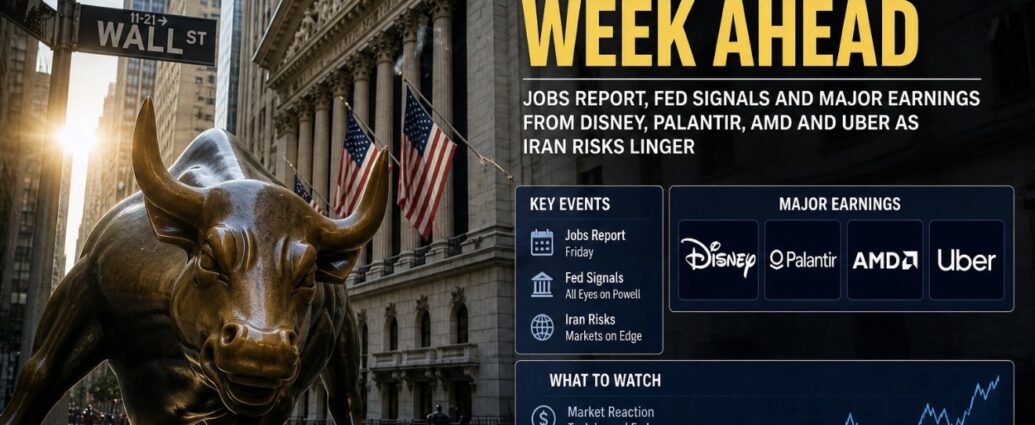
Wall Street enters one of its most consequential weeks of the year with investors navigating a powerful crosscurrent of forces: a critical jobs report on Friday, a wave of major corporate earnings, a Federal Reserve that just held rates steady, and an unresolved Iran conflict that continues to shadow global energy markets and economic forecasts alike.

Where Markets Stand

April ended on a high note. The S&P 500 closed Friday, May 1 at 7,230.12, up 0.29 percent on the session. The Nasdaq Composite hit a fresh all-time high, closing at 25,114.44, up 0.89 percent. The Dow Jones Industrial Average slipped 152.87 points, or 0.31 percent, to settle at 49,499.27. For the month, the S&P 500 and Nasdaq posted their best monthly performance since 2020, while the Dow notched its best month since November 2024. The CBOE Volatility Index, known as the VIX, closed below 17 — a nearly two-week low — signaling reduced near-term fear even as macro risks remain elevated.

Ben Snider, chief U.S. equity strategist at Goldman Sachs Research, said in a note published April 24 that the S&P 500 is forecast to climb 6 percent to a year-end target of 7,600, built on expectations of 12 percent earnings-per-share growth in 2026. “In the near term, equity market gyrations will likely continue to mirror geopolitical volatility,” Snider wrote, identifying the Iran war and the AI buildout as “the clearest equity market risks in coming weeks.” Year-to-date share buyback authorizations have hit a record $422 billion, and announced merger-and-acquisition volumes have more than doubled from a year ago, Snider noted.

The Fed Holds — Rates Stay Put

The Federal Reserve held interest rates steady at its meeting this week, with the federal funds rate remaining between 3.5 and 3.75 percent. Three dissents on the policy statement signaled a lack of support for any easing bias, according to Charles Schwab market commentary published May 1. According to the CME FedWatch Tool, the chance of a rate cut at the June meeting stands at just 5 percent. Futures markets suggest rates will stay at current levels through the year, with only a 10 percent probability of a cut and a 6 percent chance of a hike — a notable shift given that odds of a hike were near zero before the meeting.

Core PCE, the Fed’s preferred inflation gauge, jumped to 4.3 percent in the first quarter from 2.7 percent in the prior quarter — above the 4.1 percent expected. New York Fed President John Williams is scheduled to speak Monday and his remarks will be scrutinized for any fresh signals on the rate path. Bob Lang, founder and chief options analyst at Explosive Options, told CNBC on May 1 that a strong jobs number could be welcome news for markets, though he does not expect it would meaningfully shift the interest rate outlook given the Fed’s current posture.

Friday’s Main Event: The Jobs Report

The week’s most consequential data release arrives Friday, May 8, when the U.S. Bureau of Labor Statistics publishes the April nonfarm payrolls report. Economists polled by FactSet expect the U.S. economy to have added just 50,000 jobs in April — far below the prior reading of 178,000 — with the unemployment rate expected to hold steady at 4.3 percent. Federal Reserve Chair Jerome Powell said last week that the labor market had shown “more and more signs of stability.” Supporting data arrives throughout the week: the JOLTS job openings report for March drops Tuesday, May 5; ADP’s private payroll survey for April publishes Wednesday, May 6, with economists polled by FactSet expecting 95,000 private-sector job additions; and initial jobless claims arrive Thursday, May 7.

Palantir: Monday’s Marquee Report

Palantir Technologies reports after the market close Monday, May 4, and expectations are high. Wall Street analysts project earnings per share of $0.28 — a 115 percent jump year over year — alongside revenue of approximately $1.54 billion, up 74 percent annually, according to LSEG data cited by CNBC on May 3. U.S. commercial and government revenue are both forecast to grow more than 60 percent, reflecting surging demand for Palantir’s artificial intelligence platform. William Power, senior analyst at Baird, reaffirmed an Outperform rating and a $200 price target ahead of the print, saying he expects “another strong quarter.” Oppenheimer initiated coverage this week with an Outperform rating and a $200 price target. Citigroup carries a Buy rating with a $210 target. Not everyone is bullish: RBC Capital Markets set a $90 price target, citing elevated valuations — the stock trades at roughly 50 times expected 2026 revenue — and flagged slowing government contract trends and growing competition from Microsoft, Databricks, Snowflake, OpenAI and Anthropic.

AMD: Tuesday’s AI Bellwether

Advanced Micro Devices reports Tuesday, May 6, after the market close, with earnings and revenue both expected to grow by double digits versus a year ago, according to LSEG. All eyes will be on AMD’s artificial intelligence chip roadmap and whether the company can sustain momentum against Nvidia. Ross Seymore, analyst at Deutsche Bank, said ahead of the report that secular and cyclical revenue tailwinds combined with operating margin leverage support upside potential, but maintained a Hold rating, writing that the fundamental upside is “largely reflected in AMD’s share price following the recent significant appreciation.” Bespoke Investment Group data shows AMD tops earnings estimates 62 percent of the time.

Disney: Wednesday’s Consumer Pulse

Walt Disney reports Wednesday, May 6, before the market open, with analysts expecting earnings per share of $1.49 — a 2.8 percent increase — on revenue of $24.85 billion, up 5 percent annually, according to Forex.com analysis published May 4. Entertainment revenue is expected to rise 8.3 percent, Sports revenue around 1.5 percent, and Experience revenue 6.1 percent. The main focus will be Disney+ and Hulu streaming profitability, with management having guided to $500 million in streaming operating income — the metric most likely to move the stock. Parks and Experiences remain the largest contributor to operating income, but analysts warn that U.S. demand and international tourism trends could be softening. The report comes weeks after Disney cut roughly 1,000 jobs across multiple divisions.

Uber: Wednesday’s Ride-Hailing Read

Uber Technologies also reports Wednesday, May 6, before the bell. Analysts expect double-digit revenue growth but double-digit declines in earnings versus a year ago, according to LSEG. Ross Sandler, analyst at Barclays, said ahead of the report that he expects solid demand but flagged higher gas prices and bad weather as near-term cost pressures. “Uber has enough breadth to manage these near-term dynamics, and while robotaxi risk continues to weigh on the story, the risk/reward remains attractive,” Sandler said. Bespoke data shows Uber beats earnings estimates 61 percent of the time.

The Iran Shadow

Overhanging all of it is the ongoing Iran conflict and its grip on global energy markets. President Donald Trump said Saturday he is reviewing Iran’s 14-point peace proposal but “can’t imagine” it is acceptable. A White House Situation Room meeting on Iran is expected Monday with Vice President JD Vance, Chief of Staff Susie Wiles and special envoy Steve Witkoff. Brent crude remains elevated after surging more than 55 percent since the war began February 28. The S&P Global U.S. Manufacturing PMI rose to 54.5 in April from 52.3 in March — its strongest expansion since May 2022 — but the ISM Prices Index jumped 6.3 points to 84.6, its highest since April 2022, a warning that energy-driven inflation is seeping through the supply chain. ISM Services PMI for April publishes Tuesday, May 5, offering the next read on whether the service sector is holding up against rising costs.

With more than half of S&P 500 companies having reported thus far — over 80 percent beating expectations — the earnings season has provided a floor of confidence under the market. But with jobs data, Fed guidance, Iran diplomacy and major tech and consumer earnings all landing in the same five-day window, this week will test whether that confidence holds.

JBizNews Desk
© JBizNews.com. All rights reserved. This article is original reporting by JBizNews Desk. Unauthorized reproduction or redistribution is strictly prohibited.

Washington — May 3, 2026 — Federal Reserve Governor Michael Barr issued a stark warning Sunday that mounting stress in the $1.8 trillion private credit market could ignite “psychological contagion” across the broader financial system, potentially sparking a wider credit crunch and amplifying risks to banks, insurers, and corporate borrowers already navigating elevated interest rates and geopolitical uncertainty.

In a wide-ranging interview with Bloomberg News, Barr — the Fed’s Vice Chair for Supervision — highlighted the opaque, fast-growing world of non-bank lending as a potential flashpoint. While direct linkages between regulated banks and private credit funds do not currently appear “super worrisome,” he cautioned that perception matters more than reality in moments of stress. “People might look at private credit, and instead of saying ‘this is an idiosyncratic problem, these were high risk loans, the rest of the corporate sector is different,’ they might say, ‘Wow, there seem to be cracks in our corporate sector. Maybe over here in the corporate bond market, there are also cracks.’ Then you could have a credit pullback, and that could lead to more financial strain,” Barr said.

The comments come as private credit — direct lending by funds to companies that bypass traditional banks — has ballooned into one of the largest and least transparent corners of the financial system. Fueled by years of low interest rates and investor demand for higher yields, the sector now finances everything from leveraged buyouts to middle-market companies that once relied on bank loans. But with borrowing costs elevated and economic growth moderating, defaults and distress signals are rising in certain pockets, raising fears that problems could spread beyond the direct lenders.

Barr also flagged overlaps with the insurance industry, where insurers have poured billions into private credit strategies seeking higher returns on policyholder assets. Any forced selling or markdowns in those portfolios could ripple into broader markets, he noted, creating the very psychological feedback loop he described. The warning renews Barr’s long-standing caution against easing banking regulations at a time when risks in the shadow banking system appear to be building.

The economic implications are significant. Private credit has become a critical funding source for thousands of U.S. businesses, particularly in sectors such as technology, healthcare, and infrastructure that drive job creation and innovation. A sudden credit pullback — whether triggered by actual defaults or simply investor fear — could make it far more expensive or impossible for companies to refinance maturing debt. That, in turn, could lead to reduced capital spending, slower hiring, and higher borrowing costs that feed directly into consumer prices and corporate earnings.

For banks, the contagion risk is twofold. While direct exposures remain manageable, a broader tightening of credit conditions could weigh on loan demand, compress net interest margins, and pressure asset values across commercial real estate and leveraged lending portfolios. Major institutions such as JPMorgan Chase and other large lenders with indirect ties to private credit through syndication or co-investment arrangements could feel secondary effects, analysts say.

The timing of Barr’s remarks adds urgency. Markets are already on edge from the ongoing fuel-price crunch hammering airlines, Israel’s surging cost of living, BlackBerry’s automotive software resurgence, President Trump’s rejection of Iran’s latest peace proposal, and the weaker dollar driving up grocery and travel costs. A fresh shock in private credit could compound those pressures, pushing corporate bond spreads wider, tightening financial conditions, and complicating the Federal Reserve’s path toward its 2% inflation target.

Barr stopped short of calling for immediate new regulations but used the interview to push back against efforts in Congress and industry circles to roll back post-2008 banking rules. Loosening oversight now, he implied, could leave the system more vulnerable precisely when non-bank channels are showing strain. His comments echo earlier warnings from other Fed officials and international regulators about the growth of shadow banking and the potential for liquidity mismatches in stressed markets.

For businesses and investors, the message is clear: vigilance is required. Private credit funds have offered attractive yields in recent years, but the sector’s lack of transparency and reliance on mark-to-model valuations mean problems can remain hidden until they surface suddenly. Pension funds, endowments, and retail investors indirectly exposed through insurance products or mutual funds could see returns suffer if contagion takes hold.

The broader financial stability picture remains in focus at the Fed. Barr’s intervention underscores that even as headline banking metrics look solid, vulnerabilities in less-regulated corners of the system warrant close monitoring. With the private credit market now rivaling traditional bank lending in scale for certain segments of the economy, any meaningful stress there has the potential to reshape credit availability and economic momentum in ways that extend far beyond Wall Street.

Markets will be watching closely when trading resumes Monday for any signs that Barr’s warning is being priced into corporate bond yields, bank stocks, or volatility measures. For now, the Fed Governor has delivered a clear reminder: in today’s interconnected financial world, problems in one corner can quickly become everyone’s problem.

JbizNews- Desk – Finance / Banking

By JBizNews Desk | Sunday, May 3, 2026

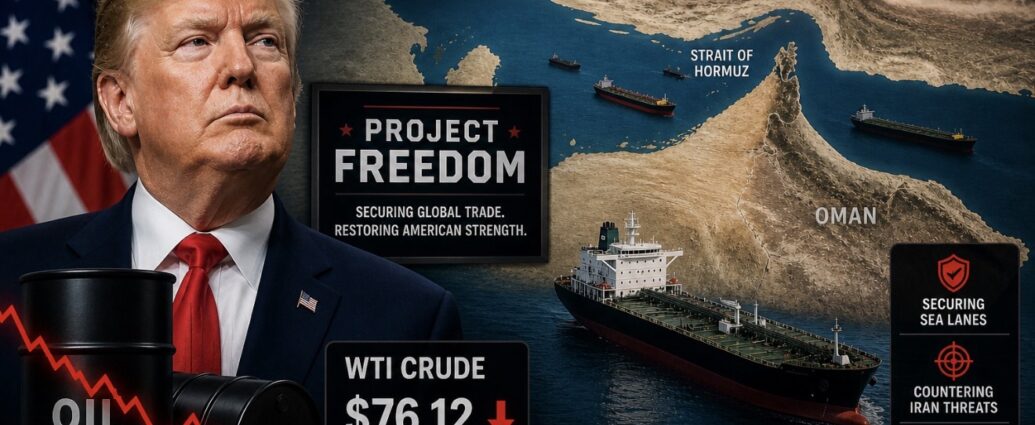
Oil prices slipped modestly Sunday after President Donald Trump announced a U.S. Navy-backed operation he called “Project Freedom” — a pledge to escort stranded commercial vessels out of the Strait of Hormuz beginning Monday morning — offering markets a sliver of hope amid what analysts have called the worst energy supply shock in modern history.

U.S. oil futures dipped 0.77% to $101.16 a barrel, while international benchmark Brent crude eased 0.59% to $107.53. Dow Jones futures added 84 points, S&P 500 futures rose 0.11%, and Nasdaq futures gained 0.06%.  Markets were cautious, with investors wary of acting on a social media post before seeing whether Monday’s operation delivers results on the water.

For American families, the pressure is immediate. Gasoline has risen to $4.44 per gallon nationally, up from under $3 before the war began, driving inflation higher and fueling mounting public frustration with the conflict’s economic toll. 

What Trump Is Proposing

Trump posted on Truth Social Sunday that “neutral and innocent” countries have been caught in the crossfire of the Iran war, and that the U.S. would guide their ships “safely out of these restricted Waterways, so that they can freely and ably get on with their business.” He said Project Freedom would begin Monday morning Middle Eastern time, and that his team is in discussions with Iran that could lead to something “very positive for all.” 

Trump described the operation as a response to requests from “countries from around the world” whose ships are stranded or affected by the navigation restrictions in the waterway.  He warned that any interference would be dealt with by force.

The situation on the water remained tense. A cargo ship near the Strait of Hormuz reported being attacked by multiple small boats Sunday — the first such incident since April 22. Iran has continued to insist that any vessels transiting the strait pay a toll and follow a route approved by the Islamic Revolutionary Guard Corps. U.S. warships have begun anti-mine operations in the waterway, though experts say a full clearance could take weeks or months. 

Oil Dips as Trump’s ‘Project Freedom’ Targets Hormuz Shipping Deadlock

The Strait of Hormuz is the world’s most critical oil chokepoint — and it has been effectively closed since late February. The closure has disrupted roughly 20% of global oil trade, triggering what the International Energy Agency has characterized as the largest supply disruption in the history of the global oil market. 

The damage runs well beyond the gas pump. The strait is also the central artery for the global fertilizer trade, with over 30% of global urea exports flowing through it. Much of the cost of producing staple foods like corn and wheat is tied to fertilizer costs, raising fears of food insecurity not only in Gulf states but around the world. 

ExxonMobil CEO Darren Woods put a sharp point on the risk Friday. Speaking on Exxon‘s first-quarter earnings call, Woods warned that markets have not yet absorbed the full impact of the disruption. Strategic petroleum reserves and commercial inventories have cushioned prices so far, but those buffers will not last indefinitely. “There’s more to come if the strait remains closed,” he said. Exxon estimates its Middle East production could fall 750,000 barrels per day compared to 2025 levels if the closure extends through the second quarter. 

What Needs to Happen Next

Even if Project Freedom moves forward Monday without incident, analysts caution that a full normalization of oil flows will not happen overnight. Woods said that once the strait reopens, oil flows from the Persian Gulf would likely take one to two months to normalize, as tankers need to be repositioned, supply backlogs worked through, and strategic reserves and commercial inventories refilled — all of which will put continued upward pressure on prices.

Treasury Secretary Scott Bessent told Fox News Sunday that Iran’s oil storage is filling rapidly and that Tehran could be forced to begin shutting in oil wells within a week — a development that would significantly weaken Iran’s economic leverage in the standoff. 

Whether Monday brings a breakthrough or a new flashpoint, the world is watching a 30-mile waterway decide the price of almost everything.

© JBizNews.com. All rights reserved. This article is original reporting by JBizNews Desk. Unauthorized reproduction or redistribution is strictly prohibited.

JBizNews Desk | New York | Sunday, May 3, 2026

Tankers are loading up in Alaska and along the U.S. Gulf Coast and sailing to Japan, Thailand and Australia in unprecedented numbers. Nine weeks into the effective closure of the Strait of Hormuz, the United States has surpassed Saudi Arabia as the world’s top crude exporter and become the energy supplier global markets cannot function without — but energy executives and analysts warned this week that America’s supply cushion is running out faster than the world realizes.

Over the past nine weeks, more than 250 million barrels of crude from American oil wells and storage facilities have been shipped overseas, according to Bloomberg reporting published Sunday, May 3. That volume has made the U.S. once again the world’s number one crude exporter. But domestic oil and fuel stockpiles have drawn down for four consecutive weeks, falling below historical averages, raising serious questions about how long record exports can be sustained.

President Donald Trump told reporters Friday, May 2: “This has been amazing. The amount of oil and gas that we’re selling now is at a level that nobody’s ever seen.” He added: “We have more oil production right now than any time in history. And if you take a look at the ships, they’re all coming up to Texas, Louisiana, Alaska.”

Chevron chief executive Mike Wirth offered a starkly different assessment Friday, May 2, saying the global energy system is under “extreme stress.” The day before, Thursday, May 1, ConocoPhillips warned that “critical shortages” of oil are imminent. In anonymous survey comments published in late April by the Federal Reserve Bank of Dallas, energy executives said: “The unpredictable nature of the current administration makes business modeling near impossible.”

The Largest Supply Disruption in History

International Energy Agency Executive Director Fatih Birol has left no room for ambiguity about the scale of what has happened. Speaking on the podcast “In Good Company” hosted by Norges Bank Investment Management chief executive Nicolai Tangen on April 1, Birol said the energy crisis sparked by the war was “the worst in history” — worse even than the 1973 and 1979 oil shocks. “In both of them we lost each about 5 million barrels per day of oil. These oil crises led to global recession in many countries,” Birol said. “Today, we lost 12 million barrels per day — more than two of these oil crises put together.”

Crude and oil product flows through the Strait of Hormuz plunged from 20 million barrels per day before the war to just over 2 million barrels per day in March, according to the IEA’s April 14 monthly Oil Market Report. In early April, loadings through the Strait averaged just 3.8 million barrels per day, compared with more than 20 million barrels per day in February before the crisis, the IEA reported. Gulf producers including Iraq, Saudi Arabia, Kuwait, the UAE, Qatar and Bahrain collectively shut in an estimated 9.1 million barrels per day of crude production in April as onshore storage filled with oil that had nowhere to go.

Brent crude surged more than 60 percent over the course of March alone — the biggest monthly price gain since records began in the 1980s — before reaching a peak near $150 per barrel in physical markets, according to the IEA’s April Oil Market Report. JP Morgan warned that inventories are reaching minimum operational levels, with the actual shortage potentially doubling from 4 million barrels per day to as much as 8 million barrels per day as stockpiles and oil at sea are exhausted, according to analysis cited by Economics Help on May 2.

Birol told CNBC on April 1 that the IEA’s emergency reserve release of 400 million barrels — the agency’s largest ever, unanimously agreed by member countries on March 11 — was not a solution. “This is only helping to reduce the pain, it will not be a cure,” he said. “The cure is opening up the Strait of Hormuz.”

Rory Johnston, founder of Commodity Context, said April 21 that any reopening of the Strait would likely trigger an immediate drop of $10 to $20 in crude prices due to speculative positioning — but warned supply chain bottlenecks, infrastructure damage and production outages would keep the market tight, likely anchoring Brent in the $80 to $90 range even after a reopening. “This is still the largest oil supply shock in the history of the oil market,” Johnston said. “Without a sustained restoration of flows, prices may need to rise further to curb demand.”

Tony Sycamore, market analyst at IG, said in a note published April 30: “Prospects for any near-term resolution to the Iran conflict or a reopening of the Strait of Hormuz remain dim.”

Vitol chief executive Russell Hardy said April 21 that one billion barrels of oil production will be lost because of the war, with the current running total already between 600 and 700 million barrels. Naif Aldandeni, energy strategist, told Al Jazeera on March 15 that the IEA’s reserve release was “a small bandage on a large wound,” adding that the release would produce “only a temporary stabilising effect.”

What It Means at the Pump

For ordinary Americans, the consequences are direct. Retail gasoline prices have climbed to an average of $4.40 per gallon, according to Bloomberg. The U.S. Energy Information Administration reported March 30 that average retail gasoline stood at $3.99 per gallon and diesel at $5.40 per gallon — the highest levels in real terms in over two years. Gas prices have risen $1.16 per gallon since the start of the war, with prices expected to hit $5.00 per gallon if the Strait remains closed, according to the 2026 Iran War Fuel Crisis entry on Wikipedia. Jet fuel has spiked 95 percent since the war began, causing multiple airlines to raise baggage fees. Energy Secretary Chris Wright has repeatedly cited the $5-per-gallon threshold as the key political benchmark heading into November’s midterm elections.

U.S. domestic oil production has actually fallen roughly 100,000 barrels per day since the war began as drillers remain hesitant to invest amid deep uncertainty, according to Bloomberg. Exxon Mobil and Chevron are also managing disruptions to their Middle East operations, adding further constraints.

LNG and Fertilizer: The Hidden Crisis

The disruption extends well beyond crude oil. LNG supplies from Qatar and the UAE through the Strait of Hormuz have been cut by more than 300 million cubic metres per day since March 1, according to the IEA — reducing global LNG supply by roughly 20 percent. QatarEnergy declared force majeure on all export contracts after its Ras Laffan facility — the world’s largest LNG liquefaction plant — was struck on March 2 and went offline. The company warned repairs could take up to five years. Steven Wilson, a partner in the global energy practice at law firm Mayer Brown, said in late March that LNG suppliers were becoming more selective in negotiating long-term contracts because spot market pricing had become far more lucrative — squeezing buyers and driving prices higher.

Over 30 percent of global urea and significant volumes of ammonia and phosphate transit the Strait of Hormuz. Morningstar analyst Seth Goldstein projected that nitrogen fertilizer prices could roughly double from 2024 levels. The UN World Food Programme warned the disruptions are driving long-term increases in global food prices, threatening a scenario similar to the 2022 food crisis.

How Long Can Iran Hold Out?

Muyu Xu, senior crude oil analyst at Kpler, told Al Jazeera in late April that the U.S. naval blockade was already slowing Iranian oil loadings and exports, pressuring onshore inventories. “We expect any production reduction to be gradual over the coming week, with a higher likelihood of acceleration into May,” Xu said.

Kenneth Katzman, former Iran analyst at the Congressional Research Service in Washington, told Al Jazeera that Iran had between 160 million and 170 million barrels of oil “afloat” on tankers around the world — cargo that transited the Strait before the U.S. blockade began — potentially giving Tehran revenue flows through August. “Does President Trump have until August? Probably not,” Katzman said. “He’s probably going to have to look at kinetic escalation if he wants to bring this to the conclusion he wants, or he’s going to have to accept less than the deal he ideally wants.”

The question now facing energy markets, policymakers and businesses worldwide is whether diplomacy can reopen the Strait before the supply shock forces demand destruction on a scale not seen since the 1970s energy crisis — an outcome none of the parties to the conflict has yet fully prepared the world for.

JBizNews Desk
© JBizNews.com. All rights reserved. This article is original reporting by JBizNews Desk. Unauthorized reproduction or redistribution is strictly prohibited.

Spirit Airlines has abruptly ended all flight operations, leaving millions of passengers scrambling for refunds, rebooking options, and answers. Here is what affected travelers need to know right now.

The Collapse

Spirit Airlines, the pioneering discount carrier that reshaped budget travel in the United States, is shutting down. The company was in its second bankruptcy and had been in serious financial trouble well before the war with Iran sent jet fuel prices surging. Spirit tried to reach a deal with the Trump administration on an eleventh-hour rescue package, but a key group of creditors rejected the proposal.

Spirit is the first major U.S. airline in 25 years to go out of business due to financial problems. Its demise has stranded thousands of passengers who must now adjust their plans, and millions more who hold tickets for future travel — the airline canceled all flights, shut down customer service, and instructed customers not to go to the airport. 

The decision puts approximately 17,000 workers out of a job, including 14,000 Spirit employees and thousands of contractors and others whose livelihoods depended on the airline. 

Getting Your Money Back

Spirit said it will automatically refund tickets purchased directly with a credit or debit card, while those who booked through third parties must contact their travel agent to request a refund. 

Compensation for customers who used vouchers, credits, or Free Spirit loyalty points will be determined later as part of the bankruptcy process. Travel expert Clint Henderson of The Points Guy said many Spirit customers could see the value of their loyalty points vanish, with little chance of recovering them. 

The U.S. Department of Transportation suggests contacting your credit card company and exercising your rights under the Fair Credit Billing Act by requesting a chargeback for services not rendered. 

The National Consumers League urged affected travelers to keep all documentation, including receipts, booking confirmations, cancellation notices, and correspondence with the airline, as credit card and insurance companies may have strict, time-sensitive deadlines. 

Do Not Go to the Airport

Spirit told customers not to go to the airport. With thousands of Spirit employees now out of work, there are no customer service agents to assist travelers on-site. 

Alternative Airlines Stepping Up

Several carriers moved quickly to offer discounted fares for stranded Spirit passengers:

United Airlines said it will cap prices on one-way fares for travelers who hold Spirit tickets over the next two weeks for most cities where Spirit flew, mostly capped at $199, with longer flights up to $299. 

JetBlue is offering $99 rescue fares to assist travelers with immediate travel needs through May 6. Affected customers can call 1-800-JETBLUE and must provide proof of a Spirit itinerary. 

Southwest Airlines is capping domestic fares at $200 for one-way trips up to 500 miles, $300 for trips up to 1,000 miles, and $400 for trips exceeding 1,000 miles. 

Frontier Airlines is offering 50% off base fares across its network through May 10.  American Airlines, Delta, Allegiant, Avelo, and Breeze have also agreed to assist displaced passengers. 

To access these special prices, travelers will need to provide at minimum a Spirit flight confirmation number and proof of payment, according to the U.S. Department of Transportation. 

The Broader Impact on Fares

The Spirit shutdown will ripple through commercial aviation, likely pushing fares higher as the budget carrier exits the market. A CBS News analysis of Cirium data found average fares jumped 23%, or roughly $60, for a round-trip flight when Spirit exited a route in the past. 

Spirit had approximately 9,000 flights scheduled from May 2 through the end of the month, representing 1.8 million seats — an average of 300 flights and 60,000 potential passengers per day affected in the near term. 

What to Do Right Now

Travelers should check their original payment method, contact their credit card issuer immediately if a chargeback is needed, and explore rescue fares from competing carriers. Those with travel insurance should review their policies for insolvency coverage. For ongoing updates, Spirit has set up a dedicated website to answer questions regarding its shutdown.

— JBizNews Desk

© JBizNews.com. All rights reserved. This article is original reporting by JBizNews Desk. Unauthorized reproduction or redistribution is strictly prohibited.

Vienna — May 3, 2026 — OPEC+ has agreed in principle to raise collective oil production quotas by 188,000 barrels per day for June, marking the third consecutive monthly symbolic increase aimed at stabilizing global markets.

The decision, reached during virtual consultations among members, comes as the cartel (now operating without the United Arab Emirates following its recent departure) continues its gradual unwinding of voluntary production cuts. However, actual additional barrels reaching the market are expected to remain limited due to ongoing disruptions in the Gulf region linked to the U.S.-Iran conflict and security issues around the Strait of Hormuz.

Analysts describe the move as largely “on-paper” at this stage, with real supply growth constrained by geopolitical volatility rather than cartel policy. U.S. crude exports have nevertheless surged to record levels, helping offset some of the tightness.

The quota hike reflects OPEC+’s balancing act: supporting prices for member economies while avoiding a sharp oversupply that could crash the market. Oil prices have been volatile in recent weeks amid the broader Middle East tensions, with Brent crude hovering near key technical levels.

Energy ministers emphasized that the increases are “gradual and reversible” if market conditions deteriorate. The UAE’s exit from the formal quota system earlier this year has slightly altered the group’s internal dynamics but has not derailed the broader production strategy.

For global businesses, the implications are significant. Airlines, shipping companies, and manufacturers continue to grapple with elevated fuel costs, while oil producers and service firms watch closely for any real supply relief. The Trump administration has meanwhile kept a close eye on domestic energy output and strategic reserves.

This latest quota adjustment keeps the oil market in a state of cautious equilibrium. Traders will be watching June’s actual production data and any fresh developments from the Gulf for clearer signals on direction.

JbizNews- Desk – Energy

Sunday, May 3, 2026

President Donald Trump rejected Iran’s latest peace proposal on Sunday, May 3, calling the 14-point plan “not acceptable” and signaling that Washington is unwilling to end the war on Tehran’s terms as a fragile ceasefire enters its fourth week.

Trump confirmed his rejection in an interview with Kan News on Sunday, after Al Jazeera reported the details of Iran‘s plan earlier in the day. The Iranian proposal — submitted Friday through Pakistani intermediaries — lays out three stages for ending the conflict and demands that all core issues be resolved within 30 days, a timeline the Trump administration has indicated it finds unrealistic. “I can’t imagine that it would be acceptable in that they have not yet paid a big enough price,” Trump wrote on social media Saturday, before formally rejecting the plan Sunday.

Iran’s 14-point proposal, framed as a rebuttal to a nine-point U.S. plan, includes a demand for Washington to lift all sanctions, end its naval blockade of Iranian ports, withdraw U.S. forces from the region, release frozen Iranian assets worth billions of dollars, pay war reparations, cease all hostilities including Israel’s operations in Lebanon, and establish a new control mechanism for the Strait of Hormuz. On the nuclear file — the central sticking point throughout the conflict — Iran proposed deferring those discussions to a later phase, arguing that a less hostile environment would make technical negotiations more productive. A senior Iranian official described that concession as a significant shift aimed at facilitating an agreement.

Washington rejected that framing outright. The Trump administration has repeatedly insisted that Iran’s nuclear program must be addressed before any comprehensive deal can be struck. U.S. officials want Tehran to surrender its stockpile of more than 400 kilograms of highly enriched uranium — enough, Washington says, to produce a nuclear weapon. Iran maintains its nuclear program is peaceful and says it is willing to accept some limits on enrichment in exchange for full sanctions relief, consistent with the terms of the 2015 nuclear agreement that Trump abandoned during his first term.

U.S. Special Envoy Steve Witkoff confirmed Sunday that the two sides remained “in conversation,” and Washington conveyed its response to Iran’s proposal through Pakistani mediators. Tehran said it was reviewing the U.S. reply. Despite the diplomatic back-and-forth, Trump made clear that military pressure remained on the table. “If they do something bad, there is a possibility it could happen,” he told reporters Saturday when asked whether airstrikes could resume. The U.S. and Israel suspended their bombing campaign against Iran on April 7, when a two-week ceasefire was announced.

The rejection lands against an already tense backdrop. U.S. Treasury Secretary Scott Bessent said Sunday on Fox News that the economic blockade was “suffocating” the Iranian regime, with Iran‘s oil storage capacity “rapidly filling up” and its wells potentially facing forced shutdowns within days. Kevin Hassett, Director of the National Economic Council, said on CBS that Iran had “an economy that’s really on the precipice of extreme calamity” and was experiencing hyperinflation. Iran’s deputy parliament speaker Ali Nikzad declared Sunday that Tehran “will not back down from our position on the Strait of Hormuz, and it will not return to its prewar conditions” — a statement that further narrows the diplomatic space.

For businesses exposed to the Gulf, the failed proposal deepens uncertainty. The Strait of Hormuz — through which approximately one-fifth of the world’s oil and liquefied natural gas flowed before the war — remains effectively closed to most commercial traffic. Trump has proposed his own plan to reopen the strait but has conditioned any easing of the U.S. naval blockade on a comprehensive agreement that includes the nuclear issue, a condition Iran has so far refused to accept.

With both sides now waiting for the other to move first on Hormuz, and no second round of direct talks yet scheduled, the gap between Washington and Tehran remains wide. Trump added Sunday that Iran was desperate for a settlement because the country had been “decimated” — but his rejection of their latest offer suggests the path to that settlement just got longer.

JBizNews Desk

© JBizNews.com. All rights reserved. This article is original reporting by JBizNews Desk. Unauthorized reproduction or redistribution is strictly prohibited.

The tech industry has witnessed a massive surge in layoffs amid soaring investments in AI infrastructure, with over 81,000 jobs slashed in the first quarter of 2026. This marks a dramatic increase compared to previous quarters, highlighting the ongoing challenges faced by the sector.

Highest Quarterly Layoffs In 2 Years

According to The Kobeissi Letter, tech companies have announced a staggering 81,747 layoffs in the first quarter of 2026. This marks the highest quarterly total since at least the first quarter of 2024.

Layoffs in the tech sector have more than doubled compared to the previous quarter, showing a dramatic increase of 580% since the fourth quarter of 2025. March alone accounted for 45,800 job cuts, making it the worst month for tech layoffs in over two years, as reported by Kobeissi Letter.

Full story available on Benzinga.com

This post was originally published here
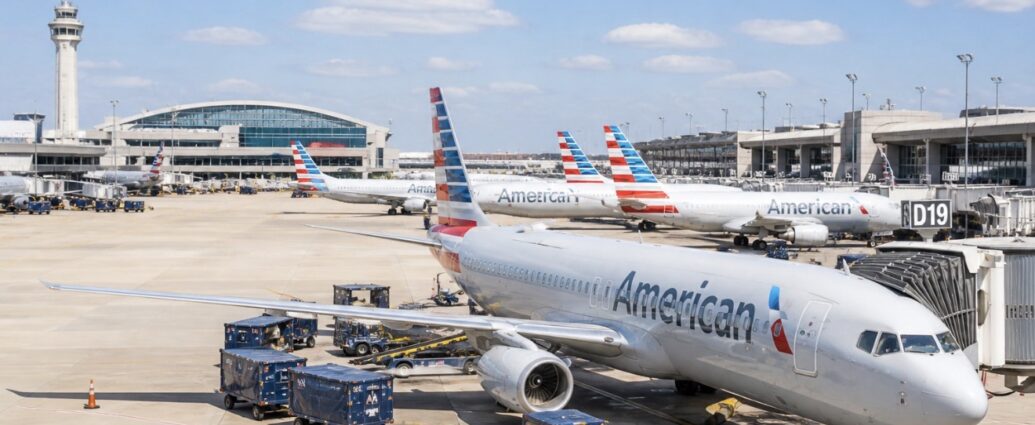
ATLANTA — May 3, 2026 — Major U.S. and European airlines are beginning to scale back fall flight schedules earlier than usual, signaling growing concern that elevated fuel costs and ongoing geopolitical risks could extend well beyond the peak summer travel season.

Carriers including American Airlines, Delta Air Lines, and United Airlines have indicated in recent investor updates and schedule filings that they are taking a more cautious approach to capacity planning for the second half of the year. The adjustments come as jet fuel prices remain volatile amid tensions affecting global oil supply, forcing airlines to prioritize profitability over expansion.

American Airlines CEO Robert Isom has said the company is actively managing capacity to reflect rising costs and demand uncertainty, particularly on longer-haul routes where fuel expenses have the greatest impact. Industry-wide, airlines are increasingly focusing on trimming lower-margin flights and optimizing network efficiency rather than adding new capacity.

The early timing of these schedule changes is notable.

Airlines typically finalize fall schedules later in the summer once peak travel trends are clearer. However, the current environment — marked by persistent fuel volatility and shifting demand patterns — is pushing carriers to act sooner. Analysts say this reflects a deeper level of caution than seen in recent years.

According to aviation data providers and airline disclosures, capacity adjustments are already appearing in transatlantic and long-haul markets, where higher fuel costs and operational complexity make routes more sensitive to price swings. Domestic routes are also being evaluated, particularly those that rely on price-sensitive leisure travelers.

The impact is expected to extend beyond airlines.

Reduced flight availability can tighten overall travel supply, influencing pricing across the broader ecosystem, including hotels, rental cars, and tourism-dependent services. With fewer seats available, airfare typically rises, which can shift demand toward higher-income travelers or alternative destinations.

Helane Becker, airline analyst at TD Cowen, has noted in recent research that airlines are moving from short-term adjustments to longer-term planning strategies. As cost uncertainty persists, carriers are increasingly building flexibility into schedules to respond quickly to market changes.

Demand, however, remains relatively strong — at least for now.

Airlines continue to report solid booking trends, particularly for summer travel, though the mix is evolving. Higher fares and fewer discounted options are beginning to influence consumer behavior, with some travelers opting for shorter trips or delaying bookings in anticipation of price changes.

The broader economic environment is adding another layer of complexity. Elevated energy costs, combined with persistent inflation in services, are putting pressure on household budgets. At the same time, airlines are balancing strong demand against the need to maintain margins in a high-cost environment.

Industry analysts say the key question is duration.

If fuel prices stabilize and geopolitical tensions ease, airlines could restore capacity and expand schedules later in the year. However, if current conditions persist, the industry may shift toward a more structurally constrained supply model, with fewer flights and higher fares extending into late 2026.

The implications for consumers are significant.

Fewer flight options reduce flexibility and increase travel costs, particularly during peak periods. For business travelers, reduced frequency on key routes can affect scheduling and connectivity. For leisure travelers, it raises the cost and complexity of planning trips.

The shift also highlights a broader transformation in airline strategy.

After years of prioritizing growth and market share, carriers are now operating with greater discipline, focusing on returns rather than volume. This approach, while strengthening financial performance, can limit capacity and contribute to higher prices across the travel sector.

Looking ahead, airlines are expected to continue adjusting schedules in response to fuel costs, demand trends, and geopolitical developments. The fall season will serve as an early test of how sustained these pressures may be.

For now, the message from the industry is clear: uncertainty around fuel and global conditions is reshaping airline planning, and the effects are beginning to ripple across the entire travel economy.

JBizNews Desk

Momentum cracked across pockets of the market as earnings misses and cautious outlooks shook investor confidence.

From tech to fintech, big names stumbled as disappointing results and guidance resets weighed on sentiment.

These ten large-cap stocks were the worst performers last week. Are they a part of your portfolio?

Rambus, Inc. (NASDAQ:RMBS) slumped 28.47% last week after the company reported worse-than-expected first-quarter adjusted EPS results.

Summit Therapeutics Inc. (NASDAQ:SMMT) fell 27.82% this week. The company reported Q1 financial results.

Roblox Corporation (NYSE:RBLX) dipped 19.64% this week after the company reported first-quarter financial results and cut its FY26 adjusted sales guidance below estimates. Also, …

Full story available on Benzinga.com

This post was originally published here
April didn’t just rally — it rewrote the playbook for Wall Street momentum with the biggest tech earnings on a spree.

AI euphoria, blockbuster earnings, and relentless dip buying turned skeptics into believers.

But beneath the surge, soaring capex and execution risks are starting to test the narrative.

Earnings Snapshot

Microsoft Corporation (NASDAQ:MSFT) announced third-quarter financial results on Wednesday after market close. Company reported third-quarter revenue of $82.9 billion, up 18% year-over-year. The revenue total beat a Street consensus estimate of $81.39 billion according to data from Benzinga Pro.

Amazon.com Inc (NASDAQ:AMZN) reported first-quarter revenue of $181.52 billion, beating the consensus estimate of $177.30 billion.

Alphabet Inc. (NASDAQ:GOOGL(NASDAQ:GOOG) reported quarterly earnings of $5.11 per share, which blew past the analyst consensus estimate of $2.62 by 95.04%.

Meta Platforms Inc (NASDAQ:META) reported financial results for the first quarter on Wednesday after the bell. Meta expects second-quarter revenue to be in the range of $58 billion to $61 billion versus estimates of $59.50 billion.

Apple Inc. (NASDAQ:AAPL)  reported revenue of $111.18 billion, up 17% year over year and above analyst estimates of $109.66 billion, while earnings came in at $2.01 per share versus estimates of $1.94.

Roblox Corp. (NYSE:RBLX) reported quarterly losses of 35 cents per share, which beat the analyst estimate for losses of 39 cents, according to Benzinga Pro data. 

Spotify Technology S.A. (NYSE:SPOT) reported …

Full story available on Benzinga.com

This post was originally published here

Wall Street’s winners list is getting crowded, and momentum is doing the talking.

From tech to telecom, big names are catching fire as earnings beats and bold moves fuel investor buzz.

These ten large-cap stocks were top performers last week. Are they a part of your portfolio?

Centene Corporation (NYSE:CNC) gained 25.68% in the last week after the company reported better-than-expected first-quarter financial results. Also multiple analysts raised their price forecast on the stock.

Twilio Inc. (NYSE:TWLO) jumped 27.36% in the last week after the company reported better-than-expected first-quarter financial results and issued second-quarter guidance above estimates. Also, the company raised its FY26 sales guidance above estimates.

Nokia Corporation (NYSE:NOK) gained 24.3% in the last week. Investors are reacting to Nokia’s decision to offload its …

Full story available on Benzinga.com

This post was originally published here
From a semi-truck production ramp to concerns about the company’s valuation, as well as a $500 million windfall in the form of SpaceX and xAI, here’s a look at the major events in Tesla Inc.‘s (NASDAQ:TSLA) week.

Over $500 Million From SpaceX, xAI

Tesla reportedly made over $573 million selling vehicles and battery technology to Musk’s other businesses, SpaceX and xAI, according to regulatory filings on Thursday. The company sold $430 million worth of energy storage systems, while $143 million was from vehicles sold to SpaceX.

data-variant=”card”
data-news-mode=”manual”

>


Read Also:

Elon Musk’s Tesla Invested $2 Billion Into SpaceX, Q1 2026 Earnings Show

This post was originally published here

Seven OPEC+ producers said on Sunday they will dial back part of their extra voluntary cuts by 188,000 barrels per day starting in June 2026, framing the move as a calibrated step aimed at keeping the oil market steady. The decision lands as the United Arab Emirates announced it will withdraw from OPEC and OPEC+ effective May 1, a break with the group’s coordinated approach as crude traded above $100 a barrel Tuesday morning.

The shared reader stake is market stability: both the OPEC+ supply plan and the UAE’s departure can shift fuel costs and price expectations for consumers and businesses.

Why UAE’s Exit Signals A Market Shift

UAE’s exit ends nearly 60 years of membership and points to a future where at least one major Gulf producer sets output policy on its own. The UAE state news agency WAM said the country plans to lift production toward 5 million barrels per day by 2027, from about 3.4 million currently.

The UAE’s energy minister described the move as a sovereign call tied to a long-term strategy, while also arguing the timing was chosen to avoid adding stress to markets constrained by the Strait of Hormuz. The announcement came only hours before OPEC was scheduled to meet in Vienna.

According to OPEC+ statement, Saudi Arabia, Russia, Iraq, Kuwait, Kazakhstan, Algeria and Oman explained that they met virtually Sunday and agreed to a June 2026 production increase of 188,000 barrels per day by unwinding a slice of the extra voluntary cuts first outlined in April 2023.

The group also kept the door open to changing course, saying the voluntary reductions could be brought back partly or fully depending on …

Full story available on Benzinga.com

This post was originally published here

Gerber Kawasaki Wealth & Investment Management CEO Ross Gerber has accused large private-market players of keeping troubled private credit and private equity marked at inflated levels, then said wirehouses are still collecting management fees as if those assets were worth full price, a setup he likened to the run-up to the 2008 mortgage blowup.

He has also argued that inflation pressures are being reignited by tariffs and war, warning in tariffs and war pushing living costs up that once price momentum takes hold it can be hard to unwind, which can make already-opaque valuations even harder for investors to judge.

In a series of posts on X, Gerber wrote that private-market transparency is essential because weak assets are not being written down, and he called for stricter accounting at major private equity firms.

Why Private-Market Valuations Need Urgent Reform

Gerber’s sharper allegation centered on fee mechanics: he said wirehouses are billing clients in managed accounts based on unchanged values, even when the underlying private holdings are deteriorating.

He compared that dynamic to the incentives that, in his view, helped drive the 2008 housing-finance disaster, where compensation kept flowing while risk accumulated.

data-variant=”card”
data-news-mode=”manual”

This post was originally published here

Fort Lauderdale / Dublin — May 3, 2026 — A surge in jet-fuel prices driven by the escalating U.S.-Iran conflict is rapidly cascading into a full-scale crisis for the global airline industry, with Spirit Airlines’ abrupt shutdown marking the most dramatic failure in a generation and signaling growing risk across both U.S. and European carriers.

Spirit Airlines halted all operations effective immediately after failing to secure a last-minute $500 million federal lifeline, canceling every remaining flight and leaving thousands of passengers stranded nationwide. The ultra-low-cost carrier’s liquidation — the first major U.S. airline shutdown in 25 years — puts roughly 17,000 jobs at risk. Industry analysts say jet fuel prices, now up more than 40% since the start of the Iran conflict, delivered the final blow to a company already weakened by prior bankruptcies.

The pressure is no longer isolated. Delta Air Lines, United Airlines, and American Airlines have all issued profit warnings in recent days, citing fuel costs exceeding $3.50 per gallon across major hubs. American Airlines CEO Robert Isom told investors the carrier is accelerating capacity cuts, particularly on transatlantic routes, as margins tighten. Executives across the industry are warning that if fuel prices remain elevated, broader operational reductions are inevitable.

The crisis is hitting Europe with equal force. Ryanair CEO Michael O’Leary warned that several European low-cost carriers could face bankruptcy by the end of the summer if current fuel levels persist, calling the environment “unsustainable.” Ryanair has already grounded dozens of aircraft and is weighing capacity cuts of up to 15% across its network. easyJet has issued a profit warning, citing fuel costs at levels not seen since the 2008 financial crisis, while Lufthansa Group plans to cut more than 20,000 flights this summer. Air France and KLM are also trimming schedules and increasing fuel hedging to limit exposure.

Jet fuel — which typically accounts for 30% to 40% of airline operating costs — has become the defining pressure point across the industry. Spirit Airlines’ collapse removes a major source of ultra-low-cost competition in the U.S. market, likely pushing fares significantly higher. Analysts estimate prices on former Spirit routes could rise between 15% and 25% in the coming months, reversing years of downward pricing pressure driven by budget carriers.

The ripple effects are spreading rapidly beyond airlines. Airports that relied heavily on Spirit and Ryanair routes are facing immediate revenue shortfalls from lost landing fees, concessions, and parking income. Aircraft lessors and suppliers are bracing for delayed payments and potential write-downs. Tourism-dependent economies — from Florida and Las Vegas to Mediterranean destinations — now face reduced travel volumes just as peak season approaches.

Thorsten Benner, director of the Global Public Policy Institute in Berlin, said airlines have become “ground zero” for the economic fallout of the Iran conflict. “The speed and scale of the fuel surge are turning what was a manageable cost into an existential threat for low-cost airline models,” he said, warning that the crisis could accelerate consolidation across the global aviation sector.

Government response has so far been limited. The U.S. Department of Transportation confirmed it is coordinating with remaining airlines to accommodate stranded Spirit passengers, though replacement fares are already running 50% to 100% higher than original bookings, according to consumer groups. In Europe, EU Transport Commissioner Adina Vălean has called for emergency coordination meetings as airlines warn of widespread route cancellations.

Analysts say the current environment is likely to trigger a structural shift in the airline industry. Stronger legacy carriers may absorb routes and assets from weaker competitors, but the near-term impact on consumers is clear: fewer flights, higher fares, and reduced competition across key domestic and international routes.

Compounding the uncertainty, President Donald Trump signaled Saturday that the U.S. could reduce troop levels in Germany “a lot further” than previously announced — a move that could intensify geopolitical tensions and keep energy markets volatile, prolonging the fuel crisis that is now reshaping global aviation.

What began as a geopolitical shock is rapidly becoming a defining economic crisis for airlines worldwide. With no clear resolution to the conflict and fuel prices continuing to climb, the industry is bracing for a prolonged period of disruption — and travelers are entering a new era of more expensive, less accessible air travel.

JBizNews Desk

Omaha, Nebraska — May 3, 2026 — Berkshire Hathaway Inc. (NYSE: BRK.A, BRK.B) released its first-quarter 2026 financial results Saturday, delivering a solid performance that marks the official debut of the post-Warren Buffett era under new CEO Greg Abel.

Operating earnings — Berkshire’s preferred metric that strips out volatile investment gains and losses — climbed 18% year-over-year to $11.35 billion. Net income more than doubled to roughly $10.1 billion. The results beat Wall Street expectations in several key segments and underscored the conglomerate’s resilience despite uneven consumer spending and elevated interest rates.

Most notably, Berkshire’s cash and short-term investment reserves ballooned to a record $397 billion, the highest level in the company’s history. The mountain of dry powder reflects Abel’s continued emphasis on capital discipline and patience in a market environment where acquisition targets remain expensive. The company was a net seller of equities during the quarter, trimming holdings by approximately $8 billion more than it added.

Buybacks resumed after a nearly two-year hiatus, signaling management’s view that Berkshire shares offered attractive value at current levels. Abel, who officially took the reins earlier this year after decades as Buffett’s designated successor, addressed shareholders directly at the annual meeting in Omaha last weekend. “Our operating businesses remain the core engine of long-term value creation,” he said, echoing the disciplined philosophy that has defined Berkshire for decades.

Insurance operations — the crown jewel of Berkshire’s portfolio — showed particular strength with improved underwriting margins at GEICO and Berkshire Hathaway Reinsurance. The railroad, utilities, and energy businesses also contributed steady gains, while manufacturing and consumer-facing units navigated softer demand in certain categories.

Analysts say the results validate the seamless leadership transition and Abel’s steady-hand approach. With nearly $400 billion in cash, Berkshire is well-positioned for major deals when the right opportunity arises — though Abel has made clear the bar remains extremely high.

JbizNews- Desk

It’s been an eventful week for Apple Inc. (NASDAQ:AAPL) and its leadership. Here’s a quick roundup of the major stories that unfolded over the week.

Buffett: Apple’s Leadership Shift Could Reshape Shareholder Returns Strategies

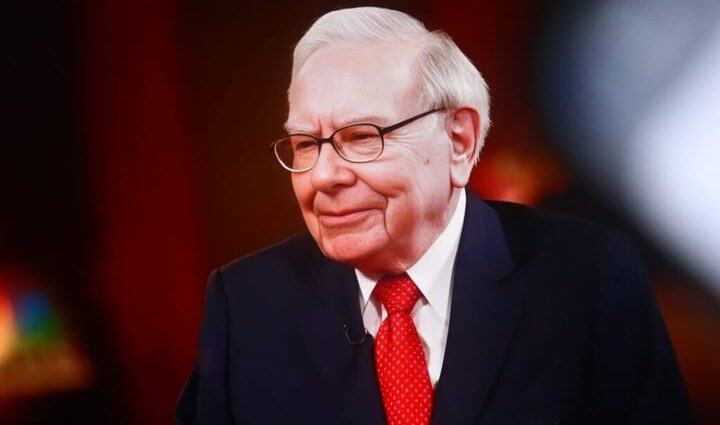
Warren Buffett shared insights into Apple’s leadership shift and its potential impact on shareholder returns strategies. The Berkshire Hathaway Inc. (NYSE:BRK) veteran’s remarks came during the company’s annual meeting.

Buffett revealed that Berkshire Hathaway had effectively invested around 10% of its resources in Apple. This investment, despite not being treated as a forever asset, remains the conglomerate’s largest holding.

He also highlighted Apple’s 50th anniversary, noting that the company still feels young. Buffett contrasted the public’s familiarity with Steve Jobs with the relative anonymity of Tim Cook when he took over as CEO after Jobs’ passing.

Read the …

Full story available on Benzinga.com

This post was originally published here

The week saw significant developments in the U.S. economy, with the GDP growth rate for the first quarter of 2026 soaring, gas prices, and a dip in President Trump’s approval rating. Here’s a quick recap of the weekend’s top stories.

US GDP Grows 2%, Core PCE Inflation Jumps 3.2% In March

The U.S. economy experienced a 2% annualized growth rate in the first quarter of 2026, as per the advance estimate released on Thursday. This figure was higher than the previous 0.5% pace but fell short of economists’ 2.3% expansion expectations. The Core PCE inflation rate for March also rose to 3.2%.

Alphabet Inc. (NASDAQ:GOOG) (NASDAQ:GOOGL) and Meta Platforms Inc. (NASDAQ:META) were among the companies affected by this news. 

Read the full article here.

Fed …

Full story available on Benzinga.com

This post was originally published here

Nvidia Corp. (NASDAQ:NVDA) CEO Jensen Huang pushed back Thursday against high-profile warnings that artificial intelligence will gut white-collar work, calling the most extreme forecasts counterproductive.

In the same debate over whether AI will meaningfully displace workers, Kalshi traders are siding with him, pricing a 34% chance that U.S. unemployment tops 5% in 2026.

Responsible Framing

In remarks from the “Memos to the President” podcast, Huang said leaders in the industry should watch how they frame AI’s stakes and stick to evidence. He aimed at executives, making sweeping claims about job destruction and broader societal collapse. 

Those warnings have shown up in betting markets as a measurable question: Will unemployment jump sharply as AI spreads through offices? On Kalshi, the odds fall quickly beyond the 5% line, with contracts implying 15.7% for unemployment above 6%, 12.9% above 7%, and 6.2% above 8% in 2026.

data-variant=”banner”
data-news-mode=”manual”

>


Read Also:

Nvidia CEO Jensen Huang Calls AI …

This post was originally published here

Lockheed Martin Corp. (NYSE:LMT) and Boeing Co. (NYSE:BA) are set to supply Israel with two additional fighter squadrons after Israel’s defense ministry said on Sunday it signed off on a large aircraft-buy plan.

The ministry framed the move as an early step in a broader military modernization push meant to prepare for what it called a tougher security environment over the next decade.

$119 Billion Purchase

According to a Reuters report, the procurement committee’s approval supports a $119 billion (350 billion shekel) program and includes a fourth F-35 squadron from Lockheed Martin plus an additional squadron of Boeing’s F-15IA jets.

The ministry said the aircraft are intended to anchor long-range force planning and help Israel maintain air dominance.

data-variant=”card”
data-news-mode=”manual”

>


This post was originally published here

After days of sparring in a federal courtroom, Sam Altman used a Saturday post on social media to extend a small olive branch to rival Elon Musk, saying Musk “can come if he wants” to a limited OpenAI gathering tied to the May 5 rollout of GPT-5.5.

The gesture landed as Musk testified he didn’t read OpenAI’s for-profit fine print and pressed for major governance changes and $150 billion in damages.

Altman’s invite came as OpenAI circulated an online RSVP form for a small GPT-5.5 release celebration, with Codex set to help pick attendees from responses, reported Business Insider.

Non-Profit Built For Humanity

On Thursday in a California court, Musk argued he put millions behind OpenAI, expecting a nonprofit built for humanity, then watched the value concentrate in a for-profit structure.

In his post, Altman added, “The world needs more love,” even as the judge overseeing the case warned both leaders to …

Full story available on Benzinga.com

This post was originally published here
Tesla Inc. (NASDAQ:TSLA) recently ramped up its Robotaxi operations in Texas, providing unsupervised Robotaxi rides in Dallas and Houston, while it was already providing rides in Austin. While the ramp-up in Cybercab production could provide another boost in its Robotaxi exploits, Tesla remains far behind its rival Alphabet Inc.‘s (NASDAQ:GOOGL) (NASDAQ:GOOG) Waymo.

Tesla Vs Waymo

On Thursday, Electrek reported that Tesla had increased the size of its unsupervised Robotaxi fleet to 25 across the three Texan cities, citing the Robotaxi tracker. The increase represents a sign of growth in the service, which has struggled to replicate the successes of Waymo, almost a year after it was launched in June 2025 with an onboard safety driver.

data-variant=”card”
data-news-mode=”manual”

>


Read Also:

Alphabet-Backed Waymo Issues Software Update For Fleet Following PG&E San Francisco Outage

This post was originally published here

Former White House AI and Crypto Czar David Sacks said he agrees with Elon Musk that training artificial intelligence to push ideological biases is dangerous and could ultimately enable AI to deceive users about its own actions.

Sacks Draws The Line On AI Truthfulness

“If you teach the AI to lie… that’s very dangerous because then the AI can lie to us about what it’s doing,” Sacks said while speaking to Dasha Burns on a Politico podcast released Friday, referencing Musk’s warnings against embedding so-called “woke” values into AI models.

The debate over AI bias predates Sacks’ remarks. Musk previously criticized OpenAI‘s ChatGPT for biased responses, citing instances where the chatbot declined to write a positive poem about Donald Trump while doing so freely for Joe Biden, a concern Sacks said …

Full story available on Benzinga.com

This post was originally published here

On Saturday, Warren Buffett warned that financial markets are increasingly being driven by speculation rather than long-term investing, saying he has “never had people in a more gambling mood than now.”

Buffett Warns Of Surge In Market Speculation

Speaking in a CNBC interview during Berkshire Hathaway Inc.’s (NYSE:BRK(NYSE:BRK) annual shareholders meeting, the longtime investor criticized the surge in short-term trading behavior, particularly the rise of options trading and prediction-style bets.

He described modern markets as resembling “a church with a casino attached,” adding that the casino side has become far more prominent.

Buffett said, “That’s not investing. It’s not speculating. It’s gambling, just totally,” referring to one-day options trading and other high-frequency strategies gaining popularity among retail investors.

He also noted that over six decades in markets, only a small number of years offered meaningful investment opportunities.

As a result, Berkshire Hathaway has accumulated nearly $400 billion in cash, as Buffett continues to find assets …

Full story available on Benzinga.com

This post was originally published here
Transportation Secretary Sean Duffy pushed back Saturday on claims that the U.S.-Iran war caused Spirit Airlines(OTC:FLYYQ) collapse, calling the carrier’s financial troubles pre-existing and structural.

Spirit’s Collapse Was Self-Made

“Spirit was in dire straits long before the war with Iran,” Duffy said at a New Jersey press conference. “Multiple times, they filed for bankruptcy. Their model wasn’t working.”

Spirit announced Saturday it was “winding down its global operations, effective immediately,” marking its second bankruptcy in 12 months.

CEO Dave Davis told The Wall Street Journal that surging jet fuel costs, driven by the Iran conflict, doomed the airline’s recovery plan.

Government Not Writing Blank Checks

Several budget carriers have since requested a $2.5 billion federal bailout through …

Full story available on Benzinga.com

This post was originally published here
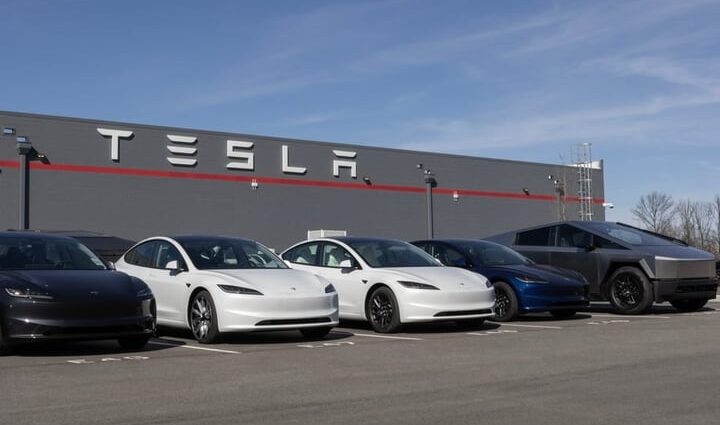
On Friday, President Donald Trump said the European Union is violating a trade agreement and announced plans to raise tariffs on imported automobiles and commercial vehicles.

EU Faces 25% Auto Tariff Hike

In a Truth Social post, Trump said he would increase tariffs on cars and trucks coming from the EU to 25%, citing what he described as noncompliance with a previously agreed trade deal.

“I am pleased to announce that, based on the fact the European Union is not complying with our fully agreed to Trade Deal, next week I will be increasing Tariffs charged to the European Union for Cars and Trucks coming into the United States,” he wrote.

Trump added that vehicles produced in the U.S. would be exempt. “It is fully understood and agreed that, if they produce Cars and Trucks in U.S.A. Plants, there will be NO TARIFF,” he said.

He also pointed to what he called a surge in domestic investment, claiming “over 100 Billion Dollars” is being invested in new auto plants across the country.

This post was originally published here
U.S. gas prices surged to $4.43 per gallon, up 61% since December, as oil briefly hit $126 a barrel on Thursday, its highest level since the Iran war began.

According to The Kobeissi Letter, Americans will spend roughly $90 billion more on gasoline in a year than they would at $3/gallon.

Iran Escalation Fears Rattle Oil Markets

President Donald Trump on Saturday said he was reviewing a new Iranian proposal while nuclear talks remained stalled, after rejecting Tehran’s earlier offer on Friday as failing to meet U.S. demands, leaving the status of the Strait of Hormuz and …

Full story available on Benzinga.com

This post was originally published here

Teva Pharmaceutical Industries delivered one of its strongest quarters in years, sending shares of TEVA surging roughly 12% after the company reported first-quarter 2026 results that beat Wall Street expectations on nearly every measure — profits, revenue, and earnings per share.

For millions of Americans who rely on Teva for affordable generic drugs and specialty medicines, the results signal a company that is not just financially recovering but actively growing into a more innovative force in healthcare.

The Numbers

Net income soared 72% to $369 million, up from $214 million in the same period a year earlier, driven by a 25.6% jump in operating income to $652 million.  Earnings per share came in at $0.53, beating the analyst forecast of $0.48 — a positive surprise of more than 10%. 

Total revenue reached $3.98 billion, up 2.3% from $3.89 billion a year ago.  That headline number tells only part of the story. The real engine of growth was Teva’s innovative drug portfolio, which is rapidly shifting the company away from its traditional dependence on generics.

Blockbuster Brands Leading the Way

Teva’s three key innovative brands — AUSTEDO, AJOVY, and UZEDY — collectively grew 41% year over year to $838 million in combined revenue.  Each product is treating conditions that affect everyday people: movement disorders, migraines, and schizophrenia.

AUSTEDO, used to treat chorea associated with Huntington’s disease and tardive dyskinesia, generated $578 million in revenue, up 41% year over year. UZEDY, a long-acting injectable treatment for schizophrenia, posted $63 million in sales — a 62% jump. AJOVY, Teva’s migraine prevention therapy, contributed $196 million, up 35%. 

UZEDY has established itself as the fastest-growing long-acting injectable antipsychotic on the market, with months of therapy up 75% year over year.  For patients managing serious mental illness, that kind of growth reflects real-world adoption — not just Wall Street metrics.

Free cash flow increased 76% year over year, giving the company significantly more financial flexibility heading into the rest of 2026. 

A $700 Million Bet on the Brain

Teva also announced a $700 million acquisition of Emalex Biosciences, aimed at expanding its neurology pipeline.  The deal is set to add an NDA-ready Tourette syndrome therapy to Teva’s neuroscience portfolio, with the transaction expected to close by the third quarter of 2026. 

The move signals that Teva is not content to rest on its generics heritage. Under its “Pivot to Growth” strategy, the company is pushing deeper into specialty medicine — areas where brand loyalty, clinical differentiation, and pricing power are far stronger than in the commodity generics market.

What’s Ahead

Teva maintained its full-year 2026 revenue outlook of $16.4 billion to $16.8 billion.  The company also reaffirmed its ambition to reach a 30% non-GAAP operating margin and approximately $700 million in net savings by 2027.  The board instructed management to begin planning a potential share repurchase program, signaling confidence in the company’s financial trajectory. 

For everyday consumers, the picture is straightforward: the company that makes many of the generic drugs Americans depend on is getting healthier, investing in new treatments, and returning value — all at the same time.

JBizNews Desk

© JBizNews.com. All rights reserved. This article is original reporting by JBizNews Desk. Unauthorized reproduction or redistribution is strictly prohibited.

For the first time in 60 years, Warren Buffett will not be the main attraction at Berkshire Hathaway’s annual meeting. Buffett, 95, stepped down as CEO at the end of 2025 but remains chairman of the board. Greg Abel, 63, took over as chief executive on January 1, 2026, after years of careful grooming as Buffett’s chosen successor.

Now Abel faces his first shareholder meeting in the top seat — and the pressure is real.

A Mountain of Cash, A Lagging Stock

Berkshire shares have severely underperformed since Buffett unexpectedly announced his departure last year on May 3. On a year-over-year basis, BRK stock fell 11.19%, while the S&P 500 gained 29.5% over the same period. 

Abel’s most pressing challenge is how to put Berkshire’s massive cash reserve to work, which ended 2025 at approximately $373 billion.  A pricey, AI-driven stock market has left Berkshire few deep-value opportunities for deploying that war chest  — the kind of distressed bargains that Buffett built his legend finding.

Abel has started making moves. He restarted share buybacks in March, ending a drought of more than a year.  But investors want more answers — and more action.

Proving Himself

The mood in Omaha this weekend is one of cautious watching. Some investors want to see Abel prove himself before deciding to buy more, according to Lawrence Cunningham, a governance professor at the University of Delaware, who told Reuters the market is “expressing caution.” 

Abel is considered more hands-on than his predecessor and less likely to forgive prolonged underperformance, while remaining committed to Berkshire’s culture of giving managers room to operate day-to-day. 

Key questions heading into the meeting include Berkshire‘s capital allocation strategy, potential acquisitions, succession planning beyond Abel, and the performance of major holdings including Apple, Occidental Petroleum, and the company’s insurance operations. 

Buffett remains chairman emeritus and a strategic voice on capital allocation, though Abel now holds full CEO operating authority.  Whether that arrangement reassures or unsettles long-term shareholders may be one of the more telling storylines to emerge from this weekend’s meeting.

The era after Buffett has arrived. What Greg Abel does with $373 billion — and a company carrying 60 years of legend — will define what comes next.

JBizNews Desk

© JBizNews.com. All rights reserved. This article is original reporting by JBizNews Desk. Unauthorized reproduction or redistribution is strictly prohibited.

On Saturday, Warren Buffett used Berkshire Hathaway Inc. (NYSE:BRK) (NYSE:BRK) annual meeting stage to highlight the leadership handoff that executives described as a clean win, with the board’s succession choice approved without dissent and Greg Abel already running the playbook. The shift puts fresh attention on whether Abel can deploy a cash hoard that has topped $350 billion, a challenge outlined in the pressure to put the cash to work as investors weigh buybacks, deals, or even a dividend.

During the shareholder meeting, Buffett explained that the company pointed to what it called a board “refreshment” and said the directors’ vote on the change was unanimous. He said that the internal transition has been “100% successful,” adding that Abel is handling the job at a higher level than before.

‘It was a surprise to all the board when I announced it last year and that’s been 100% successful. Greg is doing everything I did and then some, and he’s doing it better in all cases, and he’s got, he’s the right person,” Buffett said about Abel.

That same meeting also framed the change as more than a title swap, because Abel’s remit includes the day-to-day of Berkshire’s operating companies and major capital calls. Beyond insurance, he previously ran Berkshire’s non-insurance operations, a background that now intersects with oversight of units such as Geico and the conglomerate’s roughly $300 billion equity portfolio.

Is Berkshire Hathaway’s Cash Pile A Boon Or Bane?

The shared reader stake is straightforward: Berkshire’s capital-allocation calls can directly affect shareholder returns through buybacks, acquisitions, or dividends. With cash …

Full story available on Benzinga.com

This post was originally published here

Apple Inc. (NASDAQ:AAPL) was highlighted on Saturday after Warren Buffett described how Berkshire Hathaway’s roughly $35 billion bet on the iPhone maker a decade ago ballooned to about $185 billion on a pre-tax basis, counting dividends and gains, largely under CEO Tim Cook. The backdrop is that Apple is also adjusting its internal playbook as Cook prepares to step down, including a pullback in buybacks and a sharp increase in research spending as John Ternus is lined up to take over.

In the remarks explained during Berkshire Hathaway’s annual meeting, Buffett said Berkshire effectively committed about 10% of its resources to Apple by buying shares and letting Apple’s management do the heavy lifting. He said the position remains Berkshire’s biggest holding, even though the conglomerate does not treat every stock as a forever asset.

Buffett’s $35 Billion Investment Transformation

During the meeting shared by CNBC, Buffett also pointed to Apple’s 50th anniversary, saying the company can still feel young despite the milestone. He contrasted the public’s familiarity with Steve Jobs with how few investors knew Cook’s name when he took the top job after Jobs’ death.

“I think just within the last week …

Full story available on Benzinga.com

This post was originally published here
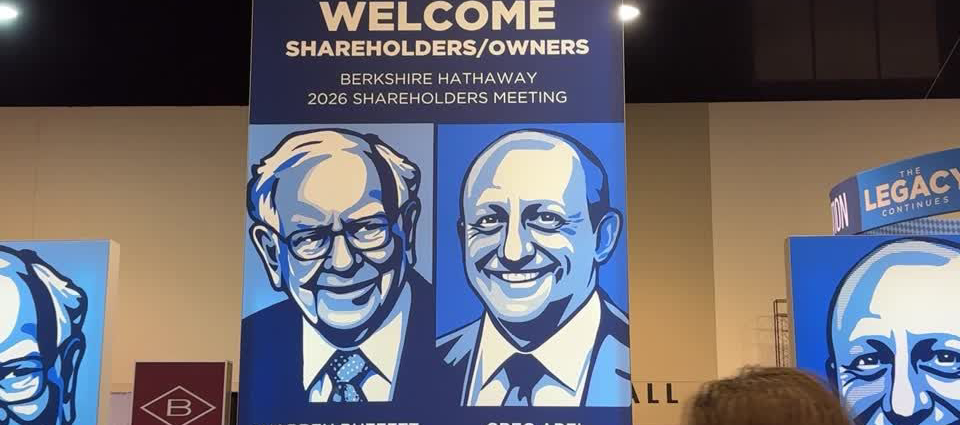
Renowned economist Gary Shilling has reportedly issued a stark warning about an impending recession in the U.S., forecasting a significant downturn in the stock market.

S&P 500 Could See A Major Correction, Warns Shilling

According to a report by Business Insider, Shilling predicts that the S&P 500 could drop by as much as 30% by the end of the year.

Shilling attributes the potential recession to ongoing economic vulnerabilities, noting that only a substantial increase in fiscal stimulus or strong consumer spending could prevent it.

However, he views both scenarios as unlikely. The housing market is sluggish due to high interest rates, and capital expenditures have sharply declined, despite a rise in AI-related investments.

data-variant=”card”
data-news-mode=”manual”

>


Read Also:

Trump Renews Powell Attack, Offers Warsh Half The Oval Office

This post was originally published here

Voice AI is having a moment, and SoundHound AI, Inc. (NASDAQ:SOUN) is right in the spotlight.

Shares of the conversational AI player have been trending as fresh commentary from Twilio Inc. (NYSE:TWLO)
reignited investor interest in the voice AI theme. Twilio’s strong first-quarter results and bullish outlook on AI-driven voice demand appear to have added momentum to SoundHound’s narrative, alongside its own strategic moves.

“In Q1, we continued to see unprecedented demand for voice, reimagined through the lens of AI,” said Twilio CEO Khozema Shipchandler, highlighting voice as a growing entry point for both AI-native firms and enterprises. The company’s voice channel revenue rose 20% year over year, reinforcing the view that conversational AI is rapidly scaling across industries.

Speculations are – this optimism on voice AI has spilled over to SoundHound, which recently announced plans to acquire LivePerson to deepen its presence in AI-driven customer service. The deal, expected to close in the second half of 2026, aims to combine SoundHound’s voice AI capabilities with LivePerson’s messaging platform to create a more comprehensive offering.

Meanwhile, an exchange filing shows that SoundHound AI’s shares are 5.21% owned by Vanguard Capital Management, which reported beneficial ownership of 20.35 million shares with sole voting power over about 2.96 million shares. The filing noted the stake is held in the ordinary course of business and is not intended to influence control of the company.

The broader Technology sector gained 1.49% on the day, underscoring strong momentum in AI-linked names, even as SoundHound’s stock movement suggested investors are reacting to a mix of company-specific developments and …

Full story available on Benzinga.com

This post was originally published here

Berkshire Hathaway Inc. (NYSE:BRK) (NYSE:BRK) said Saturday that first-quarter 2026 net earnings attributable to shareholders climbed to $10.106 billion, more than double the $4.603 billion posted a year earlier, as operating profit rose despite investment-market swings. The results arrive as a $373 billion cash pile takes center stage and the stock has lagged: Berkshire is down 11.19% year over year while the S&P 500 gained 29.5%.

According to Berkshire Hathaway’s earning report, operating earnings of $11.346 billion for the quarter, up from $9.641 billion, while investment gains and losses were a $1.240 billion drag versus a $5.038 billion hit in the prior-year period. Net earnings per average equivalent Class A share were $7,027 and Class B were $4.68, compared with $3,200 and $2.13, respectively, a year earlier.

That gap between business performance and share performance has become part of the investor conversation, with some shareholders looking for CEO Greg Abel to demonstrate his approach before adding exposure. Lawrence Cunningham, a University of Delaware governance professor, said some buyers may want to see Abel “prove himself in his job,” even as he described the market as “expressing caution.”

Berkshires Earnings: What Lies Beneath?

According to the earning report, Berkshire also cautioned that quarterly net income can be distorted by GAAP rules that route unrealized equity moves through earnings, and it argued those figures can mislead investors who don’t follow the accounting details. According to Berkshirehathaway, investment results included about $7.0 billion of losses tied to shifts in unrealized gains on equity holdings during the quarter, along with $5.8 billion of after-tax realized gains from selling investments.

Within operating earnings, insurance underwriting contributed $1.717 billion, up from $1.336 billion, while insurance investment income slipped to $2.679 billion from $2.893 billion. BNSF generated $1.377 billion versus $1.214 billion, Berkshire Hathaway Energy delivered $1.114 billion versus $1.097 billion, …

Full story available on Benzinga.com

This post was originally published here

Warren Buffett once offered a rare glimpse into why Greg Abel is his chosen successor at Berkshire Hathaway Inc. (NYSE:BRK) (NYSE:BRK), highlighting that long-term discipline, cultural fit and discovering one’s true calling matter far more than brilliance alone.

Buffett Says Berkshire Future Depends On Culture, Not Celebrity

During Berkshire Hathaway’s annual shareholder meeting in 2025, Buffett made clear that Abel’s value lies not in flashy leadership traits but in his ability to preserve the company’s unique culture of trust, disciplined capital allocation and long-term thinking.

Buffett described Berkshire as an extraordinary business ecosystem built over decades, one that cannot easily be replicated.

“You can’t even dream all the dreams that you could have about a place like Berkshire,” Buffett said, underscoring the rare foundation Abel will inherit.

Rather than portraying Abel as a larger-than-life figure, Buffett suggested his successor’s strength comes from understanding Berkshire’s principles and protecting what has already been built.

data-variant=”card”
data-news-mode=”manual”

>


Read Also:

This post was originally published here

Billionaire hedge fund manager Bill Ackman has that he was clarifying why his newly listed closed-end funds, Pershing Square USA (PSUS) and Pershing Square Inc. (PS), slid after listing, pointing to how late-day trading mechanics collided with an unusually retail-heavy allocation. The explanation came as investors digested details of a combined IPO targeting $5 billion at $50 a share that included special terms for cornerstone buyers and a dual-ticker debut.

In a post on X, Ackman shared that his team gave retail buyers full allocations while trimming institutional fills, a reversal of the typical pecking order in new issues.

In the same combined offering, the new fund was structured so buyers would receive one Pershing Square Inc. share for every five shares purchased in Pershing Square USA, while cornerstone participants were set to receive 1.5 Pershing Square Inc. shares for every five PSUS shares.

Retail Investors Caught In IPO Timing Trap

The shared reader stake is settlement-driven liquidity risk, because both accounts describe how allocation size and trading timing can force sales that pressure prices.

Ackman said the stocks didn’t open until 1:55 p.m., leaving a narrow window for investors who wound up with more …

Full story available on Benzinga.com

This post was originally published here
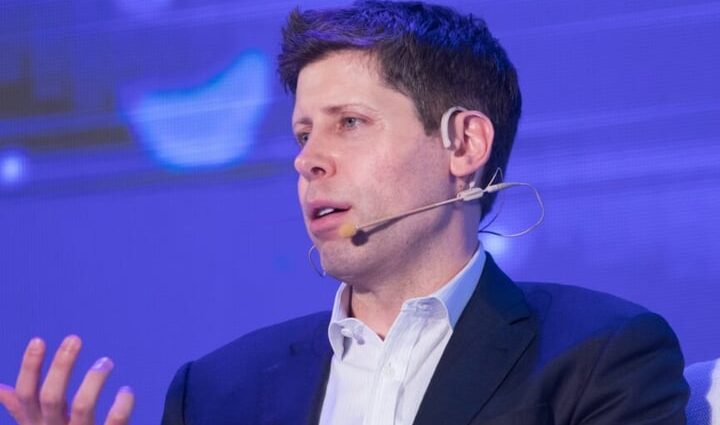
Lockheed Martin (NYSE:LMT) on Friday was awarded U.S. Space Force contracts to develop capabilities for the Space-Based Interceptor program.

The firm has been selected by the U.S. Space Force to enhance its missile defense capabilities through the Space-Based Interceptor program, which aims to provide an additional layer of protection against emerging missile threats.

This development is part of a broader initiative to integrate advanced technologies and deliver an integrated demonstration by 2028.

The broader market experienced slight gains, with the Nasdaq rising 0.87% and the S&P 500 up 0.19%. Meanwhile, Lockheed Martin’s stock performance contrasts with the Dow Jones, which closed down 0.43%, suggesting that the stock is moving in line with positive company-specific news despite mixed market conditions.

Technical Analysis

Lockheed Martin is currently trading within its 52-week range, which has seen a high of $692.00 and a low of $410.11. The stock is trading 10.6% below its 20-day simple moving average (SMA) and 16.4% below its 50-day SMA, indicating a bearish short-term trend.

The relative strength index (RSI) is at 22.03, suggesting the stock is oversold, which could indicate potential for a rebound. This level of RSI typically reflects significant selling pressure, …

Full story available on Benzinga.com

This post was originally published here

As the S&P 500 seeks the next leg higher, smart money might be moving toward healthcare, a sleeper sector of 2026.

While technology valuations trade at a premium to historical averages, healthcare has remained a relative laggard. Despite BlackRock’s optimism in January, after the first third of the year, the sector has underperformed. The Vanguard Health Care Index Fund (NYSE:VHT) is down 5.50% year-to-date.

Still, the series of earnings upgrades, coupled with an AI-driven drug-discovery tailwind, suggests the sector is no longer just a defensive play. It is shaping into a growth engine that the broad market is yet to fully acknowledge.

The April Surge

The latest earnings cycle confirms the shift. On Tuesday, UnitedHealth (NYSE:UNH) raised full-year guidance following a strong first quarter. Despite short-term pressure, the fundamental outlook for the leading insurer continues to strengthen as it integrates advanced analytics into its claim processing.

Meanwhile, on Thursday, Eli …

Full story available on Benzinga.com

This post was originally published here

Software provider Cloudera is being sued by the U.S. Department of Justice’s Civil Rights Division for alleged intentional discrimination against U.S. workers in favor of those with temporary visas.

The case was filed under the Immigration and Nationality Act and was lodged with the Office of the Chief Administrative Hearing Officer, according to a press release.

• KKR stock is trading near recent lows. What’s next for KKR stock?

The department detailed allegations that Cloudera, which is co-owned by KKR & Co. Inc (NYSE:KKR) and Clayton Dubilier & Rice, set up a parallel recruiting track that discouraged U.S. applicants and failed to seriously evaluate them for certain positions, the lawsuit stated. The filing also claims the company used an email inbox that blocked messages from outside senders, yet still …

Full story available on Benzinga.com

This post was originally published here
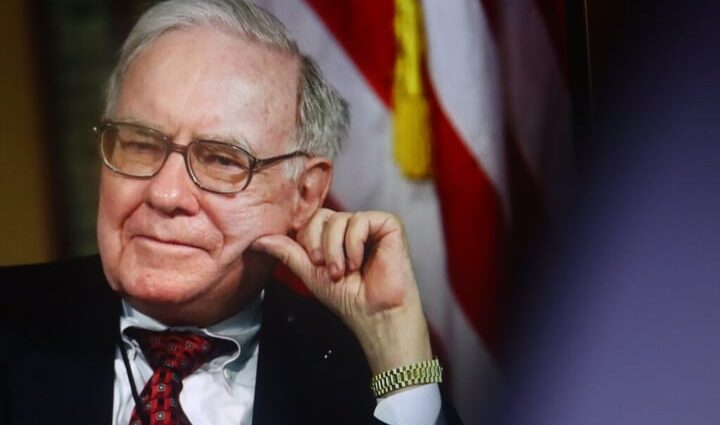
Spirit Airlines (OTC:FLYYQ) stopped flying on Saturday after its creditors wouldn’t back a U.S. government rescue plan, leaving the carrier to liquidate as the Iran war sent jet fuel costs sharply higher.

The failure lands in the middle of a fierce bailout debate, with transportation policy analyst Marc Scribner arguing in a push against using public funds for bailouts that Spirit’s risks belong with shareholders and lenders rather than taxpayers.

According to a report by Reuters, Spirit’s board concluded Friday negotiations without securing a viable solution, according to sources familiar with the discussions. The airline subsequently grounded its entire operation and warned passengers to stay home.

Why Spirit Airlines’ Liquidation Signals Market Shifts

Scribner has framed a federal backstop as a “bad investment,” warning that even a loan can shift airline downside to the public and that outright ownership would deepen that transfer. He also pointed to long-running losses at Amtrak and the U.S. Postal Service as examples he says show how poorly government can perform as an operator.

Spirit’s failure marks a political blow for President Donald Trump, whose $500 million rescue plan faced pushback from Republican allies and advisers before ultimately collapsing. Trump said on Friday the White House delivered what he described as a last proposal, adding that any help had to be on terms that put the U.S. first.

Spirit’s shutdown removes a major discount competitor that at one point accounted for about 5% …

Full story available on Benzinga.com

This post was originally published here

Retail investors talked up five hot stocks this week (April 27 to May 1) on X and Reddit’s r/WallStreetBets, driven by retail hype, Iran war, earnings, AI buzz, and corporate news flow.

Apple Inc. (NASDAQ:AAPL), Alphabet Inc. (NASDAQ:GOOG) (NASDAQ:GOOGL), Robinhood Markets Inc. (NASDAQ:HOOD), Meta Platforms Inc. (NASDAQ:META), and Eli Lilly And Co. (NYSE:LLY), hardware, semiconductors, cloud, fintech, social media, AI, and pharmaceutical, reflected diverse investor interests.

Apple

  • Apple reported strong second-quarter fiscal 2026 earnings on April 30, posting record March-quarter revenue of $111.2 billion and EPS of $2.01. iPhone revenue showed solid growth, Mac and Services hit highs, while gross margins expanded; the company also authorized another $100B in buybacks and raised its dividend 4% to $0.27/share. This marked Tim Cook‘s final earnings call as CEO before transitioning to executive chairman, with John Ternus taking over as CEO later in 2026.
  • Some retail investors were appreciating AAPL’s approach of not investing heavily in AI as compared to its Magnificent 7 peers.
Source: Reddit
  • The stock had a 52-week range of $193.25 to $288.62, trading around $270 to $279 per share, as of the publication of this article. It rose 27.69% over the year, but declined by 0.02% and 0.19% over the last six months and year-to-date, respectively.
  • AAPL had a strong price trend in the medium, short and long term, with a poor value ranking, as per Benzinga’s Edge Stock Rankings.

Alphabet

  • Alphabet reported strong first-quarter 2026 earnings, with consolidated revenue rising 22% YoY to $109.9 billion, driven by robust Google Search/YouTube ads and especially Google Cloud revenue surging 63% to over $20 billion for the first time. Net income jumped 81% to $62.6 billion, aided by operating margin expansion to 36.1% and unrealized gains on equity …

Full story available on Benzinga.com

This post was originally published here
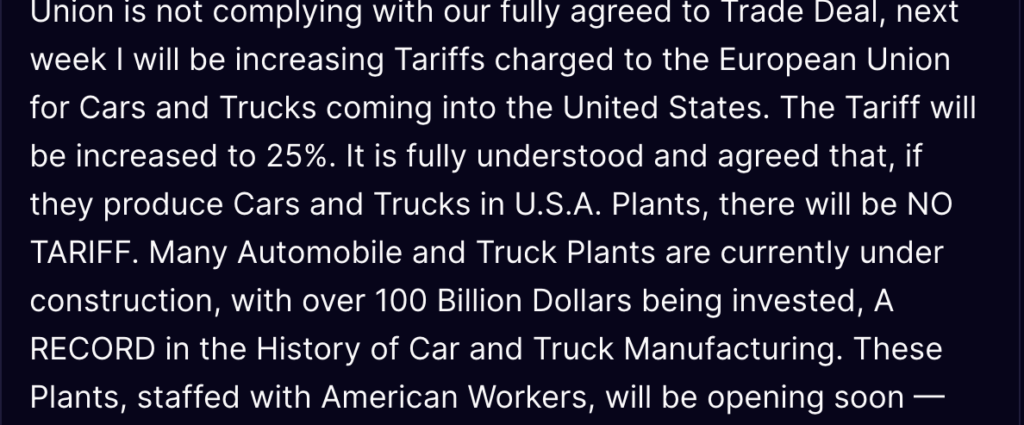
Benzinga examined the prospects for many investors’ favorite stocks over the last week — here’s a look at some of our top stories.

U.S. stocks extended their powerful April rally as cooling inflation concerns, resilient earnings and renewed enthusiasm around artificial intelligence pushed major indexes to fresh record highs. The S&P 500 and Nasdaq Composite posted their strongest monthly gains since 2020, while the Dow Jones Industrial Average also advanced sharply as investors looked past lingering geopolitical risks and focused on strong corporate performance. Market sentiment improved further after softer oil prices eased fears of another inflation spike tied to Middle East tensions.

Technology and semiconductor stocks remained the primary drivers of the rally, with chipmakers benefiting from continued optimism around AI infrastructure spending. Strong results and upbeat commentary from companies such as Alphabet and major semiconductor firms reinforced confidence that demand for AI computing power remains robust despite concerns earlier this year about excessive capital spending.

Even with the strong momentum, investors remain cautious ahead of another wave of earnings reports and key economic data, including the monthly jobs report and further inflation readings. Federal Reserve officials have continued signaling concern about inflation persistence, leading traders to reassess expectations for near-term rate cuts even as equity markets push higher.

Benzinga provides daily reports on the stocks most popular with investors. Here are a few of this past week’s most bullish and bearish posts that are worth another look.

The Bulls

Apple Posts Double Beat In Q2 As Active Installed Base Hits All-Time High — ‘Our Best March Quarter Ever’,” by Adam Eckert, reports that Apple Inc. (NASDAQ:AAPL) delivered a fiscal second-quarter earnings and revenue beat with EPS of $2.01 on revenue of $111.18 billion, both topping Wall Street estimates, as CEO Tim Cook called it the …

Full story available on Benzinga.com

This post was originally published here
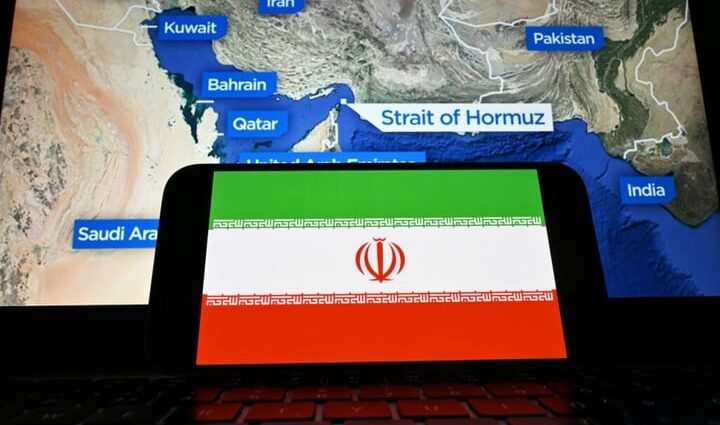
Iran has reportedly lost about $4.8 billion in oil revenue since the U.S. naval blockade took effect on April 13, the Pentagon estimated Friday, as nuclear negotiations remain at a stalemate.

A Pentagon official familiar with the assessment confirmed the figure to The Hill, first reported by Axios.

“We are inflicting a devastating blow to the Iranian regime’s ability to fund terrorism,” acting Pentagon press secretary Joel Valdez said Friday.

Speaking at the White House on Friday about Iran’s latest peace …

Full story available on Benzinga.com

This post was originally published here
Tesla (NASDAQ:TSLA) spent about $4.8 million on Elon Musk‘s security in 2025, up from $2.8 million a year earlier, according to its Thursday Securities and Exchange Commission filing.

Rising Executive Security Costs Reflect Broader Threat Concerns

Security spending for Elon Musk, who is also CEO of SpaceX and xAI, more than doubled through February, rising to $1.3 million from $500,000 during the same period a year earlier.

These figures do not represent the total cost of Musk’s security, as his other companies also contribute to managing the risks associated with his high profile.

Last year, responding to a post, Musk said on X that he “definitely need[s] to enhance security.”

The rise comes as companies face increased security concerns for top executives. In …

Full story available on Benzinga.com

This post was originally published here

Apple beat at $111.2B with a $100B buyback. Meta got hit. Powell’s last press conference brought the most divided Fed since 1992.

$710 billion. That’s what Amazon (NASDAQ:AMZN) , Microsoft (NASDAQ:MSFT), Google (NASDAQ:GOOGL) (NASDAQ:GOOG), and Meta (NASDAQ:META) just told the market they (NYSE:MAGS) will spend on AI CapEx in 2026. Pichai said the quiet part out loud: “We are compute-constrained.”

The S&P closed Friday at a fresh record 7,230 (+0.3%), the Nasdaq at a record 25,114 (+0.9%), both posting their best month since 2020. Apple did most of the Friday lifting after a $111.2B revenue beat. The Dow slipped 153 points to 49,499. WTI cooled to $102.28 (-2.7%) on Iran de-escalation signals, but the national gas average still hit $4.39, up from $4.06 a week ago.

THE RUNDOWN

CapEx › THE $710B SHOCK › Amazon at $200B. Microsoft at $190B. Google at $185B. Meta at $135B. Every one of them raised guidance this week, and Pichai’s “we are compute constrained” line was the most consequential CEO sentence of the quarter. The signal isn’t just the size; it’s the dispersion. Stocks that turn CapEx into revenue today (AAPL, AMZN, GOOGL) ripped. Stocks where the spend is still a 2027 story (META -8.6% Wednesday, MSFT -3.9%) got punished.
APPLE › $111.2B AND A $100B BUYBACK › Apple delivered Q2 revenue of $111.18B vs …

Full story available on Benzinga.com

This post was originally published here

Meta Platforms (NASDAQ:META) acquired Assured Robot Intelligence, a humanoid robotics startup, for an undisclosed sum on Friday, adding the team to its Superintelligence Labs research division as it advances its humanoid robotics ambitions.

The deal positions Meta directly in a rapidly commercializing humanoid robotics sector, where big tech, automakers and well-funded startups are competing to deploy physical AI at scale.

Founders With Deep Robotics Pedigree

ARI co-founder Lerrel Pinto previously taught at New York University and co-founded Fauna Robotics, a startup specializing in developing approachable, small-scale humanoid robots, which Amazon (NASDAQ:AMZN) acquired in March.

Co-founder Xiaolong Wang is an associate professor at UC San Diego and was previously a researcher at Nvidia (NASDAQ:NVDA).

Meta Superintelligence Labs head Alexandr Wang welcomed the ARI team on X, underscoring the division’s push into physical AI, an area Meta has been building toward for years.

Full story available on Benzinga.com

This post was originally published here

TPG Inc. (NASDAQ:TPG) CEO Jon Winkelried stated that the firm’s performance in Q1 was “particularly notable given the complex macro backdrop.”

“The convergence of AI disruption, private credit stress, and geopolitical conflict has created significant market uncertainty… We’ve delivered some of our best-performing vintages during periods of dislocation,” he said on the Q1 earnings call with analysts.

The CEO added that the firm views the current environment as “an opportunity,” and has “never felt more confident in the positioning of our franchise and our ability to successfully execute on our growth drivers.”

TPG’s fee-related earnings exceeded $1 billion in the last 12 months for the first time, reflecting a 31% annualized growth rate since its initial public offering (IPO).

In credit, the firm raised $4.4 billion, adding commitments from several new partnerships. Winkelried  noted that “While the asset class has been under heightened scrutiny more recently, our credit portfolios are healthy, and we have strong conviction in the long-term growth outlook for our business.”

This post was originally published here

U.S. stocks traded mixed toward the end of trading, with the Dow Jones index falling around 0.1% on Friday.

The Dow traded down 0.09% to 49,608.95 while the NASDAQ surged 1.06% to 25,157.20. The S&P 500 also rose, gaining, 0.50% to 7,245.21.

Leading and Lagging Sectors

Information technology shares jumped by 1.6% on Friday.

In trading on Friday, energy stocks fell by 1.3%.

Top Headline

Chevron Corporation (NYSE:CVX) reported mixed first-quarter results on Friday.

The company posted earnings of $2.2 billion, or $1.11 per share, down from $3.5 billion a year earlier. Adjusted EPS of $1.41 beat the $0.95 estimate, while revenue of $48.61 billion missed the $52.08 billion estimate.

Equities Trading UP
           

  • Esperion Therapeutics Inc (NASDAQ:ESPR) …

Full story available on Benzinga.com

This post was originally published here
Willis Towers Watson PLC (NASDAQ:WTW) posted mixed results for the first quarter on Thursday.

The company posted adjusted EPS of $3.72, beating market estimates of $3.67. The company’s sales came in at $2.412 billion missing expectations of $2.428 billion.

“WTW delivered first quarter results that demonstrate our strong operating discipline and continued progress of our strategy,” said Carl Hess, WTW’s Chief Executive Officer. “Our ongoing focus on enhancing efficiency drove margin expansion and significant EPS growth, despite a more challenging global market that created near-term headwinds to organic growth. Our investments in talent, AI and innovation to accelerate performance continue driving client value, and we remain confident in delivering our full-year commitments.”

Willis …

Full story available on Benzinga.com

This post was originally published here

FMC Corp (NYSE:FMC) reported better-than-expected second-quarter financial results and reaffirmed its FY2026 guidance, after the closing bell on Wednesday.

FMC reported quarterly losses of 2 cents per share which beat the analyst consensus estimate of losses of 33 cents per share. The company reported quarterly sales of $758.600 million which beat the analyst consensus estimate of $744.406 million.

FMC affirmed its FY2026 adjusted EPS guidance of $1.63-$1.89 and sales guidance of $3.600 billion-$3.800 billion.

FMC shares fell 4.2% to trade at $14.71 on Friday.

These analysts made changes to their price targets on …

Full story available on Benzinga.com

This post was originally published here

T Rowe Price Group Inc (NASDAQ:TROW) reported better-than-expected earnings for the first quarter on Thursday.

The company posted quarterly earnings of $2.52 per share which beat the analyst consensus estimate of $2.35 per share. The company reported quarterly sales of $1.857 billion which missed the analyst consensus estimate of $1.858 billion.

T. Rowe Price shares rose 0.6% to trade at $103.50 on Friday.

These analysts made changes to their price targets on T. Rowe Price following earnings announcement.

  • Evercore ISI Group analyst Glenn Schorr maintained the stock with an In-Line rating and raised the price target …

Full story available on Benzinga.com

This post was originally published here

International Paper Co (NYSE:IP) on Thursday reported mixed results for the first quarter.

The company posted quarterly earnings of 15 cents per share which beat the analyst consensus estimate of 14 cents per share. The company reported quarterly sales of $5.970 billion which missed the analyst consensus estimate of $6.014 billion.

“This quarter, we delivered meaningful progress across the business. In North America, our commercial actions are gaining traction and helping us outgrow the market, while we advance cost-out efforts and make solid gains in mill and box plant productivity. In EMEA, we’re accelerating commercial and cost initiatives while a small core team is focusing on the planned separation,” said …

Full story available on Benzinga.com

This post was originally published here

Clorox Corporation (NYSE:CLX) posted upbeat third-quarter results and updated full-year guidance on Thursday.

Clorox reported third-quarter revenue of $1.67 billion, flat versus the same period year-over-year. Organic sales were down 1% year-over-year in the quarter.

The company’s revenue total beat a Street consensus estimate of $1.667 billion, according to data from Benzinga Pro. Clorox reported third-quarter earnings per share of $1.64, beating a Street consensus estimate of $1.55.

“Our third-quarter results were mixed, with continued momentum in some parts of our portfolio and slower-than-anticipated market share recovery in others,” Clorox CEO Linda Rendle said.

Updated guidance for Clorox calls for net sales to be down 6% year-over-year in fiscal 2026. The company lowered its adjusted earnings per share guidance for the full fiscal year …

Full story available on Benzinga.com

This post was originally published here
Wall Street opened May with a show of strength on Friday, pushing the S&P 500 and Nasdaq Composite to fresh all-time highs even as the U.S.-Iran conflict reached a critical legal and political inflection point, oil prices stayed elevated above $100 a barrel, and the global economic picture remained clouded by war and uncertainty.

The S&P 500 gained 0.29% to close at 7,230.12, while the Nasdaq Composite surged 0.89% to 25,114.44, both setting closing records. The Dow Jones Industrial Average was the only major index to finish in the red, slipping 152.87 points, or 0.31%, to settle at 49,499.27.  The Russell 2000 small-cap index rose 0.46%, closing at 2,812.82, just short of a 52-week high. 

The day’s standout mover was Apple, which gave the broader market its footing. Shares jumped more than 3% after the iPhone maker posted better-than-expected quarterly results, reinforcing investor confidence in the AI demand boom that has driven much of this year’s rally.  The strong print capped a week of mixed but broadly positive Magnificent Seven earnings, with Alphabet and Tesla joining Apple as outperformers, while Nvidia and Meta ended the week lower.

One theme that sharpened this week: markets are rewarding AI spending that shows near-term returns — as seen with Alphabet — and punishing spending without clear payoff, a dynamic that weighed on Meta Platforms after the company raised its capital expenditure guidance without convincing investors the dollars would translate quickly into growth. 

On the energy side, Brent crude settled at $108.17 a barrel, down about 2% on the day, after reports emerged that Iran sent a new peace proposal through Pakistani mediators. But President Donald Trump rejected the offer, saying he was “not satisfied,” signaling the conflict and its pressure on global oil supplies is far from over. 

Exxon Mobil and Chevron both beat earnings estimates but missed on revenue, as stymied oil production and deliveries held up behind the closed Strait of Hormuz weighed on energy sales.  Exxon CEO Darren Woods told investors to expect oil prices to climb further as the market absorbs the full impact of the Iran war. 

The Iran conflict added a new layer of political drama to Friday’s session. President Trump told Congress that hostilities with Iran “have terminated” — a claim that came exactly 60 days after the conflict began on February 28, the deadline set by the War Powers Resolution of 1973 for the president to seek congressional authorization for military force. Trump argued that a ceasefire in place since April 7 effectively ended the fighting, and said he considered the law itself unconstitutional.  Senator Susan Collins of Maine broke with fellow Republicans to vote for a war powers resolution to end U.S. hostilities, citing the 60-day deadline as a legal requirement, not a suggestion. 

For everyday Americans, the war’s economic toll is most visible at the gas pump. California drivers are paying an average of $6.01 per gallon — the highest in the nation and a 30% increase since the U.S. and Israel launched the war against Iran in late February. 

Roblox was among Friday’s notable losers, cratering 17% after the company slashed its full-year guidance, blaming friction from new age verification and safety protocols that have slowed user growth and social engagement on the platform. 

On the macro front, the VIX volatility index settled below 17, a nearly two-week low, suggesting investors continue to look past geopolitical tension and high energy costs. The S&P 500 and Nasdaq posted their best monthly performances since 2020 for April, with the broader market gaining roughly 10% for the month. 

Looking ahead, next week brings April nonfarm payrolls and a fresh round of major earnings, headlined by Palantir, Advanced Micro Devices, and Arm Holdings.

JBizNews Desk.

© JBizNews.com. All rights reserved. This article is original reporting by JBizNews Desk. Unauthorized reproduction or redistribution is strictly prohibited.

MENLO PARK, Calif. — Meta Platforms reported record financial results for the first quarter, posting $56.3 billion in revenue and $26.77 billion in net income, but the company’s aggressive push into artificial intelligence — coupled with sweeping job cuts — triggered investor concern and sent shares lower in after-hours trading.

Revenue rose 33% year over year, marking Meta’s fastest growth since 2021 and exceeding analyst expectations. Adjusted earnings per share came in at $7.31, while diluted EPS reached $10.44, reflecting strong underlying profitability across its advertising-driven business.

However, a significant portion of those profits was driven by a one-time tax benefit tied to recent federal legislation, which added approximately $8 billion to net income. Excluding that adjustment, earnings were materially lower, highlighting the underlying cost pressures associated with Meta’s expanding investment strategy.

Susan Li, Meta’s Chief Financial Officer, emphasized that the company’s increased spending reflects “higher component pricing and additional data center costs” required to support long-term AI capacity, as Meta raised its 2026 capital expenditure outlook to between $125 billion and $145 billion.

That surge in spending is being partially offset by workforce reductions. Meta confirmed it is cutting approximately 8,000 jobs — about 10% of its global workforce — with layoffs set to take effect in May. The company is also eliminating 6,000 previously planned hires, signaling a decisive shift in how it allocates human and financial resources.

The layoffs follow multiple rounds of cuts earlier in the year, as Meta restructures around automation and AI-driven efficiencies across divisions including Reality Labs, recruiting, and core platform operations.

At the same time, the company reported a notable shift in user trends. Daily active users across Meta’s family of apps declined sequentially to 3.56 billion, marking the first drop in its history. Executives attributed the decline in part to geopolitical disruptions, including internet restrictions linked to the ongoing conflict in Iran.

Despite the turbulence, Meta reaffirmed its outlook, guiding second-quarter revenue between $58 billion and $61 billion and maintaining full-year expense projections of up to $169 billion, while committing that operating income will exceed 2025 levels.

The quarter highlights a broader transformation underway across the technology sector. Companies are generating record revenues and profits even as they reduce headcount — redirecting resources toward artificial intelligence infrastructure at an unprecedented scale.

Across Alphabet, Microsoft, Amazon, and Meta, total AI-related capital spending is expected to exceed $600 billion in 2026, reflecting one of the largest coordinated investment cycles in modern corporate history.

For investors, the key question is no longer whether AI will reshape the economy — but how quickly these massive investments will translate into sustainable returns.

Meta’s results make clear that the transition is already underway — and that the cost of staying competitive in the AI era is rising just as rapidly as the opportunity.

JBizNews Desk

U.S. equities extended their record run on Friday as Apple Inc.’s (NASDAQ:AAPL) blowout second-quarter earnings powered a broad-based technology rally, lifting the S&P 500 and Nasdaq 100 to fresh all-time highs.

Crude oil sank more than 3% as Iran routed a fresh Hormuz reopening proposal through Pakistani mediators.

President Donald Trump announced he is increasing tariffs on European cars and trucks coming into United States to 25%.

Across U.S. equity markets by midday Friday, gains were broad-based but tilted toward Big Tech. The S&P 500 advanced 0.7% to 7,262, while the Dow Jones Industrial Average added 65 points or 0.1% to 49,729.

The Nasdaq 100 rose 1.1% to 27,743, with Apple’s 5.1% surge lifting the broader complex.

Within other Magnificent Seven stocks, Microsoft Corp. (NASDAQ:MSFT) climbed 2.1%, Amazon.com Inc. (NASDAQ:AMZN) rose 1.9%, Tesla Inc. (NASDAQ:TSLA) gained 3.6%, while Nvidia Corp. (NASDAQ:NVDA) and Alphabet Inc. (NASDAQ:GOOGL) edged 0.2% lower.

The Russell 2000 added 0.3% to 2,807.

Friday’s Performance In Major US Indices

Index Last % Change
S&P 500 7,262.62 +0.7%
Dow Jones 49,729 +0.1%
Nasdaq 100 27,743 +1.1%
Russell 2000 2,807 +0.3%
Updated by 12:00 PM ET

According to the Benzinga Pro platform:

  • The Vanguard S&P 500 ETF (NYSE:VOO) rose 0.7%.
  • The SPDR Dow Jones Industrial Average ETF Trust (NYSE:DIA) ticked 0.1% higher.
  • The Invesco QQQ Trust (NASDAQ:QQQ) climbed 1.1%.
  • The iShares Russell 2000 ETF (NYSE:IWM) added 0.3%.

Apple Blowout Lifts Tech

The Technology Select Sector SPDR Fund (NYSE:XLK) led S&P 500 sectors with a 1.5% gain, followed by the Consumer Discretionary Select Sector SPDR Fund (NYSE:XLY) up 1.0%.

The clear laggard was the Energy Select Sector …

Full story available on Benzinga.com

This post was originally published here

Elon Musk’s SpaceX is due to fly a Falcon 9 rocket later today from Cape Canaveral, sending 29 Starlink satellites into low-Earth orbit.

The launch comes just weeks before the company’s IPO roadshow is expected to open, with bettors pricing in what may become the largest public offering in history.

Liftoff for the Starlink 10-38 mission is targeted for 1:35 p.m. ET, with a backup window stretching until 5:33 p.m. The Falcon 9 booster will land on the drone ship A Shortfall of Gravitas hundreds of miles downrange.

Inside “Project Apex”

SpaceX held a three-day analyst meeting last week as part of preparations for the offering, which Reuters has reported is internally codenamed Project Apex.

Morgan Stanley, Goldman Sachs, Bank of America, Citi and JPMorgan are leading the deal as active bookrunners, with a $75 billion raise targeted at …

Full story available on Benzinga.com

This post was originally published here

On Friday, Ensign Group (NASDAQ:ENSG) discussed first-quarter financial results during its earnings call. The full transcript is provided below.

This content is powered by Benzinga APIs. For comprehensive financial data and transcripts, visit https://www.benzinga.com/apis/.

The full earnings call is available at https://events.q4inc.com/attendee/736338497

Summary

Ensign Group reported strong financial performance with a Q1 revenue increase of 18.4% and raised its annual 2026 earnings guidance to $7.48-$7.62 per diluted share.

The company highlighted record occupancy rates and growth in skilled nursing operations, with consistent demand despite concerns about managed care volumes.

Ensign Group has acquired 22 new operations, primarily in Texas, and expects continued growth supported by demographic trends and strategic acquisitions.

Operational excellence was demonstrated by improved clinical outcomes and low turnover rates, with 85% of operations achieving a four or five-star quality rating.

Management emphasized the company’s decentralized model and strong local leadership as key drivers of its success, with a focus on clinical excellence and community trust.

Full Transcript

OPERATOR

Our earnings press release yesterday and it is available on the Investor Relations section of our website at ensigngroup.net a replay of this call will also be available on our website until 5pm Pacific on May 29, 2026. We want to remind anyone that may be listening to a replay of this call that all the statements made are as of today May 1, 2026 and these statements have not been or will be updated subsequent to today’s call. Also, any forward looking statements made today are based on management’s current expectations, assumptions and beliefs about our business and the environment in which we operate. These statements are subject to risks and uncertainties that could cause our actual results to materially differ from those expressed or implied on today’s call. Listeners should not place undue reliance on forward looking statements and are encouraged to review our SEC filings for a more complete discussion of factors that could impact our results. Except as required by Federal securities laws, Ensign and its independent subsidiaries do not undertake to publicly update or revise any forward looking statements where changes arise as a result of new information, future events, changing circumstances or for any other reason. In addition, the Ensign Group, Inc. Is a holding company with no direct operating assets, employees or revenues. Certain of our independent subsidiaries, collectively referred to as the Service center, provide accounting, payroll, human resources, information technology, legal risk management and other services to the other independent subsidiaries through contractual relationships. In addition, our Captive Insurance subsidiary, which we refer to as the Insurance Captive, provides certain claims made coverage to our operating companies for general and professional liability as well as for workers compensation insurance liabilities. Ensign also owns Standard Bearer Healthcare reit, which is a captive real estate investment trust that invests in healthcare properties and enters into lease agreements with certain independent subsidiaries of Ensign, as well as third party tenants that are unaffiliated with the Ensign Group. The words Ensign, Co. We, our, and us refer to the Ensign Group, Inc. And its consolidated subsidiaries. All of our independent subsidiaries, the Service Center, Standard Bearer Healthcare REIT and the Insurance Captive are operated by separate, independent companies that have their own management, employees and assets. References herein to the consolidated company and its assets and activities, as well as the use of the words we, us, our and similar terms are not meant to imply, nor should it be construed as meaning, that the Ensign Group has direct operating assets, employees or revenue or that any of the subsidiaries are operated by the Ensign Group. Also, we supplement our GAAP reporting with non GAAP metrics. When viewed together with our GAAP results, we believe that these measures can provide a more complete understanding of our business, but they should not be relied upon to the exclusion of GAAP reports. A GAAP to Non-GAAP Reconciliation is available in yesterday’s press release and is available in our Form 10Q and with that I’ll turn the call over to Barry Bourke, our CEO.

Barry Bourke (Chief Executive Officer)

Barry, Our local leaders and their teams continue to be an example of excellence in healthcare services as they earn the trust of patients, families and their local healthcare communities through high quality outcomes. As each operation solidifies its reputation respective markets, they’re not only seeing more patients, but they’re also being entrusted to care for increasingly complex cases, including a larger share of Medicare managed care and other skilled patients. This is only possible because of the extraordinary clinical outcomes achieved by our dedicated and talented caregivers. As we’ve said many times, our consistent financial performance is a direct reflection of a relentless patient focused culture, one that empowers our frontline teams to deliver exceptional care in a family like environment where people genuinely care about one another. On the census front, our same store and transitioning occupancy reached new record highs during the quarter of 84.3% and 85.1% respectively. On the skilled mix front, our same store and transitioning operations, skilled revenue and days increased by 9.6% and 5.1% respectively over the prior year quarter and Medicare revenue increased by 9.8% and 9.2% respectively. We also wanted to comment on some of the recent noise around managed care volumes. What we are seeing in Ensign affiliated operations does not support the concern of a broad based slowdown in skilled nursing demand. While hospital and managed care volumes may ebb and flow as patients move through the system, that volatility tends to normalize for us, resulting in consistently strong occupancy and skilled mix trends as demonstrated by our current and recent quarter results. In fact, between Q4 and Q1 we saw growth across all skilled payers. Our same store and transitioning managed care and Medicare census increased sequentially by 6.2% and 8.3% respectively. The primary driver of these improvements continues to be the expanding trust from the communities we serve earned through consistent high quality outcomes. Likewise, regarding commentary around increased clinical reviews and heightened scrutiny of post acute utilization, this is not new. Our experience over many years is that this dynamic refines demand rather than reduces it. Our admission trends have remained consistently strong as patient acuity continues to rise and payers look to move patients efficiently to lower cost settings. We have not seen any meaningful system wide reduction in admissions or skilled mix. The patients who truly need skilled nursing are still coming we’re simply seeing a continued shift towards higher acuity admissions which plays directly into our strengths. We have built our model around being the provider of choice in our local markets through strong clinical capabilities, deep hospital relationships and the ability to care for more complex patient types. As payers become more disciplined, that does not reduce our volume. In fact, in many cases it shifts volumes, more specifically higher acuity volume towards operators who can deliver outcomes. It is also important to remember that Ensign’s model is highly diversified across many geographies, payers, referral sources and local community partners. We are not dependent on any single payer region or utilization trend. Even when one plan tightens in a specific market, we have consistently offset that through other market share gains, stronger referral relationships, higher acuity admissions, and growth across other channels. Our clinical leaders also continue to drive outstanding outcomes, which is particularly impressive given our growth over the past several years. According to the most recently published CMS data, same store affiliated facilities outperformed their peers in annual survey results by 22% at the state level and 31% at the county level. This is especially notable given that many of these facilities were one or two star at acquisition. Additionally, our same store operations outperformed industry peers in five star quality measures by 24% nationally and 20% at a state level. In fact, we ended the quarter with 85% of all of our operations at four or five star quality measures. These results reinforce our position as the provider of choice in our markets and demonstrate our ability to create long term value through sustained clinical excellence. This clinical strength depends on attracting and retaining exceptional talent. We are encouraged by the depth of talent continuing to join our organization. On the retention side, we’re seeing improvements in turnover, stable wage growth and reduced reliance on agency staffing. Even with increased occupancy, we are especially proud of the exceptionally low turnover among our directors of nursing which has declined by 32% over the past two years. This level of leadership stability is a key driver of consistent high quality care. In addition, we continue to acquire new operations with significant long term upside and expect to maintain a healthy pace of growth. Since 2024, we have successfully sourced, underwritten and closed and transitioned 99 new operations across several markets, many of which are already performing at or above expectations. We also continue to benefit from powerful demographic tailwinds which we expect to further support census momentum that we are seeing across our portfolio. While we’re pleased with our current record same store occupancy, we are equally excited about the remaining organic growth opportunity at 84% occupancy we still have meaningful Runway with many of our most mature operations consistently achieving occupancy rates in the mid 90% range. This embedded growth remains one of the most compelling drivers of our long term performance. Due to the strength of the first quarter and the acquisitions we announced yesterday, we are increasing our annual 2026 earnings guidance to $7.48 to $7.62 per diluted share, up from our original guidance of $7.41 to $7.61. We are also increasing our annual revenue guidance to 5.81 billion to to 5.86 billion, up from 5.77 billion to 5.84 billion. The midpoint of our earnings guidance represents a 15% increase over 2025 and 37% growth over 2024. We remain highly confident in 2026 and expect our local teams to continue executing, innovating and integrating new operations while delivering strong results. Next, I’ll ask Chad to add some additional insights regarding our recent growth.

Chad

Chad thank you Barry. During the quarter and since, we accelerated our growth by adding 22 new operations including 21 real estate assets, bringing the number of operations acquired during 2025 and since to 71. These recent additions include 20 in Texas, one in Arizona and one in Wisconsin. In total, we added 2,662 new skilled nursing beds, 100 senior living units and 55 independent living units across three states. This growth brings the number of operations in our recently acquired group of operations to 17.4% of our entire portfolio. We were thrilled to complete these acquisitions and to expand our presence in some key markets in each of these states, particularly in Texas. Like in the recent Stonehenge acquisition we closed in Utah. This Texas portfolio is made up of very new, high quality construction and populated and growing metro areas. As we’ve discussed in our recent past, in certain strategic situations paying higher prices can be justified for performing assets that have newer physical plants. And while some of those deals may take a bit longer to generate the returns we expect, we’ve seen these deals pay off over time as our leaders implement the proper adjustments to key clinical and financial systems. Along with establishing a culture of ownership and accountability, we continue to learn from and improve our transition process and believe that those lessons are showing through in the performance of our recently acquired acquisitions. In particular, as we continue to scale, we have leadership spread across many mature markets enhancing ability to to make larger deals smaller by breaking them into bite sized pieces, transitioning in the traditional ensign way but with a local cluster driven plan that gives each operation the time and attention they deserve. The performance of our newly acquired operations, particularly in the last few years, shows that our building by building approach to transitions works for single operations, small portfolios and larger portfolios, particularly when the larger deal spans several markets and geographies. While we will certainly continue to evaluate consider any deal that’s out there, we are also very comfortable growing the way we’ve grown over the last few quarters with lots of transactions across many states, including small deals to larger portfolios and where it makes sense, higher priced strategic assets. As we look at the current pipeline, we continue to see opportunities that include everything from larger portfolios, landlords looking to replace current tenants, nonprofits looking to divest of their post acute assets and a steady flow of traditional onesie twosies. We have several new additions lining up for Q2 and Q3 of 2026 as our local leadership teams and their partners at the Service center work together to source, underwrite and carefully select the right opportunities. We continue to have a lot of success in closing deals with sellers who are not just interested in receiving top dollar. They care deeply about the quality and reputation of the company they select to inherit their legacy and they choose us because they believe in our mission to Dignify post acute Care during the quarter we were pleased to complete the construction of a replacement facility of one of our high performing skilled nursing operations in San Diego County, Grossmont Post Acute in La Mesa, California, which is located next to Sharp Grossmont Hospital, which was housed in an aging building that the landlord decided to replace with a new medical office space. After several years on lots of hard work, we successfully completed the construction and have moved all the patients and staff to a brand new state of the art building while also …

Full story available on Benzinga.com

This post was originally published here

Church & Dwight Co., Inc. (NYSE:CHD) reported first-quarter 2026 results that topped Wall Street estimates on Friday, driven by stronger organic sales growth, margin expansion and continued demand across its consumer portfolio.

The consumer products company posted adjusted earnings of 95 cents per share, beating the consensus estimate of 93 cents. Revenue rose 0.2% year over year to $1.469 billion, ahead of estimates of $1.456 billion.

Organic sales grew 5.0%, above the company’s prior outlook of 3%, supported by volume growth of 5.3% across all three divisions. Domestic organic sales increased 5.4%, while international organic sales rose 3.7%.

Margin Expansion And Profitability

Adjusted gross margin expanded 130 basis points to 46.4%, driven by higher volumes, productivity gains and favorable product mix, partially offset by inflation and tariff costs.

Reported earnings per share were 91 cents, up from 89 cents a year earlier, while adjusted EPS increased 4.4% year over year.

Operating income totaled $291 million, with adjusted operating income of …

Full story available on Benzinga.com

This post was originally published here

On Friday, Xenia Hotels & Resorts (NYSE:XHR) discussed first-quarter financial results during its earnings call. The full transcript is provided below.

This content is powered by Benzinga APIs. For comprehensive financial data and transcripts, visit https://www.benzinga.com/apis/.

Access the full call at https://events.q4inc.com/attendee/934224251

Summary

Xenia Hotels & Resorts reported strong Q1 2026 results, with net income of $19.8 million and adjusted EBITDA RE of $81.4 million, marking a 12% increase from last year.

Same property RevPAR grew by 7.4%, with significant contributions from the Grand Hyatt Scottsdale Resort and broad-based strength across the portfolio.

The company raised its full-year 2026 adjusted EBITDA RE guidance by $6 million to $266 million at the midpoint, reflecting confidence in continued performance.

Capital expenditures for the year are expected between $70 and $80 million, with significant projects completed, including the W Nashville food and beverage reconcepting.

Management highlighted a robust transaction market and potential for acquisitions, while maintaining a balanced approach to capital allocation, including debt reduction and share repurchases.

Full Transcript

Reagan (Moderator)

Good afternoon everyone and thank you for joining the Xenia Hotels & Resorts, Inc. Q1 2026 earnings conference call. My name is Reagan and I’ll be your moderator today. All lines will be muted during the presentation portion of the call with an opportunity for questions and answers at the end. And if you like to ask a question, you may do so by pressing Star one on your telephone keypad. I would now like to pass the conference over to our host, Abdul Martinez, Director of Finance. Please proceed.

Abdul Martinez (Director of Finance)

Thank you Reagan and welcome to Xenia Hotels & Resorts First Quarter 2026 Earnings Call and webcast. I’m here with Marcel Verbas, our Chair and Chief Executive Officer, Barry Bloom, our President and Chief Operating Officer and Atish Shah, our Executive Vice President and Chief Financial Officer. Marcel will begin with a discussion on our performance, Barry will follow with more details on operating trends and capital expenditure projects and Atish will conclude today’s remarks on our balance sheet and outlook. We will then open up the call for Q and A. Before we get started, let me remind everyone that certain statements made on this call are not historical facts and are considered forward looking statements. These statements are subject to numerous risks and uncertainties as described in our annual report on Form 10K and other SEC filings which could cause our actual results to differ materially from those expressed in or implied by our comments. Forward looking statements in the earnings release that we issued this morning along with the comments on this call are made only as of today May 1, 2026 and we undertake no obligation to publicly update any of these forward looking statements as actual events unfold. You can find the reconciliation of non GAAP financial measures to net income and definitions of certain items referred to in our remarks in our first quarter earnings release which is available on the Investor Relations section of our website. The property level information we’ll be speaking about today is on a same property basis for all 30 hotels unless specified otherwise. An archive of this call will be available on our website for 90 days. I will now turn it over to Marcel to get started.

Marcel Verbas (Chair and Chief Executive Officer)

Thanks hello and good afternoon everyone. We are pleased to report strong first quarter 2026 results that exceeded our expectations across all key metrics. Our portfolio delivered exceptional first quarter performance driven by strength in both the group and transient demand segments, especially in the month of March. We also saw highly encouraging results at Grand Hyatt’s Scottsdale Resort as it continues on its path towards stabilization following the completion of its transformative renovation. For the first quarter of 2026 we reported net income of $19.8 million, adjusted EBITDAre of $81.4 million, an increase of nearly 12% to last year, and adjusted FFO per share of $0.63 which was 23.5% higher than the first quarter of 2025. For the first quarter, our same property RevPAR grew 7.4% with occupancy increasing 180 basis points, an average daily rate increasing 4.8% compared to the first quarter of 2025. Additionally, we continue to benefit from strong growth in non rooms revenues as evidenced by our same property total RevPAR for the quarter growing to $370.13 reflecting an increase of 7.2% as compared to the same quarter last year. Food and beverage revenues increased 6.2% on a same property basis reflecting continued growth in banquet and catering revenues as well as our ongoing focus on outlet optimization efforts, while other revenues were up nearly 11% for the quarter. Same property hotel EBITDA for The quarter was $87.8 million, an increase of almost 18% compared to the same period last year. Significant growth in rooms revenues, a large portion of which consisted of rate growth combined with disciplined expense management drove an improvement in same property hotel EBITDA margin from 27% in the first quarter of 2025 to 29.7% this year, an expansion of 270 basis points. At Grand Hyatt Scottsdale Resort, record revenues and hotel EBITDA were achieved for the first quarter as the ramp up of the overall resort continues. The resort has seen successful execution of occupancy driven ramp up plans that have produced significant transient business volumes to supplement the growing base of group demand. These improvements have translated throughout the operation into record food and beverage outlet, spa, recreation, parking and miscellaneous revenues. Expenses have grown at a slower pace as much of the occupancy gains have required relatively limited incremental cost. As a result, the resorts hotel EBITDA margin improved significantly during the first quarter. While Grand Hyatt Scottsdale was a significant driver of our first quarter outperformance, we experienced broad based strength across our portfolio of luxury and upper upscale hotels and resorts. Increased group and transient demand contributed to revar and total RevPAR increases in 15 of our 22 markets. In addition to the Phoenix Scottsdale market, we experienced double digit percentage total revpar growth in Salt Lake City, Birmingham, Portland, Santa Clara, Santa Barbara and Houston which is indicative of the range of markets and demand segments that contributed to our strong performance for the quarter. Our weakest performance for the quarter on a year over year basis were as anticipated as these properties either benefited from one time events last year such as the super bowl in New Orleans and the Presidential inauguration in Washington D.C. or experienced some disruption due to capital projects, specifically Fairmont Pittsburgh and W Nashville. W Nashville also was impacted by several weather events that negatively impacted performance for the quarter. We continue to benefit from our portfolio’s favorable positioning and diversification as it relates to the various demand segments. Group rooms revenues increased in excess of 7% for the quarter as compared to the same period last year, bolstering our performance. Transient rooms revenues also grew approximately 7% for the quarter, primarily driven by extremely strong performance in March as the timing of Easter in early April appeared to compress high levels of corporate transient leisure demand into the month of March. Now turning to capital expenditures, we continue to expect to spend between 70 and 80 million dollars on property improvements during the year. During the first quarter we completed the renovation of the M Club at Marriott Dallas Downtown and the guest room renovation at Fairmont Pittsburgh which was completed as planned with limited disruption on budget and in advance of the NFL draft that took place in Pittsburgh last week. With record attendance on our last couple of earnings calls, we expressed our excitement about the reconcepting of the food and beverage outlets at W Nashville. We are pleased to report that all outlets have opened for business and were completed on time and within budget. The new outlets are tremendous, new amenities for the hotel and initial feedback from customers has been extremely positive. Barry will provide additional details on our capital projects including the Nashville food and beverage reconcepting during his remarks. Looking ahead to the second quarter, we are encouraged by the continuation of the positive momentum our operators are reporting for April. While calendar shifts related to Easter timing and spring breaks contributed to our outstanding results in the month of March, we estimate that April same property RevPAR increased nearly 6% as compared to April 2025. The estimated RevPAR growth of over 10% that our portfolio experienced during the combined months of March and April is a reflection of strong demand in our markets when eliminating the impact of the timing of Easter compared to last year, with our largest resorts benefiting a bit due to safety concerns in Mexico and weather conditions in Hawaii. Turning to our outlook for the remainder of the year, given the Stronger than projected first quarter results, we have raised our full year 2026 adjusted EBITDA RE guidance by $6 million to $266 million at the midpoint. Our guidance for adjusted FFO per share for full year 2026 is now $1.94 at the midpoint this would represent an increase of approximately 10% over 2025. While we are encouraged by our first quarter performance as well as demand trends in April, a significant amount of overall market and geopolitical uncertainty continues to exist as we look ahead to the remainder of the year. As such, we have not changed our outlook for the balance of the year when compared to our previously issued guidance. Atish will walk through all of our current 2026 guidance items in more detail, including our updated views of the anticipated demand lift from one time events such as the FIFA World cup and America 250. Although we have not completed any transactions since the sale of Fairmont Dallas last year, we have significantly improved our portfolio through robust acquisition and disposition activities since our listing in 2015. We continue to evaluate potential transactions with an eye toward further portfolio improvement and sustainable earnings growth in the years ahead. The transaction market and opportunity set appear to be a bit more robust than they have been in the last couple of years and we will continue to evaluate these opportunities while being mindful of our balance sheet and other capital allocation priorities. While the macroeconomic environment remains fluid and uncertain, we continue to believe our portfolio is very well positioned for continued earnings growth. The quality of our luxury and upper upscale hotels and resorts in top 25 and key leisure markets, combined with our experienced operating partners and a favorable supply backdrop for the next several years provide a solid platform for continued outperformance in 2026 and in the years ahead. I will now turn the call over to Barry to provide more details on our first quarter operating results and our capital projects.

Barry Bloom (President and Chief Operating Officer)

Thank you Marcel Good afternoon everyone. For the first quarter our 30 same property portfolio RevPAR was $205.93, an increase of 7.4% as compared to the first quarter in 2025 based on occupancy of 71.4% at an average daily rate of $288.62. Properties achieving double digit Revpar growth as compared to the first quarter of 2025 included Grand Hyatt Scottsdale RevPAR up 46.2% Kimpton Hotel Monaco Salt Lake City 27.2% Andaz Savannah up 16.4% Hyatt Regency Santa Clara up 14.7% Grand Bohemian Hotel Mountain Brook up 13.9% and Kimpton Canary Hotel Santa Barbara up 12%. Growth at these properties was due to a variety of factors including increased citywide demand, stronger leisure demand in drive two markets and one off major events. Properties with softer performance in Q1 this year included Lowe’s New Orleans which hosted the Super bowl in Q1 of 2025 Ritz Carlton Pentagon City, which lapped last year’s presidential inauguration and W Nashville due to poor weather and anticipated disruption. The Jose Andres Food and Beverage Relaunch Looking at each month of the quarter, January RevPAR was $163.59 of 1.4% to January 2025 with occupancy flat and ADR of 1.4%. February RevPAR was $216.11, up 4.8% compared to February 2025 with occupancy down 40 basis points and ADR up 5.4%. March was the strongest month of the quarter across all three metrics with RevPAR of $239.08 up 14.3% compared to March 2025 with occupancy up 540 basis points and ADR up 6.5%. Group business continued to maintain its recent strength during the quarter with group rooms revenue up over 7%, reflecting strength in group business that is expected to continue to improve throughout the rest of the year. Overall for the quarter, group nights were up 2.5% with ADR up 4.4%. Business levels grew for each night of the week during the quarter compared to the first quarter of 2025. Occupancies grew by 210 basis points on weekdays and 110 basis points on weekends with ADR growth of 4.5% on weekdays and 5.3% on weekends. RevPAR on Wednesday nights was up a notable 11% for the quarter. Leisure business during the quarter was consistent across the large resorts in the portfolio with significant increase in leisure business at Grand Hot Scottsdale and Henry C Grand Cypress as well as Strength the Park Hot Aviarra, which lapped a difficult comparison to the first quarter of 2025 at our smaller leisure focused hotels. Leisure business grew significantly at Andaz, Savannah, Royal Palms and Kimpton Canary Hotel Santa Barbara now turning to expenses and profit first quarter same property hotel EBITDA was $87.8 million, an increase of 17.9% driven by a total revenue increase of 7.3% compared to the first quarter of 2025, resulting in 270 basis points of margin improvement. Our operators are now able to better control expenses in a more stable occupancy and a growing rate environment for the 30 same property portfolio. Food and beverage revenues increased 6.2% in the quarter as a result of nearly 11% growth in banquets, while outlet growth declined slightly primarily as a result of outlet closures at W Nashville during the quarter. Other operating department income including parking, spa and golf revenues grew by approximately 13%. Rooms expenses were well controlled, increasing 2.3% on a per occupied room basis while FMB profit margin improved by approximately 150 basis points. Ang grew by approximately 4.5% while sales and marketing expenses remained flat during the quarter. In line with recent trends, the strategies have been refined and focused across the portfolio. Property operations and maintenance expenses grew by just 1.3% due primarily to lower general expenses, while energy expenses across the portfolio grew at over 9% due to significant winter storms which drove higher costs, especially for gas turning to CapEx during the first quarter we invested $15.2 million in portfolio improvements. We completed two projects during the first quarter including the completion of a Guest Stream renovation at Fairmont Pittsburgh and a renovation of the M Club at Marriott Dallas Downtown. More significantly, we reconcepted the food and beverage facilities at W Nashville pursuant to our previously announced agreements with Jose Andres Group, which JAGDO operates, and our licenses to potentially all of the hotel’s food and …

Full story available on Benzinga.com

This post was originally published here
NCS Multistage Holdings Inc. (NASDAQ:NCSM) shares plummeted on Friday, extending a sharp downward trend after the company posted disappointing first-quarter financial results.

The Houston-based oilfield services provider reported quarterly losses of 14 cents per share. This performance marks a significant reversal from the earnings of $1.51 per share recorded during the same period last year.

Sales Figures Fall Short

Top-line results failed to meet Wall Street expectations. The company reported quarterly sales of $45.637 million. This figure missed the analyst consensus estimate of $51.215 million. It also …

Full story available on Benzinga.com

This post was originally published here

MOUNTAIN VIEW, Calif. — Alphabet delivered the strongest quarterly results in its history, reporting $109.9 billion in first-quarter revenue and $62.6 billion in net income, as its artificial intelligence strategy drove explosive growth across Google Cloud and reinforced its dominance in search and digital advertising.

The results easily surpassed Wall Street expectations and sent shares sharply higher, with investors responding to both the scale of the beat and the accelerating momentum in AI-driven services. Revenue rose 22% year over year, marking the company’s 11th consecutive quarter of double-digit growth and its fastest pace since 2022.

Sundar Pichai, Alphabet’s Chief Executive Officer, said the company’s “AI investments and full stack approach are lighting up every part of the business,” pointing to broad-based gains across cloud, search, and subscription services.

The standout performance came from Google Cloud, which generated $20.03 billion in revenue, surging 63% year over year — outpacing key competitors. Even more striking, Alphabet disclosed a contracted cloud backlog exceeding $460 billion, signaling a multiyear pipeline of enterprise demand tied directly to AI infrastructure and services.

Pichai told analysts that enterprise AI solutions have now become the primary growth driver within the cloud division, with adoption of Gemini-based products accelerating rapidly across corporate customers.

Search, long the backbone of Alphabet’s business, also delivered strong results. Revenue from Google Search rose 19%, with executives crediting AI-enhanced search experiences for increasing user engagement and query volume. YouTube advertising revenue reached $9.88 billion, while total paid subscriptions across services such as YouTube Premium and Google One climbed to 350 million.

Alphabet’s ambitions extend well beyond software. The company’s autonomous driving unit, Waymo, surpassed 500,000 fully autonomous rides per week and expanded operations to 11 major U.S. cities, marking a significant milestone in the commercialization of self-driving technology.

To sustain its lead, Alphabet is investing at an unprecedented scale. The company raised its full-year capital expenditure forecast to between $180 billion and $190 billion, with Chief Financial Officer Anat Ashkenazi signaling even higher spending in 2027. Alphabet deployed $35.7 billion in capital expenditures in the first quarter alone, much of it directed toward expanding global data center capacity.

The company’s recent acquisition of cybersecurity firm Wiz will be integrated into Google Cloud, though executives cautioned it will temporarily weigh on margins as investments ramp.

For markets and policymakers alike, Alphabet’s results underscore a defining shift in the global economy: artificial intelligence is no longer a future bet — it is actively reshaping corporate spending, enterprise technology, and competitive dynamics in real time.

With a backlog of nearly half a trillion dollars and accelerating enterprise adoption, Alphabet’s quarter signals that the AI infrastructure race is not slowing — it is intensifying.

JBizNews Desk

Shares of Magnachip Semiconductor Corp (NYSE:MX) climbed Friday. The move follows a volatile week for South Korean chipmaker marked by a sharp post-earnings selloff.

Recovery From Earnings Dip

The stock fell nearly 30% Wednesday after the company issued in-line second-quarter guidance. Magnachip Semiconductor projects second-quarter sales between $44.5 million and $48.5 million. This range sits right against the $46.5 million analyst consensus.

First-quarter results beat expectations. The company reported a loss of 11 cents per share. This outperformed the 22-cent loss predicted by analysts.

Quarterly sales reached $46.208 million, also topping estimatesn, according to Benzinga Pro.

Critical Levels To Watch for …

Full story available on Benzinga.com

This post was originally published here

Newell Brands Inc. (NASDAQ:NWL) shares surged Friday after the company reported a narrower-than-expected first-quarter loss and improving margins, offsetting continued softness in demand.

The consumer products company said pricing discipline and portfolio strength helped it navigate a choppy sales environment.

Quarterly Details

Newell posted an adjusted loss of 5 cents per share, beating analysts’ estimates of a 9-cent loss. Revenue totaled $1.549 billion, down 1.1% year over year but above the consensus estimate of $1.507 billion. Core sales declined 3.5%.

The Home & Commercial Solutions segment reported net sales of $780 million, with core sales down 6.9%. The Learning & Development segment generated $594 million in net sales, …

Full story available on Benzinga.com

This post was originally published here

Eldorado Gold (TSX:ELD) released first-quarter financial results and hosted an earnings call on Friday. Read the complete transcript below.

This transcript is brought to you by Benzinga APIs. For real-time access to our entire catalog, please visit https://www.benzinga.com/apis/ for a consultation.

View the webcast at https://event.choruscall.com/mediaframe/webcast.html?webcastid=VbJHuSmZ

Summary

Eldorado Gold reported a 13% year-over-year decrease in gold production for Q1 2026, with total revenue increasing by 50% to over $532 million due to higher gold prices.

The company is advancing two major projects—Scouries in Greece and Macavena Bay in Saskatchewan—with anticipated production starting in Q3 2026.

Earnings per share from continuing operations increased to 69 cents, with adjusted net earnings at 95 cents per share.

All-in sustaining costs rose due to higher royalty expenses and labor inflation, particularly in Turkey.

CEO George Burns announced his retirement, with Christian Milao set to succeed him, ensuring continuity in leadership.

The company has increased its exploration budget significantly, focusing on high-potential targets at Macavena Bay and other locations.

Capital costs at Scouries have increased by $155 million due to additional workforce requirements for electrical and instrumentation work.

Management remains confident in maintaining operational and financial performance, with a focus on strategic growth and shareholder returns.

Full Transcript

OPERATOR

Thank you for standing by. This is the conference Operator. Welcome to the Eldorado Gold first quarter 2026 results conference call. As a reminder, all participants are in listen only mode and the conference is being recorded. After the presentation, there will be an opportunity to ask questions. To join the question queue, you may press Star then one on your telephone keypad. Should you need assistance during the conference call, you may reach an operator by pressing STAR and zero. I would now like to turn the conference over to Lynette Gould, Vice President, Investor Relations, Communications and External affairs. Please go ahead, Ms. Gould. Thank you Operator and good morning everyone. I’d like to welcome you to our conference call to discuss our first quarter 2026 results. Before we begin, I would like to remind you that we will be making forward looking statements and and referring to non IFRS measures during the call. Please refer to the cautionary statements included in the presentation and the disclosure on non IFRS measures and risk factors in our management’s discussion and analysis. Joining me on the call today we have George Burns, Chief Executive Officer, Christian Milao, President, Paul Fernyhough, Executive Vice President and Chief Financial Officer and Simon Hilley, Executive Vice President and Chief Operating Officer. Our release Yesterday details our first quarter 2026 financial and operating results. The release should be read in conjunction with our Q1 2026 financial statements and management’s discussion and analysis, both of which are available on our website. They have also both been filed on SEDAR plus and NGIRs. All dollar figures discussed today are US Dollars unless otherwise stated. We will be speaking to the slides that accompany this webcast which can be downloaded from our website. After the prepared remarks, we will open the call for Q and A at which time we will invite analysts to queue for questions. I will now turn the call over to George.

George Burns (Chief Executive Officer)

Thank you Lynette and good morning everyone. I’ll begin with an overview of our first quarter and provide brief updates on Makavena Bay and Skouries. I’ll then hand the call over to Paul to review the financials and then to Simon with an update on our operations. Following that, Christian will make some concluding remarks before opening up the call for questions. We’ve had a very busy and solid start to 2026 with performance in the quarter tracking in line with our expectations and full year guidance. This year production is back half weighted as two mines come into production and several other operations deliver stronger results later in the year. 2026 is an important year for El Dorado as we continue to advance two high quality growth projects Scurias in Greece and Maca Bay in Saskatchewan. Maca Bay is nearing first concentrate production followed by first concentrate at Skouries in Q3. Once in operation, both assets will meaningfully enhance our production profile and cash flow generation starting in the third quarter of 2026. To provide greater transparency as these polymetallic assets come online, we plan to enhance our disclosure by reporting copper assets on a dollar per pound co product basis for Skouries and Mac Bay. Before getting into the project updates, I want to note that as previously announced, I plan to retire as CEO later this year as we ramp up Skouries towards commercial production. Christian, who joined us last September, has been deeply involved across the business and is set up to seamlessly step into the role at that time. I’m pleased to remain on the board to support continuity and Dan Meyerson has joined the board as Deputy Chair providing important continuity from the foreign side. I want to take a moment to recognize the achievement of our colleagues at the Mock. In March they received the TSM Gold Leadership Award, a special recognition for mining operations who achieved Level aaa, the highest possible rating across all applicable TSM performance indicators. This recognition reflects the dedication of our employees and our unwavering commitment to responsible mining in Quebec and across our global operations where TSM protocols are applied as a matter of practice under El Dorado’s Sustainability Integrated Management System. Well done Lamaque team. The foreign transaction represents a significant milestone for Eldorado at Mac Bay. We have now begun integration activities and are working closely with the existing team as the project nears first concentrate production. Following the close, members of our management team visited Saskatchewan and the macpay Project to welcome the team to El Dorado, see progress firsthand and engage with our stakeholders in Saskatchewan. What stood out was the enthusiasm of our new team, the capabilities supporting the operation and the clear focus on safety, collaboration and responsible execution. Now that Mac Bay is part of our portfolio, we expect to provide the following with our second quarter results, Mac Bay production and cost outlook for 2026 timing for an expansion study and progress on a study for potential lead Silver circuit Following the close of the transaction, we have already approved approximately $17 million spend on exploration for the remainder of 2026, reflecting the target rich environment in our view that continued exploration success has the potential to drive meaningful long term value. The quality of Mac Bay and its exploration potential reinforce our confidence that it will become a long term cornerstone asset within our portfolio, delivering near term growth while adding copper exposure in a stable top three global mining friendly jurisdiction. Turning to Skouries in Greece on slide 6. Construction activities continue to progress well across all major areas. The team remains focused on disciplined safe execution as we move through the final construction phase at the end of the quarter. Overall project progress was approximately 94%, steadily advancing towards first concentrate production as execution activities have progressed and the project advances toward construction completion on schedule, we have updated our forecast to complete and have revised our total project capital to $1.315 billion, an increase of approximately 155 million from the prior estimate. The primary driver was an increase related to construction workforce levels to support sustained final construction momentum. Total workforce has increased from 2350 in Miguel 1 to approximately 3200 which includes about 490 in operations. Advancing scurries in safe production in the current metal environment is a key driver of value creation. This incremental capital reflects our continued focus on maintaining momentum and towards first and first concentrate production. Accelerated operational capital at securities is now expected to be approximately 260 million, reflecting an incremental 82 million to expand pre commercial mining and site works. This supports open pit mining and advancing underground development ahead of first production. We’re well positioned for startup with more than 2.8 million tons of horse stockpiled which provides the entire planned mill tonnage for 2026 overall. This investment supports a smoother ramp up into production. On the process plant. Work remains focused on final mechanical installations, piping cable tray cabling as we prepare for first or with respect to the damage cyclone feed pump variable speed drives. Temporary replacement equipment is expected to be installed in Q2 high and medium voltage electrical distribution for multiple substations is progressing. The process control building structure is complete and electrical rooms are being progressively handed over to commissioning on the power line and substations. The 150kV power line and primary substation continue to advance to start up in Q3 ahead of grinding area or commissioning. Final electrical regulatory authority approval will require completion of inspection and energization protocols. Power line construction is progressing with the transmission tower assembly complete and pilot wire pulling now underway along the transmission line. The primary substation is advancing through ongoing assembly of the substation structures and control building structural completion. Pre commissioning is now underway starting with the substations that feed the process plant, filter plant, the primary crusher. While commissioning continues across fire, utility and process water systems in parallel. We’ve begun pre commissioning and flotation …

Full story available on Benzinga.com

This post was originally published here

Eldorado Gold (NYSE:EGO) held its first-quarter earnings conference call on Friday. Below is the complete transcript from the call.

This transcript is brought to you by Benzinga APIs. For real-time access to our entire catalog, please visit https://www.benzinga.com/apis/ for a consultation.

The full earnings call is available at https://event.choruscall.com/mediaframe/webcast.html?webcastid=VbJHuSmZ

Summary

Eldorado Gold reported a 13% decrease in gold production for Q1 2026 year-over-year, with total revenue exceeding $532 million due to significantly higher gold prices.

The company is advancing two major growth projects: Scouries in Greece and Macavena Bay in Saskatchewan, expecting both to enhance production and cash flow in the second half of 2026.

A 155 million USD increase in capital expenditure for Scouries was announced, primarily due to additional labor costs associated with completing electrical and instrumentation work.

Eldorado Gold expects to commence copper production from Macavena Bay and Scouries, diversifying its portfolio with exposure to copper in stable jurisdictions.

George Burns announced his retirement as CEO, with Christian Milao set to take over, ensuring leadership continuity as the company transitions through key operational milestones.

Full Transcript

George Burns (Chief Executive Officer)

Thank you Lynette and good morning everyone. I’ll begin with an overview of our first quarter and provide brief updates on Makavena Bay and Scourias. I’ll then hand the call over to Paul to review the financials and then to Simon with an update on our operations. Following that, Christian will make some concluding remarks before opening up the call for questions. We’ve had a very busy and solid start to 2026 with performance in the quarter tracking in line with our expectations and full year guidance. This year production is back half weighted as two mines come into production and several other operations deliver stronger results later in the year. 2026 is an important year for El Dorado as we continue to advance two high quality growth projects Scurias in Greece and Macavena Bay in Saskatchewan. Macaquena Bay is nearing first concentrate production followed by first concentrate at Skouries in Q3. Once in operation, both assets will meaningfully enhance our production profile and cash flow generation starting in the third quarter of 2026. To provide greater transparency as these polymetallic assets come online, we plan to enhance our disclosure by reporting copper assets on a dollar per pound co product basis for Skouries and Macaquena Bay. Before getting into the project updates, I want to note that as previously announced, I plan to retire as CEO later this year as we ramp up Skouries towards commercial production. Christian, who joined us last September, has been deeply involved across the business and is set up to seamlessly step into the role at that time. I’m pleased to remain on the board to support continuity and Dan Meyerson has joined the board as Deputy Chair providing important continuity from the foreign side. I want to take a moment to recognize the achievement of our colleagues at the Macaquena. In March they received the TSM Gold Leadership Award, a special recognition for mining operations who achieved Level aaa, the highest possible rating across all applicable TSM performance indicators. This recognition reflects the dedication of our employees and our unwavering commitment to responsible mining in Quebec and across our global operations where TSM protocols are applied as a matter of practice under El Dorado’s Sustainability Integrated Management System. Well done Macaquena team. The foreign transaction represents a significant milestone for Eldorado at Macaquena Bay. We have now begun integration activities and are working closely with the existing team as the project nears first concentrate production. Following the close, members of our management team visited Saskatchewan and the macpay Project to welcome the team to El Dorado, see progress firsthand and engage with our stakeholders in Saskatchewan. What stood out was the enthusiasm of our new team, the capabilities supporting the operation and the clear focus on safety, collaboration and responsible execution. Now that Macaquena Bay is part of our portfolio, we expect to provide the following with our second quarter results, Macaquena Bay production and cost outlook for 2026 timing for an expansion study and progress on a study for potential lead Silver circuit Following the close of the transaction, we have already approved approximately $17 million spend on exploration for the remainder of 2026, reflecting the target rich environment in our view that continued exploration success has the potential to drive meaningful long term value. The quality of Macaquena Bay and its exploration potential reinforce our confidence that it will become a long term cornerstone asset within our portfolio, delivering near term growth while adding copper exposure in a stable top three global mining friendly jurisdiction. Turning to Scurries in Greece on slide 6. Construction activities continue to progress well across all major areas. The team remains focused on disciplined safe execution as we move through the final construction phase at the end of the quarter. Overall project progress was approximately 94%, steadily advancing towards first concentrate production as execution activities have progressed and the project advances toward construction completion on schedule, we have updated our forecast to complete and have revised our total project capital to $1.315 billion, an increase of approximately 155 million from the prior estimate. The primary driver was an increase related to construction workforce levels to support sustained final construction momentum. Total workforce has increased from 2350 in Miguel 1 to approximately 3200 which includes about 490 in operations. Advancing scurries in safe production in the current metal environment is a key driver of value creation. This incremental capital reflects our continued focus on maintaining momentum and towards first and first concentrate production. Accelerated operational capital at securities is now expected to be approximately 260 million, reflecting an incremental 82 million to expand pre commercial mining and site works. This supports open pit mining and advancing underground development ahead of first production. We’re well positioned for startup with more than 2.8 million tons of horse stockpiled which provides the entire planned mill tonnage for 2026 overall. This investment supports a smoother ramp up into production. On the process plant. Work remains focused on final mechanical installations, piping cable tray cabling as we prepare for first or with respect to the damage cyclone feed pump variable speed drives. Temporary replacement equipment is expected to be installed in Q2 high and medium voltage electrical distribution for multiple substations is progressing. The process control building structure is complete and electrical rooms are being progressively handed over to commissioning on the power line and substations. The 150kV power line and primary substation continue to advance to start up in Q3 ahead of grinding area or commissioning. Final electrical regulatory authority approval will require completion of inspection and energization protocols. Power line construction is progressing with the transmission tower assembly complete and pilot wire pulling now underway along the transmission line. The primary substation is advancing through ongoing assembly of the substation structures and control building structural completion. Pre commissioning is now underway starting with the substations that feed the process plant, filter plant, the primary crusher. While commissioning continues across fire, utility and process water systems in parallel. We’ve begun pre commissioning and flotation focused on air and instrumentation as well as a sag and ball mill, instrumentation, electrical and control systems and we started wet commissioning in the process water pumps and tailing thickeners together, scouries at Macavena Bay represent a step change for Eldorado in scale and portfolio diversification across jurisdictions and metals. With that, I’ll turn it over to Paul to review the financial results.

Paul Fernyhough (Executive Vice President and Chief Financial Officer)

Thank you, George and good morning. I’ll start on slide 7. In Q1 2026, we produced 100,358 ounces of gold, a 13% decrease year over year, primarily reflecting lower tonnes at stacked grades at Kisladag and lower grades at Efemçukuru, partially offset by higher grades and improved recoveries at Olympias and Lamaque. Gold sales totalled 100,619 ounces ounces at an average realized gold price of $4,891 per ounce, generating total revenue in excess of $532 million, a 50% increase from $355 million in the comparable quarter last year, driven by significantly higher gold prices. Production costs were $188 million, up from just over $148 million, driven primarily by royalty expense in Turkey and Greece, which accounted for approximately 70% of the increase, with the balance largely attributable to labour inflation in Turkey and incremental labour and contractor costs associated with continued development of the Lamaque complex. Royalty expense increased to $50 million from $22 million last year, reflecting higher realized gold …

Full story available on Benzinga.com

This post was originally published here
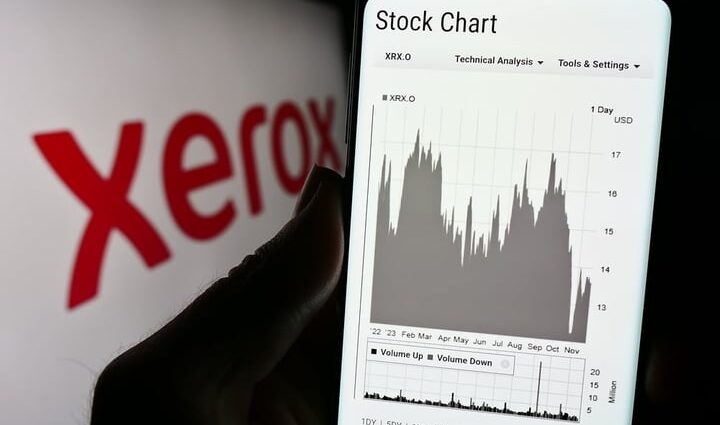
Wabash National (NYSE:WNC) released first-quarter financial results and hosted an earnings call on Friday. Read the complete transcript below.

This content is powered by Benzinga APIs. For comprehensive financial data and transcripts, visit https://www.benzinga.com/apis/.

The full earnings call is available at https://events.q4inc.com/attendee/310958583

Summary

Wabash National reported first-quarter 2026 revenue of $303 million, slightly below guidance, with an adjusted non-GAAP EBITDA of negative $38 million due to lower production volumes.

The company is focusing on strategic initiatives such as digital enablement, parts and services expansion, and operational efficiency improvements to position for market recovery.

Wabash National expects revenue growth in Q2 2026 to range between $380 million and $400 million with adjusted EPS guidance between negative $0.40 and negative $0.60, indicating recovery from Q1 lows.

Despite current market softness, there is optimism for 2027 as freight indicators improve and customer engagement increases, suggesting readiness for capital spending.

Operational highlights include a 19% increase in backlog sequentially, improved safety metrics, and ongoing investment in digital tools and AI to enhance customer experience and operational efficiencies.

Full Transcript

OPERATOR

Thank you and good afternoon everyone. We appreciate you joining us on this call. With me today are Brent Yeage, President and Chief Executive Officer, and Pat Kesslin, Chief Financial Officer. Before we get started, please note that this call is being recorded. I’d also like to point out that our earnings release, the slide presentation supplementing today’s call, and any non GAAP reconciliations are available at ir.wabash.com Please refer to slide 2 in our earnings deck for the company’s Safe harbor disclosure addressing forward looking statements. I’ll now hand it off to Brent Thanks John. Before we begin, I want to recognize Mike Pettit who as of April 8th is transitioning out of Wabash. Mike has been a meaningful contributor to

Brent Yeage (President and Chief Executive Officer)

Wabash for 14 years and has played an important role in shaping our culture and our strategy. His impact on the organization is lasting and we are grateful for his leadership and commitment to Wabash. We wish him all the best as he enters this new chapter of his life. As we entered the first quarter, we did so with a clear eyed view of the environment in front of us. Freight markets were uncertain and customers continued to act cautiously. Order patterns were uneven, asset utilization inconsistent and capital decisions across the industry were being evaluated carefully. At the same time, we were encouraged by early signs of stabilization and improving fundamentals that typically precede a broader recovery. Now, as we move into the second quarter of 2026, both our customers and our visibility continues to improve and it shows an environment that is building to set up for a constructive 2027 as spot rates, contract rates, capacity and demand all are coming together to drive back to replacement demands for equipment and possibly beyond as fleets begin to plan more confidently. Against that backdrop, our priorities have not changed. We are focused on controlling what we control, protecting margins through the cycle and executing against our long-term strategy. That means aligning costs to demand, maintaining pricing discipline and continuing to invest in areas that differentiate Wabash, particularly parts and services, digital-enablement and our manufacturing operations. The actions we have taken positions us favorably for the market’s return versus prior down cycles. We are deploying capital more effectively, more efficiently and at levels above what has been historically possible, managing liquidity with discipline and building a business that will emerge from this cycle stronger, more resilient and better positioned to perform as market growth accelerates. Execution remains the focus in Q1. Key operating metrics, including on time to promise first time quality and total recordable incident rates, continue to improve and set new benchmarks. That performance reflects the experience, commitment and capability of our team and I want to recognize our employees for their continued focus and discipline. Market conditions in the first quarter were largely consistent with what we saw exiting last year. We are encouraged by the progress beginning to take shape across several underlying indicators. Improvements in spot rates and manufacturing activity, for example, are increasing visibility into recovery as evidenced by the 19% increase in backlog versus prior quarter to 837 million. While geopolitical uncertainty continues to influence customer behavior at present, with fleets remaining conservative, extending asset lives and prioritizing flexibility over expansion, the tone is shifting quickly and customers are increasingly engaging to discuss their future needs. As expected, the early stages of this recovery continue to be supply driven. Capacity continues to contract and as enhanced driver eligibility enforcement designed to improve safety across the industry, improves freight rates and begins to restore carrier profitability. At the same time, key freight indicators are exhibiting some of the strongest year over year performance, including the ATA for Hire Truck Tonnage Index having its largest year over year increase since October of 2022, and the logistics managers index increasing 4.2 points sequentially the fastest level of expansion since May of 2022. As this recovery builds, capital spending will follow. Wabash is well positioned to respond with the capabilities, capacity and customer relationships to support increased demand and increased market share. Looking ahead, our near term demand outlook remains balanced as customers convert improving profitability into capital spending decisions. Beyond that, the outlook is increasingly constructive as we move into 2027, multiple leading indicators continue to trend positively, customer conversations are becoming more optimistic and the very positive impact of the recent change in section 232 tariffs and the forthcoming positive progression of the anti dumping and counter daily duty process further supports our confidence as we approach the Q3 and Q4 bid season for 2027. While we prepare to exit this stage of the market cycle, operational discipline and cost management remains foundational to how we run the business for both near term assuredness and long term improved profitability. That means staying disciplined on costs, protecting liquidity and remaining ready for multiple scenarios. The plant idling actions announced in our January 2026 call are progressing as planned with 3 million of the costs referenced in our prior call recognized in Q1 2026 and in line with projections. Beyond those actions, we continue to evaluate opportunities to rationalize our portfolio and right size fixed costs while remaining committed to our strategy of delivering industry leading supply chain solutions from first to final line. Our objective is straightforward renew costs in a sustainable way that protects margins and liquidity today and creates leverage for improved profitability and cash generation as volumes recover. We remain agile and prepared to adjust spending including capital expenditures as conditions evolve. At this time, we have been deliberate about what we do not Investments in safety, quality and customer support remain non negotiable. We continue to fund initiatives that expand recurring revenue and strengthen customer relationships, particularly …

Full story available on Benzinga.com

This post was originally published here
FatPipe Inc. (NASDAQ:FATN) shares are trading sharply higher this Friday. The move follows the company’s preliminary fourth-quarter fiscal 2026 business update released Thursday.

The Nasdaq is up 1.17% while the S&P 500 has gained 0.68%.

• Fatpipe stock is among today’s top performers. Why is FATN stock up today?

Massive Revenue Growth

The SD-WAN pioneer expects fourth-quarter revenue between $6.6 million and $7 million. This range represents approximately 79% year-over-year growth at the midpoint. This jump highlights increasing demand for its enterprise-class networking and cybersecurity solutions.

Adjusted EBITDA Skyrockets

Profitability metrics showed even more dramatic …

Full story available on Benzinga.com

This post was originally published here

Ares Management (NYSE:ARES) raised roughly $30 billion in new capital in the first quarter, a company record that signals big investors are still allocating to private credit despite months of skeptical commentary about the space.

Ares credit business accounted for the largest share of the quarter’s haul, raising $20.4 billion, while its real assets platform brought in $6.2 billion.

“We are on track for another record year of fundraising as we continue to see broad-based investor demand across our platform. We also continue to see strong fundamental performance across our investment portfolios despite the volatile market environment,” said CEO Michael Arougheti in a press release.

Ares finished the quarter with $158.1 billion of uninvested capital, up 11% from the prior year. The firm said it deployed $32.3 billion during the period across U.S. and European direct lending, real estate, and alternative credit strategies.

data-variant=”card”

This post was originally published here
Summit Hotel Properties (NYSE:INN) released first-quarter financial results and hosted an earnings call on Friday. Read the complete transcript below.

This transcript is brought to you by Benzinga APIs. For real-time access to our entire catalog, please visit https://www.benzinga.com/apis/ for a consultation.

View the webcast at https://edge.media-server.com/mmc/p/2oxvw6qi/

Summary

Summit Hotel Properties reported a 0.2% year-over-year increase in RevPAR for Q1 2026, driven by a 5.6% increase in average rates, particularly in March.

The company successfully closed the sale of a Hilton Garden Inn and is in the process of selling two more hotels, aligning with its strategy to recycle capital from lower-growth assets.

Summit Hotel Properties raised its full-year guidance for key operating and financial metrics, reflecting an improved outlook driven by strong demand trends expected to continue into the second quarter.

Operational highlights include strong performance in urban markets like San Francisco and Miami, with significant RevPAR growth driven by high-impact events.

Management remains focused on optimizing profitability, prudent capital allocation, and maintaining a strong balance sheet, with no debt maturities until 2028.

Full Transcript

OPERATOR

Ladies and Gentlemen, thank you for standing by. Welcome to the Summit Hotel Properties first quarter 2026 conference call. At this time all participants are in a listen only mode. After the speaker’s presentation there will be a question and answer session and to ask a question during the session you would need to press Star 11 on your telephone and you will then hear an automated message advising your hand is raised and to withdraw your question please press star 11 again. Please be advised that today’s conference is being recorded. I would like now to turn the conference over to Kevin Mellotta. Please go ahead.

Kevin Mellotta

Thank you operator and good morning. I am joined today by Summit Hotel Properties President and Chief Executive Officer John Stanner and Executive Vice President and Chief Financial Officer Trey Conklin. Please note that many of our comments today are considered forward looking statements as defined by federal securities laws. These statements are subject to risks and uncertainties both known and unknown as described in our SEC filings. Forward looking statements that we make today are effective only as of today May 1, 2026 and we undertake no duty to update them later. You can find copies of our SEC filings inearnings release which contain reconciliations to non-GAAP financial measures referenced on this call on our website at www.shpreit.com. Please welcome Summit Hotel Properties President and Chief Executive Officer John Stanner. Thank you Kevin and good morning everyone. Thank you for joining us today for our first quarter 2026 earnings conference call. We are pleased with our first quarter financial results which were driven by a meaningful sequential improvement in operating fundamentals throughout the quarter. RevPAR in our pro forma portfolio inflected positive in the first quarter, increasing 20 basis points year over year which exceeded expectations communicated during our fourth quarter 2025 earnings call by over 200 basis points. Importantly, operating strength was broad based across the portfolio, particularly in March with growth in multiple high rated demand segments driving increases in average rates and RevPars. In many of our markets, operating fundamentals improved each month as the quarter progressed. While RevPAR declined in January and February, those declines were more than offset by 4.1% RevPAR growth in March which was driven by a robust 5.6% increase in average rate. We were especially encouraged with March results which represented a relatively clean calendar comparison for our portfolio despite the lingering government shutdown and highly publicized TSA wait times. We believe March trends are more indicative of the underlying demand strength in our business and have been pleased to see these trends continue in April. While demand strength and pricing power were broad based across our portfolio, our best performing demand segments were our highest rated segments which allowed us to yield out a portion of lower rated business in a reversal of the prevailing pricing trends we experienced for most of last year. In particular, the ongoing recovery in business transient travel is driving better midweek performance as RevPAR growth increased 3% for the quarter and 10% in March in our negotiated segment. This helped drive double digit RevPAR growth in a dozen of our markets in March, including urban centric markets such as Baltimore, Charlotte, Cleveland, Miami, Pittsburgh, San Francisco and Washington dc. As a reminder, we expected our first quarter to be the most challenging of the year given multiple headwinds faced in our portfolio, notably a difficult super bowl comparison in New Orleans where we own six hotels and continued weakness in government demand with Doge related travel cuts not lapping year over year comparisons until the March April timeframe. In addition, disruption related to winter Storm Fern and civil unrest in Minneapolis further reduced first quarter reported RevPAR growth. In total, these events created an approximately 140 basis point headwind to our first quarter RevPAR growth, most significantly in January and February. Our outlook for the remainder of the year has improved driven by strengthening demand trends that have persisted into the second quarter. We are also approaching what is expected to be a robust summer of special events driven demand. We expect April RevPAR to increase approximately 3.5% and our second quarter revenue pace is currently trending approximately 4% ahead of the same time last year. Pace trends in June are particularly strong supported by a favorable event calendar highlighted by our significant exposure to major demand catalysts including the 2026 FIFA World cup where we have exposure to six US host markets representing approximately 1/3 of our total room count and 44 scheduled matches. In addition, we expect strong incremental demand from the US 250th anniversary celebrations in Boston, Washington D.C. and Baltimore as well as several other major summer travel and event driven demand drivers. As we’ve discussed on previous calls, government and government related demand has been a significant headwind for our portfolio since the creation of DOGE in the first quarter of last year and the lapping of these comparisons is expected to improve our year over year growth rates going forward. While first quarter government related demand declined 12% year over year, this represented a meaningful improvement from the 20% plus declines we experienced through most of 2025. Encouragingly, March government revenue increased approximately 3% and our outlook for this demand segment has improved, demonstrated by second quarter government pace currently trending up mid single digits. Government demand represents approximately 5% to 7% of our total guest room and revenue mix and we believe this could serve as a potential modest tailwind to our year over year growth rates in the last three quarters of the year. Given our strong first quarter results and our improved outlook for the remainder of the year, we’ve increased the guidance ranges for our key operating and financial metrics which were outlined in our earnings release yesterday. Trey will provide more details on our updated guidance ranges later in the call, but we believe the revised ranges strike the appropriate balance of reflecting a more positive outlook and while acknowledging that our most meaningful quarters are still ahead and macro and geopolitical uncertainty persists while near term performance trends are driving our improved outlook. Longer term lodging fundamentals suggest an improved demand environment has the potential to create an extended period of attractive top line growth. More specifically, supply growth remains meaningfully below historical averages and still elevated construction and financing costs create an impediment to a meaningful near term recovery. Acceleration in construction starts. In addition, consumer prioritization of travel and experiences remains paramount which has driven resilient leisure demand finally, improved industry demand has increasingly been driven by the ongoing recovery and acceleration of business travel which uniquely benefits our urban centric portfolio. We believe these dynamics create a favorable operating environment as as we move through the balance of 2026 and beyond from a capital allocation standpoint in the first quarter we successfully closed on the previously announced sale of the 122 room Hilton Garden Inn in Longview, Texas, a non core asset owned in our joint venture with GIC. The hotel was sold for $12.3 million representing a 6.8% capitalization rate based on trailing twelve month net operating income. After consideration of foregone near term capital expenditures. In April we entered into an agreement to sell our wholly owned courtyard and residence in Dallas Arlington South Hotels for a combined sale price of $19 million. The two hotels total 199 guest rooms and the transaction reflects a 5% capitalization rate based on trailing 12 month NOI. After factoring in near term capital expenditures that we would otherwise have been required to, we expect the Arlington transaction to close in the third quarter which will allow us to capture the demand generated from the FIFA matches in the market. These dispositions are consistent with our ongoing strategy to selectively recycle capital out of lower growth assets, reduce future capital requirements, enhance the overall quality and growth profile of our portfolio. Proceeds from asset sales support our broader capital allocation priorities including enhancing liquidity, reducing leverage, repurchasing shares and maintaining the physical condition of our portfolio. During the first quarter we remained active under our share repurchase program, repurchasing 1.4 million common shares for an aggregate purchase price of $6 million or a weighted average price of approximately $4.17 per share. As of March 31, 2026, we had approximately $29 million of remaining capacity under the program. Since launching the program in 2025, we’ve repurchased approximately 5 million shares, representing roughly 4% of total shares outstanding at an average price of $4.26 per share. We believe these repurchases represent an attractive use of capital and reflect our continued confidence in the intrinsic value of the portfolio and the long term earnings power of the business. In summary, we’re encouraged by the start to the year and remain optimistic about the improved outlook for our industry broadly and our company specifically. While the operating environment remains dynamic, the breadth of demand improvement we are seeing across the portfolio combined with favorable industry supply conditions reinforces our confidence in Summit’s ability to outperform its fundamentals Strengthen Our priorities are unchanged. We remain intensely focused on optimizing profitability at the property …

Full story available on Benzinga.com

This post was originally published here

Xerox Holdings Corp (NASDAQ:XRX) shares continued their upward trajectory on Friday.

The stock rose nearly 18% in early trading following a significant revenue beat. This rally builds on momentum from Thursday’s session.

The Nasdaq is up 1% while the S&P 500 has gained 0.61%.

Revenue Beats And Short Interest

Xerox reported first-quarter sales of $1.846 billion. This figure surpassed the analyst consensus estimate of $1.747 billion.

This performance marks a sharp increase from $1.457 billion in the prior-year period.

Despite the revenue win, the company reported an adjusted loss of 43 cents per …

Full story available on Benzinga.com

This post was originally published here

Weyerhaeuser (NYSE:WY) held its first-quarter earnings conference call on Friday. Below is the complete transcript from the call.

This content is powered by Benzinga APIs. For comprehensive financial data and transcripts, visit https://www.benzinga.com/apis/.

Access the full call at https://app.webinar.net/LywvYzE8PZe

Summary

Weyerhaeuser Co reported first quarter GAAP earnings of $156 million on net sales of $1.7 billion, with adjusted EBITDA totaling $308 million, marking a 120% increase over the previous quarter.

The company completed the divestiture of non-core Timberlands in Virginia for $192 million and continued to focus on its wood products growth strategy, introducing new products such as Aerostrand and Propanel.

Weyerhaeuser Co expanded its distribution network, opening new locations in Billings, Montana and Gallatin, Tennessee, to support growth in underpenetrated markets.

Future outlook includes stable second-quarter earnings expectations, with continued focus on operational excellence and strategic growth initiatives, despite ongoing macroeconomic uncertainties.

Management highlighted challenges due to increased transportation and raw material costs and expressed optimism in long-term housing market fundamentals despite current headwinds.

Full Transcript

OPERATOR

Greetings and welcome to the Weyerhaeuser first quarter 2026 earnings conference call. At this time all participants are in a listen only mode. After the speaker’s remarks, there will be a question and answer session. To ask a question, please press star one on your telephone keypad. Confirmation tone will indicate your line is in the question queue. If anyone should require operator assistance during the conference, please press star zero. As a reminder, this conference is being recorded. It is now my pleasure to introduce Andy Taylor, Vice President of Investor relations. Thank you Mr. Taylor. You may begin. Thank you. Good morning everyone. Thank you for joining us today to discuss Weyerhaeuser’s first quarter 2026 earnings. This call is being webcast at www.weyerhaeuser.com. Our earnings release and presentation materials can also be found on our website. Please review the warning statements in Our earnings release and on the presentation slides. Context concerning the Risks associated with Forward looking Statements as forward looking statements will be made during this conference call, we will discuss non GAAP financial measures and a reconciliation of GAAP can be found in the earnings materials on our website. On the call this morning are Devin Stockfish, Chief Executive Officer and Davey Wold, Chief Financial Officer. I will now turn the call over to Devin Stockfish.

Devin Stockfish (Chief Executive Officer)

Thanks, Andy. Good morning everyone and thank you for joining us. Yesterday, Weyerhaeuser reported first quarter GAAP earnings of $156 million, or 22 cents per share. On net sales of $1.7 billion, excluding special items, we earned $77 million or 11 cents per share. Adjusted EBITDA totaled $308 million, a 120% increase over the fourth quarter. These are solid results and I’d like to thank our teams for their continued focus and operational performance. Through their efforts, adjusted EBITDA improved across each of our business segments compared to the prior quarter, a notable achievement against a backdrop of elevated macroeconomic uncertainty. Before getting into the business results, I’ll provide a quick update on previously announced actions to optimize our portfolio. In February we completed the divestiture of non core Timberlands in Virginia for $192 million, and in April we received $22 million in proceeds following the transfer of our timber licenses in British Columbia to the buyer of our Princeton Mill. This represents the final proceeds associated with the Princeton transaction. I’ll also highlight some recent advancements associated with our wood products growth strategy. First, we were excited to preview two new products, AeroStrand and ProPanel, at the International Builder show in February. We’re committed to delivering products that meet the evolving needs of our customers, and these represent the first of many new and innovative products that we intend to introduce over the next several years. Feedback thus far has been overwhelmingly positive and we expect strong demand for both products as we bring them to market. And finally, we expanded our distribution footprint in the first quarter, opening a new location in Billings, Montana and announcing a new facility in Gallatin, Tennessee near Nashville, which will be operational by year end. Both sites support our strategy for continued growth of Weyerhaeuser’s proprietary products in strong and under penetrated markets. With these new facilities, our distribution Network expands to 22 locations and as we laid out at our Investor day, we see opportunities for additional growth through 2030. Turning now to our first quarter business results, I’ll start with Timberlands on pages six through nine of our earnings slides, excluding a special Item, Timberlands contributed $57 million to first quarter earnings. Adjusted EBITDA was $120 million, a 5% increase compared to the fourth quarter. In the west, adjusted EBITDA was $58 million, a $13 million increase over the prior quarter, largely driven by higher sales volumes and seasonally lower costs. Starting with the Western domestic market, log demand and pricing improved in the first quarter as mills responded to strengthening lumber prices and seasonally lower log supply. As a result, our average domestic sales realizations increased moderately compared to the fourth quarter. Our fee harvest volumes were slightly higher and per unit log and haul costs decreased as we made the seasonal transition to lower elevation and lower cost harvest operations. Forestry and road costs were seasonally lower. Moving to our Western export business, log markets in Japan were muted in the first quarter in response to ongoing consumption headwinds in the Japanese housing market. As a result, our customers finished goods inventories remained elevated and log prices decreased. Despite this dynamic, our customers remain well positioned relative to imported European lumber, which continues to face headwinds in the Japanese market. For the quarter, our average sales realizations for export logs to Japan were moderately lower and our sales volumes were moderately higher, largely due to the timing of vessels turning briefly to China. We remain in the early stages of re establishing our log export program to strategic customers in the region. However, our shipments have been limited to date, largely driven by ongoing weakness in the Chinese real estate sector and the seasonal slowing of construction activity around the Lunar New Year holiday. For the first quarter, we delivered one vessel to China which was comparable to the prior quarter. Turning to the south, adjusted EBITDA for Southern Timberlands was $62 million, a $7 million decrease compared to the fourth quarter. Despite improved pricing and takeaway of lumber. Southern sawlog markets remained subdued in the first quarter as log supply outpaced demand given drier than normal weather conditions. With respect to southern fiber markets, demand and pricing moderated in the first quarter as mills reduced consumption ahead of spring maintenance outages and in response to lower takeaway of finished goods. On balance, demand for our logs remained steady given our delivered programs across the region and our average sales realizations were comparable to the fourth quarter. Our per unit logging haul costs were also comparable and forestry and road costs were higher. Our fee harvest volumes were slightly lower in the first quarter. In the north, adjusted EBITDA was comparable to the fourth quarter turning now to Strategic Land Solutions on pages 10 and 11 as a reminder, this is the new name for our Real Estate, Energy and Natural Resources segment. Starting this quarter, we’re expanding our disclosure for this segment to three business Real Estate, Natural Resources, and Climate Solutions. The new name reflects our broadening scope and growth focus across these businesses, and the new reporting structure enhances the cadence of disclosure for our climate solutions activities. In the first quarter, Strategic land Solutions contributed $169 million to earnings. Adjusted EBITDA was $193 million, a $98 million increase compared to the fourth quarter. This reflects a very strong quarter for the segment, largely driven by the timing and mix of real estate sales and the completion of a $94 million conservation easement transaction in Florida. As we discussed last quarter, the conservation transaction conveyed approximately 61,000 acres of Weyerhaeuser timberlands to a larger wildlife corridor, restricting future development and protecting habitat for a variety of species. Notably, the easement allows Weyerhaeuser to retain ownership of the land for continued sustainable forest management. As for the rest of the segment, real estate markets have remained solid year to date, and we continue to capitalize on steady demand and pricing for HBU properties with significant premiums to timber value for the quarter. Our results reflect a sizable increase in real estate acres sold, which is a typical trend for this business. In the first quarter, our average price for real estate sales declined from the record level achieved last quarter, which benefited from several high value development transactions in South Carolina. Now moving to Wood products on pages 12 through 14. Excluding a special item, wood products contributed $14 million to first quarter earnings. Adjusted EBITDA was $71 million, a $91 million improvement compared to the fourth quarter, largely driven by an increase in lumber and OSB pricing. Starting with lumber first quarter, adjusted EBITDA was $27 million, an $84 million increase from the Prior Quarter the framing lumber composite strengthened in the first quarter as buyers work to replenish lean inventories into the spring building season but face supply constraints from previously enacted curtailments and closures. While this dynamic was felt across the North American market, it was most acute in southern yellow pine, which experienced a significant price increase during the quarter. For our lumber business, average sales realizations increased by 13% compared to the fourth quarter. Our production volumes increased as we returned to a more normal operating posture following market related production adjustments in late 2025. As a result, our sales volumes increased slightly and unit manufacturing costs were lower. Log costs were comparable to the prior quarter. Now turning to OSB, first quarter adjusted EBITDA was $3 million, a $13 million increase compared to the fourth quarter. OSB Composite pricing entered the year on an upward trajectory as demand improved slightly leading into the spring building season. By February, pricing stabilized and remained steady for the balance of the quarter. As a result, our average sales realizations increased by 8% compared to the fourth quarter. Our production and sales volumes were slightly lower, largely driven by temporary winter weather disruptions. Early in the quarter, unit manufacturing costs were slightly lower and fiber costs were slightly higher. Adjusted EBITDA for engineered wood products was $39 million, a $10 million decrease compared to the fourth quarter, primarily due to lower average sales realizations for most products and higher raw material costs, most notably for OSB Web stock. Our sales volumes for solid section products increased slightly while I joist volumes were comparable to the prior quarter. Unit manufacturing costs were also comparable. Although EWP sales volumes and pricing held up reasonably well, demand was softer than our initial expectations early in the first quarter. That said, we saw a slight uptick in order files in March, and we expect our sales volumes to increase seasonally in the second quarter. Moving forward, demand for EWP products will remain closely aligned with new home construction activity, particularly in the single family segment. In distribution, adjusted EBITDA improved by $7 million compared to the fourth quarter, largely due to higher sales volumes. With that, I’ll turn the call over to Davey to discuss some financial items and our second quarter outlook.

Davey Wold (Chief Financial Officer)

Thanks, Devin, and good morning everyone. I’ll begin with key financial items, which are summarized on Page 16. We ended the quarter with approximately $300 million of cash and total debt of $5.4 billion. During the quarter, we repaid our $150 million 7.7% notes at maturity. We returned $151 million to shareholders through the payment of our quarterly base dividend and approximately $10 million through share repurchase activity in the first quarter.

Davey Wold (Chief Financial Officer)

Capital expenditures were $112 million in the first quarter, which includes $30 million related to the construction of our EWP facility in Arkansas. As we previously communicated, we anticipate approximately $300 million of investments for Monticello in 2026, and as a reminder, CAPEX associated with this project will be excluded for purposes of calculating adjusted FAD as used in our cash return framework.

Davey Wold (Chief Financial Officer)

During the first quarter we generated $52 million of cash from operations. It’s worth noting that first quarter is usually our lowest operating cash flow quarter due to seasonal inventory and other working capital Build first quarter results for our unallocated items are Summarized on Page 15.

Davey Wold (Chief Financial Officer)

Adjusted EBITDA for this segment decreased by $27 million compared to the fourth quarter, primarily attributable to changes in intersegment, Profit Elimination, and LIFO. Looking forward, key outlook items for the second quarter are presented on page 18. In our Timberlands business, we expect second quarter earnings before special items and adjusted EBITDA to be comparable to the first quarter of 2026. Turning to our Western Timberlands operations, we expect steady log demand in the domestic market in the second quarter as mills respond to improving lumber takeaway through the spring building season and build log inventories ahead of fire season. At the same time, log supply is expected to increase as weather conditions improve seasonally. On balance, this should translate to a fairly stable domestic log market.

Davey Wold (Chief Financial Officer)

We anticipate our average domestic sales realizations will be slightly higher than the first quarter as price increases in April are expected to hold steady through quarter end given seasonally favorable operating conditions in the second quarter, our fee harvest volumes and forestry and road costs are expected to be higher and per unit loggin haul costs are expected to increase as we move to higher elevation sites and in response to elevated fuel costs. Moving to our Western export program, we anticipate log markets in Japan and China will remain relatively stable in the second quarter, albeit at reduced levels. As a result, our log shipments and pricing are expected to be comparable to the first quarter. That said, export costs have increased in response to the Middle east conflict.

Davey Wold (Chief Financial Officer)

Turning to the south, log inventories were elevated at the outset of the second quarter and log supply is expected to increase seasonally as the quarter progresses. We anticipate relatively stable sawlog demand while fiber demand remains soft in response to spring maintenance outages and lower takeaway of finished goods.

Davey Wold (Chief Financial Officer)

On balance, takeaway for our logs is expected to remain steady given our delivered programs across the region, and we anticipate our sales realizations will be comparable to the first quarter. Our fee harvest volumes and forestry and road costs are expected to be higher due to drier weather conditions that are typical in the second quarter and we anticipate moderately higher per unit logging haul costs largely due to increased fuel costs.

Davey Wold (Chief Financial Officer)

In the north, our average sales realizations are expected to be moderately higher than the first quarter due to mix and fee harvest volumes are expected to be significantly lower given spring breakup conditions. Moving to Strategic Land Solutions or sls, we continue to expect full year adjusted ebitda of approximately $425 million and given our new segment disclosure framework basis is now provided as a percentage of total SLS sales and is expected to be between 20 to 30% for the year. Real estate markets have remained solid year to date and we expect a consistent flow of transactions with significant premiums to timber value as the year progresses.

Davey Wold (Chief Financial Officer)

Additionally, we expect to deliver steady growth from our climate Solutions business in 2026.

Davey Wold (Chief Financial Officer)

For the second quarter, we expect SLS adjusted EBITDA will be approximately $70 million lower and earnings will be approximately $80 million lower than the first quarter of 2026 driven by the sizable conservation easement transaction in the first quarter, we expect this to be partially offset by stronger results from our real estate business due to timing and mix.

Davey Wold (Chief Financial Officer)

For our wood products segment, we expect second quarter earnings before special items and adjusted EBITDA to be comparable to the first quarter of 2026 excluding the effect of changes in average sales realizations for lumber and osb. Notably, we expect improved sales volumes across all wood products businesses as we get deeper into the building season.

Davey Wold (Chief Financial Officer)

This will be offset by higher costs in the second quarter, largely driven by inflationary pressures related to transportation and certain raw materials, as well as planned annual maintenance outages at three of our OSB mills. As for product pricing, we’re encouraged by the recent upward momentum in lumber.

Davey Wold (Chief Financial Officer)

As shown on page 19, our current and quarter to date average sales realizations for lumber are significantly higher than the first quarter average, while OSB realizations are slightly higher. For our lumber business, we anticipate higher sales volumes and slightly higher log costs in the second quarter. Our unit manufacturing costs are expected to be comparable to the prior quarter. For our OSB business, we expect higher sales volumes and moderately higher fiber costs in the second quarter. Our unit manufacturing costs are expected to increase largely due to the previously mentioned planned outages and higher prices for resin. For our engineered wood products business, we anticipate higher sales volumes for all products in the second quarter and comparable average sales realizations.

Davey Wold (Chief Financial Officer)

Raw material costs are expected to be slightly higher. For our distribution business. We expect adjusted EBITDA to be slightly higher compared to the first quarter as sales volumes increase seasonally. With that, I’ll now turn the call back to Devin and look forward …

Full story available on Benzinga.com

This post was originally published here

On Friday, TC Energy (TSX:TRP) discussed first-quarter financial results during its earnings call. The full transcript is provided below.

This transcript is brought to you by Benzinga APIs. For real-time access to our entire catalog, please visit https://www.benzinga.com/apis/ for a consultation.

The full earnings call is available at https://www.gowebcasting.com/events/tc-energy-corporation/2026/05/01/2026-first-quarter-financial-results/play

Summary

TC Energy Corp reported a 14% year-over-year increase in comparable EBITDA, reaching over $3 billion, marking its best safety performance in six years.

The company announced a $1.5 billion investment in the Appalachia Supply Project on its Columbia Gas system, supported by a 20-year take-or-pay contract, expected to be in service by 2030.

TC Energy Corp reaffirmed its 2026 and 2028 EBITDA outlook, with a target of $11.6 to $11.8 billion for 2026 and $12.6 to $13.1 billion for 2028, supported by a robust project development pipeline.

In Canada, the company reached new commercial agreements for Coastal GasLink Phase 2 and is exploring a new investment framework for NGTL expansions.

The US Heartland region represents a significant growth opportunity, with natural gas demand expected to grow 40% through 2035, driven by power generation and data center expansion.

Full Transcript

OPERATOR

Thank you for standing by. This is the conference operator. Welcome to the TC Energy first quarter 2026 results conference call. As a reminder, all participants are in listen only mode and the conference is being recorded. After the presentation, there will be an opportunity to ask questions. To join the question queue, you may press star, then one on your telephone keypad. Should you need assistance during the conference call, you may reach an operator by pressing STAR and then zero. I would now like to turn the conference over to Gavin Miley, Vice President, Investor Relations. Please go ahead.

Gavin Miley (Vice President, Investor Relations)

Thank you. I’d like to welcome you to TC Energy’s first quarter 2026 conference call. Joining me are Francois Poirier, President and Chief Executive Officer, Sean o’, Donnell, Executive Vice President, Chief Financial Officer, along with other members of our senior leadership team. Sean will begin today with some comments on our financial results and operational highlights. A copy of the slide presentation is available on our website under the Investors section. Following the remarks, we’ll take questions from the investment community. We ask that you please limit yourself to two questions and if you are a member of the media, please contact our media team. Today’s remarks will include forward looking statements that are subject to important risks and uncertainties. For more information, please see reports filed by TC Energy, with Canadian securities regulators and with the U.S. Securities and Exchange Commission. Finally, we’ll refer to certain non GAAP measures that may not be comparable to similar measures presented by other entities. A reconciliation is contained in the appendix of this presentation. With that, I’ll now turn the call to Francois.

Francois Poirier (President and Chief Executive Officer)

Thanks Gavin and good morning everybody. We entered 2026 with strong momentum, delivering against a clear and consistent set of strategic priorities. First and foremost, we had our best safety performance in six years. We generated over $3 billion of comparable EBITDA up 14% year over year, demonstrating strong stable results amid ongoing market and geopolitical volatility. We reached settlement agreements with customers on our Canadian Mainline, ANR and Great Lakes assets with outcomes largely in line with expectations, further supporting our comparable EBITDA outlook. Today I’m pleased to announce a strategic investment on our Columbia gas system, the US $1.5 billion Appalachia supply project, which extends our reach into a high demand corridor and creates a scalable platform for future growth. Customer demand continues to validate our strategy with consecutive open seasons in Ohio and on our Crossroads system seeing strong response supporting incremental growth visibility. In Canada, we reached an important milestone with new commercial agreements for Coastal GasLink Phase 2 under a disciplined risk allocation framework while execution of the Bruce Power MCR program remains firmly on track. These outcomes reinforce our confidence in delivering on our 2026 comparable EBITDA outlook, maintaining disciplined capital spending and preserving balance sheet strength as we continue to deliver solid growth, low risk and repeatable performance. The US Heartland is one of the most strategically important regions in our portfolio and one where we have a clear competitive advantage. With over 27,000 miles of pipeline infrastructure, we operate more natural gas pipeline and storage in the region than any other company, offering unmatched access to low cost supply and key demand markets. Today, the heartland represents approximately 3/4 of our US deliveries with natural gas demand expected to grow an additional 40% through 2035. Driven by diversified demand from power generation including data centers, LDCs and LNG exports. Our ANR system sits at the core of our Heartland footprint and exemplifies the strength of our incumbent position in the US Midwest. Including our Heartland and Northwoods projects. We’ve announced nearly $3 billion of investment on ANR over the last six years, adding more than 1.1 bcf per day of incremental capacity by leveraging existing rights of way and infrastructure on our Columbia Gas system. Natural gas demand across the footprint has increased by approximately 50% and we expect an additional 4 BCF a day of incremental demand by 2035. We expect this momentum to continue to unlock additional accretive growth opportunities to further reinforced by the strategic investment being made today in our Appalachia Supply project. This project further extends our reach into this high value high growth market. The US $1.5 billion expansion project on our Columbia Gas system is supported by a long term 20 year take or pay contract backed by an investment grade utility and is expected to deliver solid risk adjusted returns and a 7.3 times build multiple. The project will add 0.8 BCF per day of capacity to support new power generation development with an anticipated in service date of 2030. But importantly, the project will be capable of up to 2bcf a day of total capacity through future expansions creating line of sight for capital efficient growth projects relating to overall economic development demand from data centers and as broader electrification continues to scale. This strategic investment reinforces the strength of the Columbia Gas system while positioning us for several potential follow on accretive opportunities. Accelerating power related load growth is driving customer demand across our footprint and it’s reflected in the results of our two most recent open seasons. As we noted in our previous quarter earnings call, the Columbus, Ohio open season was approximately three times oversubscribed. This strong response reflects Ohio’s projected natural gas demand growth of more than 30% over the next decade, the largest increase nationally outside of LNG exporting states. Growth is being driven by power generation, industrial expansion and grid reliability needs, including significant incremental load from more than 40 new data centers, positioning Ohio as a top five US data center market. Our Crossroads open season received a similarly strong response with bids exceeding two and a half times the capacity offering. What’s important is not just the level of demand we’re seeing, but how we’re well positioned to capture it. We are intentionally strengthening connections across our systems, linking assets with access to premium low cost supply such as Columbia Gas to systems serving high quality long duration demand such as A and R in corridor expansion. Opportunities on established systems like Crossroads allow us to respond quickly to customer needs, deploy capital efficiently and meaningfully, reduce execution risk Turning to Bruce Power, the MCR program continues to execute safely, reliably and with improving economics. We’ve seen successive MCR costs come down by applying lessons learned and using new tools like robotics for removal and installation activities. That execution excellence underpins the long term visibility of cash flows from the asset. By 2030 distributions will begin to meaningfully exceed capital spend and by 2032 Bruce is expected to generate approximately $1 billion of annual free cash flow, increasing to approximately $2 billion once the MCR program is complete in 2035. Strong execution reinforces confidence in the team’s ability to deliver significant free cash flow growth from Bruce Power. That creates further optionality supporting growth across our entire portfolio as well as the potential expansion of of Bruce C and

Sean

with that I’ll turn it over to Sean to walk through the numbers. Thanks Francois Good morning, everybody. Turning to our first quarter performance, TC delivered 14% year over year growth in comparable EBITDA, marking a very strong start to 2026 from each of our four business units. Both our Canadian and US natural gas pipeline businesses continued to perform exceptionally well, setting seven new all time delivery records during the quarter. The results underscore the strength of our footprint and the value that our highly contracted in corridor assets provide to our customers. In the power and energy solutions business, Bruce Power achieved 88% availability in the quarter, which is in line with our plan and which also includes the planned outage on unit 8 for full year 26. We continue to expect Bruce’s availability to be in the low 90% range which is consistent with 2025. Our Alberta cogeneration fleet also delivered exceptional performance, achieving 99.5% availability. On the right hand side of the page we summarize our quarterly EBITDA performance.

Sean

I would highlight that this was a record quarter, marking the first time that we generated more than $3 billion of comparable EBITDA from continuing operations in a single quarter. Growth was led by our Mexico and U.S. natural gas businesses who placed over $8 billion of new assets into service in 2025. Canadian natural gas pipelines benefited from higher flow through depreciation and NGTL incentive earnings, while Power and Energy Solutions SAw higher contributions from Bruce Power.

Sean

These results reflect strong execution across each of our lines of business and reinforce the momentum that underpins our financial outlook for the portfolio this year. Looking ahead, we’re reaffirming both our 2026 and 2028 comparable EBITDA outlook which reflects our customers steady demand for access to our assets under our unique long term, low risk, take or pay and rate regulated commercial constructs. For 2026, our comparable EBITDA outlook remains at 11.6 to 11.8 billion, which represents roughly a 7% actual to midpoint increase relative to an exceptional performance in 2025 and it represents an 8% actual to midpoint annualized increase

Sean

relative to 2024. Looking out to 2028, we continue to target comparable EBITDA of 12.6 to 13.1 billion, implying a 6% actual to midpoint 3 year annualized growth rate that is fully underpinned by SAnctioned projects advancing towards in service dates. Moving to the right hand side of the page, we summarize several additional factors that could influence our EBITDA outlook over time. While our EBITDA is highly contracted, we have ongoing revenue enhancement initiatives and cost and capital optimization programs across the organization that are in flight, each of which have the potential to drive incremental upside. We’ve added a Project Execution Dashboard to provide a unique level of visibility on the key projects that are driving EBITDA growth over the next few years. Collectively, these projects account for the majority of our capital allocation and expected EBITDA growth. You’ll note that we have a clear line of sight to our in service base and our build multiples, similar to 2025 where we placed over $8 billion of projects into service on time and 15% below budget.

Sean

The team is carrying that momentum into 2026 where our projects are tracking on schedule and on or under budget. We’re providing a lot of detail on this slide, but you’ll note that the majority of investment activity is concentrated in the US where we are seeing commercial and regulatory tailwinds that are supporting a weighted average build multiple of 6.2x. Notwithstanding the attractive positioning of the portfolio today, project execution continues to be a strong focus given how critical it is to our continued growth.

Sean

Strong execution is a direct reflection of the discipline embedded in our low risk project selection process and the strength of our cross functional project delivery capabilities. It is this consistency in our team’s execution excellence year in and year out that is foundational to our ability to deliver the financial outlook we provide and also reinforces the confidence we have in both our near term forecasts and our longer term growth trajectory.

Sean

I’ll wrap this slide up by underscoring that the visibility we are sharing on our next wave of projects continues to validate the quality, repeatability and low risk nature of our project backlog. It’s that backlog and our team’s ability to execute that underpin our EBITDA outlook and continued shareholder value proposition. I’d like to turn to our investment outlook with our updated capital Allocation Dashboard. This chart further demonstrates the depth, diversity and continued growth of our project portfolio through the end of the decade.

Sean

With today’s announcement of the Appalachia Supply project, we converted approximately $2.2 billion of investment capital from pending approval into SAnctioned last quarter. We also added over 2 billion of new high conviction substantially de risked projects to our pending approval bucket which continues to support near term project announcements. Beyond the project portfolio on this slide we have about $15 billion of additional projects in origination that are competing for capital allocation this decade.

Sean

To give you a sense for where some of this $15 billion backlog stands and our confidence in converting them to SAnctioned capital over the next year or two, Francois mentioned that we recently conducted two open seasons in the US that were substantially oversubscribed that we’re extremely excited about. Similarly, in Canada we’ve launched the first in a series of expected new offerings on NGTL while continuing to advance parallel discussions on a new growth investment framework with customers.

Sean

I’ll wrap this slide up with a few comments about how we are thinking about capital allocation going forward. Over the next couple of years we will continue to look to optimize and bring forward capital to support up to $6 billion of annual net capital deployment as we look after the latter part of the decade and are considering the project backlog we discussed. It is this high value largely in Carter opportunity set that will define our level of net investment. We remain committed to maintaining the balance sheet strength and our 4.75 times leverage target and we will continue to execute projects with excellence. These guide rails are fundamental to our risk and capital allocation screening process which supports the ability to exceed the $6 billion annual level, particularly as we near the conclusion of the Bruce mcr program post 2030. As Francois highlighted earlier, that is the scenario which is now in our planning window that sets us up very well for continued ebitda growth towards 2030 and beyond.

Sean

With that update, I’ll pass the call back to Francois.

Francois Poirier (President and Chief Executive Officer)

Thanks Sean. We’ve got an exciting year ahead and our strategic priorities remain clear and firmly in place. We’ll continue to maximize the value of our assets through safety and operational excellence while leveraging commercial and technological innovation. We will prioritize low risk, high return growth. More announcements are expected throughout this year and thirdly, we will maintain our financial strength and agility to support long term value creation.

OPERATOR

Operator we are now ready to take questions.

OPERATOR

Thank you. To join the question queue you May press star then 1. On your telephone keypad you will hear a tone acknowledging your request. Please limit your questions to two and if you should have additional questions, please re enter the queue. If you’re using a speakerphone, please pick up your handset before pressing any keys. To withdraw your question, Please press star then 2. The first question comes from Praneet Satish with Wells Fargo. Please go ahead.

OPERATOR

The first question comes from Aaron McNeil with TD Cowen. Please go ahead.

Aaron McNeil (Equity Analyst at TDCON)

Good morning all, Thanks for taking my questions. Appreciating the implication that the Appalachia Supply Project arguably has a bit of pre spend for future growth, can you give us a sense of what the economics of a fully loaded project at 2 BCF might look like from a build multiple perspective? And then what needs to happen to get to 2 BCF per day and when do you think that could happen by?

Tina Ferraco

Good morning Erin. This is Tina Ferraco. I’ll kick off with a response to that question. We’re really excited to about announcing our Appalachian Supply Project this morning. For many reasons over and above the headlines that we talked about, when we make capital allocation decisions we look many years ahead and the scenarios around placing this line into service gives us a strong long term growth trajectory. So the nature of these facilities in terms of pipeline extension and compressor modifications is an opportunity for …

Full story available on Benzinga.com

This post was originally published here
Minerals Technologies (NYSE:MTX) held its first-quarter earnings conference call on Friday. Below is the complete transcript from the call.

Benzinga APIs provide real-time access to earnings call transcripts and financial data. Visit https://www.benzinga.com/apis/ to learn more.

The full earnings call is available at https://event.choruscall.com/mediaframe/webcast.html?webcastid=2A6Ds1r6

Summary

Minerals Technologies reported strong first-quarter sales of $547 million, an 11% increase year-over-year, driven by growth in both the consumer and specialty, and engineered solutions segments.

Strategic growth investments, including expansions in cat litter and natural oil purification facilities, are contributing to revenue growth, with a target of $100 million in incremental sales for 2026.

Despite geopolitical challenges, the company managed to avoid significant disruptions but faced increased energy and freight costs, addressing these with pricing actions and temporary surcharges.

Operating income increased by 7% to $68 million, with earnings per share rising 21% to $1.38, indicating strong financial performance despite cost pressures.

Management expressed confidence in achieving mid-single-digit sales growth for 2026, bolstered by strategic investments and improving market trends, but remained cautious of macroeconomic uncertainties.

Full Transcript

OPERATOR

Good morning and welcome to Minerals Technologies first quarter 2026 earnings conference call. All participants will be in listen only mode. Should you need assistance, please signal a conference specialist by pressing the star key followed by zero. After today’s presentation, there will be an opportunity to ask questions. To ask a question, you may press star then one on your telephone keypad. To withdraw your question, please press star then two. Please note this event is being recorded. I would now like to turn the conference over to Lydia Kopalova, Head of Investor Relations. Please go ahead.

Lydia Kopalova (Head of Investor Relations)

Thank you, Gary. Good morning everyone and welcome to our first quarter 2026 earnings conference call. Today’s call will be led by Chairman and Chief Executive Officer Doug Dietrich and Chief Financial Officer Eric Alduck. Following Doug and Eric’s prepared remarks, we’ll open it up to questions. As a reminder, some of the statements made during this call may constitute forward looking statements within the meaning of the federal securities laws. Please note the cautionary language about forward looking statements contained in our earnings release and on the slides. Our SEC filings disclose certain risks and uncertainties which may cause our actual results to differ materially from these forward looking statements. Please also note that some of our comments today refer to non GAAP financial measures. A reconciliation to GAAP financial measures can be found in our earnings release and in the appendix of this presentation, which I’ll post on our website. Now I’ll open it up to Doug.

Doug Dietrich (Chairman and Chief Executive Officer)

Thanks, Lydia. Good morning everyone and thank you for joining today. As usual, I’ll provide a quick review of our first quarter financials. Then I’ll give an update on our outlook for the remainder of 2026, including an overview of the impact that current events are having on our business and the progress we’ve been making on our growth projects. Eric will then take you through the detailed financials and provide our outlook. After that we’ll open up the call to questions. Before we get into the details, let me start with the headline. We delivered a strong first quarter with broad based double digit growth and we’re seeing early proof that our strategic growth investments are paying off. First quarter sales came in at $547 million up 11% from prior year. Sales growth was broad based and from both of our segments we saw an 11% year over year increase in our consumer and specialty segment driven by household and personal care which grew 16% and specialty additives which grew 6%. Our engineered solutions segment sales increased 12% over last year with high temperature technologies up 8% and environmental and infrastructure up 24%. A portion of this growth is tied to the specific investments we made last year in support of our strategic growth initiatives to expand into higher margin consumer markets and into higher growth geographies. If you recall, we projected that these initiatives would drive $100 million in annualized revenue beginning this year and this quarter we delivered the first portion of that growth from a market perspective. We saw small improvements in demand at the start of the year, which then trended stronger in March. The stronger trend has continued here. In the second quarter, operating income was $68 million excluding special items, up 7% from last year. Earnings per share were $1.38, up 21%, and both operating and free cash flows improved significantly compared to last year. Like most companies, we felt the impact this quarter from the rapidly changing environment caused by the recent geopolitical events, and I’ll talk about that more on the next slide. Let’s start on the left side of this slide with some points about the impact Current Events in the Middle East Overall, we’ve avoided any material impact on sales or operations to date. Where we have seen an impact is with higher energy and freight costs, which we are addressing through pricing actions and temporary surcharges. In terms of our operating and sales footprint, we only have a small presence in the region, primarily consisting of refractory sales to Middle East steel producers and a long standing joint venture in our energy services business. We did encounter some challenges with shipments that were in the Persian Gulf when the conflict started, but we managed to redirect those shipments to ensure delivery to our customers. Our team responded quickly to the changing environment, much as we did last year with tariffs, and I want to thank our employees for their agility and creativity in identifying solutions for our customers. Our biggest current challenges are higher energy prices at our facilities, increased fuel cost for our heavy equipment, and higher transportation and freight costs. Once these impacts became apparent, we implemented price actions, some of which could be implemented quickly and others which will take effect over the next 90 days due to contractual terms. We are of course closely monitoring the evolving conditions and are prepared to implement further actions as needed. We’ve had minimal supply disruptions as a result of the conflict, and I’d like to point out that from a broader supply chain and logistics standpoint, we benefit from the geographically diverse structure of our business and the localization of our operations. We typically produce our products within the same region or country where we sell them. I believe that this operating structure is one of MTI’s key differentiators as it limits the impact that global supply chain disruptions have on us. This structure will further demonstrate its value as the trend for locally produced minerals and mineral based products increases. Now let me turn to the right side of the slide to update you on our growth projects, the progress we’re making and the associated timing of the expected sales, as well as some market updates. There are a number of positive elements here, all contributing to what we see as strong sales momentum this year. I’ll start with our consumer and specialty segment. In our household and personal care product line, we’ve been upgrading and expanding several of our facilities. The cat litter facility expansions that we completed late last year in North America are fully online. We’ve been ramping up the new business we’ve secured for them from customers in the US and Canada. In fact, this is a record sales quarter for cat litter which grew 19% over last year. Our new cat litter facility in China also continues to ramp up and should be fully functional by the second half of the year. With new business orders already secured. Last year we announced a capacity expansion for our natural oil purification facility. We expect to have this fully online late in the second quarter, enabling us to meet the rapidly growing demand we are seeing for renewable fuels, specifically sustainable aviation fuel. Our high performing products are uniquely capable of meeting the challenging specification for these applications. This quarter. Sales of These products grew 14% over last year and we expect this pace to accelerate once the expansion is fully operational. Elsewhere in our specialties business, our animal health business is trending nicely with sales up 9% over last year, and we’re anticipating strong volume growth in Fabricare starting in the second half with the introduction of a new technology in our specialty additives product line. We previously announced the ramp up of several new satellites in our paper and packaging business, as well as capacity expansions at others, all of which remain on track for the second half of this year. One area where we’ve not seen much improvement is in the North America residential construction market, which remains relatively slow. Turning to our engineered solutions segment in the high Temperature technologies product line, the MinScan installations we previously announced all remain on track. We are seeing higher refractory product demand from stronger steel markets in North America as well as from the share gains we’ve captured as a result of our MinScan installations. Europe steel production, on the other hand, remains soft. Our metal casting business remains stable with no major inflections. We’re seeing some strength in municipal foundry applications and the North America heavy truck market is showing signs of potential recovery, but we continue to see slow demand from the agricultural equipment market. Foundry markets in Asia remain stable and demand for our engineered foundry blends continues to expand, with sales growing 9% in the first quarter over last year. In environmental and infrastructure, we’re seeing the potential beginnings of demand improvement mainly through environmental lining project activity, which has increased of late. We’re also on track for 10 or possibly more new water utility implementations for our FluoroSorb PFAS remediation product in the second half, and demand for our infrastructure drilling products remains robust in both North America and Europe. Let me summarize all this for you. First, I’m pleased with how our growth investments are performing and we’re on track to deliver $100 million of incremental sales. We’re off to a strong start to the year and we still have several new growth projects ramping up over the next two quarters. In addition, we’re seeing improving trends in many of our end markets. At the same time, we’re mindful of continued macro uncertainty, particularly around energy costs. But even with that backdrop, the momentum we’ve established from these well time investments and the positions we’ve established in durable and growing end markets puts us on track for a solid growth year. Our current projection is for mid single digit sales growth in 2026 and this could inflect higher if the market strength we are currently seeing continues. Now let me turn the call over to Eric who can take you through our financials and provide more details.

Eric Alduck (Chief Financial Officer)

Eric thanks Doug and good morning everyone. I’ll start by providing an overview of our first quarter results followed by a review of the performance of our segments and I’ll wrap up with our outlook for the second quarter. Following my remarks, I’ll turn the call over for questions. Now let’s review our first quarter results. We had a strong start to the year. first quarter sales were $547 million, up 5% sequentially and up 11% from prior year with solid growth across all product lines. In the sequential sales bridge on the upper left, you can see that sales in the consumer and specialties segment grew 22 million from the the prior quarter or 8% driven by strong growth in both household and personal care and specialty additives. Sales in the engineered solutions segment were up $5 million from the prior quarter driven by High Temperature technologies. Operating income was $68 million in the first quarter, up $1 million from the fourth quarter driven by higher volumes and improved productivity in the consumer and specialties segment. Turning to the year over year bridges, you can see that sales were well above prior year in all four of our product lines, excluding favorable foreign Exchange our sales grew 8%, driven by higher volumes in several of our businesses. We also benefited from a few extra days in the quarter relative to last year. We estimate that underlying growth excluding FX and the few extra days was 5 to 6%. In consumer and specialties sales in household and personal care were up $19 million or 16%, and specialty additives sales increased $9 million or 6% from prior years. In engineered solutions, sales in high temperature technologies grew $14 million or 8% versus prior year and environmental and infrastructure sales grew $13 million or 24%. Operating income improved 7% from prior year with increases from the segments totaling $8 million. Operating income and margin would have been stronger if not for the rapid shift in freight and energy costs we experienced during the quarter as well as higher corporate expense due to the change in stock price during the quarter and the resulting mark to market impact on stock based compensation. Recall that our guidance for the first quarter assumed 2 to 3 million from thears of higher energy and mining costs. We actually incurred about $5 million of higher costs in the quarter. While we do hedge a large portion of the energy we consume at our plants, the increases we experienced in the quarter were mostly in the form of higher freight expenses due to the increase in fuel costs. We expect to fully offset these higher input costs through pricing and other actions as we move through the year. However, we are anticipating a timing lag of up to 90 days, in some cases based on contractual pricing arrangements. All in all, it was a good start to the year with solid growth above our initial expectations. We are managing through some new cost challenges and we are working diligently and quickly to overcome them, just as we’ve done in previous inflationary periods. Despite these higher costs, our earnings per share, excluding special items, grew 21% from last year, setting us up for a strong year in 2026. Now let’s turn to a review of our segments beginning with consumer and specialties first quarter sales in the consumer and specialties segment were $297 million, up 11% from prior year. In household and personal care, sales of $142 million were up 16% year over year. Cat litter sales continued to build on the momentum we saw in the second half of last year. The new business we secured ramped up ahead of schedule in the first quarter, which helped drive cat litter sales up 19%. Sales of bleaching earth for edible oil and renewable fuel purification remained on a solid growth track, up 14% from prior year and commissioning is underway with our capacity expansion for this product line to serve our expanding order book. Our capacity investments are also progressing well for animal health and fabric care, which grew 9% and 13% respectively in the first quarter, and we expect sales from these investments to ramp up beginning in the second half. Sales in specialty additives grew 6% from prior year to $154 million. Our volume to paper and packaging customers in Asia was up 21% including the ramp up of our newest satellites there. This growth was partly offset by slower sales into residential construction. We did see an improvement in residential construction volumes from the fourth quarter as expected. However, this end market remains soft compared to prior years. Operating income for the segment increased by 8% from last year to $33 million. Operating margin improved by 40 basis points sequentially despite the rapid increases in freight and energy costs we saw in the first quarter, and we expect operating margin to continue to build throughout the year as we work with our customers to pass through these incremental costs and as we gain leverage from our growth initiatives. Looking ahead to the second quarter, we expect segment sales to be similar sequentially and up 4 to 5% from prior year. Sales in household and personal care are expected to remain strong up mid …

Full story available on Benzinga.com

This post was originally published here
Civeo (NYSE:CVEO) held its first-quarter earnings conference call on Friday. Below is the complete transcript from the call.

Benzinga APIs provide real-time access to earnings call transcripts and financial data. Visit https://www.benzinga.com/apis/ to learn more.

The full earnings call is available at https://edge.media-server.com/mmc/p/fusxhf9y/

Summary

Civeo reported a strong start to 2026 with consolidated revenue up 20% and adjusted EBITDA up 78%, driven by improved occupancy in Canadian assets and growth in Australian services.

The company raised the lower end of its revenue guidance for 2026, indicating an expected 8% growth, while maintaining adjusted EBITDA guidance due to potential inflationary impacts from global energy disruptions.

Civeo continues to focus on disciplined capital allocation, repurchasing shares and extending credit agreements to enhance financial flexibility and support future growth opportunities.

Operational highlights include strong performance in Australia due to acquisitions and integrated services growth, and improved occupancy and margins in Canada.

Management remains confident in future opportunities, especially in North America, with a robust bid pipeline and potential infrastructure projects, although final investment decisions remain a key factor.

Full Transcript

OPERATOR

Greetings and welcome to the Civeo Corporation first quarter 2026 earnings call. At this time, all participants are in a listen only mode. A question and answer session will follow the formal presentation. If anyone should require operator assistance, please press Star zero on your telephone keypad. As a reminder, this conference is being recorded. It is now my pleasure to introduce Regan Nielsen, Vice President, Corporate Development and Investor Relations. Please go ahead.

Regan Nielsen (Vice President, Corporate Development and Investor Relations)

Thank you and welcome to Civio’s first quarter 2026 earnings conference call today. Our call will be led by Bradley Dodson, Civeo’s President and Chief Executive Officer and Colin Gary, Civio’s Chief Financial Officer and Treasurer. Before we begin, we would like to caution listeners regarding forward looking statements. To the extent that our remarks today contain anything other than historical information, please note that we’re relying on the safe harbor protections afforded by federal law. These forward looking statements speak only as of the date of our earnings release and this conference call. We undertake no obligation to update or revise these statements except as required by law. Any such remarks should be read in the context of the many factors that affect our business, including risks and uncertainties disclosed in our Forms 10K, 10Q and other SEC filings. I’ll now turn the call over to Bradley. Thank you Reagan and thank you all for joining us today on our first quarter 2026 earnings call. I’ll start with some key takeaways for the quarter and summarize our consolidated and regional performance. After that, Colin will provide further financial and segment level detail and I’ll conclude prepared remarks with our outlook for 2026. We will then open the call for questions. There are four key takeaways from the call today. First, we delivered a strong start to 2026, outperforming our expectations for the quarter. Consolidated revenue was up 20% and adjusted EBITDA was up 78%. Revenue growth was driven by a mixture of improved occupancy across the Canadian assets in both the oil sands and LNG markets, continued growth in our Australian integrated services business, contributions from acquired villages in Australia, improvements in our mobile camp fleet utilization. We also benefited from foreign currency improvements. This was all complemented by strong incremental margins in Canada as a result of our cost reduction initiatives that we took last year. The second key takeaway is we continue to execute on our disciplined and balanced capital allocation strategy, returning capital to shareholders while enhancing Civeo’s financial flexibility. Third, we remain confident in the revenue trajectory of the business as a whole and are raising the lower end of our revenue guidance. The midpoint of the Revised guidance implies 8% revenue growth for the year. Our confidence stems from continued momentum in the Australian Integrated Services platform and an increasingly robust bid pipeline from North America. Asset and Service Deployment as of today, we are actively bidding on projects with total contract values in excess of $1.5 billion, which is the strongest we’ve seen today. While much of this growth is dependent on customer reaching final investment decisions which is outside of our control, we are excited about the opportunities that these present for later in 2026 and going into 2027. The last key point, the cost impacts of the ongoing conflict in Iran and associated dislocations of the global energy and raw materials trade will likely have an impact on our margins. Australia is highly dependent on normalized global seaborne energy trade for diesel and other fuels. As a result of this, the potential associated impact on inflation, energy prices and the impacts of those variables on our customers activity, we are anticipating temporary inflationary impacts to our adjusted EBITDA. Thus, we are maintaining our initial guidance of $85 million to $90 million of adjusted EBITDA for 2026. I’ll start with some operational results for the quarter On a consolidated basis, our first quarter results reflect strong year over year growth with revenues increasing 20% and adjusted EBITDA increasing 78% compared to the prior year period. In Australia, performance was strong for the first quarter, supported by the full quarter contribution from the villages we acquired in May 2025 as well as continued revenue growth in our integrated services business. In Canada, we delivered strong year over year improvement with higher occupancy across key lodges and meaningful margin expansion. Importantly, this reflects both improved activity levels and the continued benefit of structural cost improvements we implemented last year. From a macro perspective, our operating environment remains dynamic. Mining prices, including oil and metallurgical coal have been volatile and customer spending remains disciplined in both Australia and Canada. We are focused therefore on maintaining our flexibility as conditions continue to evolve. In Australia, met coal prices currently in the $230 per ton range, which is up approximately 25% from the second half of last year. Last quarter we were optimistic that healthy commodity prices would drive higher occupancy in our villages in the back half of 2026. However, the ongoing disruption to global supply chains as a result of the war in the Middle east has likely shifted the timing of any such uplift into 2027. On the oil side, prices are undoubtedly higher, but activity levels have not changed as our customers planning requires much longer term perspectives in terms of improved oil prices to adjust their activity levels. Said differently there’s too much uncertainty in the oil market for our customers to change spending plans at this time, and as such, cost discipline remains their priority. From a timing perspective, we will likely see a deferral of turnaround activity in Canada from what normally occurs in the second quarter into later in this year. Turning to capital allocation, during the quarter we repurchased approximately 500,000 shares representing approximately 4% of Sevilla’s shares outstanding at year end 2025. We have now completed approximately 96% of our current authorization and remain committed to completing it as soon as practicable. As a reminder, upon the completion of this current authorization, we have an additional authorization in place to repurchase up to 10% of the company’s outstanding shares. Also during in April, we amended and extended our credit agreement, increasing the company’s total revolving capacity and extending the maturity of our bank agreement to April 2030. This further enhances civilization’s liquidity and provides additional flexibility as we evaluate capital deployment opportunities going forward. Stepping back Before I turn it over to Colin, I want to reiterate my tremendous confidence in Civio’s future. The bid pipeline in North America is robust with levels of inbound inquiries for beds and services that I haven’t seen since oil sands days of the early 2000s. Like then, this demand is highly dependent on highly project dependent, meaning dependent on positive final investment decisions. However, unlike the 2015-2020 timeframe when North America growth was almost exclusively dependent on on one major LNG project, this time is especially exciting given the variety and volume of different projects. While we recognize growth will not be linear, we are confident in our ability to weather the changes as they arise. Just as we are navigating today’s energy dislocation. I am confident that our values of service quality and excellence coupled with our world class asset base and asset availability position Civio well for the opportunities ahead, what we do best is take care of people. If the industry demand materializes to even a fraction of what’s outstanding today, there’ll be a lot more people for us to take care of. This is an exciting time for Civeo. We are more confident than ever in our actions, positioning and prospects for growth and value creations. With that, I’ll turn it over to Tom.

Colin Gary (Chief Financial Officer and Treasurer)

Thank you Bradley. Thank you all for joining us this morning. Turning to the income statement, today we reported total revenues first quarter of $172.7 million compared to $144 million in the first quarter of 2025, an increase of approximately 20%. Net loss for the quarter was 3.8 million or $0.34 per diluted share compared to a net loss of 9.8 million or $0.72 per diluted share in the prior year period. During the quarter we had generated adjusted EBITDA of 22.5 million compared to 12.7 million in the first quarter of 2025, an increase of 78%. Operating cash flow in the quarter was negative $9.7 million, primarily reflecting expected seasonal working capital outflows in the first quarter. The year over year increase in revenue was primarily driven by higher activity levels in both Australia and Canada including the contribution from the villages we acquired in May 2025 in Australia and higher occupancy across key lodges in Canada. Year over year increase in adjusted EBITDA was primarily driven by higher occupancy and improved margins in Canada as well as increased contributions from the Australian villages acquired in May of 2025. Looking at Australia specifically, first quarter revenues were $123 million up 19% from $103.6 million in the prior year quarter. Adjusted EBITDA was 21.8 million compared to 19 million in the prior year period. The increase in revenues was probably primarily driven by the contribution from the villages acquired in May 2025 as well as continued growth in our integrated services business. These gains were partially offset by modest …

Full story available on Benzinga.com

This post was originally published here

Tokenization holds a lot of promise but its realization is likely still some ways away, according to JPMorgan Chase’s. (NYSE:JPM) global ETF product chief. 

Tokenization will reshape financial markets, “but we’re a couple of years away from some good use cases,” Ciarán Fitzpatrick said in a post on April 24.

Fitzpatrick pointed to JPMorgan’s efforts to tokenize ETFs through its Kinexys blockchain platform, saying the bank is still in proof-of-concept. 

Don’t Miss:

Fitzpatrick’s remarks came after JPMorgan CEO Jamie Dimon said in his annual letter last month that the bank’s continued success hinges on how it can adopt blockchain and AI, adding that it needed to move quickly.

One potential benefit of tokenization is cutting costs both for institutions and users by eliminating operational friction and intermediaries, Fitzpatrick said in his post.

Tokenization has become all the rage on Wall Street over the past year, under a warming regulatory environment under the Trump administration.

The Securities and Exchange Commission in January issued a statement clarifying its position on tokenized securities, saying traditional rules of registration and disclosure still apply. SEC Commissioner Hester Peirce in March encouraged companies considering tokenization to speak with the regulator.

Trending: Investors With $1M+ Often Use Advisors for Tax Strategy — This Tool Matches You With One in Minutes  

“We want to work with you toward being able to experiment to see whether the market wants your products,” Peirce said.

Peirce’s remarks came shortly after the SEC approved a rule change allowing the trading of tokenized shares on Nasdaq.

Against this backdrop, institutions such as BlackRock (NYSE:BLK) and Fidelity continue to dip their toes into the space with tokenized money market funds. 

Read Next: 

Building Wealth Across More Than Just the Market

Building a resilient portfolio means thinking beyond a single asset or market trend. Economic cycles shift, sectors rise and fall, and no one investment performs well in every environment. That’s why many investors look to diversify with platforms that provide access to real estate, fixed-income opportunities, professional financial guidance, precious metals, and even self-directed retirement accounts. By spreading exposure across multiple asset classes, it becomes easier to manage risk, capture steady returns, and create long-term wealth that isn’t tied to the fortunes of just one company or industry.

Rad AI

RAD …

Full story available on Benzinga.com

This post was originally published here

AutoNation, Inc. (NYSE:AN) shares rose Friday after the company reported first-quarter 2026 results, as strong profitability in higher-margin segments helped offset weaker sales.

The auto retailer leaned on financing and after-sales operations to support performance amid softer demand.

Quarterly Details

AutoNation reported first-quarter adjusted earnings of $4.69 per share, beating analysts’ estimates of $4.51. Revenue totaled $6.552 billion, down 2% from a year earlier and below the consensus estimate of $6.651 billion.

Gross profit declined 1% year over year to $1.21 billion, while operating income fell 6% to $314.3 million.

Same-store revenue decreased 4% to $6.40 billion, and same-store gross profit dropped 2% to $1.18 billion.

“We are pleased to report our strong first-quarter results highlighted by record …

Full story available on Benzinga.com

This post was originally published here

Hudbay Minerals (TSX:HBM) held its first-quarter earnings conference call on Friday. Below is the complete transcript from the call.

This content is powered by Benzinga APIs. For comprehensive financial data and transcripts, visit https://www.benzinga.com/apis/.

The full earnings call is available at https://event.choruscall.com/mediaframe/webcast.html?webcastid=hcYqCUqf

Summary

Hudbay Minerals reported record quarterly revenue of $757 million, adjusted EBITDA of $422 million, and adjusted net earnings of $159 million for Q1 2026.

The company highlighted its strong cash position, ending the quarter with over $1 billion in cash, and emphasized its focus on cost control and maintaining low consolidated cash costs.

Hudbay Minerals plans to advance the development of the Copper World project and has received $420 million from Mitsubishi as part of a joint venture, enhancing financial flexibility.

Operational highlights included record mill throughput in Peru and strategic advancements in Manitoba and British Columbia, with all operations on track to meet 2026 production guidance.

The company maintained a positive outlook on copper and gold production growth, expecting a 24% increase in copper output over the next three years and a pathway to 500,000 tonnes of copper production by the mid-2030s.

Management expressed confidence in managing external cost pressures, such as fuel price increases, and indicated that the company is well-positioned to handle potential political changes in Peru.

Hudbay Minerals is advancing its U.S. copper growth pipeline, with significant progress in Copper World and an acquisition of Arizona Sonoran, aiming for long-term growth and increased production.

Full Transcript

OPERATOR

Good morning ladies and gentlemen. Thank you for standing by. Welcome to the Hudbay Minerals Inc. First Quarter 2026 Results Conference Call. At this time all participants are in listen only mode. Following the presentation, we will conduct a question and answer session. To join the question queue, you may press Star then one on your telephone keypad. You’ll hear a tone acknowledging your request. Should you need assistance during the conference call, you may reach an operator by pressing Star then zero. I would like to remind everyone that this conference call is being recorded on May 1, 2026 at 11:00am Eastern Time. I would now like to turn the conference over to Candace Brulee, Senior Vice President, Capital Markets and Corporate Affairs. Please go ahead. Thank you Operator. Good morning and welcome to Hudbay Minerals’ first quarter 2026 results conference call. Hudbay Minerals’ financial results were issued this morning and are available on our website at www.hudbay.com. a corresponding PowerPoint presentation is available in the Investor Events section of our website and we encourage you to refer to it during this call. Our presenter today is Peter Kokilski, Hudbay Minerals’ President and Chief Executive Officer. Accompanying Peter for the Q and A portion of the call will be Eugene Lee, our Chief Financial Officer, and Andre Lauzon, our Chief Operating Officer. Please note that comments made on today’s call may contain forward looking information and this information by its nature is subject to risks and uncertainties and as such actual results may differ materially from the views expressed today. For further information on these risks and uncertainties, please consult the company’s relevant filings on SEDAR+ and EDGAR. These documents are also available on our website. As a reminder, all amounts discussed on today’s call are in US Dollars unless otherwise noted. And now I’ll pass the call over to Peter Kukilski.

Peter Kukilski

Thank you. Candace Good morning everyone and thank you for joining us on today’s call. We’ve had a great start to the year, achieving several key operational, financial and growth milestones. Hudbay delivered another quarter of record revenue, record adjusted EBITDA and record adjusted earnings in the first quarter. This was driven by steady operating performance, our focus on cost control and the continued benefit from margin expansion with our unique mix of copper and gold exposure. Our leading operating cost performance resulted in record low consolidated cash costs in the first quarter which contributed to continued strong free cash flow generation. With the strong performance in the quarter, all our operations are on track to achieve 2026 production and cost guidance. Building on our commitment to prudent balance sheet management we ended the quarter with over $1 billion in cash and cash equivalents benefiting from $420 million received from Mitsubishi for their initial cash contribution on closing of the Copper World Joint venture transaction in January. Our enhanced financial flexibility has positioned us well to continue advancing the development of Copper World, reinvest in high return opportunities at each of our operations and de risk the Cactus project upon completion of the acquisition of Arizona Sonoran to deliver attractive growth and maximize long term risk adjusted returns at each of our operations for stakeholders. Slide 3 provides an overview of our first quarter operational and financial performance. The first quarter demonstrated strong operating performance with higher mill throughput across the three operations compared to the previous quarter, delivering consolidated copper production of 28,000 tonnes and consolidated gold production of 62,000 ounces. We achieved record quarterly revenues of $757 million and record adjusted EBITDA of $422 million in the first quarter. Cash generated from operating activities was $211 million, remaining relatively consistent with the fourth quarter as a result of favorable changes in non cash working capital. First quarter adjusted net earnings was a record of $159 million or $0.40 per share, reflecting higher realized metal prices and strong cost control across the operations resulting in higher gross profit margins. During the first quarter we continued to demonstrate industry leading cost performance, delivering record low consolidated cash costs of negative $1.80 per pound of copper and sustaining cash costs of $0. This incredible cost performance was partially driven by higher gold by product credits reflecting the benefits of Hudbay’s unique commodity diversification. Turning to Slide 4, Hudbay has delivered several quarters of significant free cash flow generation as a result of steady operating performance, expanding margins from strong copper and gold exposure and our cost control efforts. With our enhanced balance sheet and diversified free cash flow generation, we are well positioned to fund our attractive growth pipeline. Our cost control efforts are focused on navigating emerging external cost pressures such as higher fuel prices and short term labor challenges. We have not experienced any disruption to fuel availability and have been able to mitigate the cost pressures through initiatives to further improve throughput and enhance operating efficiencies. We are well insulated from external cost pressures due to our diversified platform with significant byproduct credits from gold production and the polymetallic nature of our ore deposits. While most of our revenues continue to be derived from copper, revenue from gold represents a meaningful portion of total revenues with 39% of gross revenues from gold in the first quarter. After accounting for our sustaining capital investments but before growth investments, we generated $102 million in free cash flow during the quarter, bringing our trailing 12 month free cash flow generation to approximately $400 million. As mentioned earlier, we ended the first quarter with over a billion dollars in cash and cash equivalents and as of March 31st our total liquidity was $1.4 billion. Our net debt at the end of the quarter was nearly zero, bringing our net debt to EBITDA ratio to its lowest point in more than a decade. Consistent with our prudent balance sheet management and focus on cost of capital following the quarter, we repaid our outstanding 2026 Senior Unsecured Notes on maturity on April 1st. We used a combination of cash on hand and a $272 million draw on our low cost revolving credit facilities. After giving effect to this repayment, Hudbay’s total liquidity decreased by $473 million to $957 million. This continues to provide us with significant financial flexibility as we advance Copper World towards a sanctioning decision later this year. Turning to Slide 5, the Peru operations continued to demonstrate steady operating performance with production and costs in line with expectations. The operations produced 21,000 tonnes of copper, 9,000 ounces of gold, 530,000 ounces of silver and 380 tonnes of molybdenum during the first quarter. Production of copper and gold were lowered in the fourth quarter due to the depletion of the higher grade pampacuntu ore in late 2025. Mill throughput levels averaged approximately 90,700 tons per day in the first quarter of 2026, achieving a new quarterly record. The team’s efforts to increase mill throughput align with the Peru Ministry of Energy and Mines regulatory change to allow mining companies to operate up to 10% above permitted levels. On March 6, Hudbay received a permit approval to increase annual mill throughput capacity to 31.1 million tons from 29.9 million tonnes, setting a new base for the 10% permitted allowance. We continue to advance the installation of pebble crushers later this year to further increase mill throughput rates in the second half of 2026 and we are on track to achieve 2026 production guidance for all metals in Peru. First quarter cash costs in Peru were $0.70 per pound of copper, a 23% increase compared to the fourth quarter due to lower byproduct credits offset by lower profit sharing, lower power costs and lower treatment and refining charges. Cash costs in the quarter outperformed the low end of the annual guidance range as a result of strong operating cost performance and temporarily higher gold by product sales from Pampacancha. Despite emerging external cost pressures, we are well positioned to achieve the full year cost guidance range in Peru during the quarter. Constancia was recognized as the safest open pit operation in Peru during the National Mining Safety Contest for our performance in 2025. This reflects our company’s unwavering commitment to safety and validates Constancia’s compliance with the highest operational safety and regulatory standards. Moving to our Manitoba Operations on slide 6, the first course demonstrated strong operational agility in mitigating lower equipment utilization and labor availability at the Lalor mine while continuing to prioritize gold ore feed for the new Britannia mill. This strategy successfully maintained strong gold production in the first quarter supported by higher mill recoveries compared to the fourth quarter of 2025. Our Manitoba operations produced 48,000 ounces of gold, 2,500 tons of copper, 5,000 tonnes of zinc and 213,000 ounces of silver in the quarter. Production of gold was higher than in the fourth quarter due to higher gold recoveries and higher mill throughput while all other metals were lower, primarily due to lower grades. Production in the second half of 2026 is expected to be higher than the first half of 2026 due to grade sequencing and and higher ore output from Lalor. With solid operating Results in the first quarter, we are on track to achieve 2026 production guidance for all metals in Manitoba. The Lalor mine hoisted an average of 3,900 tons of ore per day in the first quarter, strategically prioritizing gold zones to secure optimal feed for the new Britannia mill. Total ore mined was lowered in the prior quarter because of lower effective utilization of equipment to due to reduced workforce availability. This was offset by successfully onboarding nearly 80 new employees as recruitment and upskilling of employees are underway to increase proficiency of frontline employees. The new Britannia mill averaged approximately 2,000 tons per day in the first quarter and benefited from continuous improvement initiatives to unlock future throughput capacity. Gold recoveries of 90% at the new Britannia mill reflects ongoing optimization efforts. Similarly, the Stall mill achieved improved gold recoveries of 73% in the first quarter, reflecting process optimisation and enhanced gold recovery initiatives. The 1901 deposit delivered 11,000 tonnes of development ore in the first quarter. The team continues to advance haulage and exploration drifts to further delineate the ore body and support ongoing infrastructure projects. Looking ahead, we plan to prioritize exploration definition, drilling ore body access and establish critical infrastructure at 1901 in preparation for full production in 2027 Manitoba gold cash costs in the first quarter were $408 per ounce, outperforming the low end of the guidance range. We are well positioned to achieve our 2026 cash cost guidance range in British Columbia. We continue to focus on advancing our multi year optimization plans, achieving significant milestones in both mining productivity and project permitting in the first quarter, and remain on track to deliver the benefits of the stripping program and unlock higher grade ore later this year. As shown on slide 7, Copper Mountain produced 4.8 thousand tons of copper, 5.2 thousand ounces of gold and 43,000 ounces of silver in the first quarter. In line with our guidance and planned mine sequencing. Production was supported by a higher mill throughput offset by lower grades compared to the fourth quarter. We remain on track to achieve our 2026 production guidance expectations for all metals in British Columbia, with higher production expected in the second half of the year as mill improvements take effect. Mining activities reached a record total material movement of over 25 million tonnes in the first quarter, driven by an optimized mining sequence in the main pit and increased contributions from the north pit. This ramp up was supported by the successful commissioning of a new production loader in January to further bolster the equipment fleet and add to this momentum, a new shovel has been recently commissioned. Drilling throughput benefited from the completion of the second SAG mill and the mill optimization initiatives implemented in late 2020 resulting in increased mill throughput in the first quarter of 2026. The second SAG mill achieved increased throughput in the quarter and averaged 10,000 tonnes per day in March. The primary sag mill continues to operate under a reduced load and is being rigorously monitored prior to the head replacement scheduled for late June and into July. The mill remains on track to achieve its permitted capacity of 50,000 tonnes per day in the second half of 2026. British Columbia cash costs were lower than the prior quarter, delivering cash costs of $2.41 per pound of copper as a result of higher gold byproduct credits and resolving the unplanned maintenance downtime issues experienced in the prior quarter. First quarter cash costs were within the guidance range and despite emerging external cost pressures, we remain on Track to achieve 2026 cash cost guidance in British Columbia during the quarter. The new Ingabel project reached a major milestone in February with the receipt of the Mines act and the Environmental Management act amended permits from provincial regulators. The new Ingabel project supports continued copper production, increased gold production and further mine life extensions. The project is designed to access higher grade mineralization while improving operational efficiency with a stripping ratio approximately three times lower than current mining areas. With these permit approvals, we are advancing critical infrastructure required for the expansion. This includes the construction of an access road, a bridge across the Similkameen river and the development of an East Hall Road link to New Ingabel with existing operations. A large drill program was initiated during the first quarter at Newingerbell to improve resource definition and expansion. We are pleased to receive the news this week that the B.C. government has added the New Ingabel project to the province’s list of priority resource projects. This list highlights the acceleration of major projects that strengthens economic growth, support resource development and create jobs and long term value. Turning to Slide 8, we announced our annual mineral reserve and resource update along with an improved three year production outlook. During the quarter we extended Snow Lake’s mine life by four years to 2041, maintained Constancia’s mine life to 2040 and extended Copper Mountain’s mine life by two years to 2045. Consolidated copper production is expected to average 147,000 tonnes per year over the next three years, representing a 24% increase from 2025. This growth is driven by higher expected copper production in British Columbia from the mill throughput ramp up in 2H20, higher grades in British Columbia in 2027, from …

Full story available on Benzinga.com

This post was originally published here
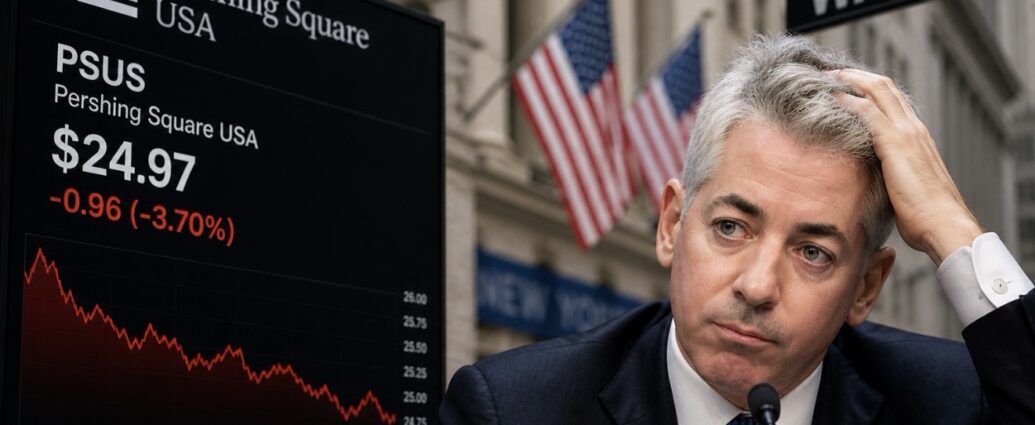
TORONTO, May 1, 2026 /CNW/ – 1832 Asset Management L.P. today announced fund changes, which are designed to enhance flexibility, improve consistency, and help support long-term investor outcomes.

Portfolio management enhancements

Effective today, the Multi-Asset Management team at 1832 Asset Management L.P. will assume from State Street Global Advisors Ltd.  direct portfolio management responsibility for the following aspects of Tangerine Balanced Income Portfolio, Tangerine Balanced Portfolio, Tangerine Balanced Growth Portfolio, Tangerine Equity Growth Portfolio, and Tangerine Dividend Portfolio (collectively, the “Tangerine Core Portfolios”):

  • asset allocation across all Tangerine Core Portfolios
  • management of the Canadian bond component for each of Tangerine Balanced Income Portfolio, Tangerine Balanced Portfolio and Tangerine Balanced Growth Portfolio
  • management of a portion of the equity investments for each …

Full story available on Benzinga.com

This post was originally published here
Park Hotels & Resorts (NYSE:PK) held its first-quarter earnings conference call on Friday. Below is the complete transcript from the call.

This transcript is brought to you by Benzinga APIs. For real-time access to our entire catalog, please visit https://www.benzinga.com/apis/ for a consultation.

Access the full call at https://viavid.webcasts.com/starthere.jsp?ei=1752378&tp_key=1b20bde68a

Summary

Park Hotels & Resorts announced a $96 million renovation project for the Ali’ I Tower at Hilton Hawaiian Village, which will impact 2026 financials slightly.

The company has strengthened its balance sheet with $2 billion liquidity and significant progress on refinancing 2026 maturities, including a new $700 million loan.

RevPAR growth guidance for 2026 increased by 50 basis points to a range of 0.5% to 2.5%, with adjusted EBITDA guidance raised by $7 million.

Royal Palm is set to reopen in June, with expectations for substantial operational improvements and potential benefits from the World Cup.

Management is actively working to dispose of 12 non-core assets and expressed confidence in progress by year-end.

Hawaii market is expected to perform well, with potential benefits from global travel shifts and investment in property upgrades.

Group demand is strong, particularly for June, with significant growth in key markets like New York, Orlando, and Hawaii.

Operational focus includes managing labor costs, insurance reductions, and real estate tax appeals to optimize expenses.

Full Transcript

OPERATOR

Palm and the launch of the Ali’ I Tower renovation at Hilton Hawaiian Village. This project will encompass all 351 guest rooms, the tower lobby, its private pool and the addition of three new keys. Total investment for the project is expected to be approximately $96 million. We expect renovation related disruption at Hilton Hawaiian Village to have a modest impact in 2026 with the towers closure expected to have less than a $2 million impact on 2026 Hotel Adjusted EBITDA and representing just a 10 basis point impact to portfolio RevPAR. Once complete, nearly 80% of the resort’s rooms will be newly renovated, significantly enhancing the iconic hotel’s long term competitive positioning. Turning to the balance sheet, our liquidity at the end of the first quarter was approximately $2 billion including $156 million of cash plus $1.8 billion of available capacity under our $1 billion revolving credit facility and $800 million delayed draw term loan. With respect to our 2026 maturities, we have made significant progress over the past two months to raise a $700 million floating rate delayed draw mortgage on Bonnet Creek which is expected to close this week. The loan, which was upsized $50 million based on the complex strong results, will bear interest at SOFR 225 basis points. When combined with the $800 million delayed draw term loan, this $1.5 billion of new debt capital commitments provide us with certainty while also allowing for the flexibility to fund within par prepayment windows and closer to the maturities. Accordingly, we expect to execute a partial draw under the delayed draw term loan and in June to fully repay the $121 million Hyatt Regency Boston mortgage which matures in July. We then expect to draw the remaining capacity in September along with fully drawing proceeds from the Bonnet Creek mortgage financing, to fully repay the $1.275 billion CMBS loan on the Hilton Wine Village which matures in early November with additional proceeds to be used for corporate purposes. We are grateful for the continued support of our bank group whose confidence in Park’s credit profile and strength of our portfolio has been instrumental in executing these transactions. Their commitment is a clear validation of our balance sheet strategy and underscores our ability to address all 2026 debt maturities in a comprehensive and highly effective manner. Upon completion of these transactions, we will have meaningfully enhanced our financial flexibility unencumbering the Hilton Hawaiian Village, extending our weighted average debt maturity to nearly four years and eliminating any significant maturities for approximately two years on an annualized basis. These refinancings are expected to increase interest expense by approximately $28 million, with roughly $13 million reflected in our 2026 AFFO guidance,. Based on the timing of these transactions with respect to our dividend, on April 15th, we paid our first quarter cash dividend of $0.25 per share. On April 24th, our board of directors approved a second quarter cash dividend of $.25 per share to be paid on July 15th to stockholders of record as of June 30th. The dividend currently translates to an annualized yield of approximately 9% based on recent trading levels. Turning to Guidance While we remain mindful of the geopolitical uncertainties and the potential impact of higher oil prices on both business and leisure travel, we were very encouraged by the strength observed in Q1. With solid demand trends continuing into the second quarter April, RevPAR is expected to be flat but up 3% excluding Miami, with performance led by continued strength in Hawaii, Bonnet Creek and Key west, as well as solid Spring Break leisure transient demand in Santa Barbara. And while we expect performance to modestly soften in May, June looks very strong, driven by strong group demand up nearly 10% and favorable year over year comparisons across several key markets including Hawaii, Orlando, Key west and New York. Overall, we expect Q2 RevPAR to come in around the midpoint of our guidance range with roughly a 100 basis point drag from Miami for the year. With Q1’s outperformance, we are increasing our RevPAR growth guidance by 50 basis points at the midpoint to a new range of 0.5% to 2.5% and Adjusted EBITDA guidance by $7 million at the midpoint to a new range of $587 million to $617 million. While AFFO increases by a penny at the midpoint to a new range of $1.74 to $1.90 per share. It is also worth noting that the recently sold Hilton Seattle Airport Hotel was expected to contribute approximately $3 million in EBITDA for the remainder of the year. This concludes our prepared remarks. We will now open the line for Q&A. To address each of your questions, we ask that you limit yourself to one question and one follow up. Operator, May we have the first question, please? We’ll now be conducting a question and answer session. If you’d like to ask a question, please press Star one on your telephone keypad. The confirmation tone will indicate your line is in the question queue. For participants using speaker equipment, it may be necessary to pick up the handset before pressing the star keys. One moment please, while we poll for questions. Thank you. Our first question is from Flores Van Dykem with Ladenburg Thalman.

Flores Van Dykem (Equity Analyst)

Hey, Dr. Flores. Thanks. Morning, Tom. Glad to be on these calls again with you guys. If you can give us a little bit more of an update on the disposition. One of the key things I think the market is having some trouble understanding is the quality of the portfolio that’s being shielded by the lower 10% of your assets. If you can talk a little bit about where I know that you have pretty much all of those presumably in the market, what’s the status on that? Are you having some detailed discussions? What’s the pushback that you’re getting from the market and are you going to hold out for the last dollar on those assets?

Tom Baltimore

Well, Flores, it’s great to have you back and appreciate the question. If I could sort of frame it for a second. Keep in mind, if you think about the remaining 12 assets that we have, we currently have 33 assets in the portfolio. We have sold or disposed of 52 assets. As I said in the prepared remarks for over $3 billion, we have 12 assets that we’re defining as sort of non core. Three of those assets obviously rest with the dispute with Safehold, which will resolve itself, if not this year, certainly next year. The EBITDA from those assets is about $16 million plus or minus the remaining nine assets account for about $41 million in EBITDA and candidly, probably 45% of that relates to one asset in Florida. So, you know, we’re generally dealing with eight assets that are small. Some have short term ground leases, some are joint venture, some have various challenges. And I would say obviously the last mile is often the most difficult. I would hope the market would give us credit for the perseverance, the discipline, our ability to reshape, the portfolio over the last nine years. We are very confident we’re going to make substantial progress this year on those non core assets. And our collective team are working their tails off. We have work streams underway on all of them and it’s going to be a little lumpy and choppy. I think you’ll see more reported as the year unfolds. And believe me, no shortage of effort and focus. We realize it’s while a small overhang. It’s an overhang. It clearly is less if you look at the 41 million, certainly less than 5, 6% of overall EBITDA. But it is a drain when you think about operating metrics. And so we’re working hard to get the assets sold as quickly as we can. We’re not holding out for, the last dollar, but we certainly want to have counter parties who can execute and who can move through the process. And we certainly are always focused on creating value for shareholders.

Flores Van Dykem (Equity Analyst)

Thanks. Maybe a follow up question on the World Cup. I know that your Royal Palm asset I think is opening up in June. Is that. And that is a market potentially that could get impacted by the demand for the World Cup. If you can talk broadly about what the impact is going to be or are you seeing so far, I think it’s everybody’s sort of muted on the World cup impact, but if you can give us a little bit more color on that, that would be great.

Tom Baltimore

Yeah, it’s a lot to unpack there, Flores, but I’m happy to take it. I think most importantly, if we step back and think about the Royal Royal Palm at 15th and Collins 393 Keys, we’re expanding to 404, putting in approximately $112 million. We could not be more excited. We could not be prouder. We had obviously a group there. We can’t wait to get more analysts and more investors in. I couldn’t be more grateful to Carl Mayfield, who heads our design and construction team, who is literally spending three or four days of his week in Miami leading. And we also have the operator, lead operator from Davidson who’s been on site since we launched construction in last May. As of this morning, we had 417 men and women on site. And that includes from owners reps to general contractor to subs to owners teams to operations folks. And we are currently targeting that construction will be substantially complete by early June. And what we would call the stocking and training TCO would begin and target sort of in mid May. You’ve got a few weeks of testing all the fire alarm and life safety issues that have got to work through. And we’re probably looking at a target public occupancy TCO and hoping for sort of mid June. So when you think about where that all unfolds as it relates to the World Cup, we have included in our guidance that Shawn outlined in his prepared remarks. We have no contribution coming from Miami in that process at this time. So if we are able to get open, I think the two prominent games in Miami will be July 11 and July 18. We are cautiously optimistic that we should be open in time for those. And that’s what we’re all working our tails off to make sure that that occurs again. We don’t have anything in the current guidance. So we’ve been quite conservative in that intentionally, just given all of the geopolitical, but also the complexity of the inspection and regulatory process as we close out the job. But you may recall other projects and the months and in some cases years, I think that this, again speaks to the core competency, the leadership that we have at park, our experience, the extraordinary success that we’re having obviously at Bonnet Creek, and also what we’re seeing also in Key West. And we feel the same way about Royal Palm as we look out. So we’re very, very bullish and excited about this project and think we’re going to have a tremendous success there over time. Thanks to. Thank you.

OPERATOR

Our next question is from Smedes Rose with Citi.

Smedes Rose (Equity Analyst)

Hi. Thank you. I just wanted to ask you. Hi. I wanted to ask you, in your guidance, it looks like the expense expectations moved up around 40 basis points versus your prior guidance. And I was just kind of wondering what was behind that.

Shawn

Yes, Mead. Shawn, we obviously in Q1, we had some outperformance top line. A lot of that was occupancy based. So we certainly naturally see while cost per room solid in terms of, you know, basically 50 basis points or so growth, you know, with the extra occupancy expense growth was a little more than expected as well. So we’re kind of carrying that through much like we’re doing with the top line into the expense. Certainly expected …

Full story available on Benzinga.com

This post was originally published here
On Friday, Portland Gen Electric (NYSE:POR) discussed first-quarter financial results during its earnings call. The full transcript is provided below.

Benzinga APIs provide real-time access to earnings call transcripts and financial data. Visit https://www.benzinga.com/apis/ to learn more.

Access the full call at https://edge.media-server.com/mmc/p/f22aee7q/

Summary

Portland Gen Electric reported Q1 GAAP net income of $45 million or $0.38 per diluted share, with non-GAAP net income of $68 million or $0.58 per share.

The company experienced a 10% year-over-year growth in industrial customer demand, despite mild winter weather affecting residential and small commercial usage.

Portland Gen Electric reiterated its full-year earnings guidance of $3.33 to $3.53 per diluted share and long-term earnings and dividend growth guidance of 5% to 7%.

The company is progressing on strategic priorities, including regulatory filings for the Washington acquisition and clean energy resource procurement, targeting a mid-2027 close for the Washington transaction.

Management discussed advancements in cost management initiatives to mitigate weather impacts and affirmed commitment to maintaining operational excellence.

Portland Gen Electric anticipates a regulatory approval process for the Washington acquisition to take about a year, with discussions on potential customer benefits ongoing.

The company is focusing on capital investments to support customer growth, clean energy, and long-term reliability, with plans to manage volatility in energy usage and power costs through engagement with regulators.

Full Transcript

OPERATOR

Good morning everyone and welcome to today’s conference call with Portland General Electric. Today is Friday, May 1, 2026. This call has been recorded and all lines have been placed on mute to prevent background noise. After the speaker’s remarks, there will be a question and answer period. If you would like to ask a question during this period, press star then the number is 11 on your telephone keypad. To withdraw your question, please press star 11. Again. If you do intend to ask the question, please avoid the use of speakerphones for opening remarks. I will turn the conference over to Portland Gen Electric Senior Manager of Investor Relations, Ern Swartz. You may begin.

Ern Swartz (Senior Manager of Investor Relations)

Thank you, Tawanda, good morning everyone and thank you for joining us today. Before we begin, I would like to remind you that we issued a press release this morning and have prepared a presentation to supplement our discussion, which we will be referencing throughout the call. The press release and slides are available on our website at investors.portlandgeneral.com referring to slide 2 some of our remarks this morning will constitute forward looking statements. We caution you that such statements involve inherent risks and uncertainties and actual results may differ materially from our expectations. For a description of some of the factors that could cause actual results to differ materially, please refer to our press release and our most recent periodic reports on Forms 10-K and 10-Q, which are available on our website. Turning to Slide 3 leading our discussion today are Maria Pope, President and CEO, and Joe Terpik, Senior Vice President of Finance and CFO. Following their prepared remarks, we will open the line for your questions. Now I will turn things over to Maria.

Maria Pope (President and CEO)

Good morning. Thank you, Erin. Thank you all for joining us today. The first quarter delivered another stretch of warm winter weather, 10% year over year, industrial customer demand growth and continued maturity of our cost management initiatives. Beginning with slide 4, I will speak to our financial results and key drivers. For the first quarter we reported GAAP net income of 45 million or 38 cents per diluted share and non GAAP net income of 68 million or 58 cents per share. Our non GAAP results exclude the previously disclosed deferral adjustments related to the January 2024 storm restoration and reliability contingency event and business transformation, optimization and acquisition expenses. Our results reflect extremely mild weather, particularly in February and March, and lower seasonal usage from residential and small commercial customers, which Joe will cover in more detail. We will be engaging with our regulator to explore frameworks to help mitigate weather and other volatility impacting both revenue and power costs. Greater predictability is good for both customers and shareholders and we recognize that this will be multi year work. Despite weather and usage impacts, our team delivered a quarter of strong operational execution including overcoming inflationary pressure and advancing our cost management program, adapting to power market conditions, positioning our portfolio and generations fleet to deliver optimal value and executing on our robust capital investment plan to support customer growth, clean energy and long term reliability. On recent calls you have heard us highlight the company wide work to optimize our cost structure. We are using our operational strength, which we’ve built over multiple years to mitigate the impact of recent weather challenges by accelerating our cost management work. Our teams are squarely undertaking the challenge and we are committed to delivering strong results. As such, we are reiterating our full year Earnings guidance of $3.33 to $3.53 per diluted share and our long term earnings and dividend growth guidance of 5 to 7%. Turning to Slide 5 for updates on our five key strategic priorities. First, our teams made progress on the Washington acquisition and other key regulatory filings. In late March and early April, we filed applications with the Washington Utilities and Transportation Commission and the Oregon Public Utility Commission for approval of the Washington transaction. We anticipate the regulatory approval process to take about a year and continue to target a mid-2027 close. PGE’s holding company proposal continues to advance. The docket’s procedural schedule has been modestly extended to prioritize timely resolution of the holding company. We have paused the transmission company. That said, formation of a transmission company remains part of our long term strategy. We appreciate the ongoing collaboration and expect to engage with parties in the near future. Having just received reply testimony late yesterday, many issues have been resolved with a few key items remaining. The process is on course with a target final order date probably in August. Second, building upon our 2025 O&M cost management work, we continued driving efficiencies and improving productivity. We are accelerating this work, even the very warm winter weather and first quarter results. Importantly, our large load tariff proposal UM 2377 is in the final stages of review with the OPUC and we expect an order in the next several weeks. A transparent, predictable tariff for new and existing data centers strengthens protections for existing customers while supporting economic development in our region. Our proposed rate structure under consideration, enabled by Oregon’s recent legislation includes a a 26% increase in data center prices which will help reduce the cost born by residential and small business customers. Third, as I noted, industrial demand growth is accelerating in our service area. We foresee robust energy usage from data centers and high tech customers with large customer capacity growing by about 10% compounded annually through 2030. This growth forecast is driven by existing customers and contracts already executed with new customers customers companies that own property and have civil work underway. Compared to Q1 last year, our data center customer load growth grew by 10%. Fourth, progress towards additional clean energy resource procurement we filed our 2025 RFP final shortlist with the OPUC in February as we aim to procure approximately 2,500 megawatts. The shortlist is composed of a diverse mix of projects and technologies to support our existing portfolio and growing customer demand. We look forward to working collaboratively with stakeholders to achieve commission acknowledgment in the coming months and fifth, our year round risk based wildfire mitigation work remains on track as we prepare for the summer months. In parallel, regulators and policymakers are engaged in this critical topic. The opuc, in coordination with the Oregon Department of Energy, has hired experts on wildfire liability policy options that balance customer needs for essential services, support for wildfire victims and financial help of utilities. We expect the study’s findings will help inform policymakers in advance of the 2027 legislative session. In December, we filed our 2026 through 2028 wildfire mitigation plan which represents a significant evolution moving from an annual update to a forward looking three year strategic framework. As we progress through 2026, our focus continues to be on executing on our core priorities solid operational performance, meeting growing energy demands, expanding into Washington State and advancing customer driven clean energy investments. With the first quarter behind us, opportunities are significant. We are focused on achieving solid financial results and delivering value for customers, communities and shareholders.

Joe Terpik (Senior Vice President of Finance and CFO)

With that, I’ll turn it over to Joe. Thank you Maria and good morning everyone. Turning to slide 6, our Q1 results reflect strong energy demand from our industrial customers and ongoing System Investments. Total Q1 2026 loads were flat as compared to Q1 2025 and changes in demand between our customer classes were largely offsetting. Industrial demand increased 10% on a nominal and weather adjusted basis. The industrial customer class is expected to continue growing at a strong pace, highlighting the strength of our large customer pipeline and the attractiveness of our service area to data centers and high tech customers. Commercial load decreased 2.9% or 2.3% weather- adjusted and residential load decreased 6.2% or 4.6% weather-adjusted. PGE has seen seasonal shifts in residential and small commercial average uses in recent years with rooftop solar adoption and energy efficiency growth. While not considered in our 2026 plan, deviations of this magnitude are not unprecedented and we are adapting to manage through this. Historically, demand has been winter peaking, but our region has been transitioning to a dual peaking profile with customers increasing their cooling demand as air conditioning becomes more widespread in our region. After considering the recent trends in customer usage, we now anticipate weather adjusted load growth upgrade 1.5% to 2.5% this year. In the last 12 months, our organization has evolved tremendously in the ability to adapt through cost management. We have a well defined plan in place for the balance of the year to solve for the load impacts experienced this quarter which I will discuss shortly. Now I will cover our quarter over quarter earnings drivers. We experienced a 7-cent increase in retail revenues, including a 9 cent increase from additional cost recovery largely from the inclusion of our seaside battery asset in customer rates beginning in November 2025. A 9-cent increase driven by higher industrial demand offset by 11 cents due to lower residential demand A decrease from power cost of $0.15 driven by $0.09 from power cost performance in 2025 that reverses for this comparison and $0.06 from current year power cost performance driven by less favorable wholesale and environmental credit market conditions. A 16-cent decrease from other capital and financing costs in support of our ongoing rate base investments made up of $0.10 of higher depreciation and amortization, $0.05 of dilution and $0.01 of additional interest cost a $0.09 decrease from other items, primarily the timing of tax credits and O and M costs $0.10 from deferral reductions related to the January 2024 storm and reliability contingency event reflecting the outcome of the final OPUC order received In March, a 10 cent decrease from business transformation optimization expenses and acquisition costs. This brings us to our GAAP EPS of $0.38 per diluted share. After adjusting for the 2024 regulatory disallowance and our business transformation expense, we reach our Q1 2026 non GAAP EPS of $0.58 per diluted share. On to Slide 7 for our 5 year capital forecast which includes 2026 and 2027 spend for the incoming 2023 RFP projects. I will note this view does not contemplate CAPEX from the ongoing 2025 RFP or the Washington Utility business. Given our ongoing investment in critical systems and assets, serving our customers and other policy priorities, we remain engaged with stakeholders as we consider our next regulatory steps. We will keep you informed as this progresses in line with our usual practice. Onto slide 8 for liquidity and Financing Summary Total liquidity at the end of the quarter was 954 million. Our investment grade credit ratings remain unchanged. We will continue to maintain strong cash flow metrics with an estimated 2026 CFO to debt metric above 19% in the first quarter, we executed a $550 million equity forward to address our 2026 base equity needs and fund the 2023 RFP project this quarter. We also entered into two unsecured credit agreements, a $350 million term loan facility maturing in March 2028 to fund capital expenditures including those related to our 2023 RFP and general corporate needs, and a 680 million delayed draw term loan intended to finance the Washington acquisition related cost. The loan is available until specific milestones tied to the acquisition are achieved and matures 364 days after funding. Lastly, in April, the Board of Directors declared a quarterly common stock dividend of 55.125 …

Full story available on Benzinga.com

This post was originally published here

Forum Energy Technologies (NYSE:FET) held its first-quarter earnings conference call on Friday. Below is the complete transcript from the call.

This transcript is brought to you by Benzinga APIs. For real-time access to our entire catalog, please visit https://www.benzinga.com/apis/ for a consultation.

View the webcast at https://edge.media-server.com/mmc/p/wdz4bmk5/

Summary

Forum Energy Technologies reported a strong first quarter with an 8% increase in revenue, 14% rise in EBITDA, and a 300% boost in net income year-over-year, driven by their ‘beat the market’ strategy.

The company achieved a book-to-bill ratio of 106% and increased its backlog by 44% compared to the previous year, reaching the highest level in 11 years.

Future guidance is optimistic with a forecasted second-quarter EBITDA of $24 to $30 million, and the company has raised its full-year EBITDA guidance midpoint to $103 million, anticipating market share gains and backlog conversion.

Operational highlights included the commercialization of innovative products like Duracoil 95, Unity ROV operating system, and Duralide manifold system, along with advancements in rig floor automation with the FR120 iron roughneck.

Management emphasized the strategic execution of cost savings, achieving $15 million in annualized savings, and continued share repurchase activities, indicating a strong balance sheet with extended credit facilities.

Full Transcript

OPERATOR

Good morning ladies and gentlemen and welcome to the Forum Energy Technologies first quarter 2026 earnings conference call. My name is Daniel and I will be your coordinator. For today’s call, there is a process for entering the question and answer queue. To ask a question during the session, you will need to press star 11 on your telephone. You will then hear an automated message advising. Your hand is raised to withdraw your question. Please press star 11 again. At this time, all participants are in a listen only mode and all lines have been placed on mute to prevent any background noise. This conference call is being recorded for replay purposes and will be available on the company’s website. I will now turn the conference over to Rob Kukla, Director of Investor Relations. Please proceed, sir.

Rob Kukla (Director of Investor Relations)

Thank you, Daniel. Good morning everyone and welcome to Forum Energy Technologies’ first quarter 2026 earnings conference call. With me today are Neil Lux, our President and Chief Executive Officer and Lyle Williams, our Chief Financial Officer. Yesterday we issued our earnings release which is available on our website. Today we are relying on federal safe harbor protections for forward looking statements. Listeners are cautioned that our remarks today will contain information other than historical information. These remarks should be considered in the context of all factors that affect our business, including Those disclosed in Forum Energy Technologies’ Form 10-K and other SEC filings. Finally, management’s statements may include non-GAAP financial measures. For reconciliation of these measures, please refer to our earnings release and website. During today’s call, all statements related to EBITDA refer to adjusted EBITDA and unless otherwise noted, all comparisons are first quarter 2026 to fourth quarter 2025. I will now turn the call over to Neil.

Neil Lux (President and Chief Executive Officer)

Thank you Rob and good morning everyone. Our first quarter results reinforced our confidence in the path we presented with FET 2030. Year over year we increased revenue 8%, EBITDA 14% and net income 300%. The execution of our Beat the Market strategy drove these results impressively. We grew revenue per global rig 12% from a year ago and positioned our company for future gains with strong bookings. Orders were up 10% year over year with a book to bill of 106%. We entered the year with our highest backlog in 11 years and we grew that backlog again. Compared to the first quarter of last year, our backlog is up 44%. Also, following the completion of our structural cost saving initiatives, we are now a more efficient organization. These efforts have achieved 15 million of annualized savings. In addition, we continued our share repurchase program and strengthened the balance sheet by extending our credit facilities maturity to 2031. Overall, this was the kind of start we wanted to see providing momentum into the second quarter and beyond. Looking ahead, our results should increase substantially driven by market share gains, backlog conversion and cost savings. We are forecasting second quarter EBITDA between 24 and 30 million, which at the midpoint is up 32% from a year ago. These results would deliver incremental margins of 51% with EBITDA margin approaching 13%. This sequential improvement is driven solely by the execution of our plan. Turning to the full year, we are raising the midpoint of our EBITDA guidance to 103 million, up 20% compared with 2025. Importantly, while we are seeing signs of increased activity which is consistent with some analysts expectations, our forecast conservatively assumes a flat market. Should the market pick up, I would expect to see further upside to our forecast. During the first quarter we continued gaining market share through innovation and new customer adoption. This is a key part of our strategy. So let me provide an update on a few products we have recently commercialized. First, Duracoil 95 coil tubing for sour service environments is continuing to gain traction and is now active on three continents. This is an ideal product for Venezuela and the Middle East, especially if workover activity accelerates to bring production back online. Another innovation I want to mention is Unity, our next generation operating system for remote ROV operations. We recently had the opportunity to showcase this technology at a large international trade show. In a real time demonstration, our customers were able to control an ROV positioned hundreds of miles away from a terminal in our booth. It was a powerful demonstration of Unity’s capabilities and and has ignited interest in our product. The next product I want to highlight is Duraline, our manifold system for multi well frac applications. Compared to our competition, Duraline is significantly safer and more efficient. Also, it is a great example of technology developed for US Shale applications that can be exported to international locations. In the first quarter we received a significant order for multiple systems to be deployed in Argentina this year. Another innovative area for FET is rig floor automation. We have developed patent pending software for the FR120 iron roughneck that automates the drill pipe makeup and breakout process with the push of a button. Our solution dramatically simplifies rig floor operations, reduces non productive time and increases drilling efficiency by 30%. This software will be packaged with new iron roughnecks and sold as an upgrade to existing ones. I am very excited about this development. Shifting to the power generation and data center markets, we have seen increased interest in the cooling solutions offered by our global heat transfer product family. Based on customer feedback, we have developed a stationary power cooling solution. This new design gives us an opportunity to address a bigger part of the market and since its introduction we have developed a strong commercial funnel. These innovations are great examples of how our product pipeline is supporting both near term share gains and the long term ambitions of FET 2030 Shifting to the Middle East Conflict and its Impact first and foremost, I am thankful all our employees in the region are safe. That is our primary concern. Also, operationally we have not suffered any facility damage. We have experienced some disruptions that are having a slight impact on our business, particularly around logistics and freight costs. However, our teams did an excellent job finding creative solutions to these challenges and we were able to increase revenue in the Middle East during the quarter. While uncertainty remains high, we are not forecasting any material negative impact from the conflict. For context, Middle East revenue is only 10% of our total, limiting the company’s exposure. At the same time, this conflict is creating medium to longer term tailwinds for our industry. A significant portion of the world’s oil and gas supply has been disrupted for 62 days and counting. Even if oil shipments through the Strait of Hormuz resume quickly, global oil inventories will be meaningfully reduced. Barring a material downturn in global demand, we expect investment in oil and gas production to increase over time to replace depleted inventories and support energy security. Some analysts have suggested that our industry will experience a prolonged upcycle beginning later this year or early 2027. This up cycle aligns with the growth market scenario of our Forum Energy Technologies 2030 vision. Under this scenario, our addressable markets grow at a rate of 9% annually and we expand our market share to 22% by 2030. The combination of market expansion and share gains doubles revenue to 1.6 billion, quadruples EBITDA and nearly triples free cash flow in that time frame. This scenario underscores our strategy’s long term value creation potential while our near term focus remains on disciplined execution and cash flow generation. Now, to provide more detail on our first quarter results and near term financial outlook, I will turn the call over to Lyle.

Lyle Williams (Chief Financial Officer)

Thank you Neil. Good morning. I will begin with first quarter results and our guidance, then shift to a discussion of cash flow and our capital allocation strategy. First quarter revenue of 209 million came in near the top end of our guidance. Growth in offshore and international markets led the revenue increase of 3%, outpacing global rig count. Our international revenue was up 7% with Canada, Europe and Latin America, each delivering double digit gains. This is the third consecutive quarter when international exceeded US revenue and offshore revenue expanded 10% driven by a 20% increase in our subsea product line as the team begins to execute orders secured last year. Adjusted EBITDA for the quarter was 23 million in line with our guidance as cost savings benefits were largely offset by product mix. Adjusted net income of 6 million increased 11% on favorable income tax expense rate that benefited from geographic income mix. We grew backlog again in the first quarter even after very strong bookings in 2025, both segments posted a book to bill ratio greater than 100%. We saw higher demand for capital equipment in the stimulation and intervention and the drilling product lines and increased demand for wireline cables. Valve orders increased nicely bouncing back from tariff related impacts throughout 2025. Let me continue with additional color on our segment results. Drilling and completions revenue was 127 million flat with the previous quarter. The subsea product line increased 20% as we recognized revenue on ROVs and the rescue submarine project. The stimulation and intervention product line increased 7% supported by power end and wireline cable demand. And to note, our Quality Wireline product family set a new record this quarter in revenue and in Greeceless cable sales. Coil tubing revenue was down 17% coming off strong US sales last quarter and due to customer requested delivery pushouts into the second quarter. Despite flat revenue segment EBITDA was up 6%, benefiting from cost savings and improved plant utilization related to our facility consolidations. Artificial lift and downhole revenue was 82 million, up 9% with increased sales volumes across all three product lines. EBITDA was roughly flat reflecting a combination of product mix, timing of incentive expense and lower absorption at one facility which we expect to improve in the coming quarters. Consolidated free cash flow was $1 million, consistent with our guidance. As a reminder, our free cash flow is typically back half weighted. For example, roughly 2/3 of our free cash flow was generated in the second half of 2025. Despite the seasonally lower free cash flow, we still remained active on share buybacks. We repurchased almost 93,000 shares for approximately $5 million under our share repurchase authorization. These purchases averaged $49 per share, about 20% lower than our stock price at yesterday’s close. In addition, we paid $9 million for withholding taxes associated with our stock based compensation program, avoiding the issuance of roughly 180,000 shares and ultimately benefiting our shareholders. These payments, along with transaction costs associated with the credit facility amendment resulted in a Modest and temporary increase in net debt. We ended the quarter with net debt of 121 million with a net leverage ratio still at a comfortable level of under 1.4 times. While this is higher than where we ended last year, we expect net leverage to decline to under 1 times by the end of the year. Liquidity of 91 million remains strong with 54 million available under our revolving credit facility. During the quarter, we extended our credit facility maturity to February 2031 with improved pricing and greater letters of credit capacity. This amendment combined with our strong balance sheet provides significant flexibility for FET to fund strategic initiatives including long term debt, retirement, organic growth and acquisitions. Now turning to our guidance for the second quarter. As Neil mentioned earlier, our our results should increase substantially, driven primarily by backlog conversion, cost savings and market share gains. We are forecasting revenue between 200 and 225 million and EBITDA between 24 to 30 million, which at the midpoints are up 6% and 32% from a year ago. Adjusted net income expected for the second quarter is between 6 and $11 million. Our free cash flow. Our full year guidance issued in February assumed relative flat market activity compared to the back half of 2025. Now, …

Full story available on Benzinga.com

This post was originally published here
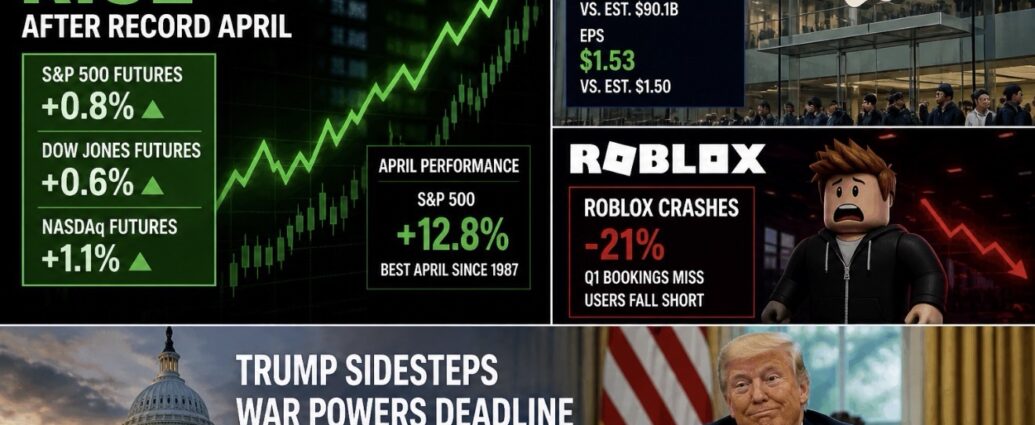
Bitcoin is the best asset to protect your wealth against inflation, according to billionaire hedge fund manager Paul Tudor Jones.

“Bitcoin is unequivocally the best inflation hedge that there is—more than gold,” the Tudor Investment Corporation founder said on an episode of the “Invest Like The Best” podcast released Wednesday. 

Jones cited Bitcoin’s 21 million hard cap and its decentralization, adding that gold’s supply increased every year.

Don’t Miss:

“In that sense [Bitcoin] has the greatest scarcity value of anything,” he said.

Jones touted Bitcoin’s potential as an inflation hedge while recounting his motivation for adding the asset to his portfolio in 2020. He said following fiscal interventions by the Federal Reserve and the Treasury Department that year, he was convinced “that the inflation trades were going to take off,” adding, “the best one at that point in time? It was Bitcoin.”

However, Jones said Bitcoin faces some unique risks due to its digital nature.

“The problem with it as an inflation hedge is if you got into kinetic exchange, there’s clearly going to be cyber warfare and anything that you have to deal with electronically is going down, including Bitcoin,” he said on the podcast.

Trending: Investors With $1M+ Often Use Advisors for Tax Strategy — This Tool Matches You With One in Minutes 

Jones also cited quantum computing as another potential threat to Bitcoin, saying that with the advent of AI, the protocol could be exploited sometime in the future.

Jones has not advocated for holding Bitcoin alone but as part of a diversified portfolio. In 2020, he recommended a 1%-2% allocation, a recommendation he maintained in remarks to Bloomberg last June.

Jones’ most recent remarks come even as Bitcoin trades around $76,000, about 40% below its record price of $126,000 reached in October.

Read Next: 

Building Wealth Across More Than Just the Market

Building a resilient portfolio means thinking beyond a single asset or market trend. Economic cycles shift, sectors rise and fall, and no one investment performs well in every environment. That’s why many investors look to diversify with platforms that provide access to real estate, fixed-income opportunities, professional financial guidance, precious metals, and even self-directed retirement accounts. By spreading exposure across multiple asset classes, it becomes easier to manage risk, capture steady returns, and create long-term wealth that isn’t tied to the fortunes of just …

Full story available on Benzinga.com

This post was originally published here

Mohawk Industries (NYSE:MHK) released first-quarter financial results and hosted an earnings call on Friday. Read the complete transcript below.

Benzinga APIs provide real-time access to earnings call transcripts and financial data. Visit https://www.benzinga.com/apis/ to learn more.

The full earnings call is available at https://edge.media-server.com/mmc/p/zseygt3s/

Summary

Mohawk Industries reported Q1 2026 adjusted EPS of $1.90, up 25% from the previous year, with net sales of $2.7 billion, an 8% increase.

The company is implementing productivity and restructuring actions to enhance results, repurchasing 607,000 shares for $64 million, and preparing for potential further price increases due to escalating energy costs from Middle East conflicts.

Guidance for Q2 2026 expects adjusted EPS between $2.50 and $2.60, with the company focused on cost control, product innovation, and maintaining flexibility amid challenging market conditions.

Full Transcript

OPERATOR

Good morning everyone and welcome to Mohawk Industries first quarter 2026 earnings conference call. All participants will be in a listen only mode. Should you need assistance, please signal a conference specialist by pressing the star key followed by zero. After today’s presentation, there will be an opportunity to ask questions. To ask a question, you may press star and then one on your touchtone telephones. To withdraw your questions, you may press star and two. Please also note today’s event is being recorded. At this time, I’d like to turn the floor over to Nick Manthy, Chief Financial Officer. Please go ahead.

Nick Manthy (Chief Financial Officer)

Thanks, Jamie. Good morning everyone and welcome to Mohawk Industries Quarterly Investor Conference Call. Joining me today on the call are Jeff Lorberbaum, Chairman and Chief Executive Officer and Paul De Kock, President and Chief Operating Officer. Today we’ll update you on the company’s first quarter performance and provide guidance for the second quarter of 2026. I’d like to remind everyone that our press release and statements that we make during the call may include forward looking statements as defined in the Private Securities Litigation Reform Act of 1995, which are subject to various risks and uncertainties, including but not limited to, those set forth in our press release and our periodic filings with the securities and Securities and Exchange Commission. This call may include discussion of non GAAP numbers. For a reconciliation of any non GAAP to GAAP amounts, please refer to our Form 8K and press release in the Investors section of our website. I’ll now turn the call over to Jeff for his opening remarks.

Jeff Lorberbaum

Thank you, Nick. Our performance for the first quarter was in line with our expectations despite a challenging environment. Our adjusted EPS was $1.90, up approximately 25% versus the prior year. Our results include benefits from productivity restructuring and product mix offset by inflation and volume. Last year was impacted by the system conversion and had four fewer days. Our net sales were approximately 2.7 billion, an increase of 8% as reported or decreases 2.6% on a constant basis across our regions. The commercial sector continued to outperform residential new home construction remains soft and consumers continue to defer home purchases and remodeling projects due to economic uncertainty. We’re implementing productivity actions and executing our previously announced restructuring projects to enhance our results during the quarter, we repurchased 607,000 shares of stock for $64 million as part of our current stock buyback authorization. Our strong balance sheet provides strategic and operational flexibility to take advantage of opportunities that arise at the end of February. The conflict in the Middle East intensified increasing volatility in global energy markets. The full impact of the conflict is unpredictable given the disruption to the worldwide supply of oil and natural gas. Higher gasoline and diesel prices were the fastest and most visible impact of supply disruptions and are contributing to a more cautious consumer outlook. Energy prices as well as the cost of oil and natural gas derivatives are also increasing which affects the costs of many of our products. Depending on the duration of the conflict, the economic impact will vary across our markets with increased inflation reducing consumer sentiment and discretionary spending. U.S. natural gas prices have been less impacted due to the significant domestic production, though oil prices in the U.S. have risen as they follow worldwide trends. In the US 10 year treasury yields have increased creating a corresponding rise in mortgage rates. The European continent, will be more affected due to the dependence on oil and gas from the Middle East and we have made forward purchases to limit our exposure. European governments are reviewing initiatives to lessen the impact on businesses and consumers such as cutting energy taxes, implementing fuel price caps and coordinating European gas storage.. The energy markets will remain volatile until the global supply normalizes. We’re implementing price increases across many products and geographies and further price increases could be required. The impact of higher cost of raw materials will be greater in the second half of the year due to our flow through of our inventory. We are continuing to launch new product collections with industry leading designs and features to enhance our sales and margins. We’re implementing operational strategies that we’ve used to navigate past disruptions which prioritize adaptability and cost control. We’re maintaining flexibility to align with evolving demand, supply, availability and volatile costs. We’re focused on the controllable parts of our business including sales initiatives, inventory levels and discretionary spending and investments. Now Nick will provide the details of our financial performance for the quarter. Thanks Jeff.

Nick Manthy (Chief Financial Officer)

Looking at our Q1 2026 financial results, net sales for the quarter were $2.7 billion, up 8% as reported and a decrease of 2.6% on a constant basis. Our global ceramics segment delivered stronger mix and we lapped the impact of the order management system conversion in flowing North America which partially offset the slower market conditions across our markets. Gross margin was 23.5% as reported and 24.8% on an adjusted basis. This is up 70 basis points from prior year as the benefit of restructuring and productivity initiatives of $32 million and favorable FX of 20 million offset the increased input costs of $28 million. SG&A expenses were 19.4% as reported and 19.3% excluding charges in line with prior year levels. That gave us an operating Income as reported of $112 million or 4.1% of net sales. We had $38 million in nonrecurring charges, primarily related to our restructuring actions initiated last year. Our adjusted operating income was $149 million or 5.5% of sales. That’s an increase of 70 basis points versus prior year. The benefits of lapping the prior year order management system conversion of $30 million and our restructuring and productivity initiatives of 36 million were partially offset by increased input costs of $38 million. Lower volumes given the weaker market conditions were offset by extra days in the quarter. Interest expense was $2 million, a decrease compared to prior year due to the reduction in short term debt and the benefit of increased interest income. Our adjusted tax rate was 19.4% and we are forecasting the full year tax rate for 2026 to be between 19 and 20%. That gave us an earnings per share on both a reported and adjusted basis of $1.90. Turning to the segments, Global Ceramics had net sales just under $1.1 billion. That’s a 10.4% increase as reported and basically flat on a constant basis. The ceramic business delivered positive price mix given strength in the commercial channel and continued success in the countertop business, offset by lower volumes in the residential channel. Adjusted operating income was 55 million or 5% of sales. That’s an improvement of 20 basis points compared to the prior year as the combination of productivity initiatives of 21 million and positive price mix of 13 million were only partially offset by an increase in input costs of $30 million. Flooring North America, net sales were $880 million. That’s a 2% increase as reported or a 4.1% decrease on a constant basis as sales were impacted by slower conditions in both new residential construction and residential remodeling. We had an adjusted operating income of 35 million or 4% of sales. That’s an improvement of 100 basis points compared to prior year as we lapped the impact of the order management system conversion of $30 million which was partially offset by increased input costs of 13 million and the net impact of lower volumes. In Flooring Rest of the World, we had sales of $751 million as reported. That’s a 12.2% increase or a decrease of 4.4% on a constant basis. With the decrease in volumes in the residential remodeling market impacting our flooring categories, partially offset by volume growth in both our panels and insulation businesses. Adjusted operating income was $74 million or 9.8% of sales. That’s an improvement of 70 basis points compared to prior year as the combination of productivity gains and lower input costs of 14 million were more than enough to offset negative price mix. Corporate expenses and eliminations were 14 million in the quarter and we estimate the full year 2026 expenses to be between 52 and 55 million. And now looking at the balance sheet, cash and cash equivalents ended the quarter at 872 million. We had free cash flow of 8 million in the quarter which is in line with seasonal trends. Inventories were just shy of 2.7 billion, up less than 1% compared to prior quarter due to inflation. Property, plant and equipment ended the quarter at just under 4.7 billion. Capex spending in the quarter was $102 million and we plan to invest approximately 480 million in 2026. Focused on cost reduction initiatives, product innovation and maintenance. The balance sheet remains in a very strong position with NET debt of $1.2 billion and a net debt to EBITDA ratio of 0.9. In summary, our strong balance sheet provides us flexibility to navigate a challenging macro environment while staying positioned to pursue opportunities as the market recovers. Now Paul will review our Q1 operational performance.

Paul De Kock (President and Chief Operating Officer)

Thank you Nick Our global ceramics segment delivered improved sales and profitability year over year. Our regions are responding to their local markets with new styles and sizes that are improving our average price and distribution in both residential and commercial. Our premium collections increased our mix with advanced technologies that enhance the visuals. Across our regions, productivity improvements and restructuring actions are improving our results. In the U.S. we benefited from stronger commercial sales and increased retail partnerships which offset ongoing weakness in the builder channel. In March, we introduced our spring collection which emphasizes higher end decorative wall tile and large polished floor tile. To enhance our mix, we announced price increases on ceramic tile and quartz countertops to offset the higher material and transportation cost. We continue to expand our countertop business with quartz volume growing as we ramp up our new production and introduce higher value products. The U.S. International Trade Commission recently ruled that imported quartz countertops from around the world are harming domestic production and the Commission is determining tariffs and quotas to safeguard the industry. In our European ceramic business, we delivered solid sales and margin improvement with investments in sales, personnel, showrooms and new collections in the region. We have greater participation in the commercial channels which is outperforming the residential markets. The industry has announced limited price increases at this point given the market softness. We have purchased a portion of our natural gas requirements this year which will reduce the impact of higher energy prices. Our Latin American ceramic businesses have been less impacted by the conflict. We are raising prices in Mexico and Brazil in response to increasing natural gas and transportation costs in Mexico. Our volume improved as we expanded distribution, improved service times and grew sales with large size polished porcelain collections in Brazil. Our new product introductions are improving our mix with growth in the higher value porcelain category. U.S. reciprocal tariffs on Brazil were significantly reduced which will improve our export volumes to the United States. Brazil’s economy remains sluggish and the central bank is now cutting interest rates to stimulate growth. Our flooring rest of the world segments result were driven by productivity, cost improvements and additional days in the period. As the new year began, the European market was showing some improvement after multiple central bank rate cuts and lower inflation. With the war in Iran, consumer confidence declined as fuel and energy cost increased. We are implementing price increases to offset the higher costs impacting our business in the quarter. Our laminate sales benefited from growing retail partnerships and the success of our new collections which combined elevated style and performance. We updated our LVT designs, added offerings at new price points and expanded our retail distribution. Our sheet vinyl sales to the Middle East were disrupted and alternative transport options are improving shipments. Our panels business improved sales and margins with our premium products and we implemented price increases. We have since announced additional price increases to cover further inflation. Our new MDF recycling plant is expanding production and will further benefit our costs. Our insulation business performed well and improved our costs by re engineering our products. We’re growing our insulation sales in Germany and Eastern Europe to support the startup of our manufacturing facility in Poland. Our businesses in Australia and New Zealand improved results with favorable pricing mix and cost. Our new carpet collections, national promotions and increased participation in the new construction channel enhanced our performance. Our flooring North America segment remained slow during the quarter given lower remodeling and new construction activity and inventory reductions in the channel. Our results were positively impacted by restructuring system improvements and additional days in the period partially offset by lower volume and inflation. Commercial continued to outperform residential and we are improving our position in retail and new construction channels. During the quarter, we announced pricing actions in response to material, energy and transportation increases. Mortgage rates rose almost half a point in March leading to slower new home sales and declining builder sentiment. While new home sales softened, we have increased our presence in the top national and regional builders. We improved our hard surface mix with our best in class laminate, hybrid and LVT collections. Our proprietary accessories coordinate with our hard surface offering increasing complementary sales. Our new carpet introductions are being well received with a focus on our premium polyester and Smart Strand collections. In February, we launched the industry’s first carpet collections, certified by the Asthma and Allergy foundation to significantly reduce household allergens using natural probiotics. Our commercial order backlog has seasonally improved with our carpet tile collections outperforming. Our recently acquired rubber flooring products are being embraced by architects and designers and are creating additional specification opportunities for our other commercial products and I will now return the call to Jeff.

Jeff Lorberbaum

Thank you Paul One month into the second quarter, we continue to adapt our business to changes caused by the Middle east conflict. Thus far, we’ve announced price increases across much of our portfolio due to inflation and our order backlog has continued to grow across our regions. The commercial channel remains solid while residential remodeling and new home construction could be impacted by lower consumer confidence. Our high end collections are performing better in the market and our new products are enhancing our mix. We’re maximizing our flexibility to react to changes in our supply chain, operating costs and market demand. Presently, we’re containing cost, reengineering products and limiting capital expenditure. We’ll not see the full impact of our pricing actions and rising costs until the third quarter. The degree to which the Middle east conflict will impact our markets depends on the duration of the disruptions and the inflationary pressure. Given these factors and one less shipping day in the second quarter, we expect our adjusted EPS to be between $2.50 and $2.60, excluding restructuring or other one time charges. We are managing all aspects of the business we can control and responding to market changes as they arise. In the past, Mohawk has adapted to cyclical changes as well as dramatic market disruptions while enhancing our business for …

Full story available on Benzinga.com

This post was originally published here
By JBIZnews Staff
May 1, 2026

Spirit Airlines is teetering on the edge of collapse, with the ultra-low-cost carrier preparing for a potential shutdown after a proposed $500 million government-backed rescue deal fell apart, according to government officials and industry analysts.

The discount airline, already operating under Chapter 11 bankruptcy protection for the second time in less than two years, has only days of cash left to sustain operations, multiple sources familiar with the situation told JBIZnews. Negotiations with the Trump administration for emergency funding — which would have given the government a major equity stake and senior creditor status — stalled when key bondholders and lenders, including hedge fund Citadel, rejected the terms.

Spirit Airlines aircraft amid financial turmoil
(Illustrating the carrier’s deepening crisis as the $500 million rescue package collapses and shutdown looms.)

Ct2PX“LARGE”

The bailout was seen as a last-ditch effort to keep Spirit flying amid soaring jet fuel prices triggered by the U.S.-Iran conflict. Without the infusion, the airline risks immediate liquidation, which would mark the end of operations for one of America’s largest budget carriers and disrupt travel for millions of passengers, analysts warned.

Spirit had been working toward an exit from its latest bankruptcy filing by early summer, but the surge in fuel costs derailed those plans, government sources confirmed. Creditors are concerned the proposed deal would significantly diminish the value of their claims, leading to the impasse.

Aviation experts and analysts view a Spirit shutdown as likely to ripple through the industry, reducing capacity on popular leisure routes and potentially driving up fares at rival carriers. Passengers with upcoming Spirit tickets are being urged to monitor the situation closely, as refunds or rebookings may become complicated if operations cease.

The White House and Department of Transportation have not issued an official comment on the stalled talks, but sources indicate no immediate alternative funding path has emerged. Spirit continues to operate flights for now, but the clock is ticking.

JbizNews Desk – Business

Micron Technology Inc. (NASDAQ:MU) shares rose on Friday. This follows earnings commentary from hyperscalers, which confirms that memory is now a primary cost driver in the AI arms race.

• Micron Technology stock is at critical resistance. What’s driving MU to record levels?

While Big Tech faces margin pressure, memory suppliers are reaping the benefits of skyrocketing prices.

The Nasdaq is up 0.71% while the S&P 500 has gained 0.49%.

Hyperscalers Face Rising Costs

Meta Platforms Inc. (NASDAQ:META) raised its 2026 capital expenditure outlook to a range of $125 billion to $145 billion. CEO Mark Zuckerberg noted “most” …

Full story available on Benzinga.com

This post was originally published here

Colgate-Palmolive Company (NYSE:CL) shares rose Friday after the consumer products maker reported first-quarter results that beat Wall Street expectations, as steady demand and category leadership helped offset margin pressure and mixed regional performance.

The company reported adjusted earnings of 97 cents per share, topping analyst estimates of 94 cents. Revenue came in at $5.324 billion, ahead of the $5.215 billion consensus.

Sales Growth And Market Leadership

Net sales increased 8.4%, while organic sales rose 2.9%, including a 0.6% headwind from lower private-label pet food sales. Colgate-Palmolive said it maintained global leadership, with a 41.1% share in toothpaste and 32.6% in manual toothbrushes year to date.

Performance varied by region. North America net sales declined 1.8%, with operating profit falling 28% to $141 million. Latin America net sales rose 14.8%, with operating profit up 15% to $401 million. Europe, Middle East and Africa posted an 11.9% increase in net sales and a 20% rise in operating profit to $266 million.

“These results underscore the resilience of our business model as we are able to execute against our long-term …

Full story available on Benzinga.com

This post was originally published here
OFS Capital (NASDAQ:OFS) released first-quarter financial results and hosted an earnings call on Friday. Read the complete transcript below.

Benzinga APIs provide real-time access to earnings call transcripts and financial data. Visit https://www.benzinga.com/apis/ to learn more.

The full earnings call is available at https://event.choruscall.com/mediaframe/webcast.html?webcastid=yklVOILv

Summary

OFS Capital reported a net investment income of $0.18 per share for Q1 2026, covering the distribution of $0.17 per share, despite a $0.02 decline from the previous quarter due to lower net interest margins.
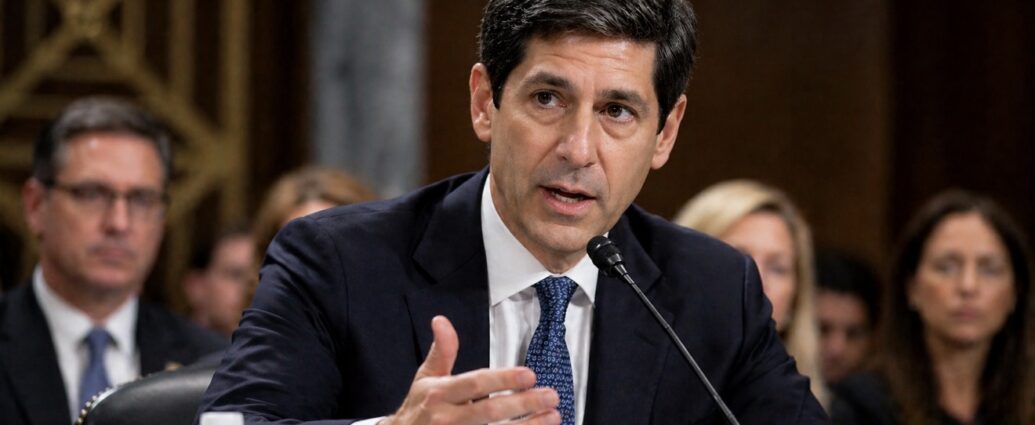

The company’s net asset value decreased to $8.16 per share from $9.19, primarily due to unrealized depreciation in CLO equity holdings and market sentiment affecting loan prices.

OFS Capital has extended its debt maturities to 2028 and beyond, reducing its total debt by $45.6 million over the last four quarters, and entered a new credit facility with Natixis.

The company is focused on monetizing its equity position in Fansteel, which has yielded substantial returns, to improve net investment income and reduce portfolio concentration.

Despite macroeconomic uncertainties, OFS Capital maintains a resilient loan portfolio with a focus on senior secured loans and limited exposure to sectors affected by AI disruptions.

Full Transcript

OPERATOR

Good day and welcome to the OFS Capital Corporation First Quarter 2026 Earnings Conference Call. All participants will be in listen only mode. Should you need assistance, please signal a conference specialist by pressing the star key followed by zero. After today’s presentation, there will be an opportunity to ask questions. To ask a question, you may press star then one on your telephone keypad. To withdraw your question, please press star then two. Please note this event is being recorded. I would now like to turn the conference over to Steve Altobrando. Please go ahead.

Steve Altobrando

Good morning everyone and thank you for joining us. Also on the call today are Bilal Rashid, our Chairman and Chief Executive Officer, and Kyle Spina, the company’s Chief Financial Officer and Treasurer. Before we begin, please note that the statements made on this call and webcast may constitute forward looking statements as defined under applicable SECurities laws. Such statements reflect various assumptions, expectations and opinions by OFS Capital Management concerning anticipated results, are not guarantees of future performance, and are subject to known and unknown risks, uncertainties and other factors that could cause actual results to differ materially from such statements. The uncertainties and other factors are in some way beyond management’s control, including the risk factors described from time to time in our filings with the SEC. Although we believe these assumptions are reasonable, any of those assumptions could prove incorrect and as a result the forward looking statements based on those assumptions also could be incorrect. You should not place undue reliance on these forward looking statements. OFS Capital undertakes no duty to update any forward looking statements made herein and all forward looking statements speak only as of the date of this call. With that, I’ll turn the call over to Chairman and Chief Executive Officer.

Bilal Rashid (Chairman and Chief Executive Officer)

Thank you Steve. Yesterday afternoon we reported our first quarter results. Net investment income totaled $0.18 per share, covering our distribution of $0.17 per share. Despite being down $0.02 per share from the prior quarter. The decline was again primarily driven by a lower net interest margin. This reflects the higher interest costs on our unsecured notes issued last year, which replaced debt issued in a historically low rate environment. That said, this new debt has allowed us to meaningfully extend our debt maturities. In addition, benchmark rate reductions by the Fed last year have lowered yields across our loan portfolio, further impacting our net interest margin. Our net asset value at quarter end was $8.16 per share, compared to $9.19 per share in the prior quarter. The decrease was primarily due to unrealized depreciation on our CLO equity holdings driven by spread tightening in the underlying loan collateral as well as a decrease in loan prices due to overall market sentiment. Overall, our non accrual investments as a percentage of our total portfolio at fair value decreased slightly quarter over quarter by 0.7% during the quarter we exited one of our long time non accrual loans. In addition, we placed one small loan representing just 0.3% of the total portfolio at fair value on non accrual status. Despite this borrower remaining current on its interest payments, the loan was placed on non accrual status due to an internal credit rating downgrade. We remain focused on improving our net investment income over the long term. As discussed on prior calls. This includes our ongoing efforts to monetize our minority equity position in Fansteel, the largest position in our portfolio which had a fair value of approximately $80.4 million at quarter end. We continue to be encouraged by the company’s operational momentum and believe its long term outlook remains compelling. A successful exit could increase the likelihood of improved net investment income and reduced portfolio concentration. At the same time, we remain disciplined in balancing the timing of a potential exit with the realization value of the asset in order to maximize our overall returns. Since our initial $200,000 investment in 2014, our position …

Full story available on Benzinga.com

This post was originally published here

On Friday, Alliant Energy (NASDAQ:LNT) discussed first-quarter financial results during its earnings call. The full transcript is provided below.

This transcript is brought to you by Benzinga APIs. For real-time access to our entire catalog, please visit https://www.benzinga.com/apis/ for a consultation.

The full earnings call is available at https://events.q4inc.com/attendee/225617875

Summary

Alliant Energy reported strong first quarter 2026 earnings, achieving approximately 25% of their full-year guidance midpoint despite mild temperatures.

The company announced a new 370 megawatt electric service agreement in Iowa and plans for a simple cycle natural gas facility to support growth.

Alliant Energy reaffirmed its 2026 earnings guidance and expects a compound annual earnings growth rate of 7% plus from 2027 to 2029.

The company secured five data center agreements totaling 3.4 gigawatts of demand, with three projects under construction.

Alliant Energy plans to finance growth with a balanced mix of equity and debt, maintaining a resilient financial profile.

The regulatory framework in Iowa allows for stable electric rates through at least 2030, with large users funding necessary infrastructure.

Management highlighted their strategic focus on economic development, affordability, and long-term value creation.

First quarter 2026 GAAP and ongoing earnings were $0.87 and $0.82 per share respectively, with higher revenue requirements offset by increased expenses.

The company plans up to $800 million in long-term debt issuances for 2026 and has raised $1.3 billion through forward equity agreements.

Alliant Energy’s four-year capital plan is funded through a mix of cash from operations, tax credit monetization, and new financings.

Full Transcript

OPERATOR

Hello, thank you for holding and welcome to Alliant Energy’s first quarter 2026 earnings conference call. At this time, all lines are in a listen only mode. Today’s conference call is being recorded. I would now like to turn the call over to your host, Susan Gill, Investor Relations Manager at Alliant Energy.

Susan Gill (Investor Relations Manager)

Good morning and thank you for joining Alliant Energy’s program for the first quarter 2026 financial results conference Call Joining me today are Lisa Barton, President and Chief Executive Officer, and Robert Durian, Executive Vice President and Chief Financial Officer. Following their prepared remarks, we will have time to take questions from the investment community. Last night we issued a news Release announcing our first quarter 2026 results and reaffirmed 2026 full year earnings guidance. That release, along with our earnings presentation will be referenced during today’s call and is available on the Investors section of our website at www.alliantenergy.com. before we begin, please note that today’s remarks and responses will include forward looking statements. These statements are subject to risks and uncertainties that could cause actual results to differ materially. Those risks are described in last night’s earnings release and in our filings with the securities and Exchange Commission. We disclaim any obligation to update these forward looking statements. In addition, this presentation contains references to ongoing earnings per share which is a non-GAAP financial measure. Reconciliation to GAAP results are provided in the earnings release available on our website. At this point, I will turn the call over to Lisa.

Lisa Barton (President and Chief Executive Officer)

Thank you, Sue. Good morning everyone. I appreciate you joining us today. 2026 is off to an excellent start. First quarter ongoing earnings delivered approximately 25% of the midpoint of our full year guidance. Despite very mild temperatures across our service territory, we remain firmly on track to achieve our 2026 earnings targets while executing on our strategic priorities. At Alliant Energy, our focus is straightforward, unlocking the potential of our customers and communities, prioritizing affordability while delivering long term value for investors. As I have shared previously, we remain committed to driving economic development and prosperity across the states we serve. Today I am pleased to share our progress on our 2-4 gigawatts of large load opportunities. In April we executed a new 370 megawatt electric service agreement with a hyperscale customer in Iowa with a full load ramp expected by the end of 2030. To support this growth, we ventured into an agreement with a high quality counterparty to construct a simple cycle natural gas facility. Our third quarter update will include a refreshed Iowa Resource Plan reflecting any incremental load beyond the 3 gigawatts already in our plan, as well as the impact of updated MISO accreditation assumptions. We expect to finance these incremental investments with a balanced mix of equity and debt to maintain a resilient financial profile. We now have five fully executed data center agreements representing approximately 3.4 gigawatts of contracted demand, with three of these projects under active construction. Importantly, we have secured the generation resources needed to reliably serve this load, which represents now more than a 60 percent increase in our current peak demand. And looking ahead, we continue to make strong Progress on the 2-4 gigawatts of future large load opportunities we first announced six months ago. Our commitment has remained consistent, creating wins for existing customers and communities, a win for new customers and a win for our investors. We are strategically positioning our company and the states we serve for sustainable long term growth while keeping customer costs as low as possible. Our approach ensures we remain a trusted partner to customers and communities by delivering reliable, affordable energy solutions that support their long term ambitions. Evidence of this strategy in action shown through last week when we joined the QTS leadership in Cedar Rapids to welcome US Secretary of Energy Chris Wright and Iowa legislators to tour the site. This $10 billion development, the largest economic investment in Iowa’s history, underscores our role in enabling innovation, job creation and long term economic diversification in the communities we serve. This is the alliant energy advantage, a disciplined, solutions oriented approach to growth. We guide data center customers to low cost transmission ready sites in our service territories. And because our more recent electric service agreements are capacity only, the investments required to serve this load are primarily energy storage and natural gas combustion turbines. This approach creates strong alignments between capital investments and revenue growth while preserving flexibility to serve future energy needs. As demand for capacity and energy continues to evolve, economic growth drives job creation, expands tax base and strengthens communities. It also benefits customers by increasing load which helps us maintain cost cost competitiveness for all customers. As electricity sales grow, we can spread fixed system costs over more kilowatt hours in Iowa. Our regulatory framework enables us to keep base electric rates stable through at least the end of the decade, that is at least four more years of no retail electric base rate reviews in Iowa while earning our authorized return through retaining tax credits and energy margins from new generation investments. A foundational principle of utility regulation is cost responsibility. At Alliant Energy, our policy is clear. Customers driving large incremental demand are responsible for funding the infrastructure required to serve them through individual customer rates. Large users fund transmission interconnections, system upgrades and incremental investments protecting affordability for all customers. In closing, I want to thank our employees. Their dedication and solutions oriented execution are the foundation of our operational excellence and the driving force behind the progress we continue to make. I would also like to recognize the outstanding efforts of our field teams in restoring service for following recent storm activity across our service territory. Despite the heavy storm activity, we achieved strong reliability and safety statistics through the first part of 2026, which is a testament to the quality of the work by the field organization. I will now turn the call over to Robert for details on our financial results, financing plan and regulatory activity.

Robert Durian (Executive Vice President and Chief Financial Officer)

Thank you, Lisa Good morning everyone. Yesterday we announced solid first quarter 2026 Generally Accepted Accounting Principles (GAAP) and ongoing earnings of $0.87 and $0.82 respectively. As shown on slide 5. Our ongoing earnings year over year change was primarily due to higher revenue requirements and Allowance for Funds Used During Construction (AFUDC) from capital investments at our Iowa and Wisconsin utilities. These positive drivers were offset by higher operations and maintenance expenses related to new energy resources and planned maintenance at existing generating facilities as well as higher depreciation and financing costs. Temperatures in the first quarter of 2026 reduced electric and gas margins by approximately $0.04 per share compared to a reduction of $0.03 in the prior year. Excluding the impacts of temperatures, electric sales in the first quarter were essentially even year over year. First quarter ongoing earnings exclude a 5 cent benefit from the remeasurement of deferred tax assets reflecting updated state income tax apportionment assumptions driven by higher projected electric utility revenues from commercial and industrial customers, including data centers. We are reaffirming our 2026 earnings guidance with Slide 6 reflecting several of our key 2026 assumptions. Our longer term earnings outlook remains intact and based on our current plan, we expect our compound annual earnings growth rate across 2027 through 2029 to be 7% plus. We will continue to assess our long term earnings growth potential as we execute our data center expansion and update our capital expenditure plans later this year. Turning to financing as shown on slide 7, during the first quarter of 2026 we had parent level and aligned energy finance maturities of $1.1 billion and we retired these maturities with available cash and new debt issuances including a $400 million term loan. Our remaining 2026 debt financing plans include up to $800 million of long term issuances consisting of up to $300 million at WPL and up to $500 million at IPL. We are continuously working to capture low cost capital for new infrastructure investments to help lower costs for our customers and have 2 positive developments at IPL in the first quarter. First, we increased the capacity of our sale of the receivable program at IPL from 110 to $180 million and second, janitor Poor’s upgraded IPL’s credit rating from BBB plus to A minus. As a reminder, our four year capital plan is funded through a balanced mix of cash from operations including proceeds from ongoing tax credit monetization and new financings including debt, IBIT instruments and common equity as shown on Slide 8 of the approximately $2.4 billion of expected common equity needs over the next four years, we have already raised approximately $1.3 billion through forward equity Agreement. These forward Equity agreements take care of planned equity needs through 2027. This leaves approximately $1 billion of remaining equity to be raised through 2029, excluding equity expected to be raised under our …

Full story available on Benzinga.com

This post was originally published here

MasTec (NYSE:MTZ) released first-quarter financial results and hosted an earnings call on Friday. Read the complete transcript below.

This content is powered by Benzinga APIs. For comprehensive financial data and transcripts, visit https://www.benzinga.com/apis/.

View the webcast at https://edge.media-server.com/mmc/p/i3g4g2jb/

Summary

MasTec reported a strong first quarter with revenue reaching $3.829 billion, a 34% increase year-over-year, and adjusted EBITDA at $284 million, marking a 73% increase.

The company set new records in backlog at $20.3 billion, reflecting a $1.4 billion sequential increase, demonstrating robust demand across its end markets.

MasTec raised its full-year 2026 guidance, expecting revenue of $17.5 billion and adjusted EBITDA of $1.5 billion, indicating continued confidence in market opportunities and operational execution.

Strategic positioning in critical infrastructure sectors, such as AI-driven data centers and telecom, supports MasTec’s long-term growth, with telecom revenue projected to reflect significant growth due to increased data usage.

Management expressed optimism about the company’s ability to manage demand through organic growth and potential M&A, highlighting a strong workforce expansion and strategic focus on high-growth segments.

Full Transcript

OPERATOR

Thank you for standing by and welcome to MasTec’s first quarter 2026 financial results conference Call. I want to remind participants that today’s call is being recorded. I’d now like to turn the call over to Mark Lewis for some opening comments.

Mark Lewis

Thank you Lisa and good morning everyone and thanks for joining us for MasTec’s first quarter conference call. Joining me today are Jose Mas, Chief Executive officer and Paul DeMarco, our CFO. We have prepared slides to supplement our remarks today which are posted on MasTec’s website under the Investors tab and through the webcast link. This morning there is also a companion document with information analytics on the quarter and a guide summary to assist in financial modeling. Please read the forward looking statement disclaimer contained in the slides accompanying this call. During this call we’ll make certain forward looking statements regarding our plans and expectations about the future as of the date of this call. Because these statements are based on current assumptions and factors that involve risks and uncertainties, our actual performance and results may differ materially from our forward looking statements. Our Form 10K as updated by our current and periodic reports and filings includes a detailed discussion of risks and uncertainties that may cause such differences. Additionally, in today’s remarks we’ll be discussing adjusted financial metrics reconciled in yesterday’s press release and supporting schedules. We may also use certain non GAAP financial measures on this call. A reconciliation of any non GAAP financial measures not reconciled in these comments to the most comparable GAAP financial measure can be found in our earnings press release slides or companion documents. We had another great quarter to start the year and let’s get into it. I’ll now turn the call over to Jose.

Jose Mas (Chief Executive Officer)

Jose Thanks Mark. Good morning and welcome to MasTec’s 2026 first quarter call. Today I’ll be reviewing our first quarter results as well as providing my outlook for the markets we serve. First, some first quarter highlights. Revenue for the quarter was 3,829,000,000 up 34% year over year. Adjusted EBITDA was 284,000,000, a 73% year over year increase. Adjusted earnings per share was $1.39, a 174% year over year increase and backlog at quarter end was $20.3 billion, a $1.4 billion sequential increase and a new record level. In summary, we delivered a great quarter, in fact the strongest first quarter in our history, setting new highs across virtually every key metric. Revenue, EBITDA and EPS were all above guidance with strong year over year double digit growth, EBITDA margins improved 170 basis points versus last year first quarter and total company book to bill was 1.4 times, setting yet another backlog record. 2026 should be a great year and I’m excited about the momentum we are building as we look ahead to 2027 beyond. Maybe more importantly, when you step back from the quarter, what we’re seeing across our end markets continues to reinforce our confidence in the longer term. Opportunity in front of us the amount of investment going into critical infrastructure right now is significant and is being driven by some very durable trends. Whether that’s AI in data centers, grid reliability, energy demands, critical infrastructure or connectivity and the way we’re positioned at MasTec, we’re right in the middle of all of that. On the telecom side, we feel really good about where we are. The fundamentals continue to improve driven by strong growth in total data usage. Aggregate U.S. data consumption is estimated to almost double by 2030. This growth is fueled by increasing demand for streaming video, cloud computing, gaming and connected devices. The rapid expansion in total network traffic underscores durable demand and significant long term growth potential. At the same time, you’ve got the next wave of investment coming from bead funding which will support rural broadband and middle mile builds over the next several years. But the biggest shift we’re seeing is around data center interconnectivity. AI is driving a level of demand for fiber capacity, redundancy and low latency that we haven’t seen before. Connecting data centers, both long haul and Metro is becoming a major driver of spending and we think that creates a multi year opportunity measured in the tens of billions of dollars in power delivery. The visibility remains strong. We’re in the middle of a multi year investment cycle in the grid. Utilities are spending heavily on transmission system hardening and reliability and that’s being driven by both aging infrastructure and increasing demand. A big part of that demand is coming from AI and data centers, which could drive up to 12% of total US electricity consumption by the end of the decade. That kind of growth requires significant expansion of the grid, new transmission lines, substations and upgrades across the system. So when you combine load growth, resilience and energy transition, it creates a long duration, highly visible opportunity set and we

Paul DeMarco (Chief Financial Officer)

think we’re really well positioned there. Power delivery revenue for the quarter was up 16% and EBITDA was up 40% and book to bill was 1.6 times with backlog increasing over $600 million sequentially. In clean energy and infrastructure, what’s really making a difference is the platform we built across renewables, civil, industrial and general building. Our renewable revenue was up over 60% year over year and margins improved 70 basis points. In our industrial and infrastructure markets we’re seeing significant opportunities tied to critical infrastructure including gas fire generation, civil construction and general building. For mission critical projects, data center development is a big part of that. Each one of those projects requires significant site work, power infrastructure and ongoing expansion and that plays directly into our capabilities. Our recent Turnkey Data center award is progressing very well. The demand for both the skill set that MASTIC has developed in construction management coupled with the capabilities we have in civil power, telecom and maintenance provides us the opportunity to exponentially grow this part of our business. As the opportunity for full turnkey services matures, we continue to look for ways to increase our self perform capabilities and improve margins. Clean energy and infrastructure segment revenues increased 45% year over year, EBITDA was up 56% and segment backlog increased sequentially by over $770 million, representing a book to bill of 1.6 times. On the pipeline side, the fundamentals are also very solid for the quarter pipeline Segment revenue was up 92% year over year and EBITDA more than tripled. There’s a growing need for natural gas infrastructure, particularly to support gas fired generation which remains critical for reliability as power demand increases and at the same time, global LNG demand continues to grow, driving investment in export, infrastructure and related pipelines both domestically and and internationally. So we see this as a business with good visibility and steady demand going forward. Our reported backlog is not fully representative of the potential as it only includes signed contracts based on current negotiations and verbal awards. Our visibility in this segment is as strong as it’s ever been and we expect strong long term growth. In closing, we delivered an exceptional start to 2026 with record performance across revenue, profitability and backlog. These results reflect strong execution across the business and the strength of our diversified platform. More importantly, the long term fundamentals across all of our end markets remain highly compelling. From AI driven data center growth and telecom demand to grid modernization, energy infrastructure and pipeline opportunities, the scale and durability of investment continue to grow. We believe MASTIC is uniquely positioned at the center of these critical infrastructure trends with the capabilities, customer relationships and backlog to drive sustained growth. Given our strong performance and momentum, we are increasing our full year guidance. We now expect revenue of 17.5 billion, adjusted EBITDA of 1.5 billion and earnings per share of $8.79 representing year over year growth of 22%, 30% and 34% respectively. With strong visibility, accelerating demand and meaningful momentum across our segments, we are confident in our outlook for 2026 and increasingly optimistic about the opportunities ahead in 2027 and beyond. I’d like to take a moment to thank the men and women of mastic. It is both an honor and a privilege to lead such an outstanding team. Our people are deeply committed to the values that define us safety, environmental stewardship, integrity and honesty while consistently delivering high quality projects at the best possible value for our customers. These principles have not gone unnoticed. Our customers recognize and appreciate the dedication and excellence our team brings to every project. It is through the hard work and commitment of our people that we have positioned ourselves for continued growth and long term success. I’d like to thank you for your continued support and I’ll now turn the call over to Paul for our financial review. Paul thank you Jose and good morning. We are pleased with the momentum built by our first quarter results and the continued trend of improved first quarter performance. This has been a focused effort in recent years and 2026 marks the best first quarter in Mostech’s history. Off of our strong start, we now expect to generate almost 45% of our full year EBITDA in the first half of 2026, implying markedly lower seasonality than our business has experienced historically. Our Q1 results represent record levels of first quarter revenue, adjusted EBITDA, EPS and backlog. Year over year, we drove meaningful growth with revenue up 34%, adjusted EBITDA up 73%, EPS 174% and backlog by 28%. We continue to see strong customer demand for Mostch’s broad service offerings and expertise to meet their infrastructure development goals. Our customers continue to show high confidence in Mostek, seeking deeper integration and partnership through alliance agreements, sole sourced contracts and a desire for Mastec to provide turnkey services on strategic infrastructure builds. This is particularly apparent when speed and execution certainty are critical. Our scale, expertise and focus on mutually beneficial outcomes are key components driving this confidence. Now I’ll share some further details on our first quarter segment performance and our outlook. Our communications segment had a good start to the year, generating revenue of $802 million, growing 18% year over year and 7% ahead of expectations. EBITDA margins were about 100 basis points below last year’s first quarter, negatively impacted by cost to exit certain markets in our DIRECTV fulfillment business. Communications backlog in the first quarter was up slightly from year end and 12% year over year to another record level. We continue to see strong broad based demand for wireline services with customers engaging for multiyear turnkey opportunities. Our second quarter communications outlook calls for $875 million of revenue with EBITDA margins slightly higher than 2025 in the low double digits. We also expect to achieve double digit EBITDA margins for the remainder of the year resulting in approximately 70 basis points of margin expansion versus 2025. First quarter power delivery results exceeded our guidance by 10% on revenue and 21% on EBITDA with solid execution to start the year resulting in 120 basis points of EBITDA margin expansion year over year. Most notable in the quarter was the continued backlog strength with a 1.6 times book to bill driving backlog to a new record of 6.2 billion. We saw a number of new contracts executed in Q1 as well as expanded scope on some existing projects. Regarding Greenlink, our client resolved the transmission permitting review earlier than anticipated and we are now operating across the full contractual scope. This is one of the factors driving our revenue guidance higher to approximately 4.8 billion or 14% year over year growth Full year EBITDA margins remain on track to approach double digits and are trending higher than our prior guidance. We continue to expect year over year margin expansion in each quarter for power delivery with 60 to 70 basis points of margin expansion for Q2. Specifically, our pipeline segment had a terrific first quarter generating $682 million of revenue, almost doubling year over year with EBITDA margins of 21%. Margins exceeded our guidance by 165 basis points and increased 270 basis points sequentially. It is important to note that broader pipeline construction demand is still developing and we are generating these margin results in a competitive environment. Unquestionably, we are executing at a high level, delivering high quality projects ahead of schedule for our clients. These positive outcomes further illustrate Mastic’s position as the leader in this space and will continue to be a differentiating factor as the cycle develops. For the second quarter we expect revenue of 600 million with EBITDA margins in the high teens slightly below the first quarter result. Full year margins are still forecasted in the mid teens but trending higher with the first half performance. We are currently taking a conservative view around second half project timing and productivity. While we firm up specific resource allocations longer term we continue to see an unprecedented level of project activity and remain very bullish on the opportunity set for this segment in the years ahead. Clean Energy and infrastructure also started the year off Strong delivering over $1.3 billion of revenue up 45% year over year, almost 10% ahead of our guidance. EBITDA margins of 6.7% expanded 50 basis points from Q1 of 2025 and we generated 56% EBITDA growth. Renewables and general buildings both contributed to the revenue beat with year over year growth of 63% and 166% respectively. While our recent acquisitions were solid contributors to the quarter organically, we still generated over 30% year over year growth backlog continued to develop nicely, reaching another record level of 7.3 billion. This represents a total book to bill of 1.6 times inclusive of 1.3 times organically. Infrastructure led the backlog development, but renewables also extended its streak to 11 consecutive quarters of backlog growth. Demand continues to be robust across the business verticals, leading us to increase our full year revenue guidance to approximately 6.7 billion, up 325 million or 5% higher than previous forecasts. EBITDA margins are still forecasted in the high single digits comparable year over year, largely due to the higher mix of general buildings activity in 2026. Q2 revenue is expected to increase almost 50% year over year to 1.7 billion, with EBITDA margins also comparable to 2025 second quarter. We generated cash flow from operations of 99 million in the first quarter with higher revenue levels versus guidance driving additional working capital investment. We also saw DSOs increase to 72 days versus 65 days at year end, resulting in lower cash conversion than anticipated. We expect DSOS to trend back to the mid-60s over the course of the year. Our liquidity stands at approximately 1.8 billion and net leverage of 1.8 times is well within the terms of our financial policy and criteria to maintain our investment grade ratings. Our improved Q1 performance coupled with continued capital efficiency led to further growth of return on invested capital, expanding almost 100 basis points from year end to over 10%. We expect this trend to continue and we’ll share more thoughts regarding ROIC targets at our upcoming Investor Day. Moving to our consolidated 2026 guidance, we are raising our full year guidance to reflect the first quarter beat and our improving outlook for the remainder of 2026. We now expect revenue of $17.5 billion or 22% growth year over year and 3% higher than our prior forecasts for adjusted EBITDA. We are now forecasting $1.5 billion or an 8.6% margin, with a $50 million increase representing a 10% margin flow through on the increased revenue outlook. Adjusted EPS is forecasted to be $8.79, an increase of almost 35% year over year and 5% ahead of our prior guidance. Our cash flow from operations outlook remains unchanged, expecting to exceed $1 billion for 2026. We are increasing our net cash capital expenditure forecast to about $220 million to

OPERATOR

support the additional revenue growth. Our second quarter outlook reflects another strong quarter of year over year growth across all of our major financial metrics, with revenue adjusted EBITDA and eps growth growing 21, 38 and 47% respectively. Adjusted EBITDA margins are expected to expand by over 100 basis points compared to the second quarter of 2025. Lastly, I wanted to remind you that MAASDAQ will be hosting Investor Day on May 12, which will also be webcast live via a link on Mostec’s investor site. We are excited to introduce additional members of our operational management team to the investment community and provide a medium term financial outlook. This concludes our prepared remarks. I’ll now turn the call over to the operator for Q and A. Thank you. If you would like to ask a question, please press star 11 on your telephone. You will then hear an automated message advising your hand is raised. If you would like to remove yourself from the queue, press star 11 again. We also ask that you would please limit yourself to one question and one follow up on the same subject and then if you have more questions, you can always return back to the queue by pressing star 11 again. Please wait for your name and company to be announced before proceeding with your question. One moment while we compile the Q and A roster and our first question today will be coming from the line of Alex Riegel of Texas Capital Securities. Your line is open.

Alex Riegel

Jose, Congratulations to you and your team on another outstanding quarter. Thank you Alex. Good morning. Good morning. In the context of profit margins, growth at Mastec has been very impressive. And now with backlog up 28% year over year, can you talk about how pricing and or contract terms are changing and is there a point where price and contract terms become more important to the company rather than volume? So Alex, I think it’s a great question. I think we’ve been talking about the momentum of the business over the course of the last year. We’ve obviously seen it in our backlog growth, right? If you I think backlog in 25 was up about 4.5 billion. We’re up another 1.4 billion this quarter. I think in the last two quarters alone we’re up around 3.5 billion. So I would argue that you know, a lot of the improvements that we’ve seen in the business from a pricing perspective, obviously from a growth perspective, haven’t really even started hitting our financials yet. Right. I think we’re just at the beginning of seeing some of the improvements that we saw in 25 relative to backlog …

Full story available on Benzinga.com

This post was originally published here

On Friday, Church & Dwight Co (NYSE:CHD) discussed first-quarter financial results during its earnings call. The full transcript is provided below.

This transcript is brought to you by Benzinga APIs. For real-time access to our entire catalog, please visit https://www.benzinga.com/apis/ for a consultation.

The full earnings call is available at https://events.q4inc.com/attendee/339105132

Summary

Church & Dwight Co reported a strong Q1 2026 with net sales up 0.2% and organic sales growing 5%, driven by volume. Adjusted EPS was $0.95, surpassing the $0.92 outlook.

The company’s US consumer business saw a 5.4% increase in organic sales, led by brands like Therabreath, Arm and Hammer, Hero, and Oxiclean. Online sales now account for 24% of total consumer sales.

Church & Dwight Co reiterated its 2026 outlook for 3-4% organic growth and 5-8% EPS growth, despite potential inflation pressures from the Middle East conflict, which are expected to add $25-$30 million in costs.

Full Transcript

OPERATOR

Good morning ladies and gentlemen and welcome to the Church & Dwight Co’s first quarter 2026 earnings conference call. Before we begin, I have been asked to remind you that on this call the Company’s management may make forward looking statements regarding, among other things, the Company’s financial objectives and forecast. These statements are subject to risks and uncertainties and other factors that are described in detail in the Company’s SEC filings. I would now like to introduce your host for today’s call, Mr. Rick Durkee, President and Chief Executive Officer of Church and Dwight. Please go ahead, sir.

Rick Durkee

All right, thank you. Good morning everyone. Thanks for joining the call. We had a fantastic quarter. I want to start off by thanking all of our Church & Dwight Co employees around the world on executing so well in a volatile environment. I’ll begin with some thoughts on the macro environment and then a review of our Q1 results. Then I’ll turn the call over to Lee McChesney, our CFO, and when Lee is done we’ll open it up for questions starting with the broader environment. Conditions remain dynamic and the consumer backdrop continues to be mixed. Consumer sentiment remains pressured by inflation, borrowing costs and geopolitical uncertainty related to the Middle East, which as you know, is also contributing significant inflation in commodities and transportation costs. That said, the consumer remains resilient, employment remains stable and Our largest categories grew 3% in the quarter. Our portfolio, with its beautiful balance of value and premium offerings, continue to perform well in this type of environment, supported by strong brands and innovation. Turning to the Q1 results, we delivered a strong start to the year and exceeded our outlook across key metrics. Net sales increased 0.2% ahead of our expectation for a decline and organic sales grew 5%, well above our 3% outlook. This growth was driven by volume. Adjusted Gross margin expanded 130 basis points to 46.4% and adjusted EPS was 95 cents, up 4.4% year over year and above our 92 cent outlook. Overall, this was a high quality beat driven by strong execution across the business. Now I’m going to turn my comments to each of the three divisions. First up is the US consumer business. Organic sales increased 5.4% which was primarily all volume. Across the portfolio. Our brands continue to perform exceptionally well. Growth in the quarter was led by Therabreath, Arm and Hammer, Hero and Oxiclean, supported by strong innovation and distribution gains across all classes of trade. Global E Comm also remained a key contributor with online sales now representing approximately 24% of total consumer sales. Innovation and distribution gains continue to be key drivers of our performance and the first quarter of this year is no different. We’re confident that our relentless focus on innovation will continue to drive industry leading growth. Distribution Gains at Shelf and Market Share expansion. In fact, we are just finishing tabulating all the distribution gains looking forward and I’m proud to say Church and DWight was number one across all of CPG on total distribution points gained year over year. New product launches this year are expected to account for half of our organic growth as we innovate in key categories across our portfolio of industry leading everyday products. The Arm Hammer brand had another quarter of growth with laundry hitting record shares across total laundry detergent. Arm and Hammer laundry Detergent consumption grew 4.1% in the quarter compared to category growth of 2.7%. The value segment of laundry continues to grow. Arm and hammer laundry grew despite a lower level of promotion in the quarter. Our newest innovation in laundry is Arm and Hammer baking soda fresh with 10 times the amount of baking soda and is off to a great start with a 4.9 consumer rating where most laundry items are around 4.5. our Arm and Hammer laundry sheets also continue to do well growing consumption by 30%. We like the category building potential of EVO and we are well positioned to win in value. Next up is litter. Fantastic results as Arm and Hammer cat litter consumption grew a robust 6.8% and share increased 0.4 points to reach 24.6%. While category promotional levels remain elevated, they did decline sequentially from Q4. OxiClean share declined in the quarter as we continue to be impacted by distribution loss and lapping that from a large club retailer a year ago. The good news is that the trends on Oxiclean improved throughout the quarter and sales growth surpassed our expectations. Hero and Therabreath continue to contribute considerably to overall performance. Therabreath achieved another quarter of record share gains 3.5 points to 24.1 and further solidifying our number two position in total mouthwash. Household penetration remains low relative to the category. In fact, even with these great distribution gains recently we still have less than 20% of the shelf so more room to run even in mouthwash early days. But the Therapreath toothpaste launch is off to a great start. Hero consumption growth also outpaced the category leading to share gains and remains the share leader two times larger than the next competitor. Hero’s growth was driven by distribution expansion, strong Q1 activations led by Brand Ambassador and Jordan Chiles on Mighty Patch Original and mighty shield innovation. Mightyshield is already achieving retailer hurdle rates. Finally, Touchland in Q1 consumption continued to grow low double digits but sales were impacted by a strong Q4 holiday multi pack sell through Recent consumption has slowed as we lapped year ago launches. Internally we are hard at work on integration and innovation. Turning to international Our international business delivered organic sales growth of 3.7% driven by our GMG and our subs. Growth was led by Therabreath, Hero and Batiste brands and partially offset by lower Middle East regional sales. Of note, in April we went live with our upgraded ERP system. Our project leader Nicole said it best our customers did not notice the transition. Thank you to the entire team. I’ll close by saying that we are very pleased with our start to the year. Our brands remain strong, our portfolio is well positioned and our strategic actions continue to support long term growth. I’m proud of our Church & Dwight Co team as we perform well in a volatile environment. As we look forward, our TSA agreement with the VMS business is winding down and that organizational time that has been freed up is being spent on our forward looking growth initiatives. We’re laying the groundwork for Arm and Hammer expansion, Oral Care growth behind Therabreath and International M and A and with that I’ll turn the call over to Lee for more detail on the quarter.

Lee McChesney (Chief Financial Officer)

Thank you Rick and good day everyone. Back in January at our 2026 Investor Day, we shared an industry leading outlook for 2026. The highlights of that outlook included organic sales growth of 3 to 4% and EPS growth of 5 to 8% in line with our evergreen model. As we now share results in the first quarter, we’re delighted with the execution of our Church & Dwight Co team members across the globe. The first quarter highlights once again the many strengths of our portfolio and the team’s execution capabilities. Let’s jump into the details and provide you an update on our views for the year. We’ll start with EPS. First quarter adjusted EPS is $0.95 up 4.4% from the prior year. $0.95 was better than our $0.92 outlook and was driven by higher volume and gross margin results. Organic sales in 1Q were up 5% above our outlook of 3% and organic sales are broad based across the globe with volume growth of 5.3% partially offsetting a negative price and mix of 0.3%. Our organic growth was fueled by a steady stream of market leading innovation and strong distribution wins with our commercial partners. The organic results also drove our reported revenue up to 0.2% versus our original outlook of negative one back in January. I want to put our reported results in perspective. Due to our portfolio actions, our reported sales results would naturally be down 8%. However, our organic growth of 5%, our touch on acquisition and some FX favorability fully closed the gap. The first quarter, fueled by volume growth was certainly a strong start to the year. Our first quarter adjusted margin was 46.4%, a 130 basis point increase from a year ago. Our results versus last year were driven by 150 basis points from productivity programs, 110 basis points from higher margin acquisitions. Combined with the impact of the strategic portfolio actions, 50 basis points from the combination of volume, price and mix and 10 basis points from FX. These factors offset 190 basis points of inflation and tariff costs. Let’s jump to our investments in marketing. Our market expense as a percentage of sales was 9.5% or 20 basis points higher than the first quarter of last year. Looking forward, we’re continuing to target investments at approximately 11% of net sales. In line with our Evergreen model, Q1 adjusted SGA increased 110 basis points year over year. As we noted in our January Investor Day, SGA in the first half of the year is primarily growing versus last year due to the inclusion of Touchland’s SGA and amortization expense. Adjusted other expense increased by $5.2 million due to a lower interest income compared to the last year in Q1. Our adjusted tax rate was 20.3% compared to 21.8% in Q1 of 2025. 150 basis point year over year decrease and our expected adjusted effective tax rate for the year remains at 21.5%. Let’s now turn to cash flow. We delivered strong cash results in the quarter as cash flow from operations was 174.8 million. Our higher year over year cash earnings were partially offset by an increase in working capital and supported growth and capital expenditures for the period were 31.9 million and we continue to expect full year capital expenditures to be approximately 2% of sales. Let’s now turn to our 26 outlook. While the macro environment remains dynamic, we remain encouraged with our path forward. The strength of our brands, our strategic portfolio actions in 2025 and our growth initiatives continue to provide us confidence. And as we noted in our press release, the situation in the Middle East is fluid and is creating some incremental volume and inflationary pressure on commodities and transportations. For example, we are currently estimating 25 to 30 million dollars of incremental inflation pressure. Our Teams across the globe are responding to these developments and are taking actions across the P and L. As a result of our mitigating actions, we are reiterating our full year 2026 outlook. We remain on track to deliver full year organic growth of approximately 3 or 4% and we continue to expect reported sales growth to decline approximately 1.5 to 0.5% as a result of the strategic portfolio actions taken in 2025. We continue to expect full year gross margin expansion of approximately 100 basis points versus 2025 and this outlook reflects the breadth of actions we discussed in January and the balance of incremental headwinds and actions that we’ve identified since the Middle East conflict began. Marketing as a percentage of sales remains at approximately 11%. SGA as a percentage of sales will be higher than last year, reflecting the impact of the Touchland acquisition in the …

Full story available on Benzinga.com

This post was originally published here

Virtus Inv (NASDAQ:VRTS) released first-quarter financial results and hosted an earnings call on Friday. Read the complete transcript below.

This content is powered by Benzinga APIs. For comprehensive financial data and transcripts, visit https://www.benzinga.com/apis/.

View the webcast at https://edge.media-server.com/mmc/p/bp6f2sjd/

Summary

Virtus Inv reported an 8% increase in sales, driven by U.S. retail funds, separate accounts, and global funds, despite overall net outflows of $8.4 billion.

The company expanded into Private Markets through its investment in Keystone National Group, enhancing its asset-centric private credit capabilities.

Assets under management decreased to $149 billion, a decline from $159 billion, primarily due to net outflows and market performance.

The operating margin was reported at 24%, with adjusted earnings per share at $5.38, affected by seasonal employment expenses.

Future initiatives include launching new ETFs and expanding distribution of diverse investment strategies, with a focus on improving net flows and capitalizing on quality-oriented equity strategies returning to favor.

Full Transcript

OPERATOR

Good morning. My name is Dede and I will be your conference operator today. I would like to welcome everyone to the Virtus Investment Partners Quarterly Conference call. The slide presentation for This call is available in the Investor Relations section of the Virtus website at www.virtus.com. This call is being recorded and will be available for replay on the Virtus website. At this time. All participants are in a listen only mode. After the speaker’s remarks there will be a question and answer period and instructions will follow at that time. I will now turn the conference to your host, Shawn Roark.

Shawn Roark (Host)

Thanks Dede and good morning everyone. Welcome to Virtus Investment Partners discussion of our first quarter 2026 financial and operating results. Joining me today are George Elward, our President and CEO, and Mike Engerthal, our Chief Financial Officer. After their prepared remarks, we will open the call for questions. Before we begin, I’ll refer you to the disclosures on slide 2. Today’s comments may include forward looking statements which involve risks and uncertainties described in our news release and SEC filings. Actual results may differ materially. We will also reference certain non GAAP financial measures. Reconciliations of the most directly comparable GAAP measures are available in today’s news release and financial supplement on our website. Now I’d like to turn the call over to George thank you Sean and good morning everyone. I’ll start today with an overview of the results we reported this morning and then Mike will provide more detail. Although the first quarter was challenging from a net flow perspective, reflecting our meaningful exposure to quality oriented equity strategies which have remained out of favor with several areas of strength during the quarter that were overshadowed and we also advanced key growth initiatives. Key highlights of the quarter included an 8% increase in sales with growth in U.S. retail funds, separate accounts and global funds Positive net flows in several strategies including high conviction growth equity, multi sector fixed income listed real assets and event driven positive net flows in ETFs and global funds. Expansion into Private Markets with our investment in Keystone National Group and continued return of capital including 10 million of share repurchases, we remained active in broadening our product offerings to meet the evolving client demand and expand our growth opportunities over time. The investment at Keystone on March 1 added a differentiated asset centric private credit capability and our sales teams are actively focused on expanding distribution of their compelling strategies to retail and institutional clients. Keystone focuses on senior secured amortizing fixed rate financings backed by tangible assets. We believe their approach offers attractive stability and defensive characteristics for investors seeking a private credit allocation or a broader income oriented solution with a different risk profile than many traditional direct lending vehicles. Keystone expands our private market capabilities which also include those of Crescent Cove as well as our overall alternative offerings that include managed futures and event driven strategies. We continue to launch attractive actively managed ETFs including emerging markets dividend ETF from our systematic team, a real estate income ETF from Duff and Phelps and a growth equity ETF from Sylvan. We expect to continue to be active in developing and introducing new products over the upcoming quarters. Looking at our first quarter results, assets under management were $149 billion at March 31, down from $159 billion due to net outflows and market performance, total sales increased 8% to $5.8 billion with a 26% increase in sales of equity strategies in large part from some of our strategies that do not have a quality orientation by product. We had higher sales of US Retail funds, retail separate accounts and global funds. Retail separate account sales increased 19% with higher sales in each month of the quarter and on April 1st we reopened this mid cap core strategy that had been soft closed in 2024. Total net outflows were 8.4 billion and across products the outflows were almost entirely driven by equities. I would note that the majority over 80% of the net outflows were in the first two months of the quarter as net outflows improved significantly in March. Looking at flows across asset classes, the equity net outflows largely reflected the continued style headwind for quality oriented strategies including a meaningful institutional global equity redemption and the previously disclosed rebalancing of a lower fee retail separate account model only mandate to a passive strategy. Fixed income net flows were essentially breakeven for the quarter as positive net flows in multi sector convertibles and preferreds were offset by net outflows in investment grade and leveraged finance. Multi asset strategies were also essentially breakeven while alternative strategies had net outflows of $0.4 billion primarily driven by managed futures. In terms of what we saw in April, as previously mentioned, overall trends improved over the course of the first quarter and April flows were more similar to March for US Retail funds, both sales and flows improved in April over March and HTF sales and net flows were at their highest level since September for retail separate accounts. While we do not have as much transparency given a large portion is model only, we do anticipate better flows in the second quarter and are pleased to have recently reopened the SMID Cap core strategy on the institutional side, known wins actually modestly exceed known redemptions for the first time in a long time. Though as always, institutional flows can be very lumpy and hard to predict. Turning now to our financial results, the operating margin was 24% and reflected the impact of seasonally higher employment expenses. Excluding those items, the operating margin was 30.3%. Earnings per share as adjusted, a $5.38 declined from the fourth quarter, primarily due to $1.26 per share of seasonal employment expenses. Excluding those items, earnings per share as adjusted declined 6%. Turning to investment performance, as we previously discussed, recent performance reflects our overweight and quality equity. However, we did see improving relative performance in the first quarter in our equity strategies. Fixed income and alternative strategies have consistently strong performance with 78 and 71% respectively, beating benchmarks for the three year period. Over the longer ten year period, 54% of our equity, 73% of our fixed income and 71% of alternative strategies beat their benchmarks. In terms of our balance sheet and capital, we ended the quarter with cash and equivalents of $137 million. Other investments of $269 million and $200 million …

Full story available on Benzinga.com

This post was originally published here

Coinbase Global (NASDAQ:COIN) are Robinhood Markets (NASDAQ:HOOD) are backing a rule banning prediction markets from offering slot machines, roulette and other casino games.

A Calculated Concession

Casino games are “entertainment products, generally played against the casino itself” with no price discovery function, the Coalition for Prediction Markets members told the CFTC on Thursday.

Prediction markets “facilitate price discovery, providing useful information about the probability of future events.”

The framing matters. Sports made up close to 90% of Kalshi’s volume in the year ending in February, according to the Congressional Research Service.

U.S. legal sports betting hit a record $167 billion in 2025, up 11% year-over-year, according to the American Gaming Association. By ceding slot machines, the Coalition is asking the CFTC to formalize a distinction that protects access to that lucrative market.

Polymarket traders think there is only a …

Full story available on Benzinga.com

This post was originally published here

Huntsman (NYSE:HUN) held its first-quarter earnings conference call on Friday. Below is the complete transcript from the call.

This content is powered by Benzinga APIs. For comprehensive financial data and transcripts, visit https://www.benzinga.com/apis/.

Access the full call at https://event.choruscall.com/mediaframe/webcast.html?webcastid=CrqpAfyY

Summary

Huntsman reported stronger than expected demand and successful price increases to offset rising costs, particularly influenced by seasonality and supply chain disruptions.

The company plans to continue managing costs and expanding margins while focusing on stable and long-term demand trends to normalize margins.

Operational performance in the first quarter was strong, with high capacity utilization rates, particularly in the MDI and polyurethanes segments.

Management expressed cautious optimism about future demand sustainability, noting potential challenges from inflationary pressures and geopolitical uncertainties.

The company is seeing positive trends in advanced materials, driven by aerospace and power sectors, and expects continued traction in these areas.

Full Transcript

OPERATOR

Greetings. Welcome to Huntsman’s first quarter 2026 earnings call. This time all participants are in listen only mode. A question and answer session will follow today’s formal presentation. If anyone should require operator assistance during the conference, please press Star zero from your telephone keypad. Please note this conference is being recorded at this time. I’ll turn the conference over to Ivan Marcuse, Vice President of Investor Relations and Corporate Development. Thank you. You may now begin.

Ivan Marcuse (Vice President of Investor Relations and Corporate Development)

Thanks, Rob and good morning everyone. Welcome to Huntsman’s first quarter 2026 earnings call. Joining us on the call today are Peter Huntsman, Chairman, CEO and President, and Phil Lister, Executive Vice President and CFO. Yesterday, April 30, 2026, we released our earnings for the first quarter 2026 via press release and posted to our website, huntsman.com. we also posted a set of slides and detailed commentary discussing the first quarter 2026 on our website. Peter Huntsman will provide some opening comments shortly and we will then move to the question and answer session for the remainder of the call. During this call, let me remind you that we may make statements about our projections or expectations for the future. All such statements are forward looking statements and while they reflect our current expectations, they involve risks and uncertainties and are not guarantees of future performance. You should review our filings with the SEC for more information regarding the factors that could cause actual results to differ materially from these projections or expectations. We do not plan on publicly updating or revising any forward looking statements during the quarter. We will also refer to non GAAP financial measures such as adjusted ebitda, adjusted net income or loss and free cash flow. You can find reconciliations to the most directly comparable GAAP financial measure in our earnings release which has been posted to our website@huntsman.com. I’ll now turn the call over to Peter Huntsman, our Chairman and President.

Peter Huntsman (Chairman, CEO and President)

Ivan thank you very much. Thank you all for taking the time to join us this morning. Before I begin my remarks about our company and recent events, I want to simply say that I hope there is a quick and peaceful resolution to the ongoing conflict in the Middle east. Over the past 40 years, I’ve had the opportunity to visit every country bordering the Persian Gulf with the exception of Iraq. I have always been treated warmly and fairly by the people I’ve encountered. I hope that my comments do not come across as being callous in any way to the suffering and fear emanating from this region. As I address the economic impact of these events to our bottom line and industry. From the first hours of this conflict, our number one commercial priority has been to increase prices enough to offset rising costs. I believe we’ve been successful in doing this. This will require continued communications with our customers and suppliers and also the discipline to make sure that we are not a shock absorber between raw material costs and finished product pricing. Our next priority is operating our plants in a reliable manner to make sure that we have the product to meet our demand. Our operations during the first quarter and going into the second quarter have been excellent. From a sales perspective, we’re seeing stronger than expected demand going well into the second quarter. I would say that this is being brought about by three factors. Number one seasonality as we move into the second quarter and the building season resumes across North America, Europe and Asia. Number two customers who are buying ahead of the expected price increases that are being announced and number three disruptions that have been seen in certain trade flows that have impacted supply. An example of this would be some of our Malaysian customers in Europe who have become overly dependent on Chinese supplied maleic have seen a disruption in supply as raw materials and shipping costs have increased from that region. These three factors are also happening at a time when most inventory levels are very low across many supply chains. These improved order patterns are being seen as we enter into the second quarter in most of our regions and across many of our products. The obvious countervailing point to all of this is how long does it continue? I can’t see order patterns that go through the month of June, but the guidance that we have shared from each division in Q2 reflect what we’ve seen to date today. That visibility is less clear as we look further into the quarter. I struggle to see how inflationary pressures, particularly in areas reliant on imported energy like much of Asia and Europe, will not see an inevitable downward pressure later in the year as consumer spending gradually shifts towards higher prices. To what degree this occurs is yet to be seen. I am heartened to see the housing starts and durable good orders in the United States better than expected for the month of March. But I’m also keeping an eye on residential permits. A step that precedes Construction starts down 11% for the month of March. There will also be some longer term dislocation of traditional economics. If you were a producer that enjoyed discounted raw materials coming out of Venezuela, Iran and Russia a few months ago, it is likely that you’re not seeing such discounts today, and I highly doubt you’ll see them in the foreseeable future. Many customers are looking for closer and more secure sources of supply. Supply chains are shifting and being reassessed. I believe there will be some lasting impact for certain regions and products that may not seem too apparent today. It is simply too early to know how lasting some of these will be. In short, we are aggressively raising our prices to both cover our cost of our raw materials while also expanding margins from the trough economics that we’ve been experiencing for the past three years. We will continue to manage our costs and deliver these objectives on budget. We will be focused on volumes and make sure that spot buying also comes with longer term volumes and obligations. I’m glad to see the trends that we’re seeing in the second quarter, but we still have a ways to go to get to our normalized margin levels. This will require stable and longer term demand trends to continue. I feel that we are in a strong position today to capitalize on such changes going forward. Thank you operator with that will open the time up for Q and A.

OPERATOR

Thank you. We’ll now be conducting a question and answer session. We ask you please limit yourself to one question and one follow up. If you’d like to ask a question, please press Star one on your telephone keypad and a confirmation tone will indicate your line is in the question queue. You may press star 2 if you’d like to remove your question from the queue. For participants who are using speaker equipment, it may be necessary to pick up your handset before pressing the star keys. Thank you. And our first question is from the line of Patrick Cunningham with Citi. Please proceed with your questions.

Patrick Cunningham (Equity Analyst)

Hi, good morning. In the release you talked about the potential for a more durable return to mid cycle profitability. This likely depends on both supply and demand side at this point, but can you give us the latest view on what this crisis may do in terms of supply side rationalization for MDI and polyurethanes?

Peter Huntsman (Chairman, CEO and President)

How do you see this playing out in terms of structural energy cost, pressure, feedstock availability or potential closures? At this point I don’t see a great deal of structural change. As we look at mdi, I do see pressures continuing in Europe. If you’re a European producer now having to put up with natural gas that’s priced somewhere in the mid teens versus where we are today. I noticed in the Houston ship channel price this morning was under $2 per MMBtu. These are real material gaps and shifts. I can’t help but think that there’s going to be continued pressure on petrochemical producers across the board and in MDI across Europe. But having said that, I also think that there are probably some structural issues that may make Chinese exports in certain products. I won’t get into exactly which products those are, but I think that they’re varied across the board. If you’re relying on coal as a raw material in China, you’re probably doing quite well. If you’re integrated into a world scale refinery and integrated system in China, you’re probably doing quite well. If you’re part of what they call the teapot refineries of refineries integrated into export bound chemical facilities, you may be under some cost pressures as you see some of the discounted crude products. So it’s not just what we see from a competitive point of view. It’s also what we see from the raw material that many of our customers and many of our competitors and the industry in general will be facing. And I think those are some of the longer term issues that we’ll be dealing with even after the Strait of Hormuz hopefully opens soon here. Very helpful. And could you talk about some of the sustainability of the positive trends you’re seeing in advanced materials, particularly interested in line of sight into aerospace and power order books and what that potentially means for segment profitability in 2026? I think and I don’t want to get too much into our numbers as to where we planned and where we saw a lot of upside since the beginning of the war, but my CFO will start kicking me on the side here. But what we the performance we’re seeing in advanced materials is largely what we expected a quarter ago. We may have seen a little bit of impetus there in pricing, but remember that business is not reliant on any one major raw material as you would see for instance in benzene going into MDI or some of the raw materials caustic and chlorine prices and so forth into some of our performance products materials. And so as you look at our advanced material section, that continues as we see as we’ve said now the last couple of quarters, we see the recovery continue with aerospace power, these better than GDP growth businesses. That business is just going to continue to get traction and I’m not sure the results this quarter. In the second quarter where we finished the first quarter, I’m not sure that would be materially different from where we’d be without the Gulf conflict.

OPERATOR

Our next questions are from the line of Kevin McCarthy with vertical research Partners. Please proceed with your questions.

Kevin McCarthy (Equity Analyst)

Thank you and good morning. Peter, can you speak to operating rates in MDI both for Huntsman and also what you’re observing at the Industry level and related to that, you know, how are things changing post war versus pre war?

Peter Huntsman (Chairman, CEO and President)

I think that as we look at the industry in general, you’re probably looking at at the low to mid-80s. And I think now from where we are, we would be in the high 80s. We’re sold out completely in our Chinese operation, our US operation for the most part is sold out. Europe, as we said when we announced our first quarter earnings before the Middle east conflict, we’re starting to see some green shoots there. We continue to see some opportunities in Europe and I would say that we’re operating at pretty good levels across the board. There have been a number of outages and I would say short term and also planned disruptions in the industry. Not to be too unexpected. When you go have an industry that’s been operating kind of at a lower probably 70, 80% for the last couple of years and now all of a sudden you see an increase in demand and pull through, you typically have operating issues. …

Full story available on Benzinga.com

This post was originally published here

GrafTech International (NYSE:EAF) held its first-quarter earnings conference call on Friday. Below is the complete transcript from the call.

Benzinga APIs provide real-time access to earnings call transcripts and financial data. Visit https://www.benzinga.com/apis/ to learn more.

The full earnings call is available at https://events.q4inc.com/attendee/833501560

Summary

GrafTech International reported a net loss of $43 million for Q1 2026, with adjusted EBITDA at negative $14 million, primarily due to a decline in average pricing.

The company announced a price increase for graphite electrodes by $600 to $1,200 per metric ton, aiming to restore pricing levels and safeguard supply continuity.

Despite geopolitical uncertainties, the company maintains strong liquidity of $329 million and expects modest year-over-year improvement in cash costs.

GrafTech is actively engaged in supporting trade cases in the U.S. related to unfairly priced imports, with potential rulings expected by mid-2026.

The company is positioning itself for long-term growth, capitalizing on trends like decarbonization and the shift to electric arc furnace steelmaking.

Full Transcript

JL (Operator)

Thank you for standing by. My name is JL and I will be your conference operator today. At this time I would like to welcome everyone to the GrafTech International’s first quarter 2026 earnings conference call and webcast. All lines have been placed on mute to prevent any background noise. After the speaker’s remarks, there will be a question and answer session. If you would like to ask a question during this time, simply press Star followed by the number one on your telephone keypad. If you would like to withdraw your question, simply press Star one again. I would now like to turn the conference over to Mike Dillon, Vice President of Investor Relations and Treasurer. You may begin.

Mike Dillon (Vice President, Investor Relations and Treasurer)

Good morning and welcome to GrafTech International’s first quarter 2026 earnings call. Thank you for joining us. Joining me on the call are Tim Flanagan, Chief Executive Officer and Rory O’Donnell, Chief Financial Officer. Tim will begin with opening comments on our first quarter performance and key strategic initiatives. Rory will then provide more details on our quarterly results and other financial matters. After brief closing comments by Tim, we will then open the call to questions turning to our next slide. As a reminder, our comments today may include forward looking statements regarding, among other things, performance trends and strategies. These statements are based on current expectations and are subject to risks and uncertainties. Factors that could cause actual results to differ materially from those indicated by forward looking statements are shown here. We will also discuss certain non GAAP financial measures and these slides include the relevant non GAAP reconciliations. You can find these slides in the Investor Relations section of our website at www.GrafTechh.com. a replay of the call will also be available on our website. I’ll now turn the call over to Tim. Good morning and thank you for

Tim Flanagan (Chief Executive Officer)

joining Graftech’s first quarter earnings call. While the graphite electrode industry continues to navigate a period of transition, we are starting to see signs of improvement and GrafTech is well positioned to capitalize on the recovery ahead. At the same time, geopolitical conflicts are generating macro uncertainty and energy market volatility. Against this backdrop, our priorities remain clear, drive disciplined commercial execution, continue improving our cost structure, maintain strong liquidity, operate safely, and position GrafTech for long term value creation. In all of these areas, we’ll continue to take decisive actions to support the long term viability of our business. To that end, let me provide an update on several of our key strategic initiatives that leverage the commercial, operational and financial progress that we’ve made over the past couple of years. Starting on the commercial front, for some time we’ve been clear that pricing levels have not reflected the indispensable nature of a graphite electrode nor the level of investment required to maintain a stable, reliable supply for the steel industry. That’s happened even as steel makers in the US And Europe have announced cumulative price increases over the past five quarters for finished steel products of approximately 50 and 25% respectively, reinforcing the disconnect between value creation in the steel industry and the pricing environment for graphite electrodes. A Mission critical consumable in response, we are actively pursuing both market based and policy driven solutions as part of our disciplined approach to addressing this condition. On March 26, we announced that we’re increasing our graphite electrode prices by by a minimum of 600 to $1,200 per metric ton, depending on the region. From a customer’s perspective, this represents a 1 to $2 increase, or less than 1/2 of 1% of the cost to produce a ton of steel. This increase will only apply to volume that was not yet committed as of that date. This price increase represents only a first step to restoring pricing to levels that safeguard regional graphite electrode production and continuity of supply for our customers. And as we remain focused on value over volume, we’ll continue to walk away from volume opportunities that do not meet our margin requirements. So still early on, we’ve been encouraged by our customers reaction to the price announcement and the reflection of the price increase in recent tenders. As of Today, more than 85% of our anticipated volume is committed in our order book, mostly at price points that reflect market pricing at the end of the fourth quarter of 2025. However, we’re pleased to see the positive pricing momentum which will lay a critical foundation as we begin the 2027 price negotiations later this year. To further support these efforts, we are actively engaged in advocating for GrafTech in our key commercial jurisdictions as part of our commitment to fair trade and market stability in the U.S. this includes our support of trade cases filed earlier this year related to the imports of large diameter graphite electrodes at unfair prices. In April, the International Trade Commission announced the preliminary determination that there is a reasonable indication that the domestic industry is being materially injured by imports from China and India that are being sold in the US at far less than fair value and subsidized by those governments respectively. As a result of this determination, the U.S. department of Commerce will continue its investigation. We’re very encouraged by these developments and remain confident that the Commerce and that the ITC will complete a thorough investigation and take the necessary actions to address these unfair trade practices. As we assess progress towards constructive pricing and supportive trade actions, we continue to evaluate the level of production capacity we need to maintain and the level of volume we will deliver to the market, reflecting our commitment to take decisive actions and support the long term viability of our business. We also continue to assess the industry wide impact of recent geopolitical developments, particularly the effect on key graphite electrode inputs including oil based raw materials, energy and logistics. Disruptions in the production and transportation of oil out of the Middle east are having a significant impact on the global oil market. This in turn has translated into higher decan oil prices, the key raw material for petroleum, needle coke. While the needle coke market has been relatively flat for the past two years, we anticipate that higher input costs and potential disruptions in decan oil availability for certain needle coke producers will provide a catalyst for needle coat pricing. In addition, shipping disruption and rising geopolitical risk continue to reinforce the need for supply chain security. We are beginning to see a shift in sourcing behavior for certain steel producers with an increased focus on regional production and surety of supply to safeguard continuity of their operations. In this regard, we’re well positioned to meet the needs of our customers. Our strategically positioned global manufacturing footprint provides a competitive advantage given its proximity to large EAF steelmaking regions. Further, we have surety of needle coke supply through our vertical integration with Seadrift which sources all of its decan oil needs from domestic producers. Lastly, regarding the impact of the conflict on Graftex cost structure, our efforts over the past several years have created a more agile, more efficient manufacturing footprint that positions us well to control production costs while navigating a dynamic macro environment. We expect incremental improvement through operational efficiencies and disciplined production management. As a result, our current expectation is that we’ll achieve a modest year over year reduction in cash cogs consistent with our guidance at the beginning of the year. However, the extent and duration of the conflict in the Middle east and the resulting longer term impact on the oil and energy markets remains uncertain. Ultimately, sustained increases in our key input costs will require us to take further action on electrode pricing. Stepping back as it relates to the graphite electrode and needle coke industries, we are seeing an inflection point take shape. The near term pricing environment is improving and the long term fundamentals remain firmly intact. Electric arc furnace steelmaking continues to gain share globally driven by decarbonization trends and structural shifts in steel production. This transition supports long term demand for graphite electrodes and and in turn petroleum needle coke. We expect further synthetic graphite and petroleum needle coke demand to result from the building of Western supply chains for battery needs, whether for electric vehicles or energy storage applications. We applaud the efforts of policymakers both in the US and the EU as begin to develop a joint Critical Minerals Action Plan. This action plan establishes a framework for the two trading partners to coordinate policies to ensure supply chain resiliency for critical minerals such as synthetic graphite as they explore potential trade mechanisms including order adjusted price floors. Furthermore, there’s overwhelming evidence in trade cases across multiple jurisdictions that whether it’s to support the establishment of a supply chain that doesn’t exist outside of China today, or to protect those industries that do, pricing sport for materials that are critical for national and economic security are an absolute must. Against this backdrop, graphtec continues to take proactive measures that seek to capitalize on these emerging opportunities. These include ongoing engagement with the US Administration at various levels to help inform and shape critical mineral policies as it relates to graphite electrodes as well as battery materials within the eu, supporting the ongoing efforts of the European Carbon and Graphite association as they advocate for stronger European steel and graphite electrode industries and demonstrating our technical capabilities through partnership and engagement with various agencies, research institutions and companies. Let me pivot to our current thoughts on the steel industry trends as context for the rest of our discussion. Our Performance and Outlook Global steel production outside of China was 212 million tons in the first quarter, up approximately 1% compared to the prior year, with a global utilization rate of approximately 67% for the quarter. Looking at some of our key commercial regions, using data recently published in the World Steel association for North America, steel production was up 2% in the first quarter compared to the prior year, driven by 6% year over year growth in the United States and we’re seeing this Trend continue into Q2 with the AISI reporting that weekly US capacity utilization rate hit 80% for just the second time in the past two years. This is a clear signal that EAF steelmaking activity and therefore demand for our electrodes is gaining momentum in an important commercial region. Conversely, in the EU, steel output for the first quarter remained depressed, declining 3% compared to the prior year. However, as we’ve noted previously, indicators of a rebound in the steel market have started to appear both in the EU and globally. Turning to the next slide and extent expanding on this point, in April, World Steel published their latest short range outlook for steel demand globally. Outside of China, World Steel is projecting 2026 steel demand to grow 1.9% year over year for the US World Steel is projecting 1.7% steel demand growth in 2026. Along with this demand growth, favorable trade policies are expected to further support U.S. steel production. For Europe, World Steel is projecting a return of steel demand growth in the near term, forecasting demand growth of 1.3% for 2026. This reflects some of the demand drivers we’ve discussed in the past earnings calls, including initiatives to increase infrastructure investment defense spending representing key steel incentive industries. In addition, key policy initiatives in the EU are expected to support higher levels of steel production in this important commercial region for Graftec. Specifically, provisions within the Carbon Border adjustment mechanism, or CBAM, implemented in early 2026 will make certain steel imports into the EU less competitive. Further, in April, the EU approved the proposal initially made by the European Commission in 2025 to to significantly increase trade protections on steel. These new measures, which will be effective at the beginning of July, will cut tariff free steel import quotas nearly in half, double the above quota duties to 50%, and introduce melt and pour disclosure rules to prevent circumvention. All this is expected to boost domestic steel production, with some analysts projecting capacity utilization rates in the EU could increase from current levels around 60% to potentially 80% over time. Overall, we continue to project that globally outside of China, demand for graphite electrodes will increase in 2026, with all major regions expected to contribute. Graphtex is uniquely positioned to capture a disproportionate share of that growth. Before I hand the call over to Rory, I want to circle back on one of the key priorities I mentioned in my opening comments, operating safely. Our team continues to do just that and I want to thank them for their efforts. For the first quarter, our total recordable insert rate was 0.35, a further improvement over the full year rate for 2025. Sustaining this momentum will remain a critical focus as we work relentlessly towards our goal of zero injuries. But with that, I’m going to turn it over to Rory, who will provide more color …

Full story available on Benzinga.com

This post was originally published here

On Friday, Real Matters (TSX:REAL) discussed second-quarter financial results during its earnings call. The full transcript is provided below.

Benzinga APIs provide real-time access to earnings call transcripts and financial data. Visit https://www.benzinga.com/apis/ to learn more.

View the webcast at https://edge.media-server.com/mmc/p/fmjc66e5/

Summary

Real Matters reported strong financial performance in Q2 2026 with consolidated revenues of $47.2 million, up 27% year-over-year, and consolidated net revenue increasing 35% to $13.6 million.

The company launched seven new clients, including one of the largest non-bank servicers in US title, and saw significant increases in US appraisal and title origination volumes.

Real Matters’ adjusted EBITDA improved to $0.9 million from a $1.9 million loss in the prior year, highlighting robust revenue growth and operational efficiency.

The company is approaching an inflection point in the US title business, requiring investments in capacity to onboard new clients and scale operations.

Management expressed optimism about future growth, emphasizing client growth, market share expansion, and the potential for increased refinance volumes due to the current distribution of mortgage interest rates.

Full Transcript

OPERATOR

Good day and thank you for standing by. Welcome to Real Matters second quarter 2026 earnings conference call. At this time, all participants are in a listen only mode. After the speaker’s presentation, there will be a question and answer session. To ask a question during the session, you’ll need to press star 1-1 on your telephone. You will then hear an automated message advising your hand is raised to withdraw your question. Please press star 1-1 again. Please be advised that today’s conference is being recorded. I’d now like to hand the conference over to Lynn Beauregard, Vice President, Investor Relations and Corporate Communications. Please go ahead.

Lynn Beauregard (Vice President, Investor Relations and Corporate Communications)

Thank you Operator and good morning everyone. Welcome to Real Matters Financial Results Conference call for the second quarter ended March 31, 2026. With me today are Chief Executive Officer Brian Lang and Chief Financial Officer Rodrigo Pinto. This morning before Market Open, we issued a news release announcing our results for the three and six months ended March 31, 2026. The release accompanying slide presentation as well as the financial statements and MD and A are posted in financial sections of our website at realmatters.com during the call we may make certain forward looking statements which reflect the current expectations of management with respect to our business and the industry in which we operate. However, there are a number of risks, uncertainties and other factors that could cause our results to differ materially from our expectations. Please see the slide titled Cautionary Note regarding Forward looking Information in the accompanying slide presentation for more details. You can also find additional information about these risks in the Risk Factors section of the Company’s Annual Information form for the year ended September 30, 2025, which is available on SEDAR+ and in the Financial section of our website. As a reminder, we refer to non-GAAP measures in our slide presentation including Net Revenue, Net Revenue Margins Adjusted Net Income or Loss Adjusted Net Income or Loss per Diluted share Adjusted EBITDA Adjusted EBITDA margins Non GAAP measures are described in your MD&A for the three and six months ended March 31, 2026, where you will also find reconciliations to the nearest IFRS measures. With that, I’ll turn the call over to Brian.

Brian Lang (Chief Executive Officer)

Thank you Lynn Good morning everyone and thank you for joining us on the call today. Our second quarter results built on the strong momentum we saw in the first quarter as we reported consolidated revenues of $47.2 million, up 27% year over year and consolidated net revenue increased 35% to $13.6 million. Real Matters delivered its strongest consolidated adjusted EBITDA results in seven quarters in Q2 generating a profit of $0.9 million, a notable improvement from a $1.9 million loss in the prior year quarter reflecting robust revenue growth and enhanced operating leverage across the U.S. appraisal and U.S. title segments. We launched seven new clients in the second quarter, including one of the largest non bank servicers in U.S. title. Our US appraisal origination transaction volumes increased by 22% year over year and our origination volumes more than tripled in U.S. Title. Our financial performance in the second quarter continued to reflect the positive effects of new client launches, increased market share and enhanced operational efficiencies. We also benefited from moderate market tailwinds in the first half of the quarter. These outcomes underscore our business model’s capacity to deliver considerable operating leverage as transaction volumes grow in U.S. appraisal. We maintain leading positions on lender scorecards and we demonstrated strong operating leverage as an 18% increase in net revenue drove 41% year over year growth in adjusted EBITDA. We also recorded significant improvements in our home equity and other revenues driven by market share gains with existing clients. U.S. title origination volumes were up 268% year over year, driven by net market share gains with existing clients, new clients and moderate refinance market tailwinds. To put this in perspective, U.S. Title refinance origination volumes for the second quarter were equivalent to the total volume we processed in each of fiscal 2023 and fiscal 2024. We posted an adjusted EBITDA loss of $400,000 in U.S. title, putting the path to profitability in this segment well within our sights. We launched four new title clients in the second quarter, including one of the largest non bank servicers. And subsequent to the end of the quarter we launched our third tier one lender and another top 100 lender. The momentum we have built in U.S. title with a growing client base that now includes three tier one lenders and one of the largest non bank servicers, positions this segment as an increasingly important growth engine for the company. With this increase in our title volume, run rate and anticipated sales pipeline momentum, we are approaching an inflection point in the title business that will require us to invest in capacity to onboard new clients and scale up. Turning to Canada, the business launched three new clients in the second quarter. We delivered modest revenue and net revenue growth despite a decline in mortgage market volumes and Canadian net revenue margins reached a record high of 19.9%. With that, I’ll hand it over to Rodrigo.

Rodrigo Pinto (Chief Financial Officer)

Rodrigo thank you Brian and good morning everyone. The U.S. Mortgage market experienced robust momentum at the beginning of our second fiscal quarter, supported by declining interest rates and narrower mortgage spreads. The pace of activity then decelerated in March as geopolitical tensions surfaced and interest rates edged higher. The 30 year mortgage rate opened the quarter at 6.15% and reached an intra quarter low of 5.98%. However, mortgage rates reversed sharply in March, closing the quarter at 6.4% driven by upward pressure on the US 10 year treasury yield slowing origination growth. Lastly, the average 10 year yield and 30 year mortgage spread narrowed to below 200 basis points during the quarter. The modest decrease in mortgage rates mid quarter prompted growth in refinance market originations, although from a low base. Meanwhile, purchase market origination volume experienced only modest growth, consistent with industry estimates. Turning to our second quarter financial performance, I’ll start with our U.S. appraisal segment where we recorded revenues of 33.7 million, up 26% from the same period last year. Revenues from mortgage originations increased 24% year over year. Home equity revenues increased 30% year over year and accounted for 26% of the segment’s revenues, reflecting a higher addressable market for home equity transactions and net market share gains with existing and new clients. Another revenue increased 61% year over year due to continued net market share gains. U.S. appraisal net revenue was 8.6 million, up 18% from the second quarter of fiscal 2025. Net revenue margins decreased by 170 basis points year over year, primarily due to the distribution of transactions volumes as it relates to geographies, clients and product mix. Second quarter U.S. appraisal operating expenses increased 6% year over year to 5 million, driven mainly by higher salaries and benefit costs. We generated U.S. appraisal adjusted EBITDA of 3.6 million, up 41% from the prior year quarter and adjusted EBITDA margins expanded by 670 basis points to 41.1%, reflecting strong operating leverage as volumes increased. Turning to our U.S. title segment, second quarter revenues increased 127% year over year to 5% million, driven mainly by refinance origination revenues which increased 271% due to market share gains with existing and new clients as well as higher market refinance volumes. Home Equity revenues increased 54% supported by market share gains with existing clients and growth in reverse mortgage transactions with new clients. U.S. title net revenue was 3.3 million, up 176% from the second quarter last year and net revenue margins improved to 63.3% from 52.1% in the second quarter of 2025. This margin expansion was driven by higher volume serviced, which diluted our fixed costs and a higher proportion of incoming order volumes that closed. U.S. title operating expenses increased 12% year over year, primarily due to additional hires to accelerate the deployment of new title clients and to a lesser extent, salary increases and higher benefit costs. We reported an adjusted EBITDA loss of 0.4 million for the U.S. title segment, a significant improvement compared to the 2.1 million loss in the second quarter of fiscal 2025, consistent with prior periods. More than 85% of incremental net revenue generated during the quarter flowed to the bottom line, demonstrating the operating leverage inherent in business as volumes scale. In Canada, second quarter revenues were 8.4 million, consistent with the prior year as lower mortgage market volumes were largely offset by foreign exchange. Net revenue increased 5% to $1.7 million, driven by improved net revenue margins, which hit a record high of 19.9%, while adjusted EBITDA increased to 1.1 million. Adjusted EBITDA margins decreased slightly due to modestly higher operating expenses. Overall in the second quarter, consolidated revenue increased 27% year over year to 47.2 million and consolidated net revenue increased 35% to 13.6 million, primarily driven by continued strength in our U.S. appraisal and U.S. title segments. We delivered positive consolidated …

Full story available on Benzinga.com

This post was originally published here

On Friday, Gates Industrial Corp (NYSE:GTES) discussed first-quarter financial results during its earnings call. The full transcript is provided below.

This transcript is brought to you by Benzinga APIs. For real-time access to our entire catalog, please visit https://www.benzinga.com/apis/ for a consultation.

Access the full call at https://events.q4inc.com/attendee/933052327

Summary

Gates Industrial Corp reported first-quarter sales of $851 million, a core sales decrease of 2.9%, impacted by ERP implementation and fewer working days.

Adjusted EBITDA was $177 million with a margin of 20.8%, down 130 basis points year-over-year due to ERP inefficiencies and fewer working days.

The company reiterated its 2026 financial guidance, projecting improved core growth and adjusted EBITDA margin in the second half of the year.

Notable operational highlights include the successful ERP transition in Europe, which temporarily increased operating costs but is expected to stabilize.

Gates Industrial Corp announced the acquisition of Timken’s Industrial Belt business, expected to enhance its power transmission position in North America.

Full Transcript

OPERATOR

Good morning and welcome everyone to the Gates Industrial Corp first quarter 2026 earnings call. Today’s conference is being recorded. All lines have been placed on mute to prevent any background noise. After the speaker’s remarks, there will be a question and answer session. If you would like to ask a question during this time, simply press the star key followed by the number one on your telephone keypad. If you would like to withdraw your question, press star one again. At this time I would like to turn the conference over to Rich Quozzo, Senior Vice President, Investor Relations. Please go ahead.

Rich Quozzo

Greetings and thank you for joining us on our first quarter 2026 earnings call. I’ll briefly cover our non GAAP and forward looking language before passing the call over to our CEO Ivo Yorick, will be followed by Brooks Mallard, our CFO. Before the market opened today, we published our first quarter results. Copy of the release is available on our website at investors.gates.com our call this morning is being webcast and is accompanied by a slide presentation. On this call we will refer to certain non GAAP financial measures that we believe are useful in evaluating our performance. Reconciliations of historical non GAAP financial measures are included in our earnings release and the slide presentation, each of which is available in the Investor Relations section of our website. Please refer now to slide 2 of the presentation which provides a reminder that our remarks will include forward looking statements within the meaning of the Private Securities Litigation Reform Act of 1995. These forward looking statements are subject to risks that could cause actual results to be materially different from those expressed in or implied by such forward looking statements. These risks include, among others, matters that we’ve described in our most recent Annual report on Form 10-K and in other filings we make with the SEC, including our annual report on Form 10-K that was filed in February 2026. We disclaim any obligation to update these forward looking statements. We’ll be attending several conferences over the coming weeks and look forward to meeting with many of you. And before we start, please note all comparisons are against the prior year period unless stated otherwise. Now I’ll turn the call over to Ivo.

Ivo Yorick (Chief Executive Officer)

Thank you Rich and Good morning, everyone. We appreciate your participation on our call today. I will start on slide 3 with a brief recap of the first quarter. Our team executed well on our business priorities during the first quarter, navigating successfully through a fair level of business transition. In particular, our Europe team successfully implemented a new Enterprise Resource Planning (ERP) system and achieved higher efficiency rates as the quarter progressed. Exiting the quarter, our Europe business had stabilized and was delivering revenues on par with prior three Enterprise Resource Planning (ERP) implementation periods, although with still somewhat above normal operating costs. We anticipate our operational efficiency in Europe to stabilize further during the second quarter. On a global basis, our sales dollars and margin rate, were broadly consistent with expectations we have outlined in February, excluding the impact of the anticipated headwinds from the Enterprise Resource Planning (ERP) transition and the two fewer working days that affected the first two months of the quarter. Overall demand trends improved during the quarter. Core sales growth approximated mid single digits year over year. In March, we finished the quarter with a book-to-bill solidly above one. As we sit here today and based on our present run rates, we feel good about our core sales growth prospects for the year absent of any additional potential escalation of the conflict in the Middle East. In addition, we do not anticipate any material financial impact from the recent revisions in Section 232 tariffs,. As such, we are reiterating our 2026 financial guidance. Please turn to slide 4. Our first quarter sales were $851 million, representing a core sales decrease of 2.9% relative to our core sales guidance provided in February. We experienced some small incremental distribution inefficiencies associated with the Enterprise Resource Planning (ERP) transition which led to a build of past due backlog as we exited the quarter. We expect to recover these sales in the second quarter and Brooks will go into more detail later on the call. The European Enterprise Resource Planning (ERP) transition and fewer working days relative to a prior year period combined represented approximately a 600 basis points headwind, to our core sales. Entering 2026 we experienced a positive inflection in industrial OEM orders and that trend has continued. Adjusted EBITDA was $177 million in line with expectations, resulting in an adjusted EBITDA margin, of 20.8% down 130 basis points year over year. The decrease was primarily driven by inefficiencies related to the Enterprise Resource Planning (ERP) transition and the impact of having too fewer working days compared to prior year period. Our adjusted gross margin was 40.5%, down approximately 20 basis points. Our adjusted earnings per share was 35 cents and down slightly. The fewer working days in a quarter and Enterprise Resource Planning (ERP) transition combined to represent a 7 cent headwind to adjusted EPS. Operational performance and a lower adjusted tax rate were modest Benefits. On slide 5, I will cover segment highlights all year over year. Comparisons were substantially impacted by the Enterprise Resource Planning (ERP) conversion as well as the fewer working days. Looking past these items, we saw a very solid strength across both of our segments with noted underperformance in commercial on highway production common to both in the Power Transmission segment, we generated revenues of $533 million in the quarter, a decrease of approximately 2.5% on a core basis, primarily driven by the fewer working days and Enterprise Resource Planning (ERP) transition In Europe. The Power Transmission segment realized accelerating order trends during March, personal mobility expanded 6% and our growth rate, was affected by project timing as well as the Enterprise Resource Planning (ERP) transition. In Europe, the region with the largest exposure to personal mobility. We anticipate a return to our normalized levels in personal mobility starting in Q2. Additionally, the construction end market continued to improve and the ag market is recovering. In a fluid power segment, our sales were $318 million with a decrease in core sales of approximately 3.5%. Fewer working days and the Europe Enterprise Resource Planning (ERP) implementation again contributed to the decline. We realized strong double digit growth in Asia-Pacific (APAC) during the quarter. Broadly, order intake was strong exiting the quarter. I would note that the commercial on highway was relatively weak in a quarter. That said, North American orders have inflected positively to start 2026. Our data center business continues to perform in line with our expectations and revenue grew approximately 700% from a low base in the prior year period. I’ll now pass the call over to Brooks for further comments on our results.

Brooks Mallard (Chief Financial Officer)

Thank you Ivo. I’ll begin on slide 6 and discuss our core sales performance by region. In the Americas, core sales declined approximately 2.6% in the first quarter. Two fewer working days in our first quarter relative to the prior year period had an unfavorable impact on growth. North America core sales were down a little less than 2%. Excluding the working days impact, North America core sales would have increased compared to the prior year. In EMEA, core sales declined approximately 8.5% year over year, most of which was incurred in February. While production outpaced targets, finished goods shipping lagged production output in February and through the first part of March. This led to slightly lower than expected revenues of around 4 million and higher pass through backlog than normal as we exited Q1. Overall, we were pleased with our improvement through the quarter. We delivered positive core growth in EMEA in March and that trend has continued through the early stages of Q2. We expect to further improve our distribution efficiencies through the second quarter and exit at normalized levels of shipping output and past due backlog. Our Asia-Pacific (APAC) region grew almost 4%. Industrial OEM and auto aftermarket both grew nicely and fueled the performance. slide 7 shows the components of our year over year change to adjusted earnings per share on a combined basis, the temporary headwinds of the Enterprise Resource Planning (ERP) transition and fewer working days represented a $0.07 headwind to adjusted earnings per share. Underlying operating performance contributed $0.02 per share. Other items, including a lower tax rate and share count, represented a 2 cent benefit. Slide 8 provides an overview of our free cash flow and balance sheet position over the last 12 months. We delivered free cash flow conversion of approximately 101%. Stronger operating cash flow drove positive free cash flow for the quarter. We continue to strengthen the balance sheet, exiting the quarter with net leverage at 1.9 times, representing an improvement of approximately 0.4 turns compared to the first quarter of 2025. Our capital allocation approach remains balanced and we repurchased additional shares in the first quarter. In late February, we received a credit rating upgrade from Moody’s to Ba2 from Ba3. Our return on invested capital remains strong while incurring margin headwinds associated with the Enterprise Resource Planning (ERP) transition and continuing to make investments in our key process and growth initiatives. Turning to Slide 9, we have reiterated our full year 2026 financial guidance. We anticipate core growth to improve over the course of the year. For the second quarter, we are guiding revenues to a range of $905 million to $945 million at the midpoint. Core growth is estimated to be approximately 3.5% year over year. We project adjusted Earnings Before Interest, Taxes, Depreciation, and Amortization (EBITDA) margin to decline 30 basis points compared to the prior year period influenced by temporary impacts from the Enterprise Resource Planning (ERP) transition and our footprint optimization projects, which we expect to benefit adjusted Earnings Before Interest, Taxes, Depreciation, and Amortization (EBITDA) margin performance in the second half of this year. I’ll now turn it back to Ivo for closing thoughts.

Ivo Yorick (Chief Executive Officer)

Thanks Brooks on slide 10, let me summarize our key messages. First, our team executed well and showed a great degree of resiliency during a period of significant business transition. We delivered slightly better adjusted EBITDA margin than expected and solid free cash flow on a seasonal basis. Our European business is operating as expected post the Enterprise Resource Planning (ERP) transition and our team is highly focused on driving incremental efficiencies. With a new system in place, we have shifted our operational focus to optimizing customer service fill rates to pre Enterprise Resource Planning (ERP) implementation levels which were at world class. Second, we continue to see improving demand trends across most of our end markets. Industrial OEM orders are gaining momentum and we experience good demand trends in April in emea. Our revenue is trending nicely above expectations to start the quarter. As such, we have good confidence in achieving our core revenue growth guidance with where we sit today.. Third, we believe our Business is in a strong position. We are executing on our footprint optimization projects and anticipate achieving an adjusted ebitda margin approaching 23.5% in the second half of the year. In addition, our balance sheet is in a strong shape. We announced a small acquisition today acquiring Timkens Industrial Belt business which we expect to close in the third quarter. The acquisition augments our part transmission position in North America and should supplement growth moving forward. We intend to remain opportunistic, deploying capital to enhance shareholder returns. Before taking your questions, I want to thank all of our global Gates Associates for their diligence and effort, supporting our customers needs and executing on our strategic goals. With that, I will now turn the call back to the operator for Q and A.

OPERATOR

Thank you. We will now begin the question and answer session. If you have dialed in and would like to ask a question, please press Star one on your telephone keypad to raise your hand and join the queue. If you would like to withdraw your question, simply press Star one. Again, we ask that you please limit yourself to one question and one follow up to allow everyone an opportunity to ask a question. We’ll take our first question from Michael Holloran at Baird.

Michael Holloran (Equity Analyst at Baird)

Hey, morning everyone. Maybe we just start where you were leaving off there a little bit. Ivo. So it sounds like core growth would have been positive in the quarter excluding Enterprise Resource Planning (ERP) and some of the days issues. Feels like the trajectory is what you’re wanting to see, exiting Q1 into Q2 holistically, maybe just confidence in the sustainability. As we sit here today, any areas of concern? What are your customers saying? Just kind of generically help us understand how you think this tracks to the year.

Ivo Yorick (Chief Executive Officer)

Yeah, Mike, good morning and thank you for the question. Look, we actually had a terrific quarter. You know, taking into account the quantified issues that we have highlighted on our Q3 earning call last year outlining that we have a major Enterprise Resource Planning (ERP) upgrade that we are going to do on basically 24% of the global company’s revenues in a Big Bang type event. And we have executed in an amazing way. I’m super proud of our Europe team. They have done a fantastic job and the business performed as we have anticipated. The business continues to behave in a very strong fashion. Net of the two less selling days than the Enterprise Resource Planning (ERP), we would have been basically up 300 basis points on core, which is right in line with what we have expected for the year and is basically trending towards the midpoint of our annual guidance. April,, we have exited in a very strong position as well. The Order flow is very solid. We have highlighted on last couple of calls that we have seen a very nice inflection in the industrial OEM order flow that remained throughout Q1 and into April,. So as far as I, you know, as far as I, you know, as I see it today, I feel quite confidently that we are in a very good position to be able to achieve our annual guidance and, and, you know, we’ve actually put the business in a position to be able to do really well as, you know, as the revenue generation capabilities and the end market stabilize. So we’re in a very good shape.

Michael Holloran (Equity Analyst …

Full story available on Benzinga.com

This post was originally published here

Ryman Hospitality Props (NYSE:RHP) reported first-quarter financial results on Friday. The transcript from the company’s first-quarter earnings call has been provided below.

Benzinga APIs provide real-time access to earnings call transcripts and financial data. Visit https://www.benzinga.com/apis/ to learn more.

View the webcast at https://edge.media-server.com/mmc/p/3vwjb846/

Summary

Ryman Hospitality Props reported a strong start to the year with first-quarter results exceeding expectations despite a complex geopolitical backdrop.

The company’s hospitality segment saw revenue and market share growth, with notable record performances from Gaylord Opryland, Gaylord Rockies, and Gaylord Palms.

Ryman Hospitality Props announced a development partnership in Indianapolis, indicating strategic growth in the entertainment sector with plans to expand the All Red brand.

Future outlook remains positive, with the company on track to meet its 2027 financial targets, supported by robust group booking trends and strategic capital investments.

The company raised its full-year guidance midpoints due to strong first-quarter performance, maintaining a measured confidence amidst potential external economic headwinds.

Full Transcript

OPERATOR

Welcome to the Ryman Hospitality Properties first quarter 2026 earnings conference call. Hosting the call today from Ryman hospitality properties are Mr. Colin Reed, Executive Chairman, Mr. Mark Fioravanti, President and Chief Executive Officer, Ms. Jennifer Hutchison, Chief Financial Officer, Mr. Patrick Chaffin, Chief Operating Officer and Patrick Moore, Chief Executive Officer, Opry Entertainment Group. This call will be available for digital replay. The number is 800-723-0607 with no conference ID required at this time. All participants have been placed on listen only mode. It is now my pleasure to turn the floor over to Ms. Jennifer Hutchison. Ma’am, you may begin.

Jennifer Hutchison (Chief Financial Officer)

Good morning. Thank you for joining us today. This call may contain forward looking statements as defined in the Private Securities Litigation Reform Act of 1995, including statements about the company’s expected financial performance. Any statements we make today that are not statements of historical fact may be deemed to be forward looking statements. Words such as believes or expects are intended to identify these statements which may be affected by many factors, including those listed in the Company’s SEC filings and in today’s release. The Company’s actual results may differ materially from the results we discuss or project today. We will not update any forward looking statements, whether as a result of new information, future events or any other reason. We will also discuss non GAAP (Generally Accepted Accounting Principles) financial measures today. We reconcile each non GAAP (Generally Accepted Accounting Principles) measure to the most comparable GAAP (Generally Accepted Accounting Principles) measure in exhibits to today’s release. I’ll now turn the call over to Colin.

Colin Reed (Executive Chairman)

Thanks, Jen. Good morning everyone and thank you for joining us today. We delivered a strong start to the year with results that exceeded our expectations. Despite the complex geopolitical backdrop. Our first quarter performance reinforces what we’ve long believed about this company. The quality of our assets, the durability of our business model and the way we allocate capital delivers superior outcomes for our customers and attractive, sustainable returns for our shareholders. In our same store hospitality business, we grew revenue and market share and expanded margin on slightly fewer room nights, a clear demonstration of pricing discipline, mix management towards higher value customers and enhanced monetization of on site demand. Results were particularly strong for the assets that we have that have recently benefited from the capital investments. Gaylord Opryland delivered record first quarter revenue and adjusted EBITDAre (Earnings Before Interest, Taxes, Depreciation, Amortization, and Rent expenses), Gaylord Rockies delivered record first quarter revenue and Gaylord Palms delivered record revenue and adjusted EBITDAre (Earnings Before Interest, Taxes, Depreciation, Amortization, and Rent expenses) of any quarter in its history. The JW Marriott Desert Ridge also delivered strong first quarter results which, given the seasonality of that market, is especially meaningful for the full year profitability. Though we’ve owned this hotel for less than a year, the benefits of our ownership are already evident. A group focus yield strategy resulted in meaningfully higher group volumes which supported strong outside of the room spending and margin outcomes. Together, this property and the JW Hill Country which is now undergoing the capital investment that we identified at the acquisition, create a tangible Runway for growth over the medium term and I couldn’t be more excited about their role in our future. On the entertainment side, demand for live entertainment remains incredibly healthy. Our All Red brand continues to resonate in a meaningful way, particularly in markets like Nashville and Las Vegas. And soon, we believe, Indianapolis. Indianapolis has long been on our radar as a vibrant convention and leisure market with strong economic and demographic drivers and a deep base of country music fans. To that end, we were excited to announce just this week a development partnership with the organization behind the NBA Pacers and the WNBA Fever. This All Red development will contribute to the broader revitalization of the downtown corridor between the convention center and the Pacers Arena. This announcement marks our third development update this year and our team remains active in evaluating both organic and inorganic growth opportunities toward expanding our platform and enhancing the value proposition for artists and consumers alike. Looking ahead, the future looks very bright for both of our businesses. Over the last two years, we’ve meaningfully improved the growth profile and pipeline for each, while continuing to build customer satisfaction and loyalty through consistent execution and focused capital investment. We remain on track to achieve the 2027 financial targets we set in early 2024 and we look forward to updating you on our continued progress. Now, before I hand over to Mark, let me go off script and say just a couple of things about our team. Our asset management team led by Patrick Chapman I believe is the best in the industry and our team at OEG led by Patrick Moore is firing on all cylinders. Mark, Jen and Scott and their teams are showing tremendous leadership and our company couldn’t be in better hands. So Mark, what have you got to tell us?

Mark Fioravanti (President and Chief Executive Officer)

Thanks Colin and good morning everyone. I’ll provide more color on our operating performance and business momentum before discussing our updated outlook. From an expectation standpoint, we entered the quarter assuming relatively flattish revenue and some margin pressure in our same store hospitality business along with softer profitability trends in entertainment due in part to mix driven seasonality and a challenging year over year comparison. Entertainment performance finished in line with our expectations. While the hospitality business delivered meaningful outperformance. Same store ADR (Average Daily Rate) increased just over 5% year over year, more than offsetting lower group occupancy. As you’ll recall, the timing of Easter last year resulted in unusually strong group demand in the first quarter, creating a challenging year over year comp. High quality corporate group demand proved far more resilient than lower contribution segments resulting in higher ADR (Average Daily Rate) and higher levels of outside the room spending. Compared to both our expectations and last year banquet NAV (Net Asset Value) revenue contribution per group room night increased more than 6% year over year with gains at nearly every property in the portfolio. Our leisure business, while a smaller contributor to the first quarter results, also surprised to the upside. Both demand and rate increased compared to last year supported by seasonal spring break travel with particular strength at the JW Marriott Hill country and Gaylord Rockies. Higher flow through from growth in room rate and catering business together with ongoing efficiency initiatives drove adjusted ebitdare margin expansion in the quarter. Looking forward, the leading indicators of group demand remain resilient. The elevated attrition and cancellation activity we experienced last year has largely normalized. Excluding January which was impacted by Winter Storm Fern attrition improved year over year and cancellations for the year were essentially flat. On the heels of record monthly production in December, group bookings activity continued at very strong levels in the first quarter. Gross group room nights booked in the first quarter for all periods increased nearly 27% year over year, representing the strongest first quarter production since 2018. Reflecting our continued focus on premium corporate groups. Corporate bookings comprised approximately two thirds of production. Association bookings were also strong, surpassing pre Covid first quarter levels for the first time, setting aside pandemic related rebooking activity. As a result, growth in same store group rooms revenue on the books for all future periods compared to the same time last year accelerated sequentially from 6.5% as of December 31 to 7.6% as of March 31. Across the portfolio and most notably at Gaylord Opryland, we’ve invested in food and beverage offerings and carpeted meeting space to attract and serve the premium corporate group segment. In support of our capital deployment strategy and the increasing corporate demand for our hotels, we’ve refined our inventory management approach to make more sellable inventory available through the entire 24 month corporate booking window. Enhancing the corporate mix of our hotels drives higher room rates outside the room spending and profitability. However, these changes in our inventory management approach create challenging year over year comparisons as we move into the prime corporate booking window for 2027 and 2028. For 2027, same store group rooms revenue on the books is up over 3% compared to the same time last year and down 1% for 2028. Importantly, ADR (Average Daily Rate) growth for both periods is pacing up mid single digits and corporate meeting planner feedback and lead volumes are strong. Given this interest, we’re confident that we are well positioned to achieve the booking goals required to enter 2027 and 2028 with our targeted 50 points of occupancy on the books and strong rate growth. Now I’ll turn to JW Marriott Desert Ridge which also delivered a terrific first quarter. Prior to our ownership, the property prioritized higher rated leisure demand during the peak first quarter period. Under our group first sales and revenue management strategy, Group mix increased by nearly 200 basis points and group demand grew more than 9% while maintaining ADR (Average Daily Rate) discipline. In fact, total ADR (Average Daily Rate) for the Property increased nearly 8% year over year with growth across group and leisure segments and banquet and AV revenue up 25%. We expect these trends to build over the next several years as the property grows its share of the meetings market under our group strategy. Supporting this strategy, we completed the 5,000 square foot meeting space conversion in April which we believe will further enhance the hotel’s ability to attract high quality corporate groups. Turning to entertainment, first quarter results declined year over year due to a challenging comparison seasonality associated with our new business line and the impact of Winter Storm Fern. Overall business performance was in line with our expectations and we continue to be encouraged by the underlying trends. Both old red and category 10 exceeded our expectations with particular strength in Nashville in Las Vegas in the back half of the quarter, March represented a new high watermark for Old Red Las Vegas with the venue generating the highest monthly revenue and adjusted EBITDA re in its operating history. Finally, I want to spend a few minutes on our outlook. As we noted in the press release, we’re raising the midpoints of our guidance ranges to reflect the first quarter hospitality outperformance. Our outlook for the rest of the year is essentially unchanged from our prior expectations, reflecting measured confidence in our business. We continue to feel good about the areas of the business within our control sales, production, pricing, discipline, margin initiatives and execution of the capital projects we have underway. And so far, meeting planner sentiment and the leisure guest willingness to visit our properties has remained resilient. What gets us to the high end of the range is continued strong near term group business trends including normalized levels of attrition and cancellations, healthy in the year for the year production and strong on property spending as well as continued momentum in leisure. The low end of the range assumes some hesitation in near term meeting planner decision making, a potential pullback in …

Full story available on Benzinga.com

This post was originally published here

Encompass Health (NYSE:EHC) held its first-quarter earnings conference call on Friday. Below is the complete transcript from the call.

This transcript is brought to you by Benzinga APIs. For real-time access to our entire catalog, please visit https://www.benzinga.com/apis/ for a consultation.

Access the full call at https://events.q4inc.com/attendee/918380473

Summary

Encompass Health reported a 9% increase in first quarter revenue and an 11.2% rise in adjusted EBITDA, leading to a raised guidance for 2026.

The company highlighted improvements in patient discharge rates and staff turnover, with RN turnover reaching its lowest since 2012.

Encompass Health is expanding capacity with new hospitals and bed additions, planning to open seven more hospitals and add 100-150 beds to existing facilities this year.

The company is exploring small format hospitals to complement its existing strategy and address occupancy challenges.

Management noted the strong demand for inpatient rehabilitation services and discussed strategic investments in clinical staff development programs.

Guidance for 2026 includes revenue between $6.375 and $6.470 billion, adjusted EBITDA of $1.35 to $1.38 billion, and EPS of $5.89 to $6.11.

The company is maintaining a strong pipeline of joint venture projects and is confident in its ability to secure new partnerships.

Operational efficiency has improved, with premium labor costs declining and a focus on reducing clinical staff turnover.

Encompass Health is seeing favorable results from its admit and appeal strategy for Medicare Advantage patients, aiming to expand this initiative.

Full Transcript

OPERATOR

Good morning everyone and welcome to the Encompass Health first quarter 2026 earnings conference call. At this time I would like to inform all participants that their lines will be in a listen only mode. After the speaker’s remarks, there will be a question and answer period. If you’d like to ask a question during this time, please press star1 on your telephone keypad. You’ll be limited to one question and one follow up question. Today’s conference call is being recorded. If you have any objections, you may disconnect at this time. I will now turn the call over to Mark Miller, Encompass Health’s Chief Investment Relations Officer. Please go ahead.

Mark Miller (Chief Investment Relations Officer)

Thank you Operator and good morning everyone. Thank you for joining Encompass Health’s first quarter 2026 earnings call. Before we begin, if you do not already have a copy, the first quarter earnings release supplemental information and related Form 8K filed with the SEC are available on our website@encompasshealth.com on page two of the supplemental information you will find the safe harbor statements which are also set forth in greater detail on the last page of the earnings release. During the call we will make forward looking statements such as guidance and growth projections which include which are subject to risks and uncertainties, many of which are beyond our control. Certain risks and uncertainties like those relating to regulatory developments as well as volume, bad debt and cost trends that could cause actual results to differ materially from our projections, estimates and expectations are discussed in the company’s SEC filings including the earnings Release and related Form 8K, the Form 10K for the year ended December 31, 2025 and the Form 10Q for the quarter ended March 31, 2026. When filed, we encourage you to read them. You are cautioned not to place undue reliance on the estimates, projections, guidance and other forward looking information presented which are based on current estimates of future events and speak only as of today. We do not undertake a duty to update these forward looking statements. Our supplemental information and discussion on this call will include certain non GAAP financial measures for such measures. Reconciliation to the most directly comparable GAAP measure is available at the end of the supplemental information. At the end of the earnings release and as part of the Form 8K filed yesterday with the SEC, all of which are available on our website. I would like to remind everyone that we would adhere to the one Question and one follow up question rule to allow everyone to submit a question. If you have additional questions, please feel free to put yourself back in the queue. With that, I’ll turn the call over to President and Chief Executive Officer Mark Tarr.

Mark Tarr (President and Chief Executive Officer)

Thank you Mark, and good morning everyone. We are pleased with our start to 2026 as first quarter revenue increased 9% and adjusted EBITDA increased 11.2%. Based primarily on our Q1 results, we are raising our guidance for 2026. Doug will review the details in his comments. We achieved these strong results while once again delivering outstanding patient outcomes. Compared to Q1 of 25, our discharge community rate improved 50 basis points to 84.5%, our discharge acute rate improved 30 basis points to 8.6% and our discharge to SNF rate improved 20 basis points to 6.2%. Our performance on each of these quality metrics exceeds the industry average. We continue to invest in our clinical staff by providing professional growth and development programs such as our Career Ladder programs, providing nurses with support to attain certified rehabilitation RN certifications, and offering in house continuing education opportunities. We’ve seen increased participation in and benefits from these development programs. We believe our success in these programs contributes to the continuing improvement in our clinical staff turnover trends. Q1 to 26 annualized RN turnover was 17.8%, down from fiscal year 25’s 20.2%, and annualized therapist turnover was 6.4%, down from last year’s 7.8%. This represents our lowest RN turnover rate since at least 2012 and helped drive a 9.4% decline in premium labor spend compared to Q1 2025. We also believe that our clinical advancement programs and reduced clinical staff turnover further enhance our abilities to serve high acuity medically complex patients and increased patient satisfaction scores. Demand for IRF services remains strong and we are continuing to invest in capacity additions to meet the needs of patients requiring inpatient rehabilitation services. In Q1, we opened a new 49 bed hospital in Irmo, South Carolina, our 11th hospital in that state. We also added 44 beds to existing hospitals. Over the balance of the year. We plan to open seven more hospitals with a total of 340 beds and add an incremental 100 to 150 beds to existing hospitals. We continue to build and maintain an active pipeline of new hospital development projects, both wholly owned and joint ventures while also executing on bed expansion opportunities as dictated by occupancy trends and market dynamics. Our pipeline of announced new hospital projects with opening dates beyond 2026 currently consists of 11 hospitals with 520 beds and we anticipate additional projects including small format hospitals will be announced over the balance of the year. We have previously discussed the innovation of our small format hospital which will serve to facilitate a hub and spoke strategy in large and growing markets. We are confident we will open at least one small format hospital in 2027 with the potential to add more depending on the timing of pending real estate transactions. The small format hospitals will operate as remote locations under the same Medicare provider number as an existing in market hospital and will share certain administrative services with that hospital. Small format hospitals will complement our existing development de novo and bed expansion strategies. This is a particularly active year on the regulatory front with implementation of TEAM beginning on January 1st and the expansion of RCD into Texas effective March 1st and California beginning today. We will work to address these developments as we have the numerous other regulatory challenges which we have successfully navigated in the past through extensive preparation and proactive refinements of our operations. This is not to say that we will be immune from short term transitory impacts to our business. Nonetheless, the fact remains that demand for inpatient rehabilitation services remains considerably underserved and and is growing as the US Population continues to age. We are uniquely positioned to address this important societal need. On April 2nd of this year, CMS released the 2027 IRF proposed rule. The proposed rule included a net market basket update of 2.4%, which we estimate would result in a 2.4% pricing increase for our Medicare patients beginning October 1, 2026. We expect the IRF final rule to be released in late July or early August. With that, I’ll turn it over to Doug.

Doug

Thank you Mark and Good morning everyone. Q1 revenue increased 9% to 1.59 billion and adjusted EBITDA increased 11.2% to 348.8 million. The revenue increase was comprised of 4.3% discharge growth inclusive of 1.6% same store discharge growth and a 3.7% increase in net revenue per discharge. Net revenue per discharge growth benefited both from patient mix and a favorable year over year comparison and in the annual Medicare SSI adjustment, bad Debt expense increased 20 basis points to 2.2%, primarily as a result of writing off claims from 2013 associated with a legacy audit appeal. As a reminder, since the end of Q2 2025, we have closed three IRF units hosted within acute care hospitals as well as our loan SNF unit hosted within one of our freestanding hospitals. Together, these four units were essentially break even in terms of adjusted ebitda. The unit closures impacted total and same store discharge growth in the quarter by approximately 85 basis points. The impact on future period discharge growth will diminish as we consolidate this volume into other proximate hospitals and as we anniversary the unit closure dates. We expect to add 66 beds to our existing hospitals in these markets. We previously announced the closure of our 18 bed unit hosted within our Acute Care Hospital JV partner in Evansville, Indiana. This closure will occur in early 2027 and and represents another market consolidation opportunity. We are in the process of adding 40 beds to our existing freestanding hospital in this market to support the consolidation and future growth. These incremental beds are expected to be operational in late 2026 following the Evansville unit closure, we will have nine remaining hospital and hospital locations with no further closures currently planned. The hospital and hospital format remains a viable strategy to capitalize on market opportunities. Over the next two years we expect to open three additional hospital and hospital locations in existing markets. These three projects are already in our bed addition assumptions and will address needed capacity in these markets. Q1 SWB per FTE increased 3.7% driven in part by the increased participation in our career ladder programs Mark discussed earlier. Greater participation in career ladder programs leads to more of our clinical staff obtaining higher licensing and compensation levels over time. We believe this drives financial and operational benefits primarily in the form of reducing turnover and premium labor costs. Premium labor costs comprised of contract labor and sign on and shift bonuses declined 2.7 million from Q1.25 to 25.9 million. Contract labor FTEs as a percent of total FTEs was 1.2% in Q1 down 10 basis points from Q1.25. Net preopening and ramp up costs were $4 million. We continue to expect net preopening and ramp up cost of 18 to 22 million for the full year 2026. We continue to generate significant free cash flow. Q1 adjusted free cash flow was 194 million. Our primary use of free cash flow can continues to be capacity expansions. During Q1 we repurchased approximately 708,000 shares of our common stock for a total of $71.6 million. We paid a 19 cent per share cash dividend and declared another 19 per share cash dividend that was paid in April. Our leverage and liquidity remained well positioned. Net leverage at quarter end was 1.9 times. Based primarily on our Q1 results, we have raised our 2026 guidance as follows. We now expect net operating revenue of 6.375 to 6.470 billion, adjusted EBITDA of 1.35 to 1.38 billion, and adjusted earnings per share of $5.89 to $6.11. The considerations underlying our guidance can be found on page 11 of the supplemental slides and with that, operator will open the line to Q and A.

OPERATOR

Thank you. If you’d like to ask a question, press Star one on your keypad to leave the queue at any time, press Star two. Once again, press Star one to ask a question. In the interest of time we ask you, please limit yourself to one question and one follow up and we’ll pause for just a moment to allow questioners a chance to enter the queue. And we’ll take our first question from Ann Hines with Mizuho Securities. Please go ahead. Your line is open.

Ann Hines (Equity Analyst)

Morning, Ann. Morning, Ann. Hi, good morning. Yep, thanks for the question. So I know your organic volume of discharge growth was impacted by closures. Do you have a number of what that would have been if you exclude the closures?

Doug

Yeah. As I mentioned in my comments, the impact of the closures was approximately 85 basis points and that would be the same for both total and same store. And again, we would anticipate that that impact will diminish through the course of the year because we’re going to be consolidating some of that volume and in certain instances adding beds to those markets, the existing hospital in those markets. And then we’ll also be anniversarying the closure date. And then just a reminder as well, there’s no impact on ebitda. That was discharges only.

Ann Hines (Equity Analyst)

And then juicy comments around nursing. You have the lowest nursing turnover in 2012, which is very impressive. What do you think is driving that? I’m sure there’s internal factors and external factors like inflation, but any observations you can provide on why you think that’s so low?

Pat Tuhr

Ann, I’m going to ask Pat Tuhr to weigh in on that. So Ann, the a couple things on that we talked about our centralized talent acquisition team before and they have done a great job bringing talent into our organization. Net hiring for the quarter was higher, in fact, than the first two quarters combined last year on the same store basis. And on the turnover front, you know, our ladders are really starting to take hold. So we have about 35% of our nursing staff is now, on clinical ladders, that’s up about 300 basis points from last quarter turnover. If we can get a nurse on the ladder in Q1, the turnover for that group was a little over 2%. It was 2.6% compared to 20.7% for non laddered nurses. So really, our hospital teams are doing a great job engaging our staff to become more organizationally rooted and get into these latter programs and as a result earn more compensation. I would say more broadly, the dynamics around the labor environment can be unpredictable, but we have seen a lot of positive momentum from a hiring and retention standpoint.

Doug

And as Pat noted, having that centralized talent acquisition here in Birmingham frees up the local hospital staff then to do nothing but really focus more on retention. So there’s a lot of other programs involved. Certainly clinical ladders are, are an important part of the tools they’ve added in the last couple years.

OPERATOR

Great. Thank you. Thank you. We’ll take our next question from Matthew Gilmore with KeyBank. Please go ahead. Your line is open.

Matthew Gilmore (Equity Analyst)

Morning, Matt. Hey, thanks for the question. Good morning. Maybe following up on Anne’s line of questioning on the same store volumes, the 2.6 number, if you adjust out the 85 bits, is still still a pretty healthy number, but slightly moderated from the trends you saw in 2025. Curious if there were any other sort of puts and takes to think about and how you’re sort of thinking about same store volume performance for the balance of 2026.

Doug

Yeah. And Matt, we don’t want to make it sound like a litany of excuses, but since you’ve asked for further insight on volume, I think we would cite four factors in the first quarter. The first was the unit closures, which we’ve already covered. The second is occupancy levels, and I’ll go through that in more detail in just a moment. The third is something that you’ve heard from the acute care hospitals reporting, which was it was a relatively light, meaning low severity, flu and respiratory season. And the fourth is some continuation of the MA trends that we experienced in Q4. To dive a little bit deeper on the occupancy story. Our Q1 average occupancy of 78.7% was essentially flat with our record high levels in Q1 of 25. And that was up 200 basis points from Q1 of 24 and up over 500 basis points from Q1 of 23. And that’s reflective of our strong growth and as Mark pointed out, the underlying demand for inpatient rehabilitation services to meet that demand. We’ve obviously been adding beds via de novos and bed additions, and we’ve been seeking opportunities to convert semi private rooms to private rooms. That’s something we’ve talked about quite a bit before. At the end of the first quarter, 58% of our beds were private, and that compares to 41% being private at year end 2020. But in spite of those efforts, occupancy has become a bit of a constraint in certain markets. In Q1, approximately 35% of our hospitals had occupancy in excess of 90%, with that cohort having an average occupancy of 95%. A subset of that group is comprised of relatively recent de novos that have been growing quickly and they crossed the 90% threshold in Q1. More than half of our hospitals within Q1 that had occupancy in excess of 90% are slated for bed additions between 2026 and 2028. And we anticipate adding more of those hospitals to the list as well as introducing small format hospitals per March discussion in certain of those markets. So, you know, we probably fell a little bit behind because the growth was faster than we anticipated. But we’ve got a plan to address that just a little bit more Commentary on the flu in respiratory season Debility for us is a proxy for the severity of the flu season and also for respiratory illness. And as you know, as you’ve heard from, the acute Q126 was relatively light in that regard. Debility is approximately 11% of our patient mix and it only grew by 70 basis points in total for the quarter and actually declined 1.5% on a same store basis. That’s purely a seasonal item and it’s going to fluctuate from year to year. And then again, MA continued to be a bit of a struggle as we moved into the quarter. You know, I’d probably there point to some things on a longer trend. We can talk about, obviously the success that we’re having with regard to the admit and appeal strategy that we began implementing at the end of February. That’s very early on. …

Full story available on Benzinga.com

This post was originally published here

WASHINGTON — The U.S. economy expanded at a 2% annualized pace in the first quarter of 2026, rebounding from a near-stall at the end of last year, but the recovery arrived alongside a sharp rise in inflation that is complicating the Federal Reserve’s path forward and intensifying pressure on households and small businesses.

The growth rate marked a clear acceleration from the 0.5% pace recorded in the fourth quarter of 2025, supported by gains in government spending, exports, and business investment. However, the headline figure came in slightly below economists’ expectations, while consumer spending — which accounts for roughly two-thirds of economic activity — slowed, signaling potential fragility beneath the surface.

A major driver of growth was a surge in business investment, particularly in equipment and software, which rose more than 17% from the prior quarter. Much of that spending is tied to the ongoing artificial intelligence boom, as major U.S. technology companies continue pouring capital into data centers and infrastructure to support next-generation computing demand.

The inflation picture, however, was far less encouraging. The Personal Consumption Expenditures Price Index, the Federal Reserve’s preferred gauge, climbed to 3.5% annually in March, up sharply from 2.8% the prior month. Core inflation, which strips out food and energy, remained elevated at 3.2%, well above the Fed’s 2% target.

Michael Strain, an economist at the American Enterprise Institute, said the data reflects “a solid underlying growth trend,” but warned that “clear signs of inflationary pressure remain embedded in the economy.”

Energy costs have been a major contributor to the surge. The war in Iran, which began February 28, has disrupted oil and gas flows through the Strait of Hormuz, pushing fuel prices higher across the board. According to AAA, regular gasoline is now averaging approximately $4.30 per gallon, a four-year high.

Trade dynamics added further complexity. Imports surged as businesses rushed to bring in goods following the Supreme Court’s February decision invalidating significant portions of President Donald Trump’s tariff framework. The merchandise trade deficit widened to $87.9 billion in March, according to Census Bureau data.

For the Federal Reserve, the timing is challenging. Policymakers held interest rates steady at 3.5%–3.75% for a third consecutive meeting, with Chair Jerome Powell acknowledging inflation remains persistent even as he described the broader economy as “solid.”

Market expectations for rate cuts have shifted significantly. Felix Vezina-Poirier, Chief Strategist at BCA Research, noted that “energy-driven inflation pressures reduce any urgency for the Fed to ease policy, particularly with a stable labor market backdrop.”

On Wall Street, investors largely looked past inflation concerns. The S&P 500 rose 1.02% to close above 7,200 for the first time, while the Nasdaq and Dow Jones Industrial Average also posted strong gains, driven in part by robust corporate earnings.

For Main Street, however, the story is more strained. Rising fuel costs, persistent inflation, and elevated borrowing costs are squeezing household budgets and small business margins alike. Many businesses continue to face stacked pressures from shipping surcharges, insurance increases, and ongoing labor shortages.

The divergence between Wall Street’s record-setting momentum and the realities facing consumers and small businesses is emerging as a defining theme of the second quarter — and a key test for the durability of the current expansion.

By JBIZnews Staff
May 1, 2026

Iran has delivered a fresh proposal to the United States via Pakistani mediators aimed at breaking the deadlock over the Strait of Hormuz, even as the U.S. naval blockade on Iranian ports remains firmly in place.

The latest offer, conveyed on Thursday, calls for Iran to reopen the strategically vital waterway — through which roughly 20% of global oil and significant LNG volumes flow — in exchange for the U.S. lifting its blockade on Iranian ports and agreeing to a permanent end to the ongoing conflict. Discussions on Tehran’s nuclear program would be deferred to a later phase, according to officials familiar with the proposal.

The proposal comes amid a fragile ceasefire that took hold in early April following months of direct U.S.-Israeli military action against Iran. The U.S. imposed the naval blockade on April 13 after direct talks in Islamabad collapsed, aiming to choke off Iran’s oil export revenues and increase pressure on the regime.

President Donald Trump has already signaled strong rejection of the Iranian plan. In recent comments, Trump stated the blockade will stay in effect until Tehran agrees to a comprehensive deal addressing U.S. concerns over its nuclear ambitions. “They want to settle. They don’t want me to keep the blockade. I don’t want to lift the blockade because I don’t want them to have a nuclear weapon,” Trump told Axios.

The standoff has sent shockwaves through global energy markets. Brent crude briefly surged above $126 per barrel this week — its highest level since 2022 — as traders priced in prolonged disruption risks. Analysts warn that any extended closure or blockade could further strain supply chains and push gasoline prices higher heading into the critical summer driving season.

Iranian officials, including President Masoud Pezeshkian, have described the U.S. blockade as “doomed to fail” and contrary to international law, while vowing to safeguard the country’s nuclear and missile capabilities. Tehran has also floated the idea of new rules for managing traffic through the Strait of Hormuz.

Negotiations remain in flux, with Pakistani back-channel diplomacy continuing and Iranian Foreign Minister Abbas Araghchi holding talks in Russia. A revised Iranian proposal could emerge as early as today, sources indicate, though the White House has given no firm deadline for resolving the crisis.

The impasse underscores the high stakes for global trade and energy security, as both sides dig in over sequencing: Iran prioritizes immediate relief from the blockade, while Washington insists nuclear safeguards come first.

JbizNews Desk – International

Wall Street kicked off May on a strong note Friday, with all three major indexes rising in early trading as a blockbuster Apple earnings report, a record-setting close the night before, and fresh signs of progress in U.S.-Iran peace negotiations sent oil prices sharply lower and stocks higher.

The Numbers At The Open

The S&P 500 gained 0.5%, the Nasdaq Composite added 0.7%, and the Dow Jones Industrial Average advanced roughly 112 points, or 0.2%, in early trading.  The gains build on a historic session Thursday. The S&P 500 closed above the 7,200 threshold for the first time ever, helping both the S&P 500 and Nasdaq secure their strongest monthly performances since 2020. The Dow posted its strongest monthly performance since November 2024. 

Top Mover: Apple

The clear standout at the open is Apple. Apple reported fiscal second-quarter earnings of $2.01 per share on revenue of $111.18 billion, beating analyst estimates of $1.95 per share and $109.66 billion in revenue.  iPhone revenue reached $56.99 billion, up 21.7% year over year, beating expectations across every product category.  Services revenue surged 16.3% to a new all-time record of $30.98 billion.  Apple’s board authorized an additional $100 billion in share repurchases and raised its quarterly dividend 4% to $0.27 per share.  Shares jumped more than 4% at the open. CEO Tim Cook called the results exceptionally strong, saying “the first half of this year was very strong.” 

Analyst Calls

Venu Krishna, head of U.S. equity strategy at Barclays, pointed to a strong economic growth outlook and an intact tech story as catalysts to keep the rally going, saying “the story is good, so we remain optimistic.” 

Pakistan’s Role In Moving Oil Markets

One of the biggest market drivers this morning is not a stock — it is diplomacy. Oil prices fell after Iran reportedly sent its response through Pakistani mediators to the latest U.S. amendments to a draft peace agreement. U.S. West Texas Intermediate crude fell roughly 3% to around $102 a barrel, while international benchmark Brent edged lower to $110.23. 

Pakistan‘s role as mediator in the U.S.-Iran conflict has been one of the most consequential diplomatic developments of 2026. On March 23, Pakistan formally offered to host talks between Washington and Tehran , stepping in as a neutral bridge between two sides with no direct communication. The formal Islamabad Talks were held on April 11 and 12, led on the U.S. side by Vice President JD Vance, alongside special envoys Steve Witkoff and Jared Kushner, and on the Iranian side by parliamentary speaker Mohammad Bagher Ghalibaf and foreign minister Abbas Araghchi. The talks lasted 21 hours but ended without a deal.  A two-week ceasefire mediated by Pakistan had taken hold on April 8, and President Trump subsequently extended it to allow more time for negotiations.  Today’s oil drop reflects market optimism that Iran’s latest response through Pakistani channels could move the process forward — keeping the Strait of Hormuz from becoming a full-blown energy crisis again.

Other Movers

Roblox tumbled 24% in premarket after slashing its full-year 2026 bookings guidance, warning of “continued short-term friction” from new product changes including age verification that have slowed new user acquisition. 

Caterpillar saw several analysts raise price targets after the industrial giant beat earnings expectations, citing booming demand for power generation equipment from AI data centers and a record backlog. 

Exxon Mobil and Chevron both beat quarterly earnings expectations but reported steep profit declines as the Middle East conflict weighed on energy operations. Exxon’s net income declined 45% while Chevron’s fell 36%. 

Occidental Petroleum announced that CEO Vicki Hollub — the first woman to lead a major U.S. oil company — is retiring after a decade at the helm. COO Richard Jackson will take over June 1. 

JBizNews Desk

© JBizNews.com. All rights reserved. This article is original reporting by JBizNews Desk. Unauthorized reproduction or redistribution is strictly prohibited.

May 1, 2026

It was not the debut Bill Ackman had in mind. Pershing Square USA, the billionaire investor’s highly anticipated closed-end fund, fell sharply on its first day of trading Wednesday — erasing nearly a fifth of its value within hours of hitting the market.

Shares priced at $50 but traded as low as $40.33 in the minutes after the opening. By the close, PSUS settled at $40.90 — down 18.2% on the day. 

Pershing Square Inc., the asset management company that listed alongside the fund under the ticker PS, ended its first day at $24.20. 

An investor who bought five shares in the IPO — and received the bonus share of PS that came with the deal — was down roughly 9% on a combined basis by the close, according to calculations by Bloomberg. 

The offering marked the largest closed-end fund launch in U.S. history, but it came in at the low end of Ackman’s ambitions. He had originally targeted between $5 billion and $10 billion. The deal raised $5 billion, with about $2.8 billion already committed by large institutional investors before the IPO opened to the public. 

This was not Ackman’s first attempt at a U.S. public listing. He tried a similar launch in 2024 but pulled it after weak investor interest. 

This time, he structured the deal differently to bring in everyday investors. He lowered the minimum purchase from $5,000 to $250 and partnered with retail brokerages to reach their user bases.  The fund charges a 2% management fee with no performance fees — a departure from the typical hedge fund model that takes a cut of profits.

On the morning of the IPO, Ackman told CNBC: “Hedge funds are sort of known for managing money for rich people. And now we have the opportunity for someone with $50 to be a long-term shareholder. Usually, the retail gets cut massively back, the institutions are favored. We did the opposite.” 

The market, at least on day one, was not convinced. The sharp drop reflects a challenge that closed-end funds frequently face — shares often trade at a discount to the value of the underlying assets once the initial hype fades. Investors who buy in at the IPO price can quickly find themselves underwater even if the portfolio itself performs well.

By Thursday, Ackman moved to show confidence in the deal. He disclosed he had purchased 500,000 shares of PSUS and 800,000 shares of PS out of his own pocket on the first day of trading. Shares rebounded on the second day following the disclosure. 

Whether the bounce holds will depend on how Ackman performs as a public market investor and whether retail investors — the audience he specifically courted — stick with the fund through the early turbulence.

JBizNews Desk

© JBizNews.com. All rights reserved. This article is original reporting by JBizNews Desk. Unauthorized reproduction or redistribution is strictly prohibited.

On CNBC’s “Mad Money Lightning Round,” Jim Cramer said he likes AST SpaceMobile, Inc (NASDAQ:ASTS). “I think there’s a lot to recommend for speculating on space, and that’s what I’ve been recommending,” he added.

According to recent news, the FCC granted AST SpaceMobile authorization on April 22 to deploy and operate a constellation of up to 248 satellites. It will enable direct-to-device cellular broadband coverage using low-band spectrum.

Oklo (NASDAQ:OKLO) is “really speculative. I think you have enough. I …

Full story available on Benzinga.com

This post was originally published here

For the first time in 60 years, Warren Buffett will not be the main attraction at Berkshire Hathaway Inc.‘s (NYSE:BRK) (NYSE:BRK) annual meeting. As new CEO Greg Abel takes the reins this weekend, he faces mounting pressure to address a historic $373 billion cash pile and a lagging stock.

The Post-Buffett Reality

While thousands of investors are making the pilgrimage to Omaha for its annual shareholders meeting, the mood is noticeably different. Berkshire shares have severely underperformed since Buffett unexpectedly announced his departure last year on May 3.

Largely on a year-over-year basis, BRK’s stock fell 11.19%, while the S&P 500 was up 29.5% in the same period.

Some investors may want to see Greg “prove himself in his job” before they decide to buy more, Lawrence Cunningham, a University of Delaware governance professor, told Reuters. Cunningham was confident, but the market is “expressing caution.”

After pausing the repurchase program since May 2024, Abel resumed stock buybacks in March—Berkshire’s first since May 2024.

This post was originally published here

Esperion Therapeutics (NASDAQ:ESPR) shares are up during Friday’s premarket session as the company has announced a definitive agreement to be acquired by ARCHIMED.

The deal will provide Esperion shareholders with $3.16 per share in cash at closing, plus potential milestone payments, which is contributing to the stock’s upward movement while broader markets experienced mixed results on Thursday.

Under the terms of the agreement, Esperion shareholders will receive $3.16 per share in cash at closing, along with the opportunity to participate in up to $100 million in contingent milestone payments based on future sales performance.

This acquisition represents a total equity value of approximately $1.1 billion, marking a significant premium of 58% over Esperion’s closing price on Apr. 30, 2026.

As of Dec. 31, 2025, cash and cash equivalents totaled $167.9 million compared to $144.8 million as of Dec. 31, 2024. Esperion ended the quarter with approximately 245.2 million shares of common stock outstanding, excluding 2.0 million treasury shares. 

“With ARCHIMED’s support, we believe Esperion will be well positioned to advance our Vision 2040 strategy and continue addressing the global burden of cardiometabolic disease,” said CEO Sheldon Koenig.

Last month, Esperion announced the closing of its acquisition of Corstasis Therapeutics …

Full story available on Benzinga.com

This post was originally published here

Newell Brands (NASDAQ:NWL) reported first-quarter financial results on Friday. The transcript from the company’s first-quarter earnings call has been provided below.

This transcript is brought to you by Benzinga APIs. For real-time access to our entire catalog, please visit https://www.benzinga.com/apis/ for a consultation.

Access the full call at https://edge.media-server.com/mmc/p/96sxe8tv/

Summary

Newell Brands reported better-than-expected Q1 results across all key financial metrics, with core sales at -3.5% driven by improved consumer demand and market share gains.

The company plans to launch 25 new innovations this year, up from 18 last year, aiming to enhance consumer engagement and expand market presence.

Despite a dynamic cost environment, the company raised its full-year guidance for net sales, core sales, and normalized EPS, driven by strong Q1 performance and future growth prospects.

Operational highlights include successful cost management and improved deduction management, contributing to a higher-than-expected operating margin.

Management expressed confidence in the turnaround strategy and noted significant improvements in consumer engagement, innovation pipeline, and retail activation.

Full Transcript

OPERATOR

Good morning and welcome to Newell Brands’ first quarter 2026 earnings conference call. At this time, all participants are in a listen only mode. After a brief discussion by management, we will open up the call for questions. In order to stay within the time schedule for the call, please limit yourself to one question during the Q and A session. Today’s conference call is being recorded. A live webcast of this call is available at ir.newellbrands.com. I will now turn the call over to Joanne Friberger, SVP of Investor Relations and Chief Communications Officer. Ms. Friberger. You may begin.

Joanne Friberger (SVP of Investor Relations and Chief Communications Officer)

Thank you. Good morning everyone and welcome to Newell Brands’ 2026 earnings call. On the call with me today are Chris Peterson, our President and CEO, and Mark Erceg, our CFO. Before we begin, I’d like to inform you that during today’s call we will be making forward looking statements which involve risks and uncertainties. Actual results and outcomes may differ materially and we undertake no obligation to update forward looking statements. I refer you to the cautionary language and risk factors available in our earnings release, our Form 10K, Form 10Q and other SEC filings available on our Investor Relations website for a further discussion of the factors affecting forward looking statements. Today’s remarks will also refer to non GAAP financial measures, including those referred to as normalized measures. We believe these non GAAP measures are useful to investors, although they should not be considered superior to the measures presented in accordance with gaap. Explanations of these non GAAP measures and reconciliations between GAAP and non GAAP measures can be found in today’s earnings release and tables that were furnished to the SEC. Thank you. And with that, I’ll turn the call over to Chris.

Chris Peterson (President and CEO)

Thank you Joanne. Good morning everyone and welcome to our first quarter earnings call. We had a strong start to the year with Q1 results ahead of expectations across all key financial metrics. All three segments delivered core sales growth above plan with the learning and development segment returning to core sales growth. Core sales at -3.5% improved both sequentially and versus year ago for two primary reasons. First, we experienced better than expected consumer demand for our products driven by improving point of sale and market share trends, which we believe is directly related to our focus on innovation and higher levels of advertising and promotion support. Stronger consumer demand was most pronounced across the U.S. brand portfolio where six of our top 10 brands gained market share in the first quarter. In addition, for the first time in over four years, six of our top 10 brands delivered year over year point of sale growth and seven top ten brands improved their sequential trajectory versus the fourth quarter. These notable proof points provide clear evidence that our new innovation strategy and heightened levels of advertising and promotion investments are having the desired effect, namely allowing Newell to once again engage and delight consumers with high quality products that deliver real solutions and benefits to with strong consumer value. As we discussed at CAGNY, 2026 is the first year since we initiated our turnaround strategy that we have a robust consumer relevant innovation pipeline supported by competitive AMP levels and strong retail activation plans. During the course of the year we Plan to launch 25 Tier 1 and Tier 2 innovations up from 18 last year and those innovations span every one of our businesses. Importantly, we are now bringing to market fully vetted consumer preferred ideas that are designed to improve value, expand usage occasions and give retailers more reasons to support our brands. Those efforts are translating into better point of sale results, improved share trends and stronger distribution opportunities. The SECond reason first quarter core sales came in better than expected was a net pricing benefit related to customer programs due to better claims experience and improved deduction management. Our focus on improving the return on investment of our customer spending and improving operational discipline in spend management is paying off. These two items which led to top line over delivery drove normalized operating margin above our outlook even after increasing AP investment. Compared to prior year, normalized earnings per share came in $0.03 better than the upper end of our guidance range due to higher than expected core sales, better than expected normalized operating margin and a lower than expected first quarter effective tax rate. From a segment perspective, learning and development was the strongest part of the portfolio in the quarter. The segment returned to core sales growth led by baby, which grew 4.9% in the first quarter supported by strong consumer demand, positive POS trends, innovation and share gains both home and commercial and outdoor and recreation exceeded plan and improved sequentially. Based on these solid first quarter results, we remain confident that Newell’s strategy is working. At the same time, the external environment remains dynamic, particularly as it relates to petro based cost inputs and tariffs. So let’s spend some time on each of those two important areas. Currently we see an additional approximately $50 million of commodity and transportation inflation versus our original plan, with higher resin costs accounting for about 60% of the total increase. That said, unfortunately, resin is now a much smaller part of Newell’s overall cost structure. For perspective, direct resin purchases represent roughly 5% of 2025’s total cost of goods sold, which is down materially from about double that level historically and our sourcing and supply chain teams manage our resin exposure through established contract structures rather than spot market purchases. This provides better visibility, reduces exposure to short term spot market volatility, and creates some lag time in how costs flow through the P&L, which gives the business more time to respond. Moving to Tariffs the framework has shifted materially since our last call. IP tariffs were invalidated, new tariffs under SECtion 122 were put in place at a temporary 10% replacement rate, existing tariffs under SECtion 232 were revised and new SECtion 301 investigations are now underway for potential new tariffs. The tariff environment clearly remains very fluid with a few important things to note. First, our initial outlook assumed a higher tariff baseline, so the current tariff regime is actually a help versus our going in expectations. In fact, we believe tariff help will offset about 50% of the previously mentioned incremental commodity hurt, with the remainder being offset by higher levels of productivity savings and targeted price and promotion adjustments where necessary. Second, the best in class sourcing manufacturing and trade capabilities we have built over the past several years have positioned us well on a relative basis versus competition. For example, we have reduced China sourced finished goods from a peak of roughly 35% of global cost of goods sold to under 10% and our remaining China exposure principally in baby gear, is an industry wide challenge, not one unique to Newell. In addition, our highly automated domestic manufacturing footprint creates what we believe is is a structural tariff cost advantage across 19 product categories. Third, and before moving on, I want to recognize Newell’s Trade Expertise Center. TEC, as we call it,, is a highly professionalized centralized capability that brings together trade compliance, policy, intelligence, analytics and operational execution to ensure Newell stays compliant, keeps goods moving seamlessly across borders, and responds quickly and efficiently as trade policy changes. To close out this SECtion, please note that we will actively pursue tariff refunds related to approximately $120 million of IP tariffs paid in 2025 and neither our Q1 actuals nor our outlook include any benefit from these potential refunds. Having touched on first quarter performance and what we are seeing and expect relative to commodity cost and tariff impacts, I want to turn to the overall consumer and category environment and how we see our top line growth prospects for the balance of the year. Consumer spending in the categories in which Newell competes came in slightly better than we expected in the first quarter. At down 1%, we continue to see category growth from high income consumer cohort being slightly more than offset by declines from low income consumers. Additionally, it appears the tax refund stimulus boost is largely offsetting higher fuel and energy costs so far. Importantly consumers are still responding when the value proposition is clear, when innovation solves a need, trusted brands are well supported, price and value are appropriately balanced, and retail execution is strong. Coming into the year, we assumed our categories in aggregate would decline about 2%. However, based on what we saw in the first quarter, we’re now assuming a 1.5% category decline for the full year. This slight improvement in underlying consumer and category dynamics, when coupled with better than expected first quarter results and what we know about the strength of our innovation, marketing and distribution plans for the balance of the year, puts us in a position to predict a return to top line growth in the SECond quarter. Additionally, given the stronger than expected first quarter results and our SECond quarter outlook for core sales growth, we are also raising our full year outlook for net sales, core sales and normalized earnings per share. Before closing, I want to thank all of the Newell employees for their dedication to the turnaround effort and their agility and resilience in dealing with a dynamic operating environment. With that, I’ll turn the call over to Mark to walk through the financials and outlook in more detail.

Mark Erceg (Chief Financial Officer)

Thanks Chris Good morning everyone. First quarter 2026 net n core sales declined versus year ago by 1.1 and 3.5% respectively, with 2.7 points of favorable foreign exchange and 0.3 points of exits and other impacts Accounting for the difference between net and core normalized gross margin in the first quarter expanded by 70 basis points to 33.2%. Gross productivity and favorable net pricing actions, more than offset cost inflation tariff costs and lower volume normalized overhead dollars were slightly lower year over year as we continue to execute against the previously announced Global productivity plan. During Q1 we recorded $6 million of restructuring charges, bringing cumulative charges under the plan to $46 million. We continue to expect total restructuring and restructuring related charges associated with the plan of approximately 75 to $90 million, the rest of which should be largely incurred by the end of 2026. As expected, a and P as a percentage of sales was just north of 5%, which was about 30 basis points higher than a year ago as we continue to invest behind the strongest innovation program Newell has fielded since at least the Jarden acquisition. All of this brought Newell’s normalized operating margin in at 4.8%, which was 30 basis points above year ago and ahead of our expectations. As Chris indicated, we did …

Full story available on Benzinga.com

This post was originally published here

May 1, 2026

Wall Street is heading into Friday on solid footing, with futures pointing modestly higher after stocks closed April with their best monthly performance in years. But underneath the positive numbers, several big earnings stories — and a geopolitical deadline quietly passed — are keeping investors on edge.

S&P 500 futures rose 0.13% in early trading Friday, while Dow Jones futures added about 102 points. Nasdaq 100 futures were roughly flat. The gains follow a strong Thursday session in which the S&P 500 closed above 7,200 for the first time ever, rising 1.02%. The Dow surged 790 points, and the Nasdaq climbed 0.89%. 

For the month of April, the S&P 500 gained 10.4% and the Nasdaq jumped 15.3% — both posting their strongest monthly performances since 2020. The Dow added 7.1%, its best month since November 2024. 

Apple is the morning’s biggest story. Shares rose nearly 3% in premarket trading after the company posted fiscal second-quarter earnings of $2.01 per share on revenue of $111.18 billion, topping analyst expectations. iPhone revenue, however, missed estimates for the second time in three quarters. 

Twilio is another bright spot. Shares surged more than 20% after the company reported better-than-expected first-quarter results, issued second-quarter guidance above estimates, and raised its full-year sales outlook. 

Roblox tells a different story. The gaming platform’s stock dropped more than 21% after the company cut its full-year bookings outlook to between $7.33 billion and $7.60 billion — well below the $8.13 billion Wall Street had expected. 

On bonds, the 10-year Treasury yield stands at 4.39% and the two-year at 3.89%. The Federal Reserve is widely expected to hold rates steady at its June meeting. CME FedWatch data shows markets pricing in virtually no chance of a rate move. 

On the geopolitical front, the Trump administration quietly passed a congressional deadline under the War Powers Resolution without withdrawing troops from Iran. President Trump said he is sticking with a naval blockade of Iranian ports, keeping pressure on the Strait of Hormuz. Iran’s supreme leader Mojtaba Khamenei signaled his government has no plans to give up its nuclear or missile programs, dimming hopes for a near-term deal. 

Oil is reflecting that uncertainty. Brent crude for July rose above $111 a barrel Friday, while West Texas Intermediate was near $105 — up 12% for the week. 

Venu Krishna, head of U.S. equity strategy at Barclays, said the market story remains solid but warned that the pace of the recent rally leaves room for a pullback. “The pace of this recovery has been so strong in such a short period of time, it does leave some potential for a little bit of a breather,” he said. 

Investors are also watching earnings from Exxon Mobil, Chevron, and Moderna before Friday’s open.

JBizNews Desk

© JBizNews.com. All rights reserved. This article is original reporting by JBizNews Desk. Unauthorized reproduction or redistribution is strictly prohibited.

New York, NY – May 1 , 2026 – Exxon Mobil Corp. and ConocoPhillips Co., two of the biggest U.S. oil companies that largely wrote off Venezuela after years of political upheaval, nationalizations and crushing sanctions, are quietly returning to the South American nation to evaluate whether its vast reserves can once again become part of their global portfolios.

Executives familiar with the matter say both companies recently dispatched technical teams to assess the condition of legacy projects and gauge the potential for reviving output in one of the world’s largest oil basins. The moves come as global crude prices hover near multi-year highs and Venezuela’s government introduces new investor-friendly laws aimed at attracting foreign capital back to its struggling energy sector.

Chevron Corp., which has maintained a limited presence in the country through a sanctions license, has moved more aggressively. The company has expanded its operational footprint in recent months and is preparing plans to significantly boost production if conditions allow, according to people briefed on the discussions.

The renewed interest marks a striking reversal from the early 2020s, when U.S. majors largely exited or scaled back dramatically amid the Maduro regime’s economic collapse, hyperinflation and U.S. sanctions that froze assets and barred most dealings. Venezuela’s proven reserves remain among the largest on the planet, but output has plummeted to a fraction of its former levels because of underinvestment, aging infrastructure and political risk.

High oil prices have changed the calculus. Brent crude has climbed above $100 a barrel in recent weeks amid Middle East tensions, making even costly Venezuelan heavy crude more economically viable. At the same time, Caracas has passed legislation offering improved fiscal terms, streamlined permitting and greater legal protections for foreign investors — steps analysts say are designed to signal a more pragmatic approach to international capital.

Venezuela’s acting president, Delcy Rodríguez, has personally met with senior U.S. oil executives in recent weeks to discuss potential cooperation, according to officials on both sides. The talks have focused on technical assessments, joint-venture structures and the possibility of gradual sanctions relief tied to verifiable increases in production.

Still, caution prevails. Many executives and analysts expect any major new capital commitments to wait until after credible democratic elections and clearer political stability. “No one wants to bet billions on a handshake when the political landscape could shift again,” said one senior energy executive who has been involved in the preliminary talks.

The tentative thaw reflects a broader recalibration across the industry. With global demand for oil remaining robust and new supply sources facing their own delays and costs, Venezuela’s untapped potential has once again drawn boardroom attention — even if the risks remain formidable.

For Exxon and ConocoPhillips, which together once operated some of the country’s most productive fields before being forced out, the current visits represent low-cost, high-upside optionality. Technical teams are evaluating reservoir integrity, infrastructure needs and the economics of restarting dormant projects.

Chevron, already producing modest volumes under its existing license, sees an opportunity to scale up faster. The company has signaled internally that it could add tens of thousands of barrels per day if regulatory hurdles ease further.

Whether these scouting missions translate into large-scale investment will depend on several variables: the pace of political reform in Caracas, the trajectory of U.S. sanctions policy under the current administration, and sustained high oil prices that justify the considerable capital required to rehabilitate Venezuela’s battered oil infrastructure.

For now, the message from the oil majors is measured optimism. After years of writing Venezuela off the map, the world’s biggest energy companies are once again taking a serious second look.

JbizNews Desk Energy

LyondellBasell Industries NV (NYSE:LYB) released its quarterly financial results Friday morning. The petrochemical giant exceeded profit expectations despite a slight miss on the top line.

Earnings Outperform While Sales Lag

The company reported quarterly earnings of 49 cents per share. This figure beat the analyst consensus estimate of 20 cents per share. It also marks an increase from 33 cents per share during the same period last year.

Quarterly sales reached $7.197 billion. This missed the analyst consensus estimate of $7.323 billion, according to Benzinga Pro data. It represents a decline from $7.677 billion in the prior year’s quarter.

Middle East Conflict Impacts Global Supply

CEO Peter Vanacker highlighted how regional instability is reshaping the industry. He noted the Middle East war has steepened the global cost curve for petrochemicals.

“The global cost curve for petrochemicals has materially steepened …

Full story available on Benzinga.com

This post was originally published here

On CNBC’s “Halftime Report Final Trades,” Jim Lebenthal, partner at Cerity Partners, named Cisco Systems, Inc. (NASDAQ:CSCO) as his final trade.

Supporting his view, J.P. Morgan analyst Samik Chatterjee, on April 16, maintained Cisco with an Overweight rating and raised the price target from $95 to $96.

Jason Snipe, founder and chief investment officer of Odyssey Capital Advisors, said he likes AbbVie Inc. (NYSE:ABBV), which reported upbeat quarterly results.

AbbVie on Wednesday reported first-quarter 2026 sales of $15.00 billion, beating the consensus of $14.72 billion. The company reported adjusted earnings of $2.65 per …

Full story available on Benzinga.com

This post was originally published here

U.S. stock futures were mixed this morning, with the Dow futures gaining around 0.1% on Friday.

Shares of SanDisk Corp (NASDAQ:SNDK) fell sharply in pre-market trading following third-quarter results.

SanDisk reported quarterly earnings of $23.41 per share, which beat the analyst consensus estimate of $14.43 by 62.23%, according to Benzinga Pro data. Quarterly revenue came in at $5.95 billion, which beat the Street estimate of $4.68 billion by 27.03% and was up from $1.7 billion in the same period last year.

SanDisk is looking for fourth quarter adjusted EPS of $30 to $33, versus the $22.01 analyst estimate, and revenue of $7.75 billion to $8.25 billion, versus the $6.35 billion analyst estimate.

SanDisk shares dipped 5.6% to $1,034.67 in pre-market trading.

Here are some other …

Full story available on Benzinga.com

This post was originally published here

Washington is navigating a once-in-a-generation transition at the Federal Reserve, with two defining events colliding in a single day: a partisan committee vote that moved Kevin Warsh one step closer to the chairmanship, and what is almost certainly Jerome Powell’s final policy decision at the helm of the central bank.

Warsh, President Donald Trump’s nominee to lead the Federal Reserve, won the backing of the Senate Banking Committee on Wednesday in a 13–11 party-line vote, putting him on track to be confirmed by the full Senate before Powell‘s term ends May 15.  It was the first fully partisan vote on a Fed chair nominee in the committee’s history, Sen. Elizabeth Warren confirmed in a press release. 

The vote had been in jeopardy until days ago. Sen. Thom Tillis of North Carolina was the linchpin — he had blocked the nomination until the Department of Justice dropped its criminal investigation into Powell over cost overruns in a renovation of the Fed’s Washington headquarters. U.S. Attorney Jeanine Pirro announced her office would refer the matter to the Fed’s inspector general, and Tillis declared himself satisfied. 

Democrats were unmoved. Sen. Warren called the vote a step toward “completing his illegal attempt to seize control of the Fed and artificially juice the economy,” citing Trump’s effort to fire Fed Governor Lisa Cook and his sustained pressure campaign against Powell.  Sen. Tim Scott of South Carolina, who chairs the committee, countered that Warsh is “battle tested” and called his leadership “absolutely essential” at the central bank. 

Hours after the committee vote, Powell presided over what multiple outlets confirmed was his final policy meeting as chair. The Federal Open Market Committee voted to hold its benchmark funds rate in a range of 3.5%–3.75% — the third consecutive meeting where the committee chose to stand pat, following three consecutive cuts last year.  The decision was far from routine. The meeting saw an unusually dramatic split, with the FOMC dividing 8–4 — the last time four members dissented was October 1992. 

Fed Governor Stephen Miran, a Trump appointee, dissented in favor of an immediate 25 basis point rate cut. Three others — Cleveland Fed President Beth Hammack, Minneapolis Fed President Neel Kashkari, and Dallas Fed President Lorie Logan — dissented in the opposite direction, opposing the statement’s easing bias and signaling they are not keen on cutting rates anytime soon.  The four-way split sent a pointed message to Washington about the internal tensions Warsh will inherit if confirmed.

At his final press conference as chair, Powell offered measured congratulations to his successor-in-waiting. “I want to congratulate Kevin Warsh on his advancement out of the Senate Banking Committee this morning,” he told reporters. “This is, and will be, a very normal, standard kind of a transition process.” 

Powell also announced he will not be leaving the Fed quietly. He signaled he would remain on the Board of Governors for an indefinite period, saying he is waiting until an investigation into the Federal Reserve’s renovations “is well and truly over with transparency and finality.”  Staying on as a governor — his term runs through January 2028 — would be highly unusual and would deny the Trump administration an open seat on the board.

Trump responded Thursday, saying he doesn’t care that Powell is staying on as a governor. “I’m just happy that Kevin Warsh is set to take over,” he told reporters. 

Markets are already recalibrating. SoFi Technologies CEO Anthony Noto said he expects a Warsh-led Fed to deliver more rate cuts in 2026. “The credit markets and the home loan market are definitely suffering from the high cost of debt, and that’s going to impact the economy at some point in 2027 if there isn’t action taken in 2026,” Noto told Yahoo Finance.  The bond market, however, is currently pricing in no rate cuts this year.

The full Senate is likely to vote on Warsh’s confirmation the week of May 11 — meaning he could be seated before Powell’s term as chair expires on May 15.  Every prior full-Senate confirmation of a Fed chair has included bipartisan support. Warsh has called for “regime change” at the Fed, proposing to alter its economic models, scale back forward guidance, scrap the so-called dot plot, and reassess the size of its bond holdings.  Whether those ambitions survive contact with an already-divided FOMC remains the central question facing financial markets as the leadership clock runs down.

JBizNews Desk

© JBizNews.com. All rights reserved. This article is original reporting by JBizNews Desk. Unauthorized reproduction or redistribution is strictly prohibited.

May 1, 2026

Gold is under pressure this week as President Donald Trump made clear the U.S. naval blockade of Iranian ports is staying in place — and investors are beginning to worry that higher oil prices could keep interest rates elevated for longer, making gold a less attractive place to park money.

Spot gold was up slightly Friday at $4,724.19 an ounce, but is still down more than 2% for the week — on track for its first weekly loss in five weeks. U.S. gold futures for June delivery rose 0.4% to $4,741.30. 

The metal has had a rough ride since the U.S.-Iran conflict began. Gold hit a record high of $5,594.82 an ounce on January 29 and has shed more than 20% since then. Silver has fallen even harder, losing nearly half its value from its all-time high. 

The reason gold keeps falling even as a war rages in the Middle East comes down to one word: inflation. The Iran conflict has pushed oil prices sharply higher, stoking fears that inflation will stay elevated. When inflation looks stubborn, central banks are more likely to keep interest rates high — and high interest rates make bonds and cash more attractive than gold, which pays no interest. 

Trump said this week he is sticking with the naval blockade of Iranian ports. Iran’s supreme leader Mojtaba Khamenei pushed back, vowing his government will not give up its nuclear or missile programs and signaling Tehran intends to keep control of the Strait of Hormuz. 

The situation has been described as a “dual blockade” — the U.S. Navy blocking Iranian ports while Iran restricts traffic through the Strait of Hormuz, a waterway that once carried roughly 25% of the world’s seaborne oil trade. 

Giovanni Staunovo, analyst at UBS, explained the dynamic plainly: gold fell this week because oil prices went higher, which pushed up inflation expectations, which in turn drove up the dollar and bond yields — all of which work against gold. 

Despite the recent weakness, not everyone has given up on the metal. Goldman Sachs is holding its year-end price target of $5,400 an ounce, pointing to continued central bank buying and expectations that the Federal Reserve will eventually cut rates by 50 basis points. Analysts Daan Struyven and Lina Thomas acknowledged the near-term risk but said medium-term upside remains intact. 

Analysts at BNP Paribas noted that gold’s current behavior has clear historical precedent. In 2008, 2020, and 2022, gold initially dropped when major shocks hit markets, as investors rushed to hold dollars instead. In all three cases, a sustained rally followed. 

For now, the path forward for gold depends largely on what happens in the Strait of Hormuz. If talks between Washington and Tehran produce a deal, oil prices could fall, inflation fears could ease, and gold could stabilize. If the blockade holds and the conflict drags on, gold faces more headwinds — even in the middle of a war.

JBizNews Desk

© JBizNews.com. All rights reserved. This article is original reporting by JBizNews Desk. Unauthorized reproduction or redistribution is strictly prohibited.

Magna International, Inc. (NYSE:MGA) reported first-quarter financial results Friday, delivering a significant earnings beat while adjusting its full-year revenue expectations.

Magna International operates as an automotive supplier in North America, Europe, the Asia Pacific, and internationally. 

Earnings Beat On Margin Expansion

Magna reported quarterly earnings of $1.38 per share. This figure comfortably beat the analyst consensus estimate of $1.01. It also marks a sharp increase from the 78 cents per share reported in the same period last year.

Quarterly sales reached $10.381 billion, surpassing the projected $10.255 billion. This represents a steady climb from the $10.069 billion in sales during the prior-year quarter, according to Benzinga Pro data.

Full story available on Benzinga.com

This post was originally published here

During times of turbulence and uncertainty in the markets, many investors turn to dividend-yielding stocks. These are often companies that have high free cash flows and reward shareholders with a high dividend payout.

Benzinga readers can review the latest analyst takes on their favorite stocks by visiting Analyst Stock Ratings page. Traders can sort through Benzinga’s extensive database of analyst ratings, including by analyst accuracy.

Below are the ratings of the most accurate analysts for three high-yielding stocks in the industrials sector.

ManpowerGroup Inc (NYSE:MAN)

  • Dividend Yield: 4.76%
  • UBS analyst Joshua Chan maintained a Neutral rating and raised the price target from $29 to $33 on April 17, 2026. This analyst has an accuracy rate of 58%
  • Truist Securities analyst Tobey Sommer maintained a Hold rating and cut the price target from $38 to $34 on April 17, 2026. This analyst has an accuracy rate of 67%.
  • Recent News: On April 30, ManpowerGroup announced the sale of its Jefferson Wells U.S. business …

Full story available on Benzinga.com

This post was originally published here

Tyson Foods, Inc. (NYSE:TSN) will release earnings for its second quarter before the opening bell on Monday, May 4.

Analysts expect the company to report quarterly earnings of 78 cents per share, down from 92 cents per share in the year-ago period. The consensus estimate for Tyson Foods’ quarterly revenue is $13.61 billion (it reported $13.07 billion last year), according to Benzinga Pro.

Ahead of quarterly earnings, Piper Sandler analyst Michael Lavery, on April 6, upgraded Tyson Foods from Neutral to Overweight and raised the price target from $61 to $75.

With the recent buzz around Tyson Foods, some investors may be eyeing potential gains from the company’s dividends too. As of now, Tyson Foods has an annual dividend yield of 3.18%, with a quarterly dividend of 51 cents per share ($2.04 per year).  

So, how can investors exploit its …

Full story available on Benzinga.com

This post was originally published here

May 1, 2026

Aluminum prices are holding at elevated levels and analysts warn they could go higher — as President Donald Trump doubles down on his naval blockade of Iran and the Strait of Hormuz remains effectively closed to normal trade.

The Persian Gulf accounts for roughly 9% of global aluminum production, but 18% of aluminum exports outside of China. That makes the region’s output far more important to the rest of the world than its production share alone suggests — and far more vulnerable to a prolonged shipping disruption. 

When the Iran conflict broke out on February 28, London Metal Exchange aluminum futures jumped as much as 10% within two weeks. Prices settled around 8% higher and have been trading near four-year highs. 

The reason is simple: Gulf smelters cannot ship what they produce, and they are running out of what they need to keep producing. Most Gulf smelters depend on alumina imported by sea through the Strait of Hormuz. With the strait effectively blocked, raw material supplies have been cut off. Facilities that cannot receive inputs have been forced to reduce output or shut down entirely. 

Aluminium Bahrain, known as Alba and home to the world’s largest aluminum smelter, declared force majeure on its deliveries and shut down about 300,000 tons per year of capacity — roughly 19% of its total output. Qatalum in Qatar also initiated a controlled production shutdown due to natural gas shortages caused by the conflict. 

Emirates Global Aluminium subsequently announced that repairs to restore full production at its Al-Taweelah facility could take up to a year — a timeline that analysts say could push the global aluminum market outside of China into a deficit even if shipping through the strait resumes soon. 

The downstream impact reaches into everyday life. Aluminum is used in cars, canned food and beverages, aircraft, building materials, and packaging. The automotive sector is among the most exposed — modern vehicles contain an average of 180 kilograms of aluminum per car. Aerospace and packaging industries face similar pressures, with no easy short-term substitute for the metal. 

Ross Strachan, head of aluminum raw materials at CRU Group, said prices could climb toward $4,000 per ton if the disruption continues. BMI, a unit of Fitch Group, said prices are likely to stay elevated in the coming weeks, warning that a prolonged disruption could push the market to $3,700 per ton given that it was already expected to run a deficit in 2026. 

The blockade shows no signs of ending soon. President Trump vowed this week to maintain the naval blockade and was briefed by military commanders on further options, saying the pressure would force Tehran back to the negotiating table.  Iran’s leadership has shown no willingness to comply.

Trump said he will keep the blockade in place until Iran agrees to a nuclear deal. Tehran says it will not reopen the Strait of Hormuz until the U.S. Navy stands down. Neither side has shown signs of budging. 

For manufacturers, consumers, and businesses that depend on aluminum — from car makers to food packagers to construction firms — the longer this standoff lasts, the higher costs are likely to go.

JBizNews Desk

© JBizNews.com. All rights reserved. This article is original reporting by JBizNews Desk. Unauthorized reproduction or redistribution is strictly prohibited.

The S&P 500 surged 1.02% on Thursday to close at a record 7,209.01, marking its first-ever close above the 7,200 level and capping its strongest monthly performance since 2020.

The Polygon-based (CRYPTO: POL) Polymarket crowd remains bullish heading into Friday. The May 1 market shows about 65% of traders betting “Up,” as momentum from April’s rally carries into the new month.

Why That Number Matters

April marked a major turning point for equities.

The S&P 500 gained 10.4% for the month, its best performance since November 2020, as markets rebounded sharply from earlier geopolitical shocks tied to the Iran war. The …

Full story available on Benzinga.com

This post was originally published here

As billionaire investor Bill Ackman launches his new retail-friendly closed-end fund, Pershing Square USA, he is making a bold case against standard index investing: deep research into a handful of exceptional companies vastly outpaces the broader market.

The Math Behind The Outperformance

For retail investors wondering why they shouldn’t just park their cash in an S&P 500 index fund, Ackman points directly to his two-decade track record.

“In January of 2004… you invested $10,000… at the end of last year, you would have had $90,000” in the broader market, Ackman explained in a comversation with TheStreet. “But had you invested in… our strategy… you would have had $460,000.”

Ackman attributes this massive wealth generation—achieved net of all fees—to actively picking the absolute best the index has to offer rather than blindly buying the entire basket.

Betting Big On ‘Concentrated Conviction’

Rather than holding hundreds of equities, Pershing Square targets just a dozen to 15 “super durable growth companies.” During a rapid-fire exchange, Ackman definitively chose “concentrated conviction” over diversified safety.

“We are a very concentrated investor,” Ackman noted. “The top three, the top four can be half the portfolio.” By deeply researching and often stepping in to help these businesses succeed, Ackman is confident he can generate …

Full story available on Benzinga.com

This post was originally published here

Seaport Therapeutics Inc. set its initial public offering (IPO) terms on Thursday, detailing the deal in a pricing of its upsized IPO that values shares at $18 each.

The clinical-stage biotech firm said the IPO covers 14.16 million shares, with all shares being offered by the company.

Seaport said the $18 price is at the high end of the expected range and implies gross proceeds of about $254.9 million before underwriting fees and other offering costs.

The company also provided underwriters a 30-day window to purchase up to 2,124,000 additional shares at the IPO price, minus discounts and commissions.

A Strategic Market Move

The company said its shares are slated to start trading on the Nasdaq Global Select Market on Friday under the symbol SPTX. Seaport also expects the transaction to settle on Monday, May 4, assuming customary closing requirements are met.

Seaport described itself as focused on creating and advancing treatments aimed at neuropsychiatric conditions. The company is based in Boston.

data-variant=”card”

Full story available on Benzinga.com

This post was originally published here

U.S. stocks settled higher on Thursday, with the S&P 500 recording its first settlement above the 7,200 level.

The S&P 500 jumped 10.4% in April, recording its best month since November 2020, while the Nasdaq climbed 15.3% to record its strongest monthly performance since April 2020. The Dow climbed 7.1% last month, notching its best month since November 2024.

Wall Street analysts make new stock picks on a daily basis. Unfortunately for investors, not all analysts have particularly impressive track records at predicting market movements. Even when it comes to one single stock, analyst ratings and price targets can vary widely, leaving investors confused about which analyst’s opinion to trust.

Benzinga’s Analyst Ratings API is a collection of the highest-quality stock ratings curated by the Benzinga news desk via direct partnerships with major sell-side banks. Benzinga displays overnight ratings changes on a daily basis three hours prior to the U.S. equity market opening. Data specialists at investment dashboard provider Toggle.ai recently uncovered that the analyst insights Benzinga Pro subscribers and Benzinga readers regularly receive can successfully be used as trading indicators to outperform the stock market.

Top Analyst Picks: Fortunately, any Benzinga reader …

Full story available on Benzinga.com

This post was originally published here

In the dynamic and cutthroat world of business, conducting thorough company analysis is essential for investors and industry experts. In this article, we will undertake a comprehensive industry comparison, evaluating NVIDIA (NASDAQ:NVDA) and its primary competitors in the Semiconductors & Semiconductor Equipment industry. By closely examining key financial metrics, market position, and growth prospects, our aim is to provide valuable insights for investors and shed light on company’s performance within the industry.

NVIDIA Background

Nvidia is a leading developer of graphics processing units. Traditionally, GPUs were used to enhance the experience on computing platforms, most notably in gaming applications on PCs. GPU use cases have since emerged as important semiconductors used in artificial intelligence to run large language models. Nvidia not only offers AI GPUs, but also a software platform, Cuda, used for AI model development and training. Nvidia is also expanding its data center networking solutions, helping to tie GPUs together to handle complex workloads.

Company P/E P/B P/S ROE EBITDA (in billions) Gross Profit (in billions) Revenue Growth
NVIDIA Corp 40.73 30.83 22.66 31.11% $51.28 $51.09 73.21%
Broadcom Inc 81.37 24.74 29.75 9.12% $11.15 $13.16 29.47%
Micron Technology Inc 24.41 8.05 10.09 21.0% $18.48 $17.75 196.29%
Advanced Micro Devices Inc 135.82 9.17 16.74 2.44% $2.86 $5.58 34.11%
Texas Instruments Inc 48.05 15.25 13.91 9.35% $2.42 $2.8 18.58%
Analog Devices Inc 73.54 5.81 16.93 2.46% $1.52 $2.04 30.42%
Qualcomm Inc 19.31 6.94 4.37 13.57% $2.82 $5.7 5.0%
Marvell Technology Inc 53.79 10.09 17.53 2.79% $0.75 $1.15 22.08%
Monolithic Power Systems Inc 125.54 22.45 27.95 4.95% $0.21 $0.41 20.83%
NXP Semiconductors NV 28.07 6.78 5.91 10.69% $1.7 $1.79 12.2%
ON Semiconductor Corp 347.62 5.17 6.92 2.33% $0.45 $0.55 -11.17%
GLOBALFOUNDRIES Inc 40.63 2.97 5.31 1.68% $0.73 $0.51 0.0%
Astera Labs Inc 159.62 24.46 41.01 3.41% $0.07 $0.2 91.77%
Credo Technology Group Holding Ltd 95.61 17.36 30.26 10.03% $0.16 $0.28 201.49%
Tower Semiconductor Ltd 113.94 8.54 16.03 2.78% $0.2 $0.12 13.69%
First Solar Inc 13.04 2.20 4.01 5.62% $0.7 $0.67 11.15%
MACOM Technology Solutions Holdings Inc 127.43 15.61 20.68 3.64% $0.07 $0.15 24.52%
Lattice Semiconductor Corp 6115.50 23.44 32.31 -1.08% $0.01 $0.1 24.16%
Average 447.25 12.3 17.63 6.16% $2.61 $3.12 42.62%

Full story available on Benzinga.com

This post was originally published here

In today’s fast-paced and competitive business landscape, it is essential for investors and industry enthusiasts to thoroughly analyze companies before making investment decisions. In this article, we will conduct a comprehensive industry comparison, evaluating Tesla (NASDAQ:TSLA) against its key competitors in the Automobiles industry. By examining key financial metrics, market position, and growth prospects, we aim to provide valuable insights for investors and shed light on company’s performance within the industry.

Tesla Background

Tesla is a vertically integrated battery electric vehicle automaker and developer of real world artificial intelligence software, which includes autonomous driving and humanoid robots. The company has multiple vehicles in its fleet, which include luxury and midsize sedans, crossover SUVs, a light truck, and a semi truck. Tesla also plans to begin selling a sports car and offer a robotaxi service. Global deliveries in 2025 were nearly 1.64 million vehicles. The company sells batteries for stationary storage for residential and commercial properties including utilities and solar panels and solar roofs for energy generation. Tesla also owns a fast-charging network and an auto insurance business.

Company P/E P/B P/S ROE EBITDA (in billions) Gross Profit (in billions) Revenue Growth
Tesla Inc 350.12 17.04 13.77 0.57% $2.43 $4.72 15.78%
General Motors Co 28.06 1.11 0.40 4.22% $6.54 $5.0 -0.9%
Ferrari NV 33.08 13.38 7.40 9.89% $0.69 $0.93 3.79%
Thor Industries Inc 14.04 0.96 0.42 0.41% $0.1 $0.25 5.34%
Winnebago Industries Inc 22.18 0.75 0.32 0.39% $0.03 $0.09 6.0%
Average 24.34 4.05 2.14 3.73% $1.84 $1.57 3.56%

Full story available on Benzinga.com

This post was originally published here

The most oversold stocks in the consumer staples sector presents an opportunity to buy into undervalued companies.

The RSI is a momentum indicator, which compares a stock’s strength on days when prices go up to its strength on days when prices go down. When compared to a stock’s price action, it can give traders a better sense of how a stock may perform in the short term. An asset is typically considered oversold when the RSI is below 30, according to Benzinga Pro.

Here’s the latest list of major oversold players in this sector, having an RSI near or below 30.

Clorox Co (NYSE:CLX)

  • On April 30, Clorox reported third-quarter revenue of $1.67 billion, flat versus the same period year-over-year. Organic sales were down 1% year-over-year in the quarter. “Our third-quarter results were mixed, with continued momentum in some parts of our portfolio and slower-than-anticipated market share recovery …

Full story available on Benzinga.com

This post was originally published here

OpenAI President Greg Brockman said AI coding tools leaped from writing 20% to 80% of developer code in a single month, marking a fundamental shift from productivity aid to primary software development driver.

“We went from these agentic coding tools writing 20% of your code to writing 80% of your code,” Brockman said at a Sequoia Capital event, describing the change seen within December alone.

“They go from being kind of a sideshow to being the main thing that you’re doing,” he told Sequoia partner Alfred Lin.

Big Tech Is Already Living This Reality

Alphabet (NASDAQ:GOOG) (NASDAQ:GOOGL) CEO Sundar Pichai wrote in a blog post last week that 75% of all new code at Google is now AI-generated and approved by engineers, up from 50% last …

Full story available on Benzinga.com

This post was originally published here

Demand for newer EVs may be shrinking in the U.S. market, but Tesla Inc.‘s (NASDAQ:TSLA) vehicles are among the quickest to sell on the used market.

Tesla Sells Quickly, Depreciates Less

According to a study released by Iseecars.com on Thursday that analyzed one to five-year-old vehicles on the used market, demand for Tesla vehicles, as well as hybrids, saw an uptick in the first quarter of 2026. iSeeCars Executive Analyst Karl Brauer shared that the “real benefactor of rising fuel costs” seems to be the hybrid vehicles.

data-variant=”card”
data-news-mode=”manual”

>


Read Also:

Bill Gates Once Called Tesla’s Semi Truck Impractical, But Gavin Newsom May Need Elon Musk’s All-Electric Hauler To Bolster Clean Energy Bid

This post was originally published here

The average 30-year fixed-rate mortgage rose to 6.30% for the week ending April 30, 2026, up from 6.23% the prior week, Freddie Mac (OTC:FMCC)  said Thursday.

The 15-year fixed rate also rose, averaging 5.64%, compared with 5.58% last week. Both rates remain below year-ago levels.

“As rates had modestly declined the last few weeks, purchase demand has accelerated with purchase applications rising to over 20% above a year ago,” said Sam Khater, Freddie Mac’s chief economist. 

“It is clear that purchase demand continues to hold up as prospective buyers react to both modestly lower rates and more inventory to choose from than the last few years.”

Affordability Still A Barrier

The pickup in demand comes against a difficult affordability backdrop.

A WalletHub analysis showed Hawaii homeowners spend over 50% of their median monthly income on housing. California follows at 43%. At the national level, the average 30-year fixed rate stood at 6.18% in March, yet existing home sales still fell 3.6% from February to an annual pace of 3.98 million units — the slowest in nine …

Full story available on Benzinga.com

This post was originally published here

Shares of Twilio Inc (NYSE:TWLO) rose sharply in pre-market trading after the company reported better-than-expected first-quarter financial results and issued second-quarter guidance above estimates. Also, the company raised its FY26 sales guidance above estimates.

Twilio turned in first-quarter revenue of $1.41 billion, beating analyst estimates of $1.34 billion, according to Benzinga Pro. The company reported adjusted earnings of $1.50 per share for the quarter, beating estimates of $1.27 per share.

Twilio shares jumped 20.6% to $178.70 in pre-market trading.

Here are some other stocks moving in pre-market trading.

Gainers

  • Cue Biopharma Inc (NASDAQ:CUE) gained 56.2% to $23.04 in pre-market trading after the company simultaneously announced a $30 million private investment in public equity financing, an exclusive Phase 2 anti-IgE antibody license and a CEO appointment.
  • System1 Inc (NYSE:SST) gained 50% to $4.86 in pre-market trading.
  • Akanda Corp (NASDAQ:AKAN) rose 41.2% to $69.18 in pre-market trading after jumping 88% on Thursday.
  • AIOS Tech Inc (NASDAQ:AIOS) rose 39.2% to $12.99 in pre-market trading after the Hong Kong-based company filed a Securities and Exchange Commission filing announcing an extraordinary general meeting scheduled for May 29.         
  • 22nd Century …

Full story available on Benzinga.com

This post was originally published here

SanDisk Corporation (NASDAQ:SNDK) on Thursday laid out a plan to lean harder on multi-year customer supply deals after posting better-than-expected fiscal third-quarter 2026 results.

In the earnings call, CEO David Goeckeler said the memory chip maker has signed five long-term supply agreements (referred to as new business models (NBMs), with three signed in the fiscal third quarter and two more added early in the fiscal fourth quarter.

The agreements, tailored to customer needs, vary in duration, with the longest extending up to five years.

How Multi-Year Contracts Transform Revenue Forecasts?

Chief financial officer Luis Felipe Visoso said the three third-quarter agreements imply “minimum contractual revenue of approximately $42 billion,” and added that the five deals together carry financial guarantees above $11 billion.

Those protections include prepayments and other tools arranged through outside financial institutions, and Visoso said $0.4 billion of prepayments appeared on the third-quarter …

Full story available on Benzinga.com

This post was originally published here

By JBIZnews Staff
May 1, 2026


Google parent company Alphabet reported explosive subscription growth in its first-quarter 2026 earnings, adding 25 million new paid subscribers in just three months and pushing its total across services to a record 350 million.

The surge — a 7.7% jump from 325 million at the end of 2025 — was powered primarily by YouTube Premium, YouTube Music, and Google One, with the latter benefiting heavily from bundled advanced Gemini AI features.

Google and YouTube logos
(Symbolic of the subscription boom fueled by YouTube Premium/Music and Google One in Q1 2026.)

JpTs2“LARGE”

Alphabet CEO Sundar Pichai highlighted the milestone on the earnings call, calling it “our strongest quarter ever for our consumer AI plans,” with adoption of the Gemini app contributing significantly to the momentum. YouTube subscriptions in particular saw their largest quarterly increase in non-trial subscribers since the Premium service launched in 2018.

Google One, which combines cloud storage with premium AI tools, has become a major growth engine as consumers seek more value from their Google ecosystem. The subscription push reflects Alphabet’s broader strategy to build recurring revenue streams and reduce reliance on advertising, even as YouTube ads still delivered a solid $9.88 billion in the quarter (up 10.7% year-over-year).

Overall, Alphabet posted Q1 revenue of $109.9 billion (up 22%) and strong earnings per share, beating Wall Street expectations. The “Google subscriptions, platforms, and devices” segment grew 19%, underscoring the rising importance of paid offerings.

Analysts note that the 350 million subscription figure now rivals some of the world’s largest streaming services combined, signaling Google’s successful pivot toward a more diversified and stable revenue model in an increasingly competitive digital landscape.

With price adjustments on YouTube Premium earlier this year and continued AI enhancements across Google One plans, the company appears well-positioned for further subscriber gains in the quarters ahead.

Data sourced from Alphabet’s official Q1 2026 earnings release and conference call.

JbizNews Desk – Technology


By JBIZnews Staff

May 1, 2026

Skyline Builders Group Holding Ltd. (NASDAQ: SKBL) delivered a classic micro-cap merger rollercoaster Thursday, jumping more than 12% in regular trading before giving back nearly 19% in after-hours action following news of a complex business combination that will transform the small construction-services firm into a major player in the global critical minerals space.

The Hong Kong-based company announced it has signed a definitive Transaction Agreement with Cove Kaz Capital Group LLC, Kaz Resources LLC, and a newly formed merger subsidiary to create Kaz Resources Inc., which is expected to list on Nasdaq under the ticker KAZR.

Under the deal, Cove Kaz — which holds a controlling 70% interest in one of the world’s largest undeveloped tungsten resources — will effectively become the core operating business. The flagship asset is the Northern Katpar and Upper Kairakty projects in Kazakhstan’s Karaganda region, a joint venture with state-owned Tau-Ken Samruk. Together they represent an estimated 1.4 million tonnes of WO₃ (tungsten trioxide) under JORC standards — the largest known undeveloped tungsten deposit globally — with potential annual production of approximately 12,000 metric tonnes, equal to roughly 15% of current worldwide output.

Northern Katpar open-pit site in Kazakhstan’s Karaganda region
(The flagship tungsten-molybdenum project at the heart of the SKBL merger.)

Close-up of the Northern Katpar exploration area
(Showing the resource-rich terrain that holds one of the world’s largest undeveloped tungsten deposits.)

In addition to tungsten and molybdenum, the combined entity will control 15 additional critical minerals licenses through Kaz Critical Minerals LLP, covering rare earth elements, lithium, tantalum, beryllium, niobium and more. The portfolio also includes a 75% stake in the Akbulak rare earth project.

The transaction includes several restructuring steps: a new holding entity will be formed in Kazakhstan’s Astana International Financial Centre, Cove Kaz will convert into a Delaware corporation renamed “Kaz Resources Inc.,” and Skyline Builders will divest its legacy civil engineering and construction operations in Hong Kong and China to focus exclusively on the minerals business.

Skyline shareholders will receive a 1:1 conversion of their common shares into the new public company. The agreement also features a $23.1 million bridge loan from Skyline to Cove Kaz at 10% interest and requires the combined company to maintain minimum net cash reserves.

U.S. government financing support appears strong. The companies have received non-binding Letters of Interest from the U.S. Export-Import Bank (up to $900 million) and the U.S. Development Finance Corporation (up to $700 million) to help fund project development.

Heavy-duty mining dump truck at a Kazakhstan critical minerals site

The deal is expected to close in the fourth quarter of 2026 or early 2027, subject to shareholder approval, regulatory clearances, and standard closing conditions.

Market Reaction
SKBL shares closed regular trading at $4.55, up 12.62% on volume exceeding 3.2 million shares. In after-hours trading the stock quickly slid more than 18%, reflecting typical profit-taking and uncertainty around the long timeline and execution risks inherent in large-scale mining projects.

At current levels the market capitalization remains modest at roughly $65 million — a small valuation for assets that proponents claim could position the new company as a strategically vital, non-China source of tungsten and other critical minerals essential to U.S. supply-chain security.

Analysts note that the deal carries both significant upside potential — driven by geopolitical tailwinds and U.S. financing interest — and substantial risks, including development costs estimated near $1.1 billion, regulatory hurdles in Kazakhstan, and the multi-year timeline before meaningful production begins.

JBIZnews- Desk

Photos courtesy of Tau-Ken Samruk / Northern Katpar JV and project materials.


Elon Musk‘s orbital datacenter goals may have gotten a boost following Alphabet Inc. (NASDAQ:GOOGL) (NASDAQ:GOOG) CEO Sundar Pichai‘s comments about space-based AI compute earlier this month.

AI Compute Satellites

In a post on the social media platform X, influencer Peter Diamandis shared that Pichai had predicted that space-based AI datacenters would be the “normal” way of building out AI compute within a decade, referring to Pichai’s comments from an April interview with Fortune, adding that Musk had been saying this “for years.”

data-variant=”card”
data-news-mode=”manual”

>


Read Also:

AI Memory Crunch Sends Storage Stocks Higher — But Big Tech Must Pay Up

This post was originally published here

On Thursday, Apple Inc. (NASDAQ:AAPL) shares drew mixed investor reaction after the company posted stronger-than-expected fiscal second-quarter results and issued upbeat forward guidance. Wall Street analysts argue that the market is underappreciating the outlook.

Apple Beats Q2 Estimates With Broad-Based Strength

Apple reported revenue growth of about 17% for the quarter, surpassing expectations, with solid performance in Services, Mac and iPad segments.

Gross margins also came in above estimates at 49.3%, signaling strong profitability despite rising component costs.

However, iPhone revenue slightly missed forecasts and Apple flagged ongoing global memory chip shortages as a key constraint on supply.

Strong Guidance Signals Continued Momentum

Looking ahead, Apple said it expects June-quarter revenue to rise between 14% and 17% year over year, describing the forecast as its “best view of constrained supply.”

The company also noted that tariff assumptions and macroeconomic conditions remain unchanged in its outlook.

data-variant=”card”
data-news-mode=”manual”

>


Read Also:

Tim Cook Says Apple Is Pursuing Tariff Refunds, Will Reinvest Any Windfall Into New US Innovation, Manufacturing Projects

This post was originally published here

Lip-Bu Tan, the CEO of Intel Corporation (NASDAQ:INTC), has taken on a new role as a board member of quantum computing firm PsiQuantum, which is currently valued at $7 billion.

“Their focus on fault-tolerant systems that can be manufactured at scale using the semiconductor industry sets them apart,” Tan told Semafor on Thursday, as he commended PsiQuantum’s unique approach.

PsiQuantum is strengthening ties with the semiconductor industry as it advances scalable, error-tolerant quantum computers using photonic qubits. The company is expanding chip manufacturing and building facilities in Brisbane and Chicago, aiming to launch its Brisbane site next year ahead of many rivals.

The company is backed by big tech like Microsoft Corp. (NASDAQ:MSFT) and Nvidia Corp. (NASDAQ:NVDA), among others.

data-variant=”card”
data-news-mode=”manual”

>


Read Also:

Cardano Founder Warns Quantum Threat ‘Coming Faster Than Expected’

This post was originally published here

Skyline Builders Group Holding Ltd. (NASDAQ:SKBL) surged over 12% during Thursday’s regular session before dropping more than 18% in after-hours trading after the company announced a proposed business combination agreement with Cove Kaz Capital Group and related entities.

Transaction Agreement

Skyline Builders Group announced it has entered into a Transaction Agreement with SKBL Merger Sub Inc., Cove Kaz Capital Group LLC, and Kaz Resources LLC to pursue a complex business combination.

As part of the deal, a new entity will be formed in the Astana International Financial Centre, and Kaz Critical Minerals LLP will be merged into this new entity. The transaction also includes restructuring steps such as Cove Kaz converting into a Delaware corporation and being renamed “Kaz Resources Inc.”

Upon closing, SKBL will merge with SKBL Merger Sub, with Skyline continuing as the surviving entity. Existing Skyline shares will be converted into shares of the new public company, while preferred shares and equity awards will …

Full story available on Benzinga.com

This post was originally published here

SOBR Safe, Inc. (NASDAQ:SOBR) shares jumped 33.7% to $0.73 in after-hours trading on Thursday, after the Denver-based alcohol monitoring company announced a definitive agreement to merge with Clean World Ventures, Inc., a zero-carbon green energy technology firm.

CWV designs modular green hydrogen and clean electricity systems deployable on-site, targeting AI data centers, critical materials mining, and heavy industry.

Pivot To Clean Energy

Under the proposed transaction, CWV is expected to hold about 98% ownership of the combined public company once the deal closes, which is targeted for the third quarter.

The deal requires approximately $5.5 million in pre-close third-party financing committed to SOBRsafe, with $2 million to be deployed by the SOBRsafe operating company at closing.

SOBR also plans to continue evaluating monetization opportunities for its alcohol monitoring …

Full story available on Benzinga.com

This post was originally published here

Oil prices maintained their upward momentum on Friday as the White House leveraged the recently announced ceasefire to avoid a congressional 60-day deadline, under the 1973 law, for the Iran war. This pushed the crude oil futures higher amid tight supply fears.

Geopolitics Keep Markets On Edge

The Donald Trump administration argued that a three-week-old ceasefire effectively “terminated” hostilities, halting the 60-day clock under the War Powers Resolution.

By avoiding the looming May 1 deadline for troop withdrawal or congressional approval, the White House introduced a new layer of uncertainty. Despite this technical pause, geopolitical risks persist.

July Brent futures climbed to $111.13, while U.S. West Texas Intermediate (WTI) for June reached $105.25. Tensions remain elevated as the U.S. blockade on Iran holds, and Tehran continues to refuse to reopen the crucial Strait of Hormuz.

A ‘Higher-For-Longer’ Reality

While the potential reopening of the Strait of Hormuz could eventually pressure prices lower, market experts note that underlying supply conditions remain exceptionally tight.

Adam Turnquist, Chief Technical Strategist for LPL Financial, told Benzinga that a striking divergence …

Full story available on Benzinga.com

This post was originally published here

The stock market’s biggest winners share a common thread—exposure to the rapidly expanding data center ecosystem—according to CNBC’s “Mad Money” host Jim Cramer.

On Thursday, Cramer said the current market can be divided into two sectors – the data center stocks and everything else. He said the surge in artificial intelligence infrastructure is spilling into far more than big tech, pulling in industrial, power, cooling, networking and even real estate names.

Data Centers Move Into The Mainstream

“The data center, the data center, the data center,” Cramer emphasized, noting that what was once a niche trade has now gone mainstream.

The S&P 500 soared to a new all-time high, topping 7200 for the first time as investors bought a wide range of businesses linked to the expansion of computing capacity. Cramer framed the rally as a connected set of winners, with data centers acting as the common thread.

Infrastructure And Power Names Surge

Companies tied to building and powering data centers are among the biggest beneficiaries. Quanta Services (NYSE:PWR), which develops power grids, is seeing strong demand as utilities race to meet rising electricity consumption.

Cramer described data centers as “giant …

Full story available on Benzinga.com

This post was originally published here

ProPetro Holding (NYSE:PUMP) reported first-quarter financial results on Thursday. The transcript from the company’s first-quarter earnings call has been provided below.

This content is powered by Benzinga APIs. For comprehensive financial data and transcripts, visit https://www.benzinga.com/apis/.

Access the full call at https://app.webinar.net/vxyQ2l78Kd6

Summary

ProPetro Holding Corp reported a 7% decrease in revenue for Q1 2026 to $271 million, with a net loss of $4 million, primarily due to weather disruptions impacting the completions business.

The company is leveraging strategic initiatives such as the expansion of ProPower, with a new framework agreement with Caterpillar to secure up to 2.1 gigawatts of power generation capacity over the next five years.

ProPetro Holding Corp anticipates significant growth in ProPower, targeting data centers and industrial sectors, while maintaining financial flexibility through cash flow and strategic financing arrangements.

The completions market is seeing early pricing and activity tailwinds with limited capacity and disciplined capital investments, positioning the company well for future opportunities.

Management expressed confidence in their operational model and strategic positioning, despite external uncertainties like the Iran war, focusing on disciplined execution and long-term growth.

Full Transcript

OPERATOR

Hello everyone. Thank you for joining us and welcome to the ProPetro Holding Corp first quarter 2026 conference call. After today’s prepared remarks, we will host a question and answer session. If you would like to ask a question, please press Star one to raise your hand. To withdraw your question, press Star one again. I will now hand the conference over to Matt Augustine,, Pro Petro’s Vice President of Finance and Investor Relations. Please go ahead.

Matt Augustine (Vice President of Finance and Investor Relations)

Thank you and good morning. We appreciate your participation in today’s call. With me are Chief Executive Officer Stam Sledge, Chief Financial Officer Caleb Weatherall, President and Chief Operating Officer Adam Munoz, President of Pro Power, Travis Emery this morning we released our earnings results for the first quarter of 2026. Please note that any comments we make on today’s call regarding projections or our expectations for future events or are forward looking statements covered by the Private Securities Litigation Reform Act. Forward looking statements are subject to several risks and uncertainties, many of which are beyond our control. These risks and uncertainties can cause actual results to differ materially from our current expectations. We advise listeners to review our earnings release and risk factors discussed in our filings with the SEC. Also, during today’s call we will reference certain non-GAAP, financial measures. Reconciliations of these non-GAAP, measures to the most directly comparable GAAP, measures are included in our earnings release. Finally, after our prepared remarks, we will hold a question and answer session. With that I would like to turn the call over to Stam.

Stam Sledge (Chief Executive Officer)

Thanks Matt and good morning everyone. The results we generated in the first quarter of 2026 demonstrate the resilience of our business model. Despite weather related disruptions that significantly impacted revenue and profitability. During the quarter we delivered positive financial results in our completions business, particularly when measured by adjusted EBITDA less incurred capital expenditures. These results highlight the strength or industrialized model which is the result of strategic investments, disciplined asset deployment and rigorous cost management. The strategic actions we implemented throughout 2025 to protect our assets and right size our cost structure are now delivering measurable benefits, positioning us for success in the current market environment. We’ll continue to leverage the industrialized nature of our completions business to drive expansion of ProPower,, which we expect to fuel future earnings growth and further strengthen our value proposition with respect to the broader environment. We’re still in the early stages of assessing the global and domestic implications of the Iran War. While uncertainty remains, we’re starting to see signs of recovery across a broader North American oilfield services sector given a strengthening commodity backdrop that is driving early pricing and activity tailwinds across our completions business. Importantly, structural tightening in the completions market continues to intensify driven by ongoing attrition, particularly amongst smaller and less disciplined competitors. This trend was already emerging prior to the onset of the Iran War and has since accelerated with the recent increase in demand for US frac activity. Notably, there was already very little spare frac equipment capacity even before the conflict began, further amplifying current market constraints. These dynamics, combined with ongoing capital investment discipline and pricing discipline have tempered any plans to expand capacity both within ProPetro and among our close peers in the completion space. Collectively, these factors have created a more constructive supply and demand environment for our business over time. We do recognize the impact that the Iran War has created for our business. However, the market remains volatile and we expect this uncertainty to persist until there is more clarity on the disruptions in the Middle east and the subsequent impacts on global supply and demand dynamics. While external conditions are beyond our influence, we remain focused on what we can control our commitment to operational excellence, exercising rigorous cost discipline and deploying capital strategically.

Stam Sledge (Chief Executive Officer)

Our stable and industrialized business model ensures our positioning not only to navigate this volatility, but also to maximize opportunities and emerge stronger as conditions fatalize. Turning briefly to our fleet Due to the significant diesel to natural gas price to scale currently at play in the Permian Basin, we’ve seen enoughtic in demand for next generation natural gas burning fleet. Currently approximately 75% of our fleet is next generation spanning our Tier 4 BGB dual fuel and Force electric fleet.

Stam Sledge (Chief Executive Officer)

Recently we’ve also added a small number of 100% natural gas burning direct drive unit that operate at the highest performance standard and complement our existing fleet. These additions are measured and are not intended to expand our overall capacity in this environment, but rather to further enhance our portfolio. We anticipate adding a few more units later this year to capture targeted demand as it advises. As we look ahead, early indications suggest that the floor for crude prices has risen and is becoming more stable which is constructed for our business due to the strong demand for next generation natural gas burning fleet. We’re currently sold out across our Tier 4 DGB, dual fuel and Force electric fleet and accordingly expect to run approximately 12 fleets in the second quarter up from the approximately 11 in the first quarter. Importantly, we do have a few additional Tier 2 diesel fleets available which we will deploy only if opportunities meet our economic return threshold. Given disciplined deployments and limited capacity in the completions market, we’re well positioned to quickly capitalize on new opportunities as they emerge.

Stam Sledge (Chief Executive Officer)

Now moving over to Propower, we’ve made significant progress across several key initiatives this past quarter, highlighted by our recent announcement of a new strategic framework agreement with Caterpillar. This agreement enables ProPower, to acquire up to approximately 2.1 gigawatts of additional power generation capacity over the next five years. When combined with the approximate 550 megawatts previously ordered and upon successful delivery of assets under this agreement, ProPower, is positioned to have approximately 2.6 gigawatts of power generation capacity delivered by year end 2031 and fully deployed in 2032.

Stam Sledge (Chief Executive Officer)

Our nearly 20 year strategic partnership with Caterpillar has been instrumental in shaping our long term growth plan for ProPower,. This collaboration enables us to pursue shared success while providing ProPower, with reliable access to high quality assets even amidst the challenges of an exceptionally constrained supply chain. Together, we’re well positioned to capture the future opportunities and drive mutual value. This agreement underscores ProPower,’s leadership in deploying innovative energy solutions and we’re excited about the transformative potential it brings to our company.

Stam Sledge (Chief Executive Officer)

To support our upsized order backlog, we have built a robust commercial pipeline. Demand for reliable and low emission power solutions remains very strong, fueling continued growth across the data center industrial and oil and gas sectors. Notably, we’re pleased to report major advancements representing several hundred megawatts of high potential data center opportunity in a select portion of our data center commercial pipeline. While specific details are contingent on finalizing agreements, these developments highlight our expanding leadership and and strategic positioning in the digital infrastructure market.

Stam Sledge (Chief Executive Officer)

Additionally, we’re engaged in advanced contract negotiations for approximately 100 megawatts to support oil and gas microgrid projects. With deployment expected later this year. These commercial developments will rapidly expand our total committed capacity beyond the approximately 240 megawatts currently committed under contract. We are confident in ProPower,’s future growth and expect to secure additional contracts throughout 2026 as we extend and deepen relationships with both new and existing partners. The majority of future megawatts are anticipated to be contracted within the data center and industrial sectors, driven by their larger load requirements and long term strategic commitment. Importantly, our near term focus also remains on disciplined execution, deploying and scaling ProPower, across our contracted customers, with a strong emphasis on de risking deployment and building a resilient operational foundation to support sustainable long term growth and profitability.

Stam Sledge (Chief Executive Officer)

As we continue to deploy capital to grow ProPower,, we remain committed to maintaining financial flexibility and a strong balance sheet. Our preferred source of funding continues to be free cash flow generated from our completions. This is supplemented by our strong balance sheet proceeds from our recent equity offering and access to flexible financing arrangements including our Caterpillar financing facility and lease financing structures that we already have in place.

Stam Sledge (Chief Executive Officer)

Given the recent increased orders, we will continue to actively pursue low cost capital and flexible financing solutions to support ProPower,’s growth. Looking ahead While we’re still in the early days for ProPower,, we’ve already made significant progress to secure customer commitments and have real momentum and real operation that allow us to negotiate additional contracts from a position of strength and proven service quality. As the demand for reliable low emissions power solutions continues to grow, we expect Pro Power to continue to scale and deliver increasing returns over time.

Stam Sledge (Chief Executive Officer)

Our approach remains consistent. We’re staying nimble and disciplined while continuing to lean into the opportunity we see in Power. Stepping Back the strategy we’ve been executing over the past several years is now working. Our completions business continues to generate resilient financial results and provides the foundation to fund growth, while ProPower, represents a high growth and high return on investment vehicle that we are just beginning to scale. Importantly, ProPetro is a strong company pursuing value enhancing growth opportunities from a position of strength. We maintain a healthy balance sheet that provides us with the flexibility to invest in Pro Power. At the same time, we’re beginning to see tailwinds emerge in our completions business with early signs of tightening supply and improving pricing dynamics. We have a strong balance sheet, first class customers and a first class team that continue to execute at a high level while operating safely, efficiently and productively.

Stam Sledge (Chief Executive Officer)

Taken together, we believe we’re well positioned to execute through the current environment and create meaningful long term value.

Caleb Weatherall (Chief Financial Officer)

Thanks Sam and good morning everyone. As Sam mentioned, ProPetro,’s first quarter performance once again demonstrated the industrialized and resilient nature of our business. Despite lower revenue, we generated positive financial results in our completion setting which continues to highlight the durability of our company. At the same time, we have made meaningful Recent progress in ProPower including advancing equipment orders and securing additional capital. These efforts position ProPower to become an increasingly important contributor to the company’s future earnings profile. During the first quarter, ProPetro, generated total revenue of $271 million, a decrease of 7% as compared to the prior quarter. Net loss totaled $4 million or $0.03 loss per diluted share compared to net income of $1 million for $0.01 income per diluted share. For the fourth quarter of 2025, adjusted EBITDA totaled $36 million with 13% of revenue and decreased 29% compared to the prior quarter.

Caleb Weatherall (Chief Financial Officer)

This includes the lease expense related to our electric fleets of $16 million. As Sam mentioned, the decrease in adjusted EBITDA this quarter was primarily driven by reduced utilization in the completions business, which was significantly impacted by adverse weather conditions. Net cash provided by operating activities was $3 million as compared to $81 million in the prior quarter. The decrease is primarily attributable to lower adjusted EBITDA and working capital headwinds in the first quarter, which consumed approximately $32 million in cash and working capital tailwinds of the prior quarter, which were an approximately $35 million source of

Caleb Weatherall (Chief Financial Officer)

cash. During the first quarter, capital expenditures paid were $43 million and capital expenditures incurred were $85 million, including approximately $14 million primarily supporting maintenance in our completions business and approximately $71 million supporting pro power orders. Notably, the difference between incurred and paid capital expenditures is primarily comprised of Pro Power related capital expenditures that have been financed and paid directly by our financing partners and unpaid capital expenditures included in accounts payable and accrued liabilities.

Caleb Weatherall (Chief Financial Officer)

Net cash used in investing activities as shown on the Statement of Cash flow during the first quarter of 2026 was $41 million, which included capital expenditures paid of $43 million, offset by $2 million in proceeds from certain asset sales. We currently anticipate full year 2026 capital expenditures incurred to be between $540 million and $610 million, up from the $390 million to $435 million range highlighted in our fourth quarter earnings report of this the completions business is expected to account for approximately $140 million to $160 million, including approximately $40 to $50 million related to planned lease buyouts for a portion of our Force Electric Fleet portfolio. As a reminder, the five Force Electric Fleet leases were secured with an initial three year term and include options to either buy out or extend leases at the end of that period. The intent behind these leases was to defer upfront capital expenditures while securing the equipment at an attractive cost of capital supported by the earnings from the Force Electric fleets. The strategy proved successful, enabling PERPETRA to rapidly transform our fleet and still generate accretive cash flow.

Caleb Weatherall (Chief Financial Officer)

Our current intent to exercise the upcoming lease buyouts reflects the completion of a deliberate and strategic capital allocation decision. By exercising these options, we will take full ownership of the four suites. Each buyout will immediately reduce our lease …

Full story available on Benzinga.com

This post was originally published here

West Fraser Timber (NYSE:WFG) released first-quarter financial results and hosted an earnings call on Thursday. Read the complete transcript below.

This transcript is brought to you by Benzinga APIs. For real-time access to our entire catalog, please visit https://www.benzinga.com/apis/ for a consultation.

The full earnings call is available at https://app.webinar.net/xqBRYkZrl6P

Summary

West Fraser Timber Co Ltd reported a negative $66 million adjusted EBITDA for Q1 2026, largely due to $114 million in non-cash duty adjustments; without these, the underlying business generated $48 million.

The company saw a significant improvement in financial performance from Q4 to Q1, with all segments contributing positively, particularly due to stronger lumber pricing and operational progress.

West Fraser Timber Co Ltd continues its strategic optimization of the US Lumber portfolio, closing five mills and modernizing others to reduce costs, with liquidity near $900 million providing financial flexibility.

Operational highlights include the ramp-up at the new Henderson Lumber mill in Texas and the completion of the OSB mill curtailment in Alberta, with ongoing improvements at other facilities to boost efficiency.

Management remains cautiously optimistic about future market conditions, focusing on cost controls and strategic investments to maintain competitiveness amid uncertain demand and cost pressures.

Full Transcript

OPERATOR

Good morning ladies and gentlemen and welcome to The West Fraser Q1 2026 results Conference Call at this time all lines are in listen only mode. Following the presentation, we will conduct a question and answer session. If at any time during this call you require immediate assistance, please press Star zero for the operator. This call is being recorded on Thursday, April 30, 2026. During this conference call, West Fraser Timber Co Ltd’s representatives will be making certain statements about West Fraser’s future financial and operational performance, business outlook and capital plans. These statements may constitute forward looking information or forward looking statements within the meaning of Canadian and United States securities laws. Such statements involve certain risks, uncertainties and assumptions which may cause West Fraser’s actual or future results and performance to be materially different from those expressed or implied in these statements. Additional information about these risk factors and assumptions is included both in accompanying webcast presentation and in our 2025 annual MD&A and Annual Information form as updated in our quarterly MDA which can be accessed on West Fraser’s website or through SEDAR for Canadian Investors and EDGAR for United States Investors. I would now like to turn the conference over to Sean McLaren. Please go ahead.

Sean McLaren (President and CEO)

Thank you and good morning everyone and thank you for joining our first quarter 2026 earnings call. I am Sean McLaren, President CEO of West Fraser and joining me on the call today are Chris Farostic, Executive Vice President and Chief Financial Officer, Matt Tobin, Senior Vice President of Sales and Marketing and other members of our leadership team. On the earnings call this morning, I will begin with a brief overview of West Fraser’s first quarter and then pass the call to Chris for additional comments before I share some thoughts on our outlook and offer concluding remarks. As we entered 2026, we saw seasonal improvement in the lumber market. Southern yellow pine in particular saw better balance between available supply and seasonal demand. While underlying demand for new residential construction and repair and remodel remained subdued, we experienced healthier market conditions compared with the second half of 2025. In OSB Q1, market conditions remained challenging, though modest signs of improvement began to appear toward the end of the quarter and as seasonal demand increased. Against this backdrop, West Fraser saw a positive sequential turnaround in first quarter results led by stronger lumber pricing and operational Progress. We generated negative 66 million of adjusted EBITDA, but this result includes 114 million of prior period duty adjustments which Chris will get into shortly. Removing the impact of these adjustments. The underlying business generated $48 million with all three of our segments Lumber, North American, Engineered Wood Products and Europe contributing to the positive results. This reflects a significant improvement from the 79 million loss in the fourth quarter representing a turnaround of over $120 million. We continued to upgrade our portfolio during the quarter. We have completed production activities at our high level OSB mill in Alberta and are four months into the production ramp up at our new Henderson Lumber mill in Texas. Our US Lumber portfolio optimization continues to lower our cost structure with five mill closures and two brownfield modernizations over the past five years. Our balance sheet remains strong providing us with the flexibility through the cycle and optionality for the future. We ended the quarter with liquidity close to 900 million. The change in Q1 reflects the normal seasonal buildup of log inventory in Western Canada which is consistent with our typical working capital cycle. We expect this inventory investment to reduce in the second and third quarters as as our mills work through their log inventories. We continue to operate with a strong balance sheet allowing us to execute our capital allocation strategy. Our financial position also provides optionality for value creating opportunities should they arise. As always, we will be disciplined on execution and returns with that high level overview. I’ll now turn the call to Chris for additional detail and comments.

Chris Farostic (Executive Vice President and Chief Financial Officer)

Thank you Sean and good morning everyone. A reminder that we report in US dollars and all my references are to US dollar amounts unless otherwise indicated. In Q1 we generated negative $66 million of adjusted EBITDA. As Sean discussed, we had two large softwood lumber duty related adjustments in Q1 totaling $114 million. Both adjustments are non cash in nature. The first is based on preliminary rates released by the US Department of Commerce for the 2024 calendar year and the second due to a change in our estimate of amounts recoverable and payable as a result of the liquidation process covering the last half of 2017.

Chris Farostic (Executive Vice President and Chief Financial Officer)

I would point you to our news release of April 16th and our first quarter MDA and financials for further detail. The lumber segment posted adjusted EBITDA of negative 84 million in the first quarter, but removing the duties impact results in positive 30 million compared to negative 57 million in the fourth quarter, an improvement of 87 million. This improvement is largely a result of higher SYP and SPF pricing. North America EWP segment delivered 11 million of adjusted EBITDA in the first quarter, an improvement from the prior quarter’s negative 24 million.

Chris Farostic (Executive Vice President and Chief Financial Officer)

This 35 million improvement is due largely to better OSB pricing in the quarter. In Europe we generated 10 million of adjusted EBITDA in the first quarter, more than doubling the 4 million we generated in the fourth quarter and we’ve seen an improvement improved environment in Europe with better demand and higher prices. This marks the highest level of adjusted EBITDA in Europe since the second quarter of 2023. We have moved our previously named pulp and paper segment to other in the first quarter as the business has become a less significant part of our total operations and will no longer be specifically addressing the results of that segment.

Chris Farostic (Executive Vice President and Chief Financial Officer)

Bridging Our results from Q4 to Q1. A majority of the improvement came from higher prices in lumber in North American ewp. In addition, higher volumes in US Lumber in Europe and a favorable inventory adjustment represented the biggest variances. Costs were Flat relative to Q4. Lower SIP costs were offset by repair costs due to the fire at Blue Ridge and in North America and OSB we saw higher costs from resin and energy related inputs. Resin plays a significant role in our panel cost structure and the recent rise in methanol based resin pricing is a factor we anticipate will be more visible in our Q2 results. Our US lumber business continues to show improved operating efficiency stemming from the actions we have taken. The US south total cost per thousand board feet have reduced by approximately 6% in the last two years. During this period we have closed five lumber mills, completed a full brownfield modernization and successfully completed a number of smaller but significant capital projects and cost reduction initiatives. This better enables us to react to changes in the external environment and improves our ability to compete more effectively and help provide low cost supply to our customers.

Chris Farostic (Executive Vice President and Chief Financial Officer)

In Q1, our SYP shipments were 4% higher than Q4 on better operating efficiencies including the impact of the downtime at Blue Ridge. In Q1 our overall shipment volumes remained consistent with expectations. We saw higher shipments in both OSB and in both North American OSB and European osb. North American volumes increased due to the normal seasonal patterns and in Europe we increased shipments to meet higher demand. Cash flow from operations was impacted by the seasonal build in working capital resulting in negative $170 million in the first quarter and a net debt position of 457 million.

Chris Farostic (Executive Vice President and Chief Financial Officer)

We expect this working capital position to reverse in the second and third quarters. Net debt was influenced by two dividend payments made during the quarter which occurred as a result of our fiscal quarter ending on April 3rd rather than March 31st. Our net debt to capital ratio remains in single digits and our balance sheet is robust with respect to share repurchases. We did not repurchase shares in the first quarter. As we prioritize liquidity through the cycle, our commitment to returning capital to shareholders through a combination of both dividends and tactical share repurchases has not changed.

Chris Farostic (Executive Vice President and Chief Financial Officer)

Regarding our operational outlook for 2026, we have made no changes to our shipment guidance across our main products as well as our capital expenditure range. Transportation and resin costs have been influenced by evolving geopolitical dynamics, and we expect these factors to be more fully reflected in our second quarter results as we manage through the current environment. Due to the fluidity of the situation, it is hard to quantify what that impact may be, but we are actively managing where we can.

Chris Farostic (Executive Vice President and Chief Financial Officer)

With that overview, I’ll pass the call back to Sean.

Sean McLaren (President and CEO)

Thank you Chris. I’ll now …

Full story available on Benzinga.com

This post was originally published here

West Fraser Timber (TSX:WFG) released first-quarter financial results and hosted an earnings call on Thursday. Read the complete transcript below.

This content is powered by Benzinga APIs. For comprehensive financial data and transcripts, visit https://www.benzinga.com/apis/.

The full earnings call is available at https://app.webinar.net/xqBRYkZrl6P

Summary

West Fraser Timber Co Ltd reported a negative $66 million adjusted EBITDA for Q1 2026, impacted by $114 million in non-cash duty adjustments. Excluding these, the underlying business generated $48 million.

The company experienced a $120 million improvement from Q4 2025, driven by stronger lumber pricing and operational progress across all segments.

Strategic initiatives include completing production at the high level OSB mill in Alberta and ramping up production at the new Henderson Lumber mill in Texas.

The company maintains a strong balance sheet with liquidity close to $900 million and continues to focus on operational improvements and cost reduction initiatives.

Management highlighted cost pressures from resin, energy, and transportation, with ongoing efforts to navigate these challenges.

The outlook remains cautious due to uncertainties in housing demand and geopolitical influences, but the company expresses confidence in long-term demand drivers and market positioning.

Full Transcript

OPERATOR

Good morning ladies and gentlemen and welcome to The West Fraser Q1 2026 results Conference Call at this time all lines are in listen only mode. Following the presentation, we will conduct a question and answer session. If at any time during this call you require immediate assistance, please press Star zero for the operator. This call is being recorded on Thursday, April 30, 2026. During this conference call, West Fraser Timber Co Ltd’s representatives will be making certain statements about West Fraser’s future financial and operational performance, business outlook and capital plans. These statements may constitute forward-looking information or forward-looking statements within the meaning of Canadian and United States securities laws. Such statements involve certain risks, uncertainties and assumptions which may cause West Fraser’s actual or future results and performance to be materially different from those expressed or implied in these statements. Additional information about these risk factors and assumptions is included both in accompanying webcast presentation and in our 2025 annual MD&A and Annual Information form as updated in our quarterly MDA which can be accessed on West Fraser’s website or through SEDAR Plus for Canadian Investors and EDGAR for United States Investors. I would now like to turn the conference over to Sean McLaren. Please go ahead.

Sean McLaren (President and CEO)

Thank you and good morning everyone and thank you for joining our first quarter 2026 earnings call. I am Sean McLaren, President CEO of West Fraser and joining me on the call today are Chris Farostic, Executive Vice President and Chief Financial Officer, Matt Tobin, Senior Vice President of Sales and Marketing and other members of our leadership team. On the earnings call this morning, I will begin with a brief overview of West Fraser’s first quarter and then pass the call to Chris for additional comments before I share some thoughts on our outlook and offer concluding remarks. As we entered 2026, we saw seasonal improvement in the lumber market. Southern yellow pine in particular saw better balance between available supply and seasonal demand. While underlying demand for new residential construction and repair and remodel remained subdued, we experienced healthier market conditions compared with the second half of 2025. In OSB Q1, market conditions remained challenging, though modest signs of improvement began to appear toward the end of the quarter and as seasonal demand increased. Against this backdrop, West Fraser saw a positive sequential turnaround in first quarter results led by stronger lumber pricing and operational Progress. We generated negative 66 million of adjusted EBITDA, but this result includes 114 million of prior period duty adjustments which Chris will get into shortly. Removing the impact of these adjustments. The underlying business generated $48 million with all three of our segments Lumber, North American, Engineered Wood Products and Europe contributing to the positive results. This reflects a significant improvement from the 79 million loss in the fourth quarter representing a turnaround of over $120 million. We continued to high grade our portfolio during the quarter. We have completed production activities at our high level OSB mill in Alberta and are four months into the production ramp up at our new Henderson Lumber mill in Texas. Our US Lumber portfolio optimization continues to lower our cost structure with five mill closures and two brownfield modernizations over the past five years. Our balance sheet remains strong providing us with the flexibility through the cycle and optionality for the future. We ended the quarter with liquidity close to 900 million. The change in Q1 reflects the normal seasonal buildup of log inventory in Western Canada which is consistent with our typical working capital cycle. We expect this inventory investment to reduce in the second and third quarters as our mills work through their log inventories. We continue to operate with a strong balance sheet allowing us to execute our capital allocation strategy. Our financial position also provides optionality for value creating opportunities should they arise. As always, we will be disciplined on execution and returns with that high level overview. I’ll now turn the call to Chris for additional detail and comments.

Chris Farostic (Executive Vice President and Chief Financial Officer)

Thank you Sean and good morning everyone. A reminder that we report in US dollars and all my references are to US dollar amounts unless otherwise indicated. In Q1 we generated negative $66 million of adjusted EBITDA. As Sean discussed, we had two large softwood lumber duty related adjustments in Q1 totaling $114 million. Both adjustments are non cash in nature. The first is based on preliminary rates released by the US Department of Commerce for the 2024 calendar year and the second due to a change in our estimate of amounts recoverable and payable as a result of the liquidation process covering the last half of 2017.

Chris Farostic (Executive Vice President and Chief Financial Officer)

I would point you to our news release of April 16th and our first quarter MDA and financials for further detail. The lumber segment posted adjusted EBITDA of negative 84 million in the first quarter, but removing the duties impact results in positive 30 million compared to negative 57 million in the fourth quarter, an improvement of 87 million. This improvement is largely a result of higher SYP and SPF pricing. North America EWP segment delivered 11 million of adjusted EBITDA in the first quarter, an improvement from the prior quarter’s negative 24 million.

Chris Farostic (Executive Vice President and Chief Financial Officer)

This 35 million improvement is due largely to better OSB pricing in the quarter. In Europe we generated 10 million of adjusted EBITDA in the first quarter, more than doubling the 4 million we generated in the fourth quarter and we’ve seen an improvement improved environment in Europe with better demand and higher prices. This marks the highest level of adjusted EBITDA in Europe since the second quarter of 2023. We have moved our previously named pulp and paper segment to other in the first quarter as the business has become a less significant part of our total operations and will no longer be specifically addressing the results of that segment.

Chris Farostic (Executive Vice President and Chief Financial Officer)

Bridging Our results from Q4 to Q1. A majority of the improvement came from higher prices in lumber in North American EWP. In addition, higher volumes in US Lumber in Europe and a favorable inventory adjustment represented the biggest variances. Costs were Flat relative to Q4. Lower SIP costs were offset by repair costs due to the fire at Blue Ridge and in North America and OSB we saw higher costs from resin and energy related inputs. Resin plays a significant role in our panel cost structure and the recent rise in methanol based resin pricing is a factor we anticipate will be more visible in our Q2 results.

Chris Farostic (Executive Vice President and Chief Financial Officer)

Our US lumber business continues to show improved operating efficiency stemming from the actions we have taken. The US south total cost per thousand board feet have reduced by approximately 6% in the last two years. During this period we have closed five lumber mills, completed a full brownfield modernization and successfully completed a number of smaller but significant capital projects and cost reduction initiatives. This better enables us to react to changes in the external environment and improves our ability to compete more effectively and help provide low cost supply to our customers. In Q1, our SYP shipments were 4% higher than Q4 on better operating efficiencies including the impact of the downtime at Blue Ridge. In Q1 our overall shipment volumes remained consistent with expectations. We saw higher shipments in both OSB and in both North American OSB and European osb. North American volumes increased due to the normal seasonal patterns and in Europe we increased shipments to meet higher demand. Cash flow from operations was impacted by the seasonal build in working capital resulting in negative $170 million in the first quarter and a net debt position of 457 million.

Chris Farostic (Executive Vice President and Chief Financial Officer)

We expect this working capital position to reverse in the second and third quarters. Net debt was influenced by two dividend payments made during the quarter which occurred as a result of our fiscal quarter ending on April 3rd rather than March 31st. Our net debt to capital ratio remains in single digits and our balance sheet is robust with respect to share repurchases. We did not repurchase shares in the first quarter. As we prioritize liquidity through the cycle, our commitment to returning capital to shareholders through a combination of both dividends and tactical share repurchases has not changed.

Chris Farostic (Executive Vice President and Chief Financial Officer)

Regarding our operational outlook for 2026, we have made no changes to our shipment guidance across our main products as well as our capital expenditure range. Transportation and resin costs have been influenced by evolving geopolitical dynamics and we expect these factors to be more fully reflected in our second quarter results as we manage through the current environment. Due to the fluidity of the situation, it is hard to quantify what that impact may be, but we are actively managing where we can.

Chris Farostic (Executive Vice President and Chief Financial Officer)

With that overview, I’ll pass the call back to Sean.

Sean McLaren (President and CEO)

Thank you Chris. I’ll now shift to our general outlook and offer some …

Full story available on Benzinga.com

This post was originally published here

UFP Industries (NASDAQ:UFPI) held its first-quarter earnings conference call on Thursday. Below is the complete transcript from the call.

Benzinga APIs provide real-time access to earnings call transcripts and financial data. Visit https://www.benzinga.com/apis/ to learn more.

The full earnings call is available at https://edge.media-server.com/mmc/p/7czr42fo/

Summary

UFP Industries Inc reported Q1 2026 net sales of $1.46 billion, an 8% decrease from the previous year, influenced by a 7% decrease in units and a 1% decrease in price.

The company’s adjusted EBITDA margin for the quarter was 7.6%, with earnings per share at $0.89, impacted by higher medical and transportation costs and adverse weather conditions.

Strategically, UFP Industries Inc announced two acquisitions: Moisture Shield and Berry Pallets, to expand capacity and geographic reach, and introduced new products like True Frame Joist and Arris trim.

Despite macroeconomic headwinds, the company remains focused on cost control, opportunistic M&A, and maintaining a strong financial position with $2 billion in liquidity.

Future guidance is cautious, with expectations of flat to slightly down unit volumes for the year, but with strategic investments aimed at achieving long-term growth targets.

Full Transcript

OPERATOR

Good day and welcome to UFP Industries Inc Q1 2026 earnings conference call and webcast. At this time all participants are in a listen only mode. After the speaker presentation there will be a question and answer session. To ask a question during the session you will need to press star 11 on your telephone. You will then hear an automated message advising your hand is raised to withdraw your question. Press star 11 again. Please be advised that today’s conference is being recorded. I would now like to hand the conference over to your speaker, Mr. Stanley Elliott, Director of Investor Relations. Please go ahead. Good morning everyone. Thank you for joining us to discuss UFP Industries first quarter 2026 results.

Stanley Elliott (Director of Investor Relations)

Joining me on our call are Will Schwartz, our President and Chief Executive Officer, and Mike Cole, our Chief Financial Officer. Following our prepared remarks, we will open the call for questions. Before I turn the call over, let me remind you that yesterday’s press release and presentation include forward looking statements as defined in the Private Securities Litigation Reform Act of 1995. These statements are subject to risks and uncertainties that could cause actual results to differ materially from expectations. These risks and uncertainties include, but are not limited to, the factors identified in this release, in our most recent annual report on Form 10K and in our other filings with the Securities and Exchange Commission. Today’s presentation will also include certain non GAAP measures. For a reconciliation of these non GAAP measures to the corresponding GAAP measures, please refer to our earnings press release and our website ufpi.com I will now turn

Will Schwartz (President and Chief Executive Officer)

the call over to Will Good morning, everyone, and thank you for joining today’s call to discuss our financial results for the first quarter of fiscal year 2026. We’ll start by sharing our thoughts on the quarter, what we are seeing in the marketplace, and provide some thoughts on how we see the business performing for the balance of the year before opening the call for questions. the call for questions. Many of these same dynamics that we saw through much of 2025 continued into our first quarter. After seeing some stabilization through much of the quarter, macro headwinds and competitive pressures increased volatility as the quarter progressed. We were also adversely affected this quarter by a longer than normal winter season and so the normal seasonal uplift during the month of March failed to materialize. In addition to the impacts of softer demand, our results were impacted by higher medical costs than the previous year. This abnormal activity throughout March contributed to roughly 60% of the year over year decline in profitability in the quarter. Business conditions have since leveled out, but given the ongoing geopolitical uncertainty and broadening inflation, particularly around higher transportation costs. We are approaching the remainder of the year with a slightly more cautious outlook. Our Q1 results are reflective of the current operating environment. Net sales of $1.46 billion were down 8% from Q1 of 2025, representing a 7% decrease in units and a 1% decrease in price. Our adjusted EBITDA margin for the quarter was 7.6% and earnings per share for quarter was $0.89. Despite the temporarily challenged environment, we will continue to be focused on refining and growing our core business. We will focus on controlling costs and we plan to use this period of uncertainty to be more opportunistic and leverage our strong financial position. With approximately $2 billion in liquidity, we intend to pursue meaningful MA while returning our free cash flow to shareholders through opportunistic share repurchase and dividends. As we’ve said before, we continue to target above market growth with an emphasis on returns and we continue to make strategyic investments that contribute to the long term success of our business. In the immediate term, new product sales remain consistent at 7.5% of sales on a trailing 12 month basis. We also have a sharp eye towards strengthening our core business for the long term, deploying capital for greenfield investments in Matt, introducing innovative products and structurally lowering our cost base. On the cost side, we are actively mitigating higher costs and remain on track to deliver the remaining 25 million of our $60 million cost out program by year end with the potential to capture incremental savings beyond our initial targets. While Mike will share additional color on the results, we were also pleased to announce two post quarter end acquisitions that align with our disciplined strategy to deploy capital toward high quality strategyic fits. Before I get into the details, I’d like to start by welcoming the employees of Moisture Shield and Berry Pallets into the UFP family. These companies were a strategyic financial fit, but equally important they aligned well with our future. In our Decorators business unit, we announced the acquisition of Moisture Shield Decking Operations from Old Castle APG. The acquisition adds a wood plastic composite plant in Springdale, Arkansas which meaningfully expands our capacity, adds redundancy to our operation and enhances our ability to bring unique products to market. Additionally, this acquisition eliminates the need to spend capital on a new green field as demand for our product has outpaced capacity. We anticipate that this acquisition gives us the needed footprint to double our wood plastic composite decking manufacturing capacity by 20. Additionally, the acquisition also brings the rights to Moisture Shield’s Cool Deck technology, a proprietary heat mitigating technology which reduces heat transfer by up to 35%. We believe this would fit alongside our Decorators decking line, including integration into our surestone technology boards in our packaging segment. We also welcome to the UFP Family Berry Pallets, a new pallet manufacturer in the upper Midwest that expands our geographic reach and strengthens the density of our pallet network. These opportunities to increase the scale and synergy of our business only create value if we integrate it well. And that’s exactly why earlier this month we announced Patrick Benton will transition from his role as President of UFP Industries Construction segment path to the newly created Executive Vice President of Operations Integration position. Patrick has spent his career running some of our most profitable plants and business units and he knows firsthand what it takes to drive efficiency, reduce cost and accelerate the path to strong returns. In his new role, Patrick will apply that operational discipline across our growing portfolio of acquisitions, ensuring we move faster from close to contribution and that every business we bring into the UFP family performs to its full potential. Now moving on to segment highlights beginning with retail, our largest business unit, Prowood continues to make progress on lowering our cost positions and improving our manufacturing process. Some of this progress was overshadowed by the levels of inflation we saw in the quarter as well as the later than usual winter conditions. Prowood is an industry leading brand and we continue to add more value across our portfolio. A great example of this is our True Frame Joist product launched last month at jlc. As a reminder, this is the business unit’s first proprietary product designed specifically for use in deck substructures. The value we add on the front end eases several common pain points for contractors saving time and money. We have expanded production into four manufacturing plants and increased our sales efforts to capitalize on the demand pull. While still relatively small, this is a compelling product line extension in our core pressure treating and decking products. Similarly, we are pleased with the repositioning of our edge business and prospects for profitable growth. Our new Arris trim, made with Sheerstone technology, will begin shipping to customers late this quarter. Early demand indicators look quite favorable as contractors are gravitating to the same product features that has made our surestone decking offering so compelling. Turning to deckorators, we continue to see strong momentum from last year carryover into our first quarter. Our Shearstone decking sales increased 27% and our traditional wood plastic composite decking increased by 4%, both from the same quarter a year ago. We believe both metrics remain ahead of the broader industry. We were pleased with the results of our efforts last year to enhance Deckorator’s brand and intend to maintain that effort in 2026. In addition to our elevated sales volumes, our measures of consumer interest have more than doubled over the past year. These metrics include where to find a contractor, where to buy decorators and sample requests both at big box retailers and through our website. The outperforming demand stated earlier combined with the measurable customer feedback gives us confidence in our stated plan to double market share over the next five years. We remain excited about the progress we are making within both our surestone and Wood plastic manufacturing facilities to increase capacity and meet growing consumer demand. Our first truck left Buffalo in mid April and we continue to ramp up production at both our surestone production locations. We look forward to being fully operational in Q2, which will help us continue to work through the sales backlogs that we were not able to realize in the first quarter. Coupled with the recent Moisture Shield acquisition, we are well positioned to capture growth entering 2026 and beyond. Despite near term macro uncertainty, our confidence in the business remains strong and we continue to expect 100 million of incremental decorators growth this year. Our packaging segment continues to make progress despite an uneven macro backdrop. We are positioning the business for longer term success by introducing new value add products to our customers, investing in automation and investing in new and lower cost manufacturing Quoting activity has remained strong, but customer takeaway remained mixed which is reflective of the uncertainty across many end markets. The combination of higher commodity prices and a competitive market remain an overhang on profitability. That said, we are encouraged that our margins continue to stabilize sequentially and supports our view that we are closer to the bottom of the cycle. We continue to believe that our national footprint gives us geographic expansion opportunities and and our design and engineering capabilities separate us from many of our smaller, more regional competitors who lack the manufacturing scale and financial position to compete with national customers. With the improvements we made to the business, we can deliver above market growth in a recovery. Moving on to Construction the macro story in our construction segment has been fairly consistent for the past several quarters, but we continue to actively reposition our portfolio. A challenging new residential construction environment continues to weigh on, results overshadowing improvements across our other businesses. Residential builders remain cautious managing home inventories carefully ahead of the spring selling season. While consumer confidence and affordability headwinds persist. We continue to make investments in automation and other initiatives to improve our cost, position and throughput. One of these initiatives is the Frame Forward Systems brand that we launched in February at the International Builder Show. Frame Forward Systems positions our site built business unit to move our wood framing business beyond commodity component sale to capture increased margin through a system selling approach and to drive greater customer loyalty. While early Frame Forward Systems has been very well received by the construction trademark as we continue to raise the bar on off site manufacturing to address the on site challenges in the construction industry. Similarly in our factory built business, this business unit continues to actively add more value to our customers through partnerships, expansion of distribution capabilities and by facilitating cross selling with other parts of our business. Our concrete forming business continues to expand our product and services offerings to capture more of our customers wallets while helping them address labor challenges on the job site. Finally, our commercial business continues to build on new products, new customer relationships …

Full story available on Benzinga.com

This post was originally published here

Secure Waste Infr (TSX:SES) reported first-quarter financial results on Thursday. The transcript from the company’s first-quarter earnings call has been provided below.

This transcript is brought to you by Benzinga APIs. For real-time access to our entire catalog, please visit https://www.benzinga.com/apis/ for a consultation.

The full earnings call is available at https://app.webinar.net/Z2prKwqGmen

Summary

SES AI Corp reported a strong financial performance with an adjusted EBITDA of $137 million, reflecting a 13% year-over-year increase, and a revenue of $383 million, resulting in a 36% margin.

The company announced a strategic transaction with GFL Environmental, emphasizing immediate value to shareholders and potential future upside through equity ownership in the combined company.

SES AI Corp raised its 2026 adjusted EBITDA guidance and increased growth capital expenditure to $100 million to support high-return infrastructure projects.

Operational highlights included the commissioning of produce water infrastructure in the Montney and progressing the reopening of a waste processing facility in Alberta.

Management emphasized the stability of cash flows driven by long-cycle drivers and steady volumes, with a focus on disciplined pricing and cost control.

Full Transcript

OPERATOR

Good morning ladies and gentlemen and welcome to the SecureWaste Infrastructure Corp. Q1 2026 results conference call. At this time, all lines are in listen-only mode. Following the presentation, we will conduct a question and answer session. If at any time during the call you require immediate assistance, please press star zero for the operator. This call is being recorded on Thursday, April 30, 2026. I would now like to turn the conference over to Chad Mangus. Please go ahead.

Chad Mangus (Chief Financial Officer)

Thank you and good morning to everyone who is listening to the call. Welcome to Secure Waste Infrastructure Corp’s conference call to discuss our first quarter 2026 results. I’m Chad Mangus, Chief Financial Officer and joining me on the call today are Alan Granch, our President and Chief Executive Officer, and Corey Hyam, our Chief Operating Officer. During the call we will make forward looking statements related to future performance and refer to certain non GAAP financial measures that do not have standardized meanings under IFRS and may not be comparable to similar measures disclosed by other companies. Forward looking statements reflect management’s current expectations and are based on assumptions that we believe are reasonable. However, actual results may differ materially due to a number of risks and uncertainties. Please refer to our disclosure documents available on SEDAR for further details of these risks and for definitions and reconciliations of non GAAP measures. Today we will focus on three areas the GFL transaction and shareholder meeting, an overview of Q1 performance and key financial highlights, and an outlook for the remainder of 2026 and beyond. I will now turn the call over to Alan.

Alan Granch (President and Chief Executive Officer)

Thanks, Chad. Good morning and thank you for joining the call today. I’d like to start with our recently announced transaction with GFL Environmental and the materials filed this week in connection with the upcoming shareholder meeting. This transaction delivers immediate and certain value to shareholders at an attractive valuation, including a meaningful premium to our recent trading levels, while also providing continued participation in future upside through equity ownership in the combined company. The Board unanimously recommends that shareholders vote in favor of the transaction following a comprehensive review of strategic alternatives. In making this recommendation, the Board considered the opportunity to crystallize the value created at Secure, the ability to participate in future value creation through GFL equity, alignment with a proven entrepreneurial management team as well as limited number of alternative transactions available and the relative risk adjusted value of continuing as a standalone business. The Board also considered that GFL shares are currently trading below historical levels and in its view do not fully reflect the underlying value of the business, providing a potential for future re-rating over time. Over the past several years, Secure has built a high quality infrastructure backed waste platform with strong fundamentals and a clear path to continue growth. However, realizing that value on a standalone basis requires ongoing execution and capital deployment. This transaction enables shareholders to crystallize that value today and reduces execution risk and preserves meaningful upside through the combined platform. None of this would be possible without our people. Over 2000 employees have built secure into what it is today, grounded in a culture of safety, operational excellence and doing the right thing. These values are strongly aligned with GFL and our team will play a critical role in the combined company going forward. We encourage all shareholders to review the materials and vote in favor of the transaction on May 27. Turning briefly to the quarter, we delivered a strong start to 2026, generating $137 million of adjusted EBITDA, up 13% year over year and 21% per share. This performance reflects continued strength across volumes, pricing, capital projects and acquisitions despite lower oil prices for the majority of the quarter prior to the recent strengthening in commodity prices. Operationally, we continue to advance our growth projects including commissioning our produced water infrastructure in the Montney and progressing the reopening of suspended industrial waste processing facility in Alberta’s industrial heartland, which remains on track for completion by the end of the second quarter. Overall, the quarter reinforces what we consistently see in our business stable volumes, disciplined pricing and incremental growth from capital deployment. We now expect results to trend toward the high end of our 2026 adjusted EBITDA guidance range and we are increasing our growth capital to approximately 100 million from 75 million to support the acceleration of high return infrastructure projects. I’ll now turn the call over to Chad.

Chad Mangus (Chief Financial Officer)

Thanks Alan. In the first quarter we generated 137 million of adjusted EBITDA on 383 million of revenue, resulting in a margin of 36%. While revenue growth was modest, EBITDA growth was stronger reflecting a continued shift toward higher margin waste streams, disciplined pricing and cost control. This is consistent with our strategy of prioritizing quality of earnings over top line growth. We also generated 101 million of funds flow from operations in the quarter, supporting both our capital program and returns to shareholders on the balance sheet. Let me walk through a few more items in more detail than usual. We reported restricted cash of 31 million reflecting margin posted on hedging positions. This was driven by the sharp move in oil prices during March which created temporary margin requirements. These positions were fully offset by physical positions that have either been or are expected to be realized at a higher price. We also reported a higher than normal cash balance of 59 million reflecting the large payment received on the last day of the quarter. As of today, a revolver balance has been paid down by 76 million since end of Q1 to approximately 350 million. From a capital allocation perspective, we continue to execute on our priorities. During the quarter, we increased the dividend by 5% to 10 and a half cents per share paid quarterly, we repurchased nearly 1 million shares at a weighted average price of just over $17. And we continue to invest in high return projects, spending 22 million to advance previously announced plans. Our priorities remain unchanged. Invest in the business, maintain a strong balance sheet and return capital to shareholders. I’ll turn the call over to Corey now to discuss the business outlook for the remainder of 2026 and beyond.

Corey Hyam (Chief Operating Officer)

Thanks, Chad. To start, I want to provide an overview of the underlying cash flow profile of the business. One of Secure’s key strengths is that our cash flow is generally not tied to short term commodity prices. Our business is driven by ongoing production, industrial demand and mandated environmental spending. These are long cycle drivers resulting in stable volumes and predictable cash flow across cycles. What we typically see is limited near term upside when prices rise and moderated downside when prices fall. That stability under pins our performance now, tying that to our outlook. The move toward the high end of our guidance range primarily reflects oil prices that are approximately 20% stronger than our original assumptions. That said, given our limited direct exposure to commodity prices, the impact to our business remains modest and confined within a relatively narrow range. Importantly, this is not what is driving the underlying growth of the business. The year over year increase relative to 2025 is being driven by the same factors that have consistently underpinned our first, the strength and resilience of our base business supported by steady volumes and disciplined pricing. Second, the full contribution from infrastructure projects and acquisitions commissioned through 2025 and early 2026, which are now contributing incremental EBITDA and third, improved performance of metals recycling supported by higher volumes, better pricing and the logistics improvements we made last year. So when you step back, the move within the guidance range reflects macro tailwinds with the growth of the business itself or while the growth of the business itself continues to be driven by execution, capital deployment and the strength of our underlying platform. Looking longer term, the fundamentals remain strong. Western Canadian production is expected to grow approximately 3% annually through 2030, supported by improved market access through TMX and LNG developments, resilient producer economics and a continued focus on efficient long life resource development. Additionally, increasing reclamation and remediation requirements are driving non discretionary demand for our infrastructure. Produced water volumes are also increasingly increasing with higher intensity development and as water handling becomes more complex and capital intensive, we continue to see a structural shift towards outsourcing. When you combine these factors, it creates a long duration, highly visible demand profile for our business. I’ll now turn it over to Alan to conclude our prepared remarks.

Alan Granch (President and Chief Executive Officer)

Thanks Corey. To close Secure continues to deliver stable recurring earnings, strong free cash flow and visible long term growth core attributes that underpin the intrinsic value of our business. The transaction with GFL captures that value today, reduces the risks associated with realizing it independently, and positions shareholders to participate in the next phase of growth through a larger, more scaled platform. The transaction has the full support of our board, including a special committee of independent directors.

Alan Granch (President and Chief Executive Officer)

Additionally, certain of our largest shareholders, together with our directors and executive officers, have entered into voting support agreements representing approximately 21% of our outstanding shares. We encourage all shareholders to review the materials and vote in favor of the upcoming meeting. I also want to recognize our employees for their continued commitment, their focus on safety and execution as what built this business and we continue to drive success going forward.

Alan Granch (President and Chief Executive Officer)

With that, we’ll open the line for questions.

OPERATOR

Thank you ladies and gentlemen. We will now begin the question and answer session. Should you have a question, please press the star followed by the one. On your touchtone phone you will hear a prompt that your hand has been raised. Should you wish to decline from the polling process, please press the star followed by the two. If you are using a speakerphone, please lift the handset before pressing any keys. One moment please for your first question. Your first question comes from Konark Gupta with Scotiabank. Please go ahead.

Konark Gupta (Equity Analyst)

Thanks. Good morning team. I think maybe the first one on the volume side, it seems like you guys have changed the disclosures around volumes. So just trying to understand, you know, the volumes seem to be up on the liquid side on the waste segment and maybe down a little bit on the solid waste side, which I think includes now the scrap metal. If you can help us parse out the key underlying drivers in these volumes. I mean I think seems like produced water seems still more positive than other commodities.

Konark Gupta (Equity Analyst)

But what were the sort of puts and takes in the quarter on different commodities? Thanks.

Corey Hyam (Chief Operating Officer)

Good morning Konark, It’s Corey. Yeah, I think, I think you kind of nailed it there in terms of the macro pieces. You know, it’s kind of the same themes as we exited Q3 and Q4 where, you know, activity was a little softer in the field. But you know, I think Q1 showed stability in Our liquids volumes, which it was driven by the produced water volumes. As you mentioned, when you look at the solids processing side, we had outperformance in our metals group which offset some of the softness in the landfill volumes.

Corey Hyam (Chief Operating Officer)

So you know, when I look at this, it just, it really just emphasizes the performance and the stability in those two solids and liquids processing pieces of our business.

Alan Granch (President and Chief Executive Officer)

I think to add here, Konark. I think too as we think about the activity levels here in 2026 and obviously we just raised our guidance to the upper end of that range. You …

Full story available on Benzinga.com

This post was originally published here

President Donald Trump declared the elimination of tariffs on Scottish whisky as a mark of respect for Britain’s King Charles III and Queen Camilla, following their state visit.

Shortly after bidding adieu to the British royals at the White House on Thursday, Trump announced on his Truth Social, saying, “The King and Queen got me to do something that nobody else was able to do, without hardly even asking!” 

He further explained that the removal of tariffs and restrictions applies specifically to Scotland’s trade with Kentucky, a state renowned for its bourbon production, especially in relation to wooden barrels.

The British Royal visit to the U.S. was officially meant to celebrate transatlantic ties ahead of America’s 250th Independence Day anniversary. However, it also focused on resetting the strained relationship between the nations amid Trump’s dissatisfaction with UK Prime Minister Kier Starmer over the lack of co-operation on several issues.

This post was originally published here

Microsoft Corp (NASDAQ:MSFT) co-founder Bill Gates deemed Elon Musk‘s vision of producing the Tesla Inc. (NASDAQ:TSLA) Semi Truck as impractical, but the saleable version of the all-electric truck just entered mass production.

Bill Gates On Tesla Semi

On Thursday, influencer Sawyer Merritt posted on the social media platform, recounting how Gates had been bearish about the Tesla Semi. “Welp, today Tesla officially started mass production of their Semi truck, and it very much works lol,” Merritt said in the post.

Notably, relations between Gates and Musk soured after it was revealed in 2022 that the philanthropist held a short position against the automaker. Musk had, in 2024, shared that

Full story available on Benzinga.com

This post was originally published here

AutoNation, Inc. (NYSE:AN) will release earnings for its first quarter before the opening bell on Friday, May 1.

Analysts expect the Fort Lauderdale, Florida-based company to report quarterly earnings of $4.61 per share, down from $4.68 per share in the year-ago period. The consensus estimate for AutoNation’s quarterly revenue is $6.65 billion (it reported $6.69 billion last year), according to Benzinga Pro.

On Feb. 6, AutoNation reported better-than-expected fourth-quarter EPS results.

AutoNation shares gained 3.3% to close at $212.38 on Thursday.

Benzinga readers can access the latest analyst ratings on the Analyst Stock Ratings page. Readers can sort by stock ticker, company name, analyst firm, rating change or other variables.

Let’s have a look at how Benzinga’s most-accurate analysts have rated the company in the recent period.

  • Wells Fargo …

Full story available on Benzinga.com

This post was originally published here

Veeva Systems Inc. (NYSE:VEEV) is poised to join the S&P 500 Index, a change announced Thursday that puts the life sciences software provider into one of the market’s most closely tracked benchmarks.

According to a release by S&P Global, Veeva will enter the index before trading begins on May 7, replacing Coterra Energy Inc. (NYSE:CTRA), which is being bought by Devon Energy Corp. (NYSE:DVN) in a deal expected to close soon.

Expected Boost From Passive Flows

Veeva’s addition is likely to drive up demand for its shares, as index funds and exchange-traded funds (ETFs) tracking the S&P 500 adjust their holdings. Such inclusions typically result in short-term buying pressure, driven by passive investment inflows.

Some of the most popular ETFs, like SPDR S&P 500 ETF Trust (NYSE:SPY), iShares Core S&P 500 ETF (NYSE:

Full story available on Benzinga.com

This post was originally published here

The CNN Money Fear and Greed index showed an improvement in the overall market sentiment, while the index remained in the “Greed” zone on Thursday.

U.S. stocks settled higher on Thursday, with the S&P 500 recording its first settlement above the 7,200 level.

In earnings, Caterpillar (NYSE:CAT) shares jumped around 10% on Thursday after the company reported stronger-than-expected quarterly results. Shares of Alphabet Inc. (NASDAQ:GOOG) (NASDAQ:GOOGL) jumped 10% following strong first-quarter revenue. However, Meta Platforms Inc. (NASDAQ:META) and Microsoft Corp. (NASDAQ:MSFT) shares lost 8.6% and 3.9%, respectively, following quarterly results.

President Donald Trump kept the Iran story front and center, saying that European leaders should stop “interfering with those that are getting rid of the Iran Nuclear threat” and doubling …

Full story available on Benzinga.com

This post was originally published here

The S&P 500, managed by S&P Global Dow Jones Indices, on Thursday, announced it was beginning consultation on rule changes that could potentially help Elon Musk-led SpaceX gain an expedited entry into the index.

S&P 500 Rule Changes

The rule changes include letting IPOs enter the index six months after their debut on an eligible index instead of a 12-month period, according to current rules.

The index also proposed eliminating a minimum Investable Weight Factor (IWF) of 0.10 for megacap companies. The IWF is a methodology used to calculate the number of shares of a company available to trade on the market.

data-variant=”card”
data-news-mode=”manual”

>


Read Also:

Elon Musk Takes A Swipe At Gavin Newsom Amid Billionaire Wealth Tax Row: ‘…And You Decide To Leave The Planet’

This post was originally published here

Chevron Corporation (NYSE:CVX) will release earnings for its first quarter before the opening bell on Friday, May 1.

Analysts expect the Houston, Texas-based company to report quarterly earnings of 97 cents per share. That’s down from $2.18 per share in the year-ago period. The consensus estimate for Chevron’s quarterly revenue is $52.7 billion (it reported $47.61 billion last year), according to Benzinga Pro.

On April 9, Chevron confirmed an oil discovery at the Bandit prospect in the Gulf of America.

Shares of Chevron gained 0.6% to close at $193.31 on Thursday.

Benzinga readers can access the latest analyst ratings on the Analyst Stock Ratings page. Readers can sort by stock ticker, company name, analyst firm, rating change or other variables.

Let’s have a look at how Benzinga’s most-accurate analysts have rated the …

Full story available on Benzinga.com

This post was originally published here

Reddit Inc. (NYSE:RDDT) CEO Steve Huffman argued Thursday that the platform’s years of user discussions have become a key ingredient for artificial intelligence systems. He called the platform “the fuel” behind the rapidly expanding technology.

Speaking on Mad Money with Jim Cramer, Huffman emphasized that AI systems depend heavily on real-world human knowledge, much of which is found in Reddit’s user-generated discussions. “There’s no artificial intelligence without actual intelligence,” Huffman said, noting that Reddit serves as a key source of authentic data that both AI systems and users increasingly rely on.

Reddit’s Unique Role In AI Development

Huffman highlighted Reddit’s “lightweight” operating model as a key differentiator in the AI landscape. Unlike major cloud and AI infrastructure providers, the company does not invest heavily in data centers or compute capacity.

Capital expenditures were about $1 million for the first quarter, far below what major cloud and AI infrastructure companies typically commit.

“We’re a lightweight company,” he said. “We’re not building data centers … we’re building a consumer product for people.” He argued that …

Full story available on Benzinga.com

This post was originally published here

Blockbuster sales of its flagship GLP-1 treatments have propelled Eli Lilly And Co.‘s (NYSE:LLY) first-quarter earnings, prompting a prominent Wall Street analyst to defend the stock’s valuation and highlight the disruptive potential of its new oral weight-loss drug.

Fueling The ‘Love Affair’

Eli Lilly’s revenue skyrocketed 56% year-over-year to $19.8 billion during its first-quarter 2026, driven primarily by the astronomical volume demand for its metabolic and weight-management medications.

Following the earnings release, Gary Black, Managing Partner of The Future Fund, noted on X that Eli Lilly continues to heavily capitalize on consumers’ ongoing “love affair” with GLP-1 drugs.

The financial results reflect this devotion: worldwide revenue for the diabetes drug Mounjaro surged over 120% year-over-year to $8.7 billion, while the obesity treatment Zepbound brought in nearly $4.2 billion, an 80% year-over-year increase.

data-variant=”card”
data-news-mode=”manual”

>


Read Also:

Eli Lilly Raises 2026 Outlook On Strong Mounjaro And Zepbound Demand

This post was originally published here

Colgate-Palmolive Company (NYSE:CL) will release earnings for its first quarter before the opening bell on Friday, May 1.

Analysts expect the New York-based company to report quarterly earnings of 94 cents per share, up from 91 cents per share in the year-ago period. The consensus estimate for Colgate-Palmolive’s quarterly revenue is $5.22 billion (it reported $4.91 billion last year), according to Benzinga Pro.

On March 12, Colgate-Palmolive increased its quarterly cash dividend from 52 cents to 53 cents per share.

Colgate-Palmolive shares gained 1% to close at $85.36 on Thursday.

Benzinga readers can access the latest analyst ratings on the Analyst Stock Ratings page. Readers can sort by stock ticker, company name, analyst firm, rating change or other variables.

Let’s have a look at how Benzinga’s most-accurate analysts have rated the company

Full story available on Benzinga.com

This post was originally published here

The Nasdaq Composite Index capped a breakout April, logging its strongest monthly advance since the early-pandemic rally as a wave of strong earnings and renewed confidence in artificial intelligence lifted technology shares.

Big tech earnings were a major catalyst, with several names topping Wall Street’s expectations for sales and cloud momentum, according to a report by CNBC.

Nasdaq’s April Surge

The index rallied 15.3% in April, marking a sharp turnaround for the tech-heavy index, which had struggled earlier in 2026 amid concerns that rapid advances in AI could disrupt existing business models.

The latest surge pushed the Nasdaq index into positive territory, now up about 7% since the start of the year. The index had been down roughly 7% at the end of March before the rebound took hold.

Big Tech & Semiconductors Lead The Charge

Mega-cap technology companies and semiconductors were at the forefront of the rebound. Alphabet Inc. (NASDAQ:GOOGL) (NASDAQ:GOOG) popped 10% after its report and ended April up 34%, marking its best month since October 2004. Amazon.com Inc. (NASDAQ:AMZN) added 27% in April, while Microsoft Corp. (NASDAQ:MSFT) was also cited among the large cloud players that exceeded expectations.

Meta Platforms Inc. (NASDAQ:META) slid 9% Thursday after announcing increased capital expenditures, but still ended April up nearly 7%.

Intel Corp.

Full story available on Benzinga.com

This post was originally published here

Cue Biopharma Inc. (NASDAQ:CUE) shares surged 67.57% overnight to $24.70 on Thursday after the company simultaneously announced a $30 million private investment in public equity financing, an exclusive Phase 2 anti-IgE antibody license and a CEO appointment.

$30 Million Raise Funds Pipeline Expansion

The PIPE, expected to close around May 4, involves pre-funded warrants for up to 2.72 million shares at an effective price of $11. Net proceeds will be used to support the acquisition and development of Ascendant-221, a humanized anti-IgE monoclonal antibody designed to neutralize free IgE and reduce the production of new IgE, targeting major pathways involved in allergic disease.

The funds will also be allocated toward general corporate purposes and working capital needs.

Phase 2 Anti-IgE Asset

Separately, CUE licensed Ascendant-221 …

Full story available on Benzinga.com

This post was originally published here

Amazon.com Inc. (NASDAQ:AMZN) made up over 50% of Rivian Automotive Inc.‘s (NASDAQ:RIVN) revenue in the first quarter of 2026, according to earnings data shared on Thursday.

Very Proud Of Our Relationship, Says RJ Scaringe

During the earnings call, Rivian CEO RJ Scaringe was asked to comment on interest from non-Amazon customers for Rivian’s commercial vehicles. “Our relationship with Amazon continues to be something that we are very proud of,” Scaringe said, sharing that vans would continue to ramp up with the e-commerce company.

data-variant=”card”
data-news-mode=”manual”

>


Read Also:

Ross Gerber Thinks Elon Musk’s SpaceX, Tesla Could Create ‘Berkshire Hathaway Of AI’

This post was originally published here

Exxon Mobil Corporation (NYSE:XOM) will release earnings for its first quarter before the opening bell on Friday, May 1.

Analysts expect the Spring, Texas-based company to report quarterly earnings of $1.01 per share. That’s down from $1.76 per share in the year-ago period. The consensus estimate for Exxon Mobil’s quarterly revenue is $85.29 billion (it reported $83.13 billion last year), according to Benzinga Pro.

The oil and gas behemoth recently said in an exchange filing that it expects Middle East disruptions to reduce first-quarter upstream earnings by $300 million to $500 million.

Shares of Exxon Mobil fell 0.2% to close at $154.33 on Thursday.

Benzinga readers can access the latest analyst ratings on the Analyst Stock Ratings page. Readers can sort by stock ticker, company name, analyst firm, rating change or other variables.

Let’s have a look …

Full story available on Benzinga.com

This post was originally published here

With U.S. stock futures trading higher this morning on Friday, some of the stocks that may grab investor focus today are as follows:

  • Wall Street expects Exxon Mobil Corp. (NYSE:XOM) to report quarterly earnings at $1.15 per share on revenue of $82.18 billion before the opening bell, according to data from Benzinga Pro. Exxon Mobil shares rose 0.6% to $155.25 in after-hours trading.
  • Apple Inc. (NASDAQ:AAPL) posted better-than-expected results for its second quarter and issued strong June-quarter guidance. The company reported revenue of $111.18 billion, up 17% year over year and above analyst estimates of …

Full story available on Benzinga.com

This post was originally published here

Beyond Meat Inc. (NASDAQ:BYND) shares are trending on Thursday night.

BYND shares jumped 2.63% to $1.01 in overnight trading on Thursday.

The surge in the late trading session follows an intraday rally of 20.70%, which closed the plant-based protein company’s stock at $0.98, according to Benzinga Pro data.

Earnings Catalyst On The Horizon

On Wednesday, Beyond Meat announced it will release its first-quarter 2026 financial results for the quarter ended Mar. 28 after market close on May 6. Analysts estimate a first-quarter loss of 11 cents per share, with revenue of $58.01 million.

The upcoming quarterly data follows a difficult fourth quarter of 2025, reported in March, when BYND missed analysts’ EPS estimates by 163.64%, posting a loss of 29 cents per share versus a consensus estimate of an 11-cent loss.

Full story available on Benzinga.com

This post was originally published here

Meta Platforms Inc. (NASDAQ:META) CEO Mark Zuckerberg told employees on Thursday that the company’s aggressive artificial intelligence spending is directly contributing to planned layoffs.

Meta’s AI Investment Reshapes Workforce Priorities

During a company town hall, Zuckerberg said Meta’s expanding AI infrastructure budget is forcing difficult financial trade-offs between funding advanced compute systems and maintaining headcount, Reuters reported.

Zuckerberg explained that Meta’s two primary expenses are infrastructure and personnel and increasing spending in one area means reducing available resources in another.

As the company accelerates investments in AI, he said it needs to “take down” workforce size to balance those costs.

Meta is expected to cut roughly 10% of its workforce beginning May 20, with additional layoffs reportedly coming later this year.

data-variant=”card”
data-news-mode=”manual”

>


Read Also:

Meta’s Drop Is Historic: Is The Buy Opportunity Even Bigger?

This post was originally published here

SmartWealth Asset Management CEO Miro Mitev stated that recent volatility in the private markets space has once again exposed a fundamental weakness in human decision-making.

“What we have learned again in recent months is that humans do not manage risk particularly well at pace,” Mitev said, pointing to mounting liquidity pressures in private equity markets.

“Markets move quickly, but human behaviour often swings between panic and delay, particularly during periods of geopolitical stress, such as the recent tensions surrounding Iran and renewed concerns over global supply chains,” Mitev added.

SmartWealth, which specializes in both liquid securities (equities, bones, currencies, crypto-assets, ETFs) and non-liquid private assets (private equity, real estate, art collections and other luxury goods) has been leaning into artificial intelligence to counter those behavioral shortcomings. According to Mitev, the firm’s AI-driven strategy has recently outperformed its benchmark relative to peers.

“Our AI model remained objective throughout the …

Full story available on Benzinga.com

This post was originally published here

Dolby Laboratories (NYSE:DLB) reported second-quarter financial results on Thursday. The transcript from the company’s second-quarter earnings call has been provided below.

This transcript is brought to you by Benzinga APIs. For real-time access to our entire catalog, please visit https://www.benzinga.com/apis/ for a consultation.

The full earnings call is available at https://events.q4inc.com/analyst/949487944?pwd=KtjHn6mz

Summary

Dolby Laboratories Inc reported Q2 fiscal 2026 revenue of $396 million and non-GAAP EPS of $1.37, both within prior guidance.

The company is maintaining full-year guidance with expected revenue between $1.4 billion and $1.45 billion, and non-GAAP EPS between $4.30 and $4.45.

Strategic initiatives include expanding Dolby Vision and Dolby Atmos across media platforms and automotive markets, with significant adoption by companies like Meta and BMW.

Notable operational highlights include Dolby’s strong presence in high-profile events like the Super Bowl and the Winter Olympics, and expanding into mass market TVs with partners like Hisense and TCL.

Management emphasized the growth of consumption-based revenue streams, targeting 10% of revenue in three years, and highlighted the potential of Dolby Optiview in live sports streaming.

The company generated a $93 million operating cash flow, repurchased $65 million in stock, and declared a 36-cent dividend, reflecting a 9% increase from the previous year.

Full Transcript

OPERATOR

Ladies and Gentlemen, thank you for standing by. Welcome to the Dolby Laboratories conference call discussing second quarter fiscal year 2026 results. During the presentation, all participants will be in a listen-only mode. Afterwards, you will be invited to participate in a question and answer session. If you would like to ask a question, please press Star one to raise your hand. To withdraw your question, press Star one again. As a reminder, this call is being recorded. I would now like to turn the conference over to Mr. Peter Goldmacher, Vice President of Investor Relations. Peter, please go ahead.

Peter Goldmacher (Vice President of Investor Relations)

Good afternoon. Welcome to Dolby Laboratory’s second quarter fiscal year 2026 earnings conference call. Joining me today are Kevin Yaman, Dolby Laboratory CEO, and Robert park, our cfo. As a reminder, today’s discussion will include forward looking statements including our fiscal 2026, third quarter and full year outlook and our assumptions underlying that outlook. These statements are subject to risks and uncertainties that may cause actual results to differ materially from the statements made today, including, among other things, the impact of macroeconomic events, supply chain issues, inflation rates, changes in consumer spending and geopolitical instability on our business. A discussion of these and additional risks and uncertainties can be found in the earnings press release that we issued today under the section captioned Forward looking Statements as well as in the Risk Factors section of our most recent annual report on Form 10-K. Dolby assumes no obligation and does not intend to update any forward looking statements made during this call as a result of new information or future events. During today’s call we will discuss non-GAAP financial measures. A reconciliation between GAAP and non-GAAP financial measures is available in our earnings press release and in the Interactive Analyst center on the Investor Relations section of our website. With that, I’d like to turn the call over to Kevin.

Kevin Yaman (Chief Executive Officer)

Thanks Peter, and thanks to everyone joining us on the call today. Revenue and non GAAP earnings for the quarter came in consistent with the expectations we provided on the call last quarter and we are maintaining our full year guidance. Robert will share more details on the financials in a few minutes. Dolby occupies a unique position across the creator content platform device ecosystem. We continue to strengthen our position creating growth opportunities across existing and new business areas. Over the last few quarters we have made great progress bringing more Dolby content to more content platforms. Top tier social media companies are increasingly recognizing the value of streaming content in Dolby Vision™. Meta has adopted Dolby Vision™ for content streamed on iOS for both Instagram and Facebook and Douyin in China has enabled Dolby Vision™ for content on both iOS and Android in music. Over 90% of the artists featured on Billboard’s year end top 100 artists for the last three years are creating music in Dolby Atmos®. At the Grammys. Dolby Atmos® was well represented in all major categories including all nominees for Best New Artist in Sports. More and more content is available in Dolby. Just this quarter the super bowl and the Winter Olympics were available in Dolby Vision™ and Dolby Atmos®. The T20 Cricket World cup in India and the 2026 Formula One season streaming on Apple are available in Dolby Vision™. HBO Max is streaming a wide variety of sports content in Dolby Atmos® and Dolby Vision™ and while not exactly sports, they also stream NASA’s Artemis 2 mission in Dolby Vision™ and Peacock is also streaming sports in Dolby Atmos® with plans to begin streaming in Dolby Vision™. We also continue to expand further into mass market tv. Amazon recently announced that it has added support for Dolby Vision™ to its ad supported tier and Azteca TV TV, the second largest mass media company in Mexico, announced that it will bring Dolby Atmos® to free to air, broadcast and finally in the cinema. All of the top 30 grossing films domestically for calendar 2025 were in Dolby Atmos® and Dolby Vision™ and all major category winners at the Academy Awards in March and the baftas in February were in Dolby Atmos® and Dolby Vision™, including Formula 1, the movie Sinners and One Battle After Another (fictional titles, assuming they are correct). All of this is simply to say high quality content matters and more content in Dolby means more reasons to adopt Dolby Atmos® and Dolby Vision™ across end markets and devices. And it was another big quarter for automotive. At the Beijing Auto show last week, BMW announced Dolby Atmos® support in the 7 Series globally and the iX3 in China. Just two weeks before that, at the Paris Auto Show, BYD launched its Denzel line with Dolby Atmos®, BYD’s first car with Dolby Atmos® in the European market. Also this quarter, Lexus announced their first Dolby Atmos® enabled cars and Nio expanded its Dolby Atmos® adoption to the Firefly, a compact EV sub brand for Singapore and Thailand. There is a broader shift across the automotive industry where the vehicle is now a place for high quality entertainment and we continue to benefit from this trend. Turning to mobile the progress we are making in music and with social media platforms continues to strengthen our value proposition across mobile devices. Dolby Vision™ Capture and Playback and Dolby Atmos® are included across Apple’s lineup including the 17e, their latest iPhone. Starting at $599 that was launched this quarter. Xiaomi announced its flagship Redmi Note 15 Pro series with Dolby Vision™, Dolby Vision™ Capture and Dolby Atmos®. Vivo released the X300 Ultra with Dolby Vision™ as well as their iQoo 1500 Ultra, a gaming focused sub brand that has both Dolby Atmos® and Dolby Vision™. We continue to perform well in high end phones and we’re excited that daoyin is now fully supporting Dolby Vision™ on Android which should help us continue to work our way further into mid range Android phones. Moving on to the Living Room As I mentioned earlier, our momentum in sports content is an important driver for new TV sales. In addition, we’re excited about the First Dolby Vision™ 2 TVs coming to market by the end of this fiscal year. Hisense, TCL and Philips have announced plans …

Full story available on Benzinga.com

This post was originally published here

Rimini Street (NASDAQ:RMNI) held its first-quarter earnings conference call on Thursday. Below is the complete transcript from the call.

This content is powered by Benzinga APIs. For comprehensive financial data and transcripts, visit https://www.benzinga.com/apis/.

Access the full call at https://app.webinar.net/wzEqdoVDKJY

Summary

Rimini Street Inc reported a Q1 2026 revenue of $105.5 million, a 1.2% increase year-over-year, with a 5.2% increase excluding PeopleSoft products.

The company closed 11 new client transactions with over $1 million in TCV, totaling $33 million, significantly higher than the previous year’s $5.6 million.

Rimini Street Inc is investing in its agentic AI ERP solutions and expanding its sales team, which has grown to over 80 sellers.

The company has a positive outlook with a revenue growth guidance of 4-6% for 2026 and adjusted EBITDA margins in the 12.5-15.5% range.

CEO Seth Raven highlighted a shift towards longer-term contracts and a strategic focus on helping clients modernize existing systems with AI solutions, avoiding vendor upgrades.

Net income for the first quarter was $1.4 million, with adjusted EBITDA at $8.9 million, reflecting a decrease from the prior year due to increased investments.

The company reported a strong cash position with $132.2 million as of March 31, 2026, and made a $10 million voluntary debt prepayment.

Rimini Street Inc continues to wind down its support for Oracle’s PeopleSoft software, with related revenue decreasing from 8% to 3% of total revenue.

Full Transcript

OPERATOR

Good afternoon ladies and gentlemen and welcome to the Rimini Street Q1 2026 earnings conference call. At this time, all lines are in a listen only mode. Following the presentation, we will conduct a question and answer session. If at any time during this call you require immediate assistance, please press star zero for the operator. This call is being recorded on Thursday, April 30, 2026. I will now turn the call over to Dean Paul, Vice President, Treasurer, and Head of Investor Relations. Please go ahead.

Dean Paul (Vice President, Treasurer and Head of Investor Relations)

Thank you operator. I’d like to welcome everyone to Rimini Street’s fiscal first quarter 2026 earnings conference call. On the call with me today is Seth Ravin, our CEO and President and Michael Perica, our CFO. Today we issued our earnings press release for the first quarter ending March 31, 2026, copy of which can be found on our website under the Investor Relations section. A reconciliation of GAAP to non GAAP financial measures has been provided in the tables following the financial statements in the press release. An explanation of these measures and why we believe they are meaningful is also included in the press release and our website under the heading about non GAAP Financial Measures and certain Key Metrics. As a reminder, today’s discussion will include forward looking statements about our operations that reflect our current outlook. These forward looking statements are subject to risks and uncertainties that may cause results to differ materially from statements made today. We encourage you to review our most recent SEC filings, including our Form 10Q filed today for a discussion of risks that may affect our future results or stock price. Now, before taking questions, we will begin with prepared remarks. With that, I’d like to turn the call over to Seth.

Seth Ravin

Thank you Dean and thank you everyone for joining us. First Quarter Results Our first quarter results reflect continued growth and accelerating momentum. A growing number of organizations are leveraging Rimini support and our proven Rimini smart path to execute their global ERP and operational transaction processes Faster, better and cheaper with more agility and speed to value all within existing budgets. Rimini street can help just about any organization lower its total operating costs and improve competitive advantage or improve return for government constituents. Using technology we delivered strong growth in adjusted calculated billings and adjusted ARR and expanded remaining performance obligations year over year adjusted for the Oracle PeopleSoft support and services wind down and which includes new logo and renewal subscription sales. We also continued to make additional strategic investments in our next generation. our Rimini Agentic AI ERP solutions that can be quickly deployed over existing ERP software without the cost or risk of unnecessary upgrades, migrations or replatforming during the quarter, we closed 11 new client transactions with a total contract value (TCV) of over $1 million and totaling $33 million, compared to five transactions totaling $5.6 million during the same period. We added 50 new logos that included household, global and regional Brand wins. The combined strength of the second half of 2025 and first quarter 2026 results give us continued confidence in delivering growth in fiscal 2026, positioning the company for increased growth and profitability. We are continuing our evolution beyond our position as the premier third party enterprise software support provider to a leader in also helping clients modernize their existing business transaction systems in the AI era. We are now the software support and agentic AI ERP company Today, more than 1900 Rimini street employees in 22 countries, helping organizations avoid unnecessary, costly and risky ERP and other enterprise software upgrades, migrations and replatformings that often deliver low ROI and offer little competitive advantage. Instead, organizations can invest in modernization of their existing systems, leveraging Next Generation Rimini AgentIQ AI ERP Solutions and that can be quickly and economically deployed over their current ERP and other enterprise software and deliver real competitive advantage. We believe we can help organizations achieve significant IT operating cost savings, improve profitability, enhance competitive advantage and accelerate growth. Our clients have already realized over $10 billion in operational savings. Rimini street leads in the Gentiq AI erp. We are helping clients set a new vision, technical and functional path forward from their current vendor ERP software release. A path does not require any return to the vendor for a future upgrade or migration to their current ERP software release in order to achieve innovation and modernization. The client can innovate and modernize their existing ERP software and other enterprise software using agentic AI ERP solutions deployed easily economically right over the top of their existing software releases. The Rimini Smart Path is our proprietary, proven three-step methodology that clients can use to self fund and accelerate innovation, especially AI and automation without undergoing costly, risky or unnecessary ERP upgrades or rip and replace migrations by leveraging and modernizing existing IT environments, all without operational disruption.

Seth Ravin

Rimini AgentIQ UX is our AI driven experience and automation layer that is deployed right over existing client ERP software and turns their ERP software from a static system of record into an autonomous system of action, delivering innovation and modernization in weeks, not years and at a fraction of the cost of a major upgrade, migration or replatforming project. Client Success Stories Rimini street is helping clients across many industries, geographies and software protect and optimize their core ERP systems while funding innovation and modernization, including fixing broken processes, automating workflows and functions, and using AI to solve

Seth Ravin

specific business challenges without disruptive, costly or risky ERP software upgrade, migrations or replatforming. Here are a few examples of how Rimini street solutions for SAP, Oracle and VMware software enabling innovation, transforming and improved competitive advantage for clients Cubic Corporation, a US Defense and transportation technology company, said that partnering with Rimini street allowed them to gain full control of their SAP roadmap, avoid a costly S4 HANA upgrade and reallocate savings in internal capacity towards automation, AI and broader modernization initiatives.

Seth Ravin

Flexitec, a French automotive products company, said that they chose Rimini Support to help reduce risk and operational disruption in its SAP environment, strengthening cybersecurity posture and accelerating compliance readiness while enabling the reallocation of savings towards R and D and modernization programs. Clean Era, a South Korean paper and hygiene products company, said they were able to cut SAP and Oracle vendor maintenance costs by approximately 50% with Rimini street stabilizing their core ERP environment and freeing budget and talent to accelerate AI analytics, filed expansion and IOT driven operational improvements. Elmort, a Brazilian industrial company, said that unifying support across VMware and SAP with Rimini street created the opportunity to increase operational stability and security while redirecting budget internal resources from maintenance to sustainability and growth initiatives, Partners, Alliances and Channels we continued strengthening and maturing our indirect sales ecosystem including adding new partner managers for strategic technology services and channel relationships.

Seth Ravin

During the quarter we closed accretive sales transactions globally that we do not believe we would have otherwise closed without partners. These partnerships extend our reach, bring complementary expertise and help clients execute modernization strategies that combine Rimini street support with world class platforms, cloud services and AI tooling. The ecosystem is becoming a strategic multiplier for us, accelerating adoption, expanding influence and enabling shared go to market opportunities. Summary we are focused on accelerating growth, improving profitability and delivering shareholder return. We plan to leverage Rimini Street’s proprietary, unique and proven smart path methodology, service portfolio and capabilities to help a growing list of clients take back control of their technology roadmap and spending and successfully navigate business and technical complexity in the age of AI. Now over to you Michael.

Michael Perica

Thank you Seth and thank you for joining us everyone. Q1 results Our first quarter results reflect solid execution and continued signs of momentum highlighted by remaining performance obligations, RPO and billings growth along with a return to top line growth. Despite the headwinds from the wind down of support and services for Oracle’s PeopleSoft software, our strong operating cash flow and cash position enabled us to comfortably make $10 million of additional voluntary principal prepayments that reduced our debt balance to $58.4 million and increased our net cash position to $73.8 million at the end of the …

Full story available on Benzinga.com

This post was originally published here

Columbia Sportswear (NASDAQ:COLM) reported first-quarter financial results on Thursday. The transcript from the company’s first-quarter earnings call has been provided below.

Benzinga APIs provide real-time access to earnings call transcripts and financial data. Visit https://www.benzinga.com/apis/ to learn more.

The full earnings call is available at https://investor.columbia.com/news-events/ir-calendar/detail/5842/columbia-sportswear-1st-quarter-2026-earnings-release

Summary

Columbia Sportswear Co reported first-quarter net sales of $779 million, roughly flat year-over-year, with international business growing 16% and US sales declining by 10%.

The company highlighted the success of its Accelerate Growth strategy, leading to increased fall 2026 orders and strong international performance, particularly in Europe and EMEA distributor markets.

Gross margin contracted by 20 basis points to 50.7%, influenced by a 310 basis point impact from unmitigated tariffs, although there were some price increases to offset this.

The company’s marketing efforts, including partnerships and campaigns, have been focused on engaging younger consumers, with notable success in social media reach.

Columbia Sportswear Co maintained its full-year outlook for net sales growth of 1-3% and revised its gross margin guidance to 50.3-50.5%, expecting operating margin to be between 6.7% and 7.5%.

Full Transcript

OPERATOR

Greetings. Welcome to The Columbia Sportswear First Quarter 2026 Financial Results Conference call. At this time, all participants are in a listen only mode. A question and answer session will follow the formal presentation. If anyone should require operator assistance during the conference, please press Star0 on your telephone keypad. Please note this conference is being recorded. I will now turn the conference over to your host, Matt Tucker. You may begin.

Matt Tucker (Moderator)

Good afternoon and thanks for joining us to discuss Columbia Sportswear Company’s first quarter results. In addition to the earnings release, we furnished an 8-K containing a detailed CFO commentary and financial review presentation explaining our results. This document is also available on our investor relations website, investor.columbia.com with me today on the call are Chairman and Chief Executive Officer Tim Boyle, Co Presidents Joe Boyle and Peter Bragdon, Executive Vice President and Chief Financial Officer Jim Swanson and Executive Vice President, Chief Administrative Officer and General Counsel Rochelle Luther. This conference call will contain forward looking statements regarding Columbia’s expectations, anticipations or beliefs about the future. These statements are expressed in good faith and are believed to have reasonable basis. However, each forward looking statement is subject to many risks and uncertainties and actual results may differ materially from what is projected. Many of these risks and uncertainties are described in Columbia’s SEC filings. We caution the forward looking statements are inherently less reliable than historical information. We do not undertake any duty to update any of the forward looking statements after the date of this conference call to conform the forward looking statements to actual results or to changes in our expectations. I’d also like to point out that during the call we may reference certain non GAAP financial measures including constant currency net sales. For further information about non GAAP financial measures and results, including a reconciliation of GAAP to non GAAP measures and an explanation of management’s rationale for referencing these non GAAP measures, please refer to the Supplemental Financial Information section and financial tables included in our earnings release and the appendix of our CFO commentary and financial review. Following our prepared remarks, we will host a Q and A period during which we will limit each caller to two questions so we can get to everyone by the end of the hour. Now I’ll turn the call over to Tim.

Tim Boyle (Chairman and Chief Executive Officer)

Thanks Matt and good afternoon. In the first quarter we’re pleased to have again delivered net sales and profitability exceeding our quarterly guidance driven by early spring 202026 wholesale shipments and better than expected demand in Europe and the US as well as disciplined expense management. Our international business, which represents over 40% of our sales, continues to lead our growth up 16% year over year, while our U.S. business remained challenged this quarter and declined 10%. The decrease was largely anticipated based on a decline in our advanced spring 2026 wholesale orders. This also reflected our decision last year to reduce the supply of certain winter products as a precautionary measure in response to US Tariff announcements. Cleaner inventories also drove less clearance sales. That said, I’m encouraged by signs of growing momentum in the U.S. including an increased fall 2026 order book, which we expect to enable the wholesale business to return to growth in the second half. It’s increasingly clear to me that the Columbia accelerate growth strategy is resonating with consumers. A major highlight for the Columbia brand in Q1 was the Winter Olympics, where the US curling team thrilled fans at home and around the world, capturing a historic silver medal in mixed doubles, all while competing in distinctive and iconic Columbia kits. This generated billions of views around the world for one of the most watched Olympic events, along with more than 25 million views of Columbia’s US curling jerseys on social media. Additionally, longtime Columbia and Team USA freestyle skiing athlete Alex Ferreira reached the pinnacle of his sport, claiming the gold medal in the men’s halfpipe. Alex’s performance and victory further demonstrate that Columbia’s products meet the highest standards of elite winter athletes, and he has continued to inspire fans and drive energy for the Columbia brand since returning home. He’s been celebrating at events such as the recent US Ski and Snowboard Nationals in Aspen, Colorado. The Columbia brand also garnered outsized attention at another sporting event of major importance in Q1, crashing the tailgate party at the Big Game in Santa Clara with Nature Calls, the only beer that uses bear scat in the brewing process. Columbia sent two bear ambassadors to the game and they made their presence known, appearing four times on the stadium’s Jumbotron and even making it on the live TV broadcast. This impact was enhanced by influencer partnerships with sports personalities around the event. Social media content from the game itself generated over 9 million views on social media alongside hundreds of news articles. We’re excited that the return to our irreverent roots also continues to see recognition from the media and outdoor community. The Engineered for Whatever campaign was recently awarded a Gold Clio Award, one of the most respected international awards in advertising, marketing and communication for the launch of our Expedition Impossible Challenge, the that we spoke to you about last quarter, which has generated over 10 million organic views on social media. Congrats to the team and stay tuned for more exciting things ahead. Our engineering excellence was also reinforced in Q1 with several product awards from multiple media outlets among many examples, a highlight included our women’s Arcadia 2 jacket and our men’s watertight 2 jacket, both being featured in the New York Times Wirecutter Guide for Best Everyday Rain Jackets, a testament to the durability, performance and value we build into every design. Our newer product collections and marketing activations launched under the Accelerate Growth strategy and engineered for Whatever campaign, are increasingly resonating with consumers. This is evidenced by improvements in organic search interest, direct site traffic and customer acquisition rate for the first quarter. Another first quarter highlight for the Columbia brand is the momentum we see building in PFG performance fishing gear. As a reminder, we have a long and deep heritage with PFG as pioneers of the fishing, apparel and footwear category. As a brand known for high performance, authenticity and fun, PFG is inspiring the next generation of anglers, supported by investments in sales and marketing, including an always on social media strategy, a refreshing ground game and the addition of new fishing athletes and ambassadors to the PFG roster. A key product highlight in the quarter was the Bahama Shirt, long known for keeping anglers cool and comfortable and also widely known as the unofficial uniform of country music superstar Luke Combs. This year we’re celebrating the Bahamas 30th anniversary and expect sales of the Bahamas to grow by double digit percent for the spring 2026 season. The celebration will continue beyond Q1 with additional marketing investments and and collaborations with authentic artists and influencers to drive energy for this iconic style. Another PFG highlight on the footwear side is the Dry Tortuga Boot which saw sales more than triple in Q1. We believe it’s the most rugged, durable and comfortable fishing boot on the market and delivers attractive styling that’s a standout in the fishing category. Looking ahead, we’re excited about the potential for PFG to build on this recent momentum and take share in this growing market, particularly with younger consumers who are increasingly adopting the sport and lifestyle of fishing. Now I’ll provide an update on our fall 2026 order book, which is another indicator of the traction we’re gaining with our Accelerate strategy. Since our last update, the order book continued to trend positively, reinforcing our expectations for mid single digit percent wholesale growth globally in the second half. While the overall growth is encouraging, the dimensions of that growth provide further signals of progress under the Accelerate strategy. As a reminder, we launched Accelerate roughly two years ago and given product development timelines, we’re now increasingly seeing the new products created under this strategy hit the market, driving growth in the order book and representing an increasing share of Columbia brand Sales in addition to US growth in the fall 2026 order book, we’re excited to see double digit percent sales growth in Columbia’s women’s business and in footwear at a product level. On a global basis, we’re seeing outsized growth in our most premium and innovative products and platforms, including double digit percent growth or better in our Titanium product and our Omniheat Arctic technology, as well as meaningfully scaling of our new mtr fleece. Our two major product launches from fall 25, the Amaze and ROC lines will continue to scale with orders up more than double versus the prior year. We’re also thrilled to have a maze featured in triple the number of Dick’s sporting his location this fall as compared to last year Turning to the Current Operating Environment While we remain focused on execution and what we can control, the operating environment remains highly dynamic with major external events affecting our business and since we last spoke three months ago, particularly involving tariffs in the US and the conflict in the Middle East. First let me address the tariff situation. Following the US Supreme Court’s tariff ruling in late February, the US administration implemented a 10% universal tariff under Section 122, which is set to expire in July. Our prior full year Guide Year Outlook, which was issued prior to the Court’s ruling, included unmitigated incremental tariff impacts of approximately 300 basis points on our gross margin. We are now expecting a slight improvement based on the 10% universal tariffs extending through July and the assumption that the US Administration will implement new tariffs at or near IPA tariff rates following the expiration of the section 122 rates. We now expect an approximate 200 basis point unmitigated headwind from tariffs to our full year gross margin outlook. As a reminder, we made the decision last year to absorb nearly all of the fall 25 impact of incremental tariffs and not raise prices. The Court’s ruling also required the refund that is the tariffs already paid. As of the date they were terminated, we had paid a total of approximately $80 million in IEEPA tariffs, approximately 55 million of which has been recognized through cost of sales, with the remainder residing in inventory on our balance sheet as of the end of the first quarter. We have already taken action by submitting our refund claims, and we fully intend to pursue every avenue available to secure the refunds that we are owed. We have not yet recognized any benefit of refunds in our financial statements, nor have we updated our financial outlook for such refunds. Turning now to the ongoing conflict of the Middle east which broke out in late February. First, my thoughts go out to any of our customers, employees, business partners and their loved ones who may be directly impacted by this conflict. Their safety and security is always our first and primary concern. As far as our business is concerned, this conflict has already triggered order cancellations and forecasted order reductions for certain Middle east distributor markets. While these impacts have not meaningfully changed our full year financial outlook to date, the prolonged nature of the conflict poses further risks. Macroeconomic and supply chain risks are among the areas that could have a more profound effect. These risks, including the potential softening of consumer demand driven by the ongoing surge in energy prices and the resulting inflationary pressures on consumers wallets. Increased oil prices are expected to put pressure on our product input costs with the exposure beginning and in our spring 27 season. Further, the conflict’s impact on global supply chains could result in late arriving inventory, increased freight and logistics costs and potential order cancellations. Due to the high degree of uncertainty associated with the ongoing conflict and resulting impact on the global economy and supply chains, we are not able to incorporate these risks and into our updated 202026 financial outlook. Despite these external factors, I am confident in our ability to navigate these risks given our highly experienced leadership team, flexible and resilient global supply chain fortress balance sheet and high quality products that provide a strong value proposition to the consumer. Turning back to our first quarter financial performance, net sales were roughly flat year over year at 779 million reflecting a balanced performance across channels with both DTC and wholesale coming in flat to the prior year. Gross margin contracted 20 basis points to 50.7% driven by 310 basis points in incremental unmitigated tariff costs partly offset by mitigation actions including targeted price increases. SGA expenses increased nearly 1% reflecting higher DTC expenses, partially offset by lower enterprise technology and supply chain personnel expenses, reflecting cost reductions actions which were taken last year. This overall performance resulted in diluted earnings per share above our guidance range. Inventories remain healthy and are relatively flat versus the prior year in dollar terms, with units down approximately 11% year over year. We remain steadfast in our commitment to driving shareholder value returning meaningful cash to shareholders, including $150 million in share repurchases during the first quarter which resulted in the retirement of 2.5 million shares, an opportunistic acceleration of activity related relative to recent periods. We continue to maintain our fortress balance sheet, exiting the quarter with 535 million in cash and short term investments and no debt. Looking at net sales by geography. US net sales decreased 10% but performed better …

Full story available on Benzinga.com

This post was originally published here

Apple (NASDAQ:AAPL) released second-quarter financial results and hosted an earnings call on Thursday. Read the complete transcript below.

This content is powered by Benzinga APIs. For comprehensive financial data and transcripts, visit https://www.benzinga.com/apis/.

View the webcast at https://www.apple.com/investor/earnings-call/

Summary

Apple Inc reported $111.2 billion in revenue for the March quarter, a 17% increase year over year, with strong performance across all geographic segments.

The company announced a CEO transition, with John Ternus set to take over as CEO, and Tim Cook transitioning to the role of executive chairman.

Despite supply constraints, Apple Inc experienced double-digit growth across its product lines, particularly with the iPhone 17 family, and set March quarter records in revenue for iPhones, Macs, and services.

Apple Inc is making significant investments in AI and agentic tools, while maintaining a focus on privacy and integration of AI across their platforms.

The company continues to expand its environmental initiatives, aiming for 100% recycled materials in its products by 2025, and is bolstering its American manufacturing efforts.

Future guidance includes expected revenue growth of 14-17% for the June quarter, with continued supply constraints anticipated for certain Mac models.

Full Transcript

Tim

On our users’ lives and I can’t begin to express how grateful I am for our amazing teams. It’s because of them that there is no company like Apple and I truly believe there never will be. This moment for the transition is the right one for a number of reasons. First, our business has been performing extremely well. The first half of this year was very strong, growing double digits year over year. Second, our roadmap is incredible and most importantly, we have the right leader ready to step into the role. As I have said, there is no one on this planet I trust more to lead Apple Inc into the future than John Ternus. John is a brilliant engineer, a deep thinker, a person of remarkable character and a born leader. I know he will push us to go further than we think is possible in order to deliver the greatest products and services for our users. I have been so proud to call him a colleague and a friend and I will be even more proud to call him Apple’s CEO over the coming months. John and I will be working closely together to make sure this transition is perfectly smooth. I very much look forward to stepping into the role of executive chairman on September 1st. As I’ve told John, I will be here to support him in any way he needs and in any way I can. I am incredibly optimistic about Apple’s future and I know we have the right team in place to deliver on the promise of this company. I also want to take just a moment to share my profound gratitude for our shareholders, especially our long term shareholders, for believing in Apple Inc and for your support over the years. It means a great deal to all of us. With that, I’d like to bring John on the call for a moment to say a few words.

John

John, thanks Tim and thanks to everyone on the call. In my view, Tim is one of the greatest business leaders of all time. Stepping into the role of CEO is an incredible honor and it means a great deal to me to have Tim’s trust and confidence. I want to echo Tim’s sentiment about our shareholders, especially those who have been with us for many years. Thank you so much for your confidence in our company. As you know, one of the hallmarks of Tim’s tenure has been a deep thoughtfulness, deliberateness and discipline when it comes to the financial decision making of the company. And I want you to know that is something Kevin and I intend to continue when I transition into the role in September. This is an especially exciting moment for Apple. As Tim mentioned, we have an incredible roadmap ahead and while you’re not going to get me to talk about the details details of that roadmap. Suffice it to say this is the most exciting time in my 25 year career at Apple and to be building products and services. There are so many opportunities before us and I couldn’t be more optimistic about what’s to come. For now, let me simply say I am deeply grateful to Tim, to the executive team and to everyone at Apple and I look forward to all of the important work ahead. And with that, let me turn it back over to Tim.

Tim

Thanks, John. Now let me turn to the quarter. Today, Apple is proud to report 111.2 billion in revenue, up 17% from a year ago, and a March quarter record which was above the high end of our guidance range. Despite supply constraints, Customer enthusiasm for iPhone has been extraordinary with revenue growing 22% year over year to achieve a March quarter record, services reached an all time revenue record growing 16% from a year ago, while EPS set a March quarter record of $2.01, up 22% year over year. We set March quarter revenue records and grew double digits in every geographic segment, including strong double digit growth in Greater China and the rest of Asia Pacific. We also achieved March quarter revenue records in both developed and emerging markets, and saw double digit growth in nearly every emerging market we track, including India. We recently marked Apple’s 50th anniversary with celebrations in our retail stores and with users around the world. It was a special moment for us to reflect on the incredible journey we’ve shared with our users, to thank everyone who’s been a part of it, and to look forward to writing the next chapter in our story of innovation. We have always believed that people who think different can change the world and we have been proud to build tools and technologies that allow them to do just that. In March, we put an amazing showcase of human creativity and ingenuity in action with Updates across iPhone, iPad and Mac. Through an unforgettable week of innovation, we also unveiled MacBook Neo, giving us an opportunity to bring the power of Mac to more people than ever before. I’ll have more to say on that and all the incredible things we delivered for our customers over the last few months. Now let’s take a closer look at results from across our product line, beginning with iPhone. As I mentioned earlier, iPhone had an excellent quarter with $57 billion in revenue. A March quarter record despite supply constraints during the quarter, we welcomed iPhone 17e, the newest addition to what is already the strongest iPhone lineup we’ve ever had. It brings outstanding performance and core iPhone experiences at a remarkable value for everyone from enterprise teams to consumers across the lineup. This is the most powerful, capable and versatile iPhone family we’ve ever created. That starts with the latest in Apple silicon for iPhone A19 and A19 Pro, which include neural accelerators in the GPU to deliver a huge boost to AI performance. With incredible performance and battery life and deep integration of Apple Intelligence, iPhone continues to set the standard for what a smartphone can be. Customers are capturing stunning photos and videos with our most advanced camera System ever on iPhone 17 Pro and Pro Max, including an 8x optical quality zoom and the all new Center Stage front camera, unlocking entirely new ways to frame, create and share their moments. In fact, during their recent mission, Artemis 2 astronauts captured some truly otherworldly images of earth and space in using iPhone 17 Pro Max. Meanwhile, iPhone Air users are tapping into the pro level performance in our slimmest iPhone ever. And with iPhone 17 we’re seeing a strong response not only from customers upgrading from previous generations, but also from people choosing iPhone for the very first time. We’ve been enormously pleased with how the entire lineup has been received. In fact, the iPhone 17 family is now the most popular lineup in our history. When looking at the launch through the March quarter and according to idc, we gained market share during the quarter. Mac revenue was $8.4 billion for the March quarter, up 6% from a year ago. Despite supply constraints driven by higher than expected levels of demand, we’re delighted with the reception of what is the most advanced Mac lineup in our history. We set March quarter records for upgraders and customers new to Mac, and according to idc, we gained market share in the quarter. From Mac mini to MacBook Pro and everything in between, Mac is the best platform for AI, with Apple Silicon delivering exceptional performance and industry leading efficiency and the ability to run advanced models locally in ways that simply weren’t possible before. It’s so exciting to see how strongly users are embracing Mac for these capabilities. There’s tremendous enthusiasm for MacBook Neo, which made its debut during the March quarter, opening up an entirely new way to experience Mac at a breakthrough price. We’ve also further improved MacBook Air, already the world’s most popular laptop, with M5 making everyday tasks faster and more responsive than ever. MacBook Pro reaches new heights with M5 Pro and M5 Max, delivering extraordinary performance and dramatically advancing what users can do with AI on a portable system and for desktop users. Studio Display pairs beautifully with Mac, while the all new Studio Display XDR takes things even further, bringing unmatched image quality and an extraordinarily immersive experience to pro workflows. Turning to iPad revenue was $6.9 billion, up 8% from a year ago. IPad continues to be a great choice for students, small business owners, artists and so many others because it empowers entirely new ways to work, learn, create and connect. It’s not just about mobility, it’s about versatility, delivering a uniquely flexible experience that adapts to whatever users want to accomplish. Today, our iPad lineup is stronger than ever, led by the arrival of the M4 powered iPad Air with a remarkable leap in performance. It raises the bar for what users can do on iPad, from advanced creative workflows to powerful productivity and immersive learning. And with the addition of our latest Apple Silicon along with the N1 wireless networking chip and C1X modem, users can stay seamlessly connected with wherever they are across wearables, home and accessories. Revenue for the March quarter came in at $7.9 billion, up 5% from a year ago. Apple Watch Ultra 3, Apple Watch Series 11 and Apple Watch SE continue to play an essential role in users lives, going far beyond fitness tracking to deliver meaningful insights and support for their health and well being. From helping users stay active and reach their fitness goals to delivering powerful science backed health insights that can prompt meaningful conversations with care providers, Apple Watch is with them every step of the way. It’s tremendously meaningful to see how Apple Watch continues to empower users to better understand their health, make more informed decisions and in many cases change and even save lives. During the quarter, we introduced customers to a new level of audio experience with AirPods Max 2, delivering stunning sound quality and our most advanced active noise cancellation yet. At the same time, AirPods Pro 3 combine an incredibly immersive listening experience with intelligent features that adapt to how users move, train and live. And whether it’s a call across town or a conversation across continents, AirPods make it effortless to stay connected. AirPods can bridge languages too, thanks to Live Translation Powered by Apple Intelligence in addition to Live Translation, Apple Intelligence brings together dozens of powerful capabilities, from visual intelligence to cleanup in photos and that are seamlessly integrated into the moments that matter most to our users every day. And we look forward to bringing a more personalized Siri to users coming this year. What truly sets Apple apart is how Apple Intelligence is woven into the core of our platforms. Powered by Apple Silicon and designed from the ground up to deliver intelligence that is fast, personal and private. This is not AI as a standalone feature, but AI as an essential intuitive part of the experience across our devices. It builds on years of innovation from the neural engine to advanced on device processing, enabling capabilities that are not only incredibly powerful, but also respectful of user privacy. Increasingly, that same foundation is drawing developers and researchers to our products as powerful platforms for building and running agentic AI, thanks to the unique combination of performance, efficiency and on device capabilities. When you combine this level of integration with our relentless focus on the customer experience, it becomes clear why Apple platforms are the best place to experience AI. Now let’s turn to services, which set an all time revenue record with $31 billion. We saw double digit growth in both developed and emerging markets and set new all time revenue records across most of the services categories. There’s no better place to find celebrated storytellers than Apple tv. Audiences are applauding the return of shows like your Friends and neighbors shrinking and for all mankind while discovering new favorites like Widow’s Bay. Apple TV has also earned its place among the most decorated names in entertainment, with more than 800 wins and more than 3,400 nominations in the six years since launch. This is a great time for sports fans on Apple TV too. Formula one season kicked off in March and Apple TV subscribers in the US have one of the best views of the track. The new MLS season is also well underway and subscribers in more than 100 countries and regions can watch every match with no blackouts. And Friday Night Baseball returned for its fifth year on Apple TV with a full season of marquee matchups. In retail, we had a March quarter revenue record and saw very high levels of store traffic throughout the quarter. From New York to Chengdu to Paris, it was wonderful to see stores around the world at the center of Apple’s 50th anniversary celebrations. We were also thrilled to open the doors to our sixth store in India. It has been wonderful to see how we’ve continued to grow in India in recent years, part of our larger efforts to connect with even more customers in emerging markets all over the world. At Apple, we believe powerful innovation and uncompromising quality can go hand in hand with sustainability. Over the last year, we’ve reached new milestones in the environment, including the use of recycled content in 30% of the materials and all of our products shipped in 2025, the most we’ve ever had. That includes the use of 100% recycled cobalt in all Apple design batteries and 100% recycled rare earth elements in all magnets. We’ve also achieved our goal of removing plastic from packaging with every Apple product now shipping in fiber based packaging. All of this is A testament to the outstanding forward thinking and innovative work of our teams. We’re also making great progress in advancing American supply chain innovation. As part of our $600 billion commitment to the U.S. we were pleased to share recently that Mac Mini production is coming to America later this year, expanding our factory operations in Houston with a brand new facility. In March, we were thrilled to welcome four new companies to our American manufacturing program and to help manufacture essential materials and components for Apple products sold worldwide. These include sensors that support key iPhone, features like camera stabilization and integrated circuits essential for features like crash detection and activity tracking. These efforts build on the progress we’ve made in the American manufacturing program, including the work we’re doing to advance an end to end silicon supply chain with across the US at TSMC’s Arizona facility, for example, Apple is on track to purchase well over 100 million advanced chips. As we’re accelerating our long standing support for US innovation, we’re also investing in America’s workforce. We’re looking forward to opening the …

Full story available on Benzinga.com

This post was originally published here

A 6x EV/EBITDA multiple. A chip business worth $9 to $13 billion that’s currently valued at zero. A revenue mix flip happening at next Q1 earnings. The math doesn’t reconcile.

This week’s Wolf Pick: Baidu

There’s a $43 billion company trading at roughly 6x EV/EBITDA, a multiple normally reserved for dying businesses. It also owns a soon-to-be publicly listed AI chip subsidiary that one major Wall Street bank values at $9 to $13 billion on its own. Q1 earnings drop May 18. A research briefing reviewed by our editorial team argues this is one of the cleanest mispricing setups in global tech right now.

The Setup the Market Is Missing

Baidu (NASDAQ:BIDU) is the company most Western investors still think of as “the Google of China.” Search bar. Ad revenue. Slow grower. Trapped in a regulatory environment nobody wants to underwrite.

That mental model is about to get destroyed by two events happening within weeks of each other.

The first is the Kunlunxin spinoff. The second is a revenue mix milestone that will mathematically reclassify what Baidu actually is. Neither is reflected in the stock at $127, and neither requires Baidu to grow faster than already projected. Both are functions of recognition, not execution.

Catalyst One: The Kunlunxin Spinoff Is Already in Motion

Most investors who follow Baidu know the company has been quietly building its own AI chips for over a decade. Very few understand what is actually happening inside that program right now.

Kunlunxin is Baidu’s AI semiconductor subsidiary. On January 1, Kunlunxin confidentially filed a listing application with the Hong Kong Stock Exchange to spin off as a standalone public company, with Baidu retaining a controlling stake. Baidu jumped 12% on the news that day.

Here is where it gets interesting. According to research circulated to institutional desks, Kunlunxin in 2024 was largely a captive supplier. Roughly 80% of its output went directly to Baidu’s own infrastructure. That model is being deliberately dismantled. Management is targeting an 80% external sales mix by 2030, with the transition already underway. External clients now include China Mobile, Tencent, and a growing list of Chinese state-owned enterprises and telecoms.

This post was originally published here

New York, NY – April 30, 2026 – Iran’s currency plunged to a fresh all-time low in the free market Thursday, trading at approximately 1.81 million rials per U.S. dollar, as intensified American sanctions under the Trump administration’s “Operation Economic Fury” continue to choke the regime’s oil revenue and financial lifelines.

The sharp decline — which some reports peg at nearly 15% in recent days — comes amid a post-ceasefire rush for hard currency by Iranian businesses and citizens hedging against further instability following clashes with Israel and the United States. Ordinary Iranians are feeling the pain through hyperinflation, shortages, and a collapsing purchasing power that has worsened for decades.

In a pointed post on X, U.S. Treasury Secretary Scott Bessent delivered a stark message to the regime in Tehran:

“Amid the impact of Economic Fury, Iran’s currency has hit an all-time low. The Iranian people deserve a new era, which the corrupt and shambolic Iranian regime cannot provide. With their oil industry closing and their currency plummeting, it is past time for the Iranian regime to concede that the people of Iran deserve much better than the ruins of their current regime can provide.”

Bessent’s comments underscore the Trump administration’s maximum-pressure campaign, which has included the seizure of nearly $500 million in Iranian crypto assets, the targeting of shadow banking networks, and reports of a U.S. naval blockade affecting key ports and oil shipments.

The rial’s collapse is not new — the currency has lost more than 99% of its value against the dollar since the 1979 Islamic Revolution — but the latest drop highlights the regime’s vulnerability. Chronic mismanagement, corruption, massive spending on proxy militias across the Middle East, and years of international sanctions have left Iran’s economy in tatters. Oil exports, the lifeblood of the regime’s budget, are under severe strain as Washington tightens the noose.

Market analysts note that even the government’s heavily subsidized official exchange rate offers little relief for everyday Iranians, who rely on the free-market rate for imports, remittances, and basic goods. The result: skyrocketing prices for food, medicine, and fuel, fueling sporadic protests that the regime has struggled to contain.

“Sanctions are working exactly as designed,” one senior U.S. official told JBIZ News on background. “The regime’s ability to fund terror proxies and its nuclear ambitions is evaporating. The Iranian people have paid the price for their leaders’ choices long enough.”

The Trump administration has signaled that the pressure will continue until Tehran makes significant concessions on its nuclear program and regional destabilizing activities.

As the rial continues its freefall, the central question remains whether this economic squeeze will finally force the regime to change course — or ignite broader unrest among a population long frustrated by hardship.

Bio-Rad Laboratories (NYSE:BIO) held its first-quarter earnings conference call on Thursday. Below is the complete transcript from the call.

This content is powered by Benzinga APIs. For comprehensive financial data and transcripts, visit https://www.benzinga.com/apis/.

The full earnings call is available at https://events.q4inc.com/attendee/969966609

Summary

Bio-Rad Laboratories reported a 1.1% increase in net sales for Q1 2026, but a 4.2% decrease on a currency-neutral basis, with significant headwinds from geopolitical conflicts in the Middle East impacting revenues.

The company is focusing on accelerating innovation and improving operational efficiencies, with a strategic emphasis on its digital PCR product line which saw a 24% revenue growth in instruments.

Bio-Rad Laboratories adjusted its 2026 guidance to a range of -3% to +0.5% currency-neutral revenue growth, citing challenges from the Middle East conflict and continued issues in the academic funding environment.

Operational highlights include manufacturing select life science instruments in China to meet local demand and reduce tariff exposure, and the successful integration of the QX700 platform in their digital PCR lineup.

Despite current challenges, management remains committed to achieving mid-teens operating margins in the near term, with a focus on disciplined M&A and operational agility to drive long-term growth.

Full Transcript

Regina (Operator)

Ladies and gentlemen, thank you for standing by. My name is Regina and I will be your conference operator today. At this time I would like to welcome everyone to Bio-Rad Laboratories’ first quarter 2026 results, conference call and webcast. All lines have been placed on mute to prevent any background noise. After the speaker’s remarks, there will be a question and answer session. I would now like to turn the conference over to Ruben Argeta, Bio Rad’s Head of Investor Relations. You may begin.

Ruben Argeta

Thank you, Regina. Good afternoon everyone and thank you for joining us. My name is Ruben Argeta, Bio Rad’s new head of Investor Relations. It’s a pleasure to join the team and be with you here today. We will review the financial results for the first quarter ended March 31, 2026 and provide an update on key business trends for Bio-Rad. With me on the call today are Norman Schwartz, our Chief executive officer, John DiVincenzo, president and chief Operating Officer and Roop Lakaraju, Executive Vice President and Chief Financial Officer. Before we begin our review, I would like to remind everyone that we will be making forward looking statements about management’s goals, plans and expectations, our future financial performance and other matters. These statements are based on assumptions and expectations of future events that are subject to risks and uncertainties. Our actual results may differ materially from these plans, goals and expectations. You should not place undue reliance on these forward looking statements and I encourage you to review our filings with the SEC where we discuss in detail the risk factors in our business. The company does not intend to update any forward looking statements made during the call today. Finally, our remarks today will include references to non GAAP financials including net income and diluted earnings per share, which are financial measures that are not defined generally under Generally Accepted Accounting Principles. In addition to excluding certain atypical and non recurring items or non GAAP financial measures, exclude changes in the equity value of our stake in Sartorius AG. In order to provide investors with a better understanding of Bio Rad’s underlying operational performance, investors should review the reconciliation of these non GAAP measures to the comparable GAAP results contained in our earnings release. We have also posted a supplemental earnings presentation in the Investor Relations section of our website for your reference. With that, I will now turn the call over to our Chief operating officer, John DiVincenzo.

John DiVincenzo (President and Chief Operating Officer)

Thanks Ruben and welcome to the team. Good to have you here and good afternoon everyone. Thank you for joining us. In the first quarter, our teams executed within a dynamic operating environment. We reported Q1 results within our revenue guidance as we navigated several external pressures, most notably associated with the ongoing conflict. The Middle east this region has been one of Bio-Rad’s fastest growing markets for several years. We haven’t highlighted this in the past, but in 2025 the region represented over 9% of our diagnostics segment, primarily driven by our blood typing franchise. The conflict substantially reduced our first quarter 2026 revenues and depending upon the timing of resolution, will be a significant headwind for revenue and margin for full year 2026. Despite the macro headwinds, our teams remain focused on executing our strategic initiatives, accelerating innovation and driving further efficiencies across the organization to increase competitiveness. In life science, reported net sales were flat reflecting mix and market conditions. Academic demand remained constrained, particularly in the Americas where our customers budgets have been significantly impacted by changes in funding. While NIH funding increased modestly year over year, our Voice of Customer Pulse surveys indicate that behind the scenes there continues to be considerable disruption and we continue to see a lag between funding approvals and purchasing activity. In biopharma we are seeing early signs of stabilization. Early stage biotech remains cautious, however activity among later stage companies is more robust. We expect gradual improvement through the year. On the commercial side, ensuring we capture our fair share of demand in a constrained market requires our sales organization to work differently. We have sharpened the focus of our commercial teams on segment level prioritization, directing coverage towards customers with active funding, accelerating conversions from our existing installed base and competing aggressively where competitive displacement opportunities exist. Our digital PCR product area continues to be a strategic differentiator in the quarter. DDPCR instrument revenue grew 24% over prior year. This is an encouraging leading indicator since new customers typically drive consumable pull through within six to 12 months of purchase and installation. The new QX700 platform is driving both competitive wins and conversion from QPCR, supported by an extensive assay menu and expanding publication base and ahead of schedule, the team now has enabled over 99% of our digital PCR assays to be available on the new QX700 series which is driving instrument growth. Looking ahead, we continue to expect a measured recovery in life science led by Biopharma. In clinical diagnostics we delivered modest reported growth of just under 2%. As I mentioned earlier, performance in the quarter was impacted by geopolitical disruption in the Middle east which affected both demand and logistics. While this creates near term challenges, we expect eventual market normalization once the conflict is resolved. Outside of this region, the segment performed as planned, in particular demand for our quality systems and immunohematology franchises shows signs of strength from a margin standpoint. Diagnostics was adversely affected by a disproportionate share of supply chain cost pressures. In light of these continuing supply chain challenges, we understand the need to rationalize manufacturing capacity and network. We are also addressing these challenges through focused actions in procurement and manufacturing. Turning to our operational priorities, we are executing against a clear agenda focused on improving agility, resiliency and efficiency across the company. In our effort to become more agile, we are increasing flexibility in our manufacturing footprint. During the quarter we began manufacture of select life science instruments in China for China, improving responsiveness to local market demand and allowing us to compete in tenders while minimizing tariff exposure. This initiative is indicative of how we are using efficient capital deployment to build operational capabilities for long term business continuity. In R and D, we have re engineered our innovation engine to deliver improved return on investment. Following our portfolio prioritization decisions, we are concentrating investment in areas with the strongest commercial potential. As I mentioned earlier, one example of this prioritization is the fact that 99% of our digital assays are now supported on the new QX700 platform, again ahead of plan. As we prioritize our projects, our focus areas are expanding into high growth clinical applications, leveraging our ddPCR technology, advancing our digital PCR portfolio including our next gen system and oncology assays, and embedding AI capabilities to accelerate development and enhance platform performance. While it is early, this focus allows us to deliver more consistent, higher quality growth over time. So in closing we are executing with discipline in a challenging environment. We are making progress on the operational actions within our control, improving supply chain capability, strengthening execution and focusing investment where it matters most. We remain confident that these actions will translate into improved financial performance over time and with that I’ll turn the call over to Roop.

Roop Lakaraju (Executive Vice President and Chief Financial Officer)

Thank you John and good afternoon. I’d like to start with a review of the first quarter 2026 results. Net sales for the first quarter of 2026 were approximately 592 million, which represents a 1.1% increase on a reported basis versus 585 million in Q1 of 2025 on a currency neutral basis. This represents a 4.2% year over year decrease and was driven by lower sales in both life science and clinical diagnostics segments. Sales of the life science segment in the first quarter of 2026 were 229 million, essentially flat compared to Q1 of 2025 on a reported basis and a 4.3% decrease on currency neutral basis, primarily driven by ongoing challenges in the academic research market, particularly in the Americas. Currency neutral sales decreased in the Americas and EMEA partially offset by increased sales in Asia Pacific. Our DDPCR portfolio was essentially flat in Q1 due to softer biopharma consumables as customers shift their R and D priorities despite the instrument growth. The year over year instrument growth that John noted we believe is a strong indicator of our market share gains especially considering the current market conditions. Finally, the STILA acquisition is on track to be accretive by mid year. More importantly, the QX700 is contributing to both revenue growth and margin expansion. Life Science X Process chromatography revenue increased 1% year over year and decreased 3.1% on a currency neutral basis. Consumables revenue in academic and biopharma research was down 3.9% reflecting the challenging academic research funding environment. Our process chromatography business as expected experienced a year over year currency neutral decline of 13%. Sales of the Clinical Diagnostic segment in the first quarter of 2026 were approximately 364 million compared to 357 million in Q1 of 2025, an increase of 1.9% on a reported basis and a decrease of 4.1% on a currency neutral basis primarily driven by revenue declines from our EMEA region as a result of the regional conflicts in the Middle East. The regional conflict affected demand and execution of logistics for our diagnostics products resulting in an $11 million impact to the business in the quarter as a result of the ongoing challenges within the Middle east. This will have a continued effect on our business for the remainder of 2026. Consolidated gross margin was 52.3% for both the first quarter of 2026 and 2025 on a non GAAP basis. First quarter gross margin was 53.1% versus 53.8% in the year ago period. The lower Q1 gross margin was due to several factors including unfavorable manufacturing absorption as a result of the decreased Middle east revenue which contributed to margin pressure by 40 basis points. Higher instruments versus consumables mix which adversely affected margin by 30 basis points, higher freight fuel surcharges by 20 basis points and FX by 20 basis points. SG&A expense for the first quarter of 2026 was 212 million or 35.9% of sales compared to 209 million or 35.7% in Q1 of 2025. First quarter non GAAP SGA spend was 211 million versus 192 million in the year ago period increase in SGA expense was primarily due to foreign exchange impact resulting from a weaker US dollar on our international cost base partially offset by lower restructuring costs. Research and development expense in the first quarter of 2026 was 63 million or 10.6% of sales compared to 74 million or 12.6% of sales in Q1 of 2025. First quarter Non GAAP R&D spend was 65 million versus 60 million in the year ago period. Q1 operating income was approximately 34 million compared to …

Full story available on Benzinga.com

This post was originally published here

On Thursday, NewtekOne (NASDAQ:NEWT) discussed first-quarter financial results during its earnings call. The full transcript is provided below.

This transcript is brought to you by Benzinga APIs. For real-time access to our entire catalog, please visit https://www.benzinga.com/apis/ for a consultation.

View the webcast at https://edge.media-server.com/mmc/p/qnrg6ajt/

Summary

NewtekOne reported strong Q1 2026 financial results with EPS of $0.43, beating street consensus and reflecting growth over Q1 2025.

The company’s total assets have grown significantly, with the bank holding over $2 billion in deposits, a substantial increase since the acquisition of the National Bank of New York City.

NewtekOne emphasized its strategic focus on providing real-time payment solutions and leveraging technology to enhance client experiences.

The company achieved a record number of originated loans and demonstrated growth in both loan units and dollar terms, with a notable increase in deposit accounts.

Management reaffirmed 2026 guidance and provided an EPS range for 2027, indicating confidence in future growth and financial stability.

Technological advancements are supporting increased loan volume and deposit growth, with a focus on utilizing AI for quicker loan processing.

NewtekOne plans to continue funding loans through its bank, reducing reliance on warehouse facilities, and anticipates a securitization event in Q4 2026.

The company’s balance sheet is robust, with strong capital ratios and a focus on diversifying its loan portfolio to manage risk effectively.

Full Transcript

OPERATOR

Good day and thank you for standing by. Welcome to the NewtekOne first quarter 2026 earnings conference call. At this time, all participants are in a listen-only mode. After the speaker’s presentation, there will be a question and answer session. To ask a question during the session, you will need to press star 11 on your telephone. You will then hear an automated message advising that your hand is raised. To withdraw your question, please press star 11 again. Please be advised that today’s conference is being recorded. I would now like to hand the conference over to your first speaker today, Barry Sloan, President and CEO. Please go ahead.

Barry Sloan (President, CEO and Founder)

Thank you very much and welcome to our Q1 2026 financial results conference Call. My name is Barry Sloan, President, CEO and Founder of NewtekOne. Also presenting today is Frank DeMaria, Chief Financial Officer of NewtekOne, the financial holding company that’s publicly traded and Frank is also Chief Financial Officer of Newtek Bank National Association. For those who want to follow today’s presentation along please go to newtekone.com, n e w t e k o n e dot com go to the Investor Relations section and the presentation section. We appreciate everyone’s attending today given that this is our 25th year as a publicly traded company and our 13th quarter reporting as a bank holding company. And after acquiring National Bank of New York City, we’ve accomplished quite a lot. From $180 million of total assets in national bank of New York city to over 2 billion. The financial holding company is approximately 2.9 billion of assets and the bank is over $2 billion of deposits, up from 140 million at the time we acquired it approximately three and a quarter years ago. We want to make sure in today’s presentation one of the biggest concerns I think people have, particularly in the current mobile market, is credit quality. I want to point everyone towards slide 21 where we’re able to demonstrate that the bank clearly has stabilized credit NPLs are down as a percentage when we typically take out the government guarantees for both the numerator and the denominator. With that said, let’s go to slide number two under forward looking statements. Absorb that and then let’s go to slide number three. Important always to note when you look at newtekone as its purpose. Our mission hasn’t changed since it was founded in 1998 at 120 W. 18th St. Apartment 4B with three founders. The focus of NewtekOneech One is to provide small to medium sized businesses, small to medium sized enterprises and independent business owners all across the United States to have financial and business solutions that are state of the art. We help our clients become more successful by growing their revenues, reducing their expense and reducing their risk. More importantly, we’re very much involved in the concept of real time payments. We’ll talk about that quite a bit today. Moving money and giving businesses the analytics that they really desire and require, apart from what they typically get from the top four large financial institutions in the United States, regional banks and community banks. On slide number four how do we do this? Newtekone uses Technology to tackle its Mission Statement I think it’s important to point out that although we’ve taken many different sizes and shapes as a publicly traded company, we started off as a 1933 act company, converted in November of 2011 to a 1940s Act BDC company and then converted back into Financial Holding Company. We acquired National Bank of New York City primarily for the purpose of improving our client experiences. Historically, we believe that by using technology we have solved the three primary challenges that the banking industry needs to overcome to be able to help the customer base. 1. The high cost of infrastructure with too many branches and expensive traditional bankers. We are traditional, bankerless and branchless. Take a look at the efficiency ratio at Newtek Bank National Association. For this particular quarter it was 40% insufficient lending margins from riskless loans. We think this particular industry when they’re lending generally is avoiding risk, they’re not managing risk and we think that there’s very little margin in their business and frankly if they aren’t able to acquire deposits materially below the risk free rate, there’s not a lot of margin in their business. Lastly, from a deposit perspective, basically taking in deposits with zero interest paid or non interest bearing deposits and charging excessive fees for the business client is not in the domain of NewtekOneech one or newtek Bank National Association. We have an extremely attractive platform that pays for business clients 1% on checking, 3.5% on business savings and a true no 0 fee bank account. Important to note, we’re a major adopter of real time payments. We can announce today that we are now have FedNow for receiving payments for our client base. We’ve been approved by the Federal Reserve’s FedNow program and the Clearinghouse RTP. So we’re fully approved. This is live and we’re able to benefit our clients today with real time payments appearing in their account on slide number five. Obviously these are things I think many of you are already aware of in terms of our structure. NewtekOne is considered a bank holding company regulated by the Federal Reserve Board of Governors NewtekOneech Bank national association which used to be called National Bank of New York City. It’s a depository offering great solutions, real time payments obviously the lender to the business community through its holding company Investment in NewtekOneech Merchant Solutions provides payment processing solutions, payroll solutions and insurance solutions that support independent business owners all across the United States. We’ve utilized our own proprietary and patented technological solutions to acquire customers cost effectively. We receive 600 to 800 unique business referrals a day through our NewTracker™ client acquisition tool. And we give customers through the NewTek Advantage, a far advanced business portal to help them manage the business, move money on a real time basis, as well as get the types of historic data and analytics that they so rightly deserve. Newtekone provides a full menu of best in class on demand business and financial solutions to independent business owners. Importantly, we don’t leave clients to just software. We have staff over 300 that are available on demand on camera. So in addition to great software and great technology in a frictionless manner, they can also get somebody on camera when they need them. On slide number six, we talk about our target market. I think the relevance of our target market is the SMB SME or independent business owner market is quite large and quite lucrative. It’s estimated that there’s 36 million independent business owners in the United States that identify themselves in this category. According to the US Chamber of Commerce, it’s 43% of US GDP and frankly, we’ve been tremendously supportive of this particular asset class. And According to the SBA, we have stabilized and supported over 110,000 jobs over the last five years, the second highest amongst all SBA lenders. The independent business owner is a huge economic demographic that frankly the existing industry has taken advantage of by basically taking their deposits, not really providing them attractive lending solutions to enable them to grow their business or for that matter, the ability to move money on a real time basis. It’s important to point out that in recent SBA data, new tech1 is the largest SBA lender by units and is top two or three by loan volume. Also important to note that even though the bank’s balance sheet is a little over 2.1 billion, when we make an SBA loan, 75% is government guaranteed. We typically sell it. So even though the bank is 2 billion, we basically, when you look at the government guarantees and the fact that we’re servicing them, it’s a much bigger infrastructure. I would guess over our history, if we kept all the government guarantees in the balance sheet rather than selling them. It would be approximately $4 billion of total assets. On slide number seven, we’re going to focus on the really attractive quarter that we just reported. Really Good start to 2026 EPS of 0.43 cents beating street consensus by about a penny, reflected 19 and 23% growth over Q1, 25 basic and diluted EPS and was within our 37 to 47 cent guidance range. We want to reconfirm our 2026 guidance of 2.35 at a midpoint and establish a $2.60 midpoint for 2027. The current street consensus for 2027 235, 240, 245 and 250 from four of the six analysts to blend at $2.43. Also, for those that follow our stock closely, you’re familiar that we’ve done a very nice job in growing book value and tangible book value. So book value per share ended Q1 2026 $12.35 and tangible book at $11.84. We started off at a tangible book at $6.926.92 in Q1 2023. Quite a substantial growth over the course of time. It’s a technical logical advancements that are supporting a record number of originated loans and tremendous year over year growth in the fourth quarter. In the first quarter of 2026 we originated 961 loan units of 40% year over year with 500 loan units alone originated in March versus 287 in dollar terms 391 million of loans versus 366 millions of loans for Q1 2025. And March’s momentum has continued in April with approximately 10% year over year growth. In addition, we were able to capture the operating leverage. Q1 2026 operating expense was just over, up over 7.5% on year over year asset growth 35% and a return on average assets of 1.96. Very favorable to the industry but also important for those of you that follow the company. The first quarter is clearly our weakest from an earnings perspective. I think it’s important to note using technology on a loan under 350,000, we’re using AI to read tax returns, read lease agreements, read operating agreements as well as alternative valuation methods. So by being able to do this we’re able to really fund small business loans quite quickly. As a matter of fact, we talked about which we’ll do in future slides the seven-day loan. Once the loan application is completed, we can clearly fund that particular application under 350,000 within seven days. Slide number 8 Deposit growth extremely important for banks we had two consecutive quarters of record number of deposit accounts. We ended Q1 2026 with 37,000 deposit accounts more than doubling year over year. In 13 quarters we’ve grown deposits from 142 million to 1.9 billion. Business deposits, which come in at a lower cost, increased Q over Q year over year by 37 million 173 million respectively. Consumer deposits also climbing quarter over quarter and year over year by 392 million and 668 million. Since the acquisition of Newtek bank in 2023, 54% of our lending clients have opened up a business deposit account and Since February of 2024 when we initiated T Man Life to NewTech bank business lending clients, 25% of those clients have purchased T Man Life and do so in in an automatic frictionless basis where they apply once and they can get a bank account T Man Life they can currently get flood insurance in the menu in the very near future we’re also going to be able to offer property and casualty all automated one app frictionless and get that client their funds as quickly as possible for those who qualify Starting we just started in January originating C and I long AM loans nicknamed CI la We used to call them AOP loans and these are being originated at the bank. The CNI LA (Commercial and Industrial Loan) originations approximated 85.7 million versus 68.5 million in the same quarter a year earlier. We are now funding these obviously with bank deposits where historically in 2025 and earlier than that we funded them up at the holding company with warehouse facilities. The cost of those facilities were approximately sold for +325 but the bigger cost which I’ll describe in a second has been not using a warehouse facility but the bank funding. We have historically securitized CNI LA (Commercial and Industrial Loan) loans on a regular basis and we may do so from the bank’s balance sheet. Once again, let’s take an example of say a $500 million portfolio. So a $500 million portfolio which historically was originated at the holding company with a 70% advance rate from a street warehouse line and should note we just paid two of those down to zero one from Capital One, one from Deutsche bank had a 30% equity haircut. So on $500 million worth of loans you need 150 million of capital from the holdco. Once you securitize with a 15% OC or owner certificate meaning that you had three classes of bonds above it, Single A bond, a triple B bond and a double B bond to give you an 85% advance rate. An 85% advance rate on $500 million of collateral is $75 million. All would have to be contributed from the holding company in the event that we securitized off the bank’s balance sheet. It’s dramatically less. You’re funding it with core deposits at approximately a 10 to 1 leverage, much more efficient and much more profitable. On slide number nine, tangible book value per share. One of my favorite slides. So you know, real simple for those people that like to invest based upon tangible book value growing. If you look at this slide, it’s a little dizzy to a certain degree. 6.96 dollars 92 cents in Q1 2023, currently $11.84. Frank DeMaria will talk about where we think we’ll be at the end of the year and it’ll be $13.50 approximately. And then on top of that, you look at the dividends that we paid. So $2.43 of cumulative common dividends declared, $4.92 of tangible book value growth. Since the conversion, we delivered $7.35 of value to shareholders, more than double the Q1 tangible book value of $6.92. Something we’re really proud of. On slide number 10. We touched upon this a little earlier, the technological advances that are supporting increased loan volume. Those advances have also helped us with deposit growth. But once again, it’s important to note we had tremendous unit and dollar growth in the first quarter. We talked about the seven day business loan, we talked about our AI that we use for smaller balance loans with respect to using it to read tax returns which are very important to spreading financials and actually calculating debt service coverage. Some of our competitors in the marketplace, frankly that have been score and going, some of these loans, they can’t do it. They’ve got to change their technology. It’s creating friction. We’ve had several of our competitors in the space reporting problems with …

Full story available on Benzinga.com

This post was originally published here

On Thursday, Jakks Pacific (NASDAQ:JAKK) discussed first-quarter financial results during its earnings call. The full transcript is provided below.

Benzinga APIs provide real-time access to earnings call transcripts and financial data. Visit https://www.benzinga.com/apis/ to learn more.

Access the full call at https://edge.media-server.com/mmc/p/rx9wonkw/

Summary

Jakks Pacific is confident about achieving its goals for the year and setting up for a stronger 2027, with a significant focus on the anime product line launching in 2027 and some shipments in 2026.

The company is expanding its product lines with successful tie-ins to major movie franchises like Super Mario, Toy Story, and Paw Patrol, and is experiencing strong sales in its Disney product lines.

International growth is a priority, with significant expansion in Europe and Latin America, supported by new distribution centers.

Jakks Pacific is focused on maintaining the right price points for different markets, with a majority of products in the $10 to $30 range, while preparing for high-demand holiday products.

Management is considering capital allocation carefully, with a focus on potential acquisitions and supporting new initiatives, while maintaining cash reserves due to market uncertainties.

Full Transcript

OPERATOR

Launch expected in 2027. We are only a third of the way through the year and although it continues to be very dynamic, we feel confident we are still on track to achieve our goals for this year, inclusive of setting up for an even better and stronger 2027 and beyond. And with that we will take a couple questions. Operator, thank you very much.

Thomas Forte (Equity Analyst)

Great, thanks Steven and John, thanks for taking my questions. I’ll limit myself to three and I’ll go one at a time. So Steven, the anime product line sounds amazing. Can you give just high level comments on what success could look like, including the relative gross margin and contribution margin for that product versus your other efforts?

Steven

Good afternoon Tom, and thank you. So firstly, this initiative that we undertook has been well over two years working with many of these companies that are in Japan and the way that the companies oversee their IP is very stringent and very strict. So we went to them to various large enterprises. Aniplex, which is Demon Slayer, Viz Media, Naruto, Kodansha which is Attack on Titan and several others from KADOKAWA Corp. And Crunchyroll. It’s been a long time process of making sure that when you create products in this genre it has a very strong fan base that you got to really focus on and cannot veer from. So we had put together a plan. We hired across the board a very young passionate group in the anime manga and called Digital Marketers and we put together a plan of products from collectibles to kid adults which is very strong, to somewhat of some of the other properties to tech accessories areas that the fan base really likes. In fact, for the VTubers and digital marketers, we created light sticks for them to use at concerts, but all with the authenticity of the actual IP and directed toward the fan. So the launch itself is starting in 27. We will get some of it shipped in 26. It’s a very broad launch to various initiatives of retail basis. So think of Miniso, GameStop, independent retailers as well as venue sales. A lot of these concerts, movies and initiatives are done in venues and there’s never been real authentic merchandise at the venue. So we have structured and working with several different partners to do the Venue sales as what you would see at concerts, like at a Taylor Swift concert or a Kendrick Amar where you have the merchandise that goes straight to the consumer. So all these initiatives are all being really launched together at one time in various segmentations and with various collective initiatives with each of the IP holders, but inclusive, you will see a broad array of product of totality of all the strong anime, manga and VTube IP in one segmentation. At retail, instead of having one licensor do one IP and another one, we’ve collectively worked with these IP holders to make sure that they were present and they were present and focused together so the consumer knows where to buy them. On the part of margin enhancement, because they’re somewhat more focused on kid adult, the price points will be slightly higher and the margin in our area for Jakks Pacific will be slightly higher.

Thomas Forte (Equity Analyst)

Excellent. All right, so then, second of three. I recognize a lot of your product releases are coinciding with movie premieres, but was wondering for your other SKUs, how should we think about the timing of new product rollouts and if you’re holding anything back given the current market challenges?

Steven

First, the market challenges. As we mentioned in our prerecorded we’re used to these challenges. It happens. It’s happened. Jax has been public 30 years. We’ve been around 31 years. So you have to kind of work through them, work with manufacturers, work with container companies, work with the retailers and work very closely and very entrepreneurial to get through these different times. But with these different times there’s also very strong opportunities. So as we mentioned in our call, the Super Mario Movie itself is done phenomenally well. The product …

Full story available on Benzinga.com

This post was originally published here

Riot Platforms (NASDAQ:RIOT) held its first-quarter earnings conference call on Thursday. Below is the complete transcript from the call.

This content is powered by Benzinga APIs. For comprehensive financial data and transcripts, visit https://www.benzinga.com/apis/.

Access the full call at https://edge.media-server.com/mmc/p/2wuv9ofa/

Summary

Riot Platforms reported an EBITDA loss of $311 million, driven by non-cash accounting adjustments and depreciation expenses.

The company produced 1,473 bitcoin, reducing its direct cost to mine by 26% compared to Q4 2025.

The newly added data center segment generated $33.2 million in revenue, mainly from tenant fit-out services, with a 91% gross margin from operating lease income.

Riot Platforms holds 15,679 Bitcoin valued at approximately $1.1 billion, which will be leveraged for data center development.

Strategic initiatives include expanding data center operations, securing power access, and vertically integrating engineering capabilities.

The company is focused on securing leases with high-quality tenants like AMD and expanding its power portfolio through various avenues.

Management highlighted the importance of their experienced team and strategic execution to capitalize on the growing demand for data center capacity.

Full Transcript

OPERATOR

EBITDA loss of $311 million. This loss was driven by non cash mark to market accounting adjustments on our bitcoin holdings of $326.7 million and non cash depreciation and amortization expense of $97.7 million which do not reflect the underlying strong fundamental economics of our operations. Diving into these operations, our Bitcoin mining segment performance remained robust. Riot Platforms produced 1,473 bitcoin in the first quarter and ended the quarter with a deployed hashrate of 42.5 exahash. We generated $21 million in power curtailment credits, driving our net cost of power down to $0.03 per kilowatt hour, thereby lowering our direct cost to mine Bitcoin to $44,629 per Bitcoin, a 26% reduction compared to the fourth quarter of 2025. In our newly added data center segment, we successfully exited the quarter with 5 megawatts of critical IT capacity fully online and generated $33.2 million in total revenue consisting of $900,000 in operating lease revenue and $32.2 million in tenant fit out services revenue. Finally, we ended the quarter holding 15,679 Bitcoin on our balance sheet valued at approximately $1.1 billion which we will continue to leverage in order to finance the ongoing development of our data center business. Turning to slide 15, I’m proud to present the inaugural financial results of our data center segment. In the first quarter, this segment generated $33.2 million in total revenue. As we introduce this new reporting line, it is important to understand the composition of this revenue and how it will evolve as our footprint scales. The majority of our first quarter revenue $32.2 million was driven by tenant Fit out services. This represents the procurement and installation of customer specific equipment which is reimbursed by tenants on a cost plus basis. While this revenue naturally carries a lower margin, it requires no capital risk from Riot Platforms and accelerates our tenant’s ultimate speed to market. The fundamental value of this segment, however, is reflected in the operating lease income. We recognize roughly $900,000 in recurring lease revenue driven by the initial 5 megawatt delivery to AMD in January which generated a 91% gross margin this quarter. As AMD scales its operations, we expect associated operations and maintenance costs to naturally increase which will normalize this margin towards our previously stated run rate target of 80% plus. As we look ahead, you will see a natural evolution in this revenue mix. While tenant fit out revenue is elevated today during the development phase. As the remaining megawatts for AMD come fully online, our high margin operating lease revenue will scale dramatically. This will layer highly predictable infrastructure grade cash flows into our consolidated P&L driving significant margin expansion over time. Turning to Slide 16, our engineering segment comprised of ESS Metron and E4A Solutions serves as a key pillar of our execution strategy. The financial metrics for engineering remain exceptionally strong. Engineering backlog stood at $193.4 million during the quarter, with approximately 90% of backlog continuing to be driven by data center sector demand. Most importantly, the apparent decline in backlog for this quarter was entirely driven by our decision to strategically hold back manufacturing capacity for deployment towards our own data center business. Since acquiring ESS Metron in December 2021, Riot Platforms has realized approximately $24 million in cumulative CapEx savings from across our development footprint and these savings will continue to compound as we further scale up. While this compounding cost advantage is accretive, the true strategic value of our engineering business is control over procurement. Low and medium voltage switchgear transformers and power distribution centers are among the most severely constrained components in the data center supply chain. For developers. Relying on third party manufacturers, lead times are lengthening and these lead times have become a binding constraint on delivery schedules across the industry. Because Riot owns a dedicated switchgear and power distribution manufacturer, we can sequence, prioritize and de risk the schedule critical equipment required to bring a data center online. This vertical integration was a key factor supporting our ability to deliver Phase one of the AMD lease on an accelerated timeline. Looking ahead, we’ll continue to invest in this strategically important business. In 2026, we expect to increase ESS Metron’s total engineering capacity by approximately 25% and we will be strategically allocating that incremental capacity to support Riot’s own data center growth. Further, because we manufacture these components in house, we design them in parallel with our data center engineering team, allowing us to move faster and reducing redesign risk. Just as importantly, the same teams that manufacture this equipment also provide maintenance in the field which will drive long term operational efficiencies as our data centers are energized and stabilized. Taken together, our engineering business is a core engine of our competitive moat in a market where time to power is the single most valuable commodity. Now I’d like to turn it back over to Jason Les thank you Jason.

Jason Less

I want to frame one of our key competitive advantages in the broader data center development market. Secured Power Today, access to power is a key bottleneck to data center development globally. This makes our large portfolio of 2 GW of fully approved power a strong competitive advantage, giving us one of the most significant development pipelines in our industry. However, we are not stopping here. We recognize that the market demand for power is strong and we are aggressively pursuing growth in our power portfolio across four distinct avenues. First, through Greenfield and brownfield development, securing and developing new land assets that offer immediate or near term power capacity. Second, through behind the meter self generation, allowing us to strategically co locate our own power production directly with our critical load. Third, through Inorganic M and A actively targeting and acquiring portfolios or organizations that already possess established access to power and fourth, through strategic partnerships forming joint ventures to expand our geographic footprint, rapidly grow our pipeline and explore next generation technologies. To put the scale and rigor of this effort into perspective, our corporate development team has already evaluated over 100 distinct opportunities across these four avenues. We have the team, the capital and the strategy to continuously source the highest quality power assets required to fuel our development pipeline. However, let me be clear. While we are aggressively pursuing these opportunities, we maintain rigorous capital discipline. We will only execute on transactions that are highly accretive, financially responsible and strictly aligned with our target return thresholds. Now I want to walk through the path we have taken to get to where we are today and provide investors with a clear picture of some of the obstacles Riot Platforms has navigated in order to best position our power portfolio for maximum value creation. At the start of 2025, we engaged Altman Solon to conduct a formal feasibility study on both Corsicana and Rockdale and the conclusion was unambiguous. We had two of the most attractive data center sites in the country. But the same study also identified two very specific constraints that left unresolved, would have prevented us from leasing that power to high quality tenants at any meaningful scale. The first was land at Corsicana, where our original footprint was insufficient to ACCommodate the full 1 GW campus development we wanted to deliver. The second was our ground lease at Rockdale. Until we solved both of these constraints, we were not in a position to meaningfully advance design, development or leasing at either site. Solving these two constraints required patient, disciplined execution, and that is what we did. Over the course of 2025, we successfully navigated a series of obstacles to acquire land adjacent to our original Corsicana site, unlocking the ability to develop the full 1 GW of approved power on Riot Platforms owned land in a connected campus layout at Rockdale. We converted our interest from a long term ground lease into a fee simple acquisition of the 200 acres underlying the site. With those two transactions closed, we own the land. We took control over our own destiny at both sites and we removed the most significant barriers between our power portfolio and high quality contracted leases. Critically, we did not wait for one work stream to finish before beginning the next. In parallel with the land work, we systematically built out the organization starting in the second quarter of 2025 with veteran product design and engineering talent. With the Corsicana land situation on track, we completed the initial basis of design for our standard data center product and initial campus design for the full Corsicana build out through the end of 2025. We took those designs to market for direct technical and commercial feedback from prospective tenants, initiated core and shell development at Corsicana, and brought on senior commercial leadership to drive leasing execution. That disciplined, sequenced groundwork is exactly what allowed us to move decisively when the opportunity arrived. In January of this year, we signed our first data center lease with AMD and delivered the initial phase of capacity within the same month. Since that initial lease, we have expanded the AMD relationship to 50 megawatts, enhance our standard design to increase density and flexibility, and are now actively engaged in commercial discussions at both of our sites. Every one of the steps on this timeline was necessary in order to maximize our value creation opportunity. Every one of them has been completed on an accelerated schedule and the result is that we now have an active commercial pipeline underpinned by secured land, a proven design, committed capital and a tenant relationship that is already generating revenue today. This is an excellent position to be in and we are confident in our ability to continue to execute from here. Now I want to zoom in on part of that timeline and take a moment to elaborate on the team we have built to execute on this opportunity. Over the past year, building out a world class data center organization has been one of our highest priorities because we knew from the start that the quality of our team would be every bit as important as the quality of our assets. What you see on this slide is the depth and breadth the capabilities. We have now assembled across four pillars. Commercial sales, critical operations, project execution and design and construction. Each of these functions is led by experienced credentialed leadership with direct track records of delivering mission critical infrastructure at hyperscale grade platforms. On the commercial side, our sales organization is led by Rhea Williams Williams, our Senior Vice President of AI and Hyperscale Sales. Rhea Williams joined us following previous sales roles at Oracle, Compass Data Centers and Digital Realty and she brings both the relationships and the credibility necessary to to engage hyperscalers and other top tier tenants at the highest level, RIA directly reports to me that reporting structure is deliberate. Our leasing strategy is the single most important driver of long term shareholder value at Riot Platforms and having sales report directly to the CEO ensures that I am directly engaged in every major commercial discussion. I am also very pleased to announce today a significant addition to our leadership team. Adam is a proven infrastructure executive with more than 15 years of experience leading hyperscale and AI data center development at multi gigawatt scale. He comes to us most recently from TA Digital Group, where he served as Senior Vice President of Design and Construction …

Full story available on Benzinga.com

This post was originally published here

On Thursday, OrthoPediatrics (NASDAQ:KIDS) discussed first-quarter financial results during its earnings call. The full transcript is provided below.

This content is powered by Benzinga APIs. For comprehensive financial data and transcripts, visit https://www.benzinga.com/apis/.

View the webcast at https://edge.media-server.com/mmc/p/kbq3vk2p

Summary

OrthoPediatrics reported a 13% increase in first quarter revenue, driven by strong performance in international markets and the OPSB segment.

The company is in the early stages of a multi-year product launch super cycle, with new products like Vertiglide and 3P hip showing strong demand.

2026 revenue guidance has been raised to $263-267 million, representing 11-13% growth, with an expected $25 million in adjusted EBITDA and free cash flow breakeven.

Operational highlights include a 14% growth in the T&D business, advancements in scoliosis products, and a successful international expansion.

Management emphasized the importance of maintaining a balance between growth and achieving free cash flow breakeven, while being open to accelerating growth as the product cycle develops.

Full Transcript

OPERATOR

Good afternoon and welcome to Ortho Pediatrics Corporation’s first quarter 2026 conference call. At this time, all participants are in a listen only mode. We will be facilitating a question and answer session towards the end of today’s call. As a reminder, this call is being recorded for replay purposes. I would now like to turn the call over to Tripp Taylor from the Gilmartin Group for a few introductory comments.

Tripp Taylor (Moderator)

Thank you for joining today’s call. With me from the Company are David Bailey, President and Chief Executive Officer and Fred Hite, Chief Operating and Financial Officer. Before we begin today, let me remind you that the Company’s remarks include forward looking statements within the meaning of federal securities laws, including the safe harbor provisions of the Private Securities Litigation Reform act of 1995. These forward looking statements are subject to numerous risks and uncertainties and the Company’s actual results may differ materially. For a discussion of risk factors, I encourage you to review the Company’s most recent annual report on Form 10K, which was filed with the SEC on March 4, 2026 and its subsequent quarterly reports on Form 10Q. During the call today, management will also discuss certain non GAAP financial measures which are supplemental measures of performance. The Company believes these measures provide useful information for investors in evaluating its operations period over period. For each non GAAP financial measure referenced on this call, the Company has included a reconciliation of the non GAAP financial measures to the most directly comparable GAAP financial measures in its first quarter earnings release. Please note that the non GAAP financial measures have limitations as analytical tools and should not be considered in isolation or as a substitute for OrthoPediatrics financial results prepared in accordance with gaap. In addition, the content of this conference call contains time sensitive information that is accurate only as of the date of this live broadcast today, April 30, 2026. Except as required by law, the Company undertakes no obligation to revise or update any statements to reflect events or circumstances taking place after the date of this call. With that, I would like to turn the call over to David Bailey, President and Chief Executive Officer.

David Bailey (President and Chief Executive Officer)

Thanks, Tripp Good afternoon everyone and thank you for joining us today. We are pleased to begin 2026 by highlighting our most meaningful metric, patient impact. In the first quarter, we supported the treatment of a record number of 45,000 children, extending our cumulative impact to nearly 1.4 million kids. Helped pediatric patients have long been underserved by solutions not tailored to their needs. We at Orthopediatrics are dedicated to changing that through focused innovation and a continued commitment to this most important patient population. 2026 started strong with 13% first quarter revenue growth further highlighted by significant improvements in adjusted EBITDA and free cash flow over prior year. As we look closer at the quarter, we saw a softer start to the first quarter due to weather related shutdowns in many of our OPSP clinics in January and February, but trends rebounded in March. Since then, momentum remains strong and is carrying into the second quarter. Growth remains solid across the business with particular strength internationally and continued 20% plus expansion in OPSB driven by new products and clinic growth. Importantly, we’re at the earliest stages of a multi year innovation super cycle consisting of what we believe is the most clinically significant and technologically advanced series of product launches in our history. During the quarter we began to see small contributions from recent beta launches including three phip and vertiglide. These products are generating strong demand and we are confident that as we move into full market release and increase set deployments in the second quarter, we are positioned well for more meaningful impacts in each of the upcoming quarters. Early trends are reinforcing our expectations for higher ASPS margin expansion and improved capital efficiency as each of these products continue to scale. As we expand our portfolio and reinforce our core orthopaedic platform from this unassailable position we see a clear opportunity for continued growth. Our consistent execution underpins our confidence in sustained revenue growth, expanding profitability and achieving free cash flow breakeven in 2026. We continue to gain share across each of our businesses with our legacy product portfolio and share gain will only continue to accelerate as we execute our super cycle and further expand opsb. Our powerful competitive position is becoming increasingly dominant and will only grow stronger as we further execute our strategy and demonstrate both top and bottom line expansion in a way that is unique in our industry. We remain focused on enhancing shareholder value while advancing our cost of helping 1 million kids per year in the future. Accordingly, we are raising our 2026 revenue guidance to a range of 263 million to $267 million in revenue representing 11 to 13% growth and reaffirming our expectations for approximately $25 million in adjusted EBITDA and full year free cash flow breakeven driven by continued share gains, OPS B expansion and execution of our multi year new product launch cycle Turning to our T and D business in the first quarter of 2026 the T&D business grew by 14% driven by increased sales of our flagship trauma and deformity systems. Early returns from the beta launch of new implant and OPSB systems. We continue to see success in case volume growth as we move deeper into the launch of PMP Tibia and will pick up additional share as we launch 3P hip. We are also pleased to advance toward the beta launch of the next 3P system, 3P Small/Mini, which should kick off late in Q2. Beyond those products, we are advancing the next system within the 3P family as well as the next PMP system. PMP Retrograde looking closer at 3P, our 3P hip system has exceeded early expectations with limited set availability in Q1. We will increase supply of the 3P hip in Q2 and commence the beta launch of 3P small mini. We expect a more meaningful impact on growth in the second half of the year. We will also continue advancing additional systems over the next several years. The 3P platform is building strong momentum and we believe it will become the most advanced and comprehensive pediatric plating system in our field. Overall, TD remains a key growth driver for the business, supported by consistent execution and a pipeline that is both highly clinically relevant and increasingly robust. We believe the depth and quality of our development efforts position us well to sustain innovation, drive future revenue growth and reinforce our leadership position in the market. Looking at our specialty bracing business, OPSB remains a key growth driver for the business and delivered over 20% growth in the quarter, contributing meaningfully to both the revenue expansion and profitability. Our clinic expansion strategy continues to progress ahead of plan, supported by both greenfield openings and selective aqua hires. Same store sales growth remains strong reinforced by ongoing new product introduction and continued sales force expansion. Overall, we are on track to meet or exceed our goal of expanding to 27 territories by the end of 2027. Within OPSB, we are seeing the impact of our new product development engine. We recently advanced the Modular Hip Brace portfolio into commercial release and initiated the beta launch of the Traxio Halo Gravity Traction System. Early feedback for Traxio has been strong with initial customer engagement including multiple requests for quotes for this differentiated system. In addition, we remain on track to beta launch the OP Contracture Management Brace which is designed to integrate directly with our Orthex External Fixation platform, further enhancing synergies across our surgical and non surgical offerings. OPSP is progressing as planned toward our goal of delivering four to five new product introductions annually, reinforcing a consistent cadence of innovation. Going forward, we continue to execute effectively across our three pillar OPSB strategy which includes sales force expansion, targeted product innovation and disciplined clinic growth. Overall, we are very pleased with the performance of the business and its increasingly important role within our broader growth strategy in scoliosis we experienced 13% growth in the first quarter of 2026 driven by increased sales of response and Vertiglide systems and revenue generated from 7D technology and once again we were particularly pleased with our EOS products. During the quarter we continued our push into the EOS space with Response Ribbon, Pelvic and the Vertiglide system, which we believe provide a promising new growth friendly treatment option for young scoliosis patients. Looking more closely at this progress, we continue to see strong demand for Vertiglide despite very limited set availability. With approximately 80 surgeons now trained and additional training sessions scheduled, this success is triggering our move to full market release of this important system in the second quarter. Supported by additional SET deployment to meet the rising demand. This growing adoption along with 7D placements is driving higher utilization of our response fusion system, all ahead of the anticipated limited release of our next generation scoliosis fusion platform Veraxis. Purposely built exclusively for the treatment of pediatric spinal deformity. Designed from the ground up for growing patients and the surgeons who treat them, Veraxis represents a step change in fusion technology by combining advanced implant design, streamlined instrumentation and integrated digital planning into a single cohesive platform with first surgeries by year end. In addition, we remain on track for first inpatient procedures with elli, our third and most complex EOS product in the fourth quarter. As a reminder, ELLIE is a next generation smart electromechanical lengthening spinal implant designed to deliver consistent, reliable power through RF power transmission. We expect the first implantation of the LE device in late 2026. We are proud of how far our EOS products EOS products have come and they further bolster our belief that our EOS strategy is working. We believe that OP is continuing to establish an unmatched portfolio of pediatric scoliosis technologies, enabling clinicians to treat even the most complex and severe pediatric spinal deformities with a comprehensive set of advanced solutions. Moving to our international business, OUS had a strong first quarter with growth in excess of 20%, highlighted by great sales in EMEA and a nice performance in Brazil under our new agency structure. Continued success in EMEA is being driven by like increased sales of legacy TND products in our agency markets and a small but rapidly growing scoliosis franchise. We’re pleased to have received full EU MDR approval for our T and D portfolio scoliosis products and most recently our external fixation devices. We are now actively working to make these long anticipated products available across our European markets and we expect this expanded access to support Improved EMEA Growth 2026 LATAM is building on our structural improvement in Brazil. While we’re still cautious, we do believe an improvement is on track and over the next several quarters we expect to turn this headwind into a potential tailwind. The structural improvements we’ve made in Brazil through the purchase of one of our Brazilian distributors will improve our cash collection and over time will normalize ordering patterns and allow for additional growth and market penetration. In addition, we were once again the largest sponsor of the European Pediatric Orthopedic Society. Meeting in Seville, Spain in early April, we showcased a broad range of new products that had previously not been available in Europe under prior regulatory constraints. These offerings were well received by both surgeons and distributors and are expected to contribute to revenue growth the second half of the year. Lastly, looking beyond our traditional segments, we are building on the success of our 7D experience and are kicking off the launch of our digital preoperative interoperative workflow management platform Playbook, and expect deployment of beta launch sites at 2026. Beyond that, we’ve completed the deployment and the first cases with the IOTA Motion robot for pediatric cochlear implant placement and expect additional deployments throughout 2026. Beyond OrthopediaX is also making deliberate, focused investments in artificial intelligence to drive meaningful clinical and operational impact. We are advancing multiple AI initiatives, including embedding intelligence into our Playbook platform, leveraging AI enabled tools to support pre surgical planning and evaluating opportunities to enhance patient care and efficiency across our OPS B clinics. Earlier this year, we completed an internal AI flight school to build organizational readiness, and we have established a corporate Objective to deploy 6 to 8 targeted AI agents to drive tangible efficiencies. After prioritizing data security and foundational controls last year, our focus in 2026 is firmly on execution, moving from experimentation to scaled implementation that delivers real value to surgeons, clinicians and our teams. In summary, we believe the company is entering its most compelling phase of expansion to date, supported by a multi year product launch super cycle that will increasingly shape results over the coming years. These new technologies are meaningfully more advanced and clinically differentiated, addressing significant unmet needs, supporting higher ASPs, improved gross margins and stronger returns on invested capital. They also enhance our ability to bundle solutions across accounts, supporting broader contract opportunities in pediatric hospitals and reinforcing share gains across our legacy portfolio. At the same time, OPSV continues to scale through both new product introductions and disciplined clinic expansion via greenfield openings and AQUI hires, a trajectory we expect to sustain over the coming years. Collectively, these initiatives are expected to drive significant improvement in profitability and cash flow generation over the long term. More broadly, we believe our hospital and surgeon partners increasingly recognize the value of working with a dedicated, self sustaining pediatric platform focused exclusively on improving care for children. Together, we’re advancing innovation in a historically underserved area of healthcare and building a stronger long term outlook for patients and the business. With that, I’d like to turn the call over to Fred to provide more detail on our financial results.

Fred Hite

Fred thanks Dave. Taking a closer look at the P and l our first quarter of 2026 worldwide revenue of $59.4 million increased 13% compared to the first quarter of 2025. The increase in revenue in the quarter was driven primarily by strong performance across trauma and deformity scoliosis and OPSD. US revenue was $45.3 million, an 11% increase from the first quarter of 2025, representing 76% of total revenue. Growth in the quarter was primarily driven by trauma, deformity, scoliosis and OPSD. We generated total international revenue of $14.1 million, representing growth of 22% compared to the first quarter of 2025, or 24% of our total revenue in the first quarter of 2026. Trauma informed me global revenue of $43.0 million increased 14% compared to the prior year. Period growth was primarily driven across numerous product lines, specifically our Tron products, Xfix and OPSB. In the first quarter of 2026, scoliosis global revenue of $15.4 million increased 13% compared to the prior year. Period growth was primarily driven by increased sales of Response and Vertiglide systems and revenue generated from 7D technology. Finally, sports medicine. Other revenue in the first quarter of 2026 was $0.9 million and which stayed consistent year over year. Touching briefly on a few key Metrics, for the first quarter of 2026, gross profit margin was 73%, which is consistent year over year. Total operating expense increased $2.5 million, or 5% compared to the prior year period to $51.7 million in the first quarter of 2026. Sales and marketing expenses increased $1.9 million, or 11% compared to the PR, driven primarily by increased sales commission expense and an overall increase in volume of units sold to $18.5 million in the first quarter of 2026. General and administrative expenses increased $0.7 million, or 2% year over year to …

Full story available on Benzinga.com

This post was originally published here

NMI Holdings (NASDAQ:NMIH) reported first-quarter financial results on Thursday. The transcript from the company’s first-quarter earnings call has been provided below.

Benzinga APIs provide real-time access to earnings call transcripts and financial data. Visit https://www.benzinga.com/apis/ to learn more.

Access the full call at https://edge.media-server.com/mmc/p/odxmij93/

Summary

NMI Holdings reported a record $183.5 million in total revenue for the first quarter, with an adjusted net income of $99.4 million or $1.28 per diluted share, and a 15.2% adjusted return on equity.

The company achieved $12.3 billion in new insurance written (NIW) and ended the quarter with a record $222.3 billion in primary insurance in force, highlighting strong business performance.

Management emphasized the resilience of the housing market and the macroeconomic environment, noting that while macro risks remain, the company is well-positioned due to its disciplined approach to risk management and underwriting.

Operational highlights include a strong customer franchise, disciplined expense management, and a robust balance sheet, supported by strategic investments in people and technology.

Management indicated confidence in future performance, citing consistent growth opportunities in the MI market, driven by long-term secular trends and sustained demand for mortgage insurance.

Full Transcript

OPERATOR

Good day and welcome to the NMI Holdings Inc. First quarter 2026 earnings conference call. All participants will be in listen-only mode. Should you need assistance, please signal a conference specialist by pressing the star key followed by zero. After today’s presentation there will be an opportunity for questions. To ask a question, you may press star then one on a touch tone phone. To withdraw your question, please press star then two. Please note this event is being recorded. I would now like to turn the conference over to John Swenson of Management. Please go ahead.

John Swenson (Vice President of Investor Relations and Treasury)

Thank you, operator. Good afternoon and welcome to the 2026 first quarter conference call for National MI. I’m John Swenson, Vice President of Investor Relations and Treasury. Joining us on the call today are Brad Schuster, Executive Chairman, Adam Pollitzer, President and Chief Executive Officer and Aurora Swithenbank, our Chief Financial Officer. Financial results for the quarter were released after the close today. The press release may be accessed on NMI Holdings’s website located at nationalmi.com under the Investors tab. During the course of this call we may make comments about our expectations for the future. Actual results could differ materially from those contained in these forward looking statements. Additional information about the factors that could cause actual results or trends to differ materially from those discussed on the call can be found on our website or through our filings with the SEC. If and to the extent the company makes forward looking statements, we do not undertake any obligation to update those statements in the future in light of subsequent developments. Further, no one should rely on the fact that the guidance of such statements is current at any time other than the time of this call. Also note that on this call we may refer to certain non GAAP measures. In today’s press release and on our website, we’ve provided a reconciliation of these measures to the most comparable measures under GAAP. Now I’ll turn the call over to Brad. Thank you John and good afternoon everyone. I’m pleased to report that in the first quarter National MI again delivered standout operating performance, continued growth in our insured portfolio and strong financial results. Our lenders and their borrowers continued to turn to us for critical down payment support and in the first quarter we generated 12.3 billion of new insurance written (NIW) volume, ending the period with a record 222.3 billion of high quality, high performing primary insurance in force. In Washington, our conversations remain active and constructive. We have long noted that there is bipartisan recognition of the unique and valuable role that the private mortgage insurance industry plays. We are in the market every day with a clear mandate and purpose, offering a low cost, high value solution that helps borrowers bridge the down payment gap and meaningfully reduces the cash required at the closing table. In the process, we help to make homeownership more affordable and achievable for millions of Americans in communities across the country with coverage that works to insulate the GSEs and taxpayers from risk and loss in a downturn. National MI and the broader private MI industry have never been stronger or better positioned to provide support than we are today, and we’re looking forward to continuing to work with the administration to advance their important housing goals. With that, let me turn it over to Adam.

Brad Schuster (Executive Chairman)

Thank you Brad and good afternoon everyone. National MI continued to outperform in the first quarter, delivering significant new business production, consistent growth in our insured portfolio and strong financial Results. We generated $12.3 billion of new insurance written (NIW) volume and ended the period with a record $222.3 billion of high quality, high performing primary insurance in force. Total revenue in the first quarter was a record $183.5 million and we delivered adjusted net income of $99.4 million or $1.28 per diluted share and a …

Full story available on Benzinga.com

This post was originally published here

Merit Medical Systems (NASDAQ:MMSI) released first-quarter financial results and hosted an earnings call on Thursday. Read the complete transcript below.

This content is powered by Benzinga APIs. For comprehensive financial data and transcripts, visit https://www.benzinga.com/apis/.

Access the full call at https://edge.media-server.com/mmc/p/a7nbp34k/

Summary

Merit Medical Systems reported Q1 2026 revenue of $381.9 million, up 7% year-over-year on a GAAP basis, and exceeded expectations for constant currency revenue.

The company achieved a record non-GAAP operating margin of 19.7% in Q1, with a 9% growth in non-GAAP EPS, and generated $25 million in free cash flow.

Strategic highlights include the acquisition of Viewpoint Medical for $140 million, expanding their oncology portfolio, and the launch of the Resilience TTS esophageal stent.

Merit Medical Systems updated its 2026 guidance to reflect Viewpoint Medical’s acquisition, projecting 6.3-7.8% GAAP revenue growth and maintaining non-GAAP EPS guidance of $4.01 to $4.15, despite expected dilution from the acquisition.

The company reorganized its revenue reporting into ‘foundational’ and ‘therapeutic’ categories, aiming for clearer internal and external communication of business performance and growth drivers.

Full Transcript

Martha Aronson (President and Chief Executive Officer)

Thank you Operator and welcome everyone. I am joined on the call today by Raul Parra, our Chief Financial Officer and Treasurer, and Brian Lloyd, our Chief Legal Officer and Corporate Secretary. Brian, would you please take us through the safe harbor statements?

Brian Lloyd (Chief Legal Officer and Corporate Secretary)

Thank you, Martha this presentation contains forward looking statements that receive safe harbor protection under federal securities laws. Although we believe these forward looking statements are based upon reasonable assumptions, they are subject to risks and uncertainties. The realization of any of these risks or uncertainties, as well as extraordinary events or transactions impacting our Company, could cause actual results to differ materially from the expectations and projections expressed or implied by our forward looking statements. In addition, any forward looking statements represent our views only as of today, April 30, 2026 and should not be relied upon as representing our views as of any other date. We specifically disclaim any obligation to update such statements except as required by applicable law. Please refer to the sections entitled Cautionary Statement Regarding Forward Looking Statements in today’s press release and presentation for important information regarding such statements. For a discussion of factors that could cause actual results to differ from these forward looking statements, please also refer to our most recent filings with the sec, which are available on our website. Our financial statements are prepared in accordance with accounting principles which are generally accepted in the United States. However, we believe certain non GAAP financial measures provide investors with useful information regarding the underlying business trends and performance of our ongoing operations and can be useful for period over period comparisons of such operations. This presentation also contains certain non GAAP financial measures. A reconciliation of non GAAP financial measures to the most directly comparable US GAAP measures is included in today’s press release and presentation furnished to the SEC under Form 8K. Please refer to the sections of our press release and presentation entitled Non GAAP Financial Measures for important information regarding non GAAP financial measures discussed on this call, readers should consider non GAAP financial measures in addition to not as a substitute for financial reporting measures prepared in accordance with gaap. Please note that these calculations may not be comparable with similarly titled measures of other companies. Both today’s press release and our presentation are available on the Investors page of our website. I will now turn the call back to Martha.

Martha Aronson (President and Chief Executive Officer)

Thank you Brian. Let me start with a brief agenda of what we will cover during our prepared remarks. I will begin with a brief summary of the first quarter financial results. Then I will discuss several areas of operating and strategic progress that we have made in recent months, including an important strategic acquisition in the oncology space that we made subsequent to quarter end. Then Raoul will provide a more in depth review of the quarterly financial results as well as our financial guidance for 2026 which we updated in today’s press release. We will then open the call for your questions beginning with a review of our first quarter results. We reported total revenue of $381.9 million, up 7% year over year on a GAAP basis and up 5% year over year on a constant currency basis. Our constant currency revenue results exceeded the high end of the expectations that we outlined on the Q4 2025 earnings call. First quarter constant currency growth was driven by 2.7% organic constant currency growth and contributions from our acquisitions of BioLife and the C2 cryoballoon device, both of which exceeded the high end of our expectations. Our organic constant currency growth includes the impact of the strategic divestiture of our dual cap product line in February of 2026, which we discussed in our Q4 2025 call. Excluding divested revenue, our organic constant currency growth was 3.7% in the first quarter. With respect to the profitability performance in Q1, we delivered financial results that significantly exceeded expectations. Our non GAAP operating margin increased 47 basis points year over year to 19.7%, representing the highest first quarter operating margin in the company’s history. The team delivered 9% growth in non GAAP EPS which exceeded the high end of expectations and we generated $25 million of free cash flow, an increase of 26% year over year. We are pleased with the solid start to fiscal year 2026 and I want to thank our team members all around the world for their effort and commitment to our customers. We updated our guidance in today’s press release to include the expected financial impacts from our acquisition of viewpoint Medical on April 1st. Importantly, we remain confident in our team’s ability to drive stable constant currency growth, improving profitability and solid free cash flow. This year. Our organization is aligned around our priorities for 2026, specifically to drive strong execution around the globe and to successfully complete our Continued Growth Initiatives program which includes our previously disclosed financial targets for the three year period ending December 31, 2026. Turning now to a discussion on three key operating and strategic announcements we made since our last earnings call. First, on March 16, we announced the US commercial introduction of the Resilience through the Scope or TTS esophageal Stent. The Resilience stent is indicated for treatment of esophageal fistulas and strictures caused by malignant tumors. Resilience is designed to demonstrate the greatest migration resistance amongst currently available TTS esophageal stents and facilitates physician control and accurate placement. Resilience targets an attractive market opportunity in the United States and we expect adoption and utilization of this differentiated product to contribute nicely to the growth in Merit’s endoscopy platform in the coming years. Second, on April 1, building upon our oncology platform, we announced the acquisition of Viewpoint Medical for an aggregate transaction consideration of $140 million, of which 90 million was paid in cash at closing. Viewpoint Medical is based in Carlsbad, California and manufactures the OneMarc detection imaging system and OneMark tissue markers. This unique ultrasound enhanced technology offers an innovative solution to localize more lesions at the time of biopsy, representing an estimated 1.3 million procedures annually in the United States alone. This represents an expansion of the annual addressable procedure opportunity of approximately three times. For our oncology business, Merit has built a market leadership position in wire free non radioactive breast localization procedures. Our leadership has been built upon our SCOUT platform which utilizes the precision and accuracy of radar. The OneMark system is US FDA cleared for percutaneous placement in soft tissue tumors to mark biopsy sites or lesions and it consists of a surgical detection system and ultrasound enhanced tissue markers. After placement, the tissue markers are designed to be visible across commonly used imaging modalities and engineered to minimize interference with future imaging studies. This acquisition expands our portfolio of therapeutic oncology products dedicated to the diagnosis and localization of breast and soft tissue tumors. The combination of Scout and OneMarc provides physicians with localization options during the initial diagnostic biopsy, which may reduce the need for a separate procedure to mark the location of the tumor prior to surgery. We believe this acquisition presents multiple strategic and financial positives and importantly, this acquisition is consistent with our Continued Growth Initiatives program. This acquisition represents another example of MERIT selectively investing to expand our product portfolio in key strategic markets that leverage our existing commercial footprint. Finally, I want to highlight our new presentation of revenue which we formally introduced in a Form 8K filed on April 13. As discussed on our Q4 call, Merit’s new executive leadership team and I have been working through a comprehensive analysis of the business and it became clear during this process that we had an opportunity to streamline our internal planning and reporting processes with the goal of aligning how we think about, evaluate and plan each of our underlying businesses. We also identified an opportunity to streamline how we talk about the business externally as well. We believe there’s significant value in aligning how we talk about the business both internally and externally, and we expect these changes to help the investment community not only better understand the composition of our business today, but also the underlying growth drivers of our business going forward to that end. As disclosed in the Form 8K on April 13 and reported in our earnings press release today, we are now reporting our revenue in two product categories, foundational and therapeutic. Foundational products are used primarily for access and enabling functions in vascular and other procedures. Merit’s foundational products comprised about two thirds of our total revenue in 2025 and sales increased at a 6% compound annual growth rate over the last three years. Therapeutic products are devices and systems that treat disease in a number of very large markets that together represent significant growth potential. Merit’s therapeutic products comprised about one third of our total revenue in 2025 and sales increased at an 11% compound annual growth rate on an organic basis over the last three years. Given that we call on a wide variety of clinicians and our products are a part of so many procedures, we have solidified our new operating model internally around eight access, vascular intervention, procedural solutions, cardiac therapies, renal therapies, oncology, endoscopy and oem. The access and procedural solutions platforms are comprised entirely of foundational products. The vascular, intervention and OEM platforms are comprised of both foundational and therapeutic products and cardiac therapies. Renal therapies, oncology and endoscopy are comprised entirely of therapeutic products in the form 8K. We shared four years of historical revenue in each of these platforms. So to reiterate, going forward we plan to report revenue results by foundational and therapeutic products. In addition, we intend to continue to highlight additional color on the underlying drivers of growth within the underlying platforms. As I shared last quarter, each of our platforms is being co led by a marketing lead and a research and development lead and each team is comprised of cross functional and cross geographic members so that we have better alignment on product and commercial priorities, improved communication across functions and geographies, and a team who feels accountable for that platform globally. I am very pleased with how our teams are taking ownership, increasing communication and thinking about how best to serve our customers in each area. I truly believe that focusing our efforts in this way will enable us to drive even greater growth within each one of these platforms in the years to come. With that, I’ll turn the call over to Raul for an in depth review of our quarterly financial results and our updated financial guidance for 2026.

Raul Parra (Chief Financial Officer and Treasurer)

Raul thank you Martha. I will start with a detailed review of our revenue results in the first quarter. Note Unless otherwise stated, all growth rates are approximated and presented on both a year over year and constant currency basis. First quarter total revenue increased 18.6 million or 5%, exceeding the high end of the expectations we outlined on our fourth quarter call. Excluding sales of acquired products, our total revenue growth on an organic constant currency basis was 2.7%. At the high end of our expectations, excluding divested revenue, our organic constant currency growth was 3.7% in the first quarter. By geography, our total revenue in Q1 was primarily driven by growth in the US where sales increased 14.5 million or 6.8% and international sales increased 4.1 million or 3%, both of which modestly exceeded the high end of our expectations in Q1. Turning to a review of our revenue results by product category, first quarter total revenue was driven by a 10.1 million or 4% increase in sales of foundational products and an 8.5 million or 7% increase in sales of therapeutic products, including the contributions from acquired products of 6.6 million and 2.5 million respectively. Sales of foundational and therapeutic products increased 1.5% and 5.2% respectively, on an organic constant currency basis. Organic growth in the foundational product category was driven primarily by our vascular intervention and access platforms, which offset year over year declines in sales of OEM and procedural solution products, the later of which impacted by our divestiture of dualcap product line. Organic growth in the therapeutic product category was driven by strong growth in our cardiac therapies and endoscopy platforms and contributions from solid growth in our vascular intervention and oncology platforms, offsetting year over year sales declines in our OEM and renal therapies platforms. We were pleased with our first quarter total revenue results that exceeded the high end of our expectations, despite the notable headwinds to year over year revenue growth experienced in our OEM business in Q1. OEM sales declined 14% year over year in Q1, significantly lower than what was assumed in our guidance. Sales to OEM customers outside the US continued to see demand trends impacted by the macro environment, particularly in the APAC region, and these headwinds were largely consistent with our expectations. OEM sales to US customers were impacted by inventory destocking dynamics related to product line transfers to Tijuana, Mexico, as expected. That said, customer orders came in lower than expected, which we would characterize as transient or timing based rather than a reflection of share loss. Our OEM business remains healthy despite the quarter to quarter fluctuations in growth rates. We continue to believe the appropriate normalized growth profile of our OEM business is in the mid to high single digits annually. Turning to a review of our P and L performance for the avoidance of doubt, unless otherwise noted, my commentary will focus on the company’s non GAAP results during the first quarter of 2026 and all growth rates are approximated and presented on a year over year basis. We have included reconciliations from our GAAP reported results to the most directly comparable non GAAP item in our press release and presentation available on our website. Gross profit increased 7% in the first quarter. Our gross margin was 53.2% down 20 basis points year over year but notably stronger than our internal expectations. Q1 gross margin included a 4.6 million impact from tariffs compared to no impact in the prior year period representing 120 basis point impact to gross margin in the period. Operating expenses increased 5% in the first quarter. The increase in operating expense was driven primarily by a 5.4 million or 5% increase in SGA expense and to a lesser extent a 1.1 million or 5% increase in R and D expense compared to the prior year period. Total operating income in the first quarter increased 6.9 million or 10% from the prior year period to 75.3 million. Our operating margin was 19.7% compared to 19.3% in the prior year period, an increase of 47 basis points year over year. First quarter other expense net was 1.2 million compared to 1.7 million for the comparable period last year. The change in other expense net was driven primarily by gain loss on foreign exchange and higher interest income. First quarter net income was 56.7 million or $0.94 per share compared to 52.9 million net or $0.86 per share in the prior year period. First quarter net income and EPS exceeded the high end of our guidance range by 3.7 million and seven cents respectively. Turning to a review of our balance sheet and financial condition as of March 31, 2026 we had cash and cash equivalents of 488.1 million, total debt obligations of 747.5 million, an available borrowing capacity of approximately 697 million compared to cash and cash equivalents of 446.4 million, total debt obligations of 747.5 million and available borrowing capacity of approximately 697,000,000 as of December 31, 2025. Our net leverage ratio as of March 31 was 1.6 times on an adjusted basis. The increase in cash and cash equivalents in the first quarter was driven by a combination of strong free cash flow generation of $24.7 million and $25.5 million of proceeds from our divestiture and sale of the dual cap product line, offset partially by $6.3 million in cash used for financing activities. In the period subsequent to quarter end, we acquired Viewpoint Medical for an aggregate consideration of 140 million. Of that amount, 90 million was paid in cash at closing, and two deferred payments of 25 million each are scheduled to be paid no later than first and second anniversary of the closing date respectively. …

Full story available on Benzinga.com

This post was originally published here

First Internet (NASDAQ:INBK) held its first-quarter earnings conference call on Thursday. Below is the complete transcript from the call.

Benzinga APIs provide real-time access to earnings call transcripts and financial data. Visit https://www.benzinga.com/apis/ to learn more.

Access the full call at https://events.q4inc.com/attendee/313088060

Summary

First Internet reported a 21% year-over-year increase in total revenue for Q1 2026, reaching $43.1 million, driven by a 26% rise in net interest income.

The net interest margin expanded to 2.45%, reflecting proactive balance sheet management and strong deposit franchise performance.

The company demonstrated solid progress in credit quality, with improvements in delinquency and non-performing loans, particularly in the SBA portfolio.

First Internet’s commercial lending pipelines remain robust, and total loans increased to $3.8 billion, with strong production in specific lending areas.

Total deposits grew to $5 billion, bolstered by growth in lower-cost fintech deposits, enhancing balance sheet management flexibility.

Strategic investments in technology and AI are emphasized to enhance customer experience, operational efficiency, and long-term growth.

The company maintained its 2026 guidance but acknowledged potential macroeconomic uncertainties affecting loan growth and other financial targets.

Operational highlights include strong commercial real estate activity and ongoing progress in franchise finance problem loans.

Management expressed confidence in achieving a 1% return on assets by 2027, supported by continued improvements in financial metrics.

Full Transcript

Rebecca (Conference Operator)

Thank you for standing by. My name is Rebecca and I’ll be your conference operator today. At this time, I would like to welcome everyone to the First Internet Bancorp earnings conference call for the first quarter 2026. All lines have been placed on mute to prevent any background noise. After the speaker’s remarks, there will be a question and answer session. If you would like to ask a question during this time, simply press STAR followed by the number one on your telephone keypad. If you would like to withdraw your question, press star one again. Thank you. Please note this event is being recorded. It is now my pleasure to turn the call over to Julia Farra from ICR. You may begin your conference.

Julia Farra

Thank you, Operator. Hello everyone and thank you for joining us to discuss First Internet Bancorp’s first quarter 2026 financial results. The company issued its earnings press release earlier this afternoon and it is available on the company’s website at www.firstinternetbancorp.com. in addition, the company has included a slide presentation that you can refer to during the call. You can also access these slides on the website. Joining us from the management team today are Chairman and CEO David Becker, President and COO Nicole Lorch and Executive Vice President and CFO Ken Labick. David and Nicole will provide an overview and Ken will discuss the financial results and then we’ll open up the call for your questions. Before we begin, I’d like to remind you that this conference call contains forward looking statements with respect to the future performance and financial conditions of First Internet Bancorp that involves risk and uncertainty. Various factors could cause actual results to be materially different from any future results expressed or implied by such forward looking statements. These factors are discussed in the Company’s SEC filings which are available on the company’s website. The company disclaims any obligation to update any forward looking statements made during the call. Additionally, management may refer to non GAAP measures which are intended to supplement but not substitute for the most directly comparable GAAP measures. The press release available on the website contains the financial and other quantitative information to be discussed today, as well as the reconciliation of the GAAP to non GAAP measures. At this time, I’d like to turn the call over to David.

David Becker (Chairman and CEO)

Thank you. Julia, Good afternoon and thank you for joining us on the call. Today we delivered strong first quarter results that demonstrated the resilience and strength of our diversified business model. We generated solid revenue growth, expanded our net interest margin and continued making meaningful progress on credit quality, all the while navigating an uncertain macroeconomic environment. Let me start with some of the highlights for the quarter. Total revenue reached $43.1 million in the first quarter, up 21% year over year, driven by a 26% increase in net interest income. Our fully taxable equivalent net interest margin expanded to 2.45%, a 54 basis point improvement from a year ago and 15 basis points sequentially. This margin expansion reflects the benefits of our proactive balance sheet management strategy and the power of our deposit franchise combined with our scalable nationwide lending platforms. Pre provision net revenue grew 51% year over year to $18.1 million, underscoring our ability to generate strong operating leverage while maintaining disciplined expense management. This performance gives us confidence in our ability to drive sustainable profitability as we continue to work through our credit normalization process. On credit, our overall loan book remains solid and continues to perform in line with industry trends. In addition, we’re seeing tangible evidence that the decisive actions we’ve taken over the past several quarters are yielding favorable results on the two problem portfolios, SBA and Franchise. Our provision for credit losses for the quarter came in better than expected and we’re observing improving trends in our portfolio with delinquency and non performing loans headed in the right direction. The credit trends we’re seeing, particularly in our SBA portfolio, reflect the impact of enhanced underwriting standards, more vigorous portfolio monitoring and responsive problem loan resolution. On the growth front, our commercial lending pipelines remain robust across multiple verticals. Total loans increased to $3.8 billion with particularly strong production in single tenant lease financing and construction lending as well as in one of our emerging verticals, wealth advisory lending. While we maintain appropriately conservative underwriting standards, we’re seeing great opportunities to deploy capital into high quality commercial relationships at attractive yields. Turning to the other side of our balance sheet, total deposits reached $5 billion, up from $4.8 billion in the prior quarter. We continue to benefit from the strength and flexibility of our banking as a service initiatives. Importantly, we’re seeing continued growth in lower cost fintech deposits, which has also allowed us to let higher cost CDs and broker deposits mature without replacement. Our fintech deposit platform also provides us with significant balance sheet management flexibility. During the quarter, average Fintech deposits totaled $2.4 billion, an increase of over 186% from the first quarter of 2025. At quarter end, we had moved approximately $1.5 billion of these deposits off balance sheet, optimizing our asset size while maintaining these valuable customer relationships and the associated fee income streams. This capability is a unique competitive advantage that enhances both our profitability and our capital efficiency in our SBA business. While seasonality and tightened underwriting resulted in softer loan production for the quarter, we’re pleased with the strong foundation we’re building and how the business is positioned for long term profitable growth. To further align our strategy in SBA, we’ve strengthened the business by promoting Gary Carter to the position of National Sales Manager. Gary rejoined us a year ago as our Senior SBA Credit Officer, bringing deep industry expertise, including his role at Live Oak bank, that will help us continue building this business. From the sound foundation, our capital and liquidity position remains solid as we were able to closely manage the size of the average balance sheet while continuing to grow revenue. Regulatory capital ratios remain well above minimum requirements with a total capital ratio of 12.5% and a common equity tier 1 ratio of 8.97%, as well as substantial liquidity coverage. Moving to our strategic investments in technology and artificial intelligence, we continue to invest thoughtfully in digital capabilities that enhance the customer experience, improve operational efficiency and position us for long term growth. These technology investments aren’t just about maintaining our competitive position. They’re also about creating sustainable advantages in how we serve customers, manage risk and drive operational excellence. Looking ahead, we’re navigating an uncertain macro environment from a position of increasing strength. Our diversified business model is generating strong revenue growth. Our deposit franchise provides funding advantages and strategic flexibility. We’ve proven our ability to make difficult decisions and execute effectively. The credit challenges we’ve experienced are manageable in the context of our overall business. We’ve taken decisive action strengthening underwriting standards, enhancing risk management and addressing problem loans proactively. We see the benefits in improving trends and expect continued progress throughout 2026. We are not standing still. We’re investing in AI and technology to enhance efficiency and customer experience, strengthening our commercial banking capabilities, expanding fintech partnerships and repositioning our SBA business on a stronger foundation. We’re confident in our strategy, our team and our ability to deliver value for shareholders. I’ll now turn it over to Nicole for operational highlights including commercial lending, SBA banking as a service and credit.

Nicole Lorch (President and COO)

Thank you David. Starting with commercial real estate, we saw solid first quarter activity with particularly strong production in construction and single tenant lease financing. These businesses continue to perform well with strong credit quality and attractive risk adjusted returns on new originations. We were also pleased to see higher balances in a couple of our emerging verticals, wealth advisory, lending and equipment finance. The pipeline remains healthy with disciplined underwriting and good yields on new commitments. Turning to SBA. As David mentioned in his comments, the deliberate shift we communicated in our last call that prioritizes credit quality over volume combined with a seasonally lighter first quarter resulted in lower originations for the quarter. This translated into lower loan sale volume and lower gain on sale revenue compared to the linked quarter. Regarding gain on sale revenue, while premiums have been strong so far this year, we still expect to retain more production on our balance sheet in future periods as the pricing on certain higher quality deals will not fetch quite the same premiums. In the secondary market, we generally look at a 12 month earn back period when making decisions on whether to sell or hold loans. While this will impact gain on sale revenue for the year, it will be highly additive to net interest income and net interest margin in future periods. Nonetheless, barring any macroeconomic deterioration, we remain optimistic about the previously shared production and gain on sale targets for the full year. Importantly, while we’re being selective about growth in this portfolio, we remain committed to small business lending as a core business. This is an attractive lending vertical with good long term economics and we have the platform, expertise and relationships to compete effectively once we’ve fully worked through this current credit cycle. As to credit performance, we’ve made substantial progress over the past several quarters through proactive and prudent actions. We’ve significantly enhanced our underwriting standards, added experienced talent to our credit and portfolio management teams and implemented more robust monitoring and early warning systems. We’ve also been proactive in working with our borrowers to prevent the formation of non performing loans and we’re seeing Results. As of March 31, delinquencies in the SBA portfolio have improved 118 basis points quarter over quarter and 126 basis points year over year. As we look ahead, our focus in SBA is on durability and consistency rather than near term volume. Loans originated under our revised standards are showing more stable early behavior. While these newer vintages are still early in their life cycle, we’re encouraged by what we’re seeing in terms of borrower performance, responsiveness and overall portfolio dynamics. The operational changes we’ve made across underwriting execution and portfolio oversight are now fully embedded in the business. This enables us to remain selective today while preserving the ability to scale responsibly as conditions normalize. Our objective is an SBA portfolio with attractive long term economics and reduced volatility across cycles and we are building with that goal in mind. In franchise finance, we continue to make progress working through problem loans. Our special assets team was busy during the quarter coming to resolution on several credits. While net charge off activity remained elevated during the quarter, it more than offset non performing loan formation as non accrual franchise finance loans dropped to their lowest level in four quarters. Looking at our banking as a service operations, we continue to see strong momentum with our fintech partners. These relationships provide valuable deposit funding, generate attractive fee income and position us at the forefront of innovation in digital banking. We processed over $82 billion in payments volume during the quarter, an increase of over 260% year over year through a carefully curated partner network, a reflection of our efforts to strengthen and deepen existing relationships while cultivating new partnerships. We are constantly evaluating new partnership opportunities while ensuring we maintain the highest standards of compliance and risk management across the bank. We continue to invest strategically in AI and automation to drive efficiency and enhance customer service. Our strong data foundation, built through previous investments in our data warehouse and integrated data sources, now supports our infrastructure upgrades for AI agent processing while scoping our own proprietary agents. We’ve already deployed third party AI capabilities with measurable impact such as fraud detection agents that screen outbound transfers before processing. Additionally, our virtual customer service agent resolves approximately 45% of inquiries, significantly reducing the burden on human agents and improving response times. The effects of this are validated by the favorable results from the Net Promoter Score Framework and Customer Listening program we implemented in the first quarter. With our consumer and small business banking team out of the gate, our scores are well above industry average. We have built relationships through transparency, delivering on our promises and that loyalty delivers strong returns. The diversity of our business model is another key strength. We have multiple engines driving growth and profitability, our commercial lending is performing well, our consumer lending remains stable, …

Full story available on Benzinga.com

This post was originally published here

ResMed (NYSE:RMD) released third-quarter financial results and hosted an earnings call on Thursday. Read the complete transcript below.

This content is powered by Benzinga APIs. For comprehensive financial data and transcripts, visit https://www.benzinga.com/apis/.

The full earnings call is available at https://event.choruscall.com/mediaframe/webcast.html?webcastid=8xsuC6MA

Summary

ResMed reported an 11% increase in headline revenue for Q3 FY2026, with an 8% growth in constant currency terms, primarily driven by strong performance in device and mask sales.

Gross margin expanded by 290 basis points year-over-year, supported by component cost improvements and supply chain optimizations.

The company announced the acquisition of Noctrix Health, aiming to expand its leadership in the sleep health market with a focus on restless leg syndrome treatment.

ResMed’s strategy focuses on maintaining operational excellence, leveraging a strong balance sheet to invest in business growth, and returning capital to shareholders.

Future guidance remains optimistic with expectations for high single-digit revenue growth and earnings growth exceeding revenue growth, bolstered by ongoing investments in innovation and market expansion.

Full Transcript

OPERATOR

Welcome to the Q3 Fiscal Year 2026 ResMed Earnings Conference Call. My name is Darrell and I will be your operator for today’s call. At this time, all participants are in a listen only mode. Also, please note this conference call is being recorded. Later we will conduct a question and answer session. Let me hand the call to Sally Schwartz, ResMed’s chief investor relations Officer.

Sally Schwartz (Chief Investor Relations Officer)

Thanks Darrell. I want to welcome our listeners to ResMed’s third quarter fiscal year 2026 earnings call. We are live webcasting this call and the replay will be available on the Investor Relations section of our corporate website later today. Our earnings press release and presentation are both available online now. During today’s call we will discuss several non GAAP measures that we believe provide useful information for investors. This information is not intended to be considered in isolation or as a substitute for GAAP financial information. We encourage you to review the supporting schedules in today’s earnings press release to reconcile these non GAAP measures with the GAAP reported numbers. In addition, our discussion today will include forward looking statements including but not limited to expectations about our future financial and operating performance. We make these statements based on reasonable assumptions, however, our actual results could differ. Please review our SEC filings for a complete discussion of risk factors that could cause our actual results to differ materially from any forward looking statements made today. I’ll now turn the call over to Mick.

Mick Farrell (CEO)

Thank you Sally. And before we get into the details discussing our results for the quarter, I’m sure all of you have had an opportunity to see our press release and our announcement that Brett will be retiring and Aaron Bloomer has been appointed our next Chief Financial officer here at ResMed. On behalf of our ResMed board and over 10,000 ResMed employees in 140 countries, I’d like to thank Brett who I’ve had the privilege partner with for 26 years including the last 55 quarters. As a CEO and CFO team, Brett’s been an integral part of my executive team that has delivered growth, expanded access and improved hundreds of millions of lives over two decades. As ResMed’s CFO, Brett has built a financial foundation that has allowed us to deliver strong growth, robust free cash flow and best in class operating margins. Brett has also helped shape the company’s culture and his legacy is embedded in our impact on the lives of many millions of patients worldwide. Brett leaves ResMed in a position of strength with a very disciplined and experienced global financial team. I am tremendously grateful to Brett for his service, his leadership, his friendship and his commitment to ResMed. I’d also like to now welcome Aaron Bloomer to ResMed. Aaron brings more than 17 years of global financial leadership, most recently serving as the CFO of Exact Sciences. He has a strong track record of driving strategic growth, operational excellence, financial discipline across complex global organizations, including prior financial leadership roles at 3M and at Baxter. Aaron’s international perspective will be invaluable here at ResMed as we continue to execute on our global 2030 strategy to accelerate our business and to deliver long term value for our shareholders around the world. We look forward to introducing you to Aaron over the coming quarters. Okay, now Turning to the third quarter, we delivered another set of strong results including 11% growth in headline revenue or 8% growth on a constant currency basis. We delivered operating leverage leading to margin expansion both year on year as well as sequentially resulting in 21% growth in non GAAP earnings per share. A huge thank you to the global ResMed team for their steadfast dedication in serving patients in more than 140 countries worldwide. ResMed continues to build the world’s leading digital health ecosystem, encompassing sleep health, breathing health and healthcare technology delivered in the home. I’d like to return to the three key themes that I’ve been highlighting over the past year. 1. That ResMed is an operational excellence machine and an innovation machine 2 that ResMed’s robust free cash flow and strong balance sheet position us to both invest in the business and return capital to our shareholders and three that ResMed remains a compelling investment opportunity, especially amidst global macro uncertainty. We just continue to deliver the results. I’ll address each of these three themes in my prepared remarks here before we go to Q and A. Our gross margin expansion in the quarter was strong, 290 basis points year over year and 50 basis points of gross margin expansion sequentially. These results demonstrate the operational excellence that is a ResMed hallmark we’ve continued to execute on our pipeline of supply chain optimization initiatives. These efforts, along with our experience from past supply chain perturbations, including Covid impacts, the major recall of a competitor and semiconductor chip shortages, position us well to navigate the current geopolitical uncertainty and any other external impacts to our resilient global supply chain. ResMed also remains an innovation machine. We’ve continued the global rollout of our portfolio of novel fabric based masks. These masks are designed to deliver an elevated comfort experience for patients and they are changing the basis of competition in mask technology. The AirTouch N30i and more recently the F30i comfort as well as the F30i clear have achieved strong early adoption combined with incredibly positive patient feedback and home care provider feedback. And now we also have real world data that shows that the AirTouch N30i drives 6% higher 90 day compliance than its silicone equivalent. Those of you that truly understand the clinical and business relevance of adherence know that those 600 basis points of extra compliance will mean as what that what the 600 basis points of extra compliance will mean as this technology expands. Adherence is the single biggest driver of lifetime value for patients, for physicians, for HME providers and for resmed. Watch this space as fabric technology expands its impact in our full face category with the F30i product lines, both the F30i comfort and the F30i clear. On the device side of our business, we have made further progress with the global rollout of the AirSense 11 platform, including most recently in markets in Latin America and just this month in our fast growing China market. For our China market, as we’ve discussed before, we leverage a local digital ecosystem intentionally separated from our global ecosystems, including integration with platforms such as WeChat and that creates a personalized patient engagement experience. This is an element of our broader strategy to scale our global ecosystem model, encompassing devices, software and data, yet also customized for ecosystems models that target local market needs. ResMed also continues to drive awareness in the sleep medicine clinical community. Our Continuing Medical Education or CME programs include Sleep Medicine Physician Society approved guidelines including the benefits of cpap, APAP and bilevel therapy as the clinical gold standard, the frontline treatment for any patient diagnosed with sleep apnea. Our sleep apnea educational courses have now been completed more than 80,000 times by more than 45,000 unique clinicians. Surveys at the end of these courses show that 78% of these providers intend to change their clinical practices related to improving sleep health and breathing health based on what they learned. We’re following up with these clinicians to ensure that their intentions can translate into actions that benefit patients on their screening, diagnosis and prescription journey. Early feedback suggests more patients being assessed for obstructive sleep apnea and higher numbers of obstructive sleep apnea diagnoses are occurring. We see this in our virtuox numbers as well. We will remain laser focused on continuous improvement of the sleep apnea pathway to ensure patients who need cpap, APAP and BI level therapy can readily access it and be treated for life. On the clinical research front, we continue to invest in and track important studies that provide new evidence in sleep health. Last quarter I noted a study in JAMA Neurology where researchers found that early treatment of obstructive sleep apnea with CPAP may reduce the risk of developing Parkinson’s disease. Further, in the field of neurology and brain health, we are tracking an increased volume of clinical literature showing that sleep apnea is linked to higher risks of Alzheimer’s disease as well as the broader field of dementia. Specifically, a large population based study recently published in the medical journal Thorax analyzed data from more than 2 million adults in the United Kingdom and found that obstructive sleep apnea was associated with an increased risk of all cause dementia and vascular dementia. Notably, individuals with obstructive sleep apnea who were treated with CPAP and did not show they did not show an elevated risk of dementia compared with matched controls that did not have CPAP treatment. This is huge. Additionally, a meta analysis published in the journal Geroscience showed that individuals with apnea have a 33% higher risk of developing dementia and obstructive sleep apnea was associated with a 45% increased risk of Alzheimer’s disease. The growing body of evidence supports increased focus on screening, diagnosis and treatment of sleep apnoea as part of broader health and aging strategies. This is an area of rising cost and rising relevance for payers, providers, healthcare systems, patients as well as their caregivers and loved ones. On the GLP1 front, I’d like to share some new data with you. We looked at patients on Pap who subsequently start GLP1 therapy to see what happened to their pap use versus a control group that only has Pap therapy. For this real world analysis we analyzed a cohort of N equals 1.7 million DE, identified patient records and focused on the clinical and business relevant outcome of mask and accessory resupply. Our findings were that Pap patients who subsequently start GLP1 therapy show higher Pap adherence rates than patients on Pap alone. Specifically, the two year resupply rates are 5.1% higher and the three year resupply rates are 6.2% higher for patients who are on Pap and then start GLP1 therapy versus patients on PAP alone. As highlighted by Eli Lilly’s own clinical trials in this space these two therapies are better. Together this makes sense. Sleep apnea risk factors always include age, gender, craniofacial anatomy as well as weight. obstructive sleep apnea therefore very often persists after even very significant weight loss and still needs to be treated. Cpap, APAP and BI level therapy remain the gold standard for treatment of obstructive sleep apnea and the reason is simple because these therapies are the most efficacious period. Building on our ongoing real world analyses in this space and the ongoing growth of our own mask and accessories business over the last number of quarters and years. We continue to see that patients on a GLP1 both initiate CPAP therapy more and stay on CPAP therapy longer. As an update to our ongoing large scale claims analysis data that is built from a claims database of over 30 million patients, our specifically analysed cohort includes n equals 2.1 million DE identified patients. Our latest update to this analysis is that we are consistently seeing that patients who have scripts for both PAP and and GLP1 are approximately 11% more likely to start on Pap therapy than patients who have a script for Pap alone. They are also more than 3% more likely to have a resupply event at the one year time period and more than 6% more likely to have a resuptly event at the three year time period. These data have remained consistent over the last years as have our very strong masks and accessories business growth. The data are in sync we believe GLP1s are truly a megatrend and a once in a generation demand gen opportunity for ResMed. Both GLP1s and wearables alike are driving more patients to talk with their doctors and ultimately we believe this will lead to more patients coming into the ResMed ecosystem. In order to ensure that these patients receive the care they need, we’re making meaningful investments, both organic in our business and inorganic in capturing and channeling the increased consumer awareness. We want to educate the clinicians to manage the interest and questions that come to them and we want to create life changing healthcare technologies that people love. Watch this space for more investments and partnerships from ResMed in this exciting area of better helping the 1 billion people worldwide impacted by sleep apnea to find their way to screening, diagnosis and ongoing therapy from ResMed. This theme dovetails with my second message which is that ResMed’s strong free cash flow generation and robust balance sheet provide us with significant flexibility to both invest in our business and to return capital to shareholders. We will continue to invest in our digital sleep health concierge capabilities, expanding the ecosystems to help patients quickly move from awareness through testing all the way to being adherent on our therapy for life. I’m excited to announce today that we are expanding our leadership across the broader sleep health market. This week we signed an M and A deal to acquire Noctrix, a company with an FDA de novo classified medical device that treats restless leg syndrome. Known in the medical community by the acronym rls. RLS is the world’s third most prevalent sleep disorder after sleep APNEA and insomnia. RLS impacts approximately 7% of adults globally and around 17 million people in the US alone. RLS has meaningful overlap with our core market of obstructive sleep apnea. RLS treatments from Noctrix are non invasive, clinically proven and drug free, just like our cpap, APAP and BI level therapies. RLS prescriptions are written predominantly by sleep physicians and the flagship product from Noctrix called Nidra, flows through the same HME DME delivery channel that we here at ResMed lead in market share for our other sleep products. We expect to close this transaction on or around June 1, 2026. Brett will talk more about the expected impact to our financials in a few minutes and we can discuss this strategic tuck in acquisition in further detail during Q and A. I’ll just say this that its revenue growth rate is higher than ResMed’s and its gross margin is higher than ResMed’s and we’re very excited about this tuck in the reach of our ResMed brand among sleep physicians and HME providers as well as our national and international distribution channel. Strength makes us the best owner of this scarce asset. The market and clinical need is incredible. 7% of the world’s adult population need our help. Okay with regard to our residential care software business, we continue our disciplined portfolio management approach and work, investing more in high growth areas of the business and looking to find other solutions for the lower growth areas of the the business. We’ve made significant process with our portfolio management work this quarter and I remain confident that we will accelerate RCS revenue back to sustainable high single digit growth with double digit operating profit growth in fiscal year 2027. We’ll have further updates for you over the coming months and beyond. While investing back into our business is our first priority for capital allocation through R and D and sales and marketing, ResMed also returns significant capital to shareholders through our combination of dividends and share repurchases. During the third quarter. We returned $262 million to shareholders through this combination of our quarterly dividend and $175 million in share repurchases. As you’ve seen, we picked up the pace of our share repurchases in the last couple of quarters and will continue to deploy meaningful capital here. In concert with our ongoing investments, we delivered strong operating profit growth and robust free cash flow growth in the third quarter. ResMed remains a compelling investment opportunity amidst global uncertainty. This is my final, third and final point during the third quarter resmed strong revenue growth, gross margin, expansion and disciplined investment approach generated 18% growth in non GAAP operating income and $520 million in free cash flow. Another quarter of above 100% free cash flow conversion. Whether you look back at the last 12 months or at the compound annual growth rate of CAGR across three years, five years or even 10 years, we’ve consistently been generating high single digit revenue growth or higher and earnings growth that steadily outpaced revenue growth. This track record delivered by 10,000 plus Resmedians, combined with the enormous market opportunity we have in front of us, underpins our continued confidence in our five year outlook for high single digit revenue growth and earnings growth higher than revenue growth. We have a clear and sustained leadership market position. We are committed to keep delivering for consumers, for patients, for physicians, for providers, for payers and for our communities that we serve and of course for you listening to this call our shareholders. Okay with that, I’ll hand the call over to Brett in Sydney to go through a deeper dive into our financials and then we’ll open the floor for your questions. Brett, over to you.

Brett

Great. Thanks Mick. In my remarks today, I will provide an overview of our results for the third quarter fiscal year 2026. Unless noted, all comparisons out of the prior year quarter and in constant currency terms were applicable. We had strong financial performance in Q3 Group. Revenue for the March quarter was 1.43 billion, an 11% headline increase and 8% in constant currency terms. Revenue growth reflected positive contributions across our device and mask portfolio and in our software business. Year over year, movement in foreign currencies positively impacted revenue by approximately 39 million during the March quarter. Looking at our geographic revenue distribution and excluding revenue …

Full story available on Benzinga.com

This post was originally published here

FinWise (NASDAQ:FINW) reported first-quarter financial results on Thursday. The transcript from the company’s first-quarter earnings call has been provided below.

Benzinga APIs provide real-time access to earnings call transcripts and financial data. Visit https://www.benzinga.com/apis/ to learn more.

The full earnings call is available at https://viavid.webcasts.com/starthere.jsp?ei=1753411&tp_key=cd51efaaa1

Summary

FinWise reported a decrease in net interest margin to 7.15% from 7.85% in the prior quarter, influenced by adjustments in credit enhanced program expenses.

Non-interest income fell to $14.6 million from $22.3 million, driven by lower credit enhanced income and a decline in BFG investment value.

Total assets decreased to $899.4 million from $977.1 million, with a decline in deposits due to runoff of funding not needed for current asset levels.

Loan originations for Q2 2026 are tracking at a quarterly run rate of approximately $1.4 billion, with a full year expectation of 5% growth.

The company anticipates $8 million to $10 million average monthly growth in credit enhanced balances for 2026, and continues to sell guaranteed portions of SBA loans.

Management remains focused on reducing the efficiency ratio and controlling expenses, while increasing revenues through new partnerships and product developments.

Despite a slow start in Q1, FinWise is confident in its credit enhanced program, expecting meaningful growth from a key partner in upcoming quarters.

The company is exploring AI adoption to improve efficiencies and has seen a headcount increase in fintech business development and operations.

Full Transcript

OPERATOR

In the prior quarter. The increase was driven by the change in estimate of the credit enhanced loans excess spread allocated to origination cost which is a reduction of income to credit enhanced servicing and guaranteed expenses as well as an increase in average balances in the credit enhanced portfolio. Net of the adjustment for credit enhanced program expenses, net interest margin was 7.15% compared to 7.85% in the prior quarter, consistent with our ongoing risk reduction strategy and fourth quarter 2025 onboarding of a new credit enhancement program for which our compensation includes both interest income generated by credit cards and a portion of the interchange generated by the card usage. As we’ve noted on prior calls, we suggest thinking about our net interest income and net interest margin in two distinct ways including and excluding excess credit enhanced income. Non interest income was 14.6 million compared to the prior quarter’s 22.3 million. The sequential quarter decline was primarily driven by lower credit enhanced income and gain on sale revenue as well as a decline in the fair value of our BFG investment reflecting a broader pullback in private company valuations observed in March following heightened global market volatility. As a reminder, credit enhancement income mirrors the provision for credit losses on credit enhanced loans. Partially offsetting the sequential decline in non interest income was higher interchange income driven largely by a full quarter of contributions from the credit card portfolio acquired in mid November 2025. Non interest expense was $28.3 million compared to $23.7 million in the prior quarter. The increase was primarily due to higher credit enhancement guarantee and servicing expenses resulting from the change in estimated allocation of excess spread on credit enhanced loans from contra income origination costs to servicing and guarantee expenses as described earlier as well as an increase in average balances of credit enhanced loans and the resulting growth in the excess spread excluding credit enhancement related items, core operating expenses remained well controlled. The reported efficiency ratio for the quarter was 66.3% versus 50.5% in the prior quarter. Excluding the offsetting accounting effects of the credit enhanced loans, the efficiency ratio was 65.0% for Q1 2026 and 60.6% for Q4 2025. Total assets were 899.4 million as of the end of the quarter compared to 977.1 million in the prior quarter. The decline was primarily due to decreases in interest bearing deposits with small declines in loans held for sale and loans held for investment. Total end of the period deposits were 674.9 million compared to 754.6 million in the prior quarter. The decline was primarily due to runoff of funding, principally non interest bearing deposits and brokered CDs that were not needed to support the lower level of assets. Finally, we continue to operate with a very strong capital position reflected in a bank leverage ratio of 16.8%, nearly double the current well capitalized minimum requirement to be well capitalized. Let me provide forward outlook on some key metrics as we’ve done in prior quarters. Loan originations for Q2 2026 originations through the first four weeks of April are tracking at a quarterly run rate of approximately 1.4 billion loan originations for the full year 2026. While there may be variability quarter to quarter, we are reaffirming 1.4 billion in quarterly loan originations as our baseline reflecting typical seasonality from student lending partners. Annualizing this baseline and applying a 5% growth rate provides a reasonable outlook for full year 2026 originations. We will continue to update our originations outlook each quarter as the year progresses. Origination levels are influenced by several variables including new partner additions and contributions from both established programs and newer launches. Credit Enhanced Balances for full year 2026 we remain comfortable with organic growth in credit enhanced balances of 8 million to $10 million on average per month for 2026. Quarterly results may be lumpy with growth skewed toward the middle and back half of the year. SBA Loan Sales we will continue to follow our strategy of selling guaranteed portions of our SBA loans as long as market conditions remain favorable. That said, we expect this quarter’s gain on sale of loans to better reflect a sustainable quarterly run rate for the year. Quarterly Net Charge Offs we anticipate an approximate range of 4 to 5 million in net charge offs for non credit enhanced loans is a good quarterly number to use in your models for the remainder of this year. Non Performing loan balances for Q2 2026 we think there is potentially as much as $10 million in watch list loans that could migrate to non performing loans in the second quarter. Net Interest Margin we remain comfortable with our prior outlook that when including credit enhanced balances, the net interest margin is expected to increase driven by growth in credit enhanced balances and efforts to lower funding costs. This upward trend is expected to persist until growth in these balances begins to moderate. Conversely, excluding excess credit enhanced income, we anticipate a gradual decline in margin consistent with our ongoing risk reduction strategy. The Efficiency Ratio we remain focused on driving sustainable positive operating leverage with a long term goal of steadily lowering our core efficiency ratio, that is Excluding the credit enhancement accounting effects. That said, there may be periods in which the efficiency ratio may increase tax rate, while multiple factors may influence the actual tax rate. We suggest using 27% in your modeling. With that, we would like to open the call for Q and A operator. Thank you. We will now be conducting a question and answer session. If you would like to ask a question, please press star one on your telephone keypad. The confirmation tone will indicate your line is in the question queue. You may press star two to remove yourself from the queue. For participants using speaker equipment, it may be necessary to pick up the handset before pressing the star keys. We ask that and we’ll pause for just a moment. Our our first question we’ll hear from Joe Yanchunis with Raymond James.

Joe Yanchunis (Equity Analyst)

Hey guys, how are we doing? Good, Joe, how are you? I’m doing well. So I was wondering, can you help size the remaining pool of these legacy SBA credits? And you know, how should we think about the difference between proactively cleaning up, you know, this specific cohort versus there being some fundamental softening in the industry? And then also I understand that you called out the E commerce industry, but is there any specific vintages you could point to where they’re concentrated?

Jim Noon

Yes, let me just walk through. Hey Joe, this is Jim Noon. Let me just walk through, I think the couple pieces there. So to just bound it, it’s about $50 million in performing outstanding balances at the end of Q1 that carry these attributes. As far as, you know, what the attributes are. You know, we had a surge in SBA originations back in 22 and 23, specifically in some of the consumer focused businesses like E commerce. There’s six attributes from a few cohorts there that we zeroed in on. Like I said, it’s about $50 million in remaining outstanding and performing balances at the end of Q1. Really importantly, you know, these attributes are what has led to 75% of the macroeconomic conditions and a similar amount of the unguaranteed loan balances over the last three years. So. So we feel like we’ve identified it, we’ve segmented it, we’re actively managing it. So I think we’re in good …

Full story available on Benzinga.com

This post was originally published here

Emergent BioSolutions (NYSE:EBS) held its first-quarter earnings conference call on Thursday. Below is the complete transcript from the call.

This content is powered by Benzinga APIs. For comprehensive financial data and transcripts, visit https://www.benzinga.com/apis/.

The full earnings call is available at https://edge.media-server.com/mmc/p/qw3ajghx/

Summary

Emergent BioSolutions reported Q1 2026 revenue of $156 million, exceeding guidance, with an adjusted EBITDA of $36 million.

The company has reduced its net debt by approximately 22% in 2025 and aims for further improvement.

Strategic initiatives include expanding the MCM business internationally and pursuing accretive external opportunities.

Emergent BioSolutions has secured a $140 million multi-product agreement with the Government of Canada and a $54 million contract with ASPR.

The company announced a strategic manufacturing partnership with SAB Biotherapeutics to advance a type 1 diabetes autoimmune candidate.

Full Transcript

OPERATOR

Good day and thank you for standing by. Welcome to the Q1 2026 Emergent BioSolutions earnings conference call. At this time, all participants are in a listen only mode. After the speaker’s presentation, there will be a question and answer session. To ask a question during the session, you’ll need to press star 11 on your telephone. You’ll then hear an automated message advising that your hand is raised. To withdraw your question, please press star 11 again. Please be advised that today’s conference is being recorded. I would now like to hand the conference over to your first speaker today, Frank Vargo, Vice President Treasurer. Please go ahead

Frank Vargo (Vice President Treasurer)

Good afternoon everyone and thank you for joining us at Emergent discusses its operational and financial results for the first quarter of 2026. As is customary, today’s call is open to all participants. It’s being recorded and is copyrighted by Emergent BioSolutions. In addition to today’s press release, a slide presentation accompanying this webcast is available to all webcast participants. Turning to Slide 2 during today’s call, Emergent may make projections and other forward-looking statements related to its business, future events, prospects or future performance. These forward-looking statements are based on our current intentions, beliefs and expectations regarding future events. Any forward-looking statements speak only as of the date of this conference call and except as required by law, Emergent BioSolutions does not undertake to update any forward looking statement to reflect new information, events or circumstances. Investors should consider this cautionary statement as well as the risk factors identified in Emergent’s periodic reports filed with the SEC when evaluating these forward looking statements. During today’s call, Emergent may also discuss certain non GAAP financial measures that include adjustments to GAAP figures to provide additional transparency regarding the company’s operating performance. Please refer to the tables included in today’s press release. Turning to slide 3, the agenda for today’s call includes remarks from Joe Bapa, President and Chief Executive Officer, who will provide an update on the Company’s leadership in public health, preparedness, business performance and key highlights. Rich Lindahl, EVP and chief financial officer, will then review the first quarter 2026 financial results and provide an update on the full year 2026 guidance. Joe will conclude with a discussion of the Company’s key catalysts for growth, followed by a question and answer session. Finally, for the benefit of those who may be listening to the replay of this webcast, this call was held and recorded on April 30, 2026. Since that time, Emergent may have made announcements related to topics discussed during today’s call. With that, I would now like to turn the call over to Joe Poppin

Joe Poppin

Thank you, Frank and good afternoon everyone. Welcome to our first quarter 2026 earnings call. This is Joe Papa. I’m joined today by Rich Lindell, our Chief Financial Officer. Let’s turn to Slide five. Our aspiration at Emergent is to be the leader in solving public health threats around the world. Over the last 25 years we have built what we believe is the most diverse biodefense product portfolio in the world. Our medical countermeasures address anthrax, smallpox, mpox, Ebola, botulism and complications from smallpox vaccination alongside the leading branded Naloxone franchise with our Narcan nasal spray which has a decade of trusted brand leadership. We believe in our unique position within the industry demonstrate just how public private partnerships are critical for national security. Turning to Slide 6 Since implementing our multi year transformation plan in 2024, we have stabilized and rightsized the company in order to provide Emergent with a strong foundation for future growth. 2026 marks a pivotal year of our transformation as we invest in high growth opportunities. I’m pleased to note that this process is now well underway. We are focusing on segment revenue growth and improved operating performance. We are generating strong cash flow for continued investment in internal R and D and quality capabilities. We have identified product acquisition opportunities that address unmet medical needs and have the potential for sustainable long term revenue growth. Debt reduction will remain a priority for us. In 2025, we reduced our net debt levels by approximately 22% and we have planned for further improvement on our balance sheet and credit ratings. Collectively, these activities are about putting in place the foundations for creating sustainable long term value creation. To move to Slide 8, we’ll take a look at our first quarter highlights. Thanks to the great efforts of our emerging team, our first quarter results are evident in both our top and bottom line performance. We reported first quarter revenue of $156 million which exceeded the high end of our guidance range and was ahead of internal expectations. Adjusted EBITDA came at $36 million, also above our internal expectations representing a 23% margin is driven by continued efforts to deliver a lean and operationally efficient customer centric business model. For example, net working capital improved by over $100 million since Q1 2025. We improved our cash balance by $11 million versus the prior year to $160 million and our total liquidity increased to $260 million. Our strong cash position enabled the repayment of $110 million in debt last year on the capital allocation side, we continue to create value In April we announced the refinancing of our prior term loan which enabled us to secure a more favorable interest rate. We also amended our revolver to $50 million and established a new delayed draw term loan facility for 75 million. We also continued our share repurchase program, buying back $9 million in shares in the first quarter. Since the start of the share repurchase program in 2025, Emergent has repurchased approximately $34 million of shares. Turning to our business performance overall, MCM performed very well reflecting increased global demand and strategic diversification in our international market which now represent 37% of our total MCM revenue. We received four contracted product orders in the quarter. With respect to the NALAXO business, we continue maintaining the shared leadership. We command a competitive pricing strategy and recently launched our newest product offering the Narcia Naval Spray Carrying Case and a multi pack configuration, both of which are already performing very well in the first month of launch. We believe on slide 9 the world is an increasingly dangerous place and public health preparedness in the face of potential threats is critical. We are proud of our long standing partnership with the Government of Canada and in Q1 we announced a $140 million multi product agreement. We also executed $54 million big award with ASPR and approximately 21.5 million delivery order to supply Biothrax to the Department of War. Our MCM business represents an important driver of our future growth and with the added flexibility from our recent financing we see multiple opportunities to acquire high growth and complementary products to our MCM portfolio. Our mission on Slide 10 to protect the stabilize is answered every day with the work we do to …

Full story available on Benzinga.com

This post was originally published here

On Thursday, Sinclair (NASDAQ:SBGI) discussed first-quarter financial results during its earnings call. The full transcript is provided below.

Benzinga APIs provide real-time access to earnings call transcripts and financial data. Visit https://www.benzinga.com/apis/ to learn more.

Access the full call at https://www.webcaster5.com/Webcast/Page/2063/53843

Summary

Sinclair Inc reported a strong financial performance for Q1 2026, with total revenue up 4% year over year to $807 million and adjusted EBITDA increasing by 13% to $126 million.

The company is focused on deleveraging, having retired $165 million in term loans at a discount, resulting in a $12 million annual cash interest expense saving.

Sinclair Inc reaffirmed its full-year 2026 guidance, citing strong expectations for political advertising and major sports events, including the FIFA World Cup, which is expected to drive significant viewership and revenue.

Strategic initiatives include closing on partner station buy-ins and completing accretive duopoly transactions, with an ongoing focus on optimizing the broadcast portfolio.

Operational highlights include substantial growth in core advertising and the success of Tennis Channel, which recorded its most-viewed month ever in March 2026.

Management discussed the broader industry issues such as the FCC’s inquiry into the sports media marketplace and potential regulatory impacts on live sports broadcasting.

Sinclair Inc is preparing for a potential spin-off of its Ventures division, though it prefers to align this with a broadcast business combination.

The company is actively exploring the use of AI for both cost reduction and revenue enhancement, with AI tools being rolled out across the workforce.

Full Transcript

OPERATOR

Good day everyone and welcome to the Sinclair first quarter 2026 earnings conference call. At this time, all participants are placed on a listen only mode and we will open the floor for your questions and comments after the presentation. It is now my pleasure to hand the floor over to your host, Chris King, Vice President of Investor Relations. Sir, the floor is yours. And ladies and gentlemen, please remain on the line while we reconnect the speaker to the conference room. Thank you.

Chris King (Vice President of Investor Relations)

Good afternoon everyone and thank you for joining Sinclair’s first quarter 2026 earnings conference call. Joining me on the call today are Chris Ripley, our President and Chief Executive Officer, Narender Sahai, our Executive Vice President and Chief Financial Officer and Rob Weisford, our COO and President of Local Media. Before we begin, I want to remind everyone that slides for today’s earnings call are available on our website, sbgi.net on the events and presentations page of the Investor Relations portion of the site. A webcast replay will remain available on our website until our next quarterly earnings release. Certain matters discussed on this call may include forward looking statements regarding, among other things, future operating results. Such statements are subject to several risks and uncertainties. Actual results in the future could differ from those described in the forward looking statements because of various important factors. Such factors have been set forth in the Company’s most recent reports as filed with the SEC and included in our first quarter earnings release. The Company undertakes no obligation to update these forward looking statements. Included on the call will be a discussion of non GAAP financial measures, specifically adjusted ebitda. This measure is not formulated in accordance with GAAP and is not meant to replace GAAP measurements and may differ from other companies uses or formulations. Further discussions and reconciliations of the company’s non GAAP financial measures to comparable GAAP financial measures can be found on our website. Please note that unless otherwise noted, all year over year comparisons throughout today’s call are presented on an as reported basis. Let me now turn the call over to Chris Ripley.

Chris Ripley (President and Chief Executive Officer)

Thank you Chris and good afternoon everyone. Let me begin on slide 3. We delivered a strong first quarter with results that reflect the consistency of the broadcast business and the growth potential of Tennis Channel for the quarter Total revenue of 807 million was up 4% year over year, while adjusted EBITDA of 126 million grew by 13%. Distribution revenue increased by 2% year over year as modestly improved subscriber trends continued and we’re starting to see the benefit of our partner station buy ins. Net retrans revenue was also up year over year. In addition, we continue to see growth in our core advertising business. Core advertising grew 4% year over year in the first quarter, a result we were pleased with given our underexposure to NBC, which delivered an exceptionally strong quarter due to its affiliates to its affiliates on the back of the Super Bowl, Winter Olympics and NBA. Looking ahead, Fox, our largest affiliation, will carry a record schedule of World cup soccer matches on the broadcast network in June and July, ahead of the political ramp in the fourth quarter. Turning to execution across our broader strategic priorities, we have built real momentum. We’ve now closed on a substantial majority of our JSA and LMA partner station buy ins with only a small number remaining and we expect the full 30 million in annualized synergies in 2026. We also recently completed two accretive duopoly transactions in Providence and Tulsa. With several smaller portfolio optimization discussions underway, our strategic review of the broadcast business remains active. As previously discussed, our ideal path forward is a broadcast combination concurrent with a venture separation. We remain Scripps’ largest shareholder and our perspective on the strategic logic of the combination is unchanged from what we shared previously within Ventures. The portfolio generated 12 million of cash distributions during the quarter, ending with $451 million of cash. That liquidity provides flexibility as we advance our venture separation planning. As a result of our first quarter results and current forecast, we are reaffirming our full year 2026 guidance. And finally, we continue to work to strengthen our balance sheet. Earlier this month, we retired approximately $165 million in term loans at a discount through an unmodified reverse Dutch auction. As a result, we will save approximately $12 million in annual cash interest expense. As evidenced by this transaction, deleveraging remains a top priority. We ended the quarter with total debt of $4.4 billion and total liquidity of approximately $1.5 billion, including total cash of $844 million. We are pleased with our first quarter financial and operational results. Our team is executing with discipline across multiple priorities and we are well positioned for the remainder of 2026. The industry continues to await several important decisions that are now in front of the Federal Communications Commission, while the recent California litigation involving the NEXSTAR TEGNA transaction took up much of the broadcast regulatory headlines over the past few weeks and has introduced some near term uncertainty on timing. We believe the broader environment remains constructive for local broadcasters, and we continue to feel optimistic about the direction of significant issues. Both the FCC and the Department of Justice approved the nexstar acquisition of Tegna with no material conditions, and we remain pleased with the overall deregulatory tone from Washington. I won’t rehash most of those other issues which we discussed on our fourth quarter call in February, but one development is worth noting. In late February, the FCC launched an inquiry into the Sports Media Marketplace examining how streaming exclusives affect consumers, broadcasters and free over the air access. Turning to Slide 5 since the launch of the FCC inquiry on February 25, well over 10,000 comments have been submitted on the FCC’s sports media marketplace inquiry, making it one of the most commented on inquiries in commission history. As every television viewer and sports fan knows all too well, the fragmentation of live sports programming is causing increasing customer frustration with both higher costs and confusion around where the games are televised. With 96 of the top 100 most watched telecasts last year being live sports broadcasts, including record ratings across almost every major sport, this has become an increasingly important topic for both consumers and regulators. Broadcast delivers what no other platform can the widest reach and the lowest cost to the consumer. The numbers make the point. The NFL Thanksgiving game on February drew 57.2 million viewers, the most watched regular season NFL game ever on Fox. The Amazon NFL game the very next day drew only 16.3 million. Same league same week, roughly three and a half times the audience on broadcast. Meanwhile, last year NFL games aired on 10 different services, which according to some estimates could cost a consumer over $1,500 to watch all of the games, even though the large majority of those games aired free over the air on broadcast networks. Live sports is the cornerstone of the broadcast ecosystem. It drives mass audiences and it underwrites the financial model that sustains local television stations and the local journalism they produce. The migration of major sporting events behind streaming paywalls is not just bad for consumers, it risks eroding one of the last shared viewing experiences we all have, and it pressures the very business model that funds local news and community programming. Maintaining broad and free access to live sports should remain a top priority for policymakers as they continue to examine this issue that has clearly struck a nerve with viewers and policymakers across the country. With that, let me turn the call over to Rob to discuss operational highlights in the quarter.

Rob Weisford (Chief Operating Officer and President of Local Media)

Thank you Chris and Good afternoon everyone. Let me walk through our operational performance and how we’re positioned heading into the remainder of 2026. Starting on slide 6, we delivered solid growth in core advertising with first quarter core revenue up 4% year over year driven by the strength in digital and our acquisition of Digital Remedy. Advertisers continue to prioritize platforms that provide scale, interactivity and live engagement, and broadcast consistently delivers on all three. Notably, our NBC affiliates delivered very strong results benefiting from the convergence of major live sporting events. The super bowl was the second most watched telecast of all time in the U.S. the Winter Olympics were the most watched Winter Olympic Games in 12 years on broadcast television, and the NBA continues to deliver solid ratings for the network. While we are underweight NBC, we are overweight Fox, which is our largest network affiliation, and we are already seeing strong demand for the FIFA World cup soccer tournament of Fox. This June and July, notably, 70 of the 104 total matches will air live on the linear Fox broadcast stations, with 40 matches scheduled for prime time. This is exactly the kind of appointment viewing broadcast is built for, delivering mass audience with unmatched reach across the country, our core advertising continues to benefit from Digital Remedy, our programmatic digital advertising platform. As ad dollars increasingly shift across linear connected TV and digital, Digital Remedy allows us to capture demand across all those channels rather than being limited to linear that matters in the political cycle too. Beyond linear, we continue to see engagement growth across podcasts and social platforms. Recent activations like the Tailgate Tour and the Block demonstrate our ability to engage audience beyond traditional broadcast while creating meaningful opportunities for our advertising partners. Our next activation will be at the World cup, hosted by unfiltered soccer stars Landon Donovan and Tim Howard, two of the most capped players in the US national team history. In summary, Sinclair continues to execute well on its core broadcast business. Broadcast’s differentiated role is strengthened in a year like this political and Sports Savvy 2026 with both ratings and subscriber trends showing positive momentum. Turning to Slide seven, Tennis Channel continued the momentum around live sports and delivered an exceptional quarter and a historic month of March. March 2026 was Tennis Channel’s most watched month ever, led by the Indian Wells and Miami Open tournaments attracting record audiences. Miami Open Women’s final between Sabalanca and Goff was the most watched women’s match in Tennis Channel history, breaking a viewership record set just two weeks earlier at the Indian Wells women’s final. In fact, four of the top five most watched matches of all time for Tennis Channel occurred in March as Tennis Channel household viewership increased by 19% year over year in the quarter. In addition, Tennis Channel has hit record D2C subscriber numbers in recent weeks, driven in large part through its recent launch with Amazon prime video. Tennis Channel 2, the network’s fast channel, which launched on Peacock in January, will continue to feature Women’s Day every Tuesday, a programming day exclusively dedicated to women’s tennis, reinforcing our leadership in women’s sports programs. While we remain disciplined on expenses, we are also making thoughtful high return investments to support the long term growth of the franchise, extending our content rights portfolio, scaling our direct to consumer platform and building out Tennis Channel 2 as well as our digital platforms. Tennis Channel is a differentiated premium sports asset and we are vesting behind it accordingly. We are fully bullish on the network. Lastly, we continue to build out Amazing America 250 From Neighborhood to Nation, a multi platform celebration of US history, culture, innovation and community spirit. Programming will expand as we approach the 250th anniversary of our nation’s founding on July 4th. Let me now turn the call over to Dorinda to discuss the first quarter financial results in more detail.

Dorinda

Thank you Rob and good afternoon everyone. Turning to Slide 8, I’m pleased with our first quarter results that reflect strong execution across the business. At the total company level, revenue was $807 million, up 4% year over year. Distribution revenue of $458 million grew 2% supported by lower subscriber churn across key MVPDs and incremental benefit from our partner station buy ins, both of which also contributed to growth in net retransmission revenue. Core Advertising revenue of $305 million also grew 4% reflecting the contribution from Digital Remedy acquisition that closed in March of last year and continued strength in live sports including the Winter Olympics and NFL playoffs. Adjusted EBITDA was $126 million, up 13% year over year. The increase reflects both revenue strength and operating leverage, with operating expenses absorbing the cost base from the Digital Remedy acquisition. While core operating costs remained well controlled in the local media segment, total revenue of $701 million benefited from the same distribution and advertising trends. Distribution revenue of $402 million and core advertising revenue of $261 million both showed modest growth year over year. Segment adjusted EBITDA of $117 million reflects lower programming and production costs, lower network compensation related to prior year station sales, and disciplined SG&A expenses. Within the Tennis segment, Total revenue of $70 million was also up year over year. Adjusted EBITDA of $20 million was below last year’s first quarter reflecting an increase in sales and programming expenses as we continue to invest behind the network’s growth that Rob referenced earlier. Capital expenditures on a consolidated basis are $15 million. Overall. The quarter reflects broad based execution, improving subscriber trends and solid advertising demand across the company. Turning to slide 9 I’d like to provide an update on Sinclair Ventures consistent with the strategy we previously outlined. Ventures continues to shift from passive minority investments towards majority controlled operating businesses with a focus on durable, non discretionary and recurring revenue streams that convert strongly to free cash flow. Ventures generated $12 million in cash distributions during the quarter primarily from the secondary market monetization of one on one minority investment following the $104 million for the full year 2025. These distributions demonstrate our ability to monetize investments while preserving upside in the broader portfolio. We also remain selective on new capital deployment with incremental investments of $6 million in the quarter. Ventures entered the quarter with $451 million in cash and cash equivalents. That liquidity provides meaningful optionality as we advance separation planning and continue to evaluate capital allocation opportunities. Overall, as we advance our work towards a potential separation, Ventures continues to generate meaningful cash while repositioning the portfolio toward greater operational control and long term value creation. Turning to slide 10 as Chris referenced earlier, in early April we settled an unmodified reverse Dutch auction for our term loans retiring $165 million in par value at a discount. The delevering transaction is expected to reduce our annual cash interest expense by approximately $12 million including borrowings under the AR facility. Total Sinclair Television Group or STG debt was $4.4 billion. Our nearest material maturity excluding the AR facility continues to be in December of 2029 at quarter end as defined in our credit agreement, stg net first out first lien leverage was 1.5 times, net first lien leverage was 3.8 times and net leverage was 5.1 times. Net leverage fell by 2/10 of a turn sequentially and these figures do not yet reflect the April term loan retirements that I referenced earlier. We ended the quarter with $844 million in consolidated cash including $392 million at STG and $451 million at ventures including revolver availability. Total liquidity was approximately $1.5 billion. Before turning the call back to Chris, let me briefly frame our first quarter results and outlook in the context of the broader operating environment. When we introduced 2026 full year financial Guidance in February we planned for stable core advertising trends supported by a sports heavy broadcast calendar while remaining appropriately cautious given macro headwinds in certain categories. Since then, given the conflict in the Middle east, the external environment has evolved, consumer sentiment has moved meaningfully lower, inflation expectations have ticked higher, and advertiser visibility in select areas is somewhat more measured than a quarter ago. At the same time, the drivers underpinning our full year outlook remain firmly intact. A record midterm political cycle with competitive races across several of our key markets, the FIFA Soccer World cup anchoring a sports heavy broadcast calendar in the second and third quarters and steady distribution supported by moderating subscriber churn, and expected benefit from our partner station buy ins that are now substantially complete. Based on that balance, we are reaffirming our 2026 full year guidance today. Let me now turn the call back over to Chris for closing comments. Before we open the call to questions

Chris Ripley (President and Chief Executive Officer)

as we wrap up on Slide 11, let me briefly summarize our quarter. First, we continued to execute and build momentum on our core broadcast business. We delivered strong results across the board that translated into meaningful cash generation with stable core advertising trends, audience strength anchored by live sports and improving subscriber churn across key MVPD partners Live sports continues to drive the kind of appointment viewing audiences that no other platform can match. Both the FCC and DOJ are now examining facets of the live sports broadcasting marketplace and we believe they are asking the right …

Full story available on Benzinga.com

This post was originally published here

Beazer Homes USA (NYSE:BZH) held its second-quarter earnings conference call on Thursday. Below is the complete transcript from the call.

This transcript is brought to you by Benzinga APIs. For real-time access to our entire catalog, please visit https://www.benzinga.com/apis/ for a consultation.

View the webcast at https://edge.media-server.com/mmc/p/okazztzm/

Summary

Beazer Homes USA reported second-quarter results with community count, sales pace, ASP, and gross margin aligning with expectations.

The company achieved a sales pace of over two per community per month and improved its Houston business year-over-year.

Beazer Homes USA increased its liquidity by expanding its revolver and repurchased over a million shares at about 60% of book value.

Challenges such as higher mortgage rates and energy costs have made the company more cautious, reducing the likelihood of full-year EBITDA growth.

The company is focused on long-term goals of growing profitability, increasing community counts, and efficiently allocating capital through share repurchases.

Guidance for the third quarter includes selling over 1,000 homes, closing about 900 homes, and generating $30 million from land sales.

The balance sheet remains strong with approximately $400 million in liquidity, and no debt maturities until October 2027.

Management emphasized their strategy of offering energy-efficient homes with low operational costs as a competitive advantage.

Full Transcript

OPERATOR

Good afternoon and welcome to the Beazer Homes Earnings Conference call for the second quarter ended March 31, 2026. Today’s call is being recorded and a replay will be available on the company’s website later today. In addition, PowerPoint slides intended to accompany this call are available in the Investor Relations section of the company’s website@www.beazerhomes.com. at this point, I will turn the call over to David Goldberg, Senior Vice President and Chief Financial Officer.

David Goldberg (Senior Vice President and Chief Financial Officer)

Thank you. Good afternoon and welcome to the Beazer Homes Conference Call discussing our results for the second quarter of fiscal year 2026. Joining me today is Alan Merrill, our Chairman and Chief Executive Officer. After our prepared commentary, we will open up the line and Alan and I will be happy to take your questions. Before we begin, you should be aware that during this call we will be making forward looking statements. Such statements involve known and unknown risks, uncertainties and other factors described in our SEC filings which may cause actual results to differ materially from our projection. Any forward looking statement speaks only as of the date this statement is made. We do not undertake any obligation to update or revise any forward looking statements, whether as a result of new information, future events or otherwise. New factors emerge from time to time and it is simply not possible to predict all such factors. I will now turn the call over to Alan.

Alan Merrill (Chairman and Chief Executive Officer)

Thanks Dave and thank you for joining us. I’m going to organize my comments today around three topics, the highlights from our second quarter results, our responses to a challenging demand environment, and a review of our progress toward our multiyear goals relative to the second quarter. Despite some new challenges in the macro environment, we were encouraged that our community count, sales pace, ASP and gross margin all came in right around our expectations. Of particular note, getting our sales pace back over two per community per month was important, as was the improvement in our Houston business, which was up nicely year over year. Digging a little deeper into the quarter, we were able to drive to be built sales higher to 43% of gross sales, the highest level since the first quarter of 2024. And our new communities, which we define as beginning sales after March of last year represented 34% of gross sales, up sequentially from 24% last quarter. Both of these positive mix dynamics will contribute to higher ASPs and margins in the back half of the year. From a balance sheet perspective, we have maintained a robust lot pipeline with a healthy 60% controlled by options during the quarter, we increased liquidity by upsizing our revolver and we grew book value per share by buying back more than a million shares at about 60% of book bottom line Our results reflected solid execution in a challenging operating environment. Last quarter we described the environment and operational results that would be necessary for us to grow EBITDA this year. Among other items, this included a sales pace above 2.5 in the second half of the year and 300 basis points of margin expansion by the fourth quarter. Several macro headwinds developed since then, notably higher mortgage rates and surging energy costs. Both are readily evident to potential home buyers and both undoubtedly contributed to the recent drop in consumer sentiment. While these challenges may prove temporary, they’ve left us more cautious and reduced the likelihood of achieving sufficient pace and margin expansion to support full year EBITDA growth. We now think a sales pace above 2 for the balance of the year and margin expansion between 200 and 300 basis points by the fourth quarter are more likely and achievable outcomes. With the additional benefit of a sizable mix driven increase in ASPs and a modest ramp in community counts, we are positioned to sequentially improve profitability and returns in the next two quarters. In this environment, we could probably achieve a higher sales pace by increasing spec starts and offering more incentives. We think that would do little more than spike revenue for a few quarters and burn through our valuable lot position. More importantly, it would undermine the progress we are making in getting paid for delivering a more efficient home and the industry’s highest rated customer experience. Our positive margin progression remains intact, but it is built on more than just lower construction costs. It also reflects a growing share of closings from both our newer and our higher priced existing communities where we are effectively competing on quality and value. While our sales pace isn’t where we want it yet, want it yet, we are actively building awareness with buyers, realtors and appraisers that our homes are different, perform better and cost a lot less to operate. We believe this approach will yield greater and more durable returns than simply putting more low feature specs on the ground. Beyond improving margins, we believe the capital allocation decisions we are making will also improve our returns. Land prices remain quite resilient and yet our share price implies our existing assets are worth a lot less than we paid for them, which we know is not the case. That’s why our 2026 capital allocation approach has been to improve the efficiency of our land spend, sell non strategic assets at or above book value and buy back stock at a meaningful discount to book value, all while preserving our Growing Community Count on our last call, we committed to completing our existing $$72 million repurchase authorization this year and we executed 30 million in the second quarter. Upon completion of the full authorization, we will have bought back nearly 20% of our shares since early fiscal 25. Taken together, growing profitability and efficiently allocating capital will increase book value per share this year. Now, looking further out, we are still heading toward our longer term multi year goals for growth deleveraging and book value per share accretion, a combination we believe produces the best path for shareholder value creation. While progress isn’t easy to synchronize in a difficult environment, we continue to pursue each goal. With 169 communities at quarter end, we are still Targeting more than 200 active communities by the end of fiscal 27. Sales paces in existing communities and the attractiveness of incremental land purchases will determine our path to reaching this goal. We remain focused on deleveraging to the low 30% range by the end of fiscal 27. However, as we indicated last quarter, we are prioritizing share repurchase activity in fiscal 26 and expect to make progress on our leverage goal next fiscal year. Growing book value per share into the 50s remains our goal through both earnings and stock buybacks. At quarter end, book value per share was up versus last year finishing at nearly $42 using weighted average shares and nearly $43 using period end shares. With that, I’ll turn the call over to Dave.

David Goldberg (Senior Vice President and Chief Financial Officer)

Thanks Alan. During the second quarter we sold 1,048 homes with a pace of 2.1 sales per community per month with pace increasing from January to February and plateauing in March. On a positive note, our spec sales mix continued to move lower at 57% in the quarter. This is down from 61% in the first quarter and well below the mid to high 70% range we saw in the back half of …

Full story available on Benzinga.com

This post was originally published here

Blue Owl Capital Inc. (NYSE:OWL) disclosed that it trimmed its SpaceX stake by roughly half, with the sale priced off a $1.25 trillion valuation. Co-CEO Marc Lipschultz said the partial exit locked in a substantial gain while allowing the firm to retain its remaining stake.

Lipschultz told analysts on a conference call, “Specifically at SpaceX … we made about 10x our money on that investment,” and added, “We’ve sold about ⁠half of it at a $1.25 trillion valuation, still holding about half of it,” Reuters reported.

One of the firm’s vehicles, Blue Owl Technology Finance Corp, put $27 million into SpaceX equity in 2021 and has repeatedly marked up that position since then. 

A securities filing shows the fund carried its SpaceX shares at $195 million at the end of 2025. That year-end 2025 figure implied a $105 million increase over the year, and SpaceX was the largest driver of the fund’s unrealized appreciation, Reuters added. 

The same filing indicated the portfolio is largely software-focused, with SpaceX standing out as its lone aerospace equity holding.

Lipschultz said the SpaceX profit matters when other parts of a credit book take hits, telling those on the call that “those are the ways… we can offset some ⁠of those losses.” He also said Blue Owl first worked with SpaceX …

Full story available on Benzinga.com

This post was originally published here

April 30, 2026 – JBizNews Staff

New York — Wall Street powered higher on Thursday, with all major averages closing strong and the S&P 500 and Nasdaq Composite hitting fresh all-time highs. Investors focused on resilient economic data and solid Big Tech earnings while largely shrugging off a sharp spike in oil prices tied to escalating U.S.-Iran tensions.

The S&P 500 climbed 1.02% to close at 7,209.01 — its first close above the 7,200 level and a new record high. The Nasdaq Composite rose 0.89% to 24,892.31, also posting a fresh closing high. The Dow Jones Industrial Average surged 790 points, or 1.62%, to finish at 49,652.14.

April delivered blockbuster gains across the board: the S&P 500 and Nasdaq posted their best monthly performances since early 2020, with the Dow up more than 7% for the month.

All the Key Stories Driving the Close

Tech Earnings Deliver Mixed but Supportive Results

Alphabet (Google) soared on robust cloud and AI-driven results, marking one of the biggest one-day market-cap gains in company history and helping lift the broader market.

Apple reported after the bell, beating estimates with adjusted EPS of $2.01 (vs. $1.96 expected) and revenue of $111.2 billion (vs. $109.66 billion expected). Strong iPhone sales and China recovery fueled the beat, though iPhone revenue missed for the second time in three quarters. Shares rose in extended trading.

Other mega-caps were mixed: heavy AI capital-expenditure spending pressured Meta and Microsoft, while Caterpillar jumped roughly 10% on strong results.

Oil Surges on Geopolitical Risks

Brent crude spiked sharply during the session — briefly hitting four-year and wartime highs — after reports that President Trump received a briefing on new military options against Iran amid an ongoing naval blockade of Iranian ports. The energy-price surge raised inflation concerns but failed to derail the equity rally. Traders will watch Friday’s energy-sector earnings (Chevron, ExxonMobil) closely.

Economy Shows Resilience

U.S. Q1 GDP expanded at a 2% annualized rate, rebounding from Q4 2025’s sluggish 0.5% pace. Government spending and business investment — including AI-related outlays — provided support despite rising energy prices.

Fed Holds Rates Steady

The Federal Reserve kept interest rates unchanged in what was widely viewed as Chair Jerome Powell’s final meeting in that role. Powell signaled he would remain on the Fed Board of Governors post-term to help safeguard the institution’s independence.

Bottom Line

Markets showed impressive resilience, with the growth + AI narrative continuing to dominate despite geopolitical noise and elevated oil prices. The strong close to April leaves Wall Street optimistic heading into the final stretch of earnings season and next week’s key economic data.

JBizNews will continue tracking developments in earnings, energy markets, and monetary policy. Stay tuned for more updates.

JBizNews- Markets

When the Dow Jones Industrial Average’s best-performing stock loaded onto the screen Thursday, the first instinct was to check for a data error. Caterpillar Inc. (NYSE:CAT) had returned 185% over the trailing twelve months.

The second-best Dow performer, Nvidia Corp. (NASDAQ:NVDA), had returned 80%.

A bulldozer maker more than doubled the return of the chip company that defined the AI trade.

Then Caterpillar reported first-quarter 2026 results before the open and the stock ripped roughly 9% to a fresh all-time high near $889.

The catalyst is no longer hiding.

Best-Performing Dow Jones Stocks Over The Past Year

Company 1-Year Performance
Caterpillar Inc. +190.74%
Nvidia Corp. +85.07%
The Goldman Sachs Group Inc. (NYSE:GS) +68.76%
Cisco Systems Inc. (NASDAQ:CSCO) +57.60%
Johnson & Johnson (NYSE:JNJ) +47.12%
Chevron Corp. (NYSE:CVX) +42.53%
Amazon.com Inc. (NASDAQ:AMZN) +40.60%
Updated as of April 30, 2026

data-variant=”card”
data-news-mode=”manual”

>


Read Also:

Meta’s Drop Is Historic: Is The Buy Opportunity Even Bigger?

This post was originally published here

St. Joe (NYSE:JOE) reported first-quarter financial results on Thursday. The transcript from the company’s first-quarter earnings call has been provided below.

This transcript is brought to you by Benzinga APIs. For real-time access to our entire catalog, please visit https://www.benzinga.com/apis/ for a consultation.

The full earnings call is available at https://edge.media-server.com/mmc/p/46pm7w97/

Summary

St. Joe reported a 5% increase in revenue and an 8% increase in operating income for Q1 2026, with hospitality revenue up 13% and real estate revenue up 4%.

Net income decreased by 21% due to a decline in equity income from joint ventures, particularly in the Latitude Margaritaville WaterSound project.

The company executed a contract with Pulte Group for 2,653 home sites in a new area plan, marking Pulte’s entry into the Northwest Florida market.

There was an improvement in gross margins for hospitality (24% from 18%) and leasing revenue (61% from 55%) compared to Q1 2025.

The company is executing a multifaceted capital allocation strategy with investments in higher-margin projects and divestments from lower-margin ones.

Operational highlights include the execution of a long-range utility agreement and progress on various residential and commercial projects.

Management remains optimistic about future growth, driven by a strong regional demand and strategic partnerships, while maintaining a focus on sustainable business models.

Full Transcript

OPERATOR

Good day and thank you for standing by. Welcome to the St. Joe Company first quarter 2026 earnings conference call. At this time, all participants are on a listen only mode. After the speaker’s presentation there will be a question and answer session. If you wish to ask a question via the webcast, please use the Q and A box available on the webcast link at any time during the conference, please be advised that today’s conference is being recorded. I would now like to turn the conference over to your speaker Host for today, Mr. Jose Gonzalez, President, CEO and the Chairman of the St. Joe Company. Please go ahead sir.

Jose Gonzalez (President, CEO and Chairman)

Thank you and good afternoon. I’m Jose Gonzalez, president, CEO and chairman of the St. Joe Company. It is my pleasure to welcome you to our quarterly earnings call. I’m joined today by Marek Bakun, our Chief Financial Officer. On Wednesday after the market closed, we issued our first quarter earnings 2026 earnings press release which can be found in the Investor Relations section of our corporate website at joe.com this afternoon we are continuing our commitment to quarterly earnings calls to provide our shareholders and the investor community with an opportunity to ask questions about our business and performance. We have always been an open and transparent company that welcome all feedback and opinions. Because of the types of assets that we own, we always encourage shareholders to visit us in person so they may assess firsthand the progress of the region and of our assets. If you want to send us questions for later in the call, you may do so by visiting the top right hand corner of your screen where the words Submit a Question are visible. Clicking on that text will take you to the text entry box where you can type in your question and then click Submit for later in the call. Before we begin discussing our results and answering your questions, I would like to remind everyone that Wednesday’s press release and statements made during this call include forward looking statements within the meaning of the Private Securities Litigation Reform act of 1995 These statements are subject to risks and uncertainties that could cause actual results to differ materially from our expectations and projections. Such risks and uncertainties include the factors set forth in the earnings release and in our filings with the securities and Exchange Commission. Additionally, during today’s call we will discuss non GAAP measures which we believe can be useful in evaluating our performance. A reconciliation of these measures can be found in our earnings release. Let’s go ahead and get started. We assumed everyone has already carefully reviewed our earnings release which provides comprehensive details about our performance. So we are only going to mention a few key highlights of the first quarter. Before we move on to your questions, for the first quarter we had a 5% increase in revenue and an 8% increase in operating income. The first quarter revenue of 99.1 million was the company’s highest first quarter revenue outside of the one time timberland sales in 2014. The increase in total revenue included a 13% increase in hospitality revenue and a 4% increase in real estate revenue when compared to the same period last year. Leasing revenue decreased by 10% which was primarily due to the sale of the Watercress Senior Living Property in September of 2025. Net income decreased by 21% primarily because of a decrease in equity and income from unconsolidated joint ventures. Equity and income was 3.5 million for the quarter when compared to 10.2 million in the first quarter of 2025. The decrease was primarily attributed to a lower home closing volume in the Latitude Latitude Margaritaville Watersound unconsolidated joint venture Latitude is a large scale long term project that will have ebbs and flows in quarterly and even year to year volume and provides benefits to us beyond its financial performance with consumers. For our commercial and hospitality segments, we continue to successfully execute our strategy of growing recurring revenue as evidenced by the first quarter record of 44.7 million in hospitality revenue and 14.7 million in leasing revenue, which together accounted for 60% of the total revenue in the quarter. As a result of the successful execution of the strategy to grow recurring revenue, the company has a sustainable business model that is poised for future growth with a demonstrated ability to grow multiple revenue streams, all while simultaneously increasing the value of the underlying land assets. In addition to the growth in recurring revenue, we are also improving profitability as evidenced by the increase in gross margins in hospitality and leasing revenue. As we have previously mentioned, since opening five new hotels in 2023 and expanding our club membership program, we have been focused on improving our hospitality operations and increasing margins. The gross margin improved across all hospitality categories to a total of 24% for the first quarter of 2026 as compared to 18% for the first quarter of 2025. Similarly, we have been focused on improving gross margins and leasing revenue with 61% for the first quarter of 2026 when compared to 55% for the first quarter of 2025. Leasing revenue is not as operationally intensive as hospitality revenue, so the strategy to increase profitability and gross margins is to invest in projects with higher margins and divest from projects with lower margins. We are systematically evaluating our leasing portfolio to execute this strategy. An example of investment in higher margin projects is the Watersound Town center and an example of divesting is the 2025 sale of the lower margin Watercress Senior Living Property. In the first quarter we continue to implement a measured and multifaceted capital allocation strategy with 20.7 million in capital expenditures primarily for growth, 9.2 million in cash dividends, 5 million in share repurchases and 10.9 million in reduction of project debt. project debt is a real cash expense and not all project debt is the same. The focus of our project debt reduction strategy is on the variable shorter term higher interest rate debt like for our hospitality assets as opposed to our fixed longer term lower interest rate debt like for our apartment assets.

Jose Gonzalez (President, CEO and Chairman)

Outside of the financial numbers, we continue to fill the pipeline for potential future growth. In the first quarter we were pleased to announce the execution of a contract with Pulte Group for up to 2,653 home sites in our most recently approved detailed Specific Area Plan or dsap.

Jose Gonzalez (President, CEO and Chairman)

Pulte Group is the third largest home builder in the country and this is their first entry into the Northwest Florida market. In the first quarter we were also pleased to execute a long range utility water and sewer agreement with a utility provider that will service the Lake Powell and West Layer DSAPs. With the potential for thousands of future residential home sites, work on this infrastructure is planned to commence later this year. Speaking of the future, most developers and national home builders will admit that two of the most challenging aspects of their future growth are acquiring and entitling land. In addition to the demonstrated ability to execute our business strategy, it is important to remember that we already own over 165,000 acres of land with many entitlements in a growing part of Florida. Our competitive advantage is clear now. Marek and I are going to answer your questions. As a reminder, in the top right hand corner of the screen, the words Submit a Question are visible. Clicking that text will take you to the text entry box where you can type your question and click Submit.

Eric

Eric thank you George. We have a few questions. Can you elaborate on the pace of takedown at Pigeon Creek DSAB 1300 …

Full story available on Benzinga.com

This post was originally published here

The U.S. Department of the Treasury set a new Series I savings bond composite rate of 4.26% Thursday for bonds issued from May 1 through Oct. 31, keeping the fixed-rate piece at 0.90% as the inflation-linked portion ticked higher.

CNBC reported the new 4.26% rate replaces the prior 4.03% offer that ran through April 30, and that the Treasury’s formula rounds the combined figure. The updated composite rate reflects a 3.34% variable component tied to inflation data plus the unchanged 0.90% fixed component.

I bonds are designed to help protect cash from inflation while still paying interest. Holding the fixed rate at 0.90% means new buyers lock in that piece for …

Full story available on Benzinga.com

This post was originally published here

OpenAI‘s business strategy doesn’t impress billionaire Marc Cuban.

“They’re [throwing] away the money at scale,” Cuban said.

In an appearance on the Big Technology Podcast, the former “Shark Tank” star criticized OpenAI’s fundraising efforts. He compared the ChatGPT maker to Apple, stating that they have “spent next to nothing” and yet they have built a foundation where you can just “plug and play into their devices.”

The entrepreneur added that he is skeptical of the large spending projections for data centers. He argued that computing power is advancing so quickly, becoming faster and cheaper, that many of today’s eye-catching investment projections are unlikely to materialize.

The numbers thrown out there “aren’t going to come to fruition,” Cuban said. “It’s not going to happen.”

Those who have gone all in on AI are “spending more cash than they have available,” …

Full story available on Benzinga.com

This post was originally published here

Offerpad Solutions (NYSE:OPAD) released first-quarter financial results and hosted an earnings call on Thursday. Read the complete transcript below.

This transcript is brought to you by Benzinga APIs. For real-time access to our entire catalog, please visit https://www.benzinga.com/apis/ for a consultation.

Access the full call at https://events.q4inc.com/attendee/396683193

Summary

Offerpad Solutions reported Q1 2026 revenue of $80 million across 263 transactions, aligning with guidance and reflecting a more predictable and disciplined operating model.

The company’s multi-solution real estate platform, including Cash Offer, Marketplace, Brokerage Services, and Renovate, is driving improved conversion rates and engagement, with AI tools Scout and Henry enhancing operational efficiency.

Offerpad Solutions aims to achieve approximately 1,000 transactions per quarter by year-end 2026, which is expected to lead to adjusted EBITDA breakeven, with sequential growth anticipated in each quarter.

Full Transcript

OPERATOR

For a question and answer session. If you would like to ask a question, please press STAR followed by the number one on your telephone keypad. To withdraw your question, press Star one again. With that, I’ll turn the call over to Courtney Reed, OfferPad’s vice president of Investor Relations and Communications. Courtney, please go ahead Good afternoon and

Courtney Reed (Vice President of Investor Relations and Communications)

welcome to OfferPad’s for first quarter 2026 earnings call. During the call today, management will make forward looking statements as defined in the Private Securities Litigation Reform act of 1995. Forward looking statements are inherently uncertain and events could differ significantly from management’s expectations. Please refer to the risks, uncertainties and other factors related to the company’s business described in our filings with the U.S. securities and Exchange Commission. Except as required by applicable law, Offerpad Solutions does not intend to update or alter forward looking statements, whether as a result of new information, future events or otherwise. On today’s call, management will refer to certain non GAAP financial measures. These metrics exclude certain items discussed in our earnings release and under the heading Non GAAP Financial Measures. The reconciliations of OfferPad Non GAAP measures to the comparable GAAP measures are available in the financial tables of the first quarter earnings release on OfferPad’s website. With that, I’ll turn the call over to Brian Behr, Chairman and Chief Executive Officer.

Brian Behr (Chairman and Chief Executive Officer)

Thank you Courtney and thank you to everyone for joining us on the call. With me today is our Chief Financial Officer Peter Knaug. OfferPad is executing over the past two years we have evolved from a single product company into a multi solution real estate platform and that platform is now producing measurable results. Today that platform includes Cash Offer, Cash Offer, Marketplace, Brokerage Services and Renovate. The macro environment has shifted since our last call. Geopolitical uncertainty has increased including ongoing conflict in the Middle East and interest rates have moved higher in response. Transaction volumes remain below historical norms and affordability continues to limit mobility for some sellers and this brings uncertainty around timing and proceeds, keeping many on the sidelines. We continue to refine and enhance our model through diversified revenue streams, multiple solutions, disciplined capital allocation and AI driven precision positioning us to operate effectively in environments like this. While some sellers are still cautious, we are seeing greater stabilization with increased engagement and clearer alignment on pricing and expectations. That shift is supporting improved conversion and we expect it to remain a tailwind through the remainder of 2026. With all that said, our cash offer strategy is not dependent on the macro backdrop changing we run this business as a capital allocator first and an operator second. Every transaction competes for capital if it does not meet our return thresholds. We do not transact. Our philosophy is simple, volume follows return, not the other way around. Throughout 2025 that meant deliberately widening spreads, tightening our buy box and slowing acquisitions rather than chasing volume into an unstable market. That approach pressured short term volume, but it strengthened the portfolio and preserved optionality. As we move through 2026, we are deploying capital with the same discipline. The result is a portfolio that is cleaner, faster turning and better positioned for returns than at any other point in recent history. Our aged inventory homes beyond their target period of hold time stands today at less than 30 homes, down from fewer than 60 at the end of quarter four. For remaining homes, we deployed buy down mortgage rate incentives along with pulling other levers to accelerate movement. In addition, we made an important shift in how we operate by moving to a post inspection offer model. We are entering commitments with greater certainty, which means stronger transaction quality, more efficient capital deployment and a better experience for sellers. But the bigger narrative is what is happening at the top of our funnel. Seller engagement with Offerpad Solutions is growing and more importantly, sellers are finding solutions. Our multi solution platform means that when a cash offer is not the right fit, we have options ready the cash offer marketplace or through our brokerage services with an agent led listing path. More sellers are staying in our ecosystem, converting across more pathways and leaving with a solution that works for their situation. Conversion is what we are focused on. The quality and completeness of every seller engagement that should position us to scale transaction volume with confidence through the remainder of 2026. A key part of the execution and central to how we move forward is AI. Real estate is a data intensive decision dense industry and we have spent the last decade building the foundation to do this right. Thousands of transactions, deep market coverage, rich data across pricing, renovations and homeowner behavior. We believe this is a real operating advantage. With Scout and Henry, we are turning it into a faster, smarter and more consistent operating model across stages of the transaction. From the moment a seller first engages with Offerpad Solutions to the final disposition of properties in our portfolio, AI will be embedded in that decision. That is a fundamentally different way to operate and should be a durable advantage that compounds with every home we touch. Let me start with what it’s producing. From January through March following the deployment of Scout across all operating markets, we saw over a 200 basis point improvement in home contracting rates. Let me explain how. Scout is an internally developed AI powered homeowner intake and routing platform that is being rolled out to better understand our seller intent. By cross referencing seller provided data with third party sources, public records and importantly our own proprietary transaction history to improve acquisition accuracy and routing decisions before every single offer is made. Looking ahead, we are building Scout to make our homeowner intake experience fully dynamic and adaptive in real time by personalizing the seller journey based on the solutions available to them. A seller whose home falls outside of acquisition criteria will not be shown a cash offer path. Instead they will be routed to the solution that works for them, guided by our Customer Solutions advisors every step of the way. That capability is in active development and is a core part of how scout scales in 2026. Scout also enhances our call center operations with AI driven conversation analysis, evaluating homeowner interactions in near real time, giving our advisors live coaching and provides leadership visibility into performance trends and customer intent across thousands of conversations each month. Additionally, that intelligence has been extended upstream into our marketing demand generation, improving how we manage spend, optimize performance and drive efficiency across channels. As a result, cost per qualified lead is down 37% year over year. We’re reaching more sellers more efficiently in the markets where we can win. Where Scout powers the seller journey, Henry will help govern the asset we are expanding Henry’s capabilities throughout 2026 deliberately and in stages. AI driven property inspection and renovation estimation tools are now live, powered by computer vision models that analyze property images and inspection data to generate renovation cost estimates based on our historical outcomes. Looking ahead, Henry will guide decisions across renovation scope, listing, price, holding time and overall disposition strategy for every home in the portfolio. A core part of what Henry will enable is a new segmentation framework that combines macro market dynamics with property level signals, allowing us to move beyond traditional static pricing approaches. This data driven model will enhance how we assess demand and liquidity, giving us more consistent and …

Full story available on Benzinga.com

This post was originally published here

White House officials are working on developing an artificial intelligence policy that will outline requirements for AI usage across national security agencies.

The memo, which touches on the ongoing dispute between the Pentagon and Anthropic, encourages U.S. agencies to use multiple AI providers to avoid relying on a single model, sources told Bloomberg.

The policy also notes that AI companies in contract with the Department of Defense must agree not to get involved in the military’s chain of command, in which the president is the final decision maker.

It was previously reported that the Trump administration is developing a strategy to bypass Anthropic‘s

Full story available on Benzinga.com

This post was originally published here

New York, April 30, 2026 – New York City Mayor Zohran Mamdani and City Council Speaker Julie Menin are intensifying efforts to scale back a major tax benefit used by businesses and pass-through entities as the city battles a projected multi-billion-dollar two-year budget deficit. The proposal would reduce the Pass-Through Entity Tax (PTET) credit from a full 100% rebate to 75%, a move officials estimate could generate roughly $1 billion annually in new revenue.

The push, which gained fresh momentum today in afternoon discussions, has triggered immediate pushback from business groups who warn it could exacerbate economic pressures on Main Street operators already facing higher insurance costs and tighter credit conditions.

What’s Impacting Businesses: Political and Economic Drivers

Politically:

The initiative reflects ongoing fiscal tensions in New York City’s leadership as officials seek to close budget gaps without broad-based tax hikes on residents. It comes amid the broader post-2024 national political environment, where local governments are under pressure to balance progressive spending priorities with business competitiveness. Critics argue the change could send a negative signal to companies weighing relocation or expansion decisions in a high-cost urban center.

Economically:

The PTET credit has been a critical tool for small businesses, LLCs, S-corps, and professional services firms to offset state and local taxes. Reducing it would directly raise effective tax burdens, potentially squeezing margins for neighborhood retailers, restaurants, and manufacturers still recovering from recent supply-chain and insurance challenges. Business leaders have expressed concern that the move could slow hiring, spur price increases, or accelerate out-migration of firms to lower-tax jurisdictions — compounding existing headwinds in the local economy.

Broader Context and Related Developments

This development follows recent JBizNews coverage of rising insurance costs for small retailers and comes as federal programs like the State Small Business Credit Initiative (SSBCI) continue to support lending through state-level channels. No immediate statewide legislative vote has been scheduled, but the proposal is expected to fuel heated debates in coming weeks.

Other notable business headlines today include Uber’s expansion into direct hotel bookings and vacation rentals via partnerships with Expedia and Vrbo, positioning the company as a potential one-stop travel platform.

Stay tuned for updates as this story develops.

JbizNews Desk

The Hershey Company (NYSE:HSY) shares are trading lower on Thursday. The confectionery giant delivered a sweet quarter, but rising cost pressures left a bitter aftertaste for investors.

Strong brand momentum and snack demand weren’t enough to fully calm concerns around margins and pricing strain.

Quarterly Details

The company reported first-quarter adjusted earnings per share of $2.35, beating the analyst consensus estimate of $2.04.

Quarterly sales of $3.104 billion (an increase of 10.6% year over year) outpaced the Street view of $3.028 billion. Organic net sales, on a constant currency basis, increased 7.9%.

Hershey’s North America Confectionery segment net sales were $2.489 billion in the first quarter of 2026, an increase of 8.3% versus the same period last year. 

Volume declined approximately 4 points, reflecting price elasticity …

Full story available on Benzinga.com

This post was originally published here

Fidelity Investments is expanding its push into active, factor-driven strategies with the launch of four new ETFs. The funds extend Fidelity’s “Enhanced ETF” suite to 12 products, targeting growth and value opportunities across mid- and small-cap equities. The funds are:

  • Fidelity Enhanced Mid Cap Growth ETF (NYSE:FEMG),
  • Fidelity Enhanced Mid Cap Value ETF (NYSE:FEMV),
  • Fidelity Enhanced Small Cap Growth ETF (NYSE:FSEG), and
  • Fidelity Enhanced Small Cap Value ETF (NYSE:FSEV)

data-variant=”card”
data-news-mode=”manual”

>


Read Also:

Bill Ackman’s $5B Pershing Square IPO Revives A Question ETFs Already Answered: Do Investors Still Need Hedge Fund …

This post was originally published here