Anne Strauss-Wieder, senior freight and logistics researcher and lecturer at Rutgers University, issued a directive to attendees at a panel discussion on the evolution of supply chains at I.CON East in Jersey City, New Jersey, this week:

“I don’t want you to think about your occupier’s demands of you as building owners or developers. I want you to think about what demands are being placed on that potential occupier. Just think of how we buy and what we buy today, and how that’s rapidly evolving. There are a number of demands that customers are placing on the companies, and that affects what goes on in the building and what they’re shipping out.”

The term “rapidly evolving” also applies to the supply of materials, including where those goods are coming from, and the operating context for supply chains, said Strauss-Wieder, who moderated the panel. “One [thing] I’ll highlight is disruptions. Whether they’re caused by nature, whether they’re manmade, whether they’re a supplier, whether they’re transportation, whether they’re cyber, we’re having a lot more disruptive events today.”

In turn, these disruptive events have resulted in the diversification of production locations, ports and transportation providers, and distribution facilities as occupiers have learned it is unwise to operate without backups.

Nolan Lewin, executive director of the Rutgers Food Innovation Center, noted that food supply chains now carry a very significant risk. “We only have to look at the news to understand why that is. There are situations going on in the Middle East, in Asia, in Africa, all over the world, where we used to get a lot of products.”

Resilience is replacing optimization, Lewin said. “‘Just in time’ doesn’t always work anymore for a lot of different businesses, including the food business. You need some way of falling back on other resources, building relationships with suppliers, with transportation folks. Because if you can’t get a truck to bring you product because they’re booked up doing something else, our production in the food world can stop pretty quickly.”

Among the major supply chain shifts he’s noticing are more regionalization and nearshoring. “That means basically we want to look in our own backyard here in the United States for as much product as we can to ensure there’s an unrestricted flow of that ingredient source” for clients that want to develop products at the Food Innovation Center.

Federal Business Centers Inc., a fourth-generation family-owned commercial real estate company, focuses exclusively on Raritan Center, a business park in New Jersey that it developed after purchasing the former arsenal site from the U.S. government in the 1960s. Today, Raritan Center has about 80 buildings totaling approximately 10 million square feet, including office space, flex space and warehouse/distribution space.

Federal Business Centers is developing a multimodal aspect to Raritan Center, partnering with a short-line rail carrier to service the center. According to Patrick Connelly, the company’s chief operating officer, about 12,000 rail cars come to and from Raritan Center per year.

“I would say about 70% of those are in the plastics world, so bulk plastic products come in by rail in various aspects of what we do. We do a lot of building products. Home Depot is there as well. And then lastly, food. Arizona Beverage has a bottling plant. So sweetener is brought in, [and] they participate in the plastic use because they do the bottling there as well. We also have flour as a raw commodity. We’ve had produce a little bit. And now we’re starting to see some food production, food manufacturing taking place for us.”

The former U.S. Army port at Raritan Center that was once used to send munitions over the Atlantic Ocean during World War I and World War II is too shallow for today’s shipping. “But the way to the future for us would be barge services,” Connelly said. “We’re working with the state agencies, federal agencies … and looking to create more synergy between the port, the rail and the trucking.”

Ultimately, he said, “we’re really looking to just improve ways in and out of our buildings for the occupiers … and also just reacting to what’s in the greater supply chain.”

Matt Schlindwein, managing partner in charge of development and creation of assets at Greek Real Estate Partners, noted the first question tenants in the industrial market used to ask was about the availability of labor. Now it’s about the availability of power.

“And a lot of the tenants that are asking about the availability of power don’t even necessarily need the power [right now],” he said. “They just want to know that there’s a pathway to get the power should they need it in the future.”

“I think a lot of it is just sometimes educating our users and making sure they know what they really do need to use and what their future needs might be and trying to do those projections. Because the one thing that we also run up against is, although we’re willing to speculate on power requirements, the utilities are not. They’re not in the business of speculation.

“We’re trying to play the game where we want to give the tenants the ability to have that flexibility that they need, all while working with the utility to not be the boy who cried wolf.”


JLL logo

This post is brought to you by JLL, the social media and conference blog sponsor of NAIOP’s I.CON East 2026. Learn more about JLL at www.us.jll.com or www.jll.ca.


This post was originally published here

Across commercial real estate, AI tools are becoming a regular part of the due diligence process. At I.CON East this week in New Jersey, a panel on AI and proptech in due diligence emphasized the opportunities for using AI to enhance workflows while still recognizing situations when human judgment and reasoning are essential.

Tim Oberwenger, senior vice president of sales at Stewart Title Guaranty Company, moderated the discussion with industry experts who addressed legal challenges, due diligence and the importance of thoughtfully embracing AI.

Effective Uses of AI in Due Diligence

Due diligence in CRE involves environmental reviews, zoning analysis, lease abstraction and document management. AI can significantly reduce the time needed to complete these tasks by automating processes like lease prescreening and identifying relevant zoning regulations.

Panelists highlighted how tools like ChatGPT, Claude or Grok can be used to analyze datasets and detect potential project sites. When asked “Which parts of the CRE due diligence workflow [can] get automated away?” Peter Millar, executive managing director at Cushman and Wakefield, shared, “I think [it’s the ability] to go through and look at a large volume of data, [a] large number of properties and determine which ones need that deeper dive, that deeper look.” These tools can help prioritize projects by suggesting where to focus your energy, and where you may want to be more cautious.

In addition to AI chatbots, specialized AI platforms have been developed to provide users with established, verified data libraries. Matthew Player, founder and CEO of Zoneomics, explained that his platform provides a comprehensive zoning knowledge base. By using AI to aggregate and map zoning data in advance, Zoneomics reduces the need to verify data and delivers actionable outputs.

When Do We Need a Human?

After using AI to collect and review environmental data, it is essential to have a human review and verify the findings and make final decisions.

While drone footage and camera glasses like Meta’s can provide valuable information and capture extensive site data, they cannot replace on-the-ground field work. Millar emphasized, “Without looking at it, without touching it, feeling it, walking through the property, you’re going to miss bits of deferred maintenance. They’re not going to come through in photos. They’re not going to come through Google Earth. They’re not going to come through drone imagery.”

A physical inspection allows for the identification of subtle site conditions that these technologies can miss, such as soil instability, drainage patterns, environmental hazards and the broader context of surrounding properties.

Building Client Trust in AI

Inga Caldwell, partner at Cole Schotz P.C., noted that her firm has started addressing AI use directly in their client agreements. “In our retainer letter, we have language about the use at our firm of artificial intelligence,” she explained. This transparency often prompts clients to review terms more carefully than they typically would.

However, Caldwell observed that this initial concern typically fades over time. As clients become more familiar with how AI is being used and observe the efficiencies it provides, they become more comfortable.

Caldwell also noted that the term “artificial intelligence” was coined in the 1950s, and while we have come a long way from that decade, there is still much ahead. She compared this to the world wide web, as a “sort of a utopian notion of … freeing mankind to do bigger and better and more important things.” This perspective remains relevant today as AI continues to shape how we work and how it is used within the human experience.

Concern for the Next Generation of CRE Professionals

If you’ve participated in training on using AI in commercial real estate, you’ve likely heard the advice to prompt an AI tool as if it were a junior analyst. While this approach can be effective, panelists raised concerns about the potential long-term impact on talent development.

Millar discussed that this model may inadvertently be hurting the field by limiting the opportunities for early-career professionals to build critical skills and expertise. The “grunt work” that AI can now automate has traditionally served as training. Millar emphasized “without learning those skills, you can’t become a good senior project manager, let alone a reviewer of the work.”

Panelists emphasized that this shift presents a challenge for firms as they think about developing the next generation of CRE professionals.

Building Trust in AI Use in CRE

To close the session, Oberwenger shared a story from about 20 years ago while holding up a pair of wired headphones. He recalled a friend asking, “What’s with all these earbuds? Don’t you people have thoughts?” The remark mirrors concerns that many have about AI today.

The panel concluded that these tools are not meant to replace human thinking, but to support and enhance it. Just as listening to music through headphones can deepen focus or improve an experience, AI can strengthen how we work and think. When used thoughtfully, it enables better insights, more efficient processes and ultimately more effective results.


JLL logo

This post is brought to you by JLL, the social media and conference blog sponsor of NAIOP’s I.CON East 2026. Learn more about JLL at www.us.jll.com or www.jll.ca.

This post was originally published here

There is over 20 billion square feet of industrial real estate in the United States, according to Jack Fraker, president, global head of industrial and logistics capital markets at Newmark. But while the one-million-square-foot deals generate the most headlines and excitement, “the vast majority of the U.S. inventory is smaller buildings; small-bay buildings.”

At I.CON East this week in Jersey City, New Jersey, Fraker invited three panelists to share insights into how their companies have found success in the small-bay market and why this often-overlooked sector shows such strong fundamentals.

Brian Whitmer, co-founder and managing partner at Doors & Spaces, said the company was founded specifically to buy and build small-bay product, with its average tenant size under 3,000 square feet. “As we’ve come to understand the small-bay space, there’s a break point at which the tenant is either covered by the brokerage community or they’re not. And if you’re a tenant that’s sub-3,000 square feet, you’re going to have to go through social media, you’re going to go through Facebook, and you’re going to go through nontraditional real estate channels to source your space. And that’s where we’ve had our biggest impact and, I think, our competitive advantage.”

WareSpace, founded in 2021, focuses on what Jeff Jenkins, vice president of acquisitions, termed “microindustrial,” with the average suite size about 800 square feet. The company caters to small businesses that need small, flexible warehouse space. “We’re not ground-up developers. We buy existing boxes that are usually functionally obsolete because most of our tenants [are] coming out of their home or their garage” to build up their business.

Greek Real Estate Partners, founded in 1934, specializes exclusively in industrial, although not specifically in small-bay. “But small-bay makes up a very important part of our own investment portfolio,” said David Greek, managing partner at the company. “It’s something we’ve been involved with for a very long time and have developed some management techniques and leasing techniques within these spaces that keep them well occupied and great investments in the long term.”

Much of Greek Real Estate Partners’ small-bay portfolio is made up of assets that were single-tenant, Class A warehouses 30 to 40 years ago. As the utility of the buildings have changed, the company has divided them up into smaller spaces and leased them to multiple tenants, typically at a minimum size of 5,000 square feet and ideally closer to 10,000. “You’re looking at it from a perspective of buying older, dysfunctional assets … But the key is really keeping occupancy high. That is one of the secret sauces of making sure these assets perform in the long run.”

Whitmer said Doors & Spaces takes a commodity approach to small-bay. “You’re not working with a large corporate company that’s looking out 24 months or committing to a build-to-suit. These tenants need it, and they need it now, because they’re expanding out of a garage or wherever it is … So we’re either buying that profile or we’re building that profile.”

Jenkins said WareSpace is “focusing a little bit more on adaptive reuse. We’re trying to be the largest buyer of single-story office call centers in the country. And we’ve found success adaptively reusing those functionally obsolete buildings beyond just industrial buildings. And these office call centers … tend to be in locations that are also tangential to retail and nicer suburbs or closer to our tenant base.”

Each of the panelists mentioned the stability and strong fundamentals that small-bay offers. “The occupancy rate generally, if managed well, stays consistent and stays relatively high,” Greek said. “You might be underwriting 5% or 10% continual vacancy because of the constant tenant turnover and the number of tenants in your building. But unlike [developing] big box, there’s never that binary of either I have cash flow or I don’t. So it is, in the long run, a much more stable, much better cash-flowing investment than investing in a one-million-square-foot big box distribution center.”

  • Among the other insights and takeaways shared by the panelists:
  • Small-bay’s resilience stems from hyperlocal demand, flexible short-term leasing and diversified tenant bases that stabilize cash flow.
  • Small businesses often prioritize proximity and convenience, supporting “stickiness” despite shorter leasing terms.
  • Success in the market is operationally intensive and often requires hands-on management and tenant education.
  • There is support for small-bay from capital markets when lenders understand the model.
  • The use of AI is helping to streamline and qualify tenant leads, but it is not replacing the importance of human relationships.

Ultimately, small-bay’s blend of flexibility, diversification and steady demand positions it as one of the most resilient and compelling investment strategies in today’s market.


JLL logo

This post is brought to you by JLL, the social media and conference blog sponsor of NAIOP’s I.CON East 2026. Learn more about JLL at www.us.jll.com or www.jll.ca.

This post was originally published here

Industrial Outdoor Storage (IOS), the sub-asset class previously coined the “beautiful ugly duckling,” is spreading its wings within the investment community. Josh Neill, president and chief investment officer at Outpost, opened a panel discussion this week at NAIOP’s I.CON East in Jersey City, New Jersey, offering two facts that have piqued investor interest: IOS rents are up 100% since 2020, and yields often exceed 8%. 

The panel of industry experts included Justin Horowitz, senior managing director at Cooper Horowitz, LLC; Jason Lundy, managing director of capital markets at JLL; Alex Olshansky, managing principal at APEX IOS; and Seth Zuidema, director at Cushman & Wakefield US, Inc. They explored how IOS is maturing and what opportunities remain as the sector scales. 

“IOS has been defined as truck parking, contractor storage, fleet yards, low coverage industrial, and covered land play for purposes of institutional investment,” said Neill, who asked the panel to weigh in on their definitions. Olshansky noted a broader way of thinking about it is a low-coverage industrial asset where the primary value to the tenant – over 50% – is in the land. Lundy added, “Most of the value that is attributed to these sites is relative to the excess parking or storage, and not necessarily a higher and better use [as is typical with a warehouse].”  

Not All Sites Are Created Equal 

Many will say a prime site has the “magic three:” it is fenced, paved and lit. “But there’s more nuance. What about utilities?” Neill said, “And is there a bathroom off-site?” These are items that tenants such as Tesla and Lucid seek. Lundy mentioned clients who wanted gravel instead of paving so their containers wouldn’t break through the ground. And in this instance, the capitalization rate was the same for both gravel and paved assets.   

From the investor side, Olshansky said his firm underwrites the buildings more than the land. “The best site appeals to the biggest pool. We want to have a site that’s durable through economic cycles, through transportation, and booms and busts.” 

On the ground in the New Jersey and New York City markets, Zuidema added that the perfect site in his market is multimodal, with active rail, a deep-water pier, and multitruck access. Location is key, but a newer trend has emerged: power access is the latest aspect that creates the perfect site. Horowitz shared, “That’s where the new acronym EOS [Electrified industrial outdoor storage] comes from in IOS.”  

How Have Deals Changed? 

“You used to underwrite in this order: location, basis price you’ll pay, level of improvements,” answered Olshansky. “Now it’s location, then level of improvements, which informs and correlates to what basis you’ll pay.”  

Lundy stated, “The mix of IOS tenants has evolved as well, from more transportation-oriented to business services-oriented, with electrified parking,” naming Tesla, Lucid and Rivian as large tenants. Olshansky added that tenants are backed heavily by balance sheets and venture capital, indicating they can offset risk, especially when considering a deal’s leverage. 

And the financing has become larger. The panel participants’ first deals were relatively small. It wasn’t until 2023 that Horowitz saw financing hit $10 million. “It really wasn’t until 18 months ago that these large-scale portfolios started to come about … the space has just gotten more efficient on the financing front.” Around the same time, he started doing deals with a couple of life insurance companies. “The leverage on deals is only about 60% for life insurers, whereas leverage on other deals is stabilized to an absolute maximum of 75%,” Horowitz added. 

Deal interest is starting to attract separately managed accounts on behalf of investment managers, Odyssey funds, sovereign wealth funds, and pension fund money.  

What is the Single Largest Underwriting Mistake? 

Zuidema advised not to overlook zoning. “We speak a lot about zoning risk, and you have to understand zoning to a T. What are the adjacent zones? What types of structures and actual zones are there? What’s the existing use? You need to know if it’s specifically for vehicle storage, truck storage or container storage.”  

Another area is looking at comparable deals or “comps.” “You need a good understanding of how to comp. It can give you an edge.” For instance, Olshansky stated, “We price every deal in the market across the country every day.” A local broker he calls might have a couple of comps, whereas he can find “complementary” comps in similar markets elsewhere.  

Lundy added that some tenants will pay only for usable acreage, not growth acreage. “Truckers are big on only paying usable storage, whereas others will price gross. This is not a mistake but a nuance.”  

But be careful not to “over-underwrite” in your underwriting, Horowitz added. And Zuidema maintained that in his market, with tight pricing, investors sometimes must get in and take a long-term approach.  

One Bull Market and One Bear Market 

Olshansky answered that he prefers assets with certain physical characteristics. He likes what he calls “manufacturing + IOS.”  

Lundy liked Long Island and northern New Jersey for population density and supply constraints.  

Horowitz liked Nashville, Tennessee, for its dense population growth and Mobile, Alabama, for its growing port. 

Zuidema concluded the discussion, “Never bet against New Jersey. The New York City outer boroughs as well. If you look at Green Street, it has the highest projected rental rate growth in the industrial sector.”


JLL logo

This post is brought to you by JLL, the social media and conference blog sponsor of NAIOP’s I.CON East 2026. Learn more about JLL at www.us.jll.com or www.jll.ca.

This post was originally published here

Two headlines, two very different conclusions. One reads, “Manufacturing Roaring Back,” the other, “U.S. Manufacturing Renaissance Missing in Action.”

So, which is it? Is U.S. manufacturing momentum rhetoric or reality?

That’s the question Greg Healey, executive vice president, head of industrial services in North America for Savills, and Mark Russo, vice president of industrial research for Savills, explored with attendees at I.CON East this week in Jersey City, New Jersey.

“We are, in fact, in a boom in terms of building new manufacturing plants,” Russo said, “and these are expensive advanced manufacturing plants, running 57% above the 10-year average.”

At the same time, he said, several metrics suggest that the U.S. is not growing its industrial production in terms of output.

Why is that? One answer is that there is a timeline factor at play.

Savills tracks not just announcements of new manufacturing projects but also whether those projects make it to completion. Do they get revised up or revised down, put on hold indefinitely or canceled outright?

Russo said that of the manufacturing investments announced in the past five years, only one-third have made it to completion and started production thus far. “That includes EV battery plants, chip plants that were big announcements four years ago.”

Another factor is that it’s very expensive to build advanced manufacturing facilities. “So maybe we’re producing some expensive smaller items like chips, EV batteries, but we’re not by and large producing a lot of consumer goods. That’s part of what’s underpinning those mixed headlines” about manufacturing’s performance.

In tracking stalled manufacturing projects, Savills has noted an above-historical-average amount of projects being canceled or put on hold, although data has been heading in the right direction over the past 18 months. Russo noted that another metric Savills uses, called a stall rate, got as high as 70% in late 2024. “What this means is that for every 10 new manufacturing jobs that were being announced, seven were put on hold,” he explained. “That is coming down very significantly and thankfully moving in the right direction. But this has become an important indicator.”

Russo said there is interesting data to show what underpins companies’ decisions to grow their domestic manufacturing footprints (reshoring). The top factors have remained the same for the past 10 years: government incentives, proximity either to customers or part of a manufacturing ecosystem, and a skilled workforce. In 2025, tariffs were cited as a factor more frequently than any other time going back through 15 years of data, but it was still only 10th on the list. Russo said having a sustained policy on tariffs could cause that factor to rise in importance in future years.

As for tariffs’ wider impact, Russo pointed to an analysis suggesting they are an overall net positive over the long term on manufacturing output in the economy. But it’s a bit of a mixed bag too. “The traditional manufacturing sectors stand to gain the most, at least from the most recent iteration of this policy. But the advanced industries stand to be hurt by it. Why is that? It’s about the complexity of the manufacturing process, about the critical inputs, that are often imported.”

The One Big Beautiful Bill Act also poses pluses and minuses for manufacturing. Rules around 100% rapid depreciation creates some incentive to invest in manufacturing production facilities, and increased defense spending has been underpinning growth in aerospace and defense manufacturing activity. “But it has definitely been a setback for the clean tech supply chain,” Russo said.

Geopolitical risk is also driving the aerospace and defense sectors, with venture capital funding running 300% above the five-year norm. In addition, 40% of new manufacturing announcements over the past year were in aerospace and defense.

The second largest bucket for manufacturing announcements involves AI and energy infrastructure. “These are manufacturing projects related to the build-out of data centers,” Russo said. “Anything from data center hardware to infrastructure needed to supply electricity to expand the power grid.”

“Life sciences is also an emerging area of manufacturing, with tariffs impacting that, as well as the growth of new drugs like GLP-1.”

Russo said that more than 50% of manufacturing projects over the past five years have been awarded to five states: North Carolina, Texas, Arizona, Tennessee and South Carolina.

“Those are places that are winning on a number of factors,” Russo said. “They have land. They have land at the right price. They have the right labor pool. They have the labor pool at the right price. They have the infrastructure, and they have an existing manufacturing base that could provide some synergies. And last but not least, they really have the state and local governments that are pro-business, that are providing robust incentives.”


JLL logo

This post is brought to you by JLL, the social media and conference blog sponsor of NAIOP’s I.CON East 2026. Learn more about JLL at www.us.jll.com or www.jll.ca.

This post was originally published here

What does it take to deliver one of the largest cross-laminated timber (CLT) warehouses under construction in the U.S.? A powerhouse panel at I.CON East this week in Jersey City, New Jersey, broke down the strategy behind a 2.4 million-square-foot, robotics-ready distribution facility. The panelists shared how collaboration across the capital stack is redefining what’s possible in large-format industrial development. 

Moderator Kelly Beaudreau-Hwang, RA, senior project manager/principal, BL Companies, led the discussion with panelists Clint Kehres, vice president of field operations, The Whiting-Turner Contracting Company, and Joseph Swain, AIA, LEED AP BD+C, associate principal, Mithun. 

The trio worked together on the case study project in Texas, considered one of the largest mass timber warehouses in the U.S. It took the team a year from breaking ground to project delivery. Kehres and Swain both said they found the project to be a novel and rewarding experience. 

“One of the biggest things that I took away from it was the amount of upfront coordination needed,” Kehres said. Whiting-Turner Contracting Company started holding mass timber coordination meetings with the mass timber contractor, the design team and the general contractor. The meetings quickly expanded to include contractors who worked on windows, structural steel, dock equipment and roofing. 

“Pretty soon, every contractor on the project was in these mass timber coordination meetings; because the mass timber is part of the exterior wall and therefore part of the structure, everybody touches it,” Kehres said. 

The warehouse itself consists of almost two miles of perimeter wall between 45 feet and 60 feet tall, Swain said. It has a cross-laminated timber skin that is three ply and four inches thick. “Everything is determined by the dock doors,” he said. “And you just have a ton of coordination between how those windows get inserted because the windows actually are part of also the cladding system, how the dock doors connect, how the wood connects to the steel.” 

“I’ve worked in mass timber a lot, but I’m relatively new to using mass timber in an industrial application,” Swain said. He was able to apply his experience in managing coordination across mass timber project teams and his knowledge of industrial-specific components, such as dock doors. 

“Every dock door represents money to the tenant of the building,” Beaudreau-Hwang said, making the amount of material between the doors a significant consideration in the design. “It’s crucial that we maintain a specific count of dock doors.” 

“We did a lot of BIM modeling and clash detection right from the get-go because there were so many components that we had to think about in the exterior wall of this facility,” she said.  

“All in all, everything came out and fit together well because we modeled everything so extensively at the front end,” Kehres added. 

The 400-square-foot office block of the property is a fully mass timber structure that is integrated into the warehouse component, although it’s structurally separate. “That structure is fully mass timber post and beam CLT floors and roof,” Swain said, “and those solid walls are acting as shear for wind loads, so those are structurally integrated and anchored down into the foundation.”  

The tenant’s corporate sustainability goals were the driving force behind using mass timber in this project, but the sustainability efforts did not stop there. The development team worked to minimize the carbon footprint of everything from the amount of concrete used for paving to the recycling of wood, steel, cardboard, concrete, asphalt and other materials diverted from a landfill.  

A secondary driver for the client in using mass timber for this project was employee well-being and retention, with Beaudreau-Hwang noting the term “biophilia,” the innate desire for humans to be in touch with nature through our surroundings. 

“The wood gives you a different kind of inner feeling versus the traditional warehouse where you’re just seeing steel, concrete and metal,” Beaudreau-Hwang said. Improving the employee experience in these buildings is a strong aspect of why this tenant considered going the CLT route, she said. 

This facility operates around the clock with 1,000 employees in the building. Research shows that the use of these natural materials lowers stress levels of the people working inside, according to Beaudreau-Hwang. If that gives employees a little more satisfaction in their workplace and affects the retention rate year after year by a couple of percentage points, that would be considered a win for the tenant, she said.  

“I’ve been working on industrial distribution facilities for the last 10 years now, and it was really fun to be on a project where we’re using some new materials and we’re exploring new ways to improve the look and feel of these buildings,” Beaudreau-Hwang said.  

“That’s the feedback we get when we go into some towns where we’re trying to get approvals for warehouses where they don’t want just these big concrete boxes in their towns,” she said, “And finding new ways to put these buildings up and make them more interesting and more enjoyable to look at and to be inside is a very cool thing for us to start seeing more and more of in the industry.” 


JLL logo

This post is brought to you by JLL, the social media and conference blog sponsor of NAIOP’s I.CON East 2026. Learn more about JLL at www.us.jll.com or www.jll.ca.

This post was originally published here

By JBizNews Desk

America’s two largest publicly traded apartment landlords are nearing a massive merger that would place roughly 180,000 apartments under one corporate umbrella at a moment when rent has become one of the biggest financial pressures crushing American households.

AvalonBay Communities Inc. and Equity Residential are close to finalizing a deal that could be announced as soon as Thursday, according to people familiar with the matter. Under the structure being negotiated, AvalonBay shareholders would own more than 51% of the combined company and receive approximately 2.793 shares of Equity Residential stock for each AvalonBay share.

The companies are led by Benjamin Schall, chief executive of AvalonBay, and Mark Parrell, chief executive of Equity Residential.

Combined, the companies carry an estimated market value approaching $50 billion, while the real estate itself could be worth more than $78 billion, according to estimates from J.P. Morgan analysts. If completed, the transaction would rank among the largest real-estate mergers in American history.

The timing is not random.

Housing affordability has become one of the defining economic issues in the United States. In many major cities, rent now consumes well over a third of household income for middle-class families, while younger Americans increasingly struggle to buy homes because elevated mortgage rates and high prices have locked them into the rental market longer than previous generations.

At the same time, apartment owners themselves are under pressure from higher interest rates, rising insurance costs, labor expenses, taxes, maintenance costs, and growing political fights over rent regulation and affordable housing mandates.

The merger is designed to give the companies more scale to handle those pressures.

By combining operations, the firms can reduce overlapping corporate expenses, centralize leasing and technology systems, negotiate financing more efficiently, and potentially accelerate future apartment development projects.

Analysts Alexander Goldfarb and Connor Mitchell of Piper Sandler described the transaction as a true “merger of equals,” adding that it could trigger a broader consolidation wave across the apartment industry.

But for ordinary renters, the immediate question is much simpler: does this actually lower rent?

Probably not anytime soon.

Critics of large corporate landlords argue that mergers like this often strengthen pricing power and political influence while giving renters fewer alternatives in already expensive housing markets. Tenant advocates have increasingly targeted institutional landlords in cities including New York, Los Angeles, San Francisco, Seattle, and Washington as frustration over affordability continues rising.

Supporters of the merger argue the opposite — that larger apartment companies are better positioned to finance and build new housing supply, which could eventually help slow rent growth if enough units are added to the market.

That debate now sits at the center of the American housing crisis.

People familiar with the discussions said the combined company is expected to emphasize affordable-housing development, aligning with one of the Trump administration’s major domestic priorities as Washington searches for ways to increase housing inventory without dramatically expanding federal spending.

Even at this size, analysts estimate the merged company would still control only about 2% of apartment units across its markets, limiting arguments that it would dominate rental pricing nationally.

Still, the merger would create one of the most politically influential housing companies in America, with major exposure across New York, Boston, Washington, Los Angeles, Seattle, Miami, and multiple fast-growing Sun Belt regions.

The financial backdrop also explains why the companies may feel pressure to act now.

AvalonBay shares have fallen roughly 11% over the past year, while Equity Residential shares are down approximately 6%, with both companies trading below estimates of their underlying real-estate value.

During a February earnings call, Parrell acknowledged that rising costs and slowing rent growth created a difficult environment for apartment owners throughout 2025.

Meanwhile, the massive apartment-building boom that flooded many Sun Belt markets after the pandemic is beginning to slow, helping occupancy rates and pricing stabilize again after several softer quarters.

The two firms are also no strangers to each other.

In 2013, AvalonBay and Equity Residential partnered to divide the massive $9 billion acquisition of Archstone, one of the largest apartment transactions ever completed in the United States. Wall Street analysts have speculated for years that the relationship could eventually evolve into a full merger.

Now it appears that moment may have arrived.

For renters, leases are unlikely to change immediately if the transaction closes. Buildings will continue operating normally, and most tenants may not initially notice much difference.

Longer term, however, the combined company would gain substantially greater influence over apartment development, financing, lobbying efforts, and housing-policy debates in some of the most expensive cities in America.

The deal could also accelerate consolidation across the broader apartment REIT sector, potentially pressuring competitors including Camden Property Trust, Mid-America Apartment Communities, UDR Inc., and Essex Property Trust Inc. to explore mergers of their own.

Neither AvalonBay nor Equity Residential publicly commented on the discussions Wednesday.

If the merger is announced as expected, America may wake up Friday with a new dominant force in rental housing — and a much larger national conversation about whether corporate scale is helping solve the housing crisis or helping drive it.

— JBizNews Desk

© JBizNews.com. All rights reserved. This article is original reporting by JBizNews Desk. Unauthorized reproduction or redistribution is strictly prohibited.

For many independent real estate brokerages, competing with national franchises’ market insight has long meant a painful choice; stay boutique or surrender your brand and hang a new sign.

But Tim Rodland — founder of Rodland Real Estate in The Bahamas — believes artificial intelligence (AI) has changed that calculation entirely.

His company is introducing RoRo, an AI platform that delivers real-time market intelligence through a voice-driven conversational interface, to the U.S. market ahead of a phased global rollout.

Unlike traditional analytics platforms that rely on static dashboards, RoRo interprets live market data in real time — connecting pricing behavior, timing and micro-market trends.

Rodland sat down with HousingWire to explain how independent brokerages can now compete at scale without losing their identity.

Editor’s note: This interview has been edited for length and clarity.

Jonathan Delozier: With all the consolidation happening in real estate, what are the biggest hurdles right now for an independent brokerage that technology alone might not be able to solve?

Tim Rodland: I think that most of the challenges that many independents have is they don’t have access to technology. Independents had two opportunities back in the day, or up to this point; stay small or join another larger system. Those were their two options.

We’re trying to scale independence by offering technology that was not available before. With AI and the new technologies that are out there these days, a lot of things have changed. People have evolved, and we’ve evolved fast. We were one of the first independents — I don’t know if we’re the first — to build infrastructure that the independent brokerage can actually use and adopt and apply into their own existing systems, rather than joining a unified end-to-end system.

Delozier: Where are today’s real estate AI tools falling short for brokers in everyday practice?

Rodland: I think most of the software, the tools that you’ve seen out there, are focused on the agent, so retail. Each agent gets their own tool and can say, ‘Hey, I got Claude or I got ChatGPT or I got this tool.’ None of it is unified on a brokerage level.

We work with you, implement your workflows into the tool and you distribute it amongst your agents. It’s an internal platform rather than fragmentation and disjointed tools that work differently for different persons. There’s a lot of little retail tools out there, but none that I’m aware of that operate from a B2B angle.

Delozier: What kind of decisions are brokers currently making with incomplete or outdated information, and what are the worst consequences?

Rodland: Listen, it’s like anything when you misdiagnose, whether that’s with a doctor or any other type of professional. With RoRo, we actually tie into MLS systems or any listing data repositories. As a sale updates today, the data changes tomorrow. Our tool works in real time.

Before this tool existed, let’s say you’re selling in Springfield. You would have to go online and do a bunch of research, download all the comps and the information, plug it into a spreadsheet, run formulas on the back end and then come back to the client. What we’ve done is integrated a lot of these systems and tools so that we can give the agent this information in real time, within half the time.

We are saving brokerages and agents time — so they can be out in the field doing what they love; connecting with people, building relationships and selling real estate. If you save more time, you’re able to sell more real estate.

Delozier: How does RoRo differ from other platforms that just show static charts?

Rodland: We are actually a tool where you can query the data. If I said, “How is the market in Springfield, Massachusetts, right now?” it can give me a whole breakdown of what’s happening.

I can ask, “What’s the average days on market for this segment?” and it can tell me. I can ask, “If I price the property at two thirds of the average price, how long will it take to sell?” It can give you estimates.

One of the hardest things in real estate is gaining experience. With RoRo, we actually help you with the experience level because you can ingest and question and answer this data. You can say, “What does that mean for investors? What does that mean for sellers?” It gives real insightful information that they wouldn’t have access to like this before — without doing a substantial amount of research.

Delozier: With firms adopting tools like RoRo, what safeguards or industry standards are still missing when it comes to data ownership and transparency?

Rodland: Every MLS has different rules and regulations on how the data is treated. We abide by those rules. Every listing data repository has their own rules. Every brokerage has their own confidentiality. That’s why we wanted to build our system where you can integrate your tools.

The way we built RoRo is completely separate. If you’re in Texas, you see Texas data. If you’re in New York, you see New York data. Their data is separate from everybody else’s. It’s not like you’re pulling in everybody’s data across the board.

For independent brokers, Rodland hopes to make the choice between scale and identity no longer mutually exclusive — offering a third path to leverage AI and think bigger.

This post was originally published on here

Homeowners are facing a crisis.

A crisis in property insurance. A crisis in affordability. And with hurricane season fast approaching, a growing sense of anxiety across the Southeast about what comes next.

We have seen this before. Hurricanes Helene and Milton caused more than $100 billion in damage across Florida alone, according to the National Oceanic and Atmospheric Administration (NOAA). Families are still rebuilding, still navigating insurance challenges and still asking how they can better protect their homes before the next storm hits.

At the same time, many are struggling to keep up with rising costs. The challenge today is not only buying a home. It is holding onto one.

Expanding credit access for home protection

That is why President Trump’s recent actions to expand access to credit and lower borrowing costs are so important. His Executive Order on promoting access to mortgage credit is a step in the right direction, and efforts to cap credit card interest rates recognize a simple reality. When financing is more affordable, families have a better chance of staying afloat.

But access to credit should not stop at the front door.

Homeowners also need practical, affordable ways to invest in the safety and resilience of the homes they already have. That is especially true in Florida, where preparing for hurricane season is not optional. It is essential.

We know what works. Stronger roofs, impact-resistant windows and doors and energy-efficient upgrades can make the difference between a home that withstands a storm and one that does not. They can also help lower utility bills and reduce pressure on property insurance premiums.

The problem is cost.

How R-PACE financing makes a difference

For many families, these upgrades are out of reach through traditional financing. That is where Residential Property Assessed Clean Energy financing, or R-PACE, has made a real difference.

In Florida alone, R-PACE has supported more than 155,000 home improvement projects, totaling over $3.9 billion in investment. It is a major economic driver and a key partner in strengthening communities.

It also delivers real results. According to a University of South Florida study, R-PACE-financed projects will help homeowners avoid $250 million in disaster displacement costs and over $970 million in disaster losses, leading to savings of over $1.2 billion in insurance premiums.

R-PACE works because it meets people where they are. It allows homeowners to use their home equity to finance critical upgrades with long-term, fixed-rate payments. Qualification is based on home equity and ability to repay, not just credit scores. That makes it more accessible, especially for Hispanic families and Hispanic-owned small businesses that often face barriers in traditional lending markets.

Florida has also taken steps to ensure the program is safe and transparent.

Balancing consumer protection with federal regulation

In 2024, state lawmakers passed Senate Bill 770 to modernize R-PACE and strengthen consumer protections. The law established clear ability-to-repay standards, income-based qualifications, stronger disclosures and contractor oversight. It also expanded the program to include septic-to-sewer conversions and flood mitigation projects.

Florida proved you can protect consumers while preserving access to a tool that helps homeowners prepare for real-world risks. But Biden-era regulations that recently went into effect are threatening the availability and affordability of R-PACE by adding red tape that only creates more confusion and delays for consumers.

At a time when families are already under pressure, the last thing we should be doing is adding more red tape to solutions that work.

An opportunity to revisit federal frameworks

Fortunately, President Trump’s Executive Order on access to mortgage credit provides an opportunity for regulators at the Consumer Financial Protection Bureau to revisit the federal regulatory framework for low-risk transactions, including R-PACE. 

Federal regulators should use this moment to tailor rules to the unique structure of low-risk financing like R-PACE, rather than forcing it into a one-size-fits-all mortgage framework. Doing so will preserve access to a proven tool that helps homeowners invest in resilience, reduce costs and stay in their homes.

Expanding access to mortgage credit is important. Making sure homeowners can protect and keep their homes is just as critical.

Julio Fuentes is the President and CEO of the Florida State Hispanic Chamber of Commerce
This column does not necessarily reflect the opinion of HousingWire’s editorial department and its owners. To contact the editor responsible for this piece: zeb@hwmedia.com.

This post was originally published on here

Real estate professionals across the Greater Chicagoland area awoke Wednesday to find their listings removed from Zillow, as the fight between the listing portal giant and the local MLS, Midwest Real Estate Data (MRED), which already includes an antitrust lawsuit, escalated. 

On Wednesday morning, MRED announced that it was suspending listing data feeds to Zillow and Trulia after the portal allegedly refused to cure what the MLS called a “material breach” of its license agreements. MRED claims that, according to its licensing agreement with Zillow, the portal must display all of the listings MRED supplies it with. However, Zillow’s Listing Access Standards policy bans listings that are publicly marketed for more than one day before being available for display on sites powered by IDX or VOW data feeds, which resulted in nine listings in MRED’s data set being banned from Zillow.

Due to this, MRED pulled over 40,000 listings from Zillow, despite the portal asking the court in its antitrust lawsuit to stop MRED from taking this action.

As of Thursday morning, Zillow showed roughly 1,900 homes for sale in Chicago, compared to over 8,600 on Realtor.com and over 5,000 on Redfin

Agents in the middle

MRED’s decision to pull its listings has left thousands of agents in the middle of this dispute, forcing them to explain to their clients why their listing may not be on Zillow and why they won’t be able to see the area’s available inventory on Zillow. 

“It’s not lost on me there is a long history and genuine complexities in [this] battle. My frustration is that it’s working agents and home sellers who are paying the price with MRED cutting their feed to Zillow,” Nick Aufenkamp, the founder of DIY Homebuyer Academy and a Washington-based broker, wrote in an email. “If I’m selling my home in Chicagoland, I want it to be as visible and accessible to as many potential buyers as possible. As the seller, I do not care what my agent or their brokerage feels about Zillow and how they monetize leads. I just know that more potential homebuyers search on Zillow than anywhere else. Because it’s the biggest marketplace today, that’s where I want my home to show up above all else.”

As Carrie McCormick, a Chicago-based luxury-focused agent at @properties sees it, “the main issue is making sure things stay clear and consistent for buyers and sellers.”

“Real estate is already a complicated process, and when listing visibility or data sharing changes between platforms, it can create confusion around what’s actually available, where homes are being marketed and how that affects exposure and value,” McCormick wrote in an email.

With her clients, McCormick said her focus is always on ensuring that they understand “where and how their property is being promoted, getting the right level of exposure and adjusting the strategy as the market continues to evolve.”

“Especially in the luxury space, sometimes a more private or targeted approach can actually work better, while other properties benefit most from broad public exposure. It really depends on the property and the client’s goals,” she wrote. 

She added that for most sellers, getting as much visibility as possible is often key for driving interest in a property and that disconnects, like this one between MRED and Zillow, can impact how easily buyers are finding listings.

A direct feed to Zillow

While MRED has pulled its listings from Zillow, brokerage leaders do have the option of providing Zillow with a direct feed of their listings outside of the MLS. 

Compass International Holdings, which is the second defendant in Zillow’s antitrust lawsuit against MRED and the parent company of McCormick’s broker @properties, said on Thursday that it would not be providing Zillow with a direct listing feed. In a post on LinkedIn, Compass CEO Robert Reffkin wrote that his firm made this decision because the “way we can protect our clients’ data is if it’s entered securely into the MLS or directly into our platform.”

“Under Illinois law, brokerages are responsible for supervising how listings are marketed to consumers, and directly submitting listings to Zillow creates legal and regulatory risk for both the brokerage and agents,” Reffkin wrote. “Specifically, Illinois law prohibits advertising, ‘whether in print, via the Internet, or through social media, digital forums, or any other media’ that is ‘fraudulent, deceptive, inherently misleading, or proven to be misleading in practice.’” 

Regarding this, he noted that Zillow is currently facing a RESPA lawsuit accusing it of deceptive marketing. 

Berkshire, eXp go the direct listing route

But while McCormick’s listings are not currently on Zillow, those of Berkshire Hathaway HomeServices Chicago agent Keith Brand are. This is because Berkshire Hathaway HomeServices already had a direct listing feed in place, so its listings in the Chicagoland area were not impacted. 

“It doesn’t really change anything for us — if anything it is a net positive for our sellers because it means more eyeballs on their listings,” Brand said. 

For him, the fact that his firm has this direct listing feed shows that Berkshire Hathaway HomeServices is more driven by brokerage operations and supporting consumers than trying to drive traffic and lead generation to the company’s website.

Like Berkshire Hathaway HomeServices, eXp Realty already had a direct listing feed agreement with Zillow, meaning its listing are also still appearing on the listing portal giant, despite MRED pulling its feed.

“We built the backup plan. eXp won’t let MLS politics disrupt its agents’ business,” Wendy Forsythe, the chief marketing officer at eXp, wrote in a post on LinkedIn. “If you search for properties for sale in Chicago on Zillow today you will still find eXp listings.

“If an institution chooses to weaponize its data feed in a corporate dispute, our sellers won’t lose visibility and our buyers won’t lose inventory,” she added. “The consumer’s experience should never depend on which institutions are in a fight this week.”

Impact is varied

But while agents like Brand are not impacted by MRED pulling its listing feed, he noted that that may not be the case for other agents, including buyer’s agents who rely on Zillow for lead generation. 

“The interesting thing about this is it impacts everyone differently,” Brand said. “But if you are a team, whose entire business model is catered toward lead generation through Zillow, this flips that model on its head.”  

For agents and brokers trying to help clients understand what’s happening, Aufenkamp noted that there are pathways for agents to have their listings added directly to Zillow and that they should “take this opportunity to reflect on the kind of marketplace they envision for the future and vote with their feet if their brokerage and MLSs aims do not align with their own vision for a fair and transparent housing market.”

To Aufenkamp, an agent’s first priority should be to sell their client’s home. 

“Whether they like it or not, Zillow is one of, if not the most, powerful marketing tool to get exposure for their seller’s listing. For a brokerage/agent to prioritize lead capture over market exposure seems to me to be a violation of fiduciary responsibility,” he wrote. “I think that’s the tension a lot of agents and sellers in Chicagoland are feeling today. And while I don’t know who wins this fight, I know Chicagoland sellers are losing today.”

This post was originally published on here

Can industrial architecture be creative, contextual and cost-effective at the same time?  

Ten years ago, this was the challenge accepted by Steven Harper, AIA, co-founder and managing partner at Modellus Novus, and Mac Carbonell, founder and creative director at Verdant, in their team’s adaptive reuse of the Crye Precision headquarters at the Brooklyn Navy Yard.  

At the I.CON East conference this week in Jersey City, New Jersey, the pair demonstrated how constraints – including landmark status, operating costs, horticultural interest and mechanical, electrical and plumbing (MEP) demands – sparked innovation. Disciplined planning, landscape integration and precise logistical coordination transformed a 100,000-square-foot former shipbuilding facility into a modern industrial workplace with a strong sense of identity. 

There is a growing trend among clients who want to live their brand and create a “feeling” in their workspaces. Harper’s experience with this at Modellus Novus started with Crye Precision. The textile manufacturer’s founder wanted to create a distinctive space that would serve as a manufacturing, design, and client-facing workspace for the company. Starting with a 1900s ship-building structure in poor condition, the team’s mantra was, “Don’t mess it up.” The challenge was how to incorporate a 21st-century building without losing the original character.  

The client had previously leased several spaces across different areas of the Brooklyn Navy Yard. Harper gained a deep understanding of Crye Precision’s operations and created a design to maximize the flow of their process, from raw materials to finished products. This included a first floor to deliver raw materials to manufacturing, a mezzanine level for design and expansion, and an MEP structure built behind the current building. Harper pointed out that this kept the space open to air and light and was cost-efficient.  

They installed many sliding doors to accommodate employees’ rolling carts, and because the client needed to retool their sewing rooms for each customer’s order, tables were designed to be flexible, and compressor lines dropped down from the ceiling. 

They also painted two yellow lines across the floor space, “as a call back to the train tracks that ran through the space previously,” and to achieve historical building tax credits. 

With the client’s needs met, Harper was able to focus on a design element to add distinction. He tapped Carbonell’s firm to handle horticulture. 

“What was exciting about this project horticulturally was that the client wanted to push [the limits],” said Carbonell. Challenges included getting the height and lighting right for trees in the building. First, they conducted a preliminary study, which led to the introduction of stadium lighting 25 feet above the ground to support plants. They also built a mini model with plants in a room for six months to make sure they didn’t live out a horticulture design firm’s biggest fear – that the plants would die.  

The Navy yard is built on landfill; they tested the ground for contaminants, excavated, poured a foot of gravel (and deeper for trees), and brought in new soil. 

The plant life chosen was a broad selection of mostly tropical plants that thrived in 60-80-degree temperatures. To flourish, they had the client agree that they would not leave their front bay doors open. And finally, to deal with pests, especially rats, which are common to the shipyard, the client got a cat. 

The forest is meant to be seasonal, with leaves falling in autumn and plants flourishing in spring. Carbonell hired a gardener who maintains the forest and installed an irrigation and misting system. With a client budget of approximately $40,000 per year, the building’s horticultural elements have flourished over the last decade. 

The forest is a “wow” factor when clients come to the building, beginning with a walk through the forest to reach a concrete reception desk. Clients are welcomed and then ascend to the second floor via elevator or stairs, which are a catwalk among the tall trees. Harper’s team built an island conference room – a minimal glass box set above and between the forest and the production side of the building. 

The building was completed on time and under budget, and it won a 2020 AIA New York Design Award. The project itself came in at about $140 a square foot in 2016 dollars, and the horticulture element was in the single digits as a percentage of the overall construction budget.  

“I think that they feel like it was a really worthwhile investment just to add a couple of percentage points onto the total, to have something really sort of remarkable and differentiating both for their team and for their guests,” Harper concluded. He added that employee retention at Crye has been incredible. 


JLL logo

This post is brought to you by JLL, the social media and conference blog sponsor of NAIOP’s I.CON East 2026. Learn more about JLL at www.us.jll.com or www.jll.ca.

This post was originally published here

Environmental risk isn’t a box to check anymore – it’s a portfolio‑level business threat that can lead to a bad deal if you don’t address it smartly. As climate pressures intensify and regulations tighten, the industrial sector is being pushed to rethink how it assesses, prioritizes and manages exposure across its entire footprint. 

At I.CON East in Jersey City, New Jersey, this week, Kathryn Peacock, strategic director at Partner Engineering and Science, Inc., led a lively conversation with three leaders on the front lines of this shift: Drew Cooper, partner at DLA Piper; Canaan Crouch, PG, managing director at Jencap Specialty Insurance Services; and Andrew Dorn, senior manager of EHSS at Illinois Tool Works. Together, they broke down how property buyers and sellers can manage environmental strategy so it’s not a money pit. 

What makes environmental liability “sticky”? 

The regulation shaping the regulatory environment is the Comprehensive Environmental Response, Compensation, and Liability Act (CERCLA) – also known as Superfund. Waste disposal liability is a large component, and Cooper said, “if you’re using common sense when thinking about your environmental liability exposure, you’ve already lost.” Everyone is liable under CERCLA, he added, from the current owner to operators and owners involved when the waste occurred. 

Cooper shared a story about a fourth-generation family business that manufactures nuts and bolts that received a letter from the Environmental Protection Agency (EPA). For decades, the company had generated water containing small amounts of oil and rust in the process of cleaning its product. The landfill they used for disposal became a Superfund site; the EPA defined their water as “sludge,” and Cooper’s client had no choice but to cut a $180,000 check. This is an example of cradle-to-grave liability, and the risk is real for buyers and sellers.  

What is “all appropriate inquiry”? 

Peacock brought the discussion around to all appropriate inquiry (AI), which actually refers to a defense you build when regulators come after you for environmental liability. It’s very specific due diligence that allows you to say, “I looked, and there wasn’t an issue. I made sure of it. I did the proper due diligence. You can’t hold me responsible.” However, Cooper stated, “We had a site in Texas for a client where the EPA Assistant Regional Council said, ‘Wow, this is the first time I’ve actually seen all appropriate inquiry be effective in my 25 years here.’” Still, if you don’t conduct an appropriate inquiry, the panel agreed that without it, you don’t have any hope of an exemption from liability.  

Dorn stated that a Phase I study is key to obtaining an AI defense. Cooper added that it’s also important to separate the AI from the compliance review. Hiring a lawyer to conduct the compliance review provides the added benefit of “privileged and confidential” information. While data is not privileged, opinions and recommendations will be, which can help down the road in disputes. Given Crouch’s role as an insurance broker, this privileged and confidential information can help prevent the omnibus environmental exclusion from denying coverage in client insurance policies. However, if you are doing a deal in states like Massachusetts or New Jersey, which already mandate studies through private consultants, then hiring an attorney does not matter. 

While Phase I studies are non-invasive, Phase II studies are more a la carte. Likening it to going to a doctor, Cooper stated that you pursue a Phase II when there’s a specific concern coming out of a Phase I study. However, “think about the overall deal metrics before moving to Phase II, and how they will likely change for you as the buyer or seller,” Cooper stated. Crouch highlighted that this will likely reduce property value, so you will need to be thoughtful.  

And Dorn joked, “When you get a recommendation for a Phase II, go get a different Phase I study.” 

It’s better to know than not to know. 

All kidding aside, the panel agreed that environmental liability is something to assess and not ignore. And unlike what some people say about federal regulations easing, you must be aware of state regulations and local interests.  

For instance, Peacock highlighted that one out of every two former dry cleaner sites tested positive for contamination exceeding regulatory standards, with an average remediation cost estimate of $400,000 (though the highest cost in data collected by the Environmental Bankers Association was $2.67 million). Other panelists have seen remediation cost estimates, which are important for lenders and insurers, as much higher for larger industrial sites. 

Buyers and sellers should understand environmental exposure and how it affects the economics of a deal. Dorn warned that you risk selling a property only to have a buyer come back to claw back millions from the deal. You’ll look like the bad guy to regulators if that happens. “And don’t use someone else’s environmental consultants,” warned Cooper. “Don’t save money by using a seller’s assessment if you are the buyer. They have different interests.”  


JLL logo

This post is brought to you by JLL, the social media and conference blog sponsor of NAIOP’s I.CON East 2026. Learn more about JLL at www.us.jll.com or www.jll.ca.

This post was originally published here

Rocket Mortgage and Rocket Pro announced Thursday that they have begun using VantageScore 4.0 alongside Classic FICO scores in the mortgage qualification process, a move the company said is aimed at expanding access to home financing.

Rocket’s crosstown rival, United Wholesale Mortgage (UWM) began allowing its brokers to access both FICO and VantageScore credit scoring models for conventional loans at the end of April.

VantageScore 4.0 incorporates additional consumer payment data, including rent, utility and telecommunications payment histories, to assess creditworthiness.

According to VantageScore, the model could make it possible to generate credit scores for as many as 33 million additional Americans who may not be scored under traditional models.

“Rocket is giving more people than ever a fair shot at homeownership by leveraging diversified credit scoring,” Heather Lovier, chief operating officer of Rocket Companies, said in a statement. “Our evolving economy requires a more modern approach to evaluating credit, and VantageScore 4.0 uses an updated methodology designed to create a more inclusive view of creditworthiness.”

The company did not disclose how broadly the scoring model would be applied across its mortgage products or whether it would change underwriting standards for specific loan programs. Separately, UWM said its program includes a maximum 80% loan-to-value ratio, with borrowers’ VantageScore credit scores reduced by 20 points for eligibility and pricing purposes.

Rocket’s announcement comes a month after the Federal Housing Finance Agency (FHFA) launched a pilot program allowing the use of VantageScore 4.0 for loans sold to Fannie Mae and Freddie Mac, alongside plans to introduce FICO 10T and updated pricing tied to the new credit models.

FHFA Director Bill Pulte said lenders have already delivered about $10 million in VantageScore-based loans to Freddie Mac as part of an operational test.

In tandem with the FHFA’s announcement, the U.S. Department of Housing and Urban Development (HUD) said it plans to adopt FICO 10T and VantageScore 4.0 for Federal Housing Administration (FHA) loans in the coming months.

This post was originally published on here

An affordable housing project that would have taken seven months of review before being approved got the green light from the New York City Council this week after just 90 days. Thanks to the new Expedited Land Use Review Procedure (ELURP), a ballot measure approved by voters last November, 351 Powers Avenue in Mott Haven received the fastest land-use approval in decades. The project, which entered review in February, will transform a vacant city-owned lot into more than 80 apartments, a community theater, and public outdoor space, as 6sqft previously reported.

“With new tools like ELURP, we can deliver more affordable housing, more quickly across New York City. I’m thrilled to see this project receive approval just three months after entering ELURP, and grateful for Council Member Elsie Encarnacion and the City Council’s support,” Deputy Mayor for Housing and Planning Leila Bozorg said.

“This is just a preview of the investment in affordable housing that we can deploy together across New York City in the years to come.”

For certain eligible projects, ELURP can speed up review by consolidating the local community board and the borough president’s review to two months, shortening the review by the City Planning Commission to one month, rather than 60 days, and eliminating the City Council review.

But, as 6sqft reported, because the Powers Avenue project involves the disposition of city-owned land, City Council approval was required. This new process involved a 60-day review by the community board and borough president and a 30-day review by the City Council.

Ahead of the review process, the project had gone through six months of community engagement and outreach starting in 2021. The city later released a community visioning report and released a request for proposals. In 2024, the city selected a team of developers to turn the parking lot into an 8-story housing development.

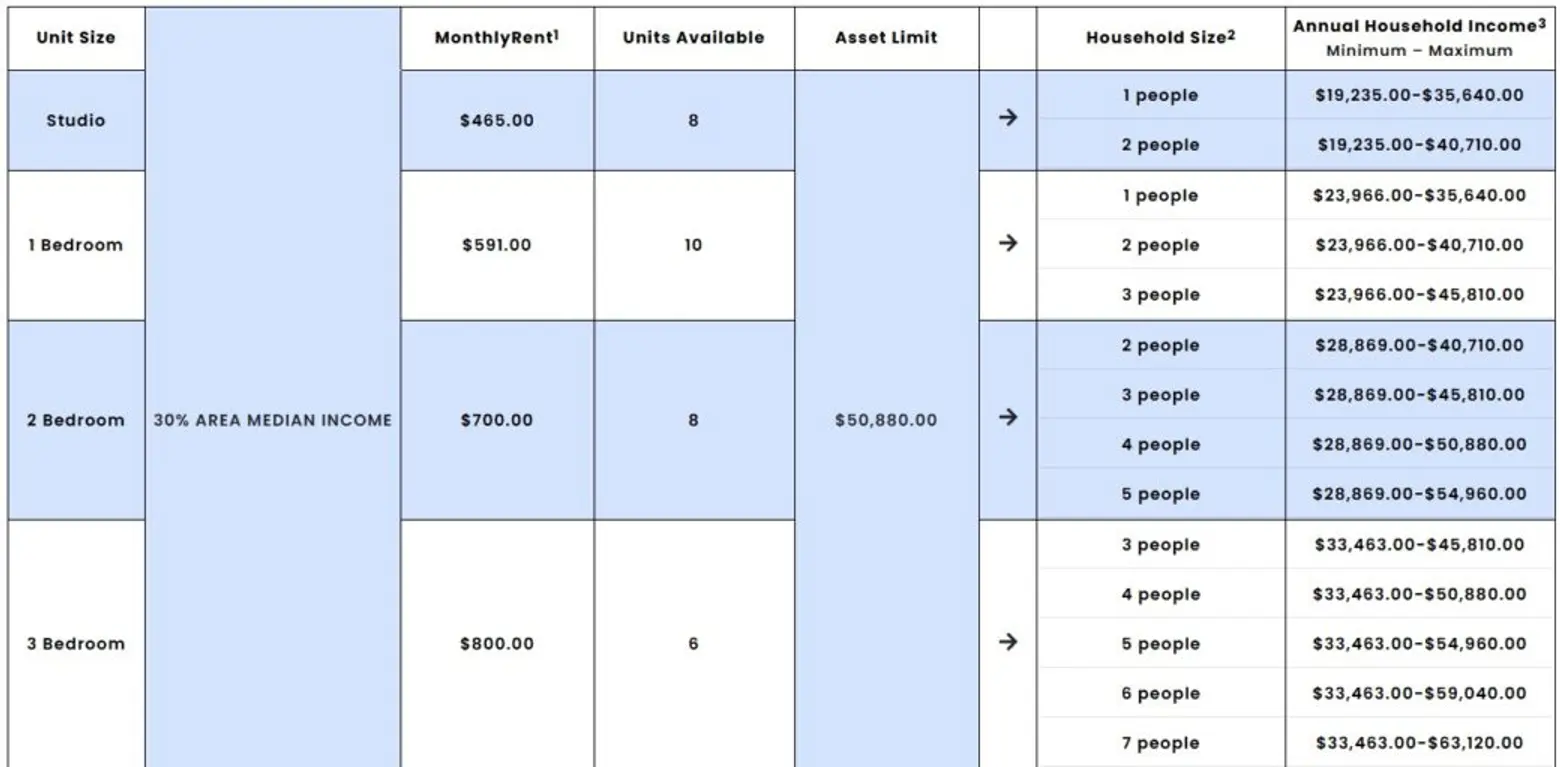
Powerhouse Apartments will include 84 homes for low-income New Yorkers, made up of 24 studios, 18 one-bedrooms, 31 two-bedrooms, and 11 three-bedroom units. There will be 30 units set aside for formerly homeless residents.

Designed by STAT Architecture, the project will incorporate sustainable elements, including high-efficiency heat pumps, light-colored materials, solar panels, green roofs, and plantings. Recessed, angled windows will be oriented away from the sun to reduce heat gain and maximize views of nearby Saint Mary’s Park.

The building will also include a workforce development center with programming for young adults, along with more than 6,400 square feet of outdoor green space.

In a statement, Mayor Zohran Mamdani said the new procedure reflects the administration’s continued efforts to confront the city’s housing crisis.

“Our administration is treating the housing crisis with the urgency New Yorkers deserve,” Mamdani said. “By using the city’s first-ever Expedited Land Use Review Procedure, we cut months off the pre-development process to deliver desperately needed affordable housing in Mott Haven faster.”

“And this is only the beginning. We will continue bringing every part of city government together to confront the housing crisis head-on,” he added.

RELATED:

The post Mott Haven affordable development approved after just 90 days, thanks to new expedited review first appeared on 6sqft.

This post was originally published here

The Consumer Financial Protection Bureau (CFPB) could finalize changes to its Regulation X servicing rules while creating a regulatory pathway for streamlined refinances through the government-sponsored enterprises (GSEs) by the end of this year, mortgage industry sources told HousingWire.

Meanwhile, prospects for changes to the loan originator compensation rule (LO Comp Rule) — particularly revisions that would allow compensation to vary based on loan terms, a restriction established under the Dodd-Frank Act — appear to be fading despite sustained lobbying from industry trade groups.

One source said the CFPB does not believe changes to the LO Comp rule would have a “meaningful” impact and that the agency “doesn’t have the bandwidth” to pursue the issue. By contrast, the CFPB sees “far more interest” in creating a streamlined refinance framework for Fannie Mae and Freddie Mac due to its broader economic implications.

The Federal Housing Administration (FHA) and the Department of Veterans Affairs (VA) already offer streamlined refinance programs that allow loans backed by the agencies to bypass full reunderwriting requirements. The GSEs currently lack a comparable permanent option. Such a program would likely exempt certain rate-and-term refis from the ability-to-repay rule.

The CFPB did not immediately respond to HousingWire’s request for comment.

A potential rollback of the LO Comp rule, along with revisions to servicing requirements under the Real Estate Settlement Procedures Act (RESPA) and Regulation X, appeared on a list of rules under review submitted to the Office of Management and Budget (OMB) in June 2025.

President Donald Trump also issued two executive orders in March that aim to expand U.S. housing supply and increase consumer access to mortgage credit, touching on a broad range of housing finance issues.

LO Comp rule details

The Mortgage Bankers Association (MBA) has been one of the industry’s most vocal advocates for revising the LO Comp rule. In a letter sent earlier this month to CFPB acting director Russell Vought, the MBA said it had prioritized three issues tied to Trump’s broader executive order agenda.

Among the group’s proposals were to allow loan originators to reduce their compensation to compete more effectively and better align compensation structures with different loan products, particularly housing finance agency (HFA) bond loans. The MBA also called for reforms to TRID tolerances, cure provisions and timing requirements, as well as updates to Home Mortgage Disclosure Act (HMDA) reporting thresholds under Regulation C.

“Clearly, there are plenty of good ways to roll back red tape and make mortgages more affordable while still protecting borrowers,” MBA president and CEO Bob Broeksmit said this week during the group’s Secondary and Capital Markets Conference in New York.

“The White House has said that it wants to help community banks and smaller institutions. But they aren’t the only lenders who need relief from red tape. So do credit unions, IMBs, large banks and many others.”

Market participants, however, remain divided on the issue.

“MLOs, in their zeal for a deal, do need to be restrained somewhat so that we have a level playing field and they don’t do naughty things like they once did,” Jay Plum, executive vice president at Fifth Third Bank, said during the same conference.

Still, Plum acknowledged that aspects of the rule may warrant reconsideration.

“All that said, it is very difficult to have a consistent pay plan across all sizes of loans when you’re trying to accommodate affordable housing loans in low- to moderate-income census tracts,” he said. “Those in particular need some consideration, and that part of the policy, which was created like spraying peanut butter, does need to be adjusted.”

This post was originally published on here

A new white paper from BlackWolf Advisory Group says adoption of artificial intelligence in mortgage servicing is accelerating as firms seek to reduce costs, improve compliance and automate routine tasks.

While the paper says servicers are ready and actively adopting AI, regulatory scrutiny and legacy technology systems remain as major barriers.

The paper, titled “Mortgage Servicer’s Strategic Guide to AI Adoption,” said AI adoption among mortgage lenders more than doubled between 2023 and 2025, rising from 15% to 38% of companies. Servicers using AI are reporting 30% to 50% reductions in customer service costs and 25% to 40% decreases in document processing expenses, the report noted.

Mirza Hodzic, managing director and founder of BlackWolf, said that since servicers’ needs vary, it can be hard to pinpoint when and where each entity should start incorporating AI into workflows.

“No servicer is the same when it comes to the way they do business. … They have different data, they have different budgets and sizes, so when we look at the overall thought process and things that the servicers are looking at, they don’t know where to get started,” Hodzic told HousingWire.

“What we do is a foundational assessment of readiness to implement AI, and that’s generally to understand what the big needs at the moment are, what [their] technology looks like, current capabilities, and where [they] want to be six months, one year or further down the road.”

BlackWolf’s paper cited several examples of AI already in use across the mortgage industry. It said a pilot program at BSI Financial Services achieved a 73% resolution rate for AI-handled inquiries and reduced weekly calls to human agents by 400. Rocket Mortgage was also cited for processing more than 1.5 million documents per month using generative AI tools that automatically classify forms and extract data fields.

The report said predictive AI models are helping servicers identify borrowers at risk of default earlier, while fraud detection tools are shortening review timelines from weeks to seconds. It noted that Fannie Mae partnered with Palantir Technologies on fraud detection technology that can identify suspicious activity in about 10 seconds, compared with a traditional 60-day investigative process.

BlackWolf said most mortgage companies are relying on third-party vendors rather than building proprietary AI systems. The report cited a 2025 STRATMOR Group survey showing 63% of lenders using AI rely on vendor solutions, while only 20% are developing custom tools internally.

“You can’t just rely on a vendor and say, ‘Well, the vendor is the AI tool.’ You’re responsible for it,” Hodzic said. “Right now, buying is the option people choose when deciding whether to build or buy AI, [but] when you build it, you’re investing in it a bit longer term because you’re going to own the risk fully.”

Major servicing technology providers are embedding AI directly into their platforms, according to the report. ICE Mortgage Technology, whose MSP platform serves more than 100 clients, has integrated AI-powered automation agents into servicing workflows. Meanwhile, Sagent has added AI tools for document automation and predictive analytics to its Dara platform.

At the same time, the report warned that regulatory oversight of AI in mortgage servicing is intensifying. It highlighted new governance requirements from Freddie Mac that took effect in March 2026 and require servicers to implement formal AI governance policies, security assessments and executive oversight.

Organizational resistance remains one of the biggest obstacles to AI adoption. BlackWolf cited research from McKinsey & Co. showing 32% of respondents expect workforce reductions where AI is deployed.

The white paper also alluded to servicer errors when deciding to implement AI functionalities.

“Mistakes we’ve seen include jumping headfirst into AI without a plan, just to keep up with maybe some other competitors,” Hodzic said. “It takes a while. It takes experts in the field to understand and implement it correctly. Just throwing money and time at it, or asking your internal team to handle all of it, is putting them in a tough spot.”

This post was originally published on here

The U.S. has too much supply of single-family homes and not enough demand. But why can’t housing starts grow when the White House says we are 10 million homes short?

I go back to the 1984 movie “Ghostbusters” and this quote from from Dan Aykroyd’s character: “Personally, I liked the university. They gave us money and facilities; we didn’t have to produce anything! You’ve never been out of college! You don’t know what it’s like out there! I’ve WORKED in the private sector. They expect results.”

Why am I talking about this? Because people still believe, as they did in the past decade, that if we build a massive supply of homes first, home sales will explode. Now, while some in government and non-business people on the internet think this way, the private sector doesn’t, because it runs businesses to make money. Also, the cost to build multifamily housing needs to make sense relative to rents and the cost of capital — otherwise, you’re a terrible businessperson and you’ll be out of business. As I often say about this subject …

The builders aren’t the March of Dimes!

Today’s housing starts story is the same as it has been for years; we aren’t going anywhere with housing construction. Back in June 2021, I wrote an article saying that this would be the case once mortgage rates rose and that people shouldn’t get too excited about a housing construction boom. 

Today, I will focus on the single-family sector, as it’s the biggest variable in total housing starts data for decades, according to U.S. Census Bureau data.

Housing starts

Privately-owned housing starts in April were at a seasonally adjusted annual rate of 1.465 million. This is 2.8% (±11%) below the revised March estimate of 1.507 million but 4.6% (±13.9 percent) above the April 2025 rate of 1.4 million. Single-family housing starts in April were at a rate of 930,000; this is 9% (±7.5%) below the revised March figure of 1.022 million.

What’s happening here is that builders have too many completed units left unsold as new home sales haven’t gone anywhere for years.

Now, new home sales are still at elevated levels compared to 2019, prior to the pandemic. They’re not crashing by any means, but they’re not really growing. Back in December 2024, I wrote that builders have a supply problem, meaning their completed units for sale had reached 120,000, which is too much for them to get confined about building many more homes.

Currently, the number of completed housing units for sale is 121,000. Below is a historical look at where this has been each year, in January, going back decades, to give you an idea of why I’m not a big construction growth guy at the moment.

chart visualization

Below is the new home sales data. As you can see, it hasn’t gone anywhere for years either — not really crashing, not really growing, basically stuck in neutral since 2019. If you take away the post-COVID bump and the low point in 2022, a very steady channel of sales emerges.

chart visualization

In the chart above, you can see why housing starts look the same — no real big dive in starts but no growth either. For sure, it’s off the peak rate of the post-COVID recovery cycle.

chart visualization

Below is the builders’ confidence data. The tilt toward smaller builders explains why this survey is still stuck near the COVID-era lows point. Smaller builders don’t have the profit margins of the publicly traded homebuilders. A reminder that mortgage rates have risen to yearly highs this week, so the increase in the previous report is a bit old and irrelevant to the current rate story.

With all I said above, you can see why the single-family construction data is showing no growth at all. Here’s a series of single-family construction data lines, and they don’t scream housing construction boom to me.

chart visualization

Conclusion

Not much is happening in housing construction, AI data construction is booming, and the remodeling business is holding up OK, but housing starts really haven’t gone anywhere because there is too much supply and not enough demand. And that, my friends, is how the private sector works.

On top of all the news above, the conflict in Iran has taken all rate cuts out of the discussion in 2026, and we are talking about hikes now. Sarah Wheeler and I talked about mortgage rates this morning, and hopefully the information here gives you a clear picture on why housing starts aren’t growing — and aren’t expected to — in 2026.

This post was originally published on here

In her keynote at NAIOP’s I.CON East this week in Jersey City, New Jersey, Cushman & Wakefield Head of Quantitative Insights and Principal Economist Rebecca Rockey argued that AI, demographic shifts and growing geoeconomic fragmentation are rewiring the global economy, as nations and firms re-evaluate the tensions between pure efficiency and resilience – a transition with major implications for industrial real estate and supply chains.

“We are now well into a regime shift in the global economy that will not be undone,” she said. This shift started with President Donald Trump’s first term, continued through President Joe Biden’s term, and persists in Trump’s second term. And it is not just happening in the U.S.

This period in the global manufacturing landscape is also colliding with the rise of AI and the potential for automation, Rockey said. At the same time, a “silver tsunami” is facing most regions of the world as record numbers of baby boomers retire from the workforce without skilled labor ready to take their place.

“This convergence of factors means that there are structural shifts that are going to dominate the landscape, both on the economic side and on the property market side,” Rockey said. “There are foundational things that will change; understanding them and integrating them into strategic frameworks for thinking about capital deployment is going to be essential, and I would argue a differentiator for investors over the next decade.”

“The near-term cycle matters,” Rockey acknowledged. “I don’t want to downplay that, but we are in a shift away from decades and decades of certain trends, and that results in underlying structural momentum which had not existed, [and which] started in Trump’s first term.”

Economic growth is uneven, Rockey said, whether you look at it by sector, by market, or income group. “Some markets are expanding, some industries are expanding, some are in contraction.”

Economic growth is being driven by three “A’s,” she said: Asset Values, Affluence (the share of spending by upper income households in the U.S. population) and AI, which itself is symbolic of the broader government focus on expanding the productive capacity of the U.S. economy.

Since the advent of ChatGPT, the value of the entire U.S. equity market has risen by $32 trillion, Rockey noted. “For some perspective, our national debt is $39 trillion,” she added. For every dollar of additional wealth from higher asset values, U.S. consumers tend to spend about three more cents. In other words, people spend more when they feel wealthier, even if they are not flush with cash.

“So, if you do the math in any given year since COVID-19, this [wealth effect] has added roughly 30 basis points at a minimum to headline GDP growth,” Rockey said. “And in some years like 2024, potentially up to 70 basis points of headline economic growth came from the consumption effects that high asset value had on consumer behavior.”

“The top income deciles in the U.S. economy are accounting for a historically large share of spending,” Rockey said, noting the disparity of income distribution across the country. “This is an uneven economy, but affluent households are not as price-sensitive the way that lower income households are, so when gas goes up to $4.50 a gallon, their behavior does not change in the same ways that a broader base of consumption would change.”

“We can’t not talk about AI,” Rockey said, while also stressing that the rapid rise of AI needs to be considered in context. Rockey said that starting with Trump’s first term, the U.S. government has, for the first time in decades, been actively trying to strengthen America’s ability to produce things. This can be through the tax code, incentives, federal spending, tariffs and trade agreements.  

“AI is just another line item in the supply side of the U.S. economy that allows us to be more productive,” Rockey said, “Productivity is the engine of growth that results in higher well-being.”

“I think that there’s a little bit more underlying resilience to the economy than we sometimes give it credit for,” she said, although she noted that her firm has downgraded its projection for growth specifically due to the ongoing conflict in Iran.

“I think it’s still reasonable under a pretty wide set of baseline assumptions to assume that we’ll get a [GDP] growth year in the 2%-2.5% range,” Rockey said, “And that’s a pretty decent year.”

Starting even before COVID-19, we’ve moved from an era solely focused on efficiency to one where we’re focused on resilience because of supply-side shocks to the economy, Rockey said. The shocks in those years have been many: along with COVID-19, there’s been the Russia-Ukraine war, significant trade and immigration policy changes, and more recently, the conflict in Iran.   

“And the Federal Reserve’s toolkit is really designed for demand-side shocks, which have been predominant over the last several decades [relative to supply-side shocks]. This is a new world of more frequent disruptive supply side shocks and a period of time where resilience is going to matter more, and the calculus therefore changes.”

“I think the macro story in industrial real estate has been pretty consistent across the last few years,” Rockey said. “We knew in the aftermath of COVID-19, particularly as rates started to rise, that demand was going to cool off. It would also cool off because a nontrivial share of pandemic demand was pulled forward from future years – a giveback was inevitable.”

“We had rates go up, so we had interest-rate-sensitive spending start to pull back at faster paces,” Rockey said, “And ultimately, we had a huge amount of construction that was coming, so we knew vacancy was going to go up from its cyclical low (2.8%), which was unprecedented in our data.”

“Ultimately, there’s going to be shifting structural demand that originates from the forces that I talked about, in particular, global supply chains and manufacturing, and the effects are not just national,” she said. “You’re going to hear me talk about different geographic corridors in the country because these are a starting point for understanding relative competitive advantages, and from there we can go down to the city, the submarket, or asset level.”

Regions in North America that score highly on factors such as highway and rail access, affordable and available infrastructure, labor availability and related metrics include Texas, the Southeast, the Midwest, the Intermountain West and Rocky Mountain Corridor, and Mexico.

Different parts of the country offer different strategic advantages; parts of California might have higher tax rates, higher cost of labor and higher energy costs, but they also benefit from access to goods coming from Asia and proximity to large population centers (and therefore labor). The West Coast generally boasts pockets of highly skilled workers that are difficult to find elsewhere at scale.

Labor is a crucial consideration for industrial real estate; not only does labor typically make up 50% of operating expenses, but the industrial workforce is old – and getting older.

“About a quarter of the industrial workforce is eligible, or will be eligible in the next few years, to retire,” Rockey said. One result of this is that companies are focusing more on fully autonomous warehouses and integrating them strategically into their supply chain.

“There is an economic imperative to do this,” she said.

Rockey said that automation is “moving from a ‘nice to have’ to a necessity, and that’s really kicking into high gear.” Automation, of course, has different needs than a traditional warehouse, with significantly more power requirements, heavier floor loads and potentially a longer horizon for return on capital expenditures.

From a portfolio perspective, integrating more automation-ready facilities can help balance risk. In addition, the diversification of the industrial tenant base can allow for what Rockey calls “thematic occupancy:” analyzing who tenants are, what their industries are, noting any cyclicality in those industries, and deciding if that exposure is the preferred strategic approach.  

Ultimately, Rockey emphasized that the winners of the next decade will be those who build resilient, strategically flexible portfolios aligned with the dramatic reshaping of the global economy.


JLL logo

This post is brought to you by JLL, the social media and conference blog sponsor of NAIOP’s I.CON East 2026. Learn more about JLL at www.us.jll.com or www.jll.ca.

This post was originally published here

Every few years, the real estate industry gets a jolt that sends agents scrambling to reassess their careers and where they hang their license. The current wave of consolidation — eXp acquiring Next Home, Real acquiring Remax, Compass acquiring Anywhere — is the latest version of that jolt. And if the conversations I’m having with agents across the country are any indication, a lot of people are asking the same urgent question right now: What does this mean for me?

My answer tends to surprise people: less than you think — but that doesn’t mean you’re off the hook.

Buyers and sellers don’t choose brokerages — they choose agents.

Let’s get clear about what these acquisitions actually are. They’re significant capital plays. Brand expansions. Infrastructure bets. They’re a belief that if you get big enough — in recruiting, technology, and marketing — sustained market share growth will follow.

What they are not, at least not automatically, is a fundamental disruption to how real estate transactions happen.

What gets buried in all the consolidation headlines is that residential real estate is, at its core, a relationship business. When a homeowner is ready to make a move, the phone call goes to a person — not a logo. That dynamic doesn’t disappear just because two companies merged.

Where’s the real threat?

That said, agents who dismiss consolidation entirely are missing something important. Scale does matter in specific, concrete ways.

Larger entities can outspend regional and independent brokerages on brand advertising, technology development and agent recruitment incentives. That creates real pressure, not necessarily at the transaction level, but at the visibility level. If consumers are seeing more of a competitor’s brand in their daily lives, that’s worth paying attention to.

The vulnerability, in other words, isn’t that consolidated brokerages will steal your existing clients. It’s that they may, over time, capture the unaffiliated consumer — the buyer or seller who doesn’t already have someone they trust — before you ever get the chance to connect with them.

This is where agents need to be honest with themselves. If your business is primarily built around company-generated leads and brand recognition, you are competing on terrain where larger, better-capitalized organizations will eventually win. The agents who will weather this consolidation period most effectively are those who have built something harder to replicate: genuine relationships, a consistent prospecting habit and a personal reputation in their market that no merger can manufacture overnight.

The relationship imperative

Here’s something I’ve observed consistently across markets and business cycles: the agents who are most insulated from industry disruption — consolidation, technology shifts, commission compression, whatever the current threat is — are the ones with deep, well-maintained relationship networks. Not because relationships are a feel-good abstraction, but because they represent a concrete competitive moat.

An agent with 500 genuinely cultivated relationships in their sphere is not materially threatened by a competitor’s advertising budget. Their business is largely pre-sold. The leads that national brands spend heavily to generate — unaffiliated consumers with no existing agent relationship — are simply not the same consumers.

This has a direct practical implication for how you run your business: the most defensible position in a consolidating market is one where your clients don’t need a brand to find you — they already know you. That kind of business doesn’t get disrupted by a merger announcement.

Building it is harder than riding a company’s lead generation platform. It requires consistent prospecting, genuine follow-through, and showing up for people before they’re ready to transact. But it also produces something that no acquisition can replicate overnight — loyalty, referrals, and a personal brand that means something at the local level where transactions actually happen.

The practical takeaway for agents

If you’re an everyday agent trying to make sense of the current consolidation environment, here’s how I’d frame your priorities.

Resist the urge to react tactically to each acquisition announcement. Agents who make impulsive brokerage changes, or who spend their energy worrying about competitor moves, are playing a game they’re unlikely to win. You cannot out-resource a mega brokerage on their own terms.

What you can do is double down on what makes you distinct. Audit your prospecting habits honestly. Invest in the relationships and skills that produce measurably better results. Tighten your focus on the people in your sphere rather than chasing cold leads. And remind yourself — and your clients — why working with you specifically is different from calling a brand off a billboard.

The consolidation wave will continue. Some agents will be rattled by it. Others will lose business to better-resourced competitors. But the ones that will come through this period strongest are those who understood early that the answer to scale isn’t more scale — it’s depth. Deeper relationships, deeper skills, deeper roots in their communities.

That’s not just good coaching advice. In a consolidating market, it’s a viable career strategy.

Darryl Davis, CSP, has spoken to, trained, and coached more than 600,000 real estate professionals around the globe. He is a bestselling author for McGraw-Hill Publishing, and his book, How to Become a Power Agent in Real Estate, tops Amazon’s charts for most sold book to real estate agents.

This column does not necessarily reflect the opinion of HousingWire’s editorial department and its owners.
To contact the editor responsible for this piece: tracey@hwmedia.com

This post was originally published on here

Listed as the “largest two-bed in Manhattan,” this 7,000-square-foot loft condo at 345 West 13th Street in the historic Astor House is big enough to get lost in. Asking $25,750,000, the home offers the strictly 21st-century perk of a dedicated wellness wing with a private spa suite fitted out with a steam room, dry sauna, Jacuzzi, reflexology path, plus a 1,000-square-foot pro-grade gym and a soundproofed recording studio.

Wellness optimization continues throughout the home with a Crestron automation system, circadian lighting, advanced air and water purification, and posture-optimized flooring. The layout is in keeping with classic loft style, with a huge great room flanked by two private bedroom wings.

This highly calibrated lifestyle infrastructure is framed by a classic loft conversion that was built in 1890 for John Jacob Astor’s estate; it originally held the Mines Press printing company. Traces of its industrial heritage remain in the form of 12-foot ceilings, exposed brick walls, original cast iron columns, and hefty timber beams.

A sprawling great room functions as the home’s living, dining, and kitchen spaces. The living space is framed by 10-foot ceilings and 35 double-height windows. A stylish kitchen features custom cabinetry and integrated appliances; a hefty stone-topped dining island anchors the space.

The dining area is big enough for the whole crew. If you’ve misplaced your mobile, you can call it from the working 1953 phone booth rather than have to search all 7,000 square feet of living space.

Bedrooms are located in separate wings for optimal privacy. Each has its own luxurious bath and a customized dressing room.

The aforementioned wellness wing covers both physical health and creative satisfaction. A fully-stocked gym and a steam room, sauna, and Jacuzzi keep the body in tune, while a fully soundproofed recording studio/library nourishes the soul.

The building’s classic industrial façade was once part of the Astor Estate. The loft’s massive arched entry doors were custom-made for the apartment; the bell was installed in the 1970s to call the residents’ dog at dinnertime.

Additional amenities include a 24-hour doorman and a rooftop terrace. Located at the border of the West Village and the Meatpacking District, the surrounding neighborhood is among the city’s most coveted for cultural vibrancy and transit access.

[Listing details: 345 West 13th Street #2E at CityRealty]

[At SERHANT. by Peter Ocean]

RELATED: 

The post 7,000-square-foot ‘wellness loft’ in the West Village asks $25.8M, working phone booth included first appeared on 6sqft.

This post was originally published here

Mayor Zohran Mamdani on Thursday announced that his administration had secured 1,000 World Cup tickets, which will be made available to New Yorkers for $50 through a lottery system. As first reported by The Athletic, 150 tickets will be distributed for each of the five group stage matches and two knockout round matches at MetLife. The $50 ticket includes free round-trip bus fare to the stadium. The lottery opens May 25 at 10 a.m. and closes May 30 at 5 p.m., with up to 50,000 entries accepted daily. Winners will be able to purchase up to two tickets each.

“A World Cup is coming to our backyard, and we want to ensure working-class New Yorkers have the opportunity to be part of it,” Mamdani said.

“We sat down with the Host Committee to make certain this tournament belongs to the people who make this city what it is. Today, 1,000 New Yorkers are going to get into those stands for fifty dollars and a free bus ride. I’m proud that New York City is leading the way.”

The tickets will be the cheapest offered for the entire tournament and the only affordable ticket program negotiated by a host city for this year’s competition. They will be located in the upper bowl of the 82,000-capacity stadium. Fans will not be required to provide income information, only proof that they live in the five boroughs.

Tickets will be valid for five group-stage matches on June 13, 16, 22, 25, and 27, as well as a Round of 32 match on June 30 and a Round of 16 match on July 5.

Mamdani, a lifelong soccer fan, has been a critic of the high ticket prices for the tournament. As reported by Front Office Sports, FIFA has listed tickets for the July 19 final on its official platform as high as $32,970.

On the campaign trail in September, he said FIFA was prioritizing revenue over accessibility, adding that the costs have a “real impact on the potential for the atmosphere of the World Cup,” according to The Guardian.

The initiative is being framed as a collaboration between the Mayor’s Office and the New York/New Jersey World Cup host committee, led by CEO Alex Lasry, rather than FIFA.

“This program exists because the Mayor was determined to make sure working New Yorkers would be in the stands when the World Cup comes home to New York,” NYC World Cup Czar Maya Handa said.

“A kid in the Bronx, a security guard in Queens, a restaurant worker in Brooklyn or Staten Island—they are going to walk into the stadium this summer because their city fought for them to be there.”

FIFA has responded to criticism over ticket prices by releasing a limited batch of $60 tickets, accounting for roughly 1.6 percent of total tickets for sale. The federation had originally set $60 as the lowest price for World Cup tickets, but dynamic pricing has since driven costs significantly higher.

The cost of attending World Cup matches has not been the only financial concern tied to the tournament. When it released its final transportation plan, NJ Transit initially priced round-trip train fares to MetLife Stadium at $150. After the backlash, the agency reduced the fare to $105, and later to $98.

NYC has also reduced costs for round-trip bus tickets to the tournament. Last week, Gov. Kathy Hochul announced that, with financial support from the state and other sponsors, round-trip fares will cost $20, down from the previously announced $80.

The lottery opens at www.regnyctix.com on Monday, May 25, at 10 a.m. and closes Saturday, May 30, at midnight. New Yorkers ages 15 and older can enter once per day for a chance to purchase tickets. To prevent scalping, tickets will be nontransferable and distributed directly to winners at the official boarding location on each matchday.

Randomly selected winners will be notified by email on June 3. Winners will have 48 hours to purchase tickets.

“Mayor Mamdani has been unwavering in his commitment to making sure New Yorkers could be part of this historic moment in a real and meaningful way,” Alex Lasry, CEO of the FIFA World Cup 2026 NY/NJ Host Committee, said.

“From the beginning, we pushed for a program that prioritized affordability and access for New Yorkers and worked closely together to help make that possible,” he added. “The World Cup will bring the eyes of the world to our region, and it was important to all of us that the people who define NYC could experience it firsthand.”

RELATED:

The post NYC residents can enter lottery for $50 World Cup tickets first appeared on 6sqft.

This post was originally published here

Long Island’s Lucky To Live Here Realty has joined SERHANT., bringing a $1 billion-plus sales track record and a four-person team to the brokerage’s New York expansion, the company announced earlier this month.

Co-founders Elena D’Agostino and Joyce Mennella, both native Long Islanders, launched Lucky To Live Here Realty in 2010. Since then, the firm has closed more than $1 billion in sales volume and recorded $59 million over the past 12 months, according to the announcement.

Elena D’Agostino and Mennella bring a combined three decades of experience to SERHANT. D’Agostino has been recognized by the Suffolk County MLS for highest gross commission income and highest priced residential sale, and was named Long Island Business News’ (LIBN) 2015 Top Producer by GCI and Top Residential Sale. Mennella was named to LIBN’s Top 50 Women in Business in 2020.

Also joining from Lucky To Live Here are broker Sari Eidelkind, who was selected as a 2019 Long Island Board of Realtors (LIBOR) Top 20 Under 40 and salesperson Lauren D’Agostino.

“SERHANT. allows us to stay true to our boutique, relationship-driven roots while offering our clients an even greater level of service and exposure,” Elena D’Agostino said in the announcement. “We have always felt aligned with the brand as we were one of the first real estate companies on Long Island to utilize social media marketing. We feel incredibly lucky to be joining the like minded innovative thinkers at SERHANT., and look forward to introducing SERHANT. to our community and clients.”

The move gives SERHANT. a deeper foothold in the Long Island market as the firm continues to expand across both the East and West Coasts. Earlier the year, SERHANT. announced the launch of its Boston operation followed by its launch in five California markets, including Los Angeles, San Diego and San Francisco.

This article was written by Brooklee Han and generated with the assistance of HousingWire Automation. It was reviewed by a HousingWire editor before publication. The system helps convert company announcements and industry data into HousingWire-style news coverage.

This post was originally published on here

Two decades ago, Scott Sicari was approached to design a reunion set for a show called “Manhattan Moms.” “We set up in the Russian Tea Room with some guy that nobody knew named Andy Cohen,” he said. The show, rebranded as “The Real Housewives of New York City,” would become a cornerstone of the Bravo reality TV phenomenon. Sicari has stayed for the ride. “It’s been a nice, really unexpected, beautiful twist in my career,” he said.

“Housewives of Miami” season 7 reunion.

Sicari has been a TV host and a production designer for 30 years, previously at MTV and VH1, working on music videos and commercials. Today, he works with Bravo production companies, including Truly Original, which produces “The Real Housewives of Atlanta,” “The Real Housewives of Dubai,” and “Summer House,” among others.

The company also produced the New York City-based “Summer House” spinoff “In the City,” which premiered this week after the “Summer House” season finale.

While some reunion sets have been over-the-top — bringing in sand for “The Real Housewives of Dubai” and koi fish for “The Real Housewives of Atlanta” — the “Summer House” sets are quite predictable as it was established early on that they would all take place in a recreation of the show’s Hampton’s house backyard with variations each season, usually themed to the cast parties (“Snoozefest” comes to mind). This year, however, the reunion was not a party.

All eyes will be on the “Summer House” season 10 reunion when it airs on May 26 — part one is even scheduled to be shown on the big screen at AMC in Flatiron. For those not in the know, in March, cast members Amanda Batula and West Wilson confirmed rumors that the two have been secretly romantically involved, prompting swift backlash as Wilson and castmate and close friend of Batula’s, Ciara Miller, have had a will-they-won’t-they relationship.

Batula recently split from husband and castmate Kyle Cooke, the news of which broke shortly before the season premiered. Leading up to the highly anticipated reunion, there were even audio leaks, revealing the tension in the room. Even Sicari, who typically does not stay for the duration of the reunion tapings (which can last upwards of 12 hours and result in three-episode reunions), stayed for this one.

“Summer House” season 9 “Snoozefest” reunion.

“The energy leading up was incredibly stressful for all of us and for the cast to anticipate it for three weeks since the bomb dropped,” Lauren Eskelin, “Summer House” executive producer and EVP of Programming at Truly Original, said.

“But I think [the cast was] looking forward to getting it behind them … For the cast, this is a real-life tight group of friends, and they had to address really, really hard things. We have a lot of compassion for everyone in that situation. It’s not easy for them.”

As such, the set is not as campy and fun as it has been in the past.

“We knew this was not going to be a kitschy, silly, funny setting for some pretty heavy stuff that our cast was dealing with, so the set needed to reflect that and not distract from it,” Eskelin said.

“We kept it classy,” Sicari added.

The trailer, which dropped this week, shows white hydrangeas as a backdrop for intense discussion. The cast’s outfits give another glimpse into the vibe for the reunion. Miller’s outfit was the first to be revealed, with many dubbing it her “revenge” dress a la Ariana Madix from “Vanderpump Rules.”

Miller, a model/nurse and TV host, donned a white midriff-bearing gown for the event. Batula is in a yellow two-piece, Lindsay Hubbard is in bright red, and light-colored suits were the fashion choice du jour for the men.

The dress code for the “Summer House” cast is always “summer chic,” said Eskelin.

While Bravo stars choose their own outfits and styling for reunions, some dress code and guidance were implemented early on to create a vibe and a level of cohesion.

“It’s taken on a life of its own,” said Sicari, referring to some of the “theatrics” of the fashion at reunion sets. “In the beginning, it was jeans and sweaters, and they did their own makeup, and now it’s glam teams. It’s really an intense part of the reunion, the fashion.”

Early on, he said, conversations about color schemes (including the color of the couch and how it will match the outfits) happen.

“Housewives of Salt Lake City” season 6.

It’s not just fashion that’s evolved. What started as a few couches in a room has become a full-scale production beginning months in advance, even before the season airs. The concept for the set design of reunions usually comes from a cast trip or a big moment in the season.

The latest “Real Housewives of Salt Lake City” reunion, for example, recreated a Greek island. Sicari might create a mood board or even renderings for approval before sourcing and building begins.

“Housewives of New York City” season 15.

“I have a set shop in New Jersey where we build everything, and we store things we can repurpose to keep our footprint as nice as possible. I do all the sourcing personally,” he said. It usually takes about two weeks to build the set on a soundstage in New York City.

“When the cast walks out, they don’t know what the design is going to be,” said Eskelin. “And even in ‘Summer House,’ where they pretty much know they’re going to be in their backyard, when they see it and they react to it and they notice all the details on the set, it just sets the stage for the whole day.”

Having done about 120 reunion sets, Sicari said the best part is when Cohen walks out and says, “‘Scott, this is amazing’ after seeing a million of them.”

The post ‘Summer House’ set designer kept it ‘classy’ for highly anticipated reunion first appeared on 6sqft.

This post was originally published here

Southern Land Company has launched an in-house mortgage division, SLC Lending, as the Nashville-based developer looks to tighten control of the homebuying process across its master-planned and single-family communities.

The move, announced by the company, extends Southern Land’s vertically integrated model beyond land planning, development, construction and property management into mortgage origination. It comes as more builders and developers push into captive or affiliated lending to better manage rate volatility, incentives and pipeline risk.

SLC Lending will initially operate in Southern Land’s core homebuilding markets of Colorado, Texas and Tennessee, and will expand in step with SLC Homes into additional regions, the company said.

“In today’s housing market, where financing has become one of the most complex parts of the process, bringing that capability in-house allows us to deliver greater certainty and control for our buyers,” Tim Downey, founder and CEO of Southern Land Company, said in the announcement. “SLC Lending is a natural extension of that philosophy and enables us to deliver a more cohesive, thoughtful experience across every stage of the homebuyer’s journey.”

Southern Land develops a mix of large-scale master-planned communities and smaller single-family projects. Its portfolio includes Westhaven, a 1,500-acre, roughly 3,500-home master-planned community in Franklin, Tennessee; the nearly 600-acre luxury LaurelBrooke community, also in Franklin; Fairington, a 373-acre, 700-home community in Nolensville, Tennessee; the 800-acre, 3,100-home Westerly community in Erie, Colorado; and Tucker Hill in McKinney, Texas, among others.

The company said SLC Lending is structured to work closely with its builder and sales teams, with an emphasis on market-specific financing options and tighter coordination between mortgage, construction and closing functions. The goal is to improve communication and visibility for buyers from application through closing and to make transactions more predictable for both the lender and builder.

“As our footprint expands nationally, alignment across every part of the process becomes increasingly critical,” Brian Sewell, president and COO of Southern Land Company, said. “SLC Lending allows us to deliver greater predictability, efficiency and transparency to our buyers, while reinforcing the foundation for long-term growth.”

Southern Land has tapped mortgage executive Bobby Frank to lead the new platform as vice president of mortgage operations. According to the announcement, Frank previously helped build a mortgage company from its first hire into a top-10 national lender over 28 years, funding more than $125 billion in residential loans. That experience gives SLC Lending leadership with a full-cycle view of origination, underwriting and collateral valuation as it scales, the company said.

Frank said the new unit is focused on customer experience and efficiency.

“Our focus is simple: build a culture focused on taking great care of the homebuyer while delivering a more efficient and predictable experience from application to closing,” Frank said in the release. He added that the long-term plan is to grow beyond exclusively serving Southern Land communities to support purchase and refinance business for outside real estate professionals and other builders, with an eventual goal of retaining servicing on its originations.

Why this matters for lenders and builders

The launch of SLC Lending underscores a broader trend of large homebuilders and developers bringing mortgage operations in-house or deepening joint ventures with lenders. In a high-rate, low-inventory environment, control over financing can be a competitive lever, allowing builders to structure rate buydowns, closing-cost incentives and quick approvals to keep absorption and cancellations in check.

For independent lenders and mortgage brokers, the expansion of captive builder finance channels increases competition for purchase leads in fast-growing markets like suburban Nashville, Austin and Denver. At the same time, SLC’s stated plan to eventually partner with outside agents and builders could create future third-party origination or referral opportunities.

For homebuilders and developers, the Southern Land move highlights several operational considerations: how closely mortgage operations are integrated with sales and construction, how data flows between divisions to manage cycle times, and how compliance and fair lending are handled as affiliated business arrangements proliferate.

Southern Land, founded in 1986, has a current project pipeline valued at about $3 billion across nine states, with regional offices in New York City; Philadelphia; Plano, Texas; Denver; and Vallejo, California, according to the announcement. The company said SLC Lending is designed to scale alongside that pipeline as its master-planned and single-family communities grow.

This post was originally published on here

More than 20% of properties purchased at foreclosure auction are going to owner-occupant buyers, including first-time homebuyers eager to find affordable housing options.

“This will be the house we get to bring our baby home to,” said Hannah Joslin, referring to a Fort Worth, Texas, property she and her husband purchased at foreclosure auction in Tarrant County in March 2026. “I was tearing up because this is my first home.”

Both buyer survey data and foreclosure auction sales data, when matched to public record tax assessor data, show an increasing share of owner-occupant foreclosure auction buyers like Joslin and her husband.

One in five foreclosure auction buyers are owner-occupants

Eighteen percent of Auction.com buyers described themselves as owner-occupant buyers in a survey of more than 400 buyers in February 2026. That was down from a peak of 26% in the previous year, but the owner-occupant share of survey respondents has been steadily trending higher since 8% in 2022, the first time the buyer survey was conducted.

An analysis of Auction.com foreclosure auction sales data in 2025, matched against public record tax assessor data — which includes owner-occupancy status — shows that 27% of the properties that have not been resold by the auction buyer are owner-occupied.

The percentage is 20% for all foreclosure auction purchases from 2015 through 2025. This suggests that about one in five properties purchased at a foreclosure auction is occupied by the buyer.

Consistent with the Auction.com survey data, the public record-based owner-occupancy share has increased over time, from a low of 12% for 2015 purchases to a peak of 29% for 2021 purchases — at the height of the pandemic housing boom and the low in home affordability.

Coming up with cash

The rise in owner-occupants buying at foreclosure auctions may be somewhat surprising, given that these purchases are typically all-cash homebuying transactions with no inspection available before purchase. But owner-occupants like the Joslins are finding ways to come up with the cash.

“We were telling some family friends about it … and they’re like, ‘Oh, that’s a great home, … we have the means to lend to you so that you can make the offer on it,’” said Joslin. “They were very generous, very kind, lent us the money that we needed to make the offer.”

Other owner-occupant buyers can tap their savings to buy at the auction with cash.

“I’d read a little bit about auctions but really didn’t know,” said Blair Berry, an owner-occupant buyer who purchased a property at foreclosure auction in August 2025 in Chattanooga, Tennessee, to be close to her two new grandchildren.

Berry first learned about the Thursday auction three days before, on Monday. “So, I spent Tuesday just reading about it and thinking about it, and by Tuesday night, I was not sure. And then I talked to my financial guy on Wednesday, and he said, ‘I think you should go for it.’”

From short sale to foreclosure auction

The Joslins first considered foreclosure auctions after Hannah’s dad suggested that option earlier in their home search.

“He’s like, ‘You guys should look at foreclosures because you can … get a really good price on homes,’” she said, noting that the couple didn’t seriously explore the option at the time when they learned most foreclosure auctions require cash payment on the spot.

But then they fell in love with a house that drew them back to considering a foreclosure auction purchase.

“It was a short sale, and we placed an offer on it, and it wasn’t accepted, but we went ahead and got the contract drafted with the seller, and then they decided to withdraw and just go to foreclose,” Joslin said. “We already kind of mentally moved in, if you will, because we’d already placed that offer. So then when it fell through, we were super bummed.

“When the opportunity arose that we could actually try to buy it at auction, we’re like, okay, sweet,” she added.

Expectant at auction

Joslin’s husband wasn’t able to attend the auction because he was out of town for work, so she went with her real estate agent and father-in-law in tow. Joslin was about 11 weeks pregnant at the time of the auction. 

“I got to the auction, and there were a lot of people there, and it was kind of overwhelming because even though I had done a bunch of research and generally knew what to expect, it was still just the first time I’d done anything like that,” Joslin said. “It was kind of a lot.

“I found the Auction.com table, got registered for the auction, and they were just super sweet,” she continued. “They answered all of our many questions and kind of gave me some pointers and pointed me in the right direction and told me who to be listening to and kind of what the process would look like.”

Joslin was able to observe about a dozen properties go up for auction before her property was cleared for bidding. She sent a quick text to her husband: “It’s game on.”

She started bidding, submitted the highest bid and then heard the auctioneer declare her the winner.

“It was so exciting,” she said. “One of the (Auction.com staff)… she was so excited. She was, like, jumping up and down. She gave me a hug because I was, like, tearing up because I just bought my first home.”

Joslin sent a coy text to her husband, who was in a meeting with the CEO of his company: “Hey, call me if you’re able.”

He called back about 10 minutes later.

“Guess what?” she answered.

“What?”

“We’re homeowners.”

“No way.”

Click Here

This post was originally published on here

KB Home has entered the Atlanta market and closed its first land purchase in the region, the homebuilder announced Thursday.

The Los Angeles-based public builder said it has acquired 110 homesites and plans to open its first Atlanta-area community, Whitley Meadows, in early 2027. The move adds a top-five housing market to KB Home’s footprint as large builders continue to chase population and job growth in the Southeast.

Bill Schmidt, who joined KB Home in 2025 as division president, will oversee the new Atlanta division, including land acquisition, construction, sales and customer service. He has more than 35 years of homebuilding experience, including over 25 years working in the Atlanta market for national and local builders, according to the company announcement.

KB Home said Schmidt has helped shape its Atlanta strategy and position the division for future growth since joining the company. Previously with Toll Brothers, Schmidt holds a bachelor’s degree in landscape architecture and planning from the University of Florida and an MBA in real estate development from Nova Southeastern University.

Atlanta has been a focus market for public builders in recent years as buyers migrate from higher-cost metros and demand remains resilient for new homes. KB Home’s entry adds another national operator to a field that already includes the likes of D.R. Horton, Lennar and PulteGroup.

Whitley Meadows, KB’s first community under the Atlanta division, will consist of single-family homes in Bethlehem, Georgia, in Gwinnett County. Plans call for homes ranging from 2,000 to 3,100 square feet, with amenities including a pool, cabana, playground and walking trails. The community will be zoned to what the builder described as highly rated schools and will offer access to State Route 316 and Interstate 85 for commuters.

KB Home now operates in 49 markets and has built more than 700,000 homes in its nearly 70-year history. The company has emphasized energy-efficient and fire-resilient construction and says it has delivered more ENERGY STAR-certified homes than any other U.S. builder.

This post was originally published on here

Homeowners insurance premium growth slowed in 2025 after several years of steep increases, but coverage costs have still more than doubled since 2019, according to a new report released Thursday by Rate Insurance, a subsidiary of Rate.

The company’s 2026 Home Insurance Trends Report found that the average homeowners insurance premium in its portfolio rose 9.16% in 2025, increasing from $2,020 to $2,205. That marked the first notable slowdown since 2019 after annual increases approaching 20% in 2023 and 2024.

Even with the moderation, average premiums have climbed 107.6% over the past six years, far outpacing the growth in dwelling coverage limits, which rose 45.6% during the same period, the report said.

“After several years of sharp increases, we’re starting to see early signs that the market is stabilizing,” said Jeff Wingate, president of Rate Insurance. “Premiums are still elevated, but this shift gives homeowners a window to reassess their coverage, make informed adjustments and take a more proactive approach to managing long-term costs and their overall financial well-being.”

The report analyzed more than 265,000 homeowners policies placed with 100-plus carriers nationwide, as well as more than 7,500 claims filed between 2018 and 2025.

Insurance costs varied sharply by state. Colorado had the highest average annual premium in Rate Insurance’s portfolio at $3,392, followed by Texas at $3,343, Oklahoma at $3,135 and Florida at $2,946. Washington, D.C., had the lowest average premium at $1,197.

Maine posted the largest year-over-year price increase in 2025 at 21.37%, while Florida saw one of the smallest increases among larger states at 4.4%.

table visualization

The report also found widening gaps between premiums and replacement costs. Average estimated replacement costs reached $478,000 in 2025, up more than 40% over five years. Meanwhile, the average national cost of coverage rose to $4.61 per $1,000 of replacement cost, compared with $3.24 in 2019.

Oklahoma recorded the highest cost per $1,000 of replacement value at $9.83, followed by South Dakota and Florida. Washington, D.C., Vermont and Oregon had the lowest costs.

Higher deductibles are also becoming more common as insurers shift more risk to homeowners. The share of policies with deductibles under $2,500 fell to 59.67% in 2025, compared to 73.52% in 2018, while policies with deductibles of $2,500 to $10,000 saw their share rise to nearly 40%.

In Louisiana, more than 85% of Rate Insurance customers carried deductibles of at least $2,500, according to the report.

Many policies also include percentage-based wind or hail deductibles, which can leave homeowners with large out-of-pocket costs after severe storms. A 5% deductible on a $400,000 home, for example, would require the homeowner to pay $20,000 before insurance coverage begins.

Claims data in the report showed fewer claims filed overall but higher claim severity. Total claims dropped to 1,045 in 2025, down from a peak of 1,704 in 2023. But the average claim severity increased to $32,600, compared to $24,600 a year earlier.

The report attributed much of the increase to the January 2025 California wildfires, including the Eaton and Palisades fires. Fire and lightning claims represented less than 5% of total claims in 2025 but accounted for nearly half of all claim dollars paid.

Water and freezing damage remained the most common claims category, accounting for more than half of claims over the past five years.

The report also highlighted growing scrutiny of roof conditions by insurers, which increasingly use satellite imagery and artificial intelligence to evaluate properties. Carriers are more frequently limiting coverage, increasing premiums or shifting homeowners to actual cash value roof coverage for older roofs.

That trend coincides with a March 2026 policy change by the Federal Housing Finance Agency (FHFA), allowing Fannie Mae and Freddie Mac to accept policies with actual cash value roof coverage instead of requiring full replacement cost coverage.

Rate Insurance said homeowners should use the recent slowdown in premium growth to review coverage limits, deductibles and rebuilding costs, especially in areas vulnerable to natural disasters.

This article was generated using HousingWire Automation and reviewed by a HousingWire editor before publication. The system helps convert company announcements and industry data into HousingWire-style news coverage.

This post was originally published on here

Equity Residential and AvalonBay Communities agreed to an all-stock merger of equals that will create a $69 billion multifamily giant controlling more than 180,000 apartments across the country, the companies announced Thursday.

The combined real estate investment trust will have a pro forma equity market capitalization of about $52 billion and an enterprise value of roughly $69 billion, according to the company announcement. The new entity will be headquartered in both Chicago and Arlington, Virginia, operate under a new name to be announced at closing, and maintain dual listings on the NYSE.

Under the terms of the deal, AvalonBay shareholders will receive 2.793 shares of Equity Residential common stock for each AvalonBay share. On a fully diluted basis, AvalonBay shareholders will own approximately 51.2% of the combined company and Equity Residential shareholders will own about 48.8%. The merger is expected to close in the second half of 2026, subject to shareholder votes at both companies and customary approvals. The parties expect the transaction to qualify as a tax-free reorganization for U.S. federal income tax purposes.

Leadership, governance and balance sheet

AvalonBay President and CEO Benjamin Schall will serve as president, CEO and a trustee of the combined company. Equity Residential CEO Mark Parrell will retire at closing after 27 years with the firm and eight years as CEO, the companies said.

The new board of trustees will include seven trustees from Equity Residential and seven directors from AvalonBay. Equity Residential’s lead independent trustee, Steve Sterrett, will become board chair. Equity Residential’s current non-executive chair, David Neithercut, and AvalonBay’s non-executive chair, Tim Naughton, will both serve as trustees.

The merged REIT will inherit “dual A3/A–” credit ratings and, according to company projections, roughly $2 billion in annual cash flow and self-funding capacity. Management is targeting $175 million in gross cost synergies and $125 million in net synergies after property tax reassessments, positioning the platform as one of the industry’s lowest-cost operators on an overhead-per-unit basis.

The combined company expects to pay an initial annualized dividend of $2.81 per share, matching Equity Residential’s current dividend per share and exceeding AvalonBay’s current yield. Both REITs intend to maintain regular quarterly dividends until the deal closes.

Why this matters for builders and developers

For the homebuilding and residential development community, the tie-up effectively creates the country’s dominant coastal multifamily buyer, operator and build-to-core developer at a moment when for-sale housing affordability is historically stretched and institutional demand for professionally managed rentals remains strong.

The merged company would control scale that no other U.S. apartment operator can match: more than 180,000 units, $4.4 billion of projects and 10,800 apartments currently under construction across 32 communities, and a reported $4.2 billion development-rights pipeline. More than half of the units under construction have affordable or mixed-income components, according to the announcement, signaling continued appetite for public-private and inclusionary zoning deals.

For land sellers and vertical builders, this platform consolidation means:

  • A larger, more liquid counterparty for structured development partnerships, forward sales and joint ventures, particularly in high-barrier coastal metros.
  • Greater pricing transparency and discipline in bidding as the combined entity leans on centralized data and underwriting standards across markets.
  • A powerful competitor for sites in infill, transit-oriented and high-income renter submarkets where both REITs are already anchored.

Both companies have historically favored high-density, institutional-scale projects located in supply-constrained, high-rent markets such as New York, Boston, Washington, D.C., Seattle, Southern California and the Bay Area. That geographic overlap could concentrate land demand but also simplify entitlement and neighborhood negotiations, as many localities and community groups already know the players and product types.

Scaled development engine in a constrained capital market

The merger comes as development starts are under pressure from higher interest rates, construction cost inflation and tighter bank lending standards. Lesser-capitalized sponsors are struggling to line up both senior debt and equity commitments for large rental communities.

In that context, a multifamily REIT with an estimated $2 billion in annual internally generated cash flow, dual A-range credit ratings and a self-funding development model is positioned to keep building through the cycle. The companies framed their combined platform as a “leading creator of new rental housing” with the capital and pipeline to increase annual development starts once integration is complete.

For general contractors, subcontractors and materials suppliers, this level of predictable, programmatic work from a single sponsor can support capacity investments, long-term framework agreements and regional expansion strategies. But it may also put margin pressure on smaller contractors that are not able to match the scale, technology and procurement leverage of the combined REIT’s national vendor relationships.

Technology, operating leverage and NOI focus

Equity Residential and AvalonBay emphasized operating leverage as a core rationale for the deal. Management plans to deploy centralized services, artificial intelligence and automation across leasing, renewals, maintenance dispatch and customer service functions. They expect technology-driven efficiencies and “proximity benefits” — clustering communities in submarkets to share staff, marketing and services — to lift net operating income margins across the larger portfolio.

This is likely to accelerate existing trends affecting both for-sale and rental development:

  • Standardized unit layouts and building systems to simplify operations and maintenance.
  • Greater appetite for modularization, off-site components and repeatable design families that lower lifecycle cost, not just first cost.
  • Higher expectations for smart-building infrastructure, resident apps and digital leasing, which developers will need to integrate early in design.

For third-party developers hoping to build for eventual sale to institutional owners, projects that are “plug and play” with this operating model — including centralized package rooms, flex workspaces, access control systems and building automation — may have a pricing advantage at exit.

Affordable housing and policy signaling

The combined REIT reiterated what it called a “continued commitment to affordable housing,” including direct capital to nonprofit developers and an affordable preservation program. More than half of its current construction pipeline is affordable or mixed-income, the companies said.

In practice, this likely means the new platform will remain active in LIHTC partnerships, workforce housing initiatives and inclusionary zoning deals where long-term, patient capital is valued. For mission-driven developers and housing agencies, the entity’s scale, credit profile and experience across markets may make it a preferred institutional partner on complex, multi-phase projects.

At the same time, policymakers and tenant advocates are likely to scrutinize the merger’s impact on rents and market concentration in core coastal metros. The companies stressed that they invest “with the intention of owning communities for the long term,” manage properties directly with local teams and reinvest in existing communities — messages aimed at addressing concerns about institutional ownership of large rental portfolios.

Next steps and integration risk

The companies will spend the coming months securing shareholder approvals, advancing regulatory review and building out an integrated management team. They have not disclosed specific integration costs or timelines beyond the synergy targets, but noted that leadership will be drawn from both organizations and that they intend to maintain “meaningful and ongoing” presence in both headquarters.

For builders and residential developers, the key watchpoints over the next 12 to 24 months will be:

  • Whether the combined REIT sustains, increases or pauses new starts as it integrates systems and teams.
  • How it prioritizes its $4.2 billion development-rights pipeline by market, product type and affordability mix.
  • Any shifts in deal structures — such as a preference for more JV development, land banking arrangements or forward-purchase commitments — that could reshape how third-party developers work with institutional capital.

If the transaction closes on schedule in the second half of 2026 and the projected synergies materialize, the U.S. multifamily landscape will have a single, dominant coastal REIT with capital and operating scale unmatched in the sector — a reality that homebuilders and residential developers will need to factor into land strategy, pipeline planning and capital stack design in core apartment markets.

This post was originally published on here

Between 2021 and 2025, despite market headwinds, as well as macroeconomic and industry challenges, Tony DeAnna and his team at CENTURY 21 DeAnna Realty, recorded 110% transaction side growth. This performance earned the firm the No. 6 rank in the 2026 RealTrend Verified GameChanger rankings.

DeAnna, who founded the firm with his father and his college roommate, attributes the growth of his firm to a combination of M&A and organic growth. During this five year period, DeAnna said his firm completed five M&A deals. 

“When we started the firm, it was just the three of us and we wanted to grow, but we didn’t want to do it the wrong way,” DeAnna said. “For us, the right way meant that even though we knew there would be changes throughout the system as we expanded, we didn’t want to lose that close-knit feeling within the group. So many companies talk about camaraderie and office culture as something they work on, but for us we actually really focus on it.” 

In regards to choosing M&A partners, DeAnna said this meant they were more focused on finding partners that fit in well with their existing culture.

“We never had a criteria for number of sales or volume or anything like that,” he said. “First and foremost, we wanted to make sure that the agents that were merging with us were happy and excited and that the move would also be good for our current agents.” 

So far, DeAnna said this approach has garnered not only positive growth results for the company, but also ensured that it has fostered a “collaborative culture where no one is afraid to raise their hand and ask a question.” 

Never lose sight of organic growth

But while much of the firm’s growth had been led by M&A, DeAnna said they try to never lose sight of internal and organic growth. 

“We focus on the individual agent because there are so many different ways agents can get business and run things,” DeAnna said. “We lay out some of the options for them and help them find what interests them the most, but we never want anyone to feel like they have to fit some sort of mold.” 

This means that DeAnna and his team spend a lot of time meeting one-on-one with agents helping them work towards their goals and increase production. 

Although these strategies help with agent retention, when it comes to mergers, DeAnna said they employ other strategies to help prevent agent breakage. This mainly consists of DeAnna and his team avoiding changing anything for the merging agents “unless it is necessary.” 

“We keep the current staff that was at the previous company, and we keep the systems in place,” DeAnna said. “We, of course, put our own spin on things, but we try not to make a bunch of changes because if we are doing a merger, that means we were interested in and liked their company and their people. So, if it isn’t broken, just leave it alone.” 

This approach, DeAnna said, has led to successful mergers with minimal agent breakage. 

Looking back on how his firm has successfully navigated the market turmoil of the past five years, DeAnna also attributes much of the company’s success to the support of its entire ownership group, including his dad Mike DeAnna, as well as the CENTURY 21 corporate leadership team

“I have so many agents that come over to us from other companies who say they felt like they were just a number or that they never met their broker or manager and that isn’t the case here,” DeAnna said. “There are certain things we all focus on, but we are all out there meeting one-on-one with agents and finding ways to support them and their businesses.” 

According to DeAnna, all of this work goes back to a shared goal of helping their agents be the best they can be, so they can serve their clients to the best of their ability. 

“We’ve had our growing pains, but we have gotten all of these systems in place over the years and everyone has their role, knows what they are doing and importantly, knows what everyone else is doing,” he said. “We have always maintained a growth mindset and are content with what we have built, but are always looking down the road.”

This post was originally published on here

NEXA Lending announced Thursday that it has entered into a strategic investment and phased acquisition agreement with Copper Ridge Ventures, cementing a growth and scaling strategy for both companies.

Copper Ridge is a mortgage joint venture holding company founded by Tim Owens, a longtime industry executive with past tenures at loanDepot, CrossCountry Mortgage and Cardinal Financial.

NEXA‘s plans to pursue joint ventures were teased to HousingWire in February when CEO Mike Kortas shared that he was in the process of acquiring several shell companies to build JVs.

The partnership announced this week is aimed at expanding NEXA’s joint venture strategy by combining Copper Ridge Ventures’ relationships with mortgage loan officers and real estate professionals with NEXA’s operational and technology platform.

Under the agreement, NEXA said it will provide support across marketing, information technology, licensing, loan processing, human resources, compliance and operational infrastructure. In turn, Copper Ridge Ventures and its affiliates will integrate NEXA’s systems and strategic partnerships as part of the arrangement.

The move marks another growth initiative since NEXA’s rebrand in October 2025 from NEXA Mortgage to NEXA Lending. Following the rebrand, the Arizona-based company overhauled its leadership team, tapping Todd Bitter as national director of sales and Von Maharaj as chief financial officer.

NEXA also promoted Rana Mortensen to chief administrative officer, hired Tammy Richards as chief strategy officer, named Jason DuPont as chief operating officer and added Geri Farr as chief growth officer.

The company also launched new artificial intelligence tools within its Agenetic AI platform in January. The next month, Kortas also acquired for-sale-by-owner platform FSBO.com, telling HousingWire that while NEXA does not own FSBO.com, the platform will benefit NEXA due to lead discounts and lead aggregation.

“This is exactly the kind of strategic move NEXA is built for,” Kortas said in a statement regarding the agreement with Copper Ridge Ventures. “We have the platform, the technology, the infrastructure, and the people to help strong operators scale faster.”

Farr, who now serves as NEXA’s president, said the move marks an investment in the “right people” and operators to bring value to NEXA’s originators.

“NEXA is uniquely positioned to be an ideal partner for Copper Ridge Ventures,” Farr said. “Our asset-light, technology-enabled operating model, AI-forward approach, and deep experience in rapid joint venture formation will help Tim Owens and his team accelerate CRV’s growth and drive operational efficiencies.”

Owens called the agreement “a significant milestone” for the company.

“By leveraging NEXA’s centralized technology, compliance, and operational resources, CRV is well-positioned to expand our joint venture footprint and enhance the support we provide to our partners and clients,” he added.

NEXA said the transaction is part of its broader strategy to partner with mortgage industry operators to expand origination, marketing and joint venture formation capabilities.

Columbia West Capital served as financial adviser to NEXA on the transaction.

This post was originally published on here

The consensus among a panel of experts discussing capital markets and industrial investment trends at I.CON East this week in Jersey City, New Jersey, is that the industrial market remains healthy and full of opportunities. 

Moderator Eric Foster, co-lead of industrial capital markets at Avison Young, led the discussion, asking panelists to share their perspectives on “where people are spending money, and how they’re sometimes maybe not spending money, in the industrial asset landscape.” 

Craig Cowie, senior managing director at Affinius Capital, said that industrial has repriced aggressively and quickly. “We’re seeing development spreads that are really, really healthy on a relative basis.” He noted that it’s been tougher to compete on acquisitions compared to ground-up development, “but we’re seeing exceptionally healthy flow on what I would call infill bespoke opportunities for industrial. So it’s not one-size-fits all. It’s not one major market, but we’re finding incredible opportunities and pulling the trigger where we can.” 

Similarly, Brian Tilton, managing director, portfolio management at Nuveen, said his company is “seeing compelling opportunities to pursue development across our buckets of capital” that invest in industrial. He noted Nuveen recently closed on two infill, airport-adjacent development sites where they tore down Class C office buildings and are building LEED-certified, Class A multitenant light industrial. 

Andrew Goodman, senior managing director, Link Logistics Real Estate, said he considers the market “very healthy, very functional. We are buying and selling a lot.” In terms of current capital market activity, “there’s a lot of equity out there that continues to want to be deployed into real estate, into logistics. Debt is readily available, all different types of debt … so capitalizing deals is really not an issue.” 

On the deployment side, Goodman noted that “it’s really been a basis play many times because as rents reset and many markets reset and recalibrate, you are able to get in at a per-square-foot value that’s below replacement cost, that feels good historically, and has good leasing demand.” 

Foster noted there had been a general lack of development over the past couple of years. “What I am seeing and what we’re forecasting is a real potential landlord’s market getting even stronger.” He asked what Tilton expects for future rents and vacancies as he underwrites assets. “Do you think we’re going to be back to the days where you could really push rents, and a lot of space will be absorbed in the next year or so?” 

“From an underwriting standpoint, we tend to be fairly conservative across the board, across strategies,” Tilton said. “Our team has not materially changed their underwriting over the past six to 12 months. … We tend to underwrite 3% rent growth but spend a lot of time focusing [on] utilizing our dataset to try to identify where current spot rents are and where we think we’re going to be relative to market at exit.” 

“On the coast, it’s more dependent on where in-place rents are relative to market. … But where we’ve been focusing on recycling capital has been to those interior, noncoastal markets.” 

Foster also asked about tenant demand and whether tenants are changing their logistics plans, especially given the impact of artificial intelligence and the growth of manufacturing in the United States. 

“What we’re noticing,” Cowie said, “is a small deceleration in 3PL [third-party logistics] and a reacceleration of corporate, which I think speaks to the earnings growth,” which he noted is anywhere between 14% and 18% for the S&P 500. “And what we’re starting to see is that earnings acceleration equals confidence and [encourages] corporates to commit … longer term.” 

He added that they’re also observing e-commerce tenants coming back in terms of net-new development. “So, broadly speaking, we’re feeling pretty good on the tenant side of things.” 

Goodman noted many large tenants that had tabled leasing conversations a year ago during the tariff turmoil have since reengaged. Other factors driving demand are the rise in onshoring and nearshoring, as well as data center construction. 

“The infrastructure to support that is massive, so all of that has a flywheel effect,” he said. “We’re seeing very strong activity in our portfolio.” 

He also noted that a significant amount of tenant demand is coming from both the bulk side – assets 400,000 square feet and larger – and the small-bay side. “The middle tranche, there are some supply issues, some availability issues, so it’s a little softer, but I think we’ll work our way out of that.” 

And then there is the Amazon effect. “It’s not all about Amazon, but they do set the tone,” Goodman said. “They have more than doubled their footprint since 2020.” He cited a stat he recently read saying that 66% of homes were within an hour drive of an Amazon delivery hub in 2020. “It’s now 86%. So that is very real. And those tailwinds are real.” 

Returning to the topic of data centers, Tilton said that Nuveen Real Estate isn’t investing in them through its industrial platform (although its parent company has significant exposure to them). “But I think we are benefiting from the adjacent component manufacturers who need space to be close to the data centers. We’re also seeing the data centers clearly compete for land and help to hold up potential industrial land values.” 

Goodman noted that access to power has become a central focus not just for data centers, but also for industrial tenants, especially those involved in advanced manufacturing. “We are combing through our portfolio to see where we could access more power to offer that to our tenants to create a leasing advantage. I don’t consider Link to be in the data center business, but we are touching it in a very real way in terms of power and access to power.” 

Cowie said Affinius Capital has the same number of people devoted to data centers as it does to its industrial business. The company has developed about 400 megawatts thus far and has another 600 to 800 megawatts under control. He said the data center business is like a “rocket ship,” but projects need to have a clear path to power by 2028 or perhaps early 2029 “or you’re effectively going to go to the back of the queue in terms of the engagement by that tenant on your dirt or on your project.” 

At this point, he doesn’t see the data center boom competing with capital for the industrial market. “I think the capital that wants to go into data centers is looking for something different to what I would call sort of traditional vanilla food groups of industrial housing and maybe storage, etc. … But where we are going to see it is an equity gap in the debt capital markets. The volume of capital raised by hyperscalers and data center developers is going to chew up capacity in that sector. And I think bank balance sheets are going to become really strained if they’re not there already, unless they’re recycling capital. 

“With the amount of capital needed to develop data centers and AI, we’re watching the debt capital markets aspect really closely.” 


JLL logo

This post is brought to you by JLL, the social media and conference blog sponsor of NAIOP’s I.CON East 2026. Learn more about JLL at www.us.jll.com or www.jll.ca.

This post was originally published here

At I.CON East this week, tour attendees got an up-close look at how the New York City Economic Development Corporation (NYCEDC) plans to modernize the Brooklyn Marine Terminal (BMT), transforming it into a key component of the city’s “Harbor of the Future,” while also addressing a critical land-based concern: more housing at a range of affordability levels. 

NYCEDC assumed operational control of the 122-acre site in 2024 from the Port Authority of New York and New Jersey. The Port of New York and New Jersey, comprising multiple sites, is the nation’s second busiest port for loaded containers, but BMT serves a small niche segment of the market, handling under 1.5% of container volume. David Lowin, senior vice president of development in NYCEDC’s asset management group, said that while BMT no longer fit into the Port Authority’s long-term plans, it offered a “generational opportunity” for the city.  

He explained that BMT is something of an outlier from other terminals in the area. For one, it is the only such facility east of Manhattan. For another, it is surrounded by a residential neighborhood (Red Hook) and doesn’t have any connection to rail. Much of the acreage is not intensely used, and only 51% is occupied by maritime-dependent uses: the Brooklyn Cruise Terminal and the Red Hook Container Terminal. Its existing finger piers are either out of service or nearing the end of their useful life. 

Still, Lowin emphasized that the vision for BMT is not to displace its maritime uses, but rather to reinvest in them while dedicating its unused land to residential and mixed-use assets. 

Among the goals he highlighted for BMT were: 

  • Reinvesting in the port, including addressing a significant amount of deferred maintenance and supporting its long-term financial sustainability. 
  • Modernizing and electrifying the port while decreasing its use of diesel. 
  • Maximizing the number of containers entering and leaving the port via water while reducing truck traffic on the surrounding streets. 
  • Taking advantage of unused land to create mixed uses such as hospitality, retail and light industry that benefit the community. 
  • Increasing the density of the site so that ferry service can increase from once per hour to three times per hour. 
  • Improving resiliency by preparing the site and adjoining neighborhoods for sea-level rise and climate change. 

Another major component of the new vision for BMT is the creation of 6,000 housing units, including 2,400 affordable units, across two separate sites that are currently partially vacant or underused: Atlantic Basin and BMT North.  

“This is one of the few opportunities that still exist in the city for creating housing at scale,” Lowin said. The mixed-use residential development will also create open space and public waterfront access. 

Plans are to transform Atlantic Basin into a newly activated and modern working waterfront. Preliminary concepts include enhanced ferry service, a new cruise terminal, and a workforce training and experiential learning center. BMT North is envisioned as a pedestrian-forward neighborhood with transit focused on Columbia Street, including a dedicated neighborhood busway. 

Other planned uses include 250,000 square feet of community facility space, 275,000 square feet of commercial space, 275,000 square feet of light industrial/industrial space, and up to 400 hotel rooms. 

BMT is also envisioned as the entry point into a broader “Blue Highways” freight system. Under this plan, food-grade containers would come into BMT on container vessels from international ports and then be transferred onto barges for delivery to a large food distribution center at Hunts Point in the South Bronx, greatly reducing emissions and traffic from truck deliveries. According to NYCEDC, there are opportunities for Blue Highways activities at more than 25 locations along the city’s waterfront. It is also exploring the potential use of private landing sites in partnership with industry along the Bronx and Queens waterfronts. 

According to figures from NYCEDC, the new vision for BMT is expected to generate $18 billion in economic impact. In addition, it is expected to create 37,000 temporary construction jobs and 2,000 permanent operational jobs.  

While leading tour attendees on a van tour of BMT, Lowin noted that the site is currently limited by its infrastructure. But that is changing. Currently, $418 million of public capital has been secured from a combination of city, state and federal funds to revitalize and modernize the container port. The future 60-acre port will feature flex maritime space, including additional container storage, bulk cargo, construction staging and Blue Highway space. 

The goal: to set a new standard for modern maritime. 

This post was originally published here

Vermont’s legislature took two steps Wednesday to make factory-built homes easier to buy and keep affordable, advancing bills that now head to a Senate floor vote and the governor’s desk.

Two Senate committees approved H.757, which passed the House in March. The bill expands protections for manufactured homeowners and locks in long-term affordability for housing cooperatives. It awaits a full Senate vote.

The House passed a rural housing finance and production bill that creates new tools for factory-built home construction across Vermont. It is a scaled-back version of a more aggressive approach and now heads to the governor.

Vermont’s progress comes as manufactured housing secures widening recognition as one of the most viable, practical measures to address supply constraints at the root of the housing affordability crisis. At least 10 states have enacted legislation that protects manufactured homes from discriminatory local zoning.

Congress folded significant manufactured housing reforms into the 21st Century ROAD to Housing Act, sweeping bipartisan legislation the House approved Wednesday. Section 301 would scrap the requirement that manufactured homes be built on a permanent chassis. Advocates say the change would unlock new design possibilities and reduce production costs at scale.

What’s in it for builders

Researchers and industry analysts have long documented manufactured housing’s cost advantage over site-built construction. For an equally long stretch, policy barriers have suppressed the sector’s potential.

A November 2025 study by Harvard University’s Joint Center for Housing Studies found that off-site construction methods offer affordable housing developers a faster, less costly path than conventional site-built construction. The study validated what manufactured housing producers have argued for years.

“We just don’t see starter homes anymore,” Jason Webster, president of Huntington Homes, a Vermont modular manufacturer, said in testimony at a late April committee hearing on the rural financing bill. “I honestly can’t tell you in the last 25 years the last starter home we built.”

Vermont’s sales tax exemption expansion does not guarantee a surge in buyers. It signals, however, that the state treats manufactured housing as a legitimate, permanent part of its housing stock. That posture reduces regulatory risk for manufacturers, dealers and community developers deciding where to invest.

When states layer favorable tax treatment onto anti-exclusion zoning protections, they create a stable, predictable environment that can support site selections, inventory investment and financing product development – the upstream decisions that determine whether manufactured housing scales as an affordability tool.

Vermont’s zoning foundation

Vermont’s commitment to manufactured housing predates the current wave of state-level reform by more than two decades. The state’s anti-exclusion statute has barred municipal zoning bylaws from excluding manufactured homes since 2004. Towns must treat factory-built housing the same as site-built single-family homes.

The law gave homeowners and developers a statutory shield against exclusionary local bylaws. Enforcement, however, remained uneven across Vermont’s 246 municipalities.

In 2023, lawmakers strengthened the broader zoning framework with the HOME Act. The law required towns to allow duplexes anywhere single-family homes are permitted, capped parking requirements and mandated minimum densities in areas served by water and sewer. Those provisions opened more land to higher-density and alternative housing types statewide.

Vermont has stopped short of the more aggressive standard that other states have enacted. At least five states – Kentucky, Maine, Maryland, Montana and Virginia – have passed equal-treatment laws since 2024 requiring localities to permit manufactured housing wherever single-family homes are allowed. Maine and Maryland went further, legalizing manufactured housing by right in any zone permitting single-family dwellings.

Lawmakers in neighboring New Hampshire tried to follow suit last year. Procedural maneuvering killed the bill despite its passing in both chambers. Vermont relies instead on its 2004 anti-exclusion statute – a meaningful protection that stops short of affirmatively guaranteeing placement.

Vermont’s latest bills build on that foundation.

A bill scaled back but still standing

H.775 began as an ambitious attempt to use the state’s financial infrastructure to accelerate factory-built housing production in rural Vermont. As introduced in January, it would have created an off-site construction accelerator pilot program.

The program would have been backed by roughly $12 million in State Treasurer credit facilities. That would have given builders a reliable financing pipeline for small rural projects that the private market has long ignored. It didn’t survive.

S.328, introduced in the Senate, addressed the rental side of the affordability equation. The bill tied rent stabilization to the Consumer Price Index to prevent lower-income residents from being priced out of housing they might eventually buy.

The two bills were merged in the Senate Economic Development Committee into a single housing production vehicle. The bill’s most ambitious provision did not survive. Department of Housing and Community Development officials told lawmakers the agency lacked the capacity to administer the accelerator. Gov. Phil Scott requested its removal, and the committee agreed.

“While this may be pragmatic, it is still disappointing to see a pilot that promises to transform our housing development pipeline and reduce per-unit costs be put back on the shelf,” the Campaign for Vermont noted in a legislative update.

Inside H.757

The legislation targets two distinct mechanisms. It would require limited-equity cooperative housing corporations to hold a first right of repurchase of a departing member’s interest, keeping units permanently affordable and out of market-rate resale. That preserves a cooperative’s affordability mission across generations, preventing the market drift that has eroded affordable housing stock in higher-cost states.

The bill also increases the percentage of sales receipts exempt from Vermont’s sales and use tax for mobile and modular homes. Supporters say the change aligns tax treatment with site-built homes and reduces a price gap that puts factory-built housing out of reach for some lower-income buyers.

H.757’s movement through two Senate committees on Wednesday signals broad bipartisan support. But the bill faces a procedural hurdle: the Senate Economic Development Committee attached a proposed amendment.

If the full Senate adopts changes, the House must concur or the chambers will negotiate a final version in conference committee. The session ends May 29.

This post was originally published on here

Touring a ghost kitchen may not sound glamorous – until you step inside and realize you’re looking at cutting-edge food delivery infrastructure. 

During I.CON East this week in Jersey City, New Jersey, attendees were able to tour CloudKitchen’s 17,000-square-foot Union City, New Jersey, facility. CloudKitchens provides commercial kitchen space for delivery-only restaurants, ranging from household names like Starbucks to local mom-and-pop shops looking to expand their business. More than 500 facilities worldwide are part of a portfolio that also includes food production facilities operated by ProFood Properties, which focus on single tenants and large-format food production. 

According to Statista, revenue in the U.S. online food delivery market is projected to reach $473.49 billion in 2026. An estimated 60% of U.S. adults order takeout or food delivery at least once a week, with the COVID-19 pandemic accelerating growth in the use of food delivery services. 

 CloudKitchen aims to create a plug-and-play setup for restaurants; the company provides space, onboarding services, on-site technicians for mechanical support, basic equipment, proprietary technology platforms and access to local markets that might not otherwise be available. The company’s staff includes a large component of architects and engineers able to customize kitchens to meet tenant needs. The company’s goal is to take care of the real estate side of the equation so that their tenants can focus on the food side. 

CloudKitchen combined three former electrical supply/wholesaler buildings for their Union City location, which opened for production in 2024. The facility hosts 32 tenants, with some operating at all hours of the day, serving a wide range of cuisines. The location of the facility enables a tenant restaurant to reach 206,000 residents and 90,000 workers within a 15-minute delivery radius.  

The process is deceptively simple: A consumer places their order through their favorite delivery app; the order gets routed to the delivery person and CloudKitchen restaurant, and the race is on. When the delivery person arrives at the CloudKitchen lobby, they simply display the order information on their phone to CloudKitchen’s camera, and the corresponding locker holding that order opens. In and out – simple as that. 

Behind the scenes, CloudKitchen leverages software to closely track and analyze their operators’ habits and needs, adjusting as necessary. BMS (Battery Management System) sensors track each kitchen’s temperature, moisture level and even patterns of activity, such as typical hours of operation. That data is then charted daily to maximize the optimal use of the facility’s power and air flow. CloudKitchen tries to anticipate their operators’ challenges and help them be successful.   

Air flow is top of mind for the CloudKitchen engineers; they closely track and modify the air going in and out of the building, and in and out of each kitchen. Whether it’s a noodle company or a char-grilled chicken sandwich restaurant, the facility needs to carefully calibrate the temperatures, moisture and air flow to match the individual needs of each operator. 

Each location of a CloudKitchen facility offers unique opportunities and challenges – ones that the team relishes solving. Adapting a former industrial building for the Union City facility provided built-in advantages such as a roof that could support heavy-duty ventilation systems but also required updates to electrical systems and duct work. 

As food delivery continues to reshape consumer behavior, facilities like these may become as essential to cities as warehouses, office towers and apartment buildings. 


JLL logo

This post is brought to you by JLL, the social media and conference blog sponsor of NAIOP’s I.CON East 2026. Learn more about JLL at www.us.jll.com or www.jll.ca.
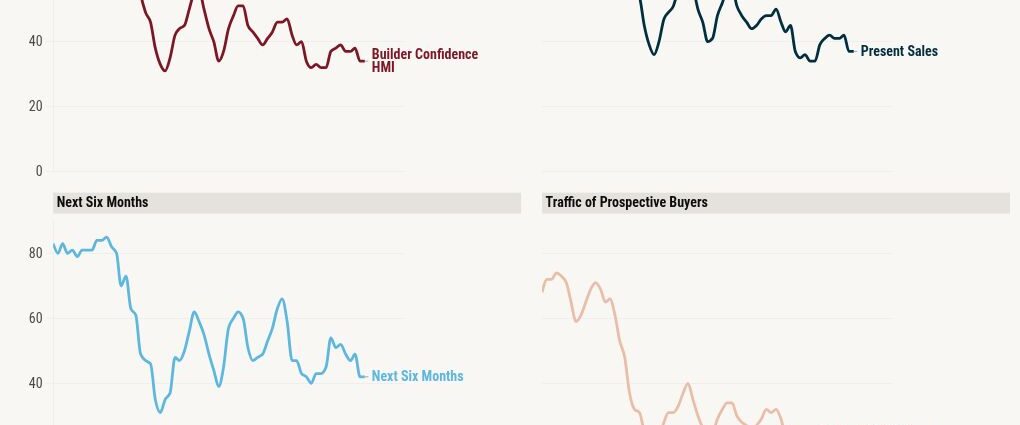
This post was originally published here

Penn Station’s overhaul took a big step forward on Wednesday. The U.S. Department of Transportation and Amtrak announced the selection of Penn Transformation Partners, a team led by Halmar International and Skanska, as the master developer of the project following a bidding process. The developer will build a “brand-new world-class station,” according to an announcement on Wednesday, with open concourses and expanded track capacity, while keeping Madison Square Garden in its current location. The news comes a day after Transportation Secretary Duffy announced the federal government would spend $8 billion to rebuild Penn Station.

ASTM North America’s Penn Station overhaul proposal from 2023. Rendering courtesy of ASTM, PAU, and HOK

Few details were in the announcement put out on Wednesday, but a press release said the redesign from Penn Transformation Partners will include a grand entrance on Eighth Avenue, “open, beautiful concourses” replacing the current cramped walkways, and passenger experience improvements, like new retail and better wayfinding.

The design will also expand track capacity, including possibly through-running on the regional rail network to increase efficiency.

The new design will take inspiration from the original Penn Station, a Beaux-Arts building designed by McKim, Mead & White in 1910 and demolished in the 1960s.

“The new design takes inspiration from this lost architectural gem while fitting with the major structures there currently, particularly Madison Square Garden and Moynihan Train Hall,” the press release states.

“In selecting Penn Transformation Partners (Halmar) and their innovative plan, we are one step closer to delivering a world-class travel hub that daily commuters and travelers have dreamed of for decades,” Duffy said. “Under President Trump’s historic leadership, the days of Penn Station’s cramped hallways, broken infrastructure, and snarled rail lines are numbered. 2027 can’t come soon enough.”

Halmar International is the construction arm of ASTM Group, which released a proposal to rebuild Penn in 2023. In that design from the architects at Practice for Architecture and Urbanism (PAU) and HOK, two main train halls would be accessible by a new entrance on Eighth Avenue. The new entrance, which replaces the existing Hulu Theater, would have soaring 55-foot-high ceilings and a glass-wrapped mid-block hall with large windows and skylights.

The design also called for keeping MSG in place and wrapping it in a massive stone facade reminiscent of the McKim, Mead & White-designed Moynihan Train Hall across the street on Eighth Avenue, as 6sqft previously reported.

The project team includes Skaska, HNTB New York Engineering, Vornado, Severud Associates, and Langan.

The exact cost has not been announced, but Duffy told Sen. Kirsten Gillibrand during a Senate hearing on Tuesday that the government is “going to give $8 billion to rebuild Penn Station.” Duffy said the Federal Railroad Administrator (FRA) will also provide $200 million in additional funding for the project through the Partnership-Northeast Corridor Program.

“FRA is investing $200 million to support critical design and permitting work on the New York Penn Transformation. The new station will be an architectural icon that fuels further development in the Nation’s financial capital while accommodating more passengers during critical rush periods,” FRA Administrator David Fink said.

The funding allows work to begin before the end of 2027, according to Amtrak and U.S. DOT.

Hochul, who pitched President Trump on funding the project last year, said she plans to “thoroughly review” the proposal.

“To be successful, this project must accomplish two things: dramatically improve the experience for every rider who passes through Penn Station, from the A train to the Acela, while protecting the record performance of the LIRR and ensuring the costs are not borne by New York commuters or taxpayers,” Hochul said in a statement. “I will accept nothing less.”

Last year, the federal government ousted the MTA from the project and gave it to Amtrak to take over. The agency had come up with its own plan to replace Penn Station with a single-level facility, but progress was delayed for years.

Another plan that was not chosen, “Grand Penn,” called for recreating the original station and relocating MSG across the street.

RELATED:

The post Penn Station redesign moves forward with selection of master developer first appeared on 6sqft.

This post was originally published here

For many real estate brokers, the dream of artificial intelligence (AI)-powered efficiency has crashed against a hard reality; agents are reluctant to use tools that force them to change habits.

Tyler Morton — broker-owner of REMAX Victory + Affiliates in Beavercreek, Ohio — learned this lesson the expensive way.

After his first AI platform Victoria failed because agents refused to download “just another app,” Morton rebuilt from scratch. The result was Victoria’s update, Tori 2.0 — a brokerage operating system that unifies disjointed systems from messaging to documents.

Morton sat down with HousingWire to share hard-won lessons on building an AI infrastructure that agents actually use.

Editor’s note: This interview has been edited for length and clarity.

Jonathan Delozier: You mentioned that the first version of your AI platform failed because agents had to change their behavior and log into another tool. What are the biggest lessons brokers should learn about AI adoption before they invest heavily?

Tyler Morton: We tried to make it as easy as possible. I mean, even with the fact that I initially built the app with the agents in mind, thinking it would make their lives easier, they didn’t want to download just another app. That’s not where their mind goes when they have a pressing question. They still want to call the broker and get a quick answer, or shoot a text, a Facebook message or even an email. That’s where the agent lives.

We tried to make it as easy as an agent texting a question to Victoria, and it would give an instant response. But they just weren’t programmed to do that, right? They’ve been doing business the same way for years.

Delozier: So how did you fix it with Tori 2.0?

Morton: We really tore it all down. I started looking at the platform and all the gaps or holes that it had for other tools that we needed to integrate and tried to think about where agents actually live. I said, ‘Let’s break this down and look at the entire stack that we’re using for all of this stuff. I can probably rebuild 90% of it relatively easily.’ And I say relatively easily with 2,000 hours of vibe coding experience and tens of thousands of dollars. We don’t call them mistakes, we call them tuition, because I certainly learned from it.

Delozier: What does that unified system do for agents day to day?

Morton: One of my most-used functions of Tori OS is an agent goes in and asks a question, and proactively, the system, based on our knowledge base, is answering those questions in stream. If an agent asks, “Hey, what plumber do you recommend in Westchester, Ohio?” it’s going to look at all of our previous conversation history and say that John recommended ABC Plumbing six months ago. It might say, “You may want to check to see how that job went,” or “Carol recommended 123 Plumbing.” It will give them that entire list, and it’s just learning and growing from that.

Agents know what they’re used to, and so that’s what we built. We built the voice-to-contract model with that in mind. What we sought to build was — using Dotloop’s API — a simple voice-to-contract where agents can be driving back from their showing and hit a button in the app and say, “Write me an offer for 123 Main Street for $500,000, two weeks for inspections and close it in 30 days.”

Delozier: You’re running a pilot with Amazon on something even more advanced. What does that look like?

Morton: We are running that through a company [Amazon] acquired called Bee, or bee.computer, using conversational intelligence. Instead of an agent still reacting to a conversation they had earlier with their clients, there’s a bracelet that can listen in real time. Through what we’ve built in our platform, it can understand the context of the conversation — possibly even who they’re with — and know that they’re sitting at the kitchen counter at 125 Main Street and the client wants to write an offer for $560,000. It will go ahead and proactively create that contract for them.

Delozier: What’s the separation right now between practical AI use cases that agents want versus flashy stuff that ends up being more marketing?

Morton: The flashy is the cool. I just did a webinar an hour ago for agents on building their first AI employee. But one of the biggest things that I’ve taught over the last year and a half, two years, is when you don’t know what to ask AI, ask AI what you should be asking. We were building [tech] all the wrong ways — thinking of how we wanted things to be built and not where the agents were.

Delozier: Where should brokers build their own technology versus relying on outside platforms?

Morton: For years we’ve been pigeonholed into buying technology, and now you could have a working concept of a simple tool within 24 hours if you really spent the time doing it. That’s not to say that everyone should, or could, because there is a learning curve. I remember banging my head against the wall because I spent six weeks developing the first version of Victoria — only to realize that I’ve got to pay a developer to get this up and running.

I think a lot of companies are going this way; don’t try to be everything to everyone. Be very narrow and great at what your tool does. I don’t want to reinvent IDX. I don’t want to reinvent e-signatures. I want to be the hub that ties all these different things together, so that users can pick whatever they’re used to using. As soon as an agent or a broker has to learn a new system, that’s where you create the friction that causes lower close rates.

Delozier: Looking at the next five years, what will be the biggest differentiator for brokerages with AI?

Morton: I don’t think it’s even five years. I certainly can’t predict out that far. I don’t even know what the next five months hold. You’ll see more consolidation. The ones that are not adopting AI or looking at the possibilities of agentic AI — they’re not able to streamline and they’re not able to scale. I’m not saying that AI is going to replace X, Y and Z. I just think that the ones that do adopt it will be light years ahead in terms of employees. You literally can scale a larger operation with very minimal employees with the technologies that we have available today.

This post was originally published on here

The late, legendary Bob Toll once laid bare the fact that he was personally incapable of installing a curtain rod in a living room, let alone knowing the first thing about building a home from the ground up.

What Bob did intuit was that the second-floor walls of a typical 1960s two-story home could be bumped out to be flush with the first-floor building enclosure, creating palpably more square footage for the resident. Add interior finishes like crown molding and chair railing, and suddenly, professional-level Philadelphians would be drawn farther and farther along the Route 23 trolley line toward Chestnut Hill.

Some might call this visionary.

More practically, Bob Toll – who did not know the first thing about home construction – knew intrinsically how to become an unsurpassed student in how to build a homebuilding company: from product development, to land positioning and strategy, to customer focus and white-glove service, to survive and even thrive, come what may.

The Toll Brothers through-line to Q2 2026

Fast-forward nearly 60 years, and Toll Brothers’ Q2 2026 financial and operational performance stands as real-time proof that the original game plan still works.

During a public-builder earnings season largely defined by interest-rate sensitivity, affordability pressures, buyer hesitation and downward adjustments to delivery expectations, Toll Brothers stood apart. 

It beat expectations, raised full-year guidance across key homebuilding metrics, held incentives flat, maintained strong margins, and continued to convert its brand – “America’s Luxury Homebuilder” – into two mainsprings of a resilient organization: One is a powerful impetus for households of means to decide that now – despite how external forces are playing out – is a good time to buy the “home of one’s dreams.” The other is causally related: operating leverage.

Executive Chairman Doug Yearley called this out in his earnings call opening commentary:

“Our second-quarter results reflect our unique position as America’s luxury homebuilder, as well as the success of our strategies to expand our geographies, product lines, and price points.” He added: “We are quite simply a more efficient and less cyclical homebuilder. Even in a difficult market, our business continues to perform well.” 

The numbers support his assertion as elegantly and persuasively as words do.

Toll delivered 2,491 homes at an average price of $1.009 million, generating $2.51 billion in home sales revenue. Adjusted gross margin came in at 26.2%, 70 basis points above guidance, and SG&A was 10.3% of home sales revenue, 40 basis points below guidance. Net signed contracts rose 7% in units and 8% in dollars, to 2,834 homes and $2.81 billion.

Evercore ISI’s Stephen Kim framed the quarter as a beat where it mattered: adjusted diluted EPS of $2.99 versus Evercore’s $2.66 estimate and the Street consensus of $2.58; gross margin of 26.2% versus the expected 25.5%; SG&A of 10.3% versus the expected 10.6%; and orders up 7% versus Evercore’s 3% forecast. 

Not exempt from challenge

Does that mean Toll is immune to the market?

No. Toll, like its peers, is mortal, not supernatural. Its second-quarter home sales revenue declined from the prior year; delivered homes were down from 2,899 in the prior-year quarter; and backlog value was $6.32 billion, down from $6.84 billion in the prior-year quarter.

But Toll’s distinction is that it has a buyer, brand, land model, product system, and balance sheet that give it more room to maneuver – commonly referred to as “optionality” – than most peers.

Yearley said Toll buyers are “less sensitive to affordability pressures” because they have benefited from income growth, stock market gains, and home equity appreciation. He added: “Serving this market is in our DNA. We have spent nearly 60 years building and refining the business model required to meet the high standards of the luxury segment of the new home market.”

Karl Mistry, Toll’s CEO, refined the operational definition of that business model in today’s market. In the quarter, luxury move-up buyers accounted for 62% of home sales revenue, up from 59% in the first quarter.

That segment, Mistry said, carries the company’s highest margin. At the same time, incentives on new contracts remained unchanged at 8% of gross sales price for the fourth consecutive quarter. Roughly one in four (23%) buyers paid in cash, and mortgage buyers had an average loan-to-value ratio of about 69%. 

That is Toll Brothers’ enviable advantage in customer segmentation.

It also helps explain why Toll can maintain a more balanced build-to-order and spec strategy without sacrificing the economics of luxury customization. Spec homes accounted for 51% of deliveries and 41% of home sales revenue in the quarter. Mistry noted that roughly one-third of specs sell before framing is complete, with margins similar to Toll’s roughly 30% adjusted gross margin on build-to-order homes. 

That is not commodity spec production. It is a luxury production platform with customization still embedded in the value proposition.

“The ability to customize remains an important competitive advantage for Toll Brothers,” Mistry said, noting that design studio upgrades, structural options, and lot premiums averaged $219,000, or 25% of the average base sales price, in the quarter.

Meanwhile, the company reduced finished-spec inventory by 28% in the first half of fiscal 2026, to 2 finished specs per community from 2.8 at fiscal year-end 2025. Build-to-order cycle time improved to about nine months, and spec cycle time was about one month shorter. Building costs remained flat despite pressure on lumber. 

Zigging when others zag

Land is the other half of Bob Toll’s formula.

At quarter-end, Toll owned or controlled about 76,800 lots, 58% of which were optioned. Mistry described a disciplined land posture built around seller financing, joint ventures, traditional option arrangements, and land banking where appropriate. He also highlighted a luxury-builder advantage that rarely appears in basic absorption tables: “Because we are a luxury builder buying land at the corner of Main and Main, where not as many of the big public and private builders play, we often find there are fewer bidders at the table when we are pursuing deals.”

The Buffington Homes acquisition last month fits that playbook.

Toll’s entry into Northwest Arkansas brings Toll into the Fayetteville-Bentonville market. Mistry described Buffington as “the leading builder of luxury homes in the area” and “a great fit for Toll Brothers.” Wolfe Research noted that Buffington brings about 1,500 lots, homes priced from $400,000 to more than $1 million, and roughly 50 expected closings this year. 

The deal is not transformational in size. What it is is another strategically aligned geographical launch pad: a bolt-on acquisition in a wealth-creating, employment-anchored growth market where Toll can add its brand, capital, design system and operating discipline to a strong local land position.

For the full year, Toll now expects 10,400 to 10,700 deliveries, an average delivered price of $985,000 to $1 million, an adjusted home sales gross margin of 26.1%, SG&A of 10.1%, and a year-end community count of 480 to 490. The company also reaffirmed its $650 million share repurchase target.

Gregg Ziegler, Toll’s CFO, said the company expects to close about 4,100 homes from backlog in the back half of the year, implying it needs to sell and settle roughly 2,000 spec homes in that period.

That guidance carries at least some execution and externalities risk. Evercore’s Kim notes the broader risks as well: tight mortgage availability, rising rates, employment weakness, land acquisition and entitlement challenges, competition, and Toll’s specific exposure to a high-end housing slowdown.

Still, the quarter’s message is clear.

Toll Brothers is not merely selling expensive houses. It is monetizing a nearly six-decade-old operating model: desirable land, aspirational architecture, production-scale luxury, deep customization, affluent segmentation, and a brand strong enough to make a Toll home, to many buyers, feel indistinguishable from the home of their dreams.

That was Bob Toll’s practical genius.

In Q2 2026, it was still reflected in orders, margins, land strategy, customer behavior, and guidance.

This post was originally published on here

Mortgage lenders are getting creative to combat the housing affordability crisis fueled by rising interest rates, rolling out novel products and blending existing options to keep borrowers in the market.

Bayview Asset Management — which closed its acquisition of Guild Mortgage in November — rolled out a new program on Monday. Partnering with real estate startup Estately, the firm is combining a traditional mortgage with a land lease.

“We do a first mortgage that’s Fannie Mae-eligible, a first mortgage loan on just the house, and then Estately is going to buy the land underneath that house and do it on a 50-year leaseback to the consumer at 5%,” Michael Lau, managing director at Bayview, announced on stage Tuesday during a session on lender perspectives at the Mortgage Bankers Association (MBA)’s Secondary and Capital Markets Conference in New York.

The product, Lau explained, cuts monthly mortgage payments by roughly $300 in high-cost areas. The initial rollout is targeting Colorado, where land accounts for up to 35% of a property’s total loan amount. Estately also notes on its website that the program significantly reduces upfront costs for homebuyers.

If a borrower defaults, Lau explained that the land and the home will be repackaged together and returned to Fannie Mae.

Michael P. Patterson, chief operating officer at Freedom Mortgage, said in the same session that prolonged periods of high rates naturally breed industry innovation. Lately, he has observed a notable uptick in buydowns paired with adjustable-rate mortgages (ARMs).

“We are looking at the products that are there and probably starting to be creative with the options, putting the options together,” Patterson said. “We just, as an industry, got to make sure we don’t go too far in that creativeness that we try to offset an affordability issue and create a delinquency issue later.”

Where are rates heading?

The executives’ comments come as mortgage rates inch closer to the 7% threshold, driven by inflation fears tied to the ongoing Iran conflict.

Even if hostilities were to cease immediately, executives estimate the economic ripple effects will linger for six to 12 months, hindered by supply-chain inertia, depleted strategic petroleum reserves, and the pass-through of surging diesel and energy costs.

“We’re going to feel the effects for a long time,” Patterson said.

Overall, the mood among mortgage executives about rates remains cautiously pessimistic. The base-case forecast anticipates rates hovering in the 6.3% to 6.5% range for the remainder of the year, with a maximum of one Federal Reserve rate cut potentially dropping them near 6.1%.

Conversely, an upside scenario could push rates to 7% or beyond if triggered by one or two more geopolitical shocks. The consensus is that there are few catalysts on the horizon to drive rates meaningfully lower.

Jeana Curro, managing director and head of agency MBS research at Bank of America, weighed in on the macroeconomic outlook during a market trends session. Curro said mortgage rates are currently running hotter than expected, but the bank still projects rates settling near the 6% mark by year’s end.

“We headed into this year thinking affordability is the most important topic for the midterm elections; you’re going to see some effort to push mortgage rates lower. We got a bit of that in January with the MBS purchase announcement,” Curro said.

“The events in the Middle East have really been a challenge, they’ve really injected a lot of volatility into the market, pushing rates higher. … But this administration moves really fast when it moves.

John Sim, managing director at JPMorgan Chase, added that the bank’s rate forecast has shifted to 6.25%, up from sub-6% projections at the start of the year. Still, he cautioned that these figures can “change very rapidly.” 

This post was originally published on here

On Wednesday, the U.S. Department of Housing and Urban Development (HUD) released a detailed deregulation roadmap aimed at state and local governments that, it argues, could lower per-unit costs and shorten cycle times for homebuilders.

HUD’s new “State and Local Best Practices for Home Construction” report offers a set of recommended policy changes that target permitting fees, building codes, land-use limits and inspection timelines that add costs and risks to new-home projects.

The report would implement President Trump’s March 13, 2026, executive order, which gave HUD 60 days to outline recommended permitting and zoning practices. 

The recommendations come amid a wave of local regulatory reforms, from increasing transit-oriented development to expanding mixed-density zoning, legalizing single-room occupancy and reducing minimum lot size requirements, among many othes.

Removing Regulatory Barriers to Affordable Home Construction 

HUD Secretary Scott Turner, in a statement, framed the report as a clear starting point for states and municipalities to “take inventory of their regulations and policies and make changes that will lower the cost to build and enable more efficient housing supply growth.” 

For builders, the document functions as a potential list of changes that trade groups and executives can carry into conversations with governors, legislators, mayors and planning departments.

HUD cited data that regulatory costs now contribute more than $100,000 to the final price of a new single-family home, and that certain state and local green energy mandates can add up to $30,000 to construction costs. It projects that deregulation measures taken in 2025 will ultimately save Americans a combined $212 billion.

Since Trump took office last year, HUD said it has:

  • Rescinded the 2021 International Energy Conservation Code  
  • Ended the Obama-Biden-era Affirmatively Furthering Fair Housing rule
  • Rolled back rules within the Federal Housing Administration’s single-family mortgage insurance program it characterized as onerous
  • Supported homeownership and affordability for more than 1 million Americans, including over 500,000 first-time buyers

Three levers for builders: cost, land and time

The HUD guidance grouped recommended actions into three categories that map directly to developers and homebuilders:

  • reduce fees, mandates and code-driven construction expenses
  • open more sites to residential development
  • compress permitting and inspection timelines

Across all three categories, HUD encourages jurisdictions to use technology — including e-signatures, online portals and artificial intelligence — to replace manual, paper-based processes that slow projects. In that vein, many municipalities, such as Seattle, Honolulu and Denver, are already experimenting with AI platforms that streamline permitting and plan reviews.

Cost: fee caps, code limits and more flexibility on construction methods

On the cost side, HUD’s recommendations line up with long-standing builder concerns. The report recommends that states and municipalities simplify and reduce fees that make new home construction more costly. The report recommends that local and state governments do the following:

  • Cap permitting fees and eliminate impact fees that cannot be directly tied to the specific project
  • Cut miscellaneous charges by curtailing other fees, mandates and taxes on new development and construction
  • End unrelated offsite requirements by prohibiting mandates to build offsite infrastructure not directly connected to the project
  • Increase fee transparency by requiring jurisdictions to publish a list of all development fees.
  • Stop retroactive codes by barring the application of new or amended building codes to projects already in the pipeline.
  • Limit local code add-ons by restricting state and local additions to building, environmental and labor codes, as well as ICC and federal standards, except for resilience or where they reduce costs.

The report also urges local governments to roll back cost-adding mandates by eliminating or sunsetting green energy requirements and other similar code provisions. It also urges the repeal of mandatory electrification of appliances and heaters. 

Additionally, HUD recommends that municipalities open the door to factory-built housing by regulating manufactured and modular homes based on objective safety standards instead of the construction method. This includes reexamining bans or tight restrictions where comparable site-built homes are allowed, and easing aesthetic mandates. 

Many of these regulations, the report argues, directly affect hard costs (materials and systems required to meet local codes) and soft costs (fees, engineering and redesigns triggered by late code changes). Builders operating in states that adopt these practices could see more predictable cost structures and fewer project-specific code fights, HUD says. 

Land: more lots, fewer growth caps and clearer rules

Land access is another focus of the report. HUD recommends that jurisdictions:

  • Speed up the disposition of public land for housing, including middle-income housing
  • Remove growth controls outside urban cores, such as urban growth boundaries, moratoriums and commuting penalties that limit where new subdivisions can go.
  • Dial back tree protection rules that impose minimum tree standards and high removal fees on single-family lots.
  • Allow by-right single-family development, and reduce discretionary approvals for typical detached product.
  • Use in-lieu fee structures for wetlands mitigation instead of project-by-project barriers
  • Publish all required inspections, permits and approvals so builders can clearly see each step in the process.

The HUD report argues that these changes would reduce entitlement risk, particularly on fringe and infill projects that are now constrained by growth caps or discretionary approvals. By-right standards and clearer rulebooks could translate into more predictable lot pipelines and better control over absorption planning, the report argues. 

Time: shot clocks, fast lanes and third-party inspectors

The timeline section focuses on shortening the path from land control to vertical construction. HUD’s recommendations include:

  • Streamlined permit processes, including a dedicated “fast lane” for residential and new-building permits and the elimination of unnecessary duplicate reviews.
  • Binding timelines for government decisions, including a “shot clock” of less than 60 days for right-to-build approvals and less than 30 days for construction permitting and inspections.
  • Unified development ordinances to consolidate disparate land-use rules.
  • Revisiting planning and zoning procedures, including meeting schedules, publication rules and in-person appearance mandates that can drag out hearings.
  • Technology-enabled approvals, including the use of artificial intelligence to expedite permit review and flag issues.
  • Third-party inspections and studies, allowing builders to choose from state-certified inspectors for code inspections and state-certified engineers for environmental, site plan and plat reviews.
  • Faster dispute resolution, with both government agencies and private parties on construction issues.
  • License reciprocity across and within states for building contractors. 

The HUD report argues that these recommendations would lead to shorter and more predictable permitting and inspection windows. It could also translate into faster inventory turns, lower interest carry, less weather risk and more accuracy in start and delivery schedules for buyers and lenders, the report claims. 

Why this matters for homebuilders

Most of the national housing policy discussion is focused on the bipartisan 21st Century ROAD to Housing Act, which passed the House on Wednesday. However, homebuilders know that most of the important reforms happen at the state and local levels. 

HUD’s best practices report isn’t a mandate that is binding for any state or municipality. There are also provisions in there that may evoke controversy or disagreement. 

However, the report does give the industry a federally endorsed checklist to push for locally, and reinforces the Trump administration’s larger push to “restore housing affordability”.

The report signals where federal housing leadership wants state and local policy to move: lower fees, fewer add-on codes, more by-right development and faster approvals. How quickly or broadly that vision translates into on-the-ground change will depend on decisions in state capitols, county commissions and city councils over the next several years.

Tyler Williams reported and wrote this article with drafting assistance from HousingWire Automation, an editorial tool that helps transform announcements and industry data into HousingWire-style news coverage.

This post was originally published on here

The build-to-rent (BTR) industry, which has been under siege from legislative uncertainty since March, just got a modicum of welcome news. 

On Wednesday, the U.S. House of Representatives passed an amended version of the U.S. Senate’s 21st Century ROAD to Housing Act by a margin of 396 to 13 that removed the proposed seven-year selloff rule for new build-to-rent communities. 

The legislation does, however, ban institutional investors that already own 350 or more single-family homes from purchasing additional single-family properties.

Still, the House’s bill – which now volleys back to the Senate for reconciliation and another vote – includes significant carve-outs for build-to-rent and renovate-to-rent projects and other exemptions that were not included in the Senate’s version. 

How the House legislation differs from the Senate’s

The House overwhelmingly approved its original version of the legislation, which included no institutional investor ban, on February 9 in a 390-9 vote. The Senate followed on March 12, passing its version 89-10. However, the Senate’s bill included a last-minute provision, Section 901, which has significantly reduced the amount of build-to-rent supply under construction. 

The controversial provision banned institutional investors from purchasing single-family homes. While it included narrow carve-outs for renovate-to-rent projects, it didn’t provide exemptions for build-to-rent communities. It also mandated that new BTR communities be sold to individual homeowners within seven years of completion. 

The House unveiled an updated version of the 21st Century ROAD to Housing Act that overhauled that section last week and released the final draft of the bill on Tuesday. 

Section 1001 of the updated House legislation similarly defines single-family homes as duplexes, as well as traditional detached and attached single-family properties. Manufactured housing isn’t included in the definition.  

The section further states that “no large institutional investor may purchase, or enter into a contract to directly or indirectly purchase, any single-family home.” 

To discourage those firms from buying more properties, the legislation would institute a” civil penalty in an amount that is not more than $1,000,000 per violation, or 3 times the purchase price of the property involved, whichever is greater.”

However, there are exemptions to this penalty for any single-family property that is:

  • “newly constructed, renovated, or a rental conversion for sale by a large institutional investor and not as a residence rented pending sale.” 
  • “pursuant to a build-to-rent program where the large institutional investor purchases, constructs, or constructs and retains a newly constructed single-family home to be managed as a rental property, whether as part of a community made up exclusively of renter-occupied single-family homes or as part of a community made up of single-family homes that are both owner- and renter-occupied.”
  • “pursuant to a renovate-to-rent program” that “makes improvements in an aggregate dollar amount of not less than 15 percent of the purchase price of the single-family home”. 
  • part of an eligible homeownership program or an eligible program aimed at converting renters into homeowners. 
  • purchased from “another large institutional investor that either owned the single-family home on the date of enactment of this Act or purchased the single-family home in compliance with this section.” 
  • “newly constructed, renovated, or a rental conversion that is intended and operated for occupancy as part of a community for households with 1 or more members aged 55.”

Additionally, there is an exemption for any purchase of a single-family home that happens as part of changing or reorganizing the ownership structure of homes that an institutional investor already owned or bought before this law took effect.

How the bill would incentivize local reform

Another major change made by the House was removing the Senate’s Build Act Now provision, which sought to encourage pro-housing zoning and land-use reforms by linking community development block grant (CDBG) funding to municipalities and states that adopted positive housing reforms. 

However, the House added in the Housing Supply Frameworks Act, which instructs HUD to establish voluntary land-use and zoning recommendations to help communities expand and streamline housing development on a local level.

What comes next

The bill must now get a nod of approval from the Senate, which has so far been reluctant to make changes to its original bill. Politico reported on Tuesday that Speaker Mike Johnson reached an agreement with President Donald Trump on the updated legislation, indicating that Trump would sign the bill into law if Congress sends it to the Oval Office. 

However, how the Senate will respond to the housing package is an open question. On Wednesday, Senators Tim Scott (R-S.C.) and Elizabeth Warren (D-Mass.) issued a joint statement indicating that they may make further changes to the legislation. 

“We worked closely with the White House and our colleagues in both chambers on a bill that puts families first and addresses the housing crisis. There’s still work to be done, and we are committed to continuing to work with the White House and our colleagues in the House on a housing bill that can pass the Senate and get to the President’s desk,” the statement read.

Strong housing industry support

The housing industry, with broad support, has rallied behind efforts in Congress to pass the 21st Century ROAD to Housing Act. Among other changes, the legislation would tackle the housing affordability crisis by doing the following:

  • Modernizing legacy federal housing programs
  • Streamlining regulations across HUD, USDA and related agencies
  • Expanding affordable housing financing

Organizations that advocate on behalf of the housing industry have almost unanimously backed the House’s legislation. 

“The amended bill includes a number of meaningful reforms that will help modernize federal housing programs, reduce barriers to development, and encourage the production and preservation of a wide range of rental properties and single-family homes for homebuyers,” David M. Dworkin, President and CEO of the National Housing Conference, said in a statement. 

“This amended bill provides communities with new resources and best practices to modernize zoning and boost supply, streamlines federal permitting, and expands financing options for manufactured and rural housing,” Shannon McGahn, the National Association of Realtors’ executive vice president and chief advocacy officer, said. “The bill also modernizes key programs like CDBG and HOME to strengthen local housing investment, improves credit access for homebuyers, and helps ensure veterans take full advantage of their VA home loan benefits.

Bill Owens, chairman of the National Association of Home Builders (NAHB), also spoke in support of the House measure, noting, “the package eliminates a forced-sale provision on rental housing that would have reduced supply, raises and indexes multifamily loan limits to help spur new apartment development, and provides meaningful relief to community banks.”

The Community Home Lenders of America (CHLA), in a statement, praised a provision that would eliminate the permanent chassis requirement for manufactured homes.

“Another noteworthy focus of the bill is Sections 105, 401, and 402 – all designed to promote small-dollar mortgage loans, which are more difficult to originate,” CHLA said. 

Bob Broeksmit, President and CEO of the Mortgage Bankers Association (MBA), also praised the legislation. 

“The House revisions addressed many key concerns raised by MBA and other stakeholders, strengthening the legislation while preserving important measures in the Senate’s bill to boost housing supply and expand access to affordable mortgage credit,” Broeksmit said. 

This post was originally published on here

Known as Brook House, this five-acre estate at 16 South Mountain Road is an important part of local creative history. Located within the South Mountain Road artist community, the charming country property anchored by an 1880 main house is the former home of legendary composer Kurt Weill, known for penning the popular song “Mack the Knife,” as part of The Threepenny Opera. Previously, the property was owned by Rollo Peters, a major force in American theater stage production. Asking $2,295,000, the property remains a refuge of 19th-century architecture and 20th-century creativity.

Kurt Weill and singer Lotte Lenya lived here for over 30 years. The home’s current owners have undertaken a full restoration to bring 21st-century structural integrity and comfort to mid-19th-century charm.

Working with interior designer Gail Jacobs, who designed the interiors at Leonard Bernstein’s apartment at the Dakota in NYC, the owners built a collection of bespoke items that can be purchased separately, including antique Holophane-style lighting fixtures that can be found throughout.

“Brook House offers a once-in-a-generation opportunity to own a residence where architecture, landscape and cultural history converge in one of the Northeast’s most quietly legendary artist communities,” listing agent Richard Ellis of Ellis Sotheby’s International Realty said.

“The result is a rare blend of historic authenticity, wonderful provenance, artistic legacy and refined country design.”

The main three-bedroom house has hand-hewn beams and walls made from old stones from the property and four fireplaces. In the living room, tall ceilings and wide-plank white oak floors frame the room, and French doors open onto the garden. Bedrooms and baths retain their old-world charm without sacrificing comfort.

Outbuildings offer space for guests, a creative studio, or rental income. A large garage is currently in use as a workshop. There’s an old brick potting shed, a large garden shed, and a chicken coop.

The guest house has a cozy living room, a full kitchen, two bedrooms, and a lower-level den. The living room features a working fireplace, and the house has been updated for modern living.

The five-acre parcel is a private arboretum of flowering gardens, ancient stone walls, and rolling fields. Highlights include an artisan well and an arch-supported stone bridge across the west branch of the Hackensack River.

The property is surrounded by eight acres of West Branch Conservation Land Trust, which borders the 91-acre Davenport Preserve, ensuring permanent privacy.

The South Mountain Road artist community reflects the legacy of neighbors like playwright Maxwell Anderson, sculptor John Mowbray-Clark and painter Arthur B Davies, Burgess Meredith, Adolf Zucker, John Huston, Mick Jagger and Jerry Hall, and more.

High Tor State Park, with hiking trails and panoramic New York City views, is nearby, as is the 18-hole Paramount Country Club golf course.

[Listing details: 116 South Mountain Road by Richard Ellis of Ellis Sotheby’s International Realty]

RELATED: 

The post Kurt Weill’s former New York country estate with a creative pedigree asks $2.3M first appeared on 6sqft.

This post was originally published here

For decades, the iconic gold blazer was synonymous with the CENTURY 21 Real Estate brand. From appearances in television shows like Gilmore Girls to movies like WarGames and the 1984 Ghostbusters film, the gold blazer was a hallmark of the real estate industry and a marketing calling card for real life CENTURY 21 agents, helping the company to a place on Time’s list of America’s Most Iconic Companies. 

While the gold blazer has largely disappeared in the U.S., CENTURY 21 CEO Mike Miedler says the wholesomeness, professionalism and consumer-focused experience the blazers stood for are still central to CENTURY 21’s identity over 50 years after the firm’s founding. 

“A differentiating factor for us at CENTURY 21 is that if you go into almost any market in any corner of the globe, consumers will know who CENTURY 21 is. They’ll know it is a real estate brand and that it stands for trust and confidence,” Miedler said. “People know what the experience is going to be like working with a CENTURY 21 agent.”

Although some may view CENTURY 21 as a bit “vanilla,” the community engagement and high level of customer services CENTURY 21 agents provide, Miedler feels has greatly contributed to the longevity and success of the brand. It is this reputation and legacy that Miedler is looking to preserve as he guides CENTURY 21 through its integration with Compass International Holdings. 

Agents want differentiation

“I have operated in an environment with a matrix of multiple brands since 1998, so it is second nature to me, but I do see all of the people from the outside wondering how we don’t all homogenize,” Miedler said. “I think what it comes down to is that agents want some type of differentiation, whether that is leadership, whether it’s training, whether it’s brand recognition and naming convention.” 

So while all of the Compass International Holdings brands are eventually slated to be on the Compass technology platform, Miedler does not feel this shared backbone will cause his firm to turn into another Sotheby’s International Realty or Better Homes and Gardens Real Estate

Miedler believes the consumer-first and trust focused approach CENTURY 21 agents and brokers are known for may be one of his brand’s primary differentiators. Due to this, Miedler feels upholding this reputation is becoming even more important in the face of industry consolidation and criticism that these larger companies are out of touch with homebuyers and sellers. 

“Every one of our agents literally lives, eats, sleeps and raises kids in the place they serve,” Miedler said. “They are more community first than large entity first and I think that is one of the things that gives CENTURY 21, as a brand, an edge.”

The leverage and scale of a platform is enticing

While he acknowledges the integration with Compass International Holdings will certainly pose its fair share of challenges, Miedler is excited by the scale and leverage being part of an even larger organization will give the CENTURY 21 team.

“Just thinking about 300,000 plus agents all working on a single platform, that isn’t just a CRM, but where the entire life cycle of the transaction lives, that is exciting and not just for the efficiency that the agent could have, but really the streamlined experience the customer will have, which is what we are always trying to strive for here at CENTURY 21,” he said. 

“A lot of the heavy lifting now is going into our integration and our adoption of the Compass technology. It is extremely important that we earn the agents’ trust in the platform and show them the value of it with how it will help with their business but also improve the consumer experience,” Miedler added.

Looking back to move forward

As Miedler and CENTURY 21 look to the future, the firm’s leadership team has decided to also take a look back and carry some of that iconic gold into the company’s next 50 years of business. 

“A few years ago we did a rebrand of the organization,” Miedler said. “It was time and something that was necessary because when we looked at the new generation of buyers and where they were looking online, we felt it was time for a refresh.” 

However, Miedler said research done by the company’s marketing department shows that the refresh may have been a bit of an overcorrection. This, Miedler said, has led the team back to a color they call “legacy gold.” 

“At our global conference this year, we re-released our legacy gold yard signs,” Miedler said. “It is going to be up to our agents if they feel using that sign is the right call for the property and client they are representing, but we found that the gold post was truly a differentiator for us.” 

For Miedler that legacy gold color is tied to joy, which is at the heart of CENTURY 21’s slogan: “Dedicated to the joy of home.” 

While the return of the iconic gold blazer may not imminently be in the cards for CENTURY 21, Miedler is grateful for the brand and business they helped create. 

“They are a bit of a throwback and a hallmark of the company, but what I think the blazers and the legacy gold stand for as hallmarks is putting the consumer first and that consumer trust we continue to strive to earn,” he said.  

This post was originally published on here

As part of HousingWire’s Editor’s Choice awards spotlight series, we’re spotlighting past Women of Influence honorees whose careers, leadership and insights continue to influence the industry. This series offers a closer look at the experiences and decisions that have shaped their paths.

HousingWire spoke with Charis Moreno, Chief Revenue Officer at NextHome, about leadership, industry change and staying focused on people during uncertain times.

Moreno was recognized as a 2024 Women of Influence honoree for her leadership at NextHome, her expertise across real estate business models and franchising and her role in driving the company’s national growth while fostering a culture centered on collaboration, support and long-term success.

Women of Influence recognizes the leaders like Moreno making a meaningful impact across mortgage, real estate and homebuilding. Nominations for the 2026 Women of Influence awards are open now through May 31.


HousingWire: What’s one decision that changed the trajectory of your career?

Charis Moreno: Accepting a sales position on the REALTOR.com inside sales team. This position paid a salary of $60K, less than what I was making running a regionally based shoe company, but had variable compensation of triple what I was making. Sometimes in life, you have to take a step back to go forward. Bet on yourself and use fear as fuel.

My grandfather told me to never take a job for money. If it gets you excited, it’s something you believe in, and it’s not illegal, then go for it.

HW: Looking back, what experiences most prepared you for the leadership role you’re in today?

Charis Moreno: My childhood and growing up in a small town. From a young age, I always sought stability, discipline, and calm in the storm. No matter how hard it was or how impossible it seemed, there was always a better way through.

Real estate is full of dysfunction, change, chaos, and somehow, that’s exactly why the ones who win are the ones who stay disciplined, think clearly, and execute when everyone else is distracted.

In every role, I have always started from the bottom and left in a leadership position, leaving a place better than I found it. I love taking care of people, mostly the underdogs. The ones who do not believe in themself and inspire them.

HW: What are you most focused on right now within your organization?

Charis Moreno: I am most intent on keeping everyone focused on what they can control. We cannot control rates, inventory, prices, geopolitical drama, or what may happen next in the industry.

Life is hard, and life in real estate is harder, but if you know why you are doing it, then it should make all the outside noise irrelevant.

I remind our members that one of the greatest ways you can serve this country is by creating homeownership. What a gift it is to create generational wealth and provide the opportunity for someone to own a place of their own.

I believe if we remind ourselves of this and we keep humans over houses, then noise is just that, noise.

HW: What’s one leadership lesson you’ve learned that more people in this industry should understand?

Charis Moreno: Humility.

Our industry could use much more of this trait instead of leading with ego. This business was never intended to be about the REALTOR. It’s about the client.

The role of a REALTOR should be to educate, support, and provide clarity and confidence when situations get emotional and uncertain.

HW: What advice would you give to the next generation of women working toward senior leadership roles in housing?

Charis Moreno: Having balance is a lie and anyone who says otherwise is a liar. You cannot do it all, but you can still do it.

Determine what you are willing to sacrifice and what you are not willing to sacrifice.

You have to give yourself grace. Have grit and a lot of faith. Make sacrifices. Give support when you can, and take support when it is given. Create your village.

Make the effort to find and prioritize these things, and you can achieve everything you want and maybe, just maybe, create something special in the process.

Click here to nominate a 2026 Woman of Influence.

This post was originally published on here

After nearly 80 years hidden from the public, a “secret” dining room at Katz’s Deli has reopened following a restoration. The Ludlow Room, a 68-seat space that once served generations of New Yorkers, opened Tuesday after being closed in 1949 and converted into a giant walk-in refrigerator amid postwar demand for deli meats. Restored to reflect its original appearance, the Ludlow Room features original tin ceilings and period-inspired lighting, as well as the same freight scale used to measure every pound of meat served at Katz’s for eight decades.

Katz’s was first established in 1888 at 207 East Houston Street, across from its current location on Ludlow Street. During the 1920s, construction of the IRT subway line, now the F train, prompted the deli to relocate to 205 East Houston Street.

For more than three decades, patrons gathered in the Ludlow Room, enjoying Katz’s famed pastrami and corned beef sandwiches through the Roaring Twenties, the Great Depression, and World War II. However, it later disappeared from public view and instead became an integral part of the deli’s operations.

“We’ve always said Katz’s is more than a deli, it’s a living piece of New York history,” Jake Dell, owner of Katz’s, said. “Reopening this room feels like uncovering a forgotten chapter of our own story.”

“For decades, this space helped support the demand that made Katz’s what it is today, but very few people ever got to see it,” he added. “Bringing it back to life is a way of honoring the generations before us while creating something new for the generations still to come.”

The space will offer additional seating during regular hours and also be available for private events.

RELATED:

The post Katz’s Deli reopens ‘secret’ dining room closed to public for nearly 80 years first appeared on 6sqft.

This post was originally published here

Mortgage lenders are currently wrestling with a high-stakes puzzle: how to accurately compare the new credit score models hitting the market. The differences are significant and carry major implications for risk assessment, loan pricing and secondary market returns.

In late April, the Federal Housing Finance Agency (FHFA) rolled out a program allowing the exclusive use of VantageScore 4.0 for loans delivered by a group of lenders to the government-sponsored enterprises (GSEs) Fannie Mae and Freddie Mac. The future use of FICO 10T will also act as an alternative to the long-standing FICO Classic.

Not to be left behind, U.S. Department of Housing and Urban Development (HUD) Secretary Scott Turner signaled that Federal Housing Administration (FHA) loans will also adopt these alternatives in the coming months.

For now, lenders participating in the FHFA’s rollout program have a temporary workaround. They’re applying a 20-point cut from FICO to VantageScore to figure out where a loan should be priced in the grid.

While United Wholesale Mortgage (UWM) publicly announced this strategy, sources tell HousingWire it’s actually the practice among other participating lenders. These lenders are also relying on multiple models to double-check accuracy and minimize risk.

Guild Mortgage has already started to compare how the same loan scores across all three models, but it’s in the “very early stages of collecting this data,” according to David Battany, the company’s executive vice president for capital markets.

“When you see a delta between two models of 40 or 80 points, that’s pretty significant,” Battany said this week during a session on the new credit score models at the Mortgage Bankers Association (MBA)’s Secondary and Capital Markets Conference in New York. “When you think of Classic FICO, every 40 points of score equals a doubling of default rate.”

But default risk isn’t the only curveball secondary market investors need to model. Economists warn that these new scores could trigger other unintended consequences.

“For us, the prepaid risk is that you have a low FICO borrower, and he scores higher on Vantage, because most Vantage scores are a little bit higher,” Jeana Curro, managing director and head of agency MBS research at Bank of America, said during a session on general market trends. “That creates a refi opportunity that you know would not be foreseen, would not be estimated by models.”

Curro stressed that the industry still has a “way to go” with implementation, as not everyone is fully prepared. In her opinion, nonbanks are driving the conversation, while traditional banks are being left behind.

Tricky calibration

FICO and VantageScore themselves warned about the nuances between their models and the potential headaches of calibration.

“I wouldn’t underscore it and make it sound too easy to do the calibration,” said Ethan Dornhelm, head of scores analytics at FICO. “Certainly, calibrations are possible, but we do see that there can be drift over time, and given that the two algorithms that are the modernized credit scores are different, they could drift slightly differently. So, it will be a case of not just calibrating one time and being done with it, but rather careful and close monitoring over time.”

VantageScore recommends probability-of-default mapping, saying that translation tables are straightforward.

“What we recommend doing is to basing it on the probability default, so you have the similar expected outcomes when you’re looking at converting the scores, and we’re about to provide some more data on that,” said Rikard Bandebo, chief strategy officer and chief economist at VantageScore.

Most lender systems are built around a single credit-score field. Adding a second introduces major operational and policy questions. A concern is with cherry-picking, since lenders might simply submit whichever score makes the loan look more affordable for the borrower and ignore the actual probability of default.

“With regards to gaming, there have been studies not commissioned by either FICO or Vantage that have expressed concerns that at a given score band, defaults may increase by as much as 30% if gaming runs completely amok, and we just don’t know at this point what the dynamics are going to look like in this two-score lender choice setting, as far as how much gaming actually occurs,” Dornhelm said.

VantageScore downplayed these fears. Bandebo acknowledged that while the potential for gaming warrants study, research from Prosperity Now indicates that “it’s actually not going to increase the risk any more than the current system.”

Secondary market jitters

Lender adoption is only chapter one. The broader mortgage ecosystem — comprising warehouse lenders, secondary investors and other key players — has largely been in a “wait-and-see” holding pattern, sources say.

In late April, Newrez originated $10 million in mortgages scored with VantageScore 4.0, which were then securitized by Freddie Mac. This pilot effectively helped federal housing agencies greenlight the broader use of modern credit scores.

Bob Johnson, head of originations at Newrez, explained that Freddie Mac approached the company to see if it could “test the plumbing.” Newrez was “able to make those deliveries and fully test out the system,” he said.

But the secondary market was not fully tested, sources said. The first multilender GSE securitization containing VantageScore-underwritten loans totaled just under $8 million within an $11 billion pool, according to Dornhelm. He added that FICO reported one single-lender securitization under FICO 10T, with more expected in the home equity line of credit (HELOC) space later this year.

VantageScore counters by pointing to its proven track record outside the mortgage realm. The model already drives roughly 10% of asset-backed securities (ABS) issuance — including credit cards and personal loans — through major issuers like Synchrony and Toyota. Bandebo added that ratings agencies are ready and view the transition as manageable.

Different models, some similarities

The new score models are similar to Classic FICO because they all predict the likelihood of default over a two-year horizon, use the 300-850 score range, and incorporate utility and telecom data when available.

What makes them different is that both FICO 10T and VantageScore 4.0 use time-series balance, payment and utilization data rather than a single point-in-time snapshot. Both new scores factor in rental payment history — although less than 5% of files currently contain it, which represents a major growth area for financial inclusion. They are also built on more recent data and better reflect modern consumer behaviors.

But points of contention remain. While FICO 10T builds bespoke models for each bureau, saying that it maximized their unique data, VantageScore 4.0 uses one algorithm across all three bureaus for score consistency.

This post was originally published on here

The first rezoning proposal under Mayor Zohran Mamdani’s administration will target Brooklyn neighborhoods south of Prospect Park and Green-Wood Cemetery. As first reported by Gothamist, the Department of City Planning on Wednesday kicked off the community planning process for updating zoning rules on commercial stretches of Coney Island Avenue and McDonald Avenue in Kensington and surrounding areas, to allow new housing to be built.

“South of Prospect” neighborhood plan map. Courtesy of NYC Planning

The neighborhood plan, dubbed “South of Prospect,” will target McDonald Avenue, roughly from Fort Hamilton Parkway to Avenue I and Coney Island Avenue, from Caton Avenue to Avenue I. These corridors currently have “outdated single-use zoning” that has limited new housing.

“Growing up in Kensington as the daughter of immigrants, I saw how neighborhoods like ours are built and sustained by working families, small businesses, and neighbors who look out for one another,” Council Member Shahana Hanif said in a statement.

“I also saw how rising costs and decades of disinvestment have made it harder for longtime residents to stay in the communities they helped build. I’m grateful to Mayor Mamdani and the DCP for advancing a neighborhood study spanning Kensington that centers community input and engagement from the very beginning.”

In a post on X, NYC Planning said the agency will work “with community members to update restrictive zoning that limits housing and drives up rent.” The plan will include income-restricted housing and neighborhood investments, according to the city.

NYC Planning Director Sideya Sherman told Gothamist the neighborhood plan will take into consideration the Interborough Express (IBX), a 14-mile light rail that will connect Brooklyn and Queens. The project, which entered environmental review last year, connects Bay Ridge to Jackson Heights, with stops in south Brooklyn neighborhoods like Borough Park, Kensington, and Midwood.

“There’s an opportunity to create potentially thousands of housing units for our city,” Sherman told Gothamist. “South of Prospect Park is a neighborhood that is transit-rich, and also potentially will intersect with the IBX, which is exciting.”

Residents can provide feedback and priorities for the South of Prospect plan at this online survey.

The city on Wednesday also announced plans to advance the White Plains Road rezoning in the north Bronx, which began last year under former Mayor Eric Adams. The plan focuses on White Plains Road from Adee Avenue to the border of the Bronx and Mount Vernon, which is an area with a range of transit options, including the 2 and 5 trains, Metro-North, and several buses.

“We know that White Plains Road needs more investment, but how we get there makes all the difference,” Council Member Eric Dinowitz said. “This community-driven process must deliver truly affordable housing, protect the small businesses that are on this corridor, and ensure that longtime residents benefit from future development. I will be focused on making sure this plan gets that balance right.”

White Plains Road neighborhood plan map. Courtesy of NYC Planning

A public “walkshop” will be held in June for residents to provide feedback on the White Plains Road neighborhood plan. A zoning concept map will be released later this year.

“New Yorkers are being pushed out of the neighborhoods they built because our city has spent decades refusing to build enough housing where people actually want and need to live,” said Mayor Mamdani.

“These plans are about changing that. Along major transit corridors in the Bronx and Brooklyn, we have an opportunity to build more homes, create permanently affordable housing, support small businesses and invest in public spaces and infrastructure that communities deserve. And we are going to do it with New Yorkers leading the process every step of the way.”

RELATED:

The post NYC looks to rezone neighborhoods south of Prospect Park for new housing first appeared on 6sqft.

This post was originally published here

Regulators in Illinois have approved what a group of home equity investment (HEI) providers calls the most comprehensive state regulatory framework to date for shared equity products, a fast-growing alternative to traditional home equity loans and reverse mortgages.

The rule was adopted under the Illinois Department of Financial and Professional Regulation (IDFPR)’s mortgage licensing regulations. It governs shared equity products, which Illinois law refers to as shared appreciation agreements, according to a recent announcement from the Coalition for Home Equity Partnership (CHEP).

The framework brings shared equity products under the state’s Residential Mortgage License Act of 1987 and is intended to balance consumer protections with continued access to the products. Home equity investments, or shared equity agreements, typically allow homeowners to access cash in exchange for a share of future home price appreciation instead of taking on new monthly debt.

Details of the Illinois rule

The rule is the result of a multistage, stakeholder-driven process in which IDFPR made more than 120 changes between the first and second public notices of the proposal, CHEP said. Participants in the process included consumer advocates, industry providers and other interested parties.

The final regulation integrates HEIs into the existing mortgage licensing framework under Public Act 103-1015. It establishes operating requirements and restrictions specific to shared equity contracts.

It also creates a new standardized disclosure form designed to show homeowners the potential costs of shared equity products through cost-scenario tables. And it introduces “fit-for-purpose” alternatives to certain traditional mortgage rules, including the ability-to-repay standard, to address structural differences between shared equity contracts and mortgage loans.

CHEP said the new disclosure form substantially incorporates its proposed model structure and approach for explaining costs and tradeoffs to homeowners.

The approach in Illinois stands in stark contrast to a recently adopted law in Maine, which received support from the state’s consumer protection bureau and the National Consumer Law Center. Jim Riccitelli, CEO of Unlock, a leading HEI provider, told HousingWire‘s Reverse Mortgage Daily (RMD) that the changes in Maine effectively bar the products from being offered there.

“Maine’s law was modeled on mortgage loan statutes without adequate adjustment for the structural differences that make shared-equity products work,” Riccitelli said. “The result is a framework that cannot be operationalized — not because the goal of consumer protection is wrong, but because the wrong tool was applied to the job. So you will not see any shared-equity products offered in Maine, and Maine homeowners will unfortunately not have the opportunity to avail themselves of the benefits they offer.”

Broader context

Shared equity and home equity investment products have grown in recent years as homeowners with significant untapped equity look for non-debt options to access cash amid higher interest rates.

The products have also drawn scrutiny from law firms and regulators concerned about consumer understanding of the complex long-term pricing and contract terms contained in HEIs.

While HEIs remain small in scope, reverse mortgage professionals have expressed caution or outright opposition to the products.

“We should have no filter to talk about these products,” REVERSE plus co-founder Dan Hultquist said earlier this month at the Reverse Mastermind Summit. “Understand what they are and do your research. If you don’t recognize how predatory these products are, do the math. …  If I have my way, those products will be banned,” he said.

Illinois joins Connecticut and Maryland, which previously adopted more limited frameworks for these arrangements. CHEP characterized the Illinois rule as the most comprehensive so far and “a regulatory beacon” for other states considering how to oversee the sector. The group expects the framework to influence development of more uniform national standards over time.

For mortgage lenders and housing finance professionals, the rule signals several key trends:

  • States are moving shared equity products into existing mortgage regulatory regimes rather than treating them as unregulated alternatives.
  • Regulators are prioritizing standardized consumer disclosures that clearly explain long-term cost scenarios and equity-sharing mechanics.
  • Providers that operate nationally may face growing pressure to align their contracts and compliance programs with emerging state models like Illinois

A clearer regulatory structure could also impact partnerships between shared equity providers, lenders and real estate brokerages, as compliance expectations and licensing obligations become more defined.

The regulatory framework has been finalized and will move into an implementation phase under IDFPR oversight. CHEP said it plans to continue working with Illinois regulators as they put the framework into practice — and with officials in other states that are considering similar rules.

Details on effective dates, licensing impacts and operational requirements for existing shared equity providers in Illinois will be critical for compliance officers, legal teams and capital providers involved in these products.

Neil Pierson reported and wrote this article with drafting assistance from HousingWire Automation, an editorial tool that helps transform announcements and industry data into HousingWire-style news coverage.

This post was originally published on here

Toll Brothers, the country’s largest luxury-home builder, says wealthy Americans are still buying expensive homes despite high mortgage rates and growing worries about the housing market.

The company reported Tuesday that orders for new homes reached their highest level in two years, helping push shares higher after earnings topped Wall Street expectations.

For everyday consumers, the results highlight a growing split in the U.S. housing market: middle-class buyers are struggling with high monthly payments, while wealthier buyers continue purchasing million-dollar homes with far less pressure from interest rates.

Toll Brothers signed contracts for 2,834 homes during its latest quarter, up 7% from a year ago. The average selling price topped $1 million per home.

CEO Douglas Yearley Jr. said the company continued to perform well despite what he called a “challenging market,” adding that demand at the high end of the housing market remains strong.

The results stand out because much of the broader housing market has slowed sharply.

Mortgage rates remain near their highest levels in years, with the average 30-year fixed mortgage climbing close to 6.7%. Higher Treasury yields — which heavily influence mortgage rates — have continued rising amid inflation fears tied to the Iran war and energy prices.

For many Americans, that has made buying a home increasingly unaffordable.

Monthly mortgage payments on a typical U.S. home are now hundreds of dollars higher than they were just a few years ago. Many homeowners who locked in low 3% mortgage rates during the pandemic are also refusing to sell, creating a shortage of homes on the market.

But Toll Brothers operates in a very different part of the market.

Its customers are typically wealthier buyers who often make larger down payments, carry smaller mortgages relative to home values, or pay cash entirely. That makes them less sensitive to rising interest rates compared with first-time or middle-income buyers.

The company said many of its luxury communities are still raising prices, showing that demand at the top end of the market remains healthy even as entry-level housing slows.

Toll Brothers also raised its forecast for the rest of the year, signaling confidence that wealthy buyers will continue spending despite economic uncertainty.

The company ended the quarter with more than $1 billion in cash and continued buying back its own stock while increasing its dividend to shareholders.

The strong earnings report adds to growing evidence that the U.S. economy is increasingly splitting into two different realities.

Higher-income Americans have continued benefiting from strong stock markets, rising asset values and accumulated wealth from recent years. Many can still comfortably afford luxury homes even with elevated interest rates.

Meanwhile, many middle-class families are finding it harder to qualify for mortgages or afford monthly payments at current prices.

Housing analysts say that divide has become one of the defining trends of today’s real estate market.

Existing home sales across the country remain near multi-decade lows, while builders targeting first-time buyers have increasingly relied on incentives and mortgage-rate discounts to attract customers.

Luxury builders like Toll Brothers, however, continue seeing stronger demand than much of the industry.

For now, the company’s latest results suggest wealthy buyers are still willing to spend — even as much of the rest of the housing market remains under pressure.

— JBizNews Desk

© JBizNews.com. All rights reserved. This article is original reporting by JBizNews Desk. Unauthorized reproduction or redistribution is strictly prohibited.

Military families navigating permanent change-of-station moves and veterans pursuing homeownership through VA-backed loans are increasingly turning to a new real estate network founded by a longtime Navy leader.

Military Operated Real Estate (MORE) was started by Travis Winfield, a 24-year U.S. Navy leadership veteran, founder of California-based The Winfield Group Real Estate Team and author of the book “Military Money & MORE.”

MORE operates as both a training academy and a national referral network designed specifically for active-duty service members, veterans and military families.

The independent, broker-agnostic program officially launched publicly Dec. 8 after incorporating earlier in 2025.

Since then, the organization has expanded rapidly — reaching nearly 100 certified agents across 32 states and supporting roughly 140 military installations nationwide.

Winfield told HousingWire that MORE was created to address a longstanding issue in the real estate industry; agents marketing themselves as military specialists without having meaningful knowledge of military life or veterans’ benefits.

“You have to have a military affiliation to walk in our front door,” he said. “What does that mean? You have to be a veteran or you have to be a military spouse or dependent who’s lived the military life. So, what’s the litmus test? You need to have been born while your parents were serving the military or be married to a service member while on active duty.

“Why did we set that standard? It’s very simple. You don’t know what it’s like to serve unless you’ve served.”

That military-first requirement became one of the core foundations of MORE Academy, the organization’s certification and education division.

Agents seeking certification must complete an extensive curriculum, demonstrate military affiliation and provide documented experience working with veteran clients before gaining access to the MORE network.

Winfield said the curriculum took nearly a year to develop and was intentionally designed to be more rigorous than many traditional industry certifications.

“We have a very robust policy and network policies that all agents are required to sign, and a lot of it’s built on ethics,” he said. “What’s interesting is we tell every one of our agents that if you have a violation, an ethics violation, I’m not going to kick you out of the network. We’re going to create a board of your peers — just like in the military, and they’re going to determine your fate.

“That kind of model of where we’re self-policing has created a culture where everybody just wants to be a part and help each other.”

The organization operates under the slogan, “Expect MORE from your agent,” and is accredited through both the U.S. Department of Defense and the Department of Veterans Affairs.

Beyond traditional real estate training

Winfield said the program goes beyond traditional sales education by training agents to become knowledgeable about military and veterans’ benefits that may directly impact clients’ financial decisions.

He recalled one interaction with a disabled veteran family while still working in real estate production in southern California.

The family planned to sell their home to help cover college expenses for their son after rising interest rates made refinancing less attractive.

“I looked at him and asked, ‘You’re a disabled veteran, right?’ and he said yes,” Winfield said. “I told him that in California, your kids [can] go to any California state school for free. I kid you not, they literally started crying right in front of me and it gives me goosebumps to this day talking about this. Of course, they didn’t sell their house and their kid went off to college. [The family] became raving fans.”

Winfield said moments like that reinforced his belief that military-focused agents should also serve as trusted resource guides for veterans and active-duty families.

“We all know that agents are already like therapists, we’re counselors,” he said. “We’re all kinds of different people and wear different hats. Why can we not also be benefits experts? This is a piece of public information that they just were not aware of — but our agents can be that conduit for information.”

Agents drawn to higher standards

Among the first agents to complete the MORE curriculum was Jeff Schnell, a veteran and agent with Dwell Real Estate Group in Wichita, Kansas.

Schnell — who has spent decades working in real estate and VA lending — said he was initially drawn to Winfield’s focus on serious education and military experience rather than marketing alone.

“[Winfield] was online in a support group for agents that cater to military, and he was just asking questions,” said Schnell. “They were general education questions and I commented, then we went back and forth in several comments. It was very clear right away that he wasn’t there to stir the pot. He was there to ask serious questions to promote and provoke thought within our niche part of the industry.”

Schnell later became part of MORE’s first testing cohort, known internally as Alpha Company, where agents evaluated and refined the curriculum before public launch.

“It wasn’t just a basic type of certification,” he said. “You actually have to pay attention, and you actually have to study. I have my broker’s license, and I have several other certifications that were easily harder than my broker’s license. This is one of the certifications that was harder to get than my broker’s license. It’s real education from a point of view of military first by military people.”

Expanding the MORE ecosystem

Winfield said MORE ultimately aims to build a broader service array that includes advanced certifications for agents, lenders and property managers serving military clients.

He emphasized that the organization sees itself primarily as an educational institution rather than simply another referral platform.

“It’s kind of like going to Harvard,” Winfield said. “If you graduate Harvard, you now become an alumni and you get access to this network and this alumni of people and all their benefits and resources. Same concept here — you go through our certification and once you graduate, you then get access to our network.

“We’re a client-facing brand that’s here to market the agent and tell the consumer, ‘You want to hire a more certified agent because they’ve walked a mile in your shoes.”

As MORE continues expanding nationwide, Winfield said the organization’s mission remains centered on accountability and improving outcomes for military families during some of the most financially significant moments of their lives.

This post was originally published on here

I’ve been in this business for 50 years. My father was in it for 50 before me. And in all that time, I cannot think of a single moment when the people who actually do the work in American real estate had less say over how that work gets shared, marketed and monetized than they do right now.

We take the listings. We walk the homes. We sit at the kitchen tables. We negotiate the deals. And then, somewhere between the listing agreement and the closing table, we hand the keys to our business over to companies that have never sold a house in their lives. It’s time for an agent-owned national MLS or portal.

Maybe it’s time we stopped

I want to float an idea. It may make some powerful industry leaders uncomfortable, and that’s alright. The agents who take the listings should own the platform where those listings are shared with each other and presented to the public. Not a vendor. Not a portal. Not a tech company in Seattle. Us.

Let me be clear about something first. I have enormous respect for the MLS model. The local MLSs were built by hardworking people, and the underlying idea, agents pooling their listings so every agent and their buyer has a fair shot at every home, is one of the most beautiful cooperative ideas any American industry has ever produced. That part isn’t broken.

What’s broken is that the cooperative tool we built for ourselves has been layered, year after year, with rules we no longer set, fees we no longer control, and mandates we never voted on. And the public-facing side of our work has quietly been carried off by third parties that built billion-dollar audiences on the back of our listings and now sell that audience right back to us.

That isn’t a conspiracy. It’s just what happens when professionals stop paying attention.

Let’s pay attention

Picture this with me. One national MLS. Every listing in America in one place. Owned by the agents who take those listings. Every member an owner. Every owner a shareholder. The shareholders elect a board. The board hires the people who run it. If you’re a member, you get to use it and you get a vote in how it’s run. The cost? No more than what we already pay the MLSs and the portals that earn billions from our work.

Inside this platform, every agent in America sees every listing by every agent in America. Any city, any price point, shared within one business day of signing. From that first day forward, no agent in this country is in the dark about what’s for sale, who has it and how to reach the listing agent directly. We DM each other inside the platform, send referrals, agree on referral fees, and close the loop without ever leaving the system. AI runs underneath all of it.

Then comes the second piece. The piece that changes the industry forever.

A public-facing site, fed by us, the agents who represent the sellers and know the homes. Our listings all presented together on one website, with accurate data straight from the listing agent. No buyer inquiry diverted to a stranger who paid for leads that month. No “offer guides.” No games. Just every home in America, presented honestly, with the listing agent’s name on the door.

We all agree to share listings

All of us agree to share listings with each other inside our MLS. But each of us decides when, or whether, our listings go on the public-facing site. Immediately, in a few weeks, or never. You would have complete marketing freedom. Promote your listings anywhere you choose, whenever you choose, however you choose. The public site is yours to use, not a mandate to follow. But ask yourself why you wouldn’t use the site you own, the one place every buyer in America comes to find a home because that’s where the listings are.

Now let’s talk numbers, because visions without arithmetic are just daydreams. Between 5 and 6 million homes are listed for sale in this country every year. A modest upload fee of $100 per listing generates roughly half a billion dollars a year. Every year. To operate the platform, upgrade the technology and market the site to every homebuyer in America. Approved vendor advertising grows the number from there.


The buildout is funded by outside venture capital, with a clear agreement that the industry buys the investors out at a fair profit once revenues come in. The investors get a strong return. The agents get the platform back. Everyone wins. I already know a firm likely to fund it, provided enough of us commit in advance to using it.

What happens to the existing home search portals?

That’s their business to figure out. If they had served us well, if they hadn’t tried to dictate how we market homes, hadn’t used our listings to harvest buyers and sell them back to us, hadn’t filed lawsuits arguing we should be forced to use them, we wouldn’t be having this conversation. But they did. And we are.

What happens to the existing MLSs? That part matters to me, because the people who run them are not the villains in this story. They are colleagues. Many are friends. The vision is to offer to buy them, fairly and at full value, so the entities and individuals who own them today walk away whole, with a real return on the years and dollars they invested.

This isn’t about taking anything from anyone. It’s about an industry quietly assuming stewardship of a model it should have owned all along, because we are the ones who power it. We consolidate the MLSs we acquire into one national MLS we own, and we retain as many of their employees and managers as we can. The MLS model lives on. The MLS people keep their jobs. What changes is who answers to whom.

Mark Twain said the two most important days of a person’s life are the day they are born and the day they figure out why. I think a great many of us are about to figure out why we’re really here.

Every great shift in American industry was led by the people inside it who stopped waiting for permission.

The railroads. The airlines. The auto makers. The internet companies. None of them asked the middlemen who fed off them whether change was permitted. They simply changed, and the world changed with them.

That’s where we are. That’s what this moment is.

We are the industry. We are the ones who take the listings, walk the homes, sit at the kitchen tables, and put families into houses they love. The portals are a middleman we invited in thirty years ago and forgot to ever ask to leave. The rules we never voted on are rules we are free to outgrow. Marketing freedom is not a privilege a vendor grants us. It is ours by right.

One MLS. One affiliated home search portal. One group of owners. Every agent in America. Built by us, for us, and for the buyers and sellers we serve.

It really is that simple. And it really is up to us.

A note: The views in this article are mine alone, offered as a 50-year industry veteran. They do not represent the positions of any company I work with or any organization I am associated with. If this idea draws fire, that fire belongs to me.

Greg Hague is a 50-year real estate veteran and attorney. He is the founder of 72SOLD, named one of America’s 250 fastest-growing privately held businesses by Inc. 5000, and was recently appointed Director of Home Sales Strategy for the Compass International Holdings family of real estate brands.

This column does not necessarily reflect the opinion of HousingWire’s editorial department and its owners.

To contact the editor responsible for this piece: tracey@hwmedia.com

This post was originally published on here

MortgageOne TPO, a wholesale mortgage lender and Department of the Treasury-certified Community Development Financial Institution (CDFI), has integrated with the ARIVE platform and launched Pathway, a flagship CDFI loan program aimed at borrowers underserved by traditional mortgage guidelines, the company announced.

The dual rollout is being led by MortgageOne TPO managing directors Rich Phillips and Lisa Kocsis, along with senior operations manager Cheri Faulk.

ARIVE is a loan origination system, point-of-sale platform and lender marketplace built for mortgage brokers. The integration gives brokers access to MortgageOne TPO’s full product set from within the ARIVE ecosystem, streamlining pricing, locking and pipeline management.

“Today is a defining moment for MortgageOne TPO,” Phillips and Kocsis said in the announcement. “With ARIVE, we’re meeting brokers inside the platform they already trust. With Pathway, we’re putting the strength of our CDFI status to work for borrowers who deserve another door to homeownership.”

MortgageOne TPO’s product menu on ARIVE includes non-QM, CDFI, down payment assistance, conventional, government and jumbo solutions. The company said the connection is designed to reduce operational friction and help brokers surface products that can serve a broader range of borrowers while keeping workflows inside a single system.

“Joining ARIVE is a strategic move for MortgageOne TPO,” Kocsis and Phillips said. “Our brokers expect speed, clarity and technology that works the way they work. Integrating with ARIVE allows us to deliver our full product mix within a system brokers already trust, while improving the overall submission and lock experience.”

From ARIVE’s perspective, adding a CDFI lender with a wide nonagency and specialty product mix can help brokers differentiate themselves a purchase market still constrained by affordability and inventory.

“ARIVE was built to empower brokers with flexibility and control,” said Harish Tejwani, CEO of ARIVE. “We’re excited to welcome MortgageOne TPO to the platform. Their broad product offerings and broker-focused approach align perfectly with our mission to simplify the wholesale lending experience.”

Launched alongside the ARIVE integration, Pathway is positioned as MortgageOne TPO’s flagship CDFI offering in the wholesale channel. Because MortgageOne TPO is a U.S. Treasury-certified CDFI, it can structure products aimed at borrowers who have difficulty qualifying under standard agency or non-QM rules, while still operating within CDFI and fair lending requirements.

The Pathway program is designed to expand financing access for borrowers underserved by traditional qualification standards, offering mortgages without income documentation, employment verification or debt-to-income requirements.

The program is available to borrowers with a minimum 620 credit score and supports loan amounts up to $2.5 million for home purchases, rate-and-term refinances and cash-out refinances.

The program is available exclusively through MortgageOne TPO’s wholesale channel. The company framed Pathway as a way for brokers to serve creditworthy borrowers whose financial profiles do not fit traditional documentation standards, such as self-employed borrowers, gig-economy workers or those with nontraditional income sources.

This article was generated using HousingWire Automation and reviewed by a HousingWire editor before publication. The system helps convert company announcements and industry data into HousingWire-style news coverage.

This post was originally published on here

New York City ferry service is receiving a major boost this summer, just in time for the FIFA World Cup. The summer schedule for NYC Ferry will offer the most extensive service in the system’s history ahead of an expected influx of visitors for the soccer tournament at MetLife Stadium, Mayor Zohran Mamdani and the city’s Economic Development Corporation announced on Tuesday. Running now through September 13, the extra service includes additional route connections, expanded weekend service, and the return of the Rockaway Rocket and Rockaway Reserve ticket programs. The city also unveiled five wrapped vessels featuring World Cup-inspired branding that highlights each borough.

“The world is coming to NYC—and NYC is ready,” Mamdani said. “We are investing in the infrastructure that keeps this city moving: new bus lanes, safer streets, greener public spaces and now the most ferry service in City history.”

“Whether you’re headed to a World Cup match a neighborhood block party, or one of our world-class public beaches, NYC Ferry will get you there quickly, safely and in style all summer long,” he added.

Riders can expect more weekend trips, reducing wait and travel times, along with larger vessels on high-demand routes during peak periods to accommodate additional passengers. The schedule also expands high-frequency beach service alongside the existing Rockaway-Soundview route.

Credit: NYCEDC

There are also new seasonal summer routes that improve access to some of the city’s top destinations, including direct, high-capacity service to Governors Island from Pier 11, with free transfers available from other routes. Extended weekend local service on the South Brooklyn route from Bay Ridge and Brooklyn Army Terminal will also improve access to Red Hook and points farther north.

The system’s popular Rockaway Reserve and Rockaway Rocket services also return this year, allowing riders to book seats in advance to the beach, building on the NYCEDC’s expansion of the program last May. Starting May 23, riders departing from Pier 11 can book Rockaway Reserve tickets for select weekend and holiday outings.

Rockaway Rocket will return in early July and run through Labor Day, offering express, all-reserved service for beachgoers traveling from Long Island City and Greenpoint directly to the Rockaways. Tickets for both services will cost $12 per rider.

Additionally, five new NYC Ferry vessels are now in service, wrapped in custom World Cup branding that celebrates the diversity of the five boroughs. The vessels will travel throughout New York Harbor and remain in service through the end of the summer.

The expansion of summer ferry service comes as seasonal ridership continues to grow across the system. Just this past weekend, the East River route recorded its two highest-ridership days ever, surpassing 40,000 boardings, driven by improved operations and increased capacity.

The surge builds on a record-breaking summer last year, when the system set new daily, weekly, and monthly ridership highs, with August marking the highest single-month total in its history.

In 2025, Rockaway Reserve sold 30,000 tickets, generating more than $360,000 in revenue, while Rockaway Rocket sold over 17,000 tickets and brought in more than $200,000. Average daily Rockaway Rocket sales rose 19 percent in 2024.

The service enhancements complement the 2025 NYC Ferry Optimization Plan, the first comprehensive redesign of the 70-nautical-mile network since its 2017 launch.

The ferry service also builds on the Mamdani administration’s broader efforts to prepare the five boroughs for the World Cup. Other projects include new dedicated cyclist and pedestrian entrances to the Brooklyn Bridge in Manhattan, as well as a new center-running eastbound bus lane for the Q70-SBS route to and from LaGuardia Airport.

“The World Cup coming to New York City this summer marks one of the most exciting moments in our city’s history, and I am very glad to see the World Cup being promoted on these brand new vessels,” Brooklyn Borough President Antonio Reynoso said.

“With expanded weekend service on the South Brooklyn route, more Brooklynites will be able to enjoy the ferry to get to World Cup viewings across the borough,” he added.

RELATED:

The post NYC Ferry boosts service this summer ahead of the FIFA World Cup first appeared on 6sqft.

This post was originally published here

A federal judge has granted final approval to a $110 million shareholder derivative settlement resolving claims that Wells Fargo directors and senior executives failed to properly oversee the bank’s mortgage lending practices.

The final approval, announced May 15, paves the way for expanded mortgage assistance programs for low- and moderate-income borrowers in more than 50 metropolitan areas nationwide.

Under the settlement, Wells Fargo will provide $100 million to establish a borrower assistance program to support communities disproportionately affected by barriers to mortgage lending. The program includes grant and closing cost assistance for eligible borrowers purchasing or residing in designated metro areas.

According to the approval, the program “will remain in existence for a minimum of three years after the final approval of the settlement.”

The lead counsel also requested $27.5 million in attorneys’ fees and litigation costs. Court filings said the amount would be paid separately from the settlement’s $100 million borrower assistance program and a separate $10 million directors and officers insurance payment.

The litigation, filed in 2022 on behalf of Wells Fargo shareholders, alleged the bank’s board failed to maintain adequate oversight and lacked a functioning committee to monitor fairness in mortgage lending practices.

Plaintiffs said the governance shortcomings exposed the company to regulatory scrutiny, civil and criminal investigations, and significant compliance costs.

Law firms Motley Rice LLC, Cotchett Pitre & McCarthy LLP and Bleichmar Fonti & Auld LLP served as co-lead counsel for the plaintiffs, helping to negotiate the settlement and develop the borrower assistance framework.

“Often, the largest asset a person or family has is a home,” attorney Marlon Kimpson of Motley Rice said. “This settlement delivers real, tangible benefits for low- to moderate-income borrowers in census tracts that mirror the people allegedly discriminated against.”

Motley Rice attorney Josh Littlejohn called the agreement “a positive step toward needed change,” adding that it would provide assistance for borrowers who have historically faced barriers to homeownership.

Attorney Bill Norton said the settlement reinforces the importance of board-level accountability and compliance with fair lending laws.

“In a shareholder derivative action, the shareholders stand in the shoes of the company and seek to address its directors’ and officers’ alleged breaches of fiduciary duty,” Norton said. “This settlement strengthens Wells Fargo for all of its shareholders by reaffirming the bank’s commitment to lend to low- and moderate-income borrowers in communities throughout the country.”

The borrower assistance programs will be available in dozens of metropolitan areas, including markets in California, Texas, Florida, Georgia, New York, New Jersey, Pennsylvania and Washington, D.C.

Additional markets, including Houston, Las Vegas and Salt Lake City, will be eligible for closing cost credit assistance only.

This post was originally published on here

Midwest Real Estate Data (MRED) has suspended listing data feeds to Zillow Group after the portal allegedly refused to cure what the MLS calls a “material breach” of its license agreements, the company announced Wednesday.

The suspension means Zillow no longer has access to MRED’s licensed listing data for display on consumer sites including Zillow.com and Trulia.com, according to the announcement. The MLS has asked Zillow to remove listings from their websites that Zillow no longer has a license to display. If Zillow continues to display MRED’s listings, MRED said the portal would be in violation of Zillow’s license agreement and federal copyright law.

MRED, based in Lisle, Illinois, is the multiple listing service that covers much of the Chicago area and surrounding Midwest markets and handles about 250,000 new listings annually. In late April, MRED also announced that it was opening its MLS and its private listing network to brokers and agents nationwide

MRED said the conflict centers on Zillow’s selective removal of nine listings that the MLS maintains are being marketed lawfully under its rules. According to the announcement, Zillow’s stance prompted MRED to shut off a feed covering roughly 43,000 active listings, or 99.98% of the MLS’s inventory, from the portal’s consumer-facing platforms.

“Rules enforcement is the most important and difficult responsibility an MLS undertakes on behalf of the cooperative marketplace,” Rebecca Jensen, president and CEO of MRED, said in the announcement. “Our rules apply equally to every participant, and we have a duty to educate our participants and vendors, counsel them when they are out of compliance and require that breaches be cured.”

MRED notified Zillow to fix the issue

MRED said it notified Zillow two weeks ago that selectively excluding listings from participating brokers violated Zillow’s license agreements with the MLS. MRED gave Zillow until 11:59 p.m. Central time on May 19, 2026, to fix the issue. Zillow did not do so, the MLS said.

MRED stressed that the suspension is limited to Zillow’s right to publicly display licensed MRED listing data. Zillow’s broker and agent licensees can still access MRED services to input listings and facilitate transactions through the MLS systems, according to the announcement.


Zillow-owned software products used by brokers and agents, including ShowingTime and dotloop, are not affected at this time, MRED said.

MRED said its listings will remain broadly distributed across other consumer sites, allowing sellers to keep “significant exposure” for their properties and buyers to maintain access to a wide range of homes for sale.

The MLS framed its action as part of a broader commitment to “protecting the integrity of the cooperative marketplace” and enforcing rules consistently across participants and vendors.

Lawsuits filed

Last week, Zillow filed an antitrust lawsuit against MRED and Compass, accusing the two defendants of conspiring to threaten Zillow’s access to the Chicagoland listing feed unless the portal agreed to display Compass private listings across the United States.

MRED said it views the lawsuit as Zillow seeking the right to exclude the nine disputed listings while maintaining access to the broader MRED data set. MRED characterized Zillow’s claimed harm as “self-inflicted” and said the portal could restore access to MRED data by returning to compliance with long-standing license terms.

In the release, MRED said Zillow argued that the excluded listings are “stale” and inconsistent with its “brand promise” unless sellers terminate their existing listing broker and hire another firm whose marketing practices Zillow prefers. MRED framed that position as an effort by Zillow to impose its own rules on listings that comply with MLS policies and seller instructions.

On Monday, Zillow filed a motion for a preliminary injunction asking the court to prevent MRED from terminating its listing access while its antitrust lawsuit proceeds. As of Wednesday morning the court has not ruled on Zillow’s motion, however, MRED filed a motion to compel arbitration, as the MLS claims that in the licensing agreement Zillow signed for access to these data feeds, it agreed to arbitration in regard to any disputes. 

In an emailed statement, a Zillow spokesperson told HousingWire that MRED’s decision to pull its listing data feeds means that “Chicagoland home buyers and sellers have far worse access to the housing market than they had yesterday, because their local MLS decided one megabrokerage’s profits mattered more than their ability to achieve the American Dream.”

“The people paying the price today are real. Sellers who listed their homes expecting to reach every buyer on Zillow. Buyers who just want to see every home available to them,” the spokesperson wrote. “Thousands of independent agents who had no voice in this decision and nothing to gain from it. MRED sacrificed them all to protect the hidden listing scheme of the largest brokerage in the country.” 

The spokesperson added that “MRED and Compass have colluded to turn back the clock on consumer transparency” and “engineering a market that extracts more from buyers and sellers so Compass can pocket more on every deal.” In addition, the spokesperson claimed that MRED was seeking to compel arbitration so it would not have to “defend its conspiracy in court.” 

“This isn’t a disagreement over rules; it’s an antitrust case. MRED should have to answer for its illegal actions in a court of law,” the spokesperson added.

This article was written by Brooklee Han and generated with the assistance of HousingWire Automation. It was reviewed by a HousingWire editor before publication. The system helps convert company announcements and industry data into HousingWire-style news coverage.

This post was originally published on here

What a crazy few days for the 10-year yield and mortgage rates. As soon as the 10-year yield broke the key technical level of around 4.46% and it was apparent that we weren’t getting a ceasefire deal with Iran anytime soon, the 10-year yield went from 4.42% last Thursday to a high of 4.68% yesterday. It’s currently at 4.61%, and mortgage rates hit a high of 6.75% yesterday.

The question is: now what? How much higher can the 10-year yield and mortgage rates go? What are the key variables we should be tracking?

1. Iran conflict deal

In the 2026 HousingWire forecast, I anticipated the following ranges:

  • Mortgage rates between 5.75% and 6.75%
  • The 10-year yield fluctuating between 3.80% and 4.60%

We have now hit the high end of this forecast, but my forecast was based on inflation rising more than expected and the labor data firming up. I was a bit more bullish on the economy than most, so yields did have some upside. Inflation picked up before the conflict and the labor data is so close to my break-even rate of 78,000 jobs per month, which implies upside on yields even without the conflict.

However, the recent volatility in the 10-year yield and mortgage rates is solely due to the lack of a deal with Iran. The risk now is that, as we get closer to June, the likelihood of an oil-inflation pushover effect on inflation data from June to September increases as oil reserves dwindle.

chart visualization

In short, if we get a deal with Iran, that would be positive for yields and mortgage rates to fall. On March 21, I wrote that we had a clear pathway to 4.60% on the 10-year yield, as the conflict was taking too long.

Now, the conflict can get much worse than what we have today if we don’t get a deal. If this lasts from June through September, all bets are off on how much the Fed would need rates to rise to kill demand enough to make sure oil prices don’t get much worse. We do have upside risk, but mortgage relief can happen very easily with a deal.

2. Mortgage spreads

Mortgage spreads have held steady for now, as the Fed hasn’t signaled a push to raise rates too much higher from where we are today and we don’t have recessionary data yet. In reality, we went from two to three rate cuts in 2026 to no rate cuts and now a rate hike in play. And, if spreads reach their 2026 highs, we can add 20 basis points of risk to mortgage rates heading higher without the 10-year yield moving up at all. If the spreads get worse than that 2.11% level on the chart below, you have more upside risk.

chart visualization

Let’s take a look at the closing spread levels of last week at 1.92%. Remember, the high of 2026 so far has been 2.11% with the low at 1.82%.

  • If we had the worst mortgage spread levels of 2023, mortgage rates would be 7.94% today, not 6.75%.
  • If we had the worst levels of 2024, mortgage rates would be 7.56% today.
  • If we had the worst levels of 2025, mortgage rates would be 7.37% today.

3. The Fed

Here is where I believe the big risk lies, but also the trickiest variable. The 10-year and 30-year yields have priced in a lot of tighter Fed policy, based on inflation and labor data being better, but the Fed funds market is really only pricing in one future rate hike.

If more Fed governors start talking about more Fed rate hikes — not just one but a few — rates and spreads can pick up together. This is a big if because the Fed knows that if it pushes the needle on this too much now, it could dampen growth. So this is the tricky variable, given the timing of oil inventories and inflation’s impact. However, the big risk I see is the Fed becoming hawkish enough to prompt the market to price in multiple rate hikes.

chart visualization

Conclusion

Yesterday, mortgage rates were at 6.75% — reaching the high end of my forecast for 2026. A lot has been priced in for 2026 based on current Fed policy. If the conflict ends soon, a lot of the above variables go out the door, but if the conflict continues, labor stays firm, and the Fed gets more hawkish, we can see 0.375%-0.43% higher mortgage rates from here because a lot has been priced in already. 

This post was originally published on here

Maryland’s legislative and executive branches are about to tell cities and counties what they can – and cannot – do with parcels of land sitting next to their rail stations.

Gov. Wes Moore is expected to sign the Maryland Transit and Housing Opportunity Act, a bill that overrides local zoning rules near rail transit.

It eliminates parking minimums and unlocks state-owned land for housing. His administration says unlocking 300 acres of state-owned land will lead to the development of more than 7,000 new housing units and nearly $1.4 billion in new tax revenue.

The bill reflects a broader override of local zoning impediments to new housing production – and a series of retaliatory skirmishes among local jurisdictions – playing out in statehouses across the country.

California Gov. Gavin Newsom signed legislation last October requiring higher densities near transit in the state’s densest urban counties. Colorado, Montana and Florida have passed similar zoning preemption measures in recent years. Policymakers in both parties increasingly blame local zoning restrictions for the national housing shortage.

Moore introduced the bill in January, along with two other zoning reform measures, as part of a broad housing package. His administration has pegged Maryland’s housing shortage at a “conservative” 96,000 units.

It overcame a challenge from a competing bill introduced by the Maryland Association of Counties – dubbed BAMBY, for Build Affordably in My Backyard.

The other two bills met with mixed outcomes. The Starter and Silver Homes Act died in committee – a quiet but significant win for local resistance. It would have legalized smaller single-family homes on smaller lots and permitted townhouses statewide.

Moore’s Housing Certainty Act also awaits his signature.

This bill locks in zoning rules in effect when a complete development application is submitted, shielding approved projects from later rule changes. It also defers the collection of impact fees until a certificate of occupancy is issued, giving would-be residential developers the regulatory certainty that developer- and investor-side backers say will lower costs and attract investment.

Unlocking transit land

Moore’s transit-oriented development bill takes effect Oct. 1, 2026. It bans local governments from imposing minimum off-street parking requirements on residential or mixed-use projects within a quarter-mile of a qualifying rail transit station – one that provides at least hourly service Monday through Friday between 8 a.m. and 6 p.m. Within a half-mile, local zoning must permit mixed-use development on land designated for residential or appropriate commercial use.

The bill auto-designates qualifying transit-oriented development areas as enterprise zones, unlocking a 10-year local property tax credit. Developers pay local development impact fees only after receiving a certificate of occupancy.

A Maryland Department of Transportation analysis found that restrictive zoning on state-owned, transit-adjacent land in the Baltimore region alone effectively blocks the construction of thousands of housing units.

Moore made Baltimore a centerpiece of his TOD push. He held a joint press conference in April with Mayor Brandon Scott to unveil a Baltimore Region Transit-Oriented Development Strategy. They also announced the first step toward finding a development partner for nine acres near a transit station currently used as a parking lot.

“We have said from the beginning that if this is going to be Maryland’s Decade, it has to be Baltimore’s Time,” Moore said. “Part of making that real means making sure our investments in Baltimore’s Metro and Light Rail System lead to opportunity — opportunity to live near transit, opportunity to strengthen communities near transit, and opportunity to create work, wages, and wealth near transit.”

Scott said the effort is a deliberate reversal of decades of disinvestment.

“For generations, restrictive housing and transportation policies were intentionally used to limit opportunity and investment in so many of our neighborhoods,” he said. “Today, the opposite is true.”

Counties push back – then pull back

The Maryland Municipal League supported the goal of transit-oriented development and the growth of rail-adjacent housing. But it warned that automatic enterprise zone designation forces a 10-year property tax break on municipalities without their consent.

“We also expressed concern that delaying impact fee collection shifts infrastructure financing risk to local governments,” MML wrote.

It submitted amendments for consideration.

The Maryland Association of Counties pushed its own alternative. BAMBY would have preserved significant local zoning control while still boosting production. The association framed the legislation as a middle path between “not-in-my-backyard” resistance and full state preemption. It proposed bundling tax tools along with land-use changes and landlord-tenant rules that kept counties in the driver’s seat.

A standoff never fully materialized. By late March, counties had narrowed BAMBY to two provisions. It would create a registry for landlords and an accelerated approval process for routine permits in jurisdictions that have identified a housing shortage. It passed the Senate overwhelmingly but stalled in a House committee.

MACo also pushed for clarifying amendments to the transit bill “to ensure proper implementation and recognize on-the-ground realities of infrastructure capacity, local planning consistency, and predictable administration.”

Next year’s legislative session could bring changes. Other states have revised similar laws as implementation realities emerge – or local resistance resurfaces.

This post was originally published on here

House Republicans are moving this week to approve a revised version of the Senate’s sweeping housing package while stripping out one of its most controversial provisions — a forced-sale requirement targeting large institutional single-family landlords — setting up a direct clash with Senate leaders and threatening one of Washington’s largest bipartisan housing efforts in years.

House Financial Services Committee Chairman French Hill (R-Ark.) and Ranking Member Maxine Waters (D-Calif.) are preparing the amended legislation for a fast-track vote under suspension of the rules before lawmakers leave Washington for Memorial Day recess. That procedure requires a two-thirds majority, leaving little room for defections from either party.

The dispute centers on the Senate-passed version of the “21st Century ROAD to Housing Act,” which cleared the upper chamber in March by an overwhelming 89-10 margin after months of bipartisan negotiations led by Senate Banking Committee Chairman Tim Scott (R-S.C.), Senate Majority Leader John Thune (R-S.D.), Sen. Bernie Moreno (R-Ohio), and Sen. Elizabeth Warren (D-Mass.).

President Donald Trump publicly endorsed the Senate version earlier this month, calling housing affordability a national crisis and praising Scott and Moreno for advancing restrictions aimed at institutional ownership of single-family homes.

But the House’s revised text released May 14 removes the provision that had triggered alarm across the single-family rental industry and among large homebuilders.

Under the original Senate language, institutional investors owning at least 350 single-family homes would have been required to sell newly acquired build-to-rent properties to individual buyers within seven years. Renters would have received a right of first refusal and a 30-day exclusive purchase window before homes could be sold elsewhere. Violations carried civil penalties of up to $1 million per property or triple the home’s purchase price.

The House rewrite eliminates the forced-sale requirement entirely and explicitly states that no institutional landlord would be required to divest homes acquired either before or after the law’s enactment.

The rollback immediately won support from builders, multifamily developers, and housing lenders who argued the Senate version had effectively frozen financing for build-to-rent projects nationwide.

The National Association of Home Builders, the National Multifamily Housing Council, and the Community Home Lenders of America all backed the House changes within hours of release.

NAHB Chairman Bill Owens said the revisions restore certainty needed for developers to continue building rental inventory during a nationwide housing shortage. Sharon Wilson Geno, president of the National Multifamily Housing Council, said lawmakers had recognized that the original language threatened the long-term economics of the build-to-rent sector.

Industry groups say financing activity slowed sharply after the Senate approved its original bill in March because investors feared mandatory liquidation timelines would undermine long-duration rental business models.

But the House revisions have triggered growing resistance inside the Senate.

Warren has warned publicly that removing the investor restrictions could “kill the bill” entirely and accused House Republicans of watering down a key affordability measure that even Trump had endorsed. Senate Republicans involved in the negotiations are also signaling frustration that the House is reopening a package many lawmakers believed had already reached final compromise.

One senior Senate Republican aide told reporters the House rewrite risks collapsing the bipartisan coalition that delivered nearly 90 Senate votes, potentially pushing support below the 60-vote threshold needed to survive another Senate filibuster fight.

Sen. John Kennedy (R-La.), a member of the Senate Banking Committee, described widespread frustration among Senate Republicans who view the House revisions as a unilateral rewrite of carefully negotiated legislation.

The politics inside the House remain complicated as well.

Because the bill is moving under suspension of the rules, leadership needs broad bipartisan backing. Members of the conservative House Freedom Caucus, including Rep. Anna Paulina Luna (R-Fla.) and Rep. Eric Burlison (R-Mo.), have already raised objections tied to separate provisions involving a temporary Federal Reserve central bank digital currency ban and broader concerns over federal involvement in private housing markets.

At the same time, House Republicans argue the Senate drifted too far from the original supply-side housing framework approved overwhelmingly by the lower chamber earlier this year.

Rep. Mike Flood (R-Neb.), chairman of the Main Street Caucus, defended the revisions by noting the House’s original “Housing for the 21st Century Act” passed 390-9 before Senate negotiators added what some House members viewed as more aggressive market intervention measures.

Despite the investor fight, much of the broader housing package remains intact.

The House version still expands the public welfare investment cap for banks investing in affordable housing from 15% to 20% of risk-adjusted capital, a provision many housing lenders consider one of the bill’s most important supply-side reforms.

The legislation also streamlines HUD environmental reviews, modernizes manufactured housing standards, preserves rural rental units tied to expiring USDA mortgage programs, creates a new “Moving to Work” housing cohort, and speeds up Housing Choice Voucher inspection timelines.

Housing advocates say the package still represents one of the most significant federal housing efforts in decades even without the forced-sale language.

The timeline now adds pressure to both chambers.

If the House passes the amended bill this week, the legislation returns to the Senate, where Thune and Senate leaders must decide whether to accept the House revisions, negotiate a conference committee, or attempt to force the original Senate version back through the lower chamber.

Republicans have increasingly framed the housing legislation as a cornerstone of their affordability agenda heading into the 2026 midterm elections. Failure to deliver the package after months of bicameral negotiations would eliminate one of the few major bipartisan domestic-policy achievements still moving through Congress this year.

For now, builders, lenders, and institutional landlords are lining up behind the House version.

The Senate lawmakers who wrote the original bill are not.

JBizNews Desk

© JBizNews.com. All rights reserved. This article is original reporting by JBizNews Desk. Unauthorized reproduction or redistribution is strictly prohibited.

REMAX State Line + Elite didn’t just grow over the past four years — it accelerated.

The Kansas City metro-based brokerage recorded 110% transaction-side growth between 2021 and 2025, a surge that landed the firm high on RealTrends Verified’s annual GameChanger rankings.

The numbers behind the ascent are striking.

According to RealTrends, REMAX State Line + Elite posted $563.2 million in volume across 1,558 transactions in 2025.

 For broker-owner David Nichols, the growth didn’t happen by accident. — but rather by spreadsheet.

“Part of it was the acquisition of a second location, that’s been a big part of it, but we’ve consistently outperformed our local real estate community, even without that,” he told HousingWire. “I track every month, I’m a numbers nerd, so I look at how the MLS is going.

“We have about a three-year run where every single month, without the added office, we’re outperforming the MLS, and that’s huge. That’s a cultural thing for us.”

Nichols merged his REMAX Elite firm with Kansas neighbor REMAX State Line roughly two years ago — creating a bi-state operation with physical locations in Lee’s Summit, Missouri and Leawood, Kansas.

A 40-year foundation, a 2014 turning point

REMAX Elite was founded more than 40 years ago by T. David Rogers, who remains Nichols’ business partner, mentor and close friend. Nichols became a broker-owner in 2014.

The opportunity to merge with State Line came when that office’s ownership group — which ran the oldest continuously operating REMAX office in Kansas City — decided it was time for a change.

Instead of immediately pouncing on the acquisition, Nichols spent eight months coaching at the location before committing.

“I was going over once a week, spending a whole day over there coaching and teaching,” he said. “I was training, mentoring people and trying to decide if it would be a cultural fit for us. At the end of that eight-month period, it got to the point where the agents were like, ‘Are you buying us or not?’

“We said, ‘Yeah, we’re going to do this thing.’ The agents leaned in hard to the culture that we preach within our organization.”

Two states, two markets, one strategy

Kansas City’s geography presents a unique challenge.

With the metro split between Kansas and Missouri, regulations, tax structures and inventory patterns come with more variance than what’s typically seen in similar regions.  

For Nichols, expanding into the Kansas market was a deliberate strategic move — and having a physical Leawood location changed the game.

“There are people who live in Kansas that say, ‘No, I want a Kansas agent,’ and for our people to be like, ‘Our office is right here in Kansas, in Leawood,’ we were able to see a pretty big pickup in the volume of transactions that we were doing across state lines,” he said. “The Leawood zip code is the most affluent area in our city.

“The average price points over there are exponentially higher than they are anywhere else, so it’s a higher price point and a more affluent consumer.”

Work sessions, not just workshops

When it comes to technology and artificial intelligence (AI), Nichols takes a hands-on approach.

He had spent two hours in a work session with agents just before speaking with HousingWire.

“Becoming discoverable by AI is a big thing for us,” Nichols said. “That means teaching agents how to use AI to audit their digital footprint, and then how to clean up that digital footprint so you look consistent to any AI. Google is a big part of the kind of things we do. I’m a nerd, a tech tool nerd.”

Nichols also served as president of Heartland MLS and is currently president of the Kansas City Regional Association of Realtors — which has nearly 13,000 subscriber members.

“We make sure to follow up [education sessions] with work sessions, where all those cool things that we showed you in the class, you’re going to do it live,” he said. “We’re here to help you do it. It’s no longer writing it on your notebook. Now it’s about doing it live with our laptops open, and we are using that to move the needle, which I love.”

Cutting through the noise

Looking ahead, Nichols is unbothered by industry chatter about consolidation, private listing networks and perceived threats to traditional real estate business models.

“To me, it feels like a lot of noise,” he said. “I’ve been doing this for 25 years, and I believe that as long as agents pour themselves into relationships and provide great value to the consumer, that the consumer will remain loyal to that agent.

“I tell agents, ‘Let us worry about the other stuff, and you guys sell houses and make money and take care of people and pour into people when they need it, when they’re most vulnerable — which is all these life-changing things that happen.’”

Nichols sees a return to fundamentals as the winning strategy.

“If a broker is going to be successful today, if an agent is going to be successful today, it’s going back to the things that we were all taught 20 years ago,” he said. “What’s old is new, which is just taking care of people.”

This post was originally published on here

Mortgage applications fell last week as rising Treasury yields pushed mortgage rates to their highest level in nearly two months, dampening demand for home purchases, according to data released Wednesday by the Mortgage Bankers Association.

Total application volume decreased 2.3% on a seasonally adjusted basis for the week ending May 15. On an unadjusted basis, the index decreased 3% compared with the previous week.

The refinance index slipped 0.1% from the previous week but remained 35% higher than the same period a year earlier. Meanwhile, the seasonally adjusted purchase index dropped 4% week over week. On an unadjusted basis, purchase applications declined 5% from the prior week but were still 8% higher than one year ago.

“Ongoing concerns around inflation from higher fuel costs, combined with rising concerns over global public debt, pushed Treasury yields higher in the U.S. and abroad last week. This resulted in higher mortgage rates across the board, with the 30-year fixed rate increasing to 6.56%, its highest level in seven weeks,” said Joel Kan, MBA’s vice president and deputy chief economist. “Overall applications were down to the lowest level in five weeks as purchase borrowers pulled back across conventional and government loan types. Refinance applications were essentially unchanged, with a decline in government refinances and an increase in conventional refinancing, likely as the increase in rates came late in the week.”

Added Kan, “Almost 10% of applications were for ARM loans, the highest share since October 2025, as borrowers sought loan types with lower rates, given that the ARM rate was 80 basis points below the 30-year fixed rate.”

The refinance share of mortgage activity increased to 41.9% of total applications from 40.8% the previous week. The adjustable-rate mortgage (ARM) share of activity increased to 9.6% of total applications.

By loan product, the Federal Housing Administration (FHA) share of total applications remained unchanged at 17.9% and the U.S. Department of Veterans Affairs (VA) share of total applications decreased to 14.4% from 14.9% the week prior. The U.S. Department of Agriculture (USDA) share of total applications decreased to 0.4% from 0.5% the week prior.

The average contract interest rate for 30-year fixed-rate mortgages with conforming loan balances ($832,750 or less) increased to 6.56% from 6.46%, while 30-year fixed-rate mortgages with jumbo loan balances (greater than $832,750) increased to 6.58% from 6.48%.

The average contract interest rate for 30-year fixed-rate mortgages backed by the FHA increased to 6.24% from 6.16%, while rates for 5-year fixed-rate mortgages increased to 5.93% from 5.83%. The average contract interest rate for 5/1 ARMs increased to 5.76% from 5.70%,.

Xactus Mortgage Intent Index

Xactus‘s Mortgage Intent Index — which analyzes aggregated, anonymized credit-pull activity across the Xactus Intelligent Verification Platform — dropped to a reading of 132.5 from last week’s reading of 137.4.

chart visualization

“Elevated mortgage interest rates continue to create headwinds for mortgage intent, with the Xactus Mortgage Intent Index declining approximately 3.6% from the prior week and 9.25% from the same week last month,” said Thomas Lloyd, Xactus’ chief strategy officer.

Lloyd said that the reading marks a third consecutive week of year-over-year declines. “As a result, year-to-date mortgage intent is now only approximately 1% higher than the same period in 2025,” he added.

This post was originally published on here

For years, the housing industry has treated inventory levels as one of the clearest signals of market strength.

Historically, tight supply often coincided with stronger pricing power, elevated buyer competition and faster-moving transactions.

But in today’s higher-rate environment, low inventory can also reflect something very different: constrained seller participation, affordability pressure and homeowners unwilling to give up historically low mortgage rates.

That distinction is becoming increasingly important.

The pandemic housing market rewarded scarcity. Today’s housing market increasingly rewards functionality.

The latest HousingWire market data suggests some markets are maintaining transaction flow through active negotiation and realistic pricing, while others are preserving “tightness” through resistance and limited participation.

Mortgage rates are testing market behavior

Mortgage rates remain the defining pressure shaping housing behavior.

As HousingWire Lead Analyst Logan Mohtashami wrote this week, housing demand indicators have remained positive even as mortgage rates moved higher. But he also noted that demand has slowed in recent years when mortgage rates move above key affordability thresholds.

That tension is important.

Higher rates are not producing the same response in every market. Instead, they are acting more like a stress test, exposing which markets are adapting through negotiation and which markets remain anchored to pricing expectations that buyers can no longer absorb.

A new market classification framework

Market type Characteristics Examples What happens next
Healthy negotiation High price cuts and strong clearing rates Florida, Phoenix, Arizona Stabilizing inventory and normalized transaction velocity
Aggressive repricing High price cuts and dramatic pricing gap closure Austin Post-correction stabilization and pricing leadership
Active repricing Elevated cuts and improving transaction flow Houston, Atlanta, Dallas Transition toward more normalized pricing cycles
False tightness Low price cuts and weaker conversion despite limited inventory California, New York Risk of frozen inventory or sudden repricing

The rise of false tightness

The more dangerous market signal may be what HousingWire data is beginning to show as “false tightness.”

These markets appear healthy on the surface because inventory remains limited. But beneath that surface, transaction efficiency is weaker.

California, Los Angeles and New York show elements of this pattern. Inventory remains relatively constrained, but price-cut activity is lower and the gap between list prices and pending prices remains elevated in some metros.

Los Angeles, for example, has a 35.9% pricing acceptance gap between list prices and pending prices. That suggests a meaningful disconnect between seller expectations and buyer acceptance.

In these markets, scarcity may be maintained less by strong demand and more by seller non-participation.

That creates risk for housing professionals who rely only on inventory as a market-health signal. Low inventory still matters, but it does not automatically mean a market is functioning efficiently.

Market myth: Price cuts signal weakness

Myth: Price cuts signal market weakness.

Reality: In many markets, strategic price reductions are improving transaction efficiency and supporting liquidity.

Florida is one of the clearest examples.

Statewide, 44% of listings are taking price cuts. Yet Florida markets are clearing inventory at some of the strongest rates in the country. The state’s clearing rate is 132%, meaning homes are being absorbed faster than new supply is coming to market.

Cape Coral-Fort Myers has 47.4% of listings taking price cuts and a 145% clearing rate. Tampa has 50.3% of listings taking price cuts and a 121% clearing rate.

Those are not signs of a market that has stopped functioning.

They are signs of sellers adjusting expectations, buyers responding and transactions continuing to move.

Austin is the repricing laboratory

Austin offers a different kind of signal.

At first glance, Austin’s softer pricing and elevated price cuts could look like weakness. But the underlying data suggests something more useful for operators: aggressive repricing.

Austin’s pricing acceptance gap narrowed from 22.2% to 10.3% year over year, the largest gap closure among the major markets analyzed. At the same time, 46.4% of listings are taking price cuts and list prices have adjusted lower.

That is not simply demand stalling. It is a market processing correction faster than many peer metros.

Austin may be showing what post-correction normalization looks like: sellers accepting the new pricing reality, buyers responding to more realistic values and the market working toward a more functional equilibrium.

What housing professionals should watch next

The next phase of the housing market may be driven less by inventory alone and more by behavioral signals.

For agents and brokers, that means watching whether sellers are pricing to transact or pricing to test the market.

For lenders, it means understanding which markets are still producing viable buyer activity under higher-rate conditions.

For builders, it means tracking where pricing transparency is supporting absorption and where additional supply could meet buyer resistance.

For investors, it means looking beyond headline softness to identify markets where repricing is creating clearer entry points and faster execution.

The key signals to watch include:

  • Pricing acceptance gaps narrowing or widening
  • Price-cut activity
  • Inventory clearing rates
  • Seller participation
  • Pending conversion efficiency
  • Absorption relative to new supply

The new competitive advantage is adaptability

The housing market is no longer simply hot or cold.

It is negotiating or resisting.

That distinction is becoming more important as mortgage rates continue to pressure affordability and buyers remain selective.

The markets that embraced negotiation earlier are beginning to show more stable transaction velocity, more accurate price discovery and stronger buyer engagement.

The markets still resisting repricing may look healthier on the surface, but they risk slower volume, lower participation and sharper adjustments later.

The counterintuitive reality of the 2026 housing market is this: Some of the healthiest markets now have the highest percentage of price cuts.

Not because they are weak.

Because they are functioning.

To track real-time pricing, demand and market signals at the national, metro and ZIP-code level, explore HousingWire Intelligence. For deeper context on rates, demand signals and the macro backdrop shaping housing activity, read HousingWire’s Housing Market Tracker weekly analysis.

HousingWire used HousingWire Data to source this story. This article is based on single-family residence data through May 15, 2026. For enterprise clients looking to license the same market data at a larger scale, visit HousingWire Data.

This post was originally published on here

Even as interest rates rose at a record setting rate and the pace of existing home sales continued to slide, Los Angeles-based Equity Union Real Estate continued to grow. Between 2021 and 2025, Equity Union Real Estate recorded 239% transaction side percentage growth, earning the firm the top-spot in the 2026 RealTrends Verified GameChanger rankings, after the company closed 5,670 transaction sides in 2025. 

Harma Hartouni, the CEO of Equity Union Real Estate, attributes the continued growth of his firm to the strong belief that his clients are their real estate agents.

“Looking at the greater market and industry, so much is changing, there is all of this consolidation happening, but I am not paying attention to that — I am focusing on our agents,” Hartouni said. 

A prime example of this, Hartouni said, is how quickly his brokers and staff respond to agent questions and queries. 

“We have a 15 minute rule that all of my brokers have to abide by, so they have 15 minutes to respond to agents and that way no one, the agent or their client, has to wait,” he said.

Pillars of support

In addition to this, Hartouni said his firm provides agents with three pillars of support: technology and marketing, compliance and education and coaching. 

While the compliance pillar is focused on helping agents manage risk, with technology and marketing, Hartouni noted that not all agents like to market in the same way. This means the firm’s marketing department customizes its offerings to the needs of each agent. Similarly, agents also have different education and coaching needs and while the majority of agents at Equity Union are well-established in the industry, not all of them have the same goals.

“Our education is based on the needs of higher level agents, so for some that is hiring an assistant and for others it is how to build and start a team,” he said. 

Hartouni believes a key to his firm’s ability to support its agents is the fact that they have physical offices agents can go to get the help they need. 

“I’m a big fan of having a physical space agents can go into. If you look at our statistics, it shows that it has helped them increase productivity and it also helps them really feel supported, part of a community and that their hard work is appreciated,” Hartouni said. 

These agents then go out and tell other agents about the culture and the support they receive, creating a natural recruiting pipeline for the firm, Hartouni said.

Old school organic growth

“All of our growth has been organic, one agent at a time,” Hartouni said. “We aren’t out there doing any big mergers or recruiting gigantic teams with hundreds of agents or anything like that.”  

While Hartouni acknowledges his role in helping establish the supportive, agent-first culture of Equity Union, he says most of this largely comes down to the rest of the leadership team.

“We believe in earning leadership roles by contributing. My entire team, from the vice president of marketing to education leaders to our brokers, truly wants to serve and help our agents grow their businesses and that desire in the invisible string that brings everything and everyone together,” Hartouni said. 

The leadership and the culture it has helped create at Equity Union, Hartouni says has helped the company with agent retention. 

“We celebrate their personal and professional successes and milestones and we hold masterminds that put agents in a room with peers that they respect and they feel have the same integrity and work ethic,” Hartouni said. “It is all about being around their colleagues who are striving for their own goals and success and it creates a sense of community for them.” 

Even with a strong sense of community, navigating the macroeconomic and legal challenges of the past five years has not been easy. As Hartouni and his team looked to help agents find their way through high interest rates and the commission lawsuit business practice changes, he said they focused on removing fear by preparing their agents for these challenges early. 

“Go head first into fear. If there is something I am afraid of and it needs to be addressed, I don’t procrastinate, I dive in, fix it and move on,” Hartouni said. “With the settlement, there was all this noise and fear out there, so at every meeting, I brought agents back to the core idea that their relationship with their clients still matters and that they are still going to get paid for the expertise and services they provide.” 

Due to this preparation, Hartouni said that when the business practice changes went into effect, his agents barely noticed because they had been working towards implementing these changes for three months. 

As Hartouni looks ahead, despite the success of his company, he knows there are still areas where things can be improved, including improving the efficiency and effectiveness of support staff through the strategic implementation of AI tools and providing agents with more education and tools to help them get more listings. 

“We are focusing on those things because we truly believe that it is about the agents — that people work with our agents because of them, not because of us,” Hartouni said. “I know a lot of companies think they are the brand, but for me, the agents are the brand.”

This post was originally published on here

Mortgage quality control defects declined sharply in the fourth quarter of 2025, even as lenders continued to grapple with a rise in eligibility-related issues tied to affordability pressures and increased refinance activity, according to a new report released Wednesday by ACES Quality Management.

In its quarterly Mortgage QC Industry Trends Report, the company found that the overall critical defect rate fell to 1.38% of all loans in the fourth quarter, down from 1.79% in the third quarter of 2025. The decline marked the first quarterly improvement after three straight quarters of rising defect rates.

For 2025 as a whole, the average critical defect rate was 1.5%, essentially unchanged from 1.52% in 2024, suggesting the industry maintained relatively stable manufacturing quality despite affordability pressures and market volatility.

“Lenders ended 2025 on a strong note, with Q4 delivering a meaningful drop in the critical defect rate and the full-year average holding essentially flat versus 2024,” Nick Volpe, executive vice president at ACES Quality Management, said in a statement.

“But the year’s defining shift toward eligibility-driven defects as refinance activity returned indicates that disciplined documentation and consistent eligibility decisioning will define quality in 2026.”

The report, which analyzed tens of thousands of post-closing quality control reviews through the ACES benchmarking platform, said the Q4 improvement reflected broad improvement across underwriting categories — including declines in income and employment, credit and insurance defects.

Still, legal, regulatory and compliance issues climbed to 24.66% of all defects, reclaiming the top defect category for the second time since late 2024. The report attributed the increase largely to operational pressures tied to the return of refinance lending, including disclosure timing issues, documentation gaps and compliance checks tied to qualified mortgage and anti-predatory lending rules.

Income and employment defects, which had previously led all categories, fell to a share of 21.52% in the fourth quarter. The credit defect share declined to 5.38%, while the insurance defect share dropped to 1.35%.

The report identified borrower eligibility as one of the industry’s fastest-growing quality concerns. Borrower and mortgage eligibility defects rose 291.58% year over year in 2025, while credit defects increased 166.13%.

ACES said the shift reflected borrowers “stretching to qualify” in an affordability-constrained housing market, with lenders increasingly encountering loans near program eligibility thresholds.

Refinance lending became a larger share of the market during the year as mortgage rates eased. The refinance review share nearly doubled from 11.14% in 2024 to 21.04% in 2025, while the refinance defect share more than doubled, rising from 15.3% to 32.2%.

ACES said refinance originations industrywide surpassed purchase originations in the fourth quarter for the first time in about four years, as mortgage rates fell to 6.15% by the end of 2025 and dipped below 6% in early 2026.

The report also found the refinance defect share and review share reached near parity during the quarter, suggesting lenders were beginning to adjust operationally to the resurgence in refinance activity.

By loan type, Federal Housing Administration (FHA) loans continued to account for a disproportionately high share of defects relative to review volume, representing 30.86% of defects for the year.

The U.S. Department of Veterans Affairs (VA) defect share also rose for the second consecutive quarter in Q4 2025, with ACES noting that this warrants additional scrutiny due to the compliance risks associated with serving active-duty military borrowers.

The report also pointed to broader economic and industry changes shaping mortgage quality trends. Publicly traded lenders posted higher origination volumes in 2025, led by United Wholesale Mortgage (UWM) at $163 billion and Rocket Mortgage at $130 billion.

ACES said lender consolidation and acquisitions aimed at building refinance “recapture” platforms may have contributed to some of the compliance and eligibility variability seen during the year as lenders integrated systems, vendors and workflows.

This post was originally published on here

For many real estate brokerage owners, selling the business is not just a transaction. It’s the result of years spent building a company, recruiting real estate agents, serving clients, carrying risk, managing payroll, protecting your brand and pushing through market cycles that weren’t always easy. By the time you start seriously thinking about selling, the decision usually carries real financial and personal weight, which is why the structure around the deal matters as much as the offer itself.

That structure is where guardrails matter. In real estate M&A, guardrails come down to the deal terms, deadlines, confidentiality and responsibilities that keep the transaction moving in the right direction. They help both sides understand what’s being reviewed, what’s being protected, what’s being promised and what has to happen before the deal is closed. Without guardrails, even a strong offer can turn into a stressful and confusing process.

Protecting confidentiality during due diligence

Your brokerage sale moves forward once there is real buyer interest, and the buyer needs to understand what they may be acquiring before making a serious commitment. The review usually includes financials, agent count, production, retention, revenue sources, expenses, office structure, legal exposure, systems, leadership and the strength of the brand in the market.

Everyone expects that during due diligence. The risk begins when sensitive information is shared without clear boundaries around who’s seeing it, how it will be used, what stage the buyer is in and whether the buyer is actually qualified to move the deal forward.

Confidentiality is one of the most important guardrails because a brokerage exposed as being for sale too early in the process can run into problems quickly. Agents, employees, clients, lenders, vendors and competitors don’t need to hear about a possible sale before there is a serious buyer at the table. If information gets out too soon, it can create fear, confusion and attrition, which can make a deal fall apart quickly. Strong confidentiality doesn’t prevent a buyer from conducting proper due diligence. It protects you, the seller, while the buyer reviews the opportunity.

Why professional seller representation matters

This is why professional seller representation matters. You, as the seller, should not be the only one trying to manage the offer, protect confidentiality, review the terms, answer diligence requests, watch the payment structure and think through transition risk all at the same time. A serious buyer may have advisors, attorneys, analysts, lenders or internal deal people looking at the transaction from their side. You need someone on your side making sure the guardrails are actually in place. The right seller representation helps control what gets shared, when it gets shared, how the deal is structured and whether the terms protect you after closing.

A brokerage is not a simple asset. Your business is tied to people, production, systems, leadership, reputation and future performance. Buyers need enough access to confirm that the numbers are real, whether the agents are likely to stay after the sale, whether the revenue is stable and whether the company can transfer without losing the value they are about to pay for.

Setting clear deal terms and payment structures

The letter of intent sets the terms for deeper diligence to begin. It should clearly outline the proposed price, payment structure, timeline, exclusivity period, financing terms, earn-out terms, transition expectations and any major conditions that need to be satisfied before closing. This matters because you can spend weeks in conversations that feel productive but don’t go anywhere. Without defined terms, a buyer may keep asking for more information while you give up time, energy and confidentiality without knowing whether there is a real path to a closing.

Due diligence is another place where setting guardrails matters. You should know what the buyer is requesting, why they’re requesting it, when it’s due, and whether the request fits the stage of the deal. There’s a difference between providing enough information to support a serious offer and turning over sensitive business details before the buyer has shown the ability and intent to close. A guided diligence process keeps the deal moving, keeps the request list organized, and helps prevent you from being overwhelmed or overexposed.

Payment structure also matters. A strong sale price doesn’t always mean a strong offer. The real value depends on how and when the money is paid. An offer with more cash at closing is very different from an offer built around deferred payments, holdbacks, seller financing, or an earn-out. None of those structures are better than the other, but they need to fit what you as the seller need for the deal to go through and what the deal can realistically support. 

Earn-outs can be useful in real estate brokerage transactions because they can help bridge the gap between what you believe your company is worth and what the buyer is willing to pay upfront. You should know what performance is being measured, how it’s being calculated, who controls the business after closing, and what happens if agents leave.

Agent retention may be the most sensitive guardrail in many brokerage deals because the value of your company is often tied directly to the agents and their production. That’s why the transition plan should be discussed before closing, not after. The timing, message, leadership role, agent communication, and rollout all matter.

Securing the right offer for a successful close

For brokers looking to sell, the goal is not just to get an offer. It is to get the right offer, from the right buyer, with the right structure and protections in place. Professional seller representation helps make sure those guardrails are met before too much is shared, agreed to or left open to interpretation. Guardrails do not slow the deal down. They keep both sides from going off course, and in real estate M&A, that can define the outcome long before the closing table.

Mark Lukes is the CEO of Real Estate Mergers & Acquisitions Co.
This column does not necessarily reflect the opinion of HousingWire’s editorial department and its owners. To contact the editor responsible for this piece: zeb@hwmedia.com.

This post was originally published on here

We’re guessing that escrow audits aren’t necessarily your favorite part of the job. The reality is that they’re unavoidable. And when title agencies find themselves scrambling, it’s usually because reconciliation and documentation have fallen behind.

The good news is that escrow audit readiness doesn’t have to be stressful. While escrow audit requirements vary by state, regulator and underwriter, there are several consistent expectations auditors typically share. This article outlines practical steps you can take to stay prepared year-round.

What auditors expect to see

An audit begins with an auditor’s request for documentation, typically the last two to three months of monthly reconciliation reports.

At a minimum, you should be prepared to provide a complete set of core documents. This usually includes the bank statements for the reconciliation period, your reconciliation summary, trial balance, statement proofing register, bank adjustments and book balance, along with the report of outstanding receipts and disbursements. Auditors will also confirm that escrow trust accounts are properly labeled on bank statements, checks and deposit tickets, as required by ALTA Best Practices.

Beyond documentation, auditors focus on issues that signal potential problems in escrow accounting. This includes true money errors, such as negative file balances, as well as aged or unresolved items, such as deposits in transit, outstanding wires, stale payoff or tax checks, aged outstanding checks and unidentified ledger balances. These all indicate potential process gaps or breakdowns in oversight.

Agencies that review these areas regularly are far better positioned for a smooth audit.

Three-way reconciliations

Because ALTA Best Practices require a complete three‑way reconciliation each month and underwriters rely on it as the primary measure of escrow account accuracy, it remains the central foundation of audit readiness for every title agency.

A three-way reconciliation confirms that three key figures are in alignment: the bank balance, the book balance and the escrow trial ledger balance. When those three match, it shows that what’s in your bank account ties directly to what’s in your system and down to each individual file.

Because escrow reconciliation is cumulative, falling behind even one or two months can create downstream inaccuracies in future reconciliations. If these go unresolved, you may find yourself unable to quickly produce reliable reports when an audit notice arrives – meaning significant catch‑up work under a very tight deadline.

ALTA Best Practices recommend completing reconciliations within 10 business days of the bank statement closing date (unless stricter state requirements apply). And just as important, the person performing the reconciliation shouldn’t have signing authority, and management is responsible for reviewing and approving the final results each month.

Daily and monthly best practices

Some agencies also adopt daily reconciliation as a best practice to reduce month‑end pressure and maintain continuous escrow audit readiness. By matching incoming and outgoing transactions to escrow books each day, you can quickly identify discrepancies while they’re still manageable. As part of these efforts, you should also match and clear routine items that don’t require further investigation, review exception reports for irregularities and monitor for stale or aging items that could create issues later.

In addition, you should make it a monthly priority to investigate and resolve unidentified or negative file balances, review aged deposits and outstanding wires and confirm that all disbursements have cleared as expected. This all helps ensure that lingering issues don’t carry forward into the future.

When these practices are performed consistently, you’re effectively audit-ready at any point in time.

Your audit preparation checklist

Audit preparation is far more manageable when you follow a consistent, structured approach. Use the checklist below to stay organized and on track whenever you’re notified of your next audit:

  • Review the audit letter and instructions as soon as they arrive.
  • Ask questions early to clarify expectations, ideally as soon as the audit request is received.
  • Communicate proactively with any third-party reconcilers or bookkeepers involved.
  • Gather your recent monthly reconciliation reports, including the most current month and any additional documentation the auditor requests.
  • Ensure all accounts are reconciled through the last day of the prior month.
  • Identify and resolve aged deposits, wires and outstanding checks.
  • Investigate and resolve any unidentified files or ledger balances.
  • Prepare clear documentation showing how discrepancies were researched and resolved.
  • Keep monthly reconciliation folders organized, complete and easy to navigate.
  • Ensure former employees are promptly removed from all bank signatory and authorization lists to maintain proper internal controls.

And throughout the process, be as responsive and collaborative as possible. Remember, auditors are people too (not your enemies), and a cooperative approach makes everything go much more smoothly. 

The bottom line for escrow audit readiness

Now, for many agencies, the challenge isn’t understanding these requirements. It’s finding the time to manage them alongside daily operations. Reconciliation is essential, but it’s also not work that directly drives revenue, so it can easily get pushed down the priority list.

This is where SoftPro can help. Our reconciliation services support ALTA Best Practice #2 and provide accurate and timely three-way reconciliations monthly. We also offer an optional daily reconciliation support service. You’ll benefit from clear exception identification and complete reporting aligned with underwriter and regulatory expectations. Most importantly, you’ll have a dedicated reconciler assigned to your accounts.

Whether you choose to perform your reconciliations in-house or with a trusted third party, keeping your trust accounts consistently in sync with bank activity allows you to approach any audit with greater confidence and readiness.

Click Here

This post was originally published on here

The land-light model has fundamentally reshaped the homebuilding industry. What began as a post-Great Recession correction has become a structural shift in how builders capitalize their businesses. Today, builders of every size, ranging from the top-ten publics to regional privates, are using land and lot bankers to move land off their balance sheets, preserve capital and concentrate on building and selling homes.

The scale of this transformation is difficult to overstate. Lennar’s creation of Millrose Properties, a publicly traded REIT externally managed by Kennedy Lewis Investment Management, moved $5.5 billion in land assets and $1 billion in cash off Lennar’s books in a single transaction. Lennar went from 19% optioned homesites in 2013 to 82% by the end of 2024 to manage takedown schedules on a just-in-time basis.

D.R. Horton’s relationship with Forestar and the rapid growth of institutional lot bankers have pushed the entire industry in the same direction. Stuart Miller has described the goal as becoming “a pure-play, asset-light, new home manufacturing company,” and CFO Diane Bessette has noted the lower cost of capital Millrose offers versus the industry norm of approximately 12% through private land bank funds.

The model works; however, a question that the industry has been slow to ask: If the land/lots are banked and the capital structure is optimized, is there a second layer of financial engineering that can further improve the economics, not just for the builder, but for the land/lot banker as well?

In our experience, the answer is “yes,” and the opportunity is in infrastructure finance.

How infrastructure costs flow through the land banking structure

To understand why infrastructure finance matters to land banking, you have to understand the mechanics of how a finished lot price is determined. In a typical structure, the land banker underwrites the total development budget: land acquisition, entitlement costs and the full scope of infrastructure required to deliver a finished lot. That budget, plus the land banker’s required return, determines the takedown price the builder pays when they exercise their option.

Infrastructure is almost always the largest variable in that budget. Grading, roads, water, sewer, drainage, parks and community facilities represent a huge percentage of the total finished lot cost, depending on the jurisdiction and scope of required improvements. If those costs can be reduced, financed and/or reimbursed through bond proceeds or other reimbursement mechanisms, the development budget is reduced, and the finished lot price at takedown drops proportionally.

This is the mechanical connection that most conversations about land banking overlook. Reducing the infrastructure cost doesn’t just improve the overall economics. It can lower the total capital the land banker must deploy, reduce the risk exposure in the land banker’s portfolio and deliver a lower-cost lot to the builder. Every party in the capital stack benefits. The details lie in how the land/lot banking transaction is structured.

Where infrastructure finance adds value

There are several strategies that builders and their land banking partners should evaluate for every deal. No conflict with the land banking structure, but rather enhances it.

Special district formation, whether through a Community Facilities District, Public Improvement District, Municipal Utility District (MUD), Community Development District, Metro District or other district type, depending on the state the project is located in, allows eligible public infrastructure to be financed through tax-exempt municipal bonds. These bonds are secured by assessments or ad valorem taxes on the benefiting properties.

When a district is formed early in the entitlement process, costs that would otherwise be funded by the developer and embedded in the lot price can, depending upon district type, be financed through the bond market. This directly reduces the capital required from both the builder and the land/lot banker.

Development impact fee credits allow the parties to recover costs for infrastructure they construct that the jurisdiction would otherwise fund through its fee program. These credits reduce the net infrastructure cost and, by extension, the development budget the land/lot banker underwrites.

Cost-sharing agreements allocate infrastructure costs among multiple benefiting landowners, ensuring the parties aren’t bearing the full burden of improvements that serve adjacent properties. Latecomers’ fees formalize this recovery over time as neighboring parcels develop and connect to the infrastructure.

Additionally, if available, tax increment financing captures the property tax uplift from new development and redirects it to fund eligible infrastructure, creating another source of capital recovery that, over time, reduces direct spend.

The timing gap and how to bridge it

One of the practical challenges in layering infrastructure finance onto a land/lot banking structure is timing. In many structures, the infrastructure must be built before the special district bonds are issued. The district needs to demonstrate that improvements are in place or under construction, or a significant number of homes have been constructed and are on the tax rolls, before the bond market will price the debt. This creates a gap-financing need: Someone has to fund the infrastructure construction between the start of work and the receipt of bond proceeds.

This is a solvable problem, but it is dependent on the specifics of the project and the state’s specific district-enabling statutes. Many such statutes allow the issuance of land-secured tax-exempt bond financing that provides up-front capital for infrastructure construction, secured by the land itself, with no guarantees required.

Additionally, in 2023, the professionals at Launch DFA created an innovative method to fund this gap for development projects in Texas using MUDs, called The Launch Bond®. Launch Bonds are non-recourse, tax-exempt bonds secured only by the pledge of future MUD reimbursements, require no financial guarantees and do not encumber the project’s lands. As of the date of this writing, more than $1 billion in Launch Bonds have been issued to accelerate the funding of MUD-eligible improvements.

Not all land bankers are the same

It’s worth noting that land/lot bankers operate across a wide spectrum of operational strategies. Some are pure capital providers; they fund the development budget and collect their return at takedown. Others are active operators who manage entitlements and infrastructure construction as part of their platform. The degree to which infrastructure finance is integrated into the land banking process varies enormously from one partner to the next.

For builders evaluating land banking relationships, the question worth asking is not just “what is the cost of capital?” but “how does this potential partner approach the infrastructure budget?” A land/lot banker who understands special districts, fee credits, cost-sharing agreements and land-secured gap financing has the ability to deliver a lower finished lot cost than one who simply underwrites the full infrastructure budget at face value.

The multiplier effect

The land-light model has earned its place as a permanent feature of the homebuilding business. But optimizing the capital structure alone is not enough. The builders and land/lot bankers who also optimize the cost structure, who treat infrastructure not as a fixed input but as a variable they can engineer through districts, credits, cost sharing and other strategic financing sources, are the ones who will sustain superior operational results through market cycles.

The opportunity is to bring infrastructure finance into the land/lot banking conversation from the very first term sheet. The question should not just be “what does this infrastructure cost?” It should be “what portion of this cost can be financed or reimbursed, and how does that change the economics for everyone in the transaction?”

Click Here

This post was originally published on here

The home search now starts online, but many real estate and housing professionals still do not fully own their own digital presence. Instead, they often rely only on brokerage-provided pages or third-party portals to represent their business online. While relying on these pages alone may seem easy and sufficient, it can create long-term challenges around visibility, branding and lead ownership.

As competition for online attention intensifies, digital brand ownership is becoming increasingly important for agents looking to establish a recognizable brand and maintain direct relationships with consumers throughout their careers.

Why relying only on brokerage platforms can create long-term challenges

Many housing professionals view brokerage websites and portal profiles as enough to establish an online presence for leads. But relying entirely on those platforms can limit control over branding, messaging and discoverability.

That issue becomes more significant as professionals change brokerages every few years. According to Colleen Doyle, Vice President, RIN and Strategic Initiatives at NAR , the average realtor changes companies around every four to six years. So when an agent’s online presence is tied primarily to a company platform, that visibility may not carry over during a transition. Consumers searching for agents they previously worked with may instead encounter brokerage branding or broken, outdated profiles rather than the individual they are trying to find.

A centralized digital presence tied directly to an individual’s brand can help create consistency across career moves and market cycles. The conversation around digital branding for agents is increasingly shifting toward long-term ownership, with professionals seeking ways to maintain a recognizable online identity that remains consistent wherever they work.

The difference between having tools and having a strategy

Many real estate agents already use websites, CRMs and marketing tools, but those systems can be disconnected. A website may not integrate with lead management tools, while portal profiles and social channels may operate independently. That fragmentation can make it harder to build a cohesive online brand or create a consistent consumer experience.

The discussion increasingly centers on creating a single destination where consumers can find accurate information, connect directly with a professional and engage with content specifically tied to that individual’s expertise and market presence.

Owning a branded website and domain, in addition to the brokerage-owned website and other third-party platforms, creates more opportunities to strengthen real estate SEO and improve long-term discoverability. Personalized domains tied directly to an agent’s name can help reinforce brand recognition while making it easier for consumers to search for and return to that professional later.

In conjunction with third-party platforms, professionals are increasingly prioritizing digital ecosystems that centralize branding, lead capture and consumer engagement.

Missed visibility often happens quietly

One of the biggest challenges with a weak online presence is that missed opportunities are often invisible. When potential clients search online and cannot quickly find a credible or professional digital presence, they may simply move on to another option without ever making contact. That directly links digital visibility to real estate lead generation.

Consumers evaluating agents online are often comparing multiple professionals at once. If every profile looks identical through shared brokerage templates or generic portal pages, differentiation becomes difficult. A personalized website and domain can help establish credibility earlier in the buyer journey by creating a stronger first impression and reinforcing professionalism through consistent branding and messaging.

The ability to maintain that visibility over time may also influence repeat and referral business. Consumers returning years later often expect to find professionals in the same place they originally discovered them online.

Simplifying digital branding for agents

The challenge is not understanding the importance of digital branding for agents. The larger concern is time and complexity. Building and managing a website has traditionally been viewed as time-consuming, expensive or overly technical, especially for professionals focused on serving clients and closing transactions. That is driving interest in more integrated digital branding platforms that combine websites, domains, SEO functionality and lead management tools into a single experience.

The .RealEstate Digital Branding Packages, backed by the National Association of REALTORS®, are designed around that centralized model. The packages combine personalized domains, website templates and built-in optimization tools specifically tailored to real estate professionals.

Digital branding needs differ depending on where professionals are in their careers. The platforms are designed to reduce onboarding friction through simplified setup processes, customizable templates and integrated SEO functionality. The goal is to help professionals establish an owned online presence without requiring advanced technical expertise or large time commitments.

For newer agents, establishing a personal brand early can create consistency from the beginning rather than rebuilding visibility later. Many templates and onboarding tools are designed to help first-time professionals launch quickly while still maintaining a polished online presence. As for more experienced professionals, they are increasingly reevaluating older “set it and forget it” digital strategies as competition becomes more crowded and consumer expectations continue to evolve.

AI and search are changing discoverability

The discussion also pointed to how AI is reshaping online search behavior and digital visibility. As search evolves beyond traditional rankings, discoverability is becoming more closely tied to authority, credibility and optimized digital content. That shift is increasing the importance of maintaining a centralized online presence with SEO-focused content, branded domains and integrated digital tools.

The .RealEstate Digital Branding Packages incorporate SEO optimization and AI-enabled features directly into the platform experience, helping professionals create searchable, discoverable online profiles tailored to the housing industry.

As digital competition continues to grow, the ability to own and control an online presence may increasingly shape how consumers discover, evaluate and reconnect with real estate professionals.

The long-term value of owning your digital brand

The real estate industry continues to become more digitally driven, and consumers are spending more time researching online before engaging directly with professionals. That shift is changing how trust and visibility are established.

For agents and housing industry professionals, owning a website, domain and centralized digital presence is becoming less about marketing alone and more about protecting long-term brand equity, discoverability and lead ownership.

Agents need to rely on all available resources to build a consistent brand across platforms. Those investing in owned digital branding, real estate SEO and centralized online experiences are increasingly positioning themselves to remain visible throughout changing markets, evolving technologies and future career moves.

Click Here

This post was originally published on here

As data center projects expand into new markets, they are drawing increased scrutiny from local governments and communities. In a session this week at NAIOP’s I.CON Data Centers in Jersey City, New Jersey, panelists explored how developers are navigating misconceptions, engaging with stakeholders, and moving projects forward.

Led by moderator Scott Ziance, Esq., partner, Vorys, Sater, Seymour and Pease LLP, the panelists included Daniel English, managing partner, Legacy Investments; Hank Evans, economic development and community engagement, OpenAI; and Martin Romo, vice president, external affairs, Rowan Digital Infrastructure.

“We’ve been investing in data centers for 15 years, so we’ve been at this for quite a while,” Romo said. “I was lamenting that nobody knew what we were doing for 14 of them, and then suddenly we were hated but never loved. So, I’m happy to talk about what we’ve been up to.”

The panelists shared their key recommendations for working successfully with local stakeholders to launch a successful data center project.

Listen to the local community.

When a development team is first coming into a community, they don’t necessarily know the history, personalities or needs of that community. “I think the first thing really is just to listen – I think that is really underrated,” English said. He likes to hold a listening roundtable and talk about the project at a high level and then revisit the conversation later to share project details.

People may have concerns about data centers, but hearing from the local community is critical to getting off to a great start, Romo said. The project team can hear from the community about their economic development goals and translate how the data center project fits into their vision.

Address misconceptions with truth.

“There’s a massive misunderstanding of what data centers are,” English said. “Most people I talk to don’t know what a data center is; they’ve heard of it, they think it’s bad and scary, and they might have some sense that data lives in it.”

English noted a data center project in downtown Minneapolis his team worked on that repurposed a building built in 1988 into a modern, high-tech facility. After touring it, the mayor was pleased to learn that the project was not only aesthetically pleasing but generated tax revenue and did not have the environmental drain that was feared.

From a city’s perspective, vacant buildings are considered dead assets. They are not being leased, not being used, not producing tax revenue – and sometimes declining right in the urban core. In these cases, when a data center development team has harnessed existing electrical power and water infrastructure, increased the tax basis, and brought in significant amounts of investment into the downtown area, city leaders are excited about welcoming a data center, English said.

Balance transparency with confidentiality.

“[Non-disclosure agreements (NDAs)] have become a weird lightning rod, but for some of our clients, it has long been a part of the script for engaging in a community,” Ziance said, and asked the panelists how they balance the need for confidentiality versus the need for transparency.

“For us, it’s paramount to start establishing trust from the very first conversation, and to build on that trust,” Romo said. “It doesn’t start with handing over a piece of paper and saying, ‘Please sign here.’”

“[The approach] has changed significantly in the past decade,” Evans said. “Now, we don’t use NDAs in communities.” When you’re briefing a city’s board of commissioners early on in the project, you need to trust that they’re not going to share that information with the community or with the press, he said, even knowing that it’s likely that some members won’t be favorable toward this asset class.

There will always be aspects of a project that can’t be shared because they are still changing or confidential, such as the company expected to occupy the data center.

Engage across multiple platforms.

Early and iterative engagement across multiple platforms helps address concerns from community members, said Romo. Some people want to come to an open house; some people go online to learn more and can read FAQs or submit their questions through a portal on a project website; some prefer to go to a community dinner to meet the project leaders face to face.

“If you want to have that type of open dialogue, it has been pretty helpful to allow people to let out their frustrations and learn a little bit about how we actually are developing versus what their misconceptions may be,” Romo said.

“The best community meetings I’ve been to are ones where we’re not on the hot seat – it’s the city manager or mayor on the hot seat there, and they own the own the project more than we do,” Ziance said. This is the result of those months of building trust.

Invest where it matters.

“At Rowan, we sponsor community grants,” Romo said. “We have a Community Catalyst program where we sit down with local leaders and understand what’s missing, what’s wanted [in their community].” His team tries to determine how they can address local priorities, such as sponsoring STEM centers in elementary schools or creating apprenticeship programs with their construction teams.

From workforce development programs to supporting affordable housing, “It’s really about identifying some of those local leaders and the key drivers in that community and becoming a true partner,” Romo said. “These aren’t huge capital expenditures, but they actually go a really long way in helping to build that trusted developer partner that we all want to be.”

“One of the biggest benefits that we hear from residents is they’re so excited that we can come in and build a curriculum at the school so their kid might actually be able to have a job in the community where they grew up instead of having to leave to look for work,” Evans said. “That is, far and away, a huge focus for us and really impactful.”

This post was originally published here

6sqft featured this five-story beauty at 60 Montgomery Place in 2019, when it was asking just under $6 million. Designed in the late 1800s by notable architect C. P. H. Gilbert, the 5,000-square-foot Prospect Park-adjacent home is a dramatic example of the neighborhood’s finest architecture. With a new top-to-toe renovation behind its historic limestone facade with a dramatic three-story turret, the single-family home is back on the market for $13.5 million. In addition to five floors of living space, the 22-foot-wide townhouse has two fully landscaped outdoor spaces, including a roof terrace with Manhattan views.

Throughout the home, modern enhancements like triple-pane windows, central AC, radiant heat floors, and a home theater complement carefully-sourced materials like stone and marble. A private, street-level entry door opens into the garden floor, introducing a recreation space with a guest room and access to the home’s rear garden.

Highlights include radiant heated floors, soapstone accents, and custom cabinets. On this floor you’ll also find the aforementioned home theater with a BenQ projector and integrated ceiling speakers, a bathroom, and a laundry room with Samsung washer and dryer units.

Reach the parlor level via an elegant floating staircase. This floor is a showcase of opulent details like original paneling in the dining room, enhanced by an Art Deco-inspired wet bar and a custom Form LA marble dining table beneath a dramatic Lindsey Adelman light fixture.

A stunning kitchen is outfitted for creating, gathering, and entertaining with Maya Quartzite countertops, Wolf ovens, a convection oven, a microwave, Miele dishwashers, and a Sub-Zero refrigerator with freezer drawers. Tall patio doors open onto the parlor deck overlooking the garden below.

On the third floor is an intimate library/music room and two bedrooms, each with an ensuite bath. There’s a second washer and dryer here for extra convenience.

The fourth floor is anchored by a sunny central den, served by a powder room. The two bedrooms on this level have ensuite baths.

The top floor introduces the home’s primary suite. This full-floor refuge has radiant floor heat, generous custom closets finished, and a spa-inspired bath. A dedicated office is ready for a short commute, and there’s a private landscaped terrace on this floor.

Atop the townhouse is a landscaped roof deck with planting beds and natural grass accents. From here, enjoy panoramic Prospect Park and Manhattan skyline views. This rooftop aerie is served by a kitchenette/coffee station with a wine refrigerator and dishwasher on the floor below, making it perfect for entertaining.

On a picture-perfect parkside block, the townhouse has Prospect Park as a backyard. Just steps away, you’ll find all of the convenience of Brooklyn living, including Grand Army Plaza, the Brooklyn Public Library, the Greenmarket, and nearly all forms of transportation.

[Listing details: 60 Montgomery Place by Nadia Bartolucci and Brandon Moore of Douglas Elliman]

RELATED:

The post After a thorough renovation, this peerless Park Slope mansion asks $13.5M first appeared on 6sqft.

This post was originally published here

Power is no longer just a requirement in data center development – it is a key differentiator. This week at NAIOP’s I.CON Data Centers in Jersey City, New Jersey, two experts discussed how utilities and developers are working together to navigate rising demand, explore alternative energy solutions and integrate on-site generation to tackle grid constraints and evolving energy needs.

National Grid Ventures Vice President, Asset Development, Nabil Hitti, and Christie 55 Solutions Managing Director Bob Martin shared their perspectives on not only the challenges but also the opportunities related to delivering power to data centers.

The Key Role of Partnerships

Utilities and power suppliers have been connecting generators for many years, and there are lessons learned that can be implemented in the current landscape. Hitti said he has been looking at how to increase speed to market and work with the power suppliers to bring the power that’s needed on a co-located basis, behind the meter or in front of the meter.

“You have to work with all your stakeholders on a daily basis,” said Hitti, noting that “stakeholders” includes local communities.

“We build gas and electric infrastructure over hundreds and hundreds of miles, which means there are thousands and thousands of communities that we have to bring along and partner with to make sure that we are able to do that in a cost-effective way and a way that is success for both of us,” Hitti said.

Updating Aging Power Infrastructure

We get caught up in discussions about where power is located and NIMBYism, but we forget that the grid needs massive upgrades, Martin said, noting that 70% of the grid is 25 years or older. “In that length of time, consider the changes in technology that have [occurred].”

“One thing I know for sure is that the utilities, the load-serving entities, have to play a major role in looking forward; in long-term planning,” Martin said. “I think FERC [Federal Energy Regulatory Commission] and RTOs [Regional Transmission Organizations] across the country really missed the boat on this.”

“The bottom line is that those major players should have been worried about supply and demand,” Martin said. “And I think that now is the time to get all the players in the room working to drive [progress] and make things work long term, because it affects all of the overall data center business.”

“In the last 20 years or so, we haven’t seen the growth in the demand we’ve just started to see in the last couple of years,” Hitti said. “So, a lot of the utilities infrastructure ages, because you’re not really making as much investment when you don’t really see that load growth, and the same is true with power supply.”

Now, companies like National Grid Ventures are focused on modernizing and investing in the grid, as well as anticipatory planning to keep ahead of the changing technology and prepare for what’s next.

“For us, it really is just actually being able to think ahead on those things, understand the dynamic and be part of the solution on how we advance these innovative ways [to deliver power] and make investments into making the grid much more robust for the future,” Hitti said.

Anticipatory planning is a team sport; it requires working with regulators, with government officials, with other stakeholders to get everyone working collaboratively and look ahead to what’s coming next.

Trained Labor: A Critical Resource

Another long-term challenge that needs immediate attention: training the next generation of specialists who understand how to manage power networks efficiently: power system engineers, electrical engineers, mechanical engineers and others.

“I remember when I graduated, we had a couple of hundred folks graduating with power systems [degrees]; nowadays, you’re lucky to have four,” Hitti said. “We need folks who can help us bridge that gap because we have a big gap on the people side.”

“We always talk about equipment; we talk about having turbines ready.” Hitti said. “But then what? If you don’t have the people who know what they’re doing, that’s not going to help you that much.”

“You need a generation of kids going into those trades to be able to build those centers – not just the data center side, but the power generation side,” said Martin.

A Long-term Strategy for Success

Nuclear power is definitely a major part of the long-term strategy for power generation, Martin said. “The SMR [Small Modular Reactor] technology is dynamic right now.”

There are six or seven major players – companies like GE Vernova, Hitachi, TerraPower, and Holtec – that are investing billions into SMR and are going to meet that race in the next 7-10 years, Martin said.

“Everything plays a role in meeting the increasing need for power: batteries, solar, wind, natural gas, combined cycle, single cycle, nuclear,” Hitti said. “It’s really important to not just think about one single option.”

“Your supply and demand are all dynamic and real-time,” Hitti said. It’s better to have more tools in your toolbox, he added, particularly when managing the peaks and valleys of changing economic conditions, variable weather conditions, and staying cost-effective for customers.

“That’s why we really believe in an ‘all of the above’ strategy; not because it’s a buzzword, but it’s genuinely the right tools to have for operators, for people that are actually balancing the system to produce the best outcome.”

This post was originally published here

The capital chasing data centers today is staggering. But as panelists at NAIOP’s I.CON Data Centers conference this week in New Jersey pointed out, the bigger story is what it takes to deploy that capital successfully.

Led by moderator Tyler McGrail, executive managing director, Newmark, panelists were Robert Filley, senior managing director, Institutional Property Advisors; Jonathan Quinn, director, Capital Markets, Panattoni Development Company; and Sara Wayson, head of data centers, U.S., Mapletree.

Forecasts say the United States could add between 80 and 130 gigawatts of new power capacity tied to data center demand over the next several years – requiring an estimated $1.5 trillion to $2 trillion in equity and debt capital.

But despite the flood of money entering the sector, the panel agreed that capital is no longer indiscriminate. Investors, lenders and developers are becoming far more selective about where they place bets, how partnerships are structured, and which projects are truly financeable.

And increasingly, the difference between projects that move forward and those that stall comes down to one word repeated throughout the session: Power.

Just a few years ago, a compelling narrative around a site – future demand, conceptual infrastructure plans, strategic geography – could generate investor interest. Today, panelists said, capital providers want tangible proof in the forms of load studies, utility engagement, water solutions, community outreach, permitting strategies and infrastructure plans.

“If you’ve got a [data center] site, you are now in the infrastructure business,” Filley said.

That evolution is reshaping how projects are underwritten from the earliest stages. Developers are spending six months to a year preparing sites before formally bringing them to market, often investing millions upfront simply to create a credible development story.

Filley described how even private landowners are increasingly pulled into sophisticated early-stage capitalization structures. In some cases, “phase one” equity partners are funding predevelopment work – including power studies, environmental diligence and entitlement efforts – long before a project is ready for institutional capital.

“It’s not a little bit of capital,” he said. “It can be $5 million to $15 million to get to the point where you’re actually ready to go.”

That front-loaded diligence is also changing investor behavior. Historically, many institutional groups waited until projects were fully de-risked – after construction, leasing and utility procurement – before deploying capital. Today, investors are entering much earlier in the process.

“What we’re noticing is a lot of groups are coming to the table even prior to that point,” said Quinn. “They’re willing to take that risk that maybe historically they had shied away from.”

The result is a new generation of partnership models where investors and developers are increasingly working collaboratively through entitlement, utility coordination and infrastructure development.

But that shift can also create friction. As capital providers move upstream into the development process, developers are navigating more negotiation around control rights, milestones and utility risk. Investors want greater visibility into schedules, permitting and infrastructure timelines, while developers are being asked to carry more exposure if utility delivery slips.

“A lot of tenants are starting to take more of an active approach,” Quinn said. “They’re looking to the owner to ultimately take on that utility risk and take on that delay.”

That dynamic is particularly important in a market where timelines continue to stretch. What once qualified as a “quick path to power” has fundamentally changed.

“A quicker path to power two years ago was 12 to 18 months,” said Wayson. “Now, if I can get power in 36 months, then I’ve still got a great site.”

At the same time, tenant demand remains remarkably strong across multiple segments of the market – not just among hyperscalers. Wayson observed that midsize colocation and retail operators are still expanding aggressively, often competing for 20 to 50 megawatts of capacity while hyperscalers pursue much larger deployments.

That demand is also influencing how owners think about long-term portfolio strategy. Existing leases signed years ago are now colliding with today’s infrastructure realities, forcing owners to modernize buildings, secure additional power and reposition older facilities for evolving tenant needs.

In many cases, tenants themselves are becoming capital partners, investing heavily into infrastructure upgrades while seeking longer lease terms to protect those investments.

The discussion also highlighted the growing divide between established data center markets and emerging ones.

Northern Virginia continues to dominate because of its proven ecosystem, infrastructure redundancy and connectivity advantages, said Filley. But as power constraints intensify, developers and investors are aggressively exploring secondary and tertiary markets across the Southeast and Midwest.

“There’s a rush for power,” Filley said. “It’s speed to power.”

Still, panelists cautioned that not every “next market” will succeed.

Panelists agreed that many emerging markets carry risks that are still not fully understood – including long-term political support, taxation structures, infrastructure limitations and community acceptance. That uncertainty is forcing investors to think beyond immediate demand and ask harder questions about long-term viability.

“We’re looking at, ‘What do I see in five years?’” Wayson said. “If for some reason I have a tenant leave, can I release that because it’s still in a market people want to be in?”

The panelists repeatedly returned to flexibility as one of the most important characteristics for success moving forward.

That flexibility may become even more important as financing structures continue evolving and as second-generation data centers create entirely new pricing dynamics across the market, particularly as older infrastructure depreciates and operators compete on cost.

Even so, infrastructure concerns remain front and center, with Filley noting the vulnerability of aging utility systems supporting highly secure digital infrastructure.

Capital and demand remain, the panelists agreed, but the projects that secure financing – and ultimately succeed – will likely be the ones that can demonstrate not only access to power, but also the ability to navigate entitlement risk, utility coordination, infrastructure delivery and long-term operational relevance.

This post was originally published here

As part of HousingWire’s Editor’s Choice awards spotlight series, we’re spotlighting past Women of Influence honorees whose careers, leadership and insights continue to influence the industry. This series offers a closer look at the experiences and decisions that have shaped their paths.

In this feature, Kevelyn Guzman, Regional Vice President at Coldwell Banker Warburg, reflects on the leadership lessons, career decisions and moments of uncertainty that shaped her path in real estate.

Guzman was selected as a 2024 Women of Influence honoree for her leadership as the first female Regional Vice President of Coldwell Banker Warburg, her role in driving agent growth and innovation across the firm and her commitment to empowering the next generation of women leaders in real estate.

Women of Influence recognizes the leaders making a meaningful impact across mortgage, real estate and homebuilding. Nominations for the 2026 Women of Influence awards are open now through May 31.

HousingWire: What are you most focused on right now in response to broader industry shifts?

Kevelyn Guzman: Clarity and momentum. The industry is shifting how we transact, how we show value, and how agents build their businesses. I’m focused on making sure our agents feel equipped, not overwhelmed. That means simplifying where we can, leaning into smart growth, and being very intentional about where we spend our time and energy.

HW: What’s one leadership lesson you’ve learned that more people in this industry should understand?

Kevelyn Guzman: You can’t lead from a distance. You have to be in it with your people, understanding what they’re actually dealing with day to day. Titles don’t build trust. Consistency does. Showing up does. Saying the hard thing, even when it’s uncomfortable, that’s what builds credibility.

HW: What’s one decision that changed the trajectory of your career?

Kevelyn Guzman: If I’m honest, it wasn’t just one decision; it was a pattern I had to learn from. There were moments I stayed longer than I should have, moments I didn’t fully trust my intuition, even when it was speaking pretty clearly. And that comes with a cost.

What changed things for me was finally betting on myself before I felt completely ready—choosing growth over comfort. Letting go of the idea that the timing had to be perfect. Career trajectories aren’t clean or linear; they’re layered, sometimes messy, and shaped just as much by the moves you delay as the ones you make.

Looking back, I probably would have moved sooner. But I also believe those pauses taught me something I needed: clarity, resilience, and conviction. So while I didn’t always get the timing right, I got there. And that shift, trusting myself enough to move forward anyway, is what changed everything.

HW: Looking back, what experiences most prepared you for the leadership role you’re in today?

Kevelyn Guzman: Being in the middle of the hard stuff. Navigating market shifts, managing through uncertainty, having tough conversations, and building teams with very different personalities and expectations. I learned early that leadership isn’t about having all the answers; it’s about staying steady when things feel uncertain and making decisions anyway.

HW: What advice would you give to the next generation of women working toward senior leadership roles in housing?

Kevelyn Guzman: Don’t shrink yourself to fit into spaces that weren’t built with you in mind. Your perspective is the value. Speak up, even when your voice shakes. Get comfortable making decisions without over-explaining them. And surround yourself with people who push you forward, not people who make you question your worth.

Click here to nominate a 2026 Woman of Influence.

This post was originally published on here

Top-five-ranked U.S. homebuilding companies don’t happen overnight.

Except when they do.

These two lines almost wrote themselves in early 2024 when Sekisui House skyrocketed into the top tier of U.S. homebuilding with its $4.9 billion acquisition of MDC Holdings

Sumitomo Forestry’s announced $4.5 billion acquisition of Tri Pointe Homes closed last week, triggering a similar shake-up in the power dynamics of the U.S. homebuilding industry. The Tri Pointe acquisition signals Sumitomo’s intent to scale nationally.

But for years – over a decade – a subtler, arguably more important story of capability-building has been shaping Sumitomo’s game-changing strategy for its 2026 peak. DRB Group.

Long before Sumitomo Forestry made its move on Tri Pointe, it was already patiently laying the foundation for the 330-year-old company’s U.S. strategy – an operating model. 

DRB Group – under CEO Ronny Salameh’s leadership and in partnership with Sumitomo business leaders – has become one of the most valuable learning and proving grounds for the global enterprise based in Tokyo, Japan, in the U.S.

A decade of compounding – without breaking the machine

When Salameh reflects on the early years, the headline figures – doubling twice over 10 years and expanding from a 300-home private builder into a $3 billion, top-20 company – only tell part of the story.

The harder part lay in one of homebuilding’s fundamental paradoxes.

“The real question wasn’t ‘Can we grow?’” Salameh says. “It was ‘Can we grow and still feel like DRB Group?’”

That quandary – easy to grasp but hard to do – runs as a throughline in DRB’s 10-year journey.

From early organic expansions into Raleigh (2011) and Washington Metro (2013), to later moves into Northern Virginia and Orlando, to a steady cadence of acquisitions – Fielding Homes, Knight Homes, Biscayne Homes, and ultimately the Brightland Homes combination – DRB’s growth has been deliberate, steady, humility-fueled, not impulsive.

Salameh’s approach to scaling while staying true to the enterprise’s entrepreneurial DNA is straightforward:

  • Build the culture first
  • Invest in the right people
  • Plan strategically
  • Execute a clear integration roadmap

Then comes the real hard part, striking that balance that many builders talk about as the Holy Grail of operating cultures – but few manage to sustain at scale:

Fire-in-the-belly autonomy with accountability across the strategic and operational value chain.

The operating model: Local muscle, enterprise spine

At DRB Group, those intricate balances run as a double helix in how decisions get made. Division leaders operate with genuine authority – on land, product, pricing and execution – while enterprise systems standardize financial controls, reporting and capital allocation rigor.

“Integration must strengthen – not suffocate – local performance,” Salameh says.

That philosophy is not Harvard Business Review-style enterprise theory. It has woven ever-stronger operational sinews through acquisitions and integrations, including the 2025 Brightland Homes consolidation – arguably the clearest sign yet of DRB’s strategic role in Sumitomo Forestry’s U.S. strategy.

And that was exactly what Sumitomo Forestry recognized early on.

“The strength of the organization stood out most,” says Atsushi Iwasaki, Managing Executive Officer at Sumitomo Forestry. “A powerful support system by tenured corporate leaders allows divisions to focus on selling and building quality homes… while corporate finance oversight ensures strong governance.”

That combination – field-level entrepreneurship supported by disciplined enterprise oversight – has become the connective fabric binding DRB’s growth to Sumitomo Forestry’s ambitions as a leading U.S. residential real estate player.

From capital partner to operating enterprise

Ten years ago, Sumitomo Forestry’s U.S. strategy was effectively a holding company portfolio game plan – with stakes in regional builders, each operating with significant independence, as long as they met mutually agreed-upon operational and financial performance goals aligned with strategic objectives.

Today, that model is developing into something different.

“Sumitomo is no longer simply an investor in American homebuilding businesses,” as we wrote last year following the Brightland consolidation. “It is now an American homebuilding enterprise – with one name, one leadership team, and one flagship that is evolving in prominence.”

DRB Group has quietly strived to become the flagship.

And the shift is not just structural – rather, it’s the bedrock of purpose.

Sumitomo Forestry measures success in its operating partners across three areas: customer satisfaction, employee satisfaction, and alignment with its long-term strategic vision, Mission TREEING 2030. That framework closely aligns with Salameh’s description of leadership – not as authority, but as stewardship.

“When you understand that what you’re building will outlive you – communities, careers, partnerships – you start thinking differently,” he says. “Stewardship means protecting the brand, the people, and the culture for the next chapter – not just the next quarter.”

It’s a perspective, he notes, reinforced by Sumitomo Forestry’s over 330-year heritage.

Patient capital, selective growth

One of the most consequential decisions in DRB’s evolution, Salameh says, was choosing long-term capital over a sugar-high, short-term sprint out of the gate.

“Choosing long-term capital over short-term acceleration changed everything,” he says. “It allowed us to invest in infrastructure, people development, portfolio diversification, and land strategy – before those investments showed up in margins.”

That patience shows up in how DRB approaches growth today.

“We don’t chase cycles. We build through them,” Salameh says.

From Sumitomo Forestry’s side, that discipline is intentional.

The company works with DRB leadership on annual, three-year, and 10-year planning horizons – while allowing earnings to remain in the business and supplementing capital through shareholder loans to support long-term expansion.

In other words, growth is financed to persist as a smooth upward arc through times of turbulence.

The inflection point – and what comes next

If the first phase of Sumitomo Forestry’s U.S. strategy was about assembling a portfolio of geographically-specific capabilities, and the second phase was about consolidating and aligning it, the phase currently taking shape looks decidedly more ambitious:

Operationalizing the enterprise.

The Brightland integration demonstrated DRB Group’s ability to absorb and scale.

And within that strategy, DRB’s role is becoming clearer.

“DRB Group is the only and the largest platform… that can turn into an even larger entity which can host further acquisition and integration,” Iwasaki says.

Our takeaway from Iwasaki’s vision is that Salameh understands the imperative and the opportunity as a dual mission: a launching pad and amplifier of a systemic culture of capability.

“Ten years ago, DRB Group was a strong regional builder with ambition. Today… we are a scaled, nationally respected platform – still entrepreneurial at heart.”

Vertical integration: the next layer of advantage

If scale is the headline, vertical integration is the storyline – and increasingly, the determining operational factor.

For Sumitomo Forestry, that strategy is clear. Its U.S. platform includes homebuilding, building materials, component manufacturing, land development and investment. The goal is to connect these capabilities into a unified system –a global value chain centered on wood, construction and long-term asset performance.

DRB Group has become the real-world, market-tested, operational footprint for carrying out, learning, improving and excelling in this strategy in real time.

“We have served as a proving ground for vertical integration strategies that strengthen supply chain reliability,” Salameh says. “The key lesson: integration must enhance local agility.”

Agility, not in the abstract, but in an on-the-ground operational sense.

Because integration, done poorly, creates friction. It slows decision-making. It disrupts local market responsiveness. It introduces bureaucracy into what is, at its core, a relationship-driven business.

Sumitomo Forestry appears to understand that risk – and to be managing it deliberately.

“We carefully choose the company,” Iwasaki says of acquisition targets. “It needs to have cultural similarity and be run by a likeminded founder/operator.”

That cultural filter is not incidental. It’s intentionally a load-bearing, internalized core. It’s what allows integration to be accepted at the field level – not imposed from above.

And it helps explain why DRB Group has been able to integrate multiple acquisitions without the kind of organizational disruption that often follows scale.

“The fact there wasn’t any voluntary turnover after integration shows the business combination succeeded,” Iwasaki notes.

In a business where talent retention is often the first casualty of M&A, that outcome stands out.

Beyond for-sale: expanding the revenue model

At the same time, DRB’s evolution has not been limited to traditional for-sale homebuilding.

The company moved early into build-for-rent and fee-build development, creating additional revenue streams and positioning itself across multiple housing demand channels.

From Sumitomo Forestry’s perspective, that entrepreneurial expansion is not only accepted—it’s encouraged.

“DRB Group’s senior management has a proven track record of expansion success through rapid integration and scaling size to drive quicker profitability,” Iwasaki says. “Entrepreneurship is built into DRB Group’s DNA.”

That combination – entrepreneurial initiative supported by patient capital – has allowed DRB to move into adjacent business lines without compromising its core.

It also reinforces a broader strategic point:

Diversification is no longer optional.

It’s a hedge against volatility, a driver of margin resilience, and increasingly, a prerequisite for scale.

The industry signal: scale, structure, and staying power

That brings the story back to where it began – with Sumitomo Forestry’s acquisition in February of Tri Pointe Homes.

On its surface, that deal is about scale. It moves Sumitomo Forestry’s U.S. platform into the top tier of homebuilders by volume and adds geographic reach, product diversity, and a premium positioning in markets like California.

Underneath, it points to something more structural.

It reflects a convergence of three forces now reshaping U.S. homebuilding:

  • Global capital seeking long-term exposure to housing fundamentals
  • Operating models built on local execution with enterprise discipline
  • Increasing control over the value chain – from materials to finished homes

Tony Avila, Chairman of Builder Advisor Group, puts it this way:

“This transaction highlights several important trends… international capital continues to view the U.S. housing market as an attractive long-term investment opportunity… [and] scale and geographic & product diversification matters… to better navigate volatility and potential disruptions.”

Another long-time analyst’s observation sharpens the implication:

“The acquisition of TPH again raises the bar in terms of minimum scale/volume for public builders.”

In other words, the competitive threshold is moving.

And it’s moving in a direction that favors platforms that can combine:

  • Size
  • Diversification
  • Operational discipline
  • And increasingly, vertical integration

DRB’s role: platform, not portfolio

Within that shifting landscape, DRB Group’s position inside Sumitomo Forestry’s U.S. strategy may be becoming clearer over time. Not as one of several operating companies. But as the platform.

“DRB Group is the only and the largest platform… that can turn into an even larger entity which can host further acquisition and integration,” Iwasaki says.

It suggests that future growth – whether organic or acquisitive – will increasingly flow through DRB’s operating model, leadership structure, and cultural framework.

And it underscores the importance of what Salameh has built over the past decade.

A company that can grow. A company that can integrate. A company that can scale – and, at the same time, remain essentially and recognizably itself.

What the next decade will test

If the past 10 years have been about growth and alignment, the next 10 will be about something more difficult: Refinement.

“Growth remains important,” Salameh says. “But excellence at scale is the focus. Deeper vertical integration. Smarter revenue generation and land strategy.”

That shift – from expansion to optimization – is where many organizations stumble. It requires discipline in the face of opportunity. Restraint in the face of capital. And clarity about what should – and should not – change.

“The tension is knowing when to accelerate and when to preserve capital,” Salameh says.

That tension is not unique to DRB.

It’s becoming the defining challenge for the entire homebuilding sector.

From growth to legacy

DRB Group still runs on its origin-story DNA.

“Ten years ago… we were a strong regional builder with ambition,” Salameh says. “Today… we are a scaled, nationally respected platform – still entrepreneurial at heart.”

The distinction – for a nationally respected platform at the center of one of the most deliberate and long-term strategic plays in U.S. housing – matters. What’s being built now – across DRB Group, across Sumitomo Forestry’s U.S. platform, and across the broader competitive landscape – goes beyond size.

It is durability and resiliency, a core that is future-proof.

“The next decade won’t just be about size,” Salameh says. “It will be about legacy.”

In a business characterized by cycles, constraints, and constant change, that may be the factor that counts most because it makes these first 10 years only the beginning.

This post was originally published on here

A high-profile proposal to borrow $1.5 trillion and invest the money in stocks to salvage Social Security’s finances would likely leave taxpayers saddled with enormous debt, even under optimistic market conditions, according to a new analysis from the Center for Retirement Research at Boston College.

The brief is critical of a plan championed by Sens. Bill Cassidy (R-La.) and Tim Kaine (D-Va.), who have sought middle ground between raising taxes and cutting benefits.

The Social Security trust fund is projected to run dry by 2034, after which incoming payroll taxes can cover only about 80% of scheduled benefits.

Cassidy’s and Kaine’s proposal would borrow a total of $26.6 trillion over 75 years, while $1.5 trillion would seed a separate investment fund placed into equities and other risky assets.

The rest would cover annual benefit gaps. After 75 years, investment proceeds would repay the Department of the Treasury, with leftover gains helping to offset the total tab borrowed, according to the plan.

But a simulation of 10,000 possible market scenarios, detailed in the brief, found that even assuming a robust 6.5% real annual return on stocks — matching historic highs — the investment fund would fully cover the amount borrowed roughly 64% of the time.

Under a more modest 4% real return forecast by many financial firms, the fund would reportedly offset just 19% of the $26.6 trillion at the median outcome.

Room for reverse?

A potential shortfall in Social Security benefits could also drive older homeowners toward reverse mortgages.

If trust fund insolvency forces across-the-board benefit cuts, and if annual cost-of-living adjustments continue to lag real inflation experienced by seniors — particularly for health care and housing — millions may find their monthly income falling well short of basic expenses.

Reverse mortgages could become an essential lifeline. Demand for these loans may accelerate sharply as retirees seek to replace lost or eroded Social Security income.

Equity investment needs paired with other fixes

The researchers do not rule out a role for stocks.

“Alternatively, equity investments could help Social Security’s finances if paired with a tax increase or benefit cut that restores solvency,” the brief explained.

In simulations where lawmakers immediately raise payroll taxes enough to close the 75-year shortfall — a 3.82% increase under current law — and then invest up to 40% of trust fund assets in equities, the outcome shifts dramatically.

At the median projection with 6.5% real returns, the trust fund would hold assets equal to 10.1 times annual outlays in 75 years, compared with just 0.7 times if left entirely in special-issue Treasury bonds.

Even with lower 4% returns, the ratio stabilizes around 4, enough to pay full benefits indefinitely without further cuts or tax hikes.

“But the window of opportunity is closing; waiting until 2034 to introduce equities would be too late to offer a permanent fix,” the brief warns.

Under a delayed 2034 start — requiring a 4.53% tax increase — median trust fund ratios fall to 3.4 with 6.5% returns, and below sustainable levels with 4% returns. In the latter scenario, the fund would not remain solvent indefinitely even at the 50th percentile of outcomes.

“If equity investment is to play any constructive role in Social Security reform, it must be considered early, alongside a comprehensive solvency package that restores balance between revenues and benefits and rebuilds reserves,” the authors concluded.

The analysis assumes equity allocations phased in over 15 years and capped at 40% of trust fund assets to limit market distortion — a level that would still leave the government owning less than 7% of the U.S. stock market today.

This post was originally published on here

Not long ago, artificial intelligence was considered a headline-grabbing, yet futuristic and perhaps unreliable concept. Now, companies, including homebuilders, are increasingly leveraging AI in their day-to-day decision-making. 

Oliver Alexander, Founder & CEO at Prophetic, an AI-driven platform that automates the initial land discovery and analysis process for developers and homebuilders, has seen this transition unfold first-hand in his own business, which he founded in 2024. 

“The amount of engineers who are now comfortable using AI daily in their jobs is much different. Two years ago, it was ‘oh, that’s just hype stuff, and I don’t want to deal with that’, or ‘yeah, I’ve tried it, and it’s no good’, and they wrote it off. Well, now it’s very real, and it’s here to stay,” Alexander told HousingWire’s The Builder’s Daily.

Last November, Prophetic revealed that it had entered into an organization-wide, multi-year partnership with D.R. Horton. Getting a nod of approval from the nation’s largest homebuilder signaled that AI in homebuilding, particularly as it relates to land acquisition, could also be real and here to stay. 

A rapidly accelerating AI environment

On Tuesday, Propehtic announced a new update to its SiteAI feature that produces automatic yield studies for parcels throughout the United States and delivers a zoning-compliant site plan for a potential development site within minutes. 

Additionally, Acres, another AI platform, recently introduced an AI agent that helps land teams quickly evaluate zoning and entitlement requirements and potential development constraints. 

Such innovations reflect a shift among homebuilders toward using AI to improve operational efficiency and evaluate land deals more quickly. Amid a tougher-than-expected spring selling season, marked by elevated incentives, compressed margins and the looming threat of increased construction costs, removing process time to gain efficiency has become a critical cost offset. 

Practical tech solutions that subtract time and tedium also evolve in a rapidly accelerating AI environment. It’s now much cheaper for AI companies to run more experiments, allowing firms to test new ideas and experiment with strategies they once avoided because of financial risk.

“And then the models themselves, they’re of course getting much, much more intelligent. Even the flash models today…are very, very intelligent and better than what the pro models were a year or two years ago.”

Streamlining land acquisition

Prophetic aims to streamline the land discovery and analysis process by enabling firms to evaluate a parcel’s development potential and viability in just minutes. 

The platform extracts key zoning requirements directly from municipal documents with cited sources. To keep requirements up to date, Prophetic reviews regulations for every municipality with more than 35,000 residents on a quarterly basis, and those under 35,000 twice a year. 

Alexander acknowledged that some municipalities may not keep their zoning requirements current and that sometimes it may be difficult to track down all relevant documents. However, in his experience, this isn’t a major problem with sizable municipalities, especially those that have a lot of development activity. 

“We don’t tend to find that that’s an insurmountable obstacle, but it can definitely be a couple of thorns in our side, spending a lot of time trying to get that one document that’s missing.”

Prophetic uses that zoning data to quickly generate buildable site plans to give land acquisition teams a visual and a reference point for how much density can be built on a particular site. 

Users can also search parcels by development intent and criteria, and can view active subdivision projects, enabling developers to observe market trends and evaluate saturation points. 

“We make sure that clients have the intel they need to make choices, so if you want to come build across the street [from an active subdivision], it’s crucial to know how well that project is performing.”

Another feature, DealDesk, acts as a land acquisition CRM that integrates every analysis, relationship and insight for any parcel into a centralized platform.

Amplifying human judgment

The new feature, dubbed SiteAI 3.0, produces an automatic yield study for each parcel. There’s a mathematical output that includes allowable unit counts, lot ratios, road footage, density per gross and net acre, wetlands requirements, and other information needed to determine whether to put a site under contract.

Before the update, users could generate a site plan within minutes, but those capabilities have noticeably improved with the new update, Alexander says. Prophetic now produces layouts that are both mathematically optimized and visually realistic, eliminating the awkward “honeycomb” lot designs that frustrated users in earlier versions. 

The preliminary site plans are also more accurate now, with minimum lot-width and lot-depth incorporated into each site plan, and dimensions for each lot visible to users. Land acquisition teams, utilizing the new feature, also get insights into a site’s topography, including slope changes, flood zones and wetlands. 

The goal, according to Alexander, isn’t to replace human judgment. Instead, it’s meant to amplify it. For example, users can verify and adjust site data to reflect real-world conditions observed in the field, such as disappeared wetlands, shifting rivers or dried-up ponds. Customers can also swap in regulations from nearby municipalities to test how a project could perform under different rules. This can be useful when developers are considering annexing a property into an adjacent municipality. 

In that sense, Prophetic acts as a partner for land acquisition teams, instead of a replacement. 

“Our goal is to always give you the information you need to make decisions, and then you, as the expert, can make those calls.”

This post was originally published on here

More than seven years after it was first commissioned, a monument honoring Billie Holiday in New York City is moving forward. The city’s Department of Cultural Affairs on Tuesday unveiled proposals from six artists for a new permanent artwork celebrating the jazz legend that will be installed at the Jamaica Performing Arts Center in Queens. The monument is part of a long-delayed effort to increase the representation of influential women in public spaces across the five boroughs. The public can review the proposals and submit feedback through the end of May. An artist will be chosen this summer.

Photo by William P. Gottlieb/Ira and Leonore S. Gershwin Fund Collection, Music Division. Retrieved from the Library of Congress, Digital Collections.

While she was born in Philadelphia, Billie Holiday moved to Harlem with her mother and began singing in nightclubs as a teenager, as 6sqft previously reported.

She rose to fame in the 1930s, transforming American music through her distinctive voice and emotional depth. Her song “Strange Fruit” remains one of the most powerful works of political expression in American music and was named “song of the century” by Time magazine.

Holiday also broke racial barriers, becoming the first Black woman to perform with integrated white bands. Her honors include several Grammy Awards and induction into the Rock and Roll Hall of Fame. She later lived and performed in Queens, and the monument aims to honor her connection to the borough.

“Of all the music titans who have called Queens home, few stand taller or shine brighter than Billie Holiday. More than 65 years after her passing, her unmistakable voice and dynamic legacy continue to inspire performers across borough, city, state, nation, and world,” Queens Borough President Donovan Richards Jr. said.

“It’s only right that she be forever honored at the Jamaica Performing Arts Center, a venue she would have undoubtedly loved. Thank you to the incredible artists who have put forth stunning proposals honoring Billie’s memory, and I encourage all our neighbors to make their thoughts known through the end of the month.”

The monument was originally part of the She Built NYC campaign, which first launched in June 2018 with the goal of ensuring half of the city’s statues honor women. At the time, just five of the city’s 150 statues depicted women. The first wave included statues for Billie Holiday, Shirley Chisholm, Elizabeth Jennings Graham, Dr. Helen Rodríguez Trías, and Katherine Walker.

Stalled during the pandemic, the initiative remained inactive until March 2024, when former Mayor Eric Adams revived the effort. The artworks are commissioned through the DCLA’s Percent for Art program, with a panel convening in late 2025 to invite six artists to develop proposals.

Since then, the artists have participated in orientation sessions, site visits, and discussions with Billie Holiday experts and family members, alongside ongoing guidance from DCLA staff as they refined their concepts.

The final design will be selected by a Percent for Art panel made up of representatives from city agencies, local leaders, community members, public art professionals, and stakeholders committed to preserving Holiday’s legacy. The decision is set to be announced this summer.

See the proposals for the Billie Holiday monument below:

La Vaughn Belle: “Billie Holiday: Still, at the Crossing” (working title)

La Vaughn Belle, “Billie Holiday: Still, at the Crossing.” Artwork proposal.

La Vaughn Belle, one of the finalists, has proposed “Billie Holiday: Still, at the Crossing,” which presents the singer in a moment of “self-possession.” Emerging from the ground at the edge of a reflective pool, the sculpture depicts Holiday at the intersection of her public and private life, shifting focus to a “pre-stage” moment, with the singer elegantly dressed for a public appearance but wrapped in a private garment.

Nikesha Breeze: “Lady Sings the Truth: A Monument to Billie Holiday” (working title)

Nikesha Breeze, “Lady Sings the Truth: A Monument to Billie Holiday.” Artwork proposal.

Nekisha Breeze has proposed “Lady Sings the Truth: A Monument to Billie Holiday.” Carved in Nero Marquina marble, the monument honors Holiday’s voice, elegance, song style, advocacy for racial justice, and ties to Queens. The use of black marble reflects her legacy and symbolic power.

The sculpture depicts her standing mid-song, with a gown cascading into an integrated seat that functions as a stone amphitheater and resonance chamber. White marble gardenias sit in her hair and float in a reflecting pool below. The work is engraved with the phrase “Sing the Truth.”

Nekisha Durrett: “Bending the Note” (working title)

Nekisha Durrett, “Bending the Note.” Artwork proposal.

Nekisha Durrett has proposed “Bending the Note,” which reimagines Holiday as a white marble gardenia petal rising from a thin stem. Its gentle bend reveals a gold underside that refracts light. Beneath, a circular granite plinth transforms her life into “concentric revolutions of memory, sound, and story,” etched in gold and silver and developed in collaboration with her family to “set the record straight.”

Tanda Francis: “Blood at the Root” (working title)

Tanda Francis, “Blood at the Root.” Artwork proposal.

“Blood at the Root” by Tanda Francis honors Holiday’s role as a “spiritual godmother” to those who suffered as she did. Gardenia petals spiral outward from her crown above a healing pond, whose water is intended to “cleanse” and “bear witness.” Blood-red tiles at its base honor the pain she experienced. Community members will inscribe personal tribulations and triumphs onto the petals through workshops.

Thomas J. Price: “Held Within” (working title)

Thomas J. Price, “Held Within.” Artwork proposal.

Thomas J. Price has created “Held Within,” which looks past Holiday’s immense fame and depicts her as wholly unguarded and entirely herself. The sculpture is inspired by a private photograph of Holiday pressing her face into a small dog she loved. Two simplified bronze forms mirror that gesture, stripped of likeness, costume, and era. The smaller form is intentionally ambiguous and can be read as a dog, a child, or a beloved person.

Tavares Strachan: “The Very Thought of You” (working title)

Tavares Strachan, “The Very Thought of You.” Artwork proposal.

“The Very Thought of You” by Tavares Strachan is a stone sculpture inspired by Billie Holiday, named after one of her famed recordings. Based on a historic photographic profile, the proposal transforms her silhouette into an “infinite, vessel-like form,” where mirrored profiles fan outward across a central void. The sculpture is intended as a container for “sound, memory, and presence.”

“For much of her life, Billie Holiday considered NYC her creative home. It’s appropriate the city is now honoring her with a monument that will symbolize her enduring contribution not only to the city but to American culture,” Paul Alexander, author of “Bitter Crop: The Heartache and Triumph of Billie Holiday’s Last Year,” said.

Members of the public are invited to review the final proposals and submit feedback through an online form. Responses from the survey will be shared with the Percent for Art selection panel to help inform the final decision.

An exhibition of the proposal renderings will be on view in the lobby of the Jamaica Performing Arts Center for the rest of the month. The display will be open May 22 to 25 from 11 a.m. to 10 p.m., May 27 from 4 p.m. to 10 p.m., May 28 from 9 a.m. to 3 p.m., and May 31 from 7:30 a.m. to 1 p.m.

RELATED:

The post NYC reveals design proposals for Billie Holiday monument in Queens first appeared on 6sqft.

This post was originally published here

Real estate professionals spend a lot of time talking about interest rates, inventory, concessions and price reductions. We should, of course. Those factors shape affordability and timing in every market. But, homebuying has never been only a financial decision.

For many buyers, a home is also emotional, generational and cultural. It is where children will grow up, where aging parents may one day live, where a family will gather, celebrate and build wealth. For some households, that decision-making process includes traditions and beliefs that many in the industry still underestimate, including feng shui and broader cultural symbolism.

This conversation feels especially timely in 2026, the Year of the Fire Horse, a rare point in the Chinese zodiac cycle that began with the Lunar New Year on February 17, 2026, and runs until February 5, 2027. In the zodiac’s 60-year cycle, the Fire Horse appears only once every six decades.

As an Asian American real estate leader in Denver, I see this as more than a lifestyle trend or social media curiosity. For some buyers, cultural beliefs influence how they interpret a home’s energy, layout and long-term potential.

What buyers may be noticing this year

The Year of the Fire Horse is often associated with movement, boldness, intensity and momentum. That symbolism alone does not dictate a home purchase. But it can amplify interest in themes many buyers already care about: prosperity, flow, balance, energy and how a home “feels” the moment they step inside.

For buyers who value feng shui, a few details tend to stand out.

One is the front entry. In feng shui, the front door is often described as the main portal through which energy enters the home. If the entry feels cramped, chaotic or poorly aligned, that can shape first impressions quickly. Likewise, if a staircase sits directly in line with the front door, some buyers may see that as a sign that energy, and symbolically money, moves out too quickly.

The kitchen, which many traditions connect to nourishment, health and abundance. Buyers who follow feng shui may pay close attention to the relationship between the stove and sink, since fire and water are seen as opposing elements. A direct clash between them may feel less harmonious to those buyers, even if the kitchen is beautiful by conventional design standards.

Then there is the issue some agents may encounter more often than they admit: numbers. In Chinese cultural contexts, the number 8 is widely associated with prosperity, while 4 is often avoided because of its phonetic association with death in several Chinese languages. That can affect how some buyers react to a property address, floor number or unit number before they have even toured the home.

Bedroom placement can matter, too. Some buyers want the primary suite to feel protected, private and calm rather than exposed to heavy traffic or positioned in a way that feels unsettled. More broadly, feng shui-minded buyers often respond strongly to whether a home feels balanced rather than merely updated.

Why this matters professionally

It is easy to dismiss these preferences if they are not your own. But the best Realtors do not decide for clients what should matter. They listen to what does matter. If a buyer tells you an address is a concern, or hesitates because the stairs face the entry, or asks questions about bedroom placement, the worst response is to roll your eyes and reduce it to superstition. The better response is curiosity, respect and problem-solving.

It means asking better questions:

  • What feels off to you about this layout?
  • Are there specific features you want to avoid?
  • Would a different configuration feel more aligned for your family?

Those questions build trust. And trust is often the difference between a client who feels seen and one who feels managed. In a diverse area like Denver, cultural fluency is not extra credit. It is part of modern representation. Buyers bring many frameworks into a transaction: faith, family structure, accessibility needs, multigenerational priorities, school considerations and, yes, cultural beliefs about luck, harmony and home. Our job is to navigate them with professionalism.

A smarter way to talk about home

There is also an opportunity here for the industry to broaden how we talk about housing itself. Buyers are often trying to assess something much harder to quantify than price per square foot: whether a space supports the life they want to build.

That may show up as a desire for natural light, a calmer entry, better room placement, more visual balance or a stronger feeling of ease. Sometimes buyers will describe that in design language.

Sometimes they will describe it through culture and symbolism. The Year of the Fire Horse gives us a timely reason to acknowledge that truth. It reminds us that buyers do not enter the market as spreadsheets. They arrive with values, histories, rituals and hopes.Real estate professionals who understand that will not just be more culturally aware.

They will be more effective.

Because when clients feel understood, they make decisions with more confidence. And when an industry learns to respect what matters to different communities, it becomes better at serving all of them.

Lisa Nguyen is President of the Denver Metro Association of Realtors.

This column does not necessarily reflect the opinion of HousingWire’s editorial department and its owners.

To contact the editor responsible for this piece: tracey@hwmedia.com

This post was originally published on here

Last July, California Gov. Gavin Newsom signed a landmark law shielding apartment and residential projects from lengthy environmental review processes to boost the state’s housing supply and improve affordability.

It’s working – but not without a fight.

Developers wasted no time seizing the opportunity. A growing list of housing developments are securing exemptions from reviews under the 1970 California Environmental Quality Act, which environmentalists and “not-in-my-backyard” groups used to stall or stop projects.

What that does not mean, however, is that local opposition to such projects has no remaining means to ensnare them in a host of other delay tactics and obstructive gambits.

California’s experience offers a preview of what other states exploring similar reforms should expect. New York lawmakers are in the final stages of revamping the state’s 50-year-old State Environmental Quality Review Act, but have faced stiff opposition from the same types of groups that fought the California reform.

A legal fight over zoning

In La Cañada Flintridge, Cedar Street Partners used the new exemption for its 600 Foothill mixed-use project as early as July 3, 2025 – just three days after Newsom signed the bill – with city planning staff confirming it applied.

The project had been tied up in court for several years. Its legal course began in November 2022 when Cedar Street submitted a preliminary application for an 80-unit, mixed-use project, invoking what’s known as “the builder’s remedy” – a state provision that allows developers to bypass local zoning restrictions when a city lacks a compliant housing element.

La Cañada Flintridge pushed back. In May 2023, the City Council rejected the proposal, arguing the city had come into compliance with its housing element before Cedar Street filed. Cedar Street sued that July, alleging violations of the Housing Accountability Act. The California Housing Defense Fund and Californians for Homeownership filed separate suits.

Courts were not sympathetic. In November 2023, an L.A. County judge rejected the city’s attempt to get the case thrown out. Four months later, Judge Mitchell Beckloff ruled the city violated the HAA and ordered it to process the application under the builders’ remedy – the first such ruling in California history.

Newsom and Attorney General Rob Bonta had intervened on the developer’s side.

“La Cañada Flintridge is the latest community that has failed in their effort to override state housing laws,” Newsom said after the ruling. He added the decision should “serve as a warning to other NIMBY jurisdictions that the state will hold every community accountable in planning for their fair share of housing.”

The cost of fighting

Facing a $14 million appeal bond, the City Council voted in March 2025 to drop its challenge. “While this was a difficult decision, prolonged litigation of these issues would have cost significantly more and created an increasing financial burden on the City,” Mayor Mike Davitt said. So far, the city has settled legal fees with the California Housing Defense Fund for $1.26 million.

The law change also removed a potential obstacle opponents could have used to further delay the project. Jonathon Curtis, managing partner at Cedar Street Partners, told The Builder’s Daily that he is now in the capital-raising phase for the project, seeking equity and debt.

Fighting the state capitol’s backyard

The new exemption faced one of its earliest high-profile challenges in East Sacramento, where two neighborhood groups contested a city decision to shield a proposed six-story, 332-unit apartment project on Alhambra Boulevard from environmental review.

The city’s Planning and Design Commission voted unanimously in February to grant the CEQA exemption – the first time Sacramento had used AB 130 – finding the project met the law’s infill criteria. Two groups quickly appealed: Citizens for Positive Growth & Preservation, which has filed three CEQA-based lawsuits against Sacramento since 2015, and a coalition called Save East Sac! Their appeal argued the project conflicted with the city’s general plan and zoning, which, if proven, would disqualify it from the exemption.

“It’s a bad argument that is going to lose,” Chris Farrell with YIMBY Law told the Sacramento Bee. He was right. The council denied both appeals and upheld the exemption April 29, clearing the project to move forward.

A church chooses a CEQA exemption

California’s 2024 law allowed faith-based organizations to build on property they own by right, spurring projects throughout the state. In Danville, Community Presbyterian Church is pursuing a 68-unit townhouse development town planning staff determined was exempt from CEQA under AB 130.

The master plan, designed by Dahlin Architecture, would replace 19 church-owned single-family homes with 49 townhomes and 19 accessory dwelling units. The church selected Tri Pointe Homes as the builder in March after reviewing bids from multiple developers, and the land will be sold to Tri Pointe for development.

The project cleared the town’s Design Review Board unanimously in April and is scheduled for Planning Commission hearings beginning May 26.

Glendale’s near legal battle

In Glendale, the City Council voted 4-1 last October to reject Trammell Crow Residential‘s plan to redevelop a former Sears department store into an eight-story, 682-unit mixed-use complex — including 72 very low-income units — despite the project carrying a CEQA exemption. City staff, the Design Review Board, the Planning Commission and the city’s Planning Hearing Officer had all recommended approval.

The council’s objections centered on scale, design and what members described as a failure to honor the Art Deco character of the historic Sears building. The lone dissenting vote, Mayor Ara Najarian, warned colleagues they were inviting legal and financial consequences. He was right.

Trammell Crow’s attorney called the potential case a “slam dunk” under the Housing Accountability Act. On Dec. 30, the state Department of Housing and Community Development issued a formal notice of violation. It said Glendale was legally required to approve the project and gave the city a deadline to reverse course. If the city didn’t, it faced fines of up to $34 million.

The City Council reversed its denial in late January and approved the project — three months after voting it down. No lawsuit was filed, but Trammell Crow had made clear one was waiting if the council held firm.

The road ahead

The law has shifted the arena of conflict. Under the old system, opponents used the CEQA process itself as a delay tactic – filing challenges, demanding studies and running out the clock.

Now those fights are moving to city councils and the courts, where elected officials have begun to learn the hard way that rejecting exemption-eligible projects could carry a steep price.

“They’ve done an unbelievable job changing the landscape,” he said, but added that judges remain a problem. “Some are still in the mindset that cities can do no wrong.”

This post was originally published on here

By Kathryn Hamilton, CAE

The data center development landscape is evolving at extraordinary speed, panelists agreed during a session at NAIOP’s I.CON Data Centers this week in New Jersey. But as demand accelerates, so do the challenges. Developers today are navigating a far more complicated environment than even two years ago – one shaped by power constraints, growing community scrutiny and shifting utility requirements.

Moderated by Henry Fox, managing director at Newmark, the panel featured Sam Stockdale, managing director of power and infrastructure at Link Logistics; Douglas Swain, president of Logistix Property Group; and Jeff Zygler, founder and chief executive officer of Active Infrastructure.

As the group explored what it now takes to deliver large-scale data center projects across both established and emerging markets, several themes consistently emerged.

Certainty Has Become More Valuable Than Scale

Not long ago, the industry’s primary focus was securing large land positions with access to significant power capacity. Today, the conversation has shifted toward certainty for entitlements and power delivery.

A site’s viability can no longer be judged solely by headline megawatt availability. Developers are taking a much closer look at whether power commitments are truly secured, what level of collateral utilities are required, and whether projects have a realistic path to delivery.

At the same time, entitlement risk has become a defining factor in site selection as data center projects face greater public scrutiny in many markets. Unlike power challenges, which can often be addressed with enough time and capital, entitlement issues are far less predictable.

As a result, investment committees are becoming more cautious. In some cases, unresolved entitlement questions are creating more concern than difficult infrastructure challenges.

Community Engagement is Now a Core Development Strategy

The importance of community relations and public perception continues to grow as organized opposition to data center projects becomes more common, particularly in fast-growing markets. Concerns around water usage, power consumption, noise and land use are increasingly surfacing during entitlement processes.

Panelists acknowledged that some of those concerns stem from misunderstandings about how modern facilities operate, particularly around cooling systems and infrastructure impacts on the residential consumer. At the same time, they stressed that dismissing community concerns is not a viable strategy.

Instead, developers are approaching municipalities and local stakeholders as long-term partners and considering that political dynamics are also becoming part of project underwriting, with election cycles, leadership changes and shifting public sentiment all capable of affecting project timelines and approvals – especially in jurisdictions where zoning codes do not clearly address data center uses.

Power Strategy is Becoming More Sophisticated

While access to power remains foundational, the industry’s approach to power strategy is evolving quickly.

Rather than relying exclusively on utility-delivered grid power, developers are evaluating broader infrastructure solutions that include natural gas access and alternative energy strategies designed to accelerate delivery timelines.

The industry is also adapting to increasingly stringent utility requirements that require, in many markets, larger deposits, stronger financial guarantees, and a more rigorous application process before reserving capacity.

Utility coordination has become far more collaborative, with developers participating directly in procurement efforts for long-lead electrical equipment and, in some cases, contributing to infrastructure development to compress timelines.

Select Emerging Markets Are Gaining Momentum

Geographic preferences are also shifting as traditional data center markets become increasingly constrained.

While established hubs such as Northern Virginia, Dallas, Chicago and Atlanta remain highly active, developers are expanding into emerging regions where power availability and development flexibility may offer advantages – including markets across the Midwest, Pennsylvania and parts of the South.

Still, panelists stressed that market selection is no longer simply about finding inexpensive land or secondary locations. Developers are evaluating regions through a broader lens that includes entitlement certainty, infrastructure readiness, political climate and long-term scalability.

Projects capable of delivering meaningful power capacity before 2030 are attracting significant interest regardless of geography. In many cases, speed to power has become more important than whether a market is traditionally viewed as “tier one” or “tier two.”

Supply Chain Control is Becoming a Competitive Advantage

Beyond land and power, developers increasingly view equipment procurement and supply chain management as critical differentiators.

Long-lead electrical infrastructure – including transformers and switchgear – continues to create significant schedule risk. In response, some firms are taking a more proactive approach by locking in equipment earlier and securing manufacturing capacity well ahead of project delivery.

Panelists suggested that in the years ahead, managing supply chain timing may become just as important as controlling land positions.

A More Disciplined Phase of Growth

Despite the challenges, panelists remained optimistic about the sector’s long-term outlook, acknowledging that the industry is entering a more disciplined phase – one where successful execution depends less on speculative land aggregation and more on infrastructure expertise, stakeholder alignment and development certainty.

This post was originally published here

Ohio-based M/I Homes, Inc. announced that Eugene D. Smith, former senior vice president and director of athletics at The Ohio State University and current president of Gene Smith Consulting, LLC, has been elected to the company’s board of directors.

Shareholders approved Smith’s appointment at the 2026 annual meeting on May 13, 2026. He succeeds longtime director Norman L. Traeger, who retired from the board at the meeting.

“We are very pleased to have Gene join our Board. He is a highly respected and accomplished leader, and his experience leading large, complex organizations, strategic perspective and sound judgment will benefit our Board and our Company. We also want to thank Norm Traeger for his many years of dedicated service and significant contributions to M/I Homes,” Chairman and CEO Robert H. Schottenstein said in the company announcement.

Smith’s consulting firm provides leadership training, with an emphasis on supporting athletic conference commissioners, athletic directors and coaches in the college sports sector. Before launching Gene Smith Consulting, LLC, he served as director of athletics at Ohio State, Arizona State University, Iowa State University and Eastern Michigan University.

Smith is also a director of Under Armour, Inc., and sits on the boards of the Big Ten Network, Arizona Sports Foundation, National Football Foundation and National Coalition of Minority Football. Before starting his administrative and business career, Smith won the college football national championship in 1973 as a player for the Notre Dame Fighting Irish.

M/I Homes, Inc., which marks its 50th year in business in 2026, builds single-family homes throughout the country. The company operates in Columbus and Cincinnati, Ohio; Indianapolis, Indiana; Chicago, Illinois; Minneapolis/St. Paul, Minnesota; Detroit, Michigan; Tampa, Sarasota, Fort Myers/Naples and Orlando, Florida; Austin, Dallas/Fort Worth, Houston and San Antonio, Texas; Charlotte and Raleigh, North Carolina; and Nashville, Tennessee.

This post was originally published on here

For years, the MLS was something agents barely thought about. It was simply part of the landscape. You entered listings. You searched homes. You scheduled showings. Deals got done. Now suddenly, everyone is fighting over listings.

  • Compass is pushing private exclusives.
  • Bright MLS is striking nationwide data-sharing agreements.
  • Realtracs is expanding nationally.
  • Cotality launched Broker Listing Exchange with Keller Williams and HomeServices.
  • Google is quietly testing direct home-search experiences.
  • Zillow is fighting over listing visibility rules.
  • Brokerages are building private inventory strategies.

Most agents hear about these moves and think: “What does any of this actually mean to me?”

The answer is surprisingly simple.

The industry is beginning to realize that artificial intelligence is going to change the value of listing access itself. And once that happens, much of the current strategy around private inventory may become a lot less durable than people think.

The industry is trying to control inventory

For the past several years, many brokerages have increasingly leaned into the idea of exclusive inventory.

The pitch is obvious. If consumers cannot easily find certain listings elsewhere, then buyers need your agents. Sellers perceive added value. Agents have a reason to join your company. Competitors lose leverage.

It is not a crazy strategy. In fact, it is probably one of the strongest recruiting tools brokerages currently have.

Compass understood this early. Their private exclusives strategy was never just about listings. It is about positioning and creates the perception that certain inventory lived inside their ecosystem first.

That matters. Agents want access. Consumers want advantages. Sellers like the idea of exclusivity.

But there is a major problem forming underneath this entire strategy. AI changes how information moves.

Most people still think about search the old way

Most agents still think of search as something humans do manually.

  • You open websites.
  • You log in.
  • You type criteria.
  • You save searches.
  • You wait for alerts.

That model is already starting to break. Modern AI systems are becoming capable of operating tools that interact with websites the same way humans do. If a consumer authorizes an AI assistant to use their login credentials for approved platforms, the AI can potentially search those systems on their behalf — simply by acting as the authorized user.

That distinction matters, because once AI can operate across multiple approved systems simultaneously, the idea of maintaining long-term information silos becomes much harder.

The moat problem

Many brokerages think they are building moats around inventory. AI may be building bridges across those moats. That is the part of this conversation the industry still does not fully appreciate.

Imagine where this goes in the next few years. A buyer simply tells an AI assistant: “Monitor every source I have access to and notify me instantly when a home matching these exact criteria appears.”

That AI could potentially monitor:

  • MLS portals
  • brokerage-exclusive inventory
  • coming-soon listings
  • brokerage apps
  • Google search
  • agent emails
  • consumer portals
  • saved searches
  • private websites the consumer already has authorized access to

The consumer no longer cares where the listing originated, and the experience becomes unified.

That changes everything. Because historically, exclusivity only works when friction exists. AI removes friction.

This is why Google matters more than most agents realize

The industry is still acting as if the biggest battle is between brokerages and portals. That may already be outdated thinking. The much bigger issue is what happens if home search itself evolves.

Google entering deeper into housing search matters because consumers already begin their online behavior there. If AI-driven search becomes layered on top of real estate data, consumers will increasingly expect complete visibility.

That is why eXp’s willingness to broadly expose listings into Google’s evolving search ecosystem was strategically important. It represented a very different bet on the future. Some companies are betting on scarcity. Others are betting on ubiquity. AI historically favors ubiquity.

The industry is quietly reorganizing itself

The recent moves by Cotality, Bright MLS, Realtracs and others are not random. They are all reactions to the same pressure.

Everyone sees the market changing. Brokerages want more control over listing distribution. MLSs are trying to maintain relevance, portals want consumer traffic, Google wants search dominance and tech companies want housing data.

Everyone understands that whoever controls the consumer relationship before AI fully reshapes search behavior could become enormously powerful.

What agents should actually focus on

Many agents are worried AI will replace them. That is probably the wrong concern. AI is much more likely to commoditize access to information than it is to commoditize trust.

Consumers already have listing access. Soon, they may have AI systems capable of searching and organizing listings far faster than any human being can manually.

That means the future value of the agent shifts somewhere else.

  • Pricing strategy.
  • Negotiation.
  • Deal structure.
  • Emotional intelligence.
  • Local expertise.
  • Problem-solving.
  • Interpretation.
  • Judgment.

The agents who survive this transition will not win because they know where to click. They will win because clients trust them to make sense of increasingly intelligent systems.

The real risk nobody wants to talk about

There is another uncomfortable possibility here. If consumers eventually expect AI to search everything they are authorized to access, then the long-term value of fragmented listing ecosystems may begin collapsing.

The very thing brokerages are investing heavily in today could become less defensible tomorrow. That does not mean private exclusives disappear overnight. It does mean the shelf life of inventory silos may be shorter than many executives currently believe.

Especially once consumers realize AI can monitor dozens of systems simultaneously without requiring them to manually search each one. The technology is moving much faster than most real estate companies are prepared for.

The listing wars are not really about listings.

They are about who controls the consumer relationship before AI changes how search works entirely. Right now, many brokerages believe exclusive inventory creates a moat. Maybe it does. But history shows that whenever technology removes friction, walls tend to matter less. And AI is shaping up to be one of the most powerful friction-removal technologies the real estate industry has ever seen.

The companies building private ecosystems may eventually discover they built walls at the exact moment AI started teaching consumers how to walk around them.

Agents should pay attention. Because this is not a temporary industry debate. This is the beginning of a fundamental restructuring of how consumers discover homes — and who gets to control that process.

Tim and Julie Harris are co-founders of Tim & Julie Harris Real Estate Coaching and hosts of Real Estate Coaching Radio. A companion deep-dive on the full interview is available at Harris Real Estate Daily.

This column does not necessarily reflect the opinion of HousingWire’s editorial department and its owners.

To contact the editor responsible for this piece: tracey@hwmedia.com

This post was originally published on here

Here’s an exclusive look at the first new condo development built on the Long Island City waterfront in more than a decade. Developed by ZD Jasper and designed by Archimaera, the 23-story Paragon at 45-40 Vernon Boulevard incorporates the historic Paragon Paint Factory into the tower’s base. Residences will range from studios to four-bedrooms and feature interiors by March and White Design (MAWD), with ceiling heights of up to 10 feet and floor-to-ceiling windows offering up views of the Manhattan skyline and East River. Adjacent to Anable Basin, the project also includes a large public open space with a waterfront park and walkway connecting the neighborhood to the East River.

Paragon under construction as of April 2026. Photo © CityRealty

Located next to Anable Basin, the tower’s design draws on the neighborhood’s industrial past, with its name inspired by the Paragon Paint Factory, which has been integrated into its base. The factory, which was built in the 1930s, sat abandoned after the owner died in 2004.

The tower’s design also references the area’s new glass residential towers through a staggered box motif with copper-toned projecting frames.

“The property’s outsized potential was clear from the start,” Jasper Wu, vice president of ZD Jasper, said.

“We’ve painstakingly designed an exceptional residential experience with our talented partners in one of NYC’s most dramatically-evolved, central neighborhoods, and we’re thrilled to finally unveil this outstanding condominium.”

For the building’s 186 residences, MAWD took a careful approach to interior design, ensuring that light, proportion, and circulation are resolved at both the building and unit levels.

Materials are consistent throughout, with soaring ceiling heights, five-foot-wide oak plank flooring, and triple-paned windows with high-quality sound and thermal insulation.

Kitchens boast natural marble stone with full-height backsplashes, with Estremoz Calcatta stone and integrated Bosch appliances in standard residences, and Breccia Capraia marble and Gaggenau appliances in penthouses.

Primary bathrooms include porcelain slab tile, custom mirrored medicine cabinets, and GESSI fixtures, with most residences also featuring TOTO Neorest automatic toilets.

The property offers a range of amenities, including a pickleball court, fitness center, golf simulator, and karaoke room. Residents also have access to a landscaped roof terrace with grills and a sky lounge with indoor and outdoor seating, all set beneath a solar canopy.

Other conveniences include a 24-hour attended lobby, LATCH keyless entry system, NEST Learning thermostats, a package room with cold storage, an Amazon hub, and bike storage.

SERHANT. New Development is leading sales and marketing for Paragon, with occupancy expected this fall.

In an interview with CityRealty last month, SERHANT. agent Kayla Lee said Paragon stands out for being the “only condo that directly touches the water at Anable Basin.”

“We’ve built an interest list of several hundred people, which is something we haven’t seen before,” Lee told CityRealty. “There’s a lot of demand for something that feels new, polished, and elevated in LIC, and this really delivers that.”

According to CityRealty, prices for the 186 apartments will start at $655,000 for studios, $940,000 for one-bedrooms, $1.5 million for two-bedrooms, and $2.15 million for three-bedrooms. The first move-ins are estimated for Q4 2026.

“Paragon sets a new standard in LIC. It’s actually wild how desperately a condo of this caliber was needed in this location. We’re working through a backlist of locals who would never leave LIC and are eager to level up,” Ryan Serhant, founder and CEO of SERHANT., said.

“The market has been waiting over ten years for this tower, and we anticipate a rapid sellout.”

RELATED:

The post First look at Paragon, Long Island City’s first new waterfront condo in a decade first appeared on 6sqft.

This post was originally published here

By Marie Ruff

Hyperscalers, cloud providers and enterprise users are becoming more precise in how they evaluate data center opportunities. In a session at NAIOP’s inaugural I.CON Data Centers conference this week in Jersey City, New Jersey, panelists shared what differentiates successful projects and how developers can align strategy with evolving user expectations.

The session was moderated by Randy Borron, SIOR, vice chairman, Cushman & Wakefield; panelists included Todd Johnson, director of development, mission critical, Ryan Companies US, Inc.; Ryan McGrath, Northeast critical facility practice area leader, Gensler; and Marie Purkert, national client leadership team, Kimley-Horn.

The Explosive Growth of Data Center Development

“I think we can refer to this as a once-in-a-generation infrastructure expansion,” said Borron. “Globally, the [data center] market now exceeds $340 billion and is growing at double-digit numbers – don’t write that down because it’s going to change tomorrow.”

Data center growth is being driven by AI workloads that are fundamentally changing how data centers are sized, located, powered and designed, Borron added. The U.S. accounts for more than half the global hyperscale capacity and demand continues to outpace supply; in 2025 alone, the U.S. market absorbed 2.5 GW of capacity.

“The evolution of data center development is just a hockey stick [indicating a long period of slow growth followed by a sudden, dramatic spike] in the last three, possibly four, years since ChatGPT [emerged],” said Johnson.

“In terms of the [data center] developer, they need to be in a position to have a bare minimum of due diligence done on a site in order to attract users,” he said. “We call it ‘stories’ because it really is just what you can gather on the surface about what the potential is on site from a power perspective or an entitlements perspective.”

While the Big 5 hyperscalers [which typically include Amazon, Microsoft, Google (Alphabet), Meta and Oracle] all have submission portals, don’t stop there if you’re trying to get them to look at your site, said Johnson. Getting in front of the transaction manager themselves is key.

“If you want to get into the Big 5, find out who the person is in your area by networking, and/or partnering with someone who has those relationships,” Johnson said. “But be careful because someone might say they have those relationships and they don’t have them.”

“As a developer, you may have experience in developing properties, but [users] want to see that you have expertise in [the data center] space, so partnering with people who have done it before is really how you instill confidence in potential users,” McGrath said. “They’re not looking to trust Joe Developer to build them a $1 billion site.”

“I do think finding those key partners early is very important to getting credibility … once you do a few, maybe that lets you spin off by yourself,” McGrath said. It also builds credibility when you can say that not only do you have a site and think you can get 100 MW on it, but that you have a site and already have 100 MW on it and a signed agreement with a power authority.

Power, Flexibility and Scalability

Next, Borron turned to that critical component of power availability, asking the panel, “How are users evaluating power risk today, and how is that reshaping the site selection and entitlement strategy?”

“Power has been something that we have had at the forefront of this discussion now for the last couple of years,” Purkert said. Key questions to consider include: What conversations have you had already with the utilities that are serving that piece of property? Where is that transmission line coming in? What is the time frame to get those that connectivity to your site?

“And in addition, what flexibility do you have on your site right now when it comes to power? Do you have that natural gas line? What is your risk aversion to things like hydrogen fuel cells? Are you willing to look at microgrid and on-site [power] generation?”

“You have to come to the table willing to talk about different solutions, whether you’re the design partner and/or the developer in that space,” Purkert said. “You really need to look at everything in order to figure out what’s going to work for your schedule, and also what’s going to work for the end product.”

When it comes to power, the idea that tier-one markets still reign supreme is inaccurate, Purkert said. “Any market now where you’re able to advance and get that signature early or that commitment right away [for power from the utility company] is now becoming a new tier-one market.”

Incorporating Flexibility in Design

“The expectations around density, scalability, AI workloads, and the cooling technology that goes along with that are reshaping design in a big way,” Borron noted. “What are the hardest aspects? What are the trade-offs that you go through there?”

Chip technology is changing rapidly, sometimes every two or three years, McGrath said, which changes the required density for the data centers.

“With all the changing technology, the ask that we’re getting is, ‘How can you be flexible and how can we offer late-binding decision-making,” he said.

Designers might decide to overbuild a little on the building shell, or provide more open space in the halls, or incorporate the ability to have multiple rack positionings. “Things like that that allow for us to accommodate whatever the chip technology is.” Data center design needs to incorporate flexibility and anticipate technological change before it even happens.

Balancing Speed to Market with Community Integration

“The reality is that now we are operating in an industry that has shielded itself a little bit from communities in the past,” Purkert said. “And now we’re entering an age where transparency is key to getting those permits, that community buy-in and ultimately have a successful project.”

“It’s also important to be good stewards of the communities in which we’re operating; many of us are also living in those communities, and we want to see them continue to prosper,” she said.

This post was originally published here

CrossCountry Mortgage has overhauled its closing operations using Blend Close, Blend’s digital closing software, allowing the company to cut average closing times to 45 minutes and eliminate post-closing signature errors across its 1,000-plus-branch network.

The independent retail lender integrated Blend Close directly with its loan origination system, replacing multiple point solutions with a single closing platform that supports traditional, hybrid, hybrid with eNote and full remote online notarization (RON) transactions.

Before the rollout, CrossCountry borrowers typically spent 1.5 to 2 hours signing more than 100 pages in front of a notary. Manual data entry, signature mistakes and incorrect dates led to frequent investor suspensions and rework after closing.

With Blend Close, borrowers access a single portal with one set of credentials from initial application through closing. They can review closing packages in advance and return to the portal to view signed documents after settlement.

“I truly love the one-stop shop for borrowers,” said Simone LaBorde, executive vice president of closing and strategic initiatives at CrossCountry Mortgage. “Borrowers have one login and can review closing packages ahead of time and still log back in to view signed documents after closing, which helps with security and scams.”

CrossCountry’s closing staff previously moved between multiple systems: one to prepare files, another for hybrid eClosings and a third for RON. That fragmentation created workflow breaks, more training time and higher risk of data and document errors.

Now, closers manage all transaction types from a single interface. Real-time status updates and completed documents are automatically pushed back into the LOS, reducing manual re-entry and reconciliation work.

The RON capability has also expanded access to closing for borrowers who cannot attend in person, including military personnel and customers dealing with emergencies. Some transactions now close in as little as 25 to 30 minutes, compared with the prior two-hour standard.

“The platform is easy to navigate,” said Alex Sanchez, senior vice president and closing manager at CrossCountry Mortgage. “It’s self-explanatory, user-friendly, doesn’t take a long time to train.”

The company said its adoption of Blend Close has improved several operational metrics, including reducing average closing times to 45 minutes from 1.5 to 2 hours and cutting some transactions to as little as 25 to 30 minutes.

CrossCountry said closers now handle between 85 and 120 loans per month, while post-closing signature errors have been eliminated and settlement agent time per closing has been reduced to 45 minutes from 90 minutes.

The company also reported fewer investor suspensions, shorter training times and higher employee satisfaction among closing staff after consolidating processes into a single system.

“CrossCountry Mortgage operates at a scale that demands every step of the process work flawlessly,” said Nima Ghamsari, co-founder and head of Blend. “Partnering with a lender of their caliber to eliminate friction at the closing table, and make that final moment a great one for borrowers, is exactly what we built Blend Close to do.”

CrossCountry is now moving from hybrid eClosings to hybrid with eNote, a step that can accelerate delivery to investors and reduce collateral risk as more warehouse lenders and agencies accept electronic promissory notes.

The lender expects full RON to become the default for a growing share of loans over time, using Blend Close as the underlying platform.

This article was generated using HousingWire Automation and reviewed by a HousingWire editor before publication. The system helps convert company announcements and industry data into HousingWire-style news coverage.

This post was originally published on here

While higher interest rates pushed thousands of real estate agents out of the business, Anthony Lamacchia saw opportunity.

Lamacchia Realty — based in Worcester, Massachusetts — posted 68% growth by transaction sides percentage from 2021 through 2025, according to RealTrends Verified’s annual GameChangers rankings.

That success follows an 84% growth period from 2020 to 2024, positioning the firm as high growth brokerage across a turbulent half-decade for housing.

The 68% jump earned Lamacchia Realty the No. 68 spot by transaction sides among all brokerage firms nationwide in this year’s rankings.

“I took advantage of the down market,” said Lamacchia, broker-owner and CEO of Lamacchia Realty and Lamacchia Companies. “I knew other companies were going to be suffering given the high-interest rate environment, and I knew Realtors were going to be leaving the business, so I went out and just worked really hard to acquire other companies, and fortunately we’ve been very successful at it.”

The firm recorded $3.27 billion across 5,944 transactions in 2025, securing No. 79 by sales volume nationally on RealTrends Verified’s broader brokerage rankings.

Lamacchia Realty has grown into a regional residential brokerage serving New England and Florida — expanding through acquisitions and office openings across Massachusetts, Rhode Island, Connecticut, New Hampshire and the Sunshine State.

Recent acquisitions incude Rosewood Realty in Massachusetts and The Briotti Group in Connecticut.

Acquisition blitz drives expansion

Lamacchia Realty has purchased 14 brokerages across the last three years.

“We’ve focused mainly on companies that have been in business a long time, because the ones that have been in business a long time have the agents that have been in business a long time, and those agents who tend to skew a bit older demographically, they have the listings,” Lamacchia said.

When the market tightens, veterans outperform because they possess the contacts and leads that sustain volume, he added.

Sellers call them directly to list homes — a dynamic that insulated Lamacchia’s acquisition targets from the worst of recent market instability.

The financial upside for acquired owners has been notable.

“A lot of these owners that we bought out, they’re making more money now than they were before we got involved, because we were able to go in and inject the company with our power,” Lamacchia said “We also share with the owners for a certain amount of years after we do the buyout.”

Lamacchia said he also deliberately targeted companies with deep roots in their communities — reasoning that longevity in business correlates directly with agent stability and listing inventory.

Affordability and first-time buyers

Lamacchia did not sugarcoat the broader market’s trajectory — pointing to the consequences of skyrocketing prices showing up in demographic data.

“It’s not good for consumers to have to wait until 40 years old to buy a home on average, and it’s because prices have gotten out of whack in this country,” he said. “Things have gotten too expensive. We saw an improvement in that last year.

“We saw rates come down a point, and then it got worse again in the last 60 days, due to the Iranian crisis, and I hope the president solves it sooner than later.”

To help agents adapt to changing buyer profiles, Lamacchia and other experts recently launch their Certified Real Estate Consultant course — including video training, planning tools and a five-step consultation system designed to increase referrals, trust and long-term business growth.

“[Artificial intelligence] will help operationally, and it will help with information, but it’s not going to take away the client relationship,” Lamacchia said. “It’s why I wanted to get this [consultant course ] out there. I’m trying to get agents to promote more than, ‘Hey, I’m a Realtor, and I’m here to help you buy and sell.’ They should be there to help people do a lot more than just buy or sell.”

Those who become trusted household advisors — involved in maintenance conversations, home equity planning and long-term financial strategy — build relationships that withstand market cycles and technological disruption, he added.

Advice for peers; no shortcuts

Asked what advice he would offer other brokerage leaders navigating a turbulent housing environment, Lamacchia kept his answer direct.

“You’ve got to work,” he said. “You’re not going to find a shortcut. You have to put the work in, and you need to have the relationships. Make the relationships, and don’t be afraid to take chances.”

While other brokerages cut costs and retreated, Lamacchia Realty expanded — and GameChangers rankings confirm the strategy worked.

Whether the firm can sustain that momentum through another interest rate cycle remains an open question. But if the past five years are any indicator, Lamacchia is unlikely to wait for conditions to improve on their own.

He will go out and acquire the answer.

This post was originally published on here

Mortgage rates continued to move higher in the past week as geopolitical turmoil caused the 10-year Treasury yield to soar, although mortgage spreads remain well below their levels of 2024 and 2025.

At HousingWire‘s Mortgage Rates Center, rates for 30-year conforming loans were at 6.77%, their highest point of the year. Rates for 30-year loans through the Federal Housing Administration (FHA) averaged 6.33% and rates for 30-year jumbo loans averaged 6.89%. HousingWire Data is benchmarked across a base of retail lenders using a standardized borrower scenario with a 75% loan-to-value ratio and a 780 FICO score.

Last week, loan officers told HousingWire that they’re turning to seller credits, recalibrated home search criteria and faster closings as solutions to keep deals afloat.

“The quicker the closing, the better, because I don’t think the market is going to get better,” said Adam Neft, an Ohio-based LO at Ultimate Mortgage Brokers. “The conflict in Iran, from what little I know, doesn’t look like there’s an easy resolution. The longer it takes, the longer the chance of interest rates going up is. Hopefully, it’s a short-term thing.”

Higher rates are ‘here to stay’

Melissa Cohn, regional vice president at William Raveis Mortgage, pointed to rising inflation data tied to the ongoing war in Iran as the key culprit for higher rates.

“Higher prices are inflationary. Rising inflation causes the 10-year bond yield to rise and mortgage rates along with it,” Cohn said in a statement. “As long as oil prices remain elevated, mortgage rates will be as well. With no end in sight to the war, higher rates are here to stay for the foreseeable future.”

Kyle Bass, production business manager at Refi.com (an affiliate of Mortgage Resource Center and Veterans United Home Loans), said last week that “refinance activity is softening as borrowers continue to adjust to a higher-rate environment.” But this is simultaneously boosting demand for home equity lines of credit (HELOCs) and similar solutions that keep homeowners in their current low-rate, first-lien mortgages.

“That trend is showing up nationally. Refi.com’s recent home equity analysis found that HELOC originations increased to more than 504,000 in 2025 from roughly 456,000 in 2024, while the average approved HELOC credit limit climbed to approximately $135,000 as homeowners become increasingly strategic about using their equity while preserving favorable first-mortgage financing,” Bass said in a statement.

Last week, the Senate confirmed Kevin Warsh as the new chair of the Federal Reserve. Warsh could potentially seek looser monetary policy down the road, but market observers say that won’t happen anytime soon. In fact, a rate hike could be in the cards for late 2026 or early 2027.

“Generally, a Warsh-led Fed could be modestly more dovish on rates, anchored by productivity optimism, while still carrying a hawk’s credibility,” said Selma Hepp, chief economist at Cotality. “For housing, the key is whether he builds consensus across the Fed that reduces policy and mortgage-rate volatility, and keeps affordability from slipping further for households.”

“The Fed will not be in a position to cut rates, and it is becoming increasingly likely that the next Fed move could be a rate hike,” Cohn added. “The new Fed chair, no matter how dovish he may be, has no capacity to compel the other Fed members to think that a rate cut is the right thing to do right now.”

Housing market response

On Tuesday, the National Association of Realtors (NAR) reported that pending home sales were up 1.4% in April on a monthly basis and 3.2% higher year over year. But Sam Williamson, senior economist at First American, said that pending sales are only 1.6% ahead of their 2025 average, which suggests nothing more than slight improvements for this year’s spring housing market.

“The latest data suggest the early spring market is shaping up to be another year of modest improvement, rather than the stronger breakout many had hoped for entering the year, when lower mortgage rates and rising household incomes were boosting consumer house-buying power,” Williamson said.

“Still, underlying buyer conditions remain better than a year ago: inventory has improved, home-price growth has cooled and rising incomes have helped put buyers in a somewhat stronger purchasing position relative to last year. Those conditions could support firmer sales activity in the second half of 2026 if mortgage rates stabilize and broader economic uncertainty eases.”

This week’s HousingWire Housing Market Tracker shows that consumer demand remains positive. The 78,000 weekly pending sales represents a 6.1% increase from this time last year, while purchase mortgage application demand has been running hotter for most of 2026.

HousingWire Lead Analyst Logan Mohtashami also said that while fewer people are listing their homes, inventory growth is slightly higher on a year-over-year basis. This has put the market “in a much better spot with with inventory levels, which are at a multiyear high and far from the savagely unhealthy levels of 2020-2023.”

This post was originally published on here

Bryant Park is throwing a reading party on its iconic lawn next month. “Read on the Lawn Day” takes place on June 1 as part of programming at the park’s Reading Room, a curated selection of books, newspapers, and magazines available for visitors to enjoy for free outside. Hosted in partnership with Reading Rhythms, the event will include quiet reading periods followed by book discussions.

Reading Rhythms has hosted events at Hudson Yards as part of its Backyard programming. Photo courtesy of Hudson Yards.

Founded in Brooklyn in 2023, Reading Rhythms hosts reading parties for those who love to read, or want to make time for reading, but also want to socialize. Unlike book clubs, attendees can bring any book they want. Since launching, Reading Rhythms events have been hosted in 20 cities worldwide.

Read on the Lawn Day will take place at Bryant Park on Monday, June 1, from 6 p.m. to 8 pm. Pre-registration is recommended.

The Bryant Park Reading Room. Photo courtesy of Angelito Jusay Photography.

Bryant Park is a fitting spot for a reading party. The public library and the Parks Department opened an outdoor library in Bryant Park in 1935, offering homeless and unemployed New Yorkers free reading material and a source of entertainment during the Great Depression. Staffed by librarians paid by the Works Progress Administration, the library closed in 1942 due to World War II-related cuts.

As the New York Times reported at the time, in 2003, the idea resurfaced as the park’s “Reading Room,” which provides free books, newspapers, and magazines in a peaceful open-air setting. In addition to the materials, the Reading Room hosts free weekly programming, including film talks, author panels, poetry readings, book clubs, children’s storytime, and writing workshops.

The Reading Room is open through October from 11 a.m. to 7 p.m. daily. See the full schedule here.

“The Reading Room has long been a favorite among Bryant Park visitors, providing a welcoming space where New Yorkers and tourists alike can slow down and enjoy the pleasure of reading outdoors,” Nancy Ng, Director of Special Projects at Bryant Park, said.

“Each season, we’re proud to expand the experience with a diverse lineup of free literary programming offering even more ways for people to connect with books, ideas, and each other in the park.”

RELATED:

The post Bryant Park is hosting a ‘reading party’ on the lawn first appeared on 6sqft.

This post was originally published here

Mortgage applications for newly built homes fell 2.4% in April compared with a year earlier, according to Builder Application Survey data released Monday by the Mortgage Bankers Association, marking the first year-over-year decline in new-home purchase activity since February 2025 and a sharp reversal from March’s record-high 11% annual surge.

The April reading, presented by Joel Kan, the MBA’s Vice President and Deputy Chief Economist, captures the moment the housing market began absorbing the full weight of the U.S.-Iran war, the post-conflict surge in mortgage rates, and renewed inflation pressure from elevated energy costs. Applications also declined 1% from March on an unadjusted basis, an unusual seasonal pattern given that April typically marks the heart of the spring buying season.

The pullback validates a warning Kan issued in early April, when overall purchase applications turned negative on an annual basis for the first time in more than a year. The MBA’s weekly survey through the latter half of April and early May has shown choppy, range-bound activity, with the 30-year fixed mortgage rate climbing from 6.30% in March to 6.65% as of last week, according to Mortgage News Daily. Treasury yields have remained elevated as markets price in fewer rate cuts from the Federal Reserve amid sticky inflation and energy-price pass-through from the Middle East conflict.

The MBA now estimates that new single-family home sales ran at a seasonally adjusted annual rate well below the 717,000-unit pace recorded in March, when builder activity had hit its highest level in the survey’s history dating to 2012. That earlier momentum, driven in part by builders cutting prices and offering rate buydowns to clear inventory, appears to have stalled as affordability deteriorated.

The new-home softness arrived alongside fresh confirmation of broader builder caution. The National Association of Home Builders/Wells Fargo Housing Market Index, released Monday, came in at 37 for May, up three points from April’s seven-month low of 34 but still deep in negative territory. NAHB Chairman Bill Owens, a builder and remodeler from Worthington, Ohio, said the housing market remains soft as higher mortgage rates, rising gas prices, and economic uncertainty tied to the war in Iran continue to dampen buyer demand. NAHB Chief Economist Robert Dietz pointed to climbing long-term interest rates as a continuing drag, noting that some regional markets, particularly parts of the Midwest, are showing relative strength while the broader market faces significant affordability challenges.

The NAHB index has now spent 25 consecutive months below the 50-point threshold separating builder optimism from pessimism. Roughly 32% of builders cut prices in May, down from 36% in April, but those who did reduced them by 6% on average, up from 5% the prior month. Sales incentives remained widespread, with 61% of builders offering them.

For the loan-product breakdown in April, FHA mortgages continued to account for an outsized share of new-home applications, reflecting heavy reliance on first-time and lower-down-payment buyers. The MBA’s weekly data has shown FHA contract rates running roughly 30 basis points below conventional 30-year fixed rates, a spread that has supported entry-level demand even as the overall market softens.

The Fannie Mae May Housing Forecast, released Sunday by the government-sponsored enterprise, pushed back its expectations for mortgage rate relief. The GSE now projects the 30-year fixed rate will hold near 6.3% through the first quarter of 2027 before easing to 6.2%, abandoning its earlier April projection that rates would reach 6.1% by year-end. The revision reflects the persistence of inflation pressures tied to energy prices and the labor market’s continued resilience.

The April BAS data carry implications well beyond the lending industry. Builders such as D.R. Horton, Lennar, PulteGroup, and NVR have leaned heavily on mortgage-rate buydowns and price concessions over the past two years to keep contract volume flowing. A sustained pullback in application activity would force tougher decisions on land acquisition, construction pacing, and margin protection heading into the back half of the year.

For consumers, the data underscore a market that has shifted decisively in favor of those who can still qualify and close. Unsold new-home inventory remains elevated across much of the South and parts of the West, giving qualified buyers more negotiating leverage than at any point in the post-pandemic cycle. But that leverage is being offset by the simple math of monthly payments, which have moved higher in lockstep with the recent rate climb.

The next major data point arrives Friday, when the Census Bureau releases its official April new home sales report. That figure, derived from contract signings, will either confirm the MBA’s signal of a cooling market or suggest the April slip was a temporary war-driven pause before spring demand reasserts itself.

© JBizNews.com. All rights reserved. This article is original reporting by JBizNews Desk. Unauthorized reproduction or redistribution is strictly prohibited.

Pending home sales were up again in April, rising 1.4% from a month prior according to data released Tuesday by the National Association of Realtors (NAR). 

In April, the Pending Home Sales Index came in at a reading of 74.8. This represented a 3.2% annual increase. 

An index reading of 100 is equal to the level of contract activity in 2001.

“Buyers are coming out with cautious optimism despite increasing economic uncertainty and a slight rise in mortgage rates,” Lawrence Yun, NAR’s chief economist, said in a statement. “Demand will easily be even higher once mortgage rates retreat to the levels they were at earlier this year.”

Regionally, pending home sales rose month-over-month in the Northeast (+6.6%), Midwest (+3.0%) and West (+0.4%), but fell 0.7% in the South. On a yearly basis, pending home sales fell 0.6% in the Northeast to an index reading of 62.7, but rose in the Midwest (+2.7%), South (+4.7%) and West (+3.8%) to index readings of 76.1, 91.2 and 57.1, respectively. 

At the metro level, Boston-Cambridge-Newton, MA-NH, posted the largest annual increase in pending home sales at 10.3%, followed by Miami-Fort Lauderdale-West Palm Beach, FL (+9.4%), Oklahoma City, OK (+8.6%), Milwaukee-Waukesha, WI (+7.4%) and Virginia Beach-Chesapeake-Norfolk, VA-NC (+7.2%).

“Regionally, three of the four major regions posted monthly gains in April, led by a 6.6% increase in the Northeast, while the South declined modestly,” Sam Williamson, First American’s senior economist, said in a statement. “The stronger rebound in the Northeast is consistent with some delayed activity from weather-related disruptions earlier in the year showing up in spring contract signings. The Midwest also posted a solid gain, while the West was essentially flat, reinforcing that affordability and local market conditions continue to shape buyer activity across regions.”

HousingWire Data shows that there were 430,175 pending single family home sales as of May 15, 2026, up 4.9% compared to a year ago. For the week ending on May 15, there were 78,006 new pending single family home sales, up 6.1% annually. 

At the metro level, Minneapolis-St. Paul-Bloomington, MN-WI had an additional 962 single family home sales pending compared to a year ago, as of May 15, followed by Miami-Fort Lauderdale-Pompano Beach, FL (+560 homes), Phoenix-Mesa-Glendale, AZ (+523 homes) and Dallas-Fort Worth-Arlington, TX (+518 homes).

Looking ahead, CENTURY 21 Real Estate president Mike Miedler is optimistic about the summer housing market. 

“Today’s 1.4% increase in NAR pending home sales for April is one data point, but what’s catching my attention is the bigger behavioral shift happening underneath it. Even as the 30-year fixed climbed back toward 6.5% on inflation concerns and Middle East uncertainty, purchase applications rose 4% last week and are running 7% ahead of this time last year – this signals to me that buyers aren’t waiting for perfect conditions anymore. They’re adapting,” Miedler said in a statement. “The conversations happening at kitchen tables right now aren’t about waiting for rates to drop. They’re about how to move forward. Sellers who are pricing realistically are finding those buyers. And as we head into summer, I think the second half of 2026 is going to surprise a lot of people.”

Williamson agrees, noting that underlying buyer conditions remain better than a year ago.

“Inventory has improved, home-price growth has cooled, and rising incomes have helped put buyers in a somewhat stronger purchasing position relative to last year,” he said. “Those conditions could support firmer sales activity in the second half of 2026 if mortgage rates stabilize and broader economic uncertainty eases.”

This post was originally published on here

Mortgage applications for new home purchases fell 2.4% in April 2026 compared to a year earlier, the first annual decline since October 2025, according to the Mortgage Bankers Association’s Builder Application Survey released this week.

Applications also dropped 10% from March 2026 on an unadjusted basis, MBA reported. The monthly numbers are not adjusted for typical seasonal patterns.

“Ongoing economic uncertainty and higher mortgage rates contributed to lower purchase activity for newly built homes in April,” Joel Kan, MBA’s vice president and deputy chief economist, said in the release. “Applications to purchase new homes fell below last year’s pace, the first year-over-year decline since October 2025.”

MBA estimates new single-family home sales were running at a seasonally adjusted annual rate of 655,000 units in April, based on application data and assumptions about market coverage. That pace was down 8.6% from a revised March estimate of 717,000 units and below the April 2025 level, MBA said.

On an unadjusted basis, MBA estimates there were 60,000 new home sales in April, a 13% decline from 69,000 sales in March.

Kan said the slowdown comes amid “high levels of unsold inventory available in many markets” but noted MBA expects purchase activity to improve as price growth cools. For builders and lenders, elevated inventory can translate into more buyer incentives and rate buydowns as they work through standing stock.

Government-backed mortgages accounted for just over half of all applications for newly built homes in April, underscoring ongoing affordability pressures.

By product type, conventional loans made up 49.5% of applications. Federal Housing Administration (FHA) loans accounted for 35.7%, U.S. Department of Veterans Affairs (VA) loans 13.7% and U.S. Department of Agriculture (USDA) loans 1.1%, MBA said.

“FHA, VA, and USDA applications accounted for a little over half of all applications in April, as many borrowers continued to rely on government programs to help with affordability,” Kan said.

The average loan size for new homes slipped to $378,384 in April from $381,938 in March. A declining average loan size can indicate buyers are shifting downmarket or that builders are delivering smaller or more moderately priced product to meet payment constraints at current mortgage rates.

MBA’s Builder Application Survey has been a leading indicator for the U.S. Census Bureau’s New Residential Sales report, which also records new home sales at contract signing. For lenders, the April pullback signals near-term weakness in new-construction pipelines and reinforces the importance of FHA and VA channels.

This article was generated using HousingWire Automation and reviewed by a HousingWire editor before publication. The system helps convert company announcements and industry data into HousingWire-style news coverage.

This post was originally published on here

Two Harbors Investment Corp. has pushed its special meeting of stockholders to May 28 to give investors more time to vote on its proposed sale to an affiliate of CrossCountry Mortgage (CCM), as a competing proposal from UWM Holdings Corp. (UWMC) looms.

The New York-based, mortgage servicing rights-focused real estate investment trust said Tuesday that its board continues to unanimously recommend stockholders vote in favor of the all-cash transaction with CrossCountry Intermediate Holdco LLC. Companies usually adjourn special meetings either to establish a quorum or to secure enough shareholder votes.

Five days ago, CCM added a pro rata quarterly dividend payment for Two Harbors stockholders, providing up to $0.34 per share in incremental cash. A second-quarter dividend and a prorated third-quarter dividend would bring the total cash value to between $12.45 and $12.68 per share, the company said.

Holders of the company’s Series A, B and C preferred stock would be redeemed at $25 per share, plus any accumulated and unpaid dividends, following the closing.

Meanwhile, UWM has offered $12.50 per share with no cap or proration, although the Two Harbors board ultimately rejected the bid.

The special meeting, originally scheduled for May 19, will reconvene virtually at 10 a.m. on May 28. Proxies that have already been submitted will carry over to the reconvened meeting unless revoked. Stockholders who already voted in favor of the CrossCountry transaction do not need to take further action.

The deal remains subject to stockholder approval, as well as customary regulatory and closing conditions.

The adjournment follows an unsuccessful court challenge regarding the timing of the vote. A plaintiff sought a temporary restraining order in the U.S. District Court for the District of Maryland, arguing that alleged misstatements and omissions in the proxy statement required delaying Tuesday’s vote.

The court ruled from the bench in favor of Two Harbors, finding that the plaintiff had not shown a likelihood of success on the merits, and dismissed a related motion for a preliminary injunction as moot. According to a summary of the ruling provided by the company, the judge found the proxy disclosures were not materially misleading and sufficiently described the sale process.

Analysts at Keefe, Bruyette & Woods (KBW) released a note to investors on Tuesday in which it said that the “lack of votes needed suggests that CCM will likely need to raise its bid.”

“The most recent bid from UWMC is $12.50 cash with a default stock election. The most recent bid from CCM is $12, but shareholders would get a partial dividend for 3Q (the run rate quarterly dividend is $0.34),” the analysts wrote.

Flávia Furlan Nunes reported and wrote this article with drafting assistance from HousingWire Automation, an editorial tool that helps transform announcements and industry data into HousingWire-style news coverage.

This post was originally published on here

New York City Mayor Zohran Mamdani walked into JPMorgan Chase & Co.’s new $3 billion headquarters at 270 Park Avenue at noon Monday for his first in-person meeting with Chief Executive Jamie Dimon, the most closely watched private sit-down yet between the city’s new democratic socialist administration and Wall Street’s most powerful figures. The meeting came as Mamdani works to tamp down growing backlash to his “tax the rich” agenda, which has increasingly unsettled wealthy New Yorkers and major corporate employers. The JPMorgan session was held alongside a separate meeting between the mayor and Goldman Sachs Group Inc. Chief Executive David Solomon, according to Bloomberg.

According to a City Hall spokesman, the Dimon meeting focused on cutting government waste, reforming New York State’s environmental-review process to accelerate development projects, and structuring public-private partnerships aimed at addressing the city’s housing and infrastructure needs. Mamdani also discussed a large Queens-based redevelopment proposal with Dimon and other executives during the day’s meetings, including the mayor’s push for roughly 12,000 affordable housing units at Sunnyside Yards, a project he pitched directly to President Donald Trump during a surprise Oval Office visit in February. While Mamdani and Dimon sit on opposite ends of the political spectrum, both men frequently reference their Queens roots, a detail that has softened the tone of some of their recent public exchanges.

The meetings arrive amid intensifying resistance from Wall Street to the most aggressive elements of Mamdani’s economic platform. The 34-year-old mayor has placed affordability at the center of his administration, championing free city buses, a rent freeze, municipal grocery stores, and higher taxes targeting affluent New Yorkers and luxury property owners. The financial industry remains deeply sensitive to those proposals because the sector generates roughly 19% of New York State’s tax revenue and anchors a large portion of the city’s high-income tax base.

The backlash escalated sharply last month after Governor Kathy Hochul unveiled a new pied-à-terre tax targeting luxury second homes. Mamdani intensified the debate further with a social-media video highlighting Citadel founder Kenneth Griffin’s $238 million penthouse at 220 Central Park South as an example of the type of ultra-luxury property that could face additional taxation. The video quickly ignited criticism from business leaders and investor groups concerned that New York risks pushing more high earners and corporations toward lower-tax states such as Florida and Texas. City Hall has reportedly reached out to Griffin regarding a potential meeting, though none has been scheduled.

The administration’s outreach campaign to corporate America has become increasingly visible. Prior to Monday’s meetings with Dimon and Solomon, Mamdani met last week with Blackstone Inc. President and Chief Operating Officer Jonathan Gray. In the aftermath of the pied-à-terre controversy, the mayor also held a separate session at City Hall with Bank of America Corp. Chief Executive Brian Moynihan. Additional recent meetings included leadership from food company Chobani and several real-estate executives.

Dimon himself has evolved publicly in his posture toward the mayor. Last July, the JPMorgan chief described Mamdani’s progressive economic platform as “ideological mush” during an investor event before moderating his tone following the November election. JPMorgan employs more than 24,000 workers in New York City, making it one of the city’s largest private employers. At the same time, Dimon has repeatedly noted that the bank now employs more workers in Texas than in New York, a comment widely interpreted across Wall Street as a warning about the long-term risks of escalating taxes and regulation.

The fiscal backdrop surrounding the meetings remains highly consequential. Mamdani inherited an estimated $7 billion budget shortfall upon taking office, though City Hall says the gap was closed without increasing property taxes after securing several billion dollars in additional state aid and roughly $1.7 billion in agency savings. New York State Comptroller Thomas DiNapoli recently estimated that Wall Street bonus payouts alone are expected to generate approximately $91 million more in city revenue than last year, aided by a stock market that continues supporting financial-sector compensation. The S&P 500 has risen nearly 8% year-to-date, helping stabilize bonus pools that remain critical to New York’s tax base.

Still, the deeper structural conflict between progressive fiscal policy and Wall Street’s mobility remains unresolved. Many of Mamdani’s largest revenue proposals — including possible adjustments to corporate or income-tax rates — would require approval from Albany, giving Governor Hochul and state lawmakers significant leverage over how much of the mayor’s agenda ultimately becomes law. Mamdani has previously floated the possibility of property-tax increases as a negotiating tool designed to pressure state leaders into raising taxes on top earners instead.

Business organizations and financial executives continue lobbying aggressively against the proposals, warning that stacking additional city and state taxes on top-income households and luxury real estate could accelerate corporate relocations and weaken New York’s long-term competitiveness. Pershing Square Capital Management Chief Executive Bill Ackman, who supported an alternative candidate during the mayoral race, previously warned that Mamdani’s economic agenda risked destroying jobs and driving wealthy taxpayers out of the city. Ackman has since softened his rhetoric and publicly offered to assist the administration if needed. Galaxy Digital Chief Executive Mike Novogratz and several other Wall Street executives who initially threatened to relocate have similarly moderated their language in recent weeks.

For Dimon and Solomon, Monday’s meetings represent a strategic reset rather than an endorsement. Both banks maintain enormous operational footprints in New York and benefit heavily from proximity to municipal, state, and federal regulators. The symbolism surrounding JPMorgan’s new Park Avenue headquarters was difficult to miss. The 270 Park Avenue tower, completed last October, was the largest private real-estate investment in Midtown Manhattan in decades and serves as a physical statement that JPMorgan remains deeply committed to New York even as employment growth accelerates elsewhere.

Mamdani has acknowledged the importance of maintaining open communication with business leaders, telling reporters earlier this month that the meetings are part of a broader outreach effort and that he values the dialogue even amid significant disagreements.

What emerges from Monday’s discussions could shape the tone of negotiations heading into the next budget cycle. If Mamdani can convince Wall Street leaders that he is willing to engage pragmatically while still advancing his affordability agenda, he may preserve the city’s revenue engine without triggering the corporate departures critics fear. If those relationships deteriorate, however, the battle over taxes, housing, and New York’s economic direction could intensify rapidly — with implications extending far beyond Manhattan’s financial district.

JBizNews Desk

© JBizNews.com. All rights reserved. This article is original reporting by JBizNews Desk. Unauthorized reproduction or redistribution is strictly prohibited.

Long Island Rail Road service will resume at 12 p.m. on Tuesday after the five unions behind the agency’s first strike in more than 30 years reached a tentative deal with the Metropolitan Transportation Authority. Gov. Kathy Hochul announced Monday night that the two sides had reached a “fair deal” that would not require additional fare hikes or tax increases. Details of the tentative agreement have not yet been released, as the deal must still be ratified by union members and approved by the MTA board.

LIRR workers picketing outside Penn Station on Saturday. Credit: 6sqft

“I would not accept a deal that would compromise affordability for Long Islanders,” Hochul said. “At a time when everything is going up, I was not going to allow taxes or fares to go up. That’s why we stood firm for a deal that would not require any additional fare increases or tax increases.”

“This contract will ensure that 3,500 Long Island Rail Road employees will be paid fairly for their labor,” she added. “I want them to know this, I deeply value and respect the hard work they do. Their work is critical for the entire region, and they deserve a fair wage.”

Limited service resumes on Tuesday, but commuters are still encouraged to work from home. The first trains will operate on the Babylon, Huntington, Port Washington, and Ronkonkoma branches starting at 12:14 p.m. The MTA also ran limited shuttle bus service on Tuesday from 4:30 a.m. to 9 a.m. to Manhattan and to Long Island from 3 p.m. to 7 p.m.

The five-union coalition went on strike Saturday after years of unsuccessful negotiations with the MTA over a new contract. The unions have not had a contract since 2023. Talks repeatedly stalled over wages and healthcare premiums, with workers pushing for a 14.5 percent raise over four years, which they say is necessary to keep pace with inflation.

A strike was narrowly avoided last September after the unions asked the Trump administration to establish an emergency board to help broker a deal with the MTA over wage increases, but the effort did not result in an agreement.

The coalition is made up of 3,500 workers from the Brotherhood of Locomotive Engineers and Trainmen, the Brotherhood of Railroad Signalmen, the International Association of Machinists and Aerospace Workers, the International Brotherhood of Electrical Workers, and the Transportation Communications Union.

Before the strike began Saturday, both sides had agreed to retroactive wage increases of 3 to 3.5 percent for each of the past three years. However, a pay increase for this year remained a sticking point, with unions originally seeking a 6.5 percent raise and the MTA seeking to cap it closer to 3 percent, according to Time.

Janno Lieber, chairman and CEO of the MTA, said the union’s wage demands would “implode” the agency’s budget, noting that the average salary for workers in the five unions is $136,000, among the highest for rail workers nationwide, as 6sqft previously reported.

While details of the agreement have not been released, the MTA reportedly pushed for several work-rule reforms, according to Gothamist. These include eliminating double pay for engineers who drive a diesel and electric locomotive during the same shift, and restrictions that prevent ticket clerks from performing additional tasks, as most LIRR customers pay their fares digitally.

The four-year agreement includes retroactive pay but expires in July 2027, according to Gothamist. In a statement, Mark Wallace, president of the BLET and the Teamsters Rail Conference, praised the agreement and the dedication of rail workers.

“Throughout these negotiations, our members stood together for a fair agreement that recognizes the dedication and sacrifices railroad workers make every day while keeping pace with the rising cost of living,” Wallace said.

“This was never about seeking more than what is fair—it was about securing the respect and economic security our members have earned,” he added.

LIRR service remained suspended Tuesday morning because there was not enough time for the agency to deploy crews to operate trains.

The three-day strike was the first since 1994, when LIRR workers walked off the job for two days over pay and work-related rules. The strike ended with then-MTA Chairman Peter E. Stangl conceding to the union’s demands, as 6sqft previously reported.

RELATED:

The post Long Island Rail Road strike ends as MTA and unions reach tentative deal first appeared on 6sqft.

This post was originally published here

Rocket Mortgage and Redfin, both part of Rocket Companies, on Tuesday announced an incentive program that offers eligible home buyers and sellers up to $20,000 in combined savings when using Redfin agents and financing through Rocket Mortgage.

The program combines lender-paid credits from Rocket Mortgage with commission discounts from Redfin. The companies said the offering is designed to simplify the homebuying process while reducing transaction costs for consumers.

The announcement comes just one day after Redfin launched Redfin Early Access, a new search category on its website and app that features premarket and “coming soon” listings that are not yet widely available on other major real estate platforms.

That offer combines Redfin-exclusive “coming soon” listings with premarket inventory from Compass International Holdings brands through a national partnership announced by the companies in February.

“We brought Rocket and Redfin together to make the path to homeownership simpler, more connected and more affordable,” Heather Lovier, chief operating officer of Rocket Companies, said in a statement. “Now clients can experience that promise in a way that matters: more money staying in their pockets and an easier homebuying journey from start to finish.”

Under the program, buyers who purchase a home with a Redfin agent and finance through Rocket Mortgage can receive savings equal to 0.75% of the loan amount, capped at $6,000, through a combination of lender credits and reduced commissions.

Consumers who both buy and sell with a Redfin agent while financing with Rocket Mortgage can receive savings worth 0.75% of the loan amount, up to $12,000.

Rocket Mortgage’s servicing clients are eligible for the largest incentive. The company said its nearly 10 million serviced clients can receive savings totaling 1.5% of the loan amount, up to $20,000, when buying and selling through Redfin and financing with Rocket Mortgage.

The offering expands on Rocket Preferred Pricing, which Rocket introduced after acquiring Redfin in 2025. The companies said the latest initiative is part of Rocket’s broader push to lower the cost of homeownership.

Earlier this year, Rocket also announced its partnership with Compass, which provides borrowers with either a 100 basis-point interest rate reduction for the first year of a loan or lender credits of up to $6,000 when working with participating real estate brands and financing through Rocket Mortgage.

The new Redfin program is available on eligible purchase loans in select markets, the company said.

This post was originally published on here

A federal courtroom in Chicago is about to settle a question the industry has avoided for years. Who decides where a home gets advertised? Tonight at 11:59 p.m. Central, the answer may be made for us, whether the judge rules in time or not.

This is the week the Clear Cooperation debate stopped being a policy argument and became an operational one.

What’s happening?

On Monday, Zillow filed a motion for a preliminary injunction in its antitrust lawsuit against Midwest Real Estate Data (MRED) and Compass, asking the court to prevent MRED from terminating Zillow’s listing access while the suit proceeds. MRED has told Zillow it must restore display of all eligible MRED listings or face suspension of its IDX and VOW feeds by 11:59 p.m. CDT on May 19.

That antitrust case, filed May 12, alleges that Compass and MRED coordinated to use the MLS’s rule-making authority to pressure Zillow into displaying Compass private listings nationwide. Exhibits filed with the motion include emails from October 2025 in which Compass CEO Robert Reffkin allegedly urged multiple MLSs to terminate Zillow’s listing feeds if Zillow enforced its display standards.

Compass answered on LinkedIn the next day. Reffkin wrote that Compass is fighting to protect agents and home sellers with choices, while Zillow is fighting to control them. He paired the post with what he called an internal Zillow document and argued it showed pre-planned litigation against brokerages that allow off-portal marketing.

Reach is part of the story too. Inside the last several weeks, Compass has signed partnerships with MRED, Realtracs, The MLS/CLAW and BrightMLS, four of the largest MLSs in the country. The deals feed Compass private exclusives and coming-soon properties into MLS-controlled networks.

Compass has pledged to subsidize membership for up to 100,000 of its agents who join MRED, with comparable subsidies offered through the other MLS deals.

Not every MLS leader is on board. NWMLS CEO Justin Haag called the MRED-Compass partnership another step backwards for the industry, saying private listings prioritize exclusivity over transparency and create a tiered system that hides homeownership opportunities.

An analysis

Compass has built something real. The brokerage has hired ambitiously, recruited carefully and given agents a brand and a toolkit that compete on the high end of every market it operates in. That deserves acknowledgment before any criticism.

The harder question is structural. The strategy now in motion, supported by partner MLSs and accelerated by the Reffkin’s LinkedIn and Facebook campaigns, asks the industry to accept a system in which the listings a consumer sees depend on which brokerage’s agent represents the seller. That is a different proposition from anything the Clear Cooperation Policy debate has produced so far.

Power fact: Whenever the listing market fragments, the people who lose information first are the consumers who already had the least of it. Buyers without a brokerage relationship, sellers who hired the agent whose sign they saw last week and the independent practitioner who cannot subscribe to every channel — none of those people are in the room in Chicago tonight.

Notice what is missing from both campaigns. Neither company is leading with what the working agent or the seller actually wants. A California Regional MLS survey released earlier this month found that 58.3% of CRMLS subscribers actively support the Clear Cooperation Policy, another 12.5% are neutral, and only 17.24% are not supportive at all. More than 70% of practicing agents are either with the policy or open to it. Both campaigns are talking past that signal.

Power fact: When two well-resourced companies wage a public war, the trade-press cycle gives them roughly equal airtime. The market does not. Watch where the listings actually go in the next 60 days, not where the press releases land.

What agents should do

Stop carrying campaign messages into client meetings. The dollar figures, the survey numbers and the LinkedIn quotes have a sender and a purpose. Use them only when you can attribute them honestly, with the date and the publication attached, and only when they answer a question your client actually asked.

Audit your own listings this week. If the MRED feed gets cut tonight, what happens to seller exposure tomorrow morning? If you are in a Compass-partner market, ask, in writing, which portals your listings will appear on and which they will not. Then put that answer in front of the seller before the seller asks.

Write a short, plain-language marketing memo for every new listing. Include where it will syndicate and which networks carry it. What changes if a national portal and a regional MLS fall out with each other? Sellers will not remember the names of the parties to the lawsuit. They will remember which agent kept them informed and which one looked surprised.

Talk to your broker about IDX and VOW backup. Operationally, the kind of disruption that begins tonight does not warn you twice. The agent who has a backup data source already in place gets through the week. The one who does not, will not.

Tonight, watch the clock

The Clear Cooperation conversation has finally hit the floor of a federal courtroom, and the timing is not an accident. Compass spent the last several months building distribution. Zillow spent the same months tightening its display policy. Both bets have come due in the same week.

The result will shape the listing system every agent works in for the next decade. But for the working professional, the principle does not change. You serve the seller. You serve the buyer. You explain what you can do and what you cannot. The companies fighting in court do not write your listing presentation, and they do not sit at the closing table. You do.

Tonight, watch the clock. Tomorrow, do the work.

This post was originally published on here

Bray Real Estate Group has joined Compass in Texas, bringing with it more than 100 agents and over $475 million in 2025 sales volume according to an announcement on Monday.

The Dallas-based independent brokerage, founded and led by Chase and Melanie Bray since 2018, will now operate as Bray Real Estate Group | Compass across the Dallas-Fort Worth and Austin metropolitan areas.

“Joining Compass represents the next chapter for our team as we look at the future of real estate in Texas,” said founder Chase Bray. “By leveraging the Compass technology platform and programs like Compass 3-Phased-Marketing, we are positioned to scale our business to heights that were previously unreachable.”

Compass said the Brays were drawn to the brokerage’s proprietary end-to-end technology platform and data tools, which the couple believes will complement their agents’ local market expertise. The Brays also cited Compass as a fit for the family-oriented, team-based culture they have built since 2018, saying the move should expand opportunities for their agents while preserving a close-knit environment.

In a post on Instagram, the Brays wrote that as the real estate industry has evolved “in ways none of us could have fully anticipated” and the market continued to shift, they “felt called to align with a brokerage that not only understands where this industry is headed, but is actively shaping its future,” leading them to Compass. 

“Over the years, many companies have approached us, but this decision was about more than opportunity — it was about alignment. The marketing, resources and vision Compass offers are truly unmatched, and there is no one we would rather build with as we look toward the future,” the Brays added in their post.

Bray Real Estate Group | Compass will continue to operate its existing brick-and-mortar locations across the Dallas-Fort Worth metroplex while expanding as one of the state’s largest real estate teams under the Compass platform, the companies said. The transition is effective immediately.

“We are incredibly proud to welcome Chase, Melanie and the entire Bray Real Estate Group to the Compass family,” said Gabe Richter, Compass Texas regional vice president. “Their reputation for excellence in Dallas-Fort Worth and Austin speaks for itself, and their impressive track record is a testament to their leadership and the quality of their agents.”

This move by Bray Real Estate Group comes less than three months after other Dallas-based independent Rogers Healy and Associates joined Compass in February.

This article was written by Brooklee Han and generated with the assistance of HousingWire Automation. It was reviewed by a HousingWire editor before publication. The system helps convert company announcements and industry data into HousingWire-style news coverage.

This post was originally published on here

Opendoor has launched its Cash Now, More Later product nationwide through a new partnership with RealScout, making RealScout the first lead nurture platform in real estate to integrate Opendoor cash offers directly into the agent workflow.

The integration, which Opendoor calls a “grand reopening” for real estate agents, allows agents to present sellers with three options on eligible listings: a traditional Opendoor cash offer, the Cash Now, More Later program or a traditional open-market sale.

The rollout comes as housing inventory remains on the market longer and financing challenges continue to impact transaction timelines and deal certainty.

According to the companies, Cash Now, More Later is designed to give sellers immediate liquidity while allowing them to participate in potential upside when the home later resells on the open market.

Agents participating in Cash Now, More Later transactions can earn two commissions: a bonus commission between 1% and 2% when Opendoor initially purchases the home, followed by their standard commission when the property is resold. Agents also remain the listing agent of record throughout the process.

The integration is embedded directly into the RealScout platform, allowing agents to request and manage offers within their existing workflow.

Clients may also indicate interest in a cash offer through their Home Value Alert, triggering notifications for agents to initiate and present offers.

RealScout said the partnership includes safeguards designed to ensure agents maintain ownership of their client relationships and databases.

“In a market where transactions are slower, financing is tighter and more deals fall apart, the agents who win are the ones who can offer sellers more certainty and more options,” said Andrew Flachner, co-founder and CEO of RealScout. “Opendoor’s cash offer options, including Cash Now, More Later, are now part of the agent workflow, and built-in protections keep agents at the center of the transaction.”

Opendoor said the integration was designed to give agents greater flexibility in presenting solutions tailored to individual seller situations.

“RealScout agents now have a live cash offer request inside their workflow on every eligible property, and with the ability to adjust the upfront cash amount to fit each seller’s situation, they can tailor the exact right solution in real time,” said Kaz Nejatian, CEO of Opendoor. “We built this for the agents who want to go beyond lead gen and actually close deals, not just fill pipelines.”

The integration is now live across all Opendoor markets nationwide.

This article was generated using HousingWire Automation and reviewed by a HousingWire editor before publication. The system helps convert company announcements and industry data into HousingWire-style news coverage.

This post was originally published on here

Constellation1 announced a major overhaul of HouseValues, the seller lead solution from affiliate platform Market Leader — introducing what leaders call the tool’s most significant enhancement in more than 25 years.

The updated HouseValues platform expands beyond traditional lead generation by combining exclusive seller leads with monthly homeowner equity reports, behavioral insights and integrated engagement tools designed to help agents identify intent earlier and nurture long-term client relationships.

For years, seller lead generation has largely depended on broad outreach strategies, but Constellation1 said today’s homeowners often take a longer and less predictable path from initial interest to listing a home.

Leaders said the new HouseValues experience was designed to help agents better manage both immediate opportunities and long-term follow-up.

“HouseValues has been a cornerstone for seller leads for over twenty years, delivering an
industry-leading success rate when they have the right agent support,” said Brant Morwald,
president of Constellation Real Estate Group. “This update is all about making that connection
more natural. We’re giving agents the kind of intelligence they need to reach out at exactly the
right moment with information that actually matters to the homeowner. It’s a major step in our
commitment to keeping our tech as modern and effective as the agents who use it.”

The updated platform centers around the new HouseValues Equity Report, a personalized monthly financial snapshot delivered directly to homeowners and branded to the agent.

The reports allow homeowners to:

  • Track estimated home values
  • Monitor equity growth
  • Explore refinance opportunities
  • Estimate renovation returns
  • Review potential selling scenarios

According to Constellation1, every interaction with the report generates behavioral insights that feed directly into the agent’s CRM, allowing agents to prioritize outreach based on actual engagement activity rather than generalized prospecting.

The platform also includes an integrated outreach strategy featuring 27 coordinated touchpoints during the first 60 days after lead generation.

Key features include:

  • Exclusive seller leads assigned to a single agent
  • Monthly interactive homeowner engagement reports
  • Real-time behavioral and intent tracking
  • CRM-integrated engagement signals
  • Enhanced lead profiles with more validated phone numbers

Constellation1 said the added data quality is intended to help agents connect faster and more effectively with potential sellers.

The modernized HouseValues platform became available Monday for both new and existing Market Leader customers.

Constellation1 also said it plans to expand the enhanced seller lead and homeowner engagement capabilities across its broader real estate technology portfolio later this year.

This article was generated using HousingWire Automation and reviewed by a HousingWire editor before publication. The system helps convert company announcements and industry data into HousingWire-style news coverage.

This post was originally published on here

Borrowing costs for home buyers across North America and Europe climbed sharply Monday as investors continued digesting the global bond-market selloff that intensified late last week, with rising oil prices, the ongoing Iran war, and a leadership transition at the Federal Reserve combining to push sovereign yields to their highest levels in more than a year. The benchmark 10-year U.S. Treasury yield touched 4.601% Monday, its highest level in roughly 15 months, while the 30-year Treasury bond yield settled near 5.13%, approaching levels last seen during the 2007 financial era. At the same time, energy markets continued climbing as the Strait of Hormuz remained disrupted. West Texas Intermediate crude closed up more than 3% at $108.66 per barrel, while Brent crude rose to $112.10. U.S. gasoline prices are now averaging above $4.50 per gallon nationwide, up roughly 51% since the Iran conflict escalated.

The pressure is now feeding directly into global mortgage markets because home-loan pricing closely tracks long-term government bond yields rather than short-term central-bank rates. Freddie Mac reported in its latest Primary Mortgage Market Survey that the average 30-year fixed-rate mortgage stood at 6.36% as of May 14, while the 15-year fixed mortgage averaged 5.71%. Sam Khater, Freddie Mac’s chief economist, said purchase demand had softened but remained modestly stronger than the same period last year. However, that survey closed before Friday’s violent bond-market repricing, meaning the next official Freddie Mac release due Thursday is widely expected to show materially higher borrowing costs. Daily lender pricing already reflects the move upward.

The macro backdrop shifted dramatically over the past 72 hours. Jerome Powell’s term as Federal Reserve chair formally ended Friday after the Senate confirmed Kevin Warsh as the next Fed chair on May 13. Powell is serving briefly as chair pro tempore until Warsh is formally sworn in, creating an additional layer of uncertainty for bond investors already navigating war-driven inflation fears and growing concerns over global fiscal deficits. Rates strategists say the market reaction has become increasingly disorderly. Subadra Rajappa, head of U.S. rates strategy at Société Générale, warned last week that Treasury yields were “getting a bit unhinged” as investors demanded higher compensation for inflation and geopolitical risk.

The mortgage market’s sensitivity to bond yields explains why borrowing costs can jump even without immediate central-bank action. In Canada, fixed mortgage rates have begun moving higher alongside Government of Canada bond yields despite expectations that the Bank of Canada, led by Governor Tiff Macklem, could still begin easing later this year if inflation stabilizes. Across Europe, sovereign yields and swap rates have also surged, putting pressure on mortgage markets that rely heavily on wholesale funding costs. European Central Bank President Christine Lagarde recently reiterated that the disinflation process remains intact, but officials continue emphasizing a data-dependent path forward. German bund yields are now hovering near their highest levels since 2011, while European natural-gas prices have surged more than 90% year-to-date.

The United Kingdom may be among the most exposed major housing markets because British homeowners typically refinance every two to five years, leaving households highly vulnerable when wholesale borrowing costs rise. Bank of England Governor Andrew Bailey has repeatedly warned that policymakers need clearer evidence that services inflation is cooling before delivering sustained rate cuts. Major U.K. lenders have already begun repricing mortgage products upward in response to recent bond-market volatility.

The broader market logic has become increasingly straightforward: if the conflict in the Persian Gulf keeps oil prices elevated, central banks may lose flexibility to aggressively cut rates, forcing bond investors to demand higher yields for longer-term debt. Mohamed El-Erian, chief economic adviser at Allianz, has argued that geopolitical shocks feed rapidly into inflation expectations and risk premia simultaneously, pressuring both sovereign debt markets and household borrowing costs. Lawrence Yun, chief economist at the National Association of Realtors, has warned that elevated mortgage rates continue freezing much of the U.S. housing market by locking existing homeowners into lower-rate mortgages while sidelining first-time buyers.

Builders, brokers, and consumer lenders are now watching inflation data and energy markets more closely than central-bank speeches. If crude prices retreat and Treasury yields stabilize, mortgage lenders could reverse part of the recent increase relatively quickly. But if oil remains above $100 per barrel and global shipping disruptions continue, housing finance markets may remain under pressure well into the summer, even as central banks continue signaling eventual easing cycles.

For investors and home buyers alike, the most important indicators are no longer simply Fed policy statements. The variables driving housing affordability now sit in global energy markets, the Treasury market, and the geopolitical trajectory of the Middle East conflict itself.

JBizNews Desk

© JBizNews.com. All rights reserved. This article is original reporting by JBizNews Desk. Unauthorized reproduction or redistribution is strictly prohibited.

The 10-year U.S. Treasury yield climbed to its highest level in a year Monday, hardening the financing math that has reshaped American commercial real estate for the past 36 months and setting the stage for what brokers, lenders, and workout specialists describe as the most consequential six months of this cycle. With Federal Reserve rate-cut expectations sliding, roughly $148 billion in office-backed debt scheduled to mature this year, and Blackstone Inc. preparing its first publicly listed data-center REIT for launch, the question hanging over the market is no longer whether higher rates broke commercial real estate. It is which parts of the market were broken, which were simply reshaped, and which emerged stronger. The data through May suggests rates did not kill the entire CRE market. They sorted it.

Office: The Distress Is Real and Concentrated

The clearest evidence of damage remains in the office sector. Office CMBS delinquency hit an all-time high of 12.34% in January before easing modestly to 11.4% in February, according to Trepp, up sharply from roughly 1.6% in mid-2022. Morningstar analysts have identified maturity defaults rather than missed monthly payments as the primary driver, meaning many buildings are still generating cash flow but can no longer refinance under current rate structures and lender requirements. Approximately $148 billion in office-backed CRE debt is scheduled to mature in 2026, with five-year loans originated during the ultra-low-rate environment of 2021 now facing the most acute pressure.

The distress is heavily concentrated in older, lower-amenity Class B and C office towers. Trophy assets continue to attract refinancing capital. Tishman Speyer closed a $2.85 billion refinancing last year on The Spiral at Hudson Yards, while the office CMBS payoff rate climbed to 70.1% in 2025, up 11.3 percentage points from 2024. But large legacy towers such as Worldwide Plaza and One New York Plaza have slipped into delinquency, individually large enough to distort national data. Michael Cohen, a CMBS workout specialist at Brighton Capital Advisors, argues the market has now moved beyond simple asset devaluation and entered a transfer-of-ownership phase where foreclosures, discounted recapitalizations, and rescue-equity transactions will define the next 18 months.

Industrial: Cooled, Not Broken

Industrial real estate spent much of the past decade as institutional capital’s favorite trade, and the hangover from that boom is now working through the system. Industrial vacancy reached 7.3% in the second quarter of 2025 as new supply outpaced demand for a third consecutive year. Cushman & Wakefield expects vacancy to peak around mid-2026 before gradually tightening again. The market’s “flight to quality” has accelerated: modern, automation-ready logistics facilities near major population centers continue leasing relatively well, while older speculative warehouse developments in secondary metros face rising vacancy and slower absorption.

Even with softer fundamentals, industrial remains one of the healthiest major property sectors. Industrial CMBS delinquency stands at just 0.62%, the lowest of any major CRE category. Long-term structural tailwinds remain firmly intact, including e-commerce penetration hovering near 16% of total retail sales, reshoring efforts tied to U.S. manufacturing policy, and continued outsourcing growth among third-party logistics operators.

Multifamily: Stable Despite the Sun Belt Hangover

Multifamily housing has weathered the rate shock better than many investors initially feared. The sector absorbed roughly 1.1 million units during the historic 2024–2025 construction wave, while national vacancy currently sits near a manageable 5.2%, according to Inland Investments research. Rent growth briefly turned negative during peak deliveries, but new construction starts have now fallen sharply, and deliveries are expected to steadily decline through 2027.

The pressure remains concentrated in Sun Belt markets including Phoenix, Austin, Dallas, and Atlanta, where developers built aggressively during the migration boom and pricing power has weakened materially. Multifamily CMBS delinquency, at 6.94%, remains elevated but relatively stable. Analysts continue to point to America’s housing affordability crisis as a powerful long-term support mechanism for rental demand, particularly as elevated mortgage rates keep homeownership increasingly out of reach for younger households.

Retail and Lodging: Quietly Recovering

Retail real estate — once viewed as structurally impaired during the e-commerce panic of the late 2010s — has quietly stabilized into one of the steadier institutional sectors. Grocery-anchored centers, discount chains, off-price retailers, and service-oriented tenants continue driving leasing demand. Retail CMBS delinquency has eased from recent highs and now sits around 7.04%.

Hotels are recovering faster than many analysts expected. Lodging CMBS delinquency fell more than 100 basis points in early 2026 to 5.56%, the lowest level since March 2024, supported by strong leisure demand and a recovering corporate-group travel market. The upcoming 2026 FIFA World Cup is expected to further strengthen hotel fundamentals, with analysts projecting roughly $900 million in incremental U.S. lodging revenue as host cities prepare for surges in international tourism.

Data Centers: The Story Changing Commercial Real Estate

The single biggest structural shift in commercial real estate is the rise of data centers from a niche infrastructure play into a core institutional asset class. Global data-center investment reached roughly $580 billion in 2025 and is projected to rise to approximately $650 billion this year, according to estimates from Colliers and Reuters. U.S. data-center vacancy now sits near 1.3%, with Northern Virginia — the country’s largest market — operating below 1%. Market rents have more than doubled over the past four years.

JLL projects roughly 100 gigawatts of additional data-center capacity will come online globally between 2026 and 2030, potentially creating more than $1.2 trillion in new real estate value. Some industry forecasts now estimate the broader sector buildout could approach $3 trillion by the end of the decade.

Institutional capital is flooding into the space. Blackstone filed in April for the IPO of Blackstone Digital Infrastructure Trust, expected to trade under the ticker BXDC and initially target roughly $2 billion in acquisitions of stabilized hyperscaler-leased facilities. Meanwhile, Amazon, Microsoft, Alphabet, Meta Platforms, and Apple collectively invested roughly $350 billion into data-center infrastructure during 2025 and are expected to deploy another $511 billion this year alone. Data centers returned approximately 11.2% over the past year, outperforming every traditional CRE category.

Wall Street’s focus now turns to Nvidia Corp., which reports earnings Wednesday in what many investors increasingly view as a quarterly referendum on the broader AI infrastructure boom driving the sector.

Not everyone is convinced the current pace is sustainable. Patrick Wilson, portfolio manager at CenterSquare Investment Management, has warned that by 2027 investors will likely demand a clearer monetization path for many of the AI workloads driving today’s unprecedented infrastructure spending. Rich Hill, global head of real estate research at Principal Asset Management, similarly cautions that while long-term demand appears durable, not every investor entering the sector will ultimately succeed.

The Opportunity Set

For investors with patience and liquidity, the current market may represent the cleanest set of dislocations since the Global Financial Crisis. Distressed office assets in major gateway cities are trading at discounts ranging from 40% to 70% below 2019 valuations, opening potential conversion opportunities into residential or mixed-use developments as cities increasingly introduce incentive programs to encourage redevelopment.

Sun Belt multifamily markets weakened by oversupply may begin presenting attractive entry points over the next 12 to 18 months as construction pipelines collapse. Industrial assets in prime infill markets remain structurally constrained despite temporary softness. And data centers — despite growing valuation concerns — continue delivering leasing economics unmatched elsewhere in commercial real estate.

What higher rates ultimately destroyed was not commercial real estate itself, but the cheap-money model that dominated the industry for more than a decade: highly leveraged acquisitions, perpetual refinancing cycles, and assumptions that cap-rate compression alone could drive returns indefinitely. The market emerging from 2026 will likely be smaller, more selective, and significantly more disciplined. But in many corners of the industry, particularly those tied to digital infrastructure and logistics, American commercial real estate has rarely looked more dynamic.

JBizNews Desk

© JBizNews.com. All rights reserved. This article is original reporting by JBizNews Desk. Unauthorized reproduction or redistribution is strictly prohibited.

Real estate brokerage growth has never been easy. But in the current market, it’s become a full-contact sport.

After the pandemic-fueled frenzy came a post-pandemic slowdown marked by low inventory, high interest rates, uneven transaction volume and relentless pressure on profitability.

At the same time, the industry’s biggest players have been reshaping the competitive landscape through consolidation, including Compass’s completed acquisition of Anywhere Real Estate, The Real Brokerage’s agreement to acquire REMAX Holdings and eXp World Holdings’ acquisition of NextHome

Against that backdrop, the 2026 RealTrends Verified GameChangers list highlights brokerage firms that did more than survive market disruption — they grew significantly.

This year’s GameChangers are the brokerages that posted the highest transaction-side percentage growth over the five-year period from 2021 to 2025. The list is drawn from RealTrends Verified, which has tracked key measurements in the residential real estate industry since 1987. The RealTrends Verified 500 is the annual ranking of the nation’s largest residential brokerage firms by closed transaction sides and closed sales volume.

From that ranking, RealTrends identifies the firms that grew the most by transaction-side percentage over a five-year period.

For 2026, Equity Union Real Estate led the GameChangers list with 239% transaction-side growth, followed by McWilliams/Ballard at 207% and REMAX Premier Realty at 171%.

“Our growth has been our barometer year after year. We always strive for more while making sure that everyone is involved in that growth,” said Jim D’Amico, CEO of Brands by Integra.

The full 2026 RealTrends Verified GameChangers list includes:

The list arrives at a moment when scale has become one of the industry’s dominant themes. Following the three recent large-scale acquisitions mentioned above, market share has grown dramatically for these companies.

table visualization

“We are so proud to be on a list of such amazing companies with such incredible growth. Acquisitions have been very good to us for growth but, more importantly, very good to the sellers and agents who joined us in them. So I am happy and grateful,” said Anthony Lamacchia, CEO of Lamacchia Companies.

But the GameChangers list shows that growth is not limited to the largest national players or the companies making the biggest M&A headlines. The firms on the list represent a range of brands, business models and markets. Some are affiliated with national franchise brands. Others are independent or regional players. Their growth stories differ, but the common thread is execution.

That has been a consistent theme in RealTrends’ analysis of high-growth brokerage firms.

“From 2021-2025, Iron Valley Real Estate (IVRE) experienced significant nationwide growth driven entirely through organic expansion, without the use of mergers, acquisitions or brokerage buyouts. Our growth strategy focused on building a strong culture, investing in leadership development, and creating an agent-first environment that attracted entrepreneurial brokers and agents seeking a more authentic and growth-oriented franchise model,” says Rob Cleapor, CEO of IVRE.

“While much of the real estate industry experienced heavy consolidation, IVRE differentiated itself by growing through relationships, reputation, and performance rather than acquisition. This recognition as a RealTrends Game Changer reflects our commitment to sustainable, intentional growth while staying true to our core values and people-first approach,” says Cleapor.

But be careful when viewing brokerage growth through only one lens. While many talk about the growth of lower-cost brokerage models, they’re not the only ones growing. If recruiting and developing agents was only about lower costs, most traditional models would be out of business, but they’re not.

That framing is especially relevant in 2026. Consolidation may be reshaping the top of the industry, but the GameChangers list points to a broader reality: Brokerages can still gain ground without following a single playbook.

For some firms, growth may come through acquisitions. For others, it may come from organic recruiting, agent development, productivity gains, geographic expansion, operational discipline or a sharper value proposition for agents. 

The companies on this year’s list reflect the different ways brokerage leaders are building market share in a slower, more competitive environment.

The results of these firms make it clear that it doesn’t matter nearly as much what your model is, or what your brand is, or the region of the country you operate in. 

What matters most is the drive, the discipline and the focus on growth that is the hallmark of top-performing brokerage firms.

The 2026 RealTrends Verified GameChangers list is designed to serve as a practical benchmark for brokerage leaders. In a market defined by consolidation, margin pressure and uneven transaction volume, the firms on this list offer a clear message: Growth is still possible, but it is rarely accidental.

This post was originally published on here

Point on Tuesday announced the launch of a third-party origination (TPO) channel for its home equity investment (HEI) product, expanding distribution through mortgage brokers as the company looks to broaden access to home equity without traditional monthly payments.

The new channel will be led by Samuel Bjelac, a mortgage industry executive with more than 20 years of experience across wholesale, correspondent and non-QM lending. Mortgage professionals will now be able to broker Point’s HEI product, the company confirmed in its release.

Bjelac, who will serve as Point’s head of wholesale, most recently served as senior vice president of national sales and TPO at Foundation Mortgage Corp. He has also held leadership roles at Carrington Mortgage Services, Sprout Mortgage, CoreVest Finance and Flagstar Bank.

Founded in 2015, Point has reportedly funded more than $2.5 billion in HEIs and worked with more than 25,000 homeowners. The company said the new origination channel will allow it to partner directly with established broker networks and expand the availability of its equity-sharing product.

“Launching a third-party origination channel is a natural extension of Point’s vision to make homeownership more valuable and accessible,” said Eddie Lim, co-founder and CEO of Point. “Samuel’s record of developing scalable sales organizations, opening new distribution channels, and accelerating adoption will ultimately make it possible for Point to help more homeowners access their equity when they need it most.”

Bjelac said Point’s HEI product offers homeowners a way to access equity without taking on additional monthly debt obligations.

“Launching this product into the third-party origination market allows us to deliver that solution to more homeowners through trusted broker partners,” he said.

Point’s move into the third-party origination space comes just days after GO Mortgage debuted its own TPO channel built on a new wholesale platform.

This post was originally published on here

TurboTenant’s State of the Rental Industry Report for 2026 highlights a split in the rental property market and an interesting nuance: independent landlords and why many single-family rental owners are largely insulated from broader market trends. The split could be as simple as recognizing the different property types they operate.

On the one hand, small independent landlords generally rent single-family homes (SFHs). And on the other hand, large institutional investors typically operate sprawling apartment complexes. Just as the types of buildings they operate vary significantly, so does the broader market’s impact on their businesses.

TurboTenant’s report offers a glimpse into these two distinct markets that often get conflated and lumped into the same headlines.

A growing divide in the rental property market 

The State of the Rental Industry Report on independent landlords shows that they largely don’t feel the pressure from institutional investors. Per the survey, 68% of landlords reported no institutional competition. But if you were to just look at headlines, you might assume that all landlords are offering some type of concession to get tenants in the door.

Fast Company reports that, “Housing rental market concessions are at their highest level in over a decade.” But per TurboTenant’s independent survey, nearly 90% of independent landlords aren’t offering them. The answer to this difference likely lies in the types of properties these two different types of landlords operate.

Independent landlords operate under different market conditions

Smaller, mom-and-pop-type landlords and independent single-family rental owners would have a monopoly in the single-family rental market if they operated as a monolith. They don’t. Per Econofact, “small investors (those who own less than 5 properties) … own 85% of all investor-owned residential properties.” The same article states that large institutional investors own just 3% of SFHs available for rent.

With so much focus on reducing the impact of institutional investors in the SFH market through an executive order and the 21st Century ROAD to Housing Act, independent landlords, for the most part, don’t actually feel the effects of institutional investing in their markets. That’s partly because they serve a vastly different tenant base than the large corporate landlord.

People who choose to rent SFHs are often seeking a living situation that a large apartment complex can’t offer. They want more space, a yard for the dog, a garage and access to quality schools. In fact, according to a Point2Homes study, 60% of people moving into single-family homes came from apartments.

Rather than seeking to reduce days on market, independent landlords are far more interested in finding a quality tenant who will stay a long time. Susan Cheng, an independent landlord from Folsom, CA, put it succinctly: “It’s less about getting more people and more about finding the right person.” And with 16.6% of renters staying for more than 10 years, the need to quickly find new tenants isn’t as urgent.

Institutional investors confront a changing apartment market

Perhaps what’s driving much of the fear surrounding institutional landlords stems from the staggering scale of their recent purchasing. Private Equity Stakeholder reports that of the rentals private equities purchased, “almost two-thirds of the properties (63%) have been acquired since 2018.”

For added context, Blackstone has purchased more than 133,000 units since 2021. Here, the numbers come into greater focus. Pew Research Center reports that, “69.5% of properties with 25 or more units are owned by for-profit companies.” So, when we combine the fact that SFHs are largely owned by independent investors with the knowledge that larger companies tend to own larger buildings, you can see the split in how they approach vacancies.

For the institutional investor who operates hundreds of thousands of units, when a wave of new apartments hits the market (2024 saw more new apartments built than in any year since 1974), concessions act as a quick lever to attract renters and improve occupancy rates.

But on the other side of the equation, independent landlords with just a few units don’t feel these drastic swings in housing availability as institutional investors do, in part because the markets they operate in and the tenants they serve are drastically different.

In part, these differences help us explain why national headlines may feel disconnected from what individual landlords actually face. For many single-family rental owners, market conditions are often hyperlocal. So, a well-priced home in a great neighborhood is more likely to attract strong interest, even as nearby apartment operators have to offer incentives to get people in the door.

Two rental markets, one narrative

What TurboTenant’s State of the Rental Industry Report highlights is an important truth: There is no single market. Multiple markets all operate under the one umbrella of “real estate investing.” These changes within it are defined by property type, location, and renter preferences.

Of course, independent landlords aren’t shielded from economic pressure. Some 75% of landlords surveyed by TurboTenant reported rising costs but did not pass them on to their tenants. However, because of the property type they operate in, they find themselves largely insulated from concessions, oversupply and institutional competition.

In short, it matters what types of properties are examined when assessing the housing market. For now, institutional investors aren’t stepping on single-family rental owners’ toes too much yet. And if proposed legislation has its intended impact, they may remain insulated for the foreseeable future.

Click Here

This post was originally published on here

Our elected leaders have a unique opportunity to strengthen small businesses, sustain critical industries, combat inflation in the housing market and make homeownership more accessible for millions of Americans.

Today’s housing market remains trapped in a cycle of limited supply and elevated costs. A central challenge is homeowners’ reluctance to sell—driven largely by the financial shock of trading a historically low mortgage rate for one that remains above 6%. Mortgage rates have stayed above that threshold since 2022, fundamentally reshaping market behavior. 

The mortgage rate lock-in effect

As a result, the so-called “lock-in effect” continues to constrain inventory. As of late 2025, just over 50% of outstanding mortgages still carry rates at or below 4%, meaning millions of homeowners are financially disincentivized from moving. Even more striking, the typical homeowner would face nearly a $1,000 increase in monthly payments if they sold and purchased another home at current prices and rates. 

This dynamic has real consequences: Americans are now staying in their homes longer than at any point in decades, and housing supply remains structurally constrained. The U.S. housing shortage has grown to over 4 million homes, underscoring how far supply has fallen behind demand. 

This issue is particularly pronounced among older homeowners. A large share of Americans over 65 own their homes outright or carry very low-rate mortgages, making them especially sensitive to replacement costs. While many would consider downsizing, today’s financing environment often makes doing so financially irrational. Thoughtful policy—such as portable mortgage benefits, targeted tax incentives or federally backed transition financing—could help unlock this segment of inventory.

How outdated capital gains exemptions deter mobility

Beyond mortgage rates, capital gains taxes continue to deter mobility. The longstanding federal exemption—$250,000 for individuals and $500,000 for married couples—has not been meaningfully updated in decades, despite substantial home price appreciation. As a result, a growing share of homeowners now exceeds these thresholds, particularly in high-cost markets, further discouraging sales and limiting supply turnover.

Despite ongoing policy discussions, it is time for a fresh, common-sense approach. Rather than penalizing long-term homeowners, policymakers should incentivize housing turnover. Reducing or modernizing capital gains taxes on primary residences and offering targeted tax credits for sales to owner-occupants would help increase inventory organically—without heavy-handed market intervention.

Creating pathways from renting to owning

At the same time, demand-side realities cannot be ignored. The U.S. homeownership rate remains around 65–66%, leaving roughly one-third of households renting. A significant portion of renters—millions of whom live in single-family homes—are effectively “pre-qualified” homeowners who lack only a viable path to purchase.

Encouraging small landlords to sell to existing tenants could provide that path. Such policies would expand homeownership, stabilize neighborhoods and strengthen communities—while preserving the role of small-scale property owners rather than displacing them.

Restoring balance to the housing market 

Homeownership remains the most powerful tool for building generational wealth in America. But without addressing the structural barriers that limit housing supply—particularly the lock-in effect and tax disincentives—we will continue to fall short of that promise.

By implementing policies that encourage mobility, unlock inventory and support first-time buyers, we can create lasting economic opportunity and restore balance to the housing market.

Jesse Brewer is a local county commissioner in Boone County, Kentucky, and has been serving his constituents for 8 years. 
This column does not necessarily reflect the opinion of HousingWire’s editorial department and its owners. To contact the editor responsible for this piece: zeb@hwmedia.com.

This post was originally published on here

Ginnie Mae President Joseph Gormley, who is also serving as acting commissioner of the Federal Housing Administration (FHA), said the counterparties participating in Ginnie Mae’s program have evolved significantly since the Great Financial Crisis, with greater exposure to independent mortgage banks (IMBs) that have invested heavily in governance and risk management.

Still, he cautioned that some “outliers” remain: “We can’t tell you how to run your business,” Gormley said during the Mortgage Bankers Association (MBA)’s Secondary and Capital Markets Conference in New York on Monday. “But we can say that we like to see companies that have a balanced portfolio.”

Gormley added that recent changes to the loss-mitigation waterfall in the FHA and U.S. Department of Veterans Affairs (VA) channels have increased exposure for certain firms. Some companies, he said, acquired risk-layered portfolios with lower credit scores, higher debt-to-income (DTI) ratios and elevated loan-to-value (LTV) ratios — assets that can become difficult to finance or sell in stressed markets.

“That’s something we are keeping a careful eye on,” Gormley said.

He also said that Ginnie Mae has strengthened its oversight capabilities over the past decade through investments in technology, staffing and surveillance systems.

“We’ve made a lot of investments in technology over the last decade, and in human capital as well. … Our surveillance tools have improved; it’s easier for us to see into that activity earlier on,” Gormley said.

Ginnie Mae typically requires issuers to keep delinquencies at 5% or less of their portfolio. But changes to trial payment plan (TPP) loans were putting some issuers at risk of breaching these thresholds.

An internal analysis showed that almost the entire recent uptick in FHA delinquencies could be ascribed to loans in TPP status. In response, Ginnie Mae in April temporarily removed TPP loans from delinquency calculations — a policy Gormley expects will remain “in place for a while.”

Servicing liquidity

To bolster servicing liquidity, Ginnie Mae is accelerating a loan-level transfer initiative. Currently, issuers create pools that can range from a handful to thousands of loans. But once these pools are issued, Gormley said, there are limited circumstances when a loan would come out — including early termination, payoff, or if the loan is bought out because it becomes seriously delinquent.

“We’ve been working on an initiative to allow loan-level transfers in the program, and it’s something we’ve been increasing the velocity of change on over the last year,” he said.

While the legal and policy frameworks are clear, modernizing the technology remains the primary hurdle. Ginnie Mae must track final certifications on a loan-level basis and establish a final cutoff date across the program.

“We’ve begun some outreach to issuers to understand what burdens they would face in aligning to a single uniform standard, but that’s going to be a line of work that continues on through this year,” Gormley said.

Gormley said there is also an ongoing effort to bifurcate acknowledgment agreements — the tri-party agreements between Ginnie Mae, an issuer and its financer.

Partial claims

Ginnie Mae is also working to attach its partial claims to first-lien mortgages. Currently, a partial claim acts as a subordinate federal lien, which creates substantial hurdles. For example, subordinate liens are subject to the Show Me decision, which requires judicial foreclosures even in non-judicial states.

“No one really can figure out how that’s supposed to work,” Gormley said. “It impacts our recoveries because we find that at payoff, the partial claim that’s not attached is missed. It leads to a bunch of really unfortunate situations where the borrower forgot about this, and they’re getting chased down by collections at the end.”

Flávia Furlan Nunes reported and wrote this article with drafting assistance from HousingWire Automation, an editorial tool that helps transform announcements and industry data into HousingWire-style news coverage.

This post was originally published on here

The Federal Housing Administration (FHA) would like to review its anti-flipping rule and reforms to automated valuation models (AVMs), according to Matt Jones, deputy assistant secretary for the FHA’s Office of Single-Family Housing.

“We think our AVM, our valuation technology, has improved significantly since that rule was put in place a couple decades ago,” Jones said. “We’d like to take a look at getting rid of that in its entirety. Obviously, that’s a rulemaking process, so it takes a fair runway to get there, but we think that’ll be very positive for housing supply if we can get there.”

Jones, who spoke Monday during the Mortgage Bankers Association (MBA)’s Secondary and Capital Markets conference in New York, said that the FHA is the only program that still enforces the anti-flipping rule, which prohibits buyers from using an FHA-insured loan to purchase a home that the seller has owned for 90 days or less. “We’d love to take a look at” the rule, he said.

According to Jones, these changes would help boost housing supply. The same goal was behind recent prohibitions for non-residents participating in the FHA program — a move that follows a fivefold increase in demand from these borrowers during the Biden administration, he added.

Another recent change occurred a few weeks ago when the FHA abandoned the International Energy Conservation Code, which would have added between $20,000 and $30,000 in construction costs per home, Jones said.

“When we’re talking about how can we help with housing supply, a lot of it starts with eliminating things that actively had harmed the ability to develop and build housing supply,” Jones said.

Overall, Jones stated that the FHA is generally on track with last year’s endorsement levels.

On the affordability side, he said the FHA has another round of rescissions coming to address the cost structure of originations, specifically under a recent executive order from President Donald Trump. Topics under review include appraisal standards, wet signature requirements, e-signatures and post-closing quality control (QC) evaluations.

Loss mitigation and delinquencies

According to Jones, the COVID-19 pandemic brought an urgent need to overhaul the agency’s loss-mitigation program, creating a “band-aid problem” that was never sunset: an increased use of rolling 90-day partial claims.

The FHA’s December Mutual Mortgage Insurance report showed that 41% of new partial claims were given to borrowers who had already received three or more partial claims. In total, 36,000 borrowers have been in and out of serious delinquency, which exacerbates housing supply problems and servicing costs, he added.

In October, the FHA implemented a rule stating that borrowers get one more opportunity for a home retention option. After that, they must be evaluated and prove they are capable of making the revised payments through a trial payment plan to qualify for another option.

“Because there is a lag between when they’re evaluated and when they ultimately would receive a home retention option, there’s that multi-month lag in the data where they’re reporting still as seriously delinquent; according to what we’ve seen, almost the entire amount of that increase in serious delinquency is attributable to that policy change,” Jones said.

“We are starting to see, though, and we think this is a positive indicator, the 30 (days) and 60 (days delinquency rates) are starting to improve.”

The policy change, according to Jones, saves taxpayers $2 billion by driving a change in borrower behavior.

This post was originally published on here

Prior to widespread internet usage, when consumers could only find out about homes for sale through yard signs or accessing an MLS listing book by working with a broker, agents viewed listings as a marketing asset. However, this view evolved as the internet made it easier for consumers to access information about homes for sale.

But the internet has evolved, enabling platforms to find ways to generate revenue from listings and listing data, and now many in the industry have begun to question who exactly owns listing data and how that data can be controlled. 

“Before we put listings online, having a listing was a marketing asset for the listing broker because you could put a sign on the property with your name or run a two-line ad in the newspaper listing your name and phone number. So, it brought you leads, and you didn’t just allow some other listing broker to put their sign up in the yard because everyone knew the value of having a listing,” Saul Klein, an industry veteran and the CEO of San Diego MLS, said. 

Brokers are taking back control of the listing

Listings, according to Klein, provide value to the listing broker from not only the sale of the property, but from the leads they bring in. However, once listings were made widely available online, more entities beyond the listing agent began finding ways to extract value from the listing and now some listing agents are demanding some of that control back. 

“When we first started syndicating listings, nobody thought about contracts. We would just get the listings to the brokers and then give it to the portals that wanted them,” Klein said. “But fast forward to today and brokers are waking up again and realizing that those listings are worth money because they can see that they are making other people money.” 

One of the most common ways other agents and entities are profiting off of a listing is through listing portals selling leads to agents. But now, as brokers and agents are looking for ways to differentiate themselves by providing different listing strategies, including the usage of private listings or a coming soon phase, they are looking to regain control of where their listing data appears and how it is used.

It is this desire to have a “trusted listing distribution partner,” that led Chris Kelly and HomeServices of America to team up with Cotality on its recently launched Broker Listing Exchange (BLX). 

According to Cotality, BLX is an enterprise listing management and distribution platform that gives brokerages more direct control over how listings are created, standardized and syndicated across MLSs and portals. 

The evolving landscape for data

“We were looking at this evolving landscape that’s shifting very quickly, where we have trusted listing distribution partners that are now, whether they’re deciding to do it or they’re being forced to do it, they’re making decisions and changes without us having a lot of say or involvement in the process,” Kelly, the CEO of HomeServices of America, said in an interview with HousingWire.

While Kelly said he and his team are unsure of exactly where things are going, he noted that HomeServices of America feel that it is going to “become increasingly important that we, as a brokerage on behalf of our agents and clients, have that initial degree of control over our listing content and on where it goes.”

“With everything that’s shifting and changing so quickly and the MLS making these decisions on how they’re pivoting and changing, we felt it was important that we take a step to make sure that however that kind of landscapes evolves over the next 12 to 36 months, we’re in a position to make sure that we’re not disrupting how our listing content is getting out to the public,” Kelly said. 

MLS mission creep

With the changes that some MLSs are making, some brokerage leaders are wondering if at least some MLSs are experiencing a bit of mission creep. 

“Watching my dad help create the MLS in Pittsburgh in the 1960s and 70s, they were looking to create a B2B portal where you can bring your buyers, and you can see what I have for sale. A big part of it was transparency of inventory and data, but also cooperation,” Hoby Hanna, the CEO of Howard Hanna Real Estate Services, said to HousingWire. 

Like Klein, Hanna believes that things became messier once listings moved online and different entities realized there were ways to make money off of listing data that didn’t exist in an analog world. This, in Hanna’s mind, as well as the evolution of technology and the value of data, contributed to MLSs, in some ways, stepping outside of their lane as a business-to-business platform.

“I think there may have been some MLS executives who thought they could have more control and creep into other areas, but most of them, I think the mission creep came because they thought they were offering products and services to their members and brokers, but there were a handful of those executives who were like ‘I’m going to control the future of the industry through my MLS.’ But I don’t think the creep was completely intentional, but maybe they did go a bridge too far and now it is coming back to catch them,” Hanna said.

The potential for change

In the future, Kelly believes the MLS will still be the hub of brokerage cooperation, but he does see the potential for this to change. 

“There is no reason why the MLS shouldn’t be the home of cooperation moving forward,” Kelly said. “But I think it is really going to come to each MLS and its leadership. Those that embrace their role as infrastructure for the industry and not try to be a standalone business that is only out to protect itself, I think, have a very bright future and should absolutely continue to be the backbone of where listings are aggregated, viewed and distributed out to cooperating brokers.” 

Looking ahead, Craig Cheatham, the president and CEO of The Realty Alliance, said brokers increasingly want MLSs “to evolve from rule-centric organizations into modern infrastructure and data partners focused on data quality, AI readiness, operational efficiency and measurable business value.”

“The MLS space has changed dramatically over the past year as organizations grapple with the aftermath of the commission lawsuits, the removal of compensation from the MLS environment, growing legal uncertainty, and increasing pressure to redefine their value proposition,” Cheatham wrote in an email.

“Brokers are seeing MLSs become more defensive and more cautious, while at the same time many MLSs are beginning to recognize they must evolve from primarily rulemaking bodies into modern data and technology partners. That shift is opening the door to conversations brokers have wanted for years around governance reform, financial transparency, data quality, AI usage rights and whether firms that contribute the most inventory and market data should have a greater voice in how MLSs operate.”

Advocating for a national MLS

Greg Hague, the founder of 72Sold and the director of home sale strategy at Compass International Holdings, shares a similar view. While Hague is an advocate for a national MLS, regardless of what happens with MLS consolidation in the future, he believes there will continue to be a place for MLSs that are willing to listen and adapt to broker needs and desires. 

“The MLS has, in many ways, lost its way, but I don’t think it was ill-intended,” Hague said. “I think that the MLS can play an enormously important role in the industry. I just think they need to rethink some of the rules to become as good a tool for us as they can be. I would hate to see a real estate world without the MLS, they play an incredibly foundational role in our ability to market homes and to share them with each other. I just would like them to not overreach as much as they do by telling us how we have to market homes.”

It is what Hague sees as overreach, that Cheatham believes could be the crux of the industry’s next big fight. 

“Brokers are quietly exploring whether future cooperation could occur through broker-controlled data networks if MLSs fail to adapt quickly enough. Underneath all of this is a larger strategic shift: the industry is moving away from simply asking who controls the listings and toward asking who controls the platforms, intelligence and consumer experiences built on top of those listings,” Cheatham wrote. “And that may ultimately become the defining real estate industry battle of the next decade.”

This post was originally published on here

Midwest Real Estate Data (MRED) is threatening to suspend its listing data feeds to Zillow Group websites, including Zillow.com and Trulia.com, unless Zillow cures what the MLS says is a material breach of its license agreements by late Tuesday.

In an announcement on Monday, the Illinois-based MLS said it will cut off Zillow’s IDX and VOW data feeds at 11:59 p.m. CDT on Tuesday, May 19, 2026, if Zillow does not restore the display of all eligible MRED broker listings in accordance with its licenses and MRED rules. MRED also said it reserves the right to terminate Zillow’s license entirely based on what it called a “material breach” tied to listing display practices.

The dispute centers on Zillow’s recent move to stop displaying certain listings submitted by MRED participants “based on the lawful marketing practices of those brokers,” according to the MLS. MRED said it notified Zillow that this selective exclusion violates Zillow’s IDX and VOW license agreements and its MLS rules, and gave Zillow a defined window to cure the alleged rule breach.

“The rules of this MLS exist to protect every participating broker and every consumer who relies on a complete and accurate picture of the market,” Rebecca Jensen, president and CEO of MRED, said in the announcement. “Those rules apply equally to every participant, regardless of the size of their audience or the reach of their platform. MRED enforces its rules consistently and fairly, and hopes that Zillow returns to operating consistent with its longstanding agreements with MRED.”

MRED said Zillow informed the MLS two weeks ago of its plan to exclude display of some listings that violate Zillow’s listing access standards policy. Since then, Zillow has filed a federal lawsuit in response to MRED’s enforcement actions, according to the MLS, but has “not yet responded” to MRED’s request that Zillow display all active MRED listings authorized for distribution in a manner consistent with the licenses and rules.

The MLS emphasized that if it moves forward with a suspension, the action would apply only to Zillow’s IDX and VOW feeds. Listings would continue to be available on “thousands of compliant consumer-facing websites,” MRED said, and any suspension would not affect listings populated in ShowingTime or dotloop, both Zillow-owned platforms that many agents and brokers rely on for showings and transaction management.

MRED framed the situation as Zillow’s decision to make: If Zillow brings its sites into compliance before the deadline, the MLS will not suspend the data feeds. “The choice to comply with MRED’s reasonable IDX and VOW rules – and avoid feed interruption – is Zillow’s to make,” the MLS said in the announcement.

On Monday, Zillow filed a motion for a preliminary injunction in its antitrust lawsuit against MRED and Compass asking the court to prevent MRED from terminating its listing access while its antitrust lawsuit proceeds. 

According to exhibits and declarations filed with the motion, Compass International Holdings CEO Robert Reffkin sent emails to several MLSs across the country urging them to cut off Zillow’s feeds. Additionally, Zillow claims that Compass is using MRED to “threaten” Zillow over listings in California, Florida and Georgia.

In the lawsuit filed last Tuesday, Zillow claims that Compass and MRED conspired to threaten Zillow’s access to the Chicagoland listing feed unless the portal agreed to display Compass private listings across the United States. Zillow said this conduct amounts to an unlawful group boycott and abuse of monopoly power under the federal Sherman Antitrust Act.

Compass International Holdings did not immediately return HousingWire’s request for comment regarding Zillow’s motion or allegations. 

This article was written by Brooklee Han and generated with the assistance of HousingWire Automation. It was reviewed by a HousingWire editor before publication. The system helps convert company announcements and industry data into HousingWire-style news coverage.

This post was originally published on here

The forecast for the 2027 cost-of-living adjustment (COLA) for Social Security benefits has risen sharply to 3.9%, driven by persistent inflation in housing, utilities and energy, according to new data released by The Senior Citizens League.

The projection — up from a steady 2.8% estimate just one month ago — would raise the average monthly benefit for retired workers to roughly $2,162, up from the current figure of $2,081, based on April 2026 figures from the Social Security Administration.

The adjustment, detailed in a report from Kiplinger, is tied to the Consumer Price Index for Urban Wage Earners and Clerical Workers, which rose 3.8% in April, according to the U.S. Bureau of Labor Statistics.

Energy prices alone reportedly increased 3.8% for the month, accounting for more than 40% of the overall increase.

“For retirees living on fixed incomes, the costs that matter most — especially health care, housing, utilities and insurance — continue to rise faster than prices in the rest of the economy, silently wrenching seniors dry,” Shannon Benton, executive director of the Senior Citizens League, told Kiplinger.

The official COLA announcement is typically made in mid-October, but the advocacy group cautions that the forecast could change.

Its 2026 Loss of Buying Power study found that Social Security benefits are worth only about 86.3 cents on the dollar compared with 2016 as COLAs have been too small to keep pace with rising costs, Kiplinger reported. 

The Senior Citizens League estimates benefits would need to rise by 15.7%, or $295.85 per month for the average beneficiary, to recover lost value.

Medicare premiums, which are typically deducted from Social Security checks, are also projected to rise in 2027, partially offsetting the COLA increase.

According to the 2025 Medicare Trustees Report, the standard monthly Part B premium is projected to reach $218.60 in 2027, up from $202.90 this year.

The Part B deductible would rise to $305 from $283.

Retirees can increase their monthly benefits by delaying claims until age 70, which yields an additional 8% per year beyond full retirement age. Claiming at age 62 instead can reduce benefits by 30% for those born in 1960 or later, Kiplinger added.

This article was generated using HousingWire Automation and reviewed by a HousingWire editor before publication. The system helps convert company announcements and industry data into HousingWire-style news coverage.

This post was originally published on here

After disappearing for a time after the launch of the initial test last December, real estate listings are back in mobile Google search results in some markets. 

Just like the initial test, listings appear under sponsored search results, and they include a full property detail page, links to request a tour, contact an agent and, in some markets, a map of all available listings. The launch markets include many of the same many major cities, including Miami, New York, Cleveland, Chicago, Austin, San Francisco and Los Angeles.

The listing displays are still powered by HouseCanary’s ComeHome.com platform. However, in the California test markets, listings are provided directly from California Regional MLS (CRMLS) while listings nationwide brokered by an agent affiliated with an eXp World Holdings’ brand, are being provided directly by eXp. 

A spokesperson for HouseCanary confirmed to HousingWire that this is just a continuation of the pilot program the company launched with Google late last year. 

eXp Realty CEO Leo Pareja told HousingWire that the integration is an expansion of his firm’s previously announced syndication agreement with ComeHome.com to premarket the firm’s coming soon listings. 

“As soon as we worked out the coming soon listings, we pivoted to make sure they had all of our listings,” Pareja said. 

Pareja added that they eventually hope to see this pilot program go nationwide. 

“I believe Gemini is going to be one of the winners of the LLM race and making sure our data is on Google seems like the responsible thing for visibility and transparency,” Pareja said. “While other companies are focused on exclusivity and walled gardens, we are focused on transparency and maximum exposure for our clients.”

CRMLS did not wish to comment on the pilot program or its relationship with HouseCanary and Google. 

As real estate listing portals, including Zillow, Redfin and Realtor.com, have begun launching application integrations within LLMs like OpenAI’s ChatGPT, many in the housing industry have questioned if this usage falls within MLS data usage and IDX feed rules. In turn, this has opened a discussion surrounding both the modernization of MLS rules and listing data control.

This post was originally published on here

Mortgage Bankers Association (MBA) president and CEO Bob Broeksmit said regulators should prioritize rolling back rules that raise costs as mortgage rates are likely to stay “stubbornly high” for the foreseeable future.

“A lot of burdensome regulations need to change,” Broeksmit said Monday at the MBA Secondary and Capital Markets Conference in New York. “Especially the ones that increase costs without providing much benefit or protection to Americans.”

Broeksmit pointed to several regulations the industry wants revisited. He said the loan officer compensation rule can limit lenders’ ability to offer better terms to borrowers who shop around, while calling for “targeted changes” to the qualified mortgage (QM) rule that would make it easier for lenders to refinance Fannie Mae and Freddie Mac loans. Broeksmit argued that TRID requirements impose compliance costs that aren’t justified by the benefits.

“Clearly, there are plenty of good ways to roll back red tape and make mortgages more affordable while still protecting borrowers,” Broeksmit said. “The White House has said that it wants to help community banks and smaller institutions. But they aren’t the only lenders who need relief from red tape. So do credit unions, IMBs, large banks, and many others.” 

On homebuyer demographics, Broeksmit pushed back on headlines suggesting the median age of first-time homebuyers has risen to 40. He said MBA research still puts the figure between 32 and 34 years old—“basically unchanged for more than a decade.”

Even so, affordability remains a major hurdle. With mortgage rates expected to remain elevated, Broeksmit said other reforms become even more important to improving access to homeownership.

He also noted that MBA has recently increased its focus on the non-agency market, including forming a non-agency forum and convening a peer roundtable for companies active in non-agency and non-QM lending—an area he said is drawing greater regulatory attention.

 Basel III and housing legislation

On Basel III bank capital requirements, Broeksmit said the current proposal is “far superior” to the prior version. He said a 250% risk weight on mortgage servicing rights (MSRs) is excessive, with MBA advocating for a return to the current 100% level. He also said the association is pushing for better treatment of warehouse lending.

“Under the current system, warehouse lines carried a 100% risk weight, but that defies logic,” Broeksmit said. “If an IMB fails to repay, a bank gets the whole loan, but at only a 50% risk weight. Are you kidding me? The risk weights shouldn’t improve when a counterparty fails!”

Broeksmit added that the MBA is “strongly calling on agencies to change the capital requirements for banks” that hold portfolio loans backed by private mortgage insurance.

Turning to the 21st Century ROAD to Housing Act, Broeksmit said much of the bill is constructive, including provisions that better recognize modular and manufactured housing. But he criticized a ban on institutional investors, arguing it would reduce housing supply.

“A ban would lead to less new rental home construction, thereby decreasing the supply of available homes overall,” he said. “But that’s a guaranteed recipe for higher prices.”

He noted that House Financial Services Committee Chairman French Hill and Ranking Member Maxine Waters reached an agreement last week to advance an amended version of the bill to the House floor. The changes would clarify and expand exemptions to the institutional investor ban for build-to-rent and attached/contiguous multifamily properties.

With lawmakers soon leaving Washington to campaign for the midterms, Broeksmit said the short window makes it unlikely Congress will take up GSE reform before the end of the year.

Flávia Furlan Nunes reported and wrote this article with drafting assistance from HousingWire Automation, an editorial tool that helps transform announcements and industry data into HousingWire-style news coverage.

This post was originally published on here

Mayi de la Vega and Daniel de la Vega, the leaders behind luxury brokerage ONE Sotheby’s International Realty, have announced the company’s expansion into New Jersey through the acquisition of the 80-year-old Callaway Henderson Sotheby’s International Realty.

The move connects two longtime family-led affiliates within the Sotheby’s International Realty network and creates a new luxury real estate corridor stretching from Florida’s east coast into the Northeast.

Callaway Henderson Sotheby’s International Realty operates from offices in Princeton and Lambertville and includes a team of 135 agents.

“The Callaway and Henderson families have built an exceptional business that has defined excellence in central New Jersey through decades of leadership, integrity and trusted market expertise,” said Daniel de la Vega, president and CEO of ONE Sotheby’s International Realty. “Their approach reflects the same values that guide our firm and we look forward to supporting their continued growth while strengthening the incredible synergies between the Northeast and East Coast markets.”

Callaway Henderson Sotheby’s International Realty is led by Jud Henderson, Matt Henderson and Jane Henderson Kenyon, who have overseen the brokerage’s growth and reputation throughout Central New Jersey.

“This represents a defining evolution for our family business and an incredible opportunity for our brand’s future,” said Jud Henderson, managing member at Callaway Henderson Sotheby’s International Realty. “By working together with a like-minded, family-run company, we are creating a foundation that will serve our agents, employees and clients for decades to come.”

He said the partnership will allow the brokerage to leverage the Sotheby’s International Realty network more broadly while building stronger connections between Northeast and Florida markets.

As part of the expansion, Aileen Konzelmann has been appointed president of the New Jersey brokerage for ONE Sotheby’s International Realty.

Konzelmann brings more than 30 years of leadership experience across luxury hospitality and residential real estate.

Her background includes 23 years with Marriott International, followed by leadership roles as founder and managing broker of Weichert Premier’s Moorestown and Haddonfield, New Jersey, offices.

This article was generated using HousingWire Automation and reviewed by a HousingWire editor before publication. The system helps convert company announcements and industry data into HousingWire-style news coverage.

This post was originally published on here

Mayor Zohran Mamdani on Monday announced that New York City’s first city-owned grocery store will open next year at a new affordable housing development in the South Bronx. The store will be located at The Peninsula, a Bronx project transforming the former Spofford Juvenile Detention Center in Hunts Point into a mixed-use development with 740 affordable apartments. The announcement builds on Mamdani’s campaign pledge to open five city-owned grocery stores, one in each borough, and follows a plan announced last month for a store in East Harlem.

The 20,000-square-foot store will improve access to affordable food in Hunts Point, where more than half of households have relied on public assistance in the past year, and 77 percent struggle to afford necessities.

“Working families in the Bronx have been forced to pay the price for a city that keeps getting more expensive while government looks the other way,” Mamdani said. “That has to change. Our administration is putting communities like Hunts Point at the center of our work to address the affordability crisis.”

“We are proud to begin this work in the South Bronx and remain committed to opening a store in every borough before the end of our first term,” he added.

The administration has selected The Peninsula to house the new store. Developed by Gilbane Development Company, Hudson Companies, and the Mutual Housing Association of New York, the five-acre, multi-phase project is revitalizing the former Spofford Juvenile Detention Center.

Known for reports of harsh conditions and cruelty to children, the center, also known as the Bridges Juvenile Center, closed in 2011 after more than 50 years in operation following years of advocacy from criminal justice reform groups and nonprofit organizations, as 6sqft previously reported.

Overall, the mixed-use project will include 740 units of 100 percent affordable housing, more than 50,000 square feet of new public open space, 30,000 square feet of light industrial space, and over 50,000 square feet of community space.

The complex launched a housing lottery earlier this month for 300 deeply affordable units at 1221 and 1225 Spofford Avenue. New Yorkers earning 30, 40, 50, 60, and 70 percent of the area median income can apply for the units, priced from $465/month studios to $2,936/month three-bedrooms.

“No family in the Bronx should have to choose between rent and groceries,” Julie Su, deputy mayor for economic justice, said. “This is what public investment looks like when it is done right—government setting the terms, holding to a timeline, and making sure the benefits reach the families who need them most.”

Schomburg Center for Research in Black Culture, Photographs and Prints Division, The New York Public Library. “Park Avenue Market being visited by families, in East Harlem.” The New York Public Library Digital Collections. 1960-1969.

Last month, Mamdani announced plans to build a city-owned grocery store under the Park Avenue Viaduct between 111th and 116th Streets in East Harlem. The site, known as La Marqueta, was one of the city’s original public markets, opened by Mayor Fiorello LaGuardia in 1936.

Over the years, the marketplace has struggled and shrunk in both footprint and number of vendors. According to the New York Times, the city plans to spend $30 million on the project, which is expected to open by 2029.

Alongside the East Harlem announcement, Mamdani also launched the NYC Groceries Sites portal to identify potential locations for future stores in Brooklyn, Queens, and Staten Island. Property owners with eligible sites can submit them for consideration as the program expands.

The new stores are part of the NYC Groceries Project, led by the city’s Economic Development Corporation (NYCEDC). Announced in April, the initiative fulfills a key campaign pledge by Mamdani to improve food affordability through the creation of five city-owned grocery stores. The mayor has proposed allocating $70 million in capital funding for the program.

While the new stores are designed to improve the affordability of necessities like food, some have expressed opposition to Mamdani’s plan to build city-owned grocery stores. Small business owners and economists have raised concerns that the stores could hurt smaller supermarkets, arguing that a better approach would be lowering grocery prices, according to the Times.

RELATED:

The post First city-owned grocery store to open next year at mixed-use development in Hunts Point first appeared on 6sqft.

This post was originally published here

A buyer’s agent reached out to me recently with a situation that is happening in markets across the country — and most agents don’t realize they have both the right and the obligation to push back. 

Here’s the scenario: before our buyer’s agent — we’ll call her Susan — could present her offer, the listing agent [we’ll call her Betty] informed Susan she was required to sign a specific compensation agreement, that Betty preferred to use, as a condition of cooperation. Then came Betty’s second demand: “Produce your buyer agency agreement. Show me what you signed with your client.”

When Susan declined, Betty chided Susan, saying she hadn’t been properly trained.

However, what Betty the listing agent did isn’t just professionally overreaching, it may constitute a violation of federal antitrust law, the NAR Code of Ethics and in many states, state license law. The truth is, Betty is the one who hadn’t been properly trained.

Let’s take a look at the details.

One brokerage cannot dictate forms to another and federal law agrees

Listing agents do not have authority over the internal documentation practices of a cooperating brokerage, period, end of story. This is not a policy preference, it’s a legal boundary, enforced at the federal level.

Let’s start with NAR’s own settlement guidance, which is explicit: “NAR will not create rules that mandate listing agents to set compensation for buyer brokers.” The settlement’s two operative requirements are that a written buyer representation agreement must exist before touring homes, and that compensation cannot be advertised on the MLS. Neither provision gives a listing agent authority over which forms a cooperating brokerage uses internally. A listing agreement cannot fill that gap as it governs the seller–listing broker relationship only and cannot impose any kind of documentation obligations on a competing firm that is not a party to it.

But wait, there’s more. The more serious dimension to our scenario is federal. 15 U.S.C. § 1 of the Sherman Antitrust Act prohibits every contract or arrangement that would act in restraint of trade. A specific application of this is the tying arrangement — conditioning access to one product or service on agreement to use a different, specific product or service. When a listing agent says, “you must sign my preferred form or you cannot work this transaction,” she is conditioning access to that listing on a competing brokerage’s compliance with her chosen documentation. 

The FTC describes tying arrangements as among those most harmful to fair competition. Each real estate company has the legal right to conduct its own business independently. One brokerage cannot dictate the internal practices of another. That principle has federal teeth and, in our scenario, Betty would land in some very hot water with her attempts to impose her own forms on Susan.

Then, there is the direct harm to Betty’s own seller. Every form barrier placed in front of a cooperating agent is a barrier between that seller and a qualified buyer. If Betty’s seller understood that their agent was inventing requirements — with no basis in law or policy — that made their home harder to sell to Susan’s buyers, they would rightly question whether Betty was honoring her duty of loyalty. The answer, under any reasonable reading of a listing agent’s obligations, is an emphatic no.

Demanding the buyer agency agreement is a separate violation entirely

When Betty demanded that a buyer’s agent produce her buyer representation agreement, she is not asking for a routine transaction document. She is asking for a confidential fiduciary agreement between Susan, a licensed professional, and the person they represent. That document is not for their eyes.

In every state, a buyer’s agent operates in a fiduciary relationship with their client. NAR’s own framework identifies confidentiality as a core fiduciary duty — the obligation to protect any information that could weaken the client’s bargaining position. A buyer representation agreement contains exactly that: the scope of representation, the compensation terms the buyer agreed to, and the fee structure governing the relationship. Handing Susan’s agreement with her buyer to the opposing party’s agent without the buyer’s knowledge and consent is a potential breach of fiduciary duty and, in many states, a violation of license law.

Consider the legal parallel for a minute. A plaintiff’s attorney does not demand the defense attorney’s engagement letter — the document defining the client relationship, scope of services, and fees. That document is confidential and protected. Demanding it would violate bar rules governing professional conduct, and no court would entertain the request in a million years.

The buyer’s agency agreement is the functional equivalent of that engagement letter and Betty has no right to demand it. If Susan had produced it under pressure, she may be exposing herself to a license complaint for breaching her statutory duty of confidentiality to her own client. Betty created a trap: comply and violate your duty to your buyer, or refuse and face obstruction on the transaction. That is coercion dressed as policy.

The Code of Ethics issues are serious

Article 2 of the NAR Code of Ethics requires Realtors to avoid misrepresentation of pertinent facts relating to the transaction. The terms governing cooperation — what forms are required, what the settlement mandates, what a listing contract can obligate — are pertinent transaction facts. Stating to a cooperating agent that she must provide a specific form she is not obligated to provide is a potential Article 2 violation.

Article 12 requires honesty and truthfulness in all real estate communications. A listing agent who misrepresents NAR settlement requirements to justify demands she has no authority to make is not presenting a true picture of the transaction. That is an Article 12 concern.

Article 3 requires cooperation with other brokers. Placing form-use conditions or document-production demands on that cooperation — with no basis in law or policy — runs contrary to Article 3’s mandate. By making the listing harder for cooperating agents to access, she may also be breaching her duty of loyalty to her own seller client under Article 1.

The larger issue

What happened to this buyer’s agent is not isolated. Post-settlement confusion has created an opening for some agents to assert authority they simply do not have — and agents who don’t know their rights [or the laws] are the ones who pay the price. As NAR has stated clearly, “compensation continues to be negotiable and should always be negotiated between MLS Participants and the buyers with whom they work.” No listing agent gets a veto over how that negotiation is documented.

A listing agent’s authority runs from her seller to the market. It does not run sideways into another brokerage’s office, dictate which forms a cooperating agent must use, or extend to demanding a confidential fiduciary agreement between another agent and their client.

Your buyer representation agreement belongs to you and your buyer. One company’s preference does not supersede another company’s legal right to run its own business. When a listing agent forgets that, she is not protecting her seller — she is exposing herself.

Darryl Davis, CSP, has spoken to, trained, and coached more than 600,000 real estate professionals around the globe. He is a bestselling author for McGraw-Hill Publishing, and his book, How to Become a Power Agent in Real Estate, tops Amazon’s charts for most sold book to real estate agents.

This column does not necessarily reflect the opinion of HousingWire’s editorial department and its owners.

To contact the editor responsible for this piece: tracey@hwmedia.com

This post was originally published on here

Brody Gapp LLP launched a mortgage AI governance audit practice and set a third-quarter 2026 publication date for “The Mortgage Bankers AI Governance Guide,” the firm announced Friday in conjunction with the Mortgage Bankers Association (MBA)’s Secondary & Capital Markets Conference in New York.

The national mortgage banking compliance, litigation and AI governance law firm said its new practice is designed to test how well lenders and vendors can defend their use of artificial intelligence across the mortgage life cycle as regulatory and investor expectations around AI solidify.

Seattle-based Friday Harbor is the first mortgage technology provider to complete Brody Gapp’s Limited Attestation, according to the announcement.

The engagement was initiated by Friday Harbor before any regulatory requirement and evaluated the platform across fair lending, adverse action under Regulation B §1002.9, model governance, vendor risk management, data governance, internal controls and examination readiness.

The timing tracks with new AI oversight obligations for mortgage lenders.

“On one side, binding AI governance requirements are already in effect at Freddie Mac, with Fannie Mae’s own set of requirements coming online in August. On the other, very few lenders are positioned to produce defensible governance files today,” James W. Brody, managing partner at Brody Gapp, said in a statement.

“Friday Harbor stepped forward as an early example for the benefit of their lender customers and the industry before any regulator forced the question.”

“The Mortgage Bankers AI Governance Guide” was conceived by Brody and co-authored with founding partner Ronald Gapp Jr. The firm describes it as a practitioner reference mapped to a fictional independent mortgage bank that details every material AI deployment, the governance issues that can arise, and how to make the deployments defensible.

The guide includes tailored guidance for CEOs, general counsels, compliance officers, human resources, secondary marketing and other functions.

“We built the Guide around what a compliance committee needs to produce when a demand letter, an examination request, a QC self-report, or a discovery production lands,” said Gapp, a former general counsel and chief operating officer of a national multichannel lender. Reservations for the guide are now available at brodygapp.com, with publication slated for the third quarter of 2026.

The audit practice was developed with Marvin Chang, who serves as the firm’s senior fintech and AI advisor. Chang is an executive in residence for the fintech program at Duke University’s Pratt School of Engineering and previously led Caliber Home Loans’ digital transformation.

This article was generated using HousingWire Automation and reviewed by a HousingWire editor before publication. The system helps convert company announcements and industry data into HousingWire-style news coverage.

This post was originally published on here

The Clear Cooperation Policy (CCP) is not technically dead. It is still a rule in NAR’s rulebook, still officially binding on every member MLS. But now, the rule is being ignored at scale. Brokerages are operating around it. MLSs are quietly declining to enforce it. And, in the last two weeks of April and the first two weeks of May 2026, the structural alternative to CCP, the system that will replace it, came into focus.

This is not a story about CCP’s slow decline. This is a story about what is being built in its place, while most of the industry is still arguing about a policy that no longer governs anything.

A two-week window that rewrote the industry

In late April, MRED, the Chicago-based MLS, announced a national expansion with its private listing network included. Compass announced it would subsidize MRED subscriptions for up to 100,000 of its agents. On May 5, Zillow and Realtor.com announced they would advertise coming soon listings alongside private listings starting this summer. The two largest consumer-facing portals had effectively validated the very behavior the CCP was written to prevent.

On May 8, Compass terminated every direct listing feed it had with Zillow, nationwide. Within days, Realtracs in Nashville followed MRED’s template. CLAW in Los Angeles followed. The pattern is now visible: regional MLSs opening their private listing networks to national subscription, with a single major brokerage paying agent enrollment costs to populate those networks. On May 12, Zillow filed a federal antitrust suit against MRED and Compass in the Northern District of Illinois, alleging conspiracy and per se group boycott.

In 14 days, the structural map of the industry changed. CCP did not stop any of it.

The MRED model: What is actually being built

Industry leaders need to slow down and look carefully here, because the headline and the architecture are two different things.

MRED’s private listing approach, on its own merits, is not the same animal as a brokerage-controlled private network. Inside MRED, private listings are visible to all participating agents across cooperating brokerages. A buyer’s agent at any firm can see the listing exists, call the listing agent and request cooperation.

The seller still controls showings, but the existence of the listing is not hidden from the cooperating broker community. That is private listing handled inside a cooperative framework, which is the model I have been pointing to for over a year as the honest alternative to the institutional shadow market.

What is being announced now is something different.

When a single brokerage subsidizes the cost for tens of thousands of its own agents to subscribe to a regional MLS that has just gone national, the question is not whether MRED’s rules are cooperative. The rules are cooperative. The question is what happens to the cooperative balance of an MLS when one brokerage funds a disproportionate share of the subscriber base and uses that MLS to distribute its own pre-market inventory at national scale.

Agents and brokerages funded Zillow’s dominance one monthly check at a time. The dollars that built the gatekeeper came from the people the gatekeeper now charges.

Ten years ago, agents made a collective decision that looked rational at the time. Zillow had built a website consumers loved. Premier Agent gave agents a way to get in front of those consumers, for a monthly check. Agents wrote the checks, year after year. By the time the industry recognized what had been built, Zillow was no longer a service the industry hired. It was an infrastructure layer the industry depended on.

The same question is on the table now. If a single brokerage is paying the cost of MLS subscriptions for 100,000 agents, what is being purchased is participation in a national distribution platform that the subsidizing brokerage is positioned to dominate.

The MLS is the legal wrapper. The platform inside it is the asset. The agents accepting the subsidized seat are doing exactly what Premier Agent subscribers did a decade ago, with one important difference. This time the gatekeeper is a brokerage, not a portal.

What this means for industry leadership

For NAR, a rule that brokerages openly ignore and that MLSs decline to enforce is a rule in name only. A policy framework that punishes the small and ignores the large is not a policy framework. It is a liability.

For MLSs, if MRED has demonstrated that an MLS can attract a national subscriber base, every other regional MLS now has to decide whether to follow the model, build a credible alternative or accept that subscribers will leak to a national competitor. The decision to do nothing is itself a decision.

For brokerages, every brokerage that signs onto a subsidized national MLS seat is helping to fund the dominance of the firm paying the subsidy. That is not a moral judgment. It is an accurate description of how subsidized infrastructure has always worked.

For agents, the MLS is no longer the first stop. Buyers are about to discover that no single portal shows them everything available. The agents who tell sellers the truth about exposure and tell buyers the truth about representation will own the next decade.

What to do right now

Don’t lie to homeowners. There is no credible body of evidence that a private listing nets a seller more money. The Zillow research across 2.72 million transactions shows the opposite. The Bright MLS data shows the opposite. The Bright MLS and Drexel joint study found a 17.5 percent price premium for MLS-marketed properties. Any agent telling a seller that going private produces a higher sale price is repeating something that is not true.

Be honest about the trade-offs. There are legitimate reasons a seller might choose to go private. Privacy. Controlled showings. Reduced stress. One cook in the kitchen instead of two. A higher sale price is not one of them. Let the seller decide with their eyes open.

Listing agents, honor the co-broke. If another agent calls with a qualified buyer and you block the showing without your seller’s informed, written consent, you are exposed. Good luck explaining that to a licensing board or a plaintiff’s attorney.

Buyer’s agents, this is your moment. Build your listing agent relationships now. Call them. Attend their broker opens. Make the case to your buyers that they need professional representation more than ever. A fragmented market is the strongest case for a buyer’s agent the industry has had in years.

Listing agents, double down on exposure as the value proposition. If you can show a homeowner the measurable difference between limited exposure and full market exposure, you become the agent of choice. That is the only strategy that survives this fragmentation.

The road ahead

CCP may technically be on the books. The reality has moved past it. What replaces it is being built now, in the form of an MLS infrastructure layer that one brokerage is positioned to dominate, with a subsidy model that asks the rest of the industry to fund that dominance one subscription at a time.

The industry has been here before. Zillow Premier Agent was the last version of this exact pattern. The decision the industry made then shaped 15 years of agent economics. The decision the industry makes now, in the next two quarters, will shape the next 15 years. I know which side I am on. I hope you will join me there.

Darryl Davis, CSP, has spoken to, trained, and coached more than 600,000 real estate professionals around the globe. He is a bestselling author for McGraw-Hill Publishing, and his book, How to Become a Power Agent in Real Estate, tops Amazon’s charts for most sold book to real estate agents.

This column does not necessarily reflect the opinion of HousingWire’s editorial department and its owners.

To contact the editor responsible for this piece: tracey@hwmedia.com

This post was originally published on here

Rate has added Scottsdale, Arizona-based loan originator Kelsey Marquardt to the company, the Chicago-based national mortgage lender announced Friday, as competition for high-producing loan officers continues across the mortgage industry.

Marquardt, who has generated more than $85 million in loan production, joins Rate after a three-month stint at Universal Lending Corp. She previously built her production business at NFM Lending, according to Rate’s release.

Per Modex data, Marquardt’s 2025 production was $86.97 million.

Licensed in Arizona, California, Colorado, Florida, Oregon, Texas and Washington, Marquardt began her career as a real estate agent before transitioning into mortgage lending. Rate said that background gives her experience across both the homebuying and financing sides of the transaction.

“We’re very pleased to welcome Kelsey to Rate. She has built a strong reputation in Scottsdale through her consistent commitment to clients and partners,” Todd Heaton, divisional manager at Rate, said in a statement. “Combined with Rate’s depth of products and a process designed to create a smoother experience, this is a strong fit for everyone involved.”

Rate said Marquardt’s hiring reflects the company’s continued investment in technology, pricing and operational infrastructure aimed at helping loan officers grow their businesses.

“I’m proud to join Rate. The combination of loan programs, competitive pricing, and tools that simplify the process for clients and partners truly sets the company apart,” said Marquardt. “I’m looking forward to building on the momentum I’ve created and continuing to grow my business with the support and platform Rate provides.”

Marquardt will continue serving borrowers and real estate partners in Scottsdale and across her multistate lending footprint, the company said.

This article was generated using HousingWire Automation and reviewed by a HousingWire editor before publication. The system helps convert company announcements and industry data into HousingWire-style news coverage.

This post was originally published on here

Redfin has launched Redfin Early Access, a new search category on Redfin.com and its app that surfaces pre-market and “coming soon” listings that are not yet broadly available on other major real estate sites, the company said in an announcement Monday.

The new category aggregates two kinds of inventory: Redfin Coming Soon listings that appear only on Redfin and pre‑market listings from Compass International Holdings’ portfolio of brands, made available under the companies’ national partnership, announced in late February

Redfin is launching Early Access as many homeowners signal they want a lower‑pressure way to enter the market. In an April Redfin survey of 1,000 U.S. homeowners, 83% of prospective home sellers said they are interested in listing their home as “coming soon” before it goes live more broadly, according to the release.

Among homeowners who plan to list in the future, 84% said greater certainty that their home would sell would make them more likely to list and another 84% said a more private first step is appealing. Two‑thirds (66%) said having a clearer sense of what their home would actually sell for would motivate them to list, and 56% cited the ability to test pricing as a benefit of a “coming soon” approach, according to Redfin.

“A lot of homeowners want to sell, but are not ready to commit to full exposure,” Redfin’s chief of real estate services Jason Aleem said in the announcement. “Giving sellers more control over how they enter the market gives them more confidence. Redfin Early Access lets sellers test the market before going all-in, while giving buyers a first look at homes they won’t find on other major sites. That’s good for sellers, good for buyers and good for a housing market that desperately needs more inventory.”

Listings in the Early Access category do not accrue days on market and do not publicly display price‑drop history. Redfin said this structure gives listing agents and their clients room to test list prices and refine strategy without adding visible days on market or multiple price cuts that can stigmatize a listing once it goes fully live.

Early Access listings receive premium placement in Redfin search results and are flagged with special icons so buyers can distinguish them from standard active listings. Any visitor to Redfin’s site or app can browse Early Access properties in search results, favorite and share homes and connect with the listing agent to learn more or schedule a tour. Buyers can also save searches and receive instant alerts when new Early Access listings match their criteria.

Redfin said a recent internal analysis estimates that giving homeowners more flexibility to test the market with tools such as Early Access could increase housing inventory as much as 12%. 

Redfin feels this move will help formalize per-market and coming soon inventory in a distinct search category — and to plug in supply from a national partner like Compass — underscores how portal operators are trying to differentiate their listing feeds and capture earlier‑stage demand.

This article was generated using HousingWire Automation and reviewed by a HousingWire editor before publication. The system helps convert company announcements and industry data into HousingWire-style news coverage.

This post was originally published on here

Homebuilders maintained a subdued outlook in May, pressured by higher mortgage rates, rising inflation and affordability constraints. Ongoing conflict in Iran raises the risk of increased building material prices, further complicating an already uncertain environment.

However, according to the National Association of Home Builders (NAHB)/Wells Fargo Housing Market Index (HMI), homebuilders appear to be more confident than they were a month ago.

Builder confidence ticked up three points in May to 37. Meanwhile, the current sales conditions index rose three points to 40, the future sales index increased three points to 45, and the traffic of prospective buyers index increased three points to 25. 

Among firms navigating a hard, narrow course between doing moderately well and doing all they can to survive, there are two kinds of “more confident.” One signifies “better” and the other one, felt by many homebuilding business leaders in this market, means “better than when it was worse.”

Despite a positive uptick in sentiment, the builder confidence gauge remained negative overall. Buyers are stretched thin, and builders still have to use generous incentives to facilitate new sales. Adding to these pressures, builders could soon face higher costs for a host of essential building materials. 

In April, NAHB’s Chief Economist Robert Dietz noted that “62% of builders reported suppliers have increased building material costs due to higher fuel prices.” Dietz also flagged that 70% of builders reported material cost uncertainty made it challenging to price homes correctly. 

Additionally, the Associated Builders and Contractors released data last week indicating that construction input prices are up 6.2% so far in 2026. 

With the price of oil still elevated nearly three months after the onset of the war in Iran, many construction material suppliers have already instituted or announced price increases. While many public homebuilders say that they haven’t yet seen construction costs directly, those same builders acknowledge that there could be impacts in the latter half of the year if the conflict isn’t resolved soon. 

Suppliers announce price hikes

Over the last several weeks, many publicly traded suppliers of building products announced looming or immediate price increases, largely due to rising fuel and shipping costs. 

Paint, for example. In April, PPG announced price increases of up to 20% across its paints, coatings and specialty products portfolio. Sherwin-Williams also announced a 9% price hike on paint products and an 18% increase on thinners, reducers, and bulk solvent products, which took effect on May 1. 

Sherwin-Williams Chair, President & CEO Heidi Petz, during a Q1 2026 earnings call in April, acknowledged that the conflict in Iran impacted prices. 

“As we entered the year, we expected raw material inflation to remain relatively benign. However, the rapidly evolving tariff environment and broader geopolitical uncertainty have created a more dynamic cost backdrop than we originally anticipated,” Petz said. 

John Groton, Sector Lead for Materials, Energy and Utilities at Thrivent, told HousingWire’s The Builder’s Daily that it’s not surprising that paint was quickly impacted by rising field costs. 

“There’s a fair amount of petrochemical inputs in a bucket of paint, and so it is happening directly. What’s happening in the Gulf is affecting the polyolefins chain, and the resins and epoxies that come out of that end up in a gallon of paint. So that’s happening quickly,” Groton explained. 

Price increases for roofing materials could happen soon as well.

Owens Corning, for instance, announced that it is raising shingles prices 6% to 9% starting June 1. Malarkey Roofing Products, a division of Amrize, similarly announced in a letter in April that it would increase prices on all residential roofing products by up to 10% starting May 18 “due to rapidly escalating raw material and fuel costs.”

Prices for cement and aggregates, which refer to granular raw materials such as sand, gravel, and crushed stone, are also likely to tick up by the mid single digits in the near future, Groton said.

“Diesel is a very important cost input to an aggregates company. I mean, that’s intuitive. It’s expensive to move rocks around, and a lot of those contracts are cost pass-through. So the builders and developers will be stomaching those cost increases, and that is directly an outcome of the Persian Gulf,” Groton explained. 

Prices for Oriented strand board (OSB), a common homebuilding material, could also be impacted, as the resins and glues used to make OSB are petroleum-based. Unlike other materials, OSB pricing is already weak because new home starts have been relatively soft. However, if OSB producers keep losing money and cutting supply, prices are more likely to move higher from here than lower.

According to Groton, even if the Strait of Hormuz is fully opened with no issues overnight, it will likely take months before conditions return to normal. 

“Even if this thing resolves tonight, the supply chain angle and the inventory rebuild angle are going to keep diesel and gasoline prices up through at least the fall. There’s so much replenishment that needs to happen,” Groton explained. “That’s just getting going, and that’s going to stick for months, even if this resolves.”

How price increases could impact homebuilders

During the latest round of public homebuilder earnings calls, homebuilding executives noted that they are not yet paying higher prices for construction materials. However, they acknowledged that there could be impacts in the back half of the year if the price of oil remains elevated for much longer. 

M/I Homes CEO Robert Schottenstein, during the company’s latest earnings call on April 22, said that there hadn’t yet been an effect on material pricing. However, he acknowledged there could be impacts if supply chain issues persist for much longer. 

To counteract or blunt any price increases, M/I Homes plans to lean on its decades-long relationships with subcontractors and suppliers that the company has worked with in both strong and weak markets.

“We know that’s a two-way street, and there are times that they work with us. There are times that we’re going to have to work with them,” Schottenstein said. 

AMH CEO Bryan Smith, during an earnings call earlier this month, said that there hadn’t yet been noteworthy impacts, since they are “pretty well locked in on price” for current development projects.

“In the event that it persists, we probably wouldn’t see that play out in costs until the end of ‘26 or into ‘27,” Smith said. 

Smith Douglas Homes CEO Greg Bennett, on the company’s most recent earnings call on April 29, also indicated that higher prices for building materials could be on the horizon. 

“We know that if this fuel situation stays higher for longer, we’re going to get hit with fuel surcharges and some of those things,” Bennett said. 

Builders weigh trade-offs

The war in Iran isn’t the only factor that could push up prices for building products. Tariffs remain a concern, although the full impact is still uncertain. 

One key tariff, a levy on Canadian softwood lumber, is expected to fall from its current rate of 35.16% to 24.83% this summer, providing some relief for builders that rely on lumber from Canada. Tariffs on other products like steel, aluminum, copper, and kitchen cabinets and vanities also remain intact.  

Frank Sorrentino III, founder, chairman, and CEO of ConnectOne Bank, and a former high-end single-family homebuilder in northern New Jersey, said that many contractors and builders are considering trade-offs. 

Sorrentino has observed that builder clients are increasingly weighing whether to buy certain imported products or switch to domestically produced alternatives to navigate tariffs on foreign goods. There’s been a broader push toward U.S.-based sourcing, which Sorrentino argues has driven trade-offs in materials decisions.

Homebuilders have already worked hard to reduce their construction costs in the post-COVID era, often successfully. With higher fuel costs in the mix, builders may have to work extra hard to keep costs to a minimum, perhaps with certain trade-offs or by opting for materials that don’t need to be transported as far.

“I see a lot of substitution going on. Are we going to buy Canadian lumber? Am I going to buy a prefab product here in the United States? There’s a lot of value engineering. I think that’s going back into construction. I think a lot of that was lost over the last decade or so, because things were just, for lack of a better word, a little bit too good for everybody,” Sorrentino argued. “Well, now I think there’s a reemphasis around the price consciousness part and value-engineered part of construction.”

This post was originally published on here

Known for their privacy and old-world Manhattan cachet, maisonettes often sound better in theory than in reality. But this massive 5,000-square-foot home at 2 East 70th Street on the Upper East Side, asking $22,500,000, delivers a reality that includes a private four-bedroom Fifth Avenue address, two floors of townhouse-style living, Central Park views, and all the perks that come with one of the city’s most coveted Rosario Candela co-ops.

Divided over two floors, each with its own private entrance, the first peerless attribute you may notice is the Central Park vista that’s framed by every western-facing window. A Fifth Avenue entrance to the home itself sits beside an entrance to the co-op building’s discreet, quiet lobby.

Within, interiors by Peter Pennoyer Architects represent a painstaking renovation that spared no expense on design perfection and contemporary comfort. On the ground floor, 11-foot ceilings rise above a grand gallery and elegant dining room with views of Central Park and the stunning Frick Collection gardens.

Warmth from walls clad in Fiddleback Sycamore complements Calacatta marble in the magazine-cover-ready kitchen. In the dining room, a crystal chandelier suspended from a domed ceiling highlights walls done in sage Gracie chinoiserie wall coverings.

Arched doorways create a graceful flow between the dining room, kitchen, and wood-paneled living room beyond, where you’ll find the intimacy of a private library lined with bookshelves. A dramatic powder room completes the lower floor.

Upstairs, the walls of a 30-foot great room rise to meet a lacquered ceiling, with a fireplace adding warmth. French casement doors open onto Central Park views. Other highlights include a wet bar and an executive-ready home office.

Four bedrooms remind us of the home’s impressive size; each has an ensuite bath. The primary suite has a coffered ceiling, a capacious walk-in closet, and those endless unobstructed views of Central Park.

Design details that complement the home’s pre-war charm include carefully-sourced antiques, a custom bronze railing and balustrade staircase, ebony quarter-sawn oak floors, and wall treatments of French silk, Venetian plaster, leather, and suede.

Function is as important as fashion: Seven-zone HVAC with automatic humidity control, radiant heat, a Lutron lighting system, custom closets, and a sophisticated AV system with professional-grade humidification have been integrated behind the scenes.

The full-service white-glove cooperative building offers a doorman, a private gym, and windowed storage on the building’s service level. Infrastructure is in place for a private elevator.

[Listing details: 2 East 70th Street #MAISONETTE  at CityRealty]

[At Brown Harris Stevens by Louise Phillips Forbes, Madeleine McGregor, and Elisabeth Slaten]

RELATED:

The post This $22.5M maisonette offers townhouse privacy with classic Upper East Side co-op luxury first appeared on 6sqft.

This post was originally published here

A former juvenile jail in the Bronx that is being transformed into a mixed-use development opened a housing lottery last week for 303 low-income apartments. Phase two of The Peninsula, located at 1221 and 1225 Spofford Avenue in Hunts Point, brings deeply affordable homes to the site of the former Spofford Juvenile Detention Center, which closed in 2011 following reports of abuse and poor conditions. The development is also getting New York City’s first city-owned grocery store. Mayor Zohran Mamdani announced on Monday that a 20,000-square-foot supermarket will open next year as one of five city-owned grocery stores opening in every borough. New Yorkers earning 30, 40, 50, 60, and 70 percent of the area median income can apply for the units, priced from $465/month studios to $2,936/month three-bedrooms.

Known for reports of harsh conditions and cruelty to children, the Spofford Juvenile Detention Center, or the Bridges Juvenile Center, closed in 2011 after more than 50 years in operation, following years of advocacy from criminal justice reform groups and nonprofit organizations.

In 2016, the city’s Economic Development Corporation issued a request for expressions of interest from developers interested in transforming the site into a mixed-use community with affordable housing.

Ultimately, the EDC selected Gilbane Development Company, Hudson Companies, and the Mutual Housing Association of New York to develop the five-acre, multi-phase project. WXY Architecture + Urban Design and Body Lawson Associates are collaborating on the design, as 6sqft previously reported.

The complex includes several community facilities, including a black-box theater, art studio, and spaces for The Point CDC and Urban Health Plan to operate. These residential and community programs are connected by a 54,000-square-foot plaza linking the complex and are open to the entire Hunts Point community.

As part of phase two, which topped out last year, buildings 2A and 2B include 359 affordable apartments, from studios to four-bedrooms. About 15 percent of the units are set aside for formerly homeless New Yorkers.

Amenities include a 40,000-square-foot landscaped public pedestrian plaza, a garage with 155 parking spaces, and 20,000 square feet of community facility space. Construction completion is projected for July 2026.

Phase one of the project included 56,000 square feet of industrial space for small or medium-sized manufacturing businesses and 183 apartments for tenants with incomes considered extremely low, very low, and low. Work on the $121.5 million first phase was completed in November 2021.

Upon completion, The Peninsula will include four mixed-use buildings with 740 affordable apartments.

Nearby public transit options include the 2, 5, and 6 subway lines, as well as the Bx5, Bx6, Bx19, and Bx46 bus routes.

Qualifying New Yorkers can apply for the apartments until July 7, 2026. Complete details on how to apply are available here.

Questions regarding this offer must be referred to NYC’s Housing Connect department by dialing 311.

RELATED:

The post 300 affordable apartments available in Hunts Point, from $465/month first appeared on 6sqft.

This post was originally published here

Commutes for more than 250,000 daily Long Island Rail Road riders were upended Monday as workers at the nation’s busiest commuter rail service remained on strike amid a wage dispute. More than 3,500 workers represented by five unions walked off the job Saturday, shutting down rail service as they pushed for a 14.5 percent raise over four years, which union leaders say is necessary to keep pace with inflation, according to ABC News. A full day of negotiations that began Sunday and ran into Monday morning failed to produce an agreement, forcing commuters to rely on alternate transportation or work from home while talks continue.

Hochul meets with MTA Chairman and CEO Janno Lieber and LIRR President Rob FreeSusan Watts/Office of Governor Kathy Hochul on Flickr.

The strike, the agency’s first in more than 30 years, has been building for months. The unions and the Metropolitan Transportation Authority have been negotiating a new contract since 2023, with talks repeatedly stalling over wages and healthcare premiums, according to the Associated Press.

Last September, a strike was narrowly avoided after the unions asked the Trump administration to establish an emergency board to help broker a deal with the MTA over wage increases.

The five unions involved are the Brotherhood of Locomotive Engineers and Trainmen (BLET), Brotherhood of Railroad Signalmen (BRS), International Association of Machinists and Aerospace Workers, International Brotherhood of Electrical Workers, and Transportation Communications Union.

Before the strike began Saturday, both sides attempted to avoid service disruptions, agreeing to retroactive wage increases of 3 to 3.5 percent for each of the past three years. However, a pay increase for this year remains the sticking point, with unions originally seeking a 6.5 percent raise while the MTA is seeking to cap it closer to 3 percent, according to Time.

According to a BRS press release, the unions agreed to lower their demand from 6.5 percent to 5 percent in March, and as of May 15, had brought it down to the upper 4 percent range, while the MTA’s offer stood in the mid-3 percent range.

Janno Lieber, chairman and CEO of the MTA, said the unions’ wage demands would “implode” the agency’s budget, adding that the average salary for workers in the five unions is $136,000, among the highest for rail workers nationwide.

“Obviously, this is not the result we were looking for. Like Governor Hochul said, everybody loses in a strike – the MTA, the thousands of workers who are going to lose wages, and most of all, the riders who rely on the railroad every day,” Lieber said in a statement on Saturday.

“I—and this MTA Board—have been clear that we cannot responsibly make a deal that implodes MTA’s budget. We refuse to make a deal that puts it on riders and taxpayers to fund outsized wage increases—far beyond what anyone else at the MTA is getting —and for folks who are already the highest-paid railroad workers in the country.”

During a press conference on Sunday, Gov. Kathy Hochul said she values the work of LIRR workers and believes they deserve fair wages. But, she added, the MTA has “made multiple generous offers with real wage increases.”

“New York, everyone knows, is a pro-labor state. We believe in working men and women receiving a fair wage and benefits,” Hochul said. “But the MTA cannot agree to a contract that would raise fares as much as 8 percent and risk hiking taxes for Long Islanders. I have worked too long and hard to reduce costs for our residents, and I will not allow that to be undone.”

Since Saturday, striking LIRR workers have picketed outside the Long Island Rail Road entrance to Penn Station, calling for fair wages, a fair contract, and “dignity,” according to the BBC.

“This strike would not have happened if the MTA and LIRR offered our members the reasonable terms the government recommended multiple times. But management refused,” Mark Wallace, president of BLET and the Teamsters Rail Conference, said in a press release.

“We hope LIRR gets serious soon to avoid further unnecessary disruptions for hundreds of thousands of New Yorkers. They know where to find us when they’re ready: on the streets,” he added.

During the strike, the MTA is running limited weekday shuttle bus service for essential workers and those unable to work from home. Buses will operate during peak hours—toward Manhattan from 4:30 a.m. to 9 a.m. and toward Long Island from 3 p.m. to 7 p.m.—from six locations, with limited reverse-peak service available on select routes.

Peak and reverse peak direction service:

  • Bay Shore to Howard Beach-JFK Airport
  • Huntington to Jamaica-179th Street at Hillside Avenue and 179th Street
  • Ronkonkoma to Jamaica-179th Street at Hillside Avenue and 179th Street

Peak direction service only:

  • Hempstead Lake State Park, near Lakeview, to Howard Beach-JFK Airport
  • Hicksville to Howard Beach-JFK Airport
  • Mineola to Howard Beach-JFK Airport 

The MTA will also issue refunds to riders with monthly rail passes for business days without train service, pending approval from the agency’s board, according to the New York Times.

The last time LIRR workers went on strike was in 1994, a two-day work stoppage over pay and work-related rules. The strike ended with then-MTA Chairman Peter E. Stangl conceding to the union’s demands, as 6sqft previously reported.

RELATED:

The post Long Island Rail Road workers strike for first time in more than 30 years first appeared on 6sqft.

This post was originally published here

With a proud history of immigration through Ellis Island, New York City is home to more than three million foreign-born residents, 38 percent of the population, and over 500,000 undocumented immigrants, according to the Center for Migration Studies. With a long-held reputation as a safe haven, the city prides itself on being a “sanctuary city,” with policies firmly in place that aim to protect anyone targeted by immigration authorities, regardless of their status, except those with serious criminal convictions. New York City offers some of the nation’s most robust protection, but state legislation has lagged behind. What do sanctuary laws actually accomplish—and what’s being done to improve their reach?

Photo by Steve Jurvetson via Flickr

Under President Donald Trump’s administration, immigration control has attained top priority status in keeping with the president’s campaign promises, with the U.S. Immigration and Customs Enforcement (ICE), the enforcement agency of the Department of Homeland Security (DHS), leading a mass deportation initiative. The agency’s budget and mission have been significantly expanded, including $75 billion in multi-year funding, and the possibility of $70 billion in additional funding is on the way. ICE has been deployed at an unprecedented level, with an aggressive presence that has sparked fear as well as civil unrest in cities across the nation; this presence captured the public spotlight when two protesters were shot and killed by ICE and Border Patrol agents in Minneapolis this year.

New York City is among the nation’s hotspots for some of this growing unrest, despite its immigrant-friendly history. Earlier this month, a video surfaced showing police clashing violently with protesters outside the Wyckoff Heights Medical Center in Bushwick as ICE agents made an arrest. An ICE spokesperson told ABC News that ICE agents arrested Chidozie Wilson Okeke, a Nigerian man “with previous arrests for assault and criminal drug possession,” whose visa had expired.

The NYPD said it had no involvement in this operation, but that police were called when the surrounding crowd grew disorderly. However, Council Member Sandy Nurse, who was at the scene, said on X: “What I witnessed during the discharge appeared to be direct coordination between ICE and the NYPD, with officers cordoning off the ambulance bay to allow ICE to move the individual into their vehicles and leave.”

In an unrelated press conference following the incident, Mayor Zohran Mamdani told reporters there was no prior coordination or planning between the NYPD and ICE, but that NYPD officers were responding to 911 calls regarding a protest outside of the hospital.

“Our laws leave no room for interpretation about the fact that our NYPD will not participate in civil immigration enforcement,” Mamdani said. “And I’ve also been very clear about my views on ICE raids as a whole. I think that they are cruel, I think that they are inhumane, I think that they do not serve any interest of public safety.”

New York City Mayor Zohran Mamdani joined elected officials and community leaders to welcome Dylan Lopez Contreras home after being held 10 months in ICE detention. on March 19, 2026. Photo courtesy of Michael Appleton/Mayoral Photography Office on Flickr

What is a sanctuary city?

While not a legal designation, the term “sanctuary city” refers to municipalities that have adopted a set of local laws and executive orders that provide some degree of protection to undocumented immigrants if federal agents seek to detain or deport them, mainly by limiting cooperation between city agencies, like law enforcement, and federal immigration agencies such as ICE. There are currently over 1,000 sanctuary jurisdictions throughout the country.

Sanctuary policies act as a barrier to communication between immigration agents and city employees who work with undocumented immigrants. The first sanctuary laws were created to encourage immigrants to seek out city services like medical treatment and school enrollment, and to report crimes without fear of detention. To this end, immigrant rights advocates say these policies are vitally important to general public safety.

What are New York City’s current sanctuary policies?

  • The NYC laws prohibit local law enforcement from honoring most ICE detainer requests unless a warrant is issued or for serious crimes.
  • The NYPD does not inquire about immigration status or assist in federal immigration enforcement, allowing undocumented residents to report crimes without fear.
  • City agencies are generally prohibited from sharing information about a person’s immigration status with federal authorities unless it’s part of a criminal investigation.
  • Federal agents must present a judicial warrant to enter non-public areas of city property, such as schools and shelters.
  • The city provides services, including free legal aid through the New York Immigrant Family Unity Project and access to essential benefits such as medical care, schools, and police protection, regardless of status, without fear of deportation.

The policies above don’t legally prohibit ICE from detaining and deporting people. But they have curtailed their ability to do so.

According to the New York Times, the 2014 enactment of stronger sanctuary laws significantly reduced the practice of transferring immigrants from jail to ICE custody. Previously, detainer requests led the Department of Corrections and the Police Department to shuttle thousands of immigrants into ICE custody each year.

Photo by Spurekar via Flickr

A brief history and a mayor’s legacy

New York City is not only the nation’s largest sanctuary city, but it is also the nation’s oldest, with sanctuary policies in place since the 1980s, when Mayor Edward Koch issued an executive order prohibiting information about immigrants who were not suspected of criminal activity from being shared with federal authorities. Subsequent mayors renewed the order.

Mayor Rudy Giuliani unsuccessfully defended the order in court after a 1996 congressional law was passed that prevented local governments from withholding information from federal agents. Mayor Michael Bloomberg found a way around the federal law by issuing a slightly different order forbidding city employees from asking anyone their immigration status, with certain exceptions.

In 2014, drastically expanded sanctuary laws were introduced when Mayor Bill de Blasio signed laws that all but stopped the city’s police and jails from aiding federal agents in the deportation of undocumented immigrants.

At that time, deportations had reached record highs under President Barack Obama’s administration, with about 400,000 immigrants deported throughout the U.S. each year, according to the New York Times. One reason for the increase in deportations: ICE was collaborating with local officials to speedily transfer immigrants arrested on criminal charges to ICE custody after being released from local prisons and jails using detainer requests.

Some Democratic officials became aware of this uptick in apprehensions and insisted that city resources should not be used to help the federal government deport people. In response, de Blasio enacted laws that ejected ICE from the offices they maintained at the Rikers Island jail, and strictly curtailed communication allowed between ICE and the city’s Department of Correction.

In addition, the laws prohibited city agencies from honoring ICE detainer requests, except for those involving people who had been convicted of any of 170 serious crimes. With each request, ICE would be required to present a warrant signed by a federal judge. Despite vehement opposition by ICE, they are still in effect today.

De Blasio followed up with more restrictions when Donald J. Trump was elected president in 2016, including guidelines that require ICE to present judicial warrants to enter city buildings like schools and homeless shelters. In 2020, a state law was passed that barred ICE officers from apprehending people at state, city, and municipal courthouses.

A heightened challenge for sanctuary policies

The Trump administration has accelerated the use of federal agencies that had generally been focused on criminal law enforcement to focus on its deportation agenda. Although the city continues to honor only a small number of them, the Department of Homeland Security (DHS) reported a 400 percent increase in ICE detainers issued in NYC in early 2025 compared to the previous administration’s term.

In July 2025, the U.S. Department of Justice sued New York City, aiming to invalidate regulations that limit police cooperation with federal agents, arguing that sanctuary policies unconstitutionally obstruct federal immigration enforcement, violate the Constitution’s Supremacy Clause, and jeopardize public safety. The case is ongoing.

Within the city, then-Mayor Eric Adams argued that the de Blasio-era laws were an overreach, saying that the city should be able to turn over immigrants who have not yet been convicted of crimes, suggesting that constitutional due process rights should not apply to people who entered the country illegally. Through an executive order, Adams attempted to allow more cooperation with the federal administration’s mass deportation agenda and to return an ICE office to Rikers Island.

Immigrant advocates and the City Council fought back, and an order from the New York Supreme Court struck down the executive order. In addition, the City Council enacted the Safer Sanctuary Act, introduced by Council Member Tiffany Cabán, which overrode a mayoral veto and went into effect in January of 2026.

According to the Immigrant Defense Project, this legislation keeps federal agents from having an office on any Department of Correction property, including, of course, Rikers Island. It also updates the definitions of terms used in the current laws to reflect the federal government’s utilization of various arms of government to target people for deportation.

In February 2026, Mamdani signed a ceremonial executive order reaffirming the city’s sanctuary commitment, but these policies remain a central point of legal and political conflict between the city and the federal government.

February 9, 2026 – Albany, NY – Governor Kathy Hochul hosts a roundtable with law enforcement to highlight her Local Cops, Local Crimes Act. (Mike Groll/Office of Governor Kathy Hochul)

A new set of state-level sanctuary provisions

New York City has the most robust sanctuary provisions in the state, but state laws differ from those in place within city limits. New York is one of 17 sanctuary states in the US, but advocacy groups have been looking to Gov. Kathy Hochul to match the city’s level of immigrant protection.

A growing number of states prohibit cooperation with federal immigration enforcement. New Jersey, Washington, Illinois, and California already have state-wide sanctuary policies. New York state relied upon a loose collection of executive orders that restricted the sharing of information between the federal government and state law enforcement agencies, as well as the arrest of immigrants in state facilities.

Some Republican strongholds, like Nassau County on Long Island, have working relationships with ICE and favor helping the federal government carry out mass deportations. Rensselaer County has even entered into a formal agreement with ICE in a 287(g) program that can deputize local officers to do immigration enforcement duty.

In Albany, immigration activists have been lobbying the State Capitol to adopt the New York for All Act, sponsored by Sen. Andrew Gounardes and Assembly Member Karines Reyes, which would limit all state and local agencies from cooperating with ICE and U.S. Customs and Border Protection. Hochul also introduced the Local Cops, Local Crimes Act, which would end 287(g) contracts between state and local law enforcement and federal immigration agents, and would restrict ICE agents from entering government-run “sensitive locations,” like schools and public hospitals, without a judicial warrant.

This month, Hochul announced a package of what she introduced as “comprehensive immigrant protections” as part of New York’s $268 billion budget proposal. Though Hochul announced that she had reached a compromise with legislative leaders on the spending plan, budget negotiations are still ongoing in Albany.

Based on the Local Cops, Local Crimes Act, the new immigration protection laws will:

  • Prohibit local law enforcement from being deputized by ICE for federal civil immigration enforcement by eliminating 287(g) agreements, barring state and local police from acting as civil immigration agents, or using taxpayer-funded resources or personnel to carry out federal civil immigration enforcement and detention.
  • Establish a state right to sue federal, state, and local officials, including ICE officers, for constitutional violations.
  • Deny ICE permission to enter sensitive locations–including schools, libraries, health care facilities, polling locations, and homes–without a judicial warrant.
  • Ban federal, state, and local law enforcement from wearing masks while on duty.
    Strictly prohibit the use of state, local, or school civil resources—including employee time—for civil immigration enforcement activities.
  • Ensure all students can access education without fear of ICE interference, codifying the right to a free public education regardless of immigration status.

In her announcement, Hochul said the changes were in response to the Trump administration’s campaign targeting immigrants:

“They didn’t just target hardened criminals and gang members, which I would have supported–we did support. They also targeted mothers still nursing their infants, separating them; an 85-year-old widow in her nightgown,” adding, “New York will no longer stand for it.”

While glad to see the state adopt a more definitive policy, advocates for stronger state legislation point out that the new rules do not restrict unofficial communications between law enforcement and ICE the way New York City’s sanctuary laws do. There are also calls from advocates to create a right to legal representation in immigration courts for those at risk of deportation.

Photo credit: Stocksnap via Pixabay

Community information and resources

If you’re feeling overwhelmed or confused by the latest developments in immigration and sanctuary city laws in New York City and beyond, here are several resources to stay informed and involved:

  • New York City immigration policy updates is a dedicated page from the Mayor’s Office of Immigrant Affairs that shares basic information and resources on the latest federal immigration policy updates.
  • The Mayor’s Office of Immigrant Affairs / Know your rights and legal resources
    Learn about immigrant rights with ICE, if you or a family member is detained, and sanctuary city laws in NYC. Find out how to volunteer by distributing information about MOIA services, providing interpretation, or serving as an English language facilitator.
  • The Immigrant Defense Project (IDP) is a non-profit organization focused on combatting the targeting of immigrants for mass imprisonment and deportation and ending the current era of unprecedented mass criminalization, detention, and deportation through advocacy, litigation, legal advice and training, community defense, grassroots alliances, and strategic communications.
  • New York Immigration Coalition community resources: Be prepared and aware
    This statewide member-led coalition of immigrant and refugee organizations works to organize and educate the community and advocate for opportunity and justice with workshops and presentations on immigration law, guidance to community groups, advocates, and legal providers, low-cost legal and health services, and more.
  • Hands Off NYC offers resources to help you speak out, care for one another, organize locally, and navigate specific situations, such as how to protest safely, how to protect shops and workers in your neighborhood, and what to do when you have to interact with federal agents.

The post What makes New York a sanctuary city—and is its status under threat? first appeared on 6sqft.

This post was originally published here

Las Vegas-based Panorama Mortgage Group has unified its multiple brands under a single banner — SimplyPMG — and appointed Fernando Ospina as chief production officer to oversee all channels.

The strategic rebrand aims to simplify operations, expand market reach and eliminate brand confusion among consumers, secondary market investors and warehouse lenders.

Historically, the company operated through siloed channels with different leadership and DBAs to target specific demographics. These included Travisa Financial in wholesale, Alterra Home Loans as the distributed retail arm and Panorama in the consumer-direct space. Moving forward, these divisions will operate as SimplyPMG.Pro (wholesale), SimplyPMG.net (retail) and SimplyPMG.direct (consumer-direct).

While the multibrand strategy initially served to attract different consumer bases, SimplyPMG president Hector Amendola noted that over time, it created unnecessary complexity. Consolidating the brands aligns with the company’s broader objective to drive down the cost to produce loans.

“We’ve been focused over the last few years on creating efficiencies and driving that manufacturing cost down,” Amendola said in an interview with HousingWire. “Now that we have that, we are able to offer a better price and a simpler process. That’s the eye on the future.”

As part of the restructuring, Ospina — who previously served as president of Alterra Home Loans — takes the reins as CPO across all production channels.

“Our purpose now is to simplify the journey and improve pricing, ensuring that the next generation of homeowners can build stability and long-term wealth,” Ospina said.

Founded in 2006, the lender has maintained a heavy concentration in government lending, with Federal Housing Administration (FHA) loans making up 80% of its portfolio. Additionally, about 85% of its loan officers are Latino, reflecting the company’s historical footprint in underserved communities.

“Historically, Panorama Mortgage Group, especially Alterra Home Loans, has been focused on underserved markets, [specifically] Latinos,” Amendola said. “Our hope is that by going through a simpler process and better price, we’re expanding that reach to everyone.”

To support that expansion, SimplyPMG is actively growing its footprint. The company currently employs 71 loan officers and is in the process of onboarding an additional 16, Ospina said.

The lender reportedly originated $1.2 billion in 2025 and is projecting $1.5 billion in volume this year. It offers purchase loans, rate-and-term refinances, and cash-out options across a range of conventional and FHA programs. Its distributed retail channels currently dominate production, accounting for 60% of total volume.

Given its heavy FHA concentration, SimplyPMG is keeping “a close eye” on rising delinquency rates in the space, although Amendola noted the company has “been able to balance the portfolio.”

To capitalize on favorable market conditions, the company sold $1.5 billion in mortgage servicing rights (MSRs) over the past year, cashing in on the premium prices currently being paid by major buyers.

Flávia Furlan Nunes reported and wrote this article with drafting assistance from HousingWire Automation, an editorial tool that helps transform announcements and industry data into HousingWire-style news coverage.

This post was originally published on here

Beazer Homes is not merely rejecting a takeover bid.

It is trying to show that Dream Finders Homes is asking shareholders to cash out before Beazer’s turnaround is fully reflected in the stock.

That distinction matters because Dream Finders’ latest all-cash proposal of $25.75 per share came after earlier offers of $28.50 and $29.00, even though Beazer says its book value, land assets, and operating trajectory are still not being properly credited.

In this kind of fight, the key question is not whether a premium exists. It is whether the premium is large enough to compensate shareholders for surrendering a recovery that may still be unfolding.

The Beazer case

Beazer has given the market a real reason to believe the board’s resistance is more than reflexive. In rejecting Dream Finders’ proposals, the company said the bids represented a significant discount to its inherent and book values and that neither recent nor historical industry transactions justify the implied price.

Beazer is also pointing to its operating progress as evidence that the story is improving rather than stalling. In its fiscal 2026 second-quarter results, the company reported homebuilding revenue of $397 million, an average selling price of $525 thousand, and a homebuilding gross margin of 12.0%, or 15.6% excluding impairments, abandonments and amortized interest.

Management said the margin reset reflects price concessions, closing-cost incentives and community mix, and expects margin recovery from construction cost reductions and a more favorable mix shift ahead.

Where the Beazer shareholder dilemma may go from here

That sets up a more nuanced debate than a simple “buy or sell” headline. Dream Finders is offering roughly a 40% premium over Beazer’s May 5 closing price and arguing that the combination would create a larger homebuilder with greater scale and broader reach. That is the right language for a hostile bid because it forces shareholders to choose between immediate cash and the possibility of longer-term upside that management believes still lies ahead.

But if Beazer can persuade investors that its land bank, operating recovery and margin improvement have not yet been fully recognized, the bid starts to look less like a compelling exit and more like a premature sale.

The SG&A comparison is where the story gets even more interesting, but only if handled carefully. A raw comparison of selling, general, and administrative expenses between Beazer and Dream Finders is not very useful unless it is adjusted for geography, average selling price, and community maturity.

Dream Finders may look leaner, but its footprint is more concentrated in the Sun Belt and other markets that are generally easier to operate in than the broader mix Beazer carries, which includes California and a wider spread of higher-cost states.

That matters because operating in more expensive-to-build states can affect land costs, labor dynamics, selling expenses, and the pace at which communities absorb.

The state backdrop reinforces the point. In Texas, Florida, Georgia, North Carolina, South Carolina and Tennessee, median home prices are materially lower than in states like Colorado, California, Virginia and Maryland. Dream Finders is heavily concentrated in the core Sun Belt markets, where affordability remains a central issue, while Beazer operates in those same markets plus a broader set of more expensive geographies.

That does not mean one company is better than the other. It means the cost structure is not identical, making SG&A a misleading metric if not normalized for market mix.

Beazer’s own earnings also support the idea that the company is in the middle of a turn rather than at the end of one. The company said its second-quarter gross margin, excluding impairments and amortized interest, was 15.6%, down from 18.3% a year earlier, driven by price concessions, incentives, and product/community mix.

Timing is everything

Even so, management said it expects improvement as construction costs come down and the mix shifts toward more favorable communities and to-be-built homes. It also highlighted its higher average selling price and said it accelerated share repurchases because it believes the stock remains undervalued relative to its assets.

That is the heart of Beazer’s defense: the company is telling investors that the market is still pricing it like a static builder when it is actually a business in motion.

Dream Finders, of course, is making the opposite case. It says its proposal offers a clear and certain all-cash premium and would create a more scaled platform for future growth. It also notes that its financing is supported by highly confident letters and that regulatory risk should be limited.

That is the kind of pitch that can be compelling in a choppy housing market, especially when investors are looking for certainty. But certainty is not the same thing as full value, which is exactly why the board fights matters.

And candidly, if I were running Beazer, I would probably be fighting this thing like a rancher protecting mineral rights. Dream Finders is effectively saying:

“We agree your assets are worth materially more than the market currently recognizes; we just prefer to be the ones who benefit when everybody else figures that out.”

Takeover tactics 101

That is not irrational. It is just aggressive M&A.

The best version of the story is not that Dream Finders is “cheap” or that Beazer is “stubborn.” It is that the two companies operate from different market maps, different asset bases and different stages of the cycle.

Dream Finders may have a cleaner geographic profile and a leaner operating structure, but that alone does not mean its offer captures Beazer’s full value. Beazer, meanwhile, can credibly argue that its SG&A, margins and valuation should be viewed in the context of a broader geographic footprint, a higher-cost footprint and an earnings recovery still working through the system.

The real question for shareholders is simple: do they want the premium now, or do they believe Beazer’s turnaround will create more value later?

In hostile M&A, that is almost always the central tradeoff. Here, it is sharpened by the fact that the buyer is not just buying a builder; it is trying to buy it before the market fully recognizes the turnaround’s potential value.

Dream Finders may very well have a cleaner operating footprint and leaner structure.

But Beazer has a credible argument that its broader geography, higher cost exposure, land base and improving operations merit a valuation that reflects recovery potential rather than merely current stock sentiment.

And here, the buyer is not just trying to acquire a homebuilder. It is trying to acquire one before the market fully prices in what the recovery could become.

This post was originally published on here

Reverse mortgage professionals are navigating a “more labored current reality” marked by high interest rates, rising upfront costs and longer loan processing times, even as optimism grows around product innovation and technology adoption.

That’s according to Steve Irwin, president of the National Reverse Mortgage Lenders Association (NRMLA), who sat down with HousingWire‘s Reverse Mortgage Daily ahead of the association’s Western Regional Meeting that’s set for June 9.

The conference, Irwin said, is expected to focus on themes including aging-in-place technology, reverse mortgage product development, retirement planning strategies and policy modernization efforts surrounding the Home Equity Conversion Mortgage (HECM) program.

Editor’s note: This interview has been edited for length and clarity.

Sarah Wolak: Let’s start by giving readers an event preview. What do you think about the state of the industry right now? What do you think the biggest themes are that will dominate conversations at the Western Regional meeting?

Steve Irwin: I think there are several. I look at it as providing a best-in-class opportunity. There are issues around social matters, technological matters, economic matters and political matters. We’ll be touching on all of that, so it seems to me to touch on a greater situational awareness. We’re going to have a great session on aging tech and how to reposition reverse mortgage products — not just exclusively as financial tools but enablers of independence, safety and dignity in the home.

We will also be bringing forth a great panel discussion designed to equip top-producing reverse mortgage originators with frameworks, language and real-world insights needed to make reverse purchase financing a primary revenue driver. We’re also going to touch on better positioning of reverse mortgages as part of broader retirement income, liquidity, housing and legacy planning.

Top originators will win, we think, in this complex market, not by selling one product better than the other, but by fully diagnosing a client’s situation and finding the right products to fit those situations.

We are also pleased to have Richard K. Green, a real estate economist and director of the University of Southern California Lusk Center for Real Estate, to speak on today’s macroeconomic environment and what this means for the reverse mortgage marketplace.

Wolak: Given that you hear from reverse lenders every day, what buzz are you hearing the most about in the current market environment compared with a year ago?

Irwin: It continues to be a grind. Fortunately, I hear from NRMLA members quite often. Things are picking up, but it’s a grind, and our hopes are to make it less of a grind and more of a flow.

Wolak: What do you think is contributing to the grind right now?

Irwin: Just getting individual cases through the pipeline is taking a lot more attention in the current interest rate environment. Upfront cost is always a concern, and getting people qualified into a variety of reverse programs is challenging. It can be done, but it’s taking a lot more effort, and therefore it’s much more of a grind.

Wolak: Do you think that people still have a cautious outlook, or is there some optimism in the space right now?

Irwin: I do not want to convey that it’s not an optimistic outlook. “Grind” does imply a slog and a bit of pessimism, but it’s not a pessimistic outlook. Day to day is more of a grind, but it’s just a more labored current reality.

Wolak: If you want one takeaway for your attendees at the Western Regional Meeting, what would that be?

Irwin: Our attendees will leave with an actionable blueprint for continued business development.

Wolak: Will that be just from the sessions or are there going to be workshops?

Irwin: The sessions will be interactive. I wouldn’t define them as workshops, per se, but the learnings coming out of these sessions will be actionable.

Wolak: Speaking of actionable, what do you think is showing the most momentum right now in the space? Is it proprietary products or is it something else?

Irwin: I think where we’re seeing a lot of interesting momentum right now is product development, which is touching on the proprietary product space a lot. I think there’s a lot of research and development going on, but I also think that we’re seeing advances made in technology implementations, whether it’s aging-in-place technologies or just the manufacturing of a reverse mortgage.

The technology tools and innovations are pretty impressive. As we work more and more with the Mortgage Industry Standards Maintenance Organization (MISMO) to get those data standards in place, we’re going to see technological interoperability efficiencies that will be most impressive.

Wolak: Switching to NRMLA’s current legislative goals, can you offer an update on HUD’s request for information (RFI) or the legislative work NRMLA is prioritizing right now?

Irwin: NRMLA has submitted to the U.S. Department of Housing and Urban Development, the Federal Housing Administration and Ginnie Mae a supplemental memo around our responses to the RFI. I have arranged a meeting in the very near future with the NRMLA executive committee and executive leadership at HUD to further discuss ways to modernize the HECM program.

Wolak: What is NRMLA pushing in terms of what urgently needs modernization?

Irwin: I’d rather not get ahead of this meeting with HUD and Ginnie Mae. We further expand on some of the points made in our response to the RFI. There are opportunities, we feel, with the initial mortgage insurance premium and ways to examine that, which may bring down upfront costs to reverse mortgage borrowers.

We think there are ways — without getting into too much detail — to make the whole processes around collateral assessment and second appraisals, when required, more efficient. There are efficiencies to be gained there with more modern tools that are available in the marketplace. And we think the whole process around buyouts of cases that hit 98% (of the maximum claim amount) that are in Ginnie Mae pools can be reexamined.

Wolak: Could you provide an overview of the top legislative priorities on NRMLA’s plate right now?

Irwin: At a federal level, we really just work to stay engaged with the authorizers of the FHA HECM program. We hope to advance solutions around the statutory cap of HECMs that’s in place, and we’re making a lot of progress in that regard.

Already this year, we’ve met with senior policy advisers at the House Financial Services Committee and the Senate Banking Committee. We’ve engaged with Sen. Mike Crapo’s office, Rep. Emanuel Cleaver’s office, Sen. Elizabeth Warren’s office, and Chairman French Hill. We’ve been working it pretty hard, but it’s an education and an ongoing conversation in the House and in the Senate, with both parties involved around the importance of the ability of older homeowners to be able to monetize their accumulated equity as part of a solid retirement finance plan.

We are constantly updating on program changes and marketplace dynamics. It’s not always about a legislative ask, but it is sharing of information. We think these relationships on Capitol Hill are strong, and our priority is to keep people informed and keep those relationships strong.

At the state level, the work that our members have done in Tennessee is huge. Crafting amendment language to amend that legislation in Tennessee so as to accommodate products beyond just first-lien products has been huge, and we look forward to that getting signed into law. I really thank our members in Tennessee who have done most of the heavy lifting in that regard.

Wolak: When you have conversations with Congress, do you feel like they have a good understanding of the work NRMLA is doing and the conversations that should be happening about retirement and marketplace dynamics, or is there a long way to go?

Irwin: I think there’s a solid understanding. That’s across years of building relationships on Capitol Hill, staying informed and being totally transparent about what we work on. There is general support on Capitol Hill for the HECM program, and people understand how important it is.

There can be policy differences and policy perspectives on the role the government may need to play in retirement and in housing across different administrations and different parties, but staff and legislators all understand the role that housing wealth can play in retirement finance.

This post was originally published on here

As many in the title industry already understand, the conversation around technology selection has become fairly sophisticated. Agents and owners are asking sharper questions before signing contracts, doing more due diligence on vendors and thinking more carefully about implementation timelines and staff readiness. All of that is real progress.

There’s one challenge, though, that we’re not talking about enough: What happens when the executive team and the operations decision-makers aren’t really communicating well about technology? When that’s the case, the odds of a successful technology initiative drop considerably. But it’s rarely the first thing anyone examines when a deployment goes sideways.

The reasons this happens are often more structural than personal.

Two different vantage points, one technology decision

Executives, particularly owners and the top decision makers, tend to evaluate technology through the lens of business outcomes. They’re thinking about cost reduction, margin improvement and what a given solution will mean for the agency twelve or eighteen months from now. That’s entirely appropriate. But those priorities can sometimes cause executives to move quickly past the operational realities their teams will face once a system is actually in use.

Operations leaders, on the other hand, are living inside the workflow every day. They know exactly where the chokepoints are—where data gets manually re-entered between systems, where a closing coordinator is spending forty-five minutes on tasks that should take five. They may not always frame those problems in business-case language, but they understand the friction in ways that rarely make it into vendor demos or executive briefings.

When those two perspectives aren’t regularly and deliberately connected, technology decisions can end up solving the wrong problems, or solving the right problems in ways the operations team never fully adopts.

How the gap actually plays out

Consider a scenario that may be more common than people admit: an agency owner decides to invest in an AI-powered order-entry solution after seeing it demonstrated at a conference. The appeal is obvious. Consolidating incoming orders from multiple sources and automating entry into the production system could recover hours of staff time each week. The decision is made, the contract gets signed and implementation begins.

What the owner may not have known, because it wasn’t surfaced in a pre-purchase conversation with the ops team, is that three of the agency’s largest referral sources send orders through a proprietary lender portal that doesn’t map cleanly to the new system’s intake process. Now the team is managing a workflow exception nobody planned for, staff is frustrated and the ROI projection is starting to look pessimistic. The technology itself may be perfectly capable, but the gap in pre-decision communication is what created the problem.

A variation plays out in the opposite direction as well. An operations manager, eager to address a specific bottleneck, advocates for a standalone tool that solves one problem neatly but creates a new data silo. Because executive leadership wasn’t part of a broader strategic conversation about where the tech stack needs to go, there’s no one in the room to ask whether this purchase fits the larger picture. A year later, the agency is paying for two solutions that don’t talk to each other, and the manual workaround looks a lot like the one they were trying to eliminate.

Practical steps toward better technology alignment

The good news is that this is a communication and process problem rather than a technology problem, which means it’s considerably more tractable than debugging a failed integration.

The most effective title businesses I’ve seen tend to approach technology decisions with something that resembles a standing protocol. Before any significant solution is evaluated in earnest, both the executive sponsor and the primary operations stakeholder are in the room, and they’re starting from a shared, plain-language description of the specific workflow problem they’re trying to address. Not a vendor’s feature sheet, but rather a concrete description of where the current process breaks down, written or reviewed by the people who work inside it daily.

That shared starting point also tends to surface constraints early, so integration requirements with the agency’s existing production environment are known before a vendor is engaged, not discovered after the contract is signed.

Beyond that pre-purchase alignment, agencies may also benefit from a lightweight governance habit around their technology portfolio. It can be as simple as a brief, recurring conversation between an executive and an operations lead: Which tools are being used as intended? Where are staff still working around systems instead of through them? What has changed in the workflow recently that a current tool isn’t handling well? Asked routinely and answered honestly, those questions tend to catch misalignments before they become expensive.

The larger stakes

Title agencies are operating in a market that doesn’t leave a lot of room for technology missteps. The pressure to do more with existing resources, to close workflow gaps that are quietly costing real money and to build a tech stack that functions as a connected system rather than a collection of separately purchased tools is real, and it’s not getting easier. The agencies that navigate it well tend to treat internal alignment as a precondition for technology investment rather than an afterthought.

Getting your executive and operations teams genuinely aligned before you go shopping may be the most underrated strategy available to a title agency right now. It won’t appear on any vendor’s product roadmap, and no one will bring it up in a demo. But it may do more to protect the return on your next technology investment than almost anything else you could do.

Hoyt Mann is the President & Co-Founder, alanna.ai
This column does not necessarily reflect the opinion of HousingWire’s editorial department and its owners. To contact the editor responsible for this piece: zeb@hwmedia.com.

This post was originally published on here

Mortgage rates and the 10-year yield both hit yearly highs after the Friday massacre in the bond market, as we didn’t get any positive news on ending the conflict in Iran. Even with all that, our weekly pending home sales data is still positive year over year, for now. The weekly mortgage purchase application data was positive year-over-year and week-over-week. However, when mortgage rates rise above 6.64% and get over 7%, housing demand has slowed over the past few years. 

Let’s take a look at the weekend tracker and make sense of all the madness last week.

10-year yield and mortgage rates

In the 2026 HousingWire forecast, I anticipated the following ranges:

  • Mortgage rates between 5.75% and 6.75%
  • The 10-year yield fluctuating between 3.80% and 4.60%

We closed last Friday at 4.596% on the 10-year, which was the high end of my 2026 forecast. Back in March, I wrote that if this conflict continues, we have a clear pathway to 4.60% on the 10-year yield, which would take us to 6.75% on mortgage rates. Well, better-than-expected mortgage spreads have prevented rates from reaching 6.75% for now. 

My real concern is the June to September timeline; our oil reserves are dwindling and by the second week of June, we will be in a bad place — and things just get worse if no deal is made. This is all about the Iran conflict now, as the market is now pricing a rate hike in 2027, as I discussed here.

chart visualization

Mortgage spreads

Mortgage spreads remain a positive story for housing in 2026, as mortgage rates would be closer to 8% today if we had the worst levels of mortgage spread from 2023. In fact, mortgage rates would be well above 7% in any of the past few years.

chart visualization

Historically, mortgage spreads have ranged from 1.60% to 1.80%. Last week, spreads closed at 1.92%, down from from 1.96% the week before.

Let’s compare last week’s mortgage rates to where they would have been over the last three years, given the 10-year yield’s current level:

  • If we had the worst mortgage spread levels of 2023, mortgage rates would be 7.84% today, not 6.65%.
  • If we had the worst levels of 2024, mortgage rates would be 7.46% today.
  • If we had the worst levels of 2025, mortgage rates would be 7.27% today.

Weekly pending sales

Our pending home sales data provides a week-to-week perspective, though results can be affected by holidays and short-term fluctuations. We are now at the seasonal peak in our weekly pending home sales data, so year-over-year comparisons will be more critical here. We had easy comps to show year-over-year growth this week. 

Weekly pending sales usually take 30-60 days to hit the sales data. Typically, mortgage rates above 6.64% and those breaking over 7% really impact the data negatively. Under 6.25% has been the sweet spot over the past several years, excluding short-term variables. I went on CNBC in March and said if the conflict didn’t raise rates, we were poised for growth with our weekly pending sales and purchase apps — we would have growth if rates stay under 6.25%.

Weekly pending sales last week over the last two years:

  • 2026: 78,006
  • 2025: 73,523

chart visualization

Mortgage purchase application data

Purchase application data is a forward-looking indicator: growth here leads home sales by roughly 30-90 days. Last week, we saw a 4% week-to-week increase and a 7% year-over-year increase. However, rates were lower at the time this survey was taken. 

For purchase apps, what I really value is at least 12-14 weeks of positive week-to-week data. If we can get that positive week-to-week data to go with year-over-year growth, then we have something cooking. For 2026, we are basically flat on the week-to-week, while showing positive year-over-year growth for most of the year. Now that mortgage rates are above 6.64%, I will be keeping a close eye on whether this data goes negative, as it has in the past, especially if rates head over 7%. 

Here’s 2026 so far:

  • 9 positive week-over-week prints
  • 8 negative week-to-week prints
  • 1 flat week-to-week print
  • 9 weeks of double-digit year-over-year growth
  • 16 weeks of positive year-over-year growth
  • 2 negative year-over-year print

Housing inventory

The housing inventory story has really stayed the same since mid-June of 2025, when I wrote about how the housing market was shifting, and it might take people 6-9 months to realize this unless they read our Housing Market Tracker. Inventory growth on a year-over-year basis has really slowed down, but is still positive year over year.

Inventory growth is running at 1.38% year over year, down from a peak of 33% last year, but even if we go negative year over year for some weeks, we are currently in a much better spot with inventory levels, which are at a multiyear high and far from the savagely unhealthy levels of 2020 -2023. 

  • Weekly inventory change: (May 8- May 16): Inventory rose from  767,132 to 777,913
  • Same week last year: (May 9-May 17): Inventory rose fro  757,898 to 767,250

chart visualization

New listings

I was very excited about the new listing data from two weeks ago, when we got over 80,000, and I am still looking for the elusive back-to-back weeks of new listings data over 80,000 during the seasonal peak period. We didn’t get that last week as we had a slight decline, but it’s still higher than last year at this time. Normal new listings data runs between 80,000 and 100,000 during the seasonal peak period.

Some context for those who think this market resembles the housing bubble years: new listings ranged from 250,000 to 400,000 per week for several years. Conversely, the peak in new listings post-COVID was 91,000 in 2022. So, if I doubled the highest new listings in the past few years, it wouldn’t even match the lowest period during the crash years. I wrote about why a 2008 housing crash can’t happen again here.

Here is last week’s new listings data for the past two years:

  • 2026: 78,000
  • 2025: 76,112

chart visualization

Price-cut percentage

Typically, about one-third of homes undergo price reductions before they sell, reflecting the dynamic nature of the housing market. For the most part in 2026, the price-cut percentage has been lower year over year. 

In my 2026 home-price forecast, I had a negative 0.62% call for the year nationally. However, mortgage rates went lower than I thought they would at the start of this year, and when the FHFA announced the purchase of mortgage-backed securities, it pushed mortgage spreads lower than I expected earlier in the year. I was looking for spreads to reach 1.80% level by the end of the year.

Now that mortgage rates are higher, I will be keeping an eye on the pricing data if they keep going higher. 

The price-cut percentage for last week:

  • 2026: 36.50%
  • 2025: 37%

chart visualization

The week ahead:  Iran, oil prices, Fed speeches and housing starts 

The closer we get to June, the more mindful we need to be about oil prices, the bond market, inflation, and Fed governors. One month from now, if we get no closure to the Iran conflict and oil reserves continue to dwindle, it could be an even bigger issue for everyone around the world as we go into September.

This week, we have a number of Fed governors scheduled to speak, and more and more of them are getting vocally hawkish. We do have housing starts data as well. However, it’s all about the conflict in Iran, especially if President Trump decides to end the ceasefire and start attacking again. 

This post was originally published on here

Miami-Dade County’s two-track 2026 economy came into sharp focus Friday: million-dollar-plus single-family home sales jumped 20% in the first quarter of 2026, according to the Miami Association of Realtors, while the county shed more than 10,000 residents in the year ending July 2025, the U.S. Census Bureau reported in April — the third-steepest population drop of any county in the nation, trailing only Los Angeles County and Florida’s own Pinellas County. The widening split between a booming luxury tier and a shrinking working population was the focus of a Wall Street Journal analysis published Friday morning by reporter Arian Campo-Flores.

The county’s headcount fell to 2,802,029 from 2,812,144 between July 2024 and July 2025, according to the Census Bureau estimates. Miami-Dade County Public Schools is teaching 13,200 fewer students in the current 2025-2026 school year than it did the year before, a separate data point reflecting the demographic shift. The broader Miami metropolitan area logged its worst-ever year for net domestic migration in 2025, losing roughly 113,700 more U.S. residents than it gained, according to Census data analyzed by Reventure Consulting founder Nick Gerli — surpassing the area’s previous record set during the 2008 financial crisis. Resale inventory in Miami-Dade rose 119.2% in April 2026 from a year earlier, with 12,808 units available, signaling a growing pool of listings but few qualified buyers below the luxury tier.

Yet at the top of the income distribution, the picture is the opposite. Miami’s millionaire population grew 94% between 2014 and 2024 to roughly 38,800, the second-largest percentage gain among the major U.S. cities tracked by Henley & Partners in its USA Wealth Report 2025, behind only the San Francisco Bay Area, which posted 98% growth to about 342,400 millionaires. Basil Mohr-Elzeki, managing partner at Henley & Partners North America, has attributed much of the broader U.S. wealth surge to the strength of U.S. equity markets and demand for tax-advantaged jurisdictions within the country.

The newcomers are dramatically wealthier than the residents being displaced. People who relocated to Miami-Dade County from other states had an average adjusted gross income of roughly $178,000 — more than double that of residents who left for other states — according to an analysis of 2022 and 2023 Internal Revenue Service data by Maria Ilcheva, associate director of the Jorge M. Pérez Metropolitan Center at Florida International University, reported Friday by The Wall Street Journal. Newcomers from Manhattan earned an average of about $358,000, and those arriving from Chicago averaged $711,000.

Marquee financial relocations have anchored the trend. Ken Griffin moved his hedge fund Citadel from Chicago to Miami in 2022, citing a more business-friendly climate. Asset managers, private-equity firms, family offices, and crypto-native firms have followed in the years since.

The wealth wave is reshaping how the city looks and what it sells. The Miami Design District, a former furniture-trade hub that fell into disrepair in the 1980s, has been transformed by developer Dacra into a high-end retail and cultural corridor anchored by LVMH-owned Bulgari and Fendi, alongside designer boutiques, contemporary art galleries, and Michelin-starred restaurants. Sales in the district grew 350% between 2019 and 2025 and foot traffic measured by car counts rose 250%, Craig Robins, chief executive of Dacra, said in remarks published Friday by The Wall Street Journal. A new condominium project, hotel, and office buildings are in development.

The high-end housing market is tracking the influx. Gay Cororaton, chief economist at the Miami Association of Realtors, told the Wall Street Journal that the million-dollar-plus segment is outperforming the overall housing market in Miami-Dade County, with the 20% first-quarter gain in luxury single-family sales nearly triple the 7% rise in overall single-family sales. Miami Beach ranks among the priciest residential markets in the country, with average prime-apartment prices of roughly $17,200 per square meter, according to Henley & Partners.

The other side of that strength is severe affordability strain. The average price of a home in Miami-Dade County reached $711,025 in 2025, while the maximum a median-income Florida family can afford is roughly $258,000, according to the Reventure analysis. Housing prices in the region have climbed 53% since June 2020. About half of Miami-Dade County households are classified as cost-burdened, spending more than 30% of their income on housing, the Wall Street Journal analysis noted.

“Miami is becoming very different,” Richard Florida, the urbanist and author who lives part of the year in Miami Beach, said in remarks published Friday by The Wall Street Journal. “We have never witnessed this kind of relocation of wealth,” he said, but “it’s getting harder and harder for the young professional to enter.”

The bifurcation cuts in two directions for the local economy. Affluent newcomers fill municipal tax coffers and underwrite premium retail, hospitality, and professional-services jobs, and the broader Florida state revenue picture has benefited from inbound wealth migration as well. The same dynamic, however, is intensifying housing affordability debates and tightening the labor market for the service-sector employers — retail, hospitality, construction — who depend on workers being able to afford to live within commuting range. The drop in Miami-Dade County Public Schools enrollment is one downstream signal.

Whether the inflow of high-net-worth residents continues at its post-pandemic pace will determine how much further the split widens. Henley & Partners projects continued net inbound millionaire migration to the U.S., with Miami, the Bay Area, Austin, and West Palm Beach among the most popular destinations, driven by tax policy and persistent concerns about quality of life in higher-cost coastal markets. Whether the workforce that sustains daily life in those cities can afford to stay is the harder question.

JBizNews Desk
© JBizNews.com. All rights reserved. This article is original reporting by JBizNews Desk. Unauthorized reproduction or redistribution is strictly prohibited.

The Neue Galerie New York and the Metropolitan Museum of Art will merge, creating the most significant collection of 20th-century Austrian and German art outside of Europe. The Met will take over the Neue Galerie’s collection, which includes iconic works by Gustav Klimt, and its Beaux-Arts building at 1048 Fifth Avenue, in 2028, following necessary approvals.

“Portrait of Adele Bloch-Bauer I,” also known as “The Lady in Gold,” by Gustav Klimt. Public domain via Wikimedia

The Neue, opened by cosmetics heir Ronald S. Lauder in 2001, is home to Klimt’s famous “Portrait of Adele Bloch-Bauer,” as well as art from Vienna around 1900 and works from major German movements of the early 20th century. Lauder told the New York Times that the famous portrait piece, also known as “The Lady in Gold,” will stay in its current home.

“‘Adele Bloch-Bauer’ stays where it is,” Lauder said. “It is our Mona Lisa.”

Following the merger, the combined museum will be renamed The Met Ronald S. Lauder Neue Galerie, joining The Met Fifth Avenue and the Met Cloisters.

“The merger with The Met in 2028 will preserve and strengthen the Neue Galerie’s legacy in perpetuity,” Lauder said in a statement. “I am especially grateful to Max Hollein for his leadership and deep understanding of the historical importance of this collection. Under his direction, The Met continues to stand not only as one of the world’s great museums, but as a steadfast guardian of culture, memory, and identity.”

The Neue Galerie will be closed for the summer, starting May 27, as part of a restoration of the 1914 building designed by Carrère & Hastings and later renovated by Annabelle Selldorf. The museum will reopen in the fall with a special 25th anniversary exhibition, with details to be announced in the coming months.

Lauder and his daughter, Aerin Lauder Zinterhofer, plan to donate a selection of 13 Austrian and German paintings from their personal collection to the institutions. As the New York Times reported, the museum’s endowment has been estimated at $200 million. According to the newspaper, most of the new endowment for the Neue has already been raised thanks to an undisclosed lead gift from Marina Kellen French, a Met board member, and contributions from several other trustees.

“The Neue Galerie represents a lifelong passion for my father and a legacy our family is proud to help carry forward,” Zinterhofer said. “To see it join The Met is incredibly meaningful. It ensures these works will continue to be preserved, studied, and shared with the widest possible audience for generations to come.”

RELATED:

The post The Met and the Neue Galerie are merging first appeared on 6sqft.

This post was originally published here

In a recent conversation with NAIOP President and CEO Marc Selvitelli on the Inside CRE Podcast, Chad Lavender, president of capital markets for North America at Newmark, outlined a commercial real estate environment defined by improving liquidity, narrowing bid-ask spreads, and renewed investor confidence across nearly every major asset class.

“It’s a constructive market,” Lavender said. He described today’s investors as disciplined, informed and highly strategic.

“The pretenders are out of the business,” he said. “The people who are transacting today are very knowledgeable and are using all the technology and information to their behest to go make better investment decisions.”

That sophistication is translating into stronger pricing transparency and healthier transaction activity. According to Lavender, “the bid-ask gap has narrowed,” while cap rates across many sectors have stabilized.

He also made it clear that, in his view, the market recovery is already underway.

“I’d say we’re definitely in a recovery,” Lavender said. “Blackstone called the bottom last summer, so that’s good enough for me.”

Lavender sees opportunity across nearly every property type, though each sector has a different story driving capital flows.

Industrial remains one of the strongest performers, especially for large logistics facilities with limited new supply. “There’s virtually no speculative development and no supply for the big million-square-footers,” he noted.

Retail has also staged a major comeback. “There’s no new supply in the asset class,” Lavender said. “If there are any tenants going out, there’s a line out the door to come in, and generally at a higher rate.”

Meanwhile, senior housing is attracting significant investor interest after years of underperformance. Lavender highlighted projected NOI growth of 15% to 20% there over the next three years.

Office continues to be bifurcated. Class A assets are drawing institutional buyers and benefiting from scarcity, while Class B properties are increasingly viewed for repositioning or conversion.

One of Lavender’s clearest messages was that debt availability is no longer the constraint many feared two years ago.

“The availability of efficient financing is an all-time high from our perspective and super competitive,” he said.

While private credit has stepped in aggressively, Lavender emphasized that banks are returning in force as lenders seek to deploy excess deposits.

Compared to the Global Financial Crisis, he believes today’s market environment is dramatically healthier.

“Back then, there was no liquidity on the debt side, so you couldn’t really get anything done,” he said.

Looking ahead, Lavender said investors are less focused on predicting interest rates and more focused on economic growth and asset-level fundamentals.

“You can’t control what rates are,” he pointed out. Instead, investors are concentrating on replacement costs, NOI growth and long-term market positioning.

One overlooked opportunity, according to Lavender, is Class B real estate.

“I think the Class B and C side of the multifamily space and your discount to replacement cost and your yield premium to Class A multifamily – I think that’s a great opportunity,” he said.

For the market to fully regain momentum over the next 12 to 18 months, Lavender believes stability will be the key ingredient.

“As soon as we start seeing rapid NOI growth across sectors,” he said, “we’re going to see incredible sales activity pick up.”

Listen to the full episode of the Inside CRE podcast.

This post was created with the assistance of AI tools; all content was reviewed by the author.

This post was originally published here

New York City is launching a “neighborhood passport” to help New Yorkers and visitors explore the five boroughs and find affordable ways to experience this summer’s FIFA World Cup. Mayor Zohran Mamdani announced the initiative on Thursday, which will allow participants to collect stamps from hundreds of community organizations and public events across the city while encouraging exploration of immigrant neighborhoods, cultural institutions, and small businesses. NYC Tourism + Conventions will also launch a new calendar and interactive digital map to help users discover low-cost events, promotions, and activities during the tournament.

“The World Cup isn’t just coming to MetLife Stadium. It’s coming to Corona and Flatbush, Astoria and Sunset Park, and every neighborhood that makes New York the most diverse, dynamic city in the world,” Mamdani said.

“Whether you’re arriving at JFK for the first time or you’ve lived in the five boroughs your whole life, we want every New Yorker and every visitor to experience the full breadth of this city during the World Cup,” he added.

Starting June 11, the passports will be available at every public library across the city. Each special stamp has been designed by NYC-based artists with roots in India, Colombia, Iran, Korea, the Dominican Republic, Brazil, Vietnam, Ghana, Mexico, and Argentina, reflecting both the countries participating in the World Cup and the cultural diversity of the five boroughs.

Featured events include dance performances, film screenings, art exhibits, book talks, block parties, and much more, which will motivate participants to venture to all five boroughs in order to collect the stamps. Locations were selected to highlight immigrant communities, including Little Senegal in Harlem, Little Colombia and Little India in Queens, among others.

Participants include the American Museum of Natural History, El Museo del Barrio, the New York Botanical Garden, the Museum of the City of New York, and the Bronx Museum. A full list of participating organizations and stamp locations is available here.

The Mamdani administration and Team Wonder are also launching “Already Home,” a nationwide storytelling campaign inviting soccer fans and non-fans to share what the World Cup means to them.

Participants will be able to submit video or audio recordings, which will become part of a national collection spanning cities including Chicago, Philadelphia, Boston, Seattle, Albuquerque, and El Paso.

NYC Tourism + Conventions’ interactive events map will launch on May 27. Businesses and organizations can submit events and promotions for consideration free of charge.

Last month, the City Council introduced a package of legislation to support local businesses during the nearly six-week tournament at MetLife Stadium, which includes five group-stage matches on June 13, 16, 22, 26, and 27, a round of 32 match on June 30, a round of 16 match on July 5, and the final on July 19, as 6sqft previously reported

One bill included the creation of a “cultural passport program” to encourage exploration of local businesses and institutions. Another aimed to establish a centralized events calendar to help attendees find festivals, parties, and cultural corridors tied to participating teams.

RELATED:

The post NYC launches World Cup ‘neighborhood passport’ to help fans explore the city first appeared on 6sqft.

This post was originally published here

MLS consolidation is something numerous industry executives advocate for but few have managed to successfully pull off given all of the logistical challenges of combining two distinct platforms into one. However, MIAMI Association of Realtors (MIAMI) and Broward, Palm Beaches & St. Lucie Realtors (RWorld) and their respective MLSs, MIAMI MLS and BeachesMLS, just proved it can certainly be accomplished and in record time.

On Monday, the two South Florida associations closed their previously announced merger, forming what they hope will be called Miami and South Florida Realtors, pending the approval of the National Association of Realtors (NAR). 

According to Miami and South Florida Realtors, this merger set a new record for the largest and fastest association merger in NAR history.

“I think the difference between our approach and what so many others do is we focused on what is most important and that is our members and the market and there were no questions that the merger was best for our members and the marketplace,” Teresa King Kinney, the CEO of MIAMI Realtors, who will now serve as co-CEO of the combined organization, said. “Once we decided to make the merger happen, we asked what we would need to do to close the merger. In the first meeting, we said it would be closed in five weeks and we closed it exactly on schedule.”

King Kinney and her co-CEO Dionna Hall attribute much of the success of the merger to the current volunteer leadership of the two associations. 

“Our organizations have been networking with each other at conferences and getting to know each other. The more we all got to know each other, the more we realized that we were all really after the same thing, which is a more seamless way to better serve our members and our subscribers,” Hall said. “So, when our two presidents spoke, it was the right people at the right time and it just came together, Teresa would say. beautifully.”

Now that the merger is closed, Hall and King Kinney said they are focused on all the tasks they need to do internally to truly complete the merger. 

“Doing it is huge, but now we are doing it from the inside as one organization as opposed to two organizations trying to put things together before the merger even happened,” King Kinney said. 

As for how this merger allows the organizations to better serve their agent and broker members and subscribers, Hall noted that an obvious benefit is that everyone will now have access to the same tools, services and listing information.

“We both had a very robust product offering and being able to share that across the South Florida marketplace is going to be huge for our brokers and our agents,” Hall said. “Teresa did the math, and we held over 2,800 educational seminars in a year, so that combined with roughly 300 complementary marketing tools and the unified data set that will be powering all those tools is quite phenomenal.”

King Kinney added that due to the existing overlap between the two associations, previously agents within the same office often belonged to different organizations, providing them with different data sets and tools.

“Now everybody will have everything,” King Kinney said. “And now with IDX feeds, brokers won’t have to join a second association to have all of the listings on their website.”

“We think it is really important that it creates a level playing field for all of our brokers and agents to have that same information so they can better serve their clients and consumers,” Hall added. 

Looking ahead, the organization announced plans to join the Global Data Exchange, an international initiative designed to allow MLSs and real estate organizations to share public listing data across multiple countries. In addition to this, King Kinney and Hall noted that their combined association had already signed partnership agreements with five Canadian MLSs

“It is all about our members, our world both locally and globally and being able to bring all of the tools and resources and strengths of each of our organizations together,” King Kinney said. 

This post was originally published on here

Arbor Homes, a subsidiary of Clayton, is leaning into its Arrival Series to offer entry-level buyers a home in the low $200s, addressing the growing U.S. affordability gap

The Indianapolis-based homebuilder recently introduced the Arrival Series to the Louisville market, with detached homes available starting at $199,995. The homes, located in a community in the Louisville suburb of Jeffersonville, Indiana, offer an increasingly rare level of attainability. 

To achieve this attainable pricing, Arbor Home carefully controls construction, land and design costs at every stage of the building process. 

A growing affordability gap

The gap between what families earn and what they must pay for a home has never been wider, and families are feeling the pinch. New polling found that housing is the biggest expense for nearly 80% of Americans, and nearly 90% say it’s never been harder to buy a home. 

This is reflected in data from the National Association of Home Builders (NAHB), which found that about 65% of American households cannot afford a $400,000 home, despite the median new home selling price being $387,400 as of March. 

The NAHB data further indicates that a $300,000 home prices-out 52% of American households, but sales of new single-family homes priced under that threshold have dropped by 65% since 2020. Arbor Homes, through its Arrival Series, aims to confront that shrinking affordable home supply head-on. 

Detached homes at Trailside Landing start for as low as $199,995 for a two-bed, two-bath, 1,159-square-foot detached home, while a three-bedroom, two-bath 1,428-square-foot home starts at $226,995. The most expensive floor plan, a 3-bed, 2.5-bath, 2,186-square-foot home, sells for as low as $259,995. 

Michael Metzkes, Louisville Division President at Arbor Homes, told HousingWire’s The Builder’s Daily that the lower-priced floor plan will average around $230,000 with options, but buyers can also keep upgrades to a minimum if they choose. In comparison, the average entry-level price point for a newly constructed starter home in the Louisville market is $330,000, according to Metzkes. 

Controlling costs to maximize attainable homeownership

“For many years, Arbor was that price leader, but as inflation has kicked in, it really made us look at things from a different perspective and start questioning, how do we make the homes more affordable?” Metzkes said. 

Arbor takes several steps to cut costs and make the Arrival series affordable for median earners. For example, rather than 50-foot lots, Arbor builds a detached townhome-style product on a 40-foot lot with a 30-foot-wide platform, saving buyers money on land costs. 

The builder also standardizes first-floor layouts and the phased installation of foundations. By releasing multiple slabs simultaneously with nearly identical first-floor layouts, trades such as plumbers and framers can work far more efficiently, because every measurement, placement and installation process is repeated across each home. 

This consistency makes the construction processes quicker, more efficient and less costly, which generates savings that are ultimately passed on to buyers through lower home prices.

Arbor Homes also takes a close look at every feature in the home through the lens of affordability to determine if it should be a standard feature or an upgrade. By eliminating upfront costs tied to nonessential features, the builder can reduce the overall purchase price of a home, while giving owners a pathway to upgrading in the future when it becomes financially viable. 

For example, features often considered standard, such as mirrors, closet shelving and other finishing touches, were removed from the base package, as some buyers are comfortable installing those items themselves over time once they can afford it. However, many buyers will choose those options upfront if they can afford to. 

“We may put dimensional shingles on the house rather than a lower-level single because of the price we get when buying thousands of units. So there are some things where we didn’t take it to the extreme, lowest level, but we’re just more thoughtful on where we can control costs and still give people a great, affordably priced home. We are trying to reset that level of what is viewed as attainable.”

Metzkes stressed that this attainability is possible only when municipalities cooperate. In the case of Jeffersonville, the municipal government allowed Arbor Homes to build with smaller lot sizes, and the company used tax increment financing (TIF) dollars to develop the lots, which kept the homes at an attainable price point. 

“It takes a partnership with the municipalities. There’s a lot of talk about affordable housing, but when push comes to shove, the question is, do the mayor, the city council and the planning commission, do they really support what needs to be done?”

Pursuing attainability in an unattainable market

The Arbor Homes business model emphasizes pace over price, so the company is willing to sacrifice margins to maintain consistent home sales. As affordability challenges mount for entry-level buyers due to elevated mortgage rates and higher gas prices, Arbor Homes has turned to incentives to maintain sales momentum, mirroring broader trends across the homebuilding industry.

The geopolitical uncertainty since the beginning of March, Metzkes said, has also affected entry-level buyers psychologically. 

“I think it does impact the psyche of the buyer, but I think builders are still doing the right things. We understand what’s out there. Margins, I think, have compressed for most builders. We are doing what we can for buyers, in terms of contributing to help them with their closing costs. We are buying down rates a little bit to make them affordable. So we’re doing all the things we have to do, within reason, to get people in these homes.”

However, according to Metzkes, the Louisville market is a bit more resilient to cyclical changes. Louisville is a relatively small market with a limited supply of lots. Since there are fewer available lots, demand tends to remain relatively stable even during slowdowns, softening the impact of downturns.

However, those same constraints also limit upside potential during boom periods. If demand surges, builders may not be able to significantly increase production because lot availability becomes a limiting factor. 

“We don’t tend to have the same cyclical highs or the same lows.”

This post was originally published on here

Loan officers are shifting their playbooks to keep deals alive as mortgage rates climb north of 6.6%. Originators are encouraging borrowers to ask for more seller credits, recalibrate their home search criteria and rush to close deals as quickly as possible.

Rates for 30-year fixed mortgages reached 6.62% on Friday afternoon, up 5 basis points from the prior day, according to Mortgage News Daily. At HousingWire’s Mortgage Rates Center, rates for 30-year conforming loans stood at 6.63%.

“Rates rose today in response to rising oil prices. That’s not good for affordability, but in my experience, borrowers rarely change their behavior overnight due to a single rate move. It usually takes sustained news and social media coverage of rising rates before buyer confidence and behavior really start to shift,” said Brendan McKay, owner at Bethesda, Maryland-based McKay Mortgage Co.

McKay told HousingWire he has not lost any deals due to the recent rate increases. “I may lose one that locked in with a local retail lender earlier this week. I’m still able to offer better terms, but the gap has narrowed,” he added. 

While it’s too early to see the immediate fallout from Friday’s rate jump as borrowers tend to react to more sustained moves, lenders are bracing for a crucial testing period.

“In this particular case, the next two weeks look a little bit rough, because we also have a holiday coming; usually we’ll monitor foot traffic on open houses on the holiday weekend, and that’ll give us a really good indicator of what’s happening,” said Gino Fronti, executive vice president and West division president at Lower.

So far, the pipeline is holding, but it requires active management. “Over the last couple of weeks, we’ve seen no deals fall apart, but people in escrow go to the seller and request a 2-1 buydown. That’s the strategy that we’ve been using to keep the deals together,” Fronti said.

Sellers whose properties have been sitting on the market for weeks are increasingly willing to offer credits rather than risk having to relist. In the Los Angeles area, Fronti said these credits typically range from $10,000 to $20,000. That “would be equivalent to the next price reduction they would have to do to find a new buyer anyway,” he added. 

Lenders are also making efforts to save the deal, with Fronti noting that companies are “running a little bit thinner (in margins), maybe waiving a processing fee or something minimal.” 

Borrower reactions

How borrowers are reacting to the higher-rate environment also depends heavily on their tax bracket. Adam Neft, a Columbus, Ohio-based LO at Ultimate Mortgage Brokers, said that for borrowers with higher socioeconomic status, such as those earning $400,000 a year, a rate increase is “often more of an annoyance than a real pain point.”

But that’s not the reality for the broader market. “Not everybody’s making that level of income, at least my clientele,” he added.

For the typical buyer, Neft said he is having to get creative. That means pushing for seller credits to buy down the rate or completely adjusting the home search criteria — a tough conversation for buyers who started looking a few months ago when rates offered some relief in the high 5s.

Across the country in Mount Pleasant, South Carolina, Phil Crescenzo — a branch manager for NFM Lending — is seeing similar dynamics. He noted that inventory has increased slightly in his market, opening the door for more competitive offers and aggressive seller incentives.

Seller credits between 3% and 5% are not uncommon depending on the sale price, he said, with the funds directed toward temporary or permanent rate buydowns.

Additionally, some buyers are simply tired of waiting or are being pushed by life events like a new baby or an empty nest. To accommodate them, Crescenzo is leaning into alternative loan products, including adjustable-rate mortgages and bridge loans. 

With rates hovering “between the low 6% range and 7% for several years now,” Crescenzo said he’s not “scaring people away, but stressing urgency when an application’s open or the value of moving forward today and not having the unknown in the future.”

LOs expect conditions to remain choppy for at least the next two weeks, holding out hope that the recent inflation spike is only a temporary headwind due to the Iran conflict. 

“The quicker the closing, the better, because I don’t think the market is going to get better,” Neft said. “The conflict in Iran, from what little I know, doesn’t look like there’s an easy resolution. The longer it takes, the longer the chance of interest rates going up is. Hopefully, it’s a short-term thing.”

Meanwhile, for some buyers, the psychological hurdle of higher rates is softening.

Kevin Leibowitz, based in Brooklyn, New York, said his clients at Grayton Mortgage view elevated rates as transitory, believing they will have the ability to refinance in the not-too-distant future. For others, a $25 to $100 increase in the monthly payment isn’t enough to derail their homeownership plans.

“Now, that being said, refis have fallen off a cliff,” Leibowitz said. “Unless we get peace in the Middle East, inflation eases and all of this lines up very quickly, it’s very tough to argue for rates coming down fast anytime soon.”

This post was originally published on here

Momentum MLS and Rayse announced a new partnership aimed at improving transparency, communication and client engagement throughout the real estate transaction process.

The collaboration will provide Momentum MLS subscribers with access to Rayse as a member benefit, giving agents tools to guide buyers and sellers through transactions with real-time updates and structured client communication.

The announcement comes shortly after WARDEX MLS rebranded as Momentum MLS, reflecting what the organization describes as a broader focus on innovation and forward movement within the industry.

Rayse is designed to help real estate professionals demonstrate their value throughout the transaction process by organizing the client experience into structured, easy-to-follow journeys.

Through the platform’s Client Portal, buyers and sellers can track transaction progress, view upcoming milestones and stay updated on next steps in real time.

Leaders said the partnership responds to growing consumer demand for clearer communication and greater visibility throughout the home buying and selling process.

“Rebranding to Momentum MLS reflects our commitment to progress and forward movement,” said Kim Everett, CEO of Momentum MLS. “Partnering with Rayse allows us to give our members a powerful tool that aligns perfectly with that vision, helping them deliver a more transparent, modern and client-focused experience.”

The partnership also includes access to Rayse’s AI-powered assistant engine, known as RAE, along with an updated mobile app designed for agents working remotely and in the field.

Using voice or text input, agents can:

  • Capture transaction updates in real time
  • Track activities including showings, time and mileage
  • Automatically update client journeys while on the go

According to the companies, the functionality is intended to keep the Client Portal continuously updated, helping consumers better understand the work being completed throughout the transaction.

“There couldn’t be a better moment for this partnership,” said Christian Rasmussen, CEO of Rayse. “Momentum MLS represents growth and innovation Rayse is designed to support exactly that, helping agents show their value in real time while building stronger, more trusted relationships with their clients.”

This article was generated using HousingWire Automation and reviewed by a HousingWire editor before publication. The system helps convert company announcements and industry data into HousingWire-style news coverage.

This post was originally published on here

Credit conditions for residential land acquisition, development and construction (AD&C) loans tightened again in the first quarter, but at the slowest pace in four years, according to a National Association of Home Builders analysis released Friday.

The NAHB’s net easing index for builder and developer credit came in at -2.7 in the first quarter of 2026, up from more negative readings in recent years. A negative score indicates lenders, on balance, made it harder to obtain or renew AD&C credit compared with the prior quarter.

While still signaling tightening, the first-quarter reading is the closest the index has been to zero since 2022, NAHB economist Paul Emrath wrote on the trade group’s Eye on Housing blog. The latest reading follows more than three years of sustained stress in acquisition, development and construction lending.

“This is the closest the index has come to zero in the last four years,” Emrath wrote.

Fed survey shows parallel trend

The Federal Reserve’s Senior Loan Officer Opinion Survey, which tracks lender-reported credit shifts, showed a similar pattern. Its net easing index for AD&C loans posted a reading of -4.9 in the first quarter, also negative but “fairly close to zero,” NAHB said.

The Fed considers readings between -5.0 and +5.0 to indicate that lending standards are “essentially unchanged.” Even so, the first-quarter data marked the 17th consecutive quarter that both the NAHB borrower survey and the Fed lender survey have been in negative territory.

For homebuilders and developers, the alignment between the two series underscores that tighter credit is not anecdotal or lender-specific. It has been a broad, cyclical constraint on project pipelines since 2022, even as underlying demand for new homes has remained solid.

Rates mixed, points move up on most AD&C loans

Contract interest rates on AD&C loans were mixed in the quarter, but shifts in upfront points changed the effective cost of money for different project types, NAHB said.

  • The average contract rate on loans for pre-sold single-family construction inched up to 7.19% from 7.16%.
  • Land acquisition loan rates fell to 7.42% from 7.51%.
  • Land development loan rates declined to 7.27% from 7.44%.
  • Speculative single-family construction loan rates eased to 7.31% from 7.47%.

At the same time, lenders adjusted initial points across the major AD&C categories:

  • Average points on land acquisition loans decreased to 0.50% from 0.70%.
  • Average points on land development loans increased to 0.50% from 0.44%.
  • Points on speculative single-family construction loans jumped to 0.62% from 0.34%.
  • Points on pre-sold single-family construction loans rose to 0.55% from 0.37%.

Because AD&C loans typically turn over quickly, even small changes in points can materially alter a builder’s cost of capital on a per-project basis. That makes the cost structure especially sensitive to lender risk appetite and balance sheet pressures.

Effective costs fall for land, rise for vertical construction

When both rates and points are considered, the average effective interest rate fell for land-focused loans but increased for single-family vertical construction, according to NAHB.

  • Land acquisition: Effective rate decreased to 9.36% from 9.81%.
  • Land development: Effective rate dipped to 10.15% from 10.28%.
  • Speculative single-family construction: Effective rate climbed to 11.22% from 10.64%.
  • Pre-sold single-family construction: Effective rate rose to 11.68% from 11.01%.

NAHB noted that despite the mixed quarter-to-quarter movements, effective rates for each of the four AD&C loan types have come down materially from their peaks between the third quarter of 2023 and the second quarter of 2024.

For builders, the shift means the front end of the pipeline — land acquisition and early development — is seeing incremental cost relief, while the back end — vertical single-family construction — remains expensive, especially for speculative starts. That cost squeeze can reinforce a bias toward pre-sold product and limit risk-taking on inventory homes.

Construction-to-perm loans support sales

The survey also highlighted the role of construction-to-permanent loans in getting projects done. Among builders who put up single-family homes in the first quarter, 35% reported using a one-time-close construction-to-perm loan made to the final homebuyer for at least some of their production.

On average, 51% of the homes built by those respondents were financed with a construction-to-perm structure. That share underscores how closely project financing is tied to retail demand and mortgage-market dynamics: builders are relying on buyers’ ability to lock in financing to de-risk construction and satisfy lender requirements.

Why it matters for builders

The first-quarter results suggest that while credit conditions are still a headwind, the worst of the tightening cycle may be passing if both NAHB and Fed indices are gravitating toward “essentially unchanged” territory.

For production and private builders, the data points to several operational implications:

  • Pipeline planning: Slightly easier land financing but higher effective costs for vertical construction argue for careful staging of lot development and starts, especially for spec inventory.
  • Capital structure: Increased points on construction loans make equity and non-bank capital comparatively more attractive for some segments, particularly infill and smaller projects.
  • Sales strategy: The growing use of construction-to-perm loans reinforces the value of lender partnerships and programs that can convert qualified demand into reliable takeout financing.

More detail on credit conditions for residential builders and developers is available on NAHB’s AD&C Financing Survey web page.

This post was originally published on here

Analysts at Keefe, Bruyette & Woods (KBW) said UWM Holdings Corp., the publicly traded parent company of United Wholesale Mortgage (UWM), is positioned for continued growth despite elevated interest rates. It points to expanded broker market share, in-house technology investments and a push to bring mortgage servicing operations fully in-house.

In a research note published Thursday following UWM’s investor day on Wednesday, KBW analysts Bose George and Frankie Labetti maintained a “market perform” rating on UWM with a $4.50 price target. “While we believe UWMC shares are fairly valued, the company remains very well positioned to capitalize on higher volumes if long rates decline,” they wrote.

The report comes about a week after the Michigan-based company released its first-quarter 2026 earnings. The company touted that it closed $44.9 billion in mortgages during the quarter and posted a net income of $170.4 million, which chairman and CEO Mat Ishbia said was the company’s second-best quarter ever.

The report noted that UWM grew its total mortgage market share to about 9% in Q1 2026, up from roughly 8% in 2024 and 7.5% in 2023. Analysts also pointed to the company’s dominant position in the broker channel, where it controls about 45% market share.

Management told investors it believes the broker channel could eventually account for more than 50% of the mortgage market, compared to roughly 28% today, creating what analysts described as a “meaningful growth opportunity” for the lender.

During a keynote session at the UWM Live! event, Ishbia reiterated the goal to reach 50.1% market share to his audience of several thousand mortgage brokers.

George and Labetti said UWM’s gain-on-sale margins have remained stable despite higher interest rates and geopolitical uncertainty, with management expecting normalized margins between 115 and 130 basis points.

The report also highlighted UWM’s ongoing investments in artificial intelligence, particularly its AI-powered assistant Mia, which management said is helping brokers generate incremental loan volume while improving employee productivity.

The company is continuing to ramp up its tech investments, chief technology officer Jason Bressler told HousingWire ahead of UWM Live!, noting plans to deploy a new AI assistant named Nora, which will answer UWM’s servicing calls. Nora is a full IVR (Interactive Voice Response) and can take payments, go over escrow balances or handle payoffs, Bressler said.

In the same realm, the company’s servicing strategy was another focal point during the investor presentation. UWM said all newly originated loans are now being serviced in-house and that the remainder of the portfolio currently subserviced by Cenlar FSB — which is set to be acquired by Pennymac — is expected to transition internally by October, ahead of the company’s previous year-end target.

Management said the move should reduce costs and improve customer experience, while helping the company build toward a servicing portfolio target of roughly $400 billion in unpaid principal balance.

The analysts also shared remarks about UWM’s origination of loans using VantageScore.

“Currently, the company is pulling both VantageScore and FICO, and sees this as a way to reduce costs for some borrowers and potentially expand the overall market,” the report stated. “While the GSEs have not created a new pricing grid (LLPA) for Vantage score, UWMC is currently subtracting 20 points from its Vantage score and using the existing pricing grid.”

Brokers at UWM Live! shared success stories about their recent use of VantageScore. Joey Rivero, the broker-owner at Clear Choice Lending, said that he has four loans in the pipeline that have benefited from VantageScore, with each seeing a boost of roughly 60 points or more.

KBW’s report also addressed UWM’s pending and persistent bid for Two Harbors Investment Corp., noting management said the acquisition would accelerate servicing scale growth but was “not necessary” for the company’s long-term success. George and Labetti said the deal would primarily provide immediate mortgage servicing rights scale and durable low-coupon cash flows.

In a conversation with HousingWire, Ishbia said that he did not “need” the deal.

“If I had known what I knew now about how little value the rest of the company was, I wouldn’t have pursued it, right? But we’re already there, and we’re in the process,” he said. “The goal was to ‘leapfrog’ our servicing scale … but we feel good about where we’re at.”

KBW said the largest risks to its outlook for UWM include a material increase in interest rates that could further suppress mortgage origination activity and lead to weaker-than-expected market share growth.

This post was originally published on here

When it comes to the process of selling a reverse mortgage, John Luddy exemplifies the clichéd phrase, “been there, done that.” After 40 years in the mortgage industry, including more than 20 in the reverse channel, there’s not much that surprises the Connecticut-based senior vice president of Supreme Lending.

At last week’s Reverse Mastermind Summit in Tennessee, Luddy took the stage to offer in-depth advice for loan officers who are new to the segment or attempting to grow their business. His guidance comes at a time when American seniors have mounds of home equity but often lack the appetite or knowledge for tapping into it.

“If you want the horse to jump the hurdle, you have to do everything right. You slow at the last minute, that horse thinks you’re going to fall off and they stop,” Luddy told the audience during a presentation that was centered on the “three deadly sins” of reverse mortgages.

Deadly sin #1: The ghost

Even if a loan officer has immaculate preparation and presentation skills when meeting with prospective borrowers, there may be a psychological barrier to overcome.

“Before you got there, Jimmy said to Rita, ‘I don’t care what this silver devil says — don’t commit. Do not commit. Let’s just get the paperwork. We’ll look it over and we’ll get back to you,’” Luddy explained.

A proven technique to overcome this hurdle, he said, is for the LO to give the couple time alone. Tell them you forgot a brochure in your car and you’ll be back in a few minutes. While you’re gone, the spouse who’s ready to do business will convince their partner to proceed.

When the LO returns, they should assume the couple is ready to move forward. Start talking about counseling and other requirements of the loan process. The underlying principle is that people take the path of least resistance. Once you leave the room, acceptance becomes the preferred path versus scheduling another meeting.

Deadly sin #2: Closing costs

It’s no secret that consumers have many myths and misconceptions when it comes to the reverse mortgage product set. And while industry professionals have cited high upfront mortgage insurance costs as a problem when selling a federally insured Home Equity Conversion Mortgage (HECM) borrowers rarely know specific numbers and may overestimate expenses.

“How much does it cost?” is a loaded question when the LO hasn’t given the client a rational cost-to-benefit analysis. “When they ask at the beginning of the conversation, they’re a low-information borrower,” Luddy said. “I would propose that most anything they know about a reverse mortgage is negative. So how in the name of God do you expect them, knowing so little, to put those closing costs on the scale?”

Don’t answer the question directly or avoid it, he said, as this will lower your odds of closing the deal. Start by asking permission to take notes so you can answer all of their questions. Prompt them to ask questions that go deeper than cost and use these as a springboard for the rest of your presentation. Address the costs directly only after you’ve demonstrated the product’s “life-changing value.”

“By the time you circle back to the closing costs, you have already changed their life. You opened the door. You’ve painted the picture. They don’t care about the closing costs anymore,” Luddy said.

Deadly sin #3: Adult children

Luddy said that industry professionals often treat family members of the client as adversaries in the sales process, but he believes this is an outdated concept. A child or a grandchild is typically sincere and wants to protect their loved one. Still, the LO can face trouble when family dynamics — e.g., alpha personalities or sibling rivalries — enter the equation.

“Our clients today are not as concerned about leaving [their children] the house as they used to be,” Luddy said. “But you have to be skillful in dealing with the adult children, because you’re really walking into a landmine of competition between the siblings.”

Luddy offered a few techniques for specific situations:

  • The alpha rule: Never start your presentation until all family members, especially the dominant sibling, are in the room.
  • The mirror technique: When a child says, “I hear these loans are a ripoff,” repeat their words back to them in the form of a question. This shifts the burden of proof to them to validate their statement. Their beliefs are often grounded in misinformation.
  • The separate meeting: If the client’s son or daughter calls you about the loan, meet with them privately to sort through the details. You can then present the information to their parent together.
  • Protect the parent: Don’t let a hostile child grind through their objections in front of the parent as this creates unnecessary stress. The underlying principle is to respect sincere concern, outmaneuver insincere obstruct and avoid patronizing anyone at the table.

This post was originally published on here

Up to now, homebuilding rankings have mostly answered two questions: who is bigger? And who is the biggest?

They remain important questions.

Scale matters in U.S. homebuilding. It affects land access, purchasing leverage, trade depth, capital relationships, brand reach, technology investment and resilience when demand turns uneven.

In a market shaped by affordability pressures, higher-for-longer mortgage rates, incentive costs, lot constraints, labor shortages, and regional divergence, size matters, and most who lack it envy those who have it.

But size, in itself, is not, and has never been, a strong enough signal to convey excellence and higher expectations.

The launch of the HousingWire Homebuilder Rankings, in association with The Builder’s Daily, aims to widen the industry’s field of vision.

Point of focus

The rankings recognize U.S. homebuilders based on 2025 residential closings, revenue, and year-over-year performance, and HousingWire describes the platform as “a strategic look at the builders shaping residential construction through growth, scale, and operational performance.”

The industry sector has established rankings, and they serve a purpose.

Our newly minted rankings serve a new, added purpose. Homebuilding’s leadership challenge in 2026 is not simply to grow. It is to grow intelligently, profitably, locally and repeatably – with an operating model that can hold up when buyers need help, mortgage rates remain volatile and land positions must be converted into closings without eroding margin beyond repair.

Firsts are fun! Standing at a trailhead is a thrill. HousingWire’s Homebuilder Rankings now set in motion a full commitment and investment to create a broader benchmark system for that kind of conversation.

The rankings platform includes core categories such as sales revenue, for-sale units, privately held builders, publicly traded builders, and year-over-year growth, as well as production categories including single-family detached, townhome/duplex, condo, master-planned community, and subdivision, plus regional rankings for the Northeast, Midwest, South, and West.

That architecture – especially as it plays out in 2027 and in the years to come – becomes increasingly important because it recognizes a core truth of the business: homebuilding performance manifests across multiple, equally important dimensions that merit exploration.

Private power players

A builder can be a national volume leader and still face margin compression. A private builder can lack public-company scale and still dominate a local market through land discipline, product-market fit, trade relationships and customer trust.

A regional builder can outperform larger rivals in townhomes, condos, infill, active adult, master-planned communities or subdivision execution – through either product development excellence or superior customer focus. A fast-growing builder can be creating real enterprise value – or simply taking on more exposure at the wrong point in the cycle.

The point of a smarter ranking system is not to flatten those distinctions.

It is to draw them to a surface we can challenge and query and, most importantly, listen to you teach and learn about them.

One early signal from the category pages is the prominence of leading private operators. HousingWire’s privately held rankings snippet identifies Ashton Woods U.S.A., Perry Homes, Stanley Martin Homes, and Risewell Homes among the top-ranked private builders by residential sales volume for 2025 new for-sale closings.

Private homebuilders have become one of the industry’s most important – and often underestimated – strategic battlegrounds. Public homebuilders have spent the past several years using balance-sheet strength, spec inventory, mortgage buydowns, national purchasing leverage and land optionality to take share.

At the same time, the most capable and well-capitalized private builders continue to prove that local knowledge, controlled growth, strong cultures and disciplined land execution remain powerful competitive advantages, more than equaling heft and clout.

The private builder story is not a story that looks back nostalgically. It is a forward-looking operating model, business-partnership culture, and customer-first story. One that we’ll watch ever more carefully.

In many markets, private builders still know the land sellers, the municipalities, the trades, the local buyer psychology, the entitlement realities, and the submarket-by-submarket pricing thresholds better than any spreadsheet or enterprise system can capture.

In a high-cost environment, that local fluency can be worth as much as cheap capital – sometimes more.

Product and customer segment standards

The rankings also begin to highlight product-category specialization. HousingWire’s condo category ranks builders by residential sales volume from new for-sale condominium closings in 2025, and surfaced names include Stanley Martin Homes, Toll Brothers, Century Communities, and Homes Built For America.

It opens a window into where housing supply solutions are becoming more complex. And our plan over the next week or so is to dig into the data, mine the patterns for themes, and share some of our learning with you.

Here’s the start of that.

Detached single-family homes remain the emotional and economic center of the U.S. homeownership dream. But the affordability math increasingly points toward more varied forms of for-sale housing: townhomes, duplexes, condos, smaller-lot detached homes, attached product in master plans, and infill formats that make better use of scarce land.

Builders that can execute attached and denser for-sale product well have an advantage that may grow more valuable over the next decade. These products require different design instincts, different approvals strategies, different construction coordination, different buyer education, and often different capital patience. They are not simply smaller homes. They are different operating systems.

That is why ranking by product category matters.

The same logic applies to the for-sale units category. HousingWire defines that ranking as the total number of new for-sale residential units in 2025, and search results show builders such as Dream Finders Homes, Hovnanian Enterprises, Stanley Martin Homes, and Tri Pointe Homes (now part of Sumitomo Forestry America) clustered in the mid-teens on the list.

An emerging new set of ‘big nationals’

That mix is telling. It brings together public builders, large private or privately backed operators, and companies recently acquired or strategically repositioned. It also serves as a reminder that the homebuilding landscape is increasingly shaped by hybrid dynamics: public capital, private operating cultures, Japanese parent-company investment, regional platform strategies and expansion through both organic growth and M&A.

The industry’s center of gravity is moving, but not in one direction only.

Yes, the biggest builders continue to get bigger. Yes, access to capital matters. Yes, the ability to offer incentives and mortgage-rate solutions can move absorptions in a market where buyers remain payment-constrained. But the next level of competitive differentiation may come from something more granular: how well builders convert local intelligence into pace, margin, product relevance and capital efficiency.

Benchmarks to build on

The strongest use of this platform will be as an ongoing learning and diagnostics tool. For builders, the rankings can become a way to ask sharper questions:

Where are we outperforming? Where are we merely bigger? Where are we growing faster than our systems can handle? Where does our product mix give us an advantage? Where are we under-recognized because our strength is regional, private, or category-specific? Where do we need to benchmark ourselves differently?

For capital partners, land sellers, municipalities, suppliers, manufacturers and trade partners, the rankings offer another way to assess builder credibility, predictability and their likely ability to remain trusted partners. In a market with high execution risk, the question is not simply whether a builder can buy lots. It is whether that builder can convert lots into homes, homes into closings, closings into satisfied customers and volume into a durable positive-net-margin business.

Zeroing in on mid-2026

The 2026 operating environment is sending builders mixed signals about demand. Affordability remains strained. Incentives remain costly. Mortgage-rate volatility continues to shape buyer psychology. Construction costs have not fallen enough to solve the payment problem. Local regulations and entitlement timelines still constrain supply.

And consumer confidence can shift quickly when household budgets are under pressure.

In that market, rankings based solely on closings or revenue miss part of the story.

The more useful question is: who is building capability?

Capability shows up in velocity without rush or recklessness. In customers that report high marks in care, focus and satisfaction, in both the journey and the home. In margins that hold up better than peers’. In SG&A discipline. In trade relationships.

In faster cycle times. In a product mix aligned with local income bands. In land positions that allow builders to serve demand rather than chase it. In customer care that strengthens reputation. In leadership teams that know when to push and when to preserve optionality.

The HousingWire Homebuilder Rankings should be read through that lens – operational and customer excellence. Their value is in creating more angles of comparison, benchmarking and self-assessment and learning — public and private, national and regional, volume and revenue, product type and geography, absolute size and year-over-year momentum.

HousingWire’s year-over-year growth ranking is designed to compare residential sales volume from 2025 new for-sale closings versus 2024, giving visibility to companies that may not be the largest but are gaining momentum.

This comes with a caveat. Growth may certainly mean a company is reading the market well, expanding into the right geographies, matching product to buyer demand or benefiting from smart, disciplined prior land decisions.

It can also mean the company is absorbing risk, buying volume or leaning too heavily into incentives.

And as I mentioned, we’ll be reaching out to leaders to learn what they’re learning in real time.

The HousingWire Homebuilder Rankings give the industry a new scoreboard. This is the trailhead. And we’re going in!

This post was originally published on here

Lucy Baird has been named chief stewardship officer and vice chair of the board at Baird & Warner, while Laura Ellis has been promoted to chief revenue officer, the company announced Friday.

The moves formalize a sixth generation of family involvement at Chicagoland’s largest independent and locally operated real estate brokerage. Additionally, the firm, which was founded in 1855, said the move also consolidates revenue leadership across brokerage, mortgage and title. 

“In contrast to Wall Street-backed firms, our independence allows us to make decisions based on what is best for our agents and their clients,” said Steve Baird, president and CEO of Baird & Warner. “We remain committed to providing a model that supports long-term success, not short-term gains. We are not thinking in terms of quarters, but generations.”

Steve Baird said the company’s ownership structure remains unchanged and in family hands, with a continued focus on independence in an industry increasingly shaped by publicly traded brokerages, M&A activity and private equity investment.

“Stewardship and good governance are at the core of Baird & Warner’s culture and success,” Steve Baird said. He added that Ellis’s expanded role as chief revenue officer “will further strengthen our integrated approach to real estate services, which remains a key differentiator.”

Lucy Baird, who is part of the firm’s sixth generation of family ownership, has spent the past decade working inside the company as Baird & Warner historian and leading Good Will Works, the firm’s philanthropic arm. In that role, she has overseen charitable giving, volunteer initiatives and partnerships with Habitat for Humanity Chicago, Chicago Area Fair Housing Alliance, Spanish Coalition for Housing and YWCA.

Her appointment to the board and into the newly created chief stewardship officer role is intended to reinforce a governance strategy that preserves Baird & Warner’s independence and family-owned structure over the long term.

“I feel a deep responsibility to honor the legacy my family has built over more than 170 years, and stepping up to the board and this new title is a natural progression from my work at the helm of our charitable and volunteer initiatives,” Lucy Baird said in a statement. “The creation of a chief stewardship officer further formalizes a commitment” to the company’s guiding principles, she added.

She said the goal is to ensure Baird & Warner remains “a fiercely independent and locally owned organization.”

Ellis is moving into the chief revenue officer position from her previous roles as chief strategy officer and president of residential sales. She joined Baird & Warner in 1998 and has held multiple leadership posts, helping drive residential sales growth and align operations across the company’s business units.

In her expanded role, Ellis will oversee revenue generation across Baird & Warner’s brokerage, mortgage and title operations and will be responsible for integrating the firm’s “one-stop shop” approach to real estate services. That model — bringing brokerage, lending and title under one roof — has been a key focus area for large regionals looking to stabilize earnings and deepen client relationships.

“One of the things that makes Baird & Warner unique is how intentionally we bring all aspects of the transaction together to support both our agents and their clients,” Ellis said. She said the goal is to strengthen collaboration between teams and build “a more seamless and supportive experience that helps our agents succeed.”

This article was generated using HousingWire Automation and reviewed by a HousingWire editor before publication. The system helps convert company announcements and industry data into HousingWire-style news coverage.

This post was originally published on here

An audit from the U.S. Department of Housing and Urban Development (HUD)’s Office of Inspector General (OIG) found that more than 1,200 reverse mortgage borrowers could exhaust funds set aside to pay property taxes and insurance years earlier than expected, potentially exposing HUD to hundreds of millions of dollars in losses.

The audit, released May 5, examined the effectiveness of the Home Equity Conversion Mortgage (HECM) program’s Life Expectancy Set Aside (LESA) accounts, which are required for certain financially vulnerable reverse mortgage borrowers to cover property taxes, hazard insurance and flood insurance.

Auditors found HUD underestimated how quickly these costs would rise, causing some LESA accounts to deplete faster than projected.

The OIG estimated that 1,237 HECM borrowers will need to begin paying property charges out of pocket because their LESA funds will run out in “significantly less time than HUD estimated they would last.”

Auditors warned that borrowers who cannot make these payments could default on their reverse mortgages, resulting in projected losses to HUD of as much as $258 million.

The audit reviewed a universe of 1,462 active HECM loans originated between 2018 and 2022 that showed signs of early LESA depletion. From a sample of 80 loans, auditors found that 72 either had fully depleted LESA balances or were projected to run out an average of six years sooner than HUD estimated.

Of these loans, 25 LESA accounts had already been exhausted at the time of the audit, while 47 were on track for accelerated depletion.

The report said rising property taxes and insurance premiums were a major factor. Although HUD’s formula includes a 120% multiplier intended to account for future increases, auditors found 31 of the 72 affected borrowers experienced increases beyond these projections.

Examples cited in the report included a California borrower whose annual property taxes and insurance costs rose from $2,103 in 2021 to $12,262 in 2024 — a 483% increase. A Texas borrower’s costs climbed from $2,362 in 2020 to $8,012 in 2024, up 239%.

Auditors also criticized HUD for relying on life expectancy tables dating back to the late 1970s and early ’80s, and for failing to periodically review whether LESA calculations remained effective.

The OIG recommended that HUD’s Office of Single Family Housing periodically evaluate the LESA formula and monitor whether active LESA accounts are depleting at accelerated rates.

HUD officials agreed to evaluate the current formula but disputed several of the audit’s conclusions, including the projected $258 million loss estimate.

In its response, HUD said depleted LESA balances do not necessarily lead to borrower defaults, noting that 90% of current HECM borrowers with depleted LESA balances had not reported tax or insurance defaults as of February 2026.

HUD also argued the OIG overstated projected losses by applying a 72.3% loss rate. According to HUD’s Office of Risk Management, average loss rates were 33.2% for HECM real estate-owned properties and 26.9% for HECM note sales.

The audit noted that HUD currently holds 41,002 HECMs with LESA accounts in its portfolio.

Separately, the National Reverse Mortgage Lenders Association (NRMLA) said it plans to form a working group to gather additional data and develop recommendations for HUD to consider as it evaluates potential improvements to LESA calculations.

Sarah Wolak reported and wrote this article with drafting assistance from HousingWire Automation, an editorial tool that helps transform announcements and industry data into HousingWire-style news coverage.

This post was originally published on here

The real estate industry is entering a new era of consolidation where technology infrastructure — not just brand scale — is becoming the primary driver of enterprise value.

Recent acquisitions by Compass, eXp World Holdings and The Real Brokerage illustrate how brokerages increasingly view proprietary software, artificial intelligence (AI) and integrated operational systems as future growth foundations.

Compass closed its acquisition of Anywhere Real Estate in January, while eXp purchased NextHome earlier this month to expand beyond its cloud-native brokerage structure into franchising.

Real announced its acquisition of REMAX in late-April, giving it one of the industry’s largest franchise footprints while dramatically expanding the reach of proprietary technology stacks.

Together, the deals signal a broader industry shift — one where brokerages increasingly resemble vertically integrated technology ecosystems designed to control agent workflows, transaction infrastructure, consumer engagement and financial services.

Compass hopes to earn tech adoption

Rory Golod — president of business and platform growth at Compass — said the company believes technology adoption must be earned rather than imposed.

“We’re actually excited by the fact that we have to earn the business of all of our agents and our affiliates,” he told HousingWire. “Ultimately, that creates the competition to push you to build a viable product and one that they want to use. Part of the problem in our industry is that, on one hand, you have tools that agents have been forced to use like the MLS. Therefore, when you’re forced to use something and there’s a monopoly around it, there is no incentive to improve it and make the quality better.”

Compass plans to integrate its software infrastructure across Anywhere’s legacy franchise brands while avoiding direct Compass branding on those systems.

“Everything will be branded as their company and their brand,” Golod said. “So, it’ll be the same functionality, but will be branded completely as them.”

The company’s Compass One platform was designed to unify lead generation, marketing, transaction management and commission processing into a single operational system.

Golod said Compass is now extending those capabilities to franchise-level operations.

“The average franchisee and affiliate is also using dozens of systems to run their business,” he said. “So, we’re really excited to be able to bring that down to one system.”

Golod argued that consolidation only proves useful for all parties involved in real estate transactions when technology meaningfully improves the experience.

“With these companies that are joining together, they need the experience for their agents, and ultimately for their clients, to be elevated, where they can’t look at themselves in the mirror and say, ‘What I have today is better than what I had a year ago or two years ago,’” he said. “Ultimately, that’s the measure for success.”

eXp, NextHome build a ‘multi-model’ structure

At eXp, executives are pursuing a different type of integration challenge.

The company built its business around a cloud-native, borderless brokerage model — while NextHome developed a franchise system rooted in locally owned brokerages.

Leo Pareja, CEO of eXp Realty, said the two organizations discovered deep philosophical and operational alignment early in discussions.

“This happened very organically,” Pareja said. “[NextHome co-CEO James Dwiggins] and I met on stages, some HousingWire stages, and we were very aligned, and quickly realized that we had very similar viewpoints about transparency, about the consumer and about what to do with data.

“James’s company is fully virtual, from the entire leadership and support staff. Forty-two percent of his franchises are completely virtual and/or leverage shared space, which is exactly what we do.”

The acquisition creates what executives describe as a “multi-model platform” capable of serving agents at different stages of their careers.

Dwiggins said the combined structure allows agents to move between cloud brokerage models, team structures and franchise ownership without leaving the broader ecosystem.

“Agents have different points in their career,” he said. “They can start with the company. They can work a certain way. They may want to become a broker. If you look at where we are from a company perspective, we want to be able to hit them at the different points in the life cycle of their business.”

Pareja said the acquisition also allows eXp to better serve larger operators who previously struggled to fit within a purely virtual brokerage environment.

“In the four years I’ve been interacting with folks considering eXp, I can tell you I’ve had dozens upon dozens of folks who, for as much as I want to champion the cloud brokerage, they have six offices, 400 agents and 30 full-time staff people,” Pareja said. “They’re like, ‘Look, we can’t make it work. It’s not for us.’” The acquisition of NextHome gives those real estate professionals a way to make it work.

Real leans into AI, vertical integration

Among the industry’s latest consolidators, The Real Brokerage may be making the clearest argument that long-term value increasingly resides in proprietary software infrastructure — rather than traditional franchise scale alone.

Discussing Real’s acquisition of REMAX during the company’s first-quarter earnings call, Real CEO Tamir Poleg framed the deal primarily as a technology expansion opportunity.

The company’s ecosystem includes its reZEN operating platform, Leo AI assistant and the Real Wallet fintech platform.

“When you have reZEN as your single system of record, Leo AI helping you run your business every day, Real Wallet getting you paid faster with access to lines of credit and integrated title and mortgage services, all inside one ecosystem, it’s really hard to walk away from that,” Poleg said.

Real executives argued the company’s technology stack was built long before AI became the industry’s dominant narrative.

“We didn’t have to pivot to AI,” Poleg said. “We didn’t white-label our way into fintech. We’ve built the infrastructure transaction by transaction, agent by agent, year after year because we knew that someday technology would catch up to the vision. That day has arrived. With the REMAX transaction, we will soon have the network and the reach to bring it to life at a scale that we believe can transform how people buy and sell homes.

“You cannot vibe code this. You have to dream it, build it and earn it.”

AI as the integration layer

Across all three acquisitions, executives increasingly describe AI and automation as the connective tissue capable of unifying multiple brokerage models while reducing operational complexity.

At eXp, Pareja said the company has developed extensive back-office automation systems capable of managing transaction compliance and operational workflows at scale.

He said those systems automate compliance reviews, contract analysis and operational tasks that historically required significant manual labor.

“It’s the stuff we built to check compliance with [regulators] and scan contracts and read and auto-[populate],” Pareja said. “Over time, with thoughtfulness, we will take some of that and introduce it to the broker-owners to augment their world and give them more margin.”

Real is similarly betting heavily on AI-powered consumer engagement.

“We also see significant opportunity to utilize our AI-powered consumer home search portal, HeyLeo, to further nurture and monetize the 1 million annual leads generated across remax.com and remax.ca,” Poleg said.

Real Chief Operating Officer Jenna Rozenblat said HeyLeo already handles extensive buyer interactions using live MLS data integration.

“We are seeing many client conversations with HeyLeo running to 10, 15, even 20-plus messages covering property details, neighborhoods, schools and ownership costs,” she said. “These are typical high-quality buyer interactions that our agents no longer have to manually respond to around the clock.”

Post-acquisition tech plans

Recent acquisitions also reflect growing competition over who controls listings, transaction data and consumer relationships in residential real estate.

Golod argued that existing listing portals and MLS systems already wield excessive influence over how homes are marketed and discovered.

“I think the concern is with Zillow and MLSs, where they have consolidated too much power,” he said. “They are monopolies, and they are restricting how homes can be marketed to consumers, certainly, and to the detriment of agent. It’s the lack of competition.

“I see us empowering agents and affiliates and franchise owners with technology and better businesses as a way to create competition in the market, competition among agents and competition among companies.”

Pareja emphasized that technology integration isn’t paving the way for redundant roles at eXp or NextHome.

“We are not forecasting synergies,” he said. “We bought a growing small platform, small compared to us, on purpose, because it’s to be scaled. We brought over every single employee of NextHome and plan on growing the platform, not synergizing the platform, which is what you’re seeing with the other legacy acquisitions.

“What we believe is we’ve operationalized transactions at scale.”

Ongoing industry consolidation suggests that future brokerage competition may center less on traditional franchise scale and more on which companies can build the most integrated technology ecosystem — one capable of managing agents, consumers, transactions, payments and data inside a single connected platform.

This post was originally published on here

AI is proving valuable in real estate marketing, quickly turning rough notes into first drafts and maintaining message consistency across channels. It helps solo agents match output from larger brokerages. Used effectively, AI is a practical tool that frees agents to focus on pricing, advising, negotiating and detail management that drive transactions.

But efficiency does not change responsibility. Once your marketing goes public, you own it. The MLS is still regulated. Fair housing law still applies. The Realtor Code of Ethics still applies. NAR’s broker guidance is clear that AI-generated content may be inaccurate, may create fair housing risk, and still has to meet your duties for truthful advertising and presenting a true picture under Articles 2 and 12. Article 2 addresses exaggeration, misrepresentation, or concealment of pertinent facts. Article 12 requires Realtors to be honest and truthful in their real estate communications and to present a true picture in advertising, marketing and other representations.

Most agents don’t get into trouble with obvious fair housing violations. They get into trouble with subtle steering.

AI is very good at pattern recognition, but that is also where the risk lives. These systems learn from huge pools of existing language, including years of listing copy that may contain outdated phrasing, coded terms, or buyer-profile assumptions that do not belong in compliant marketing.

Ask an AI tool to make a listing more appealing, and it may suggest phrases like “perfect for young professionals,” “ideal for families,” “quiet neighborhood,” or “walking distance to church.” Those lines may sound polished, but they can imply preferences tied to age, familial status, religion, disability, or other protected characteristics. NAR’s fair housing guidance is clear that discrimination distorts the housing market, and its fair housing education repeatedly pushes agents away from describing who belongs in a property.

That is why one rule still matters more than any other: describe the property, not the people.

Compliant copy should focus on verifiable features: natural light, updated flooring, a first-floor primary suite, transit access, lot size, storage, views, and actual amenities. It should not suggest the kind of buyer the home is “perfect for.” NAR’s fair housing guidance gives a simple example: rather than saying a home is “perfect for joggers,” describe it as being next to a jogging trail. That distinction matters. Once your remarks start describing the ideal occupant rather than the actual property, you are moving from marketing to steering.

Your AI pre-flight checklist

Before any AI-generated copy hits the MLS, run this review:

1. Start with objective facts.
Feed the tool property features, upgrades, layout details and location facts. Do not build prompts around lifestyle assumptions or buyer demographics.

2. Describe the property, not the buyer.
Remove phrases like “young professionals,” “perfect for families,” or “ideal for retirees.”

3. Strip out coded language.
Watch for terms like “quiet,” “safe,” “exclusive” or religious references that may sound harmless in conversation but create fair housing problems in marketing.

4. Fact-check every line.
AI can overstate features, invent amenities, or get details wrong. NAR specifically warns that AI output is not 100% accurate.

5. Keep personally identifiable information out of prompts.
Do not enter client financial details, tenant information, access instructions, or private contact information into public AI tools. NAR’s broker guidance warns agents to protect personal information when using AI.

6. Disclose virtually staged or altered images.
If a room has been digitally furnished or a photo has been materially enhanced, label it clearly. NAR says Article 12’s true-picture standard applies to listing photos, and it specifically advises agents to clearly label virtually staged images. NAR also reported in February 2026 that states such as California and Wisconsin are adopting disclosure laws for digitally altered property images.

7. Require a human approval step.
AI should generate the first draft. A trained professional should approve the final one. Every time.

That last step is where your real value sits. Clients can get AI-generated wording anywhere, but not your judgment. Only you can spot subtle steering, catch overstatements, or recognize risks in strong marketing language. The real edge is not simply having AI in your workflow. Plenty of agents have that now. The edge is knowing how to use it without letting speed outrun judgment. Let AI draft. Let the agent decide. That’s how you get efficiency without liability.

Paul Parker has spent over 25 years in sales and sales management. He is the founder of AIandRealtors.com and author of Crypto Confidence.

This column does not necessarily reflect the opinion of HousingWire’s editorial department and its owners.

To contact the editor responsible for this piece: tracey@hwmedia.com

This post was originally published on here

Howard Hanna Real Estate Services has launched the Luxury Circle of Excellence, an invitation-only referral network for its top-performing luxury agents across 15 states, the company announced Friday.

The membership collective is designed to connect an elite cohort of agents who specialize in high-end properties and to deepen Howard Hanna’s penetration in upper-tier markets along the Eastern Seaboard and Midwest, according to the announcement.

Agents are invited to the Luxury Circle based on sustained performance in the luxury segment, specifically a track record of at least 10 sales above $1 million over the past five years, according to the announcement. The firm said the inaugural class includes agents who rank among the nation’s top luxury producers.

“Howard Hanna has always been built on relationships, and this initiative tailors that philosophy to our agents who are expertly advising the most discerning clients,” Hoby Hanna, the CEO of Howard Hanna Real Estate Services, said in the release. “Membership is not about volume, it’s about legacy and leadership.”

Leading the initiative is Mollie Hanna Lang, who has joined the company as director of luxury marketing and marketplace operations to support ongoing luxury growth. Lang said the group “collectively raise[s] the standard of what it means to represent Howard Hanna in the luxury space.”

The program aims to give members access to curated market intelligence, specialized programming and a structured channel for high-net-worth referrals and cross-market exposure, according to the company. 

The company’s 2025 luxury performance included $583 million in sales in Charlotte, $494 million across Long Island and $235 million throughout suburban New York, according to the announcement. 

The Luxury Circle of Excellence was formally introduced this week at Luxury Summit NYC, a two-day, invite-only gathering in New York City hosted in partnership with Luxury Roundtable. The event brought together the company’s leading luxury agents for networking and programming focused on real estate, design, hospitality, art and fashion.

“Celebrating this launch in New York City was a strategic decision. We are sending a message about our greatest competitive advantage – our powerful referral network – in the country’s most competitive market,” Lang said.

This article was generated using HousingWire Automation and reviewed by a HousingWire editor before publication. The system helps convert company announcements and industry data into HousingWire-style news coverage.

This post was originally published on here

Most mortgage bankers were profitable in the first three months of 2026 despite higher per-loan expenses, as servicing income lifted their financials, according to the Mortgage Bankers Association (MBA)’s Quarterly Mortgage Bankers Performance Report.

Independent mortgage banks (IMBs) and mortgage subsidiaries of chartered banks posted a pretax net production profit of $727 per loan in the first quarter of 2026, up from $674 per loan in the fourth quarter of 2025.

“Average production profits in the first quarter of 2026 remained relatively flat at 16 basis points, despite a decline in production volume from the previous quarter,” Marina Walsh, MBA’s vice president of industry analysis, said in a statement. “Production costs grew by close to $800 per loan, but increases in production revenues offset these additional costs.”

The report covers 324 companies, 81% of which are independent mortgage companies, while 19% are bank subsidiaries and other nondepository institutions.

Servicing books

Walsh said servicing performance helped bolster overall results, as markdowns on mortgage servicing rights (MSRs) slowed. Combining both production and servicing business lines, 76% of lenders were profitable in the first quarter, up from 68% in Q4 2025.

“Still, disparities between the top and bottom performers remain wide,” Walsh added.

Servicing net financial income (not annualized) improved to $77 per loan serviced in Q1 2026, up from $13 per loan in the prior quarter. Servicing operating income — which excludes MSR amortization, valuation changes net of hedging, and gains or losses on bulk MSR sales — was $93 per loan serviced, up from $90.

Purchase market

In a purchase-driven market with larger average loan balances, the average production volume per company was $621 million in Q1 2026, down from $643 million in Q4 2025. By loan count, volume fell to an average of 1,729 loans per company, down from 1,973.

The purchase share of first mortgage originations by dollar volume was 65% for reporting companies in the first quarter. MBA estimates the industrywide purchase share at 60% for the same period. Meanwhile, the average first-mortgage loan balance increased to $387,881, up from $379,587 in the prior quarter.

Costs, however, continue to rise. Total loan production expenses climbed to 336 basis points in the first quarter of 2026, up from 323 bps in the fourth quarter of 2025. On a per-loan basis, production costs rose to $11,898, up from $11,102. Since the first quarter of 2008, production expenses have averaged $7,903 per loan, highlighting the long-term cost inflation that IMBs face.

Flávia Furlan Nunes reported and wrote this article with drafting assistance from HousingWire Automation, an editorial tool that helps transform announcements and industry data into HousingWire-style news coverage.

This post was originally published on here

AD Mortgage has launched a $407 million non-QM securitization, its fourth deal of 2026, as the company continues to diversify collateral beyond its home base in Florida and deepen its national origination footprint, the company announced on Thursday.

AD Mortgage Trust 2026-NQM4 is backed by 979 loans that are primarily fixed rate. Florida properties account for 25% of the pool, down from about 40% in transactions posted earlier this year, according to the announcement.

California and New York represent 17.2% and 14.3% of the pool, respectively, combining with Florida to account for 56.5% of the collateral.

The transaction is expected to close on May 28. Morgan Stanley & Co. LLC is the structuring lead. Initial purchasers and joint bookrunners are ATLAS SP Securities (a division of Apollo Global Securities LLC), BMO Capital Markets Corp., J.P. Morgan Securities LLC, Mizuho Securities USA LLC and Nomura Securities International Inc.

Co-managers include Academy Securities Inc., AmeriVet Securities Inc., Natixis Securities Americas LLC and Piper Sandler & Co.

Collateral profile

The newly issued pool has an average borrower credit score of 755 and a weighted average combined loan-to-value ratio of 68.4%. Fixed-rate loans make up 98.8% of the collateral, according to the company. About 6.7% of the loans feature an initial interest-only period, while 4.1% are closed-end second-lien loans.

Roughly 81.5% of the loans were underwritten using alternative documentation such as bank statements, debt-service-coverage ratio (DSCR) and profit-and-loss statements. About 22.5% of the pool is designated as nonqualified mortgages, with the balance categorized as qualified mortgages or exempted from QM rules as business-purpose loans.

AD Mortgage originated 78.3% of the loans in the pool, with the remaining 21.7% coming from qualified correspondents and other lenders. AD Mortgage is the servicer for 100% of the loans.

The securitization follows AD Mortgage’s $424.1 million 2026-NQM3 transaction that was priced in April, bringing the firm’s 2026 securitization count to four deals. Regular issuance and consistent pool characteristics are important signals for buyers of non-QM bonds, who typically favor repeat issuers with predictable structures and underwriting profiles.

AD Mortgage’s national expansion has been fueled in part by its 2025 acquisition of the wholesale and nondelegated correspondent lending businesses from Mr. Cooper, which expanded the company’s broker network to more than 9,000 partners. That growth has helped shift production beyond the company’s Fort Lauderdale, Florida, headquarters into coastal and high-balance markets such as California and New York.

“ADMT 2026-NQM4 is our fourth transaction this year, and it reflects the consistency and quality we’ve built into our origination platform,” Victor Kuznetsov, managing director of Imperial Fund Asset Management, said the announcement.

“Our growing national network continues to produce well-underwritten, high-quality non-QM collateral, and investor demand for our securitizations reflects the confidence the market has placed in the AD Mortgage program.”

This article was generated using HousingWire Automation and reviewed by a HousingWire editor before publication. The system helps convert company announcements and industry data into HousingWire-style news coverage.

This post was originally published on here

Mortgage rates are headed higher as the bond market is taking the Iran conflict more seriously today and Fed rate hikes are now being priced in for the first time in a serious manner. If this continues, forget about any rate cuts or mortgage rates heading toward 6% anytime soon.

The 10-year yield is surging today. This move started from the lows yesterday, but the 10-year yield, which has put up a big fight not to go above 4.50% during this conflict, finally gave in today, as no progress has been made following President Trump’s meeting with China’s Xi Jinping.

In addition, the closer we get to June, the more problematic the oil reserve situation becomes, making inflation more entrenched and prolonging the reopening of the Strait of Hormuz and the return to normal. The 4.50%-4.60% level on the 10-year yield was my target on the escalation level, and we are here. What happens next?

1. The Iran conflict needs an end game

One of the biggest concerns I’ve had with this conflict is that if it’s still going on into June, this can be very problematic for the Federal Reserve and inflation because every week that goes by, certain countries are producing less oil as storage capacity fills up. It’s now May 15 and we still don’t have a deal. A lot of Fed governors are talking more and more about their concern over when the Strait of Hormuz can be opened so hopefully we can get some closure on this.

However, the longer this conflict goes, the more problematic it is. Even Fed governors have said that if the Strait were open today, it would take months before oil supply gets back to normal. If this conflicts is still here from June to September, a lot of variables for 2027 will change and even new Fed Chair Kevin Warsh might need to join the hawkish Fed gang.

2. Housing has held up fine so far, but there are limits

My rule of thumb has always been that the housing market improves when mortgage rates go below 6.64% and head toward 6%. Now that level is in jeopardy. While mortgage spreads have kept a lid on rates getting above 6.64%, at some point spreads can’t hold the line against rising yields. In my HousingWire 2026 forecast, the peak for the 10-year yield was 4.60%. Of course, the conflict in Iran wasn’t part of the 2026 forecast, but getting above 4.60% regardless of any event means something went wrong in 2026, and what is happening is that rate hikes are now being priced in for 2027.

3. Does Trump fold?

Last year, when Godzilla tariffs were causing market chaos, the White House blinked — not because stocks were down 19% from the highs, but because the 10-year yield got between 4.50%-4.60%. Trump was in control of the tariff situation, but in this conflict we have two people playing cards, and one has a straight hand.

I’ve been waiting to see how the White House will respond when the 10-year yield gets to this level and as I write this article, we are at 4.58%. Mortgage spreads have helped keep mortgage rates from going above 7% so far, but if the 10-year yield heads back to 5%, not even spreads can keep that from happening.

chart visualization

A lot is going on today. We will see how this market day closes, but one thing is for sure: the bond market isn’t playing around anymore and last year these same bond levels got the White House’s attention. Given that this is a conflict with Iran, the question is whether President Trump will look at this the same way he looked at the market response to Godzilla tariffs. Time will tell, but It’s May 15 and not a lot of people thought the conflict would last this long.

This post was originally published on here

A Two Harbors Investment Corp. stockholder has sued the company and its directors in federal court over allegedly misleading proxy disclosures, seeking a restraining order to delay the May 19 special meeting regarding its proposed merger with CrossCountry Intermediate Holdco LLC.

George Assad filed the lawsuit and related emergency motions Wednesday in the U.S. District Court for the District of Maryland. He claims Two Harbors and its directors violated Securities and Exchange Commission (SEC) rules and the Securities Exchange Act of 1934 by disseminating a materially incomplete and misleading proxy statement for the CrossCountry Mortgage (CCM) deal. This is the second case involving a shareholder against Two Harbors over the M&A proposal.

The lawsuit heavily references a May 6 earnings call with United Wholesale Mortgage (UWM) CEO Mat Ishbia, who publicly accused Two Harbors management of steering the deal to CCM to protect their own jobs and compensation rather than negotiating with UWM.

“It’s very clear that their management team and their board … is maybe playing some games, doing things because they realize that we don’t see any value for them specifically,” Ishbia said. “We’ll see how it shakes out for us.” 

The complaint alleges the CCM deal structure ensures approximately $35 million in immediate management payouts at closing — far exceeding the proxy’s disclosed golden-parachute figures. It also criticizes the board for doubling the termination fee payable to CCM from $25.4 million to $50 million.

“None of these facts — management entrenchment, the Board’s refusal to engage with UWMC, the economic illogic of doubling a termination fee to reward a matching bid offering no additional value, the Board’s repetition of the bare-match pattern on May 8, 2026, or the approximately $35 million in immediate management payouts UWMC has publicly identified as the deal-protective feature driving the Board’s choice — were disclosed,” the lawsuit states. 

Instead, the suit claims the proxy presents the board’s rejection of UWM and the doubled termination fee as “ordinary, value-maximizing exercises of business judgment.”

Two Harbors and its directors countered that they “believe that the Assad Complaint and the Assad Motion are without merit and that no supplemental disclosures are required under applicable laws.” 

To avoid delaying the merger and to minimize litigation expenses, Two Harbors voluntarily filed a proxy supplement acknowledging the complaint and UWM’s recent proxy filing, doing so without admitting liability or wrongdoing. The company emphasized the disclosure was provided “solely to eliminate the burden and expense of further litigation” and to put the claims to rest.

Assad is seeking to block the May 19 vote until the defendants issue corrective disclosures, giving stockholders at least 10 business days to review them. He is also seeking a rescission of the CCM merger and rescissory damages if the deal closes before a final judgment.

An initial status conference is scheduled for Friday at 2 p.m. ET, with a hearing on the restraining order set for May 18 at 10 a.m. ET.

This post was originally published on here

Several mortgage brokers using VantageScore 4.0 through United Wholesale Mortgage (UWM) reported positive reviews, citing credit score improvements and previously “impossible” loan scenarios that became possible with access to the credit model.

UWM announced at the end of April that it was giving its independent mortgage brokers access to both FICO and VantageScore credit scoring models for conventional loans, a move that also allows brokers to automatically receive both credit scoring models due to UWM’s no-cost credit reports.

UWM’s announcement came just a week after the Federal Housing Finance Agency  (FHFA) announced a pilot program to allow the use of VantageScore 4.0 for loans sold to Fannie Mae and Freddie Mac. The agency also shared its plans to introduce FICO 10T and a new pricing grid tied to the updated credit models.

Speaking with HousingWire at UWM Live! — the company’s annual event at its campus in Pontiac, Michigan — Chris Sbonek, president and CEO of Mitten Mortgage Lending, said that he was able to lower a borrower’s rate from 6.5% to 6.375% after applying UWM’s parameters of subtracting 20 points from VantageScore.

The deal was Sbonek’s first using VantageScore.

“UWM pays for our credit score pulls, so there hasn’t been a noticeable difference in price, but since they pay for Vantage, I’m telling my staff that they might as well pull Vantage too,” Sbonek said.

Sbonek added that he was actually able to offer the borrower two options: take advantage of the lower rate or stay with the 6.5% rate and receive a $2,700 lender credit.

Ashley Bedford, a senior loan officer at Appli Home Loans, said that her first time using the VantageScore model was “easy and seamless.” It allowed a veteran client to improve their FICO score from 564 to 589, turning a dead deal into an approved loan through the U.S. Department of Veterans Affairs (VA).

“It simply went from no loan to a loan,” Bedford said. “We went from telling the borrower that we can’t do this right now and we’ve got to fix these things to, actually, we’re going to get you into this. And previously, that wouldn’t have been able to be done with any of the other models.

“You’d have to work on your FICO score and, otherwise, you’d have to do a manual underwrite, which is just a little bit more legwork for the client.” 

Joey Rivero from Clear Choice Lending shared several success stories within weeks of using the model. 

The broker-owner recounted a borrower who went from “no loan” to clear-to-close in roughly 10 days after the lender pulled a VantageScore-based report through UWM. The borrower’s score under the traditional model was in the high 500s, leaving him ineligible for the cash-out refinance he needed. 

After UWM rolled out the VantageScore option, Rivero repulled credit and saw the middle score jump to the high 600s, enough to qualify. The $600,000 cash-out refi deal was ultimately priced at a 6.499% rate, a scenario that was not available before the change.

In another case, a borrower who came in reporting a 701 credit score saw that number climb to the mid-760s after Rivero ran the report through VantageScore. That change translated into about $33 a month in mortgage insurance savings and roughly $40 a month in interest savings, Rivero said, thanks to a rate that was about an eighth of a point lower.

“Now I can get the customer a better interest rate, better terms, better mortgage insurance terms,” he said. “The rate was more competitive than the bank could offer him.”

Rivero said Clear Choice currently has four loans in the pipeline that have benefited from VantageScore, with each seeing a boost of roughly 60 points or more. One was the completed cash-out refi; the other three are purchase loans or near-closing refinances.

“The lowest boost that we’ve seen is 61 points,” he said. “It’s made a major impact.”

This post was originally published on here

While Wall Street waits to see if and when Dream Finders Homes returns with a sweeter bid after Beazer Homes’ board rejected its third unsolicited takeover proposal, another provocative question may be lurking across the sector.

What if Dream Finders’ hostile move this week did more than put Beazer in play?

What if it exposed a fault line in how public homebuilders are valued? One group is a scaled, strategically differentiated set of operators that command premium takeout prices. The other is a cohort of smaller, weaker-performing platforms increasingly judged by harsher operating and asset-quality metrics.

The timing makes that contrast especially striking.

In the very week Beazer formally rebuffed Dream Finders’ bid, Sumitomo Forestry closed its $4.5 billion, $47-per-share all-cash acquisition of Tri Pointe Homes – a deal that rewarded Tri Pointe shareholders with a clear strategic premium and reflected strong conviction around scale, operating capability, and long-term platform value.

Public investors may think of it differently, but does the juxtaposition of one just-closed M&A deal and one attempted deal send a shiver through the boards of smaller companies as they consider valuation and long-term strategy?

Dream Finders’ Beazer pursuit sends more of a rescue-from-distress signal than a bold play for heft and capability.

Its $25.75-per-share all-cash offer sounds attractive on the surface – roughly a 40% premium to Beazer’s unaffected stock price.

Beneath the headline premium number lies a harsher financial reckoning: a valuation of roughly 60% of Beazer’s stated book value.

The ripple effects of the hostile bid

The distinction may prove to be where the story gets juicier.

Because if Tri Pointe earns a premium as a strategically valuable operating platform while Beazer is pursued at a steep discount to book value, public investors may be starting to filter homebuilders into markedly different valuation tiers.

A 40% premium sounds generous, noted a veteran Wall Street housing analyst who spoke with us on background. A 0.6-times-book valuation tells a very different story.

Let’s unpack the distinction for a moment.

For years, a valuation assumption has underscored the trading of smaller public homebuilders below book value: if operating performance didn’t improve, strategic scarcity value or acquisition interest would kick in and eventually support valuations at or above book value.

Dream Finders’ bid bucks that assumption.

In the analyst’s view, Beazer’s successive quarters of weak operating fundamentals may make the pricing appear less irrational than it seems. With operating margins already near breakeven, return on equity anemic, and gross margins indicating that portions of Beazer’s land inventory may be worth materially less than stated book value in today’s tougher selling environment, the notion that book value represents a meaningful valuation floor becomes far less certain.

That’s where the ripple effects begin to shade Beazer peers.

If Beazer can be pursued at a discount to book, what does that imply for other smaller public builders with similarly constrained margin profiles, uneven returns, or questions about land asset quality?

That concern may help explain why some peer valuations showed immediate stress after Dream Finders’ bid became public.

This is where a single-company takeover drama begins to take on the look a sector-wide repricing exercise.

The takeaway is not that every smaller public builder is suddenly vulnerable to a hostile takeover. It’s that investors may be reassessing which public homebuilders truly deserve strategic premiums – and which merely hoped for them, relying on intangibles or externalities for a valuation tailwind.

Dream Finders risk rises

The market’s skepticism cuts both ways.

Dream Finders’ boldness in making its pursuit public raises a second, equally important question: can the would-be acquirer actually execute the transaction it has now pressured into public view?

The financing optics are more complicated than the headline suggests.

Dream Finders’ all-cash offer projects confidence. Its financing support letters from institutional partners reinforce that posture.

But Dream Finders and Beazer carry relatively similar leverage profiles, raising legitimate questions about how comfortably Dream Finders could absorb a transaction of this scale without meaningful equity issuance or more expensive financing.

And if fresh equity becomes part of the equation, market enthusiasm matters. That’s where the risk intensifies. One plausible interpretation is that Dream Finders and its advisors expected investors to embrace the strategic logic of the bid – rewarding the company’s scale ambitions and supporting financing flexibility.

Instead, the opposite occurred.

Dream Finders shares came under pressure.

That matters because a hostile process can become self-defeating if the bidder weakens its own acquisition currency while attempting to pressure the target.

In other words, Dream Finders may have succeeded in putting Beazer in play.

It has not yet proven it can win the game.

Drama time

This is why this story has already moved beyond the familiar choreography of hostile takeover drama.

Yes, Beazer’s rejection may wind up as a tactical move – preserving negotiating leverage after rejecting two earlier, higher offers, buying time to test whether another bidder emerges, or avoiding the reputational sting of agreeing to sell at a valuation materially below stated book value.

Dream Finders, meanwhile, may well return with a higher bid if both its board and its executive team’s resolve remains undaunted.

But a broader consequence of this episode may be that it forces a more disciplined market conversation around what public homebuilders are actually worth – and why.

For years, book value has served as a shorthand reference for evaluating public homebuilders, particularly smaller operators whose land positions and hard assets suggested an eventual floor for their valuations.

Such a set of assumptions and common practice work only if the assets on the balance sheet can generate acceptable returns, deliver competitive margins, and retain strategic relevance in the hands of either current management or a prospective acquirer.

That’s the harder test, and the timing and specific market uncertainties make it a harder test.

A land portfolio carried at book value may not reflect the assets’ true worth in a slower sales environment, where affordability pressures compress pricing power, incentives erode margins, and older land positions may no longer support competitive returns. A builder’s stated asset value becomes less persuasive if the operating enterprise attached to those assets cannot convert them into durable profitability.

That’s why Dream Finders’ bid has implications beyond Beazer.

It raises tougher questions for boards and investors across the public builder landscape, the first being whether boards need to take an honest look in the mirror and ask whether the company is small because it operates in a niche position or because performance issues limit access to capital (and keep those companies small). Further: 

  • Is scale itself becoming a more decisive determinant of valuation?
  • Are smaller public operators increasingly disadvantaged by higher overhead, weaker purchasing leverage, narrower access to capital, and less flexibility in a slower-growth cycle?
  • And if so, does strategic value accrue less to what a builder owns and more to what a better operator believes it can do with those assets?

That’s where this becomes a signal that could rebalance powers, particularly with Japan-based real estate giants and domestic power players like Clayton redefining what scale is and how it works.

Because if public markets begin valuing smaller homebuilders less as standalone operating companies and more as acquisition candidates whose worth depends on what a stronger owner could extract through cost efficiencies, market overlap, and capital discipline, then the valuation framework for an entire cohort of public builders may be shifting in real time.

That would make Dream Finders’ hostile bid a sneak peek at how this market prices operational capability versus asset ownership.

This post was originally published on here

Much of the conversation surrounding the recent wave of real estate industry consolidation has focused on how these mergers and acquisitions will impact things like market share and private listings, as well as companies’ finances. But how exactly will the newly formed mega brokerage entities impact their agents? Well that depends on who you ask. 

For Steve Murray, The Real Brokerage’s acquisition of REMAX or Compass’s acquisition of Anywhere Real Estate or eXp World Holdings’ deal with NextHome, shouldn’t hold much meaning for the average real estate agent thinking about their day-to-day operations.

“As an agent it won’t impact my business at all,” Murray, the co-founder of RealTrends Consulting, said. 

Looking back at the 1970s and 1980s Murray said numerous large companies, including those outside of the real estate industry like Merrill Lynch and Sears, entered the real estate industry and began purchasing brokerages, causing a wave of consolidation. 

“A lot of the smaller independents were worried they wouldn’t be able to compete against these large companies without a similar level of financial backing,” Murray said. 

However, over the course of the next decade, Murray said many of the savings and loan companies and other firms like Sears, which had entered and consolidated the real estate space, decided to exit.

“Historically, big institutional money has come into our industry and collectively got their butts kicked and not much has changed in the day to day for the agents,” Murray said.

Have things changed?

While Murray’s account may be true based on the industry consolidation of the past, Amit Kulkarni, co-founder of real estate consultancy firm Alloy Advisors, strongly believes that the firms and leaders of today are much different than those even a few years ago. 

“I think agents really need to understand that it’s not the same old brokerage leadership with the same old brokerage vision they had two or three years ago. Everything for those leaders has changed 180 degrees,” Kulkarni said. “The way that they’re operating, thinking and behaving is very different, and I think you’re starting to see that play out in real time.”  

For Kulkarni much of this difference stems from the commission lawsuits and the pressure brokerage leaders are now under as they look to mitigate future legal risks. Through the commission lawsuits, Kulkarni and his co-founder at Alloy Advisors Russ Cofano believe that brokerage leaders realize that agents take home the bulk of the revenue they generate for the company through their commission splits, while the brokers must assume nearly 100% of the legal risk. 

The end of huge commission splits for agents?

“I think brokers are starting to wake up and say, ‘Hey, we actually provide a ton of value to agents, and we aren’t seeing that value given back to us in terms of monetary compensation,” Kulkarni said. 

Due to this, Kulkarni and Cofano feel that this will be the end of the bigger commission splits for agents.

“The reason the race to the bottom with splits worked for so long from the brokerage’s perspective is because they had access to all of the inventory, but now that is changing with private listings and brokerages leveraging their listing assets to generate more transactions through this narrower pipeline and more in-house transactions,” Cofano said. 

If brokerages do begin providing agents with more internal leads, as well as other services like past client outreach, which Cofano and Kulkarni believe may be a real possibility given some of the partnerships brokerages are entering into with firms like Cotality and Occusell, allowing the brokerages to easily maintain records of transaction data, they feel that brokers will begin demanding more from their agents. 

The days of no consequences may come to an end

“I think this idea of agent autonomy in how they deal with everything from listing input to back-end client retention is going to be based upon broker-provided technology and [there] won’t be a meaningful choice about whether an agent can use it or not,” Cofano said. 

Kulkarni added that historically, brokers have only incentivized agents with no real consequence for not following policies or procedures, something he feels is coming to an end. 

“The landscape is different now and you can see all over real estate that every entity is no longer afraid to pull out the sticks in addition to the carrots to change agent behavior,” Kulkarni said. “I think the agent is being squeezed at both ends — the consumer expectations are rising on one side and then what the brokerage wants out of the agent relationship is starting to change, and I don’t think agents know that yet.”

But while more may be demanded from agents by their brokerages in the future, in the short term, Cofano says there might be a honeymoon period of sorts as the new mega brokerage companies get their stride in this evolving environment. 

“In the short term, I think we are going to see what we have seen time and time again, which is a recruiting and retention frenzy,” Cofano said. “The productive agents are going to benefit the most in the short run because the companies they are with are going to do everything they can to make sure that they stay. At the same time, they [the agents] are going to be hit with a whole bunch of recruiting from competitors. They [competitors] are all going to be looking at each other trying to figure out how to steal their top agents away.”

Agent movement may change

Although Murray doesn’t believe much will change for agents due to the recent large scale mergers and acquisitions, he agrees with Cofano that we may see quite a bit of agent movement as brokerage strategies shift and agents are faced with a variety of recruitment tactics. And while technology or various perks may play a role in an agent’s decision to change firms, he believes it ultimately comes down to leadership

“The most important thing is leadership,” Murray said. “As long as you can keep your organization focused, you have a chance of a solid long-term performance. The minute you start focusing only on your numbers and metrics, agents, teams and sales managers [will] get wind of the fact that it’s all about the numbers — how many people they recruit and what their sales were — and not about building culture, you’ll hit real headwinds.”

In Murray’s view, leaders must stay focused on the culture they are building even as they build out their technology and other offerings because eventually most firms will offer similar technology, leaving culture as the primary differentiating factor. 

All the feels

“Agents look at how they feel about their leadership and whether they feel these people support them and if they share the same vision and, most importantly, if they feel they can trust their leaders,” Murray said.  

For Cofano, while all of those things may be true, he believes that for most agents it will eventually come down to who offers them the best economics, which may evolve if brokers begin demanding more from their agents. 

“Leadership only matters when economics is undifferentiated,” Cofano said. “At the end of the day, the average agent is all about the economics. A lot of things are nice to have, but if you give an agent a lead that closes, they are willing to do more for the brokerage in return.”

For agents now looking at a real estate industry landscape that includes companies like Compass International Holdings that didn’t exist six months ago, the experts can agree that while their primary job of helping consumers buy and sell properties may remain unchanged, everything else may be in murky waters as the industry settles in with these new mega brokerage companies.

This post was originally published on here

New York State lawmakers are advancing a proposal to impose a new 1% tax on all-cash home purchases of $1 million or more in New York City, a measure expected to generate roughly $160 million annually as Albany works to help Mayor Zohran Mamdani close the city’s widening budget deficit.

According to officials in New York Assembly Speaker Carl Heastie’s office, the proposal is expected to be included in the final negotiations surrounding Governor Kathy Hochul’s $268 billion fiscal 2027 state budget, with legislative votes anticipated next week.

The tax would apply to buyers paying entirely in cash and would function alongside New York City’s existing mortgage-recording tax, which currently captures financed purchases but largely bypasses all-cash transactions.

The proposal comes as cash purchases increasingly dominate New York’s luxury real-estate market.

According to data compiled by the nonprofit Center for New York City Neighborhoods, more than 60% of roughly 18,000 residential transactions recorded in New York City during the first half of 2025 were completed entirely in cash.

In Manhattan’s luxury market, the numbers are even more dramatic. Roughly 90% of transactions above $3 million were reportedly closed without financing, reflecting the growing influence of hedge fund executives, foreign investors, private-equity partners, and ultra-high-net-worth buyers.

A spokesperson for Heastie confirmed lawmakers are also debating whether to eventually expand the tax statewide to include suburban and upstate markets.

Albany Also Advances Pied-à-Terre Tax

The proposed cash-purchase levy is one of two major real-estate tax measures currently moving through Albany.

Governor Hochul on Thursday also submitted detailed legislative language for a separate pied-à-terre tax targeting second homes in New York City valued above $5 million that are not used as primary residences.

According to estimates from Hochul’s office, the second-home surcharge could generate approximately $500 million annually for New York City.

The proposal would apply to one-to-three-family homes assessed at $5 million or more and would impose additional taxes ranging from roughly 4% to 6.5% above existing property-tax obligations.

The surcharge would initially remain in place for five years before requiring legislative renewal.

Together, the two measures reflect the increasingly difficult fiscal environment confronting City Hall.

Mamdani Faces Massive Budget Deficit

Mayor Mamdani recently unveiled a $124.7 billion city budget for the fiscal year beginning July 1 while warning that New York faced a historic budget shortfall exceeding $12 billion when his administration took office.

City officials said the administration reduced the deficit to approximately $5.4 billion through agency spending cuts and savings initiatives led by newly appointed “chief savings officers” across city government.

Albany ultimately agreed to provide approximately $4 billion in additional state aid to help stabilize the city’s finances.

The new tax proposals are intended to create recurring revenue streams capable of supporting that state assistance without broader increases to income or corporate taxes — tax hikes Hochul has consistently resisted.

Real Estate Industry Pushes Back

The proposals have triggered immediate backlash from New York’s real-estate industry and several high-profile business leaders.

James Whelan, president of the Real Estate Board of New York, warned that additional transaction taxes could weaken housing activity and ultimately damage the property-tax base supporting both city and state finances.

“New York residents are already among the most heavily taxed in the country,” Whelan said in a statement.

Billionaire hedge fund founder Ken Griffin, whom Mamdani has publicly criticized during speeches targeting wealthy New Yorkers, also warned that additional taxes could accelerate the migration of high-income residents and businesses to lower-tax states.

President Donald Trump separately criticized Mamdani’s broader tax-the-rich approach earlier this year, arguing New York should encourage wealthy residents and investors to remain in the city rather than risk driving them elsewhere.

Housing Market Faces Potential ‘Cliff Effect’

Economists and brokers say the biggest near-term concern is the so-called “cliff effect” that could emerge if the new levy takes effect.

New York City already imposes an existing mansion tax beginning at 1% on purchases above $1 million and scaling up to 3.9% for properties above $25 million.

Under the proposed framework, a buyer paying cash for a $1.5 million Manhattan apartment could face roughly $30,000 in combined transaction taxes at closing.

Industry professionals interviewed by Bloomberg said they expect a rush of transactions to close before any new taxes officially take effect, followed by a likely slowdown afterward.

While ultra-luxury buyers may absorb the costs more easily, brokers warn the greatest impact could fall on middle- and upper-middle-class buyers using inheritance proceeds, retirement funds, or profits from prior home sales to make all-cash purchases in the $1 million to $2 million range.

Albany Budget Negotiations Continue

The state budget is now more than six weeks overdue past its April 1 deadline.

Speaker Heastie told reporters Thursday he expects lawmakers to begin voting on portions of the budget package by the end of next week, with final legislation expected to provide detailed tax language and implementation timelines.

Until then, New York’s real-estate industry, investors, brokers, and homebuyers remain closely focused on Albany negotiations that could significantly reshape the economics of buying property in the nation’s largest housing market.

JBizNews Desk

© JBizNews.com. All rights reserved. This article is original reporting by JBizNews Desk. Unauthorized reproduction or redistribution is strictly prohibited.

Missouri lawmakers have passed legislation to spur housing development statewide – from downtown commercial corridors to rural communities – by establishing a new class of development zones, offering tax incentives to convert vacant buildings into housing and directing new revenue to underserved areas.

The bill cleared its final hurdle on Wednesday and now awaits Gov. Mike Kehoe’s signature. It’s due to take effect Aug. 28 if signed.

Unlike states that have moved to pre-empt local zoning authority, Missouri lawmakers chose an incentive path designed to draw developers and cities into participation voluntarily, leaving land-use control in local hands.

The bill creates Missouri Innovation Zones, giving qualifying cities access to property tax abatement, tax increment financing and a new office-to-residential conversion tax credit without needing separate redevelopment approvals for each project. Projects within certified zones would be scored on a 100-point master scorecard that weighs housing creation, affordability, historic preservation and other factors to determine a developer’s incentive level.

The office-to-residential conversion credit is one of the bill’s most closely-watched provisions, offering up to $50 million per year statewide. Half is reserved for large structures exceeding 750,000 gross square feet – aimed at cavernous, vacant commercial towers in downtown St. Louis, including the AT&T and Railway Exchange buildings.

A cure for St. Louis blues

The incentives are especially important to St. Louis, which has suffered population loss since 1950. The city’s population of 278,000 is far below the 350,000 when it split from St. Louis County in 1876. The county’s population is now about 1 million.

Last September, the National Geospatial-Intelligence Agency opened a $1.75 billion campus in north St. Louis. City leaders hope the campus and its hundreds of employees will help the city turn a corner.

Downtown has had pockets of redevelopment over the past couple of decades. Once known as “Shoe Street, USA,” Washington Avenue’s old shoe-manufacturing buildings are now home to residential units.

The AT&T building has bedeviled developers and investors for years. Standing 44 stories tall and spanning 1.4 million square feet, it has traded hands several times after proposed plans failed to gain traction. Boston-based Goldman Group bought it for $3.5 million two years ago and has mixed-use plans that include more than 630 units.

“For the past three years, we have advocated for legislation to address major vacancies in Downtown St. Louis, including the AT&T and Railway Exchange Buildings,” Greater St. Louis, Inc. Managing Partner Ron Kitchens said in a statement. “Communities across the state, including Downtown St. Louis, need to see this become law.”

More than downtown redevelopment

The bill also expands the State Supplemental Downtown Development Program. It raises the cap on annual state disbursements and extends the maximum financing term. For the first time, municipalities may capture residential income tax from new residents and redirect it toward project costs.

Participating cities must establish a one-stop permitting shop to receive Innovation Zone certification. The shop serves as a single review process for construction permits, zoning approvals and business licenses.

High-wealth cities must share a portion of new sales tax gains with smaller communities. Those funds go toward housing rehabilitation and stabilization in rural areas.

“Creating more and better jobs is our focus, and to increase jobs and drive growth, our top priority this Missouri legislative session is the creation of an office-to-residential conversion tax credit that spurs hundreds of millions of dollars of new investment in Downtown St. Louis and Main Streets across the state,” Kitchens said.

This post was originally published on here

Cryptocurrency is no longer a peripheral line item in borrower financial profiles. Approximately 30% of American adults now own it. Global ownership has surpassed an estimated 500 million people. The total housing market has crossed the $1 trillion mark multiple times in recent years. These numbers mean that lenders, originators and the regulators overseeing them are encountering digital assets in underwriting files with real regularity, and the frameworks they rely on were not designed for it.

The hard discussions aren’t over whether crypto wealth is real. In many cases, it is substantial. The sticking point is what crypto wealth actually means for underwriting: volatile asset valuation, inconsistent liquidity and documentation that doesn’t map onto existing frameworks.

Why crypto resists standard underwriting

The first problem is volatility. A crypto holding worth $1,000,000 at application may be worth considerably less by the time a loan closes. Equities carry similar risk, but conventional underwriting has developed standardized haircut methodologies for stock portfolios. No equivalent standard exists for digital assets. Each lender is currently making its own call on how much to discount holdings, which produces inconsistency across the market and uncertainty for borrowers who don’t know which valuation will govern their file.

The second is liquidity. Crypto can often be converted to cash, but not always quickly. Exchange delays, wallet access issues and liquidation tax events mean digital assets aren’t cash-equivalent in the way a money market account is. Lenders cannot treat it as such without documentation that goes well beyond a standard account statement.

The third is valuation. There is no agreed pricing source, no standardized snapshot date and no method for reconciling discrepancies across exchanges. Two lenders reviewing the same wallet on the same day can arrive at different figures based on their own internal underwriting criteria. That inconsistency creates real problems for secondary market buyers and securitization, where consistency in how assets are assessed is foundational to how risk is priced.

Documentation adds a fourth layer that sits underneath all three. Proof of ownership requires wallet verification processes most lenders haven’t standardized, and that’s before the question of which tokens actually count. Bitcoin and Ethereum are the only digital assets most lenders will currently consider. A borrower holding significant wealth in Solana, Cardano or any coin with a large but speculative market cap is effectively frozen out. If the majority of a borrower’s wealth is held in a meme coin, the documentation question is beside the point.

Two models, two different risk profiles

Where lenders have extended crypto-related accommodation, it has generally taken one of two forms, and the risk implications are quite different.

The first is asset-based qualification, sometimes called asset depletion. Eligible liquid assets are divided over the loan term to produce an imputed monthly income figure. For crypto holders, this is the model that allows digital wealth to function as a qualifying asset without forcing liquidation. The holdings stay in place, whether in an exchange account or cold storage, provided ownership can be verified. Their value, assessed conservatively, generates the income figure the lender needs. Bitcoin and Ethereum are the assets most lenders will count. Most others won’t make it into the calculation.

The second is crypto as collateral, where the digital asset is pledged against the loan while remaining in the borrower’s possession. The lender and the borrower each have direct exposure to price movements. If the value of the collateral falls below a threshold during the life of the loan, the borrower is subject to margin calls. It is a feature more familiar to securities investors than mortgage holders. Loan-to-value calculations require conservative haircuts, and the ongoing monitoring that a collateralized crypto position demands is exposure most mortgage operations have neither the infrastructure nor the appetite for.

A framework is coming. It just isn’t here yet.

The regulatory picture is still forming, but one development in early 2026 has shifted things more than most. The first Fannie Mae-backed crypto-collateralized mortgage product came to market, a structure allowing conforming loan guarantees on Bitcoin and USDC-backed financing. For an industry watching for signals, that one was hard to miss. GSE-level endorsement of a digital asset-backed mortgage structure will push regulators toward clarity they have so far been avoiding.

Yet the “how” remains largely unsettled. No standardized token eligibility list. No agreed methodology for volatility adjustments. No broadly adopted documentation standards for wallet verification. Lenders in this space are operating on internally developed policies, and those policies vary enough that the same file can be approved at one shop and declined at the next.

Regulators are working through three questions that don’t yet have clean answers: how much systemic risk is actually created by concentrated crypto exposure in borrower portfolios, what documentation genuinely constitutes proof of ownership and whether existing disclosure frameworks hold up when digital assets serve as collateral. Until those questions are resolved, lenders are pricing risk with incomplete information. 

The industry is moving whether frameworks are ready or not

Digital assets are not going to appear less frequently in borrower profiles. Bitcoin and Ethereum now have spot ETFs, which means institutional legitimacy has arrived, whether mortgage frameworks are ready for it or not. The big question is whether the infrastructure exists to assess them consistently, price the risk accurately and produce files that hold up in the secondary market.

Right now, it doesn’t, not uniformly at least. Lenders are operating on divergent internal standards, and that inconsistency costs the market. Borrowers can’t predict their options. Secondary market buyers can’t price risk; they can’t compare. Closing that gap requires industry-level standards on valuation, documentation and token eligibility that simply don’t exist yet.

The institutions best positioned for what follows are treating the gaps as a build list: token eligibility criteria, a documented valuation methodology, wallet verification standards and policies for monitoring collateralized positions. Every lender in this space is already hitting these problems file by file, without consistent answers. The regulatory framework will eventually settle them. But lenders who have worked through them already won’t be starting from scratch when it does.

Eric Bernstein is the President and Co-Founder of LendFriend
This column does not necessarily reflect the opinion of HousingWire’s editorial department and its owners. To contact the editor responsible for this piece: zeb@hwmedia.com.

This post was originally published on here

Per the Mortgage Bankers Association (MBA) website: “MBA issued a Mortgage Action Alliance (MAA) Call to Action urging members to contact their U.S. Representative to ensure…troubling provisions within the Senate-passed 21st Century ROAD to Housing Act are fixed as the House prepares its response.” A survey of quotes from various sources revealed tensions among various interest groups with the emerging bill. The National Association of Home Builders (NAHB) and the Manufactured Housing Association for Regulatory Reform (MHARR) are among those pushing changes. 

At the core of the issues for several groups is the question: Would the legislation deliver on its promise of increasing production of affordable housing

The iron triangle and perverse incentives

In the backdrop is this: researchers have explored ‘perverse incentives’ leading organizations or politicians to prioritize maintenance of a problem over the solution.

While that iron triangle of perverse incentives operates under numerous terms, per Gemini: “AmeRegCorp (n.): The symbiotic consolidation of American regulatory agencies and dominant corporate entities, resulting in a market structure that favors established players while suppressing independent competition through legislative and financial bottlenecks.”

Some supporters claiming solutions from the emerging bill may have ‘perverse incentives’ for maintaining the status quo while posturing as the ‘champions of change.’

Recall HUD’s Pamela Blumenthal and Regina Gray said: “Without significant new supply, cost burdens are likely to increase as current home prices reach all-time highs…” and “The regulatory environment — federal, state, and local — that contributes to the extensive mismatch between supply and need has worsened over time. Federally sponsored commissions, task forces, and councils under both Democratic and Republican administrations have examined the effects of land use regulations on affordable housing for more than 50 years.” 

Perverse incentives and the fingerprints of the Iron Triangle or AmeRegCorp are in evidence.

Key takeaways and ideas on affordable housing solutions

  • Without millions more inherently affordable homes, there is no solution to the affordable housing crisis.
  • “Build, Baby, Build.” Millions of new homes are needed. Conventional site-built, multi-family housing, tiny houses, modular, prefab and the most proven affordable housing in U.S. history, HUD Code manufactured homes.
  • HUD’s Regina Gray: “Operation Breakthrough’s biggest accomplishment…was the adoption of the HUD Code, which introduced the industry and the world to manufactured housing.”
  • Per the National Association of Realtors (NAR), LendingTree, Urban Institute, FHFA and HUD, manufactured housing is appreciating at a similar or faster pace than conventional site-built housing.
  • Scholastica “Gay” Cororaton in “The Market for Manufactured Homes” via “The Journal for the Center of Real Estate Studies” (starting at page 48) included graphics showing that manufactured homes have similar or lower payments than renting single-family or multi-family housing.

Example 1 of legislative disconnects: Patrice Onwuka

Patrice Onwuka shared her ideas in the Washington Examiner op-ed titled “Reclaiming affordability: A housing agenda that will move women forward.” Here are takeaways from her article:

  • “All issues are women’s issues, but no issue is more important today to the largest voting bloc than housing. Women want affordable housing...”
  • “Women today feel deep pessimism about their financial future. According to a New York Times poll in early 2026, shelter costs ranked as most concerning for women, followed by healthcare. Nearly six out of 10 women characterized the cost of housing as completely unaffordable, outpacing men by a 10-point margin.”
  • “How did we get here? Housing unaffordability is driven by an inadequate supply to meet growing demand.”
  • “At every level of government, restrictive zoning and land-use laws, opaque and arbitrary (even biased) permitting processes, and environmental laws and mandates pose major impediments to building more homes in America.”

That’s well supported. Onwuka’s disconnect?

  • “The ROAD to Housing Act, passed by the U.S. Senate last week, and the House’s version, are just the kind of packaged reforms that can spur the development of single-family and multi-family homes.”

That’s Onwuka’s ‘non sequitur.’ Myth #5 from the Senate brief stated the 21st Century ROAD to Housing Act will not preempt local zoning. Onwuka and others made the case for change but missed the key: failure to preempt local zoning.

Example 2 of legislative disconnects: Shelterforce

Shelterforce spotlighted members of the Underserved Mortgage Markets Coalition (UMMC). Recall the UMMC addressed Biden-Harris (D) era FHFA Acting Director Sandra Thompson:

  • “…we believe these three-year plans do not fully articulate a strategic vision for meeting the spirit or the letter of the Duty to Serve Regulation.”
  • “…they [GSEs] inappropriately…drop highly touted and much needed programs such as purchasing manufactured housing loans titled as personal property without explanation…and…propose to reduce loan purchase targets for all three target areas—manufactured housing, affordable housing preservation, and rural housing.”

Steve Dubb’s article for Shelterforce proclaimed: “The Federal Housing Bill: ‘A Bunch of Tweaks, But Good Ones.” But weeks later, per Shelterforce.

  • “How can housing advocates and leaders hold the feet of Freddie and Fannie to the fire, and what can policymakers do?”
  • “The federal government didn’t want to give Fannie Mae monopoly power in that realm, and so they created Freddie Mac, basically, as competition—[or] at least the illusion of competition.”
  • “The other thing I would say is there was another question about what happens if the GSEs come out of conservatorship. I think that would only make home loans more expensive.”
  • “It’s a mystery to me, especially given that the duty-to-serve requirements require that they actually serve the manufactured housing space.”

For discussion, accepting at face value statements from “three expert panelists. George McCarthy, CEO of Lincoln Institute of Land Policy. Sara Morgan, president of Fahe, community development financial institution. Tony Pickett, CEO of Grounded Solutions Network, a national group…”

Without fixing finance and zoning, these are disconnects. UMMC should support MHARR’s proposed amendments if they want authentic change.

Example 3 of legislative disconnects: MHI, AARP and others

The Manufactured Housing Institute, AARP or others supporting proposed legislation without the MHARR amendments on zoning and finance are making similar mistakes.

Comparison of Housing Legislation Approaches

Feature Pending “ROAD” Act (Unamended) MHARR Proposed Amendments
Zoning Defers to local authority Enforce Federal Enhanced Preemption under the Manufactured Housing Improvement Act of 2000
Financing “Tweaks” to existing programs Mandatory Chattel Lending under the Duty to Serve (DTS) enacted by HERA 2008
Market Impact Incremental “tweaks” Structural supply-side expansion is the only proven solution that supplies millions of federally regulated, safety-energy-affordability-structural standards – inherently affordable manufactured homes
Focus Posturing/Status Quo Resolution of production barriers

Per Polk County Commissioner Bill Braswell:

“Americans…demanded a solution to the affordable housing crisis…What is government going to do about it? My view is simple. Government is not capable of solving this problem and history proves it. 

…Unfortunately, manufactured housing, commonly referred to as mobile homes, has been stigmatized for decades. Local governments across the country have…regulated them out of existence, based on outdated perceptions…

Today’s manufactured homes are built to dramatically higher standards…They are safer, more energy-efficient, more storm-resistant, and far more attractive than older models. They…remain one of the only truly affordable paths to homeownership.”

Time for action: Enforcing existing housing laws

On paper, Shelterforce, UMMC, MHI, AARP, Onwuka, Fannie Mae, Freddie Mac, FHFA, and HUD tipped their hats in favor of more manufactured homes as a key part of the solution to the affordable housing crisis. Our industry-leading platforms have been ‘fisking’ or doing fact-evidence-analysis (FEA) checks for years, before and since the rise of artificial intelligence (AI). More on these organizations, people and topics are documented there.

These examples beg the question. Why hasn’t Congress or the White House mandated enforcement of existing laws that have been ignored or twisted?

Let’s make this bill different. Lawmakers, fix the affordable housing production problem.

 L. A. “Tony” Kovach is the co-founder and publisher of ManufacturedHomeProNews.com and ManufacturedHomeLivingNews.com. 

This column does not necessarily reflect the opinion of HousingWire’s editorial department and its owners. To contact the editor responsible for this piece: zeb@hwmedia.com.

This post was originally published on here

Newrez has launched Rezi Mortgage Assistant, a consumer-facing custom GPT inside ChatGPT that delivers mortgage and home equity guidance grounded in the lender’s own underwriting guidelines and products, the company announced Wednesday.

The Pennsylvania-based mortgage lender said Rezi Mortgage Assistant makes Newrez the first top 10 mortgage originator to deploy a branded, AI-powered mortgage guide directly within OpenAI’s GPT Store. Consumers can access the tool for free from the “GPTs” tab in ChatGPT.

Unlike generic AI chat tools, Rezi Mortgage Assistant is designed to respond based on Newrez’s actual underwriting criteria, lending policies and educational content, according to the announcement. That means answers are tailored to Newrez-eligible products and requirements rather than broad market assumptions.

Borrowers can use the assistant to ask questions about buying a home, qualifying for a loan or tapping home equity. The company said Rezi Mortgage Assistant is intended to let users research options without filling out forms or speaking with a loan officer until they choose to engage.

The move comes as consumer use of AI for money management accelerates. More than 55% of consumers now use AI to aid financial management decisions, up from 10% a year earlier, according to data cited from TD Bank. Adoption is highest among Gen Z (77%) and millennials (72%), with usage also rising among Gen X (49%) and baby boomers (30%).

“We built Rezi Mortgage Assistant to bring clear, Newrez-specific mortgage guidance directly into the platform where millions of consumers already go for answers,” Brian Woodring, chief information officer at Newrez, said in a statement. “By applying our actual underwriting and lending logic inside ChatGPT, we’re giving borrowers an accessible way to learn without pressure.”

Leslie Gillin, chief commercial officer at Newrez, said in the release that the tool is intended to “demystify the mortgage process and remove friction by giving borrowers relevant answers from the start” so consumers are better informed earlier in their decision process.

The launch signals how large mortgage originators are starting to meet borrowers directly inside third-party AI platforms rather than only on lender-owned websites or apps. For originators, this type of custom GPT model is one way to insert lender-specific rules and product details into the generic advice borrowers already seek from AI tools.

For lenders and servicers, embedding proprietary underwriting logic into AI assistants could help reduce mismatched expectations early in the funnel, cut down on unqualified leads and improve borrower education on complex topics like income documentation or debt-to-income thresholds. It also raises new operational questions around model governance, compliance review, and how to keep AI guidance synchronized with constantly changing guidelines.

Real estate agents may see more buyers arrive with AI-generated expectations about payment options, affordability and loan structures based on a specific lender’s criteria. That could shift how agents and loan officers coordinate preapproval conversations and explain differences between competing lenders’ programs.

This post was originally published on here

At last week’s Reverse Mastermind Summit in Tennessee, Bruce Simmons of American Liberty Mortgage shared some of the secrets behind his successful career as a reverse mortgage originator. His motivational message to the audience centered around helping them answer a key question: What is my why?

Simmons, who’s based in Denver, outlined three key steps he’s learned over the course of more than 20 years in reverse mortgages — a commitment to setting goals, daily actions to achieve them and having the right sales mindset with clients and referral partners. He shared a quote from Tammy Saul of Federal Hill Mortgage that encapsulates his views: “Commitment is the action you take long after the feeling you have when you make the commitment leaves you.”

Part of that commitment, Simmons said, is to constantly ask “why?” and dig beneath surface-level motivations like money or security. Inevitably, the root answers for loan officers and their clients are about retirement security and providing financial peace of mind to loved ones.

In the late 1980s, Simmons experienced a life-changing moment when his dad got sick and required open heart surgery. “I’ll never forget how he looked after that surgery. He was so frail and weak, and he was only 50 years old,” Simmons remarked. “I’ve got to tell you, seeing my dad, who had never been sick a day in his life, suffering like that in the hospital, that was a wake-up call to me.”

Although Simmons was young and in good shape, having recently left the U.S. Army, his diet wasn’t healthy. His dad’s illness provided a “why” to change that. Simmons began to cut out fast food and run. Eventually, he began competing in Tough Mudder events to improve his strength and endurance.

“What I was missing wasn’t discipline. It was commitment, because commitment needs a goal,” he explained. “I didn’t complete all those runs because I was some athlete. I completed them because I had a reason I couldn’t walk away from — I could see my dad in that hospital every time I felt like I wanted to stop.”

Like any other type of sales environment, reverse mortgages require patience and tenacity. Simmons cited a recent analysis showing that 80% of sales require five or more follow-ups to close, but more than 90% of salespeople give up before that point.

He advised fellow LOs to plan out at least a portion of their day the night before, and to use techniques like time blocking for client calls and other high-priority tasks. Having an “accountability partner” can also be helpful for staying on track, he said.

“If you don’t have somebody in your office that’s going to hold your feet to the fire, look to your left and right,” Simmons said. “The people in this room, they don’t have to be in your office. You can go across the country nowadays, reach out to somebody and ask them to be your accountability partner.”

As more proof of his own consistency, Simmons has been doing a 30-minute radio show each week for the past nine years that serves as an educational and marketing tool for prospective clients.

“I pay money to be on their radio show. They don’t pay me; I pay them,” he explained. “I signed the contract and I know my producers there are counting on me to deliver. They hold my feet to the fire. I find a way to get it done. It’s so important to do that.”

Much of the subject matter of the show is tied to having a positive sales mindset and developing a value proposition. “I look at this and I say, ‘I help people live a better life with a reverse mortgage,’” Simmons said. “You’ve got to have that mindset, because if you don’t, nothing else is going to happen.”

This post was originally published on here

Since 2012, every year we have heard that it’s about to be 2008 all over again for the housing market, as people try to get attention by implying home prices are going to crash like they did starting in 2007 and ending in 2011.

However, the housing credit markets have changed in such a fashion that it is impossible to have the same credit markets we did in the run-up to the housing bubble crash. Today, I want to explain why it can never be housing 2008 ever again and why you don’t need to worry about a credit crisis like the one that created the Great Financial Recession.

1. Regulation

The biggest changes for housing and the U.S. economy were the 2005 Bankruptcy Reform Act and the Qualified Mortgage rule, which was part of the Dodd-Frank Wall Street Reform and Consumer Protection Act, passed in 2010 and implemented starting in 2014.

These two laws changed everything, basically preventing the country from over-leveraging on mortgages. Also, the guidelines for home-buying reverted back to sane terms, even though I still argue that lending standards remain liberal in America today. Also, the bankruptcy reform law made sure that people faced serious consequences if they filed for bankruptcy.

If you look at the chart below, you will see a massive rise in bankruptcy filings before the 2005 law was put into place. You can also see a massive rise in foreclosures and bankruptcies before the 2008 recession. After the housing bubble crash, we had the longest economic and job expansion in history, and housing foreclosure data hasn’t even reached pre-COVID levels. The two laws above are the main reason.

2. The 30-year fixed rate mortgage

A staple of the housing bubble boom in credit was adjustable rate mortgage (ARM) loans that allowed the credit expansion to grow more and more from 2002 to 2005. Regulation in the laws cited above killed that type of debt expansion and what happened after the financial crisis is that housing went back to its old boring 30-year fixed product. Now, homebuyers were going into the mortgage process looking much more after their FICO scores and they have continued that way for the last 15 years.

One thing about the 30-year fixed loan is that it’s a fixed debt product that allows you to gain financially every year after. Your wages rise every year, but your debt cost stays the same. This, in turn, gives you more money to spend or save on other things.

As you can see below, the FICO score data hasn’t changed much over the last 15 years; it simply looks awesome all the time. It was a bit different before the 2010 qualified mortgage law went into effect and the bankruptcy reform. However, when you add the regulation changes and the 30-year fixed loan into the mix, you can see that the housing market is nothing like 2008, nor will it ever be again, unless regulation changes and the 30-year loan is no more.

chart visualization

Conclusion

There are a lot of other economic variables that look different than housing in 2008, such as the massive amount of home equity homeowners have in the U.S. today. Back in 2010, more than 23% of homes were underwater and a lot of households didn’t have any equity, or just a little. That’s not the case anymore.

chart visualization  

However, just focusing on the two regulation changes above explains where the housing market is today. If we didn’t have those laws passed and our housing market lived off ARM adjustable loans, then the housing economic discussion would be much different. This is not the case, nor will it ever be again, unless we change the regulations or abolish the 30-year mortgage.

As a country, we have been able to weather a lot of storms since 2010. I believe a big reason for that is these two regulation changes.

This post was originally published on here

The real estate industry is preparing for the wrong disruption.

For two years, brokerages, MLSs and trade groups have been consumed by the AI conversation. What tools to buy. Which workflows to automate. How to compete with ChatGPT-native upstarts. It’s a legitimate conversation, but it isn’t the one that’s about to redefine the business.

The conversation that matters is about tokenization, and it’s running on a much shorter clock than most of the industry realizes.

We recently sat down with Pavan Agarwal, CEO of Sun West Mortgage and parent company Celligence, for a long-form interview on Real Estate Coaching Radio. What he laid out should be required reading for anyone running a brokerage, mortgage shop or title operation. His core claim is that by the end of the decade, less than four years from now, tokenized real estate trading will be as ubiquitous as Amazon shopping. The legislation that enables it is expected to pass before the midterm elections. The technology is already built.

$40 trillion in dead equity

American homeowners are sitting on roughly $40 trillion in home equity. That number is equal to the entire U.S. federal debt. Today, almost all of it is locked up. The only ways to access it are to sell the home, refinance into a higher rate or take a HELOC at rates approaching 9%.

The Clarity Act, currently working its way through Congress, changes the legal framework that has kept that capital frozen.

In plain terms, the bill makes it legal to tokenize any U.S. asset, including real estate. A homeowner with $400,000 in equity could sell $50,000 of it as fractional tokens, receive the cash and pass a corresponding share of future appreciation to the token holders when the home eventually sells. No REIT registration. No securities filings. No HELOC. No monthly payment.

Agarwal estimates that unlocking even a portion of that $40 trillion, combined with the roughly $15 trillion in economic activity AI is projected to add to the U.S. economy over the next five years, would inject $55 trillion of new capital into circulation. That’s a number large enough to reprice every consumer-facing financial product in the country.

Act Two of a two-bill strategy

The Clarity Act isn’t arriving in isolation. The Genius Act, which passed last summer, authorized U.S. dollar stablecoins. The two pieces are designed to work together. Stable U.S. dollars on-chain combined with tokenized U.S. assets gives the country a complete on-chain settlement system for anything of value.

According to Agarwal, the infrastructure for tokenized real estate is already built and operational in private hands. He referenced families and tech firms that have been engineering tokenization platforms for years, waiting on the regulatory framework to flip the switch.

The lobbying opposition has not come from the National Association of Realtors or any mortgage trade group. It has come from the American Bankers Association, which has fought both bills aggressively. The reason is structural. A consumer whose wealth lives in a self-custodied wallet doesn’t need a savings account, a mutual fund or a bank’s blessing to deploy capital. Tokenization is an existential threat to the deposit-based banking model. It’s also an enormous opportunity for the real estate ecosystem.

What tokenization breaks, and what it builds

Tokenization doesn’t only unlock equity. It rewrites the entire transaction stack.

On down payments, buyers short on cash will be able to sell fractional tokens in a property to investors at closing. Sun West already offers a product in this direction. The Clarity Act takes that mechanic from a niche product to a mass-market financing pattern.

Title insurance is in trouble. On-chain settlement is trustless and happens instantaneously. Chain of custody is publicly verifiable. Closing protection letters, settlement agents, and escrow holds all collapse into a few clicks. Agarwal was direct about it: title insurance, as currently structured, is cooked.

PMI becomes optional for any buyer whose token-funded down payment reaches the 20% LTV threshold.

Borrowing against real estate could become as cheap as borrowing against a brokerage account, with pricing closer to SOFR plus 5 than to today’s HELOC rates.

And then there’s liquidity. Houses can be bought and sold sight unseen the way stocks are today. With AI-driven valuation, comprehensive public data, and disclosures embedded directly in the token, institutional capital from any market can take a position in any zip code with the click of an exchange order.

Agarwal pointed to Signature Bank as proof of concept. Before being seized by federal regulators, the bank had built an on-chain settlement network handling more than $100 billion per month in global trade settlements, on pace for $1 trillion. The technology worked. What didn’t survive was the institutional resistance.

Why this CEO is worth listening to

Agarwal’s tokenization thesis carries weight because he has already executed the impossible version of this story once.

Sun West closes every loan above a 620 credit score, which is most of the conforming market, without any human intervention. From application to wire, the AI runs the file. There are no traditional processors, closers or operations staff. The remaining headcount consists of engineers, data scientists, and customer service.

Sun West has been operating this way for seven years. Out of more than 200,000 transactions processed through the platform, AI-issued loan approvals have produced losses on four files. The company stands behind every AI approval with its own balance sheet, a structure Sun West introduced years before the rest of the industry began debating whether AI could safely participate in underwriting at all.

Celligence, the parent entity, was building agentic AI architecture and coined internal terminology for AI agents (they called them “cells,” which is where the company name comes from) as far back as 2012. While most of the lending and real estate industry has spent the last 24 months evaluating AI tools, Sun West has been running production agentic AI in regulated mortgage workflows since 2018.

Reliability gap

A January MIT report on agentic AI identified what researchers are calling a “reliability gap.” When one AI agent’s output becomes another agent’s input, errors compound across the chain. The recent headline about a company whose agentic AI deleted its production database isn’t an outlier. It’s a foreseeable failure of poorly architected agent systems.

The implication for brokerages and lenders is that AI isn’t really a tool you buy. It’s a system you have to engineer, monitor, and retrain. Firms approaching it as a software purchase are at significant risk of joining the 50% that roll back next year.

The Jevons paradox debate: fewer agents, or more?

This was the most contested point of the interview, and the answer matters for every brokerage doing recruiting and retention planning right now.

Agarwal’s initial position was that the agent population shrinks dramatically and what remains is a smaller cohort of “super agents” running massive transaction volumes with AI-assisted operations.

We pushed back on that framing and the basis was Jevons paradox. When a resource or service becomes dramatically more efficient and cheaper, total consumption tends to rise, not fall. The same logic explains why radiologists, repeatedly forecast as the first profession AI would eliminate, are practicing in higher numbers than ever. It also explains why travel agents, who were supposedly extinct by 2010, have come back in a curated, advisory, experience-driven form.

The mechanics of the real estate business reinforce the point. Roughly 90% of agent business comes through past clients and centers of influence. That dynamic doesn’t get disrupted by AI. It gets amplified by it. When transaction friction drops, transaction volume rises. When AI handles the operational tail of every file, agents can serve more clients at a higher standard of communication, which is consistently the top driver of seller satisfaction in post-closing surveys.

Agarwal conceded the point on air. His revised position was that there will be a transition period with some commission compression and some dislocation as the industry moves off the standard commission, but the steady state will be more agents working at lower per-transaction margins and higher overall volume, with AI absorbing the operational load.

For brokerage leaders, that’s a meaningful distinction. This isn’t a headcount-reduction story. It’s a productivity-per-agent story. The agents who internalize AI workflows in 2026 and 2027 will absorb deal flow from agents who don’t. The total number of practicing agents may well grow.

The new moat: relationships and licensure

Two factors will determine which agents win the next cycle.

The first is relationships. AI commoditizes nearly every part of the transaction that isn’t direct human-to-human contact. Listing input, transaction coordination, lender communication, contract review, content production, lead routing. Agarwal’s phrasing was the clearest summary of the shift: services are becoming products because of AI.

What stays defensible is the agent-client relationship, the referral network and the interpersonal skill set. Rapport. Listening. Negotiation. These are the only assets an agent actually owns. Everything else is a feature in someone else’s software.

The second factor is licensure. AI cannot hold a real estate license. State licensing includes 50 different statutory frameworks, which is a regulatory moat that mortgage lending doesn’t have, because conforming agency loans can be underwritten by AI without a licensed human signing off. Until states change their laws, every real estate transaction in the United States requires a licensed human in the loop. That gives agents structural protection that radiologists, paralegals, and loan processors don’t enjoy.

What brokerages and agents should do now

Four practical actions emerged from the interview.

First, get fluent on the Clarity Act before it passes. Once tokenization becomes legal, sellers will start asking about monetizing equity without selling the home, and buyers will start asking about token-funded down payments. Agents who can have those conversations will keep their deal flow. Agents who can’t will lose it to the ones who can.

Second, audit transaction operations. Brokerages still running large manual operations teams for post-contract work are carrying cost structures that no longer match the capabilities of available technology. The competitive cost-per-transaction is dropping fast.

Third, invest in relationship infrastructure, not tool stacks. The defensible asset is the client base, not the CRM. AI should be used to amplify communication and presence, not to substitute for it.

Fourth, stop chasing specific tools. The interface layer is moving so fast that any specific tool you master today will be commodity by next quarter. The skills that actually compound are interpersonal capability and client trust, both of which transfer across every tool generation.

Agarwal characterized the current window as a “Mr. Beast moment” for real estate. The phrase refers to the breakout phase when an entire distribution channel gets reset and first movers establish positions that later entrants can’t dislodge. The framing fits. The Genius Act has passed. The Clarity Act is expected to pass within months. The technology is built. The capital is waiting.

The next four years will reorganize the industry. The agents, brokerages, and lenders who understand the regulatory shift and the technology stack underneath it will define the next decade of real estate. The rest will spend that decade explaining to their clients why they didn’t see it coming.


Tim and Julie Harris are co-founders of Tim & Julie Harris Real Estate Coaching and hosts of Real Estate Coaching Radio. A companion deep-dive on the full interview is available at Harris Real Estate Daily. Pavan Agarwal is CEO of Sun West Mortgage and Celligence, the parent of the Angel AI platform.

This column does not necessarily reflect the opinion of HousingWire’s editorial department and its owners.

To contact the editor responsible for this piece: tracey@hwmedia.com

This post was originally published on here

The Senate’s confirmation of Kevin Warsh as chairman of the Federal Reserve is already reshaping conversations across the housing industry — particularly among real estate agents watching mortgage rates, affordability and transaction volume.

Warsh is set to officially succeed Jerome Powell after a contentious confirmation process held against a backdrop of elevated inflation, geopolitical instability and a sluggish but stable labor market.

For agents, the biggest questions are straightforward. Will borrowing costs finally ease? Will potential buyers regain needed homeownership footing?

The answers, according to experts, are more complicated than a simple yes or no.

Rates may stabilize — but volatility remains

According to HousingWire’s Mortgage Rates Center, the average rate for a 30-year conforming loan stood at 6.66% on Thursday, slightly higher than the previous week as markets reacted to inflation concerns and conflict in Iran that pushed oil prices upward.

Anthony Lamacchia, broker-owner and CEO of Lamacchia Realty and Lamacchia Companies, told HousingWire that even under Warsh, geopolitical turmoil has muddied the water in regard to future rate cuts.

“We obviously hope he lowers rates, but the short-term, overnight Fed rate doesn’t exactly directly affect mortgage rates — it sort of has a peripheral effect,” he said. “The President has been yelling at Powell to lower rates. He hasn’t done it. I assume Warsh is going to lower rates, but now I think it’ll probably be delayed.

“That’s because the Iranian conflict has obviously created some inflation. Last month, the [Consumer Price Index] was high, and that’s aggravating, but what can we do?”

HousingWire Lead Analyst Logan Mohtashami agreed that Warsh is widely expected to resist additional upward pressure on rates.

“He was hired to cut rates and not raise them,” he said. “So, Warsh will fight hard to not let the Fed guide rates higher. Regarding rates in the future, mortgage rates were trending below 6.25% before the [conflict in Iran] started. Once that ends and oil prices fall again, getting the rate back to the low 6% or high 5% range is in play again.”

Still, Mohtashami cautioned agents against expecting a return to ultra-low mortgage rates.

“It’s really hard to get mortgage rates below 5.75% with the Fed in a neutral stance and mortgage spreads above normal,” he said. “However, mortgage spreads being near normal again means it’s hard for rates to get above 7%.”

For agents, that could mean operating in a market defined less by dramatic swings and more by a narrower range of borrowing costs that consumers gradually adapt to.

“My 2026 range forecast was 5.75%-6.75%, and the high portion of this range needs inflation to pick up and the economy to stay firm,” said Mohtashami. “The low part of this range needs the growth rate of inflation to cool, or the economy to perform below its potential. This should be the range people should be mindful of.”

Century 21 President and CEO Mike Miedler cited agents’ role in calming client worries during times of crisis and uncertainty.

“We are clearly in a rate‑sensitive environment, and what changes first is consumer focus,” he said. “Buyers are paying very close attention to how broader economic signals may impact mortgage rates, even before anything changes in practice.

“Agents are spending more time helping clients separate headlines from reality — understanding what impacts buying power today versus what may or may not change down the road.”

‘There’s always buyers’

Warsh takes control of the Fed at a time of growing disagreement inside the central bank itself.

At the Federal Open Market Committee’s most recent meeting, policymakers voted to leave the benchmark federal funds rate unchanged at a target range of 3.5% to 3.75%.

Kevin Warsh — a former Fed governor during the 2008 financial crisis — repeatedly told Senators during his confirmation hearing that he would act independently from the White House despite pressure from President Donald Trump for lower rates.

“There are always buyers,” said Lamacchia. “Rates could be 15% and there’s always buyers. The problem is there’s less of them, and the same with sellers. This is a very unique scenario that we’ve been in over the last four years, where, historically, when rates are up, it affects buyers more than sellers.

“Well, the last four years, it’s affecting sellers as well, because sellers don’t want to give up their rate. They don’t want to give up the 2.83% rate and then trade it for a 6.78% rate.”

Miedler said meaningful precursors to near-term housing market change are often driven by buyer behavior — not housing policy.

“When buyers are getting pre‑approved earlier, asking more detailed questions about affordability, and sellers are pricing with greater realism, that tells us the market is adjusting,” he said. “Those fundamentals tend to drive transaction activity more reliably than any single economic headline.

“In a more stable rate environment, the focus shifts to preparation and education. Agents are guiding clients to understand their buying power clearly, get financially prepared early and be ready to act when the timing is right for them personally.” 

Any historical parallels for housing?

Fed leadership transitions have often carried major consequences for housing markets — especially during periods of economic strain.

In the late-1970s, former Fed Chair Paul Volcker aggressively raised interest rates to combat inflation, pushing mortgage rates above 18% and severely slowing home sales. That housing downturn reshaped brokerage practices, with agents increasingly relying on creative financing and seller concessions to keep deals alive.

More recently, Ben Bernanke inherited the Fed during the collapse of the housing market in the mid- to late-2000s. His response — including historically low rates and large-scale bond purchases — eventually helped revive housing demand after the financial crisis.

Powell’s tenure also transformed the industry. During the COVID-19 pandemic, the Fed slashed rates and purchased mortgage-backed securities, helping drive mortgage rates below 3% and fueling one of the most competitive housing markets in modern history.

Now agents are entering another transition period — one defined not by emergency stimulus, but by uncertainty over inflation persistence and the pace of future cuts.

Lamacchia said it’s difficult to pinpoint a historical parallel for today’s housing market circumstances.

“I don’t know of any time in the past that in a five-year period, rates went from historically low to a 40-year high,” he said. “It’s wild to me. With the last six years it’s been a roller coaster, a legitimate roller coaster. This is worse [than after the 2008 financial crisis). This housing slowdown is worse than ‘08 as far as total home sales, because there’s just not enough sellers.”

What agents should watch next

Miedler said agents sticking to the basics during difficult conversations with clients about affordability can go a long way.

“Our strongest agents are helping clients tune out the noise and focus on what they can control,” he said. “They’re grounding affordability conversations in facts — buying power, financial readiness and long‑term goals — rather than speculation. In a market where consumers are bombarded with information, that steady, informed guidance is what builds trust and helps clients move forward when they’re ready.”

Experts also advise agents pay closer attention to inflation reports, Treasury yields and energy prices — rather than Fed headlines alone.

“I think we have settled on a [new normal] in the last four years,” said Lamacchia. “But if rates come down, it’s going to be like rocket fuel. They were coming down. They came down a whole point in 2025. A year ago today, we were at 6.88. If they get back down closer to six, things will start taking off again, just like they were last fall and early this winter.

“I do think they will improve, but the President had better solve this Iranian crisis fast”

Warsh’s first Federal Open Market Committee meeting as chair is expected in June.

Markets currently anticipate little immediate movement on rates as inflation remains above the Fed’s long-term 2% target, Reuters said.

For agents, the likely near-term status quo is a housing market still constrained by affordability challenges — but potentially less vulnerable to the sharp rate spikes that froze many buyers and sellers over the past two years.

This post was originally published on here

The Sarkis Team at Douglas Elliman has expanded into New Hampshire, adding agent Adam Pettitt to the team.

This marks Douglas Elliman’s first entrance into the Granite State. 

Pettitt, who will represent the team in New Hampshire’s Lakes Region, brings LOOKOUT Lake Winnipesaukee, a 48-unit community in Laconia overlooking Lake Winnipesaukee into The Sarkis Team’s new development portfolio, according to the team’s announcement. 

Led by brothers George and Manny Sarkis, The Sarkis Team has closed 209.8 transaction sides in 2024 totaling over $312 million, according to RealTrends Verified Data. The team was the No. 1 ranked large team in Massachusetts in the 2025 RealTrends Verified Rankings

“Adam is an excellent fit for our team and an important part of our long-term vision across the Northeast,” George Sarkis said in a statement. “We’ve built our business on trust, relationships and a high level of service, and Adam naturally aligns with that approach. His knowledge of the New Hampshire market, combined with the momentum behind LOOKOUT Lake Winnipesaukee, creates a tremendous opportunity for us in the luxury and new development space.

LOOKOUT Lake Winnipesaukee offers modern residences in a four-season destination surrounded by the Ossipee and Belknap Mountains. According to the release just five of the 38 units remain for sale, including two active listings priced at $779,900 and $1.029 million. 

“I’m incredibly proud to join The Sarkis Team and represent such a respected and accomplished brand in New Hampshire,” Pettitt said. “George and Manny have built one of the strongest teams in the region, and their reputation for service, strategy, and results speaks for itself. I’m excited for what’s ahead and look forward to continuing to grow the team’s presence throughout New Hampshire and beyond.”

The Sarkis Team said the partnership with Pettitt marks a milestone as the group builds its Northeast footprint, expands its new development pipeline and seeks to solidify its position among the region’s luxury players.

This article was written by Brooklee Han and generated with the assistance of HousingWire Automation. It was reviewed by a HousingWire editor before publication. The system helps convert company announcements and industry data into HousingWire-style news coverage.

This post was originally published on here

Artificial intelligence is reshaping nearly every corner of the mortgage business at United Wholesale Mortgage (UWM), where chief technology officer Jason Bressler said the company is betting on AI agents to automate underwriting support and servicing operations at a massive scale.

Speaking with HousingWire at the UWM Live! event in Detroit, Bressler said the company’s strategy centers on using proprietary technology to increase loan production efficiency, strengthen broker relationships and help independent mortgage originators compete against larger retail lenders as consolidation accelerates across the industry.

Editor’s note: This interview has been edited for length and clarity.

Sarah Wolak: As CTO of UWM, where it’s all about developing in-house tech, can you talk about what managing that looks like from your perspective? How are you organizing not only your priorities but others’ priorities in terms of building and managing it?

Jason Bressler: We’ve got about 2,000 IT team members here, all in the building. I’ve been here for 10 years, and I brought in this “build versus buy” mentality. I believe very heavily in building everything myself. I was the CIO of Guaranteed Rate for 15 years. We only used vendors there, and anytime they would go down or we wanted changes, there was nothing I could do.

When Mat (Ishbia) and I sat down here, we talked about how we were going to position ourselves to be the No. 1 overall lender. I said we need to build everything ourselves so that we can move very quickly and respond to broker feedback. We should build technology to give away, basically for free, to all of the broker partners, to level the playing field against the Guaranteed Rates, the Chases and the Rockets.

We want to tell them they don’t even have to use UWM; if we’re really supporting the broker channel, let’s just level the playing field with technology. Hopefully, that loyalty will create loyalty to send the business to us.

Wolak: With 2,000 team members, how do you manage the workflow and the sheer volume of projects?

Bressler: We probably have over 500 projects actively in flight right now. That’s pretty normal for us. I’ve taken the approach that I’m the CEO of IT. We are an IT team inside of a mortgage company, but we’re also a separate IT organization. I have senior vice presidents for application development, security and enterprise technology who all report to me. We meet and collaborate on a daily basis.

I set the direction and strategy, but I allow the SVPs to work with themselves and really manage everything else. I do something called “Feed the Bear” to be able to manage it. I require that they feed me and all of my direct reports the same information every single day so that we can all work on the same transparent playing field. They know where I’m coming from and why we may need to shift priorities to get a product out faster or support a strategic initiative.

Wolak: Do you find it difficult to recruit for tech positions inside of mortgage rather than a big tech firm? How are you finding and building that talent?

Bressler: I took a very different approach that everybody in tech said I was a fool for. We’re in Pontiac, Michigan, which is a niche area and hard to recruit to. Instead of playing the round-robin game of overpaying for developers from Ford or GM, we created what we call “X programs.” I started training people from the ground up to be developers within my code base and tech stack. They don’t have any bad habits; I teach them exactly what to do.

I expanded that to networking, business analytics and quality assurance. Instead of just finding people from boot camps, I went into the business and took underwriters and operational people. They already know my systems and the mortgage industry. That is half the battle in technology.

Now, more than half my staff have never been in IT before; they came from the business. I don’t really recruit anymore because UWM IT has such a great reputation that people from Google and Microsoft want to come here. But they often don’t add the same level of value as someone who understands the mortgage industry.

Wolak: How do you measure whether AI is augmenting jobs versus reducing headcount needs within the business?

Bressler: Technically, it’s doing both. One of the secrets to our explosive growth is that because we built our systems in-house, we can move very quickly. Take our underwriters: We bring them into an X program, and because our technology has so many guardrails, they don’t need to know as much as a retail underwriter.

We were at the forefront of AI and signed a partnership with Google four years ago to build large language models and data extraction. We can now measure not just what an underwriter can do in a day but their accuracy. A typical mortgage underwriter at a place like Guaranteed Rate can do four loans a day. Our underwriters currently handle a minimum of 16 underwrites a day, and by the end of the year, they’ll be well over 30.

I haven’t eliminated the need for people, but I’ve made it so the easiest parts of underwriting are handled by AI, so our underwriters only handle the most complex cases.

Wolak: How do you balance creating transformative functionality versus “AI washing” or just creating a basic chatbot?

Bressler: We don’t talk about what we do from a technology standpoint for marketing; we just say we have invested heavily in AI. We keep it in-house and just release it. A lot of times, people don’t even know it’s AI; they just recognize they have less work to do.

For brokers, we basically force them to use it because we give the technology away for free. If they want the tool, they use the AI. Take Mia, for instance. She is automatically making calls on behalf of the brokers.

At first, there was thrash — brokers didn’t want someone they didn’t know calling their clients. But then Mat would get on stage and show testimonies of people getting seven deals in a week because Mia called 25 people for them. Because it’s free and brings them business, they adopt it.

Wolak: Can you give an update on the different AI agents like LEO and Mia? Do you have any updates regarding servicing tech?

Bressler: LEO is an AI agent that analyzes loan estimates (LEs). A broker can upload an LE, and within seconds, LEO reads it, shows everything wrong with it, grabs market data and tells the broker exactly how they can win the deal based on their profile.

Mia is different because of the scale. She can make 100,000 concurrent calls at any point, including inbound calls. Every broker partner has their own inbound number so Mia can answer for them. It’s all generative, so her conversations change based on who she’s talking to.

She can talk about Fannie Mae and Freddie Mac guidelines or UWM overlays. She can even see where a loan officer is licensed and offer to transfer the call.

We have a new agent like Mia, called Nora, who will answer all of our servicing calls. She is a full IVR (Interactive Voice Response). You can call Nora and she can take payments, go over escrow balances or handle payoffs with the ability to transfer to a live human being if needed.

Wolak: You spoke at HousingWire’s AI Summit last year. During your presentation, you mentioned that brokers should use AI to safeguard their independence and skills amid rapid M&A activity and change. Does that sentiment still stand?

Bressler: It made my blood boil sitting at a conference with CEOs from Rocket, Redfin and Mr. Cooper right after their big merger. They were creating this utopian scenario where they weren’t actually going to go after all the brokers, but I was telling the brokers, “You worked so hard for your business. Why would you give it away to an entity whose whole goal is to keep everything within their own ecosphere?”

Independent mortgage brokers need to use these tools to take control of their destiny. Our approach is to get these AI tools out to our broker partners so they can keep that borrower for life. That’s also our servicing play with Bilt.

We partnered with them so the loan officer stays top of mind on servicing statements for two or three years, with the ability to send the borrower dinner or a gift. We want to keep our loan officers top of mind.

This post was originally published on here

In the decade since its founding, fintech company Flyhomes has witnessed a variety of events. From a global pandemic and record low interest rates to a historic increase in interest rates and the drying up of previously free-flowing venture capital funds, the Seattle-based company has navigated it all.  

“I think these last three years or so have been some of the most fundamentally challenging times for our industry,” said Tushar Garg, co-founder and CEO of Flyhomes, a provider of Buy Before You Sell solutions, offered through a wholesale lending platform. “Between January 2022 and October 2022, interest rates went from 3.0% to over 7.0% and that put a lot of pressure on all of the industry.”

The drop in market activity caused by the interest rate shift was a massive headwind for Flyhomes, as it was for much of the industry, but Garg said that wasn’t his company’s only challenge.

“We had the market shift, but I think what sometimes gets lost, is what happened in the venture capital markets,” Garg said. “A lot of the proptech and fintech players, including us, were venture backed with a lot of access to capital, and we were leaning into that capital to drive fast growth and acquire consumers.”

Garg said they and others in the space were building companies with the assumption that access to venture capital would always be there, but that suddenly changed when the housing market began rapidly cooling in 2022.

“This put a lot of pressure on models like ours that were heavily invested in growth with a direct-to-consumer platform,” Garg said. “A lot of these models are built around fixed costs, so when the customer acquisition costs started to increase dramatically, it fundamentally challenged the profitability and scalability of models like ours.” 

Early days as a real estate brokerage

In its early days, Flyhomes operated both a mortgage lender and real estate brokerage, as the company looked to create an end-to-end experience for consumers, using its own loan officers and agents to connect homebuyers and sellers with its lending products, including the “buy before you sell” mortgage product the company is still known for. But when the housing market slowed and venture capital money stopped flowing in 2022, Flyhomes and its leadership team were faced with the choice of finding a way to pivot or potentially face the end of the company. 

“We were staring into the abyss,” Adam Hopson, Flyhomes chief operations officer, said. “Rates were going up and up and it just put the skids on the entire industry and suddenly the things that had worked beautifully before didn’t work anymore, so it forced us to make a lot of really difficult decisions.” 

So, the leadership made the decision to home in on their buy before you sell product offering and in early 2024 they shuttered their own lending operation in favor of launching a wholesale lender channel. This move enabled third-party mortgage brokers and lenders to leverage Flyhome’s wholesale products behind the scenes, while still maintaining their position as the originator of record. 

“When the market pulled back, we realized that the financial products we had, while very powerful, have to be delivered by an expert that the consumer trusts,” Garg said. 

A strategic shift

Ultimately, the expert Flyhomes settled on to bridge the gap between its offerings and the consumer was local loan officers, which Garg said Flyhomes felt made the most sense as they were already fluent in having financial conversations with borrowers. 

Although it was a challenging decision to lay off loan officers and brokers, Garg and Hopson said they felt it was necessary as they did not want their company to be directly competing for the same customers they were asking loan officers in their wholesale channel to serve. 

Additionally, while the constraints of the housing and venture capital markets posed numerous challenges to Flyhomes, Garg said they are also what forced the company to figure out what its core strengths were and what parts of the business could really take off if given the right support. 

“Our whole distribution and go-to-market was reliant on customer acquisition and this forced us to clarify and rather than look at trying to do everything in the home-buying transaction, to focus on the core problem that we were trying to solve, which brought us to the financial products we were pioneering,” Garg said. 

Pivots led to success

While the journey may not have been the smoothest, the executives said these difficult choices and pivots are eventually what enabled Flyhomes to grow 400% year-over-year last year and become profitable in a housing market that still remains quite slow in a lot of places. 

“Focusing on the wholesale channel, I think foremost, gave us a tremendous amount of focus as the whole company was marching in the same direction and working to solve the main problem, which is buy before you sell,” Garg said. “It also gave us a deeper alignment with the industry. When we started on the consumer side, we were never looking to compete in the industry, but inevitably with our model we were forced to compete for consumers. But this enabled us to go from being seen as a competitor by the industry to the biggest cheerleader for loan officers and agents.” 

Transition to wholesale channel allowed Flyhomes to go nationwide

Hopson added that this transition to the wholesale channel model is what enabled Flyhomes to go nationwide.

“With our prior iteration, we were in Washington state, but primarily in the Seattle area, and we were in California, but mostly in the Bay Area, and we were really contained to those metro markets,” Hopson said. “We couldn’t do a deal in Eastern Washington or Sacramento because we didn’t have agents on the ground there. But this new model has enabled us to cover every square inch of those states and beyond.” 

Flyhomes currently offers its buy before you sell and other financial products in 44 states and Washington, D.C. as a wholesale lender.

Biggest lesson learned

Looking back, Garg said one of the biggest lessons he is taking away from this whole experience is how he and his team approached growth and expansion in the early days of Flyhomes.

“As we were expanding and growing, we implicitly assumed that venture capital was going to be there and that wasn’t hubris, that was just how the market was for everyone,” Garg said. “In order to drive growth, we leaned very heavily into that money and so for us, when the situation changed, we had to make tough decisions like letting go of a lot of our employees, which was an incredibly hard thing to do and it impacted the culture of the company.” 

As Garg and his team look to further grow Flyhomes, they want to maintain profitability, so they don’t find themselves in need of any extra capital. 

Hopson added that the company remains focused on the discipline execution of driving their products into the hands of as many consumers as possible.

“We want to grow really fast, but we also want to do it profitably, and we want to write our own destiny and not find ourselves again in a vulnerable position where we are burning money every month,” he said. “So we are focused on making sure that we are delivering enough value to consumers and loan officers that someone is willing to pay us for this in a profitable way.”

This post was originally published on here

The nation’s largest title insurers reported solid first quarter 2026 results as commercial transaction activity and a rebound in refinance business helped offset a still-sluggish residential real estate market.

Across the title sector, executives pointed to improving order counts, larger commercial deal sizes, disciplined expense management and growing investment in automation and artificial intelligence (AI).

Companies also highlighted continued pressure from broader housing market uncertainty.

Stewart posts revenue, profitability increases

Stewart Information Services Corp. reported first quarter revenue of $781.3 million — up from $612 million a year earlier. Net income attributable to the company rose to $17 million compared with $3.1 million during the first quarter of 2025.

The company’s title segment generated $603.2 million in operating revenue, a 21% increase year-over-year. Pretax income for the segment more than doubled to $25 million.

Commercial business remained a key growth driver.

Domestic commercial title revenue climbed 35% to $93.9 million — fueled by larger transaction sizes and higher volumes in energy, industrial, site development, data center and retail properties. Average commercial fees per file increased 33% to $21,100.

Residential operations also improved. Domestic non-commercial revenue rose 8% to $145.6 million, while residential fees held steady at $3,300 per file.

Agency operations expanded significantly, as well. Gross agency revenue increased 25%, while revenue net of agency retention rose 23%.

Title losses improved to 3.1% of title operating revenue, compared with 3.5% a year earlier.

“I am proud of our first quarter results as they reflect the momentum we’ve built in each of our businesses,” said CEO Fred Eppinger. “We are pleased with our ability to deliver these solid results while confronting housing market and macroeconomic volatility. We remain focused on growth across all of our business lines and are dedicated to serving our customers with excellence.”

Stewart’s real estate solutions division, which includes credit information services and mortgage services acquired last year from Mortgage Contracting Services, posted 66% revenue growth to $161.4 million.

First American achieves record Q1 commercial revenue

First American Financial Corp. reported total first quarter revenue of $1.8 billion — up 16% from a year earlier.

Net income increased to $125 million compared with $74 million in Q1 2025.

The company’s title insurance and services segment generated $1.73 billion in revenue, up 17% year-over-year. Pretax margin improved to 9.6%, while adjusted pretax margin reached 10.4%.

Commercial operations delivered some of the quarter’s strongest gains. U.S. commercial revenue jumped 48% to $271.2 million. Average revenue per commercial order increased sharply to $17,900 from $13,100 a year earlier.

Direct title orders closed in domestic operations increased 9%, while average revenue per direct title order climbed 13% to $4,229.

Open title orders reached 182,900, up from 168,900 a year earlier and closed orders increased to 119,900 from 110,300.

Agent premiums, reported on roughly a one-quarter lag, rose 16%.

“Our results were driven by our commercial business, which achieved record first quarter revenue,” said First American Financial Corp. CEO Mark Seaton. “In addition, investment income in our title segment grew 12%, despite a decline in the federal funds rate, in part due to continued success in capturing additional deposit sources at our bank. Our adjusted pretax title margin was 10.4% for the quarter, a great start to the year considering continued softness in the residential market.

The company also highlighted growing investment income and expanded use of artificial intelligence.

“Beyond our financial results, we are committed to deploying AI solutions across the company to amplify the talents of our team, better serve our customers and strengthen our capabilities,” Seaton added.

First American said information and other revenue increased 14% to $269 million — driven partly by growth in subservicing operations and demand for non-insured information products.

Fidelity National Financial benefits from refi momentum

Fidelity National Financial Inc. (FNF) reported first quarter total revenue of $3.23 billion — compared with $2.73 billion during the same quarter last year.

Adjusted net earnings attributable to common shareholders rose to $249 million, up year-over-year from $213 million.

Its title segment produced particularly strong operating results.

Total title revenue reached approximately $2 billion, while adjusted pretax title margin improved to 13.1%, up from 11.7% a year earlier.

Commercial revenue increased 15% to $338 million.

The company also reported major gains in refinance activity. Refinance orders opened rose 52% on a daily basis, while refinance orders closed surged 75% — compared with the first quarter of 2025.

Commercial orders opened increased 5%, and commercial orders closed rose 8%.

Purchase activity remained comparatively soft. Purchase orders opened increased 2% daily, but purchase orders closed declined 1%.

FNF CEO Mike Nolan credited scale, automation and expense discipline for the company’s Q1 performance.

“This performance reflects the strength of our direct commercial business, continued momentum in refinance with orders opened up more than 50% over the prior year and our disciplined approach to expense management driving strong incremental margins,” he said. “These results demonstrate that our scale, technology investments and operating model continue to support the earnings power of our business even in the current historically low transactional environment.”

Old Republic sees stronger title profitability

Old Republic International Corp. reported first quarter revenue of $2.2 billion — up 6.7% year-over-year from $2.06 billion. The company also saw title insurance revenue growth along with improved underwriting results.

Title net premiums and fees earned increased 12% to $677.8 million. Pretax operating income climbed to $16.7 million, compared with $4.3 million a year earlier.

Commercial business represented 27% of net premiums earned, up from 24% during the first quarter of 2025.

The segment’s combined ratio improved to 100.1% from 102.1%, reflecting stronger expense management and higher scale.

Old Republic said both agency and direct operations posted solid growth, supported by stronger commercial production.

“While we are seeing some top-line pressure along with some expense pressure in specialty insurance, the fundamentals in specialty remain very strong, and the investments we are making will contribute to continued profitable growth,” said Old Republic International Corp. President and CEO Craig Smiddy. “In title, we are well positioned for a turn in the residential real estate market while we continue to reduce expenses in the short term.”

The company also noted that title, escrow and related fees remained relatively stable — with growth in escrow and closing services offsetting reduced fees tied to the prior-year sale of certain technology platforms.

Expense management continued to play a major role in profitability improvements, with the expense ratio improving to 97.5% from 99.4%, though the company said higher agency commissions partially offset some gains.

This post was originally published on here

Sumitomo Forestry has officially closed its acquisition of Tri Pointe Homes, moving from “agreement announced” to “deal done” on a $47-per-share, all-cash transaction that reshapes the upper tier of U.S. homebuilding scale and accelerates a deeper play on vertical integration.

Deal terms now locked in

Tokyo-based Sumitomo Forestry Co. Ltd. and Tri Pointe Homes Inc. said May 14 that Sumitomo has completed its purchase of Tri Pointe for $47 a share in cash, according to a company announcement. The deal values the builder at roughly $4.5 billion, mirroring the definitive agreement disclosed Feb. 13.

With the closing, Tri Pointe becomes a wholly owned subsidiary of Sumitomo Forestry and will no longer trade on the New York Stock Exchange. The press release reiterates that Tri Pointe will continue to operate under its own brand, maintain its home office in Irvine, California, and keep its divisional footprint and in-house financial services unit in place.

The transaction, which carried an approximately 29% premium to Tri Pointe’s Feb. 12 closing price and a roughly 42% premium to its 90-day volume-weighted average price at signing, was not subject to a financing condition. Sumitomo framed the combination as supporting expansion of U.S. housing supply and accelerating Tri Pointe’s “high-quality homebuilding operations.”

From agreement to execution: what changed

Strategically, little has shifted from the story housing leaders were digesting when the deal surfaced in mid-February. What has changed is certainty. Regulatory approvals are behind the companies. Capital has moved. Operators, trade partners and land sellers now have to treat Sumitomo–Tri Pointe as a single competitive platform rather than a pending possibility.

In that sense, May 14 is less about new information and more about removing the conditional tense from a transaction that already spoke volumes about where U.S. homebuilding is headed.

Scale threshold reset – again

Sumitomo Forestry has been blunt in its own materials: the combination of its U.S. homebuilding platforms with Tri Pointe’s operations gives it a sales pace equivalent to the No. 5 homebuilder in the country, based on 2024 closings. The company has pointed to an approximately 18,000-unit combined annual volume and control of roughly 114,000 lots, or about 6.5 years of supply at recent absorption levels.

For homebuilding executives, that math matters in at least three ways:

  • It raises the effective “minimum scale” bar for public builders that want public-market level valuations and capital access.
  • It reinforces the pattern established when Sekisui House paid $4.9 billion for M.D.C. Holdings in 2024: overseas capital is willing to pay for U.S. platforms that are profitable but trading at discounts to perceived intrinsic or strategic value.
  • It signals that scale is not just about volume. It is about geographic coverage, product segmentation and the leverage that comes from tying that scale to a broader value chain strategy.

As one former building-products research analyst framed it when the agreement was announced, Tri Pointe had become “profitable, but not trading at a level to be able to access equity,” and “a bit too small” for where public markets are setting the next cycle’s bar. The closing of this deal validates that thesis in concrete form: investors who saw limited upside in a standalone Tri Pointe just saw their shares bought out at a control premium.

California know-how becomes a global asset

Sumitomo Forestry’s own rationale has spotlighted why Tri Pointe, in particular, made sense: a California-born operator with demonstrated zoning and entitlement expertise in some of the toughest land-use environments in the country, plus meaningful exposure to Nevada and other high-friction markets.

In a market where the constraint is as much “permission to build” as it is land itself, that capability is a tradable asset. Sumitomo’s materials call out California’s strict zoning, regulatory complexity and topographical hurdles, and position Tri Pointe’s experience in navigating those constraints as a strategic advantage rather than a headwind.

For competing builders, the implication is direct. California–and similar high-barrier markets–are not going away. Operators that can consistently underwrite land, secure entitlements and match product to local demand in those jurisdictions will command outsized strategic value, whether they are public or private.

Product mix and price points: the move-up lever

Tri Pointe’s platform brings a product mix skewed toward move-up buyers, with roughly half of its volume in that segment and a meaningful share still in attainable, entry-level product. Sumitomo has highlighted Tri Pointe’s “premium lifestyle” positioning, reporting an average selling price around $680,000 in 2024 and citing internal data that pegs that figure near the top of the public-builder peer set.

Layered onto Sumitomo’s existing U.S. holdings, that mix does two things. It diversifies revenue across buyer cohorts at a time when interest rate uncertainty and payment shock are reframing affordability, and it elevates revenue per unit in the combined portfolio. For lenders, land sellers and trade partners, this combination suggests a buyer profile that tilts somewhat higher on the income spectrum than a typical entry-level or production-only platform, which can influence credit profiles, community absorption assumptions and subcontractor scheduling expectations.

Vertical integration moves from theory to operating plan

The larger strategic arc ties back to Sumitomo Forestry’s “Wood Cycle” and its Mission TREEING 2030 goal of supplying 23,000 homes annually in the U.S. by decade’s end. The company’s U.S. strategy now visibly runs from upstream wood products and components manufacturing through downstream single-family and multifamily construction.

Sumitomo entered the FITP (fully integrated turn-key provider) business in 2022 and opened a wall panel and truss plant in North Carolina in 2023. The rationale–labor shortages, rising wages, persistent cycle-time pressure–is familiar to any U.S. builder. What’s different is Sumitomo’s willingness to tie capital, manufacturing assets and operating platforms together into a single, long-range thesis.

The earlier consolidation of Brightland Homes into DRB Group in early 2025 was an internal dress rehearsal: folding previously independent regional brands into a more unified operating structure. The Tri Pointe closing is the external, market-facing extension of that same playbook, at a larger scale and with a more visible West Coast and move-up footprint.

For U.S. builders watching from the outside, the message is straightforward. Vertical integration is not an optional side project reserved for one-off pilots. It is emerging as a primary lever in the race for cost control, cycle-time predictability and margin protection–especially for those with the balance sheet to invest in manufacturing and logistics infrastructure.

Why this matters now

The Sumitomo–Tri Pointe combination arrives against a backdrop of chronic U.S. housing undersupply, elevated mortgage rates and intensifying competition among national public builders, private regional players and institutional single-family rental platforms. That environment is already favoring operators with:

  • Access to global capital willing to take long views on U.S. housing demand
  • Enough volume to negotiate with suppliers, trades and municipalities from a position of strength
  • Geographic and product diversification that can absorb localized shocks
  • An actionable plan to internalize more of the value chain, from components through closings

This deal locks those advantages into place for one more competitor in the top tier–a competitor backed by a global balance sheet, increasingly integrated manufacturing assets and a clear numerical target for growth in U.S. deliveries.

For mid-cap publics, the closing serves as another data point that “profitable but subscale” may not be a sustainable identity in the next phase of the cycle. For large private builders, it underscores that the buyer universe for their platforms is broader than the traditional list of U.S.-based strategics. And for smaller regional operators, it is a reminder that land, entitlement and local execution capabilities in constrained markets remain scarce and highly monetizable–either on their own or as part of larger networks.

What to watch next

Now that the transaction has closed, three near-term questions matter for industry decision-makers:

  1. Integration tempo: How quickly–and visibly–will Sumitomo move from “brand continuity” to deeper operational integration across DRB, Brightland, Tri Pointe and its U.S. manufacturing assets?
  2. Land and community strategy: Will the combined platform lean harder into California and other high-barrier markets, or use Tri Pointe’s capabilities to balance exposure by accelerating in lower-cost, faster-growth metros?
  3. Next wave of consolidation: Does this closing pull other mid-cap builders into active sale conversations, especially those with strong operations but constrained equity-market options?

Those answers will determine whether this transaction becomes a singular headline for 2026, or the opening chapter in a more sustained reshaping of scale and structure in U.S. homebuilding.

This post was originally published on here

Rocket Mortgage has filed a lawsuit against United Wholesale Mortgage (UWM), claiming the rival intentionally breached contractual nonsolicitation obligations it owes to servicer Mr. Cooper Group

Rocket alleges that UWM is liable for nearly $100 million in damages for soliciting borrowers across 182,000 loans over the past 18 months, according to the lawsuit filed on Thursday in the Supreme Court of the State of New York.

The lawsuit states that Mr. Cooper bought these loans from UWM between January and June 2024 for an aggregate amount of $773 million. They were part of three bundles of mortgages with $65 billion in unpaid principal balance.

Companies usually pay a higher price for servicing rights with nonsolicitation agreements. If the seller solicits the borrowers to refinance their loans, the value of the servicing rights is reduced. But in the case of these bundles, Rocket claims that UWM’s actions resulted in prepayment rates 2.5 times higher than prepayment rates for comparable loan pools, equating to nearly $100 million in lost revenue that it seeks to recover through damages.

“Importantly, in the purchase agreements for those rights, UWM agreed to a broad non-solicitation covenant under which UWM was prohibited from soliciting, directly or indirectly, the refinancing of any mortgages within the loan pools that Mr. Cooper purchased,” the lawsuit states.

The prohibition against solicitation includes brokers, agents and independent contractors working on UWM’s behalf. The lender, however, is permitted to engage in nontargeted mass advertising programs to the general public and accept applications from borrowers who initiate a refinance action on their own.

The lawsuit also states that in March 2025, Mat Ishbia, chairman and CEO of UWM, directed brokers in a weekly video segment to target refinances on loans whose servicing rights were sold to Mr. Cooper. While putting a “bounty” on the loans, Rocket claims, he launched “Refi Shield 100” to offer a 100 basis-point rate reduction for these borrowers.

“Mr. Ishbia emphasized that he would ‘lose money just for fun’ to harm Mr. Cooper by effectively stealing loans from Mr. Cooper’s servicing portfolio through its wrongful solicitations of these loans in blatant breach of UWM’s contractual obligations,” according to the court filing.

Rocket also mentioned the “Refi75” program, launched in September 2024, as an initiative that breaches the nonsolicitation agreement. The program cuts refi rates by 75 bps for all borrowers, without excluding those in the portfolios sold to Mr. Cooper. 

It also claims the KEEP system — a proprietary refinance-generation technology powered by artificial intelligence that targets current and former UWM customers — did not mass market to the general public but targeted loans held by UWM borrowers, including the ones sold to Mr. Cooper.

The lawsuit also questions UWM’s business model by saying that the company was “under growing financial and operational pressure stemming from margin compression, substantial technology and servicing expenditures, and the fragility of a business model heavily dependent on continuously generating origination and refinance volume.”

Rocket Companies, parent of Rocket Mortgage, officially closed its acquisition of Mr. Cooper Group on Oct. 1, 2025, for $14.2 billion. UWM is currently engaged in a battle with CrossCountry Mortgage to acquire Two Harbors Investment Corp. while it moves to bring its servicing book in-house. 

This post was originally published on here

RF Renovo Management Co. LLC, a nationwide lender to residential real estate investors, closed two senior secured corporate note transactions totaling $74.5 million, the company announced Thursday.

The dual-tranche structure received investment-grade ratings from Egan-Jones and HR Ratings, according to the announcement. Brean Capital LLC served as Renovo’s exclusive financial adviser and sole placement agent.

Renovo, founded in 2011 and headquartered in Chicago, has originated more than $12 billion and funded 27,000-plus business-purpose loans to investors. The company operates a nationwide origination network across more than 30 metropolitan statistical areas (MSAs), offering a full suite of business-purpose loan products supported by in-house servicing.

“The continued confidence and support of our new and existing capital partners is invaluable,” Kevin Werner, co-founder and CEO of Renovo, said in a statement. “This transaction will accelerate Renovo’s expansion into serving additional markets and offering new products.”

Dan McLaughlin, Renovo’s chief financial officer, said that executing the transaction “in a turbulent market environment further validates the strength of our platform” and positions the company’s balance sheet to pursue new opportunities.

The move underscores continued investor appetite for credit exposure to business-purpose and investor-focused residential mortgages, even amid higher rates and tighter capital market conditions. For private lenders, nonbank lenders and warehouse providers, the deal is another data point that well-capitalized, specialized platforms can still tap investment-grade debt markets.

For real estate investors and fix-and-flip operators, Renovo’s additional capital could translate into more consistent access to bridge and longer-term financing in key MSAs, along with potential product expansion at a time when bank credit remains constrained. Competing lenders may face ongoing pressure to secure diversified funding sources, including rated corporate note programs, to remain competitive on pricing and execution.

Renovo said it plans to use the proceeds to support expansion into additional markets and to roll out new investor-focused loan products.

This article was generated using HousingWire Automation and reviewed by a HousingWire editor before publication. The system helps convert company announcements and industry data into HousingWire-style news coverage.

This post was originally published on here

A new dedicated bus lane along Broadway in Queens will speed commutes to and from LaGuardia Airport, just in time for an influx of visitors ahead of the FIFA World Cup this summer. Mayor Zohran Mamdani announced that the city’s Department of Transportation (DOT) would begin installing a center-running eastbound bus lane along Broadway between 69th Street and Roosevelt Avenue, a busy corridor used by roughly 9,000 daily riders on the Q70-SBS, also known as the “LaGuardia Link.” The plan would maintain one travel lane in each direction for general traffic while improving bus speeds, which currently drop to as low as 2.7 mph during evening rush hour, slower than walking pace.

“The World Cup may come and go, but the investments we made to our streets and public transit must serve New Yorkers for decades to come,” Mamdani said. “Arriving in New York City should be fast, affordable and reliable all year round—not just during major events.”

“This new bus lane will help welcome visitors from around the world this summer while delivering faster commutes every day for the thousands of working-class New Yorkers who rely on the Q70,” he added.

DOT will present the proposal to the local community board later this month and expects to complete the project before World Cup matches begin in June.

The project is one of several street upgrades the Mamdani administration has advanced in anticipation of the World Cup. The tournament, hosted at New Jersey’s MetLife Stadium, includes five group-stage matches on June 13, 16, 22, 26, and 27, a round of 32 match on June 30, a round of 16 match on July 5, and the final on July 19, as 6sqft previously reported

Other initiatives include the redesign of Ninth Avenue from West 34th to West 50th Streets in Hell’s Kitchen, and new bike and pedestrian entrances to the Brooklyn Bridge in Manhattan.

The plan also builds on a broader series of bus lane upgrades undertaken by the administration since January. In March, the DOT broke ground on Bronx crosstown bus service upgrades and street safety improvements around Yankee Stadium, adding westbound bus-only lanes and converting the 161st Street underpass to bus-only use.

In April, the DOT began work on the long-delayed redesign of Madison Avenue with dedicated bus lanes and restarted the redesign of Brooklyn’s Flatbush Avenue with center-running bus lanes.

That same month, the agency also announced that parts of Brooklyn’s Linden Boulevard, one of the borough’s most dangerous corridors, would be redesigned with center-running bus lanes and other safety upgrades by 2027.

It also follows the release of a $160 million plan in March 2025 to fund the expansion of bus service to and from LaGuardia. Recommended by an expert panel in 2023, the proposed upgrades include creating a bus-only lane, installing traffic signals that prioritize the Q70 bus, increasing service during peak hours, adding a dedicated pick-up and drop-off zone at LaGuardia, and improving lighting and signage.

RELATED:

The post NYC to create dedicated bus lane for Q70 to LaGuardia Airport first appeared on 6sqft.

This post was originally published here

CrossCountry Mortgage (CCM) will add a pro rata quarterly dividend payment for Two Harbors Investment Corp. stockholders as it seeks approval for its planned acquisition of the mortgage REIT, the company said Thursday.

Under the binding merger agreement between CrossCountry and Two Harbors, TWO stockholders will receive a pro-rated dividend for the quarter in which the CCM acquisition closes, subject to legally available funds, according to the company announcement.

Based on Two Harbors’ latest quarterly distribution, the added dividend would provide up to $0.34 per share in incremental cash to stockholders. Assuming a third-quarter 2026 closing, CCM said the merger consideration, second-quarter dividend and pro-rated third-quarter dividend would bring total cash value to an estimated $12.45 to $12.68 per share.

The sweetened payout comes as Two Harbors investors weigh a competing proposal from UWM Holdings Corp. (UWMC). CCM’s statement characterizes UWMC’s offer as nonbinding and lacking fully committed financing, and says it would default nonelecting Two Harbors stockholders into UWMC stock “worth materially less” than the cash package under the CCM deal.

CCM emphasized that it has fully financed its offer and is far along in the regulatory process, with 39 of 53 required approvals in hand. The firm urged Two Harbors stockholders to vote for the merger at a May 19 special meeting.

The outcome of the Two Harbors sale process will determine the future owner of a sizable mortgage servicing rights (MSR) portfolio and servicing platform. CrossCountry, the country’s largest distributed retail mortgage lender by headcount, has been expanding its servicing and asset capabilities as lenders seek more fee-based and recurring revenue to offset volatile origination volumes.

For lenders, servicers and MSR investors, the transaction highlights intensifying competition for servicing assets and platforms as mortgage rates remain elevated and prepayments slow, boosting the appeal of MSRs. It also underscores the growing role of nonbank originators like CrossCountry in owning and operating large-scale servicing operations that historically sat with banks or specialty REITs.

CCM’s need to enhance the cash value and defend its offer against UWM’s bid is a reminder that capital and certainty of execution are central to MSR mergers and acquisitions. Market participants evaluating their own sale processes or capital strategies can expect closer scrutiny of financing sources, regulatory timelines and the balance of cash versus stock consideration.

CrossCountry said it remains committed to closing the Two Harbors transaction with the agreed-upon terms and timetable, pending remaining regulatory approvals and a stockholder vote.

This article was generated using HousingWire Automation and reviewed by a HousingWire editor before publication. The system helps convert company announcements and industry data into HousingWire-style news coverage.

This post was originally published on here

The build-to-rent (BTR) industry, in limbo over the past two months due to legislative uncertainty, could be on the cusp of notching a major legislative win last night. However, the fight on Capitol Hill is far from over. 

The U.S. House of Representatives late Wednesday night released an amended version of the U.S. Senate’s 21st Century ROAD to Housing Act that includes significant carve-outs for build-to-rent and renovate-to-rent developments. It also removed a proposed seven-year sell-off rule for new BTR communities and renovate-to-rent projects. 

Just like the Senate’s version, the House bill would enact a ban on institutional investors that own more than 350 single-family homes from purchasing additional single-family properties. 

However, the House provided noteworthy exemptions to the institutional investor ban that were not included in the Senate version, including:

  • any home that “will be newly constructed, renovated for sale or a rental conversion for sale by an owner and not as a residence rented pending sale.”
  • any home that is “pursuant to a build-to-rent program where an owner purchases, constructs, or constructs and retains a newly constructed covered single-family home to be managed as a rental property, whether as part of a community made up exclusively of renter-occupied single-family homes or as part of a community made up of single-family homes that are both owner- and renter-occupied.”
  • any home that is “pursuant to a renovate-to-rent program that substantially rehabilitates a covered single-family home that does not meet structural or core system elements of local building codes or minimum property standards required for conventional mortgage financing.”

How those new exemptions would play out among build-to-rent developers and investors is spotlighted in a LinkedIn post by rental economist Jay Parsons, whose high-level take is that “Build-to-rent housing would be fully protected under the House’s answer to the Senate’s ROAD to [Less] Housing Act.” A couple of the eight “highlights” Parsons details:

1) “Investors can build or buy any type of new single-family rental housing – including build-to-rent homes in traditional for-sale subdivisions, as well as BTR communities. This would allow homebuilders to continue to do pre-sale agreements with SFR operators, thereby maximizing total supply creation.

2) Investors can buy and rent out homes needing substantial structural repairs, protecting homes that traditional homebuyers are unlikely to buy. Specifically, the bill exempts homes that do not meet local building codes for structural / core systems OR that do not meet standards to qualify for a conventional mortgage. This is critical, as Urban Institute research has documented challenges for individual homebuyers to buy such homes.”

Politico reports that the amended version of the bill is set for a vote on the floor next week before representatives leave Capitol Hill for a Memorial Day recess. 

Legislation in limbo

The House passed its version of the legislation on February 9 by an overwhelming 390-9 margin. The U.S. Senate then, by an 89-10 margin on March 12, passed its version of the bill, which included Section 90. The controversial provision included the institutional investor ban, but didn’t provide any carve-outs for BTR communities, and only limited exemptions for renovate-to-rent projects. 

Section 901 would require new BTR communities—particularly single-family homes and duplexes—to be sold to individual homeowners within seven years of completion. This provision has already frozen capital flow into the BTR sector and significantly constrained new development, industry stakeholders say. 

These provisions targeting BTR received significant pushback in the House, therefore stalling the legislation. In April, 76 representatives, including 38 democrats and 38 republicans, signed a letter urging House leadership to remove Section 901 or make significant changes. With the amended legislation, House leadership seems to have met those members’ demands.

Housing advocates are already signaling their support. 

“The revised House bill makes significant improvements to provisions affecting the build-to-rent sector and institutional investment in single-family housing. The updated language more appropriately targets large-scale acquisition practices while avoiding unintended consequences that could have undermined much-needed housing production and rental supply,” David M. Dworkin, President and CEO of the National Housing Conference, said in a statement. 

“We are pleased that the House is seeking to address the restrictions placed on build-to-rent homes; as we have said before, we need more housing, not less,” the National Rental Home Council said in a statement shared with HousingWire‘s The Builder’s Daily.

What comes next

The House still needs to bring the bill to the floor for a vote. If the House passes the bill, it would then head to the Senate for a vote before heading to the Oval Office. While some Senators have publicly indicated that they support exemptions for BTR projects, the amended legislation’s fate in the upper chamber is not yet clear. 

President Donald Trump, in a Truth Social Post, urged the House on Monday night to pass the Senate’s version of the 21st Century ROAD to Housing Act with an institutional investor ban included. Trump, who has repeatedly stated that he wants to increase homeownership, stated in a speech at Davos in January that “America will not become a nation of renters.”

The House’s amended bill, while providing exemptions for BTR projects, would ban institutional investors from scooping up individual homes, unless they are distressed assets in need of significant renovations. House leadership is betting that their updated version will make the president happy and that it aligns with his pledge that houses are for people, not corporations. 

The House bill explicitly states that it aims to expand homeownership opportunities.

“It is the sense of Congress that this section is intended to expand the number of single-family homes available to individuals for purchase and is aimed at preserving and expanding the supply of single-family homes available to individuals,” the House’s amended bill read. 

However, the legislation also recognizes rental housing as an essential part of the nation’s overall housing supply.

“It is further the sense of Congress that this section is not intended to restrict or interfere with the development of purpose-built rental housing that increases the overall housing supply, including build-to-rent communities, affordable rental housing, and other similar developments that expand housing options for families.”

This post was originally published on here

On Thursday, United Wholesale Mortgage (UWM) announced a limited-time pricing incentive of 86 basis points per loan and upgrades to Mia, the company’s AI-powered loan officer assistant.

The announcements were made by UWM CEO Mat Ishbia at UWM LIVE!, the company’s annual event for mortgage brokers.

The incentive, dubbed Refi ’86, pays homage to the company’s founding in 1986 and what UWM described as “four decades of unparalleled trust and partnership between UWM and its independent mortgage broker partners.”

Refi ’86 is available through June 30 and applies to conventional and government refinance loans using PA+ or TRAC+/TRAC Lite with a 680 or higher FICO score.

In a conversation with reporters ahead of the announcement, Ishbia said the incentive provides “brokers a little leg up on the competition.”

“Things are fantastic in the broker channel right now,” Ishbia told the event audience. “I only care about brokers being No. 1. Broker market share is at 28% right now. How can we get to 50.1%?”

Refi ’86 also runs at the same time as UWM’s free 1-0 temporary rate buydowns, announced on May 6. The lender will cover the cost of 1-0 buydowns on both conventional and government purchase mortgages, issuing a credit to offset the expense fully. The buydowns are available on 8- and 30-year terms, and the offer also runs through June 30.

UWM also announced new enhancements to Mia, a voice assistant built by the company’s in-house technology team, which debuted at last year’s UWM LIVE! event. Since its launch, Mia has closed 80,000 loans, Ishbia told the audience.

The updates aim to give brokers more control over when the Mia assistant contacts clients and business partners through a new set of “Mia On Demand” call options, allowing brokers to “set the tone” with what they want from the AI assistant.

The updates include a “Listing Agent Relationship Builder,” which Ishbia said can help brokers strengthen relationships with listing agents tied to previously closed loans. Another option, “Pre-Qualification Follow-Up,” allows brokers to schedule calls to recently prequalified borrowers to check on homebuying status, offer support and answer questions.

A third option, “Mortgage Review,” is designed to help brokers reconnect with past clients to discuss mortgage options based on current financial situations.

When Ishbia addressed the updates to reporters ahead of his presentation, he stressed the importance of UWM brokers keeping up with the times in order to win.

“Even one year ago today, when I talked about Mia, everyone thought it was crazy. And then now, a year later, everywhere you go … everything’s AI,” he said. “The world is changing fast. … AI is not replacing LOs, but LOs that use AI will replace LOs that don’t.”

Ishbia also introduced Mia Español, a Spanish-language version that can take calls, schedule appointments and answer questions in Spanish.

“Mia’s very smart. She’ll speak Spanish once she hears the person on the other line speak it. She’ll pick up other languages soon too,” Ishbia told reporters, noting that the update aims to address the changing borrower demographic. “Every day that goes by, brokers have more and more trust and more and more understanding of it.”

Addressing the broker audience, Ishbia said, “Anyone who goes to you for price will leave you for price as well. … You’ve got to continue to change with the times, keep your eyes open and continue to work.”

This post was originally published on here

From Compass to The Real Brokerage to eXp World Holdings, consolidation in the real estate space has taken off over the past nine months. While there is much industry debate and speculation regarding firms’ motivations for these deals, there is no denying that these mergers and acquisitions have caused the acquiring firms to gain market share. 

In 2025, a total of 4,158,305.5 transaction sides valued at $2.38 trillion in sales volumes were recorded by the firms that submitted their results to the 2026 RealTrends Verified Rankings. As they have for the past few years, eXp Realty and Compass topped the rankings for transaction side count and sales volume, respectively. But in light of all of the recent M&A news, including Compass’s acquisition of Anywhere, which closed in 2026 and was not included in its 2025 results, rankings may look different in a year from now. 

table visualization

A small bump for eXp

Last year, agents at eXp Realty closed 343,091 transaction sides, representing 8.25% of the market according to RealTrends Verified data. Additionally, the firm’s total sales volume came in at $155.56 billion. Late last week, eXp announced its acquisition of real estate franchisor NextHome for an undisclosed sum.

While they report their results individually, in total, the NextHome franchises who qualified for the rankings data closed 2,890 transaction sides, totaling $957.731 million in sales volume in 2025. 

Although this acquisition may have expanded eXp into a multi-model platform, based on RealTrends Verified data it did not do much for its market share, bumping its share of transaction in 2025 to 8.32% and giving it 6.57% of the overall sales volume, up from 6.53% prior to the acquisition. 

Big boost for Real

For Real, however, which recently announced its acquisition of REMAX, which is expected to close in the second half of this year, its M&A action resulted in a decent jump in its market share. 

In 2025, RealTrends Verified data shows that Real agents closed 131,047 transaction sides, valued at $65.22 billion. This is 3.15% of the market share by transaction side count and 2.74% of the market share by sales volume. But when combined with the REMAX brand’s 378,961.3 transaction sides and $165.746 billion in sales volume in 2025, things look a bit different.

If it had been operating at the combined Real REMAX Group in 2025, the data shows that Real’s market share, when combined with that of the firms under the REMAX brand, would have been 12.26% by transaction sides and 9.69% by sales volume. While the industry will have to wait until next year to see how things shake out of the combined firm in 2026, this would suggest the potential for a significant jump in market share. 

Compass gained the most

But although Real’s potential for market share growth is impressive, Compass, which acquired Anywhere Real Estate, becoming Compass International Holdings, has the largest market share growth potential, based on the 2026 RealTrends Verified Rankings. 

The Compass International Holdings umbrella includes Anywhere Advisors, Anywhere’s owned brokerage operation, the franchise operations of Christie’s International Real Estate, Coldwell Banker, CENTURY 21, ERA, Better Homes and Gardens Real Estate (BHGRE), Corcoran and Sotheby’s International Realty, as well as the operations of @properties, Ansley, Cottingham Chalk, PorchLight, Colorado Homes Realty and Washington Fine Properties, which Compass acquired in 2025. 

RealTrends Verified data shows that in 2025, Compass, whose results include those of the six brokerages it acquired in 2025, recorded 245,173 transaction sides and a total sales volume of $262.23 billion. This represented 5.90% of the market share by sides and 11% of the market share by volume.

However, when you combine this with Anywhere Advisors (245,250 sides, $192.76 billion in volume), the Coldwell Banker brand (380,615 sides, $221.536 billion in volume), the Sotheby’s International Realty franchises (113,579 sides, $140.316 billion in sales volume), the ERA franchises (49,635.5 sides, $19.018 billion in volume), the BHGRE brand (35,739 sides, $14.904 billion in volume), the Corcoran affiliates (16,590 sides, $25.563 billion in volume), the CENTURY 21 franchises (112,066 sides, $46,010 billion in volume) and the Christie’s International Real Estate affiliates (12,747.4 sides, $17.962 billion in volume), things start to add up. 

In total, the agents now part of the Compass International Holdings ecosystem closed over 1.2 billion sides valued at more than $940.299 billion in sales volume in 2025. Based on 2025 data, this represents 29.13% of the market share by transaction sides and 39.44% of the market by sales volume, a large jump from the 5.90% and 11% market shares Compass as an individual brokerage recorded this past year. 

Although some have speculated and feared that Compass International Holdings will use its market share might to create a walled garden of housing inventory only available to its agents and the consumers who work with them through its private exclusive listings, the firm has reiterated that agents, including Compass brokerage agents are free to market listings however their seller chooses as long as the marketing tactics fall within state, local and national laws. 

But no matter how you slice it, Compass International Holdings has a clear market share advantage over Real REMAX Group and eXp World Holdings. 

This post was originally published on here

For more than two decades, Chattanooga has used payment-in-lieu-of-taxes agreements to reshape its downtown.

But the tax-break tool that once helped fill the Tennessee River city with market-rate apartments has been retooled for a different purpose: mixing affordable and market-rate units. City officials say seven of every 10 renters are either rent-burdened or severely rent-burdened.

With a change in state law, Chattanooga housing and finance officials crafted a voluntary PILOT – an acronym for Payment in Lieu of Taxes – program for individual units in a market-rate building. The 15-year abatement is pegged directly to the cost of lowering rent from a modeled market level to an affordable one.

The program does not appear to copy any other affordable housing incentive in the country. Hanneke van Deursen, Chattanooga’s housing finance director, told The Builder’s Daily that incentives in Chattanooga and nationwide tend to be “blunt instruments” that do not prove to work well, especially over time.

“I saw the limitations of the structure that most cities use, and we needed something different,” van Deursen said. “That’s what really drove us to come up with a creative solution, to be more precise about how we use this incentive.”

The goal was to expand the pool of potential developers beyond those focused specifically on affordable – low-income or supportive – housing.

Chattanooga’s approach has earned national recognition for innovation in housing. It was named a co-winner of the 2026 Ivory Prize for Housing Affordability in the policy and regulatory reform category.

An early adopter

Van Deursen said she did not create the program with a particular development in mind, but one quickly emerged.

Atlanta-based The Atlantic Companies is the first to use the new PILOT for a 278-unit apartment community. The project is under construction along the river near the Moon Pie plant in the city’s North Shore neighborhood. Forty-two units will be affordable for residents earning 60% to 80% of the area median income.

“With this program, the city is focused on placing affordable housing not 30 minutes outside of town, but right in the heart of the city — close to jobs and amenities,” Frank Reese, a principal in the firm, said in a December statement announcing an equity investment from American South Capital Partners.

Mixed-income appeal

Affordable housing developers typically use federal Low-Income Housing Tax Credits as part of the capital stack to finance their projects. Those deals usually produce only affordable housing, separate from market-rate units.

Affordable housing advocates view mixed-income developments as superior because market-rate units can cross-subsidize affordable ones. They promote economic integration and improve access to amenities. They also tend to be more politically palatable.

“There’s so much research that shows that leads to better neighborhoods, better outcomes for tenants,” van Deursen said. “I believe very strongly that mixed-income housing development is the future, and we need ways to get that, and a lot of cities require it. We’re not allowed to do that.”

Having to get creative

Since 1996, state law has prohibited municipalities from requiring that a percentage of private residential or commercial rental units be set aside as affordable or workforce housing. A 2018 amendment tightened that restriction by prohibiting the use of voluntary incentives.

Then the COVID-19 pandemic arrived. Tennessee’s population grew as people left Northeastern and Midwestern cities. Housing costs quickly rose, creating a major affordability problem.

Nashville felt that pressure and still does. Chattanooga’s housing costs rose as well.

The city also benefited from domestic in-migration. Being named one of Urban Land Institute‘s boutique cities for growth in its annual Emerging Trends in Real Estate report helped burnish Chattanooga’s image.

Backed by old Coca-Cola bottling family money, the city has been transitioning away from its industrial past for decades.

Chattanooga launched its original downtown housing PILOT in 2002. It used the Health, Educational and Housing Facility Board to approve abatements for developers willing to invest in a then-struggling urban core.

The program worked. Six projects took shape under it before the framework expired in January 2012. A 2014 revival revived the approach, and more downtown development followed.

But affordability was never the point. The original PILOTs were broad tax breaks tied to downtown investment, not to what a teacher, hospital worker or restaurant manager could afford to pay in rent.

That changed last January when the Chattanooga City Council approved the new structure. Chattanooga became the first Tennessee city to create such a program after state lawmakers amended the law in 2024 to permit voluntary attainable housing incentive programs.

The city opened the program to applications in June 2024. By September 2025, Chattanooga had approved its first project under the new framework.

Though PILOTs are not new in Chattanooga, the math behind this one is.

This post was originally published on here

Vicki D’Agostino has joined Houlihan Lawrence as sales leader of the company’s Scarsdale, New York, brokerage, the firm announced on Thursday.

In the role, D’Agostino will oversee one of Westchester County’s top-performing luxury real estate offices, supporting agents through coaching, business development, operations and culture-building, according to the announcement.

D’Agostino is a veteran brokerage leader with decades of experience across New York and Connecticut. Before joining Houlihan Lawrence, D’Agostino held leadership roles at Compass, where she oversaw multiple real estate offices in southern Westchester County and Connecticut and at William Raveis. She holds an associate real estate broker license in New York and a real estate salesperson license in Connecticut.

“Vicki brings an exceptional combination of leadership experience, market knowledge and a deep commitment to agent success,” Liz Nunan, president and CEO of Houlihan Lawrence, said in the announcement. “Her strategic mindset, collaborative approach and passion for mentorship make her an outstanding choice to lead our Scarsdale office as we continue to strengthen our position as the leading brokerage north of New York City.”

For her part, D’Agostino said she is looking forward to building upon the office’s prior success. 

“I’m honored to lead the Scarsdale office and join a company with such a strong reputation for excellence, innovation and agent support,” D’Agostino said. 

Earlier this year, Houlihan Lawrence welcomed eight top-producing agents, strengthening its presence in the Yonkers, New York metropolitan area.

This article was written by Brooklee Han and generated with the assistance of HousingWire Automation. It was reviewed by a HousingWire editor before publication. The system helps convert company announcements and industry data into HousingWire-style news coverage.

This post was originally published on here

Each spring, the spotlight returns to New York City as a major hub for global design. The 2026 NYCxDESIGN Festival runs from May 14 to May 20, drawing over 163,000 industry pros, brands, designers, creators, and lovers of interior design from all corners of the world and from the city’s own vibrant design scene. Anchored by iconic trade fairs and exhibitions like ICFF and WANTED, a full calendar of tours, talks, and product debuts will be happening throughout the five boroughs. The festival offers a sneak peek at tomorrow’s design trends and provides a chance to discover new talent in the worlds of furniture, lighting, textiles, and objects. Read on for a guide to this year’s top design fair picks.

Photo by Jenna Bascom for ICFF

New York City is an influential design destination, as well as being home to the world’s largest concentration of creatives per capita. The not-for-profit umbrella organization NYCxDESIGN plays an important role in promoting the success of the city’s diverse creative design community. The annual festival brings together the very people who embody their creative energy.

In addition to the mega-fairs, the annual Festival offers low-key cocktail events and sunset gatherings city-wide. International brand stores and local studios hold open-to-the-public events. Important cultural issues are the focus of panel discussions and workshops. Visit the Festival website for a complete calendar.

1. ICFF and WANTED design fairs

Photo by Jenna Bascom for ICFF

ICFF NYC
North America’s top platform for contemporary furnishing design welcomes the international design world to New York City as the global entry point for international brands. Attendants at the ICFF 2025 fair included over 3,000 architecture and interior design firms. The fair takes place at the Jacob K. Javits Convention Center from May 17-19. This year’s theme is “Common Ground: A Global Dialogue on Design and Shared Values.”

WANTED
The WANTED fair-within-a-fair at ICFF celebrates the best of new design, and what’s on the horizon. This curated showcase for innovative work includes Look Book, the best of North American design, Launch Pad, celebrating international emerging talent, and the Schools Showcase and Schools Workshop, introducing student work.

2. NYCxDESIGN opening party

Photo courtesy of NYCxDesign

The official kickoff of the 2026 Festival happens May 14 from 6 to 8:30 p.m. at HALO 28 in Downtown Manhattan. Meet the city’s design community and visitors, view large-scale installations by kinetic sculptor BREAKFAST, and enjoy the culinary offerings of Pinch Food Design and beverages from Massican Wines and Fort Hamilton Distillery.

3. Soho Design Night

Photo by Jesse R via Pexels

Showrooms, stores, and studios city-wide will stay open late to offer cocktails and conversation; open studios offer a rare look behind the scenes with designers and artisans. Soho Design Night (May 15 from 6 p.m.-9 p.m.) is a collaboration of showrooms and galleries in the South of Houston Street downtown design Mecca. Participating brands will showcase product launches, design collections, and more. Participants include Roll & Hill, FLOS, Bang & Olufsen, Nordic Knots, Orior, Petra Hardware, and many more.

4. Creative Week

Photo courtesy of NYCxDesign

Creative Week features workshops and portfolio reviews, designed to foster discussion, reflection, and connection in the advertising and design industries as well as celebrate the best work of the past year by way of three internationally acclaimed award shows, The One Show, ADC Annual Awards, and the Young Ones Student Awards. There are also educational industry programs for everyone, from newbies to creative executives. Highlights include a client pitch competition and student portfolio reviews (bring your best work and get some feedback from top industry pros).

5. Tour: Dwelling and placemaking in Brownsville

Photo of Broadway Junction by Stanley Wood on Flickr

City and local stakeholders, including affordable housing architect Mark Ginsberg, will host an open house and lead a tour that covers over six decades of public and affordable housing design and development on Brownsville’s Livonia Avenue, with an emphasis on connectivity and a collaborative, community-driven process for creating public spaces through streetscape design.

6. New York Sign Museum tour

Photo by Spacebrick3 via Wikimedia cc

Professional design association AIGA NY has teamed up with Noble Signs and the New York Sign Museum for a special behind-the-scenes tour of this working sign studio and historic collection, from rescued storefront signage to contemporary fabrication. Participants will explore both the museum’s impressive collection and Noble Signs’ active production floor.

7. Atlantic Avenue Day of Design

Photo courtesy Michele Varian

Running through the picturesque neighborhoods of Brooklyn Heights, Cobble Hill, and Boerum Hill, Atlantic Avenue possesses an especially high concentration of designers. On May 16 from 11 a.m. to 7 p.m., step inside any of the avenue’s chic shops to find standout products, art, and design. Spend an afternoon exploring the finest in jewelry, furniture, fragrance, apparel, lighting, ceramics, art, vintage items, and more. Start by checking in at the HQ at Hoyt Street and Atlantic Avenue from 12-3 p.m. for giveaways and guides.

8. Shopping: FAD Market and Brooklyn Made

Photo courtesy of NYCxDesign

FAD Market’s annual NYCxDESIGN pop-up takes place May 16–17 at St. Paul Hall in Cobble Hill. You’ll find the work of over 60 emerging designers, including home furnishings, tableware, apparel, jewelry, and more, framed by an 1838 architectural landmark.

Join Brooklyn Made at Industry City on May 16 from 1-4 p.m. to take a break at the immersive Oasiq lounge’s nature-inspired furniture in a curated outdoor seating area, and discover exclusive creations of Brooklyn Made’s Tokyo collab with Taisho University.

9. Rooftop Celebration for Award-Winning Landscape Architecture

Photo courtesy of NYCxDESIGN

Join ASLA-NY on May 14 from 5:30 p.m.-8:30 p.m. in celebration of the 2026 Landscape Architecture Design Award Winners, along with food, drink, and conversation on the A&D Building’s 12th-floor rooftop. The event happens rain or shine (there’s an indoor showroom).

10. Design school tours for high school students

Photo courtesy of NYCxDesigan

From May 15 to May 20, from 4 p.m.–5 p.m., NYCxDESIGN invites design-minded NYC high school students to tour the city’s top design colleges and get an up-close view of students’ annual exhibitions. Explore inspiring student offerings at Pratt, Parsons, FIT, NYSID, NYIT, and Cornell Tech; it’s a great way to experience the creativity of the schools shaping the next generation of designers.

11. DUMBO Design Day

Photo by Chris Cooper

On May 20, DUMBO Design Day will present over 25 events, including studios, insider tours, book talks, and exhibitions across the neighborhood’s famous design district. Highlights include an Art in DUMBO Tour featuring Yixuan Wu, Christopher Paul Jord, Cheryl Wing-Zi Wong, and Zander Schlacter, and open showrooms and studios from Fishs Eddy, Bliss Lau, Photoville and many more. The festivities will conclude with the Dumbo Design Day Closing Party from 6-9 p.m. at Superfine.

12. Future of Design Conference

There’s no doubt that AI will impact the future of design. On May 16 from 12-8 p.m. The Future of Design Conference will bring together designers, artists, founders, technologists, and students to explore and discuss the impact an AI-native world will have on design. Presenters include Vibescape Corp, Somya Gupta Events, Black Style Matters, Visionbrew Interactive, and Sanders Studios NYC.

RELATED:

The post NYCxDESIGN 2026: 12 can’t-miss picks from New York City’s annual festival of design first appeared on 6sqft.

This post was originally published here

Snapdocs and BNY are partnering to launch an automated, end-to-end digital mortgage collateral and eCustody solution, the companies announced Thursday. The technology aims to eliminate manual handoffs and create faster execution in the secondary market.

The initiative targets digitization of one of the mortgage industry’s most stubborn bottlenecks: collateral delivery from closing through warehousing and into custody. This process often relies on paper files, scanning and email-based workflows between lenders, settlement agents, warehouse banks and custodians.

By combining BNY’s document custody and structured finance capabilities with Snapdocs’ digital closing platform, eVault and document intelligence tools, the firms say they will provide a single connected infrastructure for secure, “touchless” collateral movement across the secondary mortgage market.

Johnny Wijaya, head of structured finance and document custody solutions at BNY, said the bank is investing in infrastructure that supports faster, more transparent asset movement as digital collateral reshapes how loans are financed and traded. The collaboration with Snapdocs is positioned to modernize collateral delivery and review, reduce friction and strengthen confidence in asset quality, Wijaya said in a press release.

How the new workflow is designed to function

Under the initiative, BNY’s mortgage clients will gain four core capabilities, according to the companies:

  • Purpose-built eVault and eCustody infrastructure: A platform to store and manage both digitally native and imaged mortgage documents, including eNotes, with full auditability to support secure custody.
  • Touchless collateral delivery: Automatic digital transfer of collateral from lenders to BNY directly from closing, which replaces fragmented, manual handoffs that can add days to funding and sale timelines.
  • Document intelligence: Classification and data extraction tools that automate quality control and certification, support portfolio analytics and enable real-time risk surveillance on collateral pools.
  • Expansion beyond mortgage: An eVault architecture that supports mortgage collateral today but is built to extend to non-mortgage asset classes over time, broadening BNY’s eCustody reach.

Camelia Martin, vice president of digital collateral strategy and partnerships at Snapdocs, said mortgage collateral management remains one of the most expensive and risk-prone processes in the business and one of the least digitized.

Integrating Snapdocs’ eCustody and document intelligence with BNY’s custody capabilities will create the kind of digital infrastructure the market has lacked, enabling faster asset movement with better data visibility and fewer operational constraints, Martin said.

Why this matters for lenders, warehouse banks and investors

For BNY’s lender clients, the platform is intended to support delivery of eNotes and the bulk of the collateral package digitally, whether executed as eSigned documents or scanned wet-ink files. This allows most collateral to flow directly from point of execution to custodian, with integrity checks and chain-of-custody tracking at each step.

Replacing physical shipping, manual scanning and spreadsheet-based reconciliations with automated validations and an immutable audit trail can shorten cycle times, cut per-loan operational costs and improve pull-through to the secondary market. Faster, more predictable collateral certification can support better warehouse line turns, reduce dwell time on balance sheets, and improve execution on whole loan sales and securitizations.

Warehouse banks and investors using BNY’s eCustody services could gain real-time visibility into collateral data and delivery status, as well as a more standardized and competitive loan acquisition process that aligns with growing lender demand for digital collateral acceptance.

For housing professionals, the move underscores a broader shift. As more investors, agencies and warehouse lenders accept eNotes and digital collateral, the economics increasingly favor lenders that can originate, perfect and deliver loans electronically with minimal manual intervention.

This article was generated using HousingWire Automation and reviewed by a HousingWire editor before publication. The system helps convert company announcements and industry data into HousingWire-style news coverage.

This post was originally published on here

U.S. foreclosure activity declined on a monthly basis in April but continued to post significant year-over-year increases as lenders worked through distressed inventory, according to ATTOM.

The company’s April 2026 U.S. Foreclosure Market Report found 42,430 properties nationwide recorded foreclosure filings during the month, including default notices, scheduled auctions and bank repossessions. That represented an 8% decline from March but an 18% increase compared to April 2025.

“Foreclosure activity continued its gradual trend higher in April, with both foreclosure starts and completed foreclosures posting annual gains,” Rob Barber, CEO of ATTOM, said in a statement.

“While overall filings declined from the previous month, the year-over-year increases suggest lenders may be working through distressed inventory as higher borrowing costs and affordability challenges impact some homeowners. Even so, foreclosure activity remains significantly below pre-pandemic levels.”

Delaware posts highest foreclosure rate

Nationally, one in every 3,388 housing units had a foreclosure filing in April.

Delaware recorded the highest foreclosure rate in the country at one filing for every 1,739 housing units. South Carolina was close behind at one in every 1,745 housing units, followed by Florida (one in 2,092), Indiana (one in 2,129) and Illinois (one in 2,262).

Among metropolitan areas with populations above 500,000, Lakeland, Florida, posted the highest foreclosure rate with one filing for every 1,221 housing units.

Columbia, South Carolina, ranked second with one filing for every 1,287 housing units, followed by Charleston, South Carolina (one in 1,483); Bakersfield, California (one in 1,566); and Cape Coral, Florida (one in 1,628).

Foreclosure starts increase from year ago

Lenders initiated foreclosure proceedings on 28,414 properties nationwide during April. While that figure was down 6% from March, it marked a 12% increase year over year.

Florida led the nation in foreclosure starts with 3,505 filings, followed by Texas with 3,154 and California with 2,786. Georgia and Illinois rounded out the top five with 1,407 and 1,366 foreclosure starts, respectively.

Several major metro areas recorded sharp annual increases in foreclosure starts. Pittsburgh posted one of the largest jumps, rising from 82 foreclosure starts in April 2025 to 215 this year.

Austin also saw a significant increase, climbing from 158 foreclosure starts last year to 396 this April. Raleigh, North Carolina; Lakeland, Florida; and Akron, Ohio, also posted notable annual gains.

Bank-owned foreclosures, also known as real estate-owned properties (REOs), continued to trend higher on an annual basis.

Lenders repossessed 5,098 properties nationwide in April, down 3% from March but up 42% from April 2025.

Texas recorded the highest number of completed foreclosures with 640 REOs, followed by California with 515 and Florida with 381. Pennsylvania and Illinois followed with 346 and 340 REOs, respectively.

Some metropolitan areas, however, saw significant annual declines in completed foreclosures. Atlanta posted one of the steepest drops, falling from 213 REOs in April 2025 to 52 this year.

Kansas City, Missouri; Flint, Michigan; Macon, Georgia; and Cleveland also recorded year-over-year declines in REO activity.

This article was generated using HousingWire Automation and reviewed by a HousingWire editor before publication. The system helps convert company announcements and industry data into HousingWire-style news coverage.

This post was originally published on here

Newly built homes carry a median list price premium of about $60,000 over existing homes nationally, but lower energy and major-system costs give new-home buyers an average $25,335 advantage in total cost of ownership over the first 10 years, according to a Realtor.com analysis using Pearl SCORE data.

What the Realtor.com study found

  • National gap: Median new-construction home just under $450,000 vs. existing home a bit above $390,000, per Realtor.com’s latest New Construction Insights report.
  • 10-year operating savings: Buyers of 2025-vintage homes can expect to save $25,335 over 10 years versus a 20-year-old (2005) home of the same 1,750-square-foot size, based on:
    • Modeled heating and cooling energy use
    • Replacement/repair costs for HVAC, roofs and water heaters
  • Geography matters: Savings swing widely by state, driven by climate, building codes and local energy price trajectories.
  • In 16 metros, 10-year savings exceed the new-home price premium; in 50 others, new construction is already cheaper at the median than existing homes.

Why this matters for builders and residential investors

The data reframes the “new vs. resale” price conversation around total cost of ownership (TCO), not just purchase price. For builders, developers and capital, it strengthens the economic case for energy-efficient, code-forward product and offers a quantifiable way to sell buyers – and investors – on cost certainty over a typical 10-year hold.

In a high-rate environment where monthly payment is the consumer’s primary decision metric, being able to show that a higher sticker price is partially or fully offset by lower utility and replacement outlays over a decade is a powerful tool for:

  • Sales and marketing: Justifying premiums, especially in code-tight, high-cost markets.
  • Product strategy: Prioritizing envelopes, mechanicals and systems that demonstrably beat 20-year-old stock.
  • Capital formation: Supporting pro formas that assume lower operating cost risk and higher customer satisfaction.

Code stringency, climate and the new-home advantage

The Realtor.com/Pearl modeling underscores how much building codes and climate shape the long-run economics of new homes.

New England: High premiums, higher savings

Top “savings states” are heavily concentrated in New England, where strict and recent International Energy Conservation Code (IECC) adoptions intersect with heavy heating loads:

State 10-year total new-home savings New-construction premium Most recent IECC code adopted
Massachusetts $38,927 46.7% 2021
New Hampshire $35,885 45.5% 2018
Maine $34,763 48.3% 2021
Rhode Island $34,641 46.6% 2024
Vermont $33,998 25.9% 2021

In these states, new-construction premiums are steep – often 25% to nearly 50% above existing-home prices – but very tight envelopes, high R-values and modern mechanicals generate $34,000-$39,000 in 10-year savings relative to 20-year-old homes.

For builders and land outfits in these markets, the data helps justify:

  • Higher initial sales prices where codes and labor costs push up hard costs
  • Investment in better building envelopes, triple-pane windows, heat pumps and advanced controls
  • Marketing narratives that directly tie code compliance and higher specs to dollar savings in a buyer’s 10-year budget

South: Lower premiums, muted operating savings

The lowest savings states are mostly in the South, where new construction is prolific and land and codes support lower initial pricing, but ongoing operating-cost differentials between new and 20-year-old homes are smaller:

State 10-year total new-home savings New-construction premium Most recent IECC code adopted
Arkansas $15,247 36.4% 2018
South Carolina $16,163 -3.5% 2009
Kentucky $16,392 31.4% 2015
Florida $16,644 -2.7% 2021
Texas $18,227 10.5% 2015

Drivers:

  • Less rigorous codes (with the exception of Florida on wind and recent IECC adoption) generally narrow the efficiency gap between new and 20-year-old homes.
  • Lower heating loads reduce the absolute dollar value of efficiency gains, even though cooling and dehumidification remain significant line items.
  • Competitive new-home pricing in exurban and greenfield locations already puts many buyers into new product without needing a TCO story.

For Southern builders, the opportunity is less about overcoming a price premium – which is small or even negative in some states – and more about using operating-cost certainty to:

  • Differentiate in crowded, high-volume submarkets
  • Bolster underwriting and rent assumptions for build-for-rent and SFR platforms
  • Prepare for likely future code tightening by getting ahead on efficiency now

Metros where 10-year savings erase the price premium

Realtor.com identified 16 of the 300 largest metros where:

  • New homes are priced above existing homes at the median, yet
  • The state-level 10-year savings from energy and major-system costs are large enough to fully offset that upfront gap over a decade of ownership.

Those markets include coastal California, Mountain West, Midwest and Southern metros:

Metro New-construction median list Existing-home median list 10-year total new-home savings*
San Diego–Chula Vista–Carlsbad, CA $1,226,693 $1,210,500 $29,243
St. George, UT $684,447 $683,984 $27,670
Salt Lake City–Murray, UT $652,982 $637,650 $27,670
Seaford, DE $580,619 $567,742 $22,075
Salem, OR $545,333 $517,467 $31,404
Madison, WI $534,284 $527,358 $25,983
Kennewick–Richland, WA $528,807 $516,383 $21,187
Billings, MT $525,477 $504,142 $28,520
Merced, CA $455,719 $429,644 $29,243
Jacksonville, FL $415,901 $411,583 $16,644
Bloomington, IN $402,325 $390,692 $28,836
Greenville–Anderson–Greer, SC $391,793 $390,098 $16,163
San Antonio–New Braunfels, TX $339,642 $329,083 $18,227
Hattiesburg, MS $317,817 $302,683 $25,997
Spartanburg, SC $315,248 $314,967 $16,163
Abilene, TX $310,873 $298,933 $18,227

*Savings figure is at the state level; local savings will vary by microclimate, utility rates and product type.

Patterns here matter for site selection and product positioning:

  • High-cost coastal metros like San Diego now have a quantifiable argument that new construction matches or beats resale on 10-year TCO despite six-figure-plus price tags.
  • Secondary and tertiary markets such as Billings, Merced and Bloomington show similar dynamics, which can bolster the TCO narrative for master-planned communities and SFR portfolios.
  • Sunbelt growth metros including Jacksonville, San Antonio and Greenville post smaller per-home savings, but given their scale of new construction, cumulative system-level impact on grid load and household budgets is substantial.

Implications for builders, developers and suppliers

1. Treat energy and durability as line items in the buyer’s 10-year budget

The Realtor.com/Pearl framework essentially monetizes performance over a 10-year hold. Builders and residential investment managers can pull this into day-to-day decision-making by:

  • Presenting buyers with 10-year “all-in” cost worksheets that combine P&I, taxes, insurance, utilities and expected major replacements for new vs. comparable existing homes.
  • Translating incremental spec costs – higher R-values, better windows, more durable roofing, variable-speed HVAC – into dollars saved over 10 years using localized assumptions.
  • Embedding TCO logic in financing structures, for example lender and builder programs that recognize lower operating costs in DTI calculations where permissible.

2. Product and spec strategy: Where performance pays back fastest

The modeling reinforces that cold and code-forward states provide the fastest payback for performance materials and systems. For manufacturers and suppliers, that argues for:

  • Targeted deployment of higher-performance SKUs – roofing, windows, insulation systems, heat pumps – in New England and Upper Midwest markets with high heating degree days and recent IECC adoption.
  • Bundled offerings marketed not just on R-value or SEER, but on modeled 10-year cash savings relative to 20-year-old homes.
  • Partnerships with builders and developers to obtain real-world performance data that can refine or stress-test model-based assumptions.

In the South, where the gap in modeled savings is smaller, the strategy may tilt toward:

  • Durability, moisture management and roof/wind resilience that reduce unplanned repair risk more than monthly bill amounts
  • Solutions tied to grid constraints and peak cooling loads rather than heating efficiency alone
  • Packages that can be converted into insurance and warranty value propositions for buyers and BTR operators

3. Land and community strategy: New construction as a TCO hedge

With resale inventory aging and under-improved in many metros, this research supports a view of new construction as a household-budget hedge against volatile energy and repair costs.

  • Master-planned communities: Developers can program neighborhoods around consistent efficiency and resilience standards, then market communities as “10-year predictable cost zones.”
  • BTR / SFR portfolios: Lower modeled operating and replacement costs directly support NOI and long-term capex planning, making high-efficiency new-build portfolios a different asset class than scattered-site 20-year-old stock.
  • Infill vs. exurban trade-offs: Where land is tight and construction costs high, these TCO metrics can support higher densities or stacked product if developers can demonstrate meaningful long-run savings over older housing stock.

4. Policy and regulatory outlook: Codes as economic drivers

The contrast between New England and Southern states suggests that modern codes are not just regulatory friction, but financial differentiators for new construction.

  • States and municipalities adopting newer IECC versions may see wider economic gaps between new and existing stock, reinforcing the value of redevelopment and tear-down-to-new-build strategies.
  • For builders, aligning early with anticipated code pathways can keep you ahead of the curve and lock in a TCO advantage that older stock will struggle to match.
  • Investors and lenders may increasingly underwrite portfolios based not only on age and location, but on code vintage and modeled energy performance.

Key questions for the next cycle

For homebuilding executives, residential developers, investors and suppliers, the Realtor.com/Pearl analysis poses several strategic questions:

  • Sales and pricing: How consistently are your field teams using TCO arguments – with numbers – to defend prices against older comps?
  • Design and value engineering: Which efficiency or durability features deliver the largest 10-year savings per incremental construction dollar in your climate zones?
  • Capital and portfolio strategy: Are your underwriting models incorporating differences in operating and capex costs between new and 20-year-old product at the metro or submarket level?
  • Partnerships: Are you working with data providers and rating systems like Pearl SCORE or HERS to translate building science into financial language buyers and capital providers can act on?

Bottom line for The Builder’s Daily audience

The headline from Realtor.com’s research for builders and residential investors is not that new homes are cheaper up front – in most places, they are not – but that new construction is increasingly competitive on a 10-year total cost basis when energy and major systems are factored in.

As rates, codes and consumer energy costs all move higher and more volatile, the advantage shifts toward product that is predictable and efficient to operate. That is the segment where professional builders, developers and manufacturers already have the most control – and the data in this report gives the industry a clearer, more quantifiable way to price, design and sell for that future.

This post was originally published on here

Most lost deals in a brokerage are invisible. They don’t show up in a report. Nobody flags them. They just never happen.

A buyer reaches out, an inquiry comes in, and somewhere in the first few minutes the momentum is gone. The deal didn’t fall through on price or inventory. It fell through in the gap between the inquiry landing and anyone doing something useful with it.

That gap is what I want to talk about, because I think it’s where most brokerage teams are quietly leaving money on the table.

Where deals slip

Most teams don’t have a demand problem. They have a response problem.

Leads are arriving from portals, ad campaigns, referrals, open-house sign-ins, and website forms. What happens next is the issue. An inquiry lands in a shared inbox, a CRM, a listing dashboard, and from that moment a lot depends on who notices first and who feels responsible. Ownership isn’t always clear. Follow-up varies agent to agent.

The first delay is rarely technical. It’s usually simpler than that: nobody has decided, in advance, whose lead this actually is. I’ve seen inquiries sit untouched for most of a business day because two agents each assumed the other was handling it. By the time someone called back, the prospect had already toured two other properties.

None of this is unusual. It’s how a lot of teams operate.

Speed helps. Structure is what moves the deal.

There’s been a decade of industry focus on response time, and fair enough, faster is better than slower. But speed by itself doesn’t fix this.

A reply that arrives in two minutes and doesn’t move the conversation anywhere is still a missed opportunity. Fast acknowledgment without a plan for what comes next creates activity, not progress.

What actually matters is what happens inside that first interaction. In teams that convert consistently, a few things reliably occur. Every inquiry gets acknowledged quickly. The first reply advances the conversation instead of just closing the loop. Basic qualification happens in that first exchange, and high-intent buyers get flagged for priority handling. Most teams do some of this and few do all of it every time. The gap between “sometimes” and “every time” is where conversion quietly leaks out.

The early minutes of a conversation are the moment when buyer intent is highest and competition is lowest. If a prospect reaches out and doesn’t hear back quickly, or hears back with a response that doesn’t help them move, they don’t wait. They move on, not necessarily to a better agent, just to one who responded better.

What higher-performing teams do

Improving this doesn’t require more leads or new channels. It comes down to tightening what happens after the lead arrives. Four operational changes tend to do most of the work.

Define response expectations. In a lot of teams, response time is informal. Even a basic written standard changes behavior fast. Acknowledge and confirm context within the first five minutes. Ask the three questions that matter: what they’re looking for, when they want to move, and whether they’re comparing options or still exploring. Within that first interaction, move qualified prospects to an actual next step, a call, a showing, a shortlist. The point isn’t perfection. It’s removing avoidable delay.

Assign ownership immediately. The most common gap I see is unclear ownership. When a lead comes in, someone specific in the team needs to own it. A simple routing rule based on geography or rotation is usually enough to keep inquiries from sitting idle. Clarity at that step speeds up everything downstream.

Qualify before sending listings. The instinct when a lead arrives is to respond fast by sending options. Without any read on intent, that usually produces a weaker conversation. Three questions up front change everything that follows:

  • Are they actively looking?
  • What’s their timeline?
  • Are they already talking to another agent?

Without these, you end up spreading the team thin across leads that were never going to move.

Measure what happens after the lead comes in. Most brokerages track how many leads they generate. Far fewer track what happens next:

  • Time to first response
  • Time to qualification
  • Conversion from inquiry to showing
  • Where leads drop off

The data already exists in CRM logs and message histories. It just isn’t being looked at consistently.

From lead generation to lead handling

Brokerages have invested heavily in generating demand from portals, paid traffic, referral programs, partnerships. Generating demand is only half the system. Handling it well is what determines outcomes.

Two teams can bring in the same number of leads and see very different results. The difference usually isn’t price or inventory. It’s what they do with a lead in the first hour of its life. 

Better demand handling doesn’t announce itself. It isn’t a headline initiative and it doesn’t look dramatic in any single instance. It shows up as more conversations that actually happen, more showings that actually get scheduled, more serious buyers who stay engaged long enough for the rest of the process to work. None of those shifts is large on its own. Together, they’re the difference between a team that converts and one that wonders why it doesn’t.

The easy place to focus is always the top of the funnel. That’s more leads, more ad spend, more campaigns. For most teams, the bigger opportunity is further down. It’s in the handling of demand that’s already arriving. The first fifteen minutes of a conversation usually decide whether it becomes a deal or disappears. That’s where the gap still is, and that’s where the work is.

Anu Singh is the co-founder and CEO of Zakool AI
This column does not necessarily reflect the opinion of HousingWire’s editorial department and its owners. To contact the editor responsible for this piece: zeb@hwmedia.com.

This post was originally published on here

The conventional wisdom says tighter credit slows lending volume. The agencies proved that wrong last year.

Combined multifamily originations from Fannie Mae and Freddie Mac topped $150 billion, which was up roughly 25% from 2024, but property values are still sitting 28% below their mid-2022 peak. The agencies grew because borrowers trusted the process enough to bring them additional business. With $875 billion in commercial and multifamily mortgage debt scheduled to mature this year, trust has become the most valuable thing a lender can offer.

The credit reset the agencies have put in place over the past two years is real. It’s also permanent. There was a stretch where everybody was racing to compress timelines and claimed, “We can close in 45 days,” or “We can do it in 30.” At some point, the only thing being removed from the process was the time to do a proper analysis and review. That era is over.

Fannie Mae and Freddie Mac have standardized due diligence to a point where borrowers know exactly what will be required of them before ever applying. Underwriting is grounded in what a property is earning. No one is lending into projected rent growth or sizing loans on optimistic five-year assumptions.

That shows up in how the portfolio is performing. Although 13% of all multifamily mortgages will mature this year, only 4% of those held or guaranteed by the agencies will. That contrast tells you something about the structural stability of agency-backed debt, and about why investors buying into agency-backed securities can have real confidence in the underlying credit.

None of that would matter, though, if the agencies were content to sit inside the conventional stabilized multifamily box and wait for deals to come to them. What I’ve been seeing — and what I think the market hasn’t fully appreciated yet — is how much more creative the agencies have become in structuring deals to compete directly with debt funds and life insurance companies.

The agencies are funding near-stabilized projects at occupancy levels where they historically deferred to private lenders. Freddie Mac’s lease-up program lets a borrower fund at current occupancy and capture additional proceeds through an earn-out at first-lien rates as the property stabilizes, typically over a 12- to 24-month period. Fannie Mae’s Sponsor-Dedicated Workforce (SDW) product gives borrowers a pricing benefit and streamlined underwriting in exchange for voluntarily restricting rents on at least 20% of units at or below 80% of area median income, or up to 100% to 120% AMI in cost-burdened markets. The compliance burden is minimal; borrowers submit an annual certification and rent rolls to their servicer, and there’s no third-party monitoring requirement. And because workforce housing loans fall outside the FHFA volume caps, this product has room to grow without bumping against lending limits.

Fannie Mae and Freddie Mac are also exploring structures that would allow them to take out construction loans on core-market assets before the property reaches full occupancy — potentially at 50% or 60% leased — with a sponsor guarantee that bridges the gap and burns off once the property stabilizes. Having spent nearly two decades in commercial real estate underwriting, I’ve seen deals in markets like New Jersey and New York — garden-style apartments with wait lists and strong lease-up velocity — go to life companies because the agencies couldn’t fund them until construction was fully complete. Structures like these are designed to change that outcome by pulling deals into the agency pipeline months earlier than the timeline would traditionally allow.

The pricing reinforces the appeal. CBRE data from Q4 showed average fixed agency rates for seven- to 10-year permanent loans at 5.3%, with multifamily spreads at 142 basis points. Debt funds were generally pricing at 250 to 325 basis points over SOFR, putting all-in rates well above agency levels. Life insurance companies stay competitive on high-quality assets but typically won’t go above 60% to 65% loan to value.

Once a borrower needs more leverage than that, agencies are often the only source with the scale and consistency to execute. That changes who shows up at the table. 

Large institutional sponsors — the kind that have historically done their business with banks because of faster rate locks, or with life companies because of more flexible loan documents — are engaging with agency products for the first time. The new products coming out of Fannie Mae and Freddie Mac have been created with that audience in mind. The goal is to bring borrowers to the agency who never had a reason to consider it before and give them a reason to keep coming back.

FHFA set this year’s caps at $88 billion per agency and committed to holding that floor even if the market comes in below projections. The capacity is there, but what will be more interesting is what kind of lending will fill that capacity. The last cycle rewarded speed above almost everything else, and lenders spent enormous energy on compressing timelines and rolling out specialty products that generated a handful of deals apiece.

Borrowers are telling us through their behavior that they want predictable credit managed by institutions with the imagination to structure around the specifics of a given deal. The agencies’ growth in market share is unlikely to come from doing more of the same conventional business at higher volume. It’s more likely to come from accumulating structured, deal-specific wins — near-stabilized takeouts, pre-stabilized guarantees, and workforce housing executions — in the part of the market where debt funds and life companies have operated without much competition for years.

The agencies have figured out that discipline and creativity work together. The borrowers and investors who depend on them are responding, and volume is following.

Tyler Paul is the Chief Credit Officer of NewPoint Real Estate Capital.
This column does not necessarily reflect the opinion of HousingWire’s editorial department and its owners. To contact the editor responsible for this piece: zeb@hwmedia.com.

This post was originally published on here

As part of HousingWire’s Editor’s Choice awards spotlight series, we’re spotlighting past Women of Influence honorees whose careers, leadership and insights continue to influence the industry. This series offers a closer look at the experiences and decisions that have shaped their paths.

HousingWire reached out to Laurie Mecier-Brochu, CEO and president of Four Seasons Sotheby’s International Realty, to hear her perspectives on leadership and team support through evolving housing market conditions.

Mecier-Brochu was recognized as both a 2024 and 2025 Woman of Influence honoree for her leadership and impact within the real estate industry.

The Women of Influence award recognizes leaders like Mecier-Brochu who make a meaningful impact across mortgage, real estate and homebuilding. Nominations for the 2026 Women of Influence awards are open now through May 31.

HousingWire: What are you most focused on right now for the industry?

Laurie Mecier-Brochu: My priority is always the same at its core: How do I best support our advisers and staff so they can thrive, especially during times of change. The market will always shift and the industry will always evolve, but if I stay focused on equipping our people with tools, training, communication and clarity, we can navigate anything.

At the same time, I’m very intentional about strategic growth. It’s not growth for growth’s sake, but thoughtful, sustainable growth that supports the long-term health and stability of our company.

HW: What’s one leadership lesson you’ve learned that more people in this industry should understand?

Laurie Mecier-Brochu: You will never make a decision that everyone agrees with — and that’s OK. Leadership isn’t about winning a popularity contest; it’s about making thoughtful, informed choices and then having the courage to stand by them.

When you genuinely believe a decision is in the best interest of your company and your people, you need to own it. Listen, adjust when warranted, but don’t let fear of disagreement keep you from leading.

HW: What’s one decision that changed the trajectory of your career?

Laurie Mecier-Brochu: Choosing to step away from a very successful sales career and move into leadership completely changed my path. At the time, it felt risky to leave something I was thriving in, but it opened the door to new levels of influence and impact.

That one decision set me on the journey through various leadership roles and ultimately into the CEO seat. It taught me that sometimes you have to let go of something good to reach for something even better.

HousingWire: Looking back, what experiences most prepared you for the leadership role you’re in today?

Laurie Mecier-Brochu: Several experiences layered together really prepared me.

My involvement in the Realtor organization through committees and leadership roles gave me a deep understanding of the rules, ethics and logistics that underpin our industry.

Serving at the local board level exposed me to a wide range of brokerage models and business strategies, which helped me appreciate that there isn’t just one “right” way to build a successful company.

And honestly, growing up in a large family was incredible training. You learn to communicate clearly, negotiate constantly, and function in busy, sometimes chaotic environments — skills that translate beautifully into real estate leadership.

HousingWire: What advice would you give to the next generation of women working toward senior leadership roles in housing?

Laurie Mecier-Brochu: Do not talk yourself out of opportunities by questioning whether you “belong” at the table. If you’ve done the work, built your skills and gained the experience, you deserve to be there — full stop.

Remember, no one at that table knows everything. Your perspective, your expertise and your voice are needed. Speak up, ask the questions, share your ideas. The industry is better when women in leadership show up fully and unapologetically.

Click here to nominate a 2026 Woman of Influence.

This post was originally published on here

For many real estate agents and homeowners, the true cost of a homeowners association (HOA) is more than just the monthly check.

Hidden within outdated governance practices — paper ballots, unverifiable email votes and opaque proxy chains— lies a financial time bomb that can decimate property values and trap homebuyers in toxic assets, says Jonathan Gropper, founder of TrueHOA.

His property governance technology company focuses on reducing costly HOA disputes through verifiable voting and election systems.

TrueHOA estimates Americans spend $5 billion to $10 billion annually on HOA-related litigation caused by outdated methods.

Its flagship tool — Verified Governance — uses cryptographic verification, timestamping and independent auditing to create transparent, defensible HOA elections while preserving ballot privacy, Gropper said.

He sat down with HousingWire to explain how unverifiable governance erodes housing affordability, why HOA fees silently eat into buying power and what real estate agents should watch for during due diligence.

Editor’s note: This interview has been edited for length and clarity.

Jonathan Delozier: You’ve seen HOA function from the inside as a homeowner and board member. What is the core problem that TrueHOA solves?

Jonathan Gropper: The core issue is being able to prove an election outcome and prove decisions, not just trust that they were made right. And as simple as that sounds, up until TrueHOA, that was not on the market, not even close.

You still had HOAs doing paper votes. They had paper proxies, quorum chasing and quorum harvesting. You could have a situation where the property manager just decides not to count people’s votes. You had situations where votes will be counted in the back room, and whatever the outcome [was in favor] for the incumbents, obviously [that] would happen, and it just kept on repeating.

Delozier: For real estate agents, why should they care about how an HOA runs its elections? How does this impact their clients’ wallets?

Gropper: This is the biggest pain point that is fixable, and it has the highest impact on property values. I mean, just imagine, as a [real estate agent], you’re taking your clients, and you’re saying, ‘Do you want to see the HOA that has verified governance where there’s no Mickey Mouse games, or do you want to go to the HOA where you just trust that they do things the right way?’

If you look at major cities — New York, Philadelphia, San Francisco — a lot of buildings are at the point where the mismanagement was so gross that you pay more in HOA dues than you do in taxes. You pay more in HOA dues than you do your mortgage.

Delozier: Can you break down how monthly HOA fees add up to erode affordability?

Gropper: People often think of a, let’s say, $200 monthly increase as something that’s annoying. In reality, that $200 a month equals $30,000 or $40,000 in either lost buying power or a reduction in property value that doesn’t come back. If you look at places like Florida, after they had that unfortunate [2021 Surfside condominium] collapse, all of a sudden, HOAs found that they are underfunded, and they go and do a special assessment for $100,000.

Not many people have $100,000 laying around to just pay their HOA, so people are forced to move or sell at a loss. These are a lot of times elderly people, people that are retired or on a set income, and they’re basically forced out of their home because of HOA mismanagement that’s been going on for years.

Delozier: What happens to a property’s resale value when an HOA has a history of contested elections or unresolved disputes?

Gropper: You end up with toxic properties. [Real estate professionals] want to have recurring business, so they’re not going to direct a buyer to a property that they know is going to be contentious and [be] a huge albatross around [their] neck. I’ve seen properties that have lost up to 50% in value — if you compare, in the same neighborhood, in the same city, a properly managed building to an improperly managed building.

When you have a situation that just escalates, everybody rushes for the door. Now it’s a race to the bottom. So everybody discounts their properties. Everybody just bleeds value trying to get out, but not that many people are going to go in there and say, ‘I want to take on that liability.’

Delozier: What specific red flags should agents and buyers look for in HOA documents during due diligence?

Gropper: The simplest questions are, Do they verify their elections? Do they have verified governance? Are they independently verified, where can you actually check records that are independently auditable?

Right now, the crazy thing is, most HOAs are operating like this, and they operate like it’s 1960. You have blockchain technology. So, for me, I took technology that is available for financial transactions that banks use and I deployed it to election and governance.

Delozier: Do you envision a future where some sort of verified governance certification becomes standard?

Gropper: We’ve made our Verified Governance Specialist as a free certificate, because we want to establish a healthy baseline in the industry. If you’re an industry professional — a homeowner, a board member, a property manager, a real estate agent — you can go in there, see our best practices and apply them in your community.

We’re establishing that standard, for verified governance. The watershed moment here is when you know that there’s something like TrueHOA. If you’re a homeowners association, what’s your excuse for not having that standard? What’s your excuse for not being transparent and having auditable elections that not only save money for the HOA and save your time, but also reduce your insurance and reduce your liability?

This post was originally published on here

Toll Brothers has promoted Executive Vice President Seth J. Ring to president and chief operating officer, succeeding outgoing president and COO Robert (Rob) Parahus, according to a company announcement.

Ring, a 22-year Toll Brothers veteran, will also join the company’s board of directors. Parahus, who has been with Toll for 40 years, will retire from his operating role but remain as a senior advisor to support the transition and provide strategic counsel.

Ring joined Toll Brothers in 2004 as a manager in one of the company’s divisions and has moved through a series of operational leadership posts. He was named division president in 2014, then group president over Northern operations in 2016 and regional president of the Pacific region in 2019. Since 2021, he has served as executive vice president overseeing homebuilding operations across the West, including high-growth markets such as California, Nevada, Arizona, Colorado, Washington and others.

He also played a key role in Toll Brothers’ 2013 acquisition and integration of California-based Shapell Homes, the largest acquisition in the company’s history. Ring holds a bachelor’s degree in urban studies with a focus on architecture from Stanford University.

For homebuilders and their capital partners, the move underscores the premium large publics are putting on deep operating experience and internal succession as they navigate higher rates, tighter land deals and persistent production constraints. Ring’s background leading multiple regions and a major acquisition signals continued emphasis on disciplined expansion, land deployment and margin protection across Toll’s 60-plus U.S. markets.

Toll Brothers, a Fortune 500 company and the largest U.S. luxury homebuilder, has been named the No. 1 Most Admired Home Builder on Fortune’s 2026 World’s Most Admired Companies list, its ninth time receiving that distinction.

Why it matters for builders

  • Succession at scale: The orderly handoff from a 40-year operator to an internal West-region leader reinforces a model many large builders are leaning into: grooming regional operators who have already managed through land cycles, acquisitions and regulatory complexity.
  • Signal on strategy: Ring’s track record integrating Shapell and running West Coast operations suggests Toll will continue to lean into constrained, high-barrier markets where entitlement, land positioning and product mix can support pricing power.
  • Implications for partners: Trade partners, land sellers and joint venture capital working with Toll should expect continuity rather than a strategic reset, but with closer focus on operational execution and returns on invested capital under a COO steeped in the company’s Western footprint.

This post was originally published on here

Housing demand in 2026 has not disappeared under the weight of elevated mortgage rates.

But it is becoming increasingly selective.

The latest housing data suggests buyers are concentrating in markets where pricing remains more aligned with purchasing power — while higher-cost markets and pandemic-era boom regions are seeing more normalized conditions emerge.

In his latest Housing Market Tracker, HousingWire Lead Analyst Logan Mohtashami noted that weekly pending home sales climbed to 79,220, up from 74,212 a year ago, while active inventory growth is approaching negative year-over-year territory.

“If we had the worst mortgage spread levels of 2023, mortgage rates would be 7.57% today, not 6.42%,” Mohtashami wrote.

Historically, mortgage spreads have ranged between 1.60% and 1.80%. Last week, spreads closed at 1.96%, helping keep mortgage rates below the psychologically important 7% threshold.

That spread improvement is helping preserve housing demand nationally.

But where that demand is actually showing up is becoming increasingly tied to affordability and market functionality.

Midwest markets are tightening faster

Several Midwest housing markets are now posting some of the strongest inventory absorption trends in the country.

Cleveland currently carries roughly 1.2 months of inventory, while Columbus, Ohio, sits near 1.3 months. Detroit remains similarly constrained.

In Cleveland, homes are being absorbed at more than 20% of total inventory weekly, nearly double the national pace of roughly 12%.

Those conditions suggest inventory is being consumed almost as quickly as it becomes available.

The affordability gap is difficult to ignore.

Cleveland’s median home price sits near $250,000. Detroit remains around $242,500, while St. Louis is near $301,000.

Meanwhile, several larger Sun Belt markets are beginning to operate closer to balanced conditions.

Houston, San Antonio and Austin all carry significantly higher inventory levels than many Midwest metros, reflecting a market where buyers have gained more leverage as affordability pressures intensify.

Phoenix, one of the defining pandemic-era boom markets, now carries a median home price above $530,000, while Dallas sits closer to $450,000.

The result is a housing market increasingly sorting itself by transaction viability rather than appreciation momentum alone.

The Midwest may be benefiting from what it avoided

In many ways, Midwest housing markets may now be benefiting from what they avoided during the pandemic housing boom.

While several Sun Belt markets experienced rapid appreciation, investor surges and worsening affordability conditions between 2020 and 2022, many Midwest metros saw more measured price growth.

That restraint may now be preserving transaction activity in a higher-rate environment.

Markets like Cleveland, Detroit and Columbus are not suddenly seeing demand because buyers have become euphoric again.

They are seeing activity because transactions remain financially possible for a larger share of households.

That distinction matters for housing professionals trying to understand where opportunity may emerge next.

For years, many housing markets relied on migration trends and rapid appreciation to offset worsening affordability. But in 2026, buyers appear increasingly payment-sensitive.

Markets where sellers remain anchored to peak-era pricing expectations are seeing inventory build and homes sit longer.

Meanwhile, markets where pricing remains more aligned with local incomes are continuing to generate transaction volume despite elevated borrowing costs.

What other markets can learn

The lesson for other regions may not be that every market needs to reverse pandemic-era appreciation.

The latest data suggests markets maintaining closer alignment between pricing and buyer purchasing power are seeing more stable transaction activity in a higher-rate environment.

For agents and brokers, local market liquidity — how quickly listings convert into transactions — may now matter as much as pricing trends.

Homes priced correctly are still moving. Buyers are still active. But affordability and purchasing power have become the filters through which nearly every housing decision now passes.

In 2026, housing strength is increasingly being measured not just by demand, but by whether markets can still convert demand into transactions.

To track real-time pricing, demand and market signals at the national, metro and ZIP-code level, explore HousingWire Intelligence. For deeper context on rates, demand signals and the macro backdrop shaping housing activity, read HousingWire’s Housing Market Tracker weekly analysis.

HousingWire used HousingWire Data to source this story. This article is based on single-family residence data through May 8, 2026. For enterprise clients looking to license the same market data at a larger scale, visit HousingWire Data.

This post was originally published on here

Summer is on the horizon in New York City, bringing with it poolside lounging and dips in the ocean. While the beach is great for a day trip, and hotel pools offer a fun experience, renters who are lucky enough to live in an apartment building with an outdoor pool can enjoy a resort-style getaway without ever leaving home. With the weather finally warming up, we took a look at the best rental buildings across New York City that offer outdoor pools.

Some of the properties featured here are part of paid partnerships, which help support our editorial work. All buildings are selected and independently reviewed by the 6sqft team.

One Domino Square
5 South 5th Street, Williamsburg

Credit: Two Trees Management

One Domino Square, Annabelle Selldorf’s first residential skyscraper and 6sqft’s 2025 Building of the Year, is a two-tower development offering both rental and condominium units with frontage on the Brooklyn waterfront. Developed by Two Trees Management, the porcelain-clad towers sit at the southern end of Domino Park in Williamsburg. The condominium building rises 39 stories, while the rental tower reaches 55 stories, making it the tallest in the neighborhood.

Residences offer an “elevated living standard,” featuring open-plan layouts with Caesarstone countertops and Bosch appliances, while large windows frame panoramic skyline views.

This elevated experience continues on to the development’s amenities, anchored by the 1DSQ Club, which takes up more than 45,000 square feet over five floors. The resort-style outdoor pool, which is heated for year-round dips, has picture-perfect views of Domino Park, the Williamsburg Bridge, and beyond.

Credit: Two Trees Management

Other perks include an indoor aquatics center, hot and cold plunge pools, a steam room, a sauna, co-working spaces, and more. Plus, Domino Park is just outside, providing public waterfront space for recreation and relaxation. The building also provides an exclusive shuttle to the L, J, and M subway lines.

Current availability for rentals at One Domino Square begins at $3,845/month (net effective) for studios, $6,284/month for one-bedrooms, and $9,750/month for two-bedroom units. Apartments lease up quickly at One Domino Square, so schedule a tour before the remaining inventory is gone.

655 Union
655 Union Street, Gowanus

Situated at the nexus of Gowanus, Park Slope, and Carroll Gardens, 655 Union offers 193 high-end apartments complemented by a wide range of amenities, including a relaxing rooftop pool. Flaunting 360-degree views, the landscaped roof terrace has a 25-yard lap pool, along with canopy beds, lounge chairs, grills, and an outdoor shower. The amenity space feels like a vacation without leaving home, with monogrammed towels and curated programming like DJs and happy hours.

Credit: Avery Hall

Developed by Avery Hall and Gindi Capital, the 13-story building features one- and two-bedroom residences with spacious layouts and premium finishes throughout. Designed by L+Z Architecture, the building blends Gowanus’ historic industrial legacy with modern design elements. The deliberate use of concrete nods to the neighborhood’s industrial past, while being reinterpreted throughout the interior.

Inside the apartments, marble countertops, custom flooring, and wood cabinetry, in-unit washers and dryers, and oversized windows reinforce a sense of luxury and convenience.

Club Union, the building’s top-floor amenities suite, offers services on par with luxury fitness studios, boutique hotels, and members-only clubs. Residents have access to a Pilates studio, a work-from-home “study,” a shared media room, a private dining room, and a gym with a dedicated yoga space.

An emphasis on indoor-outdoor living begins with a lushly planted vestibule, setting the tone for the wellness-centric design features to come. In Club Union, interior and exterior spaces flow into one another, and on the second floor, a tranquil “Sunset Garden” flows into the wellness amenities.

The net-effective rents at 655 Union start at $3,964/month for a one-bedroom. See all availability at the building here.

The Riverie
1 Java Street, Greenpoint

Credit: The Riverie

As New York’s largest geothermal residential project, the Riverie brings a host of sustainable design features and wellness amenities to the Greenpoint waterfront, including an enviable rooftop pool. The geothermal-heated swimming pool offers an amazing perspective of the East River and Manhattan skyline.

Credit: The Riverie

Developed by Lendlease and designed by Marvel, the five-building development includes a 37-story tower and a 20-story tower connected by a mid-rise podium that spans an entire city block, with a total of 834 rental units. The development utilizes an all-electric design and a unique “vertical closed-loop geo-exchange system” that cuts annual carbon emissions from heating and cooling by 53 percent compared to traditional residential systems, as 6sqft previously reported.

Apartments include energy-efficient appliances, Caesarstone countertops, built-in shades, in-unit washers and dryers, smart thermostats, keyless entry, floor-to-ceiling windows, and private outdoor space in select units.

Credit: The Riverie

The Riverie offers more than 130,000 square feet of indoor and outdoor amenities, from functional areas like flexible co-working spaces and a fitness center with a yoga studio to creative spaces like a music room and podcast studio. The perks are even better outside, with the rooftop pool, fitness deck, and outdoor barbecue areas perfect for those summer days. The development also includes a new public waterfront esplanade, which reestablishes Greenpoint’s direct connection to the East River and features a “living shoreline” designed to protect the site from flooding.

Current availability at The Riverie starts at $3,365/month for studios, $4,315/month for one-bedrooms, and $7,615/month for two-bedrooms.

The Copper
626 First Avenue, Murray Hill

Credit: The Copper

The Copper in Murray Hill features a luxury amenities suite that includes two impressive swimming pools: a 75-foot lap pool in a three-story sky bridge and a 42nd-floor members-only rooftop pool.

Atop the tower is AYRE, a members-only club with a rooftop pool. The space includes cabanas, grilling areas, and lounge seating, along with views in all directions. Membership for Copper residents costs $2,800, while outside members pay $3,250. Guest passes are available for $40 on weekdays and $60 on weekends and holidays.

Credit: The Copper

Developed by JDS Development Group and designed by SHoP Architects, the pair of copper-and-glass-clad towers—one 41-story and the other 48-story—contains a total of 761 units. JDS sold the buildings for $837 million to GO Partners in 2022, according to The Real Deal.

In addition to the pools, residents have access to a two-story fitness center with a climbing wall, a residents’ lounge and bar with a screening room.

Current availability at The Copper starts at $4,135/month for studios, $6,497/month for one-bedrooms, and $7,406/month for two-bedrooms.

One South First
260 Kent Avenue, Williamsburg

Credit: Two Trees Management

One South First, another striking addition to the Williamsburg waterfront at Domino Park, aims to deliver a first-class lifestyle through its expansive amenities. This includes a top-floor roof deck with breathtaking views of the city. For ultimate resort living, the building offers private cabanas, grilling stations, and places to dine.

Credit: Two Trees Management

Designed by COOKFOX Architects, the 45-story residential tower has an iconic silhouette characterized by its interlocking design and honeycomb precast facade. Developed by Two Trees Management, the building was completed in 2019, delivering 332 luxury rental units to the area. One South First offers an integrated living experience with direct access to Domino Park and a connection to the office space at Ten Grand Street.

Additional amenities include a fitness center, workspaces, conference rooms, bike storage, and pet grooming stations.

One South First offers a variety of apartment layouts, from efficiently-designed studios to spacious one-and two-bedroom corner units. Residences feature floor-to-ceiling windows to maximize panoramic views, solar and blackout shades, washer/dryers, and keyless apartment access.

Net effective pricing for rentals at One South First currently starts at $4,331/month for studios, $5,862/month for one-bedrooms, and $8,950/month for two-bedrooms. Join the building’s priority waitlist to be the first to know about upcoming availability.

Mercedes House
550 West 54th Street, Hell’s Kitchen

Credit: Two Trees Management

In Hell’s Kitchen, Two Trees’ Mercedes House is a product of visionary architect Enrique Norten. The luxury development has 864 units and aims to deliver a “full-service” lifestyle through its extensive amenities package, which includes two pools.

Residents have access to 28,000 square feet of interior amenity space and 60,000 square feet of outdoor amenities. The Mercedes Club anchors the offerings, with indoor and outdoor pools, two outdoor decks with green space, and a private Pilates room.

Additional amenities include an on-site Playa Bowls cafe, 24-hour concierge service, and a private parking garage.

Credit: Two Trees Management

The building is known for its distinct architectural style, characterized by a unique Z-shape that rises from eight stories along 11th Avenue, where its two lowest floors are leased to luxury car manufacturer Mercedes-Benz, before reaching 32 stories at its eastern edge.

Rising on the western edge of Midtown above the Hudson River and the newly renovated Clinton Park, the building features 23 setbacks that create expansive outdoor terraces across multiple floors, along with a light-colored facade dotted with perforated screen panels that give the exterior a textured appearance, according to CityRealty.

Credit: Two Trees Management

Mercedes House offers a mix of apartment layouts, ranging from studios to generous two-bedroom units.

Apartments at Mercedes House currently start at around $3,750/month (net effective) for studios and go up to $9,000+/month for high-floor 2-bedroom residences with private terraces. See all available homes at the building here.

3Eleven
311 11th Avenue, West Chelsea

Hudson Yards’ high-rise 3Eleven offers a luxury living experience with amenities to match. Developed by Douglaston Development and designed by FXCollaborative, the 62-story tower includes more than 30,000 square feet of indoor and outdoor amenity space, anchored by an outdoor pool with lounge seating and semi-private cabanas overlooking the Hudson River.

There is also a 5,000-square-foot fitness center, a sky deck with a speakeasy, a children’s playroom, and a residents’ lounge, complemented by 24-hour concierge and doorman service for maximum convenience. Pets are also welcome, with a pet-care facility that includes two outdoor dog runs.

Current availability at 3Eleven ranges from $5,295/month for one-bedroom units to $8,995/month for two-bedroom units.

The Smile
148 East 126th Street, East Harlem

Photo credit: NOISE

Designed by architect Bjarke Ingels, The Smile stands out in East Harlem for its concave facade clad in blackened stainless steel panels inspired by elephant skin, according to CityRealty. Its checkerboard exterior curves gently, forming a shape that resembles a smile.

Containing 223 rental units, 20 percent of which are designated affordable housing, the development was completed in 2020. Residents have access to amenities including a fitness center, outdoor movie theater, spa, and a rooftop swim club with skyline views overlooking the Harlem River and the Manhattan skyline.

Current availability starts at $3,238/month for studios, $3,943/month for one-bedrooms, and $5,631/month for two-bedrooms.

Brooklyn Crossing
18 Sixth Avenue, Prospect Heights

Credit: VMI Studio for IF Studio

Designed by Perkins Eastman as part of the 22-acre Pacific Park mega-development in Prospect Heights, the 51-story Brooklyn Crossing residential tower is the tallest building in the complex. Perched atop the tower is the crown jewel of its amenities collection: a serene sky lounge and a rooftop pool with 360-degree views.

The tower contains 858 mixed-income units ranging from studios to three-bedroom apartments, with the tower’s height allowing for a variety of configurations. Residents also have access to a fitness center, business center, workspace, and 24-hour doorman and concierge service.

Apartments at Brooklyn Crossing start at $3,350/month for a studio. Find all availabilities here.

Plank Road
662 Pacific Street, Prospect Heights

Renderings of Plank Road by VMI rendering for IF Studio

Another component of the Pacific Park development, the 27-story Plank Road, designed by Marvel, was the fifth building completed as part of the project. Ranging from studios to two-bedrooms, the residences feature open floor plans, hardwood floors, floor-to-ceiling windows, modern appliances, and views of Prospect Heights and beyond. The views are the best at the top of the building, which has a 700-square-foot outdoor pool.

The building offers a range of amenities, including laundry, bike storage, a 24-hour doorman and concierge service, an 18th-floor landscaped terrace, a children’s playroom, a fitness center, and a rooftop space with dining areas, grills, and a pool.

Current availability at Plank Road starts at $3,650/month for studios, $4,425/month for one-bedrooms, and $6,590/month for two-bedrooms.

1515 Surf
1515 Surf Avenue, Coney Island

Credit: LCOR

Located just steps from the beach in Coney Island, 1515 Surf opened in September 2024 as the first multi-family geothermal project in the five boroughs. The property features a 100 percent electric design that uses the Earth to heat and cool and power its water systems, eliminating the need for equipment that would run on fossil fuels.

Credit: LCOR

Developed by LCOR and designed by STUDIO V Architecture, the innovative two-tower property also features more than 35,000 square feet of indoor and outdoor amenities, including an outdoor pool overlooking the Atlantic Ocean, the Lower Manhattan skyline, and the historic boardwalk.

It also offers a fitness center, an indoor basketball and handball court, a children’s playroom, beach lockers, multiple residents’ lounges, co-working spaces, and on-site parking. Additionally, the site showcases several art installations and custom pieces by local artists SNOEMAN, Timothy Goodman, and Corey Paige, as 6sqft previously reported.

Current availability starts at $3,220/month (net-effective) for one-bedroom units, $3,199/month for a junior two-bedroom unit, and $4,595/month for a full two-bedroom unit.

Third at Bankside
2401 Third Avenue, Mott Haven

Credit: LCP360

Third at Bankside is the first phase of the larger Bankside plan on the Mott Haven waterfront in the Bronx, a seven-tower project delivering 1,379 new homes to the borough. The $950 million development represents one of the largest private investments in Bronx history, built on a 4.3-acre stretch along the Harlem River.

Designed by Hill West Architects, Third at Bankside consists of three towers ranging from 17 to 25 stories, with a total of 486 units. Amenities include a pool deck, fitness center, multiple lounges, a game room, children’s playroom, an automated package delivery system, indoor bike storage, and on-site parking with valet service.

All units feature in-unit washers and dryers, stainless steel appliances, smart entry locks, and high-speed internet.

Current availability starts at $2,800.95/month for one-bedrooms and $3,297/month for two-bedroom units.

Astoria West
30-77 Vernon Boulevard, Astoria

Credit: Binyan Studios

Astoria West, designed by Fogarty Finger, consists of three buildings across 2.5 acres along the Queens waterfront. Its prime waterfront location is complemented by its amenities suite, the standout of which is a private rooftop pool club and deck boasting skyline views. Stretching over 40,000 square feet, other features include a landscaped courtyard, fitness center, yoga and dance studio, co-working communal spaces, and garden space.

Developed by Cape Advisors, residences at Astoria West are spacious and framed by oversized windows to fill living spaces with natural light. Living rooms and bedrooms feature 9-foot ceiling heights, wide plank style floors, and central heating and cooling. In-unit washers and dryers add to the elevated living experience.

Kitchens feature custom walnut cabinetry, quartz countertops, and premium stainless steel appliances. Bathrooms include large showers, polished chrome fixtures, custom vanities, and deep-soaking bathtubs.

Current availability starts at $3,577/month for one-bedrooms and $5,400/month for two-bedroom units.

RELATED:

The post 13 best NYC rental buildings with outdoor pools first appeared on 6sqft.

This post was originally published here

Texas-based Megatel Homes‘ affiliate and subsidiary, MegPrime, announced it has launched a new crypto-rent-payment rewards program to help renters save for a down payment on a home.

As crypto gains wider adoption across finance and capital investment, housing’s longstanding rent-to-own models enter a new proptech-powered chapter.

Users who pay rent through the MegPrime app can receive hundreds of dollars a month back in rewards in the form of MegPrime tokens (MP tokens), MegPrime’s new cryptocurrency. 

Zach Ipour, CEO and co-founder of Megatel Homes, told HousingWire’s The Builder’s Daily that the crypto rewards program will roll out nationally. MegPrime received a No-Action Letter from the SEC in January, which granted the company permission to begin operating the MP token and MegPrime platform. 

Since then, over 10,000 people have reached out to express their interest in using the MegPrime platform. 

How the rewards program works

For renters, the MegPrime platform offers users the opportunity to earn money back every month on their rent payments. Anybody can receive 2% of their rent payments back a month on any property as long as those payments are made using the MP token. 

However, the rewards get higher for renters living in “max rewards properties”. These are rental communities, primarily multifamily, that have entered into an agreement with MegPrime. 

Landlords that partner with MegPrime agree to have their vacant units advertised on the MegPrime platform, and in exchange, offer monthly rental incentives on three tiers – 10%, 15% and 20%. For renters paying $1,500 a month in rent, that amounts to $150 to $300 in rewards per month. 

Roughly 200,000 units are already part of MegPrime’s max rewards properties program. Ipour says the MegPrime team has national ambitions for its program, but the max rewards units are predominantly located in the Sun Belt and Mountain West as of now, with Texas, Florida and Colorado accounting for most of that concentration. 

“The source of the reward is fully funded with the marketing budget that is contributed by the developers, the property owners and all the other participating parties,” Ipour said. “We provide information through our website for the apartments that are near our users who are looking to rent, and they sign a contract for those apartments using MegPrime as the apartment locator of record.”

The monthly rewards aren’t exclusively for a down payment. Users can apply the money to any everyday expense, but the program is designed to help renters save gradually for a future home down payment.

“For the renters, they will receive a reward back for something that they’re already paying for. It is also a great thing for the property owners, who will increase their occupancy,” Ipour argued.

Renters who adopt MegPrime’s app are eligible to receive up to $12,000 in cash or as a down payment on any new home in the United States. There are no restrictions on where a renter can buy, which differentiates MegPrime from other available rent-to-own programs. 

MegPrime is also testing out the MegPrime Homebuying Advantage Plan, which launched in April 2026. The program allows homebuyers to receive rewards on their housing payments while their new home is under construction. 

“We are currently trying it on Megatel customers, and trying to get decent feedback on that with all of the testimonials that we are gathering. We will launch it to the public again in the next several months,” Ipour explained. 

A growing affordability crisis

For Megatel Homes, launching MegPrime is a strategic step to stand out amid the growing housing affordability crisis. The median home sales price during the first quarter of 2026 was $403,200, a 22.5% increase from $329,000 during the same period in 2020. 

A new poll from the Bipartisan Policy Center found that housing is the biggest expense for 78% of Americans, including 88% under the age of 45. According to the poll, nearly 90% of Americans say that it is harder to buy a house now than it has ever been before. 

“In this unprecedented moment when the affordability crisis is as high as it’s ever been in the country, programs like this can hopefully solve that issue – to a certain point,” Ipour said. 

This post was originally published on here

Lofty has launched a native integration with Canva, allowing real estate agents to pull live listing information and marketing assets directly into Canva designs and then distribute completed content through Lofty’s marketing platform.

The integration is now available through the Canva App Marketplace and is designed to simplify content creation and distribution for agents already using Canva as part of their daily workflow, leaders said.

With the integration, agents can import listing photos, property details and agent profile information from Lofty directly into Canva designs. Finished marketing materials can then be exported back into Lofty for distribution through Smart Plans, Social Studio and direct text messaging campaigns.

The new workflow is intended to create a closed-loop marketing process that keeps content connected to Lofty’s platform for tracking, optimization and lead conversion.

Lofty said the Canva integration was one of the most requested features from its customers, generating nearly 250 support requests over the past year.

The integration is available to all Canva users, including those using Canva’s free plan. Agents can install the Lofty app directly from the Canva App Marketplace and sign in using their existing Lofty credentials.

The app also honors existing listing access permissions configured within Lofty, including office and team inventory permissions.

“Real estate agents have built their workflows around tools they trust and Canva is one of the biggest,” said Henry Li, chief technology officer at Lofty. “Rather than asking agents to abandon what works, we built a bridge. By bringing Lofty’s live data directly into the Canva design experience and then routing finished content back into our platform, we can eliminate friction between critical tools, meet people where they are, and ensure all roads lead back to a single platform for distribution, tracking, and optimization.”

The Canva integration is the latest addition to Lofty’s expanding ecosystem of connected applications, which now includes more than 70 third-party integrations.

The company said the launch also supports its broader Agentic AI Operating System strategy, which aims to automate and streamline agent workflows across lead generation, nurturing, marketing and transaction management.

Lofty said the goal is to reduce operational friction so agents can spend more time focusing on business growth, client relationships and closing transactions.

This article was generated using HousingWire Automation and reviewed by a HousingWire editor before publication. The system helps convert company announcements and industry data into HousingWire-style news coverage.

This post was originally published on here

Miami Realtors + RWorld is expanding its international outreach efforts with appearances at two major global real estate conferences this month: Realtor Quest 2026 in Toronto and SIMA 2026 in Madrid.

The organization said the events are part of long-running strategy to increase worldwide exposure for Miami and South Florida while generating new international business and investment opportunities.

“Nobody out-globals Miami,” said Teresa King Kinney, co-CEO of Miami Realtors + RWorld. “For 30+ years, we have been exhibiting and presenting at international conferences, and they have helped build the Miami international brand we all know today. It’s at these events where we meet with investors and launch more investment opportunities for South Florida and the world.”

Miami Realtors and RWorld announced their merger in April, with the deal becoming effective this past Monday and creating a 93,000-member association. The MLSs will initially remain separate, with a full combination expected later, and the unified MLS is projected to be the third largest in the U.S.

According to the association’s latest global study, Canada and Spain rank as the fourth and fifth largest sources of international buyers in south Florida.

The first stop will be Realtor Quest 2026, hosted by the Toronto Regional Real Estate Board Wednesday and Thursday in Toronto.

The event is considered Canada’s largest real estate conference and trade show and is expected to attract more than 11,000 real estate professionals from around the world.

Following Toronto, Miami Realtors + RWorld will travel to Madrid for SIMA 2026, scheduled for May 20-23.

SIMA is one of Europe’s largest real estate events and is expected to draw more than 21,000 real estate professionals, investors and private buyers.

King Kinney will speak at the conference on May 21, presenting insights on the Miami and Florida housing markets as part of the featured speaker lineup.

Miami Realtors + RWorld’s exhibit in Madrid will include branding centered around South Florida’s investment appeal, featuring the tagline: “Miami & South Florida… An Investment for a Lifetime.”

The organization also announced plans to join the Global Data Exchange, an international initiative designed to allow MLSs and real estate organizations to share public listing data across multiple countries.

This article was generated using HousingWire Automation and reviewed by a HousingWire editor before publication. The system helps convert company announcements and industry data into HousingWire-style news coverage.

This post was originally published on here

Linkhome Holdings Inc. has agreed to acquire Constant Investments Inc., dba Mortgage One Group, a move that will speed the national rollout of its AI-powered Cash Offer and Buy Before Sell programs. Financial details of the deal were not disclosed.

Announced on Wednesday, the deal would give Nasdaq-listed Linkhome 100% of Mortgage One Group’s equity interests, subject to customary closing conditions. The transaction is expected to close on or before July 1. 

Mortgage One Group operates through eight branch offices, holds mortgage lending licenses in 18 U.S. states — including eight currently active state licenses — and has a team of roughly 30 loan officers and nine loan managers. The company also maintains an $18 million warehouse line of credit.

Mortgage tech platform RETR shows the company originated about $174 million in volume over the past 12 months, with most of the volume tied to purchase and conventional loans. Texas and California are its main states of business.

“This is a defining moment in Linkhome’s journey to redefine how Americans buy, sell, and finance their homes,” Zhen (Bill) Qin, CEO of Linkhome, said in a statement. “Mortgage One Group brings us a talented team, an established multi-state lending platform, and a foundation we believe is well-suited for the AI-driven future of housing finance.”

Qin said the company expects the combination of Mortgage One Group’s lending capabilities and Linkhome’s AI technology to support a “faster, smarter, and more transparent mortgage experience,” helping more Americans become homeowners. Its AI-powered platform spans real estate brokerage, mortgage origination and consumer home finance.

Linkhome said it plans to integrate its proprietary AI capabilities across Mortgage One Group’s lending platform to support loan processing, underwriting assistance, borrower communication and operational automation. 

The company said programs like Cash Offer and Buy Before Sell depend on integrated capital and underwriting capabilities to guarantee or advance funds on tight timelines. 

Following the closing, Linkhome plans to apply for additional licenses with a long-term goal of nationwide mortgage and housing finance operations.

Flávia Furlan Nunes reported and wrote this article with drafting assistance from HousingWire Automation, an editorial tool that helps transform announcements and industry data into HousingWire-style news coverage.

This post was originally published on here

The Senate confirmed Kevin Warsh on Wednesday to succeed Jerome Powell as chairman of the Federal Reserve, sparking hopes within the mortgage industry for less volatility as Warsh takes the helm of the central bank.

Warsh, President Donald Trump’s nominee to serve as the 17th Fed chair, was previously confirmed as a board member on Tuesday. As a former Fed governor who served during the 2008 financial crisis, he brings a deep foundation in capital markets and monetary policy to navigate the current macroeconomic landscape.

“The mortgage industry depends on a healthy and predictable rate environment,” said Joe Panebianco, CEO at AnnieMac Home Mortgage. “Warsh will have to work hard to gain consensus amongst a Fed divided on inflation concerns, Fed independence and overall approach to forward guidance. But we believe they will find their way through all of this in a way that will continue to make housing and homeownership a major pillar of the U.S. economy.”

Bob Broeksmit, president and CEO of the Mortgage Bankers Association (MBA), issued a statement in which he congratulated Warsh and offered remarks on how the central bank can engage with housing industry stakeholders.

“We look forward to continued engagement on policies affecting the banking and housing finance systems and will continue advocating for a more balanced and risk-aligned approach to capital standards affecting mortgage lending and commercial real estate finance,” Broeksmit said.

“This includes our recommendations on the Basel III re-proposal, which will include reducing the risk weight on mortgage servicing assets to 100% and eliminating their cap included in Tier 1 capital, reducing the risk weight to 50% on warehouse lending lines, and better calibrating capital requirements for commercial and multifamily real estate lending and community investment activities.”

In Powell’s final meeting as Fed chair two weeks ago, the Federal Open Market Committee (FOMC) held its benchmark interest rate steady at a target range of 3.5% to 3.75%, marking its third consecutive pause. But there were some dissenting opinions expressed.

While eight officials voted for the pause, Stephen I. Miran preferred to lower the target range by 25 basis points. Additionally, three officials backed the decision to hold rates but objected to recent language about an “easing bias” that suggested the Fed is moving closer to a rate cut rather than a hike.

Miran, who has been a consistent advocate for rate cuts since replacing Adrianna D. Kugler last year, will vacate his role as a governor as Warsh comes aboard.

During his confirmation hearing, Warsh faced sharp questioning from senators but asserted that he would not be the president’s “sock puppet” when determining interest rates. Democrats repeatedly pressed Warsh on his relationship with Trump and his willingness to defy the president.

Stan Holland, president of Atlantic Bay Mortgage Group, said he is hopeful that Warsh’s appointment will create “stability for the industry.”

“While some expect that, under his leadership, the Fed could lower short-term rates quickly, we hope that the long-term curve is kept in mind, as that has the biggest impact on homebuyers,” Holland said. “We also support policymakers considering proven tools such as quantitative easing and the GSEs’ purchases of MBS, which have historically helped improve mortgage affordability and stabilize housing markets during periods of economic uncertainty.”

The ongoing conflict in Iran, inflationary concerns and a slow but stabilizing job market have kept mortgage rates higher for a second straight week. According to HousingWire’s Mortgage Rates Center, rates for 30-year conforming loans stood at 6.5% on Wednesday, up 4 basis points from one week ago. 

Lindsey Johnson, president and CEO of the Consumer Bankers Association (CBA), noted that the new chair is stepping in at a critical time.

“Kevin brings a rare combination of experience, credibility, and steady leadership at a pivotal moment for the U.S. economy,” Johnson said. “His deep understanding of financial markets and the banking system will be critical as policymakers work to support growth and expand opportunity for American households and businesses.”

Warsh’s tenure as chairman begins shortly after the Department of Justice dropped its investigation into the Fed regarding Powell’s congressional testimony on a $2 billion headquarters renovation project. The DOJ’s move cleared a major political obstacle for Warsh’s confirmation, and the case was directed to the Fed’s internal watchdog for review.

Powell confirmed he will remain on the board as a governor after his term as chair ends May 15, keeping a low profile “for a period of time to be determined.” He added that the DOJ provided assurances that it will not reopen its investigation into his previous testimony absent a criminal referral from the Fed’s inspector general.

This post was originally published on here

Bright MLS has joined the growing list of MLSs partnering with Compass International Holdings to provide a nationwide feed of all of its listings to MLS subscribers. 

The Mid-Atlantic-based MLS announced Wednesday that Compass International Holdings has committed to making its nationwide data available to Bright MLS subscribers. Additionally, Compass International Holdings has agreed to subsidize Bright MLS subscriptions for agents in New Jersey, Pennsylvania, Virginia and elsewhere in the country. 

In an emailed statement, a Compass spokesperson wrote that the “industry is evolving to give consumers more choice, and we support that progress.” 

This is the fourth MLS Compass has partnered with. Last week, California-based The MLS/CLAW announced that it would add Compass’s full active listing inventory to its system. This announcement came after Realtracs announced similar deals with both Compass and United Real Estate and Midwest Real Estate Data announced its own agreement with Compass. 

In addition to announcing its partnership with Compass International Holdings, Bright MLS also said it would roll out expanded listing flexibility and pre-marketing options this summer, while continuing to enforce strict rules around timely listing entry and downstream data usage.

This post was originally published on here

An industry-wide debate has broken out in the comment section of a LinkedIn post made by Zillow’s chief industry development officer, regarding the antitrust lawsuit his firm filed against Midwest Real Estate Data (MRED) and Compass on Tuesday. 

In the post, Samuelson referred to the lawsuit, in which Zillow claims that the Chicagoland MLS and the nation’s largest brokerage conspired to withhold listing data and pressure Zillow to carry private “hidden” listings nationwide, as a “big step in standing up for a fair and honest housing market.”

“MRED and Compass conspired to cut off Zillow’s access to Chicago-area listing data, not because we violated any legitimate rule, but because we’re committed to giving every buyer in the market the same opportunity to access inventory, every seller in the market the widest possible audience, and every agent in the market a fair shot at competing,” Samuelson wrote. “When we didn’t back down on our commitment, they announced a national alliance designed to extend that pressure everywhere.” 

Due to this, Samuelson said Zillow decided to file its lawsuit. By allegedly exercising “monopoly control” over listings in a certain area as a “weapon” against Zillow, Samuelson says that the MLS is operating against its core mission of being a benefit to consumers, agents and the broader housing market. 

“Thousands of independent agents and small brokerages built their businesses around a fair, open market,” he wrote. “Private listing networks threaten that market, and the conduct MRED and Compass engaged in threatens anyone who tries to defend it.”

People over corporate power struggles

As of midday on Wednesday, less than 24 hours since it was shared, this post had sparked over 200 comments. While some commenters noted that the lawsuit would be a particularly interesting one for the industry to follow as it could impact the governance of MLSs, data access and competitive practices in the industry, others used the space to reopen a years long debate about transparency and the role of the MLS and portals like Zillow in the housing ecosystem. 

“Consumers absolutely deserve transparency and access to listings, but as Realtors, many of us also feel frustrated watching third-party platforms profit from our listings, our marketing and our relationships while often delivering inaccurate data or selling leads right back to agents,” Erin Crumbley, a Florida-based Realtor, wrote in a comment

In her view, the MLS was “originally designed to encourage cooperation between brokerages and create fairness in the marketplace,” and that private listing networks “can create concerns about equal exposure for sellers and access for buyers.”

“What worries me most is that the industry keeps moving further away from the actual relationship between the Realtor and the client. Technology should support the transaction, not position itself as the center of it,” she wrote. “No matter where people stand on Zillow, Compass or MLS policy, I think most Realtors can agree on one thing: consumers deserve accurate information, ethical representation and a market that stays focused on people instead of corporate power struggles.” 

But not everyone was as capable of seeing both sides of the argument as Crumbley. 

In her comment, Cathie Branham, who identifies herself as an eXp Realty agent, claimed that “Zillow is Deceiving EVERY SINGLE consumer who visits Zillow’s site by STEERING them to preferred Zillow flex team agents while also STEERING THEM to your lending department.”

Branham and others continued on to claim that Zillow does not care about fairness or transparency, but instead only cares about its finances and that this is what is actually motivating the lawsuit. 

Sharing some similar thoughts, Eric Johnson, the CEO of the Compass-brokered real estate team Mission Realty Advisors, commented that it is “interesting” that Zillow is framing this lawsuit as a move for consumer protection, as he claims that Zillow “helped normalize ‘Coming Soon’ listings years ago when it benefited platform growth.”

“Broadcasting every property everywhere immediately isn’t a strategy. It’s commoditization,” Johnson wrote. “Zillow, a dominant portal, wants to dictate how homeowners market their homes while simultaneously acting as the marketplace, the lead seller, the ranking algorithm and the policy enforcer. That’s not neutrality. That’s being the player, the referee and the profiteer all at once.”

Support for the portal

Although many commenters used their platforms to air their grievances regarding Zillow, some expressed support for the portal. In his comment, Greg Berkemer, said he agreed with Samuelson’s post, noting that even in a perfect world it would be difficult to maintain transparent and fair access to data in an imperfect marketplace. 

“Historically, MLS was exclusively a B-to-B network for participants and subscribers. Once access was given to publicly viewable data fields of MLS listings and often combined MLS databases, MLS now serves B-to-B and the Benefit of Consumers,” Berkemer, who identifies himself as a former executive vice president of California Desert Association of Realtors, wrote. “In those local markets where one or a few large Brokerage(s) have dominate market share, private networks, agreements and strategies to maintain dominance will arise. Whether they survive public policy or legal scrutiny, time will tell.”

While others don’t express the same support for Zillow and Samuelson as Berkemer, they do share the belief that this is a much larger conversation than simply Zillow vs. MRED and Compass. 

“The real issue is whether housing data stays open and transparent or becomes increasingly controlled by private networks,” William Brincken, the founder of Brinks Equity Group, a multifamily real estate investment firm, wrote. “That impacts buyers, sellers, investors, and smaller agents far more than most people realize. Curious to see where the industry lands on balancing exclusivity versus market transparency long term.”

Looking ahead it appears that the industry’s latest legal battle may be the opening to an even larger debate over data and listing access, control and transparency.

This post was originally published on here

Georgia home builders are set to see faster, more predictable permitting timelines after Gov. Brian Kemp signed legislation into law this week, marking one of the state’s most significant efforts to shred regulatory barriers that choke housing supply.

The measure, effective July 1, imposes firm deadlines on local governments reviewing residential development permits and creates enforcement mechanisms to reduce delays that builders say drive up costs.

Georgia grapples with chronic housing undersupply fueled by years of population growth, particularly in metro Atlanta. An early 2020s surge in ground-up construction did little to curb rising home prices and affordability pressures.

State legislators and governors across the country have tackled housing affordability through zoning reform, often pre-empting local government authority. Texas, Florida and California added so-called shot clocks to speed up permitting processes, which can be a costly and time-consuming entitlement risk for would-be developers.

Georgia lawmakers have now adopted the same approach to accelerate housing construction.

Shaped by the industry trade group the Georgia Residential Land Development Council, the law addresses long-standing concerns about inconsistent timelines and shifting requirements across jurisdictions.

“The GRLDC has more meaningful work planned to remove the unnecessary barriers between home buyers and attainable homes,” Jay Knight, managing member of Templar Development and co-founder and chairman of GRLDC, said in a statement.

Setting up the permitting shot clock

Lawmakers filed the legislation last year as a placeholder to hold hearings after the session ended. Supporters sought a way to shorten permitting timelines that had been lengthened by local government reviews. At a December hearing, Knight said builders sought to obtain permits on already-zoned projects in two months – an erstwhile typical permit cycle – rather than the now-common 15 months.

“Permitting delays don’t just impact builders – they directly impact affordability and the ability to deliver homes at scale,” Knight said in his recent statement. “This legislation creates a clearer path forward.”

Senate Bill 447 sets a 45-day deadline for initial permit reviews, followed by 20 days for a second review and 14 days for subsequent submissions. Jurisdictions must also determine and communicate whether an application is complete within five business days. If officials fail to respond, the application is automatically deemed complete.

The law further limits local governments’ ability to introduce new objections late in the review process. Comments must be tied to existing code standards, and no new questions or challenges are allowed after a second submission.

Beyond deadlines, the law introduces an array of accountability measures. Jurisdictions must provide written explanations for permit denials that cite specific regulations, and builders may receive fee refunds if review deadlines are missed. Local governments must also accept private inspector reports within two business days.

Developers may seek mandamus relief in court if a jurisdiction fails to comply, creating a legal pathway to enforce the timelines. Additionally, the law requires a statewide, public-facing permit tracking dashboard by Jan. 1, 2028, allowing applicants and residents to monitor project status in real time.

The legislation includes a regional carve-out for Paulding County and six surrounding counties. Those jurisdictions are exempt from certain provisions unless voters approve participation through a local referendum.

Reform gains traction, questions remain

The push for permitting reform has gained momentum as lawmakers and industry groups seek ways to boost housing production without large public subsidies. Proponents argue that streamlining approvals can lower development costs and foster increased supply, particularly in fast-growing suburban and exurban areas.

Opposition has come from local governments and environmental groups. They argue that strict timelines could strain staffing, limit oversight and weaken locally-tailored standards.

SB 447 reflects a broader state-level shift toward reducing regulatory hurdles tied to housing construction. How consistently jurisdictions comply with and implement it will determine its impact.

This post was originally published on here

The largest sporting event ever staged across North America is now just weeks away, yet much of the U.S. hotel industry is preparing for something closer to a normal summer than the tourism windfall many executives once anticipated.

A new report from the American Hotel & Lodging Association found that roughly 80% of hotel operators across the 2026 FIFA World Cup’s 11 U.S. host cities say bookings are running below expectations, with many describing the tournament as effectively a “non-event” for their properties.

The findings sharply undercut earlier projections from FIFA, which repeatedly promoted the tournament as a potential $30.5 billion economic boom and compared the expanded 2026 World Cup to “104 Super Bowls.”

The tournament, running from June 11 through July 19, will be the first FIFA World Cup jointly hosted across the United States, Canada and Mexico, and the first to feature an expanded 48-team field.

The 11 U.S. host markets include New York/New Jersey, Los Angeles, Boston, Seattle, San Francisco, Houston, Dallas, Miami, Philadelphia, Atlanta and Kansas City.

According to the AHLA survey, several of those cities are now seeing significantly weaker-than-expected hotel demand.

Kansas City appears to be the weakest-performing host market, with roughly 85% to 90% of hotel operators reporting booking activity below both original World Cup expectations and even typical summer occupancy levels.

Hotels in Boston, Philadelphia, San Francisco and Seattle similarly reported widespread disappointment, while markets including Dallas, Houston and Los Angeles are tracking roughly in line with ordinary seasonal demand rather than the massive tourism surge many investors anticipated.

Only Miami and Atlanta appear to be outperforming broader expectations, supported partly by stronger leisure demand and the presence of team training bases.

The reasons for the slowdown are increasingly geopolitical as much as economic.

Between 65% and 70% of hotel operators surveyed identified visa-processing delays, broader geopolitical instability and concerns surrounding U.S. entry procedures as major drags on international travel demand.

The strong U.S. dollar has further increased costs for foreign visitors, while ongoing conflict in the Middle East and uncertainty tied to trade policy have weakened global travel sentiment more broadly.

FIFA itself is also facing criticism from hotel operators.

According to the AHLA report, FIFA negotiated large room-block agreements with hotels across host cities before later exercising opt-out clauses and releasing thousands of unsold rooms back into the market after initial demand assumptions failed to materialize.

The association described the process as creating an “artificial early demand signal” that distorted pricing and inventory expectations throughout many host markets.

A FIFA spokesperson defended the organization’s approach, saying accommodations teams worked closely with hotels and released unused inventory within contractually agreed timelines.

Publicly traded hospitality companies are now watching the situation closely.

Major hotel operators with exposure to host cities include Marriott International, Hilton Worldwide, Hyatt Hotels and Choice Hotels International, while booking platforms including Booking Holdings, Expedia Group and Airbnb are also directly tied to World Cup-related travel demand.

Marriott Chief Executive Anthony Capuano recently acknowledged softer inbound international travel trends broadly, though he stopped short of directly criticizing World Cup demand.

Some economists argue the disappointment reflects structural realities surrounding mega-events more than any single geopolitical issue.

Lisa Delpy Neirotti, director of the Sports Management Program at George Washington University, told Fortune that high travel and ticket prices are likely suppressing attendance more than politics alone.

Meanwhile, sports economist Andrew Zimbalist has long argued that major international sporting events often displace ordinary tourism rather than meaningfully increase total visitor activity, as regular travelers avoid congestion, security restrictions and inflated pricing.

The implications could prove especially painful for smaller host markets.

Cities including Kansas City invested heavily in stadium upgrades, transportation improvements and hospitality expansion under the assumption that the World Cup would generate lasting tourism momentum and economic spillover.

If attendance and travel demand underperform expectations, many of those investments could face increasing scrutiny from local taxpayers and municipal officials.

The broader hospitality industry is also entering a more fragile economic period.

After outperforming major gateway cities through much of 2024 and early 2025, smaller and mid-sized U.S. hotel markets are now facing signs of softening discretionary travel demand as inflation, airfare costs and geopolitical uncertainty weigh on consumers.

For investors, the AHLA report represents one of the clearest indications yet that Wall Street’s World Cup tourism narrative may have become significantly overpriced.

The tournament itself is still expected to draw enormous television audiences and global attention. But for many American hotel owners, the economic reality increasingly appears far less transformational than the hype that preceded it.

JBizNews Desk

© JBizNews.com. All rights reserved. This article is original reporting by JBizNews Desk. Unauthorized reproduction or redistribution is strictly prohibited.

America’s spring home-buying season — traditionally the busiest stretch of the residential real-estate calendar — is rapidly stalling as inflation tied to the Iran war pushes mortgage rates back above the threshold economists say effectively freezes housing activity.

The average 30-year fixed mortgage rate climbed to 6.45% Wednesday, according to Bankrate, after Freddie Mac’s Primary Mortgage Market Survey placed the benchmark rate at 6.37% last week, up from 6.30% the prior week. The move pushes borrowing costs meaningfully above what housing economists increasingly describe as the market’s critical affordability line.

Heather Long, chief economist at Navy Federal Credit Union, has repeatedly pointed to what she calls the “6.3% threshold.”

“Home sales in America jump when the 30-year mortgage rate falls below 6.3%, and they slow down or halt when the rate goes above 6.3%,” Long said.

The market is now firmly above that level.

Unlike prior mortgage spikes, the immediate driver is not Federal Reserve policy itself but the bond market’s inflation reaction to the Iran conflict and the near paralysis of commercial shipping through the Strait of Hormuz.

Mortgage rates closely track the 10-year Treasury yield, which surged to a new 2026 high this week after inflation data sharply exceeded Wall Street expectations.

The Consumer Price Index printed at 3.8% year-over-year Tuesday, the highest reading since May 2023. On Wednesday, the Producer Price Index jumped 1.4% month-over-month and 6% annually, marking the largest monthly increase since March 2022 and the strongest annual rise since December 2022.

Energy and transportation costs tied to the Iran war were central drivers in both reports.

Commercial shipping traffic through Hormuz has remained near standstill conditions since the conflict escalated in late February, keeping oil prices elevated and feeding transportation, manufacturing and consumer inflation across the global economy.

For the U.S. housing market, the timing could hardly be worse.

The industry entered 2026 hoping lower inflation and eventual Federal Reserve easing would finally thaw the deep freeze that has gripped existing-home inventory for nearly three years. Instead, the latest rate spike is intensifying the lock-in effect already paralyzing sellers.

Housing-market data show roughly 86% of American homeowners currently hold mortgages below 6%, making it financially irrational for many to sell homes financed during the ultra-low-rate era.

Inventory has improved modestly, but the market remains constrained. National for-sale supply is still estimated to sit roughly 12% below pre-pandemic norms, even after three consecutive years of incremental inventory growth.

Lawrence Yun, chief economist at the National Association of Realtors, said this week he now expects spring 2026 existing-home sales to remain essentially flat compared with last year — itself the weakest annual sales environment in roughly three decades.

Existing-home sales have remained stuck near a 4 million annualized pace, dramatically below the roughly 5 million transactions common before the pandemic and far below the 6 million-plus levels reached during the housing boom between 2020 and 2022.

Regionally, the market is becoming increasingly divided.

Texas and Florida — where builders including D.R. Horton, Lennar and PulteGroup aggressively expanded inventory — have shifted decisively toward buyer’s-market conditions. Median new-home prices in parts of those states have fallen back to levels not seen since 2021.

Meanwhile, many Northeastern and Midwestern markets remain supply constrained, with bidding wars still appearing in cities including New York, Boston and Minneapolis.

The divergence helps explain why national home-price indexes remain relatively stable despite transaction activity remaining deeply depressed.

For consumers, affordability math remains punishing.

A typical $500,000 family home with 20% down now carries an estimated monthly principal-and-interest payment near $3,500, compared with roughly $2,100 during the pandemic-era mortgage trough.

Real-estate agents have spent the past two years pushing the phrase “date the rate, marry the home,” betting that future refinancing opportunities would eventually rescue affordability. But forecasts for rate relief are becoming increasingly uncertain.

Consensus projections from Morgan Stanley, Fannie Mae, Realtor.com and the Mortgage Bankers Association now place year-end mortgage rates broadly between 5.75% and 6.30%, while Bankrate maintains a somewhat more optimistic range near 5.5% to 6.0% under recessionary scenarios.

The Federal Reserve’s path is becoming more difficult to predict by the week.

The Federal Open Market Committee held rates steady in late April but recorded four dissents, the largest split inside the Fed since 1992. Governor Stephen Miran voted for a rate cut, while regional presidents including Neel Kashkari pushed back against the committee’s softer language.

Following this week’s inflation reports, futures markets briefly began pricing in a non-zero probability of an outright Fed rate hike before year-end rather than the cuts Wall Street had anticipated earlier this year.

Meanwhile, former Fed governor Kevin Warsh, confirmed Tuesday to return to the Board, is widely viewed by markets as more inflation-focused than dovish, potentially limiting future easing flexibility even if economic growth slows.

For the housing industry, the implications are becoming increasingly difficult to ignore.

The spring season that builders, brokers and mortgage lenders hoped would restart the market is instead being suffocated by a geopolitical conflict nearly 7,000 miles away — one that has placed a floor beneath oil prices, capped bond-market rallies and widened the affordability gap separating buyers from sellers across the United States.

JBizNews Desk

© JBizNews.com. All rights reserved. This article is original reporting by JBizNews Desk. Unauthorized reproduction or redistribution is strictly prohibited

GO Mortgage has launched a third-party origination (TPO) channel built on a new wholesale platform, the company announced Tuesday. Leading the effort is Rob Saunders, who was named executive vice president of TPO production.

“We didn’t build this to compete with what’s out there,” GO Mortgage CEO Jay Promisco said in a statement. “We built it to replace it. Most TPO platforms today are stitched together from years of patches, exceptions and outdated technology. That creates friction, drives up cost and ultimately hurts brokers.”

The Tampa-based lender said the channel is built on an API-driven architecture that integrates automation across underwriting, disclosures and workflow management. The goal is to reduce manual touch points, lower the cost to originate and deliver more consistent turn times for mortgage brokers.

The launch comes as wholesale lenders face margin compression, extended cycle times and high fixed costs tied to legacy systems and layered processes. These pressures have pushed lenders and brokers to look for ways to simplify fulfillment and increase pull-through rates without adding headcount.

“The wholesale model hasn’t fundamentally changed in decades — brokers are still dealing with the same friction, the same inconsistency, the same broken promises on turn times,” Saunders said.

Saunders brings more than 25 years of experience in the wholesale broker community. His role is to translate GO Mortgage’s technology and operational design into a broker experience that can compete on both price and service.

The TPO launch is the first major channel expansion since GO Companies named Promisco CEO in January. Promisco, who has more than 20 years of executive experience at firms like Sierra Pacific Mortgage and Stearns Lending, told HousingWire in a January interview that his mandate is to “reimagine workflows and reimagine the customer experience” by pairing technology with process discipline.

Over the next 60 days, GO Mortgage plans to roll out the TPO platform with a select group of broker partners, using a controlled launch to validate turn times, underwriting quality and scalability before a broader national expansion.

“This isn’t about incremental improvement,” Promisco said in the TPO announcement. “It’s about resetting expectations for what a TPO platform should be.”

This article was generated using HousingWire Automation and reviewed by a HousingWire editor before publication. The system helps convert company announcements and industry data into HousingWire-style news coverage.

This post was originally published on here

Today, the MBA’s purchase application data showed 4% week-to-week growth and 7% year-over-year growth, even though mortgage rates are near yearly highs and inflation data has recently been rising.

Over the past few years, mortgage rates would already have been over 7% with the 10-year yield at its current level because mortgage spreads were worse in 2023-2025. However, this year the spreads are closer to normal, and we have a lot of Fed rate cuts in the system. And so far, the Fed hasn’t been guiding the markets toward a rate hike.

For now, mortgage demand has held up. Let’s take a look at the 2026 data so far.

Purchase application data year to date

Here’s 2026 so far: Mortgage rates have ranged between 5.99% -6.64%

  • 9 positive week-over-week prints
  • 8 negative week-to-week prints
  • 1 flat week-to-week print
  • 9 weeks of double-digit year-over-year growth
  • 16weeks of positive year-over-year growth
  • 2 negative year-over-year print

Typically, when mortgage rates get above 7% the housing demand data gets weaker and when mortgage rates get below 6.64% and head toward 6% the data improves. So far this year, mortgage rates haven’t broken above 6.64%.

Now that inflation is rising, we see more Fed governors talking hawkishly. Just today, Boston Fed President Susan Collins said current policy is “well positioned,” but emphasized rates may need to stay restrictive for an extended period. She also mentioned that rates could even rise if inflation persists. We are getting more and more Fed hawks as the Iran conflict continues.

Can housing finally grow?

Last year, the housing dynamic shifted when mortgage rates fell below 6.64% and headed toward 6%, resulting in a 9-month high in sales in December of 2025. Then we had a holiday, an epic snowstorm, and the start of the Iran conflict, all of which pushed rates higher.

My HousingWire 2026 forecast called for 237,000 more existing home sales, assuming mortgage rates stay below 6.25%. We still have some time left in the year for growth, but if mortgage rates rise above my peak forecast of 6.75% in the second half of the year due to inflation and tighter spreads, that growth level becomes much harder to achieve. However, if the conflict ends and yields and rates fall, just back to under 6.25%, we have a shot.

Conclusion

The 10-year yield is at a yearly high today after the hotter PPI inflation print, and even though Kevin Warsh will be the new Fed Chairman, getting rate cuts with rising CPI, PPI and PCE inflation, along with oil prices over $100 and the unemployment rate at 4.3%, will be difficult.

For now, housing has stayed firm, but we are getting closer to mortgage rate levels where the demand tends to slow down. One thing is for sure in 2026, the hero for the housing market has been mortgage spreads; if not for that, housing demand data would have slowed down already.

This post was originally published on here

At a time when some reverse mortgage lenders are struggling to bring new business through the door, Movement Mortgage is an example of a company that’s posting modest growth through organic lead generation and purpose-driven leadership.

Sales leaders from South Carolina-based Movement took the stage at last week’s Reverse Mastermind Summit in Tennessee to offer insights on how they’re serving the senior demographic through highly personalized service while moving away from paid leads and call-center blueprints.

Harlan Accola, the company’s reverse mortgage director, detailed executive-level strategies for dealing with the baby boomer retirement crisis and argued that companies should form specialized divisions for reverse lending. George Vrban offered an inside look at how he became Movement’s top reverse producer through personalized attention and creative financial solutions.

Accola: ‘I hate being mediocre’

Accola, who joined Movement from Fairway Independent Mortgage Corp. (now Fairway Home Mortgage) in 2023, opened his presentation by urging audience members to reject mediocrity and commit to a deeper purpose by serving as retirement planning experts rather than just reverse mortgage salespeople.

He referenced an encounter from years ago with Zig Ziglar, the late author and motivational speaker, who helped him to understand that financial success in sales is a natural byproduct of having a genuine interest in improving others’ lives. Accola said that Movement Mortgage looks to embody this concept through philanthropic efforts, including a national charter school network.

“‘When I stopped worrying about money, I stopped worrying about myself, and I started caring about other people more than myself. The dollar bills just came and played in my backyard,’” Accola recalled of the advice given by Ziglar.

When it comes to serving senior homeowners, Accola said there’s deep and untapped opportunity through the roughly 72 million baby boomers who are often unprepared for retirement. He alluded to the median retirement account balance of $200,000 for those ages 65 to 74, according to a Federal Reserve survey, which does not go far when considering expenses like long-term care. But the $14 trillion in senior home equity could provide a lifeline.

“We’re the least prepared generation and the wealthiest generation that has ever lived on the face of the earth. And we have no idea how to use home equity,” Accola said of boomers. “You should not have a mortgage payment when you’re going into retirement. The math will not bear it.”

He went on to call out industry professionals who brand themselves as reverse mortgage experts but lack the knowledge to back it up — an example of the Dunning-Kruger effect in which a person drastically overestimates their competency in a specific skill set.

To be a true expert, he said, reverse mortgage originators must deeply understand the math behind refinancing a low-rate forward mortgage into a reverse loan — as well as a host of ancillary subjects like tax strategies, Social Security, IRA conversions, life insurance and Medicare.

To do this effectively, full specialization in reverse is the optimal choice. Accola said that when he stopped doing forward mortgages, he saw his production soar, and he sets a minimum bar of 25 reverse mortgages per year for anyone who joins his team.

“I hate being mediocre,” he remarked. “Do you want to get operated on by a mediocre surgeon or do business with anybody who’s just kind of mediocre? ‘They’re just kind of OK.’ I don’t want to and neither does anybody else.”

Vrban’s grassroots growth strategy

Modex data shows that Vrban originated $97.1 million in reverse mortgages for the year ending in March 2026. His average loan size was $741,000 across 131 units, and he averaged more than 10 closings per month at a time when the typical reverse loan officer does less than one.

“I didn’t know I was going to get 100 loans a year nine years ago. But you know what I did? I put it down on paper,” he told the audience. “I grew my business organically. I never bought any leads … no paid leads, no advertising, no call center. I just did it the old-fashioned way.”

Vrban is helping to push Movement higher on the industry leaderboard. Data compiled by Reverse Market Insight shows that the company endorsed 165 Home Equity Conversion Mortgages (HECMs) during the first four months of this year — up 8% from the same period last year and ranking No. 9 nationally.

The underserved referral market

His core philosophy and career arc, he said, are built on commitment and action. Nearly a decade ago, he pivoted to exclusively originate reverse mortgages and identified financial planners as an underserved referral market that needed to be mined.

“They’re interviewing you at the same time you’re trying to get business from them, and if they feel you don’t know what the hell you’re talking about, they’re not going to trust you with their clients,” Vrban said. “So you have to be good at your craft, you have to study, you have to understand this product.”

After spending six months refining his pitch to planners, he closed 40 loans in the next six months. Today, he said, 50% of his business comes from financial planners, outweighing another 30% tied to internal company leads. Movement relies on a model in which forward LOs and other employees refer reverse lending needs to specialists like Vrban.

His daily routine includes five to seven Zoom meetings across roughly two dozen states, a pattern he said was developed prior to the COVID-19 pandemic and grew during the shutdown as senior clients became more comfortable with video conferencing.

“I won’t do my business over the phone,” Vrban said. “I want to see their facial expressions. I want to see the body language. These are all critical pieces to see if they’re understanding the messaging of the presentation.”

He splits his calls into two parts — one where he listens, asks questions and educates the client on broad reverse mortgage concepts; and a second where he offers specific numbers and covers the application, counseling and closing steps.

Vrban has specific strategies for financial planners with clients who don’t have a mortgage, such as funding long-term care costs and life insurance premiums, or hedging against sequence-of-returns risk. For senior homeowners who still have mortgage debt, he often gets creative to eliminate their monthly payment, free up cash flow and implement beneficial tax strategies.

“We have to be able to adapt. You have to be solution conscious. I can’t tell you how many people in this industry see [borrowers] upside down 100 grand. I’m sitting there going, ‘I’ll take that one,’” Vrban said.

This post was originally published on here

Let me paint a picture you’ve probably lived a hundred times. You walk into a seller’s home with a leather portfolio, a tablet loaded with slides, and a 45-minute presentation that covers your bio, awards, marketing plan, company’s history and 17 testimonials from past clients. You hit every talking point. You nail the close. Then the seller says, “Thanks, we’re interviewing two more agents and we’ll let you know.”

Sound familiar? If you’ve been in this business for more than a decade, you’ve probably perfected that presentation to the point where you could deliver it in your sleep. And that’s exactly the problem — because while you’ve been perfecting it, the consumer has completely changed what they’re looking for.

The audition trap

Here’s the fundamental flaw with the traditional listing presentation: it positions you as a performer auditioning for a role. You’re up on stage, tap-dancing through slides, essentially saying, “Pick me! Pick me!” And the seller sits back, arms crossed, evaluating you like a judge in a talent show. The power dynamic is completely inverted. You — the professional with years of experience, market expertise, and negotiation skills — are begging for approval from someone who sells a house maybe once or twice in a lifetime.

Think about it this way. When you visit a surgeon for a consultation, does the surgeon walk in with a slideshow about how many operations they’ve performed? Do they show you a video montage of successful knee replacements set to inspiring music? Of course not. They ask you questions. They examine you. They diagnose your situation and prescribe a course of treatment. The authority is inherent in their approach, not declared through a presentation.

From presentation to coaching

The shift veteran agents need to make is deceptively simple but profoundly powerful: stop presenting and start coaching. A listing conversation, which is you acting like a coach versus a sales agent is not a rebranded listing presentation with a fancier name. It’s a fundamentally different approach to the appointment that changes the energy in the room from the moment you sit down.

When you are being their coach versus a salesperson, you lead with curiosity, not credentials. Your first 15 minutes should be almost entirely questions. “Tell me about your timeline. What’s driving the move? What’s most important to you in this process — speed, price, convenience? What’s your biggest concern? Have you sold a home before, and what was that experience like?” Those aren’t warm-up questions before you launch into a prepared pitch. Those questions ARE the appointment.

Why? Because every answer a seller gives you becomes a diagnostic data point. Their timeline tells you about urgency and pricing flexibility. Their motivation reveals their emotional state. Their past experience highlights fears and expectations. By the time you’ve listened — truly listened — for fifteen or twenty minutes, you know exactly what this seller needs, and you can tailor your recommendations precisely to their situation.

The prescription, not the menu

Here’s where the consultation model gets really powerful. Instead of presenting a buffet of services and hoping something appeals to the seller, you prescribe a specific strategy based on what you’ve learned. “Based on what you’ve told me about your timeline and your need to coordinate with your new construction closing, here’s what I’d recommend…” That single sentence changes everything. You’re not selling — you’re advising. You’re not pitching — you’re prescribing.

Think of it like a restaurant analogy. The old listing presentation is like handing the seller a 12-page menu and saying, “Everything here is great!” The listing consultation is like the chef coming to your table and saying, “Tell me what you’re in the mood for, any allergies, and how hungry you are — and I’ll prepare exactly what you need.” Which experience earns more trust? Which experience would you pay more for?

Credentials through demonstration

One of the biggest fears agents have about ditching the traditional presentation is losing the opportunity to establish credibility. “If I don’t show them my track record, how will they know I’m qualified?” Here’s the thing — your credentials are demonstrated through the quality of your consultation, not a slide deck.

When you ask sophisticated questions about absorption rates, buyer demographics, and micro-market trends, you’re demonstrating expertise. When you listen to their concerns and respond with a tailored strategy rather than a generic marketing plan, you’re proving competence. When you have the confidence to say, “Based on my experience in this market, here’s what I believe will happen at this price point,” you’re establishing authority through knowledge, not logos and awards.

The agents who are winning listings right now aren’t doing so with slick presentations. They’re the ones who make sellers feel heard, understood, and confident that there’s a specific plan built just for them. That doesn’t happen when you’re clicking through slides. It happens when you put the technology down, lean forward, and have a real conversation.

Making the transition

For agents who’ve spent years building and refining their listing presentation, this shift can feel uncomfortable. You’ve invested time, money, and identity into that pitch. But consider this: if your conversion rate on listing appointments isn’t where you want it to be, the problem probably isn’t that your presentation needs one more slide. The problem is that you’re presenting at all.

Start small. On your next listing appointment, commit to spending the first 20 minutes asking questions and taking notes before you say a single word about yourself or your marketing plan. Watch what happens to the energy in the room. Watch how the seller’s body language shifts when they realize you’re actually interested in their situation, not just interested in getting the listing. That’s the moment the old presentation dies — and the real conversation begins.

Darryl Davis, CSP, is a nationally recognized real estate speaker, coach, and author of three McGraw-Hill books. He has trained over 600,000 real estate professionals worldwide and leads the POWER AGENT® Coaching Program. Learn more at darrylspeaks.com.

This column does not necessarily reflect the opinion of HousingWire’s editorial department and its owners.

To contact the editor responsible for this piece: tracey@hwmedia.com

This post was originally published on here

Lincoln Center on Monday broke ground on a $335 million project that will transform the campus into an accessible performance arts park. The Stavros Niarchos Foundation (SNF) Lincoln Center West Initiative reimagines the Amsterdam Avenue side of the campus by removing the wall at Damrosch Park and replacing it with a more welcoming edge that connects to the rest of the institution. The redeveloped Damrosch Park will be centered around the Baron Theater, a 2,000-person outdoor venue that will be Lincoln Center’s first new freestanding theater in 50 years, and an inviting open plaza surrounded by gardens, groves, and a new water feature. The opening is scheduled for summer 2028.

Current view from Amsterdam Avenue looking at the wall and the Bandshell with a line of people for Summer for the City programming. Photo by WEISS/MANFREDI.
View from Amsterdam Avenue.

Designed by Hood Design Studio, Weiss/Manfredi, and Moody Nolan, the project transforms the west side of the campus by eliminating the wall at Damrosch Park that stands five feet tall at 62nd Street and rises to 20 feet tall at 65th Street. Unlike the east side of the campus, home to Josie Robertson Plaza, the west side has no direct access to Lincoln Center, physically blocking residents of neighboring NYCHA developments and students from nearby schools.

“The arts shape the character and vitality of cities, and we are committed to contributing to a more expansive and inclusive future for all New Yorkers. The west side of Lincoln Center’s campus has, for too long, sent a message of exclusion—but today, we are proud to break ground on a project that will change that,” Mariko Silver, president and CEO of Lincoln Center, said.

“No matter where you enter the campus, you will be greeted with the sense of open welcome and possibility that arts and culture should offer for all. The construction around us today is temporary. The invitation to join us here on this incredible campus is permanent.”

View of groves looking northwest.
View of groves looking east.

The new design includes several upgrades around the west side entrance, including improvements to sidewalks and the bus waiting area, and an increase in greenery, shade, benches, and lighting.

Aerial view looking east.
Aerial view of the Starr Foundation Fountain.

The new Baron Theater will be integrated into the new performance gardens, which will be renamed the Stavros Niarchos Foundation (SNF) Gardens. The green spaces will boast flowering trees and a twisting bench with seating facing Amsterdam Avenue and the theater.

The Starr Foundation Fountain will include a water feature with mist and water jets for relaxation and play.

View of the Baron Theater during a performance.
View of the Baron Theater, daytime.

The Baron Theater will face an inviting and open plaza for an audience of roughly 2,000 people. The state-of-the-art amphitheater will host free performances. When the seating is not set for shows, the John and Susan Hess Family Plaza can still serve as a community gathering space, with flexible seating and room for other small-scale programming.

“We’re thrilled to design Lincoln Center’s first freestanding theater in over 50 years; a theater in the park. This groundbreaking milestone signals a renewed commitment to bring music and performance into the heart of the community,” Marion Weiss and Michael Manfredi said in a statement.

“The Baron Theater and its plaza are designed as an open invitation to gather, connect, and experience art. The silhouette of the theatre’s gently vaulted roof, paired with the sweeping arc of the trellis and tiered steps frame a welcoming setting for informal gatherings and the world-class productions for which Lincoln Center is renowned.”

Gov. Kathy Hochul attended Monday’s groundbreaking ceremony. Photo by Lawrence Sumulong.

Lincoln Center first announced plans to open up the Amsterdam Avenue edge of campus in 2023 and soon after launched a participatory planning process to engage with local residents. More than 7,000 individuals shared their ideas through pop-up events, online surveys, and focus groups. Construction is expected to wrap up in two years.

“Lincoln Center is one of the world’s premier cultural destinations, and this project will ensure it remains a place where every New Yorker feels welcome,” Gov. Kathy Hochul said.

“By investing in this transformative redevelopment, we’re opening up world-class arts and performance spaces to the surrounding community, creating new opportunities for free programming, and ensuring that the next generation of New Yorkers can experience the power of the arts right in their own neighborhood.”

The annual Summer for the City festival returns to Lincoln Center starting June 10 through August 8, offering hundreds of free and choose-what-you-pay events.

RELATED:

The post Lincoln Center breaks ground on accessible performance park, anchored by new amphitheater first appeared on 6sqft.

This post was originally published here