The past week saw two companies traditionally associated with the real estate industry make a splash in the homebuilding space

Things kicked off on Friday with CoStar Group’s $800 million all-cash acquisition of Zonda, a data company that tracks land development, construction activity, home sales and builder operations in North America. The action continued over the weekend, with Berkshire Hathaway, the parent company of HomeServices of America, announcing an $8.5 billion all-cash deal to buy homebuilder Taylor Morrison

While some may have been surprised by these deals, analysts that cover the housing space, agree that these two deals make a lot of sense. 

Zonda fills “key gap” for CoStar

“We are familiar with Zonda’s business and have long thought that an acquisition could make strategic sense to fill out CoStar’s data and analytics capabilities in the $1 trillion new home construction market,” Ryan Tomasello and Jade Rahmani, two analysts at Keefe, Bruyette and Woods, wrote in a note published on Friday.

“Over the last 18-24 months, CoStar has been building out its own data and analytics solutions to serve the new home construction market, which management has characterized as an attractive source of future growth. So, this deal should accelerate those initiatives by consolidating the leading incumbent in the category while also providing an opportunity for meaningful cross-sell synergies.” 

According to Tomasello and Rahmani, Zonda will fill a “key gap” in CoStar’s existing data set “by adding forward-looking, supply-side housing insights across land development and construction activity.”

“The deal also strengthens CoStar’s marketplace strategy by adding builder-direct new construction inventory, complementing its existing resale-focused platforms,” Tomasello and Rahmani added. 

Russ Cofano, a co-founder of Alloy Advisors, agrees that this transaction makes sense as it extends CoStar’s core identity of data and analytics into the new construction space where it has yet to establish “deep roots.”

“CoStar has already demonstrated that it views real estate through various segments including information, traffic, workflow and monetizable marketplace activity,” Cofano said in an interview with HousingWire. “Zonda gives it a stronger position in a segment of residential real estate that has historically operated somewhat separately from resale brokerage.”

For Amit Kulkarni, another co-founder of Alloy Advisors, CoStar’s acquisition of Zonda is just the latest example of the Andy Florance-helmed firm’s tried and true playbook: “buy the dominant data player in a category, then own it outright.”

“That [strategy] didn’t work in resale because the category was already mature and the big digital players were entrenched — Zillow owned the consumer. New construction is different. It’s earlier, more fragmented, and it looks a lot more like commercial [real estate] did when CoStar started,” Kulkarni said. “That’s a category they can actually take. And Zonda’s a subscription business with 104% net retention, which is exactly what those activists want to see instead of more portal losses.”

Berkshire Hathaway acquisition a sound bet

Like the CoStar-Zonda deal, Alloy Advisor co-founders also feel that Berkshire Hathaway’s acquisition of Taylor Morrison, is logical. 

In Kulkarni’s view, Berkshire is known for “making sound bets based on economics, human nature, and real market dynamics.” 

“I think they fully understand that brokerage is a low-margin, mostly unprofitable business that needs ancillary attach to be profitable at scale,” he said. “They also know homebuilding is incredibly profitable if done right — Taylor Morrison earned $783 million last year in a down market, a 13% return on equity. And whoever builds and controls the inventory has a leg up for decades, not just years, because we’ve got an enormous shortage of homes — somewhere around 3 to 5 million. If they can marry that with brokerage ops, that could be an interesting long term play, and that’s what Berkshire might be better at than anybody.”

Cofano agrees, adding that this acquisition strengthens Berkshire’s position in the new construction space as it already owns manufactured home builder Clayton Homes.

“Strategically, that fills a gap and gives Berkshire a broader position across manufactured housing, site-built housing and the broader housing value chain,” Cofano said. 

Additionally, Cofano believes this acquisition signals that Berkshire sees “long-term value in homebuilding despite the current affordability headwinds, elevated mortgage rates and soft buyer demand.”

Strong signals for housing

“CoStar’s move into Zonda points in a similar direction: the company is making a long-term bet that new construction data, builder workflows and new-home consumer marketplaces will become increasingly valuable,” Cofano added. “While neither transaction proves that the new-home market has bottomed, taken together, they are a strong signal that two sophisticated, long-horizon buyers believe we may be closer to the trough.  If they are right, that is not just bullish for homebuilders. It is constructive for the broader residential real estate ecosystem, including brokerages, portals, mortgage, title, data providers and the many businesses tied to housing transaction volume.”

Looking ahead, John Lovallo, a stock analyst at UBS, told HousingWire he believes these acquisitions are a harbinger of what is to come across two related industries that have seen quite a bit of consolidation in recent years. 

“The top-16 builders in the U.S. have gone from 25% market share in 2013 to 50% market share today, so this consolidation of the industry has been happening for years. I think where you are going to find that this is becoming more and more challenging is for smaller builders, whether public or private, because they just can’t access capital, land, labor or materials like the bigger builders,” Lovallo said. “So, I think the bigger builders are going to continue to get bigger and I think you are going to see some non-traditional companies coming into this space and helping this consolidation process. So I think you are going to see a much more consolidated industry as we look forward.” 

So this may just be the start of traditionally real estate-focused firms attempting to make a play in the homebuilding space. 

This post was originally published on here

Windermere Real Estate has promoted Lucy Wood to regional director for western Washington and Oregon, placing her in charge of the company’s largest operating region.

The appointment expands Wood’s leadership responsibilities across more than 170 offices and strengthens the company’s presence throughout the Pacific Northwest, leaders said.

Headquartered in Seattle, Windermere operates more than 300 offices and supports approximately 6,500 agents across nine U.S. states and Mexico.

In her new role, Wood will work closely with franchise owners on business strategy, recruiting, retention, performance initiatives and operational support as brokerages navigate a changing real estate market.

She said the promotion carries both professional and personal significance.

“Windermere is part of my DNA, so stepping into this position feels especially meaningful to me, both professionally and personally,” said Wood. “I grew up around this business and the people behind it, and from an early age I saw how much this company values community and doing things the right way. That’s stayed with me throughout my career and really shaped how I approach my work.

“I’ve been lucky to learn from some truly extraordinary people across the organization, and I’m very grateful for the trust our owners and leadership team have placed in me. What’s always made Windermere special is the culture – there’s a real sense of camaraderie and support across the network – and I’m honored to continue building on that.”

A third-generation member of Windermere’s founding family, Wood began her career in office support roles before advancing through brokerage, operational and leadership positions.

She was named regional manager for western Washington in 2022.

“Lucy has earned an incredible amount of respect across Windermere over the years – not just because she’s smart and knows this business inside and out, but because of the way she shows up for people,” said OB Jacobi, president of Windermere Real Estate. “She has a grounded, collaborative style, and she understands this industry from every angle because she’s grown up in it and spent her career working alongside the people who make Windermere what it is. This is a really proud moment for our family and for the company.

“Our father, John Jacobi, who founded Windermere, is incredibly proud to see his granddaughter carrying the business forward. Lucy represents the values that have always been at the heart of Windermere – relationships, integrity, and a commitment to community – and we’re all excited to see her step into this expanded role.”

Beyond her operational leadership, Wood has become increasingly involved in housing policy discussions.

Earlier this year, she testified before the Washington State Senate in support of Senate Bill 6091, a measure focused on transparency standards in residential real estate marketing that was signed into law in March.

Wood also participates in companywide initiatives involving technology, legal affairs, marketing, education and philanthropy through the Windermere Foundation.

“Our company has always believed in investing in great people and empowering those who truly care about the business and the communities we serve,” Jacobi added. “Lucy really embodies that in a very authentic way, and she’s exactly the kind of leader we want representing Windermere.”

This article was generated using HousingWire Automation and reviewed by a HousingWire editor before publication.

This post was originally published on here

Gitcha and Momentum MLS have formed a strategic partnership to integrate Gitcha’s Buyer Listing Service into the MLS platform for real estate professionals in western Arizona, the companies announced Tuesday.

The integration is designed to evolve Momentum MLS — formerly the Western Arizona REALTOR Data Exchange (WARDEX) — from a listing-first system into a more dual-sided marketplace that displays both seller listings and verified buyer demand inside the MLS workflow.

Gitcha’s Buyer Listing Service allows agents to enter buyer needs within an MLS-licensed environment, including preferred property features, locations, budget ranges and financing timelines, according to the announcement. Momentum MLS subscribers will see the demand data alongside active listings, giving listing agents and brokerages more visibility into where qualified buyers are searching and how they are positioned to transact.

“Momentum MLS remains dedicated to delivering real differentiation for our agents,” Kim Everett, CEO of Momentum MLS, said in a statement. “In an industry where buyer support is increasingly under pressure, we believe it’s more important than ever to champion both sides of the transaction.”

Gitcha CEO Dan Cooper said in the announcement that the integration is focused less on additional features and more on reinforcing agents’ role with clients by “letting serious buyers broadcast what they need, allowing the full market to respond and serve them.”

For brokers and agents, the companies say the integration could help surface off-market or soon-to-list opportunities, support more targeted outreach and improve conversations with sellers by pairing listing decisions with real-time buyer data.

As commission rules shift and buyer representation agreements gain prominence, tools that document and expose buyer demand are drawing increased interest from MLSs and brokerage leaders looking to demonstrate the value of the buy side.

Based in Arizona, Momentum MLS rebranded from WARDEX during its 20th anniversary year to reflect a broader strategy focused on data accuracy, practical technology and business-building resources for members across the state. The organization positions itself as a partner to brokers and agents navigating a fast-moving regulatory and sales market environment.

Gitcha operates a demand-based real estate platform that aims to give buyer agents visibility closer to that of listing agents. In addition to MLS-embedded tools, the company syndicates buyer criteria to its public site, where demand information can be searched and shared.

This announcement comes a little over a month after Gitcha announced similar partnerships with Indianapolis-based MIBOR Broker Listing Cooperative and the Lubbock Association of Realtors

This article was written by Brooklee Han and generated with the assistance of HousingWire Automation. It was reviewed by a HousingWire editor before publication.

This post was originally published on here

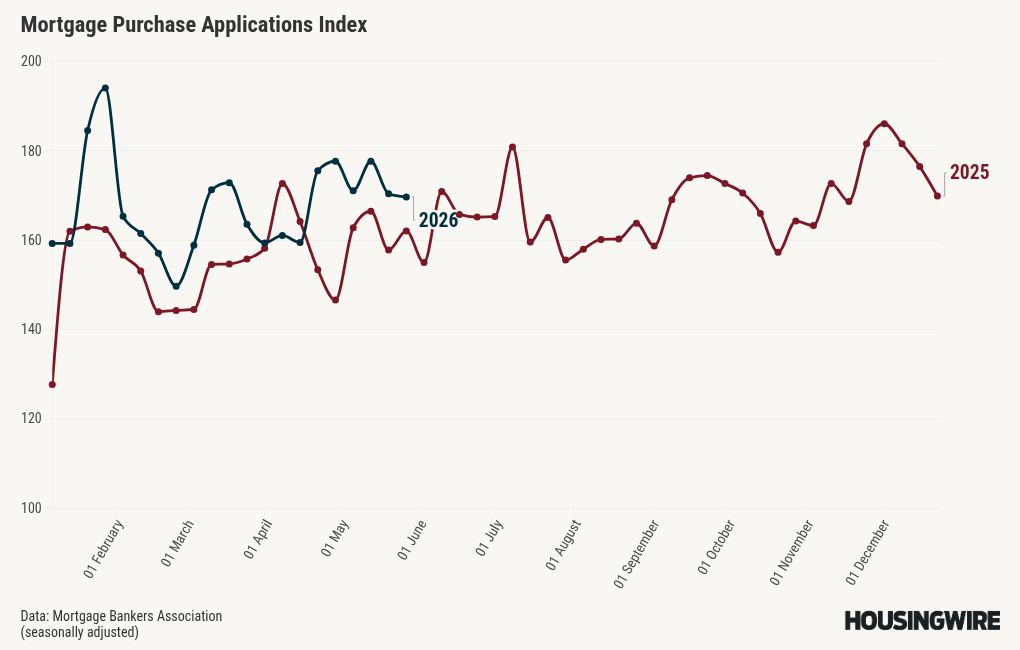
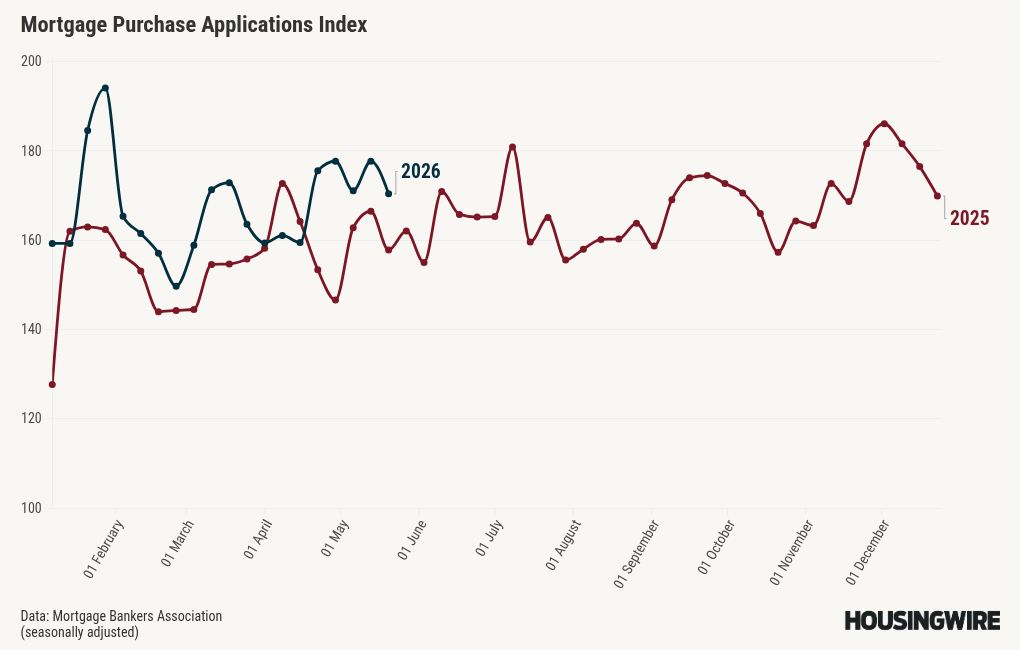
Rates for 30-year conforming mortgages stayed above 6.7% this week, but housing market activity has been resilient as weekly pending sales and purchase loan demand are up slightly compared to this time last year.

At HousingWire’s Mortgage Rates Center on Tuesday, 30-year conforming loan rates averaged 6.71%, while rates for 30-year jumbo loans averaged 6.73% and rates for 30-year loans backed by the Federal Housing Administration (FHA) were at 6.29%.

Purchase climate warms even as refis cool

Kyle Bass, production business manager at Refi.com — an affiliate of Veterans United Home Loans — said last week after Freddie Mac rates rose that consumers are showing extra sensitivity to small rate moves. This is having “an outsized impact on refinance activity,” he said, pointing to weekly application data from the Mortgage Bankers Association (MBA).

“That sensitivity appears to be tied not just to affordability, but also to growing uncertainty around timing and whether refinancing will ultimately be worth it,” Bass said.

“A recent Veterans United refinance sentiment study found that 37% of refinance prospects experience stress or anxiety about making the wrong refinancing decision, while 29% say they’re confused by closing costs, points and lender credits,” he added. “Another 23% reported difficulty timing the market correctly. Those findings help explain why many homeowners remain hesitant, especially when rates aren’t showing many signs of improvement in the near future.”

Mat Ishbia, president and CEO of United Wholesale Mortgage (UWM), said this week that he’s bullish on the current status of the purchase market as home price growth, inventory growth and Federal Reserve interest rate projections are in a healthy place.

“I actually think it’s an LO market, a loan officer market, because it’s hot right now,” Ishbia said in a monthly video post. “Don’t get confused — it’s a purchase market right now.”

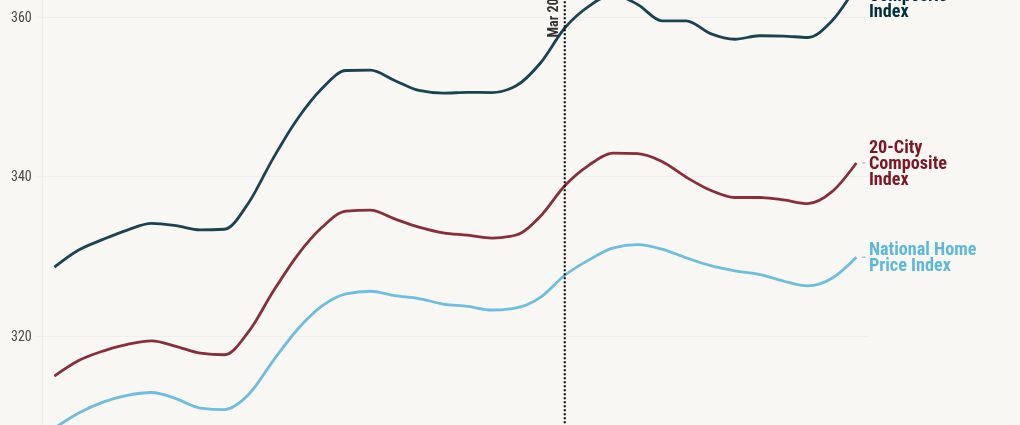
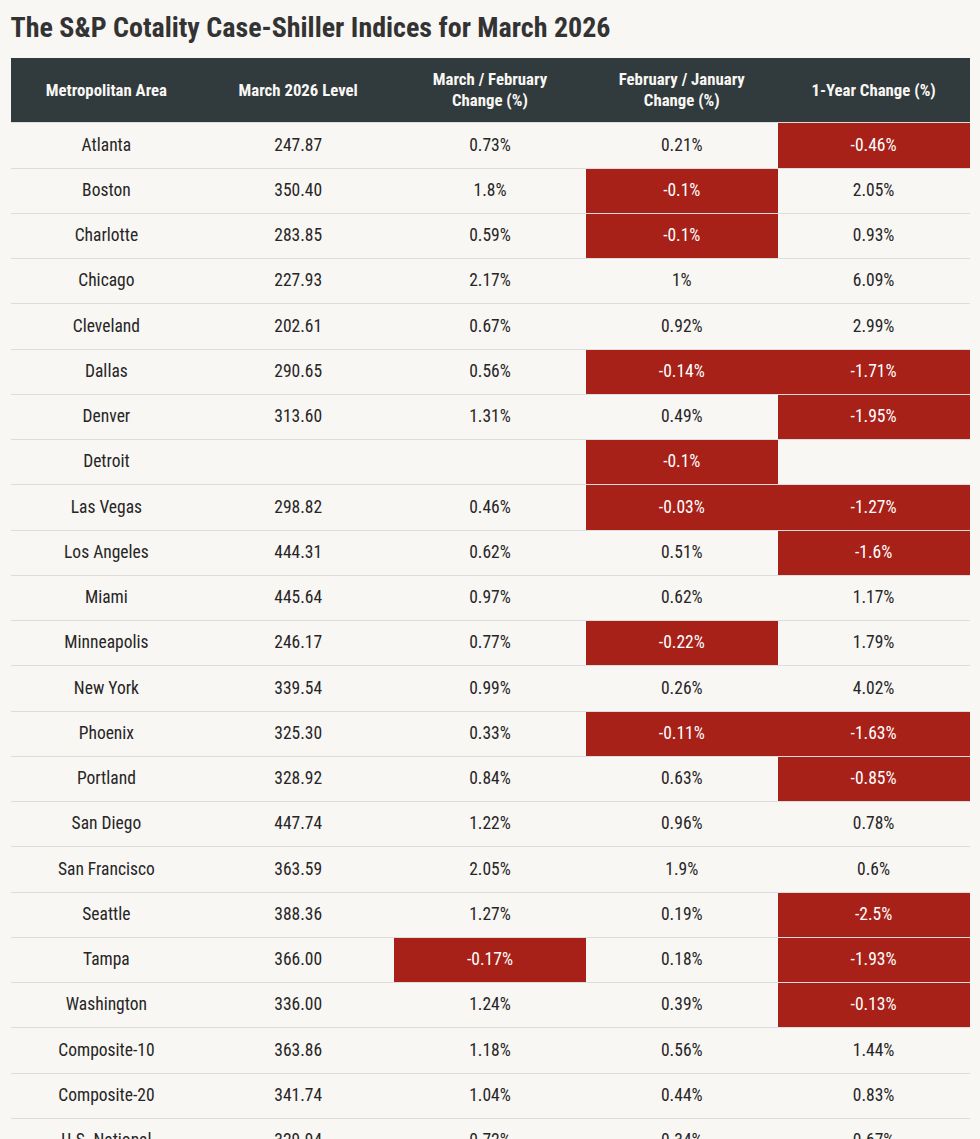
Case-Shiller home price data for March showed that prices rose 0.7% on an annualized basis, down from 0.8% in February. And price growth has slipped into negative territory in several major metros — including Seattle, Denver, Dallas, Phoenix and Las Vegas.

“Buyers are rejecting current price tags, but sellers refuse to offer steep discounts. The result is in a standoff,” said Thom Malone, principal economist at Cotality.

“Monthly price growth in March was the slowest since 2019. Sales were also low, indicating that sellers are still waiting for the rest of the economy to catch up with the housing market. Still, the modest appreciation points away from any immediate price drops and signals that buyers might be the ones who end up giving the most ground.”

What will the Fed do next?

Benchmark interest rates, which don’t directly impact rates for home loans, aren’t likely to move in the short term. The CME Group’s FedWatch tool shows that 98% of interest rate traders believe the federal funds rate will remain untouched after the next Federal Open Market Committee meeting concludes June 17.

That meeting will be Kevin Warsh’s first as Fed chair after he was recently confirmed by the Senate. Outgoing chair Jerome Powell, who was frequently criticized by President Donald Trump for not lowering rates quickly enough, remains on the Fed board. While Warsh has been described as less hawkish than Powell, there’s little evidence to suggest he’ll sway other officials into lowering rates anytime soon.

According to the CME Group’s survey, benchmark rates (currently at a range of 3.5% to 3.75%) are more likely to move higher than lower by the end of 2026. Interest rate traders placed 92% odds on no change in July, 75% odds of no change in September and 40% odds of a 25 basis-point increase by December.

Bose George, an analyst for Keefe, Bruyette & Woods (KBW), said in a note to investors last week that mortgage spreads are likely to remain beneficial for the near future. He wrote that Fannie Mae and Freddie Mac continue to purchase mortgage-backed securities, but the combined $317 billion value of their retained portfolios shows “meaningful room” for growth based on their $500 billion statutory cap.

“The spread between primary mortgage rates and the 10yr UST is now 208 bp, modestly above the long-run average of 192 bp,” George wrote. “Both spreads are also fairly close to the post-GFC averages. … So we think further spread tightening is likely limited (as is further downside to mortgage rates unless the 10-yr UST declines).”

Inflation is top of mind

At an economic conference in Iceland last week, Fed officials Michelle Bowman and Jeffrey Schmid offered public remarks on monetary policy influences.

“One straightforward case that would call for raising the policy rate reflects elevated inflation that is likely to continue to move higher, with the labor market showing no sign of slack and GDP rising much faster than its potential,” Bowman said. “The question would be by how much and how quickly to increase the policy rate. If the existing monetary policy stance is accommodative or close to neutral, in my view, it would be appropriate to withdraw any remaining accommodation by raising the policy rate deliberately or even expeditiously.”

“With inflation running above the Fed’s 2% definition of price stability for over five years, now is not the time to let down our guard,” Schmid added. “We must continue to signal our commitment to price stability and our willingness to take the actions necessary to achieve our mandate.”

This post was originally published on here

Onity Group Inc. won regulatory approval for a revised sale of most of its reverse mortgage servicing rights to Finance of America (FOA), the company said Tuesday.

Under the new agreement, Onity will sell MSRs on about 20,000 Home Equity Conversion Mortgages (HECMs) with an unpaid principal balance of $5.1 billion as of March 31. The initial deal included roughly 40,000 loans with $9.6 billion in UPB. Onity will subservice the transferred loans under a three-year agreement with FOA.

FOA will also acquire Onity’s pipeline of reverse mortgage loans, and Onity will exit the reverse mortgage origination business. The company expects total proceeds of $70 million to $80 million from the transaction, based on the book value of the assets as of April 30.

HMBS concentration

Ginnie Mae did not approve the original terms of the transaction, the companies said, although no additional details were provided.

But Ginnie Mae data on Home Equity Conversion Mortgage-backed Securities (HMBS) compiled by New View Advisors show that FOA and Onity together account for about 48% of the HMBS market by unpaid principal balance. Ginnie Mae requires that the HMBS issuer also be the servicer of record.

FOA is currently the largest HMBS issuer of record by unpaid principal balance, with about $18.1 billion in UPB across 3,163 issuances, or roughly 32.2% of HMBS outstanding, according to New View’s data. Onity holds about $8.9 billion in UPB across 5,378 issuances, representing a 15.9% share of outstanding HMBS before the transaction.

Among other major issuers, Longbridge Financial has about $10.3 billion of HMBS UPB (18.3% share), while Mutual of Omaha Mortgage holds about $4.1 billion (7.3% share).

Shift toward subservicing

The sale covers about 57% of Onity’s reverse servicing portfolio and about 77% of its reverse MSR investment. About 70% of Onity’s remaining reverse servicing portfolio is expected to run off within four years, the company said.

Glen A. Messina, Onity’s chair, president and CEO, said the deal repositions the company in the reverse mortgage market. It will “establish a significant subservicing relationship with FAR, a reverse market leader, help simplify our business, and enable increased focus on more substantial growth and earnings opportunities,” Messina said in a statement. 

The transaction remains subject to customary closing conditions. Onity said it will provide an update on the anticipated closing date at a later time.

Onity’s board also authorized a share repurchase program of up to $20 million of the company’s common stock. The authorization “reflects our intent to deploy capital in a disciplined and strategic manner with the goal of delivering meaningful returns to our shareholders,” Messina said.

This post was originally published on here

The Metropolitan Museum of Art on Tuesday launched free membership for New Yorkers enrolled in the Supplemental Nutrition Assistance Program (SNAP). The initiative is offered through the new “Explorer Membership” level, which provides one year of free membership, access to member preview days, a digital membership card, invitations to community programs, and more. The program is a joint effort by the city’s Department of Cultural Affairs, Human Resources Administration, and Department of Social Services, and follows a similar initiative launched by the American Museum of Natural History last July.

“We are proud to partner with the Metropolitan Museum of Art to ensure that every New Yorker knows they are welcome to learn, experience beauty, engage with history, and find inspiration at one of NYC’s greatest cultural institutions–entirely for free,” Mayor Zohran Mamdani said.

“This administration believes the very best of our city should belong to the people, and today’s announcement is another step toward making that vision real.”

More than 1.7 million New Yorkers rely on SNAP, and the program helps ensure that individuals and families facing economic strain have access to free, high-quality cultural experiences in safe, intergenerational public spaces.

However, under the Trump administration, those protections have been scaled back, as the president cut $186 billion from the program over 10 years last July and has since instituted new work requirements in March that could affect eligibility for millions of New Yorkers.

The new rules, known as “Able-Bodied Adults Without Dependents (ABAWD)” work requirements, require certain SNAP recipients to prove they are working, volunteering, or in school for a set number of hours each month to maintain their benefits, according to New York Focus.

Notably, the new policy eliminated automatic work requirement exemptions for homeless people, veterans, and young people formerly in foster care, removing protections for groups considered particularly vulnerable.

In response, the Mamdani administration launched an interagency effort to protect New Yorkers at risk of losing benefits. Officials say the initiative has reduced the number of projected benefit losses by 65 percent, according to a press release.

SNAP recipients are expected to begin losing benefits this month under the federal government’s “three-strike” policy, which reduces or terminates assistance after three months of noncompliance.

The partnership with the Met seeks to build on the city’s commitment to upholding SNAP benefits and ensuring equitable access to cultural spaces for all New Yorkers. Last July, the city partnered with the American Museum of Natural History to offer free admission, plus entry to one ticketed exhibition per visit, for SNAP recipients.

To enroll in the membership program, SNAP recipients can visit the museum’s membership desk at its Fifth Avenue location or at the Cloisters. To raise awareness of the program, the Met is distributing flyers and printed materials in libraries, community centers, and NYCHA developments.

Explorer Memberships expire after one year and may be renewed onsite at the Membership Desk. The Met membership includes free admission for one guest and children 17 and younger.

Visitors can enjoy the Met’s spring and summer programming and exhibitions, including the first major Raphael exhibition in the United States, on view through June 28, and the new Costume Institute exhibition, which pairs objects from across the museum’s collections with historical and contemporary garments, among other offerings.

In a statement, Max Hollein, the Met’s director and CEO, celebrated the partnership and welcomed SNAP recipients.

“The Met is here for everyone,” Hollein said. “Our mission is to connect all people to creativity, knowledge, ideas, and to one another, and we are honored to partner with the City of New York on this important membership program and extend to SNAP recipients a warm welcome and easy access to all the Met has to offer.”

“This museum was founded by New Yorkers for New Yorkers,” he added, “and we can’t wait to invite our new members in to enjoy everything from our groundbreaking exhibitions and stunning new collection galleries to our dynamic programs and activities we offer for visitors of all ages, all of which provide infinite opportunities for discovery, inspiration, and community.”

RELATED:

The post New York SNAP recipients can now receive free membership to The Met first appeared on 6sqft.

This post was originally published here

The U.S. Department of Veterans Affairs (VA) on Monday finalized updates to its loss mitigation and partial claim policies, creating a new foreclosure prevention option for struggling borrowers with VA-backed mortgages and setting the stage for implementation later this year.

The updated guidance, available on the VA’s website, implements provisions of the 2025 VA Home Loan Program Reform Act, which authorized the agency to establish a partial claim option for delinquent borrowers with VA-guaranteed mortgages.

The law was enacted after the wind-down of the Veterans Affairs Servicing Purchase (VASP) program left the agency without a permanent foreclosure prevention alternative for financially distressed homeowners.

Under the program, the VA can cover a portion of a delinquent borrower’s missed mortgage payments to bring the loan current. The amount, generally capped at 25% of the unpaid principal balance, is placed in a subordinate lien that does not require monthly payments and is repaid when the home is sold, refinanced or the mortgage is otherwise paid off.

The final policy follows months of industry feedback on draft guidance released in March. One notable change removes language from the proposal that would have allowed certain loan modifications tied to a partial claim to increase a borrower’s monthly payment by as much as 15%. That provision drew criticism from mortgage industry groups, which said that higher payments could undermine foreclosure prevention efforts.

The removal of the provision was welcomed by industry trade groups, including the Mortgage Bankers Association.

“MBA applauds the VA’s release of its partial claim program and updated loss mitigation waterfall, following a collaborative stakeholder feedback process that helped strengthen the proposed policies,” said Bob Broeksmit, the trade group’s president and CEO.

“We are pleased to see that veteran homeowners will have access to a key loss mitigation option available to other borrowers with government-backed mortgages, that can allow veterans to remain in their homes without increasing their monthly payments.”

Broeksmit said the association will continue to work with the VA and its servicer members to support the implementation of the program, adding that servicers will need time to update systems and train staff before the program takes effect.

The VA also finalized revisions to its loss mitigation waterfall, the sequence of foreclosure avoidance options servicers must evaluate before initiating foreclosure proceedings. Under the updated framework, the partial claim becomes a new retention option available to eligible borrowers who have resolved the hardship that caused their delinquency and can successfully complete a three-month trial payment plan.

Borrowers generally will be limited to one partial claim per loan, although a second may be available in certain disaster-related circumstances. Loans that previously received a VA partial claim or COVID-era refund modification may face additional restrictions.

Mortgage servicers may begin submitting trial payment plans for loan modifications and partial claims on June 15. The VA has provided a 180-day implementation period, giving servicers until Nov. 28 to update systems and operational processes before the program is fully implemented.

This post was originally published on here

loanDepot has promoted chief risk officer Joseph Grassi to the role of chief legal and risk officer, the company announced on Tuesday.

Per loanDepot‘s release, the expanded role “consolidates oversight of loanDepot’s legal, compliance, corporate governance and enterprise risk management functions.”

In the new role, Grassi will oversee loanDepot’s legal strategy, corporate governance and legal affairs, as well as regulatory compliance, loan quality and enterprise risk management. He reports directly to founder and CEO Anthony Hsieh.

Grassi has served as the company’s chief risk officer since 2022 and brings more than 35 years of experience in consumer lending law, mortgage regulation, compliance and risk oversight. The California-based lender said he has played a central role in strengthening its risk and regulatory compliance functions.

“Joe has been an exceptional leader for loanDepot,” Hsieh said in a statement. “His strategic mindset, industry credibility and proven leadership make him the right leader for this expanded role. As we continue our work to transform the company, this structure will help simplify the organization, strengthen our foundation, and support our return to profitable market share growth.”

Key initiatives under Grassi’s risk leadership, loanDepot said, have included strengthening relationships with Fannie Mae and Freddie Mac; enhancing loan quality and risk management processes; and increasing engagement with policymakers, regulators and government agencies in Washington, D.C.

Beyond his role at loanDepot, Grassi is co-chair of the Mortgage Bankers Association (MBA)’s Legal Issues and Regulatory Compliance Committee. He previously co-chaired the MBA’s Independent Mortgage Bankers Executive Committee.

Before joining loanDepot, Grassi held leadership positions at Celebrity Home Loans, the Department of Housing and Urban Development (HUD), Rate and Prospect Mortgage. He also previously worked at Freddie Mac.

Grassi spent 20 years at Fannie Mae as a senior attorney, including serving as lead counsel for its multifamily and single-family businesses. Grassi ultimately served as interim general counsel and corporate secretary, overseeing Fannie Mae’s legal, government and industry relations departments and advising the CEO and board of directors.

Grassi began his career at Philadelphia-based law firm Obermayer, Rebmann, Maxwell & Hippel. He holds both a J.D. and a bachelor’s degree in business administration from Villanova University.

This article was generated using HousingWire Automation and reviewed by a HousingWire editor before publication. 

This post was originally published on here

Century 21 Americana has expanded into Montana through the addition of Century 21 Hometown Brokers, a leading brokerage in Billings and the top-performing Century 21 affiliate in the state.

The move marks Century 21 Americana’s first entry into Montana and extends its footprint beyond Arizona and Nevada as part of a broader growth strategy across the western U.S.

The Billings office will now operate as a branch of Century 21 Americana.

“Yellowstone County continues to emerge as a dynamic and expanding market, with steady residential demand, a strong business community and significant new developments shaping the city’s future,” said Juan Martinez, president of Century 21 Americana. “Expanding into Montana allows us to continue building a stronger presence across the West while connecting more communities with the experience, tools and support that define our brokerage.”

As part of the transition, longtime Hometown Brokers owner Mark Dawson will remain as principal broker and assume the role of president of Montana operations. Todd Harp, a 25-year veteran of the company, will serve as supervising broker.

“Mark is one of the primary reasons we made the decision to expand into Montana,” Martinez said. “Mark and Todd are incredible leaders with a proven track record, and nobody understands the Billings market better. We are confident in their leadership.”

Century 21 Americana — which recorded more than $325 in transaction volume last year, according to RealTrends Verified rankings — said it plans to pursue additional growth opportunities throughout Montana, including future acquisitions and brokerage partnerships.

“This transition allows us to bring the strength, technology and scale of Century 21 Americana to Montana while maintaining the local relationships and leadership that built our success,” said Dawson. “We are proud to remain rooted in Billings while positioning ourselves for the next chapter of growth. We have so many great people working here, and we’re excited for the next 25 years.”

Agents in the Billings office will gain access to Century 21 Americana’s training programs, marketing resources, technology platform and broader support network.

Century 21 Americana, owned by Juan and Elizabeth Martinez, operates offices across Nevada, Arizona and Montana and has more than 450 sales associates. It has been affiliated with the Century 21 brand since 2012.

This article was generated using HousingWire Automation and reviewed by a HousingWire editor before publication.

This post was originally published on here

Plans to turn Manhattan’s 34th Street into a dedicated busway are back on. Mayor Zohran Mamdani and the city’s Department of Transportation (DOT) on Tuesday announced that work will restart on the busway, which will cover just over a mile of the corridor from Third to Ninth Avenues. Plans for the busway, which aims to increase speeds for buses that currently move as slowly as 3 miles per hour, were first announced by former Mayor Eric Adams last May, but were halted a few months later after threats from President Trump’s administration.

Credit: NYC DOT

Modeled after the 14th Street busway, which launched in 2019, the project would dedicate lanes of traffic for buses, trucks, and emergency vehicles between 6 a.m. and 10 p.m. every day of the week. Cars and taxis can enter via side streets, but must leave the corridor at the next legal turn.

According to the city, the new busway could boost speeds by up to 15 percent for more than two dozen bus routes along the corridor, including the M34/M34A Select Bus Service. Serving about 28,000 daily riders, the line travels just 5 miles per hour during peak hours, and as slow as 3 miles per hour, according to DOT.

The 34th Street busway would also include pedestrian improvements such as shorter crosswalks and brighter markings.

“Too many New Yorkers spend too much time waiting on buses stuck in traffic. The 34th Street busway will change that, turning one of our most congested bus corridors into one that actually moves,” Mamdani said.

“This is how we build a transit system that meets the scale of our city: fast, reliable, and built for the people who depend on it every day.”

The city officially halted the project in October after the Federal Highway Administration (FHWA) sent a letter laying out concerns over the busway, which is in the federal government’s purview because it connects to the national highway system. The agency said there was a lack of coordination between city and state transportation officials and the New York City Metropolitan Transportation Council. If the project was implemented without addressing concerns, the city was risking funding for “pending and future Federal-aid projects,” according to the FHWA.

City Hall spokesperson Jeremy Edwards told the New York Times the city had been in “active communications with the federal government” on the busway’s restart. Edwards said the city would add the plan to the Transportation Improvement Program, a list of upcoming state projects that involve federal planning.

According to the mayor, busways in the city have increased bus speeds by up to 60 percent while reducing injuries by 45 percent. On 14th Street, traffic injuries declined by nearly 60 percent following the implementation of the busway.

DOT said public outreach will begin this month, with plans to install street infrastructure later in the summer. Construction is expected to wrap up by this fall.

“34th Street is one of Manhattan’s busiest corridors, moving tens of thousands of New Yorkers every day — yet buses are too often stuck in traffic, slowing down commutes and making service unreliable,” NYC DOT Commissioner Mike Flynn said.

“The 34th Street busway will help deliver faster bus service for riders, safer conditions for pedestrians and a more efficient street for everyone who depends on it.”

RELATED:

The post Mamdani restarts plan for 34th Street busway that Trump halted first appeared on 6sqft.

This post was originally published here

Connecticut is adding its name to the list of states that have passed laws governing the use of private listing networks by home sellers

Last Wednesday, Connecticut governor Ned Lamont signed Senate Bill 340 into law. Under the law, any real estate agent representing a seller or a landlord involving the seller or landlord’s residential property containing one to four units must “publicly advertise or market the seller’s or landlord’s property for sale or lease, unless the seller or landlord completes and signs the Seller/Landlord Opt-Out of Real Estate Public Marketing form.”

According to the law, public marketing includes publication of the listing through any medium that is “reasonably accessible to the general public and real estate licensees, that provides open and nondiscriminatory access to property information.” Additionally, the law states that if a property is marketed through a private or limited access channel, concurrent marketing through a public channel must also occur. 

The bill was introduced into the state legislature in February and is slated to go into effect on Oct. 1, 2026. 

A similar bill is on the New York governor’s desk

Just one state over in New York, a similar bill, known as the “Fair and Transparent Real Estate Listings Act,” was passed by the state legislature on Monday and it has been delivered to Governor Kathy Hochul for her signature. 

If the bill is signed into law, it would require real estate professionals to publicly advertise or market a residential property they list on platforms accessible to the general public. 

The bill defines a private listing network as a system or platform operated on behalf of a brokerage, franchise, MLS or group of licensees that restricts access to some or all listing information to a definite subset of brokers, licensees or buyers and that is not “broadly accessible” to the general public and all licensees representing the prospective buyers. 

According to the bill, within one calendar day of the start date of a written listing agreement, a listing agent must publicly advertise or market the listing for sale in or on a publication, platform or website “that is broadly accessible to the general public and any real estate licensees representing prospective buyers and shall not satisfy this requirement by advertising or marketing solely through a private listing network or other restricted-access platform.”

However, listings could be non-publicly marketed if the seller “gives informed, written direction after receiving a standardized state disclosure that clearly explains the risks and tradeoffs of withholding a listing from public marketing.” Additionally, the bill allows the listing agent to restrict public marketing if the seller has a “bona fide private, safety or similar need” where any public marketing would be “reasonably likely” endanger their health or safety.

Other legislation

The progress of these two bills come as a similar law is slated to go into effect in Washington on June 11. The bill was signed into law by Washington Governor Bob Furgeson in March. In December 2025, Wisconsin Governor Anthony Evers signed a bill into law making the public marketing of a property the accepted default. This law will not go into effect until January 1, 2027. In addition to these two laws, there are bills pending in Illinois and Hawaii seeking to regulate private listing networks.

This post was originally published on here

Rocket Pro is continuing its promise to deliver a monthly “Power Play” announcement on the first Tuesday of every month by introducing three new broker-focused incentives, one of which will lead to a $100,000 prize.

Part of Rocket Pro’s June Power Play, the third month of the initiative, includes the launch of “The Big Pitch,” described as “a broker-driven tech innovation contest” that invites mortgage brokers to submit ideas aimed at solving industry pain points through technology.

The contest is open to all wholesale mortgage professionals with active NMLS licenses, not just Rocket partners. Submissions will be accepted through the end of June, after which Rocket leaders will select three finalists. Online voting will begin in early July, and Rocket Pro will develop working prototypes based on the finalists’ ideas.

The prototypes will be demonstrated live during the Rocket Pro Experience conference in Detroit on Sept. 1, where the winner will be determined through a combination of online voting and votes cast by conference attendees. A $100,000 grand prize will be awarded at the event.

“When you sit down with savvy brokers and pick their brains, it’s unbelievable what you can learn and unbelievable the solutions they already have. They just need folks to go out and build it,” Austin Niemiec, chief revenue officer of Rocket Mortgage, said during a conversation with HousingWire ahead of the announcement.

Niemiec continued, “A lot of what we’ve rolled out over the last decade started as brokers coming to us and saying, ‘Solve this problem. I have an idea.’ This is really taking that to the next level.”

Rocket extends its purchase credit program

In addition to the contest, the wholesale lending division of Rocket Mortgage said it is yet again extending its 60-basis-point purchase credit and a 40-basis-point Compass credit as part of a partnership with the real estate broker.

Rocket Pro said broker partners can qualify for the full 100-basis-point credit when assisting clients who are working with agents affiliated with participating real estate brands, including @properties, Better Homes and Gardens Real Estate, CENTURY 21, Christie’s International Real Estate, Coldwell Banker, Compass, Corcoran, ERA and Sotheby’s International Realty.

Niemiec said the continuation of the Compass credit is in part due to how “significant” the credit has been in helping brokers’ businesses.

“Everyone’s talking about how tough this market is right now, and we’re focused on helping brokers win right here, right now, while also investing in helping brokers win deep into the future,” Niemiec said. “That’s what partnership is all about.”

Incentives to encourage cash-out refis

The company also announced a temporary pricing incentive to encourage cash-out refinances. Through July 6, brokers can receive a 20-basis-point loan-level price adjustment credit on conventional and government-backed cash-out refinance loans.

Niemiec added, “Rate-and-term refis have gotten a little more difficult, but who cares? There’s so much cash-out business out there to be won with how much equity is in Americans’ homes—but brokers have to go get it.”

The credit can be combined with Rocket Pro’s existing 40-basis-point refinance incentive, resulting in up to 60 basis points in savings.

“We’re coming with real solutions, real plays to help brokers win, and this is just another example of that,” Niemiec said. “What I love about this power play is its serious value this month in a tough market to help brokers win purchase and refi business…we’re committing serious resources to building real technology solutions to help brokers win deep into the future…this power play shows that.”

This post was originally published on here

With all the crazy headlines that push oil prices up and down, we sometimes forget that the labor data is still really important for mortgage rates — and that the Fed’s view of labor data is just as important as getting a deal with Iran to bring oil prices lower. 

So the question is, where are we today? Since it’s jobs week, let’s take a review of where the Fed’s mindset is with labor versus inflation.

Federal Reserve and mortgage rates

Today, Cleveland Fed President Beth Hammack said this: “If we wait for definitive evidence that high inflation has become embedded in the economy, it may require larger policy adjustments, at greater cost.” 

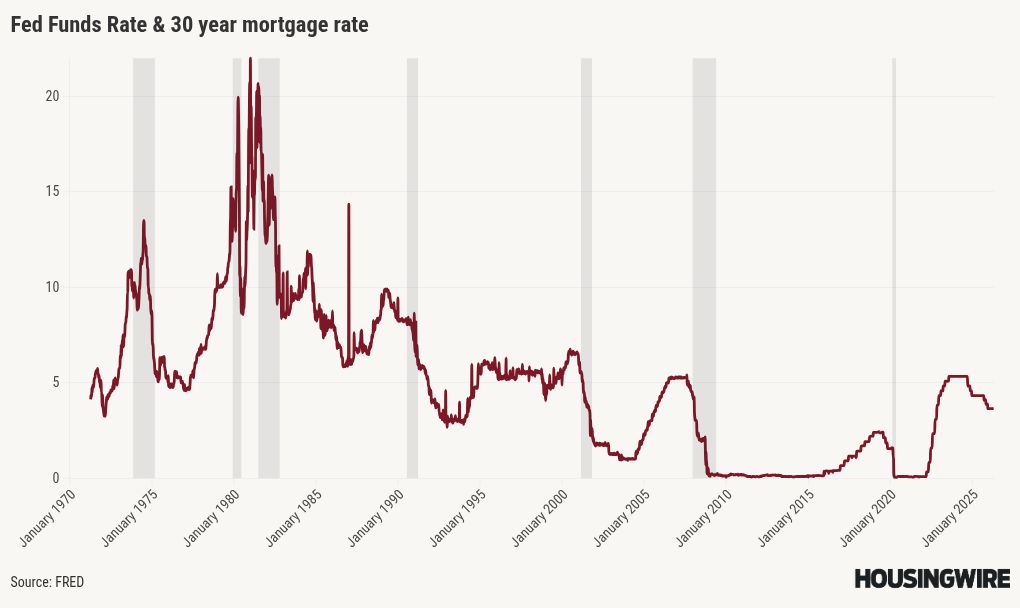
There are a lot of hawks in the Fed right now, and the markets went from pricing in two to three rate cuts in 2026 to a rate hike in a short amount of time. The question is, will they pull the trigger in 2026?

Kevin Warsh was brought in to cut rates, not raise them, but his hands are tied as long as this conflict continues and oil prices are elevated. It’s not shocking that the 10-year yield and mortgage rates made a big reversal as the conflict expanded. A lot has been priced into the market without the Fed actually hiking rates.

chart visualization

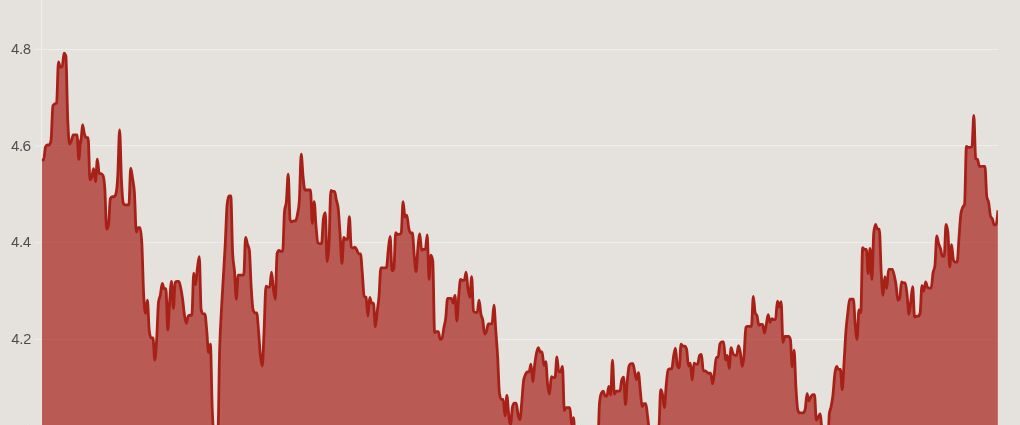
As of now, the 10-year yield and mortgage rates are pricing in a rate hike in 2026, not two to three rate cuts.

Jobs and the labor data

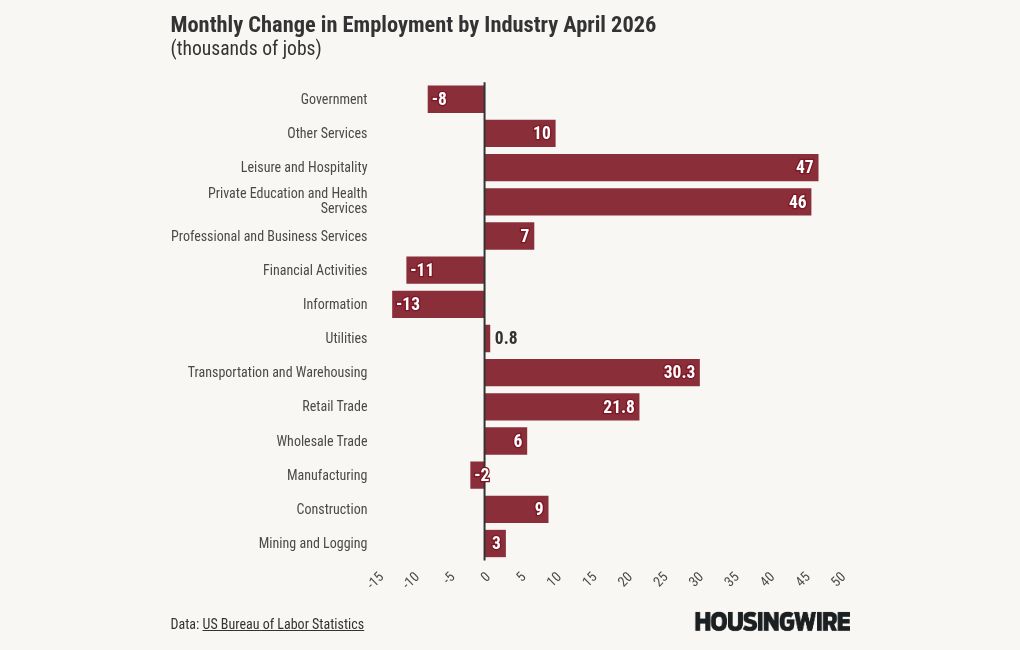
As we wait for Jobs Friday, the one thing that has happened in 2026 is that I believe the labor data is beating the Federal Reserve estimates. To me, this means job growth is running about 46,000 jobs per month above the Federal Reserve’s break-even point, so the Federal Reserve isn’t worried about the labor market breaking anymore.

chart visualization

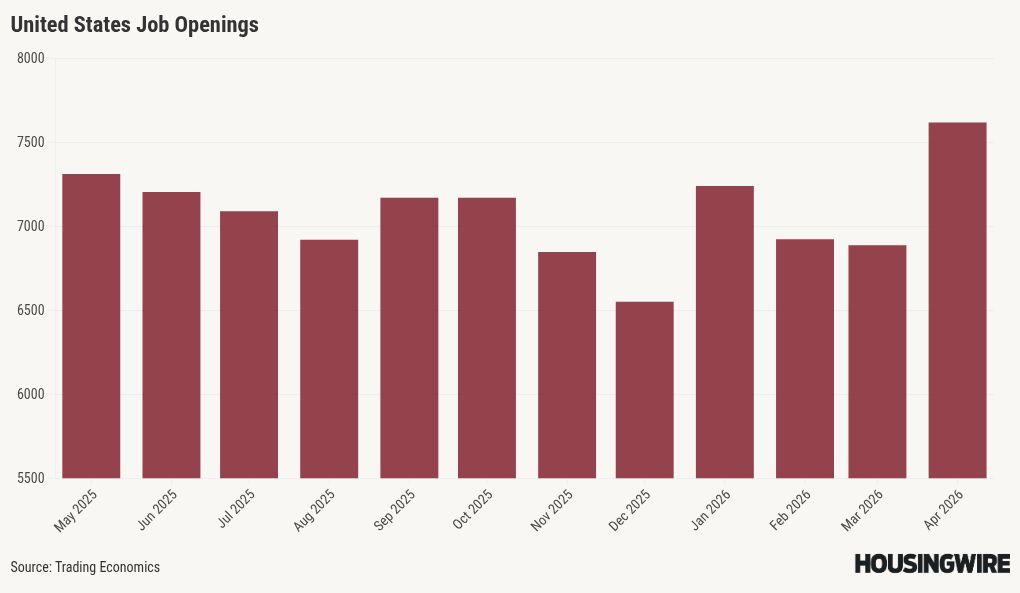
Today, one of the Federal Reserve’s main labor data points, job openings, had a massive beat of estimates, even though the internals of the report with hires weren’t great. Job openings are above 7.5 million, which again shows that the fear of a huge rise in the unemployment rate from AI disruption isn’t happening.

chart visualization

Oil prices

As we attempt to get a deal with Iran, the bond market feels better about that really happening. However, oil prices are still elevated and are nowhere close to the lows of around $56. As long as oil prices are elevated, the Fed hawks will not be talking about rate cuts, but more about rate hikes. We need ships flowing in the Strait for this to get better.

chart visualization

We have to remember that inflation was rising before the conflict happened, and this conflict just gave the Fed hawks meat to talk about rate hikes.

Conclusion

As we wait for Jobs Friday and the jobless claims data we get every Thursday, remember that when we are talking about mortgage rates, it’s no longer labor over inflation like it was last year. The jobs data has improved, but the inflation story has gotten more complicated with elevated oil prices as well. We need to keep a close eye on what Fed governors say because a lot has been priced in, but any improvement in inflation data and the economic data being softer can take the 10-year yield lower.

This post was originally published on here

As kitchen-table living costs continue to strain consumer household budgets, some builders are marketing new homes to help reduce monthly expenses.

KB Home is one of them. The company contends that energy-efficient, high-performance and resilient homes can lower utility and maintenance costs, helping homeowners save money month after month.

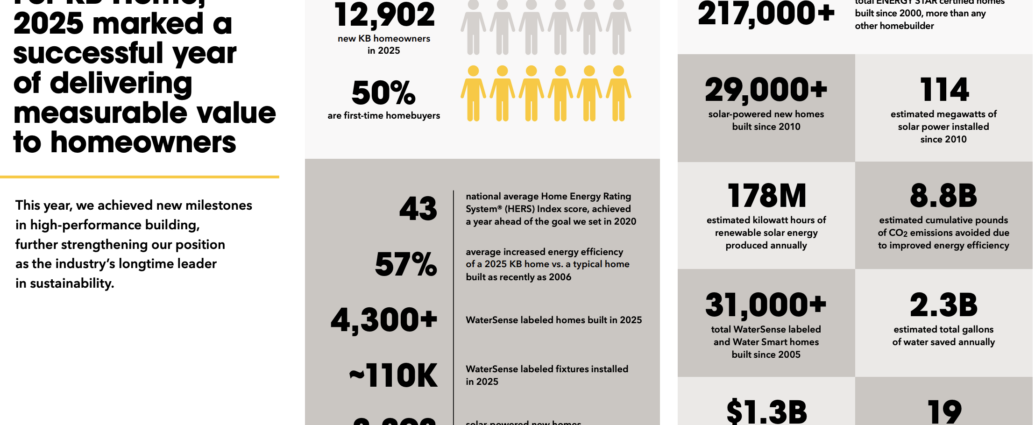
KB Home’s newly released 2025 Sustainability Report underscores this effort. KB Home customers in 2025, the report concludes, will save an average of $1,900 a year on utility bills compared to the typical home. These savings highlight that affordability is about more than upfront sticker price, extending into ongoing costs such as utility bills, maintenance and insurance.

To market these cost savings to customers, KB Home’s sales teams place an energy-cost label in every model home that estimates monthly utility expenses compared to those of an older home of a similar size.

The labels, modeled after vehicle fuel-efficiency stickers, educate buyers on expected savings.

KB Home considers its leadership in water conservation, energy efficiency and resilience to be a major differentiator that stands out among potential buyers. While lower energy bills often capture buyers’ attention first, KB Home also uses the labels to start conversations about other benefits. 

“There are these tangible benefits of comfort, a healthier [indoor air] environment, less maintenance, potentially lower insurance premiums and things of that sort. I think that the message comes across very clearly,” Jacob Atalla, VP of Innovation and Sustainability, told HousingWire’s The Builder’s Daily.

Conserving water and lowering costs

KB Home built more than 4,300 homes last year that matched or exceeded the U.S. Environmental Protection Agency’s WaterSense-labeled standards. This is more than any other homebuilder and represents about 33% of KB Home’s total deliveries. Atalla sees this distinction as one of KB Home’s key differentiators, particularly in regions like the Southwest, where water is in short supply, and where new-home communities can come across to home-seekers as a “sea of sameness.”

In dry climates, the outside of the home can actually use more water than the inside, driving up ongoing utility costs for homeowners. To address this, KB Home plants water-efficient landscaping and implements efficient irrigation systems in its yards, particularly in the Southwest. 

Inside the home, the WaterSense standards address everything from fixtures and hot water distribution to more efficient plumbing layouts. These design features work to reduce water consumption by about 30% to 40% compared with a typical home. 

“It’s the whole home working as a system to reduce water consumption, including the yard, and with that, there is about between $400 to $500 in water utility savings on an annual basis,” Atalla explained.

To date, KB Home has built more than 31,000 WaterSense-labeled homes, saving an estimated 2.3 billion gallons of water annually. 

Energy efficiency and livability

The typical KB Home community is now 57% more energy efficient than the average homes built in 2006, and roughly 10% more efficient than the average newly built, RESNET HERS (Home Energy Rating System) rated home built in 2025, according to the sustainability report. 

KB Home’s efficiency gains over the past couple of decades have come through a mix of steady incremental improvements and larger breakthrough innovations. Early improvements included measures such as using radiant barriers in attics, while more recent advancements are centered on placing ducts and air handlers within conditioned space. 

Other recent innovations, such as microgrid communities in California, which are all-electric, solar- and battery-powered communities, could prove to increase energy efficiency even further. 

KB Home additionally incorporates wellness into its design through features that improve both efficiency and indoor air quality, such as energy recovery ventilation systems, healthier lighting designs, low-VOC paint and carpeting and smart thermostats. 

Solar communities are aso a big part of KB Home’s business, with roughly 3,400 solar-powered homes delivered last year. However, the company’s solar strategy is now mainly focused on California, where it is required by code. 

“We didn’t see as much demand as we hoped for that would sustain that business in other states, so for these reasons and others, we scaled it down to just California,” Atalla said. 

California’s stringent environmental regulations and standards have received pushback from some legislators and homebuilding leaders, who argue that these high standards push up the cost of housing. The U.S. Department of Housing and Urban Development (HUD) recently released a report urging states and municipalities to scrap a host of regulations, including strict environmental standards. 

However, proponents of these strict environmental standards argue that it forces homebuilders to deliver better and more efficient housing. To this end, KB Home’s latest sustainability report notes that homes in California markets, including those in Los Angeles, San Diego, the Inland Empire, Sacramento and the Bay Area, are far more efficient and sustainable and emit far fewer greenhouse gas emissions than other KB Home divisions. 

KB Home estimates an average impact of 2.5 tons of CO2e (carbon dioxide equivalent) for each house built in 2025. Some markets, like Boise and Dallas-Fort Worth, eclipsed 5.0 CO2e per home. Other divisions like Charlotte, Raleigh/Durham and Denver weren’t far behind. 

However, every KB Home California division was far more efficient, with an impact of 1.0 tons of CO2e or less. Most California divisions registered less than 0.5 CO2e, indicating that the strict environmental building requirements in the Golden State have some positive impacts on sustainability and performance.

How resiliency plays into affordability

KB Home is also a leader in fire-resiliency, having delivered the first two communities in California that met the Insurance Institute for Business & Home Safety (IBHS) home- and neighborhood-level wildfire resilience standards.

California already has strict wildfire building requirements, but IBHS standards go above and beyond what state law mandates. 

The IBHS wildfire resilience framework combines home-level and community-wide protections. 

Individual homes must include Class A fire-rated roofs, durable windows and doors, noncombustible gutters, ember- and flame-resistant vents, and a 5-foot noncombustible buffer around the structure. 

Community standards include maintaining at least 10 feet of separation between most buildings, installing fire-resistant features such as metal fencing and rock materials, and limiting combustible fuels throughout the development.

KB Home plans to employ these standards in future communities built in fire-prone areas, whether in California or in other states.

The overarching goal is to improve safety and make communities more resilient to hurricanes, but the IBHS standards are also aimed at making homes easier to insure, a growing problem in California’s fire-prone foothill regions. 

A cost-benefit analysis

Nam Joe, KB Home’s Sacramento Division President, previously told The Builder’s Daily that his team was able to implement the strong fire-resiliency standards at no additional cost by virtue of the firm’s early partnership with IBHS. 

However, in the sustainability report, KB Home admits that implementing sustainable and resilient features beyond what municipal and state codes require can add additional upfront costs. The report similarly notes the downsides of delivering a home that isn’t as efficient or resilient as it could be.  

“In evaluating whether to implement voluntary improvements, we consider that choosing not to enhance our homes’ resource efficiency can make them less attractive to municipalities, and increase the vulnerability of residents in our communities to rising energy and water expenses and use restrictions,” the report read. “We balance these costs against our goals of profitability and affordability for first-time and first move-up buyers.” 

Therein lies the debate. While building sustainable and resilient homes can lower ongoing costs, it can also add more to the initial sticker “first-cost” price of a home. In this vein, the report notes that KB Home is leveraging its experience and scale to identify ways to streamline sustainable homebuilding and make it attainable for a growing share of buyers. 

As Atalla put it, this can mean searching for alternative materials or leveraging technology to lower building costs. 

“The things that we’re now looking at for the next few years are more related to how we can evolve our offsite construction to help in reducing costs and improving the quality of construction, which improves efficiencies as well,” Atalla said.

This post was originally published on here

Set yourself up for success in the new year by stacking your calendar with real estate events and conferences. Learning from other agents and brokers around the country is the perfect way to boost motivation and gather fresh ideas. Through networking with fellow agents, brokers and other industry professionals, you’ll build confidence, gain knowledge, increase your visibility and forge new connections that can take your career to the next level.

While creating a successful online presence is necessary for agents in today’s digital world, that shouldn’t negate the power of human interaction and its impact on growing your business. With live in-person events, you’ll stay up to date with the latest trends and market research while simultaneously increasing your skills.

Here’s a look at our top real estate conferences and events that should be on your radar for 2026, listed chronologically to help you plan your calendar for the year.

1. ICT Regional Summit – Missouri

  • Date: June 3-4, 2026
  • Location: Kansas City, MO
  • Ticket Price: $1,995 (limited to 35 seats)
ICT-Regional-Summit-Kansas-City-MO

What it’s about: The ICT Regional Summit is a two-day leadership event tailored for brokerage owners, team leaders, and growth-focused real estate executives. The agenda centers on practical strategies for scaling and increasing enterprise value, with sessions covering brokerage valuations, mergers and acquisitions, recruiting through attraction-based models and the use of AI across marketing, lead generation and business operations.

What we love: Unlike large industry conferences, the summit is intentionally capped at 35 attendees, creating a highly interactive environment focused on discussion rather than presentations. The smaller format provides greater access to speakers, deeper peer-to-peer conversations and more meaningful networking opportunities with other brokerage leaders facing similar growth challenges.

Click here to register

This post was originally published on here

President Donald Trump has appointed Bill Pulte as the Acting Director of National Intelligence (DNI). Pulte will also remain in his current roles as Director of the Federal Housing Finance Agency (FHFA) and chairman of Fannie Mae and Freddie Mac.

“William has deep experience managing the most sensitive matters in America, the safety and soundness of the markets, and over 10 Trillion Dollars at Fannie Mae/Freddie Mac, a substantial increase from where it was just 12 months ago,” Trump said in a Truth Social post announcing the appointment on Tuesday.

Pulte will succeed Tulsi Gabbard, a politician and U.S. military office, who announced she is stepping down from the role this month.

Pulte is seen as a staunch Trump ally, though his appointment is notable given his lack of a traditional military or intelligence background. The DNI is the top official responsible for coordinating the U.S. intelligence agencies and advising senior government leaders on critical issues, including terrorism, espionage, cyberattacks and foreign government activities.

Should the president formally nominate him to hold the position full-time, Pulte would need to be confirmed by the U.S. Senate. The Senate previously confirmed Pulte — grandson of the founder of the homebuilding giant PulteGroup — to the FHFA position in March 2025.

Within months of taking the helm at the FHFA, Pulte initiated sweeping leadership changes at Fannie Mae and Freddie Mac. He moved to terminate Special Purpose Credit Programs (SPCPs), cut DEI budgets, and rescinded various fair lending and climate-risk advisory bulletins. Pulte also targeted credit-scoring companies, applying pressure on Fair Isaac Corp. (FICO) while clearing the enterprises to accept the VantageScore 4.0 credit model.

Pulte established a dedicated mortgage fraud tip line and issued criminal referrals to the Department of Justice regarding occupancy fraud. His efforts led to high-profile criminal referrals against Trump adversaries, including New York Attorney General Letitia James and Federal Reserve Governor Lisa Cook. He was a vocal participant in the administration’s pressure campaign against Fed Chair Jerome Powell to cut interest rates.

This post was originally published on here

Realtor.com has launched RealAssist AI, a new artificial intelligence (AI)-driven home search experience developed in collaboration with Google, allowing consumers to search for homes using natural language conversations rather than traditional filters and search fields.

Currently available in beta to a select group of logged-in users across desktop, mobile web and the Realtor.com app, RealAssist AI is designed to assist buyers with early research, affordability questions, property discovery, neighborhood analysis and agent connections.

“Realtor.com is positioned to lead the AI era in real estate — and the data already points that way,” said Damian Eales, CEO at Realtor.com. “We lead our competitors in AI brand favorability. We are the most trusted brand among real estate professionals and the No. 1 real estate news publisher in the country. Our collaboration with News Corp and deep industry roots give us an authority in this space that others simply cannot replicate.”

The platform enables users to ask detailed, conversational questions about affordability, neighborhoods, commute times, property characteristics and lifestyle preferences.

RealAssist AI then generates personalized recommendations and insights based on those criteria.

“Buying a home is one of the biggest financial decisions most people will ever make, and most buyers start the process feeling overwhelmed and underprepared,” said Mickey Neuberger, chief consumer and marketing officer at Realtor.com. “RealAssist AI removes the uncertainty and builds confidence at every step, from early research to connecting with a local agent, because the insight behind it is real. Every buyer deserves that.”

A key feature of the platform is its ability to maintain context across sessions, remembering user preferences, budgets and priorities so conversations can continue without restarting the search process, leaders added.

Powered by Google technology, RealAssist AI also incorporates mapping and neighborhood exploration tools, allowing buyers to evaluate commute routes, nearby amenities, schools, parks and local businesses.

According to Realtor.com, RealAssist AI includes safeguards intended to support Fair Housing compliance and protect MLS data integrity.

Realtor.com said the platform is designed to improve the quality of client interactions by handling much of the preliminary research and discovery work before consumers connect with a real estate professional.

The company plans a broader rollout of RealAssist AI following the current beta testing period.

This article was generated using HousingWire Automation and reviewed by a HousingWire editor before publication.

This post was originally published on here

There is an ongoing debate in mortgage lending about whether the industry is fundamentally broken or simply experiencing another cycle of technological evolution. Over the past decade, lenders have invested heavily in automation, OCR, verification services, title integrations and income validation tools. Artificial intelligence is now emerging as the next expected leap in efficiency.

Yet despite this sustained investment, core operating metrics have not moved in the direction many expected. The cost to originate a mortgage has increased from approximately $8,300 per loan to more than $11,300 in recent years. At the same time, loans continue to require multiple handoffs and repeated “touches” before reaching closing.

This raises a fundamental question: Has technology meaningfully improved mortgage manufacturing efficiency—or has it simply added layers of complexity to an unchanged operational model?

Efficiency gains or structural constraints?

Speed is often cited as a defining competitive advantage in mortgage lending. Faster cycle times, quicker underwriting decisions and accelerated closings are frequently positioned as evidence of operational improvement.

However, speed alone does not necessarily reflect efficiency. In many cases, faster processing simply shifts complexity downstream, where loans require additional effort to resolve data gaps, clear conditions and correct inconsistencies introduced earlier in the process.

A significant portion of operational capacity in many lending organizations is still dedicated to exception handling rather than true straight-through processing. When headcount is primarily used to “repair” loans instead of originating clean ones, the cost structure inevitably expands.

As margins continue to compress, this model becomes increasingly difficult to sustain. Efficiency gains achieved through front-end technology investment are often offset by back-end rework, limiting the industry’s ability to realize meaningful cost reduction.

The submit-to-close gap as a structural signal

One of the clearest indicators of this imbalance is the submit-to-close ratio. Historically, the industry operated near a 65% conversion benchmark. More recent data, including Home Mortgage Disclosure Act (HMDA) reporting, indicates that national averages have declined to approximately 53%.

While often attributed to market cycles or temporary conditions, this decline may also reflect a deeper structural issue in how loans are originated and qualified.

If nearly half of submitted loans do not reach closing, the inefficiency cannot be isolated to underwriting or secondary review. It suggests that a significant portion of breakdowns are occurring before the loan is fully validated for submission.

Despite this, many performance frameworks continue to prioritize application volume and pipeline growth over funded outcomes or loan quality. This creates a misalignment between activity-based metrics and actual operational performance.

Over time, this structure reinforces a “submit first, resolve later” mentality, increasing downstream workload, elevating costs and placing sustained pressure on operations teams.

The front-end problem in loan manufacturing

The most persistent inefficiencies in mortgage lending often originate at the earliest stage of the process: the borrower–loan officer interaction.

This initial engagement establishes the foundation for the entire loan lifecycle. When information is incomplete, inconsistently gathered or not fully validated, the impact compounds through underwriting, processing, and closing.

In many organizations, the emphasis on speed to submission reduces the depth of this initial analysis. Loan officers are often encouraged to secure commitments quickly and move files into the system, with the expectation that downstream teams will resolve any issues.

This approach does not eliminate complexity—it redistributes it.

Yet the loan officer remains the closest point of contact to both borrower intent and property-specific realities. As such, they are the most critical control point in determining whether a loan is structurally sound at inception.

Improving outcomes at this stage requires more than process discipline. It requires a consistent framework for borrower engagement, structured data capture and disciplined qualification standards applied before submission—not after.

Reframing mortgage lending around loan quality

Addressing these challenges does not require a complete reinvention of mortgage lending, but it does require a reorientation of where quality is established in the process.

The most meaningful operational improvements are unlikely to come from additional layers of back-office automation. Instead, they will come from improving the consistency, completeness and accuracy of loans at the point of origination.

When the front end of the process is strengthened, the downstream impact is immediate and measurable: fewer underwriting conditions, reduced file touches, lower operational cost per loan and improved pull-through performance. This shift also requires a change in how success is measured. Volume-driven metrics alone are insufficient if they are not paired with meaningful indicators of loan quality and funded performance.

Technology will continue to play an important role in this evolution, particularly in standardizing intake, supporting compliance and guiding decision-making at the point of sale. However, its effectiveness will depend less on sophistication and more on how directly it improves borrower engagement and data integrity at the earliest stage of the process.

Conclusion: Fix the source, not the symptoms

The mortgage industry does not necessarily need to be rebuilt—but it does need to be rebalanced.

For decades, operational models have focused on moving loans through the system rather than ensuring they are structurally complete when they enter it. As a result, inefficiencies have been managed rather than eliminated.

In a market defined by rising origination costs, compressed margins and declining pull-through rates, the most durable advantage will not come from faster processing. It will come from originating cleaner loans from the start.

The opportunity ahead is not to add more complexity to an already layered system—but to rethink how the system is designed, measured and executed.

Fix the front end, and the rest of the process becomes materially more efficient.

Randy Senzig is the CEO of The LANIS Group, LLC
This column does not necessarily reflect the opinion of HousingWire’s editorial department and its owners. To contact the editor responsible for this piece: zeb@hwmedia.com.

This post was originally published on here

When an industry’s incumbents can’t win on merit, they stop competing and start restricting. The MLS feed cutoffs to Zillow are the latest version of this pattern.

Taxi commissions tried to slow Uber in 2014. They didn’t fight on product. They couldn’t. Uber was easier, cheaper and the cars were cleaner. So they pushed regulators to restrict licensing, restrict pickups and restrict pricing.

The legacy taxi cab structure kept shrinking anyway. The restrictions may have actually hastened the collapse.

And this is a pattern that repeats whenever incumbents stop being able to compete.

Residential real estate is in that moment now. Two large companies — Compass and Zillow — are fighting over the future, and the cooperative MLS is being asked to choose a side.

Both have market power. Both are running playbooks that serve their own interests. But the one forcing the cooperative into the fight is Compass.

And Compass can’t win on the merits of its own business.

Compass’ strategy rests on three premises:

  1. That walled gardens beat open portals.
  2. That private listings serve sellers better than public ones.
  3. That consumers will follow brokerage-controlled distribution.

None of those is true.

  • Zillow has 235 million monthly unique users. Consumers picked that audience.
  • A Drexel University study of Bright MLS data found homes marketed through the MLS sold for 17.5% more than homes marketed off it. Sellers lose money on private listings.
  • The publicly traded brokerage sector did $15 to $19 billion in revenue last year. Almost none of them made money. eXp lost $22.7 million. Real lost $8.1 million. Douglas Elliman is at $1.80. Anywhere sold itself to Compass. Compass lost $58 million on $7 billion in revenue. Q1 2026 showed a $22 million GAAP profit, but the actual business lost $351 million — the headline came from a tax accounting move, not from selling houses.

The whole brokerage model is broken. And Compass, the one running the private listing playbook hardest, hasn’t been profitable in 14 years.

So what do you do when you’ve run a playbook for years that isn’t profitable for your business, goes against consumer preference and doesn’t make a whole lot of sense for standard seller economics?

You start restricting access.

When you can’t beat the competition on the product, you try to change the rules of the game. Compass’ move is to restrict Zillow’s access to the listings consumers actually want to find.

To pull that off, you need a new plan and a “useful idiot.”

The mechanism Compass is using to implement its new plan is the cooperative MLS. The cooperatives hold the rule-making authority and the feed contracts.

If Compass can get the cooperatives to cut Zillow’s feeds, Compass doesn’t have to outcompete Zillow on anything. The MLSs do the work Compass can’t do on its own. Compass spends nothing. The MLSs take the political and legal exposure.

Before you say, “but Zillow.”

Zillow is no white knight. It’s a public company with market power, and the Listing Access Standards serve Zillow’s interests. 

Both companies are self-interested, but the difference lies in what each strategy does downstream.

Zillow’s standards push toward transparency. Listings that are publicly marketed have to be displayed publicly. Consumers find inventory in one place. Smaller brokerages get parity with bigger ones. That said, transparency doesn’t fix brokerage profitability, but it preserves the public market and consumer access.

Compass’ strategy pushes toward fragmentation. Listings split between the public market and the private network. Consumers without the right relationships can’t see all the inventory. The strategy serves Compass’ profitability at the expense of transparency and consumer access.

The MLSs are choosing to enforce the strategy that fragments the market and harms consumers.

The Soviets coined “useful idiot” for unwitting adversaries who advance the manipulator’s interests while believing they’re acting on their own principles. The MLSs threatening or executing feed cutoffs fit the definition.

MLSs believe they’re enforcing rules and protecting member equity. In reality, they’re being used to attack the cooperative’s own purpose by one member who benefits most when the cooperative model breaks down.

The receipts.

In October 2025, Robert Reffkin sent messages to at least eight MLSs, according to Zillow’s federal antitrust complaint filed May 12, 2026, in the Northern District of Illinois. The complaint alleges Reffkin urged the MLSs to “discipline” Zillow for its Listing Access Standards and to block Zillow from IDX and VOW feeds if those standards remained in place.

MRED was one of the recipients, and within weeks, it changed its rules in ways that mirrored what Compass had asked for.

Fran Broude is a Compass vice president and the president of Compass Illinois. She also sits on MRED’s board.

According to Zillow’s filings, Broude called a Compass agent on May 11 to tell him MRED was going to ban Zillow from all listing feeds. MRED hadn’t formally voted yet. A Compass executive on the MRED board was telling Compass agents about MRED decisions before MRED had made them.

And then:

The pattern was undeniable enough that on May 22, Judge John Tharp granted Zillow’s preliminary injunction, requiring MRED to restore Zillow’s feed access while the antitrust case proceeds.

Compass wins if this strategy works. But a lot of folks get harmed as a result:

  1. Other brokers in the cooperative. Their listings disappear from the portal where their buyers are searching, while those same listings keep appearing on Compass-owned and Compass-adjacent properties.
  2. Consumers. Buyers who can’t find homes and sellers whose listings are hidden from the largest audience available. And it goes both ways; a chunk of buyers will be locked out of participating in the market at all unless they happen to know a Compass agent who happens to like them.
  3. The MLSs lose the most. The behavior alienates every other broker in their cooperative and gives them real reasons not just to consider an alternative to the MLS, but to act on one.

Every feed cutoff makes the cooperative model look less worth participating in.

Zillow Preview signed nearly 60 brokerages and franchisors in the first six weeks after launch, including Berkshire Hathaway HomeServices, SERHANT., Engel & Völkers, Samson Properties and The Keyes Family of Companies.

Those brokerages are now doing listing input directly on Zillow, routing around the MLS. The brokers are voting with their feet.

And the MLSs? The ones running the Compass playbook are just accelerating the pace at which they’re putting themselves out of business.

The choice.

The taxi companies chose restriction; they’re significantly smaller now than they were.

The MLSs picking the same play get the same outcome. The brokers leave, and the consumers route around.

But let’s be clear: The taxi commissions ran their own restriction strategy because their own incumbents picked it.

The MLSs are running someone else’s strategy.

They’re doing the work of dismantling the cooperative for a single brokerage that benefits when the cooperative breaks down. The institution that exists to keep the market open is being used to close it off, and the people running the institution don’t see it yet.

This is one of the most thorough self-owns in modern industry history. 

The MLSs are alienating the brokers who provide the data, hurting the consumers their members serve and helping put themselves out of business. 

All to satisfy one brokerage’s strategy. 

A brokerage that, on the merits, can’t beat the competition without their help. 

The cooperative MLS wasn’t founded to serve consumers. It was a broker cooperative for cooperation on listing access and commissions. 

But the role has changed. MLS data feeds the portals consumers use. MLS rules shape what’s visible in the market. 

As a result, the MLS became consumer-critical by function, whether the founders intended it or not.

Every MLS executive in the country knows what’s happening. Each one has a choice.

The cooperative as it exists today is being used against itself. The MLSs that figure that out get to be part of what comes next. The ones that don’t get to explain, in five years, why they spent the most important window of their careers running someone else’s playbook.

Amit Kulkarni is the interim CEO of Homes for Heroes and a co-founder of Alloy Advisors

This post was originally published on here

Dream Finders Homes has appointed homebuilding executive Clint Szubinski as chief operating officer, the company said June 01. Szubinski joins the Jacksonville, Florida based builder as it expands across the Southeast, Mid-Atlantic and Midwest.

Szubinski will work alongside national president Doug Moran, who previously served as COO, as the company transitions teams and responsibilities. Moran will remain in a support role, providing guidance as Dream Finders Homes continues its growth strategy. In the COO role, Szubinski will be responsible for the company’s strategic vision and operational performance.

Szubinski most recently served as executive vice president and chief operating officer at Meritage Homes, where he oversaw enterprise-wide operations and supported the builder’s national growth strategy. Prior to that, he led Meritage’s East Region, overseeing operations across Georgia, Tennessee, North Carolina, and South Carolina.

His prior leadership roles also include Southeast Region president at CalAtlantic Group, group president at K. Hovnanian Homes, Florida region president and Orlando division president at Meritage Homes, and division president for the Gulf Coast at KB Home. He began his career in homebuilding at Centex and holds degrees in political science, business administration, and law from Louisiana State University.

Founder and CEO Patrick Zalupski said Szubinski’s experience across large public builders positions him to lead Dream Finders Homes divisions as the company pursues continued national expansion. Szubinski said the company’s asset-light model, along with its focus on quality and affordability, supports its outlook as it scales.

Dream Finders Homes currently builds single-family homes and communities in Florida, Texas, Tennessee, North Carolina, South Carolina, Georgia, Colorado, Arizona, and the Washington, D.C. metro area.

This post was originally published on here

[Editor’s Note: Berkshire Hathaway‘s planned acquisition of Taylor Morrison is one of those rare transactions whose significance extends well beyond the companies involved. Today’s analysis examines the deal through a broad strategic lens, exploring why Berkshire may be betting not simply on a homebuilder, but on a leadership team, a scalable operating platform and the long-term value of an increasingly integrated housing ecosystem.

This first analysis is intended as the opening chapter in a series.

In the days ahead, The Builder’s Daily will take deeper dives into several questions this transaction raises for homebuilding, residential development and housing investment leaders: whether Taylor Morrison’s long-stated goal of reaching 20,000 annual closings signals a new minimum threshold for meaningful economies of scale; what the acquisition says about the leadership legacy of Sheryl Palmer and the strategic value of customer-centricity; whether Berkshire’s move broadens the field of likely acquirers beyond homebuilders and Japanese housing enterprises to include global capital and asset-management giants; whether the next era of competitive advantage in housing will belong to companies capable of assembling vertically integrated ecosystems that connect capital, land, manufacturing, building products, technology, distribution, insurance, mortgage finance, and homebuilding operations; and whether the deal establishes a new valuation benchmark for publicly traded builders.

Taken together, those questions may prove as important as the transaction itself. Because while Berkshire Hathaway’s acquisition of Taylor Morrison changes the ownership of one company, it may also serve as part of an emerging roadmap of where the homebuilding business is headed next.]

We’re whirling through a convective updraft of homebuilding mergers and acquisitions, one not to be outdone by the one before. Together, they upend a long-running assumption about consolidation in residential development and construction.

Who is buying whom is hardly the most compelling matter.

Rather, the question that bright-lines these multi-billion-dollar deals is exactly what capability is being acquired, along with the more obvious tangible assets. Moreover, it’s about how the acquisition at hand may be expected to cascade into an ever more concentrated balance of power in the new residential construction, development and investment arena.

This question was underscored when Sekisui House acquired MDC Holdings/Richmond American Homes; Sumitomo Forestry moved to acquire Tri Pointe Homes; and Apollo Capital-backed New Home Company (now Risewell) acquired Landsea Homes.

And in a growing number of private-builder transactions, the strategic logic extends far beyond community counts, land positions or annual closings.

The real value proposition now centers on leadership teams, operating platforms, customer relationships, net ability to convert leads to sales, local market density, access to capital, and increasingly, the ability to assemble broader housing ecosystems capable of competing in a more complex, capital-intensive, and discerning customer era.

Berkshire Hathaway‘s planned acquisition of Taylor Morrison – a seismic variation on a theme of super-power combinations in the post-pandemic era – belongs within this thematic new-rules-of-the-game progression.

Yet unlike many recent transactions, Berkshire is not entering a new business – nor, as in the case of Japan- and Canada-based acquirers, is it expanding its footprint in the U.S. as a previously unexplored geographic opportunity. Berkshire has already been here, doing that.

With the Taylor Morrison purchase, it is doubling down on a real estate and home construction empire it has spent more than two decades building.

Builder Advisor Group Founder and Chairman Tony Avila notes that Berkshire’s presence in housing dates to its 2003 acquisition of Clayton Homes, which has since grown into the dominant force in manufactured and modular housing and expanded into site-built homebuilding through a series of acquisitions.

“The question that always loomed was: given the size of Berkshire’s balance sheet and their conviction in the U.S. economy, why was their investment in residential housing so small?” Avila said. “Housing is the largest sector of the economy and Berkshire had a relatively modest allocation to the site-built segment, which represents the vast majority of new home production in this country.”

And – because of the particular blend of interests here – the deal advances this narrative. Berkshire is not merely acquiring one of America’s highest-performing homebuilders. It is making a strategic wager on a leadership team, a scalable operating platform and the long-term value of an increasingly integrated housing ecosystem.

“One of Taylor Morrison’s proven competencies under chair and CEO Sheryl Palmer’s leadership is a relatively unheralded but important one,” said Avila. “They’re exceptionally good at integrating companies into their operating systems and business culture. That’s one of the opportunities now for Berkshire Hathaway, to blend together what are extensive but separate operating units in homebuilding.”

As Berkshire Chairman Warren Buffett might have quipped, “more to come.” Viewed through that lens, the Taylor Morrison transaction may say as much about Berkshire Hathaway’s view of housing’s future as it does about Taylor Morrison’s future itself.

Veteran homebuilding analyst Dan Oppenheim describes the transaction as “a fabulous deal on both sides.”

“Berkshire is purchasing Taylor Morrison, a company with solid profitability – not hoped-for profitability, but actual profitability – and a deep land pipeline at just over one times year-end book value,” Oppenheim said. “Relative to historical transactions for a company with that profitability and land pipeline, that’s very attractive. TMHC is more than twice Tri Pointe’s size and larger than M.D.C. when it was acquired by Sekisui House.”

TMHC_map_060126
Source: Taylor Morrison company materials

Avila might align more with analysts who believe Berkshire may have gotten the better deal, especially given Taylor Morrison’s margin and operational outperformance in its Q1 earnings.

Per a CNBC report, “Based on recent completed transaction multiples, the 0.9x price-to-tangible book value multiple we estimate Berkshire is paying appears low relative to recent public builder transactions,” Citizens analysts wrote.

That observation alone should command the attention of strategic leaders throughout the homebuilding industry. While the acquisition carries immediate implications for Taylor Morrison shareholders, it also raises broader questions about how long-term capital increasingly views the future of homebuilding.

Betting on people

Warren Buffett has long maintained that Berkshire Hathaway invests in people first, then in businesses.

Viewed through that lens, the acquisition can be seen as one of the strongest affirmations of Sheryl Palmer and the leadership team she has assembled over nearly two decades.

JB Summit Opening Slides (1)
Image courtesy of John Burns Research & Consulting

When Palmer became CEO in 2007, Taylor Morrison was hardly viewed as a future industry powerhouse. The company was emerging from the complicated integration of Taylor Woodrow and Morrison Homes as the housing market entered what would become the worst downturn in modern history.

The skepticism at the time was understandable.

Two distinct organizations with different operating cultures, customer profiles, and business approaches were being brought together just as the housing market collapsed.

Nearly 20 years later, the results speak volumes.

Under Palmer’s leadership, Taylor Morrison grew from the nation’s 32nd-largest homebuilder to the sixth-largest. The company earned recognition as America’s Most Trusted Home Builder for 10 consecutive years, cultivated one of the industry’s strongest workplace cultures, and consistently ranked among the top public builders by profitability.

More importantly, Palmer helped create a company whose identity centers on customer experience and trust in a sector where true consumer-facing brands remain relatively rare. Outside of Toll Brothers, few homebuilders have achieved comparable success in building positive consumer recognition at the national scale.

That achievement reflects something larger than marketing. It reflects organizational discipline. It reflects culture. And it reflects leadership.

Oppenheim believes Berkshire is acquiring a company that has been carefully positioned for long-term success. He cites Taylor Morrison’s operational improvements, financial performance, land-position discipline, and growth trajectory, including its IPO and subsequent acquisitions [AV Homes in 2018 and William Lyon Homes in 2019], as evidence that Palmer has put the company in an exceptionally strong operating and strategic position.

For Berkshire, the acquisition may represent the acquisition of one of the industry’s most effective management teams.

Betting on scale

The second layer of the investment thesis revolves around scale.

Oppenheim sees Berkshire’s capital platform helping Taylor Morrison pursue its long-stated ambition of reaching 20,000 annual closings.

Taylor Morrison’s approximately 12,000 annual deliveries, combined with Clayton’s site-built operations, effectively place Berkshire among America’s largest homebuilding enterprises. That target now takes on new meaning. Oppenheim notes that Taylor Morrison occupied an unusual position within the industry hierarchy.

“They were larger than many builders, but they weren’t in the Horton and Lennar world,” he said. “This [combination] will give them consistent capital and enable them to get to the 20,000 on their own, plus a larger platform and probably more acquisitions under the Berkshire umbrella.”

Avila sees an even larger implication.

“Taylor Morrison will add another 12,000 home deliveries to the Berkshire homebuilding enterprise, placing the combined business among the five largest builders in America,” Avila said. For an organization that has historically approached site-built housing through a collection of regional operating companies, Avila added, the acquisition creates a scaled platform that increasingly resembles a national builder’s.

The significance extends beyond Taylor Morrison itself.

For decades, homebuilding leaders have pursued scale as a strategic objective. Yet amid a new array of market-level uncertainties, including global trade disputes, chronic labor capacity mismatches and economic volatility, the industry’s largest operators continue to demonstrate advantages in purchasing leverage, access to capital, technology investment, land acquisition and operating efficiency that remain difficult for smaller competitors to replicate.

The Berkshire acquisition raises an important benchmark to consider. Perhaps 20,000 annual closings is not merely a growth target but a strategic minimum threshold, a point at which scale begins generating advantages substantial enough to reshape competitive positioning. If that proves true, Berkshire has acquired a platform capable of achieving a different level of scale altogether.

Betting on housing

The third and perhaps underappreciated dimension of the transaction concerns Berkshire Hathaway’s broader view of housing itself.

Historically, homebuilding acquisitions have tended to come from predictable buyers. Another public homebuilder. A privately held builder seeking expansion. Or, increasingly over the past decade, a Japanese housing enterprise seeking a stronger U.S. presence.

This transaction broadens that universe.

“I think it broadens the buyer groups,” Oppenheim observed. “Many people would have thought about buyers being either another homebuilder or a Japanese parent company. This is another path and another source of capital for these acquisitions.”

That statement may be among the most important takeaways from the entire deal.

Berkshire Hathaway is not a homebuilder. It is one of the world’s most sophisticated capital allocators. Its decision to deploy tens of billions of dollars into a homebuilding platform signals confidence in the long-term outlook for housing demand that extends well beyond the current cycle.

The acquisition suggests that large-scale investors increasingly view housing not as a cyclical trade but as a durable long-term operating business tied to fundamental demographic demand.

In that sense, the transaction aligns with broader trends already emerging across the residential landscape, where institutional capital has flowed steadily into rental housing, land development, mortgage finance, and housing-related infrastructure.

Betting on an integrated housing ecosystem

Yet the most intriguing aspect of the transaction may be what it says about Berkshire Hathaway’s evolving position in housing. Because Berkshire is not entering the sector. It is expanding within it.

Through Clayton Homes, Berkshire already controls one of the nation’s largest housing manufacturing and distribution networks. Through businesses such as MiTek, Acme Brick, Johns Manville, Benjamin Moore, Shaw Industries, HomeServices of America, and a range of insurance and financial services operations, Berkshire already participates in multiple stages of the housing value chain.

The acquisition of Taylor Morrison adds something Berkshire previously lacked at scale.

A premier site-built homebuilding platform. That observation invites a larger strategic question.

Is Berkshire Hathaway simply acquiring a homebuilder? Or is it quietly assembling a housing ecosystem?

The Japanese housing enterprises that have expanded aggressively in the United States over the past decade have largely pursued a similar logic. They have sought to integrate development, manufacturing, distribution, construction, and capital into increasingly connected operating systems.

Berkshire’s portfolio increasingly resembles a distinctly American version of that same concept.

Whether intentionally or not, the company now possesses many of the building blocks necessary to influence multiple stages of the homeownership journey.

From financing and insurance to materials, components, construction, brokerage, and now large-scale site-built production.

Avila believes one of the most intriguing unanswered questions concerns what integration may ultimately look like across Berkshire’s housing operations.

“It will be interesting to see how consolidation and integration will look across the Clayton site-built subsidiaries,” he said. “Greg Abel noted the potential to combine operations over time, unlocking synergies that would continue to propel the business toward becoming a national homebuilder.”

Whether those synergies emerge through purchasing, capital deployment, land acquisition, technology platforms, building products, distribution networks, or other operational capabilities remains to be seen.

The observation nonetheless raises an important possibility: Berkshire may not merely own housing businesses. It may increasingly operate them as a coordinated housing enterprise.

The real signal

If Berkshire Hathaway’s acquisition of Taylor Morrison signals anything, it may indicate that demand for high-performing homebuilding platforms – public or private – has never been stronger, and the potential acquirer group has never been as deep nor as varied.

Strategic operators. Global housing and real estate companies. Private-equity-backed platforms. Institutional capital providers. Capital-flush regional private homebuilding fast-trackers.

And now Berkshire Hathaway.

This post was originally published on here

When one of the world’s most respected investment companies makes an $8.5 billion move during a challenging housing market, people tend to pay attention.

Berkshire Hathaway‘s agreement to acquire Taylor Morrison Home Corp. has sparked conversations throughout the real estate industry — with many viewing the deal as more than just another corporate acquisition.

HousingWire Lead Analyst Logan Mohtashami characterized the move as another chapter in sweeping consolidation across the real estate, mortgage and construction sectors.

“There’s mass consolidation in the real estate industry when valuations are low, then you’re just kind of building your army chest for the next cycle,” he said. “There’s fewer and fewer players out there, and not a lot of people know this, but Japanese companies have been buying a lot of homebuilders recently as well.”

Overall, Mohtashami believes the Berkshire Hathaway deal is more about capital deployment than a sudden shift in housing fundamentals.

“I think they saw a valuation opportunity good enough for them to use their cash,” he said. “They have a pile of cash that they have not been using.”

Real estate coach Darryl Davis views the move as a strong directional signal of confidence in housing over the long run.

“I would categorize Berkshire as the smartest, most patient money in America,” Davis told HousingWire. “They just made a 20-year bet on housing and they made it during a down cycle — so that tells you everything about where they think the industry is going. So I think it’s a really positive, forward-looking thing.”

How agents should view the deal

Mohtashami said direct housing market effects stemming from the acquisition might be hard to notice in the short term. He pointed out that interest rates remain the most important variable for new construction.

“When you think of the new home sales sector, it’s really gone nowhere for many years,” Mohtashami said. “If you believe that the next move in rates is [to go] lower, then you could probably get more new home sales, just like you would get more existing home sales.”

Even so, he noted that new home sales have held up better than resale activity in relative terms.

“New home sales, unlike the existing home sales market, is at 2019 levels, so it is clearly outperforming the existing home sales market,” Mohtashami said. “I think agents should try to not read too much into this, because I think [Berkshire CEO Greg Abel] just needed something to do with the cash.”

Davis said large acquisitions often highlight what agents control in the home transaction — relationships and client trust — even in a consolidating industry.

“I think it’s telling that this is the first major deal for Greg Abel as the CEO, and I think for the agents, they should be watching for the vertical integration,” he said. “When one parent company owns the building, the brokerage, the mortgage, the title, the insurance, the one asset nobody else can acquire is the relationship and trusted advice.

“No matter what’s happening at this higher level, it’s not going to impact the agents on that level.”

Mohtashami said Berkshire Hathaway’s move is consistent with long-standing housing cycle dynamics.

“The history of housing economics teach us this,” he said. “If agents are trying to take something away from [the acquisition], I think this is more of a matter of there are a lot of homebuilders that are being bought, there are a lot of homebuilders that people are attempting to buy, and they found a good enough valuation for their cash.”

Getting ready for the next cycle

Mohtashami said the biggest mistake in interpreting the Berkshire acquisition is assuming it signals stress in housing.

“Everyone’s gearing up for the next cycle to happen. And that, to me, is the main story here,” he said. “It’s not so much just about this purchase, but the whole of what all these mergers and buyouts and everything represent. It’s all getting ready for the next cycle. Agents can take this; the worst is over.

“Now, housing is about who’s going to have the best war chest coming into the new cycle. That’s what the last 12 to 18 months have shown us.”

For Davis, the Taylor Morrison sale price was as much of a positive housing indicator as the purchase itself.

“[Berkshire] paid a 24% premium, which is huge,” he said. “To me, that says that real estate is a buy for them and they buy low when opportunity is there. That’s their model. It’s a loud statement of Berkshire’s trust and belief in the future of the housing industry across the board. That’s just a great thing for everybody in the industry.”

Even in a less-than-ideal market, major capital is flowing toward homebuilding.

For agents and other industry professionals, the message is less about disruption and more about resilience as housing remains a foundational asset class entering what could be the next expansion cycle.

This post was originally published on here

Realtor.com has integrated Agoyu’s AI-driven moving quote platform into select rental and for-sale listings, giving consumers access to instant estimates from vetted movers without an in-home visit, the companies announced on Monday.

Within their home-search experience on Realtor.com, users can now record a short video of their belongings. Agoyu’s patented AI technology identifies items in the video and calculates weight and volume to generate real-time moving quotes from a network of licensed movers, according to the announcement.

The tool is positioned as a replacement for traditional, time-consuming in-home estimates. In addition to pricing, consumers receive detailed mover profiles intended to reduce surprise fees and increase transparency around the relocation process.

“Moving is one of life’s most stressful experiences, largely due to a historical lack of pricing clarity and trust,” Bill Mulholland, founder and CEO of Agoyu, said in the release. “By partnering with Realtor.com, we are putting our technology in the hands of millions of consumers at the exact moment they need it most.”

Tricia Smith, senior vice president of ancillary products at Realtor.com, said the integration aligns with Realtor.com’s strategy to support homebuyers and renters beyond the search and transaction stage, extending into move-in logistics.

The Agoyu integration is currently live on select Realtor.com rental and for-sale property listings. Consumers can also access the service via the Agoyu website or the Agoyu Moving app for iOS and Android, the company said.

This article was generated using HousingWire Automation and reviewed by a HousingWire editor before publication.

This post was originally published on here

Wall Street investors and corporate landlords are pulling back from the U.S. housing market, marking a significant shift that could reshape competition for homes across the country.

According to a Redfin report released May 28, investor purchases of U.S. homes fell 6% year-over-year during the first quarter of 2026, reaching their lowest level since 2020 and among the weakest levels recorded since before the pandemic housing boom.

The report, based on county-level purchase records across 39 major U.S. metropolitan areas, found that both large institutional investors and smaller landlords have become increasingly cautious as high borrowing costs and elevated home prices squeeze returns.

The reason is simple: housing has become a much tougher investment.

Mortgage rates remain significantly higher than the ultra-low levels that fueled investor buying during the pandemic. Although rates eased into the low-6% range during the first quarter, they remain roughly double the levels many investors enjoyed just a few years ago.

At the same time, home prices continue to hover near record highs in many markets.

That combination is making it increasingly difficult for investors to generate attractive returns through rental income or property appreciation.

As a result, many investors are choosing to sit on the sidelines rather than pursue acquisitions that may not produce sufficient profits.

The cooling investment climate is particularly evident in traditionally affordable housing segments.

Investor purchases of condominiums fell 8%, reaching their weakest first-quarter level since 2015. Townhouse purchases dropped 13%, while purchases of single-family homes declined 6%.

Despite the slowdown, single-family homes still accounted for roughly 70% of all investor purchases, underscoring their continued importance within the rental housing market.

The retreat is especially visible in Florida.

Orlando recorded one of the steepest declines among major metropolitan areas, with investor purchases falling 25% from a year earlier. Investors have increasingly backed away from several Florida markets as rising insurance costs, growing housing inventory, softening home prices, and escalating homeowner-association fees weigh on profitability.

Cleveland also saw investor purchases decline sharply, falling 21% year-over-year.

Not every market is experiencing a pullback.

Investor purchases increased most sharply in San Francisco, rising 19%, followed by Virginia Beach at 15% and San Jose at 12%.

The gains highlight the continued appeal of technology-driven housing markets benefiting from strong job growth and the ongoing artificial-intelligence investment boom.

Where economic growth remains strong and housing demand is accelerating, investors continue to see opportunity.

Where ownership costs are rising faster than rents, many are heading for the exits.

The broader housing market remains sluggish overall.

Investor-owned purchases represented approximately 19% of all home purchases during the first quarter, roughly unchanged from a year earlier. Meanwhile, the share of investor-owned properties listed for sale fell to 7.8% of total U.S. listings, the lowest level in five years.

For ordinary homebuyers, the trend may offer some relief.

For years, first-time buyers have complained about competing against investors capable of making all-cash offers and quickly acquiring starter homes.

With investors purchasing fewer properties, some buyers may encounter less competition, particularly in lower-priced housing segments.

However, the development also serves as a warning sign.

The same conditions discouraging investors—high home prices, elevated mortgage rates, and uncertain returns—continue to challenge families seeking to purchase homes for themselves.

In many markets, affordability remains one of the biggest obstacles facing prospective homeowners.

The housing market now finds itself in a holding pattern.

Investors are waiting for borrowing costs to fall and profitability to improve. Homebuyers are waiting for greater affordability. Sellers are waiting for stronger demand.

Until interest rates move decisively lower or home prices adjust, much of the market appears likely to remain frozen between those competing forces.

JBizNews Desk — Real Estate

© JBizNews.com All Rights Reserved. Reproduction or distribution without written permission is prohibited.

Berkshire Hathaway Inc.’s acquisition of Taylor Morrison Home Corp. is more than just a homebuilder buyout — it brings two mortgage operations under one umbrella. Together, these units originated nearly $8.2 billion in 2025, serving homebuyers across the income spectrum.

On Sunday, Berkshire Hathaway announced a definitive agreement to acquire Taylor Morrison in an all-cash deal. It values the national homebuilder at an $8.5 billion enterprise value (and approximately $6.8 billion in equity), taking the seller private at a 24% premium. Taylor Morrison’s management team, including chairman and CEO Sheryl Palmer, will remain in place.

Berkshire previously acquired Clayton Homes in 2003, transforming it into a subsidiary focused on manufactured and modular homes. Its mortgage arm, Vanderbilt Mortgage, originated roughly $4.2 billion in 2025, up about 5% year over year. This positioned it as the 73rd-largest mortgage lender in the nation, according to Inside Mortgage Finance (IMF).

Meanwhile, Taylor Morrison — a builder operating more than 350 communities across 21 markets in 12 states — owns Taylor Morrison Home Funding. Last year, the unit originated $4 billion in loans, unchanged from the prior year and ranking 76th nationally.

Combined, the two entities would rank among the top 50 largest mortgage lenders, with $8.2 billion in volume last year, per IMF data. 

Looking at personnel, Vanderbilt had 287 sponsored loan officers across 39 active branches as of Monday, compared to 99 loan officers in 16 locations for Taylor Morrison, according to the Nationwide Multistate Licensing System (NMLS).

In February 2025, the Consumer Financial Protection Bureau (CFPB) voluntarily dismissed a lawsuit against Vanderbilt that accused the lender of pushing borrowers into “unaffordable loans” that, in some cases, caused them to lose their homes.

New conglomerate

But the two entities operate distinctly. Jennifer McGuinness, CEO of Pivot Financial, said that Clayton Homes has a “portfolio hold-and-service” model through Vanderbilt, targeting lower- and middle-income borrowers and occasionally the subprime market. 

Taylor Morrison, on the other hand, deals largely with highly qualified conventional and government mortgage customers. It frequently taps into the secondary market and generally retains servicing rights. 

“Together they cover the ‘full lifecycle’ for the buyer/borrower and they also own title and escrow companies,” McGuinness said in a social media post. “But that’s not it — they also have a real estate brokerage, with a network of over 45,000 local real estate agents and if that’s not enough they also own a home owners insurance company, a home warranty business and a relocation company.”

McGuinness estimates the newly expanded conglomerate can capture revenue from the entire life cycle of a home sale and its financing, collecting five to six separate revenue streams per transaction across every life event of a homebuyer.

Housing supply issues

Coby Hakalir, who leads the mortgage banking division at real estate consultancy firm T3 Sixty, views the blockbuster deal as a distinct “volume play” for Berkshire.

“Builders are giving away more in pricing now than they ever have. It’s not an easy market for them, but for the builders that have a mortgage arm, that’s how they are shoring that up: That money they’re giving in pricing concessions are being made back on the mortgage side,” Hakalir said.

“They’re fighting for market share; they’re fighting for every dollar. Is that necessarily good long term for real estate to be giving that much away in pricing concessions, sometimes as much as 20%? It remains to be seen. It seems to be hurting some of the low down payment borrowers, the FHA borrowers, particularly.”

Hakalir also believes the deal represents a “bet on the fact that we need to and will solve the housing supply issue.”

“The timing of this bet is interesting, because right now we are seeing lack of demand from buyers, elevated interest rates, higher cost of materials to build, regulatory costs to build with zoning and permitting that can get to $100,000 on a house. To make a big bet on a builder right now is vivacious,” he added.

Michael Linger, director of Houlihan Lokey‘s financial services group, sees the deal primarily as a “purchase market-heavy, new build play” rather than one with massive mortgage implications.

While he doesn’t expect the companies to experience rapid mortgage growth, he recognizes the broader strategy at play. “The theme here is a housing market supply shortage,” he added.

This post was originally published on here

M/I Homes Inc. has partnered with Prophetic, a land acquisition technology provider, to support key parts of its land evaluation process across multiple markets, the companies announced on Monday. 

The rollout brings parcel discovery, regulatory and environmental review, competitive and market intelligence, yield estimates and pipeline management into a single AI-native system used across M/I Homes’ divisions.

For large public builders, the core land challenge is volume and speed: evaluating more potential sites while reaching confident yes-or-no decisions faster, without adding headcount. The M/I Homes deployment is designed to increase the number of opportunities its teams can realistically vet and to shorten the diligence cycle.

“At the end of the day, this is about how quickly we can turn data into a confident decision,” said Ron Frissora, chief information officer at M/I Homes, in a statement. “Being able to evaluate more sites, eliminate dead ends earlier, and focus our teams on the right opportunities has a direct impact on how we grow.”

The announcement comes after Prophetic announced an organization-wide partnership with D.R. Horton in November. As more homebuilders embrace AI to streamline operations and boost efficiency, those that don’t implement it risk falling behind their competitors. For regional private builders competing with public operators, leveraging technology to gain a competitive advantage could prove to be crucial. 

Why this matters for homebuilders

For builders under pressure to grow while managing risk, land is often the scarcest internal resource. Tools that compress weeks of zoning and feasibility work into minutes and increase the number of sites a team can screen may influence how aggressively builders can pursue new communities and respond to changing market conditions.

Land acquisition has become a gating constraint on adding new housing supply. Much of the work still relies on manual checks of zoning codes, parcel records across multiple counties and information scattered among disconnected internal systems. That limits how many deals a local or national land team can realistically evaluate in a given month, and the constraint compounds across every division and market.

Prophetic enables land teams to search by intended development type, surface-qualified parcels, and off-market opportunities across entire markets in seconds, instead of relying solely on broker networks and county GIS portals.

For diligence and feasibility, the platform consolidates work that is typically spread across multiple tools. Land staff can interpret local zoning rules, generate preliminary site plans and track surrounding development activity. The platform is designed so that every value is verified and tied back to a source, supporting a defensible go/no-go decision without leaving the platform.

Prophetic also centralizes deal tracking, analysis, and collaboration, including an executive dashboard with AI-enabled insights to enable quicker corporate-level decisions. As more parcels are evaluated and more decisions are logged, Prophetic builds an internal intelligence layer intended to make future evaluations more efficient.

This article was written by Tyler Williams and generated with the assistance of HousingWire Automation, then reviewed by a HousingWire editor before publication.

This post was originally published on here

A new analysis from Investopedia found that a single American who retires at 65 needs roughly $898,000 in savings to fund a comfortable retirement. But the required nest egg varies sharply — from about $644,000 in North Dakota to more than $1 million in New Jersey, Hawaii, California and Washington, D.C.

An individual age 65 or older who lives alone spends about $59,600 a year on average, according to 2024 Consumer Expenditure Survey data from the U.S. Bureau of Labor Statistics cited in the Investopedia report. Of that total, Social Security covers roughly $23,700, based on the average retired-worker benefit. This leaves a gap of about $35,900 that must be filled by retirement savings.

Using a 4% annual withdrawal rate, a common rule of thumb, the analysis translates the income gap into a required nest egg of roughly $898,000. That is considerably lower than the $1.5 million target cited by respondents as necessary for a comfortable retirement in Northwestern Mutual’s 2026 Planning & Progress Study — but it still represents a substantial hurdle for many households.

Location is a major driver of how much a single retiree needs.

Investopedia’s state-level estimates, based on 2024 federal data, show required savings ranging from about $644,000 in North Dakota to more than $1 million in the highest-cost locations. New Jersey, Hawaii, California and the District of Columbia all top $1 million in required savings, while New York, Washington, Massachusetts, Connecticut, Maryland and New Hampshire fall between roughly $915,000 and $950,000.

The least expensive states for single retirees are concentrated in the Plains and Appalachia. After North Dakota, Arkansas ($648,000), Mississippi ($653,000), West Virginia ($658,000) and Iowa ($667,000) have the lowest required nest eggs under the methodology.

Housing is the main factor behind the wide gap in costs. For Americans 65 and older living alone, housing expenses — including mortgage or rent, insurance, property taxes and utilities — accounts for about 27% of annual spending on average. State-level costs for this category range from roughly $7,000 a year in West Virginia to more than $19,000 in California, according to the analysis.

Prices for other goods and services vary less than housing but still influence the totals. Using regional price parity data from the U.S. Bureau of Economic Analysis, the report notes that prices are about 6% above the national average in Hawaii and about 7% below in South Dakota.

The analysis defines a “comfortable” retirement as average spending for Americans 65 and older living alone — but is not a bare-bones budget. The total includes discretionary items, allocating about $3,000 $3,000 a year on entertainment, $2,800 on dining out and additional travel costs. Retirees spending at the median level typically need 15% to 20% less than the reported amounts.

Investopedia’s methodology combines four federal datasets from 2024 for all 50 states and the District of Columbia. It layers census data on housing tenure and median monthly costs, along with federal expenditure data for single-person retiree households, regional price parities for non-housing expenses, and Social Security Administration figures on average retired-worker benefits.

The remaining annual spending gap after Social Security is multiplied by 25, reflecting the traditional 4% withdrawal rule.

The estimates exclude state income taxes on retirement income, long-term care costs and local property tax exemptions for seniors, which can be significant in some markets. That means actual needs could be higher or lower depending on a retiree’s health, tax profile and housing situation.

For reverse mortgage professionals, the findings underscore how strongly retirement readiness is tied to housing costs and geography. For senior homeowners, decisions about paying off a mortgage, downsizing, tapping home equity or relocating to a lower-cost state can materially change the size of the nest egg required to sustain their standard of living in retirement.

This article was generated using HousingWire Automation and reviewed by a HousingWire editor before publication.

This post was originally published on here

The 2026 Atlantic hurricane season is underway, and despite predictions of a quieter year, experts are urging the housing industry not to ease up on storm-resilient building.

NOAA’s 2026 outlook calls for 8–14 named storms, 3–6 hurricanes, and 1–3 major hurricanes. That follows 2025, the first season since 2015 in which no hurricane made U.S. landfall. Two consecutive slow seasons can breed a dangerous sense of normalcy among builders and developers making long-term infrastructure decisions.

Last year’s quiet season still delivered real consequences. Tropical Storm Chantal made landfall in South Carolina, flooding coastal communities, and offshore storms generated large swells that accelerated coastal erosion along the Outer Banks. A season without a major landfall is not a season without risk.

Patrick Chopson, principal architect with Atlanta-based firm Cove, told The Builder’s Daily that developers and builders may be tempted to dismiss the threat during a slower season.

“But I always tell people, Indiana University won a football championship this year, and we got the New York Knicks in the NBA finals,” Chopson said. “You should really expect the impossible.”

In its May 30 forecast, global engineering firm Thornton Tomasetti warned that a “below-normal forecast does not eliminate risk for individual buildings, portfolios, campuses, or critical facilities.”

What the forecast shows

The National Oceanic and Atmospheric Administration’s Climate Prediction Center has issued an El Nino Watch. NOAA projects an 82% chance that El Nino conditions will develop during the May–July period, increasing wind shear over the Atlantic basin and suppressing storm development.

Currently, the climate sits in an El Nino-Southern Oscillation-neutral phase – commonly known as ENSO-neutral – the transitional window between La Nina and the anticipated El Nino emergence.

“The weather patterns are going to be all strange in 2026, and they’re supercharged by climate change,” Chopson said.

Forecasters caution that ENSO-neutral periods carry their own unpredictability. The atmospheric brakes that suppress Atlantic hurricane activity have not fully engaged.

History bears out potential threat

The 1992 Atlantic hurricane season offers the starkest warning. El Nino conditions were developing, and the season produced only six named storms. Then came Andrew.

Hurricane Andrew made landfall in South Florida on Aug. 24, 1992, as a catastrophic Category 5. It killed 65 people and caused more than $27 billion in damage, exceeding $60 billion in today’s dollars. Andrew leveled entire communities in Miami-Dade County and remains one of the costliest landfalling hurricanes in U.S. history.

Andrew’s destruction produced one lasting policy response. Florida overhauled its building codes, adopting some of the most stringent hurricane construction standards in the nation. The 2001 Florida Building Code mandated stronger roof-to-wall connections, impact-resistant windows, and higher wind-load requirements – reforms credited with meaningfully reducing structural damage in subsequent storms.

Chopson said that conditions this season structurally resemble those of 1992.

Don’t confuse quiet with safe

Emergency management officials and housing policy advocates are pushing back against any easing of resilience investment. Consecutive above-normal seasons had pushed many state and local governments to accelerate storm-resistant building codes and coastal infrastructure upgrades. A quieter forecast could stall that momentum.

Chopson said investors in markets like New Orleans face near-certain exposure to a catastrophic weather event within a standard 10-year multifamily hold period – risk that visibly suppresses development activity in the area. But he warned that the threat extends well beyond obvious danger zones, noting that lower-lying areas east and south of Tampa fall into an extreme-risk category many investors overlook.

“The bottom line is, if you’re not pricing the risk in appropriately for your particular location, you can be off by two times what the actual risk is,” Chopson said. “A lot of your large insurers have pulled out of Florida because they’re running the actual math.”

For builders, Chopson’s math carries a direct warning: the forecast may be quieter, but the exposure is not.

This post was originally published on here

Mutual of Omaha Mortgage remained the nation’s largest reverse mortgage lender in May, even as overall Home Equity Conversion Mortgage (HECM) endorsements continued to decline, according to a report released Monday by HECMWorld.com that utilizes data from Reverse Market Insight (RMI).

Mutual of Omaha recorded 423 HECM endorsements during the month, upping its total to 2,169 on a year-to-date basis. That represents a 21.5% market share. But the lender’s production fell 14.9% from April and was down 9.4% from the same period a year earlier.

Finance of America ranked second with 407 endorsements in May and 2,017 year to date, capturing a 20.7% market share. Unlike many competitors, the lender posted a 3.3% monthly increase in production, although its year-to-date volume remained down 14.9%.

Longbridge Financial held the No. 3 spot with 357 endorsements in May and 1,694 through the first five months of 2026, accounting for 18.2% of the market. Its monthly volume slipped 2.7% while year-to-date production was down 5.7%.

The three largest lenders collectively controlled more than 60% of the reverse mortgage market through the first five months of the year.

Industrywide, the top 100 retail lenders endorsed 1,967 HECM loans in May, down 4.7% from April and 10.8% year over year. Total endorsements across all lenders reached 10,288 through May, a 13.3% decline from the same period in 2025.

Several lenders posted notable monthly gains. Guild Mortgage increased endorsements by 54.8% from April, while Rate rose 50% and All Western Mortgage doubled its monthly volume. loanDepot posted a 150% month-over-month increase, although from a smaller base.

Among the top 10 lenders, GoodLife Home Loans ranked fourth with 87 endorsements in May, followed by South River Mortgage with 74 and Guild Mortgage with 65.

The total of 1,967 endorsements in May marked the lowest monthly volume reported so far this year and was below the 2,296 endorsements recorded during the same month in 2025, continuing a downward trend in originations of federally insured reverse mortgages.

HMBS issuances

The slowdown in lending activity was also reflected in the secondary market. HECM Mortgage-Backed Securities (HMBS) issuance totaled $500 million in May, down from $525 million in April and $544 million in May 2025, according to data compiled by New View Advisors.

Issuers created 63 pools during the month, four fewer than in April. New View reported that last month’s figure marked the lowest issuance recorded for the month of May since 2009.

Finance of America was the largest HMBS issuer in May, producing $171 million in securities, up slightly from $170 million in April. Longbridge Financial followed with $133 million, down $14 million from the previous month. Mutual of Omaha Mortgage issued $97 million, a decline of $1 million, while Onity Mortgage Corp., formerly PHH Mortgage Corp. issued $48 million, down $11 million from April.

Ginnie Mae/Reverse Mortgage Funding, known in the market as “Issuer 42,” did not issue any HMBS pools during the month.

Original, or first-participation, HMBS production totaled $330 million in May, unchanged from April. Production increased by $70 million from March but was $36 million below the $366 million recorded in May 2025.

For the first five months of 2026, Finance of America remained the leading issuer of first-participation HMBS with $469 million issued. Longbridge ranked second with $431 million, followed by Mutual of Omaha at $307 million and Onity at $151 million.

Of the 63 pools issued in May, 18 were first-participation pools, 44 were tail pools and one contained both first participations and tails.

Tail pools, which are backed by subsequent participations rather than new loans, totaled $169 million in May, down from $194 million in April. While tail issuances do not represent new reverse mortgages, they reflect additional funds advanced on existing loans.

The report also highlighted the growing use of smaller HMBS pools. Eighteen pools issued in May had aggregate balances of less than $1 million. Ginnie Mae rules allow issuers to create pools as small as $250,000, enabling approximately $10.6 million in unpaid principal balance that otherwise might not have been securitized during the month.

In addition, $57.3 million of participations pooled in May involved multiple participations from the same loan being securitized in the same month under Ginnie Mae guidance adopted in 2023. Of that amount, $6.3 million consisted of first participations.

This post was originally published on here

With the increasing discourse surrounding listing data control and access, the National Association of Realtors (NAR) has published three new resources aimed at providing clarity for MLSs and brokers navigating these conversations. 

Two of the resources, NAR said, are a complement to its MLS policy 8.5, which prevents MLSs from allowing users to filer listings based on things like offers of compensation, or the name of listing agent or brokerage. 

The first of these two resources is NAR’s Objective criteria in IDX and VOW policies, which clarifies that MLS participants may choose what listings from an MLS data feed they wish to display based on “objective criteria.”

While NAR does not define the exact parameters of this “objective criteria, it does list various examples as geography, list price range and property type. The resource also states that the “objective criteria should be “applied equally” to all MLS participants and should “not explicitly and/or directly target any particular brokerage and/or agent by name.”

To help with this, NAR has also released a chart to determine if filtering criteria for a listing is objective. The chart warms that if not all of the criteria meets the objectivity standards, it “may not be consistent with your MLS rules and require enforcement procedures as adopted by the MLS.” The standards include things like the criteria being applied equally to all participants and that it is based on “measurable or verifiable facts” such as property type, type of listing agreement or listing status. 

NAR also notes that while MLS policy does not prohibit the ranking or sorting of listings, rankings  “must not involve the removal or the blocking of listings which prevent the communication of those listings, based on the existence or level of compensation offered to a cooperating broker or the name of a brokerage or agent, to a client or customer.”

In addition, NAR also released guidelines for one-to-one broker communication under its Clear Cooperation Policy (CCP). NAR defines one-to-one broker communication as “person-to-person communications” between a listing agent or broker and another broker or agent at a different firm.

NAR said this type of communication, allows brokers to gather or disseminate information about a listing without triggering the requirements of CCP. However, NAR noted that this type of communication “must be pursuant to the seller’s informed consent and interests.” 

In an emailed statement, a NAR spokesperson told HousingWire that their resources and guidelines aim “to provide additional context on existing policies and highlight considerations relevant to their application.” 

“These materials will help members and other stakeholders apply these policies more consistently and with greater clarity and confidence,” the spokesperson added.

These guidelines come at a time when different MLSs across the industry are updating their IDX policies and some are pushing back against Zillow’s listing access standards policy, which bans listings that are publicly marketed for more than 24 hours before being available for display on sites powered by IDX or VOW data feeds.

This post was originally published on here

Fair Isaac Corp. (FICO) has appointed Eric Lapin as vice president and head of strategy and market intelligence for its Scores business, bringing aboard a financial services executive with experience across banking, capital markets, mortgage lending, title insurance, fintech and credit analytics.

Lapin announced the move Monday morning on LinkedIn, confirming to HousingWire that it is his first day at the company. He will report to Julie May, who leads and oversees FICO’s B2B Scores business.

“My career has run through banking, capital markets, mortgage, title, fintech, and credit analytics, and the thread running through all of it has been the same: the quality of the underlying signal determines the quality of every decision built on top of it,” Lapin wrote in his post.

“Mortgage, auto, and consumer credit decisions, securitization structures, and the institutional capital flowing through those markets all depend on whether the credit signal at the center holds up through a full cycle. FICO is that signal.”

In a statement given to HousingWire, Lapin said he will focus on market trends, competitive intelligence, industry engagement, and “the evolving role of credit analytics across lending and capital markets” in the new role.

“It’s an important time as score modernization, and alternative data, reshape risk assessment and expand access to credit, he said. “Given FICO’s central role in helping the financial ecosystem make informed decisions, these conversations are more important than ever.”

Lapin’s post said that FICO is “advancing score evolution, alternative data integration, and the transparency that investors, insurers, lenders, rating agencies, and regulators need as the market modernizes.”

Before joining FICO, Lapin held various mortgage finance, capital markets, credit analytics and financial technology roles, including leadership roles at FormFree, Old Republic Title, Black Knight, Altisource, First American and Credit Suisse.

The appointment comes as the credit scoring industry undergoes significant change. Federal housing regulators have recently taken steps to expand the use of alternative credit-scoring models in mortgage

In a joint announcement in April, U.S. Department of Housing and Urban Development (HUD) Secretary Scott Turner announced plans to adopt FICO 10T and VantageScore 4.0 for Federal Housing Administration (FHA) loans.

Meanwhile, Federal Housing Finance Agency (FHFA) Director Bill Pulte unveiled a pilot allowing lenders to use VantageScore 4.0 for loans sold to Fannie Mae and Freddie Mac, with future implementation of FICO 10T and a revised pricing grid tied to the new credit models.

FICO remains the dominant provider of credit scores used throughout the U.S. lending system, particularly in mortgage finance.

Editor’s note: This story was updated to include Eric Lapin’s correct title.

This post was originally published on here

HousingWire is proud to announce the 2026 Marketing Leaders, honoring 70 of the most influential and innovative marketing professionals across mortgage, real estate and housing technology.

This year’s honorees are the strategists, storytellers and growth drivers behind some of the industry’s most recognizable brands and successful business initiatives. From leading major brand transformations and launching AI-powered marketing programs to driving customer engagement, revenue growth and market expansion, these leaders are redefining the role of marketing in housing. Their work extends far beyond campaigns, helping shape business strategy, strengthen customer relationships and position their organizations for long-term success.

The 2026 Marketing Leaders reflect the depth of talent and creativity driving the housing industry forward. Whether supporting loan officers and agents, elevating consumer experiences, building category-defining brands or bringing new technologies to market, these professionals are setting a new standard for marketing excellence. HousingWire is honored to recognize the 70 leaders whose vision, innovation and impact continue to influence the future of housing.

Take a look at this full list of 2026 Marketing Leaders below.

Name Job Title Company Name
Adrea Reed Vice President, Marketing Citywide Home Mortgage
Adrienne Kowalski Vice President, Marketing Communications Cenlar
Alayna Gardner Director of Revenue LodeStar Software Solutions
Alyssa Murphy Senior Vice President, Marketing Renovo Financial
Alysse Guitar Vice President, Marketing Figure
Amanda Cline Vice President, Marketing and Communications United Real Estate
Andy Garrett Managing Director, Global Head of Marketing and Communications SitusAMC
Bennett Richardson Chief Marketing and Communications Officer National Association of REALTORS®
Bradley Nelson Chief Marketing Officer Sotheby’s International Realty
Candice McNaught Senior Vice President, Retail Growth and Strategic Marketing Planet
Chelsea Sumrow Chief Marketing Officer First American
Chris Laskowski Marketing Director New Home Star
Christina Panos Chief Marketing Officer The Corcoran Group
Coleen Bogle Chief Marketing Officer The Money Store
Courtney Dodd Head of Marketing Floify
Craig Leabig Senior Vice President, Marketing Informative Research
Dana Trajcevski Vice President, Brand and Communications Xactus
David Bolin Vice President, Marketing FirstClose
Donnie Kenneth Vice President, Marketing Total Expert
Erica Bigley Senior Vice President, Brand and Communications MeridianLink
Erica Goodwin Senior Vice President, Corporate Marketing First Heritage Mortgage, LLC
Francesco Paola Chief Growth Officer MOZAIQ
Haavard Sterri Chief Marketing Officer Evergreen Home Loans
Heidi Banfer Chief Marketing Officer Spring EQ
Holly Shipley Head of Marketing Class Valuation
Jake Fehling Chief Marketing Officer Movement Mortgage
James Wong Chief Executive Officer, Founder and Brand Authority MAXA Designs
Jane Hood Head of Marketing FoxyAI
Jason Bulloch Vice President, Marketing Offerpad
Jennie Craig Vice President, Marketing Solidifi
Josh Balcos Director, Marketing Epique Realty
Jouna Saza Art Director Sagent
Julie Pierson-Fields Vice President, Strategy Key Realty
Kara Taylor Chief Growth Officer ATTOM
Kathy Forrester Chief Marketing Officer Premier Sotheby’s International Realty
Kieran Mital Head of Fintech Marketing Tavant
Kyle Scott Senior Vice President, Partnerships, Brand, and Community Luxury Presence
Laura Corrigan Senior Vice President, Marketing and Communications The Agency
Lauren Henss Vice President, Marketing and Strategic Initiatives FirstTeam Real Estate
Leslie Gillin Chief Commercial Officer Newrez
Lisa Lausten Chief Marketing Officer Lone Wolf Technologies
Mahasweta Ghosh Vice President, Marketing Moder Solutions
Malik Wilkes Assistant Vice President, Product Marketing Mortgages Space Coast Credit Union
Manna Suzuki Senior Marketing Manager The CE Shop
Marion Weiler Senior Vice President, Marketing, Communications and Global Markets Stellar MLS
Matt Gilhooly Head of Digital Content Optimal Blue
Matthew Momberger Director, Marketing Christie’s International Real Estate Southern California
Max Leblond Vice President, Marketing Local Logic
Melinda Harris Vice President, Marketing and Communications Down Payment Resource
Natasha Patla Chief Marketing Officer Christie’s International Real Estate and @properties
Nolan Carleton Senior Vice President, Marketing and Communications LIV Sotheby’s International Realty
Noor Marzook Vice President, Global Marketing and Communications eXp Realty
Paige Kelly Assistant Vice President, Content and Origination Marketing ServiceLink
Paul Akinmade Chief Strategy Officer CMG Financial
Peter Giorgi Senior Vice President of Brand Marketing, Partnerships and Creative Excellence Rocket
Rebecca Gilliam Vice President, Digital Strategy and Marketing BankSouth Mortgage
Rebecca Simanek Vice President, Head of Marketing Kiavi
Sam Hoffer Vice President, Brand and Growth Marketing Asset Based Lending
Samantha MacKendrick Head of Marketing Polly
Sandra Howard Chief Marketing Officer Keller Williams
Scott Kirkessner Vice President, Marketing and Business Development Castle & Cooke Mortgage
Stefanie O’Sullivan Vice President, Marketing Intercap Lending
Stephanie Skaggs Head of Brand Marketing Hometap
Taylor Adams Vice President, Sales and Operations, Sports and Entertainment Department A and N Mortgage
Thu-Lynn “TL” Nguyen Vice President, Marketing and Brand Strategy Cornerstone Capital Bank
Tim Rieser Senior Director, Marketing and Change Management Factual Data
Victoria Keichinger Vice President, Head of Marketing Century 21 Real Estate LLC
Wendy Forsythe Chief Marketing Officer eXp Realty
Wes Horbatuck Senior Vice President, Marketing Dark Matter Technologies

This post was originally published on here

United Real Estate has appointed Debbye Tyler as designated managing broker of United Real Estate Chicago, a move aimed at strengthening agent development, productivity and market growth.

Tyler brings 37 years of real estate experience to the role, including time as a top-producing agent and owner of a boutique brokerage.

Her background spans multiple housing market cycles and includes experience in agent coaching, brokerage operations and business development.

“Debbye Tyler brings the kind of deep, lived experience that helps agents focus, stay grounded in what matters and build a durable business,” Rick Haase, president of United Real Estate, said in a statement. “She understands that productivity is about systems, clarity and consistent habits, paired with the right support. Her leadership will strengthen our ability to serve agents at every stage of their career.”

In her new position, Tyler will focus on helping agents strengthen business planning, operational systems, ethics, client relationships and daily business practices. The company said her leadership approach centers on mentorship, consistency and long-term business growth.

“After 37 years in this business, I can relate to the different stages of an agent’s career: the challenges, the market shifts, the learning curves,” Tyler said. “If one commits to the daily work, nurtures relationships and follows a plan with consistency, success becomes predictable regardless of what the market is doing. My goal is to help agents develop confidence and momentum by creating an atmosphere where they are empowered to build businesses that reflect their individuality and needs.”

Tyler will also lead efforts to expand United Real Estate’s presence across the greater Chicago region by leveraging the company’s training programs, compliance systems and agent productivity platform, Bullseye AI.

United said agents will continue to receive ongoing education and updates on industry and legal developments through office training, classes and the company’s Learning Academy resources.

This article was generated using HousingWire Automation and reviewed by a HousingWire editor before publication.

This post was originally published on here

For the past 16 months, Consumer Financial Protection Bureau (CFPB) acting director Russell Vought has moved aggressively to scale back the agency’s enforcement and regulatory activities, even as questions have mounted over how long he can legally remain in charge.

Vought, who is the current head of the White House Office of Management and Budget (OMB), was named acting head of the CFPB in February 2025, a position that has a 210-day limit set by the Federal Vacancies Reform Act (FVRA).

Shortly after taking the position, Vought moved to suspend most of the CFPB’s operations, closed the agency’s headquarters and said he would halt its funding.

In April 2025, the Trump administration moved to dismiss roughly 90% of the CFPB workforce, triggering a court fight that temporarily blocked the layoffs. In August, a federal appeals court panel allowed the reductions to proceed, leading to the dismissal of about 1,500 employees.

Two months later, during an appearance on The Charlie Kirk Show, Vought voiced his intentions to shut down the agency altogether.

In November 2025, President Donald Trump nominated Stuart Levenbach, an associate director at the OMB, to serve as CFPB director. Critics, including Sen. Elizabeth Warren (D-Mass.), said the move could allow Vought to remain in charge beyond the 210-day limit set by the FVRA, since the clock is paused while a nomination is pending.

Once a nomination is pending, however, the acting official may continue to serve while the Senate considers it. If the nomination is rejected, returned or withdrawn, the 210-day clock resets from that action.

A CFPB spokesperson had described the nomination to HousingWire as a “technical” step to extend Vought’s tenure.

August deadline looming

On Jan. 3, the Senate returned Levenbach’s nomination to Trump without taking action, a procedural move that allows Vought to remain at the agency’s helm through Aug. 1.

“When this 210-day round expires in August, Vought likely has to step aside. Otherwise, his actions at the CFPB likely would be void if he tried to remain in the acting director role,” said Colgate Selden, a shareholder at Baker Donelson and a founding attorney for the CFPB.

In the days since Levenbach’s nomination was returned, the CFPB, under Vought’s direction, finalized a rule to amend Regulation B, which implements the Equal Credit Opportunity Act (ECOA), a 1974 civil rights law designed to prevent discrimination in lending.

The final rule eliminated disparate-impact liability under ECOA, restricted how lenders can signal discouragement to applicants, and imposed tighter limits and conditions on Special Purpose Credit Programs (SPCPs), especially those using protected characteristics.

In a lawsuit filed last week against the CFPB and Vought, several fair housing groups — including the National Fair Housing Alliance and Rise Economy — sought to block the Regulation B changes and challenged Vought’s authority in enacting the rule. They argue he has not been lawfully appointed to lead the agency since he has not been confirmed by the Senate.

“Mr. Vought has been purporting to act as Director since February 2025, but he has never been confirmed by the Senate, and none of the circumstances contemplated by the Federal Vacancies Reform Act apply,” the lawsuit reads.

In a response to the suit, Vought defended the changes.

“One Hallmark of the second Trump administration has been the eradication of discriminatory race-based policies that have permeated every aspect of government under the banner of ‘diversity equity and inclusion,’” Vought said.

“The administration of fair lending laws is no exception. As acting Director of the CFPB, I am taking steps to correct how the Equal Credit Opportunity Act is enforced. This law was intended to eradicate discrimination in lending, not encourage new forms of discrimination, which it did under the Biden administration.”

Who’s next in the line of succession?

The CFPB did not respond to HousingWire‘s requests about Vought’s leadership status or duration.

“Their argument is that FVRA doesn’t even apply,” Richard Horn, co-managing partner at Garris Horn and a former senior counsel and special advisor in the CFPB’s Office of Regulations, said of the lawsuit.

If the FVRA’s basis for Vought’s role lapses on Aug. 1 and no permanent director is confirmed, Horn expects the current deputy director, Geoffrey Gradler, to step in under the guidance of the Dodd‑Frank Act.

“There’s probably no chance that they’re going to get somebody nominated as permanent director, so the current deputy director is going to become acting director under the provision under the Dodd‑Frank Act,” he said, adding that “there’s no time limit for that under the Dodd‑Frank Act.”

Horn said housing industry observers should be cautious about assuming any successful challenge to Vought’s status would invalidate CFPB rules or enforcement actions.

“It would be unwise for industry to say, ‘We don’t have to follow anything that CFPB has been doing in the rules now because Acting Director Vought wasn’t lawfully the director,’” he said. “A future permanent director can ratify Vought’s actions, so industry should follow them.”

This post was originally published on here

Between 2021 and 2025, REMAX at the Crossing/REMAX Centerstone — which rebranded on Monday to REMAX One — recorded an impressive 113% growth in transaction sides.

In 2025 alone, the Indianapolis-based firm closed 1,212 transaction sides totaling $377.85 million in sales volume, according to RealTrends Verified data. The firm’s strong performance earned it the No. 5 rank in the 2026 RealTrends GameChanger rankings. 

This growth came despite a housing market slowdown, economic uncertainty and industry changes. 

While Mike Jones, the firm’s broker-owner, is proud of this growth, what brings him the most pride is how his agents, brokers and staff navigated these challenges and supported each other through changes and growing pains. 

“These results are the product of everything that we have all worked for and the accomplishments we have all aimed to achieve,” Jones told HousingWire

Jones said his firm’s growth over the past few years has been powered by a combination of organic growth, mergers and acquisitions, and strong agent retention. 

When it comes to agent retention, Jones credits the resources and support he and his team have received from REMAX — and the family-like atmosphere that has been created within the company — for helping him keep agents even through acquisitions. 

“We really do operate the brokerage with this feeling of being a family,” Jones said. “When agents join the company, they have me as well as a bunch of administrators, managers, and other brokers and agents they can reach out to for help, exchange ideas with or just talk if that is what they need. We have found that in creating a great atmosphere, people tend to want to stay around.” 

To achieve this, Jones said they have focused on making sure members of the leadership team are readily available. Having designated spaces for agents to congregate in the firm’s brick-and-mortar offices has helped to foster that collaborative, family atmosphere. 

When looking at possible acquisition partners, ensuring that the culture and atmosphere stay intact is one of Jones’ top priorities.

“I’m really less of a numbers guy, so I have the people on my team who look at that part. But we’ve had conversations with big brokers whose numbers look good, but they just didn’t have the atmosphere that aligned with what we have, so there have been some that we have walked away from,” Jones said.

“For us, it is not just based on numbers, but on the personality, the atmosphere and the overall energy of the brokerage we are looking at acquiring. We want to make sure it is going to be a good fit, first and foremost.” 

Jones said taking this approach to any possible M&A has resulted in the creation of a cohesive company, despite many agents coming over from other firms. 

Looking at the growth Jones and his team have achieved over the past five years, even with the market headwinds, he believes it is consistency that has fueled growth. 

“A few years back, one of our top team leaders, Steve Sergi, told me that there is no market change when it comes to consistency. And I just love that,” Jones said. “If you stay consistent with your clients, stay in front of them and let them know you are still doing business, those clients will then remember you and pass your name on.” 

Jones said this approach to consistent marketing has helped his agents increase their average number of transactions at a time when the market has cooled. 

“We’ve really found that with consistent marketing, consistent communication, and the ability to trade ideas with other agents and our leadership being very hands on, that our agents have been able to grow their business during this time,” Jones said. 

Looking ahead, Jones said he’s excited for the future of operating his firm under the REMAX One banner, as he feels it encapsulates the family his team have has at REMAX at the Crossing/REMAX Centerstone.

“We are excited to bring everybody together as one and we feel that as we bring more people into the fold and into the family, we feel like bringing them together under the REMAX One banner is really going to help expand that network through referrals and the sharing of ideas and tips,” he said.

“We are really excited for the coming year and looking forward to growing even more and becoming a dominant force in the markets we serve.”

This post was originally published on here

A project to restore an 1820s-era Lower East Side church and build a mixed-use development with 130 affordable apartments next to it is moving ahead. Manhattan Borough President Brad Hoylman-Sigal on Friday recommended approval of a proposal to renovate St. Augustine’s Chapel at 290 Henry Street and replace an existing two-story classroom annex with a 21-story mixed-use housing development. Now headed to the City Planning Commission for review, the development would include income-restricted apartments for families earning 50, 80, and 110 percent of the area median income, as well as some units for formerly homeless New Yorkers.

Photo by Beyond My Ken on Wikimedia

Formerly known as St. Augustine of Hippo Episcopal Church, the house of worship has been a Lower East Side fixture since the 1820s, when it was completed as All Saints’ Free Church. According to Commercial Observer, it is said to host one of the largest Black congregations on the Lower East Side.

The Landmarks Preservation Commission (LPC) designated St. Augustine’s Chapel as an individual landmark in 1966, citing its Georgian church form and Gothic windows, as well as being a “fine example of the small, masonry parish church.” Even though the site is zoned for residential use already, a special permit is required for this project due to its landmark status. The LPC approved the demolition plan and new tower in 2023.

The $85 million project is being developed by Fulcrum Properties, with Think! Architecture and Design as design architect, RKTB as architect of record, and Li-Saltzman Architects leading the church restoration.

Plans call for restoring the chapel’s stained-glass windows, stone archway, and historic rooftop balustrade, along with accessibility upgrades, including a new ADA-compliant ramp at the Henry Street entrance.

The project will raze and replace a two-story annex that formerly housed classrooms but has been vacant in recent years.

Henry Street illustrative rendering (left); Madison Street illustrative rendering (right), Credit: City Planning Commission

The new 96,639-square-foot residential building will include affordable and senior housing. Fifteen percent of the 130 units will be reserved for formerly homeless individuals. The project also includes 3,600 square feet of ground-floor retail and 2,300 square feet of community facility space for use by the church.

In a statement, Hoylman-Sigal said the redevelopment of the historic site could serve as a model for similar affordable housing projects.

“Developing creative ways to introduce new housing across Manhattan is imperative in the current housing crisis, and this application highlights the potential of historic sites to contribute to this effort,” Hoylman-Sigal said.

“With 130 new affordable apartments, new community and retail spaces, and the preservation of the historic St. Augustine’s Chapel, this project will deliver benefits to the Lower East Side and the borough of Manhattan for generations to come,” he added.

Revenue from the new building will help maintain the church and its congregation through a 99-year ground-lease agreement, according to YIMBY.

In addition to the borough president, the project received a favorable recommendation from Manhattan Community Board 3. Now the project will head to a pre-public hearing review session at City Planning on Monday, followed later by a vote.

RELATED:

The post Plan to restore 1820s Lower East Side church and add 130 affordable homes advances first appeared on 6sqft.

This post was originally published here

Located in north Park Slope near the crossroads of Boerum Hill and Downtown Brooklyn, this three-bedroom condo at 104 Saint Marks Place, asking $1,695,000, doesn’t skimp on looks, living space, or comfort. Convenient perks like an in-unit washer/dryer and split-system AC units join well-designed fixtures and loft-like details within the ease of condo living.

A large great room at the front of the home is framed by exposed brick, arched windows, oak floors, and nine-foot ceilings. A separate dining area completes the open-plan space. In addition to closets in the bedrooms, there’s a coat closet and a linen closet.

A well-outfitted kitchen is anchored by a cooking and prep island. Granite countertops frame integrated stainless steel appliances; there’s plenty of work and storage space, including a large pantry.

Three bedrooms are down the hall at the other end of the home for optimized privacy. The south-facing primary bedroom overlooks the building’s charming garden below. Two closets allow for plenty of storage. The home’s tiled full bathroom is accented with Hansgrohe fixtures and design-forward finishes.

Two additional bedrooms have custom closets. A half bath holds a stacked washer/dryer.

A verdant rear garden is shared by the pet-friendly eight-unit building. Additional perks include storage and bike storage in the basement.

[Listing details: 104 Saint Marks Place, #3E at CityRealty]

[At The Corcoran Group by Heather McMaster, Statia Grossman, Natalie Pitta, and Ariane Dembs]

RELATED:

The post Three bedrooms and plenty of living space make this $1.7M Park Slope condo a special find first appeared on 6sqft.

This post was originally published here

The New York Public Library on Monday released the first batch of free tickets to view a rare copy of the Declaration of Independence during America’s 250th anniversary this July. As part of an exhibit commemorating the nation’s founding, the library will grant limited access to one of the few surviving “fair copies” of the document handwritten by Thomas Jefferson, on view at the Stephen A. Schwarzman Building from July 1 through July 7. Tickets are released online every Monday through June 29.

The draft manuscript is held in the library’s Manuscripts and Archives Division and is notable for including a lengthy condemnation of the slave trade, later removed to secure support from delegates in Georgia and South Carolina.

Completed on July 1, 1776, and revised before its ratification three days later, the “fair copy” presents the unaltered text as Thomas Jefferson originally wrote it. It is one of only four surviving intact copies, as 6sqft previously reported.

Jefferson was reportedly so upset by the removal of his critique of the slave trade that, after Congress ratified the document, he handwrote copies of the original version submitted to Congress, underlining the passages that had been removed, and sent them to friends.

It is believed, though not proven, that the library’s copy is the one Jefferson sent to George Wythe, his former law professor, according to the NYPL.

In August, the library announced it would display the document as part of its broader programming for America’s semiquincentennial.

A special-edition library card commemorates the 250th anniversary of the United States. Courtesy of NYPL

Other events include “Declaring America: 1776 and Beyond,” a free exhibition exploring the history of the American Revolution from 1776 to the present. The exhibit runs from June 15 through January 10, 2027, and showcases hundreds of items from the library’s collections.

Highlights include correspondence between Benjamin Franklin and George Washington, iconic ACT UP posters, and works by artists such as Jenny Holzer, Kara Walker, and Kerry James Marshall, as 6sqft previously reported.

The library will also debut a limited-edition NYPL card, publish a special anniversary reading list, give away books, and offer free, instant audio and e-book downloads of select titles.

Credit: TALEA Beer Co.

The NYPL has also collaborated with TALEA Beer Co. on a special beverage tied to the celebrations. Announced Monday, the limited-edition “Liberty Lager” is inspired by a recipe recorded in a 1757 notebook by George Washington during his time as a colonel in the Virginia militia. The drink is now available at TALEA taprooms, as well as select NYC restaurants and retail outlets.

“As we mark the 250th anniversary of the Declaration of Independence, The NYPL is opening its archives, inviting all to come and discuss and experience our shared history—and to taste it,” Brent Reidy, the NYPL’s Andrew W. Mellon Director of the Research Libraries, said.

“By bringing George Washington’s beer recipe out of our archives and into the pint glasses of New Yorkers, we can connect our collection to the public we serve,” he added.

NYPL’s celebrations join a slate of similar events planned across the five boroughs this summer. From July 3 through July 8, “Sail4th 250” will bring the largest fleet of tall ships ever to sail into New York Harbor, ushering in six days of festivities.

The event is expected to draw more than eight million visitors and generate a record-breaking $2.85 billion in economic impact. Programming will also include a special U.S. Navy Fleet Week, a Blue Angels air show, and more.

RELATED:

The post Here’s how to view a rare copy of the Declaration of Independence in NYC first appeared on 6sqft.

This post was originally published here

Mortgage application fraud risk declined in the first quarter of 2026, returning to historic norms as refinancing activity increased, according to a new report from Cotality.

The company’s Q1 2026 National Mortgage Application Fraud Risk Index fell 9.3% from a year earlier and 9% from the fourth quarter of 2025. Cotality estimated that about one in every 129 mortgage applications showed indications of fraud risk during the quarter.

The decline comes as refinancing activity accounted for 41% of mortgage applications in the first quarter, while purchase loans made up 59%.

Despite the overall improvement, Cotality found that the undisclosed real estate category posted the only year-over-year increase among major fraud risk indicators, rising 7.7%. The category can signal hidden debt, occupancy misrepresentation or undisclosed derogatory credit events, such as foreclosures, notices of default or short sales.

The increase appears to be tied to a greater concentration of investment property applications, according to the report. Historically, undisclosed real estate alerts are 2.5 times more likely to occur on investment properties than on owner-occupied homes.

Investment and multifamily properties continued to carry the highest fraud risk. Cotality estimated that one in 44 investment property applications and one in 29 multifamily applications showed indications of fraud, compared with the overall industry average of one in 129.

“We saw that surge of investor volume from last year plateau and begin to decrease in Q1 2026 as an overall portion of the applications. In Q4 2025, investment and multi-unit represented 13.4% of applications but that dropped to 12% in Q1 2026, roughly an 11% decrease,“ Matt Seguin, senior principal for Cotality Mortgage Fraud Solutions, said in a statement.

Seguin said lenders should remain vigilant when reviewing loans tied to investment and multifamily properties as underlying risk indicators remain elevated despite the overall decline in fraud risk.

He also noted that property fraud risk, which can include inflated property values, rose 1.4% from the fourth quarter, while transaction fraud risk increased 7.1% on a quarterly basis.

The company said that overall mortgage applications increased 6.7% from Q4 2025 to Q1 2026. Government loans backed by the Federal Housing Administration, Department of Veterans Affairs and Department of Agriculture accounted for 23% of all applications, down slightly from the prior quarter.

Cotality also identified growing risk trends between January and March in income, property and occupancy categories.

Income-related alerts increased for borrowers whose reported income appeared unusually high relative to their age. Property-related alerts rose for homes that may have been recently flipped, and for transactions involving sellers structured as corporations or limited liability companies.

Occupancy-related alerts also increased, including instances in which borrowers may have misrepresented whether a property would serve as a primary residence or second home.

Among states, New York ranked as the riskiest market for mortgage fraud in the first quarter, followed by Florida, Connecticut, New Jersey and California. Fraud risk increased from the previous quarter in New York, Florida and Connecticut, while it declined in New Jersey and California.

The index is based on residential mortgage applications processed through Cotality’s LoanSafe Fraud Manager platform, which uses predictive analytics to assess fraud risk. The report tracks six major categories of fraud indicators: identity, income, occupancy, property, transaction and undisclosed real estate debt.

This article was generated using HousingWire Automation and reviewed by a HousingWire editor before publication. 

This post was originally published on here

Plaza Home Mortgage, a wholesale and correspondent mortgage lender, has disclosed a data breach due to a security incident that may have exposed customers’ and employees’ personal information. The exact number of people affected and the specific states involved have not yet been publicly disclosed.

The company said that on or around Feb. 17, 2026, there was unauthorized access to an employee’s computer when “threat actors” illegally accessed information systems without permission. “Our security controls immediately informed us about the access, and we took action immediately to shut down the attack,” the company stated.

But the company explained that customer information — such as names, addresses, Social Security numbers, birth dates, driver’s licenses or other government identification, as well as information related to mortgage applications and servicing — may have been compromised. For employees of Plaza, the exposed data also includes usernames and passwords for their accounts.

California-based Plaza Home Mortgage was the 39th-largest mortgage lender in the country in the first three months of this year, per Inside Mortgage Finance. The company originated about $2 billion in the period, up 32% year over year.

The company said it launched an investigation, with immediate action to remove the threat actor from its systems. Plaza has also implemented “additional organizational, technical and administrative security measures to prevent the reoccurrence of this security incident and to protect the personal information of our employees and customers.”

The company notified impacted customers and employees of the incident on May 29. It said it will offer free access to credit and identity monitoring, as well as identity restoration services, to any affected individuals.

“We are very sorry for any concerns that this incident has caused our customers and employees. We will continue to monitor our security systems to safeguard our customers’ and employees’ information and privacy,” Kevin Parra, co-founder, chairman and CEO of Plaza Home Mortgage, said in a statement.

Plaza is the latest in a growing list of mortgage companies affected by cyberattacks and data compromises.

In March 2026, US Mortgage Corp. was hit with a class-action lawsuit following a May 2025 data breach that exposed sensitive information to the dark web.

Similarly, in July 2025, New American Funding reported a data breach to the California attorney general involving a vendor that potentially compromised customer data.

This article was written by Flávia Furlan Nunes and generated with the assistance of HousingWire Automation, then reviewed by a HousingWire editor before publication. 

This post was originally published on here

The Huntsville Area Association of Realtors (HAAR) has appointed association veteran Tiffany James as its next chief executive officer, the trade group said Monday. She will lead both HAAR and its wholly owned multiple listing service, ValleyMLS, which together serve nearly 5,000 real estate professionals across North Alabama.

In the new position, James will work with HAAR and ValleyMLS leadership, brokers, Realtors, subscribers and local partners to sharpen member services, support professional standards and expand the organization’s role in regional housing and business conversations

James brings more than 20 years of experience in Realtor association leadership, communications, advocacy, governance and member engagement, according to the association’s announcement. Most recently, she served as CEO of the Fort Collins Board of Realtors in Colorado, where she led strategic and operational initiatives, broadened partnerships and added non-dues revenue streams, including technology and modernization projects such as a new website and association management system

Before Fort Collins, James held senior leadership roles at the Greater Las Vegas Association of Realtors. There she launched the group’s first communications department and helped position the association as a regional source for housing data and media engagement, a function that has become more important as real estate policy and market conditions draw increased public scrutiny.

“Tiffany brings exactly the kind of forward-thinking, relationship-centered leadership HAAR needs for this next chapter,” Regina Mitchell, president of the Huntsville Area Association of Realtors, said in a statement. “Our region is growing rapidly, our members are navigating a changing real estate environment, and HAAR must continue to elevate its role as a trusted resource, advocate, educator and industry leader.”

James said she plans to prioritize relationships with brokers, agents, subscribers and community partners as she steps into the role.

“The strength of HAAR and ValleyMLS starts with the people they serve, and I am looking forward to building strong relationships with the brokers, Realtors, subscribers, staff and community partners who are shaping North Alabama’s future,” James said in the announcement. “This is a market with extraordinary momentum and an association with an incredible opportunity to help shape the future of real estate services, professionalism, advocacy and market leadership.”

She is scheduled to begin as CEO at the end of July.

This article was written by Brooklee Han with the assistance of HousingWire Automation, then reviewed by a HousingWire editor before publication.

This post was originally published on here

HouseMe.ai, a new AI-powered real estate intelligence platform, launched Monday with a free service that generates instant, data-driven reports on every active home listing in the Greater Toronto Area, according to a company announcement.

Built by a team of high-volume luxury brokers, the Toronto-based platform aims to put professional-grade analysis directly in the hands of buyers by delivering cost breakdowns, valuation scores, negotiation guidance and neighborhood data on any listing in under 30 seconds. 

Founder and CEO Peter Torkan — a Toronto luxury broker at The Agency and a star of Amazon’s “Luxe Listings Toronto” — created HouseMe.ai with co-founders Paige Torkan and Nurit Coombe. Coombe’s Washington, D.C.-based real estate team closed over $270 million in sales volume in 2024, according to RealTrends Verified data. 

HouseMe.ai’s core product is an “Intelligence Report” on any GTA listing, generated automatically from a direct PropTx Toronto Regional Real Estate Board data feed that spans more than 224,000 active and sold MLS records, plus more than 60 AI-powered neighborhood profiles.

The report, which the company said can be generated in 30 seconds, bundles several features that traditionally require multiple conversations with agents and advisors:

  • True Cost Calculator: Estimates total cost to close, including land transfer taxes, legal fees and monthly carrying costs, to help buyers understand affordability up front.
  • AI Investment Thesis: Produces a broker-style narrative analysis for each property, with financial summaries, key highlights and a plain-language risk assessment.
  • AI Valuation Score: Assigns a public 0–10 “fair value” rating for each active listing, which the company positions as a first-of-its-kind consumer feature in Canada.
  • Negotiation Strategy: Uses days on market, comparable sales and local conditions to suggest offer strategies and pricing bands.
  • Area Market Pulse: Surfaces neighborhood-level trends, including pricing, inventory and market conditions.
  • Conversational AI: Lets consumers ask listing-specific questions in 97 languages, with near-instant responses planned in a forthcoming version.

The platform is free to consumers and covers “all active GTA listings,” the company said. It is available via HouseMe.ai’s website.

According to the announcement, HouseMe.ai’s back-end includes a conversational engine designed to process natural language queries across 97 languages in under a second, further illustrating how generative AI is being applied to localized housing market data.

The company did not disclose whether it plans to monetize the service through premium tiers, referral partnerships or integrations with brokerages and lenders. For now, HouseMe.ai’s free access model positions it as a lead-generation and engagement tool in a market where buyers increasingly expect instant, mobile-first decision support.

This article was written by Brooklee Han with the assistance of HousingWire Automation, then reviewed by a HousingWire editor before publication.

This post was originally published on here

Intercontinental Exchange (ICE) on Monday announced the launch of ICE Fraud Monitor, a mortgage fraud and property research solution integrated with the Encompass loan origination system to help lenders reduce risk and speed underwriting.

Fraud Monitor pulls fraud risk scoring and property risk data into a single dashboard within Encompass, cutting down on the need for underwriters to log into multiple vendor portals, according to ICE.

Users can click into specific fraud categories to see underlying data sources and supporting reports, which can make it easier to investigate red flags and document decisions.

The solution is built around configurable, exception-based automation that can clear conditions and update Encompass, which is designed to streamline the review process and limit repetitive manual steps for underwriting teams.

“Fraud reviews are often fragmented and highly manual, creating bottlenecks in the underwriting process and contributing to condition fatigue among lenders,” Bob Hart, president of mortgage technology at ICE, said in a statement.

“Fraud Monitor helps simplify that process by bringing fraud detection, condition management and supporting documentation into a unified workflow within Encompass,” he added. “By automating portions of the review process and giving underwriters faster access to detailed reports, they can identify and resolve potential fraud risks more efficiently while keeping loans moving through the pipeline.”

ICE said Fraud Monitor incorporates configurable risk scoring and ongoing monitoring so lenders can align workflows with internal risk management and compliance policies.

The tool integrates data from ICE SiteXPro property records, credit and employment validation sources, exclusionary lists and watchlists, and other third-party fraud and verification tools to create a more complete view of potential risk indicators.

The product also maintains a full audit trail with automated recordkeeping, user-level permissions, time-stamped condition clearances and reporting designed for compliance reviews.

The launch comes at a time when the Mortgage Industry Standards Maintenance Organization (MISMO) and industry fraud reports have shown persistent fraud risk in areas such as income, employment and occupancy misrepresentation, even in a lower-volume market. At the same time, lenders are under pressure to trim turn times and reduce per-loan costs while meeting heightened regulatory expectations around fraud controls and documentation.

This article was generated using HousingWire Automation and reviewed by a HousingWire editor before publication.

This post was originally published on here

As the “opportunity zones (OZ)” program enters a new phase, investors, developers and advisors are preparing for what many are calling “opportunity zones 2.0.” In a recent episode of NAIOP’s Inside CRE podcast, Angel Rice and Dave Sobochan of Cohen & Co., one of the top tax and accounting firms in the U.S., discussed how the program is evolving, where uncertainty remains, and what the transition means for commercial real estate.

A Program Designed to Unlock Capital

The original opportunity zone program was created to encourage investment in low-income and economically distressed communities by offering tax incentives to investors who reinvest capital gains into Qualified Opportunity Funds (QOFs).

Rice explained that Congress recognized that taxpayers had millions of dollars sitting in unrealized capital gains that were not being deployed because investors wanted to avoid triggering tax. The OZ program aimed to redirect that capital into communities that historically struggled to attract investment.

The program offers three core tax benefits:

  • Deferral of capital gains taxes,
  • A potential reduction in taxable gains after a five-year or seven-year hold, and
  • Exclusion of appreciation on the OZ investment after 10 years

With OZ 2.0, the program is now permanent, with taxable gains eligible for a rolling five-year deferral period.

The Market is Strong, But in Transition

Despite regulatory uncertainty, the opportunity zone market remains active.

Sobochan described the program as “wildly successful,” noting that investment activity continued even before initial regulations were finalized. However, the market is now facing a complicated transition between OZ 1.0 and OZ 2.0.

“There’s really no bridge between OZ 1.0 and OZ 2.0,” Sobochan said, adding that investors are evaluating alternative structures to potentially get the benefits of both worlds.

Even so, developers are still moving projects forward. As Sobochan emphasized, “This is an incentive, so the deal must work on its own merits to attract investor attention. [The OZ program] becomes the icing on the cake.”

New Census Tracts Will Reshape the Map

One of the biggest changes under OZ 2.0 is the redesignation of opportunity zone census tracts.

Beginning in July 2026, governors will nominate eligible census tracts for certification under the new rules. Once finalized, the map will remain in place for 10 years.

Rice explained that the criteria are becoming more targeted. Median family income thresholds are lower than under OZ 1.0, and contiguous tracts adjacent to qualifying zones – that previously could qualify without meeting income standards themselves – will no longer receive special treatment.

“There will be some census tracts that get left out simply because of the numbers,” Rice said.

She also highlighted that Puerto Rico will lose its blanket OZ designation under the original program and will instead compete for designation under the same rules as every other jurisdiction.

Investors Are Getting More Creative

As the market adapts, sponsors and investors are exploring increasingly sophisticated planning strategies. One emerging trend involves creating taxable “inclusion events” before the end of 2026 so investors can potentially reinvest gains into new OZ 2.0 funds starting in 2027.

Another trend is the rise of secondary offerings, where investors purchase existing OZ fund interests from owners seeking to exit struggling projects.

“There are a wave of new investors looking to come in,” Sobochan said, particularly in projects that may be purchased at a discount and repositioned under the next phase of the program.

IRS Guidance Remains a Critical Unknown

A recurring theme throughout the discussion was the need for additional IRS and Treasury guidance.

Developers are seeking answers to important questions, including:

  • What happens to projects still under construction after Dec. 31, 2028?
  • Can existing OZ projects raise additional capital if their census tract is no longer redesignated?
  • Will existing OZ 1.0 tracts remain viable during the transition period?

Rice noted that these issues are top priorities for the industry right now.

Long-term Outlook Remains Positive

Despite near-term uncertainty, both experts expect Opportunity Zones to become even more important over time. Because the program is now permanent, Sobochan believes more institutional investors will commit resources to understanding and utilizing OZ structures.

“I absolutely think it’s going to grow,” he said. “You’re going to see a wave of new investors, specifically on the institutional side.”

The conversation also highlighted the growing importance of collaboration between states, developers and local business communities when selecting future Opportunity Zone census tracts. States that align OZ designations with real development demand are likely to see stronger investment activity.

As the industry waits for further guidance, one thing is clear: Opportunity zones remain a major force in commercial real estate investment strategy, and the next chapter is already taking shape.

Listen to the full episode of the Inside CRE podcast.

This post was created with the assistance of AI tools; all content was reviewed by the author.

This post was originally published here

Despite an announcement last week, Realtracs will continue sending listing feeds to Zillow until June 8, even though the deadline for Zillow to comply with Realtracs’ updated IDX display rules was Sunday. 

Over the weekend, Realtracs warned brokers that Zillow’s access to its listing data could end June 8 if the two sides do not reach a new licensing agreement that complies with the MLS’s updated listing display rules.

The Nashville-based multiple listing service, which serves more than 19,000 real estate professionals across six states, said in a May 31 update to members that there will be no change to Zillow listing displays on June 1 despite the ongoing negotiations. The current Zillow license expires June 8.

A key goal of the new agreement is broker compensation for the use of listing content, according to the Realtracs announcement. The MLS reiterated its position that brokers own their listing data and said it is negotiating “on behalf of its members to see that the value of their work is recognized by platforms, including Zillow, that rely on listing information created by brokers and agents to operate their businesses.”

“Our responsibility is to the brokers, agents, and clients we serve, not to any particular business model,” Stuart White, president and CEO of Realtracs, said in the statement. “That means protecting seller choice, recognizing the value of broker-created listing content, and providing a platform that encourages cooperation while preserving flexibility and opportunity for everyone involved in a transaction.”

The backstory

On April 29, Realtracs updated its IDX display rules.The updated rules require that if a seller wants a listing to be publicly marketed, that property must appear in search results that match a buyer’s search criteria on any platform receiving the Realtracs data feed.

The MLS said all data recipients were notified of the rule change, its implementation timeline and the consequences of noncompliance. The rule took effect May 13, with full compliance required by May 31.

As of May 31, Zillow is the only platform that has not complied with the updated agreement terms, Realtracs told members. Zillow has cited an internal policy that “prevents sellers from choosing how their properties are marketed,” which Realtracs said has resulted in dozens of its listings being suppressed on the Zillow platform.

If no new agreement is reached by June 8, Zillow’s access to Realtracs data feeds “will terminate at that time,” the MLS said. The advance notice is intended to give brokers time to understand their options and make any necessary preparations.

Even if the license lapses, brokers will still be able to send listings directly to Zillow through GRID’s Broker Only Export program, which operates independently of the Realtracs–Zillow licensing agreement.

Part of a larger dispute

If Realtracs ultimately suspends Zillow’s listing feed next Monday it would be the second MLS to do so in recent weeks. In mid-May, Midwest Real Estate Data (MRED) suspended Zillow’s listing feed over a “material breach of its license agreements.” Two days later, however, a Chicago federal court partially granted Zillow’s temporary restraining order, forcing MRED to restore the listing feed by the end of the day.

This dispute was part of a larger legal battle between Zillow, MRED and Compass International Holdings, in which Zillow has accused MRED and Compass of colluding. Earlier this spring, both MRED and Realtracs announced plans to expand nationwide, with both securing national listing feed agreements with Compass, as well as with United Real Estate for Realtracs.

This article was written by Brooklee Han with the assistance of HousingWire Automation, then reviewed by a HousingWire editor before publication.

This post was originally published on here

Wells Fargo has reached an agreement with construction technology company ICON to serve as the preferred lender for its new 3D-printed residential properties. As part of the partnership, the bank will offer a 50 basis-point interest rate incentive to borrowers.

“The housing market is looking for new ways to increase supply and improve affordability, and this technology is now proven enough to do both at scale,” a Wells Fargo spokesperson said in a statement. “Our role is to step in and make sure buyers can actually finance these homes, so innovation in construction can translate into real access to homeownership.”

Historically, securing financing for 3D-printed homes has been challenging due to lender concerns surrounding the nascent technology, home valuations and insurance availability.

“We don’t have any reason to believe that the long-term value for these homes will be any different from homes that are built based on traditional construction technologies,” Serhat Oztop, head of home lending for Wells Fargo, told CNBC, which first reported the partnership.

Wells Fargo noted that it sees the move as a “natural extension of the housing network” that can expand supply and create more paths to homeownership.

“As adoption grows and confidence builds, we expect 3D-printed homes to become another viable option that fits within traditional mortgage lending,” the bank said in a statement.

In prior projects, ICON’s 3D-printed units were financed by Lennar. The companies joined forces in 2022 to build what they billed as the largest community of 3D-printed homes. Located in Georgetown, Texas, just north of Austin, the Wolf Ranch master-planned community developed by Hillwood Communities featured homes starting in the mid-$400,000s.

“Having one of the big banking players make such a strong and pointed announcement that we like these houses, we’re excited about these houses and, in fact, we’re going to give preferential treatment to these houses, I think, helps people just in a broad way who don’t track the minutiae of the housing mortgage industry,” Jason Ballard, co-founder and CEO of ICON, told CNBC.

The two companies have partnered before. In 2024, ICON launched Initiative 99, an international competition challenging architects to design homes that could be affordably constructed by its 3D printers for $99,000 or less.

Backed by a $500,000 grant from Wells Fargo, the nonprofit Mobile Loaves & Fishes completed the first buildouts of these Initiative 99 designs in its supportive neighborhood for underhoused individuals and families.

In addition to consumer mortgages, ICON is currently offering its new Titan 3D printers to developers for $899,000, with Wells Fargo financing available to builders.

This post was originally published on here

Christina Harmes has the reverse mortgage bug in her blood. She previously worked with her father, Scott, at C2 Financial Corp., one of the nation’s largest mortgage brokerages, and has been originating loans since 2011.

Harmes, who’s based in Southern California, has since moved on to Barrett Financial Group, where she works as a reverse mortgage broker, coach and mentor. She recently sat down with HousingWire’s Reverse Mortgage Daily to discuss details about the coveted Certified Reverse Mortgage Professional (CRMP) designation, the importance of emotional intelligence in sales, and referral strategies to generate more HECM for Purchase business.

Editor’s note: This interview has been edited for length and clarity.

Neil Pierson: Let’s talk about Certified Reverse Mortgage Professionals — there’s only about 200 of them in the country and you’re one of them. What are the advantages of being a CRMP and how difficult is it to get the certification?

Christina Harmes: It’s hard. It takes 50 closed reverse mortgages, or having been in the industry for three years, plus a letter of recommendation. Then you have to pass a pretty difficult test. The last I knew, it had a 25% pass rate, so it’s pretty challenging.

I was sick the three days before I took the test, so I just stayed in bed studying the whole time. And I thought, “I’m going to be so mad at overstudying and wasting all this time.” And I just barely passed that test. I walked out of there going, “Whoa,” because it’s not what you’re going to learn by getting your mortgage license. You have to go out of your way to understand some counseling concepts, deep underwriting guidelines. I actually read two sets of lender underwriting guidelines, cover to cover, prior to that test.

I actually like that it’s difficult because it really is that higher level of expertise. When I see different designations and signature lines, I know they don’t come anywhere close to what the CRMP holds. We sign a code of ethics, which is really important, in my opinion. Some of us have fiduciary duties and some of us don’t as originators, but I think that fiduciary duty is a really important piece.

I had to learn that early in my career — you’re going to do what’s right for the client. You’re not just going to put them into a loan because it may be satisfying your sales quotas. You’re going to look at whether this a realistic and right solution. In my experience, CRMPs ask more questions and they ask different questions. In order to do reverse mortgages, I think there should be additional licensing besides the normal MLO licensing, but I don’t write the rules.

Pierson: Let’s talk about the recent Reverse Mastermind Summit. You were a speaker there and your points about having emotional intelligence with clients seemed to resonate. In your day-to-day dealings with clients, what is the importance of emotional intelligence, especially in light of the mistrust around the product?

Harmes: Emotional intelligence in this space is so important because we are dealing with a vulnerable population at a vulnerable time of their life. For a lot of people, finances and money feel like survival — and quite literally, it’s hard to say that it’s not.

If you can’t afford a roof over your head, then you could be homeless. If you can’t afford the groceries in the grocery store, then you’re not going to be eating. Those are survival pieces. I think it’s really important you have the emotional intelligence to be able to understand that and see that in your clients.

Dealing with a retired homemaker who did not deal with the finances, and now is a widow or widower, is a very different interaction than dealing with an engineer who is still working. And in our space, we’re going to have both types of clients. I’ve done loans for financial advisers themselves. Those are all very different type of experiences.

The reverse mortgage had some problems when it first started, and those problems created enough media sensation and enough noise that they got fixed. But people don’t always know that they got fixed. We’re dealing with people who are at least age 55 and they lived through the time where their nonborrowing spouse was not protected.

It’s really important to have that emotional intelligence, to bring it back around and say that these fears are real and they’ve been addressed. This product may have had some bumps along the way. It’s a very young mortgage compared to other mortgages, so we’ve had less time to work out those kinks.

Pierson: Barrett Financial is a broker shop, so let’s talk about broker agreements with lenders. When you’re setting up a loan and sending it to someone else for financing, how well do you feel protected? Refinance churning is still an issue and some clients may get solicited soon after closing. Has that ever been a worry for you?

Harmes: Coming from the forward space, it was a big worry on my mind. I was at one of the very first meetings for BRAWL (Brokers Rallying Against Whole-tail Lending), because in the forward space, every time rates drop, you’re trying to contact every client and say, “Hey, I can save you 50 bucks a month.”

In the reverse space, we’re interest rate sensitive, but we’re not interest rate driven. A lot of the time, when I look at a HECM-to-HECM refinance, their line of credit is already so big, I’m not going to refinance that loan. I put them in a good loan, I’m stoked they’re still in that loan, and it’s grown the way we wanted it to.

I don’t think lenders should be going after our clients. I think it’s really nice that there are broker protect programs in place with various lenders. But I also feel it’s important for you, as a business owner and a broker, to stay in front of your clients and maintain those relationships, so there’s no question.

Some of my clients come back to me saying, “Hey, I’ve been getting a lot of solicitation mail, I’ve been getting some phone calls, so I figured maybe I have a refinance opportunity. Can we talk?” That’s cool. I have that relationship, so other people are spending their marketing money and I’m getting the business.

Pierson: HUD reports that single women accounted for 41% of HECM endorsements in the past year. With that in mind, does there need to be a targeted effort to get more women to be originators?

Harmes: In the last six months, I’ve gotten four cold calls from clients, and each one of them said, “I just want to work with a woman.” I’ve had situations where it was a husband and wife. The wife didn’t feel cared for and spoken to properly by the originator who was male, so she went and looked up somebody else.

I’ve never had those kind of calls before. There’s something changing about the world where women want to work with women to feel comfortable in this space. I know there’s men in this industry who are emotionally intelligent and they’re not going to lose their business to a woman on that simple fact.

But I do think that when they say, “I’m looking for a woman,” what they’re really trying to explain is, “I’m looking for somebody who makes me feel safe, who explains things on my terms.” In their heads, that is a woman. As the world changes, bringing more women into this space is a really important thing, especially because of what you just said — 41% of our clients are single women.

Pierson: HECM for Purchase (H4P) is an interesting program that’s been underutilized. What are your thoughts on what it can do for seniors, and how do you build relationships with real estate agents to get the word out?

Harmes: Real estate agents are great to educate on H4P all day, but they actually end up sending you refinances. Most of my H4P business is not from Realtors — it’s from the clients directly.

I actually have a really cool transaction right now. The borrower came to me and she goes, “Christina, I want to do a HECM for Purchase. It’s a four-unit property, we’re going move into one of them, then we’re going have the rental income from the other three units.” And I lit up. I was like, “That’s one of my favorite strategies. Where did you find out about that?” And she goes, “From you on your YouTube channel.”

Honestly, with the H4P transaction, this this was not too different from my experience with Realtors on forward loans either. They don’t understand the finances all that well and they also have some big misconceptions about reverse mortgages. You have to educate them to a high level and hold their hand.

Other practices are structured different ways, but in my experience, we try to go directly to the consumer or to other professionals — the financial planners, the CPAs, other loan officers that might be talking money already. We’ll say, “Hey, if your client needs to downsize, if they need to sell and get some of that equity out, this is a piece of the puzzle that you should be looking at.” I’m not a Realtor partner — I’ll be open about that.

This post was originally published on here

In business, executives often spend months modeling synergies, forecasting EBITDA improvements, and calculating cost savings. Yet the factor most likely to determine whether a merger, acquisition, or integration succeeds rarely appears in a spreadsheet: culture.

The homebuilding industry offers a useful example. A structured, process-driven builder such as Beazer Homes and a more entrepreneurial organization such as Dream Finders Homes can both be successful, but they often operate on fundamentally different assumptions about how decisions should be made, how risk should be managed, and how much autonomy local leaders should have.

Beazer represents a more centralized corporate model, where standardization, consistency, and formal controls are prioritized. Dream Finders, by contrast, has built much of its growth on entrepreneurial flexibility and local operating autonomy, including a willingness to preserve acquired teams and market-specific practices. Neither model is inherently better; each evolved to support a different business strategy.

The problem begins when leaders assume one culture can simply be imposed on another.

The myth of cultural conversion

Executives often talk about “aligning cultures” as if culture were a software patch that can be installed over a weekend. It is not. Culture is the accumulated result of incentives, relationships, habits, and thousands of decisions made over time. It reflects what an organization actually rewards, not what it says in a slide deck.

When two organizations merge, leaders often underestimate the strength of the existing foundations. An entrepreneurial operator who has spent twenty years making independent decisions does not suddenly become comfortable seeking permission through multiple layers of management.

Likewise, a manager formed in a highly structured organization may view entrepreneurial behavior as undisciplined rather than innovative. Neither side is wrong. They simply operate from different assumptions about how success is achieved.

The mistake occurs when leadership tries to erase one identity in favor of the other.

History is full of warnings

Corporate history is filled with examples of deals that made sense on paper but failed in practice because the cultures were incompatible. The Daimler-Benz and Chrysler merger remains one of the most cited examples. The transaction was meant to create a global automotive powerhouse, but the two organizations brought sharply different management styles, decision-making norms, and expectations about authority.

Daimler favored hierarchy, process, and engineering discipline. Chrysler was known for speed, flexibility, and a more entrepreneurial operating rhythm. Those differences created persistent friction, contributed to morale problems and talent loss, and helped undermine the synergies that had seemed so attractive during the announcement phase.

The lesson was not that the product was weak. The lesson was that culture can overwhelm strategy when leaders ignore it.

Homebuilding makes it personal

The homebuilding industry faces the same challenge whenever a larger organization acquires a smaller builder. Many local builders succeed precisely because they are entrepreneurial. The founder knows local landowners personally, decisions are made quickly, and opportunities are evaluated by experience as much as by formal underwriting.

After an acquisition, corporate leadership may move quickly to standardize reporting, approval chains, and decision authority. What management views as better governance, the local team often experiences as bureaucracy. The very traits that made the acquired company effective begin to erode, and the buyer starts undermining the asset it paid for.

That is how integration turns into assimilation. And assimilation is where value starts to leak out.

Integration is not assimilation

Successful leaders understand a crucial distinction: integration is not assimilation. Integration asks what strengths each side should preserve. Assimilation asks how quickly one side can become the other.

The first approach creates value. The second often destroys it.

A smart acquirer recognizes that local market expertise is often the very asset being acquired. If that expertise is stripped away in the name of uniformity, part of the acquisition’s value is lost. That is especially true in homebuilding, where land, entitlement strategy, municipal relationships, and sales execution are often local rather than abstract.

Forced mergers create brain drain

A voluntary merger between different cultures can still be difficult, but a forced or hostile one is far more dangerous because it triggers something executives routinely underestimate: cultural brain drain. When people believe they are being absorbed rather than respected, the best operators do not wait to see how it turns out. They leave.

That loss is rarely just about headcount. It is the departure of the people who know the relationships, the informal channels, the local market nuance, and the real operating rhythm of the business. In homebuilding and other relationship-driven industries, that knowledge is often the actual asset being acquired. Once it walks out the door, the buyer may still own the company, but it no longer owns the same capability.

Forced integration also signals that trust is optional. When a transaction feels like a conquest rather than a partnership, employees begin protecting themselves rather than investing in the combined organization’s future. That is how a deal meant to create scale ends up producing fear, attrition, and a slow bleed of institutional memory.

Buy price, sell price, and hostility

Everything has a buy price and a sell price, but hostility carries its own hidden tax. In business, as in war, head-on attacks rarely yield clean outcomes. They harden resistance, deepen loyalty on the other side, and often provoke the very defense you sought to avoid. 

In my experience, if you come at me hostile, I bunker in and fight. I am built for the grind. If I decide to come at you head-on, the casualty rate is high enough that I may end up damaging my own empire in the process. History teaches the same lesson. England came at the American colonies with force and lost control of them. Hawaii, by contrast, changed hands through purchase and formal transfer. One path created a battlefield. The other created a deal.

That is the real warning for executives who think force is just a faster form of persuasion. It is not. Force changes the psychology of the transaction. Once that happens, the integration stops being about value creation and becomes a fight for survival.

Texas loyalty matters

In Texas, brand matters. Uniformity matters. But loyalty matters more. Texans tend to respect companies that look and act like they know who they are, and they distrust organizations that arrive with a broom, trying to erase the people who made the business work in the first place.

That is why a hostile or heavy-handed acquisition can backfire so badly in this market. If the acquiring company wipes out the target’s corporate management and treats the remaining team like a conquered territory, it should not be surprised when the survivors stop acting like loyal employees and start acting like a resistance cell. They may stay long enough to collect a paycheck, but behind the scenes they begin organizing their departure, protecting their relationships, and quietly working around the new regime.

In a place like Texas, where identity, reputation, and loyalty carry real weight, that is not a minor problem. It is a warning flare. Once the people who understand the local market decide they are no longer respected, the buyer does not just inherit a company; it inherits a fight.

Human nature resists force

The challenge is bigger than the corporate structure. People generally accept change when they understand it, trust the motive behind it, and retain some ownership of the outcome. They resist change when it is imposed without respect for what already works.

A coach who inherits a successful sports team rarely demands that every player abandon the skills that made them valuable. Good coaches adapt systems to talent. Weak leaders do the opposite: they buy a successful organization and immediately try to remake it in their own image. The result is predictable. Top performers leave. Institutional knowledge disappears. Performance declines.

Management responds with tighter control, which only accelerates the decline.

What good leaders do instead

The best integrations begin with humility. Leaders should assume that if a company was worth acquiring, it likely contains capabilities worth preserving.

That means asking, “What do they do better than we do?” instead of “How do we make them look like us?” It also means separating the functions that need standardization from those that benefit from local judgment. Accounting, treasury, compliance, and risk controls often require consistency, while land acquisition, entitlement strategy, municipal relationships, and market-specific sales approaches often require regional autonomy.

The objective is not uniformity. The objective is performance.

Incentives shape culture

Many executives also misunderstand what creates culture. Culture is not driven primarily by mission statements, posters, or town halls. Culture follows incentives. Employees watch what is rewarded, what is tolerated, and what is punished.

If leadership says it values entrepreneurship but punishes every decision that carries risk, employees will stop acting entrepreneurially. If leadership says it values collaboration but rewards only individual metrics, collaboration will disappear. People pay far more attention to incentives than to slogans.

That is why forced cultural integration often fails. The acquiring company may promise to preserve the entrepreneurial spirit, but the new incentive structure quietly rewards conformity. Employees immediately see the contradiction.

The third culture

The strongest integrations do not produce a winner and a loser. They create a third culture that preserves the best strengths of both organizations while eliminating the weaknesses of each.

That takes time. It takes listening. It takes leadership with enough confidence to admit that the acquired company may know something valuable. And it takes discipline to distinguish between the parts of culture that support performance and those that simply reflect legacy habits.

Whether in homebuilding, technology, manufacturing, finance, or professional services, the principle is the same: organizations succeed when their business model and culture reinforce one another, and they struggle when leaders try to force incompatible operating philosophies into the same box.

The lesson is simple

People can adapt. Organizations can evolve. Cultures can merge. But none of that happens because a memo says so. It happens when leaders recognize that culture is not an obstacle to strategy.

Culture is strategy. Ignore it, and even the most promising combination can fail.

This post was originally published on here

Few phrases surface more often in mortgage boardrooms than “loan officer productivity.” Leaders understandably want more loans per originator, more dollar volume per head and greater efficiency across the sales force. The metric feels clean and controllable, offering a simple way to measure performance and signal accountability.

Gradually, that focus can harden into the assumption that productivity is primarily an individual trait. Conversations drift toward hiring more “productive” people, intensifying training or pressing teams to close more. Yet, output reflects far more than personal drive. Organizational structure, territory design, competitive density and operational support all shape results. 

Viewing productivity as something that resides solely with a single loan officer obscures the broader organizational design that makes production possible in the first place. It can also obscure where much of the industry’s most practical growth opportunity lies—not necessarily in recruiting the best of the best, but in how effectively institutions identify, position and develop originators who align with the markets they want to grow.

The superstar illusion

Mortgage culture amplifies the emphasis on individual performance. Rankings spotlight top producers and recruiters pursue high-volume originators with the expectation that last year’s numbers will carry forward. A triple-digit loan count can quickly become shorthand for guaranteed impact.

In recruiting conversations, the dynamic can become surprisingly candid. Top loan officers often command sizable signing bonuses and are purported to ask for perks as lavish as company-paid country club membership. These stories circulate because they reflect a familiar reality: Top-producing originators often negotiate from a position of confidence, and lenders eager for volume sometimes accommodate those gilded expectations.

What tends to receive less attention is the context behind the production. Those loans may have been concentrated in a particular neighborhood, tied to a specific borrower segment or sustained by referral relationships built over many years. Change the geography, product strategy or competitive environment, and performance can shift accordingly. 

An exclusive focus on the top of the curve can therefore lead lenders to pay premiums for results shaped as much by structure as by individual skill—and occasionally for perks that signal status more than strategy.

The financial stakes are already significant. The Mortgage Bankers Association’s Quarterly Mortgage Bankers Performance Report shows that lenders spent an average of $7,598 per loan on personnel expenses in the first quarter of 2025. That’s more than 60% of their total production costs, which averaged $12,579 per loan. Net production income was negative $28 per loan, meaning lenders were losing money on each origination. Expanding headcount without clear alignment to market opportunity only intensifies pressure on the largest component of the cost structure.

A more reliable approach is to align originators with markets where careful analysis points to the strongest opportunities for sustainable growth. Those with more modest aggregate volume may be working in markets where demand exists, but production has not yet caught up with opportunity. In those cases, development and alignment can generate more incremental growth than another high-cost recruit.

When headcount becomes a reflex

The same mindset often appears during periods of turnover. If several originators depart, the instinct is to refill those seats quickly, ideally with candidates who bring impressive track records. The response can appear disciplined, yet it may simply replicate the same structural misalignment that existed before.

Markets have boundaries. Purchase activity rises and falls, competition clusters in certain corridors and some territories can support only a finite number of producers. Gradually expanding staffing beyond what local demand can sustain thins pipelines and heightens internal pressure. Even capable originators can struggle in overcrowded or poorly aligned markets.

Over time, this dynamic turns into a turnover treadmill. Recruiting packages can briefly lift volume, but rising compensation costs often outpace sustainable production, creating mounting pressure across the institution. As expectations go unmet, departures follow and the cycle begins again.

Data from the Mortgage Bankers Association and STRATMOR Group’s Peer Group Roundtables program illustrates how significant that churn can be. During the first half of 2022, one of the more recent periods with published detailed figures, annualized turnover rates for processors, underwriters and closers ranged from roughly 35% to 50% at large non-bank lenders and 18% to 22% at large banks. Turnover at those levels compounds operational strain and erodes consistency across the production platform.

The instability complicates target growth strategies. An institution may prioritize expansion in specific borrower segments or census tracts while its highest-volume originators operate elsewhere. Another marquee hire rarely shifts penetration in those priority markets; strategic placement and equipping loan officers with the right data and tools do. 

Redefining productivity

The starting point is a clear understanding of market opportunity. Examining where lending activity is concentrated, where the organization lags relative to demand and how much production each geography can realistically sustain reframes productivity as an outcome of alignment rather than individual intensity.

Historical scorecards reveal who produced in the past, but forward-looking analysis clarifies where opportunity is headed. That perspective allows leadership teams to establish shared goals grounded in measurable demand, calibrate staffing levels and define what strong performance should look like within each territory.

Within that framework, much of the scalable upside often resides in the middle of the productivity curve. Elite producers frequently operate with mature systems and entrenched networks, which can limit incremental expansion. Mid-tier originators, positioned in markets with identifiable demand and clear strategic direction, often demonstrate meaningful growth potential. Incremental improvements across that segment can compound significantly at the enterprise level.

As staffing, strategy and operational support align more closely with actual market capacity, production tends to stabilize. The organization gains steadier growth, improved retention and greater resilience through the industry’s inevitable cycles.

Bernard Nossuli is the COO of iEmergent
This column does not necessarily reflect the opinion of HousingWire’s editorial department and its owners. To contact the editor responsible for this piece: zeb@hwmedia.com.

This post was originally published on here

JBizNews Desk

SCOTTSDALE, Ariz. — May 31, 2026

Berkshire Hathaway Inc. has agreed to acquire Taylor Morrison Home Corporation in an all-cash transaction valued at approximately $8.5 billion, marking one of the largest homebuilding deals in recent years and signaling a major new commitment by Warren Buffett’s conglomerate to the long-term strength of the U.S. housing market.

Under the definitive agreement announced Friday, Berkshire will pay $72.50 per share in cash, representing a 24% premium to Taylor Morrison’s closing stock price of $58.50 on May 29. The transaction values the company’s equity at roughly $6.8 billion and its enterprise value at approximately $8.5 billion.

The acquisition brings one of America’s largest homebuilders into Berkshire’s growing housing portfolio. Taylor Morrison, headquartered in Scottsdale, Arizona, operates more than 350 communities across 21 markets in 12 states, serving a broad range of buyers from first-time homeowners to move-up and active-adult consumers. The company also develops rental communities through its Yardly brand and operates mortgage, title, escrow, and homeowners insurance businesses.

Sheryl Palmer, Chairman and Chief Executive Officer of Taylor Morrison, will remain in her current role following the closing, and the company’s existing management team is expected to continue leading day-to-day operations. Upon completion of the transaction, Taylor Morrison will become a privately held company within Berkshire Hathaway and will be delisted from the New York Stock Exchange.

The deal expands Berkshire’s already significant footprint in residential housing. The conglomerate owns Clayton Homes, one of the nation’s largest manufactured-home builders, along with a broad collection of building-products, construction-materials, and housing-related businesses.

Greg Abel, Berkshire Hathaway’s Chief Executive Officer, said the acquisition reflects the company’s confidence in the long-term fundamentals of the U.S. housing market and complements Berkshire’s existing investments across the housing ecosystem.

According to the companies, Berkshire ultimately expects to combine its site-built homebuilding operations into a larger integrated platform, creating potential efficiencies across construction, financing, insurance, and related services.

The transaction arrives as the U.S. housing market continues to face a structural shortage of homes despite elevated mortgage rates. Industry analysts have repeatedly pointed to years of underbuilding following the 2008 financial crisis as a key factor supporting long-term demand for new housing construction.

For investors and industry executives, Berkshire’s move represents a powerful endorsement of that outlook. The company is known for making large acquisitions only when it believes the underlying business possesses durable competitive advantages and favorable long-term economics.

The acquisition also highlights an accelerating trend of consolidation within the homebuilding industry, where scale increasingly matters in land acquisition, construction costs, financing, and customer services. Taylor Morrison’s vertically integrated platform—including mortgage, insurance, and title services—offers Berkshire additional exposure to revenue streams beyond home sales alone.

The deal is expected to close during the second half of 2026, subject to approval by Taylor Morrison shareholders and customary regulatory reviews.

If completed as planned, the acquisition will rank among Berkshire Hathaway’s most significant housing investments in years and could reshape the competitive landscape of the U.S. homebuilding sector as the company deepens its presence in one of the nation’s most important industries.

New York — JBizNews Desk

© JBizNews.com All Rights Reserved. Reproduction or distribution without written permission is prohibited.

Berkshire Hathaway Inc. has agreed to acquire Taylor Morrison Home Corporation in an all-cash deal valuing the national homebuilder at approximately $8.5 billion, the companies announced Friday.

Under the definitive agreement, Berkshire will pay $72.50 per share in cash, a 24% premium to Taylor Morrison’s closing price of $58.50 on May 29, 2026. The transaction implies an equity value of about $6.8 billion and an enterprise value of roughly $8.5 billion for Taylor Morrison.

The Scottsdale, Arizona-based builder operates more than 350 communities across 21 markets in 12 states, serving entry-level, move-up and resort lifestyle buyers under the Taylor Morrison and Esplanade brands and developing rental communities under the Yardly brand. It also offers mortgage, title, escrow and homeowners insurance services.

Following the closing, Taylor Morrison will become a private company within Berkshire’s portfolio and its shares will be delisted from the New York Stock Exchange. The existing management team, including Chairman and CEO Sheryl Palmer, will remain in place, according to the announcement.

Greg Abel, CEO of Berkshire Hathaway, said the acquisition aligns with Berkshire’s long-term commitment to housing, citing existing holdings such as Clayton Homes and other building products businesses. Over time, Berkshire expects to unify its site-built homebuilding operations into a combined platform.

The deal is expected to close in the second half of 2026, subject to approval by Taylor Morrison shareholders and customary regulatory approvals. For housing professionals, the transaction underscores continued consolidation in the homebuilding sector and signals Berkshire’s increased bet on long-term demand for U.S. housing and ancillary services like mortgage and insurance.

This post was originally published on here

NEW YORK — Building a home in America is getting more expensive again as prices for copper, lumber, diesel fuel, and aluminum all climb at the same time, squeezing builders, contractors, developers, and eventually homebuyers already struggling with high mortgage rates.

The pressure is now spreading across nearly every stage of construction.

The Associated General Contractors of America said in an April 2026 report that construction material costs have climbed to their highest levels in almost four years, with contractors increasingly unable to absorb the increases.

Ken Simonson, chief economist for the organization, said the combination of the Iran war, supply-chain disruptions, energy volatility, and new tariffs imposed under President Donald Trump’s administration are pushing prices higher throughout the construction sector.

“Contractors who locked in prices months ago can seldom pass along cost increases after committing to a project,” said Jeffrey D. Shoaf, CEO of the AGC. “That is creating real financial pressure across the industry.”

The impact begins with lumber.

Lumber futures are now trading near $593 per thousand board feet, climbing again after the extreme volatility seen during the pandemic-era housing boom.

Canada remains one of the largest lumber suppliers to the United States, but tariffs on Canadian softwood lumber remain near an effective 35% rate, contributing to mill closures and tighter supply.

Industry analysts say additional increases are likely later this year as supply constraints continue.

Copper prices have also surged sharply.

Construction-grade copper products used in electrical systems, plumbing, and infrastructure projects have risen more than 15% year-over-year.

The increases accelerated after the administration imposed tariffs on imported copper-related products while demand simultaneously surged from:

  • AI data center construction
  • Electric vehicle manufacturing
  • Grid expansion projects
  • Industrial infrastructure upgrades

Builders are increasingly attempting substitutions such as copper-clad aluminum wiring, though building-code restrictions often limit alternatives.

Aluminum costs have climbed even faster.

Aluminum products used in:

  • Window systems
  • Gutters
  • Structural framing
  • Doors
  • Exterior materials

have experienced some of the sharpest increases inside the broader construction supply chain.

Tariffs on imported aluminum products now sit at roughly 50%, while rising energy costs continue pushing manufacturing expenses higher globally.

Because aluminum production requires enormous electricity consumption, higher natural gas prices tied to Middle East energy disruptions are feeding directly into material pricing.

Then comes diesel fuel.

Diesel prices have surged above $5.40 per gallon, reaching their highest levels since 2022.

That matters enormously because diesel powers nearly every major component of the construction industry:

  • Bulldozers
  • Excavators
  • Cranes
  • Delivery trucks
  • Concrete transport
  • Generators
  • Heavy equipment fleets

As fuel costs rise, transportation expenses and subcontractor pricing rise alongside them.

The cumulative effect is now flowing directly into housing affordability.

Construction groups estimate tariffs and rising material costs could add thousands — and in some cases tens of thousands — of dollars to the cost of building a new home.

Large national homebuilders including D.R. Horton, Lennar, and PulteGroup have greater flexibility because they negotiate bulk supply contracts and hedge certain material purchases in advance.

Smaller regional builders are facing much tighter pressure.

Some are delaying projects altogether until costs stabilize.

Others are simply passing increases directly to buyers.

The timing is especially difficult for the housing market because mortgage rates remain elevated near 6.5%, while inventory shortages continue limiting affordability nationwide.

New home prices have continued climbing despite slower overall transaction volume.

Economists increasingly warn that the combination of:

  • High rates
  • High material costs
  • Tight inventory
  • Elevated labor expenses

is keeping much of the housing market effectively frozen.

The situation also complicates policy decisions at the Federal Reserve.

Higher construction costs feed directly into inflation data the Fed continues monitoring closely.

At the same time, elevated interest rates make housing affordability worse.

That leaves policymakers balancing inflation pressure against weakening affordability and slowing construction activity.

Where prices move next may depend heavily on geopolitics.

If tensions involving Iran ease and energy markets stabilize, diesel and industrial-metal prices could cool relatively quickly.

If the conflict drags on or worsens, construction costs may continue climbing through the second half of the year.

For buyers, the reality is increasingly simple:
homes being built today cost significantly more to construct than they did only months ago.

Builders can absorb some of those increases.

Eventually, the rest appears on the final price tag.

JBizNews Desk — New York

© JBizNews.com All Rights Reserved. Reproduction or distribution without written permission is prohibited.

Housing inventory officially went negative year-over-year last week. This might be a shocker to some people, but not for readers of our Housing Market Tracker, since I believe the housing inventory story started shifting in mid-June of 2025. Lets go over last week’s data and explain what’s happening.

Housing Inventory

First things first: the Memorial Day holiday affected last week’s data, so look for a rebound next week. That said, the slow growth in inventory has been going on for some time. Last year, inventory growth was really good at one point; it was up 33% year over year, which put a huge smile on my face. However, that higher inventory also came with higher rates. 

Mortgage rates for the most part in 2026 have been under 6.64% — the lowest rate curve we have seen since 2022 — and demand has held up even as rates rose from 5.99% to 6.75%. Rates ended last week at 6.56%. If the Iran conflict hadn’t happened and rates hadn’t broken higher, demand would have been a tad better and inventory a tad lower. Still, inventory levels are at multiyear highs, not at the unhealthy levels of 2020-2023. So, it’s a big plus that we are here today, even with the negative year-over-year print last week.

  • Weekly inventory change: (May 22-May 29): Inventory rose from 794,286 to 795,921
  • Same week last year: (May 23-May 30): Inventory rose from 787,027 to 803,479

New listings

New listings took an epic dive last week, as they do every year after Memorial Day weekend, so I am still looking for my first back-to-back new listings print over 80,000 this year. Normal new listings from 2013-2019 range from 80,000 to 100,000 per week during the seasonal peak period so right now we are working our way back to normal, which is very healthy.

Some context for those who get nervous about growth in new listings and think this market resembles the housing bubble years: new listings during that time ranged from 250,000 to 400,000 per week for several years.

Here is last week’s new listings data for the past two years:

  • 2026: 71,249
  • 2025: 70,414

chart visualization

Price-cut percentage

Typically, about one-third of homes undergo price reductions before they sell, reflecting the dynamic nature of the housing market. For the most part, the price-cut percentage this year has been lower than last year.

In my 2026 home-price forecast, I had a negative 0.62% call for the year nationally. Mortgage rates fell more than I anticipated early in the year and housing demand has remained firm even as rates have risen. My forecast will be hard to be correct if rates go lower and inventory trends are negative year over year. 

So far, we see no material change in the percentage of price cuts this year, as the data has been slightly lower than last year, even with mortgage rates rising over the last few weeks. In essence, not much is going on with prices nationally to the upside or downside — regional areas differ of course. 

The price-cut percentage for last week:

  • 2026: 36.88%
  • 2025: 38%

chart visualization

10-year yield and mortgage rates

In the 2026 HousingWire forecast, I anticipated the following ranges:

  • Mortgage rates between 5.75% and 6.75%
  • The 10-year yield fluctuating between 3.80% and 4.60%

Last week the big news was that the Iran conflict could actually be over. On May 19 the 10-year yield rose to a yearly high of 4.68% as the conflict was escalating into a bad place, but ended the week at 4.44%. It’s been all about Iran lately, but we are getting back to a more normal environment for rates, which I covered on this episode of the HousingWire Daily podcast.

The one good aspect that I enjoyed about last week is that softer economic data made the 10-year yield fall a tad. This week is jobs week, but if the Iran conflict is truly over, we might have seen the peak in yields and rates as long as the growth rate of inflation starts to fall and the economy doesn’t overheat.

chart visualization

Mortgage spreads

Mortgage spreads remain a positive story for housing in 2026, as mortgage rates would have spent considerable time above 7% without better spreads. Now, one important thing to know about spreads is that they can worsen in the short term if yields fall sharply. This has happened twice now in 2026, so the fact that spreads got slightly worse last week makes sense with yields falling as they did.

chart visualization

Historically, mortgage spreads have ranged from 1.60% to 1.80%. Last week, spreads closed at 2.03%, up  from 1.90% the week before.

Let’s compare last week’s mortgage rates to where they would have been over the last three years, given the 10-year yield’s current level:

  • If we had the worst mortgage spread levels of 2023, mortgage rates would be 7.64% today, not 6.56%.
  • If we had the worst levels of 2024, mortgage rates would be 7.26% today.
  • If we had the worst levels of 2025, mortgage rates would be 7.07% today.

The only reason mortgage rates never rose above 7% during the conflict is that mortgage spreads have remained low during this period.

Weekly pending sales

Our pending home sales data provides a week-to-week perspective, though results can be affected by holidays and short-term fluctuations. We will see that this week. Memorial Day weekend significantly affected this data line, which had been trending upward; for the most part, the housing data has held up amid rising rates. 

Housing data tends to get softer when mortgage rates are above 6.64%, as in the past few years, so let’s not attribute all the softness to the holiday just yet. That said, mortgage rates are off the year’s highs now and we still have year-over-year growth here. 

Weekly pending sales last week over the last two years:

  • 2026: 69,215
  • 2025: 68,071

chart visualization

Mortgage purchase application data

Purchase application data is a forward-looking indicator: growth here leads home sales by roughly 30-90 days. Last week, we were basically flat week-to-week in purchase apps, but they were up 5% year over year.  

For purchase apps, what I really value is at least 12-14 weeks of positive week-to-week data. If we can get that positive week-to-week data to go with year-over-year growth, then we have something cooking. For 2026, we are basically flat week on week while showing positive year-over-year growth for most of the year. Now that mortgage rates are above 6.64%, I will be keeping a close eye on whether this data goes negative, as it has in the past, especially if rates head over 7%.

chart visualization

Here’s 2026 so far:

  • 9 positive week-to-week prints
  • 9 negative week-to-week prints
  • 2 flat week-to-week prints
  • 9 weeks of double-digit year-over-year growth
  • 18 weeks of positive year-over-year growth
  • 2 negative year-over-year prints

The week ahead: Jobs week and Iran, in that order

For the first time in a while, I can say economic data matters again for rates, as we have a jobs week and — if the Iran conflict is truly over — we can take some of the worst-case economic scenarios off the table. We have a lot of data this week, but jobs data and then getting more closure on Iran are the two most important things

This post was originally published on here

Just a few years ago, San Francisco was widely portrayed as the symbol of America’s urban decline.

Downtown office towers sat nearly empty after the pandemic. Major employers were cutting space. Residents were leaving. Headlines warned of a “doom loop” fueled by crime concerns, collapsing foot traffic, falling tax revenue, and a city that appeared to be losing its grip on both workers and businesses.
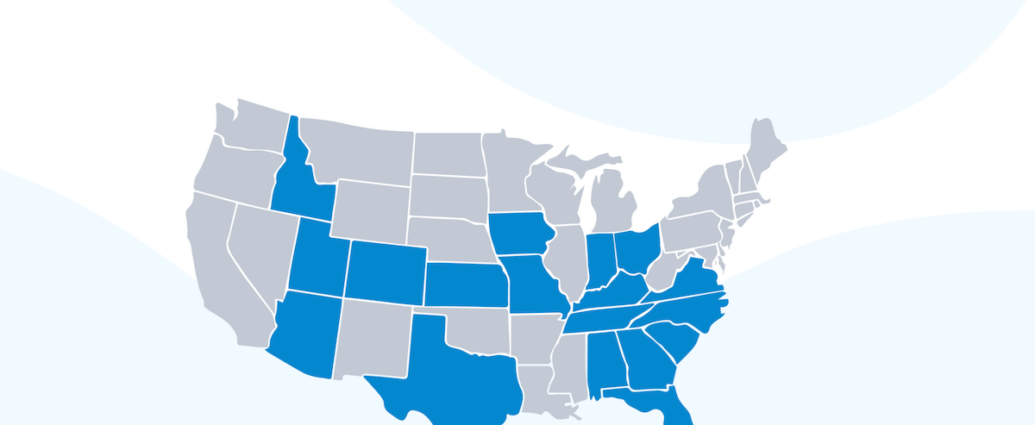
Now the picture has completely reversed.

San Francisco rents have surged roughly 22% year-over-year, making the city the fastest-rising major rental market in the United States. Median home prices have climbed back above previous peaks. Luxury bidding wars have returned. One-bedroom apartment rents are averaging roughly $3,415 per month, while two-bedroom apartments are approaching $4,800 per month.

The city everyone said was dying has suddenly become one of the hottest housing markets in America again.

The reason can largely be summarized in two letters: AI.

The artificial intelligence boom has transformed San Francisco from a struggling post-pandemic downtown into the operational center of one of the fastest wealth-creation cycles the technology industry has ever seen.

OpenAI, Anthropic, Scale AI, and dozens of rapidly growing artificial-intelligence startups are headquartered inside San Francisco neighborhoods that only recently were struggling with vacancies and declining office activity.

According to PitchBook data, the San Francisco Bay Area has attracted roughly 70% of all U.S. venture-capital funding tied to AI companies since 2019.

That money is now reshaping the city in real time.

The AI sector’s hiring surge has flooded San Francisco with highly paid engineers, researchers, executives, and startup founders competing for a housing supply that was already severely constrained long before the current boom began.

Compensation packages for senior AI talent routinely range from $500,000 to well over $1 million annually, especially when stock awards are included. Employees at companies such as OpenAI and Anthropic are increasingly viewed inside Silicon Valley as potential future IPO millionaires.

The result is an extraordinary wave of housing demand concentrated inside a city that historically builds far less housing than its workforce growth requires.

According to CBRE, roughly one out of every four square feet of newly leased office space in San Francisco over the past two years has gone to AI-related companies.

Unlike previous tech booms centered around suburban Silicon Valley campuses, the AI industry has concentrated itself directly inside San Francisco neighborhoods such as SoMa, Mission Bay, and Hayes Valley, where younger founders and employees increasingly prefer dense urban living close to offices.

That concentration is rapidly changing rental economics.

Real-estate brokerage data shows luxury home sales climbing sharply, while inventory remains limited. Bidding wars have returned across desirable neighborhoods. One recent Pacific Heights apartment reportedly received 14 offers and sold roughly $400,000 above asking price.

The market is also changing in another important way: AI companies themselves are now directly subsidizing housing for employees.

Several startup founders have publicly described leasing apartments near company offices specifically to recruit and retain workers. Some firms are offering monthly housing stipends for employees who live within walking distance of the office.

That creates an entirely different pricing dynamic than a traditional housing market.

Instead of individual renters competing solely against each other, venture-capital-funded AI companies are effectively bidding for nearby housing on behalf of employees using investor money. That raises the ceiling for what neighborhoods near AI offices can command in rent.

The political backdrop also shifted.

In late 2024, San Francisco elected Mayor Daniel Lurie, who campaigned heavily on restoring downtown activity, improving public safety, and rebuilding business confidence in the city. His first year coincided with the explosive acceleration of AI investment and a broader corporate push back toward office activity.

The combined effect has produced one of the sharpest urban economic reversals in the country.

But the rebound also carries major consequences for ordinary residents.

San Francisco’s widening economic divide is becoming increasingly visible as teachers, service workers, healthcare staff, retail employees, and middle-income families struggle to compete with the purchasing power of AI-sector salaries and stock wealth.

A worker earning a typical middle-class income cannot realistically compete for housing against AI employees earning several hundred thousand dollars annually while receiving additional housing assistance from employers.

As a result, many workers who keep the city functioning are increasingly being pushed farther away from San Francisco itself.

The irony is that the same AI boom reviving the city economically is simultaneously intensifying affordability pressures that were already among the worst in the nation.

Analysts say the broader significance goes beyond California.

San Francisco is becoming the first major real-world test of what happens when artificial-intelligence wealth concentrates rapidly inside a geographically constrained urban economy.

The answer so far is clear: office markets recover quickly, luxury housing explodes higher, venture capital floods in, and affordability pressures intensify across nearly every other layer of the city.

The “doom loop” narrative that dominated San Francisco headlines from 2021 through 2023 has now largely been replaced by something very different — an AI-driven boom cycle powerful enough to overwhelm broader economic pressures such as higher interest rates, geopolitical uncertainty, and slower national housing activity.

For now, the city that Americans were fleeing only a few years ago has become one of the places the technology industry most aggressively wants to be.

The question no longer seems to be whether San Francisco survives.

It is who will still be able to afford living there if the AI boom continues at its current pace.

San Francisco — JBizNews Desk

© JBizNews.com All Rights Reserved. Reproduction or distribution without written permission is prohibited.

One video. 320,000 views. Five closings. That’s what happened when I posted a short video explaining down payment assistance programs not as a polished advertisement, but as the kind of casual, straight-talk conversation I’d have with a friend. The response didn’t just surprise me. It changed how I think about building a real estate business entirely.

For years, real estate agents built their businesses through cold calls, open houses, online leads and referrals. Those strategies still matter. But something fundamental has shifted in how consumers choose the agent they’ll trust with the biggest financial decision of their lives and I’ve found myself at the center of that shift.

The unexpected discovery

Before I ever posted a real estate video, I had already built a loyal audience on TikTok and Instagram through Las Vegas food reviews. About a year into that content, I decided to test something different.

What stood out most wasn’t just the reach it was how quickly social media collapsed the trust-building process that traditionally takes agents months, sometimes years, to establish. Buyers were reaching out already feeling like they knew me, already feeling like we’d work well together.

My clients feel more like warm leads because there’s already a rapport built from seeing my content. People often reach out because they already feel like we’ll work well together and that changes everything about the first conversation.

Today, 100% of my business comes directly from social media. Every piece of content is curated and created by me personally, and I make it a priority to respond to every direct message myself because those conversations are where real relationships begin.

Recently, I hosted a first-time buyer workshop with more than 100 attendees, all generated entirely through my real estate social media platforms. That experience reinforced just how powerful authentic online connection can become when people feel educated, comfortable, and genuinely seen.

Why education outperforms advertising

The videos that perform best for me are rarely the most structured ones. They’re the most human.

Topics like down payment assistance, first-time buyer misconceptions and new construction incentives consistently drive my engagement because they answer questions buyers are already searching for privately often questions they’re too embarrassed to ask an agent directly.

One of the biggest misconceptions I encounter is the belief that buyers need perfect credit or massive savings before they can even begin. A lot of people think they’re two or three years away from buying a home but in reality, there are often programs and options available that can help them sooner than they realize.

That’s the real power of educational content: instead of waiting for buyers to schedule a consultation, I can educate them daily. Over time, that consistency builds familiarity and trust long before the transaction begins and long before a competitor even enters the picture.

Stay grounded while going viral

Building a recognizable online presence comes with a real tension: how do you stay relatable without sacrificing the professionalism that real estate demands?

I have a simple filter I apply before posting: If I’d be embarrassed for my mom or my broker to watch the video, it doesn’t go up. I also sit on content for at least 24 hours before publishing a deliberate pause to ask whether a video truly reflects the brand and reputation I’m building for the long term.

That discipline matters because social media rewards entertainment, but real estate still runs on credibility. People might discover me through an entertaining video. What converts that attention into actual business is consistency and trust over time.

What converts views into clients

For agents hesitant to start, my advice is simple: stop overthinking it and start with the conversations buyers are already having. Keep a running notes page on your phone with video ideas minimum qualifications to buy, builder incentives, common misconceptions. Then talk through those topics casually rather than scripting them.

Clients don’t want to be talked at. They want to be talked to. And the moment your content starts to feel like a conversation instead of a pitch, everything changes.

I post multiple videos per week alongside consistent story content to stay visible in the algorithm. The first two seconds of every video are critical a strong hook that stops the scroll. And my calls-to-action work best when they feel natural: a simple, genuine invitation to reach out at the end, with a clear path to make that easy.

The big picture

What made my transition into real estate content work is that it never felt like a pivot, it felt like an evolution. I didn’t abandon my food-review audience overnight. I gradually wove real estate into my content mix, letting both sides of my brand coexist naturally until they became inseparable parts of the same identity.

I think that approach points to where real estate marketing is headed more broadly. Consumers still care about experience, market knowledge, and professionalism. But increasingly, they also want agents who feel like real people accessible, relatable, and worth following before there’s ever a transaction in sight.

The agents seeing the strongest results aren’t necessarily the ones with the most polished production. They’re the ones who show up consistently, talk to people like people and understand something that the rest of the industry is just beginning to grasp: in a business built on relationships, familiarity isn’t just a nice-to-have. It’s the most valuable marketing asset any of us can build.

Cindy Mae Hawkins is a Realtor with huntington & ellis, A Real Estate Agency.

This column does not necessarily reflect the opinion of HousingWire’s editorial department and its owners.

To contact the editor responsible for this piece: tracey@hwmedia.com

This post was originally published on here

Florida’s housing market is settling into a period of measured stability, with pending sales on the rise and inventory levels flattening. Sellers who cling to pandemic-era pricing continue to face resistance from buyers navigating high mortgage rates and affordability constraints.

As of May 23, HousingWire Data shows the median list price of homes in Florida at $495,000, with the median price of new listings at $450,000. Forty-four percent of listings have seen a price cut — a signal that pricing discipline remains a dominant theme.

“We’ve been up year over year for closed sales for eight straight months after a two- to three- year period — basically since rates went up — where we saw a decline in sales, and that halted about halfway through last year,” Brad O’Connor, chief economist for Florida Realtors, told HousingWire.

“That does tell me there’s additional demand. Even a half a point of interest rate [change] has been good for us, and just that much has allowed our market to stabilize and there’s been some growth there.”

O’Connor said Florida Realtors measured the time on market for single-family homes that closed in April at 44 days.

“It’s elevated compared to that pre-pandemic period, but it’s not out of the sphere,” he said. “Condos and townhouses are around 60 days right now, and they’ve been as high as the mid-70s for us in recent months.”

Condo market response to new regulation

Longer times on market for condominiums partially stem from new regulations that followed the 2021 Surfside condominium collapse.

Despite these changes, condo sales have risen year over year for eight consecutive months, O’Connor said. Condos, he said, sit at roughly nine months of supply, tilting into buyer’s market territory.

“The story about Florida last year and the year before was how fast our inventory was increasing, especially since sales were falling during that period,” O’Connor said. “What we’ve seen over the last eight months is the inventory has really flattened out — and in some areas it’s declining. This is where it really depends where in Florida you’re looking.

“Parts of our state that have built a lot of single-family homes — southwest Florida and parts of central Florida — have seen the biggest price weakness and largest inventory growth. Other parts that are building constrained, like South Florida, have maintained their prices fairly well.”

Affordability, insurance and uncertainty

HousingWire Data shows that statewide pending sales for the most recent week totaled 6,208 — a 9.8% increase over the same time last year. This suggests buyer demand is slowly returning despite a higher-rate environment.

But 7% of properties have been relisted after being previously removed. O’Connor said that figure actually feels low, given the number of sellers who delisted last year.

“No one’s being forced to sell right now,” he said. “There are people who are trying to capitalize on what they thought was a high property value, but they’re not getting what they want. They can walk away. Some of those people might just be staying put and they’ve resigned themselves to wait until prices start moving again, which could be a while.”

Looking ahead, O’Connor said migration remains a dominant driver of Florida’s real estate market.

While in-migration has cooled from its post-pandemic peak, people continue moving to Florida from the West Coast and the Northeast.

“If interest rates were a little more favorable — they don’t have to be down at 3% like they were during the pandemic, but even like 5% — I think we would be seeing a lot more migration than we used to pre-pandemic into Florida,” O’Connor said. “Interest rates are key, of course, but the insurance rates were another driver of the lessening of affordability in Florida.

“Their growth rate has slowed down a lot. Legislation has dramatically increased competition and close to 20 insurance companies have come back into the state. That price competition is keeping our rates from growing a lot faster, like they were two or three years ago.”

The coming months, he said, will be crucial in determining how well Florida’s market weathers recent interest rate increases tied to geopolitical turmoil and economic uncertainty.

“I think we just wait to see what happens with the Iran war and the oil prices, which are a big driver behind the resurgence of mortgage rates as of late,” O’Connor said. “As an economist, I don’t have a model that can predict when those kinds of thing will will pass, so we all just need to stay on our toes.”

This post was originally published on here

Florida’s housing market is settling into a period of measured stability, with pending sales on the rise and inventory levels flattening. Sellers who cling to pandemic-era pricing continue to face resistance from buyers navigating high mortgage rates and affordability constraints.

As of May 23, HousingWire Data shows the median list price of homes in Florida at $495,000, with the median price of new listings at $450,000. Forty-four percent of listings have seen a price cut — a signal that pricing discipline remains a dominant theme.

“We’ve been up year over year for closed sales for eight straight months after a two- to three- year period — basically since rates went up — where we saw a decline in sales, and that halted about halfway through last year,” Brad O’Connor, chief economist for Florida Realtors, told HousingWire.

“That does tell me there’s additional demand. Even a half a point of interest rate [change] has been good for us, and just that much has allowed our market to stabilize and there’s been some growth there.”

O’Connor said Florida Realtors measured the time on market for single-family homes that closed in April at 44 days.

“It’s elevated compared to that pre-pandemic period, but it’s not out of the sphere,” he said. “Condos and townhouses are around 60 days right now, and they’ve been as high as the mid-70s for us in recent months.”

Condo market response to new regulation

Longer times on market for condominiums partially stem from new regulations that followed the 2021 Surfside condominium collapse.

Despite these changes, condo sales have risen year over year for eight consecutive months, O’Connor said. Condos, he said, sit at roughly nine months of supply, tilting into buyer’s market territory.

“The story about Florida last year and the year before was how fast our inventory was increasing, especially since sales were falling during that period,” O’Connor said. “What we’ve seen over the last eight months is the inventory has really flattened out — and in some areas it’s declining. This is where it really depends where in Florida you’re looking.

“Parts of our state that have built a lot of single-family homes — southwest Florida and parts of central Florida — have seen the biggest price weakness and largest inventory growth. Other parts that are building constrained, like South Florida, have maintained their prices fairly well.”

Affordability, insurance and uncertainty

HousingWire Data shows that statewide pending sales for the most recent week totaled 6,208 — a 9.8% increase over the same time last year. This suggests buyer demand is slowly returning despite a higher-rate environment.

But 7% of properties have been relisted after being previously removed. O’Connor said that figure actually feels low, given the number of sellers who delisted last year.

“No one’s being forced to sell right now,” he said. “There are people who are trying to capitalize on what they thought was a high property value, but they’re not getting what they want. They can walk away. Some of those people might just be staying put and they’ve resigned themselves to wait until prices start moving again, which could be a while.”

Looking ahead, O’Connor said migration remains a dominant driver of Florida’s real estate market.

While in-migration has cooled from its post-pandemic peak, people continue moving to Florida from the West Coast and the Northeast.

“If interest rates were a little more favorable — they don’t have to be down at 3% like they were during the pandemic, but even like 5% — I think we would be seeing a lot more migration than we used to pre-pandemic into Florida,” O’Connor said. “Interest rates are key, of course, but the insurance rates were another driver of the lessening of affordability in Florida.

“Their growth rate has slowed down a lot. Legislation has dramatically increased competition and close to 20 insurance companies have come back into the state. That price competition is keeping our rates from growing a lot faster, like they were two or three years ago.”

The coming months, he said, will be crucial in determining how well Florida’s market weathers recent interest rate increases tied to geopolitical turmoil and economic uncertainty.

“I think we just wait to see what happens with the Iran war and the oil prices, which are a big driver behind the resurgence of mortgage rates as of late,” O’Connor said. “As an economist, I don’t have a model that can predict when those kinds of thing will will pass, so we all just need to stay on our toes.”

This post was originally published on here

Florida’s housing market is settling into a period of measured stability, with pending sales on the rise and inventory levels flattening. Sellers who cling to pandemic-era pricing continue to face resistance from buyers navigating high mortgage rates and affordability constraints.

As of May 23, HousingWire Data shows the median list price of homes in Florida at $495,000, with the median price of new listings at $450,000. Forty-four percent of listings have seen a price cut — a signal that pricing discipline remains a dominant theme.

“We’ve been up year over year for closed sales for eight straight months after a two- to three- year period — basically since rates went up — where we saw a decline in sales, and that halted about halfway through last year,” Brad O’Connor, chief economist for Florida Realtors, told HousingWire.

“That does tell me there’s additional demand. Even a half a point of interest rate [change] has been good for us, and just that much has allowed our market to stabilize and there’s been some growth there.”

O’Connor said Florida Realtors measured the time on market for single-family homes that closed in April at 44 days.

“It’s elevated compared to that pre-pandemic period, but it’s not out of the sphere,” he said. “Condos and townhouses are around 60 days right now, and they’ve been as high as the mid-70s for us in recent months.”

Condo market response to new regulation

Longer times on market for condominiums partially stem from new regulations that followed the 2021 Surfside condominium collapse.

Despite these changes, condo sales have risen year over year for eight consecutive months, O’Connor said. Condos, he said, sit at roughly nine months of supply, tilting into buyer’s market territory.

“The story about Florida last year and the year before was how fast our inventory was increasing, especially since sales were falling during that period,” O’Connor said. “What we’ve seen over the last eight months is the inventory has really flattened out — and in some areas it’s declining. This is where it really depends where in Florida you’re looking.

“Parts of our state that have built a lot of single-family homes — southwest Florida and parts of central Florida — have seen the biggest price weakness and largest inventory growth. Other parts that are building constrained, like South Florida, have maintained their prices fairly well.”

Affordability, insurance and uncertainty

HousingWire Data shows that statewide pending sales for the most recent week totaled 6,208 — a 9.8% increase over the same time last year. This suggests buyer demand is slowly returning despite a higher-rate environment.

But 7% of properties have been relisted after being previously removed. O’Connor said that figure actually feels low, given the number of sellers who delisted last year.

“No one’s being forced to sell right now,” he said. “There are people who are trying to capitalize on what they thought was a high property value, but they’re not getting what they want. They can walk away. Some of those people might just be staying put and they’ve resigned themselves to wait until prices start moving again, which could be a while.”

Looking ahead, O’Connor said migration remains a dominant driver of Florida’s real estate market.

While in-migration has cooled from its post-pandemic peak, people continue moving to Florida from the West Coast and the Northeast.

“If interest rates were a little more favorable — they don’t have to be down at 3% like they were during the pandemic, but even like 5% — I think we would be seeing a lot more migration than we used to pre-pandemic into Florida,” O’Connor said. “Interest rates are key, of course, but the insurance rates were another driver of the lessening of affordability in Florida.

“Their growth rate has slowed down a lot. Legislation has dramatically increased competition and close to 20 insurance companies have come back into the state. That price competition is keeping our rates from growing a lot faster, like they were two or three years ago.”

The coming months, he said, will be crucial in determining how well Florida’s market weathers recent interest rate increases tied to geopolitical turmoil and economic uncertainty.

“I think we just wait to see what happens with the Iran war and the oil prices, which are a big driver behind the resurgence of mortgage rates as of late,” O’Connor said. “As an economist, I don’t have a model that can predict when those kinds of thing will will pass, so we all just need to stay on our toes.”

Hostile takeovers don’t happen often among publicly traded companies in America, and they’re even rarer in U.S. homebuilding.

So a little over a week of public quiet during Dream Finders Homes’ hostile pursuit of Beazer Homes should not be mistaken for inaction.

Rather, this may be the phase when the under-the-hood work moves out of the press-release channel and into shareholder calls, advisor meetings, financing conversations, legal positioning, alternative-buyer assessment and boardroom risk calculation.

To better understand what may be unfolding beyond public statements, The Builder’s Daily reviewed publicly available SEC filings, investor presentations, proxy materials, financing disclosures and transaction documents related to the pursuit.

We also spoke with multiple investment-banking and equity-research professionals who closely follow the homebuilding sector and are familiar with mergers and acquisitions, public-company governance, valuation analysis, and hostile takeover processes. None offered predictions about the outcome. Still, their insights help illuminate how situations like this typically evolve, where common pressure points emerge, and what homebuilding leaders should watch in the weeks and months ahead.

What’s abundantly clear is that the Dream Finders-Beazer contest is not merely a one-off corporate fight. It is a real-time case study in how public homebuilders may be valued, challenged, defended and potentially acquired in a slower, more margin-sensitive, affordability-constrained operating environment.

Where the battle stands

The latest public move came May 21, when Dream Finders released an investor presentation reaffirming its $25.75-per-share all-cash proposal to acquire Beazer. The presentation urged Beazer to engage constructively and argued that Beazer shareholders should be allowed to evaluate the offer. Dream Finders’ materials characterized Beazer as a long-term underperformer on margins, growth, returns, leverage, and shareholder value.

Beazer, after rejecting the bid, has not issued a new direct response to Dream Finders’ May 21 reaffirmation. A Beazer media-relations response to The Builder’s Daily last week said the company had nothing further to add.

That leaves the public record largely unchanged: Dream Finders says Beazer shareholders deserve immediate cash value and a better owner; Beazer says the proposal significantly undervalues the company, particularly relative to book value and to earlier, higher unsolicited proposals.

Between those two positions, the next phase of the battle will unfold.

A quiet phase

In a hostile public-company process, silence does not necessarily signal a stalemate. It may mean each side is working the less visible channels that determine whether a transaction becomes inevitable, improves, stalls, attracts another bidder or collapses.

For Dream Finders, the task at hand amounts to shareholder persuasion. The company has to convince enough Beazer holders that engagement with Dream Finders is preferable to waiting on Beazer’s go-it-on-its-own plan.

For Beazer, the task is the inverse. It has to make a case to convince shareholders that its future value – in its land, product strategy, operating model, and eventual market recovery – exceeds the current cash offer.

That is the drama.

Dream Finders’ May 21 materials make a highly specific case. The company argues that Beazer trails small- and mid-cap public peers by 640 basis points in last-12-month adjusted gross margin and 1,040 basis points in pre-tax margin. It says Beazer is the only small- or mid-cap homebuilder peer to report two consecutive quarters of operating losses as of the latest quarter, and that Beazer’s share price has declined 30% since 2011 while ITB and XHB rose 606% and 490%, respectively, over the same period.

The presentation also attacks Beazer’s strategy, arguing that its focus on energy-efficient homes has become cost-prohibitive for value-oriented buyers at a time when affordability is the central consumer challenge.

Dream Finders further argues that Beazer has prioritized book value per share and share repurchases funded by land sales rather than productively using assets to generate stronger returns.

Those are Dream Finders’ claims, not neutral findings. But they are now part of the public record, and shareholders, advisors and industry observers must evaluate.

One constraint: Dream Finders can’t simply buy its way In

One question some industry observers naturally ask is why Dream Finders cannot simply accumulate a larger ownership stake in Beazer while the process plays out.

The answer is that public-company takeover battles rarely hinge solely on open-market stock purchases, and Beazer already has shareholder-approved protections in place that complicate that path.

At its February 2026 annual meeting, shareholders renewed a rights agreement and related charter provisions intended to protect the value of the company’s deferred tax assets, including energy-efficiency tax credits and other tax attributes. Those protections are designed to deter investors from accumulating ownership positions above 4.95% without triggering the rights mechanism.

Importantly, those measures were not adopted as a direct response to Dream Finders’ approach. Beazer’s board presented them as a means of preserving potentially valuable tax assets tied in part to the company’s long-standing investment in energy-efficient homebuilding.

Still, the existence of those protections illustrates why the current contest is likely to be decided less through stock accumulation and more through shareholder persuasion, board pressure, valuation arguments, financing credibility, and strategic alternatives.

The book value question

Beazer’s cleanest defense is also clear: its enterprise price tag.

Its board rejected the public $25.75-per-share bid after Dream Finders had previously made higher private proposals of $28.50 and $29.00 per share. Beazer has also emphasized that the latest offer is well below stated book value.

That raises one of the compelling questions in this contest: What does book value mean if the assets underlying it are not generating competitive returns?

For decades, book value has been a familiar shorthand in public homebuilder valuation. Builders own land, lots, communities, work in process, and housing inventory. In cyclical businesses, investors often look to book value as a reference point for assessing whether a public builder is undervalued.

But book value is not the same as realizable value. Nor is it the same as earnings power.

A distinction like that gathers meaning in a market where sales pace is slower, incentives are elevated, mortgage rates remain a drag on affordability, and land positions may not be monetized at the originally penciled internal rates of return.

This is where the Dream Finders-Beazer situation may have implications beyond the two companies.

The 2025 acquisition of Landsea Homes by New Home Co., now Risewell Homes, offers a relevant precedent. Landsea sold at a premium to its unaffected share price, but in a context where a below-book valuation had become part of the broader discussion around underperformance, profitability and asset productivity.

That recent precedent could weaken the once-comfortable assumption that a public builder trading below book will necessarily receive a takeout offer at or above book.

A premium to market and a discount to book can coexist. That is a hard message for boards. It is also a useful one for operators.

A builder’s land position may carry a stated balance-sheet value. But public investors and strategic buyers increasingly appear to care just as much – perhaps more – about whether that land can be converted into pace, margin, return on equity, cash generation, and a durable local operating advantage.

So a hostile bid, it turns out, is as much a valuation story as an M&A story.

Dream Finders’ job to instill confidence

The pressure on Dream Finders is real as well.

An all-cash offer sounds straightforward, but it is not simple. Dream Finders says Kennedy Lewis has provided a letter expressing high confidence in land-bank financing, and that Goldman Sachs and BofA Securities have issued letters stating they are highly confident that financing for the transaction can be arranged in capital markets.

That financing language is important. It is meant to signal seriousness, reduce shareholder uncertainty and counter any argument that Dream Finders cannot close.

Still, investors will continue to assess financing costs, equity-market reaction, leverage, integration risk, and whether Dream Finders can improve Beazer’s operations quickly enough to justify the transaction.

The longer the process stretches, the more scrutiny both companies face.

For Beazer, that scrutiny centers on whether its management’s standalone plan can create more value than the offer on the table.

For Dream Finders, scrutiny centers on whether it can sustain confidence, maintain pressure, and avoid eroding its strategic flexibility as the process continues.

Here are several paths our investment analyst experts tell us are plausible.

Beazer can continue rejecting the proposal and defend its standalone plan. Dream Finders can improve its offer, adjust its tactics, or escalate pressure through additional shareholder-facing steps. Shareholders can push Beazer to engage. Another bidder could emerge. Or the process could drag on without resolution, with Beazer remaining under a brighter valuation and governance spotlight.

The White Knight potential

That possibility of another buyer is important but uncertain.

A so-called “white knight” could theoretically offer Beazer a path more attractive to its board and management than Dream Finders’ proposal. But any competing buyer would still need to answer the same basic questions: What is Beazer worth? What operating improvements are achievable? How much of the land portfolio supports acceptable returns? What costs can be eliminated? What financing is available? And does the buyer have both the strategic appetite and the capital to enter a hostile or semi-hostile process already underway?

For Japan-based acquirers, public peers, large private builders, or institutionally backed platforms, Beazer’s footprint may be appealing. But the same factors that make Beazer vulnerable may also make it complex.

So, the next chapter may take time.

Hostile processes often become contests of endurance, wars of words, financial clout and attrition. Not merely who has the strongest press release, but who can sustain the most convincing argument with shareholders, advisors, capital providers and ultimately the board.

The Dream Finders-Beazer standoff suggests that the valuation framework for public homebuilding has become more demanding. Scale, local clout and concentration, margins, returns, and balance-sheet flexibility. It all matters. Above all, asset value “cannot not “– i.e. it must – translate into operating performance.

That is the through-line from Landsea to Beazer and from today’s public builder valuation debate to the private-company boardrooms, where owners are closely watching this drama.

Book value may still matter. But book value without return generation is becoming harder to defend.

Our evolving story may be how public homebuilding investors judge performance, patience, accountability and strategic alternatives when a once-private acquisition overture has exploded into a public test of value creation.

This post was originally published on here

A little over a week after real estate agents and brokers in the Chicagoland area saw their listings disappear from Zillow after Midwest Real Estate Data (MRED) suspended its data feed to the listing portal giant, real estate professionals in Tennessee are preparing for the same possibility. 

In an email sent to broker members on Wednesday, Tennessee-based MLS Realtracs informed subscribers that it was preparing to suspend its listing feed to Zillow on June 1 if Zillow did not adhere to its updated IDX display rules by a May 31 deadline.

According to Realtracs, on April 29 it updated its IDX display rule to require vendors and portals to display all listings entered into Realtracs that match a consumer’s search criteria in their consumer search results unless the seller has specifically elected to not include their property listing or address in public displays. As of Wednesday, Realtracs said Zillow was the only platform to not be in compliance with the updated agreement terms. 

“We do not expect that to change, given Zillow’s own rule [listing access standards] that prevents sellers from choosing how their properties are marketed and has resulted in dozens of banned Realtracs listings,” Realtracs’ email to brokers stated. 

As Debra Beagle, the CEO and broker-owner of The Ashton Real Estate Group of REMAX Advantage, heads into the weekend wondering what will happen come Monday, she told HousingWire that the whole situation is “very confusing” for herself, her agents and her clients. 

“Our sellers want our listings on Zillow and agents have told us this. We also handle Zillow Seller leads in our area. We always put our listings in Realtracs unless a seller signs the Realtracs waiver not wanting any public marketing at all — no sign, no advertising publicly,” Beagle said. “Realtracs has always had that waiver option since May 2020. I, as a broker, have to sign that form when a seller requests that. In the five years we’ve only maybe had three dozen sellers ever select that option out of almost 7,000 listings.”

Beagle noted that Zillow does allow brokers to supply it with a direct listing feed, something she and Gary Ashton, the founder of The Ashton Real Estate Group of REMAX Advantage, said they were working to ensure was in place before the weekend. 

“We have a responsibility to our clients to make sure we maximize their exposure through all channels — Realtor.com, REMAX.com, Homes.com and Zillow,” Ashton said. “So, we are in the process of enabling a direct feed so our clients aren’t impacted.”

Beagle added that their sellers “want the most exposure possible to their listings.” 

“That is why they list with us. And our buyers want to be able to see all properties available,” she added. 

“Very unlike the MRED situation”

Like Beagle and Ashton, Phillip Cantrell’s firm Benchmark Realty also has a direct listing feed with Zillow, as well as other portals, which he said was due to agent feedback on consumer preferences to have their listings on all portals. 

Despite potentially facing the same situation as brokers in the Chicagoland area last week, Cantrell told HousingWire that the situation with Realtracs is “very unlike the MRED situation.” 

“Realtracs is one of the best run MLSs in the country. Heretofore, any portal could go to them and get a syndicated feed for $50/month. Most portals took that and repurposed the data, reselling it to the consumer, making huge profits off of the broker and agent’s work product. With zero compensation to the broker or agent for it,” Cantrell wrote in a post on Facebook.

“All this move by Realtracs means is they are saying ‘Hey everybody, we are an IT/data company, warehousing and providing products to access the data, all of which belongs to the broker. If you want to allow a feed, charge for a feed, or terminate a feed, it’s up to you, not us.’ Smart move indeed.”

In Cantrell’s mind, Realtracs’ warning to Zillow shows that the MLS is “stepping out of the middle of deciding winners and losers” and is allowing brokers to decide if they want their listings syndicated to Zillow. 

“What this newest change means is that instead of Realtracs being the one who decides who follows what rule, they have placed all the tools necessary in the broker’s hands (the owner of the data) and what the broker does with it is up to them,” Cantrell told HousingWire via email. 

Zillow’s response

It remains to be seen whether Realtracs will follow through with suspending Zillow’s listing feed on Monday if the listing portal fails to comply with the MLS’s updated IDX display rules. In an emailed statement, a Zillow spokesperson told HousingWire that Realtracs’ decision to cut off Zillow’s listing feed is “the same playbook already documented in federal court: a coordinated campaign, initiated by Compass International Holdings CEO Robert Reffkin, to pressure MLSs across the country into pulling sellers’ listings off Zillow.”

“Nashville’s MLS has threatened to cut Nashville-area sellers off from Zillow, the most-visited real estate platform in the country, unless Zillow abandons the standards it has put in place to ensure buyers can trust what they see on our platform,” the spokesperson wrote. “A judge on Friday just ordered the MLS in Chicago to restore our listing feed. Nashville sellers and buyers deserve access to a full, transparent market. Zillow’s listing access standards exist to protect that. We will not abandon them.”

Earlier this month, Zillow filed an antitrust lawsuit against Compass and MRED claiming the two firms  conspired to withhold listing data and pressure Zillow to carry private “hidden” listings nationwide. Last Friday, a federal judge partially granted Zillow’s motion for a temporary restraining order, requiring MRED to restore its listing feed and Zillow to display any listings that were in the MLS’s system as of May 21.

Additionally, Zillow is not allowed to ban listings within ZIP codes nationwide where MRED has had listings between April 2025 and April 2026. The temporary restraining order is set to expire next Friday, however the firms are slated to take part in a two day hearing in early July regarding Zillow’s preliminary injunction motion, which also seeks to prevent MRED from suspending Zillow’s listing feed. 

While, as of Friday afternoon, Zillow has not taken legal action against Realtracs regarding the possible suspension of it listing feed, in a post on the firm’s Front Porch blog on Thursday, the company claimed that this was part of Compass’s “campaign to roll back America’s open and transparent housing market. Sellers and buyers would be harmed, while the country’s largest brokerage benefits.”

Zillow claims that Realtracs is doing this “to line its own pockets and advance the interests of Compass, the largest U.S. real estate brokerage.” 

“What’s happening in Nashville is just one piece of a bigger puzzle. Chicago was the first. Nashville is likely not the last. Compass has devised this broader scheme designed to spread until America’s open and transparent housing market is replaced by one that works better for a single large brokerage than for buyers and sellers,” the post states. “Zillow will continue its fight to ensure this playbook cannot take root permanently, in Nashville or anywhere else. Nashville buyers and sellers deserve access to a full, transparent market.”

This post was originally published on here

Florida Gov. Ron DeSantis’ proposal to phase out property taxes for most primary homeowners is rapidly becoming one of the state’s most consequential housing debates in years.

Supporters argue it could ease affordability pressures while critics warn it may fuel higher home prices and reshape local tax structures.

The proposal would raise Florida’s homestead exemption from $50,000 to $250,000 — a move DeSantis said would eliminate property taxes for about 60% of homeowners.

The exemption would later increase to $500,000, potentially removing property taxes for as many as 92% of primary residences statewide.

Housing leaders told HousingWire the proposal could dramatically alter monthly ownership costs and reignite demand across the state.

“Overall, it can’t be a bad thing for housing,” said Aaron Davis, CEO of Florida Agency Network. “I mean, first and foremost, in both Florida and Texas there’s no state income tax, and that’s certainly helped in raking in businesses and people and wealth and jobs.”

Removing property taxes for primary homeowners, he said, could further strengthen the state’s appeal to employers and residents relocating from higher-tax states.

“If someone’s now looking at, say, New York versus Florida, or many other states from a jobs perspective, you can now say with the affordability, ‘Come live in Florida, work in Florida, buy a home in Florida and not pay property taxes,’” Davis said. “Property tax bills can be absolutely exorbitant in Florida. There’s also still commercial property tax, tax on rental vacation homes and tax on secondary residences that’s still going to be there.”

DeSantis has called a special legislative session next week to begin debate on the measure. Approval would require support from 60% of lawmakers and later 60% of voters in a statewide referendum.

The governor also proposed requiring residents to live in Florida for at least five years before qualifying for the tax relief.

Could savings fuel higher prices?

Beth Silverman, a Realtor and investment expert with eXp Realty in Florida, said the proposal could simultaneously improve affordability and increase home values.

“I think it’s a little bit of both,” she said. “I think that if this passes, we’re looking at a 4% to 9% increase in prices for a Florida homeowner. The equity is about 30 to 40 grand, which is great. However, that’s not the real affordability piece.”

Silverman said the proposal could especially benefit first-time buyers struggling to absorb rapidly increasing ownership costs after purchasing a home.

“Say you have a first-time buyer, newly married, and they bought a house for $420,000,” she said. “The taxes at the time of closing were $3,200, their insurance was $3,750 and the monthly mortgage was $3,500. They were committed. They love being homeowners. They stretched things and they made it work.

“Year two, their taxes were reassessed at $8,500 because that’s what happens in Florida after a sale. Their insurance crept up, normally $200 bucks — bringing their monthly mortgage to $400 more per month. Now they just got pregnant with their first baby. They are now dealing with the same grocery and gasoline prices as everyone else.”

Silverman said many younger homeowners have grown skeptical toward the status quo.

“For that Florida family, if a bill like this doesn’t pass, how do they share in this market?” she said. “They are now questioning whether or not owning a home was the right decision, and we have a chance to change this.”

First-time buyers, market mobility

Some analysts have questioned whether the proposal could deepen divides between longtime homeowners and first-time buyers — particularly because longtime owners already benefit from Florida’s homestead protections that cap annual assessment increases.

Silverman argued the proposal is designed to help buyers enter the market rather than reward existing owners.

“I think that this was built for the first-time buyer, which people should get really excited about,” she said. “When we lower the cost of affordability, it literally brings buyers off the sidelines and into houses.”

She cited that lower monthly ownership costs often determine whether some buyers qualify for mortgages at all.

“This bill could actually be the difference between qualifying versus not qualifying,” Silverman said. “People have to remember, this isn’t the market of 2021. We’re not competing against 15 offers where we have to waive an appraisal. Buyers have room to breathe, whether they’re first- time or seasoned.”

Davis said the proposal may also encourage existing homeowners to move up into larger homes after years of remaining sidelined by high mortgage rates.

“I think there’s pent-up demand for the move up, for home sellers and the buyer,” he said. So many people still have that 3.5% interest rate. I think mathematically, this may allow that home seller to say, ‘You know what? I can go ahead and sell my home because I’m now factoring moving into a different home.

“If you tell me I don’t have to pay property tax on that $600,000 home, it’s going to be a a different story than before.”

Renters and local governments

The proposal has also sparked debate over whether local governments would shift more tax burdens onto renters, apartment owners and commercial property owners.

Silverman — who owns rental properties in Florida — said landlords are already under significant pressure from rising insurance and property costs.

She said landlords currently have limited ability to raise rents because many tenants are already stretched financially.

“We have more inventory than ever before, and the landlords know that right now, renters cannot support any absorption in an increased rental payment,” Silverman said. “Because, again, gas, groceries and everything costs too much right now. The concern about [costs] shifting to renters is absolutely valid, but the market’s doing the real work to keep that in check.

“The biggest threat is to the landlords, because what happens when the small mom and pops can’t make the numbers work and we’re forced to sell? I believe that this is where the institutions who are doing build-to-rent are going to capitalize.”

Davis said broader impact of the proposal will ultimately depend on lawmakers balancing affordability relief with long-term funding stability for local governments and public services.

Still, he believes the measure could reshape the way buyers evaluate Florida real estate for years to come.

“Florida is one of those states that the housing market has always been strong, lots of jobs created, lots of economic booms and incentive created around housing,” Davis said.  “Now, with this [tax proposal] it feels to me like this is less of a housing play and it’s more of a jobs play. With good paying jobs, come homeowners that can perhaps now afford a home they might not have been able to before.”

This post was originally published on here

Rocket Mortgage and Rocket Pro provided additional details this week on their rollout of VantageScore 4.0 in mortgage lending after officially announcing last week that they have started using VantageScore 4.0 alongside Classic FICO scores.

Heather Lovier, chief operating officer of Rocket Companies, told HousingWire that VantageScore 4.0 can currently be used for Fannie Mae, Freddie Mac and Department of Veterans Affairs (VA) loan products offered through Rocket Mortgage and Rocket Pro. This is line with guidance from the Federal Housing Finance Agency (FHFA) and the Department of Housing and Urban Development (HUD).

The company declined to disclose specific pricing adjustments tied to the use of VantageScore 4.0, although Lovier said Rocket is using updated pricing frameworks consistent with investor guidelines.

“VantageScore 4.0 is a model that’s functionally independent from existing models,” Lovier said. “While we don’t publicly disclose specific pricing methodologies and adjustments for any of our products, we are working with updated pricing frameworks when it is used, consistent with investor guidelines.”

Some lenders, including Rocket’s crosstown rival, United Wholesale Mortgage, reduced pricing by as much as 20 basis points when transitioning from Classic FICO to VantageScore 4.0. Rocket did not confirm whether it is applying similar adjustments.

Rocket said it is currently pulling both FICO and VantageScore credit scores for each mortgage application and plans to continue doing so during the pilot phase. The company said it has not yet determined when brokers may be able to utilize a single-score model or whether one score would take priority over another.

“By leveraging both scoring models in tandem, we are giving our clients the most opportunity to show they qualify for a loan,” Lovier said.

Rocket also declined to share current VantageScore 4.0 loan volume figures, saying the pilot remains in its early stages. The company said it is still collecting data to compare outcomes between Classic FICO and VantageScore 4.0.

Lovier said brokers have raised questions about the practical implications of adopting multiple credit scoring models simultaneously, particularly how the changes could affect borrower eligibility and homebuying opportunities.

“Any time there’s a major update to an existing standard — and in this case, one that’s been held for so long — there are bound to be lots of questions about real-world, practical impacts,” Lovier said.

Rocket’s rollout follows an April announcement from the FHFA to launch a pilot program for VantageScore 4.0 on loans sold to Fannie Mae and Freddie Mac, alongside plans to adopt FICO 10T and updated pricing tied to the new credit models.

FHFA Director Bill Pulte said lenders have already delivered roughly $10 million in VantageScore-based loans to Freddie Mac through the pilot. Separately, HUD said it plans to allow both FICO 10T and VantageScore 4.0 for Federal Housing Administration (FHA) loans in the coming months.

This post was originally published on here

StreetMatrix has expanded its independent real estate analytics platform into Arizona and Utah, adding two fast-growing Western states to a housing index that already covers California and Nevada, the company announced on Wednesday.

StreetMatrix was created by housing analyst Jonathan Miller, president and CEO of Miller Samuel, and economist Nick Huntington-Klein, an associate professor at Seattle University. It publishes monthly housing market reports that use the proprietary StreetMatrix Index to track statewide and local trends.

“The expansion into Arizona and Utah represents another important milestone as we continue building a more transparent and consistent framework for understanding housing market performance across the country,” Miller said in a statement. “These are markets that have experienced significant population growth, migration shifts, and pricing volatility over the last several years. Our goal is to provide a reliable benchmark that cuts through fragmented housing data and offers a clearer picture of what is actually happening in the market.”

StreetMatrix said the new monthly reports for Arizona and Utah will mirror its existing outputs, with statewide analysis and city-level insights, transaction trends, and one-, two- and three-year comparisons to put current price movement in context.

“Arizona and Utah have become increasingly important markets to monitor as affordability pressures, migration patterns, and economic shifts continue reshaping the housing landscape across the West,” Huntington-Klein, chief economist at StreetMatrix, said.

This article was generated using HousingWire Automation and reviewed by a HousingWire editor before publication.

This post was originally published on here

Zoning reform has grabbed most of the attention in housing policy circles, but sometimes it’s the unglamorous, technical building code changes that save builders real money.

Single-stair reform was the first to sweep through state legislatures and city halls as a tool to spur missing-middle housing. Washington state is now cutting deeper into the building code by allowing scissor stairs – two interlocking stairways that crisscross within a single, fire-rated enclosure.

Gov. Bob Ferguson quietly signed the building code change into law in March, making Washington the first state in the nation to allow scissor stairs in multifamily construction. The law takes effect June 11. Whether other states follow will depend on both the reform’s performance and the fire safety industry’s considerable influence over building code changes.

For Washington, the change is the latest in a steady flow of aggressive housing reform to address a severe affordability crisis. The crisis is concentrated in the Seattle metro area, where Amazon, Microsoft, and a dense tech corridor have made the region one of the most expensive housing markets in the country.

Single-stair code changes were among the laws passed. After three years of work, the State Building Code Council faces a July 1 deadline to adopt amendments allowing single-stair construction up to six stories. Seattle has allowed that type of construction for decades.

Single stair versus scissor stair

Single-stair reform targets smaller multifamily buildings, typically six stories or fewer with a dozen or so units, where one stairwell is sufficient for safe egress. Scissor stairs solve a different problem. In taller buildings on tight urban infill lots, placing two stairwells at opposite ends of the floor plate can consume so much of a narrow building’s width that development becomes impossible.

By folding two fire-rated egress paths into a single shared shaft, scissor stairs restore that lost design flexibility – opening urban lots that the dual-stairwell requirement had effectively locked out of development. Those separate shafts for dual stairwells also carve out significant floor area that could otherwise be leasable units. Developers can trim a building’s footprint, add units, or both.

“Scissor stairs are a design feature common in other countries but rare in most US cities,” Seattle urban planner Markus Johnson wrote in a post for think tank Sightline Institute. “They help save more of a building’s interior square footage for homes, while still providing two fire-safe staircases for residents and emergency responders.”

Research suggests the design consolidation can cut total construction costs by 6% to 13% per building, even after accounting for additional fire protection requirements. For a mid-rise project in Seattle or Bellevue, that translates to hundreds of thousands of dollars left on the table under the old code.

Builders eager to take advantage of the new law will need to wait a little longer. It directs the State Building Code Council to convene an advisory committee and develop final code amendments – a rulemaking process expected to extend into 2027. June 11 opens the door, but the council will determine exactly how far.

This post was originally published on here

Gov. Kathy Hochul on Wednesday signed legislation to reform the State Environmental Quality Review Act (SEQRA), cutting red tape that critics say has long delayed housing development. The “common-sense” reforms, the most significant changes to SEQRA since its passage in 1975, are expected to accelerate the construction of new housing by up to two years. Hochul first unveiled the changes in February alongside Mayor Zohran Mamdani and included it in her fiscal year 2027 budget.

Under SEQRA, state and local agencies are required to consider the environmental impacts of proposed projects before approval. While intended to ensure responsible development, the law has drawn criticism from opponents who say it has become a major barrier to housing production.

According to Hochul, new housing and infrastructure projects in New York can take up to 56 percent longer to move from conception to groundbreaking than in peer states, a delay she attributes in part to SEQRA. These extended timelines drive up costs and present a major obstacle to addressing the state’s housing crisis, where speeding construction and reducing expenses are key to meeting demand.

Red tape can increase the cost of building a single housing unit by as much as $82,000, adding up to $8 million in additional costs for a 100-unit development. Investments in clean water infrastructure, child care centers, and parks can also be delayed, as 6sqft previously reported.

The reforms seek to address barriers to new development while maintaining environmental protections, offering exemptions for projects determined not to pose significant environmental impacts. The changes will help cut costs and accelerate construction for qualifying housing, including up to 250 units in NYC and up to 500 units in medium- and high-density areas.

In urbanized areas outside the five boroughs, up to 300 units will qualify. In non-urbanized areas, up to 100 units will be eligible, including up to 20 units in areas without zoning.

All qualifying housing projects must be built on previously disturbed land and have access to existing water and sewer systems upon occupancy. Projects exceeding those unit caps will still be subject to SEQRA review.

The legislation also includes additional SEQRA exemptions for key infrastructure projects, including clean water systems, green infrastructure, parks and trails, and public schools.

Some environmental groups have opposed the reforms, calling SEQRA an “essential planning tool” and urging lawmakers to “reject the false choice between housing and environmental protection,” according to New York Focus. However, the legislation has received backing from a broad group of elected officials, including Mayor Zohran Mamdani.

In a statement, Carlo A. Scissura, president and CEO of the New York Building Congress, praised the reforms.

“For years, the Building Congress has advocated for the kind of forward-thinking, common-sense reforms that SEQRA will deliver across the state,” Scissura said. “From cutting red tape, to speeding up delivery, to saving money—while still ensuring that environmental impacts remain a top priority—this package of legislation is transformative for our industry.”

RELATED:

The post Hochul signs reforms to New York’s environmental law to accelerate new housing development first appeared on 6sqft.

This post was originally published here

Realty ONE Group International has launched ZONE Pro, a rebuilt proprietary tech platform that uses artificial intelligence to centralize business operations, referrals and training for its more than 20,000 real estate professionals, the company announced on Tuesday.

The Laguna Niguel, California-based brokerage described ZONE Pro as a next-generation ecosystem and “command center” engineered to help agents and franchise owners automate workflows, manage referrals and scale their businesses from a single interface. The platform replaces and expands on the firm’s prior ZONE technology.

Key features include an AI Growth Coach, a global referral network, an AI support concierge named “ROGer,” an enhanced marketplace and a centralized training calendar, according to the announcement.

The AI Growth Coach functions as a predictive analytics tool and virtual business partner, analyzing data to deliver personalized lead generation strategies, market insights and daily action plans for revenue growth. The global referral network allows Realty ONE Group professionals across nearly 30 countries and territories to exchange international and domestic referrals inside the platform.

ROGer, the AI support concierge, is designed to handle troubleshooting, asset retrieval and operational questions so agents can stay focused on clients, the company said. The ONE Marketplace surfaces preferred vendors, tools and discounted services aimed at lowering business overhead, while a global training calendar aggregates live, virtual and on-demand coaching content in one hub.

Realty ONE Group said ZONE Pro was built using feedback from top-producing agents and team leaders and is intended to reduce administrative time by automating routine tasks and consolidating fragmented tools into a single dashboard accessible from anywhere.

The rollout to all Realty ONE Group professionals begins immediately, according to the firm, which operates more than 450 offices worldwide.

This article was generated using HousingWire Automation and reviewed by a HousingWire editor before publication.

This post was originally published on here

As municipalities adopt AI tools to cut days or weeks from permitting and approval timelines, one company has introduced a free training initiative for local governments taking baby steps to explore deploying the technology internally. 

Clariti recently announced the launch of Clarita AI Studio, which offers municipalities customized workshops that demonstrate how AI can reduce delays and drudge work, and improve consistency in the permitting and review process. Clarita’s AI plan review tool, CivCheck, has already proven to reduce plan review times by 70% in Honolulu.

The announcement comes as municipalities across the United States face pressure to streamline housing development.

Julia Richman, VP of Government Relations at Clariti, told HousingWire’s The Builder’s Daily that many cities recognize that their permitting and approval processes are inefficient. However, they often don’t know how to streamline the process. That’s where the workshops and the plan review tool come in handy. 

A problem with personal significance 

For Richman, the problem that Clariti and CivCheck aim to address has both professional and personal significance. 

She previously worked for the Colorado Governor’s Office of Information Technology. Before that, Richman was the Chief Innovation Officer for the City of Boulder, CO, a city known for its complex land-use and zoning regulations. 

“I got firsthand knowledge of the sort of pain and suffering that planning departments have in these kinds of environments. Employees who are really motivated to make a difference and to do their jobs were hamstrung in lots of different ways,” Richman said. 

In 2021, Richman began a gut renovation of her 110-year-old Denver, CO  home, originally planning to simply add a bathroom in preparation for starting a family. But after the demolition exposed major issues with the home’s aging brick foundation, Richman’s contractor advised against rebuilding on it, so she ultimately redesigned the project as a full teardown and rebuild on the same lot. 

However, the project took far longer than she had hoped. 

“We lost nine months while we waited for someone to look at the permit,” Richman explained. 

Finding and fixing inefficiencies

Denver’s permitting delays were driven by a perfect storm. A surge of applications hit the city at the same time staffing levels were strained in the wake of the COVID pandemic, generating a huge backlog that the planning department is still working through, despite some recent improvements. 

In a bid to address this glut of applications, the City of Denver entered into a partnership with Clariti in April, joining other cities like San Jose, Honolulu, Seattle, Vancouver, Calgary and Toronto that have engaged CivCheck to streamline their permitting. Many other municipalities, like Seattle, Louisville, Boston, Los Angeles and Harris County, Texas, have similarly partnered with competing AI tools. 

As Richman explained, many cities receive low-quality or incomplete submissions, typically from inexperienced individual applicants. These faulty applications can overwhelm understaffed municipal departments, often delaying approvals for professional applicants such as homebuilders and developers.

Richman cited the work that Clariti did with the City of San Jose, California, to exemplify this challenge. 

“We did a pilot for them looking at ADUs, and about 75% of the applications that came in to the city around ADUs were incomplete. They were missing documents that needed to be a part of that application, etc. And we see that all over,” she said. 

CivCheck aims to simplify and improve the quality of these applications before they even reach the city, helping reviewers complete permit reviews more efficiently and opening up bandwidth to review larger applications from builders and developers. 

The platform also automates tasks like finding information within massive plan sets and locating relevant codes and checks, which can shorten hours-long tasks into minutes. 

The platform additionally makes reviews more consistent across reviewers and reduces the back-and-forth process of cat and mouse that frustrates architects, engineers and developers. Cities using CivCheck saw roughly 50% fewer review cycles, indicating the potential for positive change. 

“We typically see time reduction somewhere along the lines of 70% on average. So this is not sort of fiddling around the edges,” Richman explained. 

A closer look at the Clariti AI Studio 

Since joining Clariti, Richman has worked to streamline permitting and approvals for nearly 20 planning departments. In her experience, these municipalities, from large cities like Denver and Toronto to small mountain communities in Colorado, often need outside assistance to streamline the process. 

“They don’t often have time to figure out what the actual problems are. They know they have a problem and they know it’s really bad, but they don’t know why, or what they could do to fix it,” Richman explained. 

Richman referred to Seattle, a Clariti customer, as a city with a particularly complex set of regulations and codes, which can create an unpredictable and frustrating process for applicants. For cities like Seattle looking to simplify their review and approval processes, the Clariti AI Studio can be a valuable tool. 

“The AI studio is going to be this really useful tool for communities, to have a little bit of dedicated time to really diagnose what’s wrong with their processes,” she said. “We’ll sort of diagnose what communities it’s a fit for, and how their problem can be best solved, whether with technology or business process or something else.”

On a shot clock

As more municipalities and states adopt AI to streamline their permitting and approvals, those that haven’t yet adopted the latest technology will likely feel the pressure to do so. 

If that pressure isn’t felt internally, it will likely come from legislators. Many states have already implemented or passed “shot clock” laws, which mandate that local governments initiate or complete reviews within a specified timeframe. Georgia, for example, recently passed a law setting a 45-day deadline for initial permit reviews, followed by 20 days for a second review and 14 days for subsequent submissions. 

As the pressure on municipalities to meet these types of deadlines grows, so does interest in AI tools like CivCheck. However, the challenge is that this is a new technology, and many municipalities are still learning how to implement it effectively and responsibly within a constrained budget. 

“Right now, people are really poking around. We’re seeing lots of pilots,” Richman said. “We do see a lot of communities exploring this. Our RFP pipeline has been very healthy, and it’s really all over the map in terms of the New York Cities and Torontos of the world, but also, I just saw an RFP from Southlake, Texas, a community of 30,000 people. Everybody’s really trying to solve this problem.”

This post was originally published on here

Waterfronts across New York City are being developed, many with ultra-luxe high-rise condos with sweeping views. But thanks to rezoning and climate resiliency efforts, as well as the launch of NYC Ferry almost a decade ago, several rental buildings have popped up along shorelines in every borough, making resort-style living slightly more attainable. With beautiful views and amenities to match, and now, a quicker commute via new, expanded ferry service, riverside (and seaside!) living in New York is more appealing than ever. To explore what waterfront life is really like in NYC, we took a look at a few rentals along the water’s edge, from glassy high-rises in Greenpoint to modern homes a block from the beach in the Rockaways.

Some of the properties featured here are part of paid partnerships, which help support our editorial work. All buildings are selected and independently reviewed by the 6sqft team.

Manhattan

685 First Avenue
Murray Hill

In Murray Hill, the black glass-clad tower at 685 First Avenue has incredible views of the East River. Designed by Pritzker Prize-winning architect Richard Meier, the 43-story luxury building contains 408 rental units and 148 condominiums, the latter of which is known as One United Nations Park. Located just south of the United Nations headquarters, the modern residential skyscraper makes a statement on the riverfront, with its dark exterior and architectural cut-out on the 27th and 28th floors.

The unique design of 685 First Avenue’s facade allows for privacy from the outside, but natural light still floods the interiors of the home. Apartments, ranging from studios to three-bedroom apartments, offer floor-to-ceiling windows that provide stunning panoramic views of the city skyline, including landmarks like the Empire State Building, and the waterfront. Homes feature in-unit laundry, white oak floors, custom kitchens with stainless steel appliances, and multi-zoned heating and cooling.

Amenities include a 70-foot indoor pool wrapped in glass, making the waterfront appear in reach. Other perks include a steam room, a sauna, a fitness center, a children’s playroom, and on-site parking.

Current availabilities at 685 First Avenue start at $4,100/month for a studio and go up to $13,000/month for a three-bedroom. See all available apartments here.

Riverwalk Heights
430 Main Street, Roosevelt Island

Rendering courtesy of Handel Architects

For a true waterfront experience, why not live in the middle of the East River? Completed last year, Riverwalk Heights is the ninth and final tower of the planned community Riverwalk on Roosevelt Island.

Developed by Related Companies and designed by Handel Architects, Riverwalk Heights contains 357 apartments starting on the 11th floor through the 30th floor. The building boasts stunning views of the waterfront and both Manhattan and Long Island City skylines, seen especially well from the 5,000-square-foot rooftop terrace.

Other amenities include a residents’ lounge, screening rooms, a club room with a bar and billiards, a co-working space, and a fitness center overlooking the river. Residents also have easy access to Commons East, a new park/ dog run that opened in between 460 and 430 Main Street last November.

Availabilities at Riverwalk Heights currently start at $3,765/month for a studio. Learn more about the building here.

Brooklyn

The Riverie
18 India Street, Greenpoint

Credit: The Boundary

Aptly named, Greenpoint’s The Riverie sits on the East River, fronted by a brand new 18,000-square-foot waterfront park. Officially welcoming residents earlier this year, the all-electric building takes up an entire city block and contains two residential towers, one at 37 stories and another at 20 stories, atop a six-level podium.

Credit: The Boundary

Developed by Lendlease and designed by Marvel, the Riverie has more than 830 apartments, ranging from studios to three-bedrooms, and includes a variety of units, including apartments, penthouses, and duplex townhomes. Some layouts come with private terraces, balconies, or street-level entrances inspired by Brooklyn brownstones.

Inside, apartments feature oversized windows to take in sweeping riverfront views, energy-efficient appliances, built-in shades, in-unit washers and dryers, smart thermostats, and keyless entry.

Credit: The Boundary

In addition to the prime waterfront location, the perks of living at Riverie include more than 130,000 square feet of amenities, both inside and out. There’s a two-story fitness center with a yoga studio and sauna, a creative suite with music and podcast studios, co-working suites, a chef’s kitchen, a children’s playroom, and on-site parking.

Outside, residents can enjoy landscaped courtyards, a fitness deck, and a geothermal-heated rooftop pool. Along the East River, Riverie Park is a new part of the Greenpoint esplanade designed by James Corner Field Operations. The park, which features native plantings, connects directly to the India Street Pier and the NYC Ferry.

Availability at the Riverie starts at $3,365/month for studios, $4,306/month for one-bedrooms, and $7,615/month for two-bedrooms. A three-bedroom townhouse is currently listed at $14,077/month.

60 Water Street
Dumbo

Credit: Two Trees

Developed by Two Trees, 60 Water Street has some of the most iconic views of the Brooklyn Bridge and waterfront in Dumbo. The contemporary rental, which opened in 2015, rises 17 stories and includes 290 apartments. Clad in angled glass, the building is the modern counterpart to Two Trees’ industrial loft rentals across several properties on Washington Street.

Credit: Two Trees

Ranging from studios to two-bedrooms, the light-filled residences feature floor-to-ceiling windows, oak floors, and top-of-the-line appliances from Leibherr and Bosch.

Amenities at 60 Water Street include a landscaped rooftop terrace with loungers that directly face the Brooklyn Bridge, a 24-hour doorman, a fitness center with Peloton, an attached garage, and a bike room.

The pet-friendly building sits one block from Brooklyn Bridge Park and its iconic Jane’s Carousel, with the NYC Ferry nearby for easy commutes to Manhattan or north Brooklyn. Across the street, you’ll find great dining options like Time Out Market, Cecconis, and ABC Kitchens.

Current availability at 60 Water is limited. Learn more about the building and join the waitlist here.

Two Blue Slip
2 Blue Slip, Greenpoint

Photo courtesy of QuallsBenson

As part of the 22-acre waterfront development Greenpoint Landing, Two Blue Slip is a 40-story rental building designed by Handel Architects. Completed in 2020, the tower sits right on the East River and boasts amazing Manhattan skyline views.

Wrapped in a brick, metal, and glass facade, Two Blue Slip has 421 apartments, 30 percent of which are income-restricted. Its sister tower, One Blue Slip, has 369 apartments and is a bit shorter at 30 stories. Residences have high-end finishes, floor-to-ceiling windows, and in-unit Bosch washer-dryers.

Courtesy of NYC Department of Housing Preservation & Development

The impressive amenity suite includes a two-story fitness center with studios and TRX equipment, a residents’ lounge designed by Gachot Studios, and a children’s playroom. On the rooftop, there’s a pool with a bar, cabanas, and a grilling station.

Current availability at Two Blue Slip starts at $3,784/month for a studio and goes up to $7,073/month for a two-bedroom, two-bath.

Queens

Astoria West
30-77 Vernon Boulevard, Astoria

Rendering: Binyan Studio

Astoria West, which launched leasing in 2022, consists of three buildings that sit next to the Hallett’s Cove “beach” along the East River. Developed by Cape Advisors and designed by Fogarty Finger, the complex includes 534 rental units, ranging from studios to two-bedrooms.

Photo courtesy of © Travis Mark

Residences are designed to be functional and flexible, with layouts that can accommodate various uses and adapt to personal preference. Light-filled rooms feature high ceilings, oversized windows, and neutral finishes throughout. Some units come with private roof terraces, patios, or gardens.

Amenities measure over 40,000 square feet, with space for everyone both indoors and out. The roof deck boasts stunning views of the Manhattan skyline and offers space to entertain and relax, with grills, dining areas, and a pool. There’s also a well-equipped fitness center, a media room, a co-working area with outdoor space, and a lovely landscaped courtyard.

Current pricing starts at $3,162/month for a studio with a patio and goes up to $5,515/month for a two-bedroom penthouse unit.

Beach 101
101-19 Rockaway Beach Boulevard, Far Rockaway

Courtesy of NYC Department of Housing Preservation & Development

If you are looking to embrace the coastal life, head to the Rockaways. About a block from the Atlantic Ocean, Beach 101 is a newly constructed luxury rental development with just over 40 spacious apartments. Residences come with all the modern must-haves, like stainless steel appliances, hardwood floors, and on-site laundry, with the bonus of an ocean breeze coming through the windows.

Courtesy of NYC Department of Housing Preservation & Development

Developed by Marcal Group and designed by NA Design Studio, the pet-friendly building offers parking, a bike room, a package room, a gym, a children’s playroom, a shared roof deck with ocean and city views, and a courtyard.

A housing lottery opened in 2023 for 18 affordable housing units at the development, priced from $1,695/month for a studio. Market-rate rentals start at $2,050/month for a studio. See all availabilities here.

Staten Island

Lighthouse Point
35R Bay Street, Staten Island

Credit: Travis Mark/ Triangle Equities

Developed by Triangle Equities, the Residences at Lighthouse Point officially opened on the St. George waterfront on Staten Island last year. As part of the Staten Island North Shore Action Plan, which aims to revitalize the neighborhood with new housing, culture, and retail, the new mixed-income housing complex has 115 apartments, 60,000 square feet of commercial space, and 274 parking spots. Situated on the New York Harbor, the development sits next to the St. George Ferry Terminal, providing a free (and scenic) 25-minute ride to Manhattan.

Credit: Travis Mark/ Triangle Equities

Residences, ranging from studios to two-bedrooms, have eight-foot ceilings, kitchens with stainless steel appliances, porcelain- and marble-clad baths, and in-unit laundry. Some units come with private balconies.

In addition to the picture-perfect waterfront views, the building offers residents a state-of-the-art fitness center and a residents’ lounge with sweeping views of the Harbor. There’s also covered parking, a rooftop terrace, and a waterfront esplanade connected to the building.

Current availabilities start at $2,658/month for a studio and go up to $4,371/month for a high-floor one-bedroom. See all available apartments and learn more about the building here.

The Bronx

Bankside
2401 Third Avenue and 101 Lincoln Avenue, Mott Haven

Photo courtesy of Jakob Dahlin

Bankside is a huge development on the Harlem River in Mott Haven. The $950 million project includes seven towers on two sites and over 1,300 apartments across a 4.3-acre stretch of waterfront. Developed by Brookfield Properties and designed by Hill West Architects, Bankside is considered the most expensive private development in Bronx history.

Photo courtesy of Jakob Dahlin

The two brick-and-glass rental properties include Third at Bankside at 2401 Third Avenue and Lincoln at Bankside at 101 Lincoln Avenue. Both buildings offer modern studio to three-bedroom apartments with stainless steel appliances and oversized windows that show off the river views.

Amenities include an outdoor pool deck, a fitness center, co-working spaces, and 24/7 concierge service. Residents also have access to Bankside Park, a new acre-long public park and esplanade that opened in 2024, giving South Bronx residents access to the waterfront for the first time in a century. Designed by MPFP, Bankside Park is filled with native plants and flowers, open lawns, chaise lounge chairs, and a wood-decked overlook.

Apartments at Lincoln at Bankside will start at $2,850/month for a one-bedroom. At Third at Bankside, one-bedroom units start at $2,895/month.

RELATED:

The post Waterfront living in NYC: Inside resort-style rentals in every borough first appeared on 6sqft.

This post was originally published here

Scotiabank has entered into a definitive agreement to acquire Maple Financial Holdings Inc., a deal that will support its U.S. mortgage capital markets business, the bank announced Friday. Financial terms were not disclosed.

Maple Financial is the parent company of MapleMark Bank, a U.S. commercial bank with operations primarily in Dallas.

“Our acquisition of MapleMark Bank allows Scotiabank to offer FDIC deposit insurance to our clients, which is important for our Mortgage Capital Markets business and our deposit growth strategy,” Travis Machen, CEO and group head of global banking and markets at Scotiabank, said in a statement.

“MapleMark Bank is a well-run bank primarily operating in Dallas, Texas and further supports our strategic focus within the North American corridor.”

The transaction is subject to customary closing conditions and regulatory approvals. Scotiabank said it does not expect the deal to have a material impact on its earnings or common equity tier 1 (CET1) capital ratio.

The deal follows Scotiabank’s recent buildout of a U.S. mortgage capital markets platform. In August 2024, the bank hired a team of seven JPMorgan Chase executives in Texas, including industry veteran Thanh Roettele, to lead a new mortgage warehouse finance business.

JPMorgan, however, has remained the largest mortgage warehouse lender in the U.S, according to Inside Mortgage Finance. Its volume was at $30.9 billion at the end of 2025, followed by Bank of America at $19.5 billion and Atlas SP Partners at $11 billion. 

By recruiting that team and now adding a U.S. bank insured by the Federal Deposit Insurance Corp., Scotiabank is positioning itself as a new funding source for independent mortgage banks (IMBs) at a time when some traditional warehouse lenders have exited the space.

The market — a key source of short-term, secured liquidity for IMBs — has been reshaped by the regional bank turmoil of two years ago and subsequent capital pressures. Flagstar Bancorp, for example, exited warehouse lending in May 2024, while Dallas-based Comerica Bank has also pulled back from the business.

Scotiabank, which operates as the Bank of Nova Scotia, has been emphasizing a North American corridor strategy focused on the U.S., Canada and Mexico. In 2024, the bank also announced a $2.8 billion strategic minority investment in Cleveland-based KeyCorp, representing a 14.9% pro forma common stock stake at a fixed price of $17.17 per share.

With assets of approximately $1.5 trillion as of April 30, Scotiabank trades on the Toronto Stock Exchange and New York Stock Exchange under the ticker BNS.

This article was written by Flávia Furlan Nunes and generated with the assistance of HousingWire Automation. It was reviewed by a HousingWire editor before publication.

This post was originally published on here

Serious delinquencies (90 days or more past due) for credit cards and auto loans are at peak levels not seen since the Great Financial Crisis, with the savings rate dropping to a low point for 2026.

Will this result in a return to 2008 conditions for the housing industry? Many lifelong doomers have showcased the rise in foreclosure data to show we’re on the verge of a similar crash — or something even worse. But the chart below easily shuts down this premise.

I thought I would take a different approach today, since many people are pointing out that credit card and auto loan stress look awful, which is why homeowners are struggling and we could be on the verge of an epic crash. For those who get to see my live events, I always talk about how credit stress for renters is typically worse than for homeowners. Let’s clearly illustrated what I’ve been talking about.

Federal Reserve report on credit stress

One of the questions I often get — which is a valid one — is why the Federal Reserve ignores the financial stress in the auto loan and credit card data. Last year, the Fed wrote this article to give people a view on credit delinquency data.

Again, I believe some people still believe the credit market or the credit data is pointing toward another 2008, a topic that I recently debunked.

At live events, I say that we see stress in renters’ finances more than in homeowners’ financial. In essence, that has always been the case. Below are two examples using credit card and auto loan data. You can see a clear difference between the two groups.

chart visualization

chart visualization

Because of the 2005 bankruptcy reform law and the 2010 Qualified Mortgage regulation, homeowners on paper have never looked better. The FICO score data, cash-flow snapshots tied to making credit and auto loan payments, and scoring on their utilization rates with debt, has never been better in the past 15 years.

chart visualization

A lot of people also point to student loan stress. Well, we have had student loan stress since 2010, and it has never created a surge in housing inventory. This is because most student loan delinquencies are from college dropouts whose loan balances average less than $14,000.

Conclusion

We’ve had many takes on credit card and auto loan delinquencies this week. With the savings rate falling to a yearly low of 2.6% — and with the 12-month average savings rate at 4% — it might make it seem like it’s housing 2008 all over again.

But it’s not: Homeowners are in fine spot and the new listing data since 2013 has never shown seller stress. While the Fed is considering raising rates again, I do believe they need to do a better job of explaining to the public why the credit stress data isn’t a big issue.

This post was originally published on here

U.S. Sen. Elizabeth Warren (D-Mass.) is demanding answers from Bilt Rewards over reports that customers experienced payment disruptions and account issues during the company’s transition between banking partners.

In a letter sent Wednesday to Bilt CEO Ankur Jain, Warren — the ranking member of the Senate banking committee — cited complaints from customers who said their rent and mortgage payments were delayed or rejected.

“Bilt users have reportedly made rent or mortgage payments that never reached their landlord or lender, were rejected or returned, or only were delivered after a significant delay,” Warren wrote.

Warren also noted that some consumers were unable to make payments on balances still held at Wells Fargo or had balances transferred to new cards without authorization.

The letter outlines mounting scrutiny over Bilt’s transition away from Wells Fargo, which began issuing Bilt’s credit card in 2022 under a partnership that had originally been expected to last through 2029.

Warren cited reports that the partnership soured after Wells Fargo allegedly lost as much as $10 million per month on the cards because many customers primarily used them to pay rent and collect rewards points rather than carry balances or make other purchases.

Wells Fargo ended the relationship early and deactivated its version of Bilt cards in February. It forced customers either to transition to Bilt Card 2.0, operated under new partners Cardless and Column, or move to Wells Fargo’s Autograph card. Warren said the transition coincided with a 1,300% spike in complaints submitted to the Consumer Financial Protection Bureau (CFPB) that month.

The senator cited several examples of customers who were allegedly harmed during the transition, including one renter whose payment was withdrawn and processed but never delivered to a landlord. Another customer’s mortgage payment reportedly failed to reach a servicer, while others experienced bounced or delayed rent payments.

Bilt: Concerns are ‘addressed and resolved’

A spokesperson for Bilt issued a statement in response to HousingWire‘s request for comment.

“Our members have been our priority since day one. While the transition to the Bilt Card 2.0 in February represents an even more exciting future that offers our membership richer rewards and greater flexibility, the transition also attracted unexpectedly high demand, and some of our members experienced gaps in service that are simply unacceptable to us,” the statement read.

“In response, we increased our customer service capabilities to address this and proactively communicated with any impacted members. All outstanding issues relating to the card transition in February have been addressed and resolved. Should any member ever have an issue we encourage them to contact Bilt, as we will do everything we can to make it right.”

Warren criticisms run deeper

Warren also questioned Bilt’s renewed relationship with Evolve Bank & Trust, which she said was linked to the collapse of fintech intermediary Synapse in 2024, when as much as $96 million in customer funds could not be accounted for.

The letter noted that Evolve was subject to a Federal Reserve enforcement action in 2024 over anti-money laundering and risk management deficiencies. The bank also confirmed a cyberattack that exposed customer data, including information tied to Bilt users.

Additionally, Warren raised concerns that Bilt 2.0’s payment structure could conflict with provisions of the Credit CARD Act of 2009. Under the updated system, rent and mortgage payments are reportedly withdrawn immediately from linked external accounts instead of being charged against a customer’s credit limit and repaid after a billing statement is issued.

Warren criticized Bilt’s customer service operations as well, saying the company’s use of an artificial intelligence chatbot made it difficult for consumers to access human representatives. The letter cited customer complaints describing long wait times and ineffective responses during the transition.

In the letter, Warren said the CFPB would typically oversee and investigate such complaints, but she argued that the Trump administration had weakened the agency by attempting to scale back its operations and staffing.

“Bilt has yet to provide a reasonable explanation for why its transition between bank partners caused such turmoil for its customers,” Warren wrote. “Further, Bilt has yet to clarify the extent to which customers’ rent payments were delayed, denied, or lost and how Bilt intends to rectify the situation for consumers.”

Warren requested that Bilt provide written responses by June 9, including detailed information about delayed or missing payments, chatbot usage, customer satisfaction data and the company’s compliance with federal credit card laws.

This post was originally published on here

More than six months after Zillow first pulled Matterport’s 3D tours from its website in October 2025, due to Matterport’s updated terms of service, the two companies are still debating whether Zillow can display the tours on its website. 

In a statement on Wednesday, Matterport president Rob Hines wrote that his firm has “repeatedly told Zillow, both publicly and in direct letters to Zillow, that Matterport customers may post their Matterport tours on Zillow. Those rights and our relevant terms of service never changed, no matter how many times Zillow says otherwise.” 

Hines added that Zillow has now asked for an “executed promise” from CoStar Group, which acquired Matterport in April 2024, reassuring Zillow that CoStar will not sue Zillow for posting Matterport tours. The firm maintains that despite changes to its terms of services, Matterport customers still own their own Matterport tours and “can post them wherever they want.”

Hines concluded his statement with a signed declaration that “Matterport customers own the Matterport tours they create and they can post them wherever they want, and CoStar Group will not sue Zillow for displaying them. WE PROMISE.” 

Since pulling Matterport tours from its site, Zillow has continued to accept tours from other third-party vendors, while also offering Zillow’s own tour product Zillow 3D Home

Zillow has maintained that CoStar’s “ambiguous application of their terms to their products create legal risk for many parties, including Zillow brands.”

“We have repeatedly requested CoStar provide clear, consistent and legally-binding terms directly to us so we can ensure Matterport tours are being shown in a compliant way across platforms,” a post on Zillow’s Front Porch blog, updated in January 2026, states. “CoStar and Matterport can operate their business however they choose, however, the current terms present risk for Zillow and we will not host Matterport media without clearly defined, public-facing terms that authorize us to do so. We’ve asked for specific changes and they have not been made. Until then, we will work with partners on alternative solutions.” 

Last week, Zillow Rentals shared a post on LinkedIn stating that the firm was aware that CoStar “has been contacting our mutual partners saying they’re free to post their tours anywhere and pointing fingers at Zillow.” The post notes that CoStar “has a history of litigating matters about listing media, including their ongoing [copyright infringement] lawsuit against,” Zillow. 

“When we asked CoStar for an executed promise not to sue if Matterport tours appear on Zillow, CoStar refused. CoStar has not been willing to back up its press releases with the pledge not to sue that we requested. If CoStar really wanted Matterport tours on Zillow, it would sign the pledge instead of pointing fingers on social media,” the post concluded. 

When asked for an updated statement regarding Wednesday’s statement from Hines, a Zillow spokesperson directed HousingWire to the same LinkedIn post. 

In a separate post on LinkedIn last week, CoStar Group founder and CEO Andy Florance noted that both Homes.com, which is owned by CoStar Group, and Realtor.com are currently displaying Matterport tours. 

This post was originally published on here

Rhode Island moved closer to joining a small group of states whose lawmakers are working to unlock religious institution land for affordable housing development.

At the same time, a major shift in the Ocean State’s House leadership may possibly derail the bill and a companion measure in a broader housing reform package.

Last week, the Senate Housing and Municipal Government Committee passed the Faith-Based Affordable Housing Development Act. The bill now heads to the full Senate.

The legislation draws from a national movement advocates call “Yes in God’s Backyard,” or YIGBY — a play on the “Not in My Backyard” opposition that has chronically stymied affordable housing. Supporters argue that faith-based institutions hold vast tracts of underutilized land in established, infrastructure-rich neighborhoods – prime sites for housing that would otherwise face years of local opposition.

Sen. Meghan E. Kallman’s bill would allow faith-based organizations to develop affordable and mixed-use housing on land they own as a by-right use. It also sets statewide development standards, limits local approval barriers and streamlines permitting.

Kris Brown, executive director of housing advocacy group Neighbors Welcome! Rhode Island told The Builder’s Daily that the bill’s Senate prospects are strong.

“When a committee chair brings it to a committee vote, they have solid support to pass it out of committee,” Brown said. “And then generally, bills that get to the Senate floor do pass.”

Shifting leadership creates uncertainty

The House bill has not moved out of committee, along with legislation legalizing single-room occupancy and incentivizing commercial-to-residential conversions. The Senate could act on the faith-based housing bill first, potentially sending its version to the House while representatives still weigh their own measure.

Rhode Island’s legislative session was thrown off course two weeks ago when House Speaker Joe Shekarchi resigned to pursue an open seat on the state Supreme Court. Shekarchi passed five housing reform packages and was pursuing a sixth this session.

His replacement, state Rep. Christopher Blazejewski, is considered more liberal than Shekarchi. It remains unclear how aggressively he will advance major legislation this session. Shekarchi groomed Blazejewski for the role and backed his elevation to Speaker.

“He’s been very loyal to Joe Shekarchi over the years,” Joe Fleming, a local TV news political analyst, said. “He’s obviously worked his way up.”

State Rep. June Speakman, who chairs the House Commission on Housing Affordability and sponsored the legislation, could be pivotal.

“Representative Speakman is certainly a housing champion in Rhode Island,” Brown said. “She’s been studying the housing crisis from multiple angles for several years now and really working to bring national best practices and evidence-based policy to Rhode Island to also respond to issues in the market and the regulatory environment locally.”

Following others

If the legislation passes, Rhode Island would join a handful of states that have enacted similar laws. California led the way in 2023, allowing faith-based and nonprofit college-owned land to be used for affordable multifamily housing by right.

Colorado followed in 2025, requiring local jurisdictions to permit residential development on qualifying faith-based and educational properties beginning later this year.

Virginia enacted its own version in April, when Gov. Abigail Spanberger signed legislation eliminating the rezoning requirement for faith-based affordable housing. It takes effect Jan. 1, with a sunset provision in 2031, and Florida updated its Live Local Act to include faith-based housing provisions.

Gov. Dan McKee has signed several housing reform packages in recent years. His office has not publicly commented on this legislation.

This post was originally published on here

Housing is generally considered affordable when it consumes no more than 30% of a household’s gross income, but for many buyers, especially first-timers, saving enough cash for a down payment remains the biggest barrier.

That’s according to a new analysis by Down Payment Resource (DPR) in partnership with the Urban Institute. They dug into Home Mortgage Disclosure Act (HMDA) data to examine eligibility for down payment assistance (DPA) programs.

The analysis suggests that while DPA programs can help borrowers navigate that barrier, misconceptions about borrower risk and loan quality have limited their use. DPA programs can lower a borrower’s loan-to-value ratio by an average of 8.8%, according to DPR, potentially improving mortgage eligibility and reducing upfront costs at closing.

DPR and Urban Institute used HMDA data from the nation’s 10 largest metropolitan statistical areas and found that 43.6% of originated purchase mortgages were eligible for DPA programs. Nearly 80% of Federal Housing Administration (FHA) loan applicants likely could have qualified for a down payment program, but Department of Housing and Urban Development (HUD) data shows only about 15% of FHA borrowers used government-sourced down payment assistance.

That leaves a gap of nearly 65 percentage points between eligible borrowers and actual program participation, suggesting that many qualified homebuyers were either unaware of available assistance or did not access it during the mortgage process.

“The gap between borrowers who are eligible for down payment assistance and those who actually use it is striking. This suggests the mortgage industry still has work to do when it comes to raising awareness about these programs and integrating into the early stages of the homebuying process,” said Miki Adams, president of CBC Mortgage Agency, a federally chartered housing finance agency.

A similar pattern was found among conventional borrowers. About 44% of borrowers using conventional mortgage products were eligible for down payment assistance, but fewer than 10% used these programs.

Advocates say the disconnect represents a missed opportunity in a housing market still strained by elevated home prices, higher mortgage rates and limited entry-level inventory.

“The report makes clear that many borrowers who qualify for down payment assistance are already successfully qualifying for mortgages,” Adams said. “For first-time buyers, the issue is often not about credit quality or the ability to make payments, but access to the upfront cash needed to buy a home in a market where prices are outpacing wages.”

“One of the more important takeaways from the report is home prices have grown much faster than wages, which means buyers who would have had little trouble saving for a down payment in prior years are now finding that hurdle much harder to overcome,” she added.

Critics of DPA programs have sometimes linked them to concerns about FHA credit quality, but housing advocates argue the data does not support the claim that the programs introduce riskier borrowers into the market.

HUD reported that 42.31% of FHA purchase borrowers used some form of down payment assistance in fiscal year 2025. But more than half of that assistance came from family member gifts rather than government or housing finance agency programs. Of the total, 23.16% came from family gifts, while 17.74% came from government sources.

HUD also reported that average FHA borrower credit scores have increased for four consecutive years, reaching a 10-year high average of 679 in fiscal year 2025. Members of DPR’s Housing Finance Agency Advisory Group reported average borrower credit scores above 700 in recent lending activity.

HUD data also showed FHA debt-to-income ratios have remained stable over the past three years and declined slightly in the latest fiscal year.

This post was originally published on here

Despite pushback and attempted intervention by the Batton and other homebuyer commission lawsuit plaintiffs, several opt-in settlements in the Tuccori homebuyer commission lawsuit gained preliminary approval earlier this week. 

On Tuesday, Chicago-based U.S. District Court Judge Lindsay Jenkins granted preliminary approval to several opt-in settlements totaling $106 million in the Tuccori homebuyer lawsuit.

The settlements that gained preliminary approval included those reached by the National Association of Realtors ($52.25 million), Compass ($7.33 million), eXp World Holdings ($4.34 million), Hanna Holdings ($8.25), HomeServices of America ($30 million) and Douglas Elliman ($2.04 million). 

In total, the settling parties in Tuccori have contributed more than $120 million into the Global Settlement Fund. 

These firms were not originally named as defendants in the Tuccori suit, but they were able to settle the homebuyer litigations they were named in — which included Batton 1 and 2, Cwynar, Davis and Lutz — through an opt-in feature in the Tuccori settlement.

Since the settlements were announced, the plaintiffs in other homebuyer commission lawsuits have sought to prevent the settlements from gaining approval. 

In the order, Jenkins wrote that the terms of the settlement, including the amount of each proposed opt-in agreement, are “fair, reasonable and adequate.” She ruled they were negotiated at arm’s length by experienced counsel acting in good faith, including through multiple mediation sessions overseen by a court-appointed special master for mediation.

The judge also wrote that the opt-in agreements were “reached as a result of those negotiations; there has been adequate opportunity for experienced counsel to evaluate the claims and risks at this stage of the litigation; and the Court will likely be able to approve the Opt-In Agreements.” 

Additionally, despite claims by the Batton plaintiffs that these opt-in settlements were the result of a “reverse auction,” the judge concluded that the “Opt-In Agreements compensate indirect purchaser claims at almost the same rate as the claims previously resolved by the [home seller] Burnett, Gibson, Keel and Hooper settlements.” 

A final approval hearing date for these settlements has yet to be announced.

This post was originally published on here

Manhattan’s 42nd Street and several other major thoroughfares will become temporary bus and shuttle corridors for use on World Cup match days this summer. Mayor Zohran Mamdani on Friday announced a Midtown transportation plan to ensure smooth travel to and from MetLife Stadium during the tournament, including converting 42nd Street, portions of Fifth and Sixth Avenues, and West 40th Street into dedicated transit lanes. The streets will be limited to shuttle buses, official World Cup affiliate vehicles, MTA buses, and emergency vehicles beginning six hours before kickoff and continuing until three hours after each match.

Credit: Mayor’s Office

“NYC is ready to welcome the World Cup to our backyard,” Mamdani said. “But even as the eyes of the world turn to our city, our responsibility remains the same to make sure New Yorkers can still get where they need to go safely, affordably and without unnecessary disruption.”

“Whether you’re heading to the stadium for a match, the park for a pick-up game or the office like any other day, our streets will work for everyone,” he added.

The plan is being coordinated with the NYNJ Host Committee, the MTA, NJ Transit, and the Port Authority to keep the city moving safely on World Cup match days. The tournament includes five group-stage matches on June 13, 16, 22, 26, and 27, a round of 32 match on June 30, a round of 16 match on July 5, and the final on July 19, as 6sqft previously reported.

NYC is expected to see a substantial influx of visitors for the tournament, leading to increased congestion and traffic delays, particularly in Midtown around Penn Station.

The Mamdani administration is warning New Yorkers to plan for these disruptions, as well as changes to street and bus routes. Residents are also urged to walk, bike, or take the subway instead of driving for non-essential trips when possible.

On game days, World Cup-related travel will be routed through designated Midtown corridors, streamlining access to MetLife Stadium while minimizing disruption for commuters. 

Each match day will be designated a “Gridlock Alert Day” to discourage non-essential travel, and the city will work with local businesses to limit truck deliveries in Midtown during matches and encourage the use of public transportation.

NYC plans to convert 42nd Street into a bus and shuttle corridor from First Avenue to 12th Avenue. It will also dedicate the two easternmost lanes of Sixth Avenue as bus and shuttle lanes between 42nd and 59th Streets.

Existing bus lanes along Fifth Avenue between 42nd and 59th Streets will also be reserved for shuttle service. West 40th Street between Eighth and 11th Avenues and West 41st Street between Eighth and 10th Avenues will be converted into bus and shuttle-only blocks.

Credit: Mayor’s Office

Travelers using NJ Transit should also be aware of major service changes on match days. Roughly four hours before kickoff, NJ Transit will limit outbound rail service from Penn Station to the World Cup.

Match tickets and NJ Transit tickets will be validated before entry into the station, prompting street closures around Penn Station. The city will close 33rd Street between Sixth Avenue and Eighth Avenue to vehicles, as well as 32nd Street between Sixth Avenue and Seventh Avenue.

Street closures will begin at least six hours before each match, with most streets reopening shortly afterward. The section of 33rd Street between Sixth and Seventh Avenues will reopen three hours after each match ends.

Travelers not attending matches with New York as a transit origin or destination will be able to use their rail tickets or passes for alternative transit options at no additional cost, including PATH service from 33rd Street and NJ Transit buses from the Port Authority Bus Terminal.

The transportation plan builds on permanent streetscape improvements by the Mamdani administration ahead of the World Cup. Last week, Mamdani announced that Sixth Avenue’s protected bike lane would be widened along one of its most congested stretches.

A week earlier, the administration said it would install a center-running eastbound bus lane along Broadway between 69th Street and Roosevelt Avenue, a busy corridor used by roughly 9,000 daily riders on the Q70-SBS, also known as the “LaGuardia Link.”

Other projects include the redesign of Ninth Avenue from West 34th to West 50th Streets in Hell’s Kitchen, and new bike and pedestrian entrances to the Brooklyn Bridge in Manhattan.

RELATED:

The post 42nd Street to become dedicated ‘bus corridor’ during World Cup matches first appeared on 6sqft.

This post was originally published here

As part of HousingWire’s Editor’s Choice awards spotlight series, we’re spotlighting past Women of Influence honorees whose careers, leadership and insights continue to influence the industry. This series offers a closer look at the experiences and decisions that have shaped their paths.

HousingWire spoke with Elisha Elliott, SVP of Customer Experience and Corporate Marketing at Constellation1, about leadership, customer success and the evolving role of technology in real estate.

Elliott was recognized as a 2025 Women of Influence honoree for her leadership in improving customer experience and driving measurable business outcomes across Constellation1’s global customer base. She also played a key role in standardizing customer experiences across products, increasing adoption and satisfaction while helping shape more customer-centric solutions.

Women of Influence recognizes the leaders making a meaningful impact across mortgage, real estate and homebuilding. Nominations for the 2026 Women of Influence awards are open now through May 31.


HousingWire: What’s one decision that changed the trajectory of your career?

Elisha Elliott: The most pivotal decision I made was choosing breadth over comfort. Early in my career, I intentionally took on roles that stretched me across disciplines including customer success, operations, marketing, professional services, and revenue strategy. It wasn’t always the obvious path, but it gave me a much deeper understanding of how businesses actually operate.

That perspective has been invaluable, especially in housing and proptech, where customer experience, technology, and commercial outcomes are tightly connected. Leadership today requires systems thinking, the ability to connect the full customer lifecycle from acquisition to retention to advocacy. That’s shaped both my career and the impact I’m able to have.

HW: Looking back, what experiences most prepared you for the leadership role you’re in today?

Elisha Elliott: Building and scaling teams during periods of rapid growth prepared me more than anything else. In one phase, we grew the team by more than 3x in under 18 months while expanding the number of customers we supported significantly.

Growth is exciting, but it exposes the gaps in your systems, your processes, and your leadership approach. Those moments force clarity.

I also had the opportunity to work across functions and alongside leaders who challenged how I think. They pushed me to balance empathy with accountability, and strategy with execution.

Leadership isn’t about having all the answers. It’s about asking better questions, making sound decisions, and creating an environment where people can do their best work.

HW: What are you most focused on right now, either within your organization or in response to broader industry shifts?

Elisha Elliott: Right now, I’m focused on how we scale customer value in a market that’s evolving quickly. Housing and real estate technology are going through a meaningful shift, driven by changing consumer expectations, the acceleration of AI, and a growing demand for efficiency.

Our responsibility is to not just keep up, but to lead thoughtfully. That means strengthening our customer partnerships, improving speed to value, and building more connected, intelligent experiences across our portfolio.

Recently, we’ve been focused on streamlining onboarding and reducing time to value, cutting it nearly in half through more guided and automated experiences.

The companies that will stand out in this next chapter are the ones that pair innovation with trust.

HW: What’s one leadership lesson you’ve learned that more people in this industry should understand?

Elisha Elliott: Great leadership is an investment. It’s easy to get caught up in the pace of the business, but your most important responsibility is developing the people around you.

One-on-ones shouldn’t be a box to check. They should matter. Know your people, challenge them, coach them, and give them opportunities before they feel fully ready. Let them into the room. Let them stretch.

The true measure of leadership isn’t your own success, it’s theirs.

HW: What advice would you give to the next generation of women working toward senior leadership roles in housing?

Elisha Elliott: Invest in capability before title. Focus on building expertise, strengthening your business acumen, and understanding how value is created. The title will come.

Don’t wait for permission to lead. Speak up, take ownership, and step into opportunities that stretch you, even when they feel uncomfortable. Confidence is built through experience.

And, last but certainly not least, be intentional about the people around you. Leadership can feel lonely at times, but it shouldn’t feel isolating. Find mentors, sponsors, and women who will champion your growth. Some of the most meaningful moments in my career have come from those relationships.

Click here to nominate a 2026 Woman of Influence.

This post was originally published on here

New York City is launching a series of initiatives to help New Yorkers and visitors support small businesses and explore neighborhoods in every borough during the FIFA World Cup. Mayor Zohran Mamdani announced on Friday a new $26 dining special at participating restaurants and bars throughout the six-week tournament. According to the city, nearly 600 businesses have signed up to partake in the program, which will run from June 11 through July 19.

Photo Credit: Kara McCurdy / Mayoral Photography Office on Flickr

The “Five Boroughs Winners Special” will offer fixed $26 food and drink options at participating businesses. Establishments in the program may offer any food or drink specials at that price, including prix-fixe menus, beverage-and-bite pairings, drink specials, or other promotions.

“In New York City, you do not need an expensive ticket to be part of the World Cup. Our small businesses have some of the best seats in the house,” Mamdani said. “The Five Borough Winners Special will help working New Yorkers and visitors find a reliably priced place to eat and drink while driving more business into neighborhoods across our city.”

“Whether you are watching the match from a restaurant in Jackson Heights, a bar in the Bronx or a cafe in Central Brooklyn, the World Cup should be something every New Yorker can take part in,” he added.

The deadline for businesses to sign up for the program is July 1.

Businesses may also sell limited-edition commemorative cups with the purchase of food or a beverage. The 24-ounce reusable cups will feature a different design for each borough. Restaurants that register before June 11 will receive two free cases of cups, 96 total, by July 4, while supplies last. The $26 special and cup giveaway may be offered together or separately.

Mamdani also highlighted the FIFA World Cup NYNJ Host Committee’s “Welcome World Rewards” program, which encourages fans to explore neighborhoods and support local businesses before and during the tournament.

Fans can check in at participating businesses, earn points, and unlock games, experiences, and rewards. Those who accumulate enough points will be eligible for exclusive merchandise and the chance to attend the final on July 19.

Both of the programs are part of the city’s broader effort to build hype around the World Cup. The tournament, hosted at New Jersey’s MetLife Stadium, includes five group-stage matches on June 13, 16, 22, 26, and 27, a round of 32 match on June 30, a round of 16 match on July 5, and the final on July 19, as 6sqft previously reported

Earlier this month, the city launched a “neighborhood passport” to help New Yorkers and visitors discover affordable ways to experience the World Cup. Participants will be able to collect stamps from hundreds of community organizations and public events, while exploring immigrant neighborhoods, cultural institutions, and small businesses across the five boroughs.

NYC Tourism + Conventions will also launch a new calendar and interactive digital map to help users find low-cost events, promotions, and activities during the tournament.

Last week, the mayor announced the city had secured 1,000 World Cup tickets, to be available via lottery to New Yorkers for $50 each. The lottery, which opened on Monday and will open daily at 10 a.m. until May 30, will accept 50,000 entries daily.

RELATED:

The post NYC restaurants to offer $26 dining deals during World Cup first appeared on 6sqft.

This post was originally published here

The National Association of Realtors (NAR) is urging federal antitrust regulators to issue clear guidance that recognizes multiple listing services (MLSs) as procompetitive data infrastructure and clarifies how competitors can share property data and use AI tools without running afoul of the law.

In a May 21 letter to the U.S. Department of Justice Antitrust Division (DOJ) and the Federal Trade Commission (FTC), NAR President Kevin Brown responded to the agencies’ request for public comment on draft guidance for business collaborations among competitors. The comments focus on how MLSs operate as shared marketplaces and what kinds of information exchanges should be considered low risk from an enforcement perspective.

NAR described the MLS marketplace as “highly competitive,” with many business models serving buyers and sellers. Brokers and agents invest heavily in obtaining accurate listing information and then submit those listings to their local MLS, where standardized rules supported by NAR organize, verify and distribute the data broadly to market participants. That structure, the group said, allows brokers to compete using “complete, reliable, and comparable information.”

The association laid out several ways MLSs function as procompetitive infrastructure:

  • Expanding sellers’ exposure to the widest pool of buyers, which can increase competition and support market-based prices
  • Reducing buyers’ search costs and information gaps by offering a one-stop source for most area home sales
  • Lowering barriers to entry by giving brokerages of all sizes equal access to high-quality property data
  • Powering innovation through data feeds used by brokerages, consumer portals and other technology firms
  • Advancing fair housing by providing transparent, broad access to listings
  • Equipping regulators with data needed to monitor for anticompetitive behavior

NAR warned that a diminished MLS system would likely shift market power to the largest brokers, portals or technology companies, reduce competition and choice and leave buyers and sellers navigating a fragmented market with no single source of verified property data.

NAR said the current reliance on case-by-case enforcement creates uncertainty that can discourage beneficial collaboration and data sharing. The group asked the DOJ and the FTC to issue updated, example-driven guidance that:

  • Reaffirms MLSs as procompetitive infrastructure
  • Clarifies that sharing historical, factual property data that is widely disseminated and not forward-looking or competitively sensitive presents low enforcement risk
  • Confirms that common property data fields — such as characteristics, transaction history and home prices — may be shared
  • Draws a clear line between independent use of AI tools and algorithmic coordination among competitors
  • Explains how trade association activities, including rulemaking and data-sharing, can support independent decision-making and competition without facilitating collusion
  • Recognizes that shared data systems can enhance competition through standardized formats, quality controls and broad, even-handed access

For housing professionals, the outcome of this guidance will shape how MLSs handle data, how brokerages can deploy AI and analytics, and how far industry groups can go in standardizing practices without triggering antitrust risk. Clear rules could reduce legal uncertainty around new data products and technology partnerships built on MLS data.

NAR said MLSs already demonstrate that sharing factual property information can promote competition and benefit consumers. The association told regulators it “stands ready to assist” DOJ and the FTC as they refine the guidance for collaborations among competitors.

NAR joins MLS trade association, the Council of MLSs (CMLS), in addressing this issue with the DOJ and FTC. Earlier this week, CMLS sent its own letter asking the federal regulators to explicitly recognize MLSs as pro-competitive collaborations.

“MLSs are one of the most important examples of how collaboration can strengthen competition and benefit consumers,” Nicole Jensen, chair of CMLS and CEO of realMLS, said in the announcement. “CMLS is proud to lead this effort on behalf of the MLS industry and ensure policymakers understand the essential role MLSs play in creating an open, transparent, and efficient housing market.”

This article was written by Brooklee Han and generated with the assistance of HousingWire Automation, then reviewed by a HousingWire editor before publication.

This post was originally published on here

The historic Orchard Beach Pavilion in the Bronx partially reopened to the public earlier this month, restoring access to the landmarked beachfront destination for the first time in 17 years after a $114 million reconstruction. Beginning in December 2022, work on the 140,000-square-foot project involved preserving the pavilion’s 1930s-era architecture while adding new community amenities and accessibility upgrades. The seaside landmark, located at the only public beach in the Bronx, reopened ahead of the summer season and the opening of city beaches last weekend. Additional features remain under construction, with a full reopening expected later this summer.

View of the Upper and Lower Promenades, Cafeteria, and South Loggia, Looking South (1936); Image courtesy of Marvel/NYC Parks/NYCEDC

“We are proud to have restored the Orchard Beach Pavilion to its former glory, with a level of investment that the Bronx deserves,” NYC Parks Commissioner Tricia Shimamura said in a statement.

“Thanks to this project, the pavilion is more accessible to all visitors, will offer improved amenities and has a revived look that highlights its striking architectural features. After being closed off to public access for more than 17 years, we’re thrilled to welcome New Yorkers back to the pavilion this summer.”

Orchard Beach was envisioned by former Parks Commissioner Robert Moses and built between 1934 and 1937 as part of the New Deal, as 6sqft previously reported. The city landmarked the beach house and promenade in 2006, recognizing its striking columns, bright blue tiling, and terrazzo flooring.

Plans by architectural firm Marvel, NYC Parks, and the NYCEDC to restore the pavilion were approved by the Landmarks Preservation Commission in May 2021.

The project reconstructed the pavilion’s structural concrete roofs with additional exterior finishes, recasting elements using historic materials such as limestone cladding, glazed terracotta, terrazzo, cement plaster, and metalwork.

The ground floor is now open to the public and includes upgraded restrooms. Visitors can access the upper balconies and take in views of the beach and Long Island Sound.

Improving accessibility was a key goal of the effort. The architects implemented ramps on both the land and beach sides of the pavilion and regraded pathways leading to the site to create a more gradual change in elevation, according to Marvel.

Credit: Marvel

On the beach side, a curved brick accessible ramp connects the upper level to the lower plaza near the shoreline, while the land-side entrance features ramps leading to the pavilion’s upper level. More trees have been planted, and new lighting installations will better illuminate the area in line with the pavilion’s updated accessibility standards.

The historic concession spaces within the pavilion have also been revamped and now host new food and retail vendors, along with upgraded mechanical, electrical, and plumbing systems to improve long-term resiliency.

The concession spaces are slated to open later this summer, while the pavilion’s restaurant space will not open until 2027.

Located within Pelham Bay Park, the largest park in New York City, Orchard Beach has a nature center where visitors can learn about local wildlife through Urban Park Ranger programs, exhibits, and live marine displays. The 1.1-mile beach also features playgrounds, picnic areas, a soccer field, and courts for basketball, volleyball, and handball.

“The Orchard Beach Pavilion is one of New York City’s most beautiful destinations, and we are thrilled of the work we have done to renovate this historic space that will be enjoyed by many New Yorkers when beach season officially begins,” Jeanny Pak, interim president and CEO of NYCEDC, said.

“With these renovations, the ‘Riviera of New York’ will once again become a public amenity that is fitted for modern times, and we look forward to welcoming families to this landmark destination to relax, rest, and play,” she added.

The project was funded by the Mayor’s Office, the Bronx Borough President’s Office, the City Council, and the state. Gilbane provided construction management services.

RELATED:

The post NYC reopens Orchard Beach Pavilion after 17 years and $114M restoration first appeared on 6sqft.

This post was originally published here

If you’ve ever dreamed of spending summer days and nights in a laid-back surf cottage like one you’d find in Malibu or Venice, but you’re a committed New York City dreamer, this Rockaway Beach rarity could be just what you need. Half a block from the Atlantic Ocean, this townhouse at 144 Beach 93rd Street is no ramshackle shack. Though the vibe is 100 percent surf chic, it has been designed for 21st-century comfort, including bespoke wellness perks like a Finnish sauna and plunge pool, plus a music studio and a roof deck with ocean views. Asking $1,550,000, this laid-back home is surrounded by seaside tranquility, yet less than an hour from Manhattan.

Steps from the sea, this unusual townhouse blends creativity and boho beach style with innovative design, modern comforts, and maximum access to the surrounding nature. Half a block away is Rockaway’s 97th Street surf break and boardwalk, making it a new-age refuge within an old-school getaway. Wellness-enhancing amenities, energy-efficient systems, and easy indoor-outdoor living make this an all-season sanctuary.

The home sits on a 25-by-100-foot lot with the rare perk of private parking. The surrounding professionally-designed landscape includes native edible plantings like blueberry, plum, and chokeberry.

Dreamy interiors focus on creative additions like barn hemlock floors, handcrafted stained glass windows, and a vintage front door from a 1950s Portuguese speakeasy. The home is available furnished or unfurnished.

On the main floor, the living room is an inviting gathering space anchored by a wood-burning fireplace. The ocean-inspired kitchen features a cement countertop inlaid with Japanese sea glass and an iridescent blue backsplash.

A NanaWall accordion glass wall allows the main living space to open onto a screened porch, perfect for an indoor-outdoor gathering. Additional upgrades include split-system heating and cooling, Runtal baseboard heating, and a new instant Navien water heater.

On the second floor, a bedroom is filled with light from a wall of reclaimed windows. A media lounge is central to the floor, which is served by a full bath with a Japanese soaking tub. The second floor has two balconies, one with ocean views.

Behind a secret door, the home’s top floor contains a full-floor sanctuary framed by pale pine floors and Italian plaster walls. An open wet room features a stone-floor rain shower. A massive skylight opens to bring in sea air and blue sky views.

Up a ladder from the top floor is a finished roof deck. From here, enjoy panoramic views across Rockaway Beach to the Atlantic and New York City.

The home’s lowest floor is a restorative retreat for wellness and creativity. A six-person Finnish cedar sauna is joined by a cold plunge tub with a dedicated ice machine and a Japanese soaking tub. Also down here is a professionally soundproofed music studio.

The home’s outdoor spaces are as magical as its interiors. Landscaped patios and balconies join a generous front porch to invite everyone outdoors as soon as the weather allows–and it’s impossible to forget the ocean just around the corner.

Nearby, the Beach 90th Street shuttle stop, and the NYC Ferry to Wall Street provide access to Manhattan in under an hour.

[Listing details: 144 Beach 93rd Street by Olivia Ionescu and Michael Kololyan of The Corcoran Group]

RELATED:

The post For $1.6M, this magical Rockaway Beach ‘surf shack’ has a sauna, plunge pool, and music studio first appeared on 6sqft.

This post was originally published here

Private equity firm MidOcean Partners has signed a definitive agreement to sell Bora Inc. and its subsidiaries, known as Zonda, to CoStar Group, according to a company announcement on Friday.

Zonda is a North America-focused data, marketplace and software platform built around the new-home ecosystem. Its products span land discovery, homebuilding, home discovery and homebuying and are delivered through three main offerings: subscription-based data and intelligence that cover more than 500 housing metrics across North America, new-home marketplaces in the U.S. and Canada, and a suite of software tools for virtual home evaluation including visualization, customization and tours.

During MidOcean’s ownership, Zonda completed nine add-on acquisitions, expanded its geographic coverage and invested in proprietary and patented AI-driven data collection and workflow tools, the firm said. MidOcean reported that Zonda more than doubled in scale, materially expanded margins and delivered more than 50 consecutive quarters of year-over-year annual recurring revenue growth across multiple housing cycles.

CoStar Group, which has built a dominant position in commercial real estate data and online marketplaces, has been expanding further into residential. Adding Zonda’s builder-focused datasets, marketplaces such as NewHomeSource and Livabl, and its workflow software could deepen CoStar’s presence on the new-home side of the business and eventually give lenders and real estate agents more granular insight into pipeline supply, especially in fast-growing Sun Belt and exurban markets.

Sara Badham, a managing director at MidOcean, said in the announcement that the firm and Zonda’s management team sought to build “the preeminent platform for data, insights and technology across the residential housing ecosystem” and backed that strategy with investments in acquisitions, technology, product and talent.

Jeff Meyers, founder and CEO of Zonda, said MidOcean’s “strategic insight, operational support, and capital partnership were instrumental in transforming Zonda into the platform it is today” and added that Zonda expects to “continue to deliver exceptional value” to customers as part of CoStar’s larger platform.

Houlihan Lokey Capital served as lead financial advisor to MidOcean and Solomon Partners Securities also advised the company. Gibson, Dunn & Crutcher was MidOcean’s legal counsel. Financial terms of the transaction and an expected closing timeline were not disclosed in the announcement.

This article was written by Brooklee Han and generated with the assistance of HousingWire Automation, then reviewed by a HousingWire editor before publication.

This post was originally published on here

As part of HousingWire’s Editor’s Choice awards spotlight series, we’re spotlighting past Women of Influence honorees whose careers, leadership and insights continue to influence the industry. This series offers a closer look at the experiences and decisions that have shaped their paths.

HousingWire spoke with Erica Acie, Head of Originations at Truist, about leadership, AI adoption and the evolving future of mortgage originations.

Acie was recognized as a 2024 Women of Influence honoree for her leadership in expanding access to homeownership, strengthening community lending initiatives and developing high-performing teams across originations and business strategy. She also has played an active role in mentoring future industry leaders through organizations like NAMMBA while championing affordable housing opportunities and community impact.

Women of Influence recognizes the leaders making a meaningful impact across mortgage, real estate and homebuilding. Nominations for the 2026 Women of Influence awards are open now through May 31.


HousingWire: What are you most focused on right now either within your organization or in response to broader industry shifts?

Erica Acie: I believe many people currently have AI fatigue. However, when you align AI with the WIFM (What’s In It For Me) I think it lands different for improved adoption.

Redefining the originations model in response to both rapid technological advancement and increasing market complexity is an area of focus. Leaning deeply into AI and technology as a core capability continues to be vital to the longer-term strategy. The industry is at an inflection point where AI is no longer experimental, it’s becoming embedded into how we originate, underwrite, and serve clients.

Our focus is on scaling AI responsibly, ensuring it’s governed, trusted, and aligned to real production outcomes — not just innovation for innovation’s sake.

As AI expands access to data and insights, differentiation shifts to the human experience. Our teams are critical in applying judgment, building trust, and translating insights into meaningful client advice. We are deliberately leaning into a human-in-the-loop approach, where AI enhances recommendations, but people remain accountable for outcomes and relationships.

Ultimately, the future of originations will be defined by how well we integrate AI, data, and human expertise. The organizations that win won’t be the ones with the most technology but the ones that apply it most effectively to improve both performance and the client experience.

HW: What’s one leadership lesson you’ve learned that more people in this industry should understand?

Erica Acie: Embracing is the power of relentless curiosity. The most impactful leaders are not the ones with all the answers — they are the ones bold enough to ask the right questions.

Curiosity ignites discovery. It challenges assumptions, uncovers hidden opportunities, and allows you to move beyond surface-level thinking to truly understand what’s driving outcomes.

Great leaders don’t just solve problems; they build engines of repeatable success. In a fast-moving, high-stakes environment, curiosity isn’t optional — it’s the catalyst that turns insight into action and action into sustained impact.

HW: What advice would you give to the next generation of women in housing?

Erica Acie: Start by mastering your internal mindset. Before you lead others, you must believe deeply that you are ready.

“We got this” isn’t just a phrase; it’s a commitment to your own capability. Trust your instincts as much as your data, and don’t wait for permission to step forward.

At the same time, build your leadership on substance and sustainability. Let data be your superpower — it gives your voice weight and your strategy credibility.

And most importantly, focus on building real relationships, not just networks. This industry is built on trust and impact. When you combine confidence, insight, and genuine connection, you don’t just advance — you create lasting influence and open doors for others to follow.

Click here to nominate a 2026 Woman of Influence.

This post was originally published on here

I’d like to tell you about someone who did everything right.

She built a wedding photography business from the ground up. What started as a side hustle became a full-time operation, then a team, then something that could support not just her, but her entire family. Her income wasn’t inconsistent, but it was complex, with seasonal flow creating a strong, upward trend. She paid her bills. She saved. She reinvested in her company the way her financial advisor recommended.

On paper, she was exactly the kind of person the mortgage industry says we want to serve: responsible, capable and financially disciplined. But when she sat down to apply for a mortgage, none of that seemed to matter. The system didn’t know how to see her.

Telling a borrower like her that she doesn’t qualify because her financial life doesn’t fit inside a typical credit box is more than a transactional failure. It’s a signal that the system has a gap. And the mortgage companies that make it? They’re going to be the ones who bridge that gap.

A system designed for one kind of earner

The Qualified Mortgage (QM) framework was built around the dominant assumptions of the time. It serves a specific kind of financial life: salaried, with an annual W-2 and solid predictability. And those borrowers still exist. But they are no longer the only story, or even the dominant one, in many communities.

Today’s fastest-growing segment of the workforce includes 1099 earners, gig workers, freelancers and independent contractors. In fact, according to Make My Paystub, an estimated 70.4 million Americans are freelancing (about 36% of the workforce), with projections that it could reach 50% by 2027. Many are from immigrant backgrounds. Many are Black or Latino entrepreneurs building businesses. And some are building entirely new kinds of businesses powered by AI

Hence, the gap. Those atypical borrowers are often the ones for whom homeownership would be most transformative. When access breaks down at the point of underwriting, it doesn’t just delay a purchase. It puts a hurdle in the way of using homeownership as a way to build generational wealth.

Consider the self-employed business owner. Often first- or second-generation, building something from nothing. The write-offs that reflect smart business decisions — reinvestment, growth, long-term planning — are interpreted as reduced income. Standard underwriting reads the very behaviors that create durable wealth as instability.

That disconnect isn’t malice. The system doesn’t want to prevent success. But it nonetheless needs a push.

What the industry loses when it doesn’t solve this

It’s easy to frame this as a missed deal. Just a borrower we couldn’t place, or a file that didn’t work. But the cost is higher than that.

Homeownership remains one of the most reliable drivers of wealth creation in this country. When we fail to serve borrowers whose financial lives fall outside traditional frameworks, we’re not just losing volume, we’re functioning as gatekeepers and narrowing who gets to kickstart that wealth-building engine.

Which means we’re not only missing out on helping people, we’re missing out on profit.

The communities driving small business formation, entrepreneurial activity and nontraditional income growth are not on the margins of the economy. They are increasingly at its center. The originator who cannot serve self-employed or non-traditionally documented borrowers isn’t just opting out of a niche. They’re stepping away from where opportunity is actively expanding.

Another thing to keep in mind is the relational cost. Many of these borrower communities are deeply networked. Which means word of mouth travels through families, churches and associations. When someone finds an originator who understands their financial life — and can translate it into a successful outcome — they don’t keep that to themselves.

And if you drop the ball? That gets around, too.

The infrastructure to serve these borrowers is no longer theoretical. The Non-QM market has matured. Execution is more consistent, and product offerings are more refined. The question is no longer whether these borrowers can be served at scale. It’s whether we are prepared to meet them there.

What better lending actually looks like

Serving this segment of the market requires more than access to products. It requires both financial and educational fluency.

Obviously, income analysis is part of it. 

  • The ability to read a Schedule C and understand what it actually represents
  • Comfort with interpreting a K-1 beyond the surface once-over
  • Structuring an asset depletion loan in a way that reflects reality, not just ratios

These aren’t just technical skills. They’re the tools that enable an originator to say yes when a borrower with a complex file deserves that answer. But technical skill alone isn’t enough. Respectful, educational communication matters just as much.

For many borrowers, Non-QM is unfamiliar territory. And if it’s presented as a consolation prize for people who “don’t quite qualify,” it reinforces the very exclusion we’re trying to solve. But when it’s explained clearly, in plain language, as a product designed to reflect the way they actually earn and manage money, the experience changes, becoming recognition rather than rejection.

The originators who do this well combine product sophistication with something less talked about but equally important: the ability to see the full person behind the file. To understand not just how someone earns, but how they think about money, risk and stability. To communicate in a way that is respectful, culturally aware and grounded in clarity rather than assumption.

The system can do better. So can we.

We have products that can responsibly and effectively serve borrowers whose financial lives don’t fit conventional molds. We have a secondary market that has evolved to support them. In many cases, we have the data and experience to underwrite these loans with discipline and confidence. What we are still building is the will and fluency to use them well.

Non-QM is not a last resort. For many borrowers, it is the first time the lending process has fully accounted for how they actually earn, save, and build. Increasingly, it’s a recognition that the workforce has changed, and that our approach can change with it. 

Yes, QM can reach more borrowers and close more loans. And we are in the business of business. But it can also be a part of the next chapter of the American workforce. After all, wedding photographers need a place to live, too.


Tai Christensen is the Founder of Origin & Oak Creative
.
This column does not necessarily reflect the opinion of HousingWire’s editorial department and its owners. To contact the editor responsible for this piece: zeb@hwmedia.com.

This post was originally published on here

I interviewed Anthony Lamacchia on this episode of the HousingWire Daily podcast about mounting tensions over listing distribution and MLS rules. He is the founder and CEO of Lamacchia Realty and Crush It in Real Estate — and a fiery advocate for Realtors.

Lamacchia had a lot to say about the ongoing battle between Zillow, Compass and MRED and the disruption to the Chicago housing market last week. That’s when many consumers woke up to find that local listings had largely disappeared from Zillow but remained visible on the Compass website. (Read our coverage of the complicated backstory of that battle in this article: Everything you need to know about Zillow’s listing war with MRED and Compass).

Lamacchia lays much of the blame for the current listing chaos at the feet of Compass CEO Robert Reffkin, who has spearheaded the fight for companies to be able to market their properties as private listings. This puts Reffkin and Compass at odds with some multiple listings services (MLSs) and portals like Zillow.

In Lamacchia’s view, the dispute is part of a longer-running campaign by Reffkin to challenge NAR’s Clear Cooperation Policy, which was designed to ensure that all buyers would have access to all property listings. Below is a summary of our conversation.

Lamacchia’s take: Zillow vs. Compass and the risk of a ‘listing war’

Lamacchia credited Reffkin for elevating the issue many agents have with Zillow but disagreed with the strategy. He said he understands the concern that “Zillow has found a great way to get in between the consumer and the house,” monetizing access through lead fees or referrals, but argued that restricting listings on major portals is not in consumers’ best interest.

He framed the Chicago blowup as a culmination of long-building friction, comparing it to a conflict that erupts only after years of underlying pressure. Once Compass and MRED reached an agreement, he said, the MLS “shut down Zillow’s feed” and Zillow “naturally fires back” via the courts.

The practical impact for Chicago-area consumers and sellers was immediate: for roughly 30 hours, many local listings vanished from Zillow but remained on Compass. Lamacchia said that if the outage had lasted a week or more, seller and agent backlash would have been severe, particularly for properties that were already sitting on the market.

“Sellers that have homes that aren’t selling… go searching online, and they don’t see their home on Zillow,” he said. Those clients, he argued, would quickly “go ballistic,” pressuring their agents, who would in turn pressure brokerage leadership.

Despite his critiques of Zillow over the years, Lamacchia said that in this particular dispute he sides with the portal because of the need for maximum listing exposure.

Clear Cooperation Policy

On Clear Cooperation, Lamacchia recalled being in the packed NAR meetings in San Francisco in 2019 when the policy was debated and ultimately adopted. Initially skeptical, he said that after hearing broker after broker describe listing hoarding and fair housing concerns in a low-inventory market, he concluded the policy was necessary.

The rule, which took effect in 2020 just as the pandemic drove inventory to historic lows, requires that within a set timeframe, listings marketed publicly must be submitted to the MLS. Lamacchia believes it prevented widespread off-MLS “pocket listing” practices that could have limited buyer access and raised fair housing issues.

He linked current tensions to Reffkin’s vocal opposition to Clear Cooperation, describing the Compass chief’s push as an attempt to “break the system” now that Compass controls Anywhere’s brokerage network and has significant market share in key metros.

Is a ‘listing war’ coming?

Lamacchia said at least one prominent MLS CEO told him the Chicago incident could be “the beginning of the war” — a cycle where large firms start cutting each other off from listings. He believes that if any major brokerage moves to keep its listings from competitors’ agents, others will retaliate, leading to fragmented inventory and reduced access for buyers.

He expressed cautious optimism that the industry will stop short of that outcome, arguing that the practical downsides for large players are too severe: “If he does, it’s going to be retaliation, and then his agents are going to have trouble accessing listings too.”

Inventory trends weaken the case for hoarding listings

Market conditions are another constraint. Lamacchia pointed out that as inventory rises, the ability to sell homes entirely in-house falls. In a higher-inventory environment, both agents and sellers are more focused on maximum exposure across portals and brokerages.

He expects seller pressure for broad marketing to grow in the second half of the year, particularly in northern markets where inventory is seasonally higher. That timing, he argued, makes this a difficult moment to successfully push for tighter control of listing distribution.

The MLS role and the risk of fragmentation

Lamacchia defended the MLS as core infrastructure for a unified, transparent market. Without MLSs, he said, the U.S. would begin to resemble countries in Europe and South America where buyers must search many brokerage sites to see a complete picture of inventory and sellers often feel compelled to list with multiple firms.

He acknowledged that some MLSs have “overplayed their hand” with aggressive rules or large fines, but maintained that some level of enforcement is necessary to keep data accurate and widely available. Without consequences for noncompliance, he said, “we wouldn’t have uniformity.”

For real estate professionals, MLS fragmentation would not necessarily increase their value proposition, in his view. Instead, it would create “a real access problem,” undermine buyer loyalty at a time when buyer-broker agreements are already a difficult sell and potentially unravel recent efforts to formalize buyer representation.

Lamacchia ended the interview by stressing that any structural change — whether in listing rules, portal leverage or commission practices — should be judged by its impact on the consumer. If reforms do not clearly improve the experience for buyers and sellers, he warned, they risk further eroding trust in the real estate system.

This article was written by Sarah Wheeler and generated with the assistance of HousingWire Automation, then reviewed by a HousingWire editor before publication.

This post was originally published on here

The Council of Multiple Listing Services (CMLS) has asked federal antitrust regulators to explicitly recognize multiple listing services (MLSs) as pro-competitive collaborations as the government updates guidance on how competitors can work together.

In a May 26 comment letter to the U.S. Department of Justice (DOJ)’s Antitrust Division and the Federal Trade Commission (FTC), CMLS argued that MLSs expand access to accurate housing data, reduce search and transaction costs, and support an open and competitive real estate marketplace.

The agencies requested public input on potential guidance for “collaborations among competitors” as they continue to scrutinize real estate commission practices, listing policies and data access under federal antitrust law. Industry trade groups, MLSs and brokerages have increasingly turned to formal comment processes to influence how regulators view long-standing industry structures.

“MLSs are one of the most important examples of how collaboration can strengthen competition and benefit consumers,” Nicole Jensen, chair of CMLS and CEO of realMLS, said in the announcement. “CMLS is proud to lead this effort on behalf of the MLS industry and ensure policymakers understand the essential role MLSs play in creating an open, transparent, and efficient housing market.”

CMLS represents more than 230 MLSs and 80 related industry businesses. Its member MLSs serve more than 1.7 million subscribers across North America, including brokerages, real estate agents and appraisers, as well as the consumers they support.

The letter emphasized that MLSs are built around broad, even-handed access to factual property data. By collecting, verifying and distributing listing information, CMLS said its members provide reliable information on homes for sale and recent sales to consumers, brokers, appraisers, lenders and technology providers.

CMLS highlighted several specific benefits it says MLSs provide to the housing market:

  • Market transparency: Timely, reliable property information that helps buyers and sellers make informed decisions.
  • Lower search and transaction costs: Consolidated listing information in one trusted source, enabling buyers to find homes more efficiently and helping sellers reach a wider audience.
  • Support for smaller firms: Equal access to marketplace information and exposure for small and independent brokerages alongside larger firms.
  • Technology and innovation: MLS data underpins portals, valuation tools, lending and appraisal workflows, and other technology that helps consumers navigate the housing market.
  • Independent decision-making: MLSs do not set prices, commissions or service models, but instead provide factual information that supports independent choices by buyers, sellers and real estate professionals.

The organization also asked regulators to recognize that certain MLS rules are needed to preserve these benefits. Requirements for accurate, complete and timely data, along with standards that prevent free-riding, are “essential to making the MLS system work,” CMLS said in the announcement.

Antitrust treatment of MLSs is a central concern for brokers, MLS executives and proptech firms as the industry adapts to litigation settlements, potential commission decoupling and evolving data-sharing models. Federal guidance that affirms MLSs as legitimate, procompetitive collaborations could provide more certainty around rulemaking, data access and how far MLSs can go in standardizing practices without inviting additional scrutiny.

Conversely, if DOJ or FTC guidance narrows the scope of permissible cooperation among competitors, MLSs could face pressure to revise participation rules, data policies or enforcement practices in ways that affect listing exposure, compensation fields and downstream technology products.

CMLS framed its advocacy as part of a broader effort to position MLSs as “critical infrastructure” for the housing market, and to ensure that policymakers understand how MLSs interact with consumers, competition and technology.

“MLSs are critical infrastructure for the housing market,” Jensen said. “CMLS will continue working to ensure the value of MLS is understood, protected, and advanced.”

The organization said this work is supported in part through its Champions of MLS program, which funds national-level advocacy and supports MLSs engaged in local and state policy efforts.

This article was generated using HousingWire Automation and reviewed by a HousingWire editor before publication.

This post was originally published on here

Florida Governor Ron DeSantis on Wednesday unveiled one of the most aggressive tax-cut proposals currently under discussion anywhere in the United States: a long-term plan to eliminate property taxes on primary residences entirely for most Florida homeowners.

The proposal, which DeSantis plans to advance through a summer special legislative session, would dramatically expand Florida’s homestead exemption and eventually phase out property taxes on owner-occupied homes altogether if approved by both the legislature and Florida voters.

If enacted, Florida would become the first major state in the country with both no state income tax and effectively no property tax on primary homes.

For ordinary Floridians, the immediate impact would be straightforward: many homeowners would stop receiving large annual property-tax bills entirely.

Under the first phase of the proposal, Florida’s homestead exemption would rise from the current $50,000 level to $250,000. According to DeSantis, that single change would eliminate property taxes entirely for roughly 60% of Florida homeowners whose homes qualify as homesteaded primary residences.

The second phase would increase the exemption to $500,000, which the administration says would fully eliminate property taxes for approximately 92% of Florida homesteaded properties.

“The primary purpose of that is to make your homestead property tax free,” DeSantis said during Wednesday’s announcement.

For many households, the savings could be substantial.

Depending on the county and home value, Florida homeowners currently pay anywhere from roughly $2,000 to more than $7,000 annually in property taxes. A middle-class family owning a $400,000 home could potentially save approximately $5,000 to $6,000 per year if the proposal fully eliminates their homestead tax bill.

Retirees on fixed incomes could also see major relief after years of rapidly rising home valuations across much of the state.

But the proposal also raises enormous questions about how Florida would replace tens of billions of dollars currently funding local government operations.

Property taxes generate an estimated $55 billion to $60 billion annually across Florida and fund a significant share of public-school systems, sheriff’s departments, fire and rescue services, road maintenance, libraries, parks, and county government operations.

According to state budget figures, property taxes account for roughly 18% of county-government revenue statewide.

DeSantis said the state would create a trust fund mechanism to help backfill essential local services and restrict remaining property-tax collections primarily toward core functions such as schools, police, and emergency services.

The governor also proposed reducing the annual cap on assessment increases for small businesses from 10% to 5%, easing pressure on commercial property owners as well.

One of the most politically significant parts of the proposal is a five-year residency waiting period for newcomers moving into Florida after the amendment takes effect.

Under the governor’s framework, new residents would continue paying property taxes under the existing structure for several years before becoming eligible for the expanded homestead exemption.

That provision is designed to address concerns that eliminating property taxes could accelerate migration into Florida, further drive up housing prices, and intensify affordability pressures for existing residents.

The proposal’s effect on renters remains less certain.

Rental properties, second homes, vacation homes, and commercial real estate would continue paying property taxes because they would not qualify as homesteaded primary residences. Landlords would likely continue passing those costs into rents, meaning renters may not experience direct tax relief.

The broader housing-market impact could also prove complicated. Eliminating property taxes for homeowners could encourage more renters to purchase homes, potentially tightening rental supply. At the same time, Florida’s continued population growth could encourage additional housing development and investment activity.

The political path forward is difficult even in Republican-controlled Florida.

Because the proposal requires a constitutional amendment, it must first pass both chambers of the Florida legislature with at least 60% support before reaching the statewide ballot. It would then require approval from at least 60% of Florida voters during the November election.

Earlier property-tax reform proposals have struggled to advance through the Florida Senate despite support from DeSantis and many House Republicans.

Opposition is already emerging from county governments, school districts, municipal officials, and public-sector unions concerned about how local services would remain funded if residential property-tax revenue declines sharply.

There are also broader financial implications.

Local governments routinely borrow money for infrastructure projects using future property-tax revenue as collateral. A major reduction in homestead property taxes could force rating agencies to reevaluate municipal credit quality across Florida, potentially increasing borrowing costs for roads, schools, water systems, and public infrastructure projects.

At the same time, supporters argue the proposal would strengthen Florida’s long-term competitive position by making it the most tax-advantaged large state in the country for homeowners.

Florida has already benefited heavily from migration trends over the past five years as residents and businesses relocate from higher-tax states such as New York, California, Illinois, and New Jersey.

Supporters believe eliminating property taxes on primary residences would accelerate that trend further while helping long-term residents remain in their homes despite rising valuations.

The proposal also carries national political significance.

If Florida successfully phases out homestead property taxes, pressure could quickly build in other no-income-tax states such as Texas, Tennessee, Nevada, South Dakota, and Wyoming to explore similar measures.

The broader debate ultimately centers on one of the oldest questions in American tax policy: how governments balance homeowner relief, economic growth, and public-service funding.

For now, DeSantis has formally pushed the issue to the center of Florida politics heading into the second half of 2026.

The legislature will decide whether the amendment reaches the ballot.

Florida voters would then decide whether one of the most dramatic state tax overhauls in modern American history actually becomes law.

Tallahassee — JBizNews Desk

© JBizNews.com All Rights Reserved. Reproduction or distribution without written permission is prohibited.

New York City is getting its pied-à-terre tax. State lawmakers on Wednesday approved the $268.5 billion 2027 state budget, which included a new annual surcharge on second homes in the city valued at $5 million or more. First announced last month by Gov. Kathy Hochul, the new tax will take effect July 1 and could potentially generate $500 million in revenue for the city each year. According to the governor, the tax ensures those who own luxury properties as their second homes are still “fairly contributing towards the funding of essential services,” like police and fire departments, sanitations, parks, and more.

Determining the value of non-primary residential properties in the city will take effect in two phases. For the first two years, starting July 1, co-ops and condos valued at $1 million or above by the city’s Department of Finance will face the tax.

Because of a peculiar tax system, city co-ops and condos are not taxed at the true market value, but instead are assessed by looking at comparable rental buildings. The governor’s office has claimed $1 million market value is the equivalent to a sales value of $5 million.

As 6sqft previously reported, the difference can be even more significant. For example, Ken Griffin’s $238 million apartment at 220 Central Park South was assessed at $9.4 million, 3.9 percent of the purchase price, in 2019. The city valued the home at $15.5 million for the 2026-2027 tax year.

Under the new tax, as first reported by the New York Times, properties worth between $1 million and $3 million will see a 4 percent annual tax. Properties between $3 million and $5 million will face a 5.25 percent tax. Apartments worth above $5 million will face a 6.5 percent tax.

Starting in 2028, the city will evaluate properties by looking at comparable sales and then update the tax. After the adjustment, properties will be taxed as follows:

  • between $5 million and $15 million, 0.8 percent
  • between $15 million and $25 million, 1.05 percent
  • over $25 million, 1.3 percent

As CNBC reported, Griffin’s property tax bill would double to $1.87 million during the first two years of the new tax. During the next two years, his bill would rise to just under $4 million.

“Our new pied-à-terre tax will have the ultra-wealthy elite — those who own $5 million apartments in New York City but don’t actually live here — pay their fair share,” Mayor Zohran Mamdani said in a post on X supporting the tax.

While Hochul says the new tax will generate $500 million in annual revenue, there are multiple factors at play that could reduce the total earnings. A report from NYC Comptroller Mark Levine released this month found the real revenue could be somewhere between $340 and $380 million after considering exclusions for rented units and behavioral responses to the tax.

The Real Estate Board of New York (REBNY) argues the new tax will hurt New York’s economy and discourage investment.

“The tax on second homes will dampen market activity, reduce property values, hurt new development, and weaken the City’s economy,” James Whelan, president of REBNY, said in a statement on Thursday.

“State spending increased nearly six percent this year, and now stands over $268 billion – with tougher fiscal decisions awaiting State leaders down the road. New York cannot continue down its path of rising spending and higher taxes if it wants to remain an attractive place to live, work, invest, and build a business.”

RELATED:

The post New York passes pied-à-terre tax for luxury NYC second homes first appeared on 6sqft.

This post was originally published here

New data from the U.S. Census Bureau indicates that new home sales fell well short of economists’ and investors’ expectations in April, amid a challenging spring selling season marked by elevated mortgage rates, persistent inflation and broader economic and geopolitical uncertainty. 

Sales of newly built single-family homes fell to a seasonally adjusted annual rate of 622,000 in April, falling 6.2% from March and 11.3% year over year. At the same time, due to a product- and segment mix bias toward higher-end home purchases, the median sales price of new homes sold in April ticked up to $422,500, up 8.0% from March and 2.2% compared to April 2025. 

In March, new home sales increased 3.3% year over year, but median sales prices fell 6.2%, indicating that builders ramped up incentives to keep sales activity positive. 

In a sense, the April data offers a contrast to the March results. However, conditions remained similar, with buyers struggling to afford mortgage payments amid an environment of higher inflation and elevated mortgage rates. 

“Although there are still signs of demand, many potential buyers are stepping back because of higher mortgage rates and gas prices,” Bill Owens, chairman of the National Association of Home Builders (NAHB), said in a statement. “Builders continue to offer a range of sales incentives, but home sales have declined this year because income growth is not keeping pace with housing costs.”

The Census data also indicated that a slowdown in sales pushed up the supply of new homes. At the current sales rate, homebuilders have a 9.4 months’ supply of new homes, up 13.5% from the April 2025 estimate of 8.6 months. 

What this means for the new home market

Homebuilders entered the 2026 spring selling season with some cautious optimism, as many builders reported green shoots at the tail end of 2025 and the early weeks of the new year. However, geopolitical uncertainty has thrown a wrench in that momentum.  

NAHB Chief Economist Robert Dietz argued that new home sales are on track to decline, citing elevated mortgage rates over the coming months as a primary driver. 

“The Midwest remains a bright spot, with sales up 7.3% year to date, compared with declines in the rest of the country,” Dietz said. 

The increase in new home prices in April doesn’t necessarily signal a general increase in prices. Instead, it may reflect a broader shift in sales pace and product positioning among both public and private builders away from entry-level buyers. Some public homebuilders, such as Beazer Homes and Hovnanian Enterprises, indicated on recent earnings calls that they reduced their reliance on entry-level homes in a bid to resecure margins and reach a less price- and interest-rate-sensitive buyer.

This is because more affordable segment typically requires heavier incentives, especially in the current market, and often generates lower margins for builders that are already facing a profitability squeeze.  

First American Deputy Chief Economist Odeta Kushi, in a statement, discussed this very point. 

“The increase likely reflects product mix more than renewed pricing power. In April, 55% of homes sold were priced $400,000 and above, up from 47% in March, pointing to a larger share of higher-priced transactions rather than a broad acceleration in home prices,” Kushi said.

In today’s housing market, there are warning signs aplenty. For example, a report from ATTOM found that foreclosure filings rose 18% year over year, illustrating affordability and monthly payment constraints that are challenging for consumer households. 

However, the news isn’t all doom and gloom for homebuilders, who can leverage incentives and mortgage rate buydowns that aren’t available in the existing-home market. 

Kushi additionally argued that there is still solid, pent-up underlying demand, which could pay off for builders down the line once the affordability picture improves.

“April sales were approximately 3% higher than the average April pace seen from 2015–2019, underscoring that underlying housing demand remains intact despite elevated mortgage rates and affordability pressures,” Kushi explained. “There is also still significant pent-up demand in the market, particularly from millennial households moving through their prime home-buying years.”

Amid weak sales, homebuilders have pulled back on new construction, with single-family housing starts down 2.4% year over year in April

Zillow Senior Economist Orphe Divounguy noted this trend and explained that homebuilders should expect to face increased competition from rising resale inventory

“With fewer new construction homes in the pipeline, new home sales could stabilize at a lower level than in recent years,” Divounguy said.

This post was originally published on here

Retirement savers continued to build momentum in early 2026, even as markets fluctuated, according to the latest quarterly analysis from Fidelity Investments.

The firm reported that total savings rates reached record levels in the first quarter.

Combined employer and employee contributions for 401(k) savers hit 14.4%, approaching Fidelity’s suggested 15% target. For 403(b) participants, the total savings rate reached 12%.

IRA activity also surged. Contributions rose 29% year-over-year, while the number of Fidelity IRA account holders making contributions increased 28%.

Although average account balances dipped slightly quarter-over-quarter amid volatility, longer-term trends remained positive.

Compared with Q1 2025, average balances rose 11% for 401(k)s, 13% for 403(b)s and 7% for IRAs.

Employer contributions also set a record, averaging $2,080 per participant in the quarter, up from $2,020 a year earlier.

Nearly one in five participants — 18% — increased their savings rate, largely through automatic escalation features. Only 5.7% changed asset allocations, down from 6% a year earlier.

“Retirement savers started the year strong with record-high savings rates and contributions, reflecting the long-term approach they’re taking with retirement preparedness,“ said Sharon Brovelli, president of workplace investing at Fidelity Investments. “While it can be tempting to make changes to retirement savings during market volatility, it is positive to see participants stay the course with their contributions – an approach that will ultimately strengthen outcomes as retirement nears.”

Roth growth accelerates as investors seek tax flexibility

Roth retirement vehicles continued to gain traction, accounting for 67% of IRA contributions in the quarter.

Roth conversion activity rose 41% year-over-year, a product of growing interest in tax diversification strategies.

“We’re encouraged to see investors creating thoughtful, long-term strategies to build their wealth,“ said Bob Mascialino, president of wealth at Fidelity Investments. ”Choices like increasing contributions to Roth accounts reflect a focus on flexibility, tax efficiency, and confidence in planning for the future – principles that are essential to navigating financial complexity and building lasting financial security.”

Equity compensation strengthens retention

Fidelity’s stock plan research highlighted the expanding role of equity compensation in workforce financial wellness. The data found that 43% of participants became first-time investors through company stock plans.

In addition, 73% of employees said they plan to rely on equity compensation proceeds for long-term investing.

About 56% said stock benefits make them more likely to remain with an employer, while 65% said equity compensation is an important factor in accepting a job offer.

Reverse mortgage demand shifts toward private-label market

Beyond traditional retirement savings gains and workplace benefit trends, housing equity products are also seeing a shift, according to new analysis from New View Advisors.

The data shows rising demand for proprietary reverse mortgages alongside stagnation in federally insured Home Equity Conversion Mortgages (HECM).

Proprietary reverse mortgage volume reached an estimated $250 million in December 2025, $730 million in the fourth quarter and nearly $2.5 billion for the full year.

By comparison, HECM volume totaled about $292 million in December and roughly $4 billion in 2025.

The data indicates private-label loans accounted for about 30% of originations at the start of 2025, rising to 45% by December.

The shift comes as policymakers and industry groups debate reforms to the HECM program.

The U.S. Department of Housing and Urban Development has issued a request for information on program changes, while stakeholders including the National Reverse Mortgage Lenders Association and Mortgage Bankers Association have proposed lower insurance costs and secondary market reforms to boost demand.

This article was written by Jonathan Delozier and generated with the assistance of HousingWire Automation, then reviewed by a HousingWire editor before publication.

This post was originally published on here

Real estate agents are being asked to do far more than sell homes — and that growing workload is exactly what Houston-based Epique Realty hopes artificial intelligence (AI) can solve.

Epique Realty has grown rapidly in recent years — climbing to No. 15 among brands in RealTrends Verified’s 2025 rankings for transaction sides. The company recorded $7 billion in 2025 sales volume across 23,000 transactions. CEO and co-founder Josh Miller sat down with HousingWire as the brokerage prepares to lauch its EpiqueX platform later this year.

The tech is designed to help agents automate increasingly complex demands of modern real estate work, from marketing and lead nurturing to paperwork and social media management.

“There was a time where you would just show homes, and you get friendly with your clients and be a trusted expert,” said Miller, a HousingWire 2025 Tech Trendsetter. “Now you also have to be a marketing director, an app developer, an SEO person, a content creator and maybe you’ve been an influencer — and there’s so many jobs that agents don’t have to do on their own.”

The new platform will operate separately from Epique Realty and reflects Miller’s broader vision of the company as a technology-first organization.

“We’re more like a tech company that owns a real estate brokerage, instead of being a real estate brokerage that has tech,” he said. “I know that sounds like a silly distinction, but it’s a real one.”

Miller cited the massive number of agents currently relying on legacy customer relationship management (CRM) systems or general-purpose AI tools like ChatGPT and Claude.

“Agents have been kind of crafting their own systems with AI, and they’re turning to [popular AI models], which are great, but they are an all-in-one solution,” he said. “They’re not built specifically for [real estate].”

Specialization is key

Miller said the EpiqueX platform is being developed around smaller, specialized systems built for particular tasks instead of one broad AI platform attempting to handle everything.

“This idea of like one godlike AI that is an expert at everything is not really accurate,” he said. “What ends up happening is you end up with something like a handyman that can do a little bit of everything, but it brings everything to a really awesome point of mediocrity.”

Instead, Miller said EpiqueX will focus on practical tools tailored specifically to agents’ workflows and industry knowledge.

“So, giving agents expert tools that are built specifically for them, I think, will be really, really important,” he said. “Being able to get real estate coaching, not from a general AI chat bot, but from AI that’s built specifically by real estate agents, for real estate agents, and understands the business, being able to have that kind of nuance is really important.

“We’re building out some AI training that has that knowledge. We’re building out AI tools that help streamline the communication beyond drip campaigns, beyond text message — making it omni-channel and able to reach people in different formats.”

The platform is expected to include tools for automated communication, lead follow-up, social media posting and identifying revenue opportunities agents may be missing.

Miller said the launch remains on track for later this year — although the company has not announced a specific date while audits and compliance work continue.

AI as an assistant — not a replacement

While fears persist across many industries about AI replacing jobs, Miller argued the technology will instead make agents more productive.

“They get to do more deals,” he said of agents who effectively adopt AI. “You really have a small bandwidth for buyers, and how many homes you can show and how many people you could work with. The same thing with sellers — you have only so many deals you can do before you start getting burnt out.”

Miller said AI can help agents maintain work-life balance while scaling their businesses.

“A lot of agents chose this profession so they could have more time with their families,” he said. “The minute you start getting good at it and get successful at it, all that goes out the window and you’re just working all the time.”

Future agent workflows are likely to involve multiple AI assistants helping with administrative tasks, scheduling and client communication, Miller added.

However, he also highlighted aspects of the job where human interaction remains irreplaceable for agents and brokers.

“You’re showing a house and you might think, ‘Wow, it smells like they may have mold here,’ or, ‘The floor looks uneven,’” Miller said. “Those things, being an expert in your neighborhood — because real estate is local — the AI is just not going to know.

“You have to be there face to face to have that kind of knowledge. It’s understanding the feeling of a home, what it’s like for you and others to actually be there.”

Warning against overreliance

Miller cautioned agents against blindly trusting AI-generated marketing or communication.

“Yes, use it, but don’t trust it,” he said. “You should be checking its work always. You should not give it access to do your entire job. You still need to have an expert eye on it, because no matter how good the AI is, it’s not an expert at your job.

“AI is being mediocre. It will produce you the best mediocre thing. If you wanted it to give you a flyer, it’ll produce you the most average flyer you’ve ever seen, but what it’s not going to do is create new things. You’re the one who introduces the new things, the originality.”

Miller said brokerages that embrace AI will likely define the next era of the industry.

“What will replace agents are agents using AI,” he said. “Otherwise, you’re going to be one of those people who refused to adopt the internet. Those people don’t have careers anymore, and their careers went away quickly.”

This post was originally published on here

Providence, Rhode Island’s city council passed rent stabilization but failed to override the mayor’s veto. Rent stabilization is now one of the sharpest fault lines in the 2026 mayoral race.

In September, voters will decide between a Democratic mayoral incumbent who vetoed the ordinance and a Democratic state representative from Providence who is promising rent stabilization.

If David Morales, who is backed by Vermont U.S. Sen. Bernie Sanders, defeats incumbent Brett Smiley in the Democratic primary, chances are good that the city will move forward with capping rents at 4% annually.

Such an outcome would make Providence the only city in the state with rent stabilization.

The Providence race is part of a national reckoning. From Los Angeles to Massachusetts, rent stabilization has gained political momentum as an affordability fix, even as economists and housing investors argue the policy stalls new construction, pointing to Montgomery County, Maryland, and St. Paul, Minnesota, as cautionary examples. In both places, construction ground to a halt under stabilization.

Meanwhile, Austin, Texas, has been hailed for housing reforms that led to a significant supply boost that pushed rent prices down for 30 consecutive months. Those reforms did not include rent stabilization.

Providence is now the smallest major arena in a debate reshaping housing politics – and economics – across the country.

Providence housing affordability shortage

Zillow recently listed Providence as the hottest rental market in the country. Rents increased 5% annually. Just 12.9% of property managers are offering rent concessions, the fewest among the top 10 markets.

By comparison, Austin ranks among the top five cities for rent concessions, according to Apartments.com. It joined Phoenix, Charlotte, San Antonio and Sarasota, Florida, in offering one or two months of free rent.

Providence leaders on both sides of the debate spin the Zillow ranking as a sign of trouble. The numbers amount to a positive for landlords but an emphatic negative for renters.

Mayor Smiley’s position aligns with the supply-side argument: build more to make housing more affordable, as Austin has done.

“You can’t solve a housing shortage without building more housing,” the mayor said on local talk radio.

He added that the rent stabilization ordinance would “make it less likely that more housing was going to be built.” Because Providence would be the sole Rhode Island city under stabilization, he said developers could choose to build outside the city.

In contrast, Morales has argued that the Zillow ranking makes Providence the most unaffordable rental city in the country.

He launched his campaign last year on a promise to deliver rent stabilization, echoing the theme that carried New York City Mayor Zohran Mamdani to victory. Mamdani this week released a 10-year housing plan and is pushing further rent stabilization.

New York City followed Providence on the Zillow list, along with San Francisco; Hartford, Connecticut; Los Angeles; Chicago; and Boston. California has passed several supply-focused housing laws in recent years. Connecticut took similar steps last year, and Massachusetts voters will decide in November whether to revive rent control, which the state eliminated in the early 1990s after it reduced the rental housing supply.

State lawmakers a half-mile from Providence City Hall are debating legislation that would legalize single-room occupancy, incentivize commercial-to-residential conversions and allow faith-based organizations to build affordable housing on property they own.

Tale of the city’s rent stabilization tape

The numbers currently favor keeping rent stabilization off the books.

The council voted 9-6 to approve the ordinance. Smiley quickly vetoed it. The council needed 10 votes to override, which meant flipping at least one member who had voted against it.

Nine members voted to override. One voted against. Five did not show up.

After the failed vote, Morales said in a social media post, “I’m committed to working with the council to pass rent stabilization to ensure rent doesn’t go up more than 4% a year.”

He committed to doing so within his first 100 days in office.

This post was originally published on here

Zohran Mamdani ran for mayor on one promise: make New York City affordable again.

This week, he moved to further dismantle the rules New York spent decades erecting to prevent residential density. Mamdani released a 10-year housing plan pledging to build 200,000 new affordable homes while preserving 200,000 more.

“These are the most ambitious affordable housing goals any mayoral administration has set to date,” Deputy Mayor for Housing and Planning Leila Bozorg wrote in the plan.

The stakes extend well beyond New York. Cities nationwide are struggling to contain runaway rents and shrinking vacancy rates. Austin, Texas, has shown one path forward. Aggressive zoning reform fueled a building boom that pushed rents down for more than 30 consecutive months.

Now, all eyes are on the Big Apple. With the nation’s largest public housing authority and its strongest tenant protections, the city is testing a harder proposition. Can a denser, older and more politically complex city do the same while protecting tenants from displacement?

The affordable housing plan

The plan, titled “Block by Block: The Housing Plan for a New Era,” commits more than $22 billion over five years. It addresses tenant protections, code enforcement, public housing repairs, zoning reform, homeownership and homelessness prevention.

“New York cannot remain a city of opportunity if the people who make this city run are priced out of it,” Mamdani wrote in the report.

During a press conference, he addressed the looming rent freeze directly. The Rent Guidelines Board is to vote in June on whether to freeze rents across the city’s roughly one million rent-regulated apartments, a signature Mamdani campaign pledge. The Mayor noted that the Department of Housing Preservation and Development (HPD) has existing tools available to distressed landlords on a case-by-case basis. He was firm that tenants would be protected.

“No tenant would see their rent increase beyond that which the RGB determines,” he said.

Beyond the rent debate, the plan’s centerpiece targets roughly 8,000 new affordable homes per year, leveraging the HPD toolbox. Of those, 30% will serve extremely low-income households. Another 20% will target very low-income residents. Production scales from 14,000 homes in fiscal year 2027 to more than 21,000 annually by fiscal year 2031.

Enforcement and zoning

Public housing is a central focus. The New York City Housing Authority serves more than 500,000 residents across 177,000 apartments in all five boroughs. The plan dedicates $5.6 billion in a five-year capital plan for the authority, the most in recent history. Funds target heating systems, elevators, roofs and mold remediation.

On enforcement, the plan launches “Fix the City.” The program directs HPD to conduct roof-to-cellar inspections and pursue legal action against the city’s worst landlords. HPD fielded 835,011 code complaints in fiscal year 2025, an 18% jump over fiscal year 2023.

The Bronx gets targeted attention. A new interagency initiative launches there in fall 2026, focusing on the South Bronx and Northwest Bronx, where 10% of households face an eviction filing every year. More than a quarter of Bronx households reported three or more serious maintenance deficiencies in their homes.

On zoning, the plan pursues citywide transit-oriented development and an Affordable Housing Fast Track. Public review would be capped at 90 days, down from a typical seven months, in 12 underbuilt community districts.

The urgency is plain. New market-rate apartments now rent for roughly $3,000 per month, nearly double the citywide average of $1,650.

The plan also takes direct aim at homeownership gaps. It launches “Our Home,” a new program to convert rental buildings into resident-controlled cooperatives. HPD expects to support 300 new affordable co-op units in fiscal years 2027 and 2028. The plan also expands community land trusts, doubles production through the Open Door homeownership program and launches a new Mortgage Assistance Program to help low-income owners avoid foreclosure.

Early affordable housing wins

Tuesday’s plan builds on five months of early groundwork. Mamdani convened first-of-their-kind Rental Ripoff Hearings in all five boroughs and re-established the Mayor’s Office to Protect Tenants. He launched the SPEED Task Force to eliminate bureaucratic delays. Its May 13 report identified reforms that will cut development timelines by eight months, and by two years for projects requiring zoning changes.

Mamdani is also building on zoning changes that predate his administration. State lawmakers lifted restrictive floor-area ratio caps in 2024, scrapping 1960s-era density limits.

Then-Mayor Eric Adams followed with City of Yes for Housing Opportunity, a sweeping zoning amendment that expanded where multifamily buildings can be built, enabled more commercial-to-residential conversions and legalized accessory dwelling units. Mamdani has moved to capitalize on both.

One early example of the new zoning framework taking shape is 395 Flatbush in Brooklyn. City officials issued permits in March for a mixed-use tower that will rise 32 stories on a lot now holding a two-story building. It is among the first projects to fully exploit the higher residential FARs state law unlocked.

Also in March, his administration launched “ADU for You,” a digital platform offering pre-reviewed plans for backyard cottages, basement apartments and attic conversions. A companion program, Plus One, provides low- or no-interest financing to eligible owners who agree to keep new units affordable.

Mamdani also announced Neighborhood Builders Fast Track, designed to accelerate affordable projects on city-owned land. Combined with referendums approved last November, Mamdani said the program could shave two and a half years off housing construction timelines.

City Hall projects the program could add up to 1,000 affordable homes over the next two years.

Historical ambition

History sets a high bar. At its peak in the 1950s and 1960s, New York City was adding thousands of public housing units annually. Federal dollars flowed freely. Regulatory constraints were few.

Much of that era was shaped by Robert Moses. He accumulated power across multiple city roles simultaneously: parks commissioner, city construction coordinator and chairman of the Mayor’s Committee on Slum Clearance.

He never ran NYCHA. But as construction coordinator under Mayor William O’Dwyer, no federally funded housing project could advance without his approval. His slum clearance committee used the National Housing Act of 1949 to seize and demolish neighborhoods deemed blighted. Entire communities in the Bronx, Harlem and Brooklyn were razed to make way for dense towers.

The backlash was swift and lasting. New York City’s 1961 zoning resolution dramatically reduced permissible housing density across the outer boroughs. New apartment buildings became nearly impossible to erect across large swaths of Brooklyn, Queens and the Bronx. Process reforms followed. Community boards, environmental review procedures and the Uniform Land Use Review Procedure added multiple veto points to any large development proposal. The intent was to ensure no one would ever again wield Moses-level power over neighborhoods.

Those same guardrails, built to prevent another Robert Moses, hardened into the regulatory thicket that helped produce the affordability crisis Mamdani and previous mayors inherited. Dismantling them, piece by piece, through changes to state law and city zoning reforms, has become central to the affordability effort.

Mamdani’s effort broadens the full circle the city has taken to address long-term affordability. The city that once demolished neighborhoods to build housing is now tearing down the rules it put in place to prevent that from happening again.

This post was originally published on here

For many in the real estate industry, Zillow’s announcement that it had filed an antitrust lawsuit against Midwest Real Estate Data (MRED) and Compass International Holdings earlier this month came with a sense of deja vu. 

Bradley Weber, the co-chair of Troutman Pepper Locke’s antitrust practice group, views the allegations made by Zillow as the “mirror image” of the claims Compass made in its antitrust lawsuit filed against Zillow last June, which it voluntarily dismissed in March 2026. 

“It is striking that the claims Zillow is now making against Compass are basically the same claims Compass was making against Zillow under Section 1 of the Sherman Act for conspiracy and Section 2 for monopolizing a relevant market,” he said.

In the suit, Zillow claims that Compass and MRED are taking part in a horizontal group boycott, which Weber said would imply, under a per se application of the law, that the two defendants are competitors.

“There is a theory there that Compass is competing with MRED because it has its own private listing service, but I am not sure how strong of an argument that is,” Weber said. 

In addition, Zillow also makes a vertical conspiracy claim against MRED and Compass, which Weber said would fall under the rule of reason application of the law. He feels this argument may be stronger, especially when it comes to Zillow’s claim of monopoly power. 

“If these vertical agreements are designed to enhance or protect large market share, which in MRED’s case is the vast majority of the MLS listing in Chicagoland,” he said. “So, if by entering into this relationship with Compass, it is protecting MRED from competition, then that could be a viable claim.”  

As Chuck Cain, an attorney and the president of Alliance Solutions, sees the question at the center of the lawsuit as “can companies that have data, which they view as proprietary, have exclusive control of that data, or, especially in the world of realty post Sitzer/Burnett, if companies the size of the defendants withhold that data from the MLS, is it an antitrust violation?”

“That is the real question and I have no idea how the courts will look at this,” Cain said. 

As with any antitrust lawsuit, the impact on consumers is front and center here, and for Cain that opens the door for even more questions to surface over the course of this litigation. 

“The defense’s position is that consumers are not harmed by withholding listings from Zillow, they just need to go to our website, which is three clicks away,” Cain said. “But does that then cause confusion for the consumer? And if it devolves to consumers needing to go to 20 websites to see what is actually for sale in a neighborhood, are aggregators entitled to access that data or is the data proprietary?”

Is Zillow now a public utility?

As for Zillow, Cain believes the court will have to examine whether Zillow “is so large and relied on by so many consumers nationwide, that cutting off listing data to it causes consumer harm?”

“This then begs the question, is Zillow a public utility? Is it so large and has been around for so many years that it has become effectively some sort of public utility? I don’t think that is what Zillow wants to see or hear, but that is how this could go,” Cain added.

Although it remains to be seen which questions the lawsuit will actually attempt to answer, attorneys agree that Zillow may be using this litigation as a “warning shot.” 

“I think one of Zillow’s primary goals with this lawsuit is to scare other MLSs so they don’t follow MRED’s lead,” Harrison McAvoy, a partner at Mandelbaum Barrett PC, said. “They want to show the MLSs that there is something to be afraid of if they pull their listing feed from Zillow.” 

Weber agrees, as he feels this might be Zillow’s way of telling other MLSs that if they follow MRED’s suit, they might be opening themselves up to a costly federal lawsuit.

“For PR reasons, I could see why Zillow would file this to sort of scare off other MLSs from entering into similar agreements with Compass,” Weber said.

In McAvoy’s view, however, MRED and Compass ultimately have the better of the two  arguments on the merits of the case, due to the fact that Zillow’s listing access standards policy, reflects, in his mind, an exercise of market power and restriction on competition, by forcing sellers to market their properties in a certain way.

Outcome could reshape things more than Sitzer/Burnett

But whichever way the case shakes out, the attorneys agree that the outcome could have a massive impact on the real estate industry. 

“I think this litigation has the potential to be an even bigger decision than Sitzer/Burnett and the suits that followed with how it could potentially reshape things. Both sides are trying to throw the table over and however this comes out, it is pretty much how things will operate moving forward and it could have major implications for the industry, especially if the defendants prevail,” Cain said. 

If Compass and MRED win the lawsuit, Weber feels that the MLS-broker relationship model being established by the defendants would become more prevalent. 

“This would definitely threaten Zillow’s market position and it would show that you don’t have to follow Zillow’s rules, which historically, is what much of the industry has done because they have become reliant on Zillow for leads and services,” Weber said.

This post was originally published on here

A new study from the Urban Institute concludes that the Federal Housing Administration (FHA) could offer zero-down payment mortgages to first-time homebuyers without significantly increasing default risk or endangering its insurance fund.

“Allowing zero-down payment mortgages would level the playing field for potential homeowners without family wealth,” the researchers wrote in the report. “Moreover, FHA zero-down payment loans would also replace the inconsistent patchwork of down payment assistance programs.”

Authored by Alexei Alexandrov, Laurie Goodman, Ted Tozer and Sam Valverde, the report reviews academic literature and loan-level data, finding that 0% down loans do not generate dramatically higher default risk when underwriting focuses on credit quality.

According to the analysis, moving from a loan-to-value (LTV) ratio range of 96% to 99% to a range of 100% to 104% LTVs raises the default probability by just 12 basis points — a difference the authors describe as statistically insignificant.

The findings draw on Federal Housing Finance Agency (FHFA) public data that covers roughly 47,000 loans originated between 2013 and 2021. Performance was measured by whether a loan entered 90-day delinquency status within three years of origination.

Managing the risk

Because 0% down loans start with less borrower equity, loss severity in the event of foreclosure could be slightly higher. To offset this, the paper proposes a 25- to 35-bps increase in the FHA’s upfront mortgage insurance premium for zero-down loans. On a $400,000 mortgage, that amounts to about $1,400.

This premium could be financed into the loan balance and is calibrated to keep the Mutual Mortgage Insurance (MMI) Fund whole while preserving affordability. The authors noted this structure may also encourage borrowers who can afford a down payment to contribute one.

To further mitigate risk, the researchers recommend limiting the zero-down FHA product to first-time homebuyers. The loans would require a credit score above 700 — or a 660 cutoff if the borrower can provide 24 months of on-time rent payments, for example. The program would also be restricted to one-unit properties to prevent renter-to-landlord transitions.

Unlocking homeownership

Using Consumer Financial Protection Bureau (CFPB) survey data from 2018, the report found that relaxing down payment requirements could nearly double the share of renters transitioning into homeownership to 14.2 million.

Eliminating the down payment constraint entirely would make an estimated 6.5 million additional renter households “ready to buy.” (The authors note that updated data would likely show the barrier composition has changed somewhat since 2018).

The report also shows an ongoing psychological barrier: Renters consistently overestimate the financial requirements needed to qualify for a mortgage. Many assume a 20% down payment and a 700-plus credit score are mandatory, even though the median FHA borrower puts down less than 5% and has a sub-700 credit score.

Addressing concerns that moving more renters into homeownership would inflate home prices, the researchers argued that the overall demand for housing units would be a net neutral.

When a renter becomes a homeowner, they vacate a rental unit, leaving the total number of occupied housing units unchanged. While there could be short-term shifts in demand between the rental and owner-occupied markets, the housing ecosystem would rebalance over time, the authors added.

Flávia Furlan Nunes reported and wrote this article with drafting assistance from HousingWire Automation, an editorial tool that helps transform announcements and industry data into HousingWire-style news coverage.

This post was originally published on here

Longtime Miami real estate partners and family duo Miguel Salvat and Daniel Golik have moved their luxury business to Compass in South Miami, the brokerage announced on Thursday.

The uncle-and-nephew team brings a combined 35 years of experience and more than 1,500 closed transactions to Compass, according to the company announcement. They will focus on the Miami luxury segment, leveraging multigenerational ties to the city’s cultural and real estate communities.

The two were formerly brokered by fellow Compass International Holdings brand CENTURY 21 BE3.

Salvat entered real estate in 2006 and went on to found YES Real Estate Services, which grew to more than 100 agents before being acquired by CENTURY 21, the company said. RealTrends Verified data shows that in 2024, Salvat closed 14 transaction sides totaling $11.91 million in sales volume, earning him the No. 89 rank in Miami in the 2025 RealTrends Verified City Rankings.  

Golik, a graduate of the University of Central Florida’s hospitality program, embraced his roots in real estate; his father served as a senior executive in the Miami market for decades.

Raised in a family that operated a well-known Spanish-language bookstore and the world’s largest Cuban exile publishing house, Salvat and Golik said that background shaped their work ethic and approach to client service.

“We grew up understanding that if you can walk, you can work,” Salvat said in the announcement. “Whether it was unloading trucks in the August heat or navigating complex transactions today, that grit has stayed with us. We chose to partner with Compass because it reflects the same level of service, attention and professionalism we deliver to our clients every day. This transition enables us to serve our clients with greater efficiency, innovation and care at every stage of the process.”

Both have held industry leadership roles over the years. Salvat helped found the Young Professionals Network (YPN) and serves as a governor on the residential board, while Golik has served multiple terms on the YPN board and on the Keller Williams ALC committee, the release said.

Adam Vellano, principal broker of Florida for Compass, said the pair fits the firm’s focus on experienced, relationship-driven agents in key luxury markets.

“Daniel and Miguel are the embodiment of what it means to be a modern real estate professional,” Vellano said. “Daniel’s third-generation expertise and Miguel’s ‘no-task-too-small’ mentality create a unique synergy that is rare to find in this industry. At our core, we are a people business, and these two gentlemen prioritize their clients’ needs and their community above all else. It is an honor to support their growth as they continue to excel in the Miami landscape.”

The team is based in South Miami and remains active in the local community, where both are raising their families and continuing a multigenerational legacy of service, according to Compass.

This article was written by Brooklee Han and generated with the assistance of HousingWire Automation, then reviewed by a HousingWire editor before publication.

This post was originally published on here

Reverse mortgage lender Longbridge Financial is partnering with mortgage technology firm Friday Harbor to implement an artificial intelligence-powered pre-underwriting platform aimed at identifying issues earlier in the origination process.

In an interview with HousingWire‘s Reverse Mortgage Daily (RMD), executives from both companies described the arrangement as a strategic partnership focused on modernizing reverse mortgage workflows while maintaining human oversight throughout the lending process.

“We’re really looking to bring significant modernization to the whole space in terms of how we think about interacting with our clients and consumers to really speed up the process, modernize the process, while at the same time really keeping that human in the loop,” said Bill Packer, chief operating officer of Longbridge.

The platform is designed to review borrower documentation and identify potential issues, missing information and underwriting conditions before a loan reaches the formal underwriting stage. Packer said the goal is to avoid late-stage surprises that can delay closings and frustrate borrowers.

“Nobody appreciates when they’re five days before closing, and suddenly we discover an issue that we’ve known about for 45 days,” Packer said.

He framed the collaboration as the next step in the company’s multiyear push to modernize reverse mortgage and home equity line of credit (HELOC) workflows. This follows Longbridge’s prior technology initiatives, including Bridget AI, an AI-powered underwriting assistant.

Friday Harbor’s AI system can analyze loan documents and compare them against lending guidelines in a way that helps staff identify potential concerns earlier in the process. Rather than replacing underwriters, the technology is intended to support processors, underwriters and originators by surfacing issues upfront.

Theo Ellis, co-founder and CEO of Friday Harbor, told RMD that the broader consumer benefit is often overlooked in conversations about AI adoption in mortgage lending.

“Everyone has that story about getting asked for a document or explanation at the last minute,” Ellis said. “If you can use AI to catch these things upfront, you create a much better borrower experience.”

Executives said reverse mortgages present unique operational challenges because the sector lacks some of the automated underwriting infrastructure available in the forward mortgage market, including tools such as Fannie Mae‘s Desktop Underwriter (DU) and Freddie Mac‘s Loan Product Advisor (LPA).

“In the reverse space, we don’t have any of those tools,” Packer said. “There’s really newfound opportunities to bring significant changes to that transaction in a way that’s never been done before.”

Ellis said adapting Friday Harbor’s technology for reverse mortgages required reworking the existing framework. “A lot of that had to be built from the ground up, which was a challenge we were excited to take on,” he said.

The technology is not currently consumer-facing and will initially be used internally by Longbridge staff during the pre-underwriting phase. Packer, who framed the partnership as an indefinite “journey” with different levels of interaction with the AI, said the company expects significant human oversight during the early stages of implementation while employees evaluate the system’s performance.

Packer said Longbridge was drawn to Friday Harbor after hearing repeated endorsements from mortgage technology leaders through industry groups and conferences.

The partnership — officially inked in March — marks Friday Harbor’s first move into the reverse mortgage space, although the executives said they have been discussing a potential collaboration for several years.

The companies said they view the initiative as part of a broader effort to modernize the reverse mortgage process for older borrowers facing growing financial pressures from rising property taxes, insurance costs and other housing-related expenses.

“Older American homeowners deserve a process that should be faster, clearer and more consistent,” Packer said.

This post was originally published on here

As part of HousingWire’s Editor’s Choice awards spotlight series, we’re spotlighting past Women of Influence honorees whose careers, leadership and insights continue to influence the industry. This series offers a closer look at the experiences and decisions that have shaped their paths.

HousingWire spoke with Margy Grant, CEO of Florida Realtors, about leadership, navigating industry challenges and supporting one of the nation’s largest REALTOR organizations through periods of change and growth.

Grant, a multi-year Women of Influence honoree, has helped lead Florida Realtors through significant operational and technology expansion while strengthening its role in industry advocacy and member support. Under her leadership, the organization’s technology platforms, including Form Simplicity and Tech Helpline, earned HousingWire Tech100 recognition for three consecutive years, while Florida Realtors continued to expand its impact across education, legal programs and communications.

Women of Influence recognizes the leaders making a meaningful impact across mortgage, real estate and homebuilding. Nominations for the 2026 Women of Influence awards are open now through May 31.


HousingWire: What’s one decision that changed the trajectory of your career?

Margy Grant: Giving up the practice of law. I’d come to realize when I accepted the role of CEO of Florida Realtors, that the needs of our members, the challenges of the industry and the responsibilities of the position meant a new and different direction.

I like to say I’m a recovering lawyer – I haven’t practiced law in eight years.

HW: Looking back, what experiences most prepared you for the leadership role you’re in today?

Margy Grant: Emergencies. You don’t know how strong you are until you are responsible for other people’s livelihoods.

All they want from you is the best you have to offer – and that can be daunting. But, when they know that you are giving that, somehow, that’s enough, even when things don’t go exactly the way you planned.

HW: What are you most focused on right now?

Margy Grant: My focus changes based on what’s needed for our members. Currently, I am very focused on making sure we continue to provide the products, tools and services to make them successful.

I am humbled that I have a Board of Directors who is wholly focused on this as well.

HW: What’s one leadership lesson you’ve learned that more people in this industry should understand?

Margy Grant: Bad news doesn’t wait. And it gets worse, the longer you put it off or forego dealing with it.

HW: What advice would you give to the next generation of women working toward senior leadership roles in housing?

Margy Grant: Step forward – and persevere. If you want to be a leader, step into leadership roles and take on the tasks.

Also, remember: The best you have is you – that’s what is needed to be successful and that’s what you bring to the table, every day.

Click here to nominate a 2026 Woman of Influence.

This post was originally published on here

Small real estate investors are reshaping the first-time homebuyer pipeline by purchasing and holding more single-family homes, pushing rents higher and making it harder to save for a down payment, according to data published this week by property analytics firm Cotality.

The analysis, authored by Cotality Principal Economist Thom Malone, found that investors bought more properties than they sold in 2025. This comes even as the U.S. homeownership rate has remained roughly flat since 2021 at about two-thirds of households.

Instead of directly reducing homeownership, investor activity is “fracturing” the traditional transition from renting to owning by resetting rent levels, the report explained. Rental costs now consume 39% of the average American renter’s budget, or 8 percentage points more than homeowners spend on housing costs. Rents have jumped 30% in the past five years, according to Cotality data.

“Investors can now push pricing buttons in the rental market,” Malone said in the report. “This pressure is further disconnecting the rental and housing markets.”

The report comes on the heels of a push by the federal government to limit investor activity in single-family housing. In January, shortly after the Trump administration proposed a ban on large-scale institutional investors, Malone told HousingWire that the move could harm efforts to improve affordability. This could occur through a homebuilder pullback, blunting the impact of reduced demand by also reducing supply.

Last week, the House of Representatives passed the ROAD to Housing Act by a wide margin. While the revised bill prohibits investors who already own at least 350 single-family homes from buying more, it also included carve-outs for build-to-rent and renovate-to-rent projects. A proposal that would’ve required these owners to sell within seven years was not included in the House bill. The legislation now returns to the Senate for reconciliation efforts.

Small landlords drive the trend

Cotality’s data challenges the idea that large institutional investors are the primary force behind affordability pressures in the single-family market. Investors of all sizes account for roughly 30% of U.S. home sales today, but small landlords (those who own fewer than 10 homes) represent about 90% of non-owner-occupied transactions.

Conversely, institutional landlords — defined as firms with 1,000 or more homes — own only 1% to 3% of all single-family rentals, Cotality found. In six of the 10 largest U.S. metro areas, these institutional players sold more homes than they bought last year, although they bought 12.6% more than they sold at the national level.

By contrast, small “mom-and-pop” investors that dominate the market purchased 2.3% more homes than they offloaded. They are also holding properties longer. About 40% keep their homes for a decade or more, similar to owner-occupants, which allows them to influence local rent levels for extended periods.

“Price matters more to small-time landlords,” Malone said. “So, systemic hurdles such as interest rates and rising home insurance costs are passed along to renters in the form of monthly payments. This premium widens the gap further for aspiring homeowners and rarely closes. Even when costs stabilize, the savings then aren’t passed back to the renter.”

Medium investors (those that own 10 to 99) properties bought 49.5% more properties than they sold in 2025. And large investors (those that own 100 to 999) homes bought 48.3% more than they sold. But these groups continue to represent relatively small slices of the single-family rental sector.

Where investors are most active

The report highlights regional variation in investor behavior, including in high-cost states like California where first-time buyers are frequently competing against cash-heavy investors.

Nationally, owner-occupants sold 6.3% more homes than they bought last year, underscoring how price remains a key barrier for individual buyers despite a gradual rise in active inventory. In California, for example, these challenges are amplified as high prices and elevated borrowing costs make it harder for buyers using mortgages to compete with investors purchasing with cash.

A prime example can be found in the Los Angeles metro area, where large-scale investors rotated quickly through inventory and bought 50% to 60% more properties than they sold, Cotality reported. Non-investors in the region sold 6.2% more homes than they bought, mirroring the national pattern of owner-occupants leaving the market at a higher clip than they’re entering.

Other major markets where investors purchased more homes than they sold include Miami, Detroit, Atlanta and Chicago.

Short window, long impact

Cotality’s home price index forecast points to a sales price recovery beginning in 2026. With single-family home prices currently steady, the firm describes today’s conditions as a short-lived “buy low, sell high” window that’s attractive to investors building or expanding their rental portfolios.

Most investors hold properties for about six years, according to the report. While that churn technically keeps homes in circulation, many of these homes are moving between investor portfolios rather than back to owner-occupants, particularly in markets with strong rental demand.

Three-quarters of units owned by publicly traded real estate investment trusts are multifamily properties, where landlords can achieve steadier cash flow and exercise more leverage in setting baseline rental prices.

Policy efforts miss market dynamics

For mortgage lenders, real estate brokerages and single-family rental operators, the report underscores that renters’ budgets serve as the main affordability pinch point. Elevated rents and rising non-mortgage housing costs are slowing the move-up pipeline and could constrain first-time buyer demand even as for-sale inventory gradually improves.

The findings suggest that policy efforts solely targeting institutional buyers may miss the bulk of investor-driven dynamics in the single-family housing space. Small-scale investors — who often rely on conventional or non-QM financing and are more exposed to rate and insurance shocks — are a key force behind rent setting and inventory lock-in.
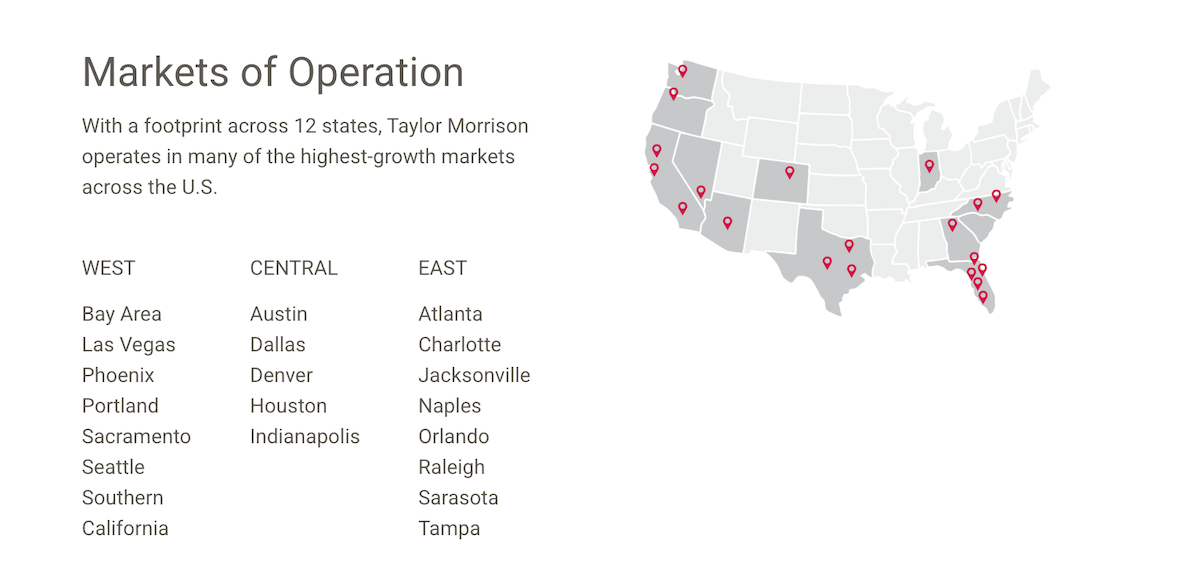
For policymakers, Cotality argues that understanding “who is buying what” through detailed property and investor data is critical to designing effective interventions in a market where investor and owner-occupant roles are increasingly blurred.

This article was written by Neil Pierson and generated with the assistance of HousingWire Automation. It was reviewed by a HousingWire editor before publication.

This post was originally published on here

Rachel Glazer has rejoined Brown Harris Stevens from Compass, bringing her team and more than $1 billion in career sales back to the New York-based luxury brokerage, the firm announced Thursday.

Glazer previously spent 12 years at Brown Harris Stevens (BHS), where she was consistently recognized as the firm’s top downtown broker and as one of New York City’s leading luxury agents, according to the company announcement.

Her team closed more than $119 million in sales volume in 2025 and has transacted $1 billion-plus in sales over the course of her career. RealTrends Verified data shows that in 2024, Glazer closed 30 transaction sides, totaling $119.35 million in sales volume. This earned her the No. 25 rank in the state for sales volume in the 2025 RealTrends Verified Rankings.

Glazer’s business centers on high-profile and high net worth clients across Manhattan neighborhoods including the West Village, Upper West Side, Upper East Side, Tribeca, SoHo and Gramercy.

“I’m thrilled to be returning home to Brown Harris Stevens,” Glazer said in the announcement. “BHS has always stood apart because of its hands-on approach and its genuine dedication to supporting agents. I missed the boutique culture and collaborative environment that helped shape my career. Bess Freedman and Will Zeckendorf are really involved day to day and I am also excited to focus on new development which is a passion of mine.”

Glazer began her real estate career after moving to New York to attend the Fashion Institute of Technology and quickly established herself as a luxury specialist. 

“Rachel is one of New York’s most respected luxury brokers and a true relationship-driven professional. She built an extraordinary business here, and her return marks an exciting milestone as we continue to attract top talent across the industry,” Freedman, the CEO of BHS, said in a statement.

Her move comes as Brown Harris Stevens continues to bulk up its agent ranks. Over the past year, the firm has added agents whose combined career sales total more than $24 billion, according to the company.

BHS also recently announced a marketing partnership with FirstTeam, a top West Coast independent brokerage, to expand property marketing and referral opportunities.

This article was written by Brooklee Han and generated with the assistance of HousingWire Automation. It was reviewed by a HousingWire editor before publication. The system helps convert company announcements and industry data into HousingWire-style news coverage.

This post was originally published on here

CertifID recently announced the launch of CertifID Client Experience, a new closing platform designed to bring identity verification, document signing, payments and wire instruction delivery into a single secure environment for buyers, sellers, agents and title professionals.

The company said the launch expands its role beyond wire fraud protection into a broader transaction management platform built around secure real estate closings.

“We created wire fraud protection for real estate, and now we are making sure that protection is woven into every step of the closing,” Tyler Adams, CEO of CertifID, said in a statement. “Companies that use CertifID are not just protecting their clients from fraud, they are giving them the best closing experience in the industry.”

The platform is designed to centralize every step of the closing process within one authenticated session, eliminating the need to send sensitive information through email. CertifID said fraud education and security prompts are integrated directly into the transaction workflow, particularly during high-risk actions such as wire transfers.

According to the company, the platform’s Fraud Engine safeguards more than $300 billion in real estate transaction volume annually, continuously improving through transaction activity and fraud monitoring.

CertifID said the Client Experience platform was built with a mobile-first approach, allowing users to verify identity, sign documents and submit payments through their smartphones without creating separate accounts or navigating complex portals.

“The closing process has never had an experience built around the people going through it,” said Josh Linn, chief product officer at CertifID. “When something is genuinely easy to use, security stops being a gate and becomes the foundation.”

The company also highlighted the growing sophistication of wire fraud and cybercrime within real estate transactions, noting that artificial intelligence tools are increasingly being used by criminals to impersonate buyers, sellers, lenders and title agents.

“In 2015, I became a victim of real estate wire fraud, and that experience showed me the industry did not just need better habits, it needed better technology,” said Tom Cronkright, co-founder and executive chairman of CertifID. “This is the next step: fraud protection so woven into the transaction that it becomes invisible. The role of a title agent has expanded from the protection of property rights to consumer protection, the Client Experience empowers the industry to meet that challenge.”

CertifID currently protects more than 1.4 million real estate transactions annually and said it blocked $283 million in attempted fraud last year.

Through its Fraud Recovery Service partnership with the U.S. Secret Service, the company said it has recovered more than $126.9 million in stolen funds.

This article was generated using HousingWire Automation and reviewed by a HousingWire editor before publication. The system helps convert company announcements and industry data into HousingWire-style news coverage.

This post was originally published on here

Houston billionaire Tilman Fertitta is finally getting the casino empire he has spent nearly a decade chasing.

On May 28, 2026, Fertitta Entertainment announced a definitive agreement to acquire Caesars Entertainment in an all-cash transaction valued at approximately $17.6 billion, including assumed debt, marking one of the largest gaming industry buyouts in years and dramatically reshaping ownership across the Las Vegas Strip.

The transaction ends Fertitta’s years-long pursuit of Caesars, a campaign that began in 2018 when he first proposed combining the company with his Golden Nugget casino business. Multiple attempts, competing bidders, and shifting market conditions delayed the effort over the years. Now, after nearly a decade of maneuvering, Fertitta has secured control of one of the most recognizable casino brands in the world.

Importantly, this is not a sale by a single owner.

Caesars is a publicly traded Nasdaq company, meaning Fertitta is effectively buying out thousands of public shareholders and taking the company private. Shareholders will receive $31 in cash per share, representing roughly a 49% premium to the company’s share price before takeover speculation accelerated earlier this year.

The equity portion of the deal values Caesars at roughly $5.7 billion.

The much larger headline figure — $17.6 billion — comes because Fertitta is also assuming approximately $11.9 billion in existing Caesars debt, underscoring just how leveraged the modern casino business has become after years of acquisitions, expansions, and pandemic-era financial restructuring.

Fertitta’s Biggest Bet Yet

For Fertitta, the acquisition represents the largest and most ambitious deal of his career.

The 68-year-old billionaire already controls a sprawling hospitality empire through Landry’s, which owns or operates hundreds of restaurants, hotels, entertainment venues, and casinos across the United States and internationally. His holdings include the Golden Nugget casino chain and the Houston Rockets, which he purchased in 2017 for $2.2 billion.

Adding Caesars dramatically expands that footprint.

The company operates roughly 52 casino properties across the United States, including some of the most iconic names on the Las Vegas Strip: Caesars Palace, Flamingo, Planet Hollywood, and Horseshoe among them.

The deal effectively gives Fertitta direct control over a major portion of America’s gaming and hospitality infrastructure.

Why The Financing Structure Matters

One of the most closely watched aspects of the transaction is how it is being financed.

Fertitta Entertainment emphasized that the acquisition is not subject to a financing contingency — a crucial point for investors after several high-profile leveraged buyouts in recent years encountered financing instability or collapsed under deteriorating credit conditions.

Instead, the acquisition will be funded through a combination of Fertitta equity contributions, newly arranged financing from a consortium of 10 banks, and the assumption of Caesars’ existing debt obligations.

That structure reduces execution risk and signals strong lender confidence despite elevated interest rates and tighter credit conditions across much of corporate America.

Still, the debt load remains substantial.

Fertitta has long embraced highly leveraged dealmaking, often betting that strong cash-flow-generating assets can comfortably support large borrowing levels over time. Caesars now becomes the largest version of that strategy he has attempted.

The Political Angle

The acquisition also carries a political dimension analysts believe could matter during regulatory review.

Fertitta has been a prominent supporter of President Donald Trump, contributed actively during the 2024 campaign cycle, and currently serves as U.S. ambassador to Italy under the Trump administration.

Gaming deals of this scale require extensive approval processes across multiple states where Caesars operates casinos and holds gaming licenses. Regulatory scrutiny often focuses heavily on ownership structure, financing stability, competitive concentration, and operational suitability.

Analysts including Lance Vitanza of TD Cowen suggested Fertitta’s political positioning and longstanding industry relationships may improve confidence that the deal ultimately secures the approvals it needs.

That does not mean approval is automatic.

The transaction still faces shareholder approval requirements, state-level gaming reviews, and antitrust examination tied to concentration of major Strip properties under one ownership umbrella.

The agreement also includes a “go-shop” period running through approximately July 11, allowing Caesars and its advisers to solicit or evaluate competing bids before the transaction becomes final.

Why The Timing Is Interesting

The deal arrives during a softer moment for Las Vegas itself.

Visitor spending growth has moderated, discretionary travel has become more uneven, and gaming revenue trends have softened compared with the explosive rebound period immediately following the pandemic reopening years.

Yet investors still responded positively.

Caesars shares rose following the announcement and have climbed roughly 16% since initial reports of Fertitta’s interest surfaced earlier this year, suggesting markets largely view the agreed price as credible and achievable despite broader industry caution.

The acquisition also continues a longer-term consolidation trend reshaping the casino industry.

Ownership of major Strip properties has increasingly concentrated into fewer hands over the past decade as rising development costs, digital gaming competition, sports betting expansion, and capital-intensive resort operations pushed operators toward larger scale.

Fertitta’s purchase accelerates that process further.

What Fertitta Is Really Buying

At one level, this is a casino deal.

At another, it is a bet on physical experience assets themselves.

Fertitta has spent much of his career accumulating businesses tied to entertainment, hospitality, tourism, food, nightlife, sports, and experiential spending — industries that increasingly command premium pricing in an economy where consumers continue prioritizing experiences over goods.

Caesars gives him one of the most globally recognized hospitality brands in America alongside enormous real-estate positioning across Las Vegas and regional gaming markets.

The risks are obvious: debt, regulatory scrutiny, softer consumer spending, and the cyclical nature of gaming.

But Fertitta’s approach has rarely centered on avoiding leverage.

It has centered on owning trophy assets large enough to generate cash flow through economic cycles.

And after nearly ten years of trying, Caesars has now become the biggest trophy of them all.

Las Vegas — JBizNews Desk

© JBizNews.com All Rights Reserved. Reproduction or distribution without written permission is prohibited.

Massachusetts believes California may have just handed Boston its best recruiting tool in years.

Business leaders, venture investors, and political officials across Boston are increasingly positioning a proposed California billionaire tax as a rare opportunity to reverse one of the city’s most frustrating economic patterns: training elite artificial intelligence founders at MIT and Harvard only to watch them leave for San Francisco.

The issue gained fresh urgency on May 28 after renewed attention around a proposed California ballot measure that would impose a one-time 5% tax on personal assets above $1 billion, aimed largely at funding healthcare programs.

For many startup founders, the danger is not theoretical.

A fast-growing AI company can achieve multibillion-dollar paper valuations long before founders actually receive liquid cash through an IPO or acquisition. That means entrepreneurs could theoretically face enormous tax obligations tied to unrealized wealth while still holding relatively limited personal liquidity.

That scenario is exactly what Boston now sees as an opening.

The Core Problem Boston Has Failed to Solve

Massachusetts has long produced some of America’s strongest technical talent.

The problem has never been education.

It has been retention.

Half of the 20 most valuable venture-backed AI companies in the United States reportedly have co-founders connected to MIT or Harvard. Yet virtually none are headquartered in Massachusetts. Instead, the companies overwhelmingly migrate westward into Silicon Valley’s financing, engineering, and startup ecosystem.

For decades, the gravitational pull of San Francisco proved nearly impossible to overcome.

Founders wanted proximity to venture capital, elite engineers, experienced startup operators, hyperscaler relationships, and other founders who had already built successful technology businesses.

That network effect became self-reinforcing.

Boston produced talent.

California captured the companies.

Now Massachusetts believes California’s own politics may finally weaken that cycle.

Why The Billionaire Tax Matters So Much To Founders

The proposed California measure is especially sensitive for technology entrepreneurs because startup wealth often exists primarily on paper.

Founders may control shares worth billions theoretically while lacking liquid cash to pay large tax bills before a company goes public or gets acquired.

That distinction is central to Boston’s argument.

Ankit Gupta, recently named Y Combinator’s first Boston-area general partner in more than a decade, warned that taxing unrealized startup wealth could create severe pressure on founders whose companies remain privately held.

He contrasted the proposal with Massachusetts’ own 4% surtax on income above $1 million, approved by voters in 2022.

That Massachusetts tax applies to realized income rather than unrealized asset appreciation — a difference many founders view as financially manageable compared with taxes tied to illiquid startup equity.

In effect, Massachusetts is trying to reposition itself politically.

For years, Boston carried a reputation as a relatively high-tax region compared with lower-tax states like Texas or Florida.

But compared directly against California and New York, the gap now looks narrower — especially if California expands taxation into unrealized wealth territory.

That shift changes the competitive narrative.

Boston’s Recruiting Push Is Already Underway

The effort is no longer abstract.

Governor Maura Healey traveled to San Francisco last month alongside Massachusetts Economic Development Secretary Eric Paley, a former venture capitalist tied to early investments in Uber and SeatGeek.

Meetings reportedly included AI giant Anthropic, accelerator powerhouse Y Combinator, and biotech leaders including Genentech.

Y Combinator CEO Garry Tan has publicly discussed exploring a Cambridge office, specifically citing the engineering concentration surrounding MIT and Harvard.

Boston Mayor Michelle Wu is also increasingly framing the city as a future center for “applied AI” — not necessarily competing directly with Silicon Valley on foundational model development, but specializing in practical AI deployment across healthcare, biotechnology, life sciences, drug discovery, hospitals, diagnostics, and enterprise systems.

That distinction matters strategically.

Boston already possesses one of the world’s densest concentrations of hospitals, research institutions, biotech firms, medical schools, and pharmaceutical infrastructure. The city’s argument is that AI’s next major commercial wave may involve integrating models into real-world healthcare and scientific systems rather than purely building the models themselves.

In that scenario, Boston may hold structural advantages Silicon Valley lacks.

Why Timing Suddenly Matters

The push also reflects economic necessity.

Boston’s biotech economy — long one of the city’s strongest growth engines — has cooled materially after years of aggressive expansion. Venture funding has slowed across life sciences, while federal research funding uncertainty tied to broader budget pressures has created additional strain for universities and medical institutions heavily dependent on federal grants.

Massachusetts leaders increasingly view AI as both an opportunity and a hedge against biotech deceleration.

Several major corporate and startup initiatives are already underway.

Genentech, owned by Roche, is expanding research operations on Harvard-linked property. Anthropic maintains a smaller Cambridge footprint. A coalition including Whoop, DraftKings, and AI music startup Suno launched the Massachusetts AI Coalition earlier this year aiming to double the number of billion-dollar tech and biotech companies headquartered in the state within five years.

The coalition has even proposed “founder starter parks” offering subsidized computing resources, office space, mentorship access, and operational support for startups willing to remain in Massachusetts during early-stage growth.

The logic is simple: once companies scale beyond roughly 10 employees, relocation becomes far harder operationally.

Boston is trying to intervene before founders leave in the first place.

The Bigger National Shift

Underneath the tax debate sits a broader structural question about the future geography of American technology.

For decades, Silicon Valley’s dominance appeared nearly unbreakable because capital, talent, and company formation all concentrated in one ecosystem simultaneously.

But remote work, distributed engineering teams, AI infrastructure, rising living costs in California, and shifting political dynamics are beginning to fragment that concentration model.

Boston is betting that taxation could accelerate the process further.

Not necessarily by driving a mass exodus from California overnight — but by making founders more willing to consider alternative ecosystems earlier in their company-building process.

The question is whether policy alone can overcome Silicon Valley’s still-enormous network advantages.

History suggests ecosystems rarely shift quickly.

But Massachusetts increasingly believes the economics surrounding startup formation are beginning to change.

And for the first time in years, Boston thinks the pull westward may no longer feel inevitable.

Boston — JBizNews Desk

© JBizNews.com All Rights Reserved. Reproduction or distribution without written permission is prohibited.

Pennsylvania lawmakers are moving to bring home equity investment (HEI) companies under state banking oversight, with a floor vote scheduled June 1.

The legislation, House Bill 2120, would subject shared appreciation agreements to similar regulations as those governing traditional lenders.

The proposed action comes as a state representative accuses one company of attempting to “mislead” the legislative process — by offering $50 Amazon gift cards to customers who submitted opposing testimony.

State Rep. Arvind Venkat (D) said during a Pennsylvania House hearing in March that Point, a company that markets shared appreciation agreements, emailed customers before the hearing to offer gift cards in exchange for testimonials that oppose new regulation.

The solicitation and subsequent testimonials came without notice to the committee, Venkat added.

“These actions by Point are intended to mislead the members of this committee and the people of Pennsylvania by incentivizing a particular viewpoint for financial gain,” he said. “This is an outrageous corruption of the legislative process. House Bill 2120 serves to provide consumer protections for homeowners to preserve and understand the value of their most valuable asset — their home.”

A representative for Point did not immediately respond to HousingWire‘s request for comment. But Samuel Bjelac, the company’s newly appointed leader for third-party originations, recently addressed the spate of legal and regulatory actions in the HEI space.

“I can’t speak for other providers, but I can tell you that we provide, I think, a very solid homeowner education, a very solid originator training and ongoing education,” Bjelac said in an interview with HousingWire.

Bill would close ‘gray area’ loophole

House Bill 2120 would place shared appreciation agreements — contracts in which a homeowner receives funds in exchange for granting a third party future interest in the appreciation, equity or value of the home — under the same statutory safeguards as other financial products secured by real estate.

This would include disclosure requirements, foreclosure protections and remedies for violations.

The HEI industry largely operates outside state banking regulations because the agreements are not legally classified as loans, the Pittsburgh Post-Gazette said in a report published this week.

“These products aren’t considered loans,” Wendy Gilch, a Franklin Park consumer advocate who brought the issue to lawmakers, told the Gazette. “They’re not written in our laws. They’re in this weird gray area, so there’s many [banking] rules and consumer protections that don’t apply.”

Industry representatives argue the products are fundamentally different from loans.

Cliff Andrews, president of the Coalition for Home Equity Partnerships, said that applying banking rules designed for mortgages does not fit a product set with no monthly payment and no interest rate.

“Any regulation or law that would say you need to have an APR, we fundamentally just can’t calculate such a number,” he told the Gazette.

Venkat added that under a shared appreciation agreement, the more a home appreciates, the more the homeowner must pay to satisfy the contract — often far exceeding the amount originally received.

Parallel to MV Realty crackdown

Pennsylvania‘s effort mirrors a broader regulatory crackdown on other real estate contracts.

More than 30 states have passed legislation or secured court orders against MV Realty, a Florida-based brokerage that offered homeowners upfront payments of a few hundred to a few thousand dollars in exchange for 40-year exclusive listing agreements.

Unlike MV Realty’s model — which critics say functioned as a high-interest loan secured by a property lien — shared equity investments do not charge interest or require monthly payments.

Yet both products have faced similar criticisms. Homeowners who fail to understand the long-term financial consequences of the contracts can tie up what’s often their most valuable asset.

‘You sell your soul to the devil’

“For most Pennsylvanians, their home is their most valuable asset,” Venkat said during public testimony in March. “Homeowners may enter into these agreements believing they are making a beneficial decision for their family’s future, but when marketing is unfair or deceptive, they could face significant financial hardship down the road.”

A Pennsylvania homeowner who accepted $225,000 from Point in 2021 told the Gazette she did not fully understand how much future equity she was signing away.

Under the contract, the company is positioned to collect roughly 58% of her home equity.

“You sell your soul to the devil at the end,” the homeowner said. “And I don’t say that phrase lightly.”

The bipartisan House Bill 2120 is co-sponsored by Rep. Tim Twardzik (R) and Rep. Lindsay Powell (D), who co-chair the Pennsylvania Housing Caucus.

“Given the importance of homes and their value to so many Pennsylvanians, we must expeditiously bring shared appreciation agreements into a regulatory framework similar to that of mortgages so that Pennsylvanians can be assured transparency and protection against predatory lending practices in these products,” Venkat said.

This article was written by Jonathan Delozier and generated with the assistance of HousingWire Automation. It was reviewed by a HousingWire editor before publication. The system helps convert company announcements and industry data into HousingWire-style news coverage.

This post was originally published on here

Bank of America said Thursday that it will continue its Community Homeownership Commitment program after surpassing its original goal of delivering $15 billion in affordable home loans and grants.

The program, launched in 2019, has provided more than $15 billion in affordable home loans. This total includes more than $600 million in down payment and closing cost grants to more than 57,000 homebuyers nationwide, the bank said.

Bank of America said the initiative will now become an ongoing commitment rather than a time-limited program, as affordability challenges continue to weigh on prospective homebuyers.

“Affordability remains one of the biggest barriers to homeownership today,” Matt Vernon, head of consumer lending at Bank of America, said in a statement. “Continuing this commitment reflects years of focused work to help more people move from aspiration to ownership through responsible lending and targeted solutions, while recognizing that the challenges in today’s housing market are ongoing.”

The program includes down payment and closing cost grants, low down payment mortgage options, and financial education resources aimed at low- to moderate-income borrowers and first-time homebuyers.

Under the initiative, eligible buyers in select markets can receive down payment grants of up to $10,000, or 3% of the home purchase price, whichever is less. Borrowers may also qualify for up to $7,500 through the bank’s America’s Home Grant program to help cover eligible closing costs or reduce mortgage rates.

Bank of America said it partners with more than 300 nonprofit, Department of Housing and Urban Development-certified housing counseling organizations nationwide to provide homebuyer education and counseling services. The bank also works with community down payment assistance programs and housing voucher providers to help buyers access additional resources.

The lender said it is not establishing a new dollar target for the program despite reaching the original $15 billion benchmark.

Instead, the bank said it plans to continue offering the program’s existing benefits as elevated prices, higher mortgage rates and limited supply continue to challenge affordability across the U.S. housing market.

This article was generated using HousingWire Automation and reviewed by a HousingWire editor before publication. The system helps convert company announcements and industry data into HousingWire-style news coverage.

This post was originally published on here

Today, the new home sales report validates two talking points I have had for some time. First, new home sales have been stuck for many years in a range that doesn’t show any real growth. For example, in November of 2025, new home sales were at a multiyear high and in January they were at a multiyear low. But in reality, new home sales haven’t gone anywhere in years.

Second, due to historically high levels of completed units for sale, the builders are very cautious about growth plans. This doesn’t mean no homes are getting built, but we need to have a better understanding of why housing starts haven’t gotten traction for years now. It’s basic supply and demand economics — with a touch of the fact that the builders aren’t the March of Dimes, they’re here to make money.

Let’s take a look at the report.

From Census: New Home Sales: Sales of new single-family houses in April 2026 were at a seasonally-adjusted annual rate of 622,000, according to estimates released jointly today by the U.S. Census Bureau and the Department of Housing and Urban Development. This is 6.2 percent (±12.8 percent)* below the March 2026 rate of 663,000, and is 11.3 percent (±11.5 percent)* below the April 2025 rate of 701,000.

Mind that the new home sales and housing starts data can be very volatile month to month, with constant revisions. That said, the chart below supports my main talking point on new home sales. If I take the COVID bump away and the 2022 low in sales, new home sales have gone nowhere for many years.

Still, new home sales are trending at 2019 sales levels. Now, if I could say that about the existing home sales market, that would mean existing home sales would be 1 to 1.3 million higher than today’s levels. So, new home sales have clearly outperformed the existing home sales market because builders can offer lower rates.

chart visualization

For-sale inventory and months’ supply

From Census: The seasonally-adjusted estimate of new houses for sale at the end of April 2026 was 489,000. This is 1.7 percent (±1.2 percent) above the March 2026 estimate of 481,000, and is 2.2 percent (±3.9 percent)* below the April 2025 estimate of 500,000. This represents a supply of 9.4 months at the current sales rate. The months’ supply is 8.0 percent (±16.3 percent)* above the March 2026 estimate of 8.7 months, and is 9.3 percent (±13.5 percent)* above the April 2025 estimate of 8.6 months.

Regarding supply, I always like to focus on completed units for sale, as history has shown me that this has, over time, changed homebuilders’ behavior and how they approach construction time frames. In December of 2024, I wrote about why the builders have a supply-and-demand problem: their completed units for sale were elevated after 14 years at levels that hadn’t been a concern.

Of course, 122,000 new homes completed for sale might not sound like a lot.

chart visualization

But when you look at the history of this data, you can see why the builders pull back on growth — they have simply too much supply. This data line counts the completed units of sale at the start of each year.

chart visualization

Conclusion

We simply need more demand for new homes to make builders more confident about building them. Right now, they’re in management mode and their confidence data, which is skewed toward smaller builders, speaks for itself.

This gives you a real-time look at the new home sales and housing construction sectors. I also wrote about the latest housing starts data here. As you can see with all the charts above, there is a clear reason why housing starts aren’t booming.

This post was originally published on here

New York City wants to make it easier for young people to find free and low-cost activities this summer. Mayor Zohran Mamdani this week launchedSummer in N.Y.C.,” a website that matches users with activities happening in their neighborhood, ranging from free painting and photography classes to sports leagues, summer jobs, and FIFA World Cup watch parties. The initiative is part of a broader effort by the administration to keep young New Yorkers safe during the summer, when gun violence sees an uptick, as CBS News reported.

“Summer in N.Y.C.” website, courtesy of NYC Mayor’s Office

“Too often, we tell young people what not to do—but don’t tell them what they should do,” Mamdani said. “This website is about connecting kids and teens to programs they’ll actually be excited about whether that’s basketball, photography, music or art—and making it easy for families to find opportunities close to home.”

“With summer fast approaching, we are using every tool available to keep young New Yorkers safe, listened to rather than lectured at, and surrounded by community.”

Users can search for events by age, ZIP code, interests, and travel distance. The platform also highlights free summer meals and citywide World Cup celebrations.

The announcement builds on recent outreach efforts from Mamdani, including a video conversation last week with members of True 2 Life, a Staten Island-based organization within the city’s Crisis Management System that uses peer mentorship and evidence-based intervention to prevent violence and address its root causes.

This summer, the Office of Neighborhood Safety, in collaboration with DYCD and community-based organizations, is launching a coordinated safety plan aimed at reducing youth violence and expanding opportunities for young people.

Through the Crisis Management System, outreach teams will increase engagement in neighborhoods most impacted by violence, with expanded mediation efforts, extended evening programming, youth listening sessions, and rapid-response activations during high-risk periods and large gatherings.

The plan also expands access to safe spaces, mentorship, recreation, and workforce opportunities, aiming to connect young New Yorkers to supportive resources throughout the summer months.

“Summer is a time for making the core memories that shape us. It’s a time for exploration, growth and fun for every young person in our City,” Renita Francois, deputy mayor for community safety, said.

“Delivering that means providing safe, meaningful, and free opportunities in all corners of the five boroughs and making them accessible,” she added. “We created Summer in NYC to put young people just a click away from favorite and new hobbies, experiences, and connections along with critical life skills such as conflict management and emotional regulation.”

RELATED:

The post NYC launches interactive website to help young New Yorkers find free summer activities first appeared on 6sqft.

This post was originally published here

Work on the redesign of Greenpoint’s notorious McGuinness Boulevard finally began this week after several years of delays and project changes. Mayor Zohran Mamdani and the Department of Transportation on Wednesday broke ground on the street revamp, which includes installing parking-protected bike lanes along the corridor from Meeker Avenue to the Pulaski Bridge. The start of construction marks a major milestone for the project, which was scaled back under former Mayor Eric Adams’ administration amid allegations of bribery, as 6sqft previously reported.

The redesigned section of the southern portion of McGuinness Boulevard. Credit: NYC DOT

Serving as a key corridor and major cycling connection between Brooklyn and Queens, McGuinness Boulevard sees more than 4,000 daily riders during the summer months. The block is infamous for its dangerous conditions for cyclists, pedestrians, and drivers.

For years, street safety advocates have urged the city to install additional safety measures, a push that intensified in 2021 after teacher Matthew Jensen died in a hit-and-run on the corridor. In 2023, under Adams, DOT announced a “road diet” plan that would remove a traffic lane and add protected bike lanes in each direction.

However, following opposition from local residents and elected officials, Adams scaled back the original design in August 2024. Among the critics was a prominent Greenpoint film production company owned by the Argento family, donors to Adams, who argued the plan would worsen congestion and harm local businesses.

The reasons behind the sudden reversal remained unclear until August 2025, when Manhattan District Attorney Alvin Bragg accused Ingrid Lewis-Martin, former chief adviser to Adams, of bribery.

According to the allegations, Lewis-Martin accepted $2,500 in cash, free catering at Gracie Mansion valued at $10,000, and a brief appearance on the television show “Godfather of Harlem” in exchange for allegedly using her influence to alter the McGuinness Boulevard redesign on behalf of the Argentos, as 6sqft previously reported. The case is ongoing.

Mamdani at January’s rally on McGuinness Boulevard. Credit: Michael Appleton/Mayoral Photography Office on Flickr

While on the campaign trail in August, Mamdani held a rally on the boulevard and pledged to complete the original “road diet” plan. He framed the move as a rebuke of Adams’ willingness to prioritize “moneyed interests” over public safety.

In January, less than a week as mayor, Mamdani officially announced that the DOT would move forward with the plan later in the year when the “weather warms.”

“Days into our administration, we made clear that this new era for NYC would be anchored in the well-being of working people, not the whims of the wealthy and well-connected,” Mamdani said.

“Now that spring is here and the ground has thawed, the DOT can get to work delivering safe streets for all New Yorkers,” he added. “As construction begins, Greenpoint is finally getting the safer McGuinness Boulevard its residents have long fought for.”

Once complete, the boulevard will feature one travel lane, one parking-protected bike lane, and one curbside parking and loading lane in each direction.

The redesign is expected to improve safety for pedestrians, cyclists, and drivers by shortening crossing distances, slowing turning vehicles, and reducing dangerous driving behavior. Similar street redesigns across the five boroughs have been shown to reduce traffic deaths and serious injuries by 30 percent.

Construction is expected to be completed by early fall.

“Every New Yorker should feel safe on NYC streets, and after tireless advocacy from the Greenpoint community, we will finally be delivering a McGuinness Boulevard that helps stitch the neighborhood together, rather than dividing it in half with long, high-traffic crossings,” DOT Commissioner Mike Flynn said.

“This was the administration’s first street safety announcement because we wanted to signal that we are ushering in a new era of local government that works for its people—instead of making backroom deals to prevent the installation of life-saving street safety upgrades.”

McGuinness Boulevard joins a growing list of corridors receiving or slated for redesigns under the Mamdani administration. Last week, Mamdani announced that Sixth Avenue’s protected bike lane would be widened between 14th Street and West 31st Street ahead of the World Cup this summer.

Earlier this month, the administration also said it would install a center-running eastbound bus lane along Broadway between 69th Street and Roosevelt Avenue, a busy corridor used by roughly 9,000 daily riders on the Q70-SBS, known as the “LaGuardia Link.”

Other projects include the redesign of Ninth Avenue from West 34th to West 50th Streets in Hell’s Kitchen and new bike and pedestrian entrances to the Brooklyn Bridge in Manhattan.

RELATED:

The post NYC begins redesign of McGuinness Boulevard first appeared on 6sqft.

This post was originally published here

A coalition of fair housing and economic advocacy groups sued the Consumer Financial Protection Bureau (CFPB) and acting director Russell Vought on Wednesday, seeking to block a Trump administration-backed rule they say would weaken longstanding protections against lending discrimination.

The lawsuit, filed in federal court in Washington, D.C., challenges changes made last month by the CFPB to Regulation B, which implements the Equal Credit Opportunity Act (ECOA), a 1974 civil rights law designed to prevent discrimination in lending.

According to the complaint, the CFPB’s rule reverses nearly 50 years of federal fair lending policy.

The plaintiffs include the National Fair Housing Alliance, Rise Economy and two private firms focused on fair lending compliance: BLDS LLC and artificial intelligence company SolasAI. They argue the rule would make it harder to hold banks and other lenders accountable for practices that disproportionately harm Black borrowers, women and other underserved groups.

Disparate impact, credit deterrents and SPCPs

The lawsuit focuses on three major changes.

First, the rule eliminates disparate impact liability under the ECOA, a legal standard that has long allowed regulators and borrowers to challenge lending policies that disproportionately harm protected groups, even without evidence of intentional discrimination.

The plaintiffs argue that these protections are especially important as lenders increasingly rely on automated underwriting, artificial intelligence and targeted digital advertising. Without disparate impact standards, the lawsuit claims, algorithms could reinforce historic patterns of discrimination.

Second, the complaint challenges changes to rules governing “discouragement” in lending, meaning actions or marketing practices that deter people from applying for credit. The plaintiffs say the revised rule narrows what counts as unlawful discouragement, making it harder to pursue cases tied to redlining or discriminatory advertising.

The lawsuit cites past federal enforcement actions involving branch placement, selective advertising and outreach practices that allegedly excluded communities of color. It also points to recent CFPB research, which found that Black small-business applicants were less likely than white applicants to receive encouragement to apply for loans.

Third, the lawsuit argues the rule would effectively dismantle Special Purpose Credit Programs (SPCPs), which lenders use to expand access to credit for underserved borrowers. Plaintiffs say the CFPB’s changes would make these programs nearly impossible for lenders to operate in a for-profit manner.

‘Deliberate dismantling’ of protections

The CFPB said when issuing the rule that it was complying with a January 2025 executive order from President Donald Trump, which directs agencies to “coordinate the termination of all discriminatory programs, including illegal DEI and ‘diversity, equity, inclusion, and accessibility’ (DEIA) mandates, policies, programs, preferences, and activities in the Federal Government, under whatever name they appear.”

The plaintiffs also accuse the CFPB of violating the Administrative Procedure Act (APA) by failing to adequately justify the rule changes or properly consider evidence and public comments warning that the changes could increase discrimination.

“This is the deliberate dismantling of 50 years of legal jurisprudence, regulatory guidance, and bipartisan consensus that lending discrimination has no place in America,” Lisa Rice, president and CEO of the National Fair Housing Alliance, said in a statement. “The statute did not change. The legal decisions did not change. Washington’s commitment did.”

Rice said that the CFPB’s reversal is “a continuation of this Administration’s efforts to gut fair housing and lending protections,” and that the change to the rule will result in roadblocks to credit access and a less productive economy.

Paulina Gonzalez-Brito, CEO of Rise Economy, said that the CFPB’s move ignores “decades of precedent.”

“The CFPB was created to protect consumers and small businesses from financial abuse and discrimination, and this final Reg B rule would do real harm, setting us back in our collective efforts to ensure that all families and small businesses have a fair chance to achieve the American Dream,” Gonzalez-Brito said. “The CFPB needs to follow the law and return to its core mission of protecting consumers and small businesses.”

“This rule undermines one of the nation’s core civil rights protections in lending and will lead to more discrimination in access to credit,” said Skye Perryman, president and CEO of Democracy Forward, one of the legal teams representing the plaintiffs. “At a time when communities across the country continue to face barriers to homeownership, small business lending, and economic opportunity, the CFPB should be strengthening protections against discrimination, not dismantling them.”

“The CFPB is upending decades of consistent regulatory implementation of ECOA by dismantling some of the statute’s fundamental protections. The court should reject the CFPB’s arbitrary and unsupported rule, which is inconsistent with the plain text of ECOA,” said Allison Zieve, director of Public Citizen Litigation Group, another legal team representing the plaintiffs. 

The CFPB did not immediately respond to HousingWire‘s requests for comment.

Additionally, the lawsuit challenges the authority of Vought, arguing he has not been lawfully appointed to lead the agency because he has not been confirmed by the Senate. Due to Vought not being officially appointed, the plaintiffs argue that the rule is invalid.

Trump had previously nominated Jonathan McKernan to lead the bureau on a permanent basis, but he was never confirmed and Vought remained as acting director. In October 2025, McKernan was appointed as under secretary for domestic finance at the U.S. Department of the Treasury.

This post was originally published on here

Homebuyer affordability declined in April as the national median payment applied for by purchase mortgage applicants rose to $2,152, up from $2,131 in March, according to the Mortgage Bankers Association (MBA)’s Purchase Applications Payment Index (PAPI) released Thursday.

The national PAPI rose 0.3% to a reading of 156.0 in April, up from 155.5 in March, indicating a higher mortgage payment-to-income ratio for new purchase loan applications. For lower-payment loans at the 25th percentile, the national mortgage payment increased to $1,493, up from $1,479 a month prior.

Despite the monthly deterioration, affordability remains better than a year ago. The median payment of $2,152 in April 2026 was $35, or 1.6%, lower than in April 2025, while household earnings grew 4% over the same period. Taken together, these trends pushed the index down 5.3% on an annual basis, signaling improved affordability compared to last spring.

“Housing affordability conditions weakened slightly in April, as mortgage rates edged higher and rising loan amounts pushed monthly payments up from March. However, affordability remains improved compared to a year ago, supported by lower mortgage rates and continued income growth,” said Edward Seiler, MBA’s associate vice president of housing economics and executive director of the Research Institute for Housing America.

“Looking ahead, continued income gains and some stabilization in mortgage rates could help support better affordability conditions.”

MBA’s national mortgage-payment-to-rent ratio (MPRR) fell to 1.35 at the end of the first quarter of 2026, down from 1.38 at the end of the fourth quarter of 2025 — meaning that mortgage payments for home purchases have decreased relative to asking rents. During that period, the U.S. Census Bureau’s Housing Vacancy Survey showed the national median asking rent climbed to $1,579 in Q1 2026, up from $1,464 in the prior quarter.

The payment-to-rent picture improved more for lower-payment borrowers. The 25th percentile mortgage application payment to median asking rent ratio slipped to 0.94 in March, down from 0.96 in December 2025. This suggests that, at the lower end of the market, monthly mortgage payments are moving closer to or below typical rents in many areas.

The national median mortgage payment for Federal Housing Administration (FHA) borrowers rose to $1,829 in April, up from $1,812 in March, but was down from $1,895 in April 2025. For conventional loan applicants, the national median payment increased to $2,166 in April. That compared to $2,145 in March 2026 and $2,206 in April 2025.

Affordability for newly built homes softened during the month. MBA’s Builders’ Purchase Application Payment Index (BPAPI), which uses data from the Builder Application Survey, showed the median mortgage payment for new-home purchase loans slipping to $2,188 in April, down from $2,210 in March.

Even with that decrease, new-home payments remain slightly higher than the overall market median, reflecting both higher new-home prices and concentration in certain metro areas.

Conditions varied widely at the state level, underscoring the geographic unevenness of the affordability squeeze. The states with the highest PAPI readings in April were Idaho (248.1), Nevada (228.4) and Rhode Island (206.9).

At the other end of the spectrum, the lowest PAPI readings were in Louisiana (120.1), Hawaii (124.4) and the District of Columbia (125.2).

Affordability also slipped across major racial and ethnic groups in April. MBA reported that the PAPI reading for Black households increased from 161.0 to 161.5, while the reading for Hispanic households increased from 143.9 to 144.3, and the reading for white households increased from 156.8 to 157.3.

MBA’s Purchase Applications Payment Index tracks how new mortgage payments change over time relative to income, using loan application data from MBA’s Weekly Applications Survey and earnings data from the U.S. Bureau of Labor Statistics’ Current Population Survey. Higher index values indicate a higher mortgage payment-to-income ratio compared to periods when the index is lower.

This article was generated using HousingWire Automation and reviewed by a HousingWire editor before publication. The system helps convert company announcements and industry data into HousingWire-style news coverage.

This post was originally published on here

Two Harbors Investment Corp. has once again adjourned its special meeting of stockholders, giving the MSR-focused real estate investment trust more time to solicit votes for its proposed all-cash sale to an affiliate of CrossCountry Mortgage (CCM).

Two Harbors and CCM entered into a definitive merger agreement on March 27. Negotiations with CCM produced two price increases, from $10.80 to $11.30 and then to $12 per share, amid a competing offer from UWM Holdings Corp. (UWMC).

“Given the lack of votes, it is possible that CCM will need to increase its bid from the current level,” analysts at Keefe, Bruyette & Woods said in a flash note.

The special meeting, originally scheduled for May 19 and then moved to May 28, will now reconvene June 11 at 10 a.m. ET. The Two Harbors board is urging stockholders to vote in favor of the transaction with CrossCountry Intermediate Holdco LLC.

According to Two Harbors, the $12-per-share offer represents a 21% premium to the REIT’s unaffected share price and a 19% premium to its fully diluted tangible book value. Common stockholders also would receive a pro-rated stub dividend for the quarter in which the transaction closes, providing incremental cash beyond the $12-per-share merger consideration.

Holders of Two Harbors preferred stock would have their shares redeemed at $25 per share plus accumulated and unpaid dividends.

UWMC’s most recent proposal is $12.50 per share in cash or 2.3328 shares of UWMC stock. But the Two Harbors board said that, based on UWMC’s May 27 closing price, that default stock consideration would be worth about $7.23 per Two Harbors share. It estimates that 25% to 30% of its stockholders could be defaulted into stock at that valuation.

The company said its board, working with “numerous independent legal and financial advisors,” engaged with UWMC throughout a lengthy, competitive process.

According to Two Harbors, the board identified “core deficiencies” in UWMC’s proposals, including deal structure, certainty of closing, regulatory process, and risks around employee attrition and business continuity. The company said UWMC has not addressed these issues.

By contrast, the CCM offer would automatically deliver $12 per share in cash, plus a stub dividend, to all stockholders with no election required, Two Harbors said.

The company said the CCM deal is fully financed with no financing contingency. The parties received early termination of the Hart-Scott-Rodino waiting period on May 21, and 41 of 53 required state and agency regulatory approvals have been obtained.

In press release issued Thursday shortly after the merger vote was delayed, CCM indicated it would not be raising its price again while reaffirming its commitment to complete the acquisition.

“CCM’s $12.00 per share offer, together with the pro-rated stub dividend, is CCM’s best and final offer to TWO stockholders,” the release stated. “This represents the highest premium paid for a mortgage-REIT. CCM will not pursue a deal at all costs; there are other strategic alternatives available.”

Stockholders who previously voted in favor of the CCM deal do not need to take additional action.

This post was originally published on here

An appeal filed earlier this month by the Financial Crimes Enforcement Network (FinCEN) seeks to reverse a court decision vacating a rule requiring title insurance companies to report details of millions of residential real estate transactions.

That nationwide anti-money laundering (AML) rule was overturned March 19 by U.S. District Judge Jeremy Kernodle of the Eastern District of Texas — after the law had been in effect for less than three weeks.

FinCEN filed the notice of appeal with the U.S. Court of Appeals for the Fifth Circuit through the Department of Justice on May 11.

The AML rule mandated reporting for any non-financed residential real estate transfer where ownership was held by an entity or trust — with no geographic or price threshold. March’s decision in Texas vacated the rule entirely and restored the status quo that existed before the regulation took effect.

Flowers Title Companies, LLC, the plaintiff in Texas, successfully challenged the rule under the Administrative Procedure Act, arguing that FinCEN lacked authority under the Bank Secrecy Act to impose such sweeping reporting requirements.

Kernodle agreed — finding that FinCEN failed to demonstrate that non-financed residential real estate transfers to entities or trusts are categorically suspicious.

Federal rulings conflict

Despite the AML rule being vacated by the Eastern District of Texas in March, a separate earlier ruling in Florida upheld the AML reporting requirements.

That legal process began in May 2025 with litigation filed by Fidelity National Financial (FNF) — listing FinCEN and its director Andrea Gacki, as well as the Department of the Treasury and its secretary Scott Bessent as defendants.

That decision to uphold the AML rule, announced in February, has since been appealed by FNF in the Eleventh Circuit, which sets the table for possible Supreme Court intervention.

Updated FinCEN guidance

FinCEN provided updated best practices for title insurance and real estate professionals on its website following this month’s appeal.

“Reporting persons are not currently required to file Real Estate Reports (RRE) with FinCEN and are not subject to liability if they fail to do so while the court’s order remains in force,” FinCEN stated.

Updates also touched on whether reporting persons are required to retroactively file reports — should the rule be reinstated.

“If the court’s order is overturned and the RRE Rule again becomes legally effective, reporting persons will not be required to file reports for covered transactions that would have been required to be reported while the court’s order was in force,” FinCEN said. “If the order is overturned, FinCEN will provide further guidance on when reporting will be required.”

This post was originally published on here

As part of HousingWire’s Editor’s Choice awards spotlight series, we’re spotlighting past Women of Influence honorees whose careers, leadership and insights continue to influence the industry. This series offers a closer look at the experiences and decisions that have shaped their paths.

HousingWire spoke with Felicia Grumet, Chief Financial Officer at Newrez, about leadership, navigating change and the experiences that shaped her career across operations, servicing and financial management.

Grumet was recognized as a 2025 Women of Influence honoree for her leadership in advancing Newrez’s technology and operational strategy, including driving digital initiatives that improved both customer and employee experiences. She also played a key role in expanding the company’s AI capabilities and aligning technology investments with long-term growth and performance goals.

Women of Influence recognizes the leaders making a meaningful impact across mortgage, real estate and homebuilding. Nominations for the 2026 Women of Influence awards are open now through May 31.


HousingWire: What’s one decision that changed the trajectory of your career?

Felicia Grumet: Earlier in my career, after spending many years in the mortgage space, I made the decision to step into a much broader role that was well outside my comfort zone. It required me to build something from scratch in an area where I had a lot to learn, but I was able to lean on my core skills — organization, curiosity and a willingness to figure things out — while stretching into unfamiliar territory.

What I didn’t realize at the time was that decision would set a pattern. Every few years since, I’ve taken on roles that looked very different from anything I’d done before, and each one broadened my expertise and opened new doors. That first leap taught me that growth lives on the other side of comfort, and it’s a lesson that has defined my career ever since.

HW: Looking back, what experiences most prepared you for the leadership role you’re in today?

Felicia Grumet: Having held so many different roles over the course of my career — each one requiring a steep learning curve — has been the single greatest preparation for leadership. I’ve gotten used to the uncomfortable feeling of starting something new, knowing that I bring a set of skills but also have a lot to learn.

At Newrez, I joined as COO, then took over as Chief Information Officer, and then transitioned into the CFO role. Each of those experiences gave me a different vantage point of the company, and that breadth of understanding only strengthens how I lead today.

Along the way, each new role also meant building relationships and trust with new teams and stakeholders, and those connections have been just as valuable as the technical knowledge. The key is trusting your own process: you learn, you adapt, you earn the trust of the people around you, and eventually you reach a place where you can truly have an impact.

HW: What are you most focused on right now?

Felicia Grumet: We’re focused on growth, operational efficiencies and delivering the best possible experience for our customers, including better digital tools and service.

In my role as CFO, that translates to identifying opportunities for revenue growth and expense savings, which really are the two key levers. It’s about making sure every decision we make supports both the financial health of the organization and the experience of the homeowners we serve.

HW: What’s one leadership lesson you’ve learned that more people in this industry should understand?

Felicia Grumet: I’ve never regretted making a change or pushing myself out of my comfort zone. As hard as it can be, the more we learn and the more exposure we get, the more impactful we become.

Click here to nominate a 2026 Woman of Influence.

This post was originally published on here

MasterBrand Inc. has completed its all-stock merger with American Woodmark Corp., combining two of the largest residential cabinet manufacturers in North America at a time when builders are closely watching material costs and product availability.

The transaction, first announced earlier this year, creates what MasterBrand calls the most comprehensive portfolio of cabinetry brands and products in the region, spanning stock, semi-custom, and premium lines for kitchens, baths and other spaces in the home, according to the company’s announcement.

Under the terms of the deal, American Woodmark shareholders received 5.150 shares of MasterBrand common stock for each American Woodmark share. Pre-merger MasterBrand shareholders now hold about 63% of the combined company’s outstanding shares. American Woodmark has become a wholly owned subsidiary of MasterBrand.

The combined company will continue to operate under the MasterBrand name and trade on the New York Stock Exchange under the ticker symbol MBC. American Woodmark’s common stock will be delisted from the Nasdaq Stock Market.

MasterBrand, based in Beachwood, Ohio, will keep a presence in American Woodmark’s longtime home of Winchester, Virginia, the companies said.

Scale play in a tight construction market

For homebuilders and residential contractors, the merger further concentrates cabinet manufacturing capacity among a smaller number of national suppliers. Both MasterBrand and American Woodmark have long supplied volume builders as well as big-box retailers and independent dealers, which means purchasing teams could see changes in product assortments, pricing programs and service models as the integration moves forward.

MasterBrand said the combination will expand its operational footprint and geographic reach, with a goal of providing “greater overall choice, superior service, and enhanced value” across the value chain. The company is targeting roughly $90 million in annual run-rate cost synergies by the end of year three and expects the deal to be accretive to adjusted diluted earnings per share in year two.

Those synergy targets matter for builders because they underpin the rationale for offering broader lines while potentially stabilizing or improving pricing and lead times. How much of the cost savings flow through to customers will depend on competitive dynamics in the cabinet category and on overall construction demand, which has been pressured by higher interest rates and affordability constraints even as new-home construction remains structurally undersupplied in many markets.

Leadership and governance changes

Dave Banyard will remain president and CEO of MasterBrand. Three former American Woodmark directors — Andrew Cogan, Philip Fracassa and Daniel Hendrix — joined MasterBrand’s board as independent directors at closing. MasterBrand board chair David Petratis will remain in that role.

Given that the transaction closed just ahead of MasterBrand’s June 4, 2026, annual meeting, Fracassa will be up for re-election this year along with the other Class I directors, as previously disclosed in the company’s proxy filed with the Securities and Exchange Commission.

Why this matters for builders

The cabinet package is a critical component of kitchen and bath design, cycle time and buyer satisfaction on new-home projects. A larger MasterBrand could have several implications for builders and remodelers:

  • Product breadth: A wider portfolio may simplify sourcing across entry-level, move-up and luxury lines, especially for multi-market builders trying to standardize specifications.
  • Supply chain resiliency: A larger, more geographically dispersed manufacturing footprint could help mitigate regional disruptions, though integration work can create temporary friction.
  • Pricing power: With another major combination in the building products space, procurement teams may need to sharpen competitive bids and leverage regional or specialty manufacturers to maintain negotiating leverage.
  • Design flexibility: If MasterBrand rationalizes overlapping SKUs, design centers may see changes in finish and style availability, requiring updates to option catalogs and buyer presentations.

The companies noted that their forward-looking expectations for synergies and earnings accretion reflect current operating conditions, including existing tariffs, and do not assume future tariff changes or shifts in market demand.

Advisers

Rothschild & Co served as exclusive financial adviser, and Skadden, Arps, Slate, Meagher & Flom LLP served as legal counsel to MasterBrand. C Street Advisory Group advised on strategic communications and investor relations.

Jefferies LLC served as financial adviser, and McGuireWoods LLP served as legal counsel to American Woodmark.

This post was originally published on here

Mayor Zohran Mamdani’s office last week released the findings of an audit examining how city agencies adhere to the city’s sanctuary laws in the face of growing federal immigration enforcement efforts under the current Trump administration. The report showed that immigration enforcement activity has increased dramatically, with a 71 percent jump in arrests between January 2025 and March 2026 compared to the same number of days under former President Joe Biden. Findings include a sharply escalating number of detainer requests, targeting of city shelters, and a rise in aggressive enforcement tactics.

Photo: Wikimedia cc public domain

In February 2026, Mayor Zohran Mamdani signed Executive Order 13 reaffirming the city’s existing sanctuary commitment in response to federal immigration enforcement, as 6sqft previously reported. These sanctuary policies remain a point of legal and political conflict between the city and the federal government. The order established the Interagency Response Committee (IRC) to coordinate the city’s response to crises, and mandated definitive actions to strengthen compliance with local laws.

As a first step, the order called for a public safety audit reviewing agency compliance with policies related to civil immigration enforcement in order to gain a better understanding of city agency interactions with federal immigration authorities in a shifting enforcement landscape, and to get immediate and long-term recommendations from the agencies.

The audit covered six city agencies: the Administration for Children’s Services (ACS), Department of Correction (DOC), Department of Probation (DOP), Department of Health and Mental Hygiene (DOHMH), Department of Social Services (DSS), and the New York Police Department (NYPD), and recommended that New York City Health + Hospitals (H+H) participate voluntarily.

Among other findings, the multi-agency audit process revealed that federal immigration authorities have drastically increased their issuance of detainer requests to DOC and NYPD, heightened their targeting of city shelters, and engaged in numerous aggressive and misleading tactics.

The data revealed that between January 20, 2025, and March 10, 2026, ICE arrested 5,567 individuals in the New York City area, a 71 percent increase compared to the same number of days at the end of the previous administration.

ICE conducted over half of these arrests at the immigration court at 26 Federal Plaza. About 15 percent of arrests were tied to Alternatives to Detention (ATD), ICE’s electronic monitoring program, indicating that the arrests were made at a check-in process that complied with the requirements of supervision.

DOC saw a 120 percent increase in detainer requests in 2025 compared to 2024. The report revealed that it also sent daily reports to ICE on noncitizens in custody.

ICE’s detainer requests to the NYPD increased dramatically as well. ICE sent the NYPD detainer requests at a rate 36 times higher than the previous year, from 99 requests in FY24 to 3,627 requests in FY25.

Only where authorized under certain exceptions pursuant to city laws, DOC responded to 24 of these requests by providing notification of an individual’s release and facilitating their transfer to ICE custody. DOC did not keep anyone detained beyond the term of their sentence.

The report also revealed that federal agencies not historically focused on civil immigration enforcement–like Homeland Security Investigations and the Office of Refugee Resettlement–have stepped into a greater role in civil immigration enforcement, further expanding the widening enforcement net.

In response to the audit report, Murad Awawdeh, president and CEO of the New York Immigration Coalition, praised the mayor for conducting the audit and making it public.

“At a time when immigrant New Yorkers are under attack from the federal government–and over 5,000 ICE arrests of New Yorkers since Trump came back into office–it is critical to enact stronger protections, oversight, and monitoring to prevent inappropriate, unauthorized or illegal involvement by ICE.”

Each agency involved in the audit provided the mayor with a comprehensive outline of key agency-specific issues and recommendations developed with support from the IRC. In some instances, the IRC is conducting further assessments as part of an ongoing review process.

Next steps will include updating the agencies’ processes as recommended, publicly posting policies, updating training protocols for public-facing city employees, public education and outreach, and implementing mechanisms for ongoing review, among others.

“Executive Order 13 reflects Mayor Mamdani’s commitment to strengthening transparency, accountability, and protections for our immigrant communities,” MOIA Commissioner Faiza N. Ali said in a statement.

“The findings and recommendations released today will strengthen city agencies’ protocols when interacting with federal authorities and ensure that all New Yorkers, regardless of immigration status, can safely access the city services they deserve. I look forward to working with our government partners and all stakeholders to implement the changes identified in this audit and bolster our city’s support for immigrant New Yorkers.”

According to an investigation released by local news site The City this week, the current federal enforcement campaign has disproportionately targeted people from Latin American countries during street arrests. When analyzing more than 1,200 lawsuits, reporters found ICE agents in the field have seized Latinos in numbers far beyond their representation in the undocumented population.

The number of emergency lawsuits filed by immigrants challenging the legality of their detention–known as habeas corpus petitions–has increased dramatically with the current Trump administration’s enforcement campaign. Records of these lawsuits often contain important details about the arrests, including the circumstances and demographics of the individuals detained.

The City looked at each emergency lawsuit filed by immigrants in three federal courts from October 15, 2025, to March 15, 2026. In the database of petitions, 430 street arrests across the New York metro area were identified, including those in Long Island and New Jersey.

Street arrests often attract little public attention compared with the ICE arrests that happen inside the immigration court at 26 Federal Plaza in front of court observers, elected officials, and photographers. Yet during the five-month review period of the habeas petitions, street arrests were found to be far more common than immigration court arrests.

Although individuals from Latin American countries make up 66 percent of immigrants without legal status in the region, more than 93 percent of those who filed suit after being seized on the street by federal agents were Latinos.

As The City noted, street arrests unfold in minutes, often on quiet residential streets away from open public view. These arrests are often surprise encounters that have left immigrants stunned, afraid they were being kidnapped. According to court filings, some individuals ran in terror from menacing masked agents. Other encounters turned violent as officers deployed taser guns and smashed car windows. In some cases, agents shouted racial epithets during the arrest.

While a federal judge recently barred most ICE arrests at immigration courthouses in New York City, Trump border czar Tom Homan has threatened to “flood the zone” with ICE agents. This could mean that, along with street arrests, racially-targeted arrests could continue to rise.

RELATED:

The post Mayor’s audit shows aggressive ICE tactics are on the rise in NYC, with arrests up 71 percent first appeared on 6sqft.

This post was originally published here

LadderUp Housing announced on Thursday that it received an investment from the Richard King Mellon Foundation to expand its rent-to-homeownership model into Allegheny and Westmoreland counties in Pennsylvania.

The company said the funding will support the acquisition and renovation of homes aimed at helping low- to moderate-income families transition from renting to owning through financial coaching and mortgage-readiness programs.

Founded as a mission-driven housing company, LadderUp purchases, renovates and constructs single-family homes in markets with aging but relatively affordable housing stock. The homes are rented to families who may not yet qualify for a traditional mortgage.

During the rental period, tenants work with financial coaching partners to improve credit scores, build savings and prepare for homeownership. Once they become mortgage-ready, tenants can purchase the homes, often at or below the original appraised value, according to the company.

“Homeownership remains one of the most important wealth-building opportunities for working families, yet millions of Americans remain locked out of traditional mortgage pathways,” LadderUp founder and CEO Tom Voutsos said in a statement.

In an interview with HousingWire, Voutsos said the company focuses on cities where relatively affordable housing stock still exists but often requires renovation and investment.

“We think that cities like Pittsburgh or across the Midwest have an interesting housing dynamic where there’s still this high volume of low-cost housing stock that exists, but it’s in need of capital improvement to make it truly a home for someone,” he said.

The company said its model is intended to preserve affordable homeownership opportunities in neighborhoods increasingly targeted by institutional investors seeking long-term rental properties.

Voutsos said LadderUp aims to avoid contributing to displacement or gentrification by helping existing residents become homeowners.

“We think that it’s important that you have programs where there’s on-ramps to homeownership for existing neighborhood residents,” he said.

LadderUp said it has acquired nearly 90 homes and renovated more than 65 housing units across four markets since its founding. The company said it has helped six families become homeowners, with all home sales completed directly with existing tenants.

Participants in the program have seen average credit score increases of 75 points, according to the company.

Voutsos said credit scores remain the biggest barrier preventing many renters from qualifying for mortgages, even in markets with comparatively affordable homes.

The company initially expected tenants would take about three years to become mortgage-ready, but Voutsos said LadderUp has been working to shorten that timeline to roughly two years on average.

Voutsos said that unlike some rent-to-own operators, LadderUp does not require non-refundable down payments or multi-year lease commitments. Tenants also are not penalized if they decide not to purchase the home.

“We really wanted to preserve optionality…not everybody needs to be a homeowner. There should be a variety of options in every neighborhood when it comes to renting or owning,” he said.

He continued, “There are 4 million families that have paid their rent on time for the last 12 months across the country…not that all 4 million families should be homeowners, but what can we do to make sure that those 4 million families have an option to be a homeowner, and then they can choose what works best for them.”

The Richard King Mellon Foundation made the $250,000 investment through its Social-Impact Investment Program, which supports for-profit startups with social missions aligned with the foundation’s philanthropic strategy. The foundation said it has invested more than $25 million in 76 impact-focused startup ventures.

Voutsos said the partnership with the foundation will also help LadderUp establish relationships with local organizations and community groups as it enters the new markets.

This post was originally published on here

If you want to know how to fix America’s housing crisis, look no further than the stark divide playing out along the Hudson River.

In Manhattan, where years of heavy regulation, strict zoning laws and a sub-2% vacancy rate have choked off new development, rents have just hit historic records. But in neighboring Jersey City, a massive post-pandemic building boom has forced landlords to compete on price, driving local rents down from their 2024 peaks and giving inflation-weary tenants a much-needed break.

According to the latest Zumper National Rent Report, Manhattan’s median one-bedroom rent rose to an all-time high of $4,680 in May 2026. But right across the Hudson in Jersey City, rents have leveled off at a median of $2,860 — remaining 2.1% lower year over year

THESE 5 CITIES ARE SEEING BIG HOME PRICE CUTS

One-bedroom rents in Jersey City peaked at $3,430 in mid-2024 before a massive supply correction pulled costs down to $2,650 by August 2025.

Zumper’s report shows that instead of stifling development, local housing supply surged in Jersey City, giving renters rare negotiating leverage when thousands of units hit the market simultaneously.

“Manhattan has largely sat out of the city’s rental construction boom, with developers favoring condos over rental buildings, and inventory has fallen for one of the longest stretches on record,” the report reads.

“New Yorkers simply aren’t moving,” Zumper said. “Nearly 90% of New York City renters stayed in the same unit they occupied a year earlier, which is far above the national average. With asking rents at record highs, the gap between what a sitting tenant pays and what the open market charges has rarely been wider, turning a move across town into a major financial decision.”

Two-bedroom units in New York City and San Francisco are now tied for the title of most expensive in the nation at $5,500. San Francisco’s one-bedroom rent also topped $4,000 for the first time this month.

GET FOX BUSINESS ON THE GO BY CLICKING HERE

On a macro level, American renters are starting to feel the squeeze again as the national median one-bedroom rent increased 0.7% month over month to $1,519 in May, and two-bedroom rents rose 0.4% to $1,903.

“National averages are masking two very different housing markets right now,” Zumper CEO Shawn Mullahy wrote in the report. “In supply-constrained coastal cities, pricing power has returned quickly. Across much of the Sun Belt, operators are still working through the inventory wave delivered over the last several years. Demand is there, but supply still needs time to normalize.”

READ MORE FROM FOX BUSINESS

This post was originally published here

Beeline Holdings Inc. has signed a letter of intent to acquire the remaining stake in MagicBlocks, an AI-focused real estate technology firm that powers the lender’s chatbot and digital infrastructure.

The deal is non-binding at this point, meaning either party can still walk away before signing a definitive agreement, the companies announced Thursday.

Beeline currently owns about 47.6% of MagicBlocks, but under the proposed deal, the technology firm would become its wholly owned subsidiary. The acquisition is expected to be structured as an all-stock transaction, supported by a third-party valuation of about $1 million.

MagicBlocks builds AI-driven systems for transaction lead generation, production automation and workflow tools tailored to financial services and real estate applications.

Its platform powers “Bob,” Beeline’s customer-facing chatbot, which the company said contributed to an 8% increase in lead-to-lock conversion on its website at no incremental cost.

Beeline intends to further integrate that stack with its mortgage origination and title services, blockchain-based settlement tools and tokenized home equity offerings. The company plans to use MagicBlocks’ AI infrastructure to support BeelineEquity, its tokenized home equity product developed with partner TYTL.

“MagicBlocks represents a major strategic step forward for Beeline, further differentiating our digital-first approach,” Nick Liuzza, Beeline’s CEO, said in the announcement.

Existing MagicBlocks leadership and development staff are expected to join Beeline.

The companies expect the deal to close in June, subject to negotiation and execution of a definitive agreement and employment agreements for MagicBlocks’ founders. Final approval will also be required from a special committee of Beeline’s board, SAFE noteholders and other customary conditions.

This post was originally published on here

Second Century Ventures, the strategic investment arm of the National Association of Realtors (NAR) and operator of the REACH accelerator program, announced the six companies selected for the 2026 NAR REACH residential technology program on Thursday.

The REACH program focuses on identifying and accelerating technology companies serving the residential real estate industry.

Since launching more than a decade ago, REACH has expanded globally and across real estate sectors, supporting more than 375 technology companies worldwide since 2019.

“The future belongs to the agile creators. As the market evolves and technology advances, our promise remains unchanged: we will continue to champion cutting-edge solutions and cultivate an environment where entrepreneurs can turn friction into opportunity while keeping agents at the center of every transaction,” said Dave Garland, managing partner of Second Century Ventures. “We don’t just wait for the future of housing to arrive — we have been dedicating ourselves to building it for years.”

The six companies selected for the 2026 program focus on solving operational and technology challenges across residential real estate, including compliance, fragmented data, affordability, workflow automation and transparency.

The selected companies include:

  • Ai.realestate (AiRE), a platform that combines internal business data with property, mortgage and client information to create a centralized intelligence database for sales teams.
  • Association Online (AO), which provides HOA data and transaction transparency tools designed to reduce delays and support agents navigating association-related transactions.
  • BrokerBot, an AI platform built to support brokerages with administrative tasks, training, compliance and agent guidance.
  • LotRoll, a technology platform focused on bringing infrastructure and data solutions to the manufactured housing sector.
  • MaxHome.ai, a transaction intelligence platform aimed at streamlining compliance and operational workflows for brokerages and agents.
  • StackWrap, a centralized dashboard platform that integrates third-party systems and tracks agent engagement and technology adoption.

“The companies selected for this year’s program offer innovation that delivers the dynamic tools the industry needs to enter a new era of real estate and evolve the consumer experience,” said Ashley Stinton, managing partner of NAR REACH. “Whether focused on streamlining complex workflows and notoriously fragmented datasets, building and improving infrastructure, or creating transparency and access, each of these six solutions harness the power of modern technology to elevate the level of service and connection between clients and the real estate professionals who serve them.

“These tools will not only optimize the balance sheet; they will create a runway for brokers and agents to grow their businesses, develop new ways to serve clients, and expand their roles as trusted advisors before, during and after the transaction.”

The REACH program provides participating companies with mentorship, networking opportunities, education and exposure to the broader real estate industry.

This article was generated using HousingWire Automation and reviewed by a HousingWire editor before publication. The system helps convert company announcements and industry data into HousingWire-style news coverage.

This post was originally published on here

Ask 10 agents what’s broken in their business. Nine will say lead generation, which means nine out of 10 will be wrong.

The real leak is almost never at the top of the funnel. It’s in the middle. Most agents have more leads than they think. They just aren’t converting the ones they already have.

That’s the single most important shift an agent can make in a course-correction. Before you spend another dollar on new leads, before you try a new platform, before you sign up for another program, open your CRM. The business you’re looking for is probably already in there.

The keep, cut, change framework

Before you can fix the follow-up problem, you have to see it. And to see it, you need a framework that cuts through the noise.

Every activity in your business falls into one of three buckets.

Keep. Work that produces direct human conversations with people who could hire you or refer you. Listing presentations. Buyer consultations. Past client calls. Sphere touches. Any activity with a clear feedback loop to real business.

Cut. Work that feels productive but has no feedback loop. Posts that no one engages with. Tools that duplicate what your CRM already does. Time spent on platforms where your ideal client doesn’t live. Meetings that don’t move anything forward. Content you’re “working on” that never ships.

Change. Work where the intent is right but the execution is off. You’re making the calls, but at the wrong hours. You’re following up, but your scripts are weak. You’re marketing, but inconsistently. Don’t kill these. Sharpen them.

Run this sort honestly, and you’ll usually find that half of what fills your week belongs in the cut column.

The 80/20 test

After keep, cut, change, run one more test. Which 20% of what you did in the last quarter produced 80% of your results?

For most agents, the answer is uncomfortable. A small number of specific activities, with a small number of specific people, produced most of the income. Everything else was noise.

The fix is simple. Do more of that 20%. Do less of everything else.

It sounds too simple to be real strategy. That’s why most agents don’t do it.

Why follow-up is the real leak

Now back to the main point. Once you’ve run the audit, the leak almost always shows up in one place: follow-up.

Here’s the pattern. An agent gets a lead. They make first contact. The lead says, “let me think about it,” “we’re not quite ready,” or “maybe in a few months.” The agent marks the lead warm, makes a note to circle back, and then never does. Or they circle back once, get a similar response and quietly drop it.

Multiply that by a year, and you have a CRM full of abandoned conversations. Every one of those conversations was a potential deal. Most of them still are. They just need someone to come back.

Research across the sales world consistently shows that most buying decisions require five to 12 touches. Most agents stop at two.

That’s not a lead problem. That’s a follow-up problem. And no amount of new lead generation fixes it, because every new lead will leak out of the same hole.

The sphere is your goldmine

There’s another form of follow-up that’s even more under-worked, and it’s hiding in plain sight. Your past clients and sphere of influence.

Most agents treat their sphere like a holiday card list. One touch in December, maybe a pop-by in the spring and the occasional Facebook like. Then they wonder why their referral business is flat.

The sphere is the single highest-ROI asset you own. The trust is already built. The relationship is already there. You don’t have to earn credibility from scratch. You just have to stay present.

Most agents under-work their sphere by a factor of ten. An agent with 200 past clients and sphere contacts, making consistent personal contact throughout the year, will outperform an agent with 2,000 cold leads every time.

POWER AGENT® Fact:  The people who already trust you are your best lead source. Stop treating them like the last resort.

What real follow-up looks like

Fixing follow-up isn’t complicated. But it is disciplined. Real follow-up has three traits.

It’s scheduled. Not “when I get around to it.” Blocked on the calendar. Same time every week. Treated like a listing appointment.

It’s categorized. Every lead gets an A, B, or C tag. A’s get contacted weekly. B’s monthly. C’s quarterly. You stop treating every lead the same, which means you stop wasting time on the ones that aren’t ready and stop losing the ones that are.

It’s personal. Not automation dressed up as personalization. An actual call, an actual text, an actual handwritten note. A real human showing up for another real human. That’s what builds the relationship automation can’t replicate.

None of this requires new software. None of it requires a bigger team. It requires commitment and a calendar.

Before you generate one more lead

If your business feels slow, the temptation is to go wider. Generate more leads. Try a new platform. Throw money at the top of the funnel. Don’t.

Before you spend another dollar on lead generation, do this:

  • Pull every lead from the last 12 months that didn’t close.
  • Categorize them honestly. Who’s still potentially in the market? Who’s definitely out? Who’s the maybe?
  • Re-engage the maybes with a personal touch. Not a mass email. A real conversation starter.
  • Then call 20 past clients with no agenda. Just to check in.

Do that for two weeks before you spend a dime on new leads. The agents who do this almost always find that their supposed lead shortage was really a follow-up shortage, and the pipeline starts moving again without any new marketing spend.

The shift

There’s a reason so many agents default to blaming lead generation. It’s easier. New leads feel like action. Following up with old leads feels like nagging, or admitting you dropped the ball, or doing boring work instead of exciting work.

But the money isn’t in the exciting work. It’s in the boring, disciplined, repeatable work of showing up for the conversations you already started.

Fix follow-up first. Everything else gets easier after that.

Darryl Davis, CSP, has spoken to, trained, and coached more than 600,000 real estate professionals around the globe. He is a bestselling author for McGraw-Hill Publishing, and his book, How to Become a Power Agent in Real Estate, tops Amazon’s charts for most sold book to real estate agents.

This column does not necessarily reflect the opinion of HousingWire’s editorial department and its owners.

To contact the editor responsible for this piece: tracey@hwmedia.com

This post was originally published on here

For a decade and a half coming out of the Global Financial Crisis and housing crash of the 20-oughts, a shortage of skilled labor has bedeviled homebuilders and their ecosystem of stakeholders, stalling projects, driving up costs and growing worse as skilled front-liners age out of their roles on job sites. 

The Home Builders Institute’s Fall 2025 Construction Labor Market Report encapsulates this challenge. According to the report, residential construction is short about 723,000 workers. This labor shortage, the report concludes, costs the industry $10.8 billion annually, including $8.1 billion from lost construction and $2.7 billion from construction delay. 

The question has long been, “is there opportunity in residential construction’s chronic, intensifying labor capacity constraint?”

A new company, Navigate.AI, aims to prove there is such an opportunity, with a model that combats the labor shortage by leveraging AI to make construction workers on residential and commercial job sites more efficient and effective.

The platform, launched this week by Opendoor co-founder Eric Wu, utilizes an AI copilot that helps train students and new employees, gives workers real-world insights and assists crews with quality control and project planning. 

Navigate.AI uses video from cell phones and from Meta’s AI smart glasses to provide insights, assistance and coaching to workers in construction and the trades. The copilot has four features: AI upskilling and coaching, AI knowledge on-demand, AI quality control and AI project scoping. 

The company raised $25 million in funding from the likes of Lennar, Invitation Homes, Tishman Speyer and the founders of DoorDash. Lennar already gave Navigate.AI its stamp of approval, partnering with the company to deploy the AI copilot across its entire organization, including with construction managers, general contractors and skilled and semi-skilled trade front-liners. 

“There’s a PhD in our pocket in every vertical, and we see all these impacts and efficiency gains and activity with people behind the desk, including engineers, support people, attorneys and the like. I think those same principles can apply to people in the field,” Wu told HousingWire’s The Builder’s Daily in an interview. 

Training the trades

Navigate.AI has already partnered with trade schools, such as the Aviation Institute of Maintenance, to help students and apprentices learn valuable skills more quickly. Students wearing Meta glasses receive guidance from the copilot, which essentially acts as a virtual on-the-job coach, telling them which steps to take to complete a particular task or project. 

The AI coach gives students and trainees step-by-step instructions and ensures that projects are completed to the correct standards. Users can get feedback and ask the copilot if they are completing a task in the right way.  

“The students have been really excited by it. The first thing that we found is that there are 25 students in the lab for each teacher or one trainer. You just can’t be with every student all the time,” Wu said. “The second thing we uncovered is that some of the students don’t want to raise their hands to ask questions. This [AI co-pilot solution] allows them to actually learn how to do things without having to raise their hand.”

The feature is helpful in the classroom and also supports new employees and trainees as they complete their first projects out in the field. Instead of having a more experienced team member watching over the shoulder, crews can leverage Navigate.AI to help onboard and train new hires. 

“If you had the world’s best journeyman literally just right by your side, then you can probably learn a lot faster,” Wu explained. “As you’re building a home, for example, you’re going to be able to lean on that coach to help you measure things, help you figure out the right steps to take, to do quality control in real time and to do upskilling in real time. I think it’s going to be quite powerful.”

Users can also leverage the knowledge-on-demand feature to ask questions and get real-time answers. The copilot pulls information from specs, manuals and historical records, and leverages that information to give workers instant insights, while citing sources. 

The idea is for workers to have an AI coach with them at all times as they are learning the ins and outs.

“How can we leverage the intelligence that’s in your pocket and help people who are in the field do their work perfectly the first time and safely? That’s the vision,” Wu explained. 

Quality control and project scoping

Navigate.AI is useful even for experienced workers and teams. Users can use the platform to AI-verify a project by using AI quality control to catch issues before a crew leaves. 

The platform was trained on real projects with real teams to detect quality control issues as they arise. All a worker has to do is take a video of a project or capture the project using Meta’s smart glasses, and Navigate.AI will alert the user if there are any outstanding issues. 

Navigate.AI customizes AI models with real-world construction data so that the platform can reliably inspect work captured on camera. 

“All you need is the visual evidence of something, and we can, with AI, tell you whether it’s done correctly or not,” Wu said. 

The feature could prove to be very useful for homebuilders and developers as their teams work on job sites, but it is also helpful for property management firms. Tishman Speyer, which owns properties across various verticals like multifamily, office, industrial and retail, has partnered with Navigate.AI and plans to roll out the platform to its maintenance crews. 

‘They just have to walk around with the app, and, with the video, we’re able to translate that into whether that building or that lobby or that space is set up the right way, and of the quality that their standards require,” Wu explained. 

Navigate.AI also has a project scoping tool, which enables users to get a comprehensive scope of work within minutes. This includes a list of every item, finish and fixture, with pricing estimates. All a user has to do is capture a project area with a phone or the Meta glasses. 

“I just think about it as a second pair of expertise. As you’re walking through an asset, trying to figure out what to renovate and what to repair, there are going to be different opinions. So, how do you apply local and company policies to judgment in the field? We think about it as just having AI supplement someone’s judgment, and really making sure they’re scoping the right things and are in line with policies at the corporate level,” Wu explained. 

The implications for homebuilders

For the homebuilding industry, platforms such as Navigate.AI can get workers ready for the job site more quickly and make crews more efficient, producing higher-quality, right-the-first-time outcomes. Amid a homebuilding environment of compressing margins and tepid buyer demand, every gain in operational efficiency can go a long way. 

“We think this is going to help across all three vectors of speed, quality, and cost. Obviously, speed is top of mind. If you can get installs and builds of different components done correctly the first time with no rework, then you save quite a bit of time. But we also think that it’s going to improve quality, as there’s going to be the removal of defects, and then ideally we will make the whole system more efficient, so that it lowers the cost of building a home,” Wu explained. 

There’s a lot of talk right now about AI replacing humans. While that may be possible in some industries, that is not likely to happen in construction. Wu sees AI as a tool for making construction and trades workers far more efficient, and hopes that technology will incentivize more people to enter the construction workforce.  

“Construction might be one of the bigger, if not the biggest, net job gainers due to AI. I think people don’t think about that enough. There’s this narrative around job destruction, but in construction in particular, at least from my vantage point, I’m seeing a big labor opportunity. There’s going to be a bunch of reskilling and upskilling in the sector,” he said.

This post was originally published on here

The conversation around artificial intelligence has reached a tipping point. For many professionals, the barrier is no longer skepticism. It’s saturation.

AI is everywhere. Headlines, product demos, internal meetings and daily workflows. And yet, despite constant exposure, a large number of people remain stuck in the same place: aware of its potential, but unsure how to actually use it.

This is what AI paralysis looks like. Not resistance, but overwhelm.

The individuals and organizations making real progress right now are not necessarily the ones with the most advanced tools. They are the ones who have moved past that paralysis and started in a practical, personal and immediately useful way.

The real barrier isn’t technology. It’s starting.

Most AI conversations focus on large-scale transformation, focusing on automation, efficiency and long-term disruption. Those outcomes matter. But they can feel abstract to the people doing the work every day.

The loan officer managing a pipeline.
The real estate agent juggling clients.
The title professional navigating complexity and compliance.

For them, AI doesn’t need to start as a strategy. It needs to start as a solution to a frustrating problem. The most effective entry point is not learning everything AI can do. It’s identifying one friction point and solving it.

Start with what’s slowing you down

The simplest way to begin is also the most effective. Instead of asking, “How do I use AI?” ask, “What is slowing me down right now?” Say it out loud. Write it down. Record it.

It might sound like:

  • “I spend too much time writing follow-ups.” 
  • “I forget details from client conversations.” 
  • “I’m buried in repetitive admin work.” 
  • “I don’t have time to think strategically.” 

From there, the next step is straightforward. Take that input into an AI tool and ask a simple question: “How can I use AI to solve this as a beginner?”

This shift matters. You’re not learning AI in theory. You’re using it to solve your own problems. That’s where adoption actually starts.

What this looks like in practice

At an individual level, the use cases are immediate. 

  • A sales professional can capture notes conversationally and have them structured into clear follow-ups.
  • A marketer can turn rough ideas into polished content in minutes.
  • A manager can transform scattered inputs into actionable insights without manual consolidation.

Even outside of work, AI is already functioning as a real-time problem solver by helping people troubleshoot issues, research decisions and move faster through everyday uncertainty. The benefit is not just time savings. It’s clarity.

AI reduces friction. It removes repetitive effort. It creates space for better decision-making.

From personal use to real-world execution

What starts at the individual level scales quickly across industries.

In real estate and mortgage, professionals are using AI to simplify communication, generate insights and reduce manual workload. In title and settlement services, it’s being applied to streamline workflows, improve consistency and surface risk earlier in the process. In Fintech, it is accelerating data analysis, improving customer experiences and compressing development timelines.

In applied environments, the impact is already measurable. In one example, a persistent challenge for sales teams was capturing accurate, real-time interaction data. Instead of relying on manual CRM entry after the fact, a solution was developed that allows representatives to record notes conversationally throughout the day. AI then synthesizes those inputs, structures them into usable summaries and provides actionable next steps.

This same approach extends into core production workflows. In practice, AI-driven automation has achieved zero input errors in certain title workflows, while reducing production time and cost by up to 15% per file, demonstrating how these tools can improve both speed and accuracy in day-to-day operations.

The takeaway is simple: AI is not theoretical. It is already delivering practical gains when applied correctly.

The psychology shift: From dread to utility

A significant part of AI paralysis is psychological. There is a tendency to frame AI as either too complex to understand or powerful enough to replace the user entirely. Neither perspective is particularly helpful for someone trying to get started.

What works instead is reframing AI as a utility. Not something to master all at once, but something to use incrementally. You don’t need to understand the underlying models to benefit from them. You only need to be willing to engage with them in a practical way.

The people making the most progress are not necessarily the most technical. They are the most willing to experiment.

Making adoption easier

There are also ways to make adoption feel more natural. Voice-based interaction allows users to speak instead of type, turning AI into a conversational tool rather than a technical one. AI-enabled tools and devices enable learning and application in real time without interrupting the flow of the day.

Even small investments in more advanced versions of AI tools can unlock more consistent performance and broader functionality. These are simple steps, but they reduce friction, and that’s what matters.

The advantage is personal

At the enterprise level, AI strategy matters. But at the individual level, adoption is what creates momentum. The professionals who integrate AI into their daily routines are already operating differently. They move faster, reduce manual work and spend more time on the parts of their role that require judgment and expertise. And that advantage compounds over time.

The takeaway

AI is not a single decision. It is a series of small ones. Use it to solve one problem. Then another. The goal is not to eliminate complexity overnight. It’s to reduce friction wherever you can. Because once you move past the initial hesitation, the pattern becomes clear: AI is not something to fear. It’s something to use. And the sooner that shift happens, the faster the value shows up.

Ryan Ozonian is Senior Director of Innovation and AI at MyHome, a Williston Financial Group company (WFG).
This column does not necessarily reflect the opinion of HousingWire’s editorial department and its owners. To contact the editor responsible for this piece: zeb@hwmedia.com.

This post was originally published on here

Most homeowners who obtain a reverse mortgage do it for one primary reason: to eliminate the required monthly principal and interest mortgage payment. And that makes perfect sense.

For retirees living on a fixed income, removing a large monthly obligation can dramatically improve cash flow, reduce stress and create more flexibility during retirement. In fact, that payment elimination feature is one of the biggest reasons the federally insured Home Equity Conversion Mortgage (HECM) has become such a powerful retirement planning tool.

But here’s what many homeowners never realize: The most common reverse mortgage product, the adjustable-rate HECM, has multiple advantages when making payments. Not required payments, but VOLUNTARY payments.

The hidden flexibility of the HECM

Most people assume a reverse mortgage works like a one-way street: once the loan balance starts growing, there’s no turning back. But that’s not true.

With an adjustable-rate HECM, borrowers can make what are known as “partial prepayments” at any time without penalty. And if those payments are made consistently, using the same interest rate, over the same time period, the reverse mortgage will amortize very similarly to a traditional forward mortgage. In other words, the loan balance would shrink instead of grow.

But unlike a traditional mortgage, the HECM offers two enormous advantages that many homeowners and even financial professionals overlook.

1. Every payment increases liquidity

This is where the HECM becomes truly unique. When borrowers make payments toward an adjustable-rate HECM, three things generally happen simultaneously:

  • The loan balance decreases 
  • Home equity increases 
  • The available line of credit increases dollar-for-dollar 

That last point is critical. With a traditional mortgage, payments simply reduce debt. The money is gone. There is no future access to it unless the homeowner refinances or applies for a new loan.

With the adjustable-rate HECM, voluntary prepayments restore borrowing capacity. That means liquidity increases every time a payment is made. And for retirees, liquidity matters. Emergencies happen. Healthcare costs rise. Investment markets fluctuate. Having access to available funds later in retirement can be incredibly valuable.

Unlike many traditional home equity lines, the HECM line of credit cannot be frozen or reduced because of declining home values, as long as borrower obligations are met.

2. Payments are optional

With a traditional mortgage, stopping payments creates immediate risk. Miss enough payments and the home will be lost to foreclosure.

With a HECM, voluntary payments remain exactly that: voluntary. There is no required monthly principal and interest payment schedule forcing the borrower into a rigid obligation. That flexibility can be life-changing during retirement because income and expenses rarely move in straight lines.

A different way to think about home equity

This doesn’t mean every borrower should make monthly payments on a reverse mortgage. In many cases, eliminating the payment entirely is the right decision. 

However, sophisticated homeowners and financial planners are increasingly recognizing something important: The adjustable-rate HECM is not just a “last resort” loan. Rather, it is a flexible financial planning tool. 

Some homeowners will “pool” or “stack” voluntary payments into one calendar year when the borrower wishes to itemize deductions. Others will take their required minimum distribution (RMD) and make a large windfall payment to create an offsetting 1098 deduction. 

When used strategically, it can provide both payment relief today and liquidity growth for tomorrow, a combination that traditional mortgages simply cannot match.

Dan Hultquist is the Co-Founder of REVERSE plus.
This column does not necessarily reflect the opinion of HousingWire’s editorial department and its owners. To contact the editor responsible for this piece: zeb@hwmedia.com.

This post was originally published on here

The spring housing market came in with genuine momentum. Mortgage rates had moderated. Affordability was improving at the margins. Pent-up buyer demand was real. And running beneath all of it, quietly reshaping what buyers could actually afford, was the continued rise of homeowners insurance costs.

A Pew Research Center survey conducted in March 2026 found that 71% of U.S. homeowners say their insurance costs have gone up in recent years, and 42% say it has gone up a lot. Homeowners paid an average of 24% more for insurance in 2024 than in 2021, and premiums increased in 95% of U.S. ZIP codes. Builders operating in any market are feeling the effect of buyer hesitation, budget recalculations and closing friction. The question heading into the second half of 2026 is not whether insurance is a factor in the sales process. It is how well prepared builders are to address it.

Some signals of stabilization

There is good news in the mid-year picture. AM Best’s 2026 Market Segment Outlook Report projected stabilization across the U.S. homeowners insurance segment, citing moderating premium growth, enhanced catastrophe risk management and improving reinsurance market conditions. A quiet Atlantic hurricane season in 2025 helped. Regulatory reforms in Florida are producing concrete results: The state’s insurer of last resort, Citizens Property Insurance, received approval for an average rate decrease of 8.7%, a reversal that would have been unthinkable two years ago.

For builders, broader carrier participation means more competitive options for buyers. New construction in particular carries distinct underwriting advantages over older homes. Tighter building codes, modern materials and lower claims histories all make newly built homes more attractive to carriers. Westwood is built specifically to surface those advantages, finding the most competitive, appropriate coverage for each buyer in each market, including markets where carriers have scaled back.

Where the market is still hitting hard

Florida and California remain some of the most impacted markets, but the story has shifted inland. According to the Insurance Information Institute, severe convective storms — tornadoes, hail, high winds — caused more than $51 billion in U.S. insured losses in 2025, the third consecutive year above $50 billion and more than any other category of natural disaster. States across the Midwest and Southeast that were once considered low risk are now seeing meaningful premium increases. Builders selling in those regions are encountering buyers who arrive already worried about what insurance will cost them.

Research from Florida State University found that a 10% rise in homeowners insurance premiums is associated with a 4.6% decline in housing prices in the affected area. For builders, that is a meaningful data point, but it is also an opportunity. New construction homes are consistently better positioned on insurance costs than comparable existing homes, which means builders who make insurance part of the conversation early can turn a market headwind into a genuine point of differentiation.

What to watch in the second half

The stabilization signals are real, but several pressures remain. The expense of imported building materials is pushing construction and repair costs higher. Because replacement value drives premiums, rising rebuild costs translate directly into upward pressure on rates that will continue to affect what homeowners pay for homeowners insurance coverage.

Westwood stays with buyers after closing, offering annual coverage reviews, re-shopping policies when better options exist and stepping in when a carrier issues a non-renewal. That continuity protects the buyer and reflects positively on the builder who put them in the right hands from the start.

What it means for builders going into the back half

The builders who navigate the second half of 2026 most effectively will not be the ones who avoid the insurance conversation. They will be the ones who own it, bringing coverage into the sales process early, giving buyers clarity on their full monthly payment from day one and working with an insurance expert who has the market access to deliver real options in any market.

Westwood Insurance Agency was founded by a home builder, and for more than 70 years, the agency has worked alongside builders, with a deep understanding of the sales process, the closing timeline and what is at stake when a deal stalls.

Today, Westwood provides insurance quotes for more than 75% of newly constructed homes across the U.S., working with a network of more than 50 carriers to give buyers access to broad, competitively priced coverage. When insurance enters the conversation at contract signing rather than at the closing table, buyers understand their full monthly payment from day one, and nothing is left to chance at the closing table.

Click Here

This post was originally published on here

High rates and low inventories have beleaguered homebuyers for far too long. At a time when they should be exhilarated at the prospect of making their homeownership dreams come true, many instead feel stressed out, frustrated and uncertain as they face sticker shock, rate volatility, bidding wars, negotiations and, of course, the mortgage process itself.

Fortunately, lenders have the opportunity to create an exceptional borrower experience that transforms anxiety into confidence and empowerment. Step one of creating that experience is understanding what buyers want and need from their lenders. Step two is taking action to exceed their expectations and outperform peer lending institutions focused solely on rate competition.

The 2026 ServiceLink State of Homebuying Report provides a roadmap, offering information and insights that clarify the priorities of today’s homebuyers. This sixth annual report captures the perspectives of more than 1,500 U.S. residents (18+) who bought a home in 2024 or 2025. New this year, the report also shares the perspectives of over 500 loan officers, who provided valuable context around the challenges borrowers encounter during the homebuying and lending processes, and highlighted areas where knowledge gaps persist.

Step 1: Understanding the need for speed and demand in digital mortgage solutions

Urgency continues to define the housing market, with fast-shifting mortgage rates and intense competition pressuring homebuyers to make quick decisions.

Once in that accelerated mindset, they look to keep the momentum going through a streamlined mortgage process that gets them to the closing table fast, and with as little complexity as possible. Overall, 35% of the homebuyers surveyed for the State of Homebuying Report said they would expect to close in two weeks or less on a future home purchase, 36% in three to four weeks and 19% in one to two months. And the desire for speed isn’t exclusive to the home purchase process.

Respondents expect speed during home equity and refinance closings, too. Another 50% to 48% of respondents said they expected to close in two weeks or less on a home equity and refinance closing, respectively. Gen Z and millennials are particularly focused on speed during the home purchase process, with many anticipating one- to two-week closings. Older generations lean toward slightly longer timelines, three to four weeks, but still place a high value on efficiency.

In fact, baby boomers — more than any other generation — reported they had used eSigning technology for some or all of their closing documents. This generation’s 62% compares with 52% across all respondents (Gen X was the second-largest user, at 56%) and reflects a trend of rising digital expectations across all homebuying demographics.

These digitally fluent homebuyers, who are accustomed to managing life supported by apps, automation and instant access to information, expect a level of digital ease when buying a home — in some cases expecting a fully end-to-end digital mortgage experience.

Step 2: Taking action to meet and exceed homebuyer expectations

Here’s where the rubber meets the road. ServiceLink asked homebuyers which technologies would influence them to work with a specific lender. Adopting these digital mortgage solutions (eSigning, self-scheduling, eClosing, AI technologies, etc.) can help lenders not only attract borrowers but also deliver the kind of extraordinary experience that builds borrower satisfaction, loyalty and referrals.

→ eSigning. As mentioned above, 52% of respondents said they have used eSigning technology for some or all of their closing documents, yet a whopping 88% — including 92% of millennials and 91% of GenXers — would like to. This gap reflects an opportunity for lenders to work with a partner that can help them adopt plug-and-play technologies to enable convenient eSign and remote online notarization (RON) options.

→ Self-scheduling. Consumers prefer to control their own schedules and know what’s happening when. That’s why 87% of respondents (91% of millennials and Gen Xers) said they’d lean toward a lender that enables them to self-schedule their appraisal or closing appointment on their phone or tablet for the exact date and time they desire. This technology is readily available to lenders: ServiceLink’s EXOS provides borrowers with real-time scheduling capabilities and greater transparency into origination timelines.

→ Virtual closing. The opportunity to hold the closing virtually would influence the decision of 82% of respondents to work with a specific lender. Again, the right technology partner can help integrate these technologies into existing lender workflows to ensure seamless internal and external processes.

→ AI tools. Nearly four out of five homebuyers (78%) said they look for a range of AI tools and technologies to move the mortgage process forward, reduce steps and accelerate the timeline to close.

→ End-to-end process. Another 78% said they would embrace a fully digitized mortgage process where they don’t need to participate in any in-person appointments.

Delivering the exceptional borrower experience

The overarching takeaway of the 2026 State of Homebuying Report for lenders is that today’s homebuyer values speed and clarity as much as price and rate. Buyers don’t just want competitive financing — they want faster approvals, shorter timelines, fewer unknowns and clear, consistent communication.

Lenders should focus on eliminating friction and waiting wherever possible by integrating technology-enabled services to streamline approvals and processing, improve response times across all touchpoints and keep deals moving at speed, from appraisal management to digital mortgage closings.

However, it’s not all about the digital experience; buyers continue to crave educational support and direct, one-on-one human guidance from their lenders. Take the time to explain the paperwork, legal jargon and fees. Provide educational resources and answer questions that arise. It’s all part of developing trust and helping borrowers enjoy making the purchase of their lifetime.

Click Here

This post was originally published on here

Word that Eastwood Homes would acquire Atlanta-based Peachtree Building Group on Tuesday came as any private-to-private combination might.

An energized, well-led, fast-growing Carolinas-based private homebuilder was expanding its reach and deepening its foothold in one of America’s most strategically attractive housing markets.

What we learn as the story behind the transaction – the one that emerged in exclusive conversations Wednesday with Eastwood Homes CFO Kevin Hutchins and Peachtree Building Group principal Doug Cotter – is what makes us love waking up and showing up at work each day.

Contrary to time-honored truisms that homebuilder M&A is always and only driven by the tangible land assets being traded, this one was not simply a land-and-lots deal.

Rather, the Eastwood-PBG deal speaks deeply of a strategic combination forged around two increasingly powerful forces reshaping American homebuilding: the urgent economics of scale and the enduring value of culture, trust, and good old you-know-it-when-you-see-it operating fit.

Those forces may explain why private-to-private transactions have become one of the most meaningful, if less flashy, dynamics in today’s homebuilding M&A environment.

According to JTW Advisors’ latest industry M&A analysis, private builders accounted for 39% of homebuilder acquisition activity in 2025 through April 2026 – surpassing public builder acquirers at 26% and Japanese strategic buyers at 30%.

That marks a striking shift in industry power dynamics.

And Eastwood’s Atlanta move offers a revealing case study in why.

Scale is no longer a public builder luxury

For years, the conversation about scale in homebuilding belonged primarily to the public builders.

The publics’ advantages need hardly be mentioned … again: lower capital costs, national purchasing leverage, deeper infrastructure, broader operating footprints, and the ability to spread overhead across much larger production platforms.

Private builders have counterpunched through the cycles. They seize on the off-market parcels, draft off the traffic-driving public communities’ promotions, play off price- and personalization, and product spec, with agility, entrepreneurial decision-making, intimate knowledge of local markets and cultural cohesion.

Inexorably, however, the math is forcing even private operators to confront a set of harsher realities: higher-for-longer capital costs, construction trade uncertainty in “datageddon,” direct cost inflation and volatility, cost-of-living-constrained households, and jittery people.

Scale has become operationally a non-negotiable.

“Atlanta – 30,000 to 40,000 permits a year – and you just got to have scale to get your part of the market here,” Hutchins said. “For us, this is part of our strategy to help move that forward and get scale.”

Hutchins’ take may apply to the specifics of the Eastwood-PBG combo, but it underscores more than Eastwood’s Atlanta ambitions.

A strategic shift has already taken hold among a growing class of well-capitalized multi-regional private builders that increasingly recognize scale not as nice-to-have, but as competitive table stakes.

Eastwood’s acquisition of Peachtree instantly transforms its Atlanta operating relevance.

The combination takes Eastwood from roughly 120 annual closings in Atlanta to something approaching 350-400 homes, depending on the production cadence.

If you think that’s just about bragging rights, consider this:

“When you look at scale, you look at operational scale – not employee scale,” Hutchins said. “We can now go to our trade partners and say, ‘Hey, Eastwood, we were doing 120 homes. Well, now with this acquisition, we’re up to close to 400 homes. What kind of pricing do I get today versus that? What kind of crews do I get today?’”

The Eastwood team’s ability to jump that fence may be among the most operationally important takeaways from this deal. Why? Scale is not merely about lower pricing.

It’s about the doors that open to a favored-nation partner whose business dashboard spans 12-, 18-, 24- and 36-month project commitments, investment, and operational horizons.

“It’s not only just from a reduction of what trades can do a little bit better on pricing,” Hutchins said, “but just as important are the crews that you get from those trades.”

Experienced operators understand exactly what Hutchins is getting at. Top builders  – by volume – often secure top trade capacity. Smaller operators may get the same vendor – but they may see some differences in capability, responsiveness, scheduling priority … ultimately, first-time right velocity.

That translates directly into construction cycle time, customer experience, rework risk, warranty performance and margins.

Hutchins was equally direct about the broader strategic reality.

“Being relevant to trade partners, being relevant to banking partners, as a regional, there is really, really something there that we have to pay attention to.”

This is the real-world private homebuilders inhabit, and they’re taking to it like it’s their second nature. That’s because at a certain rung of the production homebuilding natural order, being too small has become expensive.

Sellers still care about more than price

If Eastwood’s logic centers on scale, Peachtree’s choice to sell to Eastwood reveals another critical – and highly complementary – dynamic in private-to-private dealmaking.

Doug Cotter made clear that financial terms alone were not the deciding factor.

“My partner and I, Scott Schmidt, are in that season of life where it was time to make a change,” Cotter said. “Our biggest concern was to make sure that if and when we made that change, we made it with a family-run company where our employees, who we love and want to take care of, could transition into a similar environment that we had.”

Doug Cotter’s punchline warms the heart.

“We wanted to keep them out of a meat grinder.”

That kind of language, nor even the conviction, doesn’t typically show up in M&A decks. For founder-led sellers, succession and exit are not purely financial decisions.

  • They involve people.
  • Legacy.
  • Culture.
  • Relationships built over decades.

Cotter doubled-down on the notion

“100% we wanted to merge or be bought out by a relational company, and not a transactional company,” he said.

That framing – relational versus transactional – may increasingly explain why some private sellers prefer strategic private buyers over public consolidators or institutional capital-backed alternatives.

Public builders may offer scale and financial firepower. Global strategic buyers may offer extraordinary capital depth and growth runway for an energized, entrepreneurial team.

Still, for many of the cycle-seasoned living-and-breathing-and-leading characters you’ll meet among homebuilding’s owners and stakeholders, founder-to-founder cultural alignment remains a distinct advantage for certain private acquirers.

The asset Eastwood was really buying: capability

The transaction, it should be noted, did include approximately 1,000 assets across land, pipeline and work-in-progress inventory. It also should be noted that that WIP significantly deepens Eastwood’s Atlanta operating position.

But Hutchins repeatedly emphasized that Eastwood was buying something arguably more valuable than land.

Local operating intelligence.

“The long-term play is that we have also found ourselves a very, very good and very, very capable development partner in the Cotters,” Hutchins said.

That relationship continues, with Cotter Properties remaining an active development partner. For Eastwood, that dramatically reduces one of the greatest “brain-damage” risks of expansion.

“Local talent, local knowledge,” Hutchins said, adding, “There’s a learning curve there that we’ve been able to really kind of move the needle on, and not – not have to, I hate to pay the dumb tax, but pay the dumb tax.”

That’s one of the hardest truths about geographic expansion. Buying land is the easy part. Understanding entitlement pathways, development economics, municipal expectations, and submarket execution risks in unfamiliar geographies is the hard part, where many organic expansion efforts pay a heavy, sometimes disastrous, dumb tax.

Eastwood’s acquisition appears designed to accelerate that learning curve by bringing proven, trusted, tried-and-true people on the ground.

Sophisticated private buyers are acting institutionally

Another revealing aspect of this transaction is how professionalized the process has become. This was not entrepreneurial, gut-instincts improvisation. It was institutional-grade execution.

Cotter credited Tony McGill – longtime Senior Managing Director and Head of Investment Banking at Zelman Associates – as instrumental in identifying Eastwood as the right strategic fit.

“When Eastwood was brought to us [by] Tony McGill … it was just a good place to mesh,” Cotter said. “I could have not done any of this without Tony. He was such a great asset to us.”

On the buy side, Eastwood leaned on JTW Advisors, led by CEO and founder Chris Jasinski. Hutchins described JTW as indispensable in handling a transaction of this scale. Williams Parker served as legal counsel.

Taken together, the deal reflects how serious private acquirers increasingly operate with the same advisory sophistication once associated mainly with institutional buyers.

That’s another marker of how much the landscape has evolved.

Joe Stewart’s enduring influence and impact

Even as Eastwood scales, Hutchins repeatedly returned to culture. And specifically, to Eastwood Homes founder Joe Stewart. Stewart remains an advisor to the business, bringing nearly 50 years of homebuilding experience to Eastwood’s leadership team.

“One of the things that he’s always preached … is that we’re going to do smart business or no business,” Hutchins said.  “We are going to continue to grow our footprint without really sacrificing who we are as a builder,” Hutchins said.

That becomes harder as companies grow.

“When Justin and I started, we probably had 70 employees,” Hutchins said. “Today with this acquisition we’re up in the 450 range. It gets harder and harder to continue to preach that culture.”  

This post was originally published on here

A real estate agent with no technical background spent 11 months using artificial intelligence (AI) to build a hyperlocal educational website — aiming to replace what she calls a fragmented online landscape for buyers and sellers.

Irina Norrell, who leads Compass’s Irina Norrell Team in the Washington, D.C., metro area, told HousingWire she grew frustrated with clients spending initial meetings covering basic market mechanics.

“[The need to explain the basics] isn’t because my clients aren’t informed — they’re some of the most educated people in the country — but because our industry does a terrible job of explaining itself,” she said.

After a failed attempt to hire a developer, Norrell began editing the backend herself.

When manual efforts began to hit roadblocks, she turned to Claude, Anthropic’s AI tool, and now describes her relationship with the technology as a true partnership.

“A lot of people look at me weird when I say that [working with Claude] is a partnership, but it really is,” Norrell said. “You cannot just blindly take everything that Claude or any other AI gives you and accept it and just put it on your website.

“Of course, with the coding and SEO and calculators, I rely completely on Claude, but I do now know a little bit more about all three, so I’ve managed to progress there.”

Since launching the site, Norrell said she’s been brainstorming ways to stand out from larger real estate portals.

“People are not used to having so much information and such detailed information on very local websites,” she said. “Then can be Googling, say, ‘What are the closing costs in Washington, D.C. area?’ My website has calculators but [also] gives you the exact laws and all of those things, I’m still not going to come up on top of searches, just because all the bigger brokerage sites or portals will be on the top.”

A moment of inspiration

Norrell said she was on the verge of abandoning work on the site after another 12-hour day.

She was turning off her computer when she saw Claude’s app still open.

Until that moment, her use of AI had been limited to writing and researching. But she had kept reading about Claude being very good at coding.

“I was thinking, ‘Coding, coding,’ and an idea came to me,” Norrell said. “That section I’d been fighting with all day, where one line of text kept sitting misaligned for reasons I couldn’t figure out — what if I showed Claude what I was trying to do and it could code it correctly?”

She found an HTML widget, asked Claude to explain how to use it and then requested they code the problematic section together. She copied the code, pasted it and kept working past 1 a.m.

“My house was quiet except for my loyal pug snoring up a storm at my feet,” Norrell said. “I was exhausted — emotionally, physically — but I knew I wasn’t done. I wasn’t going back to the developer. I knew I might just pull this off and create the site I envisioned.”

Looking back after launching the site, Norrell said her biggest mistake was starting too big.

“I started with this huge vision, and it just kept getting bigger and bigger,” she said. “It doesn’t have to be this way. You can add on later. You can start the process and start showing people your value and the value of your team and have a basic website and just add to it. I did it a little bit the other way around, and it was not the easiest way, for sure.”

Client education post-NAR settlement

Norrell said lawsuit settlements changing how buyer agent commissions are communicated has made transparency more urgent and more welcome.

“All of us — clients and agents — were always, not ashamed, but it was always almost like a taboo to talk about your commission,” she said. “This is something that is so much money that was basically talked through very fast; either you agree to this or you don’t agree to this.

“I welcome [new transparency] tremendously. Although sellers and buyers still are kind of confused about how all this works and how the buyer’s agent commission now becomes part of the contract, it’s allowed us as listing agents and buyer’s agents to talk about it openly.”

She said hyperlocal education is what distinguishes a knowledgeable agent from someone selling million-dollar houses on television.

“This is exactly the part that brings value,” Norrell said. “This is why sellers and buyers pay us this money. Hyperlocal education shows people that you know what you’re talking about, and it should not be behind a paywall.”

She added that her website includes a blueprint for selling a home, available to anyone — even those who choose not to hire an agent.

“Once you are open and once you are showing people what our job is and what our value is, a lot of them decide [to hire an agent],” said Norrell. “It’s because all of a sudden they do realize, ‘Yes, I can sell it for sure — because everybody can — but there are so many things that can go wrong,’”

A future industry standard?

Norrell said she is not sure whether AI-powered local resources will eventually become expected for top-producing agents and teams.

“I think what is probably going to happen is going to be some kind of hybrid,” she said. “It will be AI, powered by a third party platform, but because of being AI powered, it would still allow it to also be more local than they are right now.”

For now, she is putting her own AI partnership into the world to serve as inspiration for fellow agents looking to expand their own tech horizons — while also keeping clients better informed.

“Is this a useful resource for my clients? I very much hope so,” Norrell said. “I guess what comes next is just putting it out there and finding out if I’m right. Are consumers looking for this kind of resource — the knowledge to make better choices with their biggest investment? Or am I misreading the data and drawing conclusions that fit my own worldview?

“Could be. But I’d rather put it out there and find out than spend another year wondering.”

This post was originally published on here

While Chicago-based federal Judge John Tharp, Jr. did order Midwest Real Estate Data (MRED) to restore its listing feeds to Zillow on Friday, amid the listing portal giant’s antitrust lawsuit against the Chicagoland MLS and Compass International Holdings, Zillow’s Chicagoland listings may still be at risk.

The order partially granted Zillow’s motion for a temporary restraining order against MRED, while also requiring Zillow to include the nine MRED listings it had previously removed from its portal as well as any listings that were in the MLS’s system as of May 21 in its listing display. Moving forward, the judge also ruled that Zillow may not ban listings within ZIP codes nationwide where MRED has had listings between April 2025 and April 2026. But, that order is exactly what it says: temporary. 

According to the ruling, the temporary restraining order is set to expire 14 days from May 22, meaning that after that date, either party could potentially choose to resume the behaviors banned in the order if they so choose. However, in a ruling on Tuesday, Judge Tharp granted the parties’ motion for expedited discovery regarding Zillow’s preliminary injunction motion and set a schedule for the discovery as well as the hearing regarding Zillow’s motion.

Preliminary injunction

Similar to Zillow’s temporary restraining order, the preliminary injunction motion asks the court to prevent MRED from suspending its listing feed. The motion was filed the same day MRED notified Zillow that the MLS would suspend its listing feeds unless it cured what the MLS called a “material breach of its license agreements.”

According to the minute entry on the court docket, the parties have until Friday to file their document and interrogation requests. However, the entry notes that only two information custodians per party can be served interrogation requests. The following Friday, the parties must file their document production and responses to written discovery, with depositions of the custodians needing to be completed by June 12, while expert depositions need to be completed by June 22.

From there, the court has set aside July 1 and 2 for the hearing on the motion, with post-hearing briefs on the hearing due by July 9 and replies due on July 13. 

In addition, Judge Tharp also noted that Zillow must respond to MRED’s motion to compel arbitration by June 25, with MRED’s reply due on June 29. MRED filed its motion to compel arbitration last week, claiming that in the licensing agreement Zillow signed for access to the data feeds, it agreed to arbitration in regard to any disputes. 

For a preliminary injunction to be awarded, parties typically must show that they are reasonably likely to win the underlying lawsuit, will suffer harm that cannot be adequately fixed later with money damages alone if the injunction is not granted and that granting the injunction would be in the best interest of the public. 

Zillow responds

In an emailed statement, a Zillow spokesperson noted that “the court already ordered MRED to restore our listing feed.”

“We look forward to continuing to show how MRED and Compass colluded to harm not just Zillow but every home buyer and seller who uses Zillow to access the housing market in Chicagoland,” the spokesperson added.

Compass did not wish to comment and MRED did not return HousingWire’s request for comment.

This post was originally published on here

Realtracs appears to be the latest MLS with plans to potentially pull Zillow’s listing feed if the listing portal giant fails to comply with the Tennessee-based MLS’s updated IDX display rules. 

On Wednesday morning, Realtracs sent an email, obtained by HousingWire and confirmed by the MLS, to brokers informing them that it updated its IDX display rules on April 29, adding a requirement that “if a seller wants their listing publicly marketed, it must appear in search results that match a buyer’s criteria.” 

This means all listings entered into Realtracs that match a consumer’s search criteria must be returned in a vendor’s or portal’s consumer search results unless the seller has specifically elected to not include their property listing or address in public displays. 

According to the email, all platforms that receive Realtracs’ data feed were notified of the rule change, which went into effect on May 13, with compliance with the rule required by May 31. The email then goes on to state that as of Wednesday, Zillow was the only platform to not be in compliance with the agreement terms. 

“We do not expect that to change, given Zillow’s own rule [listing access standards] that prevents sellers from choosing how their properties are marketed and has resulted in dozens of banned Realtracs listings,” the email states. 

According to the MLS, if Zillow does not comply with the terms of the agreement, Realtracs will suspend Zillow’s access to the MLS’s data feed on June 1. 

“We understand this may create disruption for some brokers, agents, and sellers,” the email states. “If a seller specifically wants their property displayed on Zillow, brokers can still make that happen. The Broker Only Export, via [MLS] GRID, allows brokers to send listings directly to Zillow outside of the Realtracs data feed.” 

Additionally, Realtracs notes that listing distribution via Homes.com, Redfin, Realtor.com and Realtracs, as well as other “compliant sites” will remain unchanged. 

Taking a stand

The MLS said it is taking this position because it believes that “no entity” outside of the relationship between a seller and their listing broker should be able to “determine the seller’s go-to market strategy.”

“Realtracs remains committed to protecting broker and seller choice and supporting market transparency consistent with the IDX display rules,” the email concludes. “We will share additional information about the status of Zillow’s non-compliance on June 1. In the meantime, we encourage you to contact Zillow and demand it remove the display ban.” 

In an emailed statement, a Realtracs spokesperson told HousingWire that the MLS “hopes that Zillow will comply with our display rules by the May 31st deadline.” 

Zillow responds

In response to this news, a Zillow spokesperson told HousingWire that Realtracs’ decision to cut off Zillow’s listing feed is “the same playbook already documented in federal court: a coordinated campaign, initiated by Compass CEO Robert Reffkin, to pressure MLSs across the country into pulling sellers’ listings off Zillow.”

“Nashville’s MLS has threatened to cut Nashville-area sellers off from Zillow, the most-visited real estate platform in the country, unless Zillow abandons the standards it has put in place to ensure buyers can trust what they see on our platform,” the spokesperson wrote. “A judge on Friday just ordered the MLS in Chicago to restore our listing feed. Nashville sellers and buyers deserve access to a full, transparent market. Zillow’s listing access standards exist to protect that. We will not abandon them.”

If Realtracs ultimately suspends Zillow’s listing feed next Monday it would be the second MLS to do so in recent weeks. Last week Midwest Real Estate Data (MRED) suspended Zillow’s listing feed over a “material breach of its license agreements.” On Friday, however, a Chicago federal court partially granted Zillow’s temporary restraining order, forcing MRED to restore the listing feed by the end of the day. This dispute was part of a larger legal battle between Zillow, MRED and Compass International Holdings, in which Zillow has accused MRED and Compass of colluding. 

Earlier this spring, both MRED and Realtracs announced plans to expand nationwide, with both securing national listing feed agreements with Compass, as well as with United Real Estate for Realtracs. 

This post was originally published on here

The luxury bar is being set ever higher for the once humble Brooklyn brownstone, and this 6,300-square-foot home at 168 Pacific Street, asking $16.65 million, is a fine example. The 25-foot-wide Greek Revival home offers six elevator-accessible levels of living, starting with a wine cave and gym and topped by a dazzling penthouse suite with skyline views. Just in time for summer entertaining, outdoor spaces include a south-facing garden, multiple terraces, and roof decks.

The 1830s townhouse sits on a 100-foot-deep lot in the postcard-perfect Cobble Hill Historic District. The home has seen a complete renovation with new mechanical systems and structural upgrades, using passive house principles for maximum energy efficiency.

Twenty-first-century enhancements include historically correct window restoration, a new front stoop, cornice, and ironwork, and dramatic rear and rooftop additions. A private elevator connects all six levels from the cellar to the penthouse.

Behind an elegant brick-and-brownstone façade, innovative interior design by Peter Guthrie’s Yellowtrees Studio sets the home apart from its would-be imitators. Bespoke construction lends sophistication to white oak window walls, Marvin historic double-hung windows, German white oak flooring, solid pulled plaster detailing, restored wood-burning fireplaces, and elegant brass hardware.

The parlor level is the home’s main entertaining space in true brownstone style. A light-filled double-height great room is framed by unique fixtures, handmade lighting, and architectural details both new and historic.

A simple, elegant kitchen features quartz and marble worktops, integrated appliances, and pale wood custom cabinetry. The kitchen opens onto a terrace that leads down to the verdant backyard.

Take the elevator or the curving staircase down to the garden level. This expansive casual living space includes a guest bedroom suite, an intimate media room, and a large, open family room/lounge that flows out onto the landscaped rear garden.

Private living quarters occupy two upper floors. A full-floor primary suite boasts a large dressing room, a peerless marble-clad bath with a fireplace, and a private terrace.

Topping the townhouse is a peerless penthouse with 360-degree skyline views from the terrace. Within is room for a home office or entertainment space, plus a bedroom with a full bath.

The home’s lowest level (also elevator-accessible) offers another collection of amenities befitting a private club. Down here, you’ll find a gym, a sauna, a wine cave, a wet bar, and laundry facilities.

The townhouse sits at the crossroads of Brooklyn Heights, Cobble Hill, and Boerum Hill for convenience to shopping, dining, and transportation. Brooklyn Bridge Park and a ferry landing are just steps away.

[Listing details: 168 Pacific Street at CityRealty]

[At Compass by Lindsay Barrett and Christopher Mohr]

RELATED:

The post This $16.7M Cobble Hill home is like having your own private club in a Brooklyn brownstone first appeared on 6sqft.

This post was originally published here

For the past several years, mortgage rates have largely dictated the direction of the housing market.

When mortgage rates rose sharply, demand slowed. When rates eased, buyers returned. Inventory, pricing power and transaction activity often moved in predictable patterns tied closely to affordability pressure.

But the latest HousingWire data suggests something more nuanced may now be happening beneath the surface.

Mortgage rates briefly reached 6.75% last week, approaching levels that historically created meaningful housing slowdowns. Yet pending home sales remain above last year’s pace, inventory growth is hovering near flat year over year and price-cut activity continues running slightly below 2025 levels.

“Even with mortgage rates up as much as 0.76% from the year’s lows at one point, housing demand, for the most part, has held up well in 2026,” HousingWire Lead Analyst Logan Mohtashami wrote in this week’s Housing Market Tracker.

Rates are still shaping housing activity, but markets appear to be responding differently than they did earlier in the cycle, with sellers adjusting pricing expectations faster and transactions continuing at healthier levels than many expected under higher borrowing costs.

The market is adapting faster than it did in 2022 and 2023

The clearest signal may not be demand itself, but how market participants are responding to pressure.

During earlier phases of the rate shock cycle, higher mortgage rates often created a freeze effect. Sellers pulled listings, buyers stepped back and transactions slowed sharply as both sides struggled to recalibrate expectations.

Today’s market appears to be adjusting more quickly.

National inventory growth remains restrained at just 0.9% year over year, while pending sales are still running nearly 10% above last year’s levels.

At the same time, pricing behavior is shifting.

National price-cut activity came in at 36.77% last week, slightly improved from roughly 37% during the same period last year.

That suggests sellers are increasingly adjusting to affordability realities earlier in the transaction cycle rather than waiting for the market to force deeper resets later.

The result is a housing market that is continuing to transact despite elevated borrowing costs.

Seller behavior is becoming a more important signal

One of the clearest shifts in 2026 is that similar mortgage-rate environments are no longer producing uniform market outcomes.

Some markets are maintaining healthy transaction flow through faster negotiation and pricing adjustment. Others are seeing weaker demand conversion despite relatively constrained inventory.

That divergence suggests behavior is increasingly shaping market outcomes alongside rates themselves.

In markets like Phoenix, Orlando and Cape Coral, buyer activity remains relatively healthy even as price cuts stay elevated. Buyers are still engaging, but they are negotiating more aggressively and pushing sellers toward faster price discovery.

Meanwhile, some tighter-inventory markets are not seeing the same transaction strength.

New York, Sacramento and parts of coastal California continue showing more constrained inventory conditions, but weaker demand conversion and larger gaps between list prices and pending transaction prices suggest affordability pressure is still limiting activity beneath the surface.

The distinction is increasingly important for housing professionals trying to understand what today’s market signals actually mean.

Low inventory alone no longer guarantees pricing power.

And elevated price cuts do not automatically signal market weakness.

Instead, the latest data increasingly suggests housing markets are being shaped by how quickly participants adapt to current affordability conditions.

One signal worth watching: pricing acceptance

One of the behavioral signals HousingWire is watching more closely is the gap between active list prices and pending transaction prices.

That gap can help reveal something inventory levels alone often miss: whether sellers are successfully meeting the market or still pricing ahead of what buyers are willing or able to absorb.

In several major metros, pending prices remain meaningfully below active list prices, suggesting buyers are still active but negotiating more aggressively under higher-rate conditions.

That matters because pricing acceptance can help separate markets where sellers are adapting from markets where pricing resistance may still be slowing transaction flow.

In today’s market, the question is not only how much inventory is available.

It is whether that inventory is priced in a way that allows buyers and sellers to reach agreement.

Deal flow is still holding together

Another sign the market is adapting rather than freezing may be what is happening after homes go under contract.

HousingWire data suggests transaction flow remains relatively healthy despite elevated mortgage rates, with absorbed listings continuing to track above pending activity from roughly six to eight weeks earlier.

That matters because earlier phases of the rate shock cycle often saw transactions stall between contract and close as buyers and sellers struggled to adjust to rapidly changing affordability conditions.

Instead, today’s market appears to be processing transactions more consistently, even as affordability pressure remains elevated.

At the same time, pricing adjustments continue happening gradually rather than abruptly.

National price-cut activity has risen modestly over the past four weeks, but weekly movement has remained relatively stable rather than showing signs of accelerated stress.

Taken together, the data suggests sellers are increasingly adjusting expectations earlier in the process instead of resisting market conditions outright.

That behavioral shift may be helping preserve transaction activity even as mortgage rates remain near levels that historically created sharper slowdowns.

Why this cycle looks different

Several structural dynamics may be helping explain why housing is functioning differently under higher rates than it did earlier in the cycle.

First, many existing homeowners remain reluctant to sell and give up historically low mortgage rates, continuing to constrain seller participation nationally. Those choosing to list today are often more motivated to complete transactions rather than hold out indefinitely for peak-era pricing.

Second, buyers operating in a mid-6% mortgage-rate environment appear increasingly decisive when pricing aligns with affordability expectations. The result is less speculative activity and more transaction focus.

Third, several years of operating in a higher-rate environment may be helping buyers and sellers adjust expectations more quickly than they did during the initial 2022 rate shock period.

Mohtashami noted another important dynamic supporting market stability this year: mortgage spreads remain materially improved from prior stress periods.

“If we had the worst mortgage spread levels of 2023, mortgage rates would be 7.86% today, not 6.65%,” he wrote.

That spread improvement is helping cushion some of the pressure from elevated Treasury yields and may be contributing to the market’s ability to continue functioning in the mid-6% mortgage-rate range.

None of that eliminates affordability pressure.

But it may be changing how that pressure moves through the housing market.

The market is not ignoring rates. It is processing them differently.

What housing professionals should watch next

The next phase of the housing market may depend less on whether mortgage rates move modestly higher or lower and more on how market participants continue responding to those conditions.

If sellers continue adapting pricing expectations early, transaction activity may remain more stable than historical rate relationships alone would imply.

If pricing resistance returns, inventory could begin building more rapidly later this summer.

Several signals remain important to watch:

  • Pending sales relative to new listings
  • Price-cut activity
  • Withdrawal and relist trends
  • Days on market
  • List-to-pending pricing gaps
  • Purchase application trends as rates remain elevated

The broader takeaway is that the housing market may be becoming more behavior-driven than rate-driven.

Mortgage rates are still setting the affordability backdrop. But increasingly, transaction outcomes appear tied to how quickly buyers and sellers adapt within that environment.

That behavioral shift may now be one of the most important forces shaping housing in 2026.

To track these trends and current pricing, demand and market signals at the national, metro and ZIP-code level, explore HousingWire Intelligence. For deeper context on rates, demand signals and the macro backdrop shaping housing activity, read HousingWire’s Housing Market Tracker weekly analysis.

HousingWire used HousingWire Data to source this story. This article is based on single-family residence data through May 22, 2026. For enterprise clients looking to license the same market data at a larger scale, visit HousingWire Data.

This post was originally published on here

Nationwide Mutual Insurance Co. is suing mortgage lender Nationwide Mortgage Bankers (NMB) for allegedly profiting on the “goodwill and sterling reputation” associated with its name and trademarks.

The lawsuit, filed May 20 in an Ohio federal court, brings accusations of federal trademark infringement, unfair competition, dilution, cybersquatting and violations of Ohio state law. Nationwide Insurance claims the actions have caused “unquantifiable damage and irreparable harm.” National Mortgage News first reported on the topic.

Nationwide said it began providing insurance products and services, as well as other financial services, under the NATIONWIDE mark in 1955. It has offered residential mortgage services under the mark since 1998, although it left retail banking in 2018. Since 2012, when its annual sales exceeded $30 billion and assets exceeded $160 billion, Nationwide claims it has spent many millions of dollars on advertising, marketing and promotion of its brand.

Nationwide Mortgage Bankers said that as of Tuesday, it had not yet been served with the legal paperwork related to the matter and has not had an opportunity to fully review the claims asserted.

“For more than 15 years, helping families across America achieve the dream of homeownership has always and continues to be the mission of our 500 employees across the country,” Tom Butler, a spokesperson for the company, said in a statement given to HousingWire.

“We were surprised by the filing of this lawsuit, particularly given that we have worked with Nationwide Mutual for several years now in an effort to avoid any potential confusion, and our company will continue to do so, responsibly and professionally.”

Butler added that “there will be no disruption to our operations or the services we provide.”

Alleged history of conflict

The insurance company noted in the complaint that in 2012, the U.S. Patent and Trademark Office found that the lender’s mark would create a likelihood of confusion with the NATIONWIDE marks.

A final office action rejecting the lender’s intent-to-use “NATIONWIDE MORTGAGE BANKERS” trademark application was upheld and the application was abandoned in January 2013, according to the suit.

The lawsuit details several specific instances where customers were confused about which company they were interacting with.

In one example cited in the complaint, a consumer wrote to Nationwide Insurance to report a “fake imposter.” The consumer claimed an NMB representative answered the phone with caller ID that read “NATIONWIDE” and asked for the consumer’s Social Security number.

“When I refused he said I would never get approved and told me good luck finding another lender. Very rude and unprofessional!” the consumer wrote, according to the complaint. “After some research I realized this was all fabricated and they are using the name NATIONWIDE MORTGAGE BANKERS to pose as the actual NATIONWIDE.”

Another person trying to reach Nationwide about an insurance policy ended up calling the lender. “The reps answer the phone as this is Nationwide, we’re a big company I’m sure you’ve probably heard of us,” the person reported. “As soon as I asked if they were the real Nationwide he hung up on me.”

A third example in the suit described an existing Nationwide Insurance policyholder who received calls from NMB representatives making deceptive claims. According to the complaint, the representatives told the consumer things like: “As an existing Nationwide policy holder you must complete a refinance with Nationwide in order to maintain your current rate and coverage.”

Nationwide Insurance mentioned it attempted to solve the dispute by reaching out to the lender, which said it would change its mark to NMBNow.

“Defendant’s representation led Nationwide to believe that Defendant would change its branding to the NMBNow mark, but Defendant has failed to do so,” the lawsuit states. “The parties worked on a settlement agreement but ultimately did not reach resolution.”

According to the insurance company, the lender’s “failure to completely rebrand to the NMBNow mark has left Nationwide with no choice but to file suit to protect its valuable intellectual property by seeking an injunction to prevent further infringement of its trademark and related rights in the NATIONWIDE Marks.”

Mortgage data platform RETR shows Nationwide Mortgage Bankers originated $1,7 billion over the past 12 months, most of it tied to conventional and purchase loans. Its loan officer count was 247 as of May 25, according to RETR.

This post was originally published on here

Drew Barrymore’s stunning 12-acre estate in Harrison has found a buyer after just two months on the market. Barrymore purchased the expansive property at 19 Winfield Avenue for $4.4 million in 2024 and spent two years revamping the estate and its three homes, curating every detail of each dwelling as part of her Beautiful by Drew design brand. The actor, producer, and talk show host decided to sell the property due to changing family needs. The buyer and final sale price have not been disclosed, but the estate was last listed for $4,995,000.

One of southern Westchester’s largest properties, the estate contains five lots, any of which can be sold off for additional income, as 6sqft previously reported. In addition to a historic main house built in 1747, the property includes a guest house and a pool house surrounded by wooded land, lawns, and landscaped gardens.

Despite its recent modernization, the main house retains its historic charm. The flexible floor plan features open spaces that flow together and open directly to the outdoors. A foyer anchored by a limestone fireplace leads into a great room with 30-foot ceilings, massive window walls, and floor-to-ceiling glass doors.

A cozy, rustic kitchen opens into a sunlit dining room, while a glass-wrapped conservatory features a domed ceiling. Additional entertaining spaces include a family room and a large living room, each with fireplaces, skylights, and views of the lush grounds.

The primary suite offers a sitting room, a walk-in closet, two bathrooms, and a Juliet balcony. There are three additional bedrooms, each with a unique design theme, along with two bathrooms and a finished attic.

A guest cottage features a lofted space, living room, kitchen, and full bath. Like the main house, the cottage has large windows and glass doors that provide abundant natural light and views from every angle.

The pool house features a sophisticated design theme, with a Parisian-style kitchen, a living room, a bedroom, a full bath, and laundry facilities. It opens onto a heated freeform gunite pool surrounded by wildflower gardens.

[Listing details: 19 Winfield Avenue by Kori Sassower and Brian K. Lewis of Compass]

RELATED:

The post Drew Barrymore finds buyer for gut-renovated Westchester estate first appeared on 6sqft.

This post was originally published here

OnCourse Learning has launched a suite of AI-powered tools, including a learning assistant called Rubi and a new AI for MLOs Certificate program. Announced this week, the tools aim to help mortgage professionals choose courses, prepare for the SAFE Act exam and build long-term career skills.

The St. Louis-based education provider said Rubi, its AI-powered learning assistant, is grounded in OnCourse Learning’s proprietary mortgage content and regulatory knowledge rather than generic public AI models.

Support for LO candidates

Rubi underpins two key offerings. One is an “intelligent purchase adviser” that helps prospects navigate course selection and enrollment, while the second is an AI study partner embedded in the company’s Prep xL exam prep platform.

The AI study partner is designed to support loan officer candidates preparing for the SAFE exam by delivering personalized guidance, clarifying complex mortgage concepts and adjusting support to individual learning needs. For lenders and training managers, this type of adaptive study support could translate into higher first-time pass rates and more predictable onboarding timelines for new originators.

OnCourse Learning’s AI-powered Purchase Advisor, available on its website, uses licensing goals, state requirements and education needs to guide prospective students to the right training package. This kind of front-end automation can reduce friction in compliance-driven education purchases and may help companies standardize how new hires are routed into required coursework.

Guardrails for daily AI usage

Beyond licensing, OnCourse Learning has introduced an AI for MLOs Certificate program that focuses on how mortgage originators can use artificial intelligence in day-to-day business while maintaining regulatory and ethical guardrails. The curriculum emphasizes productivity gains, marketing and communication strategies, workflow optimization and practical, mortgage-specific use cases.

As AI adoption accelerates across the mortgage life cycle — from underwriting and servicing to marketing and compliance — lenders are grappling with how to train staff on new tools without increasing risk. Vendor-led certificate programs that frame AI as a regulated, process-driven capability rather than a generic technology trend are one way to give originators a structured foundation.

“As AI continues to reshape the mortgage and financial services industries, professionals need practical tools and training that help them adapt and stay competitive,” Ed Clark, president of OnCourse Learning, said in a statement.

“These new solutions combine AI-powered learning technology with OnCourse Learning’s trusted mortgage education expertise to simplify the learning experience, improve exam readiness, and help mortgage professionals build skills for long-term success.”

OnCourse Learning, which operates under Colibri Group, said it has trained more than 300,000 mortgage professionals nationwide across prelicensing, continuing education and professional development. The new AI-enabled offerings are part of a broader push by Colibri to integrate artificial intelligence into professional education across regulated industries like financial services, accounting, real estate and health care.

For mortgage companies, the launch signals continued movement toward AI-supported training as part of talent acquisition and compliance strategies. Firms evaluating education partners may focus on how tightly AI tools are tied to vetted mortgage content, how they address evolving regulatory expectations and whether they demonstrably improve pass rates and time to productivity for new loan officers.

This article was generated using HousingWire Automation and reviewed by a HousingWire editor before publication. The system helps convert company announcements and industry data into HousingWire-style news coverage.

This post was originally published on here

Corcoran Group announced the expansion of its franchise network with the launch of Corcoran SRG Residential, a boutique brokerage based in Syosset, New York, serving Nassau County and Western Suffolk County communities across Long Island.

Led by founders and owners David Cohen, Jared Sarney and Sam Horowitz, the firm will operate under the Corcoran brand while continuing to focus on markets including Melville, Dix Hills, Plainview, Old Bethpage, Woodbury, Syosset, Huntington, Port Washington, Roslyn and Merrick.

“Long Island is an incredibly dynamic real estate market, and SRG Residential has built a strong reputation across Syosset, Melville, Old Bethpage and beyond,” said Pamela Liebman, president and CEO of Corcoran Group. “David, Jared, and Sam bring an exceptional mix of local expertise and deep commitment to both their clients and affiliated agents. Their integrated approach across brokerage and new construction makes them a natural fit for Corcoran. Just as importantly, their presence in Central Long Island creates a strategic link between the Corcoran brand’s established brokerage footprint in New York City and the Hamptons.”

Founded in 2023, SRG Residential has generated more than $800 million in sales volume since launching, the company said. It specializes in residential brokerage, new development and investment-focused transactions throughout Long Island.

The leadership team combines backgrounds in residential, commercial and legal real estate sectors.

Cohen previously held senior commercial real estate leadership roles before transitioning into residential sales. Sarney focuses on new development and marketing strategy, while Horowitz brings experience as a former real estate attorney and residential broker with more than $300 million in career sales.

“Our vision aligns closely with the Corcoran brand, and this is an affiliation built for mutual growth,” Cohen, Sarney and Horowitz stated jointly. “Local expertise meets a global brand. We bring a proven, agent-focused approach, and the Corcoran system delivers the platform and reach that can support long-term business development. Affiliating with the Corcoran brand will help us to elevate agent productivity, attract and retain high-quality talent, and expand our presence across Long Island in a structured, sustainable way. We’ve always believed that the right relationship is about shared values, and we found exactly that in the Corcoran brand.”

Corcoran SRG Residential will continue operating from its Syosset office while preparing to open a second office in Merrick.

Additional expansion plans across Long Island’s north and south shores are also underway.

“Central Long Island has long been one of the most sought-after residential markets in the greater Tri-State area, and SRG Residential has built exactly the kind of firm that embodies the Corcoran brand, boutique in feel, exceptional in execution, and deeply rooted in the communities they serve,” said Stephanie Anton, president of Corcoran Affiliates. “David, Jared, and Samuel have achieved extraordinary results already, and we are excited to support the next chapter of their growth.”

This article was generated using HousingWire Automation and reviewed by a HousingWire editor before publication. The system helps convert company announcements and industry data into HousingWire-style news coverage.

This post was originally published on here

There are two funnels that every growing real estate organization focuses on, one for growing their team and the other for growing their database, and teams keep trying to optimize the wrong part of both funnels. Instead, focus on productivity per agent.

For the team growth funnel, they need to consistently bring more agents into the organization because they lack the right development and retention systems to keep agents productive, happy and excited about the partnership. For the lead funnel, they believe that the golden ticket is another lead source, another training and another database regeneration software.

I know because I did it

I lead agent development for a growing team in Southern California, and I have worked both funnels the same way, from the top. When production slowed, our answer was to recruit harder. When an agent’s pipeline thinned out, our answer was to go do more lead-generating activities. Both of these felt like progress because, as professional real estate salespeople, we love to feel busy, but neither one kept the funnel from leaking.

If leaders are so focused on bringing the right agents onto a team, shouldn’t there be equal or more focus on helping those agents be productive? We always hear about how big a team is, but we hear much less about productivity per agent (PPA).

Crushing PPA means you will have an army of agents who sing your praises and do the recruiting and team growth for you. It will be organic, through agent-to-agent introductions or the success you share on your social media profiles.

So far this year, we’ve brought on over 10 new agents from all sources. Seven of our new teammates are referrals from within the team or social media. Four of those seven have opened or closed at least one escrow since joining the team between January and May, and five of the seven have been licensed for less than a year.

In 2025, our average PPA (weighted for full-time, part-time, and agents in college) was $8.24 million in volume, 9.1 units, and $195,000 in gross commission income (GCI).

How can teams crush PPA beyond just filling the top of their lead funnel?

In 2026, I started to track two things:

  1. How many agents can I help go from part-time to full-time? Full-time means they rely on real estate commissions for their livelihood 
  2. How many conversations does it take for an agent to book a buyer/seller appointment?

I’m genuinely excited about the first metric: agents going from part-time to full-time, because that is proof that our PPA is trending up and to the right. An agent going full-time means they trust real estate, their team and their ability to pay their bills from commissions, but you can’t coach an agent to full-time because full-time is a result. We must understand the activity that generates this result. 

The leading indicator to track is the number of conversations it takes an agent to book an appointment. In the National Association of Realtors’ 2025 Profile of Home Buyers and Sellers, 80% of sellers, 76% of repeat buyers and 67% of first-time buyers met or spoke with only one agent before they decided who to use.

You must get in front of the consumer

This makes an agent’s job very simple. Their day-to-day comes down to how many people they have conversations with and how many of those conversations turn into appointments. If they can get in front of the consumer, there is a very strong chance that the consumer will transact with them.

We’ve watched this play out within our team so far this year. An agent has been in the business for 18 months. She has been with us for five of those 18. We helped her reduce her ratio of conversations per booked appointment from 3.6 to 1.4. As we analyzed her conversations and those of many others on our team, we noticed that agents with a low ratio of conversations to booked appointments are the most efficient on the phones. 

Agents with a higher ratio lose potential clients due to preventable errors. They talk far too much, ask far too little and pitch their services before they understand how they can help the consumer. The agents with a low ratio lead their conversations with questions, slow the pace and listen far more than they speak.

When an agent gets better in the middle of the funnel, their entire job becomes simpler.

Their confidence soars, the rate of burnout decreases, and they stop feeling like they have to chase new leads to survive because they know they can create opportunities from their existing database. That’s why agents stay with your organization: they share their team’s success with other agents, and they grow the team with you. 

A change worth watching in 2026 is how brokerages and teams adapt to support their agents in improving their appointment-booking rate through outbound prospecting and follow-up efforts. The moment that can build an agent’s confidence or break them down in seconds is that conversation with the consumer.

That’s the moment to win before you recruit more agents or buy more leads. It’s the growth you can control today, and it immediately increases PPA across your entire organization.

Kuvaal Patel is the Director of Agent Development & Team Growth at Anderson Real Estate Group and the founder of Sayso, a real-time conversation coaching platform built for real estate teams and agents.

This column does not necessarily reflect the opinion of HousingWire’s editorial department and its owners.

To contact the editor responsible for this piece: tracey@hwmedia.com

This post was originally published on here

The U.S. construction industry is entering peak building season warning that a worsening labor shortage is delaying major infrastructure projects, increasing costs, and threatening the rollout of federally funded roads, bridges, semiconductor plants, power systems, and artificial intelligence data centers across the country.

Economists and trade groups tracking the sector say the shortage is becoming one of the biggest bottlenecks facing the broader American economy.

Anirban Basu, chief economist at the Associated Builders and Contractors, said the industry needs approximately 349,000 net new workers in 2026 simply to keep labor supply and demand balanced. That gap is expected to widen further to roughly 456,000 workers by 2027 as construction spending continues expanding.

Without those workers, Basu warned, labor shortages will intensify across multiple regions and specialized trades, pushing project costs even higher.

The warning arrives as total U.S. construction spending approaches roughly $2.05 trillion, fueled by the AI infrastructure boom, semiconductor manufacturing expansion, renewable-energy projects, and billions of dollars still flowing from the 2021 bipartisan infrastructure law.

According to ABC economic models, every $1 billion in construction spending generates roughly 3,450 to 3,550 construction-related jobs, meaning even modest spending increases create enormous labor demand.

Aging demographics are now colliding directly with that expansion.

Industry data shows roughly one in five U.S. construction workers is already over the age of 55, while the National Center for Construction Education and Research projects approximately 41% of the current construction workforce could retire by 2031.

Basu said much of the hiring demand now stems not from entirely new projects, but simply from replacing workers leaving the industry through retirement.

Mike Bellaman, president and chief executive of ABC, said the labor squeeze is hitting nearly every major growth segment of the economy simultaneously.

“The macrodynamics at play include an aging and retiring workforce, immigration enforcement, high materials prices, tariffs, office vacancies and rapidly evolving technologies,” Bellaman said in recent remarks addressing the industry outlook.

Specialized skilled trades are facing the most severe shortages.

Electricians, heavy-equipment operators, welders, and advanced industrial technicians are increasingly difficult to recruit as AI-driven data center construction accelerates nationwide. Industry forecasts estimate roughly $86 billion in data center spending alone this year, creating intense competition for highly specialized electrical labor.

The shortages are especially visible around semiconductor manufacturing hubs in Arizona, Ohio, Texas, and New York, where massive fabrication plants backed by the CHIPS Act are already competing for limited labor pools.

Contractors say the strain is now translating directly into delayed projects.

A nationwide workforce survey conducted by the Associated General Contractors of America and NCCER found that 92% of contractors are struggling to fill open positions, while nearly half report labor shortages are actively delaying projects already underway.

Approximately 88% of surveyed firms reported unfilled openings for craft workers, while 80% said they lacked enough salaried project-management staff.

Ken Simonson, chief economist at AGC, said labor shortages are affecting virtually every major category of construction simultaneously, including housing, transportation, manufacturing, energy infrastructure, and data centers.

Federal immigration enforcement has further complicated hiring efforts.

AGC survey data showed roughly 28% of construction firms reported direct or indirect workforce disruption tied to immigration enforcement activity over the past six months. Some contractors reported workers failing to appear at job sites following rumored immigration actions, while others said subcontractors lost substantial portions of their labor force.

The impact has varied heavily by state, with firms in Georgia, Virginia, Alabama, Nebraska, and South Carolina reporting some of the largest disruptions.

Construction companies are responding by aggressively raising wages and increasing training investments.

Industry surveys show roughly 95% of contractors increased base pay during the past year, while many firms also expanded apprenticeship programs and workforce-training initiatives. Larger contractors are investing heavily in prefabrication, modular construction, automation tools, and AI-driven scheduling systems to maximize productivity from limited labor pools.

Industry groups are also lobbying Congress for immigration reforms targeted specifically at construction labor.

AGC Vice President Brian Turmail said the organization is pushing for a construction-specific visa program and expanded legal pathways allowing undocumented workers already employed in the sector to remain active legally.

Industry leaders argue that without a major workforce solution, much of Washington’s infrastructure agenda risks running into delays, cost overruns, and incomplete projects despite the availability of federal funding.

The labor shortage is also colliding with broader cost pressures.

Contractors continue facing elevated prices for steel, aluminum, copper, lumber, transformers, and electrical equipment, while tariffs tied to ongoing trade disputes have added additional volatility to materials costs. Lead times for critical grid equipment and industrial electrical systems now stretch between two and four years in some cases.

For policymakers, the warning from the construction sector is increasingly blunt: the United States has approved the money, announced the factories, and launched the projects — but may not have enough workers available to build them all on schedule.

JBizNews Desk — Midwest

© 2026 JBizNews. All Rights Reserved. Reproduction or distribution without written permission is prohibited.

Xactus has closed the acquisition of Mortgage Credit Link (MCL) from MeridianLink, the company announced Wednesday. Terms of the deal, which is likely to catch many market participants off guard, were not disclosed.

MCL operates a web-based order‑fulfillment hub for credit and verification data used by roughly 25 consumer reporting agencies (CRAs) — companies that compete directly with Xactus. Although Xactus runs on its own proprietary technology, many smaller CRAs and resellers don’t, relying instead on platforms like MCL.

Under the deal terms, MCL will be rebranded as XedaLink and operate as an independent subsidiary. It will remain a distinct platform and brand, separate from the Xactus name and its Xactus360 verification platform.

“First and foremost, we know how to run separate and distinct businesses; we will not compromise the integrity and confidentiality of their data,” Xactus President Shelley Leonard said in an interview with HousingWire, while acknowledging that attrition is a risk. “The second message, really, is that we are going to invest in the platform.”

Conversations between MeridianLink and Xactus about a potential transaction began in February, Leonard said. The deal closed Tuesday, with clients notified Wednesday. No regulatory or antitrust reviews were required.

“This is a carve-out from MeridianLink’s broader business,” Leonard said. “Most importantly, this acquisition supports our long-term strategy, expanding our technology capabilities, strengthening our position in the market and continuing to build for the future.”

On the seller side, the transaction will allow MeridianLink to focus on its core business. The company provides end-to-end loan origination software covering consumer loans, business loans and digital mortgages.

XedaLink will continue to serve its existing clients while gaining access to Xactus’s scale, infrastructure and investment. The company serves about 100 clients, including roughly 25 CRAs and other non-mortgage companies – like bankruptcy attorneys and debt consolidation firms.

Today, more than 90% of Xactus’s customer base is tied to the mortgage market, so the deal expands the addressable customer base beyond mortgages.

“The biggest change for clients is this platform has had a lack of strategic focus and investment for the last few years, and Xactus is changing that as of today,” Leonard said. “We are excited about the opportunity to invest and grow this business, and want to assure you that we will be investing in XedaLink.”

The 12 MeridianLink team members dedicated to Mortgage Credit Link will move to XedaLink as part of the transaction, Leonard said. They will be placed under the appropriate Xactus leader in technology, product and operations teams.

Xactus was advised by Kirkland & Ellis and McDonald Hopkins, with financing provided by JP Morgan. MeridianLink was advised by Raymond James and King & Spalding.

This post was originally published on here

Champion Homes, a leading builder of manufactured, modular and mobile homes, has reached a definitive agreement to acquire the majority of the assets held by Homes Direct, the company announced on Tuesday. 

Terms of the acquisition deal were not disclosed.

The purchase, which executives announced on the company’s Q4 2026 earnings call, represents 11 retail locations across Arizona, California, Colorado, New Mexico and Oregon, accounting for the majority of Home Direct’s 15 total locations. The deal, expected to close within the next couple of quarters, will bring Champion Homes’ total number of stores nationwide to 95. 

The timing of the deal makes strategic sense for Champion Homes. Last month, an investor group led by Warburg Pincus acquired ECN Capital. Champion Homes, through its subsidiary Champion Canada Holdings, controlled millions of ECN common and preferred shares, which resulted in a payout of $189.1 million CAD, or roughly $137 million USD. 

“We’re putting a portion of that capital to work towards our strategic priorities by expanding our retail channel and elevating the customer experience. In support of those strategies, we announced today the acquisition of Homes Direct,” Champion Homes President and CEO Tim Larson said on the call. 

The acquisition is also part of a concerted effort from Champion Homes to expand manufactured housing’s addressable market share. Manufactured housing, a cheaper alternative to site-built housing, has the potential to fill a growing affordability gap in today’s housing market.

“When [buyers] look at their monthly payment, their cash flows and when things like gas prices jump up, etc., there’s some more pressure there,” Larson said.

Why Champion Homes pursued Homes Direct

In addition to Homes Direct’s strong western presence, the company also has significant growth potential with roughly $70 million in annualized revenue across its 11 acquired stores, Larson said. 

Homes Direct operates retail locations, but doesn’t build homes itself. Instead, the company acts as a retailer and broker for third-party manufacturers. For Champion Homes, the deal creates upside by allowing the company to capture both manufacturing and retail margins. 

“We get the benefit of the retail margin in addition to the manufacturing margin. As we move more products that they get today from other sources to our sources, that helps the plant because you get better utilization. There’s a positive element on the margin side from those drivers,” Larson explained. 

There’s also some potential synergies in terms of making the retail locations more efficient. 

“Then, because we’ve added retail stores over the years, we do have some cost benefits, because we can have some common capabilities around marketing, and our overall staff levels support retail,” Larson said, explaining that the deal will facilitate further organic growth throughout the western United States. 

A shared focus on the customer experience

Champion Homes has more than two dozen brands. Skyline Homes, a prominent Champion Homes subsidiary, earned recognition as the most trusted manufactured home builder by America’s Most Trusted study in 2025 for the sixth year in a row. Champion Homes brands accounted for all three top spots on the most trusted list. 

For Champion Homes, focusing on the customer experience is crucial. According to Larson, Home Direct’s CEO, Ray Gritton, has a similar emphasis on customer experience, guiding buyers throughout the homebuying process. 

“Homes Direct really does look at it end-to-end. When I met Ray a few years ago, we got introduced to have a few-minute conversation. It turned into an hour because we were talking about the customer experience and where that could go. It’s because they really see the opportunity to help that customer all the way from when they’re online through their living in their home, and that end-to-end. They take care in both their team’s training and the ways the homes are displayed in retail,” Larson explained. 

How Champion Homes plans to integrate Homes Direct 

Larson referred to Homes Direct as “a beacon of the manufactured housing industry” and stated that the Champion Homes team sees “a strong pipeline of local market demand and commercial opportunities.”

Champion Homes has a manufacturing plant in Chandler, Arizona, that already works hand in hand with a neighboring Homes Direct location. That arrangement, Larson said, provides a scalable model that leadership can apply to Home Direct’s other ten locations as they integrate the two companies. 

Executives are leaning on their experience integrating the Iseman Homes acquisition that closed a year ago, as well as the Regional Homes deal from 2023. Champion Homes sees upside in gradually shifting the acquired stores toward Champion-branded products, using a strategy similar to its Iseman acquisition, where it steadily increased the share of in-house products across the retail network.

“We do business with [Homes Direct] today, and that’s been a key part of the relationship, but they still have other products that they carry, and other brands. We’re going to migrate those over time, like we have with Iseman, and obviously, we’ve had success there that you’ve seen in our results. We’re very encouraged by it,” Larson said.

This post was originally published on here

Mortgage applications decreased 8.5% from one week earlier, according to data from the Mortgage Bankers Association (MBA)’s weekly mortgage applications survey for the week ending May 22.

On an unadjusted basis, the index decreased 9% compared with the previous week.

The refinance index slipped again, decreasing 18% from the previous week. It was 19% higher than the same week one year ago.

The seasonally adjusted purchase index decreased 0.4% from one week earlier. The unadjusted purchase index decreased 2% compared with the previous week and was 5% higher than the same week one year ago.

“The 30-year fixed rate has increased 30 basis points over the past five weeks to its highest level since August 2025. With the rate now at 6.65%, many borrowers understandably backed away from refinancing last week,” said Joel Kan, MBA’s vice president and deputy chief economist. “There were large declines in applications across loan types — conventional refinances were down 14%, along with an 18% decrease for FHA applications and a 34% decrease for VA applications. Overall, refinance applications accounted for 38% of applications, the lowest share since June 2025.

“Purchase applications were slightly lower across all loan types but still ran at a stronger pace than last year’s pace,” Kan added. “The average loan size for a purchase application reached another survey high at $473,600, as borrowers with smaller loan sizes were less active given the higher rate environment and its negative impact on their purchasing power.”

The refinance share of mortgage activity decreased to 37.5% of total applications, down from 41.9% the previous week. The adjustable-rate mortgage share of activity decreased to 9.4% of total applications.

By product channel, the Federal Housing Administration (FHA) share of total applications decreased to 17.2%, compared to 17.9% the week prior. The U.S. Department of Veterans Affairs (VA) share decreased from 14.4% to 13.2% during the week. And the U.S. Department of Agriculture (USDA) share increased from 0.4% to 0.5%.

The average contract interest rate for 30-year fixed-rate mortgages with conforming loan balances increased to 6.65%, up from 6.56%, and rates for jumbo mortgages increased from 6.58% to 6.68%.

The average contract interest rate for 30-year fixed-rate mortgages backed by the FHA increased to 6.31%, up from 6.24%, and rates for 15-year fixed-rate mortgages increased to 5.97%, up from 5.93%. The average rate rate for 5/1 ARMs increased rose 5 basis points to 5.81%.

Xactus Mortgage Intent Index

Xactus‘s Mortgage Intent Index — which analyzes aggregated, anonymized credit-pull activity across the Xactus Intelligent Verification Platform — declined to a reading of 127.6, down from last week’s 132.5.

“Mortgage intent continues to soften amid ongoing economic uncertainty and elevated mortgage interest rates,” said Thomas Lloyd, Xactus’ chief strategy officer. “The Xactus Mortgage Intent Index declined approximately 3.7% from the prior week and was roughly 4.1% below the same week last year.”

Lloyd remarked that the latest reading marks the lowest level for the index this year, “coinciding with mortgage rates reaching some of their highest levels of the year, moving above 6.5%.”

This post was originally published on here

HouseWhisper has expanded its AI real estate platform with two new tools, Lead Engine and Rules Engine, designed to automate personalized outreach and lead routing for real estate teams, the company announced on Wednesday.

The new capabilities are built to work alongside HouseWhisper’s existing AI assistant and give teams a single system to manage the full connection lifecycle with buyers and sellers. The platform is aimed at keeping pipelines full, routing leads to the right agents automatically and standardizing follow-up so fewer prospects fall out of touch.

HouseWhisper, founded in 2025 by former Zillow executives, including Luis Poggi and Zillow co-founder Spencer Rascoff, says it has onboarded more than 250 teams and 7,000 agents to its platform and has raised nearly $10 million to date.

Lead Engine is designed to re-engage existing contact databases and all lead sources using AI-driven, one-to-one conversations tailored to each contact’s profile, intent and responses, according to the announcement. The system’s goal is to convert dormant and unworked leads into scheduled appointments, then hand qualified prospects directly to agents without adding headcount.

“Real estate teams are sitting on a huge untapped opportunity in their databases and are losing money, and consumers are losing out when no one follows up at the right moment,”Poggi, HouseWhisper founder and CEO, said in a statement. “Each interaction is customized to the person and the system remembers details and resurfaces them at the right time in the conversation. This level of real-time personalization has never been available in real estate before.”

The companion Rules Engine gives team leaders a central dashboard to manage lead routing, monitor pipeline health and track agent performance.

According to HouseWhisper, leads can be distributed automatically based on location, price range, language, agent availability and ZIP code. Team leaders can monitor response times and connection rates, flag stalled leads and step in before opportunities are lost, while the AI assistant continues to support agents throughout the process.

“Once a buyer or seller wants to be connected or engaged with, we make sure they are connected to the right agent as soon as possible,” Poggi said. “Immediacy wins in real estate and we want to ensure that we are helping agents win as much business as possible.”

“There are countless routine tasks agents handle today that HouseWhisper can automate, so they can focus on the human side of the business,” Poggi said. “We build AI to help the professional and the family get it right, together.”

This article was generated using HousingWire Automation and reviewed by a HousingWire editor before publication. The system helps convert company announcements and industry data into HousingWire-style news coverage

This post was originally published on here

From the Northeast to the Mid-Atlantic and Southeast, industrial markets across the Eastern U.S. are evolving at different speeds. At NAIOP’s I.CON East this week in Jersey City, New Jersey, a panel of market leaders analyzed migration patterns, supply pipelines, absorption trends and shifting capital flows to identify where fundamentals remain strongest and where caution is warranted. 

JLL Vice Chairman Leslie Lanne served as moderator, with panelists Gregory Boler Jr., founder and managing partner, KMT Partners LLC; Emily Cannon, chief investment officer, Dogwood Industrial Properties; and Clark Machemer, senior managing director, Crow Holdings Development. 

The panelists agreed that we’re in a period of normalization after the expansion of the COVID-19 era. Cannon cited port volumes, generalized demand, absorption and other metrics. 

The question now, she said, is whether industrial is still cyclical or if it’s a “forever-tailwind business.”  

“We can’t time the market in the East Coast markets that we’re all in,” Machemer said. His company recently closed on a site in South New Jersey that they signed an LOI [letter of intent] for in 2019; it took six years to get through the entitlement process. 

“The way I describe the market today, especially from a development side, is that it’s back to how it used to be, which is a grind,” Machemer said, far from the relatively smooth days of 2018 to 2022.  

What’s key now is execution and identifying the right locations for development, Machemer said, “So you can get through it in as much of a predictable pattern as possible.” 

“It’s not easy, but the folks in this room are all problem solvers,” Machemer said, “And we’ll find ways to get through the issues that we encounter, be it regulatory issues, market changing issues, rents up, rents down, rates up or down.” 

Machemer said that he used to always look at demand for the East Coast; now, he focuses on the supply side. “When you look at that, it can help you project what rents might be into the future if there’s going to be rent growth.” 

The panelists work across a wide range of geographic areas, Lanne noted, and asked the panelists, “What are you prioritizing?”  

“Every site we look at, we have a slightly different thesis,” Machemer said. The regulatory environment can be challenging on the state and local levels. Having local municipalities or leadership that is supportive of a project is key, he noted, and provides a more predictable path forward for a project. There are more than 560 municipalities in New Jersey alone, and it’s important to know what works in one versus another. 

“I look at where there is a confluence of population labor as well as a good amount of infrastructure from an interstate standpoint,” Bohler said. He acknowledged a bias toward his home base of Atlanta but noted that it has good population growth. Pennsylvania – not just the Lehigh Valley – is also a favorite, he said, along with some secondary markets like Nashville and Charlotte, North Carolina.  

“For so long, we’ve invested around dense population centers and interstates, and now [we might be looking at] substations and proximity to power,” Cannon said. “For us, it’s moving to markets that we’ve been able to identify that have non-consumer demand tailwinds at the moment.” She had historically focused on areas of the Southeast, and her team is now taking a closer look at some Midwest markets. 

“Now, with this AI and supply chain future, we’re looking at markets that just have underlying infrastructure benefits that we think will be the drivers of that consumption,” Cannon added.  

“Every call is about big box right now of 900,000-square-feet or more,” Lanne said. But not every market can accommodate that, and there may be headwinds to face including legislative issues, potential NIMBYism, and securing entitlements.  

“We get a lot of questions about what’s coming to market, what’s hitting, what’s working and what’s not working,” Cannon said. “And I think just we see time and time again that there are markets where there are profiles of deals that trade and profiles of deals that don’t trade; I call them the have and have nots.” 


JLL logo

This post is brought to you by JLL, the social media and conference blog sponsor of NAIOP’s I.CON East 2026. Learn more about JLL at www.us.jll.com or www.jll.ca.

This post was originally published here

A new federal Medicaid rule will place a nationwide cap of $1 million cap on home equity for older adults who seek long-term care coverage, a change advocates say could increasingly affect middle-class homeowners in expensive housing markets.

The provision, included in the Budget Reconciliation Act of 2025 — otherwise known as President Donald Trump’s “One Big Beautiful Bill” — takes effect Jan. 1, 2028.

Under the new law, Medicaid will not cover long-term services and supports, including nursing home care and home-based care, for applicants whose home equity exceeds $1 million. Exceptions exist for properties zoned for agricultural use, according to a recent report from Justice in Aging.

Medicaid generally limits older adults and people with disabilities to about $2,000 in countable assets, but a primary residence has long been exempt under the idea that people should not have to lose their homes to receive care.

Congress first imposed home equity limits for long-term care eligibility in 2006.

Current federal rules set the standard cap at $752,000 for 2026, while allowing states to raise the limit to as much as $1.13 million. A dozen states and the District of Columbia currently use the higher threshold, Justice in Aging noted.

Rising home values raise concerns

Advocates for older adults say the cap does not reflect rapidly rising home prices in many urban and coastal areas.

“A million-dollar house in New York City or San Francisco, for example, may be a simple two- or three-bedroom residence that might cost $200,000 or less if located elsewhere,” the Justice in Aging report stated. “In some cases, what is now a million-dollar home was purchased forty or fifty years ago by the Medicaid applicant for $50,000 or less.”

The organization warned that more low- and moderate-income seniors could lose access to Medicaid-funded care as property values continue to climb.

Homes on agricultural land remain exempt from the new ceiling and will continue following the older inflation-adjusted rules, the report said.

Reverse mortgages, HELOCs may gain momentum

The new rule could also increase demand in certain financial products, including reverse mortgages, home equity lines of credit (HELOCs) and traditional home equity loans.

Federal Medicaid law explicitly allows applicants to use “a reverse mortgage or home equity loan to reduce the individual’s total equity interest in the home,” Justice in Aging explained.

Still, experts caution that such products carry risks. Reverse mortgages can reduce values for heirs due to accumulated fees and interest, while HELOCs and home equity loans may create repayment obligations that are difficult for retirees on fixed incomes to meet.

Justice in Aging urged older adults to consult elder law attorneys or financial planners before borrowing against their homes.

“These are significant transactions — and Medicaid eligibility is not the only consideration,” the report stated. “It is critical to ensure that any decisions are well-informed and any potential borrowing against a home is done with eyes wide open.”

Waivers and family protections remain

Federal law still protects certain households from the equity cap.

The limit does not apply if a spouse, a child under 21, or a blind or disabled child lives in the home.

The law also requires states to offer hardship waivers, although Justice in Aging said many states have never established clear waiver procedures despite earlier federal mandates.

Advocates are urging states to improve waiver systems and ensure applicants receive advance notice of their options.

This article was written by Jonathan Delozier and generated with the assistance of HousingWire Automation. It was reviewed by a HousingWire editor before publication. The system helps convert company announcements and industry data into HousingWire-style news coverage.

This post was originally published on here

Eastwood Homes’ acquisition of Atlanta-based Peachtree Building Group – announced today – maps out on its surface as a straightforward expansion move.

Eastwood Homes, our HousingWire Homebuilder Ranking’s No. 11-ranked private homebuilder, is a fast-growing Charlotte-based builder that, with this deal, deepens its Southeastern footprint by adding local scale, operating capability, and market presence in one of the nation’s most strategically consequential housing markets.

But that surface reading clouds a compelling and, likely, more important story in a mergers and acquisitions landscape roiling with motivations, competitive fever and strategic shifting in balances of power.

Broadly, the deal speaks to a current homebuilding consolidation cycle; some of the most consequential buyers are neither Wall Street-backed public giants nor Japan’s globally capitalized housing conglomerates.

They are the increasingly formidable cohort of multi-regional private homebuilders.

Well-capitalized. Operationally disciplined. Strategically ambitious. Often culturally attractive to seller-founders who care as much about legacy, people, and reputation as they do price.

And increasingly active.

According to JTW Advisors, which served as financial advisor to Eastwood Homes on the transaction, private builders accounted for 39% of homebuilder M&A buyers in 2025 through April 2026 — ahead of Japanese acquirers at 30% and public builders at 26%. That’s a dramatic shift from prior cycles, when public builders overwhelmingly dominated acquisition activity.

Eastwood’s move into Atlanta belongs squarely in that trend.

The race for scale isn’t just a public builder imperative

For years, and intensifying during the pandemic and post-pandemic era, homebuilding M&A headlines have tended to cluster around familiar themes. Lennar, D.R. Horton, Toll Brothers, and other publics are pursuing market share. Japan-based operators such as Sumitomo Forestry, Daiwa House, and Sekisui House are making increasingly assertive U.S. bets. Private equity and institutional capital are circling attractive platforms.

All real forces.

JTW’s data makes clear that a broader structural shift is underway.

From 2010 to 2014, private buyers accounted for just 12% of U.S. homebuilder acquisitions. Between 2020 and 2024, that climbed to 25%. In the current 2025-YTD 2026 window, it has jumped to 39%.

That may have been a subtler part of the M&A story, but the forces propelling the trend need to be appreciated to fully discern homebuilding’s power shifts. A growing class of “super-private” builders is reaching the point where scale economies, geographic diversification, talent acquisition, and operational leverage make M&A anything but opportunistic.

Rather, those forces make deals practically competitively necessary.

More data from JTW supports this.

Trailing-12-month SG&A for small-cap builders runs around 13%, versus 10.8% for mid-caps and 8.4% for large caps. EBITDA performance follows the same scale advantage logic.

The translation is simple: size matters more and more, regardless of the underlying capital stack. Heft and clout are high on the list for land deals, supplier priorities, and trade contractors in a market where affordability pressure, consumer hesitancy, incentive costs, land complexity, entitlement risk, insurance volatility, and longer sales cycles punish inefficiency.

Eastwood, under CEO Clark Stewart and CFO Kevin Hutchins, clearly understands that.

“This is an exciting moment for Eastwood Homes,” said Clark Stewart, President of Eastwood Homes, in a prepared release. “Our continued growth is a reflection of the strength and health of our company, as well as the dedication of our team members across every market we serve. We are proud to continue expanding thoughtfully into markets that align with our long-term vision and values.”

Why Atlanta Matters Now

Atlanta remains one of the most strategically attractive growth markets in American homebuilding.

Population migration, economic diversification, employment growth and relative affordability versus coastal markets continue to make metro Atlanta a magnet for household formation and builder investment.

That’s precisely why KB Home recently moved to establish a deeper Atlanta presence, as ResiClub’s Lance Lambert noted in his analysis of builders chasing demographic momentum and long-term growth markets.

Eastwood was already in Atlanta. But “being in a market” and “having scaled relevance in a market” are two very different realities. This acquisition appears designed to accelerate the latter.

PeachtreeBuildingGroup_image_052626
Image courtesey of Peachtree Building Group

Peachtree Building Group brings more than 35 years of experience, with leadership roots among top-five Atlanta builders and a track record spanning thousands of homes across Southeastern markets.

That matters because Atlanta is not a market where adjacency knowledge alone wins.

  • It rewards local execution.
  • Land relationships.
  • Municipal familiarity.
  • Trade partner trust.
  • Product-market fit.
  • Lot pipeline intelligence.

That’s hard to build organically with enough competitive runway to outperform mega-players crowding one of the nation’s most attractive, fast-growing new-home markets.

Buying the local intelligence, trusted relationships, strong reputation, and proven ability to counterpunch larger, better-capitalized players is often faster – and less risky.

Eastwood’s M&A pattern comes into focus

Eastwood Homes’ acquisition of Peachtree Building Group does not appear to be a one-off geographic land grab. Rather, Eastwood’s growth trajectory and approach suggest deliberate moves within a broader strategic evolution.

When Eastwood acquired Napolitano Homes in the Hampton Roads market last year, the signal was subtle yet clear. The transaction was framed not simply as an expansion play but as a combination built on shared operating values, local reputation and cultural compatibility. Eastwood’s leadership made no secret that alignment between the two organizations’ business philosophies was central to closing the deal.

The Peachtree acquisition broadens that pattern, even if the strategic rationale here is more overtly growth-oriented.

Atlanta presents a very different scale of opportunity than Hampton Roads. This is not merely an adjacency expansion. It is an entry into one of the nation’s most strategically contested housing-growth corridors, where demographic migration, economic diversification, and long-term household-formation trends continue to attract builder investment. Yet even in a market-opportunity-driven deal, Eastwood appears to be following the same disciplined playbook.

The public messaging about the acquisition emphasizes continuity – particularly the preservation of Peachtree’s operating relationships with employees, trade partners and customers.

Sophisticated homebuilding acquirers increasingly understand that the most valuable assets in local private builders are often intangible: market credibility, municipal relationships, trade trust, institutional knowledge, and operating teams that have the know-how to get homes built and delivered in specific local environments.

Those assets can evaporate quickly when integration is handled poorly.

Eastwood’s approach suggests a buyer who understands that it is not simply purchasing lots, backlog, revenue or a bigger pipeline to homebuying customers. It is acquiring local operating capability that took decades to build.

That’s the difference between strategic acquirers and financial opportunists.

Why sellers like Peachtree enter deals like this

No public explanation has been offered for why Peachtree’s ownership chose this moment to sell. But the broader market context offers more than enough explanation.

Running an independent homebuilding business has become materially harder and materially more tilted in favor of those with access to more patient, less expensive operating, land investment, and construction capital.

The cost of capital remains elevated relative to the era when many private builders developed their expansion strategies. Land competition has intensified. Entitlement complexity continues to slow development cycles. Customer acquisition costs have risen sharply in an environment where buyers are more hesitant, more payment-sensitive and harder to convert.

Insurance risk has introduced new uncertainty into underwriting projects and communities. Entitlement risk can ensnarl land parcels for weeks, months, or longer, tying up capital and weighing on loan covenants. Sales velocity can shift quickly, while cash conversion cycles are lengthening.

Bottom line, scale increasingly confers advantages that smaller operators cannot easily replicate.

Purchasing leverage improves with scale. Overhead is spread more efficiently. Technology investments become more rational. Talent recruitment becomes easier. Geographic diversification helps cushion local shocks.

For founder-led private operators, that creates a stark strategic question: continue competing independently against increasingly industrialized rivals, or join forces with an acquirer whose resources improve the probability of long-term success.

“This transaction reflects the continued strength of the homebuilding M&A market, particularly among well-positioned operators pursuing strategic expansion opportunities,” said Chris Jasinski, Founder & CEO of JTW Advisors. “Eastwood Homes has built an impressive business and reputation over multiple generations, and we are honored to advise them on this acquisition.”

Importantly, not every seller views the universe of potential buyers the same way.

Some founders are reluctant to sell into public-company structures where their businesses become regional reporting units inside much larger organizations. Others may hesitate at becoming part of globally owned enterprises where local autonomy could feel uncertain.

For sellers who care deeply about continuity – for employees, customers, and operating culture – the appeal of a culturally aligned private acquirer can be compelling.

That’s where Eastwood appears to be positioning itself – not merely as a buyer, but as a preferred, durable steward of the trustmark that the Peachtree Building Group sustained over the decades.

The private buyer advantage has come of age

Public homebuilders still retain undeniable acquisition advantages. They can access capital markets more efficiently. Public equity can function as acquisition currency. Their purchasing power is formidable. Their operating infrastructure is already scaled.

But increasingly, private multi-regional builders are proving they bring different strengths to competitive acquisition conversations.

They can often move faster. Their decision-making structures tend to be less bureaucratic. They are not under constant quarterly earnings scrutiny. Their strategic time horizon may be longer and less reactive. And perhaps most importantly, in founder-to-founder transactions, they may offer greater cultural familiarity.

JTW Advisors’ latest market analysis points directly to this shift, highlighting “foreign and privates with long-term strategies” as particularly active buyer groups in the current environment.

That characterization captures something essential about the present M&A cycle. These are not distressed opportunists shopping for discounted assets. They are strategic platform launch pads.

The private acquirer cohort increasingly recognizes that scale in homebuilding is no longer simply about bragging rights or market-share optics. It is about operating economics, resilience, and competitive durability in a structurally more demanding environment.

Eastwood is increasingly behaving like a company with exactly that mindset.

Mapping opportunity

Another notable shift in homebuilding consolidation is geographic.

Historically, homebuilder M&A activity concentrated overwhelmingly in major primary markets. JTW’s data shows that the pattern is changing meaningfully, with secondary-market transactions now representing a majority of recent activity.

That evolution reflects a broader reality about where sophisticated operators believe opportunity exists.

Some of the strongest private builders have built their businesses not by chasing only the largest headline metros, but by winning in markets where operational discipline, local relationships, and disciplined execution create durable competitive advantages.

Atlanta, of course, does not fit neatly into the secondary-market category.

But Eastwood’s broader expansion strategy appears philosophically aligned with the same logic: build a resilient regional operating footprint rather than simply accumulating marquee market names. Regional density often creates advantages that disconnected geographic expansion cannot.

Shared leadership capabilities, overlapping trade relationships, market intelligence transfer and operating consistency become easier when a company grows within coherent regional corridors.

Eastwood’s Southeastern push increasingly resembles that model.

Competitive smoke signal

The temptation will be to view the Peachtree acquisition as an incremental tuck-in. Big mistake. Eastwood now operates with meaningful multi-market scale, and scale changes the competitive equation.

A builder with broader geographic reach can spread overhead more efficiently. It can recruit leadership talent and offer broader career pathways. It can justify greater investment in systems, technology, and process improvement. It can redeploy capital across markets based on relative opportunity rather than local necessity.

It also gains something especially valuable in uncertain housing cycles: optionality.

If demand slows in one market, stronger performance elsewhere can offset pressure. If land becomes constrained or overpriced in one geography, investment can shift. If product demand changes by price segment or consumer profile, operating diversity creates flexibility.

Scale does not eliminate execution risk, but the Eastwood operational system is proving to be a resilient, high-performing real-life value stream. This improves the Eastwood team’s strategic maneuverability.

The larger story is what the transaction says about where homebuilding consolidation is headed.

Public builders remain powerful acquirers. Japan’s global housing giants continue making bold U.S. moves. Institutional capital remains active.

But another force is increasingly shaping the market.

The rise of the strategically ambitious multi-regional private acquirer.

This post was originally published on here

Whether you’re leaving the nest, graduating from college, or experiencing some other type of life event, moving into your first apartment can be an exciting time and a fresh start. You want to make your apartment comfortable, practical, and fun, the type of place you want to spend time in, and invite friends over to enjoy as well. Here are some of the best items you’ll want in your first apartment.

All of these products have been hand-selected by Team 6sqft. We may receive a commission for purchases made through these affiliate links. All prices reflect those at the time of publishing.

Kitchen

Sur La Table Classic 5-Ply Stainless Steel 10-Piece Cookware Set, Silver

Depending on how much you’re paying in rent, you may not be eating out as much as you’d like, and a good cookware set can help you save money and hone your cooking skills. This 10-piece French cookware set is gorgeous, with gently curved sides and smooth, rounded edges. The 18/10 stainless steel is durable and resists rust, corrosion, stains, and chemical reactions while cooking. The set includes a 1.5-quart saucepan with lid, a 3-quart saucepan with lid, a 3-quart sauté pan with lid, a 5-quart casserole pan with lid, a 10-inch skillet, and a 12-inch skillet.
Sur La Table Classic 5-Ply Stainless Steel 10-Piece Cookware Set, $569 at Amazon

illy Easy Espresso Machine, Single Serve Coffee Machine for Nespresso Original Line Capsules, Single Cup Espresso Maker (Black)

If this is your first time paying rent, you may also want to limit trips to your favorite coffee shop. However, this space-saving espresso machine lets you enjoy your favorites at home. It has a 15-bar pressure pump and two programmable settings for single-serve espresso or drip coffee. The espresso machine uses capsules, so you don’t have to worry about measuring coffee or dumping out coffee grounds.
illy Easy Espresso Machine, $279 at Amazon

Kismile SCA-Certified 8 Cup Drip Coffee Maker, Pour Over Coffee Machine with 3s Instant Heat 197–205℉, Adjustable Flow Control, Removable Water Tank, Deep Cold Brew & 40 Min Keep Warm (Black)

Another must-have for coffee lovers is this 8-cup drip coffee maker. It even has a cold brew function. The aluminum alloy body is durable, and the removable water tank is easy to fill, empty, and clean. The coffee maker maintains a temperature range between 195 and 205 degrees Fahrenheit and has an adjustable flow control. The anti-drip design eliminates mess, and the hot plate keeps coffee warm for up to 40 minutes.
Kismile 8-Cup Drip Coffee Maker, $180/ Sale $110 at Amazon

Wooden Spoons for Cooking – 12 Pcs Teak Wooden Utensil Set, Cooking Utensils Set with Holder, Hooks & Spoon Rest - Heat Resistant, Durable, Nonstick Safe Kitchen Cookware

This 12-piece wooden utensil set is handmade and eco-friendly. The natural teak wood is also BPA-free and non-toxic. The non-stick set includes a large wooden turner, a spatula, a slotted spatula, a skimmer, a slotted round spatula, a mixing spoon, a soup ladle, a scraper, a fork/spoon, and a serving spoon, along with nine 3-inch hanging hooks, a spoon rest, and a caddy.
Woodenhouse 12-Piece Teak Wooden Utensil Set, $55 at Amazon

Hamilton Beach Electric Stand Mixer, 4 Quarts, Dough Hook, Flat Beater Attachments, Splash Guard 7 Speeds with Whisk, Black

If you like color choices, this electric stand mixer comes in black, red, aqua blue, rose, and silver. It’s perfect for cakes, cookies, brownies, cupcakes, and more. The stand mixer has 7 speeds to handle everything from slowly folding and combining ingredients to whipping cream. The stand mixer has nonslip feet, a tilt-up head, and includes a dough hook, whisk, flat beater, and a stainless steel 4-quart bowl with a removable splatter shield.
Hamilton Beach Electric Stand Mixer, $127 at Amazon

Always drink pure water with this countertop water filter pitcher. It reduces 99.6% of lead, as well as PFOS, PFOA, chloride, microplastics, benzene, and more. The pitcher has a 15-cup capacity, so you don’t have to constantly refill it, and can dispense 8 ounces of water in just 20 seconds. Each filter lasts for 200 gallons, and this combo includes 4 filters.
Waterdrop ED01W Electric Water Filter Pitcher, $100/ Sale $86 at Amazon

Kenmore Toaster 4 Slice - Extra Wide Slot Countertop Kitchen Appliance, Defrost Function, Grille-Pain, 9 Shade Settings, Compact Design, Easy Clean Crumb Tray, Bread Bagel, Stainless Steel & White

For breakfast, lunch, or dinner, toast can work at any time. This 4-slice toaster has 9 shade settings and presets for defrost, bagel, and cancel. There are dual controls to operate each side of the toaster separately, as well as separate crumb trays. The wide slots can accommodate artisan bread, English muffins, bagels, waffles, and other bread types. Color choices are white, red, and silver.
Kenmore Toaster 4-Slice, $105/Sale $89 at Amazon

Cutluxe 15-Piece Knife Set – High Carbon German Steel Blades, Full Tang Design & Ergonomic Pakkawood Handles in Walnut Wood Block – Artisan Series

A complete knife set always comes in handy. This one includes the following: an 8-inch Chef knife, 8-inch santoku knife, 8-inch bread knife, 8-inch carving knife, 5.5-inch utility knife, 4-inch paring knife, kitchen shears, honing rod, and 6 serrated steak knives (5-inch). The stainless steel knives have solid pakkawood handles. The knife set fits securely in the included natural walnut wood block.
Cutluxe 15-Piece Knife Set, $150 at Amazon

Woodenhouse Wooden Bowls, Wooden Salad Bowl Set of 3 - Round Design Large Salad Bowl Set for Serving, Handmade, Durable and Stylish Natural Wood Dining Accessory

This set of three bowls is made of Acacia wood and includes a large 12-inch, medium 10-inch, and small 8-inch bowl. The bowls are perfect for serving snacks and salads.
Woodenhouse 3-Piece Wooden Salad Bowl Set, $74 at Amazon

Bed and bath

Litanika Queen Comforter Set Dark Emerald Green - 7 Pieces Bed in a Bag Queen Bedding Comforter Sets, Solid Lightweight Bed Set with Comforter, Sheets, Pillowcases & Shams

Don’t waste time trying to find matching bedding pieces. This 7-piece bedding set includes a comforter, flat sheet, fitted sheet, two pillowcases, and two shams. Color choices are emerald green, beige, bright white, black, brown, ivory, bright orange, blush pink, dusty blue, grayish teal, dark oatmeal, and several other colors.
Litanika 7-Piece Bed in a Bag Comforter Set, $48/Sale $36 at Amazon

Litanika 8x10 Geometric Shag Area Rug for Bedroom, Light Grey and White High Pile Ultra Soft Plush Shaggy Furry Bedside Playroom Dorm Carpet, Non-Slip, Non-Shedding Indoor Floor Rug

If your new apartment has hard floors, a large rug can add softness and texture. This rug, made of plush fibers with a 1.4-inch soft top, has a non-slip backing to keep it from sliding around. Size options range from 3 feet by 5 feet to 9 feet by 12 feet. Color choices are plentiful and include geometric light grey/white, geometric camel/white, tie-dyed dark grey, tie-dyed peacock blue, tie-dyed pink, solid dark blue, solid emerald green, and more.
Litanika 8 x 10 Geometric Shag Area Rug, $89/Sale $85 at Amazon

Miracle Made Cool-to-The-Touch Comforter – Silver-Treated, Soft, Breathable Fabric – Lightweight, Cozy Bedding Designed for Hot Sleepers – Queen Size Blanket, White

If you sleep under the covers in every season, this cool-to-the-touch comforter has a breathable fabric that’s designed for hot sleepers. The moisture-wicking comforter is not only temperature-regulating, but also odor-resistant. It’s also hypoallergenic and machine-washable.
Miracle Made Cool-to-the-Touch Comforter, $130 at Amazon

Madison Park Odette Cozy Comforter Set Jacquard Damask Medallion Design - Modern All Season, Down Alternative Bedding, Shams, Decorative Pillows, Queen(90 in x 90 in), Tan 8 Piece

This 8-piece comforter set adds an elegant look to your bedroom. The luxurious textured jacquard material with a damask medallion design isn’t just pretty. It’s colorfast, wrinkle-resistant, durable, and can also be laundered in the washing machine. The 8-piece set includes a comforter, bedskirt, two standard shams, two euro shams, and two decorative pillows. Color choices are silver/gray, tan/ivory, aqua/gray, and navy/gray.
Madison Park Odette Comforter Set Jacquard Damask, $136 at Amazon

ONSEN Supima® Waffle Bath Sheet Set, Quick Dry Lint Free 100% USA Cotton, Large Bath Sheet Hand and Face Towel Bundle, 3 Piece (Oatmeal, Bath Sheet Set)

Absorbent, quick-drying towels are another essential for a first apartment. Made from 100% American-grown Supima cotton, this towel set is designed to be 45% stronger than the average cotton towel. The waffle weave is airy and breathable, so the towels dry quickly and stay fresh longer, compared to traditional terry towels. The set includes a bath sheet, face towel, and hand towel. Color choices are oatmeal, cinder grey, and denim blue.
ONSEN Supima 3-Piece Waffle Bath Sheet Set, $110 at Amazon

Madison Park 800GSM Bathroom Towel Set of 8 100% Cotton Bath Towel Set for Bathroom Luxurious Highly Absorbent 2 Bath Towels 2 Hand Towels 4 Washcloths Quick Dry Spa Quality Natural

Another option is this 800 GSM (grams per square meter) thick and absorbent towel set that provides a spa-like feel. The 100% long-staple cotton towels have double-ply loops and double-stitched side hems. Available in a variety of colors, the set includes two bath towels, two hand towels, and four washcloths.
Madison Park 800GSM 8-Piece Towel Set, $53 at Amazon

Miscelleanous

Shark Pet Cordless Stick Vacuum | HyperVelocity Suction, XL Dust Cup, LED Headlights | Removable Handheld with Crevice & Pet Multi-Tool | 40-Min Runtime | Lightweight, Portable | Grey | IX141

A cordless stick vacuum can make cleaning so much easier. This one has a 40-minute runtime and can be used on both carpet and hard floors. It has powerful suction and a bristle brushroll to easily remove pet hair and other debris. The XL dust cup reduces the times you’ll need to stop and empty the vacuum cleaner, and the LED headlights on the front reveal debris on the floor that you might otherwise miss. The vacuum also transforms into a handheld model, and the crevice tool and pet multi tool attachments can vacuum upholstery, car seats, and more.
Shark Pet Cordless Stick Vacuum, $127 at Amazon

RadioShack Retro Turntable with Bluetooth Input and Output, 3-Speed Vinyl Playback, Built-in Speakers, RCA and AUX Output, Transparent Dust Cover, Model 4001797

This 3-speed turntable supports 45, 78, and 33 1/3 vinyl records. It streams wirelessly and has dual built-in speakers, and can also connect to Bluetooth speakers. Connectivity options include RCA output, AUX-in, and headphone jacks. The record player also has built-in volume control and an MDF case and a clear dust cover.
RadioShack Retro Turntable 4001797, $130 at Amazon

RadioShack Bluetooth Retro Speaker with Microphone Input

This 80W leather and metal speaker looks vintage, but is thoroughly modern. The rechargeable speaker is compatible with Bluetooth 5.0 for streaming. The plug-and-play speaker also lets you play MP3 files from a USB, and the AUX-in can provide a wired connection when desired. The microphone input is fun for karaoke, and there’s a remote control.
RadioShack Retro Bluetooth Speaker with Microphone Input, $144 at Amazon

TREBLAB Loud Portable Bluetooth Speaker with 360° Surround Sound, 90W 5-Driver System, Subwoofer, Wireless Speaker, 22H Battery, IPX4 Waterproof, TWS, Touch Control, Aluminum Body - HD-360 Pro

Another speaker option is this stylish touch control speaker, which provides 360-degree sound. It has four full-range drivers, eight passive bass radiators, and a high-powered bass driver for rich, full sound. The speaker can connect via Bluetooth, instantly pair via NFC, or you can use the AUX input for a wired connection. The speaker has a 22-hour battery life. There are three EQ modes, and touch controls on the top make selections and adjustments easy.
TREBLAB HD-360 Pro Speaker, $128 at Amazon

TREBLAB U5 Active Noise Cancelling Headphones Over-Ear, Wireless Bluetooth 5.3 Headphones with Mic, 65-Hr Battery, Hybrid ANC, Multipoint, Deep Bass, IPX4, Foldable for Travel, Work, Commute, Gym

Moving into a new apartment, you don’t know the noise level in your surroundings, and a pair of headphones can greatly reduce any unexpected sounds you might encounter. These lightweight headphones have memory foam cushions for all-day comfort and a 64-hour battery life. The built-in microphone also lets you speak and hear clearly on phone calls and during virtual meetings.
TREBLAB U5 Noise Cancelling Headphones, $90/Sale $67 at Amazon

seenda Wireless Bluetooth Keyboard Mouse Combo, COE202 Retro Cute Round Keyboard, Silent Mouse, 3 Multi-Device Connection, Full Size Compatible for PC/Laptop/Mac/MacBook/iPad/Tablet, Black

For working or gaming, this wireless Bluetooth keyboard and mouse combo is an inexpensive option for upgrading your desk space. The multi-device combo can switch between three different devices (laptop, tablet, PC), making it a good choice for students and WFH employees. Both the keyboard and mouse are ergonomic and quiet.

seenda Wireless Bluetooth Keyboard Mouse Combo, $34/ Sale $30 at Amazon

Baseus Wireless Cameras for Home Security, N1 2-Cam Kit with 2K Clarity, No Monthly Fee, 16TB Expandable Local Storage, 210-Day Battery Life, Compatible with Alexa/Google Home, Light Grey

Keep your apartment safe and secure with this set of two wireless cameras. Each one has an ultra-wide 145-degree lens and provides sharp, 2K video – even at night. The 8X digital zoom lets you focus on details, and the 210-day battery means you rarely need to worry about recharging.
Baseus Security Camera N1 2-Cam Kit, $60 at Amazon

SONGMICS Bamboo Bathroom Storage Floor Cabinet, 4 Tiers Multifunctional Floor Shelving Unit, Free Standing Tower Corner Rack, Natural UBCB50Y

If you need more bathroom storage space, this bamboo storage cabinet has four open tiers, and the 5th tier has a door for hidden storage. The tall and slim cabinet doesn’t take up much space. Use it in other rooms to hold books and decorative items, or as a plant rack.

SONGMICS Bamboo Bathroom Storage Cabinet, $66 at Amazon

BoxBlayde Premium Electric Cardboard Cutter - The Ultimate Tool for Effortless Box Cutting - Heavy Duty Power Box Cutter Ideal for Home, Office and Industrial Use.

For cutting open all of those moving boxes – as well as opening ongoing deliveries – the electric cardboard cutter makes it easy to open boxes, and also break down and flatten them for compact storage or recycling. The industrial-grade cardboard cutter has a 40W electric motor and comes with a battery and charger. It can cut boxes up to 1/4 inch thick and is designed to reduce the risk of accidental cuts.
BoxBlayde Electric Cardboard Cutter, $100 at Amazon

Antarctic Star T36 Tower Fan-36 Inch, Bladeless Oscillating Fan with Remote, 6 Speeds & 4 Modes, LED Display, 9H Timer, Quiet Floor Standing Fan for Bedroom Living Room Office, Black

When it gets hot, a tower fan can help to cool you off. This fan oscillates 90 degrees and reaches 27 feet, so it can reach you from across the room. There are 6 speeds, and 4 modes: normal, auto, natural, and sleep – and the sleep mode produces literally no noise. Maintenance is quick and easy: there’s a removable rear grill that snaps off and can be rinsed in the sink. The fan has touch controls, and also a remote control – along with a convenient, onboard remote-control holder.
Antarctic Star T36 Tower Fan, $70/Sale $60 at Amazon

Instead of a cumbersome iron and ironing board, this 3-in-1 handheld garment steamer lets you tend to yourself anywhere. It has three modes: steam, flat iron, and dry press, so it can handle all of your needs. The titanium-infused ceramic soleplates resist scratches and glide smoothly over clothes to remove wrinkles in cotton, linen, denim, and more. The plates press on both sides of clothes simultaneously to remove wrinkles faster, and the handle is ergonomic.
CHI SteamPress 3-in-1 Handheld Garment Steamer, $88 at Walmart

If you have problems sleeping, these sleeping buds are so comfortable that you can even sleep on your side. The active noise cancellation blocks noise, even from a snoring partner. There are four types of ear fins and tips to help you find the right fit for your ears. Also, the sleep sound library provides access to sounds to help you sleep (like brown noise, gray noise, aquarium, crickets, and more), as well as music and guided meditation.
SomniPods 3 Hybrid ANC Sleep Earbuds, $190/Sale $175 at Fitnexa

After moving all of those furniture items and boxes – as well as future pavement pounding in the city that never sleeps – your feet will thank you for this foot massager with heat. It soothes foot and calf muscles, helps you relax and sleep better, and also promotes circulation. The smart panel includes three massage intensities, a timer (5 to 30 minutes), an on/off button, three auto modes and one manual mode, two heat levels (104 to 125 degrees F), and two switchable directions.
TISSCARE Shiatsu Foot Massager with Heat, $200/Sale $110 at Amazon

Pure Enrichment PureZone Turbo Smart Air Purifier for Large Rooms (1050 sq. ft. in 30 min.) - 5 Stage Filtration, Smartphone Compatible, Traps Germs, Smoke, & Dust (White)

Clean your air with this smart air purifier, which can be controlled and adjusted via onboard controls, the app, or voice assistants. It can purify rooms up to 1050 sq ft in just 30 minutes, and 434 sq ft rooms in 12.5 minutes. The 5-stage filtration system includes a washable pre-filter, antibacterial filter, H13 True HEPA filter, activated carbon filter, and antimicrobial UVC-light. The air purifier has 4 fan speeds, a sleep mode, and it can capture up to 99.97% of dust and allergens.
Pure Enrichment PureZone Turbo Smart Air Purifier, $170 at Amazon

RELATED:

The post Everything you need for your first apartment first appeared on 6sqft.

This post was originally published here

The Mortgage Industry Standards Maintenance Organization (MISMO) on Tuesday announced the publication of a new white paper, “Fee Standardization in the Mortgage Industry,” outlining how its consumer-facing charge and fee guide can improve consistency and reduce costs tied to mortgage fee disclosures.

Released in September 2025, the guide replaces inconsistent free-text fee descriptions with a standardized library of about 200 fee types and definitions aligned with the MISMO Reference Model. The organization said the framework is intended to support clearer, more comparable disclosures for borrowers and more efficient fee transmission throughout the mortgage sales and servicing process.

“Fee naming has been a longstanding source of friction and cost across the mortgage lifecycle,” Brian Vieaux, president of MISMO, said in a statement. “By standardizing how consumer-facing fees are defined and exchanged, MISMO is helping the industry reduce rework, improve transparency, and deliver clearer, more consistent outcomes for borrowers.”

MISMO said fee-related errors have remained a persistent operational challenge since the implementation of the Consumer Financial Protection Bureau’s TILA-RESPA Integrated Disclosure (TRID) rule in 2013. The rule replaced HUD-1 line items with fee descriptions on loan estimates and closing disclosures.

Industry studies cited by MISMO estimate fee-related cures affect more than 30% of loans and cost lenders about $1,200 per loan because of redisclosures, rework and borrower reimbursements.

The white paper was developed by MISMO’s Fee Modernization Development Work Group. It focuses on the need for uniform fee naming and standardized data structures across the mortgage ecosystem. The group included representatives from lenders, title and settlement companies, investors and technology firms. It is co-chaired by Elizabeth Bowser of Fannie Mae and Suzanne Garwood of JPMorgan Chase.

In the paper, MISMO said inconsistent fee naming continues to create confusion for consumers and inefficiencies for lenders, investors and settlement providers. The organization said standardization efforts must extend beyond consumer-facing disclosures to the underlying loan data transmitted between systems.

According to the paper, a fee may appear correctly labeled on a closing disclosure while still being categorized inconsistently in the underlying loan file, creating problems for investors, quality control systems and secondary market participants.

MISMO said broader adoption of standardized fee structures could reduce manual reconciliation work, improve interoperability across mortgage platforms and strengthen data quality as the industry relies more heavily on automated data exchanges.

The Consumer Facing Charge and Fee Guide has achieved MISMO’s “Candidate Recommendation” status, indicating the framework has reached broad industry consensus and is ready for implementation, according to the organization.

MISMO is encouraging lenders, investors, title and settlement companies, and technology providers to review the white paper and guide as they plan system and operational updates.

Sarah Wolak reported and wrote this article with drafting assistance from HousingWire Automation, an editorial tool that helps transform announcements and industry data into HousingWire-style news coverage.

This post was originally published on here

A new offering from Smartfi Home Loans is aimed at expanding benefits for veteran homeowners through a lower interest rate on its proprietary reverse mortgage product.

In honor of Memorial Day, the company this week launched Choice Service, an enhancement to Smartfi Choice, the company’s proprietary reverse mortgage program that targets homeowners 55 and older. The Choice Service offering is essentially the same reverse mortgage product but with a 50-basis-point interest rate reduction for eligible veterans.

The offering is available indefinitely, according to Kim Smith, Smartfi’s senior vice president of wholesale lending.

In an interview with HousingWire‘s Reverse Mortgage Daily, Smith said that eligibility is based solely on proof of prior military service. Borrowers can provide documentation such as a military ID, a benefits letter from the Department of Veterans Affairs (VA) or a DD Form 214 showing their branch and dates of service, she said.

Smith said the company developed the offering after hearing repeated feedback from originators and partners who wanted to see a reverse mortgage option tailored to veterans.

“Our originators had told us we’ve got a lot of feedback from our partners that something veteran-related would go over very well with our market,” she said. “That was the genesis of coming out with this.”

Early reaction to the program has been positive, with Smith saying that account executives and lending partners have expressed enthusiasm about having a veteran-focused option available.

While the company does not formally track how many of its reverse mortgage borrowers are veterans, Smith said the lender frequently works with former servicemembers and has identified a gap in the market for products that recognize military service.

“From a reverse mortgage perspective, there’s been nothing beneficial to them for their service,” Smith said. “This was our way of saying ‘thank you’ to the military service and hopefully helping more veteran seniors.”

Smith also said the proprietary reverse mortgage market has grown substantially in recent years, creating a more balanced industry alongside federally insured Home Equity Conversion Mortgages (HECMs).

“I think it’s much more balanced,” she said. “Five to seven years ago, it was really a majority of HECMs. Now there are more options, and that balance is important for the industry.”

This post was originally published on here

In the next four months, CMLS leadership has the opportunity to convene the MLS-controlled national alliance the industry needs. The 2026 Board of Directors is in place under Chair Nicole Jensen of realMLS and Vice Chair Justin Haag of Northwest MLS, taking the helm at what WAV Group described as one of the most consequential periods in its history. The forum already exists. The members are already paying dues. The math, as you will see, is already on your side. What is missing is the decision to act.

What happened in the last six weeks

Here’s what’s been happening lately: between April 24 and May 13, 2026, four of the largest regional MLSs in the country signed deals with Compass. MRED in Chicago, Realtracs in Nashville, the MLS/CLAW in Los Angeles, and Bright MLS across the Mid-Atlantic.

So, what does that mean, exactly? Well, each one of these brokerages made the decision to open up their MLS for nationwide membership, and each brokerage has agreed to carry Compass listings in their MLSs. They all have even accepted Compass’s offer to pay part of the membership fees for the first 100,000 Compass agents who sign up.

MLSs have long been locally based, and cooperative in nature, and the point of them was never to be competitive. But, on the Compass Q1 2026 earnings call on May 5, CEO Robert Reffkin said it himself. “It is not that I want to create a national MLS to replace local MLSs. I want to create a national MLS to compete against local MLSs.”

Well, only seven days later, Zillow filed a federal antitrust lawsuit against Compass and MRED in the Northern District of Illinois in response to MRED cutting off their listings feed to Zillow.

This is all being framed as healthy competition, not replacement. But, when one brokerage brings 340,000 affiliated agents and four major MLS partnerships into the fight in a mere six weeks, “compete” and “replace” start to look like the same thing when you look five years into the future. That is the situation CMLS leadership is being asked to respond to.

The math strongly favors the alliance

Here is what the math actually looks like. Compass and its affiliates have about 340,000 agents worldwide, including franchise brands like Coldwell Banker, Century 21 and Sotheby’s. CMLS represents 231 member MLSs with over 1.8 million combined subscribers. That is roughly five times more agents inside the CMLS member network than Compass has anywhere on the planet.

The math says CMLS does not have to win the argument, they just have to get serious about organizing what they already have in place. The members are there, and the structure to convene them already exists. This is not a new organization that needs to be founded. This is an existing organization that needs to take action.

The 5 rules that have to be in the founding agreement

CMLS holds the Open House conference every September, and what’s needed is a rock-solid alliance. A real alliance has to be more than a press release, and the way I see it, there are five rules that must be non-negotiable. They need to be in the founding agreement of the CMLS MLS-controlled alliance and signed by every member MLS that joins.



  1. One MLS, one vote. Every member MLS, regardless of subscriber count, has equal voting power on alliance rules. The 5,000-member MLS in Boise and the 80,000-member MLS in California vote with the same weight.
  2. No brokerage holds a controlling stake in the alliance or any of its member MLSs. This is the same idea bank holding company rules use. If you operate a brokerage, you cannot also own the marketplace your competitors are required to use.
  3. A hard rule against selling member data outside the alliance. Not to Wall Street. Not to hedge funds. Not to AVM trainers. Not to AI model developers. The data members create stays inside the system members built.
  4. Same IDX feed and same IDX rules for every member broker, regardless of size. No premium tiers. No preferred portal partnerships that hand one company a competitive edge.
  5. Local control of business rules. The alliance sets shared data standards, single sign-on for agents across member MLSs, and search across member markets. Each member MLS continues to set its own rules on showings, disclosures, and commission practices.

What CMLS has to deliver in the first year

If this is going to work, CMLS has to take full ownership of what they have. Real things. Not establish a working group. Not conduct a study. Not write a position paper.

They need to outline year one deliverables as the bare minimum. RESO data standards should be required across every member MLS, with a published timeline. One sign-on for any agent licensed in multiple member-MLS markets, funded by alliance dues. A unified consumer-facing search experience that pulls inventory from every member MLS, owned by the alliance, with no data resale to outside parties. A signed public agreement that bans selling member data to anyone outside the alliance.

This is not technically hard. RESO already has the data standards. Single sign-on is solved with technology. Consumer search across member MLSs is exactly what Compass is paying to build inside its own system. CMLS can build the same thing much faster with the inventory of every member MLS, and without handing one publicly traded brokerage the keys.

The MLSs that are already ready

Some CMLS member MLSs have already shown what willing leadership looks like. CRMLS terminated its HouseCanary data license earlier this year after alleged license agreement violations, sending a clear message that member-MLS data does not get used for unauthorized consumer-facing distribution. CRMLS also returned listing data revenue to its brokerage community in April, expanded Coming Soon syndication through IDX in March, and has CEO Art Carter sitting on the CMLS board itself. Northwest MLS has long held strict rules against pre-market private listings. Stellar MLS in Florida, under outgoing CEO Merri Jo Cowen, has championed cooperative data standards and broker-first practices.

There are dozens more like them who understand that the beating heart of this whole industry are buyers and sellers.

These MLSs are not waiting to be asked, they’re waiting to be organized into a high-functioning solution.  CMLS is the body that can do that.

The forum and the deadline

CMLS Open House 2026 runs from September 29 through October 1. Every member MLS executive in the country who matters will be in the same room. If the alliance is going to launch with credibility, it needs to launch there, with public commitments from founding member MLSs and a signed founding agreement.

That gives CMLS leadership roughly four months to get the founding documents drafted, the technical roadmap agreed and the founding members aligned. It is doable. It is also the last clean window before the next round of Compass partnership announcements lands.

If CMLS Open House 2026 happens without a launched alliance, the next 12 months will be a story about which CMLS members joined Compass instead. The conversation we should be having is about which CMLS members signed the founding agreement, and what the alliance is going to create in the first six months.

To CMLS leadership

To Nicole Jensen, Justin Haag, Art Carter, and every CMLS board member reading this. The MLS system in this country was built by brokers and the associations they belong to, for the agents and clients they serve. Your members built it. Your boards governed it. Your staffs ran it. You are the trade body for the people who own it. You have the structure. You have the membership. You have the forum. You have the math.

Build the alliance. Build it now. Build it before September. Build it before the next Compass partnership announcement. Use the Open House conference for the launch. Get the founding agreement signed by the time the gavel comes down on October 1. The CMLS member MLSs who sign in 2026 will be the ones who shaped the rules. The ones who waited until 2027 will be living under whatever the leaders decided.

Brokers are better together. So are MLSs. That is what CMLS exists to make true. NOW is YOUR moment.

Darryl Davis, CSP, has spoken to, trained, and coached more than 600,000 real estate professionals around the globe. He is a bestselling author for McGraw-Hill Publishing, and his book, How to Become a Power Agent in Real Estate, tops Amazon’s charts for most sold book to real estate agents.

This column does not necessarily reflect the opinion of HousingWire’s editorial department and its owners.

To contact the editor responsible for this piece: tracey@hwmedia.com

This post was originally published on here

Mayor Zohran Mamdani on Tuesday released a comprehensive plan to address the city’s current housing crisis, detailing a goal to build 200,000 new affordable homes over the next decade, the most ambitious target by a New York City mayor ever. The housing plan, dubbed “Block by Block,” says $22 billion in capital investments will fund new affordable housing for fiscal years 2027 and 2028 and help preserve another 200,000 existing homes. The report also details the expansion of tenant protections and homeownership opportunities, as well as the largest capital investment in NYCHA in recent history.

“Block by block, we will build once again,” Mamdani said on Tuesday. “We will prove that the belief we hold that every person deserves a dignified home is more than an ideal, it’s a responsibility that the government can, and will, fulfill.”

With the Department of Housing Preservation and Development’s expanded budget, the city expects to build 8,000 affordable homes per year for the next two years. That’s a 35 percent increase in production compared to 2024 and 2025.

The city wants to ensure New Yorkers who earn the least have access to new housing. Of the 8,000 new homes financed by the city, 30 percent will be set aside for extremely low-income households, or those who earn less than 30 percent of the area median income (AMI), which is considered $45,810 for a family of three.

Another 20 percent will serve very low-income households, which covers New Yorkers earning between 31 percent and 50 percent of the AMI.

The city also wants to lower the rent for tenants considered extremely low-income. According to the plan, the way rent is calculated for those earning less than 30 percent of AMI and who receive a new home financed by HPD will change. The city will size their monthly rent at 25 percent of their monthly income. The new rent calculation, which will not apply to households with vouchers, will be for HPD-financed projects that close on financing as of June.

Mamdani plans to boost the number of housing units for seniors, increasing production to 1,000 new homes per year for FY27 and FY28. These projects would include a new pilot that builds senior homes alongside non-age-restricted homes, creating “multi-generational communities within a single housing development,” as the report details.

In addition to the new investments, the city will rely on rezonings to build more housing as well as new tools permitted under the city charter changes approved by voters last November. Last week, the mayor announced the first two neighborhood rezoning efforts would target White Plains Road in the Bronx and areas south of Prospect Park in Brooklyn.

The administration will also explore “micro” rezoning plans, instead of larger neighborhood-wide plans, that would target several blocks or other smaller areas where a larger plan is not possible.

Other notable parts of the plan include programs to expand affordable homeownership opportunities, including doubling the size of the Open Door program, and launching “Our Home,” which will convert rental buildings into create permanently affordable co-ops.

Mamdani also plans to support the city’s public housing system and its 500,000 residents by dedicating $5.6 billion over five years, the most for NYCHA in recent history, according to the mayor. The city will use the Permanent Affordability Commitment Together (PACT) program, which partners with private developers, and the Public Housing Preservation Trust, a public entity that leases NYCHA buildings, to make much-needed upgrades at NYCHA developments.

The city plans to gut-renovate 25,000 apartments, starting with Nostrand Houses in Brooklyn and Bronx River Addition in the Bronx, with direct input from residents.

The city also wants to improve the lives of renters by making it easier for the city to identify and fix housing code issues. This year, HPD will launch “Fix the City,” a new program that will take enforcement actions on landlords who “speculate on buildings, persistently disregard repairs, and refuse to improve or change their business practices.” The program will start investigations into at least 10 housing portfolios with long-standing violations.

“Mayor Mamdani’s housing plan places renewed emphasis on the vital role of NYCHA in our city and the residents we serve,” Lisa Bova-Hiatt, NYCHA Chief Executive Officer, said.

“The administration’s plan, which represents one of the largest city investments in NYCHA in recent history, will directly support our shared commitment to strengthening resident engagement, improving service delivery, and accelerating long-needed repairs and improvements across our portfolio.”

James Whelan, president of the Real Estate Board of New York (REBNY), questioned the mayor’s potential reliance on Project Labor Agreements (PLAs), which are collective bargaining agreements that establish terms and conditions of employment for workers on city-financed projects.

“Mayor Mamdani has put forward a wide-ranging housing plan that we look forward to reviewing and assessing how its pieces come together to drive production and improve affordability,” James Whelan, president of REBNY, said.

“At a time when we need to build as much housing as possible, we question why the City would choose to make projects more expensive to build and finance through the addition of costly and inflexible Project Labor Agreements. New York won’t solve its housing supply crisis by undercutting its own laudable production goals.”

Read the full “Block by Block” report here.

RELATED:

The post Mamdani releases blueprint to build 200,000 new affordable homes, target bad landlords first appeared on 6sqft.

This post was originally published here

A new real estate brokerage aims to eliminate traditional listing agents and listing fees altogether — a model its founder says could challenge decades-old assumptions about agent compensation.

Showings announced it will officially launch May 22 in New York City, Atlanta, Chicago and Orlando.

The company describes itself as the first nationwide real estate brokerage built without traditional listing agents, a structure leaders say is designed to help homeowners increase buyer exposure while keeping more of their equity.

“We’re utilizing our platform and our AI along with other technologies to make the listing easier,” Showings founder Aaron Mighty told HousingWire. “So, whereas a list would normally take 20 minutes, we’ll probably knock it down to somewhere between three and five minutes.

“It’s not a difficult process anymore. It’s just a matter of letting sellers know we’re out there and we’re available.”

The no-listing-fee structure is built exclusively for primary homeowners who occupy the home they’re selling, according to Showings’ website.

Initial rollout across four markets is intended to serve as a testing phase — allowing the company to gather operational data and refine its model ahead of broader national expansion.

How the model works

Mighty acknowledged that many people ask how a brokerage can operate without listing agents.

Showings employs what it calls assisting agents — licensed real estate agents who are not paid commissions but assist sellers in getting homes listed using the company’s platform and artificial intelligence tools.

Assistant agents are essentially referral agents who can work for any other brokerage. They sign up at assistingagents.com, specify markets they can support and list homes for free.

“I think an agent has to look at this and say to themselves, ‘Well, if I close 20 seller side transactions and 10 buyer side transactions, that’s 30 transactions total,’” said Mighty. “Then they can say, ‘If I can close 30-plus buy side transactions, I’m still making the same kind of revenues I made the year before.

“In fact, they can say, ‘Now, not only am I closing the 30 transactions on the buyer side, I have all these additional leads that I can refer out to other agents in the network and get paid back a referral fee.’”

Buyer inquiries, showing requests and leads generated through listings are sent directly to the agent. Showings says agents do not pay for the leads.

Agents can work the leads themselves or refer them to other agents in the network in exchange for a 30% referral fee, according to the company.

Mighty said the assisting agents network includes 847 agents covering 38 states — with a goal of reaching all 50 states within 60 days and adding at least 2,000 more agents.

Revenue, buyer agent compensation

Showings generates revenue through a referral fee from the buyer’s agent rather than charging sellers.

Under the model, sellers agree to pay a 3% commission to the buyer’s agent — with 2.5% guaranteed to that agent and 0.5% returning to Showings as a referral fee, Mighty said.

“The concept is really to bring in as many sellers as possible in order to generate as many potential leads as possible,” he said. “Obviously, if you bring in 25 or 50 leads to a house, well, they’re not going to all buy that same house — impossible, only one person buys that house.

“Then you have another 24 or 30 or 40 or 50 other leads to essentially create business, and that’s where our business model should be able to sustain enough revenue to continue to grow and expand.”

Regarding legal settlements that made buyer agent compensation negotiable, Mighty said Showings believes it is in the clear because it operates as a private listing network.

“If the seller agrees to be in our listing network, they’re going to agree to the 3% commission and forego having to pay a listing side commission, so we’re in the clear of that for now,” he said. “Do I expect lawsuits? I do. I don’t think the lawsuit’s going to come from the seller.

“That’s because we’re essentially cutting their commission [costs].”

MLS access, industry implications

Despite operating without listing agents, Mighty said every Showings home still gets listed traditionally on the multiple listing service (MLS).

Because assistant agents are licensed real estate agents who belong to their own brokerages, they maintain MLS access and syndication to major real estate websites.

Mighty said the company is in discussions with a smaller MLS in its region about a potential partnership.

“Forget about the theory that the listing is the king,” he said. “This new business model says the buyer is the king. I want to get as many buyers under my belt as possible, and if I need to refer those to other agents in the network, great — I do less work and I make more money.”

Showings said its long-term goal is to modernize the home selling experience through a fee-free structure “centered on savings, efficiency and buyer activity.”

This post was originally published on here

As part of HousingWire’s Editor’s Choice awards spotlight series, we’re spotlighting past Women of Influence honorees whose careers, leadership and insights continue to influence the industry. This series offers a closer look at the experiences and decisions that have shaped their paths.

HousingWire spoke with Dawn Kernicky, senior vice president of late stage default at ServiceMac, about leadership, navigating industry change and the importance of balancing operational efficiency with customer empathy in mortgage servicing.

Kernicky was recognized as a 2024 Women of Influence honoree for her leadership in driving operational performance, developing talent and fostering a people-first culture at ServiceMac. She helped lead initiatives that improved transparency, streamlined processes and reduced the company’s cost per defaulted loan by more than 20% while strengthening long-term organizational growth.

Women of Influence recognizes the leaders making a meaningful impact across mortgage, real estate and homebuilding. Nominations for the 2026 Women of Influence awards are open now through May 31.


HousingWire: What’s one decision that changed the trajectory of your career?

Dawn Kernicky: Accepting a role in default servicing when my historical experience was in construction lending. There were many lessons in this career move, but the most important to me were exchanging comfort to explore the unknown; saying “yes” to the less obvious path, which required me to fast-track learning a new skill set to get up to speed; and embracing a network of amazing professionals and mentors willing to assist in my growth.

HW: Looking back, what experiences most prepared you for the leadership role you’re in today?

Dawn Kernicky: A prior leader of mine once said, “You are the first one here and the last to leave. You might consider this a good thing; you are working hard. But at the end of the day, your work is still not completed.”

It took me some time to understand what he meant. I had to let go of my “expert” mindset and shift to supporting and trusting my team to be the source of knowledge.

HW: What are you most focused on right now?

Dawn Kernicky: As technology continues to create efficiencies in our industry, we will have to shift our mindset regarding finding the best people.

The analogy I often use is like the auto industry. Years ago, the auto industry hired a team member that could build an efficient and well-running engine through subject matter knowledge and automotive engineering expertise. Today, they more often hire people that can best maintain the machine that builds the engine.

HW: What’s one leadership lesson you’ve learned that more people in this industry should understand?

Dawn Kernicky: A fellow female leader in mortgage servicing reminded me a few years ago that we are a part of our customers’ biggest life-changing events.

Our customers experience buying their first home, their next home after marriage and/or children, divorce, death, illness and loss of income — and we have a front row seat. Sometimes we get caught up in the process and lose sight of life-altering events our customers are facing.

Lead and encourage your teams to go beyond addressing the basic needs of the customer. Empower your team to be active listeners, validate concerns, offer support and demonstrate compassion.

HW: What advice would you give to the next generation of women working toward senior leadership roles in housing?

Dawn Kernicky: Lead with authenticity. Do not change to fit someone else’s expectations.

Be your best critic, not your worst. Perfectionism is not a realistic or obtainable goal professionally or personally. Congratulate yourself on your wins and give yourself grace in times of mistakes.

Find a mentor and be a mentor: Mentors are not one size fits all. You might need different mentors as you navigate your career. It’s important you have someone to go to for the right support. It’s equally as important that you are fostering growth in others that need a mentor as well.

Click here to nominate a 2026 Woman of Influence.

This post was originally published on here

Despite business practice changes, a housing market slow, stubbornly high mortgage rates and continued housing affordability challenges, REMAX Select and REMAX Select Partners grew transaction sides by 67% between 2021 and 2025. This growth, which included 7,005 transaction sides in 2025 alone, earned the firm a spot on the top-10 of RealTrends Verified 2026 GameChanger rankings. 

According to Rob Lyszczarz, the president of REMAX Select, it is all of these changes and challenges that actually helped fuel the growth of his firm over the past five years. 

“The changes and challenges have created opportunities within our ecosystem because we have a lot of experienced agents, who are very collaborative, and they have been able to share a lot of ideas, so others have been able to benefit from the successes that they have had,” Lyszczarz said. 

A collaborative culture

According to REMAX Select Partners’ managing owner David Haller, this collaboration has also helped by creating an internal referral network within the company.

“Our network has so many agents in different markets, and they communicate with each other so well, so if someone has a client in New Jersey that is looking for a place in Florida, they are able to connect them and keep that client serviced in both places,” Haller said. “That alone has really helped fuel the organic growth of the company.” 

This collaborative culture, Haller said, is fostered by the company’s leadership team, which hosts regular check-ins and masterminds with the brokerages, teams and top-agents, making sure everyone is prepared for current market conditions. 

“We are helping our agents close multiple deals per month right now at a time when other agents are wondering where their next buyer or seller is going to come from and that brings us so much joy,” Haller said.

According to Lyszczarz, the care that the leadership team shows its agents and team leaders is extended back to them by the agents and team leaders who then refer other agents and teams to REMAX Select that they feel would be a good fit for the firm. As the company continues to grow, Lyszczarz said the firm is able to maintain its culture thanks to the welcoming experience all of their agents create.

“Once you have momentum with a collaborative culture, it becomes this thing that everybody wants to participate in and agents are going out of their way to share successes, challenges, failures and the things they have done to support themselves and their team members to deliver and elevated experience for their clients,” Lyszczarz said. “So at some point the culture has kind of taken on this life of its own. It isn’t just on me or David or the leadership team to carry that weight of the culture, as everybody is collaborating and helping each other.” 

Leadership brings agents together

While Haller agrees with this, he added that the leadership team curates several events each year to bring together team leaders and top producers for collaborative experiences.

“They get to come together, build relationships, pour knowledge and guidance into each other in person and then those relationships come back to offices and markets, other agents hear about them and they want to be included, so they come join the firm,” Haller said. 

While they are always excited to welcome new teams and agents to the company, Lyszczarz said they don’t always accept everyone.

“We look for synergistic opportunities to grow,” Lyszczarz said. “Over the years there have been an exponential number of opportunities that come our way. [It’s] given us the ability to be a bit more selective in making sure that there is a strategic alignment in the opportunity for growth and that it isn’t just growth for growth’s sake. That has been really important for culture — we don’t want everybody, and we don’t want to corrupt our culture.” 

As the market continues to remain challenging, Haller and Lyszczarz say they are working to make sure their agents are anticipating what is going to happen instead of reacting to it. 

“That has been a core principle that we’ve adopted to help our agents maintain or grow their level of business, while maintaining a quality of life that keeps them in the business. I think because we don’t play defense, and we are always staying in front of what’s going on, the moment that something happens our agents are on top of it,” Lyszczarz said.

This post was originally published on here

Sunlife Homes, despite kickstarting operations during the economically wobbly and environmentally volatile pandemic era in Southwest Florida, operated among the fastest-growing homebuilders in the nation last year. 

The company ranked 11th fastest-growing builder in the 2025 HousingWire Homebuilder Rankings, based on year-over-year growth in residential sales volume. Last year, the regional builder grew sales volume by 31.8%, and is on pace to grow even faster in 2026. 

Sunlife Homes President & CEO Jeffrey Kershner told HousingWire’s The Builder’s Daily the company has closed 43 homes this year, has 19 pending contracts, and is on schedule to eclipse 2025’s total closings around midyear. 

Sunlife Homes’ origin story

Kershner and his business partner, a top REO broker, met while working for Invitation Homes, where Kershner served as Vice President of Operations in Chicago and Minneapolis. After helping scale Invitation Homes’ portfolio to more than 4,000 combined homes in both markets, the pair launched Clickinvest as an acquisitions platform partnering with family offices, fix-and-flip investors and buy-and-hold operators.

Kershner, a native of the Chicago area, was a homebuilder early in his career and always had an interest in returning to his roots in homebuilding. This shift back to homebuilding began when Kershner and his family visited Florida for a month during the COVID pandemic. While much of the country was shut down, Florida was open, and Kershner fell in love with the state’s sunshine, beaches and warm weather. 

Soon after that trip, Kershner moved down to Cape Coral, a coastal city in the southwestern portion of the state. Clickinvest then rebranded to Sunlife Homes in 2022, initially beginning with build-to-rent and short-term rental development projects in Cape Coral.

However, the company quickly shifted to a for-sale model, launching retail homes in 2024. 

“Building for investors is one thing, but building for homeowners is my passion,” Kershner said. 

The Sunlife Homes model

Sunlife Homes builds in Cape Coral, and recently entered Port Charlotte, located roughly 40 miles to the north. The core product line consists of four models aimed at the entry-level and more affordable segment, with homes available between $290,000 to $400,000. 

The company also delivers multiple higher-end homes a month, with prices ranging from the $500s up to the $800s or higher. These properties are typically located in more premium locations, often on waterfront lots, and often come with pools. 

As Kershner put it, this strategy – building for a variety of buyer segments and price points – diversifies and expands Sunlife Homes’ reach to a larger addressable market. While some homes are sold to locals, a large share of the company’s customers are people moving south from northern or midwestern states. 

For now, all of Sunlife Homes’ projects are on scattered lots – albeit with the efficiencies and product standardization of a high-volume production homebuilder, largely due to the local dynamics of the markets where they operate. Cape Coral and Port Charlotte were largely platted in the 1950s and 1960s as massive master-planned communities, creating extensive scattered-site lot availability with much of the infrastructure already in place. 

As a result, the company’s near-term growth strategy is focused on expanding its scattered-site footprint and broadening its product mix, but in the long run, there are also opportunities to build small communities. 

Staying land-light and nimble

Sunlife Homes stays true to a land-light strategy, with an emphasis on keeping cycle times around 95 days, and delivering a completed home within 100 days of buying an individual lot. 

“The nice thing with scattered lots is that it allows us to be land light. We take down lots as we need them, and we average from the day we buy out a lot to the day we sell that house, about 240 days,” Kersher explained. 

Sunlife Homes also pursues a pace over price philosophy and delivers about 85% of its homes as spec builds. This is part of a concerted strategy. 

“We can’t do a ton of customization and keep our cycle times where they are,” Kersher said. 

Leveraging operational precision to compete with public builders

There are several public homebuilders in the Southwest Florida market, including the likes of D.R. Horton, Lennar and PulteGroup

For Sunlife Homes, an unrelenting focus on cycle times is an essential tool when competing with the public operators.

“Obviously, as a privately-held builder, capital is expensive for us compared to the national public builder, so every day matters in our schedule. We’re relentless about making sure we can cut every day we can out of our process; on days to permit, on days to build and on days to sell. We’re clock watchers when it comes to that,” Kersher said. 

“Once you’re operationally tight, it’s much easier to grow,” he added. 

 Sunlife Homes aims to differentiate itself from the public builders by targeting product niches that larger competitors don’t serve. This includes Sunlife’s best-selling, 1,800-square-foot, four-bedroom, three-bath floor plan with dual primary suites. According to Kersher, this is a product that the public builders in his market don’t deliver. 

Additionally, instead of attempting to directly counter the public builders that utilize heavy incentives, Sunlife Homes competes through upgraded standard features such as quartz countertops, impact windows, larger baseboards and two-panel doors. 

Sunlife Homes averages a roughly 3% incentive rate. In comparison, Lennar, which has a large presence in Southwest Florida, posted an average incentive rate of approximately 14.0% of the final sales price during Q1 of 2026. 

Growing despite adversity

Sunlife Homes entered Southwest Florida just as the region became one of the toughest homebuilding markets in the country. Hurricane Ian hit the Florida coast in September 2022, just before Sunlife Homes poured the foundation for its first build-to-rent product. A difficult hurricane season in Southwest Florida in 2024 also helped drive one of the steepest price corrections nationwide. 

Sunlife Homes’ internal data shows a substantial 18.5% decline in home prices in Cape Coral and Port Charlotte from the peak. However, that same internal data indicates that the market bottomed out in July of 2025 and has now normalized.

As Kersher put it, “if you can build a homebuilding company in that market, then you should be very successful.”

“We had to find every $100 in a house we could find, and we had to work with our trade partners to get competitive pricing and to get our cost per square foot down. We were able to do that. We were able to greatly reduce our cycle time over that period, as well,” he explained. 

What Kersher said next will probably resonate with a lot of private homebuilders trying to compete in today’s difficult homebuilding market. 

“I’m not going to tell you that everything is magical, and that margins are fantastic, because they’re not. But we’re surviving. We’re making a few bucks. It’s a matter of operating at a very high efficiency and maximizing every dollar,” he said. 

Conditions began to improve marginally in Southwest Florida, but then the war in Iran broke out, pushing mortgage rates higher and creating economic uncertainty. 

“We’re fortunate enough that we’ve done some work with our lenders so that we can still offer a below-market interest rate, but if rates continue to stay elevated, I think we will probably see a little squeeze in that,” Kersher added. 

In Southwest Florida, another issue is overcoming the public perception. People want to live by the beach and enjoy the Florida lifestyle, but they are also worried about hurricanes and high insurance rates. Sunlife Homes typically avoids flood zones, so their home insurance rates are usually between $800 to $1,200 a year, which is much lower than what many buyers expect. 

“For us, it’s about overcoming the public perception and showing them the reality,” Kersher said. 

For now, Sunlife Homes is focusing on building out operations in Cape Coral and Port Charlotte. However, the team is also eyeing some markets on the east coast of Florida for future expansions, in a bid to diversify geographically. 

“We waited to expand to Port Charlotte until we were hitting our metrics here in Cape Coral. We wanted to make sure that we could repeat the system there, and we’ve been able to do so thus far,” Kersher said.

This post was originally published on here

Ask any real estate agent what threatens their business, and they’ll mention market slowdowns, rising interest rates or fierce competition from other agents. Rarely will they mention the one problem that quietly costs them commissions every single week — unanswered phone calls and slow response times. 

The painful truth is that agents can run solid marketing campaigns, maintain glowing client reviews and still lose thousands of dollars in potential commissions each month simply because a lead didn’t get a timely response. This article breaks down exactly why this happens, what it’s really costing you and the practical steps you can take to stop losing deals before they even begin. 

The moment the client is lost 

Picture this: a couple has just decided they’re ready to buy their first home. Excited, they pull up their phones, search “real estate agent near me,” and start reaching out. They’re not doing hours of due diligence on every agent — they’re contacting a handful and going with whoever responds first and makes them feel taken care of. 

If your call rings out, your text goes unanswered for hours or your inquiry form sits in an unmonitored inbox, that client goes to your competitor. They don’t follow up. They don’t wait around. The market moves fast, and so do buyers and sellers. 

This isn’t just about buyers either. A homeowner thinking about listing their property is making one of the biggest financial decisions of their life. They want an agent who is responsive and on the ball — and their first interaction with you tells them everything they need to know about how you’ll handle their transaction. 

Why real estate agents keep missing leads 

Most missed leads aren’t the result of carelessness. They’re a natural consequence of how a busy agent’s day unfolds: 

You’re in showings. When you’re walking clients through properties, your phone has to take a back seat. Meanwhile, a new lead is calling and getting voicemail. 

You’re in negotiations or closing. The most critical moments in a deal demand your full attention — but that means someone else trying to reach you gets nothing. 

Leads come in after hours. Buyers and sellers don’t research agents only between 9 and 5. Evening scrolling sessions, weekend open house follow-ups, and late-night Zillow browsing all generate inquiries at times when most agents have mentally clocked out. 

You’re a one-person operation — or close to it. Many agents don’t have a dedicated admin or assistant. When you’re managing marketing, client communication, paperwork, and prospecting on your own, response time is the first thing to suffer. 

Putting a dollar figure on it 

In real estate, the cost of a missed lead isn’t $300 or $400 — it’s a full commission. Let’s look at what that really means: 

● 10 missed or ignored leads per month 

20% conversion rate if properly followed up 

● $8,000 average commission per closed deal 

That’s 2 lost deals per month — roughly $16,000 in missed commission — every single month. 

And that’s before factoring in referrals. A happy buyer or seller is one of the most valuable assets in a real estate business. Lose the initial lead, and you lose every transaction, referral, and repeat client that person would have generated over the years. 

What high-performing agents do differently 

The agents who consistently close more deals aren’t always the ones with the biggest ad budgets. They’ve built smarter systems for capturing and nurturing the leads they already generate. Here’s what that looks like in practice: 

1. They Know Their Lead Response Metrics 

Top-performing agents treat their pipeline like a business, not a guessing game. They know how many inquiries came in this week, how many were responded to within an hour, and how many slipped through the cracks. You can’t improve what you don’t measure. 

2. They Respond Fast — Even When They Can’t Talk 

Speed of response is one of the most powerful differentiators in real estate. Studies consistently show that the odds of converting a lead drop dramatically after the first few minutes. High-performing agents use automated text or email responses to acknowledge every inquiry instantly — even when they’re in a showing — so the prospect knows they’ve been heard and will be followed up with shortly. 

3. They Have a Lead Follow-Up System 

A good lead without follow-up is a wasted lead. The best agents have a defined process: who gets contacted, when, through which channel, and with what message. Whether it’s a CRM with automated reminders or a simple but consistent manual process, the discipline of follow-up is what separates agents who struggle from those who thrive. 

4. They Use Technology to Stay Present 

AI-powered tools, automated inquiry responses and CRM integrations aren’t just for big brokerages anymore. Individual agents can now access affordable tools that capture lead details, send immediate responses and even pre-qualify inquiries — all without requiring you to be available around the clock. 

The mindset shift that changes everything 

Most agents who want to grow their business immediately think about generating more leads — more ads, more open houses, more social media content. And while those efforts matter, they ignore a more fundamental question: “Am I actually converting the leads I’m already getting?” 

If you’re missing 10, 15, or 20 leads a month because of slow or absent follow-up, adding more lead volume just means losing more opportunities at scale. The smarter move is to fix the conversion leak first, then amplify. 

One extra closed deal per month from better lead response could easily outperform thousands of dollars in additional marketing spend. 

Final thoughts 

Real estate is a relationship business, but relationships can only form if the first connection is made. When a buyer or seller reaches out, they are in a window of decision-making — and that window doesn’t stay open long. 

The agents who win consistently aren’t always the most experienced or the most heavily marketed. They’re the ones who show up fast, follow up reliably, and never let a lead go cold without a fight. 

By understanding where your leads are being lost, building smarter response systems, and using technology to extend your availability, you can stop the revenue leak — and grow your business without necessarily spending more on advertising. 

Every unanswered call or ignored inquiry is a commission that went to someone else. The good news is that’s entirely within your power to change. 

Seth Schumann is the Owner of Visionary Path AI, helping service businesses like real estate agencies capture more leads and grow revenue using AI-powered solutions.

This column does not necessarily reflect the opinion of HousingWire’s editorial department and its owners.

To contact the editor responsible for this piece: tracey@hwmedia.com

This post was originally published on here

The recent slower pace of home price appreciation continued into the spring housing market, according to the S&P Cotality Case-Shiller Index for March that was released on Tuesday. 

In March, the national index recorded a 0.7% annual increase, coming in at a reading of 308.07. This is down from a 0.8% annual increase in February. Month over month,  the national index posted a 0.2% decline after seasonal adjustment.

“Monthly price movements offered a seasonal spring lift but little underlying momentum,” Nicholas Godec, the head of fixed income tradables and commodities at S&P Dow Jones Indices, said in a statement. “The latest six months saw only a negligible 0.3% rise in national home prices, barely keeping pace with the 0.3% in the prior half-year — a sign of a housing market nearly at a standstill.”

Similar trends prevailed in the 10-city and 20-city composite indices. The 10-city index (330.38) posted a 1.4% year-over-year increase, down from 1.5% in February. The 20-city index (318.73) recorded a 0.8% annual increase, down from 0.9% in February. Additionally, after seasonal adjustment, the 10-city index recorded a 0.03% month-over-month decline, while the 20-city index posted 0.2% monthly decrease. 

These results came as more than half of the 20 markets examined posted year-over-year price declines in March. Seattle was the weakest with a 2.5% annual decline, followed by Denver (-1.95%), Tampa (-1.93%) and Dallas (-1.71%).

At the other end of the spectrum, Chicago posted the largest annual price increase at 6.1%, followed by New York and Cleveland with annual price increases of 4% and 3%, respectively. 

table visualization

“The geographic divergence remains stark,” Godec said. “Midwest and Northeast markets are sustaining modest growth, while much of the Sun Belt and Western regions are still seeing declines. The spread between the strongest and weakest markets — 8.6 percentage points, from Chicago’s +6.1% to Seattle’s -2.5% — highlights how localized this housing cycle has become.”

Month over month, home prices rose in 19 of the 20 metros in the dataset, with Chicago posting the largest increase at 2.17% and Tampa posting the lone decrease at -0.17%. 

According to the report, this marks the 10th consecutive month that inflation outpaced national home price appreciation, as the Consumer Price Index for March ran 2.6 percentage points above the 0.7% annual home price gain for the month.

“With consumer inflation accelerating to roughly 3.3% in March, U.S. home values have now fallen in real terms for the 10th consecutive month, underscoring an ongoing erosion of inflation-adjusted housing wealth,” Godec said. 

HousingWire Data also reveals a softer home price growth than a year ago. For the week ending May 22, the national median list price of a single-family home was $450,000, down 3.23% from a year ago.

Additionally, as with the Case Shiller report, smaller Midwest and Rust Belt metros dominate the biggest home price gains. Johnstown, Pennsylvania, posted the largest increase at 93.88%, followed by Elmira, New York (57.79%) and Champaign-Urbana, Illinois (47.17%).

This post was originally published on here

While the police department won’t support New York Knicks playoff watch parties outside of Madison Square Garden anymore, fans still celebrated the team’s first NBA Finals appearance in 27 years on Monday. After the city’s Police Department denied permits for the watch party for Game 4 of the Eastern Conference Finals, citing “very rough” crowds, the event relocated to Radio City Music Hall and Brooklyn Bowl. According to the NYPD, past watch parties have included some people jumping police barriers, throwing glass bottles into crowds, and brawling, with six people arrested last Thursday, the New York Post reported. The lack of permits did not stop fans from heading to 7th Avenue to celebrate the team’s historic sweep of the Cleveland Cavaliers.

The May 19 watch party. Photo courtesy of NY Knicks/MSG Sports

With a sweep of both the Philadelphia 76ers and the Cavaliers, the Knicks have won 11 games in a row. Over 14 playoff games, New York has outscored opponents by an average of 19.4 points per game, the largest point differential in playoff history, according to NBA.com.

According to the NYPD, some members of the team’s dedicated fan base have reportedly facilitated “very rough” conditions at the watch parties outside the world’s most famous arena.

One video from outside the arena following Game 1 of the Eastern Conference Semifinals against the 76ers shows fans surrounding and knocking down former Knicks player JR Smith as he left after the victory.

The NYPD said in a statement that it would not support additional watch parties outside MSG due to safety concerns. Crowds blocked traffic on 34th and 33rd Streets and Second Avenue, while some fans climbed subway entrances and overhangs.

Six people were arrested following Game 3 watch party celebrations, according to the NYPD. A video on X shows a fan being detained by several officers after being told to get down from the top of a lamppost.

Photo courtesy of NY Knicks/MSG Sports

In response, the official watch party was relocated to Radio City Music Hall, a mile north of MSG, while another free viewing was held at Brooklyn Bowl in Williamsburg. It is unclear whether the two venues will host similar events for the finals.

The NYPD said it would continue to review requests to support watch parties at alternate outdoor sites such as Central Park’s SummerStage. Central Park has hosted viewing events for previous events, but registration was required to attend.

While official celebrations outside MSG have ended, fans still crowded the streets and climbed lamp poles and overhangs following Monday’s win, including one above the entrance to Penn Station, the Post reported.

During a press conference on Monday, Mayor Zohran Mamdani said the city plans to have “a number of different kinds of watch parties.”

“We’re incredibly excited to make it easier for New Yorkers to celebrate,” the mayor said, hinting that more events will be announced for the Finals, which begin next week.

RELATED:

The post NYPD pulls permits for Knicks watch parties outside MSG, but fans still celebrate first appeared on 6sqft.

This post was originally published here

Lower has hired Paul Zinn as executive vice president of retail lending and divisional manager, adding a veteran mortgage executive to steer the company’s national retail expansion.

Zinn will report to Craig Montgomery, Lower’s chief strategy officer and head of retail lending, the company said in an announcement last week.

In the new role, Zinn is tasked with expanding Lower’s retail footprint, recruiting top-producing originators and strengthening production teams across key markets. His remit includes helping shape and execute Lower’s broader retail strategy as the company continues to invest in its homeownership platform and national growth plans.

Zinn brings more than 20 years of mortgage industry experience spanning retail lending, business development, recruiting and organizational growth. He most recently founded The Rising Tide Collective, where he advised independent mortgage banks and brokers on growth strategy and talent acquisition.

Before launching his advisory firm, Zinn spent 13 years at AnnieMac Home Mortgage as senior vice president of business development and as a member of the company’s founding team. Over the course of his career, he has led teams responsible for more than $4 billion in annual loan volume, according to the announcement.

“Paul knows how to build teams people want to be part of,” Montgomery said. “He brings deep experience in recruiting, leadership, and building high-performing organizations, but just as importantly, he understands how culture drives long-term success.”

Throughout his career, Zinn has focused on building collaborative, performance-driven cultures and on developing long-term relationships, the company said. His approach emphasizes accountability, mentorship and fostering teams where employees are invested in one another’s success.

“I was looking for a team with both the competitive drive and the capacity to build something meaningful at scale,” Zinn said. “Lower has a clear vision for where it’s going and a genuine commitment to investing in people and innovation.”

The company said Zinn’s appointment underscores its commitment to building a retail platform designed to attract and support high-performing originators nationwide.

This article was generated using HousingWire Automation and reviewed by a HousingWire editor before publication. The system helps convert company announcements and industry data into HousingWire-style news coverage.

This post was originally published on here

Here’s the scenario: Over 20 years in the business. Passion still intact. But the pipeline has gone quiet. If that sounds familiar, you’re not alone — and more importantly, you’re not broken.

What you may be missing isn’t a new lead source or a shinier CRM with all the latest bells, whistles and sparkles. What you may be missing is the mindset that separates the agents and brokers who endure from those who simply survive the good years and disappear in the hard ones.

I’ve been thinking about this a lot lately, and a recent conversation with Pamela O’Connor — the founding president and CEO of Leading Real Estate Companies of the World, who built the world’s largest residential network over a 21-year tenure — crystallized something I’ve been teaching for years: longevity in this business is less about tactics and more about how you think.

The trap of perfection

Here’s the first mindset shift every agent and broker must make, and the sooner the better: you don’t have to have all the answers.

Pam put it plainly when she reflected on being named CEO at 35, with zero experience running a major organization. A board member told her, “If we have faith in you, you need to have faith in yourself.” Her instinct, like so many of ours, was to disqualify herself before anyone else could.

Sound familiar?

A lot of people — women in particular (and Pam was the first woman to head a major real estate network) — often wait until they feel ready. But here’s the truth: readiness is a myth. The agents who last aren’t the ones who knew everything on day one. They’re the ones who get comfortable not knowing, ask questions without shame, and hire or partner around their weaknesses.

As Pam said: “It’s important to know what you don’t know.” That’s not a consolation prize. It’s not about what you know, but the discovery of what you still need to learn. Understanding the gaps in your knowledge. That’s the whole game.

Confidence isn’t what you think it is

There’s a mistake that many agents and leaders often make. We’ve too often confused confidence with certainty. The agent who walks into a listing presentation with all the answers isn’t necessarily the most confident one in the room — they might just be the most anxious!

Real confidence, the kind that sustains a 20+ year career, is about knowing your strengths and owning your gaps without letting either define you. Here’s the line I keep coming back to: acknowledging your weaknesses doesn’t make your strengths any less strong.

Pam told a story about a CEO of a large credit union who always kept a professional distance from his employees. At a company event, he shared that as a child, his family was so poor that when his school collected donations for struggling families at Thanksgiving, the basket went to his house. The whole mood of the room changed completely. His team’s relationship with him changed — not because he’d suddenly become more competent, but because he’d become more human. They could relate to him in a way they had never been able to before.

That’s the paradox of vulnerability in leadership. The more you let people see you, the more authority you actually carry.

Real estate is a “Chicken Little” business — play the long game anyway

Every few years, something comes along that everyone is convinced is going to “kill” real estate. The internet. Zillow. The 2008 crash. The NAR settlement. Huge companies buying up just about everyone.

Pam laughed a little when she said: “I did always love to call it a ‘Chicken Little’ business, because, you know, every time some new thing came along, it was going to put us all out of business. But no matter the highs and the lows that you have in the business, over time, real estate is always going to be a great investment.”

The agents and brokers who thrive through disruption aren’t the ones with the best market timing. They’re the ones who understand that you can’t always control the environment — but you can control how you respond to it. When everyone else is panicking, the professional who stays steady, keeps prospecting and maintains an optimistic (not delusional, optimistic) posture becomes indispensable.

This matters in very practical ways right now. With consolidation reshaping the landscape — Compass acquiring major franchise networks, tech companies continuing to push into the transaction more and more — there will be agents and teams looking for a new home. There will be clients who feel uncertain. There will absolutely be opportunities waiting in every disruption for the person paying attention.

Pam shared something Barbara Corcoran once told her: “The opportunity is only there if you recognize it’s there.” She went on to add, “When there’s any big breakup or problem in the business, there’s always an opportunity embedded in there somewhere that.”

Finding those opportunities? That’s where you can shine.

Stop calling yourself a salesperson

Here’s something I’ve been pushing with my coaching students that Pam validated: the language we use about ourselves as real estate agents matters.

A car salesperson doesn’t need a license to sell cars. There’s no continuing education or Errors & Omissions insurance. No car salesman has any sort of fiduciary responsibility. Their job, quite literally, is to sell you whatever’s on the lot. They sure as heck aren’t going to put anyone in their car and drive them to another dealership to shop for cars!

That’s not what real estate agents do.

Real estate professionals carry fiduciary responsibility. We’re licensed, insured and required to keep learning. We’re closer in obligation and expertise to doctors, lawyers and financial planners than we are to any traditional sales role. When we accept the “salesperson” label, we’re volunteering to be measured by a standard that doesn’t fit us — and then wondering why the public undervalues what we do.

Pam framed it this way: “You’re not selling a product. You’re solving a problem.” You’re matching people to outcomes — and that’s a consultative, professional service, not a transaction.

Start there. Change the language. It changes the perception of your value — yours first, then theirs.

What the Long Game Actually Looks Like

Here’s what I want both agents and brokers to walk away with:

Build like you’re going to franchise it. Michael Gerber wrote about this in E-Myth Revisited — when you build a business as if someone else will eventually run it, you systemize, you document, you train. That discipline creates something transferable. Something that holds value that goes beyond you.

Think about succession before you have to. Pam was deliberate about this. She started transitioning LeadingRE well before her 2018 retirement, because she understood that a leader’s last act of service is making sure the next person doesn’t start from scratch. Agents need this mindset too — your database, your relationships, your reputation. Those are assets. Treat them that way from year one so that one day, when you want to retire, you can hand your book of business off in the best way possible.

Your checkbook is not your scorecard. When you’re in a slump, the most dangerous thing you can do is let the dry spell become a story about your worth. It isn’t. Slumps happen to the best in the business. What gets you out is gratitude, self-assessment without self-punishment, and staying visible — not desperate, but visible — in your market.

The agents who will still be thriving in ten years aren’t necessarily the ones closing the most deals right now. They’re the ones who know who they are, stay curious, lead with service, and understand that this business rewards the long game above all else.

As Pam put it: “You can’t always control the environment, but you can control the way you respond to it.” That’s the mindset where careers are truly built.

See the full conversation with Pam O’Conner here!

Darryl Davis, CSP, has spoken to, trained, and coached more than 600,000 real estate professionals around the globe. He is a bestselling author for McGraw-Hill Publishing, and his book, How to Become a Power Agent in Real Estate, tops Amazon’s charts for most sold book to real estate agents.

This column does not necessarily reflect the opinion of HousingWire’s editorial department and its owners.

To contact the editor responsible for this piece: tracey@hwmedia.com

This post was originally published on here

The Federal Housing Administration (FHA) announced last week that it will continue requiring tri-merge credit reports to maintain “prudent risk management” as it transitions to new credit scoring models.

This move follows a signal in late April from U.S. Department of Housing and Urban Development (HUD) Secretary Scott Turner. Aligning with a similar shift by the Federal Housing Finance Agency (FHFA), Turner indicated that FHA loans will replace the long-standing FICO Classic model with VantageScore 4.0 and FICO 10T.

“FHA will continue to require the use of a tri-merge credit report, ensuring a comprehensive and consistent evaluation of borrower credit information across all acceptable scoring models and supporting prudent risk management,” the agency stated in last week’s guidance.

The FHA cited several reasons for adopting the new credit score models, including a desire to “catalyze long-delayed competition, reduce systemic dependency on a single legacy model, encourage pricing discipline in the credit reporting market, and better reflect contemporary consumer credit behavior.”

Lenders should expect implementation dates and further guidance later this year.

This clarification arrives amid ongoing industry debate. Some leaders, including the Mortgage Bankers Association (MBA), have advocated for single-file credit reports in specific and limited cases, arguing it would reduce costs without introducing systemic risk.

The proposal has revived arguments over borrower costs versus market stability, dividing trade associations.

The Community Home Lenders of America (CHLA) praised the FHA’s decision, asserting in a statement that a single credit pull “would have harmed both FHA and their borrowers.”

In a January statement, the CHLA warned that diverging from the government-sponsored enterprises (GSEs) — if they adopted a single pull while the FHA did not—could increase mortgage risks and create incentives to game the system.

Dan Smith, president and CEO of the Consumer Data Industry Association (CDIA), agreed that the FHA “made the right call.” He emphasized that the tri-merge report is essential for promoting data accuracy, market competition and investor confidence.

“More data, not less, is the foundation of a sound mortgage market,” Smith noted in a statement. “Requiring tri-merge reports across all acceptable scoring models ensures consistency, reduces risk, and preserves the integrity of the credit evaluation process for lenders, investors, and borrowers alike.”

This post was originally published on here

Mortgage delinquencies held steady in April, although serious delinquencies and foreclosure activity continued to climb from year-ago levels, according to Intercontinental Exchange (ICE)’s April 2026 First Look report, released on Tuesday.

The national delinquency rate was unchanged from March at 3.35%, remaining below pre-pandemic levels but up 13 basis points from April 2025. The increase was driven largely by a rise in seriously delinquent loans, which are mortgages that are 90 or more days past due but not yet in foreclosure.

“Mortgage performance remained broadly stable from March to April, with the overall share of past-due loans unchanged and below pre-pandemic levels,” Andy Walden, head of mortgage and housing market research at ICE, said in a statement.

“At the same time, the annual increase in past due loans continues to be concentrated in later-stage delinquencies, while early-stage delinquencies remain below last year’s levels, suggesting that most homeowners continue to stay on track,” Walden added. “Cure activity has also rebounded over the past two months, though it remains below year-ago levels, making it important to monitor in the months ahead.”

ICE reported there were 1.85 million properties at least 30 days past due but not in foreclosure at the end of April, up 96,000 from a year earlier. Among the total, 577,000 were seriously delinquent. That was up 101,000 year over year but down 11,000 from March.

Early-stage delinquencies (loans 30 to 60 days past due) fell by about 5,000 loans from a year ago.

Cure activity, which measures borrowers bringing delinquent loans current, moved higher in March and April after falling sharply between November and February. More than 62,000 borrowers cured seriously delinquent loans in each of the last two months, compared with an average of 42,000 during the prior four months.

Despite the rebound, cures from serious delinquency remained 20% below year-ago levels.

Foreclosure activity also continued to normalize. ICE reported 37,000 foreclosure starts in April, down 5.4% from March but up nearly 26% from a year earlier. Foreclosure sales rose 22.5% annually to 7,900.

The number of loans in active foreclosure increased to 276,000 in April, up 3,000 from March and 67,000 from a year ago. The foreclosure inventory rate rose to 0.5%, slightly below the 0.53% level recorded in March 2020 before the pandemic disrupted foreclosure activity nationwide.

Mortgage prepayment activity slowed as interest rates moved higher. ICE said the monthly prepayment rate, measured by single-month mortality, fell nearly 13% from March to a rate of 0.92%, although the figure remained more than 30% higher than a year earlier.

Mississippi had the nation’s highest share of noncurrent loans in April at 8.06%, followed by Louisiana at 7.95% and Alabama at 5.94%. California posted one of the lowest noncurrent rates at 2.26%, while Idaho had the lowest at 1.94%.

Kentucky, Indiana and Ohio recorded the largest annual increases in noncurrent loan percentages, while Idaho and New York posted the biggest declines over the past 12 months.

This post was originally published on here

Mayor Zohran Mamdani is preparing to announce a major exemption to his proposed rent-freeze plan, allowing owners of certain distressed affordable-housing buildings to raise rents on vacant apartments even if a citywide rent freeze takes effect later this year.

The announcement, expected Tuesday, marks the first significant modification to Mamdani’s signature housing pledge and highlights growing financial pressure inside New York City’s rent-stabilized housing market.

According to comments made by Dina Levy, commissioner of the city’s Department of Housing Preservation and Development, the exemption would apply only to certain city-financed affordable-housing properties and only when apartments become vacant.

“The reality is, they will all remain affordable,” Levy said in remarks reported Tuesday.

The move represents the clearest sign yet that City Hall is responding to mounting warnings from landlords, lenders, and housing analysts that a blanket rent freeze could push already-fragile buildings deeper into financial distress.

Under the proposal, roughly 300,000 apartments tied to city housing-finance programs could become eligible for one-time rent increases upon tenant turnover. Any increases would remain capped under existing affordable-housing income guidelines and would be reviewed individually on a building-by-building basis.

The apartments represent roughly one-third of the city’s overall rent-stabilized housing stock and include properties owned by large affordable-housing operators including Related Companies and other major developers participating in city subsidy programs.

City officials say only a limited number of apartments are expected to receive immediate increases under the carve-out.

The exemption is part of a broader housing stabilization package the administration is preparing to roll out, including expanded repair financing, tax relief, assistance resolving housing-code violations, and a new $5 million loan program aimed at helping landlords recover unpaid rent and avoid foreclosure or eviction-related distress.

The policy shift reflects growing pressure from owners of older rent-stabilized buildings, particularly in parts of the Bronx and Brooklyn, where rising insurance costs, utilities, labor expenses, taxes, and debt payments have increasingly outpaced rental income growth.

Kenny Burgos, chief executive of the New York Apartment Association, warned regulators earlier this month that many fully stabilized buildings are already operating under severe financial strain and could face growing mortgage-default risks if rents remain frozen.

A recent report from New York University’s Furman Center also concluded that a large share of the city’s regulated housing stock is trending toward financial distress under current conditions.

The political balancing act for Mamdani is becoming increasingly complicated.

The mayor campaigned heavily on a promise to freeze rents for approximately one million rent-stabilized apartments throughout his four-year term and appointed a new majority to the city’s Rent Guidelines Board earlier this year.

In May, the board voted preliminarily to keep a full rent freeze under consideration for one-year leases ahead of a final decision expected next month.

Tenant advocates continue pushing for a complete freeze without exemptions, arguing that affordability pressures on renters remain severe across the city.

Landlord groups, meanwhile, say the new carve-out only addresses a small portion of the broader financial problems facing the rent-stabilized housing system.

Some real-estate organizations have also publicly explored potential legal challenges against a full rent freeze.

Real-estate attorney Scott Mollen, a former Rent Guidelines Board chair, has argued that aggressive political involvement by City Hall could expose the board’s decisions to legal scrutiny if judges conclude the process became politically predetermined.

By creating a limited exemption tied specifically to distressed affordable-housing properties, the administration may also be attempting to strengthen its legal position ahead of the final Rent Guidelines Board vote.

For tenants currently living in affected buildings, the immediate impact remains limited.

The exemption would apply only when units become vacant. Existing tenants would not face immediate increases under the carve-out, though new tenants moving into qualifying apartments could face higher rents within city affordability caps.

The broader housing plan expected later this week is also anticipated to include additional measures tied to affordable-housing construction, tenant protections, and code enforcement initiatives.

With the final Rent Guidelines Board vote approaching in June, the debate over affordability, landlord solvency, and the future of New York’s rent-stabilized housing system is likely to intensify sharply in the weeks ahead.

JBizNews Desk — New York

© 2026 JBizNews. All Rights Reserved. Reproduction or distribution without written permission is prohibited.

Elevated mortgage rates, affordability pressures and economic uncertainty continue to shape the housing market in 2026, prompting homebuilders to adopt a more disciplined operating approach. Across the industry, builders are refining product mix, tightening inventory levels and pursuing strategic homebuilder consolidation opportunities as they adapt to softer buyer demand and rising capital pressures.

Following the 2026 Forum for Housing Executives in April, hosted by Builder Advisor Group, Avila Real Estate Capital and Pacific Interwest, roughly 100 C-level executives from leading U.S. homebuilders and developers attended. Conversations throughout the forum focused on the opportunities and challenges facing builders this year, including affordability pressures, capital constraints, inventory strategy and long-term growth positioning.

“Homebuilders are navigating real headwinds from interest rates and geopolitical uncertainty, but the industry’s response has been measured and strategic,” said Tony Avila, CEO of Builder Advisor Group.

“Builders are adjusting their product mix toward smaller-footprint and luxury offerings, where demand remains strong, while pulling back on speculative starts to manage inventory more carefully. These are the kinds of disciplined moves that give us confidence in the long-term health of the sector.”

Prioritizing homebuilder inventory over growth

Public builders are increasingly focusing on inventory control and margin protection rather than chasing aggressive growth. According to Builder Online, many builders are moving away from speculative construction and back toward build-to-order homes to reduce carrying costs and better align supply with demand.

Builders are also continuing to rely on incentives to support affordability. According to the National Association of Home Builders, 64% of builders recently offered sales incentives, while 37% reduced prices. While the median home size in 2025 remained the same at 2,155 square feet, reflecting ongoing affordability adjustments.

Some of the industry’s largest builders are already significantly tightening inventory. Reporting from ResiClub Analytics found that D.R. Horton reduced unsold home inventory by 25% from December and 35% year over year. Meanwhile, Lennar reported that buyer incentives reached roughly 13% of the home price in 2025, equivalent to about $52,000 on a $400,000 home, highlighting how aggressively builders have worked to maintain the sales pace in a softer market.

Homebuilder consolidation reshapes the competitive landscape

At the same time, homebuilder consolidation continues to reshape residential construction. According to Homes.com, large builders now control more than half of the homebuilding market, as acquisition activity continues to concentrate the industry.

Scale has become increasingly important as builders navigate higher financing costs, land constraints and slower demand. Larger operators often benefit from stronger capital access, purchasing power and operational flexibility.

Global investment activity also remains active. Builder Online recently highlighted several major transactions that illustrate how Japanese investment is increasingly reshaping the U.S. housing landscape, reinforcing continued institutional interest in residential development.

Homebuilder M&A activity remains active

While acquisition activity has slowed from the post-pandemic surge, strategic homebuilder M&A is expected to remain active throughout 2026. However, buyers are becoming increasingly selective as they scrutinize operational performance and land strategy more closely.

“We’re seeing strong and sustained interest in M&A activity across the homebuilder space,” Avila said. “High-quality operators continue to attract real competition from buyers, and while valuation gaps between buyers and sellers exist in some cases, the appetite for consolidation remains healthy. For well-positioned builders, this is an opportune moment to explore strategic transactions. The recent acquisition of Buffington Homes by Toll Brothers is a good example.”

The acquisition of Buffington Homes by Toll Brothers reflects a broader trend of larger builders pursuing strategic expansion opportunities while smaller operators evaluate partnerships, recapitalizations and acquisition opportunities.

As uncertainty persists, builders that can balance inventory discipline, affordability pressures and long-term growth positioning may emerge from this cycle with stronger competitive advantages.

Click Here

This post was originally published on here

The housing market has spent three years talking about one number: the mortgage rate.

That makes sense. The mortgage rate matters. It decides the monthly payment. It decides who can buy, who can refinance, who can move and who has to wait. But the lock-in has lasted long enough that the rate is no longer the whole story. It has become a mobility problem.

A family outgrows a house and stays. A parent needs care but cannot make the math work. A worker gets an opportunity and keeps rerunning the payment math. An owner who would normally sell becomes a landlord because giving up a 3% loan is too expensive.

That is not just a frozen housing market. That is real life revolving around a financial structure that is no longer moving with it.

Heading

The popular conversation says homeowners are locked in because rates went up. True, but incomplete.

A 3% mortgage is not just debt. It is an asset.

It lowers monthly cost, protects the household from today’s financing costs and can be worth hundreds or thousands of dollars a month compared with replacing it. The problem is that this asset does not travel. To move, a household must destroy it.

Selling is no longer just a real estate decision. For millions of families, it is a decision to give up one of the most valuable financial products they own.

So they do what rational people do.

They stay.

Heading

The Federal Housing Finance Agency has measured this directly. FHFA found that lock-in prevented 1.72 million sales between Q2 2022 and Q2 2024 and pushed prices 7.0% higher by constraining supply.

Higher rates should cool prices. But they also remove sellers. Buyers get a worse version of this market: higher payments, limited inventory and stubborn prices.

Rates have eased. Freddie Mac recently put the 30-year fixed mortgage at 6.23%, the lowest level of the last three spring homebuying seasons. That helps. NAR’s March existing-home sales report showed sales falling to a 3.98 million annualized pace while the median price hit $408,800, a March record. Lower rates are helping. The market is still stuck.

Heading

I’m a markets guy. Always have been. Always will be. My natural instincts run to price discovery, liquidity and what makes a market truly function. A market does not work because a price exists. A market works when natural buyers and natural sellers can act for real reasons.

Housing is not a stock. It is local, emotional, financed, taxed, insured and lived in. A home is where a family lives.

But the basic market lesson still holds. When the people with real reasons to sell cannot sell without damaging their own balance sheets, the market does not clear normally. Visible prices become less informative. Transaction volume falls. Friction creates new behavior patterns.

Heading

The homeowner with a low-rate mortgage is not hoarding inventory. They are not being stubborn. They are protecting their family.

That does not make the result harmless. First-time buyers feel it because fewer homes come to market. Renters feel it because would-be buyers stay in the rental market longer. Builders and lenders feel it because old demand and financing models no longer behave as expected.

And now, property managers are feeling it too.

One of the more important signals is the rise of the accidental landlord. Zillow recently found that 2.3% of rental listings, a near-record share, had previously been listed for sale. These are would-be sellers renting the home instead. For owners with low mortgage payments, that is a rational way to buy time.

That is a market rewiring and rerouting.

The move-up sale becomes a hold-and-rent decision. The old primary residence becomes rental supply. The next buyer loses a listing. The next renter may gain an option. The owner now must collect rent, manage repairs, screen tenants and operate a property.

A rate cut helps. It does not solve everything.

Heading

Step one is to recognize and respect the asset. A low-rate mortgage has real value. Telling people to give it up for the good of market liquidity is not serious. They will not do it. In many cases, they should not do it.

Step two is to build around that reality. Design financing that moves with the household instead of demanding a balance-sheet reset. Build the tools accidental landlords need to operate responsibly. The move-up sale becoming a hold-and-rent decision is a permanent feature of this market, not a temporary glitch.

It would be a mistake to treat mortgage lock-in as a temporary inconvenience that disappears when rates drift lower. Life guarantees some movement. People have children. Parents age. Jobs change. Marriages begin and end. Homes get too small, too large, too expensive, too far away.

But we should be honest about what changed. Millions of households have learned that their mortgage is not just a payment. It is a financial asset worth protecting. Some will move anyway. Some will rent out the old home. Some will renovate instead of buying. Some will delay.

That is the next housing market. Not the one people keep waiting for and hoping will come back.

A healthy housing market is not one where every owner trades every few years. It is one where families can make the move their lives require without blowing up the balance sheet that got them there.

That is the work in front of us.

Jeromee “JJ” Johnson is the President of Tellus App, Inc., a real estate and financial technology company building tools for savers, property managers and tenants.
This column does not necessarily reflect the opinion of HousingWire’s editorial department and its owners. To contact the editor responsible for this piece: zeb@hwmedia.com.

This post was originally published on here

By JBizNews Desk

New York — May 25, 2026 — Manhattan’s commercial real estate market opened 2026 with strengthening demand for premium office space, declining vacancies in top-tier buildings and rising leasing activity across finance and technology corridors, directly challenging predictions that New York City would suffer a major corporate exodus following Mayor Zohran Mamdani’s election victory.

New first-quarter data compiled by JLL show leasing momentum accelerating in trophy Class A office product across Midtown Manhattan, Hudson Yards and parts of Downtown, with institutional landlords reporting tightening availability in the city’s strongest submarkets.

Separate market analysis published by Cushman & Wakefield this spring tracked similar trends, identifying rising absorption across premier Manhattan office assets while industrial demand continued strengthening throughout northern New Jersey’s logistics corridor tied to the Port of New York and New Jersey.

The data sharply undercut widespread predictions from segments of the financial press and political commentators who forecast that high-income residents, major employers and institutional capital would rapidly flee New York after Mamdani’s November election.

To date, the broad corporate retreat has not materialized in the leasing numbers, migration data or tax-revenue forecasts released so far in 2026.

The New York City Council’s December economic outlook projected fiscal-year 2026 and 2027 tax revenues above earlier Office of Management and Budget expectations, while the New York City Economic Development Corporation continues describing Manhattan as a magnet for younger educated workers and high-value employers.

The office market, however, is increasingly splitting into two entirely different realities.

Top-tier Class A buildings near major transit hubs are outperforming aggressively, with some premier towers effectively becoming waitlisted as financial firms, law firms and technology tenants compete for limited premium inventory.

Meanwhile, aging Class C office buildings continue deteriorating as viable commercial assets.

Industry executives now openly describe much of the older office inventory across Manhattan and the broader metropolitan area as functionally obsolete.

Executives surveyed earlier this year by New Jersey Business Magazine predicted large portions of the Class C market could disappear entirely within the next two years as properties migrate into residential conversion pipelines, light-industrial redevelopment projects or demolition plans.

That bifurcation is spreading across the region.

In New Jersey, Class A demand remains strongest in Newark, Jersey City, New Brunswick and the broader HELIX innovation corridor, where life-science, healthcare and institutional developments continue attracting tenants and capital.

South Jersey office inventory remains the weakest segment of the state’s office market, while Central Jersey is seeing more measured Class A expansion tied to pharmaceutical, logistics and technology employers.

Industrial real estate continues leading institutional investment flows across both sides of the Hudson River.

The Port Newark-Elizabeth Marine Terminal complex, Meadowlands logistics corridor and last-mile distribution hubs in Edison, Carteret and Linden remain among the strongest-performing industrial markets on the East Coast as e-commerce growth and reshoring strategies continue supporting warehouse demand.

Major institutional investors including Blackstone, Prologis, KKR and Brookfield Asset Management remain active buyers throughout the region’s industrial and multifamily sectors.

The macroeconomic backdrop has also become more supportive for commercial real estate than many analysts anticipated late last year.

Interest rates have moderated during the first half of 2026, while major financial institutions including JPMorgan Chase, Goldman Sachs, Morgan Stanley and Citigroup have tightened return-to-office mandates, increasing demand for high-quality office space close to transportation infrastructure and corporate amenities.

Capital markets have also stabilized.

Acquisition activity, refinancing volume and development financing have all improved materially year over year for institutional-quality projects, particularly in multifamily, logistics and top-tier office product.

The political risk premium that briefly entered New York commercial real estate pricing immediately after the mayoral election has therefore compressed substantially.

That does not mean concerns have disappeared.

Investors, landlords and corporate tenants remain closely focused on how the Mamdani administration handles fiscal policy, commercial taxation, the ongoing PTET credit debate and broader business regulation heading into the city’s fiscal 2027 budget cycle.

But for now, the leasing data tell a much different story than the one many expected six months ago.

Rather than empty towers and fleeing corporations, Manhattan’s strongest buildings are seeing rising competition for space.
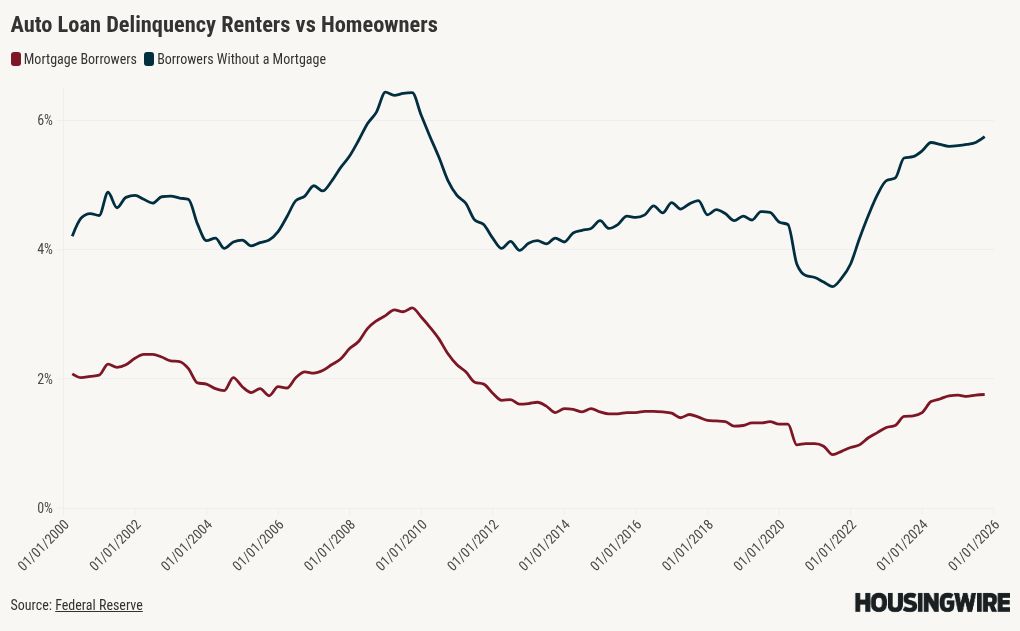
The exodus narrative, at least so far, has run into a stubborn obstacle: the actual market.

JBizNews Desk

© 2026 JBizNews. All Rights Reserved. Reproduction or distribution without written permission is prohibited.

Though there is still a lot of uncertainty, it looks like we could have an actual end to the Iran conflict as tankers are starting to move through the Strait of Hormuz. If we don’t have to worry about oil prices getting much higher for longer, what are the implications for mortgage rates? And what have we learned during this conflict about the housing market and how to look at the future now?

First, we will base everything on the premise I had almost a year ago: the housing market was shifting as of mid-June 2025 as rates were going lower and demand started to pick up. It typically takes other sources six to nine months to catch up to our data lines and you can see how we have explained this trajectory in our weekly Housing Market Tracker articles. Housing demand, even with rates rising from a low of 5.99% to a high of 6.75%, has held up well.

Let’s take our tracker variables and look at what to expect now that the conflict seems imminent.

1. Mortgage spreads should stay at low levels

Mortgage spreads are the hero of the housing market, as they have kept mortgage rates below 6.64% for most of the conflict. If the conflict is truly over and oil flows, one market risk variable is off the table and spreads should stay low.

Both the Godzilla tariffs and the Iran-Israel conflict pushed spreads higher, but only by 0.19%-0.25% basis points. So, the conflict ending is a positive here — as long as the Fed doesn’t guide the market to multiple rate hikes ahead, we shouldn’t see the spreads worsen like we have seen in previous years.

Remember, with the 10-year yield at its current lovel:

  • If we had the worst mortgage spread levels of 2023, mortgage rates would be 7.86% today, not 6.65%.
  • If we had the worst levels of 2024, mortgage rates would be 7.48% today.
  • If we had the worst levels of 2025, mortgage rates would be 7.29% today.

Mind that spreads have been the biggest variable affecting the housing market since mid-June of 2025.

2. The 10-year yield and mortgage rates might not get back to pre-conflict lows this year

Getting the 10-year yield and mortgage rates to pre-conflict lows will be harder than people think even if this conflict is truly over. As always, I believe in the slow dance between the 10-year yield and 30-year mortgage rates as directionally these two have been connected for decades. 

My 2026 forecast range was for:

  • Mortgage rates between 5.75% and 6.75%
  • The 10-year yield fluctuating between 3.80% and 4.60%

For the most part, this forecast channel has held even amid the conflict. But earlier this year, before the conflict even started, inflation growth was rising faster than people had hoped. Also, many at the Federal Reserve now believe that the labor data has improved and isn’t getting worse. This is leading to more Fed members turning hawkish, as softer labor data had been their main reason to want to cut rates two or three more times this year. Now we have gone from two to three rate cuts in 2026 to a rate hike being priced in for 2026. 

The conflict ending can change this variable positively as long as the inflation growth rate improves. I wrote here about how much higher rates could go if the conflict kept going. Just a few days ago I wrote about how one of the biggest doves on the Fed, Christopher Waller, turned into a hawk, which complicates things. And in this episode of the HousingWire Daily podcast, I talked about whether mortgage rates have peaked or could go higher.

As you can see in the chart below, a lot has been priced in due to the conflict, and the growth rate of inflation is still above the Fed’s target and heading higher.

chart visualization

Early in the conflict, when we got positive ceasefire headlines, the 10-year yield fell to 4.24%, then it rose after no deal was announced. Later on, working from higher levels, any positive ceasefire headlines only brought the 10-year yield back down to 4.34%. Once we broke over 4.46% on the 10-year yield, bond markets went wild and rose as high as 4.68%. So, the 10-year yield falling to pre-conflict levels might take a lot longer than you think. We should work our way down to 4.46% as the first target, then 4.35% and 4.24% as a more realistic level. 

We have a lot of Fed hawks now and the labor data hasn’t gotten worse but better in 2026. The sweet spot for housing was rates under 6.25% with no volatility. We had that before the conflict; it will take time and some key variables to change for that to occur again.

Conclusion

Housing demand data has held firm this year, and even though inventory looks to go negative year over year based on our weekly tracker data, it’s still at much healthier levels compared to 2020-2023.

I’ve focused primarily on spreads and the 10-year yield in this article; one will be positive for sure; the other will take more time and critical variables to improve to get back to the pre-conflict era. However, for the most part, the housing market weathered the conflict as well as it could. Anything better on lower yields and good spreads will be a positive in 2026 and a good setup for 2027 as well. 

This post was originally published on here

There’s been a noticeable shift in how clients approach this business.

Buyers and sellers aren’t just hiring agents anymore. They’re vetting them more carefully, asking sharper questions and paying closer attention to how you show up before, during, and after the transaction. The dynamic has flipped. The agent isn’t just evaluating the client. The client is evaluating the agent just as much, if not more.

And what they’re looking for has changed.

For a long time, the baseline expectations were predictable: market knowledge, strong comps, a polished listing presentation. Those things still matter. But they’re no longer differentiators. Most clients assume you have the fundamentals covered before they even pick up the phone.

What they’re actually evaluating is something less tangible. Can I trust this person? Are they listening to me, or just waiting to speak? Do they understand what I actually want, not just what the market says I should do? Those are the questions running in the background of almost every initial conversation, whether clients say them out loud or not.

Psychology plays a role in decision making

In a more complex market, psychology plays a bigger role in decision-making than it used to. Clients are navigating interest rate pressure, longer timelines, and a constant stream of conflicting information. They’re not looking for someone to execute a transaction. They’re looking for someone who can help them make sense of it, who can cut through the noise and tell them what actually matters for their specific situation.

That changes the role of the agent considerably. It’s less about having all the answers immediately and more about how you guide the conversation. The best agents right now can read the room, adjust their approach and meet clients where they are. Some clients want direct, data-driven guidance with minimal hand-holding. Others need more time, more context, and more reassurance before they’re ready to move. Understanding that difference and adapting to it in real time is one of the most underrated skills in this business.

How clients define value has shifted too. It’s no longer just about price or speed. It’s about the overall experience. How transparent was the process? Did the agent communicate consistently, or did the client have to chase them for updates? Did they feel supported when things got complicated, or did the agent go quiet when the deal got hard? Clients remember those details. And they talk.

They’re also watching how you handle yourself across the entire transaction. How you collaborate with the other side. How you manage tension without escalating it. How you problem-solve when something unexpected comes up. All of that signals what it will feel like to work with you. All of it is part of the interview, whether you think of it that way or not.

In this environment, technical skill is assumed. Emotional intelligence is what stands out.

The agents who are building durable businesses right now are the ones who combine both. They bring strong market knowledge alongside patience, adaptability, and a genuine ability to connect with the people they’re working with. They know when to push and when to pause. They understand that not every client moves at the same pace or for the same reasons, and they don’t treat every interaction like a transaction to be closed.

So what does this actually look like in practice?

  • It starts in the first conversation. Instead of jumping straight into your process or your numbers, slow down and ask better questions. What has brought them to this decision right now? What are they most uncertain about? What would make this feel like a success a year from now? Most agents move too quickly past this part. The ones who don’t tend to build more trust before they’ve said anything about the market.
  • It also means being honest when honesty is uncomfortable. If the timeline is unrealistic, say so early. If the price expectation needs to be adjusted, have that conversation clearly and with data behind it, rather than waiting until the market forces it. Clients don’t expect you to be right about everything. They do expect you to be straight with them. That kind of candor, delivered with care, is what separates an advisor from an order-taker.
  • Consistency matters more than people realize. A quick update when there’s nothing new to report still signals that you’re on top of it. Checking in after a showing, following up after a hard negotiation, being reachable when things feel uncertain. These are not extraordinary gestures. But they’re the ones clients remember and the ones they describe when they refer you to someone else.
  • Finally, pay attention to how you show up when things go sideways. Every deal hits a moment where something doesn’t go as planned. How you handle that moment, how calm you are, how quickly you move to solutions rather than explanations, tells a client everything about what kind of partner you are. That’s often where trust is either built or lost for good.

At its core, this business has always been about relationships. What’s changing is how explicitly clients are prioritizing that. They’re not just asking whether you can sell their home or find them a property. They’re asking whether they can trust you to guide them through one of the most significant financial and personal decisions they’ll make. That’s a higher bar than it used to be.

But for the agents willing to meet it, it’s also a real opportunity. Because the clients asking those harder questions tend to be the ones worth working with. And when you earn their trust, you don’t just close a deal. You build the kind of relationship that generates the next one.

Juliet A. Clapp is a Senior Vice President and Northeast Managing Partner for The Agency.

This column does not necessarily reflect the opinion of HousingWire’s editorial department and its owners.

To contact the editor responsible for this piece: tracey@hwmedia.com

This post was originally published on here

U.S. House appropriators unveiled a fiscal 2027 spending bill that includes the Department of Housing and Urban Development (HUD), with proposed cuts drawing criticism from housing advocates.

The Transportation, Housing and Urban Development and Related Agencies Appropriations (THUD) Act, 2027, approved by the House Appropriations Committee’s subcommittee, provides a total of approximately $71.377 billion in discretionary budget authority for HUD and the Department of Transportation.

“[The new THUD bill] builds on the work we accomplished last cycle to ensure our nation’s transportation and housing infrastructure and programs best serve the needs of the American people,” said U.S. Rep. Steve Womack, who chairs the THUD subcommittee. “Whether it be in the sky or along our waterways, rail lines and highways, this bill supports the safe, efficient and reliable movement of people and goods nationwide.

“It also invests in housing and wrap‑around services for our nation’s most vulnerable – such as women, children, and veterans – while advancing policies that make housing more affordable for all Americans.”

While expressing satisfaction with some aspects of the bill, the National Association of Local Housing Finance Agencies (NALHFA) encouraged lawmakers to fund HUD and programs such as the tenant-based rental assistance account — commonly known as the Housing Choice Voucher Program — at the same level as the current year.

“NALHFA’s efforts with Congress to advocate against the FY27 Presidential Budget request to eliminate the Community Development Block Grant (CDBG) Program and HOME Investment Partnerships Program were successful, as the programs remain funded in the FY27 House bill,” NALHFA stated.

“NALHFA members are encouraged to contact their elected officials and advocate in support of level funding for HUD at a minimum of $77.3 billion, level funding for tenant-based rental assistance at a minimum of $38.4 billion, an increase in CDBG funding to $4.2 billion, an increase in HOME funding to $1.5 billion and level funding for homeless assistance grants at a minimum of $4.417 billion for FY27.”

Tenant-based rental assistance, public housing

THUD legislation provides $34.083 billion for the Housing Choice Voucher Program, or Section 8.

The bill also includes $4 billion that would become available Oct. 1, 2027.  

A White House request to HUD last year included a proposal to eliminate Section 8 vouchers. However, such a move would require congressional action, which has not garnered necessary support to this point.

The Public Housing Fund is set to receive $7.069 billion for the fiscal year — a $1.25 billion cut compared to the 2026 fiscal year allotment.

An additional $50 million is provided for public housing agencies experiencing or at risk of financial shortfalls, to be distributed through a need-based application process, the bill states.

The bill prohibits Section 8 assistance to students under age 24 who are unmarried, childless, non-veterans and not disabled, with certain exceptions for former foster youth.

Homelessness assistance, CDBG

Homeless assistance grants total $4.161 billion — with $3.779 billion going to HUD’s Continuum of Care program and $290 million for emergency solutions grants.

In late 2025, the Trump administration tried reshaping the Continuum of Care program by limiting “Housing First” funding and prioritizing transitional housing tied to work and treatment requirements.

Lawsuits from states and advocacy groups followed — with Congress and federal courts later blocking the policy changes and preserving the existing grant structure.

The Community Development Fund has been allocated $5.853 billion, including $3.3 billion for the CDBG program.

Project-based assistance, housing for elderly and disabled

The Project-Based Rental Assistance account is slated to receive $18.575 billion and an additional $400 million in October 2027.

That allocation next October will raise the fiscal year total $432 million above what given in 2026.

Housing for the elderly will receive $1.062 billion — including $122 million for service coordinators and congregate service grants.

Housing for persons with disabilities is funded at $295.6 million, a $9 million increase over 2026.

The bill also requires HUD to take action when multifamily housing projects with project-based assistance receive failing physical inspection scores.

Within 15 days of a failing Real Estate Assessment Center inspection, a notice of default with a timetable for correcting deficiencies will be issued, the bill says.

If an owner fails to correct deficiencies, legislation states that HUD may impose civil money penalties, abate contracts, transfer projects to new owners, seek receivership or pursue other remedies.

This article was written by Jonathan Delozier and generated with the assistance of HousingWire Automation. It was reviewed by a HousingWire editor before publication. The system helps convert company announcements and industry data into HousingWire-style news coverage.

This post was originally published on here

For some real estate brokers and team leaders, coaching can be difficult to scale. Individual coaching offers more personalized guidance but can be costly, while group training reaches more agents but may not address each agent’s specific needs.

Phillip Gagnon, founder and CEO of broker management platform 3 Data Pulse, believes artificial intelligence (AI) has finally cracked the code.

He recently launched Power Mentor, an AI coaching platform built specifically for real estate agents.

With 12 coaching personas covering everything from objection handling to mindset, Power Mentor gives every agent on a team access to an AI coach — available 24/7 and individually tailored.

Gagnon sat down with HousingWire to show how AI coaching is bridging the gap between expensive human coaches and no coaching at all.

Editor’s note: This interview has been edited for length and clarity.

Jonathan Delozier: Looking at the way the product is described, real estate is still a relationship business built on trust. What evidence shows that agents coached by an AI platform perform better in the everyday workflow and not just inside role-play environments?

Phillip Gagnon: So, we have data from 3 Data Pulse showing that agents that receive any level of coaching will outperform the market by about 30% year-over-year. The challenge with coaching is that it becomes expensive, and especially newer agents can’t really afford it. Sometimes, it can be $2,000 a month for a coach. So, we kind of tried to bridge the gap.

[I also saw a report] showing that 30% of Americans have used AI as a therapist, so we’re kind of bridging those two things together. People seem willing to be vulnerable and open with an AI, and receiving any level of coaching will help their business dramatically. We’re just putting those two pieces together.

Delozier: How do you distinguish yourself from other similar products, or even from real-life human real estate coaches?

Gagnon: So our AI is more than just role play, it’s actual coaching. It’s understanding why the agent wants to do whatever it is that they want to do. They may want to increase their business or even just free up time, but then the question is, why do they want to do that? What do they want to do with the increase in their business and how do we help them achieve whatever it is that they want. A lot of times, with real. [human] coaches, especially if it’s at a brokerage, they’ll have a preconceived notion of, “You did 2 million in volume last year, you need to do 4 million this year.” But the agent may not want to do that.

Number two is that we understand that agents like to run their businesses differently. Some agents are really good at networking and events. Other agents tend to be more introverted and want to spend time sending emails and maybe making cold calls, and that works for them. So, we’ve taken that approach with our 12 different coaching personas to say, “Okay, let’s find something that works for you and your personality.”

Delozier: You mentioned a pilot group of agents. What was the most surprising feedback you received?

Gagnon: We got great feedback from them. They said it wasn’t just like a chat bot or going to ChatGPT — that it surfaced things from previous conversations and it actually had some sort of a personality. It thought of things that they weren’t expecting.

One of the things that had come up in a conversation with an agent was the coach said, “You should do a neighborhood spotlight video on a neighborhood near you.” And the agent responded and said, “I just don’t like doing videos. I don’t like how I look on video. I don’t like how I sound.” The coach was actually able to talk them through that and they were able to record the video. 

Delozier: With growing scrutiny over compliance and disclosure standards, how does Power Mentor ensure compliance?

Gagnon: There are multiple levels that make sure that we do not address anything legal, contract-related, deal doctoring, any of that stuff. All of that, it pushes back and says, “You need to talk to your broker, you need to talk to an attorney, talk to your real estate commission or talk to somebody.” The Power Mentor will not address any of that.

Delozier: What return on investment metrics should clients look for with Power Mentor to know they’re getting their money’s worth?

Gagnon: You know, one of the questions that we ask during the onboarding process is, “If you had a coach that understood you and understood how you want to run your business, how many extra transactions could you do a year?” They provide that number and then our goal is to help them do that.

Delozier: Is Power Mentor available nationwide, and does it have any integrations with other platforms?

Gagnon: Yes, nationwide. Right now we don’t. In our 3 Data Pulse product, we do have a Follow Up Boss integration, and so we’re looking to port that over in Version 2 [of Power Mentor], along with Lofty, as well. This way the coach can actually see what the agent is putting in their CRM — if they’re using the CRM— and what activities they’re actually doing versus what they’re reporting, that kind of thing.

This post was originally published on here

Like other segments of the broader housing industry, the appraisal space is rapidly evolving through consolidation, technology adoption and federal policy shifts. Reverse mortgage professionals should be mindful of these factors as they work with appraisers to close deals.

Erik Morin, CEO of Miami-based Atlas VMS, a Miami-based appraisal management company (AMC) and technology platform, recently sat down with HousingWire’s Reverse Mortgage Daily (RMD) for a high-level discussion on the appraisal business. Morin offered his thoughts on second appraisal requirements for federally insured reverse mortgages, the ongoing U.S. appraiser shortage, his company’s tech-driven expansion efforts and more.

Editor’s note: This interview has been edited for length and clarity.

Neil Pierson: As part of the request for information sent out last year by the government, people have raised concerns with second appraisals for Home Equity Conversion Mortgages (HECMs). What are your views on the issue? How often does a second appraisal occur with a reverse mortgage, and how much time and cost does it add if you need one?

Erik Morin: The second appraisal process has been around for a minute. We’ve always felt it to be a little unfortunate — or a lot unfortunate — based on the borrowers this policy impacts the most. We’re trying to reduce costs for these particular borrowers and help them out of tough situations. All of a sudden, they’re getting layered with a second appraisal, just to try to verify the situation on the first appraisal.

Frankly, organizations like mine, we make more money with second appraisals. There’s no hiding that, but we’re not excited about it. We know that at the end of the day, it hurts transactions, it hurts borrowers, and it puts loan officers and everyone else in the ecosystem in a challenging spot where they’re unsure whether they should even move forward with the transaction.

Fannie Mae and Freddie Mac solved this in conventional lending a long time ago, where you get a CU (Collateral Underwriter) score, then you go in and address the challenges with the appraisal. You see if you can get better information, or you use supplemental valuation tools to check things out.

Over the years, we’ve seen a call for second appraisals impact upwards of 20% to 25% of transactions. We’re not seeing that today inside our organization. I asked my data people to run an analysis on the first quarter of 2026. The share of HECM loans that we did a second appraisal on was 8.3%. The data for Q4 2025 was moderately higher at 10.4%.

Pierson: For novices in the reverse mortgage industry, how would you explain the differences between appraisals on a forward mortgage transaction versus a reverse transaction? What are the fundamentals that people need to grasp?

Morin: I think you have a higher expectation for deferred maintenance on the reverse side. That comes with varying factors.

What we prepare most for as an AMC is the borrower — because every borrower is different. Many of them haven’t had an appraiser in their home for quite some time. There’s a lot of education to prepare them for what the appraiser’s going to be looking at.  

Homeowners tend to be very engaged with the appraiser, which can be a double-edged sword. When you compare the two — a forward assignment with a reverse assignment — we see a lot more reverse borrowers following the appraiser around and sharing information. Sometimes the information isn’t the best for them to be sharing.

Pierson: One of the hot topics in appraisal is UAD 3.6, which will become mandatory for GSE loan submissions in November. Fannie Mae and Freddie Mac don’t purchase reverse mortgages, but is there anything the RMD audience should know about this change and how it might streamline appraisals?

Morin: I don’t think anyone can speak to what 3.6 is doing in the current environment yet, let alone what it’s going to do to the reverse space. Most of the software providers can’t deliver a full report on 3.6 yet.
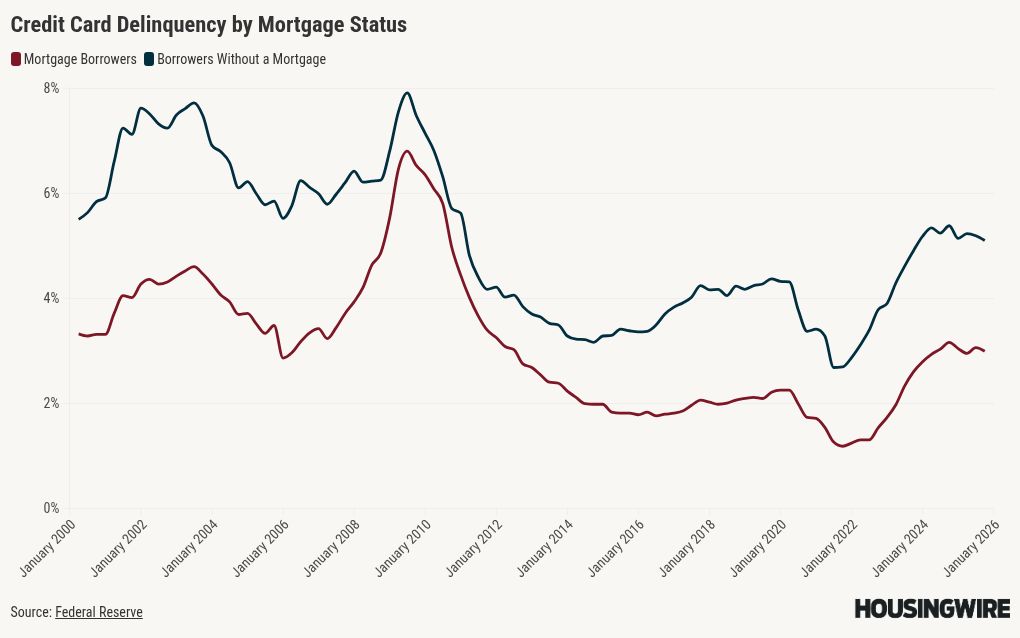
As both an AMC and a technology provider — because we have a platform that’s used by lenders and other AMCs — we’re 3.6 ready. But as far as the impacts, we haven’t even lived through the forward side. We’ll look forward to seeing the impacts of 3.6 in reverse and in non-QM. We do a lot of non-QM work too.

Personally, I think it looks like a better report. It’s going to take time to get used to, but overall, I think it’s a step in the right direction. There’s just so many moving parts to getting it right, and you’re talking about appraisers who have historically bucked change.

Pierson: Let’s discuss the appraiser shortage in this country, which has been a well-documented topic. Where do things stand in that regard? Are there enough appraisers to meet demand today? Are the training requirements appropriate or too time-consuming?

Morin: I’m going to be really upfront — I worked on a lot of these issues over the course of the past decade and prelaunching of Atlas. I was a partner at Class Valuation. We worked on appraiser shortages. But the past few years for me has really been focused on building my new AMC, and I haven’t focused much on the industry pieces that I once had the time to delve into.

It’s not dissimilar to what it was before. We do see a shortage in rural markets, rural states. That’s been the case for a long time. What we also see right now is an appraisal market — and a real estate and mortgage market — that is not at its peak volume. We’re in sort of a down cycle — ups and downs. For the marketplace that currently exists, we seem to get it done. Our turn times aren’t too crazy. Fees seem to be pretty balanced. But we will absolutely see, if there’s a significant shift in mortgage rates that causes higher demand, some of the wheels come off.

I’m sure a lot of mortgage people will read this, and they would love to see rates come down substantially so all of a sudden there’s a refi boom. If we tried to deal with that without being able to do a 3.6 report, that’s going to be a problem. Right now it’s not required. But there’s a hard-stop requirement in November. If there’s a significant rate shift then and people still couldn’t deliver reports, we would be in a bit of a tricky situation.

Pierson: Let’s finish up by talking about some of the work you’re doing at Atlas. You made an acquisition last year by bringing on AIM-Port. You also recently announced a warranty policy to reduce repurchase risks. What was the impetus for these decisions?

Morin: At my last AMC, we built our own platform. It allowed us to create custom workflows and different benchmarks in the appraisal process. Being that Atlas is so heavily focused in niche areas like reverse and non-QM, having your own way of doing things is kind of how I’ve always had new companies built on.

We were trying to do the order management inside of a third-party system. It was fine and we were making the best of it, but we had an opportunity to buy a platform that could solve our challenges. We found a platform that was better than anything we’d ever seen on the market. It had revenue and profitability. We went ahead and made that deal.

It’s been a game changer for us. Our growth been astronomical — way better than projected. We will have an integration with QuantumReverse — not just as an AMC but as a platform — which will probably happen this summer. For lenders doing work on Quantum, which is the primary LOS in the reverse space, they’ll be able to push their orders directly from Quantum into AIM-Port, and then the lenders on that system will be able to push them out to us or the other AMCs that are integrated, which is most of them.

The other question was on the warranty side. The warranty primarily benefits the forward lending side of the business, but we know the challenge exists. Repurchase risk is always happening; it drives decisions and fears. We’re confident in our systems and in our quality. We’re just standing behind that and saying, ‘Look, we’re insuring against the risk, and if you have a claim, we’re there to cover it.’

There are a few other folks out there that have warranties, but the fine print really limits what it covers, for the most part. They really leverage the GSEs and their coverages. Some of them cost money or they require you to buy extra levels of QC in order to qualify. When we reviewed ours, we really took those barriers out as much as we could.

This post was originally published on here

For years, the mortgage industry wore integrations like a badge of honor. Legacy loan origination systems have hundreds of them, connecting to every vendor, service provider and data source imaginable. The more, the merrier.

Sounds impressive? Look closer.

Think about the incentives. For a service provider, being integrated into an LOS means easier access to every lender on that platform. For the LOS, more integrations mean a stickier and more marketable product; and some charge their vendors integration fees on top of that. Everyone wins, right? Except, often, the end user.

The dependency problem

The top priority should be whether the integration actually saves the ops team time. Whether it makes their day easier. Whether it works. But that’s not always what’s being optimized for. I hear it constantly at conferences: “Yeah, we have that integration, but we don’t actually use it.” That’s not a technical problem. That’s a priorities problem.

Even when integrations work exactly as designed, they create a dependency problem few people talk about. A few weeks ago, a technology partner notified us of a technical issue and apologized for the inconvenience. Last week, three of our technology partners sent emails letting us know they’d upgraded their APIs, and we need to adhere. Our timeline is now their timeline. Our roadmap shifts. We’re not building, we’re maintaining.

That’s the best-case scenario.

The worst case? An integration breaks mid-transaction. The LOS user calls support, who contacts the service provider, who reaches out to the third-party contractor who actually built the thing, who responds back up the chain. In mortgage lending, where deals are time-sensitive and borrowers are anxious, that chain of telephone is inefficient and expensive.

Many service providers in this industry are not technology companies. They’re excellent at what they actually do: law, title, appraisals, escrow. But they’ve outsourced their tech to vendors building on their behalf. When something breaks, nobody truly owns the problem.

So what’s the alternative?

The alternative is true partnerships, where each party does what they’re actually good at, on a single platform. When a service provider’s expertise is delivered directly through the LOS – no middleware, no third-party contractors, no API versioning surprises – that’s a win for everyone. When something needs to change, there’s one conversation, not a game of telephone.

Take closing documents. The data in your LOS must map accurately to the legal closing docs, and the language in those docs must reflect the latest applicable regulations. Simple enough – until something changes. A regulation updates, a document gets revised, and now you have a discrepancy between what’s in your LOS and what’s in the closing docs. Who catches that? Who fixes that? How fast? In a true partnership model, there’s one team that owns it.

Which brings me to a question you should ask about your current tech setup: when something changes – a regulation, a document, a data field, who’s responsible and how long does it actually take to implement the change? Can you initiate that change yourself, or are you dependent on a vendor’s busy timeline? Do you have full visibility into the data being exchanged between systems?

And as AI makes data exchange smarter and faster, which platforms will be positioned to take advantage of it, and which will be too tangled in their own integrations to move? If the answers aren’t clear, you already have a problem.

The future of mortgage technology

With AI becoming more prevalent, we might see a different breed of integrations soon – agents responsible for orchestrating data transfer intelligently, without the overhead we deal with today. But it’s not quite there yet in the mortgage industry. With that said, the principle still stands: keep the technology with the tech companies, and the expertise with the experts. Build on that foundation, and you’ll be ready for whatever comes next.

Not all integrations are created equal. Some are seamless. Many are duct tape dressed up as infrastructure. The next time one fails you mid-workflow, the problem isn’t unique to you – and a better model exists.

The future of mortgage technology isn’t whoever has the most integrations. It’s whoever builds the most coherent platform.

Daniel Gottesmann is a Co-Founder of Elphi.
This column does not necessarily reflect the opinion of HousingWire’s editorial department and its owners. To contact the editor responsible for this piece: zeb@hwmedia.com.

This post was originally published on here

The U.S. housing market is showing its clearest signs of stabilization in nearly four years, according to two major industry reports released Thursday, May 21, 2026. Redfin said home purchase cancellations declined slightly in April, while Realtor.com reported contract signings climbed to their strongest level in three years — a sign that both buyers and sellers are slowly returning to the market after a prolonged housing slowdown.

Redfin said just over 47,000 home purchase agreements fell through in April, equal to 13.4% of homes that went under contract during the month. That was slightly lower than March and tied with January for the lowest cancellation rate since September 2024.

At the same time, Realtor.com’s Spring 2026 Housing Market Progress Report found contract signings rose 4.5% year-over-year in April, marking the strongest annual increase since 2022.

Taken together, the reports suggest the housing market may finally be finding balance after several difficult years shaped by high mortgage rates, affordability pressures, and economic uncertainty.

“We’re seeing some buyers cancel purchase agreements, but no more than usual, and when buyers do back out, it’s typically because of post-inspection repair costs and appraisals,” said Timothy Hourigan, a Redfin Premier agent in Syracuse, New York.

For buyers, the market is beginning to feel more manageable.

Sellers who spent much of 2023 and 2024 pricing homes aggressively are increasingly adjusting expectations. More homes are being listed closer to realistic market value from the beginning, reducing the number of deals collapsing after inspections or financing negotiations.

Mortgage-rate stability has also helped.

While rates remain elevated compared with pandemic-era lows, buyers are adapting to the new environment. The average 30-year fixed mortgage rate fell for several weeks in April before rebounding modestly in May as inflation and geopolitical tensions pushed bond yields higher again.

Industry analysts say stable rates matter almost as much as lower rates because buyers gain confidence when financing costs stop swinging wildly week to week.

The recovery is not happening evenly across the country.

The strongest momentum is currently concentrated in the Midwest.

According to Realtor.com, Kansas City posted a 12.5% increase in new listings alongside a 20.7% jump in contract signings. Louisville saw listings rise 13.6% while contract signings climbed 18.9%. Indianapolis, Columbus, and Cincinnati also showed strong buyer and seller activity simultaneously.

Across the 50 largest U.S. metropolitan markets, 34 cities recorded higher contract signings this year compared with the same period in 2025.

The Sun Belt tells a slightly different story.

Markets such as Phoenix, Austin, Jacksonville, and parts of Florida are seeing contract signings improve even while new listings decline. Analysts say that is largely because home prices in those markets have already corrected significantly over the past 18 months, finally attracting buyers back into the market.

In Phoenix, new listings dipped slightly while contract signings rose more than 8%. Austin saw listings fall but buyer activity rise nearly 8% as well.

The cancellation picture also varies sharply by city.

Atlanta currently has the highest cancellation rate among major U.S. markets, with nearly 1 in 5 home contracts failing to close in April. Other high-cancellation markets include San Antonio, Jacksonville, and parts of Florida, where affordability pressure and insurance costs continue affecting buyers.

Meanwhile, San Francisco posted the lowest cancellation rate in the country, helped partly by renewed demand tied to the artificial intelligence technology boom and a rebound in high-income hiring.

For buyers, the market now offers more negotiating power than at any point in years.

In many markets, sellers are increasingly agreeing to price reductions, repair credits, and closing-cost assistance in order to keep deals together. Buyers are also regaining the ability to include inspection contingencies and financing protections — terms that largely disappeared during the ultra-competitive housing frenzy of 2021 and early 2022.

For sellers, the message is becoming clearer as well: homes priced realistically are still selling, while overpriced homes are sitting longer and attracting weaker offers.

The improving stability is also important for mortgage lenders and real estate companies.

When home deals collapse, lenders lose money on underwriting, appraisals, staffing, and processing costs. Stabilizing contract completion rates help companies including Rocket Mortgage, United Wholesale Mortgage, loanDepot, Guild Mortgage, and major bank lenders improve operational efficiency.

Real estate brokerages and platforms including Zillow, Redfin, Compass, eXp World Holdings, and Anywhere Real Estate also benefit when transaction volumes increase after several difficult years for the industry.

Nationally, housing inventory continues improving gradually.

New listings are now roughly 22% above the lows reached in 2023, though supply remains well below pre-pandemic levels in many regions. Analysts say the market is no longer deteriorating — it is slowly normalizing.

The housing market still looks very different from the boom years of 2021 and early 2022, when bidding wars, waived inspections, and all-cash offers dominated the market. Mortgage rates remain elevated, affordability remains challenging, and many first-time buyers are still struggling with down payments and monthly payment costs.

But for the first time in years, both buyers and sellers are beginning to move again instead of waiting on the sidelines.

For everyday Americans considering buying or selling a home, the message from the latest data is relatively simple: inventory is improving, sellers are negotiating again, and the market is becoming more balanced than it has been in years.

JBizNews Desk

© 2026 JBizNews. All Rights Reserved. Reproduction or distribution without written permission is prohibited.

Newark, N.J. — May 24, 2026 — New Jersey’s suburban housing market has entered an increasingly extreme phase of bidding competition as inventory shortages, migration from New York City and land scarcity collide across the state’s highest-demand commuter corridors.

The pressure became visible this month after New Jersey real estate agent Amanda Cruz posted a viral social-media video describing how a client lost a home despite offering $150,000 above the asking price.

“Someone else came in much higher than us,” Cruz said. “Like, we weren’t even in the ballpark.”

The video quickly became a symbol of the broader affordability and supply crisis unfolding across Bergen, Essex, Morris, Hudson and Union counties, where buyers continue competing aggressively for limited single-family inventory near Manhattan.

The structural imbalance is increasingly straightforward: demand continues rising while buildable land for new detached housing has effectively disappeared across many of New Jersey’s wealthiest suburban markets.

As a result, inventory turnover now depends largely on existing homeowners deciding to sell rather than meaningful new supply entering the market.

The migration dynamics are accelerating the pressure further.

Analysts increasingly expect New York Governor Kathy Hochul’s proposed second-home tax targeting pied-à-terre owners and investment properties to push additional high-income households toward permanent residency in New Jersey rather than maintaining part-time Manhattan ownership.

That migration pressure is concentrating heavily in transit-oriented suburbs with direct access to New York City.

Montclair, Maplewood, South Orange, Summit, Millburn, Short Hills, Tenafly, Englewood Cliffs and Hoboken are now routinely seeing multiple-offer scenarios on homes priced below roughly $2.5 million, particularly those located within thirty minutes of Manhattan commuter access.

Similar patterns are emerging across parts of lower Fairfield County, Connecticut, including Greenwich, Westport and New Canaan.

The buyer pool itself is increasingly splitting into distinct tiers.

Younger professional families priced out of Brooklyn Heights, Cobble Hill, Park Slope and Williamsburg are moving into Jersey City, Hoboken, Montclair and Maplewood, while higher-net-worth buyers exiting Manhattan neighborhoods such as Tribeca, the Upper East Side and the Upper West Side are concentrating in Short Hills, Greenwich and Bronxville.

All-cash offers are becoming increasingly common across premium listings, particularly among finance and technology professionals already established in suburban markets and now seeking larger homes or school-district upgrades.

At the same time, institutional capital continues shifting heavily into multifamily and build-to-rent development projects across the state.

Transit-oriented housing remains one of the strongest-performing sectors in New Jersey real estate, with major developers including Roseland Residential Trust, Veris Residential, Mack-Cali and Toll Brothers Apartment Living expanding aggressively throughout key suburban corridors.

Recent projects include a 150-unit condominium development in Robbinsville launched by Sharbell Development Corp., blending market-rate and affordable housing components.

The broader policy environment is also shaping migration and investment flows.

Mayor Zohran Mamdani’s proposed rent freeze covering approximately one million rent-regulated apartments in New York City is increasingly cited by commercial real estate analysts as another factor encouraging both households and capital to shift toward New Jersey, where free-market multifamily economics remain significantly more flexible.

Meanwhile, Governor Mikie Sherrill’s discussions around utility-rate stabilization and affordability have so far done little to slow inbound residential demand.

The core issue remains supply.

Affordable-housing legislation has expanded multifamily development pipelines across the state, particularly in Hudson and Essex counties, but meaningful new single-family construction remains severely constrained by zoning, land scarcity and infrastructure limitations.

That imbalance is forcing many first-time buyers to fundamentally reset expectations.

Real estate brokers across Bergen, Essex and Morris counties increasingly report advising clients to raise target budgets by 15% to 25% compared with late-2025 pricing assumptions simply to remain competitive.

For many households, the question is no longer whether New Jersey housing is expensive.

It is whether there will be anything left to buy at all.

JBizNews Desk

© 2026 JBizNews. All Rights Reserved. Reproduction or distribution without written permission is prohibited.

The cost of buying a home in America just got sharply more expensive. Freddie Mac reported Thursday morning that the average 30-year fixed-rate mortgage climbed to 6.51% for the week ending May 21, up from 6.36% a week earlier and the highest level in roughly nine months. A year ago, the same rate stood at 6.86%.

The jump, announced in Freddie Mac’s weekly Primary Mortgage Market Survey, lands at the worst possible moment for the housing market. Spring is the season when most American families try to close on a home before summer moves and the new school year. Instead, buyers are watching their monthly payments climb week by week with no clear ceiling in sight.

Sam Khater, chief economist at Freddie Mac, framed the shift bluntly in the release accompanying the data. He urged aspiring buyers to shop multiple lenders, noting that comparing quotes can save thousands as rates fluctuate. It was a quiet acknowledgment that the friendly rate environment many had banked on for 2026 has slipped away.

Other industry trackers showed conditions even tighter than Freddie Mac’s headline figure suggests. The Mortgage Bankers Association put the average 30-year rate at 6.56% through last Friday, a seven-week high. Mortgage News Daily, which tracks daily lender pricing rather than weekly averages, showed rates around 6.65% to 6.67% mid-week. Zillow’s lender survey pegged the average closer to 6.73%.

The driver is no mystery. The 10-year Treasury yield, the benchmark mortgage rates track most closely, has jumped roughly 15 basis points over the past week to about 4.6%. Bond investors are pricing in two related shocks at once: persistent inflation, after the April consumer price index showed prices rising 3.8% annually, and the economic fallout from the ongoing U.S.-Iran war, which has pushed oil prices sharply higher and rippled through the cost of everything from gasoline to manufactured goods.

Bob Broeksmit, president and CEO of the Mortgage Bankers Association, said higher Treasury yields continued to push mortgage rates higher through the prior week, weighing on affordability and application activity. Purchase applications have softened in step with the climb.

Inside the Federal Reserve, the calculation has flipped. Just months ago, futures markets were pricing in cuts to the federal funds rate before year-end. Now, traders see essentially no chance of a 2026 cut and rising odds that the Fed’s next move could be a hike. That marks one of the more dramatic policy reversals of the cycle and reflects how seriously policymakers are taking the inflationary pressure from the oil-price spike tied to the Middle East conflict.

For households, the math is unforgiving. At 6.51%, the monthly principal-and-interest payment on a $400,000 loan runs about $2,529, versus $2,492 at 6.36% just one week earlier and $2,624 had rates climbed to 7%. Mortgage originators say a return to the 5% range is what would actually unlock the sidelined buyers who have been waiting since 2022. That five-handle now looks distant.

The supply side offers little relief. Lawrence Yun, chief economist at the National Association of Realtors, said following the trade group’s latest existing-home sales release that inventory remains tight at a 4.4-month supply — well below the six months considered balanced. Existing-home sales ticked up just 0.2% in April to a 4.02 million annual pace, with the median price up 0.9% year over year to $417,800. Yun warned that unless supply meaningfully increases, home price growth could outpace wage growth and further erode the homeownership rate.

That leaves first-time buyers caught in the familiar squeeze: prices that won’t come down because inventory won’t come up, and financing costs that won’t come down because inflation won’t come down. Many are simply waiting. Nicholas Barta, division president at Security First Financial, said borrowers have psychologically adjusted to the mid-to-high-six range in a way they had not during the 2022–2023 spike, but the qualification math at 7% remains punishing.

For the spring season, the damage may already be done. Buyers who started shopping in March on the assumption that the Federal Reserve would soon cut, and that the 30-year would drift back into the high fives, are recalibrating in real time. Sellers are recalibrating too. Listings that sat through April at aspirational prices are starting to see cuts, particularly across parts of the South and West where inventory has loosened the most.

The path forward depends on factors well outside the housing market. A de-escalation in the Iran conflict and a meaningful drop in oil prices would pull Treasury yields lower and pull mortgage rates with them. A second inflation surprise in the May CPI report, due next month, would do the opposite. For now, the housing market is once again hostage to forces playing out thousands of miles away.

© 2026 JBizNews. All Rights Reserved. Reproduction or distribution without written permission is prohibited.

Major U.S. and global commercial real estate lenders, including Goldman Sachs Group and Deutsche Bank, have started aggressively unloading troubled property loans at steep discounts — in some cases taking losses of up to 85% — signaling that the long-running strategy known across the industry as “extend and pretend” is finally breaking down.

For the past three years, many banks avoided recognizing losses by repeatedly extending commercial real estate loans instead of forcing borrowers into default. Now, with interest rates still elevated, office buildings sitting half-empty, and hundreds of billions of dollars in debt coming due, lenders are beginning to accept painful losses rather than continue pretending troubled properties will recover quickly.

The shift is becoming visible across major U.S. cities.

In Manhattan, Shanghai Commercial Bank reportedly sold debt tied to a stalled condo conversion project at 335 W. 35th Street at roughly an 85% discount to the loan’s payoff amount. In Los Angeles, lenders led by Goldman Sachs seized control of the historic Radford Studio Center, with Netflix now reportedly negotiating to buy the property at a fraction of its previous valuation.

In San Francisco, investors tied to a $240 million commercial mortgage-backed securities (CMBS) deal backed by the office tower at 600 California Street absorbed major losses after the underlying loan sale generated only about $101 million for bondholders.

Meanwhile, in Downtown Los Angeles, Brookfield Property Partners and its lenders are trying to offload nearly 5 million square feet of office space tied to distressed buildings — roughly 18% of the entire downtown office market.

The numbers behind the crisis are staggering.

According to Trepp, the commercial real estate data firm, the delinquency rate for office loans packaged into CMBS securities surged to a record 12.34% earlier this year — higher than the worst periods of the 2008 financial crisis. The overall CMBS special servicing rate climbed to 11.38% in April, with office buildings driving most of the distress.

The biggest problem is refinancing.

During the ultra-low interest-rate years of 2020 and 2021, many office landlords borrowed money at rates near 3% or 4%. Those same borrowers are now trying to refinance loans at rates closer to 6% or 7%, while simultaneously dealing with lower occupancy rates caused by remote and hybrid work.

Many buildings simply no longer generate enough rent to support the new financing costs.

Nationwide office occupancy remains stuck around 80%, according to CommercialEdge, well below the levels many buildings need to break even.

The scale of debt coming due is enormous.

The Mortgage Bankers Association estimates roughly $875 billion in commercial real estate loans will mature during 2026 alone. Banks hold nearly half of that exposure.

Regional banks remain especially vulnerable because many concentrated heavily in commercial property lending during the low-rate era.

Bank analysts have repeatedly flagged institutions including New York Community Bancorp, Valley National Bancorp, Western Alliance, Zions Bancorporation, and Cullen/Frost Bankers as among the most exposed to commercial real estate stress.

The issue matters far beyond Wall Street or large office towers.

When regional banks absorb losses, they often tighten lending across the board. That means small business owners, restaurant operators, doctors, contractors, and families seeking home equity loans can all face tougher borrowing conditions.

Banks in stressed markets are already demanding larger down payments, shortening loan terms, and raising financing requirements for small-business and commercial borrowers.

The crisis is also reshaping cities themselves.

Empty office towers in San Francisco, Chicago, Los Angeles, Houston, Washington, D.C., and parts of New York City are reducing property-tax revenue that local governments rely on to fund schools, police, transit systems, and city services.

San Francisco officials have already warned of structural budget gaps tied partly to collapsing downtown office values. Chicago and New York are facing similar pressures.

Politicians are increasingly pushing office-to-apartment conversions as a solution.

Congress recently advanced bipartisan legislation designed to encourage developers to convert older office buildings into housing as the U.S. faces an estimated 4.7 million-home shortage.

But the reality is more complicated.

Many office towers are difficult or prohibitively expensive to convert because of plumbing layouts, window spacing, elevator configurations, and zoning rules. Industry experts say only a relatively small percentage of distressed office buildings are actually suitable for residential conversion.

While banks are taking losses, large investment firms are moving in aggressively.

Private equity giants including Blackstone, KKR, Apollo Global Management, Brookfield, Starwood Capital Group, and Carlyle Group have raised billions of dollars specifically to buy distressed commercial real estate loans at discounted prices.

Executives including Goldman Sachs CEO David Solomon, JPMorgan CEO Jamie Dimon, and Morgan Stanley CEO Ted Pick have all described distressed commercial real estate as one of the biggest investing opportunities of the current cycle.

The basic strategy is simple: buy distressed assets cheaply, wait for markets to stabilize, and eventually profit when values recover.

There are early signs the worst may eventually pass.

Industry analysts say the market cannot recover until losses are finally recognized and bad loans clear through the system. Banks taking losses today may actually help reset the market faster by allowing new investors and new uses for old properties to emerge.

But the pain is unlikely to end quickly.

The more than $130 billion in distressed commercial real estate debt already circulating through the financial system is expected to continue pressuring banks, property owners, and city budgets well into 2027.

The lesson of the current cycle is becoming increasingly clear: the lenders who accepted smaller losses early are moving forward. The ones who waited the longest are now absorbing the deepest pain.

JBizNews Desk

© 2026 JBizNews. All Rights Reserved. Reproduction or distribution without written permission is prohibited.

A proposed New York tax on all-cash home purchases above $1 million in New York City is likely to be dropped from the final state budget, according to people familiar with negotiations in Albany, marking a significant setback for Mayor Zohran Mamdani’s effort to close a multibillion-dollar city budget gap without raising broad income or corporate tax rates.

Bloomberg first reported the likely collapse Thursday morning, citing officials involved in the negotiations. The proposal would have imposed a 1% levy on buyers purchasing residential properties in cash above the $1 million threshold and was projected to generate roughly $160 million annually for New York City.

The measure formed part of the broader $8 billion state aid framework Gov. Kathy Hochul unveiled earlier this month in support of Mamdani’s proposed $124.7 billion city budget for the fiscal year beginning July 1.

Assembly Speaker Carl Heastie confirmed last week that the proposal was “part of the plan to help close the city’s deficit,” while State Senator James Skoufis, a member of the Senate Finance Committee, acknowledged the levy had become part of the wider budget negotiations.

But more than six weeks after the April 1 budget deadline, lawmakers familiar with negotiations now say the proposal is unlikely to survive the final vote as resistance from real estate interests and moderate Democrats intensified.

The policy argument behind the tax centered on how New York currently treats cash buyers versus financed buyers.

According to the nonprofit Center for New York City Neighborhoods, more than 60% of the nearly 18,000 home sales completed in New York City during the first half of 2025 were all-cash transactions, with a median purchase price of roughly $939,000.

In Manhattan’s luxury market, nearly nine out of every ten transactions above $3 million closed entirely in cash.

Mamdani’s office and progressive lawmakers argued that wealthy cash buyers — often institutional investors, second-home owners or foreign purchasers — effectively avoid the city’s mortgage-recording tax, which generates approximately $812 million annually but applies only to financed transactions.

The opposition came swiftly from the real estate industry, brokerage firms and centrist Democrats increasingly wary of Mamdani’s broader tax posture.

James Whelan, president of the Real Estate Board of New York, warned earlier this month that the city’s budget problems “will not be solved by more taxes,” adding that increasing transaction costs would discourage sales activity and potentially reduce overall revenue collected by the city, state and MTA.

Lobbying from broker associations and real estate trade groups intensified over the past two weeks as lawmakers weighed the proposal’s economic impact against the city’s fiscal needs.

The collapse also arrives during a broader wave of pushback against Mamdani’s economic agenda.

Earlier Thursday, JPMorgan Chase chief executive Jamie Dimon warned on Bloomberg Television that the mayor’s broader tax proposals risk damaging New York’s competitiveness as a business center.

“People think that somehow being anti-business is going to help the city, it’s not,” Dimon said.

Jeff Bezos separately criticized the administration this week on CNBC over New York City’s $43 billion school budget and broader spending structure.

Meanwhile, the Multicultural Business Coalition, an immigrant-led organization representing more than 50 chambers of commerce, has assembled a war chest exceeding $1 million to oppose Mamdani’s proposed city-owned grocery store initiative and is weighing legal action against the city.

The likely demise of the cash-purchase tax leaves another major proposal still alive inside negotiations: the pied-à-terre surcharge outlined by Hochul last week.

That measure would impose annual surcharges ranging from 0.8% to 1.05% on one- to three-family homes valued above $5 million, along with higher assessments on luxury condos and co-ops beginning at $1 million in market value. State officials estimate the proposal could generate roughly $500 million annually if approved.

The practical implications now move in two directions.

For City Hall, the loss of $160 million is not catastrophic on its own, but it reinforces a broader problem confronting Mamdani’s fiscal strategy. Each revenue proposal rejected in Albany increases pressure on the remaining tax measures — including the proposed 11.5% corporate tax rate and the 2% surcharge on residents earning more than $1 million annually.

Every failed revenue line eventually forces a choice between spending cuts, additional borrowing or new taxes elsewhere.

For the real estate market, however, the retreat is likely to produce short-term relief.

Luxury brokers said transaction activity slowed in March and April as buyers waited to see whether the levy would become law. With the proposal now appearing unlikely to survive, analysts expect some sidelined purchasers to move forward with transactions before future versions of the tax potentially re-emerge.

The Hamptons, Hudson Valley and several upstate luxury markets that had also been discussed in potential statewide expansions of the levy could similarly benefit from a rebound in transaction activity.

Politically, the episode reveals the limits of Mamdani’s support inside Albany even on comparatively targeted tax measures.

Unlike broader income or corporate tax increases, the cash-purchase levy focused almost exclusively on wealthy buyers and sought to address what supporters viewed as an imbalance in the existing mortgage-tax system.

That even this narrower proposal appears headed for defeat underscores how cautious the center of New York’s Democratic establishment remains toward large-scale tax expansion tied to Mamdani’s agenda.

The final state budget is expected before the end of May.

Neither Mamdani’s office nor Hochul’s office had publicly commented on the apparent collapse of the proposal by Thursday afternoon.

JBizNews Desk

© 2026 JBizNews. All rights reserved.

Americans may need roughly $2.57 million to retire comfortably by 2043, up sharply from the $1.75 million projected for 2033, according to a 2025 Goldman Sachs retirement survey.

The increase reflects years of inflation that have driven up the costs of housing, health care and daily expenses. Households headed by someone 65 or older now spend about $122,000 annually, compared with roughly $60,000 in 2000, the survey explained.

Financial experts told Realtor.com that home equity can help supplement retirement income through tools such as reverse mortgages and home equity investments, but they caution against relying on it as a primary strategy.

“The $2.57 million number from Goldman Sachs isn’t meant to be paralyzing,” said Alex Langan, chief investment officer of Langan Financial Group. “It’s meant to be a wake-up call. The gap between what most people are saving and what retirement actually costs is real and it’s widening. Your home is a meaningful part of the answer for a lot of people. It just can’t be the only answer.”

Why home equity alone may not be enough

Many retirees are “house rich, cash poor,” meaning that they own homes with significant value while lacking dependable income or liquid savings, Realtor.com explained.

“Unfortunately, this is common among people over 65. On paper, they have significant equity in their homes, but not enough liquid savings or dependable income to comfortably support their retirement,” said Pam Krueger, founder and CEO of Wealthramp in San Francisco.

Experts say rising property taxes, insurance premiums and maintenance costs can strain retirees, even if their homes are fully paid off.

Langan said many clients incorrectly assume their homes alone can fund retirement.

“You can’t pay your property tax bill with home equity,” he said. “You can’t cover a medical expense with it. You can’t use it to get through a rough patch without doing something specific to access it. And every way to access it has strings attached.”

Downsizing may not always solve the problem either because housing costs and transaction expenses can reduce expected savings, experts added.

Reverse mortgages and other equity options

Reverse mortgages are attracting renewed interest from older homeowners seeking additional income without monthly loan payments, according to the report.

Some retirees are also exploring home equity investments, which provide cash in exchange for a share of a home’s future value.

“Closing costs [for reverse mortgages] can be higher than those with traditional mortgages, and there are origination fees, loan servicing fees, interest, monthly mortgage insurance premiums and an upfront mortgage insurance premium,” Michael Micheletti, chief communications officer at Unlock Technologies, told Realtor.com.

“It’s gaining interest among retirees because of the different qualification criteria and the fact that there are no monthly payments,” Micheletti said.

Financial planners say home equity should support, but not replace, broader retirement planning strategies that include timely Social Security distributions, investment diversification and liquid savings.

This article was written by Jonathan Delozier and generated with the assistance of HousingWire Automation. It was reviewed by a HousingWire editor before publication. The system helps convert company announcements and industry data into HousingWire-style news coverage.

This post was originally published on here

It’s been a day full of news about a possible peace deal with Iran, which would be great news for housing. However, even though mortgage rates have risen due to the conflict lasting longer than anyone initially thought, housing demand has held up, and housing inventory is now on the verge of going negative year over year in our weekly single-family listings data. 

Housing inventory going negative year over year in 2026? Who had that in their bingo card? Even with mortgage rates up as much as 0.76% from the year’s lows at one point, housing demand, for the most part, has held up well in 2026.

Last week, our weekly pending home sales data showed positive week-to-week and year-over-year growth, while housing inventory only grew 0.89% year over year. Let’s take a look at the weekend tracker and note that the Memorial Day weekend will impact the tracker data next weekend.

Housing inventory

Housing inventory being on the verge of going negative year over year is really about two things:

  • First, the inventory growth in the first part of last year was really good, but it came with higher mortgage rates.
  • Secondly, when mortgage rates fell below 6.64% and headed toward 6%, demand improved, and we are at levels where year-over-year comps are very hard to show growth. This will change after June of this year.

Inventory growth is running at 0.89%. Even if we go negative year over year soon, we are in a much healthier spot with inventory than we were from 2020 to 2023. Home-price growth is in check, and we will have another year in which wages rise faster than home prices.

  • Weekly inventory change: (May 16-May 22): Inventory rose from  777,913 to 794,286
  • Same week last year: (May 17 -May 23): Inventory rose from 767,250 to 787,287

New listings

New listings data grew week-to-week and year-over-year, and we are over 80,000 again! While we aren’t back to the normal 80,000-100,000 new listings we would typically see, we are getting closer to normal.  This is a very healthy story for the housing market. Next week, due to the holiday, we will get a hit in the new listings data, but overall, an improvement from last year in this data line.

Some context for those who get nervous about growth in new listings and think this market resembles the housing bubble years: new listings during that time ranged from 250,000 to 400,000 per week for several years.

Here is last week’s new listings data for the past two years:

  • 2026: 85,159
  • 2025: 83,143

chart visualization

Price-cut percentage

Typically, about one-third of homes undergo price reductions before they sell, reflecting the dynamic nature of the housing market. For the most part in 2026, the price-cut percentage has been lower year over year. 

In my 2026 home-price forecast, I had a negative 0.62% call for the year nationally. Mortgage rates fell more than I anticipated early in the year, and housing demand has remained firm even as rates have risen. My forecast will be hard to be correct if rates go lower while inventory is negative year over year.

So far we see no material change to the price cut percentage this year, as the price cut percentage data has been slightly lower this year versus last year, even with mortgage rates rising the last few weeks. 

The price-cut percentage for last week:

  • 2026: 36.77%
  • 2025: 37%

chart visualization

Weekly pending sales

Our pending home sales data provides a week-to-week perspective, though results can be affected by holidays and short-term fluctuations. We will see this next week. We are now at the seasonal peak of our weekly pending sales data. Last week was the first time this year that rates were above 6.64% but still under 7%; mortgage rates are still lower today than they were at this time last year. 

Weekly pending sales last week over the last two years:

  • 2026: 79,370
  • 2025: 72,312

chart visualization

Mortgage purchase application data

Purchase application data is a forward-looking indicator: growth here leads home sales by roughly 30-90 days. Last week, we saw a 4% week-to-week decline in purchase apps but they were up 8% year over year.  

For purchase apps, what I really value is at least 12-14 weeks of positive week-to-week data. If we can get that positive week-to-week data to go with year-over-year growth, then we have something cooking. For 2026, we are basically flat week on week while showing positive year-over-year growth for most of the year. Now that mortgage rates are above 6.64%, I will be keeping a close eye on whether this data goes negative, as it has in the past, especially if rates head over 7%.

chart visualization

Here’s 2026 so far:

  • 9 positive week-to-week prints
  • 9 negative week-to-week prints
  • 1 flat week-to-week print
  • 9 weeks of double-digit year-over-year growth
  • 17 weeks of positive year-over-year growth
  • 2 negative year-over-year prints

10-year yield and mortgage rates

In the 2026 HousingWire forecast, I anticipated the following ranges:

  • Mortgage rates between 5.75% and 6.75%
  • The 10-year yield fluctuating between 3.80% and 4.60%

Last week, the 10-year yield broke above 4.60% and.reached a high of 4.68%. One of my talking points this year has been that if this Iran conflict continued past March 21, we have a clear path to 4.60%. It took a bit longer than I thought, due to multiple claims of a deal happening soon. Also, last year, Godzilla tariffs pushed yields toward 4.60%, which made the White House blink. If the deal announced today is true and holds up, the biggest negative variable for the economy and housing has been pushed aside. 

Mortgage rates rose to a high last week of 6.75% before falling to 6.65% by the end of the week. 

chart visualization

Mortgage spreads

Mortgage spreads remain a positive story for housing in 2026, as mortgage rates would be closer to 8% today if we had the worst levels of mortgage spreads from 2023. In fact, mortgage rates would be well above 7% in any of the past few years.

chart visualization

Historically, mortgage spreads have ranged from 1.60% to 1.80%. Last week, spreads closed at 1.90%, down from 1.92% the week before.

Let’s compare last week’s mortgage rates to where they would have been over the last three years, given the 10-year yield’s current level:

  • If we had the worst mortgage spread levels of 2023, mortgage rates would be 7.86% today, not 6.65%.
  • If we had the worst levels of 2024, mortgage rates would be 7.48% today.
  • If we had the worst levels of 2025, mortgage rates would be 7.29% today.

Mind that spreads have been the biggest variable affecting the housing market since mid-June of 2025.

The week ahead: Iran, Iran and Iran

Next week is a short week due to Memorial Day, and if the announced terms of the Iran peace deal hold, this part of housing economic history could come to an end. I want to see how the bond market reacts to such news, since this conflict has lasted longer than anyone thought and it might take some time for the 10-year yield to get below 4.24% again.  

If the conflict is over, some of the data we are looking at next week and month won’t matter as much because oil prices and bond yields should be heading lower. Since most data lines are backward-looking, we need to be mindful of the positive impact of this conflict ending.

This post was originally published on here

Housing starts increased in April compared with a year ago, but a deeper dive into the data reveals that this uptick was driven by a noisier boost in multifamily development activity, while single-family starts declined. 

According to the U.S. Census Bureau’s new residential construction data released on Thursday, housing starts, on a seasonally adjusted basis, ticked up 4.6% year-over-year but fell 2.8% from March

Single-family starts were down 2.4% year over year, but strength in the multifamily sector, which saw starts increase by 23.3%, kept new residential construction positive. At a seasonally adjusted annual rate, housing starts were 1,456,000 units, 930,000 of which were single-family homes. 

“Housing starts pulled back in April following March’s rebound, but the overall report still outpaced consensus expectations and does not suggest a sharp deterioration in construction activity,” First American Deputy Chief Economist Odeta Kushi said in a provided statement.

The fall-off in single-family starts and permits, both sequential and year-over-year, is not viewed entirely as a negative, especially in light of homebuilders having to crush their margins to buy sales and work through oversupplies in some of the nation’s most-active new-home markets.

“We continue viewing reduced SF Starts a positive as excess channel supply still needs to be absorbed, particularly at entry-level price points,” writes Trevor Allinson, Wolfe Research homebuilding and building products research analyst in an investors note following today’s Census release. This way, “pricing can stabilize to begin ticking upward and improving consumer confidence.”

A closer look at regional trends provides additional insight.

Regional trends

Total housing starts were negative in each region, other than the West, which ticked up 49%. The Midwest (-9.6%), the South (-3.2%) and the Northeast (-3.2%) all experienced declining new residential activity. 

Single-family housing starts, on a seasonally adjusted annual rate, fell most prominently in the Northeast (-33.3%) and the Midwest (-12.1%). On the other hand, single-family starts were positive in the West (8.3%) and in the South (1.7%).

However, this momentary increase in single-family starts in the West and the South won’t necessarily translate into positive momentum for the remainder of the year. The number of single-family permits authorized in April was negative in every region, including the South (-1.9%) and the Midwest (-3.2%), indicating that starts for the foreseeable future could be negative. 

Kushi argued that the latest Census data “continues to reflect a homebuilding market defined more by caution than confidence”, adding that “single-family construction activity could remain subdued in the months ahead.”

The Northeast and Midwest have generally seen much stronger growth in housing starts over the past 18 months, largely because those regions avoided an earlier wave of aggressive homebuilding and still face limited housing supply. On the other hand, many booming Sun Belt markets had to work through excess inventory created by a surge in speculative development in the years following the COVID pandemic.

The South and West were challenging regions for single-family starts last year, with yearly declines of 8.4% and 10.7% in 2025, respectively, both higher than the national decline of 7.3%. Meanwhile, housing starts in the Northeast and Midwest were relatively unchanged.

A market in correction

The number of single-family homes under construction remains well below the post-COVID-era peak. In May 2022, there were 827,000 single-family homes under construction, but that number has steadily declined since, falling to 588,000 in April. Compared with a year ago, there are nearly 7.0% fewer homes under construction.

“Completions of single-family homes have slowed to an annual rate of about 903,000 units, reflecting ongoing challenges in the residential construction sector,” writes Danushka Nanayakkara-Skillington, Assistant Vice President for Forecasting and Analysis at the National Association of Home Builders. “This marks a 7.0% decline from a year earlier.”

Census data reveals that this slowdown in new home construction coincided with a decline in for-sale inventory. At the end of March, the number of newly built homes for sale nationwide was down 4.6% from a year earlier, while months’ supply fell to 8.5 from 9.2 a year ago.

Despite this decline in for-sale inventory, the median price of new homes fell 6.2% year over year and 5.3% on a monthly basis in March. Builders heavily relied on incentives to compensate for hesitant buyers facing higher mortgage rates, economic uncertainty and rising inflation

In February, the NAHB forecasted a modest 1.0% increase in single-family housing starts for 2026. It’s not yet clear how builders may react if the conflict in Iran persists indefinitely.

However, NAHB’s latest builder confidence index indicates that homebuilders are feeling more confident in May than they did the month before, despite a host of building products suppliers announcing price hikes. 

This post was originally published on here

The U.S. House of Representatives on Thursday passed a bill that increases benefits for veterans and their surviving families, offsetting the cost by raising fees on Department of Veterans Affairs (VA) refinance transactions.

The legislation — H.R. 6047, also known as the Sharri Briley and Eric Edmundson Veterans Benefits Expansion Act of 2025 — was introduced in November by Rep. Tom Barrett (R-Mich.) and co-sponsored by House Veterans’ Affairs Committee Chairman Mike Bost (R-Ill.)

The bill would increase benefits for severely disabled veterans requiring round-the-clock care, raise survivors’ VA benefits by 1.5% over two years, and expand VA home loan eligibility for National Guard and Reserve members. Specifically, it reduces the active-duty requirement for Guard and Reserve members from 90 days to 14 days, with a 1% fee. Lawmakers estimate the changes will impact more than 500,000 people.

To offset the costs of the expanded benefits, the proposal raises the VA refinance fee from 0.5% to 1.42%, increases the assumption fee from 0.5% to 1%, and extends current funding fee rates for non-disabled veterans while adding modest monthly costs for some borrowers.

Lawmakers noted that the VA refinance fee is optional, meaning it only applies to veterans who choose to lower their interest rates. Disabled veterans are exempt from the extra fees, and the changes will not affect their ability to use the program.

But Common Defense, a national organization for veterans and military families, condemned the bill’s passage. The group stated that the legislation nearly triples the Interest Rate Reduction Refinance Loan (IRRRL) program fee to 1.4% and costs the average veteran more than $8,000 over the life of the loan.

While the group supports expanding benefits for Gold Star families and severely disabled veterans, it argued that “Congress should not force one group of veterans to bear the cost of supporting another.”

“Changing the rules of the VA home loan program to make refinancing more expensive for financially strained veterans does real harm to military families,” Naveed Shah, political director of Common Defense, said in a statement.

The original plan would have raised VA home purchase loan fees to help fund the expanded benefits. But lawmakers revised the terms weeks after mortgage trade groups expressed concerns about the initial draft.

Ultimately, 20 veteran service organizations and stakeholders supported the bill, which saw massive backing from Republicans. More than 150 Democrats voted against it.

This post was originally published on here

National mortgage banking company All Western Mortgage (AWM) announced on Thursday that HouseAmerica Financial has joined the company as it continues its national expansion.

HouseAmerica Financial, based in La Cañada, California, produces about $500 million annually in mortgage volume, according to the announcement. The company is led by mortgage executive Alan Pezeshkian, who has more than 30 years of industry experience.

Chris Biaggi, chairman and CEO of All Western Mortgage, said the addition of HouseAmerica Financial strengthens the company’s footprint in California and supports its strategy of expanding through partnerships with mortgage professionals and brands.

Ty Kern, chief strategy officer at AWM, told HousingWire that the move is neither an acquisition nor a partnership, but rather that HouseAmerica “joined the AWM family and Alan will continue to operate under the HouseAmerica Financial brand.”

Pezeshkian said the move was driven by alignment with All Western Mortgage’s product offerings, technology and operational support.

“After more than 30 years in the mortgage industry, and having seen virtually every type of lending platform imaginable, I can honestly say that the partnership between HouseAmerica Financial and All Western Mortgage creates one of the most dynamic, resource-rich, and operationally powerful platforms I’ve ever encountered,” Pezeshkian said. “Chris and I believe we are going to redefine what top mortgage originators should expect from their company.”

All Western Mortgage said it has grown more than 50% year over year during the past three years and is on pace to fund more than $3 billion in mortgage volume in 2026. Per Modex data, the company funded $2.05 billion in 2025.

“We’re excited to welcome Alan and the entire HouseAmerica Financial team to AWM,” Biaggi said in a statement. “Alan has built a tremendous business and reputation over the last three decades. Beyond the production and growth, what stood out most was the alignment in values, leadership style, and commitment to clients. This is exactly the type of partnership we want to continue building as we grow nationally.”

Biaggi also credited company executives Jeff Kauffman and Kern for helping facilitate the partnership.

All Western Mortgage operates in more than 40 states and offers residential lending products through its national mortgage banking platform.

HouseAmerica Financial serves borrowers across Southern California with a focus on residential financing and referral-based business growth.

This article was generated using HousingWire Automation and reviewed by a HousingWire editor before publication. The system helps convert company announcements and industry data into HousingWire-style news coverage.

This post was originally published on here

As states take varying approaches to regulating home equity investment (HEI) products, the industry faces an increasingly fragmented legal landscape shaped by consumer protection concerns and uncertainty over whether the products should be treated as mortgage loans.

Under an HEI, homeowners receive upfront cash in exchange for a share of the home’s future value, typically repaying the investment when the home is sold or buying it out before the term ends.

While shared equity and home equity investment products have gained traction as homeowners seek alternatives to traditional debt amid higher interest rates, there are concerns about whether borrowers fully understand their terms and costs. As a result, HEI providers like Unison have faced class-action lawsuits over allegedly deceptive practices.

Definitions and oversight

Holly Spencer Bunting, a partner at law firm Mayer Brown, said states are moving in different directions as lawmakers and regulators attempt to define and oversee HEIs.

“It’s almost sort of like we have two sides of the coin right now,” Bunting said in an interview with HousingWire. “Some state legislation that’s pending is quite restrictive, and then other states recognize that the product is a viable product.”

Maine recently joined the short list of states to formally address the products, Bunting said. Before legislation was enacted there, the state’s mortgage regulator issued guidance that treated HEIs as mortgages and requiring licensing, an approach that was later incorporated into state law.

Other states are considering similar measures. Bunting pointed out that Pennsylvania and North Carolina have pending legislation related to HEIs, although the proposals differ in scope.

Bunting said North Carolina’s proposal is particularly extensive and would classify HEIs as loans while imposing mortgage licensing requirements and additional restrictions. Pennsylvania’s bill began as a narrow amendment to state usury laws but has since expanded to include consumer protection provisions similar to those adopted in Maine.

Bunting’s comments come just days after Illinois finalized a comprehensive regulatory framework for shared equity products under its Residential Mortgage License Act.

“I think the industry is relatively pleased with the regulatory framework that has evolved in Illinois,” she said, adding that for many HEI providers, “it’s not been a secret that they’re happy to be regulated … as long as the regulations make sense for the product.”

A central focus of state legislation has been consumer protection, particularly around disclosures and ensuring borrowers understand the long-term implications of the agreements. Bunting said regulators have been influenced by stories of borrowers who say they were surprised by the contractual consequences of certain events, such as a sale or refinance.

“My impression is that there’s been enough consumer stories of surprise when an event happens under the terms of the contract, and the consumer claims to be surprised at what the results are,” she said.

Could the CFPB get involved?

States are also increasingly requiring counseling before consumers enter into HEI agreements. Maine mandates counseling, while similar requirements appear in pending legislation in Pennsylvania and North Carolina.

Another emerging proposal would require consumers to have legal representation during the transaction process. That requirement appears in Maine’s enacted law and North Carolina’s pending legislation.

“I think that’s intended to provide consumer protection in the course of origination of the product,” Bunting said.

At the same time, states are grappling with broader regulatory questions, including whether HEIs should fall under existing mortgage laws or operate under separate licensing systems.

Connecticut and Illinois amended existing mortgage licensing laws to incorporate HEI-related provisions. Massachusetts lawmakers have introduced competing bills, one of which would create a separate regulatory framework specifically tailored to HEI companies. In Washington state, the Ninth Circuit Court of Appeals ruled in October that HEIs are reverse mortgages under state law

Beyond formal legislation, many states are informally evaluating the products through conversations with lenders and regulators. Federal oversight remains uncertain, with Bunting noting that under the Trump administration, the Consumer Financial Protection Bureau (CFPB) withdrew interpretive guidance on HEIs issued during the Biden administration, leaving states to drive most regulatory activity for now.

“It’s not clear and it’s not consistent, and it’s definitely still evolving,” she said.

Still, she said, increased consumer complaints or continued inconsistency among states could eventually draw additional federal attention.

“It’s certainly possible that the federal agency could become involved,” Bunting said, adding that any federal action would likely come through guidance or interpretive rules rather than direct licensing authority.

This post was originally published on here

The battle between Zillow, Midwest Real Estate Data (MRED) and Compass International Holdings, reached a zenith this week when MRED suspended its IDX and VOW listing feeds to Zillow and Trulia. This came after the portal allegedly refused to cure what the MLS called a “material breach” of its license agreements. MRED claims that, according to its licensing agreement with Zillow, the portal must display all of the listings MRED supplies it with.

Here’s are the significant happenings from the beginning:

  • MRED had warned Zillow of its plan to pull the listing feeds earlier in the week, causing Zillow to file a motion for a preliminary injunction asking the court overseeing its antitrust lawsuit against MRED and Compass to prevent MRED from terminating its listing access while the lawsuit proceeds. The lawsuit, which was filed in mid-May alleges that the Chicagoland MLS and the nation’s largest brokerage conspired to withhold listing data and pressure Zillow to carry private “hidden” listings nationwide. 
  • Both the lawsuit and MRED’s decision to suspend its listing data feeds to Zillow stem from Zillow’s Listing Access Standards policy, which the portal first announced in early April of 2025. The policy bans listings that are publicly marketed for more than one day before being available for display on sites powered by IDX or VOW data feeds.
  • Just prior to Zillow beginning to roll out enforcement of its policy late last June, Compass filed a lawsuit against Zillow, claiming that the portal was breaking federal antitrust laws with its policy.  “To protect its market dominance, Zillow has retaliated against competitive threats by enacting an exclusionary policy,” Compass argued in its lawsuit. The policy directly threatened listings Compass was marketing through its three-phased marketing strategy.
  • In July 2025, Compass asked the court to prevent Zillow from enforcing its policy. This ask culminated in a four day hearing in late November 2025, which ultimately resulted in a judge denying Compass’s motion, enabling Zillow to continue enforcing the policy while the suit proceeded.
  • In mid-March 2026, a little over a month after this ruling, Compass moved to dismiss the suit. At the time, Compass said it chose to dismiss the case after Zillow clarified that listings publicly marketed first on Compass-owned websites or on Redfin would no longer automatically be banned from Zillow under its Listing Access Standards policy. The clarification came alongside Zillow’s rollout of “Zillow Preview,” a pre-marketing listings product.
  • Like the tension between Zillow and Compass, the current dispute between Zillow and MRED has been brewing for nearly just as long. While Zillow began enforcing its listing access standards on June 30, 2025, at this time it was not enforcing the policy everywhere, as it began a phased rollout of the policy. According to a Zillow spokesperson, one of the “very last” markets Zillow was working to launch its policy in was Chicago, due to MRED’s internal private listing network (PLN), which MRED launched in 2016. The PLN allows brokers and their sellers to pre-market listings to other MLS participants before making the listings fully public. 
  • In early November 2025, however, MRED sent an email to the managing brokers in its network letting them know that the MRED team was aware that some of them may have received phone calls from Zillow regarding MRED’s PLN. According to the email obtained by HousingWire, MRED stated that based on Zillow’s policy, “certain PLN listings [may] not be displayed on Zillow’s property search websites.”
  • At the time, a Zillow spokesperson told HousingWire that Zillow had been attempting to work with MRED regarding its PLN listings since the spring of 2025 and that they had not yet sent policy violation warnings to brokers in the MRED service area. 
  • Later that month, the two were again at odds over a report Zillow published claiming that homes in majority-white neighborhoods in Chicago are more than twice as likely to be listed privately than homes in majority-non-white neighborhoods. In the report, Zillow claimed that its findings highlighted “how private listing systems can unintentionally reinforce racial segregation and restrict access to housing opportunities.” The report warned that if the usage of private listing networks increases in certain areas it could “amplify inequities.” 
  • In response to this, MRED published a statement the it takes fair housing “very seriously,” as it noted that it has “rules and processes in place to scan all private and active listings for violations.” The MLS also noted that all of its members have equal access to its PLN, meaning that no matter which neighborhood or area an agent works in, they can see all of the private listings throughout MRED’s service area.
  • Just weeks later, both MRED and Zillow were at it again, when MRED sent an email, obtained to HousingWire, to members warning them that the listing portal’s industry relations team is contacting MRED subscribers and allegedly threatening to contact their home seller clients.
  • Despite the bluster of both firms, neither took any sort of public action until Zillow filed its antitrust lawsuit in mid-May. Zillow’s lawsuit came just weeks after MRED and Compass International Holdings announced a partnership to expand MRED’s private listing network nationwide. The arrangement allows Compass agents across the country to input listings into MRED’s system. In the suit. Zillow alleged that the explicit aim of this agreement was to shield these listings from “pro-transparency” platforms and extend MRED’s leverage beyond its Chicago-area footprint.
  • Additionally, according to the lawsuit, by early May 2026, MRED allegedly demanded that Zillow reinstate Compass private listings in markets hundreds of miles outside MRED’s traditional service area. On the same day, Zillow says, the technology provider that distributes MRED’s listing feed threatened to terminate Zillow’s access entirely if it did not comply. In the suit, Zillow said the message was clear: Either allow Compass private listings nationally or lose access to all Chicagoland listings. 
  • As the events of this week showed, Zillow did not give in to these alleged demands, keeping it in violation of its licensing agreement, according to MRED, resulting in the termination of its listing feeds. 

This post was originally published on here

The California Mortgage Bankers Association (CMBA) voiced strong support for Gov. Gavin Newsom’s proposed $100 million allocation for the Southern California Rebuild Fund included in this month’s revised state budget proposal, the trade group said this week.

The proposed funding is designed to expand access to construction financing for homeowners affected by last year’s Southern California wildfires by helping to bridge the gap between insurance payouts and actual rebuilding costs. In many fire-damaged areas, replacement costs have risen faster than insurance coverage limits, leaving borrowers with shortfalls that can stall reconstruction and strain mortgage performance.

“California MBA strongly supports the Governor’s proposed investment in the Southern California Rebuild Fund because wildfire survivors need more than temporary relief, they need realistic pathways to rebuild their homes and communities,” Paul Gigliotti, CEO of the California Mortgage Bankers Association, said in a statement.

“Many homeowners are facing a major financing gap between insurance coverage and actual reconstruction costs. This proposal recognizes that challenge and creates meaningful tools to help families access financing, move forward with rebuilding, and return to their communities.”

CMBA advocacy around natural disasters

Earlier this week, Gigliotti made an appearance on the HousingWire Daily podcast and spoke with Editor in Chief Sarah Wheeler about CMBA’s efforts in this area. They also discussed the appointment of Rohit Chopra, the former director of the Consumer Financial Protection Bureau (CFPB), to lead the newly formed California Business and Consumer Services Agency.

In March, Gigliotti told HousingWire that his organization was working with state lawmakers on the effectiveness of mortgage forbearance in the wake of the wildfires. CMBA testified at a hearing that forbearance offers important short-term assistance but is not a long-term solution, and extending it without a defined path forward could increase financial strain on borrowers over time.

“Forbearance is a bridge — but we have to be just as focused on what comes next,” Gigliotti said. “We are ready to work alongside Assemblymembers and stakeholders to build scalable solutions that address the full recovery process — not just lending, but insurance, permitting, and housing stability. If we get this right, California has the opportunity to lead the nation in how we respond to natural disasters.”

More details on the Rebuild Fund

California MBA said it has been working with the Newsom administration, legislators, state agencies and industry partners since late 2025 to develop recovery solutions that support consumers while aligning with federal servicing standards, investor requirements and the operational realities of mortgage lending.

Under the governor’s proposal, the Southern California Rebuild Fund would be administered through programs that leverage private capital and expand access to reconstruction lending for disaster-impacted homeowners. Tools envisioned in the framework include a loan-loss guarantee program, interest rate buydown assistance for reconstruction loans, and potential subordinate financing and other mortgage assistance options.

The CMBA noted that these mechanisms could lower risk for participating lenders, improve pricing on construction and renovation products, and help borrowers qualify for the additional funds needed to complete repairs. For mortgage servicers and investors, faster access to reconstruction financing can shorten loss-mitigation timelines and reduce the risk of prolonged vacancy or default in fire-damaged communities.

The trade group and industry partners are also backing a new consumer-facing online portal powered by Prudent AI. The portal is intended to connect wildfire-affected homeowners with participating lenders and recovery resources by collecting borrower information and comparing it against lender matrices from construction lending partners, including CMG Financial and Guild Mortgage.

Using data and analytics from Cotality, the system will match consumers with lenders best suited to provide a construction loan based on the borrower’s profile and rebuilding needs.

“We are proud that California MBA has been engaged as a constructive and solutions-oriented partner throughout this process,” Gigliotti said. “We are committed to helping develop real-world solutions that support homeowners, enhance communities, and strengthen responsible lending practices.”

The governor’s revised budget proposal now moves to the California Legislature for negotiations ahead of the June 15 constitutional budget deadline. Lenders and servicers operating in wildfire-prone regions will be watching to see how the fund is structured, as budget language and implementing regulations will determine how loan guarantees, buydowns and subordinate financing can be integrated into existing construction and renovation products.

Neil Pierson reported and wrote this article with drafting assistance from HousingWire Automation, an editorial tool that helps transform announcements and industry data into HousingWire-style news coverage.

This post was originally published on here

Chicagoland area listings are back on Zillow and Trulia as of Friday afternoon, after Chicago-based federal Judge John Tharp, Jr. granted Zillow’s preliminary injunction motion seeking to prevent Midwest Real Estate Data (MRED) from suspending its listing feeds. 

On Monday, Zillow filed the motion in its antitrust lawsuit against MRED and Compass International Holdings, after MRED notified it that the MLS would suspend its listing feeds unless Zillow cured what the MLS called a “material breach of its license agreements” by late Tuesday. On Wednesday morning, MRED announced that it had suspended Zillow’s listing feed.

According to MRED, this dispute centered on Zillow’s selective removal of nine listings that the MLS maintained were being marketed lawfully under its rules. Zillow told HousingWire that none of these nine listings are in MRED’s traditional Chicagoland service area. According to the announcement, Zillow’s stance prompted MRED to shut off a feed covering roughly 43,000 active listings, or 99.98% of the MLS’s inventory, from the portal’s consumer-facing platforms. The Illinois-based MLS said that it notified Zillow two weeks ago that selectively excluding listings from participating brokers violated Zillow’s license agreements with the MLS. MRED gave Zillow until 11:59 p.m. Central time on May 19, 2026, to fix the issue. Zillow did not do so, the MLS said.

In an emailed statement, a Zillow spokesperson told HousingWire, that the ruling on its motion was “an important first step for the Chicago home buyers, sellers and agents who have been harmed by a coordinated scheme between MRED and Compass to reduce transparency in the housing market.” 

“In the middle of a housing affordability crisis, powerful industry players colluded to hide listings, suppress competition and steer consumers toward a single dominant brokerage,” the spokesperson wrote. “The court immediately recognized what was at stake, not just for Zillow, but for every person trying to find or sell a home across Illinois and beyond. We will continue to fight to ensure this anti-consumer conduct is not allowed to take root permanently.”

Neither MRED nor Compass International Holdings immediately returned HousingWire’s request for comment on the ruling. 

The motion was part of a larger antitrust lawsuit filed by Zillow earlier this month. In the complaint, Zillow alleges that the Chicagoland MLS and the nation’s largest brokerage conspired to withhold listing data and pressure Zillow to carry private “hidden” listings nationwide. The lawsuit, which was filed in federal court in Chicago, accuses MRED and Compass of coordinating to threaten Zillow’s access to the Chicagoland listing feed unless the portal agreed to display Compass private listings across the United States. Zillow claims this conduct amounts to an unlawful group boycott and abuse of monopoly power under the federal Sherman Antitrust Act.

This post was originally published on here

Ohio-based Epcon Communities, a leader in the active adult segment, celebrated its 40th anniversary this year, while positioning itself for continued expansion amid strong demand from lifestyle-driven 55+ homebuyers.

Phil Fankhauser and Ed Bacome founded the company in 1986, focusing on low-maintenance, single-story living for the erstwhile 55-plus “Silent Generation” demographic cohort.

Since then, the company, combined with its dozens of franchise builders, has delivered over 40,000 homes across the country, most of them to Baby Boom buyers, and a good few now from the vanguard of Generation X. 

Epcon Communities CEO Joel Rhoades sat down with HousingWire’s The Builder’s Daily to discuss the company’s core focus, the franchise model, recent expansions and the next phase of growth. 

A focus on the active adult segment

The builder specialises in delivering communities that are targeted towards or restricted to the active adult, 55+ segment. Those buyers, who are typically more established and have built up equity, tend to be more resilient to broader economic uncertainty and mortgage rate volatility. 

“Our buyers are not immune to what’s going on in the market, but they are resilient. Many of them are existing homeowners who have built a lot of equity over time in their homes. While the interest rates and overall economic uncertainty affect what’s going on, our buyers are really making a lifestyle-driven decision, not a payment decision or a budget decision, as much as some other segments of the population,” Rhoades said. 

This resilience, Rhoades said, has helped keep Epcon’s need for aggressive incentives to a relative minimum, despite broader homebuilding trends. 

“We had a great April. May is off to a good start. I see a lot of builders offering incentives, but we’re really looking at very select opportunities, just where appropriate [to use incentives]. Those are really more tools to facilitate transactions than they are broad-based incentives like we’re seeing from some others,” Rhoades explained. 

Epcon benefits from catering to a resilient buyer segment. But customer-segment positioning alone isn’t enough. On a high level, the builder attracts lifestyle-driven buyers, with apartment-style amenities such as clubhouses, gyms and pools. 

At the individual-house level, Epcon emphasizes outdoor living as a crucial component of each home’s appeal. In a competitive homebuilding market, Epcon sees well-manicured, private outdoor spaces as a differentiator from many public production builders.  

“All of our homes feature a great outdoor courtyard, and that’s a really important part of each home. It creates usable outdoor space with a level of privacy that’s really hard to find in a lot of traditional homes,” Rhoades said. 

A peek inside the Epcon Franchising model

Epcon Franchising, the company’s franchise model, has been a key component of Epcon Communities’ growth for more than three decades. The company partners with more than 60 franchise builders in over 20 states.

Franchising enables Epcon to expand into markets that it otherwise wouldn’t be able to on a corporate level, with builders that have local expertise. 

“It really creates a lot of alignment, building these same homes targeted towards active adults in a lot of markets where we will never get to corporately. I think it’s worked really, really well,” Rhoades said. 

The franchising business, which operates like a traditional franchising structure, grants regional builders the opportunity to leverage Epcon’s brand and resources. 

“The builders, in return for a royalty fee paid to us, are given the rights to use our development system within an exclusive territory in the markets that they’re in. Those franchise builders use our copyrighted architectural plans, our branding, our marketing, our purchasing relationships and our operational expertise, and they couple that with their local market knowledge and experience,” Rhoades explained. 

Market expansions and lessons learned

On a corporate level, excluding the franchise business, Epcon Communities operates in six markets in five states. The builder started in the Columbus, OH market, where it still maintains a corporate headquarters today. The company has also had a corporate presence in North Carolina, specifically Charlotte and North Carolina, for over twenty years. 

The builder greatly expanded its corporate operations in the years following COVID. This included expansions into Indianapolis in 2021 and Atlanta and Nashville in 2022. Rolling out new divisions in three markets consecutively, Rhoades said, takes a lot of patience and a lot of groundwork.  

“I think one of the biggest lessons we’ve learned from that is, we’ve got to have local execution. We’ve got to be patient. We’ve got to understand the buyers in each one of those markets, the regulatory environment and the contractor and supplier dynamics in each place. Site selection is so very important for us. We’ve got to be in the right parts of town where our buyers want to be, and that takes a lot of effort and a lot of focus. Some of those neighbourhoods aren’t the easiest ones to go through the entitlement process in, so that takes time,” he explained. 

Next iteration of growth

Last year, Epcon Communities delivered just under 600 homes, along with a bit more than 600 additional combined deliveries from the franchise builders. Going forward, Rhoades expects more growth from the franchise model, with corporate growth in existing markets. 

“We’re really focused on the markets that we’re in. There is so much potential. The demographics are so strong in each one of the six corporate markets. We see tremendous opportunity in every one of them, and we’re fortunate that the demographics are so strong. Active adults, as you know, are well-positioned to buy homes today, even when some of the other segments of the home line market aren’t,” Rhoades said. 

As Epcon Communities marks 40 years in business, it has also stepped into an advocacy role, joining other builders and trade organizations, such as the National Association of Home Builders, to advocate for housing reforms at the federal, state, and local levels. These reforms include the 21st Century ROAD to Housing Act, along with a wave of state and municipal housing bills. 

The company recently hosted Senator Jon Husted (R-OH) in its corporate headquarters, and Nanette Pfister, Epcon Communities’ Vice President of Public Affairs, has travelled to Capitol Hill to have discussions with members of Congress who represent Ohio. These advocacy efforts have also been focused on the state and local levels, particularly in Ohio and the other states and markets where Epcon Communities operates. 

“This is an area that many builders don’t have the time or the resources to get involved in, so I’m grateful that Joel and our owners have taken that very seriously,” Pfister said. 

This post was originally published on here

Mortgage vendors are entering a new phase of consolidation as they respond to rising regulatory and cybersecurity pressures, according to a white paper released this week by investment banking firm Houlihan Lokey.

Scale is also becoming a decisive advantage for companies that sell mortgage technology and services, a trend that follows a mergers-and-acquisition wave among their clients, including the country’s top lenders and servicers.

“The market is still highly fragmented with many tech-enabled mortgage services vendors that are subscale companies unable to compete with the larger ones,” said John Guzzo, managing director in the firm’s financial services group. “We see the customers of these subscale vendors moving to the larger scaled vendors.”

The industry has seen deals across title, processing and other mortgage services. Recent transactions reflecting this trend include Title Resources Group and Doma, with Doma’s closing and escrow unit acquired earlier this year by Opendoor; PartnerOne‘s purchase of Mortgage Cadence; and Reverse Focus closing a deal for Apiro Marketing.

Guzzo said the dynamic is especially clear in residential appraisal management and related services, an area estimated to be worth “north of $9 billion.”

“There’s hundreds of appraisal management companies, but there’s about only five larger ones of scale,” he said. “The largest five control approximately 30% to 35% of the appraisal originations market. So, you have close to 70% of the market that works with the small-cap vendors, and that’s going to shift.”

In this environment, “larger” vendors often mean those with more than $100 million in revenue and at least $15 million to $20 million in EBITDA, although thresholds vary by subsector.

Sources of pressure

The Houlihan Lokey paper highlights how recent mandates from Fannie Mae and new federal privacy rules, including the Homebuyers Privacy Protection Act, have significantly increased the cost and complexity of operating as a mortgage vendor.

At the same time, the average cost of a financial services data breach has climbed above $5 million, and the use of artificial intelligence in fraud has made cybersecurity programs more complex and expensive.

“Many of the smaller mortgage vendors are facing headwinds and will likely be getting sold to the larger vendors over time, or they will continue to struggle to keep market share as they don’t have the capital to keep up with cybersecurity, compliance and everything you need to have to effectively compete in this market,” Guzzo said. “They’re eventually either going to get acquired or slowly will just go away.”

Guzzo added that large banks and top-tier nonbank lenders are now conducting deeper cybersecurity audits of key vendors in response to recent industry breaches.

Buying preferences

Lenders and servicers are also reshaping the vendor landscape through their buying preferences. There is a clear trend toward single-vendor, multiproduct platforms that can handle large swaths of the mortgage life cycle. This is driving a shift toward broader “one-stop shop” providers.

“We are beginning to move from single-product vendors to multiproduct vendors that have a diverse product suite,” Guzzo said. “One of the biggest drivers of this is the lenders. They don’t want to deal with 10-plus vendors. If they could just go to a smaller subsegment of larger vendors that provide multiple products, it makes it easier and less costly for the lender to manage.”

That is changing the nature of M&A. Buyers are increasingly focused on acquiring capabilities such as broker price opinions on the servicing side, new software and domain expertise, rather than just revenue.

To build these multiproduct platforms, vendors are tapping private equity and institutional capital, including international investors, Guzzo said.

“We have seen investments from Europe into the market. We’ve even seen investments from the Middle East. They’ll do it through U.S.-based funds, but the money could be from Europe or from Asia,” he said.

This post was originally published on here

I’d like to share a New York expression because it’s very appropriate for this situation. “Fool me once, shame on me. Fool me twice, I should slap myself in the head.”

I am watching colleagues I respect, smart people in this industry, telling agents to get on board with the new Google listing pilot. Set up your pages. Top of mobile search. Free exposure. Do not miss out.

Think before you do, as this may be portal 1.0 all over again.

What’s happening on Google right now

Mike DelPrete flagged on May 17 that the HouseCanary and Google listing pilot is back after going dark earlier this year. It is now live in eight markets: Chicago, Miami, Cleveland, Austin, the San Francisco Bay Area, Los Angeles, San Diego, and New York. Listings flow in from three MLSs and show up at the top of Google mobile search with a “Request a tour” button for buyers.

Here is the part my colleagues and the MLSs are missing. HouseCanary, which owns ComeHome, is not a tech vendor. On its own LinkedIn page, it calls itself an “AI-powered national real estate brokerage” and a “50-state brokerage.” It is licensed as a brokerage in Kansas, New Mexico and South Carolina, and operates as ComeHome in most other states. It also runs a separate business selling property data to, in its own words, “ten of the top buyers of residential loans on Wall Street, six of the top mortgage lenders and seven of the top single-family housing REIT operators.”

So, your listing flows through a competitor brokerage’s website, into the data warehouse of a company that sells to Wall Street, and out onto Google.

Is this the Zillow playbook all over again?

Remember Zillow’s business model progression:

Phase 1. “We are going to help you get more eyes on your listings. Free placement.” Agents signed up. Brokers fed listings. Free traffic looked great.

Phase 2. “We are where buyers start. Most consumers begin their search with us.” Once Zillow became the default starting point, leverage moved.

Phase 3. “You want the leads on the listings you brought us? Pay us. You want priority placement? Pay us more. You want your name on your listings? Pay us.”

We built Zillow’s empire by feeding it our listings. Then Zillow rented them back to us.

HouseCanary is in Phase 1 right now. Same opening pitch. Same friendly tone. “Get on Google. Top of mobile. Do not miss out.” Sound familiar?

If this scales to Phase 2 and 3, the monetization may shift. Do you think Google and HouseCanary will keep the “Request a Tour” button free forever. Once Google becomes the default starting point, the monetization phase may begin, whether through ad bidding, pay-per-lead models or data pipelines feeding Wall Street.

4 things agents may give up when they opt in

If you put your listings into this pipeline, here is what you may trade away.

You put the buyer journey inside a competitor’s website. HouseCanary says the pilot includes listing-agent attribution and click-to-contact. That sounds great in the pitch. But the consumer’s entire experience, the photos, the property details, the tour request, is happening inside ComeHome, a platform operated by a company that HousingWire’s own reporting noted displays results that are “not supplied or sponsored by listing agents or brokers.”

The buyer’s next click is not on your website. It is not on your MLS display. It is inside a brokerage platform you do not control. Today, it routes to you. In the future, it may routes wherever ComeHome decides. There is nothing in the public terms that prevents the model from changing, and if you have been in this industry long enough, you know it will. This is the Zillow Premier Agent lesson. The lead routing is friendly until it is not.

You feed a competitor brokerage with your inventory. HouseCanary is not just a tech vendor. It is a licensed brokerage operating in all 50 states, according to its website’s footer brokerage disclosures. When you put your listing on ComeHome, you are handing a competing brokerage a marketing asset it uses to win consumers in your market. It does not matter that the pitch is free exposure. You are building someone else’s platform with your listings.

You hand your data to a company that sells to Wall Street. ComeHome’s privacy policy says it collects inferences about consumers based on their search history, browsing history and favorite properties. HouseCanary’s own website [homepage client section] says it serves four out of five of the top buyers of residential whole loans on Wall Street, six of the top 10 single-family rental REIT operators and the biggest mortgage lenders in the country. Both of those facts are public.

Here is the question nobody has answered: What is the relationship between the consumer behavior data ComeHome collects from your listings and the institutional data products HouseCanary sells? Because right now, the Wall Street funds competing for the same homes your buyers want are paying HouseCanary for data. And you are feeding the platform that generates it?

You hand them the leverage to possibly charge you later. Right now, the pitch is free exposure on Google. But if consumers start their home search on Google through ComeHome, the leverage shifts. Nothing stops HouseCanary, three years from now, from charging for placement or routing leads to preferred agents. That is the gap other portals exploited.

The scale pressure sitting behind all if it

MyStateMLS.com is one of the sources feeding the Google pilot. It is a private, for-profit company running on agent subscription fees.

A massive national brokerage like Compass commands tens of thousands of top-producing agents. What happens if it pushes a slice of its agent base to subscribe to an alternative platform like MyStateMLS?

The brokerage doesn’t need to buy the platform. It just needs to become the customer the platform cannot afford to lose. Once you reach that leverage, you can demand favors: display preferences, integrations with private listing tools, quiet accommodations. This is the Walmart problem. Walmart didn’t buy its suppliers; it became too big for them to say “no.”

When the Google pilot pulls listings out one end and massive brokerages exert economic pressure on alternative platforms at the other end, the local cooperative MLS gets squeezed in the middle.

The roadmap: How the industry must respond

The pilot is back, and the industry cannot afford to treat this as another tech test. If we do not draw a hard line, we are choosing to repeat the portal era. Three groups must take immediate, coordinated action:

For MLS Leadership: Build a National Federation

The instinct in this moment is to push for a national MLS. I have written elsewhere about why that is not the answer. A national MLS hands the same control problem to whoever runs the system.

What we need is a national federation. Think independent states coordinating under a federal framework, or independent banks coordinating through a shared clearinghouse. Each local and regional MLS stays independent and locally governed, with its own membership, fees and rules above a shared floor.

The federation coordinates what needs consistency: minimum standards for private listing disclosure, baseline IDX rules, restrictions on third-party brokerage-owned portals using listing data as advertising inventory, and joint negotiating power against Google, Zillow, HouseCanary, and Compass-scale brokerages that pressure MLSs one at a time.

The benefits are what the industry does not have right now. Collective bargaining power no single MLS can match. A shared floor that prevents any MLS from being squeezed into accommodations. Distributed governance that makes it harder for a single brokerage to capture the rules through ownership, subscription pressure, or back-channel access. Local control preserved, with a national voice where local control alone is not enough.

That is a federation. Not consolidation. A network of independent MLSs strong enough to act together when the moment requires it.

Darryl Davis, CSP, has spoken to, trained, and coached more than 600,000 real estate professionals around the globe. He is a bestselling author for McGraw-Hill Publishing, and his book, How to Become a Power Agent in Real Estate, tops Amazon’s charts for most sold book to real estate agents.

This column does not necessarily reflect the opinion of HousingWire’s editorial department and its owners.

To contact the editor responsible for this piece: tracey@hwmedia.com

This post was originally published on here

America’s housing affordability debate has become one of those national arguments that sounds complete until you look at the product itself. The prevailing story holds that homes became unaffordable because prices outpaced incomes. That is true, but incomplete.

The uncomfortable truth is that America’s housing crisis is not only a price problem.

It is also a size, features and expectations problem. 

The modern American buyer does not purchase the same house that their parents or grandparents did. They are buying more square footage, more bathrooms, bigger garages, higher finish levels, better systems and a far richer set of lifestyle amenities than previous generations ever expected.

That matters because when the product changes, the price changes as well.

In 1971, the median American home measured roughly 1,660 square feet. By 2025, that figure had grown to about 2,420 square feet, an increase of nearly 46%. Over the same long arc, the home-price-to-income ratio has been far more cyclical than the public conversation suggests, hovering around 4.9x in the early 1970s and about 4.6x in 2025.

That does not mean housing is cheap. It means the housing debate is often comparing unlike products as if they were interchangeable. A 1970s home was simpler. It was smaller, had fewer bathrooms, lower ceilings, less storage, smaller garages, simpler kitchens and far fewer code and energy requirements than a new home faces today.

Modern buyers, by contrast, often expect open-concept layouts, oversized kitchens, stone countertops, smart-home technology, multiple living areas, dedicated offices, walk-in closets, luxury primary suites and resort-style neighborhood amenities as a matter of course.

In other words, what used to be a move-up home is now marketed as a starter home.

The American house got bigger

One of the most important facts in this conversation is that America’s homes have gotten much larger while household sizes have generally shrunk. That means Americans are consuming more housing per person than prior generations.

The country did not merely become more expensive; it normalized a far larger housing product as the baseline expectation. That helps explain why affordability arguments often sound morally right but economically hazy.

People compare a modern house to one from 50 years ago as though they were the same thing, just priced differently. They are not. That is like comparing a 1971 pickup to a current luxury truck and being surprised that the newer one costs more.

Texas makes this contradiction especially easy to spot. In Dallas, Houston, Austin, and San Antonio, many buyers say they want a starter home, but what they really mean is a 2,300-square-foot house with a study, a game room, a large kitchen island, a mud room, a covered patio, and a garage big enough for a pickup that has never towed a thing. That is not entry-level housing. That is lifestyle housing.

A very Texas example: people want affordability until the lot is 40 feet wide. Then the home suddenly feels “too cramped.” They want lower prices, but not smaller homes. They want simpler construction, but not “builder-grade” finishes. They want a lower payment, but they also want a backyard that can host a graduation party, a smoker, a trampoline and three dogs with separate personalities.

That is not irrational. It is just expensive.

The baseline shifted

The most overlooked part of the housing story is how much the baseline has shifted. What used to be considered a luxury is now treated as ordinary. Extra living areas, home offices, larger closets, upgraded kitchens, covered patios, better HVAC and smarter systems all carry real cost. Once they become standard, buyers stop seeing them as upgrades and start viewing them as entitlements.

chart visualization

That is why the affordability conversation so often misses the real tradeoff.

Builders can reduce prices, but usually only by reducing size, simplifying plans, narrowing lots, lowering finish levels or delivering denser product types. That is where the politics get sticky.

Americans say they want affordability, but many do not want the tradeoffs it requires. They want a lower monthly payment without accepting a smaller house. They want a lower price without accepting a less modest product. They want the economics of a starter home with the experience of a move-up home.

That is like ordering the steak, the shrimp and the dessert, then asking the waiter to “keep it reasonable.”

Structural costs still matter

None of this means the affordability crisis is imaginary or that structural constraints do not matter. They do. Zoning restrictions, entitlement delays, labor shortages, insurance inflation, land scarcity, infrastructure costs and regulatory burdens all raise housing costs.

In many places, the cheapest land is far from jobs and schools, and the cost to make it buildable can be enormous before a home is even framed.

Texas is not immune to those forces. It is simply better positioned than many states to handle them. But even here, dirt is not free, roads are not free, drainage is not free, and utilities are not free.

Anyone who has underwritten a master-planned community in North Texas knows that “Texas is cheap” usually means “cheaper than the coasts,” which is not the same as that.

Recent reporting also suggests that new home sizes have begun to soften in response to affordability pressures, with median and average sizes slipping or leveling off in late 2025 and 2026. That is important because it shows the market is already adjusting. Builders are responding not only to interest rates but also to buyer resistance at higher price points.

Texas logic, plain English

The Texas version of this story is easy to understand. Buyers want more house, more features, more yard and more amenities, but they also want the payment to look like a starter home from 1998. Those two desires are often incompatible.

In practical terms, the conversation goes like this: “We need affordability.” Then the next sentence says, “But we need a big pantry, a media room, a guest suite, three-car parking and a primary bath that feels like a spa at the Four Seasons.” That is not an affordability spec. That is a wish list.

Or consider the classic Texas contradiction: everyone wants to be close in, but nobody wants to compromise on lot size, parking, privacy or a decent backyard. Everyone wants a walkable neighborhood, yet also room for a grill, a fire pit, a dog and enough space to avoid hearing the neighbor’s margarita machine at 10:30 p.m.

That is why the market keeps being pulled upward. People are not just demanding shelter. They are demanding status, flexibility, and comfort. Housing has become a consumer product in the deepest sense.

What the debate misses

The political narrative often frames affordability as a failure of builders, investors, or policy. Those factors matter, but they are not the whole story. There is a demand-side reality in the middle of this debate that gets ignored because it is politically inconvenient: Americans have steadily chosen larger houses.

That is not a moral flaw. It is a market outcome. Families want more room, more storage, more privacy, more convenience, and more amenities. Builders respond to that demand. Over time, the baseline product expands. Then everyone is surprised when the bill is higher.

The more honest policy conversation would acknowledge that truly affordable housing requires trade-offs. Smaller homes. Narrower lots. Less finish. Greater density. Simpler plans. Fewer expectations. That is not a downgrade in human dignity. It is how you make housing cheaper.

If America wants a different outcome in affordability, it has to accept a different housing product.

The real tradeoff

The real housing debate is not whether America has an affordability crisis. It does. The real debate is whether America is willing to acknowledge that part of the problem is self-inflicted by consumer expectations.

We are not just paying more for homes. We are expecting more from them. And until that truth is stated plainly, the country will keep treating the symptoms while avoiding one of the core causes that is hiding in plain sight.

This post was originally published on here

Today the Fed hawks killed the doves. On the day Kevin Warsh is sworn in as Fed Chairman, he has lost one of the few doves left on the Fed board: Governor Christopher Waller, whom I would have wanted as Fed chairman. Today, Waller gave a speech about how policy risk has changed and to me this seals the deal, because if Waller is thinking this, then we have a lot more governors thinking this as well.

President Trump’s plan to take over the Fed by adding his people and firing others took a big step back today.

Waller’s talking points

Let’s take a look at what Waller said and how I view it.

“While I am hopeful that the conflict is on a path toward a peaceful resolution, it is unclear how long these supply disruptions and their economic impact will last, and that has become one of the biggest questions for the U.S. economy and the path of monetary policy.”

My take, which has been the same since March 21, is that this conflict has taken too long, and the risk of supply shocks worsening is now in play. This will be especially true from June to September if we have no deal, as oil inventories are dwindling. In a recent article, I highlighted my concern that more Fed governors might turn hawkish as this conflict continues.

Recent jobs data show that the labor market appears to be stabilizing and the unemployment rate is fairly low and stable.”

My 2026 high-end forecast for the 10-year yield was 4.60% with mortgage rates at 6.75%. For this to happen, inflation needed to remain firm while the labor market stabilized and improved. Typically, in the second year of a trade war, things improve after the first year of chaos. We surpassed this level this week, with the 10-year yield getting as high as 4.68% on May 19 and at this writing it’s at 4.57%. 

This forecast to start the year had nothing to do with an impending conflict with Iran. Now, I do admit, without this conflict, we probably wouldn’t be this high with the 10-year yield; however, inflation was stronger than most people thought before the conflict and the labor data has been beating people’s estimates in 2026. 

In a recent episode of the HousingWire Daily podcast, I talked about how the labor market has stabilized. In fact, it’s only 2,000 jobs per month away from my break-even rate, which is how many jobs you need to create to keep the unemployment rate low. I believe it’s 46,000 above what the Fed is looking at. 

Another labor point by Waller:

After worrying about a deterioration in the labor market through most of 2025, recent data has indicated to me that labor supply and demand have finally come into a rough balance… So, taking into consideration my evaluation of inflation and the labor market as well as the risks to the FOMC’s price-stability and employment goals, I do not expect to support a change to the policy rate in the near term. The next move, whether it is a hike or cut, will depend on the data. Removing the language about the extent and timing of additional adjustments would make this point clear.”

Now, Waller isn’t calling for rate hikes, but he wants the policy language to change, meaning no more rate cut talks until things get better with inflation; that is my take on what he is saying here. What a change we have had since the Iran conflict started! We went from two to three rate cuts in 2026 to now a rate hike priced into 2026.

Conclusion

The 10-year yield was calm on Friday morning at 4.53%, then shot up after news broke about Waller’s take, which took the 10-year yield to a high of 4.58%. It’s been another crazy week for the markets, so it’s fitting we end the week with yields rising from the daily lows on a Fed governor turning hawkish.

Waller should have been Fed Chairmen and I wonder if the timing isn’t a dig at the White House. This is economic gossip talk on my part, but in any case, don’t look for any rate cuts if the conflict continues, folks. And if this story from Politico is accurate, the White House is freaking out about the 10-year yield — just like last year, the 4.50%-4.60% range can change the game plan.

This post was originally published on here

“Today we’re going to talk about land-constrained East Coast markets and the fact that creativity is becoming a major competitive advantage,” began Mark Levy, chief investment officer, FRP Holdings, Inc., the moderator of a panel this week at I.CON East in Jersey City, New Jersey. “If you don’t have the ability to bring creative solutions to identifying sites and future development opportunities, you’re certainly going to find that you are left behind.”

The panel included Michael Bennett, managing director and head of development, Kadima Industrial Partners; Dale Koch, PE, principal, Bohler; and Scot Murdoch, AIA, partner, KSS Architects.

When we talk about creative reinvention in today’s industrial market, what’s really driving the trend?

“At least in our recent time here, doing a lot of work in the [New York City] boroughs, it really comes down to location, location, location – then fundamentals,” Murdoch said. “If the environment is solid and there’s a huge population center, then you look at whether an asset has good skin, good bones, good strength and can, with minor intervention, be actually repurposed.”

“I would [say] land scarcity and maybe one step further to zoning scarcity,” Bennett said. “A lot of what we work with is diminishing industrial-zoned land.”

Koch agreed that location and land scarcity are key drivers. His company has found opportunities in New York, with “a lot of aging assets where the structures and the buildings have really good bones, and they’re in a great location.”

“Your opportunity there is to go in and find something that could be reused and push yourself through the entitlement process without sitting for years trying to get something approved through the local municipality,” Koch said.

Which projects are ripe for redevelopment? Which are more trouble than they’re worth?

“Define ‘more trouble than they’re worth,’” said Bennett, noting that it depends on how much time and effort someone is willing to spend. He said some potential redevelopment projects are the usual suspects, like old manufacturing facilities and suburban offices. He also mentioned older retail strip malls or super centers, along with old airport sites that no longer support that business.

“The entitlement environment doesn’t have a linear path oftentimes,” Bennett said. He shared a story of trying to entitle a project in the same town as a competitor’s project; both were obsolete office properties. Bennett’s project was approved, while the competitor’s was rejected. “The difference was less than half a mile, so it’s hard to predict.”

“Things that were built years ago still need new driveway access, new utilities, new infrastructure, changes to the building,” Koch said. When evaluating a project, running numbers and trying to see how viable it is, developers should stop and think, “Yeah, you could save a few dollars to reinvest and repurpose something, but does it make sense for [the] end user?”

“The adaptive reuse idea is very complicated; people think you can take an old, obsolete industrial building and just raise the roof and reskin it, and all of a sudden you’ve got a functional asset,” Levy said. “But there are hundreds of considerations,” including whether it ultimately makes more sense to take a building down and completely redevelop the property.

“The other thing that strikes me is having a really strong point of view on who your market and audience is, because you can do all the analysis on whether an asset in its place should be saved, preserved or rebuilt, but if you don’t know who you’re doing it for, you could get the equation wrong,” Murdoch said.

He shared an example of a successful project in South Brunswick, New Jersey, in an area where the building had a firewall down the center of it, with a great base and great walls, and clear heights of 20 feet.

“We ultimately analyzed a lot of different ways to raise the roof, made it almost a 40-foot-clear building – ahead of its time – and were able to then create a masonry base with tons of clerestory glazing in it, and got rid of the firewall because we were putting in a new [Seismic Force-Resisting System (SFRS)].”

“So, we had the space; we could reclassify the building; and it took very little investment to create a completely brand-new building,” he said.

Are municipalities in general becoming more favorably predisposed to these kinds of projects?

“I do believe that municipalities are getting smarter. They’re learning how to review some of this stuff and hire the right professionals to assist them on a consulting basis,” Koch said. “We’ve [experienced] a lot of situations where we’ve had great dialogue.”

“There have been challenges, but because of the understanding of what the economic impacts of redeveloping a project like that are, they’re working with us and saying, ‘OK, we know this is a problem because we understand that when the building was occupied, this user had this issue. Let’s try and work together and make it work because we really want to see this become something that’s successful,’” Koch said.

Particularly in highly developed areas, municipalities understand the long-term impact of redeveloping empty buildings or underperforming assets, he added.

“One of the things that we’re doing is economic analysis and consulting,” Levy said. “We’re hiring people to come in and demonstrate to these various jurisdictions the benefit of the project.” Towns that may have received federal funding from the government during the COVID-19 era are now trying to balance their budgets and looking at these projects in a new light, with the potential to transform underused or vacant assets into tax revenue for their jurisdictions.

Koch added his perspective as chair of the local planning board in his town.

“From a local planning standpoint, you want the development there; you want to have a tenant, you want the tax ratables,” he said. “It’s important for the economic success of the town.”

People outside of industrial real estate do not always understand what “industrial” means; it evokes 1960s Cleveland, Levy said. Framing a project in terms of “logistics” resonates in a much different way, with people viewing it as high-tech and scientific.

Industrial real estate is ultimately about the movement of goods and power; at its core, industrial is infrastructure, Murdoch said. “You have to create a narrative that touches people’s hearts as well as make financial sense for development; it’s a both/and equation, not an either/or.”


JLL logo

This post is brought to you by JLL, the social media and conference blog sponsor of NAIOP’s I.CON East 2026. Learn more about JLL at www.us.jll.com or www.jll.ca.

This post was originally published here

Sixth Avenue’s protected bike lane will be widened along one of its most congested stretches as part of a series of street safety projects launched by the Mamdani administration ahead of the World Cup this summer. Mayor Zohran Mamdani announced Wednesday that the corridor’s bike lane will expand from six to 10 feet between 14th Street and West 31st Street, removing one travel lane and allowing for safer passing and side-by-side biking, as first reported by Streetsblog. The project had previously been announced under former Mayor Eric Adams but was never implemented.

Existing Sixth Avenue bike lane. Credit: DOT

Sixth Avenue is designated as a Vision Zero corridor and ranks among the most dangerous in the five boroughs. According to the Department of Transportation (DOT), there were 29 traffic deaths and serious injuries between 13th and 35th Streets from 2019 to 2023.

The thoroughfare was the site of the city’s first on-street protected bike lane in 1980. Upon returning from a trip to China, then-Mayor Ed Koch directed the DOT to install a curb-protected lane in Midtown. The project was highly controversial at the time and was removed six months later.

The proposed expansion of bike lanes on Sixth Avenue between 14th and 31st Street. Credit: DOT

In 2024, the DOT installed a double-wide protected bike lane on Sixth Avenue from Lispenard Street in Tribeca to West 13th Street in Greenwich Village, closing a major gap in the city’s bike network. The new project will extend the protected lane farther into Midtown.

The proposed expansion of bike lanes on Sixth Avenue between 31st and 35th Street. Credit: DOT

Between 31st and 35th Streets, the project will maintain the existing five-foot protected bike lane and add nine feet of pedestrian space through a painted sidewalk extension. Similar redesigns have been shown to reduce deaths and serious injuries by 30 percent for all road users and by 31.7 percent for pedestrians.

The DOT intends to finish the project before the World Cup begins in June. The tournament, hosted at New Jersey’s MetLife Stadium, includes five group-stage matches on June 13, 16, 22, 26, and 27, a round of 32 match on June 30, a round of 16 match on July 5, and the final on July 19, as 6sqft previously reported

“What better way to welcome the World Cup than by making our streets safer and more accessible for everyone who uses them?” Mamdani said. “From Sixth Avenue in Manhattan to Broadway in Queens and the iconic Brooklyn Bridge, we’re redesigning our streets to better protect pedestrians, cyclists and drivers alike.”

“Long after the sun sets on this summer of celebration, these improvements will continue serving New Yorkers every single day,” he added.

The initiative joins several other street safety projects launched by the Mamdani administration ahead of the World Cup. Last week, the city announced it would install a center-running eastbound bus lane along Broadway between 69th Street and Roosevelt Avenue, a busy corridor used by roughly 9,000 daily riders on the Q70-SBS, also known as the “LaGuardia Link.”

Other projects include the redesign of Ninth Avenue from West 34th to West 50th Streets in Hell’s Kitchen, and new bike and pedestrian entrances to the Brooklyn Bridge in Manhattan.

It also comes as bike ridership across New York City continues to grow. Daily bike trips over the East River bridges reached a record high of nearly 29,000 riders in 2025, almost 18 times the number recorded in 1980, when the city first began tracking bridge bike traffic.

RELATED:

The post NYC to widen protected bike lane on Sixth Avenue before World Cup first appeared on 6sqft.

This post was originally published here

More than 82,000 Federal Housing Administration (FHA)-backed mortgages originated in 2023 – about 17% of the total – carry at least one small subordinate lien, layering roughly $880 million of additional obligations on borrowers who already entered homeownership with thinner financial cushions, according to a new Benutech analysis.

Benutech attributes most of the liens to pandemic-era FHA loss-mitigation tools, particularly COVID-19 Recovery Standalone Partial Claims, along with some down payment assistance programs.

The company says the data does not show a “crisis in the traditional sense,” because there is no “single dramatic spike, no geographic collapse.” But it signals a “quiet architecture of layered debt being constructed, brick by brick, on top of the nation’s most leveraged mortgage product.”

The findings, drawn from Benutech’s national property records file for all 50 states, examine second-, third- and fourth-position liens of $20,000 or less attached to active FHA loans originated in 2023.

Out of 495,086 FHA loans reviewed, 73,237 properties (about 14.8%) had a second lien of $20,000 or less. Of those, 7,762 had a third lien and 1,533 had a fourth lien recorded. Individual liens averaged roughly $10,900 to $11,300. 

“When you see a third or fourth lien on a property that entered homeownership through FHA, you’re looking at a household that started the race already carrying weight,” said Brian Fox, chief revenue officer at Benutech. “The individual amounts seem small — but they’re often the difference between a homeowner who can weather a disruption and one who can’t.”

FHA waterfall factors

The report links much of the lien buildup to FHA’s COVID-19 Recovery Standalone Partial Claim program, which moved past-due amounts into an interest-free, deferred-payment lien instead of requiring immediate repayment.

Under statute, total partial claims on a single FHA mortgage cannot exceed 30% of the unpaid principal balance (UPB) at the time of the first claim. That cap was initially 25% for COVID-era claims and was later raised to the full 30% as the pandemic continued.

Because the cap applied to aggregate dollars rather than the number of liens, borrowers could draw on remaining capacity multiple times. A borrower using 10% of UPB in a 2021 partial claim could return for additional standalone claims in 2023 or 2024, generating third or fourth liens so long as the total stayed under the 30% ceiling.

Regulators ultimately ended the COVID-19 Standalone Partial Claim program in September 2025, in part due to concerns that multiple subordinate liens could effectively exhaust a borrower’s equity and increase the risk of being underwater in a downturn. 

FHA’s Permanent Loss Mitigation Waterfall, in effect since October 2025, limits borrowers to one major loss-mitigation action every 24 months to curb repeated lien stacking.

The FHA’s December 2025 Mutual Mortgage Insurance report showed that 41% of new partial claims were given to borrowers who had already received three or more partial claims. 

Matt Jones, deputy assistant secretary for the FHA’s Office of Single-Family Housing, said this week at a mortgage conference in New York that 36,000 borrowers have been in and out of serious delinquency, which exacerbates housing supply problems and servicing costs,.

October’s policy change, according to Jones, saves taxpayers $2 billion by driving a change in borrower behavior.  

Benutech frames the new data as part of a broader picture of housing stress. In earlier reporting, the firm tracked 808,000 foreclosure filings in 2025 and nearly 285,000 homeowners association (HOA) liens filed at a pace of one every 90 seconds.

“The foreclosure data tells you where fires are already burning. The HOA lien data tells you where accelerants are accumulating. The subordinate lien data tells you the homes most likely to have structural vulnerabilities when the fire arrives,” Fox said. “These three datasets, read together, are more than the sum of their parts.”

Flávia Furlan Nunes reported and wrote this article with drafting assistance from HousingWire Automation, an editorial tool that helps transform announcements and industry data into HousingWire-style news coverage.

This post was originally published on here

As part of HousingWire’s Editor’s Choice awards spotlight series, we’re spotlighting past Women of Influence honorees whose careers, leadership and insights continue to influence the industry. This series offers a closer look at the experiences and decisions that have shaped their paths.

HousingWire spoke with Kim Nelson, CEO of BankSouth Mortgage, about leadership, navigating market shifts and how technology and AI are reshaping operations across housing finance.

Nelson was recognized as both a 2022 and 2025 Women of Influence honoree for her leadership, strategic growth mindset and ability to guide organizations through periods of industry transformation.

Women of Influence recognizes the leaders making a meaningful impact across mortgage, real estate and homebuilding. Nominations for the 2026 Women of Influence awards are open now through May 31.


HousingWire: What’s one decision that changed the trajectory of your career?

Kim Nelson: Starting a mortgage company in September 2008 at the height of the credit crisis and then selling it in 2011 to align with a community bank as regulation accelerated.

Two decisions: step in when others pulled back and evolve early when the market shifted. That mindset still drives how I lead — move decisively, adapt quickly, and build for what’s next.

HW: Looking back, what experiences most prepared you for the leadership role you’re in today?

Kim Nelson: Building and scaling through change. Launching during a crisis, then navigating a sale and integration during a rapidly evolving regulatory environment, these experiences forced clarity, resilience, and fast decision making.


Leading through complexity when the data isn’t perfect and the path isn’t obvious builds real leadership. Just as important were the people. The right team and partners shape how you lead as much as the challenges you face.

HousingWire: What are you most focused on right now?

Kim Nelson: Staying disciplined in a changing market while evolving how we operate. We’re actively moving toward a more agentic work environment where technology and AI don’t just support tasks, but enhance decision-making, increase speed, and create consistency across the organization.

The goal is simple: elevate the client and partner experience while improving how our teams execute. Companies that get this right will separate quickly. That’s where we’re focused at BankSouth Mortgage.

HousingWire: What’s one leadership lesson you’ve learned that more people in this industry should understand?

Kim Nelson: Clarity drives performance. Your team doesn’t need more information, they need clear direction, expectations, and accountability. When that’s in place, execution improves and culture follows.

Leadership isn’t about having all the answers; it’s about creating alignment and moving people forward.

HousingWire: What advice would you give to the next generation of women working toward senior leadership roles in housing?

Kim Nelson: Be intentional. Build your expertise but also build your voice. Take the opportunities that stretch you, not just the ones that feel comfortable.

Invest in relationships. Your network will accelerate your growth. And most importantly, trust your perspective. The industry benefits from having more women at the leadership table.

Click here to nominate a 2026 Woman of Influence.

This post was originally published on here

Work on an $11 million skatepark in Brooklyn’s Mount Prospect Park could begin next spring after New York City’s Public Design Commission and the local community board approved the project last month. Known as the Brooklyn Skate Garden, the project is one of four skateparks planned across the five boroughs through a partnership with legendary skateboarder Tony Hawk to bring public skating facilities to underserved communities. Originally planned at roughly 40,000 square feet, the park was scaled back to 19,500 square feet following opposition from some residents, according to BKReader.

With approval from the PDC and Brooklyn Community Board 8 last month, the project will now enter the procurement phase over the coming months. Brooklyn Skate Garden officials are optimistic that groundbreaking and construction will begin in spring 2027 and continue into 2028.

“This is a defining moment for the Brooklyn Skate Garden at Mount Prospect Park and the New York City skateboarding community,” Loren Michelle, executive director of Brooklyn Skate Garden and the Pablo Ramirez Foundation, told BKReader.

“I couldn’t be prouder that all wheeled riders will finally have a world-class Skate Garden to call home that is safe and environmentally responsible.”

Prospects for the skate garden first surfaced in 2019 with an online petition and a successful 2021 participatory budgeting campaign led by the Pablo Ramirez Foundation, an organization honoring professional skater Pablo Ramirez. Hawk’s nonprofit, The Skatepark Project, is working with the foundation to develop the Brooklyn Skate Garden.

Officially announced in 2024, the project aims to create a safe and welcoming space for skaters, neighbors, and visitors while enhancing the park, which is located at one of the highest points in the borough, with new trees, native landscaping, seating, walkable pathways, and gathering spaces.

Located between Prospect Park and the Brooklyn Botanic Garden and the Brooklyn Museum, the skatepark will be designed for all wheeled sports, including BMX biking, rollerskating, and inline skating, as well as skateboarding.

The Parks Department says it will plant 19 new trees, along with additional shrubs and plantings, and implement a green infrastructure system to manage on-site drainage. The project will also include upgraded security lighting, pavement, and circulation pathways, as well as new drinking fountains and waste receptacles, BKReader reported.

According to NYC Parks, the skate garden will act as a “braid,” weaving together the park’s quiet, shady areas and more active, sunny sections. It will also introduce a “ribbon” of flowering trees through the center of the garden, building on existing plantings throughout the park.

While the project has backing from the Brooklyn skating community, some residents have opposed the plan due to concerns about its impact on the park and a lack of public input. F

Friends of Mount Prospect Park have argued that it would reduce green space and create a “heat island,” since much of the skatepark would be constructed from concrete.

As a result, the proposed park has been downsized by nearly half, from roughly 40,000 square feet to 19,500 square feet.

The Brooklyn Skate Garden will join several skateparks that have opened or are in the works in recent years. The three other skateparks included in The Skatepark Project are the Soundview Skatepark, which will replace a vacant asphalt roller rink in the Bronx’s Soundview Park, and redesigns of existing skateparks in the Bronx’s Allerton Park and Crown Heights’ Brower Park.

Since May 2023, the city has been gradually reopening and revitalizing the Brooklyn Banks skating and BMX hub beneath the Brooklyn Bridge in Chinatown.

A popular destination for skaters in the 1980s, it closed in 2010. Last June, the city reopened an additional two acres of the site, including a refurbished “Big Banks.”

RELATED:

The post Work on skate park in Mount Prospect Park could begin next spring first appeared on 6sqft.

This post was originally published here

As part of HousingWire’s Editor’s Choice awards spotlight series, we’re spotlighting past Women of Influence honorees whose careers, leadership and insights continue to influence the industry. This series offers a closer look at the experiences and decisions that have shaped their paths.

HousingWire spoke with Sara Holtz, chief marketing officer at Optimal Blue, about leadership, navigating change and how artificial intelligence (AI) is reshaping the way organizations think, prioritize and execute.

Holtz recently expanded on many of these same themes during her presentation at HousingWire’s 2026 The Gathering in Austin. In “Using AI as Your Chief of Staff: Expanding Leadership Capacity at Work and at Home,” she discussed how leaders can use AI to improve decision-making, create alignment and operate more strategically in a rapidly evolving market.

Holtz was recognized as a 2025 Women of Influence honoree for her leadership in marketing, strategy and innovation across the housing industry.

Women of Influence recognizes the leaders making a meaningful impact across mortgage, real estate and homebuilding. Nominations for the 2026 Women of Influence awards are open now through May 31.

HousingWire: What are you most focused on right now either within your organization or in response to broader industry shifts?

Sara Holtz: Right now, my focus is on helping our team think differently, not just move faster. With the pace of change, especially around AI and evolving customer expectations, execution alone isn’t the differentiator it once was. The advantage comes from how we make decisions, how we prioritize and how we align across the company.

I’m focused on building that collective muscle: better thinking, clearer strategy, and stronger connection between vision and action.

HW: What’s one leadership lesson you’ve learned that more people in this industry should understand?

Sara Holtz: Self-awareness isn’t a soft skill – it’s a leadership requirement. Understanding how you show up under pressure, how you make decisions and how others experience you directly impacts outcomes.

Without that awareness, it’s easy to over-index on control or perfection. With it, you can course correct in real time, empower your team more effectively, and lead with both clarity and trust.

HW: What’s one decision that changed the trajectory of your career?

Sara Holtz: One of the most important decisions I made was to stop equating performance with leadership.

For many years, I focused on delivering, executing and proving value through outcomes, and that’s an effective approach as you move upward. But at a certain point, I realized that what got me to this executive role wouldn’t scale me further.

I had to shift from being the person with the answers to the person creating clarity, alignment and momentum through others. That decision to evolve how I show up, not just how I perform, changed everything.

HW: Looking back, what experiences most prepared you for the leadership role you’re in today?

Sara Holtz: The most formative lessons came from moments when things didn’t go as planned. Navigating ambiguity, receiving tough feedback and owning decisions that didn’t land the way I intended built the kind of judgment you can’t shortcut.

Those experiences forced me to develop self-awareness and resilience, and to separate my identity from any single outcome. That’s what prepared me to lead at an executive level: the ability to stay steady, learn quickly and move forward with clarity.

HW: What advice would you give to the next generation of women working toward senior leadership roles in housing?

Sara Holtz: Learn to fail earlier — and use it. Don’t wait until something is perfect before putting it forward. Growth happens faster when you test, learn and adjust in real time; I call it “launch and iterate.”

Invest in understanding how you operate authentically: your instincts, your tendencies, your blind spots. The more clarity you have about yourself, the more intentional you can be in how you lead.

And never lose sight of the fact that our work helps people step into homeownership. There’s real purpose in that and it’s a powerful anchor as you grow into leadership.

This post was originally published on here

The American Land Title Association (ALTA) reported that the title insurance industry generated $18.5 billion in title insurance premiums during 2025, marking a 13.8% increase compared to 2024, according to the organization’s latest Market Share Analysis.

The industry also posted a strong fourth quarter, with title premium volume increasing 14.5% year-over-year as mortgage originations improved throughout 2025.

“While the housing market continued to face affordability pressures and constrained inventory in 2025, the increase in title insurance premium volume reflects the resilience of the real estate economy and the essential role title professionals play in every transaction,” said Chris Morton, CEO of ALTA. “Every policy represents extensive research, risk mitigation and consumer protection work happening behind the scenes to help buyers, sellers and lenders close transactions with confidence.

“As fraud schemes become more sophisticated and transactions grow more complex, the expertise of title and settlement professionals has never been more important.”

The industry paid more than $667 million in claims during 2025, slightly down from $676 million paid in 2024.

First American Title held the largest individual underwriter market share at 23.1%, followed by Fidelity National Title at 14.5%, Old Republic Title at 14.0%, Chicago Title at 13.1% and Stewart Title at 10.9%.

Texas led all states in premium volume with $2.7 billion in 2025, followed by Florida at $2.01 billion, California at $1.6 billion, New York at $1.2 billion and Pennsylvania at $709 million.

This article was generated using HousingWire Automation and reviewed by a HousingWire editor before publication. The system helps convert company announcements and industry data into HousingWire-style news coverage.

This post was originally published on here

Raena Pinchuk has joined CrossCountry Mortgage (CCM) as sales manager for the Coeur d’Alene, Idaho, and broader Pacific Northwest markets, the company announced on Thursday.

Pinchuk moves to CCM with more than 15 years of mortgage industry experience at companies including loanDepot and Wells Fargo. In 2025, Pinchuk produced a volume of $93.30 million across 218 units, according to Modex data.

Per CCM’s announcement, she will continue originating loans while helping lead strategic growth in a region where affordability, inventory constraints and migration from higher-cost states continue to reshape demand.

“We’re excited for Raena and her team to join CCM,” Ron Leonhardt, founder and CEO of CrossCountry Mortgage, said in a statement. “Her track record of success, commitment to her clients and understanding of evolving market dynamics make her a strong addition to our team.”

Based in Coeur d’Alene, Pinchuk has built a diversified business with a strong emphasis on builder relationships, U.S. Department of Veterans Affairs (VA) lending, complex files that require careful structuring and down payment assistance programs, the company said. These segments remain critical in markets where first-time buyers and relocating borrowers often rely on layered financing and specialized products to qualify.

“Joining CrossCountry Mortgage positions our team for the future,” Pinchuk said. “CCM’s product suite, best-in-class platform and ability to keep more loans in-house allow us to create a more seamless experience for our clients and referral partners. In today’s market, having the right tools and support behind you makes all the difference.”

This article was generated using HousingWire Automation and reviewed by a HousingWire editor before publication. The system helps convert company announcements and industry data into HousingWire-style news coverage.

This post was originally published on here

As the real estate industry debates listing data control, syndication and monetization, pointing fingers at some of the industry’s largest companies, one listing website is continuing to quietly increase its reach and spread the message that brokers can post listings on a consumer-facing website while still maintaining control over the data. 

Launched in 2014 as an industry-led effort by MLSs and brokerages to create a national home search platform, the Broker Public Portal is by no means new to the industry. However, in recent months the BPP and its consumer-facing portal Cribio, relaunched in September of 2025, have been gaining momentum, with five more brokers and MLSs already signing onto the platform this year. 

Compete with portals but maintain control over listing data

The goal of the BPP is to create a platform that competes with advertising and lead generation-powered listing portals like Zillow or Realtor.com, but keeps control over listing data and the leads listings generated in the hands of brokers and agents. This, however, means that brokers and MLSs have to pay to have their listings on Cribio.

“The portals are free because they have other monetization strategies, such as advertising, selling leads and success fees and the unfortunate part is, I don’t think this is the model most people thought they were initially buying into because originally it was the listing agent that was promoted with the listings. But because of the way this works, when you ask an MLS or a broker to pay for a portal they look at you strangely,” Dan Troup, the CEO of BPP, said. “But in this instance we are asking them to pay for a portal, but they don’t have to compromise anything on the back side — no advertising, no leads, no selling to agents or mortgage conversions.” 

Launching in three markets next quarter

Despite the initial hesitancy of some brokers, Troup said BPP currently supports nearly 400,000 agents on the platform, with plans to launch in at least three new markets within the next quarter.

“We are continuing to grow from an ownership standpoint, with more brokers and MLSs becoming unit holders, but the only way we can continue on and make the company sustainable is to create a product in which our unit holders want to purchase,” Troup said. 

This, Troup said, was the impetus behind the launch of Cribio last fall and with brokers beginning to push for greater control over how their listing data is used by third parties, more and more are becoming interested in the Cribio platform. 

“We are really leaning into the MLS because it is where the data lives and it is the place the agent works out of, but you can’t tap into it as a consumer — you need some type of shared infrastructure,” Troup said. “But if you go to One Key MLS, for example, you can search the same markets that are on Cribio, so we are really breaking down the borders of consumer search for MLSs that work with us. We call it ‘brokers without borders’.” 

Is a national MLS the way to go?

While Troup is hoping to see the continued growth of BPP and Cribio as they welcome more brokerages and MLS to their ownership base, he doesn’t believe a national MLS is where the industry should go.

“I think there are some people with how their business models work, who would love a single source of listing information, but what I don’t want us to lose is all of the small nuances in the local data sets,” Troup said. 

As an example, Troup highlighted the lakefront cottage properties that dot the northern parts of his home state of Michigan. 

“In the MLS there I can search for homes based on not only the type of frontage the lake home has — shared or private— but also by how much frontage, if that frontage is on a lake or a river, if it is an all-sports lake or what type of boat I can have on the lake,” he said. “How do we get to a national MLS or even far fewer MLSs without losing all of that information that I think is great for consumers to have?” 

Breaking down boundaries

Despite the renewed push by many for a national MLS, Troup does not feel BPP will ever become that resource. Instead he sees BPP’s role as breaking down the boundaries of listing data for agents, without their local MLS having to do multiple data shares. 

“Can we at least get to the point where the agent can see listings on the same level of what the consumer can see on Zillow? And let’s give the consumer a quality experience so that they don’t have to just rely on the top portals of today,” Troup said.

This, according to Troup, is becoming easier, as the traditional motes that protected the top portals, such as access to the best programming talent or infrastructure, are no longer relevant because Cribio operates on the same infrastructure and can access the same AI tools as the portals. 

“Now it comes down to visibility, which tends to be a bigger piece,” Troup said. “So, today we are really focused on going where the relationships already are, which is in the MLS between the agents and the consumers.” 

Looking ahead, Troup reiterated that he doesn’t believe BPP needs to have nationwide coverage for the initiative to be a success. 

“Continuing to have local wins with local MLSs, providing great local consumer search that is on par with the national portals of today — that is what we are after. We want to continue winning in some of these local marketplaces and really deliver that top consumer experience where those strong relationships exist today. We are not competing with the large portals on advertising — we don’t have the money or resources for that, but we do want to provide that portal experience on the local level and have success in that.” 

This post was originally published on here

U.S. mortgage insurer  Radian Group Inc. said Thursday that CEO Rick Thornberry plans to retire at the end of 2026 after nearly a decade of leading the company through a major strategic expansion, including its recent move into specialty insurance.

The company said Mike Weinbach, former president of Mr. Cooper Group, has been named CEO-elect effective June 1. He will officially become CEO and join Radian’s board on Aug. 13.

Thornberry, who joined Radian Group as CEO in 2017, will remain with the company as a strategic adviser through the end of the year to assist with the transition. During his tenure, the company said book value per share more than tripled on a total return basis, including dividends, while Radian expanded beyond its traditional mortgage insurance business.

That expansion culminated earlier this year with Radian’s $1.7 billion acquisition of Inigo Limited, a Lloyd’s specialty insurer. The deal, which closed Feb. 2, marked the company’s entry into the global specialty insurance market.

“Rick’s impact on Radian over the last nine years cannot be overstated,” Howard Culang, the company’s non-executive chairman, said in a statement. Culang said the Inigo acquisition was a “defining moment” in the company’s history and credited Thornberry with helping transform Radian into a more diversified global business.

Thornberry said the company had worked to build a business capable of growing across market cycles while maintaining financial discipline and a strong risk management culture.

“The addition of Inigo is the clearest expression of that ambition, expanding our business and offering a runway of growth that simply was not available to us before. Mike is a proven leader with the experience, discipline, and people-first approach this company deserves, and I look forward to working closely with him to ensure a seamless transition,” Thornberry said in a statement.

Weinbach brings more than 30 years of experience in banking and consumer lending. At Mr. Cooper, he helped oversee the mortgage servicer’s acquisition by Rocket Companies in 2025. Before that, he served as CEO of consumer lending at Wells Fargo, overseeing home, auto, student and personal lending operations.

Earlier in his career, Weinbach spent 16 years at JPMorgan Chase, where he eventually became CEO of Chase Home Lending. He began his career in investment banking at Citigroup.

Analysts from Keefe, Bruyette & Woods sent out a flash note on Friday that said: “Given [Mike Weinbach’s] strong background in the mortgage industry, we would expect the market to be comfortable with this transition.”

Culang said the board worked with executive search firm Russell Reynolds Associates during the succession process and selected Weinbach for his experience in managing large, diversified businesses.

Weinbach said Radian’s combination of mortgage insurance operations and its new global specialty insurance platform positions the company for future growth.

The news comes just months after Radian confirmed to HousingWire that it was shutting down its mortgage conduit business after a divestiture process. The company also said it would be evaluating strategic options for its title and real estate services businesses.

In February, company president and chief financial officer Sumita Pandit departed. Following her exit, the board promoted Daniel Kobell and Robert J. Quigley to senior executive vice president positions that oversee the company’s finance functions.

This post was originally published on here

California lawmakers are adding muscle to the state’s five-year-old starter home law to prevent cities and counties from quietly neutralizing it through local rules.

Senate Bill 1116, which passed the state Senate on May 20 without a single no vote, would strengthen the Starter Home Revitalization Act, a 2021 law requiring local governments to fast-track approvals for small-lot, for-sale detached homes.

The bill now heads to the California Assembly.

The bill underscores the frequent plight of legislation designed to lower barriers to building homes. Almost invariably, new laws to add housing supply require repeated legislative intervention to keep local governments from exploiting workarounds that delay or derail such projects.

Florida is a noteworthy example. State leaders amended the state’s 2023 Live Local Act for the third time this year. New Hampshire lawmakers are now revisiting a housing law passed last year.

Housing advocates say the pattern of amendments is not evidence of flawed laws. They argue it reflects the reality that state preemption of local zoning authority requires continuous revision when local governments treat each new restriction as a puzzle to be solved in reverse.

“It was a hard fight to get these laws passed,” Matt Lewis, California YIMBY’s director of communications, told The Builder’s Daily. “Now, they want to make sure they work.”

A changing law

The 37-0 vote was the latest step in what has become an iterative tug-of-war between state lawmakers and local governments over small ownership housing. California has struggled to produce this category of home as land costs, permitting delays and local design standards push developers toward rentals or larger, higher-margin projects.

California elected and appointed officials have tried to solve the housing affordability problem for years. Efforts accelerated during the COVID-19 pandemic as remote workers left the state for less expensive locales.

The original starter home law took effect in 2022. California is one of the rare states to pass starter home legislation – lawmakers in Colorado, Arizona, Minnesota, Utah, Kentucky and North Dakota failed to do so. Texas lawmakers largely succeeded last year.

California’s law required cities and counties to ministerially approve projects that subdivided multifamily-zoned lots into smaller parcels for detached starter homes. It bypassed California Environmental Quality Act review entirely and stripped local agencies of discretion to deny qualifying applications except on narrow public health and safety grounds.

But lawmakers quickly discovered the law was difficult to use. Cities interpreted the approval pathway inconsistently. Developers faced ambiguity over which map processes applied.

Lawmakers responded in 2023 with SB 684, which formalized subdivision map procedures, codified 60-day approval deadlines and confirmed that denial required a written finding.

Then came SB 1123 in September 2024, which expanded the law’s reach to vacant single-family-zoned lots up to 1.5 acres — the first time the starter home framework crossed into single-family zoning. It also recognized tenancy in common and community land trusts as eligible ownership structures.

New law makes technical changes

Even then, local resistance persisted. The state Department of Housing and Community Development issued technical assistance letters in early 2025 rebuking Oakland and Hayward for imposing prohibited standards.

Oakland required conditional use permits for qualifying projects and enforced setback and open-space rules that effectively thwarted construction. Hayward improperly limited the law’s application to sites zoned exclusively for multifamily use, rather than to any zone that allows it.

SB 1116’s summary identified that pattern as a widespread problem. Cities and counties have imposed height, setback and lot-size rules that shrink unit counts or kill projects outright.

“Ambiguity in eligibility standards and inconsistent local implementation have further limited the law’s impact,” the summary added.

The bill is a direct response. It requires building height to be measured in physical feet rather than stories, closing a documented local workaround. The bill further restricts front and internal setback requirements and mandates that the law be interpreted liberally to maximize unit production.

It also requires local governments adopting ordinances under the starter home law to submit them to the California Department of Housing and Community Development for compliance review. The formal enforcement checkpoint that did not previously exist. SB 1116 also revises the definition of “vacant” and updates site-eligibility tests cities and counties have used to disqualify parcels the legislature intended to capture.

The Assembly path could be smooth, according to Lewis.

“It’s clean-up legislation,” he said.

Passage alone may not erase “not-in-my-backyard” influence over local officials.

“Most California cities are still over-indexing on residents who oppose all housing,” Lewis said.

This post was originally published on here