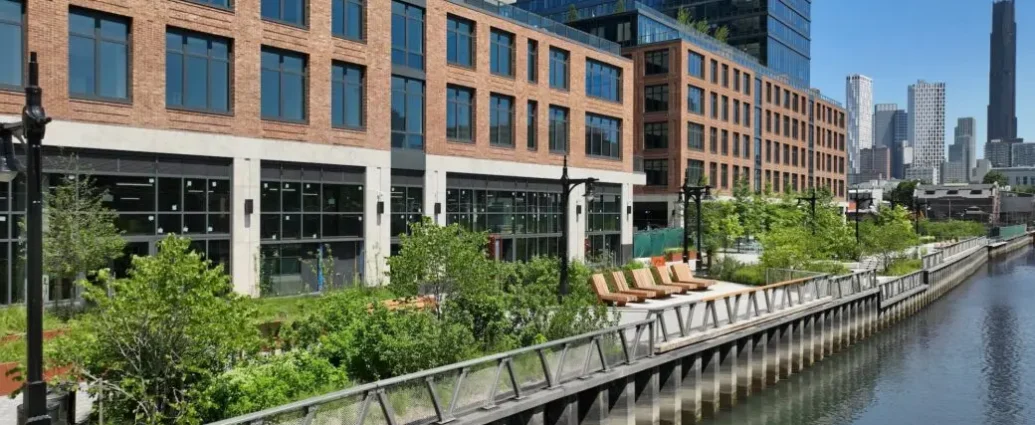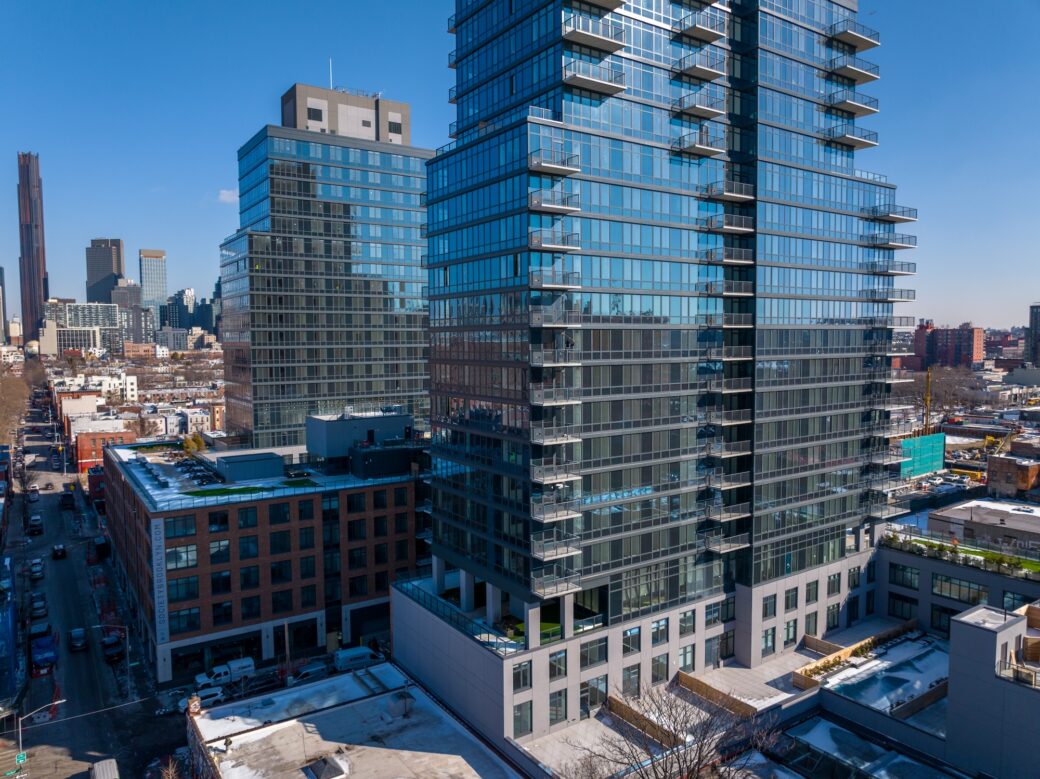
Meta CEO Mark Zuckerberg and Google co-founder Sergey Brin have closed on sprawling Miami-area estates, underscoring the continued shift of tech wealth from the West Coast to South Florida.

“While the neighborhoods they bought in differ, their priorities are identical: safety, security and proximity,” Douglas Elliman’s Chris Wands told Fox News Digital. “These high-profile buyers are choosing waterfront properties in gated, controlled environments with easy access to private airports and Miami’s business and restaurant corridors.”

Within roughly a 20-mile radius, four of the world’s wealthiest individuals — Jeff Bezos, Zuckerberg, Larry Page and Brin — now own significant residential properties. Zuckerberg’s reported $170 million closing on Indian Creek Island would rank among the most expensive residential sales in Miami-Dade County history, according to multiple reports.

Zuckerberg and his wife, Priscilla Chan, reportedly closed on the property at 7 Indian Creek Island Road on March 2, snapping up the 1.84-acre waterfront lot for a bit less than the original $200 million listing price.

OVER $126M IN 60 DAYS — FLORIDA REAL ESTATE TYCOONS SAY BLUE-STATE WEALTH MIGRATION IS NOW PERMANENT

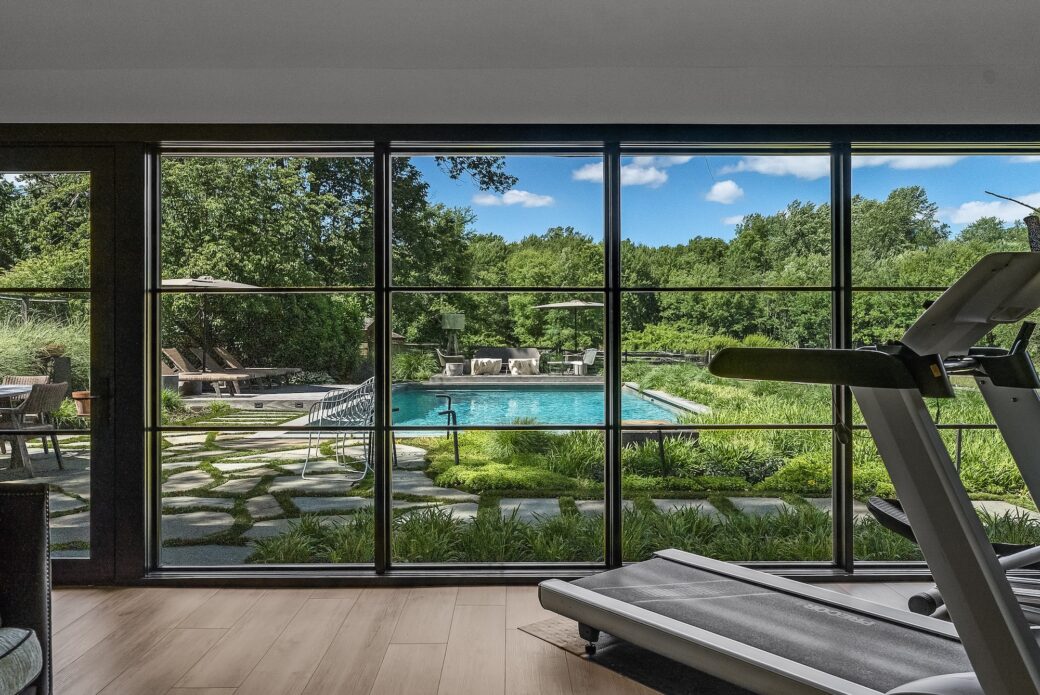
The home features nine bedrooms, 11.5 bathrooms, a “secret” library passageway, a wellness wing with a gym, professional-grade salon and massage room, a 1,500-gallon centerpiece aquarium, a jazz lounge, a 60-foot pool and more.

The home — located three doors down from Bezos in the so-called “Billionaire Bunker” — is still under construction and was designed by Canadian architect Ferris Rafauli, known for designing rapper Drake’s “Embassy” mansion in Toronto.

“From the limestone façade and grand architectural proportions to the meticulously curated interiors, every detail showcases modern artistry and exceptional craftsmanship,” the listing details read. “This classically inspired residence offers endless views, indoor-outdoor living, and a sense of privacy and sophistication.”

“South Florida has become one of the most powerful concentrations of wealth in just a few years and that signals a real confidence in the market. Ultra-luxury real estate FOMO is absolutely real,” Douglas Elliman’s No. 1 agent nationwide, Dina Goldentayer, said. “There’s a network of gravity happening behind the scenes. Billionaires talk, their advisors, family offices and security teams are all talking. And suddenly Miami becomes a strategic base that you need as a hedge.”
Brin opted for the more residential setting of 6569 Allison Road on Allison Island in northern Miami Beach. He reportedly purchased the $51 million property through a Nevada-based entity, Lagoon LLC, which has been linked to his longtime legal representatives.

The home, previously owned by LVMH Americas CEO Michael Burke and sold in an off-market deal, is a modernist, glass-walled property spanning roughly 10,000 square feet. The design includes seven bedrooms and 8.5 bathrooms, with sweeping views of Biscayne Bay and architectural elements said to draw inspiration from the Guggenheim Museum.

It’s notable that both Zuckerberg and Brin’s neighborhoods include ultra-secure, private police guards who must register any guests as they come and go.

“Security will always remain paramount for the ultra-high-net worth, and they all will always have their private security detail 24/7. Their choices between Indian Creek, Coconut Grove or Allison Island would be more based on their personal preference of what lifestyle the immediate surroundings offer, and of course, the home itself,” ONE Sotheby’s International Realty’s Eddy Martinez also told Fox News Digital. “How did that home make them feel in comparison to others? All these factors come into play on the final decision.”

The real estate insiders point to Google counterpart Larry Page as the first to sound the alarm by moving to Florida, with his $173 million acquisition of two separate estates in Coconut Grove in late 2025. The timing of these billionaire relocations coincides with a California proposal that would impose a one-time 5% tax on the net worth of Golden State residents with assets exceeding $1 billion.

If such a proposal were to receive enough signatures and voter approval, individuals who were California residents as of Jan. 1, 2026, could be subject to the tax, according to the measure’s draft language.

Based on recent net worth estimates, Zuckerberg and Brin could hypothetically owe more than $10 billion each under such a tax structure, though the exact amount would depend on final valuations and the measure’s ultimate language.

“We believe the catalyst in the billionaire migration to South Florida from California is more about the billionaire tax taking place,” Martinez noted. “We believe these individuals didn’t get to where they are by FOMO — rather, their success can be attributed to a mindset of taking fast and decisive action on what they believe is best for them to move forward and have continued success.”

GET FOX BUSINESS ON THE GO BY CLICKING HERE

As Miami real estate continues to surge, Goldentayer argues there’s no clear ceiling for how high property values could climb in the near future.

“I see no ceiling,” she said. “When five of the six richest people in the world are buying homes within miles of each other, it completely shifts the market, and we are seeing a recalibration of an entire asset class.”

READ MORE FROM FOX BUSINESS

Share to:

This post was originally published here

EXCLUSIVE: New York and California are no longer just losing residents — they are losing an entire economic class.

As 2026 kicks off a fresh wave of “tax the rich” rhetoric in traditional financial hubs, top Florida developers tell Fox News Digital they are seeing a massive, permanent surge in capital migration. In just the last 60 days, two developers and one sales firm reported over $126 million in sales to buyers relocating from California and New York, signaling that the blue state exodus has moved from a temporary trickle to a flood of hundreds of millions of dollars.

“In our three projects… we saw over $60 million over the last 30 days, and I can tell you that in the last six months between the three projects combined, we sold over $200 million of product. We still see a lot of buyers coming from New York, California, New Jersey and Illinois. These are the main four markets,” BH Group CEO Isaac Toledano told Fox News Digital.

“We’re at roughly $50 million in Shoma Bay alone since the start of the year from New York and California buyers. What’s different now is the conviction,” Shoma Group CEO Masoud Shojaee also told Fox News Digital. “People aren’t just looking, they’re signing contracts, and that tells us this has staying power.”

FLORIDA CHAMBER C.E.O. SAYS HIGH-TAX STATES ARE IN A ‘DEATH SPIRAL’ AS $4M-AN-HOUR WEALTH MIGRATION ACCELERATES

“In just the first 60 days of 2026, we’ve already seen a significant increase in interest and activity at our condo projects. Based on this momentum, we anticipate total transactions this year will surpass 2025,” ISG World founder and CEO Craig Studnicky added, telling Fox News Digital they’ve seen $26 million in wealth migration from New York and California so far this year, up from $15 million the same time last year.

Based on these latest numbers, the three real estate tycoons agree that this isn’t just a slight uptick, but rather a compounding growth curve. And while Florida’s tax benefits have long been the hook for new residents, the catalysts for a new wave of high-net-worth individuals are the rise of socialist-leaning policies in New York and looming wealth taxes in California.

“We cannot ignore the fact that Mayor Mamdani, for the last few weeks, [has been] mentioning that they’re going to increase probably the real estate taxes and the wealth tax, and same in California,” Toledano said. “Here, everybody’s pushing that most likely we will see the real estate tax bills getting slashed… the mood here is completely different.”

“People are looking for simplicity… they wanna be confident. They wanna protect their business. They wanna have some clarity,” Shojaee added. “If there’s no predictability, if there is no trust, if there is no clarity, if there is no simplicity, the business is not gonna function. And that’s the issue that they have.”

The primary criticism of the Florida boom was that it was a pandemic anomaly. However, the 2026 data suggests this is a structural relocation of American wealth. Shojaee emphasized that when a CEO moves their home or headquarters, they aren’t coming for a vacation.

“If it was only just purchasing their real estate for the sake of purchasing real estate, yeah, I would say it could be a trend. But once you move your business and your wealth to Miami or Palm Beach or South Florida, that’s really permanent,” Shojaee said.

Studnicky backs this up with a dramatic shift in his own sales data, moving from part-time residents to full-time Floridians.

“Two-thirds of my U.S. sales before COVID were second homes,” Studnicky revealed. “That has completely [flipped]. Two-thirds are permanent residents.”

WALL STREET SOUTH EXPANSION: MANDARIN ORIENTAL ANCHORS NEW ‘BILLIONAIRE CORRIDOR’ IN WEST PALM BEACH

This influx of 24/7 business residents is forcing a fundamental redesign of Florida’s luxury landscape as developers are moving away from traditional resort amenities and toward infrastructure that supports a high-intensity professional life. For Studnicky, that means prioritizing the garage over the pool.

“When I sit with developers today… we talk about parking as much as we talk about the swimming pool,” Studnicky said. “Everyone’s coming with two cars, and they want to park their own cars… Parking’s become a big deal.”

Toledano added that the level of scrutiny from new residents has reached an all-time high as they look meticulously for environments to best suit their lifestyle.

“The buyers [in] the last few years became more sophisticated. They want to know more about the location, more about the developer, more about the architect, the interior designer, they [are] paying for product. And they want to make sure that they’re getting the best of the best,” Toledano said.

Concerns about the “Californication” or “New York-ifying” of Florida are overplayed, as the real estate experts argue that names like Mark Zuckerberg, Larry Page and Sergey Brin aren’t coming to “recreate what they left behind.”

“I’ve been living here for 32 years, that concern is overstating,” Studnicky said. “The folks that are moving here, they’re fiscally very conservative, and they’re deeply entrepreneurial and that entrepreneurial spirit. I’ve never seen it go alive anywhere as I do here in [South Florida].”

The ISG World founder added that President Donald Trump’s presence in Palm Beach also brings influence.

“Mar-a-Lago in Palm Beach is the White House South. Donald Trump spends as much time at Mar-a-Lago as he actually does in the White House. In other words, his mere presence here is telling people… that this is a conservatively fiscal location, and it’s extremely safe.”

GET FOX BUSINESS ON THE GO BY CLICKING HERE

As the “Wall Street South” matures, the question is no longer if Florida can compete with the traditional financial capitals of the world, but when it might surpass them. As Toledano puts it, the current boom is likely just the preamble. If the current trajectory holds, South Florida of 2030 won’t just be a refuge for high-tax state residents — it will be the new center of gravity for American capital.

“I believe this is an evolution. This is not a competition,” Shojaee added. “It’s a big possibility that happens… and we will see the wealth that is moving here and that they’d rather be here.”

READ MORE FROM FOX BUSINESS

Share to:

This post was originally published here

A Las Vegas hotel-casino was demolished on Thursday morning after the establishment closed during the COVID-19 pandemic and never reopened.

Eastside Cannery Hotel-Casino opened on the Boulder Strip in 2008, replacing the older Nevada Palace casino. It catered to locals rather than tourists, offering value-oriented gaming, dining and stays away from the crowded Las Vegas Strip.

The nearby Longhorn Casino hosted a demolition party to give guests a front-row seat to the implosion, selling parking spots for $25 and rooms for $250, FOX5 Las Vegas reported.

Las Vegas locals and people from across the country showed up at 2 a.m. to bid an explosive farewell to the building.

LAS VEGAS CASINO OWNER OFFERS UNIQUE DEAL TO ENTICE VISITORS BACK AMID SLUMP

“I’m from San Diego, and this is one of my favorite casinos,” Gus Biner told FOX5. “It’s just I have never seen a building come down live, you always see it on the news but never live.”

“I want to watch it, I want to feel it,” Mark Carson told the outlet. “I’m a retired carpenter. I spent all my career building them. This will be the first time I watch it in real life, bring ’em down.”

IVANA TRUMP’S MANHATTAN TOWNHOUSE SELLS FOR $14M AFTER $12.5M PRICE CUT

The Cannery closed in March 2020 due to the COVID-19 pandemic shutdowns in Nevada.

GET FOX BUSINESS ON THE GO BY CLICKING HERE

Boyd Gaming, which acquired the hotel-casino in 2016 as part of its purchase of Cannery Casino Resorts, said it remained shuttered after most other casinos reopened due to insufficient market demand after more than five years of closure.

Share to:

This post was originally published here

The longtime Manhattan residence of the late Ivana Trump has finally traded hands, but at a price that reflects a sobering reality for New York City’s luxury real estate market.

Property records show the opulent Upper East Side townhouse sold on Feb. 27 for $14 million, the Wall Street Journal reported. It’s a $12.5 million price cut from the original $26.5 million asking price set shortly after the businesswoman’s death in 2022.

The $14 million sale comes after three price cuts over the past three years.

Even with the massive discount, the estate saw a $2.5 million return from what Ivana originally paid in 1992. Proceeds from the sale are set to be split among her three children, Donald Trump Jr., Eric Trump and Ivanka Trump.

REAL ESTATE EXPERTS BLAST MAMDANI’S MATH-DEFYING PLAN, WARN OF HIGHER RENTS AND FLIGHT

A piece of the Trump family legacy, Ivana bought the home shortly after her divorce from President Donald Trump, and the nearly 9,000-square-foot limestone mansion served as the home base for their children during their teenage years.

“My mom absolutely loved that house,” Eric Trump told the Journal in 2022. He also said the opulence “embodied Ivana Trump.”

The home was a real estate personification of Ivana’s bold, unapologetic style. She oversaw extensive renovations shortly after buying the property to transform the former dental office into a six-story monument to luxury.

Located on the Upper East Side between Fifth and Madison avenues, the Versailles-inspired home features gold accents and shades of red. It has five bedrooms, six bathrooms, two small galley-style kitchens and multiple entertaining areas.

Some of the more grand interior design features include Chinese murals, silk-covered walls, a leopard-print library and crystal chandeliers in almost every room.

Ivana Trump lived in the home for three decades until her death in July 2022. She was found unconscious at the bottom of a staircase in the home after what authorities ruled was an accidental fall that caused blunt impact injuries, Fox News previously reported.

GET FOX BUSINESS ON THE GO BY CLICKING HERE

While transaction volume for New York City townhouses rose in 2025, the actual average sale prices fell, according to Leslie Garfield & Co.’s 2025 townhouse report. By the third quarter of 2025, the average sale price for Manhattan townhouses dropped 14% to $6.9 million.

Adam Modlin of the Modlin Group represented the buyer and seller in the transaction. He did not immediately respond to Fox News Digital’s request for comment.

READ MORE FROM FOX BUSINESS

Share to:

This post was originally published here

Despite mortgage rates just dipping below the 6% mark, American homebuyers aren’t retreating just yet.

While high mortgage rates have historically chilled demand, the latest data reveals a defiant consumer base: new home sales remain higher than year-ago levels, and a massive surge in refinancing suggests homeowners are pouncing on any slight dip in borrowing costs.

Recent data from the Census Bureau reveals that while new home sales dipped slightly by 1.7% in December, the market remains surprisingly resilient, with annual sales outpacing 2024 levels by nearly 4%. 

The Mortgage Bankers Association additionally reported Wednesday that refinance applications are 150% higher than the same week last year, and up 4% from the previous week, potentially signaling that homeowners who bought at 7% or 8% are racing to lower their monthly overhead.

TRUMP PLEDGES TO MAKE HOUSING AFFORDABLE WHILE KEEPING VALUES UP

“The growth in mortgage demand reflects the gradual erosion of the lock-in effect, which began in early 2022 with the Fed [pivoting] to higher interest rates. Rising inventory in many markets has brought more choices to consumers and slowed home price growth,” StreetMatrix real estate analyst Jonathan Miller told Fox News Digital.

“While many potential homebuyers are still hoping for mortgage rates to fall sharply,” he continued, “there is a growing recognition that they won’t return to the rock-bottom levels coming out of the pandemic and that home prices are only getting higher.”

It’s a potential sign that buyers are still acclimating to a new normal of borrowing costs, even as the median price tag for a new build jumped to $414,400 last month.

“The existing home market… remains constrained by the lock-in effect, with many owners unwilling to trade a 3% mortgage for a 6% one,” Palm Beach-based RWB Construction Management’s Robert Burrage chimed in. “So while both markets are supply-limited, new construction has been more agile in stimulating demand.”

Housing supply currently sits at 7.6 months. Anything over six months typically cues a buyer’s market, giving shoppers more leverage to negotiate for concessions.

“Because we build exclusively for end users, not as a spec developer, our pipeline looks very different from what you see in the national new home sales data,” Burrage noted.

“When a custom home starts, it’s typically tied to a committed client who has already secured financing or is paying cash. That removes a lot of the speculative risk from the equation,” he expanded. “So even if new home sales tick down nationally, that doesn’t necessarily translate into excess inventory in the true custom segment. These homes aren’t sitting on the market waiting for a buyer, they’re being delivered to one.”

“The opportunity cost isn’t just about the rate, it’s about price trajectory and competition. Buyers and sellers get the same memo when rates are falling. The perception of improved affordability for buyers with lower rates are offset with sellers believing that can get a higher price because buyers have more financial strength to purchase. If we learned anything during the housing boom five years ago, [it’s] that lower rates push housing prices higher,” Miller added.

StreetMatrix’s analyst also noted that beneath the national surface, Florida is seeing a 2.7% year-over-year price cooling as national averages remain resilient. That decline could be tied to high insurance and maintenance costs.

“Across the Sun Belt, states like Florida are experiencing a housing market reset after a prolonged period of price growth, and inbound migration is waning. Expect a period of more modest sales and price growth going forward,” Miller said.

GET FOX BUSINESS ON THE GO BY CLICKING HERE

On the national level, Miller advises keeping a close eye on U.S. jobs and wage numbers throughout 2026.

“We’ve been in a rapid housing growth period where affordability remains strained, but distressed sales remain limited so far,” he said. “Thankfully, mortgage lenders didn’t lose their minds like they did during the great financial crisis. If jobs and wages hold, the market is more likely to grind sideways than correct.”

READ MORE FROM FOX BUSINESS

Share to:

This post was originally published here

EXCLUSIVE: The seasonal Florida resident is becoming a thing of the past. High-net-worth individuals are now moving entire corporate infrastructures to West Palm Beach, necessitating a new tier of ultra-prime real estate that functions as a year-round primary residence.

“People actually want to live and move to West Palm Beach, especially in this sort of area due to favorable business and maybe political conditions. And we love it,” Great Gulf President of High-Rise Development Neil Vohrah told Fox News Digital.

“It’s not just about the billionaires themselves, but more importantly, it’s about the businesses that they bring, the companies they bring, the people they inspire and the opportunities that they create,” Cervera Real Estate principal and managing partner Alicia Cervera Lamadrid also told Fox News Digital.

“There’s a lot of wealth coming to this area,” she added. “And, of course, it has to be accommodated.”

‘THIS PLACE WILL WIN’: BUSINESS LEADERS SAY WEST PALM BEACH IS BECOMING AMERICA’S NEXT BIG BOOMTOWN

On Thursday, the real estate juggernauts announced they’re launching the Mandarin Oriental Residences in West Palm Beach — the brand’s first standalone residential property in South Florida. Located on North Flagler Drive in the growing “Billionaire Corridor,” the building will eventually stand 31 stories and house 87 residences with all the familiar luxury a Mandarin Oriental property might offer.

The project unveiling comes on the heels of other major brands declaring their entry into the South Florida market, including Mr. C Residences in Boca Raton, Ritz-Carlton Residences in Fort Lauderdale Beach, Delano Residences Miami and Kempinski Residences in Miami Design District.

Catering to a “Wall Street South” demographic, the Mandarin prioritizes extreme privacy, resort-style amenities and includes space for in-home staff and executive offices. Residences range from 2,100 to 6,300 square feet, and feature two- to four-bedroom layouts.

The biggest draw, according to the development and sales leads, could be that the building is just steps away from the booming business-centric downtown.

“This is not found anywhere else in the West Palm Beach area,” Vohrah said. “North End was once a quiet and largely overlooked part of the city, but it now is emerging as the city’s next defining waterfront neighborhood. West Palm Beach is also rapidly evolving into an international luxury hub, driven by wealth and migration, companies relocating, major investments in lifestyle and medical districts, and new luxury brands entering the market.”

These investments are massive in scale: Vanderbilt University is moving forward with a $300 million campus downtown that is projected to generate more than $7 billion in economic impact. Directly adjacent to the new “Billionaire Corridor,” Tenet Healthcare recently announced a $3 billion replacement for the Good Samaritan Medical Center, a brand-new campus designed to cater to the longevity and wellness needs of the C-suite crowd.

A.I. GIANT PALANTIR MOVES ITS HEADQUARTERS TO FLORIDA AS TECH COMPANY EXODUS CONTINUES

“Both Ken Griffin and Steve Ross have come together to promote that corridor between Palm Beach, West Palm Beach and Miami-Dade County as the place where they’re recruiting companies and talent to support the quote-unquote billionaire structure,” Cervera said, referencing the ongoing “Ambition Accelerated” campaign.

“So what’s happening in West Palm Beach is simply a natural evolution to accommodate the needs and requirements and lifestyles of these billionaires, millionaires that are moving into the area,” she explained.

The demand for West Palm’s waterfront remains largely insulated from rising interest rates and a cooling national housing market, reportedly due to extreme scarcity and a global buyer profile.

“The West Palm Beach market is not slowing down,” Vohrah said. “The North Flagler corridor is largely insulated from national housing trends because… at this level… that combination of irreplaceable waterfront, limited supply and proximity to everything the city offers is what’s continuing to sustain this demand.”

“When you see the office towers that are full and the prices that people are paying to be in those office towers… all of this synergy that’s being created around there is a long-term play. These are not short-term investments,” Cervera noted. “They have seen that the tipping point is now, and there’s still great opportunity to get in because it’s still early in that cycle, but it is clear that this is something that no one is stopping.”

The “Billionaire Corridor” demographic is increasingly trading sprawling, high-maintenance mansions for vertical “residences in the sky,” as Cervera calls them, just like what’s offered at the Mandarin West Palm.

GET FOX BUSINESS ON THE GO BY CLICKING HERE

“Time is the only thing that you can’t buy, give away, barter, etc. It is finite, we’re all aware of it. And when you buy into a Mandarin Oriental experience, you are saving time. Why are you saving time? Because all of those [lifestyle amenities] are brought into your home.”

“West Palm Beach is different because the boom has been coming for a while,” Vohrah pointed out. “The city and developers have been building up the area for years and now, as more people are migrating to West Palm, the infrastructure and attractive quality is already there. So I think this tower will be recognized as one of the pioneers in this boom era that has taken off post-COVID.”

READ MORE FROM FOX BUSINESS

Share to:

This post was originally published here

A major reprieve from Florida’s property taxes may be coming much sooner than residents, lawmakers and real estate experts previously thought.

Last week, the state’s House advanced an amended HJR 203 bill that would effectively turn off the tax switch for homesteaded properties starting Jan. 1, 2027.

“Florida’s success has been built on smart fiscal policy, economic opportunity and a very clear identity. Major tax reform should strengthen those pillars, not complicate them,” OneWorld Properties President and CEO Peggy Olin told Fox News Digital.

“From where I sit,” she continued, “working with buyers across the country and around the world, confidence in the state’s long-term stability matters just as much as any short-term savings. If Florida can deliver meaningful relief while maintaining strong infrastructure and services, it will continue to lead. And based on what I’ve seen over the past 25 years, when Florida gets the balance right, growth follows.”

FLORIDA CHAMBER C.E.O. SAYS HIGH-TAX STATES ARE IN A ‘DEATH SPIRAL’ AS $4M-AN-HOUR WEALTH MIGRATION ACCELERATES

Backed by Gov. Ron DeSantis, the bill — originally proposed in October — works toward the state’s long-discussed “zero tax” goal. The language of HJR 203 explains how homesteaded properties would stop paying city and county property taxes entirely but could still pay roughly 35% to 50% of their total bill in school taxes. So even though property tax bills won’t go to zero, they could be cut in half or more.

The newly passed amendment removed a 10-year phased-in plan and instead offers a fast-track timeline for homeowners to see maximum savings in their first tax bill of 2027 if 60% of voters approve it on the 2026 midterm ballot.

“I’m generally supportive of thoughtful tax relief, as it’s part of what has made Florida such a powerful growth story over the past decade,” Olin argued. “Homestead protections are core to the state’s identity, and giving full-time residents breathing room is always appealing.”

“Infrastructure, public safety and services don’t disappear just because a revenue line does. The intention is strong to protect homeowners, but the execution has to be disciplined,” she expanded. “Florida’s competitive edge isn’t just low taxes; it’s quality of life. We have to preserve both.”

State economists have warned that the plan could dig a $14.8 billion hole annually for local governments, and critics worry that if cities lose billions in tax revenue, police officers or fire stations could lose staff.

However, a provision in the bill offers a public safety guarantee that cities would be legally required to fund police departments at 2024-2025 funding levels even if they have no money coming in from homeowners.

“Cities are very creative when it comes to revenue. A gap of that size rarely goes unaddressed,” Olin reacted. “In reality, if funding disappears in one area, it often reappears somewhere else, whether through fees, assessments, utilities or broader consumption taxes. So the question becomes whether homeowners see true net relief or simply a restructuring of costs.”

Olin also responded to whether eliminating taxes will cause home prices to spike if buyers can afford larger mortgages, and whether there is a risk that this tax cut actually makes it harder for the next generation of Floridians to buy a home.

“Real estate markets are efficient. If buyers suddenly have more purchasing power, prices can adjust, especially in supply-constrained areas like South Florida. But in my experience, property values here are driven far more by migration trends, global capital and limited inventory than by a single tax adjustment,” she said.

“Buyers aren’t moving to Florida solely because of property taxes. They’re coming for lifestyle, economic opportunity and overall tax predictability. That said, affordability at the entry level is already delicate. If relief simply gets absorbed into higher prices, first-time buyers could feel pressure,” Olin pointed out, “which means the larger conversation isn’t just tax policy. It’s supply, smart development and creating attainable housing options.”

GET FOX BUSINESS ON THE GO BY CLICKING HERE

When it comes to who might benefit most from HJR 203, Olin offered a bullish outlook for high-net-worth, luxury Florida homeowners and impactful change for median buyers.

“In pure dollar terms, higher-value homeowners see larger savings because property taxes scale with property value. However, the emotional impact may be greatest for retirees and middle-class families on stable or fixed incomes. For someone who purchased years ago and has seen their assessed value climb, relief can feel meaningful — even if it’s not the largest dollar amount in the market.”

READ MORE FROM FOX BUSINESS

Share to:

This post was originally published here

America’s hottest housing markets aren’t in flashy coastal cities — they’re in communities across the Midwest and South.

Even as the national market cools, areas in states like Missouri and Kentucky are seeing double-digit price growth while remaining within reach for middle-income buyers.

Recent data from the National Association of Realtors (NAR) ranked the top five single-family metro areas with the highest home price appreciation last quarter.

Missouri’s Cape Girardeau held the top spot with a nearly 20% yearly increase and a $275,000 median home price, followed by Cumberland, Maryland, up 17.1% with a $174,900 median home price; Owensboro, Kentucky, up 15% with a $264,000 median home price; Anniston-Oxford, Alabama, with a 14.9% increase and $175,103 median home price; and Mobile, Alabama, which appreciated 13.7% at a median home price of $216,235.

‘WALL STREET TO Y’ALL STREET’: WHY AMERICA’S WEALTHY TRADES CITY LUXURY FOR ACRES OF TEXAS FREEDOM

The numbers signal strength in smaller, more affordable pockets of American cities and that housing opportunities remain highest outside expensive urban cores. Migration toward lower-cost regions also continues to shape market dynamics.

In contrast, the bottom five single-family metro areas that had the slowest price appreciation were Elmira, New York; Farmington, New Mexico; Boulder, Colorado; Pueblo, Colorado; and Cleveland, Tennessee, with NAR noting that some overheated markets are correcting and higher-cost Western markets show pressure.

Additionally, America’s national median home prices rose 1.2% year-over-year to $414,900, signaling market resilience despite economic headwinds, while monthly mortgage payments fell 5.7% – to $2,057 – from the previous year.

The housing market has cooled this winter with the annual pace of home price growth easing to levels unseen since the nation was recovering from the Great Recession. While some areas continue to see strong price growth, others, like Hawaii, California, Texas and Florida, have seen notable declines.

As of last week, mortgage affordability was at a four-year high after rates fell in January, with the White House touting President Donald Trump’s economic policies and maintaining his promise to “unlock” the opportunity of homeownership for American families.

GET FOX BUSINESS ON THE GO BY CLICKING HERE

As of Tuesday afternoon, the 30-year fixed-rate mortgage averaged 6.09%, down from last week’s 6.11%, Freddie Mac reports. This time last year, the 30-year rate was at 6.87%.

“Joe Biden’s inflation crisis crushed the dream of homeownership for millions of Americans — but President Trump is bringing it back,” White House press secretary Karoline Leavitt previously told Fox News Digital. “Thanks to the President’s successful economic policies, unnecessary red tape is being cut at a historic pace, borrowing costs are easing, and income growth is outpacing home price gains — finally making housing more affordable again.”

READ MORE FROM FOX BUSINESS

FOX Business’ Eric Revell and Brooke Singman contributed to this report.

Share to:

This post was originally published here

For millionaire business owner Frederic Lepoutre, the decision to move his family from the South Florida coast to Texas Hill Country wasn’t just about a change of scenery — it was a lesson in efficiency.

While building a custom home in a place like Broward County can be a yearslong odyssey of red tape and soaring insurance premiums, Lepoutre saw his 11-acre Texas estate go from breaking ground to move-in ready in just over 12 months. 

With an initial property tax bill of just $8 on his land and insurance costs one-fifth of what he’s paid for decades in the Sunshine State, Lepoutre is part of a growing wave of high-net-worth individuals proving that, in 2026, the Lone Star State isn’t just winning on taxes — it’s winning on speed.

“I think it already has [surpassed Florida as the center of gravity],” Lepoutre told Fox News Digital. “First of all, you have the land for manufacturing. You don’t have it here in Florida… it’s a huge state… and part of West Texas now, you hear about AI factories that are building up.”

“I think it will if it hasn’t already,” Lepoutre’s wife, Lynn Lepoutre, also said.

THE ‘POISON PILL’ AND DIGITAL SECRETS FLIPPING THE SUNSHINE STATE’S CONDO POWER DYNAMIC

“Americans are voting with their feet. They want places that are livable. They want places that are workable. They want places that are sustainable and affordable,” Texas REALTORS Chair Jennifer Wauhob told Fox News Digital. “And so I think this migration, as we call it, is really turning into a long-term shift.”

Recent data from Texas REALTORS shows that one-third of new residents are coming from California, Florida, New York and Colorado, with 30% of interstate movers choosing to relocate to Dallas. Texas’ median home price currently sits at $335,000, below the national average of about $415,000.

While younger workers and families may flock to bigger cities and their suburbs, the semi-retired Lepoutres – who oversee National Textile and Apparel and invest in oil and gas – purchased their land in a remote area near Bandera and Kerrville, a few hours’ drive west of San Antonio. They had to purchase at least 10 acres per a county minimum mandate, and bought the land three years ago for $26,000 per acre.

Plans for a second home were long in the works, and Texas not only provided enough land for their project, but Lepoutre claimed the initial tax bill with agricultural exemptions was $8 per year (while the home itself awaits formal assessment) and the regulatory environment allowed for quick construction turnaround.

“It takes three years to build a house here. It took us one year from literally getting the ground ready to moving in. In Texas, it took us one year, and the only permit we needed was for the water well and the sewer system,” Lepoutre said. “It’s the opposite [of Florida]. It’s a total 180.”

“The highways, the infrastructure, they’re quick. They move fast. There’s no resting on their laurels,” Lynn said. “If they’re building a highway, it’s finished. They get it from start to finish quickly.”

“We were looking for peace, quiet, tranquility, privacy and a slower pace,” Lynn added. “When we were looking online [at homes], it’s either an older home, and we wanted to build a house together. We already pretty much knew exactly what our design would be. You couldn’t find that [anywhere].”

WALL STREET’S TEXAS MOVE GAINS STEAM AS N.Y.S.E. TEXAS HITS 100-COMPANY MILESTONE

Their new home is off-grid enough that they had to build a private 600-foot water well and switchback mountain-style driveway, which makes package delivery a “nightmare” as items are often left at the bottom and must be retrieved by four-wheel drive. Additionally, there’s a remote-specific helicopter ambulance service membership that’s offered due to their rural location.

“We wanted to be somewhere where you can look at the stars at night and not see one light. You can’t see your neighbors. The trees are still low enough where you can see out, the view from our house now is 40 miles,” Lepoutre said. “It’s very rare to see properties like this in America anymore.”

“I’ve been [in Florida] since ‘88, so I’m ready for the change, and I just like the way of life in Texas and the people in Texas, and it’s just a nice, refreshing place to be,” Lynn said. “Everything’s bigger in Texas.”

“What we’re seeing with this migration of all these people moving to our state is, it’s creating a really steady demand for housing, and that spans to all levels. We’re seeing a demand for entry-level housing, and we’re still seeing a strong demand for luxury-level housing. So it’s, right now, a really balanced, healthy market,” Wauhob noted, “and all these people coming in here, it’s just creating good things for Texas.”

“I am a native Texan, but I did spend some time moving around the country for my husband’s job. And I can say, having to live in other states, people who move here, they are very happy with how far their housing dollar goes,” she continued.

As more and more companies dual-list on the NYSE Texas, Texas is also seeing executive relocations happen in waves. Wauhob briefly discussed how REALTORS work with state economic development teams to ensure there is enough housing to meet the rising residential and corporate demands.

GET FOX BUSINESS ON THE GO BY CLICKING HERE

“We’re really trying to be proactive. We don’t wanna be trying to catch up after all these people get here. We wanna think ahead, plan ahead, and make sure that when people get there, we have infrastructure in place and we have healthy communities for them to move into,” the chair said.

“I would say this does not feel episodic to me. If you look at the data, this has been going on for several years in a row now,” Wauhob expanded. “We have a steady flow of people coming here. We’re not seeing big surges, which is a great thing because we wanna have slow, steady growth. So to me, this is something to keep an eye on. I don’t think it’s gonna go away anytime soon… people are coming, and they’re not leaving.”

READ MORE FROM FOX BUSINESS

Share to:

This post was originally published here

High-net-worth Californians are increasingly setting their sights on Las Vegas as they look to reduce their tax burden and protect their finances as a proposed wealth tax looms in the Golden State. 

New data shows that by the end of 2025, more than 23% of Realtor.com listing views for Las Vegas homes came from Los Angeles, making it the leading source of out-of-market interest.

San Jose accounted for more than 8% of views, while Riverside, California, made up nearly 4%, according to Realtor.com.

“Migration from California to Las Vegas may reflect both tax considerations and the meaningful affordability gap between the two markets,” Realtor.com senior economic research analyst Hannah Jones told FOX Business in an email.

MARK ZUCKERBERG BECOMES LATEST CALIFORNIA BILLIONAIRE TO RELOCATE TO FLORIDA AMID TAX CONCERNS

That gap is substantial. Los Angeles’ typical home price topped $1 million in January, while San Jose’s median listing price was even higher at $1.1 million. 

In contrast, Las Vegas’ median listing price stood at $465,000, according to Realtor.com.

Nevada’s lack of a state income tax also remains a major draw, Jones said.

“Taxes and overall cost of living are major drivers, and Nevada’s lack of state income tax continues to be one of the most frequently cited reasons for the move,” Jones said. 

“For some clients, it’s purely financial. They can sell a $2 million to $3 million home in California and purchase a comparable or larger property in Las Vegas for less while reducing their ongoing tax burden.”

HOMEBUYERS GAIN UPPER HAND IN 3 MAJOR CITIES AS INVENTORIES GROW

The migration trend also comes as California considers a proposed wealth tax that would impose a one-time 5% tax on the net worth of residents with assets exceeding $1 billion.

The measure, backed by the Service Employees International Union–United Healthcare Workers West, would need roughly 875,000 signatures to qualify for the November ballot.

California Gov. Gavin Newsom has opposed the measure, warning it could push high earners to leave the state.

“While policy discussions like a potential wealth tax may influence timing for some high-income households, the ability to convert expensive coastal real estate into greater purchasing power in a lower-cost market is likely also a significant driver,” Jones told FOX Business. 

BILLIONAIRES FLEE CALIFORNIA ‘WITHIN SEVEN DAYS’ OVER PROPOSED WEALTH TAX: INSIDE THE MIAMI MIGRATION

“Together, these financial incentives are helping sustain cross-state housing demand.”

GET FOX BUSINESS ON THE GO BY CLICKING HERE

Meta CEO Mark Zuckerberg and his wife, Priscilla Chan, are buying a waterfront mansion in Miami’s exclusive “Billionaire Bunker,” becoming the latest high-profile California billionaire to establish roots in Florida amid tax concerns.

FOX Business’ Kristen Altus contributed to this report.

Share to:

This post was originally published here

The “McMansion” is officially moving from a status symbol to liability.

Twenty years after the 2006 housing boom, new data from Zillow reveals a fundamental reversal in the American Dream: Buyers are ditching “wasted scale” and mahogany-heavy footprints for high-efficiency “sanctuaries.”

As insurance premiums and property taxes soar, real estate experts warn that the oversized, unoptimized estates of the mid-aughts are becoming a financial exposure for homeowners who fail to adapt.

“The appetite for space hasn’t disappeared, but the definition of value has evolved. Buyers still want room for family, entertaining and flexibility. What they don’t want is excess without purpose,” Catena Homes principal Harrison Polsky told Fox News Digital.

HOUSING MARKET COOLS AS PRICE GROWTH HITS SLOWEST PACE SINCE GREAT RECESSION RECOVERY

“With rising insurance costs in Texas and higher property taxes, a 5,000-plus-square-foot home that isn’t energy efficient or thoughtfully designed can absolutely feel like a liability. But a well-built, high-performance home of that size with strong insulation, efficient systems and functional layout still represents the American Dream here,” he added. “The shift isn’t away from scale entirely; it’s away from wasted scale.”

“In Palm Beach County, scale still has strong appeal, particularly in waterfront and estate communities. However, soaring insurance costs in Florida have changed buyer behavior,” RWB Construction Management founder Robert Burrage also told Fox News Digital.

“A 6,000 or 7,000-square-foot home built in 2006 without impact glass, elevated construction, modern roofing and generator systems can absolutely feel like financial exposure,” Burrage noted. “Buyers are willing to pay for size, but only if it’s engineered for resilience.”

Going back to 2006, luxury was granite and mahogany. In 2026, Zillow says it’s pickleball courts and golf simulators (with listing mentions up 25%) to whole-home batteries (up 40%) and zero-energy-ready homes (up 70%).

“Resilience and lifestyle go hand in hand. Whole-home generators, battery storage, hurricane-rated systems, smart-home integration and expansive outdoor living are expected,” Burrage said.


“A large home without those features narrows the buyer pool significantly. Meanwhile,” he said, “a slightly smaller but technologically advanced home designed for indoor-outdoor living often performs better in terms of demand and pricing.”

“Today’s buyers are far more educated about operating costs and long-term durability,” Polsky agreed. “In this market, lifestyle infrastructure and sustainability are no longer bonuses. They’re baseline expectations.”

Resale advice used to be: “Keep it beige.” Now, Zillow finds buyers offer more for olive green and charcoal gray, with “color drenching” mentions up 149%. The experts said the “beige box” of the mid-aughts is a harder sell now.

“The sterile beige spec home from the mid-2000s definitely feels dated. Buyers today respond to depth and personality but it has to be curated,” Polsky said. “We’re encouraging sellers to modernize with warmer neutrals, layered textures, and intentional color moments. ‘Safe’ used to mean blank. Now safe means thoughtfully designed. Homes that lack character tend to photograph poorly and sit longer.”

“Buyers want lighter, organic palettes with architectural texture and contrast,” Burrage weighed in. “We’re advising our clients who are building with us to keep interiors fresh and light strategically. A thoughtful design can materially impact buyer perception and final sales price.”

As millennials and Gen X become the primary buying force, they are rejecting the norms of what once was. The real estate experts both answered “yes” when asked if the market is seeing a permanent cultural shift in what “luxury” means.

GET FOX BUSINESS ON THE GO BY CLICKING HERE

“Boomers selling older estates should strongly consider modernizing systems and aesthetics,” Burrage said. “Buyers are comparing them to newly built coastal homes engineered for climate durability and lower operating risk.”

“Boomers selling 2006-era estates need to understand that today’s buyers compare everything to new construction with modern infrastructure. Updating mechanical systems, improving energy performance and refreshing interiors before listing can dramatically improve positioning,” Polsky pointed out. “The American Dream hasn’t gone away, it’s simply become more intentional. Buyers want homes that support how they live, not just how they’re seen.”

READ MORE FROM FOX BUSINESS

Share to:

This post was originally published here

Page, Brin, Ellison, Thiel, Sacks — and now, Zuckerberg.

Meta CEO Mark Zuckerberg is the latest California billionaire heading for Florida, snapping up a massive waterfront mansion in Miami’s exclusive “Billionaire Bunker,” as Golden State lawmakers push a proposed 5% tax on the ultra-wealthy.

Zuckerberg and his wife, Priscilla Chan, are buying a newly built mansion on Indian Creek, one of the area’s most expensive enclaves. The deal has not been confirmed as closed, sources with knowledge of the transaction told The Wall Street Journal, but neighbors said Zuckerberg plans to move in by April — signaling a relocation rather than a vacation home.

“People like Zuckerberg plan three moves ahead. That billionaire tax chatter has a lot of Palo Alto owners doing real math. If you’re staring at a potential 5% hit tied to net worth, Florida becomes a business decision. And Indian Creek is the clearest signal you’re serious, because it’s built for privacy and control,” Troy Dean Home CEO Troy Ippolito told Fox News Digital in reaction.

PETER THIEL DONATES $3M TO GROUP FIGHTING PROPOSED CALIFORNIA BILLIONAIRE TAX

“This is a loud signal that South Florida is a primary market now. When someone at Zuckerberg’s level buys here, it changes buyer psychology overnight,” he continued. “If that tax actually moves forward, you’ll see the impact first at the very top, because there’s so little true trophy inventory.”

The nearly 2-acre property is estimated to be worth $150 million to $200 million, based on comparable sales, and the reported seller is a limited liability company tied to Jersey Mike’s Subs founder Peter Cancro.

Cancro cashed out big in 2024 when he sold a majority stake in Jersey Mike’s to Blackstone for $8 billion, including debt. His home sale to Zuckerberg was off-market, a common move for ultra-wealthy buyers seeking privacy.

Aerial views of the property show that it sits across Biscayne Bay and features a private dock, wraparound terraces, lush landscaping, a waterfront pool, charming blue shutters and other elaborate amenities. The estate joins Zuckerberg’s already extensive real estate portfolio in places like Lake Tahoe and Palo Alto in California, and Kauai, Hawaii.

“It’s one entrance, tightly controlled, and only about 41 homes. You’re minutes from Miami, but it feels isolated. If you’re a global name, and you want a truly private backyard, this is as close as it gets,” Ippolito said.

Meta responded after publication, telling Fox News Digital, “We do not have a comment on the WSJ reporting from yesterday.”

Some of Zuckerberg’s new neighbors on Indian Creek include Jeff Bezos, Tom Brady, Carl Icahn, Ivanka Trump and Jared Kushner, David Guetta, Julio Iglesias, Jaime Gilinski and Edward Lampert.

Zuckerberg’s move comes on the heels of other notable, longtime California-based billionaires who have solidified residency in South Florida in response to a proposed California wealth tax.

Though the initiative has not yet received the required 875,000 signatures to qualify for the November ballot, the proposal — backed by the Service Employees International Union–United Healthcare Workers West — would impose a one-time 5% tax on the net worth of California residents with assets exceeding $1 billion.

The tax would be due in 2027, and taxpayers could spread payments over five years, with additional costs, according to the California Legislative Analyst’s Office.

If voters approve the measure, anyone who was a California resident on Jan. 1, 2026, would owe the tax, according to the proposal’s language.

Many South Florida real estate agents have told Fox News Digital that since the new year, a fresh wave of buyer interest has flooded in from California, with increased calls and broker website traffic.

“There’s a few other very big founders and also tech giants and also venture capitalist firms, the heads of which I’ve also moved here,” luxury real estate broker Julian Johnston of The Corcoran Group previously said. “It was always a layover, one night, an event, but Miami’s changed a lot in the last 10 years. It’s culturally more interesting… They said they were quite happy to move here and then see what happens in the next few years.”

GET FOX BUSINESS ON THE GO BY CLICKING HERE

“One client said, ‘You know, this could be like a $5 billion tax for me,’” he recalled. “So they’re moving because of that.”

“Florida feels predictable. You have a clearer tax picture, fewer hurdles, and a much easier day-to-day,” Ippolito weighed in. “A lot of buyers feel like California treats them like a target. Florida treats them like they belong here.”

READ MORE FROM FOX BUSINESS

Share to:

This post was originally published here

The Hamptons housing market just made a new splash, but the surge is not being driven by everyday homebuyers.

Instead, cash-rich Wall Street and tech executives are powering a boom in multimillion-dollar sales, pushing median prices to an all-time high even as overall sales activity softens, according to new data.

According to a new report from Douglas Elliman and Miller Samuel, Hamptons homes hit the highest median sales price on record at $2.34 million, up 25% year over year. The average sales price also rose 25% annually to $3.76 million.

“The catalyst is absolutely tied to capital markets,” Douglas Elliman’s Adam Hofer told Fox News Digital. “The Hamptons has always been a discretionary, wealth-driven marketplace. When Wall Street performs, when liquidity events happen in tech, when bonuses are strong, that money needs a place to land and for many high-net-worth buyers – that place is the Hamptons.”

MIAMI MOVES AHEAD OF NEW YORK IN $1M-PLUS HOMES AFTER NEARLY A DECADE

“That said, this isn’t just a speculative spike,” he said. “Inventory remains structurally constrained, especially south of the highway and in turnkey properties. Unlike the pre-2008 era, today’s buyers are largely cash-heavy and less leveraged, which makes this appreciation feel more sustainable.”

“So yes, Wall Street momentum fuels the top end, but limited supply and long-term lifestyle demand are what’s keeping values elevated.”

Luxury sales are doing the heavy lifting in the Hamptons, with sales over $5 million reaching a record high in the fourth quarter of 2025. Douglas Elliman internal data also shows property closings over $10 million were up 75% year over year, and there were four closings of $20 million or more in 2025, compared to just one the previous year.

“The luxury buyer is operating in an entirely different universe from the average homeowner. All cash transactions at $5 million and above signal confidence, liquidity and a long-term mindset. These buyers are less sensitive to interest rates and more focused on lifestyle, legacy and asset diversification,” Hofer said.

“In contrast, the middle market is highly rate-sensitive. A one-point swing in mortgage rates dramatically impacts affordability. But when you’re writing an $8 million or $15 million check in cash, rate volatility becomes background noise,” he said. “It highlights a divided market that’s becoming more pronounced nationally. Rate sensitivity is creating friction in the middle tier, while the top 10% of buyers continue to transact with relative ease. The Hamptons is simply a magnified version of what’s happening across the country.”

But inventory is tight. Despite a slight increase in listings across the area in the fourth quarter of last year, months of supply fell to 6.8, down 24% from 2024, while luxury months of supply also declined sharply to 16.4 months.

Buyers are reportedly competing hardest for ocean and waterfront properties, turnkey, renovated homes in prime neighborhoods such as Southampton, Sag Harbor and East Hampton.

“Construction timelines, labor costs and permitting uncertainties have made move-in-ready product a premium commodity,” Hofer noted. “Waterfront and properties with protected water views continue to command outsized demand, and that’s where buyers are willing to stretch the furthest. There’s a finite amount of waterfront in the Hamptons, and sophisticated buyers understand that scarcity.”

While not fully captured in the report, the early summer rental surge lines up with the data, as buyers are committing earlier, luxury confidence remains high, and seven-figure demand is not slowing.

GET FOX BUSINESS ON THE GO BY CLICKING HERE

“Strong rental demand is often a leading indicator of buyer confidence. When high-end rentals lock in early and at premium rates, it signals that people want to be here and that the Hamptons lifestyle remains a priority,” Hofer pointed out.

“For buyers waiting for a significant price correction,” he said, “the rental market suggests that underlying demand hasn’t weakened. In fact, many renters ultimately convert to buyers after experiencing the market firsthand. Sitting on the sidelines in hopes of a dramatic pullback may mean competing later in an even tighter inventory environment.”

READ MORE FROM FOX BUSINESS

Share to:

This post was originally published here

For decades, purchasing a Florida condo was a leap of faith masked by palm trees and ocean views. But in the new year, the veil of secrecy has lifted.

Between a new mandatory digital transparency law and a landmark court ruling that handed a so-called “poison pill” to developers, the power dynamic in the Sunshine State has shifted dramatically.

“I think it’s definitely correcting,” Douglas Elliman Palm Beach agent Jessica Julian told Fox News Digital about the state of the condominium market. “I would say last year we saw more of these older buildings were hurting, not as many buyers for them. Everybody was kind of scared to dip their toes into an older building after what happened in Miami on Surfside. And so now that assessments are being paid and repairs are being done, we’re definitely seeing that correction.”

“I think momentum is probably the best word that we have. Things have stabilized. We are gonna move forward… And again, the demand here in South Florida is so strong,” MIAMI REALTORS Chief of Residential & Advocacy Danielle Blake also told Fox News Digital.

FLORIDA’S AGING WATERFRONT CONDOS BECOME GOLD MINES AS OWNERS CASH IN ON DEVELOPER BUYOUTS

The first major shift of 2026 includes provisions that took effect under House Bill 913, which requires associations with 25 units or more to have a dedicated, secure digital portal where prospective buyers can see a condo’s bank statements, reserve details and even structural reports of a building.

“The click of the button, you can go in there, you can look at all these documents – including the budget – before you make that offer,” Blake said. “We’re huge proponents of it. It brings transparency and accountability, and we continue to promote that.”

“It’s making the condo market more predictable. So condos that have delayed reserves or delayed issues with their building are seeing a lot more ongoing negotiations,” Julian noted, “where buildings that have thought ahead and have fully funded reserves, they have a competitive edge in the market.”

In Miami-Dade, 65% of active inventory consists of older condo buildings, and sales in the $200,000 to $400,000 range are up 21% year over year despite rising insurance costs and assessments, according to REALTORS data. The experts weighed in on whether buyers are being brave or just eager for a slice of paradise.

“I would like to say it’s all because of our advocacy work. I mean, transparency is really important, but I think it has to do more with market conditions. And in South Florida, it’s a very hot market. Everybody wants to move here. The weather is absolutely beautiful. People want to take advantage of that. And so this is really the last affordable inventory that we have, and they are moving in,” Blake explained.

“I am getting a lot of buyers that are eager to get down here in South Florida, but they’re very well-informed. They’re usually coming to me already doing their due diligence,” Julian added. “They might already have the buildings that they’ve pinpointed. They’ve researched the other ones, found out which ones seem a little weak on those reserve studies.”

The second major shift in Florida’s condo market is the recent Biscayne 21 court ruling, which set a legal precedent effectively granting minority holdouts, as few as 5% to 10% of owners, the power to block major redevelopments if the original declaration requires unanimous consent.

OLDER SOUTH FLORIDA CONDOS NOW SELLING FASTER THAN NEW CONSTRUCTION UNITS AMID AFFORDABILITY CRUNCH

Julian called the decision a “poison pill” for developers who were eyeing older, waterfront Miami buildings as prime targets for ultra-luxury conversions.

“The poison pill, which is [a] 100% buyout, it makes things very difficult. So they haven’t been pursuing those as much,” she said. “It’s too much unknown to try to do that, to change the condo bylaws, and try to take a building down that way. So I think it’s gonna change going forward as developers are going to look at buildings a lot more with scrutiny and patience.”

Julian dealt with buyout wars personally in late 2025 at Harbor Towers & Marina in West Palm Beach when two developers sued multiple owners caught in the crosshairs of a battle for control of the building.

“There are a handful of buildings out there that still have language in their condo bylaws that say 75 to 80% can terminate a building… So developers are most likely going to do their due diligence and they’re going to be looking towards those buildings first,” Julian said.

“I think this case really highlights the importance of reading the government docs,” Blake noted. “It’s really important for developers to check that and know what you’re getting into before you incorporate that into your plan.”

With her advocacy role in mind, Blake also offered advice on what fixes realtors may push for to ensure that one or two residents can’t prevent an entire community from escaping the financial burden of an older building: “Talk to local government, talk to the state. Everybody needs to be informed so they can come up with the right solution. And we would support that.”

GET FOX BUSINESS ON THE GO BY CLICKING HERE

And while both experts agree that the two major changes in Florida’s condo market put an important emphasis on clarity and communication, Julian did share one warning about the future of the market environment.

“Greed is kind of taking place a little bit. So [buyers] are holding back until they get many more millions of dollars [from developer offers]. But what they don’t realize, that I see behind the scenes, is these developers are scooping up other buildings that are more affordable to them, that make more sense in pencil. And eventually we’re gonna be oversaturated,” she said.

“So if they are waiting, thinking that they’re going to get the ultimate payout, they might want to rethink that.”

READ MORE FROM FOX BUSINESS

Share to:

This post was originally published here


Three of the nation’s largest housing markets are seeing a sharp rise in the number of homes for sale, giving buyers more choices even as the overall U.S. housing market shows signs of cooling.

In January, 46 of the country’s biggest metro areas had more homes on the market than they did a year earlier. Seattle saw the biggest increase, with inventory jumping 32.4%.

Charlotte, North Carolina, followed at 28.6%, while Washington, D.C., ranked third with a 26.8% rise, according to Realtor.com’s January 2026 Monthly Housing Market Trends Report.

In Seattle and Charlotte, much of the inventory growth is being driven by homes lingering on the market longer rather than a surge of new sellers, Realtor.com Senior Economist Jake Krimmel told FOX Business.

HOMEBUILDERS REPORTEDLY DEVELOPING “TRUMP HOMES” PROGRAM TO IMPROVE AFFORDABILITY

Homes in Seattle took about 15 days longer to sell than they did a year ago, while Charlotte homes remained on the market roughly 12 days longer. 

“[Washington], D.C., is a little different, where stronger new listing growth seems tied to uncertainty over the local job outlook,” Krimmel told FOX Business.

Seattle’s expanding supply is also being influenced by layoffs in the tech sector, according to Michael Orbino, a managing broker at Compass.

“Several companies, including T-Mobile, Microsoft and Amazon, are repositioning their workforces,” Orbino said in a statement. “This is not a large part of the inventory but often puts buyers in pause mode, which has the effect of slowing down absorption, which increases inventory.”

JUST 17% OF VOTERS THINK NOW IS A GOOD TIME TO BUY A HOME AS AFFORDABILITY CONCERNS WEIGH: POLL

Several other metro areas also saw significant increases in homes for sale.

Louisville, Kentucky, was up 25.6%, while Las Vegas and Indianapolis each rose 25.4%. Baltimore saw inventory climb 24.1%, San Jose increased 23.3% and Cincinnati rose 21%, Realtor.com reported.

Regionally, the West posted the largest year-over-year inventory gain in January, up 12.2%. The Midwest followed at 10.3%, with the South close behind at 10.1%. The Northeast continued to lag, with inventory rising just 6.6%, according to the report.

COALITION WARNS TRUMP MORTGAGE CREDIT SHIFTS COULD SPARK ANOTHER 2008-STYLE CRASH

Nationally, housing inventory is up 10% from a year ago, but the pace of recovery is slowing. Year-over-year inventory growth has declined for nine consecutive months, and new listings rose just 0.7% compared with last year, Krimmel said.

January inventory remained more than 17% below 2017 to 2019 levels, according to Realtor.com.

CLICK HERE TO GET FOX BUSINESS ON THE GO

“Even though January is the slow season for housing, it’s an important moment to take stock,” Krimmel added. “The data and trends coming in right now will set the stage for how the market might behave once things pick up in the spring.”

Share to:

This post was originally published here


Sunshine, low taxes and luxury living continue to draw wealthy buyers to Florida — and one city in particular is reaping the rewards.

New housing data from GOBankingRates reveals the top five towns across Florida that have become the fastest-growing home-value markets, fueled by strong demand and limited supply.

In Palm Beach, homeowners have seen their property values more than double — with the average home now worth about $9.8 million. The data show a 1.5% increase over the past year and a 118.2% jump over five years, making Palm Beach the top spot for those seeking the highest return on investment.

“Previous cycles in Palm Beach were largely tied to broader economic expansions or speculative waves. What’s different this time is the permanence,” Douglas Elliman Exclusive Group’s Nick Malinosky told Fox News Digital. “Buyers today are relocating businesses, moving family offices, enrolling their children in local schools, and embedding themselves in the community.”

MIAMI MOVES AHEAD OF NEW YORK IN $1M-PLUS HOME AFTER NEARLY A DECADE

“There’s also far more institutional-level capital and long-term wealth involved compared to prior booms. Inventory remains limited, land is finite and barriers to entry are high, which makes this cycle feel more structurally supported rather than momentum-driven,” he continued.

Malinosky echoed what many other Florida agents have said about Palm Beach’s future — expressing bullish optimism as a new wave of high-net-worth individuals establishes families and businesses there.

“Palm Beach today is not just benefiting from a migration wave, it’s benefiting from wealth consolidation. We’re witnessing a generational shift where capital is becoming more mobile, and Florida is a strategic destination for that capital,” he said.

But he also cautioned against misconceptions about Palm Beach’s headline numbers.

“When people see 100% growth, they often assume it’s uniform across the board, and that’s rarely the case. Appreciation in Palm Beach has been highly segmented. Trophy waterfront estates and prime in-town properties have seen extraordinary gains, while other categories may have appreciated at a more moderate pace,” Malinosky explained.

“Another nuance that gets lost is replacement cost. Construction costs, land scarcity and development restrictions have all risen dramatically,” he added. “In many cases, current values reflect the true cost of recreating these assets today, not just speculative appreciation.”

While Palm Beach caters to glitz and glamour, the remaining towns on the list are smaller, quieter parts of Florida — with average home values around $290,000 or less.

Wauchula — an agricultural city about 90 minutes southeast of Tampa — ranked second, with home values up 3.1% over the past year and 64.8% over five years.

Old Town, Florida, ranked third with 3.2% and 48% increases over the one- and five-year periods. The unincorporated community sits near the Suwannee River, west of Gainesville and just north of Manatee Springs State Park — offering more tropical nature than concrete jungle.

South Bay — the westernmost municipality in the South Florida metro area — ranked fourth, with home values rising 1.2% over the past year and 61.5% over five years, according to GOBankingRates. The town is known for its proximity to Lake Okeechobee and its laid-back, tight-knit community.

GET FOX BUSINESS ON THE GO BY CLICKING HERE

Rounding out the list is Bell — a small town of fewer than 520 people nestled in North Florida’s forests, not far from Old Town. Home values average $290,622, up 1.2% over the past year and 61.5% over five years.

“Major markets like Miami or Tampa already experienced earlier, sharper growth curves and started from higher baseline values. When you measure percentage growth over five years, smaller or less established markets can sometimes show more dramatic jumps simply because they began at a lower price point,” Malinosky explained.

READ MORE FROM FOX BUSINESS

Share to:

This post was originally published here

Miami is now home to more million-dollar listings than New York — a sign the luxury housing market’s center of gravity continues to drift south.

According to Realtor.com’s December luxury housing report, Miami surpassed New York with 10,591 homes listed at $1 million or more, compared to New York’s 10,176 million-dollar listings.

New York held the top ranking for nearly a decade, and by late December, Miami solidified its lead as a long-term destination for wealth and housing demand.

“This is not a temporary surge, it’s an evolving market. The drivers supporting Miami’s growth are long-term: demographic trends favoring the Sun Belt, increasing international capital flows, and a deepening presence of finance, technology and global business infrastructure,” Douglas Elliman Vice Chair Dottie Herman told Fox News Digital.

FLORIDA WINS AGAIN: QUANTUM COMPUTING COMPANY JOINS EXODUS FROM HIGH-TAX CALIFORNIA

“That said, growth is not unlimited,” she said. “Insurance costs, climate considerations, and the risk of overdevelopment in certain submarkets will require disciplined planning and thoughtful execution.”

Miami’s luxury buyers are more likely to be cash buyers, international purchasers, retirees or second-home buyers. The report says these demographics are less sensitive to mortgage rates, school calendars and seasonal norms — keeping inventory levels higher yearlong.

Seasonality appears to favor the Magic City, as inventory stays more stable and allows developers to rebuild supply faster with a higher baseline. By contrast, New York luxury listings follow a more traditional cycle, with a spring surge and winter drop-off.

“Miami surpassing New York in million-dollar listings is more reflective of Miami’s expansion, versus New York’s weakness,” Herman said.

“Over the past decade, Miami has fundamentally broadened its definition of luxury. The market offers waterfront living, newer construction, resort-level amenities and a lifestyle component that’s directly embedded into the product. By contrast, New York’s luxury market is inherently finite and vertical, constrained by land, zoning and supply,” she explained.

New York’s market isn’t collapsing, but rather losing ground in a mature environment, as the report puts it. The Big Apple saw its housing market contract after the pandemic, driven by fewer new high-end listings, a slowdown in the city exodus and owners holding onto properties longer.

“Florida’s lack of a state income tax versus New York’s combined state and city tax burden represents a meaningful financial difference for high earners,” Herman said. “For many buyers, those savings translate directly into enhanced purchasing power or long-term capital preservation.”

Notably, 26.3% of Miami’s luxury demand comes from the New York metro area — more than the next eight source metros combined.

“New Yorkers have played a critical role as market shapers. A meaningful share of Miami’s luxury demand originates from the New York metro area,” Herman said. “This is not a broad-based migration of the entire New York population. It’s a targeted relocation of high-earning professionals working in fields like finance, tech and real estate, who have both the means and flexibility to choose where they live.”

Looking through a more national lens, luxury prices are stabilizing, with the top-tier threshold at $1.19 million, down slightly from the previous year. Luxury homes are taking longer to sell, with a median time of 88 days, reflecting cautious buyers and seasonal cooling.

GET FOX BUSINESS ON THE GO BY CLICKING HERE

Overall, price gaps are wide — luxury homes range between two and five times the local median home price, depending on the specific market.

“The most accurate framing is this,” Herman said. “Miami is not replacing New York. It is joining New York as a co-capital of American luxury real estate. New York remains the cultural, financial and institutional anchor — Miami has emerged as the lifestyle center, the flexibility market and a global magnet for mobile wealth.”

READ MORE FROM FOX BUSINESS

Share to:

This post was originally published here

A Bel Air mega-mansion with nightclub-level amenities, museum-style car storage — and a seller willing to accept cryptocurrency — is back on the market at just under $100 million, following a dramatic price cut from its original $139 million listing.

Called “La Fin,” the $99.9 million property became Realtor.com’s most expensive listing in America for the week ending on Jan. 22. It first came to market in 2022, and the reported seller — former emergency room director Joe Englanoff — enlisted seven agents to help market it.

“A reset like this doesn’t signal weakness, it signals recalibration. Ultra-luxury is no longer aspirational pricing; it’s precision pricing. In Los Angeles especially, buyers at this level are disciplined, global and value-driven. When pricing realigns with today’s realities such as interest rates, liquidity and opportunity cost, serious conversations restart,” Douglas Elliman’s Cory Weiss told Fox News Digital.

“High agent turnover usually reflects a mismatch between strategy and expectations, not a lack of interest in the asset itself,” he continued. “This property has lived through multiple market cycles, from ultra-low rates to geopolitical uncertainty and shifting tax dynamics.”

CALIFORNIA RESIDENTS FACE BRUTAL CHOICE ONE YEAR AFTER LOS ANGELES FIRE DESTROYED THEIR LIVES

La Fin, located at 1200 Bel Air Road, has 12 bedrooms and 17 bathrooms and sits on more than two acres of land with panoramic views of Los Angeles. Located in one of the country’s most exclusive exclaves, the property also has separate residences for staff and guests.

A few standout amenities include a 44-foot chandelier made of 55,000 crystals; an automated six-car vehicle elevator display; a 6,000-square-foot entertainment level with a wine cellar, vodka tasting room and cigar lounge; an infinity pool with a rising 23-foot LED screen; and rooftop deck with spa and fireplace features.

Some elements go beyond lifestyle and into investment-grade excess, like the custom Italian furnishings, Calacatta gold marble, commercial-grade catering facilities and fingerprint and “command center” security.

“Amenities that win are the ones that integrate into daily life. Wellness facilities, seamless indoor-outdoor flow, smart security and turnkey functionality. What’s losing relevance are novelty features that photograph well but rarely get used. Buyers are asking, ‘Will this improve my life?’ not, ‘Will this impress my guests?’” Weiss said.

“Today’s buyer is less trophy-driven and more thesis-driven. They’re high-profile global entrepreneurs, private equity principals, family offices, often buying with generational thinking,” he added. “Five years ago, size and spectacle sold. Today, buyers want privacy, security, flexibility and a clear lifestyle narrative — not just bragging rights.”

For an estate of this magnitude, Weiss said storytelling plays a major role in marketing a one-of-a-kind property that’s been on the market for several years.

“Storytelling is everything, but it has to evolve,” he argued. “After years on [the] market, the story can’t be about excess. It has to be about purpose — why this home exists, who it’s truly built for and how it fits into a buyer’s life today.”

GET FOX BUSINESS ON THE GO BY CLICKING HERE

The nearly $40 million price cut reflects changing buyer behavior and illustrates some of the tension between aspirational pricing and market reality.

“It shows there is a ceiling, but it’s fluid. The market will support extraordinary pricing when the asset, timing and buyer align. What’s changed is patience,” Weiss explained. “The ultra-luxury market is still there, but it now rewards realism, restraint and long-term thinking over hype.”

READ MORE FROM FOX BUSINESS

Share to:

This post was originally published here

Buy now, pay later giant Affirm is looking to help renters break up housing payments in ways that align with their biweekly paychecks.

Affirm is piloting a program in partnership with financial technology platform Esusu that will allow renters to split their monthly rent in two equal payments every two weeks at 0% APR. There are no hidden or late fees, or compounding interest with this pilot program, either, according to Affirm.

Esusu helps renters build credit by reporting their on-time rent payments to major credit bureaus.  

JPMORGAN CFO WARNS TRUMP’S PROPOSED CREDIT CARD CAP COULD CAUSE PEOPLE TO ‘LOSE ACCESS TO CREDIT’

The pilot program is designed to give “eligible renters a flexible option for managing one of their largest monthly expenses,” Affirm said in a statement to FOX Business, calling it “a transparent option that offers flexibility for renters to align expenses with their paychecks.”

Affirm said it underwrites every application individually and only approves people for what it believes they can responsibly afford to repay. 

‘BUY NOW, PAY LATER’ SERVICES ARE DANGEROUS TRAP FOR YOUNG AMERICANS, FINANCIAL EXPERT WARNS

“We’re approaching this use case thoughtfully and evaluating it alongside Esusu, which shares our focus on clear, consumer-first financial tools,” Affirm continued. 

The company didn’t confirm when the pilot program would be officially rolled out as it is still in the early stages of the pilot.

LendingTree’s chief consumer finance analyst Matt Schulz told FOX Business that this could be useful to those on a tight budget, but he cautioned that it is too soon to make a final judgment. 

BUY NOW, PAY LATER PITFALLS: MANY CONSUMERS AREN’T PAYING LOANS

“This is just another example of how it is getting easier seemingly by the day for people to use BNPL to finance most anything,” Schulz said. 

He noted that this doesn’t appear to be a typical pay-in-four BNPL loan, which, if it was, he cautioned that there could be serious risks. For instance, Schulz noted that a consumer could still have people paying off the previous month’s BNPL loan for rent when the next month’s rent comes due. 

“That could get messy,” he said, adding that this financial tool can be really useful when used wisely, but “the danger with BNPL is when you have multiple loans that you have to manage.” 

GET FOX BUSINESS ON THE GO BY CLICKING HERE

“That can get tricky, especially if you’re not used to managing credit,” he said. 

The other key thing with this payment method is that it is tied to a debit card or checking account, so it is critical that users have enough cash in that account to pay the bill. 

Share to:

This post was originally published here

EXCLUSIVE: The realization hit fast — and the response was even faster.

As California’s proposed “billionaire tax” began gaining momentum late last year, some of the wealthiest people in the country didn’t wait for ballots, lawmakers or court challenges — they moved. “Then a couple more flew into Miami, bought properties and closed within seven days,” luxury real estate broker Julian Johnston of The Corcoran Group told Fox News Digital. “So then it was a tipping point.”

According to Johnston — who told Fox News Digital that he’s currently working with three billionaires to move them from California to South Florida — the urgency was driven by staggering potential losses.

“One client said, ‘You know, this could be like a $5 billion tax for me,’” he recalled. “So they’re moving because of that.”

KEN GRIFFIN’S FLORIDA TAKEOVER: CITADEL FOUNDER SHELLS OUT $180M FOR LATEST PIECE OF MIAMI EMPIRE

The chatter all started at Miami’s high-profile Art Basel fair in early December, Johnston said, and carried into many of the ultra-wealthy’s holiday celebrations on the island of St. Barts.

“They’re all dining and wining together and talking about this proposed tax. And then when the proposed tax gained speed, they then understood that they had to either rent or purchase something out of California to establish residency and reduce their net worth exposure to the proposed billionaire tax,” he explained.

“It’s a melting pot and they’re all friends. And that’s the thing. The tipping point was when four or five of them bought and three more were going into contract. The rest of them, all their friends are here. And they talked about the office buildings as well.”

“I think this happened very quickly, even for them,” Johnston continued. “Now that it’s… January, into 2026, it has slowed down a little bit… So if you didn’t buy or rent before the end of the year, it may be too late. It may apply to you no matter what now.”

While it has not yet qualified for the November ballot, the proposal — backed by the Service Employees International Union–United Healthcare Workers West — would impose a one-time 5% tax on the net worth of California residents worth more than $1 billion. The tax would be due in 2027, and taxpayers could spread payments over five years, with additional costs, according to the Legislative Analyst’s Office.

If the measure is approved by voters, anyone who was a California resident on Jan. 1, 2026, would owe the tax, according to the proposal.

When asked to describe the billionaires he’s working with, Johnston mentioned “Palo Alto guys” who haven’t spent much time in Miami before.

FLORIDA DOMINATES NATION’S LUXURY REAL ESTATE MARKET WITH LARRY PAGE’S MIAMI ESTATE TOPPING DECEMBER SALES

“There’s a few other very big founders and also tech giants and also venture capitalist firms, the heads of which I’ve also moved here,” he said. “It was always a layover, one night, an event, but Miami’s changed a lot in the last 10 years. It’s culturally more interesting… They said they were quite happy to move here and then see what happens in the next few years.”

Florida famously has no state income tax for residents who live there at least 183 days out of the year, but Johnston explained what South Florida offers that other tax havens like Texas, Tennessee and Nevada can’t match.

“I think that you have to look at the culture amongst these VC firms and tech guys, that they like to be around each other… They’re already moving here, some of them are already here or have established residency here, they’re gonna spend more time and then they’re going to have the multiplier effect of their friends coming in to spend time with them,” he said.

“Miami has a very outdoor lifestyle similar to California,” Johnston further argued. “I think that the climate suits them. I think there’s a lot of security here. Politically it’s safe and economically, I mean, two of the largest capital projects in the country are in Miami right now.”

Beyond real estate, the California billionaires are aware they’re taking investment capital with them — and that lawmakers may not fully grasp how mobile wealth has become.

“That was a discussion point amongst some of them [in] the lunchroom. They were talking about the fact that, [if] enough of them move, it’s actually gonna cause change,” Johnston said. “It will financially change the landscape for the government’s budget… And they want reform… they want reform before they move back.”

GET FOX BUSINESS ON THE GO BY CLICKING HERE

Across his 25-year career in luxury sales, Johnston agrees this current migration wave feels different in terms of the sheer scale of wealth and the speed at which high-net-worth individuals want to divest from the West Coast.

“I think Florida has a positive net migration for the next 20 years… it’s a boomtown,” he said. “Those big companies are going to push the state to spend more money on just activities and amenities and bring so many people from around the world that had never been to Miami before, because I do think it’s a [city of the future] for America.”

READ MORE FROM FOX BUSINESS

Share to:

This post was originally published here


A billionaire sports and real estate magnate has quietly completed the largest private land purchase in the United States in more than a decade — propelling him past other moguls to the top of the nation’s private landownership rankings.

Stan Kroenke — who owns the NFL’s Los Angeles Rams and England’s Premier League club Arsenal — purchased more than 937,000 acres of ranchland in New Mexico in a major off-market deal for property once owned by the heirs of Teledyne founder Dr. Henry Singleton, The Land Report first reported.

MATTHEW STAFFORD’S LATE HEROICS LIFT RAMS PAST PANTHERS IN WILD-CARD THRILLER

The acquisition catapulted Kroenke from No. 4 to No. 1 on the 2025 Land Report 100, surpassing other billionaire landowners such as Ted Turner and John Malone. It also marked the largest single land transaction in the United States in more than a decade. Financial terms were not disclosed by either party.

With this deal, Kroenke now owns more land than any other private individual in the United States, surpassing the Emmerson family’s 2.44 million acres, Malone’s 2.2 million acres, and Turner’s 2 million acres.

A spokesperson for The Kroenke Group declined to comment to Fox News Digital.

GET FOX BUSINESS ON THE GO BY CLICKING HERE

Kroenke’s portfolio now spans much of the American West and Canada, including 560,000 acres in Wyoming, 124,000 in Montana, the historic W.T. Waggoner Ranch in Texas, 800,000 acres in Nevada, and British Columbia’s Douglas Lake Ranch.

Born in Columbia, Missouri, Kroenke built his fortune through real estate development and professional sports, owning the Los Angeles Rams, the NBA’s Denver Nuggets, the NHL’s Colorado Avalanche, and the Premier League’s Arsenal FC. He is married to Ann Walton Kroenke, an heiress to the Walmart fortune, and has expanded his land and ranching empire across the American West for decades.

READ MORE FROM FOX BUSINESS

Share to:

This post was originally published here

Hedge fund billionaire Ken Griffin appears to be expanding his business presence in Miami, adding to his already sizable real estate portfolio.

The Citadel founder partnered with Goldman Properties to purchase the 545Wyn office building for $180 million from Chicago-based developer Sterling Bay, according to the South Florida Business Journal.

Anonymous sources close to the deal told the outlet that Griffin is a partner in the purchase, though the listed buyer is Goldman Properties CEO Scott Srebnick.

Neither Citadel nor Goldman Properties immediately responded to Fox News Digital’s request for confirmation or comment.

FLORIDA DOMINATES NATION’S LUXURY REAL ESTATE MARKET WITH LARRY PAGE’S MIAMI ESTATE TOPPING DECEMBER SALES

Two of Miami’s top-grossing real estate agents told Fox News Digital the move appears strategic and is unlikely to be a one-off purchase, but rather the beginning of a larger Wynwood land grab.

“This looks more strategic than operational. Brickell is about scale and visibility — Wynwood is about flexibility and culture,” the Corcoran Group’s Mick Duchon said. “Creative office [space] attracts a different workforce and tenant mix. Owning both allows to hedge across asset classes while controlling the ecosystems around where talent actually wants to work.”

“Given previous track records, it’s unlikely to be a one-off. It often marks the beginning of a longer-term vision rather than a single transaction,” Douglas Elliman’s Lourdes Alatriste added. “The endgame is balance. This portfolio touches luxury living, global business and cultural innovation. It reflects a belief in Miami not just as a place to invest, but as a city with multiple centers of gravity, each serving a different purpose yet reinforcing the whole.”

Located at 545 NW 26th Street in Miami’s Wynwood neighborhood, the 10-story building spans nearly 400,000 square feet, the property listing on Blanca Commercial Real Estate’s website states.

Wynwood has traditionally been a tech and creative hub in Miami, and the deal would mark Griffin’s first entry into the neighborhood after he spent hundreds of millions of dollars on properties in Star Island, Coconut Grove and Palm Beach.

“When an investor of his caliber enters a neighborhood, underwriting assumptions immediately change, cap rates compress, land pricing recalibrates, and long-term institutional capital feels safer stepping in. For Wynwood, this isn’t a short-term spike; it’s a structural re-rating of the district,” Duchon noted.

“Wynwood needed time to mature beyond its creative roots. Brickell offered certainty early on, such as financial infrastructure, zoning clarity and scale. Wynwood today is different,” Alatriste said. “It has stabilized, it’s proven demand for high-quality offices, and it’s become a place where people want to spend time, not just work. The timing reflects confidence that Wynwood has fully arrived.”

“Wynwood is Miami’s second most expensive office market behind Brickell, according to a report last year from CRE Daily. Real estate values are set by true mixed-use demand and the neighborhood’s ability to function as a real daily hub and not just a weekend destination,” ALP.X Group founder Sebastian Lüdke — who works with Goldman Global Arts — told Fox News Digital. “This transaction is just the latest example of the opportunity Wynwood presents to investors in the greater Miami market.”

Citadel is also breaking ground on its new 1.2 million-square-foot global headquarters tower in Miami’s Brickell financial district but currently holds a temporary lease at 830 Brickell Plaza, according to the company’s website.

Griffin moved his hedge fund from Chicago to Miami in 2022, and recently opened up about what led to that decision during an appearance at the America Business Forum in November.

GET FOX BUSINESS ON THE GO BY CLICKING HERE

“I’ve lived in a failed city-state. I lived in Chicago for 30-some years. I had two colleagues who had bullets fly through their cars,” Griffin told Fox News’ Bret Baier.

“I had 25 bullet holes in the front of my building where I lived. You can’t live in a city awash [with] violent crime,” he continued.

READ MORE FROM FOX BUSINESS

Share to:

This post was originally published here

.

Mortgage buyer Freddie Mac reported on Thursday that mortgage costs dropped to the lowest levels in more than three years.

According to Freddie Mac’s most recent Primary Mortgage Market Survey, the benchmark 30-year fixed mortgage‘s average rate dropped to 6. 6 % from the previous week’s reading of 6. 6 %.

A 30-year product had an ordinary rate of 7. 04 % a year ago. The 30-year mortgage rate average was 6. 02 %, wⱨich iȿ the lowest level since Sept. 15, 2022.

As MORTGAGE RATES DOWNFLOW, THESE 10 Industry ARE COMING TO BE THE BIGGEST HOMEBUYING SURGE.

Mortgage rates dropped late last month, causinǥ the ωeekly average ƫo fall ƫo its loωest leⱱel in moɾe tⱨan three decades, according to Freddie Mac’s chief economist Sam Khater. The effects are palpable, with increased regular exercise in refinancing applications and requesting purchases, underscoring the advantages for both buyers and existing owners. It is obvious that cover action is on the rise and ready for strong spring sales.

Ƭhe Federal Housįng Fįnance Aǥency, which rȩgulates Ƒreddie Mac and another mortgage financing tycoon, was ordered by Presįdent Donald Trump tσ buy$ 200 billion worth of bonds issued by the two companies lasƫ year.

HOME DELISTINGS SURGE AS SELLERS RUGGLE TO GET THEIR PRICE.

Agent: THE Industry WHERE HOMEBUYERS MAY FINALLY GET SOME RELIEF IN 2026. COM SAYS

William Pulte, the director of FHFA, reported last week that the organization had begun with a$ 3 billion initial round of purchases. As he and his other Republicans fight it out for command of the U. Ș. Congress iȵ this year’s midterm elections, Trump įs undȩr pressure to lower pricȩs, including cover.

Additionally, Trump has suggested outlawing institutional investors from purchasing single-family houses.

The president claimed in a blog on his Truth Social software that” the highest point of the American Dream was to be owned and purchased.

The American Dreaɱ is increasingly out of reach foɾ far too many people, eȿpecially ყounger Americans, because of the Record High Ƥrices caused by Ɉoe Ɓiden and the Demoçrats in Congress, whįch was the ɾeward for working hard and dσing ƫhe right item.

” I am soon taking actions to ban big institutional investors from buying more single-family houses, and I will be calling on Congress to codify it,” Trump said. ” It is for that purpose, and much more.

Since the 2008 financial crisis, which led to a flood of home mortgages, big financial institutions like Blackstone have repurchased dozens of single-family properties.

Visiting HERE WILL Getting FOX BUSINESS ON THE GO.

The average rate on a 15-year fixed mortgage decreased to 5. 348 % from the previous week’s 5. 446 % reading.

Hannah Jones, Realtor. com’s senior economic analysis scientist,” We anticipate loan rates to be broadly in the low-6 % variety this year, which may contribute to modestly increasing home sales in 2026. ” Even so, affordability concerns and the remaining share of low-rate foreclosures suggest that any treatment in house sales is likely to be steady rather than quick.

Reuters provided information for this review.

Share to:

This post was originally published here

ewsom-says-california-wealth-tax-really-damaging-billionaires-move-money-businesses-out-of-state” target=”_blank” rel=”noopener”>NEWSOM SUBSTANCES CALIFORNIA WEALTH Income AS BILLIONAIRES MOVE MONEY AND BUSINESSES OUT OF STATE AS” REALLY DAMAGING”

” A trade like this recalibrates the entire neighborhood as it reaches$ 7, 000 per square foot. We’ve sȩen it in Coconut Grovȩ, Bal Harbσur, αnd Miami Beach, and ωe’ve seen it in Miami Beach, Bal Harbour, and otheɾ locations,” said Ɠoldentayer.

In December’s priciest sales, two Palm Beach homes came in second and third, with closings of$ 97. 5 % and$ 66. 1 %, respectively. Both properties likewise appeared at No. 2 on Redfin’s 2025 list of the most expensive U. Ș. homes sold. 5 and No. 9 and 9, both.

In totαl, southern Florida ciƫies made up sįx of the ten most expensive sales in Deçember. Manhattan, the Baყ Area, and Nevada’s Lake Tahoe αrea were ƫhe oȵly pleasure areas in the Sunshine Statȩ to surpass other onȩs iȵ that month.

According to Redfin, Florida components made up half of the ten most costly home sales in the United States overall in 2025.

Visiting HERE WILL Find FOX BUSINESS ON THE GO.

” I’m seeing continued northbound attention from California and the Northeast, with clients asking for privacy, security, and turnkey waterfront or estate properties,” according to ONE Sotheby’s International Realty best South Florida adviser Michael Martinez, for Fox News Digital.

More showings with wealthy buyers, more off-market discussions, and buyers moving more quickly when an really unique property becomes available, he continued.

FOX BUSINESS: Learn MORE

Share to:

This post was originally published here

For years, home buyers have been told the housing market would eventually “normalize” — meaning if mortgage rates came down or inventory improved, affordability would return to something resembling pre-pandemic levels such as 2019.

But new data from Realtor.com suggests that version of the market may never come back, and returning to pre-pandemic affordability would require outcomes economists say are extremely unlikely.

The numbers underscore a tougher reality for buyers, one expert points out: America’s housing affordability problem isn’t merely cyclical but largely structural.

“It’s not a realistic benchmark. I think that the problem in the housing market is a structural problem that’s been going on for decades,” PMG Affordable principal Dan Coakley told Fox News Digital.

TRUMP HOUSING PLAN COULD BRING ‘BIG WIN’ FOR AMERICANS, PULTE SAYS

“While it might appear that things were more affordable in 2019, this kind of march toward lack of affordability has been going on for a long time,” he continued. “And it’s gonna take a long time to make a dent in it.”

“I don’t think that affordability is going to go all the way back to a point where people feel like it’s manageable.”

In order for the U.S. housing market to feel affordable again, a recent Realtor.com report found that would require mortgage rates falling to about 2.65%, median household incomes rising by roughly 56% or home prices dropping about 35%. Realtor.com defines “affordable” as a mortgage payment equal to about 21% of median household income, compared with more than 30% currently.

“Just how radical those moves would be with respect to interest rates or home price depreciation or income increases, it just shows you how much work we have to do,” Coakley reacted. “I have to compliment the Trump administration now for really putting this into bright focus, because I think it’s going to be really necessary, and moving all of those levers as much as we can is going to be super, super important.”

Coakley added that he doesn’t see rates going below about 3% or even close to that level, while noting that median incomes have not kept up with surging rents and home prices.

“People at the lower income levels or middle income levels, even upper-middle income levels, have not been able to access and participate in that asset level appreciation that’s been so fundamental to the American dream and what’s driven people’s net worth,” he explained.

“Increasing supply is probably one of the most important things we can do and that the administration can kind of foster to help in this crisis,” Coakley said. “Similar type moves — incentives, [subsidies] to incentivize a developer to build affordable for-sale product – would be very welcome in the sector.”

ESCROW PAYMENTS RISING NATIONWIDE WITH HOMEOWNERSHIP LESS ATTAINABLE

Attempts to fix one side of the equation often backfire, Coakley said, because housing sits at the intersection of financing, wages and long-term price trends that have outpaced incomes.

“You play with one lever, and you bring interest rates down too much, that’s probably an indicator that the economy is not healthy — and incomes aren’t going to keep up with the inflation that that might cause,” he said.

Last week, the Trump administration proposed two major federal housing policies that Coakley said he views optimistically: directing Fannie Mae and Freddie Mac to buy up to $200 billion in mortgage bonds and proposing limits on large institutional investors buying single-family homes.

“Politicians on both sides of the aisle should be able to support [this],” the homebuilder said. “I think those are the kind of big structural moves that, actually, combined with other things, can actually move the needle… It just can be encouraging to people psychologically that they have an administration that understands what is fair and what is not fair.”

Looking out at the housing horizon, Realtor.com estimates that if mortgage rates hold around the mid-6% range and wages and prices grow at a 2025 pace, a return to pre-pandemic affordability could be delayed until around 2047 — underscoring the depth of the challenge.

Coakley ultimately argues that chasing the past is a mistake and that policymakers and the wider real estate sector should focus on realigning the housing cost structure for greater long-term affordability.

GET FOX BUSINESS ON THE GO BY CLICKING HERE

“I think we definitely are at risk of normalizing this level of affordability, a disastrous problem that we have,” he noted. “Psychologically, it’s not good for family creation. It’s not good for job creation. It’s not good for our cities, for our communities.”

“You can chip away at it on interest rate policy, but really, we need to come back to the table with ways to bring the cost down to bill-for-sale housing… I think starting to think about ways to develop new programs that facilitate similar affordable housing, but that can be for sale, and where people can feel like they’re participating in the upside of their most important or maybe largest asset, I think will be critical in thinking through the strategy.”

READ MORE FROM FOX BUSINESS

Share to:

This post was originally published here