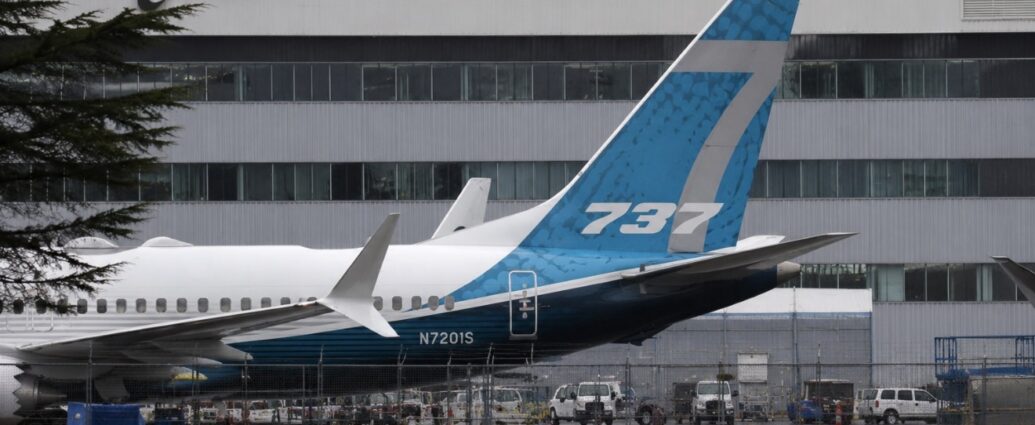
NEW YORK — May 14, 2026 — Shares of Boeing Co. dropped as much as 5.4% on Thursday and finished the session down roughly 4% at $227.50 after President Donald Trump told Fox News host Sean Hannity from Beijing that China had agreed to order 200 commercial jets from the company — a deal that would mark China’s first major purchase of U.S.-made commercial aircraft in nearly a decade but that came in at less than half of what Wall Street analysts and industry sources had been expecting heading into the summit. The disappointment erased every gain Boeing had accumulated since the company’s chief executive, Kelly Ortberg, joined the Trump delegation to Beijing earlier this week.

According to reporting by Bloomberg News in March and people familiar with the negotiations cited by Reuters, the package under discussion ahead of the Trump-Xi summit had been roughly 500 737 MAX narrow-body jets, with the potential for dozens more wide-body aircraft in follow-on orders. Jefferies had publicly forecast up to 500 to 600 aircraft from the visit. Trump said on Hannity that the figure was 200 “big” Boeing jets and characterized the outcome as a win for the planemaker, saying Boeing had wanted 150 but had gotten 200. Neither the White House nor Boeing specified the mix of narrow-body and wide-body aircraft included in the order, the delivery timeline, or the airlines that would take the planes — a degree of opacity that analysts said compounded the disappointment.

George Ferguson, senior aerospace analyst at Bloomberg Intelligence, summarized the Street reaction directly, telling clients that 200 jets “is a disappointment for a market looking for 300 or more and details around type.” Wall Street still maintains a Strong Buy consensus on Boeing shares with an average 12-month price target of $273.86, but the gap between Thursday’s announced figure and the 500-jet base case forced a sharp repricing of the China upside that had been built into the stock over the past month. Boeing shares had risen 8.84% in the four weeks leading into the summit on summit-deal anticipation. The stock is up roughly 7% for the year.

The strategic context underneath the headline matters as much as the headline. The 200-jet order is Boeing’s first major commercial sale to China since Trump’s 2017 visit to Beijing and represents roughly 3% of the company’s existing 6,807-aircraft backlog, according to the company’s most recent disclosures. Boeing delivered 47 commercial aircraft in April, including 34 of its 737 MAX narrow-body jets and six 787 Dreamliner wide-body aircraft, and the broader manufacturer continues to grapple with production bottlenecks that have left airlines globally waiting years for deliveries. Adding 200 Chinese aircraft to that pipeline at a slow drip is materially different from the step-change a 500-jet order would have represented.

Geopolitics has been the dominant overhang. In April 2025, China ordered its state-owned carriers to stop accepting Boeing deliveries and to halt purchases of U.S.-made aviation equipment after the Trump administration imposed a 145% tariff on Chinese imports. Trump suspended the triple-digit tariffs last October in a fragile trade truce, and Xi Jinping backed away from threats to choke off rare-earth supplies as part of the same deal — clearing the runway for fresh commercial conversations. In January 2020, China had committed to purchasing $77 billion in U.S.-made goods including aircraft as part of the so-called Phase One trade deal, but the Covid-19 pandemic collapsed air travel and the commitment was never fulfilled. Boeing lost its longstanding market lead in China to Airbus SE over the same period, in part because of trade friction and in part because the extended global grounding of the 737 MAX in the wake of two fatal crashes drove Chinese airlines toward the European competitor.

Airbus has been in parallel discussions for a similarly sized deal with Chinese carriers, according to industry sources, and is widely expected to land a portion of the broader Chinese fleet refresh that Boeing missed Thursday. China’s aviation market is the second-largest in the world after the United States, and both manufacturers project the country will require at least 9,000 new jetliners by 2045 — meaning the strategic prize remains enormous regardless of the size of the Trump-era announcement. Boeing’s ability to recapture its historic share of that pipeline now turns on whether the 200-jet figure represents a first installment with more orders to follow or a one-off summit deliverable designed to give both sides a headline.

Treasury Secretary Scott Bessent said earlier Thursday on CNBC from Beijing that he expected an announcement on a “large” Chinese Boeing order during the visit. Ortberg had told Reuters last month that he was counting on the Trump administration’s support to seal a major deal with China. The White House did not immediately respond to requests for comment on Wall Street’s reaction. Boeing also did not immediately comment.

For investors, Thursday’s reaction underscores the persistent investing principle that expectations dominate news on event-driven trades. The order itself is unambiguously good for Boeing — it reopens the Chinese channel after nearly a decade of trade-war damage, adds backlog at a moment when global wide-body demand is outstripping supply, and validates Ortberg’s decision to join the Beijing delegation. But with the buy-side positioned for a number two to three times larger, the gap punished the stock regardless. The next signal will come if and when the Civil Aviation Administration of China or specific Chinese carriers — Air China Ltd., China Eastern Airlines Corp., and China Southern Airlines Co. — disclose airline-level allocations and aircraft types.

JBizNews Desk

© JBizNews.com. All rights reserved. This article is original reporting by JBizNews Desk. Unauthorized reproduction or redistribution is strictly prohibited.


American consumers tightened their grip on discretionary spending in April and a fresh batch of layoffs pushed jobless claims to a five-week high, according to two government reports released Thursday morning that together paint the clearest picture yet of an economy buckling under the weight of Iran-driven energy costs.

The Commerce Department said retail sales rose 0.5% in April from the prior month, a sharp deceleration from a revised 1.6% surge in March that had marked the largest one-month gain in more than three years. Strip out gasoline stations, and sales were up just 0.3% — a sign that higher pump prices, rather than genuine consumer strength, were doing much of the work in the headline figure.

Separately, the Labor Department reported that initial applications for unemployment insurance climbed to 211,000 in the week ending May 9, an increase of 12,000 from the prior week’s revised level and well above the 205,000 figure forecast by economists polled by Dow Jones. Continuing claims, which measure Americans still drawing benefits and lag the initial filings by a week, rose by 24,000 to 1.78 million.

The two reports landed roughly an hour apart and reinforce a single theme: the cost of the U.S.-Israeli war with Iran is now flowing directly into American kitchens, gas tanks, and household budgets. Crude prices have climbed more than 30% since the conflict erupted in late February, and the Energy Information Administration has reported retail gasoline prices well above $4 a gallon nationally — pressure that economists at the Stanford Institute for Economic Policy Research estimate has added roughly $857 to the average American driver’s annual fuel bill.

Inside the retail report, the squeeze on nonessentials was unmistakable. Department stores saw sales fall 3.2%, the steepest one-month drop in over a year, while furniture and home furnishings stores slipped 2%. Online retailers eked out a 1.1% gain, suggesting consumers are still spending but increasingly hunting for deals on price comparison engines rather than walking into malls. Gas station receipts continued to balloon, but those dollars do not reflect demand — they reflect cost.

“Households remain resilient for now, potentially leaning on tax refunds and broader savings to keep on spending in the face of the latest price squeeze,” said James McCann, senior economist for investment strategy at Edward Jones, in a research note circulated earlier this week. Tax refunds have run roughly $350 above last year’s pace, according to Internal Revenue Service data, providing a temporary cushion that economists warn is running thin.

The jobless claims report adds a fresh wrinkle. While initial filings remain low by historical standards — the labor market spent much of the spring near multi-decade lows — the 12,000 jump and the rise in continuing claims suggest the long-running “low-firing” environment may finally be cracking. Wall Street has watched a steady cadence of corporate layoff announcements from large employers in recent weeks, including roughly 4,000 jobs at Cisco Systems announced after Wednesday’s closing bell, with notifications beginning Thursday.

The combined readings carry direct implications for monetary policy. Kevin Warsh, confirmed Wednesday in a 54-45 Senate vote as the next chairman of the Federal Reserve, takes the helm at the central bank on Friday inheriting an inflation problem made worse by the Iran war and a labor market that, while still tight, is no longer unambiguously strong. Markets had been pricing in only a single quarter-point cut from the Federal Open Market Committee this year, with the benchmark rate currently held in the 3.50% to 3.75% range. Thursday’s data — softer real consumer spending, a tick higher in layoffs, and a fresh import-price report showing the steepest 12-month gain since October 2022 — gives Warsh little room to maneuver as he balances the White House’s calls for cheaper borrowing costs against the inflation flowing through the gas pump.

For Main Street, the picture is more immediate. The National Retail Federation said earlier this week that household spending priorities have shifted toward groceries, fuel, and essential services, with discretionary categories such as furniture and electronics absorbing the cutbacks. Matthew Shay, president and chief executive of the NRF, said in a statement that consumers are “mindful on costs” while retailers work to “keep everyday goods affordable for American families.”

The next major reads on the American consumer arrive May 21, when Walmart reports fiscal first-quarter results, and again on May 30, when the Bureau of Economic Analysis publishes April personal income and spending data. Until then, Thursday’s twin reports — softer spending and a creeping rise in layoffs — stand as the clearest sign that the Iran war is no longer a Wall Street headline. It is a kitchen-table reality.

JBizNews Desk
© JBizNews.com. All rights reserved. This article is original reporting by JBizNews Desk. Unauthorized reproduction or redistribution is strictly prohibited.

NEW YORK — A new economic and political fault line is quietly forming across America — not in factory towns or rural communities, but in the suburban office corridors surrounding the nation’s largest cities.

Researchers at Tufts University’s Fletcher School are calling it the “Wired Belt”: a growing cluster of suburban counties filled with highly educated white-collar workers whose jobs are increasingly vulnerable to artificial intelligence automation.

And according to the researchers behind the project, the political consequences could eventually rival — or exceed — the upheaval caused by the collapse of American manufacturing during the rise of the Rust Belt.

The concept comes from the university’s newly developed American AI Jobs Risk Index, an expansive effort mapping AI-related job vulnerability across 784 occupations and identifying where those workers are geographically concentrated.

What emerged was a striking pattern.

The workers most exposed to AI disruption are not spread evenly across the country. Instead, many are clustered in suburban rings surrounding major metropolitan areas in politically critical swing states including Pennsylvania, Michigan, Wisconsin, Georgia, and Arizona — the same regions that have repeatedly determined presidential elections over the past decade.

Unlike traditional blue-collar displacement, the workers at risk inside the Wired Belt are overwhelmingly professionals: writers, marketers, analysts, accountants, web designers, administrative coordinators, paralegals, and data specialists whose daily tasks increasingly overlap with the rapidly advancing capabilities of generative AI systems.

Bhaskar Chakravorti, dean of global business at the Fletcher School and lead researcher behind the study, believes that distinction matters enormously.

“These are people who are on LinkedIn,” Chakravorti told Fortune. “They know their congressman’s phone number. They’re good at writing, web design, data analysis, marketing.”

In other words, the workers most vulnerable to AI disruption may also be uniquely positioned to organize politically around it.

That possibility is becoming increasingly relevant as AI-driven restructuring accelerates throughout the corporate economy.

Across the technology sector alone, more than 95,000 jobs have already been eliminated during 2026, with industry estimates suggesting roughly 44% of those reductions are tied directly or indirectly to AI automation.

Major companies including Microsoft, Meta, Oracle, and Amazon have all announced large-scale workforce reductions this year while simultaneously increasing investment in artificial intelligence infrastructure, automation systems, and AI-assisted productivity tools.

The pattern is increasingly clear across corporate America: the same technologies companies are investing billions to deploy are beginning to reduce demand for many of the white-collar coordination and knowledge-work roles that defined suburban professional employment for much of the past two generations.

That overlap is precisely what makes the Wired Belt concept politically significant.

The suburban professional class has historically occupied a central role in American economic and electoral stability. These communities typically feature high voter participation, strong civic engagement, advanced education levels, and significant influence over local and national political narratives.

Researchers argue that if those workers begin experiencing widespread economic displacement — or even sustained fear of displacement — due to AI systems, the resulting political response could reshape the national conversation around technology, labor, regulation, and corporate power.

Unlike many industrial workers displaced during earlier globalization waves, these workers possess both the communication skills and institutional familiarity needed to mobilize quickly and effectively.

And unlike factory closures concentrated in isolated industrial regions, AI-driven displacement could emerge simultaneously across multiple suburban counties critical to both political parties.

The economic stakes are equally significant.

White-collar suburban workers collectively represent trillions of dollars in consumer spending, mortgage obligations, retirement investments, tax revenue, and local economic activity. A broad-based weakening of those employment categories could ripple outward into housing markets, retail spending, financial services, education systems, and regional tax bases.

For businesses, the challenge is becoming increasingly delicate.

Corporate executives are under enormous pressure from investors to deploy AI aggressively in pursuit of productivity gains and cost reductions. But doing so too visibly — particularly in politically sensitive regions already anxious about job security — may eventually create reputational, regulatory, and political backlash.

Exactly how the Wired Belt ultimately responds remains uncertain.

Some groups may push for stronger regulation limiting AI-driven labor replacement. Others may demand retraining programs, portable healthcare and retirement benefits, wage insurance, or new taxation frameworks tied to automation-related productivity gains.

Still others may simply seek slower deployment of AI systems across certain categories of professional work.

What researchers increasingly agree on, however, is that the debate is no longer theoretical.

Artificial intelligence is moving beyond isolated disruption inside Silicon Valley and beginning to reshape the economic foundation of mainstream suburban America — the very communities that helped define the modern middle and upper-middle class.

And if those communities begin to view AI less as a technological opportunity and more as an economic threat, the resulting political movement could become one of the defining forces in American life over the next decade.

The Rust Belt reshaped American politics around globalization and manufacturing decline.

The Wired Belt may soon do the same for artificial intelligence.

JBizNews Desk

© JBizNews.com. All rights reserved. This article is original reporting by JBizNews Desk. Unauthorized reproduction or redistribution is strictly prohibited.

The largest sporting event ever staged across North America is now just weeks away, yet much of the U.S. hotel industry is preparing for something closer to a normal summer than the tourism windfall many executives once anticipated.

A new report from the American Hotel & Lodging Association found that roughly 80% of hotel operators across the 2026 FIFA World Cup’s 11 U.S. host cities say bookings are running below expectations, with many describing the tournament as effectively a “non-event” for their properties.

The findings sharply undercut earlier projections from FIFA, which repeatedly promoted the tournament as a potential $30.5 billion economic boom and compared the expanded 2026 World Cup to “104 Super Bowls.”

The tournament, running from June 11 through July 19, will be the first FIFA World Cup jointly hosted across the United States, Canada and Mexico, and the first to feature an expanded 48-team field.

The 11 U.S. host markets include New York/New Jersey, Los Angeles, Boston, Seattle, San Francisco, Houston, Dallas, Miami, Philadelphia, Atlanta and Kansas City.

According to the AHLA survey, several of those cities are now seeing significantly weaker-than-expected hotel demand.

Kansas City appears to be the weakest-performing host market, with roughly 85% to 90% of hotel operators reporting booking activity below both original World Cup expectations and even typical summer occupancy levels.

Hotels in Boston, Philadelphia, San Francisco and Seattle similarly reported widespread disappointment, while markets including Dallas, Houston and Los Angeles are tracking roughly in line with ordinary seasonal demand rather than the massive tourism surge many investors anticipated.

Only Miami and Atlanta appear to be outperforming broader expectations, supported partly by stronger leisure demand and the presence of team training bases.

The reasons for the slowdown are increasingly geopolitical as much as economic.

Between 65% and 70% of hotel operators surveyed identified visa-processing delays, broader geopolitical instability and concerns surrounding U.S. entry procedures as major drags on international travel demand.

The strong U.S. dollar has further increased costs for foreign visitors, while ongoing conflict in the Middle East and uncertainty tied to trade policy have weakened global travel sentiment more broadly.

FIFA itself is also facing criticism from hotel operators.

According to the AHLA report, FIFA negotiated large room-block agreements with hotels across host cities before later exercising opt-out clauses and releasing thousands of unsold rooms back into the market after initial demand assumptions failed to materialize.

The association described the process as creating an “artificial early demand signal” that distorted pricing and inventory expectations throughout many host markets.

A FIFA spokesperson defended the organization’s approach, saying accommodations teams worked closely with hotels and released unused inventory within contractually agreed timelines.

Publicly traded hospitality companies are now watching the situation closely.

Major hotel operators with exposure to host cities include Marriott International, Hilton Worldwide, Hyatt Hotels and Choice Hotels International, while booking platforms including Booking Holdings, Expedia Group and Airbnb are also directly tied to World Cup-related travel demand.

Marriott Chief Executive Anthony Capuano recently acknowledged softer inbound international travel trends broadly, though he stopped short of directly criticizing World Cup demand.

Some economists argue the disappointment reflects structural realities surrounding mega-events more than any single geopolitical issue.

Lisa Delpy Neirotti, director of the Sports Management Program at George Washington University, told Fortune that high travel and ticket prices are likely suppressing attendance more than politics alone.

Meanwhile, sports economist Andrew Zimbalist has long argued that major international sporting events often displace ordinary tourism rather than meaningfully increase total visitor activity, as regular travelers avoid congestion, security restrictions and inflated pricing.

The implications could prove especially painful for smaller host markets.

Cities including Kansas City invested heavily in stadium upgrades, transportation improvements and hospitality expansion under the assumption that the World Cup would generate lasting tourism momentum and economic spillover.

If attendance and travel demand underperform expectations, many of those investments could face increasing scrutiny from local taxpayers and municipal officials.

The broader hospitality industry is also entering a more fragile economic period.

After outperforming major gateway cities through much of 2024 and early 2025, smaller and mid-sized U.S. hotel markets are now facing signs of softening discretionary travel demand as inflation, airfare costs and geopolitical uncertainty weigh on consumers.

For investors, the AHLA report represents one of the clearest indications yet that Wall Street’s World Cup tourism narrative may have become significantly overpriced.

The tournament itself is still expected to draw enormous television audiences and global attention. But for many American hotel owners, the economic reality increasingly appears far less transformational than the hype that preceded it.

JBizNews Desk

© JBizNews.com. All rights reserved. This article is original reporting by JBizNews Desk. Unauthorized reproduction or redistribution is strictly prohibited.

Nvidia Corp. Chief Executive Jensen Huang boarded Air Force One during a refueling stop in Alaska on Tuesday after a personal phone call from President Donald Trump, joining the U.S. delegation traveling to Beijing for meetings with Chinese President Xi Jinping this week — a last-minute reversal by the White House after widespread attention focused on the conspicuous absence of the world’s most important artificial-intelligence executive from the trip.

The decision came after media coverage Monday and Tuesday highlighted that Huang had been left off the administration’s original 17-member CEO delegation despite Nvidia’s central role in the global AI race and the escalating semiconductor battle between Washington and Beijing. After seeing the coverage, President Trump personally called the Nvidia founder and invited him to join the trip, according to a source familiar with the matter cited by CNBC. Huang then traveled to Alaska to board the presidential aircraft before the delegation continued to China.

Nvidia confirmed the executive’s participation in a statement, saying: “Jensen is attending the summit at the invitation of President Trump to support America and the administration’s goals.”

Photos posted on social media by New York Post White House correspondent Emily Goodin showed Huang on the tarmac in Alaska carrying a backpack and waiting to board Air Force One alongside some of the country’s most influential corporate leaders. Also traveling with the president were Tesla and SpaceX Chief Executive Elon Musk, Apple Chief Executive Tim Cook, Boeing Chief Executive Kelly Ortberg, and Goldman Sachs Chief Executive David Solomon. The final delegation includes 17 CEOs, smaller than the 27 executives who accompanied President Trump on his 2017 China visit.

The late addition underscored just how central Nvidia has become not only to Wall Street and Silicon Valley, but also to U.S. economic strategy and geopolitical positioning. Nvidia’s advanced AI chips now power much of the world’s artificial-intelligence infrastructure, including hyperscale data centers, cloud computing networks, sovereign AI projects, and advanced machine-learning systems that governments increasingly view as strategically sensitive technologies.

Asked during a CNBC interview last week whether he would join the trip if invited, Huang replied: “If invited, it would be a privilege — it would be a great honor to represent the United States and to go to China with President Trump.”

Behind the symbolism sits a far more consequential business and geopolitical reality. Nvidia has spent years navigating increasingly aggressive U.S. export controls aimed at limiting China’s access to advanced semiconductors and AI computing systems. Those restrictions have dramatically reshaped one of Nvidia’s most important international markets.

The Trump administration’s April 2025 restrictions on Nvidia’s H20 chip — a version specifically engineered for the Chinese market under prior export-control rules — resulted in what analysts estimated was roughly an $8 billion revenue impact in a single quarter and forced the company to record significant inventory write-downs. China had previously accounted for at least one-fifth of Nvidia’s data-center revenue before the tightening restrictions effectively shut the company out of large portions of the market.

Over the past 18 months, Huang has repeatedly traveled between Washington and Beijing attempting to preserve at least some commercial pathway into China while publicly warning that overly restrictive U.S. policies could accelerate China’s push toward domestic semiconductor independence. His appearances included a high-profile visit to the China International Supply Chain Expo last summer, where he emphasized the importance of maintaining global technology cooperation despite mounting political tensions.

Still, analysts remain skeptical that this week’s summit will produce any major breakthrough for Nvidia or materially loosen semiconductor restrictions.

Hao Hong, chief investment officer at Lotus Asset Management, told CNBC there is “very little” Nvidia is likely to gain in terms of immediate policy concessions because the White House remains deeply reluctant to allow exports of more advanced AI chips into China.

“I think China realized that the tech rivalry between the two countries will be one of the key determinant factors going forward to determine the relative competitive position in the global geopolitics between the two countries,” Hong said. He added that technological “decoupling” between the world’s two largest economies is likely to deepen rather than ease.

For the White House, however, bringing Huang into the delegation carries substantial symbolic and political value. Nvidia’s market capitalization, which crossed $4 trillion last summer, has transformed the company into perhaps the clearest symbol of American AI dominance and technological leadership. Leaving its founder off a presidential trip designed to showcase American corporate power would have raised difficult questions for the administration at a moment when AI leadership has become tightly linked to national competitiveness.

President Trump has repeatedly pointed to Nvidia’s stock performance and America’s broader AI boom as evidence that the U.S. technology sector continues to thrive under his economic agenda despite tariffs, export controls, and rising geopolitical tensions. In a social media post confirming Huang’s participation, the president described it as an honor to have the Nvidia founder and the broader business delegation accompanying him to China.

The meetings between Presidents Trump and Xi on Thursday and Friday are expected to focus heavily on trade, tariffs, semiconductor restrictions, artificial intelligence, Taiwan tensions, and supply-chain security. Officials on both sides have attempted to lower expectations for any sweeping agreement, though negotiators have signaled the talks could still produce narrower commitments involving agricultural purchases, fentanyl-precursor enforcement, and rare-earth mineral supply arrangements.

Those rare-earth discussions are particularly important for companies including Apple, Tesla, and Boeing, all of which remain deeply dependent on Chinese processing capabilities for critical industrial materials and supply-chain components.

For Nvidia investors, the immediate question is whether Huang’s presence inside the room creates any limited opening for future Chinese access to some of the company’s products. The broader question — whether Washington ultimately intends to permanently wall off China from America’s most advanced AI infrastructure — is unlikely to be resolved this week.

But Huang’s presence aboard Air Force One signals something larger already underway: Nvidia is no longer merely a semiconductor company. It has become a central pillar of American economic strategy, diplomacy, and the rapidly intensifying global contest for AI supremacy.

JBizNews Desk

© JBizNews.com. All rights reserved. This article is original reporting by JBizNews Desk. Unauthorized reproduction or redistribution is strictly prohibited.

The latest U.S. employment report contained a number that economists say could become one of the defining labor-market stories of President Donald Trump’s second term — and it had little to do with Wall Street’s headline reaction to April payroll growth.

According to data released Friday by the U.S. Bureau of Labor Statistics (BLS), the federal government eliminated another 9,000 jobs in April, marking the fourth consecutive monthly decline in federal employment.

But the cumulative total is what stunned labor economists.

Since October 2024, the federal civilian workforce has contracted by approximately 348,000 positions, representing an estimated 11.5% reduction in federal employment. Analysts reviewing the BLS figures say the decline now stands as the largest peacetime contraction in the federal civilian workforce ever recorded over a comparable period.

The driving force behind the cuts is the Trump administration’s aggressive Department of Government Efficiency (DOGE) restructuring initiative — the centerpiece of the White House effort to dramatically shrink the size of the federal bureaucracy.

What began as a political promise has now evolved into a major macroeconomic force reshaping labor markets across the country.

The broader April employment report initially appeared strong on the surface.

The U.S. economy added 115,000 nonfarm payroll jobs, more than double the Dow Jones consensus estimate of 55,000, prompting administration officials to celebrate the report as evidence of continued economic resilience.

Acting Labor Secretary Keith Sonderling said the report proved “94% of Bloomberg economists wrong.”

Yet economists examining the underlying details painted a considerably more cautious picture.

The economy’s three-month rolling average of job creation has now fallen to roughly 48,000 jobs per month, one of the weakest sustained hiring trends since the pandemic recovery period ended.

Economists generally estimate that the U.S. economy requires between 100,000 and 150,000 new jobs monthly simply to absorb population growth and new labor-force entrants.

By comparison, monthly averages regularly exceeded 200,000 jobs throughout much of 2023 and 2024.

Several additional indicators inside the report reinforced concerns about softening labor conditions.

The number of Americans working part-time involuntarily — workers whose hours were reduced or who cannot secure full-time employment — surged by approximately 445,000 in a single month, climbing to nearly 4.9 million workers.

That represented one of the sharpest monthly increases in underemployment in years.

Meanwhile, the labor force participation rate slipped to 61.8%, its lowest level since October 2021.

That metric matters because workers who stop actively searching for employment are no longer counted as unemployed, allowing the headline unemployment rate to remain relatively stable even when labor-market conditions weaken beneath the surface.

The official unemployment rate held at 4.3%.

Wage growth also showed signs of cooling.

Average hourly earnings increased just 0.2% during April and 3.6% year-over-year, a pace many economists argue is insufficient to fully offset the combined pressures of tariff-driven inflation and elevated energy costs that have intensified since the start of the Iran conflict earlier this year.

Sector-level data revealed a highly uneven economy.

Healthcare added approximately 37,000 jobs, while transportation and warehousing gained 30,000 and retail trade added 22,000 positions.

At the same time, the information services sector lost another 13,000 jobs, continuing a longer-term decline tied increasingly to artificial intelligence-driven disruption.

Economists estimate that information services employment has declined by approximately 342,000 jobs since late 2022, with automation and AI deployment accelerating workforce displacement across technology, media, administrative, and digital support functions.

For many of the nearly 350,000 former federal employees impacted by the DOGE restructuring, the transition back into the private labor market has proven difficult.

A recent NBC News investigation interviewed former federal workers who described months of unsuccessful job searches, significant salary reductions, forced relocations, and financial instability after losing government positions.

One former employee reportedly stopped counting after submitting 599 job applications without receiving an offer.

The White House has defended the reductions as a core pillar of the administration’s broader efficiency and fiscal reform agenda.

Administration officials argue the restructuring has reduced payroll expenses, streamlined agencies, and improved accountability across federal operations.

Critics — including labor economists, former agency officials, and public-sector unions — argue the cuts have significantly weakened operational capacity across multiple federal departments.

Particular concern has focused on staffing reductions at the:

  • Internal Revenue Service (IRS),
  • Social Security Administration (SSA),
  • Department of Veterans Affairs,
  • and other agencies responsible for delivering core government services.

The broader economic implications are becoming increasingly difficult to ignore.

Federal employment historically functioned as one of the most stable components of the American labor market, particularly during periods of economic uncertainty.

The scale of the DOGE restructuring means the federal government is now actively contributing to labor-market weakness rather than stabilizing it.

And with economists increasingly warning about slowing hiring, weakening participation rates, rising underemployment, and growing AI-driven displacement, the federal workforce cuts are arriving at a particularly fragile moment for the broader economy.

What is no longer debated is the sheer magnitude of the downsizing.

At approximately 348,000 federal jobs eliminated in roughly eighteen months, the DOGE initiative has already become one of the largest workforce restructurings in modern American government history — and its long-term economic, political, and institutional consequences are only beginning to emerge.

JBizNews Desk
© JBizNews.com. All rights reserved. This article is original reporting by JBizNews Desk. Unauthorized reproduction or redistribution is strictly prohibited.

America’s small-business sector showed little sign of recovery in April as inflation pressures tied to the Iran conflict, rising operating costs, and persistent labor shortages continued weighing heavily on Main Street confidence.

The National Federation of Independent Business (NFIB) reported Tuesday morning that its closely watched Small Business Optimism Index edged up just 0.1 point in April to 95.9, missing economist expectations and remaining below the organization’s 52-year historical average of 98.0 for a second consecutive month.

The weak reading was released only hours before the Bureau of Labor Statistics reported that U.S. inflation accelerated to 3.8% year-over-year in April — the highest annual Consumer Price Index reading since May 2023 — reinforcing concerns that rising energy and supply-chain costs are increasingly spreading throughout the broader economy.

For small-business owners, those pressures are already becoming difficult to absorb.

“Inflationary pressures continue to be a challenge for Main Street,” said Bill Dunkelberg, Chief Economist at the NFIB. “While small business optimism is currently fragile, the benefits of the Working Families Tax Cut Act should start to feed into the private sector over the next few months.”

The report highlights a growing disconnect between Washington’s fiscal support measures and the real-world pressures facing smaller employers across the country.

While the Working Families Tax Cut Act permanently extended the 20% Small Business Deduction at the end of 2025, many owners say those tax benefits are now being offset by sharply higher fuel costs, freight disruptions, insurance expenses, and wage pressures tied to the ongoing Iran conflict and the continuing disruption around the Strait of Hormuz.

Only a fraction of normal commercial shipping traffic is currently moving through the region, forcing global supply chains into costly rerouting patterns that are now flowing directly into U.S. consumer and business costs.

The labor market data inside the NFIB report carried some of the clearest warning signs.

According to the group’s latest employment survey:

  • 34% of small-business owners reported job openings they could not fill,
  • hiring intentions weakened for a second straight month,
  • and labor availability remained significantly tighter than historical norms.

The combination reflects an increasingly difficult environment where businesses are slowing expansion plans while still struggling to find workers — a pattern economists often associate with stagflationary conditions.

The report also showed profit pressures intensifying.

A growing number of owners reported worsening business conditions, declining profit trends, and rising uncertainty surrounding future economic demand.

The NFIB’s internal Uncertainty Index climbed to 92, far above its long-term historical average.

Small businesses continue citing taxes, labor quality, and inflation as their top operational challenges, while insurance costs have also emerged as a major financial burden.

Among owners reporting weaker profitability:

  • 13% blamed rising material costs,
  • while 7% pointed specifically to labor costs.

Both categories have been directly affected by higher energy prices and freight disruptions linked to the Iran conflict.

The broader concern for economists is that small businesses historically act as one of the earliest warning signals for shifts in the U.S. economy.

The sector represents roughly half of private-sector employment nationwide and often weakens before broader downturns appear in national economic data.

While current optimism readings are not yet at recessionary levels, sentiment has deteriorated noticeably since late 2025, when the index was approaching 100.

Three of the last four monthly readings have now come in below Wall Street expectations.

Analysts say the trajectory increasingly depends on whether energy prices stabilize and whether supply-chain conditions improve before weaker confidence begins feeding into reduced hiring, lower capital spending, and slower wage growth.

The timing adds additional uncertainty as President Donald Trump departs Tuesday evening for a state visit to Beijing, where global markets will closely watch for any diplomatic progress involving China’s role in the broader Iran crisis and global energy stability.

For now, Main Street businesses appear caught between two conflicting realities:
an economy that remains resilient enough to avoid recession — but one where inflation, labor shortages, and geopolitical disruptions are steadily eroding confidence underneath the surface.

JBizNews Desk
© JBizNews.com. All rights reserved.

ATTOM reported that 43.3% of mortgaged U.S. residential properties were considered equity-rich in the first quarter of 2026.

The figure dropped from 44.6% in the previous quarter — marking the lowest equity-rich rate since the fourth quarter of 2021.

Meanwhile, 3.2% of mortgaged residential properties were classified as seriously underwater in the first quarter. Those properties had combined loan balances at least 25% higher than their estimated market value.

That share increased from 3% in the prior quarter and 2.8% a year earlier.

“Homeowner equity remains relatively strong overall, but we’re seeing signs of moderation,” ATTOM stated in the report. “As mortgage rates have risen and home prices have cooled, the share of equity-rich homes has declined in most markets while the rate of seriously underwater properties is edging up across much of the country.”

Equity-rich share falls in most states

The share of equity-rich homes rose in only three states compared with the fourth quarter of 2025 and in six states compared with the first quarter of 2025.

States with year-over-year increases included Illinois (up from 31.5% to 33.5%), Alaska (up from 31.7% to 33.5%), South Dakota (up from 51.3% to 52.4%), North Dakota (up from 31.9% to 32.8%), New York (up from 54.1% to 54.4%) and Wisconsin (up from 49.3% to 49.5%).

States with the largest year-over-year declines were Florida (down from 49.3% to 43.2%), Arizona (down from 49.8% to 44.2%), Colorado (down from 45.8% to 40.5%), North Carolina (down from 47.2% to 42.1%) and Texas (down from 47.4% to 42.5%).

Vermont had the highest share of equity-rich homes at 85.7%, followed by New Hampshire (58.1%), Montana (57.7%), Rhode Island (57.2%) and Hawaii (55.8%).

Seriously underwater rates rise broadly

The share of seriously underwater mortgaged properties increased quarter-over-quarter in 44 states and the District of Columbia.

Markets with the largest annual increases included the District of Columbia (up from 3.8% to 5.3%), Mississippi (up from 6.6% to 8%), Louisiana (up from 10.5% to 11.8%), Kentucky (up from 7.3% to 8.5%) and Oklahoma (up from 5.5% to 6.6%).

States with year-over-year declines in seriously underwater properties were North Dakota (down from 4.8% to 4.3%), South Dakota (down from 3.4% to 3%), South Carolina (down from 3.8% to 3.6%) and Wyoming (down from 2.5% to 2.4%).

Louisiana had the highest share of seriously underwater homes at 11.8%, followed by Kentucky (8.5%), Mississippi (8%), Oklahoma (6.6%) and Arkansas (6.4%).

Metro areas show widespread declines

The share of equity-rich homes fell quarter-over-quarter in 93 of 107 metropolitan statistical areas (87%), which included metros with populations of at least 500,000.

Year-over-year, equity-rich shares declined in 92 metros, or 86%.

San Jose, California, had the highest rate of equity-rich homes at 65.2%, followed by Los Angeles (59.3%), San Diego (58.2%), Portland, Maine (57.9%) and Buffalo, New York (56.7%).

The lowest rates were in Baton Rouge, Louisiana (17.4%); New Orleans (19.1%); Little Rock, Arkansas (23.7%); Jackson, Mississippi (25.6%); and Baltimore (26.9%).

Baton Rouge also had the highest rate of seriously underwater homes at 11.9%, followed by Jackson (10.4%), New Orleans (10.2%), Little Rock (7.1%) and Memphis, Tennessee (7%).

Michigan counties lead in equity-rich properties

Of the 30 counties with the highest share of equity-rich properties, 23 were in Midwestern states — including 11 in Michigan, seven in Wisconsin and four in Indiana.

The counties with the highest proportions of equity-rich homes were Benzie County, Michigan (94.5%); Manistee County, Michigan (92.3%); Marquette County, Michigan (91.2%); Portage County, Wisconsin (89.5%); and Chippewa County, Michigan (89.5%).

Lowest rates were in Vernon Parish, Louisiana (6.2%); Ascension Parish, Louisiana (7.2%); Saint Bernard Parish, Louisiana (7.2%); Iberville Parish, Louisiana (8.7%); and Greenup County, Kentucky (10.6%).

At least half of mortgaged properties were equity-rich in 28.2% — 2,564 — of the 9,084 ZIP codes included in the analysis.

This article was generated using HousingWire Automation and reviewed by a HousingWire editor before publication. The system helps convert company announcements and industry data into HousingWire-style news coverage.

This post was originally published on here

By JBizNews Desk
May 11, 2026

The private equity firms behind Swiss luxury watchmaker Breitling have sharply reduced the company’s valuation after years of aggressive expansion collided with weakening luxury demand, rising tariff pressure, and mounting operational costs that are now forcing a broader strategic rethink.

According to a report published by the Financial Times, London-based CVC Capital Partners and Partners Group have written down Breitling’s valuation to roughly half of its peak worth from just several years ago — a dramatic reversal for a brand once viewed as one of the luxury watch industry’s fastest-rising turnaround stories.

People familiar with the matter told the FT that both firms are now conducting a comprehensive strategic review of Breitling’s operations as slowing sales and rising costs pressure profitability.

Breitling, CVC Capital, and Partners Group declined to comment publicly.

The brand’s rapid rise — and subsequent stumble — traces back to 2017, when CVC acquired approximately 80% of Breitling from the Schneider family in a transaction reportedly valued near $870 million.

CVC immediately installed former IWC executive Georges Kern as chief executive officer and launched an ambitious transformation strategy designed to reposition Breitling from a niche aviation-focused watchmaker into a broader global luxury lifestyle brand.

The strategy initially appeared highly successful.

In December 2022, CVC sold a controlling 50.3% stake in Breitling to Partners Group in a transaction valuing the company at approximately $4.5 billion.

CVC retained roughly 23.6%, while Kern is believed to hold approximately 3%. The remaining ownership is spread among private and institutional investors.

Partners Group co-founder Fredy Gantner chairs the board.

Today, however, the valuation picture looks dramatically different.

According to the Financial Times, CVC has now marked down its remaining Breitling stake to roughly half the level at which it last reinvested during 2023.

Partners Group is reportedly carrying the company closer to approximately 70% of its prior valuation — helped partly by entering at lower earlier pricing levels.

The deterioration reflects a broader slowdown sweeping through the global luxury sector.

Demand for high-end watches has weakened significantly over the past two years as elevated inflation, slowing global growth, reduced tourism activity, and tighter consumer spending pressure discretionary luxury purchases worldwide.

For Breitling, those macroeconomic challenges collided with an especially aggressive retail expansion strategy.

Under Kern, the company rapidly increased its global boutique footprint from approximately 56 locations in 2017 to more than 290 stores today.

The stores, designed around Breitling’s “industrial loft-inspired” concept aesthetic, expanded across major luxury retail corridors including New York, London, Geneva, and Paris.

At the same time, Breitling dramatically increased marketing spending to elevate the brand’s global visibility.

The company signed celebrity ambassadors including Brad Pitt, Charlize Theron, Austin Butler, Trevor Lawrence, and soccer star Erling Haaland.

It also secured high-profile commercial partnerships with Aston Martin, the NFL, and Europe’s Six Nations Rugby Championship.

The NFL partnership culminated in Breitling becoming the league’s official timepiece partner in 2025, accompanied by a major promotional launch event in New York’s Meatpacking District.

Breitling also pursued acquisitions as part of a broader luxury platform strategy, purchasing historic Swiss brands Universal Genève in 2023 and Gallet in 2025 while presenting the companies together under a developing “House of Brands” structure.

Yet despite the scale of investment, sales momentum has stalled.

According to estimates from Morgan Stanley and research firm LuxeConsult cited by industry publication WatchPro, Breitling’s retail sales are estimated at roughly 1.1 billion Swiss francs ($1.42 billion) in 2025, down from approximately 1.2 billion Swiss francs ($1.55 billion) in 2023.

The company’s sales have now reportedly declined each year since peaking in 2022.

In the United Kingdom, where public financial filings provide additional visibility, Breitling’s turnover reportedly fell from nearly £90 million in fiscal year 2023 to below £60 million in its latest filing — a drop exceeding 30%.

Credit markets had already begun signaling concern.

Moody’s downgraded Breitling last year, assigning the company a B3 rating, which reflects elevated credit risk and vulnerability to adverse business conditions.

Moody’s cited declining earnings and rising fixed costs tied to Breitling’s boutique expansion strategy.

S&P Global Ratings followed with its own downgrade in July 2025, cutting Breitling to B- from B, while warning that weakening consumer demand and slowing tourism activity were pressuring luxury spending globally.

Analysts at S&P said they expect gradual recovery beginning around 2027 but acknowledged significant uncertainty across the broader luxury-watch sector.

Tariff pressure compounded the situation further.

Swiss luxury goods entering the United States faced tariffs reaching as high as 39% between August and November before Switzerland later negotiated reductions under a bilateral trade agreement.

Current baseline tariffs on Swiss imports now stand near 10%.

The combination of slowing demand, elevated operating costs, tariff uncertainty, and weakening credit conditions has now forced Breitling’s owners into cost reviews and operational restructuring discussions.

According to Private Equity Wire, CVC and Partners Group are evaluating potential cost-cutting measures while still selectively investing in growth initiatives viewed as strategically important long term.

Despite the current downturn, insiders close to Partners Group reportedly still believe Breitling could eventually become a viable IPO candidate between 2027 and 2029 if the company stabilizes operations and the broader luxury market recovers.

The firm’s long-term thesis remains centered around Breitling’s strong chronograph heritage, aviation identity, and expanded global brand recognition.

But before any public offering becomes realistic, Breitling faces a more immediate challenge confronting much of the luxury industry today: proving that years of expansion, celebrity marketing, and premium pricing can still generate sustainable growth in a world where consumers are becoming far more selective about what they are willing to spend on.

JBizNews Desk
© JBizNews.com. All rights reserved. This article is original reporting by JBizNews Desk. Unauthorized reproduction or redistribution is strictly prohibited.
By JBizNews Desk
May 11, 2026

The federal government is now paying roughly $3 billion every single day just to service the national debt — a number so large it is beginning to reshape not only Washington’s fiscal choices, but the bond market, interest rates, and the broader American economy itself.

That daily interest burden reflects the mounting cost of financing a debt load rapidly approaching $39 trillion, at a moment when borrowing costs remain far higher than they were just several years ago and deficits continue widening with no serious bipartisan agreement in sight to slow them down.

According to data from the U.S. Senate Joint Economic Committee, total gross national debt stood at approximately $38.91 trillion as of May 5, 2026.

The pace of growth has become staggering.

The debt has increased by roughly $2.7 trillion over the past twelve months alone — equivalent to approximately $7.39 billion per day, $307 million per hour, or roughly $85,550 every second.

That translates to about $113,792 per American and nearly $288,676 per household.

The pressure is no longer coming simply from how much the government borrows.

It is increasingly coming from the cost of refinancing what it already owes.

The average interest rate on total marketable federal debt has climbed to approximately 3.373%, according to Joint Economic Committee data — more than double the roughly 1.58% average rate from five years ago.

That shift is mechanically driving interest costs higher as older Treasury securities issued during the near-zero-rate era mature and must be refinanced at today’s significantly higher yields.

Unlike discretionary spending programs, those interest payments cannot simply be renegotiated through annual budget fights.

They are contractual obligations owed to bondholders around the world.

And the bill is compounding automatically.

According to the Government Accountability Office and the Peter G. Peterson Foundation, federal interest payments surpassed $1 trillion for the first time during fiscal year 2025, making debt service the second-largest category in the federal budget behind only Social Security.

The Congressional Budget Office projects the pressure will intensify substantially over the coming decade.

Under current forecasts, annual net interest costs are expected to exceed approximately $1.5 trillion by 2032 and approach $1.8 trillion by 2035.

Under more adverse scenarios — including persistently elevated Treasury yields, extended tax cuts, and prolonged tariff-driven inflation pressure — some projections show annual interest costs potentially crossing $2 trillion before the end of the decade.

The bond market is already beginning to react.

In March, several major Treasury auctions showed visible signs of investor strain.

According to the Committee for a Responsible Federal Budget, auctions for 2-year, 5-year, and 7-year Treasury notes all produced weaker-than-expected demand.

Primary dealers were forced to absorb unusually large shares of issuance, while auction “tails” widened — a sign investors demanded higher yields than markets anticipated to absorb the growing supply of government debt.

Treasury yields climbed sharply through March and April.

The benchmark 10-year Treasury yield rose from roughly 4.0% to 4.4%, while the 30-year Treasury bond approached 4.9%.

Several forces drove the move higher simultaneously:

  • elevated inflation uncertainty,
  • rising oil prices tied to the Iran conflict,
  • expanding Treasury issuance,
  • and investor concern over America’s long-term fiscal trajectory.

Analysts at Charles Schwab warned recently that even if the Federal Reserve eventually begins cutting short-term interest rates, the sheer volume of Treasury debt flooding the market could keep long-term borrowing costs elevated for years.

That dynamic matters enormously because the United States finances itself through constant rolling issuance.

The Treasury must continually auction bills, notes, and bonds to banks, pension funds, insurers, money-market funds, foreign governments, and global institutional investors simply to refinance maturing obligations and fund ongoing deficits.

In the January-through-March quarter of fiscal year 2025 alone, the Treasury borrowed approximately $574 billion in privately held net marketable debt.

The Government Accountability Office, in a March 2026 fiscal outlook report, warned explicitly that Treasury debt-management practices alone cannot solve the country’s deteriorating fiscal position.

The GAO has urged Congress since 2020 to develop a long-term stabilization strategy.

As of February 2026, it noted, lawmakers still had not done so.

Layered on top of the existing fiscal strain is the One Big Beautiful Bill Act, signed into law by President Trump on July 4, 2025.

The legislation permanently extended major portions of the 2017 Tax Cuts and Jobs Act, added additional business and individual tax reductions, and raised the statutory debt ceiling by $5 trillion to $41.1 trillion.

The Congressional Budget Office estimates the package will add roughly $3.4 trillion to the national debt over the next decade.

Importantly, the United States is already running what economists call a “primary deficit” — meaning the federal government spends more than it collects even before paying a single dollar of interest.

That means the debt base itself continues expanding regardless of what happens to rates.

The issue is beginning to reverberate globally.

Rising sovereign borrowing costs have already intensified political pressure on governments abroad, including in the United Kingdom, where surging gilt yields recently complicated fiscal planning for Prime Minister Keir Starmer’s government.

For the United States, the risk is not immediate solvency.

Treasury securities remain the world’s benchmark safe-haven asset and continue serving as the foundation of global financial markets.

But fiscal credibility is becoming increasingly intertwined with market confidence.

The GAO warned in its March report that persistently rising debt levels could eventually force investors to demand even higher yields to compensate for long-term fiscal risk — creating a self-reinforcing cycle where rising interest costs themselves become a major driver of future deficits.

That is what makes the current trajectory so difficult to escape.

The federal government borrowed approximately $1.7 trillion during the twelve months ending April 2026, according to the Congressional Budget Office.

Every additional deficit adds to a debt stock already generating more than a trillion dollars annually in interest expense.

And unlike most areas of federal spending, the interest bill does not wait for congressional approval.

It grows automatically.

Which is why the $3 billion-a-day figure matters so much beyond its sheer size.

It represents a structural constraint increasingly shaping everything from Treasury auction demand and mortgage rates to fiscal policy, tax debates, inflation expectations, and long-term confidence in America’s economic direction.

And unless economic growth begins consistently outpacing both deficits and borrowing costs, the pressure coming from that interest bill is likely to remain one of the defining financial stories of the next decade.

JBizNews Desk
© JBizNews.com. All rights reserved. This article is original reporting by JBizNews Desk. Unauthorized reproduction or redistribution is strictly prohibited.

By JBizNews Desk
May 11, 2026

Wall Street’s enthusiasm surrounding Dell Technologies and the artificial intelligence infrastructure boom may have finally outrun even the company’s own explosive growth story.

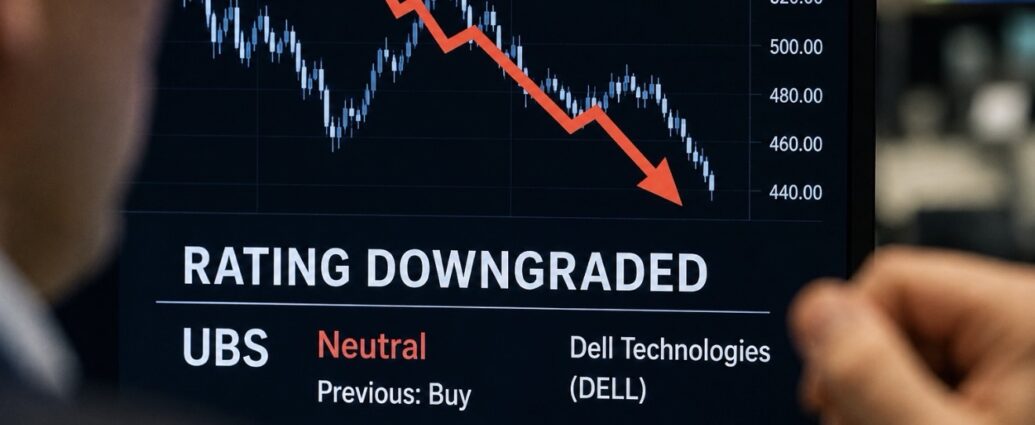
UBS analyst David Vogt downgraded Dell Technologies (NYSE: DELL) to Neutral from Buy on Monday morning, arguing that the stock’s extraordinary rally has already priced in much of the upside investors expect from Dell’s rapidly expanding AI server business.

The downgrade came after Dell shares surged approximately 170% over the past 12 months, making the company one of the strongest performers in the broader AI infrastructure trade.

UBS simultaneously raised its price target on the stock to $243 from $167, reflecting continued confidence in Dell’s underlying business momentum even as the firm stepped back from recommending additional aggressive upside.

Dell shares closed Friday at approximately $260.46, boosted further by an unusual moment of presidential attention during a White House Mother’s Day event where President Trump encouraged attendees to “go out and buy a Dell.”

The stock jumped more than 13% during Friday’s session alone.

The central issue for UBS is not Dell’s business performance.

It is valuation.

In his research note, Vogt argued the market may already be pricing Dell based on earnings expectations approaching roughly $17 per share in 2027, a figure approximately 25% above UBS’s own estimates.

That gap suggests investors may already be embedding best-case assumptions into the stock price — leaving limited room for additional upside even if Dell continues delivering strong operational results.

UBS still expects Dell’s earnings to grow more than 25% during fiscal year 2027, driven largely by demand for AI-optimized servers powered by Nvidia chips.

The company has emerged as one of the primary enterprise beneficiaries of the global race to build artificial intelligence infrastructure.

Dell itself has forecast approximately $50 billion in AI server revenue during fiscal 2027, more than double current levels as corporations, cloud providers, and governments continue aggressively expanding AI computing capacity.

Demand remains especially strong for full-rack AI server systems used to power large-scale enterprise and data-center deployments.

Dell’s supply-chain scale and enterprise relationships have positioned the company as one of the strongest challengers to competitors including Super Micro Computer and Hewlett Packard Enterprise in the rapidly growing AI server market.

That momentum has dramatically reshaped how investors value the company.

According to UBS, Dell shares are now trading at roughly 20 times and 18 times the firm’s calendar-year 2026 and 2027 earnings estimates, respectively.

Just several months ago, the stock traded closer to approximately 10 times forward earnings.

The rapid multiple expansion reflects how aggressively markets have repriced companies viewed as critical infrastructure suppliers to the artificial intelligence economy.

Other Wall Street firms remain considerably more bullish than UBS.

Mizuho recently reiterated its Outperform rating on Dell with a $260 price target, while BofA Securities raised its own target to approximately $246, citing Dell’s growing exposure to enterprise AI spending as a primary catalyst.

The broader AI infrastructure environment continues strengthening as hyperscalers and corporations pour hundreds of billions of dollars into computing capacity, networking systems, and data-center hardware.

Dell recently reinforced its position inside that spending wave through a disclosed $1.44 billion agreement with Boost Run tied to enterprise AI infrastructure covering both hardware and software deployment.

The deal further cemented Dell’s role as a central supplier within corporate America’s AI buildout.

Beyond artificial intelligence, the company is also undergoing broader strategic shifts.

Dell’s board recently approved a proposal to reincorporate the company from Delaware to Texas, subject to shareholder approval at its June 25 annual meeting.

The move aligns Dell’s legal domicile with its operational headquarters in Round Rock, Texas, and reflects a broader trend of corporations shifting incorporation structures toward Texas as the state continues attracting business investment and corporate relocations.

Operationally, Dell’s financial performance remains strong.

The company reported fiscal year 2026 revenue of approximately $113.54 billion, up nearly 18.8% from the prior year.

Net earnings climbed roughly 29.3% to approximately $5.94 billion.

For investors, however, Monday’s downgrade crystallizes the debate increasingly surrounding many AI-linked stocks across Wall Street.

The question is no longer whether artificial intelligence infrastructure demand is real.

It is whether the market has already priced in so much future growth that even excellent business execution may no longer be enough to justify further gains.

That tension — between extraordinary technology momentum and increasingly stretched valuations — has become one of the defining dynamics of the 2026 stock market.

And Dell now sits directly at the center of it.

JBizNews Desk
© JBizNews.com. All rights reserved. This article is original reporting by JBizNews Desk. Unauthorized reproduction or redistribution is strictly prohibited.
By JBizNews Desk
May 11, 2026

Saudi Aramco delivered a powerful first-quarter earnings beat Sunday, reporting a 25% jump in profit as the world’s largest oil company successfully rerouted massive volumes of crude exports around the war-driven closure of the Strait of Hormuz — offering global energy markets a real-time demonstration of how decades of infrastructure investment can become a financial lifeline during geopolitical crisis.

The state-controlled oil giant reported net profit of $32.5 billion for the quarter ending March 31, up sharply from approximately $26 billion during the same period a year earlier.

The result exceeded Wall Street expectations. Analysts surveyed by LSEG had forecast profit closer to $30.95 billion.

On an adjusted basis excluding certain non-operational accounting items, Saudi Aramco said earnings rose 26% year over year to roughly $33.6 billion, also ahead of the company’s own internal analyst consensus forecast of approximately $31.16 billion.

Revenue climbed nearly 7% to $115.49 billion, supported by higher oil prices and strong sales volumes across crude oil, refined fuels, and petrochemicals.

The company said it realized an average crude price of approximately $76.90 per barrel during the quarter, up significantly from about $64.10 during the fourth quarter of 2025 and slightly above the roughly $76.30 average recorded a year earlier.

The increase reflected the geopolitical risk premium that has remained embedded in global oil markets since the Strait of Hormuz effectively shut to most commercial shipping following the outbreak of war in late February.

But the real story of the quarter was not simply higher oil prices.

It was infrastructure.

At the center of Saudi Aramco’s operational response stood the East-West Pipeline, a decades-old contingency system linking the kingdom’s eastern oil-producing fields to the Red Sea port of Yanbu.

The pipeline was originally constructed precisely for scenarios involving disruptions in the Persian Gulf and the Strait of Hormuz — though until now it had never faced a prolonged test of this magnitude.

This quarter, it became Saudi Arabia’s primary export artery.

With roughly 20% of the world’s seaborne oil supply normally flowing through Hormuz, the company pushed the East-West Pipeline to its maximum throughput capacity of approximately 7 million barrels per day, operating effectively at full utilization for three consecutive months.

“Aramco’s first-quarter performance reflects strong resilience and operational flexibility in a complex geopolitical environment,” said Amin H. Nasser, President and Chief Executive Officer of Saudi Aramco.

The pipeline allowed Saudi Arabia to continue exporting substantial oil volumes despite the maritime disruption that paralyzed large portions of Gulf shipping traffic.

But the quarter also revealed the limits of even the world’s most sophisticated energy infrastructure systems.

According to a person familiar with the matter cited by Bloomberg, Saudi crude exports recovered to roughly 5 million barrels per day by the end of March — approximately 70% of normal pre-war levels.

That means even with the East-West Pipeline operating flat out, Saudi Aramco still could not fully replace the export capacity normally moving through the Strait of Hormuz.

Every barrel redirected through the pipeline reduced operational flexibility elsewhere inside the system, leaving minimal excess capacity available to absorb additional production increases or further disruptions.

That limitation is now being closely watched across global energy markets.

Oil traders, refiners, and governments increasingly view utilization rates on the East-West Pipeline as a real-time gauge of how much spare Saudi export capacity remains available during the conflict.

At full utilization, there is little additional room left.

Any further disruption to the pipeline itself — or any additional geopolitical escalation affecting Saudi infrastructure — would likely tighten global oil supplies immediately.

The earnings report arrived as diplomatic developments surrounding the war also showed tentative movement.

CNBC, CNN, The Associated Press, and The Wall Street Journal all reported Sunday that Iran had submitted a formal response to a U.S.-backed framework proposal aimed at ending the conflict and reopening the Strait of Hormuz.

The negotiations carry enormous implications for Saudi Aramco’s financial outlook.

If diplomacy succeeds and Gulf shipping lanes reopen, Saudi Arabia could rapidly restore exports to pre-war levels while easing pressure on the East-West Pipeline.

If talks collapse, however, the pipeline’s 7-million-barrel-per-day ceiling becomes a hard structural constraint limiting future export growth.

Despite the disruption, Saudi Aramco signaled confidence in its financial strength.

The company declared a first-quarter base dividend of approximately $21.9 billion, up 3.5% from a year earlier.

The payout remains critically important to the Saudi government, which depends heavily on Aramco dividends as one of the kingdom’s largest revenue sources.

Capital expenditures totaled approximately $12.1 billion during the quarter, slightly below the $12.5 billion spent a year earlier and down from roughly $13.4 billion in the prior quarter.

The company maintained full-year capital spending guidance between $50 billion and $55 billion.

Free cash flow declined modestly to $18.6 billion, compared with approximately $19.2 billion during the same period last year, partly due to a large increase in working capital requirements tied to wartime operational adjustments.

For investors and energy executives alike, the quarter offered a rare real-world stress test of how a national oil giant performs when one of the world’s most important shipping corridors effectively disappears overnight.

Saudi Aramco’s answer was clear: better than many feared — but not without hard limits.

The 25% profit surge reflected decades of infrastructure investment designed precisely for moments like this.

The incomplete export recovery showed that even the world’s largest oil producer cannot fully engineer its way around the closure of a chokepoint as critical as the Strait of Hormuz.

For the broader energy industry, the lesson may be even more important.

The companies best positioned to survive global disruptions are often the ones that spent years building contingency systems long before markets believed they would ever actually be needed.

JBizNews Desk
© JBizNews.com. All rights reserved. This article is original reporting by JBizNews Desk. Unauthorized reproduction or redistribution is strictly prohibited.

By JBizNews Desk
May 11, 2026

Global financial markets opened the new week cautiously Monday as signs that U.S.-Iran peace negotiations had stalled pushed stock futures lower, lifted the dollar, and sent oil prices climbing again — a pattern that has become increasingly familiar to investors navigating nearly three months of geopolitical volatility tied to the war in the Persian Gulf.

The shift in sentiment followed a blunt statement from President Donald Trump, who announced Sunday that he had rejected Iran’s latest counterproposal aimed at ending the conflict and reopening the Strait of Hormuz.

“I have just read the response from Iran’s so-called ‘Representatives.’ I don’t like it — TOTALLY UNACCEPTABLE!” Trump wrote on Truth Social.

The post quickly erased much of the optimism that had fueled last week’s powerful market rally.

The S&P 500 and Nasdaq Composite had both posted their sixth consecutive weekly gains amid growing investor expectations that negotiations between Washington and Tehran were approaching a breakthrough.

By Sunday evening in Asia, however, markets were moving back into defensive positioning.

Futures tied to the Dow Jones Industrial Average fell roughly 143 points, or 0.3%, while futures linked to the S&P 500 and Nasdaq 100 also declined approximately 0.3%.

The U.S. dollar strengthened against a basket of major currencies as traders shifted toward traditional safe-haven assets, while both Brent crude and West Texas Intermediate oil prices moved higher on concerns that the disruption to Gulf energy flows may continue far longer than markets had recently hoped.

Iran’s latest proposal had reportedly been delivered through mediators in Pakistan and called for lifting U.S. Treasury sanctions on Iranian oil exports within 30 days alongside an end to Washington’s naval blockade of Iranian ports.

The Trump administration has consistently resisted those demands absent a broader nuclear and security agreement.

Secretary of State Marco Rubio reinforced the administration’s position Sunday, rejecting Tehran’s suggestion that Iran would reopen the Strait of Hormuz while maintaining effective operational control over the passage.

“That’s not opening the straits,” Rubio said. “Those are international waterways.”

Despite the broader diplomatic setback, markets did receive one modest operational sign that selective shipping movement through the region remains possible.

A QatarEnergy liquefied natural gas carrier, the Al Kharaitiyat, successfully crossed the Strait of Hormuz Sunday for the first time since the conflict began on February 28.

The vessel headed toward Pakistan’s Port Qasim after reportedly receiving transit approval from Iran as part of a limited confidence-building arrangement involving Qatar and Pakistan, both of which continue playing central mediation roles in the negotiations.

The transit offered a narrow but important signal that portions of Gulf shipping traffic may still be selectively allowed even while the broader waterway remains effectively closed to most commercial energy exports.

Elsewhere across the Gulf region, however, fresh security incidents underscored how fragile the situation remains.

The United Arab Emirates reported intercepting two drones launched from Iran, while Qatar condemned a drone strike targeting a cargo vessel operating in its territorial waters.

Kuwait additionally stated that its air-defense systems engaged hostile drones that briefly entered Kuwaiti airspace.

The incidents reinforced growing concerns among investors that tactical military escalations could rapidly destabilize already fragile diplomatic efforts.

For financial markets, the week ahead now carries heightened importance.

Investors are preparing for a series of critical economic reports expected to offer the clearest indication yet of how the Iran-driven oil shock is affecting the broader U.S. economy.

The Bureau of Labor Statistics is scheduled to release both the Consumer Price Index and Producer Price Index this week — key inflation readings arriving as the national average gasoline price remains above approximately $4.54 per gallon.

Wall Street increasingly fears that sustained energy inflation could begin feeding more aggressively into transportation, manufacturing, food, and consumer prices across the economy.

Analysts at Goldman Sachs recently raised their Brent crude forecast to $90 per barrel by late 2026, citing accelerating global inventory drawdowns estimated at roughly 11 million to 12 million barrels per day as the Hormuz disruption persists.

The bank warned that even a future diplomatic breakthrough may not immediately solve the underlying supply imbalance.

“Even if flows via Hormuz eventually resume, the lag in restoring supply, combined with depleted inventories, suggests sustained tightness,” said Billy Leung, investment strategist at Global X ETFs. “I’d argue the fat tail is still ahead of us, not behind.”

The ongoing energy shock is also placing the Federal Reserve in an increasingly difficult position.

The central bank held interest rates steady at its most recent meeting, but policymakers now face competing risks pulling in opposite directions.

Higher oil prices are pushing inflation expectations upward at the same time consumer confidence and discretionary spending continue weakening.

Additional rate hikes risk tipping the economy toward recession.

Rate cuts, meanwhile, risk allowing inflation expectations to become further entrenched after one-year consumer inflation expectations recently climbed to approximately 4.5%, according to the University of Michigan’s latest survey.

Corporate earnings this week will also receive heightened scrutiny.

Results from Cisco Systems and Under Armour are expected to offer additional insight into whether rising energy costs and geopolitical instability are beginning to pressure corporate supply chains, logistics expenses, and consumer demand.

But for global markets, the dominant variable remains the same one investors have watched for nearly ten weeks:

What happens next between Washington and Tehran — and whether diplomacy can reopen the narrow shipping corridor between Iran and Oman through which roughly one-fifth of the world’s oil supply once flowed freely.

JBizNews Desk
© JBizNews.com. All rights reserved. This article is original reporting by JBizNews Desk. Unauthorized reproduction or redistribution is strictly prohibited.

By JBizNews Desk | May 10, 2026

After a week that delivered record highs on Wall Street, a U.S.-brokered ceasefire in Ukraine, the first Qatari LNG tanker through the Strait of Hormuz since the Iran war began and a blowout April jobs report, the week ahead may prove even more consequential for investors, businesses and consumers alike.

A packed economic calendar, major corporate earnings and fragile diplomacy surrounding the Iran conflict are all converging across the same five-day stretch — and the outcomes could reshape the market’s direction heading into the summer.

Monday: Housing Market Gets Its First April Report Card

The week opens Monday morning with Existing Home Sales for April from the National Association of Realtors at 10:00 a.m. Eastern, offering the first major economic snapshot of the week and an early signal of how consumers are handling higher borrowing costs.

With 30-year mortgage rates climbing to approximately 6.38% in late March as Treasury yields surged following the Iran-war energy shock and record federal borrowing needs, housing affordability has deteriorated sharply across much of the country.

Analysts will be watching closely to see whether elevated mortgage costs and still-high home prices are finally forcing buyers to the sidelines.

A slowdown in housing would reinforce growing concerns that consumers remain under mounting financial pressure despite continued labor-market strength.

Corporate earnings Monday also include reports from Simon Property Group and Constellation Energy, two companies offering very different windows into the economy.

Simon Property’s results will provide insight into mall traffic, retail leasing demand and consumer spending trends, while Constellation’s earnings will be closely watched for commentary surrounding electricity demand, AI-driven power consumption and energy-market disruptions tied to the Iran conflict.

Tuesday: The Inflation Report That Could Change the Market’s Direction

The single most important economic release of the week arrives Tuesday morning when the Bureau of Labor Statistics publishes the Consumer Price Index for April 2026 at 8:30 a.m. Eastern.

Economists surveyed by Reuters expect headline inflation to rise approximately 0.6% month-over-month and 3.7% year-over-year, up sharply from March’s already elevated 3.3% annual rate.

The increase is expected to be driven largely by higher energy prices following the near-closure of the Strait of Hormuz.

Core CPI — which excludes food and energy — is forecast to rise a more moderate 0.3% monthly and 2.7% annually.

That gap between headline and core inflation may become the market’s central battleground.

If core inflation remains relatively contained, investors may treat the energy-driven spike as temporary. But if core inflation accelerates alongside energy costs, expectations for Federal Reserve rate cuts later this year could collapse quickly.

That would likely send Treasury yields higher while increasing pressure across housing, credit and equity markets.

For consumers, the report may simply confirm what many households already feel daily at gas stations, grocery stores and utility bills: inflation remains stubbornly high, and energy markets tied to the Iran conflict are a major reason why.

Wednesday: Producer Prices Reveal What Businesses Are Facing

One day after CPI, investors will receive another major inflation signal when the Producer Price Index for April is released Wednesday morning.

PPI tracks the prices businesses pay for goods and materials before those costs eventually reach consumers, making it one of the market’s most important forward-looking inflation indicators.

With Brent crude still trading above $100 per barrel and global supply chains continuing to adjust to disruptions around Hormuz, producers across transportation, manufacturing, chemicals and food processing have absorbed major cost increases in recent months.

A hotter-than-expected PPI reading would suggest businesses are still passing inflationary pressure through the system — raising the risk that future CPI reports in May and June could remain elevated as well.

That scenario would likely keep the Federal Reserve sidelined on rate cuts while intensifying concerns about consumer spending and economic growth.

Wednesday also brings earnings from Cisco Systems, a key bellwether for enterprise technology spending and corporate IT investment.

Investors will closely watch whether businesses continue spending aggressively on networking infrastructure and AI-related systems despite higher borrowing costs and growing macroeconomic uncertainty.

Thursday: Retail Sales Will Reveal the Consumer’s Real Condition

Thursday’s Retail Sales report for April may ultimately provide the clearest reading on the health of the American consumer.

The data will show whether last week’s surprisingly strong jobs report — which showed the U.S. economy adding 115,000 jobs in April, more than double economist expectations — is translating into actual spending growth.

Or whether rising fuel costs, elevated borrowing rates and geopolitical uncertainty are beginning to force households to pull back.

Consumer sentiment data already points toward rising stress.

The University of Michigan’s consumer sentiment index recently fell to a record low of 48.2 in preliminary May readings, signaling growing anxiety over inflation and future economic conditions.

If retail spending weakens meaningfully, markets may begin confronting a more difficult economic picture: a labor market that remains relatively resilient even as consumer confidence and purchasing power deteriorate.

Thursday also includes:

  • Initial jobless claims
  • Import and export price data
  • Business inventories

Each release will offer additional clues about inflation, trade pressures and broader economic momentum.

All Week: Earnings Continue Across Retail, Energy and Technology

Corporate earnings season remains active, with investors increasingly focused on whether businesses can maintain strong profit growth as energy costs rise and consumer spending patterns shift.

According to LSEG IBES data, S&P 500 earnings are currently on track to rise approximately 28% in the first quarter, an unusually strong pace that has helped fuel the market’s recent rally to record highs.

Every major earnings report this week will either reinforce that bullish narrative — or begin chipping away at it.

For investors, the broader question is whether corporate America can continue producing strong results if inflation stays elevated and consumer spending slows later this year.

All Week: Iran Ceasefire and Hormuz Diplomacy Remain the Market’s Biggest Wild Card

Overshadowing every economic release and earnings call this week is the same geopolitical question markets have wrestled with since late February:

Will the Iran war end — and will the Strait of Hormuz fully reopen?

The temporary three-day U.S.-brokered ceasefire tied to Russia’s Victory Day commemorations expires Monday, while Secretary of State Marco Rubio has said Washington continues awaiting Tehran’s formal response to a broader peace proposal.

Meanwhile, the Qatari LNG tanker that successfully transited Hormuz over the weekend — the first such passage since the war began — has become a closely watched signal that limited, politically managed shipping movements may be possible before a full agreement is reached.

Whether those openings expand or collapse this week may move markets more than any single economic indicator.

Oil traders, bond investors and equity markets have increasingly priced in expectations for eventual de-escalation.

But the timing remains deeply uncertain.

A meaningful diplomatic breakthrough could quickly ease oil prices and stabilize inflation expectations. A breakdown, however, could send Brent crude back above $110 per barrel, drive Treasury yields higher and further weaken consumer confidence.

The result is a week where economic data, corporate earnings and geopolitical headlines are all pulling markets in different directions simultaneously.

And by Friday, investors may have a much clearer answer about whether the U.S. economy is stabilizing — or moving into a far more fragile phase.

JBizNews Desk

By JBizNews Desk
May 10, 2026

Netflix confirmed in its latest pricing update that its standard ad-free streaming plan in the United States now costs $19.99 per month, while its premium tier has climbed to $26.99 and its advertising-supported plan increased to $8.99 — price moves that underscore how rapidly the economics of the streaming industry are shifting away from the low-cost disruption model that originally fueled its rise. The increases, which began rolling out March 26, mark Netflix’s second broad U.S. pricing increase in just over a year and place the company at the center of a broader transformation reshaping the global streaming business.

For much of the past decade, streaming services positioned themselves as the direct alternative to traditional cable television: cheaper, commercial-free, and entirely consumer-controlled. Increasingly, however, the industry is moving toward a hybrid model built around both rising subscription prices and expanding advertising revenue — a structure that many analysts say now resembles the very cable ecosystem streaming once sought to replace.

Netflix eliminated its lowest-priced ad-free basic tier last year, steering new subscribers toward either higher-priced commercial-free plans or lower-cost ad-supported options. Nearly every major streaming platform has followed a similar path.

Amazon introduced advertising by default inside its base Prime Video experience. Disney+, Hulu, and Max have all expanded ad-supported offerings while steadily raising prices on premium tiers. Max, owned by Warner Bros. Discovery, increased the cost of its standard ad-free plan to $18.49 in late 2025.

The cumulative financial effect on households is becoming increasingly visible.

According to Deloitte’s March 2026 Digital Media Trends report, average household streaming spending has remained roughly flat at approximately $69 per month even as individual platform prices continue climbing — a signal analysts interpret as evidence consumers are becoming increasingly selective about which subscriptions they maintain.

The same report found that 61% of consumers would consider canceling a streaming service if prices rose by $5 or more.

At the same time, the fastest growth across the industry is no longer coming from premium commercial-free subscriptions.

Approximately 68% of streaming subscribers now use ad-supported plans, according to Deloitte, reflecting a major behavioral shift as consumers increasingly accept advertising in exchange for lower monthly costs.

Data from Antenna’s Q2 2025 State of Subscriptions Report showed that roughly 71% of new subscriber growth across major streaming platforms over the past two years came from ad-supported tiers. About 65% of those subscribers were entirely new platform users rather than premium customers downgrading to cheaper plans.

That transition is fundamentally changing how streaming companies measure the value of subscribers.

Instead of focusing solely on monthly subscription fees, platforms are increasingly monetizing viewing time itself, with advertising revenue directly tied to audience engagement and watch duration.

“We’re getting much closer to parity than people think,” said Paul Frampton-Calero, CEO of digital marketing agency Goodway Group, referring to the long-term economics of advertising-supported users versus premium subscribers.

According to Frampton-Calero, ad-supported customers could soon generate between 50% and 75% of the economic value of premium subscribers, with some industry models eventually reaching full parity as advertising technology improves and targeting becomes more sophisticated.

Netflix itself has aggressively expanded its advertising ambitions.

Adrian Zamora, a spokesperson for Netflix, confirmed the company expects advertising revenue to reach approximately $3 billion in 2026, roughly double the prior year’s level. The company also projected total 2026 revenue between $50.7 billion and $51.7 billion, supported by continued subscriber growth, pricing increases, and accelerating advertising sales.

Much of the pricing pressure facing consumers is being driven by the soaring cost of content itself.

Industry analysts estimate Netflix will spend approximately $20 billion on content in 2026, up from roughly $18 billion the previous year, as the company expands deeper into live sports, live entertainment programming, video podcasts, and large-scale event broadcasting.

The company recently expanded sports rights investments, including a new agreement involving Major League Baseball, while continuing to aggressively finance original films, international programming, and prestige television series designed to sustain subscriber engagement globally.

Executives at Netflix have consistently argued that pricing increases are tied directly to content investment and platform value, pointing to the company’s relatively low subscriber churn rates as evidence many consumers remain willing to pay higher prices for premium programming.

Analysts at TD Cowen estimate the latest U.S. pricing changes could increase Netflix’s average revenue per user in the United States and Canada by approximately 6% year over year in 2026, with some premium plans seeing effective increases closer to 11%.

For consumers, however, the broader shift increasingly means uninterrupted low-cost streaming is no longer the default experience.

Many households are now rotating subscriptions month to month, subscribing temporarily for specific shows or sports programming before canceling. Others are increasingly migrating toward entirely free ad-supported platforms including Tubi, Pluto TV, and Roku Channel, which continue gaining market share as streaming costs rise.

Industry analysts see little indication the trend will reverse.

Streaming platforms are increasingly betting that combining subscription revenue with advertising creates a more resilient long-term business model than relying on subscriptions alone. As a result, companies across the sector are redesigning pricing structures, content strategies, and platform experiences around maximizing both viewer engagement and advertising inventory.

For longtime media executives, the irony is difficult to ignore.

The original promise of streaming was liberation from rising cable bills, rigid channel bundles, and forced advertising breaks. A decade later, the industry is steadily rebuilding many of those same economics — only now delivered through apps, algorithms, and internet-connected televisions rather than cable boxes.

JBizNews Desk

JBizNews Desk | May 10, 2026

Jim Farley, CEO of Ford Motor Company, has spent years sounding the alarm about a workforce crisis he believes most of corporate America and Washington are still not taking seriously enough.

This week, in an exclusive interview with Fortune, he made it personal — revealing that his own Gen Z son has chosen to spend the summer working as a fabricator in North Carolina rather than taking summer courses, and arguing that the story of one young man’s career choice is a microcosm of a much larger economic problem.

“He feels like that’s more fulfilling than doing summer school at some fancy college,” Farley told Fortune.

The skilled-trade shortage — the gap between the jobs America desperately needs filled and the workers available to fill them — remains, in Farley’s words, “full-blown.”

He placed the country in “the second or third inning” of grappling with it seriously, noting that awareness has improved but solutions remain fragmented.

The “second or third inning” framing is significant.

In baseball terms, the game is barely underway.

Farley is not describing a problem that is close to being solved.

He is describing one that has barely been confronted.

Ford’s Problem — and America’s

The numbers behind Farley’s urgency are concrete.

As of January 2026, Ford had 5,000 open mechanic positions paying roughly $120,000 annually — positions Farley says he simply cannot find workers to fill.

Those are not entry-level jobs.

They are skilled, well-compensated careers — paying nearly double the American worker’s median salary — going begging because the pipeline of trained tradespeople has been systematically neglected for decades.

The country is already short:

  • 600,000 factory workers
  • 500,000 construction workers

Farley wrote in a LinkedIn post last June that America will need 400,000 auto technicians over the next three years alone.

In total, Farley has put the national blue-collar job opening at more than 1 million unfilled positions across emergency services, trucking, factory work, plumbing, electrical work, and skilled trades.

“So many of the real problems are in small companies and small businesses that don’t have the funding,” Farley said.

“Trade school is often offered as an option, but it’s extremely expensive. Not everyone can afford it.”

That last point cuts directly to the equity dimension of the shortage.

The conventional solution — more vocational training — runs directly into the same affordability barrier that has made four-year college increasingly inaccessible for working-class families.

Farley has argued that fixing the blue-collar shortage requires not just cultural change but systemic policy investment:

  • more funding for vocational education
  • expanded apprenticeship pipelines
  • regulatory reform that makes it easier for small businesses to train and retain skilled workers

The AI Paradox

The deeper irony at the heart of Farley’s argument is one that has gained significant traction in 2026:

The same artificial intelligence boom that is eliminating white-collar entry-level jobs is simultaneously creating enormous new demand for the blue-collar workers America has spent decades undervaluing.

What Farley calls the “essential economy” — the blue-collar sectors that get things “moved, built, or fixed” — represents $12 trillion in U.S. GDP, according to the Aspen Institute.

But it is chronically understaffed and undervalued.

AI could eliminate half of all white-collar jobs in the U.S. within a decade, Farley has warned — gutting entry-level tech roles like junior programming and clerical work, the rungs many young Americans have been told to climb.

Meanwhile, the skilled tradespeople needed to build the data centers that will run those AI systems simply do not exist in sufficient numbers.

According to a March 2026 labor market report, the data center industry alone faces a projected shortfall of up to 499,000 workers, with construction labor costs rising 8% to 12% year over year.

“I think our story is just very similar to what’s going to be happening across the country with linemen, electricians, plumbers,” Farley told Fortune.

“It won’t be just for data centers, it’ll be for transmission lines, off-grid energy sources.”

Ford is experiencing this tension internally.

As the company converts its BlueOval SK battery plant in Glendale, Kentucky — originally built to produce EV batteries — into a dedicated energy storage facility, workers are now learning lithium iron phosphate chemistry, skills most never anticipated needing when they took the job.

“We are ourselves finding skilled trade shortages as we convert our automotive battery plants to energy storage battery plants in Kentucky and Michigan,” Farley said.

The Cultural Shift That’s Underway

Farley is not alone in making this case anymore — and that may be the most meaningful development of 2026.

For Farley, the macro argument and the personal one have become inseparable.

Figures ranging from BlackRock CEO Larry Fink to JPMorgan CEO Jamie Dimon are now publicly sounding the alarm about skilled-labor shortages threatening America’s growth ambitions.

The Ad Council is mobilizing a paid advertising campaign around the issue.

Carhartt CEO Linda Hubbard, who appeared alongside Farley in this week’s Fortune interview, said:

“It does seem that business is picking up the mantle and saying, ‘Yeah, we need to move this forward.’”

The cultural data supports the momentum.

A November 2025 NBC News poll found that 63% of Americans now say a four-year degree is “not worth the cost” — up from 47% in 2017.

Between 2011 and 2023, roughly 2 million fewer students enrolled in four-year universities.

In the first quarter of 2024, Gen Z made up nearly 25% of all new hires in skilled trades.

A February 2026 survey found 60% of Gen Zers plan to pursue skilled-trade work this year.

For American businesses trying to hire, expand, and compete — in manufacturing, construction, energy, automotive, or any sector that depends on physical labor and technical skill — Farley’s “second or third inning” assessment carries a direct message:

Plan for the shortage to get worse before it gets better, because the workforce pipeline that would solve it is still being built from scratch.

© JBizNews.com. All rights reserved. This article is original reporting by JBizNews Desk. Unauthorized reproduction or redistribution is strictly prohibited.

By JBizNews Desk | May 10, 2026

Trump Media & Technology Group reported a $405.9 million first-quarter loss as steep declines in the value of its cryptocurrency and equity holdings overwhelmed improving cash generation and rapid balance-sheet expansion, leaving investors with a sharply divided picture of the company’s finances.

The parent company of Truth Social generated just $871,200 in quarterly revenue, underscoring the widening disconnect between the company’s underlying operating business and its roughly $2.48 billion market valuation. Operating expenses surged to $294.4 million from $40.4 million a year earlier, while earnings per share widened to a loss of $1.47 compared with a negative $0.14 during the same quarter last year.

The vast majority of the loss stemmed from noncash valuation declines rather than weakening operations. Trump Media recorded $368.7 million in unrealized losses tied to digital assets and equity securities after Bitcoin suffered its sharpest quarterly decline since 2018, falling approximately 22% during the period.

The company disclosed holdings of 9,542 Bitcoin with a cost basis of approximately $1.13 billion and a quarter-end fair value of $647.1 million, placing Trump Media among the world’s larger corporate Bitcoin holders. The company also reported ownership of 756 million Cronos tokens valued at roughly $53 million.

Despite the headline loss, management highlighted what it described as improving core financial metrics. Trump Media generated $17.9 million in positive operating cash flow during the quarter, marking its fourth consecutive quarter of positive cash generation. Financial assets climbed to $2.1 billion, nearly triple the $759 million reported a year earlier, while total assets reached approximately $2.2 billion.

Interim Chief Executive Kevin McGurn, who assumed leadership following the departure of Devin Nunes last month, said the company continues to pursue additional growth opportunities while advancing its proposed merger with TAE Technologies, a nuclear fusion company.

The all-stock transaction valued at more than $6 billion, currently under SEC review, would represent a dramatic transformation for a company originally built around a social-media platform tied closely to President Donald Trump. At present, Weiss Ratings maintains the only published analyst opinion on the stock, carrying a sell rating on DJT shares.

The divergence between Trump Media’s large accounting loss and its positive operating cash flow reflects a broader issue increasingly affecting crypto-heavy public companies. Under current Financial Accounting Standards Board rules, unrealized swings in digital-asset values flow directly through corporate earnings statements, meaning companies can report massive losses during periods of cryptocurrency weakness even while continuing to generate cash operationally.

That accounting structure has made quarterly financial comparisons increasingly difficult for investors attempting to evaluate Trump Media’s underlying business trajectory separate from the volatility of its digital-asset portfolio.

DJT shares closed Friday at $8.93, down roughly 1% on the session, and remained largely unchanged in after-hours trading following the earnings release. The muted reaction continued a pattern that has emerged around the company’s earnings reports, where investor attention often centers more on liquidity, regulatory developments, and crypto exposure than on the performance of Truth Social itself.

The stock has declined approximately 33% year to date and remains well below its 52-week high of $27.78.

With the company’s media division generating less than $900,000 in quarterly revenue against operating expenses nearing $300 million, Trump Media’s financial narrative has increasingly shifted away from advertising or platform growth and toward balance-sheet management, digital assets, and strategic restructuring.

Management’s ability to expand the company’s asset base while sustaining positive operating cash flow offers investors a counterweight to the headline loss. Still, continued volatility in cryptocurrency markets and uncertainty surrounding the pending TAE Technologies merger leave shareholders facing an extended period of questions about what Trump Media ultimately intends to become.

JBizNews Desk
© JBizNews.com. All rights reserved. This article is original reporting by JBizNews Desk. Unauthorized reproduction or redistribution is strictly prohibited.

JBizNews Desk | Friday, May 8, 2026

The Iran war is not hitting all Americans equally at the gas pump — and new research from the Federal Reserve Bank of New York shows the divide is becoming increasingly severe.

As gasoline prices surge nationwide, lower-income households are being forced to sharply reduce driving while wealthier Americans continue driving almost normally, simply absorbing the higher costs.

The national average price for regular gasoline climbed to $4.54 per gallon this week, according to AAA — up 31 cents in just seven days and roughly 52% higher than before the U.S.-Iran conflict began.

The main driver behind the spike remains the disruption surrounding the Strait of Hormuz, where war-related instability has stranded or rerouted oil shipments through one of the world’s most critical energy corridors.

But behind the headline price increase lies a much deeper economic divide.

The Rich Keep Driving. Everyone Else Cuts Back.

According to new New York Fed research:

  • Households earning under $40,000 annually reduced gasoline consumption by roughly 7% in March
  • Despite driving less, those households still spent approximately 12% more on fuel due to rising prices
  • Meanwhile, households earning $125,000 or more reduced gas usage by only 1% while increasing fuel spending by roughly 19%

In practical terms, wealthier Americans largely continued driving as normal and paid the additional cost without major lifestyle changes.

Lower-income households had no such flexibility.

“With the current energy price shock, a K-shaped pattern in gasoline consumption has opened up much more than before,” the New York Fed researchers wrote.

The report noted that lower-income families appear to be coping by:

  • Carpooling
  • Driving less frequently
  • Delaying nonessential trips
  • Using public transportation where available

The disparity is now reportedly even larger than during the 2022 fuel-price surge following Russia’s invasion of Ukraine.

For Many Americans, Driving Is Not Optional

For lower-income workers, the problem is not merely inconvenient — it directly affects economic survival.

For millions of Americans earning under $40,000 annually, a vehicle is often the only reliable way to:

  • Get to work
  • Bring children to school
  • Reach grocery stores
  • Attend medical appointments
  • Maintain multiple jobs or shift-based work schedules

When gas prices rise sharply, cutting back on driving can mean cutting back on economic participation itself.

Workers increasingly face a painful tradeoff:
Spend money they do not have — or lose income they cannot afford to lose.

The Iran War’s Oil Shock Is Still Rippling

Stanford economists estimate the average American household could pay approximately $857 more for gasoline during the remainder of 2026 because of war-driven energy disruptions.

Oil prices briefly surged as high as $112 per barrel earlier this spring following major disruptions tied to the Iran conflict.

Although crude prices have eased somewhat below $100 after reports of possible diplomatic progress between Washington and Tehran, analysts warn fuel prices may remain elevated for months.

“Even if there was a true and lasting resolution of the conflict … it will still take months to get back to what it was pre-war,” one energy analyst told the Washington Times. “There will still be a risk premium associated with going through that region.”

Some States Are Being Hit Far Harder Than Others

Drivers on the West Coast continue facing the highest prices in the country.

Current statewide averages include:

  • California: $6.06
  • Hawaii: $5.64
  • Washington: $5.61
  • Oregon: $5.21
  • Nevada: $5.15

Higher state fuel taxes, stricter environmental fuel standards, and distance from refining infrastructure are amplifying the impact in those markets.

Political Pressure Is Rising Fast

The spike in gasoline prices is quickly becoming one of the most politically sensitive domestic consequences of the Iran war.

Democratic lawmakers have increasingly focused on pump prices as a direct measure of how the conflict is affecting ordinary Americans, while the White House faces mounting pressure over inflation, consumer costs, and broader economic anxiety.

Gasoline prices remain one of the most visible economic indicators for voters.

And with national averages still well above pre-war levels — and no immediate path back downward — political pressure surrounding fuel costs is likely to intensify heading into the November midterm elections.

For millions of lower-income Americans already struggling with elevated rent, food prices, and borrowing costs, the gas pump has become one more place where global conflict translates directly into financial stress.

Every commute.

Every fill-up.

Every week.

© JBizNews.com. All rights reserved. This article is original reporting by JBizNews Desk. Unauthorized reproduction or redistribution is strictly prohibited.

JBizNews Desk | Friday, May 8, 2026

Economists have spent months warning that American consumers would eventually crack under the combined pressure of rising gas prices, persistent inflation, elevated interest rates, and the economic fallout from the Iran war.

So far, that breaking point has not arrived.

Two of America’s largest consumer-facing companies — Uber and Disney — just reported first-quarter earnings that suggest millions of Americans are still spending aggressively on travel, rides, entertainment, food delivery, and experiences despite a far more difficult economic backdrop.

The results are offering Wall Street a measure of reassurance that consumer demand remains surprisingly resilient — at least among higher-income households.

Uber: Consumers Keep Riding and Ordering

Uber’s first-quarter numbers came in stronger than analysts expected across several major categories.

The company reported:

  • Gross bookings up 21% year over year
  • Significant acceleration in both rideshare and delivery demand
  • 3.6 billion trips completed during the quarter
  • Non-GAAP earnings per share up 44%
  • $3 billion returned to shareholders

The performance came despite one major challenge: fuel prices.

Uber drivers bear their own gasoline costs, meaning surging pump prices tied to the Iran conflict directly affect driver economics and operating conditions.

CEO Dara Khosrowshahi acknowledged the difficult backdrop during the company’s earnings call, describing a “complex macro environment marked by weather disruptions, geopolitical tensions, and gas price volatility.”

Still, demand held up.

“The consumers are spending, they’re spending locally, and we don’t see any signs of that weakening at this point,” Khosrowshahi told CNBC.

Disney’s Parks and Cruises Stay Strong

Disney delivered a similarly resilient picture.

The entertainment giant beat Wall Street expectations, driven largely by strength in:

  • Theme parks
  • Cruises
  • Streaming operations
  • Consumer experiences

Disney’s experiences division generated nearly $9.5 billion in quarterly revenue, up approximately 7% from a year earlier.

Global park attendance increased 2%, although domestic attendance slipped slightly.

The results suggest consumers continue prioritizing vacations, travel, and entertainment even as broader economic concerns intensify.

But Disney executives also signaled caution.

Chief Financial Officer Hugh Johnston warned that the company remains highly sensitive to further increases in fuel prices and consumer pressure.

“We’re mindful of the macro uncertainty consumers are facing,” Johnston said during the earnings call. “We’re not immune to the impacts.”

The Consumer Economy Is Splitting in Two

The resilience shown by Uber and Disney may be real — but economists increasingly warn it reflects only part of the American economy.

Both companies disproportionately serve middle- and upper-income consumers — precisely the households that Federal Reserve researchers say have been least affected by the recent energy shock.

According to New York Fed data:

  • Higher-income households continue spending aggressively despite rising gas prices
  • Lower-income households are already reducing driving, cutting discretionary purchases, and scaling back spending

Bank of America consumer spending data similarly shows that much of the recent spending growth is coming from wealthier Americans whose investment portfolios have benefited from a stock market that continues hovering near record highs.

Meanwhile, lower-income families are increasingly being squeezed by:

  • Higher gasoline costs
  • Elevated rents
  • More expensive borrowing
  • Rising grocery prices
  • Persistent inflation

Inflation Risks Remain Elevated

Economists continue warning that the broader inflation picture may worsen before it improves.

The Consumer Price Index recently climbed to an annual inflation rate of 3.3%, the highest level since mid-2024, largely driven by rising energy costs.

Some analysts now expect the Federal Reserve’s preferred inflation gauge — the Personal Consumption Expenditures index — could approach 4% later this year, well above the Fed’s 2% target.

That creates growing uncertainty for businesses dependent on discretionary consumer spending.

As long as higher-income Americans continue traveling, dining out, booking vacations, and spending on entertainment, companies like Uber and Disney may continue posting strong results.

But if fuel prices continue climbing or the Iran conflict drags on longer than expected, that resilience could eventually weaken.

For Now, the Consumer Still Has Not Broken

For investors, the earnings reports offer an important signal:
The American consumer — particularly affluent consumers — remains remarkably durable despite economic headwinds.

But beneath the surface, the economy increasingly appears split into two very different realities.

One America is still booking vacations, ordering Uber Eats, and planning Disney trips.

The other is cutting back on driving simply to afford gasoline.

Uber and Disney’s earnings captured the first story.

The second story is unfolding more quietly — but it is already visible in the data.

© JBizNews.com. All rights reserved. This article is original reporting by JBizNews Desk. Unauthorized reproduction or redistribution is strictly prohibited.

For more than half a century, American corporate life has operated on a fixed quarterly rhythm. Every three months, public companies open their books to investors, revealing revenue, profits, costs, risks, and forward guidance in filings that can move billions of dollars in market value within minutes.

Now the Securities and Exchange Commission wants to make that system optional.

The SEC formally proposed rule changes this week that would allow public companies to file semiannual reports instead of mandatory quarterly reports, marking the biggest potential overhaul to U.S. corporate disclosure requirements in 55 years.

The proposal would allow companies to replace traditional quarterly Form 10-Q filings with a new semiannual filing known as Form 10-S. Public firms would still file annual reports, but instead of reporting four times per year, companies choosing the new framework would only be required to report twice.

The move represents a major victory for long-running efforts — strongly backed by President Donald Trump and many corporate executives — arguing that mandatory quarterly reporting encourages short-term thinking and distracts management teams from long-term growth strategies.

SEC Chairman Paul Atkins framed the proposal as part of a broader effort to revitalize U.S. public markets.

“Make IPOs Great Again,” Atkins said while unveiling the proposal.

A System That Has Defined Wall Street Since 1970

Quarterly reporting has been a defining feature of American financial markets since 1970.

Every earnings season, investors, analysts, traders, pension funds, and retirement savers dissect corporate filings for signs of growth, weakness, changing consumer behavior, operational risks, and management performance.

Entire industries have formed around the reporting cycle — from Wall Street research departments and financial television programming to earnings-call analysis platforms and algorithmic trading systems.

Under the SEC’s proposal, that cadence would fundamentally change.

Companies electing semiannual reporting would only need to indicate the choice once per year through a checkbox on their annual Form 10-K filing. The election would remain fixed for the fiscal year and could not be reversed midyear.

Importantly, companies would still be allowed to voluntarily release quarterly earnings updates if they choose.

Many large corporations are expected to continue quarterly reporting because institutional investors, analysts, and index providers rely heavily on consistent financial updates.

Still, the proposal could significantly reduce mandatory disclosures across large parts of corporate America.

Corporate America Has Wanted This for Years

Supporters of the proposal argue the current quarterly system has become expensive, burdensome, and harmful to long-term corporate planning.

Preparing quarterly filings often requires massive internal coordination involving finance departments, outside auditors, legal teams, investor-relations staff, executive management, and regulatory compliance systems.

Proponents say the process consumes enormous time and money — particularly for smaller public companies.

Kunal Kapoor, CEO of Morningstar, argued that reducing mandatory reporting frequency could make public markets more attractive again, especially for smaller firms hesitant to go public.

“The largest companies would likely maintain quarterly updates voluntarily because their investor base expects it,” Kapoor wrote. “Smaller, less-covered companies — exactly the ones we need in public markets — would gain meaningful cost relief and management bandwidth.”

Advocates also argue quarterly reporting pressures executives into prioritizing short-term earnings targets over long-term investments in research, hiring, infrastructure, product development, and innovation.

The concern over “quarterly capitalism” has existed for decades.

The SEC proposal even cites remarks from former SEC Chairman Arthur Levitt, who once warned that excessive focus on quarterly earnings was damaging the long-term health of American companies.

International Markets Already Moved Away From It

Supporters of the change also note that other major global markets have already reduced quarterly reporting requirements.

Australia and the European Union moved away from mandatory quarterly reporting more than a decade ago.

Research examining companies in markets using semiannual systems has generally shown little long-term difference in valuation levels or return-on-equity performance compared with firms reporting quarterly.

Still, those same studies also identified important tradeoffs involving liquidity, analyst coverage, disclosure quality, and pricing efficiency.

And that is precisely where the backlash is forming.

Critics Warn Investors Could Be Left in the Dark

Investor advocates, academics, and many asset managers argue that reducing reporting frequency would weaken transparency and hurt ordinary investors the most.

The CFA Institute warned in a recent analysis that less frequent financial reporting could impair market efficiency and make it harder for investors to accurately value companies.

“It is nearly axiomatic that, in most applications, more data is preferable to less,” the organization wrote.

Critics argue that large institutional investors already possess significant informational advantages through analyst networks, proprietary research, management access, and alternative data systems.

Retail investors, by contrast, rely much more heavily on public SEC filings.

Reducing disclosure frequency could therefore widen the information gap between Wall Street and Main Street.

Academic research cited in the debate also suggests less frequent reporting can create “information vacuums” where investors overreact to industry news in the absence of company-specific disclosures.

One study published in The Accounting Review found that European companies reporting semiannually often saw their stock prices move sharply based on U.S. peer-company earnings announcements because investors lacked current information about the firms themselves.

The SEC’s own proposal acknowledges several potential risks.

Among them:

  • Delayed release of material financial information
  • Increased information asymmetry between investors
  • Reduced market liquidity
  • Weaker investor confidence
  • Greater insider-trading concerns during longer reporting gaps

The agency specifically warned that reduced disclosure frequency could “diminish perceptions of fairness,” potentially discouraging participation in public markets.

The Bigger Question: Who Are Public Markets For?

At its core, the debate goes far beyond paperwork.

The fight over quarterly reporting reflects a larger philosophical conflict about the purpose of public markets themselves.

Supporters of the proposal argue markets should primarily help companies raise capital efficiently while giving management flexibility to focus on long-term strategy rather than constant quarterly scrutiny.

Critics argue public markets exist first and foremost to provide investors — including millions of Americans with retirement savings tied to stocks — timely, transparent information about the companies they own.

The SEC proposal now enters a 60-day public comment period before regulators decide whether to finalize the rules through a commission vote.

The process is expected to trigger fierce lobbying from corporations, investor groups, academics, pension funds, exchanges, and Wall Street firms.

Bryan Corbett, president and CEO of the financial industry trade group MFA, said regulators must carefully balance reducing corporate red tape with protecting investors’ access to timely information.

The outcome could reshape not only earnings season — but the relationship between corporate America and investors for decades to come.

JBizNews Desk

By JBizNews Desk | May 6, 2026

A word that has been largely absent from economic discussions for decades is making a sudden and uncomfortable return: stagflation.

As oil prices surge and growth expectations weaken, economists are increasingly warning that the U.S. may be entering — or already approaching — a period defined by the toxic combination of rising inflation and slowing economic activity.

The shift in sentiment has been driven largely by the escalation of the Iran conflict, which has disrupted energy markets and pushed crude prices sharply higher. The result is a renewed inflationary shock hitting an economy that was already showing signs of cooling.

The Organisation for Economic Co-operation and Development (OECD) now projects U.S. inflation could reach as high as 4.2% in 2026, significantly above earlier forecasts. At the start of the year, most economists expected inflation to remain closer to 2.5% while growth held near 2.5%. That outlook has changed dramatically.

“I think the damage has already been done,” said Mark Zandi, Chief Economist at Moody’s Analytics, pointing to the surge in oil prices as a key driver. “There’s no going back on oil prices in the near term.”

Energy costs act as a multiplier across the economy, raising prices for transportation, manufacturing, and consumer goods. As those costs rise, businesses face pressure on margins, while consumers see their purchasing power eroded.

At the same time, growth is showing signs of strain. Higher borrowing costs, supply chain disruptions, and uncertainty tied to geopolitical developments are weighing on business investment and consumer confidence.

That combination — rising prices and slowing growth — is the defining characteristic of stagflation.

Scott Lincicome, Vice President of General Economics at the Cato Institute, warned that inflation measures closely watched by the Federal Reserve could climb further. “We could see the Fed’s preferred gauge pushing toward 4%,” he said, adding that consumers are unlikely to see relief in the near term.

The Council on Foreign Relations has also highlighted the risk, noting that prolonged disruptions to oil and gas infrastructure could have lasting effects on global supply, keeping prices elevated and growth subdued.

Still, not all economists agree that stagflation is inevitable.

Aditya Bhave, Senior U.S. Economist at Bank of America, said markets may be overreacting to early signals. “You need sustained weakness in demand alongside persistent inflation,” he said, noting that consumer spending data has not yet shown a sharp decline.

The debate ultimately centers on duration. If the energy shock proves temporary, the economy may absorb the impact without entering a prolonged period of stagnation. If disruptions persist, the risks increase significantly.

For policymakers, the challenge is acute. The Federal Reserve is tasked with controlling inflation while supporting employment — goals that can come into direct conflict during stagflationary conditions.

“Central banks have very few good options in this environment,” said Diane Swonk, noting that raising rates to fight inflation can further slow growth, while cutting rates risks fueling price increases.

For consumers, the effects are more immediate. Rising fuel costs, higher food prices, and elevated borrowing rates combine to squeeze household budgets, even if employment remains relatively stable.

Looking ahead, much will depend on developments in global energy markets. The Strait of Hormuz, a key transit point for oil shipments, remains a focal point for traders and policymakers alike. Any disruption there could intensify inflation pressures further.

For now, the resurgence of stagflation concerns reflects a broader shift in the economic landscape — one where global events are once again shaping domestic outcomes in powerful and unpredictable ways.

© JBizNews.com. All rights reserved.

By JBizNews Desk | Monday, May 4, 2026

Ocean freight prices are climbing sharply across global trade routes as shipping carriers struggle to expand capacity fast enough to meet rising demand, tightening supply chains and increasing costs for businesses worldwide.

Container rates have surged in recent weeks, particularly on key routes from Asia to North America and Europe, as a combination of strong shipping demand, port congestion, and limited vessel availability creates a renewed imbalance in global logistics.

Vincent Clerc, CEO of A.P. Moller-Maersk, said “global container demand continues to outpace available supply, and that imbalance is driving significant rate increases across major shipping lanes.

Industry data shows freight rates rising at their fastest pace in months, reversing a period of relative stability and signaling that supply constraints are intensifying again. Carriers have attempted to deploy additional vessels and optimize existing routes, but executives say capacity expansion is being limited by infrastructure bottlenecks, port delays, and equipment shortages.

A key issue is the availability of containers and efficient turnaround times. Congestion at major ports is delaying the return of empty containers, creating shortages in critical export hubs and further tightening capacity. At the same time, longer transit times are effectively reducing available fleet supply.

Peter Sand, Chief Shipping Analyst at Xeneta, noted that “carriers are in a stronger pricing position as capacity remains constrained, leaving shippers with fewer alternatives and less negotiating power.

Carriers are also exercising greater discipline in managing capacity, prioritizing profitability after several years of volatile earnings. This has resulted in tighter control over available space, limiting the ability of the market to quickly absorb demand spikes.

For businesses, the impact is immediate. Higher freight rates are increasing landed costs, squeezing margins, and forcing companies to reconsider pricing, sourcing, and inventory strategies. Importers, particularly small and mid-sized firms, report difficulty securing space at predictable rates, leading to shipment delays and higher operating costs.

The surge in shipping costs is also feeding into broader inflation pressures, particularly in goods-heavy sectors where transportation represents a significant portion of total expenses.

Analysts warn that without a meaningful increase in capacity or a slowdown in demand, elevated freight rates could persist into peak shipping seasons, prolonging the strain on global trade.

What comes next: With capacity tight and demand holding firm, ocean freight markets are entering another volatile phase—one where pricing power remains with carriers and businesses must adapt quickly to rising costs and limited shipping flexibility.

JBizNews Desk

By JBizNews Desk | Monday May 4, 2026

GameStop has made an unsolicited $56 billion offer to acquire eBay, the online marketplace giant, in what would rank as one of the most stunning corporate takeover attempts in recent retail history — and a dramatic signal that CEO Ryan Cohen is done playing defense.

GameStop has built a roughly 5% stake in eBay and is offering $125 a share in cash and stock, Cohen told the Wall Street Journal in a direct interview Sunday. The offer represents a premium of about 20% to eBay‘s last closing price on Friday. “eBay should be worth — and will be worth — a lot more money,” Cohen said. “I’m thinking about turning eBay into something worth hundreds of billions of dollars.”

GameStop said in a news release that it submitted a non-binding proposal to buy 100% of eBay at $125 per share in cash and stock, split 50/50. The offer also represents a 46% premium to eBay’s closing price on February 4 — the day GameStop first began buying eBay stock. 

The Financing Behind the Bid

The sheer scale of the deal — eBay carries a market value of roughly $46 billion, nearly four times GameStop’s own $12 billion market cap — immediately raised questions about how Cohen plans to pay for it. He has lined up a multi-layered financing structure.

Cohen told the Wall Street Journal that GameStop has secured a commitment letter from TD Bank to provide about $20 billion in debt financing for the deal.  GameStop also holds about $9 billion in cash on its balance sheet.  To bridge the remaining gap, GameStop could seek support from external investors, including Middle Eastern sovereign wealth funds, according to people familiar with the matter. 

In its news release, GameStop said it expects to deliver $2 billion in annualized cost reductions within the first 12 months of closing the deal, including $1.2 billion in cuts from sales and marketing at eBay, $300 million from product development, and $500 million from general and administrative expenses. Cohen would become CEO of the combined company. 

Markets React

The news sent both stocks sharply higher. GME shares jumped more than 9% in after-hours trading, while eBay shares climbed between 10% and 15%, in a market reaction that recalled the 2021 short squeeze that briefly made GameStop a Wall Street obsession. 

The deal would combine GameStop’s collectibles expertise and growing cash war chest with eBay’s 130 million active buyers and global payments infrastructure — a combination Cohen argues could directly challenge Amazon’s dominance in the broader marketplace economy.

Cohen’s Expansion Play

The bid is the clearest expression yet of a strategic pivot Cohen has been building toward since early 2026. In January 2026, Cohen told the Wall Street Journal he was actively scouting deal targets in the consumer and retail sector as part of a plan to scale GameStop far beyond video games and collectibles.  His compensation package reinforces the ambition: it includes a performance-based stock option award valued at roughly $35 billion if fully earned, structured in nine tranches tied to escalating milestones, with the most demanding targets requiring GameStop to reach a $100 billion market cap. 

What Happens If eBay Says No

Cohen said he is prepared to run a proxy fight and take the offer directly to eBay shareholders if eBay’s board is not receptive. “There is nobody who is more qualified, based on my experience, to run the eBay business,” he told the WSJ. 

eBay had not responded to requests for comment as of Sunday evening. GameStop, eBay and TD Bank did not immediately respond to Reuters’ requests for comment.  Whether eBay’s board engages or resists, the proposal has already reshaped how Wall Street thinks about both companies — and about what Ryan Cohen is actually building.

— JBizNews Desk

© JBizNews.com. All rights reserved. This article is original reporting by JBizNews Desk. Unauthorized reproduction or redistribution is strictly prohibited.