





Opinion | Make American Magnesium Again

Opinion | Trump to Ford Motor: Drop Dead


Alumni Network of South Korean President, KDB Chairman and Hyundai Hospital Chief Opens New U.S. Trade Channel
Chung-Ang University partnership with the Orthodox Jewish Chamber of Commerce connects businesses across South Korea, the United States and Israel
A university alumni association may not immediately sound like a force in international commerce.
But Chung-Ang University’s alumni network includes South Korean President Lee Jae Myung, Korea Development Bank Chairman and CEO Park Sang-jin, Hyundai Hospital President Boo-Seop Kim and corporate leaders across banking, pharmaceuticals, semiconductors, healthcare, manufacturing and technology.
Now that network is establishing a new channel into the American business community through an agreement with the Orthodox Jewish Chamber of Commerce.
The partnership could give businesses access to something that is often difficult and expensive to obtain: trusted introductions to executives, investors, government relationships and potential commercial partners in South Korea, the United States and Israel.
The memorandum of understanding was signed Aug. 7 during the Korea-U.S. Economic and Trade Cooperation MOU Signing Ceremony at the DoubleTree by Hilton Fort Lee–George Washington Bridge in New Jersey.
The agreement creates a framework for trade, investment, entrepreneurship, innovation, professional exchange and assistance for companies seeking to enter new markets.
For a Korean manufacturer, that could mean help identifying an American distributor, investor, lender or professional adviser. For an American business, it could provide a path to Korean customers, suppliers, executives or strategic partners that would otherwise be difficult to reach.
The Orthodox Jewish Chamber’s relationships in Israel add another market to the partnership, creating potential connections in technology, healthcare, finance, infrastructure, manufacturing and innovation.
Chung-Ang University is one of South Korea’s prominent private universities, with programs spanning business, law, medicine, pharmacy, engineering, technology and the arts. Its alumni association has cited a global network of approximately 280,000 graduates.
The university previously reported that 40 Chung-Ang alumni were serving as CEOs among Korea’s 1,000 largest publicly listed companies by sales.
Its prominent alumni include Lee, who graduated from Chung-Ang’s College of Law, and Park, the first Korea Development Bank chairman to rise from within the government-owned lender’s own ranks.
The business community also includes semiconductor entrepreneur and GEO Element Chairman Shin Hyun-kook and the late Auh June-sun, who led Ahngook Pharmaceutical and previously served as president of the Korea Pharmaceutical Manufacturers Association.
Chung-Ang’s global cultural reach includes Emmy Award-winning “Squid Game” actor Lee Jung-jae, actor Hyun Bin and actress Park Shin-hye.
That combination of government, corporate and cultural influence is what makes the agreement potentially valuable beyond the signing ceremony itself.
“Commerce is one of the most powerful ways to build lasting bridges between countries, CEOs and community leadership,” said Duvi Honig, founder and CEO of the Orthodox Jewish Chamber of Commerce. “This partnership gives our members a platform to reach business leaders and opportunities that they would not ordinarily be able to access on their own.”
Honig said the Chamber’s role is to connect networks and then help turn those relationships into practical opportunities.
“The value we bring to our members is broader reach and trusted access,” Honig said. “We bring countries, companies, CEOs and leadership together and use commerce as the bridge. That is what ‘Uniting the World Via Commerce’ means in practice—giving businesses an opportunity to reach markets and decision-makers that may otherwise remain beyond their reach.”
“This agreement turns our shared relationships into a working platform for business,” said James Sungjin Kim, Korea Affairs Chair of the Orthodox Jewish Chamber of Commerce. “By connecting Chung-Ang University’s influential alumni network with the Chamber’s members and international relationships, we can help companies identify partners, enter new markets and develop opportunities across South Korea, the United States and Israel.”
The agreement could be especially useful to small and midsized companies.
Large corporations can hire consultants, investment bankers and international development teams to enter foreign markets. Smaller businesses often have strong products and services but lack the relationships needed to identify a reliable distributor, approach a major customer or navigate an unfamiliar country.
A chamber-backed network can reduce that disadvantage by offering a credible starting point and access to organizations already operating in those markets.
An American healthcare company, for example, could use the relationship to seek introductions to Korean hospital or pharmaceutical leaders. A Korean technology company could look for an American distributor or Israeli innovation partner. A Chamber member providing legal, accounting, banking, insurance, logistics or commercial real-estate services could assist Korean companies establishing U.S. operations.
The agreement was signed during a U.S. visit by senior Chung-Ang alumni leaders.
Boo-Seop Kim, president of the Chung-Ang University Alumni Association and president of Hyundai Hospital, and Wonchul Choi, president of the North America Chung-Ang University Alumni Association, represented the Korean alumni organizations.
Honig participated live by Zoom. James Sungjin Kim, Korea affairs chair of the Orthodox Jewish Chamber of Commerce, attended in person and signed on the Chamber’s behalf.
Chung-Ang’s alumni leadership signed two additional agreements during the program, one with the Greater New York Chamber of Commerce and another with the Korean American Chamber of Commerce of the Northeast.
Mark Jaffe, president and CEO of the Greater New York Chamber, participated remotely. On-site participants included James Sungjin Kim and Amit Shah, co-chairs of international affairs for the Greater New York Chamber, and Kwang Suk Kim, chairman of the Korean American Chamber of Commerce of the Northeast.
The program also included a discussion of Empire State Development and potential future cooperation between Korean businesses and New York State.
The agreements do not guarantee that investments, contracts or jobs will follow. Their value will depend on whether the participating organizations identify companies ready to expand, organize targeted delegations and convert introductions into business.
The foundation, however, is now in place.
For an individual business owner, the most important result may be finding one international partner, reaching one decision-maker or entering one market that was previously inaccessible.
That is the tangible value behind the new network: trusted relationships and broader reach that many businesses could not build alone.
Disclosure: Duvi Honig is the publisher of JBizNews and the founder and CEO of the Orthodox Jewish Chamber of Commerce, one of the organizations participating in the agreement.
JBizNews Desk | Fort Lee, New Jersey
© JBizNews.com All Rights Reserved. Reproduction or distribution without written permission is prohibited.

Trump Administration Moves to Make $103,265 H-1B Visa Fee Permanent
The Trump administration is moving to make a $103,265 fee for certain new H-1B visa petitions permanent, potentially turning what was once a several-thousand-dollar immigration expense into a six-figure hiring decision for employers seeking highly skilled foreign workers.
The Department of Homeland Security published the proposal Monday, targeting certain new H-1B petitions subject to the annual cap. The fee would not apply to renewals or to some applicants already in the United States, including certain students changing status.
The H-1B program allows U.S. employers to hire foreign workers in specialty occupations including technology, engineering, science, finance and medicine. Congress currently allows 85,000 new cap-subject H-1B visas each year, including 20,000 reserved for applicants with advanced U.S. degrees.
The proposed fee is extraordinary because it would radically change the economics of using the program.
Employers historically paid several thousand dollars in government and legal fees for many H-1B petitions. Under the new proposal, some companies would have to decide whether a particular foreign hire is valuable enough to justify an additional cost exceeding $100,000 before salary, benefits and relocation expenses are even considered.
That could have very different effects depending on the employer.
A large technology company hiring an engineer with unusually valuable artificial-intelligence expertise may decide the fee is manageable.
A smaller software company, laboratory, hospital, university-affiliated employer or startup competing for the same talent may not.
That difference is why the proposal could reshape more than immigration policy.
It could influence which companies are able to compete for specialized workers in the first place.
Supporters of the higher fee argue that the H-1B program has been used by some employers to bring in lower-cost foreign labor instead of hiring Americans and that making sponsorship more expensive would encourage companies to reserve the program for genuinely hard-to-fill, high-value positions.
Critics argue that the policy could instead make it harder for American companies to recruit scientists, engineers and other specialized workers who help build businesses and create jobs in the United States.
The proposal also arrives with significant legal history.
The administration previously imposed a temporary version of the six-figure charge, but a federal judge blocked it in June, finding that the government had exceeded its legal authority.
DHS is now attempting to establish the fee through the formal regulatory process before the temporary policy expires, potentially giving the administration a stronger legal foundation for defending it in court.
That distinction matters.
Monday’s action does not mean every new H-1B petition suddenly costs $103,265.
This is a proposed rule. It must move through the regulatory process before becoming final, and additional lawsuits are likely if the administration adopts it.
But employers now have to prepare for the possibility that the economics of skilled-worker sponsorship could change dramatically.
For companies that rely heavily on H-1B workers, even a modest number of hires could become expensive very quickly.
Ten qualifying employees could mean more than $1 million in additional government fees.
Fifty could exceed $5 million.
For a company sponsoring 100 qualifying workers, the added cost could top $10.3 million before paying any of those employees.
That is what makes this more than an immigration story.
It is a labor-cost story, a competitiveness story and potentially a major change in how American companies decide where to locate highly skilled work.
If finalized, the administration would effectively be telling employers that access to the H-1B program remains available — but only at a price high enough to force companies to decide which foreign hires they truly cannot operate without.
JBizNews Desk | Washington
© JBizNews.com All Rights Reserved. Reproduction or distribution without written permission is prohibited.


Trump Administration Launches Worldwide Iran Sanctions, China Not Spared
Do business with Iran and you lose the dollar.
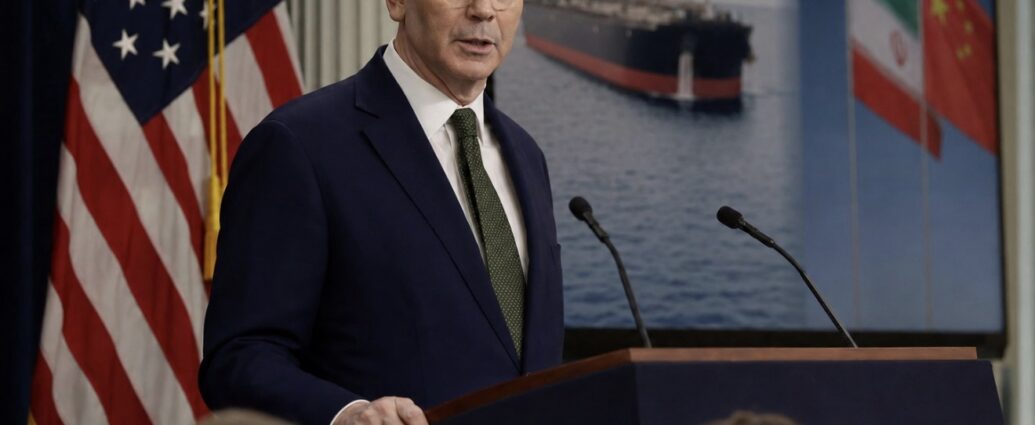
That was the ultimatum Treasury Secretary Scott Bessent delivered Monday afternoon, and it was aimed at everyone — not at Tehran. Countries that keep trading with Iran will be pushed out of the dollar-based financial system, he said, giving them a short window to cut those ties. “If people do not want to meet our expectations than we expect, and they should expect that they will leave the dollar system,” Bessent said at the news conference.
The United States cannot arrest a bank in Shanghai or seize a tanker under a Turkish flag. It can cut them off from dollars, and since most of world trade is settled in dollars, that amounts to the same thing.
Bessent announced a wave of new sanctions targeting international companies that help move Iranian shipping, oil, cryptocurrency, gold and aviation business, and said President Donald Trump is personally calling world leaders with specific requests to stop trading with Tehran. He declined to name which countries would be hit, though China, Turkey and the United Arab Emirates are Iran’s biggest trading partners. “Let there be no ambiguity as to the position of the United States,” he said. “An economic engagement of any kind with this murderous regime will expose those responsible to the full reach of American power.” Operating in what he called the gray spaces is no longer acceptable.
China is the test. It has bought as much as 90% of Iran’s oil exports, making it Tehran’s largest trading partner, and analysts say any serious campaign has to reach Chinese banks to work. The administration has been reluctant to go there, wary of damaging relations with President Xi Jinping ahead of an expected state visit next month. Washington has sanctioned a large independent Chinese refinery, four Hong Kong firms and six shipping lines, while leaving Chinese financial institutions untouched. Beijing has told blacklisted refiners to ignore the penalties.
The pressure is landing in Iran. The rial opened Monday at a record 2.02 million to the dollar. Rice is up roughly 60% since the war began and beef has more than doubled, with the International Monetary Fund projecting the economy will shrink more than 5%.
Americans are paying too. Gasoline is running close to a dollar a gallon higher than a year ago as the Strait of Hormuz stays largely closed. For U.S. importers, banks and shipping firms, the practical effect is a fresh round of compliance work: verifying that no counterparty, vessel or correspondent bank anywhere in the chain touches Iranian cargo.
Notably, Treasury threatened the penalties Monday without actually imposing major new ones. The clock Bessent started is the real news — a short grace period, then a choice between Iranian business and the dollar.
JBizNews Desk | Washington, D.C.
© JBizNews.com All Rights Reserved. Reproduction or distribution without written permission is prohibited.



U.S. Cancels Marines Drills With South Korea


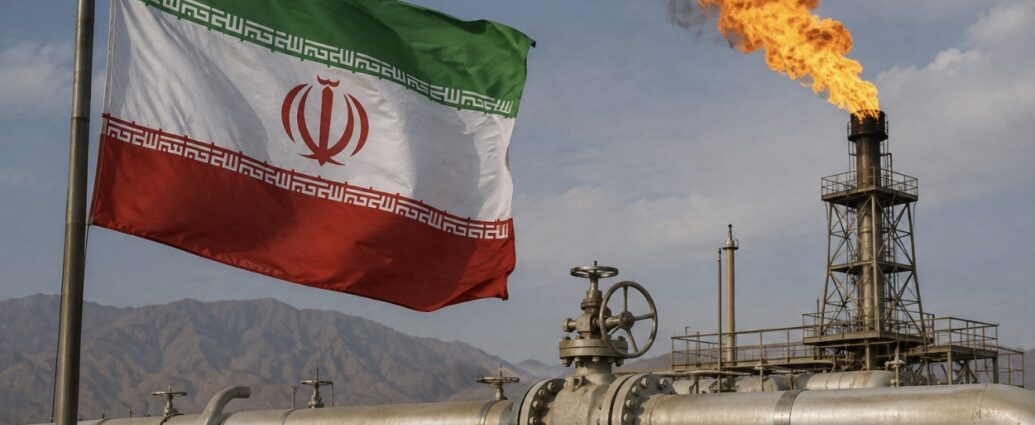
Iran Says It Found More Than 7.5 Trillion Cubic Feet of Natural Gas
Iran says it has discovered more than 7.5 trillion cubic feet of natural gas in southern Fars Province, adding another significant resource to a country that already holds the world’s second-largest proven gas reserves.
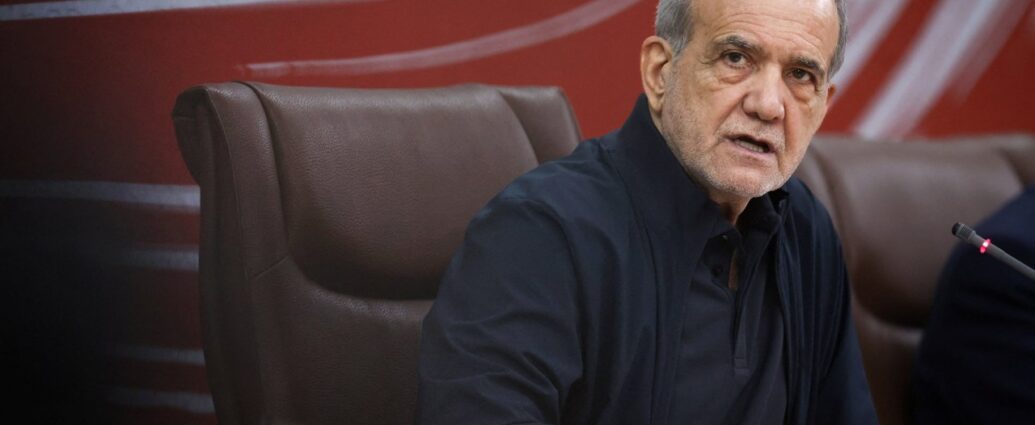
Oil Minister Mohsen Paknejad said approximately 5.7 trillion cubic feet—or more than 72% of the gas discovered in the Takht-e field—may ultimately be recoverable.
The field contains “sweet” natural gas, meaning it has relatively low levels of sulfur compounds and should be easier and less expensive to process than sour gas.
Iran also says the discovery includes substantial gas condensate, a valuable liquid hydrocarbon produced alongside natural gas. Paknejad estimated that the condensate could be worth tens of billions of dollars, although realizing that value will depend on whether Iran can finance and develop the field.
On the surface, 7.5 trillion cubic feet sounds enormous.
But the practical impact is smaller than the headline figure suggests.
Before the latest war-related disruptions, Iran was producing approximately 650 million cubic meters of natural gas per day—the equivalent of about 8.4 trillion cubic feet annually.
At that rate, the field’s estimated 5.7 trillion cubic feet of recoverable gas would equal roughly eight months of Iran’s previous nationwide production.
Paknejad offered a different comparison, saying the recoverable reserves could supply one phase of the massive South Pars gas field for approximately 15 years.
Both comparisons demonstrate that the discovery is meaningful. But it is not large enough by itself to transform Iran into a substantially greater global gas supplier or dramatically alter international prices.
The bigger obstacle is not the amount of gas beneath the ground.
It is Iran’s ability to bring that gas to market.
Developing the Takht-e field will require drilling equipment, processing facilities, pipelines, financing and potentially export infrastructure. If Iran wants to sell the gas beyond neighboring countries, it would also need additional pipeline capacity or liquefied-natural-gas facilities capable of loading the fuel onto ships.
Iran currently lacks a major LNG-export industry comparable to Qatar’s, despite possessing far larger reserves than most gas-producing countries.
U.S. sanctions have historically restricted Iran’s access to the foreign investment, equipment and advanced technology needed to develop some of its largest energy projects. Sanctions also complicate payments, shipping, insurance and long-term supply agreements with international buyers.
The war has made those challenges even greater.
Iranian officials said attacks damaged energy facilities and eliminated approximately 230 million cubic meters per day of natural-gas production capacity—more than one-third of the country’s previously reported daily output.
The government expects approximately 100 million cubic meters of that capacity to return in the coming months. That would still leave Iran with a substantial shortfall unless additional repairs restore more production.
The disruption makes the latest discovery strategically important for Tehran, but commercially complicated.
Major natural-gas fields can take years and billions of dollars to develop. Companies must complete geological studies, drill production wells, build processing plants and connect the field to Iran’s national pipeline network before meaningful volumes can reach homes, power plants or industrial customers.
Iran therefore presents one of the world’s clearest energy contradictions.
It possesses enormous oil and natural-gas reserves, yet sanctions, aging infrastructure, underinvestment and now wartime damage severely restrict its ability to convert those resources into reliable supply and export revenue.
The Takht-e discovery could still strengthen Iran’s long-term energy security.
Iran depends heavily on natural gas for electricity generation, household heating, manufacturing and petrochemical production. New supplies could help replace declining output from older fields, reduce domestic shortages and support industrial activity—if the field is successfully developed.
But global consumers should not expect the discovery to produce cheaper natural gas anytime soon.
The continuing energy crisis has demonstrated that possessing resources underground is very different from having fuel available to consumers.
Iran may have discovered another 7.5 trillion cubic feet of natural gas. The more important questions are how quickly it can develop the field, who will finance the work, how much infrastructure will remain available to transport the gas and whether international buyers will be permitted—or willing—to purchase it.
Until those questions are answered, the Takht-e field remains primarily a strategic asset for Iran, not immediate new supply for the world.
JBizNews Desk | Tehran
© JBizNews.com All Rights Reserved. Reproduction or distribution without written permission is prohibited.


Opinion | The Dumbest Trade War Revisited



Jerusalem Opens Second Light Rail Line, Moving Ahead of Tel Aviv
Jerusalem will begin operating its second light rail line Friday, becoming the first Israeli city to move from a single rail route to an interconnected urban network.
The first section of the Green Line, designated L3, runs approximately seven kilometers, or 4.3 miles, between HaTurim—near Mahaneh Yehuda—and Malha in southern Jerusalem. It includes 13 stations, 12 of them new, with trains expected every eight minutes during peak periods.
The practical change is larger than the distance suggests. Until now, Jerusalem’s light rail functioned primarily as one long corridor: the Red Line connecting Neveh Ya’acov in northern Jerusalem with Hadassah Ein Kerem Medical Center in the southwest. L3 gives passengers a second direction of travel and creates transfer points between separate rail services.
That moves Jerusalem ahead of the Tel Aviv metropolitan area, whose Red Line remains its only operating light rail route.
“This is a historic day for the capital and great news for Jerusalem residents and visitors,” Mayor Moshe Lion said. “This is a giant step in the transition from a city that has a light rail to a city with a light rail network.”
The new route connects some of Jerusalem’s most concentrated centers of employment, government, education and recreation. Stops serve the International Convention Center, the government complex, Hebrew University’s Givat Ram campus, its high-tech park, the Botanical Gardens, Teddy Stadium, Pais Arena and Malha Mall.
It also reaches the Givat Mordechai, Pat, Gonenim and Malha neighborhoods.
For a worker or student, the difference is not simply having a train nearby. It is being able to move between neighborhoods, Israel Railways, city buses and the existing Red Line without completing the entire journey by car.
L3 connects with the Red Line at HaTurim and again near the Central Bus Station and International Convention Center, behind Yitzhak Navon railway station. That second connection allows passengers arriving in Jerusalem by intercity train to transfer directly toward Givat Ram, Malha and the city’s sports district.
The sports connection has an immediate consumer effect. Visitors arriving from outside Jerusalem for soccer games at Teddy Stadium or basketball events at Pais Arena can now use Israel Railways and the light rail instead of driving into Malha and searching for parking.
That option will exist only on weekdays. Like the Red Line and most public transportation in Israel, the new service will not operate on Shabbat. People attending Saturday events will still need private transportation.
Friday’s opening is not the completion of the Green Line. It is the first operational segment of a much larger system that has been delayed by the war and is now scheduled to open in stages.
The next major step is expected in December, when the L4 service is scheduled to connect the Central Bus Station with Gilo, Jerusalem’s largest neighborhood, home to more than 100,000 residents. That will give Gilo passengers faster access to Givat Ram and the Navon railway station.
The route is then expected to reach Hebrew University’s Mount Scopus campus in June 2027, passing through French Hill and the area near Israel Police national headquarters. A separate branch serving Givat Shaul and Har Nof is planned for the end of 2027.
Jerusalem is also building the Blue Line, which is intended to connect Gilo with the city center, Har Hotzvim and Ramot during the next phase of the network’s expansion.
The larger economic effect will depend on whether passengers actually leave their cars. Jerusalem’s narrow roads and mountainous geography leave little room to keep widening streets. A functioning rail network can move more people through the same corridor while reducing the time businesses, employees and delivery vehicles lose to congestion.
The first seven kilometers will not solve that problem. They do, however, change the structure of the system. Jerusalem no longer has one train running across the city. It now has the beginning of a network—and every extension that follows will make the lines already operating more useful.
JBizNews Desk | Jerusalem
© JBizNews.com All Rights Reserved. Reproduction or distribution without written permission is prohibited.

Hungary Prepares Broader Nuclear Restart as Danube Water Levels Rise
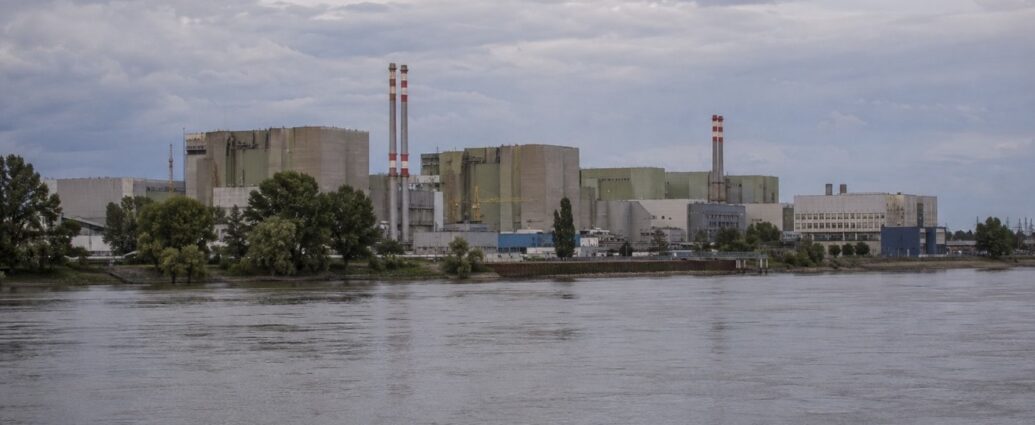
Hungary is preparing to restore more generating capacity at its Paks nuclear power plant after emergency work raised the Danube River near the facility’s cooling-water intake, easing an energy threat that had forced the country’s most important power station to operate at a fraction of its normal output.
Paks ordinarily supplies nearly half of Hungary’s electricity. But exceptionally low Danube levels caused by prolonged drought and extreme heat forced the plant to sharply reduce production, leaving only two of its eight turbines operating and cutting overall output to roughly 25% of capacity.
The government now expects the six idle turbines to begin returning gradually, with the plant potentially reaching full output later in the week if river conditions and safety requirements permit.
The recovery is not being driven by rainfall alone. Hungarian authorities used emergency engineering measures to increase the water level around the plant’s intake system by approximately 10 to 15 centimeters. The work included positioning barges in the river and beginning construction of a submerged riverbed barrier designed to hold more water upstream near the facility.
The plant’s nuclear reactors generate heat, but the Danube provides the water needed to remove excess heat and operate the electricity-producing turbines safely. When the river falls too low, the plant cannot draw enough cooling water, forcing operators to reduce or stop production even if the reactors themselves remain functional.
That distinction is important: Hungary is not restarting a reactor that failed. It is restoring electricity-generating equipment that was taken offline because the river could no longer reliably support normal cooling operations.
The disruption exposed a major weakness in Hungary’s energy system. With Paks producing nearly half the country’s power, a prolonged shutdown could increase electricity imports, raise wholesale prices and force Hungary to rely more heavily on natural gas and other fossil fuels.
Solar generation helped prevent a more serious shortage. At certain points during the nuclear reduction, solar power supplied more than half of Hungary’s electricity, providing critical daytime support. But solar production falls sharply in the evening and cannot independently replace the stable, round-the-clock electricity normally produced at Paks.
The crisis stretches beyond Hungary. Romania shut down nuclear generation at its Cernavoda plant because of low Danube water levels, while Bulgaria reduced output at its Kozloduy nuclear facility for the first time in its history for the same reason.
For European businesses and consumers, the episode demonstrates how drought can affect far more than farming and shipping. Low rivers can interrupt electricity production, increase industrial energy costs and place additional pressure on regional power markets.
Hungary’s immediate danger is easing, but the larger problem remains. If severe droughts become more frequent, countries that depend on rivers to cool nuclear and conventional power plants may need new cooling systems, greater renewable capacity and stronger cross-border electricity connections.
The Danube’s recovery is allowing Paks to return—but it has also delivered a warning about how closely Europe’s energy security is tied to its water supply.
JBizNews Desk | Budapest
© JBizNews.com All Rights Reserved. Reproduction or distribution without written permission is prohibited.

U.S., Canada Spiral Toward Trade War




Taiwan Floats Record $35 Billion Defense Budget, Sending Message to U.S. and China
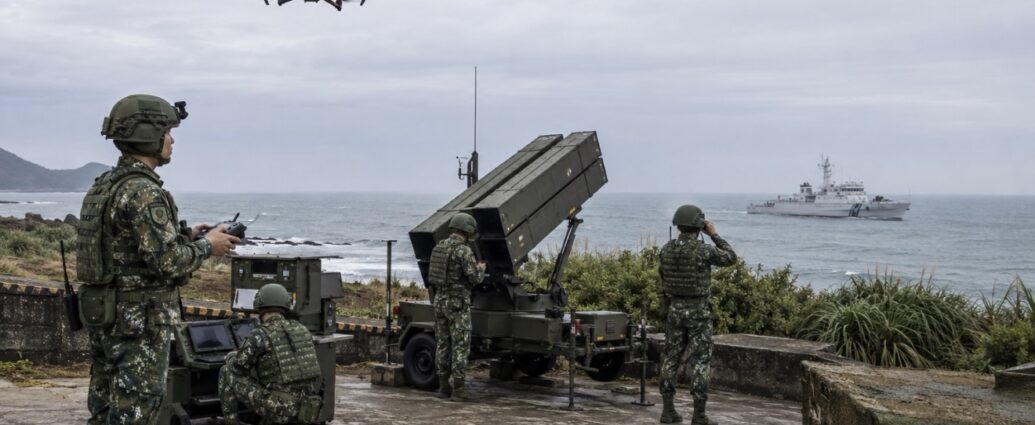
Taiwan is proposing the largest defense budget in its history, putting nearly 29 cents of every dollar in next year’s central government spending plan toward the military, coast guard and related security costs.
The Cabinet approved NT$1.1225 trillion, approximately $35.2 billion, for defense in 2027. That is an 18% increase from this year and the first time Taiwan’s annual defense allocation has exceeded NT$1 trillion.
The money carries two messages. To Beijing, Taiwan is signaling that a blockade or invasion would become increasingly expensive. To Washington, it is answering demands that the island spend more of its own money on defense rather than assume the United States will absorb the cost of protecting it.
The arithmetic is more complicated than the record headline suggests. The allocation equals approximately 3.01% of Taiwan’s projected 2027 economic output, slightly below this year’s 3.32%, because the economy is expected to expand sharply. President Lai Ching-te wants defense spending to reach 5% of GDP by 2030, which would require tens of billions of dollars in additional annual commitments.
The proposal includes NT$691.9 billion for the Ministry of National Defense, NT$218.2 billion in special budgets and NT$60.7 billion in other special funds. Military pensions account for NT$103.8 billion, while the coast guard receives NT$47.9 billion.
New procurement will emphasize drones, missiles, air defense, coastal surveillance and other systems designed to make Taiwan difficult to blockade or occupy. The strategy is not to match China ship for ship or aircraft for aircraft. China’s military budget remains many times larger. Taiwan instead wants mobile weapons that can survive an initial attack and continue threatening Chinese forces afterward.
That creates a substantial commercial pipeline for American defense contractors as well as Taiwan’s domestic drone, electronics, shipbuilding and missile industries. But it also exposes production bottlenecks: approving money does not guarantee that weapons can be manufactured and delivered quickly enough.
The largest uncertainty is political. Taiwan’s opposition-controlled legislature must approve the budget and has delayed or reduced previous defense requests. Earlier this year, lawmakers approved only about two-thirds of an additional military package, excluding some domestic programs.
The debate therefore reaches beyond the size of one budget. Washington will judge whether Taiwan is prepared to finance its own survival, while Beijing will measure whether the money produces real weapons and trained forces—or remains trapped in Taiwan’s divided parliament.
JBizNews Desk | Taipei
© JBizNews.com All Rights Reserved. Reproduction or distribution without written permission is prohibited.


Airbus Retreats From Four-Day Office Mandate After Worker Protests and Strikes
Airbus has backed away from a plan that would have required white-collar employees to work in the office four days a week, allowing managers to continue offering roughly two remote-work days after weeks of protests and strikes.
The aerospace giant had planned to reduce remote work to just one day a week beginning in September, part of a broader push by CEO Guillaume Faury to get more employees back on site.
That plan is now effectively suspended.
Managers have been told they can maintain existing arrangements that allow employees to work from home an average of two days a week, according to people familiar with the decision. Airbus says it still wants more employees working on site, but will make the transition more gradually.
The reversal follows significant employee resistance.
In Spain, about 40% of Airbus’s 14,000 workers have participated in strikes over issues including remote work, transportation, holidays and pay. Protests have also taken place in France.
The dispute is especially important because Airbus is not a traditional office company.
It is one of the world’s largest industrial manufacturers, building aircraft through enormous networks of engineers, production workers, suppliers and technical teams that often need to collaborate in person.
Management argues that increased office attendance improves knowledge transfer, collective efficiency and faster decision-making.
That concern has grown because Airbus has hired aggressively since the pandemic.
French unions estimate that 25% to one-third of Airbus employees joined the company within the past three years, meaning a large share of its workforce is relatively new and still learning from more experienced colleagues.
At the same time, aerospace companies are competing for younger engineers, software developers and other skilled employees against technology and AI companies that frequently offer more flexible work arrangements.
That creates a difficult trade-off.
Airbus wants employees physically together to improve collaboration and transfer technical knowledge.
Workers increasingly view remote work as part of their compensation and quality of life.
For employers everywhere, that tension has become one of the most persistent workplace issues left behind by the pandemic.
Many large companies have tightened return-to-office policies, arguing that collaboration, training and corporate culture suffer when employees spend too much time apart.
Employees often see the issue differently.
Remote work can eliminate hours of commuting, reduce transportation costs and make childcare and family responsibilities easier to manage.
Airbus’s experience shows that even a company with enormous industrial demands cannot always impose a stricter office mandate without risking significant employee resistance.
So far, the strikes have not disrupted aircraft production.
But that may be precisely why Airbus chose to compromise before the disagreement escalated further.
For businesses watching the return-to-office debate, the message is becoming clearer: companies may still have the authority to demand more office attendance, but skilled employees increasingly have enough leverage to influence how quickly — and how aggressively — those mandates are imposed.
JBizNews Desk | Toulouse
© JBizNews.com All Rights Reserved. Reproduction or distribution without written permission is prohibited.

Uber Hit With $966 Million Fine Over Automated Driver Suspensions
Uber has been fined €825 million, about $966 million, by the Dutch Data Protection Authority over the way its automated systems suspended driver accounts, creating one of the largest penalties ever imposed under Europe’s GDPR privacy law.
The case centers on European drivers whose accounts were temporarily or permanently restricted after Uber’s systems flagged behavior such as suspected fraud, unnecessary detours or low customer ratings.
Dutch regulators said Uber violated drivers’ rights by relying on automated decision-making in situations that could have major consequences for their ability to earn a living, while also failing to adequately explain how those decisions were made.
Under GDPR, companies generally cannot make important decisions about a person solely through an algorithm without meaningful human review and a way for the affected person to challenge the outcome.
That principle is now becoming much more expensive to ignore.
The €825 million fine would be the second-largest GDPR penalty ever issued, behind the €1.2 billion fine imposed on Meta in 2023.
Uber strongly disputes the decision and says it will appeal.
The company says its policies include human review and opportunities for drivers to dispute suspensions, and it argues the regulator’s penalty is disproportionate. Uber also says the number of drivers affected was relatively small and that it no longer permanently deactivates accounts solely through automated systems.
The dispute matters far beyond Uber.
Companies across transportation, banking, insurance, hiring and other industries increasingly use algorithms to determine who gets access to work, credit, insurance coverage or other economically important services.
The Dutch ruling sends a clear message that regulators may treat those automated decisions differently when they directly affect someone’s livelihood.
For gig-economy platforms, that creates a new layer of risk.
Automation is one of the main ways companies such as Uber can manage millions of drivers at relatively low cost. But if every serious suspension requires additional human review, documentation and appeals processes, that can increase operating expenses and slow decision-making.
The case also raises a larger business question about artificial intelligence and automated management.
Algorithms are increasingly being used not simply to recommend products or personalize advertising, but to make decisions about people.
Those decisions can determine whether someone gets hired, receives a loan, keeps an insurance policy or continues earning income through a digital platform.
Europe is now demonstrating that companies may face enormous financial consequences when those systems operate without sufficient transparency and human oversight.
For Uber, the immediate issue is a nearly $1 billion regulatory fight.
For every business relying on automated decision-making, the longer-term message may be more important: using an algorithm does not eliminate responsibility for the decision it makes.
JBizNews Desk | Amsterdam
© JBizNews.com All Rights Reserved. Reproduction or distribution without written permission is prohibited.